window.__IS_SSR__=true
window.__INITIAL_STATE__={
"attachmentsReducer": {
"audio_0": {
"type": "attachments",
"id": "audio_0",
"imgSizes": {
"kqedFullSize": {
"file": "https://ww2.kqed.org/news/wp-content/themes/KQED-unified/img/audio_bgs/background0.jpg"
}
}
},
"audio_1": {
"type": "attachments",
"id": "audio_1",
"imgSizes": {
"kqedFullSize": {
"file": "https://ww2.kqed.org/news/wp-content/themes/KQED-unified/img/audio_bgs/background1.jpg"
}
}
},
"audio_2": {
"type": "attachments",
"id": "audio_2",
"imgSizes": {
"kqedFullSize": {
"file": "https://ww2.kqed.org/news/wp-content/themes/KQED-unified/img/audio_bgs/background2.jpg"
}
}
},
"audio_3": {
"type": "attachments",
"id": "audio_3",
"imgSizes": {
"kqedFullSize": {
"file": "https://ww2.kqed.org/news/wp-content/themes/KQED-unified/img/audio_bgs/background3.jpg"
}
}
},
"audio_4": {
"type": "attachments",
"id": "audio_4",
"imgSizes": {
"kqedFullSize": {
"file": "https://ww2.kqed.org/news/wp-content/themes/KQED-unified/img/audio_bgs/background4.jpg"
}
}
},
"placeholder": {
"type": "attachments",
"id": "placeholder",
"imgSizes": {
"thumbnail": {
"file": "https://cdn.kqed.org/wp-content/uploads/2024/12/KQED-Default-Image-816638274-2000x1333-1-160x107.jpg",
"width": 160,
"height": 107,
"mimeType": "image/jpeg"
},
"medium": {
"file": "https://cdn.kqed.org/wp-content/uploads/2024/12/KQED-Default-Image-816638274-2000x1333-1-800x533.jpg",
"width": 800,
"height": 533,
"mimeType": "image/jpeg"
},
"medium_large": {
"file": "https://cdn.kqed.org/wp-content/uploads/2024/12/KQED-Default-Image-816638274-2000x1333-1-768x512.jpg",
"width": 768,
"height": 512,
"mimeType": "image/jpeg"
},
"large": {
"file": "https://cdn.kqed.org/wp-content/uploads/2024/12/KQED-Default-Image-816638274-2000x1333-1-1020x680.jpg",
"width": 1020,
"height": 680,
"mimeType": "image/jpeg"
},
"1536x1536": {
"file": "https://cdn.kqed.org/wp-content/uploads/2024/12/KQED-Default-Image-816638274-2000x1333-1-1536x1024.jpg",
"width": 1536,
"height": 1024,
"mimeType": "image/jpeg"
},
"fd-lrg": {
"file": "https://cdn.kqed.org/wp-content/uploads/2024/12/KQED-Default-Image-816638274-2000x1333-1-1536x1024.jpg",
"width": 1536,
"height": 1024,
"mimeType": "image/jpeg"
},
"fd-med": {
"file": "https://cdn.kqed.org/wp-content/uploads/2024/12/KQED-Default-Image-816638274-2000x1333-1-1020x680.jpg",
"width": 1020,
"height": 680,
"mimeType": "image/jpeg"
},
"fd-sm": {
"file": "https://cdn.kqed.org/wp-content/uploads/2024/12/KQED-Default-Image-816638274-2000x1333-1-800x533.jpg",
"width": 800,
"height": 533,
"mimeType": "image/jpeg"
},
"post-thumbnail": {
"file": "https://cdn.kqed.org/wp-content/uploads/2024/12/KQED-Default-Image-816638274-2000x1333-1-672x372.jpg",
"width": 672,
"height": 372,
"mimeType": "image/jpeg"
},
"twentyfourteen-full-width": {
"file": "https://cdn.kqed.org/wp-content/uploads/2024/12/KQED-Default-Image-816638274-2000x1333-1-1038x576.jpg",
"width": 1038,
"height": 576,
"mimeType": "image/jpeg"
},
"xxsmall": {
"file": "https://cdn.kqed.org/wp-content/uploads/2024/12/KQED-Default-Image-816638274-2000x1333-1-160x107.jpg",
"width": 160,
"height": 107,
"mimeType": "image/jpeg"
},
"xsmall": {
"file": "https://cdn.kqed.org/wp-content/uploads/2024/12/KQED-Default-Image-816638274-2000x1333-1-672x372.jpg",
"width": 672,
"height": 372,
"mimeType": "image/jpeg"
},
"small": {
"file": "https://cdn.kqed.org/wp-content/uploads/2024/12/KQED-Default-Image-816638274-2000x1333-1-672x372.jpg",
"width": 672,
"height": 372,
"mimeType": "image/jpeg"
},
"xlarge": {
"file": "https://cdn.kqed.org/wp-content/uploads/2024/12/KQED-Default-Image-816638274-2000x1333-1-1020x680.jpg",
"width": 1020,
"height": 680,
"mimeType": "image/jpeg"
},
"full-width": {
"file": "https://cdn.kqed.org/wp-content/uploads/2024/12/KQED-Default-Image-816638274-2000x1333-1-1920x1280.jpg",
"width": 1920,
"height": 1280,
"mimeType": "image/jpeg"
},
"guest-author-32": {
"file": "https://cdn.kqed.org/wp-content/uploads/2025/01/KQED-Default-Image-816638274-1333x1333-1-160x160.jpg",
"width": 32,
"height": 32,
"mimeType": "image/jpeg"
},
"guest-author-50": {
"file": "https://cdn.kqed.org/wp-content/uploads/2025/01/KQED-Default-Image-816638274-1333x1333-1-160x160.jpg",
"width": 50,
"height": 50,
"mimeType": "image/jpeg"
},
"guest-author-64": {
"file": "https://cdn.kqed.org/wp-content/uploads/2025/01/KQED-Default-Image-816638274-1333x1333-1-160x160.jpg",
"width": 64,
"height": 64,
"mimeType": "image/jpeg"
},
"guest-author-96": {
"file": "https://cdn.kqed.org/wp-content/uploads/2025/01/KQED-Default-Image-816638274-1333x1333-1-160x160.jpg",
"width": 96,
"height": 96,
"mimeType": "image/jpeg"
},
"guest-author-128": {
"file": "https://cdn.kqed.org/wp-content/uploads/2025/01/KQED-Default-Image-816638274-1333x1333-1-160x160.jpg",
"width": 128,
"height": 128,
"mimeType": "image/jpeg"
},
"detail": {
"file": "https://cdn.kqed.org/wp-content/uploads/2025/01/KQED-Default-Image-816638274-1333x1333-1-160x160.jpg",
"width": 160,
"height": 160,
"mimeType": "image/jpeg"
},
"kqedFullSize": {
"file": "https://cdn.kqed.org/wp-content/uploads/2024/12/KQED-Default-Image-816638274-2000x1333-1.jpg",
"width": 2000,
"height": 1333
}
}
},
"news_12006905": {
"type": "attachments",
"id": "news_12006905",
"meta": {
"index": "attachments_1716263798",
"site": "news",
"id": "12006905",
"found": true
},
"title": "002_KQED_ElectionStockPhotos_TikaHall_10062020_qed",
"publishDate": 1727470265,
"status": "inherit",
"parent": 12003469,
"modified": 1727470295,
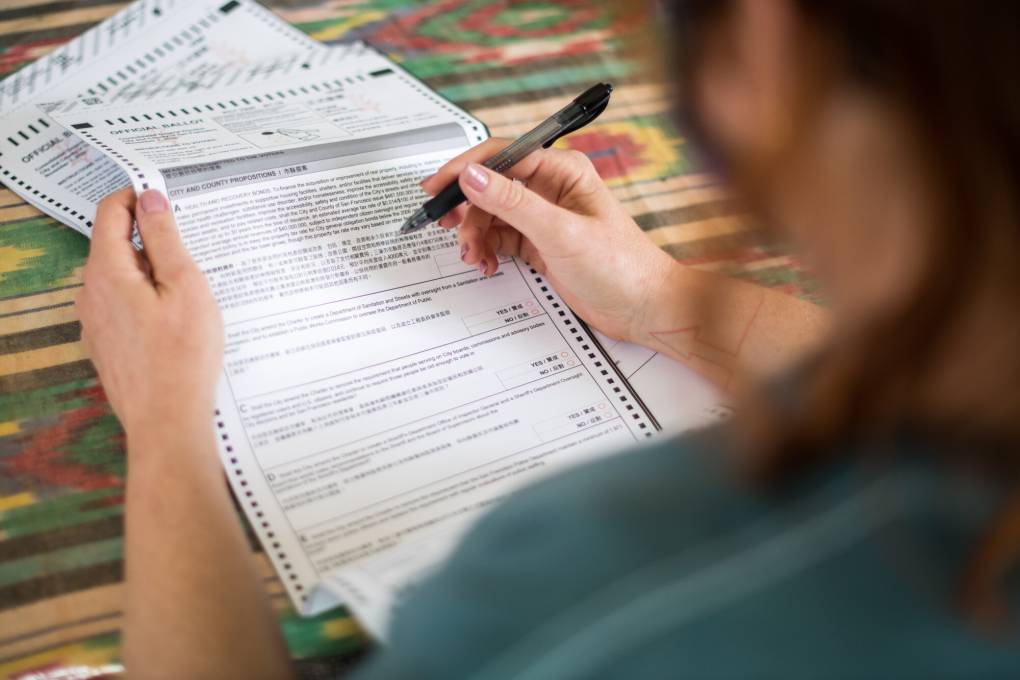
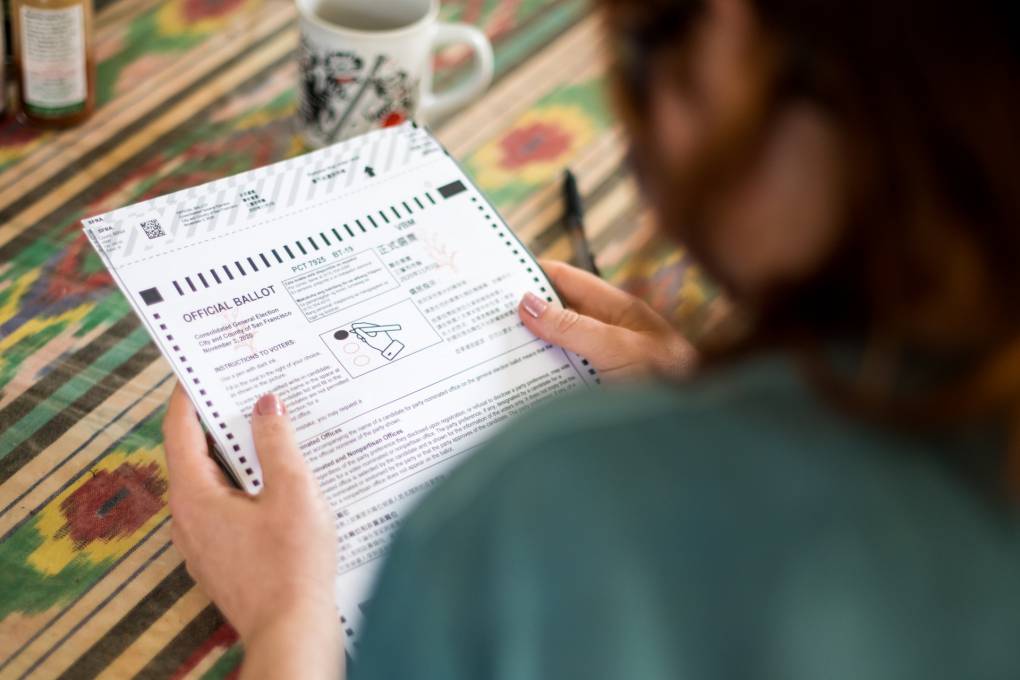
"caption": "A San Francisco resident fills out their mail-in ballot.",
"credit": "Beth LaBerge/KQED",
"altTag": null,
"description": null,
"imgSizes": {
"medium": {
"file": "https://cdn.kqed.org/wp-content/uploads/sites/10/2024/09/002_KQED_ElectionStockPhotos_TikaHall_10062020_qed-800x533.jpg",
"width": 800,
"height": 533,
"mimeType": "image/jpeg"
},
"large": {
"file": "https://cdn.kqed.org/wp-content/uploads/sites/10/2024/09/002_KQED_ElectionStockPhotos_TikaHall_10062020_qed-1020x680.jpg",
"width": 1020,
"height": 680,
"mimeType": "image/jpeg"
},
"thumbnail": {
"file": "https://cdn.kqed.org/wp-content/uploads/sites/10/2024/09/002_KQED_ElectionStockPhotos_TikaHall_10062020_qed-160x107.jpg",
"width": 160,
"height": 107,
"mimeType": "image/jpeg"
},
"1536x1536": {
"file": "https://cdn.kqed.org/wp-content/uploads/sites/10/2024/09/002_KQED_ElectionStockPhotos_TikaHall_10062020_qed-1536x1024.jpg",
"width": 1536,
"height": 1024,
"mimeType": "image/jpeg"
},
"post-thumbnail": {
"file": "https://cdn.kqed.org/wp-content/uploads/sites/10/2024/09/002_KQED_ElectionStockPhotos_TikaHall_10062020_qed-672x372.jpg",
"width": 672,
"height": 372,
"mimeType": "image/jpeg"
},
"twentyfourteen-full-width": {
"file": "https://cdn.kqed.org/wp-content/uploads/sites/10/2024/09/002_KQED_ElectionStockPhotos_TikaHall_10062020_qed-1038x576.jpg",
"width": 1038,
"height": 576,
"mimeType": "image/jpeg"
},
"full-width": {
"file": "https://cdn.kqed.org/wp-content/uploads/sites/10/2024/09/002_KQED_ElectionStockPhotos_TikaHall_10062020_qed-1920x1280.jpg",
"width": 1920,
"height": 1280,
"mimeType": "image/jpeg"
},
"kqedFullSize": {
"file": "https://cdn.kqed.org/wp-content/uploads/sites/10/2024/09/002_KQED_ElectionStockPhotos_TikaHall_10062020_qed.jpg",
"width": 2000,
"height": 1333
}
},
"isLoading": false,
"fetchFailed": false
},
"news_12004767": {
"type": "attachments",
"id": "news_12004767",
"meta": {
"index": "attachments_1716263798",
"site": "news",
"id": "12004767",
"found": true
},
"title": "Asian voter voting in polling place",
"publishDate": 1726267383,
"status": "inherit",
"parent": 12004754,
"modified": 1726267404,
"caption": null,
"credit": "Hill Street Studios/Getty Images",
"altTag": null,
"description": null,
"imgSizes": {
"medium": {
"file": "https://cdn.kqed.org/wp-content/uploads/sites/10/2024/09/GettyImages-138711407-800x533.jpg",
"width": 800,
"height": 533,
"mimeType": "image/jpeg"
},
"large": {
"file": "https://cdn.kqed.org/wp-content/uploads/sites/10/2024/09/GettyImages-138711407-1020x680.jpg",
"width": 1020,
"height": 680,
"mimeType": "image/jpeg"
},
"thumbnail": {
"file": "https://cdn.kqed.org/wp-content/uploads/sites/10/2024/09/GettyImages-138711407-160x107.jpg",
"width": 160,
"height": 107,
"mimeType": "image/jpeg"
},
"1536x1536": {
"file": "https://cdn.kqed.org/wp-content/uploads/sites/10/2024/09/GettyImages-138711407-1536x1024.jpg",
"width": 1536,
"height": 1024,
"mimeType": "image/jpeg"
},
"2048x2048": {
"file": "https://cdn.kqed.org/wp-content/uploads/sites/10/2024/09/GettyImages-138711407-2048x1365.jpg",
"width": 2048,
"height": 1365,
"mimeType": "image/jpeg"
},
"post-thumbnail": {
"file": "https://cdn.kqed.org/wp-content/uploads/sites/10/2024/09/GettyImages-138711407-672x372.jpg",
"width": 672,
"height": 372,
"mimeType": "image/jpeg"
},
"twentyfourteen-full-width": {
"file": "https://cdn.kqed.org/wp-content/uploads/sites/10/2024/09/GettyImages-138711407-1038x576.jpg",
"width": 1038,
"height": 576,
"mimeType": "image/jpeg"
},
"full-width": {
"file": "https://cdn.kqed.org/wp-content/uploads/sites/10/2024/09/GettyImages-138711407-1920x1280.jpg",
"width": 1920,
"height": 1280,
"mimeType": "image/jpeg"
},
"kqedFullSize": {
"file": "https://cdn.kqed.org/wp-content/uploads/sites/10/2024/09/GettyImages-138711407.jpg",
"width": 2121,
"height": 1414
}
},
"isLoading": false,
"fetchFailed": false
},
"news_12003860": {
"type": "attachments",
"id": "news_12003860",
"meta": {
"index": "attachments_1716263798",
"site": "news",
"id": "12003860",
"found": true
},
"title": "Senior US citizen signing up for voting with help of black female volunteer at polling place.",
"publishDate": 1725998163,
"status": "inherit",
"parent": 12003124,
"modified": 1743281613,
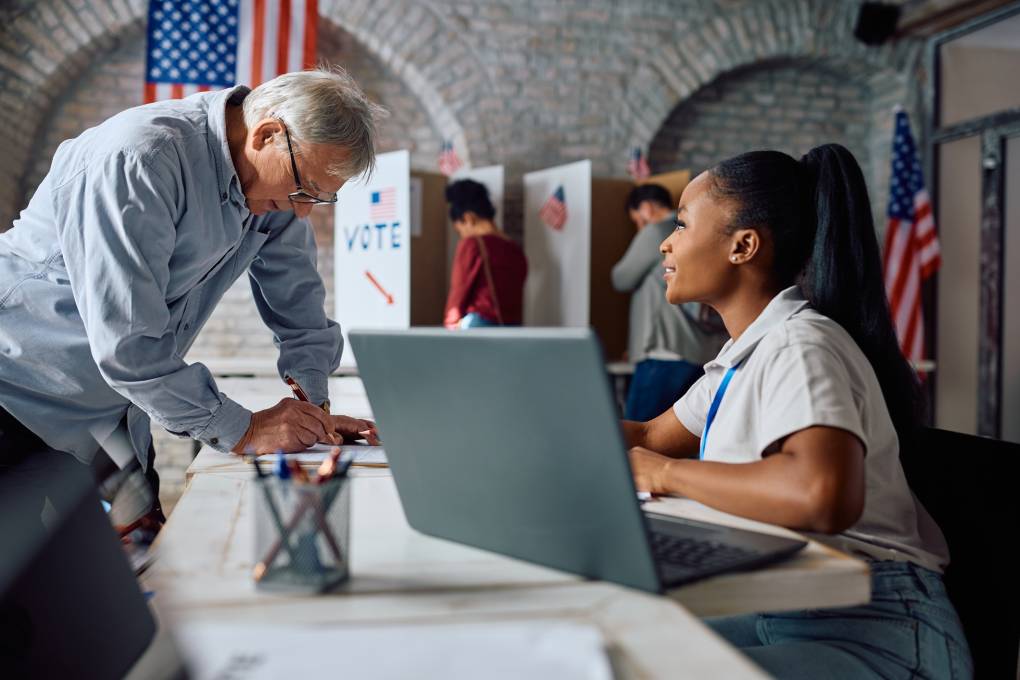
"caption": "While voting by noncitizens does occur, it typically involves a tiny fraction of ballots and is more often an individual mistake rather than an intentional and coordinated attempt to subvert an election. ",
"credit": "Drazen Zigic via iStock/Getty Images Plus",
"altTag": "A Black woman assists a senior white man in signing up to vote for the elections.",
"description": null,
"imgSizes": {
"medium": {
"file": "https://cdn.kqed.org/wp-content/uploads/sites/10/2024/09/GettyImages-2042931083-800x533.jpg",
"width": 800,
"height": 533,
"mimeType": "image/jpeg"
},
"large": {
"file": "https://cdn.kqed.org/wp-content/uploads/sites/10/2024/09/GettyImages-2042931083-1020x680.jpg",
"width": 1020,
"height": 680,
"mimeType": "image/jpeg"
},
"thumbnail": {
"file": "https://cdn.kqed.org/wp-content/uploads/sites/10/2024/09/GettyImages-2042931083-160x107.jpg",
"width": 160,
"height": 107,
"mimeType": "image/jpeg"
},
"1536x1536": {
"file": "https://cdn.kqed.org/wp-content/uploads/sites/10/2024/09/GettyImages-2042931083-1536x1024.jpg",
"width": 1536,
"height": 1024,
"mimeType": "image/jpeg"
},
"2048x2048": {
"file": "https://cdn.kqed.org/wp-content/uploads/sites/10/2024/09/GettyImages-2042931083-2048x1365.jpg",
"width": 2048,
"height": 1365,
"mimeType": "image/jpeg"
},
"post-thumbnail": {
"file": "https://cdn.kqed.org/wp-content/uploads/sites/10/2024/09/GettyImages-2042931083-672x372.jpg",
"width": 672,
"height": 372,
"mimeType": "image/jpeg"
},
"twentyfourteen-full-width": {
"file": "https://cdn.kqed.org/wp-content/uploads/sites/10/2024/09/GettyImages-2042931083-1038x576.jpg",
"width": 1038,
"height": 576,
"mimeType": "image/jpeg"
},
"full-width": {
"file": "https://cdn.kqed.org/wp-content/uploads/sites/10/2024/09/GettyImages-2042931083-1920x1280.jpg",
"width": 1920,
"height": 1280,
"mimeType": "image/jpeg"
},
"kqedFullSize": {
"file": "https://cdn.kqed.org/wp-content/uploads/sites/10/2024/09/GettyImages-2042931083.jpg",
"width": 2121,
"height": 1414
}
},
"isLoading": false,
"fetchFailed": false
},
"news_11974143": {
"type": "attachments",
"id": "news_11974143",
"meta": {
"index": "attachments_1716263798",
"site": "news",
"id": "11974143",
"found": true
},
"parent": 11974134,
"imgSizes": {
"twentyfourteen-full-width": {
"file": "https://cdn.kqed.org/wp-content/uploads/sites/10/2024/01/008_KQED_Election_CityHallSF_02262020_4220_qut-1038x576.jpg",
"width": 1038,
"mimeType": "image/jpeg",
"height": 576
},
"thumbnail": {
"file": "https://cdn.kqed.org/wp-content/uploads/sites/10/2024/01/008_KQED_Election_CityHallSF_02262020_4220_qut-160x107.jpg",
"width": 160,
"mimeType": "image/jpeg",
"height": 107
},
"post-thumbnail": {
"file": "https://cdn.kqed.org/wp-content/uploads/sites/10/2024/01/008_KQED_Election_CityHallSF_02262020_4220_qut-672x372.jpg",
"width": 672,
"mimeType": "image/jpeg",
"height": 372
},
"kqedFullSize": {
"file": "https://cdn.kqed.org/wp-content/uploads/sites/10/2024/01/008_KQED_Election_CityHallSF_02262020_4220_qut.jpg",
"width": 1920,
"height": 1280
},
"large": {
"file": "https://cdn.kqed.org/wp-content/uploads/sites/10/2024/01/008_KQED_Election_CityHallSF_02262020_4220_qut-1020x680.jpg",
"width": 1020,
"mimeType": "image/jpeg",
"height": 680
},
"1536x1536": {
"file": "https://cdn.kqed.org/wp-content/uploads/sites/10/2024/01/008_KQED_Election_CityHallSF_02262020_4220_qut-1536x1024.jpg",
"width": 1536,
"mimeType": "image/jpeg",
"height": 1024
},
"medium": {
"file": "https://cdn.kqed.org/wp-content/uploads/sites/10/2024/01/008_KQED_Election_CityHallSF_02262020_4220_qut-800x533.jpg",
"width": 800,
"mimeType": "image/jpeg",
"height": 533
}
},
"publishDate": 1706567127,
"modified": 1706573239,
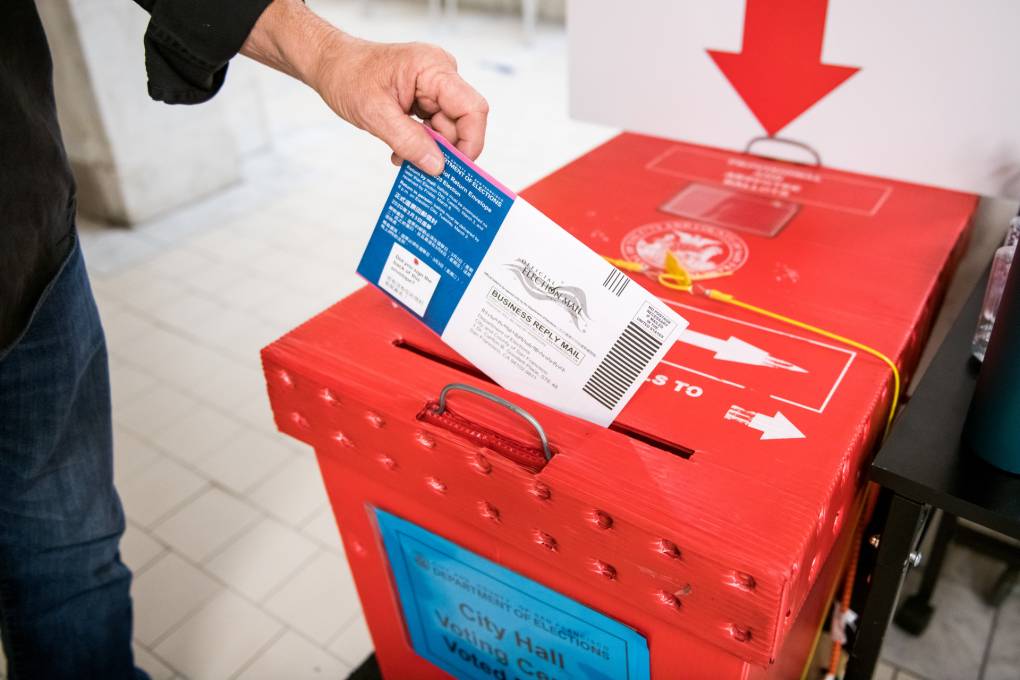
"caption": "File Photo: A ballot box at San Francisco City Hall on Wednesday, Feb. 26, 2020.",
"description": null,
"title": "008_KQED_Election_CityHallSF_02262020_4220_qut",
"credit": "Beth La Berge/KQED",
"status": "inherit",
"altTag": "A bright red ballot box.",
"isLoading": false,
"fetchFailed": false
},
"news_11843210": {
"type": "attachments",
"id": "news_11843210",
"meta": {
"index": "attachments_1716263798",
"site": "news",
"id": "11843210",
"found": true
},
"parent": 11843123,
"imgSizes": {
"apple_news_ca_landscape_5_5": {
"file": "https://cdn.kqed.org/wp-content/uploads/sites/10/2020/10/RS45263_001_KQED_ElectionStockPhotos_TikaHall_10062020-qut-1044x783.jpg",
"width": 1044,
"mimeType": "image/jpeg",
"height": 783
},
"apple_news_ca_square_4_0": {
"file": "https://cdn.kqed.org/wp-content/uploads/sites/10/2020/10/RS45263_001_KQED_ElectionStockPhotos_TikaHall_10062020-qut-470x470.jpg",
"width": 470,
"mimeType": "image/jpeg",
"height": 470
},
"twentyfourteen-full-width": {
"file": "https://cdn.kqed.org/wp-content/uploads/sites/10/2020/10/RS45263_001_KQED_ElectionStockPhotos_TikaHall_10062020-qut-1038x576.jpg",
"width": 1038,
"mimeType": "image/jpeg",
"height": 576
},
"thumbnail": {
"file": "https://cdn.kqed.org/wp-content/uploads/sites/10/2020/10/RS45263_001_KQED_ElectionStockPhotos_TikaHall_10062020-qut-160x107.jpg",
"width": 160,
"mimeType": "image/jpeg",
"height": 107
},
"post-thumbnail": {
"file": "https://cdn.kqed.org/wp-content/uploads/sites/10/2020/10/RS45263_001_KQED_ElectionStockPhotos_TikaHall_10062020-qut-672x372.jpg",
"width": 672,
"mimeType": "image/jpeg",
"height": 372
},
"kqedFullSize": {
"file": "https://cdn.kqed.org/wp-content/uploads/sites/10/2020/10/RS45263_001_KQED_ElectionStockPhotos_TikaHall_10062020-qut.jpg",
"width": 1920,
"height": 1280
},
"apple_news_ca_landscape_4_7": {
"file": "https://cdn.kqed.org/wp-content/uploads/sites/10/2020/10/RS45263_001_KQED_ElectionStockPhotos_TikaHall_10062020-qut-632x474.jpg",
"width": 632,
"mimeType": "image/jpeg",
"height": 474
},
"large": {
"file": "https://cdn.kqed.org/wp-content/uploads/sites/10/2020/10/RS45263_001_KQED_ElectionStockPhotos_TikaHall_10062020-qut-1020x680.jpg",
"width": 1020,
"mimeType": "image/jpeg",
"height": 680
},
"apple_news_ca_landscape_4_0": {
"file": "https://cdn.kqed.org/wp-content/uploads/sites/10/2020/10/RS45263_001_KQED_ElectionStockPhotos_TikaHall_10062020-qut-536x402.jpg",
"width": 536,
"mimeType": "image/jpeg",
"height": 402
},
"apple_news_ca_portrait_12_9": {
"file": "https://cdn.kqed.org/wp-content/uploads/sites/10/2020/10/RS45263_001_KQED_ElectionStockPhotos_TikaHall_10062020-qut-1122x1280.jpg",
"width": 1122,
"mimeType": "image/jpeg",
"height": 1280
},
"medium": {
"file": "https://cdn.kqed.org/wp-content/uploads/sites/10/2020/10/RS45263_001_KQED_ElectionStockPhotos_TikaHall_10062020-qut-800x533.jpg",
"width": 800,
"mimeType": "image/jpeg",
"height": 533
},
"apple_news_ca_portrait_4_0": {
"file": "https://cdn.kqed.org/wp-content/uploads/sites/10/2020/10/RS45263_001_KQED_ElectionStockPhotos_TikaHall_10062020-qut-354x472.jpg",
"width": 354,
"mimeType": "image/jpeg",
"height": 472
},
"apple_news_ca_portrait_9_7": {
"file": "https://cdn.kqed.org/wp-content/uploads/sites/10/2020/10/RS45263_001_KQED_ElectionStockPhotos_TikaHall_10062020-qut-840x1120.jpg",
"width": 840,
"mimeType": "image/jpeg",
"height": 1120
},
"apple_news_ca_landscape_12_9": {
"file": "https://cdn.kqed.org/wp-content/uploads/sites/10/2020/10/RS45263_001_KQED_ElectionStockPhotos_TikaHall_10062020-qut-1832x1280.jpg",
"width": 1832,
"mimeType": "image/jpeg",
"height": 1280
},
"apple_news_ca_square_9_7": {
"file": "https://cdn.kqed.org/wp-content/uploads/sites/10/2020/10/RS45263_001_KQED_ElectionStockPhotos_TikaHall_10062020-qut-1104x1104.jpg",
"width": 1104,
"mimeType": "image/jpeg",
"height": 1104
},
"1536x1536": {
"file": "https://cdn.kqed.org/wp-content/uploads/sites/10/2020/10/RS45263_001_KQED_ElectionStockPhotos_TikaHall_10062020-qut-1536x1024.jpg",
"width": 1536,
"mimeType": "image/jpeg",
"height": 1024
},
"apple_news_ca_portrait_4_7": {
"file": "https://cdn.kqed.org/wp-content/uploads/sites/10/2020/10/RS45263_001_KQED_ElectionStockPhotos_TikaHall_10062020-qut-414x552.jpg",
"width": 414,
"mimeType": "image/jpeg",
"height": 552
},
"apple_news_ca_square_12_9": {
"file": "https://cdn.kqed.org/wp-content/uploads/sites/10/2020/10/RS45263_001_KQED_ElectionStockPhotos_TikaHall_10062020-qut-1472x1280.jpg",
"width": 1472,
"mimeType": "image/jpeg",
"height": 1280
},
"apple_news_ca_portrait_5_5": {
"file": "https://cdn.kqed.org/wp-content/uploads/sites/10/2020/10/RS45263_001_KQED_ElectionStockPhotos_TikaHall_10062020-qut-687x916.jpg",
"width": 687,
"mimeType": "image/jpeg",
"height": 916
},
"apple_news_ca_square_4_7": {
"file": "https://cdn.kqed.org/wp-content/uploads/sites/10/2020/10/RS45263_001_KQED_ElectionStockPhotos_TikaHall_10062020-qut-550x550.jpg",
"width": 550,
"mimeType": "image/jpeg",
"height": 550
},
"apple_news_ca_landscape_9_7": {
"file": "https://cdn.kqed.org/wp-content/uploads/sites/10/2020/10/RS45263_001_KQED_ElectionStockPhotos_TikaHall_10062020-qut-1376x1032.jpg",
"width": 1376,
"mimeType": "image/jpeg",
"height": 1032
},
"apple_news_ca_square_5_5": {
"file": "https://cdn.kqed.org/wp-content/uploads/sites/10/2020/10/RS45263_001_KQED_ElectionStockPhotos_TikaHall_10062020-qut-912x912.jpg",
"width": 912,
"mimeType": "image/jpeg",
"height": 912
}
},
"publishDate": 1603321981,
"modified": 1706906764,
"caption": "A San Francisco resident fills out their mail-in ballot on Oct. 6, 2020.",
"description": "A San Francisco resident fills out their mail-in ballot on Oct. 6, 2020.",
"title": "how-to-fix-ballot-mistake",
"credit": "Beth LaBerge/KQED",
"status": "inherit",
"altTag": "A person wearing a green shirt holds a ballot.",
"isLoading": false,
"fetchFailed": false
},
"news_11914235": {
"type": "attachments",
"id": "news_11914235",
"meta": {
"index": "attachments_1716263798",
"site": "news",
"id": "11914235",
"found": true
},
"parent": 11913903,
"imgSizes": {
"twentyfourteen-full-width": {
"file": "https://cdn.kqed.org/wp-content/uploads/sites/10/2022/05/ballot-inserted-into-red-ballot-box-1038x576.jpg",
"width": 1038,
"mimeType": "image/jpeg",
"height": 576
},
"thumbnail": {
"file": "https://cdn.kqed.org/wp-content/uploads/sites/10/2022/05/ballot-inserted-into-red-ballot-box-160x107.jpg",
"width": 160,
"mimeType": "image/jpeg",
"height": 107
},
"post-thumbnail": {
"file": "https://cdn.kqed.org/wp-content/uploads/sites/10/2022/05/ballot-inserted-into-red-ballot-box-672x372.jpg",
"width": 672,
"mimeType": "image/jpeg",
"height": 372
},
"kqedFullSize": {
"file": "https://cdn.kqed.org/wp-content/uploads/sites/10/2022/05/ballot-inserted-into-red-ballot-box.jpg",
"width": 1536,
"height": 1024
},
"large": {
"file": "https://cdn.kqed.org/wp-content/uploads/sites/10/2022/05/ballot-inserted-into-red-ballot-box-1020x680.jpg",
"width": 1020,
"mimeType": "image/jpeg",
"height": 680
},
"medium": {
"file": "https://cdn.kqed.org/wp-content/uploads/sites/10/2022/05/ballot-inserted-into-red-ballot-box-800x533.jpg",
"width": 800,
"mimeType": "image/jpeg",
"height": 533
}
},
"publishDate": 1652661144,
"modified": 1706809757,
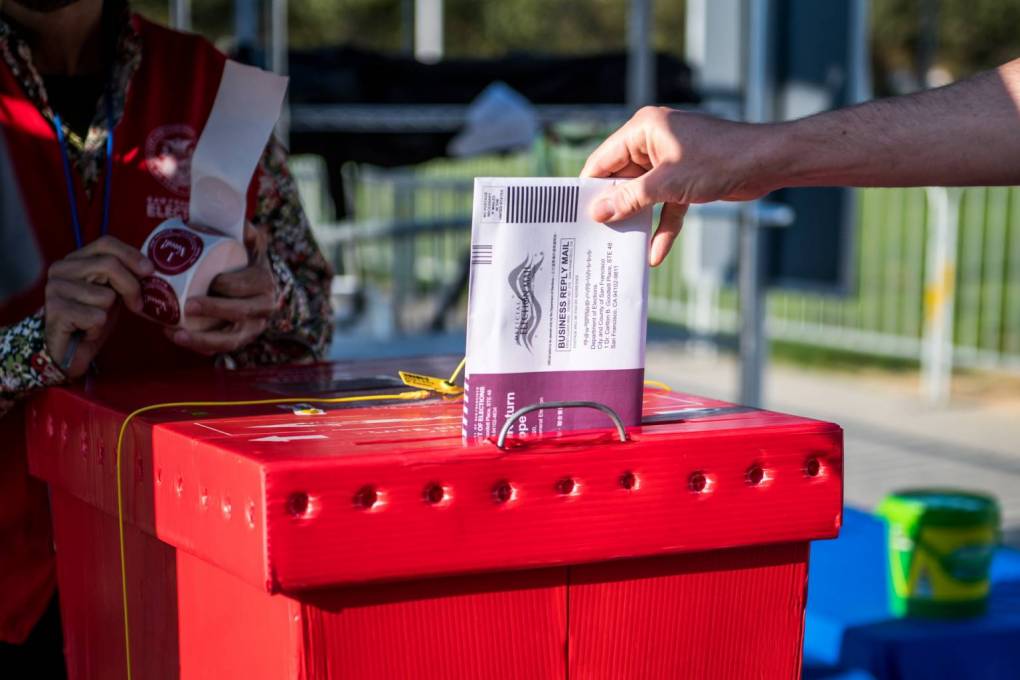
"caption": "Once you've filled out your ballot, where can you submit it?",
"description": null,
"title": "where-is-my-ballot-drop-box",
"credit": "Beth LaBerge/KQED",
"status": "inherit",
"altTag": "A hand places a ballot into a red ballot box.",
"isLoading": false,
"fetchFailed": false
},
"news_11931364": {
"type": "attachments",
"id": "news_11931364",
"meta": {
"index": "attachments_1716263798",
"site": "news",
"id": "11931364",
"found": true
},
"parent": 11931363,
"imgSizes": {
"twentyfourteen-full-width": {
"file": "https://ww2.kqed.org/app/uploads/sites/10/2022/11/gettyimages-1244492905_slide-5deaa0568f592af447cda2eb7a316911f783700e-1038x576.jpg",
"width": 1038,
"mimeType": "image/jpeg",
"height": 576
},
"thumbnail": {
"file": "https://ww2.kqed.org/app/uploads/sites/10/2022/11/gettyimages-1244492905_slide-5deaa0568f592af447cda2eb7a316911f783700e-160x107.jpg",
"width": 160,
"mimeType": "image/jpeg",
"height": 107
},
"post-thumbnail": {
"file": "https://ww2.kqed.org/app/uploads/sites/10/2022/11/gettyimages-1244492905_slide-5deaa0568f592af447cda2eb7a316911f783700e-672x372.jpg",
"width": 672,
"mimeType": "image/jpeg",
"height": 372
},
"kqedFullSize": {
"file": "https://ww2.kqed.org/app/uploads/sites/10/2022/11/gettyimages-1244492905_slide-5deaa0568f592af447cda2eb7a316911f783700e-scaled.jpg",
"width": 2560,
"height": 1707
},
"2048x2048": {
"file": "https://ww2.kqed.org/app/uploads/sites/10/2022/11/gettyimages-1244492905_slide-5deaa0568f592af447cda2eb7a316911f783700e-2048x1365.jpg",
"width": 2048,
"mimeType": "image/jpeg",
"height": 1365
},
"large": {
"file": "https://ww2.kqed.org/app/uploads/sites/10/2022/11/gettyimages-1244492905_slide-5deaa0568f592af447cda2eb7a316911f783700e-1020x680.jpg",
"width": 1020,
"mimeType": "image/jpeg",
"height": 680
},
"1536x1536": {
"file": "https://ww2.kqed.org/app/uploads/sites/10/2022/11/gettyimages-1244492905_slide-5deaa0568f592af447cda2eb7a316911f783700e-1536x1024.jpg",
"width": 1536,
"mimeType": "image/jpeg",
"height": 1024
},
"full-width": {
"file": "https://ww2.kqed.org/app/uploads/sites/10/2022/11/gettyimages-1244492905_slide-5deaa0568f592af447cda2eb7a316911f783700e-1920x1280.jpg",
"width": 1920,
"mimeType": "image/jpeg",
"height": 1280
},
"medium": {
"file": "https://ww2.kqed.org/app/uploads/sites/10/2022/11/gettyimages-1244492905_slide-5deaa0568f592af447cda2eb7a316911f783700e-800x533.jpg",
"width": 800,
"mimeType": "image/jpeg",
"height": 533
}
},
"publishDate": 1667858832,
"modified": 1667859223,
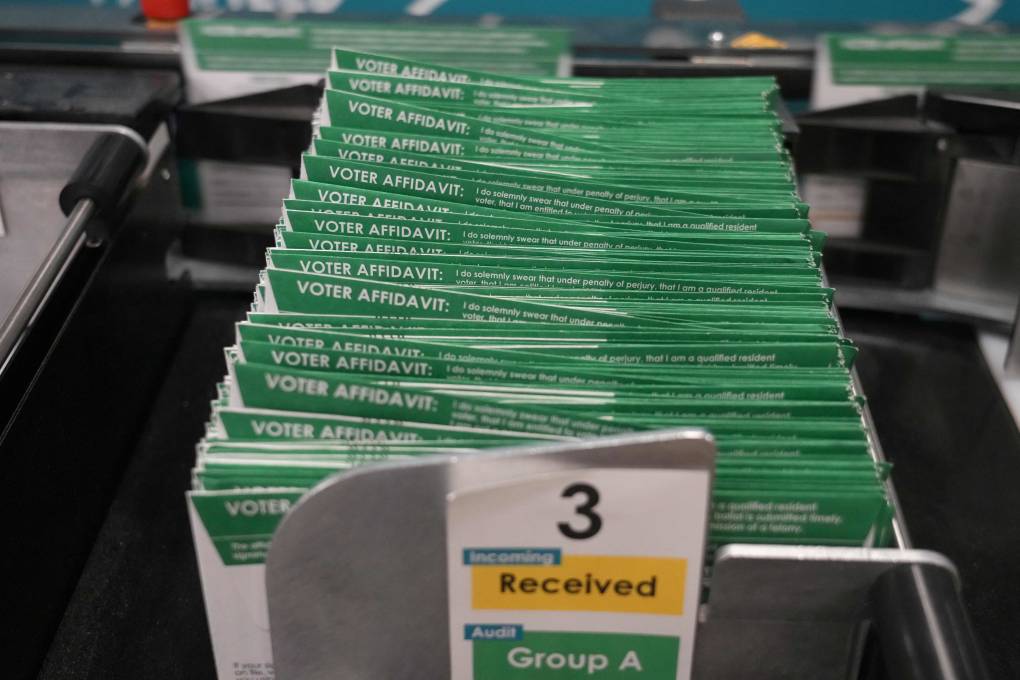
"caption": "Early voting ballots move through a ballot and signature verification machine at the Utah County Election offices in Provo, Utah on Nov. 4, 2022. ",
"description": "Early voting ballots move through a ballot and signature verification machine at the Utah County Election offices in Provo, Utah on November 4, 2022. - There has been early voting in Utah for several weeks and the ballots are processed and counted as they come in. (Photo by GEORGE FREY / AFP) (Photo by GEORGE FREY/AFP via Getty Images)",
"title": "Early voting ballots move through a ballot and signature verification machine at the Utah County election offices in Provo, Utah, on Friday.",
"credit": "George Frey/ AFP via Getty Images",
"status": "inherit",
"altTag": "A stack of green and white envelopes on a table.",
"isLoading": false,
"fetchFailed": false
},
"news_11931329": {
"type": "attachments",
"id": "news_11931329",
"meta": {
"index": "attachments_1716263798",
"site": "news",
"id": "11931329",
"found": true
},
"parent": 11931328,
"imgSizes": {
"twentyfourteen-full-width": {
"file": "https://ww2.kqed.org/app/uploads/sites/10/2022/11/gettyimages-1244534387_wide-686cbd66e907499a770743d6c92723f21ee6b439-1038x576.jpg",
"width": 1038,
"mimeType": "image/jpeg",
"height": 576
},
"thumbnail": {
"file": "https://ww2.kqed.org/app/uploads/sites/10/2022/11/gettyimages-1244534387_wide-686cbd66e907499a770743d6c92723f21ee6b439-160x90.jpg",
"width": 160,
"mimeType": "image/jpeg",
"height": 90
},
"post-thumbnail": {
"file": "https://ww2.kqed.org/app/uploads/sites/10/2022/11/gettyimages-1244534387_wide-686cbd66e907499a770743d6c92723f21ee6b439-672x372.jpg",
"width": 672,
"mimeType": "image/jpeg",
"height": 372
},
"kqedFullSize": {
"file": "https://ww2.kqed.org/app/uploads/sites/10/2022/11/gettyimages-1244534387_wide-686cbd66e907499a770743d6c92723f21ee6b439-scaled.jpg",
"width": 2560,
"height": 1440
},
"2048x2048": {
"file": "https://ww2.kqed.org/app/uploads/sites/10/2022/11/gettyimages-1244534387_wide-686cbd66e907499a770743d6c92723f21ee6b439-2048x1152.jpg",
"width": 2048,
"mimeType": "image/jpeg",
"height": 1152
},
"large": {
"file": "https://ww2.kqed.org/app/uploads/sites/10/2022/11/gettyimages-1244534387_wide-686cbd66e907499a770743d6c92723f21ee6b439-1020x574.jpg",
"width": 1020,
"mimeType": "image/jpeg",
"height": 574
},
"1536x1536": {
"file": "https://ww2.kqed.org/app/uploads/sites/10/2022/11/gettyimages-1244534387_wide-686cbd66e907499a770743d6c92723f21ee6b439-1536x864.jpg",
"width": 1536,
"mimeType": "image/jpeg",
"height": 864
},
"full-width": {
"file": "https://ww2.kqed.org/app/uploads/sites/10/2022/11/gettyimages-1244534387_wide-686cbd66e907499a770743d6c92723f21ee6b439-1920x1080.jpg",
"width": 1920,
"mimeType": "image/jpeg",
"height": 1080
},
"medium": {
"file": "https://ww2.kqed.org/app/uploads/sites/10/2022/11/gettyimages-1244534387_wide-686cbd66e907499a770743d6c92723f21ee6b439-800x450.jpg",
"width": 800,
"mimeType": "image/jpeg",
"height": 450
}
},
"publishDate": 1667851701,
"modified": 1667852732,
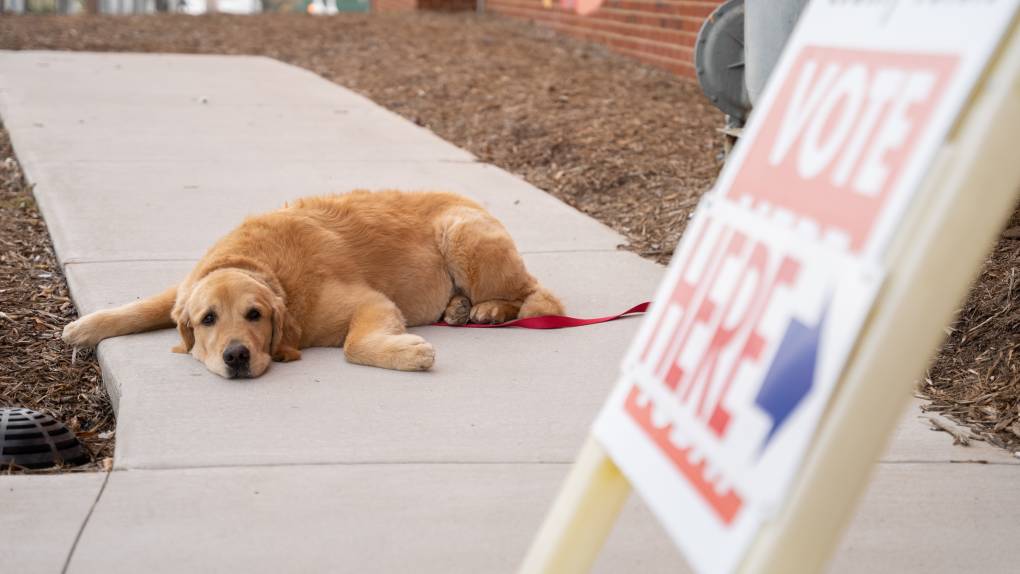
"caption": "A dog waits for their owner outside a voting location on Nov. 5, 2022 in Charlotte, North Carolina — the last day for early voting in the state.",
"description": "A dog waits for their owner outside a voting location on Nov. 5, 2022 in Charlotte, North Carolina — the last day for early voting in the state.",
"title": "A dog named Georgia waits for their owner outside a voting location on Saturday in Charlotte, N.C. It was the last day for early voting in the state.",
"credit": "Sean Rayford/Getty Images",
"status": "inherit",
"altTag": "a dog lies on the ground outside a polling place",
"isLoading": false,
"fetchFailed": false
},
"news_11844740": {
"type": "attachments",
"id": "news_11844740",
"meta": {
"index": "attachments_1716263798",
"site": "news",
"id": "11844740",
"found": true
},
"parent": 11844651,
"imgSizes": {
"apple_news_ca_landscape_5_5": {
"file": "https://ww2.kqed.org/app/uploads/sites/10/2020/10/RS45568_007_KQED_SanFrancisco_VotingCenter_10302020-qut-1044x783.jpg",
"width": 1044,
"mimeType": "image/jpeg",
"height": 783
},
"apple_news_ca_square_4_0": {
"file": "https://ww2.kqed.org/app/uploads/sites/10/2020/10/RS45568_007_KQED_SanFrancisco_VotingCenter_10302020-qut-470x470.jpg",
"width": 470,
"mimeType": "image/jpeg",
"height": 470
},
"twentyfourteen-full-width": {
"file": "https://ww2.kqed.org/app/uploads/sites/10/2020/10/RS45568_007_KQED_SanFrancisco_VotingCenter_10302020-qut-1038x576.jpg",
"width": 1038,
"mimeType": "image/jpeg",
"height": 576
},
"thumbnail": {
"file": "https://ww2.kqed.org/app/uploads/sites/10/2020/10/RS45568_007_KQED_SanFrancisco_VotingCenter_10302020-qut-160x107.jpg",
"width": 160,
"mimeType": "image/jpeg",
"height": 107
},
"post-thumbnail": {
"file": "https://ww2.kqed.org/app/uploads/sites/10/2020/10/RS45568_007_KQED_SanFrancisco_VotingCenter_10302020-qut-672x372.jpg",
"width": 672,
"mimeType": "image/jpeg",
"height": 372
},
"kqedFullSize": {
"file": "https://ww2.kqed.org/app/uploads/sites/10/2020/10/RS45568_007_KQED_SanFrancisco_VotingCenter_10302020-qut.jpg",
"width": 1920,
"height": 1280
},
"apple_news_ca_landscape_4_7": {
"file": "https://ww2.kqed.org/app/uploads/sites/10/2020/10/RS45568_007_KQED_SanFrancisco_VotingCenter_10302020-qut-632x474.jpg",
"width": 632,
"mimeType": "image/jpeg",
"height": 474
},
"large": {
"file": "https://ww2.kqed.org/app/uploads/sites/10/2020/10/RS45568_007_KQED_SanFrancisco_VotingCenter_10302020-qut-1020x680.jpg",
"width": 1020,
"mimeType": "image/jpeg",
"height": 680
},
"apple_news_ca_landscape_4_0": {
"file": "https://ww2.kqed.org/app/uploads/sites/10/2020/10/RS45568_007_KQED_SanFrancisco_VotingCenter_10302020-qut-536x402.jpg",
"width": 536,
"mimeType": "image/jpeg",
"height": 402
},
"apple_news_ca_portrait_12_9": {
"file": "https://ww2.kqed.org/app/uploads/sites/10/2020/10/RS45568_007_KQED_SanFrancisco_VotingCenter_10302020-qut-1122x1280.jpg",
"width": 1122,
"mimeType": "image/jpeg",
"height": 1280
},
"medium": {
"file": "https://ww2.kqed.org/app/uploads/sites/10/2020/10/RS45568_007_KQED_SanFrancisco_VotingCenter_10302020-qut-800x533.jpg",
"width": 800,
"mimeType": "image/jpeg",
"height": 533
},
"apple_news_ca_portrait_4_0": {
"file": "https://ww2.kqed.org/app/uploads/sites/10/2020/10/RS45568_007_KQED_SanFrancisco_VotingCenter_10302020-qut-354x472.jpg",
"width": 354,
"mimeType": "image/jpeg",
"height": 472
},
"apple_news_ca_portrait_9_7": {
"file": "https://ww2.kqed.org/app/uploads/sites/10/2020/10/RS45568_007_KQED_SanFrancisco_VotingCenter_10302020-qut-840x1120.jpg",
"width": 840,
"mimeType": "image/jpeg",
"height": 1120
},
"apple_news_ca_landscape_12_9": {
"file": "https://ww2.kqed.org/app/uploads/sites/10/2020/10/RS45568_007_KQED_SanFrancisco_VotingCenter_10302020-qut-1832x1280.jpg",
"width": 1832,
"mimeType": "image/jpeg",
"height": 1280
},
"apple_news_ca_square_9_7": {
"file": "https://ww2.kqed.org/app/uploads/sites/10/2020/10/RS45568_007_KQED_SanFrancisco_VotingCenter_10302020-qut-1104x1104.jpg",
"width": 1104,
"mimeType": "image/jpeg",
"height": 1104
},
"1536x1536": {
"file": "https://ww2.kqed.org/app/uploads/sites/10/2020/10/RS45568_007_KQED_SanFrancisco_VotingCenter_10302020-qut-1536x1024.jpg",
"width": 1536,
"mimeType": "image/jpeg",
"height": 1024
},
"apple_news_ca_portrait_4_7": {
"file": "https://ww2.kqed.org/app/uploads/sites/10/2020/10/RS45568_007_KQED_SanFrancisco_VotingCenter_10302020-qut-414x552.jpg",
"width": 414,
"mimeType": "image/jpeg",
"height": 552
},
"apple_news_ca_square_12_9": {
"file": "https://ww2.kqed.org/app/uploads/sites/10/2020/10/RS45568_007_KQED_SanFrancisco_VotingCenter_10302020-qut-1472x1280.jpg",
"width": 1472,
"mimeType": "image/jpeg",
"height": 1280
},
"apple_news_ca_portrait_5_5": {
"file": "https://ww2.kqed.org/app/uploads/sites/10/2020/10/RS45568_007_KQED_SanFrancisco_VotingCenter_10302020-qut-687x916.jpg",
"width": 687,
"mimeType": "image/jpeg",
"height": 916
},
"apple_news_ca_square_4_7": {
"file": "https://ww2.kqed.org/app/uploads/sites/10/2020/10/RS45568_007_KQED_SanFrancisco_VotingCenter_10302020-qut-550x550.jpg",
"width": 550,
"mimeType": "image/jpeg",
"height": 550
},
"apple_news_ca_landscape_9_7": {
"file": "https://ww2.kqed.org/app/uploads/sites/10/2020/10/RS45568_007_KQED_SanFrancisco_VotingCenter_10302020-qut-1376x1032.jpg",
"width": 1376,
"mimeType": "image/jpeg",
"height": 1032
},
"apple_news_ca_square_5_5": {
"file": "https://ww2.kqed.org/app/uploads/sites/10/2020/10/RS45568_007_KQED_SanFrancisco_VotingCenter_10302020-qut-912x912.jpg",
"width": 912,
"mimeType": "image/jpeg",
"height": 912
}
},
"publishDate": 1604097564,
"modified": 1665508826,
"caption": "Ophelia Williams and her brother Leopold Parker do a final check of their mail-in ballots before turning them in at the voting center near San Francisco City Hall on Oct. 30, 2020.",
"description": null,
"title": "RS45568_007_KQED_SanFrancisco_VotingCenter_10302020-qut",
"credit": "Beth LaBerge/KQED",
"status": "inherit",
"altTag": "A woman and a man, both wearing face masks, examine their election ballots.",
"isLoading": false,
"fetchFailed": false
},
"news_11931049": {
"type": "attachments",
"id": "news_11931049",
"meta": {
"index": "attachments_1716263798",
"site": "news",
"id": "11931049",
"found": true
},
"parent": 11931012,
"imgSizes": {
"twentyfourteen-full-width": {
"file": "https://ww2.kqed.org/app/uploads/sites/10/2022/11/RS41615_008_KQED_Election_CityHallSF_02262020_4220-qut-1-1038x576.jpg",
"width": 1038,
"mimeType": "image/jpeg",
"height": 576
},
"thumbnail": {
"file": "https://ww2.kqed.org/app/uploads/sites/10/2022/11/RS41615_008_KQED_Election_CityHallSF_02262020_4220-qut-1-160x107.jpg",
"width": 160,
"mimeType": "image/jpeg",
"height": 107
},
"post-thumbnail": {
"file": "https://ww2.kqed.org/app/uploads/sites/10/2022/11/RS41615_008_KQED_Election_CityHallSF_02262020_4220-qut-1-672x372.jpg",
"width": 672,
"mimeType": "image/jpeg",
"height": 372
},
"kqedFullSize": {
"file": "https://ww2.kqed.org/app/uploads/sites/10/2022/11/RS41615_008_KQED_Election_CityHallSF_02262020_4220-qut-1.jpg",
"width": 1920,
"height": 1280
},
"large": {
"file": "https://ww2.kqed.org/app/uploads/sites/10/2022/11/RS41615_008_KQED_Election_CityHallSF_02262020_4220-qut-1-1020x680.jpg",
"width": 1020,
"mimeType": "image/jpeg",
"height": 680
},
"1536x1536": {
"file": "https://ww2.kqed.org/app/uploads/sites/10/2022/11/RS41615_008_KQED_Election_CityHallSF_02262020_4220-qut-1-1536x1024.jpg",
"width": 1536,
"mimeType": "image/jpeg",
"height": 1024
},
"medium": {
"file": "https://ww2.kqed.org/app/uploads/sites/10/2022/11/RS41615_008_KQED_Election_CityHallSF_02262020_4220-qut-1-800x533.jpg",
"width": 800,
"mimeType": "image/jpeg",
"height": 533
}
},
"publishDate": 1667504330,
"modified": 1667511535,
"caption": "A vote-by-mail ballot goes into the ballot box at San Francisco City Hall on Wednesday, Feb. 26, 2020.\n",
"description": null,
"title": "RS41615_008_KQED_Election_CityHallSF_02262020_4220-qut (1)",
"credit": "Beth LaBerge/KQED",
"status": "inherit",
"altTag": null,
"isLoading": false,
"fetchFailed": false
},
"news_11927933": {
"type": "attachments",
"id": "news_11927933",
"meta": {
"index": "attachments_1716263798",
"site": "news",
"id": "11927933",
"found": true
},
"parent": 11927744,
"imgSizes": {
"twentyfourteen-full-width": {
"file": "https://ww2.kqed.org/app/uploads/sites/10/2022/10/RS45235_027_KQED_SanFrancisco_VotingCenter_10052020-qut-1038x576.jpg",
"width": 1038,
"mimeType": "image/jpeg",
"height": 576
},
"thumbnail": {
"file": "https://ww2.kqed.org/app/uploads/sites/10/2022/10/RS45235_027_KQED_SanFrancisco_VotingCenter_10052020-qut-160x107.jpg",
"width": 160,
"mimeType": "image/jpeg",
"height": 107
},
"post-thumbnail": {
"file": "https://ww2.kqed.org/app/uploads/sites/10/2022/10/RS45235_027_KQED_SanFrancisco_VotingCenter_10052020-qut-672x372.jpg",
"width": 672,
"mimeType": "image/jpeg",
"height": 372
},
"kqedFullSize": {
"file": "https://ww2.kqed.org/app/uploads/sites/10/2022/10/RS45235_027_KQED_SanFrancisco_VotingCenter_10052020-qut.jpg",
"width": 1920,
"height": 1280
},
"large": {
"file": "https://ww2.kqed.org/app/uploads/sites/10/2022/10/RS45235_027_KQED_SanFrancisco_VotingCenter_10052020-qut-1020x680.jpg",
"width": 1020,
"mimeType": "image/jpeg",
"height": 680
},
"1536x1536": {
"file": "https://ww2.kqed.org/app/uploads/sites/10/2022/10/RS45235_027_KQED_SanFrancisco_VotingCenter_10052020-qut-1536x1024.jpg",
"width": 1536,
"mimeType": "image/jpeg",
"height": 1024
},
"medium": {
"file": "https://ww2.kqed.org/app/uploads/sites/10/2022/10/RS45235_027_KQED_SanFrancisco_VotingCenter_10052020-qut-800x533.jpg",
"width": 800,
"mimeType": "image/jpeg",
"height": 533
}
},
"publishDate": 1665087663,
"modified": 1666600425,
"caption": "Un votante deja una papeleta en un nuevo centro de votación al aire libre cerca de Civic Center Plaza en San Francisco el 5 de octubre de 2020, el primer día de votación anticipada.",
"description": null,
"title": null,
"credit": "Beth LaBerge/KQED",
"status": "inherit",
"altTag": null,
"isLoading": false,
"fetchFailed": false
},
"news_11913277": {
"type": "attachments",
"id": "news_11913277",
"meta": {
"index": "attachments_1716263798",
"site": "news",
"id": "11913277",
"found": true
},
"parent": 11912752,
"imgSizes": {
"twentyfourteen-full-width": {
"file": "https://ww2.kqed.org/app/uploads/sites/10/2022/05/RS41615_008_KQED_Election_CityHallSF_02262020_4220-qut-1038x576.jpg",
"width": 1038,
"mimeType": "image/jpeg",
"height": 576
},
"thumbnail": {
"file": "https://ww2.kqed.org/app/uploads/sites/10/2022/05/RS41615_008_KQED_Election_CityHallSF_02262020_4220-qut-160x107.jpg",
"width": 160,
"mimeType": "image/jpeg",
"height": 107
},
"post-thumbnail": {
"file": "https://ww2.kqed.org/app/uploads/sites/10/2022/05/RS41615_008_KQED_Election_CityHallSF_02262020_4220-qut-672x372.jpg",
"width": 672,
"mimeType": "image/jpeg",
"height": 372
},
"kqedFullSize": {
"file": "https://ww2.kqed.org/app/uploads/sites/10/2022/05/RS41615_008_KQED_Election_CityHallSF_02262020_4220-qut.jpg",
"width": 1920,
"height": 1280
},
"large": {
"file": "https://ww2.kqed.org/app/uploads/sites/10/2022/05/RS41615_008_KQED_Election_CityHallSF_02262020_4220-qut-1020x680.jpg",
"width": 1020,
"mimeType": "image/jpeg",
"height": 680
},
"1536x1536": {
"file": "https://ww2.kqed.org/app/uploads/sites/10/2022/05/RS41615_008_KQED_Election_CityHallSF_02262020_4220-qut-1536x1024.jpg",
"width": 1536,
"mimeType": "image/jpeg",
"height": 1024
},
"medium": {
"file": "https://ww2.kqed.org/app/uploads/sites/10/2022/05/RS41615_008_KQED_Election_CityHallSF_02262020_4220-qut-800x533.jpg",
"width": 800,
"mimeType": "image/jpeg",
"height": 533
}
},
"publishDate": 1651767961,
"modified": 1651813418,
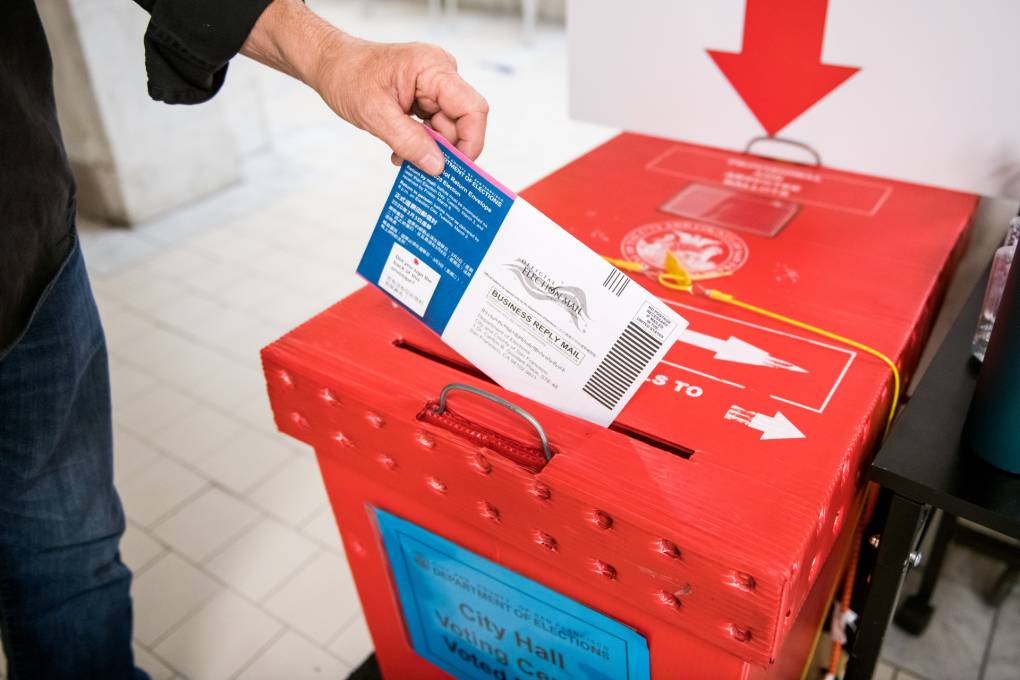
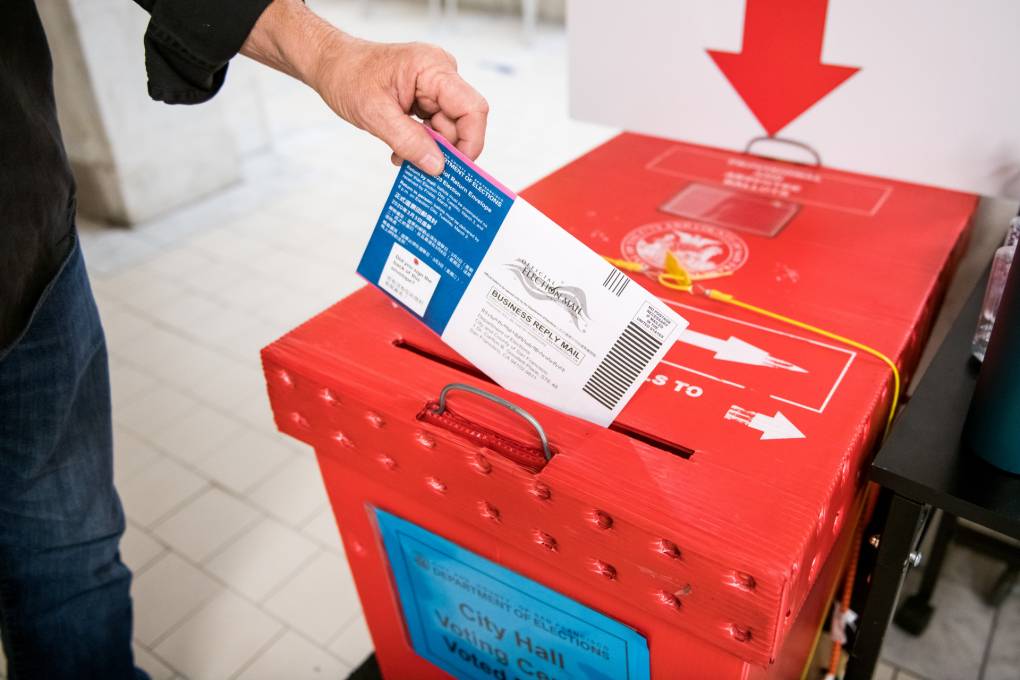
"caption": "A vote-by-mail ballot goes into the ballot box.",
"description": null,
"title": "RS41615_008_KQED_Election_CityHallSF_02262020_4220-qut",
"credit": "Beth LaBerge/KQED",
"status": "inherit",
"altTag": "A hand places a vote-by-mail ballot into a bright red ballot box.",
"isLoading": false,
"fetchFailed": false
}
},
"audioPlayerReducer": {
"postId": "stream_live",
"isPaused": true,
"isPlaying": false,
"pfsActive": false,
"pledgeModalIsOpen": true,
"playerDrawerIsOpen": false,
"liveAudioPlayStartedAt": 0,
"liveAudioPlayContext": ""
},
"authorsReducer": {
"byline_news_11931363": {
"type": "authors",
"id": "byline_news_11931363",
"meta": {
"override": true
},
"slug": "byline_news_11931363",
"name": "Brett Neely",
"isLoading": false
},
"byline_news_11931328": {
"type": "authors",
"id": "byline_news_11931328",
"meta": {
"override": true
},
"slug": "byline_news_11931328",
"name": "Domenico Montanaro",
"isLoading": false
},
"gmarzorati": {
"type": "authors",
"id": "227",
"meta": {
"index": "authors_1716337520",
"id": "227",
"found": true
},
"name": "Guy Marzorati",
"firstName": "Guy",
"lastName": "Marzorati",
"slug": "gmarzorati",
"email": "gmarzorati@KQED.org",
"display_author_email": true,
"staff_mastheads": [
"news"
],
"title": "Correspondent",
"bio": "Guy Marzorati is a correspondent on KQED's California Politics and Government Desk, based in San Jose. A graduate of Santa Clara University, Guy joined KQED in 2013. He reports on state and local politics and produces KQED's digital voter guide.",
"avatar": "https://secure.gravatar.com/avatar/e7038b8dbfd55b104369b76b1cd0b9de?s=600&d=blank&r=g",
"twitter": "guymarzorati",
"facebook": null,
"instagram": null,
"linkedin": null,
"sites": [
{
"site": "",
"roles": [
"editor"
]
},
{
"site": "news",
"roles": [
"editor"
]
},
{
"site": "science",
"roles": [
"editor"
]
},
{
"site": "forum",
"roles": [
"editor"
]
},
{
"site": "elections",
"roles": [
"editor"
]
},
{
"site": "liveblog",
"roles": [
"editor"
]
}
],
"headData": {
"title": "Guy Marzorati | KQED",
"description": "Correspondent",
"ogImgSrc": "https://secure.gravatar.com/avatar/e7038b8dbfd55b104369b76b1cd0b9de?s=600&d=blank&r=g",
"twImgSrc": "https://secure.gravatar.com/avatar/e7038b8dbfd55b104369b76b1cd0b9de?s=600&d=blank&r=g"
},
"isLoading": false,
"link": "/author/gmarzorati"
},
"carlysevern": {
"type": "authors",
"id": "3243",
"meta": {
"index": "authors_1716337520",
"id": "3243",
"found": true
},
"name": "Carly Severn",
"firstName": "Carly",
"lastName": "Severn",
"slug": "carlysevern",
"email": "csevern@kqed.org",
"display_author_email": false,
"staff_mastheads": [
"news"
],
"title": "Senior Editor, Audience News ",
"bio": "Carly is KQED's Senior Editor of Audience News on the Digital News team, and has reported for the California Report Magazine, Bay Curious and KQED Arts. She's formerly the host of \u003ca href=\"http://ww2.kqed.org/pop/category/the-cooler/\" rel=\"noopener noreferrer\">The Cooler\u003c/a> podcast.",
"avatar": "https://secure.gravatar.com/avatar/54037bf5c128fe678f0ef26cec97a93f2e7f220a22d7285703328f12c42c1b1d?s=600&d=blank&r=g",
"twitter": "teacupinthebay",
"bluesky": null,
"facebook": null,
"instagram": null,
"linkedin": null,
"sites": [
{
"site": "",
"roles": [
"editor"
]
},
{
"site": "arts",
"roles": [
"editor"
]
},
{
"site": "news",
"roles": [
"administrator"
]
},
{
"site": "pop",
"roles": [
"editor"
]
},
{
"site": "futureofyou",
"roles": [
"editor"
]
},
{
"site": "about",
"roles": [
"administrator"
]
},
{
"site": "mindshift",
"roles": [
"editor"
]
},
{
"site": "bayareabites",
"roles": [
"editor"
]
},
{
"site": "stateofhealth",
"roles": [
"editor"
]
},
{
"site": "science",
"roles": [
"editor"
]
},
{
"site": "food",
"roles": [
"contributor"
]
},
{
"site": "forum",
"roles": [
"editor"
]
},
{
"site": "perspectives",
"roles": [
"administrator"
]
},
{
"site": "liveblog",
"roles": [
"editor"
]
}
],
"headData": {
"title": "Carly Severn | KQED",
"description": "Senior Editor, Audience News ",
"ogImgSrc": "https://secure.gravatar.com/avatar/54037bf5c128fe678f0ef26cec97a93f2e7f220a22d7285703328f12c42c1b1d?s=600&d=blank&r=g",
"twImgSrc": "https://secure.gravatar.com/avatar/54037bf5c128fe678f0ef26cec97a93f2e7f220a22d7285703328f12c42c1b1d?s=600&d=blank&r=g"
},
"isLoading": false,
"link": "/author/carlysevern"
},
"jasminegarnett": {
"type": "authors",
"id": "11530",
"meta": {
"index": "authors_1716337520",
"id": "11530",
"found": true
},
"name": "Jasmine Garnett",
"firstName": "Jasmine",
"lastName": "Garnett",
"slug": "jasminegarnett",
"email": "JGarnett@KQED.org",
"display_author_email": false,
"staff_mastheads": [
"news"
],
"title": "Senior Engagement Platforms Producer",
"bio": "Jasmine is a Senior Engagement Platforms Producer on the KQED News team. She is also a freelance writer, with work appearing in KQED, Bitch Media, and Kotaku among others. Jasmine graduated from UC Berkeley with a degree in Media Studies, where she was also an Arts and Entertainment reporter at the Daily Californian.",
"avatar": "https://secure.gravatar.com/avatar/a6ea8b0641874311533b7401bee15c8e?s=600&d=blank&r=g",
"twitter": "JFLGarnett",
"facebook": null,
"instagram": null,
"linkedin": null,
"sites": [
{
"site": "arts",
"roles": [
"author"
]
},
{
"site": "news",
"roles": [
"editor"
]
},
{
"site": "about",
"roles": [
"editor"
]
},
{
"site": "science",
"roles": [
"editor"
]
},
{
"site": "forum",
"roles": [
"editor"
]
},
{
"site": "pressroom",
"roles": [
"editor"
]
}
],
"headData": {
"title": "Jasmine Garnett | KQED",
"description": "Senior Engagement Platforms Producer",
"ogImgSrc": "https://secure.gravatar.com/avatar/a6ea8b0641874311533b7401bee15c8e?s=600&d=blank&r=g",
"twImgSrc": "https://secure.gravatar.com/avatar/a6ea8b0641874311533b7401bee15c8e?s=600&d=blank&r=g"
},
"isLoading": false,
"link": "/author/jasminegarnett"
},
"nkhan": {
"type": "authors",
"id": "11867",
"meta": {
"index": "authors_1716337520",
"id": "11867",
"found": true
},
"name": "Nisa Khan",
"firstName": "Nisa",
"lastName": "Khan",
"slug": "nkhan",
"email": "nkhan@kqed.org",
"display_author_email": false,
"staff_mastheads": [],
"title": "KQED Contributor",
"bio": "Nisa Khan is a reporter for KQED's Audience News Desk. She was formerly a data reporter at Michigan Radio. She earned a Bachelor of Science in Information from the University of Michigan and a Master of Arts in Communication from Stanford University.",
"avatar": "https://secure.gravatar.com/avatar/8720459eef081ff64582b3506b124d58523e80e120704a0cbd9892533c914991?s=600&d=blank&r=g",
"twitter": "mnisakhan",
"bluesky": null,
"facebook": null,
"instagram": null,
"linkedin": null,
"sites": [
{
"site": "arts",
"roles": [
"editor"
]
},
{
"site": "news",
"roles": [
"editor"
]
},
{
"site": "science",
"roles": [
"editor",
"author"
]
},
{
"site": "forum",
"roles": [
"editor"
]
},
{
"site": "liveblog",
"roles": [
"contributor"
]
}
],
"headData": {
"title": "Nisa Khan | KQED",
"description": "KQED Contributor",
"ogImgSrc": "https://secure.gravatar.com/avatar/8720459eef081ff64582b3506b124d58523e80e120704a0cbd9892533c914991?s=600&d=blank&r=g",
"twImgSrc": "https://secure.gravatar.com/avatar/8720459eef081ff64582b3506b124d58523e80e120704a0cbd9892533c914991?s=600&d=blank&r=g"
},
"isLoading": false,
"link": "/author/nkhan"
}
},
"pagesReducer": {
"news_tag_election-explainers": {
"type": "terms",
"id": "news_28639",
"meta": {
"index": "terms_1716263798",
"site": "news",
"id": "28639",
"score": 10.403393
},
"featImg": null,
"name": "Election Explainers",
"description": null,
"taxonomy": "tag",
"headData": {
"twImgId": null,
"twTitle": null,
"ogTitle": null,
"ogImgId": null,
"twDescription": null,
"description": null,
"title": "Election Explainers Archives | KQED News",
"ogDescription": null
},
"ttid": 28656,
"slug": "election-explainers",
"isLoading": false,
"title": "Election Explainers",
"pageMeta": {
"site": "news",
"WpPageTemplate": "page-topic-editorial",
"currentPage": 3
},
"blocks": [
{
"blockName": "kqed/post-list",
"attrs": {
"layout": "cardArticle2",
"query": "posts/news?tag=election-explainers",
"seeMore": false,
"paginated": true,
"page": 3
}
},
{
"blockName": "kqed/ad"
}
]
}
},
"pfsSessionReducer": {},
"postsReducer": {
"stream_live": {
"type": "live",
"id": "stream_live",
"audioUrl": "https://streams.kqed.org/kqedradio",
"title": "Live Stream",
"excerpt": "Live Stream information currently unavailable.",
"link": "/radio",
"featImg": "",
"label": {
"name": "KQED Live",
"link": "/"
}
},
"stream_kqedNewscast": {
"type": "posts",
"id": "stream_kqedNewscast",
"audioUrl": "https://www.kqed.org/.stream/anon/radio/RDnews/newscast.mp3?_=1",
"title": "KQED Newscast",
"featImg": "",
"label": {
"name": "88.5 FM",
"link": "/"
}
},
"news_12003469": {
"type": "posts",
"id": "news_12003469",
"meta": {
"index": "posts_1716263798",
"site": "news",
"id": "12003469",
"score": null,
"sort": [
1728599434000
]
},
"guestAuthors": [],
"slug": "election-2024-how-to-correct-a-mistake-on-your-ballot-correction",
"title": "Election 2024: How to Correct a Mistake on Your Ballot",
"publishDate": 1728599434,
"format": "image",
"headTitle": "Election 2024: How to Correct a Mistake on Your Ballot | KQED",
"labelTerm": {
"site": "news"
},
"content": "\u003cp>\u003cem>\u003ca href=\"https://www.kqed.org/news/12010256/elecciones-2024-cometio-un-error-al-llenar-su-boleta-electoral\">Leer en español\u003c/a>\u003c/em>\u003c/p>\n\u003cp>\u003cstrong>Update, 9:30 a.m. Nov. 5: Reading this on Election Day? Remember you have the option to \u003ca href=\"#how-to-get-new-ballot\">go to an open voting location before polls close at 8 p.m. and request a replacement ballot \u003c/a>if you’re really worried about a mistake you’ve made on your ballot. You can also \u003ca href=\"https://www.kqed.org/news/12011221/how-to-check-my-ballot-was-counted-results-election-2024-harris-trump\">sign up to track your ballot\u003c/a> after you submit it, to find out quickly whether there are any issues with it. \u003ca href=\"https://www.kqed.org/news/12012472/election-2024-where-do-i-vote-in-person-find-my-polling-place\">Find your polling place, closest secure ballot drop box or voting location.\u003c/a>\u003c/strong>\u003c/p>\n\u003cp>[dropcap]E[/dropcap]lection Day — your last day to vote — is on Tuesday, Nov. 5. And if you’re a registered California voter, your ballot should be arriving in your mailbox very soon, if it hasn’t already.\u003c/p>\n\u003cp>But what if you make a mistake on your ballot as you’re filling it out? Or are you just not sure how to fill it out in the first place?\u003c/p>\n\u003cp>Keep reading to learn how to fill out your ballot, how important your signature is and your options if you need to start again with a fresh ballot. Or jump straight to:\u003c/p>\n\u003cul>\n\u003cli>\u003cstrong>\u003ca href=\"#how-to-correct-mistake-ballot\">What are my Bay Area county’s rules on fixing ballot mistakes?\u003c/a>\u003c/strong>\u003c/li>\n\u003cli>\u003cstrong>\u003ca href=\"#signature-problem-ballot\">What happens if I messed up my signature on my ballot?\u003c/a>\u003c/strong>\u003c/li>\n\u003cli>\u003cstrong>\u003ca href=\"#date-on-ballot-envelope\">I’m worried I wrote the wrong date on my ballot’s envelope\u003c/a>\u003c/strong>\u003c/li>\n\u003c/ul>\n\u003cp>If you’re looking for information about what’s on your ballot, \u003ca href=\"https://www.kqed.org/voterguide\">take a look at KQED’s Voter Guide\u003c/a>, which unpacks ballot measures and compares candidates in every race in the Bay Area. (And if you want to make sure you’re actually registered to vote correctly, \u003ca href=\"https://www.kqed.org/news/12003124/how-do-i-know-if-im-registered-to-vote-heres-how-to-check\">read our guide to checking your voter registration \u003c/a>— including why you might need to re-register.)\u003c/p>\n\u003cfigure id=\"attachment_11841798\" class=\"wp-caption aligncenter\" style=\"max-width: 1920px\">\u003cimg loading=\"lazy\" decoding=\"async\" class=\"size-full wp-image-11841798\" src=\"https://ww2.kqed.org/app/uploads/sites/10/2020/10/RS45270_008_KQED_ElectionStockPhotos_TikaHall_10062020-qut.jpg\" alt=\"\" width=\"1920\" height=\"1280\" srcset=\"https://cdn.kqed.org/wp-content/uploads/sites/10/2020/10/RS45270_008_KQED_ElectionStockPhotos_TikaHall_10062020-qut.jpg 1920w, https://cdn.kqed.org/wp-content/uploads/sites/10/2020/10/RS45270_008_KQED_ElectionStockPhotos_TikaHall_10062020-qut-800x533.jpg 800w, https://cdn.kqed.org/wp-content/uploads/sites/10/2020/10/RS45270_008_KQED_ElectionStockPhotos_TikaHall_10062020-qut-1020x680.jpg 1020w, https://cdn.kqed.org/wp-content/uploads/sites/10/2020/10/RS45270_008_KQED_ElectionStockPhotos_TikaHall_10062020-qut-160x107.jpg 160w, https://cdn.kqed.org/wp-content/uploads/sites/10/2020/10/RS45270_008_KQED_ElectionStockPhotos_TikaHall_10062020-qut-1536x1024.jpg 1536w\" sizes=\"(max-width: 1920px) 100vw, 1920px\">\u003cfigcaption class=\"wp-caption-text\">A San Francisco resident drops their mail-in ballot into a mailbox. \u003ccite>(Beth LaBerge/KQED)\u003c/cite>\u003c/figcaption>\u003c/figure>\n\u003ch2>\u003ca id=\"how-to-correct-mistake-ballot\">\u003c/a>I messed up. How do I fix a mistake on my ballot?\u003c/h2>\n\u003cp>First, don’t panic.\u003c/p>\n\u003cp>People make mistakes on ballots, and they also find good ways to correct them. The job of county elections officials — once they’ve verified your signature — is to make sure your ballot can be read correctly. If that means that your corrections on your ballot have resulted in readability issues, officials working in teams of two will actually remake it for you according to the intent you’ve signaled with your corrections.\u003c/p>\n\u003cp>The main thing to know is that there’s no one-size-fits-all approach to correcting a mistake on your ballot in California — how a voter corrects a goof is up to the county, and sometimes those “how to fix it” instructions are different from county to county.\u003c/p>\n\u003cp>Your own county’s advice for how to fix a mistake on your ballot is almost certainly printed \u003cem>on\u003c/em> your ballot, so check there first. But here’s what each county’s registrar told KQED about fixing a mistake, so scroll down to find your county or use the quick links below. If they sent us a visual guide, we’ve included that, too.\u003c/p>\n\u003cp>And if you have a specific question about your ballot that isn’t answered here, you can always \u003ca href=\"#contact\">contact your local county elections office for advice and instructions\u003c/a>.\u003c/p>\n\u003cfigure id=\"attachment_11842571\" class=\"wp-caption alignnone\" style=\"max-width: 1920px\">\u003cimg loading=\"lazy\" decoding=\"async\" class=\"size-full wp-image-11842571\" src=\"https://ww2.kqed.org/app/uploads/sites/10/2020/10/RS45341_023_KQED_SanFrancisco_Election2020_TanyaYule_10092020-qut.jpg\" alt=\"\" width=\"1920\" height=\"1280\" srcset=\"https://cdn.kqed.org/wp-content/uploads/sites/10/2020/10/RS45341_023_KQED_SanFrancisco_Election2020_TanyaYule_10092020-qut.jpg 1920w, https://cdn.kqed.org/wp-content/uploads/sites/10/2020/10/RS45341_023_KQED_SanFrancisco_Election2020_TanyaYule_10092020-qut-800x533.jpg 800w, https://cdn.kqed.org/wp-content/uploads/sites/10/2020/10/RS45341_023_KQED_SanFrancisco_Election2020_TanyaYule_10092020-qut-1020x680.jpg 1020w, https://cdn.kqed.org/wp-content/uploads/sites/10/2020/10/RS45341_023_KQED_SanFrancisco_Election2020_TanyaYule_10092020-qut-160x107.jpg 160w, https://cdn.kqed.org/wp-content/uploads/sites/10/2020/10/RS45341_023_KQED_SanFrancisco_Election2020_TanyaYule_10092020-qut-1536x1024.jpg 1536w\" sizes=\"(max-width: 1920px) 100vw, 1920px\">\u003cfigcaption class=\"wp-caption-text\">A San Francisco resident hands their mail-in ballot to a US Postal Service employee. \u003ccite>(Beth LaBerge/KQED)\u003c/cite>\u003c/figcaption>\u003c/figure>\n\u003cp>\u003cstrong>Alameda\u003c/strong>\u003c/p>\n\u003cp>Alameda County did not respond to repeated requests about their instructions to voters who make a mistake on their ballot, but the county’s ballot instructs voters to request a fresh ballot if they make a mistake, rather than try to correct it.\u003c/p>\n\u003cp>\u003ca href=\"#how-to-get-new-ballot\">Jump straight to how you can get a new ballot\u003c/a>. You can also call the Alameda County Registrar of Voters at 510-267-8683 or 800-345-VOTE(8683) with questions about your individual ballot.\u003c/p>\n\u003cp>\u003cstrong>Contra Costa\u003c/strong>\u003c/p>\n\u003cp>If you make a mistake, Contra Costa County Registrar Kristin Connelly said, “A simple X through the oval of the incorrect choice and a filled-in oval on their correct choice is enough.”\u003c/p>\n\u003cp>“[A]s long as we can determine what the voter’s intent is, we can make sure we count their vote correctly,” Connelly said. But if you’re still worried about your vote, you can always \u003ca href=\"#how-to-get-new-ballot\">ask for a replacement ballot,\u003c/a> to either mail back or use to vote in person. “It’s totally up to the voter and what makes them comfortable and secure that their vote will be counted,” she said.\u003c/p>\n\u003cp>\u003cstrong>Santa Clara\u003c/strong>\u003c/p>\n\u003cp>Steve Goltiao, associate communications officer with Santa Clara County’s Registrar of Voters, said you can “correct it by crossing out the wrong choice and filling out the correct oval as shown in the picture” below. You should not sign or initial the correction, Goltiao said.\u003c/p>\n\u003cfigure id=\"attachment_12005425\" class=\"wp-caption alignnone\" style=\"max-width: 500px\">\u003cimg loading=\"lazy\" decoding=\"async\" class=\"size-full wp-image-12005425\" src=\"https://cdn.kqed.org/wp-content/uploads/sites/10/2024/09/Ballot-mistake-EDIT.png\" alt=\"\" width=\"500\" height=\"100\" srcset=\"https://cdn.kqed.org/wp-content/uploads/sites/10/2024/09/Ballot-mistake-EDIT.png 500w, https://cdn.kqed.org/wp-content/uploads/sites/10/2024/09/Ballot-mistake-EDIT-160x32.png 160w\" sizes=\"(max-width: 500px) 100vw, 500px\">\u003cfigcaption class=\"wp-caption-text\">How Santa Clara County recommends voters correct their ballot. \u003ccite>(Santa Clara Department of Elections)\u003c/cite>\u003c/figcaption>\u003c/figure>\n\u003cp>You can also \u003ca href=\"#how-to-get-new-ballot\">request a replacement ballot\u003c/a> by calling 408-299-VOTE [8683] or toll-free 866-430-VOTE [8683]. “Voters may also use the Remote Accessible Vote by Mail System (RAVBM) to download a copy of the ballot that can be printed and returned by mail,” Goltiao said. \u003ca href=\"https://vote.santaclaracounty.gov/vote-mail/how-mark-your-vote-mail-ballot\">Read more information for Santa Clara voters about marking and returning ballots.\u003c/a> [aside label=\"2024 California Voter Guide\" link1='https://www.kqed.org/voterguide,Learn everything you need to cast an informed ballot for the 2024 general election' hero=https://cdn.kqed.org/wp-content/uploads/sites/80/2024/09/Aside-California-Voter-Guide-2024-General-Election-1200x1200-1.png]\u003c/p>\n\u003cp>\u003cstrong>San Francisco\u003c/strong>\u003c/p>\n\u003cp>“[V]oters can \u003ca href=\"#how-to-get-new-ballot\">request replacement ballots\u003c/a> if they make a mistake marking a selection,” San Francisco Department of Elections Director John Arntz told KQED. You can request that new ballot in person at your polling place and, from the San Francisco elections office at City Hall, and by \u003ca href=\"https://www.sf.gov/departments/department-elections\">calling or emailing the Department of Election (scroll to the bottom of this link for contact details.) \u003c/a>You can also use their \u003ca href=\"https://sfelections.org/tools/portal/\">Voter Portal\u003c/a> online to request a replacement ballot.\u003c/p>\n\u003cp>But if a voter doesn’t want to (or can’t) request a replacement ballot, Arntz said, “We tell them they can also cross out the incorrect selection, fill in the correct oval, and note on the card they made a mistake.” The reason this is OK, Artnz said, is because the vote-counting machines will recognize and flag any ballot that contains more than the allowed number of votes for a particular race. The ballot is then “moved to manual review or adjudication,” and elections staffers will personally look at the ballot to work out what that voter, in fact, meant.\u003c/p>\n\u003cp>“When voters indicate they made a mistake, our personnel will remedy the overvote to reflect the voters’ intent, and the card is then tabulated,” Artnz said.\u003c/p>\n\u003cp>\u003cstrong>San Mateo\u003c/strong>\u003c/p>\n\u003cfigure id=\"attachment_12006099\" class=\"wp-caption alignnone\" style=\"max-width: 1920px\">\u003cimg loading=\"lazy\" decoding=\"async\" class=\"size-full wp-image-12006099\" src=\"https://cdn.kqed.org/wp-content/uploads/sites/10/2024/09/San-Mateo-voting.png\" alt=\"\" width=\"1920\" height=\"431\" srcset=\"https://cdn.kqed.org/wp-content/uploads/sites/10/2024/09/San-Mateo-voting.png 1920w, https://cdn.kqed.org/wp-content/uploads/sites/10/2024/09/San-Mateo-voting-800x180.png 800w, https://cdn.kqed.org/wp-content/uploads/sites/10/2024/09/San-Mateo-voting-1020x229.png 1020w, https://cdn.kqed.org/wp-content/uploads/sites/10/2024/09/San-Mateo-voting-160x36.png 160w, https://cdn.kqed.org/wp-content/uploads/sites/10/2024/09/San-Mateo-voting-1536x345.png 1536w\" sizes=\"(max-width: 1920px) 100vw, 1920px\">\u003cfigcaption class=\"wp-caption-text\">How San Mateo County recommends voters correct their ballot. \u003ccite>(San Mateo County)\u003c/cite>\u003c/figcaption>\u003c/figure>\n\u003cp>Mark Church, Assessor-County Clerk-Recorder and Chief Elections Officer for San Mateo County told KQED that “any additional markings a voter makes including an ‘X’ through a selection choice on the ballot” will mean your ballot gets flagged and placed in a “Challenged” state. Then, your ballot is forwarded to one of the county’s adjudication stations, where a staffer will determine how you meant to vote with your markings.\u003c/p>\n\u003cp>“Thus, it is preferred that a voter \u003ca href=\"#how-to-get-new-ballot\">request a replacement ballot\u003c/a> if they make a mistake in marking their ballot,” Church said — which you can do in person by \u003ca href=\"https://caearlyvoting.sos.ca.gov/\">visiting one of the county’s 49 Vote Centers\u003c/a> or calling the Elections Office at 650-312-5222.\u003c/p>\n\u003cp>\u003cstrong>Marin\u003c/strong>\u003c/p>\n\u003cp>Marin County voters “can X out the mistake and mark the correct vote,” Lynda Roberts, Registrar of Voters, told KQED. “As long as we can see their intent, we can count the vote.”\u003c/p>\n\u003cp>Marin voters “should not initial or write their name next to the change, however, since ballots are to remain anonymous,” Roberts said.\u003c/p>\n\u003cp>\u003cstrong>Napa\u003c/strong>\u003c/p>\n\u003cp>John Tuteur, Napa County Registrar of Voters, said that if someone makes a mistake on their ballot, like marking “yes” when they meant to mark “no,” “they should circle the correct choice and draw an arrow to it.” The county’s vote-counting machines — technically known as “optical scanner ballot tabulators” — will automatically flag and forward any ballot that shows an “overvote” like this (i.e., when a race has more answers than is permitted) to staff who are trained to adjudicate these things, and work out what that voter intended with their correction.\u003c/p>\n\u003cp>This process is all documented, Tuteur said, so elections staff always know which adjudicator reviewed which ballot and what they decided.\u003c/p>\n\u003cp>\u003cstrong>Solano\u003c/strong>\u003c/p>\n\u003cp>“[L]ike lots of things, it kind of depends on the case and how close to election day it is,” Solano County Assistant Registrar of Voters John Gardner told KQED. But as a general rule, he encourages Solano voters to \u003ca href=\"https://www.solanocounty.com/depts/rov/contact_us.asp\">“call our office and talk to staff so we can go through the options” or email them. \u003c/a>\u003c/p>\n\u003cp>Your options, which an elections staffer can go over with you, include writing notes on your ballot to make your intention clear (“i.e., add arrows to the correct choice and write ‘I want this one’ next to it or something like that,” Gardner said, so the human reviewing your ballot can understand it), along with ways to \u003ca href=\"#how-to-get-new-ballot\">receive a new ballot\u003c/a> which include requesting a totally fresh one, using a sample ballot or printing a new ballot themselves from a secure site.\u003c/p>\n\u003cp>“[W]e do have a lot of options for voters, but it’s really best for them to get in touch with us to help them understand all the possibilities based on their situation and needs,” Gardner said.\u003c/p>\n\u003cp>\u003cstrong>Sonoma\u003c/strong>\u003c/p>\n\u003cp>“Voters should put an X over the incorrect choice and mark the correct one,” said Deva Proto, Clerk-Recorder-Assessor and Registrar of Voters of Sonoma County.\u003c/p>\n\u003cp>“Voters can also \u003ca href=\"#how-to-get-new-ballot\">request a replacement ballot\u003c/a>, if they feel more comfortable with that, or go to any in-person location to vote or get a replacement ballot,” she said.\u003c/p>\n\u003cul>\n\u003cli>\u003cstrong>\u003ca href=\"#tellus\">Tell us: What else do you need to know about voting in 2024?\u003c/a>\u003c/strong>\u003c/li>\n\u003c/ul>\n\u003cp>And remember, there’s \u003cem>always\u003c/em> this option …\u003c/p>\n\u003ch2>\u003ca id=\"how-to-get-new-ballot\">\u003c/a>What if I just want a new ballot?\u003c/h2>\n\u003cp>If you’ve made a big mistake on your ballot — too big to fix — your best plan of action may be to focus on getting a new one. You can:\u003c/p>\n\u003cul>\n\u003cli>Call your county elections office and ask them to cancel that ballot and issue a new one to you\u003c/li>\n\u003cli>Go to your county elections office with your spoiled ballot during business hours and vote right there at the counter\u003c/li>\n\u003cli>Take advantage of the early voting options available in many counties\u003c/li>\n\u003cli>Go to a voting site on Election Day, Nov. 5, turn in your spoiled ballot there and get a new ballot\u003c/li>\n\u003c/ul>\n\u003cp>You can also do this if you’ve accidentally damaged your ballot in some way (coffee spills happen).\u003c/p>\n\u003cfigure id=\"attachment_11843241\" class=\"wp-caption alignnone\" style=\"max-width: 1920px\">\u003cimg loading=\"lazy\" decoding=\"async\" class=\"size-full wp-image-11843241\" src=\"https://ww2.kqed.org/app/uploads/sites/10/2020/10/RS45338_019_KQED_SanFrancisco_Election2020_TanyaYule_10092020-qut.jpg\" alt=\"\" width=\"1920\" height=\"1280\" srcset=\"https://cdn.kqed.org/wp-content/uploads/sites/10/2020/10/RS45338_019_KQED_SanFrancisco_Election2020_TanyaYule_10092020-qut.jpg 1920w, https://cdn.kqed.org/wp-content/uploads/sites/10/2020/10/RS45338_019_KQED_SanFrancisco_Election2020_TanyaYule_10092020-qut-800x533.jpg 800w, https://cdn.kqed.org/wp-content/uploads/sites/10/2020/10/RS45338_019_KQED_SanFrancisco_Election2020_TanyaYule_10092020-qut-1020x680.jpg 1020w, https://cdn.kqed.org/wp-content/uploads/sites/10/2020/10/RS45338_019_KQED_SanFrancisco_Election2020_TanyaYule_10092020-qut-160x107.jpg 160w, https://cdn.kqed.org/wp-content/uploads/sites/10/2020/10/RS45338_019_KQED_SanFrancisco_Election2020_TanyaYule_10092020-qut-1536x1024.jpg 1536w\" sizes=\"(max-width: 1920px) 100vw, 1920px\">\u003cfigcaption class=\"wp-caption-text\">A San Francisco resident puts on an ‘I Voted!’ sticker after completing their mail-in ballot. \u003ccite>(Beth LaBerge/KQED)\u003c/cite>\u003c/figcaption>\u003c/figure>\n\u003ch2>\u003ca id=\"signature-problem-ballot\">\u003c/a>What if I have problems with my signature?\u003c/h2>\n\u003cp>When you’re done filling out your ballot, you must sign the envelope (\u003cem>not\u003c/em> the ballot itself, as these are meant to stay anonymous.)\u003c/p>\n\u003cp>But a few big mistakes people can make with their signatures are:\u003c/p>\n\u003cul>\n\u003cli>Forgetting to sign their ballot envelope entirely\u003c/li>\n\u003cli>Accidentally signing the wrong ballot envelope in their household (i.e., mixing up your ballot with your partner’s or roommate’s ballot) or\u003c/li>\n\u003cli>Making a signature that doesn’t match the signature they made when they registered to vote\u003c/li>\n\u003c/ul>\n\u003cp>Why \u003cem>wouldn’t\u003c/em> your signature match the one on file? If you registered to vote at a young age, maybe your signature has changed over time. Or perhaps you registered to vote at the DMV and provided your signature on a screen with a stylus, which doesn’t quite replicate how you’d make your signature with a pen on paper.\u003c/p>\n\u003cp>If you registered this way, one simple way to avoid any signature problems is to take a quick glance at the signature that’s on your driver’s license or state ID — because that’s the one you want your ballot signature to match.\u003c/p>\n\u003cp>Even if you didn’t register at the DMV, that signature on your most recent license or state ID is still very likely the one to emulate. That’s because when you register to vote online, your county elections office electronically requests a copy of the signature the DMV \u003cem>currently\u003c/em> has for you, and this information is regularly updated.\u003c/p>\n\u003cp>To further set your mind at rest, know that California isn’t an “exact match” state and doesn’t demand voters’ signatures 100% replicate the signature that’s on file.\u003c/p>\n\u003ch2>\u003cstrong>What if I just don’t know my ‘correct’ signature I’m registered to vote with?\u003c/strong>\u003c/h2>\n\u003cp>If you’re \u003cem>really\u003c/em> worried about the signature on your envelope not matching the signature you’re registered to vote with, there are two good solutions.\u003c/p>\n\u003cp>One: If it’s on or before Oct. 21, you can \u003ca href=\"https://www.kqed.org/news/12003124/how-do-i-know-if-im-registered-to-vote-heres-how-to-check\">re-register to vote with your current signature\u003c/a> to be sure that the state now has your most recent one on file. If you are re-registering after Oct. 21, you’d need to complete the \u003ca href=\"https://www.sos.ca.gov/elections/voter-registration/same-day-reg/\">same-day voter registration\u003c/a> process (also known as “conditional voting”) and request your ballot in person at your county elections office or polling location.\u003c/p>\n\u003cp>Two: In 2021, Kim Alexander, president of the nonpartisan \u003ca href=\"https://www.calvoter.org/\">California Voter Foundation\u003c/a>, told us there’s another solution if you’re worried about your signature: Go vote in person, if you’re able.\u003c/p>\n\u003cp>That’s because the signature only goes on your ballot’s \u003cem>envelope\u003c/em> — and if you’re voting in person, there’s no envelope because that ballot then goes straight into the ballot box without needing that envelope at all.\u003c/p>\n\u003cp>“So if you want that satisfaction of seeing your ballot drop in the box and know that it’s not going to get held up because of some signature issue, you can go and vote in person,” Alexander said.\u003c/p>\n\u003ch2>\u003cstrong>Thanks, KQED: I already mailed my ballot, but now I’m paranoid about my signature. What if I messed it up?\u003c/strong>\u003c/h2>\n\u003cp>Rest assured: There’s a whole system in place to help you correct your mistake.\u003c/p>\n\u003cp>If your county’s election office detects a signature mismatch on your ballot, they’ll reach out to you via mail to verify and work with you to correct it so that your ballot can be counted after all. It’s called “curing” a ballot.\u003c/p>\n\u003cp>This system is also applied when it looks like a member of a voter’s family might have signed their ballot instead of the voter. This happens a \u003cem>surprising\u003c/em> amount when one household has several voters who all receive a ballot in the mail.\u003c/p>\n\u003cp>One way to get peace of mind: \u003ca href=\"https://california.ballottrax.net/voter/\">Sign up to track your ballot\u003c/a>, and you’ll find out about any issues with your ballot or your signature quickly.\u003c/p>\n\u003ch2>\u003ca id=\"date-on-ballot-envelope\">\u003c/a>I think I put the wrong date on my envelope\u003c/h2>\n\u003cp>First off, that date should be the date you signed your envelope — not your date of birth. (We had many questions during the 2020 election about this.)\u003c/p>\n\u003cp>But if you’re worried you messed up the date, don’t worry. Elections officials said that the date they’re \u003cem>really\u003c/em> looking for is the date that the ballot is postmarked to make sure it was submitted on time.\u003c/p>\n\u003cp>Election officials will only truly scrutinize the date you’ve written if they receive your ballot \u003cem>after\u003c/em> Election Day.\u003c/p>\n\u003cp>“Like maybe you mailed it Monday before Election Day,” John Gardner, assistant registrar of voters for Solano County, told us in 2020. “That’s when we have to start looking at postmarks on the ballot, or date that the voter signed the envelope, to determine if we can count the ballot or not.”\u003c/p>\n\u003cp>And if you haven’t mailed your envelope yet, it’s an easy fix: Just clearly cross out the incorrect date on the envelope and write in the correct one above it.\u003c/p>\n\u003ch2>What if I use assistive technology to complete forms?\u003c/h2>\n\u003cp>Getting physical assistance with filling out your ballot from someone you trust is always fine, whether you’re voting at home or at a voting site. You just need to make sure your signature is your own and matches the one you’re registered to vote with.\u003c/p>\n\u003cp>Disabled voters can also choose to use the \u003ca href=\"https://www.sos.ca.gov/elections/voting-resources/remote-accessible-vote-mail\">Remote Accessible Vote-by-Mail \u003c/a>system to vote privately and independently at home, using their usual assistive device on their home computer to fill out the ballot on their screen and then print and mail it.\u003c/p>\n\u003cp>Every voting location in California is also equipped with an accessible voting unit. Here, voters with blindness or low vision or who have a disability that limits their dexterity will be able to use the assistive device of their choice that allows them to vote privately and independently.\u003c/p>\n\u003ch2>How can I make sure my mail-in ballot gets there on time?\u003c/h2>\n\u003cp>Remember, one big reason that ballots get disqualified in elections is that voters mail them too late: either too late on Election Day itself (after U.S. Postal Service mailboxes have already been collected) or after Election Day.\u003c/p>\n\u003cp>To be counted in this election, your ballot must be postmarked on Election Day, Nov. 5, at the latest. Your ballot has seven days — until Nov. 12. \u003ca href=\"https://www.sos.ca.gov/elections/upcoming-elections/pres-prim-march-2024?mc_cid=638980d345&mc_eid=b5c444f6a0\">— \u003c/a>\u003ca href=\"https://www.sos.ca.gov/elections/upcoming-elections/pres-prim-march-2024?mc_cid=638980d345&mc_eid=b5c444f6a0\">to reach your county elections office.\u003c/a>\u003c/p>\n\u003cp>So, in this election, it’s as crucial as ever to make sure you have a plan for voting on time — and if you’re not voting in person, that means making sure you get your ballot into a USPS mailbox or into \u003ca href=\"https://caearlyvoting.sos.ca.gov/\">a secure voting drop box, at a polling location\u003c/a> or your county elections office, by the time polls close on Nov. 5.\u003c/p>\n\u003cp>If you’re choosing to mail your ballot via USPS, keep in mind that the Postal Service must postmark your ballot envelope by the end of Election Day for your vote to count — and the last collection at many mailboxes is 5 p.m. So, if it’s getting late in the day on Nov. 5, consider using a county drop box instead of a USPS mailbox.\u003c/p>\n\u003cp>\u003ca href=\"https://www.kqed.org/news/12008419/ballot-drop-off-location-near-me-early-voting-site-election-2024\">Read more about how to return your ballot in the Bay Area.\u003c/a>\u003c/p>\n\u003ch2>A few other common ballot mistakes to watch out for …\u003c/h2>\n\u003cp>\u003cstrong>Make sure you use a black or blue pen:\u003c/strong> It reads better, and it doesn’t slow workers down when they have to check to see what voter intent was. (Don’t use a felt-tip or a Sharpie that bleeds through the paper and marks other pages on your ballot.)\u003c/p>\n\u003cp>\u003cstrong>Don’t mail an empty envelope:\u003c/strong> It does happen. Keeping your envelope and your ballot together in your home might be a helpful way of avoiding this problem. And, of course, when you’re ready to mail your ballot, make sure it’s actually inside the envelope before you seal it.\u003c/p>\n\u003cp>\u003cstrong>Don’t bother with a stamp:\u003c/strong> Your ballot envelope is postage-paid. You don’t need it.\u003c/p>\n\u003cp>\u003cstrong>And again, make sure you’re filling out the ballot — and signing the envelope — with \u003cem>your\u003c/em> name on it:\u003c/strong> It’s common to see roommates or family members accidentally mix up their ballot materials on the kitchen counter. So make sure you’re filling out the ballot and signing the envelope that bears your name.\u003c/p>\n\u003cfigure id=\"attachment_11879395\" class=\"wp-caption alignnone\" style=\"max-width: 1920px\">\u003cimg loading=\"lazy\" decoding=\"async\" class=\"size-full wp-image-11879395\" src=\"https://ww2.kqed.org/app/uploads/sites/10/2021/06/Oakland-by-Beth.jpg\" alt=\"\" width=\"1920\" height=\"1280\" srcset=\"https://cdn.kqed.org/wp-content/uploads/sites/10/2021/06/Oakland-by-Beth.jpg 1920w, https://cdn.kqed.org/wp-content/uploads/sites/10/2021/06/Oakland-by-Beth-800x533.jpg 800w, https://cdn.kqed.org/wp-content/uploads/sites/10/2021/06/Oakland-by-Beth-1020x680.jpg 1020w, https://cdn.kqed.org/wp-content/uploads/sites/10/2021/06/Oakland-by-Beth-160x107.jpg 160w, https://cdn.kqed.org/wp-content/uploads/sites/10/2021/06/Oakland-by-Beth-1536x1024.jpg 1536w\" sizes=\"(max-width: 1920px) 100vw, 1920px\">\u003cfigcaption class=\"wp-caption-text\">Bei Kao holds her ‘I Voted’ sticker after voting in Oakland on Oct. 27, 2020. \u003ccite>(Beth LaBerge/KQED)\u003c/cite>\u003c/figcaption>\u003c/figure>\n\u003cp>[ad fullwidth]\u003c/p>\n\u003ch2>And remember, you don’t \u003cem>have\u003c/em> to vote by mail\u003c/h2>\n\u003cp>Since 2020, \u003ca href=\"https://www.sos.ca.gov/elections/voter-registration/vote-mail\">every registered voter in California now receives a mail-in ballot by default, \u003c/a>without having to request it as in previous years. But voting by mail is still one option open to you.\u003c/p>\n\u003cp>You can still absolutely vote in person, either at an early voting location before or on Election Day (Nov. 5) itself. If you live in Alameda, Marin, Napa, San Mateo, Santa Clara or Sonoma, Vote Centers in your county open on Oct. 26 (or earlier in some cases), where you can go in person. Assigned voting locations will open a little later in San Francisco, Contra Costa or Solano for those counties’ voters, although some early voting sites will be available in those counties — for example, at your county elections office.\u003c/p>\n\u003cp>\u003ca href=\"https://caearlyvoting.sos.ca.gov/\">See where early voting will open in your county.\u003c/a>\u003c/p>\n\u003ch2>\u003ca id=\"contact\">\u003c/a>Contact your county directly\u003c/h2>\n\u003cp>Across the Bay Area, elections officials are encouraging voters to reach out — early — with any questions or concerns. Here’s the contact information for your county:\u003c/p>\n\u003cul>\n\u003cli>\u003cstrong>\u003ca href=\"https://www.acvote.org/index\">Alameda\u003c/a>\u003c/strong>: For information about voting by mail, registration and polling place lookup, call 510-267-8683.\u003c/li>\n\u003cli>\u003cstrong>\u003ca href=\"https://www.cocovote.us\">Contra Costa\u003c/a>\u003c/strong>: Call 925-335-7800 or email voter.services@vote.cccounty.us.\u003c/li>\n\u003cli>\u003cstrong>\u003ca href=\"https://www.marincounty.org/depts/rv\">Marin\u003c/a>\u003c/strong>: Call 415-473-6456 or go to the Marin County elections webpage to \u003ca href=\"https://www.marincounty.org/depts/rv/contact-us\">send a form email\u003c/a>.\u003c/li>\n\u003cli>\u003cstrong>\u003ca href=\"https://www.countyofnapa.org/396/Elections\">Napa\u003c/a>\u003c/strong>: Call 707-253-4321 or email the elections office at elections@countyofnapa.org.\u003c/li>\n\u003cli>\u003cstrong>\u003ca href=\"https://sfelections.sfgov.org\">San Francisco\u003c/a>\u003c/strong>: Call 415-554-4375 or email sfvote@sfgov.org.\u003c/li>\n\u003cli>\u003cstrong>\u003ca href=\"https://www.smcacre.org/elections\">San Mateo\u003c/a>\u003c/strong>: Call 888-762-8683 or email registrar@smcacre.org.\u003c/li>\n\u003cli>\u003ca href=\"https://www.sccgov.org/sites/rov/Pages/Registrar-of-Voters.aspx\">\u003cstrong>Santa Clara\u003c/strong>\u003c/a>: Call toll-free at 866-430-VOTE (8683) or email registrar@rov.sccgov.org.\u003c/li>\n\u003cli>\u003cstrong>\u003ca href=\"https://www.solanocounty.com/depts/rov/default.asp\">Solano\u003c/a>\u003c/strong>\u003cstrong>: \u003c/strong>Call 707-784-6675 or 888-933-VOTE (8683). You can also email elections@solanocounty.com.\u003c/li>\n\u003cli>\u003cstrong>\u003ca href=\"https://sonomacounty.ca.gov/CRA/Registrar-of-Voters/\">Sonoma\u003c/a>\u003c/strong>: Call 707-565-6800 or toll-free at 800-750-8683.\u003c/li>\n\u003c/ul>\n\u003cp>The state also has a full list of \u003ca href=\"https://www.sos.ca.gov/elections/voting-resources/county-elections-offices/\">every county elections office in California\u003c/a>.\u003c/p>\n\u003cp>Bookmark \u003ca href=\"https://www.sos.ca.gov/elections/voting-resources/voting-california/election-dates-and-resources\">the state’s full list of deadlines for the California Presidential Primary Election\u003c/a>.\u003c/p>\n\u003ch2>\u003ca id=\"tellus\">\u003c/a>Tell us: What else do you need information about?\u003c/h2>\n\u003cp>What do you need to know more about when it comes to voting? Tell us, and you could see your question answered online or on social media. We can’t respond to everyone who sends a question, but what you submit will make our reporting stronger and help us decide what to cover here on our site and on KQED Public Radio, too.\u003c/p>\n\u003cp>[hearken id=\"10483\" src=\"https://modules.wearehearken.com/kqed/embed/10483.js\"]\u003c/p>\n\u003cp>[ad floatright]\u003c/p>\n",
"blocks": [],
"excerpt": "You made a mistake on your ballot. What now? From signatures to how to correct an answer you didn't intend, we have answers to your questions about voting this fall.",
"status": "publish",
"parent": 0,
"modified": 1730828676,
"stats": {
"hasAudio": false,
"hasVideo": false,
"hasChartOrMap": false,
"iframeSrcs": [],
"hasGoogleForm": false,
"hasGallery": false,
"hasHearkenModule": true,
"hasPolis": false,
"paragraphCount": 85,
"wordCount": 3878
},
"headData": {
"title": "Election 2024: How to Correct a Mistake on Your Ballot | KQED",
"description": "You made a mistake on your ballot. What now? From signatures to how to correct an answer you didn't intend, we have answers to your questions about voting this fall.",
"ogTitle": "",
"ogDescription": "",
"ogImgId": "",
"twTitle": "",
"twDescription": "",
"twImgId": "",
"schema": {
"@context": "https://schema.org",
"@type": "NewsArticle",
"headline": "Election 2024: How to Correct a Mistake on Your Ballot",
"datePublished": "2024-10-10T15:30:34-07:00",
"dateModified": "2024-11-05T09:44:36-08:00",
"image": "https://cdn.kqed.org/wp-content/uploads/2020/02/KQED-OG-Image@1x.png",
"isAccessibleForFree": "True",
"publisher": {
"@type": "NewsMediaOrganization",
"@id": "https://www.kqed.org/#organization",
"name": "KQED",
"logo": "https://cdn.kqed.org/wp-content/uploads/2020/02/KQED-OG-Image@1x.png",
"url": "https://www.kqed.org",
"sameAs": [
"https://www.facebook.com/KQED",
"https://twitter.com/KQED",
"https://www.instagram.com/kqed/",
"https://www.tiktok.com/@kqedofficial",
"https://www.linkedin.com/company/kqed",
"https://www.youtube.com/channel/UCeC0IOo7i1P_61zVUWbJ4nw"
]
}
}
},
"sticky": false,
"excludeFromSiteSearch": "Include",
"articleAge": "0",
"path": "/news/12003469/election-2024-how-to-correct-a-mistake-on-your-ballot-correction",
"audioTrackLength": null,
"parsedContent": [
{
"type": "contentString",
"content": "\u003cdiv class=\"post-body\">\u003cp>\u003cp>\u003cem>\u003ca href=\"https://www.kqed.org/news/12010256/elecciones-2024-cometio-un-error-al-llenar-su-boleta-electoral\">Leer en español\u003c/a>\u003c/em>\u003c/p>\n\u003cp>\u003cstrong>Update, 9:30 a.m. Nov. 5: Reading this on Election Day? Remember you have the option to \u003ca href=\"#how-to-get-new-ballot\">go to an open voting location before polls close at 8 p.m. and request a replacement ballot \u003c/a>if you’re really worried about a mistake you’ve made on your ballot. You can also \u003ca href=\"https://www.kqed.org/news/12011221/how-to-check-my-ballot-was-counted-results-election-2024-harris-trump\">sign up to track your ballot\u003c/a> after you submit it, to find out quickly whether there are any issues with it. \u003ca href=\"https://www.kqed.org/news/12012472/election-2024-where-do-i-vote-in-person-find-my-polling-place\">Find your polling place, closest secure ballot drop box or voting location.\u003c/a>\u003c/strong>\u003c/p>\n\u003cp>\u003c/p>\u003cp>\u003cspan class=\"utils-parseShortcode-shortcodes-__dropcapShortcode__dropcap\">E\u003c/span>\u003c/p>\u003cp>lection Day — your last day to vote — is on Tuesday, Nov. 5. And if you’re a registered California voter, your ballot should be arriving in your mailbox very soon, if it hasn’t already.\u003c/p>\n\u003cp>But what if you make a mistake on your ballot as you’re filling it out? Or are you just not sure how to fill it out in the first place?\u003c/p>\n\u003cp>Keep reading to learn how to fill out your ballot, how important your signature is and your options if you need to start again with a fresh ballot. Or jump straight to:\u003c/p>\n\u003cul>\n\u003cli>\u003cstrong>\u003ca href=\"#how-to-correct-mistake-ballot\">What are my Bay Area county’s rules on fixing ballot mistakes?\u003c/a>\u003c/strong>\u003c/li>\n\u003cli>\u003cstrong>\u003ca href=\"#signature-problem-ballot\">What happens if I messed up my signature on my ballot?\u003c/a>\u003c/strong>\u003c/li>\n\u003cli>\u003cstrong>\u003ca href=\"#date-on-ballot-envelope\">I’m worried I wrote the wrong date on my ballot’s envelope\u003c/a>\u003c/strong>\u003c/li>\n\u003c/ul>\n\u003cp>If you’re looking for information about what’s on your ballot, \u003ca href=\"https://www.kqed.org/voterguide\">take a look at KQED’s Voter Guide\u003c/a>, which unpacks ballot measures and compares candidates in every race in the Bay Area. (And if you want to make sure you’re actually registered to vote correctly, \u003ca href=\"https://www.kqed.org/news/12003124/how-do-i-know-if-im-registered-to-vote-heres-how-to-check\">read our guide to checking your voter registration \u003c/a>— including why you might need to re-register.)\u003c/p>\n\u003cfigure id=\"attachment_11841798\" class=\"wp-caption aligncenter\" style=\"max-width: 1920px\">\u003cimg loading=\"lazy\" decoding=\"async\" class=\"size-full wp-image-11841798\" src=\"https://ww2.kqed.org/app/uploads/sites/10/2020/10/RS45270_008_KQED_ElectionStockPhotos_TikaHall_10062020-qut.jpg\" alt=\"\" width=\"1920\" height=\"1280\" srcset=\"https://cdn.kqed.org/wp-content/uploads/sites/10/2020/10/RS45270_008_KQED_ElectionStockPhotos_TikaHall_10062020-qut.jpg 1920w, https://cdn.kqed.org/wp-content/uploads/sites/10/2020/10/RS45270_008_KQED_ElectionStockPhotos_TikaHall_10062020-qut-800x533.jpg 800w, https://cdn.kqed.org/wp-content/uploads/sites/10/2020/10/RS45270_008_KQED_ElectionStockPhotos_TikaHall_10062020-qut-1020x680.jpg 1020w, https://cdn.kqed.org/wp-content/uploads/sites/10/2020/10/RS45270_008_KQED_ElectionStockPhotos_TikaHall_10062020-qut-160x107.jpg 160w, https://cdn.kqed.org/wp-content/uploads/sites/10/2020/10/RS45270_008_KQED_ElectionStockPhotos_TikaHall_10062020-qut-1536x1024.jpg 1536w\" sizes=\"(max-width: 1920px) 100vw, 1920px\">\u003cfigcaption class=\"wp-caption-text\">A San Francisco resident drops their mail-in ballot into a mailbox. \u003ccite>(Beth LaBerge/KQED)\u003c/cite>\u003c/figcaption>\u003c/figure>\n\u003ch2>\u003ca id=\"how-to-correct-mistake-ballot\">\u003c/a>I messed up. How do I fix a mistake on my ballot?\u003c/h2>\n\u003cp>First, don’t panic.\u003c/p>\n\u003cp>People make mistakes on ballots, and they also find good ways to correct them. The job of county elections officials — once they’ve verified your signature — is to make sure your ballot can be read correctly. If that means that your corrections on your ballot have resulted in readability issues, officials working in teams of two will actually remake it for you according to the intent you’ve signaled with your corrections.\u003c/p>\n\u003cp>The main thing to know is that there’s no one-size-fits-all approach to correcting a mistake on your ballot in California — how a voter corrects a goof is up to the county, and sometimes those “how to fix it” instructions are different from county to county.\u003c/p>\n\u003cp>Your own county’s advice for how to fix a mistake on your ballot is almost certainly printed \u003cem>on\u003c/em> your ballot, so check there first. But here’s what each county’s registrar told KQED about fixing a mistake, so scroll down to find your county or use the quick links below. If they sent us a visual guide, we’ve included that, too.\u003c/p>\n\u003cp>And if you have a specific question about your ballot that isn’t answered here, you can always \u003ca href=\"#contact\">contact your local county elections office for advice and instructions\u003c/a>.\u003c/p>\n\u003cfigure id=\"attachment_11842571\" class=\"wp-caption alignnone\" style=\"max-width: 1920px\">\u003cimg loading=\"lazy\" decoding=\"async\" class=\"size-full wp-image-11842571\" src=\"https://ww2.kqed.org/app/uploads/sites/10/2020/10/RS45341_023_KQED_SanFrancisco_Election2020_TanyaYule_10092020-qut.jpg\" alt=\"\" width=\"1920\" height=\"1280\" srcset=\"https://cdn.kqed.org/wp-content/uploads/sites/10/2020/10/RS45341_023_KQED_SanFrancisco_Election2020_TanyaYule_10092020-qut.jpg 1920w, https://cdn.kqed.org/wp-content/uploads/sites/10/2020/10/RS45341_023_KQED_SanFrancisco_Election2020_TanyaYule_10092020-qut-800x533.jpg 800w, https://cdn.kqed.org/wp-content/uploads/sites/10/2020/10/RS45341_023_KQED_SanFrancisco_Election2020_TanyaYule_10092020-qut-1020x680.jpg 1020w, https://cdn.kqed.org/wp-content/uploads/sites/10/2020/10/RS45341_023_KQED_SanFrancisco_Election2020_TanyaYule_10092020-qut-160x107.jpg 160w, https://cdn.kqed.org/wp-content/uploads/sites/10/2020/10/RS45341_023_KQED_SanFrancisco_Election2020_TanyaYule_10092020-qut-1536x1024.jpg 1536w\" sizes=\"(max-width: 1920px) 100vw, 1920px\">\u003cfigcaption class=\"wp-caption-text\">A San Francisco resident hands their mail-in ballot to a US Postal Service employee. \u003ccite>(Beth LaBerge/KQED)\u003c/cite>\u003c/figcaption>\u003c/figure>\n\u003cp>\u003cstrong>Alameda\u003c/strong>\u003c/p>\n\u003cp>Alameda County did not respond to repeated requests about their instructions to voters who make a mistake on their ballot, but the county’s ballot instructs voters to request a fresh ballot if they make a mistake, rather than try to correct it.\u003c/p>\n\u003cp>\u003ca href=\"#how-to-get-new-ballot\">Jump straight to how you can get a new ballot\u003c/a>. You can also call the Alameda County Registrar of Voters at 510-267-8683 or 800-345-VOTE(8683) with questions about your individual ballot.\u003c/p>\n\u003cp>\u003cstrong>Contra Costa\u003c/strong>\u003c/p>\n\u003cp>If you make a mistake, Contra Costa County Registrar Kristin Connelly said, “A simple X through the oval of the incorrect choice and a filled-in oval on their correct choice is enough.”\u003c/p>\n\u003cp>“[A]s long as we can determine what the voter’s intent is, we can make sure we count their vote correctly,” Connelly said. But if you’re still worried about your vote, you can always \u003ca href=\"#how-to-get-new-ballot\">ask for a replacement ballot,\u003c/a> to either mail back or use to vote in person. “It’s totally up to the voter and what makes them comfortable and secure that their vote will be counted,” she said.\u003c/p>\n\u003cp>\u003cstrong>Santa Clara\u003c/strong>\u003c/p>\n\u003cp>Steve Goltiao, associate communications officer with Santa Clara County’s Registrar of Voters, said you can “correct it by crossing out the wrong choice and filling out the correct oval as shown in the picture” below. You should not sign or initial the correction, Goltiao said.\u003c/p>\n\u003cfigure id=\"attachment_12005425\" class=\"wp-caption alignnone\" style=\"max-width: 500px\">\u003cimg loading=\"lazy\" decoding=\"async\" class=\"size-full wp-image-12005425\" src=\"https://cdn.kqed.org/wp-content/uploads/sites/10/2024/09/Ballot-mistake-EDIT.png\" alt=\"\" width=\"500\" height=\"100\" srcset=\"https://cdn.kqed.org/wp-content/uploads/sites/10/2024/09/Ballot-mistake-EDIT.png 500w, https://cdn.kqed.org/wp-content/uploads/sites/10/2024/09/Ballot-mistake-EDIT-160x32.png 160w\" sizes=\"(max-width: 500px) 100vw, 500px\">\u003cfigcaption class=\"wp-caption-text\">How Santa Clara County recommends voters correct their ballot. \u003ccite>(Santa Clara Department of Elections)\u003c/cite>\u003c/figcaption>\u003c/figure>\n\u003cp>You can also \u003ca href=\"#how-to-get-new-ballot\">request a replacement ballot\u003c/a> by calling 408-299-VOTE [8683] or toll-free 866-430-VOTE [8683]. “Voters may also use the Remote Accessible Vote by Mail System (RAVBM) to download a copy of the ballot that can be printed and returned by mail,” Goltiao said. \u003ca href=\"https://vote.santaclaracounty.gov/vote-mail/how-mark-your-vote-mail-ballot\">Read more information for Santa Clara voters about marking and returning ballots.\u003c/a> \u003c/p>\u003c/div>",
"attributes": {
"named": {},
"numeric": []
}
},
{
"type": "component",
"content": "",
"name": "aside",
"attributes": {
"named": {
"label": "2024 California Voter Guide ",
"link1": "https://www.kqed.org/voterguide,Learn everything you need to cast an informed ballot for the 2024 general election",
"hero": "https://cdn.kqed.org/wp-content/uploads/sites/80/2024/09/Aside-California-Voter-Guide-2024-General-Election-1200x1200-1.png"
},
"numeric": []
}
},
{
"type": "contentString",
"content": "\u003cdiv class=\"post-body\">\u003cp>\u003c/p>\n\u003cp>\u003cstrong>San Francisco\u003c/strong>\u003c/p>\n\u003cp>“[V]oters can \u003ca href=\"#how-to-get-new-ballot\">request replacement ballots\u003c/a> if they make a mistake marking a selection,” San Francisco Department of Elections Director John Arntz told KQED. You can request that new ballot in person at your polling place and, from the San Francisco elections office at City Hall, and by \u003ca href=\"https://www.sf.gov/departments/department-elections\">calling or emailing the Department of Election (scroll to the bottom of this link for contact details.) \u003c/a>You can also use their \u003ca href=\"https://sfelections.org/tools/portal/\">Voter Portal\u003c/a> online to request a replacement ballot.\u003c/p>\n\u003cp>But if a voter doesn’t want to (or can’t) request a replacement ballot, Arntz said, “We tell them they can also cross out the incorrect selection, fill in the correct oval, and note on the card they made a mistake.” The reason this is OK, Artnz said, is because the vote-counting machines will recognize and flag any ballot that contains more than the allowed number of votes for a particular race. The ballot is then “moved to manual review or adjudication,” and elections staffers will personally look at the ballot to work out what that voter, in fact, meant.\u003c/p>\n\u003cp>“When voters indicate they made a mistake, our personnel will remedy the overvote to reflect the voters’ intent, and the card is then tabulated,” Artnz said.\u003c/p>\n\u003cp>\u003cstrong>San Mateo\u003c/strong>\u003c/p>\n\u003cfigure id=\"attachment_12006099\" class=\"wp-caption alignnone\" style=\"max-width: 1920px\">\u003cimg loading=\"lazy\" decoding=\"async\" class=\"size-full wp-image-12006099\" src=\"https://cdn.kqed.org/wp-content/uploads/sites/10/2024/09/San-Mateo-voting.png\" alt=\"\" width=\"1920\" height=\"431\" srcset=\"https://cdn.kqed.org/wp-content/uploads/sites/10/2024/09/San-Mateo-voting.png 1920w, https://cdn.kqed.org/wp-content/uploads/sites/10/2024/09/San-Mateo-voting-800x180.png 800w, https://cdn.kqed.org/wp-content/uploads/sites/10/2024/09/San-Mateo-voting-1020x229.png 1020w, https://cdn.kqed.org/wp-content/uploads/sites/10/2024/09/San-Mateo-voting-160x36.png 160w, https://cdn.kqed.org/wp-content/uploads/sites/10/2024/09/San-Mateo-voting-1536x345.png 1536w\" sizes=\"(max-width: 1920px) 100vw, 1920px\">\u003cfigcaption class=\"wp-caption-text\">How San Mateo County recommends voters correct their ballot. \u003ccite>(San Mateo County)\u003c/cite>\u003c/figcaption>\u003c/figure>\n\u003cp>Mark Church, Assessor-County Clerk-Recorder and Chief Elections Officer for San Mateo County told KQED that “any additional markings a voter makes including an ‘X’ through a selection choice on the ballot” will mean your ballot gets flagged and placed in a “Challenged” state. Then, your ballot is forwarded to one of the county’s adjudication stations, where a staffer will determine how you meant to vote with your markings.\u003c/p>\n\u003cp>“Thus, it is preferred that a voter \u003ca href=\"#how-to-get-new-ballot\">request a replacement ballot\u003c/a> if they make a mistake in marking their ballot,” Church said — which you can do in person by \u003ca href=\"https://caearlyvoting.sos.ca.gov/\">visiting one of the county’s 49 Vote Centers\u003c/a> or calling the Elections Office at 650-312-5222.\u003c/p>\n\u003cp>\u003cstrong>Marin\u003c/strong>\u003c/p>\n\u003cp>Marin County voters “can X out the mistake and mark the correct vote,” Lynda Roberts, Registrar of Voters, told KQED. “As long as we can see their intent, we can count the vote.”\u003c/p>\n\u003cp>Marin voters “should not initial or write their name next to the change, however, since ballots are to remain anonymous,” Roberts said.\u003c/p>\n\u003cp>\u003cstrong>Napa\u003c/strong>\u003c/p>\n\u003cp>John Tuteur, Napa County Registrar of Voters, said that if someone makes a mistake on their ballot, like marking “yes” when they meant to mark “no,” “they should circle the correct choice and draw an arrow to it.” The county’s vote-counting machines — technically known as “optical scanner ballot tabulators” — will automatically flag and forward any ballot that shows an “overvote” like this (i.e., when a race has more answers than is permitted) to staff who are trained to adjudicate these things, and work out what that voter intended with their correction.\u003c/p>\n\u003cp>This process is all documented, Tuteur said, so elections staff always know which adjudicator reviewed which ballot and what they decided.\u003c/p>\n\u003cp>\u003cstrong>Solano\u003c/strong>\u003c/p>\n\u003cp>“[L]ike lots of things, it kind of depends on the case and how close to election day it is,” Solano County Assistant Registrar of Voters John Gardner told KQED. But as a general rule, he encourages Solano voters to \u003ca href=\"https://www.solanocounty.com/depts/rov/contact_us.asp\">“call our office and talk to staff so we can go through the options” or email them. \u003c/a>\u003c/p>\n\u003cp>Your options, which an elections staffer can go over with you, include writing notes on your ballot to make your intention clear (“i.e., add arrows to the correct choice and write ‘I want this one’ next to it or something like that,” Gardner said, so the human reviewing your ballot can understand it), along with ways to \u003ca href=\"#how-to-get-new-ballot\">receive a new ballot\u003c/a> which include requesting a totally fresh one, using a sample ballot or printing a new ballot themselves from a secure site.\u003c/p>\n\u003cp>“[W]e do have a lot of options for voters, but it’s really best for them to get in touch with us to help them understand all the possibilities based on their situation and needs,” Gardner said.\u003c/p>\n\u003cp>\u003cstrong>Sonoma\u003c/strong>\u003c/p>\n\u003cp>“Voters should put an X over the incorrect choice and mark the correct one,” said Deva Proto, Clerk-Recorder-Assessor and Registrar of Voters of Sonoma County.\u003c/p>\n\u003cp>“Voters can also \u003ca href=\"#how-to-get-new-ballot\">request a replacement ballot\u003c/a>, if they feel more comfortable with that, or go to any in-person location to vote or get a replacement ballot,” she said.\u003c/p>\n\u003cul>\n\u003cli>\u003cstrong>\u003ca href=\"#tellus\">Tell us: What else do you need to know about voting in 2024?\u003c/a>\u003c/strong>\u003c/li>\n\u003c/ul>\n\u003cp>And remember, there’s \u003cem>always\u003c/em> this option …\u003c/p>\n\u003ch2>\u003ca id=\"how-to-get-new-ballot\">\u003c/a>What if I just want a new ballot?\u003c/h2>\n\u003cp>If you’ve made a big mistake on your ballot — too big to fix — your best plan of action may be to focus on getting a new one. You can:\u003c/p>\n\u003cul>\n\u003cli>Call your county elections office and ask them to cancel that ballot and issue a new one to you\u003c/li>\n\u003cli>Go to your county elections office with your spoiled ballot during business hours and vote right there at the counter\u003c/li>\n\u003cli>Take advantage of the early voting options available in many counties\u003c/li>\n\u003cli>Go to a voting site on Election Day, Nov. 5, turn in your spoiled ballot there and get a new ballot\u003c/li>\n\u003c/ul>\n\u003cp>You can also do this if you’ve accidentally damaged your ballot in some way (coffee spills happen).\u003c/p>\n\u003cfigure id=\"attachment_11843241\" class=\"wp-caption alignnone\" style=\"max-width: 1920px\">\u003cimg loading=\"lazy\" decoding=\"async\" class=\"size-full wp-image-11843241\" src=\"https://ww2.kqed.org/app/uploads/sites/10/2020/10/RS45338_019_KQED_SanFrancisco_Election2020_TanyaYule_10092020-qut.jpg\" alt=\"\" width=\"1920\" height=\"1280\" srcset=\"https://cdn.kqed.org/wp-content/uploads/sites/10/2020/10/RS45338_019_KQED_SanFrancisco_Election2020_TanyaYule_10092020-qut.jpg 1920w, https://cdn.kqed.org/wp-content/uploads/sites/10/2020/10/RS45338_019_KQED_SanFrancisco_Election2020_TanyaYule_10092020-qut-800x533.jpg 800w, https://cdn.kqed.org/wp-content/uploads/sites/10/2020/10/RS45338_019_KQED_SanFrancisco_Election2020_TanyaYule_10092020-qut-1020x680.jpg 1020w, https://cdn.kqed.org/wp-content/uploads/sites/10/2020/10/RS45338_019_KQED_SanFrancisco_Election2020_TanyaYule_10092020-qut-160x107.jpg 160w, https://cdn.kqed.org/wp-content/uploads/sites/10/2020/10/RS45338_019_KQED_SanFrancisco_Election2020_TanyaYule_10092020-qut-1536x1024.jpg 1536w\" sizes=\"(max-width: 1920px) 100vw, 1920px\">\u003cfigcaption class=\"wp-caption-text\">A San Francisco resident puts on an ‘I Voted!’ sticker after completing their mail-in ballot. \u003ccite>(Beth LaBerge/KQED)\u003c/cite>\u003c/figcaption>\u003c/figure>\n\u003ch2>\u003ca id=\"signature-problem-ballot\">\u003c/a>What if I have problems with my signature?\u003c/h2>\n\u003cp>When you’re done filling out your ballot, you must sign the envelope (\u003cem>not\u003c/em> the ballot itself, as these are meant to stay anonymous.)\u003c/p>\n\u003cp>But a few big mistakes people can make with their signatures are:\u003c/p>\n\u003cul>\n\u003cli>Forgetting to sign their ballot envelope entirely\u003c/li>\n\u003cli>Accidentally signing the wrong ballot envelope in their household (i.e., mixing up your ballot with your partner’s or roommate’s ballot) or\u003c/li>\n\u003cli>Making a signature that doesn’t match the signature they made when they registered to vote\u003c/li>\n\u003c/ul>\n\u003cp>Why \u003cem>wouldn’t\u003c/em> your signature match the one on file? If you registered to vote at a young age, maybe your signature has changed over time. Or perhaps you registered to vote at the DMV and provided your signature on a screen with a stylus, which doesn’t quite replicate how you’d make your signature with a pen on paper.\u003c/p>\n\u003cp>If you registered this way, one simple way to avoid any signature problems is to take a quick glance at the signature that’s on your driver’s license or state ID — because that’s the one you want your ballot signature to match.\u003c/p>\n\u003cp>Even if you didn’t register at the DMV, that signature on your most recent license or state ID is still very likely the one to emulate. That’s because when you register to vote online, your county elections office electronically requests a copy of the signature the DMV \u003cem>currently\u003c/em> has for you, and this information is regularly updated.\u003c/p>\n\u003cp>To further set your mind at rest, know that California isn’t an “exact match” state and doesn’t demand voters’ signatures 100% replicate the signature that’s on file.\u003c/p>\n\u003ch2>\u003cstrong>What if I just don’t know my ‘correct’ signature I’m registered to vote with?\u003c/strong>\u003c/h2>\n\u003cp>If you’re \u003cem>really\u003c/em> worried about the signature on your envelope not matching the signature you’re registered to vote with, there are two good solutions.\u003c/p>\n\u003cp>One: If it’s on or before Oct. 21, you can \u003ca href=\"https://www.kqed.org/news/12003124/how-do-i-know-if-im-registered-to-vote-heres-how-to-check\">re-register to vote with your current signature\u003c/a> to be sure that the state now has your most recent one on file. If you are re-registering after Oct. 21, you’d need to complete the \u003ca href=\"https://www.sos.ca.gov/elections/voter-registration/same-day-reg/\">same-day voter registration\u003c/a> process (also known as “conditional voting”) and request your ballot in person at your county elections office or polling location.\u003c/p>\n\u003cp>Two: In 2021, Kim Alexander, president of the nonpartisan \u003ca href=\"https://www.calvoter.org/\">California Voter Foundation\u003c/a>, told us there’s another solution if you’re worried about your signature: Go vote in person, if you’re able.\u003c/p>\n\u003cp>That’s because the signature only goes on your ballot’s \u003cem>envelope\u003c/em> — and if you’re voting in person, there’s no envelope because that ballot then goes straight into the ballot box without needing that envelope at all.\u003c/p>\n\u003cp>“So if you want that satisfaction of seeing your ballot drop in the box and know that it’s not going to get held up because of some signature issue, you can go and vote in person,” Alexander said.\u003c/p>\n\u003ch2>\u003cstrong>Thanks, KQED: I already mailed my ballot, but now I’m paranoid about my signature. What if I messed it up?\u003c/strong>\u003c/h2>\n\u003cp>Rest assured: There’s a whole system in place to help you correct your mistake.\u003c/p>\n\u003cp>If your county’s election office detects a signature mismatch on your ballot, they’ll reach out to you via mail to verify and work with you to correct it so that your ballot can be counted after all. It’s called “curing” a ballot.\u003c/p>\n\u003cp>This system is also applied when it looks like a member of a voter’s family might have signed their ballot instead of the voter. This happens a \u003cem>surprising\u003c/em> amount when one household has several voters who all receive a ballot in the mail.\u003c/p>\n\u003cp>One way to get peace of mind: \u003ca href=\"https://california.ballottrax.net/voter/\">Sign up to track your ballot\u003c/a>, and you’ll find out about any issues with your ballot or your signature quickly.\u003c/p>\n\u003ch2>\u003ca id=\"date-on-ballot-envelope\">\u003c/a>I think I put the wrong date on my envelope\u003c/h2>\n\u003cp>First off, that date should be the date you signed your envelope — not your date of birth. (We had many questions during the 2020 election about this.)\u003c/p>\n\u003cp>But if you’re worried you messed up the date, don’t worry. Elections officials said that the date they’re \u003cem>really\u003c/em> looking for is the date that the ballot is postmarked to make sure it was submitted on time.\u003c/p>\n\u003cp>Election officials will only truly scrutinize the date you’ve written if they receive your ballot \u003cem>after\u003c/em> Election Day.\u003c/p>\n\u003cp>“Like maybe you mailed it Monday before Election Day,” John Gardner, assistant registrar of voters for Solano County, told us in 2020. “That’s when we have to start looking at postmarks on the ballot, or date that the voter signed the envelope, to determine if we can count the ballot or not.”\u003c/p>\n\u003cp>And if you haven’t mailed your envelope yet, it’s an easy fix: Just clearly cross out the incorrect date on the envelope and write in the correct one above it.\u003c/p>\n\u003ch2>What if I use assistive technology to complete forms?\u003c/h2>\n\u003cp>Getting physical assistance with filling out your ballot from someone you trust is always fine, whether you’re voting at home or at a voting site. You just need to make sure your signature is your own and matches the one you’re registered to vote with.\u003c/p>\n\u003cp>Disabled voters can also choose to use the \u003ca href=\"https://www.sos.ca.gov/elections/voting-resources/remote-accessible-vote-mail\">Remote Accessible Vote-by-Mail \u003c/a>system to vote privately and independently at home, using their usual assistive device on their home computer to fill out the ballot on their screen and then print and mail it.\u003c/p>\n\u003cp>Every voting location in California is also equipped with an accessible voting unit. Here, voters with blindness or low vision or who have a disability that limits their dexterity will be able to use the assistive device of their choice that allows them to vote privately and independently.\u003c/p>\n\u003ch2>How can I make sure my mail-in ballot gets there on time?\u003c/h2>\n\u003cp>Remember, one big reason that ballots get disqualified in elections is that voters mail them too late: either too late on Election Day itself (after U.S. Postal Service mailboxes have already been collected) or after Election Day.\u003c/p>\n\u003cp>To be counted in this election, your ballot must be postmarked on Election Day, Nov. 5, at the latest. Your ballot has seven days — until Nov. 12. \u003ca href=\"https://www.sos.ca.gov/elections/upcoming-elections/pres-prim-march-2024?mc_cid=638980d345&mc_eid=b5c444f6a0\">— \u003c/a>\u003ca href=\"https://www.sos.ca.gov/elections/upcoming-elections/pres-prim-march-2024?mc_cid=638980d345&mc_eid=b5c444f6a0\">to reach your county elections office.\u003c/a>\u003c/p>\n\u003cp>So, in this election, it’s as crucial as ever to make sure you have a plan for voting on time — and if you’re not voting in person, that means making sure you get your ballot into a USPS mailbox or into \u003ca href=\"https://caearlyvoting.sos.ca.gov/\">a secure voting drop box, at a polling location\u003c/a> or your county elections office, by the time polls close on Nov. 5.\u003c/p>\n\u003cp>If you’re choosing to mail your ballot via USPS, keep in mind that the Postal Service must postmark your ballot envelope by the end of Election Day for your vote to count — and the last collection at many mailboxes is 5 p.m. So, if it’s getting late in the day on Nov. 5, consider using a county drop box instead of a USPS mailbox.\u003c/p>\n\u003cp>\u003ca href=\"https://www.kqed.org/news/12008419/ballot-drop-off-location-near-me-early-voting-site-election-2024\">Read more about how to return your ballot in the Bay Area.\u003c/a>\u003c/p>\n\u003ch2>A few other common ballot mistakes to watch out for …\u003c/h2>\n\u003cp>\u003cstrong>Make sure you use a black or blue pen:\u003c/strong> It reads better, and it doesn’t slow workers down when they have to check to see what voter intent was. (Don’t use a felt-tip or a Sharpie that bleeds through the paper and marks other pages on your ballot.)\u003c/p>\n\u003cp>\u003cstrong>Don’t mail an empty envelope:\u003c/strong> It does happen. Keeping your envelope and your ballot together in your home might be a helpful way of avoiding this problem. And, of course, when you’re ready to mail your ballot, make sure it’s actually inside the envelope before you seal it.\u003c/p>\n\u003cp>\u003cstrong>Don’t bother with a stamp:\u003c/strong> Your ballot envelope is postage-paid. You don’t need it.\u003c/p>\n\u003cp>\u003cstrong>And again, make sure you’re filling out the ballot — and signing the envelope — with \u003cem>your\u003c/em> name on it:\u003c/strong> It’s common to see roommates or family members accidentally mix up their ballot materials on the kitchen counter. So make sure you’re filling out the ballot and signing the envelope that bears your name.\u003c/p>\n\u003cfigure id=\"attachment_11879395\" class=\"wp-caption alignnone\" style=\"max-width: 1920px\">\u003cimg loading=\"lazy\" decoding=\"async\" class=\"size-full wp-image-11879395\" src=\"https://ww2.kqed.org/app/uploads/sites/10/2021/06/Oakland-by-Beth.jpg\" alt=\"\" width=\"1920\" height=\"1280\" srcset=\"https://cdn.kqed.org/wp-content/uploads/sites/10/2021/06/Oakland-by-Beth.jpg 1920w, https://cdn.kqed.org/wp-content/uploads/sites/10/2021/06/Oakland-by-Beth-800x533.jpg 800w, https://cdn.kqed.org/wp-content/uploads/sites/10/2021/06/Oakland-by-Beth-1020x680.jpg 1020w, https://cdn.kqed.org/wp-content/uploads/sites/10/2021/06/Oakland-by-Beth-160x107.jpg 160w, https://cdn.kqed.org/wp-content/uploads/sites/10/2021/06/Oakland-by-Beth-1536x1024.jpg 1536w\" sizes=\"(max-width: 1920px) 100vw, 1920px\">\u003cfigcaption class=\"wp-caption-text\">Bei Kao holds her ‘I Voted’ sticker after voting in Oakland on Oct. 27, 2020. \u003ccite>(Beth LaBerge/KQED)\u003c/cite>\u003c/figcaption>\u003c/figure>\n\u003cp>\u003c/p>\u003c/div>",
"attributes": {
"named": {},
"numeric": []
}
},
{
"type": "component",
"content": "",
"name": "ad",
"attributes": {
"named": {
"label": "fullwidth"
},
"numeric": [
"fullwidth"
]
}
},
{
"type": "contentString",
"content": "\u003cdiv class=\"post-body\">\u003cp>\u003c/p>\n\u003ch2>And remember, you don’t \u003cem>have\u003c/em> to vote by mail\u003c/h2>\n\u003cp>Since 2020, \u003ca href=\"https://www.sos.ca.gov/elections/voter-registration/vote-mail\">every registered voter in California now receives a mail-in ballot by default, \u003c/a>without having to request it as in previous years. But voting by mail is still one option open to you.\u003c/p>\n\u003cp>You can still absolutely vote in person, either at an early voting location before or on Election Day (Nov. 5) itself. If you live in Alameda, Marin, Napa, San Mateo, Santa Clara or Sonoma, Vote Centers in your county open on Oct. 26 (or earlier in some cases), where you can go in person. Assigned voting locations will open a little later in San Francisco, Contra Costa or Solano for those counties’ voters, although some early voting sites will be available in those counties — for example, at your county elections office.\u003c/p>\n\u003cp>\u003ca href=\"https://caearlyvoting.sos.ca.gov/\">See where early voting will open in your county.\u003c/a>\u003c/p>\n\u003ch2>\u003ca id=\"contact\">\u003c/a>Contact your county directly\u003c/h2>\n\u003cp>Across the Bay Area, elections officials are encouraging voters to reach out — early — with any questions or concerns. Here’s the contact information for your county:\u003c/p>\n\u003cul>\n\u003cli>\u003cstrong>\u003ca href=\"https://www.acvote.org/index\">Alameda\u003c/a>\u003c/strong>: For information about voting by mail, registration and polling place lookup, call 510-267-8683.\u003c/li>\n\u003cli>\u003cstrong>\u003ca href=\"https://www.cocovote.us\">Contra Costa\u003c/a>\u003c/strong>: Call 925-335-7800 or email voter.services@vote.cccounty.us.\u003c/li>\n\u003cli>\u003cstrong>\u003ca href=\"https://www.marincounty.org/depts/rv\">Marin\u003c/a>\u003c/strong>: Call 415-473-6456 or go to the Marin County elections webpage to \u003ca href=\"https://www.marincounty.org/depts/rv/contact-us\">send a form email\u003c/a>.\u003c/li>\n\u003cli>\u003cstrong>\u003ca href=\"https://www.countyofnapa.org/396/Elections\">Napa\u003c/a>\u003c/strong>: Call 707-253-4321 or email the elections office at elections@countyofnapa.org.\u003c/li>\n\u003cli>\u003cstrong>\u003ca href=\"https://sfelections.sfgov.org\">San Francisco\u003c/a>\u003c/strong>: Call 415-554-4375 or email sfvote@sfgov.org.\u003c/li>\n\u003cli>\u003cstrong>\u003ca href=\"https://www.smcacre.org/elections\">San Mateo\u003c/a>\u003c/strong>: Call 888-762-8683 or email registrar@smcacre.org.\u003c/li>\n\u003cli>\u003ca href=\"https://www.sccgov.org/sites/rov/Pages/Registrar-of-Voters.aspx\">\u003cstrong>Santa Clara\u003c/strong>\u003c/a>: Call toll-free at 866-430-VOTE (8683) or email registrar@rov.sccgov.org.\u003c/li>\n\u003cli>\u003cstrong>\u003ca href=\"https://www.solanocounty.com/depts/rov/default.asp\">Solano\u003c/a>\u003c/strong>\u003cstrong>: \u003c/strong>Call 707-784-6675 or 888-933-VOTE (8683). You can also email elections@solanocounty.com.\u003c/li>\n\u003cli>\u003cstrong>\u003ca href=\"https://sonomacounty.ca.gov/CRA/Registrar-of-Voters/\">Sonoma\u003c/a>\u003c/strong>: Call 707-565-6800 or toll-free at 800-750-8683.\u003c/li>\n\u003c/ul>\n\u003cp>The state also has a full list of \u003ca href=\"https://www.sos.ca.gov/elections/voting-resources/county-elections-offices/\">every county elections office in California\u003c/a>.\u003c/p>\n\u003cp>Bookmark \u003ca href=\"https://www.sos.ca.gov/elections/voting-resources/voting-california/election-dates-and-resources\">the state’s full list of deadlines for the California Presidential Primary Election\u003c/a>.\u003c/p>\n\u003ch2>\u003ca id=\"tellus\">\u003c/a>Tell us: What else do you need information about?\u003c/h2>\n\u003cp>What do you need to know more about when it comes to voting? Tell us, and you could see your question answered online or on social media. We can’t respond to everyone who sends a question, but what you submit will make our reporting stronger and help us decide what to cover here on our site and on KQED Public Radio, too.\u003c/p>\n\u003cp>\u003c/p>\u003c/div>",
"attributes": {
"named": {},
"numeric": []
}
},
{
"type": "component",
"content": "",
"name": "hearken",
"attributes": {
"named": {
"id": "10483",
"src": "https://modules.wearehearken.com/kqed/embed/10483.js",
"label": ""
},
"numeric": []
}
},
{
"type": "contentString",
"content": "\u003cdiv class=\"post-body\">\u003cp>\u003c/p>\n\u003cp>\u003c/p>\u003c/div>",
"attributes": {
"named": {},
"numeric": []
}
},
{
"type": "component",
"content": "",
"name": "ad",
"attributes": {
"named": {
"label": "floatright"
},
"numeric": [
"floatright"
]
}
},
{
"type": "contentString",
"content": "\u003cdiv class=\"post-body\">\u003cp>\u003c/p>\n\u003c/div>\u003c/p>",
"attributes": {
"named": {},
"numeric": []
}
}
],
"link": "/news/12003469/election-2024-how-to-correct-a-mistake-on-your-ballot-correction",
"authors": [
"3243",
"227"
],
"categories": [
"news_34168",
"news_8",
"news_13"
],
"tags": [
"news_32707",
"news_18538",
"news_32839",
"news_28639",
"news_28403",
"news_23969",
"news_17968",
"news_2027"
],
"featImg": "news_12006905",
"label": "news"
},
"news_12004754": {
"type": "posts",
"id": "news_12004754",
"meta": {
"index": "posts_1716263798",
"site": "news",
"id": "12004754",
"score": null,
"sort": [
1726484451000
]
},
"guestAuthors": [],
"slug": "how-to-keep-your-vote-private-and-what-to-do-if-youre-facing-pressure",
"title": "Election 2024: How to Keep Your Vote Private — and What to Do if You're Facing Pressure",
"publishDate": 1726484451,
"format": "standard",
"headTitle": "Election 2024: How to Keep Your Vote Private — and What to Do if You’re Facing Pressure | KQED",
"labelTerm": {
"site": "news"
},
"content": "\u003cp>According to the U.S. Census, California has the \u003ca href=\"https://www.census.gov/newsroom/press-releases/2023/2020-census-demographic-profile-and-dhc.html\">second-lowest rate\u003c/a> of people living alone in the entire country. This means Californians are far more likely to live with people such as parents, grandparents, partners and roommates than most Americans.\u003c/p>\n\u003cp>But for all \u003ca href=\"https://www.ncbi.nlm.nih.gov/pmc/articles/PMC5769098/\">the benefits that sharing your home can bring\u003c/a>, this might not always be a smooth living situation when it comes to politics — especially during \u003ca href=\"https://www.kqed.org/electionsnews\">election season\u003c/a>.\u003c/p>\n\u003cp>Americans and their view of politics have been \u003ca href=\"https://www.pewresearch.org/politics/2023/09/19/americans-feelings-about-politics-polarization-and-the-tone-of-political-discourse/\">increasingly polarized\u003c/a> over the years — to the point where many people have \u003ca href=\"https://www.pewresearch.org/journalism/2020/02/05/a-sore-subject-almost-half-of-americans-have-stopped-talking-politics-with-someone/\">stopped talking\u003c/a> to \u003ca href=\"https://www.npr.org/2020/10/27/928209548/dude-i-m-done-when-politics-tears-families-and-friendships-apart\">friends and family members\u003c/a> about politics and even sought \u003ca href=\"https://www.newyorker.com/culture/annals-of-inquiry/why-so-many-people-are-going-no-contact-with-their-parents\">estrangement\u003c/a>.\u003c/p>\n\u003cp>[ad fullwidth]\u003c/p>\n\u003cp>Last month, in \u003ca href=\"https://x.com/thedigitalyenta/status/1821281407601406171\">a viral post on X (formerly Twitter)\u003c/a>, the founder of a “divorce registry” company wrote that the question “\u003ca href=\"https://www.washingtonpost.com/technology/2024/08/12/voting-privacy-election-2024-spouse-online/\">Can my husband find out who I am voting for in the Presidential Election?\u003c/a>” was one she’d been hearing “a lot.”\u003c/p>\n\u003cp>“There are a number of people that live in households where certain members of their family might have \u003ca href=\"https://www.refinery29.com/en-us/2020/10/10099003/domestic-violence-voter-suppression-2020-election\">very strong opinions\u003c/a> and want people in their household to \u003ca href=\"https://www.covid19taskforcedv.org/obstacles-to-voting\">share those opinions\u003c/a>,” said Kim Alexander, the president of the nonpartisan California Voter Foundation. “It’s difficult when it’s somebody who is close to you [like] a family member, trying to pressure you to vote a certain way.”\u003c/p>\n\u003cp>But as “a voter, you have the right to vote a secret ballot,” Alexander said.\u003c/p>\n\u003cp>So what can you do if you’re feeling under pressure at home to vote a certain way? How can you successfully hide who you vote for from your partner, parents or roommates — especially if you’re in an abusive domestic situation? Read on to learn more about your rights when it comes to voting and ways you can protect the voting privacy the law entitles you.\u003c/p>\n\u003cp>Every situation is different, and as such, this guide can’t provide legal advice for your own circumstances. Remember also that advice for people on how to protect their voting privacy is not to suggest there’s some kind of \u003ca href=\"https://www.npr.org/2022/09/04/1120904265/claims-voter-fraud-donald-trump\">voter fraud epidemic\u003c/a> of people’s ballots being used in a way they hadn’t intended.\u003c/p>\n\u003cp>If you suspect your voting rights are being violated, you can reach out to \u003ca href=\"https://www.sos.ca.gov/elections/publications-and-resources/voter-complaint\">the secretary of state\u003c/a>.\u003c/p>\n\u003ch2>\u003cstrong>Nobody can find out who you voted for\u003c/strong>\u003c/h2>\n\u003cp>Your voting record — that is, which candidates you’ve voted for in the past — is never made public and is not findable online anywhere.\u003c/p>\n\u003cp>What \u003cem>is \u003c/em>technically findable online: Your political party preference on your voter registration — i.e., whether you’re registered to vote as a Republican, a Democrat or “no party preference,” also known as an independent voter. (For what it’s worth, \u003ca href=\"https://www.kqed.org/news/11974134/no-party-preference-how-to-vote-california-presidential-primary\">unlike the primary elections earlier this year\u003c/a>, you can vote for any presidential candidate in the upcoming November general election — not just the candidate with the party you’re registered with.)\u003c/p>\n\u003cp>Voter registration isn’t available to the general public, but \u003ca href=\"https://www.sos.ca.gov/elections/frequently-asked-questions\">California law allows some of your information — including your party registration and which elections you voted in — to be released\u003c/a> to certain people, including political candidates and anyone who will use it for “election, scholarly, journalistic or political purpose or for governmental purposes,” according to the secretary of state.\u003c/p>\n\u003cp>History fact: From the colonial days to the 1890s, voting was \u003ca href=\"https://sociallogic.iath.virginia.edu/node/30\">very much a public act\u003c/a>. Secret ballots were an idea \u003ca href=\"https://sociallogic.iath.virginia.edu/node/30\">borrowed from Australia\u003c/a>, and since then, Americans “feel very protective of” their votes being private, Alexander said.\u003c/p>\n\u003cp>In the modern day, Alexander said, nobody should be able to find out \u003cem>how \u003c/em>anybody voted — unless the voter made a photocopy of their ballot or showed someone their ballot. (A few years ago, there was a controversy over people taking “ballot selfies,” but that law was changed \u003ca href=\"https://www.documentcloud.org/documents/4465253-18104jl.html\">in California\u003c/a> in 2017 to permit such photos.)\u003c/p>\n\u003cp>In short, the only way someone can find out how you voted in November is if \u003cem>you \u003c/em>choose to tell them.\u003c/p>\n\u003ch2>\u003cstrong>Voting in person may be the safest bet\u003c/strong>\u003c/h2>\n\u003cp>It’s OK to receive \u003cem>assistance \u003c/em>filling out your ballot — whether you are a teen asking for advice about candidates or a parent asking their kid to help translate sentences.\u003c/p>\n\u003cp>But lines could potentially be crossed into coercion. And if you feel that is your case, Alexander suggested you should try voting in person.\u003c/p>\n\u003cp>“If you go to vote in person, you have the privacy of the voting booth, and your ballot is absolutely secret,” she said. (People \u003cem>can \u003c/em>receive \u003ca href=\"https://www.usvotefoundation.org/disabled-voter-guide/california\">assistance\u003c/a> at the polls: For example, the person accompanying the \u003ca href=\"https://www.advancingjustice-aajc.org/sites/default/files/2016-09/sec208-English_0.pdf\">voter may need to complete paperwork\u003c/a> to say that the voter has difficulty reading, speaking or writing in English.)\u003c/p>\n\u003cp>Guidance from the \u003ca href=\"https://nnedv.org/content/safe-voting-tips-for-survivors/\">National Network to End Domestic Violence\u003c/a> reads people can vote “when their abuser is busy,” bring a friend with them to the polls for support, and \u003ca href=\"https://nnedv.org/content/safe-voting-tips-for-survivors/\">talk to a poll worker\u003c/a> if they have concerns.\u003c/p>\n\u003cp>The organization said people should do their candidate research before they vote, so the process itself of filling out their ballot can go as quickly as possible in the moment — and decrease chances of \u003ca href=\"https://nnedv.org/content/safe-voting-tips-for-survivors/\">running into someone at the polling station\u003c/a>.\u003c/p>\n\u003cp>You can also vote in person \u003cem>before \u003c/em>Election Day. Information about this process will be available on \u003ca href=\"https://caearlyvoting.sos.ca.gov/\">the state’s website\u003c/a> closer to November. You can also reach out to \u003ca href=\"https://www.sos.ca.gov/elections/voting-resources/county-elections-offices\">your county’s election office\u003c/a> to learn more about early voting in person.\u003c/p>\n\u003ch2>\u003cstrong>Worried about your ballot? You can fill it out and seal it straightaway\u003c/strong>\u003c/h2>\n\u003cp>If you are in a situation where you are concerned someone is trying to influence how you vote on your mail-in ballot, and voting in person isn’t an option for you, Alexander recommends that you can fill out your mail-in ballot in private and then put it in the envelope straightaway, signing and dating it immediately.\u003c/p>\n\u003cp>“If somebody in your household wants to find out how you voted, they would have to break a federal law and tamper with your mail,” she said.\u003c/p>\n\u003ch2>\u003cstrong>Your signature will be verified (so someone else can’t sign it)\u003c/strong>\u003c/h2>\n\u003cp>Someone \u003cem>cannot\u003c/em> — under the penalty of perjury — fill out your ballot, sign your name and turn it in. This is \u003ca href=\"https://www.shouselaw.com/ca/defense/penal-code/118/#:~:text=California%20Penal%20Code%20%C2%A7%20118,years%20in%20jail%20or%20prison.\">a felony\u003c/a>.\u003c/p>\n\u003cp>What’s more, \u003ca href=\"https://www.kqed.org/news/11974391/i-made-a-mistake-on-my-ballot-how-to-fix-presidential-primary-california-election-2024\">your signature on your ballot envelope must match\u003c/a> the signature you provided when you registered to vote — which is usually the same as the one on your California driver’s license or state ID card.\u003c/p>\n\u003cp>Your county elections office has a robust system in place to flag ballot envelope signatures that don’t match the signature on record for that voter to make sure they weren’t filled out and signed by someone else. So if your county’s election staff receives your ballot and detects that signature mismatch on your ballot, they’ll reach out to you via mail to verify whether it’s yours or not (also known as “curing” a ballot).\u003c/p>\n\u003ch2>\u003cstrong>But someone else \u003cem>is \u003c/em>allowed to turn in your ballot\u003c/strong>\u003c/h2>\n\u003cp>If you can’t return your ballot yourself, “\u003ca href=\"https://www.sos.ca.gov/elections/frequently-asked-questions\">you may designate any person to return the ballot\u003c/a> to the elections official or the precinct board at any polling place within the jurisdiction,” according to the secretary of state. Alexander pointed out that “you do have to fill out on the ballot your relationship to the voter and sign it if you’re turning in a ballot for someone else.”\u003c/p>\n\u003cp>\u003ca href=\"https://calmatters.org/politics/2023/10/california-election-voting-republicans/\">“Ballot harvesting”\u003c/a> — in which groups collect piles of votes to drop them off — is legal in California. However, the people collecting the ballots cannot force you to vote in any way. If this person is part of the same organization or party as you — and you feel \u003ca href=\"https://calmatters.org/politics/2023/10/california-election-voting-republicans\">uncomfortable\u003c/a> — you can also ask to turn it in yourself.\u003c/p>\n\u003ch2>\u003cstrong>California’s ‘Safe At Home’ program can keep your voter registration private\u003c/strong>\u003c/h2>\n\u003cp>While the contents of your vote are private, your voter registration information may not be — which is \u003ca href=\"https://www.cnn.com/2020/10/27/us/domestic-violence-voting-election-privacy-trnd/index.html\">a recurring concern\u003c/a> for survivors of domestic abuse or harassment who don’t want details like their home address known.\u003c/p>\n\u003cp>This is because, as above, certain people — including political candidates and anyone who will use it for “election, scholarly, journalistic or political purpose or for governmental purposes” — can request a person’s voter registration information under California law. Although your social security number, your driver’s license number and your signature will always stay private, your address, party preference and birth date can be accessed this way.\u003c/p>\n\u003cp>[aside label=\"Related Stories\" postID=\"forum_2010101904519,news_11989095,news_12000987\"]\u003c/p>\n\u003cp>“This is actually something that keeps some people from registering to vote at all because they don’t want that information to be circulated,” Alexander said. “It’s a lot of personal information.”\u003c/p>\n\u003cp>But there is a way to keep your address on your voter registration secret — by applying to become a confidential voter through \u003ca href=\"https://www.sos.ca.gov/registries/safe-home\">California’s Safe at Home program\u003c/a>, which allows your mail to be directed to another address to keep your real home address private.\u003c/p>\n\u003cp>According to the state’s website, “Safe at Home offers a substitute mailing address to receive first class, certified, and registered mail for victims of domestic violence, sexual assault, stalking, human trafficking, and elder or dependent adult abuse.” The program is also open to “reproductive health care workers and public entity employees who are in fear for their safety.”\u003c/p>\n\u003cp>To enroll in Safe at Home, you can find \u003ca href=\"https://www.sos.ca.gov/registries/safe-home/where-find-an-enrolling-agency\">a list of offices\u003c/a> in your county on the state’s website. You can also contact 877-322-5227 or SafeAtHome@sos.ca.gov.\u003c/p>\n\u003cp>The deadline to register to vote as a confidential voter for the upcoming presidential election through Safe at Home is Oct. 21, 2024 — the same date as the deadline to register to vote online generally. If you miss the deadline, you can still register to vote in person — but you will \u003cem>not \u003c/em>be a confidential voter.\u003c/p>\n\u003cp>Alexander said she has been working on this aspect of voter privacy for years but that it’s one of the issues that she’s had a hard time making progress on. “Sadly, one of the reasons why we’ve not been able to make many changes in this area of the law is because the biggest consumers of this data are the same politicians who make the laws that decide how we govern voter data,” Alexander said. “It’s not in their interests to restrict their own access to it.”\u003c/p>\n\u003cp>But “I don’t think you should have to part with your personal information in order to be able to participate in democracy,” she said.\u003c/p>\n\u003ch2>\u003cstrong>More resources if you’re concerned about your voting privacy\u003c/strong>\u003c/h2>\n\u003cul>\n\u003cli>\u003ca href=\"https://www.techsafety.org/voter-registration-privacy\">Safety Net Project\u003c/a>\u003c/li>\n\u003cli>\u003ca href=\"https://nnedv.org/content/safe-voting-tips-for-survivors/\">National Network to End Domestic Violence’s Voting Tips\u003c/a>\u003c/li>\n\u003cli>\u003ca href=\"https://www.brennancenter.org/our-work/research-reports/guide-laws-against-intimidation-voters-and-election-workers\">Brennan Center’s Guide to Laws Against Intimidation of Voters\u003c/a>\u003c/li>\n\u003cli>\u003ca href=\"https://voterguide.sos.ca.gov/voter-info/voter-reg-privacy-info.htm\">California Secretary of State\u003c/a>\u003c/li>\n\u003c/ul>\n\u003cp>\u003cem>KQED’s Carly Severn contributed to this story.\u003c/em>\u003c/p>\n\u003cp>[ad floatright]\u003c/p>\n",
"blocks": [],
"excerpt": "Every American has the right to voter privacy. Here's a guide to various situations in which voting privacy could be compromised and what you can do about it.",
"status": "publish",
"parent": 0,
"modified": 1728427519,
"stats": {
"hasAudio": false,
"hasVideo": false,
"hasChartOrMap": false,
"iframeSrcs": [],
"hasGoogleForm": false,
"hasGallery": false,
"hasHearkenModule": false,
"hasPolis": false,
"paragraphCount": 41,
"wordCount": 1910
},
"headData": {
"title": "Election 2024: How to Keep Your Vote Private — and What to Do if You're Facing Pressure | KQED",
"description": "Every American has the right to voter privacy. Here's a guide to various situations in which voting privacy could be compromised and what you can do about it.",
"ogTitle": "",
"ogDescription": "",
"ogImgId": "",
"twTitle": "",
"twDescription": "",
"twImgId": "",
"schema": {
"@context": "https://schema.org",
"@type": "NewsArticle",
"headline": "Election 2024: How to Keep Your Vote Private — and What to Do if You're Facing Pressure",
"datePublished": "2024-09-16T04:00:51-07:00",
"dateModified": "2024-10-08T15:45:19-07:00",
"image": "https://cdn.kqed.org/wp-content/uploads/2020/02/KQED-OG-Image@1x.png",
"isAccessibleForFree": "True",
"publisher": {
"@type": "NewsMediaOrganization",
"@id": "https://www.kqed.org/#organization",
"name": "KQED",
"logo": "https://cdn.kqed.org/wp-content/uploads/2020/02/KQED-OG-Image@1x.png",
"url": "https://www.kqed.org",
"sameAs": [
"https://www.facebook.com/KQED",
"https://twitter.com/KQED",
"https://www.instagram.com/kqed/",
"https://www.tiktok.com/@kqedofficial",
"https://www.linkedin.com/company/kqed",
"https://www.youtube.com/channel/UCeC0IOo7i1P_61zVUWbJ4nw"
]
}
}
},
"sticky": false,
"nprStoryId": "kqed-12004754",
"excludeFromSiteSearch": "Include",
"articleAge": "0",
"path": "/news/12004754/how-to-keep-your-vote-private-and-what-to-do-if-youre-facing-pressure",
"audioTrackLength": null,
"parsedContent": [
{
"type": "contentString",
"content": "\u003cdiv class=\"post-body\">\u003cp>\u003cp>According to the U.S. Census, California has the \u003ca href=\"https://www.census.gov/newsroom/press-releases/2023/2020-census-demographic-profile-and-dhc.html\">second-lowest rate\u003c/a> of people living alone in the entire country. This means Californians are far more likely to live with people such as parents, grandparents, partners and roommates than most Americans.\u003c/p>\n\u003cp>But for all \u003ca href=\"https://www.ncbi.nlm.nih.gov/pmc/articles/PMC5769098/\">the benefits that sharing your home can bring\u003c/a>, this might not always be a smooth living situation when it comes to politics — especially during \u003ca href=\"https://www.kqed.org/electionsnews\">election season\u003c/a>.\u003c/p>\n\u003cp>Americans and their view of politics have been \u003ca href=\"https://www.pewresearch.org/politics/2023/09/19/americans-feelings-about-politics-polarization-and-the-tone-of-political-discourse/\">increasingly polarized\u003c/a> over the years — to the point where many people have \u003ca href=\"https://www.pewresearch.org/journalism/2020/02/05/a-sore-subject-almost-half-of-americans-have-stopped-talking-politics-with-someone/\">stopped talking\u003c/a> to \u003ca href=\"https://www.npr.org/2020/10/27/928209548/dude-i-m-done-when-politics-tears-families-and-friendships-apart\">friends and family members\u003c/a> about politics and even sought \u003ca href=\"https://www.newyorker.com/culture/annals-of-inquiry/why-so-many-people-are-going-no-contact-with-their-parents\">estrangement\u003c/a>.\u003c/p>\n\u003cp>\u003c/p>\u003c/div>",
"attributes": {
"named": {},
"numeric": []
}
},
{
"type": "component",
"content": "",
"name": "ad",
"attributes": {
"named": {
"label": "fullwidth"
},
"numeric": [
"fullwidth"
]
}
},
{
"type": "contentString",
"content": "\u003cdiv class=\"post-body\">\u003cp>\u003c/p>\n\u003cp>Last month, in \u003ca href=\"https://x.com/thedigitalyenta/status/1821281407601406171\">a viral post on X (formerly Twitter)\u003c/a>, the founder of a “divorce registry” company wrote that the question “\u003ca href=\"https://www.washingtonpost.com/technology/2024/08/12/voting-privacy-election-2024-spouse-online/\">Can my husband find out who I am voting for in the Presidential Election?\u003c/a>” was one she’d been hearing “a lot.”\u003c/p>\n\u003cp>“There are a number of people that live in households where certain members of their family might have \u003ca href=\"https://www.refinery29.com/en-us/2020/10/10099003/domestic-violence-voter-suppression-2020-election\">very strong opinions\u003c/a> and want people in their household to \u003ca href=\"https://www.covid19taskforcedv.org/obstacles-to-voting\">share those opinions\u003c/a>,” said Kim Alexander, the president of the nonpartisan California Voter Foundation. “It’s difficult when it’s somebody who is close to you [like] a family member, trying to pressure you to vote a certain way.”\u003c/p>\n\u003cp>But as “a voter, you have the right to vote a secret ballot,” Alexander said.\u003c/p>\n\u003cp>So what can you do if you’re feeling under pressure at home to vote a certain way? How can you successfully hide who you vote for from your partner, parents or roommates — especially if you’re in an abusive domestic situation? Read on to learn more about your rights when it comes to voting and ways you can protect the voting privacy the law entitles you.\u003c/p>\n\u003cp>Every situation is different, and as such, this guide can’t provide legal advice for your own circumstances. Remember also that advice for people on how to protect their voting privacy is not to suggest there’s some kind of \u003ca href=\"https://www.npr.org/2022/09/04/1120904265/claims-voter-fraud-donald-trump\">voter fraud epidemic\u003c/a> of people’s ballots being used in a way they hadn’t intended.\u003c/p>\n\u003cp>If you suspect your voting rights are being violated, you can reach out to \u003ca href=\"https://www.sos.ca.gov/elections/publications-and-resources/voter-complaint\">the secretary of state\u003c/a>.\u003c/p>\n\u003ch2>\u003cstrong>Nobody can find out who you voted for\u003c/strong>\u003c/h2>\n\u003cp>Your voting record — that is, which candidates you’ve voted for in the past — is never made public and is not findable online anywhere.\u003c/p>\n\u003cp>What \u003cem>is \u003c/em>technically findable online: Your political party preference on your voter registration — i.e., whether you’re registered to vote as a Republican, a Democrat or “no party preference,” also known as an independent voter. (For what it’s worth, \u003ca href=\"https://www.kqed.org/news/11974134/no-party-preference-how-to-vote-california-presidential-primary\">unlike the primary elections earlier this year\u003c/a>, you can vote for any presidential candidate in the upcoming November general election — not just the candidate with the party you’re registered with.)\u003c/p>\n\u003cp>Voter registration isn’t available to the general public, but \u003ca href=\"https://www.sos.ca.gov/elections/frequently-asked-questions\">California law allows some of your information — including your party registration and which elections you voted in — to be released\u003c/a> to certain people, including political candidates and anyone who will use it for “election, scholarly, journalistic or political purpose or for governmental purposes,” according to the secretary of state.\u003c/p>\n\u003cp>History fact: From the colonial days to the 1890s, voting was \u003ca href=\"https://sociallogic.iath.virginia.edu/node/30\">very much a public act\u003c/a>. Secret ballots were an idea \u003ca href=\"https://sociallogic.iath.virginia.edu/node/30\">borrowed from Australia\u003c/a>, and since then, Americans “feel very protective of” their votes being private, Alexander said.\u003c/p>\n\u003cp>In the modern day, Alexander said, nobody should be able to find out \u003cem>how \u003c/em>anybody voted — unless the voter made a photocopy of their ballot or showed someone their ballot. (A few years ago, there was a controversy over people taking “ballot selfies,” but that law was changed \u003ca href=\"https://www.documentcloud.org/documents/4465253-18104jl.html\">in California\u003c/a> in 2017 to permit such photos.)\u003c/p>\n\u003cp>In short, the only way someone can find out how you voted in November is if \u003cem>you \u003c/em>choose to tell them.\u003c/p>\n\u003ch2>\u003cstrong>Voting in person may be the safest bet\u003c/strong>\u003c/h2>\n\u003cp>It’s OK to receive \u003cem>assistance \u003c/em>filling out your ballot — whether you are a teen asking for advice about candidates or a parent asking their kid to help translate sentences.\u003c/p>\n\u003cp>But lines could potentially be crossed into coercion. And if you feel that is your case, Alexander suggested you should try voting in person.\u003c/p>\n\u003cp>“If you go to vote in person, you have the privacy of the voting booth, and your ballot is absolutely secret,” she said. (People \u003cem>can \u003c/em>receive \u003ca href=\"https://www.usvotefoundation.org/disabled-voter-guide/california\">assistance\u003c/a> at the polls: For example, the person accompanying the \u003ca href=\"https://www.advancingjustice-aajc.org/sites/default/files/2016-09/sec208-English_0.pdf\">voter may need to complete paperwork\u003c/a> to say that the voter has difficulty reading, speaking or writing in English.)\u003c/p>\n\u003cp>Guidance from the \u003ca href=\"https://nnedv.org/content/safe-voting-tips-for-survivors/\">National Network to End Domestic Violence\u003c/a> reads people can vote “when their abuser is busy,” bring a friend with them to the polls for support, and \u003ca href=\"https://nnedv.org/content/safe-voting-tips-for-survivors/\">talk to a poll worker\u003c/a> if they have concerns.\u003c/p>\n\u003cp>The organization said people should do their candidate research before they vote, so the process itself of filling out their ballot can go as quickly as possible in the moment — and decrease chances of \u003ca href=\"https://nnedv.org/content/safe-voting-tips-for-survivors/\">running into someone at the polling station\u003c/a>.\u003c/p>\n\u003cp>You can also vote in person \u003cem>before \u003c/em>Election Day. Information about this process will be available on \u003ca href=\"https://caearlyvoting.sos.ca.gov/\">the state’s website\u003c/a> closer to November. You can also reach out to \u003ca href=\"https://www.sos.ca.gov/elections/voting-resources/county-elections-offices\">your county’s election office\u003c/a> to learn more about early voting in person.\u003c/p>\n\u003ch2>\u003cstrong>Worried about your ballot? You can fill it out and seal it straightaway\u003c/strong>\u003c/h2>\n\u003cp>If you are in a situation where you are concerned someone is trying to influence how you vote on your mail-in ballot, and voting in person isn’t an option for you, Alexander recommends that you can fill out your mail-in ballot in private and then put it in the envelope straightaway, signing and dating it immediately.\u003c/p>\n\u003cp>“If somebody in your household wants to find out how you voted, they would have to break a federal law and tamper with your mail,” she said.\u003c/p>\n\u003ch2>\u003cstrong>Your signature will be verified (so someone else can’t sign it)\u003c/strong>\u003c/h2>\n\u003cp>Someone \u003cem>cannot\u003c/em> — under the penalty of perjury — fill out your ballot, sign your name and turn it in. This is \u003ca href=\"https://www.shouselaw.com/ca/defense/penal-code/118/#:~:text=California%20Penal%20Code%20%C2%A7%20118,years%20in%20jail%20or%20prison.\">a felony\u003c/a>.\u003c/p>\n\u003cp>What’s more, \u003ca href=\"https://www.kqed.org/news/11974391/i-made-a-mistake-on-my-ballot-how-to-fix-presidential-primary-california-election-2024\">your signature on your ballot envelope must match\u003c/a> the signature you provided when you registered to vote — which is usually the same as the one on your California driver’s license or state ID card.\u003c/p>\n\u003cp>Your county elections office has a robust system in place to flag ballot envelope signatures that don’t match the signature on record for that voter to make sure they weren’t filled out and signed by someone else. So if your county’s election staff receives your ballot and detects that signature mismatch on your ballot, they’ll reach out to you via mail to verify whether it’s yours or not (also known as “curing” a ballot).\u003c/p>\n\u003ch2>\u003cstrong>But someone else \u003cem>is \u003c/em>allowed to turn in your ballot\u003c/strong>\u003c/h2>\n\u003cp>If you can’t return your ballot yourself, “\u003ca href=\"https://www.sos.ca.gov/elections/frequently-asked-questions\">you may designate any person to return the ballot\u003c/a> to the elections official or the precinct board at any polling place within the jurisdiction,” according to the secretary of state. Alexander pointed out that “you do have to fill out on the ballot your relationship to the voter and sign it if you’re turning in a ballot for someone else.”\u003c/p>\n\u003cp>\u003ca href=\"https://calmatters.org/politics/2023/10/california-election-voting-republicans/\">“Ballot harvesting”\u003c/a> — in which groups collect piles of votes to drop them off — is legal in California. However, the people collecting the ballots cannot force you to vote in any way. If this person is part of the same organization or party as you — and you feel \u003ca href=\"https://calmatters.org/politics/2023/10/california-election-voting-republicans\">uncomfortable\u003c/a> — you can also ask to turn it in yourself.\u003c/p>\n\u003ch2>\u003cstrong>California’s ‘Safe At Home’ program can keep your voter registration private\u003c/strong>\u003c/h2>\n\u003cp>While the contents of your vote are private, your voter registration information may not be — which is \u003ca href=\"https://www.cnn.com/2020/10/27/us/domestic-violence-voting-election-privacy-trnd/index.html\">a recurring concern\u003c/a> for survivors of domestic abuse or harassment who don’t want details like their home address known.\u003c/p>\n\u003cp>This is because, as above, certain people — including political candidates and anyone who will use it for “election, scholarly, journalistic or political purpose or for governmental purposes” — can request a person’s voter registration information under California law. Although your social security number, your driver’s license number and your signature will always stay private, your address, party preference and birth date can be accessed this way.\u003c/p>\n\u003cp>\u003c/p>\u003c/div>",
"attributes": {
"named": {},
"numeric": []
}
},
{
"type": "component",
"content": "",
"name": "aside",
"attributes": {
"named": {
"label": "Related Stories ",
"postid": "forum_2010101904519,news_11989095,news_12000987"
},
"numeric": []
}
},
{
"type": "contentString",
"content": "\u003cdiv class=\"post-body\">\u003cp>\u003c/p>\n\u003cp>“This is actually something that keeps some people from registering to vote at all because they don’t want that information to be circulated,” Alexander said. “It’s a lot of personal information.”\u003c/p>\n\u003cp>But there is a way to keep your address on your voter registration secret — by applying to become a confidential voter through \u003ca href=\"https://www.sos.ca.gov/registries/safe-home\">California’s Safe at Home program\u003c/a>, which allows your mail to be directed to another address to keep your real home address private.\u003c/p>\n\u003cp>According to the state’s website, “Safe at Home offers a substitute mailing address to receive first class, certified, and registered mail for victims of domestic violence, sexual assault, stalking, human trafficking, and elder or dependent adult abuse.” The program is also open to “reproductive health care workers and public entity employees who are in fear for their safety.”\u003c/p>\n\u003cp>To enroll in Safe at Home, you can find \u003ca href=\"https://www.sos.ca.gov/registries/safe-home/where-find-an-enrolling-agency\">a list of offices\u003c/a> in your county on the state’s website. You can also contact 877-322-5227 or SafeAtHome@sos.ca.gov.\u003c/p>\n\u003cp>The deadline to register to vote as a confidential voter for the upcoming presidential election through Safe at Home is Oct. 21, 2024 — the same date as the deadline to register to vote online generally. If you miss the deadline, you can still register to vote in person — but you will \u003cem>not \u003c/em>be a confidential voter.\u003c/p>\n\u003cp>Alexander said she has been working on this aspect of voter privacy for years but that it’s one of the issues that she’s had a hard time making progress on. “Sadly, one of the reasons why we’ve not been able to make many changes in this area of the law is because the biggest consumers of this data are the same politicians who make the laws that decide how we govern voter data,” Alexander said. “It’s not in their interests to restrict their own access to it.”\u003c/p>\n\u003cp>But “I don’t think you should have to part with your personal information in order to be able to participate in democracy,” she said.\u003c/p>\n\u003ch2>\u003cstrong>More resources if you’re concerned about your voting privacy\u003c/strong>\u003c/h2>\n\u003cul>\n\u003cli>\u003ca href=\"https://www.techsafety.org/voter-registration-privacy\">Safety Net Project\u003c/a>\u003c/li>\n\u003cli>\u003ca href=\"https://nnedv.org/content/safe-voting-tips-for-survivors/\">National Network to End Domestic Violence’s Voting Tips\u003c/a>\u003c/li>\n\u003cli>\u003ca href=\"https://www.brennancenter.org/our-work/research-reports/guide-laws-against-intimidation-voters-and-election-workers\">Brennan Center’s Guide to Laws Against Intimidation of Voters\u003c/a>\u003c/li>\n\u003cli>\u003ca href=\"https://voterguide.sos.ca.gov/voter-info/voter-reg-privacy-info.htm\">California Secretary of State\u003c/a>\u003c/li>\n\u003c/ul>\n\u003cp>\u003cem>KQED’s Carly Severn contributed to this story.\u003c/em>\u003c/p>\n\u003cp>\u003c/p>\u003c/div>",
"attributes": {
"named": {},
"numeric": []
}
},
{
"type": "component",
"content": "",
"name": "ad",
"attributes": {
"named": {
"label": "floatright"
},
"numeric": [
"floatright"
]
}
},
{
"type": "contentString",
"content": "\u003cdiv class=\"post-body\">\u003cp>\u003c/p>\n\u003c/div>\u003c/p>",
"attributes": {
"named": {},
"numeric": []
}
}
],
"link": "/news/12004754/how-to-keep-your-vote-private-and-what-to-do-if-youre-facing-pressure",
"authors": [
"11867"
],
"categories": [
"news_34168",
"news_8",
"news_13"
],
"tags": [
"news_32707",
"news_34218",
"news_27166",
"news_18283",
"news_32839",
"news_28639",
"news_27626",
"news_26702",
"news_29111",
"news_20147"
],
"featImg": "news_12004767",
"label": "news"
},
"news_12003124": {
"type": "posts",
"id": "news_12003124",
"meta": {
"index": "posts_1716263798",
"site": "news",
"id": "12003124",
"score": null,
"sort": [
1726052433000
]
},
"guestAuthors": [],
"slug": "how-do-i-know-if-im-registered-to-vote-heres-how-to-check",
"title": "Election 2024: How Do I Know if I'm Registered to Vote? Here's How to Check",
"publishDate": 1726052433,
"format": "standard",
"headTitle": "Election 2024: How Do I Know if I’m Registered to Vote? Here’s How to Check | KQED",
"labelTerm": {
"site": "news"
},
"content": "\u003cp>Election Day is Nov. 5. And your mail-in ballot will be arriving in your mailbox up to a month before that — as long your voter registration is up-to-date.\u003c/p>\n\u003cp>But what if you’re wondering, “How do I know if I’m registered to vote?” whether election officials have your correct mailing address and when voter registration ends? What if you want to register to vote for the very first time and need to know the requirements for registration? And what if you’re registered to vote with a particular political party but you’re considering voting for another party’s presidential candidate?\u003c/p>\n\u003cp>Keep reading for everything you need to know about registering to vote or jump straight to:\u003c/p>\n\u003cul>\n\u003cli>\u003cstrong>\u003ca href=\"#change-address-voter-registration\">What should I do if I’ve moved to a new address?\u003c/a>\u003c/strong>\u003c/li>\n\u003cli>\u003cstrong>\u003ca href=\"#change-name-voter-registration\">I changed my name — how do I update my voter registration?\u003c/a>\u003c/strong>\u003c/li>\n\u003cli>\u003cstrong>\u003ca href=\"#register-to-vote-first-time\">I want to register for the first time\u003c/a>\u003c/strong>\u003c/li>\n\u003cli>\u003cstrong>\u003ca href=\"#when-will-my-ballot-arrive\">When will my ballot arrive?\u003c/a>\u003c/strong>\u003c/li>\n\u003cli>\u003cstrong>\u003ca href=\"#vote-for-president\">I’m registered to vote with a specific political party. Do I have to vote for their presidential candidate?\u003c/a>\u003c/strong>\u003c/li>\n\u003c/ul>\n\u003ch2>I’m pretty sure I’m already registered to vote, but how can I check?\u003c/h2>\n\u003cp>You can check your voter registration status at \u003ca href=\"https://voterstatus.sos.ca.gov/\">voterstatus.sos.ca.gov\u003c/a>. This will show whether you’re actually registered to vote and to which address.\u003c/p>\n\u003cp>If your voter registration shows as active, and your address and name are all up-to-date, great: You can rest easy in the knowledge that your mail-in ballot will be arriving in several weeks.\u003c/p>\n\u003cp>Closer to the election, you can also use \u003ca href=\"https://voterstatus.sos.ca.gov/\">voterstatus.sos.ca.gov\u003c/a> to check if your ballot was mailed out. You can also use \u003ca href=\"https://california.ballottrax.net/voter/\">the Where’s My Ballot? Tool\u003c/a> to check whether your ballot has been sent.\u003c/p>\n\u003ch2>What are some reasons I might need to update my voter registration?\u003c/h2>\n\u003cp>Updating your voter registration is also known as “re-registering” to vote — because to update elements of your voter record at \u003ca href=\"https://registertovote.ca.gov/\">registertovote.ca.gov\u003c/a>, you’ll need to register to vote \u003cem>again\u003c/em> as if you were making a new application.\u003c/p>\n\u003cp>As a general rule, you’ll definitely need to re-register if your name or address has changed. But if registering to vote when you know you’re already registered feels weird, don’t worry: this won’t be seen as you trying to fraudulently register to vote twice or anything like that. Because your voter registration is tied to your social security number and your driver’s license/state ID card number, your new voter registration will be matched with your \u003cem>existing\u003c/em> voter registration and your details will be updated that way. There will also be a section on the form where you can provide any previous addresses and names you’ve been registered to vote under.\u003c/p>\n\u003cp>If you want to change your party preference, you’ll also need to re-register to do that — but remember that \u003ca href=\"https://www.kqed.org/news/11974134/no-party-preference-how-to-vote-california-presidential-primary\">unlike the primary elections earlier this year,\u003c/a> you can vote for any presidential candidate in a general election — not just the candidate with the party you’re registered with.\u003ca href=\"https://www.kqed.org/news/11974134/no-party-preference-how-to-vote-california-presidential-primary\"> \u003c/a>\u003c/p>\n\u003cp>For smaller changes, your county may allow you to submit a Voter Action Form by mail or online. For example, if San Francisco residents want to make minor changes to their voter registration, they can use \u003ca href=\"https://www.sfelections.org/tools/regupdate/regupd.php\">a form from the San Francisco Department of Elections\u003c/a> to determine whether they can do so online. \u003ca href=\"#countylist\">Find your Bay Area county elections office’s website and contact details\u003c/a>.\u003c/p>\n\u003cp>You should update your voter registration if:\u003cbr>\n\u003cstrong>\u003ca id=\"change-address-voter-registration\">\u003c/a>If you have moved to a new address within California\u003c/strong>\u003c/p>\n\u003cp>If your old address is on your voter registration, then your mail-in ballot will automatically be sent to that address — not your new one. Your voter registration will only reflect your new address if you’ve manually updated it or \u003ca href=\"https://www.sos.ca.gov/elections/frequently-asked-questions\">if you’ve updated your address with the DMV.\u003c/a>\u003c/p>\n\u003cp>Register to vote with your new address at \u003ca href=\"https://registertovote.ca.gov/\">registertovote.ca.gov\u003c/a>.\u003c/p>\n\u003cp>The state says that you can also send a signed letter to your current county elections official to let them know you’ve moved, along with your date of birth and current address. \u003ca href=\"#countylist\">Find your Bay Area county elections office’s website and contact details\u003c/a>.\u003c/p>\n\u003cp>\u003ca id=\"change-name-voter-registration\">\u003c/a>\u003cstrong>If you have legally changed your name\u003c/strong>\u003c/p>\n\u003cp>In this case, you’ll need to re-register to vote with your current (new) name. One important thing: Before you do that, the Secretary of State recommends that you \u003ca href=\"https://www.sos.ca.gov/elections/frequently-asked-questions\">update your California driver’s license or identification card with the DMV \u003cem>first.\u003c/em>\u003c/a>\u003c/p>\n\u003cp>This is because when you register to vote online, your county elections office electronically requests a copy of the signature the DMV currently has for you. And if you haven’t updated your signature with the DMV, the signature the agency sends to your county elections office will be the signature for your previous name, not your new one, and your registration will be rejected. \u003ca href=\"https://www.dmv.ca.gov/portal/driver-licenses-identification-cards/updating-information-on-your-driver-license-or-identification-dl-id-card/\">Read how to update your signature with the DMV.\u003c/a>\u003c/p>\n\u003cp>What if you aren’t able to update your details with the DMV first? Then, the state recommends you select “decline” on the application when asked to use your DMV signature to register to vote — but you’ll have to hit “print” and sign the paper application, which you’ll mail it.\u003c/p>\n\u003cp>Register to vote with your new name at \u003ca href=\"https://registertovote.ca.gov/\">registertovote.ca.gov\u003c/a>.\u003c/p>\n\u003cp>\u003cstrong>If you haven’t voted in a while\u003c/strong>\u003c/p>\n\u003cp>“In general,” says the state, you’ll stay registered to vote for as long as you remain at the same address you’re registered with — but “\u003ca href=\"https://www.sos.ca.gov/elections/frequently-asked-questions\">there are cases in which voter registration can be canceled\u003c/a> if a voter has not voted in several consecutive general elections.”\u003c/p>\n\u003cp>So if your ballot doesn’t arrive in October, and you suspect it might be because you haven’t voted in many years, contact your county’s elections office ASAP. \u003ca href=\"#countylist\">Jump straight to our list of Bay Area county elections offices\u003c/a>.\u003c/p>\n\u003ch2>When is my last chance to update my voter registration?\u003c/h2>\n\u003cp>If you forget to re-register with your new address or name, and your ballot is sent out in October to the wrong address or without your current name, don’t worry. As long as you update your voter registration online at \u003ca href=\"https://registertovote.ca.gov/\">registertovote.ca.gov \u003c/a>before the Oct. 21 deadline, your county will just cancel the ballot that went to your old address and send you a new one.\u003c/p>\n\u003cp>And if things get hectic in October and you miss that Oct. 21 to re-register online, you can still update your voter registration — you’ll just have to do it in person at that stage. Go to \u003ca href=\"#countylist\">your county elections office \u003c/a>or an open voting location and ask to register in person via Same Day Registration (also called conditional registration). You can do this up until when polls close at 8 p.m. on Election Day, Nov. 5.\u003c/p>\n\u003ch2>\u003ca id=\"register-to-vote-first-time\">\u003c/a>How can I register to vote for the first time?\u003c/h2>\n\u003cp>You can register to vote if you’re:\u003c/p>\n\u003cul>\n\u003cli>A United States citizen and a resident of California,\u003c/li>\n\u003cli>18 years old or older on Election Day\u003c/li>\n\u003c/ul>\n\u003cp>People who are currently serving a state or federal prison term for the conviction of a felony cannot vote or register to vote.\u003c/p>\n\u003cp>You can register to vote online at \u003ca href=\"https://registertovote.ca.gov/\">registertovote.ca.gov \u003c/a>before the Oct. 21 deadline. After that, you can register to vote in person at\u003ca href=\"#countylist\"> your county elections office \u003c/a>or an open voting location, where you can register through Same Day Registration (also called conditional registration). You can do this up until when polls close at 8 p.m. on Election Day, Nov. 5.\u003c/p>\n\u003cp>If you’re unhoused or have no fixed address, you can still register to vote by providing a description of the place where you spend most of your time if you don’t have a street address, including cross streets. You can \u003ca href=\"https://registertovote.ca.gov/\">register to vote this way via online application\u003c/a> before Oct. 21 or on the paper voter registration application you can pick up at any Department of Motor Vehicles field office, or many post offices, public libraries, government offices or \u003ca href=\"https://www.sos.ca.gov/elections/voting-resources/county-elections-offices\">your county elections office\u003c/a> by request (where you can also use Same Day Registration in person.)\u003c/p>\n\u003ch2>My voter registration is fine, but do I have to request a mail-in ballot for Election 2024?\u003c/h2>\n\u003cp>No — every registered voter in California will automatically receive a ballot in the mail.\u003c/p>\n\u003cp>You can use that ballot to cast your vote or you can forget that ballot and request a fresh one at a voting location. The one that arrived in the mail will be canceled.\u003c/p>\n\u003ch2>\u003ca id=\"when-will-my-ballot-arrive\">\u003c/a>When will my ballot arrive?\u003c/h2>\n\u003cp>Oct. 7 is the deadline for Bay Area counties to start mailing out ballots, but many counties will get started several days before that. This means your ballot will most likely be arriving in early-mid October.\u003c/p>\n\u003cp>You can use both \u003ca href=\"https://voterstatus.sos.ca.gov/\">voterstatus.sos.ca.gov\u003c/a> and the state’s \u003ca href=\"https://california.ballottrax.net/voter/\">Where’s My Ballot? Tool\u003c/a> to check whether your ballot has been sent out.\u003c/p>\n\u003ch2>\u003ca id=\"vote-for-president\">\u003c/a>When voting for president, do I have to vote for the party I’m registered with?\u003c/h2>\n\u003cp>In a general election, you can vote for any candidate — not just the candidate with the party you’re registered with.\u003ca href=\"https://www.kqed.org/news/11974134/no-party-preference-how-to-vote-california-presidential-primary\"> Unlike in the primary elections earlier this year,\u003c/a> this means that even if you’re a registered Republican, you can vote for the Democratic candidate or vice versa. Same for if you’re a “no party preference” voter (also known as an independent): you can vote for any presidential candidate on your ballot.\u003c/p>\n\u003cp>[ad fullwidth]\u003c/p>\n\u003ch2>\u003ca id=\"countylist\">\u003c/a>How can I contact my county directly about voting?\u003c/h2>\n\u003cp>Across the Bay Area, elections officials are encouraging voters to reach out — early — with any questions or concerns. Here’s the contact information for your county:\u003c/p>\n\u003cul>\n\u003cli>\u003cstrong>\u003ca href=\"https://www.acvote.org/index\">Alameda\u003c/a>\u003c/strong>: For information about voting by mail, registration and polling place lookup, call 510-267-8683.\u003c/li>\n\u003cli>\u003cstrong>\u003ca href=\"https://www.cocovote.us/\">Contra Costa\u003c/a>\u003c/strong>: Call 925-335-7800 or email voter.services@vote.cccounty.us.\u003c/li>\n\u003cli>\u003cstrong>\u003ca href=\"https://www.marincounty.org/depts/rv\">Marin\u003c/a>\u003c/strong>: Call 415-473-6456 or go to the Marin County elections webpage to \u003ca href=\"https://www.marincounty.org/depts/rv/contact-us\">send a form email\u003c/a>.\u003c/li>\n\u003cli>\u003cstrong>\u003ca href=\"https://www.countyofnapa.org/396/Elections\">Napa\u003c/a>\u003c/strong>: Call 707-253-4321 or email the elections office at elections@countyofnapa.org.\u003c/li>\n\u003cli>\u003cstrong>\u003ca href=\"https://sfelections.sfgov.org/\">San Francisco\u003c/a>\u003c/strong>: Call 415-554-4375 or email sfvote@sfgov.org.\u003c/li>\n\u003cli>\u003cstrong>\u003ca href=\"https://www.smcacre.org/elections\">San Mateo\u003c/a>\u003c/strong>: Call 888-762-8683 or email registrar@smcacre.org.\u003c/li>\n\u003cli>\u003ca href=\"https://www.sccgov.org/sites/rov/Pages/Registrar-of-Voters.aspx\">\u003cstrong>Santa Clara\u003c/strong>\u003c/a>: Call toll-free at 866-430-VOTE (8683) or email registrar@rov.sccgov.org.\u003c/li>\n\u003cli>\u003cstrong>\u003ca href=\"https://www.solanocounty.com/depts/rov/default.asp\">Solano\u003c/a>\u003c/strong>\u003cstrong>: \u003c/strong>Call 707-784-6675 or 888-933-VOTE (8683). You can also email elections@solanocounty.com.\u003c/li>\n\u003cli>\u003cstrong>\u003ca href=\"https://sonomacounty.ca.gov/CRA/Registrar-of-Voters/\">Sonoma\u003c/a>\u003c/strong>: Call 707-565-6800 or toll-free at 800-750-8683.\u003c/li>\n\u003c/ul>\n\u003cp>The state also has a full list of \u003ca href=\"https://www.sos.ca.gov/elections/voting-resources/county-elections-offices/\">every county elections office in California\u003c/a>.\u003c/p>\n\u003ch2>\u003ca id=\"tellus\">\u003c/a>Tell us: What else do you need to know about voting in 2024?\u003c/h2>\n\u003cp>Use the comment box below, and you may see your question answered online or on social media.\u003c/p>\n\u003cp>We can’t respond to everyone who sends a question, but what you submit will make our reporting stronger and help us decide what to cover here on our site and on KQED Public Radio, too.\u003c/p>\n\u003cp>[hearken id=\"10483\" src=\"https://modules.wearehearken.com/kqed/embed/10483.js\"]\u003c/p>\n\u003cp>[ad floatright]\u003c/p>\n",
"blocks": [],
"excerpt": "With Election Day just eight weeks away, here's how to confirm your California voter registration — especially if you've moved to a new address.",
"status": "publish",
"parent": 0,
"modified": 1728406303,
"stats": {
"hasAudio": false,
"hasVideo": false,
"hasChartOrMap": false,
"iframeSrcs": [],
"hasGoogleForm": false,
"hasGallery": false,
"hasHearkenModule": true,
"hasPolis": false,
"paragraphCount": 40,
"wordCount": 1928
},
"headData": {
"title": "Election 2024: How Do I Know if I'm Registered to Vote? Here's How to Check | KQED",
"description": "With Election Day just eight weeks away, here's how to confirm your California voter registration — especially if you've moved to a new address.",
"ogTitle": "",
"ogDescription": "",
"ogImgId": "",
"twTitle": "",
"twDescription": "",
"twImgId": "",
"schema": {
"@context": "https://schema.org",
"@type": "NewsArticle",
"headline": "Election 2024: How Do I Know if I'm Registered to Vote? Here's How to Check",
"datePublished": "2024-09-11T04:00:33-07:00",
"dateModified": "2024-10-08T09:51:43-07:00",
"image": "https://cdn.kqed.org/wp-content/uploads/2020/02/KQED-OG-Image@1x.png",
"isAccessibleForFree": "True",
"publisher": {
"@type": "NewsMediaOrganization",
"@id": "https://www.kqed.org/#organization",
"name": "KQED",
"logo": "https://cdn.kqed.org/wp-content/uploads/2020/02/KQED-OG-Image@1x.png",
"url": "https://www.kqed.org",
"sameAs": [
"https://www.facebook.com/KQED",
"https://twitter.com/KQED",
"https://www.instagram.com/kqed/",
"https://www.tiktok.com/@kqedofficial",
"https://www.linkedin.com/company/kqed",
"https://www.youtube.com/channel/UCeC0IOo7i1P_61zVUWbJ4nw"
]
}
}
},
"sticky": false,
"nprStoryId": "kqed-12003124",
"excludeFromSiteSearch": "Include",
"articleAge": "0",
"path": "/news/12003124/how-do-i-know-if-im-registered-to-vote-heres-how-to-check",
"audioTrackLength": null,
"parsedContent": [
{
"type": "contentString",
"content": "\u003cdiv class=\"post-body\">\u003cp>\u003cp>Election Day is Nov. 5. And your mail-in ballot will be arriving in your mailbox up to a month before that — as long your voter registration is up-to-date.\u003c/p>\n\u003cp>But what if you’re wondering, “How do I know if I’m registered to vote?” whether election officials have your correct mailing address and when voter registration ends? What if you want to register to vote for the very first time and need to know the requirements for registration? And what if you’re registered to vote with a particular political party but you’re considering voting for another party’s presidential candidate?\u003c/p>\n\u003cp>Keep reading for everything you need to know about registering to vote or jump straight to:\u003c/p>\n\u003cul>\n\u003cli>\u003cstrong>\u003ca href=\"#change-address-voter-registration\">What should I do if I’ve moved to a new address?\u003c/a>\u003c/strong>\u003c/li>\n\u003cli>\u003cstrong>\u003ca href=\"#change-name-voter-registration\">I changed my name — how do I update my voter registration?\u003c/a>\u003c/strong>\u003c/li>\n\u003cli>\u003cstrong>\u003ca href=\"#register-to-vote-first-time\">I want to register for the first time\u003c/a>\u003c/strong>\u003c/li>\n\u003cli>\u003cstrong>\u003ca href=\"#when-will-my-ballot-arrive\">When will my ballot arrive?\u003c/a>\u003c/strong>\u003c/li>\n\u003cli>\u003cstrong>\u003ca href=\"#vote-for-president\">I’m registered to vote with a specific political party. Do I have to vote for their presidential candidate?\u003c/a>\u003c/strong>\u003c/li>\n\u003c/ul>\n\u003ch2>I’m pretty sure I’m already registered to vote, but how can I check?\u003c/h2>\n\u003cp>You can check your voter registration status at \u003ca href=\"https://voterstatus.sos.ca.gov/\">voterstatus.sos.ca.gov\u003c/a>. This will show whether you’re actually registered to vote and to which address.\u003c/p>\n\u003cp>If your voter registration shows as active, and your address and name are all up-to-date, great: You can rest easy in the knowledge that your mail-in ballot will be arriving in several weeks.\u003c/p>\n\u003cp>Closer to the election, you can also use \u003ca href=\"https://voterstatus.sos.ca.gov/\">voterstatus.sos.ca.gov\u003c/a> to check if your ballot was mailed out. You can also use \u003ca href=\"https://california.ballottrax.net/voter/\">the Where’s My Ballot? Tool\u003c/a> to check whether your ballot has been sent.\u003c/p>\n\u003ch2>What are some reasons I might need to update my voter registration?\u003c/h2>\n\u003cp>Updating your voter registration is also known as “re-registering” to vote — because to update elements of your voter record at \u003ca href=\"https://registertovote.ca.gov/\">registertovote.ca.gov\u003c/a>, you’ll need to register to vote \u003cem>again\u003c/em> as if you were making a new application.\u003c/p>\n\u003cp>As a general rule, you’ll definitely need to re-register if your name or address has changed. But if registering to vote when you know you’re already registered feels weird, don’t worry: this won’t be seen as you trying to fraudulently register to vote twice or anything like that. Because your voter registration is tied to your social security number and your driver’s license/state ID card number, your new voter registration will be matched with your \u003cem>existing\u003c/em> voter registration and your details will be updated that way. There will also be a section on the form where you can provide any previous addresses and names you’ve been registered to vote under.\u003c/p>\n\u003cp>If you want to change your party preference, you’ll also need to re-register to do that — but remember that \u003ca href=\"https://www.kqed.org/news/11974134/no-party-preference-how-to-vote-california-presidential-primary\">unlike the primary elections earlier this year,\u003c/a> you can vote for any presidential candidate in a general election — not just the candidate with the party you’re registered with.\u003ca href=\"https://www.kqed.org/news/11974134/no-party-preference-how-to-vote-california-presidential-primary\"> \u003c/a>\u003c/p>\n\u003cp>For smaller changes, your county may allow you to submit a Voter Action Form by mail or online. For example, if San Francisco residents want to make minor changes to their voter registration, they can use \u003ca href=\"https://www.sfelections.org/tools/regupdate/regupd.php\">a form from the San Francisco Department of Elections\u003c/a> to determine whether they can do so online. \u003ca href=\"#countylist\">Find your Bay Area county elections office’s website and contact details\u003c/a>.\u003c/p>\n\u003cp>You should update your voter registration if:\u003cbr>\n\u003cstrong>\u003ca id=\"change-address-voter-registration\">\u003c/a>If you have moved to a new address within California\u003c/strong>\u003c/p>\n\u003cp>If your old address is on your voter registration, then your mail-in ballot will automatically be sent to that address — not your new one. Your voter registration will only reflect your new address if you’ve manually updated it or \u003ca href=\"https://www.sos.ca.gov/elections/frequently-asked-questions\">if you’ve updated your address with the DMV.\u003c/a>\u003c/p>\n\u003cp>Register to vote with your new address at \u003ca href=\"https://registertovote.ca.gov/\">registertovote.ca.gov\u003c/a>.\u003c/p>\n\u003cp>The state says that you can also send a signed letter to your current county elections official to let them know you’ve moved, along with your date of birth and current address. \u003ca href=\"#countylist\">Find your Bay Area county elections office’s website and contact details\u003c/a>.\u003c/p>\n\u003cp>\u003ca id=\"change-name-voter-registration\">\u003c/a>\u003cstrong>If you have legally changed your name\u003c/strong>\u003c/p>\n\u003cp>In this case, you’ll need to re-register to vote with your current (new) name. One important thing: Before you do that, the Secretary of State recommends that you \u003ca href=\"https://www.sos.ca.gov/elections/frequently-asked-questions\">update your California driver’s license or identification card with the DMV \u003cem>first.\u003c/em>\u003c/a>\u003c/p>\n\u003cp>This is because when you register to vote online, your county elections office electronically requests a copy of the signature the DMV currently has for you. And if you haven’t updated your signature with the DMV, the signature the agency sends to your county elections office will be the signature for your previous name, not your new one, and your registration will be rejected. \u003ca href=\"https://www.dmv.ca.gov/portal/driver-licenses-identification-cards/updating-information-on-your-driver-license-or-identification-dl-id-card/\">Read how to update your signature with the DMV.\u003c/a>\u003c/p>\n\u003cp>What if you aren’t able to update your details with the DMV first? Then, the state recommends you select “decline” on the application when asked to use your DMV signature to register to vote — but you’ll have to hit “print” and sign the paper application, which you’ll mail it.\u003c/p>\n\u003cp>Register to vote with your new name at \u003ca href=\"https://registertovote.ca.gov/\">registertovote.ca.gov\u003c/a>.\u003c/p>\n\u003cp>\u003cstrong>If you haven’t voted in a while\u003c/strong>\u003c/p>\n\u003cp>“In general,” says the state, you’ll stay registered to vote for as long as you remain at the same address you’re registered with — but “\u003ca href=\"https://www.sos.ca.gov/elections/frequently-asked-questions\">there are cases in which voter registration can be canceled\u003c/a> if a voter has not voted in several consecutive general elections.”\u003c/p>\n\u003cp>So if your ballot doesn’t arrive in October, and you suspect it might be because you haven’t voted in many years, contact your county’s elections office ASAP. \u003ca href=\"#countylist\">Jump straight to our list of Bay Area county elections offices\u003c/a>.\u003c/p>\n\u003ch2>When is my last chance to update my voter registration?\u003c/h2>\n\u003cp>If you forget to re-register with your new address or name, and your ballot is sent out in October to the wrong address or without your current name, don’t worry. As long as you update your voter registration online at \u003ca href=\"https://registertovote.ca.gov/\">registertovote.ca.gov \u003c/a>before the Oct. 21 deadline, your county will just cancel the ballot that went to your old address and send you a new one.\u003c/p>\n\u003cp>And if things get hectic in October and you miss that Oct. 21 to re-register online, you can still update your voter registration — you’ll just have to do it in person at that stage. Go to \u003ca href=\"#countylist\">your county elections office \u003c/a>or an open voting location and ask to register in person via Same Day Registration (also called conditional registration). You can do this up until when polls close at 8 p.m. on Election Day, Nov. 5.\u003c/p>\n\u003ch2>\u003ca id=\"register-to-vote-first-time\">\u003c/a>How can I register to vote for the first time?\u003c/h2>\n\u003cp>You can register to vote if you’re:\u003c/p>\n\u003cul>\n\u003cli>A United States citizen and a resident of California,\u003c/li>\n\u003cli>18 years old or older on Election Day\u003c/li>\n\u003c/ul>\n\u003cp>People who are currently serving a state or federal prison term for the conviction of a felony cannot vote or register to vote.\u003c/p>\n\u003cp>You can register to vote online at \u003ca href=\"https://registertovote.ca.gov/\">registertovote.ca.gov \u003c/a>before the Oct. 21 deadline. After that, you can register to vote in person at\u003ca href=\"#countylist\"> your county elections office \u003c/a>or an open voting location, where you can register through Same Day Registration (also called conditional registration). You can do this up until when polls close at 8 p.m. on Election Day, Nov. 5.\u003c/p>\n\u003cp>If you’re unhoused or have no fixed address, you can still register to vote by providing a description of the place where you spend most of your time if you don’t have a street address, including cross streets. You can \u003ca href=\"https://registertovote.ca.gov/\">register to vote this way via online application\u003c/a> before Oct. 21 or on the paper voter registration application you can pick up at any Department of Motor Vehicles field office, or many post offices, public libraries, government offices or \u003ca href=\"https://www.sos.ca.gov/elections/voting-resources/county-elections-offices\">your county elections office\u003c/a> by request (where you can also use Same Day Registration in person.)\u003c/p>\n\u003ch2>My voter registration is fine, but do I have to request a mail-in ballot for Election 2024?\u003c/h2>\n\u003cp>No — every registered voter in California will automatically receive a ballot in the mail.\u003c/p>\n\u003cp>You can use that ballot to cast your vote or you can forget that ballot and request a fresh one at a voting location. The one that arrived in the mail will be canceled.\u003c/p>\n\u003ch2>\u003ca id=\"when-will-my-ballot-arrive\">\u003c/a>When will my ballot arrive?\u003c/h2>\n\u003cp>Oct. 7 is the deadline for Bay Area counties to start mailing out ballots, but many counties will get started several days before that. This means your ballot will most likely be arriving in early-mid October.\u003c/p>\n\u003cp>You can use both \u003ca href=\"https://voterstatus.sos.ca.gov/\">voterstatus.sos.ca.gov\u003c/a> and the state’s \u003ca href=\"https://california.ballottrax.net/voter/\">Where’s My Ballot? Tool\u003c/a> to check whether your ballot has been sent out.\u003c/p>\n\u003ch2>\u003ca id=\"vote-for-president\">\u003c/a>When voting for president, do I have to vote for the party I’m registered with?\u003c/h2>\n\u003cp>In a general election, you can vote for any candidate — not just the candidate with the party you’re registered with.\u003ca href=\"https://www.kqed.org/news/11974134/no-party-preference-how-to-vote-california-presidential-primary\"> Unlike in the primary elections earlier this year,\u003c/a> this means that even if you’re a registered Republican, you can vote for the Democratic candidate or vice versa. Same for if you’re a “no party preference” voter (also known as an independent): you can vote for any presidential candidate on your ballot.\u003c/p>\n\u003cp>\u003c/p>\u003c/div>",
"attributes": {
"named": {},
"numeric": []
}
},
{
"type": "component",
"content": "",
"name": "ad",
"attributes": {
"named": {
"label": "fullwidth"
},
"numeric": [
"fullwidth"
]
}
},
{
"type": "contentString",
"content": "\u003cdiv class=\"post-body\">\u003cp>\u003c/p>\n\u003ch2>\u003ca id=\"countylist\">\u003c/a>How can I contact my county directly about voting?\u003c/h2>\n\u003cp>Across the Bay Area, elections officials are encouraging voters to reach out — early — with any questions or concerns. Here’s the contact information for your county:\u003c/p>\n\u003cul>\n\u003cli>\u003cstrong>\u003ca href=\"https://www.acvote.org/index\">Alameda\u003c/a>\u003c/strong>: For information about voting by mail, registration and polling place lookup, call 510-267-8683.\u003c/li>\n\u003cli>\u003cstrong>\u003ca href=\"https://www.cocovote.us/\">Contra Costa\u003c/a>\u003c/strong>: Call 925-335-7800 or email voter.services@vote.cccounty.us.\u003c/li>\n\u003cli>\u003cstrong>\u003ca href=\"https://www.marincounty.org/depts/rv\">Marin\u003c/a>\u003c/strong>: Call 415-473-6456 or go to the Marin County elections webpage to \u003ca href=\"https://www.marincounty.org/depts/rv/contact-us\">send a form email\u003c/a>.\u003c/li>\n\u003cli>\u003cstrong>\u003ca href=\"https://www.countyofnapa.org/396/Elections\">Napa\u003c/a>\u003c/strong>: Call 707-253-4321 or email the elections office at elections@countyofnapa.org.\u003c/li>\n\u003cli>\u003cstrong>\u003ca href=\"https://sfelections.sfgov.org/\">San Francisco\u003c/a>\u003c/strong>: Call 415-554-4375 or email sfvote@sfgov.org.\u003c/li>\n\u003cli>\u003cstrong>\u003ca href=\"https://www.smcacre.org/elections\">San Mateo\u003c/a>\u003c/strong>: Call 888-762-8683 or email registrar@smcacre.org.\u003c/li>\n\u003cli>\u003ca href=\"https://www.sccgov.org/sites/rov/Pages/Registrar-of-Voters.aspx\">\u003cstrong>Santa Clara\u003c/strong>\u003c/a>: Call toll-free at 866-430-VOTE (8683) or email registrar@rov.sccgov.org.\u003c/li>\n\u003cli>\u003cstrong>\u003ca href=\"https://www.solanocounty.com/depts/rov/default.asp\">Solano\u003c/a>\u003c/strong>\u003cstrong>: \u003c/strong>Call 707-784-6675 or 888-933-VOTE (8683). You can also email elections@solanocounty.com.\u003c/li>\n\u003cli>\u003cstrong>\u003ca href=\"https://sonomacounty.ca.gov/CRA/Registrar-of-Voters/\">Sonoma\u003c/a>\u003c/strong>: Call 707-565-6800 or toll-free at 800-750-8683.\u003c/li>\n\u003c/ul>\n\u003cp>The state also has a full list of \u003ca href=\"https://www.sos.ca.gov/elections/voting-resources/county-elections-offices/\">every county elections office in California\u003c/a>.\u003c/p>\n\u003ch2>\u003ca id=\"tellus\">\u003c/a>Tell us: What else do you need to know about voting in 2024?\u003c/h2>\n\u003cp>Use the comment box below, and you may see your question answered online or on social media.\u003c/p>\n\u003cp>We can’t respond to everyone who sends a question, but what you submit will make our reporting stronger and help us decide what to cover here on our site and on KQED Public Radio, too.\u003c/p>\n\u003cp>\u003c/p>\u003c/div>",
"attributes": {
"named": {},
"numeric": []
}
},
{
"type": "component",
"content": "",
"name": "hearken",
"attributes": {
"named": {
"id": "10483",
"src": "https://modules.wearehearken.com/kqed/embed/10483.js",
"label": ""
},
"numeric": []
}
},
{
"type": "contentString",
"content": "\u003cdiv class=\"post-body\">\u003cp>\u003c/p>\n\u003cp>\u003c/p>\u003c/div>",
"attributes": {
"named": {},
"numeric": []
}
},
{
"type": "component",
"content": "",
"name": "ad",
"attributes": {
"named": {
"label": "floatright"
},
"numeric": [
"floatright"
]
}
},
{
"type": "contentString",
"content": "\u003cdiv class=\"post-body\">\u003cp>\u003c/p>\n\u003c/div>\u003c/p>",
"attributes": {
"named": {},
"numeric": []
}
}
],
"link": "/news/12003124/how-do-i-know-if-im-registered-to-vote-heres-how-to-check",
"authors": [
"3243"
],
"categories": [
"news_34168",
"news_8"
],
"tags": [
"news_32707",
"news_32839",
"news_28639",
"news_27626",
"news_2027"
],
"featImg": "news_12003860",
"label": "news"
},
"news_11974134": {
"type": "posts",
"id": "news_11974134",
"meta": {
"index": "posts_1716263798",
"site": "news",
"id": "11974134",
"score": null,
"sort": [
1709064015000
]
},
"guestAuthors": [],
"slug": "no-party-preference-how-to-vote-california-presidential-primary",
"title": "How Do I Vote in California's Presidential Primary Election as a 'No Party Preference' Voter?",
"publishDate": 1709064015,
"format": "standard",
"headTitle": "How Do I Vote in California’s Presidential Primary Election as a ‘No Party Preference’ Voter? | KQED",
"labelTerm": {
"site": "news"
},
"content": "\u003cp>The 2024 general election in November will decide who will be the President of the United States for the next four years. But way before that, California voters have another big election around the corner on March 5: Our state’s presidential primary. [pullquote size=\"medium\" align=\"right\" citation=\"Kim Alexander, president of the nonpartisan California Voter Foundation\"]‘The good news is that nobody has to vote with the ballot that they get in the mail if they don’t want to.’ [/pullquote]\u003c/p>\n\u003cp>Among other things, the March primary election allows voters to choose the candidate from their preferred political party that they ultimately want to run for president in November. But \u003ca href=\"https://www.kqed.org/news/11795384/whos-down-with-npp-what-to-know-about-no-party-preference-voting-in-californias-primary\">if you’re registered as a “no party preference”\u003c/a> voter (sometimes referred to as an “independent”), you’ll need to take action to be able to vote in these races — because the ballot you received in the mail \u003cem>won’t\u003c/em> have any presidential candidates on it.\u003c/p>\n\u003cp>Another twist: The type of action you have to take depends on what party’s candidate you want to vote for in March. But luckily, it’s not too late. Keep reading for everything you need to know about voting in California’s presidential primaries as a no party preference (NPP) voter.\u003c/p>\n\u003cp>(And if you’re looking for information about what’s on your ballot, \u003ca href=\"https://www.kqed.org/voterguide\">take a look at KQED’s Voter Guide\u003c/a>, which unpacks ballot measures and compares candidates in the most important races in the Bay Area.)\u003c/p>\n\u003cp>\u003cstrong>Jump straight to: How to vote for a presidential candidate in\u003c/strong>\u003c/p>\n\u003cul>\n\u003cli>\u003ca href=\"#howtovote\">\u003cstrong>The Democratic Party, the American Independent Party or the Libertarian Party\u003c/strong>\u003c/a>\u003c/li>\n\u003cli>\u003ca href=\"#greenparty\">\u003cstrong>The Green Party, the Peace and Freedom Party or the Republican Party\u003c/strong>\u003c/a>\u003c/li>\n\u003c/ul>\n\u003ch2>I can’t remember whether I’m registered as no party preference (NPP). How do I check?\u003c/h2>\n\u003cp>You can visit the state’s website, \u003ca href=\"https://registertovote.ca.gov\">registertovote.ca.gov,\u003c/a> and hit “Check your registration status.” You can also call the Voter Hotline at 800-345-VOTE (8683) for your voter status.\u003c/p>\n\u003cp>You certainly won’t be the only California voter figuring this out, said Kim Alexander, president of the nonpartisan California Voter Foundation. “It’s going to be challenging for voters and election officials alike because it’s been a while since people voted,” she noted.\u003c/p>\n\u003cp>“They may have forgotten how they registered to vote, what party they registered to vote with,” Alexander said. “And that will determine their voting choices for president.”\u003c/p>\n\u003cp>\u003ca href=\"https://elections.cdn.sos.ca.gov/ror/60day-presprim-2024/complete-ror.pdf\">21.95% of voters are registered as NPP in California \u003c/a>— a drop from 25.90% in 2020. At 27.11%, Santa Clara County actually holds the greatest percentage of NPP voters in the entire state.\u003c/p>\n\u003cp>(One small thing to note: Even though being a no party preference Voter is sometimes known as being an independent voter, that’s not the same thing as being a member of the American Independent Party.)\u003c/p>\n\u003ch2>When I receive my NPP ballot in the mail without any presidential candidates on it, what should I do with it?\u003c/h2>\n\u003cp>“The good news is that nobody has to vote with the ballot that they get in the mail if they don’t want to,” Alexander said.\u003c/p>\n\u003cp>So, if you, in fact, want to cast a vote for a presidential candidate in the primary, do not fill out and submit that first ballot you were sent.\u003c/p>\n\u003cul>\n\u003cli>\u003cstrong>\u003ca href=\"#tellus\">Tell us: What else do you need to know about voting in 2024?\u003c/a>\u003c/strong>\u003c/li>\n\u003c/ul>\n\u003cp>Not only will that first ballot not give you any presidential nominees to vote on (because you’re an NPP voter), but if you \u003cem>do\u003c/em> submit it, you will not be able to fill out any new ballot with presidential candidates on it because you will have already voted by submitting that first ballot.\u003c/p>\n\u003cp>Instead, you can follow the steps below, depending on which party you want to vote for, and that first ballot will be canceled. Your NPP status will also prevent you from voting for candidates for party central committees, the governing body of the local political parties. Those elections are only open to party members. But NPP voters won’t have to take any action to vote in the primary for U.S. Senate or state legislature.\u003c/p>\n\u003ch2>\u003ca id=\"howtovote\">\u003c/a>I’m NPP, and I want to vote for a presidential candidate in the Democratic Party, the American Independent Party or the Libertarian Party.\u003c/h2>\n\u003cp>These three political parties hold what’s called “modified-closed presidential primaries,” — which means that as well as accepting votes from their registered party members, they also allow NPP voters to vote for their presidential nominees without having to register with that party.\u003c/p>\n\u003cp>To vote in the March primary for a presidential candidate from the Democratic Party, the American Independent Party or the Libertarian Party, you can:\u003c/p>\n\u003cp>\u003cstrong>1. Request a cross-over ballot from your county elections office\u003c/strong>\u003c/p>\n\u003cp>You can print a \u003ca href=\"https://elections.cdn.sos.ca.gov/vote-by-mail/pdf/npp-application-march-5-2024.pdf\">cross-over ballot request form (PDF)\u003c/a>, fill it out, and return it to your county elections office by:\u003c/p>\n\u003cul>\n\u003cli>Mail\u003c/li>\n\u003cli>Fax\u003c/li>\n\u003cli>Email (\u003ca href=\"https://elections.cdn.sos.ca.gov/vote-by-mail/pdf/npp-application-march-5-2024.pdf\">the online form is not editable\u003c/a>, so you’ll have to scan a completed print version and attach it to your email)\u003c/li>\n\u003c/ul>\n\u003cp>Additionally, the state also said that you can submit your request for a cross-over ballot by phone.\u003c/p>\n\u003cp>You can also \u003ca href=\"https://www.sos.ca.gov/elections/voting-info/how-vote-president/#no-party\">find the PDF request form for a cross-over ballot in Spanish, Chinese, Hindi, Japanese, Khmer, Korean, Tagalog, Thai and Vietnamese online\u003c/a>.\u003c/p>\n\u003cp>You can request a cross-over ballot in person from your county elections office up until Election Day. If you do this, it’s a good idea to bring along the original ballot you were sent so it can be canceled on the spot. \u003ca href=\"https://www.sos.ca.gov/elections/voting-resources/county-elections-offices/\">Find your local county elections office’s contact details\u003c/a>.\u003c/p>\n\u003cp>Feb. 27 — one week before Election Day, March 5 — is your last day to request a cross-over ballot by mail, fax or email. Between Feb. 28 and March 5, you’ll need to request one in person (see below).\u003c/p>\n\u003cp>As long as you requested it in time, your new cross-over ballot will arrive in the mail, and the original ballot you were sent in early February — the one that didn’t have any presidential candidates on it — will be canceled, as long as you haven’t already submitted it.\u003c/p>\n\u003cp>\u003cstrong>2. Request a cross-over ballot when you vote in person\u003c/strong>\u003c/p>\n\u003cp>If you want to vote for a presidential candidate from the American Independent, Democratic, or Libertarian party in person, ask a poll worker for a new ballot with those candidates when checking in at an in-person voting location after voting opens in your county. And as mentioned above, you can do this at your county elections office, too.\u003c/p>\n\u003cp>You’ll be handed a new ballot that includes that party’s presidential nominees, which you can fill out and submit there and then. If you do this, it’s a good idea to bring along the original ballot you were sent so it can be canceled on the spot.\u003c/p>\n\u003cp>But again, remember: If you’ve already filled out and submitted that first ballot that arrived in the mail, you cannot request and submit any new cross-over ballot either by mail or in person.\u003c/p>\n\u003cp>[ad fullwidth]\u003c/p>\n\u003ch3>\u003ca id=\"greenparty\">\u003c/a>I’m NPP, and I want to vote for a presidential candidate in the Green Party, the Peace and Freedom Party or the Republican Party\u003c/h3>\n\u003cp>These three political parties hold what’s called “closed presidential primaries,” — which means that only voters who’ve registered as a member of that party (also known as “indicating a preference for that party”) can vote for one of their presidential nominees. Unlike the Democratic Party, the American Independent Party or the Libertarian Party, these parties will not let you request a cross-over ballot.\u003c/p>\n\u003cp>Instead, if you want to vote for a candidate from the Green Party, the Peace and Freedom Party or the Republican Party in the primary, you’ll have to officially \u003ca href=\"https://registertovote.ca.gov/\">re-register as a member of that party\u003c/a>. Remember: Re-registering as a member of a political party, even if you’re only doing it to be able to vote in the presidential primary, will mean you’ll remain a registered member of that party indefinitely unless you make further changes to your registration later. That is, there’s no such thing as a “temporary” re-registration for the primary.\u003c/p>\n\u003cp>Here’s how to re-register with a political party, depending on when you’re reading this:\u003c/p>\n\u003cp>\u003cstrong>Re-register online (before Feb. 20)\u003c/strong>\u003c/p>\n\u003cp>Go to \u003ca href=\"https://registertovote.ca.gov/\">registertovote.ca.gov\u003c/a> to input your details and select the party you now wish to register as a member of to be able to vote for one of their presidential candidates in the March primary.\u003c/p>\n\u003cp>Be sure to check the “I was previously registered or pre-registered to vote” box on the form to indicate you were previously registered as no party preference, and then select your desired new party under “Political Party Preference.”\u003c/p>\n\u003cp>You will then receive a new ballot in the mail that contains presidential nominees for that party.\u003c/p>\n\u003cp>\u003cstrong>Re-register in person at your county elections office (after Feb. 20)\u003c/strong>\u003c/p>\n\u003cp>\u003ca href=\"https://www.sos.ca.gov/elections/voter-registration/same-day-reg/\">The Same Day Registration system\u003c/a> allows voters to register for their preferred party in person and vote using what’s called a provisional ballot. Once your county elections office has verified you are indeed eligible to register or re-register to vote, this ballot will be processed and counted.\u003c/p>\n\u003cp>Go to your county elections office and tell them you want to re-register as a member of the Green Party, the Peace and Freedom Party or the Republican Party to be able to vote in their presidential primary.\u003c/p>\n\u003cp>You’ll be handed a new provisional ballot that includes that party’s presidential nominees, which you can fill out and submit there and then or take home and submit by mail or drop off later. If you do this, it’s a good idea to bring along the original ballot you were sent so it can be canceled on the spot. \u003ca href=\"#local\">Find your local county elections office’s contact details.\u003c/a>\u003c/p>\n\u003cp>\u003cstrong>Re-register in person at your voting location when you vote (from as early as Feb. 24 in some counties)\u003c/strong>\u003c/p>\n\u003cp>If you live in Alameda, Marin, Napa, San Mateo, Santa Clara or Sonoma, \u003ca href=\"https://www.kqed.org/news/11973915/california-primary-election-2024-find-your-early-voting-site-or-ballot-drop-off-location#find\">Vote Centers in your county are now open as of Feb. 24\u003c/a>, where you can go in person. Assigned voting locations will open a little later in San Francisco, Contra Costa or Solano for those counties’ voters. \u003ca href=\"https://caearlyvoting.sos.ca.gov/\">See where early voting is available in your county.\u003c/a>\u003c/p>\n\u003cp>As with your county elections office, go to your voting location and tell them you want to re-register as a member of the Green Party, the Peace and Freedom Party or the Republican Party to be able to vote in their presidential primary.\u003c/p>\n\u003cp>You’ll be handed a new provisional ballot that includes that party’s presidential nominees, which you can fill out and submit there and then, or take home and submit by mail or drop off later. If you do this, it’s a good idea to bring along the original ballot you were sent so it can be canceled on the spot.\u003c/p>\n\u003cp>Remember, if you’ve already filled out the ballot that arrived in the mail that didn’t have any presidential candidates on it, you will not be able to re-register with a political party and request or submit any new ballot with those candidates — because you’ve already voted with that first ballot.\u003c/p>\n\u003ch3>I got a flyer in the mail in December about voting as a no party preference voter. Is that related to this?\u003c/h3>\n\u003cp>Yes. Your county’s election office sent out that mailer and will have included a postcard that an NPP voter could complete and send back to request a cross-over ballot.\u003c/p>\n\u003cp>But the deadline to send back these mailers passed long ago — so if you don’t remember filling out and sending back that postcard, you’ll still need to follow the steps below depending on what party presidential primary you want to vote in. (And if you don’t even remember seeing that mailer, that means there’s no point in stressing about it now anyway.)\u003c/p>\n\u003ch3>Voting in the presidential primary as an NPP voter seems … involved. Am I missing something?\u003c/h3>\n\u003cp>No, Alexander said — the system means that the roughly 22% of California voters registered as NPP “need to be proactive,” she said. “Some people are going to feel frustrated about that.”\u003c/p>\n\u003cp>And when it comes to why the presidential primaries can get complex for NPP voters, Alexander noted that it’s the political parties themselves who decide to hold closed or modified-open primaries this way. The state does not decide it, and “it’s not [your] registrar’s fault or responsibility” either, she said.\u003c/p>\n\u003cp>[aside tag=\"election, ballot\" label=\"More Related Stories\"]This is, Alexander said, “just one of those things that makes California elections feel like you’re doing algebra sometimes, trying to figure out what’s what.”\u003c/p>\n\u003ch3>I’m not actually registered to vote at \u003cem>all\u003c/em>, but I want to vote in March. What now?\u003c/h3>\n\u003cp>After the Feb. 20 deadline to register to vote online at \u003ca href=\"https://registertovote.ca.gov/\">registertovote.ca.gov\u003c/a>, you can still \u003ca href=\"https://www.sos.ca.gov/elections/upcoming-elections/pres-prim-march-2024?mc_cid=638980d345&mc_eid=b5c444f6a0\">register in person\u003c/a> at your county elections office or an open voting location via \u003ca href=\"https://www.sos.ca.gov/elections/voter-registration/same-day-reg/\">Same Day Registration\u003c/a> up until when polls close at 8 p.m. on Election Day, March 5.\u003c/p>\n\u003cp>If you want to vote in the March presidential primary for a candidate from the Democratic Party, the American Independent Party or the Libertarian Party, you’ll either need to register as a member of one of those parties or go through the processes above to request a cross-over ballot if you want to be a no party preference voter.\u003c/p>\n\u003cp>If you want to vote in either the Green Party, the Peace and Freedom Party or the Republican Party’s presidential primaries, you should register as a member of the party you want to vote for.\u003c/p>\n\u003ch3>Will my choice to vote in California’s presidential primary affect my choice in the November general election?\u003c/h3>\n\u003cp>No. In November, you can vote for any candidate from any party, regardless of how you are registered or if you previously voted.\u003c/p>\n\u003ch3>I’m actually registered with a political party, but I don’t want to vote for that party’s presidential candidate in the March primary\u003c/h3>\n\u003cp>You can still vote for another party’s presidential nominee, but your options depend on which party you’re currently registered with and the party you want to vote for in the primary. \u003ca href=\"https://www.sos.ca.gov/elections/voting-info/how-vote-president/\">Read more on how to vote for a different party’s presidential nominee than the party you’re registered with\u003c/a>.\u003c/p>\n\u003ch3>\u003ca id=\"local\">\u003c/a>How to contact your county elections office\u003c/h3>\n\u003cp>Across the Bay Area, elections officials are encouraging voters to reach out — early — with any questions or concerns. You can also use the links below to find the mailing address of your county elections office to send back a printed request for a cross-over ballot:\u003c/p>\n\u003cul>\n\u003cli>\u003ca href=\"https://www.acvote.org/index\">Alameda\u003c/a>: For information about voting by mail, registration and polling place lookup, call 510-267-8683.\u003c/li>\n\u003cli>\u003ca href=\"https://www.cocovote.us/\">Contra Costa\u003c/a>: Call 925-335-7800 or email \u003ca href=\"voter.services@vote.cccounty.us\">voter.services@vote.cccounty.us\u003c/a>.\u003c/li>\n\u003cli>\u003ca href=\"https://www.marincounty.org/depts/rv\">Marin\u003c/a>: Call 415-473-6456 or go to the Marin County elections webpage to \u003ca href=\"https://www.marincounty.org/depts/rv/contact-us\">send a form email\u003c/a>.\u003c/li>\n\u003cli>\u003ca href=\"https://www.countyofnapa.org/396/Elections\">Napa\u003c/a>: Call 707-253-4321 or email the elections office at \u003ca href=\"elections@countyofnapa.org\">elections@countyofnapa.org.\u003c/a>\u003c/li>\n\u003cli>\u003ca href=\"https://sfelections.sfgov.org/\">San Francisco\u003c/a>: Call 415-554-4375 or email \u003ca href=\"sfvote@sfgov.org\">sfvote@sfgov.org\u003c/a>.\u003c/li>\n\u003cli>\u003ca href=\"https://www.smcacre.org/elections\">San Mateo\u003c/a>: Call 888-762-8683 or email \u003ca href=\"registrar@smcacre.org\">registrar@smcacre.org\u003c/a>.\u003c/li>\n\u003cli>\u003ca href=\"https://www.sccgov.org/sites/rov/Pages/Registrar-of-Voters.aspx\">Santa Clara\u003c/a>: Call toll-free at 866-430-VOTE (8683) or email \u003ca href=\"registrar@rov.sccgov.org\">registrar@rov.sccgov.org\u003c/a>.\u003c/li>\n\u003cli>\u003ca href=\"https://www.solanocounty.com/depts/rov/default.asp\">Solano\u003c/a>: Call 707-784-6675 or 888-933-VOTE (8683). You can also email \u003ca href=\"elections@solanocounty.com\">elections@solanocounty.com\u003c/a>.\u003c/li>\n\u003cli>\u003ca href=\"https://sonomacounty.ca.gov/CRA/Registrar-of-Voters/\">Sonoma\u003c/a>: Call 707-565-6800 or toll-free at 800-750-8683.\u003c/li>\n\u003c/ul>\n\u003cp>The state also has a full list of \u003ca href=\"https://www.sos.ca.gov/elections/voting-resources/county-elections-offices/\">every county elections office in California\u003c/a>.\u003c/p>\n\u003cp>Bookmark \u003ca href=\"https://www.sos.ca.gov/elections/upcoming-elections/pres-prim-march-2024?mc_cid=638980d345&mc_eid=b5c444f6a0\">the state’s full list of deadlines for the California Presidential Primary Election\u003c/a>.\u003c/p>\n\u003ch2>\u003ca id=\"tellus\">\u003c/a>Tell us: What else do you need information about?\u003c/h2>\n\u003cp>At KQED News, we know that it can sometimes be hard to track down the answers to navigate life in the Bay Area in 2024. We’ve published \u003ca href=\"https://www.kqed.org/news/tag/coronavirus-resources-and-explainers\">clear, practical explainers and guides about COVID-19\u003c/a>, \u003ca href=\"https://www.kqed.org/news/11936674/how-to-prepare-for-this-weeks-atmospheric-river-storm-sandbags-emergency-kits-and-more\">how to cope with intense winter weather\u003c/a>, and \u003ca href=\"https://www.kqed.org/news/11821950/how-to-safely-attend-a-protest-in-the-bay-area\">how to exercise your right to protest safely\u003c/a>.\u003c/p>\n\u003cp>So tell us: What do you need to know more about? Tell us, and you could see your question answered online or on social media. What you submit will make our reporting stronger and help us decide what to cover here on our site and on KQED Public Radio, too.\u003c/p>\n\u003cp>[hearken id=\"10483\" src=\"https://modules.wearehearken.com/kqed/embed/10483.js\"]\u003c/p>\n\u003cp>\u003cem>This story was originally published on January 30.\u003c/em>\u003c/p>\n\u003cp>[ad floatright]\u003c/p>\n",
"blocks": [],
"excerpt": "Every voter gets a ballot for the March election, but 'no party preference' voters won't have a presidential primary option on theirs unless they take action. If that's you, here's what to do. ",
"status": "publish",
"parent": 0,
"modified": 1721110145,
"stats": {
"hasAudio": false,
"hasVideo": false,
"hasChartOrMap": false,
"iframeSrcs": [],
"hasGoogleForm": false,
"hasGallery": false,
"hasHearkenModule": true,
"hasPolis": false,
"paragraphCount": 62,
"wordCount": 2911
},
"headData": {
"title": "How Do I Vote in California's Presidential Primary Election as a 'No Party Preference' Voter? | KQED",
"description": "Every voter gets a ballot for the March election, but 'no party preference' voters won't have a presidential primary option on theirs unless they take action. If that's you, here's what to do. ",
"ogTitle": "",
"ogDescription": "",
"ogImgId": "",
"twTitle": "",
"twDescription": "",
"twImgId": "",
"schema": {
"@context": "https://schema.org",
"@type": "NewsArticle",
"headline": "How Do I Vote in California's Presidential Primary Election as a 'No Party Preference' Voter?",
"datePublished": "2024-02-27T12:00:15-08:00",
"dateModified": "2024-07-15T23:09:05-07:00",
"image": "https://cdn.kqed.org/wp-content/uploads/2020/02/KQED-OG-Image@1x.png",
"isAccessibleForFree": "True",
"publisher": {
"@type": "NewsMediaOrganization",
"@id": "https://www.kqed.org/#organization",
"name": "KQED",
"logo": "https://cdn.kqed.org/wp-content/uploads/2020/02/KQED-OG-Image@1x.png",
"url": "https://www.kqed.org",
"sameAs": [
"https://www.facebook.com/KQED",
"https://twitter.com/KQED",
"https://www.instagram.com/kqed/",
"https://www.tiktok.com/@kqedofficial",
"https://www.linkedin.com/company/kqed",
"https://www.youtube.com/channel/UCeC0IOo7i1P_61zVUWbJ4nw"
]
}
}
},
"sticky": false,
"excludeFromSiteSearch": "Include",
"articleAge": "0",
"path": "/news/11974134/no-party-preference-how-to-vote-california-presidential-primary",
"audioTrackLength": null,
"parsedContent": [
{
"type": "contentString",
"content": "\u003cdiv class=\"post-body\">\u003cp>\u003cp>The 2024 general election in November will decide who will be the President of the United States for the next four years. But way before that, California voters have another big election around the corner on March 5: Our state’s presidential primary. \u003c/p>\u003c/div>",
"attributes": {
"named": {},
"numeric": []
}
},
{
"type": "component",
"content": "‘The good news is that nobody has to vote with the ballot that they get in the mail if they don’t want to.’ ",
"name": "pullquote",
"attributes": {
"named": {
"size": "medium",
"align": "right",
"citation": "Kim Alexander, president of the nonpartisan California Voter Foundation",
"label": ""
},
"numeric": []
}
},
{
"type": "contentString",
"content": "\u003cdiv class=\"post-body\">\u003cp>\u003c/p>\n\u003cp>Among other things, the March primary election allows voters to choose the candidate from their preferred political party that they ultimately want to run for president in November. But \u003ca href=\"https://www.kqed.org/news/11795384/whos-down-with-npp-what-to-know-about-no-party-preference-voting-in-californias-primary\">if you’re registered as a “no party preference”\u003c/a> voter (sometimes referred to as an “independent”), you’ll need to take action to be able to vote in these races — because the ballot you received in the mail \u003cem>won’t\u003c/em> have any presidential candidates on it.\u003c/p>\n\u003cp>Another twist: The type of action you have to take depends on what party’s candidate you want to vote for in March. But luckily, it’s not too late. Keep reading for everything you need to know about voting in California’s presidential primaries as a no party preference (NPP) voter.\u003c/p>\n\u003cp>(And if you’re looking for information about what’s on your ballot, \u003ca href=\"https://www.kqed.org/voterguide\">take a look at KQED’s Voter Guide\u003c/a>, which unpacks ballot measures and compares candidates in the most important races in the Bay Area.)\u003c/p>\n\u003cp>\u003cstrong>Jump straight to: How to vote for a presidential candidate in\u003c/strong>\u003c/p>\n\u003cul>\n\u003cli>\u003ca href=\"#howtovote\">\u003cstrong>The Democratic Party, the American Independent Party or the Libertarian Party\u003c/strong>\u003c/a>\u003c/li>\n\u003cli>\u003ca href=\"#greenparty\">\u003cstrong>The Green Party, the Peace and Freedom Party or the Republican Party\u003c/strong>\u003c/a>\u003c/li>\n\u003c/ul>\n\u003ch2>I can’t remember whether I’m registered as no party preference (NPP). How do I check?\u003c/h2>\n\u003cp>You can visit the state’s website, \u003ca href=\"https://registertovote.ca.gov\">registertovote.ca.gov,\u003c/a> and hit “Check your registration status.” You can also call the Voter Hotline at 800-345-VOTE (8683) for your voter status.\u003c/p>\n\u003cp>You certainly won’t be the only California voter figuring this out, said Kim Alexander, president of the nonpartisan California Voter Foundation. “It’s going to be challenging for voters and election officials alike because it’s been a while since people voted,” she noted.\u003c/p>\n\u003cp>“They may have forgotten how they registered to vote, what party they registered to vote with,” Alexander said. “And that will determine their voting choices for president.”\u003c/p>\n\u003cp>\u003ca href=\"https://elections.cdn.sos.ca.gov/ror/60day-presprim-2024/complete-ror.pdf\">21.95% of voters are registered as NPP in California \u003c/a>— a drop from 25.90% in 2020. At 27.11%, Santa Clara County actually holds the greatest percentage of NPP voters in the entire state.\u003c/p>\n\u003cp>(One small thing to note: Even though being a no party preference Voter is sometimes known as being an independent voter, that’s not the same thing as being a member of the American Independent Party.)\u003c/p>\n\u003ch2>When I receive my NPP ballot in the mail without any presidential candidates on it, what should I do with it?\u003c/h2>\n\u003cp>“The good news is that nobody has to vote with the ballot that they get in the mail if they don’t want to,” Alexander said.\u003c/p>\n\u003cp>So, if you, in fact, want to cast a vote for a presidential candidate in the primary, do not fill out and submit that first ballot you were sent.\u003c/p>\n\u003cul>\n\u003cli>\u003cstrong>\u003ca href=\"#tellus\">Tell us: What else do you need to know about voting in 2024?\u003c/a>\u003c/strong>\u003c/li>\n\u003c/ul>\n\u003cp>Not only will that first ballot not give you any presidential nominees to vote on (because you’re an NPP voter), but if you \u003cem>do\u003c/em> submit it, you will not be able to fill out any new ballot with presidential candidates on it because you will have already voted by submitting that first ballot.\u003c/p>\n\u003cp>Instead, you can follow the steps below, depending on which party you want to vote for, and that first ballot will be canceled. Your NPP status will also prevent you from voting for candidates for party central committees, the governing body of the local political parties. Those elections are only open to party members. But NPP voters won’t have to take any action to vote in the primary for U.S. Senate or state legislature.\u003c/p>\n\u003ch2>\u003ca id=\"howtovote\">\u003c/a>I’m NPP, and I want to vote for a presidential candidate in the Democratic Party, the American Independent Party or the Libertarian Party.\u003c/h2>\n\u003cp>These three political parties hold what’s called “modified-closed presidential primaries,” — which means that as well as accepting votes from their registered party members, they also allow NPP voters to vote for their presidential nominees without having to register with that party.\u003c/p>\n\u003cp>To vote in the March primary for a presidential candidate from the Democratic Party, the American Independent Party or the Libertarian Party, you can:\u003c/p>\n\u003cp>\u003cstrong>1. Request a cross-over ballot from your county elections office\u003c/strong>\u003c/p>\n\u003cp>You can print a \u003ca href=\"https://elections.cdn.sos.ca.gov/vote-by-mail/pdf/npp-application-march-5-2024.pdf\">cross-over ballot request form (PDF)\u003c/a>, fill it out, and return it to your county elections office by:\u003c/p>\n\u003cul>\n\u003cli>Mail\u003c/li>\n\u003cli>Fax\u003c/li>\n\u003cli>Email (\u003ca href=\"https://elections.cdn.sos.ca.gov/vote-by-mail/pdf/npp-application-march-5-2024.pdf\">the online form is not editable\u003c/a>, so you’ll have to scan a completed print version and attach it to your email)\u003c/li>\n\u003c/ul>\n\u003cp>Additionally, the state also said that you can submit your request for a cross-over ballot by phone.\u003c/p>\n\u003cp>You can also \u003ca href=\"https://www.sos.ca.gov/elections/voting-info/how-vote-president/#no-party\">find the PDF request form for a cross-over ballot in Spanish, Chinese, Hindi, Japanese, Khmer, Korean, Tagalog, Thai and Vietnamese online\u003c/a>.\u003c/p>\n\u003cp>You can request a cross-over ballot in person from your county elections office up until Election Day. If you do this, it’s a good idea to bring along the original ballot you were sent so it can be canceled on the spot. \u003ca href=\"https://www.sos.ca.gov/elections/voting-resources/county-elections-offices/\">Find your local county elections office’s contact details\u003c/a>.\u003c/p>\n\u003cp>Feb. 27 — one week before Election Day, March 5 — is your last day to request a cross-over ballot by mail, fax or email. Between Feb. 28 and March 5, you’ll need to request one in person (see below).\u003c/p>\n\u003cp>As long as you requested it in time, your new cross-over ballot will arrive in the mail, and the original ballot you were sent in early February — the one that didn’t have any presidential candidates on it — will be canceled, as long as you haven’t already submitted it.\u003c/p>\n\u003cp>\u003cstrong>2. Request a cross-over ballot when you vote in person\u003c/strong>\u003c/p>\n\u003cp>If you want to vote for a presidential candidate from the American Independent, Democratic, or Libertarian party in person, ask a poll worker for a new ballot with those candidates when checking in at an in-person voting location after voting opens in your county. And as mentioned above, you can do this at your county elections office, too.\u003c/p>\n\u003cp>You’ll be handed a new ballot that includes that party’s presidential nominees, which you can fill out and submit there and then. If you do this, it’s a good idea to bring along the original ballot you were sent so it can be canceled on the spot.\u003c/p>\n\u003cp>But again, remember: If you’ve already filled out and submitted that first ballot that arrived in the mail, you cannot request and submit any new cross-over ballot either by mail or in person.\u003c/p>\n\u003cp>\u003c/p>\u003c/div>",
"attributes": {
"named": {},
"numeric": []
}
},
{
"type": "component",
"content": "",
"name": "ad",
"attributes": {
"named": {
"label": "fullwidth"
},
"numeric": [
"fullwidth"
]
}
},
{
"type": "contentString",
"content": "\u003cdiv class=\"post-body\">\u003cp>\u003c/p>\n\u003ch3>\u003ca id=\"greenparty\">\u003c/a>I’m NPP, and I want to vote for a presidential candidate in the Green Party, the Peace and Freedom Party or the Republican Party\u003c/h3>\n\u003cp>These three political parties hold what’s called “closed presidential primaries,” — which means that only voters who’ve registered as a member of that party (also known as “indicating a preference for that party”) can vote for one of their presidential nominees. Unlike the Democratic Party, the American Independent Party or the Libertarian Party, these parties will not let you request a cross-over ballot.\u003c/p>\n\u003cp>Instead, if you want to vote for a candidate from the Green Party, the Peace and Freedom Party or the Republican Party in the primary, you’ll have to officially \u003ca href=\"https://registertovote.ca.gov/\">re-register as a member of that party\u003c/a>. Remember: Re-registering as a member of a political party, even if you’re only doing it to be able to vote in the presidential primary, will mean you’ll remain a registered member of that party indefinitely unless you make further changes to your registration later. That is, there’s no such thing as a “temporary” re-registration for the primary.\u003c/p>\n\u003cp>Here’s how to re-register with a political party, depending on when you’re reading this:\u003c/p>\n\u003cp>\u003cstrong>Re-register online (before Feb. 20)\u003c/strong>\u003c/p>\n\u003cp>Go to \u003ca href=\"https://registertovote.ca.gov/\">registertovote.ca.gov\u003c/a> to input your details and select the party you now wish to register as a member of to be able to vote for one of their presidential candidates in the March primary.\u003c/p>\n\u003cp>Be sure to check the “I was previously registered or pre-registered to vote” box on the form to indicate you were previously registered as no party preference, and then select your desired new party under “Political Party Preference.”\u003c/p>\n\u003cp>You will then receive a new ballot in the mail that contains presidential nominees for that party.\u003c/p>\n\u003cp>\u003cstrong>Re-register in person at your county elections office (after Feb. 20)\u003c/strong>\u003c/p>\n\u003cp>\u003ca href=\"https://www.sos.ca.gov/elections/voter-registration/same-day-reg/\">The Same Day Registration system\u003c/a> allows voters to register for their preferred party in person and vote using what’s called a provisional ballot. Once your county elections office has verified you are indeed eligible to register or re-register to vote, this ballot will be processed and counted.\u003c/p>\n\u003cp>Go to your county elections office and tell them you want to re-register as a member of the Green Party, the Peace and Freedom Party or the Republican Party to be able to vote in their presidential primary.\u003c/p>\n\u003cp>You’ll be handed a new provisional ballot that includes that party’s presidential nominees, which you can fill out and submit there and then or take home and submit by mail or drop off later. If you do this, it’s a good idea to bring along the original ballot you were sent so it can be canceled on the spot. \u003ca href=\"#local\">Find your local county elections office’s contact details.\u003c/a>\u003c/p>\n\u003cp>\u003cstrong>Re-register in person at your voting location when you vote (from as early as Feb. 24 in some counties)\u003c/strong>\u003c/p>\n\u003cp>If you live in Alameda, Marin, Napa, San Mateo, Santa Clara or Sonoma, \u003ca href=\"https://www.kqed.org/news/11973915/california-primary-election-2024-find-your-early-voting-site-or-ballot-drop-off-location#find\">Vote Centers in your county are now open as of Feb. 24\u003c/a>, where you can go in person. Assigned voting locations will open a little later in San Francisco, Contra Costa or Solano for those counties’ voters. \u003ca href=\"https://caearlyvoting.sos.ca.gov/\">See where early voting is available in your county.\u003c/a>\u003c/p>\n\u003cp>As with your county elections office, go to your voting location and tell them you want to re-register as a member of the Green Party, the Peace and Freedom Party or the Republican Party to be able to vote in their presidential primary.\u003c/p>\n\u003cp>You’ll be handed a new provisional ballot that includes that party’s presidential nominees, which you can fill out and submit there and then, or take home and submit by mail or drop off later. If you do this, it’s a good idea to bring along the original ballot you were sent so it can be canceled on the spot.\u003c/p>\n\u003cp>Remember, if you’ve already filled out the ballot that arrived in the mail that didn’t have any presidential candidates on it, you will not be able to re-register with a political party and request or submit any new ballot with those candidates — because you’ve already voted with that first ballot.\u003c/p>\n\u003ch3>I got a flyer in the mail in December about voting as a no party preference voter. Is that related to this?\u003c/h3>\n\u003cp>Yes. Your county’s election office sent out that mailer and will have included a postcard that an NPP voter could complete and send back to request a cross-over ballot.\u003c/p>\n\u003cp>But the deadline to send back these mailers passed long ago — so if you don’t remember filling out and sending back that postcard, you’ll still need to follow the steps below depending on what party presidential primary you want to vote in. (And if you don’t even remember seeing that mailer, that means there’s no point in stressing about it now anyway.)\u003c/p>\n\u003ch3>Voting in the presidential primary as an NPP voter seems … involved. Am I missing something?\u003c/h3>\n\u003cp>No, Alexander said — the system means that the roughly 22% of California voters registered as NPP “need to be proactive,” she said. “Some people are going to feel frustrated about that.”\u003c/p>\n\u003cp>And when it comes to why the presidential primaries can get complex for NPP voters, Alexander noted that it’s the political parties themselves who decide to hold closed or modified-open primaries this way. The state does not decide it, and “it’s not [your] registrar’s fault or responsibility” either, she said.\u003c/p>\n\u003cp>\u003c/p>\u003c/div>",
"attributes": {
"named": {},
"numeric": []
}
},
{
"type": "component",
"content": "",
"name": "aside",
"attributes": {
"named": {
"tag": "election, ballot",
"label": "More Related Stories "
},
"numeric": []
}
},
{
"type": "contentString",
"content": "\u003cdiv class=\"post-body\">\u003cp>This is, Alexander said, “just one of those things that makes California elections feel like you’re doing algebra sometimes, trying to figure out what’s what.”\u003c/p>\n\u003ch3>I’m not actually registered to vote at \u003cem>all\u003c/em>, but I want to vote in March. What now?\u003c/h3>\n\u003cp>After the Feb. 20 deadline to register to vote online at \u003ca href=\"https://registertovote.ca.gov/\">registertovote.ca.gov\u003c/a>, you can still \u003ca href=\"https://www.sos.ca.gov/elections/upcoming-elections/pres-prim-march-2024?mc_cid=638980d345&mc_eid=b5c444f6a0\">register in person\u003c/a> at your county elections office or an open voting location via \u003ca href=\"https://www.sos.ca.gov/elections/voter-registration/same-day-reg/\">Same Day Registration\u003c/a> up until when polls close at 8 p.m. on Election Day, March 5.\u003c/p>\n\u003cp>If you want to vote in the March presidential primary for a candidate from the Democratic Party, the American Independent Party or the Libertarian Party, you’ll either need to register as a member of one of those parties or go through the processes above to request a cross-over ballot if you want to be a no party preference voter.\u003c/p>\n\u003cp>If you want to vote in either the Green Party, the Peace and Freedom Party or the Republican Party’s presidential primaries, you should register as a member of the party you want to vote for.\u003c/p>\n\u003ch3>Will my choice to vote in California’s presidential primary affect my choice in the November general election?\u003c/h3>\n\u003cp>No. In November, you can vote for any candidate from any party, regardless of how you are registered or if you previously voted.\u003c/p>\n\u003ch3>I’m actually registered with a political party, but I don’t want to vote for that party’s presidential candidate in the March primary\u003c/h3>\n\u003cp>You can still vote for another party’s presidential nominee, but your options depend on which party you’re currently registered with and the party you want to vote for in the primary. \u003ca href=\"https://www.sos.ca.gov/elections/voting-info/how-vote-president/\">Read more on how to vote for a different party’s presidential nominee than the party you’re registered with\u003c/a>.\u003c/p>\n\u003ch3>\u003ca id=\"local\">\u003c/a>How to contact your county elections office\u003c/h3>\n\u003cp>Across the Bay Area, elections officials are encouraging voters to reach out — early — with any questions or concerns. You can also use the links below to find the mailing address of your county elections office to send back a printed request for a cross-over ballot:\u003c/p>\n\u003cul>\n\u003cli>\u003ca href=\"https://www.acvote.org/index\">Alameda\u003c/a>: For information about voting by mail, registration and polling place lookup, call 510-267-8683.\u003c/li>\n\u003cli>\u003ca href=\"https://www.cocovote.us/\">Contra Costa\u003c/a>: Call 925-335-7800 or email \u003ca href=\"voter.services@vote.cccounty.us\">voter.services@vote.cccounty.us\u003c/a>.\u003c/li>\n\u003cli>\u003ca href=\"https://www.marincounty.org/depts/rv\">Marin\u003c/a>: Call 415-473-6456 or go to the Marin County elections webpage to \u003ca href=\"https://www.marincounty.org/depts/rv/contact-us\">send a form email\u003c/a>.\u003c/li>\n\u003cli>\u003ca href=\"https://www.countyofnapa.org/396/Elections\">Napa\u003c/a>: Call 707-253-4321 or email the elections office at \u003ca href=\"elections@countyofnapa.org\">elections@countyofnapa.org.\u003c/a>\u003c/li>\n\u003cli>\u003ca href=\"https://sfelections.sfgov.org/\">San Francisco\u003c/a>: Call 415-554-4375 or email \u003ca href=\"sfvote@sfgov.org\">sfvote@sfgov.org\u003c/a>.\u003c/li>\n\u003cli>\u003ca href=\"https://www.smcacre.org/elections\">San Mateo\u003c/a>: Call 888-762-8683 or email \u003ca href=\"registrar@smcacre.org\">registrar@smcacre.org\u003c/a>.\u003c/li>\n\u003cli>\u003ca href=\"https://www.sccgov.org/sites/rov/Pages/Registrar-of-Voters.aspx\">Santa Clara\u003c/a>: Call toll-free at 866-430-VOTE (8683) or email \u003ca href=\"registrar@rov.sccgov.org\">registrar@rov.sccgov.org\u003c/a>.\u003c/li>\n\u003cli>\u003ca href=\"https://www.solanocounty.com/depts/rov/default.asp\">Solano\u003c/a>: Call 707-784-6675 or 888-933-VOTE (8683). You can also email \u003ca href=\"elections@solanocounty.com\">elections@solanocounty.com\u003c/a>.\u003c/li>\n\u003cli>\u003ca href=\"https://sonomacounty.ca.gov/CRA/Registrar-of-Voters/\">Sonoma\u003c/a>: Call 707-565-6800 or toll-free at 800-750-8683.\u003c/li>\n\u003c/ul>\n\u003cp>The state also has a full list of \u003ca href=\"https://www.sos.ca.gov/elections/voting-resources/county-elections-offices/\">every county elections office in California\u003c/a>.\u003c/p>\n\u003cp>Bookmark \u003ca href=\"https://www.sos.ca.gov/elections/upcoming-elections/pres-prim-march-2024?mc_cid=638980d345&mc_eid=b5c444f6a0\">the state’s full list of deadlines for the California Presidential Primary Election\u003c/a>.\u003c/p>\n\u003ch2>\u003ca id=\"tellus\">\u003c/a>Tell us: What else do you need information about?\u003c/h2>\n\u003cp>At KQED News, we know that it can sometimes be hard to track down the answers to navigate life in the Bay Area in 2024. We’ve published \u003ca href=\"https://www.kqed.org/news/tag/coronavirus-resources-and-explainers\">clear, practical explainers and guides about COVID-19\u003c/a>, \u003ca href=\"https://www.kqed.org/news/11936674/how-to-prepare-for-this-weeks-atmospheric-river-storm-sandbags-emergency-kits-and-more\">how to cope with intense winter weather\u003c/a>, and \u003ca href=\"https://www.kqed.org/news/11821950/how-to-safely-attend-a-protest-in-the-bay-area\">how to exercise your right to protest safely\u003c/a>.\u003c/p>\n\u003cp>So tell us: What do you need to know more about? Tell us, and you could see your question answered online or on social media. What you submit will make our reporting stronger and help us decide what to cover here on our site and on KQED Public Radio, too.\u003c/p>\n\u003cp>\u003c/p>\u003c/div>",
"attributes": {
"named": {},
"numeric": []
}
},
{
"type": "component",
"content": "",
"name": "hearken",
"attributes": {
"named": {
"id": "10483",
"src": "https://modules.wearehearken.com/kqed/embed/10483.js",
"label": ""
},
"numeric": []
}
},
{
"type": "contentString",
"content": "\u003cdiv class=\"post-body\">\u003cp>\u003c/p>\n\u003cp>\u003cem>This story was originally published on January 30.\u003c/em>\u003c/p>\n\u003cp>\u003c/p>\u003c/div>",
"attributes": {
"named": {},
"numeric": []
}
},
{
"type": "component",
"content": "",
"name": "ad",
"attributes": {
"named": {
"label": "floatright"
},
"numeric": [
"floatright"
]
}
},
{
"type": "contentString",
"content": "\u003cdiv class=\"post-body\">\u003cp>\u003c/p>\n\u003c/div>\u003c/p>",
"attributes": {
"named": {},
"numeric": []
}
}
],
"link": "/news/11974134/no-party-preference-how-to-vote-california-presidential-primary",
"authors": [
"3243"
],
"categories": [
"news_31795",
"news_8",
"news_13"
],
"tags": [
"news_32707",
"news_32839",
"news_28639",
"news_23394",
"news_27626",
"news_17968"
],
"featImg": "news_11974143",
"label": "news"
},
"news_11974391": {
"type": "posts",
"id": "news_11974391",
"meta": {
"index": "posts_1716263798",
"site": "news",
"id": "11974391",
"score": null,
"sort": [
1708977342000
]
},
"guestAuthors": [],
"slug": "i-made-a-mistake-on-my-ballot-how-to-fix-presidential-primary-california-election-2024",
"title": "How to Correct a Mistake on Your Ballot for the 2024 California Primary Election",
"publishDate": 1708977342,
"format": "image",
"headTitle": "How to Correct a Mistake on Your Ballot for the 2024 California Primary Election | KQED",
"labelTerm": {
"site": "news"
},
"content": "\u003cul>\n\u003cli>\u003cstrong>Looking for up-to-date information about correcting a mistake on your ballot for the 2024 presidential election instead? \u003ca href=\"https://www.kqed.org/news/12003469/election-2024-how-to-correct-a-mistake-on-your-ballot-correction\">Read our guide to fixing a mistake on your 2024 ballot before Election Day on Nov. 5.\u003c/a>\u003c/strong>\u003c/li>\n\u003c/ul>\n\u003cp>2024 is another big election year — and before the general election in November that’ll decide the next president of the United States, \u003ca href=\"https://www.kqed.org/news/11973915/california-primary-election-2024-find-your-early-voting-site-or-ballot-drop-off-location\">California has our Presidential Primary Election\u003c/a>.\u003c/p>\n\u003cp>Election Day — your last day to vote — is around the corner on Tuesday, March 5. And if you’re a registered California voter, your ballot should already have arrived in your mailbox (and if it hasn’t, \u003ca href=\"#missingballot\">here’s what to do about a missing ballot\u003c/a>.)\u003c/p>\n\u003cp>But what if you make a mistake on your ballot as you’re filling it out? Or you’re just not sure how to fill it out in the first place?\u003c/p>\n\u003cp>Read on to learn how to fill out your ballot, how important your signature is, and your options if you need to start again with a fresh ballot. And if you’re looking for information about what’s on your ballot, \u003ca href=\"https://www.kqed.org/voterguide\">take a look at KQED’s Voter Guide\u003c/a>, which unpacks ballot measures and compares candidates in the most important races in the Bay Area.\u003c/p>\n\u003cp>\u003cstrong>Jump straight to:\u003c/strong>\u003c/p>\n\u003cul>\n\u003cli>\u003cstrong>\u003ca href=\"#mistake\">I made a mistake on my ballot. How do I fix it?\u003c/a>\u003c/strong>\u003c/li>\n\u003cli>\u003cstrong> \u003ca href=\"#missingballot\">My ballot is missing or hasn’t arrived. What should I do?\u003c/a>\u003c/strong>\u003c/li>\n\u003c/ul>\n\u003ch2>First of all: Am I registered to vote?\u003c/h2>\n\u003cp>\u003ca href=\"https://www.sos.ca.gov/elections/voter-registration/\">If you’ve changed your name or the political party choice\u003c/a> you previously registered to vote with, you’ll need to \u003ca href=\"https://www.sos.ca.gov/elections/voter-registration/\">re-register\u003c/a>. And if you’re unsure whether you’re already registered to vote or can’t remember which party preference you already have, \u003ca href=\"https://voterstatus.sos.ca.gov/\">check your voter registration details\u003c/a> ASAP.[aside postID=\"news_11973915,news_11974134\" label=\"More Election Guides\"]\u003c/p>\n\u003cp>Making sure you’re registered — and to the right address — is crucial for getting your ballot on time and being able to vote. Read more about how to \u003ca href=\"#missingballot\">make sure you receive your ballot and what to do if your ballot hasn’t arrived\u003c/a>.\u003c/p>\n\u003cul>\n\u003cli>\u003cstrong>\u003ca href=\"#tellus\">Tell us: What else do you need to know about voting in 2024?\u003c/a>\u003c/strong>\u003c/li>\n\u003c/ul>\n\u003cp>If you want to \u003ca href=\"https://www.kqed.org/news/11974134/no-party-preference-how-to-vote-california-presidential-primary\">vote in the March presidential primary\u003c/a> for a candidate from the Democratic Party, the American Independent Party or the Libertarian Party, you’ll either need to register as a member of one of those parties or\u003ca href=\"https://www.kqed.org/news/11974134/no-party-preference-how-to-vote-california-presidential-primary\"> request a cross-over ballot if you want to be a no party preference voter\u003c/a>. But if you want to vote in either the Green Party, the Peace and Freedom Party or the Republican Party’s presidential primaries, \u003ca href=\"https://www.kqed.org/news/11974134/no-party-preference-how-to-vote-california-presidential-primary\">you should register to vote as a member of the party you want to vote for\u003c/a> (or reregister as one if you’re already registered as a no party preference voter.)\u003c/p>\n\u003cp>An important note: The official deadline to\u003ca href=\"https://www.sos.ca.gov/elections/voter-registration/\"> register online to vote \u003c/a>at \u003ca href=\"https://registertovote.ca.gov/\">registertovote.ca.gov\u003c/a> was back on Feb. 20. But if you missed the deadline to register (or reregister) online, don’t panic: After Feb. 20, you can still complete the \u003ca href=\"https://www.sos.ca.gov/elections/voter-registration/same-day-reg/\">same-day voter registration\u003c/a> process (also known as “conditional voting”) and request your ballot in person at your county elections office or polling location, up until when polls close at 8 p.m. on Election Day, March 5. You just don’t have the online option any longer.\u003c/p>\n\u003cfigure id=\"attachment_11841798\" class=\"wp-caption aligncenter\" style=\"max-width: 1920px\">\u003cimg loading=\"lazy\" decoding=\"async\" class=\"size-full wp-image-11841798\" src=\"https://ww2.kqed.org/app/uploads/sites/10/2020/10/RS45270_008_KQED_ElectionStockPhotos_TikaHall_10062020-qut.jpg\" alt=\"\" width=\"1920\" height=\"1280\" srcset=\"https://cdn.kqed.org/wp-content/uploads/sites/10/2020/10/RS45270_008_KQED_ElectionStockPhotos_TikaHall_10062020-qut.jpg 1920w, https://cdn.kqed.org/wp-content/uploads/sites/10/2020/10/RS45270_008_KQED_ElectionStockPhotos_TikaHall_10062020-qut-800x533.jpg 800w, https://cdn.kqed.org/wp-content/uploads/sites/10/2020/10/RS45270_008_KQED_ElectionStockPhotos_TikaHall_10062020-qut-1020x680.jpg 1020w, https://cdn.kqed.org/wp-content/uploads/sites/10/2020/10/RS45270_008_KQED_ElectionStockPhotos_TikaHall_10062020-qut-160x107.jpg 160w, https://cdn.kqed.org/wp-content/uploads/sites/10/2020/10/RS45270_008_KQED_ElectionStockPhotos_TikaHall_10062020-qut-1536x1024.jpg 1536w\" sizes=\"(max-width: 1920px) 100vw, 1920px\">\u003cfigcaption class=\"wp-caption-text\">A San Francisco resident drops their mail-in ballot into a mailbox on Oct. 6, 2020. \u003ccite>(Beth LaBerge/KQED)\u003c/cite>\u003c/figcaption>\u003c/figure>\n\u003ch2>My ballot has arrived, but there are no presidential candidates on it. Why?\u003c/h2>\n\u003cp>A person who is\u003ca href=\"https://www.kqed.org/news/11795384/whos-down-with-npp-what-to-know-about-no-party-preference-voting-in-californias-primary\"> registered to vote as “no party preference” \u003c/a>(sometimes referred to as an “independent”) will automatically receive a ballot without presidential candidates on it. If that’s you, you’ll need to take action to receive a new ballot and be able to vote in California’s presidential primary election.\u003c/p>\n\u003cp>So if you do, in fact, want to cast a vote for a presidential candidate in the primary, do not fill out and submit that first ballot you were sent. If you do, \u003ca href=\"https://www.kqed.org/news/11974134/no-party-preference-how-to-vote-california-presidential-primary\">you will not be able to fill out any new ballot with presidential candidates on it\u003c/a> because you will have already voted by submitting that first ballot.\u003c/p>\n\u003cp>Instead, you can\u003ca href=\"https://www.kqed.org/news/11974134/no-party-preference-how-to-vote-california-presidential-primary\"> follow these steps depending on which party you want to vote for\u003c/a>, and your original ballot will be canceled. Luckily, you have until polls close on 8 p.m. Election Day itself to take action.\u003c/p>\n\u003cp>(Your NPP status will also prevent you from voting for candidates for party central committees, the governing body of the local political parties. Those elections are only open to party members. But NPP voters won’t have to take any action to vote in the primary for U.S. Senate or state legislature.)\u003c/p>\n\u003ch2>Do I \u003cem>have\u003c/em> to vote by mail?\u003c/h2>\n\u003cp>No. Since 2020, \u003ca href=\"https://www.sos.ca.gov/elections/voter-registration/vote-mail\">every registered voter in California now receives a mail-in ballot by default, \u003c/a>without having to request it as in previous years. But voting by mail is still one option open to you.\u003c/p>\n\u003cp>\u003ca href=\"https://www.kqed.org/news/11973915/california-primary-election-2024-find-your-early-voting-site-or-ballot-drop-off-location#find\">You can still vote in person, either at an early voting location before or on Election Day (March 5) itself.\u003c/a> If you live in Alameda, Marin, Napa, San Mateo, Santa Clara or Sonoma, Vote Centers in your county opened on Feb. 24 (or earlier in some cases), where you can go in person. Assigned voting locations will open a little later in San Francisco, Contra Costa or Solano for those counties’ voters, although some early voting sites will be available in those counties — for example, at your county elections office. \u003ca href=\"https://caearlyvoting.sos.ca.gov/\">See where early voting will open in your county.\u003c/a>\u003c/p>\n\u003ch2>How do I return my ballot when I’ve completed it?\u003c/h2>\n\u003cp>Ballots can be returned through the Postal Service (the return postage is already paid) or dropped off at a \u003ca href=\"https://caearlyvoting.sos.ca.gov/\">voting location or in a ballot drop box\u003c/a>.\u003c/p>\n\u003cp>Keep in mind that the Postal Service must postmark your ballot envelope by the end of Election Day for your vote to count — and the last collection at many mailboxes is 5 p.m. If it’s getting late in the day on March 5, you might consider using a county drop box instead of a USPS mailbox.\u003c/p>\n\u003cp>\u003ca href=\"https://www.kqed.org/news/11973915/california-primary-election-2024-find-your-early-voting-site-or-ballot-drop-off-location\">Read more about how to return your ballot in the Bay Area.\u003c/a>\u003c/p>\n\u003ch2>\u003ca id=\"mistake\">\u003c/a>How do I fix a mistake on my ballot?\u003c/h2>\n\u003cp>It’s important to note that each county is slightly different on how they’d prefer you to address a mistake on your ballot and will often provide specific details about corrections \u003cem>on\u003c/em> the ballot itself. If you have a specific question about your ballot that isn’t answered here, you can always \u003ca href=\"#contact\">contact your local county elections office for advice and instructions\u003c/a>.\u003c/p>\n\u003cp>\u003cstrong>What if I have problems with my signature?\u003c/strong>\u003c/p>\n\u003cp>When you’re done filling out your ballot, you must sign the envelope. But two big mistakes people make with their signatures are:\u003c/p>\n\u003cul>\n\u003cli>Forgetting to sign their ballot entirely.\u003c/li>\n\u003cli>Making a signature that doesn’t match the signature they made when they registered to vote.\u003c/li>\n\u003c/ul>\n\u003cp>Why \u003cem>wouldn’t\u003c/em> your signature match the one on file? If you registered to vote at a young age, maybe your signature has changed over time. Or perhaps you registered to vote at the DMV and provided your signature on a screen with a stylus, which doesn’t quite replicate how you’d make your signature with a pen on paper.\u003c/p>\n\u003cp>If you registered this way, one simple way to avoid any signature problems is to take a quick glance at the signature that’s on your driver’s license or state ID — because that’s the one you want your ballot signature to match.\u003c/p>\n\u003cp>Even if you didn’t register at the DMV, that signature on your most recent license or state ID is still very likely the one to emulate. That’s because when you register to vote online, your county elections office electronically requests a copy of the signature the DMV \u003cem>currently\u003c/em> has for you, and this information is regularly updated.\u003c/p>\n\u003cp>To further set your mind at rest, know that California isn’t an “exact match” state and doesn’t demand voters’ signatures 100% replicate the signature that’s on file.\u003c/p>\n\u003cp>\u003cstrong>What if I just don’t know my ‘correct’ signature I’m registered to vote with?\u003c/strong>\u003c/p>\n\u003cp>If you’re \u003cem>really\u003c/em> worried about the signature on your envelope not matching the signature you’re registered to vote with, there are two good solutions.\u003c/p>\n\u003cp>One: If it’s on or before Feb. 20, you can \u003ca href=\"https://registertovote.ca.gov/\">reregister to vote with your current signature\u003c/a> to be sure that the state now has your most recent one on file. If you are reregistering after Feb. 20, you’d need to complete the \u003ca href=\"https://www.sos.ca.gov/elections/voter-registration/same-day-reg/\">same-day voter registration\u003c/a> process (also known as “conditional voting”) and request your ballot in person at your county elections office or polling location.\u003c/p>\n\u003cp>Two: In 2021, Kim Alexander, president of the nonpartisan \u003ca href=\"https://www.calvoter.org/\">California Voter Foundation\u003c/a>, told us there’s another solution if you’re worried about your signature: Go vote in person, if you’re able.\u003c/p>\n\u003cp>That’s because the signature only goes on your ballot’s \u003cem>envelope\u003c/em> — and if you’re voting in person, there’s no envelope because that ballot then goes straight into the ballot box without needing that envelope at all.\u003c/p>\n\u003cp>“So if you want that satisfaction of seeing your ballot drop in the box and know that it’s not going to get held up because of some signature issue, you can go and vote in person,” Alexander said.\u003c/p>\n\u003cp>\u003cstrong>I already mailed my ballot, but now I’m paranoid about my signature. What if I messed it up?\u003c/strong>\u003c/p>\n\u003cp>Rest assured: There’s a whole system in place to help you correct your mistake.\u003c/p>\n\u003cp>If your county’s election office detects a signature mismatch on your ballot, they’ll reach out to you via mail to verify and work with you to correct it so that your ballot can be counted after all. It’s called “curing” a ballot.\u003c/p>\n\u003cp>This system is also applied when it looks like a member of a voter’s family might have signed their ballot instead of the voter. This happens a \u003cem>surprising\u003c/em> amount when one household has several voters who all receive a ballot in the mail.\u003c/p>\n\u003cp>One way to get peace of mind: \u003ca href=\"https://california.ballottrax.net/voter/\">Sign up to track your ballot\u003c/a>, and you’ll find out about any issues with your ballot or your signature quickly.\u003c/p>\n\u003cfigure id=\"attachment_11842571\" class=\"wp-caption alignnone\" style=\"max-width: 1920px\">\u003cimg loading=\"lazy\" decoding=\"async\" class=\"size-full wp-image-11842571\" src=\"https://ww2.kqed.org/app/uploads/sites/10/2020/10/RS45341_023_KQED_SanFrancisco_Election2020_TanyaYule_10092020-qut.jpg\" alt=\"\" width=\"1920\" height=\"1280\" srcset=\"https://cdn.kqed.org/wp-content/uploads/sites/10/2020/10/RS45341_023_KQED_SanFrancisco_Election2020_TanyaYule_10092020-qut.jpg 1920w, https://cdn.kqed.org/wp-content/uploads/sites/10/2020/10/RS45341_023_KQED_SanFrancisco_Election2020_TanyaYule_10092020-qut-800x533.jpg 800w, https://cdn.kqed.org/wp-content/uploads/sites/10/2020/10/RS45341_023_KQED_SanFrancisco_Election2020_TanyaYule_10092020-qut-1020x680.jpg 1020w, https://cdn.kqed.org/wp-content/uploads/sites/10/2020/10/RS45341_023_KQED_SanFrancisco_Election2020_TanyaYule_10092020-qut-160x107.jpg 160w, https://cdn.kqed.org/wp-content/uploads/sites/10/2020/10/RS45341_023_KQED_SanFrancisco_Election2020_TanyaYule_10092020-qut-1536x1024.jpg 1536w\" sizes=\"(max-width: 1920px) 100vw, 1920px\">\u003cfigcaption class=\"wp-caption-text\">A San Francisco resident hands their mail-in ballot to US Postal Service employee Elmer Padilla on Oct. 9, 2020. \u003ccite>(Beth LaBerge/KQED)\u003c/cite>\u003c/figcaption>\u003c/figure>\n\u003cp>\u003cstrong>I marked my ballot in a way I didn’t intend. How do I fix it?\u003c/strong>\u003c/p>\n\u003cp>First, don’t panic. People make mistakes on ballots and find good ways to correct them.\u003c/p>\n\u003cp>Counties give different directions to voters about what to do if they make a mistake (remember: Read the instructions!), but you can usually simply x out the choice you didn’t intend.\u003c/p>\n\u003cp>The job of county elections officials — once they’ve verified your signature — is to make sure your ballot can be read correctly. If that means that your corrections on your ballot have resulted in readability issues, officials working in teams of two will actually remake it for you according to the intent you’ve signaled with your corrections.\u003c/p>\n\u003cp>Some counties, like Alameda, ask that you actually contact them first if you make a serious mistake — including voting for the wrong candidate — so they can send you a replacement ballot. So, wherever you live, it’s a good idea to check with your local elections office first to see what \u003cem>they\u003c/em> recommend if you make a mistake.\u003c/p>\n\u003cp>And remember, there’s \u003cem>always\u003c/em> this option …\u003c/p>\n\u003cp>\u003cstrong>What if I just want a new ballot?\u003c/strong>\u003c/p>\n\u003cp>If you’ve made a big mistake on your ballot — too big to fix — your best plan of action may be to focus on getting a new one. You can:\u003c/p>\n\u003cul>\n\u003cli>Call your county elections office and ask them to cancel that ballot and issue a new one to you.\u003c/li>\n\u003cli>Go to your county elections office with your spoiled ballot during business hours and vote right there at the counter.\u003c/li>\n\u003cli>Take advantage of the early voting options available in many counties.\u003c/li>\n\u003cli>Go to a voting site on Election Day, March 5, turn in your spoiled ballot there, and get a new ballot.\u003c/li>\n\u003c/ul>\n\u003cp>You can also do this if you’ve accidentally damaged your ballot in some way (coffee spills happen).\u003c/p>\n\u003cfigure id=\"attachment_11843241\" class=\"wp-caption alignnone\" style=\"max-width: 1920px\">\u003cimg loading=\"lazy\" decoding=\"async\" class=\"size-full wp-image-11843241\" src=\"https://ww2.kqed.org/app/uploads/sites/10/2020/10/RS45338_019_KQED_SanFrancisco_Election2020_TanyaYule_10092020-qut.jpg\" alt=\"\" width=\"1920\" height=\"1280\" srcset=\"https://cdn.kqed.org/wp-content/uploads/sites/10/2020/10/RS45338_019_KQED_SanFrancisco_Election2020_TanyaYule_10092020-qut.jpg 1920w, https://cdn.kqed.org/wp-content/uploads/sites/10/2020/10/RS45338_019_KQED_SanFrancisco_Election2020_TanyaYule_10092020-qut-800x533.jpg 800w, https://cdn.kqed.org/wp-content/uploads/sites/10/2020/10/RS45338_019_KQED_SanFrancisco_Election2020_TanyaYule_10092020-qut-1020x680.jpg 1020w, https://cdn.kqed.org/wp-content/uploads/sites/10/2020/10/RS45338_019_KQED_SanFrancisco_Election2020_TanyaYule_10092020-qut-160x107.jpg 160w, https://cdn.kqed.org/wp-content/uploads/sites/10/2020/10/RS45338_019_KQED_SanFrancisco_Election2020_TanyaYule_10092020-qut-1536x1024.jpg 1536w\" sizes=\"(max-width: 1920px) 100vw, 1920px\">\u003cfigcaption class=\"wp-caption-text\">A San Francisco resident puts on an ‘I Voted!’ sticker after completing their mail-in ballot on Oct. 9, 2020. \u003ccite>(Beth LaBerge/KQED)\u003c/cite>\u003c/figcaption>\u003c/figure>\n\u003cp>\u003cstrong>I think I put the wrong date on my envelope.\u003c/strong>\u003c/p>\n\u003cp>First off, that date should be the date you signed your envelope — not your date of birth. (We had many questions during the 2020 election about this.)\u003c/p>\n\u003cp>But if you’re worried you messed up the date, don’t worry. Elections officials said that the date they’re \u003cem>really\u003c/em> looking for is the date that the ballot is postmarked to make sure it was submitted on time.\u003c/p>\n\u003cp>Election officials will only truly scrutinize the date you’ve written if they receive your ballot \u003cem>after\u003c/em> Election Day.\u003c/p>\n\u003cp>“Like maybe you mailed it Monday before Election Day,” John Gardner, assistant registrar of voters for Solano County, told us in 2020. “That’s when we have to start looking at postmarks on the ballot, or date that the voter signed the envelope, to determine if we can count the ballot or not.”\u003c/p>\n\u003cp>And if you haven’t mailed your envelope yet, it’s an easy fix: Just clearly cross out the incorrect date on the envelope and write in the correct one above it.\u003c/p>\n\u003cp>\u003cstrong>What if I use assistive technology to complete forms?\u003c/strong>\u003c/p>\n\u003cp>Getting physical assistance with filling out your ballot from someone you trust is always fine, whether you’re voting at home or at a voting site. You just need to make sure your signature is your own and matches the one you’re registered to vote with.\u003c/p>\n\u003cp>Disabled voters can also choose to use the \u003ca href=\"https://www.sos.ca.gov/elections/voting-resources/remote-accessible-vote-mail\">Remote Accessible Vote-by-Mail \u003c/a>system to vote privately and independently at home, using their usual assistive device on their home computer to fill out the ballot on their screen and then print and mail it.\u003c/p>\n\u003cp>Every voting location in California is also equipped with an accessible voting unit. Here, voters with blindness or low vision or who have a disability that limits their dexterity will be able to use the assistive device of their choice that allows them to vote privately and independently.\u003c/p>\n\u003cp>\u003cstrong>How can I make sure my mail-in ballot gets there on time? \u003c/strong>\u003c/p>\n\u003cp>Remember, one big reason that ballots get disqualified in elections is that voters mail them too late: either too late on Election Day itself (after U.S. Postal Service mailboxes have already been collected) or after Election Day.\u003c/p>\n\u003cp>To be counted in this election, your ballot must be postmarked on Election Day, March 5, at the latest. \u003ca href=\"https://www.sos.ca.gov/elections/upcoming-elections/pres-prim-march-2024?mc_cid=638980d345&mc_eid=b5c444f6a0\">Your ballot has seven days — until March 12. \u003c/a>\u003ca href=\"https://www.sos.ca.gov/elections/upcoming-elections/pres-prim-march-2024?mc_cid=638980d345&mc_eid=b5c444f6a0\">— \u003c/a>\u003ca href=\"https://www.sos.ca.gov/elections/upcoming-elections/pres-prim-march-2024?mc_cid=638980d345&mc_eid=b5c444f6a0\">to reach your county elections office.\u003c/a>\u003c/p>\n\u003cp>So, in this election, it’s as crucial as ever to make sure you have a plan for voting on time — and if you’re not voting in person, that means making sure you get your ballot into a mailbox or into a secure voting drop box, at a polling location or your county elections office, by the time polls close on March 5.\u003c/p>\n\u003ch2>A few other common ballot mistakes to watch out for …\u003c/h2>\n\u003cp>\u003cstrong>Make sure you’re filling out and signing the ballot and envelope with \u003cem>your\u003c/em> name on it:\u003c/strong> It’s common to see partners or roommates accidentally mix up their ballots. So make sure you’re signing the document that bears your name.\u003c/p>\n\u003cp>\u003cstrong>Make sure you use a black or blue pen:\u003c/strong> It reads better, and it doesn’t slow workers down when they have to check to see what voter intent was. (Don’t use a felt-tip or a Sharpie that bleeds through the paper and marks other pages on your ballot.)\u003c/p>\n\u003cp>\u003cstrong>Don’t mail an empty envelope:\u003c/strong> It does happen. Keeping your envelope and your ballot together in your home might be a helpful way of avoiding this problem. And, of course, when you’re ready to mail your ballot, make sure it’s actually inside the envelope before you seal it.\u003c/p>\n\u003cp>\u003cstrong>Don’t bother with a stamp:\u003c/strong> Your ballot envelope is postage-paid. You don’t need it.\u003c/p>\n\u003cfigure id=\"attachment_11879395\" class=\"wp-caption alignnone\" style=\"max-width: 1920px\">\u003cimg loading=\"lazy\" decoding=\"async\" class=\"size-full wp-image-11879395\" src=\"https://ww2.kqed.org/app/uploads/sites/10/2021/06/Oakland-by-Beth.jpg\" alt=\"\" width=\"1920\" height=\"1280\" srcset=\"https://cdn.kqed.org/wp-content/uploads/sites/10/2021/06/Oakland-by-Beth.jpg 1920w, https://cdn.kqed.org/wp-content/uploads/sites/10/2021/06/Oakland-by-Beth-800x533.jpg 800w, https://cdn.kqed.org/wp-content/uploads/sites/10/2021/06/Oakland-by-Beth-1020x680.jpg 1020w, https://cdn.kqed.org/wp-content/uploads/sites/10/2021/06/Oakland-by-Beth-160x107.jpg 160w, https://cdn.kqed.org/wp-content/uploads/sites/10/2021/06/Oakland-by-Beth-1536x1024.jpg 1536w\" sizes=\"(max-width: 1920px) 100vw, 1920px\">\u003cfigcaption class=\"wp-caption-text\">Bei Kao holds her ‘I Voted’ sticker after voting in Oakland on Oct. 27, 2020. \u003ccite>(Beth LaBerge/KQED)\u003c/cite>\u003c/figcaption>\u003c/figure>\n\u003ch2>\u003ca id=\"missingballot\">\u003c/a>My ballot is missing or hasn’t arrived. What should I do?\u003c/h2>\n\u003cp>If your ballot still hasn’t materialized this close to Election Day on March 5, don’t panic: You have options. Here’s what to do:\u003c/p>\n\u003cp>\u003cstrong>Check that you’re actually registered to vote — and to the right address.\u003c/strong>\u003c/p>\n\u003cp>\u003ca href=\"https://voterstatus.sos.ca.gov/\">Input your details on the secretary of state’s voter status page\u003c/a> to check your registration status. This will show whether you’re actually registered to vote and to which address. It should also show whether your ballot was mailed out.\u003c/p>\n\u003cp>You can also use \u003ca href=\"https://california.ballottrax.net/voter/\">the Where’s My Ballot? Tool\u003c/a> to check whether your ballot has been sent.\u003c/p>\n\u003cp>\u003cstrong>If you’re registered to the wrong address, you can update it before Feb. 20. \u003c/strong>\u003c/p>\n\u003cp>If you update your voter registration and address using \u003ca href=\"https://voterstatus.sos.ca.gov/\">the secretary of state’s voter status page\u003c/a> before the Feb. 20 deadline to register online, your county will cancel the ballot that went to your old address and send you a new one.\u003c/p>\n\u003cp>And if it turns out your ballot \u003ci>was \u003c/i>missing because your voter registration wasn’t updated, don’t feel bad — people move all the time and forget to update their registrations accordingly.\u003c/p>\n\u003cp>Updating your address at the post office doesn’t, in fact, update your voter registration. The DMV, on the other hand, \u003cem>will\u003c/em> update your voter registration details if you update your address with them.\u003c/p>\n\u003cp>\u003cstrong>If your voter registration address was correct but your ballot never showed up, you still have options.\u003c/strong>\u003c/p>\n\u003cp>If it’s more than six days before Election Day, you can \u003ca href=\"https://www.sos.ca.gov/elections/voting-resources/county-elections-offices\">call your county elections office \u003c/a>and ask them to send a new ballot. \u003ca href=\"https://www.kqed.org/news/11973915/11973915-revision-v1#countylist\">Jump straight to our list of Bay Area county elections offices\u003c/a>.\u003c/p>\n\u003cp>Your county elections office won’t mail you a ballot six days or less before Election Day because it can’t be sure the ballot will reach you in time. So, if you’re trying to get a ballot in the immediate run-up to Election Day, go to your county elections office in person and request one at the counter.\u003c/p>\n\u003cp>Starting Feb. 5, your county elections office is open for early voting through Election Day on March 5, so you could also go there during opening hours and vote right there in person. \u003ca href=\"https://caearlyvoting.sos.ca.gov/\">More early voting locations will be opening throughout February.\u003c/a>\u003c/p>\n\u003cp>And remember, if you’re \u003cem>not\u003c/em> actually registered to vote, you always have the option of \u003ca href=\"https://www.sos.ca.gov/elections/voter-registration/same-day-reg\">same-day voter registration\u003c/a> (also known as conditional voter registration) at a voting location, where you can then fill out and submit your ballot, too.\u003c/p>\n\u003cp>[ad fullwidth]\u003c/p>\n\u003ch2>\u003ca id=\"contact\">\u003c/a>Contact your county directly\u003c/h2>\n\u003cp>Across the Bay Area, elections officials are encouraging voters to reach out — early — with any questions or concerns. Here’s the contact information for your county:\u003c/p>\n\u003cul>\n\u003cli>\u003cstrong>\u003ca href=\"https://www.acvote.org/index\">Alameda\u003c/a>\u003c/strong>: For information about voting by mail, registration and polling place lookup, call 510-267-8683.\u003c/li>\n\u003cli>\u003cstrong>\u003ca href=\"https://www.cocovote.us\">Contra Costa\u003c/a>\u003c/strong>: Call 925-335-7800 or email voter.services@vote.cccounty.us.\u003c/li>\n\u003cli>\u003cstrong>\u003ca href=\"https://www.marincounty.org/depts/rv\">Marin\u003c/a>\u003c/strong>: Call 415-473-6456 or go to the Marin County elections webpage to \u003ca href=\"https://www.marincounty.org/depts/rv/contact-us\">send a form email\u003c/a>.\u003c/li>\n\u003cli>\u003cstrong>\u003ca href=\"https://www.countyofnapa.org/396/Elections\">Napa\u003c/a>\u003c/strong>: Call 707-253-4321 or email the elections office at elections@countyofnapa.org.\u003c/li>\n\u003cli>\u003cstrong>\u003ca href=\"https://sfelections.sfgov.org\">San Francisco\u003c/a>\u003c/strong>: Call 415-554-4375 or email sfvote@sfgov.org.\u003c/li>\n\u003cli>\u003cstrong>\u003ca href=\"https://www.smcacre.org/elections\">San Mateo\u003c/a>\u003c/strong>: Call 888-762-8683 or email registrar@smcacre.org.\u003c/li>\n\u003cli>\u003ca href=\"https://www.sccgov.org/sites/rov/Pages/Registrar-of-Voters.aspx\">\u003cstrong>Santa Clara\u003c/strong>\u003c/a>: Call toll-free at 866-430-VOTE (8683) or email registrar@rov.sccgov.org.\u003c/li>\n\u003cli>\u003cstrong>\u003ca href=\"https://www.solanocounty.com/depts/rov/default.asp\">Solano\u003c/a>\u003c/strong>\u003cstrong>: \u003c/strong>Call 707-784-6675 or 888-933-VOTE (8683). You can also email elections@solanocounty.com.\u003c/li>\n\u003cli>\u003cstrong>\u003ca href=\"https://sonomacounty.ca.gov/CRA/Registrar-of-Voters/\">Sonoma\u003c/a>\u003c/strong>: Call 707-565-6800 or toll-free at 800-750-8683.\u003c/li>\n\u003c/ul>\n\u003cp>The state also has a full list of \u003ca href=\"https://www.sos.ca.gov/elections/voting-resources/county-elections-offices/\">every county elections office in California\u003c/a>.\u003c/p>\n\u003cp>Bookmark \u003ca href=\"https://www.sos.ca.gov/elections/upcoming-elections/pres-prim-march-2024?mc_cid=638980d345&mc_eid=b5c444f6a0\">the state’s full list of deadlines for the California Presidential Primary Election\u003c/a>.\u003c/p>\n\u003ch2>\u003ca id=\"tellus\">\u003c/a>Tell us: What else do you need information about?\u003c/h2>\n\u003cp>At KQED News, we know that it can sometimes be hard to track down the answers to navigate life in the Bay Area in 2024. We’ve published \u003ca href=\"https://www.kqed.org/news/tag/coronavirus-resources-and-explainers\">clear, practical explainers and guides about COVID-19\u003c/a>, \u003ca href=\"https://www.kqed.org/news/11936674/how-to-prepare-for-this-weeks-atmospheric-river-storm-sandbags-emergency-kits-and-more\">how to cope with intense winter weather\u003c/a> and \u003ca href=\"https://www.kqed.org/news/11821950/how-to-safely-attend-a-protest-in-the-bay-area\">how to exercise your right to protest safely\u003c/a>.\u003c/p>\n\u003cp>So tell us: What do you need to know more about? Tell us, and you could see your question answered online or on social media. What you submit will make our reporting stronger and help us decide what to cover here on our site and on KQED Public Radio, too.\u003c/p>\n\u003cp>[hearken id=\"10483\" src=\"https://modules.wearehearken.com/kqed/embed/10483.js\"]\u003c/p>\n\u003cp>[ad floatright]\u003c/p>\n",
"blocks": [],
"excerpt": "You made a mistake on your ballot. What now? From the signatures to how to correct an answer you didn't intend, we have answers to your questions about voting in the 2024 Presidential Primary Election. ",
"status": "publish",
"parent": 0,
"modified": 1728598497,
"stats": {
"hasAudio": false,
"hasVideo": false,
"hasChartOrMap": false,
"iframeSrcs": [],
"hasGoogleForm": false,
"hasGallery": false,
"hasHearkenModule": true,
"hasPolis": false,
"paragraphCount": 84,
"wordCount": 3703
},
"headData": {
"title": "How to Correct a Mistake on Your Ballot for the 2024 California Primary Election | KQED",
"description": "You made a mistake on your ballot. What now? From the signatures to how to correct an answer you didn't intend, we have answers to your questions about voting in the 2024 Presidential Primary Election. ",
"ogTitle": "",
"ogDescription": "",
"ogImgId": "",
"twTitle": "",
"twDescription": "",
"twImgId": "",
"schema": {
"@context": "https://schema.org",
"@type": "NewsArticle",
"headline": "How to Correct a Mistake on Your Ballot for the 2024 California Primary Election",
"datePublished": "2024-02-26T11:55:42-08:00",
"dateModified": "2024-10-10T15:14:57-07:00",
"image": "https://cdn.kqed.org/wp-content/uploads/2020/02/KQED-OG-Image@1x.png",
"isAccessibleForFree": "True",
"publisher": {
"@type": "NewsMediaOrganization",
"@id": "https://www.kqed.org/#organization",
"name": "KQED",
"logo": "https://cdn.kqed.org/wp-content/uploads/2020/02/KQED-OG-Image@1x.png",
"url": "https://www.kqed.org",
"sameAs": [
"https://www.facebook.com/KQED",
"https://twitter.com/KQED",
"https://www.instagram.com/kqed/",
"https://www.tiktok.com/@kqedofficial",
"https://www.linkedin.com/company/kqed",
"https://www.youtube.com/channel/UCeC0IOo7i1P_61zVUWbJ4nw"
]
}
}
},
"sticky": false,
"excludeFromSiteSearch": "Include",
"articleAge": "0",
"path": "/news/11974391/i-made-a-mistake-on-my-ballot-how-to-fix-presidential-primary-california-election-2024",
"audioTrackLength": null,
"parsedContent": [
{
"type": "contentString",
"content": "\u003cdiv class=\"post-body\">\u003cp>\u003cul>\n\u003cli>\u003cstrong>Looking for up-to-date information about correcting a mistake on your ballot for the 2024 presidential election instead? \u003ca href=\"https://www.kqed.org/news/12003469/election-2024-how-to-correct-a-mistake-on-your-ballot-correction\">Read our guide to fixing a mistake on your 2024 ballot before Election Day on Nov. 5.\u003c/a>\u003c/strong>\u003c/li>\n\u003c/ul>\n\u003cp>2024 is another big election year — and before the general election in November that’ll decide the next president of the United States, \u003ca href=\"https://www.kqed.org/news/11973915/california-primary-election-2024-find-your-early-voting-site-or-ballot-drop-off-location\">California has our Presidential Primary Election\u003c/a>.\u003c/p>\n\u003cp>Election Day — your last day to vote — is around the corner on Tuesday, March 5. And if you’re a registered California voter, your ballot should already have arrived in your mailbox (and if it hasn’t, \u003ca href=\"#missingballot\">here’s what to do about a missing ballot\u003c/a>.)\u003c/p>\n\u003cp>But what if you make a mistake on your ballot as you’re filling it out? Or you’re just not sure how to fill it out in the first place?\u003c/p>\n\u003cp>Read on to learn how to fill out your ballot, how important your signature is, and your options if you need to start again with a fresh ballot. And if you’re looking for information about what’s on your ballot, \u003ca href=\"https://www.kqed.org/voterguide\">take a look at KQED’s Voter Guide\u003c/a>, which unpacks ballot measures and compares candidates in the most important races in the Bay Area.\u003c/p>\n\u003cp>\u003cstrong>Jump straight to:\u003c/strong>\u003c/p>\n\u003cul>\n\u003cli>\u003cstrong>\u003ca href=\"#mistake\">I made a mistake on my ballot. How do I fix it?\u003c/a>\u003c/strong>\u003c/li>\n\u003cli>\u003cstrong> \u003ca href=\"#missingballot\">My ballot is missing or hasn’t arrived. What should I do?\u003c/a>\u003c/strong>\u003c/li>\n\u003c/ul>\n\u003ch2>First of all: Am I registered to vote?\u003c/h2>\n\u003cp>\u003ca href=\"https://www.sos.ca.gov/elections/voter-registration/\">If you’ve changed your name or the political party choice\u003c/a> you previously registered to vote with, you’ll need to \u003ca href=\"https://www.sos.ca.gov/elections/voter-registration/\">re-register\u003c/a>. And if you’re unsure whether you’re already registered to vote or can’t remember which party preference you already have, \u003ca href=\"https://voterstatus.sos.ca.gov/\">check your voter registration details\u003c/a> ASAP.\u003c/p>\u003c/div>",
"attributes": {
"named": {},
"numeric": []
}
},
{
"type": "component",
"content": "",
"name": "aside",
"attributes": {
"named": {
"postid": "news_11973915,news_11974134",
"label": "More Election Guides "
},
"numeric": []
}
},
{
"type": "contentString",
"content": "\u003cdiv class=\"post-body\">\u003cp>\u003c/p>\n\u003cp>Making sure you’re registered — and to the right address — is crucial for getting your ballot on time and being able to vote. Read more about how to \u003ca href=\"#missingballot\">make sure you receive your ballot and what to do if your ballot hasn’t arrived\u003c/a>.\u003c/p>\n\u003cul>\n\u003cli>\u003cstrong>\u003ca href=\"#tellus\">Tell us: What else do you need to know about voting in 2024?\u003c/a>\u003c/strong>\u003c/li>\n\u003c/ul>\n\u003cp>If you want to \u003ca href=\"https://www.kqed.org/news/11974134/no-party-preference-how-to-vote-california-presidential-primary\">vote in the March presidential primary\u003c/a> for a candidate from the Democratic Party, the American Independent Party or the Libertarian Party, you’ll either need to register as a member of one of those parties or\u003ca href=\"https://www.kqed.org/news/11974134/no-party-preference-how-to-vote-california-presidential-primary\"> request a cross-over ballot if you want to be a no party preference voter\u003c/a>. But if you want to vote in either the Green Party, the Peace and Freedom Party or the Republican Party’s presidential primaries, \u003ca href=\"https://www.kqed.org/news/11974134/no-party-preference-how-to-vote-california-presidential-primary\">you should register to vote as a member of the party you want to vote for\u003c/a> (or reregister as one if you’re already registered as a no party preference voter.)\u003c/p>\n\u003cp>An important note: The official deadline to\u003ca href=\"https://www.sos.ca.gov/elections/voter-registration/\"> register online to vote \u003c/a>at \u003ca href=\"https://registertovote.ca.gov/\">registertovote.ca.gov\u003c/a> was back on Feb. 20. But if you missed the deadline to register (or reregister) online, don’t panic: After Feb. 20, you can still complete the \u003ca href=\"https://www.sos.ca.gov/elections/voter-registration/same-day-reg/\">same-day voter registration\u003c/a> process (also known as “conditional voting”) and request your ballot in person at your county elections office or polling location, up until when polls close at 8 p.m. on Election Day, March 5. You just don’t have the online option any longer.\u003c/p>\n\u003cfigure id=\"attachment_11841798\" class=\"wp-caption aligncenter\" style=\"max-width: 1920px\">\u003cimg loading=\"lazy\" decoding=\"async\" class=\"size-full wp-image-11841798\" src=\"https://ww2.kqed.org/app/uploads/sites/10/2020/10/RS45270_008_KQED_ElectionStockPhotos_TikaHall_10062020-qut.jpg\" alt=\"\" width=\"1920\" height=\"1280\" srcset=\"https://cdn.kqed.org/wp-content/uploads/sites/10/2020/10/RS45270_008_KQED_ElectionStockPhotos_TikaHall_10062020-qut.jpg 1920w, https://cdn.kqed.org/wp-content/uploads/sites/10/2020/10/RS45270_008_KQED_ElectionStockPhotos_TikaHall_10062020-qut-800x533.jpg 800w, https://cdn.kqed.org/wp-content/uploads/sites/10/2020/10/RS45270_008_KQED_ElectionStockPhotos_TikaHall_10062020-qut-1020x680.jpg 1020w, https://cdn.kqed.org/wp-content/uploads/sites/10/2020/10/RS45270_008_KQED_ElectionStockPhotos_TikaHall_10062020-qut-160x107.jpg 160w, https://cdn.kqed.org/wp-content/uploads/sites/10/2020/10/RS45270_008_KQED_ElectionStockPhotos_TikaHall_10062020-qut-1536x1024.jpg 1536w\" sizes=\"(max-width: 1920px) 100vw, 1920px\">\u003cfigcaption class=\"wp-caption-text\">A San Francisco resident drops their mail-in ballot into a mailbox on Oct. 6, 2020. \u003ccite>(Beth LaBerge/KQED)\u003c/cite>\u003c/figcaption>\u003c/figure>\n\u003ch2>My ballot has arrived, but there are no presidential candidates on it. Why?\u003c/h2>\n\u003cp>A person who is\u003ca href=\"https://www.kqed.org/news/11795384/whos-down-with-npp-what-to-know-about-no-party-preference-voting-in-californias-primary\"> registered to vote as “no party preference” \u003c/a>(sometimes referred to as an “independent”) will automatically receive a ballot without presidential candidates on it. If that’s you, you’ll need to take action to receive a new ballot and be able to vote in California’s presidential primary election.\u003c/p>\n\u003cp>So if you do, in fact, want to cast a vote for a presidential candidate in the primary, do not fill out and submit that first ballot you were sent. If you do, \u003ca href=\"https://www.kqed.org/news/11974134/no-party-preference-how-to-vote-california-presidential-primary\">you will not be able to fill out any new ballot with presidential candidates on it\u003c/a> because you will have already voted by submitting that first ballot.\u003c/p>\n\u003cp>Instead, you can\u003ca href=\"https://www.kqed.org/news/11974134/no-party-preference-how-to-vote-california-presidential-primary\"> follow these steps depending on which party you want to vote for\u003c/a>, and your original ballot will be canceled. Luckily, you have until polls close on 8 p.m. Election Day itself to take action.\u003c/p>\n\u003cp>(Your NPP status will also prevent you from voting for candidates for party central committees, the governing body of the local political parties. Those elections are only open to party members. But NPP voters won’t have to take any action to vote in the primary for U.S. Senate or state legislature.)\u003c/p>\n\u003ch2>Do I \u003cem>have\u003c/em> to vote by mail?\u003c/h2>\n\u003cp>No. Since 2020, \u003ca href=\"https://www.sos.ca.gov/elections/voter-registration/vote-mail\">every registered voter in California now receives a mail-in ballot by default, \u003c/a>without having to request it as in previous years. But voting by mail is still one option open to you.\u003c/p>\n\u003cp>\u003ca href=\"https://www.kqed.org/news/11973915/california-primary-election-2024-find-your-early-voting-site-or-ballot-drop-off-location#find\">You can still vote in person, either at an early voting location before or on Election Day (March 5) itself.\u003c/a> If you live in Alameda, Marin, Napa, San Mateo, Santa Clara or Sonoma, Vote Centers in your county opened on Feb. 24 (or earlier in some cases), where you can go in person. Assigned voting locations will open a little later in San Francisco, Contra Costa or Solano for those counties’ voters, although some early voting sites will be available in those counties — for example, at your county elections office. \u003ca href=\"https://caearlyvoting.sos.ca.gov/\">See where early voting will open in your county.\u003c/a>\u003c/p>\n\u003ch2>How do I return my ballot when I’ve completed it?\u003c/h2>\n\u003cp>Ballots can be returned through the Postal Service (the return postage is already paid) or dropped off at a \u003ca href=\"https://caearlyvoting.sos.ca.gov/\">voting location or in a ballot drop box\u003c/a>.\u003c/p>\n\u003cp>Keep in mind that the Postal Service must postmark your ballot envelope by the end of Election Day for your vote to count — and the last collection at many mailboxes is 5 p.m. If it’s getting late in the day on March 5, you might consider using a county drop box instead of a USPS mailbox.\u003c/p>\n\u003cp>\u003ca href=\"https://www.kqed.org/news/11973915/california-primary-election-2024-find-your-early-voting-site-or-ballot-drop-off-location\">Read more about how to return your ballot in the Bay Area.\u003c/a>\u003c/p>\n\u003ch2>\u003ca id=\"mistake\">\u003c/a>How do I fix a mistake on my ballot?\u003c/h2>\n\u003cp>It’s important to note that each county is slightly different on how they’d prefer you to address a mistake on your ballot and will often provide specific details about corrections \u003cem>on\u003c/em> the ballot itself. If you have a specific question about your ballot that isn’t answered here, you can always \u003ca href=\"#contact\">contact your local county elections office for advice and instructions\u003c/a>.\u003c/p>\n\u003cp>\u003cstrong>What if I have problems with my signature?\u003c/strong>\u003c/p>\n\u003cp>When you’re done filling out your ballot, you must sign the envelope. But two big mistakes people make with their signatures are:\u003c/p>\n\u003cul>\n\u003cli>Forgetting to sign their ballot entirely.\u003c/li>\n\u003cli>Making a signature that doesn’t match the signature they made when they registered to vote.\u003c/li>\n\u003c/ul>\n\u003cp>Why \u003cem>wouldn’t\u003c/em> your signature match the one on file? If you registered to vote at a young age, maybe your signature has changed over time. Or perhaps you registered to vote at the DMV and provided your signature on a screen with a stylus, which doesn’t quite replicate how you’d make your signature with a pen on paper.\u003c/p>\n\u003cp>If you registered this way, one simple way to avoid any signature problems is to take a quick glance at the signature that’s on your driver’s license or state ID — because that’s the one you want your ballot signature to match.\u003c/p>\n\u003cp>Even if you didn’t register at the DMV, that signature on your most recent license or state ID is still very likely the one to emulate. That’s because when you register to vote online, your county elections office electronically requests a copy of the signature the DMV \u003cem>currently\u003c/em> has for you, and this information is regularly updated.\u003c/p>\n\u003cp>To further set your mind at rest, know that California isn’t an “exact match” state and doesn’t demand voters’ signatures 100% replicate the signature that’s on file.\u003c/p>\n\u003cp>\u003cstrong>What if I just don’t know my ‘correct’ signature I’m registered to vote with?\u003c/strong>\u003c/p>\n\u003cp>If you’re \u003cem>really\u003c/em> worried about the signature on your envelope not matching the signature you’re registered to vote with, there are two good solutions.\u003c/p>\n\u003cp>One: If it’s on or before Feb. 20, you can \u003ca href=\"https://registertovote.ca.gov/\">reregister to vote with your current signature\u003c/a> to be sure that the state now has your most recent one on file. If you are reregistering after Feb. 20, you’d need to complete the \u003ca href=\"https://www.sos.ca.gov/elections/voter-registration/same-day-reg/\">same-day voter registration\u003c/a> process (also known as “conditional voting”) and request your ballot in person at your county elections office or polling location.\u003c/p>\n\u003cp>Two: In 2021, Kim Alexander, president of the nonpartisan \u003ca href=\"https://www.calvoter.org/\">California Voter Foundation\u003c/a>, told us there’s another solution if you’re worried about your signature: Go vote in person, if you’re able.\u003c/p>\n\u003cp>That’s because the signature only goes on your ballot’s \u003cem>envelope\u003c/em> — and if you’re voting in person, there’s no envelope because that ballot then goes straight into the ballot box without needing that envelope at all.\u003c/p>\n\u003cp>“So if you want that satisfaction of seeing your ballot drop in the box and know that it’s not going to get held up because of some signature issue, you can go and vote in person,” Alexander said.\u003c/p>\n\u003cp>\u003cstrong>I already mailed my ballot, but now I’m paranoid about my signature. What if I messed it up?\u003c/strong>\u003c/p>\n\u003cp>Rest assured: There’s a whole system in place to help you correct your mistake.\u003c/p>\n\u003cp>If your county’s election office detects a signature mismatch on your ballot, they’ll reach out to you via mail to verify and work with you to correct it so that your ballot can be counted after all. It’s called “curing” a ballot.\u003c/p>\n\u003cp>This system is also applied when it looks like a member of a voter’s family might have signed their ballot instead of the voter. This happens a \u003cem>surprising\u003c/em> amount when one household has several voters who all receive a ballot in the mail.\u003c/p>\n\u003cp>One way to get peace of mind: \u003ca href=\"https://california.ballottrax.net/voter/\">Sign up to track your ballot\u003c/a>, and you’ll find out about any issues with your ballot or your signature quickly.\u003c/p>\n\u003cfigure id=\"attachment_11842571\" class=\"wp-caption alignnone\" style=\"max-width: 1920px\">\u003cimg loading=\"lazy\" decoding=\"async\" class=\"size-full wp-image-11842571\" src=\"https://ww2.kqed.org/app/uploads/sites/10/2020/10/RS45341_023_KQED_SanFrancisco_Election2020_TanyaYule_10092020-qut.jpg\" alt=\"\" width=\"1920\" height=\"1280\" srcset=\"https://cdn.kqed.org/wp-content/uploads/sites/10/2020/10/RS45341_023_KQED_SanFrancisco_Election2020_TanyaYule_10092020-qut.jpg 1920w, https://cdn.kqed.org/wp-content/uploads/sites/10/2020/10/RS45341_023_KQED_SanFrancisco_Election2020_TanyaYule_10092020-qut-800x533.jpg 800w, https://cdn.kqed.org/wp-content/uploads/sites/10/2020/10/RS45341_023_KQED_SanFrancisco_Election2020_TanyaYule_10092020-qut-1020x680.jpg 1020w, https://cdn.kqed.org/wp-content/uploads/sites/10/2020/10/RS45341_023_KQED_SanFrancisco_Election2020_TanyaYule_10092020-qut-160x107.jpg 160w, https://cdn.kqed.org/wp-content/uploads/sites/10/2020/10/RS45341_023_KQED_SanFrancisco_Election2020_TanyaYule_10092020-qut-1536x1024.jpg 1536w\" sizes=\"(max-width: 1920px) 100vw, 1920px\">\u003cfigcaption class=\"wp-caption-text\">A San Francisco resident hands their mail-in ballot to US Postal Service employee Elmer Padilla on Oct. 9, 2020. \u003ccite>(Beth LaBerge/KQED)\u003c/cite>\u003c/figcaption>\u003c/figure>\n\u003cp>\u003cstrong>I marked my ballot in a way I didn’t intend. How do I fix it?\u003c/strong>\u003c/p>\n\u003cp>First, don’t panic. People make mistakes on ballots and find good ways to correct them.\u003c/p>\n\u003cp>Counties give different directions to voters about what to do if they make a mistake (remember: Read the instructions!), but you can usually simply x out the choice you didn’t intend.\u003c/p>\n\u003cp>The job of county elections officials — once they’ve verified your signature — is to make sure your ballot can be read correctly. If that means that your corrections on your ballot have resulted in readability issues, officials working in teams of two will actually remake it for you according to the intent you’ve signaled with your corrections.\u003c/p>\n\u003cp>Some counties, like Alameda, ask that you actually contact them first if you make a serious mistake — including voting for the wrong candidate — so they can send you a replacement ballot. So, wherever you live, it’s a good idea to check with your local elections office first to see what \u003cem>they\u003c/em> recommend if you make a mistake.\u003c/p>\n\u003cp>And remember, there’s \u003cem>always\u003c/em> this option …\u003c/p>\n\u003cp>\u003cstrong>What if I just want a new ballot?\u003c/strong>\u003c/p>\n\u003cp>If you’ve made a big mistake on your ballot — too big to fix — your best plan of action may be to focus on getting a new one. You can:\u003c/p>\n\u003cul>\n\u003cli>Call your county elections office and ask them to cancel that ballot and issue a new one to you.\u003c/li>\n\u003cli>Go to your county elections office with your spoiled ballot during business hours and vote right there at the counter.\u003c/li>\n\u003cli>Take advantage of the early voting options available in many counties.\u003c/li>\n\u003cli>Go to a voting site on Election Day, March 5, turn in your spoiled ballot there, and get a new ballot.\u003c/li>\n\u003c/ul>\n\u003cp>You can also do this if you’ve accidentally damaged your ballot in some way (coffee spills happen).\u003c/p>\n\u003cfigure id=\"attachment_11843241\" class=\"wp-caption alignnone\" style=\"max-width: 1920px\">\u003cimg loading=\"lazy\" decoding=\"async\" class=\"size-full wp-image-11843241\" src=\"https://ww2.kqed.org/app/uploads/sites/10/2020/10/RS45338_019_KQED_SanFrancisco_Election2020_TanyaYule_10092020-qut.jpg\" alt=\"\" width=\"1920\" height=\"1280\" srcset=\"https://cdn.kqed.org/wp-content/uploads/sites/10/2020/10/RS45338_019_KQED_SanFrancisco_Election2020_TanyaYule_10092020-qut.jpg 1920w, https://cdn.kqed.org/wp-content/uploads/sites/10/2020/10/RS45338_019_KQED_SanFrancisco_Election2020_TanyaYule_10092020-qut-800x533.jpg 800w, https://cdn.kqed.org/wp-content/uploads/sites/10/2020/10/RS45338_019_KQED_SanFrancisco_Election2020_TanyaYule_10092020-qut-1020x680.jpg 1020w, https://cdn.kqed.org/wp-content/uploads/sites/10/2020/10/RS45338_019_KQED_SanFrancisco_Election2020_TanyaYule_10092020-qut-160x107.jpg 160w, https://cdn.kqed.org/wp-content/uploads/sites/10/2020/10/RS45338_019_KQED_SanFrancisco_Election2020_TanyaYule_10092020-qut-1536x1024.jpg 1536w\" sizes=\"(max-width: 1920px) 100vw, 1920px\">\u003cfigcaption class=\"wp-caption-text\">A San Francisco resident puts on an ‘I Voted!’ sticker after completing their mail-in ballot on Oct. 9, 2020. \u003ccite>(Beth LaBerge/KQED)\u003c/cite>\u003c/figcaption>\u003c/figure>\n\u003cp>\u003cstrong>I think I put the wrong date on my envelope.\u003c/strong>\u003c/p>\n\u003cp>First off, that date should be the date you signed your envelope — not your date of birth. (We had many questions during the 2020 election about this.)\u003c/p>\n\u003cp>But if you’re worried you messed up the date, don’t worry. Elections officials said that the date they’re \u003cem>really\u003c/em> looking for is the date that the ballot is postmarked to make sure it was submitted on time.\u003c/p>\n\u003cp>Election officials will only truly scrutinize the date you’ve written if they receive your ballot \u003cem>after\u003c/em> Election Day.\u003c/p>\n\u003cp>“Like maybe you mailed it Monday before Election Day,” John Gardner, assistant registrar of voters for Solano County, told us in 2020. “That’s when we have to start looking at postmarks on the ballot, or date that the voter signed the envelope, to determine if we can count the ballot or not.”\u003c/p>\n\u003cp>And if you haven’t mailed your envelope yet, it’s an easy fix: Just clearly cross out the incorrect date on the envelope and write in the correct one above it.\u003c/p>\n\u003cp>\u003cstrong>What if I use assistive technology to complete forms?\u003c/strong>\u003c/p>\n\u003cp>Getting physical assistance with filling out your ballot from someone you trust is always fine, whether you’re voting at home or at a voting site. You just need to make sure your signature is your own and matches the one you’re registered to vote with.\u003c/p>\n\u003cp>Disabled voters can also choose to use the \u003ca href=\"https://www.sos.ca.gov/elections/voting-resources/remote-accessible-vote-mail\">Remote Accessible Vote-by-Mail \u003c/a>system to vote privately and independently at home, using their usual assistive device on their home computer to fill out the ballot on their screen and then print and mail it.\u003c/p>\n\u003cp>Every voting location in California is also equipped with an accessible voting unit. Here, voters with blindness or low vision or who have a disability that limits their dexterity will be able to use the assistive device of their choice that allows them to vote privately and independently.\u003c/p>\n\u003cp>\u003cstrong>How can I make sure my mail-in ballot gets there on time? \u003c/strong>\u003c/p>\n\u003cp>Remember, one big reason that ballots get disqualified in elections is that voters mail them too late: either too late on Election Day itself (after U.S. Postal Service mailboxes have already been collected) or after Election Day.\u003c/p>\n\u003cp>To be counted in this election, your ballot must be postmarked on Election Day, March 5, at the latest. \u003ca href=\"https://www.sos.ca.gov/elections/upcoming-elections/pres-prim-march-2024?mc_cid=638980d345&mc_eid=b5c444f6a0\">Your ballot has seven days — until March 12. \u003c/a>\u003ca href=\"https://www.sos.ca.gov/elections/upcoming-elections/pres-prim-march-2024?mc_cid=638980d345&mc_eid=b5c444f6a0\">— \u003c/a>\u003ca href=\"https://www.sos.ca.gov/elections/upcoming-elections/pres-prim-march-2024?mc_cid=638980d345&mc_eid=b5c444f6a0\">to reach your county elections office.\u003c/a>\u003c/p>\n\u003cp>So, in this election, it’s as crucial as ever to make sure you have a plan for voting on time — and if you’re not voting in person, that means making sure you get your ballot into a mailbox or into a secure voting drop box, at a polling location or your county elections office, by the time polls close on March 5.\u003c/p>\n\u003ch2>A few other common ballot mistakes to watch out for …\u003c/h2>\n\u003cp>\u003cstrong>Make sure you’re filling out and signing the ballot and envelope with \u003cem>your\u003c/em> name on it:\u003c/strong> It’s common to see partners or roommates accidentally mix up their ballots. So make sure you’re signing the document that bears your name.\u003c/p>\n\u003cp>\u003cstrong>Make sure you use a black or blue pen:\u003c/strong> It reads better, and it doesn’t slow workers down when they have to check to see what voter intent was. (Don’t use a felt-tip or a Sharpie that bleeds through the paper and marks other pages on your ballot.)\u003c/p>\n\u003cp>\u003cstrong>Don’t mail an empty envelope:\u003c/strong> It does happen. Keeping your envelope and your ballot together in your home might be a helpful way of avoiding this problem. And, of course, when you’re ready to mail your ballot, make sure it’s actually inside the envelope before you seal it.\u003c/p>\n\u003cp>\u003cstrong>Don’t bother with a stamp:\u003c/strong> Your ballot envelope is postage-paid. You don’t need it.\u003c/p>\n\u003cfigure id=\"attachment_11879395\" class=\"wp-caption alignnone\" style=\"max-width: 1920px\">\u003cimg loading=\"lazy\" decoding=\"async\" class=\"size-full wp-image-11879395\" src=\"https://ww2.kqed.org/app/uploads/sites/10/2021/06/Oakland-by-Beth.jpg\" alt=\"\" width=\"1920\" height=\"1280\" srcset=\"https://cdn.kqed.org/wp-content/uploads/sites/10/2021/06/Oakland-by-Beth.jpg 1920w, https://cdn.kqed.org/wp-content/uploads/sites/10/2021/06/Oakland-by-Beth-800x533.jpg 800w, https://cdn.kqed.org/wp-content/uploads/sites/10/2021/06/Oakland-by-Beth-1020x680.jpg 1020w, https://cdn.kqed.org/wp-content/uploads/sites/10/2021/06/Oakland-by-Beth-160x107.jpg 160w, https://cdn.kqed.org/wp-content/uploads/sites/10/2021/06/Oakland-by-Beth-1536x1024.jpg 1536w\" sizes=\"(max-width: 1920px) 100vw, 1920px\">\u003cfigcaption class=\"wp-caption-text\">Bei Kao holds her ‘I Voted’ sticker after voting in Oakland on Oct. 27, 2020. \u003ccite>(Beth LaBerge/KQED)\u003c/cite>\u003c/figcaption>\u003c/figure>\n\u003ch2>\u003ca id=\"missingballot\">\u003c/a>My ballot is missing or hasn’t arrived. What should I do?\u003c/h2>\n\u003cp>If your ballot still hasn’t materialized this close to Election Day on March 5, don’t panic: You have options. Here’s what to do:\u003c/p>\n\u003cp>\u003cstrong>Check that you’re actually registered to vote — and to the right address.\u003c/strong>\u003c/p>\n\u003cp>\u003ca href=\"https://voterstatus.sos.ca.gov/\">Input your details on the secretary of state’s voter status page\u003c/a> to check your registration status. This will show whether you’re actually registered to vote and to which address. It should also show whether your ballot was mailed out.\u003c/p>\n\u003cp>You can also use \u003ca href=\"https://california.ballottrax.net/voter/\">the Where’s My Ballot? Tool\u003c/a> to check whether your ballot has been sent.\u003c/p>\n\u003cp>\u003cstrong>If you’re registered to the wrong address, you can update it before Feb. 20. \u003c/strong>\u003c/p>\n\u003cp>If you update your voter registration and address using \u003ca href=\"https://voterstatus.sos.ca.gov/\">the secretary of state’s voter status page\u003c/a> before the Feb. 20 deadline to register online, your county will cancel the ballot that went to your old address and send you a new one.\u003c/p>\n\u003cp>And if it turns out your ballot \u003ci>was \u003c/i>missing because your voter registration wasn’t updated, don’t feel bad — people move all the time and forget to update their registrations accordingly.\u003c/p>\n\u003cp>Updating your address at the post office doesn’t, in fact, update your voter registration. The DMV, on the other hand, \u003cem>will\u003c/em> update your voter registration details if you update your address with them.\u003c/p>\n\u003cp>\u003cstrong>If your voter registration address was correct but your ballot never showed up, you still have options.\u003c/strong>\u003c/p>\n\u003cp>If it’s more than six days before Election Day, you can \u003ca href=\"https://www.sos.ca.gov/elections/voting-resources/county-elections-offices\">call your county elections office \u003c/a>and ask them to send a new ballot. \u003ca href=\"https://www.kqed.org/news/11973915/11973915-revision-v1#countylist\">Jump straight to our list of Bay Area county elections offices\u003c/a>.\u003c/p>\n\u003cp>Your county elections office won’t mail you a ballot six days or less before Election Day because it can’t be sure the ballot will reach you in time. So, if you’re trying to get a ballot in the immediate run-up to Election Day, go to your county elections office in person and request one at the counter.\u003c/p>\n\u003cp>Starting Feb. 5, your county elections office is open for early voting through Election Day on March 5, so you could also go there during opening hours and vote right there in person. \u003ca href=\"https://caearlyvoting.sos.ca.gov/\">More early voting locations will be opening throughout February.\u003c/a>\u003c/p>\n\u003cp>And remember, if you’re \u003cem>not\u003c/em> actually registered to vote, you always have the option of \u003ca href=\"https://www.sos.ca.gov/elections/voter-registration/same-day-reg\">same-day voter registration\u003c/a> (also known as conditional voter registration) at a voting location, where you can then fill out and submit your ballot, too.\u003c/p>\n\u003cp>\u003c/p>\u003c/div>",
"attributes": {
"named": {},
"numeric": []
}
},
{
"type": "component",
"content": "",
"name": "ad",
"attributes": {
"named": {
"label": "fullwidth"
},
"numeric": [
"fullwidth"
]
}
},
{
"type": "contentString",
"content": "\u003cdiv class=\"post-body\">\u003cp>\u003c/p>\n\u003ch2>\u003ca id=\"contact\">\u003c/a>Contact your county directly\u003c/h2>\n\u003cp>Across the Bay Area, elections officials are encouraging voters to reach out — early — with any questions or concerns. Here’s the contact information for your county:\u003c/p>\n\u003cul>\n\u003cli>\u003cstrong>\u003ca href=\"https://www.acvote.org/index\">Alameda\u003c/a>\u003c/strong>: For information about voting by mail, registration and polling place lookup, call 510-267-8683.\u003c/li>\n\u003cli>\u003cstrong>\u003ca href=\"https://www.cocovote.us\">Contra Costa\u003c/a>\u003c/strong>: Call 925-335-7800 or email voter.services@vote.cccounty.us.\u003c/li>\n\u003cli>\u003cstrong>\u003ca href=\"https://www.marincounty.org/depts/rv\">Marin\u003c/a>\u003c/strong>: Call 415-473-6456 or go to the Marin County elections webpage to \u003ca href=\"https://www.marincounty.org/depts/rv/contact-us\">send a form email\u003c/a>.\u003c/li>\n\u003cli>\u003cstrong>\u003ca href=\"https://www.countyofnapa.org/396/Elections\">Napa\u003c/a>\u003c/strong>: Call 707-253-4321 or email the elections office at elections@countyofnapa.org.\u003c/li>\n\u003cli>\u003cstrong>\u003ca href=\"https://sfelections.sfgov.org\">San Francisco\u003c/a>\u003c/strong>: Call 415-554-4375 or email sfvote@sfgov.org.\u003c/li>\n\u003cli>\u003cstrong>\u003ca href=\"https://www.smcacre.org/elections\">San Mateo\u003c/a>\u003c/strong>: Call 888-762-8683 or email registrar@smcacre.org.\u003c/li>\n\u003cli>\u003ca href=\"https://www.sccgov.org/sites/rov/Pages/Registrar-of-Voters.aspx\">\u003cstrong>Santa Clara\u003c/strong>\u003c/a>: Call toll-free at 866-430-VOTE (8683) or email registrar@rov.sccgov.org.\u003c/li>\n\u003cli>\u003cstrong>\u003ca href=\"https://www.solanocounty.com/depts/rov/default.asp\">Solano\u003c/a>\u003c/strong>\u003cstrong>: \u003c/strong>Call 707-784-6675 or 888-933-VOTE (8683). You can also email elections@solanocounty.com.\u003c/li>\n\u003cli>\u003cstrong>\u003ca href=\"https://sonomacounty.ca.gov/CRA/Registrar-of-Voters/\">Sonoma\u003c/a>\u003c/strong>: Call 707-565-6800 or toll-free at 800-750-8683.\u003c/li>\n\u003c/ul>\n\u003cp>The state also has a full list of \u003ca href=\"https://www.sos.ca.gov/elections/voting-resources/county-elections-offices/\">every county elections office in California\u003c/a>.\u003c/p>\n\u003cp>Bookmark \u003ca href=\"https://www.sos.ca.gov/elections/upcoming-elections/pres-prim-march-2024?mc_cid=638980d345&mc_eid=b5c444f6a0\">the state’s full list of deadlines for the California Presidential Primary Election\u003c/a>.\u003c/p>\n\u003ch2>\u003ca id=\"tellus\">\u003c/a>Tell us: What else do you need information about?\u003c/h2>\n\u003cp>At KQED News, we know that it can sometimes be hard to track down the answers to navigate life in the Bay Area in 2024. We’ve published \u003ca href=\"https://www.kqed.org/news/tag/coronavirus-resources-and-explainers\">clear, practical explainers and guides about COVID-19\u003c/a>, \u003ca href=\"https://www.kqed.org/news/11936674/how-to-prepare-for-this-weeks-atmospheric-river-storm-sandbags-emergency-kits-and-more\">how to cope with intense winter weather\u003c/a> and \u003ca href=\"https://www.kqed.org/news/11821950/how-to-safely-attend-a-protest-in-the-bay-area\">how to exercise your right to protest safely\u003c/a>.\u003c/p>\n\u003cp>So tell us: What do you need to know more about? Tell us, and you could see your question answered online or on social media. What you submit will make our reporting stronger and help us decide what to cover here on our site and on KQED Public Radio, too.\u003c/p>\n\u003cp>\u003c/p>\u003c/div>",
"attributes": {
"named": {},
"numeric": []
}
},
{
"type": "component",
"content": "",
"name": "hearken",
"attributes": {
"named": {
"id": "10483",
"src": "https://modules.wearehearken.com/kqed/embed/10483.js",
"label": ""
},
"numeric": []
}
},
{
"type": "contentString",
"content": "\u003cdiv class=\"post-body\">\u003cp>\u003c/p>\n\u003cp>\u003c/p>\u003c/div>",
"attributes": {
"named": {},
"numeric": []
}
},
{
"type": "component",
"content": "",
"name": "ad",
"attributes": {
"named": {
"label": "floatright"
},
"numeric": [
"floatright"
]
}
},
{
"type": "contentString",
"content": "\u003cdiv class=\"post-body\">\u003cp>\u003c/p>\n\u003c/div>\u003c/p>",
"attributes": {
"named": {},
"numeric": []
}
}
],
"link": "/news/11974391/i-made-a-mistake-on-my-ballot-how-to-fix-presidential-primary-california-election-2024",
"authors": [
"3243",
"227"
],
"categories": [
"news_8",
"news_13"
],
"tags": [
"news_32707",
"news_18538",
"news_28756",
"news_32839",
"news_28639",
"news_27626",
"news_28403",
"news_23969",
"news_17968",
"news_2027"
],
"featImg": "news_11843210",
"label": "news"
},
"news_11973915": {
"type": "posts",
"id": "news_11973915",
"meta": {
"index": "posts_1716263798",
"site": "news",
"id": "11973915",
"score": null,
"sort": [
1708717021000
]
},
"guestAuthors": [],
"slug": "california-primary-election-2024-find-your-early-voting-site-or-ballot-drop-off-location",
"title": "Find Your Early Voting Site or Ballot Drop-Off Location for the 2024 California Primary Election",
"publishDate": 1708717021,
"format": "standard",
"headTitle": "Find Your Early Voting Site or Ballot Drop-Off Location for the 2024 California Primary Election | KQED",
"labelTerm": {
"site": "news"
},
"content": "\u003cp>\u003cem>Updated noon, Friday\u003c/em>\u003c/p>\n\u003cp>\u003ca href=\"https://www.sos.ca.gov/elections/primary-elections-california\">California’s 2024 Primary Election is almost upon us\u003c/a>, and most registered voters should have received their ballot in the mail.\u003c/p>\n\u003cp>While Election Day itself is Tuesday, March 5, you have several options for casting your vote before then. So keep reading if you’re a Bay Area resident still wondering where to drop off your completed mail-in ballot, where you can vote early in person, or how to find your polling place on Election Day.\u003c/p>\n\u003cp>And if you’re looking for information about what’s on your ballot, \u003ca href=\"https://www.kqed.org/voterguide\">take a look at KQED’s Voter Guide\u003c/a>, which unpacks ballot measures and compares candidates in the most important races in the Bay Area.\u003c/p>\n\u003cp>\u003cstrong>Jump straight to:\u003c/strong>\u003c/p>\n\u003cul>\n\u003cli>\u003cstrong>\u003ca href=\"#nopartypreference\">Why are there no presidential candidates on the ballot I received?\u003c/a>\u003c/strong>\u003c/li>\n\u003cli>\u003cstrong>\u003ca href=\"#missingballot\">My ballot hasn’t arrived yet. When should I worry?\u003c/a>\u003c/strong>\u003c/li>\n\u003cli>\u003cstrong>\u003ca href=\"#countylist\">I need to contact my county direct about voting\u003c/a>\u003c/strong>\u003c/li>\n\u003c/ul>\n\u003cp>If you’re concerned you might have made a mistake when filling out your ballot, read our guide to \u003ca href=\"https://www.kqed.org/news/11974391/i-made-a-mistake-on-my-ballot-how-to-fix-presidential-primary-california-election-2024\">addressing common errors on your ballot (\u003cem>before\u003c/em> you mail it)\u003c/a> — and find out how to get a fresh ballot or vote in person if you really messed up. You can also learn \u003ca href=\"https://www.kqed.org/news/11974134/no-party-preference-how-to-vote-california-presidential-primary\">how to vote in California’s presidential primary election if you’re registered as a “no party preference” voter.\u003c/a>\u003c/p>\n\u003cp>\u003cstrong>Jump straight to: \u003c/strong>\u003c/p>\n\u003cul>\n\u003cli>\u003cstrong>\u003ca href=\"#find\">How to find my early voting site or ballot drop-off location\u003c/a>\u003c/strong>\u003c/li>\n\u003cli>\u003cstrong>\u003ca href=\"#county\">How to find my polling place for Election Day\u003c/a>\u003c/strong>\u003c/li>\n\u003c/ul>\n\u003ch2>Can I mail my ballot through the Postal Service?\u003c/h2>\n\u003cp>Yes, you can mail your completed ballot via the U.S. Postal Service at any regular collection box. The envelope is postage paid, so it doesn’t require a stamp, and it’ll be counted as long as it’s \u003ca href=\"https://www.sos.ca.gov/elections/upcoming-elections/pres-prim-march-2024?mc_cid=638980d345&mc_eid=b5c444f6a0\">postmarked by Election Day (March 5) and arrives at your county registrar’s office by March 12.\u003c/a>\u003c/p>\n\u003cul>\n\u003cli>\u003cstrong>\u003ca href=\"#tellus\">Tell us: What else do you need to know about voting in the 2024 primary election right now?\u003c/a>\u003c/strong>\u003c/li>\n\u003c/ul>\n\u003cp>If you’re planning to mail your ballot on Election Day, be \u003cem>very\u003c/em> sure you don’t miss the last collection time for that specific mailbox (which at many locations is 5 p.m. or earlier). You also shouldn’t drop off your ballot on Election Day at a post office that’s already closed. Doing either will mean your ballot will not be postmarked on Election Day and won’t be counted when it reaches your county’s election office.\u003c/p>\n\u003ch2>Can I drop off my ballot in a drop box or at a voting location?\u003c/h2>\n\u003cp>Once you complete your mail-in ballot, you can drop it off at an official drop box or voting location instead of mailing it via a U.S. Postal Service collection box. \u003ca href=\"https://www.sos.ca.gov/elections/upcoming-elections/pres-prim-march-2024?mc_cid=638980d345&mc_eid=b5c444f6a0\">Ballot drop boxes open by Feb. 6\u003c/a>. \u003cstrong>\u003ca href=\"#find\">Find your nearest drop box or voting location\u003c/a>\u003ca href=\"#find\">.\u003c/a>\u003c/strong>\u003c/p>\n\u003cp>A few reasons you might prefer to hand-deliver your completed ballot:\u003c/p>\n\u003cul>\n\u003cli>\u003cstrong>Peace of mind:\u003c/strong> There’s a satisfaction that comes with knowing your ballot should now travel straight to your county elections office rather than going through USPS collection and sorting for delivery.\u003c/li>\n\u003cli>\u003cstrong>Timing:\u003c/strong> If Election Day is drawing near, using a drop box or a voting location to drop off your ballot directly is the best way to be sure it’ll reach your county elections office in time to be counted.\u003c/li>\n\u003cli>\u003cstrong>Assistance:\u003c/strong> If you drop off your ballot at a voting location during operating hours and you have a few lingering questions about your ballot or the process, chances are good that you’ll find someone there to help answer them.\u003c/li>\n\u003c/ul>\n\u003cp>Regardless of how you deliver it, you can \u003ca href=\"https://california.ballottrax.net/voter/\">sign up to track your ballot’s progress with the “Where’s My Ballot?” online tool\u003c/a> and be reassured it’s on its way to being counted. And if you’re still waiting to receive your ballot entirely, you can use that same tool to verify it was sent out. \u003ca href=\"#missingballot\">Jump straight to what to do if you haven’t received your ballot yet.\u003c/a>\u003c/p>\n\u003cfigure id=\"attachment_11841859\" class=\"wp-caption alignnone\" style=\"max-width: 1920px\">\u003cimg loading=\"lazy\" decoding=\"async\" class=\"wp-image-11841859 size-full\" src=\"https://ww2.kqed.org/app/uploads/sites/10/2020/10/RS45273_002_KQED_ElectionStockPhotos_JoshYule_10062020-qut.jpg\" alt=\"Hand holding ballot drops it in red cardboard ballot box\" width=\"1920\" height=\"1280\" srcset=\"https://cdn.kqed.org/wp-content/uploads/sites/10/2020/10/RS45273_002_KQED_ElectionStockPhotos_JoshYule_10062020-qut.jpg 1920w, https://cdn.kqed.org/wp-content/uploads/sites/10/2020/10/RS45273_002_KQED_ElectionStockPhotos_JoshYule_10062020-qut-800x533.jpg 800w, https://cdn.kqed.org/wp-content/uploads/sites/10/2020/10/RS45273_002_KQED_ElectionStockPhotos_JoshYule_10062020-qut-1020x680.jpg 1020w, https://cdn.kqed.org/wp-content/uploads/sites/10/2020/10/RS45273_002_KQED_ElectionStockPhotos_JoshYule_10062020-qut-160x107.jpg 160w, https://cdn.kqed.org/wp-content/uploads/sites/10/2020/10/RS45273_002_KQED_ElectionStockPhotos_JoshYule_10062020-qut-1536x1024.jpg 1536w\" sizes=\"(max-width: 1920px) 100vw, 1920px\">\u003cfigcaption class=\"wp-caption-text\">A San Francisco resident drops off a mail-in ballot at a voting center near City Hall on Oct. 6, 2020. \u003ccite>(Beth LaBerge/KQED)\u003c/cite>\u003c/figcaption>\u003c/figure>\n\u003ch2>I want to vote in person. When is early voting available in the Bay Area?\u003c/h2>\n\u003cp>Starting Feb. 5, in-person voting is available at every county registrar’s office (also known as your county’s elections office) in the Bay Area. \u003ca href=\"https://www.sos.ca.gov/elections/voting-resources/county-elections-offices\">Find your county registrar’s office and opening hours.\u003c/a>\u003c/p>\n\u003cp>More \u003ca href=\"https://caearlyvoting.sos.ca.gov/\">early voting locations are open\u003c/a> across the Bay Area starting Feb. 24. \u003ca href=\"#find\">Find where to vote early in your county and when those locations open.\u003c/a>\u003c/p>\n\u003cp>Remember: If you’d like to cast a ballot in person, it’s a good idea to bring the blank ballot you were mailed, as some counties may require you to vote provisionally if you don’t bring it. If you’re issued a new ballot when you vote in person, any ballot you left at home will be canceled.\u003c/p>\n\u003cp>[aside postID=news_11974134 hero='https://cdn.kqed.org/wp-content/uploads/sites/10/2024/01/008_KQED_Election_CityHallSF_02262020_4220_qut-1020x680.jpg']Provisional votes are subject to extra checks — confirming that you’re actually registered to vote in California, or that you didn’t already complete and mail your ballot — and this extra layer of confirmation takes time. That means that although your vote will eventually be counted, it might not be tallied on Election Day itself.\u003c/p>\n\u003cp>Through Feb. 20, you can register to vote online at \u003ca href=\"https://registertovote.ca.gov/\">registertovote.ca.gov\u003c/a>. But if you miss that deadline, don’t worry: You can still \u003ca href=\"https://www.sos.ca.gov/elections/upcoming-elections/pres-prim-march-2024?mc_cid=638980d345&mc_eid=b5c444f6a0\">register in person\u003c/a> at your county elections office or an open voting location after that via the \u003ca href=\"https://www.sos.ca.gov/elections/voter-registration/same-day-reg/\">same day registration\u003c/a> (also known as conditional voter registration). This system enables you to fill out and submit your ballot then and there, up until when polls close at 8 p.m. on Election Day, March 5.\u003c/p>\n\u003cp>In addition to voter registration, many voting locations also offer replacement ballots, accessible voting machines and language assistance.\u003c/p>\n\u003ch2>\u003ca id=\"find\">\u003c/a>\u003cstrong>How can I find my early voting site or ballot drop-off?\u003c/strong>\u003c/h2>\n\u003cul>\n\u003cli>Visit the \u003ca href=\"https://caearlyvoting.sos.ca.gov/\">state of California lookup tool\u003c/a>, where you will:\n\u003cul>\n\u003cli>Enter your county (adding your city or ZIP code will give more localized results, but it’s optional).\u003c/li>\n\u003cli>Check the “Early Voting” and/or “Drop Off Location” boxes.\u003c/li>\n\u003cli>Hit “Search” to see all the early voting and drop-off locations in that area.\u003c/li>\n\u003c/ul>\n\u003c/li>\n\u003c/ul>\n\u003cp>If you vote early in your county, remember that voting hours may differ by location, and some locations may not be open every day.\u003c/p>\n\u003ch2>\u003ca id=\"missingballot\">\u003c/a>My ballot hasn’t arrived yet. When should I worry?\u003c/h2>\n\u003cp>If you’re worried that your ballot hasn’t arrived yet, make sure you’re not worrying \u003cem>too\u003c/em> early, as the deadline for counties to send out ballots was Feb. 5.\u003c/p>\n\u003cp>But if it gets to late February and your ballot still hasn’t materialized, don’t panic: You have options. Here’s what to do:\u003c/p>\n\u003cp>\u003cstrong>Check that you’re actually registered to vote — and to the right address.\u003c/strong>\u003c/p>\n\u003cp>\u003ca href=\"https://voterstatus.sos.ca.gov/\">Input your details on the secretary of state’s voter status page\u003c/a> to check your registration status. This will show whether you’re actually registered to vote and to which address. It should also show whether your ballot was mailed out.\u003c/p>\n\u003cp>You can also use \u003ca href=\"https://california.ballottrax.net/voter/\">the Where’s My Ballot? Tool\u003c/a> to check whether your ballot has been sent.\u003c/p>\n\u003cp>\u003cstrong>If you’re registered to the wrong address, you can update it before Feb. 20. \u003c/strong>\u003c/p>\n\u003cp>If you update your voter registration and address using \u003ca href=\"https://voterstatus.sos.ca.gov/\">the secretary of state’s voter status page\u003c/a> before the Feb. 20 deadline to register online, your county will cancel the ballot that went to your old address and send you a new one.\u003c/p>\n\u003cp>And if it turns out your ballot \u003ci>was \u003c/i>missing because your voter registration wasn’t updated, don’t feel bad — people move all the time and forget to update their registrations accordingly.\u003c/p>\n\u003cp>Updating your address at the post office doesn’t, in fact, update your voter registration. The DMV, on the other hand, \u003cem>will\u003c/em> update your voter registration details if you update your address with them.\u003c/p>\n\u003cp>\u003cstrong>If your voter registration address was correct but your ballot never showed up, you still have options.\u003c/strong>\u003c/p>\n\u003cp>If it’s more than six days before Election Day, you can \u003ca href=\"https://www.sos.ca.gov/elections/voting-resources/county-elections-offices\">call your county elections office \u003c/a>and ask them to send a new ballot. \u003ca href=\"#countylist\">Jump straight to our list of Bay Area county elections offices\u003c/a>.\u003c/p>\n\u003cp>Your county elections office won’t mail you a ballot six days or less before Election Day because it can’t be sure the ballot will reach you in time. So, if you’re trying to get a ballot in the immediate run-up to Election Day, go to your county elections office in person and request one at the counter.\u003c/p>\n\u003cp>From Feb. 5, your county elections office will be open for early voting through Election Day on March 5, so you could also go there in person during opening hours and vote right there at the counter. \u003ca href=\"https://caearlyvoting.sos.ca.gov/\">More early voting locations will be opening throughout February.\u003c/a>\u003c/p>\n\u003cp>And remember, if you’re \u003cem>not\u003c/em> actually registered to vote, you always have the option of \u003ca href=\"https://www.sos.ca.gov/elections/voter-registration/same-day-reg\">same-day voter registration\u003c/a> (also known as conditional voter registration) at a voting location, where you can then fill out and submit your ballot, too.\u003c/p>\n\u003cp>[ad fullwidth]\u003c/p>\n\u003ch2>\u003ca id=\"nopartypreference\">\u003c/a>My ballot has arrived, but there are no presidential candidates on it. Why?\u003c/h2>\n\u003cp>A person who is\u003ca href=\"https://www.kqed.org/news/11795384/whos-down-with-npp-what-to-know-about-no-party-preference-voting-in-californias-primary\"> registered to vote as “no party preference” \u003c/a>(NPP, or sometimes referred to as an “independent”) will automatically receive a ballot without presidential candidates on it. If that’s you, you’ll need to take action to receive a new ballot and be able to vote in California’s presidential primary election.\u003c/p>\n\u003cp>So if you do, in fact, want to cast a vote for a presidential candidate in the primary, do not fill out and submit that first ballot you were sent. If you do, \u003ca href=\"https://www.kqed.org/news/11974134/no-party-preference-how-to-vote-california-presidential-primary\">you will not be able to fill out any new ballot with presidential candidates on it\u003c/a> because you will have already voted by submitting that first ballot.\u003c/p>\n\u003cp>Instead, you can\u003ca href=\"https://www.kqed.org/news/11974134/no-party-preference-how-to-vote-california-presidential-primary\"> follow these steps depending on which party you want to vote for\u003c/a>, and your original ballot will be canceled. Luckily, you have until Election Day itself to take action.\u003c/p>\n\u003cp>Your no party preference status will also prevent you from voting for candidates for party central committees, the governing body of the local political parties. Those elections are only open to party members. But NPP voters won’t have to take any action to vote in the primary for U.S. Senate or state legislature.\u003c/p>\n\u003ch2>\u003ca id=\"county\">\u003c/a>\u003cstrong>Where can I vote in person on Election Day?\u003c/strong>\u003c/h2>\n\u003cp>If you live in San Francisco, Contra Costa or Solano counties, you are assigned a specific polling place, though Contra Costa County election officials say they can process your ballot no matter where you show up to vote. Voting at the county registrar’s office (at City Hall, in San Francisco’s case) is still an option on Election Day.\u003c/p>\n\u003cp>If you live in Alameda, Marin, Napa, San Mateo, Santa Clara or Sonoma counties, you can vote at any voting location, including your county registrar’s office.\u003c/p>\n\u003cp>You can \u003ca href=\"https://www.sos.ca.gov/elections/polling-place\">find your polling place through the state’s lookup tool\u003c/a>, although please note that this information will only become available closer to Election Day.\u003c/p>\n\u003cp>If you’re hoping to vote in person, be sure to check your mail-in ballot well before Election Day to see where you can vote and whether you’ve been assigned a specific polling place. And again, remember: Even if you live in a county that assigns you a particular polling place, you can still vote at \u003ca href=\"https://www.sos.ca.gov/elections/voting-resources/county-elections-offices\">your county registrar’s office\u003c/a>.\u003c/p>\n\u003ch2>\u003ca id=\"countylist\">\u003c/a>How can I contact my county directly about voting?\u003c/h2>\n\u003cp>Across the Bay Area, elections officials are encouraging voters to reach out — early — with any questions or concerns. Here’s the contact information for your county:\u003c/p>\n\u003cul>\n\u003cli>\u003cstrong>\u003ca href=\"https://www.acvote.org/index\">Alameda\u003c/a>\u003c/strong>: For information about voting by mail, registration and polling place lookup, call 510-267-8683.\u003c/li>\n\u003cli>\u003cstrong>\u003ca href=\"https://www.cocovote.us/\">Contra Costa\u003c/a>\u003c/strong>: Call 925-335-7800 or email voter.services@vote.cccounty.us.\u003c/li>\n\u003cli>\u003cstrong>\u003ca href=\"https://www.marincounty.org/depts/rv\">Marin\u003c/a>\u003c/strong>: Call 415-473-6456 or go to the Marin County elections webpage to \u003ca href=\"https://www.marincounty.org/depts/rv/contact-us\">send a form email\u003c/a>.\u003c/li>\n\u003cli>\u003cstrong>\u003ca href=\"https://www.countyofnapa.org/396/Elections\">Napa\u003c/a>\u003c/strong>: Call 707-253-4321 or email the elections office at elections@countyofnapa.org.\u003c/li>\n\u003cli>\u003cstrong>\u003ca href=\"https://sfelections.sfgov.org/\">San Francisco\u003c/a>\u003c/strong>: Call 415-554-4375 or email sfvote@sfgov.org.\u003c/li>\n\u003cli>\u003cstrong>\u003ca href=\"https://www.smcacre.org/elections\">San Mateo\u003c/a>\u003c/strong>: Call 888-762-8683 or email registrar@smcacre.org.\u003c/li>\n\u003cli>\u003ca href=\"https://www.sccgov.org/sites/rov/Pages/Registrar-of-Voters.aspx\">\u003cstrong>Santa Clara\u003c/strong>\u003c/a>: Call toll-free at 866-430-VOTE (8683) or email registrar@rov.sccgov.org.\u003c/li>\n\u003cli>\u003cstrong>\u003ca href=\"https://www.solanocounty.com/depts/rov/default.asp\">Solano\u003c/a>\u003c/strong>\u003cstrong>: \u003c/strong>Call 707-784-6675 or 888-933-VOTE (8683). You can also email elections@solanocounty.com.\u003c/li>\n\u003cli>\u003cstrong>\u003ca href=\"https://sonomacounty.ca.gov/CRA/Registrar-of-Voters/\">Sonoma\u003c/a>\u003c/strong>: Call 707-565-6800 or toll-free at 800-750-8683.\u003c/li>\n\u003c/ul>\n\u003cp>The state also has a full list of \u003ca href=\"https://www.sos.ca.gov/elections/voting-resources/county-elections-offices/\">every county elections office in California\u003c/a>.\u003c/p>\n\u003ch2>\u003ca id=\"tellus\">\u003c/a>Tell us: What else do you need information about?\u003c/h2>\n\u003cp>At KQED News, we know that it can sometimes be hard to track down the answers to navigate life in the Bay Area in 2024. We’ve published \u003ca href=\"https://www.kqed.org/news/tag/coronavirus-resources-and-explainers\">clear, practical explainers and guides about COVID-19\u003c/a>, \u003ca href=\"https://www.kqed.org/news/11936674/how-to-prepare-for-this-weeks-atmospheric-river-storm-sandbags-emergency-kits-and-more\">how to cope with intense winter weather\u003c/a>, and \u003ca href=\"https://www.kqed.org/news/11821950/how-to-safely-attend-a-protest-in-the-bay-area\">how to exercise your right to protest safely\u003c/a>.\u003c/p>\n\u003cp>So tell us: What do you need to know more about? Tell us, and you could see your question answered online or on social media. What you submit will make our reporting stronger and help us decide what to cover here on our site and on KQED Public Radio, too.\u003c/p>\n\u003cp>[hearken id=\"10483\" src=\"https://modules.wearehearken.com/kqed/embed/10483.js\"]\u003c/p>\n\u003cp>[ad floatright]\u003c/p>\n",
"blocks": [],
"excerpt": "The 2024 primary election is almost here. Here's how to find your early voting location, where to drop off your mail-in ballot and what to do if your ballot takes a while to show up.",
"status": "publish",
"parent": 0,
"modified": 1721157695,
"stats": {
"hasAudio": false,
"hasVideo": false,
"hasChartOrMap": false,
"iframeSrcs": [],
"hasGoogleForm": false,
"hasGallery": false,
"hasHearkenModule": true,
"hasPolis": false,
"paragraphCount": 48,
"wordCount": 2366
},
"headData": {
"title": "Find Your Early Voting Site or Ballot Drop-Off Location for the 2024 California Primary Election | KQED",
"description": "Early voting in California has begun. Here's how to find your early voting location, or where to drop off your mail-in ballot.",
"ogTitle": "",
"ogDescription": "",
"ogImgId": "",
"twTitle": "",
"twDescription": "",
"twImgId": "",
"socialDescription": "Early voting in California has begun. Here's how to find your early voting location, or where to drop off your mail-in ballot.",
"schema": {
"@context": "https://schema.org",
"@type": "NewsArticle",
"headline": "Find Your Early Voting Site or Ballot Drop-Off Location for the 2024 California Primary Election",
"datePublished": "2024-02-23T11:37:01-08:00",
"dateModified": "2024-07-16T12:21:35-07:00",
"image": "https://cdn.kqed.org/wp-content/uploads/2020/02/KQED-OG-Image@1x.png",
"isAccessibleForFree": "True",
"publisher": {
"@type": "NewsMediaOrganization",
"@id": "https://www.kqed.org/#organization",
"name": "KQED",
"logo": "https://cdn.kqed.org/wp-content/uploads/2020/02/KQED-OG-Image@1x.png",
"url": "https://www.kqed.org",
"sameAs": [
"https://www.facebook.com/KQED",
"https://twitter.com/KQED",
"https://www.instagram.com/kqed/",
"https://www.tiktok.com/@kqedofficial",
"https://www.linkedin.com/company/kqed",
"https://www.youtube.com/channel/UCeC0IOo7i1P_61zVUWbJ4nw"
]
}
}
},
"sticky": false,
"excludeFromSiteSearch": "Include",
"articleAge": "0",
"path": "/news/11973915/california-primary-election-2024-find-your-early-voting-site-or-ballot-drop-off-location",
"audioTrackLength": null,
"parsedContent": [
{
"type": "contentString",
"content": "\u003cdiv class=\"post-body\">\u003cp>\u003cp>\u003cem>Updated noon, Friday\u003c/em>\u003c/p>\n\u003cp>\u003ca href=\"https://www.sos.ca.gov/elections/primary-elections-california\">California’s 2024 Primary Election is almost upon us\u003c/a>, and most registered voters should have received their ballot in the mail.\u003c/p>\n\u003cp>While Election Day itself is Tuesday, March 5, you have several options for casting your vote before then. So keep reading if you’re a Bay Area resident still wondering where to drop off your completed mail-in ballot, where you can vote early in person, or how to find your polling place on Election Day.\u003c/p>\n\u003cp>And if you’re looking for information about what’s on your ballot, \u003ca href=\"https://www.kqed.org/voterguide\">take a look at KQED’s Voter Guide\u003c/a>, which unpacks ballot measures and compares candidates in the most important races in the Bay Area.\u003c/p>\n\u003cp>\u003cstrong>Jump straight to:\u003c/strong>\u003c/p>\n\u003cul>\n\u003cli>\u003cstrong>\u003ca href=\"#nopartypreference\">Why are there no presidential candidates on the ballot I received?\u003c/a>\u003c/strong>\u003c/li>\n\u003cli>\u003cstrong>\u003ca href=\"#missingballot\">My ballot hasn’t arrived yet. When should I worry?\u003c/a>\u003c/strong>\u003c/li>\n\u003cli>\u003cstrong>\u003ca href=\"#countylist\">I need to contact my county direct about voting\u003c/a>\u003c/strong>\u003c/li>\n\u003c/ul>\n\u003cp>If you’re concerned you might have made a mistake when filling out your ballot, read our guide to \u003ca href=\"https://www.kqed.org/news/11974391/i-made-a-mistake-on-my-ballot-how-to-fix-presidential-primary-california-election-2024\">addressing common errors on your ballot (\u003cem>before\u003c/em> you mail it)\u003c/a> — and find out how to get a fresh ballot or vote in person if you really messed up. You can also learn \u003ca href=\"https://www.kqed.org/news/11974134/no-party-preference-how-to-vote-california-presidential-primary\">how to vote in California’s presidential primary election if you’re registered as a “no party preference” voter.\u003c/a>\u003c/p>\n\u003cp>\u003cstrong>Jump straight to: \u003c/strong>\u003c/p>\n\u003cul>\n\u003cli>\u003cstrong>\u003ca href=\"#find\">How to find my early voting site or ballot drop-off location\u003c/a>\u003c/strong>\u003c/li>\n\u003cli>\u003cstrong>\u003ca href=\"#county\">How to find my polling place for Election Day\u003c/a>\u003c/strong>\u003c/li>\n\u003c/ul>\n\u003ch2>Can I mail my ballot through the Postal Service?\u003c/h2>\n\u003cp>Yes, you can mail your completed ballot via the U.S. Postal Service at any regular collection box. The envelope is postage paid, so it doesn’t require a stamp, and it’ll be counted as long as it’s \u003ca href=\"https://www.sos.ca.gov/elections/upcoming-elections/pres-prim-march-2024?mc_cid=638980d345&mc_eid=b5c444f6a0\">postmarked by Election Day (March 5) and arrives at your county registrar’s office by March 12.\u003c/a>\u003c/p>\n\u003cul>\n\u003cli>\u003cstrong>\u003ca href=\"#tellus\">Tell us: What else do you need to know about voting in the 2024 primary election right now?\u003c/a>\u003c/strong>\u003c/li>\n\u003c/ul>\n\u003cp>If you’re planning to mail your ballot on Election Day, be \u003cem>very\u003c/em> sure you don’t miss the last collection time for that specific mailbox (which at many locations is 5 p.m. or earlier). You also shouldn’t drop off your ballot on Election Day at a post office that’s already closed. Doing either will mean your ballot will not be postmarked on Election Day and won’t be counted when it reaches your county’s election office.\u003c/p>\n\u003ch2>Can I drop off my ballot in a drop box or at a voting location?\u003c/h2>\n\u003cp>Once you complete your mail-in ballot, you can drop it off at an official drop box or voting location instead of mailing it via a U.S. Postal Service collection box. \u003ca href=\"https://www.sos.ca.gov/elections/upcoming-elections/pres-prim-march-2024?mc_cid=638980d345&mc_eid=b5c444f6a0\">Ballot drop boxes open by Feb. 6\u003c/a>. \u003cstrong>\u003ca href=\"#find\">Find your nearest drop box or voting location\u003c/a>\u003ca href=\"#find\">.\u003c/a>\u003c/strong>\u003c/p>\n\u003cp>A few reasons you might prefer to hand-deliver your completed ballot:\u003c/p>\n\u003cul>\n\u003cli>\u003cstrong>Peace of mind:\u003c/strong> There’s a satisfaction that comes with knowing your ballot should now travel straight to your county elections office rather than going through USPS collection and sorting for delivery.\u003c/li>\n\u003cli>\u003cstrong>Timing:\u003c/strong> If Election Day is drawing near, using a drop box or a voting location to drop off your ballot directly is the best way to be sure it’ll reach your county elections office in time to be counted.\u003c/li>\n\u003cli>\u003cstrong>Assistance:\u003c/strong> If you drop off your ballot at a voting location during operating hours and you have a few lingering questions about your ballot or the process, chances are good that you’ll find someone there to help answer them.\u003c/li>\n\u003c/ul>\n\u003cp>Regardless of how you deliver it, you can \u003ca href=\"https://california.ballottrax.net/voter/\">sign up to track your ballot’s progress with the “Where’s My Ballot?” online tool\u003c/a> and be reassured it’s on its way to being counted. And if you’re still waiting to receive your ballot entirely, you can use that same tool to verify it was sent out. \u003ca href=\"#missingballot\">Jump straight to what to do if you haven’t received your ballot yet.\u003c/a>\u003c/p>\n\u003cfigure id=\"attachment_11841859\" class=\"wp-caption alignnone\" style=\"max-width: 1920px\">\u003cimg loading=\"lazy\" decoding=\"async\" class=\"wp-image-11841859 size-full\" src=\"https://ww2.kqed.org/app/uploads/sites/10/2020/10/RS45273_002_KQED_ElectionStockPhotos_JoshYule_10062020-qut.jpg\" alt=\"Hand holding ballot drops it in red cardboard ballot box\" width=\"1920\" height=\"1280\" srcset=\"https://cdn.kqed.org/wp-content/uploads/sites/10/2020/10/RS45273_002_KQED_ElectionStockPhotos_JoshYule_10062020-qut.jpg 1920w, https://cdn.kqed.org/wp-content/uploads/sites/10/2020/10/RS45273_002_KQED_ElectionStockPhotos_JoshYule_10062020-qut-800x533.jpg 800w, https://cdn.kqed.org/wp-content/uploads/sites/10/2020/10/RS45273_002_KQED_ElectionStockPhotos_JoshYule_10062020-qut-1020x680.jpg 1020w, https://cdn.kqed.org/wp-content/uploads/sites/10/2020/10/RS45273_002_KQED_ElectionStockPhotos_JoshYule_10062020-qut-160x107.jpg 160w, https://cdn.kqed.org/wp-content/uploads/sites/10/2020/10/RS45273_002_KQED_ElectionStockPhotos_JoshYule_10062020-qut-1536x1024.jpg 1536w\" sizes=\"(max-width: 1920px) 100vw, 1920px\">\u003cfigcaption class=\"wp-caption-text\">A San Francisco resident drops off a mail-in ballot at a voting center near City Hall on Oct. 6, 2020. \u003ccite>(Beth LaBerge/KQED)\u003c/cite>\u003c/figcaption>\u003c/figure>\n\u003ch2>I want to vote in person. When is early voting available in the Bay Area?\u003c/h2>\n\u003cp>Starting Feb. 5, in-person voting is available at every county registrar’s office (also known as your county’s elections office) in the Bay Area. \u003ca href=\"https://www.sos.ca.gov/elections/voting-resources/county-elections-offices\">Find your county registrar’s office and opening hours.\u003c/a>\u003c/p>\n\u003cp>More \u003ca href=\"https://caearlyvoting.sos.ca.gov/\">early voting locations are open\u003c/a> across the Bay Area starting Feb. 24. \u003ca href=\"#find\">Find where to vote early in your county and when those locations open.\u003c/a>\u003c/p>\n\u003cp>Remember: If you’d like to cast a ballot in person, it’s a good idea to bring the blank ballot you were mailed, as some counties may require you to vote provisionally if you don’t bring it. If you’re issued a new ballot when you vote in person, any ballot you left at home will be canceled.\u003c/p>\n\u003cp>\u003c/p>\u003c/div>",
"attributes": {
"named": {},
"numeric": []
}
},
{
"type": "component",
"content": "",
"name": "aside",
"attributes": {
"named": {
"postid": "news_11974134",
"hero": "https://cdn.kqed.org/wp-content/uploads/sites/10/2024/01/008_KQED_Election_CityHallSF_02262020_4220_qut-1020x680.jpg",
"label": ""
},
"numeric": []
}
},
{
"type": "contentString",
"content": "\u003cdiv class=\"post-body\">\u003cp>Provisional votes are subject to extra checks — confirming that you’re actually registered to vote in California, or that you didn’t already complete and mail your ballot — and this extra layer of confirmation takes time. That means that although your vote will eventually be counted, it might not be tallied on Election Day itself.\u003c/p>\n\u003cp>Through Feb. 20, you can register to vote online at \u003ca href=\"https://registertovote.ca.gov/\">registertovote.ca.gov\u003c/a>. But if you miss that deadline, don’t worry: You can still \u003ca href=\"https://www.sos.ca.gov/elections/upcoming-elections/pres-prim-march-2024?mc_cid=638980d345&mc_eid=b5c444f6a0\">register in person\u003c/a> at your county elections office or an open voting location after that via the \u003ca href=\"https://www.sos.ca.gov/elections/voter-registration/same-day-reg/\">same day registration\u003c/a> (also known as conditional voter registration). This system enables you to fill out and submit your ballot then and there, up until when polls close at 8 p.m. on Election Day, March 5.\u003c/p>\n\u003cp>In addition to voter registration, many voting locations also offer replacement ballots, accessible voting machines and language assistance.\u003c/p>\n\u003ch2>\u003ca id=\"find\">\u003c/a>\u003cstrong>How can I find my early voting site or ballot drop-off?\u003c/strong>\u003c/h2>\n\u003cul>\n\u003cli>Visit the \u003ca href=\"https://caearlyvoting.sos.ca.gov/\">state of California lookup tool\u003c/a>, where you will:\n\u003cul>\n\u003cli>Enter your county (adding your city or ZIP code will give more localized results, but it’s optional).\u003c/li>\n\u003cli>Check the “Early Voting” and/or “Drop Off Location” boxes.\u003c/li>\n\u003cli>Hit “Search” to see all the early voting and drop-off locations in that area.\u003c/li>\n\u003c/ul>\n\u003c/li>\n\u003c/ul>\n\u003cp>If you vote early in your county, remember that voting hours may differ by location, and some locations may not be open every day.\u003c/p>\n\u003ch2>\u003ca id=\"missingballot\">\u003c/a>My ballot hasn’t arrived yet. When should I worry?\u003c/h2>\n\u003cp>If you’re worried that your ballot hasn’t arrived yet, make sure you’re not worrying \u003cem>too\u003c/em> early, as the deadline for counties to send out ballots was Feb. 5.\u003c/p>\n\u003cp>But if it gets to late February and your ballot still hasn’t materialized, don’t panic: You have options. Here’s what to do:\u003c/p>\n\u003cp>\u003cstrong>Check that you’re actually registered to vote — and to the right address.\u003c/strong>\u003c/p>\n\u003cp>\u003ca href=\"https://voterstatus.sos.ca.gov/\">Input your details on the secretary of state’s voter status page\u003c/a> to check your registration status. This will show whether you’re actually registered to vote and to which address. It should also show whether your ballot was mailed out.\u003c/p>\n\u003cp>You can also use \u003ca href=\"https://california.ballottrax.net/voter/\">the Where’s My Ballot? Tool\u003c/a> to check whether your ballot has been sent.\u003c/p>\n\u003cp>\u003cstrong>If you’re registered to the wrong address, you can update it before Feb. 20. \u003c/strong>\u003c/p>\n\u003cp>If you update your voter registration and address using \u003ca href=\"https://voterstatus.sos.ca.gov/\">the secretary of state’s voter status page\u003c/a> before the Feb. 20 deadline to register online, your county will cancel the ballot that went to your old address and send you a new one.\u003c/p>\n\u003cp>And if it turns out your ballot \u003ci>was \u003c/i>missing because your voter registration wasn’t updated, don’t feel bad — people move all the time and forget to update their registrations accordingly.\u003c/p>\n\u003cp>Updating your address at the post office doesn’t, in fact, update your voter registration. The DMV, on the other hand, \u003cem>will\u003c/em> update your voter registration details if you update your address with them.\u003c/p>\n\u003cp>\u003cstrong>If your voter registration address was correct but your ballot never showed up, you still have options.\u003c/strong>\u003c/p>\n\u003cp>If it’s more than six days before Election Day, you can \u003ca href=\"https://www.sos.ca.gov/elections/voting-resources/county-elections-offices\">call your county elections office \u003c/a>and ask them to send a new ballot. \u003ca href=\"#countylist\">Jump straight to our list of Bay Area county elections offices\u003c/a>.\u003c/p>\n\u003cp>Your county elections office won’t mail you a ballot six days or less before Election Day because it can’t be sure the ballot will reach you in time. So, if you’re trying to get a ballot in the immediate run-up to Election Day, go to your county elections office in person and request one at the counter.\u003c/p>\n\u003cp>From Feb. 5, your county elections office will be open for early voting through Election Day on March 5, so you could also go there in person during opening hours and vote right there at the counter. \u003ca href=\"https://caearlyvoting.sos.ca.gov/\">More early voting locations will be opening throughout February.\u003c/a>\u003c/p>\n\u003cp>And remember, if you’re \u003cem>not\u003c/em> actually registered to vote, you always have the option of \u003ca href=\"https://www.sos.ca.gov/elections/voter-registration/same-day-reg\">same-day voter registration\u003c/a> (also known as conditional voter registration) at a voting location, where you can then fill out and submit your ballot, too.\u003c/p>\n\u003cp>\u003c/p>\u003c/div>",
"attributes": {
"named": {},
"numeric": []
}
},
{
"type": "component",
"content": "",
"name": "ad",
"attributes": {
"named": {
"label": "fullwidth"
},
"numeric": [
"fullwidth"
]
}
},
{
"type": "contentString",
"content": "\u003cdiv class=\"post-body\">\u003cp>\u003c/p>\n\u003ch2>\u003ca id=\"nopartypreference\">\u003c/a>My ballot has arrived, but there are no presidential candidates on it. Why?\u003c/h2>\n\u003cp>A person who is\u003ca href=\"https://www.kqed.org/news/11795384/whos-down-with-npp-what-to-know-about-no-party-preference-voting-in-californias-primary\"> registered to vote as “no party preference” \u003c/a>(NPP, or sometimes referred to as an “independent”) will automatically receive a ballot without presidential candidates on it. If that’s you, you’ll need to take action to receive a new ballot and be able to vote in California’s presidential primary election.\u003c/p>\n\u003cp>So if you do, in fact, want to cast a vote for a presidential candidate in the primary, do not fill out and submit that first ballot you were sent. If you do, \u003ca href=\"https://www.kqed.org/news/11974134/no-party-preference-how-to-vote-california-presidential-primary\">you will not be able to fill out any new ballot with presidential candidates on it\u003c/a> because you will have already voted by submitting that first ballot.\u003c/p>\n\u003cp>Instead, you can\u003ca href=\"https://www.kqed.org/news/11974134/no-party-preference-how-to-vote-california-presidential-primary\"> follow these steps depending on which party you want to vote for\u003c/a>, and your original ballot will be canceled. Luckily, you have until Election Day itself to take action.\u003c/p>\n\u003cp>Your no party preference status will also prevent you from voting for candidates for party central committees, the governing body of the local political parties. Those elections are only open to party members. But NPP voters won’t have to take any action to vote in the primary for U.S. Senate or state legislature.\u003c/p>\n\u003ch2>\u003ca id=\"county\">\u003c/a>\u003cstrong>Where can I vote in person on Election Day?\u003c/strong>\u003c/h2>\n\u003cp>If you live in San Francisco, Contra Costa or Solano counties, you are assigned a specific polling place, though Contra Costa County election officials say they can process your ballot no matter where you show up to vote. Voting at the county registrar’s office (at City Hall, in San Francisco’s case) is still an option on Election Day.\u003c/p>\n\u003cp>If you live in Alameda, Marin, Napa, San Mateo, Santa Clara or Sonoma counties, you can vote at any voting location, including your county registrar’s office.\u003c/p>\n\u003cp>You can \u003ca href=\"https://www.sos.ca.gov/elections/polling-place\">find your polling place through the state’s lookup tool\u003c/a>, although please note that this information will only become available closer to Election Day.\u003c/p>\n\u003cp>If you’re hoping to vote in person, be sure to check your mail-in ballot well before Election Day to see where you can vote and whether you’ve been assigned a specific polling place. And again, remember: Even if you live in a county that assigns you a particular polling place, you can still vote at \u003ca href=\"https://www.sos.ca.gov/elections/voting-resources/county-elections-offices\">your county registrar’s office\u003c/a>.\u003c/p>\n\u003ch2>\u003ca id=\"countylist\">\u003c/a>How can I contact my county directly about voting?\u003c/h2>\n\u003cp>Across the Bay Area, elections officials are encouraging voters to reach out — early — with any questions or concerns. Here’s the contact information for your county:\u003c/p>\n\u003cul>\n\u003cli>\u003cstrong>\u003ca href=\"https://www.acvote.org/index\">Alameda\u003c/a>\u003c/strong>: For information about voting by mail, registration and polling place lookup, call 510-267-8683.\u003c/li>\n\u003cli>\u003cstrong>\u003ca href=\"https://www.cocovote.us/\">Contra Costa\u003c/a>\u003c/strong>: Call 925-335-7800 or email voter.services@vote.cccounty.us.\u003c/li>\n\u003cli>\u003cstrong>\u003ca href=\"https://www.marincounty.org/depts/rv\">Marin\u003c/a>\u003c/strong>: Call 415-473-6456 or go to the Marin County elections webpage to \u003ca href=\"https://www.marincounty.org/depts/rv/contact-us\">send a form email\u003c/a>.\u003c/li>\n\u003cli>\u003cstrong>\u003ca href=\"https://www.countyofnapa.org/396/Elections\">Napa\u003c/a>\u003c/strong>: Call 707-253-4321 or email the elections office at elections@countyofnapa.org.\u003c/li>\n\u003cli>\u003cstrong>\u003ca href=\"https://sfelections.sfgov.org/\">San Francisco\u003c/a>\u003c/strong>: Call 415-554-4375 or email sfvote@sfgov.org.\u003c/li>\n\u003cli>\u003cstrong>\u003ca href=\"https://www.smcacre.org/elections\">San Mateo\u003c/a>\u003c/strong>: Call 888-762-8683 or email registrar@smcacre.org.\u003c/li>\n\u003cli>\u003ca href=\"https://www.sccgov.org/sites/rov/Pages/Registrar-of-Voters.aspx\">\u003cstrong>Santa Clara\u003c/strong>\u003c/a>: Call toll-free at 866-430-VOTE (8683) or email registrar@rov.sccgov.org.\u003c/li>\n\u003cli>\u003cstrong>\u003ca href=\"https://www.solanocounty.com/depts/rov/default.asp\">Solano\u003c/a>\u003c/strong>\u003cstrong>: \u003c/strong>Call 707-784-6675 or 888-933-VOTE (8683). You can also email elections@solanocounty.com.\u003c/li>\n\u003cli>\u003cstrong>\u003ca href=\"https://sonomacounty.ca.gov/CRA/Registrar-of-Voters/\">Sonoma\u003c/a>\u003c/strong>: Call 707-565-6800 or toll-free at 800-750-8683.\u003c/li>\n\u003c/ul>\n\u003cp>The state also has a full list of \u003ca href=\"https://www.sos.ca.gov/elections/voting-resources/county-elections-offices/\">every county elections office in California\u003c/a>.\u003c/p>\n\u003ch2>\u003ca id=\"tellus\">\u003c/a>Tell us: What else do you need information about?\u003c/h2>\n\u003cp>At KQED News, we know that it can sometimes be hard to track down the answers to navigate life in the Bay Area in 2024. We’ve published \u003ca href=\"https://www.kqed.org/news/tag/coronavirus-resources-and-explainers\">clear, practical explainers and guides about COVID-19\u003c/a>, \u003ca href=\"https://www.kqed.org/news/11936674/how-to-prepare-for-this-weeks-atmospheric-river-storm-sandbags-emergency-kits-and-more\">how to cope with intense winter weather\u003c/a>, and \u003ca href=\"https://www.kqed.org/news/11821950/how-to-safely-attend-a-protest-in-the-bay-area\">how to exercise your right to protest safely\u003c/a>.\u003c/p>\n\u003cp>So tell us: What do you need to know more about? Tell us, and you could see your question answered online or on social media. What you submit will make our reporting stronger and help us decide what to cover here on our site and on KQED Public Radio, too.\u003c/p>\n\u003cp>\u003c/p>\u003c/div>",
"attributes": {
"named": {},
"numeric": []
}
},
{
"type": "component",
"content": "",
"name": "hearken",
"attributes": {
"named": {
"id": "10483",
"src": "https://modules.wearehearken.com/kqed/embed/10483.js",
"label": ""
},
"numeric": []
}
},
{
"type": "contentString",
"content": "\u003cdiv class=\"post-body\">\u003cp>\u003c/p>\n\u003cp>\u003c/p>\u003c/div>",
"attributes": {
"named": {},
"numeric": []
}
},
{
"type": "component",
"content": "",
"name": "ad",
"attributes": {
"named": {
"label": "floatright"
},
"numeric": [
"floatright"
]
}
},
{
"type": "contentString",
"content": "\u003cdiv class=\"post-body\">\u003cp>\u003c/p>\n\u003c/div>\u003c/p>",
"attributes": {
"named": {},
"numeric": []
}
}
],
"link": "/news/11973915/california-primary-election-2024-find-your-early-voting-site-or-ballot-drop-off-location",
"authors": [
"3243",
"227"
],
"categories": [
"news_8",
"news_13"
],
"tags": [
"news_32707",
"news_18538",
"news_28632",
"news_32839",
"news_28639",
"news_27626",
"news_28403",
"news_17968",
"news_27808",
"news_2027"
],
"featImg": "news_11914235",
"label": "news"
},
"news_11931363": {
"type": "posts",
"id": "news_11931363",
"meta": {
"index": "posts_1716263798",
"site": "news",
"id": "11931363",
"score": null,
"sort": [
1667859745000
]
},
"parent": 0,
"labelTerm": {
"site": "news",
"term": 253
},
"blocks": [],
"publishDate": 1667859745,
"format": "standard",
"disqusTitle": "How to Avoid Sharing False or Misleading News About the Election",
"title": "How to Avoid Sharing False or Misleading News About the Election",
"headTitle": "NPR | KQED News",
"content": "\u003cp>As Election Day approaches and the rhetoric and vitriol increase, it's useful to remember the wise and immortal words of Smokey the Bear: \"Only you can prevent wildfires.\" That's because anyone who's online and shares information plays some role in shaping whether falsehoods gain traction.\u003c/p>\n\u003cp>Now you may ask, \"But I'm just one person — what about Twitter? What about Facebook? And what about politicians with huge followings who spread falsehoods and misleading claims all the time?\"\u003c/p>\n\u003cp>It's true that our society and many others around the world are facing what some researchers call \"truth decay.\" Bad actors \u003ca href=\"https://www.npr.org/2019/10/29/774541010/fake-news-is-scary-heres-how-to-spot-misinformation\">can and do game social and traditional media\u003c/a> in order to flood the zone with conspiracy theories that sometimes promote \u003ca href=\"https://www.npr.org/2022/11/02/1132822805/election-violence-concerns-voting-threats\">violent and extremist agendas\u003c/a>.\u003c/p>\n\u003cp>But in the past decade or so, the way people consume information has radically changed thanks to social media. And you, the user, have some influence over the algorithms that serve you posts, videos and news stories in your feed.\u003c/p>\n\u003cp>With that in mind, here are several things to consider when sharing news of all kinds, but especially election news.\u003c/p>\n\u003ch2>Consider the source\u003c/h2>\n\u003cp>This is probably the most important one. How does the person posting about this story know what is happening? Is it an election official explaining the process? Is it a reporter from a trusted news organization who's on the ground? Is it an account or a news outlet you've never heard of before? \u003ca href=\"https://newslit.org/tips-tools/news-lit-quiz-is-it-legit-vetting-news-sources-for-credibility/\">Here's a quiz\u003c/a> from the nonprofit News Literacy Project you can take to help evaluate if a news source is credible.\u003c/p>\n\u003cp>Relying on local election officials and local journalists who understand the ins and outs of how people in your community vote will generally yield better-quality information than, say, random Twitter accounts with large followings. Election officials are particularly important for helping explain changing voting procedures and how ballots are collected and counted, as opposed to political candidates, who may try to spin or exaggerate what is happening.\u003c/p>\n\u003cp>If you see a piece of news circulating that seems surprising or off in some way, it's worth checking to see if other news outlets are reporting the same thing. Are they confirming the news themselves or merely attributing it to another source? Is the source that's being attributed credible?\u003c/p>\n\u003ch2>The pace of election results likely reflects different rules\u003c/h2>\n\u003cp>Elections in the United States are incredibly decentralized. It's both a strength and weakness of our democracy. Election rules and procedures vary state by state and sometimes even county by county. Some states allow mail-in ballots received before Election Day to be processed, sometimes even counted, in advance. Others leave the processing and counting of mail-in ballots \u003ca href=\"https://www.ncsl.org/research/elections-and-campaigns/vopp-table-16-when-absentee-mail-ballot-processing-and-counting-can-begin.aspx\">until after the polls close\u003c/a>. Local election officials have been explaining their counting process in advance and trying to set voters' expectations around the pace with which results will come out.\u003c/p>\n\u003cp>Results could also shift dramatically over the course of election night depending on which ballots are counted first. With Republicans increasingly focused on voting in-person on Election Day, while many Democrats vote early or by mail, the results could swing from one party to the other depending on the batch of ballots that has been tabulated. It's not a sign that the results have been tampered with, merely an indication that \u003ca href=\"https://www.npr.org/2022/10/28/1128695831/united-states-2022-patterns-mail-early-voting\">the ways people vote has become polarized\u003c/a> and with it, the way the results come in.\u003c/p>\n\u003cp>Many voters watch election night coverage on TV and get the impression that the TV networks have some role in determining the outcome when they make race calls. That's not true. What the networks are actually doing is making projections about the winner based on the public vote counts released by local and state election officials. State election officials are the only ones who officially declare a winner in a process that can take days or weeks after Election Day.\u003c/p>\n\u003cp>NPR relies on The Associated Press for its vote count data and uses that organization's race calls. \u003ca href=\"https://www.ap.org/about/our-role-in-elections/how-we-call-races\">The AP says it makes a call\u003c/a> only when it \"is fully confident a race has been won — defined most simply as the moment a trailing candidate no longer has a path to victory.\"\u003c/p>\n\u003ch2>Be wary of what photos and videos purport to show\u003c/h2>\n\u003cp>You could see photos and videos alleging nefarious behavior or a gross injustice. Look for a difference between what the post says you're seeing and what the video or photo actually shows. Often, a photo or video is grainy, magnified or altogether not clear. Sometimes \u003ca href=\"https://www.pcmag.com/how-to/how-to-do-a-reverse-image-search-from-your-phone\">a reverse image search\u003c/a> will reveal that the picture is years old or from another country! In many cases, there's no evidence in the post or allegation to support the premise that someone is, for example, casting a ballot illegally, mishandling a ballot or being denied the right to vote.\u003c/p>\n\u003cp>In fact, \u003ca href=\"https://www.npr.org/2022/11/03/1133686674/how-documentary-style-films-turn-conspiracy-theories-into-a-call-to-action\">a recent documentary-style film\u003c/a> that alleged widespread fraud during 2020 used still images of a man casting a ballot in a Georgia drop box to claim the man was voting illegally. In fact, the man was voting legally and is \u003ca href=\"https://www.washingtonpost.com/politics/2022/10/27/2020-election-fraud-claims-voting/\">suing the filmmakers for defamation\u003c/a>.\u003c/p>\n\u003ch2>Documented cases of election fraud are extremely rare\u003c/h2>\n\u003cp>The 2020 election was the most-scrutinized election in U.S. history. There were \u003ca href=\"https://www.americanbar.org/groups/public_interest/election_law/litigation/\">dozens of federal and state lawsuits\u003c/a> challenging various aspects of how the election was conducted and in some instances, asserting organized election fraud. None of those claims was corroborated. None of the suits led to changes in the outcome of the election.\u003c/p>\n\u003cp>Most cases of ballot and election fraud tend to involve an extremely small number of ballots and are quickly identified. The most significant case of election fraud in the past 40 years took place in Bladen County, N.C., in 2018 when the state \u003ca href=\"https://www.ncsbe.gov/news/press-releases/2019/02/25/state-board-unanimously-orders-new-election-9th-congressional-district\">refused to certify the results of a U.S. House race\u003c/a> after investigators revealed that a political operative working for the Republican candidate had mishandled a significant number of absentee ballots he had collected. The results of that contest were called into question \u003ca href=\"https://www.npr.org/2018/12/01/672531061/amid-fraud-allegations-state-election-board-wont-certify-north-carolina-house-ra\">within weeks of Election Day\u003c/a>.\u003c/p>\n\u003cp>Even the broadest database of election fraud cases collected by the conservative \u003ca href=\"https://www.heritage.org/voterfraud/search\">Heritage Foundation\u003c/a> shows about 750 cases of documented voter fraud involving approximately 1,100 people over 40 years and billions of ballots cast. Many election researchers \u003ca href=\"https://www.brennancenter.org/issues/ensure-every-american-can-vote/vote-suppression/myth-voter-fraud\">take issue with the organization's methodology\u003c/a>, which they view as overly expansive.\u003c/p>\n\u003ch2>Election workers are your neighbors\u003c/h2>\n\u003cp>The people at your polling place and the people handling and counting ballots \u003ca href=\"https://www.npr.org/2022/08/05/1115262313/research-how-to-fight-election-misinformation?utm_source=npr_newsletter&utm_medium=email&utm_content=20221103&utm_term=7474261&utm_campaign=the-new-normal&utm_id=25461078&orgid=309&utm_att1=\">live in your city or county\u003c/a>. Many are \u003ca href=\"https://www.pewtrusts.org/en/research-and-analysis/blogs/stateline/2018/10/22/few-people-want-to-be-poll-workers-and-thats-a-problem\">volunteers or paid relatively little\u003c/a>. Many work in offices that are understaffed. Many do the job because they \u003ca href=\"https://democracyfund.org/idea/understanding-the-career-journeys-of-todays-local-election-officials-and-anticipating-tomorrows-potential-shortage/\">believe it's important and work hard to be scrupulously nonpartisan\u003c/a>. Sharing material that names and accuses election workers of illegal behavior could lead to that person facing harassment, even death threats.\u003c/p>\n\u003cp>\"It turned my life upside down,\" said Georgia election worker \u003ca href=\"https://www.npr.org/2022/06/22/1106459556/shaye-moss-staffed-an-election-office-in-georgia-then-she-was-targeted-by-trump\">Shaye Moss\u003c/a> during testimony before the U.S. House committee investigating the Jan. 6 insurrection at the U.S. Capitol, referring to conspiracy theories that targeted her and her mother, Ruby Freeman. \"I don't want anyone knowing my name.\"\u003c/p>\n\u003cp>Election workers are also human and can make mistakes. But in today's environment, a mistake of any kind can become fodder for \u003ca href=\"https://www.npr.org/2022/10/14/1128968745/how-quotation-marks-turned-a-story-about-a-clerical-error-into-one-about-voter-f\">a conspiratorial narrative\u003c/a>.\u003c/p>\n\u003ch2>If a news story gives you an emotional response, pause\u003c/h2>\n\u003cp>It's OK to react emotionally to the news! There are a lot of things happening in the world that many people find upsetting.\u003c/p>\n\u003cp>But in our highly polarized society, many actors try to capitalize on tribal political identities. They share falsehoods and misrepresentations that will incite an emotional response and short-circuit the instinct to consider whether something can be true, or even plausible.\u003c/p>\n\u003cp>Don't fall prey to their tactics.\u003c/p>\n\u003cp>When you encounter a story like that, take a deep breath and ask yourself whether it's worth sharing and contributing further to the wildfires on social media.\u003c/p>\n\u003cdiv class=\"fullattribution\">Copyright 2022 NPR. To see more, visit https://www.npr.org.\u003cimg src=\"https://www.google-analytics.com/__utm.gif?utmac=UA-5828686-4&utmdt=How+to+avoid+sharing+false+or+misleading+news+about+the+election&utme=8(APIKey)9(MDAxOTAwOTE4MDEyMTkxMDAzNjczZDljZA004)\">\u003c/div>\n\u003cp>[ad fullwidth]\u003c/p>\n\u003cp>[ad floatright]\u003c/p>\n",
"disqusIdentifier": "11931363 https://ww2.kqed.org/news/?p=11931363",
"disqusUrl": "https://ww2.kqed.org/news/2022/11/07/how-to-avoid-sharing-false-or-misleading-news-about-the-election/",
"stats": {
"hasVideo": false,
"hasChartOrMap": false,
"hasAudio": false,
"hasPolis": false,
"wordCount": 1349,
"hasGoogleForm": false,
"hasGallery": false,
"hasHearkenModule": false,
"iframeSrcs": [],
"paragraphCount": 26
},
"modified": 1667862046,
"excerpt": "Anyone who's online and shares information plays some role in shaping whether falsehoods gain traction. Here's some advice on how to share responsibly.",
"headData": {
"twImgId": "",
"twTitle": "",
"ogTitle": "",
"ogImgId": "",
"twDescription": "",
"description": "Anyone who's online and shares information plays some role in shaping whether falsehoods gain traction. Here's some advice on how to share responsibly.",
"title": "How to Avoid Sharing False or Misleading News About the Election | KQED",
"ogDescription": "",
"schema": {
"@context": "https://schema.org",
"@type": "NewsArticle",
"headline": "How to Avoid Sharing False or Misleading News About the Election",
"datePublished": "2022-11-07T14:22:25-08:00",
"dateModified": "2022-11-07T15:00:46-08:00",
"image": "https://cdn.kqed.org/wp-content/uploads/2020/02/KQED-OG-Image@1x.png",
"isAccessibleForFree": "True",
"publisher": {
"@type": "NewsMediaOrganization",
"@id": "https://www.kqed.org/#organization",
"name": "KQED",
"logo": "https://cdn.kqed.org/wp-content/uploads/2020/02/KQED-OG-Image@1x.png",
"url": "https://www.kqed.org",
"sameAs": [
"https://www.facebook.com/KQED",
"https://twitter.com/KQED",
"https://www.instagram.com/kqed/",
"https://www.tiktok.com/@kqedofficial",
"https://www.linkedin.com/company/kqed",
"https://www.youtube.com/channel/UCeC0IOo7i1P_61zVUWbJ4nw"
]
}
}
},
"guestAuthors": [],
"slug": "how-to-avoid-sharing-false-or-misleading-news-about-the-election",
"status": "publish",
"nprApiLink": "http://api.npr.org/query?id=1134412184&apiKey=MDAxOTAwOTE4MDEyMTkxMDAzNjczZDljZA004",
"nprByline": "Brett Neely",
"nprStoryDate": "Sun, 06 Nov 2022 07:15:00 -0500",
"excludeFromSiteSearch": "Include",
"nprLastModifiedDate": "Mon, 07 Nov 2022 08:39:00 -0500",
"nprHtmlLink": "https://www.npr.org/2022/11/06/1134412184/election-day-is-coming-heres-what-to-think-about-before-sharing-news?ft=nprml&f=1134412184",
"nprImageAgency": "AFP via Getty Images",
"nprImageCredit": "George Frey",
"showOnAuthorArchivePages": "No",
"nprStoryId": "1134412184",
"nprRetrievedStory": "1",
"nprPubDate": "Mon, 07 Nov 2022 08:39:00 -0500",
"path": "/news/11931363/how-to-avoid-sharing-false-or-misleading-news-about-the-election",
"audioTrackLength": null,
"parsedContent": [
{
"type": "contentString",
"content": "\u003cdiv class=\"post-body\">\u003cp>\u003cp>As Election Day approaches and the rhetoric and vitriol increase, it's useful to remember the wise and immortal words of Smokey the Bear: \"Only you can prevent wildfires.\" That's because anyone who's online and shares information plays some role in shaping whether falsehoods gain traction.\u003c/p>\n\u003cp>Now you may ask, \"But I'm just one person — what about Twitter? What about Facebook? And what about politicians with huge followings who spread falsehoods and misleading claims all the time?\"\u003c/p>\n\u003cp>It's true that our society and many others around the world are facing what some researchers call \"truth decay.\" Bad actors \u003ca href=\"https://www.npr.org/2019/10/29/774541010/fake-news-is-scary-heres-how-to-spot-misinformation\">can and do game social and traditional media\u003c/a> in order to flood the zone with conspiracy theories that sometimes promote \u003ca href=\"https://www.npr.org/2022/11/02/1132822805/election-violence-concerns-voting-threats\">violent and extremist agendas\u003c/a>.\u003c/p>\n\u003cp>But in the past decade or so, the way people consume information has radically changed thanks to social media. And you, the user, have some influence over the algorithms that serve you posts, videos and news stories in your feed.\u003c/p>\n\u003cp>With that in mind, here are several things to consider when sharing news of all kinds, but especially election news.\u003c/p>\n\u003ch2>Consider the source\u003c/h2>\n\u003cp>This is probably the most important one. How does the person posting about this story know what is happening? Is it an election official explaining the process? Is it a reporter from a trusted news organization who's on the ground? Is it an account or a news outlet you've never heard of before? \u003ca href=\"https://newslit.org/tips-tools/news-lit-quiz-is-it-legit-vetting-news-sources-for-credibility/\">Here's a quiz\u003c/a> from the nonprofit News Literacy Project you can take to help evaluate if a news source is credible.\u003c/p>\n\u003cp>Relying on local election officials and local journalists who understand the ins and outs of how people in your community vote will generally yield better-quality information than, say, random Twitter accounts with large followings. Election officials are particularly important for helping explain changing voting procedures and how ballots are collected and counted, as opposed to political candidates, who may try to spin or exaggerate what is happening.\u003c/p>\n\u003cp>If you see a piece of news circulating that seems surprising or off in some way, it's worth checking to see if other news outlets are reporting the same thing. Are they confirming the news themselves or merely attributing it to another source? Is the source that's being attributed credible?\u003c/p>\n\u003ch2>The pace of election results likely reflects different rules\u003c/h2>\n\u003cp>Elections in the United States are incredibly decentralized. It's both a strength and weakness of our democracy. Election rules and procedures vary state by state and sometimes even county by county. Some states allow mail-in ballots received before Election Day to be processed, sometimes even counted, in advance. Others leave the processing and counting of mail-in ballots \u003ca href=\"https://www.ncsl.org/research/elections-and-campaigns/vopp-table-16-when-absentee-mail-ballot-processing-and-counting-can-begin.aspx\">until after the polls close\u003c/a>. Local election officials have been explaining their counting process in advance and trying to set voters' expectations around the pace with which results will come out.\u003c/p>\n\u003cp>Results could also shift dramatically over the course of election night depending on which ballots are counted first. With Republicans increasingly focused on voting in-person on Election Day, while many Democrats vote early or by mail, the results could swing from one party to the other depending on the batch of ballots that has been tabulated. It's not a sign that the results have been tampered with, merely an indication that \u003ca href=\"https://www.npr.org/2022/10/28/1128695831/united-states-2022-patterns-mail-early-voting\">the ways people vote has become polarized\u003c/a> and with it, the way the results come in.\u003c/p>\n\u003cp>Many voters watch election night coverage on TV and get the impression that the TV networks have some role in determining the outcome when they make race calls. That's not true. What the networks are actually doing is making projections about the winner based on the public vote counts released by local and state election officials. State election officials are the only ones who officially declare a winner in a process that can take days or weeks after Election Day.\u003c/p>\n\u003cp>NPR relies on The Associated Press for its vote count data and uses that organization's race calls. \u003ca href=\"https://www.ap.org/about/our-role-in-elections/how-we-call-races\">The AP says it makes a call\u003c/a> only when it \"is fully confident a race has been won — defined most simply as the moment a trailing candidate no longer has a path to victory.\"\u003c/p>\n\u003ch2>Be wary of what photos and videos purport to show\u003c/h2>\n\u003cp>You could see photos and videos alleging nefarious behavior or a gross injustice. Look for a difference between what the post says you're seeing and what the video or photo actually shows. Often, a photo or video is grainy, magnified or altogether not clear. Sometimes \u003ca href=\"https://www.pcmag.com/how-to/how-to-do-a-reverse-image-search-from-your-phone\">a reverse image search\u003c/a> will reveal that the picture is years old or from another country! In many cases, there's no evidence in the post or allegation to support the premise that someone is, for example, casting a ballot illegally, mishandling a ballot or being denied the right to vote.\u003c/p>\n\u003cp>In fact, \u003ca href=\"https://www.npr.org/2022/11/03/1133686674/how-documentary-style-films-turn-conspiracy-theories-into-a-call-to-action\">a recent documentary-style film\u003c/a> that alleged widespread fraud during 2020 used still images of a man casting a ballot in a Georgia drop box to claim the man was voting illegally. In fact, the man was voting legally and is \u003ca href=\"https://www.washingtonpost.com/politics/2022/10/27/2020-election-fraud-claims-voting/\">suing the filmmakers for defamation\u003c/a>.\u003c/p>\n\u003ch2>Documented cases of election fraud are extremely rare\u003c/h2>\n\u003cp>The 2020 election was the most-scrutinized election in U.S. history. There were \u003ca href=\"https://www.americanbar.org/groups/public_interest/election_law/litigation/\">dozens of federal and state lawsuits\u003c/a> challenging various aspects of how the election was conducted and in some instances, asserting organized election fraud. None of those claims was corroborated. None of the suits led to changes in the outcome of the election.\u003c/p>\n\u003cp>Most cases of ballot and election fraud tend to involve an extremely small number of ballots and are quickly identified. The most significant case of election fraud in the past 40 years took place in Bladen County, N.C., in 2018 when the state \u003ca href=\"https://www.ncsbe.gov/news/press-releases/2019/02/25/state-board-unanimously-orders-new-election-9th-congressional-district\">refused to certify the results of a U.S. House race\u003c/a> after investigators revealed that a political operative working for the Republican candidate had mishandled a significant number of absentee ballots he had collected. The results of that contest were called into question \u003ca href=\"https://www.npr.org/2018/12/01/672531061/amid-fraud-allegations-state-election-board-wont-certify-north-carolina-house-ra\">within weeks of Election Day\u003c/a>.\u003c/p>\n\u003cp>Even the broadest database of election fraud cases collected by the conservative \u003ca href=\"https://www.heritage.org/voterfraud/search\">Heritage Foundation\u003c/a> shows about 750 cases of documented voter fraud involving approximately 1,100 people over 40 years and billions of ballots cast. Many election researchers \u003ca href=\"https://www.brennancenter.org/issues/ensure-every-american-can-vote/vote-suppression/myth-voter-fraud\">take issue with the organization's methodology\u003c/a>, which they view as overly expansive.\u003c/p>\n\u003ch2>Election workers are your neighbors\u003c/h2>\n\u003cp>The people at your polling place and the people handling and counting ballots \u003ca href=\"https://www.npr.org/2022/08/05/1115262313/research-how-to-fight-election-misinformation?utm_source=npr_newsletter&utm_medium=email&utm_content=20221103&utm_term=7474261&utm_campaign=the-new-normal&utm_id=25461078&orgid=309&utm_att1=\">live in your city or county\u003c/a>. Many are \u003ca href=\"https://www.pewtrusts.org/en/research-and-analysis/blogs/stateline/2018/10/22/few-people-want-to-be-poll-workers-and-thats-a-problem\">volunteers or paid relatively little\u003c/a>. Many work in offices that are understaffed. Many do the job because they \u003ca href=\"https://democracyfund.org/idea/understanding-the-career-journeys-of-todays-local-election-officials-and-anticipating-tomorrows-potential-shortage/\">believe it's important and work hard to be scrupulously nonpartisan\u003c/a>. Sharing material that names and accuses election workers of illegal behavior could lead to that person facing harassment, even death threats.\u003c/p>\n\u003cp>\"It turned my life upside down,\" said Georgia election worker \u003ca href=\"https://www.npr.org/2022/06/22/1106459556/shaye-moss-staffed-an-election-office-in-georgia-then-she-was-targeted-by-trump\">Shaye Moss\u003c/a> during testimony before the U.S. House committee investigating the Jan. 6 insurrection at the U.S. Capitol, referring to conspiracy theories that targeted her and her mother, Ruby Freeman. \"I don't want anyone knowing my name.\"\u003c/p>\n\u003cp>Election workers are also human and can make mistakes. But in today's environment, a mistake of any kind can become fodder for \u003ca href=\"https://www.npr.org/2022/10/14/1128968745/how-quotation-marks-turned-a-story-about-a-clerical-error-into-one-about-voter-f\">a conspiratorial narrative\u003c/a>.\u003c/p>\n\u003ch2>If a news story gives you an emotional response, pause\u003c/h2>\n\u003cp>It's OK to react emotionally to the news! There are a lot of things happening in the world that many people find upsetting.\u003c/p>\n\u003cp>But in our highly polarized society, many actors try to capitalize on tribal political identities. They share falsehoods and misrepresentations that will incite an emotional response and short-circuit the instinct to consider whether something can be true, or even plausible.\u003c/p>\n\u003cp>Don't fall prey to their tactics.\u003c/p>\n\u003cp>When you encounter a story like that, take a deep breath and ask yourself whether it's worth sharing and contributing further to the wildfires on social media.\u003c/p>\n\u003cdiv class=\"fullattribution\">Copyright 2022 NPR. To see more, visit https://www.npr.org.\u003cimg src=\"https://www.google-analytics.com/__utm.gif?utmac=UA-5828686-4&utmdt=How+to+avoid+sharing+false+or+misleading+news+about+the+election&utme=8(APIKey)9(MDAxOTAwOTE4MDEyMTkxMDAzNjczZDljZA004)\">\u003c/div>\n\u003cp>\u003c/p>\u003c/div>",
"attributes": {
"named": {},
"numeric": []
}
},
{
"type": "component",
"content": "",
"name": "ad",
"attributes": {
"named": {
"label": "fullwidth"
},
"numeric": [
"fullwidth"
]
}
},
{
"type": "contentString",
"content": "\u003cdiv class=\"post-body\">\u003cp>\u003c/p>\n\u003cp>\u003c/p>\u003c/div>",
"attributes": {
"named": {},
"numeric": []
}
},
{
"type": "component",
"content": "",
"name": "ad",
"attributes": {
"named": {
"label": "floatright"
},
"numeric": [
"floatright"
]
}
},
{
"type": "contentString",
"content": "\u003cdiv class=\"post-body\">\u003cp>\u003c/p>\n\u003c/div>\u003c/p>",
"attributes": {
"named": {},
"numeric": []
}
}
],
"link": "/news/11931363/how-to-avoid-sharing-false-or-misleading-news-about-the-election",
"authors": [
"byline_news_11931363"
],
"categories": [
"news_8"
],
"tags": [
"news_23420",
"news_28639",
"news_26264",
"news_31957",
"news_31958",
"news_1089"
],
"affiliates": [
"news_253"
],
"featImg": "news_11931364",
"label": "news_253"
},
"news_11931328": {
"type": "posts",
"id": "news_11931328",
"meta": {
"index": "posts_1716263798",
"site": "news",
"id": "11931328",
"score": null,
"sort": [
1667852819000
]
},
"guestAuthors": [],
"slug": "be-patient-this-election-is-probably-going-to-go-on-a-while",
"title": "Be Patient: This Election Is Probably Going to Go on a While",
"publishDate": 1667852819,
"format": "standard",
"headTitle": "Be Patient: This Election Is Probably Going to Go on a While | KQED",
"labelTerm": {
"term": 253,
"site": "news"
},
"content": "\u003cp>Election Day is Tuesday, but with early voting, the more accepted use of mail voting and the prospect of razor-thin races, it’s really Election Season.\u003c/p>\n\u003cp>And Tuesday only marks the beginning of the next phase in that season.\u003c/p>\n\u003cp>Gird for many of these elections to go on for days, if not weeks. This is all perfectly normal when there are close elections. It doesn’t mean that there is fraud — despite the lies about his 2020 loss that former President Donald Trump has pushed and so many candidates he’s backed have promulgated.\u003c/p>\n\u003cp>Republicans need a net gain of just five seats to take back the House. They’re in the driver’s seat and widely expected to reach that and then some. But the full extent of a GOP wave, if there is one, or whether Democrats pull off the surprise and hold the House, won’t be known for a while.\u003c/p>\n\u003cp>Many of these races are expected to be close and will take a while to count all the vote. There are lots of competitive seats in California, for example. California polls don’t close until 11 p.m. ET, so don’t expect many of those to be known on election night. In past years, that’s been the case, and it’s taken a long time to know results — days and weeks.\u003c/p>\n\u003cp>[ad fullwidth]\u003c/p>\n\u003cp>For the Senate, all eyes are going to be on four states — Pennsylvania and Georgia in the East and Arizona and Nevada in the West. In Georgia, there’s a libertarian on the ballot, who very likely will serve as a place for protest vote — meaning neither the Democrat nor Republican in the race might surpass the 50% threshold required to win the election outright.\u003c/p>\n\u003cp>If that happens, the election would go to a Dec. 6 runoff, which means control of the Senate quite possibly won’t be known for a month after Election Day.\u003c/p>\n\u003ch2>Election results often require patience. This one is no different.\u003c/h2>\n\u003cfigure id=\"attachment_11931340\" class=\"wp-caption aligncenter\" style=\"max-width: 800px\">\u003ca href=\"https://ww2.kqed.org/app/uploads/sites/10/2022/11/gettyimages-1244529992_custom-8b1ed49be13526df00c585d337c136b726d3bba4-s1600-c85.jpg\">\u003cimg loading=\"lazy\" decoding=\"async\" class=\"size-medium wp-image-11931340\" src=\"https://ww2.kqed.org/app/uploads/sites/10/2022/11/gettyimages-1244529992_custom-8b1ed49be13526df00c585d337c136b726d3bba4-s1600-c85-800x490.jpg\" alt=\"people wait line to vote at a polling place\" width=\"800\" height=\"490\" srcset=\"https://cdn.kqed.org/wp-content/uploads/sites/10/2022/11/gettyimages-1244529992_custom-8b1ed49be13526df00c585d337c136b726d3bba4-s1600-c85-800x490.jpg 800w, https://cdn.kqed.org/wp-content/uploads/sites/10/2022/11/gettyimages-1244529992_custom-8b1ed49be13526df00c585d337c136b726d3bba4-s1600-c85-1020x624.jpg 1020w, https://cdn.kqed.org/wp-content/uploads/sites/10/2022/11/gettyimages-1244529992_custom-8b1ed49be13526df00c585d337c136b726d3bba4-s1600-c85-160x98.jpg 160w, https://cdn.kqed.org/wp-content/uploads/sites/10/2022/11/gettyimages-1244529992_custom-8b1ed49be13526df00c585d337c136b726d3bba4-s1600-c85-1536x940.jpg 1536w, https://cdn.kqed.org/wp-content/uploads/sites/10/2022/11/gettyimages-1244529992_custom-8b1ed49be13526df00c585d337c136b726d3bba4-s1600-c85.jpg 1600w\" sizes=\"(max-width: 800px) 100vw, 800px\">\u003c/a>\u003cfigcaption class=\"wp-caption-text\">People wait in line to vote Saturday at Bank of America Stadium in Charlotte, North Carolina. \u003ccite>(Sean Rayford/Getty Images)\u003c/cite>\u003c/figcaption>\u003c/figure>\n\u003cp>Recent years have seen \u003ca href=\"https://www.npr.org/2022/10/28/1128695831/united-states-2022-patterns-mail-early-voting\">a rise in mail voting\u003c/a>, and states have different rules for when those mail ballots are due. States have \u003ca href=\"https://www.ncsl.org/research/elections-and-campaigns/vopp-table-16-when-absentee-mail-ballot-processing-and-counting-can-begin.aspx?utm_source=Iterable&utm_medium=email&utm_campaign=campaign_emailThreeThings\">different procedures\u003c/a> for when those ballots can be taken out of their envelopes to be processed and tallied, and this can lengthen the count.\u003c/p>\n\u003cp>Let’s look at five states, all with crucial Senate races, where there could be delays and confusion:\u003c/p>\n\u003cp>\u003cstrong>Pennsylvania \u003c/strong>is one of the places we’re expecting to see a pretty dramatic shift on Election Night. Vote tallying should be faster this year than in 2020, considering there will be fewer mail-in ballots likely, but those mail ballots will still take longer and will lead to confusion. Beware a “Red Mirage” and a later “\u003ca href=\"https://www.inquirer.com/politics/election/pennsylvania-2022-election-results-vote-count-timing-20221020.html\">Blue Shift\u003c/a>.” Lots of mail-in ballots will be reported early, and we know that Democrats have been far more likely to say they will be voting early or by mail. That could initially make it look like a Democratic lead, but then in-person ballot results will come in, likely showing Republicans pulling ahead in a close race. Then the rest of the mail ballot results will trickle in later in the evening because they take longer to tabulate and will likely favor Democrats and shift things even more. And Philadelphia simply takes a very long time to report its results. This is what always happens. It is not nefarious.\u003c/p>\n\u003cp>\u003cstrong>Wisconsin\u003c/strong> doesn’t allow election officials to begin processing mail ballots until polls open on Election Day. Also, if Milwaukee (high concentration of Black voters) and Dane (University of Wisconsin, younger and more liberal voters) take a longer time to report, then you could see another Red Mirage.\u003c/p>\n\u003cp>\u003cstrong>Arizona \u003c/strong>saw a slow trickle in Trump’s favor in 2020 as the hours went on. But others years have seen the opposite. It’s unclear which way the shift will go this year, but there will probably be one. The 2020 presidential was called at almost 3 a.m. ET, but the vote counting continued for days and Biden’s lead, though it held up, continued to shrink. Ultimately, the state was decided by just 0.3 percentage points, and Arizona has recently switched to automatic recounts for any contest that’s separated by 0.5% or less. Arizona has been ground zero for election denialism with counts and recounts and an attempt at putting a fake slate of electors up in favor of Trump. So in addition to the close vote, the challenges and noise that will happen around the legitimacy of the vote could cause even more chaos.\u003c/p>\n\u003cp>\u003cstrong>Georgia \u003c/strong>has seen a huge population shift in Atlanta and the surrounding suburbs that have tilted the political hue bluer in recent years. And those suburbs report their results later than rural counties — so again there could be another Red Mirage here.\u003c/p>\n\u003cp>\u003cstrong>Nevada\u003c/strong> is a similar story to Georgia. It’s a growth state, and most of that boom has been in Las Vegas, which is in Clark County, the largest population center in the state and where almost 70% of all the state’s votes came from in 2020. Clark and Washoe (Reno), which went for Biden in 2020, count more slowly than the more rural counties that will overwhelmingly favor Republicans. Also, post-pandemic, Nevada is one state that has moved toward mail voting. People still have the option to vote in person, but every resident in the state was mailed a ballot unless they chose to opt out of receiving one.\u003c/p>\n\u003cp>Keep in mind also that election officials first report unofficial results. Certified results come days, if not weeks, later.\u003c/p>\n\u003cp>\u003c/p>\n\u003cp>Legal challenges and \u003ca href=\"https://www.ncsl.org/research/elections-and-campaigns/automatic-recount-thresholds.aspx\">recounts\u003c/a> can also lengthen the time before a winner is determined. Expect that this will go on a while, so patience will be needed in this impatient time.\u003c/p>\n\u003cdiv class=\"fullattribution\">Copyright 2022 NPR. To see more, visit https://www.npr.org.\u003cimg decoding=\"async\" src=\"https://www.google-analytics.com/__utm.gif?utmac=UA-5828686-4&utmdt=Be+patient%3A+This+election+is+probably+going+to+go+on+a+while&utme=8(APIKey)9(MDAxOTAwOTE4MDEyMTkxMDAzNjczZDljZA004)\">\u003c/div>\n\n",
"blocks": [],
"excerpt": "Election Day is Tuesday, but expect this election to go on a while. Close races, rules changes and a conspiratorial environment all may lead to delays.",
"status": "publish",
"parent": 0,
"modified": 1728429905,
"stats": {
"hasAudio": false,
"hasVideo": false,
"hasChartOrMap": false,
"iframeSrcs": [],
"hasGoogleForm": false,
"hasGallery": false,
"hasHearkenModule": false,
"hasPolis": false,
"paragraphCount": 18,
"wordCount": 1030
},
"headData": {
"title": "Be Patient: This Election Is Probably Going to Go on a While | KQED",
"description": "Election Day is Tuesday, but expect this election to go on a while. Close races, rules changes and a conspiratorial environment all may lead to delays.",
"ogTitle": "",
"ogDescription": "",
"ogImgId": "",
"twTitle": "",
"twDescription": "",
"twImgId": "",
"schema": {
"@context": "https://schema.org",
"@type": "NewsArticle",
"headline": "Be Patient: This Election Is Probably Going to Go on a While",
"datePublished": "2022-11-07T12:26:59-08:00",
"dateModified": "2024-10-08T16:25:05-07:00",
"image": "https://cdn.kqed.org/wp-content/uploads/2020/02/KQED-OG-Image@1x.png",
"isAccessibleForFree": "True",
"publisher": {
"@type": "NewsMediaOrganization",
"@id": "https://www.kqed.org/#organization",
"name": "KQED",
"logo": "https://cdn.kqed.org/wp-content/uploads/2020/02/KQED-OG-Image@1x.png",
"url": "https://www.kqed.org",
"sameAs": [
"https://www.facebook.com/KQED",
"https://twitter.com/KQED",
"https://www.instagram.com/kqed/",
"https://www.tiktok.com/@kqedofficial",
"https://www.linkedin.com/company/kqed",
"https://www.youtube.com/channel/UCeC0IOo7i1P_61zVUWbJ4nw"
]
}
}
},
"sticky": false,
"nprImageCredit": "Sean Rayford",
"nprByline": "Domenico Montanaro",
"nprImageAgency": "Getty Images",
"nprStoryId": "1134646535",
"nprApiLink": "http://api.npr.org/query?id=1134646535&apiKey=MDAxOTAwOTE4MDEyMTkxMDAzNjczZDljZA004",
"nprHtmlLink": "https://www.npr.org/2022/11/07/1134646535/election-results-delay?ft=nprml&f=1134646535",
"nprRetrievedStory": "1",
"nprPubDate": "Mon, 07 Nov 2022 11:22:00 -0500",
"nprStoryDate": "Mon, 07 Nov 2022 05:00:41 -0500",
"nprLastModifiedDate": "Mon, 07 Nov 2022 11:22:23 -0500",
"excludeFromSiteSearch": "Include",
"showOnAuthorArchivePages": "No",
"path": "/news/11931328/be-patient-this-election-is-probably-going-to-go-on-a-while",
"audioTrackLength": null,
"parsedContent": [
{
"type": "contentString",
"content": "\u003cdiv class=\"post-body\">\u003cp>\u003cp>Election Day is Tuesday, but with early voting, the more accepted use of mail voting and the prospect of razor-thin races, it’s really Election Season.\u003c/p>\n\u003cp>And Tuesday only marks the beginning of the next phase in that season.\u003c/p>\n\u003cp>Gird for many of these elections to go on for days, if not weeks. This is all perfectly normal when there are close elections. It doesn’t mean that there is fraud — despite the lies about his 2020 loss that former President Donald Trump has pushed and so many candidates he’s backed have promulgated.\u003c/p>\n\u003cp>Republicans need a net gain of just five seats to take back the House. They’re in the driver’s seat and widely expected to reach that and then some. But the full extent of a GOP wave, if there is one, or whether Democrats pull off the surprise and hold the House, won’t be known for a while.\u003c/p>\n\u003cp>Many of these races are expected to be close and will take a while to count all the vote. There are lots of competitive seats in California, for example. California polls don’t close until 11 p.m. ET, so don’t expect many of those to be known on election night. In past years, that’s been the case, and it’s taken a long time to know results — days and weeks.\u003c/p>\n\u003cp>\u003c/p>\u003c/div>",
"attributes": {
"named": {},
"numeric": []
}
},
{
"type": "component",
"content": "",
"name": "ad",
"attributes": {
"named": {
"label": "fullwidth"
},
"numeric": [
"fullwidth"
]
}
},
{
"type": "contentString",
"content": "\u003cdiv class=\"post-body\">\u003cp>\u003c/p>\n\u003cp>For the Senate, all eyes are going to be on four states — Pennsylvania and Georgia in the East and Arizona and Nevada in the West. In Georgia, there’s a libertarian on the ballot, who very likely will serve as a place for protest vote — meaning neither the Democrat nor Republican in the race might surpass the 50% threshold required to win the election outright.\u003c/p>\n\u003cp>If that happens, the election would go to a Dec. 6 runoff, which means control of the Senate quite possibly won’t be known for a month after Election Day.\u003c/p>\n\u003ch2>Election results often require patience. This one is no different.\u003c/h2>\n\u003cfigure id=\"attachment_11931340\" class=\"wp-caption aligncenter\" style=\"max-width: 800px\">\u003ca href=\"https://ww2.kqed.org/app/uploads/sites/10/2022/11/gettyimages-1244529992_custom-8b1ed49be13526df00c585d337c136b726d3bba4-s1600-c85.jpg\">\u003cimg loading=\"lazy\" decoding=\"async\" class=\"size-medium wp-image-11931340\" src=\"https://ww2.kqed.org/app/uploads/sites/10/2022/11/gettyimages-1244529992_custom-8b1ed49be13526df00c585d337c136b726d3bba4-s1600-c85-800x490.jpg\" alt=\"people wait line to vote at a polling place\" width=\"800\" height=\"490\" srcset=\"https://cdn.kqed.org/wp-content/uploads/sites/10/2022/11/gettyimages-1244529992_custom-8b1ed49be13526df00c585d337c136b726d3bba4-s1600-c85-800x490.jpg 800w, https://cdn.kqed.org/wp-content/uploads/sites/10/2022/11/gettyimages-1244529992_custom-8b1ed49be13526df00c585d337c136b726d3bba4-s1600-c85-1020x624.jpg 1020w, https://cdn.kqed.org/wp-content/uploads/sites/10/2022/11/gettyimages-1244529992_custom-8b1ed49be13526df00c585d337c136b726d3bba4-s1600-c85-160x98.jpg 160w, https://cdn.kqed.org/wp-content/uploads/sites/10/2022/11/gettyimages-1244529992_custom-8b1ed49be13526df00c585d337c136b726d3bba4-s1600-c85-1536x940.jpg 1536w, https://cdn.kqed.org/wp-content/uploads/sites/10/2022/11/gettyimages-1244529992_custom-8b1ed49be13526df00c585d337c136b726d3bba4-s1600-c85.jpg 1600w\" sizes=\"(max-width: 800px) 100vw, 800px\">\u003c/a>\u003cfigcaption class=\"wp-caption-text\">People wait in line to vote Saturday at Bank of America Stadium in Charlotte, North Carolina. \u003ccite>(Sean Rayford/Getty Images)\u003c/cite>\u003c/figcaption>\u003c/figure>\n\u003cp>Recent years have seen \u003ca href=\"https://www.npr.org/2022/10/28/1128695831/united-states-2022-patterns-mail-early-voting\">a rise in mail voting\u003c/a>, and states have different rules for when those mail ballots are due. States have \u003ca href=\"https://www.ncsl.org/research/elections-and-campaigns/vopp-table-16-when-absentee-mail-ballot-processing-and-counting-can-begin.aspx?utm_source=Iterable&utm_medium=email&utm_campaign=campaign_emailThreeThings\">different procedures\u003c/a> for when those ballots can be taken out of their envelopes to be processed and tallied, and this can lengthen the count.\u003c/p>\n\u003cp>Let’s look at five states, all with crucial Senate races, where there could be delays and confusion:\u003c/p>\n\u003cp>\u003cstrong>Pennsylvania \u003c/strong>is one of the places we’re expecting to see a pretty dramatic shift on Election Night. Vote tallying should be faster this year than in 2020, considering there will be fewer mail-in ballots likely, but those mail ballots will still take longer and will lead to confusion. Beware a “Red Mirage” and a later “\u003ca href=\"https://www.inquirer.com/politics/election/pennsylvania-2022-election-results-vote-count-timing-20221020.html\">Blue Shift\u003c/a>.” Lots of mail-in ballots will be reported early, and we know that Democrats have been far more likely to say they will be voting early or by mail. That could initially make it look like a Democratic lead, but then in-person ballot results will come in, likely showing Republicans pulling ahead in a close race. Then the rest of the mail ballot results will trickle in later in the evening because they take longer to tabulate and will likely favor Democrats and shift things even more. And Philadelphia simply takes a very long time to report its results. This is what always happens. It is not nefarious.\u003c/p>\n\u003cp>\u003cstrong>Wisconsin\u003c/strong> doesn’t allow election officials to begin processing mail ballots until polls open on Election Day. Also, if Milwaukee (high concentration of Black voters) and Dane (University of Wisconsin, younger and more liberal voters) take a longer time to report, then you could see another Red Mirage.\u003c/p>\n\u003cp>\u003cstrong>Arizona \u003c/strong>saw a slow trickle in Trump’s favor in 2020 as the hours went on. But others years have seen the opposite. It’s unclear which way the shift will go this year, but there will probably be one. The 2020 presidential was called at almost 3 a.m. ET, but the vote counting continued for days and Biden’s lead, though it held up, continued to shrink. Ultimately, the state was decided by just 0.3 percentage points, and Arizona has recently switched to automatic recounts for any contest that’s separated by 0.5% or less. Arizona has been ground zero for election denialism with counts and recounts and an attempt at putting a fake slate of electors up in favor of Trump. So in addition to the close vote, the challenges and noise that will happen around the legitimacy of the vote could cause even more chaos.\u003c/p>\n\u003cp>\u003cstrong>Georgia \u003c/strong>has seen a huge population shift in Atlanta and the surrounding suburbs that have tilted the political hue bluer in recent years. And those suburbs report their results later than rural counties — so again there could be another Red Mirage here.\u003c/p>\n\u003cp>\u003cstrong>Nevada\u003c/strong> is a similar story to Georgia. It’s a growth state, and most of that boom has been in Las Vegas, which is in Clark County, the largest population center in the state and where almost 70% of all the state’s votes came from in 2020. Clark and Washoe (Reno), which went for Biden in 2020, count more slowly than the more rural counties that will overwhelmingly favor Republicans. Also, post-pandemic, Nevada is one state that has moved toward mail voting. People still have the option to vote in person, but every resident in the state was mailed a ballot unless they chose to opt out of receiving one.\u003c/p>\n\u003cp>Keep in mind also that election officials first report unofficial results. Certified results come days, if not weeks, later.\u003c/p>\n\u003cp>\u003c/p>\n\u003cp>Legal challenges and \u003ca href=\"https://www.ncsl.org/research/elections-and-campaigns/automatic-recount-thresholds.aspx\">recounts\u003c/a> can also lengthen the time before a winner is determined. Expect that this will go on a while, so patience will be needed in this impatient time.\u003c/p>\n\u003cdiv class=\"fullattribution\">Copyright 2022 NPR. To see more, visit https://www.npr.org.\u003cimg decoding=\"async\" src=\"https://www.google-analytics.com/__utm.gif?utmac=UA-5828686-4&utmdt=Be+patient%3A+This+election+is+probably+going+to+go+on+a+while&utme=8(APIKey)9(MDAxOTAwOTE4MDEyMTkxMDAzNjczZDljZA004)\">\u003c/div>\n\n\u003c/div>\u003c/p>",
"attributes": {
"named": {},
"numeric": []
}
}
],
"link": "/news/11931328/be-patient-this-election-is-probably-going-to-go-on-a-while",
"authors": [
"byline_news_11931328"
],
"categories": [
"news_8",
"news_13"
],
"tags": [
"news_30879",
"news_28639",
"news_24474",
"news_23969"
],
"affiliates": [
"news_253"
],
"featImg": "news_11931329",
"label": "news_253"
},
"news_11927742": {
"type": "posts",
"id": "news_11927742",
"meta": {
"index": "posts_1716263798",
"site": "news",
"id": "11927742",
"score": null,
"sort": [
1667840578000
]
},
"guestAuthors": [],
"slug": "election-2022-find-your-early-voting-site-or-ballot-drop-off-location",
"title": "Election 2022: Find Your Early Voting Site or Ballot Drop-Off Location",
"publishDate": 1667840578,
"format": "standard",
"headTitle": "Election 2022: Find Your Early Voting Site or Ballot Drop-Off Location | KQED",
"labelTerm": {
"site": "news"
},
"content": "\u003cp>\u003cem>\u003ca href=\"https://www.kqed.org/news/11929931/elecciones-2022-encuentre-su-sitio-de-votacion-anticipada-o-lugar-de-entrega-de-papeletas\">Leer en Español\u003c/a>\u003c/em>\u003c/p>\n\u003cul>\n\u003cli>\u003cstrong>\u003ca href=\"#ask\">Ask us: What do you want to know about voting in the 2022 midterm elections?\u003c/a>\u003c/strong>\u003c/li>\n\u003c/ul>\n\u003cp>The midterm elections are upon us. And if you’re a registered voter and you haven’t already received your ballot in the mail, it should be on its way!\u003c/p>\n\u003cp>While Election Day itself is November 8, you have several options for casting your vote before then. So read on if you’re a Bay Area resident and are still wondering where to drop off your completed mail-in ballot, where you can vote early in person, or how you can find your polling place on Election Day.\u003c/p>\n\u003cul>\n\u003cli>\u003ca href=\"https://www.kqed.org/news/11885679/how-to-fill-out-your-recall-ballot-and-how-to-correct-a-mistake#missingballot\">\u003cstrong>Haven’t received your ballot yet? What to do\u003c/strong>\u003c/a>\u003c/li>\n\u003cli>\u003cstrong>\u003ca href=\"#countylist\">Need to contact your county direct about voting? Find your county in our list\u003c/a>\u003c/strong>\u003c/li>\n\u003c/ul>\n\u003cp>And if you’re concerned you might have made a mistake when filling out your ballot, read \u003ca href=\"https://www.kqed.org/news/11927744/election-2022-fill-out-your-ballot-correct-a-mistake\">our guide to addressing common errors on your ballot (\u003cem>before\u003c/em> you mail it)\u003c/a> — and find out \u003ca href=\"https://www.kqed.org/news/11927744/election-2022-fill-out-your-ballot-correct-a-mistake#mistake\">how to get a fresh ballot or vote in person\u003c/a> if you’ve really messed up.\u003c/p>\n\u003cp>\u003cstrong>Skip straight to: \u003c/strong>\u003c/p>\n\u003cul>\n\u003cli>\u003cstrong>\u003ca href=\"#find\">How to find my early voting site or ballot drop-off location\u003c/a>\u003c/strong>\u003c/li>\n\u003cli>\u003cstrong>\u003ca href=\"#county\">How to find my polling place for Election Day\u003c/a>\u003c/strong>\u003c/li>\n\u003c/ul>\n\u003ch2>Can I mail my ballot through the Postal Service?\u003c/h2>\n\u003cp>Yes, you can mail your completed ballot via the U.S. Postal Service at any regular collection box. The envelope is postage paid, so it doesn’t require a stamp, and it’ll be counted as long as it’s postmarked by Election Day (November 8) and arrives at the registrar’s office by November 15.\u003c/p>\n\u003cp>If you’re planning to mail your ballot on Election Day, be \u003cem>very\u003c/em> sure you don’t miss the last collection time for that specific mailbox (which at many locations is 5 p.m. or earlier). You also shouldn’t drop off your ballot on Election Day at a post office that’s already closed. Doing either will mean your ballot will not be postmarked on Election Day, and won’t be counted when it reaches your county’s election office.\u003c/p>\n\u003ch2>Can I drop off my ballot in a drop box or at a voting location?\u003c/h2>\n\u003cp>Once you’ve completed your mail-in ballot, you can drop it off at an official drop box or voting location instead of mailing it via a U.S. Postal Service collection box. \u003cstrong>\u003ca href=\"#find\">Find your nearest drop box or voting location\u003c/a>\u003ca href=\"#find\">.\u003c/a>\u003c/strong>\u003c/p>\n\u003cp>A few reasons you might prefer to hand-deliver your completed ballot:\u003c/p>\n\u003cul>\n\u003cli>\u003cstrong>Peace of mind:\u003c/strong> There’s a satisfaction that comes with knowing your ballot should now travel straight to your county elections office, rather than having to go through USPS collection and sorting for delivery.\u003c/li>\n\u003cli>\u003cstrong>Timing:\u003c/strong> If Election Day is drawing near, using a drop box or a voting location to drop off your ballot directly is the best way to be sure it’ll reach your county elections office in time to be counted.\u003c/li>\n\u003cli>\u003cstrong>Assistance:\u003c/strong> If you drop off your ballot at a voting location during operating hours, and you have a few lingering questions about your ballot or the process, chances are good that you’ll find someone there to help answer them.\u003c/li>\n\u003c/ul>\n\u003cp>Regardless of how you deliver it, you can \u003ca href=\"https://california.ballottrax.net/voter/\">sign up to track your ballot’s progress with the “Where’s My Ballot?” online tool\u003c/a>, and be reassured it’s on its way to being counted. And if you’re still waiting to receive your ballot entirely, you can use that same tool to verify it was sent out. \u003ca href=\"https://www.kqed.org/news/11927744/election-2022-fill-out-your-ballot-correct-a-mistake#missingballot\">Get more advice on what to do if you haven’t received your ballot.\u003c/a>\u003c/p>\n\u003cfigure id=\"attachment_11841859\" class=\"wp-caption alignnone\" style=\"max-width: 1920px\">\u003cimg loading=\"lazy\" decoding=\"async\" class=\"wp-image-11841859 size-full\" src=\"https://ww2.kqed.org/app/uploads/sites/10/2020/10/RS45273_002_KQED_ElectionStockPhotos_JoshYule_10062020-qut.jpg\" alt=\"Hand holding ballot drops it in red cardboard ballot box\" width=\"1920\" height=\"1280\" srcset=\"https://cdn.kqed.org/wp-content/uploads/sites/10/2020/10/RS45273_002_KQED_ElectionStockPhotos_JoshYule_10062020-qut.jpg 1920w, https://cdn.kqed.org/wp-content/uploads/sites/10/2020/10/RS45273_002_KQED_ElectionStockPhotos_JoshYule_10062020-qut-800x533.jpg 800w, https://cdn.kqed.org/wp-content/uploads/sites/10/2020/10/RS45273_002_KQED_ElectionStockPhotos_JoshYule_10062020-qut-1020x680.jpg 1020w, https://cdn.kqed.org/wp-content/uploads/sites/10/2020/10/RS45273_002_KQED_ElectionStockPhotos_JoshYule_10062020-qut-160x107.jpg 160w, https://cdn.kqed.org/wp-content/uploads/sites/10/2020/10/RS45273_002_KQED_ElectionStockPhotos_JoshYule_10062020-qut-1536x1024.jpg 1536w\" sizes=\"(max-width: 1920px) 100vw, 1920px\">\u003cfigcaption class=\"wp-caption-text\">A San Francisco resident drops off a mail-in ballot at a voting center near City Hall on Oct. 6, 2020. \u003ccite>(Beth LaBerge/KQED)\u003c/cite>\u003c/figcaption>\u003c/figure>\n\u003ch2>I want to vote in person. When is early voting available in the Bay Area?\u003c/h2>\n\u003cp>As of October 10, in-person voting is available at every county registrar’s office in the Bay Area, except for in San Francisco, San Mateo and Solano counties, which opened for voting on Tuesday, October 11. \u003ca href=\"https://www.sos.ca.gov/elections/voting-resources/county-elections-offices\">Find your county registrar’s office and opening hours.\u003c/a>\u003c/p>\n\u003cp>More early voting locations will open across the Bay Area starting in the coming weeks. \u003ca href=\"#find\">Find where to vote early in your county and when those locations open.\u003c/a>\u003c/p>\n\u003cp>Remember: If you’d like to cast a ballot in person, it’s a good idea to bring the blank ballot you were mailed, as some counties may require you to vote provisionally if you don’t bring it.\u003c/p>\n\u003cp>Provisional votes are subject to extra checks — confirming that you’re actually registered to vote in California, or that you didn’t already complete and mail your ballot — and this extra layer of confirmation takes time. That means that although your vote will eventually be counted, it might not be tallied on Election Day itself.\u003c/p>\n\u003cp>The deadline to \u003ca href=\"https://www.sos.ca.gov/elections/voter-registration/\">register online to vote in the midterm elections \u003c/a>was October 24. But if you missed that deadline, don’t worry: You can still register afterward at one of these early voting locations via what’s called \u003ca href=\"https://www.sos.ca.gov/elections/voter-registration/same-day-reg\">same-day voter registration\u003c/a> (also known as conditional voter registration), which enables you to fill out and submit your ballot then and there.\u003c/p>\n\u003cp>In addition to voter registration, many voting locations also offer replacement ballots, accessible voting machines and language assistance.\u003c/p>\n\u003ch2>\u003ca id=\"find\">\u003c/a>\u003cstrong>How can I find my early voting site or ballot drop-off?\u003c/strong>\u003c/h2>\n\u003cul>\n\u003cli>Visit the \u003ca href=\"https://caearlyvoting.sos.ca.gov/\">state of California lookup tool\u003c/a>, where you will:\n\u003cul>\n\u003cli>Enter your county (adding your city or ZIP code will give more localized results, but it’s optional);\u003c/li>\n\u003cli>Check the “Early Voting” and/or “Drop Off Location” boxes; and\u003c/li>\n\u003cli>Hit “Search” to see all the early voting and drop-off locations in that area.\u003c/li>\n\u003c/ul>\n\u003c/li>\n\u003c/ul>\n\u003cp>If you’re choosing to vote early in your county, remember that voting hours may differ by location, and some locations may not be open every day.\u003c/p>\n\u003ch2>\u003ca id=\"county\">\u003c/a>\u003cstrong>Where can I vote in person on Election Day?\u003c/strong>\u003c/h2>\n\u003cp>If you live in San Francisco, Contra Costa or Solano counties, you are assigned a specific polling place, though Contra Costa county election officials say they can process your ballot no matter where you show up to vote.\u003c/p>\n\u003cp>If you live in Alameda, Marin, Napa, San Mateo, Santa Clara or Sonoma counties, you can vote at any voting location, including your county registrar’s office.\u003c/p>\n\u003cp>You can \u003ca href=\"https://www.sos.ca.gov/elections/polling-place\">find your polling place through the state’s lookup tool\u003c/a>, although please note that this information will only become available closer to Election Day.\u003c/p>\n\u003cp>If you’re hoping to vote in person, be sure to check your mail-in ballot well before Election Day to see where you can vote, and whether you’ve been assigned a specific polling place. And again, remember: Even if you live in a county that assigns you a particular polling place, you can still vote at \u003ca href=\"https://www.sos.ca.gov/elections/voting-resources/county-elections-offices\">your county registrar’s office\u003c/a>.\u003c/p>\n\u003ch2>\u003ca id=\"countylist\">\u003c/a>How can I contact my county directly about voting?\u003c/h2>\n\u003cp>Across the Bay Area, elections officials are encouraging voters to reach out — early — with any questions or concerns. Here’s the contact information for your county:\u003c/p>\n\u003cul>\n\u003cli>\u003cstrong>\u003ca href=\"https://www.acvote.org/index\">Alameda\u003c/a>\u003c/strong>: For information about voting by mail, registration and polling place lookup, call (510) 267-8683.\u003c/li>\n\u003cli>\u003cstrong>\u003ca href=\"https://www.cocovote.us/\">Contra Costa\u003c/a>\u003c/strong>: Call (925) 335-7800 or email voter.services@vote.cccounty.us.\u003c/li>\n\u003cli>\u003cstrong>\u003ca href=\"https://www.marincounty.org/depts/rv\">Marin\u003c/a>\u003c/strong>: Call (415) 473-6456 or go to the Marin County elections webpage to \u003ca href=\"https://www.marincounty.org/depts/rv/contact-us\">send a form email\u003c/a>.\u003c/li>\n\u003cli>\u003cstrong>\u003ca href=\"https://www.countyofnapa.org/396/Elections\">Napa\u003c/a>\u003c/strong>: Call (707) 253-4321 or email the elections office at elections@countyofnapa.org.\u003c/li>\n\u003cli>\u003cstrong>\u003ca href=\"https://sfelections.sfgov.org/\">San Francisco\u003c/a>\u003c/strong>: Call (415) 554-4375 or email sfvote@sfgov.org.\u003c/li>\n\u003cli>\u003cstrong>\u003ca href=\"https://www.smcacre.org/elections\">San Mateo\u003c/a>\u003c/strong>: Call (888) 762-8683 or email registrar@smcacre.org.\u003c/li>\n\u003cli>\u003ca href=\"https://www.sccgov.org/sites/rov/Pages/Registrar-of-Voters.aspx\">\u003cstrong>Santa Clara\u003c/strong>\u003c/a>: Call toll-free at (866) 430-VOTE (8683) or email registrar@rov.sccgov.org.\u003c/li>\n\u003cli>\u003cstrong>\u003ca href=\"https://www.solanocounty.com/depts/rov/default.asp\">Solano\u003c/a>\u003c/strong>\u003cstrong>: \u003c/strong>Call (707) 784-6675 or (888) 933-VOTE (8683). You can also email elections@solanocounty.com.\u003c/li>\n\u003cli>\u003cstrong>\u003ca href=\"https://sonomacounty.ca.gov/CRA/Registrar-of-Voters/\">Sonoma\u003c/a>\u003c/strong>: Call (707) 565-6800 or toll-free at (800) 750-8683.\u003c/li>\n\u003c/ul>\n\u003cp>\u003cem>A version of this story was originally published on Oct. 11.\u003c/em>\u003cbr>\n[ad fullwidth]\u003c/p>\n\u003ch2>\u003ca id=\"ask\">\u003c/a>Tell us: What else do you want to know?\u003c/h2>\n\u003cp>[hearken id=\"10035\" src=\"https://modules.wearehearken.com/kqed/embed/10035.js\"]\u003c/p>\n\u003cp>[ad floatright]\u003c/p>\n",
"blocks": [],
"excerpt": "Early voting in the California midterm election has begun. Here's how to find your early voting location, or where to drop off your mail-in ballot.",
"status": "publish",
"parent": 0,
"modified": 1721157700,
"stats": {
"hasAudio": false,
"hasVideo": false,
"hasChartOrMap": false,
"iframeSrcs": [],
"hasGoogleForm": false,
"hasGallery": false,
"hasHearkenModule": true,
"hasPolis": false,
"paragraphCount": 25,
"wordCount": 1407
},
"headData": {
"title": "Election 2022: Find Your Early Voting Site or Ballot Drop-Off Location | KQED",
"description": "Early voting in California has begun. Here's how to find your early voting location, or where to drop off your mail-in ballot.",
"ogTitle": "",
"ogDescription": "",
"ogImgId": "",
"twTitle": "",
"twDescription": "",
"twImgId": "",
"socialDescription": "Early voting in California has begun. Here's how to find your early voting location, or where to drop off your mail-in ballot.",
"schema": {
"@context": "https://schema.org",
"@type": "NewsArticle",
"headline": "Election 2022: Find Your Early Voting Site or Ballot Drop-Off Location",
"datePublished": "2022-11-07T09:02:58-08:00",
"dateModified": "2024-07-16T12:21:40-07:00",
"image": "https://cdn.kqed.org/wp-content/uploads/2020/02/KQED-OG-Image@1x.png",
"isAccessibleForFree": "True",
"publisher": {
"@type": "NewsMediaOrganization",
"@id": "https://www.kqed.org/#organization",
"name": "KQED",
"logo": "https://cdn.kqed.org/wp-content/uploads/2020/02/KQED-OG-Image@1x.png",
"url": "https://www.kqed.org",
"sameAs": [
"https://www.facebook.com/KQED",
"https://twitter.com/KQED",
"https://www.instagram.com/kqed/",
"https://www.tiktok.com/@kqedofficial",
"https://www.linkedin.com/company/kqed",
"https://www.youtube.com/channel/UCeC0IOo7i1P_61zVUWbJ4nw"
]
}
}
},
"sticky": false,
"excludeFromSiteSearch": "Include",
"path": "/news/11927742/election-2022-find-your-early-voting-site-or-ballot-drop-off-location",
"audioTrackLength": null,
"parsedContent": [
{
"type": "contentString",
"content": "\u003cdiv class=\"post-body\">\u003cp>\u003cp>\u003cem>\u003ca href=\"https://www.kqed.org/news/11929931/elecciones-2022-encuentre-su-sitio-de-votacion-anticipada-o-lugar-de-entrega-de-papeletas\">Leer en Español\u003c/a>\u003c/em>\u003c/p>\n\u003cul>\n\u003cli>\u003cstrong>\u003ca href=\"#ask\">Ask us: What do you want to know about voting in the 2022 midterm elections?\u003c/a>\u003c/strong>\u003c/li>\n\u003c/ul>\n\u003cp>The midterm elections are upon us. And if you’re a registered voter and you haven’t already received your ballot in the mail, it should be on its way!\u003c/p>\n\u003cp>While Election Day itself is November 8, you have several options for casting your vote before then. So read on if you’re a Bay Area resident and are still wondering where to drop off your completed mail-in ballot, where you can vote early in person, or how you can find your polling place on Election Day.\u003c/p>\n\u003cul>\n\u003cli>\u003ca href=\"https://www.kqed.org/news/11885679/how-to-fill-out-your-recall-ballot-and-how-to-correct-a-mistake#missingballot\">\u003cstrong>Haven’t received your ballot yet? What to do\u003c/strong>\u003c/a>\u003c/li>\n\u003cli>\u003cstrong>\u003ca href=\"#countylist\">Need to contact your county direct about voting? Find your county in our list\u003c/a>\u003c/strong>\u003c/li>\n\u003c/ul>\n\u003cp>And if you’re concerned you might have made a mistake when filling out your ballot, read \u003ca href=\"https://www.kqed.org/news/11927744/election-2022-fill-out-your-ballot-correct-a-mistake\">our guide to addressing common errors on your ballot (\u003cem>before\u003c/em> you mail it)\u003c/a> — and find out \u003ca href=\"https://www.kqed.org/news/11927744/election-2022-fill-out-your-ballot-correct-a-mistake#mistake\">how to get a fresh ballot or vote in person\u003c/a> if you’ve really messed up.\u003c/p>\n\u003cp>\u003cstrong>Skip straight to: \u003c/strong>\u003c/p>\n\u003cul>\n\u003cli>\u003cstrong>\u003ca href=\"#find\">How to find my early voting site or ballot drop-off location\u003c/a>\u003c/strong>\u003c/li>\n\u003cli>\u003cstrong>\u003ca href=\"#county\">How to find my polling place for Election Day\u003c/a>\u003c/strong>\u003c/li>\n\u003c/ul>\n\u003ch2>Can I mail my ballot through the Postal Service?\u003c/h2>\n\u003cp>Yes, you can mail your completed ballot via the U.S. Postal Service at any regular collection box. The envelope is postage paid, so it doesn’t require a stamp, and it’ll be counted as long as it’s postmarked by Election Day (November 8) and arrives at the registrar’s office by November 15.\u003c/p>\n\u003cp>If you’re planning to mail your ballot on Election Day, be \u003cem>very\u003c/em> sure you don’t miss the last collection time for that specific mailbox (which at many locations is 5 p.m. or earlier). You also shouldn’t drop off your ballot on Election Day at a post office that’s already closed. Doing either will mean your ballot will not be postmarked on Election Day, and won’t be counted when it reaches your county’s election office.\u003c/p>\n\u003ch2>Can I drop off my ballot in a drop box or at a voting location?\u003c/h2>\n\u003cp>Once you’ve completed your mail-in ballot, you can drop it off at an official drop box or voting location instead of mailing it via a U.S. Postal Service collection box. \u003cstrong>\u003ca href=\"#find\">Find your nearest drop box or voting location\u003c/a>\u003ca href=\"#find\">.\u003c/a>\u003c/strong>\u003c/p>\n\u003cp>A few reasons you might prefer to hand-deliver your completed ballot:\u003c/p>\n\u003cul>\n\u003cli>\u003cstrong>Peace of mind:\u003c/strong> There’s a satisfaction that comes with knowing your ballot should now travel straight to your county elections office, rather than having to go through USPS collection and sorting for delivery.\u003c/li>\n\u003cli>\u003cstrong>Timing:\u003c/strong> If Election Day is drawing near, using a drop box or a voting location to drop off your ballot directly is the best way to be sure it’ll reach your county elections office in time to be counted.\u003c/li>\n\u003cli>\u003cstrong>Assistance:\u003c/strong> If you drop off your ballot at a voting location during operating hours, and you have a few lingering questions about your ballot or the process, chances are good that you’ll find someone there to help answer them.\u003c/li>\n\u003c/ul>\n\u003cp>Regardless of how you deliver it, you can \u003ca href=\"https://california.ballottrax.net/voter/\">sign up to track your ballot’s progress with the “Where’s My Ballot?” online tool\u003c/a>, and be reassured it’s on its way to being counted. And if you’re still waiting to receive your ballot entirely, you can use that same tool to verify it was sent out. \u003ca href=\"https://www.kqed.org/news/11927744/election-2022-fill-out-your-ballot-correct-a-mistake#missingballot\">Get more advice on what to do if you haven’t received your ballot.\u003c/a>\u003c/p>\n\u003cfigure id=\"attachment_11841859\" class=\"wp-caption alignnone\" style=\"max-width: 1920px\">\u003cimg loading=\"lazy\" decoding=\"async\" class=\"wp-image-11841859 size-full\" src=\"https://ww2.kqed.org/app/uploads/sites/10/2020/10/RS45273_002_KQED_ElectionStockPhotos_JoshYule_10062020-qut.jpg\" alt=\"Hand holding ballot drops it in red cardboard ballot box\" width=\"1920\" height=\"1280\" srcset=\"https://cdn.kqed.org/wp-content/uploads/sites/10/2020/10/RS45273_002_KQED_ElectionStockPhotos_JoshYule_10062020-qut.jpg 1920w, https://cdn.kqed.org/wp-content/uploads/sites/10/2020/10/RS45273_002_KQED_ElectionStockPhotos_JoshYule_10062020-qut-800x533.jpg 800w, https://cdn.kqed.org/wp-content/uploads/sites/10/2020/10/RS45273_002_KQED_ElectionStockPhotos_JoshYule_10062020-qut-1020x680.jpg 1020w, https://cdn.kqed.org/wp-content/uploads/sites/10/2020/10/RS45273_002_KQED_ElectionStockPhotos_JoshYule_10062020-qut-160x107.jpg 160w, https://cdn.kqed.org/wp-content/uploads/sites/10/2020/10/RS45273_002_KQED_ElectionStockPhotos_JoshYule_10062020-qut-1536x1024.jpg 1536w\" sizes=\"(max-width: 1920px) 100vw, 1920px\">\u003cfigcaption class=\"wp-caption-text\">A San Francisco resident drops off a mail-in ballot at a voting center near City Hall on Oct. 6, 2020. \u003ccite>(Beth LaBerge/KQED)\u003c/cite>\u003c/figcaption>\u003c/figure>\n\u003ch2>I want to vote in person. When is early voting available in the Bay Area?\u003c/h2>\n\u003cp>As of October 10, in-person voting is available at every county registrar’s office in the Bay Area, except for in San Francisco, San Mateo and Solano counties, which opened for voting on Tuesday, October 11. \u003ca href=\"https://www.sos.ca.gov/elections/voting-resources/county-elections-offices\">Find your county registrar’s office and opening hours.\u003c/a>\u003c/p>\n\u003cp>More early voting locations will open across the Bay Area starting in the coming weeks. \u003ca href=\"#find\">Find where to vote early in your county and when those locations open.\u003c/a>\u003c/p>\n\u003cp>Remember: If you’d like to cast a ballot in person, it’s a good idea to bring the blank ballot you were mailed, as some counties may require you to vote provisionally if you don’t bring it.\u003c/p>\n\u003cp>Provisional votes are subject to extra checks — confirming that you’re actually registered to vote in California, or that you didn’t already complete and mail your ballot — and this extra layer of confirmation takes time. That means that although your vote will eventually be counted, it might not be tallied on Election Day itself.\u003c/p>\n\u003cp>The deadline to \u003ca href=\"https://www.sos.ca.gov/elections/voter-registration/\">register online to vote in the midterm elections \u003c/a>was October 24. But if you missed that deadline, don’t worry: You can still register afterward at one of these early voting locations via what’s called \u003ca href=\"https://www.sos.ca.gov/elections/voter-registration/same-day-reg\">same-day voter registration\u003c/a> (also known as conditional voter registration), which enables you to fill out and submit your ballot then and there.\u003c/p>\n\u003cp>In addition to voter registration, many voting locations also offer replacement ballots, accessible voting machines and language assistance.\u003c/p>\n\u003ch2>\u003ca id=\"find\">\u003c/a>\u003cstrong>How can I find my early voting site or ballot drop-off?\u003c/strong>\u003c/h2>\n\u003cul>\n\u003cli>Visit the \u003ca href=\"https://caearlyvoting.sos.ca.gov/\">state of California lookup tool\u003c/a>, where you will:\n\u003cul>\n\u003cli>Enter your county (adding your city or ZIP code will give more localized results, but it’s optional);\u003c/li>\n\u003cli>Check the “Early Voting” and/or “Drop Off Location” boxes; and\u003c/li>\n\u003cli>Hit “Search” to see all the early voting and drop-off locations in that area.\u003c/li>\n\u003c/ul>\n\u003c/li>\n\u003c/ul>\n\u003cp>If you’re choosing to vote early in your county, remember that voting hours may differ by location, and some locations may not be open every day.\u003c/p>\n\u003ch2>\u003ca id=\"county\">\u003c/a>\u003cstrong>Where can I vote in person on Election Day?\u003c/strong>\u003c/h2>\n\u003cp>If you live in San Francisco, Contra Costa or Solano counties, you are assigned a specific polling place, though Contra Costa county election officials say they can process your ballot no matter where you show up to vote.\u003c/p>\n\u003cp>If you live in Alameda, Marin, Napa, San Mateo, Santa Clara or Sonoma counties, you can vote at any voting location, including your county registrar’s office.\u003c/p>\n\u003cp>You can \u003ca href=\"https://www.sos.ca.gov/elections/polling-place\">find your polling place through the state’s lookup tool\u003c/a>, although please note that this information will only become available closer to Election Day.\u003c/p>\n\u003cp>If you’re hoping to vote in person, be sure to check your mail-in ballot well before Election Day to see where you can vote, and whether you’ve been assigned a specific polling place. And again, remember: Even if you live in a county that assigns you a particular polling place, you can still vote at \u003ca href=\"https://www.sos.ca.gov/elections/voting-resources/county-elections-offices\">your county registrar’s office\u003c/a>.\u003c/p>\n\u003ch2>\u003ca id=\"countylist\">\u003c/a>How can I contact my county directly about voting?\u003c/h2>\n\u003cp>Across the Bay Area, elections officials are encouraging voters to reach out — early — with any questions or concerns. Here’s the contact information for your county:\u003c/p>\n\u003cul>\n\u003cli>\u003cstrong>\u003ca href=\"https://www.acvote.org/index\">Alameda\u003c/a>\u003c/strong>: For information about voting by mail, registration and polling place lookup, call (510) 267-8683.\u003c/li>\n\u003cli>\u003cstrong>\u003ca href=\"https://www.cocovote.us/\">Contra Costa\u003c/a>\u003c/strong>: Call (925) 335-7800 or email voter.services@vote.cccounty.us.\u003c/li>\n\u003cli>\u003cstrong>\u003ca href=\"https://www.marincounty.org/depts/rv\">Marin\u003c/a>\u003c/strong>: Call (415) 473-6456 or go to the Marin County elections webpage to \u003ca href=\"https://www.marincounty.org/depts/rv/contact-us\">send a form email\u003c/a>.\u003c/li>\n\u003cli>\u003cstrong>\u003ca href=\"https://www.countyofnapa.org/396/Elections\">Napa\u003c/a>\u003c/strong>: Call (707) 253-4321 or email the elections office at elections@countyofnapa.org.\u003c/li>\n\u003cli>\u003cstrong>\u003ca href=\"https://sfelections.sfgov.org/\">San Francisco\u003c/a>\u003c/strong>: Call (415) 554-4375 or email sfvote@sfgov.org.\u003c/li>\n\u003cli>\u003cstrong>\u003ca href=\"https://www.smcacre.org/elections\">San Mateo\u003c/a>\u003c/strong>: Call (888) 762-8683 or email registrar@smcacre.org.\u003c/li>\n\u003cli>\u003ca href=\"https://www.sccgov.org/sites/rov/Pages/Registrar-of-Voters.aspx\">\u003cstrong>Santa Clara\u003c/strong>\u003c/a>: Call toll-free at (866) 430-VOTE (8683) or email registrar@rov.sccgov.org.\u003c/li>\n\u003cli>\u003cstrong>\u003ca href=\"https://www.solanocounty.com/depts/rov/default.asp\">Solano\u003c/a>\u003c/strong>\u003cstrong>: \u003c/strong>Call (707) 784-6675 or (888) 933-VOTE (8683). You can also email elections@solanocounty.com.\u003c/li>\n\u003cli>\u003cstrong>\u003ca href=\"https://sonomacounty.ca.gov/CRA/Registrar-of-Voters/\">Sonoma\u003c/a>\u003c/strong>: Call (707) 565-6800 or toll-free at (800) 750-8683.\u003c/li>\n\u003c/ul>\n\u003cp>\u003cem>A version of this story was originally published on Oct. 11.\u003c/em>\u003cbr>\n\u003c/p>\u003c/div>",
"attributes": {
"named": {},
"numeric": []
}
},
{
"type": "component",
"content": "",
"name": "ad",
"attributes": {
"named": {
"label": "fullwidth"
},
"numeric": [
"fullwidth"
]
}
},
{
"type": "contentString",
"content": "\u003cdiv class=\"post-body\">\u003cp>\u003c/p>\n\u003ch2>\u003ca id=\"ask\">\u003c/a>Tell us: What else do you want to know?\u003c/h2>\n\u003cp>\u003c/p>\u003c/div>",
"attributes": {
"named": {},
"numeric": []
}
},
{
"type": "component",
"content": "",
"name": "hearken",
"attributes": {
"named": {
"id": "10035",
"src": "https://modules.wearehearken.com/kqed/embed/10035.js",
"label": ""
},
"numeric": []
}
},
{
"type": "contentString",
"content": "\u003cdiv class=\"post-body\">\u003cp>\u003c/p>\n\u003cp>\u003c/p>\u003c/div>",
"attributes": {
"named": {},
"numeric": []
}
},
{
"type": "component",
"content": "",
"name": "ad",
"attributes": {
"named": {
"label": "floatright"
},
"numeric": [
"floatright"
]
}
},
{
"type": "contentString",
"content": "\u003cdiv class=\"post-body\">\u003cp>\u003c/p>\n\u003c/div>\u003c/p>",
"attributes": {
"named": {},
"numeric": []
}
}
],
"link": "/news/11927742/election-2022-find-your-early-voting-site-or-ballot-drop-off-location",
"authors": [
"3243",
"227"
],
"categories": [
"news_8",
"news_13"
],
"tags": [
"news_18538",
"news_28632",
"news_31072",
"news_28639",
"news_27626",
"news_28403",
"news_17968",
"news_27808",
"news_2027"
],
"featImg": "news_11844740",
"label": "news"
},
"news_11931012": {
"type": "posts",
"id": "news_11931012",
"meta": {
"index": "posts_1716263798",
"site": "news",
"id": "11931012",
"score": null,
"sort": [
1667517139000
]
},
"guestAuthors": [],
"slug": "quiz-what-happens-if-you-make-a-mistake-on-your-election-ballot",
"title": "QUIZ: What Happens if You Make a Mistake on Your Election Ballot?",
"publishDate": 1667517139,
"format": "standard",
"headTitle": "QUIZ: What Happens if You Make a Mistake on Your Election Ballot? | KQED",
"labelTerm": {
"site": "news"
},
"content": "\u003cp>You studied our \u003ca href=\"https://www.kqed.org/voterguide\">KQED 2022 Voter Guide\u003c/a>. You memorized every detail of our \u003ca href=\"https://www.kqed.org/news/11927744/election-2022-fill-out-your-ballot-correct-a-mistake\">guide to filling out ballots\u003c/a>. And yet, you still made a mistake on your ballot.\u003c/p>\n\u003cp>It happens to the best of us.\u003c/p>\n\u003cp>Take our short quiz below to test your knowledge about how to handle different kinds of errors you might make when voting — and how to fix them. (And if you don’t have time for the quiz and just need the tips themselves, read our \u003ca href=\"https://www.kqed.org/news/11927744/election-2022-fill-out-your-ballot-correct-a-mistake\">full guide to fixing a mistake on your 2022 ballot\u003c/a>.)\u003c/p>\n\u003cp>Want even more voting information ahead of your last day to vote on Tuesday, November 8? Take a look at our \u003ca href=\"https://www.kqed.org/voterguide\">KQED 2022 Voter Guide\u003c/a>.\u003c/p>\n\u003cp>\u003c!-- iframe plugin v.4.3 wordpress.org/plugins/iframe/ -->\u003cbr>\n\u003ciframe loading=\"lazy\" id=\"quizWidget-474513\" width=\"100%\" height=\"800px\" frameborder=\"0\" border=\"none\" src=\"https://www.riddle.com/view/455664\" scrolling=\"yes\" class=\"iframe-class\">\u003c/iframe>\u003c/p>\n\u003cp>[ad fullwidth]\u003c/p>\n\u003cp>\u003c/p>\n",
"blocks": [],
"excerpt": "Take our short quiz and test your knowledge about how to fix a mistake on your ballot.",
"status": "publish",
"parent": 0,
"modified": 1721126797,
"stats": {
"hasAudio": false,
"hasVideo": false,
"hasChartOrMap": true,
"iframeSrcs": [
"https://www.riddle.com/view/455664"
],
"hasGoogleForm": false,
"hasGallery": false,
"hasHearkenModule": false,
"hasPolis": false,
"paragraphCount": 7,
"wordCount": 119
},
"headData": {
"title": "QUIZ: What Happens if You Make a Mistake on Your Election Ballot? | KQED",
"description": "Take our short quiz and test your knowledge about how to fix a mistake on your ballot.",
"ogTitle": "",
"ogDescription": "",
"ogImgId": "",
"twTitle": "",
"twDescription": "",
"twImgId": "",
"schema": {
"@context": "https://schema.org",
"@type": "NewsArticle",
"headline": "QUIZ: What Happens if You Make a Mistake on Your Election Ballot?",
"datePublished": "2022-11-03T16:12:19-07:00",
"dateModified": "2024-07-16T03:46:37-07:00",
"image": "https://cdn.kqed.org/wp-content/uploads/2020/02/KQED-OG-Image@1x.png",
"isAccessibleForFree": "True",
"publisher": {
"@type": "NewsMediaOrganization",
"@id": "https://www.kqed.org/#organization",
"name": "KQED",
"logo": "https://cdn.kqed.org/wp-content/uploads/2020/02/KQED-OG-Image@1x.png",
"url": "https://www.kqed.org",
"sameAs": [
"https://www.facebook.com/KQED",
"https://twitter.com/KQED",
"https://www.instagram.com/kqed/",
"https://www.tiktok.com/@kqedofficial",
"https://www.linkedin.com/company/kqed",
"https://www.youtube.com/channel/UCeC0IOo7i1P_61zVUWbJ4nw"
]
}
}
},
"sticky": false,
"excludeFromSiteSearch": "Include",
"path": "/news/11931012/quiz-what-happens-if-you-make-a-mistake-on-your-election-ballot",
"audioTrackLength": null,
"parsedContent": [
{
"type": "contentString",
"content": "\u003cdiv class=\"post-body\">\u003cp>\u003cp>You studied our \u003ca href=\"https://www.kqed.org/voterguide\">KQED 2022 Voter Guide\u003c/a>. You memorized every detail of our \u003ca href=\"https://www.kqed.org/news/11927744/election-2022-fill-out-your-ballot-correct-a-mistake\">guide to filling out ballots\u003c/a>. And yet, you still made a mistake on your ballot.\u003c/p>\n\u003cp>It happens to the best of us.\u003c/p>\n\u003cp>Take our short quiz below to test your knowledge about how to handle different kinds of errors you might make when voting — and how to fix them. (And if you don’t have time for the quiz and just need the tips themselves, read our \u003ca href=\"https://www.kqed.org/news/11927744/election-2022-fill-out-your-ballot-correct-a-mistake\">full guide to fixing a mistake on your 2022 ballot\u003c/a>.)\u003c/p>\n\u003cp>Want even more voting information ahead of your last day to vote on Tuesday, November 8? Take a look at our \u003ca href=\"https://www.kqed.org/voterguide\">KQED 2022 Voter Guide\u003c/a>.\u003c/p>\n\u003cp>\u003c!-- iframe plugin v.4.3 wordpress.org/plugins/iframe/ -->\u003cbr>\n\u003ciframe loading=\"lazy\" id=\"quizWidget-474513\" width=\"100%\" height=\"800px\" frameborder=\"0\" border=\"none\" src=\"https://www.riddle.com/view/455664\" scrolling=\"yes\" class=\"iframe-class\">\u003c/iframe>\u003c/p>\n\u003cp>\u003c/p>\u003c/div>",
"attributes": {
"named": {},
"numeric": []
}
},
{
"type": "component",
"content": "",
"name": "ad",
"attributes": {
"named": {
"label": "fullwidth"
},
"numeric": [
"fullwidth"
]
}
},
{
"type": "contentString",
"content": "\u003cdiv class=\"post-body\">\u003cp>\u003c/p>\n\u003cp>\u003c/p>\n\u003c/div>\u003c/p>",
"attributes": {
"named": {},
"numeric": []
}
}
],
"link": "/news/11931012/quiz-what-happens-if-you-make-a-mistake-on-your-election-ballot",
"authors": [
"11530"
],
"categories": [
"news_8"
],
"tags": [
"news_28843",
"news_28639",
"news_17968",
"news_2027"
],
"featImg": "news_11931049",
"label": "news"
},
"news_11927744": {
"type": "posts",
"id": "news_11927744",
"meta": {
"index": "posts_1716263798",
"site": "news",
"id": "11927744",
"score": null,
"sort": [
1665172574000
]
},
"parent": 0,
"labelTerm": {
"site": "news"
},
"blocks": [],
"publishDate": 1665172574,
"format": "image",
"disqusTitle": "Election 2022: How to Fill Out Your California Ballot — and How to Correct a Mistake",
"title": "Election 2022: How to Fill Out Your California Ballot — and How to Correct a Mistake",
"headTitle": "KQED News",
"content": "\u003cp>\u003cem>\u003ca href=\"https://www.kqed.org/news/11929944/elecciones-2022-como-llenar-su-boleta-electoral-y-como-corregir-un-error\">Leer en español.\u003c/a>\u003c/em>\u003c/p>\n\u003cul>\n\u003cli>\u003cstrong>\u003ca href=\"#ask\">Ask us: What do you want to know about voting in the 2022 midterm elections?\u003c/a>\u003c/strong>\u003c/li>\n\u003cli>\u003cstrong>\u003ca href=\"#mistake\">Jump to: How to fix a mistake on your ballot\u003c/a>\u003c/strong>\u003c/li>\n\u003c/ul>\n\u003cp>Yes, we know that, for many of you, it feels like you've voted a \u003cem>lot\u003c/em> in the last year.\u003c/p>\n\u003cp>And now, another election season is upon us: the 2022 midterms.\u003c/p>\n\u003cp>If you're a registered California voter, your ballot is on its way — if it hasn't already arrived. But what if you're unsure of how to fill it out according to how you want to vote? Or if you've made a mistake?\u003c/p>\n\u003cp>Read on to learn how to fill out your ballot, how important your signature is, and your options if you need to start again with a fresh ballot.\u003c/p>\n\u003cul>\n\u003cli>\u003cstrong>Jump to: \u003ca href=\"#missingballot\">My ballot is missing or hasn't arrived. What should I do?\u003c/a>\u003c/strong>\u003c/li>\n\u003c/ul>\n\u003ch2>First of all: Am I registered to vote?\u003c/h2>\n\u003cp>The official deadline to\u003ca href=\"https://www.sos.ca.gov/elections/voter-registration/\"> register online to vote \u003c/a>is Monday, October 24.\u003c/p>\n\u003cp>So if you're unsure whether you're already registered to vote or can't remember which party preference you already have, \u003ca href=\"https://voterstatus.sos.ca.gov/\">check your voter registration details\u003c/a> ASAP.\u003c/p>\n\u003cp>Remember, if you've changed your name or the political party choice you previously registered to vote with, you'll need to \u003ca href=\"https://www.sos.ca.gov/elections/voter-registration/\">reregister\u003c/a>.\u003c/p>\n\u003cp>Making sure you're registered — and to the right address — is crucial for getting your ballot on time. Read more about how to \u003ca href=\"#missingballot\">make sure you receive your ballot, and what to do if your ballot hasn't arrived\u003c/a>.\u003c/p>\n\u003cp>And if you miss the deadline to register, don't panic: After October 24, you can still complete the \u003ca href=\"https://www.sos.ca.gov/elections/voter-registration/same-day-reg/\">same-day voter registration\u003c/a> process (also known as \"conditional voting\") and request your ballot in person at your county elections office or polling location.\u003c/p>\n\u003ch2>What's on my 2022 midterm elections ballot?\u003c/h2>\n\u003cp>Depending on which county you live in, your California ballot will present you with a mix of races to vote on.\u003c/p>\n\u003cp>Use the links below to jump straight to our information on that particular race or county, or \u003ca href=\"https://www.kqed.org/voterguide\">browse the KQED Voter Guide\u003c/a>.\u003c/p>\n\u003cp>Your ballot will ask you to cast your vote on:\u003c/p>\n\u003cp>\u003cstrong>\u003ca href=\"https://www.kqed.org/voterguide#state-races\">Statewide offices\u003c/a>\u003c/strong>\u003c/p>\n\u003cul>\n\u003cli>\u003ca href=\"https://www.kqed.org/voterguide/governor\">Governor\u003c/a>\u003c/li>\n\u003cli>\u003ca href=\"https://www.kqed.org/voterguide/senator\">U.S. senator\u003c/a>\u003c/li>\n\u003cli>\u003ca href=\"https://www.kqed.org/voterguide/attorneygeneral\">Attorney general \u003c/a>\u003c/li>\n\u003cli>\u003ca href=\"https://www.kqed.org/voterguide/controller\">Controller\u003c/a>\u003c/li>\n\u003cli>Lieutenant governor\u003c/li>\n\u003cli>Secretary of state\u003c/li>\n\u003cli>Treasurer\u003c/li>\n\u003cli>Insurance commissioner\u003c/li>\n\u003cli>Member of State Board of Equalization\u003c/li>\n\u003cli>State superintendent of public instruction\u003c/li>\n\u003c/ul>\n\u003cp>\u003cstrong>\u003ca href=\"https://www.kqed.org/voterguide#propositions\">Statewide propositions\u003c/a>\u003c/strong>\u003c/p>\n\u003cul>\n\u003cli>\u003ca href=\"https://www.kqed.org/voterguide/proposition-1-abortion-amendment\">Proposition 1 (abortion and the California constitution)\u003c/a>\u003c/li>\n\u003cli>\u003ca href=\"https://www.kqed.org/voterguide/proposition-26-sports-betting-tribal-casinos\">Proposition 26 (sports betting at tribal casinos and horse racetracks)\u003c/a>\u003c/li>\n\u003cli>\u003ca href=\"https://www.kqed.org/voterguide/proposition-27-sports-betting-online\">Proposition 27 (online sports betting)\u003c/a>\u003c/li>\n\u003cli>\u003ca href=\"https://www.kqed.org/voterguide/proposition-28-arts-education\">Proposition 28 (arts education)\u003c/a>\u003c/li>\n\u003cli>\u003ca href=\"https://www.kqed.org/voterguide/proposition-29-kidney-dialysis-clinics\">Proposition 29 (dialysis clinic regulation)\u003c/a>\u003c/li>\n\u003cli>\u003ca href=\"https://www.kqed.org/voterguide/proposition-30-electric-cars-tax\">Proposition 30 (climate and electric cars)\u003c/a>\u003c/li>\n\u003cli>\u003ca href=\"https://www.kqed.org/voterguide/proposition-31-flavored-tobacco-ban\">Proposition 31 (flavored tobacco products)\u003c/a>\u003c/li>\n\u003c/ul>\n\u003cp>You can also \u003ca href=\"https://www.kqed.org/propfest\" target=\"_blank\" rel=\"noopener noreferrer\">listen to each proposition broken down on KQED's Prop. Fest podcast episodes\u003c/a>, or read episode transcripts.\u003c/p>\n\u003cp>\u003ca href=\"https://www.kqed.org/voterguide#local-races\">\u003cstrong>Local measures and races for your Bay Area county\u003c/strong>\u003c/a>\u003c/p>\n\u003cul>\n\u003cli>\u003ca href=\"https://www.kqed.org/voterguide/alameda\">All Alameda County races\u003c/a>\u003c/li>\n\u003cli>\u003ca href=\"https://www.kqed.org/voterguide/contracosta\">All Contra Costa County races\u003c/a>\u003c/li>\n\u003cli>\u003ca href=\"https://www.kqed.org/voterguide/marin\">All Marin County races\u003c/a>\u003c/li>\n\u003cli>\u003ca href=\"https://www.kqed.org/voterguide/napa\">All Napa County races\u003c/a>\u003c/li>\n\u003cli>\u003ca href=\"https://www.kqed.org/voterguide/sanfrancisco\">All San Francisco city and county races\u003c/a>\u003c/li>\n\u003cli>\u003ca href=\"https://www.kqed.org/voterguide/sanmateo\">All San Mateo County races\u003c/a>\u003c/li>\n\u003cli>\u003ca href=\"https://www.kqed.org/voterguide/santaclara\">All Santa Clara County races\u003c/a>\u003c/li>\n\u003cli>\u003ca href=\"https://www.kqed.org/voterguide/solano\">All Solano County races\u003c/a>\u003c/li>\n\u003cli>\u003ca href=\"https://www.kqed.org/voterguide/sonoma\">All Sonoma County races\u003c/a>\u003c/li>\n\u003c/ul>\n\u003cp>For a complete list of \u003cem>everything\u003c/em> that will be on your ballot this year, \u003ca href=\"https://kqed.votersedge.org/ca\">input your address into the KQED/Voter's Edge site\u003c/a> and get a full rundown of all the races you'll be voting on.\u003c/p>\n\u003cfigure id=\"attachment_11841798\" class=\"wp-caption aligncenter\" style=\"max-width: 1920px\">\u003cimg class=\"size-full wp-image-11841798\" src=\"https://ww2.kqed.org/app/uploads/sites/10/2020/10/RS45270_008_KQED_ElectionStockPhotos_TikaHall_10062020-qut.jpg\" alt=\"\" width=\"1920\" height=\"1280\" srcset=\"https://ww2.kqed.org/app/uploads/sites/10/2020/10/RS45270_008_KQED_ElectionStockPhotos_TikaHall_10062020-qut.jpg 1920w, https://ww2.kqed.org/app/uploads/sites/10/2020/10/RS45270_008_KQED_ElectionStockPhotos_TikaHall_10062020-qut-800x533.jpg 800w, https://ww2.kqed.org/app/uploads/sites/10/2020/10/RS45270_008_KQED_ElectionStockPhotos_TikaHall_10062020-qut-1020x680.jpg 1020w, https://ww2.kqed.org/app/uploads/sites/10/2020/10/RS45270_008_KQED_ElectionStockPhotos_TikaHall_10062020-qut-160x107.jpg 160w, https://ww2.kqed.org/app/uploads/sites/10/2020/10/RS45270_008_KQED_ElectionStockPhotos_TikaHall_10062020-qut-1536x1024.jpg 1536w\" sizes=\"(max-width: 1920px) 100vw, 1920px\">\u003cfigcaption class=\"wp-caption-text\">A San Francisco resident drops their mail-in ballot into a mailbox on Oct. 6, 2020. \u003ccite>(Beth LaBerge/KQED)\u003c/cite>\u003c/figcaption>\u003c/figure>\n\u003ch2>How do I return my ballot when I've completed it?\u003c/h2>\n\u003cp>Ballots can be returned through the Postal Service (the return postage is already paid) or dropped off at a \u003ca href=\"https://caearlyvoting.sos.ca.gov/\">voting location or in a ballot drop box\u003c/a>.\u003c/p>\n\u003cp>Keep in mind that the Postal Service must postmark your ballot envelope by the end of Election Day for your vote to count — and the last collection at many mailboxes is 5 p.m. If it's getting late in the day on November 8, you might consider using a county drop box instead of a USPS mailbox.\u003c/p>\n\u003ch2>Do I \u003cem>have\u003c/em> to vote by mail?\u003c/h2>\n\u003cp>No. Just as in the 2020 general election, \u003ca href=\"https://www.sos.ca.gov/elections/voter-registration/vote-mail\">if you're registered to vote, you'll be receiving a mail-in ballot by default\u003c/a> for the 2022 midterms, without requesting it (as you had to in previous years). But voting by mail is still just one option that's open to you.\u003c/p>\n\u003cp>You can still vote in person, either at an early voting location before Election Day or on Election Day (November 8) itself. \u003ca href=\"https://caearlyvoting.sos.ca.gov/\">Early voting locations will open starting October 10.\u003c/a>\u003c/p>\n\u003ch2>\u003ca id=\"mistake\">\u003c/a>How do I fix a mistake on my ballot?\u003c/h2>\n\u003cp>It's important to note that each county is slightly different on how they'd prefer for you to address a mistake on your ballot, and will often provide specific details about corrections \u003cem>on\u003c/em> the ballot itself. If you have a specific question about your ballot that isn't answered here, you can always \u003ca href=\"#contact\">contact your local registrar of voters for advice and instructions\u003c/a>.\u003c/p>\n\u003cp>\u003cstrong>What if I have problems with my signature?\u003c/strong>\u003c/p>\n\u003cp>When you're done filling out your ballot, you must sign the envelope. But two big mistakes people make with their signatures are:\u003c/p>\n\u003cul>\n\u003cli>Forgetting to sign their ballot entirely.\u003c/li>\n\u003cli>Making a signature that doesn't match the signature they made when they registered to vote.\u003c/li>\n\u003c/ul>\n\u003cp>Why \u003cem>wouldn't\u003c/em> your signature match the one on file? If you registered to vote at a young age, maybe your signature has changed over time. Or perhaps you registered to vote at the DMV and provided your signature on a screen with a stylus, which doesn't quite replicate how you'd make your signature with a pen on paper.\u003c/p>\n\u003cp>If you registered this way, one simple way to avoid any signature problems is to take a quick glance at the signature that's on your driver's license or state ID — because that's the one you want your ballot signature to match.\u003c/p>\n\u003cp>Even if you didn't register at the DMV, that signature on your most recent license or state ID is still very likely the one to emulate. That's because when you register to vote online, your county elections office electronically requests a copy of the signature the DMV \u003cem>currently\u003c/em> has for you, and this information is regularly updated.\u003c/p>\n\u003cp>To further set your mind at rest, know that California isn't an \"exact match\" state, and doesn't demand voters' signatures 100% replicate the signature that's on file.\u003c/p>\n\u003cp>\u003cstrong>What if I just don't know my 'correct' signature I'm registered to vote with?\u003c/strong>\u003c/p>\n\u003cp>If you're \u003cem>really\u003c/em> worried about the signature on your envelope not matching the signature you're registered to vote with, there are two good solutions.\u003c/p>\n\u003cp>One: If it's on or before October 24, you can \u003ca href=\"https://registertovote.ca.gov/\">reregister to vote with your current signature\u003c/a>, to be sure that the state now has your most recent one on file. If you are reregistering after October 24, you'd need to complete the \u003ca href=\"https://www.sos.ca.gov/elections/voter-registration/same-day-reg/\">same-day voter registration\u003c/a> process (also known as \"conditional voting\") and request your ballot in person at your county elections office or polling location.\u003c/p>\n\u003cp>In 2021, Kim Alexander, president of the nonpartisan \u003ca href=\"https://www.calvoter.org/\">California Voter Foundation\u003c/a>, told us there's another solution if you're worried about your signature: Go vote in person, if you're able.\u003c/p>\n\u003cp>That's because the signature goes only on your ballot's \u003cem>envelope\u003c/em> — and if you're voting in person, there's no envelope, because that ballot then goes straight into the ballot box without needing that envelope at all.\u003c/p>\n\u003cp>\"So if you want that satisfaction of seeing your ballot drop in the box and know that it's not going to get held up because of some signature issue, you can go and vote in person,\" said Alexander.\u003c/p>\n\u003cp>\u003cstrong>I already mailed my ballot but now I'm paranoid about my signature. What if I messed it up?\u003c/strong>\u003c/p>\n\u003cp>Rest assured: There's a whole system in place to help you correct your mistake.\u003c/p>\n\u003cp>If your county's election office detects a signature mismatch on your ballot, they'll reach out to you via mail to verify and work with you to correct it, so that your ballot can be counted after all. It's called \"curing\" a ballot.\u003c/p>\n\u003cp>This system is also applied when it looks like a member of a voter's family might have signed their ballot, instead of the voter. This happens a \u003cem>surprising\u003c/em> amount, when one household has several voters who all receive a ballot in the mail.\u003c/p>\n\u003cp>One way to get peace of mind: \u003ca href=\"https://california.ballottrax.net/voter/\">Sign up to track your ballot\u003c/a>, and you'll find out about any issues with your ballot or your signature quickly.\u003c/p>\n\u003cfigure id=\"attachment_11842571\" class=\"wp-caption alignnone\" style=\"max-width: 1920px\">\u003cimg class=\"size-full wp-image-11842571\" src=\"https://ww2.kqed.org/app/uploads/sites/10/2020/10/RS45341_023_KQED_SanFrancisco_Election2020_TanyaYule_10092020-qut.jpg\" alt=\"\" width=\"1920\" height=\"1280\" srcset=\"https://ww2.kqed.org/app/uploads/sites/10/2020/10/RS45341_023_KQED_SanFrancisco_Election2020_TanyaYule_10092020-qut.jpg 1920w, https://ww2.kqed.org/app/uploads/sites/10/2020/10/RS45341_023_KQED_SanFrancisco_Election2020_TanyaYule_10092020-qut-800x533.jpg 800w, https://ww2.kqed.org/app/uploads/sites/10/2020/10/RS45341_023_KQED_SanFrancisco_Election2020_TanyaYule_10092020-qut-1020x680.jpg 1020w, https://ww2.kqed.org/app/uploads/sites/10/2020/10/RS45341_023_KQED_SanFrancisco_Election2020_TanyaYule_10092020-qut-160x107.jpg 160w, https://ww2.kqed.org/app/uploads/sites/10/2020/10/RS45341_023_KQED_SanFrancisco_Election2020_TanyaYule_10092020-qut-1536x1024.jpg 1536w\" sizes=\"(max-width: 1920px) 100vw, 1920px\">\u003cfigcaption class=\"wp-caption-text\">A San Francisco resident hands their mail-in ballot to US Postal Service employee Elmer Padilla on Oct. 9, 2020. \u003ccite>(Beth LaBerge/KQED)\u003c/cite>\u003c/figcaption>\u003c/figure>\n\u003cp>\u003cstrong>I made a mistake on my ballot. How do I fix it?\u003c/strong>\u003c/p>\n\u003cp>First, don't panic. People make mistakes on ballots and find good ways to correct them.\u003c/p>\n\u003cp>Counties give different directions to voters about what to do if they make a mistake (remember: Read the instructions!) but you can usually simply x out the choice you didn't intend.\u003c/p>\n\u003cp>The job of county elections officials — once they've verified your signature — is to make sure your ballot can be read correctly. If that means that your corrections on your ballot have resulted in readability issues, officials working in teams of two will actually remake it for you according to the intent you've signaled with your corrections.\u003c/p>\n\u003cp>Some counties, like Alameda, ask that you actually contact them first if you make a serious mistake — including voting for the wrong candidate — so they can send you a replacement ballot. So, wherever you live, it's a good idea to check with your local elections office first to see what \u003cem>they\u003c/em> recommend if you made a mistake.\u003c/p>\n\u003cp>And remember, there's always this option ...\u003c/p>\n\u003cp>\u003cstrong>What if I just want a new ballot?\u003c/strong>\u003c/p>\n\u003cp>If you've made a big mistake on your ballot — too big to fix — your best plan of action may be to focus on getting a new one. And that's totally OK. You can:\u003c/p>\n\u003cul>\n\u003cli>Call your county elections office and ask them to cancel that ballot and issue a new one to you.\u003c/li>\n\u003cli>Go to your county elections office with your spoiled ballot during business hours and vote right there at the counter.\u003c/li>\n\u003cli>Take advantage of the early voting options available in many counties.\u003c/li>\n\u003cli>Go to a voting site on Election Day, November 8, turn in your spoiled ballot there and get a new ballot.\u003c/li>\n\u003c/ul>\n\u003cp>You can also do this if you've accidentally damaged your ballot in some way (coffee spills happen).\u003c/p>\n\u003cfigure id=\"attachment_11843241\" class=\"wp-caption alignnone\" style=\"max-width: 1920px\">\u003cimg class=\"size-full wp-image-11843241\" src=\"https://ww2.kqed.org/app/uploads/sites/10/2020/10/RS45338_019_KQED_SanFrancisco_Election2020_TanyaYule_10092020-qut.jpg\" alt=\"\" width=\"1920\" height=\"1280\" srcset=\"https://ww2.kqed.org/app/uploads/sites/10/2020/10/RS45338_019_KQED_SanFrancisco_Election2020_TanyaYule_10092020-qut.jpg 1920w, https://ww2.kqed.org/app/uploads/sites/10/2020/10/RS45338_019_KQED_SanFrancisco_Election2020_TanyaYule_10092020-qut-800x533.jpg 800w, https://ww2.kqed.org/app/uploads/sites/10/2020/10/RS45338_019_KQED_SanFrancisco_Election2020_TanyaYule_10092020-qut-1020x680.jpg 1020w, https://ww2.kqed.org/app/uploads/sites/10/2020/10/RS45338_019_KQED_SanFrancisco_Election2020_TanyaYule_10092020-qut-160x107.jpg 160w, https://ww2.kqed.org/app/uploads/sites/10/2020/10/RS45338_019_KQED_SanFrancisco_Election2020_TanyaYule_10092020-qut-1536x1024.jpg 1536w\" sizes=\"(max-width: 1920px) 100vw, 1920px\">\u003cfigcaption class=\"wp-caption-text\">A San Francisco resident puts on an 'I Voted!' sticker after completing their mail-in ballot on Oct. 9, 2020. \u003ccite>(Beth LaBerge/KQED)\u003c/cite>\u003c/figcaption>\u003c/figure>\n\u003cp>\u003cstrong>I think I put the wrong date on my envelope.\u003c/strong>\u003c/p>\n\u003cp>First off, that date should be the date you signed your envelope — not your date of birth. (We had many questions during the 2020 election about this.)\u003c/p>\n\u003cp>But if you're worried you messed up the date, don't worry. Elections officials say that the date they're \u003cem>really\u003c/em> looking for is the date that the ballot is postmarked, to make sure it was submitted on time.\u003c/p>\n\u003cp>Election officials will only truly scrutinize the date you've written if they receive your ballot \u003cem>after\u003c/em> Election Day.\u003c/p>\n\u003cp>\"Like maybe you mailed it Monday before Election Day,\" John Gardner, assistant registrar of voters for Solano County, told us in 2020. \"That's when we have to start looking at postmarks on the ballot, or date that the voter signed the envelope, to determine if we can count the ballot or not.\"\u003c/p>\n\u003cp>And if you haven't mailed your envelope yet, it's an easy fix: Just clearly cross out the incorrect date on the envelope and write in the correct one above it.\u003c/p>\n\u003cp>\u003cstrong>What if I use assistive technology to complete forms?\u003c/strong>\u003c/p>\n\u003cp>Getting physical assistance with filling out your ballot from someone you trust is always fine, whether you're voting at home or at a voting site. You just need to make sure your signature is your own, and matches the one you're registered to vote with.\u003c/p>\n\u003cp>Disabled voters can also choose to use the \u003ca href=\"https://www.sos.ca.gov/elections/voting-resources/remote-accessible-vote-mail\">Remote Accessible Vote-by-Mail \u003c/a>system to vote privately and independently at home, using their usual assistive device on their home computer to fill out the ballot on their screen and then print and mail it.\u003c/p>\n\u003cp>Every voting location in California is also equipped with an accessible voting unit. Here, voters with blindness or low vision or who have a disability that limits their dexterity will be able to use the assistive device of their choice that allows them to vote privately and independently.\u003c/p>\n\u003cp>\u003cstrong>How can I make sure my mail-in ballot gets there on time? \u003c/strong>\u003c/p>\n\u003cp>Remember, one big reason that ballots get disqualified in elections is that voters mail them too late: either too late on Election Day itself (after U.S. Postal Service mailboxes have already been collected), or after Election Day.\u003c/p>\n\u003cp>To be counted in this election, your ballot must be postmarked on Election Day, November 8, at the latest. Your ballot has seven days to reach your county elections office.\u003c/p>\n\u003cp>So in this election, it's as crucial as ever to make sure you have a plan for voting on time — and if you're not voting in person, that means making sure you get your ballot into a mailbox or into a secure voting drop box, at a polling location or your county elections office, by the time polls close on November 8.\u003c/p>\n\u003ch2>A few other common ballot mistakes to watch out for ...\u003c/h2>\n\u003cp>\u003cstrong>Make sure you're filling out and signing the ballot and envelope with \u003cem>your\u003c/em> name on it:\u003c/strong> It's common to see partners or roommates accidentally mix up their ballots. So make sure you're signing the document that bears your name.\u003c/p>\n\u003cp>\u003cstrong>Make sure you use a black or blue pen:\u003c/strong> It reads better, and it doesn't slow workers down when they have to check to see what voter intent was. (Don't use a felt-tip or a Sharpie that bleeds through the paper and marks other pages on your ballot.)\u003c/p>\n\u003cp>\u003cstrong>Don't mail an empty envelope:\u003c/strong> It does happen. Keeping your envelope and your ballot together in your home might be a helpful way of avoiding this problem. And of course, when you're ready to mail your ballot, make sure it's actually inside the envelope before you seal it.\u003c/p>\n\u003cp>\u003cstrong>Don't bother with a stamp:\u003c/strong> Your ballot envelope is postage-paid. You don't need it.\u003c/p>\n\u003cfigure id=\"attachment_11879395\" class=\"wp-caption alignnone\" style=\"max-width: 1920px\">\u003cimg class=\"size-full wp-image-11879395\" src=\"https://ww2.kqed.org/app/uploads/sites/10/2021/06/Oakland-by-Beth.jpg\" alt=\"\" width=\"1920\" height=\"1280\" srcset=\"https://ww2.kqed.org/app/uploads/sites/10/2021/06/Oakland-by-Beth.jpg 1920w, https://ww2.kqed.org/app/uploads/sites/10/2021/06/Oakland-by-Beth-800x533.jpg 800w, https://ww2.kqed.org/app/uploads/sites/10/2021/06/Oakland-by-Beth-1020x680.jpg 1020w, https://ww2.kqed.org/app/uploads/sites/10/2021/06/Oakland-by-Beth-160x107.jpg 160w, https://ww2.kqed.org/app/uploads/sites/10/2021/06/Oakland-by-Beth-1536x1024.jpg 1536w\" sizes=\"(max-width: 1920px) 100vw, 1920px\">\u003cfigcaption class=\"wp-caption-text\">Bei Kao holds her 'I Voted' sticker after voting in Oakland on Oct. 27, 2020. \u003ccite>(Beth LaBerge/KQED)\u003c/cite>\u003c/figcaption>\u003c/figure>\n\u003ch2>\u003ca id=\"missingballot\">\u003c/a>My ballot is missing or hasn't arrived. What should I do?\u003c/h2>\n\u003cp>If you're worried that your ballot hasn't arrived yet, make sure you're not worrying too early, as the deadline for counties to send out ballots is October 10.\u003c/p>\n\u003cp>But if it gets to late October and your ballot still hasn't materialized, don't panic: You have options. Here's what to do:\u003c/p>\n\u003cp>\u003cstrong>Check that you’re actually registered to vote — and to the right address.\u003c/strong>\u003c/p>\n\u003cp>\u003ca href=\"https://voterstatus.sos.ca.gov/\">Input your details on the secretary of state's voter status page\u003c/a> to check your registration status. This will show whether you're actually registered to vote, and to which address. It should also show whether your ballot was mailed out.\u003c/p>\n\u003cp>You can also use \u003ca href=\"https://california.ballottrax.net/voter/\">the Where's My Ballot? tool\u003c/a> to check whether your ballot has been sent.\u003c/p>\n\u003cp>\u003cstrong>If you're registered to the wrong address, you can update it before October 24. \u003c/strong>\u003c/p>\n\u003cp>If you update your voter registration and address using \u003ca href=\"https://voterstatus.sos.ca.gov/\">the secretary of state's voter status page\u003c/a> before the October 24 deadline to register online, you county will cancel the ballot that went to your old address and send you a new one.\u003c/p>\n\u003cp>And if it turns out your ballot \u003ci>was \u003c/i>missing because your voter registration wasn't updated, don't feel bad — people move all the time and forget to update their registrations accordingly.\u003c/p>\n\u003cp>The California Voter Foundation's Kim Alexander confirms that updating your address at the post office doesn't in fact update your voter registration. The DMV, on the other hand, \u003cem>will\u003c/em> update your voter registration details if you update your address with them.\u003c/p>\n\u003cp>\u003cstrong>If your voter registration address was correct but your ballot never showed up, you still have options.\u003c/strong>\u003c/p>\n\u003cp>If it's more than six days before Election Day, you can \u003ca href=\"#contact\">call your county elections office \u003c/a>and ask them to send a new ballot. \u003ca href=\"#contact\">Find your county elections office in our contact list (below). \u003c/a>\u003c/p>\n\u003cp>Your county elections office won't mail you a ballot six days or less before Election Day, because it can't be sure it'll reach you in time. So if you're trying to get a ballot in the immediate run-up to Election Day, go to your county elections office in person and request one at the counter.\u003c/p>\n\u003cp>From October 10, your county elections office will be open for early voting through November 8, so you could also go there in person during opening hours and vote right there at the counter. More early voting locations will be opening throughout October.\u003c/p>\n\u003cp>And remember, if you're \u003cem>not\u003c/em> actually registered to vote, you always have the option of \u003ca href=\"https://www.sos.ca.gov/elections/voter-registration/same-day-reg\">same-day voter registration\u003c/a>, also known as conditional voter registration, at a voting location, where you can then fill out and submit your ballot, too.\u003c/p>\n\u003cp>[ad fullwidth]\u003c/p>\n\u003ch2>\u003ca id=\"contact\">\u003c/a>Contact your county directly\u003c/h2>\n\u003cp>Across the Bay Area, elections officials are encouraging voters to reach out — early — with any questions or concerns. Here's the contact information for your county:\u003c/p>\n\u003cul>\n\u003cli>\u003cstrong>\u003ca href=\"https://www.acvote.org/index\">Alameda\u003c/a>\u003c/strong>: For information about voting by mail, registration and polling place lookup, call (510) 267-8683.\u003c/li>\n\u003cli>\u003cstrong>\u003ca href=\"https://www.cocovote.us\">Contra Costa\u003c/a>\u003c/strong>: Call (925) 335-7800 or email voter.services@vote.cccounty.us.\u003c/li>\n\u003cli>\u003cstrong>\u003ca href=\"https://www.marincounty.org/depts/rv\">Marin\u003c/a>\u003c/strong>: Call (415) 473-6456 or go to the Marin County elections webpage to \u003ca href=\"https://www.marincounty.org/depts/rv/contact-us\">send a form email\u003c/a>.\u003c/li>\n\u003cli>\u003cstrong>\u003ca href=\"https://www.countyofnapa.org/396/Elections\">Napa\u003c/a>\u003c/strong>: Call (707) 253-4321 or email the elections office at elections@countyofnapa.org.\u003c/li>\n\u003cli>\u003cstrong>\u003ca href=\"https://sfelections.sfgov.org\">San Francisco\u003c/a>\u003c/strong>: Call (415) 554-4375 or email sfvote@sfgov.org.\u003c/li>\n\u003cli>\u003cstrong>\u003ca href=\"https://www.smcacre.org/elections\">San Mateo\u003c/a>\u003c/strong>: Call (888) 762-8683 or email registrar@smcacre.org.\u003c/li>\n\u003cli>\u003ca href=\"https://www.sccgov.org/sites/rov/Pages/Registrar-of-Voters.aspx\">\u003cstrong>Santa Clara\u003c/strong>\u003c/a>: Call toll-free at (866) 430-VOTE (8683) or email registrar@rov.sccgov.org.\u003c/li>\n\u003cli>\u003cstrong>\u003ca href=\"https://www.solanocounty.com/depts/rov/default.asp\">Solano\u003c/a>\u003c/strong>\u003cstrong>: \u003c/strong>Call (707) 784-6675 or (888) 933-VOTE (8683). You can also email elections@solanocounty.com.\u003c/li>\n\u003cli>\u003cstrong>\u003ca href=\"https://sonomacounty.ca.gov/CRA/Registrar-of-Voters/\">Sonoma\u003c/a>\u003c/strong>: Call (707) 565-6800 or toll-free at (800) 750-8683.\u003c/li>\n\u003c/ul>\n\u003ch2>\u003ca id=\"ask\">\u003c/a>Tell us: What else do you want to know?\u003c/h2>\n\u003cp>[hearken id=\"10035\" src=\"https://modules.wearehearken.com/kqed/embed/10035.js\"]\u003c/p>\n\u003cp>[ad floatright]\u003c/p>\n",
"disqusIdentifier": "11927744 https://ww2.kqed.org/news/?p=11927744",
"disqusUrl": "https://ww2.kqed.org/news/2022/10/07/election-2022-fill-out-your-ballot-correct-a-mistake/",
"stats": {
"hasVideo": false,
"hasChartOrMap": false,
"hasAudio": false,
"hasPolis": false,
"wordCount": 3149,
"hasGoogleForm": false,
"hasGallery": false,
"hasHearkenModule": true,
"iframeSrcs": [],
"paragraphCount": 85
},
"modified": 1667843838,
"excerpt": "From the signature on your envelope to what happens if you make a mistake on your ballot, we have answers to your questions about voting in the 2022 midterm elections.",
"headData": {
"twImgId": "",
"twTitle": "",
"ogTitle": "",
"ogImgId": "",
"twDescription": "",
"description": "From the signature on your envelope to what happens if you make a mistake on your ballot, we have answers to your questions about voting in the 2022 midterm elections.",
"title": "Election 2022: How to Fill Out Your California Ballot — and How to Correct a Mistake | KQED",
"ogDescription": "",
"schema": {
"@context": "https://schema.org",
"@type": "NewsArticle",
"headline": "Election 2022: How to Fill Out Your California Ballot — and How to Correct a Mistake",
"datePublished": "2022-10-07T12:56:14-07:00",
"dateModified": "2022-11-07T09:57:18-08:00",
"image": "https://cdn.kqed.org/wp-content/uploads/2020/02/KQED-OG-Image@1x.png",
"isAccessibleForFree": "True",
"publisher": {
"@type": "NewsMediaOrganization",
"@id": "https://www.kqed.org/#organization",
"name": "KQED",
"logo": "https://cdn.kqed.org/wp-content/uploads/2020/02/KQED-OG-Image@1x.png",
"url": "https://www.kqed.org",
"sameAs": [
"https://www.facebook.com/KQED",
"https://twitter.com/KQED",
"https://www.instagram.com/kqed/",
"https://www.tiktok.com/@kqedofficial",
"https://www.linkedin.com/company/kqed",
"https://www.youtube.com/channel/UCeC0IOo7i1P_61zVUWbJ4nw"
]
}
}
},
"guestAuthors": [],
"slug": "election-2022-fill-out-your-ballot-correct-a-mistake",
"status": "publish",
"excludeFromSiteSearch": "Include",
"path": "/news/11927744/election-2022-fill-out-your-ballot-correct-a-mistake",
"audioTrackLength": null,
"parsedContent": [
{
"type": "contentString",
"content": "\u003cdiv class=\"post-body\">\u003cp>\u003cp>\u003cem>\u003ca href=\"https://www.kqed.org/news/11929944/elecciones-2022-como-llenar-su-boleta-electoral-y-como-corregir-un-error\">Leer en español.\u003c/a>\u003c/em>\u003c/p>\n\u003cul>\n\u003cli>\u003cstrong>\u003ca href=\"#ask\">Ask us: What do you want to know about voting in the 2022 midterm elections?\u003c/a>\u003c/strong>\u003c/li>\n\u003cli>\u003cstrong>\u003ca href=\"#mistake\">Jump to: How to fix a mistake on your ballot\u003c/a>\u003c/strong>\u003c/li>\n\u003c/ul>\n\u003cp>Yes, we know that, for many of you, it feels like you've voted a \u003cem>lot\u003c/em> in the last year.\u003c/p>\n\u003cp>And now, another election season is upon us: the 2022 midterms.\u003c/p>\n\u003cp>If you're a registered California voter, your ballot is on its way — if it hasn't already arrived. But what if you're unsure of how to fill it out according to how you want to vote? Or if you've made a mistake?\u003c/p>\n\u003cp>Read on to learn how to fill out your ballot, how important your signature is, and your options if you need to start again with a fresh ballot.\u003c/p>\n\u003cul>\n\u003cli>\u003cstrong>Jump to: \u003ca href=\"#missingballot\">My ballot is missing or hasn't arrived. What should I do?\u003c/a>\u003c/strong>\u003c/li>\n\u003c/ul>\n\u003ch2>First of all: Am I registered to vote?\u003c/h2>\n\u003cp>The official deadline to\u003ca href=\"https://www.sos.ca.gov/elections/voter-registration/\"> register online to vote \u003c/a>is Monday, October 24.\u003c/p>\n\u003cp>So if you're unsure whether you're already registered to vote or can't remember which party preference you already have, \u003ca href=\"https://voterstatus.sos.ca.gov/\">check your voter registration details\u003c/a> ASAP.\u003c/p>\n\u003cp>Remember, if you've changed your name or the political party choice you previously registered to vote with, you'll need to \u003ca href=\"https://www.sos.ca.gov/elections/voter-registration/\">reregister\u003c/a>.\u003c/p>\n\u003cp>Making sure you're registered — and to the right address — is crucial for getting your ballot on time. Read more about how to \u003ca href=\"#missingballot\">make sure you receive your ballot, and what to do if your ballot hasn't arrived\u003c/a>.\u003c/p>\n\u003cp>And if you miss the deadline to register, don't panic: After October 24, you can still complete the \u003ca href=\"https://www.sos.ca.gov/elections/voter-registration/same-day-reg/\">same-day voter registration\u003c/a> process (also known as \"conditional voting\") and request your ballot in person at your county elections office or polling location.\u003c/p>\n\u003ch2>What's on my 2022 midterm elections ballot?\u003c/h2>\n\u003cp>Depending on which county you live in, your California ballot will present you with a mix of races to vote on.\u003c/p>\n\u003cp>Use the links below to jump straight to our information on that particular race or county, or \u003ca href=\"https://www.kqed.org/voterguide\">browse the KQED Voter Guide\u003c/a>.\u003c/p>\n\u003cp>Your ballot will ask you to cast your vote on:\u003c/p>\n\u003cp>\u003cstrong>\u003ca href=\"https://www.kqed.org/voterguide#state-races\">Statewide offices\u003c/a>\u003c/strong>\u003c/p>\n\u003cul>\n\u003cli>\u003ca href=\"https://www.kqed.org/voterguide/governor\">Governor\u003c/a>\u003c/li>\n\u003cli>\u003ca href=\"https://www.kqed.org/voterguide/senator\">U.S. senator\u003c/a>\u003c/li>\n\u003cli>\u003ca href=\"https://www.kqed.org/voterguide/attorneygeneral\">Attorney general \u003c/a>\u003c/li>\n\u003cli>\u003ca href=\"https://www.kqed.org/voterguide/controller\">Controller\u003c/a>\u003c/li>\n\u003cli>Lieutenant governor\u003c/li>\n\u003cli>Secretary of state\u003c/li>\n\u003cli>Treasurer\u003c/li>\n\u003cli>Insurance commissioner\u003c/li>\n\u003cli>Member of State Board of Equalization\u003c/li>\n\u003cli>State superintendent of public instruction\u003c/li>\n\u003c/ul>\n\u003cp>\u003cstrong>\u003ca href=\"https://www.kqed.org/voterguide#propositions\">Statewide propositions\u003c/a>\u003c/strong>\u003c/p>\n\u003cul>\n\u003cli>\u003ca href=\"https://www.kqed.org/voterguide/proposition-1-abortion-amendment\">Proposition 1 (abortion and the California constitution)\u003c/a>\u003c/li>\n\u003cli>\u003ca href=\"https://www.kqed.org/voterguide/proposition-26-sports-betting-tribal-casinos\">Proposition 26 (sports betting at tribal casinos and horse racetracks)\u003c/a>\u003c/li>\n\u003cli>\u003ca href=\"https://www.kqed.org/voterguide/proposition-27-sports-betting-online\">Proposition 27 (online sports betting)\u003c/a>\u003c/li>\n\u003cli>\u003ca href=\"https://www.kqed.org/voterguide/proposition-28-arts-education\">Proposition 28 (arts education)\u003c/a>\u003c/li>\n\u003cli>\u003ca href=\"https://www.kqed.org/voterguide/proposition-29-kidney-dialysis-clinics\">Proposition 29 (dialysis clinic regulation)\u003c/a>\u003c/li>\n\u003cli>\u003ca href=\"https://www.kqed.org/voterguide/proposition-30-electric-cars-tax\">Proposition 30 (climate and electric cars)\u003c/a>\u003c/li>\n\u003cli>\u003ca href=\"https://www.kqed.org/voterguide/proposition-31-flavored-tobacco-ban\">Proposition 31 (flavored tobacco products)\u003c/a>\u003c/li>\n\u003c/ul>\n\u003cp>You can also \u003ca href=\"https://www.kqed.org/propfest\" target=\"_blank\" rel=\"noopener noreferrer\">listen to each proposition broken down on KQED's Prop. Fest podcast episodes\u003c/a>, or read episode transcripts.\u003c/p>\n\u003cp>\u003ca href=\"https://www.kqed.org/voterguide#local-races\">\u003cstrong>Local measures and races for your Bay Area county\u003c/strong>\u003c/a>\u003c/p>\n\u003cul>\n\u003cli>\u003ca href=\"https://www.kqed.org/voterguide/alameda\">All Alameda County races\u003c/a>\u003c/li>\n\u003cli>\u003ca href=\"https://www.kqed.org/voterguide/contracosta\">All Contra Costa County races\u003c/a>\u003c/li>\n\u003cli>\u003ca href=\"https://www.kqed.org/voterguide/marin\">All Marin County races\u003c/a>\u003c/li>\n\u003cli>\u003ca href=\"https://www.kqed.org/voterguide/napa\">All Napa County races\u003c/a>\u003c/li>\n\u003cli>\u003ca href=\"https://www.kqed.org/voterguide/sanfrancisco\">All San Francisco city and county races\u003c/a>\u003c/li>\n\u003cli>\u003ca href=\"https://www.kqed.org/voterguide/sanmateo\">All San Mateo County races\u003c/a>\u003c/li>\n\u003cli>\u003ca href=\"https://www.kqed.org/voterguide/santaclara\">All Santa Clara County races\u003c/a>\u003c/li>\n\u003cli>\u003ca href=\"https://www.kqed.org/voterguide/solano\">All Solano County races\u003c/a>\u003c/li>\n\u003cli>\u003ca href=\"https://www.kqed.org/voterguide/sonoma\">All Sonoma County races\u003c/a>\u003c/li>\n\u003c/ul>\n\u003cp>For a complete list of \u003cem>everything\u003c/em> that will be on your ballot this year, \u003ca href=\"https://kqed.votersedge.org/ca\">input your address into the KQED/Voter's Edge site\u003c/a> and get a full rundown of all the races you'll be voting on.\u003c/p>\n\u003cfigure id=\"attachment_11841798\" class=\"wp-caption aligncenter\" style=\"max-width: 1920px\">\u003cimg class=\"size-full wp-image-11841798\" src=\"https://ww2.kqed.org/app/uploads/sites/10/2020/10/RS45270_008_KQED_ElectionStockPhotos_TikaHall_10062020-qut.jpg\" alt=\"\" width=\"1920\" height=\"1280\" srcset=\"https://ww2.kqed.org/app/uploads/sites/10/2020/10/RS45270_008_KQED_ElectionStockPhotos_TikaHall_10062020-qut.jpg 1920w, https://ww2.kqed.org/app/uploads/sites/10/2020/10/RS45270_008_KQED_ElectionStockPhotos_TikaHall_10062020-qut-800x533.jpg 800w, https://ww2.kqed.org/app/uploads/sites/10/2020/10/RS45270_008_KQED_ElectionStockPhotos_TikaHall_10062020-qut-1020x680.jpg 1020w, https://ww2.kqed.org/app/uploads/sites/10/2020/10/RS45270_008_KQED_ElectionStockPhotos_TikaHall_10062020-qut-160x107.jpg 160w, https://ww2.kqed.org/app/uploads/sites/10/2020/10/RS45270_008_KQED_ElectionStockPhotos_TikaHall_10062020-qut-1536x1024.jpg 1536w\" sizes=\"(max-width: 1920px) 100vw, 1920px\">\u003cfigcaption class=\"wp-caption-text\">A San Francisco resident drops their mail-in ballot into a mailbox on Oct. 6, 2020. \u003ccite>(Beth LaBerge/KQED)\u003c/cite>\u003c/figcaption>\u003c/figure>\n\u003ch2>How do I return my ballot when I've completed it?\u003c/h2>\n\u003cp>Ballots can be returned through the Postal Service (the return postage is already paid) or dropped off at a \u003ca href=\"https://caearlyvoting.sos.ca.gov/\">voting location or in a ballot drop box\u003c/a>.\u003c/p>\n\u003cp>Keep in mind that the Postal Service must postmark your ballot envelope by the end of Election Day for your vote to count — and the last collection at many mailboxes is 5 p.m. If it's getting late in the day on November 8, you might consider using a county drop box instead of a USPS mailbox.\u003c/p>\n\u003ch2>Do I \u003cem>have\u003c/em> to vote by mail?\u003c/h2>\n\u003cp>No. Just as in the 2020 general election, \u003ca href=\"https://www.sos.ca.gov/elections/voter-registration/vote-mail\">if you're registered to vote, you'll be receiving a mail-in ballot by default\u003c/a> for the 2022 midterms, without requesting it (as you had to in previous years). But voting by mail is still just one option that's open to you.\u003c/p>\n\u003cp>You can still vote in person, either at an early voting location before Election Day or on Election Day (November 8) itself. \u003ca href=\"https://caearlyvoting.sos.ca.gov/\">Early voting locations will open starting October 10.\u003c/a>\u003c/p>\n\u003ch2>\u003ca id=\"mistake\">\u003c/a>How do I fix a mistake on my ballot?\u003c/h2>\n\u003cp>It's important to note that each county is slightly different on how they'd prefer for you to address a mistake on your ballot, and will often provide specific details about corrections \u003cem>on\u003c/em> the ballot itself. If you have a specific question about your ballot that isn't answered here, you can always \u003ca href=\"#contact\">contact your local registrar of voters for advice and instructions\u003c/a>.\u003c/p>\n\u003cp>\u003cstrong>What if I have problems with my signature?\u003c/strong>\u003c/p>\n\u003cp>When you're done filling out your ballot, you must sign the envelope. But two big mistakes people make with their signatures are:\u003c/p>\n\u003cul>\n\u003cli>Forgetting to sign their ballot entirely.\u003c/li>\n\u003cli>Making a signature that doesn't match the signature they made when they registered to vote.\u003c/li>\n\u003c/ul>\n\u003cp>Why \u003cem>wouldn't\u003c/em> your signature match the one on file? If you registered to vote at a young age, maybe your signature has changed over time. Or perhaps you registered to vote at the DMV and provided your signature on a screen with a stylus, which doesn't quite replicate how you'd make your signature with a pen on paper.\u003c/p>\n\u003cp>If you registered this way, one simple way to avoid any signature problems is to take a quick glance at the signature that's on your driver's license or state ID — because that's the one you want your ballot signature to match.\u003c/p>\n\u003cp>Even if you didn't register at the DMV, that signature on your most recent license or state ID is still very likely the one to emulate. That's because when you register to vote online, your county elections office electronically requests a copy of the signature the DMV \u003cem>currently\u003c/em> has for you, and this information is regularly updated.\u003c/p>\n\u003cp>To further set your mind at rest, know that California isn't an \"exact match\" state, and doesn't demand voters' signatures 100% replicate the signature that's on file.\u003c/p>\n\u003cp>\u003cstrong>What if I just don't know my 'correct' signature I'm registered to vote with?\u003c/strong>\u003c/p>\n\u003cp>If you're \u003cem>really\u003c/em> worried about the signature on your envelope not matching the signature you're registered to vote with, there are two good solutions.\u003c/p>\n\u003cp>One: If it's on or before October 24, you can \u003ca href=\"https://registertovote.ca.gov/\">reregister to vote with your current signature\u003c/a>, to be sure that the state now has your most recent one on file. If you are reregistering after October 24, you'd need to complete the \u003ca href=\"https://www.sos.ca.gov/elections/voter-registration/same-day-reg/\">same-day voter registration\u003c/a> process (also known as \"conditional voting\") and request your ballot in person at your county elections office or polling location.\u003c/p>\n\u003cp>In 2021, Kim Alexander, president of the nonpartisan \u003ca href=\"https://www.calvoter.org/\">California Voter Foundation\u003c/a>, told us there's another solution if you're worried about your signature: Go vote in person, if you're able.\u003c/p>\n\u003cp>That's because the signature goes only on your ballot's \u003cem>envelope\u003c/em> — and if you're voting in person, there's no envelope, because that ballot then goes straight into the ballot box without needing that envelope at all.\u003c/p>\n\u003cp>\"So if you want that satisfaction of seeing your ballot drop in the box and know that it's not going to get held up because of some signature issue, you can go and vote in person,\" said Alexander.\u003c/p>\n\u003cp>\u003cstrong>I already mailed my ballot but now I'm paranoid about my signature. What if I messed it up?\u003c/strong>\u003c/p>\n\u003cp>Rest assured: There's a whole system in place to help you correct your mistake.\u003c/p>\n\u003cp>If your county's election office detects a signature mismatch on your ballot, they'll reach out to you via mail to verify and work with you to correct it, so that your ballot can be counted after all. It's called \"curing\" a ballot.\u003c/p>\n\u003cp>This system is also applied when it looks like a member of a voter's family might have signed their ballot, instead of the voter. This happens a \u003cem>surprising\u003c/em> amount, when one household has several voters who all receive a ballot in the mail.\u003c/p>\n\u003cp>One way to get peace of mind: \u003ca href=\"https://california.ballottrax.net/voter/\">Sign up to track your ballot\u003c/a>, and you'll find out about any issues with your ballot or your signature quickly.\u003c/p>\n\u003cfigure id=\"attachment_11842571\" class=\"wp-caption alignnone\" style=\"max-width: 1920px\">\u003cimg class=\"size-full wp-image-11842571\" src=\"https://ww2.kqed.org/app/uploads/sites/10/2020/10/RS45341_023_KQED_SanFrancisco_Election2020_TanyaYule_10092020-qut.jpg\" alt=\"\" width=\"1920\" height=\"1280\" srcset=\"https://ww2.kqed.org/app/uploads/sites/10/2020/10/RS45341_023_KQED_SanFrancisco_Election2020_TanyaYule_10092020-qut.jpg 1920w, https://ww2.kqed.org/app/uploads/sites/10/2020/10/RS45341_023_KQED_SanFrancisco_Election2020_TanyaYule_10092020-qut-800x533.jpg 800w, https://ww2.kqed.org/app/uploads/sites/10/2020/10/RS45341_023_KQED_SanFrancisco_Election2020_TanyaYule_10092020-qut-1020x680.jpg 1020w, https://ww2.kqed.org/app/uploads/sites/10/2020/10/RS45341_023_KQED_SanFrancisco_Election2020_TanyaYule_10092020-qut-160x107.jpg 160w, https://ww2.kqed.org/app/uploads/sites/10/2020/10/RS45341_023_KQED_SanFrancisco_Election2020_TanyaYule_10092020-qut-1536x1024.jpg 1536w\" sizes=\"(max-width: 1920px) 100vw, 1920px\">\u003cfigcaption class=\"wp-caption-text\">A San Francisco resident hands their mail-in ballot to US Postal Service employee Elmer Padilla on Oct. 9, 2020. \u003ccite>(Beth LaBerge/KQED)\u003c/cite>\u003c/figcaption>\u003c/figure>\n\u003cp>\u003cstrong>I made a mistake on my ballot. How do I fix it?\u003c/strong>\u003c/p>\n\u003cp>First, don't panic. People make mistakes on ballots and find good ways to correct them.\u003c/p>\n\u003cp>Counties give different directions to voters about what to do if they make a mistake (remember: Read the instructions!) but you can usually simply x out the choice you didn't intend.\u003c/p>\n\u003cp>The job of county elections officials — once they've verified your signature — is to make sure your ballot can be read correctly. If that means that your corrections on your ballot have resulted in readability issues, officials working in teams of two will actually remake it for you according to the intent you've signaled with your corrections.\u003c/p>\n\u003cp>Some counties, like Alameda, ask that you actually contact them first if you make a serious mistake — including voting for the wrong candidate — so they can send you a replacement ballot. So, wherever you live, it's a good idea to check with your local elections office first to see what \u003cem>they\u003c/em> recommend if you made a mistake.\u003c/p>\n\u003cp>And remember, there's always this option ...\u003c/p>\n\u003cp>\u003cstrong>What if I just want a new ballot?\u003c/strong>\u003c/p>\n\u003cp>If you've made a big mistake on your ballot — too big to fix — your best plan of action may be to focus on getting a new one. And that's totally OK. You can:\u003c/p>\n\u003cul>\n\u003cli>Call your county elections office and ask them to cancel that ballot and issue a new one to you.\u003c/li>\n\u003cli>Go to your county elections office with your spoiled ballot during business hours and vote right there at the counter.\u003c/li>\n\u003cli>Take advantage of the early voting options available in many counties.\u003c/li>\n\u003cli>Go to a voting site on Election Day, November 8, turn in your spoiled ballot there and get a new ballot.\u003c/li>\n\u003c/ul>\n\u003cp>You can also do this if you've accidentally damaged your ballot in some way (coffee spills happen).\u003c/p>\n\u003cfigure id=\"attachment_11843241\" class=\"wp-caption alignnone\" style=\"max-width: 1920px\">\u003cimg class=\"size-full wp-image-11843241\" src=\"https://ww2.kqed.org/app/uploads/sites/10/2020/10/RS45338_019_KQED_SanFrancisco_Election2020_TanyaYule_10092020-qut.jpg\" alt=\"\" width=\"1920\" height=\"1280\" srcset=\"https://ww2.kqed.org/app/uploads/sites/10/2020/10/RS45338_019_KQED_SanFrancisco_Election2020_TanyaYule_10092020-qut.jpg 1920w, https://ww2.kqed.org/app/uploads/sites/10/2020/10/RS45338_019_KQED_SanFrancisco_Election2020_TanyaYule_10092020-qut-800x533.jpg 800w, https://ww2.kqed.org/app/uploads/sites/10/2020/10/RS45338_019_KQED_SanFrancisco_Election2020_TanyaYule_10092020-qut-1020x680.jpg 1020w, https://ww2.kqed.org/app/uploads/sites/10/2020/10/RS45338_019_KQED_SanFrancisco_Election2020_TanyaYule_10092020-qut-160x107.jpg 160w, https://ww2.kqed.org/app/uploads/sites/10/2020/10/RS45338_019_KQED_SanFrancisco_Election2020_TanyaYule_10092020-qut-1536x1024.jpg 1536w\" sizes=\"(max-width: 1920px) 100vw, 1920px\">\u003cfigcaption class=\"wp-caption-text\">A San Francisco resident puts on an 'I Voted!' sticker after completing their mail-in ballot on Oct. 9, 2020. \u003ccite>(Beth LaBerge/KQED)\u003c/cite>\u003c/figcaption>\u003c/figure>\n\u003cp>\u003cstrong>I think I put the wrong date on my envelope.\u003c/strong>\u003c/p>\n\u003cp>First off, that date should be the date you signed your envelope — not your date of birth. (We had many questions during the 2020 election about this.)\u003c/p>\n\u003cp>But if you're worried you messed up the date, don't worry. Elections officials say that the date they're \u003cem>really\u003c/em> looking for is the date that the ballot is postmarked, to make sure it was submitted on time.\u003c/p>\n\u003cp>Election officials will only truly scrutinize the date you've written if they receive your ballot \u003cem>after\u003c/em> Election Day.\u003c/p>\n\u003cp>\"Like maybe you mailed it Monday before Election Day,\" John Gardner, assistant registrar of voters for Solano County, told us in 2020. \"That's when we have to start looking at postmarks on the ballot, or date that the voter signed the envelope, to determine if we can count the ballot or not.\"\u003c/p>\n\u003cp>And if you haven't mailed your envelope yet, it's an easy fix: Just clearly cross out the incorrect date on the envelope and write in the correct one above it.\u003c/p>\n\u003cp>\u003cstrong>What if I use assistive technology to complete forms?\u003c/strong>\u003c/p>\n\u003cp>Getting physical assistance with filling out your ballot from someone you trust is always fine, whether you're voting at home or at a voting site. You just need to make sure your signature is your own, and matches the one you're registered to vote with.\u003c/p>\n\u003cp>Disabled voters can also choose to use the \u003ca href=\"https://www.sos.ca.gov/elections/voting-resources/remote-accessible-vote-mail\">Remote Accessible Vote-by-Mail \u003c/a>system to vote privately and independently at home, using their usual assistive device on their home computer to fill out the ballot on their screen and then print and mail it.\u003c/p>\n\u003cp>Every voting location in California is also equipped with an accessible voting unit. Here, voters with blindness or low vision or who have a disability that limits their dexterity will be able to use the assistive device of their choice that allows them to vote privately and independently.\u003c/p>\n\u003cp>\u003cstrong>How can I make sure my mail-in ballot gets there on time? \u003c/strong>\u003c/p>\n\u003cp>Remember, one big reason that ballots get disqualified in elections is that voters mail them too late: either too late on Election Day itself (after U.S. Postal Service mailboxes have already been collected), or after Election Day.\u003c/p>\n\u003cp>To be counted in this election, your ballot must be postmarked on Election Day, November 8, at the latest. Your ballot has seven days to reach your county elections office.\u003c/p>\n\u003cp>So in this election, it's as crucial as ever to make sure you have a plan for voting on time — and if you're not voting in person, that means making sure you get your ballot into a mailbox or into a secure voting drop box, at a polling location or your county elections office, by the time polls close on November 8.\u003c/p>\n\u003ch2>A few other common ballot mistakes to watch out for ...\u003c/h2>\n\u003cp>\u003cstrong>Make sure you're filling out and signing the ballot and envelope with \u003cem>your\u003c/em> name on it:\u003c/strong> It's common to see partners or roommates accidentally mix up their ballots. So make sure you're signing the document that bears your name.\u003c/p>\n\u003cp>\u003cstrong>Make sure you use a black or blue pen:\u003c/strong> It reads better, and it doesn't slow workers down when they have to check to see what voter intent was. (Don't use a felt-tip or a Sharpie that bleeds through the paper and marks other pages on your ballot.)\u003c/p>\n\u003cp>\u003cstrong>Don't mail an empty envelope:\u003c/strong> It does happen. Keeping your envelope and your ballot together in your home might be a helpful way of avoiding this problem. And of course, when you're ready to mail your ballot, make sure it's actually inside the envelope before you seal it.\u003c/p>\n\u003cp>\u003cstrong>Don't bother with a stamp:\u003c/strong> Your ballot envelope is postage-paid. You don't need it.\u003c/p>\n\u003cfigure id=\"attachment_11879395\" class=\"wp-caption alignnone\" style=\"max-width: 1920px\">\u003cimg class=\"size-full wp-image-11879395\" src=\"https://ww2.kqed.org/app/uploads/sites/10/2021/06/Oakland-by-Beth.jpg\" alt=\"\" width=\"1920\" height=\"1280\" srcset=\"https://ww2.kqed.org/app/uploads/sites/10/2021/06/Oakland-by-Beth.jpg 1920w, https://ww2.kqed.org/app/uploads/sites/10/2021/06/Oakland-by-Beth-800x533.jpg 800w, https://ww2.kqed.org/app/uploads/sites/10/2021/06/Oakland-by-Beth-1020x680.jpg 1020w, https://ww2.kqed.org/app/uploads/sites/10/2021/06/Oakland-by-Beth-160x107.jpg 160w, https://ww2.kqed.org/app/uploads/sites/10/2021/06/Oakland-by-Beth-1536x1024.jpg 1536w\" sizes=\"(max-width: 1920px) 100vw, 1920px\">\u003cfigcaption class=\"wp-caption-text\">Bei Kao holds her 'I Voted' sticker after voting in Oakland on Oct. 27, 2020. \u003ccite>(Beth LaBerge/KQED)\u003c/cite>\u003c/figcaption>\u003c/figure>\n\u003ch2>\u003ca id=\"missingballot\">\u003c/a>My ballot is missing or hasn't arrived. What should I do?\u003c/h2>\n\u003cp>If you're worried that your ballot hasn't arrived yet, make sure you're not worrying too early, as the deadline for counties to send out ballots is October 10.\u003c/p>\n\u003cp>But if it gets to late October and your ballot still hasn't materialized, don't panic: You have options. Here's what to do:\u003c/p>\n\u003cp>\u003cstrong>Check that you’re actually registered to vote — and to the right address.\u003c/strong>\u003c/p>\n\u003cp>\u003ca href=\"https://voterstatus.sos.ca.gov/\">Input your details on the secretary of state's voter status page\u003c/a> to check your registration status. This will show whether you're actually registered to vote, and to which address. It should also show whether your ballot was mailed out.\u003c/p>\n\u003cp>You can also use \u003ca href=\"https://california.ballottrax.net/voter/\">the Where's My Ballot? tool\u003c/a> to check whether your ballot has been sent.\u003c/p>\n\u003cp>\u003cstrong>If you're registered to the wrong address, you can update it before October 24. \u003c/strong>\u003c/p>\n\u003cp>If you update your voter registration and address using \u003ca href=\"https://voterstatus.sos.ca.gov/\">the secretary of state's voter status page\u003c/a> before the October 24 deadline to register online, you county will cancel the ballot that went to your old address and send you a new one.\u003c/p>\n\u003cp>And if it turns out your ballot \u003ci>was \u003c/i>missing because your voter registration wasn't updated, don't feel bad — people move all the time and forget to update their registrations accordingly.\u003c/p>\n\u003cp>The California Voter Foundation's Kim Alexander confirms that updating your address at the post office doesn't in fact update your voter registration. The DMV, on the other hand, \u003cem>will\u003c/em> update your voter registration details if you update your address with them.\u003c/p>\n\u003cp>\u003cstrong>If your voter registration address was correct but your ballot never showed up, you still have options.\u003c/strong>\u003c/p>\n\u003cp>If it's more than six days before Election Day, you can \u003ca href=\"#contact\">call your county elections office \u003c/a>and ask them to send a new ballot. \u003ca href=\"#contact\">Find your county elections office in our contact list (below). \u003c/a>\u003c/p>\n\u003cp>Your county elections office won't mail you a ballot six days or less before Election Day, because it can't be sure it'll reach you in time. So if you're trying to get a ballot in the immediate run-up to Election Day, go to your county elections office in person and request one at the counter.\u003c/p>\n\u003cp>From October 10, your county elections office will be open for early voting through November 8, so you could also go there in person during opening hours and vote right there at the counter. More early voting locations will be opening throughout October.\u003c/p>\n\u003cp>And remember, if you're \u003cem>not\u003c/em> actually registered to vote, you always have the option of \u003ca href=\"https://www.sos.ca.gov/elections/voter-registration/same-day-reg\">same-day voter registration\u003c/a>, also known as conditional voter registration, at a voting location, where you can then fill out and submit your ballot, too.\u003c/p>\n\u003cp>\u003c/p>\u003c/div>",
"attributes": {
"named": {},
"numeric": []
}
},
{
"type": "component",
"content": "",
"name": "ad",
"attributes": {
"named": {
"label": "fullwidth"
},
"numeric": [
"fullwidth"
]
}
},
{
"type": "contentString",
"content": "\u003cdiv class=\"post-body\">\u003cp>\u003c/p>\n\u003ch2>\u003ca id=\"contact\">\u003c/a>Contact your county directly\u003c/h2>\n\u003cp>Across the Bay Area, elections officials are encouraging voters to reach out — early — with any questions or concerns. Here's the contact information for your county:\u003c/p>\n\u003cul>\n\u003cli>\u003cstrong>\u003ca href=\"https://www.acvote.org/index\">Alameda\u003c/a>\u003c/strong>: For information about voting by mail, registration and polling place lookup, call (510) 267-8683.\u003c/li>\n\u003cli>\u003cstrong>\u003ca href=\"https://www.cocovote.us\">Contra Costa\u003c/a>\u003c/strong>: Call (925) 335-7800 or email voter.services@vote.cccounty.us.\u003c/li>\n\u003cli>\u003cstrong>\u003ca href=\"https://www.marincounty.org/depts/rv\">Marin\u003c/a>\u003c/strong>: Call (415) 473-6456 or go to the Marin County elections webpage to \u003ca href=\"https://www.marincounty.org/depts/rv/contact-us\">send a form email\u003c/a>.\u003c/li>\n\u003cli>\u003cstrong>\u003ca href=\"https://www.countyofnapa.org/396/Elections\">Napa\u003c/a>\u003c/strong>: Call (707) 253-4321 or email the elections office at elections@countyofnapa.org.\u003c/li>\n\u003cli>\u003cstrong>\u003ca href=\"https://sfelections.sfgov.org\">San Francisco\u003c/a>\u003c/strong>: Call (415) 554-4375 or email sfvote@sfgov.org.\u003c/li>\n\u003cli>\u003cstrong>\u003ca href=\"https://www.smcacre.org/elections\">San Mateo\u003c/a>\u003c/strong>: Call (888) 762-8683 or email registrar@smcacre.org.\u003c/li>\n\u003cli>\u003ca href=\"https://www.sccgov.org/sites/rov/Pages/Registrar-of-Voters.aspx\">\u003cstrong>Santa Clara\u003c/strong>\u003c/a>: Call toll-free at (866) 430-VOTE (8683) or email registrar@rov.sccgov.org.\u003c/li>\n\u003cli>\u003cstrong>\u003ca href=\"https://www.solanocounty.com/depts/rov/default.asp\">Solano\u003c/a>\u003c/strong>\u003cstrong>: \u003c/strong>Call (707) 784-6675 or (888) 933-VOTE (8683). You can also email elections@solanocounty.com.\u003c/li>\n\u003cli>\u003cstrong>\u003ca href=\"https://sonomacounty.ca.gov/CRA/Registrar-of-Voters/\">Sonoma\u003c/a>\u003c/strong>: Call (707) 565-6800 or toll-free at (800) 750-8683.\u003c/li>\n\u003c/ul>\n\u003ch2>\u003ca id=\"ask\">\u003c/a>Tell us: What else do you want to know?\u003c/h2>\n\u003cp>\u003c/p>\u003c/div>",
"attributes": {
"named": {},
"numeric": []
}
},
{
"type": "component",
"content": "",
"name": "hearken",
"attributes": {
"named": {
"id": "10035",
"src": "https://modules.wearehearken.com/kqed/embed/10035.js",
"label": ""
},
"numeric": []
}
},
{
"type": "contentString",
"content": "\u003cdiv class=\"post-body\">\u003cp>\u003c/p>\n\u003cp>\u003c/p>\u003c/div>",
"attributes": {
"named": {},
"numeric": []
}
},
{
"type": "component",
"content": "",
"name": "ad",
"attributes": {
"named": {
"label": "floatright"
},
"numeric": [
"floatright"
]
}
},
{
"type": "contentString",
"content": "\u003cdiv class=\"post-body\">\u003cp>\u003c/p>\n\u003c/div>\u003c/p>",
"attributes": {
"named": {},
"numeric": []
}
}
],
"link": "/news/11927744/election-2022-fill-out-your-ballot-correct-a-mistake",
"authors": [
"3243",
"227"
],
"categories": [
"news_8",
"news_13"
],
"tags": [
"news_18538",
"news_27370",
"news_28639",
"news_28403",
"news_23969",
"news_17968",
"news_2027"
],
"featImg": "news_11927933",
"label": "news"
},
"news_11912752": {
"type": "posts",
"id": "news_11912752",
"meta": {
"index": "posts_1716263798",
"site": "news",
"id": "11912752",
"score": null,
"sort": [
1651768434000
]
},
"guestAuthors": [],
"slug": "if-you-live-in-alameda-marin-or-sonoma-voting-in-the-california-primary-election-will-be-different-this-year",
"title": "If You Live in Alameda, Marin or Sonoma Counties, Voting in the California Primary Election Will Be Different This Year",
"publishDate": 1651768434,
"format": "standard",
"headTitle": "If You Live in Alameda, Marin or Sonoma Counties, Voting in the California Primary Election Will Be Different This Year | KQED",
"labelTerm": {
"site": "news"
},
"content": "\u003cp>Are you a voter living in Alameda, Marin or Sonoma counties?\u003c/p>\n\u003cp>If so, you can expect some changes at the polls when voting begins next week in California’s June primary. Election Day itself, the last day to vote, is Tuesday, June 7.\u003c/p>\n\u003cp>The three jurisdictions are the latest in the state to switch to \u003ca href=\"https://www.sos.ca.gov/elections/voters-choice-act\">the Voter’s Choice Act\u003c/a> (VCA) model, first rolled out in 2018 and now adopted by nearly half of California counties. In the state’s words, this model gives “greater flexibility and convenience for voters” in how and where they can vote.\u003c/p>\n\u003cp>So if you’re a voter living in a county that has adopted the Voter’s Choice Act model, here’s what you need to know.\u003c/p>\n\u003ch2>Which Bay Area counties have made this change?\u003c/h2>\n\u003cp>Statewide, a majority of California voters now live in counties that have adopted the Voter’s Choice Act system.\u003c/p>\n\u003cp>With the changes this month, Alameda, Marin and Sonoma will join Napa, San Mateo and Santa Clara as Bay Area counties that have adopted the Voter’s Choice Act model.\u003cspan style=\"font-weight: 400\">[aside postID=news_11912838 hero='https://ww2.kqed.org/app/uploads/sites/10/2022/05/RS45342_001_KQED_SanFrancisco_Election2020_MailinBallot_10122020-qut-1020x680.jpg']\u003c/span>\u003c/p>\n\u003cp>Only Contra Costa, San Francisco and Solano counties will continue to use the traditional polling place model for this year’s midterm elections, which means voters in those counties will be assigned a specific location to cast their ballots on Election Day.\u003c/p>\n\u003ch2>If I live in Alameda, Marin or Sonoma counties, what’s new with the way I vote?\u003c/h2>\n\u003cp>For starters, say goodbye to the idea of your local polling place.\u003c/p>\n\u003cp>If you live in a county that’s adopted the Voter’s Choice model and want to cast a ballot in person, you’ll no longer be assigned to a specific location. Instead, a smaller number of voting centers will be available for longer hours, to any voter in the county — along with ballot drop boxes.\u003c/p>\n\u003cp>In a March webinar explaining the voting changes, Marin’s Registrar of Voters Lynda Roberts said the county previously opened 87 polling places on Election Day. Now, there will be 20 voting centers, with some opening their doors as early as May 28.\u003c/p>\n\u003cp>Roberts described the trade-off as “fewer locations but with better benefits.” Those benefits include multilingual resources and accessible voting units for disabled voters that you might not find at your neighbor’s garage-turned-polling place.\u003c/p>\n\u003cp>If you live in Alameda or Sonoma counties, some of these changes might actually be familiar to you already: In 2020, those counties did a trial run with flexible voting locations, and Alameda repeated the change in last year’s gubernatorial recall election. But this is the first time Marin is ditching assigned polling places.\u003c/p>\n\u003cfigure id=\"attachment_11845063\" class=\"wp-caption alignnone\" style=\"max-width: 1920px\">\u003cimg loading=\"lazy\" decoding=\"async\" class=\"wp-image-11845063 size-full\" src=\"https://ww2.kqed.org/app/uploads/sites/10/2021/10/RS45672_GettyImages-1058415184-qut.jpg\" alt=\"\" width=\"1920\" height=\"1299\" srcset=\"https://cdn.kqed.org/wp-content/uploads/sites/10/2021/10/RS45672_GettyImages-1058415184-qut.jpg 1920w, https://cdn.kqed.org/wp-content/uploads/sites/10/2021/10/RS45672_GettyImages-1058415184-qut-800x541.jpg 800w, https://cdn.kqed.org/wp-content/uploads/sites/10/2021/10/RS45672_GettyImages-1058415184-qut-1020x690.jpg 1020w, https://cdn.kqed.org/wp-content/uploads/sites/10/2021/10/RS45672_GettyImages-1058415184-qut-160x108.jpg 160w, https://cdn.kqed.org/wp-content/uploads/sites/10/2021/10/RS45672_GettyImages-1058415184-qut-1536x1039.jpg 1536w\" sizes=\"(max-width: 1920px) 100vw, 1920px\">\u003cfigcaption class=\"wp-caption-text\">A student holds an ‘I Voted’ sticker as she leaves a polling station on the campus of the University of California, Irvine, on Nov. 6, 2018. \u003ccite>(Robyn Beck/AFP/Getty Images)\u003c/cite>\u003c/figcaption>\u003c/figure>\n\u003ch2>If I live in a Voter’s Choice county, will I still get a ballot in the mail?\u003c/h2>\n\u003cp>Yes. \u003ca href=\"https://www.kqed.org/news/11890023/california-adopts-vote-by-mail-system-for-all-future-elections\" target=\"_blank\" rel=\"noopener noreferrer\">California law requires every county to send voters a ballot\u003c/a> in the mail, by default.\u003c/p>\n\u003cp>And voters who fill out their ballots at home will still be able to return them through the Postal Service, at a county drop box, or at a voting location.\u003c/p>\n\u003cp>“Currently, we have a very high number of people who already vote by mail, so they won’t notice much difference,” said Roberts, in Marin.\u003c/p>\n\u003cp>To find your nearest ballot drop-off location or early voting site:\u003c/p>\n\u003col>\n\u003cli>Visit the \u003ca href=\"https://caearlyvoting.sos.ca.gov/\">State of California lookup tool\u003c/a>.\u003c/li>\n\u003cli>Enter your county — adding your city or ZIP code will give more localized results, but it’s optional.\u003c/li>\n\u003cli>Check the “Early Voting” and/or “Drop Off Location” boxes.\u003c/li>\n\u003cli>Hit “Search” to see all the early voting and drop-off locations in that specified area.\u003c/li>\n\u003c/ol>\n\u003cp>[ad fullwidth]\u003c/p>\n\u003ch2>Why are counties making these changes to voting?\u003c/h2>\n\u003cp>The Voter’s Choice Act was passed in 2016 with the goal of making voting more convenient, by sending every voter a ballot and offering regional voting locations with longer hours and more services. The system also cuts down on provisional ballots, which voters are forced to cast if they show up at the wrong polling place.\u003c/p>\n\u003cp>Now, mail ballots are sent to voters regardless of whether their county has adopted the VCA. But local officials say they are finding new reasons to make the change.\u003c/p>\n\u003cp>“For us, one of the big reasons is disaster resiliency,” said Deva Marie Proto, Sonoma County’s clerk-recorder-assessor-registrar of voters at a virtual event in March. “If you are a Sonoma County voter, you understand the number of disasters we’ve had over the last several years.”\u003c/p>\n\u003cp>The Voter’s Choice Act model means that if, for example, a wildfire were to make certain parts of the county inaccessible, voters would still be able to retrieve and cast ballots at another voting center.\u003c/p>\n\u003cp>“That means if we have an active fire or an area that’s evacuated, the voters in that area are not disenfranchised,” Proto added.\u003c/p>\n\u003ch2>Are there any downsides to these voting changes?\u003c/h2>\n\u003cp>Election researchers have been bullish on the ability of vote-by-mail to increase voter participation and close the turnout gaps among racial and ethnic groups.\u003c/p>\n\u003cp>But a recent study from the Public Policy Institute of California \u003ca href=\"https://www.kqed.org/news/11907125/report-reducing-voting-locations-discouraged-participation-for-californias-black-and-latino-voters-in-2020\" target=\"_blank\" rel=\"noopener noreferrer\">raised a red flag about a key piece\u003c/a> of the Voter’s Choice Act: the consolidation of voting locations.\u003c/p>\n\u003cp>The report found that \u003ca href=\"https://www.ppic.org/publication/equity-in-voter-turnout-after-pandemic-election-policy-changes/\" target=\"_blank\" rel=\"noopener noreferrer\">opening fewer places to vote actually widened the turnout gap\u003c/a> between white voters and Black and Latino voters.\u003c/p>\n\u003cp>Secretary of State Shirley Weber said that her office will soon release \u003ca href=\"https://www.latimes.com/california/newsletter/2021-12-10/california-politics-where-are-reports-on-the-voters-choice-act-ca-politics\">more research into the effects of the Voter’s Choice Act\u003c/a>, which The Los Angeles Times reported will include more details on racial and ethnic voting patterns.\u003c/p>\n\u003cp>In \u003ca href=\"https://www.kqed.org/news/11911902/shirley-weber-on-voting-changes-in-california-and-threats-to-democracy\" target=\"_blank\" rel=\"noopener noreferrer\">an interview on KQED’s Political Breakdown\u003c/a>, Weber emphasized the importance of maintaining some in-person option for VCA counties.\u003c/p>\n\u003cp>“We’re assessing the [voting] centers … as to how many people actually show up at the centers,” Weber said. “But also we know the fact that people do want a center — there’s something that people like about going to vote.”\u003c/p>\n\u003cp>[ad floatright]\u003c/p>\n",
"blocks": [],
"excerpt": "Three more Bay Area counties are replacing assigned polling places with regional voting centers.",
"status": "publish",
"parent": 0,
"modified": 1721133248,
"stats": {
"hasAudio": false,
"hasVideo": false,
"hasChartOrMap": false,
"iframeSrcs": [],
"hasGoogleForm": false,
"hasGallery": false,
"hasHearkenModule": false,
"hasPolis": false,
"paragraphCount": 29,
"wordCount": 1095
},
"headData": {
"title": "If You Live in Alameda, Marin or Sonoma Counties, Voting in the California Primary Election Will Be Different This Year | KQED",
"description": "Three more Bay Area counties are replacing assigned polling places with regional voting centers.",
"ogTitle": "",
"ogDescription": "",
"ogImgId": "",
"twTitle": "",
"twDescription": "",
"twImgId": "",
"schema": {
"@context": "https://schema.org",
"@type": "NewsArticle",
"headline": "If You Live in Alameda, Marin or Sonoma Counties, Voting in the California Primary Election Will Be Different This Year",
"datePublished": "2022-05-05T09:33:54-07:00",
"dateModified": "2024-07-16T05:34:08-07:00",
"image": "https://cdn.kqed.org/wp-content/uploads/2020/02/KQED-OG-Image@1x.png",
"isAccessibleForFree": "True",
"publisher": {
"@type": "NewsMediaOrganization",
"@id": "https://www.kqed.org/#organization",
"name": "KQED",
"logo": "https://cdn.kqed.org/wp-content/uploads/2020/02/KQED-OG-Image@1x.png",
"url": "https://www.kqed.org",
"sameAs": [
"https://www.facebook.com/KQED",
"https://twitter.com/KQED",
"https://www.instagram.com/kqed/",
"https://www.tiktok.com/@kqedofficial",
"https://www.linkedin.com/company/kqed",
"https://www.youtube.com/channel/UCeC0IOo7i1P_61zVUWbJ4nw"
]
}
}
},
"sticky": false,
"excludeFromSiteSearch": "Include",
"path": "/news/11912752/if-you-live-in-alameda-marin-or-sonoma-voting-in-the-california-primary-election-will-be-different-this-year",
"audioTrackLength": null,
"parsedContent": [
{
"type": "contentString",
"content": "\u003cdiv class=\"post-body\">\u003cp>\u003cp>Are you a voter living in Alameda, Marin or Sonoma counties?\u003c/p>\n\u003cp>If so, you can expect some changes at the polls when voting begins next week in California’s June primary. Election Day itself, the last day to vote, is Tuesday, June 7.\u003c/p>\n\u003cp>The three jurisdictions are the latest in the state to switch to \u003ca href=\"https://www.sos.ca.gov/elections/voters-choice-act\">the Voter’s Choice Act\u003c/a> (VCA) model, first rolled out in 2018 and now adopted by nearly half of California counties. In the state’s words, this model gives “greater flexibility and convenience for voters” in how and where they can vote.\u003c/p>\n\u003cp>So if you’re a voter living in a county that has adopted the Voter’s Choice Act model, here’s what you need to know.\u003c/p>\n\u003ch2>Which Bay Area counties have made this change?\u003c/h2>\n\u003cp>Statewide, a majority of California voters now live in counties that have adopted the Voter’s Choice Act system.\u003c/p>\n\u003cp>With the changes this month, Alameda, Marin and Sonoma will join Napa, San Mateo and Santa Clara as Bay Area counties that have adopted the Voter’s Choice Act model.\u003cspan style=\"font-weight: 400\">\u003c/p>\u003c/div>",
"attributes": {
"named": {},
"numeric": []
}
},
{
"type": "component",
"content": "",
"name": "aside",
"attributes": {
"named": {
"postid": "news_11912838",
"hero": "https://ww2.kqed.org/app/uploads/sites/10/2022/05/RS45342_001_KQED_SanFrancisco_Election2020_MailinBallot_10122020-qut-1020x680.jpg",
"label": ""
},
"numeric": []
}
},
{
"type": "contentString",
"content": "\u003cdiv class=\"post-body\">\u003cp>\u003c/span>\u003c/p>\n\u003cp>Only Contra Costa, San Francisco and Solano counties will continue to use the traditional polling place model for this year’s midterm elections, which means voters in those counties will be assigned a specific location to cast their ballots on Election Day.\u003c/p>\n\u003ch2>If I live in Alameda, Marin or Sonoma counties, what’s new with the way I vote?\u003c/h2>\n\u003cp>For starters, say goodbye to the idea of your local polling place.\u003c/p>\n\u003cp>If you live in a county that’s adopted the Voter’s Choice model and want to cast a ballot in person, you’ll no longer be assigned to a specific location. Instead, a smaller number of voting centers will be available for longer hours, to any voter in the county — along with ballot drop boxes.\u003c/p>\n\u003cp>In a March webinar explaining the voting changes, Marin’s Registrar of Voters Lynda Roberts said the county previously opened 87 polling places on Election Day. Now, there will be 20 voting centers, with some opening their doors as early as May 28.\u003c/p>\n\u003cp>Roberts described the trade-off as “fewer locations but with better benefits.” Those benefits include multilingual resources and accessible voting units for disabled voters that you might not find at your neighbor’s garage-turned-polling place.\u003c/p>\n\u003cp>If you live in Alameda or Sonoma counties, some of these changes might actually be familiar to you already: In 2020, those counties did a trial run with flexible voting locations, and Alameda repeated the change in last year’s gubernatorial recall election. But this is the first time Marin is ditching assigned polling places.\u003c/p>\n\u003cfigure id=\"attachment_11845063\" class=\"wp-caption alignnone\" style=\"max-width: 1920px\">\u003cimg loading=\"lazy\" decoding=\"async\" class=\"wp-image-11845063 size-full\" src=\"https://ww2.kqed.org/app/uploads/sites/10/2021/10/RS45672_GettyImages-1058415184-qut.jpg\" alt=\"\" width=\"1920\" height=\"1299\" srcset=\"https://cdn.kqed.org/wp-content/uploads/sites/10/2021/10/RS45672_GettyImages-1058415184-qut.jpg 1920w, https://cdn.kqed.org/wp-content/uploads/sites/10/2021/10/RS45672_GettyImages-1058415184-qut-800x541.jpg 800w, https://cdn.kqed.org/wp-content/uploads/sites/10/2021/10/RS45672_GettyImages-1058415184-qut-1020x690.jpg 1020w, https://cdn.kqed.org/wp-content/uploads/sites/10/2021/10/RS45672_GettyImages-1058415184-qut-160x108.jpg 160w, https://cdn.kqed.org/wp-content/uploads/sites/10/2021/10/RS45672_GettyImages-1058415184-qut-1536x1039.jpg 1536w\" sizes=\"(max-width: 1920px) 100vw, 1920px\">\u003cfigcaption class=\"wp-caption-text\">A student holds an ‘I Voted’ sticker as she leaves a polling station on the campus of the University of California, Irvine, on Nov. 6, 2018. \u003ccite>(Robyn Beck/AFP/Getty Images)\u003c/cite>\u003c/figcaption>\u003c/figure>\n\u003ch2>If I live in a Voter’s Choice county, will I still get a ballot in the mail?\u003c/h2>\n\u003cp>Yes. \u003ca href=\"https://www.kqed.org/news/11890023/california-adopts-vote-by-mail-system-for-all-future-elections\" target=\"_blank\" rel=\"noopener noreferrer\">California law requires every county to send voters a ballot\u003c/a> in the mail, by default.\u003c/p>\n\u003cp>And voters who fill out their ballots at home will still be able to return them through the Postal Service, at a county drop box, or at a voting location.\u003c/p>\n\u003cp>“Currently, we have a very high number of people who already vote by mail, so they won’t notice much difference,” said Roberts, in Marin.\u003c/p>\n\u003cp>To find your nearest ballot drop-off location or early voting site:\u003c/p>\n\u003col>\n\u003cli>Visit the \u003ca href=\"https://caearlyvoting.sos.ca.gov/\">State of California lookup tool\u003c/a>.\u003c/li>\n\u003cli>Enter your county — adding your city or ZIP code will give more localized results, but it’s optional.\u003c/li>\n\u003cli>Check the “Early Voting” and/or “Drop Off Location” boxes.\u003c/li>\n\u003cli>Hit “Search” to see all the early voting and drop-off locations in that specified area.\u003c/li>\n\u003c/ol>\n\u003cp>\u003c/p>\u003c/div>",
"attributes": {
"named": {},
"numeric": []
}
},
{
"type": "component",
"content": "",
"name": "ad",
"attributes": {
"named": {
"label": "fullwidth"
},
"numeric": [
"fullwidth"
]
}
},
{
"type": "contentString",
"content": "\u003cdiv class=\"post-body\">\u003cp>\u003c/p>\n\u003ch2>Why are counties making these changes to voting?\u003c/h2>\n\u003cp>The Voter’s Choice Act was passed in 2016 with the goal of making voting more convenient, by sending every voter a ballot and offering regional voting locations with longer hours and more services. The system also cuts down on provisional ballots, which voters are forced to cast if they show up at the wrong polling place.\u003c/p>\n\u003cp>Now, mail ballots are sent to voters regardless of whether their county has adopted the VCA. But local officials say they are finding new reasons to make the change.\u003c/p>\n\u003cp>“For us, one of the big reasons is disaster resiliency,” said Deva Marie Proto, Sonoma County’s clerk-recorder-assessor-registrar of voters at a virtual event in March. “If you are a Sonoma County voter, you understand the number of disasters we’ve had over the last several years.”\u003c/p>\n\u003cp>The Voter’s Choice Act model means that if, for example, a wildfire were to make certain parts of the county inaccessible, voters would still be able to retrieve and cast ballots at another voting center.\u003c/p>\n\u003cp>“That means if we have an active fire or an area that’s evacuated, the voters in that area are not disenfranchised,” Proto added.\u003c/p>\n\u003ch2>Are there any downsides to these voting changes?\u003c/h2>\n\u003cp>Election researchers have been bullish on the ability of vote-by-mail to increase voter participation and close the turnout gaps among racial and ethnic groups.\u003c/p>\n\u003cp>But a recent study from the Public Policy Institute of California \u003ca href=\"https://www.kqed.org/news/11907125/report-reducing-voting-locations-discouraged-participation-for-californias-black-and-latino-voters-in-2020\" target=\"_blank\" rel=\"noopener noreferrer\">raised a red flag about a key piece\u003c/a> of the Voter’s Choice Act: the consolidation of voting locations.\u003c/p>\n\u003cp>The report found that \u003ca href=\"https://www.ppic.org/publication/equity-in-voter-turnout-after-pandemic-election-policy-changes/\" target=\"_blank\" rel=\"noopener noreferrer\">opening fewer places to vote actually widened the turnout gap\u003c/a> between white voters and Black and Latino voters.\u003c/p>\n\u003cp>Secretary of State Shirley Weber said that her office will soon release \u003ca href=\"https://www.latimes.com/california/newsletter/2021-12-10/california-politics-where-are-reports-on-the-voters-choice-act-ca-politics\">more research into the effects of the Voter’s Choice Act\u003c/a>, which The Los Angeles Times reported will include more details on racial and ethnic voting patterns.\u003c/p>\n\u003cp>In \u003ca href=\"https://www.kqed.org/news/11911902/shirley-weber-on-voting-changes-in-california-and-threats-to-democracy\" target=\"_blank\" rel=\"noopener noreferrer\">an interview on KQED’s Political Breakdown\u003c/a>, Weber emphasized the importance of maintaining some in-person option for VCA counties.\u003c/p>\n\u003cp>“We’re assessing the [voting] centers … as to how many people actually show up at the centers,” Weber said. “But also we know the fact that people do want a center — there’s something that people like about going to vote.”\u003c/p>\n\u003cp>\u003c/p>\u003c/div>",
"attributes": {
"named": {},
"numeric": []
}
},
{
"type": "component",
"content": "",
"name": "ad",
"attributes": {
"named": {
"label": "floatright"
},
"numeric": [
"floatright"
]
}
},
{
"type": "contentString",
"content": "\u003cdiv class=\"post-body\">\u003cp>\u003c/p>\n\u003c/div>\u003c/p>",
"attributes": {
"named": {},
"numeric": []
}
}
],
"link": "/news/11912752/if-you-live-in-alameda-marin-or-sonoma-voting-in-the-california-primary-election-will-be-different-this-year",
"authors": [
"227"
],
"categories": [
"news_8"
],
"tags": [
"news_6317",
"news_30879",
"news_28639",
"news_17968"
],
"featImg": "news_11913277",
"label": "news"
}
},
"podcastsReducer": {
"isFetching": false,
"fetchFailed": false,
"hasFetched": false,
"podcasts": {}
},
"radioProgramsReducer": {
"isFetching": false,
"fetchFailed": false,
"hasFetched": false,
"radioPrograms": {}
},
"radioSearchSegmentsReducer": {},
"programsReducer": {
"all-things-considered": {
"id": "all-things-considered",
"title": "All Things Considered",
"info": "Every weekday, \u003cem>All Things Considered\u003c/em> hosts Robert Siegel, Audie Cornish, Ari Shapiro, and Kelly McEvers present the program's trademark mix of news, interviews, commentaries, reviews, and offbeat features. Michel Martin hosts on the weekends.",
"airtime": "MON-FRI 1pm-2pm, 4:30pm-6:30pm\u003cbr />SAT-SUN 5pm-6pm",
"imageSrc": "https://cdn.kqed.org/wp-content/uploads/2024/04/All-Things-Considered-Podcast-Tile-360x360-1.jpg",
"officialWebsiteLink": "https://www.npr.org/programs/all-things-considered/",
"meta": {
"site": "news",
"source": "npr"
},
"link": "/radio/program/all-things-considered"
},
"american-suburb-podcast": {
"id": "american-suburb-podcast",
"title": "American Suburb: The Podcast",
"tagline": "The flip side of gentrification, told through one town",
"info": "Gentrification is changing cities across America, forcing people from neighborhoods they have long called home. Call them the displaced. Now those priced out of the Bay Area are looking for a better life in an unlikely place. American Suburb follows this migration to one California town along the Delta, 45 miles from San Francisco. But is this once sleepy suburb ready for them?",
"imageSrc": "https://cdn.kqed.org/wp-content/uploads/2024/04/American-Suburb-Podcast-Tile-703x703-1.jpg",
"officialWebsiteLink": "/news/series/american-suburb-podcast",
"meta": {
"site": "news",
"source": "kqed",
"order": 19
},
"link": "/news/series/american-suburb-podcast/",
"subscribe": {
"npr": "https://rpb3r.app.goo.gl/RBrW",
"apple": "https://itunes.apple.com/WebObjects/MZStore.woa/wa/viewPodcast?mt=2&id=1287748328",
"tuneIn": "https://tunein.com/radio/American-Suburb-p1086805/",
"rss": "https://ww2.kqed.org/news/series/american-suburb-podcast/feed/podcast",
"google": "https://podcasts.google.com/feed/aHR0cHM6Ly9mZWVkcy5tZWdhcGhvbmUuZm0vS1FJTkMzMDExODgxNjA5"
}
},
"baycurious": {
"id": "baycurious",
"title": "Bay Curious",
"tagline": "Exploring the Bay Area, one question at a time",
"info": "KQED’s new podcast, Bay Curious, gets to the bottom of the mysteries — both profound and peculiar — that give the Bay Area its unique identity. And we’ll do it with your help! You ask the questions. You decide what Bay Curious investigates. And you join us on the journey to find the answers.",
"imageSrc": "https://cdn.kqed.org/wp-content/uploads/2024/04/Bay-Curious-Podcast-Tile-703x703-1.jpg",
"imageAlt": "KQED Bay Curious",
"officialWebsiteLink": "/news/series/baycurious",
"meta": {
"site": "news",
"source": "kqed",
"order": 3
},
"link": "/podcasts/baycurious",
"subscribe": {
"apple": "https://podcasts.apple.com/us/podcast/bay-curious/id1172473406",
"npr": "https://www.npr.org/podcasts/500557090/bay-curious",
"rss": "https://ww2.kqed.org/news/category/bay-curious-podcast/feed/podcast",
"amazon": "https://music.amazon.com/podcasts/9a90d476-aa04-455d-9a4c-0871ed6216d4/bay-curious",
"stitcher": "https://www.stitcher.com/podcast/kqed/bay-curious",
"spotify": "https://open.spotify.com/show/6O76IdmhixfijmhTZLIJ8k"
}
},
"bbc-world-service": {
"id": "bbc-world-service",
"title": "BBC World Service",
"info": "The day's top stories from BBC News compiled twice daily in the week, once at weekends.",
"airtime": "MON-FRI 9pm-10pm, TUE-FRI 1am-2am",
"imageSrc": "https://cdn.kqed.org/wp-content/uploads/2024/04/BBC-World-Service-Podcast-Tile-360x360-1.jpg",
"officialWebsiteLink": "https://www.bbc.co.uk/sounds/play/live:bbc_world_service",
"meta": {
"site": "news",
"source": "BBC World Service"
},
"link": "/radio/program/bbc-world-service",
"subscribe": {
"apple": "https://itunes.apple.com/us/podcast/global-news-podcast/id135067274?mt=2",
"tuneIn": "https://tunein.com/radio/BBC-World-Service-p455581/",
"rss": "https://podcasts.files.bbci.co.uk/p02nq0gn.rss"
}
},
"californiareport": {
"id": "californiareport",
"title": "The California Report",
"tagline": "California, day by day",
"info": "KQED’s statewide radio news program providing daily coverage of issues, trends and public policy decisions.",
"imageSrc": "https://cdn.kqed.org/wp-content/uploads/2024/04/The-California-Report-Podcast-Tile-703x703-1.jpg",
"imageAlt": "KQED The California Report",
"officialWebsiteLink": "/californiareport",
"meta": {
"site": "news",
"source": "kqed",
"order": 8
},
"link": "/californiareport",
"subscribe": {
"apple": "https://podcasts.apple.com/us/podcast/kqeds-the-california-report/id79681292",
"amazon": "https://music.amazon.com/podcasts/26099305-72af-4542-9dde-ac1807fe36d5/kqed-s-the-california-report",
"npr": "https://www.npr.org/podcasts/432285393/the-california-report",
"stitcher": "https://www.stitcher.com/podcast/kqedfm-kqeds-the-california-report-podcast-8838",
"rss": "https://ww2.kqed.org/news/tag/tcram/feed/podcast"
}
},
"californiareportmagazine": {
"id": "californiareportmagazine",
"title": "The California Report Magazine",
"tagline": "Your state, your stories",
"info": "Every week, The California Report Magazine takes you on a road trip for the ears: to visit the places and meet the people who make California unique. The in-depth storytelling podcast from the California Report.",
"airtime": "FRI 4:30pm-5pm, 6:30pm-7pm, 11pm-11:30pm",
"imageSrc": "https://cdn.kqed.org/wp-content/uploads/2024/04/The-California-Report-Magazine-Podcast-Tile-703x703-1.jpg",
"imageAlt": "KQED The California Report Magazine",
"officialWebsiteLink": "/californiareportmagazine",
"meta": {
"site": "news",
"source": "kqed",
"order": 10
},
"link": "/californiareportmagazine",
"subscribe": {
"apple": "https://podcasts.apple.com/us/podcast/the-california-report-magazine/id1314750545",
"google": "https://podcasts.google.com/feed/aHR0cHM6Ly9mZWVkcy5tZWdhcGhvbmUuZm0vS1FJTkM3NjkwNjk1OTAz",
"npr": "https://www.npr.org/podcasts/564733126/the-california-report-magazine",
"stitcher": "https://www.stitcher.com/podcast/kqed/the-california-report-magazine",
"rss": "https://ww2.kqed.org/news/tag/tcrmag/feed/podcast"
}
},
"city-arts": {
"id": "city-arts",
"title": "City Arts & Lectures",
"info": "A one-hour radio program to hear celebrated writers, artists and thinkers address contemporary ideas and values, often discussing the creative process. Please note: tapes or transcripts are not available",
"imageSrc": "https://ww2.kqed.org/radio/wp-content/uploads/sites/50/2018/05/cityartsandlecture-300x300.jpg",
"officialWebsiteLink": "https://www.cityarts.net/",
"airtime": "SUN 1pm-2pm, TUE 10pm, WED 1am",
"meta": {
"site": "news",
"source": "City Arts & Lectures"
},
"link": "https://www.cityarts.net",
"subscribe": {
"tuneIn": "https://tunein.com/radio/City-Arts-and-Lectures-p692/",
"rss": "https://www.cityarts.net/feed/"
}
},
"closealltabs": {
"id": "closealltabs",
"title": "Close All Tabs",
"tagline": "Your irreverent guide to the trends redefining our world",
"info": "Close All Tabs breaks down how digital culture shapes our world through thoughtful insights and irreverent humor.",
"imageSrc": "https://cdn.kqed.org/wp-content/uploads/2025/02/CAT_2_Tile-scaled.jpg",
"imageAlt": "KQED Close All Tabs",
"officialWebsiteLink": "/podcasts/closealltabs",
"meta": {
"site": "news",
"source": "kqed",
"order": 1
},
"link": "/podcasts/closealltabs",
"subscribe": {
"apple": "https://podcasts.apple.com/us/podcast/close-all-tabs/id214663465",
"rss": "https://feeds.megaphone.fm/KQINC6993880386",
"amazon": "https://music.amazon.com/podcasts/92d9d4ac-67a3-4eed-b10a-fb45d45b1ef2/close-all-tabs",
"spotify": "https://open.spotify.com/show/6LAJFHnGK1pYXYzv6SIol6?si=deb0cae19813417c"
}
},
"code-switch-life-kit": {
"id": "code-switch-life-kit",
"title": "Code Switch / Life Kit",
"info": "\u003cem>Code Switch\u003c/em>, which listeners will hear in the first part of the hour, has fearless and much-needed conversations about race. Hosted by journalists of color, the show tackles the subject of race head-on, exploring how it impacts every part of society — from politics and pop culture to history, sports and more.\u003cbr />\u003cbr />\u003cem>Life Kit\u003c/em>, which will be in the second part of the hour, guides you through spaces and feelings no one prepares you for — from finances to mental health, from workplace microaggressions to imposter syndrome, from relationships to parenting. The show features experts with real world experience and shares their knowledge. Because everyone needs a little help being human.\u003cbr />\u003cbr />\u003ca href=\"https://www.npr.org/podcasts/510312/codeswitch\">\u003cem>Code Switch\u003c/em> offical site and podcast\u003c/a>\u003cbr />\u003ca href=\"https://www.npr.org/lifekit\">\u003cem>Life Kit\u003c/em> offical site and podcast\u003c/a>\u003cbr />",
"airtime": "SUN 9pm-10pm",
"imageSrc": "https://cdn.kqed.org/wp-content/uploads/2024/04/Code-Switch-Life-Kit-Podcast-Tile-360x360-1.jpg",
"meta": {
"site": "radio",
"source": "npr"
},
"link": "/radio/program/code-switch-life-kit",
"subscribe": {
"apple": "https://podcasts.apple.com/podcast/1112190608?mt=2&at=11l79Y&ct=nprdirectory",
"google": "https://podcasts.google.com/feed/aHR0cHM6Ly93d3cubnByLm9yZy9yc3MvcG9kY2FzdC5waHA_aWQ9NTEwMzEy",
"spotify": "https://open.spotify.com/show/3bExJ9JQpkwNhoHvaIIuyV",
"rss": "https://feeds.npr.org/510312/podcast.xml"
}
},
"commonwealth-club": {
"id": "commonwealth-club",
"title": "Commonwealth Club of California Podcast",
"info": "The Commonwealth Club of California is the nation's oldest and largest public affairs forum. As a non-partisan forum, The Club brings to the public airwaves diverse viewpoints on important topics. The Club's weekly radio broadcast - the oldest in the U.S., dating back to 1924 - is carried across the nation on public radio stations and is now podcasting. Our website archive features audio of our recent programs, as well as selected speeches from our long and distinguished history. This podcast feed is usually updated twice a week and is always un-edited.",
"airtime": "THU 10pm, FRI 1am",
"imageSrc": "https://cdn.kqed.org/wp-content/uploads/2024/04/Commonwealth-Club-Podcast-Tile-360x360-1.jpg",
"officialWebsiteLink": "https://www.commonwealthclub.org/podcasts",
"meta": {
"site": "news",
"source": "Commonwealth Club of California"
},
"link": "/radio/program/commonwealth-club",
"subscribe": {
"apple": "https://itunes.apple.com/us/podcast/commonwealth-club-of-california-podcast/id976334034?mt=2",
"google": "https://podcasts.google.com/feed/aHR0cDovL3d3dy5jb21tb253ZWFsdGhjbHViLm9yZy9hdWRpby9wb2RjYXN0L3dlZWtseS54bWw",
"tuneIn": "https://tunein.com/radio/Commonwealth-Club-of-California-p1060/"
}
},
"forum": {
"id": "forum",
"title": "Forum",
"tagline": "The conversation starts here",
"info": "KQED’s live call-in program discussing local, state, national and international issues, as well as in-depth interviews.",
"airtime": "MON-FRI 9am-11am, 10pm-11pm",
"imageSrc": "https://cdn.kqed.org/wp-content/uploads/2024/04/Forum-Podcast-Tile-703x703-1.jpg",
"imageAlt": "KQED Forum with Mina Kim and Alexis Madrigal",
"officialWebsiteLink": "/forum",
"meta": {
"site": "news",
"source": "kqed",
"order": 9
},
"link": "/forum",
"subscribe": {
"apple": "https://podcasts.apple.com/us/podcast/kqeds-forum/id73329719",
"google": "https://podcasts.google.com/feed/aHR0cHM6Ly9mZWVkcy5tZWdhcGhvbmUuZm0vS1FJTkM5NTU3MzgxNjMz",
"npr": "https://www.npr.org/podcasts/432307980/forum",
"stitcher": "https://www.stitcher.com/podcast/kqedfm-kqeds-forum-podcast",
"rss": "https://feeds.megaphone.fm/KQINC9557381633"
}
},
"freakonomics-radio": {
"id": "freakonomics-radio",
"title": "Freakonomics Radio",
"info": "Freakonomics Radio is a one-hour award-winning podcast and public-radio project hosted by Stephen Dubner, with co-author Steve Levitt as a regular guest. It is produced in partnership with WNYC.",
"imageSrc": "https://ww2.kqed.org/news/wp-content/uploads/sites/10/2018/05/freakonomicsRadio.png",
"officialWebsiteLink": "http://freakonomics.com/",
"airtime": "SUN 1am-2am, SAT 3pm-4pm",
"meta": {
"site": "radio",
"source": "WNYC"
},
"link": "/radio/program/freakonomics-radio",
"subscribe": {
"npr": "https://rpb3r.app.goo.gl/4s8b",
"apple": "https://itunes.apple.com/us/podcast/freakonomics-radio/id354668519",
"tuneIn": "https://tunein.com/podcasts/WNYC-Podcasts/Freakonomics-Radio-p272293/",
"rss": "https://feeds.feedburner.com/freakonomicsradio"
}
},
"fresh-air": {
"id": "fresh-air",
"title": "Fresh Air",
"info": "Hosted by Terry Gross, \u003cem>Fresh Air from WHYY\u003c/em> is the Peabody Award-winning weekday magazine of contemporary arts and issues. One of public radio's most popular programs, Fresh Air features intimate conversations with today's biggest luminaries.",
"airtime": "MON-FRI 7pm-8pm",
"imageSrc": "https://cdn.kqed.org/wp-content/uploads/2024/04/Fresh-Air-Podcast-Tile-360x360-1.jpg",
"officialWebsiteLink": "https://www.npr.org/programs/fresh-air/",
"meta": {
"site": "radio",
"source": "npr"
},
"link": "/radio/program/fresh-air",
"subscribe": {
"npr": "https://rpb3r.app.goo.gl/4s8b",
"apple": "https://itunes.apple.com/WebObjects/MZStore.woa/wa/viewPodcast?s=143441&mt=2&id=214089682&at=11l79Y&ct=nprdirectory",
"tuneIn": "https://tunein.com/radio/Fresh-Air-p17/",
"rss": "https://feeds.npr.org/381444908/podcast.xml"
}
},
"here-and-now": {
"id": "here-and-now",
"title": "Here & Now",
"info": "A live production of NPR and WBUR Boston, in collaboration with stations across the country, Here & Now reflects the fluid world of news as it's happening in the middle of the day, with timely, in-depth news, interviews and conversation. Hosted by Robin Young, Jeremy Hobson and Tonya Mosley.",
"airtime": "MON-THU 11am-12pm",
"imageSrc": "https://cdn.kqed.org/wp-content/uploads/2024/04/Here-And-Now-Podcast-Tile-360x360-1.jpg",
"officialWebsiteLink": "http://www.wbur.org/hereandnow",
"meta": {
"site": "news",
"source": "npr"
},
"link": "/radio/program/here-and-now",
"subsdcribe": {
"apple": "https://itunes.apple.com/WebObjects/MZStore.woa/wa/viewPodcast?mt=2&id=426698661",
"tuneIn": "https://tunein.com/radio/Here--Now-p211/",
"rss": "https://feeds.npr.org/510051/podcast.xml"
}
},
"hidden-brain": {
"id": "hidden-brain",
"title": "Hidden Brain",
"info": "Shankar Vedantam uses science and storytelling to reveal the unconscious patterns that drive human behavior, shape our choices and direct our relationships.",
"imageSrc": "https://ww2.kqed.org/radio/wp-content/uploads/sites/50/2018/05/hiddenbrain.jpg",
"officialWebsiteLink": "https://www.npr.org/series/423302056/hidden-brain",
"airtime": "SUN 7pm-8pm",
"meta": {
"site": "news",
"source": "NPR"
},
"link": "/radio/program/hidden-brain",
"subscribe": {
"apple": "https://itunes.apple.com/us/podcast/hidden-brain/id1028908750?mt=2",
"tuneIn": "https://tunein.com/podcasts/Science-Podcasts/Hidden-Brain-p787503/",
"rss": "https://feeds.npr.org/510308/podcast.xml"
}
},
"how-i-built-this": {
"id": "how-i-built-this",
"title": "How I Built This with Guy Raz",
"info": "Guy Raz dives into the stories behind some of the world's best known companies. How I Built This weaves a narrative journey about innovators, entrepreneurs and idealists—and the movements they built.",
"imageSrc": "https://ww2.kqed.org/news/wp-content/uploads/sites/10/2018/05/howIBuiltThis.png",
"officialWebsiteLink": "https://www.npr.org/podcasts/510313/how-i-built-this",
"airtime": "SUN 7:30pm-8pm",
"meta": {
"site": "news",
"source": "npr"
},
"link": "/radio/program/how-i-built-this",
"subscribe": {
"npr": "https://rpb3r.app.goo.gl/3zxy",
"apple": "https://itunes.apple.com/us/podcast/how-i-built-this-with-guy-raz/id1150510297?mt=2",
"tuneIn": "https://tunein.com/podcasts/Arts--Culture-Podcasts/How-I-Built-This-p910896/",
"rss": "https://feeds.npr.org/510313/podcast.xml"
}
},
"hyphenacion": {
"id": "hyphenacion",
"title": "Hyphenación",
"tagline": "Where conversation and cultura meet",
"info": "What kind of no sabo word is Hyphenación? For us, it’s about living within a hyphenation. Like being a third-gen Mexican-American from the Texas border now living that Bay Area Chicano life. Like Xorje! Each week we bring together a couple of hyphenated Latinos to talk all about personal life choices: family, careers, relationships, belonging … everything is on the table. ",
"imageSrc": "https://cdn.kqed.org/wp-content/uploads/2025/03/Hyphenacion_FinalAssets_PodcastTile.png",
"imageAlt": "KQED Hyphenación",
"officialWebsiteLink": "/podcasts/hyphenacion",
"meta": {
"site": "news",
"source": "kqed",
"order": 15
},
"link": "/podcasts/hyphenacion",
"subscribe": {
"apple": "https://podcasts.apple.com/us/podcast/hyphenaci%C3%B3n/id1191591838",
"spotify": "https://open.spotify.com/show/2p3Fifq96nw9BPcmFdIq0o?si=39209f7b25774f38",
"youtube": "https://www.youtube.com/c/kqedarts",
"amazon": "https://music.amazon.com/podcasts/6c3dd23c-93fb-4aab-97ba-1725fa6315f1/hyphenaci%C3%B3n",
"rss": "https://feeds.megaphone.fm/KQINC2275451163"
}
},
"jerrybrown": {
"id": "jerrybrown",
"title": "The Political Mind of Jerry Brown",
"tagline": "Lessons from a lifetime in politics",
"info": "The Political Mind of Jerry Brown brings listeners the wisdom of the former Governor, Mayor, and presidential candidate. Scott Shafer interviewed Brown for more than 40 hours, covering the former governor's life and half-century in the political game – and Brown has some lessons he'd like to share. ",
"imageSrc": "https://cdn.kqed.org/wp-content/uploads/2024/04/The-Political-Mind-of-Jerry-Brown-Podcast-Tile-703x703-1.jpg",
"imageAlt": "KQED The Political Mind of Jerry Brown",
"officialWebsiteLink": "/podcasts/jerrybrown",
"meta": {
"site": "news",
"source": "kqed",
"order": 18
},
"link": "/podcasts/jerrybrown",
"subscribe": {
"npr": "https://www.npr.org/podcasts/790253322/the-political-mind-of-jerry-brown",
"apple": "https://itunes.apple.com/us/podcast/id1492194549",
"rss": "https://ww2.kqed.org/news/series/jerrybrown/feed/podcast/",
"tuneIn": "http://tun.in/pjGcK",
"stitcher": "https://www.stitcher.com/podcast/kqed/the-political-mind-of-jerry-brown",
"spotify": "https://open.spotify.com/show/54C1dmuyFyKMFttY6X2j6r?si=K8SgRCoISNK6ZbjpXrX5-w",
"amazon": "https://music.amazon.com/podcasts/44420f75-3b0e-4301-ab3b-16da6b09e543/the-political-mind-of-jerry-brown"
}
},
"latino-usa": {
"id": "latino-usa",
"title": "Latino USA",
"airtime": "MON 1am-2am, SUN 6pm-7pm",
"info": "Latino USA, the radio journal of news and culture, is the only national, English-language radio program produced from a Latino perspective.",
"imageSrc": "https://ww2.kqed.org/radio/wp-content/uploads/sites/50/2018/04/latinoUsa.jpg",
"officialWebsiteLink": "http://latinousa.org/",
"meta": {
"site": "news",
"source": "npr"
},
"link": "/radio/program/latino-usa",
"subscribe": {
"npr": "https://rpb3r.app.goo.gl/xtTd",
"apple": "https://itunes.apple.com/WebObjects/MZStore.woa/wa/viewPodcast?s=143441&mt=2&id=79681317&at=11l79Y&ct=nprdirectory",
"tuneIn": "https://tunein.com/radio/Latino-USA-p621/",
"rss": "https://feeds.npr.org/510016/podcast.xml"
}
},
"marketplace": {
"id": "marketplace",
"title": "Marketplace",
"info": "Our flagship program, helmed by Kai Ryssdal, examines what the day in money delivered, through stories, conversations, newsworthy numbers and more. Updated Monday through Friday at about 3:30 p.m. PT.",
"airtime": "MON-FRI 4pm-4:30pm, MON-WED 6:30pm-7pm",
"imageSrc": "https://cdn.kqed.org/wp-content/uploads/2024/04/Marketplace-Podcast-Tile-360x360-1.jpg",
"officialWebsiteLink": "https://www.marketplace.org/",
"meta": {
"site": "news",
"source": "American Public Media"
},
"link": "/radio/program/marketplace",
"subscribe": {
"apple": "https://itunes.apple.com/WebObjects/MZStore.woa/wa/viewPodcast?s=143441&mt=2&id=201853034&at=11l79Y&ct=nprdirectory",
"tuneIn": "https://tunein.com/radio/APM-Marketplace-p88/",
"rss": "https://feeds.publicradio.org/public_feeds/marketplace-pm/rss/rss"
}
},
"masters-of-scale": {
"id": "masters-of-scale",
"title": "Masters of Scale",
"info": "Masters of Scale is an original podcast in which LinkedIn co-founder and Greylock Partner Reid Hoffman sets out to describe and prove theories that explain how great entrepreneurs take their companies from zero to a gazillion in ingenious fashion.",
"airtime": "Every other Wednesday June 12 through October 16 at 8pm (repeats Thursdays at 2am)",
"imageSrc": "https://cdn.kqed.org/wp-content/uploads/2024/04/Masters-of-Scale-Podcast-Tile-360x360-1.jpg",
"officialWebsiteLink": "https://mastersofscale.com/",
"meta": {
"site": "radio",
"source": "WaitWhat"
},
"link": "/radio/program/masters-of-scale",
"subscribe": {
"apple": "http://mastersofscale.app.link/",
"rss": "https://rss.art19.com/masters-of-scale"
}
},
"mindshift": {
"id": "mindshift",
"title": "MindShift",
"tagline": "A podcast about the future of learning and how we raise our kids",
"info": "The MindShift podcast explores the innovations in education that are shaping how kids learn. Hosts Ki Sung and Katrina Schwartz introduce listeners to educators, researchers, parents and students who are developing effective ways to improve how kids learn. We cover topics like how fed-up administrators are developing surprising tactics to deal with classroom disruptions; how listening to podcasts are helping kids develop reading skills; the consequences of overparenting; and why interdisciplinary learning can engage students on all ends of the traditional achievement spectrum. This podcast is part of the MindShift education site, a division of KQED News. KQED is an NPR/PBS member station based in San Francisco. You can also visit the MindShift website for episodes and supplemental blog posts or tweet us \u003ca href=\"https://twitter.com/MindShiftKQED\">@MindShiftKQED\u003c/a> or visit us at \u003ca href=\"/mindshift\">MindShift.KQED.org\u003c/a>",
"imageSrc": "https://cdn.kqed.org/wp-content/uploads/2024/04/Mindshift-Podcast-Tile-703x703-1.jpg",
"imageAlt": "KQED MindShift: How We Will Learn",
"officialWebsiteLink": "/mindshift/",
"meta": {
"site": "news",
"source": "kqed",
"order": 12
},
"link": "/podcasts/mindshift",
"subscribe": {
"apple": "https://podcasts.apple.com/us/podcast/mindshift-podcast/id1078765985",
"google": "https://podcasts.google.com/feed/aHR0cHM6Ly9mZWVkcy5tZWdhcGhvbmUuZm0vS1FJTkM1NzY0NjAwNDI5",
"npr": "https://www.npr.org/podcasts/464615685/mind-shift-podcast",
"stitcher": "https://www.stitcher.com/podcast/kqed/stories-teachers-share",
"spotify": "https://open.spotify.com/show/0MxSpNYZKNprFLCl7eEtyx"
}
},
"morning-edition": {
"id": "morning-edition",
"title": "Morning Edition",
"info": "\u003cem>Morning Edition\u003c/em> takes listeners around the country and the world with multi-faceted stories and commentaries every weekday. Hosts Steve Inskeep, David Greene and Rachel Martin bring you the latest breaking news and features to prepare you for the day.",
"airtime": "MON-FRI 3am-9am",
"imageSrc": "https://cdn.kqed.org/wp-content/uploads/2024/04/Morning-Edition-Podcast-Tile-360x360-1.jpg",
"officialWebsiteLink": "https://www.npr.org/programs/morning-edition/",
"meta": {
"site": "news",
"source": "npr"
},
"link": "/radio/program/morning-edition"
},
"onourwatch": {
"id": "onourwatch",
"title": "On Our Watch",
"tagline": "Deeply-reported investigative journalism",
"info": "For decades, the process for how police police themselves has been inconsistent – if not opaque. In some states, like California, these proceedings were completely hidden. After a new police transparency law unsealed scores of internal affairs files, our reporters set out to examine these cases and the shadow world of police discipline. On Our Watch brings listeners into the rooms where officers are questioned and witnesses are interrogated to find out who this system is really protecting. Is it the officers, or the public they've sworn to serve?",
"imageSrc": "https://cdn.kqed.org/wp-content/uploads/2024/04/On-Our-Watch-Podcast-Tile-703x703-1.jpg",
"imageAlt": "On Our Watch from NPR and KQED",
"officialWebsiteLink": "/podcasts/onourwatch",
"meta": {
"site": "news",
"source": "kqed",
"order": 11
},
"link": "/podcasts/onourwatch",
"subscribe": {
"apple": "https://podcasts.apple.com/podcast/id1567098962",
"google": "https://podcasts.google.com/feed/aHR0cHM6Ly9mZWVkcy5ucHIub3JnLzUxMDM2MC9wb2RjYXN0LnhtbD9zYz1nb29nbGVwb2RjYXN0cw",
"npr": "https://rpb3r.app.goo.gl/onourwatch",
"spotify": "https://open.spotify.com/show/0OLWoyizopu6tY1XiuX70x",
"tuneIn": "https://tunein.com/radio/On-Our-Watch-p1436229/",
"stitcher": "https://www.stitcher.com/show/on-our-watch",
"rss": "https://feeds.npr.org/510360/podcast.xml"
}
},
"on-the-media": {
"id": "on-the-media",
"title": "On The Media",
"info": "Our weekly podcast explores how the media 'sausage' is made, casts an incisive eye on fluctuations in the marketplace of ideas, and examines threats to the freedom of information and expression in America and abroad. For one hour a week, the show tries to lift the veil from the process of \"making media,\" especially news media, because it's through that lens that we see the world and the world sees us",
"airtime": "SUN 2pm-3pm, MON 12am-1am",
"imageSrc": "https://ww2.kqed.org/radio/wp-content/uploads/sites/50/2018/04/onTheMedia.png",
"officialWebsiteLink": "https://www.wnycstudios.org/shows/otm",
"meta": {
"site": "news",
"source": "wnyc"
},
"link": "/radio/program/on-the-media",
"subscribe": {
"apple": "https://itunes.apple.com/us/podcast/on-the-media/id73330715?mt=2",
"tuneIn": "https://tunein.com/radio/On-the-Media-p69/",
"rss": "http://feeds.wnyc.org/onthemedia"
}
},
"pbs-newshour": {
"id": "pbs-newshour",
"title": "PBS NewsHour",
"info": "Analysis, background reports and updates from the PBS NewsHour putting today's news in context.",
"airtime": "MON-FRI 3pm-4pm",
"imageSrc": "https://cdn.kqed.org/wp-content/uploads/2024/04/PBS-News-Hour-Podcast-Tile-360x360-1.jpg",
"officialWebsiteLink": "https://www.pbs.org/newshour/",
"meta": {
"site": "news",
"source": "pbs"
},
"link": "/radio/program/pbs-newshour",
"subscribe": {
"apple": "https://itunes.apple.com/us/podcast/pbs-newshour-full-show/id394432287?mt=2",
"tuneIn": "https://tunein.com/radio/PBS-NewsHour---Full-Show-p425698/",
"rss": "https://www.pbs.org/newshour/feeds/rss/podcasts/show"
}
},
"perspectives": {
"id": "perspectives",
"title": "Perspectives",
"tagline": "KQED's series of daily listener commentaries since 1991",
"info": "KQED's series of daily listener commentaries since 1991.",
"imageSrc": "https://cdn.kqed.org/wp-content/uploads/2025/01/Perspectives_Tile_Final.jpg",
"imageAlt": "KQED Perspectives",
"officialWebsiteLink": "/perspectives/",
"meta": {
"site": "radio",
"source": "kqed",
"order": 14
},
"link": "/perspectives",
"subscribe": {
"apple": "https://podcasts.apple.com/us/podcast/id73801135",
"npr": "https://www.npr.org/podcasts/432309616/perspectives",
"rss": "https://ww2.kqed.org/perspectives/category/perspectives/feed/",
"google": "https://podcasts.google.com/feed/aHR0cHM6Ly93dzIua3FlZC5vcmcvcGVyc3BlY3RpdmVzL2NhdGVnb3J5L3BlcnNwZWN0aXZlcy9mZWVkLw"
}
},
"planet-money": {
"id": "planet-money",
"title": "Planet Money",
"info": "The economy explained. Imagine you could call up a friend and say, Meet me at the bar and tell me what's going on with the economy. Now imagine that's actually a fun evening.",
"airtime": "SUN 3pm-4pm",
"imageSrc": "https://ww2.kqed.org/radio/wp-content/uploads/sites/50/2018/04/planetmoney.jpg",
"officialWebsiteLink": "https://www.npr.org/sections/money/",
"meta": {
"site": "news",
"source": "npr"
},
"link": "/radio/program/planet-money",
"subscribe": {
"npr": "https://rpb3r.app.goo.gl/M4f5",
"apple": "https://itunes.apple.com/us/podcast/planet-money/id290783428?mt=2",
"tuneIn": "https://tunein.com/podcasts/Business--Economics-Podcasts/Planet-Money-p164680/",
"rss": "https://feeds.npr.org/510289/podcast.xml"
}
},
"politicalbreakdown": {
"id": "politicalbreakdown",
"title": "Political Breakdown",
"tagline": "Politics from a personal perspective",
"info": "Political Breakdown is a new series that explores the political intersection of California and the nation. Each week hosts Scott Shafer and Marisa Lagos are joined with a new special guest to unpack politics -- with personality — and offer an insider’s glimpse at how politics happens.",
"airtime": "THU 6:30pm-7pm",
"imageSrc": "https://cdn.kqed.org/wp-content/uploads/2024/04/Political-Breakdown-2024-Podcast-Tile-703x703-1.jpg",
"imageAlt": "KQED Political Breakdown",
"officialWebsiteLink": "/podcasts/politicalbreakdown",
"meta": {
"site": "radio",
"source": "kqed",
"order": 5
},
"link": "/podcasts/politicalbreakdown",
"subscribe": {
"apple": "https://podcasts.apple.com/us/podcast/political-breakdown/id1327641087",
"amazon": "https://music.amazon.com/podcasts/e0c2d153-ad36-4c8d-901d-f1da6a724824/political-breakdown",
"npr": "https://www.npr.org/podcasts/572155894/political-breakdown",
"stitcher": "https://www.stitcher.com/podcast/kqed/political-breakdown",
"spotify": "https://open.spotify.com/show/07RVyIjIdk2WDuVehvBMoN",
"rss": "https://ww2.kqed.org/news/tag/political-breakdown/feed/podcast"
}
},
"possible": {
"id": "possible",
"title": "Possible",
"info": "Possible is hosted by entrepreneur Reid Hoffman and writer Aria Finger. Together in Possible, Hoffman and Finger lead enlightening discussions about building a brighter collective future. The show features interviews with visionary guests like Trevor Noah, Sam Altman and Janette Sadik-Khan. Possible paints an optimistic portrait of the world we can create through science, policy, business, art and our shared humanity. It asks: What if everything goes right for once? How can we get there? Each episode also includes a short fiction story generated by advanced AI GPT-4, serving as a thought-provoking springboard to speculate how humanity could leverage technology for good.",
"airtime": "SUN 2pm",
"imageSrc": "https://cdn.kqed.org/wp-content/uploads/2024/04/Possible-Podcast-Tile-360x360-1.jpg",
"officialWebsiteLink": "https://www.possible.fm/",
"meta": {
"site": "news",
"source": "Possible"
},
"link": "/radio/program/possible",
"subscribe": {
"apple": "https://podcasts.apple.com/us/podcast/possible/id1677184070",
"spotify": "https://open.spotify.com/show/730YpdUSNlMyPQwNnyjp4k"
}
},
"pri-the-world": {
"id": "pri-the-world",
"title": "PRI's The World: Latest Edition",
"info": "Each weekday, host Marco Werman and his team of producers bring you the world's most interesting stories in an hour of radio that reminds us just how small our planet really is.",
"airtime": "MON-FRI 2pm-3pm",
"imageSrc": "https://cdn.kqed.org/wp-content/uploads/2024/04/The-World-Podcast-Tile-360x360-1.jpg",
"officialWebsiteLink": "https://www.pri.org/programs/the-world",
"meta": {
"site": "news",
"source": "PRI"
},
"link": "/radio/program/pri-the-world",
"subscribe": {
"apple": "https://itunes.apple.com/us/podcast/pris-the-world-latest-edition/id278196007?mt=2",
"tuneIn": "https://tunein.com/podcasts/News--Politics-Podcasts/PRIs-The-World-p24/",
"rss": "http://feeds.feedburner.com/pri/theworld"
}
},
"radiolab": {
"id": "radiolab",
"title": "Radiolab",
"info": "A two-time Peabody Award-winner, Radiolab is an investigation told through sounds and stories, and centered around one big idea. In the Radiolab world, information sounds like music and science and culture collide. Hosted by Jad Abumrad and Robert Krulwich, the show is designed for listeners who demand skepticism, but appreciate wonder. WNYC Studios is the producer of other leading podcasts including Freakonomics Radio, Death, Sex & Money, On the Media and many more.",
"airtime": "SUN 12am-1am, SAT 2pm-3pm",
"imageSrc": "https://ww2.kqed.org/radio/wp-content/uploads/sites/50/2018/04/radiolab1400.png",
"officialWebsiteLink": "https://www.wnycstudios.org/shows/radiolab/",
"meta": {
"site": "science",
"source": "WNYC"
},
"link": "/radio/program/radiolab",
"subscribe": {
"apple": "https://itunes.apple.com/us/podcast/radiolab/id152249110?mt=2",
"tuneIn": "https://tunein.com/radio/RadioLab-p68032/",
"rss": "https://feeds.wnyc.org/radiolab"
}
},
"reveal": {
"id": "reveal",
"title": "Reveal",
"info": "Created by The Center for Investigative Reporting and PRX, Reveal is public radios first one-hour weekly radio show and podcast dedicated to investigative reporting. Credible, fact based and without a partisan agenda, Reveal combines the power and artistry of driveway moment storytelling with data-rich reporting on critically important issues. The result is stories that inform and inspire, arming our listeners with information to right injustices, hold the powerful accountable and improve lives.Reveal is hosted by Al Letson and showcases the award-winning work of CIR and newsrooms large and small across the nation. In a radio and podcast market crowded with choices, Reveal focuses on important and often surprising stories that illuminate the world for our listeners.",
"airtime": "SAT 4pm-5pm",
"imageSrc": "https://ww2.kqed.org/radio/wp-content/uploads/sites/50/2018/04/reveal300px.png",
"officialWebsiteLink": "https://www.revealnews.org/episodes/",
"meta": {
"site": "news",
"source": "npr"
},
"link": "/radio/program/reveal",
"subscribe": {
"apple": "https://itunes.apple.com/us/podcast/reveal/id886009669",
"tuneIn": "https://tunein.com/radio/Reveal-p679597/",
"rss": "http://feeds.revealradio.org/revealpodcast"
}
},
"rightnowish": {
"id": "rightnowish",
"title": "Rightnowish",
"tagline": "Art is where you find it",
"info": "Rightnowish digs into life in the Bay Area right now… ish. Journalist Pendarvis Harshaw takes us to galleries painted on the sides of liquor stores in West Oakland. We'll dance in warehouses in the Bayview, make smoothies with kids in South Berkeley, and listen to classical music in a 1984 Cutlass Supreme in Richmond. Every week, Pen talks to movers and shakers about how the Bay Area shapes what they create, and how they shape the place we call home.",
"imageSrc": "https://cdn.kqed.org/wp-content/uploads/2024/04/Rightnowish-Podcast-Tile-500x500-1.jpg",
"imageAlt": "KQED Rightnowish with Pendarvis Harshaw",
"officialWebsiteLink": "/podcasts/rightnowish",
"meta": {
"site": "arts",
"source": "kqed",
"order": 16
},
"link": "/podcasts/rightnowish",
"subscribe": {
"npr": "https://www.npr.org/podcasts/721590300/rightnowish",
"rss": "https://ww2.kqed.org/arts/programs/rightnowish/feed/podcast",
"apple": "https://podcasts.apple.com/us/podcast/rightnowish/id1482187648",
"stitcher": "https://www.stitcher.com/podcast/kqed/rightnowish",
"google": "https://podcasts.google.com/feed/aHR0cHM6Ly9mZWVkcy5tZWdhcGhvbmUuZm0vS1FJTkMxMjU5MTY3NDc4",
"spotify": "https://open.spotify.com/show/7kEJuafTzTVan7B78ttz1I"
}
},
"science-friday": {
"id": "science-friday",
"title": "Science Friday",
"info": "Science Friday is a weekly science talk show, broadcast live over public radio stations nationwide. Each week, the show focuses on science topics that are in the news and tries to bring an educated, balanced discussion to bear on the scientific issues at hand. Panels of expert guests join host Ira Flatow, a veteran science journalist, to discuss science and to take questions from listeners during the call-in portion of the program.",
"airtime": "FRI 11am-1pm",
"imageSrc": "https://cdn.kqed.org/wp-content/uploads/2024/04/Science-Friday-Podcast-Tile-360x360-1.jpg",
"officialWebsiteLink": "https://www.wnycstudios.org/shows/science-friday",
"meta": {
"site": "news",
"source": "npr"
},
"link": "/radio/program/science-friday",
"subscribe": {
"apple": "https://itunes.apple.com/WebObjects/MZStore.woa/wa/viewPodcast?s=143441&mt=2&id=73329284&at=11l79Y&ct=nprdirectory",
"tuneIn": "https://tunein.com/radio/Science-Friday-p394/",
"rss": "http://feeds.wnyc.org/science-friday"
}
},
"snap-judgment": {
"id": "snap-judgment",
"title": "Snap Judgment",
"tagline": "Real stories with killer beats",
"info": "The Snap Judgment radio show and podcast mixes real stories with killer beats to produce cinematic, dramatic radio. Snap's musical brand of storytelling dares listeners to see the world through the eyes of another. This is storytelling... with a BEAT!! Snap first aired on public radio stations nationwide in July 2010. Today, Snap Judgment airs on over 450 public radio stations and is brought to the airwaves by KQED & PRX.",
"airtime": "SAT 1pm-2pm, 9pm-10pm",
"imageSrc": "https://cdn.kqed.org/wp-content/uploads/2024/05/Snap-Judgment-Podcast-Tile-703x703-1.jpg",
"imageAlt": "KQED Snap Judgment",
"officialWebsiteLink": "https://snapjudgment.org",
"meta": {
"site": "arts",
"source": "kqed",
"order": 4
},
"link": "https://snapjudgment.org",
"subscribe": {
"apple": "https://podcasts.apple.com/us/podcast/snap-judgment/id283657561",
"npr": "https://www.npr.org/podcasts/449018144/snap-judgment",
"stitcher": "https://www.pandora.com/podcast/snap-judgment/PC:241?source=stitcher-sunset",
"spotify": "https://open.spotify.com/show/3Cct7ZWmxHNAtLgBTqjC5v",
"rss": "https://snap.feed.snapjudgment.org/"
}
},
"soldout": {
"id": "soldout",
"title": "SOLD OUT: Rethinking Housing in America",
"tagline": "A new future for housing",
"info": "Sold Out: Rethinking Housing in America",
"imageSrc": "https://cdn.kqed.org/wp-content/uploads/2024/04/Sold-Out-Podcast-Tile-703x703-1.jpg",
"imageAlt": "KQED Sold Out: Rethinking Housing in America",
"officialWebsiteLink": "/podcasts/soldout",
"meta": {
"site": "news",
"source": "kqed",
"order": 13
},
"link": "/podcasts/soldout",
"subscribe": {
"npr": "https://www.npr.org/podcasts/911586047/s-o-l-d-o-u-t-a-new-future-for-housing",
"apple": "https://podcasts.apple.com/us/podcast/introducing-sold-out-rethinking-housing-in-america/id1531354937",
"rss": "https://feeds.megaphone.fm/soldout",
"spotify": "https://open.spotify.com/show/38dTBSk2ISFoPiyYNoKn1X",
"stitcher": "https://www.stitcher.com/podcast/kqed/sold-out-rethinking-housing-in-america",
"tunein": "https://tunein.com/radio/SOLD-OUT-Rethinking-Housing-in-America-p1365871/"
}
},
"spooked": {
"id": "spooked",
"title": "Spooked",
"tagline": "True-life supernatural stories",
"info": "",
"imageSrc": "https://cdn.kqed.org/wp-content/uploads/2024/10/Spooked-Podcast-Tile-703x703-1.jpg",
"imageAlt": "KQED Spooked",
"officialWebsiteLink": "https://spookedpodcast.org/",
"meta": {
"site": "news",
"source": "kqed",
"order": 7
},
"link": "https://spookedpodcast.org/",
"subscribe": {
"apple": "https://podcasts.apple.com/us/podcast/spooked/id1279361017",
"npr": "https://www.npr.org/podcasts/549547848/snap-judgment-presents-spooked",
"spotify": "https://open.spotify.com/show/76571Rfl3m7PLJQZKQIGCT",
"rss": "https://feeds.simplecast.com/TBotaapn"
}
},
"tech-nation": {
"id": "tech-nation",
"title": "Tech Nation Radio Podcast",
"info": "Tech Nation is a weekly public radio program, hosted by Dr. Moira Gunn. Founded in 1993, it has grown from a simple interview show to a multi-faceted production, featuring conversations with noted technology and science leaders, and a weekly science and technology-related commentary.",
"airtime": "FRI 10pm",
"imageSrc": "https://cdn.kqed.org/wp-content/uploads/2024/04/Tech-Nation-Radio-Podcast-Tile-360x360-1.jpg",
"officialWebsiteLink": "http://technation.podomatic.com/",
"meta": {
"site": "science",
"source": "Tech Nation Media"
},
"link": "/radio/program/tech-nation",
"subscribe": {
"rss": "https://technation.podomatic.com/rss2.xml"
}
},
"ted-radio-hour": {
"id": "ted-radio-hour",
"title": "TED Radio Hour",
"info": "The TED Radio Hour is a journey through fascinating ideas, astonishing inventions, fresh approaches to old problems, and new ways to think and create.",
"airtime": "SUN 3pm-4pm, SAT 10pm-11pm",
"imageSrc": "https://ww2.kqed.org/radio/wp-content/uploads/sites/50/2018/04/tedRadioHour.jpg",
"officialWebsiteLink": "https://www.npr.org/programs/ted-radio-hour/?showDate=2018-06-22",
"meta": {
"site": "news",
"source": "npr"
},
"link": "/radio/program/ted-radio-hour",
"subscribe": {
"npr": "https://rpb3r.app.goo.gl/8vsS",
"apple": "https://itunes.apple.com/WebObjects/MZStore.woa/wa/viewPodcast?s=143441&mt=2&id=523121474&at=11l79Y&ct=nprdirectory",
"tuneIn": "https://tunein.com/radio/TED-Radio-Hour-p418021/",
"rss": "https://feeds.npr.org/510298/podcast.xml"
}
},
"thebay": {
"id": "thebay",
"title": "The Bay",
"tagline": "Local news to keep you rooted",
"info": "Host Devin Katayama walks you through the biggest story of the day with reporters and newsmakers.",
"imageSrc": "https://cdn.kqed.org/wp-content/uploads/2024/04/The-Bay-Podcast-Tile-703x703-1.jpg",
"imageAlt": "KQED The Bay",
"officialWebsiteLink": "/podcasts/thebay",
"meta": {
"site": "radio",
"source": "kqed",
"order": 2
},
"link": "/podcasts/thebay",
"subscribe": {
"apple": "https://podcasts.apple.com/us/podcast/the-bay/id1350043452",
"amazon": "https://music.amazon.com/podcasts/d800ea4c-7a2c-42f2-b861-edaf78a5db0b/the-bay",
"npr": "https://www.npr.org/podcasts/586725995/the-bay",
"stitcher": "https://www.stitcher.com/podcast/kqed/the-bay",
"spotify": "https://open.spotify.com/show/4BIKBKIujizLHlIlBNaAqQ",
"rss": "https://feeds.megaphone.fm/KQINC8259786327"
}
},
"thelatest": {
"id": "thelatest",
"title": "The Latest",
"tagline": "Trusted local news in real time",
"info": "",
"imageSrc": "https://cdn.kqed.org/wp-content/uploads/2025/05/The-Latest-2025-Podcast-Tile-703x703-1.jpg",
"imageAlt": "KQED The Latest",
"officialWebsiteLink": "/thelatest",
"meta": {
"site": "news",
"source": "kqed",
"order": 6
},
"link": "/thelatest",
"subscribe": {
"apple": "https://podcasts.apple.com/us/podcast/the-latest-from-kqed/id1197721799",
"npr": "https://www.npr.org/podcasts/1257949365/the-latest-from-k-q-e-d",
"spotify": "https://open.spotify.com/show/5KIIXMgM9GTi5AepwOYvIZ?si=bd3053fec7244dba",
"rss": "https://feeds.megaphone.fm/KQINC9137121918"
}
},
"theleap": {
"id": "theleap",
"title": "The Leap",
"tagline": "What if you closed your eyes, and jumped?",
"info": "Stories about people making dramatic, risky changes, told by award-winning public radio reporter Judy Campbell.",
"imageSrc": "https://cdn.kqed.org/wp-content/uploads/2024/04/The-Leap-Podcast-Tile-703x703-1.jpg",
"imageAlt": "KQED The Leap",
"officialWebsiteLink": "/podcasts/theleap",
"meta": {
"site": "news",
"source": "kqed",
"order": 17
},
"link": "/podcasts/theleap",
"subscribe": {
"apple": "https://podcasts.apple.com/us/podcast/the-leap/id1046668171",
"npr": "https://www.npr.org/podcasts/447248267/the-leap",
"stitcher": "https://www.stitcher.com/podcast/kqed/the-leap",
"spotify": "https://open.spotify.com/show/3sSlVHHzU0ytLwuGs1SD1U",
"rss": "https://ww2.kqed.org/news/programs/the-leap/feed/podcast"
}
},
"the-moth-radio-hour": {
"id": "the-moth-radio-hour",
"title": "The Moth Radio Hour",
"info": "Since its launch in 1997, The Moth has presented thousands of true stories, told live and without notes, to standing-room-only crowds worldwide. Moth storytellers stand alone, under a spotlight, with only a microphone and a roomful of strangers. The storyteller and the audience embark on a high-wire act of shared experience which is both terrifying and exhilarating. Since 2008, The Moth podcast has featured many of our favorite stories told live on Moth stages around the country. For information on all of our programs and live events, visit themoth.org.",
"airtime": "SAT 8pm-9pm and SUN 11am-12pm",
"imageSrc": "https://ww2.kqed.org/radio/wp-content/uploads/sites/50/2018/04/theMoth.jpg",
"officialWebsiteLink": "https://themoth.org/",
"meta": {
"site": "arts",
"source": "prx"
},
"link": "/radio/program/the-moth-radio-hour",
"subscribe": {
"apple": "https://itunes.apple.com/us/podcast/the-moth-podcast/id275699983?mt=2",
"tuneIn": "https://tunein.com/radio/The-Moth-p273888/",
"rss": "http://feeds.themoth.org/themothpodcast"
}
},
"the-new-yorker-radio-hour": {
"id": "the-new-yorker-radio-hour",
"title": "The New Yorker Radio Hour",
"info": "The New Yorker Radio Hour is a weekly program presented by the magazine's editor, David Remnick, and produced by WNYC Studios and The New Yorker. Each episode features a diverse mix of interviews, profiles, storytelling, and an occasional burst of humor inspired by the magazine, and shaped by its writers, artists, and editors. This isn't a radio version of a magazine, but something all its own, reflecting the rich possibilities of audio storytelling and conversation. Theme music for the show was composed and performed by Merrill Garbus of tUnE-YArDs.",
"airtime": "SAT 10am-11am",
"imageSrc": "https://cdn.kqed.org/wp-content/uploads/2024/04/The-New-Yorker-Podcast-Tile-360x360-1.jpg",
"officialWebsiteLink": "https://www.wnycstudios.org/shows/tnyradiohour",
"meta": {
"site": "arts",
"source": "WNYC"
},
"link": "/radio/program/the-new-yorker-radio-hour",
"subscribe": {
"apple": "https://itunes.apple.com/us/podcast/id1050430296",
"tuneIn": "https://tunein.com/podcasts/WNYC-Podcasts/New-Yorker-Radio-Hour-p803804/",
"rss": "https://feeds.feedburner.com/newyorkerradiohour"
}
},
"the-sam-sanders-show": {
"id": "the-sam-sanders-show",
"title": "The Sam Sanders Show",
"info": "One of public radio's most dynamic voices, Sam Sanders helped launch The NPR Politics Podcast and hosted NPR's hit show It's Been A Minute. Now, the award-winning host returns with something brand new, The Sam Sanders Show. Every week, Sam Sanders and friends dig into the culture that shapes our lives: what's driving the biggest trends, how artists really think, and even the memes you can't stop scrolling past. Sam is beloved for his way of unpacking the world and bringing you up close to fresh currents and engaging conversations. The Sam Sanders Show is smart, funny and always a good time.",
"airtime": "FRI 12-1pm AND SAT 11am-12pm",
"imageSrc": "https://cdn.kqed.org/wp-content/uploads/2025/11/The-Sam-Sanders-Show-Podcast-Tile-400x400-1.jpg",
"officialWebsiteLink": "https://www.kcrw.com/shows/the-sam-sanders-show/latest",
"meta": {
"site": "arts",
"source": "KCRW"
},
"link": "https://www.kcrw.com/shows/the-sam-sanders-show/latest",
"subscribe": {
"rss": "https://feed.cdnstream1.com/zjb/feed/download/ac/28/59/ac28594c-e1d0-4231-8728-61865cdc80e8.xml"
}
},
"the-splendid-table": {
"id": "the-splendid-table",
"title": "The Splendid Table",
"info": "\u003cem>The Splendid Table\u003c/em> hosts our nation's conversations about cooking, sustainability and food culture.",
"imageSrc": "https://cdn.kqed.org/wp-content/uploads/2024/04/The-Splendid-Table-Podcast-Tile-360x360-1.jpg",
"officialWebsiteLink": "https://www.splendidtable.org/",
"airtime": "SUN 10-11 pm",
"meta": {
"site": "radio",
"source": "npr"
},
"link": "/radio/program/the-splendid-table"
},
"this-american-life": {
"id": "this-american-life",
"title": "This American Life",
"info": "This American Life is a weekly public radio show, heard by 2.2 million people on more than 500 stations. Another 2.5 million people download the weekly podcast. It is hosted by Ira Glass, produced in collaboration with Chicago Public Media, delivered to stations by PRX The Public Radio Exchange, and has won all of the major broadcasting awards.",
"airtime": "SAT 12pm-1pm, 7pm-8pm",
"imageSrc": "https://ww2.kqed.org/radio/wp-content/uploads/sites/50/2018/04/thisAmericanLife.png",
"officialWebsiteLink": "https://www.thisamericanlife.org/",
"meta": {
"site": "news",
"source": "wbez"
},
"link": "/radio/program/this-american-life",
"subscribe": {
"apple": "https://itunes.apple.com/WebObjects/MZStore.woa/wa/viewPodcast?s=143441&mt=2&id=201671138&at=11l79Y&ct=nprdirectory",
"rss": "https://www.thisamericanlife.org/podcast/rss.xml"
}
},
"tinydeskradio": {
"id": "tinydeskradio",
"title": "Tiny Desk Radio",
"info": "We're bringing the best of Tiny Desk to the airwaves, only on public radio.",
"airtime": "SUN 8pm and SAT 9pm",
"imageSrc": "https://cdn.kqed.org/wp-content/uploads/2025/04/300x300-For-Member-Station-Logo-Tiny-Desk-Radio-@2x.png",
"officialWebsiteLink": "https://www.npr.org/series/g-s1-52030/tiny-desk-radio",
"meta": {
"site": "news",
"source": "npr"
},
"link": "/radio/program/tinydeskradio",
"subscribe": {
"rss": "https://feeds.npr.org/g-s1-52030/rss.xml"
}
},
"wait-wait-dont-tell-me": {
"id": "wait-wait-dont-tell-me",
"title": "Wait Wait... Don't Tell Me!",
"info": "Peter Sagal and Bill Kurtis host the weekly NPR News quiz show alongside some of the best and brightest news and entertainment personalities.",
"airtime": "SUN 10am-11am, SAT 11am-12pm, SAT 6pm-7pm",
"imageSrc": "https://cdn.kqed.org/wp-content/uploads/2024/04/Wait-Wait-Podcast-Tile-300x300-1.jpg",
"officialWebsiteLink": "https://www.npr.org/programs/wait-wait-dont-tell-me/",
"meta": {
"site": "news",
"source": "npr"
},
"link": "/radio/program/wait-wait-dont-tell-me",
"subscribe": {
"npr": "https://rpb3r.app.goo.gl/Xogv",
"apple": "https://itunes.apple.com/WebObjects/MZStore.woa/wa/viewPodcast?s=143441&mt=2&id=121493804&at=11l79Y&ct=nprdirectory",
"tuneIn": "https://tunein.com/radio/Wait-Wait-Dont-Tell-Me-p46/",
"rss": "https://feeds.npr.org/344098539/podcast.xml"
}
},
"weekend-edition-saturday": {
"id": "weekend-edition-saturday",
"title": "Weekend Edition Saturday",
"info": "Weekend Edition Saturday wraps up the week's news and offers a mix of analysis and features on a wide range of topics, including arts, sports, entertainment, and human interest stories. The two-hour program is hosted by NPR's Peabody Award-winning Scott Simon.",
"airtime": "SAT 5am-10am",
"imageSrc": "https://cdn.kqed.org/wp-content/uploads/2024/04/Weekend-Edition-Podcast-Tile-360x360-1.jpg",
"officialWebsiteLink": "https://www.npr.org/programs/weekend-edition-saturday/",
"meta": {
"site": "news",
"source": "npr"
},
"link": "/radio/program/weekend-edition-saturday"
},
"weekend-edition-sunday": {
"id": "weekend-edition-sunday",
"title": "Weekend Edition Sunday",
"info": "Weekend Edition Sunday features interviews with newsmakers, artists, scientists, politicians, musicians, writers, theologians and historians. The program has covered news events from Nelson Mandela's 1990 release from a South African prison to the capture of Saddam Hussein.",
"airtime": "SUN 5am-10am",
"imageSrc": "https://cdn.kqed.org/wp-content/uploads/2024/04/Weekend-Edition-Podcast-Tile-360x360-1.jpg",
"officialWebsiteLink": "https://www.npr.org/programs/weekend-edition-sunday/",
"meta": {
"site": "news",
"source": "npr"
},
"link": "/radio/program/weekend-edition-sunday"
}
},
"racesReducer": {},
"racesGenElectionReducer": {},
"racesGenElection2026Reducer": {},
"radioSchedulesReducer": {},
"listsReducer": {
"posts/news?tag=election-explainers": {
"isFetching": false,
"latestQuery": {
"from": 24,
"size": 12
},
"vitalsOnly": false,
"totalRequested": 12,
"isLoading": false,
"isLoadingMore": true,
"total": {
"value": 56,
"relation": "eq"
},
"items": [
"news_12003469",
"news_12004754",
"news_12003124",
"news_11974134",
"news_11974391",
"news_11973915",
"news_11931363",
"news_11931328",
"news_11927742",
"news_11931012",
"news_11927744",
"news_11912752"
],
"complete": true
}
},
"recallGuideReducer": {
"intros": {},
"policy": {},
"candidates": {}
},
"savedArticleReducer": {
"articles": [],
"status": {}
},
"newslettersReducer": {
"isFetching": false,
"fetchFailed": false,
"hasFetched": false,
"newsletters": {},
"isSubscribing": false,
"isUnsubscribing": false,
"subscribedNewsletters": {}
},
"termsReducer": {
"about": {
"name": "About",
"type": "terms",
"id": "about",
"slug": "about",
"link": "/about",
"taxonomy": "site"
},
"arts": {
"name": "Arts & Culture",
"grouping": [
"arts",
"pop",
"trulyca"
],
"description": "KQED Arts provides daily in-depth coverage of the Bay Area's music, art, film, performing arts, literature and arts news, as well as cultural commentary and criticism.",
"type": "terms",
"id": "arts",
"slug": "arts",
"link": "/arts",
"taxonomy": "site"
},
"artschool": {
"name": "Art School",
"parent": "arts",
"type": "terms",
"id": "artschool",
"slug": "artschool",
"link": "/artschool",
"taxonomy": "site"
},
"bayareabites": {
"name": "KQED food",
"grouping": [
"food",
"bayareabites",
"checkplease"
],
"parent": "food",
"type": "terms",
"id": "bayareabites",
"slug": "bayareabites",
"link": "/food",
"taxonomy": "site"
},
"bayareahiphop": {
"name": "Bay Area Hiphop",
"type": "terms",
"id": "bayareahiphop",
"slug": "bayareahiphop",
"link": "/bayareahiphop",
"taxonomy": "site"
},
"campaign21": {
"name": "Campaign 21",
"type": "terms",
"id": "campaign21",
"slug": "campaign21",
"link": "/campaign21",
"taxonomy": "site"
},
"careers": {
"name": "Careers",
"type": "terms",
"id": "careers",
"slug": "careers",
"link": "/careers",
"taxonomy": "site"
},
"checkplease": {
"name": "KQED food",
"grouping": [
"food",
"bayareabites",
"checkplease"
],
"parent": "food",
"type": "terms",
"id": "checkplease",
"slug": "checkplease",
"link": "/food",
"taxonomy": "site"
},
"education": {
"name": "Education",
"grouping": [
"education"
],
"type": "terms",
"id": "education",
"slug": "education",
"link": "/education",
"taxonomy": "site"
},
"elections": {
"name": "Elections",
"type": "terms",
"id": "elections",
"slug": "elections",
"link": "/elections",
"taxonomy": "site"
},
"events": {
"name": "Events",
"type": "terms",
"id": "events",
"slug": "events",
"link": "/events",
"taxonomy": "site"
},
"event": {
"name": "Event",
"alias": "events",
"type": "terms",
"id": "event",
"slug": "event",
"link": "/event",
"taxonomy": "site"
},
"filmschoolshorts": {
"name": "Film School Shorts",
"type": "terms",
"id": "filmschoolshorts",
"slug": "filmschoolshorts",
"link": "/filmschoolshorts",
"taxonomy": "site"
},
"food": {
"name": "KQED food",
"grouping": [
"food",
"bayareabites",
"checkplease"
],
"type": "terms",
"id": "food",
"slug": "food",
"link": "/food",
"taxonomy": "site"
},
"forum": {
"name": "Forum",
"relatedContentQuery": "posts/forum?",
"parent": "news",
"type": "terms",
"id": "forum",
"slug": "forum",
"link": "/forum",
"taxonomy": "site"
},
"futureofyou": {
"name": "Future of You",
"grouping": [
"science",
"futureofyou"
],
"parent": "science",
"type": "terms",
"id": "futureofyou",
"slug": "futureofyou",
"link": "/futureofyou",
"taxonomy": "site"
},
"jpepinheart": {
"name": "KQED food",
"relatedContentQuery": "posts/food,bayareabites,checkplease",
"parent": "food",
"type": "terms",
"id": "jpepinheart",
"slug": "jpepinheart",
"link": "/food",
"taxonomy": "site"
},
"liveblog": {
"name": "Live Blog",
"type": "terms",
"id": "liveblog",
"slug": "liveblog",
"link": "/liveblog",
"taxonomy": "site"
},
"livetv": {
"name": "Live TV",
"parent": "tv",
"type": "terms",
"id": "livetv",
"slug": "livetv",
"link": "/livetv",
"taxonomy": "site"
},
"lowdown": {
"name": "The Lowdown",
"relatedContentQuery": "posts/lowdown?",
"parent": "news",
"type": "terms",
"id": "lowdown",
"slug": "lowdown",
"link": "/lowdown",
"taxonomy": "site"
},
"mindshift": {
"name": "Mindshift",
"parent": "news",
"description": "MindShift explores the future of education by highlighting the innovative – and sometimes counterintuitive – ways educators and parents are helping all children succeed.",
"type": "terms",
"id": "mindshift",
"slug": "mindshift",
"link": "/mindshift",
"taxonomy": "site"
},
"news": {
"name": "News",
"grouping": [
"news",
"forum"
],
"type": "terms",
"id": "news",
"slug": "news",
"link": "/news",
"taxonomy": "site"
},
"newsletters": {
"name": "newsletters",
"type": "terms",
"id": "newsletters",
"slug": "newsletters",
"link": "/newsletters",
"taxonomy": "site"
},
"perspectives": {
"name": "Perspectives",
"parent": "radio",
"type": "terms",
"id": "perspectives",
"slug": "perspectives",
"link": "/perspectives",
"taxonomy": "site"
},
"podcasts": {
"name": "Podcasts",
"type": "terms",
"id": "podcasts",
"slug": "podcasts",
"link": "/podcasts",
"taxonomy": "site"
},
"pop": {
"name": "Pop",
"parent": "arts",
"type": "terms",
"id": "pop",
"slug": "pop",
"link": "/pop",
"taxonomy": "site"
},
"pressroom": {
"name": "Pressroom",
"type": "terms",
"id": "pressroom",
"slug": "pressroom",
"link": "/pressroom",
"taxonomy": "site"
},
"quest": {
"name": "Quest",
"parent": "science",
"type": "terms",
"id": "quest",
"slug": "quest",
"link": "/quest",
"taxonomy": "site"
},
"radio": {
"name": "Radio",
"grouping": [
"forum",
"perspectives"
],
"description": "Listen to KQED Public Radio – home of Forum and The California Report – on 88.5 FM in San Francisco, 89.3 FM in Sacramento, 88.3 FM in Santa Rosa and 88.1 FM in Martinez.",
"type": "terms",
"id": "radio",
"slug": "radio",
"link": "/radio",
"taxonomy": "site"
},
"root": {
"name": "KQED",
"image": "https://ww2.kqed.org/app/uploads/2020/02/KQED-OG-Image@1x.png",
"imageWidth": 1200,
"imageHeight": 630,
"headData": {
"title": "KQED | News, Radio, Podcasts, TV | Public Media for Northern California",
"description": "KQED provides public radio, television, and independent reporting on issues that matter to the Bay Area. We’re the NPR and PBS member station for Northern California."
},
"type": "terms",
"id": "root",
"slug": "root",
"link": "/root",
"taxonomy": "site"
},
"science": {
"name": "Science",
"grouping": [
"science",
"futureofyou"
],
"description": "KQED Science brings you award-winning science and environment coverage from the Bay Area and beyond.",
"type": "terms",
"id": "science",
"slug": "science",
"link": "/science",
"taxonomy": "site"
},
"stateofhealth": {
"name": "State of Health",
"parent": "science",
"type": "terms",
"id": "stateofhealth",
"slug": "stateofhealth",
"link": "/stateofhealth",
"taxonomy": "site"
},
"support": {
"name": "Support",
"type": "terms",
"id": "support",
"slug": "support",
"link": "/support",
"taxonomy": "site"
},
"thedolist": {
"name": "The Do List",
"parent": "arts",
"type": "terms",
"id": "thedolist",
"slug": "thedolist",
"link": "/thedolist",
"taxonomy": "site"
},
"trulyca": {
"name": "Truly CA",
"grouping": [
"arts",
"pop",
"trulyca"
],
"parent": "arts",
"type": "terms",
"id": "trulyca",
"slug": "trulyca",
"link": "/trulyca",
"taxonomy": "site"
},
"tv": {
"name": "TV",
"type": "terms",
"id": "tv",
"slug": "tv",
"link": "/tv",
"taxonomy": "site"
},
"voterguide": {
"name": "Voter Guide",
"parent": "elections",
"alias": "elections",
"type": "terms",
"id": "voterguide",
"slug": "voterguide",
"link": "/voterguide",
"taxonomy": "site"
},
"guiaelectoral": {
"name": "Guia Electoral",
"parent": "elections",
"alias": "elections",
"type": "terms",
"id": "guiaelectoral",
"slug": "guiaelectoral",
"link": "/guiaelectoral",
"taxonomy": "site"
},
"news_tag_election-explainers": {
"isLoading": true
},
"news_28639": {
"type": "terms",
"id": "news_28639",
"meta": {
"index": "terms_1716263798",
"site": "news",
"id": "28639",
"found": true
},
"relationships": {},
"featImg": null,
"name": "Election Explainers",
"description": null,
"taxonomy": "tag",
"headData": {
"twImgId": null,
"twTitle": null,
"ogTitle": null,
"ogImgId": null,
"twDescription": null,
"description": null,
"title": "Election Explainers Archives | KQED News",
"ogDescription": null
},
"ttid": 28656,
"slug": "election-explainers",
"isLoading": false,
"link": "/news/tag/election-explainers"
},
"news_34168": {
"type": "terms",
"id": "news_34168",
"meta": {
"index": "terms_1716263798",
"site": "news",
"id": "34168",
"found": true
},
"relationships": {},
"name": "Guides and Explainers",
"slug": "guides-and-explainers",
"taxonomy": "category",
"description": null,
"featImg": null,
"headData": {
"title": "Guides and Explainers Archives | KQED News",
"description": null,
"ogTitle": null,
"ogDescription": null,
"ogImgId": null,
"twTitle": null,
"twDescription": null,
"twImgId": null
},
"ttid": 34185,
"isLoading": false,
"link": "/news/category/guides-and-explainers"
},
"news_8": {
"type": "terms",
"id": "news_8",
"meta": {
"index": "terms_1716263798",
"site": "news",
"id": "8",
"found": true
},
"relationships": {},
"featImg": null,
"name": "News",
"description": null,
"taxonomy": "category",
"headData": {
"twImgId": null,
"twTitle": null,
"ogTitle": null,
"ogImgId": null,
"twDescription": null,
"description": null,
"title": "News Archives | KQED News",
"ogDescription": null
},
"ttid": 8,
"slug": "news",
"isLoading": false,
"link": "/news/category/news"
},
"news_13": {
"type": "terms",
"id": "news_13",
"meta": {
"index": "terms_1716263798",
"site": "news",
"id": "13",
"found": true
},
"relationships": {},
"name": "Politics",
"slug": "politics",
"taxonomy": "category",
"description": null,
"featImg": null,
"headData": {
"title": "Politics | KQED News",
"description": null,
"ogTitle": null,
"ogDescription": null,
"ogImgId": null,
"twTitle": null,
"twDescription": null,
"twImgId": null
},
"ttid": 13,
"isLoading": false,
"link": "/news/category/politics"
},
"news_32707": {
"type": "terms",
"id": "news_32707",
"meta": {
"index": "terms_1716263798",
"site": "news",
"id": "32707",
"found": true
},
"relationships": {},
"featImg": null,
"name": "audience-news",
"description": null,
"taxonomy": "tag",
"headData": {
"twImgId": null,
"twTitle": null,
"ogTitle": null,
"ogImgId": null,
"twDescription": null,
"description": null,
"title": "audience-news Archives | KQED News",
"ogDescription": null
},
"ttid": 32724,
"slug": "audience-news",
"isLoading": false,
"link": "/news/tag/audience-news"
},
"news_18538": {
"type": "terms",
"id": "news_18538",
"meta": {
"index": "terms_1716263798",
"site": "news",
"id": "18538",
"found": true
},
"relationships": {},
"featImg": null,
"name": "California",
"description": null,
"taxonomy": "tag",
"headData": {
"twImgId": null,
"twTitle": null,
"ogTitle": null,
"ogImgId": null,
"twDescription": null,
"description": null,
"title": "California Archives | KQED News",
"ogDescription": null
},
"ttid": 31,
"slug": "california",
"isLoading": false,
"link": "/news/tag/california"
},
"news_32839": {
"type": "terms",
"id": "news_32839",
"meta": {
"index": "terms_1716263798",
"site": "news",
"id": "32839",
"found": true
},
"relationships": {},
"featImg": null,
"name": "Election 2024",
"description": null,
"taxonomy": "tag",
"headData": {
"twImgId": null,
"twTitle": null,
"ogTitle": null,
"ogImgId": null,
"twDescription": null,
"description": null,
"title": "Election 2024 Archives | KQED News",
"ogDescription": null
},
"ttid": 32856,
"slug": "election-2024",
"isLoading": false,
"link": "/news/tag/election-2024"
},
"news_28403": {
"type": "terms",
"id": "news_28403",
"meta": {
"index": "terms_1716263798",
"site": "news",
"id": "28403",
"found": true
},
"relationships": {},
"featImg": null,
"name": "mail-in voting",
"description": null,
"taxonomy": "tag",
"headData": {
"twImgId": null,
"twTitle": null,
"ogTitle": null,
"ogImgId": null,
"twDescription": null,
"description": null,
"title": "mail-in voting Archives | KQED News",
"ogDescription": null
},
"ttid": 28420,
"slug": "mail-in-voting",
"isLoading": false,
"link": "/news/tag/mail-in-voting"
},
"news_23969": {
"type": "terms",
"id": "news_23969",
"meta": {
"index": "terms_1716263798",
"site": "news",
"id": "23969",
"found": true
},
"relationships": {},
"featImg": null,
"name": "midterms",
"description": null,
"taxonomy": "tag",
"headData": {
"twImgId": null,
"twTitle": null,
"ogTitle": null,
"ogImgId": null,
"twDescription": null,
"description": null,
"title": "midterms Archives | KQED News",
"ogDescription": null
},
"ttid": 23986,
"slug": "midterms",
"isLoading": false,
"link": "/news/tag/midterms"
},
"news_17968": {
"type": "terms",
"id": "news_17968",
"meta": {
"index": "terms_1716263798",
"site": "news",
"id": "17968",
"found": true
},
"relationships": {},
"name": "Politics",
"slug": "politics",
"taxonomy": "tag",
"description": null,
"featImg": null,
"headData": {
"title": "Politics | KQED News",
"description": null,
"ogTitle": null,
"ogDescription": null,
"ogImgId": null,
"twTitle": null,
"twDescription": null,
"twImgId": null
},
"ttid": 18002,
"isLoading": false,
"link": "/news/tag/politics"
},
"news_2027": {
"type": "terms",
"id": "news_2027",
"meta": {
"index": "terms_1716263798",
"site": "news",
"id": "2027",
"found": true
},
"relationships": {},
"featImg": null,
"name": "voting",
"description": null,
"taxonomy": "tag",
"headData": {
"twImgId": null,
"twTitle": null,
"ogTitle": null,
"ogImgId": null,
"twDescription": null,
"description": null,
"title": "voting Archives | KQED News",
"ogDescription": null
},
"ttid": 2042,
"slug": "voting",
"isLoading": false,
"link": "/news/tag/voting"
},
"news_33738": {
"type": "terms",
"id": "news_33738",
"meta": {
"index": "terms_1716263798",
"site": "news",
"id": "33738",
"found": true
},
"relationships": {},
"featImg": null,
"name": "California",
"description": null,
"taxonomy": "interest",
"headData": {
"twImgId": null,
"twTitle": null,
"ogTitle": null,
"ogImgId": null,
"twDescription": null,
"description": null,
"title": "California Archives | KQED News",
"ogDescription": null
},
"ttid": 33755,
"slug": "california",
"isLoading": false,
"link": "/news/interest/california"
},
"news_33734": {
"type": "terms",
"id": "news_33734",
"meta": {
"index": "terms_1716263798",
"site": "news",
"id": "33734",
"found": true
},
"relationships": {},
"featImg": null,
"name": "Local Politics",
"description": null,
"taxonomy": "interest",
"headData": {
"twImgId": null,
"twTitle": null,
"ogTitle": null,
"ogImgId": null,
"twDescription": null,
"description": null,
"title": "Local Politics Archives | KQED News",
"ogDescription": null
},
"ttid": 33751,
"slug": "local-politics",
"isLoading": false,
"link": "/news/interest/local-politics"
},
"news_33733": {
"type": "terms",
"id": "news_33733",
"meta": {
"index": "terms_1716263798",
"site": "news",
"id": "33733",
"found": true
},
"relationships": {},
"featImg": null,
"name": "News",
"description": null,
"taxonomy": "interest",
"headData": {
"twImgId": null,
"twTitle": null,
"ogTitle": null,
"ogImgId": null,
"twDescription": null,
"description": null,
"title": "News Archives | KQED News",
"ogDescription": null
},
"ttid": 33750,
"slug": "news",
"isLoading": false,
"link": "/news/interest/news"
},
"news_34218": {
"type": "terms",
"id": "news_34218",
"meta": {
"index": "terms_1716263798",
"site": "news",
"id": "34218",
"found": true
},
"relationships": {},
"name": "ballot",
"slug": "ballot",
"taxonomy": "tag",
"description": null,
"featImg": null,
"headData": {
"title": "ballot | KQED News",
"description": null,
"ogTitle": null,
"ogDescription": null,
"ogImgId": null,
"twTitle": null,
"twDescription": null,
"twImgId": null,
"metaRobotsNoIndex": "noindex"
},
"ttid": 34235,
"isLoading": false,
"link": "/news/tag/ballot"
},
"news_27166": {
"type": "terms",
"id": "news_27166",
"meta": {
"index": "terms_1716263798",
"site": "news",
"id": "27166",
"found": true
},
"relationships": {},
"featImg": null,
"name": "california voters",
"description": null,
"taxonomy": "tag",
"headData": {
"twImgId": null,
"twTitle": null,
"ogTitle": null,
"ogImgId": null,
"twDescription": null,
"description": null,
"title": "california voters Archives | KQED News",
"ogDescription": null
},
"ttid": 27183,
"slug": "california-voters",
"isLoading": false,
"link": "/news/tag/california-voters"
},
"news_18283": {
"type": "terms",
"id": "news_18283",
"meta": {
"index": "terms_1716263798",
"site": "news",
"id": "18283",
"found": true
},
"relationships": {},
"featImg": null,
"name": "domestic abuse",
"description": null,
"taxonomy": "tag",
"headData": {
"twImgId": null,
"twTitle": null,
"ogTitle": null,
"ogImgId": null,
"twDescription": null,
"description": null,
"title": "domestic abuse Archives | KQED News",
"ogDescription": null
},
"ttid": 18317,
"slug": "domestic-abuse",
"isLoading": false,
"link": "/news/tag/domestic-abuse"
},
"news_27626": {
"type": "terms",
"id": "news_27626",
"meta": {
"index": "terms_1716263798",
"site": "news",
"id": "27626",
"found": true
},
"relationships": {},
"featImg": null,
"name": "featured-news",
"description": null,
"taxonomy": "tag",
"headData": {
"twImgId": null,
"twTitle": null,
"ogTitle": null,
"ogImgId": null,
"twDescription": null,
"description": null,
"title": "featured-news Archives | KQED News",
"ogDescription": null
},
"ttid": 27643,
"slug": "featured-news",
"isLoading": false,
"link": "/news/tag/featured-news"
},
"news_26702": {
"type": "terms",
"id": "news_26702",
"meta": {
"index": "terms_1716263798",
"site": "news",
"id": "26702",
"found": true
},
"relationships": {},
"featImg": null,
"name": "KQED guides",
"description": null,
"taxonomy": "tag",
"headData": {
"twImgId": null,
"twTitle": null,
"ogTitle": null,
"ogImgId": null,
"twDescription": null,
"description": null,
"title": "KQED guides Archives | KQED News",
"ogDescription": null
},
"ttid": 26719,
"slug": "kqed-guides",
"isLoading": false,
"link": "/news/tag/kqed-guides"
},
"news_29111": {
"type": "terms",
"id": "news_29111",
"meta": {
"index": "terms_1716263798",
"site": "news",
"id": "29111",
"found": true
},
"relationships": {},
"name": "Presidential Election",
"slug": "presidential-election",
"taxonomy": "tag",
"description": null,
"featImg": null,
"headData": {
"title": "Presidential Election Archives | KQED News",
"description": null,
"ogTitle": null,
"ogDescription": null,
"ogImgId": null,
"twTitle": null,
"twDescription": null,
"twImgId": null
},
"ttid": 29128,
"isLoading": false,
"link": "/news/tag/presidential-election"
},
"news_20147": {
"type": "terms",
"id": "news_20147",
"meta": {
"index": "terms_1716263798",
"site": "news",
"id": "20147",
"found": true
},
"relationships": {},
"featImg": null,
"name": "voters",
"description": null,
"taxonomy": "tag",
"headData": {
"twImgId": null,
"twTitle": null,
"ogTitle": null,
"ogImgId": null,
"twDescription": null,
"description": null,
"title": "voters Archives | KQED News",
"ogDescription": null
},
"ttid": 20164,
"slug": "voters",
"isLoading": false,
"link": "/news/tag/voters"
},
"news_31795": {
"type": "terms",
"id": "news_31795",
"meta": {
"index": "terms_1716263798",
"site": "news",
"id": "31795",
"found": true
},
"relationships": {},
"featImg": null,
"name": "California",
"description": null,
"taxonomy": "category",
"headData": {
"twImgId": null,
"twTitle": null,
"ogTitle": null,
"ogImgId": null,
"twDescription": null,
"description": null,
"title": "California Archives | KQED News",
"ogDescription": null
},
"ttid": 31812,
"slug": "california",
"isLoading": false,
"link": "/news/category/california"
},
"news_23394": {
"type": "terms",
"id": "news_23394",
"meta": {
"index": "terms_1716263798",
"site": "news",
"id": "23394",
"found": true
},
"relationships": {},
"featImg": null,
"name": "elections",
"description": null,
"taxonomy": "tag",
"headData": {
"twImgId": null,
"twTitle": null,
"ogTitle": null,
"ogImgId": null,
"twDescription": null,
"description": null,
"title": "elections Archives | KQED News",
"ogDescription": null
},
"ttid": 23411,
"slug": "elections",
"isLoading": false,
"link": "/news/tag/elections"
},
"news_28756": {
"type": "terms",
"id": "news_28756",
"meta": {
"index": "terms_1716263798",
"site": "news",
"id": "28756",
"found": true
},
"relationships": {},
"name": "Election 2020",
"slug": "election-2020",
"taxonomy": "tag",
"description": null,
"featImg": null,
"headData": {
"title": "Election 2020 | KQED News",
"description": null,
"ogTitle": null,
"ogDescription": null,
"ogImgId": null,
"twTitle": null,
"twDescription": null,
"twImgId": null
},
"ttid": 28773,
"isLoading": false,
"link": "/news/tag/election-2020"
},
"news_28632": {
"type": "terms",
"id": "news_28632",
"meta": {
"index": "terms_1716263798",
"site": "news",
"id": "28632",
"found": true
},
"relationships": {},
"featImg": null,
"name": "early voting",
"description": null,
"taxonomy": "tag",
"headData": {
"twImgId": null,
"twTitle": null,
"ogTitle": null,
"ogImgId": null,
"twDescription": null,
"description": null,
"title": "early voting Archives | KQED News",
"ogDescription": null
},
"ttid": 28649,
"slug": "early-voting",
"isLoading": false,
"link": "/news/tag/early-voting"
},
"news_27808": {
"type": "terms",
"id": "news_27808",
"meta": {
"index": "terms_1716263798",
"site": "news",
"id": "27808",
"found": true
},
"relationships": {},
"featImg": null,
"name": "resource",
"description": null,
"taxonomy": "tag",
"headData": {
"twImgId": null,
"twTitle": null,
"ogTitle": null,
"ogImgId": null,
"twDescription": null,
"description": null,
"title": "resource Archives | KQED News",
"ogDescription": null
},
"ttid": 27825,
"slug": "resource",
"isLoading": false,
"link": "/news/tag/resource"
},
"news_26264": {
"type": "terms",
"id": "news_26264",
"meta": {
"index": "terms_1716263798",
"site": "news",
"id": "26264",
"found": true
},
"relationships": {},
"featImg": null,
"name": "misinformation",
"description": null,
"taxonomy": "tag",
"headData": {
"twImgId": null,
"twTitle": null,
"ogTitle": null,
"ogImgId": null,
"twDescription": null,
"description": null,
"title": "misinformation Archives | KQED News",
"ogDescription": null
},
"ttid": 26281,
"slug": "misinformation",
"isLoading": false,
"link": "/news/tag/misinformation"
},
"news_1089": {
"type": "terms",
"id": "news_1089",
"meta": {
"index": "terms_1716263798",
"site": "news",
"id": "1089",
"found": true
},
"relationships": {},
"featImg": null,
"name": "social media",
"description": null,
"taxonomy": "tag",
"headData": {
"twImgId": null,
"twTitle": null,
"ogTitle": null,
"ogImgId": null,
"twDescription": null,
"description": null,
"title": "social media Archives | KQED News",
"ogDescription": null
},
"ttid": 1100,
"slug": "social-media",
"isLoading": false,
"link": "/news/tag/social-media"
},
"news_253": {
"type": "terms",
"id": "news_253",
"meta": {
"index": "terms_1716263798",
"site": "news",
"id": "253",
"found": true
},
"relationships": {},
"featImg": null,
"name": "NPR",
"description": null,
"taxonomy": "affiliate",
"headData": {
"twImgId": null,
"twTitle": null,
"ogTitle": null,
"ogImgId": null,
"twDescription": null,
"description": "KQED is the NPR station for the Bay Area, providing award-winning news, programming, and community engagement.",
"title": "NPR Archives - Get the Latest News and Reports from California | KQED",
"ogDescription": null
},
"ttid": 7083,
"slug": "npr",
"isLoading": false,
"link": "/news/affiliate/npr"
},
"news_30879": {
"type": "terms",
"id": "news_30879",
"meta": {
"index": "terms_1716263798",
"site": "news",
"id": "30879",
"found": true
},
"relationships": {},
"name": "Election 2022",
"slug": "election-2022",
"taxonomy": "tag",
"description": null,
"featImg": null,
"headData": {
"title": "Election 2022 | KQED News",
"description": null,
"ogTitle": null,
"ogDescription": null,
"ogImgId": null,
"twTitle": null,
"twDescription": null,
"twImgId": null
},
"ttid": 30896,
"isLoading": false,
"link": "/news/tag/election-2022"
},
"news_24474": {
"type": "terms",
"id": "news_24474",
"meta": {
"index": "terms_1716263798",
"site": "news",
"id": "24474",
"found": true
},
"relationships": {},
"featImg": null,
"name": "midterm election",
"description": null,
"taxonomy": "tag",
"headData": {
"twImgId": null,
"twTitle": null,
"ogTitle": null,
"ogImgId": null,
"twDescription": null,
"description": null,
"title": "midterm election Archives | KQED News",
"ogDescription": null
},
"ttid": 24491,
"slug": "midterm-election",
"isLoading": false,
"link": "/news/tag/midterm-election"
},
"news_31072": {
"type": "terms",
"id": "news_31072",
"meta": {
"index": "terms_1716263798",
"site": "news",
"id": "31072",
"found": true
},
"relationships": {},
"featImg": null,
"name": "election 2022 featured",
"description": null,
"taxonomy": "tag",
"headData": {
"twImgId": null,
"twTitle": null,
"ogTitle": null,
"ogImgId": null,
"twDescription": null,
"description": null,
"title": "election 2022 featured Archives | KQED News",
"ogDescription": null
},
"ttid": 31089,
"slug": "election-2022-featured",
"isLoading": false,
"link": "/news/tag/election-2022-featured"
},
"news_28843": {
"type": "terms",
"id": "news_28843",
"meta": {
"index": "terms_1716263798",
"site": "news",
"id": "28843",
"found": true
},
"relationships": {},
"featImg": null,
"name": "democracy",
"description": null,
"taxonomy": "tag",
"headData": {
"twImgId": null,
"twTitle": null,
"ogTitle": null,
"ogImgId": null,
"twDescription": null,
"description": null,
"title": "democracy Archives | KQED News",
"ogDescription": null
},
"ttid": 28860,
"slug": "democracy",
"isLoading": false,
"link": "/news/tag/democracy"
},
"news_27370": {
"type": "terms",
"id": "news_27370",
"meta": {
"index": "terms_1716263798",
"site": "news",
"id": "27370",
"found": true
},
"relationships": {},
"name": "Election2020",
"slug": "election2020",
"taxonomy": "tag",
"description": null,
"featImg": null,
"headData": {
"title": "Election2020 | KQED News",
"description": null,
"ogTitle": null,
"ogDescription": null,
"ogImgId": null,
"twTitle": null,
"twDescription": null,
"twImgId": null
},
"ttid": 27387,
"isLoading": false,
"link": "/news/tag/election2020"
},
"news_6317": {
"type": "terms",
"id": "news_6317",
"meta": {
"index": "terms_1716263798",
"site": "news",
"id": "6317",
"found": true
},
"relationships": {},
"featImg": null,
"name": "California primary",
"description": null,
"taxonomy": "tag",
"headData": {
"twImgId": null,
"twTitle": null,
"ogTitle": null,
"ogImgId": null,
"twDescription": null,
"description": null,
"title": "California primary Archives | KQED News",
"ogDescription": null
},
"ttid": 6341,
"slug": "california-primary",
"isLoading": false,
"link": "/news/tag/california-primary"
}
},
"userPermissionsReducer": {
"wpLoggedIn": false
},
"eventsReducer": {},
"fssReducer": {},
"tvDailyScheduleReducer": {},
"tvWeeklyScheduleReducer": {},
"tvPrimetimeScheduleReducer": {},
"tvMonthlyScheduleReducer": {},
"userAccountReducer": {
"user": {
"email": null,
"emailStatus": "EMAIL_UNVALIDATED",
"loggedStatus": "LOGGED_OUT",
"loggingChecked": false,
"articles": [],
"firstName": null,
"lastName": null,
"phoneNumber": null,
"fetchingMembership": false,
"membershipError": false,
"memberships": [
{
"id": null,
"startDate": null,
"firstName": null,
"lastName": null,
"familyNumber": null,
"memberNumber": null,
"memberSince": null,
"expirationDate": null,
"pfsEligible": false,
"isSustaining": false,
"membershipLevel": "Prospect",
"membershipStatus": "Non Member",
"lastGiftDate": null,
"renewalDate": null,
"lastDonationAmount": null
}
]
},
"authModal": {
"isOpen": false,
"view": "LANDING_VIEW"
},
"error": null
},
"youthMediaReducer": {},
"checkPleaseReducer": {
"filterData": {
"region": {
"key": "Restaurant Region",
"filters": [
"Any Region"
]
},
"cuisine": {
"key": "Restaurant Cuisine",
"filters": [
"Any Cuisine"
]
}
},
"restaurantDataById": {},
"restaurantIdsSorted": [],
"error": null
},
"userAgentReducer": {
"userAgent": "Mozilla/5.0 AppleWebKit/537.36 (KHTML, like Gecko; compatible; ClaudeBot/1.0; +claudebot@anthropic.com)",
"isBot": true
},
"requestOutcomesReducer": {
"notFound": []
}
}