window.__IS_SSR__=true
window.__INITIAL_STATE__={
"attachmentsReducer": {
"audio_0": {
"type": "attachments",
"id": "audio_0",
"imgSizes": {
"kqedFullSize": {
"file": "https://ww2.kqed.org/news/wp-content/themes/KQED-unified/img/audio_bgs/background0.jpg"
}
}
},
"audio_1": {
"type": "attachments",
"id": "audio_1",
"imgSizes": {
"kqedFullSize": {
"file": "https://ww2.kqed.org/news/wp-content/themes/KQED-unified/img/audio_bgs/background1.jpg"
}
}
},
"audio_2": {
"type": "attachments",
"id": "audio_2",
"imgSizes": {
"kqedFullSize": {
"file": "https://ww2.kqed.org/news/wp-content/themes/KQED-unified/img/audio_bgs/background2.jpg"
}
}
},
"audio_3": {
"type": "attachments",
"id": "audio_3",
"imgSizes": {
"kqedFullSize": {
"file": "https://ww2.kqed.org/news/wp-content/themes/KQED-unified/img/audio_bgs/background3.jpg"
}
}
},
"audio_4": {
"type": "attachments",
"id": "audio_4",
"imgSizes": {
"kqedFullSize": {
"file": "https://ww2.kqed.org/news/wp-content/themes/KQED-unified/img/audio_bgs/background4.jpg"
}
}
},
"placeholder": {
"type": "attachments",
"id": "placeholder",
"imgSizes": {
"thumbnail": {
"file": "https://cdn.kqed.org/wp-content/uploads/2024/12/KQED-Default-Image-816638274-2000x1333-1-160x107.jpg",
"width": 160,
"height": 107,
"mimeType": "image/jpeg"
},
"medium": {
"file": "https://cdn.kqed.org/wp-content/uploads/2024/12/KQED-Default-Image-816638274-2000x1333-1-800x533.jpg",
"width": 800,
"height": 533,
"mimeType": "image/jpeg"
},
"medium_large": {
"file": "https://cdn.kqed.org/wp-content/uploads/2024/12/KQED-Default-Image-816638274-2000x1333-1-768x512.jpg",
"width": 768,
"height": 512,
"mimeType": "image/jpeg"
},
"large": {
"file": "https://cdn.kqed.org/wp-content/uploads/2024/12/KQED-Default-Image-816638274-2000x1333-1-1020x680.jpg",
"width": 1020,
"height": 680,
"mimeType": "image/jpeg"
},
"1536x1536": {
"file": "https://cdn.kqed.org/wp-content/uploads/2024/12/KQED-Default-Image-816638274-2000x1333-1-1536x1024.jpg",
"width": 1536,
"height": 1024,
"mimeType": "image/jpeg"
},
"fd-lrg": {
"file": "https://cdn.kqed.org/wp-content/uploads/2024/12/KQED-Default-Image-816638274-2000x1333-1-1536x1024.jpg",
"width": 1536,
"height": 1024,
"mimeType": "image/jpeg"
},
"fd-med": {
"file": "https://cdn.kqed.org/wp-content/uploads/2024/12/KQED-Default-Image-816638274-2000x1333-1-1020x680.jpg",
"width": 1020,
"height": 680,
"mimeType": "image/jpeg"
},
"fd-sm": {
"file": "https://cdn.kqed.org/wp-content/uploads/2024/12/KQED-Default-Image-816638274-2000x1333-1-800x533.jpg",
"width": 800,
"height": 533,
"mimeType": "image/jpeg"
},
"post-thumbnail": {
"file": "https://cdn.kqed.org/wp-content/uploads/2024/12/KQED-Default-Image-816638274-2000x1333-1-672x372.jpg",
"width": 672,
"height": 372,
"mimeType": "image/jpeg"
},
"twentyfourteen-full-width": {
"file": "https://cdn.kqed.org/wp-content/uploads/2024/12/KQED-Default-Image-816638274-2000x1333-1-1038x576.jpg",
"width": 1038,
"height": 576,
"mimeType": "image/jpeg"
},
"xxsmall": {
"file": "https://cdn.kqed.org/wp-content/uploads/2024/12/KQED-Default-Image-816638274-2000x1333-1-160x107.jpg",
"width": 160,
"height": 107,
"mimeType": "image/jpeg"
},
"xsmall": {
"file": "https://cdn.kqed.org/wp-content/uploads/2024/12/KQED-Default-Image-816638274-2000x1333-1-672x372.jpg",
"width": 672,
"height": 372,
"mimeType": "image/jpeg"
},
"small": {
"file": "https://cdn.kqed.org/wp-content/uploads/2024/12/KQED-Default-Image-816638274-2000x1333-1-672x372.jpg",
"width": 672,
"height": 372,
"mimeType": "image/jpeg"
},
"xlarge": {
"file": "https://cdn.kqed.org/wp-content/uploads/2024/12/KQED-Default-Image-816638274-2000x1333-1-1020x680.jpg",
"width": 1020,
"height": 680,
"mimeType": "image/jpeg"
},
"full-width": {
"file": "https://cdn.kqed.org/wp-content/uploads/2024/12/KQED-Default-Image-816638274-2000x1333-1-1920x1280.jpg",
"width": 1920,
"height": 1280,
"mimeType": "image/jpeg"
},
"guest-author-32": {
"file": "https://cdn.kqed.org/wp-content/uploads/2025/01/KQED-Default-Image-816638274-1333x1333-1-160x160.jpg",
"width": 32,
"height": 32,
"mimeType": "image/jpeg"
},
"guest-author-50": {
"file": "https://cdn.kqed.org/wp-content/uploads/2025/01/KQED-Default-Image-816638274-1333x1333-1-160x160.jpg",
"width": 50,
"height": 50,
"mimeType": "image/jpeg"
},
"guest-author-64": {
"file": "https://cdn.kqed.org/wp-content/uploads/2025/01/KQED-Default-Image-816638274-1333x1333-1-160x160.jpg",
"width": 64,
"height": 64,
"mimeType": "image/jpeg"
},
"guest-author-96": {
"file": "https://cdn.kqed.org/wp-content/uploads/2025/01/KQED-Default-Image-816638274-1333x1333-1-160x160.jpg",
"width": 96,
"height": 96,
"mimeType": "image/jpeg"
},
"guest-author-128": {
"file": "https://cdn.kqed.org/wp-content/uploads/2025/01/KQED-Default-Image-816638274-1333x1333-1-160x160.jpg",
"width": 128,
"height": 128,
"mimeType": "image/jpeg"
},
"detail": {
"file": "https://cdn.kqed.org/wp-content/uploads/2025/01/KQED-Default-Image-816638274-1333x1333-1-160x160.jpg",
"width": 160,
"height": 160,
"mimeType": "image/jpeg"
},
"kqedFullSize": {
"file": "https://cdn.kqed.org/wp-content/uploads/2024/12/KQED-Default-Image-816638274-2000x1333-1.jpg",
"width": 2000,
"height": 1333
}
}
},
"news_11902766": {
"type": "attachments",
"id": "news_11902766",
"meta": {
"index": "attachments_1716263798",
"site": "news",
"id": "11902766",
"found": true
},
"parent": 11902654,
"imgSizes": {
"twentyfourteen-full-width": {
"file": "https://ww2.kqed.org/app/uploads/sites/10/2022/01/RS53072_033_KQED_BethLaBerge_SchoolBoardRecallPresser_01142022-1038x576.jpg",
"width": 1038,
"mimeType": "image/jpeg",
"height": 576
},
"thumbnail": {
"file": "https://ww2.kqed.org/app/uploads/sites/10/2022/01/RS53072_033_KQED_BethLaBerge_SchoolBoardRecallPresser_01142022-160x106.jpg",
"width": 160,
"mimeType": "image/jpeg",
"height": 106
},
"post-thumbnail": {
"file": "https://ww2.kqed.org/app/uploads/sites/10/2022/01/RS53072_033_KQED_BethLaBerge_SchoolBoardRecallPresser_01142022-672x372.jpg",
"width": 672,
"mimeType": "image/jpeg",
"height": 372
},
"kqedFullSize": {
"file": "https://ww2.kqed.org/app/uploads/sites/10/2022/01/RS53072_033_KQED_BethLaBerge_SchoolBoardRecallPresser_01142022-scaled-e1643231503635.jpg",
"width": 1920,
"height": 1278
},
"2048x2048": {
"file": "https://ww2.kqed.org/app/uploads/sites/10/2022/01/RS53072_033_KQED_BethLaBerge_SchoolBoardRecallPresser_01142022-2048x1363.jpg",
"width": 2048,
"mimeType": "image/jpeg",
"height": 1363
},
"large": {
"file": "https://ww2.kqed.org/app/uploads/sites/10/2022/01/RS53072_033_KQED_BethLaBerge_SchoolBoardRecallPresser_01142022-1020x679.jpg",
"width": 1020,
"mimeType": "image/jpeg",
"height": 679
},
"1536x1536": {
"file": "https://ww2.kqed.org/app/uploads/sites/10/2022/01/RS53072_033_KQED_BethLaBerge_SchoolBoardRecallPresser_01142022-1536x1022.jpg",
"width": 1536,
"mimeType": "image/jpeg",
"height": 1022
},
"full-width": {
"file": "https://ww2.kqed.org/app/uploads/sites/10/2022/01/RS53072_033_KQED_BethLaBerge_SchoolBoardRecallPresser_01142022-1920x1278.jpg",
"width": 1920,
"mimeType": "image/jpeg",
"height": 1278
},
"medium": {
"file": "https://ww2.kqed.org/app/uploads/sites/10/2022/01/RS53072_033_KQED_BethLaBerge_SchoolBoardRecallPresser_01142022-800x532.jpg",
"width": 800,
"mimeType": "image/jpeg",
"height": 532
}
},
"publishDate": 1643231478,
"modified": 1643653008,
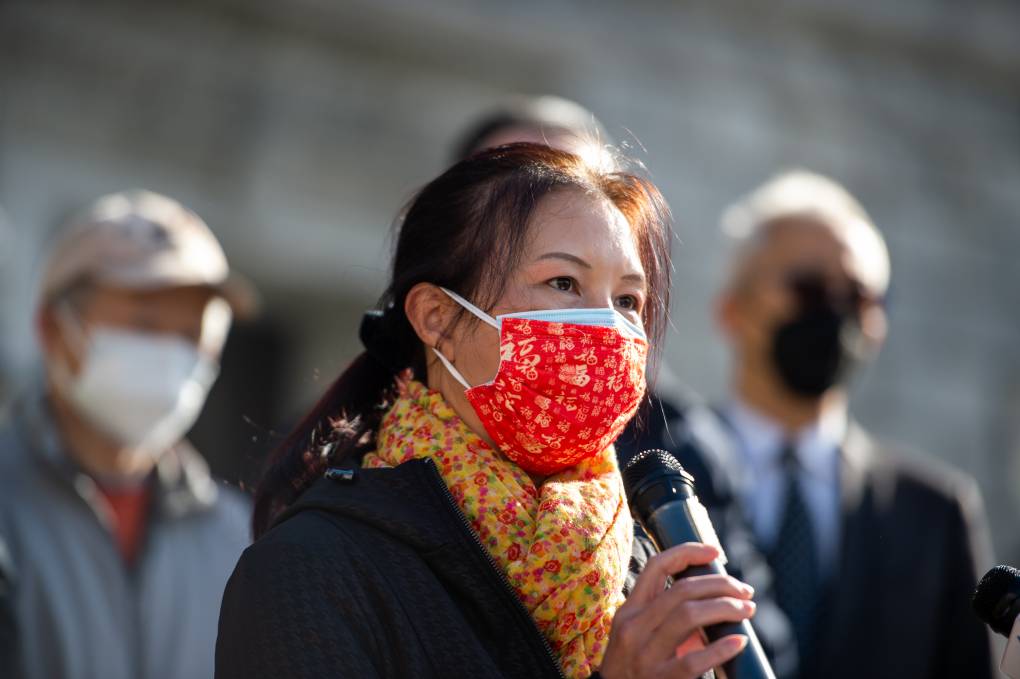
"caption": "Angela Zhou speaks during a press conference held by the Chinese/API Voter Outreach Taskforce on the steps of the Asian Art Museum in San Francisco on Jan. 14, 2022.",
"description": null,
"title": "RS53072_033_KQED_BethLaBerge_SchoolBoardRecallPresser_01142022",
"credit": "Beth LaBerge/KQED",
"status": "inherit",
"altTag": "A woman wearing a red mask and yellow scarf holds a microphone.",
"isLoading": false,
"fetchFailed": false
},
"news_11902520": {
"type": "attachments",
"id": "news_11902520",
"meta": {
"index": "attachments_1716263798",
"site": "news",
"id": "11902520",
"found": true
},
"parent": 11902497,
"imgSizes": {
"twentyfourteen-full-width": {
"file": "https://ww2.kqed.org/app/uploads/sites/10/2022/01/002_Hayward_OUSDCarCaravan_01212022-1038x576.jpg",
"width": 1038,
"mimeType": "image/jpeg",
"height": 576
},
"thumbnail": {
"file": "https://ww2.kqed.org/app/uploads/sites/10/2022/01/002_Hayward_OUSDCarCaravan_01212022-160x107.jpg",
"width": 160,
"mimeType": "image/jpeg",
"height": 107
},
"post-thumbnail": {
"file": "https://ww2.kqed.org/app/uploads/sites/10/2022/01/002_Hayward_OUSDCarCaravan_01212022-672x372.jpg",
"width": 672,
"mimeType": "image/jpeg",
"height": 372
},
"kqedFullSize": {
"file": "https://ww2.kqed.org/app/uploads/sites/10/2022/01/002_Hayward_OUSDCarCaravan_01212022.jpg",
"width": 1920,
"height": 1280
},
"large": {
"file": "https://ww2.kqed.org/app/uploads/sites/10/2022/01/002_Hayward_OUSDCarCaravan_01212022-1020x680.jpg",
"width": 1020,
"mimeType": "image/jpeg",
"height": 680
},
"1536x1536": {
"file": "https://ww2.kqed.org/app/uploads/sites/10/2022/01/002_Hayward_OUSDCarCaravan_01212022-1536x1024.jpg",
"width": 1536,
"mimeType": "image/jpeg",
"height": 1024
},
"medium": {
"file": "https://ww2.kqed.org/app/uploads/sites/10/2022/01/002_Hayward_OUSDCarCaravan_01212022-800x533.jpg",
"width": 800,
"mimeType": "image/jpeg",
"height": 533
}
},
"publishDate": 1643060914,
"modified": 1643074887,
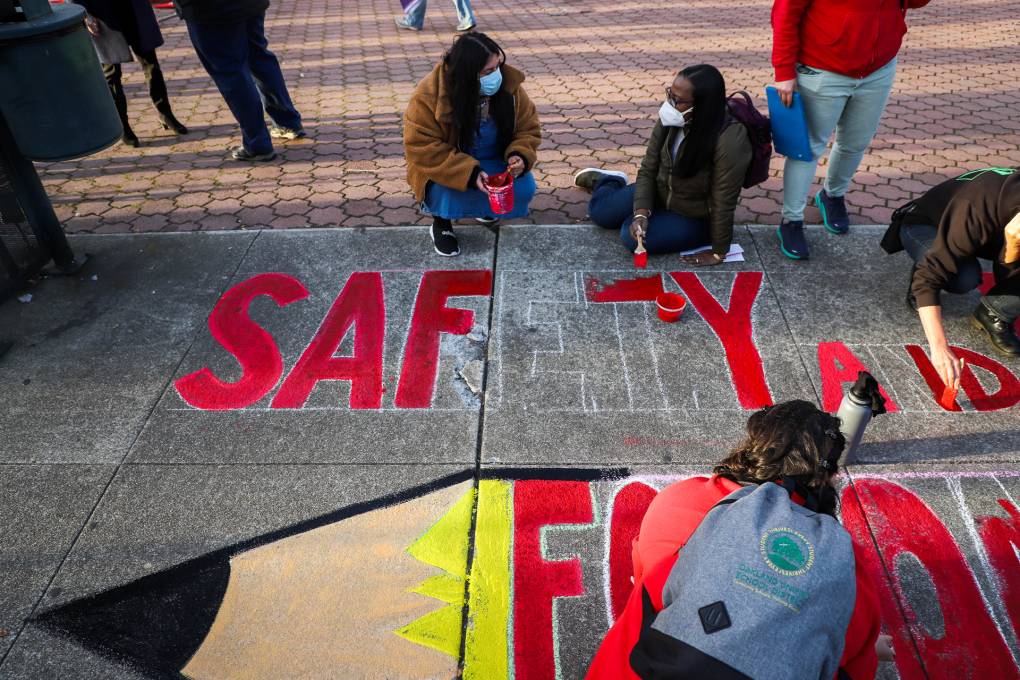
"caption": "Demonstrators paint the sidewalk outside the Alameda County Office of Education during a protest calling for COVID-safe and racially just schools in Hayward on Jan. 21, 2022.",
"description": null,
"title": "002_Hayward_OUSDCarCaravan_01212022",
"credit": "Amaya Edwards/KQED",
"status": "inherit",
"altTag": "Three people wearing masks are seen writing words in chalk on the ground outside spelling \"safety.\"",
"isLoading": false,
"fetchFailed": false
},
"news_11902406": {
"type": "attachments",
"id": "news_11902406",
"meta": {
"index": "attachments_1716263798",
"site": "news",
"id": "11902406",
"found": true
},
"parent": 11902396,
"imgSizes": {
"twentyfourteen-full-width": {
"file": "https://ww2.kqed.org/app/uploads/sites/10/2022/01/RS53036_023_Richmond_HighSchoolStudents_01132022-qut-1038x576.jpg",
"width": 1038,
"mimeType": "image/jpeg",
"height": 576
},
"thumbnail": {
"file": "https://ww2.kqed.org/app/uploads/sites/10/2022/01/RS53036_023_Richmond_HighSchoolStudents_01132022-qut-160x107.jpg",
"width": 160,
"mimeType": "image/jpeg",
"height": 107
},
"post-thumbnail": {
"file": "https://ww2.kqed.org/app/uploads/sites/10/2022/01/RS53036_023_Richmond_HighSchoolStudents_01132022-qut-672x372.jpg",
"width": 672,
"mimeType": "image/jpeg",
"height": 372
},
"kqedFullSize": {
"file": "https://ww2.kqed.org/app/uploads/sites/10/2022/01/RS53036_023_Richmond_HighSchoolStudents_01132022-qut.jpg",
"width": 1920,
"height": 1280
},
"large": {
"file": "https://ww2.kqed.org/app/uploads/sites/10/2022/01/RS53036_023_Richmond_HighSchoolStudents_01132022-qut-1020x680.jpg",
"width": 1020,
"mimeType": "image/jpeg",
"height": 680
},
"1536x1536": {
"file": "https://ww2.kqed.org/app/uploads/sites/10/2022/01/RS53036_023_Richmond_HighSchoolStudents_01132022-qut-1536x1024.jpg",
"width": 1536,
"mimeType": "image/jpeg",
"height": 1024
},
"medium": {
"file": "https://ww2.kqed.org/app/uploads/sites/10/2022/01/RS53036_023_Richmond_HighSchoolStudents_01132022-qut-800x533.jpg",
"width": 800,
"mimeType": "image/jpeg",
"height": 533
}
},
"publishDate": 1642814384,
"modified": 1643653046,
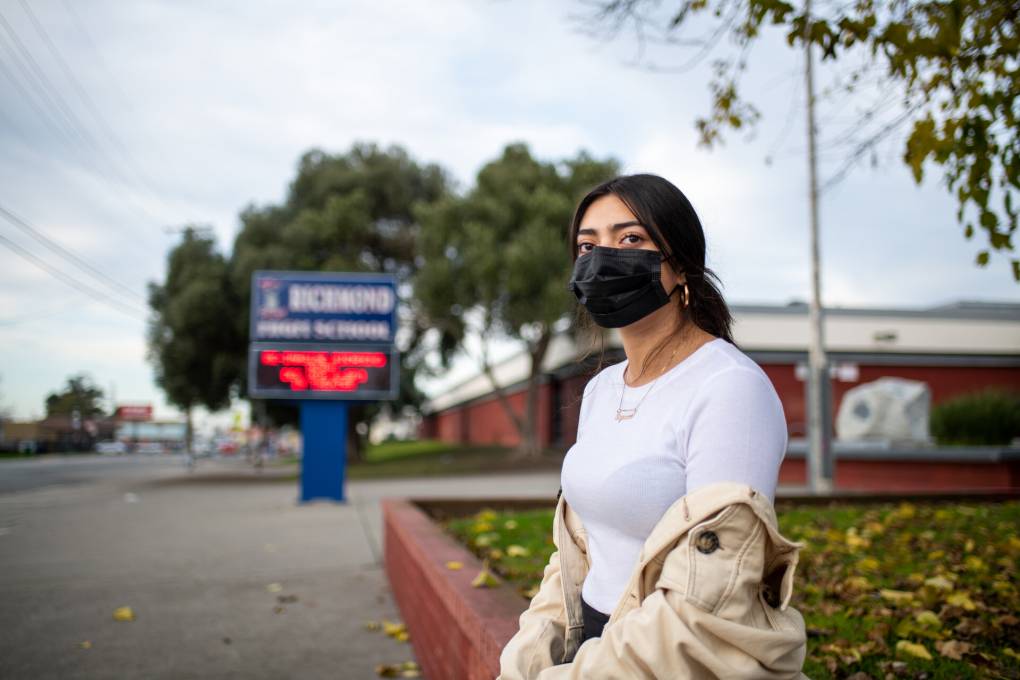
"caption": "Dayanara Mendoza, 16, a sophomore at Richmond High School, sits outside the school on Jan. 14, 2022. She said on a recent school day, three of her five teachers were out. Thousands of students and dozens of teachers in West Contra Costa Unified School District haven't attended school over the past three weeks, saying they don't feel safe returning to in-person instruction.",
"description": null,
"title": "RS53036_023_Richmond_HighSchoolStudents_01132022-qut",
"credit": "Beth LaBerge/KQED",
"status": "inherit",
"altTag": "Teenage girl wearing mask looks toward camera, with sign reading Richmond High School in background",
"isLoading": false,
"fetchFailed": false
},
"news_11901971": {
"type": "attachments",
"id": "news_11901971",
"meta": {
"index": "attachments_1716263798",
"site": "news",
"id": "11901971",
"found": true
},
"parent": 11901945,
"imgSizes": {
"twentyfourteen-full-width": {
"file": "https://ww2.kqed.org/app/uploads/sites/10/2022/01/GettyImages-1231909722-1024x576.jpg",
"width": 1024,
"mimeType": "image/jpeg",
"height": 576
},
"thumbnail": {
"file": "https://ww2.kqed.org/app/uploads/sites/10/2022/01/GettyImages-1231909722-160x107.jpg",
"width": 160,
"mimeType": "image/jpeg",
"height": 107
},
"post-thumbnail": {
"file": "https://ww2.kqed.org/app/uploads/sites/10/2022/01/GettyImages-1231909722-672x372.jpg",
"width": 672,
"mimeType": "image/jpeg",
"height": 372
},
"kqedFullSize": {
"file": "https://ww2.kqed.org/app/uploads/sites/10/2022/01/GettyImages-1231909722.jpg",
"width": 1024,
"height": 683
},
"large": {
"file": "https://ww2.kqed.org/app/uploads/sites/10/2022/01/GettyImages-1231909722-1020x680.jpg",
"width": 1020,
"mimeType": "image/jpeg",
"height": 680
},
"medium": {
"file": "https://ww2.kqed.org/app/uploads/sites/10/2022/01/GettyImages-1231909722-800x534.jpg",
"width": 800,
"mimeType": "image/jpeg",
"height": 534
}
},
"publishDate": 1642545048,
"modified": 1642551902,
"caption": "A student receives a temperature check before class as they return to in-person learning at St. Anthony Catholic High School during the COVID-19 pandemic, on March 24, 2021, in Long Beach.",
"description": null,
"title": "US-HEALTH-VIRUS-SCHOOL",
"credit": "Patrick T. Fallon/AFP via Getty Images",
"status": "inherit",
"altTag": "A young woman wearing a mask stands as another woman wearing a masks holds a digital thermometer up to her head. A third women with a mask is seen in the background.",
"isLoading": false,
"fetchFailed": false
},
"news_11901815": {
"type": "attachments",
"id": "news_11901815",
"meta": {
"index": "attachments_1716263798",
"site": "news",
"id": "11901815",
"found": true
},
"parent": 11901813,
"imgSizes": {
"twentyfourteen-full-width": {
"file": "https://ww2.kqed.org/app/uploads/sites/10/2022/01/RS53040_001_KQED_BethLaBerge_SchoolBoardRecallPresser_01142022-qut-1-1038x576.jpg",
"width": 1038,
"mimeType": "image/jpeg",
"height": 576
},
"thumbnail": {
"file": "https://ww2.kqed.org/app/uploads/sites/10/2022/01/RS53040_001_KQED_BethLaBerge_SchoolBoardRecallPresser_01142022-qut-1-160x107.jpg",
"width": 160,
"mimeType": "image/jpeg",
"height": 107
},
"post-thumbnail": {
"file": "https://ww2.kqed.org/app/uploads/sites/10/2022/01/RS53040_001_KQED_BethLaBerge_SchoolBoardRecallPresser_01142022-qut-1-672x372.jpg",
"width": 672,
"mimeType": "image/jpeg",
"height": 372
},
"kqedFullSize": {
"file": "https://ww2.kqed.org/app/uploads/sites/10/2022/01/RS53040_001_KQED_BethLaBerge_SchoolBoardRecallPresser_01142022-qut-1.jpg",
"width": 1920,
"height": 1278
},
"large": {
"file": "https://ww2.kqed.org/app/uploads/sites/10/2022/01/RS53040_001_KQED_BethLaBerge_SchoolBoardRecallPresser_01142022-qut-1-1020x679.jpg",
"width": 1020,
"mimeType": "image/jpeg",
"height": 679
},
"1536x1536": {
"file": "https://ww2.kqed.org/app/uploads/sites/10/2022/01/RS53040_001_KQED_BethLaBerge_SchoolBoardRecallPresser_01142022-qut-1-1536x1022.jpg",
"width": 1536,
"mimeType": "image/jpeg",
"height": 1022
},
"medium": {
"file": "https://ww2.kqed.org/app/uploads/sites/10/2022/01/RS53040_001_KQED_BethLaBerge_SchoolBoardRecallPresser_01142022-qut-1-800x533.jpg",
"width": 800,
"mimeType": "image/jpeg",
"height": 533
}
},
"publishDate": 1642210803,
"modified": 1659136405,
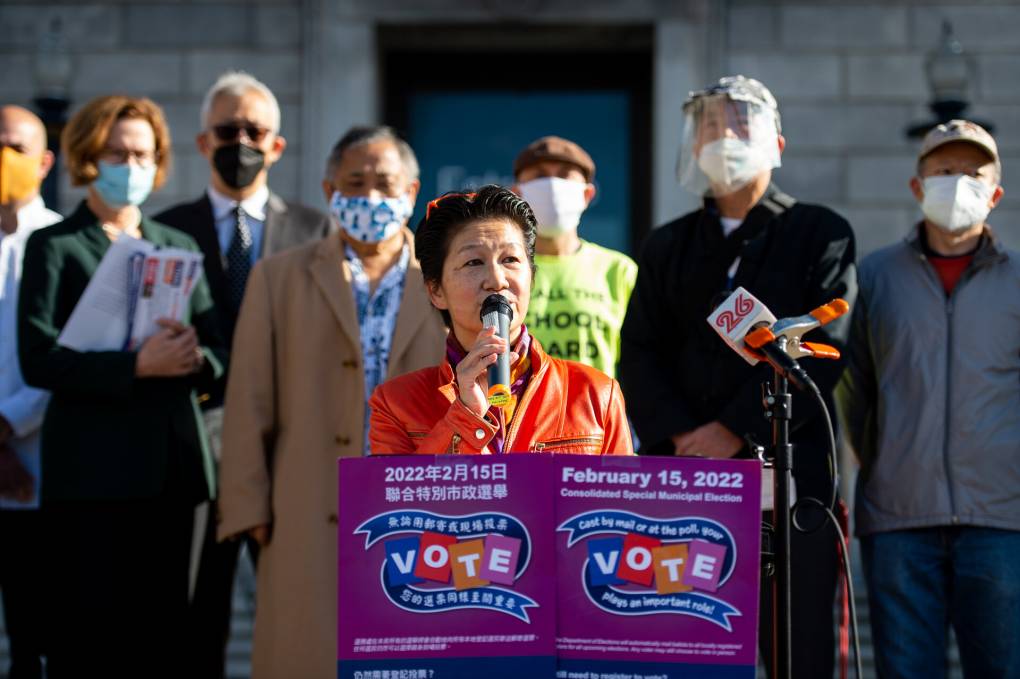
"caption": "Ann Hsu speaks during a press conference held by the Chinese/API Voter Outreach Task Force on the steps of the Asian Art Museum in San Francisco on Jan. 14, 2022.",
"description": null,
"title": "RS53040_001_KQED_BethLaBerge_SchoolBoardRecallPresser_01142022-qut (1)",
"credit": "Beth LaBerge/KQED",
"status": "inherit",
"altTag": "A woman speaks at a podium flanked by other people behind her wearing masks.",
"isLoading": false,
"fetchFailed": false
},
"news_11834975": {
"type": "attachments",
"id": "news_11834975",
"meta": {
"index": "attachments_1716263798",
"site": "news",
"id": "11834975",
"found": true
},
"parent": 11834961,
"imgSizes": {
"apple_news_ca_landscape_5_5": {
"file": "https://ww2.kqed.org/app/uploads/sites/10/2020/08/PalaceFineArts-DavidYu-1044x783.jpg",
"width": 1044,
"mimeType": "image/jpeg",
"height": 783
},
"apple_news_ca_square_4_0": {
"file": "https://ww2.kqed.org/app/uploads/sites/10/2020/08/PalaceFineArts-DavidYu-470x470.jpg",
"width": 470,
"mimeType": "image/jpeg",
"height": 470
},
"twentyfourteen-full-width": {
"file": "https://ww2.kqed.org/app/uploads/sites/10/2020/08/PalaceFineArts-DavidYu-1038x576.jpg",
"width": 1038,
"mimeType": "image/jpeg",
"height": 576
},
"thumbnail": {
"file": "https://ww2.kqed.org/app/uploads/sites/10/2020/08/PalaceFineArts-DavidYu-160x107.jpg",
"width": 160,
"mimeType": "image/jpeg",
"height": 107
},
"post-thumbnail": {
"file": "https://ww2.kqed.org/app/uploads/sites/10/2020/08/PalaceFineArts-DavidYu-672x372.jpg",
"width": 672,
"mimeType": "image/jpeg",
"height": 372
},
"kqedFullSize": {
"file": "https://ww2.kqed.org/app/uploads/sites/10/2020/08/PalaceFineArts-DavidYu.jpg",
"width": 1500,
"height": 1001
},
"apple_news_ca_landscape_4_7": {
"file": "https://ww2.kqed.org/app/uploads/sites/10/2020/08/PalaceFineArts-DavidYu-632x474.jpg",
"width": 632,
"mimeType": "image/jpeg",
"height": 474
},
"large": {
"file": "https://ww2.kqed.org/app/uploads/sites/10/2020/08/PalaceFineArts-DavidYu-1020x681.jpg",
"width": 1020,
"mimeType": "image/jpeg",
"height": 681
},
"apple_news_ca_landscape_4_0": {
"file": "https://ww2.kqed.org/app/uploads/sites/10/2020/08/PalaceFineArts-DavidYu-536x402.jpg",
"width": 536,
"mimeType": "image/jpeg",
"height": 402
},
"apple_news_ca_portrait_12_9": {
"file": "https://ww2.kqed.org/app/uploads/sites/10/2020/08/PalaceFineArts-DavidYu-1122x1001.jpg",
"width": 1122,
"mimeType": "image/jpeg",
"height": 1001
},
"medium": {
"file": "https://ww2.kqed.org/app/uploads/sites/10/2020/08/PalaceFineArts-DavidYu-800x534.jpg",
"width": 800,
"mimeType": "image/jpeg",
"height": 534
},
"apple_news_ca_portrait_4_0": {
"file": "https://ww2.kqed.org/app/uploads/sites/10/2020/08/PalaceFineArts-DavidYu-354x472.jpg",
"width": 354,
"mimeType": "image/jpeg",
"height": 472
},
"apple_news_ca_portrait_9_7": {
"file": "https://ww2.kqed.org/app/uploads/sites/10/2020/08/PalaceFineArts-DavidYu-840x1001.jpg",
"width": 840,
"mimeType": "image/jpeg",
"height": 1001
},
"apple_news_ca_square_9_7": {
"file": "https://ww2.kqed.org/app/uploads/sites/10/2020/08/PalaceFineArts-DavidYu-1104x1001.jpg",
"width": 1104,
"mimeType": "image/jpeg",
"height": 1001
},
"apple_news_ca_portrait_4_7": {
"file": "https://ww2.kqed.org/app/uploads/sites/10/2020/08/PalaceFineArts-DavidYu-414x552.jpg",
"width": 414,
"mimeType": "image/jpeg",
"height": 552
},
"apple_news_ca_square_12_9": {
"file": "https://ww2.kqed.org/app/uploads/sites/10/2020/08/PalaceFineArts-DavidYu-1472x1001.jpg",
"width": 1472,
"mimeType": "image/jpeg",
"height": 1001
},
"apple_news_ca_portrait_5_5": {
"file": "https://ww2.kqed.org/app/uploads/sites/10/2020/08/PalaceFineArts-DavidYu-687x916.jpg",
"width": 687,
"mimeType": "image/jpeg",
"height": 916
},
"apple_news_ca_square_4_7": {
"file": "https://ww2.kqed.org/app/uploads/sites/10/2020/08/PalaceFineArts-DavidYu-550x550.jpg",
"width": 550,
"mimeType": "image/jpeg",
"height": 550
},
"apple_news_ca_landscape_9_7": {
"file": "https://ww2.kqed.org/app/uploads/sites/10/2020/08/PalaceFineArts-DavidYu-1376x1001.jpg",
"width": 1376,
"mimeType": "image/jpeg",
"height": 1001
},
"apple_news_ca_square_5_5": {
"file": "https://ww2.kqed.org/app/uploads/sites/10/2020/08/PalaceFineArts-DavidYu-912x912.jpg",
"width": 912,
"mimeType": "image/jpeg",
"height": 912
}
},
"publishDate": 1598312264,
"modified": 1642110807,
"caption": "The Palace of Fine Arts lagoon has been home to many swans throughout the years.",
"description": null,
"title": "PalaceFineArts-DavidYu",
"credit": "\u003ca href=\"https://www.flickr.com/photos/davidyuweb/9450013295/\">David Yu\u003c/a>/Flickr",
"status": "inherit",
"altTag": null,
"isLoading": false,
"fetchFailed": false
},
"news_11901649": {
"type": "attachments",
"id": "news_11901649",
"meta": {
"index": "attachments_1716263798",
"site": "news",
"id": "11901649",
"found": true
},
"parent": 11901634,
"imgSizes": {
"twentyfourteen-full-width": {
"file": "https://ww2.kqed.org/app/uploads/sites/10/2022/01/RS9720_479706203-1038x576.jpg",
"width": 1038,
"mimeType": "image/jpeg",
"height": 576
},
"thumbnail": {
"file": "https://ww2.kqed.org/app/uploads/sites/10/2022/01/RS9720_479706203-160x107.jpg",
"width": 160,
"mimeType": "image/jpeg",
"height": 107
},
"post-thumbnail": {
"file": "https://ww2.kqed.org/app/uploads/sites/10/2022/01/RS9720_479706203-672x372.jpg",
"width": 672,
"mimeType": "image/jpeg",
"height": 372
},
"kqedFullSize": {
"file": "https://ww2.kqed.org/app/uploads/sites/10/2022/01/RS9720_479706203-scaled-e1642106149763.jpg",
"width": 1920,
"height": 1280
},
"2048x2048": {
"file": "https://ww2.kqed.org/app/uploads/sites/10/2022/01/RS9720_479706203-2048x1365.jpg",
"width": 2048,
"mimeType": "image/jpeg",
"height": 1365
},
"large": {
"file": "https://ww2.kqed.org/app/uploads/sites/10/2022/01/RS9720_479706203-1020x680.jpg",
"width": 1020,
"mimeType": "image/jpeg",
"height": 680
},
"1536x1536": {
"file": "https://ww2.kqed.org/app/uploads/sites/10/2022/01/RS9720_479706203-1536x1024.jpg",
"width": 1536,
"mimeType": "image/jpeg",
"height": 1024
},
"full-width": {
"file": "https://ww2.kqed.org/app/uploads/sites/10/2022/01/RS9720_479706203-1920x1280.jpg",
"width": 1920,
"mimeType": "image/jpeg",
"height": 1280
},
"medium": {
"file": "https://ww2.kqed.org/app/uploads/sites/10/2022/01/RS9720_479706203-800x533.jpg",
"width": 800,
"mimeType": "image/jpeg",
"height": 533
}
},
"publishDate": 1642106017,
"modified": 1642110475,
"caption": "\"The phenomenon of students sitting out of college seems to be more widespread. It's not just the community colleges anymore,\" says Doug Shapiro of the National Student Clearinghouse, which on Thursday reported a huge decline in college admissions between 2019 and 2021.",
"description": null,
"title": "RS9720_479706203",
"credit": "Getty Images",
"status": "inherit",
"altTag": "A woman wearing a pink shirt faces a laptop at a desk with other people facing toward a man in the front at a board.",
"isLoading": false,
"fetchFailed": false
},
"news_11901529": {
"type": "attachments",
"id": "news_11901529",
"meta": {
"index": "attachments_1716263798",
"site": "news",
"id": "11901529",
"found": true
},
"parent": 11901484,
"imgSizes": {
"twentyfourteen-full-width": {
"file": "https://ww2.kqed.org/app/uploads/sites/10/2022/01/RS47516_GettyImages-1229643858-qut-1038x576.jpg",
"width": 1038,
"mimeType": "image/jpeg",
"height": 576
},
"thumbnail": {
"file": "https://ww2.kqed.org/app/uploads/sites/10/2022/01/RS47516_GettyImages-1229643858-qut-160x90.jpg",
"width": 160,
"mimeType": "image/jpeg",
"height": 90
},
"post-thumbnail": {
"file": "https://ww2.kqed.org/app/uploads/sites/10/2022/01/RS47516_GettyImages-1229643858-qut-672x372.jpg",
"width": 672,
"mimeType": "image/jpeg",
"height": 372
},
"kqedFullSize": {
"file": "https://ww2.kqed.org/app/uploads/sites/10/2022/01/RS47516_GettyImages-1229643858-qut.jpg",
"width": 1920,
"height": 1075
},
"large": {
"file": "https://ww2.kqed.org/app/uploads/sites/10/2022/01/RS47516_GettyImages-1229643858-qut-1020x571.jpg",
"width": 1020,
"mimeType": "image/jpeg",
"height": 571
},
"1536x1536": {
"file": "https://ww2.kqed.org/app/uploads/sites/10/2022/01/RS47516_GettyImages-1229643858-qut-1536x860.jpg",
"width": 1536,
"mimeType": "image/jpeg",
"height": 860
},
"medium": {
"file": "https://ww2.kqed.org/app/uploads/sites/10/2022/01/RS47516_GettyImages-1229643858-qut-800x448.jpg",
"width": 800,
"mimeType": "image/jpeg",
"height": 448
}
},
"publishDate": 1642024547,
"modified": 1649432437,
"caption": null,
"description": "Students work on laptops at a school in La Puente, in Los Angeles County, in the fall of 2020. A comprehensive survey from the Oakland-based research and advocacy organization Children Now found that learning loss disparities during the pandemic continue to haunt the state's children.",
"title": "US-HEALTH-VIRUS-epidemic",
"credit": "Frederic J. Brown/AFP via Getty Images",
"status": "inherit",
"altTag": "side profile view of two young students, wearing masks while working at classroom desks",
"isLoading": false,
"fetchFailed": false
},
"news_11873453": {
"type": "attachments",
"id": "news_11873453",
"meta": {
"index": "attachments_1716263798",
"site": "news",
"id": "11873453",
"found": true
},
"parent": 11873384,
"imgSizes": {
"twentyfourteen-full-width": {
"file": "https://ww2.kqed.org/app/uploads/sites/10/2021/05/SF-high-school-in-person-class-1038x576.jpg",
"width": 1038,
"mimeType": "image/jpeg",
"height": 576
},
"thumbnail": {
"file": "https://ww2.kqed.org/app/uploads/sites/10/2021/05/SF-high-school-in-person-class-160x107.jpg",
"width": 160,
"mimeType": "image/jpeg",
"height": 107
},
"post-thumbnail": {
"file": "https://ww2.kqed.org/app/uploads/sites/10/2021/05/SF-high-school-in-person-class-672x372.jpg",
"width": 672,
"mimeType": "image/jpeg",
"height": 372
},
"kqedFullSize": {
"file": "https://ww2.kqed.org/app/uploads/sites/10/2021/05/SF-high-school-in-person-class.jpg",
"width": 1920,
"height": 1280
},
"large": {
"file": "https://ww2.kqed.org/app/uploads/sites/10/2021/05/SF-high-school-in-person-class-1020x680.jpg",
"width": 1020,
"mimeType": "image/jpeg",
"height": 680
},
"1536x1536": {
"file": "https://ww2.kqed.org/app/uploads/sites/10/2021/05/SF-high-school-in-person-class-1536x1024.jpg",
"width": 1536,
"mimeType": "image/jpeg",
"height": 1024
},
"medium": {
"file": "https://ww2.kqed.org/app/uploads/sites/10/2021/05/SF-high-school-in-person-class-800x533.jpg",
"width": 800,
"mimeType": "image/jpeg",
"height": 533
}
},
"publishDate": 1620861200,
"modified": 1633972879,
"caption": "Students in class at San Francisco International High School in March 2017.",
"description": null,
"title": "SF high school in person class",
"credit": "Deb Svoboda/KQED",
"status": "inherit",
"altTag": "High school students sit on chairs behind tables facing a teacher, who stands.",
"isLoading": false,
"fetchFailed": false
},
"news_11898419": {
"type": "attachments",
"id": "news_11898419",
"meta": {
"index": "attachments_1716263798",
"site": "news",
"id": "11898419",
"found": true
},
"parent": 11898251,
"imgSizes": {
"twentyfourteen-full-width": {
"file": "https://ww2.kqed.org/app/uploads/sites/10/2021/12/Erica-Junghans-1038x576.jpeg",
"width": 1038,
"mimeType": "image/jpeg",
"height": 576
},
"thumbnail": {
"file": "https://ww2.kqed.org/app/uploads/sites/10/2021/12/Erica-Junghans-160x120.jpeg",
"width": 160,
"mimeType": "image/jpeg",
"height": 120
},
"post-thumbnail": {
"file": "https://ww2.kqed.org/app/uploads/sites/10/2021/12/Erica-Junghans-672x372.jpeg",
"width": 672,
"mimeType": "image/jpeg",
"height": 372
},
"kqedFullSize": {
"file": "https://ww2.kqed.org/app/uploads/sites/10/2021/12/Erica-Junghans-scaled.jpeg",
"width": 2560,
"height": 1920
},
"2048x2048": {
"file": "https://ww2.kqed.org/app/uploads/sites/10/2021/12/Erica-Junghans-2048x1536.jpeg",
"width": 2048,
"mimeType": "image/jpeg",
"height": 1536
},
"large": {
"file": "https://ww2.kqed.org/app/uploads/sites/10/2021/12/Erica-Junghans-1020x765.jpeg",
"width": 1020,
"mimeType": "image/jpeg",
"height": 765
},
"1536x1536": {
"file": "https://ww2.kqed.org/app/uploads/sites/10/2021/12/Erica-Junghans-1536x1152.jpeg",
"width": 1536,
"mimeType": "image/jpeg",
"height": 1152
},
"full-width": {
"file": "https://ww2.kqed.org/app/uploads/sites/10/2021/12/Erica-Junghans-1920x1440.jpeg",
"width": 1920,
"mimeType": "image/jpeg",
"height": 1440
},
"medium": {
"file": "https://ww2.kqed.org/app/uploads/sites/10/2021/12/Erica-Junghans-800x600.jpeg",
"width": 800,
"mimeType": "image/jpeg",
"height": 600
}
},
"publishDate": 1638978470,
"modified": 1641945589,
"caption": "SFUSD substitute Erica Junghans says the state has made credentialing of subs a simpler process.",
"description": null,
"title": "Erica Junghans",
"credit": "Courtesy of Erica Junghans",
"status": "inherit",
"altTag": "A woman wearing glasses, a dark red jacket and grey shirt stand outside with a school in the background.",
"isLoading": false,
"fetchFailed": false
},
"news_11901340": {
"type": "attachments",
"id": "news_11901340",
"meta": {
"index": "attachments_1716263798",
"site": "news",
"id": "11901340",
"found": true
},
"parent": 11900721,
"imgSizes": {
"thumbnail": {
"file": "https://ww2.kqed.org/app/uploads/sites/10/2022/01/recall1-160x93.png",
"width": 160,
"mimeType": "image/png",
"height": 93
},
"post-thumbnail": {
"file": "https://ww2.kqed.org/app/uploads/sites/10/2022/01/recall1-672x372.png",
"width": 672,
"mimeType": "image/png",
"height": 372
},
"kqedFullSize": {
"file": "https://ww2.kqed.org/app/uploads/sites/10/2022/01/recall1.png",
"width": 958,
"height": 559
},
"medium": {
"file": "https://ww2.kqed.org/app/uploads/sites/10/2022/01/recall1-800x467.png",
"width": 800,
"mimeType": "image/png",
"height": 467
}
},
"publishDate": 1641925297,
"modified": 1641925328,
"caption": "From left, San Francisco School Board Vice President Faauuga Moliga, Board President Gabriela López and Commissioner Alison M. Collins. All three face recall challenges on Feb. 15.",
"description": null,
"title": "recall1",
"credit": "Individual headshots courtesy of San Francisco Board of Education",
"status": "inherit",
"altTag": "Black-and-white head shots of two women and one man.",
"isLoading": false,
"fetchFailed": false
},
"news_11900965": {
"type": "attachments",
"id": "news_11900965",
"meta": {
"index": "attachments_1716263798",
"site": "news",
"id": "11900965",
"found": true
},
"parent": 11900964,
"imgSizes": {
"twentyfourteen-full-width": {
"file": "https://ww2.kqed.org/app/uploads/sites/10/2022/01/ap20171734384751_custom-492f064d88a92197e72ae78a3b25f13553c07c96-1038x576.jpg",
"width": 1038,
"mimeType": "image/jpeg",
"height": 576
},
"thumbnail": {
"file": "https://ww2.kqed.org/app/uploads/sites/10/2022/01/ap20171734384751_custom-492f064d88a92197e72ae78a3b25f13553c07c96-160x107.jpg",
"width": 160,
"mimeType": "image/jpeg",
"height": 107
},
"post-thumbnail": {
"file": "https://ww2.kqed.org/app/uploads/sites/10/2022/01/ap20171734384751_custom-492f064d88a92197e72ae78a3b25f13553c07c96-672x372.jpg",
"width": 672,
"mimeType": "image/jpeg",
"height": 372
},
"kqedFullSize": {
"file": "https://ww2.kqed.org/app/uploads/sites/10/2022/01/ap20171734384751_custom-492f064d88a92197e72ae78a3b25f13553c07c96-scaled-e1641496915898.jpg",
"width": 1920,
"height": 1281
},
"2048x2048": {
"file": "https://ww2.kqed.org/app/uploads/sites/10/2022/01/ap20171734384751_custom-492f064d88a92197e72ae78a3b25f13553c07c96-2048x1367.jpg",
"width": 2048,
"mimeType": "image/jpeg",
"height": 1367
},
"large": {
"file": "https://ww2.kqed.org/app/uploads/sites/10/2022/01/ap20171734384751_custom-492f064d88a92197e72ae78a3b25f13553c07c96-1020x681.jpg",
"width": 1020,
"mimeType": "image/jpeg",
"height": 681
},
"1536x1536": {
"file": "https://ww2.kqed.org/app/uploads/sites/10/2022/01/ap20171734384751_custom-492f064d88a92197e72ae78a3b25f13553c07c96-1536x1025.jpg",
"width": 1536,
"mimeType": "image/jpeg",
"height": 1025
},
"full-width": {
"file": "https://ww2.kqed.org/app/uploads/sites/10/2022/01/ap20171734384751_custom-492f064d88a92197e72ae78a3b25f13553c07c96-1920x1281.jpg",
"width": 1920,
"mimeType": "image/jpeg",
"height": 1281
},
"medium": {
"file": "https://ww2.kqed.org/app/uploads/sites/10/2022/01/ap20171734384751_custom-492f064d88a92197e72ae78a3b25f13553c07c96-800x534.jpg",
"width": 800,
"mimeType": "image/jpeg",
"height": 534
}
},
"publishDate": 1641496259,
"modified": 1641509247,
"caption": "Mourners view the body of federal protective services officer Dave Patrick Underwood after a memorial service on Friday, June 19, 2020, in Pinole. Underwood was fatally shot by a suspect investigators say had ties to right-wing extremists as he was guarding the Ronald V. Dellums Federal Building in Oakland, amid protests on May 29, 2020.",
"description": "Mourners view the body of Federal Protective Services Officer Dave Patrick Underwood after a memorial service on Friday, June 19, 2020, in Pinole. Underwood was fatally shot by a suspect investigators say had ties to right-wing extremists as he was guarding the Ronald V. Dellums Federal Building in Oakland, amid protests on May 29, 2020.",
"title": "Mourners view the body of Federal Protective Services Officer Dave Patrick Underwood after a memorial service in June 2020. Underwood was fatally shot as he was guarding a federal building in Oakland, Calif., amid George Floyd-related protests.",
"credit": "Ben Margot/AP",
"status": "inherit",
"altTag": "mourners file past an open casket funeral, a large photo of the deceased as a young man playing basketball appears in background",
"isLoading": false,
"fetchFailed": false
}
},
"audioPlayerReducer": {
"postId": "stream_live",
"isPaused": true,
"isPlaying": false,
"pfsActive": false,
"pledgeModalIsOpen": true,
"playerDrawerIsOpen": false,
"liveAudioPlayStartedAt": 0,
"liveAudioPlayContext": ""
},
"authorsReducer": {
"byline_news_11901945": {
"type": "authors",
"id": "byline_news_11901945",
"meta": {
"override": true
},
"slug": "byline_news_11901945",
"name": "\u003ca href=\"https://edsource.org/author/kdsouza\">Karen D'Souza\u003c/a>",
"isLoading": false
},
"byline_news_11901813": {
"type": "authors",
"id": "byline_news_11901813",
"meta": {
"override": true
},
"slug": "byline_news_11901813",
"name": "Scott Shafer and Han Li",
"isLoading": false
},
"byline_news_11901634": {
"type": "authors",
"id": "byline_news_11901634",
"meta": {
"override": true
},
"slug": "byline_news_11901634",
"name": "Elissa Nadworny ",
"isLoading": false
},
"byline_news_11901484": {
"type": "authors",
"id": "byline_news_11901484",
"meta": {
"override": true
},
"slug": "byline_news_11901484",
"name": "\u003ca href=\"https://edsource.org/author/cjones\">Carolyn Jones\u003c/a>",
"isLoading": false
},
"byline_news_11901355": {
"type": "authors",
"id": "byline_news_11901355",
"meta": {
"override": true
},
"slug": "byline_news_11901355",
"name": "\u003ca href=\"https://edsource.org/author/cjones\">Carolyn Jones\u003c/a>\u003cbr>EdSource",
"isLoading": false
},
"byline_news_11900964": {
"type": "authors",
"id": "byline_news_11900964",
"meta": {
"override": true
},
"slug": "byline_news_11900964",
"name": "\u003ca href=\"https://www.npr.org/people/638550790/bobby-allyn\">Bobby Allyn\u003c/a>",
"isLoading": false
},
"gmarzorati": {
"type": "authors",
"id": "227",
"meta": {
"index": "authors_1716337520",
"id": "227",
"found": true
},
"name": "Guy Marzorati",
"firstName": "Guy",
"lastName": "Marzorati",
"slug": "gmarzorati",
"email": "gmarzorati@KQED.org",
"display_author_email": true,
"staff_mastheads": [
"news"
],
"title": "Correspondent",
"bio": "Guy Marzorati is a correspondent on KQED's California Politics and Government Desk, based in San Jose. A graduate of Santa Clara University, Guy joined KQED in 2013. He reports on state and local politics and produces KQED's digital voter guide.",
"avatar": "https://secure.gravatar.com/avatar/e7038b8dbfd55b104369b76b1cd0b9de?s=600&d=blank&r=g",
"twitter": "guymarzorati",
"facebook": null,
"instagram": null,
"linkedin": null,
"sites": [
{
"site": "",
"roles": [
"editor"
]
},
{
"site": "news",
"roles": [
"editor"
]
},
{
"site": "science",
"roles": [
"editor"
]
},
{
"site": "forum",
"roles": [
"editor"
]
},
{
"site": "elections",
"roles": [
"editor"
]
},
{
"site": "liveblog",
"roles": [
"editor"
]
}
],
"headData": {
"title": "Guy Marzorati | KQED",
"description": "Correspondent",
"ogImgSrc": "https://secure.gravatar.com/avatar/e7038b8dbfd55b104369b76b1cd0b9de?s=600&d=blank&r=g",
"twImgSrc": "https://secure.gravatar.com/avatar/e7038b8dbfd55b104369b76b1cd0b9de?s=600&d=blank&r=g"
},
"isLoading": false,
"link": "/author/gmarzorati"
},
"jmcevoy": {
"type": "authors",
"id": "231",
"meta": {
"index": "authors_1716337520",
"id": "231",
"found": true
},
"name": "Julia McEvoy",
"firstName": "Julia",
"lastName": "McEvoy",
"slug": "jmcevoy",
"email": "jmcevoy@KQED.org",
"display_author_email": true,
"staff_mastheads": [
"news"
],
"title": "KQED Senior Editor",
"bio": "Julia McEvoy is KQED's Senior Editor, Education Equity.\r\n\r\nJulia heads KQED’s education coverage examining inequities students face in Bay Area and California schools, and reports on what it will take to educate the next generation.\r\n\r\nJulia's editorial work has received a Peabody Award, a Casey Medal for Coverage of Children and Families, several Edward R. Murrow awards, as well as awards from the Public Radio News Directors Inc. and the Society for Professional Journalists.",
"avatar": "https://secure.gravatar.com/avatar/aec3ce21abe02b302fd33638abd56a22?s=600&d=blank&r=g",
"twitter": "juliamcevoy1",
"facebook": null,
"instagram": null,
"linkedin": null,
"sites": [
{
"site": "news",
"roles": []
},
{
"site": "stateofhealth",
"roles": [
"author"
]
}
],
"headData": {
"title": "Julia McEvoy | KQED",
"description": "KQED Senior Editor",
"ogImgSrc": "https://secure.gravatar.com/avatar/aec3ce21abe02b302fd33638abd56a22?s=600&d=blank&r=g",
"twImgSrc": "https://secure.gravatar.com/avatar/aec3ce21abe02b302fd33638abd56a22?s=600&d=blank&r=g"
},
"isLoading": false,
"link": "/author/jmcevoy"
},
"vrancano": {
"type": "authors",
"id": "11276",
"meta": {
"index": "authors_1716337520",
"id": "11276",
"found": true
},
"name": "Vanessa Rancaño",
"firstName": "Vanessa",
"lastName": "Rancaño",
"slug": "vrancano",
"email": "vrancano@kqed.org",
"display_author_email": false,
"staff_mastheads": [
"news"
],
"title": "Reporter",
"bio": "Vanessa Rancaño is a features reporter for KQED. She’s also covered homelessness and education for the station and reported from the Central Valley. Her work has aired across public radio, from flagship national news shows to longform narrative podcasts. Before taking up a mic, she worked as a freelance print journalist. She’s been recognized with a number of national and regional awards. Vanessa grew up in California's Central Valley. She's a former NPR Kroc Fellow, and a graduate of the UC Berkeley Graduate School of Journalism.",
"avatar": "https://secure.gravatar.com/avatar/b3a383dfb0e7ee1c17568f2cf067904ab654d6e3de9743fc661f3c788ade1bed?s=600&d=blank&r=g",
"twitter": "vanessarancano",
"bluesky": null,
"facebook": null,
"instagram": null,
"linkedin": null,
"sites": [
{
"site": "arts",
"roles": [
"editor"
]
},
{
"site": "news",
"roles": [
"editor"
]
},
{
"site": "liveblog",
"roles": [
"contributor"
]
}
],
"headData": {
"title": "Vanessa Rancaño | KQED",
"description": "Reporter",
"ogImgSrc": "https://secure.gravatar.com/avatar/b3a383dfb0e7ee1c17568f2cf067904ab654d6e3de9743fc661f3c788ade1bed?s=600&d=blank&r=g",
"twImgSrc": "https://secure.gravatar.com/avatar/b3a383dfb0e7ee1c17568f2cf067904ab654d6e3de9743fc661f3c788ade1bed?s=600&d=blank&r=g"
},
"isLoading": false,
"link": "/author/vrancano"
},
"ccabreralomeli": {
"type": "authors",
"id": "11708",
"meta": {
"index": "authors_1716337520",
"id": "11708",
"found": true
},
"name": "Carlos Cabrera-Lomelí",
"firstName": "Carlos",
"lastName": "Cabrera-Lomelí",
"slug": "ccabreralomeli",
"email": "ccabreralomeli@KQED.org",
"display_author_email": true,
"staff_mastheads": [
"news"
],
"title": "Community Reporter",
"bio": "Carlos Cabrera-Lomelí is a community reporter with KQED's digital engagement team. He also reports and co-produces for KQED's bilingual news hub KQED en Español. He grew up in San Francisco's Mission District and has previously worked with Univision, 48 Hills and REFORMA in Mexico City.",
"avatar": "https://secure.gravatar.com/avatar/c309be9665e484f887b818c89e273ecc673004f426f36b24d00a4d813a2e0518?s=600&d=blank&r=g",
"twitter": "@LomeliCabrera",
"bluesky": null,
"facebook": null,
"instagram": null,
"linkedin": null,
"sites": [
{
"site": "arts",
"roles": [
"editor"
]
},
{
"site": "news",
"roles": [
"editor"
]
},
{
"site": "about",
"roles": [
"editor"
]
},
{
"site": "science",
"roles": [
"editor"
]
},
{
"site": "perspectives",
"roles": [
"editor"
]
},
{
"site": "elections",
"roles": [
"editor"
]
},
{
"site": "liveblog",
"roles": [
"contributor"
]
}
],
"headData": {
"title": "Carlos Cabrera-Lomelí | KQED",
"description": "Community Reporter",
"ogImgSrc": "https://secure.gravatar.com/avatar/c309be9665e484f887b818c89e273ecc673004f426f36b24d00a4d813a2e0518?s=600&d=blank&r=g",
"twImgSrc": "https://secure.gravatar.com/avatar/c309be9665e484f887b818c89e273ecc673004f426f36b24d00a4d813a2e0518?s=600&d=blank&r=g"
},
"isLoading": false,
"link": "/author/ccabreralomeli"
},
"naldana": {
"type": "authors",
"id": "11793",
"meta": {
"index": "authors_1716337520",
"id": "11793",
"found": true
},
"name": "Natalia Aldana",
"firstName": "Natalia",
"lastName": "Aldana",
"slug": "naldana",
"email": "naldana@kqed.org",
"display_author_email": false,
"staff_mastheads": [],
"title": "KQED Producer",
"bio": "Natalia Aldana is the senior engagement producer for KQED podcasts.",
"avatar": "https://secure.gravatar.com/avatar/c784d8a94359b38cc84991c1a7a565b2?s=600&d=blank&r=g",
"twitter": null,
"facebook": null,
"instagram": null,
"linkedin": null,
"sites": [
{
"site": "news",
"roles": [
"editor"
]
}
],
"headData": {
"title": "Natalia Aldana | KQED",
"description": "KQED Producer",
"ogImgSrc": "https://secure.gravatar.com/avatar/c784d8a94359b38cc84991c1a7a565b2?s=600&d=blank&r=g",
"twImgSrc": "https://secure.gravatar.com/avatar/c784d8a94359b38cc84991c1a7a565b2?s=600&d=blank&r=g"
},
"isLoading": false,
"link": "/author/naldana"
}
},
"pagesReducer": {
"news_tag_education": {
"type": "terms",
"id": "news_20013",
"meta": {
"index": "terms_1716263798",
"site": "news",
"id": "20013",
"score": 6.9701543
},
"featImg": null,
"name": "education",
"description": null,
"taxonomy": "tag",
"headData": {
"twImgId": null,
"twTitle": null,
"ogTitle": null,
"ogImgId": null,
"twDescription": null,
"description": null,
"title": "education Archives | KQED News",
"ogDescription": null
},
"ttid": 20030,
"slug": "education",
"isLoading": false,
"title": "education",
"pageMeta": {
"site": "news",
"WpPageTemplate": "page-topic-editorial",
"currentPage": 71
},
"blocks": [
{
"blockName": "kqed/post-list",
"attrs": {
"layout": "cardArticle2",
"query": "posts/news?tag=education",
"seeMore": false,
"paginated": true,
"page": 71
}
},
{
"blockName": "kqed/ad"
}
]
}
},
"pfsSessionReducer": {},
"postsReducer": {
"stream_live": {
"type": "live",
"id": "stream_live",
"audioUrl": "https://streams.kqed.org/kqedradio",
"title": "Live Stream",
"excerpt": "Live Stream information currently unavailable.",
"link": "/radio",
"featImg": "",
"label": {
"name": "KQED Live",
"link": "/"
}
},
"stream_kqedNewscast": {
"type": "posts",
"id": "stream_kqedNewscast",
"audioUrl": "https://www.kqed.org/.stream/anon/radio/RDnews/newscast.mp3?_=1",
"title": "KQED Newscast",
"featImg": "",
"label": {
"name": "88.5 FM",
"link": "/"
}
},
"news_11902654": {
"type": "posts",
"id": "news_11902654",
"meta": {
"index": "posts_1716263798",
"site": "news",
"id": "11902654",
"score": null,
"sort": [
1643238926000
]
},
"guestAuthors": [],
"slug": "sf-school-board-recall-how-to-vote-as-a-noncitizen-parent",
"title": "SF School Board Recall: How to Vote as a Noncitizen Parent",
"publishDate": 1643238926,
"format": "standard",
"headTitle": "SF School Board Recall: How to Vote as a Noncitizen Parent | KQED",
"labelTerm": {
"site": "news"
},
"content": "\u003cul>\n\u003cli>\u003ca href=\"#register\">\u003cstrong>Skip ahead to information on how to register for the school board recall election as a noncitizen.\u003c/strong>\u003c/a>\u003c/li>\n\u003c/ul>\n\u003cp>\u003ca href=\"https://www.kqed.org/news/11903103/como-votar-en-la-eleccion-revocatoria-del-consejo-escolar-de-san-francisco-si-usted-es-padre-no-ciudadano\">\u003cem>Leer en español.\u003c/em>\u003c/a>\u003c/p>\n\u003cp>Some San Franciscans who are not citizens can vote in the upcoming \u003ca class=\"c-link\" href=\"https://www.kqed.org/news/tag/sf-school-board-recall\" target=\"_blank\" rel=\"noopener noreferrer\" data-stringify-link=\"https://www.kqed.org/news/tag/sf-school-board-recall\" data-sk=\"tooltip_parent\" data-remove-tab-index=\"true\">recall election of school board members Alison Collins, Gabriela López and Faauuga Moliga\u003c/a>.\u003c/p>\n\u003cp>Under a city law approved by voters in 2016, parents and guardians of students in the San Francisco Unified School District can participate in school board elections, regardless of immigration status. For a parent to be eligible to vote, they must have at least one child that’s 19 years old or younger.[pullquote size=\"medium\" align=\"right\" citation=\"Angela Zhou, a noncitizen registrant\"]‘I’m very happy to have the opportunity to vote. It will be my first time to vote in the United States and I feel very lucky.’[/pullquote]\u003c/p>\n\u003cp>In October, the city’s Board of Supervisors made the law permanent for all future school board votes, allowing noncitizen parents like Angela Zhou to vote in the February election.\u003c/p>\n\u003cp>“I have been a resident of San Francisco for about 20 years but not yet a U.S. citizen,” said Zhou,\u003ca href=\"https://www.kqed.org/news/11901813/sf-school-board-recall-drives-more-non-citizen-voters-to-register\"> at a press conference held by a volunteer group focused on registering Asian voters\u003c/a>. “I’m very happy to have the opportunity to vote. It will be my first time to vote in the United States and I feel very lucky.”\u003c/p>\n\u003cp>The idea of limited voting rights for some noncitizens is gaining traction: \u003ca href=\"https://www.npr.org/2021/12/12/1063539443/nyc-granted-noncitizens-the-right-to-vote-in-local-elections-the-idea-isnt-so-ne\">New York will allow legal residents to vote in municipal elections\u003c/a>, and \u003ca href=\"https://www.kqed.org/news/11901435/give-us-a-chance-non-citizens-in-san-jose-could-potentially-be-allowed-to-vote\">San Jose is studying the idea\u003c/a>.\u003c/p>\n\u003cp>Immigrant advocacy and community groups across San Francisco are already mobilizing to get noncitizens registered. As of Tuesday, a record 122 people are registered as noncitizens to vote in the Board of Education recall.\u003c/p>\n\u003cp>Here are answers to some common questions about San Francisco’s program. Click the links below to skip to a specific section.\u003c/p>\n\u003cul>\n\u003cli>\u003ca href=\"#recall\">\u003cstrong>What is the SF school board recall election?\u003c/strong>\u003c/a>\u003c/li>\n\u003cli>\u003ca href=\"#receive\">\u003cstrong>Why did I receive info in the mail about voting when I am not a citizen?\u003c/strong>\u003c/a>\u003c/li>\n\u003cli>\u003ca href=\"#register\">\u003cstrong>How do I register to vote through this program?\u003c/strong>\u003c/a>\u003c/li>\n\u003cli>\u003ca href=\"#counted\">\u003cstrong>Are noncitizen votes counted differently from those of citizens?\u003c/strong>\u003c/a>\u003c/li>\n\u003cli>\u003ca href=\"#information\">\u003cstrong>Where is this information going to go? Will my information be shared with other government agencies like ICE?\u003c/strong>\u003c/a>\u003c/li>\n\u003cli>\u003ca href=\"#future\">\u003cstrong>Will participating in this election affect my immigration application in the future?\u003c/strong>\u003c/a>\u003c/li>\n\u003c/ul>\n\u003ch2>\u003ca id=\"recall\">\u003c/a>What is the SF school board recall election?\u003c/h2>\n\u003cp>On Feb. 15, there’ll be a vote on whether to recall three San Francisco Board of Education commissioners: Alison Collins, Gabriela López and Faauuga Moliga.\u003c/p>\n\u003cp>Voters can choose to recall one, two, all three or none of these officials. If any of the three board members is recalled, San Francisco Mayor London Breed would appoint their replacement.\u003c/p>\n\u003cp>The vote will be the first ballot recall of a San Francisco official in nearly 40 years, after organizers in support of the recall election last year submitted far more than the 51,325 signatures per member required to force a vote.\u003c/p>\n\u003cp>\u003ca href=\"https://www.kqed.org/news/11900721/how-we-got-here-the-road-to-the-recall-election-of-3-sf-school-board-members\">Read more about the timeline that led to this SF school board recall election, and what’s at stake.\u003c/a>\u003c/p>\n\u003ch2>\u003ca id=\"receive\">\u003c/a>Why did I receive info in the mail about voting when I am not a citizen?\u003c/h2>\n\u003cp>Before each election, San Francisco’s Department of Elections sends out voting information to every household in the city. These mailers, which contain information about noncitizen voting, are sent to homes and apartments regardless of who resides in them.\u003c/p>\n\u003cp>“Anyone who lives in San Francisco, they’re receiving a mailer before the election, indicating how they can, if they’re not citizens, get more information and participate in the election,” said John Arntz, the department’s director. “We don’t know who the noncitizens are, so we’re not contacting them individually.”\u003c/p>\n\u003cp>Arntz said his department is hoping to raise awareness about noncitizen voting through ads in local newspapers. A group of nonprofits have formed the\u003ca href=\"https://www.missiongraduates.org/parent-partner-program-celebrates-immigrant-parents-at-the-polls/\"> Immigrant Parent Voting Collaborative\u003c/a>, a multilingual coalition working to spread the word to noncitizens about their voting rights.\u003c/p>\n\u003cp>“Our work continues in ensuring that immigrant families know about and make their own decisions on exercising this newly permanent voting right,” said Eva Poon, policy manager for Chinese for Affirmative Action, in a statement celebrating the move to make noncitizen voting permanent.\u003c/p>\n\u003ch2>\u003ca id=\"register\">\u003c/a>How do I register to vote through this program?\u003c/h2>\n\u003cp>Make sure to complete and submit a Non-Citizen Voter Registration Form. The form is available online in \u003ca href=\"https://sfelections.sfgov.org/sites/default/files/Documents/VoterEducation/2022February/NCV_VRC_ENG.pdf\">English\u003c/a>, \u003ca href=\"https://sfelections.sfgov.org/sites/default/files/Documents/VoterEducation/2022February/NCV_VRC_CH.pdf\">Chinese\u003c/a>, \u003ca href=\"https://sfelections.sfgov.org/sites/default/files/Documents/VoterEducation/2022February/NCV_VRC_SP.pdf\">Spanish\u003c/a>, \u003ca href=\"https://sfelections.sfgov.org/sites/default/files/Documents/VoterEducation/2022February/NCV_VRC_FI.pdf\">Tagalog\u003c/a>, \u003ca href=\"https://sfelections.sfgov.org/sites/default/files/Documents/VoterEducation/2022February/NCV_VRC_Arabic.pdf\">Arabic\u003c/a> and \u003ca href=\"https://sfelections.sfgov.org/non-citizen-registration-and-voting\">over 40 other languages\u003c/a>. The full list of \u003ca href=\"https://sfelections.sfgov.org/non-citizen-registration-and-voting\">forms you can print is available here\u003c/a>.\u003c/p>\n\u003cp>The registration form asks you to share your name and address, and includes optional questions where you can share your email, phone number and country of birth. You do not need to share your immigration status or information about your children.[aside postID=\"news_11901813,news_11900721,news_11897089\" label=\"MORE RECALL COVERAGE\"]Once you’ve filled out the form, you can present the form in person at the Department of Elections office in City Hall or mail it (via the U.S. Postal Service) to:\u003c/p>\n\u003cp>Department of Elections\u003cbr>\nCity Hall\u003cbr>\n1 Dr. Carlton B. Goodlett Place, Room 48\u003cbr>\nSan Francisco, CA 94102\u003c/p>\n\u003cp>The registration deadline is Jan. 31. If you miss it, don’t worry: You can still register, but you will no longer have the option to do so through the mail. You’ll have to fill out the form and submit it in person at City Hall or at your nearest polling booth.\u003c/p>\n\u003ch2>\u003ca id=\"counted\">\u003c/a>Are noncitizen votes counted differently from those of citizens?\u003c/h2>\n\u003cp>No, noncitizen votes are included in the overall tally of school board elections.\u003c/p>\n\u003cp>“For the most part, it’s the same election — noncitizens experience the same election as other voters,” said Arntz.\u003c/p>\n\u003cp>There are some slight differences in the way that elections are administered for noncitizens.\u003c/p>\n\u003cp>These voters are registered in a local database, separate from the statewide system that only contains the information of voters who are citizens. And noncitizens receive a unique voter guide, written in four languages (English, Spanish, Chinese and Tagalog) and a ballot containing only school board races.\u003c/p>\n\u003ch2>\u003ca id=\"information\">\u003c/a>Where is this information going to go? Will my information be shared with other government agencies like ICE?\u003c/h2>\n\u003cp>Once you’ve filled out your voter registration form and sent it over to the Department of Elections, your information will be stored in this agency’s database. According to Arntz, the city keeps a separate database for the registration information shared by noncitizens.\u003c/p>\n\u003cp>“We can’t input noncitizens into the statewide database,” he said, but added that the noncitizen database must follow the same rules regarding who has access to its contents. Government agencies, political campaigns and journalists can all request to see specific information about registered voters, like addresses or demographic information.\u003c/p>\n\u003cp>Arntz acknowledges that this may worry some folks that federal agencies like U.S. Immigration and Customs Enforcement (ICE) could access the personal details of undocumented San Franciscans who registered to vote. However, he points out that there is a system in place that screens who can access this information.\u003c/p>\n\u003cp>“If someone requested specifically the registration information [of noncitizens] from us, we would actually consult the city attorney’s office first before we did anything,” he said. ICE could request this information, but Arntz says that he has never received a request from this agency since the city expanded voter eligibility in 2016.\u003c/p>\n\u003cp>Additionally, the city attorney’s office published a memo on Jan. 20, defending the legality of letting noncitizen parents vote in school board elections, stating that, “School Board elections are for a local purpose, distinct from an election for federal office … noncitizen voters cannot and do not vote in any other election contest.”\u003c/p>\n\u003ch3>\u003ca id=\"future\">\u003c/a>Will participating in this election affect my immigration application in the future?\u003c/h3>\n\u003cp>KQED spoke with Tala Hartsough, a senior staff attorney with CARECEN SF, a San Francisco-based nonprofit providing immigration legal services and social services to Bay Area migrants, to understand whether voting in the school board recall election could complicate future prospects of becoming a U.S. citizen or legal permanent resident.\u003c/p>\n\u003cp>As part of their naturalization process, some folks have to submit an \u003ca href=\"https://www.uscis.gov/sites/default/files/document/forms/n-400.pdf\">N-400 form\u003c/a> to U.S. Citizenship and Immigration Services. This form asks whether the applicant has ever registered or voted in a federal, state or local election.\u003c/p>\n\u003cp>“In contrast, when someone is applying to become a permanent resident, the question is different on the form,” Hartsough said. The \u003ca href=\"https://www.uscis.gov/sites/default/files/document/forms/i-485.pdf\">application for permanent residency, I-485\u003c/a>, asks whether the applicant has ever voted in violation of any federal, state or local provision.\u003c/p>\n\u003cp>Hartsough understands that some people might feel nervous answering these questions if they’ve previously registered to vote as a noncitizen — because the federal government restricts voting to citizens.\u003c/p>\n\u003cp>“When [someone] is applying for citizenship, they need to show that they have good moral character,” Hartsough said. Immigration officials also can use good moral character as a metric to inform their decision in other types of immigration applications.\u003c/p>\n\u003cp>If you were to register for an election you are not allowed to participate in as a noncitizen (the presidential election, for example) by falsely claiming to be a citizen, Hartsough says, then that would be unlawful and could bar you from the good moral character requirement.\u003c/p>\n\u003cp>“But I don’t think that someone who meets the requirements of registering to vote [in San Francisco], registers, then votes in the school board election would be implicating any of those problems,” she said.\u003c/p>\n\u003cp>Hartsough explains that when a noncitizen parent votes in San Francisco, they’re not claiming to be a citizen or voting as a citizen. When someone fills out a noncitizen registration form, they are making it explicit that they will be participating in the school board election as a noncitizen, and will have access to a separate ballot that includes only questions about that election.\u003c/p>\n\u003cp>“[Eligible parents are] not going to say they’re a citizen, because they don’t need to be,” she added. “So someone is not registering unlawfully if they qualify.”\u003c/p>\n\u003cp>Additionally, the Department of Elections offers, upon request, a letter that confirms that certain noncitizens are eligible to vote in San Francisco school board elections.\u003c/p>\n\u003cp>However, Hartsough stresses that it’s important for someone going through an immigration process to notify their legal representative if they voted or are planning to vote in the school board election as a noncitizen. Talking about these things helps prepare an attorney and an applicant for any potential questions from immigration officials.\u003c/p>\n\u003cp>Each case is different and it’s best to consult with an immigration attorney to fully understand any potential effects in your proceeding that could come from voting. We’ve compiled below a list of nonprofit organizations in San Francisco that can connect you to immigration legal aid.\u003c/p>\n\u003cul>\n\u003cli>\u003ca href=\"https://www.aansf.org/\">\u003cstrong>African Advocacy Network\u003c/strong>\u003c/a> located on 3106 Folsom Street. Phone: (415) 503-1032. You can also \u003ca href=\"https://www.aansf.org/contact-us\">contact the network by filling out this form\u003c/a>.\u003c/li>\n\u003cli>\u003ca href=\"https://www.advancingjustice-alc.org/\">\u003cstrong>Asian Americans Advancing Justice – Asian Law Caucus\u003c/strong>\u003c/a> located on 55 Columbus Avenue. Phone: (415) 896-1701.\u003c/li>\n\u003cli>\u003ca href=\"https://carecensf.org/\">\u003cstrong>CARECEN SF\u003c/strong>\u003c/a> located on 3101 Mission Street. Phone: (415) 642-4400.\u003c/li>\n\u003cli>\u003ca href=\"https://lrcl.org/\">\u003cstrong>La Raza Centro Legal\u003c/strong>\u003c/a> located on 474 Valencia Street, Suite 295. Phone: (415) 575-3500.\u003c/li>\n\u003c/ul>\n\u003cp>[ad fullwidth]\u003c/p>\n\u003cp>[ad floatright]\u003c/p>\n",
"blocks": [],
"excerpt": "Noncitizen parents will have the chance to vote in the recall election against San Francisco school board members Alison Collins, Gabriela López and Faauuga Moliga on Feb. 15. Our guide explains how to register — and who has access to this information.",
"status": "publish",
"parent": 0,
"modified": 1721132145,
"stats": {
"hasAudio": false,
"hasVideo": false,
"hasChartOrMap": false,
"iframeSrcs": [],
"hasGoogleForm": false,
"hasGallery": false,
"hasHearkenModule": false,
"hasPolis": false,
"paragraphCount": 43,
"wordCount": 1936
},
"headData": {
"title": "SF School Board Recall: How to Vote as a Noncitizen Parent | KQED",
"description": "Noncitizen parents will have the chance to vote in the recall election against San Francisco school board members Alison Collins, Gabriela López and Faauuga Moliga on Feb. 15. Our guide explains how to register — and who has access to this information.",
"ogTitle": "",
"ogDescription": "",
"ogImgId": "",
"twTitle": "",
"twDescription": "",
"twImgId": "",
"schema": {
"@context": "https://schema.org",
"@type": "NewsArticle",
"headline": "SF School Board Recall: How to Vote as a Noncitizen Parent",
"datePublished": "2022-01-26T15:15:26-08:00",
"dateModified": "2024-07-16T05:15:45-07:00",
"image": "https://cdn.kqed.org/wp-content/uploads/2020/02/KQED-OG-Image@1x.png",
"isAccessibleForFree": "True",
"publisher": {
"@type": "NewsMediaOrganization",
"@id": "https://www.kqed.org/#organization",
"name": "KQED",
"logo": "https://cdn.kqed.org/wp-content/uploads/2020/02/KQED-OG-Image@1x.png",
"url": "https://www.kqed.org",
"sameAs": [
"https://www.facebook.com/KQED",
"https://twitter.com/KQED",
"https://www.instagram.com/kqed/",
"https://www.tiktok.com/@kqedofficial",
"https://www.linkedin.com/company/kqed",
"https://www.youtube.com/channel/UCeC0IOo7i1P_61zVUWbJ4nw"
]
}
}
},
"sticky": false,
"excludeFromSiteSearch": "Include",
"path": "/news/11902654/sf-school-board-recall-how-to-vote-as-a-noncitizen-parent",
"audioTrackLength": null,
"parsedContent": [
{
"type": "contentString",
"content": "\u003cdiv class=\"post-body\">\u003cp>\u003cul>\n\u003cli>\u003ca href=\"#register\">\u003cstrong>Skip ahead to information on how to register for the school board recall election as a noncitizen.\u003c/strong>\u003c/a>\u003c/li>\n\u003c/ul>\n\u003cp>\u003ca href=\"https://www.kqed.org/news/11903103/como-votar-en-la-eleccion-revocatoria-del-consejo-escolar-de-san-francisco-si-usted-es-padre-no-ciudadano\">\u003cem>Leer en español.\u003c/em>\u003c/a>\u003c/p>\n\u003cp>Some San Franciscans who are not citizens can vote in the upcoming \u003ca class=\"c-link\" href=\"https://www.kqed.org/news/tag/sf-school-board-recall\" target=\"_blank\" rel=\"noopener noreferrer\" data-stringify-link=\"https://www.kqed.org/news/tag/sf-school-board-recall\" data-sk=\"tooltip_parent\" data-remove-tab-index=\"true\">recall election of school board members Alison Collins, Gabriela López and Faauuga Moliga\u003c/a>.\u003c/p>\n\u003cp>Under a city law approved by voters in 2016, parents and guardians of students in the San Francisco Unified School District can participate in school board elections, regardless of immigration status. For a parent to be eligible to vote, they must have at least one child that’s 19 years old or younger.\u003c/p>\u003c/div>",
"attributes": {
"named": {},
"numeric": []
}
},
{
"type": "component",
"content": "‘I’m very happy to have the opportunity to vote. It will be my first time to vote in the United States and I feel very lucky.’",
"name": "pullquote",
"attributes": {
"named": {
"size": "medium",
"align": "right",
"citation": "Angela Zhou, a noncitizen registrant",
"label": ""
},
"numeric": []
}
},
{
"type": "contentString",
"content": "\u003cdiv class=\"post-body\">\u003cp>\u003c/p>\n\u003cp>In October, the city’s Board of Supervisors made the law permanent for all future school board votes, allowing noncitizen parents like Angela Zhou to vote in the February election.\u003c/p>\n\u003cp>“I have been a resident of San Francisco for about 20 years but not yet a U.S. citizen,” said Zhou,\u003ca href=\"https://www.kqed.org/news/11901813/sf-school-board-recall-drives-more-non-citizen-voters-to-register\"> at a press conference held by a volunteer group focused on registering Asian voters\u003c/a>. “I’m very happy to have the opportunity to vote. It will be my first time to vote in the United States and I feel very lucky.”\u003c/p>\n\u003cp>The idea of limited voting rights for some noncitizens is gaining traction: \u003ca href=\"https://www.npr.org/2021/12/12/1063539443/nyc-granted-noncitizens-the-right-to-vote-in-local-elections-the-idea-isnt-so-ne\">New York will allow legal residents to vote in municipal elections\u003c/a>, and \u003ca href=\"https://www.kqed.org/news/11901435/give-us-a-chance-non-citizens-in-san-jose-could-potentially-be-allowed-to-vote\">San Jose is studying the idea\u003c/a>.\u003c/p>\n\u003cp>Immigrant advocacy and community groups across San Francisco are already mobilizing to get noncitizens registered. As of Tuesday, a record 122 people are registered as noncitizens to vote in the Board of Education recall.\u003c/p>\n\u003cp>Here are answers to some common questions about San Francisco’s program. Click the links below to skip to a specific section.\u003c/p>\n\u003cul>\n\u003cli>\u003ca href=\"#recall\">\u003cstrong>What is the SF school board recall election?\u003c/strong>\u003c/a>\u003c/li>\n\u003cli>\u003ca href=\"#receive\">\u003cstrong>Why did I receive info in the mail about voting when I am not a citizen?\u003c/strong>\u003c/a>\u003c/li>\n\u003cli>\u003ca href=\"#register\">\u003cstrong>How do I register to vote through this program?\u003c/strong>\u003c/a>\u003c/li>\n\u003cli>\u003ca href=\"#counted\">\u003cstrong>Are noncitizen votes counted differently from those of citizens?\u003c/strong>\u003c/a>\u003c/li>\n\u003cli>\u003ca href=\"#information\">\u003cstrong>Where is this information going to go? Will my information be shared with other government agencies like ICE?\u003c/strong>\u003c/a>\u003c/li>\n\u003cli>\u003ca href=\"#future\">\u003cstrong>Will participating in this election affect my immigration application in the future?\u003c/strong>\u003c/a>\u003c/li>\n\u003c/ul>\n\u003ch2>\u003ca id=\"recall\">\u003c/a>What is the SF school board recall election?\u003c/h2>\n\u003cp>On Feb. 15, there’ll be a vote on whether to recall three San Francisco Board of Education commissioners: Alison Collins, Gabriela López and Faauuga Moliga.\u003c/p>\n\u003cp>Voters can choose to recall one, two, all three or none of these officials. If any of the three board members is recalled, San Francisco Mayor London Breed would appoint their replacement.\u003c/p>\n\u003cp>The vote will be the first ballot recall of a San Francisco official in nearly 40 years, after organizers in support of the recall election last year submitted far more than the 51,325 signatures per member required to force a vote.\u003c/p>\n\u003cp>\u003ca href=\"https://www.kqed.org/news/11900721/how-we-got-here-the-road-to-the-recall-election-of-3-sf-school-board-members\">Read more about the timeline that led to this SF school board recall election, and what’s at stake.\u003c/a>\u003c/p>\n\u003ch2>\u003ca id=\"receive\">\u003c/a>Why did I receive info in the mail about voting when I am not a citizen?\u003c/h2>\n\u003cp>Before each election, San Francisco’s Department of Elections sends out voting information to every household in the city. These mailers, which contain information about noncitizen voting, are sent to homes and apartments regardless of who resides in them.\u003c/p>\n\u003cp>“Anyone who lives in San Francisco, they’re receiving a mailer before the election, indicating how they can, if they’re not citizens, get more information and participate in the election,” said John Arntz, the department’s director. “We don’t know who the noncitizens are, so we’re not contacting them individually.”\u003c/p>\n\u003cp>Arntz said his department is hoping to raise awareness about noncitizen voting through ads in local newspapers. A group of nonprofits have formed the\u003ca href=\"https://www.missiongraduates.org/parent-partner-program-celebrates-immigrant-parents-at-the-polls/\"> Immigrant Parent Voting Collaborative\u003c/a>, a multilingual coalition working to spread the word to noncitizens about their voting rights.\u003c/p>\n\u003cp>“Our work continues in ensuring that immigrant families know about and make their own decisions on exercising this newly permanent voting right,” said Eva Poon, policy manager for Chinese for Affirmative Action, in a statement celebrating the move to make noncitizen voting permanent.\u003c/p>\n\u003ch2>\u003ca id=\"register\">\u003c/a>How do I register to vote through this program?\u003c/h2>\n\u003cp>Make sure to complete and submit a Non-Citizen Voter Registration Form. The form is available online in \u003ca href=\"https://sfelections.sfgov.org/sites/default/files/Documents/VoterEducation/2022February/NCV_VRC_ENG.pdf\">English\u003c/a>, \u003ca href=\"https://sfelections.sfgov.org/sites/default/files/Documents/VoterEducation/2022February/NCV_VRC_CH.pdf\">Chinese\u003c/a>, \u003ca href=\"https://sfelections.sfgov.org/sites/default/files/Documents/VoterEducation/2022February/NCV_VRC_SP.pdf\">Spanish\u003c/a>, \u003ca href=\"https://sfelections.sfgov.org/sites/default/files/Documents/VoterEducation/2022February/NCV_VRC_FI.pdf\">Tagalog\u003c/a>, \u003ca href=\"https://sfelections.sfgov.org/sites/default/files/Documents/VoterEducation/2022February/NCV_VRC_Arabic.pdf\">Arabic\u003c/a> and \u003ca href=\"https://sfelections.sfgov.org/non-citizen-registration-and-voting\">over 40 other languages\u003c/a>. The full list of \u003ca href=\"https://sfelections.sfgov.org/non-citizen-registration-and-voting\">forms you can print is available here\u003c/a>.\u003c/p>\n\u003cp>The registration form asks you to share your name and address, and includes optional questions where you can share your email, phone number and country of birth. You do not need to share your immigration status or information about your children.\u003c/p>\u003c/div>",
"attributes": {
"named": {},
"numeric": []
}
},
{
"type": "component",
"content": "",
"name": "aside",
"attributes": {
"named": {
"postid": "news_11901813,news_11900721,news_11897089",
"label": "MORE RECALL COVERAGE "
},
"numeric": []
}
},
{
"type": "contentString",
"content": "\u003cdiv class=\"post-body\">\u003cp>Once you’ve filled out the form, you can present the form in person at the Department of Elections office in City Hall or mail it (via the U.S. Postal Service) to:\u003c/p>\n\u003cp>Department of Elections\u003cbr>\nCity Hall\u003cbr>\n1 Dr. Carlton B. Goodlett Place, Room 48\u003cbr>\nSan Francisco, CA 94102\u003c/p>\n\u003cp>The registration deadline is Jan. 31. If you miss it, don’t worry: You can still register, but you will no longer have the option to do so through the mail. You’ll have to fill out the form and submit it in person at City Hall or at your nearest polling booth.\u003c/p>\n\u003ch2>\u003ca id=\"counted\">\u003c/a>Are noncitizen votes counted differently from those of citizens?\u003c/h2>\n\u003cp>No, noncitizen votes are included in the overall tally of school board elections.\u003c/p>\n\u003cp>“For the most part, it’s the same election — noncitizens experience the same election as other voters,” said Arntz.\u003c/p>\n\u003cp>There are some slight differences in the way that elections are administered for noncitizens.\u003c/p>\n\u003cp>These voters are registered in a local database, separate from the statewide system that only contains the information of voters who are citizens. And noncitizens receive a unique voter guide, written in four languages (English, Spanish, Chinese and Tagalog) and a ballot containing only school board races.\u003c/p>\n\u003ch2>\u003ca id=\"information\">\u003c/a>Where is this information going to go? Will my information be shared with other government agencies like ICE?\u003c/h2>\n\u003cp>Once you’ve filled out your voter registration form and sent it over to the Department of Elections, your information will be stored in this agency’s database. According to Arntz, the city keeps a separate database for the registration information shared by noncitizens.\u003c/p>\n\u003cp>“We can’t input noncitizens into the statewide database,” he said, but added that the noncitizen database must follow the same rules regarding who has access to its contents. Government agencies, political campaigns and journalists can all request to see specific information about registered voters, like addresses or demographic information.\u003c/p>\n\u003cp>Arntz acknowledges that this may worry some folks that federal agencies like U.S. Immigration and Customs Enforcement (ICE) could access the personal details of undocumented San Franciscans who registered to vote. However, he points out that there is a system in place that screens who can access this information.\u003c/p>\n\u003cp>“If someone requested specifically the registration information [of noncitizens] from us, we would actually consult the city attorney’s office first before we did anything,” he said. ICE could request this information, but Arntz says that he has never received a request from this agency since the city expanded voter eligibility in 2016.\u003c/p>\n\u003cp>Additionally, the city attorney’s office published a memo on Jan. 20, defending the legality of letting noncitizen parents vote in school board elections, stating that, “School Board elections are for a local purpose, distinct from an election for federal office … noncitizen voters cannot and do not vote in any other election contest.”\u003c/p>\n\u003ch3>\u003ca id=\"future\">\u003c/a>Will participating in this election affect my immigration application in the future?\u003c/h3>\n\u003cp>KQED spoke with Tala Hartsough, a senior staff attorney with CARECEN SF, a San Francisco-based nonprofit providing immigration legal services and social services to Bay Area migrants, to understand whether voting in the school board recall election could complicate future prospects of becoming a U.S. citizen or legal permanent resident.\u003c/p>\n\u003cp>As part of their naturalization process, some folks have to submit an \u003ca href=\"https://www.uscis.gov/sites/default/files/document/forms/n-400.pdf\">N-400 form\u003c/a> to U.S. Citizenship and Immigration Services. This form asks whether the applicant has ever registered or voted in a federal, state or local election.\u003c/p>\n\u003cp>“In contrast, when someone is applying to become a permanent resident, the question is different on the form,” Hartsough said. The \u003ca href=\"https://www.uscis.gov/sites/default/files/document/forms/i-485.pdf\">application for permanent residency, I-485\u003c/a>, asks whether the applicant has ever voted in violation of any federal, state or local provision.\u003c/p>\n\u003cp>Hartsough understands that some people might feel nervous answering these questions if they’ve previously registered to vote as a noncitizen — because the federal government restricts voting to citizens.\u003c/p>\n\u003cp>“When [someone] is applying for citizenship, they need to show that they have good moral character,” Hartsough said. Immigration officials also can use good moral character as a metric to inform their decision in other types of immigration applications.\u003c/p>\n\u003cp>If you were to register for an election you are not allowed to participate in as a noncitizen (the presidential election, for example) by falsely claiming to be a citizen, Hartsough says, then that would be unlawful and could bar you from the good moral character requirement.\u003c/p>\n\u003cp>“But I don’t think that someone who meets the requirements of registering to vote [in San Francisco], registers, then votes in the school board election would be implicating any of those problems,” she said.\u003c/p>\n\u003cp>Hartsough explains that when a noncitizen parent votes in San Francisco, they’re not claiming to be a citizen or voting as a citizen. When someone fills out a noncitizen registration form, they are making it explicit that they will be participating in the school board election as a noncitizen, and will have access to a separate ballot that includes only questions about that election.\u003c/p>\n\u003cp>“[Eligible parents are] not going to say they’re a citizen, because they don’t need to be,” she added. “So someone is not registering unlawfully if they qualify.”\u003c/p>\n\u003cp>Additionally, the Department of Elections offers, upon request, a letter that confirms that certain noncitizens are eligible to vote in San Francisco school board elections.\u003c/p>\n\u003cp>However, Hartsough stresses that it’s important for someone going through an immigration process to notify their legal representative if they voted or are planning to vote in the school board election as a noncitizen. Talking about these things helps prepare an attorney and an applicant for any potential questions from immigration officials.\u003c/p>\n\u003cp>Each case is different and it’s best to consult with an immigration attorney to fully understand any potential effects in your proceeding that could come from voting. We’ve compiled below a list of nonprofit organizations in San Francisco that can connect you to immigration legal aid.\u003c/p>\n\u003cul>\n\u003cli>\u003ca href=\"https://www.aansf.org/\">\u003cstrong>African Advocacy Network\u003c/strong>\u003c/a> located on 3106 Folsom Street. Phone: (415) 503-1032. You can also \u003ca href=\"https://www.aansf.org/contact-us\">contact the network by filling out this form\u003c/a>.\u003c/li>\n\u003cli>\u003ca href=\"https://www.advancingjustice-alc.org/\">\u003cstrong>Asian Americans Advancing Justice – Asian Law Caucus\u003c/strong>\u003c/a> located on 55 Columbus Avenue. Phone: (415) 896-1701.\u003c/li>\n\u003cli>\u003ca href=\"https://carecensf.org/\">\u003cstrong>CARECEN SF\u003c/strong>\u003c/a> located on 3101 Mission Street. Phone: (415) 642-4400.\u003c/li>\n\u003cli>\u003ca href=\"https://lrcl.org/\">\u003cstrong>La Raza Centro Legal\u003c/strong>\u003c/a> located on 474 Valencia Street, Suite 295. Phone: (415) 575-3500.\u003c/li>\n\u003c/ul>\n\u003cp>\u003c/p>\u003c/div>",
"attributes": {
"named": {},
"numeric": []
}
},
{
"type": "component",
"content": "",
"name": "ad",
"attributes": {
"named": {
"label": "fullwidth"
},
"numeric": [
"fullwidth"
]
}
},
{
"type": "contentString",
"content": "\u003cdiv class=\"post-body\">\u003cp>\u003c/p>\n\u003cp>\u003c/p>\u003c/div>",
"attributes": {
"named": {},
"numeric": []
}
},
{
"type": "component",
"content": "",
"name": "ad",
"attributes": {
"named": {
"label": "floatright"
},
"numeric": [
"floatright"
]
}
},
{
"type": "contentString",
"content": "\u003cdiv class=\"post-body\">\u003cp>\u003c/p>\n\u003c/div>\u003c/p>",
"attributes": {
"named": {},
"numeric": []
}
}
],
"link": "/news/11902654/sf-school-board-recall-how-to-vote-as-a-noncitizen-parent",
"authors": [
"11708",
"227"
],
"categories": [
"news_28250",
"news_8",
"news_13"
],
"tags": [
"news_20013",
"news_29647",
"news_38",
"news_123",
"news_30150",
"news_30277"
],
"featImg": "news_11902766",
"label": "news"
},
"news_11902497": {
"type": "posts",
"id": "news_11902497",
"meta": {
"index": "posts_1716263798",
"site": "news",
"id": "11902497",
"score": null,
"sort": [
1643072733000
]
},
"parent": 0,
"labelTerm": {
"site": "news"
},
"blocks": [],
"publishDate": 1643072733,
"format": "standard",
"disqusTitle": "Testing Shortages at Oakland Schools Leave Students and Teachers Frustrated",
"title": "Testing Shortages at Oakland Schools Leave Students and Teachers Frustrated",
"headTitle": "KQED News",
"content": "\u003cp>Teachers at Oakland’s Reach Academy were fed up.\u003c/p>\n\u003cp>The elementary school on the eastern edge of the city has been overwhelmed by positive COVID cases since returning from winter break — the Oakland Unified School District’s dashboard tallies nearly 80 cases there in the first three weeks back.\u003c/p>\n\u003cp>Teachers were desperate to stop more students and coworkers from turning up positive, but while some of their colleagues around the district planned sick-outs, Reach Academy staff hatched a plan to catch cases before kids entered the building.[pullquote size=\"medium\" align=\"right\" citation=\"Megan Bumpus, fifth grade teacher, Reach Academy\"]'We made it so that we literally stayed outside until we were sure that each child in our class tested negative.'[/pullquote]\u003c/p>\n\u003cp>“We decided, we're the teachers, we know how this works. Let's just see if our families will do this,” said fifth grade teacher Megan Bumpus.\u003c/p>\n\u003cp>She and her colleagues knew a district testing team would be on campus Tuesday, after the MLK holiday, until midday. But they wanted to ensure kids got swabbed before sitting down in a classroom, or eating breakfast in the cafeteria, where positive students would have a chance to infect others while unmasked. So, without approval from administrators, they designed a staggered arrival schedule. “We said to the principal, ‘This is what we're doing. We are already sending these messages,’” Bumpus said.\u003c/p>\n\u003cfigure id=\"attachment_11902563\" class=\"wp-caption aligncenter\" style=\"max-width: 800px\">\u003ca href=\"https://ww2.kqed.org/app/uploads/sites/10/2022/01/IMG_4488-scaled.jpg\">\u003cimg class=\"size-medium wp-image-11902563\" src=\"https://ww2.kqed.org/app/uploads/sites/10/2022/01/IMG_4488-800x600.jpg\" alt=\"A woman wearing a mask sits down in a classroom.\" width=\"800\" height=\"600\" srcset=\"https://ww2.kqed.org/app/uploads/sites/10/2022/01/IMG_4488-800x600.jpg 800w, https://ww2.kqed.org/app/uploads/sites/10/2022/01/IMG_4488-1020x765.jpg 1020w, https://ww2.kqed.org/app/uploads/sites/10/2022/01/IMG_4488-160x120.jpg 160w, https://ww2.kqed.org/app/uploads/sites/10/2022/01/IMG_4488-1536x1152.jpg 1536w, https://ww2.kqed.org/app/uploads/sites/10/2022/01/IMG_4488-2048x1536.jpg 2048w, https://ww2.kqed.org/app/uploads/sites/10/2022/01/IMG_4488-1920x1440.jpg 1920w\" sizes=\"(max-width: 800px) 100vw, 800px\">\u003c/a>\u003cfigcaption class=\"wp-caption-text\">Megan Bumpus, a fifth grade teacher at Oakland's Reach Academy, goes over a math lesson in a classroom. \u003ccite>(Courtesy of Megan Bumpus)\u003c/cite>\u003c/figcaption>\u003c/figure>\n\u003cp>Teachers alerted parents in advance, and gave those who couldn’t manage it the option to drop kids off early. “We made it so that we literally stayed outside until we were sure that each child in our class tested negative,” she said. She credits the district for sending extra staff to support the effort, though it wasn’t condoned.\u003c/p>\n\u003cp>“For the first time ever, we literally had — at least according to the rapid tests — only kids and adults in school who had tested negative,” she said. “The peace of mind that we felt on Tuesday was amazing.”\u003c/p>\n\u003cp>Whether Reach Academy’s unsanctioned testing strategy curbs new cases remains to be seen. \u003ca href=\"https://www.cdc.gov/coronavirus/2019-ncov/science/science-briefs/transmission_k_12_schools.html\">Transmission rates have generally been low in schools\u003c/a> when mitigation protocols are followed, with most spread taking place in less controlled community contexts. But the action speaks to a broader need for a sense of safety and stability. It came amid a second week of student and staff protests in the district, with some students striking in an effort to force the district to improve safety measures, while teachers at some sites held sick-outs.\u003c/p>\n\u003cp>The pressure has seen some success: The district and teachers union worked out a plan to reinstate paid COVID sick leave, something teachers had been demanding, and it emboldened the Oakland Education Association to flex some muscle in negotiations for a new safety agreement with the district. OEA President Keith Brown now has approval from union leadership to call a strike vote if he deems it necessary, and nearly three-quarters of members told the union they’d support the action.\u003c/p>\n\u003cp>OUSD has distributed N95 or KN95 masks for students and staff, something both the union and student organizers are demanding, and is working to provide covered outdoor eating areas at all sites, efforts officials say were underway before the pressure.[aside postID=\"news_11900220,news_11898251,mindshift_58938\" label=\"Related Posts\"]\u003c/p>\n\u003cp>But the demand teachers and students say they care most about — increased testing — isn’t getting much traction.\u003c/p>\n\u003cp>“Testing is the most important demand of the students and the staff and the wider community,” said Sasha Rockwell, who teaches third and fourth grades at Bridges Academy at Melrose in East Oakland, where staff held a sick-out. Rockwell would like to see a “test to stay” policy along the lines of what Reach Academy teachers pulled off. She argues it’s key to avoiding unnecessary learning loss.\u003c/p>\n\u003cp>“Before coronavirus, a child would come to me with an invisible boo-boo and I'd be like, ‘Let me rub it and it's going to be OK. Get back in the school,’ you know?”\u003c/p>\n\u003cp>Now, she said, everyday ailments trigger pandemic precautions.\u003c/p>\n\u003cp>“A child comes to me with a headache, well, that's a symptom of COVID, so they need to go to the isolation tent. A child comes to me with a stomachache, same,” she said. “We don't have a system in place to ensure that kids can stay in school for the maximum amount possible.”\u003c/p>\n\u003cp>Student organizers are advocating for twice-weekly rapid and PCR tests at all schools; the teachers union is pushing for weekly testing at all sites. But the district has not announced any plans to further ramp up testing.\u003c/p>\n\u003cp>“Obviously there are capacity issues at work, but we are doing everything we can to ensure the testing is available at all times,” district spokesperson John Sasaki said. “We are \u003ca href=\"https://www.cdph.ca.gov/Programs/CID/DCDC/Pages/COVID-19/K-12-Guidance-2021-22-School-Year.aspx\">\u003cspan style=\"font-weight: 400\">following the public health experts\u003c/span>\u003c/a>\u003cspan style=\"font-weight: 400\"> at both the county, state and federal level and feel that we are moving in the right direction with regard to testing and everything else.”\u003c/span>\u003c/p>\n\u003cp>Beyond the issue of limited resources, it’s not clear more aggressive testing would meaningfully improve safety. UCSF professor and infectious disease specialist Peter Chin-Hong said layering strategies is the best approach, and vaccination remains the most important mitigation tool.\u003c/p>\n\u003cp>“At the end of the day, there is no magic bullet,” he said. “Whether you test once a week, twice a week, I'm not sure if you get a bigger bang for the buck when you add the other components.”\u003c/p>\n\u003cfigure id=\"attachment_11902556\" class=\"wp-caption aligncenter\" style=\"max-width: 800px\">\u003ca href=\"https://ww2.kqed.org/app/uploads/sites/10/2022/01/004_Hayward_OUSDCarCaravan_01212022.jpg\">\u003cimg class=\"size-medium wp-image-11902556\" src=\"https://ww2.kqed.org/app/uploads/sites/10/2022/01/004_Hayward_OUSDCarCaravan_01212022-800x533.jpg\" alt=\"A woman with a purple mask and t-shirt holds a piece of paper rolled up in her hand with others in the background.\" width=\"800\" height=\"533\" srcset=\"https://ww2.kqed.org/app/uploads/sites/10/2022/01/004_Hayward_OUSDCarCaravan_01212022-800x533.jpg 800w, https://ww2.kqed.org/app/uploads/sites/10/2022/01/004_Hayward_OUSDCarCaravan_01212022-1020x680.jpg 1020w, https://ww2.kqed.org/app/uploads/sites/10/2022/01/004_Hayward_OUSDCarCaravan_01212022-160x107.jpg 160w, https://ww2.kqed.org/app/uploads/sites/10/2022/01/004_Hayward_OUSDCarCaravan_01212022-1536x1024.jpg 1536w, https://ww2.kqed.org/app/uploads/sites/10/2022/01/004_Hayward_OUSDCarCaravan_01212022.jpg 1920w\" sizes=\"(max-width: 800px) 100vw, 800px\">\u003c/a>\u003cfigcaption class=\"wp-caption-text\">Students march to call for COVID-safe and racially just schools in Hayward on Jan. 21, 2022. The group said that racial justice should be a part of the conversation about a safe return to school with COVID. \u003ccite>(Amaya Edwards/KQED)\u003c/cite>\u003c/figcaption>\u003c/figure>\n\u003cp>When there was less of the virus circulating in the community, it made more sense to think of testing as a way to stamp out infection, he said. “In the age of omicron, we've kind of abandoned virus elimination,” he said.\u003c/p>\n\u003cp>In fact, some local public health experts are \u003ca href=\"https://www.change.org/p/gavin-newsom-post-omicron-pivot-for-california-public-schools\">petitioning state officials\u003c/a> to accept that COVID is endemic and “shift our public dialogue toward defining a path for removing all remaining COVID-19 restrictions in public schools.”\u003c/p>\n\u003ch3>What does testing look like in OUSD?\u003c/h3>\n\u003cp>Oakland Unified runs 10 testing hubs at schools around the city. Four of the 10 are open on any given day, from 8 a.m. to 4 p.m., and have been serving over 300 people a day during the surge, according to Sasaki.\u003c/p>\n\u003cp>For MetWest High School student Ximena Santana, who helped organize the student strike and petition calling for more testing, off-site testing isn’t enough. “Some people don’t have the time to go to a place and do it,” she said. “We need the weekly testing at schools.”\u003c/p>\n\u003cp>Bridges Academy teacher Rockwell points out that the hubs are largely open during school hours. “So this means that all OUSD students, teachers and staff do not have access to the testing unless they are at that school,” she said. “And working families who often work late into the evening do not have access to that testing.” For weekend and after-school testing, the district refers families to the \u003ca href=\"https://covid-19.acgov.org/testing.page?#Community\">county’s many free testing sites\u003c/a>.\u003c/p>\n\u003cp>The district also runs a \u003ca href=\"https://www.ousd.org/Page/21454\">pilot pool testing program\u003c/a> at 39 elementary schools. Students at these sites are tested at least once a week. Swabs are collected for entire classes and tested together in a single vial. If the pooled PCR test comes up positive, every student in the positive pool is then rapid-tested. Pooled testing can be cost-effective and reduces the burden on labs, according to Chin-Hong.\u003c/p>\n\u003cp>Both Bridges Academy and Reach Academy are part of the program, and, while teachers Rockwell and Bumpus are appreciative, they say implementation doesn't always go smoothly.\u003c/p>\n\u003cp>“Pool testing has been a positive change for us, but has it been consistent? Absolutely not,” Rockwell said. “Today was a perfect example. My principal did not get a message at all of why the pool testers did not come today. So here we are, left with nothing.”\u003c/p>\n\u003cp>The testing is optional and teachers say tracking down consent forms for all students can be tricky, leaving some classes with several students untested.\u003c/p>\n\u003cp>District officials say they also provide on-site rapid testing at schools with classes in modified quarantine. Theoretically, the more classes are affected, the more testing resources are dispatched. \u003ca href=\"https://www.cdph.ca.gov/Programs/CID/DCDC/Pages/COVID-19/K-12-Guidance-2021-22-School-Year.aspx\">Modified quarantine\u003c/a> applies to unvaccinated students who’ve been in close contact with someone who tests positive. To stay in school, they must get tested regularly.\u003c/p>\n\u003cp>Some middle and high school administrators and teachers describe weekly testing programs at their sites; others say they have testers on campus biweekly. Frick United Academy of Language teacher Ella Every-Wortman said her site is small enough to give all students a chance to swab when testers come every other week. “I know that is not the case at other sites,” she wrote in a text. “Another frequent issue is that they run out of tests.”\u003c/p>\n\u003cfigure id=\"attachment_11902519\" class=\"wp-caption aligncenter\" style=\"max-width: 800px\">\u003ca href=\"https://ww2.kqed.org/app/uploads/sites/10/2022/01/001_Hayward_OUSDCarCaravan_01212022.jpg\">\u003cimg class=\"size-medium wp-image-11902519\" src=\"https://ww2.kqed.org/app/uploads/sites/10/2022/01/001_Hayward_OUSDCarCaravan_01212022-800x533.jpg\" alt='Nine people are standing outside with two people wearing purple shirts with their backs turned and facing a sign being held that reads \"safety and racial justice for Oakland schools.\"' width=\"800\" height=\"533\" srcset=\"https://ww2.kqed.org/app/uploads/sites/10/2022/01/001_Hayward_OUSDCarCaravan_01212022-800x533.jpg 800w, https://ww2.kqed.org/app/uploads/sites/10/2022/01/001_Hayward_OUSDCarCaravan_01212022-1020x680.jpg 1020w, https://ww2.kqed.org/app/uploads/sites/10/2022/01/001_Hayward_OUSDCarCaravan_01212022-160x107.jpg 160w, https://ww2.kqed.org/app/uploads/sites/10/2022/01/001_Hayward_OUSDCarCaravan_01212022-1536x1024.jpg 1536w, https://ww2.kqed.org/app/uploads/sites/10/2022/01/001_Hayward_OUSDCarCaravan_01212022.jpg 1920w\" sizes=\"(max-width: 800px) 100vw, 800px\">\u003c/a>\u003cfigcaption class=\"wp-caption-text\">Demonstrators rally outside the Alameda County Office of Education during a protest calling for COVID-safe and racially just schools in Hayward on Jan. 21, 2022. \u003ccite>(Amaya Edwards/KQED)\u003c/cite>\u003c/figcaption>\u003c/figure>\n\u003cp>As for getting themselves tested on campus, some teachers say finding coverage to leave class during the narrow testing window in the middle of a severe staffing shortage is nearly impossible.\u003c/p>\n\u003cp>At Oakland Technical High School, students say they have access to voluntary on-site testing once a week on Thursdays. “The lines get extremely long and they're not really socially distanced. It's just kind of a cluster and the tests take forever,” said 10th grader Scarlett Welpton. “It's just not set up well.”\u003c/p>\n\u003cp>Welpton said she waited in line about an hour last week, and though the test only took a few seconds, it took almost another hour to get results, during which she wasn’t allowed to return to class. “Which means we're missing a lot of school,” she said.\u003c/p>\n\u003cp>Fellow Tech 10th grader Jasmina Garfagnoli has opted not to get tested at school. Instead, she uses the nearby testing hub at Oakland International High School, where she said lines are shorter, or she takes at-home tests. “It's so hard to get tested at school and to wait in line for an hour,” she said. “I think it's a very good thing that we have testing, but I just think that it needs to be revised a little bit.”\u003c/p>\n\u003cp>The district also distributed 41,000 at-home rapid tests for students and staff to use over winter break, but some students say they never saw them.\u003c/p>\n\u003cp>By now, most schools have gone through their supplies of rapid tests to use as needed. OUSD began placing orders for more rapid tests with the California Department of Public Health, Abbott and Office Depot beginning last fall, Sasaki said in an email, “but they were delayed because of the large supply set aside for the federal program to send at-home tests to all households.”\u003c/p>\n\u003cp>The district’s existing supply of at-home tests is being reserved for preschools, “where students are entirely unvaccinated and don't have easy access to hubs because of age limits,” according to Sasaki, and for student athletes, who are required to test regularly.\u003c/p>\n\u003cp>Last week, the student leaders behind the safety petition and strike held a virtual forum. For more than an hour, students and staff around the district shared stories of sick family members, empty classrooms, and anxiety as schoolmates tested positive. They expressed solidarity with striking students and thanked them for their work.\u003c/p>\n\u003cp>MetWest High School student Ayleen Serrano, who helped organize the boycott, told students to keep pressuring the district. “Not all the demands have been met. Some schools still do not have access to PCR or rapid testing,” she said.\u003c/p>\n\u003cp>She encouraged her peers to get involved in organizing and plans to hold another Zoom forum Thursday, Jan. 27. She said students will keep at the strike until there are better testing options at all schools.\u003c/p>\n\u003cp>[ad fullwidth]\u003c/p>\n\u003cp>[ad floatright]\u003c/p>\n",
"disqusIdentifier": "11902497 https://ww2.kqed.org/news/?p=11902497",
"disqusUrl": "https://ww2.kqed.org/news/2022/01/24/testing-shortages-at-oakland-schools-leaves-students-and-teachers-frustrated/",
"stats": {
"hasVideo": false,
"hasChartOrMap": false,
"hasAudio": false,
"hasPolis": false,
"wordCount": 2137,
"hasGoogleForm": false,
"hasGallery": false,
"hasHearkenModule": false,
"iframeSrcs": [],
"paragraphCount": 42
},
"modified": 1643134271,
"excerpt": "In Oakland's school district, both teachers and students have been frustrated with COVID testing shortages. In an attempt to curb transmission rates in schools, teachers at Reach Academy came up with an unsanctioned strategy to test students before they arrived in classrooms. ",
"headData": {
"twImgId": "",
"twTitle": "",
"ogTitle": "",
"ogImgId": "",
"twDescription": "",
"description": "In Oakland's school district, both teachers and students have been frustrated with COVID testing shortages. In an attempt to curb transmission rates in schools, teachers at Reach Academy came up with an unsanctioned strategy to test students before they arrived in classrooms. ",
"title": "Testing Shortages at Oakland Schools Leave Students and Teachers Frustrated | KQED",
"ogDescription": "",
"schema": {
"@context": "https://schema.org",
"@type": "NewsArticle",
"headline": "Testing Shortages at Oakland Schools Leave Students and Teachers Frustrated",
"datePublished": "2022-01-24T17:05:33-08:00",
"dateModified": "2022-01-25T10:11:11-08:00",
"image": "https://cdn.kqed.org/wp-content/uploads/2020/02/KQED-OG-Image@1x.png",
"isAccessibleForFree": "True",
"publisher": {
"@type": "NewsMediaOrganization",
"@id": "https://www.kqed.org/#organization",
"name": "KQED",
"logo": "https://cdn.kqed.org/wp-content/uploads/2020/02/KQED-OG-Image@1x.png",
"url": "https://www.kqed.org",
"sameAs": [
"https://www.facebook.com/KQED",
"https://twitter.com/KQED",
"https://www.instagram.com/kqed/",
"https://www.tiktok.com/@kqedofficial",
"https://www.linkedin.com/company/kqed",
"https://www.youtube.com/channel/UCeC0IOo7i1P_61zVUWbJ4nw"
]
}
}
},
"guestAuthors": [],
"slug": "testing-shortages-at-oakland-schools-leaves-students-and-teachers-frustrated",
"status": "publish",
"excludeFromSiteSearch": "Include",
"path": "/news/11902497/testing-shortages-at-oakland-schools-leaves-students-and-teachers-frustrated",
"audioTrackLength": null,
"parsedContent": [
{
"type": "contentString",
"content": "\u003cdiv class=\"post-body\">\u003cp>\u003cp>Teachers at Oakland’s Reach Academy were fed up.\u003c/p>\n\u003cp>The elementary school on the eastern edge of the city has been overwhelmed by positive COVID cases since returning from winter break — the Oakland Unified School District’s dashboard tallies nearly 80 cases there in the first three weeks back.\u003c/p>\n\u003cp>Teachers were desperate to stop more students and coworkers from turning up positive, but while some of their colleagues around the district planned sick-outs, Reach Academy staff hatched a plan to catch cases before kids entered the building.\u003c/p>\u003c/div>",
"attributes": {
"named": {},
"numeric": []
}
},
{
"type": "component",
"content": "'We made it so that we literally stayed outside until we were sure that each child in our class tested negative.'",
"name": "pullquote",
"attributes": {
"named": {
"size": "medium",
"align": "right",
"citation": "Megan Bumpus, fifth grade teacher, Reach Academy",
"label": ""
},
"numeric": []
}
},
{
"type": "contentString",
"content": "\u003cdiv class=\"post-body\">\u003cp>\u003c/p>\n\u003cp>“We decided, we're the teachers, we know how this works. Let's just see if our families will do this,” said fifth grade teacher Megan Bumpus.\u003c/p>\n\u003cp>She and her colleagues knew a district testing team would be on campus Tuesday, after the MLK holiday, until midday. But they wanted to ensure kids got swabbed before sitting down in a classroom, or eating breakfast in the cafeteria, where positive students would have a chance to infect others while unmasked. So, without approval from administrators, they designed a staggered arrival schedule. “We said to the principal, ‘This is what we're doing. We are already sending these messages,’” Bumpus said.\u003c/p>\n\u003cfigure id=\"attachment_11902563\" class=\"wp-caption aligncenter\" style=\"max-width: 800px\">\u003ca href=\"https://ww2.kqed.org/app/uploads/sites/10/2022/01/IMG_4488-scaled.jpg\">\u003cimg class=\"size-medium wp-image-11902563\" src=\"https://ww2.kqed.org/app/uploads/sites/10/2022/01/IMG_4488-800x600.jpg\" alt=\"A woman wearing a mask sits down in a classroom.\" width=\"800\" height=\"600\" srcset=\"https://ww2.kqed.org/app/uploads/sites/10/2022/01/IMG_4488-800x600.jpg 800w, https://ww2.kqed.org/app/uploads/sites/10/2022/01/IMG_4488-1020x765.jpg 1020w, https://ww2.kqed.org/app/uploads/sites/10/2022/01/IMG_4488-160x120.jpg 160w, https://ww2.kqed.org/app/uploads/sites/10/2022/01/IMG_4488-1536x1152.jpg 1536w, https://ww2.kqed.org/app/uploads/sites/10/2022/01/IMG_4488-2048x1536.jpg 2048w, https://ww2.kqed.org/app/uploads/sites/10/2022/01/IMG_4488-1920x1440.jpg 1920w\" sizes=\"(max-width: 800px) 100vw, 800px\">\u003c/a>\u003cfigcaption class=\"wp-caption-text\">Megan Bumpus, a fifth grade teacher at Oakland's Reach Academy, goes over a math lesson in a classroom. \u003ccite>(Courtesy of Megan Bumpus)\u003c/cite>\u003c/figcaption>\u003c/figure>\n\u003cp>Teachers alerted parents in advance, and gave those who couldn’t manage it the option to drop kids off early. “We made it so that we literally stayed outside until we were sure that each child in our class tested negative,” she said. She credits the district for sending extra staff to support the effort, though it wasn’t condoned.\u003c/p>\n\u003cp>“For the first time ever, we literally had — at least according to the rapid tests — only kids and adults in school who had tested negative,” she said. “The peace of mind that we felt on Tuesday was amazing.”\u003c/p>\n\u003cp>Whether Reach Academy’s unsanctioned testing strategy curbs new cases remains to be seen. \u003ca href=\"https://www.cdc.gov/coronavirus/2019-ncov/science/science-briefs/transmission_k_12_schools.html\">Transmission rates have generally been low in schools\u003c/a> when mitigation protocols are followed, with most spread taking place in less controlled community contexts. But the action speaks to a broader need for a sense of safety and stability. It came amid a second week of student and staff protests in the district, with some students striking in an effort to force the district to improve safety measures, while teachers at some sites held sick-outs.\u003c/p>\n\u003cp>The pressure has seen some success: The district and teachers union worked out a plan to reinstate paid COVID sick leave, something teachers had been demanding, and it emboldened the Oakland Education Association to flex some muscle in negotiations for a new safety agreement with the district. OEA President Keith Brown now has approval from union leadership to call a strike vote if he deems it necessary, and nearly three-quarters of members told the union they’d support the action.\u003c/p>\n\u003cp>OUSD has distributed N95 or KN95 masks for students and staff, something both the union and student organizers are demanding, and is working to provide covered outdoor eating areas at all sites, efforts officials say were underway before the pressure.\u003c/p>\u003c/div>",
"attributes": {
"named": {},
"numeric": []
}
},
{
"type": "component",
"content": "",
"name": "aside",
"attributes": {
"named": {
"postid": "news_11900220,news_11898251,mindshift_58938",
"label": "Related Posts "
},
"numeric": []
}
},
{
"type": "contentString",
"content": "\u003cdiv class=\"post-body\">\u003cp>\u003c/p>\n\u003cp>But the demand teachers and students say they care most about — increased testing — isn’t getting much traction.\u003c/p>\n\u003cp>“Testing is the most important demand of the students and the staff and the wider community,” said Sasha Rockwell, who teaches third and fourth grades at Bridges Academy at Melrose in East Oakland, where staff held a sick-out. Rockwell would like to see a “test to stay” policy along the lines of what Reach Academy teachers pulled off. She argues it’s key to avoiding unnecessary learning loss.\u003c/p>\n\u003cp>“Before coronavirus, a child would come to me with an invisible boo-boo and I'd be like, ‘Let me rub it and it's going to be OK. Get back in the school,’ you know?”\u003c/p>\n\u003cp>Now, she said, everyday ailments trigger pandemic precautions.\u003c/p>\n\u003cp>“A child comes to me with a headache, well, that's a symptom of COVID, so they need to go to the isolation tent. A child comes to me with a stomachache, same,” she said. “We don't have a system in place to ensure that kids can stay in school for the maximum amount possible.”\u003c/p>\n\u003cp>Student organizers are advocating for twice-weekly rapid and PCR tests at all schools; the teachers union is pushing for weekly testing at all sites. But the district has not announced any plans to further ramp up testing.\u003c/p>\n\u003cp>“Obviously there are capacity issues at work, but we are doing everything we can to ensure the testing is available at all times,” district spokesperson John Sasaki said. “We are \u003ca href=\"https://www.cdph.ca.gov/Programs/CID/DCDC/Pages/COVID-19/K-12-Guidance-2021-22-School-Year.aspx\">\u003cspan style=\"font-weight: 400\">following the public health experts\u003c/span>\u003c/a>\u003cspan style=\"font-weight: 400\"> at both the county, state and federal level and feel that we are moving in the right direction with regard to testing and everything else.”\u003c/span>\u003c/p>\n\u003cp>Beyond the issue of limited resources, it’s not clear more aggressive testing would meaningfully improve safety. UCSF professor and infectious disease specialist Peter Chin-Hong said layering strategies is the best approach, and vaccination remains the most important mitigation tool.\u003c/p>\n\u003cp>“At the end of the day, there is no magic bullet,” he said. “Whether you test once a week, twice a week, I'm not sure if you get a bigger bang for the buck when you add the other components.”\u003c/p>\n\u003cfigure id=\"attachment_11902556\" class=\"wp-caption aligncenter\" style=\"max-width: 800px\">\u003ca href=\"https://ww2.kqed.org/app/uploads/sites/10/2022/01/004_Hayward_OUSDCarCaravan_01212022.jpg\">\u003cimg class=\"size-medium wp-image-11902556\" src=\"https://ww2.kqed.org/app/uploads/sites/10/2022/01/004_Hayward_OUSDCarCaravan_01212022-800x533.jpg\" alt=\"A woman with a purple mask and t-shirt holds a piece of paper rolled up in her hand with others in the background.\" width=\"800\" height=\"533\" srcset=\"https://ww2.kqed.org/app/uploads/sites/10/2022/01/004_Hayward_OUSDCarCaravan_01212022-800x533.jpg 800w, https://ww2.kqed.org/app/uploads/sites/10/2022/01/004_Hayward_OUSDCarCaravan_01212022-1020x680.jpg 1020w, https://ww2.kqed.org/app/uploads/sites/10/2022/01/004_Hayward_OUSDCarCaravan_01212022-160x107.jpg 160w, https://ww2.kqed.org/app/uploads/sites/10/2022/01/004_Hayward_OUSDCarCaravan_01212022-1536x1024.jpg 1536w, https://ww2.kqed.org/app/uploads/sites/10/2022/01/004_Hayward_OUSDCarCaravan_01212022.jpg 1920w\" sizes=\"(max-width: 800px) 100vw, 800px\">\u003c/a>\u003cfigcaption class=\"wp-caption-text\">Students march to call for COVID-safe and racially just schools in Hayward on Jan. 21, 2022. The group said that racial justice should be a part of the conversation about a safe return to school with COVID. \u003ccite>(Amaya Edwards/KQED)\u003c/cite>\u003c/figcaption>\u003c/figure>\n\u003cp>When there was less of the virus circulating in the community, it made more sense to think of testing as a way to stamp out infection, he said. “In the age of omicron, we've kind of abandoned virus elimination,” he said.\u003c/p>\n\u003cp>In fact, some local public health experts are \u003ca href=\"https://www.change.org/p/gavin-newsom-post-omicron-pivot-for-california-public-schools\">petitioning state officials\u003c/a> to accept that COVID is endemic and “shift our public dialogue toward defining a path for removing all remaining COVID-19 restrictions in public schools.”\u003c/p>\n\u003ch3>What does testing look like in OUSD?\u003c/h3>\n\u003cp>Oakland Unified runs 10 testing hubs at schools around the city. Four of the 10 are open on any given day, from 8 a.m. to 4 p.m., and have been serving over 300 people a day during the surge, according to Sasaki.\u003c/p>\n\u003cp>For MetWest High School student Ximena Santana, who helped organize the student strike and petition calling for more testing, off-site testing isn’t enough. “Some people don’t have the time to go to a place and do it,” she said. “We need the weekly testing at schools.”\u003c/p>\n\u003cp>Bridges Academy teacher Rockwell points out that the hubs are largely open during school hours. “So this means that all OUSD students, teachers and staff do not have access to the testing unless they are at that school,” she said. “And working families who often work late into the evening do not have access to that testing.” For weekend and after-school testing, the district refers families to the \u003ca href=\"https://covid-19.acgov.org/testing.page?#Community\">county’s many free testing sites\u003c/a>.\u003c/p>\n\u003cp>The district also runs a \u003ca href=\"https://www.ousd.org/Page/21454\">pilot pool testing program\u003c/a> at 39 elementary schools. Students at these sites are tested at least once a week. Swabs are collected for entire classes and tested together in a single vial. If the pooled PCR test comes up positive, every student in the positive pool is then rapid-tested. Pooled testing can be cost-effective and reduces the burden on labs, according to Chin-Hong.\u003c/p>\n\u003cp>Both Bridges Academy and Reach Academy are part of the program, and, while teachers Rockwell and Bumpus are appreciative, they say implementation doesn't always go smoothly.\u003c/p>\n\u003cp>“Pool testing has been a positive change for us, but has it been consistent? Absolutely not,” Rockwell said. “Today was a perfect example. My principal did not get a message at all of why the pool testers did not come today. So here we are, left with nothing.”\u003c/p>\n\u003cp>The testing is optional and teachers say tracking down consent forms for all students can be tricky, leaving some classes with several students untested.\u003c/p>\n\u003cp>District officials say they also provide on-site rapid testing at schools with classes in modified quarantine. Theoretically, the more classes are affected, the more testing resources are dispatched. \u003ca href=\"https://www.cdph.ca.gov/Programs/CID/DCDC/Pages/COVID-19/K-12-Guidance-2021-22-School-Year.aspx\">Modified quarantine\u003c/a> applies to unvaccinated students who’ve been in close contact with someone who tests positive. To stay in school, they must get tested regularly.\u003c/p>\n\u003cp>Some middle and high school administrators and teachers describe weekly testing programs at their sites; others say they have testers on campus biweekly. Frick United Academy of Language teacher Ella Every-Wortman said her site is small enough to give all students a chance to swab when testers come every other week. “I know that is not the case at other sites,” she wrote in a text. “Another frequent issue is that they run out of tests.”\u003c/p>\n\u003cfigure id=\"attachment_11902519\" class=\"wp-caption aligncenter\" style=\"max-width: 800px\">\u003ca href=\"https://ww2.kqed.org/app/uploads/sites/10/2022/01/001_Hayward_OUSDCarCaravan_01212022.jpg\">\u003cimg class=\"size-medium wp-image-11902519\" src=\"https://ww2.kqed.org/app/uploads/sites/10/2022/01/001_Hayward_OUSDCarCaravan_01212022-800x533.jpg\" alt='Nine people are standing outside with two people wearing purple shirts with their backs turned and facing a sign being held that reads \"safety and racial justice for Oakland schools.\"' width=\"800\" height=\"533\" srcset=\"https://ww2.kqed.org/app/uploads/sites/10/2022/01/001_Hayward_OUSDCarCaravan_01212022-800x533.jpg 800w, https://ww2.kqed.org/app/uploads/sites/10/2022/01/001_Hayward_OUSDCarCaravan_01212022-1020x680.jpg 1020w, https://ww2.kqed.org/app/uploads/sites/10/2022/01/001_Hayward_OUSDCarCaravan_01212022-160x107.jpg 160w, https://ww2.kqed.org/app/uploads/sites/10/2022/01/001_Hayward_OUSDCarCaravan_01212022-1536x1024.jpg 1536w, https://ww2.kqed.org/app/uploads/sites/10/2022/01/001_Hayward_OUSDCarCaravan_01212022.jpg 1920w\" sizes=\"(max-width: 800px) 100vw, 800px\">\u003c/a>\u003cfigcaption class=\"wp-caption-text\">Demonstrators rally outside the Alameda County Office of Education during a protest calling for COVID-safe and racially just schools in Hayward on Jan. 21, 2022. \u003ccite>(Amaya Edwards/KQED)\u003c/cite>\u003c/figcaption>\u003c/figure>\n\u003cp>As for getting themselves tested on campus, some teachers say finding coverage to leave class during the narrow testing window in the middle of a severe staffing shortage is nearly impossible.\u003c/p>\n\u003cp>At Oakland Technical High School, students say they have access to voluntary on-site testing once a week on Thursdays. “The lines get extremely long and they're not really socially distanced. It's just kind of a cluster and the tests take forever,” said 10th grader Scarlett Welpton. “It's just not set up well.”\u003c/p>\n\u003cp>Welpton said she waited in line about an hour last week, and though the test only took a few seconds, it took almost another hour to get results, during which she wasn’t allowed to return to class. “Which means we're missing a lot of school,” she said.\u003c/p>\n\u003cp>Fellow Tech 10th grader Jasmina Garfagnoli has opted not to get tested at school. Instead, she uses the nearby testing hub at Oakland International High School, where she said lines are shorter, or she takes at-home tests. “It's so hard to get tested at school and to wait in line for an hour,” she said. “I think it's a very good thing that we have testing, but I just think that it needs to be revised a little bit.”\u003c/p>\n\u003cp>The district also distributed 41,000 at-home rapid tests for students and staff to use over winter break, but some students say they never saw them.\u003c/p>\n\u003cp>By now, most schools have gone through their supplies of rapid tests to use as needed. OUSD began placing orders for more rapid tests with the California Department of Public Health, Abbott and Office Depot beginning last fall, Sasaki said in an email, “but they were delayed because of the large supply set aside for the federal program to send at-home tests to all households.”\u003c/p>\n\u003cp>The district’s existing supply of at-home tests is being reserved for preschools, “where students are entirely unvaccinated and don't have easy access to hubs because of age limits,” according to Sasaki, and for student athletes, who are required to test regularly.\u003c/p>\n\u003cp>Last week, the student leaders behind the safety petition and strike held a virtual forum. For more than an hour, students and staff around the district shared stories of sick family members, empty classrooms, and anxiety as schoolmates tested positive. They expressed solidarity with striking students and thanked them for their work.\u003c/p>\n\u003cp>MetWest High School student Ayleen Serrano, who helped organize the boycott, told students to keep pressuring the district. “Not all the demands have been met. Some schools still do not have access to PCR or rapid testing,” she said.\u003c/p>\n\u003cp>She encouraged her peers to get involved in organizing and plans to hold another Zoom forum Thursday, Jan. 27. She said students will keep at the strike until there are better testing options at all schools.\u003c/p>\n\u003cp>\u003c/p>\u003c/div>",
"attributes": {
"named": {},
"numeric": []
}
},
{
"type": "component",
"content": "",
"name": "ad",
"attributes": {
"named": {
"label": "fullwidth"
},
"numeric": [
"fullwidth"
]
}
},
{
"type": "contentString",
"content": "\u003cdiv class=\"post-body\">\u003cp>\u003c/p>\n\u003cp>\u003c/p>\u003c/div>",
"attributes": {
"named": {},
"numeric": []
}
},
{
"type": "component",
"content": "",
"name": "ad",
"attributes": {
"named": {
"label": "floatright"
},
"numeric": [
"floatright"
]
}
},
{
"type": "contentString",
"content": "\u003cdiv class=\"post-body\">\u003cp>\u003c/p>\n\u003c/div>\u003c/p>",
"attributes": {
"named": {},
"numeric": []
}
}
],
"link": "/news/11902497/testing-shortages-at-oakland-schools-leaves-students-and-teachers-frustrated",
"authors": [
"11276"
],
"categories": [
"news_18540",
"news_457",
"news_8"
],
"tags": [
"news_30561",
"news_20013",
"news_27626",
"news_18",
"news_24471",
"news_3366",
"news_30557",
"news_30559",
"news_30558",
"news_30560"
],
"featImg": "news_11902520",
"label": "news"
},
"news_11902396": {
"type": "posts",
"id": "news_11902396",
"meta": {
"index": "posts_1716263798",
"site": "news",
"id": "11902396",
"score": null,
"sort": [
1642860107000
]
},
"guestAuthors": [],
"slug": "shouldnt-have-to-make-this-decision-thousands-of-contra-costa-students-stay-home-citing-omicron-fears",
"title": "'Shouldn't Have to Make This Decision': Thousands of Contra Costa Students Stay Home, Citing Omicron Fears",
"publishDate": 1642860107,
"format": "standard",
"headTitle": "‘Shouldn’t Have to Make This Decision’: Thousands of Contra Costa Students Stay Home, Citing Omicron Fears | KQED",
"labelTerm": {
"site": "news"
},
"content": "\u003cp>Nearly one-third of students in West Contra Costa Unified have not been attending school over the past three weeks, creating a crisis for the East Bay school district.\u003c/p>\n\u003cp>The district — which covers the cities of Richmond, San Pablo, El Cerrito, Pinole and Hercules and enrolls some 27,000 students — reported 737 student and 70 staff COVID cases from Jan. 11-14. But even students who are not positive or quarantining are choosing to remain at home, out of fear they will be next to get the virus. On Jan. 14, for example, district attendance figures show 8,820 students were absent, while 17,440 attended.\u003c/p>\n\u003cp>“This entire week, I feel like I am choosing between my health, the health of my family versus my education. I shouldn’t have to make this decision,” student school board delegate Justin Trujillo, a senior at Pinole Valley High School, told the board at a Jan. 13 safety meeting in Richmond.\u003c/p>\n\u003cp>[pullquote size=\"medium\" align=\"right\" citation=\"Irene Kou, student delegate to the West Contra Costa County Unified School District board\"]‘It is a joke that the district believes that in-person learning in these conditions is better for all of us.’[/pullquote]\u003c/p>\n\u003cp>While the district says few of these positive cases are linked to in-school transmission, students like Trujillo aren’t buying it.\u003c/p>\n\u003cp>Both Trujillo and De Anza High senior Irene Kou, the other student delegate to the board, believe it is past time for the district to offer a temporary return to online learning for students who feel vulnerable.\u003c/p>\n\u003cp>“It is a joke that the district believes that in-person learning in these conditions is better for all of us,” said Kou. “Having our county health officials determine it is safe to go to school when they have not visited our school sites or interviewed students or staff members to understand what it is truly like on campus is just another slap in the face for us.”\u003c/p>\n\u003cp>[ad fullwidth]\u003c/p>\n\u003cp>County health officials and county education officials confirmed they had not made any visits to schools in the West Contra Costa Unified School District since the most recent omicron surge began.\u003c/p>\n\u003cp>A Contra Costa Health Services spokesperson said in an email that infections diagnosed in students and school staff are not necessarily the result of exposure at school, and COVID-19 transmission remains much more likely to occur among people living in the same household or participating in other non-school activities, which they attributed to the California Department of Public Health.\u003c/p>\n\u003cp>At Richmond High, where 53 students tested positive for COVID during the week of Jan. 11-14 (a short week after students had Monday off) and where hundreds of kids have been sent home to quarantine, 32 teachers stayed home Wednesday as part of a single-day “sick-out” action by teachers and students protesting safety conditions at the school.\u003c/p>\n\u003cp>[pullquote size=\"medium\" align=\"right\" citation=\"Lorenzo Morotti, teacher, Richmond High\"]‘Latino students and families were hit so hard last year with COVID. They’ve seen family members die because of COVID, they’ve had family members lose jobs … There’s a huge disconnect between the district and the reality that’s on the ground.’[/pullquote]Richmond High journalism teacher Lorenzo Morotti, who did show up to teach, said hundreds of students are without teachers, and are being sent to the auditorium or gym to spend their seven class periods. “There is no learning going on in these classrooms. All there is is anxiety and the spread of COVID,” said Morotti.\u003c/p>\n\u003cp>Dayanara Mendoza, a 16-year-old sophomore at Richmond High, said that on a recent school day three of her five teachers were out.\u003c/p>\n\u003cp>“They either put us in the theater or they give us subs because a lot of teachers are absent and they have to put, like, other kids in the theater as well,” she said.\u003c/p>\n\u003cp>Morotti supports the teacher’s sick-out, calling it absurd to think COVID isn’t being transmitted inside the school. During the Jan. 19 board meeting, the district said it has little evidence of in-school transmission. However, Morotti said after kids returned from winter break, eight of his students were sent home on a single day, all of them in class with a student who tested positive.\u003c/p>\n\u003cp>In this majority-Latino district, Morotti said families have a right to be concerned.\u003c/p>\n\u003cp>“Latino students and families were hit so hard last year with COVID. They’ve seen family members die because of COVID, \u003ca href=\"https://www.kqed.org/mindshift/58972/how-teens-are-experiencing-their-version-of-the-great-resignation\">they’ve had family members lose jobs because of COVID\u003c/a>. There’s a huge disconnect between the district and the reality that’s on the ground,” Morotti said.\u003c/p>\n\u003cfigure id=\"attachment_11902413\" class=\"wp-caption aligncenter\" style=\"max-width: 1920px\">\u003cimg loading=\"lazy\" decoding=\"async\" class=\"size-full wp-image-11902413\" src=\"https://ww2.kqed.org/app/uploads/sites/10/2022/01/RS53039_026_Richmond_HighSchoolStudents_01132022-qut.jpg\" alt=\"male high school senior wearing mask and white t shirt stands with a backpack in front of high school entrance\" width=\"1920\" height=\"1280\" srcset=\"https://cdn.kqed.org/wp-content/uploads/sites/10/2022/01/RS53039_026_Richmond_HighSchoolStudents_01132022-qut.jpg 1920w, https://cdn.kqed.org/wp-content/uploads/sites/10/2022/01/RS53039_026_Richmond_HighSchoolStudents_01132022-qut-800x533.jpg 800w, https://cdn.kqed.org/wp-content/uploads/sites/10/2022/01/RS53039_026_Richmond_HighSchoolStudents_01132022-qut-1020x680.jpg 1020w, https://cdn.kqed.org/wp-content/uploads/sites/10/2022/01/RS53039_026_Richmond_HighSchoolStudents_01132022-qut-160x107.jpg 160w, https://cdn.kqed.org/wp-content/uploads/sites/10/2022/01/RS53039_026_Richmond_HighSchoolStudents_01132022-qut-1536x1024.jpg 1536w\" sizes=\"(max-width: 1920px) 100vw, 1920px\">\u003cfigcaption class=\"wp-caption-text\">Adrian Revuelta, 18, a senior at Richmond High School, stands outside the school on Jan. 14, 2021. ‘With the uprising of COVID cases … you see everyone keeping their distance, being scared,’ he said. \u003ccite>(Beth LaBerge/KQED)\u003c/cite>\u003c/figcaption>\u003c/figure>\n\u003cp>Richmond High’s student body is 85.4% Latino with 40.7% English-language learners, and many teachers have voiced concerns to the board about the difficulty many of their non-native English-speaking parents are having navigating the school district’s online portal needed to reserve COVID testing appointments, where even the translation option is hard to see, according to those who spoke during public comment.\u003c/p>\n\u003cp>Although senior Adrian Revuelta said the fear of catching COVID at school is real, he remains reluctant to return to distance learning. Revuelta said the hallways feel different.\u003c/p>\n\u003cp>“At lunch, you usually see people up on the lockers, people chitchatting … With the uprising of COVID cases … you see everyone keeping their distance, being scared, you know?”\u003c/p>\n\u003cp>But Revuelta had just returned from four days in quarantine himself (he tested negative) and said he’s having a hard time catching up. The only silver lining of fewer classmates, he said, is that his class sizes are smaller and teachers who are there can give him more individualized instruction.\u003c/p>\n\u003cp>With so many teachers out, and a shortage of substitutes to step in, sophomore Luz Ruiz said the staffing shortage is affecting learning.\u003c/p>\n\u003cp>“It is a little difficult for me right now since there’s finals, and I really wanted my teacher’s opinions on what to do, and they’re not here, so I can’t really ask them,” she said. Ruiz thinks a temporary pause on in-person classes makes sense.\u003c/p>\n\u003cfigure id=\"attachment_11902418\" class=\"wp-caption aligncenter\" style=\"max-width: 1920px\">\u003cimg loading=\"lazy\" decoding=\"async\" class=\"size-full wp-image-11902418\" src=\"https://ww2.kqed.org/app/uploads/sites/10/2022/01/RS53026_013_Richmond_HighSchoolStudents_01132022-qut.jpg\" alt=\"young girl wearing mask sits with pensive look outside an entrance to her high school\" width=\"1920\" height=\"1280\" srcset=\"https://cdn.kqed.org/wp-content/uploads/sites/10/2022/01/RS53026_013_Richmond_HighSchoolStudents_01132022-qut.jpg 1920w, https://cdn.kqed.org/wp-content/uploads/sites/10/2022/01/RS53026_013_Richmond_HighSchoolStudents_01132022-qut-800x533.jpg 800w, https://cdn.kqed.org/wp-content/uploads/sites/10/2022/01/RS53026_013_Richmond_HighSchoolStudents_01132022-qut-1020x680.jpg 1020w, https://cdn.kqed.org/wp-content/uploads/sites/10/2022/01/RS53026_013_Richmond_HighSchoolStudents_01132022-qut-160x107.jpg 160w, https://cdn.kqed.org/wp-content/uploads/sites/10/2022/01/RS53026_013_Richmond_HighSchoolStudents_01132022-qut-1536x1024.jpg 1536w\" sizes=\"(max-width: 1920px) 100vw, 1920px\">\u003cfigcaption class=\"wp-caption-text\">Luz Ruiz, 15, a sophomore at Richmond High, sits outside the school on Jan. 14, 2022. \u003ccite>(Beth LaBerge/KQED)\u003c/cite>\u003c/figcaption>\u003c/figure>\n\u003cp>During the Jan. 19 school board meeting, board member Leslie Reckler called the situation across the district “desperate.” But safety concerns were not even part of the board agenda.\u003c/p>\n\u003cp>Following public comment during which parents questioned the lack of focus on safety concerns, district Superintendent Kenneth “Chris” Hurst announced he had amended his presentation to include an update on safety, admitting this was not typically done.\u003c/p>\n\u003cp>“We are certainly listening. The message by some that’s being shared that we are not listening is simply not accurate,” said Hurst, as he began a lengthy presentation on the district’s future strategic plan.\u003c/p>\n\u003cp>While some teachers and students are calling for allowing some schools to shift over to online learning, that’s not an option being endorsed by the district. The district’s only virtual school is already at capacity with 316 students, in part because they cannot fill the 24 positions needed to staff the online school. Meanwhile, some 400 parents are on the waitlist, trying to get their kids in.\u003c/p>\n\u003cp>[aside label='More Education Coverage' tag='education']It is not just a problem of hiring teachers — \u003ca href=\"https://www.kqed.org/news/11900220/state-slow-to-approve-substitute-teachers-districts-use-new-tactics-to-fill-the-gap\">like many other Bay Area districts, WCCUSD is also struggling to find substitutes\u003c/a>. District data shows it pays the lowest daily rate for substitutes in the Bay Area: $190 compared with $300 in San Francisco. Board member Demetrio Gonzales-Hoy pleaded for the district to do what it can to attract more substitute educators who could help fill in for teachers. “That is on us, that there are hundreds of students who are not learning,” Gonzalez-Hoy lamented.\u003c/p>\n\u003cp>This week the district \u003ca href=\"https://www.mercurynews.com/2022/01/12/here-come-the-parents-to-help-palo-alto-schools-stay-open-amid-covid-surge/\">followed others\u003c/a> in launching a public campaign calling on community members for help. So far, 11 have come forward; the district’s goal is to get 100.\u003c/p>\n\u003cp>When asked at last week’s special board meeting about learning loss for the thousands of students who are missing classes, the district’s Chief Academic Officer LaResha Martin didn’t have an answer for elementary school kids. For middle and high school kids, she said, grading deadlines would be extended.\u003c/p>\n\u003cp>“And so that’s really to help all those students who’ve been out, to give them an extra eight to 10 days to get in any missing work, especially for our students who have been out on quarantine because of COVID, and to give our staff additional time to enter grades,” Martin said.\u003c/p>\n\u003cfigure id=\"attachment_11902420\" class=\"wp-caption aligncenter\" style=\"max-width: 1920px\">\u003cimg loading=\"lazy\" decoding=\"async\" class=\"size-full wp-image-11902420\" src=\"https://ww2.kqed.org/app/uploads/sites/10/2022/01/RS53017_004_Richmond_HighSchoolStudents_01132022-qut-1.jpg\" alt=\"young high school student wearing wearing mask sits beneath a tree on green grass with bright red school wall behind her\" width=\"1920\" height=\"1280\" srcset=\"https://cdn.kqed.org/wp-content/uploads/sites/10/2022/01/RS53017_004_Richmond_HighSchoolStudents_01132022-qut-1.jpg 1920w, https://cdn.kqed.org/wp-content/uploads/sites/10/2022/01/RS53017_004_Richmond_HighSchoolStudents_01132022-qut-1-800x533.jpg 800w, https://cdn.kqed.org/wp-content/uploads/sites/10/2022/01/RS53017_004_Richmond_HighSchoolStudents_01132022-qut-1-1020x680.jpg 1020w, https://cdn.kqed.org/wp-content/uploads/sites/10/2022/01/RS53017_004_Richmond_HighSchoolStudents_01132022-qut-1-160x107.jpg 160w, https://cdn.kqed.org/wp-content/uploads/sites/10/2022/01/RS53017_004_Richmond_HighSchoolStudents_01132022-qut-1-1536x1024.jpg 1536w\" sizes=\"(max-width: 1920px) 100vw, 1920px\">\u003cfigcaption class=\"wp-caption-text\">Cincia Valiente, 17, a junior at Richmond High School, sits outside the school on Jan. 14, 2022. \u003ccite>(Beth LaBerge/KQED)\u003c/cite>\u003c/figcaption>\u003c/figure>\n\u003cp>Extra time to turn assignments in should help Richmond High junior Cincia Valiente. She stayed home Wednesday in part, she said, because the school has only been distributing cloth masks, which she considers inadequate.\u003c/p>\n\u003cp>“They are not giving out the disposable kind. I asked multiple times, actually,” Valiente said.\u003c/p>\n\u003cp>The district says it is now distributing N95s for teachers and surgical masks for students. It has requested 200,000 from the state. But at Richmond High, it feels a bit late since during the week of Jan 11, over half the student body was out.\u003c/p>\n\u003cp>District staff said more take-home testing kits have been ordered and it is trying to get the county to help it schedule more vaccine clinics. Just 52% of West Contra Costa Unified’s students are vaccinated, fewer than in other Bay Area districts, such as Oakland Unified (62%) and Berkeley Unified (80%).\u003c/p>\n\u003cp>Meanwhile, the county office of education has said it will help the district speed up its contact tracing.\u003c/p>\n\u003cp>“I’m actually really scared that we might have to leave school again,” said Valiente. ”It’s really hard to work at home. There’s so many distractions.”\u003c/p>\n\u003cp>Valiente said she doesn’t want to return to learning from home — she just wants schools to be safer.\u003c/p>\n\u003cp>[ad floatright]\u003c/p>\n",
"blocks": [],
"excerpt": "Nearly one-third of students in West Contra Costa Unified — covering Richmond, San Pablo, El Cerrito, Pinole and Hercules — haven't attended school over the past three weeks, saying they don't feel safe returning to in-person instruction, and that the district is failing them by not providing better online learning options.",
"status": "publish",
"parent": 0,
"modified": 1721115835,
"stats": {
"hasAudio": false,
"hasVideo": false,
"hasChartOrMap": false,
"iframeSrcs": [],
"hasGoogleForm": false,
"hasGallery": false,
"hasHearkenModule": false,
"hasPolis": false,
"paragraphCount": 39,
"wordCount": 1801
},
"headData": {
"title": "'Shouldn't Have to Make This Decision': Thousands of Contra Costa Students Stay Home, Citing Omicron Fears | KQED",
"description": "Nearly one-third of students in West Contra Costa Unified — covering Richmond, San Pablo, El Cerrito, Pinole and Hercules — haven't attended school over the past three weeks, saying they don't feel safe returning to in-person instruction, and that the district is failing them by not providing better online learning options.",
"ogTitle": "",
"ogDescription": "",
"ogImgId": "",
"twTitle": "",
"twDescription": "",
"twImgId": "",
"schema": {
"@context": "https://schema.org",
"@type": "NewsArticle",
"headline": "'Shouldn't Have to Make This Decision': Thousands of Contra Costa Students Stay Home, Citing Omicron Fears",
"datePublished": "2022-01-22T06:01:47-08:00",
"dateModified": "2024-07-16T00:43:55-07:00",
"image": "https://cdn.kqed.org/wp-content/uploads/2020/02/KQED-OG-Image@1x.png",
"isAccessibleForFree": "True",
"publisher": {
"@type": "NewsMediaOrganization",
"@id": "https://www.kqed.org/#organization",
"name": "KQED",
"logo": "https://cdn.kqed.org/wp-content/uploads/2020/02/KQED-OG-Image@1x.png",
"url": "https://www.kqed.org",
"sameAs": [
"https://www.facebook.com/KQED",
"https://twitter.com/KQED",
"https://www.instagram.com/kqed/",
"https://www.tiktok.com/@kqedofficial",
"https://www.linkedin.com/company/kqed",
"https://www.youtube.com/channel/UCeC0IOo7i1P_61zVUWbJ4nw"
]
}
}
},
"audioUrl": "https://traffic.omny.fm/d/clips/0af137ef-751e-4b19-a055-aaef00d2d578/ffca7e9f-6831-4[…]f-aaef00f5a073/d5df789a-1725-48fd-80aa-ae24000dce76/audio.mp3",
"sticky": false,
"excludeFromSiteSearch": "Include",
"path": "/news/11902396/shouldnt-have-to-make-this-decision-thousands-of-contra-costa-students-stay-home-citing-omicron-fears",
"audioTrackLength": null,
"parsedContent": [
{
"type": "contentString",
"content": "\u003cdiv class=\"post-body\">\u003cp>\u003cp>Nearly one-third of students in West Contra Costa Unified have not been attending school over the past three weeks, creating a crisis for the East Bay school district.\u003c/p>\n\u003cp>The district — which covers the cities of Richmond, San Pablo, El Cerrito, Pinole and Hercules and enrolls some 27,000 students — reported 737 student and 70 staff COVID cases from Jan. 11-14. But even students who are not positive or quarantining are choosing to remain at home, out of fear they will be next to get the virus. On Jan. 14, for example, district attendance figures show 8,820 students were absent, while 17,440 attended.\u003c/p>\n\u003cp>“This entire week, I feel like I am choosing between my health, the health of my family versus my education. I shouldn’t have to make this decision,” student school board delegate Justin Trujillo, a senior at Pinole Valley High School, told the board at a Jan. 13 safety meeting in Richmond.\u003c/p>\n\u003cp>\u003c/p>\u003c/div>",
"attributes": {
"named": {},
"numeric": []
}
},
{
"type": "component",
"content": "‘It is a joke that the district believes that in-person learning in these conditions is better for all of us.’",
"name": "pullquote",
"attributes": {
"named": {
"size": "medium",
"align": "right",
"citation": "Irene Kou, student delegate to the West Contra Costa County Unified School District board",
"label": ""
},
"numeric": []
}
},
{
"type": "contentString",
"content": "\u003cdiv class=\"post-body\">\u003cp>\u003c/p>\n\u003cp>While the district says few of these positive cases are linked to in-school transmission, students like Trujillo aren’t buying it.\u003c/p>\n\u003cp>Both Trujillo and De Anza High senior Irene Kou, the other student delegate to the board, believe it is past time for the district to offer a temporary return to online learning for students who feel vulnerable.\u003c/p>\n\u003cp>“It is a joke that the district believes that in-person learning in these conditions is better for all of us,” said Kou. “Having our county health officials determine it is safe to go to school when they have not visited our school sites or interviewed students or staff members to understand what it is truly like on campus is just another slap in the face for us.”\u003c/p>\n\u003cp>\u003c/p>\u003c/div>",
"attributes": {
"named": {},
"numeric": []
}
},
{
"type": "component",
"content": "",
"name": "ad",
"attributes": {
"named": {
"label": "fullwidth"
},
"numeric": [
"fullwidth"
]
}
},
{
"type": "contentString",
"content": "\u003cdiv class=\"post-body\">\u003cp>\u003c/p>\n\u003cp>County health officials and county education officials confirmed they had not made any visits to schools in the West Contra Costa Unified School District since the most recent omicron surge began.\u003c/p>\n\u003cp>A Contra Costa Health Services spokesperson said in an email that infections diagnosed in students and school staff are not necessarily the result of exposure at school, and COVID-19 transmission remains much more likely to occur among people living in the same household or participating in other non-school activities, which they attributed to the California Department of Public Health.\u003c/p>\n\u003cp>At Richmond High, where 53 students tested positive for COVID during the week of Jan. 11-14 (a short week after students had Monday off) and where hundreds of kids have been sent home to quarantine, 32 teachers stayed home Wednesday as part of a single-day “sick-out” action by teachers and students protesting safety conditions at the school.\u003c/p>\n\u003cp>\u003c/p>\u003c/div>",
"attributes": {
"named": {},
"numeric": []
}
},
{
"type": "component",
"content": "‘Latino students and families were hit so hard last year with COVID. They’ve seen family members die because of COVID, they’ve had family members lose jobs … There’s a huge disconnect between the district and the reality that’s on the ground.’",
"name": "pullquote",
"attributes": {
"named": {
"size": "medium",
"align": "right",
"citation": "Lorenzo Morotti, teacher, Richmond High",
"label": ""
},
"numeric": []
}
},
{
"type": "contentString",
"content": "\u003cdiv class=\"post-body\">\u003cp>Richmond High journalism teacher Lorenzo Morotti, who did show up to teach, said hundreds of students are without teachers, and are being sent to the auditorium or gym to spend their seven class periods. “There is no learning going on in these classrooms. All there is is anxiety and the spread of COVID,” said Morotti.\u003c/p>\n\u003cp>Dayanara Mendoza, a 16-year-old sophomore at Richmond High, said that on a recent school day three of her five teachers were out.\u003c/p>\n\u003cp>“They either put us in the theater or they give us subs because a lot of teachers are absent and they have to put, like, other kids in the theater as well,” she said.\u003c/p>\n\u003cp>Morotti supports the teacher’s sick-out, calling it absurd to think COVID isn’t being transmitted inside the school. During the Jan. 19 board meeting, the district said it has little evidence of in-school transmission. However, Morotti said after kids returned from winter break, eight of his students were sent home on a single day, all of them in class with a student who tested positive.\u003c/p>\n\u003cp>In this majority-Latino district, Morotti said families have a right to be concerned.\u003c/p>\n\u003cp>“Latino students and families were hit so hard last year with COVID. They’ve seen family members die because of COVID, \u003ca href=\"https://www.kqed.org/mindshift/58972/how-teens-are-experiencing-their-version-of-the-great-resignation\">they’ve had family members lose jobs because of COVID\u003c/a>. There’s a huge disconnect between the district and the reality that’s on the ground,” Morotti said.\u003c/p>\n\u003cfigure id=\"attachment_11902413\" class=\"wp-caption aligncenter\" style=\"max-width: 1920px\">\u003cimg loading=\"lazy\" decoding=\"async\" class=\"size-full wp-image-11902413\" src=\"https://ww2.kqed.org/app/uploads/sites/10/2022/01/RS53039_026_Richmond_HighSchoolStudents_01132022-qut.jpg\" alt=\"male high school senior wearing mask and white t shirt stands with a backpack in front of high school entrance\" width=\"1920\" height=\"1280\" srcset=\"https://cdn.kqed.org/wp-content/uploads/sites/10/2022/01/RS53039_026_Richmond_HighSchoolStudents_01132022-qut.jpg 1920w, https://cdn.kqed.org/wp-content/uploads/sites/10/2022/01/RS53039_026_Richmond_HighSchoolStudents_01132022-qut-800x533.jpg 800w, https://cdn.kqed.org/wp-content/uploads/sites/10/2022/01/RS53039_026_Richmond_HighSchoolStudents_01132022-qut-1020x680.jpg 1020w, https://cdn.kqed.org/wp-content/uploads/sites/10/2022/01/RS53039_026_Richmond_HighSchoolStudents_01132022-qut-160x107.jpg 160w, https://cdn.kqed.org/wp-content/uploads/sites/10/2022/01/RS53039_026_Richmond_HighSchoolStudents_01132022-qut-1536x1024.jpg 1536w\" sizes=\"(max-width: 1920px) 100vw, 1920px\">\u003cfigcaption class=\"wp-caption-text\">Adrian Revuelta, 18, a senior at Richmond High School, stands outside the school on Jan. 14, 2021. ‘With the uprising of COVID cases … you see everyone keeping their distance, being scared,’ he said. \u003ccite>(Beth LaBerge/KQED)\u003c/cite>\u003c/figcaption>\u003c/figure>\n\u003cp>Richmond High’s student body is 85.4% Latino with 40.7% English-language learners, and many teachers have voiced concerns to the board about the difficulty many of their non-native English-speaking parents are having navigating the school district’s online portal needed to reserve COVID testing appointments, where even the translation option is hard to see, according to those who spoke during public comment.\u003c/p>\n\u003cp>Although senior Adrian Revuelta said the fear of catching COVID at school is real, he remains reluctant to return to distance learning. Revuelta said the hallways feel different.\u003c/p>\n\u003cp>“At lunch, you usually see people up on the lockers, people chitchatting … With the uprising of COVID cases … you see everyone keeping their distance, being scared, you know?”\u003c/p>\n\u003cp>But Revuelta had just returned from four days in quarantine himself (he tested negative) and said he’s having a hard time catching up. The only silver lining of fewer classmates, he said, is that his class sizes are smaller and teachers who are there can give him more individualized instruction.\u003c/p>\n\u003cp>With so many teachers out, and a shortage of substitutes to step in, sophomore Luz Ruiz said the staffing shortage is affecting learning.\u003c/p>\n\u003cp>“It is a little difficult for me right now since there’s finals, and I really wanted my teacher’s opinions on what to do, and they’re not here, so I can’t really ask them,” she said. Ruiz thinks a temporary pause on in-person classes makes sense.\u003c/p>\n\u003cfigure id=\"attachment_11902418\" class=\"wp-caption aligncenter\" style=\"max-width: 1920px\">\u003cimg loading=\"lazy\" decoding=\"async\" class=\"size-full wp-image-11902418\" src=\"https://ww2.kqed.org/app/uploads/sites/10/2022/01/RS53026_013_Richmond_HighSchoolStudents_01132022-qut.jpg\" alt=\"young girl wearing mask sits with pensive look outside an entrance to her high school\" width=\"1920\" height=\"1280\" srcset=\"https://cdn.kqed.org/wp-content/uploads/sites/10/2022/01/RS53026_013_Richmond_HighSchoolStudents_01132022-qut.jpg 1920w, https://cdn.kqed.org/wp-content/uploads/sites/10/2022/01/RS53026_013_Richmond_HighSchoolStudents_01132022-qut-800x533.jpg 800w, https://cdn.kqed.org/wp-content/uploads/sites/10/2022/01/RS53026_013_Richmond_HighSchoolStudents_01132022-qut-1020x680.jpg 1020w, https://cdn.kqed.org/wp-content/uploads/sites/10/2022/01/RS53026_013_Richmond_HighSchoolStudents_01132022-qut-160x107.jpg 160w, https://cdn.kqed.org/wp-content/uploads/sites/10/2022/01/RS53026_013_Richmond_HighSchoolStudents_01132022-qut-1536x1024.jpg 1536w\" sizes=\"(max-width: 1920px) 100vw, 1920px\">\u003cfigcaption class=\"wp-caption-text\">Luz Ruiz, 15, a sophomore at Richmond High, sits outside the school on Jan. 14, 2022. \u003ccite>(Beth LaBerge/KQED)\u003c/cite>\u003c/figcaption>\u003c/figure>\n\u003cp>During the Jan. 19 school board meeting, board member Leslie Reckler called the situation across the district “desperate.” But safety concerns were not even part of the board agenda.\u003c/p>\n\u003cp>Following public comment during which parents questioned the lack of focus on safety concerns, district Superintendent Kenneth “Chris” Hurst announced he had amended his presentation to include an update on safety, admitting this was not typically done.\u003c/p>\n\u003cp>“We are certainly listening. The message by some that’s being shared that we are not listening is simply not accurate,” said Hurst, as he began a lengthy presentation on the district’s future strategic plan.\u003c/p>\n\u003cp>While some teachers and students are calling for allowing some schools to shift over to online learning, that’s not an option being endorsed by the district. The district’s only virtual school is already at capacity with 316 students, in part because they cannot fill the 24 positions needed to staff the online school. Meanwhile, some 400 parents are on the waitlist, trying to get their kids in.\u003c/p>\n\u003cp>\u003c/p>\u003c/div>",
"attributes": {
"named": {},
"numeric": []
}
},
{
"type": "component",
"content": "",
"name": "aside",
"attributes": {
"named": {
"label": "More Education Coverage ",
"tag": "education"
},
"numeric": []
}
},
{
"type": "contentString",
"content": "\u003cdiv class=\"post-body\">\u003cp>It is not just a problem of hiring teachers — \u003ca href=\"https://www.kqed.org/news/11900220/state-slow-to-approve-substitute-teachers-districts-use-new-tactics-to-fill-the-gap\">like many other Bay Area districts, WCCUSD is also struggling to find substitutes\u003c/a>. District data shows it pays the lowest daily rate for substitutes in the Bay Area: $190 compared with $300 in San Francisco. Board member Demetrio Gonzales-Hoy pleaded for the district to do what it can to attract more substitute educators who could help fill in for teachers. “That is on us, that there are hundreds of students who are not learning,” Gonzalez-Hoy lamented.\u003c/p>\n\u003cp>This week the district \u003ca href=\"https://www.mercurynews.com/2022/01/12/here-come-the-parents-to-help-palo-alto-schools-stay-open-amid-covid-surge/\">followed others\u003c/a> in launching a public campaign calling on community members for help. So far, 11 have come forward; the district’s goal is to get 100.\u003c/p>\n\u003cp>When asked at last week’s special board meeting about learning loss for the thousands of students who are missing classes, the district’s Chief Academic Officer LaResha Martin didn’t have an answer for elementary school kids. For middle and high school kids, she said, grading deadlines would be extended.\u003c/p>\n\u003cp>“And so that’s really to help all those students who’ve been out, to give them an extra eight to 10 days to get in any missing work, especially for our students who have been out on quarantine because of COVID, and to give our staff additional time to enter grades,” Martin said.\u003c/p>\n\u003cfigure id=\"attachment_11902420\" class=\"wp-caption aligncenter\" style=\"max-width: 1920px\">\u003cimg loading=\"lazy\" decoding=\"async\" class=\"size-full wp-image-11902420\" src=\"https://ww2.kqed.org/app/uploads/sites/10/2022/01/RS53017_004_Richmond_HighSchoolStudents_01132022-qut-1.jpg\" alt=\"young high school student wearing wearing mask sits beneath a tree on green grass with bright red school wall behind her\" width=\"1920\" height=\"1280\" srcset=\"https://cdn.kqed.org/wp-content/uploads/sites/10/2022/01/RS53017_004_Richmond_HighSchoolStudents_01132022-qut-1.jpg 1920w, https://cdn.kqed.org/wp-content/uploads/sites/10/2022/01/RS53017_004_Richmond_HighSchoolStudents_01132022-qut-1-800x533.jpg 800w, https://cdn.kqed.org/wp-content/uploads/sites/10/2022/01/RS53017_004_Richmond_HighSchoolStudents_01132022-qut-1-1020x680.jpg 1020w, https://cdn.kqed.org/wp-content/uploads/sites/10/2022/01/RS53017_004_Richmond_HighSchoolStudents_01132022-qut-1-160x107.jpg 160w, https://cdn.kqed.org/wp-content/uploads/sites/10/2022/01/RS53017_004_Richmond_HighSchoolStudents_01132022-qut-1-1536x1024.jpg 1536w\" sizes=\"(max-width: 1920px) 100vw, 1920px\">\u003cfigcaption class=\"wp-caption-text\">Cincia Valiente, 17, a junior at Richmond High School, sits outside the school on Jan. 14, 2022. \u003ccite>(Beth LaBerge/KQED)\u003c/cite>\u003c/figcaption>\u003c/figure>\n\u003cp>Extra time to turn assignments in should help Richmond High junior Cincia Valiente. She stayed home Wednesday in part, she said, because the school has only been distributing cloth masks, which she considers inadequate.\u003c/p>\n\u003cp>“They are not giving out the disposable kind. I asked multiple times, actually,” Valiente said.\u003c/p>\n\u003cp>The district says it is now distributing N95s for teachers and surgical masks for students. It has requested 200,000 from the state. But at Richmond High, it feels a bit late since during the week of Jan 11, over half the student body was out.\u003c/p>\n\u003cp>District staff said more take-home testing kits have been ordered and it is trying to get the county to help it schedule more vaccine clinics. Just 52% of West Contra Costa Unified’s students are vaccinated, fewer than in other Bay Area districts, such as Oakland Unified (62%) and Berkeley Unified (80%).\u003c/p>\n\u003cp>Meanwhile, the county office of education has said it will help the district speed up its contact tracing.\u003c/p>\n\u003cp>“I’m actually really scared that we might have to leave school again,” said Valiente. ”It’s really hard to work at home. There’s so many distractions.”\u003c/p>\n\u003cp>Valiente said she doesn’t want to return to learning from home — she just wants schools to be safer.\u003c/p>\n\u003cp>\u003c/p>\u003c/div>",
"attributes": {
"named": {},
"numeric": []
}
},
{
"type": "component",
"content": "",
"name": "ad",
"attributes": {
"named": {
"label": "floatright"
},
"numeric": [
"floatright"
]
}
},
{
"type": "contentString",
"content": "\u003cdiv class=\"post-body\">\u003cp>\u003c/p>\n\u003c/div>\u003c/p>",
"attributes": {
"named": {},
"numeric": []
}
}
],
"link": "/news/11902396/shouldnt-have-to-make-this-decision-thousands-of-contra-costa-students-stay-home-citing-omicron-fears",
"authors": [
"231"
],
"categories": [
"news_18540",
"news_8"
],
"tags": [
"news_27350",
"news_27989",
"news_20013",
"news_27626",
"news_579",
"news_27458"
],
"featImg": "news_11902406",
"label": "news"
},
"news_11901945": {
"type": "posts",
"id": "news_11901945",
"meta": {
"index": "posts_1716263798",
"site": "news",
"id": "11901945",
"score": null,
"sort": [
1642546923000
]
},
"guestAuthors": [],
"slug": "stressed-out-parents-divided-over-sending-children-back-to-school-amid-omicron-surge",
"title": "Stressed-Out Parents Divided Over Sending Children Back to School Amid Omicron Surge",
"publishDate": 1642546923,
"format": "standard",
"headTitle": "Stressed-Out Parents Divided Over Sending Children Back to School Amid Omicron Surge | KQED",
"labelTerm": {},
"content": "\u003cp>Just when it seemed like a little normalcy might be returning to the lives of beleaguered California families at long last, the deep-seated angst and confusion that comes with parenting amid a pandemic has returned.[pullquote size=\"medium\" align=\"right\" citation=\"Janelle Scott, an Oakland mother\"]‘The excruciating parental calculations of what is safe during this surge for teenagers who want and need to be with friends are exhausting.’[/pullquote]\u003c/p>\n\u003cp data-reader-unique-id=\"4\">As the highly contagious omicron variant sweeps through the state and a new wave of schools shuts down due to outbreaks and staff shortages, many parents are feeling conflicted about sending their children back to school after winter break. The timing coincides with what may be the peak of the latest surge, as the infection count climbs and test kits and child-size masks are hard to come by, all of which puts more strain on frazzled parents.\u003c/p>\n\u003cp data-reader-unique-id=\"5\">“As a parent, I’m part of a community and an ecosystem where all of us are struggling right now,” said Janelle Scott, an Oakland mother of two children in their early teens. “Like a lot of parents, I can tell I’m nervous by how hard I’ve been clenching my jaw. The excruciating parental calculations of what is safe during this surge for teenagers who want and need to be with friends are exhausting.”\u003c/p>\n\u003cp data-reader-unique-id=\"6\">Some are most worried about schools shuttering again, fearful of remote learning, which led to emotional damage and learning loss for many families. Others, particularly those with children too young to be vaccinated, are keeping their children at home out of caution.\u003c/p>\n\u003cp data-reader-unique-id=\"7\">“We are afraid of sending our son back to his preschool,” said Amie Zheng, a Menlo Park mother of two who is keeping her 3-year-old son at home for now. “We feel health is the most important thing in our family. Mainly because we have a 6-month-old baby at home.”\u003c/p>\n\u003cp data-reader-unique-id=\"8\">The piercing uncertainty of the situation leaves many parents confused about how to proceed and what is safest for their children. The constant risk assessment can be draining.\u003c/p>\n\u003cp data-reader-unique-id=\"9\">“I would say we are worried about all of it,” said Qasim Ali, a father of two girls, ages 8 and 11, in Redwood City. “It’s a hard choice to make, but if I had to choose one thing I’m most worried about since both girls are thankfully vaccinated, I’d say we are most concerned about schools closing again.”\u003c/p>\n\u003cp data-reader-unique-id=\"10\">Many parents say they have been run ragged by navigating the ongoing volatility of the situation.\u003c/p>\n\u003cp data-reader-unique-id=\"11\">“It’s so frustrating. It’s been two years of this,” said Katharine Fitzpatrick, a mother of three who lives in San Diego County. “You reach a point of fatigue.”\u003c/p>\n\u003cp data-reader-unique-id=\"12\">Down to her last at-home test kit, she is scrambling to find more and take all necessary precautions with her three small children, ages 6, 5 and 3. However, even though her 3-year-old is too young to be vaccinated, Fitzpatrick remains committed to in-person learning.\u003c/p>\n\u003cp data-reader-unique-id=\"13\">“I know we need to be vigilant,” she said, “but at this point, I’m more worried about school shutting down than about anything else.”\u003c/p>\n\u003cp data-reader-unique-id=\"14\">Some parents feel strongly that safety measures have not been rigorous enough at school. Some have even switched their children from public to private schools as a result. Others are hoping that enhanced safety protocols will become more widespread as the public health crisis drags on.\u003c/p>\n\u003cp>[aside postID=\"forum_2010101887375,forum_2010101887248,news_11900637\" label=\"Related Posts\"]“This is yet another example of how the pandemic exacerbated issues of inequity,” said Jessica Reid Sliwerski, an Oakland mother of one. “I don’t feel worried about sending my child to school because she goes to a private school where they’ve implemented weekly pool testing and have outdoor classrooms they’ve set up for kids. They figured out how to safely reopen when so many other kids were at home doing remote school.”\u003c/p>\n\u003cp data-reader-unique-id=\"16\">Sliwerski, a former teacher who now runs an educational nonprofit, is mindful of her privilege in this regard.\u003c/p>\n\u003cp data-reader-unique-id=\"17\">“I feel insanely fortunate that I can afford private school,” she said, “and also very sad that what my child is receiving isn’t universally what all kids are getting.”\u003c/p>\n\u003cp data-reader-unique-id=\"18\">Meanwhile, some parents of vaccinated children are avoiding most indoor activities other than school, for which they are willing to make an exception.\u003c/p>\n\u003cp data-reader-unique-id=\"19\">“It can happen anywhere, so why should we stop kids from going to school?” said Gaurav Bharadwaj, a Fremont father of one. “The only thing to do is to take precautions, get the vaccine, wear a mask, wash hands and try to stay outdoors as much as possible.”\u003c/p>\n\u003cp data-reader-unique-id=\"20\">There are myriad trade-offs on the table. Staying at home might be best for a child’s physical health, for instance, keeping them safe from the virus, but it might also deepen the mental health crisis among youth. The\u003cspan class=\"apple-converted-space\"> \u003c/span>\u003ca href=\"https://www.hhs.gov/about/news/2021/12/07/us-surgeon-general-issues-advisory-on-youth-mental-health-crisis-further-exposed-by-covid-19-pandemic.html\" target=\"_blank\" rel=\"noopener noreferrer\" data-reader-unique-id=\"21\">surgeon general has called for urgent measures\u003c/a>\u003cspan class=\"apple-converted-space\"> \u003c/span>to grapple with the\u003ca href=\"https://www.aap.org/en/advocacy/child-and-adolescent-healthy-mental-development/aap-aacap-cha-declaration-of-a-national-emergency-in-child-and-adolescent-mental-health/\" target=\"_blank\" rel=\"noopener noreferrer\" data-reader-unique-id=\"22\">\u003cspan class=\"apple-converted-space\"> \u003c/span>national emergency\u003c/a>\u003cspan class=\"apple-converted-space\"> \u003c/span>in children’s mental health triggered by the pandemic.\u003c/p>\n\u003cp data-reader-unique-id=\"23\">“They need school to socialize,” Bharadwaj said. “And I am afraid if they stop school I don’t know if they will open again.”\u003c/p>\n\u003cp data-reader-unique-id=\"24\">Learning loss is also a concern.\u003cspan class=\"apple-converted-space\"> \u003c/span>\u003ca href=\"https://caaspp-elpac.cde.ca.gov/caaspp/DashViewReportSB?ps=true&lstTestYear=2021&lstTestType=B&lstGroup=1&lstSubGroup=1&lstSchoolType=A&lstGrade=13&lstCounty=00&lstDistrict=00000&lstSchool=0000000\" target=\"_blank\" rel=\"noopener noreferrer\" data-reader-unique-id=\"25\">Student test scores\u003c/a>\u003cspan class=\"apple-converted-space\"> \u003c/span>have plummeted in the wake of COVID-triggered remote learning. To make matters worse, the data shows that existing\u003cspan class=\"apple-converted-space\"> \u003c/span>\u003ca href=\"https://edsource.org/2022/standardized-test-scores-in-california-fell-during-year-in-distance-learning/665487\" data-reader-unique-id=\"26\">achievement gaps\u003c/a>\u003cspan class=\"apple-converted-space\"> \u003c/span>between Black and Latino students and their white and Asian peers have gotten even wider.\u003c/p>\n\u003cp data-reader-unique-id=\"27\">Many parents are concerned that children who fall behind now will struggle to catch up, shaping the course of their academic futures for the worse.\u003c/p>\n\u003cp data-reader-unique-id=\"28\">“I am a stay-at-home mom, but I can’t duplicate the academics or the social-emotional learning of being in the classroom,” Fitzpatrick said. “They really need that peer engagement.”\u003c/p>\n\u003cp data-reader-unique-id=\"29\">Children crave stability, as all parents know, and\u003cspan class=\"apple-converted-space\"> \u003c/span>\u003ca href=\"https://jamanetwork.com/journals/jamapediatrics/fullarticle/2787966\" target=\"_blank\" rel=\"noopener noreferrer\" data-reader-unique-id=\"30\">recent Harvard research\u003c/a>\u003cspan class=\"apple-converted-space\"> \u003c/span>shows that educational disruptions, a hallmark of the pandemic that includes school shutdowns and switching among in-person, hybrid and remote learning formats, negatively affect children’s social, emotional and behavioral well-being.\u003c/p>\n\u003cp data-reader-unique-id=\"31\">Juggling the shifting uncertainties and weighing the risks is no mean feat for stressed-out parents, some of whom are reluctant to let go of in-person learning and return to Zoom school.\u003c/p>\n\u003cp data-reader-unique-id=\"32\">“I’m so worn out. This has gone on for so long,” said Fitzpatrick, as her three children vie for her attention in the background. “Also, I can’t handle all the Zoom stuff.”\u003c/p>\n\u003cp data-reader-unique-id=\"33\">For others, the plan is to wait it out and hope for the best. Zheng, for one, intends to keep her little boy at home from preschool until the spike has passed.\u003c/p>\n\u003cp data-reader-unique-id=\"34\">“We will wait to see some numbers drop down,” she said. “Right now we are not comfortable when we are at the top of the pandemic wave.”\u003c/p>\n\u003cp data-reader-unique-id=\"35\">\u003ca href=\"https://edsource.org/2022/stressed-out-parents-divided-over-going-back-to-school-amid-surge/666205\">\u003ci>\u003cspan style=\"font-weight: 400\">This story originally appeared in EdSource.\u003c/span>\u003c/i>\u003c/a>\u003c/p>\n\u003cp data-reader-unique-id=\"35\">\u003ci>EdSource staffer Sunny Xie contributed to this report.\u003c/i>\u003c/p>\n\u003cp>[ad fullwidth]\u003c/p>\n\u003cp>[ad floatright]\u003c/p>\n",
"blocks": [],
"excerpt": "As the omicron variant sweeps through California, causing schools to shut down due to outbreaks and staff shortages, many parents are feeling conflicted about sending their children back to school after winter break.",
"status": "publish",
"parent": 0,
"modified": 1726005831,
"stats": {
"hasAudio": false,
"hasVideo": false,
"hasChartOrMap": false,
"iframeSrcs": [],
"hasGoogleForm": false,
"hasGallery": false,
"hasHearkenModule": false,
"hasPolis": false,
"paragraphCount": 4,
"wordCount": 1235
},
"headData": {
"title": "Stressed-Out Parents Divided Over Sending Children Back to School Amid Omicron Surge | KQED",
"description": "As the omicron variant sweeps through California, causing schools to shut down due to outbreaks and staff shortages, many parents are feeling conflicted about sending their children back to school after winter break.",
"ogTitle": "",
"ogDescription": "",
"ogImgId": "",
"twTitle": "",
"twDescription": "",
"twImgId": "",
"schema": {
"@context": "https://schema.org",
"@type": "NewsArticle",
"headline": "Stressed-Out Parents Divided Over Sending Children Back to School Amid Omicron Surge",
"datePublished": "2022-01-18T15:02:03-08:00",
"dateModified": "2024-09-10T15:03:51-07:00",
"image": "https://cdn.kqed.org/wp-content/uploads/2020/02/KQED-OG-Image@1x.png",
"isAccessibleForFree": "True",
"publisher": {
"@type": "NewsMediaOrganization",
"@id": "https://www.kqed.org/#organization",
"name": "KQED",
"logo": "https://cdn.kqed.org/wp-content/uploads/2020/02/KQED-OG-Image@1x.png",
"url": "https://www.kqed.org",
"sameAs": [
"https://www.facebook.com/KQED",
"https://twitter.com/KQED",
"https://www.instagram.com/kqed/",
"https://www.tiktok.com/@kqedofficial",
"https://www.linkedin.com/company/kqed",
"https://www.youtube.com/channel/UCeC0IOo7i1P_61zVUWbJ4nw"
]
}
}
},
"source": "EdSource",
"sourceUrl": "https://edsource.org/",
"sticky": false,
"nprByline": "\u003ca href=\"https://edsource.org/author/kdsouza\">Karen D'Souza\u003c/a>",
"excludeFromSiteSearch": "Include",
"showOnAuthorArchivePages": "No",
"path": "/news/11901945/stressed-out-parents-divided-over-sending-children-back-to-school-amid-omicron-surge",
"audioTrackLength": null,
"parsedContent": [
{
"type": "contentString",
"content": "\u003cdiv class=\"post-body\">\u003cp>\u003cp>Just when it seemed like a little normalcy might be returning to the lives of beleaguered California families at long last, the deep-seated angst and confusion that comes with parenting amid a pandemic has returned.\u003c/p>\u003c/div>",
"attributes": {
"named": {},
"numeric": []
}
},
{
"type": "component",
"content": "‘The excruciating parental calculations of what is safe during this surge for teenagers who want and need to be with friends are exhausting.’",
"name": "pullquote",
"attributes": {
"named": {
"size": "medium",
"align": "right",
"citation": "Janelle Scott, an Oakland mother",
"label": ""
},
"numeric": []
}
},
{
"type": "contentString",
"content": "\u003cdiv class=\"post-body\">\u003cp>\u003c/p>\n\u003cp data-reader-unique-id=\"4\">As the highly contagious omicron variant sweeps through the state and a new wave of schools shuts down due to outbreaks and staff shortages, many parents are feeling conflicted about sending their children back to school after winter break. The timing coincides with what may be the peak of the latest surge, as the infection count climbs and test kits and child-size masks are hard to come by, all of which puts more strain on frazzled parents.\u003c/p>\n\u003cp data-reader-unique-id=\"5\">“As a parent, I’m part of a community and an ecosystem where all of us are struggling right now,” said Janelle Scott, an Oakland mother of two children in their early teens. “Like a lot of parents, I can tell I’m nervous by how hard I’ve been clenching my jaw. The excruciating parental calculations of what is safe during this surge for teenagers who want and need to be with friends are exhausting.”\u003c/p>\n\u003cp data-reader-unique-id=\"6\">Some are most worried about schools shuttering again, fearful of remote learning, which led to emotional damage and learning loss for many families. Others, particularly those with children too young to be vaccinated, are keeping their children at home out of caution.\u003c/p>\n\u003cp data-reader-unique-id=\"7\">“We are afraid of sending our son back to his preschool,” said Amie Zheng, a Menlo Park mother of two who is keeping her 3-year-old son at home for now. “We feel health is the most important thing in our family. Mainly because we have a 6-month-old baby at home.”\u003c/p>\n\u003cp data-reader-unique-id=\"8\">The piercing uncertainty of the situation leaves many parents confused about how to proceed and what is safest for their children. The constant risk assessment can be draining.\u003c/p>\n\u003cp data-reader-unique-id=\"9\">“I would say we are worried about all of it,” said Qasim Ali, a father of two girls, ages 8 and 11, in Redwood City. “It’s a hard choice to make, but if I had to choose one thing I’m most worried about since both girls are thankfully vaccinated, I’d say we are most concerned about schools closing again.”\u003c/p>\n\u003cp data-reader-unique-id=\"10\">Many parents say they have been run ragged by navigating the ongoing volatility of the situation.\u003c/p>\n\u003cp data-reader-unique-id=\"11\">“It’s so frustrating. It’s been two years of this,” said Katharine Fitzpatrick, a mother of three who lives in San Diego County. “You reach a point of fatigue.”\u003c/p>\n\u003cp data-reader-unique-id=\"12\">Down to her last at-home test kit, she is scrambling to find more and take all necessary precautions with her three small children, ages 6, 5 and 3. However, even though her 3-year-old is too young to be vaccinated, Fitzpatrick remains committed to in-person learning.\u003c/p>\n\u003cp data-reader-unique-id=\"13\">“I know we need to be vigilant,” she said, “but at this point, I’m more worried about school shutting down than about anything else.”\u003c/p>\n\u003cp data-reader-unique-id=\"14\">Some parents feel strongly that safety measures have not been rigorous enough at school. Some have even switched their children from public to private schools as a result. Others are hoping that enhanced safety protocols will become more widespread as the public health crisis drags on.\u003c/p>\n\u003cp>\u003c/p>\u003c/div>",
"attributes": {
"named": {},
"numeric": []
}
},
{
"type": "component",
"content": "",
"name": "aside",
"attributes": {
"named": {
"postid": "forum_2010101887375,forum_2010101887248,news_11900637",
"label": "Related Posts "
},
"numeric": []
}
},
{
"type": "contentString",
"content": "\u003cdiv class=\"post-body\">\u003cp>“This is yet another example of how the pandemic exacerbated issues of inequity,” said Jessica Reid Sliwerski, an Oakland mother of one. “I don’t feel worried about sending my child to school because she goes to a private school where they’ve implemented weekly pool testing and have outdoor classrooms they’ve set up for kids. They figured out how to safely reopen when so many other kids were at home doing remote school.”\u003c/p>\n\u003cp data-reader-unique-id=\"16\">Sliwerski, a former teacher who now runs an educational nonprofit, is mindful of her privilege in this regard.\u003c/p>\n\u003cp data-reader-unique-id=\"17\">“I feel insanely fortunate that I can afford private school,” she said, “and also very sad that what my child is receiving isn’t universally what all kids are getting.”\u003c/p>\n\u003cp data-reader-unique-id=\"18\">Meanwhile, some parents of vaccinated children are avoiding most indoor activities other than school, for which they are willing to make an exception.\u003c/p>\n\u003cp data-reader-unique-id=\"19\">“It can happen anywhere, so why should we stop kids from going to school?” said Gaurav Bharadwaj, a Fremont father of one. “The only thing to do is to take precautions, get the vaccine, wear a mask, wash hands and try to stay outdoors as much as possible.”\u003c/p>\n\u003cp data-reader-unique-id=\"20\">There are myriad trade-offs on the table. Staying at home might be best for a child’s physical health, for instance, keeping them safe from the virus, but it might also deepen the mental health crisis among youth. The\u003cspan class=\"apple-converted-space\"> \u003c/span>\u003ca href=\"https://www.hhs.gov/about/news/2021/12/07/us-surgeon-general-issues-advisory-on-youth-mental-health-crisis-further-exposed-by-covid-19-pandemic.html\" target=\"_blank\" rel=\"noopener noreferrer\" data-reader-unique-id=\"21\">surgeon general has called for urgent measures\u003c/a>\u003cspan class=\"apple-converted-space\"> \u003c/span>to grapple with the\u003ca href=\"https://www.aap.org/en/advocacy/child-and-adolescent-healthy-mental-development/aap-aacap-cha-declaration-of-a-national-emergency-in-child-and-adolescent-mental-health/\" target=\"_blank\" rel=\"noopener noreferrer\" data-reader-unique-id=\"22\">\u003cspan class=\"apple-converted-space\"> \u003c/span>national emergency\u003c/a>\u003cspan class=\"apple-converted-space\"> \u003c/span>in children’s mental health triggered by the pandemic.\u003c/p>\n\u003cp data-reader-unique-id=\"23\">“They need school to socialize,” Bharadwaj said. “And I am afraid if they stop school I don’t know if they will open again.”\u003c/p>\n\u003cp data-reader-unique-id=\"24\">Learning loss is also a concern.\u003cspan class=\"apple-converted-space\"> \u003c/span>\u003ca href=\"https://caaspp-elpac.cde.ca.gov/caaspp/DashViewReportSB?ps=true&lstTestYear=2021&lstTestType=B&lstGroup=1&lstSubGroup=1&lstSchoolType=A&lstGrade=13&lstCounty=00&lstDistrict=00000&lstSchool=0000000\" target=\"_blank\" rel=\"noopener noreferrer\" data-reader-unique-id=\"25\">Student test scores\u003c/a>\u003cspan class=\"apple-converted-space\"> \u003c/span>have plummeted in the wake of COVID-triggered remote learning. To make matters worse, the data shows that existing\u003cspan class=\"apple-converted-space\"> \u003c/span>\u003ca href=\"https://edsource.org/2022/standardized-test-scores-in-california-fell-during-year-in-distance-learning/665487\" data-reader-unique-id=\"26\">achievement gaps\u003c/a>\u003cspan class=\"apple-converted-space\"> \u003c/span>between Black and Latino students and their white and Asian peers have gotten even wider.\u003c/p>\n\u003cp data-reader-unique-id=\"27\">Many parents are concerned that children who fall behind now will struggle to catch up, shaping the course of their academic futures for the worse.\u003c/p>\n\u003cp data-reader-unique-id=\"28\">“I am a stay-at-home mom, but I can’t duplicate the academics or the social-emotional learning of being in the classroom,” Fitzpatrick said. “They really need that peer engagement.”\u003c/p>\n\u003cp data-reader-unique-id=\"29\">Children crave stability, as all parents know, and\u003cspan class=\"apple-converted-space\"> \u003c/span>\u003ca href=\"https://jamanetwork.com/journals/jamapediatrics/fullarticle/2787966\" target=\"_blank\" rel=\"noopener noreferrer\" data-reader-unique-id=\"30\">recent Harvard research\u003c/a>\u003cspan class=\"apple-converted-space\"> \u003c/span>shows that educational disruptions, a hallmark of the pandemic that includes school shutdowns and switching among in-person, hybrid and remote learning formats, negatively affect children’s social, emotional and behavioral well-being.\u003c/p>\n\u003cp data-reader-unique-id=\"31\">Juggling the shifting uncertainties and weighing the risks is no mean feat for stressed-out parents, some of whom are reluctant to let go of in-person learning and return to Zoom school.\u003c/p>\n\u003cp data-reader-unique-id=\"32\">“I’m so worn out. This has gone on for so long,” said Fitzpatrick, as her three children vie for her attention in the background. “Also, I can’t handle all the Zoom stuff.”\u003c/p>\n\u003cp data-reader-unique-id=\"33\">For others, the plan is to wait it out and hope for the best. Zheng, for one, intends to keep her little boy at home from preschool until the spike has passed.\u003c/p>\n\u003cp data-reader-unique-id=\"34\">“We will wait to see some numbers drop down,” she said. “Right now we are not comfortable when we are at the top of the pandemic wave.”\u003c/p>\n\u003cp data-reader-unique-id=\"35\">\u003ca href=\"https://edsource.org/2022/stressed-out-parents-divided-over-going-back-to-school-amid-surge/666205\">\u003ci>\u003cspan style=\"font-weight: 400\">This story originally appeared in EdSource.\u003c/span>\u003c/i>\u003c/a>\u003c/p>\n\u003cp data-reader-unique-id=\"35\">\u003ci>EdSource staffer Sunny Xie contributed to this report.\u003c/i>\u003c/p>\n\u003cp>\u003c/p>\u003c/div>",
"attributes": {
"named": {},
"numeric": []
}
},
{
"type": "component",
"content": "",
"name": "ad",
"attributes": {
"named": {
"label": "fullwidth"
},
"numeric": [
"fullwidth"
]
}
},
{
"type": "contentString",
"content": "\u003cdiv class=\"post-body\">\u003cp>\u003c/p>\n\u003cp>\u003c/p>\u003c/div>",
"attributes": {
"named": {},
"numeric": []
}
},
{
"type": "component",
"content": "",
"name": "ad",
"attributes": {
"named": {
"label": "floatright"
},
"numeric": [
"floatright"
]
}
},
{
"type": "contentString",
"content": "\u003cdiv class=\"post-body\">\u003cp>\u003c/p>\n\u003c/div>\u003c/p>",
"attributes": {
"named": {},
"numeric": []
}
}
],
"link": "/news/11901945/stressed-out-parents-divided-over-sending-children-back-to-school-amid-omicron-surge",
"authors": [
"byline_news_11901945"
],
"categories": [
"news_18540",
"news_457",
"news_8"
],
"tags": [
"news_20013",
"news_18543",
"news_30306",
"news_28515"
],
"featImg": "news_11901971",
"label": "source_news_11901945"
},
"news_11901813": {
"type": "posts",
"id": "news_11901813",
"meta": {
"index": "posts_1716263798",
"site": "news",
"id": "11901813",
"score": null,
"sort": [
1642292201000
]
},
"guestAuthors": [],
"slug": "sf-school-board-recall-drives-more-non-citizen-voters-to-register",
"title": "SF School Board Recall Drives More Noncitizen Voters to Register",
"publishDate": 1642292201,
"format": "standard",
"headTitle": "SF School Board Recall Drives More Noncitizen Voters to Register | KQED",
"labelTerm": {
"site": "news"
},
"content": "\u003cp>Driven by a string of controversies and frustrations surrounding the San Francisco Board of Education, a record number of San Francisco green card holders, visa holders, refugees and undocumented immigrants have taken advantage of \u003ca href=\"https://sfstandard.com/community/i-feel-angry-non-citizen-immigrant-parents-lean-into-sf-school-board-recall-election/\">\u003cspan style=\"font-weight: 400\">a San Francisco law allowing noncitizen parents to vote\u003c/span>\u003c/a>\u003cspan style=\"font-weight: 400\"> in the Feb. 15 school board recall election. \u003c/span>\u003c/p>\n\u003cp>“For someone like me to get involved in something like this, that shows how terrible the situation is,” said Siva Raj, an immigrant from India who is here on a work visa as he awaits permanent residency.\u003c/p>\n\u003cp>Raj is one of 74 noncitizen residents of San Francisco to have filed to participate in the upcoming recall election.\u003c/p>\n\u003cfigure id=\"attachment_11901825\" class=\"wp-caption alignnone\" style=\"max-width: 1920px\">\u003cimg loading=\"lazy\" decoding=\"async\" class=\"size-full wp-image-11901825\" src=\"https://ww2.kqed.org/app/uploads/sites/10/2022/01/RS53108_069_KQED_BethLaBerge_SchoolBoardRecallPresser_01142022-qut.jpg\" alt=\"\" width=\"1920\" height=\"1278\" srcset=\"https://cdn.kqed.org/wp-content/uploads/sites/10/2022/01/RS53108_069_KQED_BethLaBerge_SchoolBoardRecallPresser_01142022-qut.jpg 1920w, https://cdn.kqed.org/wp-content/uploads/sites/10/2022/01/RS53108_069_KQED_BethLaBerge_SchoolBoardRecallPresser_01142022-qut-800x533.jpg 800w, https://cdn.kqed.org/wp-content/uploads/sites/10/2022/01/RS53108_069_KQED_BethLaBerge_SchoolBoardRecallPresser_01142022-qut-1020x679.jpg 1020w, https://cdn.kqed.org/wp-content/uploads/sites/10/2022/01/RS53108_069_KQED_BethLaBerge_SchoolBoardRecallPresser_01142022-qut-160x107.jpg 160w, https://cdn.kqed.org/wp-content/uploads/sites/10/2022/01/RS53108_069_KQED_BethLaBerge_SchoolBoardRecallPresser_01142022-qut-1536x1022.jpg 1536w\" sizes=\"(max-width: 1920px) 100vw, 1920px\">\u003cfigcaption class=\"wp-caption-text\">Siva Raj (left) and Autumn Looijen speak during a press conference held by the Chinese/API Voter Outreach Taskforce on the steps of the Asian Art Museum in San Francisco on Jan. 14, 2021. \u003ccite>(Beth LaBerge/KQED)\u003c/cite>\u003c/figcaption>\u003c/figure>\n\u003cp>While that’s still a relatively small number, it’s more than the total of noncitizens who registered for the school board elections in 2018 (65 registered) and 2020 (36 registered), the first two times noncitizens with children in public schools could vote thanks to passage of a 2016 charter amendment, according to the San Francisco Department of Elections.\u003c/p>\n\u003cp>At the end of 2020, Raj moved to San Francisco with his kids from the East Bay. Soon thereafter, \u003ca href=\"https://sfstandard.com/education/san-francisco-school-board-recall-meet-team-parents-founders/\">\u003cspan style=\"font-weight: 400\">he and another parent launched the school board \u003c/span>\u003c/a>\u003ca href=\"https://sfstandard.com/education/san-francisco-school-board-recall-meet-team-parents-founders/\">recall effort\u003c/a>\u003cspan style=\"font-weight: 400\">, accomplishing something that hadn’t been done since 1983, the last time a recall qualified for the San Francisco ballot. \u003c/span>\u003c/p>\n\u003cp>[ad fullwidth]\u003c/p>\n\u003cp>“This is for our children,” said Raj, who will be voting for the first time this year. “We couldn’t just afford to stand back and do nothing.”\u003c/p>\n\u003cp>Throughout the pandemic the San Francisco Board of Education has been \u003ca href=\"https://www.kqed.org/news/11900721/how-we-got-here-the-road-to-the-recall-election-of-3-sf-school-board-members\">\u003cspan style=\"font-weight: 400\">embroiled in several controversies\u003c/span>\u003c/a>\u003cspan style=\"font-weight: 400\">, like an embattled effort to rename public schools, landing them in the national spotlight on multiple occasions and leading local parents to initiate a recall movement to remove three elected school board members: Alison Collins, Gabriela López and Faauuga Moliga.\u003c/span>[pullquote size=\"medium\" align=\"right\" citation=\"David Lu, San Francisco voter\"]“We have to speak up for the Chinese community, or we will be ignored and discriminated against.”[/pullquote]\u003c/p>\n\u003cp>While some parent groups in San Francisco were mobilized to recall the Board of Education members due to a sense that they did not move fast enough to reopen schools amid the pandemic, Asian parents speaking out against the board have also mentioned \u003ca href=\"https://www.kqed.org/news/11867918/no-one-was-asking-what-we-thought-san-francisco-students-weigh-in-on-school-district-controversies\">the reform of Lowell High School’s merit-based admissions process\u003c/a> and allegedly racist tweets against the Asian community by board member Collins, especially amid a time of rising anti-Asian bigotry, as reasons to step up.\u003c/p>\n\u003cp>Friday morning, a grassroots parent group called the Chinese/API Voter Outreach Taskforce held a press conference in front of the Asian Art Museum announcing that they had registered over 228 new Asian American voters, including citizens and noncitizens.\u003c/p>\n\u003cp>Like others who attended the press conference, parent Ann Hsu said the recall campaign is her foray into civic engagement. “I have never been involved in politics. And part of the reason is because I don’t think much of politicians,” said Hsu, whose twin sons attend Galileo Academy of Science and Technology.\u003c/p>\n\u003cp>\u003ca href=\"https://www.kqed.org/news/11867492/thousands-of-business-leaders-commit-10m-to-aapi-organizations-fighting-racism\">David Lu, a Chinese immigrant who became a U.S. citizen late last year,\u003c/a> registered to vote with the help of the task force. During a speech at Friday’s rally, he listed his grievances with the board, including the “failures” to reopen schools in a timely manner, the “unpractical” school renaming process, the “flawed” Lowell High School admission reform and the \u003ca href=\"https://www.kqed.org/news/11900721/how-we-got-here-the-road-to-the-recall-election-of-3-sf-school-board-members\">controversial tweets by Collins\u003c/a> perceived to be anti-Asian.\u003c/p>\n\u003cp>“We have to speak up for the Chinese community, or we will be ignored and discriminated against,” said Lu. “So we need to become voters and say no to the school board members.”\u003c/p>\n\u003cp>Parent volunteer Ann Hsu is determined to help send a message: “The city will hear the voice of the Asian American community that in the past it has not heard very loudly or much at all,” she said. “We are here and we can be engaged and mobilized.” [aside tag=\"education\" label=\"More education coverage\"]\u003c/p>\n\u003cp>The campaign opposing the recall — No On Recalls of School Board Commissioners Lopez, Collins and Moliga — did not respond to requests for comment.\u003c/p>\n\u003cp>If any of the three members is removed, San Francisco Mayor London Breed will have the power to appoint the replacements. The ballots were mailed on Friday to voters. Early voting starts next Tuesday on January 18 after the Dr. Martin Luther King Jr. federal holiday.\u003c/p>\n\u003cp>\u003c/p>\n\u003cp>\u003cem>Note: This story is part of a collaboration between KQED and Han Li of \u003ca href=\"https://sfstandard.com/\">The San Francisco Standard\u003c/a> to cover the school board recall election. Han Li can be reached at \u003ca href=\"mailto:han@sfstandard.com\">han@sfstandard.com\u003c/a> or on Twitter \u003ca href=\"https://twitter.com/lihanlihan\">@lihanlihan\u003c/a>.\u003c/em>\u003c/p>\n\n",
"blocks": [],
"excerpt": "A growing number of Asian noncitizens are voting in the San Francisco Board of Education recall election, exercising a right they have under a 2016 charter amendment. ",
"status": "publish",
"parent": 0,
"modified": 1721132023,
"stats": {
"hasAudio": false,
"hasVideo": false,
"hasChartOrMap": false,
"iframeSrcs": [],
"hasGoogleForm": false,
"hasGallery": false,
"hasHearkenModule": false,
"hasPolis": false,
"paragraphCount": 18,
"wordCount": 843
},
"headData": {
"title": "SF School Board Recall Drives More Noncitizen Voters to Register | KQED",
"description": "A growing number of Asian noncitizens are voting in the San Francisco Board of Education recall election, exercising a right they have under a 2016 charter amendment. ",
"ogTitle": "",
"ogDescription": "",
"ogImgId": "",
"twTitle": "",
"twDescription": "",
"twImgId": "",
"schema": {
"@context": "https://schema.org",
"@type": "NewsArticle",
"headline": "SF School Board Recall Drives More Noncitizen Voters to Register",
"datePublished": "2022-01-15T16:16:41-08:00",
"dateModified": "2024-07-16T05:13:43-07:00",
"image": "https://cdn.kqed.org/wp-content/uploads/2020/02/KQED-OG-Image@1x.png",
"isAccessibleForFree": "True",
"publisher": {
"@type": "NewsMediaOrganization",
"@id": "https://www.kqed.org/#organization",
"name": "KQED",
"logo": "https://cdn.kqed.org/wp-content/uploads/2020/02/KQED-OG-Image@1x.png",
"url": "https://www.kqed.org",
"sameAs": [
"https://www.facebook.com/KQED",
"https://twitter.com/KQED",
"https://www.instagram.com/kqed/",
"https://www.tiktok.com/@kqedofficial",
"https://www.linkedin.com/company/kqed",
"https://www.youtube.com/channel/UCeC0IOo7i1P_61zVUWbJ4nw"
]
}
}
},
"sticky": false,
"nprByline": "Scott Shafer and Han Li",
"excludeFromSiteSearch": "Include",
"showOnAuthorArchivePages": "No",
"path": "/news/11901813/sf-school-board-recall-drives-more-non-citizen-voters-to-register",
"audioTrackLength": null,
"parsedContent": [
{
"type": "contentString",
"content": "\u003cdiv class=\"post-body\">\u003cp>\u003cp>Driven by a string of controversies and frustrations surrounding the San Francisco Board of Education, a record number of San Francisco green card holders, visa holders, refugees and undocumented immigrants have taken advantage of \u003ca href=\"https://sfstandard.com/community/i-feel-angry-non-citizen-immigrant-parents-lean-into-sf-school-board-recall-election/\">\u003cspan style=\"font-weight: 400\">a San Francisco law allowing noncitizen parents to vote\u003c/span>\u003c/a>\u003cspan style=\"font-weight: 400\"> in the Feb. 15 school board recall election. \u003c/span>\u003c/p>\n\u003cp>“For someone like me to get involved in something like this, that shows how terrible the situation is,” said Siva Raj, an immigrant from India who is here on a work visa as he awaits permanent residency.\u003c/p>\n\u003cp>Raj is one of 74 noncitizen residents of San Francisco to have filed to participate in the upcoming recall election.\u003c/p>\n\u003cfigure id=\"attachment_11901825\" class=\"wp-caption alignnone\" style=\"max-width: 1920px\">\u003cimg loading=\"lazy\" decoding=\"async\" class=\"size-full wp-image-11901825\" src=\"https://ww2.kqed.org/app/uploads/sites/10/2022/01/RS53108_069_KQED_BethLaBerge_SchoolBoardRecallPresser_01142022-qut.jpg\" alt=\"\" width=\"1920\" height=\"1278\" srcset=\"https://cdn.kqed.org/wp-content/uploads/sites/10/2022/01/RS53108_069_KQED_BethLaBerge_SchoolBoardRecallPresser_01142022-qut.jpg 1920w, https://cdn.kqed.org/wp-content/uploads/sites/10/2022/01/RS53108_069_KQED_BethLaBerge_SchoolBoardRecallPresser_01142022-qut-800x533.jpg 800w, https://cdn.kqed.org/wp-content/uploads/sites/10/2022/01/RS53108_069_KQED_BethLaBerge_SchoolBoardRecallPresser_01142022-qut-1020x679.jpg 1020w, https://cdn.kqed.org/wp-content/uploads/sites/10/2022/01/RS53108_069_KQED_BethLaBerge_SchoolBoardRecallPresser_01142022-qut-160x107.jpg 160w, https://cdn.kqed.org/wp-content/uploads/sites/10/2022/01/RS53108_069_KQED_BethLaBerge_SchoolBoardRecallPresser_01142022-qut-1536x1022.jpg 1536w\" sizes=\"(max-width: 1920px) 100vw, 1920px\">\u003cfigcaption class=\"wp-caption-text\">Siva Raj (left) and Autumn Looijen speak during a press conference held by the Chinese/API Voter Outreach Taskforce on the steps of the Asian Art Museum in San Francisco on Jan. 14, 2021. \u003ccite>(Beth LaBerge/KQED)\u003c/cite>\u003c/figcaption>\u003c/figure>\n\u003cp>While that’s still a relatively small number, it’s more than the total of noncitizens who registered for the school board elections in 2018 (65 registered) and 2020 (36 registered), the first two times noncitizens with children in public schools could vote thanks to passage of a 2016 charter amendment, according to the San Francisco Department of Elections.\u003c/p>\n\u003cp>At the end of 2020, Raj moved to San Francisco with his kids from the East Bay. Soon thereafter, \u003ca href=\"https://sfstandard.com/education/san-francisco-school-board-recall-meet-team-parents-founders/\">\u003cspan style=\"font-weight: 400\">he and another parent launched the school board \u003c/span>\u003c/a>\u003ca href=\"https://sfstandard.com/education/san-francisco-school-board-recall-meet-team-parents-founders/\">recall effort\u003c/a>\u003cspan style=\"font-weight: 400\">, accomplishing something that hadn’t been done since 1983, the last time a recall qualified for the San Francisco ballot. \u003c/span>\u003c/p>\n\u003cp>\u003c/p>\u003c/div>",
"attributes": {
"named": {},
"numeric": []
}
},
{
"type": "component",
"content": "",
"name": "ad",
"attributes": {
"named": {
"label": "fullwidth"
},
"numeric": [
"fullwidth"
]
}
},
{
"type": "contentString",
"content": "\u003cdiv class=\"post-body\">\u003cp>\u003c/p>\n\u003cp>“This is for our children,” said Raj, who will be voting for the first time this year. “We couldn’t just afford to stand back and do nothing.”\u003c/p>\n\u003cp>Throughout the pandemic the San Francisco Board of Education has been \u003ca href=\"https://www.kqed.org/news/11900721/how-we-got-here-the-road-to-the-recall-election-of-3-sf-school-board-members\">\u003cspan style=\"font-weight: 400\">embroiled in several controversies\u003c/span>\u003c/a>\u003cspan style=\"font-weight: 400\">, like an embattled effort to rename public schools, landing them in the national spotlight on multiple occasions and leading local parents to initiate a recall movement to remove three elected school board members: Alison Collins, Gabriela López and Faauuga Moliga.\u003c/span>\u003c/p>\u003c/div>",
"attributes": {
"named": {},
"numeric": []
}
},
{
"type": "component",
"content": "“We have to speak up for the Chinese community, or we will be ignored and discriminated against.”",
"name": "pullquote",
"attributes": {
"named": {
"size": "medium",
"align": "right",
"citation": "David Lu, San Francisco voter",
"label": ""
},
"numeric": []
}
},
{
"type": "contentString",
"content": "\u003cdiv class=\"post-body\">\u003cp>\u003c/p>\n\u003cp>While some parent groups in San Francisco were mobilized to recall the Board of Education members due to a sense that they did not move fast enough to reopen schools amid the pandemic, Asian parents speaking out against the board have also mentioned \u003ca href=\"https://www.kqed.org/news/11867918/no-one-was-asking-what-we-thought-san-francisco-students-weigh-in-on-school-district-controversies\">the reform of Lowell High School’s merit-based admissions process\u003c/a> and allegedly racist tweets against the Asian community by board member Collins, especially amid a time of rising anti-Asian bigotry, as reasons to step up.\u003c/p>\n\u003cp>Friday morning, a grassroots parent group called the Chinese/API Voter Outreach Taskforce held a press conference in front of the Asian Art Museum announcing that they had registered over 228 new Asian American voters, including citizens and noncitizens.\u003c/p>\n\u003cp>Like others who attended the press conference, parent Ann Hsu said the recall campaign is her foray into civic engagement. “I have never been involved in politics. And part of the reason is because I don’t think much of politicians,” said Hsu, whose twin sons attend Galileo Academy of Science and Technology.\u003c/p>\n\u003cp>\u003ca href=\"https://www.kqed.org/news/11867492/thousands-of-business-leaders-commit-10m-to-aapi-organizations-fighting-racism\">David Lu, a Chinese immigrant who became a U.S. citizen late last year,\u003c/a> registered to vote with the help of the task force. During a speech at Friday’s rally, he listed his grievances with the board, including the “failures” to reopen schools in a timely manner, the “unpractical” school renaming process, the “flawed” Lowell High School admission reform and the \u003ca href=\"https://www.kqed.org/news/11900721/how-we-got-here-the-road-to-the-recall-election-of-3-sf-school-board-members\">controversial tweets by Collins\u003c/a> perceived to be anti-Asian.\u003c/p>\n\u003cp>“We have to speak up for the Chinese community, or we will be ignored and discriminated against,” said Lu. “So we need to become voters and say no to the school board members.”\u003c/p>\n\u003cp>Parent volunteer Ann Hsu is determined to help send a message: “The city will hear the voice of the Asian American community that in the past it has not heard very loudly or much at all,” she said. “We are here and we can be engaged and mobilized.” \u003c/p>\u003c/div>",
"attributes": {
"named": {},
"numeric": []
}
},
{
"type": "component",
"content": "",
"name": "aside",
"attributes": {
"named": {
"tag": "education",
"label": "More education coverage "
},
"numeric": []
}
},
{
"type": "contentString",
"content": "\u003cdiv class=\"post-body\">\u003cp>\u003c/p>\n\u003cp>The campaign opposing the recall — No On Recalls of School Board Commissioners Lopez, Collins and Moliga — did not respond to requests for comment.\u003c/p>\n\u003cp>If any of the three members is removed, San Francisco Mayor London Breed will have the power to appoint the replacements. The ballots were mailed on Friday to voters. Early voting starts next Tuesday on January 18 after the Dr. Martin Luther King Jr. federal holiday.\u003c/p>\n\u003cp>\u003c/p>\n\u003cp>\u003cem>Note: This story is part of a collaboration between KQED and Han Li of \u003ca href=\"https://sfstandard.com/\">The San Francisco Standard\u003c/a> to cover the school board recall election. Han Li can be reached at \u003ca href=\"mailto:han@sfstandard.com\">han@sfstandard.com\u003c/a> or on Twitter \u003ca href=\"https://twitter.com/lihanlihan\">@lihanlihan\u003c/a>.\u003c/em>\u003c/p>\n\n\u003c/div>\u003c/p>",
"attributes": {
"named": {},
"numeric": []
}
}
],
"link": "/news/11901813/sf-school-board-recall-drives-more-non-citizen-voters-to-register",
"authors": [
"byline_news_11901813"
],
"categories": [
"news_8",
"news_13"
],
"tags": [
"news_20013",
"news_27626",
"news_17968",
"news_29330",
"news_30150",
"news_2998"
],
"featImg": "news_11901815",
"label": "news"
},
"news_11901311": {
"type": "posts",
"id": "news_11901311",
"meta": {
"index": "posts_1716263798",
"site": "news",
"id": "11901311",
"score": null,
"sort": [
1642158041000
]
},
"guestAuthors": [],
"slug": "need-outdoor-adventures-during-omicron-things-to-do-around-the-bay-area-with-quirky-backstories",
"title": "Need Outdoor Adventures During Omicron? Things to Do Around the Bay Area (With Quirky Backstories)",
"publishDate": 1642158041,
"format": "standard",
"headTitle": "Need Outdoor Adventures During Omicron? Things to Do Around the Bay Area (With Quirky Backstories) | KQED",
"labelTerm": {},
"content": "\u003cp>The Bay Area is one of the most eclectic places in the world, if we do say so ourselves. It’s filled with people and places that prove time and again why so many yearn to visit us. As we’re contemplating how we want to start this new year, the Bay Curious team wanted a way to get out and explore the unique, rich history surrounding us in a safe — and relatively cost-free — way. So we dug through the archives for some fun activities you and yours can enjoy this weekend.\u003c/p>\n\u003cp>Here are seven places to visit to learn more about what makes the Bay so special. Listen to our Spotify playlist of these Bay Curious episodes on the road, while you’re there, or on your way to the next adventure.\u003c/p>\n\u003cp>\u003c!-- iframe plugin v.4.3 wordpress.org/plugins/iframe/ -->\u003cbr>\n\u003ciframe loading=\"lazy\" src=\"https://open.spotify.com/embed/playlist/3wc6RFluIltLRclRN3yHsb?utm_source=generator\" width=\"100%\" height=\"380\" frameborder=\"0\" allowfullscreen allow=\"autoplay; clipboard-write; encrypted-media; fullscreen; picture-in-picture\" scrolling=\"yes\" class=\"iframe-class\">\u003c/iframe>\u003c/p>\n\u003col>\n\u003cli>\n\u003ch3>\u003cstrong>\u003ca href=\"https://www.kqed.org/news/11428075/whos-behind-the-colorful-lights-at-san-francisco-city-hall\">Who’s Behind the Colorful Lights at San Francisco City Hall?\u003c/a>\u003c/strong>\u003c/h3>\n\u003cfigure id=\"attachment_11428739\" class=\"wp-caption alignnone\" style=\"max-width: 800px\">\u003cimg loading=\"lazy\" decoding=\"async\" class=\"wp-image-11428739 size-medium\" src=\"https://ww2.kqed.org/app/uploads/sites/10/2017/04/DSC_k4956-11-800x532.jpg\" alt=\"Katie Emigh met up with her best friend Kim Ish for St. Patrick's Day — but first a stop at her favorite landmark.\" width=\"800\" height=\"532\" srcset=\"https://cdn.kqed.org/wp-content/uploads/sites/10/2017/04/DSC_k4956-11-800x532.jpg 800w, https://cdn.kqed.org/wp-content/uploads/sites/10/2017/04/DSC_k4956-11-160x106.jpg 160w, https://cdn.kqed.org/wp-content/uploads/sites/10/2017/04/DSC_k4956-11-1020x679.jpg 1020w, https://cdn.kqed.org/wp-content/uploads/sites/10/2017/04/DSC_k4956-11-1920x1277.jpg 1920w, https://cdn.kqed.org/wp-content/uploads/sites/10/2017/04/DSC_k4956-11-1180x785.jpg 1180w, https://cdn.kqed.org/wp-content/uploads/sites/10/2017/04/DSC_k4956-11-960x639.jpg 960w, https://cdn.kqed.org/wp-content/uploads/sites/10/2017/04/DSC_k4956-11-240x160.jpg 240w, https://cdn.kqed.org/wp-content/uploads/sites/10/2017/04/DSC_k4956-11-375x249.jpg 375w, https://cdn.kqed.org/wp-content/uploads/sites/10/2017/04/DSC_k4956-11-520x346.jpg 520w\" sizes=\"(max-width: 800px) 100vw, 800px\">\u003cfigcaption class=\"wp-caption-text\">Katie Emigh (left) met up with her best friend, Kim Ish, for St. Patrick’s Day — but first a stop at her favorite landmark. \u003ccite>(Blair Wells/KQED)\u003c/cite>\u003c/figcaption>\u003c/figure>\n\u003cp>By day, San Francisco City Hall is a monument to a place many of us call home. And at night, the lights reflect the city’s unique identity. Like every great structure in every great city, San Francisco City Hall has a story to tell. Its history can be explored through the special days when its granite exterior takes on a vibrant new look: perhaps the colors of the rainbow for Pride Week, or a radiant shamrock green on St. Patty’s Day. Head on over to the historic steps and listen to Bay Curious to discover who makes the lighting decisions, and how it comes together.\u003c/p>\u003c/li>\n\u003cli>\n\u003ch3>\u003cstrong>\u003ca href=\"https://www.kqed.org/news/11655269/how-oakland-became-a-gnome-mans-land\">How Oakland Became a Gnome-Man’s Land\u003c/a>\u003c/strong>\u003c/h3>\n\u003cfigure id=\"attachment_11655279\" class=\"wp-caption alignnone\" style=\"max-width: 800px\">\u003cimg loading=\"lazy\" decoding=\"async\" class=\"wp-image-11655279 size-medium\" src=\"https://ww2.kqed.org/app/uploads/sites/10/2018/03/RS20458_160723_gnomes_bhs07-qut-800x533.jpg\" alt=\"This gnome sits against its telephone pole alongside a liquidambar tree in an Oakland neighborhood not far from Lake Merritt.\" width=\"800\" height=\"533\" srcset=\"https://cdn.kqed.org/wp-content/uploads/sites/10/2018/03/RS20458_160723_gnomes_bhs07-qut-800x533.jpg 800w, https://cdn.kqed.org/wp-content/uploads/sites/10/2018/03/RS20458_160723_gnomes_bhs07-qut-160x107.jpg 160w, https://cdn.kqed.org/wp-content/uploads/sites/10/2018/03/RS20458_160723_gnomes_bhs07-qut-1020x680.jpg 1020w, https://cdn.kqed.org/wp-content/uploads/sites/10/2018/03/RS20458_160723_gnomes_bhs07-qut.jpg 1920w, https://cdn.kqed.org/wp-content/uploads/sites/10/2018/03/RS20458_160723_gnomes_bhs07-qut-1180x787.jpg 1180w, https://cdn.kqed.org/wp-content/uploads/sites/10/2018/03/RS20458_160723_gnomes_bhs07-qut-960x640.jpg 960w, https://cdn.kqed.org/wp-content/uploads/sites/10/2018/03/RS20458_160723_gnomes_bhs07-qut-240x160.jpg 240w, https://cdn.kqed.org/wp-content/uploads/sites/10/2018/03/RS20458_160723_gnomes_bhs07-qut-375x250.jpg 375w, https://cdn.kqed.org/wp-content/uploads/sites/10/2018/03/RS20458_160723_gnomes_bhs07-qut-520x347.jpg 520w\" sizes=\"(max-width: 800px) 100vw, 800px\">\u003cfigcaption class=\"wp-caption-text\">This gnome is nailed to a telephone pole alongside a liquidambar tree in an Oakland neighborhood not far from Lake Merritt. \u003ccite>(Brittany Hosea-Small/KQED)\u003c/cite>\u003c/figcaption>\u003c/figure>\n\u003cp>Every time Bay Curious listener Lauren Bresnahan takes her dog for a walk, she sees them: a collection of painted gnomes at the bases of utility poles all over her Lake Merritt neighborhood. Seems kind of random, right? It’s a cute oddity, so we set out to find the story behind the little gnomes painted around this cherished Oakland neighborhood.\u003c/p>\u003c/li>\n\u003cli>\n\u003ch3>\u003cstrong>\u003ca href=\"https://www.kqed.org/news/11495697/whats-with-the-bison-in-golden-gate-park\">What’s With the Bison in Golden Gate Park?\u003c/a>\u003c/strong>\u003c/h3>\n\u003cfigure id=\"attachment_11809842\" class=\"wp-caption alignnone\" style=\"max-width: 800px\">\u003cimg loading=\"lazy\" decoding=\"async\" class=\"wp-image-11809842 size-medium\" src=\"https://ww2.kqed.org/app/uploads/sites/10/2020/04/Photo-1-Bison-Arrival-Credit_-James-Watkins-800x450.jpg\" alt=\"Five new bison are joining the heard at Golden Gate Park in honor of the park's Sesquicentennial.\" width=\"800\" height=\"450\" srcset=\"https://cdn.kqed.org/wp-content/uploads/sites/10/2020/04/Photo-1-Bison-Arrival-Credit_-James-Watkins-800x450.jpg 800w, https://cdn.kqed.org/wp-content/uploads/sites/10/2020/04/Photo-1-Bison-Arrival-Credit_-James-Watkins-160x90.jpg 160w, https://cdn.kqed.org/wp-content/uploads/sites/10/2020/04/Photo-1-Bison-Arrival-Credit_-James-Watkins-1020x574.jpg 1020w, https://cdn.kqed.org/wp-content/uploads/sites/10/2020/04/Photo-1-Bison-Arrival-Credit_-James-Watkins.jpg 1920w\" sizes=\"(max-width: 800px) 100vw, 800px\">\u003cfigcaption class=\"wp-caption-text\">Five members of the herd at Golden Gate Park. \u003ccite>(James Watkins/Courtesy of San Francisco Recreation and Parks)\u003c/cite>\u003c/figcaption>\u003c/figure>\n\u003cp>You might be wondering, why are there bison in San Francisco? Bay Curious listener Paul Irving had the same question. So we headed over to the lush fields of Golden Gate Park in search of the herd of American bison that call a section of the 1,000-acre urban park home. Bison aren’t native to San Francisco, after all, so what’s the story behind their presence at Golden Gate Park? The answer goes back hundreds of years.\u003c/p>\u003c/li>\n\u003cli>\n\u003ch3>\u003cstrong>\u003ca href=\"https://www.kqed.org/news/11831229/the-unassuming-east-bay-beach-with-hidden-ceramic-treasures\">The Unassuming East Bay Beach Strewn With Ceramic Treasures \u003c/a>\u003c/strong>\u003c/h3>\n\u003cfigure id=\"attachment_11831244\" class=\"wp-caption alignnone\" style=\"max-width: 800px\">\u003cimg loading=\"lazy\" decoding=\"async\" class=\"size-medium wp-image-11831244\" src=\"https://ww2.kqed.org/app/uploads/sites/10/2020/07/Tepco-beach-800x450.jpg\" alt=\"TEPCO beach in Richmond\" width=\"800\" height=\"450\" srcset=\"https://cdn.kqed.org/wp-content/uploads/sites/10/2020/07/Tepco-beach-800x450.jpg 800w, https://cdn.kqed.org/wp-content/uploads/sites/10/2020/07/Tepco-beach-1020x574.jpg 1020w, https://cdn.kqed.org/wp-content/uploads/sites/10/2020/07/Tepco-beach-160x90.jpg 160w, https://cdn.kqed.org/wp-content/uploads/sites/10/2020/07/Tepco-beach-1536x864.jpg 1536w, https://cdn.kqed.org/wp-content/uploads/sites/10/2020/07/Tepco-beach.jpg 1920w\" sizes=\"(max-width: 800px) 100vw, 800px\">\u003cfigcaption class=\"wp-caption-text\">TEPCO Beach is strewn with broken pieces of TEPCO pottery, dumped there when the factory was operating in El Cerrito. \u003ccite>(Katrina Schwartz/KQED)\u003c/cite>\u003c/figcaption>\u003c/figure>\n\u003cp>At this beach off the southern side of Point Isabel in Richmond, you’ll find broken pottery, not sand. It feels like you’ve happened upon some kind of archaeological site right next to the Costco. Bay Curious listener Jo Anne Yada stumbled upon this beach, affectionately called TEPCO Beach by locals, and wondered why it has so much pottery on it. The bizarre ceramic-strewn beach’s history tells us a lot about a beloved Bay Area porcelain business, its legacy, and changing views on environmentalism.\u003c/p>\u003c/li>\n\u003cli>\n\u003ch3>\u003cstrong>\u003ca href=\"https://www.kqed.org/news/11634601/is-the-castro-getting-less-gay\">Is the Castro Getting Less Gay?\u003c/a>\u003c/strong>\u003c/h3>\n\u003cfigure id=\"attachment_11635012\" class=\"wp-caption alignnone\" style=\"max-width: 800px\">\u003cimg loading=\"lazy\" decoding=\"async\" class=\"size-medium wp-image-11635012\" src=\"https://ww2.kqed.org/app/uploads/sites/10/2017/12/iStock-183834678-800x598.jpg\" alt=\"Longtime Castro residents say the neighborhood has evolved as house prices have gone up.\" width=\"800\" height=\"598\" srcset=\"https://cdn.kqed.org/wp-content/uploads/sites/10/2017/12/iStock-183834678-800x598.jpg 800w, https://cdn.kqed.org/wp-content/uploads/sites/10/2017/12/iStock-183834678-160x120.jpg 160w, https://cdn.kqed.org/wp-content/uploads/sites/10/2017/12/iStock-183834678-1020x763.jpg 1020w, https://cdn.kqed.org/wp-content/uploads/sites/10/2017/12/iStock-183834678-1920x1436.jpg 1920w, https://cdn.kqed.org/wp-content/uploads/sites/10/2017/12/iStock-183834678-1180x882.jpg 1180w, https://cdn.kqed.org/wp-content/uploads/sites/10/2017/12/iStock-183834678-960x718.jpg 960w, https://cdn.kqed.org/wp-content/uploads/sites/10/2017/12/iStock-183834678-240x179.jpg 240w, https://cdn.kqed.org/wp-content/uploads/sites/10/2017/12/iStock-183834678-375x280.jpg 375w, https://cdn.kqed.org/wp-content/uploads/sites/10/2017/12/iStock-183834678-520x389.jpg 520w, https://cdn.kqed.org/wp-content/uploads/sites/10/2017/12/iStock-183834678.jpg 2048w\" sizes=\"(max-width: 800px) 100vw, 800px\">\u003cfigcaption class=\"wp-caption-text\">Longtime Castro residents say the neighborhood has evolved as house prices have gone up. \u003ccite>(oversnap/iStock)\u003c/cite>\u003c/figcaption>\u003c/figure>\n\u003cp>“I had never seen a gayer place,” journalist Ryan Levi said when he first moved to San Francisco in 2016. He was blown away by the endless expressions of love and community in the Castro. But Bay Curious listener Bob Girard has a different perspective. As someone who has visited the Castro a lot over the years, he noticed a changing neighborhood, one that is less of a haven for LGBTQ+ people than it once was. “Doesn’t seem to be quite the same old Castro as in years past,” he said. So, what has changed, and why? Bay Curious explores the changing dynamics of one of San Francisco’s most famous neighborhoods.\u003c/p>\u003c/li>\n\u003cli>\n\u003ch3>\u003cstrong>\u003ca href=\"https://www.kqed.org/news/11621122/el-camino-not-so-real-the-true-story-of-the-ancient-road\">El Camino Not-So-Real: The True Story of the ‘Ancient Road’\u003c/a>\u003cbr>\n\u003c/strong>\u003c/h3>\n\u003cfigure id=\"attachment_11621286\" class=\"wp-caption alignnone\" style=\"max-width: 800px\">\u003cimg loading=\"lazy\" decoding=\"async\" class=\"wp-image-11621286 size-medium\" src=\"https://ww2.kqed.org/app/uploads/sites/10/2017/10/RS27186_IMG_3334-2-qut-800x450.jpg\" alt=\"\" width=\"800\" height=\"450\" srcset=\"https://cdn.kqed.org/wp-content/uploads/sites/10/2017/10/RS27186_IMG_3334-2-qut-800x450.jpg 800w, https://cdn.kqed.org/wp-content/uploads/sites/10/2017/10/RS27186_IMG_3334-2-qut-160x90.jpg 160w, https://cdn.kqed.org/wp-content/uploads/sites/10/2017/10/RS27186_IMG_3334-2-qut-1020x574.jpg 1020w, https://cdn.kqed.org/wp-content/uploads/sites/10/2017/10/RS27186_IMG_3334-2-qut.jpg 1920w, https://cdn.kqed.org/wp-content/uploads/sites/10/2017/10/RS27186_IMG_3334-2-qut-1180x664.jpg 1180w, https://cdn.kqed.org/wp-content/uploads/sites/10/2017/10/RS27186_IMG_3334-2-qut-960x540.jpg 960w, https://cdn.kqed.org/wp-content/uploads/sites/10/2017/10/RS27186_IMG_3334-2-qut-240x135.jpg 240w, https://cdn.kqed.org/wp-content/uploads/sites/10/2017/10/RS27186_IMG_3334-2-qut-375x211.jpg 375w, https://cdn.kqed.org/wp-content/uploads/sites/10/2017/10/RS27186_IMG_3334-2-qut-520x293.jpg 520w\" sizes=\"(max-width: 800px) 100vw, 800px\">\u003cfigcaption class=\"wp-caption-text\">Mission San José in Fremont once controlled a huge expanse of what we now know as the East Bay. \u003ccite>(Rachael Myrow/KQED)\u003c/cite>\u003c/figcaption>\u003c/figure>\n\u003cp>El Camino Real runs the length of the Peninsula between San Francisco and San José. Its very name implies a regal history, translating to “The King’s Highway” in Spanish. Legend has it that El Camino Real in Silicon Valley is part of the historic Mission Trail, an ancient road that connects the Spanish missions that stretch along the California coast. But is that true? Join us as we unravel a series of falsehoods that have become “common wisdom.”\u003c/p>\u003c/li>\n\u003cli>\n\u003ch3>\u003cstrong>\u003ca href=\"https://www.kqed.org/news/11834961/the-swans-at-san-franciscos-palace-of-fine-arts-have-attitude\">The Secret Lives of the Palace of Fine Arts Swans\u003c/a>\u003c/strong>\u003c/h3>\n\u003cfigure id=\"attachment_11834980\" class=\"wp-caption alignnone\" style=\"max-width: 800px\">\u003cimg loading=\"lazy\" decoding=\"async\" class=\"wp-image-11834980 size-medium\" src=\"https://ww2.kqed.org/app/uploads/sites/10/2020/08/7984114855_23d47852e9_k-800x600.jpg\" alt=\"Swan at the Palace of Fine Arts\" width=\"800\" height=\"600\" srcset=\"https://cdn.kqed.org/wp-content/uploads/sites/10/2020/08/7984114855_23d47852e9_k-800x600.jpg 800w, https://cdn.kqed.org/wp-content/uploads/sites/10/2020/08/7984114855_23d47852e9_k-1020x765.jpg 1020w, https://cdn.kqed.org/wp-content/uploads/sites/10/2020/08/7984114855_23d47852e9_k-160x120.jpg 160w, https://cdn.kqed.org/wp-content/uploads/sites/10/2020/08/7984114855_23d47852e9_k-1536x1152.jpg 1536w, https://cdn.kqed.org/wp-content/uploads/sites/10/2020/08/7984114855_23d47852e9_k-1920x1440.jpg 1920w, https://cdn.kqed.org/wp-content/uploads/sites/10/2020/08/7984114855_23d47852e9_k-1832x1374.jpg 1832w, https://cdn.kqed.org/wp-content/uploads/sites/10/2020/08/7984114855_23d47852e9_k-1376x1032.jpg 1376w, https://cdn.kqed.org/wp-content/uploads/sites/10/2020/08/7984114855_23d47852e9_k-1044x783.jpg 1044w, https://cdn.kqed.org/wp-content/uploads/sites/10/2020/08/7984114855_23d47852e9_k-632x474.jpg 632w, https://cdn.kqed.org/wp-content/uploads/sites/10/2020/08/7984114855_23d47852e9_k-536x402.jpg 536w, https://cdn.kqed.org/wp-content/uploads/sites/10/2020/08/7984114855_23d47852e9_k.jpg 2048w\" sizes=\"(max-width: 800px) 100vw, 800px\">\u003cfigcaption class=\"wp-caption-text\">One of the swans at the Palace of Fine Arts in San Francisco. \u003ccite>(\u003ca href=\"https://www.flickr.com/photos/jasontho/7984114855/in/photolist-dawFbF-dQim3j-7pRZus-6RdUub-4xeUJK-TKz9yu-6R9TGV-6R9MGF-6RdSEG-ij3Vv-wDA17y-6WpZDU-b76S2g-AUFCu-6Wq3gE-eyfZv-6Wmana-9W6KEf-nNnE2i-5LD1GD-5LHjsq-6Wm2yg-eBgK6B-PZzmK-9W3W7i-9W3WMr-56PXb-9W6Lq5-2zCEqN-9W6L7G-9W3WrK-9W3WAZ-9W6KY9-9W3Wjg-9W3Xak-9W3Wbv-9W3WnD-5j8jip-9W6LjY-9W3WS6-MBFw-9W6LAh-9W6KT3-jHc8Lx-5LHh79-9W6Lby-rMwYX-9W6Ldj-9W6Lr1-9W3WKR\">Jason Thompson\u003c/a>/Flickr)\u003c/cite>\u003c/figcaption>\u003c/figure>\n\u003cp>The Palace of Fine Arts is an architectural gem tucked into a corner of the Marina district, offering a lovely space for a stroll, a picnic and a selfie session. But do you know the story of the swans that live here? The lagoon at the center of the ancient Roman-style rotunda is home to swans that glide the chilly waters. One Bay Curious listener wondered how the graceful birds survive here. We soon found out that, if you want to know anything about the swans, there’s only one person to ask: The Swan Lady.\u003c/p>\n\u003cp>\u003cem>(Since publishing this episode, one of the swans featured in the story has sadly passed away.)\u003c/em>\u003c/p>\u003c/li>\n\u003c/ol>\n\u003cp>[baycuriousquestion]\u003c/p>\n\u003cp>[ad fullwidth]\u003c/p>\u003cp>\u003c/p>\n",
"blocks": [],
"excerpt": "Tired of being cooped up at home during the latest omicron-spurred COVID-19 surge? Get out and take a tour of a local city with this Bay Curious playlist that takes you behind the scenes of some of the Bay Area's most iconic spots. Whether it's bison in Golden Gate Park, the swans at San Francisco's Palace of Fine Arts, or gnomes in Oakland, these stories will get you excited — again — about living here.",
"status": "publish",
"parent": 0,
"modified": 1721131946,
"stats": {
"hasAudio": false,
"hasVideo": false,
"hasChartOrMap": false,
"iframeSrcs": [],
"hasGoogleForm": false,
"hasGallery": false,
"hasHearkenModule": true,
"hasPolis": false,
"paragraphCount": 14,
"wordCount": 1024
},
"headData": {
"title": "Need Outdoor Adventures During Omicron? Things to Do Around the Bay Area (With Quirky Backstories) | KQED",
"description": "From KQED's Bay Curious podcast team, explore seven stories about the people and places that make the Bay Area, California so special.",
"ogTitle": "",
"ogDescription": "",
"ogImgId": "",
"twTitle": "",
"twDescription": "",
"twImgId": "",
"socialDescription": "From KQED's Bay Curious podcast team, explore seven stories about the people and places that make the Bay Area, California so special.",
"schema": {
"@context": "https://schema.org",
"@type": "NewsArticle",
"headline": "Need Outdoor Adventures During Omicron? Things to Do Around the Bay Area (With Quirky Backstories)",
"datePublished": "2022-01-14T03:00:41-08:00",
"dateModified": "2024-07-16T05:12:26-07:00",
"image": "https://cdn.kqed.org/wp-content/uploads/2020/02/KQED-OG-Image@1x.png",
"isAccessibleForFree": "True",
"publisher": {
"@type": "NewsMediaOrganization",
"@id": "https://www.kqed.org/#organization",
"name": "KQED",
"logo": "https://cdn.kqed.org/wp-content/uploads/2020/02/KQED-OG-Image@1x.png",
"url": "https://www.kqed.org",
"sameAs": [
"https://www.facebook.com/KQED",
"https://twitter.com/KQED",
"https://www.instagram.com/kqed/",
"https://www.tiktok.com/@kqedofficial",
"https://www.linkedin.com/company/kqed",
"https://www.youtube.com/channel/UCeC0IOo7i1P_61zVUWbJ4nw"
]
}
}
},
"source": "Bay Curious",
"sourceUrl": "https://www.kqed.org/podcasts/baycurious",
"sticky": false,
"excludeFromSiteSearch": "Include",
"path": "/news/11901311/need-outdoor-adventures-during-omicron-things-to-do-around-the-bay-area-with-quirky-backstories",
"audioTrackLength": null,
"parsedContent": [
{
"type": "contentString",
"content": "\u003cdiv class=\"post-body\">\u003cp>\u003cp>The Bay Area is one of the most eclectic places in the world, if we do say so ourselves. It’s filled with people and places that prove time and again why so many yearn to visit us. As we’re contemplating how we want to start this new year, the Bay Curious team wanted a way to get out and explore the unique, rich history surrounding us in a safe — and relatively cost-free — way. So we dug through the archives for some fun activities you and yours can enjoy this weekend.\u003c/p>\n\u003cp>Here are seven places to visit to learn more about what makes the Bay so special. Listen to our Spotify playlist of these Bay Curious episodes on the road, while you’re there, or on your way to the next adventure.\u003c/p>\n\u003cp>\u003c!-- iframe plugin v.4.3 wordpress.org/plugins/iframe/ -->\u003cbr>\n\u003ciframe loading=\"lazy\" src=\"https://open.spotify.com/embed/playlist/3wc6RFluIltLRclRN3yHsb?utm_source=generator\" width=\"100%\" height=\"380\" frameborder=\"0\" allowfullscreen allow=\"autoplay; clipboard-write; encrypted-media; fullscreen; picture-in-picture\" scrolling=\"yes\" class=\"iframe-class\">\u003c/iframe>\u003c/p>\n\u003col>\n\u003cli>\n\u003ch3>\u003cstrong>\u003ca href=\"https://www.kqed.org/news/11428075/whos-behind-the-colorful-lights-at-san-francisco-city-hall\">Who’s Behind the Colorful Lights at San Francisco City Hall?\u003c/a>\u003c/strong>\u003c/h3>\n\u003cfigure id=\"attachment_11428739\" class=\"wp-caption alignnone\" style=\"max-width: 800px\">\u003cimg loading=\"lazy\" decoding=\"async\" class=\"wp-image-11428739 size-medium\" src=\"https://ww2.kqed.org/app/uploads/sites/10/2017/04/DSC_k4956-11-800x532.jpg\" alt=\"Katie Emigh met up with her best friend Kim Ish for St. Patrick's Day — but first a stop at her favorite landmark.\" width=\"800\" height=\"532\" srcset=\"https://cdn.kqed.org/wp-content/uploads/sites/10/2017/04/DSC_k4956-11-800x532.jpg 800w, https://cdn.kqed.org/wp-content/uploads/sites/10/2017/04/DSC_k4956-11-160x106.jpg 160w, https://cdn.kqed.org/wp-content/uploads/sites/10/2017/04/DSC_k4956-11-1020x679.jpg 1020w, https://cdn.kqed.org/wp-content/uploads/sites/10/2017/04/DSC_k4956-11-1920x1277.jpg 1920w, https://cdn.kqed.org/wp-content/uploads/sites/10/2017/04/DSC_k4956-11-1180x785.jpg 1180w, https://cdn.kqed.org/wp-content/uploads/sites/10/2017/04/DSC_k4956-11-960x639.jpg 960w, https://cdn.kqed.org/wp-content/uploads/sites/10/2017/04/DSC_k4956-11-240x160.jpg 240w, https://cdn.kqed.org/wp-content/uploads/sites/10/2017/04/DSC_k4956-11-375x249.jpg 375w, https://cdn.kqed.org/wp-content/uploads/sites/10/2017/04/DSC_k4956-11-520x346.jpg 520w\" sizes=\"(max-width: 800px) 100vw, 800px\">\u003cfigcaption class=\"wp-caption-text\">Katie Emigh (left) met up with her best friend, Kim Ish, for St. Patrick’s Day — but first a stop at her favorite landmark. \u003ccite>(Blair Wells/KQED)\u003c/cite>\u003c/figcaption>\u003c/figure>\n\u003cp>By day, San Francisco City Hall is a monument to a place many of us call home. And at night, the lights reflect the city’s unique identity. Like every great structure in every great city, San Francisco City Hall has a story to tell. Its history can be explored through the special days when its granite exterior takes on a vibrant new look: perhaps the colors of the rainbow for Pride Week, or a radiant shamrock green on St. Patty’s Day. Head on over to the historic steps and listen to Bay Curious to discover who makes the lighting decisions, and how it comes together.\u003c/p>\u003c/li>\n\u003cli>\n\u003ch3>\u003cstrong>\u003ca href=\"https://www.kqed.org/news/11655269/how-oakland-became-a-gnome-mans-land\">How Oakland Became a Gnome-Man’s Land\u003c/a>\u003c/strong>\u003c/h3>\n\u003cfigure id=\"attachment_11655279\" class=\"wp-caption alignnone\" style=\"max-width: 800px\">\u003cimg loading=\"lazy\" decoding=\"async\" class=\"wp-image-11655279 size-medium\" src=\"https://ww2.kqed.org/app/uploads/sites/10/2018/03/RS20458_160723_gnomes_bhs07-qut-800x533.jpg\" alt=\"This gnome sits against its telephone pole alongside a liquidambar tree in an Oakland neighborhood not far from Lake Merritt.\" width=\"800\" height=\"533\" srcset=\"https://cdn.kqed.org/wp-content/uploads/sites/10/2018/03/RS20458_160723_gnomes_bhs07-qut-800x533.jpg 800w, https://cdn.kqed.org/wp-content/uploads/sites/10/2018/03/RS20458_160723_gnomes_bhs07-qut-160x107.jpg 160w, https://cdn.kqed.org/wp-content/uploads/sites/10/2018/03/RS20458_160723_gnomes_bhs07-qut-1020x680.jpg 1020w, https://cdn.kqed.org/wp-content/uploads/sites/10/2018/03/RS20458_160723_gnomes_bhs07-qut.jpg 1920w, https://cdn.kqed.org/wp-content/uploads/sites/10/2018/03/RS20458_160723_gnomes_bhs07-qut-1180x787.jpg 1180w, https://cdn.kqed.org/wp-content/uploads/sites/10/2018/03/RS20458_160723_gnomes_bhs07-qut-960x640.jpg 960w, https://cdn.kqed.org/wp-content/uploads/sites/10/2018/03/RS20458_160723_gnomes_bhs07-qut-240x160.jpg 240w, https://cdn.kqed.org/wp-content/uploads/sites/10/2018/03/RS20458_160723_gnomes_bhs07-qut-375x250.jpg 375w, https://cdn.kqed.org/wp-content/uploads/sites/10/2018/03/RS20458_160723_gnomes_bhs07-qut-520x347.jpg 520w\" sizes=\"(max-width: 800px) 100vw, 800px\">\u003cfigcaption class=\"wp-caption-text\">This gnome is nailed to a telephone pole alongside a liquidambar tree in an Oakland neighborhood not far from Lake Merritt. \u003ccite>(Brittany Hosea-Small/KQED)\u003c/cite>\u003c/figcaption>\u003c/figure>\n\u003cp>Every time Bay Curious listener Lauren Bresnahan takes her dog for a walk, she sees them: a collection of painted gnomes at the bases of utility poles all over her Lake Merritt neighborhood. Seems kind of random, right? It’s a cute oddity, so we set out to find the story behind the little gnomes painted around this cherished Oakland neighborhood.\u003c/p>\u003c/li>\n\u003cli>\n\u003ch3>\u003cstrong>\u003ca href=\"https://www.kqed.org/news/11495697/whats-with-the-bison-in-golden-gate-park\">What’s With the Bison in Golden Gate Park?\u003c/a>\u003c/strong>\u003c/h3>\n\u003cfigure id=\"attachment_11809842\" class=\"wp-caption alignnone\" style=\"max-width: 800px\">\u003cimg loading=\"lazy\" decoding=\"async\" class=\"wp-image-11809842 size-medium\" src=\"https://ww2.kqed.org/app/uploads/sites/10/2020/04/Photo-1-Bison-Arrival-Credit_-James-Watkins-800x450.jpg\" alt=\"Five new bison are joining the heard at Golden Gate Park in honor of the park's Sesquicentennial.\" width=\"800\" height=\"450\" srcset=\"https://cdn.kqed.org/wp-content/uploads/sites/10/2020/04/Photo-1-Bison-Arrival-Credit_-James-Watkins-800x450.jpg 800w, https://cdn.kqed.org/wp-content/uploads/sites/10/2020/04/Photo-1-Bison-Arrival-Credit_-James-Watkins-160x90.jpg 160w, https://cdn.kqed.org/wp-content/uploads/sites/10/2020/04/Photo-1-Bison-Arrival-Credit_-James-Watkins-1020x574.jpg 1020w, https://cdn.kqed.org/wp-content/uploads/sites/10/2020/04/Photo-1-Bison-Arrival-Credit_-James-Watkins.jpg 1920w\" sizes=\"(max-width: 800px) 100vw, 800px\">\u003cfigcaption class=\"wp-caption-text\">Five members of the herd at Golden Gate Park. \u003ccite>(James Watkins/Courtesy of San Francisco Recreation and Parks)\u003c/cite>\u003c/figcaption>\u003c/figure>\n\u003cp>You might be wondering, why are there bison in San Francisco? Bay Curious listener Paul Irving had the same question. So we headed over to the lush fields of Golden Gate Park in search of the herd of American bison that call a section of the 1,000-acre urban park home. Bison aren’t native to San Francisco, after all, so what’s the story behind their presence at Golden Gate Park? The answer goes back hundreds of years.\u003c/p>\u003c/li>\n\u003cli>\n\u003ch3>\u003cstrong>\u003ca href=\"https://www.kqed.org/news/11831229/the-unassuming-east-bay-beach-with-hidden-ceramic-treasures\">The Unassuming East Bay Beach Strewn With Ceramic Treasures \u003c/a>\u003c/strong>\u003c/h3>\n\u003cfigure id=\"attachment_11831244\" class=\"wp-caption alignnone\" style=\"max-width: 800px\">\u003cimg loading=\"lazy\" decoding=\"async\" class=\"size-medium wp-image-11831244\" src=\"https://ww2.kqed.org/app/uploads/sites/10/2020/07/Tepco-beach-800x450.jpg\" alt=\"TEPCO beach in Richmond\" width=\"800\" height=\"450\" srcset=\"https://cdn.kqed.org/wp-content/uploads/sites/10/2020/07/Tepco-beach-800x450.jpg 800w, https://cdn.kqed.org/wp-content/uploads/sites/10/2020/07/Tepco-beach-1020x574.jpg 1020w, https://cdn.kqed.org/wp-content/uploads/sites/10/2020/07/Tepco-beach-160x90.jpg 160w, https://cdn.kqed.org/wp-content/uploads/sites/10/2020/07/Tepco-beach-1536x864.jpg 1536w, https://cdn.kqed.org/wp-content/uploads/sites/10/2020/07/Tepco-beach.jpg 1920w\" sizes=\"(max-width: 800px) 100vw, 800px\">\u003cfigcaption class=\"wp-caption-text\">TEPCO Beach is strewn with broken pieces of TEPCO pottery, dumped there when the factory was operating in El Cerrito. \u003ccite>(Katrina Schwartz/KQED)\u003c/cite>\u003c/figcaption>\u003c/figure>\n\u003cp>At this beach off the southern side of Point Isabel in Richmond, you’ll find broken pottery, not sand. It feels like you’ve happened upon some kind of archaeological site right next to the Costco. Bay Curious listener Jo Anne Yada stumbled upon this beach, affectionately called TEPCO Beach by locals, and wondered why it has so much pottery on it. The bizarre ceramic-strewn beach’s history tells us a lot about a beloved Bay Area porcelain business, its legacy, and changing views on environmentalism.\u003c/p>\u003c/li>\n\u003cli>\n\u003ch3>\u003cstrong>\u003ca href=\"https://www.kqed.org/news/11634601/is-the-castro-getting-less-gay\">Is the Castro Getting Less Gay?\u003c/a>\u003c/strong>\u003c/h3>\n\u003cfigure id=\"attachment_11635012\" class=\"wp-caption alignnone\" style=\"max-width: 800px\">\u003cimg loading=\"lazy\" decoding=\"async\" class=\"size-medium wp-image-11635012\" src=\"https://ww2.kqed.org/app/uploads/sites/10/2017/12/iStock-183834678-800x598.jpg\" alt=\"Longtime Castro residents say the neighborhood has evolved as house prices have gone up.\" width=\"800\" height=\"598\" srcset=\"https://cdn.kqed.org/wp-content/uploads/sites/10/2017/12/iStock-183834678-800x598.jpg 800w, https://cdn.kqed.org/wp-content/uploads/sites/10/2017/12/iStock-183834678-160x120.jpg 160w, https://cdn.kqed.org/wp-content/uploads/sites/10/2017/12/iStock-183834678-1020x763.jpg 1020w, https://cdn.kqed.org/wp-content/uploads/sites/10/2017/12/iStock-183834678-1920x1436.jpg 1920w, https://cdn.kqed.org/wp-content/uploads/sites/10/2017/12/iStock-183834678-1180x882.jpg 1180w, https://cdn.kqed.org/wp-content/uploads/sites/10/2017/12/iStock-183834678-960x718.jpg 960w, https://cdn.kqed.org/wp-content/uploads/sites/10/2017/12/iStock-183834678-240x179.jpg 240w, https://cdn.kqed.org/wp-content/uploads/sites/10/2017/12/iStock-183834678-375x280.jpg 375w, https://cdn.kqed.org/wp-content/uploads/sites/10/2017/12/iStock-183834678-520x389.jpg 520w, https://cdn.kqed.org/wp-content/uploads/sites/10/2017/12/iStock-183834678.jpg 2048w\" sizes=\"(max-width: 800px) 100vw, 800px\">\u003cfigcaption class=\"wp-caption-text\">Longtime Castro residents say the neighborhood has evolved as house prices have gone up. \u003ccite>(oversnap/iStock)\u003c/cite>\u003c/figcaption>\u003c/figure>\n\u003cp>“I had never seen a gayer place,” journalist Ryan Levi said when he first moved to San Francisco in 2016. He was blown away by the endless expressions of love and community in the Castro. But Bay Curious listener Bob Girard has a different perspective. As someone who has visited the Castro a lot over the years, he noticed a changing neighborhood, one that is less of a haven for LGBTQ+ people than it once was. “Doesn’t seem to be quite the same old Castro as in years past,” he said. So, what has changed, and why? Bay Curious explores the changing dynamics of one of San Francisco’s most famous neighborhoods.\u003c/p>\u003c/li>\n\u003cli>\n\u003ch3>\u003cstrong>\u003ca href=\"https://www.kqed.org/news/11621122/el-camino-not-so-real-the-true-story-of-the-ancient-road\">El Camino Not-So-Real: The True Story of the ‘Ancient Road’\u003c/a>\u003cbr>\n\u003c/strong>\u003c/h3>\n\u003cfigure id=\"attachment_11621286\" class=\"wp-caption alignnone\" style=\"max-width: 800px\">\u003cimg loading=\"lazy\" decoding=\"async\" class=\"wp-image-11621286 size-medium\" src=\"https://ww2.kqed.org/app/uploads/sites/10/2017/10/RS27186_IMG_3334-2-qut-800x450.jpg\" alt=\"\" width=\"800\" height=\"450\" srcset=\"https://cdn.kqed.org/wp-content/uploads/sites/10/2017/10/RS27186_IMG_3334-2-qut-800x450.jpg 800w, https://cdn.kqed.org/wp-content/uploads/sites/10/2017/10/RS27186_IMG_3334-2-qut-160x90.jpg 160w, https://cdn.kqed.org/wp-content/uploads/sites/10/2017/10/RS27186_IMG_3334-2-qut-1020x574.jpg 1020w, https://cdn.kqed.org/wp-content/uploads/sites/10/2017/10/RS27186_IMG_3334-2-qut.jpg 1920w, https://cdn.kqed.org/wp-content/uploads/sites/10/2017/10/RS27186_IMG_3334-2-qut-1180x664.jpg 1180w, https://cdn.kqed.org/wp-content/uploads/sites/10/2017/10/RS27186_IMG_3334-2-qut-960x540.jpg 960w, https://cdn.kqed.org/wp-content/uploads/sites/10/2017/10/RS27186_IMG_3334-2-qut-240x135.jpg 240w, https://cdn.kqed.org/wp-content/uploads/sites/10/2017/10/RS27186_IMG_3334-2-qut-375x211.jpg 375w, https://cdn.kqed.org/wp-content/uploads/sites/10/2017/10/RS27186_IMG_3334-2-qut-520x293.jpg 520w\" sizes=\"(max-width: 800px) 100vw, 800px\">\u003cfigcaption class=\"wp-caption-text\">Mission San José in Fremont once controlled a huge expanse of what we now know as the East Bay. \u003ccite>(Rachael Myrow/KQED)\u003c/cite>\u003c/figcaption>\u003c/figure>\n\u003cp>El Camino Real runs the length of the Peninsula between San Francisco and San José. Its very name implies a regal history, translating to “The King’s Highway” in Spanish. Legend has it that El Camino Real in Silicon Valley is part of the historic Mission Trail, an ancient road that connects the Spanish missions that stretch along the California coast. But is that true? Join us as we unravel a series of falsehoods that have become “common wisdom.”\u003c/p>\u003c/li>\n\u003cli>\n\u003ch3>\u003cstrong>\u003ca href=\"https://www.kqed.org/news/11834961/the-swans-at-san-franciscos-palace-of-fine-arts-have-attitude\">The Secret Lives of the Palace of Fine Arts Swans\u003c/a>\u003c/strong>\u003c/h3>\n\u003cfigure id=\"attachment_11834980\" class=\"wp-caption alignnone\" style=\"max-width: 800px\">\u003cimg loading=\"lazy\" decoding=\"async\" class=\"wp-image-11834980 size-medium\" src=\"https://ww2.kqed.org/app/uploads/sites/10/2020/08/7984114855_23d47852e9_k-800x600.jpg\" alt=\"Swan at the Palace of Fine Arts\" width=\"800\" height=\"600\" srcset=\"https://cdn.kqed.org/wp-content/uploads/sites/10/2020/08/7984114855_23d47852e9_k-800x600.jpg 800w, https://cdn.kqed.org/wp-content/uploads/sites/10/2020/08/7984114855_23d47852e9_k-1020x765.jpg 1020w, https://cdn.kqed.org/wp-content/uploads/sites/10/2020/08/7984114855_23d47852e9_k-160x120.jpg 160w, https://cdn.kqed.org/wp-content/uploads/sites/10/2020/08/7984114855_23d47852e9_k-1536x1152.jpg 1536w, https://cdn.kqed.org/wp-content/uploads/sites/10/2020/08/7984114855_23d47852e9_k-1920x1440.jpg 1920w, https://cdn.kqed.org/wp-content/uploads/sites/10/2020/08/7984114855_23d47852e9_k-1832x1374.jpg 1832w, https://cdn.kqed.org/wp-content/uploads/sites/10/2020/08/7984114855_23d47852e9_k-1376x1032.jpg 1376w, https://cdn.kqed.org/wp-content/uploads/sites/10/2020/08/7984114855_23d47852e9_k-1044x783.jpg 1044w, https://cdn.kqed.org/wp-content/uploads/sites/10/2020/08/7984114855_23d47852e9_k-632x474.jpg 632w, https://cdn.kqed.org/wp-content/uploads/sites/10/2020/08/7984114855_23d47852e9_k-536x402.jpg 536w, https://cdn.kqed.org/wp-content/uploads/sites/10/2020/08/7984114855_23d47852e9_k.jpg 2048w\" sizes=\"(max-width: 800px) 100vw, 800px\">\u003cfigcaption class=\"wp-caption-text\">One of the swans at the Palace of Fine Arts in San Francisco. \u003ccite>(\u003ca href=\"https://www.flickr.com/photos/jasontho/7984114855/in/photolist-dawFbF-dQim3j-7pRZus-6RdUub-4xeUJK-TKz9yu-6R9TGV-6R9MGF-6RdSEG-ij3Vv-wDA17y-6WpZDU-b76S2g-AUFCu-6Wq3gE-eyfZv-6Wmana-9W6KEf-nNnE2i-5LD1GD-5LHjsq-6Wm2yg-eBgK6B-PZzmK-9W3W7i-9W3WMr-56PXb-9W6Lq5-2zCEqN-9W6L7G-9W3WrK-9W3WAZ-9W6KY9-9W3Wjg-9W3Xak-9W3Wbv-9W3WnD-5j8jip-9W6LjY-9W3WS6-MBFw-9W6LAh-9W6KT3-jHc8Lx-5LHh79-9W6Lby-rMwYX-9W6Ldj-9W6Lr1-9W3WKR\">Jason Thompson\u003c/a>/Flickr)\u003c/cite>\u003c/figcaption>\u003c/figure>\n\u003cp>The Palace of Fine Arts is an architectural gem tucked into a corner of the Marina district, offering a lovely space for a stroll, a picnic and a selfie session. But do you know the story of the swans that live here? The lagoon at the center of the ancient Roman-style rotunda is home to swans that glide the chilly waters. One Bay Curious listener wondered how the graceful birds survive here. We soon found out that, if you want to know anything about the swans, there’s only one person to ask: The Swan Lady.\u003c/p>\n\u003cp>\u003cem>(Since publishing this episode, one of the swans featured in the story has sadly passed away.)\u003c/em>\u003c/p>\u003c/li>\n\u003c/ol>\n\u003cp>\u003c/p>\u003c/div>",
"attributes": {
"named": {},
"numeric": []
}
},
{
"type": "component",
"content": "",
"name": "baycuriousquestion",
"attributes": {
"named": {
"label": ""
},
"numeric": []
}
},
{
"type": "contentString",
"content": "\u003cdiv class=\"post-body\">\u003cp>\u003c/p>\n\u003cp>\u003c/p>\u003c/div>",
"attributes": {
"named": {},
"numeric": []
}
},
{
"type": "component",
"content": "",
"name": "ad",
"attributes": {
"named": {
"label": "fullwidth"
},
"numeric": [
"fullwidth"
]
}
},
{
"type": "contentString",
"content": "\u003cdiv class=\"post-body\">\u003cp>\u003c/p>\u003cp>\u003c/p>\n\u003c/div>\u003c/p>",
"attributes": {
"named": {},
"numeric": []
}
}
],
"link": "/news/11901311/need-outdoor-adventures-during-omicron-things-to-do-around-the-bay-area-with-quirky-backstories",
"authors": [
"11793"
],
"series": [
"news_17986"
],
"categories": [
"news_8"
],
"tags": [
"news_19133",
"news_1386",
"news_20013",
"news_823",
"news_579",
"news_38",
"news_28568"
],
"featImg": "news_11834975",
"label": "source_news_11901311"
},
"news_11901634": {
"type": "posts",
"id": "news_11901634",
"meta": {
"index": "posts_1716263798",
"site": "news",
"id": "11901634",
"score": null,
"sort": [
1642117130000
]
},
"guestAuthors": [],
"slug": "new-study-ties-lowest-college-enrollment-in-50-years-to-pandemic",
"title": "New Study Ties Lowest College Enrollment in 50 Years to Pandemic",
"publishDate": 1642117130,
"format": "standard",
"headTitle": "New Study Ties Lowest College Enrollment in 50 Years to Pandemic | KQED",
"labelTerm": {},
"content": "\u003cp>More than 1 million fewer students are enrolled in college now than in the fall of 2019, before the pandemic began. According to new data released Thursday, U.S. colleges and universities saw a drop of nearly 500,000 undergraduate students between the fall of 2020 and the fall of 2021, continuing a historic decline that began the previous year.\u003c/p>\n\u003cp>“It’s very frightening,” says Doug Shapiro, who leads the research center at the National Student Clearinghouse, where the new data comes from. “Far from filling the hole of [2020’s] enrollment declines, we are still digging it deeper.”\u003c/p>\n\u003cp>Compared with the fall of 2019, the last fall semester before the coronavirus pandemic, undergraduate enrollment has fallen a total of 6.6%. That represents the largest two-year decrease in more than 50 years, Shapiro says.\u003c/p>\n\u003cp>The nation’s community colleges are continuing to feel the bulk of the decline, with a 13% enrollment drop over the course of the pandemic. But the fall 2021 numbers show that bachelor’s degree-seeking students at four-year colleges are making up about half of the shrinkage in undergraduate students, a big shift from the fall of 2020, when the vast majority of the declines were among associate degree seekers.[pullquote size=\"medium\" align=\"right\" citation=\"Doug Shapiro, vice president and executive director, National Student Clearinghouse\"]‘That could be the beginning of a whole generation of students rethinking the value of college itself.’[/pullquote]\u003c/p>\n\u003cp>“The phenomenon of students sitting out of college seems to be more widespread. It’s not just the community colleges anymore,” says Shapiro. “That could be the beginning of a whole generation of students rethinking the value of college itself. I think if that were the case, this is much more serious than just a temporary pandemic-related disruption.”\u003c/p>\n\u003cp>Graduate program enrollment, which saw an increase in the fall of 2020, declined slightly, down by nearly 11,000 in the fall of 2021.\u003c/p>\n\u003cp>Overall, enrollment in undergraduate and graduate programs has been trending \u003ca href=\"https://www.npr.org/2019/12/16/787909495/fewer-students-are-going-to-college-heres-why-that-matters\">downward since around 2012\u003c/a>, but the pandemic turbocharged the declines at the undergrad level.\u003c/p>\n\u003cp>Many were hopeful that would-be undergraduates who chose to take a year off in 2020 would return in 2021, especially given the expanded opportunities for in-person learning. But the pandemic gap year appears to be a myth: The National Student Clearinghouse found that of the 2020 high school graduates who chose not to enroll in college after graduation, \u003ca href=\"https://nscresearchcenter.org/wp-content/uploads/2021_HSBenchmarksReport.pdf\">only 2% ended up enrolling a year later\u003c/a>, in the fall of 2021.\u003c/p>\n\u003cp>“The easiest assumption is that they’re out there working,” says Shapiro. “Unemployment is down. The labor market is good. Wages are rising for workers in low-skilled jobs. So if you have a high school diploma, this seems like a pretty good time to be out there making some money.”\u003c/p>\n\u003cp>Wages at the bottom of the economy have increased dramatically, making minimum-wage jobs especially appealing to young people as an alternative to college. In December, for example, jobs for non-managers working in leisure and hospitality \u003ca href=\"https://www.bls.gov/news.release/empsit.t24.htm\">paid 15% more than a year ago\u003c/a>, according to the Bureau of Labor Statistics.[aside postID=\"mindshift_58693,mindshift_58743,mindshift_58749\" label=\"Related Posts\"]“It’s very tempting for high school graduates, but the fear is that they are trading a short-term gain for a long-term loss,” Shapiro says. “And the longer they stay away from college, you know, life starts to happen and it becomes harder and harder to start thinking about yourself going back into a classroom.”\u003c/p>\n\u003ch3>It’s hard to give up a paycheck\u003c/h3>\n\u003cp>For Brian Williams, who graduated from high school early in the pandemic, the long-term plan is to go to college.\u003c/p>\n\u003cp>He \u003ca href=\"https://www.npr.org/2020/12/17/925831720/losing-a-generation-fall-college-enrollment-plummets-for-first-year-students\">postponed enrolling\u003c/a> in 2020 because he was tired of remote learning; instead, he got a job at a Jimmy John’s sandwich store near his home in the suburbs of Houston so he could start saving up. When it was time to enroll in fall 2021 classes, he postponed again — he says he was more interested in finding a job that paid more than in giving up much of his paycheck to go to school. In August, Williams left Jimmy John’s and got a job at an Amazon warehouse; his hourly earnings jumped up by $4.50.\u003c/p>\n\u003cp>“I feel more secure within the money I’m getting,” he says. To get to and from his new job, he bought a car, which he’s working to pay off.\u003c/p>\n\u003cp>For Williams, enrolling in college means he’ll have to cut back on hours and earn less money, while also spending \u003cem>more \u003c/em>money to pay for classes.\u003c/p>\n\u003cp>“It’s so hard,” he says. “I’m just like, ‘Wow, if I go to school, I’m going to take time off and I’m not going to have any money for things I need.'”\u003c/p>\n\u003cp>He had toyed with the idea of starting community college in the new year but is now thinking he’ll start next fall, to give himself another eight months to save up.\u003c/p>\n\u003cp>He knows he doesn’t want to work at Amazon forever.\u003c/p>\n\u003cp>“Even though this job does give me the money I need, it’s not enough for what I want, for what I see [for] myself or what I want for myself. So I have to put myself through college.”\u003c/p>\n\u003ch3>Short-term benefits of high hourly wage vs. long-term benefits of a degree\u003c/h3>\n\u003cp>A dramatic drop in college enrollment could spell trouble for those Americans who are opting out, as well as for their families. Research has long shown that getting even some post-secondary education leads to \u003ca href=\"https://www.bls.gov/careeroutlook/2020/data-on-display/education-pays.htm\">higher wages, lower unemployment\u003c/a> and greater lifetime earnings. In one study from Georgetown University, bachelor’s degree holders were found to “\u003ca href=\"https://cew.georgetown.edu/cew-reports/collegepayoff2021/\">earn a median of $2.8 million during their career\u003c/a>, 75% more than if they had only a high school diploma.”\u003c/p>\n\u003cp>“It may be great that people are finding jobs in the short term,” says researcher Tolani Britton, “but an 18-year-old who is living at home and helping his family with the minimum wage that he’s earning — if he’s still earning that wage 15 years from now and has a family of his own to support, what are the implications in terms of socioeconomic mobility for that individual, for their children?”\u003c/p>\n\u003cp>Britton, who studies the economics of higher education at the University of California, Berkeley, says a host of other benefits have been linked with higher education, including an increased likelihood of civic participation, lower infant mortality rates, better maternal health and a decreased likelihood of being unhoused or experiencing food insecurity, among other things.\u003c/p>\n\u003cp>Many of those social benefits stem from a lifetime of higher wages and increased financial stability — long-term payoffs that can be hard to prioritize over short-term wins, like having a little more money right now.\u003c/p>\n\u003cp>“At the end of the day, the wages that you’re getting today are one thing, but in 10 years from now they might be really similar,” Britton explains. “There may not be the growth that you would expect when people get post-secondary education.”\u003c/p>\n\u003cp>But Britton also understands that it can be hard to make decisions about your future needs when you’re also trying to meet the needs of today.\u003c/p>\n\u003cp>“People are in hard economic situations,” she says. “The [pandemic] recovery has been extremely uneven.”\u003c/p>\n\u003cp>On top of that, the \u003ca href=\"https://www.npr.org/2019/10/24/772018032/vital-federal-program-to-help-parents-in-college-is-a-drop-in-the-bucket\">challenges\u003c/a> that \u003ca href=\"https://www.npr.org/2018/12/12/668530699/-going-to-office-hours-is-terrifying-and-other-hurdles-for-rural-students-in-col\">existed\u003c/a> before the pandemic for students with lower incomes, students of color and students who are the first in their families to go to college — those challenges haven’t gone anywhere.\u003c/p>\n\u003cp>“Community colleges are the schools that traditionally enroll lower-income students,” Shapiro says, “so we can assume that that’s primarily who is affected and still staying away the most.”\u003c/p>\n\u003cp>When the National Student Clearinghouse looked at 2020 high school graduates, it found that \u003ca href=\"https://nscresearchcenter.org/wp-content/uploads/2021_HSBenchmarksReport.pdf\">students from lower-income schools had lower college-going numbers\u003c/a>, as did students at high schools with large communities of color.\u003c/p>\n\u003cp>“The gap in college access between higher-income and lower-income students grew wider,” Shapiro says.\u003c/p>\n\u003ch3>U.S. economy feels long-term effects of fewer college graduates\u003c/h3>\n\u003cp>When fewer people go to college, fewer people graduate with the skills, credentials and degrees necessary for higher-paying jobs. And that reverberates throughout the entire U.S. economy.\u003c/p>\n\u003cp>“The direct loss to the economy is the workers themselves,” explains Tony Carnevale, the director of Georgetown University’s Center on Education and the Workforce. “If they were trained and ready, they would get higher-wage jobs and they would add more to GDP, making us all richer and increasing taxes, reducing welfare costs, crime costs, on and on.”\u003c/p>\n\u003cp>When workers make higher wages, their local economies also benefit. Carnevale explains it this way: “When you hire the crane operator, the crane operator goes and buys groceries. So the grocery clerk has a job.”\u003c/p>\n\u003cp>More and more jobs in the U.S. require some post-secondary training, Carnevale says, which makes college graduates far more valuable to the economy.\u003c/p>\n\u003cp>Before the pandemic, the \u003ca href=\"https://www2.deloitte.com/us/en/pages/about-deloitte/articles/press-releases/deloitte-manufacturing-skills-gap.html\">country already had a skills gap\u003c/a>, with \u003ca href=\"https://www.npr.org/sections/ed/2018/04/25/605092520/high-paying-trade-jobs-sit-empty-while-high-school-grads-line-up-for-university\">jobs sitting empty\u003c/a> because businesses couldn’t find workers with the proper credentials. In the past decade, community colleges have worked to close that gap, partnering with local businesses to pair training with employer needs.\u003c/p>\n\u003cp>But according to Carnevale, declining enrollment rates at community colleges mean that gap is going to grow — which, in turn, hurts business.\u003c/p>\n\u003cp>“You can’t run your business if you literally cannot find people to work in that business,” says Britton, of the University of California, Berkeley.\u003c/p>\n\u003cp>And when businesses struggle, she says, “that has implications for things like decreases in tax revenues, higher prices for goods and services, delays in the production of services and goods like we’ve seen during the pandemic. And many of those things will only get worse if there are fewer people to fill the jobs.”\u003c/p>\n\u003cp>Declines in college enrollment have a compounded impact on the economy because of economic consequences on so many levels: the individual, the community, businesses and society as a whole.\u003c/p>\n\u003cp>It’s unclear exactly how to address these economic ripple effects. Colleges, for their part, are \u003ca href=\"https://www.cabrillo.edu/watsonville-center/ganas-program/\">standing up reentry programs\u003c/a> and \u003ca href=\"https://www.insidehighered.com/quicktakes/2021/12/09/new-funds-help-community-colleges-enroll-adult-learners\">creating new incentives to enroll\u003c/a>. Valencia College, a community college that serves about 50,000 students in Orlando, Fla., waived application fees, extended deadlines and allowed returning students to retake classes for free. For any student who \u003ca href=\"https://www.npr.org/2021/04/02/983726230/colleges-get-creative-to-reach-students-after-enrollment-plummets-due-to-covid-1\">failed a course they were forced to take online\u003c/a>, it gave them a $500 scholarship to come back and take another class in person, when things opened up.\u003c/p>\n\u003cp>Shapiro, of the National Student Clearinghouse, says local communities have the most at stake when someone puts college off, because their local economies suffer when workers aren’t qualified for the best jobs.\u003c/p>\n\u003cp>He says it’s on those communities to “make the case that college offerings are worthwhile and it is important for students to invest in their future employability, in their skills and training.”\u003c/p>\n\u003cp>Is he tired of all this bad news?\u003c/p>\n\u003cp>Yes.\u003c/p>\n\u003cp>Does he think these low college-going rates are the new normal?\u003c/p>\n\u003cp>“It’s a frightening thought. I sure hope not. But I guess we’ll see.”\u003c/p>\n\u003cdiv class=\"fullattribution\">Copyright 2022 NPR. To see more, visit npr.org.\u003cimg decoding=\"async\" src=\"https://www.google-analytics.com/__utm.gif?utmac=UA-5828686-4&utmdt=More+than+1+million+fewer+students+are+in+college.+Here%27s+how+that+impacts+the+economy&utme=8(APIKey)9(MDAxOTAwOTE4MDEyMTkxMDAzNjczZDljZA004)\">\u003c/div>\n\u003cp>[ad fullwidth]\u003c/p>\n\u003cp>[ad floatright]\u003c/p>\n",
"blocks": [],
"excerpt": "People are sitting out college in droves. During the pandemic, undergraduate enrollment has dropped nearly 7%. The long-term effects of this decline could have a dramatic impact on the economy.",
"status": "publish",
"parent": 0,
"modified": 1721158338,
"stats": {
"hasAudio": false,
"hasVideo": false,
"hasChartOrMap": false,
"iframeSrcs": [],
"hasGoogleForm": false,
"hasGallery": false,
"hasHearkenModule": false,
"hasPolis": false,
"paragraphCount": 47,
"wordCount": 1996
},
"headData": {
"title": "New Study Ties Lowest College Enrollment in 50 Years to Pandemic | KQED",
"description": "People are sitting out college in droves. During the pandemic, undergraduate enrollment has dropped nearly 7%. The long-term effects of this decline could have a dramatic impact on the economy.",
"ogTitle": "",
"ogDescription": "",
"ogImgId": "",
"twTitle": "",
"twDescription": "",
"twImgId": "",
"schema": {
"@context": "https://schema.org",
"@type": "NewsArticle",
"headline": "New Study Ties Lowest College Enrollment in 50 Years to Pandemic",
"datePublished": "2022-01-13T15:38:50-08:00",
"dateModified": "2024-07-16T12:32:18-07:00",
"image": "https://cdn.kqed.org/wp-content/uploads/2020/02/KQED-OG-Image@1x.png",
"isAccessibleForFree": "True",
"publisher": {
"@type": "NewsMediaOrganization",
"@id": "https://www.kqed.org/#organization",
"name": "KQED",
"logo": "https://cdn.kqed.org/wp-content/uploads/2020/02/KQED-OG-Image@1x.png",
"url": "https://www.kqed.org",
"sameAs": [
"https://www.facebook.com/KQED",
"https://twitter.com/KQED",
"https://www.instagram.com/kqed/",
"https://www.tiktok.com/@kqedofficial",
"https://www.linkedin.com/company/kqed",
"https://www.youtube.com/channel/UCeC0IOo7i1P_61zVUWbJ4nw"
]
}
}
},
"source": "NPR",
"sourceUrl": "https://www.npr.org/",
"sticky": false,
"nprByline": "Elissa Nadworny ",
"nprImageAgency": "Errata Carmona for NPR",
"nprStoryId": "1072529477",
"nprApiLink": "http://api.npr.org/query?id=1072529477&apiKey=MDAxOTAwOTE4MDEyMTkxMDAzNjczZDljZA004",
"nprHtmlLink": "https://www.npr.org/2022/01/13/1072529477/more-than-1-million-fewer-students-are-in-college-the-lowest-enrollment-numbers-?ft=nprml&f=1072529477",
"nprRetrievedStory": "1",
"nprPubDate": "Thu, 13 Jan 2022 13:24:00 -0500",
"nprStoryDate": "Thu, 13 Jan 2022 05:02:00 -0500",
"nprLastModifiedDate": "Thu, 13 Jan 2022 13:24:21 -0500",
"nprAudio": "https://ondemand.npr.org/anon.npr-mp3/npr/me/2022/01/20220113_me_americans_are_choosing_jobs_over_college_that_could_spell_trouble_in_the_long_run.mp3?orgId=1&topicId=1013&d=421&p=3&story=1072529477&ft=nprml&f=1072529477",
"nprAudioM3u": "http://api.npr.org/m3u/11072678692-d2ad5e.m3u?orgId=1&topicId=1013&d=421&p=3&story=1072529477&ft=nprml&f=1072529477",
"excludeFromSiteSearch": "Include",
"showOnAuthorArchivePages": "No",
"path": "/news/11901634/new-study-ties-lowest-college-enrollment-in-50-years-to-pandemic",
"audioUrl": "https://ondemand.npr.org/anon.npr-mp3/npr/me/2022/01/20220113_me_americans_are_choosing_jobs_over_college_that_could_spell_trouble_in_the_long_run.mp3?orgId=1&topicId=1013&d=421&p=3&story=1072529477&ft=nprml&f=1072529477",
"audioTrackLength": null,
"parsedContent": [
{
"type": "contentString",
"content": "\u003cdiv class=\"post-body\">\u003cp>\u003cp>More than 1 million fewer students are enrolled in college now than in the fall of 2019, before the pandemic began. According to new data released Thursday, U.S. colleges and universities saw a drop of nearly 500,000 undergraduate students between the fall of 2020 and the fall of 2021, continuing a historic decline that began the previous year.\u003c/p>\n\u003cp>“It’s very frightening,” says Doug Shapiro, who leads the research center at the National Student Clearinghouse, where the new data comes from. “Far from filling the hole of [2020’s] enrollment declines, we are still digging it deeper.”\u003c/p>\n\u003cp>Compared with the fall of 2019, the last fall semester before the coronavirus pandemic, undergraduate enrollment has fallen a total of 6.6%. That represents the largest two-year decrease in more than 50 years, Shapiro says.\u003c/p>\n\u003cp>The nation’s community colleges are continuing to feel the bulk of the decline, with a 13% enrollment drop over the course of the pandemic. But the fall 2021 numbers show that bachelor’s degree-seeking students at four-year colleges are making up about half of the shrinkage in undergraduate students, a big shift from the fall of 2020, when the vast majority of the declines were among associate degree seekers.\u003c/p>\u003c/div>",
"attributes": {
"named": {},
"numeric": []
}
},
{
"type": "component",
"content": "‘That could be the beginning of a whole generation of students rethinking the value of college itself.’",
"name": "pullquote",
"attributes": {
"named": {
"size": "medium",
"align": "right",
"citation": "Doug Shapiro, vice president and executive director, National Student Clearinghouse",
"label": ""
},
"numeric": []
}
},
{
"type": "contentString",
"content": "\u003cdiv class=\"post-body\">\u003cp>\u003c/p>\n\u003cp>“The phenomenon of students sitting out of college seems to be more widespread. It’s not just the community colleges anymore,” says Shapiro. “That could be the beginning of a whole generation of students rethinking the value of college itself. I think if that were the case, this is much more serious than just a temporary pandemic-related disruption.”\u003c/p>\n\u003cp>Graduate program enrollment, which saw an increase in the fall of 2020, declined slightly, down by nearly 11,000 in the fall of 2021.\u003c/p>\n\u003cp>Overall, enrollment in undergraduate and graduate programs has been trending \u003ca href=\"https://www.npr.org/2019/12/16/787909495/fewer-students-are-going-to-college-heres-why-that-matters\">downward since around 2012\u003c/a>, but the pandemic turbocharged the declines at the undergrad level.\u003c/p>\n\u003cp>Many were hopeful that would-be undergraduates who chose to take a year off in 2020 would return in 2021, especially given the expanded opportunities for in-person learning. But the pandemic gap year appears to be a myth: The National Student Clearinghouse found that of the 2020 high school graduates who chose not to enroll in college after graduation, \u003ca href=\"https://nscresearchcenter.org/wp-content/uploads/2021_HSBenchmarksReport.pdf\">only 2% ended up enrolling a year later\u003c/a>, in the fall of 2021.\u003c/p>\n\u003cp>“The easiest assumption is that they’re out there working,” says Shapiro. “Unemployment is down. The labor market is good. Wages are rising for workers in low-skilled jobs. So if you have a high school diploma, this seems like a pretty good time to be out there making some money.”\u003c/p>\n\u003cp>Wages at the bottom of the economy have increased dramatically, making minimum-wage jobs especially appealing to young people as an alternative to college. In December, for example, jobs for non-managers working in leisure and hospitality \u003ca href=\"https://www.bls.gov/news.release/empsit.t24.htm\">paid 15% more than a year ago\u003c/a>, according to the Bureau of Labor Statistics.\u003c/p>\u003c/div>",
"attributes": {
"named": {},
"numeric": []
}
},
{
"type": "component",
"content": "",
"name": "aside",
"attributes": {
"named": {
"postid": "mindshift_58693,mindshift_58743,mindshift_58749",
"label": "Related Posts "
},
"numeric": []
}
},
{
"type": "contentString",
"content": "\u003cdiv class=\"post-body\">\u003cp>“It’s very tempting for high school graduates, but the fear is that they are trading a short-term gain for a long-term loss,” Shapiro says. “And the longer they stay away from college, you know, life starts to happen and it becomes harder and harder to start thinking about yourself going back into a classroom.”\u003c/p>\n\u003ch3>It’s hard to give up a paycheck\u003c/h3>\n\u003cp>For Brian Williams, who graduated from high school early in the pandemic, the long-term plan is to go to college.\u003c/p>\n\u003cp>He \u003ca href=\"https://www.npr.org/2020/12/17/925831720/losing-a-generation-fall-college-enrollment-plummets-for-first-year-students\">postponed enrolling\u003c/a> in 2020 because he was tired of remote learning; instead, he got a job at a Jimmy John’s sandwich store near his home in the suburbs of Houston so he could start saving up. When it was time to enroll in fall 2021 classes, he postponed again — he says he was more interested in finding a job that paid more than in giving up much of his paycheck to go to school. In August, Williams left Jimmy John’s and got a job at an Amazon warehouse; his hourly earnings jumped up by $4.50.\u003c/p>\n\u003cp>“I feel more secure within the money I’m getting,” he says. To get to and from his new job, he bought a car, which he’s working to pay off.\u003c/p>\n\u003cp>For Williams, enrolling in college means he’ll have to cut back on hours and earn less money, while also spending \u003cem>more \u003c/em>money to pay for classes.\u003c/p>\n\u003cp>“It’s so hard,” he says. “I’m just like, ‘Wow, if I go to school, I’m going to take time off and I’m not going to have any money for things I need.'”\u003c/p>\n\u003cp>He had toyed with the idea of starting community college in the new year but is now thinking he’ll start next fall, to give himself another eight months to save up.\u003c/p>\n\u003cp>He knows he doesn’t want to work at Amazon forever.\u003c/p>\n\u003cp>“Even though this job does give me the money I need, it’s not enough for what I want, for what I see [for] myself or what I want for myself. So I have to put myself through college.”\u003c/p>\n\u003ch3>Short-term benefits of high hourly wage vs. long-term benefits of a degree\u003c/h3>\n\u003cp>A dramatic drop in college enrollment could spell trouble for those Americans who are opting out, as well as for their families. Research has long shown that getting even some post-secondary education leads to \u003ca href=\"https://www.bls.gov/careeroutlook/2020/data-on-display/education-pays.htm\">higher wages, lower unemployment\u003c/a> and greater lifetime earnings. In one study from Georgetown University, bachelor’s degree holders were found to “\u003ca href=\"https://cew.georgetown.edu/cew-reports/collegepayoff2021/\">earn a median of $2.8 million during their career\u003c/a>, 75% more than if they had only a high school diploma.”\u003c/p>\n\u003cp>“It may be great that people are finding jobs in the short term,” says researcher Tolani Britton, “but an 18-year-old who is living at home and helping his family with the minimum wage that he’s earning — if he’s still earning that wage 15 years from now and has a family of his own to support, what are the implications in terms of socioeconomic mobility for that individual, for their children?”\u003c/p>\n\u003cp>Britton, who studies the economics of higher education at the University of California, Berkeley, says a host of other benefits have been linked with higher education, including an increased likelihood of civic participation, lower infant mortality rates, better maternal health and a decreased likelihood of being unhoused or experiencing food insecurity, among other things.\u003c/p>\n\u003cp>Many of those social benefits stem from a lifetime of higher wages and increased financial stability — long-term payoffs that can be hard to prioritize over short-term wins, like having a little more money right now.\u003c/p>\n\u003cp>“At the end of the day, the wages that you’re getting today are one thing, but in 10 years from now they might be really similar,” Britton explains. “There may not be the growth that you would expect when people get post-secondary education.”\u003c/p>\n\u003cp>But Britton also understands that it can be hard to make decisions about your future needs when you’re also trying to meet the needs of today.\u003c/p>\n\u003cp>“People are in hard economic situations,” she says. “The [pandemic] recovery has been extremely uneven.”\u003c/p>\n\u003cp>On top of that, the \u003ca href=\"https://www.npr.org/2019/10/24/772018032/vital-federal-program-to-help-parents-in-college-is-a-drop-in-the-bucket\">challenges\u003c/a> that \u003ca href=\"https://www.npr.org/2018/12/12/668530699/-going-to-office-hours-is-terrifying-and-other-hurdles-for-rural-students-in-col\">existed\u003c/a> before the pandemic for students with lower incomes, students of color and students who are the first in their families to go to college — those challenges haven’t gone anywhere.\u003c/p>\n\u003cp>“Community colleges are the schools that traditionally enroll lower-income students,” Shapiro says, “so we can assume that that’s primarily who is affected and still staying away the most.”\u003c/p>\n\u003cp>When the National Student Clearinghouse looked at 2020 high school graduates, it found that \u003ca href=\"https://nscresearchcenter.org/wp-content/uploads/2021_HSBenchmarksReport.pdf\">students from lower-income schools had lower college-going numbers\u003c/a>, as did students at high schools with large communities of color.\u003c/p>\n\u003cp>“The gap in college access between higher-income and lower-income students grew wider,” Shapiro says.\u003c/p>\n\u003ch3>U.S. economy feels long-term effects of fewer college graduates\u003c/h3>\n\u003cp>When fewer people go to college, fewer people graduate with the skills, credentials and degrees necessary for higher-paying jobs. And that reverberates throughout the entire U.S. economy.\u003c/p>\n\u003cp>“The direct loss to the economy is the workers themselves,” explains Tony Carnevale, the director of Georgetown University’s Center on Education and the Workforce. “If they were trained and ready, they would get higher-wage jobs and they would add more to GDP, making us all richer and increasing taxes, reducing welfare costs, crime costs, on and on.”\u003c/p>\n\u003cp>When workers make higher wages, their local economies also benefit. Carnevale explains it this way: “When you hire the crane operator, the crane operator goes and buys groceries. So the grocery clerk has a job.”\u003c/p>\n\u003cp>More and more jobs in the U.S. require some post-secondary training, Carnevale says, which makes college graduates far more valuable to the economy.\u003c/p>\n\u003cp>Before the pandemic, the \u003ca href=\"https://www2.deloitte.com/us/en/pages/about-deloitte/articles/press-releases/deloitte-manufacturing-skills-gap.html\">country already had a skills gap\u003c/a>, with \u003ca href=\"https://www.npr.org/sections/ed/2018/04/25/605092520/high-paying-trade-jobs-sit-empty-while-high-school-grads-line-up-for-university\">jobs sitting empty\u003c/a> because businesses couldn’t find workers with the proper credentials. In the past decade, community colleges have worked to close that gap, partnering with local businesses to pair training with employer needs.\u003c/p>\n\u003cp>But according to Carnevale, declining enrollment rates at community colleges mean that gap is going to grow — which, in turn, hurts business.\u003c/p>\n\u003cp>“You can’t run your business if you literally cannot find people to work in that business,” says Britton, of the University of California, Berkeley.\u003c/p>\n\u003cp>And when businesses struggle, she says, “that has implications for things like decreases in tax revenues, higher prices for goods and services, delays in the production of services and goods like we’ve seen during the pandemic. And many of those things will only get worse if there are fewer people to fill the jobs.”\u003c/p>\n\u003cp>Declines in college enrollment have a compounded impact on the economy because of economic consequences on so many levels: the individual, the community, businesses and society as a whole.\u003c/p>\n\u003cp>It’s unclear exactly how to address these economic ripple effects. Colleges, for their part, are \u003ca href=\"https://www.cabrillo.edu/watsonville-center/ganas-program/\">standing up reentry programs\u003c/a> and \u003ca href=\"https://www.insidehighered.com/quicktakes/2021/12/09/new-funds-help-community-colleges-enroll-adult-learners\">creating new incentives to enroll\u003c/a>. Valencia College, a community college that serves about 50,000 students in Orlando, Fla., waived application fees, extended deadlines and allowed returning students to retake classes for free. For any student who \u003ca href=\"https://www.npr.org/2021/04/02/983726230/colleges-get-creative-to-reach-students-after-enrollment-plummets-due-to-covid-1\">failed a course they were forced to take online\u003c/a>, it gave them a $500 scholarship to come back and take another class in person, when things opened up.\u003c/p>\n\u003cp>Shapiro, of the National Student Clearinghouse, says local communities have the most at stake when someone puts college off, because their local economies suffer when workers aren’t qualified for the best jobs.\u003c/p>\n\u003cp>He says it’s on those communities to “make the case that college offerings are worthwhile and it is important for students to invest in their future employability, in their skills and training.”\u003c/p>\n\u003cp>Is he tired of all this bad news?\u003c/p>\n\u003cp>Yes.\u003c/p>\n\u003cp>Does he think these low college-going rates are the new normal?\u003c/p>\n\u003cp>“It’s a frightening thought. I sure hope not. But I guess we’ll see.”\u003c/p>\n\u003cdiv class=\"fullattribution\">Copyright 2022 NPR. To see more, visit npr.org.\u003cimg decoding=\"async\" src=\"https://www.google-analytics.com/__utm.gif?utmac=UA-5828686-4&utmdt=More+than+1+million+fewer+students+are+in+college.+Here%27s+how+that+impacts+the+economy&utme=8(APIKey)9(MDAxOTAwOTE4MDEyMTkxMDAzNjczZDljZA004)\">\u003c/div>\n\u003cp>\u003c/p>\u003c/div>",
"attributes": {
"named": {},
"numeric": []
}
},
{
"type": "component",
"content": "",
"name": "ad",
"attributes": {
"named": {
"label": "fullwidth"
},
"numeric": [
"fullwidth"
]
}
},
{
"type": "contentString",
"content": "\u003cdiv class=\"post-body\">\u003cp>\u003c/p>\n\u003cp>\u003c/p>\u003c/div>",
"attributes": {
"named": {},
"numeric": []
}
},
{
"type": "component",
"content": "",
"name": "ad",
"attributes": {
"named": {
"label": "floatright"
},
"numeric": [
"floatright"
]
}
},
{
"type": "contentString",
"content": "\u003cdiv class=\"post-body\">\u003cp>\u003c/p>\n\u003c/div>\u003c/p>",
"attributes": {
"named": {},
"numeric": []
}
}
],
"link": "/news/11901634/new-study-ties-lowest-college-enrollment-in-50-years-to-pandemic",
"authors": [
"byline_news_11901634"
],
"categories": [
"news_8"
],
"tags": [
"news_25365",
"news_20013",
"news_27660"
],
"featImg": "news_11901649",
"label": "source_news_11901634"
},
"news_11901484": {
"type": "posts",
"id": "news_11901484",
"meta": {
"index": "posts_1716263798",
"site": "news",
"id": "11901484",
"score": null,
"sort": [
1642028176000
]
},
"parent": 0,
"labelTerm": {},
"blocks": [],
"publishDate": 1642028176,
"format": "standard",
"disqusTitle": "Survey Finds 'Grim' Results for California Kids' Well-Being",
"title": "Survey Finds 'Grim' Results for California Kids' Well-Being",
"headTitle": "KQED News",
"content": "\u003cp>The COVID pandemic, wildfires, economic uncertainty and persistent racial injustices have upended nearly every aspect of children’s lives in California, according to one of the first comprehensive surveys of young people’s overall well-being since the pandemic began.\u003c/p>\n\u003cp>The \u003ca href=\"https://www.childrennow.org/portfolio-posts/2022-california-childrens-report-card/\">2022 California Children's Report Card\u003c/a>, released Wednesday by the Oakland-based research and advocacy organization Children Now, offers a glimpse into the struggles — and victories — children have experienced as the pandemic approaches the end of its second year. Education, child care, physical and mental health, homelessness, poverty, juvenile justice and food security are among the topics explored in the report, which issues A through F letter grades based on data and state policies.\u003c/p>\n\u003cp>“For years, policymakers have been saying, ‘Of course, of course, kids are a priority,’ but what we know is, that it’s not enough,” said Ted Lempert, president of Children Now, which has been compiling the annual surveys since 1990.\u003c/p>\n\u003cp>“The situation is especially grim because of the pandemic, and children have to be our No. 1, No. 2 and No. 3 top priorities. Not ensuring that our children are healthy and educated will have an enormous impact on our economy and our democracy. ... It’s doable. We just have to do it.”\u003c/p>\n\u003cp>[ad fullwidth]\u003c/p>\n\u003cp>Of particular concern is the disparity in learning loss during last year’s school closures. Using \u003ca href=\"https://edpolicyinca.org/sites/default/files/2021-06/i_ch_jun2021_2.pdf\">data from Policy Analysis for California Education\u003c/a>, the report shows that English learners, students from lower-income families, Native American, Black and Latino students lost far more ground academically in math and English language arts than their white and Asian peers.\u003c/p>\n\u003cp>\u003c!-- iframe plugin v.4.3 wordpress.org/plugins/iframe/ -->\u003cbr>\n\u003ciframe title=\"Students experiencing pandemic learning lag by race/ethnicity\" aria-label=\"Split Bars\" id=\"datawrapper-chart-lWI0V\" src=\"https://datawrapper.dwcdn.net/lWI0V/3/\" scrolling=\"no\" frameborder=\"0\" style=\"border: none;\" width=\"1000\" height=\"264\" class=\"iframe-class\">\u003c/iframe>\u003c/p>\n\u003cp>Native American students and English learners, for example, had lost nearly four months of learning compared with just over a week for Asian students. The data is based on third through eighth graders’ scores on interim assessments given in fall 2020 compared with the previous year.\u003c/p>\n\u003cp>\u003c!-- iframe plugin v.4.3 wordpress.org/plugins/iframe/ -->\u003cbr>\n\u003ciframe title=\"Students experiencing pandemic learning lag by economic and English learner status\" aria-label=\"Split Bars\" id=\"datawrapper-chart-m1Vzf\" src=\"https://datawrapper.dwcdn.net/m1Vzf/4/\" scrolling=\"no\" frameborder=\"0\" style=\"border: none;\" width=\"1000\" height=\"259\" class=\"iframe-class\">\u003c/iframe>\u003c/p>\n\u003cp>The reason for the disparity is uneven quality in distance learning programs, limited access to technology and the disproportionate impact of the pandemic on lower-income families, according to the report.\u003c/p>\n\u003ch3>Surge in suicides among Black youth\u003c/h3>\n\u003cp>Another noteworthy statistic is the surge in suicides among Black youth. According to the report, the suicide rate among Black 10- to 24-year-olds has more than doubled since 2014 while the rate among other groups has remained steady or dropped. In 2020, 12 of every 100,000 Black young people died by suicide, compared with a statewide average for all racial groups of just over 6 of every 100,000 young people.\u003c/p>\n\u003cp>While disturbing, the numbers are not a shock, said Lisa Andrews, a director at the California College Guidance Initiative and a counseling professor at the University of La Verne. The spotlight on racial injustice, as well as continuing violence against Black people, has contributed to ongoing trauma among Black youth, she said.\u003c/p>\n\u003cp>A cultural stigma associated with mental illness and a shortage of Black counselors, meanwhile, has prevented too many young Black people from seeking help, she added.\u003c/p>\n\u003cp>[aside postID=news_11895538 hero='https://ww2.kqed.org/app/uploads/sites/10/2021/11/Oak_Tech_008-1200x750-1-1020x638.jpeg']Schools and other organizations can do a better job addressing mental health challenges among Black young people, she said.\u003c/p>\n\u003cp>“Teachers can say, ‘Hey, how’re you doing?,’ and just spend a few minutes talking about life,” Andrews said. “If students know that someone is concerned, someone cares, it can make a big difference.”\u003c/p>\n\u003cp>\u003ca href=\"https://www.kqed.org/arts/13881725/where-to-find-affordable-culturally-competent-therapy-in-bay-area-and-beyond\">\u003cstrong>Check out our updated list of affordable and culturally competent mental health services in the Bay Area.\u003c/strong>\u003c/a>\u003c/p>\n\u003ch3>Some good news\u003c/h3>\n\u003cp>The expansion of transitional kindergarten was a bright spot in the report. California got an A- for its investment in transitional kindergarten for all 4-year-olds, but it needs to do more to ensure that all children have access to early childhood education, the report said. Transitional kindergarten classes should have smaller student-to-teacher ratios and better-trained teachers, and affordable preschool needs to be available for every 3-year-old.\u003c/p>\n\u003cp>Another bright spot was health insurance. California “has made remarkable progress toward ensuring health coverage for every child” by expanding Medi-Cal to undocumented children and youth age 19 to 25, the report said.\u003c/p>\n\u003cp>But even with health insurance, too many children aren’t getting basic medical care, the report said. In some cases, the premiums are still too high for parents to afford, or families don’t know what services they’re eligible for, or health care providers aren’t offering services in a timely way. The report gave California a D- for its health care oversight and accountability.\u003c/p>\n\u003cp>This is a particular concern during the pandemic, according to the report.\u003c/p>\n\u003cp>[aside label='More Education Coverage' tag='education']Increased student engagement was a reason for optimism. More students registered to vote — and voted when they became eligible — after California allowed 16- and-17-year-olds to preregister last year, and took the lead in national movements centered on social justice, climate change and other issues. Nearly half of California’s 18- to 24-year-olds voted in 2020, above the national average and up from 37% in 2012.\u003c/p>\n\u003cp>“When young people are engaged and empowered, they can be integral partners in shaping the policies that impact their lives,” the report said.\u003c/p>\n\u003cp>But overall, California needs to do much more to support young people, especially regarding their mental health, Lempert said. He noted that California lags behind most other states in the number of adults on school campuses, including teachers, counselors, tutors, social workers, nurses and psychologists. While the state has been boosting funding for schools for years, it hasn’t been enough to keep up with students’ needs, he said.\u003c/p>\n\u003cp>“We’ve been sounding the alarm about this for a while,” he said. “This is unacceptable. And the result is incredibly detrimental to kids. We’re behind other states in so many areas, and there is no excuse for that.”\u003c/p>\n\u003cp>\u003cem>\u003ca href=\"https://edsource.org/2022/grim-outlook-for-california-childrens-well-being-report-finds/665747\">This story was originally published by EdSource.\u003c/a>\u003c/em>\u003c/p>\n\u003cp>\u003c/p>\n",
"disqusIdentifier": "11901484 https://ww2.kqed.org/news/?p=11901484",
"disqusUrl": "https://ww2.kqed.org/news/2022/01/12/survey-finds-grim-results-for-california-kids-well-being/",
"stats": {
"hasVideo": false,
"hasChartOrMap": true,
"hasAudio": false,
"hasPolis": false,
"wordCount": 1035,
"hasGoogleForm": false,
"hasGallery": false,
"hasHearkenModule": false,
"iframeSrcs": [
"https://datawrapper.dwcdn.net/lWI0V/3/",
"https://datawrapper.dwcdn.net/m1Vzf/4/"
],
"paragraphCount": 26
},
"modified": 1642028176,
"excerpt": "COVID, wildfires and persistent racial injustices have upended nearly every aspect of children's lives in California, according to one of the first comprehensive surveys of young people's overall well-being since the pandemic began.",
"headData": {
"twImgId": "",
"twTitle": "",
"ogTitle": "",
"ogImgId": "",
"twDescription": "",
"description": "COVID, wildfires and persistent racial injustices have upended nearly every aspect of children's lives in California, according to one of the first comprehensive surveys of young people's overall well-being since the pandemic began.",
"title": "Survey Finds 'Grim' Results for California Kids' Well-Being | KQED",
"ogDescription": "",
"schema": {
"@context": "https://schema.org",
"@type": "NewsArticle",
"headline": "Survey Finds 'Grim' Results for California Kids' Well-Being",
"datePublished": "2022-01-12T14:56:16-08:00",
"dateModified": "2022-01-12T14:56:16-08:00",
"image": "https://cdn.kqed.org/wp-content/uploads/2020/02/KQED-OG-Image@1x.png",
"isAccessibleForFree": "True",
"publisher": {
"@type": "NewsMediaOrganization",
"@id": "https://www.kqed.org/#organization",
"name": "KQED",
"logo": "https://cdn.kqed.org/wp-content/uploads/2020/02/KQED-OG-Image@1x.png",
"url": "https://www.kqed.org",
"sameAs": [
"https://www.facebook.com/KQED",
"https://twitter.com/KQED",
"https://www.instagram.com/kqed/",
"https://www.tiktok.com/@kqedofficial",
"https://www.linkedin.com/company/kqed",
"https://www.youtube.com/channel/UCeC0IOo7i1P_61zVUWbJ4nw"
]
}
}
},
"guestAuthors": [],
"slug": "survey-finds-grim-results-for-california-kids-well-being",
"status": "publish",
"sourceUrl": "https://edsource.org/",
"nprByline": "\u003ca href=\"https://edsource.org/author/cjones\">Carolyn Jones\u003c/a>",
"excludeFromSiteSearch": "Include",
"source": "EdSource",
"showOnAuthorArchivePages": "No",
"path": "/news/11901484/survey-finds-grim-results-for-california-kids-well-being",
"audioTrackLength": null,
"parsedContent": [
{
"type": "contentString",
"content": "\u003cdiv class=\"post-body\">\u003cp>\u003cp>The COVID pandemic, wildfires, economic uncertainty and persistent racial injustices have upended nearly every aspect of children’s lives in California, according to one of the first comprehensive surveys of young people’s overall well-being since the pandemic began.\u003c/p>\n\u003cp>The \u003ca href=\"https://www.childrennow.org/portfolio-posts/2022-california-childrens-report-card/\">2022 California Children's Report Card\u003c/a>, released Wednesday by the Oakland-based research and advocacy organization Children Now, offers a glimpse into the struggles — and victories — children have experienced as the pandemic approaches the end of its second year. Education, child care, physical and mental health, homelessness, poverty, juvenile justice and food security are among the topics explored in the report, which issues A through F letter grades based on data and state policies.\u003c/p>\n\u003cp>“For years, policymakers have been saying, ‘Of course, of course, kids are a priority,’ but what we know is, that it’s not enough,” said Ted Lempert, president of Children Now, which has been compiling the annual surveys since 1990.\u003c/p>\n\u003cp>“The situation is especially grim because of the pandemic, and children have to be our No. 1, No. 2 and No. 3 top priorities. Not ensuring that our children are healthy and educated will have an enormous impact on our economy and our democracy. ... It’s doable. We just have to do it.”\u003c/p>\n\u003cp>\u003c/p>\u003c/div>",
"attributes": {
"named": {},
"numeric": []
}
},
{
"type": "component",
"content": "",
"name": "ad",
"attributes": {
"named": {
"label": "fullwidth"
},
"numeric": [
"fullwidth"
]
}
},
{
"type": "contentString",
"content": "\u003cdiv class=\"post-body\">\u003cp>\u003c/p>\n\u003cp>Of particular concern is the disparity in learning loss during last year’s school closures. Using \u003ca href=\"https://edpolicyinca.org/sites/default/files/2021-06/i_ch_jun2021_2.pdf\">data from Policy Analysis for California Education\u003c/a>, the report shows that English learners, students from lower-income families, Native American, Black and Latino students lost far more ground academically in math and English language arts than their white and Asian peers.\u003c/p>\n\u003cp>\u003c!-- iframe plugin v.4.3 wordpress.org/plugins/iframe/ -->\u003cbr>\n\u003ciframe title=\"Students experiencing pandemic learning lag by race/ethnicity\" aria-label=\"Split Bars\" id=\"datawrapper-chart-lWI0V\" src=\"https://datawrapper.dwcdn.net/lWI0V/3/\" scrolling=\"no\" frameborder=\"0\" style=\"border: none;\" width=\"1000\" height=\"264\" class=\"iframe-class\">\u003c/iframe>\u003c/p>\n\u003cp>Native American students and English learners, for example, had lost nearly four months of learning compared with just over a week for Asian students. The data is based on third through eighth graders’ scores on interim assessments given in fall 2020 compared with the previous year.\u003c/p>\n\u003cp>\u003c!-- iframe plugin v.4.3 wordpress.org/plugins/iframe/ -->\u003cbr>\n\u003ciframe title=\"Students experiencing pandemic learning lag by economic and English learner status\" aria-label=\"Split Bars\" id=\"datawrapper-chart-m1Vzf\" src=\"https://datawrapper.dwcdn.net/m1Vzf/4/\" scrolling=\"no\" frameborder=\"0\" style=\"border: none;\" width=\"1000\" height=\"259\" class=\"iframe-class\">\u003c/iframe>\u003c/p>\n\u003cp>The reason for the disparity is uneven quality in distance learning programs, limited access to technology and the disproportionate impact of the pandemic on lower-income families, according to the report.\u003c/p>\n\u003ch3>Surge in suicides among Black youth\u003c/h3>\n\u003cp>Another noteworthy statistic is the surge in suicides among Black youth. According to the report, the suicide rate among Black 10- to 24-year-olds has more than doubled since 2014 while the rate among other groups has remained steady or dropped. In 2020, 12 of every 100,000 Black young people died by suicide, compared with a statewide average for all racial groups of just over 6 of every 100,000 young people.\u003c/p>\n\u003cp>While disturbing, the numbers are not a shock, said Lisa Andrews, a director at the California College Guidance Initiative and a counseling professor at the University of La Verne. The spotlight on racial injustice, as well as continuing violence against Black people, has contributed to ongoing trauma among Black youth, she said.\u003c/p>\n\u003cp>A cultural stigma associated with mental illness and a shortage of Black counselors, meanwhile, has prevented too many young Black people from seeking help, she added.\u003c/p>\n\u003cp>\u003c/p>\u003c/div>",
"attributes": {
"named": {},
"numeric": []
}
},
{
"type": "component",
"content": "",
"name": "aside",
"attributes": {
"named": {
"postid": "news_11895538",
"hero": "https://ww2.kqed.org/app/uploads/sites/10/2021/11/Oak_Tech_008-1200x750-1-1020x638.jpeg",
"label": ""
},
"numeric": []
}
},
{
"type": "contentString",
"content": "\u003cdiv class=\"post-body\">\u003cp>Schools and other organizations can do a better job addressing mental health challenges among Black young people, she said.\u003c/p>\n\u003cp>“Teachers can say, ‘Hey, how’re you doing?,’ and just spend a few minutes talking about life,” Andrews said. “If students know that someone is concerned, someone cares, it can make a big difference.”\u003c/p>\n\u003cp>\u003ca href=\"https://www.kqed.org/arts/13881725/where-to-find-affordable-culturally-competent-therapy-in-bay-area-and-beyond\">\u003cstrong>Check out our updated list of affordable and culturally competent mental health services in the Bay Area.\u003c/strong>\u003c/a>\u003c/p>\n\u003ch3>Some good news\u003c/h3>\n\u003cp>The expansion of transitional kindergarten was a bright spot in the report. California got an A- for its investment in transitional kindergarten for all 4-year-olds, but it needs to do more to ensure that all children have access to early childhood education, the report said. Transitional kindergarten classes should have smaller student-to-teacher ratios and better-trained teachers, and affordable preschool needs to be available for every 3-year-old.\u003c/p>\n\u003cp>Another bright spot was health insurance. California “has made remarkable progress toward ensuring health coverage for every child” by expanding Medi-Cal to undocumented children and youth age 19 to 25, the report said.\u003c/p>\n\u003cp>But even with health insurance, too many children aren’t getting basic medical care, the report said. In some cases, the premiums are still too high for parents to afford, or families don’t know what services they’re eligible for, or health care providers aren’t offering services in a timely way. The report gave California a D- for its health care oversight and accountability.\u003c/p>\n\u003cp>This is a particular concern during the pandemic, according to the report.\u003c/p>\n\u003cp>\u003c/p>\u003c/div>",
"attributes": {
"named": {},
"numeric": []
}
},
{
"type": "component",
"content": "",
"name": "aside",
"attributes": {
"named": {
"label": "More Education Coverage ",
"tag": "education"
},
"numeric": []
}
},
{
"type": "contentString",
"content": "\u003cdiv class=\"post-body\">\u003cp>Increased student engagement was a reason for optimism. More students registered to vote — and voted when they became eligible — after California allowed 16- and-17-year-olds to preregister last year, and took the lead in national movements centered on social justice, climate change and other issues. Nearly half of California’s 18- to 24-year-olds voted in 2020, above the national average and up from 37% in 2012.\u003c/p>\n\u003cp>“When young people are engaged and empowered, they can be integral partners in shaping the policies that impact their lives,” the report said.\u003c/p>\n\u003cp>But overall, California needs to do much more to support young people, especially regarding their mental health, Lempert said. He noted that California lags behind most other states in the number of adults on school campuses, including teachers, counselors, tutors, social workers, nurses and psychologists. While the state has been boosting funding for schools for years, it hasn’t been enough to keep up with students’ needs, he said.\u003c/p>\n\u003cp>“We’ve been sounding the alarm about this for a while,” he said. “This is unacceptable. And the result is incredibly detrimental to kids. We’re behind other states in so many areas, and there is no excuse for that.”\u003c/p>\n\u003cp>\u003cem>\u003ca href=\"https://edsource.org/2022/grim-outlook-for-california-childrens-well-being-report-finds/665747\">This story was originally published by EdSource.\u003c/a>\u003c/em>\u003c/p>\n\u003cp>\u003c/p>\n\u003c/div>\u003c/p>",
"attributes": {
"named": {},
"numeric": []
}
}
],
"link": "/news/11901484/survey-finds-grim-results-for-california-kids-well-being",
"authors": [
"byline_news_11901484"
],
"categories": [
"news_18540",
"news_457",
"news_8"
],
"tags": [
"news_18538",
"news_2043",
"news_3306",
"news_20013"
],
"featImg": "news_11901529",
"label": "source_news_11901484"
},
"news_11901355": {
"type": "posts",
"id": "news_11901355",
"meta": {
"index": "posts_1716263798",
"site": "news",
"id": "11901355",
"score": null,
"sort": [
1641947100000
]
},
"parent": 0,
"labelTerm": {},
"blocks": [],
"publishDate": 1641947100,
"format": "standard",
"disqusTitle": "'Hopefully This Will Change Lives': Mental Health Curriculum Added to California High School Health Classes",
"title": "'Hopefully This Will Change Lives': Mental Health Curriculum Added to California High School Health Classes",
"headTitle": "KQED News",
"content": "\u003cp>Health classes in California high schools soon will cover more than just nutrition and exercise. Thanks to a new law that went into effect Jan. 1, students will learn about depression, schizophrenia, mood disorders and other serious mental health conditions.\u003c/p>\n\u003cp>\u003ca class=\"external\" href=\"https://leginfo.legislature.ca.gov/faces/billNavClient.xhtml?bill_id=202120220SB224\" rel=\"noopener noreferrer\">Senate Bill 224\u003c/a> requires all school districts that offer health classes to include mental health as part of the curriculum. The California Department of Education has until Jan. 1, 2023, to incorporate mental health into the \u003ca class=\"external\" href=\"https://www.cde.ca.gov/be/st/ss/documents/healthstandmar08.pdf\" rel=\"noopener noreferrer\">state standards\u003c/a>, and districts have until Jan. 1, 2024, to begin teaching the new material.\u003c/p>\n\u003cp>“Hopefully this will change lives,” said state Sen. Anthony Portantino, D-La Cañada Flintridge, who sponsored the bill. “That ninth grader who’s inspired by a health class may go on to save a peer’s life. Every one of us touches so many people in our lives, we see this as having an exponential benefit.”\u003c/p>\n\u003cp>Health classes are not mandatory in California high schools, but about 60% of districts offer a course that includes lessons on nutrition, exercise, substance abuse, sexual health, injury prevention, healthy relationships and other health-related topics.\u003c/p>\n\u003cp>The standards also include mental health, but the new legislation takes the subject a step further to cover more serious conditions such as schizophrenia, eating disorders, post-traumatic stress disorder, obsessive-compulsive disorder and bipolar disorder. The curriculum will explore causes, symptoms and treatment of mental illness, and how to advocate for friends or family members who need help. Substance use disorders also will be part of the curriculum.\u003c/p>\n\u003cp>[ad fullwidth]\u003c/p>\n\u003cp>The California Department of Education will create the new curriculum. Schools that don’t already offer health classes will not be required to add them.\u003c/p>\n\u003cp>Portantino, whose brother died of suicide a decade ago, has long advocated for mental health education. The new law, he said, will empower young people to talk about mental illness, recognize the signs and provide help for those who need it.\u003c/p>\n\u003cp>[aside label=\"Related Stories\" postID=\"forum_2010101882337,mindshift_58942,mindshift_58663\"]“Teenagers are much more likely to listen to someone at school than a lecture from Mom or Dad,” he said. “Our hope is that this encourages that peer-to-peer advocacy and support and it will have wide-reaching effects.”\u003c/p>\n\u003cp>Even before the pandemic, young people were facing myriad mental health challenges, fueled in part by social media, racial inequity and growing social and political discord.\u003c/p>\n\u003cp>In 2019, a third of U.S. high school students reported persistent feelings of sadness or hopelessness, according to the U.S. \u003ca class=\"external\" href=\"https://www.cdc.gov/nchhstp/dear_colleague/2020/dcl-102320-YRBS-2009-2019-report.html\" rel=\"noopener noreferrer\">Centers for Disease Control and Prevention\u003c/a>. After nearly two years of a pandemic, those feelings have dramatically intensified for many students, especially those who have felt isolated or struggled with distance learning, medical conditions or economic hardship.\u003c/p>\n\u003cp>Alvin Lee, the executive director of Generation Up, a California youth advocacy group that strongly supported the new law, said education is a good way to help students cope with their own emotional struggles, while also learning how best to support their friends.\u003c/p>\n\u003cp>“Mental health is one of the biggest conversations happening right now,” said Lee, a first-year student at Claremont McKenna College. “The research is pretty clear. The more mental health education early on, the better the outcomes later. … Our hope is that this prepares the next generation of students to talk about and deal with mental health issues, their own as well as others’.”\u003c/p>\n\u003cp>Last month, U.S. Surgeon General Vivek Murthy \u003ca href=\"https://www.hhs.gov/sites/default/files/surgeon-general-youth-mental-health-advisory.pdf\">issued a stark warning about the mental health of young people\u003c/a>, urging schools, health care companies and other institutions to do a better job supporting young people’s emotional health and self-esteem.\u003c/p>\n\u003cp>In the report, Murthy recommended that young people have increased access to high-quality counseling and physical care and learn techniques for managing stress and emotional changes, while also limiting their social media and video game exposure.\u003c/p>\n\u003cp>Increased support for kids in families struggling with poverty and other inequities is also key, he added.\u003c/p>\n\u003cp>“Mental health challenges in children, adolescents, and young adults are real, and they are widespread,” Murthy wrote in the report. “But most importantly, they are treatable, and often preventable. … Our obligation to act is not just medical — it’s moral.”\u003c/p>\n\u003cp>The \u003ca href=\"https://www.cahperd.org/\">California Association for Health, Physical Education,\u003cbr>\nRecreation and Dance\u003c/a> strongly supported SB 224, noting that even though mental health is included in existing curriculum, the way it's taught is not consistent across school districts and teachers often are not adequately prepared to cover it.\u003c/p>\n\u003cp>Hopefully, this bill will help fix that, said William Potter, the group’s president.\u003c/p>\n\u003cp>“Many [of our] members instruct mental health topics in schools, and we know how important this education is for young people. It can literally save lives,” he said. “However … many school districts do not have qualified health teachers who are trained to teach this content and it would be great to see that change.”\u003c/p>\n\u003cp>Jessica Cruz, executive director of the California chapter of the National Alliance on Mental Illness, said the new law is a good start in reducing the stigma of mental illness and encouraging students, teachers and families to talk about the issue.\u003c/p>\n\u003cp>“We’re happy this isn’t one-and-done,” she said. “We wanted to make sure it’s robust, ingrained in the curriculum and cumulative over time, so students really get a chance to understand and identify mental health disorders and know how to access resources.”\u003c/p>\n\u003cp>Ideally, she said, it’s the beginning of more comprehensive and substantial mental health education in schools, beginning in kindergarten.\u003c/p>\n\u003cp>“My hope is that eventually this curriculum will get into every school in California and the nation,” she said. “It’s not just for the benefit of students, but their families and teachers, too. It’s for the entire community.”\u003c/p>\n\u003cp>\u003c/p>\n\u003cp>\u003cem>\u003ca href=\"https://edsource.org/2022/new-law-on-mental-health-curriculum-goes-into-effect-with-start-of-the-new-year/665417\">This story was originally published by EdSource.\u003c/a>\u003c/em>\u003c/p>\n\n",
"disqusIdentifier": "11901355 https://ww2.kqed.org/news/?p=11901355",
"disqusUrl": "https://ww2.kqed.org/news/2022/01/11/hopefully-this-will-change-lives-mental-health-curriculum-added-to-california-high-school-health-classes/",
"stats": {
"hasVideo": false,
"hasChartOrMap": false,
"hasAudio": false,
"hasPolis": false,
"wordCount": 1013,
"hasGoogleForm": false,
"hasGallery": false,
"hasHearkenModule": false,
"iframeSrcs": [],
"paragraphCount": 26
},
"modified": 1642040636,
"excerpt": "Under a new state law that went into effect Jan. 1, high school health classes will address depression, schizophrenia, mood disorders and other serious mental health conditions.",
"headData": {
"twImgId": "",
"twTitle": "",
"ogTitle": "",
"ogImgId": "",
"twDescription": "",
"description": "Under a new state law that went into effect Jan. 1, high school health classes will address depression, schizophrenia, mood disorders and other serious mental health conditions.",
"title": "'Hopefully This Will Change Lives': Mental Health Curriculum Added to California High School Health Classes | KQED",
"ogDescription": "",
"schema": {
"@context": "https://schema.org",
"@type": "NewsArticle",
"headline": "'Hopefully This Will Change Lives': Mental Health Curriculum Added to California High School Health Classes",
"datePublished": "2022-01-11T16:25:00-08:00",
"dateModified": "2022-01-12T18:23:56-08:00",
"image": "https://cdn.kqed.org/wp-content/uploads/2020/02/KQED-OG-Image@1x.png",
"isAccessibleForFree": "True",
"publisher": {
"@type": "NewsMediaOrganization",
"@id": "https://www.kqed.org/#organization",
"name": "KQED",
"logo": "https://cdn.kqed.org/wp-content/uploads/2020/02/KQED-OG-Image@1x.png",
"url": "https://www.kqed.org",
"sameAs": [
"https://www.facebook.com/KQED",
"https://twitter.com/KQED",
"https://www.instagram.com/kqed/",
"https://www.tiktok.com/@kqedofficial",
"https://www.linkedin.com/company/kqed",
"https://www.youtube.com/channel/UCeC0IOo7i1P_61zVUWbJ4nw"
]
}
}
},
"guestAuthors": [],
"slug": "hopefully-this-will-change-lives-mental-health-curriculum-added-to-california-high-school-health-classes",
"status": "publish",
"sourceUrl": "https://edsource.org/",
"nprByline": "\u003ca href=\"https://edsource.org/author/cjones\">Carolyn Jones\u003c/a>\u003cbr>EdSource",
"excludeFromSiteSearch": "Include",
"source": "EdSource",
"showOnAuthorArchivePages": "No",
"path": "/news/11901355/hopefully-this-will-change-lives-mental-health-curriculum-added-to-california-high-school-health-classes",
"audioTrackLength": null,
"parsedContent": [
{
"type": "contentString",
"content": "\u003cdiv class=\"post-body\">\u003cp>\u003cp>Health classes in California high schools soon will cover more than just nutrition and exercise. Thanks to a new law that went into effect Jan. 1, students will learn about depression, schizophrenia, mood disorders and other serious mental health conditions.\u003c/p>\n\u003cp>\u003ca class=\"external\" href=\"https://leginfo.legislature.ca.gov/faces/billNavClient.xhtml?bill_id=202120220SB224\" rel=\"noopener noreferrer\">Senate Bill 224\u003c/a> requires all school districts that offer health classes to include mental health as part of the curriculum. The California Department of Education has until Jan. 1, 2023, to incorporate mental health into the \u003ca class=\"external\" href=\"https://www.cde.ca.gov/be/st/ss/documents/healthstandmar08.pdf\" rel=\"noopener noreferrer\">state standards\u003c/a>, and districts have until Jan. 1, 2024, to begin teaching the new material.\u003c/p>\n\u003cp>“Hopefully this will change lives,” said state Sen. Anthony Portantino, D-La Cañada Flintridge, who sponsored the bill. “That ninth grader who’s inspired by a health class may go on to save a peer’s life. Every one of us touches so many people in our lives, we see this as having an exponential benefit.”\u003c/p>\n\u003cp>Health classes are not mandatory in California high schools, but about 60% of districts offer a course that includes lessons on nutrition, exercise, substance abuse, sexual health, injury prevention, healthy relationships and other health-related topics.\u003c/p>\n\u003cp>The standards also include mental health, but the new legislation takes the subject a step further to cover more serious conditions such as schizophrenia, eating disorders, post-traumatic stress disorder, obsessive-compulsive disorder and bipolar disorder. The curriculum will explore causes, symptoms and treatment of mental illness, and how to advocate for friends or family members who need help. Substance use disorders also will be part of the curriculum.\u003c/p>\n\u003cp>\u003c/p>\u003c/div>",
"attributes": {
"named": {},
"numeric": []
}
},
{
"type": "component",
"content": "",
"name": "ad",
"attributes": {
"named": {
"label": "fullwidth"
},
"numeric": [
"fullwidth"
]
}
},
{
"type": "contentString",
"content": "\u003cdiv class=\"post-body\">\u003cp>\u003c/p>\n\u003cp>The California Department of Education will create the new curriculum. Schools that don’t already offer health classes will not be required to add them.\u003c/p>\n\u003cp>Portantino, whose brother died of suicide a decade ago, has long advocated for mental health education. The new law, he said, will empower young people to talk about mental illness, recognize the signs and provide help for those who need it.\u003c/p>\n\u003cp>\u003c/p>\u003c/div>",
"attributes": {
"named": {},
"numeric": []
}
},
{
"type": "component",
"content": "",
"name": "aside",
"attributes": {
"named": {
"label": "Related Stories ",
"postid": "forum_2010101882337,mindshift_58942,mindshift_58663"
},
"numeric": []
}
},
{
"type": "contentString",
"content": "\u003cdiv class=\"post-body\">\u003cp>“Teenagers are much more likely to listen to someone at school than a lecture from Mom or Dad,” he said. “Our hope is that this encourages that peer-to-peer advocacy and support and it will have wide-reaching effects.”\u003c/p>\n\u003cp>Even before the pandemic, young people were facing myriad mental health challenges, fueled in part by social media, racial inequity and growing social and political discord.\u003c/p>\n\u003cp>In 2019, a third of U.S. high school students reported persistent feelings of sadness or hopelessness, according to the U.S. \u003ca class=\"external\" href=\"https://www.cdc.gov/nchhstp/dear_colleague/2020/dcl-102320-YRBS-2009-2019-report.html\" rel=\"noopener noreferrer\">Centers for Disease Control and Prevention\u003c/a>. After nearly two years of a pandemic, those feelings have dramatically intensified for many students, especially those who have felt isolated or struggled with distance learning, medical conditions or economic hardship.\u003c/p>\n\u003cp>Alvin Lee, the executive director of Generation Up, a California youth advocacy group that strongly supported the new law, said education is a good way to help students cope with their own emotional struggles, while also learning how best to support their friends.\u003c/p>\n\u003cp>“Mental health is one of the biggest conversations happening right now,” said Lee, a first-year student at Claremont McKenna College. “The research is pretty clear. The more mental health education early on, the better the outcomes later. … Our hope is that this prepares the next generation of students to talk about and deal with mental health issues, their own as well as others’.”\u003c/p>\n\u003cp>Last month, U.S. Surgeon General Vivek Murthy \u003ca href=\"https://www.hhs.gov/sites/default/files/surgeon-general-youth-mental-health-advisory.pdf\">issued a stark warning about the mental health of young people\u003c/a>, urging schools, health care companies and other institutions to do a better job supporting young people’s emotional health and self-esteem.\u003c/p>\n\u003cp>In the report, Murthy recommended that young people have increased access to high-quality counseling and physical care and learn techniques for managing stress and emotional changes, while also limiting their social media and video game exposure.\u003c/p>\n\u003cp>Increased support for kids in families struggling with poverty and other inequities is also key, he added.\u003c/p>\n\u003cp>“Mental health challenges in children, adolescents, and young adults are real, and they are widespread,” Murthy wrote in the report. “But most importantly, they are treatable, and often preventable. … Our obligation to act is not just medical — it’s moral.”\u003c/p>\n\u003cp>The \u003ca href=\"https://www.cahperd.org/\">California Association for Health, Physical Education,\u003cbr>\nRecreation and Dance\u003c/a> strongly supported SB 224, noting that even though mental health is included in existing curriculum, the way it's taught is not consistent across school districts and teachers often are not adequately prepared to cover it.\u003c/p>\n\u003cp>Hopefully, this bill will help fix that, said William Potter, the group’s president.\u003c/p>\n\u003cp>“Many [of our] members instruct mental health topics in schools, and we know how important this education is for young people. It can literally save lives,” he said. “However … many school districts do not have qualified health teachers who are trained to teach this content and it would be great to see that change.”\u003c/p>\n\u003cp>Jessica Cruz, executive director of the California chapter of the National Alliance on Mental Illness, said the new law is a good start in reducing the stigma of mental illness and encouraging students, teachers and families to talk about the issue.\u003c/p>\n\u003cp>“We’re happy this isn’t one-and-done,” she said. “We wanted to make sure it’s robust, ingrained in the curriculum and cumulative over time, so students really get a chance to understand and identify mental health disorders and know how to access resources.”\u003c/p>\n\u003cp>Ideally, she said, it’s the beginning of more comprehensive and substantial mental health education in schools, beginning in kindergarten.\u003c/p>\n\u003cp>“My hope is that eventually this curriculum will get into every school in California and the nation,” she said. “It’s not just for the benefit of students, but their families and teachers, too. It’s for the entire community.”\u003c/p>\n\u003cp>\u003c/p>\n\u003cp>\u003cem>\u003ca href=\"https://edsource.org/2022/new-law-on-mental-health-curriculum-goes-into-effect-with-start-of-the-new-year/665417\">This story was originally published by EdSource.\u003c/a>\u003c/em>\u003c/p>\n\n\u003c/div>\u003c/p>",
"attributes": {
"named": {},
"numeric": []
}
}
],
"link": "/news/11901355/hopefully-this-will-change-lives-mental-health-curriculum-added-to-california-high-school-health-classes",
"authors": [
"byline_news_11901355"
],
"categories": [
"news_18540",
"news_8"
],
"tags": [
"news_20013",
"news_26060",
"news_30499",
"news_2109"
],
"featImg": "news_11873453",
"label": "source_news_11901355"
},
"news_11900220": {
"type": "posts",
"id": "news_11900220",
"meta": {
"index": "posts_1716263798",
"site": "news",
"id": "11900220",
"score": null,
"sort": [
1641945597000
]
},
"guestAuthors": [],
"slug": "state-slow-to-approve-substitute-teachers-districts-use-new-tactics-to-fill-the-gap",
"title": "State Slow to Approve Substitute Teachers; Districts Use New Tactics to Fill the Gap",
"publishDate": 1641945597,
"format": "standard",
"headTitle": "State Slow to Approve Substitute Teachers; Districts Use New Tactics to Fill the Gap | KQED",
"labelTerm": {
"site": "news"
},
"content": "\u003cp>\u003ci>\u003cspan style=\"font-weight: 400\">Updated 4:50 p.m. Tuesday \u003c/span>\u003c/i>\u003c/p>\n\u003cp>In schools from Oakland and Berkeley to American Canyon, staffing shortages are resulting in \u003ca href=\"https://www.kqed.org/news/11898251/i-learned-nothing-for-three-weeks-bay-area-sub-shortage-leaves-students-hanging\">more chaotic hallways and lost learning time\u003c/a>. The lack of subs ready to fill in for classroom teachers who have to take a sick or personal leave day is a large part of the problem.\u003c/p>\n\u003cp>“I’ve had classes where … other teachers come in to take over and they come in to teach my class and they are really exhausted,” said Joanna Lam, a senior at Lowell High School in San Francisco. “One time, I had an administrator cover for a little bit. Lately I’ve had this one class like rotating counselors sitting in as subs. It definitely throws a wrench in things in terms of learning.”\u003c/p>\n\u003cp>Throughout the pandemic, Bay Area substitute teachers have left their districts in large numbers, in part because work dried up when school instruction moved online and teachers began working from home.\u003c/p>\n\u003cp>Now districts are having a hard time getting those subs back, as they, like other workers nationwide, are reevaluating the worth of their labor, and have changed locations or found better-paying jobs.\u003c/p>\n\u003cp>The shortage has left districts trying new ways of recruiting by targeting retirees, parents who help out in classrooms, and corporate volunteers to become certified substitutes. However, new recruits are running into certification slowdowns at the state level.\u003c/p>\n\u003cp>In response, on Tuesday Gov. Gavin Newsom signed an executive order providing more flexibility for schools to support in-person instruction. The order will lower state barriers that are delaying the hire of short-term subs; will allow assignment extensions for subs; and eliminates barriers “that may prevent additional retired teachers from returning.”\u003c/p>\n\u003cp>The flexibilities expire on March 31, 2022, and are only available to schools that submit a written statement saying the changes will support in-person services for students despite staffing shortages.\u003c/p>\n\u003cp>Despite the great need for subs — and the high number of applications coming in from people looking for those jobs — the state is still processing applications from October and faces a backlog of nearly 600 applications.\u003c/p>\n\u003cp>The Commission on Teacher Credentialing says it’s well aware of the shortage in subs. In its defense, spokesperson Sasha Horwitz said in an email that applications are still being processed under the 50-day statutory time frame allowed.[pullquote size=\"medium\" align=\"right\" citation=\"Dana Moran, Berkeley High School teacher\"]‘A huge and frustrating irony in all this is that we have student teachers who would love to sub, and desperately need the money since they are in grad school.’[/pullquote]\u003c/p>\n\u003cp>Horwitz says the slowdown is due in part to an influx of new applicants resulting from recent changes to the law making it easier to apply, such as waiving the processing fee, and making it easier to meet the basic skills requirement through prior college course work.\u003c/p>\n\u003cp>This has led to a large influx of applicants for all credential types — the agency is working to clear some 3,887 total teaching applications, including subs — meaning there are more applications being processed by the commission than usual.\u003c/p>\n\u003cp>The commission says it’s working overtime and has brought on three more people to speed things up.\u003c/p>\n\u003cp>Staffing shortages at the district administrative level also are a part of the problem. The head of San Francisco Unified’s human resources department, Kristin Bijur, says her office is at between 65% and 75% below capacity.[aside postID=\"news_11898251,news_11892468,mindshift_58938\" label=\"Related Posts\"]Bijur says the staff she is missing could be helping folks complete \u003ca href=\"https://www.ctc.ca.gov/credentials/leaflets/30-Day-Substitute-Teaching-Permit-(CL-505p)\">the application process\u003c/a>, which can include locating old SAT scores and other data not readily available.\u003c/p>\n\u003cp>“It’s actually not easy to become a substitute. You have to submit transcripts and you have to submit an assessment of basic skills,” Bijur explained.\u003c/p>\n\u003cp>The district has been trying to attract bilingual immigrant parents who might already be volunteering in their child’s elementary school classroom to the job.\u003c/p>\n\u003cp>“Every single night, every night, it keeps me awake,” Bijur says. “The single most important factor in a child’s education is the quality of their teacher.”\u003c/p>\n\u003ch3>Districts trying new ways to attract substitutes\u003c/h3>\n\u003cp>At SFUSD, Bijur is trying to come up with new ways of getting more people to help staff schools. She wants to work with the district’s corporate partners to have them send in service day volunteers to handle playground duty, freeing up those staff to fill in on classroom teaching, for example.\u003c/p>\n\u003cp>And Bijur is also looking into ways to get more student teachers emergency credentials to sub. Student teachers are graduate students working toward their teaching degree who often train in public school classrooms.\u003c/p>\n\u003cp>If she succeeds, however, Bijur says any who are newly credentialed as subs would go straight into the 36 district classrooms that still don’t have a permanent teacher in them this year.\u003c/p>\n\u003cp>(In San Diego, some school districts have mailed letters directly to parents asking them to step in and help. Others have turned to \u003ca href=\"https://www.cbs8.com/article/news/local/poway-unified-parents-step-up-after-plea-to-help-with-worker-shortage-san-diego-county-schools-education/509-f5ea1bae-74ae-4f0d-9456-3e00690eb8cf\">Tiktok to recruit\u003c/a>.)\u003c/p>\n\u003cp>Berkeley Unified also is working to get more student teachers emergency credentials.\u003c/p>\n\u003cp>“A huge and frustrating irony in all this is that we have student teachers who would love to sub, and desperately need the money since they are in grad school,” said Berkeley High teacher Dana Moran in an email.\u003c/p>\n\u003cp>“But staff shortages and backlogs at the district, state, and ACOE have made it impossible for them to get certified to sub,” she said, referencing the Alameda County Office of Education. “They have literally been trying to get on the sub list since August and still have not been approved.”\u003c/p>\n\u003cp>In Oakland, the district has been able to hire 104 new subs this year by contracting with companies like ZipRecruiter and Indeed to target substitute recruitment. The district has moved to video screening for the sub interviews to move things along, and they’ve increased the pay rate to that of a first-year teacher’s salary.\u003c/p>\n\u003cp>However, OUSD does not provide health benefits for nonpermanent, day-to-day subs.\u003c/p>\n\u003cp>Oakland sub Craig Gordon, who is a retired teacher, says the district could attract more retired teachers like him back into the sub pool if it would agree to cover the costs of health care should they contract COVID-19 while on the job. Retired teachers don’t have to go through the same screening process when they want to return as a sub since they’re already credentialed.\u003c/p>\n\u003cp>“And so we have asked for some kind of formula whereby a substitute who is working would get health care benefits, too. But they are refusing to negotiate any of that right now,” said Gordon.\u003c/p>\n\u003cp>According to state law, on Jan. 1, teachers who retired six months ago are eligible to work as subs, and many districts said they are hoping those teachers can be persuaded to come back to the classroom a few days a week to fill in\u003c/p>\n\u003cp>But older teachers also can be more hesitant to work in classrooms during the pandemic, especially during the current surge. Furthermore, aside from concerns about omicron breakthrough cases, some potential subs also are balking at working in schools that are so understaffed they’re having a hard time functioning.\u003c/p>\n\u003cp>In Marin County, where the sub pool has shrunk from about 500 to 300, previous recruitment methods just aren’t working, said Tracee Edmunds, director of personnel with the Marin County Office of Education. She says districts have to actively reach out to people and leverage the networks that already exist to try to solve the sub shortage.\u003c/p>\n\u003cp>“It’s going to go beyond just the responsibility of the HR offices,” Edmunds said. “Everyone’s going to have to get involved, including the school site staff recruiting parents, people reaching out to members of the community and coming together as a village to help solve the staffing shortage.”\u003c/p>\n\u003cp>The Marin County Superintendent of Schools Office is spearheading an effort to find new substitute prospects by approaching people in line at vaccination clinics, for example. Edmunds says the district wants to appeal to the county’s retired residents who may be willing to sub one or two days a week.\u003c/p>\n\u003cp>But Edmunds predicts it will take years to build back up the staffing of substitutes.\u003c/p>\n\u003cp>“I think it is something that districts are going to be working on for years to come in building back up the staffing for our substitutes and public education,” she said.\u003c/p>\n\u003cp>“With people moving out of the state and removing themselves due to COVID-related concerns,” she said, “we have a long road ahead of us to bring back really great quality substitutes to replace our teachers.”\u003c/p>\n\u003cp>[ad fullwidth]\u003c/p>\n\u003cp>[ad floatright]\u003c/p>\n",
"blocks": [],
"excerpt": "In schools from Oakland and Berkeley to American Canyon, staffing shortages are resulting in more chaotic hallways and lost learning time. The lack of subs ready to fill in for classroom teachers is a large part of the problem.",
"status": "publish",
"parent": 0,
"modified": 1721120981,
"stats": {
"hasAudio": false,
"hasVideo": false,
"hasChartOrMap": false,
"iframeSrcs": [],
"hasGoogleForm": false,
"hasGallery": false,
"hasHearkenModule": false,
"hasPolis": false,
"paragraphCount": 38,
"wordCount": 1512
},
"headData": {
"title": "State Slow to Approve Substitute Teachers; Districts Use New Tactics to Fill the Gap | KQED",
"description": "In schools from Oakland and Berkeley to American Canyon, staffing shortages are resulting in more chaotic hallways and lost learning time. The lack of subs ready to fill in for classroom teachers is a large part of the problem.",
"ogTitle": "",
"ogDescription": "",
"ogImgId": "",
"twTitle": "",
"twDescription": "",
"twImgId": "",
"schema": {
"@context": "https://schema.org",
"@type": "NewsArticle",
"headline": "State Slow to Approve Substitute Teachers; Districts Use New Tactics to Fill the Gap",
"datePublished": "2022-01-11T15:59:57-08:00",
"dateModified": "2024-07-16T02:09:41-07:00",
"image": "https://cdn.kqed.org/wp-content/uploads/2020/02/KQED-OG-Image@1x.png",
"isAccessibleForFree": "True",
"publisher": {
"@type": "NewsMediaOrganization",
"@id": "https://www.kqed.org/#organization",
"name": "KQED",
"logo": "https://cdn.kqed.org/wp-content/uploads/2020/02/KQED-OG-Image@1x.png",
"url": "https://www.kqed.org",
"sameAs": [
"https://www.facebook.com/KQED",
"https://twitter.com/KQED",
"https://www.instagram.com/kqed/",
"https://www.tiktok.com/@kqedofficial",
"https://www.linkedin.com/company/kqed",
"https://www.youtube.com/channel/UCeC0IOo7i1P_61zVUWbJ4nw"
]
}
}
},
"sticky": false,
"excludeFromSiteSearch": "Include",
"path": "/news/11900220/state-slow-to-approve-substitute-teachers-districts-use-new-tactics-to-fill-the-gap",
"audioTrackLength": null,
"parsedContent": [
{
"type": "contentString",
"content": "\u003cdiv class=\"post-body\">\u003cp>\u003cp>\u003ci>\u003cspan style=\"font-weight: 400\">Updated 4:50 p.m. Tuesday \u003c/span>\u003c/i>\u003c/p>\n\u003cp>In schools from Oakland and Berkeley to American Canyon, staffing shortages are resulting in \u003ca href=\"https://www.kqed.org/news/11898251/i-learned-nothing-for-three-weeks-bay-area-sub-shortage-leaves-students-hanging\">more chaotic hallways and lost learning time\u003c/a>. The lack of subs ready to fill in for classroom teachers who have to take a sick or personal leave day is a large part of the problem.\u003c/p>\n\u003cp>“I’ve had classes where … other teachers come in to take over and they come in to teach my class and they are really exhausted,” said Joanna Lam, a senior at Lowell High School in San Francisco. “One time, I had an administrator cover for a little bit. Lately I’ve had this one class like rotating counselors sitting in as subs. It definitely throws a wrench in things in terms of learning.”\u003c/p>\n\u003cp>Throughout the pandemic, Bay Area substitute teachers have left their districts in large numbers, in part because work dried up when school instruction moved online and teachers began working from home.\u003c/p>\n\u003cp>Now districts are having a hard time getting those subs back, as they, like other workers nationwide, are reevaluating the worth of their labor, and have changed locations or found better-paying jobs.\u003c/p>\n\u003cp>The shortage has left districts trying new ways of recruiting by targeting retirees, parents who help out in classrooms, and corporate volunteers to become certified substitutes. However, new recruits are running into certification slowdowns at the state level.\u003c/p>\n\u003cp>In response, on Tuesday Gov. Gavin Newsom signed an executive order providing more flexibility for schools to support in-person instruction. The order will lower state barriers that are delaying the hire of short-term subs; will allow assignment extensions for subs; and eliminates barriers “that may prevent additional retired teachers from returning.”\u003c/p>\n\u003cp>The flexibilities expire on March 31, 2022, and are only available to schools that submit a written statement saying the changes will support in-person services for students despite staffing shortages.\u003c/p>\n\u003cp>Despite the great need for subs — and the high number of applications coming in from people looking for those jobs — the state is still processing applications from October and faces a backlog of nearly 600 applications.\u003c/p>\n\u003cp>The Commission on Teacher Credentialing says it’s well aware of the shortage in subs. In its defense, spokesperson Sasha Horwitz said in an email that applications are still being processed under the 50-day statutory time frame allowed.\u003c/p>\u003c/div>",
"attributes": {
"named": {},
"numeric": []
}
},
{
"type": "component",
"content": "‘A huge and frustrating irony in all this is that we have student teachers who would love to sub, and desperately need the money since they are in grad school.’",
"name": "pullquote",
"attributes": {
"named": {
"size": "medium",
"align": "right",
"citation": "Dana Moran, Berkeley High School teacher",
"label": ""
},
"numeric": []
}
},
{
"type": "contentString",
"content": "\u003cdiv class=\"post-body\">\u003cp>\u003c/p>\n\u003cp>Horwitz says the slowdown is due in part to an influx of new applicants resulting from recent changes to the law making it easier to apply, such as waiving the processing fee, and making it easier to meet the basic skills requirement through prior college course work.\u003c/p>\n\u003cp>This has led to a large influx of applicants for all credential types — the agency is working to clear some 3,887 total teaching applications, including subs — meaning there are more applications being processed by the commission than usual.\u003c/p>\n\u003cp>The commission says it’s working overtime and has brought on three more people to speed things up.\u003c/p>\n\u003cp>Staffing shortages at the district administrative level also are a part of the problem. The head of San Francisco Unified’s human resources department, Kristin Bijur, says her office is at between 65% and 75% below capacity.\u003c/p>\u003c/div>",
"attributes": {
"named": {},
"numeric": []
}
},
{
"type": "component",
"content": "",
"name": "aside",
"attributes": {
"named": {
"postid": "news_11898251,news_11892468,mindshift_58938",
"label": "Related Posts "
},
"numeric": []
}
},
{
"type": "contentString",
"content": "\u003cdiv class=\"post-body\">\u003cp>Bijur says the staff she is missing could be helping folks complete \u003ca href=\"https://www.ctc.ca.gov/credentials/leaflets/30-Day-Substitute-Teaching-Permit-(CL-505p)\">the application process\u003c/a>, which can include locating old SAT scores and other data not readily available.\u003c/p>\n\u003cp>“It’s actually not easy to become a substitute. You have to submit transcripts and you have to submit an assessment of basic skills,” Bijur explained.\u003c/p>\n\u003cp>The district has been trying to attract bilingual immigrant parents who might already be volunteering in their child’s elementary school classroom to the job.\u003c/p>\n\u003cp>“Every single night, every night, it keeps me awake,” Bijur says. “The single most important factor in a child’s education is the quality of their teacher.”\u003c/p>\n\u003ch3>Districts trying new ways to attract substitutes\u003c/h3>\n\u003cp>At SFUSD, Bijur is trying to come up with new ways of getting more people to help staff schools. She wants to work with the district’s corporate partners to have them send in service day volunteers to handle playground duty, freeing up those staff to fill in on classroom teaching, for example.\u003c/p>\n\u003cp>And Bijur is also looking into ways to get more student teachers emergency credentials to sub. Student teachers are graduate students working toward their teaching degree who often train in public school classrooms.\u003c/p>\n\u003cp>If she succeeds, however, Bijur says any who are newly credentialed as subs would go straight into the 36 district classrooms that still don’t have a permanent teacher in them this year.\u003c/p>\n\u003cp>(In San Diego, some school districts have mailed letters directly to parents asking them to step in and help. Others have turned to \u003ca href=\"https://www.cbs8.com/article/news/local/poway-unified-parents-step-up-after-plea-to-help-with-worker-shortage-san-diego-county-schools-education/509-f5ea1bae-74ae-4f0d-9456-3e00690eb8cf\">Tiktok to recruit\u003c/a>.)\u003c/p>\n\u003cp>Berkeley Unified also is working to get more student teachers emergency credentials.\u003c/p>\n\u003cp>“A huge and frustrating irony in all this is that we have student teachers who would love to sub, and desperately need the money since they are in grad school,” said Berkeley High teacher Dana Moran in an email.\u003c/p>\n\u003cp>“But staff shortages and backlogs at the district, state, and ACOE have made it impossible for them to get certified to sub,” she said, referencing the Alameda County Office of Education. “They have literally been trying to get on the sub list since August and still have not been approved.”\u003c/p>\n\u003cp>In Oakland, the district has been able to hire 104 new subs this year by contracting with companies like ZipRecruiter and Indeed to target substitute recruitment. The district has moved to video screening for the sub interviews to move things along, and they’ve increased the pay rate to that of a first-year teacher’s salary.\u003c/p>\n\u003cp>However, OUSD does not provide health benefits for nonpermanent, day-to-day subs.\u003c/p>\n\u003cp>Oakland sub Craig Gordon, who is a retired teacher, says the district could attract more retired teachers like him back into the sub pool if it would agree to cover the costs of health care should they contract COVID-19 while on the job. Retired teachers don’t have to go through the same screening process when they want to return as a sub since they’re already credentialed.\u003c/p>\n\u003cp>“And so we have asked for some kind of formula whereby a substitute who is working would get health care benefits, too. But they are refusing to negotiate any of that right now,” said Gordon.\u003c/p>\n\u003cp>According to state law, on Jan. 1, teachers who retired six months ago are eligible to work as subs, and many districts said they are hoping those teachers can be persuaded to come back to the classroom a few days a week to fill in\u003c/p>\n\u003cp>But older teachers also can be more hesitant to work in classrooms during the pandemic, especially during the current surge. Furthermore, aside from concerns about omicron breakthrough cases, some potential subs also are balking at working in schools that are so understaffed they’re having a hard time functioning.\u003c/p>\n\u003cp>In Marin County, where the sub pool has shrunk from about 500 to 300, previous recruitment methods just aren’t working, said Tracee Edmunds, director of personnel with the Marin County Office of Education. She says districts have to actively reach out to people and leverage the networks that already exist to try to solve the sub shortage.\u003c/p>\n\u003cp>“It’s going to go beyond just the responsibility of the HR offices,” Edmunds said. “Everyone’s going to have to get involved, including the school site staff recruiting parents, people reaching out to members of the community and coming together as a village to help solve the staffing shortage.”\u003c/p>\n\u003cp>The Marin County Superintendent of Schools Office is spearheading an effort to find new substitute prospects by approaching people in line at vaccination clinics, for example. Edmunds says the district wants to appeal to the county’s retired residents who may be willing to sub one or two days a week.\u003c/p>\n\u003cp>But Edmunds predicts it will take years to build back up the staffing of substitutes.\u003c/p>\n\u003cp>“I think it is something that districts are going to be working on for years to come in building back up the staffing for our substitutes and public education,” she said.\u003c/p>\n\u003cp>“With people moving out of the state and removing themselves due to COVID-related concerns,” she said, “we have a long road ahead of us to bring back really great quality substitutes to replace our teachers.”\u003c/p>\n\u003cp>\u003c/p>\u003c/div>",
"attributes": {
"named": {},
"numeric": []
}
},
{
"type": "component",
"content": "",
"name": "ad",
"attributes": {
"named": {
"label": "fullwidth"
},
"numeric": [
"fullwidth"
]
}
},
{
"type": "contentString",
"content": "\u003cdiv class=\"post-body\">\u003cp>\u003c/p>\n\u003cp>\u003c/p>\u003c/div>",
"attributes": {
"named": {},
"numeric": []
}
},
{
"type": "component",
"content": "",
"name": "ad",
"attributes": {
"named": {
"label": "floatright"
},
"numeric": [
"floatright"
]
}
},
{
"type": "contentString",
"content": "\u003cdiv class=\"post-body\">\u003cp>\u003c/p>\n\u003c/div>\u003c/p>",
"attributes": {
"named": {},
"numeric": []
}
}
],
"link": "/news/11900220/state-slow-to-approve-substitute-teachers-districts-use-new-tactics-to-fill-the-gap",
"authors": [
"231"
],
"categories": [
"news_18540",
"news_457",
"news_8"
],
"tags": [
"news_20013",
"news_1290",
"news_18434",
"news_2044"
],
"featImg": "news_11898419",
"label": "news"
},
"news_11900721": {
"type": "posts",
"id": "news_11900721",
"meta": {
"index": "posts_1716263798",
"site": "news",
"id": "11900721",
"score": null,
"sort": [
1641909603000
]
},
"parent": 0,
"labelTerm": {
"site": "news"
},
"blocks": [],
"publishDate": 1641909603,
"format": "standard",
"disqusTitle": "How We Got Here: The Road to the Recall Election of 3 SF School Board Members",
"title": "How We Got Here: The Road to the Recall Election of 3 SF School Board Members",
"headTitle": "KQED News",
"content": "\u003cp>The effort to recall three San Francisco Board of Education commissioners has divided the city.\u003c/p>\n\u003cp>Depending on the take, the recall is a coup attempt by a mob of venture capitalists and moneyed moms; a righteous crusade to save the city’s marginalized children run by a bootstrapping crew of political newbies; or a misguided effort to exorcize the demons of the last two years.\u003c/p>\n\u003cp>The effort to oust school board members Alison Collins, Gabriela López and Faauuga Moliga — the first recall effort to make it onto the city’s ballot in almost four decades — is a uniquely San Franciscan edition of the ire directed at school boards across the country. Parents have been pushed to the brink by COVID-era stresses, and many have felt abandoned by their public institutions — and are hungry for accountability.\u003c/p>\n\u003cp>Should Collins, López and Moliga be held responsible for the disarray largely wrought by the pandemic?\u003c/p>\n\u003cp>In San Francisco, anger over the handling of education during the pandemic launched a parent advocacy movement that surfaced the recall effort. That push has been fueled by long-simmering tensions, including a battle over who should have access to the city’s premier public high school and a years-old racial justice effort to rename certain schools — all of which have been highlighted by detractors as evidence of the school board’s ineptitude.\u003c/p>\n\u003cp>[ad fullwidth]\u003c/p>\n\u003cp>The prolonged debacle has garnered national media attention and hundreds of thousands of dollars in donations in support of the recall. Politicians have piled on. There have been lawsuits, allegations of racism and even death threats. And now, finally, it’s almost time to vote.\u003c/p>\n\u003cp>Ballots will be mailed Jan. 12. To help you understand how we got to this point, here’s a timeline of key events that have led to the Feb. 15 recall election. Good luck, voters.\u003c/p>\n\u003cfigure id=\"attachment_11896856\" class=\"wp-caption aligncenter\" style=\"max-width: 1920px\">\u003ca href=\"https://ww2.kqed.org/app/uploads/sites/10/2021/11/faauuga-e1637364441573.jpeg\">\u003cimg class=\"size-full wp-image-11896856\" src=\"https://ww2.kqed.org/app/uploads/sites/10/2021/11/faauuga-e1637364441573.jpeg\" alt=\"SF Mayor London Breed faces a man in a suit holding up his right hand.\" width=\"1920\" height=\"1406\">\u003c/a>\u003cfigcaption class=\"wp-caption-text\">San Francisco Mayor London Breed appoints Faauuga Moliga to the SF Board of Education on Oct. 15, 2018, on the campus of the June Jordan School for Equity. Breed has since supported the effort to recall Moliga, who is now the board's vice president. \u003ccite>(Courtesy \u003ca href=\"https://twitter.com/LondonBreed/status/1051912735196250112\">London Breed/Twitter\u003c/a>)\u003c/cite>\u003c/figcaption>\u003c/figure>\n\u003cp>\u003cstrong>May 22, 2018\u003c/strong>: School Board Resolution No. 184-10A1, “In Support of a Formal Process in the Renaming of San Francisco Unified School District Schools,” is \u003ca href=\"https://go.boarddocs.com/ca/sfusd/Board.nsf/goto?open&id=ANVP8B5C815A\">unanimously adopted by board commissioners\u003c/a>. Written in the wake of the white supremacist rally in Charlottesville, Va., the resolution calls for the school renaming process to be led by a blue-ribbon panel selected by the superintendent.\u003c/p>\n\u003cp>\u003cstrong>Oct. 15, 2018\u003c/strong>: \u003ca href=\"https://sfmayor.org/article/mayor-london-breed-appoints-faauuga-moliga-san-francisco-unified-school-district-board\">Mayor London Breed appoints Faauuga Moliga\u003c/a> to the school board to fill a seat vacated by Hydra Mendoza-McDonnell. Breed has since announced her support for recalling Moliga, as well as fellow board members Alison Collins and Gabriela López, and will select their replacements if the effort to oust them is successful.\u003c/p>\n\u003cp>\u003cstrong>Nov. 6, 2018\u003c/strong>: \u003ca href=\"https://www.sfchronicle.com/politics/article/SF-school-board-election-Collins-Lopez-and-13369546.php\">Gabriela López, Alison Collins and Faauuga Moliga are elected\u003c/a> to the school board. The three, all people of color, have since focused much of their policymaking on the district’s historically underserved students.\u003c/p>\n\u003cp>\u003cstrong>June 25, 2019\u003c/strong>: The \u003ca href=\"https://www.sfchronicle.com/bayarea/article/San-Francisco-school-board-votes-to-destroy-14050025.php\">school board votes to paint over a controversial mural\u003c/a> at Washington High School. The 1936 \"Life of Washington\" mural, by Victor Arnautoff, had been criticized for its derogatory depictions of Native Americans and African Americans. The decision comes after a community advisory committee — consisting of local Native American community members, students, school representatives, district representatives, local artists and historians — recommends permanently removing the offensive content. But the board’s decision triggers a backlash from the school’s alumni association, art historians and local preservationists.\u003c/p>\n\u003cp>\u003cstrong>Aug. 13, 2019\u003c/strong>: The school \u003ca href=\"https://www.sfchronicle.com/bayarea/article/San-Francisco-school-board-votes-to-destroy-14050025.php\">board reverses course on the Washington High mural\u003c/a>, voting 4-3 to cover the painting rather than permanently remove it. Board President Stevon Cook and board members Rachel Norton, Jenny Lam and Faauuga Moliga vote to cover the mural, while Alison Collins, Mark Sanchez and Gabriela López vote against it.\u003c/p>\n\u003cfigure id=\"attachment_11765101\" class=\"wp-caption aligncenter\" style=\"max-width: 800px\">\u003ca href=\"https://ww2.kqed.org/app/uploads/sites/10/2019/08/washignton-mural-photos.jpg\">\u003cimg class=\"wp-image-11765101\" src=\"https://ww2.kqed.org/app/uploads/sites/10/2019/08/washignton-mural-photos.jpg\" alt=\"People take photos of a mural.\" width=\"800\" height=\"600\" srcset=\"https://ww2.kqed.org/app/uploads/sites/10/2019/08/washignton-mural-photos.jpg 640w, https://ww2.kqed.org/app/uploads/sites/10/2019/08/washignton-mural-photos-160x120.jpg 160w, https://ww2.kqed.org/app/uploads/sites/10/2019/08/washignton-mural-photos-632x474.jpg 632w, https://ww2.kqed.org/app/uploads/sites/10/2019/08/washignton-mural-photos-536x402.jpg 536w\" sizes=\"(max-width: 800px) 100vw, 800px\">\u003c/a>\u003cfigcaption class=\"wp-caption-text\">Members of the public snap pictures of the controversial 'Life of Washington' mural during viewing hours at George Washington High School. \u003ccite>(Chloe Veltman/KQED)\u003c/cite>\u003c/figcaption>\u003c/figure>\n\u003cp>\u003cstrong>March 16, 2020\u003c/strong>: \u003ca href=\"https://www.sfusd.edu/about/news/current-news/schools-will-close-students-3-weeks\">SFUSD schools close\u003c/a> due to the onset of the COVID pandemic.\u003c/p>\n\u003cp>\u003cstrong>Summer 2020\u003c/strong>: A parental group called Decreasing the Distance, which forms to pressure the district to reopen schools, begins holding rallies and lobbying local and state elected officials. The group eventually evolves into the San Francisco Parent Coalition, laying the organizational groundwork to propel the recall.\u003c/p>\n\u003cp>\u003cstrong>June 24, 2020\u003c/strong>: In the wake of the murder of George Floyd by Minneapolis police, the school board unanimously passes a resolution limiting police presence on campuses.\u003c/p>\n\u003cp>\u003cstrong>July 15, 2020\u003c/strong>: SFUSD announces, per Superintendent Vince Matthews's recommendation, that \u003ca href=\"https://www.sfusd.edu/about/news/current-news/sfusd-confirms-it-will-begin-school-year-distance-learning\">classes for the 2020-21 school year will begin remotely\u003c/a>.\u003c/p>\n\u003cp>\u003cstrong>Sept. 24, 2020\u003c/strong>: About a month after the \u003ca href=\"https://sfmayor.org/article/san-francisco-announces-next-phase-reopening-begin-monday\">state moves San Francisco into the “red” reopening tier\u003c/a>, allowing for the resumption of limited capacity TK-sixth grade in-person learning, the \u003ca href=\"https://www.sfusd.edu/about/news/current-news/sfusd-shares-planning-process-return-person-learning\">district shares an initial reopening plan\u003c/a>. Under the plan, the city must meet certain public health indicators and have measures in place, including a COVID testing strategy, staff training and labor agreements. Once met, SFUSD says it will apply to the city to offer in-person classes for priority student populations.[aside label=\"Related Stories\" postID=\"news_11894065,news_11897089,news_11892743\"]\u003cstrong>Oct. 21, 2020\u003c/strong>: The school \u003ca href=\"https://www.sfusd.edu/about/news/current-news/board-education-approves-lowell-high-school-admissions-change-incoming-class-fall-2021\">board adopts a change to a lottery-based admissions process\u003c/a> at Lowell High School for the 2021-22 school year only, approving \u003ca href=\"https://www.sfusd.edu/about/news/current-news/lowell-high-school-admissions-change-incoming-class-fall-2021\">a policy presented by Matthews\u003c/a>. With standardized testing and letter grades halted because of the pandemic, district officials say it's not possible to carry out the normal admissions process at Lowell. The elite high school’s merit-based admissions system has for decades been the subject of controversy, and the board's decision stokes anger among some parents and helps galvanize recall supporters.\u003c/p>\n\u003cp>\u003cstrong>Oct. 23, 2020\u003c/strong>: \u003ca href=\"https://www.sfchronicle.com/bayarea/article/A-bloody-glove-and-swastikas-SF-school-board-15676326.php\">Racist and threatening social media posts\u003c/a> attacking board members López and Collins appear online in response to the board’s unanimous vote to temporarily halt merit-based admissions at Lowell. Elected officials gather to denounce the harassment.\u003c/p>\n\u003cp>\u003cstrong>Nov. 10, 2020\u003c/strong>: The \u003ca href=\"https://go.boarddocs.com/ca/sfusd/Board.nsf/files/BV7UJT7C54B0/%24file/Presentation%20To%20BOE_School%20Names%20Panel%20Update.pdf\">School Names Advisory Committee provides an update\u003c/a> to the school board, including a list of 44 school sites identified for possible renaming.\u003c/p>\n\u003cp>\u003cstrong>Dec. 18, 2020\u003c/strong>: The \u003ca href=\"https://www.sfusd.edu/about/news/sfusd-updates-timeline-person-learning\">district pushes back its Jan. 25 target date to reopen\u003c/a> the first 12 schools for in-person instruction because an agreement with labor unions hasn't yet been reached.\u003c/p>\n\u003cp>\u003cstrong>Jan. 4, 2021\u003c/strong>: A \u003ca href=\"https://drive.google.com/file/d/1FgRX68QeYT7C01jyfNfEXeIloxJgtZAd/view\">survey of SFUSD families\u003c/a> finds that 57% of respondents plan to return their children to in-person learning once it is offered. But those rates vary significantly by race/ethnicity, with 80% of white, 62% of Black, 61% of Latino and 36% of Asian families opting to return.\u003c/p>\n\u003cp>\u003cstrong>Jan. 20, 2021\u003c/strong>: Students and staff at \u003ca href=\"https://thelowell.org/9736/features/looking-back-and-moving-forward-on-racial-equity-at-lowell/\">Lowell High School are exposed to racist, antisemitic and pornographic content\u003c/a> during a school-wide online anti-racism lesson. In response, the school's \u003ca href=\"https://lowell-blackstudentunion.medium.com/lowell-bsu-2020-2021-demands-339494e24641\">Black Student Union leaders issue a set of 23 demands\u003c/a> aimed at creating a safe environment for Lowell’s underrepresented students. The first demand calls for the school board to pass a resolution permanently ending merit-based admissions.\u003c/p>\n\u003cfigure id=\"attachment_11899779\" class=\"wp-caption aligncenter\" style=\"max-width: 1920px\">\u003ca href=\"https://ww2.kqed.org/app/uploads/sites/10/2021/12/010_SanFrancisco_LowellHS_Shavonne_01292021.jpg\">\u003cimg class=\"size-full wp-image-11899779\" src=\"https://ww2.kqed.org/app/uploads/sites/10/2021/12/010_SanFrancisco_LowellHS_Shavonne_01292021.jpg\" alt='A young woman looks at the camera wearing a purple sweatshirt that says, &outclass of 21\" with a raised fist in place of the number 1.' width=\"1920\" height=\"1280\" srcset=\"https://ww2.kqed.org/app/uploads/sites/10/2021/12/010_SanFrancisco_LowellHS_Shavonne_01292021.jpg 1920w, https://ww2.kqed.org/app/uploads/sites/10/2021/12/010_SanFrancisco_LowellHS_Shavonne_01292021-800x533.jpg 800w, https://ww2.kqed.org/app/uploads/sites/10/2021/12/010_SanFrancisco_LowellHS_Shavonne_01292021-1020x680.jpg 1020w, https://ww2.kqed.org/app/uploads/sites/10/2021/12/010_SanFrancisco_LowellHS_Shavonne_01292021-160x107.jpg 160w, https://ww2.kqed.org/app/uploads/sites/10/2021/12/010_SanFrancisco_LowellHS_Shavonne_01292021-1536x1024.jpg 1536w\" sizes=\"(max-width: 1920px) 100vw, 1920px\">\u003c/a>\u003cfigcaption class=\"wp-caption-text\">Shavonne Hines-Foster, a Lowell High School senior and student delegate for the district, stands outside her school in San Francisco on Jan. 29, 2021. \u003ccite>(Beth LaBerge/KQED)\u003c/cite>\u003c/figcaption>\u003c/figure>\n\u003cp>\u003cstrong>Jan. 26, 2021\u003c/strong>: The school board \u003ca href=\"https://www.sfusd.edu/about/news/current-news/SF-Board-of-Education-Advances-Plan-to-Rename-Schools\">votes to move ahead with renaming 44 sites\u003c/a>. The plan calls for the committee to review new names by April 19 and then make recommendations to the board. Commissioner Kevine \u003ca href=\"https://go.boarddocs.com/ca/sfusd/Board.nsf/goto?open&id=BW6NYK613C77\">Boggess is the only dissenter\u003c/a>. Mayor Breed criticizes the decision.\u003c/p>\n\u003cp>\u003cstrong>Feb. 2, 2021\u003c/strong>: School board commissioners Collins, López and Matt Alexander and student delegates Shavonne Hines-Foster and Kathya Correa Almanza \u003ca href=\"https://go.boarddocs.com/ca/sfusd/Board.nsf/goto?open&id=BXR4HA0B9CC0\">introduce a resolution\u003c/a> that would permanently end the merit-based admissions system at Lowell High School and replace it with the same lottery system used at the district’s comprehensive high schools.\u003c/p>\n\u003cp>\u003cstrong>Feb. 3, 2021\u003c/strong>: \u003ca href=\"https://www.sfcityattorney.org/2021/02/03/herrera-sues-school-board-and-district-to-implement-real-reopening-plan/\">City Attorney Dennis Herrera sues the school district\u003c/a> and its board, alleging they have failed to come up with a reopening plan that meets state requirements. Three days later, \u003ca href=\"https://www.sfusd.edu/about/news/current-news/sfusd-unions-reach-tentative-agreement-health-and-safety-standards-person-learning\">SFUSD and labor unions reach a tentative agreement\u003c/a> on the health and safety standards for in-person learning. Still, on Feb. 11, \u003ca href=\"https://www.sfcityattorney.org/2021/02/11/herrera-files-for-emergency-court-order-to-open-sf-public-schools/\">Herrera files an emergency court order\u003c/a> to reopen schools.\u003c/p>\n\u003cp>\u003cstrong>Feb. 9, 2021\u003c/strong>: The school \u003ca href=\"https://go.boarddocs.com/ca/sfusd/Board.nsf/goto?open&id=BW6P3X614632\">board votes to permanently end merit-based admissions at Lowell High School\u003c/a>. Commissioners Lam and Boggess vote against the resolution.\u003c/p>\n\u003cp>\u003cstrong>Feb. 19, 2021\u003c/strong>: Parents Autumn Looijen and Siva Raj launch a campaign committee in support of recalling López, Collins and Moliga — the only three commissioners who have served on the school board long enough to face a recall challenge, per city election rules. (Leaders of the effort say they would recall all seven board members if they could.)\u003c/p>\n\u003cfigure id=\"attachment_11894302\" class=\"wp-caption aligncenter\" style=\"max-width: 1920px\">\u003ca href=\"https://ww2.kqed.org/app/uploads/sites/10/2021/10/Autumn_Siva_petitions_credit_Recall_SF_School_Board-1-scaled-e1635468698126.jpeg\">\u003cimg class=\"size-full wp-image-11894302\" src=\"https://ww2.kqed.org/app/uploads/sites/10/2021/10/Autumn_Siva_petitions_credit_Recall_SF_School_Board-1-scaled-e1635468698126.jpeg\" alt=\"A man and a woman, smiling and arm in arm, stand at the corner of two walls stacked with election filing boxes.\" width=\"1920\" height=\"1440\">\u003c/a>\u003cfigcaption class=\"wp-caption-text\">Autumn Looijen, left, and Siva Raj, co-founders of the Recall SF School Board campaign, stand in front of boxes filled with signed petitions to put the effort on the ballot. \u003ccite>(Recall SF School Board)\u003c/cite>\u003c/figcaption>\u003c/figure>\n\u003cp>Recall opponents brand the couple interlopers because Looijen’s children attend Los Altos schools, while Raj and his children only moved to the city from Pleasanton months before initiating the recall campaign.\u003c/p>\n\u003cp>\u003cstrong>Feb. 21, 2021\u003c/strong>: \u003ca href=\"https://www.sfchronicle.com/opinion/openforum/article/S-F-school-board-president-Renamings-are-on-15967923.php\">In an opinion piece in The San Francisco Chronicle\u003c/a>, López, who recently became school board president, says the board will put the school renaming effort on hold to prioritize reopening classrooms.\u003c/p>\n\u003cp>\u003cstrong>March 5, 2021\u003c/strong>: SFUSD announces\u003ca href=\"https://www.kqed.org/news/11863665/questions-linger-as-san-francisco-schools-aim-to-reopen-next-month\"> an agreement with the United Educators of San Francisco\u003c/a> to resume in-person learning on April 12 for some of the district’s youngest students.\u003c/p>\n\u003cp>\u003cstrong>March 18, 2021\u003c/strong>: Attorney Paul Scott, representing high school alumni associations and others, \u003ca href=\"https://www.courthousenews.com/wp-content/uploads/2021/03/Alumni-v.-SFUSD.pdf\">sues the school board \u003c/a>over its decision to rename 44 schools, \u003ca href=\"https://www.sfchronicle.com/bayarea/article/Did-S-F-school-board-s-renaming-of-44-schools-15938584.php\">following through on an earlier, February threat\u003c/a>. The same day, San Francisco Superior Court Judge Ethan Schulman \u003ca href=\"https://www.courthousenews.com/wp-content/uploads/2021/03/SFSchoolNaming-ORDER.pdf\">orders the district to either withdraw its renaming resolution\u003c/a> or show good cause for why it has not done so at a hearing set for May 6.\u003c/p>\n\u003cp>\u003cstrong>March 19, 2021\u003c/strong>: A growing number of students, community members and local leaders begin \u003ca href=\"https://www.sfchronicle.com/local-politics/article/SFUSD-school-board-member-criticized-for-racist-16039069.php\">calling for school board vice president Alison Collins to resign\u003c/a> after the discovery of a series of tweets she wrote in 2016 disparaging Asian Americans. The tweets are resurfaced and circulated by recall supporter and Lowell alum Diane Yap, who herself has \u003ca href=\"https://twitter.com/upzonethememes/status/1374136766802718720\">come under fire for past comments\u003c/a>.\u003c/p>\n\u003cfigure id=\"attachment_11867521\" class=\"wp-caption aligncenter\" style=\"max-width: 1920px\">\u003ca href=\"https://ww2.kqed.org/app/uploads/sites/10/2021/04/IMG_7815-scaled-e1617305062188.jpg\">\u003cimg class=\"size-full wp-image-11867521\" src=\"https://ww2.kqed.org/app/uploads/sites/10/2021/04/IMG_7815-scaled-e1617305062188.jpg\" alt=\"A woman standing in front of microphones at a news conference.\" width=\"1920\" height=\"1280\">\u003c/a>\u003cfigcaption class=\"wp-caption-text\">San Francisco Board of Education Commissioner Alison Collins addresses her supporters at a rally in San Francisco on March 31, 2021. \u003ccite>(MJ Johnson/KQED)\u003c/cite>\u003c/figcaption>\u003c/figure>\n\u003cp>\u003cstrong>March 25, 2021\u003c/strong>: The school board \u003ca href=\"https://go.boarddocs.com/ca/sfusd/Board.nsf/goto?open&id=BYMMM75BCEF6\">votes to strip Collins of her role as vice president\u003c/a>. Commissioners Lam and Moliga, who authored the resolution, call for her to resign, saying she has failed to take responsibility for the harm she caused.\u003c/p>\n\u003cp>\u003cstrong>March 31, 2021\u003c/strong>: \u003ca href=\"https://www.sfchronicle.com/education/article/SF-school-board-member-Alison-Collins-sues-16068075.php\">Collins sues the school district\u003c/a> and fellow board members for $87 million, claiming they unlawfully retaliated against her for the 2016 tweets and violated her free speech rights. She ultimately drops the lawsuit in September.\u003c/p>\n\u003cp>\u003cstrong>April 1, 2021\u003c/strong>: The “Committee to Support the Recall of Board of Education Commissioners, Lopez, Collins, and Moliga” (later renamed \"Recall School Board Members Lopez, Collins, & Moliga\") begins circulating petitions to qualify the effort for the ballot.\u003c/p>\n\u003cp>\u003cstrong>April 5, 2021\u003c/strong>: Superintendent \u003ca href=\"https://www.sfusd.edu/about-sfusd/sfusd-news/current-news-sfusd/sfusd-superintendent-announces-decision-postpone-retirement-until-june-30-2022\">Matthews announces his decision to postpone his retirement\u003c/a> until June 30, 2022. The \u003ca href=\"https://go.boarddocs.com/ca/sfusd/Board.nsf/goto?open&id=BYMM8S599F9A\">conditions of his staying on\u003c/a> are laid out in a new contract approved by the board on April 20 that includes a requirement that it follow its own rules and stay focused on reopening. Recall proponents argue that replacing the three board members is key because the school board will select the next superintendent.[aside label=\"Related Stories\" postID=\"news_11896759,news_11893795,news_11896685\"]\u003cstrong>April 6, 2021\u003c/strong>: The board \u003ca href=\"https://docs.google.com/viewer?url=https://go.boarddocs.com/ca/sfusd/Board.nsf/files/BZPR896CB91E/%2524file/Second%2520Amended%2520Resolution%2520Re%2520Renaming%2520Schools.pdf\">votes to rescind its decision to rename 44 schools\u003c/a>, citing the lawsuit.\u003c/p>\n\u003cp>\u003cstrong>April 7, 2021\u003c/strong>: \u003ca href=\"https://www.sfusd.edu/about-sfusd/sfusd-news/current-news-sfusd/sf-board-education-commits-returning-all-students-full-time-person-learning-fall-2021\">The board votes for all SFUSD students\u003c/a> to have the option to return to full-time in-person school starting the first day of the 2021-22 academic school year.\u003c/p>\n\u003cp>\u003cstrong>April 12, 2021\u003c/strong>: Students in pre-K through second grade \u003ca href=\"https://www.kqed.org/news/11869003/a-light-at-the-end-of-the-tunnel-some-san-francisco-kids-return-to-in-person-school\">begin returning to the classroom\u003c/a>, with third, fourth and fifth graders starting a week later. \u003ca href=\"https://www.sfusd.edu/about-sfusd/sfusd-news/current-news-sfusd/sfusd-resume-high-school-athletics-programs-april-12\">High school athletics resume.\u003c/a> New York City schools had begun opening seven months earlier, while Chicago schools started two months before. Frustration among some parents over the pace of reopening in San Francisco is central to the recall push. On April 26, \u003ca href=\"https://www.sfusd.edu/about-sfusd/sfusd-news/current-news-sfusd/sfusd-welcomes-back-secondary-students-focal-populations\">2,000 middle and high school students in certain populations\u003c/a> return to in-person learning, \u003ca href=\"https://www.kqed.org/news/11873384/a-lot-of-people-are-unhappy-about-sfusd-plan-to-bring-high-school-seniors-back-to-class\">with some high schoolers joining in mid-May\u003c/a>.\u003c/p>\n\u003cp>\u003cstrong>April 23, 2021\u003c/strong>: Lowell alums and other groups that oppose the move to lottery-based admissions \u003ca href=\"https://www.sfchronicle.com/education/article/S-F-school-board-sued-over-controversial-change-16125125.php\">sue the school board\u003c/a>, alleging it voted in violation of the Brown Act, a state law requiring public access to local government agency meetings.\u003c/p>\n\u003cp>\u003cstrong>May 25, 2021\u003c/strong>: The campaign supporting the recall receives its first donation of at least $100. Previously, the campaign limited donations to under $100 in order to, they say, democratize their campaign and limit record-keeping responsibilities. In late August, venture capitalist Arthur Rock \u003ca href=\"https://www.kqed.org/news/11894065/sf-school-board-recall-funded-mostly-by-local-donors-with-venture-capitalists-topping-the-list\">contributes $49,500 to the pro-recall campaign committee\u003c/a>, the largest donation up to that point. Rock has contributed to organizations with ties to charter schools, including political advocacy arms of the California Charter Schools Association, and the EdVoice for the Kids political action committee.\u003c/p>\n\u003cp>David Sacks, a fellow venture capitalist, also chips in $49,500 for the recall. He previously contributed $180,000 to the campaign to recall Gov. Gavin Newsom and hosted a fundraiser in San Francisco for Florida Gov. Ron DeSantis. Critics of the recall seize on the Rock and Sacks donations, labeling the campaign a coup attempt bankrolled by politically motivated outsiders.\u003c/p>\n\u003cfigure id=\"attachment_11897090\" class=\"wp-caption aligncenter\" style=\"max-width: 1200px\">\u003ca href=\"https://ww2.kqed.org/app/uploads/sites/10/2021/11/PHOTO-2021-11-17-15-56-31.jpg\">\u003cimg class=\"size-full wp-image-11897090\" src=\"https://ww2.kqed.org/app/uploads/sites/10/2021/11/PHOTO-2021-11-17-15-56-31.jpg\" alt='A woman wearing a black mask kneels down next to a small girl wearing a blue mask who is holding a poster that reads \"no to recall!\"' width=\"1200\" height=\"960\" srcset=\"https://ww2.kqed.org/app/uploads/sites/10/2021/11/PHOTO-2021-11-17-15-56-31.jpg 1200w, https://ww2.kqed.org/app/uploads/sites/10/2021/11/PHOTO-2021-11-17-15-56-31-800x640.jpg 800w, https://ww2.kqed.org/app/uploads/sites/10/2021/11/PHOTO-2021-11-17-15-56-31-1020x816.jpg 1020w, https://ww2.kqed.org/app/uploads/sites/10/2021/11/PHOTO-2021-11-17-15-56-31-160x128.jpg 160w\" sizes=\"(max-width: 1200px) 100vw, 1200px\">\u003c/a>\u003cfigcaption class=\"wp-caption-text\">San Francisco Unified School Board President Gabriela López poses for a photo with a young supporter at the launch event for the No School Board Recalls campaign on Nov. 13, 2021. \u003ccite>(https://noschoolboardrecall.org/)\u003c/cite>\u003c/figcaption>\u003c/figure>\n\u003cp>\u003cstrong>July 27, 2021\u003c/strong>: A judge \u003ca href=\"https://www.ktvu.com/news/judge-overturns-2019-decision-by-sfusd-to-cover-up-mural-at-washington-hs\">overturns the school board’s 2019 decision to cover the mural\u003c/a> at Washington High School, ruling in favor of the George \u003ca href=\"https://www.sfexaminer.com/news/george-washington-high-schools-alumni-association-sues-over-controversial-s-f-mural/\">Washington High School Alumni Association, who had sued the district\u003c/a> and school board on the grounds that the district didn’t do an environmental review required by state law.\u003c/p>\n\u003cp>\u003cstrong>Aug. 16, 2021\u003c/strong>: \u003ca href=\"https://www.sfusd.edu/about-sfusd/sfusd-news/current-news-sfusd/sfusd-opens-full-person-learning-2021-2022-school-year\">SFUSD resumes in-person learning\u003c/a> full time at all schools, five days a week.\u003c/p>\n\u003cp>\u003cstrong>Sept. 15, 2021\u003c/strong>: \u003ca href=\"https://www.sfexaminer.com/news/time-is-of-the-essence-san-franciscos-school-district-faces-possible-state-takeover/\">State officials tell SFUSD they are stepping in\u003c/a> to oversee budget-related decisions in the face of a $125 million deficit. California Department of Education officials give the district until Dec. 15 to present a plan to address the shortfall. The news is made public the following month, emboldening recall supporters.\u003c/p>\n\u003cp>The superintendent’s budget-balancing plan, approved Dec. 14, would cut $50 million from school sites, resulting in the loss of about 360 positions and $40 million from the central office. The balance would be made up in savings and new revenue. López is the sole no vote.\u003c/p>\n\u003cp>The district’s budget troubles date back years. In Feb. 2020, \u003ca href=\"https://www.sfexaminer.com/news/educators-hit-with-first-layoff-warning-in-a-decade/\">Matthews warned district employees of layoffs\u003c/a> and “drastic cuts” totaling $26 million, citing rising costs that by then had outpaced revenues for years.\u003c/p>\n\u003cp>\u003cstrong>Week of Sept. 27, 2021\u003c/strong>: \u003ca href=\"https://www.sfchronicle.com/bayarea/article/Judge-orders-S-F-school-district-to-pay-legal-16500190.php\">A judge orders SFUSD to pay $60,000 in legal fees\u003c/a> related to a lawsuit over the renaming of schools.\u003c/p>\n\u003cp>\u003cstrong>Oct. 5, 2021\u003c/strong>: The board \u003ca href=\"https://go.boarddocs.com/ca/sfusd/Board.nsf/goto?open&id=C738F91DFC25\">votes 6-1 to appeal\u003c/a> a court ruling that found that the board violated state law when it decided to cover the Washington High mural. Lam is the only no vote.\u003c/p>\n\u003cp>\u003cstrong>Oct. 18, 2021\u003c/strong>: The San Francisco Department of Elections announces that \u003ca href=\"https://www.kqed.org/news/11892743/recall-of-3-san-francisco-school-board-members-headed-to-ballot\">all three school board member recalls qualify\u003c/a> for the ballot, and sets a Feb. 15 election date.\u003c/p>\n\u003cp>\u003cstrong>Oct. 25, 2021\u003c/strong>: “Stop the Recall of Faauuga Moliga” political action committee is formed.\u003c/p>\n\u003cp>\u003cstrong>Oct. 30, 2021\u003c/strong>: A campaign committee to oppose the recall of all three board members, “No on Recalls of School Board Commissioners Lopez, Collins and Moliga,” is created.\u003c/p>\n\u003cfigure id=\"attachment_11897133\" class=\"wp-caption aligncenter\" style=\"max-width: 1920px\">\u003ca href=\"https://ww2.kqed.org/app/uploads/sites/10/2021/11/RS52670_009_SanFrancisco_SchoolBoardRecallOpponents_11192021-qut.jpg\">\u003cimg class=\"size-full wp-image-11897133\" src=\"https://ww2.kqed.org/app/uploads/sites/10/2021/11/RS52670_009_SanFrancisco_SchoolBoardRecallOpponents_11192021-qut.jpg\" alt=\"A man wearing a green t-shirt and two women, one wearing a navy blue shirt and the other with a black jacket, yellow pin and shirt with a flowers stand on the street.\" width=\"1920\" height=\"1278\" srcset=\"https://ww2.kqed.org/app/uploads/sites/10/2021/11/RS52670_009_SanFrancisco_SchoolBoardRecallOpponents_11192021-qut.jpg 1920w, https://ww2.kqed.org/app/uploads/sites/10/2021/11/RS52670_009_SanFrancisco_SchoolBoardRecallOpponents_11192021-qut-800x533.jpg 800w, https://ww2.kqed.org/app/uploads/sites/10/2021/11/RS52670_009_SanFrancisco_SchoolBoardRecallOpponents_11192021-qut-1020x679.jpg 1020w, https://ww2.kqed.org/app/uploads/sites/10/2021/11/RS52670_009_SanFrancisco_SchoolBoardRecallOpponents_11192021-qut-160x107.jpg 160w, https://ww2.kqed.org/app/uploads/sites/10/2021/11/RS52670_009_SanFrancisco_SchoolBoardRecallOpponents_11192021-qut-1536x1022.jpg 1536w\" sizes=\"(max-width: 1920px) 100vw, 1920px\">\u003c/a>\u003cfigcaption class=\"wp-caption-text\">SFUSD teachers and school board recall opponents (from left) Alex DiCicco, Karina Hwang and Cynthia Meza stand outside Leonard Flynn Elementary School in San Francisco on Nov. 19, 2021. \u003ccite>(Beth LaBerge/KQED)\u003c/cite>\u003c/figcaption>\u003c/figure>\n\u003cp>\u003cstrong>Nov. 4, 2021\u003c/strong>: State Sen. Scott \u003ca href=\"https://twitter.com/scott_wiener/status/1456302181187944458\">Wiener, D-San Francisco, announces his endorsement of the recall\u003c/a> of all three board members. Five days later, Breed \u003ca href=\"https://www.sfchronicle.com/sf/article/Mayor-Breed-backs-recall-of-three-San-Francisco-16607126.php\">announces her endorsement\u003c/a> of the recall.\u003c/p>\n\u003cp>\u003cstrong>Nov. 15, 2021\u003c/strong>: A second pro-recall campaign committee, \u003ca href=\"https://public.netfile.com/pub2/?aid=sfo\">Concerned Parents Supporting the Recall of Collins, Lopez, and Moliga\u003c/a>, is formed to handle the messaging and media in support of the recall. Todd David, the former political director for Wiener’s state Senate campaign, is listed as the treasurer. Arthur Rock, the venture capitalist, chips in $350,000.\u003c/p>\n\u003cp>\u003cstrong>Nov. 17, 2021\u003c/strong>: \u003ca href=\"https://www.sfexaminer.com/news/judge-lowell-admissions-decision-violated-open-meeting-law/\">A judge rules that the school board violated the Brown Act\u003c/a> when it voted to do away with merit-based admissions at Lowell. The order leaves open the possibility of correcting the procedural error by putting the resolution on the school board's agenda with proper notice.\u003c/p>\n\u003cp>\u003cstrong>Dec. 16, 2021\u003c/strong>: The \u003ca href=\"https://www.sfusd.edu/about-sfusd/sfusd-news/current-news-sfusd/sf-board-education-approves-maintaining-current-admissions-criteria-lowell-high-school-2022-23\">school board votes\u003c/a> to maintain lottery-based admissions at Lowell High School for the 2022-23 school year.\u003ca href=\"https://www.sfusd.edu/about-sfusd/sfusd-news/current-news-sfusd/sfusd-superintendent-proposes-maintaining-choice-based-admissions-lowell-high-school-2022-23-school\"> Matthews put forward the proposal in late November\u003c/a>, saying there wasn't enough time to transition back to a merit-based system before the district’s Feb. 4 application deadline.\u003c/p>\n\u003cp>[ad floatright]\u003c/p>\n\u003cp>\u003cstrong>Feb. 15, 2022\u003c/strong>: The recall election.\u003c/p>\n\n",
"disqusIdentifier": "11900721 https://ww2.kqed.org/news/?p=11900721",
"disqusUrl": "https://ww2.kqed.org/news/2022/01/11/how-we-got-here-the-road-to-the-recall-election-of-3-sf-school-board-members/",
"stats": {
"hasVideo": false,
"hasChartOrMap": false,
"hasAudio": false,
"hasPolis": false,
"wordCount": 2943,
"hasGoogleForm": false,
"hasGallery": false,
"hasHearkenModule": false,
"iframeSrcs": [],
"paragraphCount": 58
},
"modified": 1641934454,
"excerpt": "A timeline of the long, fractious series of events that have led to next month's historic recall election of three school board members.",
"headData": {
"twImgId": "",
"twTitle": "",
"ogTitle": "",
"ogImgId": "",
"twDescription": "",
"description": "A timeline of the long, fractious series of events that have led to next month's historic recall election of three school board members.",
"title": "How We Got Here: The Road to the Recall Election of 3 SF School Board Members | KQED",
"ogDescription": "",
"schema": {
"@context": "https://schema.org",
"@type": "NewsArticle",
"headline": "How We Got Here: The Road to the Recall Election of 3 SF School Board Members",
"datePublished": "2022-01-11T06:00:03-08:00",
"dateModified": "2022-01-11T12:54:14-08:00",
"image": "https://cdn.kqed.org/wp-content/uploads/2020/02/KQED-OG-Image@1x.png",
"isAccessibleForFree": "True",
"publisher": {
"@type": "NewsMediaOrganization",
"@id": "https://www.kqed.org/#organization",
"name": "KQED",
"logo": "https://cdn.kqed.org/wp-content/uploads/2020/02/KQED-OG-Image@1x.png",
"url": "https://www.kqed.org",
"sameAs": [
"https://www.facebook.com/KQED",
"https://twitter.com/KQED",
"https://www.instagram.com/kqed/",
"https://www.tiktok.com/@kqedofficial",
"https://www.linkedin.com/company/kqed",
"https://www.youtube.com/channel/UCeC0IOo7i1P_61zVUWbJ4nw"
]
}
}
},
"guestAuthors": [],
"slug": "how-we-got-here-the-road-to-the-recall-election-of-3-sf-school-board-members",
"status": "publish",
"excludeFromSiteSearch": "Include",
"path": "/news/11900721/how-we-got-here-the-road-to-the-recall-election-of-3-sf-school-board-members",
"audioTrackLength": null,
"parsedContent": [
{
"type": "contentString",
"content": "\u003cdiv class=\"post-body\">\u003cp>\u003cp>The effort to recall three San Francisco Board of Education commissioners has divided the city.\u003c/p>\n\u003cp>Depending on the take, the recall is a coup attempt by a mob of venture capitalists and moneyed moms; a righteous crusade to save the city’s marginalized children run by a bootstrapping crew of political newbies; or a misguided effort to exorcize the demons of the last two years.\u003c/p>\n\u003cp>The effort to oust school board members Alison Collins, Gabriela López and Faauuga Moliga — the first recall effort to make it onto the city’s ballot in almost four decades — is a uniquely San Franciscan edition of the ire directed at school boards across the country. Parents have been pushed to the brink by COVID-era stresses, and many have felt abandoned by their public institutions — and are hungry for accountability.\u003c/p>\n\u003cp>Should Collins, López and Moliga be held responsible for the disarray largely wrought by the pandemic?\u003c/p>\n\u003cp>In San Francisco, anger over the handling of education during the pandemic launched a parent advocacy movement that surfaced the recall effort. That push has been fueled by long-simmering tensions, including a battle over who should have access to the city’s premier public high school and a years-old racial justice effort to rename certain schools — all of which have been highlighted by detractors as evidence of the school board’s ineptitude.\u003c/p>\n\u003cp>\u003c/p>\u003c/div>",
"attributes": {
"named": {},
"numeric": []
}
},
{
"type": "component",
"content": "",
"name": "ad",
"attributes": {
"named": {
"label": "fullwidth"
},
"numeric": [
"fullwidth"
]
}
},
{
"type": "contentString",
"content": "\u003cdiv class=\"post-body\">\u003cp>\u003c/p>\n\u003cp>The prolonged debacle has garnered national media attention and hundreds of thousands of dollars in donations in support of the recall. Politicians have piled on. There have been lawsuits, allegations of racism and even death threats. And now, finally, it’s almost time to vote.\u003c/p>\n\u003cp>Ballots will be mailed Jan. 12. To help you understand how we got to this point, here’s a timeline of key events that have led to the Feb. 15 recall election. Good luck, voters.\u003c/p>\n\u003cfigure id=\"attachment_11896856\" class=\"wp-caption aligncenter\" style=\"max-width: 1920px\">\u003ca href=\"https://ww2.kqed.org/app/uploads/sites/10/2021/11/faauuga-e1637364441573.jpeg\">\u003cimg class=\"size-full wp-image-11896856\" src=\"https://ww2.kqed.org/app/uploads/sites/10/2021/11/faauuga-e1637364441573.jpeg\" alt=\"SF Mayor London Breed faces a man in a suit holding up his right hand.\" width=\"1920\" height=\"1406\">\u003c/a>\u003cfigcaption class=\"wp-caption-text\">San Francisco Mayor London Breed appoints Faauuga Moliga to the SF Board of Education on Oct. 15, 2018, on the campus of the June Jordan School for Equity. Breed has since supported the effort to recall Moliga, who is now the board's vice president. \u003ccite>(Courtesy \u003ca href=\"https://twitter.com/LondonBreed/status/1051912735196250112\">London Breed/Twitter\u003c/a>)\u003c/cite>\u003c/figcaption>\u003c/figure>\n\u003cp>\u003cstrong>May 22, 2018\u003c/strong>: School Board Resolution No. 184-10A1, “In Support of a Formal Process in the Renaming of San Francisco Unified School District Schools,” is \u003ca href=\"https://go.boarddocs.com/ca/sfusd/Board.nsf/goto?open&id=ANVP8B5C815A\">unanimously adopted by board commissioners\u003c/a>. Written in the wake of the white supremacist rally in Charlottesville, Va., the resolution calls for the school renaming process to be led by a blue-ribbon panel selected by the superintendent.\u003c/p>\n\u003cp>\u003cstrong>Oct. 15, 2018\u003c/strong>: \u003ca href=\"https://sfmayor.org/article/mayor-london-breed-appoints-faauuga-moliga-san-francisco-unified-school-district-board\">Mayor London Breed appoints Faauuga Moliga\u003c/a> to the school board to fill a seat vacated by Hydra Mendoza-McDonnell. Breed has since announced her support for recalling Moliga, as well as fellow board members Alison Collins and Gabriela López, and will select their replacements if the effort to oust them is successful.\u003c/p>\n\u003cp>\u003cstrong>Nov. 6, 2018\u003c/strong>: \u003ca href=\"https://www.sfchronicle.com/politics/article/SF-school-board-election-Collins-Lopez-and-13369546.php\">Gabriela López, Alison Collins and Faauuga Moliga are elected\u003c/a> to the school board. The three, all people of color, have since focused much of their policymaking on the district’s historically underserved students.\u003c/p>\n\u003cp>\u003cstrong>June 25, 2019\u003c/strong>: The \u003ca href=\"https://www.sfchronicle.com/bayarea/article/San-Francisco-school-board-votes-to-destroy-14050025.php\">school board votes to paint over a controversial mural\u003c/a> at Washington High School. The 1936 \"Life of Washington\" mural, by Victor Arnautoff, had been criticized for its derogatory depictions of Native Americans and African Americans. The decision comes after a community advisory committee — consisting of local Native American community members, students, school representatives, district representatives, local artists and historians — recommends permanently removing the offensive content. But the board’s decision triggers a backlash from the school’s alumni association, art historians and local preservationists.\u003c/p>\n\u003cp>\u003cstrong>Aug. 13, 2019\u003c/strong>: The school \u003ca href=\"https://www.sfchronicle.com/bayarea/article/San-Francisco-school-board-votes-to-destroy-14050025.php\">board reverses course on the Washington High mural\u003c/a>, voting 4-3 to cover the painting rather than permanently remove it. Board President Stevon Cook and board members Rachel Norton, Jenny Lam and Faauuga Moliga vote to cover the mural, while Alison Collins, Mark Sanchez and Gabriela López vote against it.\u003c/p>\n\u003cfigure id=\"attachment_11765101\" class=\"wp-caption aligncenter\" style=\"max-width: 800px\">\u003ca href=\"https://ww2.kqed.org/app/uploads/sites/10/2019/08/washignton-mural-photos.jpg\">\u003cimg class=\"wp-image-11765101\" src=\"https://ww2.kqed.org/app/uploads/sites/10/2019/08/washignton-mural-photos.jpg\" alt=\"People take photos of a mural.\" width=\"800\" height=\"600\" srcset=\"https://ww2.kqed.org/app/uploads/sites/10/2019/08/washignton-mural-photos.jpg 640w, https://ww2.kqed.org/app/uploads/sites/10/2019/08/washignton-mural-photos-160x120.jpg 160w, https://ww2.kqed.org/app/uploads/sites/10/2019/08/washignton-mural-photos-632x474.jpg 632w, https://ww2.kqed.org/app/uploads/sites/10/2019/08/washignton-mural-photos-536x402.jpg 536w\" sizes=\"(max-width: 800px) 100vw, 800px\">\u003c/a>\u003cfigcaption class=\"wp-caption-text\">Members of the public snap pictures of the controversial 'Life of Washington' mural during viewing hours at George Washington High School. \u003ccite>(Chloe Veltman/KQED)\u003c/cite>\u003c/figcaption>\u003c/figure>\n\u003cp>\u003cstrong>March 16, 2020\u003c/strong>: \u003ca href=\"https://www.sfusd.edu/about/news/current-news/schools-will-close-students-3-weeks\">SFUSD schools close\u003c/a> due to the onset of the COVID pandemic.\u003c/p>\n\u003cp>\u003cstrong>Summer 2020\u003c/strong>: A parental group called Decreasing the Distance, which forms to pressure the district to reopen schools, begins holding rallies and lobbying local and state elected officials. The group eventually evolves into the San Francisco Parent Coalition, laying the organizational groundwork to propel the recall.\u003c/p>\n\u003cp>\u003cstrong>June 24, 2020\u003c/strong>: In the wake of the murder of George Floyd by Minneapolis police, the school board unanimously passes a resolution limiting police presence on campuses.\u003c/p>\n\u003cp>\u003cstrong>July 15, 2020\u003c/strong>: SFUSD announces, per Superintendent Vince Matthews's recommendation, that \u003ca href=\"https://www.sfusd.edu/about/news/current-news/sfusd-confirms-it-will-begin-school-year-distance-learning\">classes for the 2020-21 school year will begin remotely\u003c/a>.\u003c/p>\n\u003cp>\u003cstrong>Sept. 24, 2020\u003c/strong>: About a month after the \u003ca href=\"https://sfmayor.org/article/san-francisco-announces-next-phase-reopening-begin-monday\">state moves San Francisco into the “red” reopening tier\u003c/a>, allowing for the resumption of limited capacity TK-sixth grade in-person learning, the \u003ca href=\"https://www.sfusd.edu/about/news/current-news/sfusd-shares-planning-process-return-person-learning\">district shares an initial reopening plan\u003c/a>. Under the plan, the city must meet certain public health indicators and have measures in place, including a COVID testing strategy, staff training and labor agreements. Once met, SFUSD says it will apply to the city to offer in-person classes for priority student populations.\u003c/p>\u003c/div>",
"attributes": {
"named": {},
"numeric": []
}
},
{
"type": "component",
"content": "",
"name": "aside",
"attributes": {
"named": {
"label": "Related Stories ",
"postid": "news_11894065,news_11897089,news_11892743"
},
"numeric": []
}
},
{
"type": "contentString",
"content": "\u003cdiv class=\"post-body\">\u003cp>\u003cstrong>Oct. 21, 2020\u003c/strong>: The school \u003ca href=\"https://www.sfusd.edu/about/news/current-news/board-education-approves-lowell-high-school-admissions-change-incoming-class-fall-2021\">board adopts a change to a lottery-based admissions process\u003c/a> at Lowell High School for the 2021-22 school year only, approving \u003ca href=\"https://www.sfusd.edu/about/news/current-news/lowell-high-school-admissions-change-incoming-class-fall-2021\">a policy presented by Matthews\u003c/a>. With standardized testing and letter grades halted because of the pandemic, district officials say it's not possible to carry out the normal admissions process at Lowell. The elite high school’s merit-based admissions system has for decades been the subject of controversy, and the board's decision stokes anger among some parents and helps galvanize recall supporters.\u003c/p>\n\u003cp>\u003cstrong>Oct. 23, 2020\u003c/strong>: \u003ca href=\"https://www.sfchronicle.com/bayarea/article/A-bloody-glove-and-swastikas-SF-school-board-15676326.php\">Racist and threatening social media posts\u003c/a> attacking board members López and Collins appear online in response to the board’s unanimous vote to temporarily halt merit-based admissions at Lowell. Elected officials gather to denounce the harassment.\u003c/p>\n\u003cp>\u003cstrong>Nov. 10, 2020\u003c/strong>: The \u003ca href=\"https://go.boarddocs.com/ca/sfusd/Board.nsf/files/BV7UJT7C54B0/%24file/Presentation%20To%20BOE_School%20Names%20Panel%20Update.pdf\">School Names Advisory Committee provides an update\u003c/a> to the school board, including a list of 44 school sites identified for possible renaming.\u003c/p>\n\u003cp>\u003cstrong>Dec. 18, 2020\u003c/strong>: The \u003ca href=\"https://www.sfusd.edu/about/news/sfusd-updates-timeline-person-learning\">district pushes back its Jan. 25 target date to reopen\u003c/a> the first 12 schools for in-person instruction because an agreement with labor unions hasn't yet been reached.\u003c/p>\n\u003cp>\u003cstrong>Jan. 4, 2021\u003c/strong>: A \u003ca href=\"https://drive.google.com/file/d/1FgRX68QeYT7C01jyfNfEXeIloxJgtZAd/view\">survey of SFUSD families\u003c/a> finds that 57% of respondents plan to return their children to in-person learning once it is offered. But those rates vary significantly by race/ethnicity, with 80% of white, 62% of Black, 61% of Latino and 36% of Asian families opting to return.\u003c/p>\n\u003cp>\u003cstrong>Jan. 20, 2021\u003c/strong>: Students and staff at \u003ca href=\"https://thelowell.org/9736/features/looking-back-and-moving-forward-on-racial-equity-at-lowell/\">Lowell High School are exposed to racist, antisemitic and pornographic content\u003c/a> during a school-wide online anti-racism lesson. In response, the school's \u003ca href=\"https://lowell-blackstudentunion.medium.com/lowell-bsu-2020-2021-demands-339494e24641\">Black Student Union leaders issue a set of 23 demands\u003c/a> aimed at creating a safe environment for Lowell’s underrepresented students. The first demand calls for the school board to pass a resolution permanently ending merit-based admissions.\u003c/p>\n\u003cfigure id=\"attachment_11899779\" class=\"wp-caption aligncenter\" style=\"max-width: 1920px\">\u003ca href=\"https://ww2.kqed.org/app/uploads/sites/10/2021/12/010_SanFrancisco_LowellHS_Shavonne_01292021.jpg\">\u003cimg class=\"size-full wp-image-11899779\" src=\"https://ww2.kqed.org/app/uploads/sites/10/2021/12/010_SanFrancisco_LowellHS_Shavonne_01292021.jpg\" alt='A young woman looks at the camera wearing a purple sweatshirt that says, &outclass of 21\" with a raised fist in place of the number 1.' width=\"1920\" height=\"1280\" srcset=\"https://ww2.kqed.org/app/uploads/sites/10/2021/12/010_SanFrancisco_LowellHS_Shavonne_01292021.jpg 1920w, https://ww2.kqed.org/app/uploads/sites/10/2021/12/010_SanFrancisco_LowellHS_Shavonne_01292021-800x533.jpg 800w, https://ww2.kqed.org/app/uploads/sites/10/2021/12/010_SanFrancisco_LowellHS_Shavonne_01292021-1020x680.jpg 1020w, https://ww2.kqed.org/app/uploads/sites/10/2021/12/010_SanFrancisco_LowellHS_Shavonne_01292021-160x107.jpg 160w, https://ww2.kqed.org/app/uploads/sites/10/2021/12/010_SanFrancisco_LowellHS_Shavonne_01292021-1536x1024.jpg 1536w\" sizes=\"(max-width: 1920px) 100vw, 1920px\">\u003c/a>\u003cfigcaption class=\"wp-caption-text\">Shavonne Hines-Foster, a Lowell High School senior and student delegate for the district, stands outside her school in San Francisco on Jan. 29, 2021. \u003ccite>(Beth LaBerge/KQED)\u003c/cite>\u003c/figcaption>\u003c/figure>\n\u003cp>\u003cstrong>Jan. 26, 2021\u003c/strong>: The school board \u003ca href=\"https://www.sfusd.edu/about/news/current-news/SF-Board-of-Education-Advances-Plan-to-Rename-Schools\">votes to move ahead with renaming 44 sites\u003c/a>. The plan calls for the committee to review new names by April 19 and then make recommendations to the board. Commissioner Kevine \u003ca href=\"https://go.boarddocs.com/ca/sfusd/Board.nsf/goto?open&id=BW6NYK613C77\">Boggess is the only dissenter\u003c/a>. Mayor Breed criticizes the decision.\u003c/p>\n\u003cp>\u003cstrong>Feb. 2, 2021\u003c/strong>: School board commissioners Collins, López and Matt Alexander and student delegates Shavonne Hines-Foster and Kathya Correa Almanza \u003ca href=\"https://go.boarddocs.com/ca/sfusd/Board.nsf/goto?open&id=BXR4HA0B9CC0\">introduce a resolution\u003c/a> that would permanently end the merit-based admissions system at Lowell High School and replace it with the same lottery system used at the district’s comprehensive high schools.\u003c/p>\n\u003cp>\u003cstrong>Feb. 3, 2021\u003c/strong>: \u003ca href=\"https://www.sfcityattorney.org/2021/02/03/herrera-sues-school-board-and-district-to-implement-real-reopening-plan/\">City Attorney Dennis Herrera sues the school district\u003c/a> and its board, alleging they have failed to come up with a reopening plan that meets state requirements. Three days later, \u003ca href=\"https://www.sfusd.edu/about/news/current-news/sfusd-unions-reach-tentative-agreement-health-and-safety-standards-person-learning\">SFUSD and labor unions reach a tentative agreement\u003c/a> on the health and safety standards for in-person learning. Still, on Feb. 11, \u003ca href=\"https://www.sfcityattorney.org/2021/02/11/herrera-files-for-emergency-court-order-to-open-sf-public-schools/\">Herrera files an emergency court order\u003c/a> to reopen schools.\u003c/p>\n\u003cp>\u003cstrong>Feb. 9, 2021\u003c/strong>: The school \u003ca href=\"https://go.boarddocs.com/ca/sfusd/Board.nsf/goto?open&id=BW6P3X614632\">board votes to permanently end merit-based admissions at Lowell High School\u003c/a>. Commissioners Lam and Boggess vote against the resolution.\u003c/p>\n\u003cp>\u003cstrong>Feb. 19, 2021\u003c/strong>: Parents Autumn Looijen and Siva Raj launch a campaign committee in support of recalling López, Collins and Moliga — the only three commissioners who have served on the school board long enough to face a recall challenge, per city election rules. (Leaders of the effort say they would recall all seven board members if they could.)\u003c/p>\n\u003cfigure id=\"attachment_11894302\" class=\"wp-caption aligncenter\" style=\"max-width: 1920px\">\u003ca href=\"https://ww2.kqed.org/app/uploads/sites/10/2021/10/Autumn_Siva_petitions_credit_Recall_SF_School_Board-1-scaled-e1635468698126.jpeg\">\u003cimg class=\"size-full wp-image-11894302\" src=\"https://ww2.kqed.org/app/uploads/sites/10/2021/10/Autumn_Siva_petitions_credit_Recall_SF_School_Board-1-scaled-e1635468698126.jpeg\" alt=\"A man and a woman, smiling and arm in arm, stand at the corner of two walls stacked with election filing boxes.\" width=\"1920\" height=\"1440\">\u003c/a>\u003cfigcaption class=\"wp-caption-text\">Autumn Looijen, left, and Siva Raj, co-founders of the Recall SF School Board campaign, stand in front of boxes filled with signed petitions to put the effort on the ballot. \u003ccite>(Recall SF School Board)\u003c/cite>\u003c/figcaption>\u003c/figure>\n\u003cp>Recall opponents brand the couple interlopers because Looijen’s children attend Los Altos schools, while Raj and his children only moved to the city from Pleasanton months before initiating the recall campaign.\u003c/p>\n\u003cp>\u003cstrong>Feb. 21, 2021\u003c/strong>: \u003ca href=\"https://www.sfchronicle.com/opinion/openforum/article/S-F-school-board-president-Renamings-are-on-15967923.php\">In an opinion piece in The San Francisco Chronicle\u003c/a>, López, who recently became school board president, says the board will put the school renaming effort on hold to prioritize reopening classrooms.\u003c/p>\n\u003cp>\u003cstrong>March 5, 2021\u003c/strong>: SFUSD announces\u003ca href=\"https://www.kqed.org/news/11863665/questions-linger-as-san-francisco-schools-aim-to-reopen-next-month\"> an agreement with the United Educators of San Francisco\u003c/a> to resume in-person learning on April 12 for some of the district’s youngest students.\u003c/p>\n\u003cp>\u003cstrong>March 18, 2021\u003c/strong>: Attorney Paul Scott, representing high school alumni associations and others, \u003ca href=\"https://www.courthousenews.com/wp-content/uploads/2021/03/Alumni-v.-SFUSD.pdf\">sues the school board \u003c/a>over its decision to rename 44 schools, \u003ca href=\"https://www.sfchronicle.com/bayarea/article/Did-S-F-school-board-s-renaming-of-44-schools-15938584.php\">following through on an earlier, February threat\u003c/a>. The same day, San Francisco Superior Court Judge Ethan Schulman \u003ca href=\"https://www.courthousenews.com/wp-content/uploads/2021/03/SFSchoolNaming-ORDER.pdf\">orders the district to either withdraw its renaming resolution\u003c/a> or show good cause for why it has not done so at a hearing set for May 6.\u003c/p>\n\u003cp>\u003cstrong>March 19, 2021\u003c/strong>: A growing number of students, community members and local leaders begin \u003ca href=\"https://www.sfchronicle.com/local-politics/article/SFUSD-school-board-member-criticized-for-racist-16039069.php\">calling for school board vice president Alison Collins to resign\u003c/a> after the discovery of a series of tweets she wrote in 2016 disparaging Asian Americans. The tweets are resurfaced and circulated by recall supporter and Lowell alum Diane Yap, who herself has \u003ca href=\"https://twitter.com/upzonethememes/status/1374136766802718720\">come under fire for past comments\u003c/a>.\u003c/p>\n\u003cfigure id=\"attachment_11867521\" class=\"wp-caption aligncenter\" style=\"max-width: 1920px\">\u003ca href=\"https://ww2.kqed.org/app/uploads/sites/10/2021/04/IMG_7815-scaled-e1617305062188.jpg\">\u003cimg class=\"size-full wp-image-11867521\" src=\"https://ww2.kqed.org/app/uploads/sites/10/2021/04/IMG_7815-scaled-e1617305062188.jpg\" alt=\"A woman standing in front of microphones at a news conference.\" width=\"1920\" height=\"1280\">\u003c/a>\u003cfigcaption class=\"wp-caption-text\">San Francisco Board of Education Commissioner Alison Collins addresses her supporters at a rally in San Francisco on March 31, 2021. \u003ccite>(MJ Johnson/KQED)\u003c/cite>\u003c/figcaption>\u003c/figure>\n\u003cp>\u003cstrong>March 25, 2021\u003c/strong>: The school board \u003ca href=\"https://go.boarddocs.com/ca/sfusd/Board.nsf/goto?open&id=BYMMM75BCEF6\">votes to strip Collins of her role as vice president\u003c/a>. Commissioners Lam and Moliga, who authored the resolution, call for her to resign, saying she has failed to take responsibility for the harm she caused.\u003c/p>\n\u003cp>\u003cstrong>March 31, 2021\u003c/strong>: \u003ca href=\"https://www.sfchronicle.com/education/article/SF-school-board-member-Alison-Collins-sues-16068075.php\">Collins sues the school district\u003c/a> and fellow board members for $87 million, claiming they unlawfully retaliated against her for the 2016 tweets and violated her free speech rights. She ultimately drops the lawsuit in September.\u003c/p>\n\u003cp>\u003cstrong>April 1, 2021\u003c/strong>: The “Committee to Support the Recall of Board of Education Commissioners, Lopez, Collins, and Moliga” (later renamed \"Recall School Board Members Lopez, Collins, & Moliga\") begins circulating petitions to qualify the effort for the ballot.\u003c/p>\n\u003cp>\u003cstrong>April 5, 2021\u003c/strong>: Superintendent \u003ca href=\"https://www.sfusd.edu/about-sfusd/sfusd-news/current-news-sfusd/sfusd-superintendent-announces-decision-postpone-retirement-until-june-30-2022\">Matthews announces his decision to postpone his retirement\u003c/a> until June 30, 2022. The \u003ca href=\"https://go.boarddocs.com/ca/sfusd/Board.nsf/goto?open&id=BYMM8S599F9A\">conditions of his staying on\u003c/a> are laid out in a new contract approved by the board on April 20 that includes a requirement that it follow its own rules and stay focused on reopening. Recall proponents argue that replacing the three board members is key because the school board will select the next superintendent.\u003c/p>\u003c/div>",
"attributes": {
"named": {},
"numeric": []
}
},
{
"type": "component",
"content": "",
"name": "aside",
"attributes": {
"named": {
"label": "Related Stories ",
"postid": "news_11896759,news_11893795,news_11896685"
},
"numeric": []
}
},
{
"type": "contentString",
"content": "\u003cdiv class=\"post-body\">\u003cp>\u003cstrong>April 6, 2021\u003c/strong>: The board \u003ca href=\"https://docs.google.com/viewer?url=https://go.boarddocs.com/ca/sfusd/Board.nsf/files/BZPR896CB91E/%2524file/Second%2520Amended%2520Resolution%2520Re%2520Renaming%2520Schools.pdf\">votes to rescind its decision to rename 44 schools\u003c/a>, citing the lawsuit.\u003c/p>\n\u003cp>\u003cstrong>April 7, 2021\u003c/strong>: \u003ca href=\"https://www.sfusd.edu/about-sfusd/sfusd-news/current-news-sfusd/sf-board-education-commits-returning-all-students-full-time-person-learning-fall-2021\">The board votes for all SFUSD students\u003c/a> to have the option to return to full-time in-person school starting the first day of the 2021-22 academic school year.\u003c/p>\n\u003cp>\u003cstrong>April 12, 2021\u003c/strong>: Students in pre-K through second grade \u003ca href=\"https://www.kqed.org/news/11869003/a-light-at-the-end-of-the-tunnel-some-san-francisco-kids-return-to-in-person-school\">begin returning to the classroom\u003c/a>, with third, fourth and fifth graders starting a week later. \u003ca href=\"https://www.sfusd.edu/about-sfusd/sfusd-news/current-news-sfusd/sfusd-resume-high-school-athletics-programs-april-12\">High school athletics resume.\u003c/a> New York City schools had begun opening seven months earlier, while Chicago schools started two months before. Frustration among some parents over the pace of reopening in San Francisco is central to the recall push. On April 26, \u003ca href=\"https://www.sfusd.edu/about-sfusd/sfusd-news/current-news-sfusd/sfusd-welcomes-back-secondary-students-focal-populations\">2,000 middle and high school students in certain populations\u003c/a> return to in-person learning, \u003ca href=\"https://www.kqed.org/news/11873384/a-lot-of-people-are-unhappy-about-sfusd-plan-to-bring-high-school-seniors-back-to-class\">with some high schoolers joining in mid-May\u003c/a>.\u003c/p>\n\u003cp>\u003cstrong>April 23, 2021\u003c/strong>: Lowell alums and other groups that oppose the move to lottery-based admissions \u003ca href=\"https://www.sfchronicle.com/education/article/S-F-school-board-sued-over-controversial-change-16125125.php\">sue the school board\u003c/a>, alleging it voted in violation of the Brown Act, a state law requiring public access to local government agency meetings.\u003c/p>\n\u003cp>\u003cstrong>May 25, 2021\u003c/strong>: The campaign supporting the recall receives its first donation of at least $100. Previously, the campaign limited donations to under $100 in order to, they say, democratize their campaign and limit record-keeping responsibilities. In late August, venture capitalist Arthur Rock \u003ca href=\"https://www.kqed.org/news/11894065/sf-school-board-recall-funded-mostly-by-local-donors-with-venture-capitalists-topping-the-list\">contributes $49,500 to the pro-recall campaign committee\u003c/a>, the largest donation up to that point. Rock has contributed to organizations with ties to charter schools, including political advocacy arms of the California Charter Schools Association, and the EdVoice for the Kids political action committee.\u003c/p>\n\u003cp>David Sacks, a fellow venture capitalist, also chips in $49,500 for the recall. He previously contributed $180,000 to the campaign to recall Gov. Gavin Newsom and hosted a fundraiser in San Francisco for Florida Gov. Ron DeSantis. Critics of the recall seize on the Rock and Sacks donations, labeling the campaign a coup attempt bankrolled by politically motivated outsiders.\u003c/p>\n\u003cfigure id=\"attachment_11897090\" class=\"wp-caption aligncenter\" style=\"max-width: 1200px\">\u003ca href=\"https://ww2.kqed.org/app/uploads/sites/10/2021/11/PHOTO-2021-11-17-15-56-31.jpg\">\u003cimg class=\"size-full wp-image-11897090\" src=\"https://ww2.kqed.org/app/uploads/sites/10/2021/11/PHOTO-2021-11-17-15-56-31.jpg\" alt='A woman wearing a black mask kneels down next to a small girl wearing a blue mask who is holding a poster that reads \"no to recall!\"' width=\"1200\" height=\"960\" srcset=\"https://ww2.kqed.org/app/uploads/sites/10/2021/11/PHOTO-2021-11-17-15-56-31.jpg 1200w, https://ww2.kqed.org/app/uploads/sites/10/2021/11/PHOTO-2021-11-17-15-56-31-800x640.jpg 800w, https://ww2.kqed.org/app/uploads/sites/10/2021/11/PHOTO-2021-11-17-15-56-31-1020x816.jpg 1020w, https://ww2.kqed.org/app/uploads/sites/10/2021/11/PHOTO-2021-11-17-15-56-31-160x128.jpg 160w\" sizes=\"(max-width: 1200px) 100vw, 1200px\">\u003c/a>\u003cfigcaption class=\"wp-caption-text\">San Francisco Unified School Board President Gabriela López poses for a photo with a young supporter at the launch event for the No School Board Recalls campaign on Nov. 13, 2021. \u003ccite>(https://noschoolboardrecall.org/)\u003c/cite>\u003c/figcaption>\u003c/figure>\n\u003cp>\u003cstrong>July 27, 2021\u003c/strong>: A judge \u003ca href=\"https://www.ktvu.com/news/judge-overturns-2019-decision-by-sfusd-to-cover-up-mural-at-washington-hs\">overturns the school board’s 2019 decision to cover the mural\u003c/a> at Washington High School, ruling in favor of the George \u003ca href=\"https://www.sfexaminer.com/news/george-washington-high-schools-alumni-association-sues-over-controversial-s-f-mural/\">Washington High School Alumni Association, who had sued the district\u003c/a> and school board on the grounds that the district didn’t do an environmental review required by state law.\u003c/p>\n\u003cp>\u003cstrong>Aug. 16, 2021\u003c/strong>: \u003ca href=\"https://www.sfusd.edu/about-sfusd/sfusd-news/current-news-sfusd/sfusd-opens-full-person-learning-2021-2022-school-year\">SFUSD resumes in-person learning\u003c/a> full time at all schools, five days a week.\u003c/p>\n\u003cp>\u003cstrong>Sept. 15, 2021\u003c/strong>: \u003ca href=\"https://www.sfexaminer.com/news/time-is-of-the-essence-san-franciscos-school-district-faces-possible-state-takeover/\">State officials tell SFUSD they are stepping in\u003c/a> to oversee budget-related decisions in the face of a $125 million deficit. California Department of Education officials give the district until Dec. 15 to present a plan to address the shortfall. The news is made public the following month, emboldening recall supporters.\u003c/p>\n\u003cp>The superintendent’s budget-balancing plan, approved Dec. 14, would cut $50 million from school sites, resulting in the loss of about 360 positions and $40 million from the central office. The balance would be made up in savings and new revenue. López is the sole no vote.\u003c/p>\n\u003cp>The district’s budget troubles date back years. In Feb. 2020, \u003ca href=\"https://www.sfexaminer.com/news/educators-hit-with-first-layoff-warning-in-a-decade/\">Matthews warned district employees of layoffs\u003c/a> and “drastic cuts” totaling $26 million, citing rising costs that by then had outpaced revenues for years.\u003c/p>\n\u003cp>\u003cstrong>Week of Sept. 27, 2021\u003c/strong>: \u003ca href=\"https://www.sfchronicle.com/bayarea/article/Judge-orders-S-F-school-district-to-pay-legal-16500190.php\">A judge orders SFUSD to pay $60,000 in legal fees\u003c/a> related to a lawsuit over the renaming of schools.\u003c/p>\n\u003cp>\u003cstrong>Oct. 5, 2021\u003c/strong>: The board \u003ca href=\"https://go.boarddocs.com/ca/sfusd/Board.nsf/goto?open&id=C738F91DFC25\">votes 6-1 to appeal\u003c/a> a court ruling that found that the board violated state law when it decided to cover the Washington High mural. Lam is the only no vote.\u003c/p>\n\u003cp>\u003cstrong>Oct. 18, 2021\u003c/strong>: The San Francisco Department of Elections announces that \u003ca href=\"https://www.kqed.org/news/11892743/recall-of-3-san-francisco-school-board-members-headed-to-ballot\">all three school board member recalls qualify\u003c/a> for the ballot, and sets a Feb. 15 election date.\u003c/p>\n\u003cp>\u003cstrong>Oct. 25, 2021\u003c/strong>: “Stop the Recall of Faauuga Moliga” political action committee is formed.\u003c/p>\n\u003cp>\u003cstrong>Oct. 30, 2021\u003c/strong>: A campaign committee to oppose the recall of all three board members, “No on Recalls of School Board Commissioners Lopez, Collins and Moliga,” is created.\u003c/p>\n\u003cfigure id=\"attachment_11897133\" class=\"wp-caption aligncenter\" style=\"max-width: 1920px\">\u003ca href=\"https://ww2.kqed.org/app/uploads/sites/10/2021/11/RS52670_009_SanFrancisco_SchoolBoardRecallOpponents_11192021-qut.jpg\">\u003cimg class=\"size-full wp-image-11897133\" src=\"https://ww2.kqed.org/app/uploads/sites/10/2021/11/RS52670_009_SanFrancisco_SchoolBoardRecallOpponents_11192021-qut.jpg\" alt=\"A man wearing a green t-shirt and two women, one wearing a navy blue shirt and the other with a black jacket, yellow pin and shirt with a flowers stand on the street.\" width=\"1920\" height=\"1278\" srcset=\"https://ww2.kqed.org/app/uploads/sites/10/2021/11/RS52670_009_SanFrancisco_SchoolBoardRecallOpponents_11192021-qut.jpg 1920w, https://ww2.kqed.org/app/uploads/sites/10/2021/11/RS52670_009_SanFrancisco_SchoolBoardRecallOpponents_11192021-qut-800x533.jpg 800w, https://ww2.kqed.org/app/uploads/sites/10/2021/11/RS52670_009_SanFrancisco_SchoolBoardRecallOpponents_11192021-qut-1020x679.jpg 1020w, https://ww2.kqed.org/app/uploads/sites/10/2021/11/RS52670_009_SanFrancisco_SchoolBoardRecallOpponents_11192021-qut-160x107.jpg 160w, https://ww2.kqed.org/app/uploads/sites/10/2021/11/RS52670_009_SanFrancisco_SchoolBoardRecallOpponents_11192021-qut-1536x1022.jpg 1536w\" sizes=\"(max-width: 1920px) 100vw, 1920px\">\u003c/a>\u003cfigcaption class=\"wp-caption-text\">SFUSD teachers and school board recall opponents (from left) Alex DiCicco, Karina Hwang and Cynthia Meza stand outside Leonard Flynn Elementary School in San Francisco on Nov. 19, 2021. \u003ccite>(Beth LaBerge/KQED)\u003c/cite>\u003c/figcaption>\u003c/figure>\n\u003cp>\u003cstrong>Nov. 4, 2021\u003c/strong>: State Sen. Scott \u003ca href=\"https://twitter.com/scott_wiener/status/1456302181187944458\">Wiener, D-San Francisco, announces his endorsement of the recall\u003c/a> of all three board members. Five days later, Breed \u003ca href=\"https://www.sfchronicle.com/sf/article/Mayor-Breed-backs-recall-of-three-San-Francisco-16607126.php\">announces her endorsement\u003c/a> of the recall.\u003c/p>\n\u003cp>\u003cstrong>Nov. 15, 2021\u003c/strong>: A second pro-recall campaign committee, \u003ca href=\"https://public.netfile.com/pub2/?aid=sfo\">Concerned Parents Supporting the Recall of Collins, Lopez, and Moliga\u003c/a>, is formed to handle the messaging and media in support of the recall. Todd David, the former political director for Wiener’s state Senate campaign, is listed as the treasurer. Arthur Rock, the venture capitalist, chips in $350,000.\u003c/p>\n\u003cp>\u003cstrong>Nov. 17, 2021\u003c/strong>: \u003ca href=\"https://www.sfexaminer.com/news/judge-lowell-admissions-decision-violated-open-meeting-law/\">A judge rules that the school board violated the Brown Act\u003c/a> when it voted to do away with merit-based admissions at Lowell. The order leaves open the possibility of correcting the procedural error by putting the resolution on the school board's agenda with proper notice.\u003c/p>\n\u003cp>\u003cstrong>Dec. 16, 2021\u003c/strong>: The \u003ca href=\"https://www.sfusd.edu/about-sfusd/sfusd-news/current-news-sfusd/sf-board-education-approves-maintaining-current-admissions-criteria-lowell-high-school-2022-23\">school board votes\u003c/a> to maintain lottery-based admissions at Lowell High School for the 2022-23 school year.\u003ca href=\"https://www.sfusd.edu/about-sfusd/sfusd-news/current-news-sfusd/sfusd-superintendent-proposes-maintaining-choice-based-admissions-lowell-high-school-2022-23-school\"> Matthews put forward the proposal in late November\u003c/a>, saying there wasn't enough time to transition back to a merit-based system before the district’s Feb. 4 application deadline.\u003c/p>\n\u003cp>\u003c/p>\u003c/div>",
"attributes": {
"named": {},
"numeric": []
}
},
{
"type": "component",
"content": "",
"name": "ad",
"attributes": {
"named": {
"label": "floatright"
},
"numeric": [
"floatright"
]
}
},
{
"type": "contentString",
"content": "\u003cdiv class=\"post-body\">\u003cp>\u003c/p>\n\u003cp>\u003cstrong>Feb. 15, 2022\u003c/strong>: The recall election.\u003c/p>\n\n\u003c/div>\u003c/p>",
"attributes": {
"named": {},
"numeric": []
}
}
],
"link": "/news/11900721/how-we-got-here-the-road-to-the-recall-election-of-3-sf-school-board-members",
"authors": [
"11276",
"227"
],
"categories": [
"news_18540",
"news_8"
],
"tags": [
"news_29311",
"news_20013",
"news_30139",
"news_27626",
"news_29888",
"news_30277",
"news_1290"
],
"featImg": "news_11901340",
"label": "news"
},
"news_11900964": {
"type": "posts",
"id": "news_11900964",
"meta": {
"index": "posts_1716263798",
"site": "news",
"id": "11900964",
"score": null,
"sort": [
1641510045000
]
},
"guestAuthors": [],
"slug": "sister-of-slain-oakland-security-officer-sues-facebook-over-killing-tied-to-right-wing-extremists",
"title": "Sister of Slain Oakland Security Officer Sues Facebook Over Killing Tied to Right-Wing Extremists",
"publishDate": 1641510045,
"format": "standard",
"headTitle": "Sister of Slain Oakland Security Officer Sues Facebook Over Killing Tied to Right-Wing Extremists | KQED",
"labelTerm": {},
"content": "\u003cp>The sister of a federal security officer who was fatally shot while guarding a courthouse during George Floyd-related protests \u003ca href=\"https://www.documentcloud.org/documents/21174499-underwood-v-meta-complaint\">has sued Facebook\u003c/a>, accusing the tech giant of playing a role in radicalizing the alleged shooter.\u003c/p>\n\u003cp>Dave Patrick Underwood, 53, was shot and killed on May 29, 2020, in Oakland. Authorities have charged suspected gunman Steven Carrillo with murder. Investigators say \u003ca href=\"https://www.kqed.org/news/11824604/man-charged-in-killings-of-oakland-federal-officer-santa-cruz-deputy-linked-to-right-wing-extremist-group\">Carrillo had ties to the far-right, anti-government boogaloo movement\u003c/a> and that he organized with other boogaloo supporters on Facebook, including his alleged getaway driver, Robert A. Justus Jr., of Millbrae. Carrillo also faces murder charges in the June 5, 2020, \u003ca href=\"https://www.kqed.org/news/11823427/hundreds-mourn-santa-clara-county-sheriffs-deputy-killed-over-the-weekend\">ambush killing\u003c/a> of a Santa Cruz County sheriff’s deputy.\u003c/p>\n\u003cp>In a suit filed Thursday in California state court against Meta, Facebook’s parent company, Angela Underwood Jacobs accused Facebook officials of being aware that the social network was being used as a recruitment tool for boogaloo adherents, yet did not take steps to stop recommending boogaloo-related pages until after Underwood’s death. The suit called the deadly shooting “the culmination of an extremist plot hatched and planned on Facebook by two men who Meta connected through Facebook’s groups infrastructure and its use of algorithms designed and intended to increase user engagement and, correspondingly, Meta’s profits.”\u003c/p>\n\u003cp>The boogaloo movement is a collection of far-right extremists who claim to want to overthrow the U.S. government through a second civil war. Sometimes clad in Hawaiian-print T-shirts, the group is known to be heavily armed and is highly active online.\u003c/p>\n\u003cp>[aside postID=news_11824604 hero='https://ww2.kqed.org/app/uploads/sites/10/2020/06/Carrillo-van-oakland-1020x631.jpg']Lawyers for Underwood Jacobs claim Facebook was negligent in designing a product “to promote and engage its users in extremist content” despite knowing that it could lead to potential violence.\u003c/p>\n\u003cp>“Facebook Inc. knew or could have reasonably foreseen that one or more individuals would be likely to become radicalized upon joining boogaloo-related groups on Facebook,” the suit states.\u003c/p>\n\u003cp>Federal investigators have said Carrillo, a staff sergeant at Fairfield’s Travis Air Force Base at the time of the shooting, used Facebook to communicate with other boogaloo supporters. On the same day Underwood was killed, Carrillo allegedly posted to a Facebook group that he planned to go to the George Floyd protests in Oakland to “show them the real targets. Use their anger to fuel our fire,” he allegedly wrote. “We have mobs of angry people to use to our advantage,” he wrote, according to federal prosecutors.\u003c/p>\n\u003cp>Authorities say Carrillo wrote that the protest was “a group opportunity to target the specialty soup bois,” a phrase boogaloo adherents use to refer to law enforcement officials because of the “alphabet soup” of federal law enforcement acronyms.\u003c/p>\n\u003cp>Underwood Jacobs’s suit contends that if Facebook had altered its algorithm so it was not recommending and promoting boogaloo groups, Carrillo may never have connected online with others in the extremist movement.\u003c/p>\n\u003cp>“Facebook bears responsibility for the murder of my brother,” Underwood Jacobs said.\u003c/p>\n\u003cp>Facebook did not have an immediate response to the suit.\u003c/p>\n\u003cfigure id=\"attachment_11901003\" class=\"wp-caption aligncenter\" style=\"max-width: 1920px\">\u003cimg loading=\"lazy\" decoding=\"async\" class=\"wp-image-11901003 size-full\" src=\"https://ww2.kqed.org/app/uploads/sites/10/2022/01/AngelaUnderwoodJacobs.jpg\" alt='A Black woman with long, straight hair sits beneath a bright light at a large wooden desk with two plastic water bottles and a pump bottle of hand sanitizer, a white placard in front of her saying in all-capital letters, \"MS. ANGELA UNDERWOOD JACOBS.\" She looks to her direct left, as if someone out of the frame is speaking. Behind her sits a bald White man wearing a gray suit, a yellow tie, and a black facemask.' width=\"1920\" height=\"1200\" srcset=\"https://cdn.kqed.org/wp-content/uploads/sites/10/2022/01/AngelaUnderwoodJacobs.jpg 1920w, https://cdn.kqed.org/wp-content/uploads/sites/10/2022/01/AngelaUnderwoodJacobs-800x500.jpg 800w, https://cdn.kqed.org/wp-content/uploads/sites/10/2022/01/AngelaUnderwoodJacobs-1020x638.jpg 1020w, https://cdn.kqed.org/wp-content/uploads/sites/10/2022/01/AngelaUnderwoodJacobs-160x100.jpg 160w, https://cdn.kqed.org/wp-content/uploads/sites/10/2022/01/AngelaUnderwoodJacobs-1536x960.jpg 1536w\" sizes=\"(max-width: 1920px) 100vw, 1920px\">\u003cfigcaption class=\"wp-caption-text\">Angela Underwood Jacobs, whose brother David Underwood was shot and killed in 2020 by a suspect investigators say had right-wing extremist ties while working as a federal security officer in Oakland, attends a June 10, 2020, hearing on Capitol Hill about policing practices and law enforcement accountability prompted by the police murder of George Floyd. \u003ccite>(Brendan Smialowski/Pool/AFP via Getty Images)\u003c/cite>\u003c/figcaption>\u003c/figure>\n\u003cp>The lawsuit is the latest attempt to hold a Big Tech company accountable for real-world harm.\u003c/p>\n\u003cp>Social media companies largely escape legal responsibility in such cases thanks to a law known as Section 230, which prevents online platforms from being held liable for what users post.\u003c/p>\n\u003cp>There have been rare exceptions in attempts to advance lawsuits against tech companies, like when an appeals court \u003ca href=\"https://www.npr.org/2021/05/04/993579600/snapchat-can-be-sued-for-role-in-fatal-car-crash-court-rules\">found that Snapchat could be sued\u003c/a> for a feature that allegedly encouraged reckless driving.\u003c/p>\n\u003cp>Eric Goldman, a professor at Santa Clara University School of Law who studies Section 230, said Facebook likely will invoke the legal shield in this case, but he said the suit faces other hurdles, as well.\u003c/p>\n\u003cp>“There have been a number of lawsuits trying to establish that Facebook is liable for how violent groups and terrorists used their services,” Goldman said. “And courts have consistently rejected those claims because services like Facebook aren’t responsible for harms caused by people using the service.”\u003c/p>\n\u003cp>[ad fullwidth]\u003c/p>\n\u003cp>The lawsuit leans heavily on the \u003ca href=\"https://www.wsj.com/articles/the-facebook-files-11631713039\">Facebook Files\u003c/a>, a cache of internal company documents exposed in a series of stories by The Wall Street Journal. Among the allegations is that Facebook’s algorithm promotes extremism through inflammatory and divisive content in order to keep users engaged and advertising dollars rolling in. Facebook researchers have estimated that the social network only catches between 3% and 5% of hate speech on the platform.\u003c/p>\n\u003cp>In a statement, lawyers for Underwood Jacobs said the Facebook Files revealed “Facebook’s active role in shaping the content on its website as well as creating and building groups on the platform – activities that fall outside of the conduct protected by Section 230.”\u003c/p>\n\u003cp>Facebook has reportedly \u003ca href=\"https://www.theverge.com/2021/10/12/22722885/facebook-militarized-social-movements-banned-internal-list-leak\">banned nearly 1,000 private groups\u003c/a> focused on “militarized social movements” like boogaloo.\u003c/p>\n\u003cp>Facebook has previously acknowledged its role in militia-fueled violence. In August 2020, Facebook CEO Mark Zuckerberg said it made an “operational mistake” in failing to remove a page for a militia group that called for armed citizens to enter Kenosha, Wisconsin. Two protesters were shot and killed there during demonstrations over the police shooting of Jacob Blake.\u003c/p>\n\u003cp>The same month, \u003ca href=\"https://about.fb.com/news/2020/08/addressing-movements-and-organizations-tied-to-violence/\">Facebook said it took down 2,400 pages\u003c/a> and more than 14,000 groups on the site started by militia groups.\u003c/p>\n\u003cdiv class=\"fullattribution\">Copyright 2022 NPR. To see more, visit \u003ca href=\"https://www.npr.org/\">npr.org\u003c/a>.\u003cimg decoding=\"async\" src=\"https://www.google-analytics.com/__utm.gif?utmac=UA-5828686-4&utmdt=Sister+of+slain+security+officer+sues+Facebook+over+killing+tied+to+Boogaloo+movement&utme=8(APIKey)9(MDAxOTAwOTE4MDEyMTkxMDAzNjczZDljZA004)\">\u003c/div>\n\u003cp>\u003c/p>\n",
"blocks": [],
"excerpt": "Angela Underwood Jacobs' lawsuit is the latest attempt to hold a Big Tech company responsible for harm caused in the real world that allegedly was fueled by a social media platform.",
"status": "publish",
"parent": 0,
"modified": 1721125318,
"stats": {
"hasAudio": false,
"hasVideo": false,
"hasChartOrMap": false,
"iframeSrcs": [],
"hasGoogleForm": false,
"hasGallery": false,
"hasHearkenModule": false,
"hasPolis": false,
"paragraphCount": 23,
"wordCount": 1002
},
"headData": {
"title": "Sister of Slain Oakland Security Officer Sues Facebook Over Killing Tied to Right-Wing Extremists | KQED",
"description": "Angela Underwood Jacobs' lawsuit is the latest attempt to hold a Big Tech company responsible for harm caused in the real world that allegedly was fueled by a social media platform.",
"ogTitle": "",
"ogDescription": "",
"ogImgId": "",
"twTitle": "",
"twDescription": "",
"twImgId": "",
"schema": {
"@context": "https://schema.org",
"@type": "NewsArticle",
"headline": "Sister of Slain Oakland Security Officer Sues Facebook Over Killing Tied to Right-Wing Extremists",
"datePublished": "2022-01-06T15:00:45-08:00",
"dateModified": "2024-07-16T03:21:58-07:00",
"image": "https://cdn.kqed.org/wp-content/uploads/2020/02/KQED-OG-Image@1x.png",
"isAccessibleForFree": "True",
"publisher": {
"@type": "NewsMediaOrganization",
"@id": "https://www.kqed.org/#organization",
"name": "KQED",
"logo": "https://cdn.kqed.org/wp-content/uploads/2020/02/KQED-OG-Image@1x.png",
"url": "https://www.kqed.org",
"sameAs": [
"https://www.facebook.com/KQED",
"https://twitter.com/KQED",
"https://www.instagram.com/kqed/",
"https://www.tiktok.com/@kqedofficial",
"https://www.linkedin.com/company/kqed",
"https://www.youtube.com/channel/UCeC0IOo7i1P_61zVUWbJ4nw"
]
}
}
},
"source": "NPR",
"sourceUrl": "https://www.npr.org/",
"sticky": false,
"nprImageCredit": "Ben Margot",
"nprByline": "\u003ca href=\"https://www.npr.org/people/638550790/bobby-allyn\">Bobby Allyn\u003c/a>",
"nprImageAgency": "AP",
"nprStoryId": "1047326228",
"nprApiLink": "http://api.npr.org/query?id=1047326228&apiKey=MDAxOTAwOTE4MDEyMTkxMDAzNjczZDljZA004",
"nprHtmlLink": "https://www.npr.org/2022/01/06/1047326228/sister-of-slain-security-officer-sues-facebook-over-killing-tied-to-boogaloo-mov?ft=nprml&f=1047326228",
"nprRetrievedStory": "1",
"nprPubDate": "Thu, 06 Jan 2022 13:03:00 -0500",
"nprStoryDate": "Thu, 06 Jan 2022 11:03:00 -0500",
"nprLastModifiedDate": "Thu, 06 Jan 2022 13:03:33 -0500",
"excludeFromSiteSearch": "Include",
"showOnAuthorArchivePages": "No",
"path": "/news/11900964/sister-of-slain-oakland-security-officer-sues-facebook-over-killing-tied-to-right-wing-extremists",
"audioTrackLength": null,
"parsedContent": [
{
"type": "contentString",
"content": "\u003cdiv class=\"post-body\">\u003cp>\u003cp>The sister of a federal security officer who was fatally shot while guarding a courthouse during George Floyd-related protests \u003ca href=\"https://www.documentcloud.org/documents/21174499-underwood-v-meta-complaint\">has sued Facebook\u003c/a>, accusing the tech giant of playing a role in radicalizing the alleged shooter.\u003c/p>\n\u003cp>Dave Patrick Underwood, 53, was shot and killed on May 29, 2020, in Oakland. Authorities have charged suspected gunman Steven Carrillo with murder. Investigators say \u003ca href=\"https://www.kqed.org/news/11824604/man-charged-in-killings-of-oakland-federal-officer-santa-cruz-deputy-linked-to-right-wing-extremist-group\">Carrillo had ties to the far-right, anti-government boogaloo movement\u003c/a> and that he organized with other boogaloo supporters on Facebook, including his alleged getaway driver, Robert A. Justus Jr., of Millbrae. Carrillo also faces murder charges in the June 5, 2020, \u003ca href=\"https://www.kqed.org/news/11823427/hundreds-mourn-santa-clara-county-sheriffs-deputy-killed-over-the-weekend\">ambush killing\u003c/a> of a Santa Cruz County sheriff’s deputy.\u003c/p>\n\u003cp>In a suit filed Thursday in California state court against Meta, Facebook’s parent company, Angela Underwood Jacobs accused Facebook officials of being aware that the social network was being used as a recruitment tool for boogaloo adherents, yet did not take steps to stop recommending boogaloo-related pages until after Underwood’s death. The suit called the deadly shooting “the culmination of an extremist plot hatched and planned on Facebook by two men who Meta connected through Facebook’s groups infrastructure and its use of algorithms designed and intended to increase user engagement and, correspondingly, Meta’s profits.”\u003c/p>\n\u003cp>The boogaloo movement is a collection of far-right extremists who claim to want to overthrow the U.S. government through a second civil war. Sometimes clad in Hawaiian-print T-shirts, the group is known to be heavily armed and is highly active online.\u003c/p>\n\u003cp>\u003c/p>\u003c/div>",
"attributes": {
"named": {},
"numeric": []
}
},
{
"type": "component",
"content": "",
"name": "aside",
"attributes": {
"named": {
"postid": "news_11824604",
"hero": "https://ww2.kqed.org/app/uploads/sites/10/2020/06/Carrillo-van-oakland-1020x631.jpg",
"label": ""
},
"numeric": []
}
},
{
"type": "contentString",
"content": "\u003cdiv class=\"post-body\">\u003cp>Lawyers for Underwood Jacobs claim Facebook was negligent in designing a product “to promote and engage its users in extremist content” despite knowing that it could lead to potential violence.\u003c/p>\n\u003cp>“Facebook Inc. knew or could have reasonably foreseen that one or more individuals would be likely to become radicalized upon joining boogaloo-related groups on Facebook,” the suit states.\u003c/p>\n\u003cp>Federal investigators have said Carrillo, a staff sergeant at Fairfield’s Travis Air Force Base at the time of the shooting, used Facebook to communicate with other boogaloo supporters. On the same day Underwood was killed, Carrillo allegedly posted to a Facebook group that he planned to go to the George Floyd protests in Oakland to “show them the real targets. Use their anger to fuel our fire,” he allegedly wrote. “We have mobs of angry people to use to our advantage,” he wrote, according to federal prosecutors.\u003c/p>\n\u003cp>Authorities say Carrillo wrote that the protest was “a group opportunity to target the specialty soup bois,” a phrase boogaloo adherents use to refer to law enforcement officials because of the “alphabet soup” of federal law enforcement acronyms.\u003c/p>\n\u003cp>Underwood Jacobs’s suit contends that if Facebook had altered its algorithm so it was not recommending and promoting boogaloo groups, Carrillo may never have connected online with others in the extremist movement.\u003c/p>\n\u003cp>“Facebook bears responsibility for the murder of my brother,” Underwood Jacobs said.\u003c/p>\n\u003cp>Facebook did not have an immediate response to the suit.\u003c/p>\n\u003cfigure id=\"attachment_11901003\" class=\"wp-caption aligncenter\" style=\"max-width: 1920px\">\u003cimg loading=\"lazy\" decoding=\"async\" class=\"wp-image-11901003 size-full\" src=\"https://ww2.kqed.org/app/uploads/sites/10/2022/01/AngelaUnderwoodJacobs.jpg\" alt='A Black woman with long, straight hair sits beneath a bright light at a large wooden desk with two plastic water bottles and a pump bottle of hand sanitizer, a white placard in front of her saying in all-capital letters, \"MS. ANGELA UNDERWOOD JACOBS.\" She looks to her direct left, as if someone out of the frame is speaking. Behind her sits a bald White man wearing a gray suit, a yellow tie, and a black facemask.' width=\"1920\" height=\"1200\" srcset=\"https://cdn.kqed.org/wp-content/uploads/sites/10/2022/01/AngelaUnderwoodJacobs.jpg 1920w, https://cdn.kqed.org/wp-content/uploads/sites/10/2022/01/AngelaUnderwoodJacobs-800x500.jpg 800w, https://cdn.kqed.org/wp-content/uploads/sites/10/2022/01/AngelaUnderwoodJacobs-1020x638.jpg 1020w, https://cdn.kqed.org/wp-content/uploads/sites/10/2022/01/AngelaUnderwoodJacobs-160x100.jpg 160w, https://cdn.kqed.org/wp-content/uploads/sites/10/2022/01/AngelaUnderwoodJacobs-1536x960.jpg 1536w\" sizes=\"(max-width: 1920px) 100vw, 1920px\">\u003cfigcaption class=\"wp-caption-text\">Angela Underwood Jacobs, whose brother David Underwood was shot and killed in 2020 by a suspect investigators say had right-wing extremist ties while working as a federal security officer in Oakland, attends a June 10, 2020, hearing on Capitol Hill about policing practices and law enforcement accountability prompted by the police murder of George Floyd. \u003ccite>(Brendan Smialowski/Pool/AFP via Getty Images)\u003c/cite>\u003c/figcaption>\u003c/figure>\n\u003cp>The lawsuit is the latest attempt to hold a Big Tech company accountable for real-world harm.\u003c/p>\n\u003cp>Social media companies largely escape legal responsibility in such cases thanks to a law known as Section 230, which prevents online platforms from being held liable for what users post.\u003c/p>\n\u003cp>There have been rare exceptions in attempts to advance lawsuits against tech companies, like when an appeals court \u003ca href=\"https://www.npr.org/2021/05/04/993579600/snapchat-can-be-sued-for-role-in-fatal-car-crash-court-rules\">found that Snapchat could be sued\u003c/a> for a feature that allegedly encouraged reckless driving.\u003c/p>\n\u003cp>Eric Goldman, a professor at Santa Clara University School of Law who studies Section 230, said Facebook likely will invoke the legal shield in this case, but he said the suit faces other hurdles, as well.\u003c/p>\n\u003cp>“There have been a number of lawsuits trying to establish that Facebook is liable for how violent groups and terrorists used their services,” Goldman said. “And courts have consistently rejected those claims because services like Facebook aren’t responsible for harms caused by people using the service.”\u003c/p>\n\u003cp>\u003c/p>\u003c/div>",
"attributes": {
"named": {},
"numeric": []
}
},
{
"type": "component",
"content": "",
"name": "ad",
"attributes": {
"named": {
"label": "fullwidth"
},
"numeric": [
"fullwidth"
]
}
},
{
"type": "contentString",
"content": "\u003cdiv class=\"post-body\">\u003cp>\u003c/p>\n\u003cp>The lawsuit leans heavily on the \u003ca href=\"https://www.wsj.com/articles/the-facebook-files-11631713039\">Facebook Files\u003c/a>, a cache of internal company documents exposed in a series of stories by The Wall Street Journal. Among the allegations is that Facebook’s algorithm promotes extremism through inflammatory and divisive content in order to keep users engaged and advertising dollars rolling in. Facebook researchers have estimated that the social network only catches between 3% and 5% of hate speech on the platform.\u003c/p>\n\u003cp>In a statement, lawyers for Underwood Jacobs said the Facebook Files revealed “Facebook’s active role in shaping the content on its website as well as creating and building groups on the platform – activities that fall outside of the conduct protected by Section 230.”\u003c/p>\n\u003cp>Facebook has reportedly \u003ca href=\"https://www.theverge.com/2021/10/12/22722885/facebook-militarized-social-movements-banned-internal-list-leak\">banned nearly 1,000 private groups\u003c/a> focused on “militarized social movements” like boogaloo.\u003c/p>\n\u003cp>Facebook has previously acknowledged its role in militia-fueled violence. In August 2020, Facebook CEO Mark Zuckerberg said it made an “operational mistake” in failing to remove a page for a militia group that called for armed citizens to enter Kenosha, Wisconsin. Two protesters were shot and killed there during demonstrations over the police shooting of Jacob Blake.\u003c/p>\n\u003cp>The same month, \u003ca href=\"https://about.fb.com/news/2020/08/addressing-movements-and-organizations-tied-to-violence/\">Facebook said it took down 2,400 pages\u003c/a> and more than 14,000 groups on the site started by militia groups.\u003c/p>\n\u003cdiv class=\"fullattribution\">Copyright 2022 NPR. To see more, visit \u003ca href=\"https://www.npr.org/\">npr.org\u003c/a>.\u003cimg decoding=\"async\" src=\"https://www.google-analytics.com/__utm.gif?utmac=UA-5828686-4&utmdt=Sister+of+slain+security+officer+sues+Facebook+over+killing+tied+to+Boogaloo+movement&utme=8(APIKey)9(MDAxOTAwOTE4MDEyMTkxMDAzNjczZDljZA004)\">\u003c/div>\n\u003cp>\u003c/p>\n\u003c/div>\u003c/p>",
"attributes": {
"named": {},
"numeric": []
}
}
],
"link": "/news/11900964/sister-of-slain-oakland-security-officer-sues-facebook-over-killing-tied-to-right-wing-extremists",
"authors": [
"byline_news_11900964"
],
"categories": [
"news_6188",
"news_8",
"news_248"
],
"tags": [
"news_28182",
"news_17725",
"news_20013",
"news_29026",
"news_249",
"news_30202",
"news_30214",
"news_29025",
"news_28118"
],
"featImg": "news_11900965",
"label": "source_news_11900964"
}
},
"podcastsReducer": {
"isFetching": false,
"fetchFailed": false,
"hasFetched": false,
"podcasts": {}
},
"radioProgramsReducer": {
"isFetching": false,
"fetchFailed": false,
"hasFetched": false,
"radioPrograms": {}
},
"radioSearchSegmentsReducer": {},
"programsReducer": {
"all-things-considered": {
"id": "all-things-considered",
"title": "All Things Considered",
"info": "Every weekday, \u003cem>All Things Considered\u003c/em> hosts Robert Siegel, Audie Cornish, Ari Shapiro, and Kelly McEvers present the program's trademark mix of news, interviews, commentaries, reviews, and offbeat features. Michel Martin hosts on the weekends.",
"airtime": "MON-FRI 1pm-2pm, 4:30pm-6:30pm\u003cbr />SAT-SUN 5pm-6pm",
"imageSrc": "https://cdn.kqed.org/wp-content/uploads/2024/04/All-Things-Considered-Podcast-Tile-360x360-1.jpg",
"officialWebsiteLink": "https://www.npr.org/programs/all-things-considered/",
"meta": {
"site": "news",
"source": "npr"
},
"link": "/radio/program/all-things-considered"
},
"american-suburb-podcast": {
"id": "american-suburb-podcast",
"title": "American Suburb: The Podcast",
"tagline": "The flip side of gentrification, told through one town",
"info": "Gentrification is changing cities across America, forcing people from neighborhoods they have long called home. Call them the displaced. Now those priced out of the Bay Area are looking for a better life in an unlikely place. American Suburb follows this migration to one California town along the Delta, 45 miles from San Francisco. But is this once sleepy suburb ready for them?",
"imageSrc": "https://cdn.kqed.org/wp-content/uploads/2024/04/American-Suburb-Podcast-Tile-703x703-1.jpg",
"officialWebsiteLink": "/news/series/american-suburb-podcast",
"meta": {
"site": "news",
"source": "kqed",
"order": 19
},
"link": "/news/series/american-suburb-podcast/",
"subscribe": {
"npr": "https://rpb3r.app.goo.gl/RBrW",
"apple": "https://itunes.apple.com/WebObjects/MZStore.woa/wa/viewPodcast?mt=2&id=1287748328",
"tuneIn": "https://tunein.com/radio/American-Suburb-p1086805/",
"rss": "https://ww2.kqed.org/news/series/american-suburb-podcast/feed/podcast",
"google": "https://podcasts.google.com/feed/aHR0cHM6Ly9mZWVkcy5tZWdhcGhvbmUuZm0vS1FJTkMzMDExODgxNjA5"
}
},
"baycurious": {
"id": "baycurious",
"title": "Bay Curious",
"tagline": "Exploring the Bay Area, one question at a time",
"info": "KQED’s new podcast, Bay Curious, gets to the bottom of the mysteries — both profound and peculiar — that give the Bay Area its unique identity. And we’ll do it with your help! You ask the questions. You decide what Bay Curious investigates. And you join us on the journey to find the answers.",
"imageSrc": "https://cdn.kqed.org/wp-content/uploads/2024/04/Bay-Curious-Podcast-Tile-703x703-1.jpg",
"imageAlt": "KQED Bay Curious",
"officialWebsiteLink": "/news/series/baycurious",
"meta": {
"site": "news",
"source": "kqed",
"order": 3
},
"link": "/podcasts/baycurious",
"subscribe": {
"apple": "https://podcasts.apple.com/us/podcast/bay-curious/id1172473406",
"npr": "https://www.npr.org/podcasts/500557090/bay-curious",
"rss": "https://ww2.kqed.org/news/category/bay-curious-podcast/feed/podcast",
"amazon": "https://music.amazon.com/podcasts/9a90d476-aa04-455d-9a4c-0871ed6216d4/bay-curious",
"stitcher": "https://www.stitcher.com/podcast/kqed/bay-curious",
"spotify": "https://open.spotify.com/show/6O76IdmhixfijmhTZLIJ8k"
}
},
"bbc-world-service": {
"id": "bbc-world-service",
"title": "BBC World Service",
"info": "The day's top stories from BBC News compiled twice daily in the week, once at weekends.",
"airtime": "MON-FRI 9pm-10pm, TUE-FRI 1am-2am",
"imageSrc": "https://cdn.kqed.org/wp-content/uploads/2024/04/BBC-World-Service-Podcast-Tile-360x360-1.jpg",
"officialWebsiteLink": "https://www.bbc.co.uk/sounds/play/live:bbc_world_service",
"meta": {
"site": "news",
"source": "BBC World Service"
},
"link": "/radio/program/bbc-world-service",
"subscribe": {
"apple": "https://itunes.apple.com/us/podcast/global-news-podcast/id135067274?mt=2",
"tuneIn": "https://tunein.com/radio/BBC-World-Service-p455581/",
"rss": "https://podcasts.files.bbci.co.uk/p02nq0gn.rss"
}
},
"californiareport": {
"id": "californiareport",
"title": "The California Report",
"tagline": "California, day by day",
"info": "KQED’s statewide radio news program providing daily coverage of issues, trends and public policy decisions.",
"imageSrc": "https://cdn.kqed.org/wp-content/uploads/2024/04/The-California-Report-Podcast-Tile-703x703-1.jpg",
"imageAlt": "KQED The California Report",
"officialWebsiteLink": "/californiareport",
"meta": {
"site": "news",
"source": "kqed",
"order": 8
},
"link": "/californiareport",
"subscribe": {
"apple": "https://podcasts.apple.com/us/podcast/kqeds-the-california-report/id79681292",
"amazon": "https://music.amazon.com/podcasts/26099305-72af-4542-9dde-ac1807fe36d5/kqed-s-the-california-report",
"npr": "https://www.npr.org/podcasts/432285393/the-california-report",
"stitcher": "https://www.stitcher.com/podcast/kqedfm-kqeds-the-california-report-podcast-8838",
"rss": "https://ww2.kqed.org/news/tag/tcram/feed/podcast"
}
},
"californiareportmagazine": {
"id": "californiareportmagazine",
"title": "The California Report Magazine",
"tagline": "Your state, your stories",
"info": "Every week, The California Report Magazine takes you on a road trip for the ears: to visit the places and meet the people who make California unique. The in-depth storytelling podcast from the California Report.",
"airtime": "FRI 4:30pm-5pm, 6:30pm-7pm, 11pm-11:30pm",
"imageSrc": "https://cdn.kqed.org/wp-content/uploads/2024/04/The-California-Report-Magazine-Podcast-Tile-703x703-1.jpg",
"imageAlt": "KQED The California Report Magazine",
"officialWebsiteLink": "/californiareportmagazine",
"meta": {
"site": "news",
"source": "kqed",
"order": 10
},
"link": "/californiareportmagazine",
"subscribe": {
"apple": "https://podcasts.apple.com/us/podcast/the-california-report-magazine/id1314750545",
"google": "https://podcasts.google.com/feed/aHR0cHM6Ly9mZWVkcy5tZWdhcGhvbmUuZm0vS1FJTkM3NjkwNjk1OTAz",
"npr": "https://www.npr.org/podcasts/564733126/the-california-report-magazine",
"stitcher": "https://www.stitcher.com/podcast/kqed/the-california-report-magazine",
"rss": "https://ww2.kqed.org/news/tag/tcrmag/feed/podcast"
}
},
"city-arts": {
"id": "city-arts",
"title": "City Arts & Lectures",
"info": "A one-hour radio program to hear celebrated writers, artists and thinkers address contemporary ideas and values, often discussing the creative process. Please note: tapes or transcripts are not available",
"imageSrc": "https://ww2.kqed.org/radio/wp-content/uploads/sites/50/2018/05/cityartsandlecture-300x300.jpg",
"officialWebsiteLink": "https://www.cityarts.net/",
"airtime": "SUN 1pm-2pm, TUE 10pm, WED 1am",
"meta": {
"site": "news",
"source": "City Arts & Lectures"
},
"link": "https://www.cityarts.net",
"subscribe": {
"tuneIn": "https://tunein.com/radio/City-Arts-and-Lectures-p692/",
"rss": "https://www.cityarts.net/feed/"
}
},
"closealltabs": {
"id": "closealltabs",
"title": "Close All Tabs",
"tagline": "Your irreverent guide to the trends redefining our world",
"info": "Close All Tabs breaks down how digital culture shapes our world through thoughtful insights and irreverent humor.",
"imageSrc": "https://cdn.kqed.org/wp-content/uploads/2025/02/CAT_2_Tile-scaled.jpg",
"imageAlt": "KQED Close All Tabs",
"officialWebsiteLink": "/podcasts/closealltabs",
"meta": {
"site": "news",
"source": "kqed",
"order": 1
},
"link": "/podcasts/closealltabs",
"subscribe": {
"apple": "https://podcasts.apple.com/us/podcast/close-all-tabs/id214663465",
"rss": "https://feeds.megaphone.fm/KQINC6993880386",
"amazon": "https://music.amazon.com/podcasts/92d9d4ac-67a3-4eed-b10a-fb45d45b1ef2/close-all-tabs",
"spotify": "https://open.spotify.com/show/6LAJFHnGK1pYXYzv6SIol6?si=deb0cae19813417c"
}
},
"code-switch-life-kit": {
"id": "code-switch-life-kit",
"title": "Code Switch / Life Kit",
"info": "\u003cem>Code Switch\u003c/em>, which listeners will hear in the first part of the hour, has fearless and much-needed conversations about race. Hosted by journalists of color, the show tackles the subject of race head-on, exploring how it impacts every part of society — from politics and pop culture to history, sports and more.\u003cbr />\u003cbr />\u003cem>Life Kit\u003c/em>, which will be in the second part of the hour, guides you through spaces and feelings no one prepares you for — from finances to mental health, from workplace microaggressions to imposter syndrome, from relationships to parenting. The show features experts with real world experience and shares their knowledge. Because everyone needs a little help being human.\u003cbr />\u003cbr />\u003ca href=\"https://www.npr.org/podcasts/510312/codeswitch\">\u003cem>Code Switch\u003c/em> offical site and podcast\u003c/a>\u003cbr />\u003ca href=\"https://www.npr.org/lifekit\">\u003cem>Life Kit\u003c/em> offical site and podcast\u003c/a>\u003cbr />",
"airtime": "SUN 9pm-10pm",
"imageSrc": "https://cdn.kqed.org/wp-content/uploads/2024/04/Code-Switch-Life-Kit-Podcast-Tile-360x360-1.jpg",
"meta": {
"site": "radio",
"source": "npr"
},
"link": "/radio/program/code-switch-life-kit",
"subscribe": {
"apple": "https://podcasts.apple.com/podcast/1112190608?mt=2&at=11l79Y&ct=nprdirectory",
"google": "https://podcasts.google.com/feed/aHR0cHM6Ly93d3cubnByLm9yZy9yc3MvcG9kY2FzdC5waHA_aWQ9NTEwMzEy",
"spotify": "https://open.spotify.com/show/3bExJ9JQpkwNhoHvaIIuyV",
"rss": "https://feeds.npr.org/510312/podcast.xml"
}
},
"commonwealth-club": {
"id": "commonwealth-club",
"title": "Commonwealth Club of California Podcast",
"info": "The Commonwealth Club of California is the nation's oldest and largest public affairs forum. As a non-partisan forum, The Club brings to the public airwaves diverse viewpoints on important topics. The Club's weekly radio broadcast - the oldest in the U.S., dating back to 1924 - is carried across the nation on public radio stations and is now podcasting. Our website archive features audio of our recent programs, as well as selected speeches from our long and distinguished history. This podcast feed is usually updated twice a week and is always un-edited.",
"airtime": "THU 10pm, FRI 1am",
"imageSrc": "https://cdn.kqed.org/wp-content/uploads/2024/04/Commonwealth-Club-Podcast-Tile-360x360-1.jpg",
"officialWebsiteLink": "https://www.commonwealthclub.org/podcasts",
"meta": {
"site": "news",
"source": "Commonwealth Club of California"
},
"link": "/radio/program/commonwealth-club",
"subscribe": {
"apple": "https://itunes.apple.com/us/podcast/commonwealth-club-of-california-podcast/id976334034?mt=2",
"google": "https://podcasts.google.com/feed/aHR0cDovL3d3dy5jb21tb253ZWFsdGhjbHViLm9yZy9hdWRpby9wb2RjYXN0L3dlZWtseS54bWw",
"tuneIn": "https://tunein.com/radio/Commonwealth-Club-of-California-p1060/"
}
},
"forum": {
"id": "forum",
"title": "Forum",
"tagline": "The conversation starts here",
"info": "KQED’s live call-in program discussing local, state, national and international issues, as well as in-depth interviews.",
"airtime": "MON-FRI 9am-11am, 10pm-11pm",
"imageSrc": "https://cdn.kqed.org/wp-content/uploads/2024/04/Forum-Podcast-Tile-703x703-1.jpg",
"imageAlt": "KQED Forum with Mina Kim and Alexis Madrigal",
"officialWebsiteLink": "/forum",
"meta": {
"site": "news",
"source": "kqed",
"order": 9
},
"link": "/forum",
"subscribe": {
"apple": "https://podcasts.apple.com/us/podcast/kqeds-forum/id73329719",
"google": "https://podcasts.google.com/feed/aHR0cHM6Ly9mZWVkcy5tZWdhcGhvbmUuZm0vS1FJTkM5NTU3MzgxNjMz",
"npr": "https://www.npr.org/podcasts/432307980/forum",
"stitcher": "https://www.stitcher.com/podcast/kqedfm-kqeds-forum-podcast",
"rss": "https://feeds.megaphone.fm/KQINC9557381633"
}
},
"freakonomics-radio": {
"id": "freakonomics-radio",
"title": "Freakonomics Radio",
"info": "Freakonomics Radio is a one-hour award-winning podcast and public-radio project hosted by Stephen Dubner, with co-author Steve Levitt as a regular guest. It is produced in partnership with WNYC.",
"imageSrc": "https://ww2.kqed.org/news/wp-content/uploads/sites/10/2018/05/freakonomicsRadio.png",
"officialWebsiteLink": "http://freakonomics.com/",
"airtime": "SUN 1am-2am, SAT 3pm-4pm",
"meta": {
"site": "radio",
"source": "WNYC"
},
"link": "/radio/program/freakonomics-radio",
"subscribe": {
"npr": "https://rpb3r.app.goo.gl/4s8b",
"apple": "https://itunes.apple.com/us/podcast/freakonomics-radio/id354668519",
"tuneIn": "https://tunein.com/podcasts/WNYC-Podcasts/Freakonomics-Radio-p272293/",
"rss": "https://feeds.feedburner.com/freakonomicsradio"
}
},
"fresh-air": {
"id": "fresh-air",
"title": "Fresh Air",
"info": "Hosted by Terry Gross, \u003cem>Fresh Air from WHYY\u003c/em> is the Peabody Award-winning weekday magazine of contemporary arts and issues. One of public radio's most popular programs, Fresh Air features intimate conversations with today's biggest luminaries.",
"airtime": "MON-FRI 7pm-8pm",
"imageSrc": "https://cdn.kqed.org/wp-content/uploads/2024/04/Fresh-Air-Podcast-Tile-360x360-1.jpg",
"officialWebsiteLink": "https://www.npr.org/programs/fresh-air/",
"meta": {
"site": "radio",
"source": "npr"
},
"link": "/radio/program/fresh-air",
"subscribe": {
"npr": "https://rpb3r.app.goo.gl/4s8b",
"apple": "https://itunes.apple.com/WebObjects/MZStore.woa/wa/viewPodcast?s=143441&mt=2&id=214089682&at=11l79Y&ct=nprdirectory",
"tuneIn": "https://tunein.com/radio/Fresh-Air-p17/",
"rss": "https://feeds.npr.org/381444908/podcast.xml"
}
},
"here-and-now": {
"id": "here-and-now",
"title": "Here & Now",
"info": "A live production of NPR and WBUR Boston, in collaboration with stations across the country, Here & Now reflects the fluid world of news as it's happening in the middle of the day, with timely, in-depth news, interviews and conversation. Hosted by Robin Young, Jeremy Hobson and Tonya Mosley.",
"airtime": "MON-THU 11am-12pm",
"imageSrc": "https://cdn.kqed.org/wp-content/uploads/2024/04/Here-And-Now-Podcast-Tile-360x360-1.jpg",
"officialWebsiteLink": "http://www.wbur.org/hereandnow",
"meta": {
"site": "news",
"source": "npr"
},
"link": "/radio/program/here-and-now",
"subsdcribe": {
"apple": "https://itunes.apple.com/WebObjects/MZStore.woa/wa/viewPodcast?mt=2&id=426698661",
"tuneIn": "https://tunein.com/radio/Here--Now-p211/",
"rss": "https://feeds.npr.org/510051/podcast.xml"
}
},
"hidden-brain": {
"id": "hidden-brain",
"title": "Hidden Brain",
"info": "Shankar Vedantam uses science and storytelling to reveal the unconscious patterns that drive human behavior, shape our choices and direct our relationships.",
"imageSrc": "https://ww2.kqed.org/radio/wp-content/uploads/sites/50/2018/05/hiddenbrain.jpg",
"officialWebsiteLink": "https://www.npr.org/series/423302056/hidden-brain",
"airtime": "SUN 7pm-8pm",
"meta": {
"site": "news",
"source": "NPR"
},
"link": "/radio/program/hidden-brain",
"subscribe": {
"apple": "https://itunes.apple.com/us/podcast/hidden-brain/id1028908750?mt=2",
"tuneIn": "https://tunein.com/podcasts/Science-Podcasts/Hidden-Brain-p787503/",
"rss": "https://feeds.npr.org/510308/podcast.xml"
}
},
"how-i-built-this": {
"id": "how-i-built-this",
"title": "How I Built This with Guy Raz",
"info": "Guy Raz dives into the stories behind some of the world's best known companies. How I Built This weaves a narrative journey about innovators, entrepreneurs and idealists—and the movements they built.",
"imageSrc": "https://ww2.kqed.org/news/wp-content/uploads/sites/10/2018/05/howIBuiltThis.png",
"officialWebsiteLink": "https://www.npr.org/podcasts/510313/how-i-built-this",
"airtime": "SUN 7:30pm-8pm",
"meta": {
"site": "news",
"source": "npr"
},
"link": "/radio/program/how-i-built-this",
"subscribe": {
"npr": "https://rpb3r.app.goo.gl/3zxy",
"apple": "https://itunes.apple.com/us/podcast/how-i-built-this-with-guy-raz/id1150510297?mt=2",
"tuneIn": "https://tunein.com/podcasts/Arts--Culture-Podcasts/How-I-Built-This-p910896/",
"rss": "https://feeds.npr.org/510313/podcast.xml"
}
},
"hyphenacion": {
"id": "hyphenacion",
"title": "Hyphenación",
"tagline": "Where conversation and cultura meet",
"info": "What kind of no sabo word is Hyphenación? For us, it’s about living within a hyphenation. Like being a third-gen Mexican-American from the Texas border now living that Bay Area Chicano life. Like Xorje! Each week we bring together a couple of hyphenated Latinos to talk all about personal life choices: family, careers, relationships, belonging … everything is on the table. ",
"imageSrc": "https://cdn.kqed.org/wp-content/uploads/2025/03/Hyphenacion_FinalAssets_PodcastTile.png",
"imageAlt": "KQED Hyphenación",
"officialWebsiteLink": "/podcasts/hyphenacion",
"meta": {
"site": "news",
"source": "kqed",
"order": 15
},
"link": "/podcasts/hyphenacion",
"subscribe": {
"apple": "https://podcasts.apple.com/us/podcast/hyphenaci%C3%B3n/id1191591838",
"spotify": "https://open.spotify.com/show/2p3Fifq96nw9BPcmFdIq0o?si=39209f7b25774f38",
"youtube": "https://www.youtube.com/c/kqedarts",
"amazon": "https://music.amazon.com/podcasts/6c3dd23c-93fb-4aab-97ba-1725fa6315f1/hyphenaci%C3%B3n",
"rss": "https://feeds.megaphone.fm/KQINC2275451163"
}
},
"jerrybrown": {
"id": "jerrybrown",
"title": "The Political Mind of Jerry Brown",
"tagline": "Lessons from a lifetime in politics",
"info": "The Political Mind of Jerry Brown brings listeners the wisdom of the former Governor, Mayor, and presidential candidate. Scott Shafer interviewed Brown for more than 40 hours, covering the former governor's life and half-century in the political game – and Brown has some lessons he'd like to share. ",
"imageSrc": "https://cdn.kqed.org/wp-content/uploads/2024/04/The-Political-Mind-of-Jerry-Brown-Podcast-Tile-703x703-1.jpg",
"imageAlt": "KQED The Political Mind of Jerry Brown",
"officialWebsiteLink": "/podcasts/jerrybrown",
"meta": {
"site": "news",
"source": "kqed",
"order": 18
},
"link": "/podcasts/jerrybrown",
"subscribe": {
"npr": "https://www.npr.org/podcasts/790253322/the-political-mind-of-jerry-brown",
"apple": "https://itunes.apple.com/us/podcast/id1492194549",
"rss": "https://ww2.kqed.org/news/series/jerrybrown/feed/podcast/",
"tuneIn": "http://tun.in/pjGcK",
"stitcher": "https://www.stitcher.com/podcast/kqed/the-political-mind-of-jerry-brown",
"spotify": "https://open.spotify.com/show/54C1dmuyFyKMFttY6X2j6r?si=K8SgRCoISNK6ZbjpXrX5-w",
"amazon": "https://music.amazon.com/podcasts/44420f75-3b0e-4301-ab3b-16da6b09e543/the-political-mind-of-jerry-brown"
}
},
"latino-usa": {
"id": "latino-usa",
"title": "Latino USA",
"airtime": "MON 1am-2am, SUN 6pm-7pm",
"info": "Latino USA, the radio journal of news and culture, is the only national, English-language radio program produced from a Latino perspective.",
"imageSrc": "https://ww2.kqed.org/radio/wp-content/uploads/sites/50/2018/04/latinoUsa.jpg",
"officialWebsiteLink": "http://latinousa.org/",
"meta": {
"site": "news",
"source": "npr"
},
"link": "/radio/program/latino-usa",
"subscribe": {
"npr": "https://rpb3r.app.goo.gl/xtTd",
"apple": "https://itunes.apple.com/WebObjects/MZStore.woa/wa/viewPodcast?s=143441&mt=2&id=79681317&at=11l79Y&ct=nprdirectory",
"tuneIn": "https://tunein.com/radio/Latino-USA-p621/",
"rss": "https://feeds.npr.org/510016/podcast.xml"
}
},
"marketplace": {
"id": "marketplace",
"title": "Marketplace",
"info": "Our flagship program, helmed by Kai Ryssdal, examines what the day in money delivered, through stories, conversations, newsworthy numbers and more. Updated Monday through Friday at about 3:30 p.m. PT.",
"airtime": "MON-FRI 4pm-4:30pm, MON-WED 6:30pm-7pm",
"imageSrc": "https://cdn.kqed.org/wp-content/uploads/2024/04/Marketplace-Podcast-Tile-360x360-1.jpg",
"officialWebsiteLink": "https://www.marketplace.org/",
"meta": {
"site": "news",
"source": "American Public Media"
},
"link": "/radio/program/marketplace",
"subscribe": {
"apple": "https://itunes.apple.com/WebObjects/MZStore.woa/wa/viewPodcast?s=143441&mt=2&id=201853034&at=11l79Y&ct=nprdirectory",
"tuneIn": "https://tunein.com/radio/APM-Marketplace-p88/",
"rss": "https://feeds.publicradio.org/public_feeds/marketplace-pm/rss/rss"
}
},
"masters-of-scale": {
"id": "masters-of-scale",
"title": "Masters of Scale",
"info": "Masters of Scale is an original podcast in which LinkedIn co-founder and Greylock Partner Reid Hoffman sets out to describe and prove theories that explain how great entrepreneurs take their companies from zero to a gazillion in ingenious fashion.",
"airtime": "Every other Wednesday June 12 through October 16 at 8pm (repeats Thursdays at 2am)",
"imageSrc": "https://cdn.kqed.org/wp-content/uploads/2024/04/Masters-of-Scale-Podcast-Tile-360x360-1.jpg",
"officialWebsiteLink": "https://mastersofscale.com/",
"meta": {
"site": "radio",
"source": "WaitWhat"
},
"link": "/radio/program/masters-of-scale",
"subscribe": {
"apple": "http://mastersofscale.app.link/",
"rss": "https://rss.art19.com/masters-of-scale"
}
},
"mindshift": {
"id": "mindshift",
"title": "MindShift",
"tagline": "A podcast about the future of learning and how we raise our kids",
"info": "The MindShift podcast explores the innovations in education that are shaping how kids learn. Hosts Ki Sung and Katrina Schwartz introduce listeners to educators, researchers, parents and students who are developing effective ways to improve how kids learn. We cover topics like how fed-up administrators are developing surprising tactics to deal with classroom disruptions; how listening to podcasts are helping kids develop reading skills; the consequences of overparenting; and why interdisciplinary learning can engage students on all ends of the traditional achievement spectrum. This podcast is part of the MindShift education site, a division of KQED News. KQED is an NPR/PBS member station based in San Francisco. You can also visit the MindShift website for episodes and supplemental blog posts or tweet us \u003ca href=\"https://twitter.com/MindShiftKQED\">@MindShiftKQED\u003c/a> or visit us at \u003ca href=\"/mindshift\">MindShift.KQED.org\u003c/a>",
"imageSrc": "https://cdn.kqed.org/wp-content/uploads/2024/04/Mindshift-Podcast-Tile-703x703-1.jpg",
"imageAlt": "KQED MindShift: How We Will Learn",
"officialWebsiteLink": "/mindshift/",
"meta": {
"site": "news",
"source": "kqed",
"order": 12
},
"link": "/podcasts/mindshift",
"subscribe": {
"apple": "https://podcasts.apple.com/us/podcast/mindshift-podcast/id1078765985",
"google": "https://podcasts.google.com/feed/aHR0cHM6Ly9mZWVkcy5tZWdhcGhvbmUuZm0vS1FJTkM1NzY0NjAwNDI5",
"npr": "https://www.npr.org/podcasts/464615685/mind-shift-podcast",
"stitcher": "https://www.stitcher.com/podcast/kqed/stories-teachers-share",
"spotify": "https://open.spotify.com/show/0MxSpNYZKNprFLCl7eEtyx"
}
},
"morning-edition": {
"id": "morning-edition",
"title": "Morning Edition",
"info": "\u003cem>Morning Edition\u003c/em> takes listeners around the country and the world with multi-faceted stories and commentaries every weekday. Hosts Steve Inskeep, David Greene and Rachel Martin bring you the latest breaking news and features to prepare you for the day.",
"airtime": "MON-FRI 3am-9am",
"imageSrc": "https://cdn.kqed.org/wp-content/uploads/2024/04/Morning-Edition-Podcast-Tile-360x360-1.jpg",
"officialWebsiteLink": "https://www.npr.org/programs/morning-edition/",
"meta": {
"site": "news",
"source": "npr"
},
"link": "/radio/program/morning-edition"
},
"onourwatch": {
"id": "onourwatch",
"title": "On Our Watch",
"tagline": "Deeply-reported investigative journalism",
"info": "For decades, the process for how police police themselves has been inconsistent – if not opaque. In some states, like California, these proceedings were completely hidden. After a new police transparency law unsealed scores of internal affairs files, our reporters set out to examine these cases and the shadow world of police discipline. On Our Watch brings listeners into the rooms where officers are questioned and witnesses are interrogated to find out who this system is really protecting. Is it the officers, or the public they've sworn to serve?",
"imageSrc": "https://cdn.kqed.org/wp-content/uploads/2024/04/On-Our-Watch-Podcast-Tile-703x703-1.jpg",
"imageAlt": "On Our Watch from NPR and KQED",
"officialWebsiteLink": "/podcasts/onourwatch",
"meta": {
"site": "news",
"source": "kqed",
"order": 11
},
"link": "/podcasts/onourwatch",
"subscribe": {
"apple": "https://podcasts.apple.com/podcast/id1567098962",
"google": "https://podcasts.google.com/feed/aHR0cHM6Ly9mZWVkcy5ucHIub3JnLzUxMDM2MC9wb2RjYXN0LnhtbD9zYz1nb29nbGVwb2RjYXN0cw",
"npr": "https://rpb3r.app.goo.gl/onourwatch",
"spotify": "https://open.spotify.com/show/0OLWoyizopu6tY1XiuX70x",
"tuneIn": "https://tunein.com/radio/On-Our-Watch-p1436229/",
"stitcher": "https://www.stitcher.com/show/on-our-watch",
"rss": "https://feeds.npr.org/510360/podcast.xml"
}
},
"on-the-media": {
"id": "on-the-media",
"title": "On The Media",
"info": "Our weekly podcast explores how the media 'sausage' is made, casts an incisive eye on fluctuations in the marketplace of ideas, and examines threats to the freedom of information and expression in America and abroad. For one hour a week, the show tries to lift the veil from the process of \"making media,\" especially news media, because it's through that lens that we see the world and the world sees us",
"airtime": "SUN 2pm-3pm, MON 12am-1am",
"imageSrc": "https://ww2.kqed.org/radio/wp-content/uploads/sites/50/2018/04/onTheMedia.png",
"officialWebsiteLink": "https://www.wnycstudios.org/shows/otm",
"meta": {
"site": "news",
"source": "wnyc"
},
"link": "/radio/program/on-the-media",
"subscribe": {
"apple": "https://itunes.apple.com/us/podcast/on-the-media/id73330715?mt=2",
"tuneIn": "https://tunein.com/radio/On-the-Media-p69/",
"rss": "http://feeds.wnyc.org/onthemedia"
}
},
"pbs-newshour": {
"id": "pbs-newshour",
"title": "PBS NewsHour",
"info": "Analysis, background reports and updates from the PBS NewsHour putting today's news in context.",
"airtime": "MON-FRI 3pm-4pm",
"imageSrc": "https://cdn.kqed.org/wp-content/uploads/2024/04/PBS-News-Hour-Podcast-Tile-360x360-1.jpg",
"officialWebsiteLink": "https://www.pbs.org/newshour/",
"meta": {
"site": "news",
"source": "pbs"
},
"link": "/radio/program/pbs-newshour",
"subscribe": {
"apple": "https://itunes.apple.com/us/podcast/pbs-newshour-full-show/id394432287?mt=2",
"tuneIn": "https://tunein.com/radio/PBS-NewsHour---Full-Show-p425698/",
"rss": "https://www.pbs.org/newshour/feeds/rss/podcasts/show"
}
},
"perspectives": {
"id": "perspectives",
"title": "Perspectives",
"tagline": "KQED's series of daily listener commentaries since 1991",
"info": "KQED's series of daily listener commentaries since 1991.",
"imageSrc": "https://cdn.kqed.org/wp-content/uploads/2025/01/Perspectives_Tile_Final.jpg",
"imageAlt": "KQED Perspectives",
"officialWebsiteLink": "/perspectives/",
"meta": {
"site": "radio",
"source": "kqed",
"order": 14
},
"link": "/perspectives",
"subscribe": {
"apple": "https://podcasts.apple.com/us/podcast/id73801135",
"npr": "https://www.npr.org/podcasts/432309616/perspectives",
"rss": "https://ww2.kqed.org/perspectives/category/perspectives/feed/",
"google": "https://podcasts.google.com/feed/aHR0cHM6Ly93dzIua3FlZC5vcmcvcGVyc3BlY3RpdmVzL2NhdGVnb3J5L3BlcnNwZWN0aXZlcy9mZWVkLw"
}
},
"planet-money": {
"id": "planet-money",
"title": "Planet Money",
"info": "The economy explained. Imagine you could call up a friend and say, Meet me at the bar and tell me what's going on with the economy. Now imagine that's actually a fun evening.",
"airtime": "SUN 3pm-4pm",
"imageSrc": "https://ww2.kqed.org/radio/wp-content/uploads/sites/50/2018/04/planetmoney.jpg",
"officialWebsiteLink": "https://www.npr.org/sections/money/",
"meta": {
"site": "news",
"source": "npr"
},
"link": "/radio/program/planet-money",
"subscribe": {
"npr": "https://rpb3r.app.goo.gl/M4f5",
"apple": "https://itunes.apple.com/us/podcast/planet-money/id290783428?mt=2",
"tuneIn": "https://tunein.com/podcasts/Business--Economics-Podcasts/Planet-Money-p164680/",
"rss": "https://feeds.npr.org/510289/podcast.xml"
}
},
"politicalbreakdown": {
"id": "politicalbreakdown",
"title": "Political Breakdown",
"tagline": "Politics from a personal perspective",
"info": "Political Breakdown is a new series that explores the political intersection of California and the nation. Each week hosts Scott Shafer and Marisa Lagos are joined with a new special guest to unpack politics -- with personality — and offer an insider’s glimpse at how politics happens.",
"airtime": "THU 6:30pm-7pm",
"imageSrc": "https://cdn.kqed.org/wp-content/uploads/2024/04/Political-Breakdown-2024-Podcast-Tile-703x703-1.jpg",
"imageAlt": "KQED Political Breakdown",
"officialWebsiteLink": "/podcasts/politicalbreakdown",
"meta": {
"site": "radio",
"source": "kqed",
"order": 5
},
"link": "/podcasts/politicalbreakdown",
"subscribe": {
"apple": "https://podcasts.apple.com/us/podcast/political-breakdown/id1327641087",
"amazon": "https://music.amazon.com/podcasts/e0c2d153-ad36-4c8d-901d-f1da6a724824/political-breakdown",
"npr": "https://www.npr.org/podcasts/572155894/political-breakdown",
"stitcher": "https://www.stitcher.com/podcast/kqed/political-breakdown",
"spotify": "https://open.spotify.com/show/07RVyIjIdk2WDuVehvBMoN",
"rss": "https://ww2.kqed.org/news/tag/political-breakdown/feed/podcast"
}
},
"possible": {
"id": "possible",
"title": "Possible",
"info": "Possible is hosted by entrepreneur Reid Hoffman and writer Aria Finger. Together in Possible, Hoffman and Finger lead enlightening discussions about building a brighter collective future. The show features interviews with visionary guests like Trevor Noah, Sam Altman and Janette Sadik-Khan. Possible paints an optimistic portrait of the world we can create through science, policy, business, art and our shared humanity. It asks: What if everything goes right for once? How can we get there? Each episode also includes a short fiction story generated by advanced AI GPT-4, serving as a thought-provoking springboard to speculate how humanity could leverage technology for good.",
"airtime": "SUN 2pm",
"imageSrc": "https://cdn.kqed.org/wp-content/uploads/2024/04/Possible-Podcast-Tile-360x360-1.jpg",
"officialWebsiteLink": "https://www.possible.fm/",
"meta": {
"site": "news",
"source": "Possible"
},
"link": "/radio/program/possible",
"subscribe": {
"apple": "https://podcasts.apple.com/us/podcast/possible/id1677184070",
"spotify": "https://open.spotify.com/show/730YpdUSNlMyPQwNnyjp4k"
}
},
"pri-the-world": {
"id": "pri-the-world",
"title": "PRI's The World: Latest Edition",
"info": "Each weekday, host Marco Werman and his team of producers bring you the world's most interesting stories in an hour of radio that reminds us just how small our planet really is.",
"airtime": "MON-FRI 2pm-3pm",
"imageSrc": "https://cdn.kqed.org/wp-content/uploads/2024/04/The-World-Podcast-Tile-360x360-1.jpg",
"officialWebsiteLink": "https://www.pri.org/programs/the-world",
"meta": {
"site": "news",
"source": "PRI"
},
"link": "/radio/program/pri-the-world",
"subscribe": {
"apple": "https://itunes.apple.com/us/podcast/pris-the-world-latest-edition/id278196007?mt=2",
"tuneIn": "https://tunein.com/podcasts/News--Politics-Podcasts/PRIs-The-World-p24/",
"rss": "http://feeds.feedburner.com/pri/theworld"
}
},
"radiolab": {
"id": "radiolab",
"title": "Radiolab",
"info": "A two-time Peabody Award-winner, Radiolab is an investigation told through sounds and stories, and centered around one big idea. In the Radiolab world, information sounds like music and science and culture collide. Hosted by Jad Abumrad and Robert Krulwich, the show is designed for listeners who demand skepticism, but appreciate wonder. WNYC Studios is the producer of other leading podcasts including Freakonomics Radio, Death, Sex & Money, On the Media and many more.",
"airtime": "SUN 12am-1am, SAT 2pm-3pm",
"imageSrc": "https://ww2.kqed.org/radio/wp-content/uploads/sites/50/2018/04/radiolab1400.png",
"officialWebsiteLink": "https://www.wnycstudios.org/shows/radiolab/",
"meta": {
"site": "science",
"source": "WNYC"
},
"link": "/radio/program/radiolab",
"subscribe": {
"apple": "https://itunes.apple.com/us/podcast/radiolab/id152249110?mt=2",
"tuneIn": "https://tunein.com/radio/RadioLab-p68032/",
"rss": "https://feeds.wnyc.org/radiolab"
}
},
"reveal": {
"id": "reveal",
"title": "Reveal",
"info": "Created by The Center for Investigative Reporting and PRX, Reveal is public radios first one-hour weekly radio show and podcast dedicated to investigative reporting. Credible, fact based and without a partisan agenda, Reveal combines the power and artistry of driveway moment storytelling with data-rich reporting on critically important issues. The result is stories that inform and inspire, arming our listeners with information to right injustices, hold the powerful accountable and improve lives.Reveal is hosted by Al Letson and showcases the award-winning work of CIR and newsrooms large and small across the nation. In a radio and podcast market crowded with choices, Reveal focuses on important and often surprising stories that illuminate the world for our listeners.",
"airtime": "SAT 4pm-5pm",
"imageSrc": "https://ww2.kqed.org/radio/wp-content/uploads/sites/50/2018/04/reveal300px.png",
"officialWebsiteLink": "https://www.revealnews.org/episodes/",
"meta": {
"site": "news",
"source": "npr"
},
"link": "/radio/program/reveal",
"subscribe": {
"apple": "https://itunes.apple.com/us/podcast/reveal/id886009669",
"tuneIn": "https://tunein.com/radio/Reveal-p679597/",
"rss": "http://feeds.revealradio.org/revealpodcast"
}
},
"rightnowish": {
"id": "rightnowish",
"title": "Rightnowish",
"tagline": "Art is where you find it",
"info": "Rightnowish digs into life in the Bay Area right now… ish. Journalist Pendarvis Harshaw takes us to galleries painted on the sides of liquor stores in West Oakland. We'll dance in warehouses in the Bayview, make smoothies with kids in South Berkeley, and listen to classical music in a 1984 Cutlass Supreme in Richmond. Every week, Pen talks to movers and shakers about how the Bay Area shapes what they create, and how they shape the place we call home.",
"imageSrc": "https://cdn.kqed.org/wp-content/uploads/2024/04/Rightnowish-Podcast-Tile-500x500-1.jpg",
"imageAlt": "KQED Rightnowish with Pendarvis Harshaw",
"officialWebsiteLink": "/podcasts/rightnowish",
"meta": {
"site": "arts",
"source": "kqed",
"order": 16
},
"link": "/podcasts/rightnowish",
"subscribe": {
"npr": "https://www.npr.org/podcasts/721590300/rightnowish",
"rss": "https://ww2.kqed.org/arts/programs/rightnowish/feed/podcast",
"apple": "https://podcasts.apple.com/us/podcast/rightnowish/id1482187648",
"stitcher": "https://www.stitcher.com/podcast/kqed/rightnowish",
"google": "https://podcasts.google.com/feed/aHR0cHM6Ly9mZWVkcy5tZWdhcGhvbmUuZm0vS1FJTkMxMjU5MTY3NDc4",
"spotify": "https://open.spotify.com/show/7kEJuafTzTVan7B78ttz1I"
}
},
"science-friday": {
"id": "science-friday",
"title": "Science Friday",
"info": "Science Friday is a weekly science talk show, broadcast live over public radio stations nationwide. Each week, the show focuses on science topics that are in the news and tries to bring an educated, balanced discussion to bear on the scientific issues at hand. Panels of expert guests join host Ira Flatow, a veteran science journalist, to discuss science and to take questions from listeners during the call-in portion of the program.",
"airtime": "FRI 11am-1pm",
"imageSrc": "https://cdn.kqed.org/wp-content/uploads/2024/04/Science-Friday-Podcast-Tile-360x360-1.jpg",
"officialWebsiteLink": "https://www.wnycstudios.org/shows/science-friday",
"meta": {
"site": "news",
"source": "npr"
},
"link": "/radio/program/science-friday",
"subscribe": {
"apple": "https://itunes.apple.com/WebObjects/MZStore.woa/wa/viewPodcast?s=143441&mt=2&id=73329284&at=11l79Y&ct=nprdirectory",
"tuneIn": "https://tunein.com/radio/Science-Friday-p394/",
"rss": "http://feeds.wnyc.org/science-friday"
}
},
"snap-judgment": {
"id": "snap-judgment",
"title": "Snap Judgment",
"tagline": "Real stories with killer beats",
"info": "The Snap Judgment radio show and podcast mixes real stories with killer beats to produce cinematic, dramatic radio. Snap's musical brand of storytelling dares listeners to see the world through the eyes of another. This is storytelling... with a BEAT!! Snap first aired on public radio stations nationwide in July 2010. Today, Snap Judgment airs on over 450 public radio stations and is brought to the airwaves by KQED & PRX.",
"airtime": "SAT 1pm-2pm, 9pm-10pm",
"imageSrc": "https://cdn.kqed.org/wp-content/uploads/2024/05/Snap-Judgment-Podcast-Tile-703x703-1.jpg",
"imageAlt": "KQED Snap Judgment",
"officialWebsiteLink": "https://snapjudgment.org",
"meta": {
"site": "arts",
"source": "kqed",
"order": 4
},
"link": "https://snapjudgment.org",
"subscribe": {
"apple": "https://podcasts.apple.com/us/podcast/snap-judgment/id283657561",
"npr": "https://www.npr.org/podcasts/449018144/snap-judgment",
"stitcher": "https://www.pandora.com/podcast/snap-judgment/PC:241?source=stitcher-sunset",
"spotify": "https://open.spotify.com/show/3Cct7ZWmxHNAtLgBTqjC5v",
"rss": "https://snap.feed.snapjudgment.org/"
}
},
"soldout": {
"id": "soldout",
"title": "SOLD OUT: Rethinking Housing in America",
"tagline": "A new future for housing",
"info": "Sold Out: Rethinking Housing in America",
"imageSrc": "https://cdn.kqed.org/wp-content/uploads/2024/04/Sold-Out-Podcast-Tile-703x703-1.jpg",
"imageAlt": "KQED Sold Out: Rethinking Housing in America",
"officialWebsiteLink": "/podcasts/soldout",
"meta": {
"site": "news",
"source": "kqed",
"order": 13
},
"link": "/podcasts/soldout",
"subscribe": {
"npr": "https://www.npr.org/podcasts/911586047/s-o-l-d-o-u-t-a-new-future-for-housing",
"apple": "https://podcasts.apple.com/us/podcast/introducing-sold-out-rethinking-housing-in-america/id1531354937",
"rss": "https://feeds.megaphone.fm/soldout",
"spotify": "https://open.spotify.com/show/38dTBSk2ISFoPiyYNoKn1X",
"stitcher": "https://www.stitcher.com/podcast/kqed/sold-out-rethinking-housing-in-america",
"tunein": "https://tunein.com/radio/SOLD-OUT-Rethinking-Housing-in-America-p1365871/"
}
},
"spooked": {
"id": "spooked",
"title": "Spooked",
"tagline": "True-life supernatural stories",
"info": "",
"imageSrc": "https://cdn.kqed.org/wp-content/uploads/2024/10/Spooked-Podcast-Tile-703x703-1.jpg",
"imageAlt": "KQED Spooked",
"officialWebsiteLink": "https://spookedpodcast.org/",
"meta": {
"site": "news",
"source": "kqed",
"order": 7
},
"link": "https://spookedpodcast.org/",
"subscribe": {
"apple": "https://podcasts.apple.com/us/podcast/spooked/id1279361017",
"npr": "https://www.npr.org/podcasts/549547848/snap-judgment-presents-spooked",
"spotify": "https://open.spotify.com/show/76571Rfl3m7PLJQZKQIGCT",
"rss": "https://feeds.simplecast.com/TBotaapn"
}
},
"tech-nation": {
"id": "tech-nation",
"title": "Tech Nation Radio Podcast",
"info": "Tech Nation is a weekly public radio program, hosted by Dr. Moira Gunn. Founded in 1993, it has grown from a simple interview show to a multi-faceted production, featuring conversations with noted technology and science leaders, and a weekly science and technology-related commentary.",
"airtime": "FRI 10pm",
"imageSrc": "https://cdn.kqed.org/wp-content/uploads/2024/04/Tech-Nation-Radio-Podcast-Tile-360x360-1.jpg",
"officialWebsiteLink": "http://technation.podomatic.com/",
"meta": {
"site": "science",
"source": "Tech Nation Media"
},
"link": "/radio/program/tech-nation",
"subscribe": {
"rss": "https://technation.podomatic.com/rss2.xml"
}
},
"ted-radio-hour": {
"id": "ted-radio-hour",
"title": "TED Radio Hour",
"info": "The TED Radio Hour is a journey through fascinating ideas, astonishing inventions, fresh approaches to old problems, and new ways to think and create.",
"airtime": "SUN 3pm-4pm, SAT 10pm-11pm",
"imageSrc": "https://ww2.kqed.org/radio/wp-content/uploads/sites/50/2018/04/tedRadioHour.jpg",
"officialWebsiteLink": "https://www.npr.org/programs/ted-radio-hour/?showDate=2018-06-22",
"meta": {
"site": "news",
"source": "npr"
},
"link": "/radio/program/ted-radio-hour",
"subscribe": {
"npr": "https://rpb3r.app.goo.gl/8vsS",
"apple": "https://itunes.apple.com/WebObjects/MZStore.woa/wa/viewPodcast?s=143441&mt=2&id=523121474&at=11l79Y&ct=nprdirectory",
"tuneIn": "https://tunein.com/radio/TED-Radio-Hour-p418021/",
"rss": "https://feeds.npr.org/510298/podcast.xml"
}
},
"thebay": {
"id": "thebay",
"title": "The Bay",
"tagline": "Local news to keep you rooted",
"info": "Host Devin Katayama walks you through the biggest story of the day with reporters and newsmakers.",
"imageSrc": "https://cdn.kqed.org/wp-content/uploads/2024/04/The-Bay-Podcast-Tile-703x703-1.jpg",
"imageAlt": "KQED The Bay",
"officialWebsiteLink": "/podcasts/thebay",
"meta": {
"site": "radio",
"source": "kqed",
"order": 2
},
"link": "/podcasts/thebay",
"subscribe": {
"apple": "https://podcasts.apple.com/us/podcast/the-bay/id1350043452",
"amazon": "https://music.amazon.com/podcasts/d800ea4c-7a2c-42f2-b861-edaf78a5db0b/the-bay",
"npr": "https://www.npr.org/podcasts/586725995/the-bay",
"stitcher": "https://www.stitcher.com/podcast/kqed/the-bay",
"spotify": "https://open.spotify.com/show/4BIKBKIujizLHlIlBNaAqQ",
"rss": "https://feeds.megaphone.fm/KQINC8259786327"
}
},
"thelatest": {
"id": "thelatest",
"title": "The Latest",
"tagline": "Trusted local news in real time",
"info": "",
"imageSrc": "https://cdn.kqed.org/wp-content/uploads/2025/05/The-Latest-2025-Podcast-Tile-703x703-1.jpg",
"imageAlt": "KQED The Latest",
"officialWebsiteLink": "/thelatest",
"meta": {
"site": "news",
"source": "kqed",
"order": 6
},
"link": "/thelatest",
"subscribe": {
"apple": "https://podcasts.apple.com/us/podcast/the-latest-from-kqed/id1197721799",
"npr": "https://www.npr.org/podcasts/1257949365/the-latest-from-k-q-e-d",
"spotify": "https://open.spotify.com/show/5KIIXMgM9GTi5AepwOYvIZ?si=bd3053fec7244dba",
"rss": "https://feeds.megaphone.fm/KQINC9137121918"
}
},
"theleap": {
"id": "theleap",
"title": "The Leap",
"tagline": "What if you closed your eyes, and jumped?",
"info": "Stories about people making dramatic, risky changes, told by award-winning public radio reporter Judy Campbell.",
"imageSrc": "https://cdn.kqed.org/wp-content/uploads/2024/04/The-Leap-Podcast-Tile-703x703-1.jpg",
"imageAlt": "KQED The Leap",
"officialWebsiteLink": "/podcasts/theleap",
"meta": {
"site": "news",
"source": "kqed",
"order": 17
},
"link": "/podcasts/theleap",
"subscribe": {
"apple": "https://podcasts.apple.com/us/podcast/the-leap/id1046668171",
"npr": "https://www.npr.org/podcasts/447248267/the-leap",
"stitcher": "https://www.stitcher.com/podcast/kqed/the-leap",
"spotify": "https://open.spotify.com/show/3sSlVHHzU0ytLwuGs1SD1U",
"rss": "https://ww2.kqed.org/news/programs/the-leap/feed/podcast"
}
},
"the-moth-radio-hour": {
"id": "the-moth-radio-hour",
"title": "The Moth Radio Hour",
"info": "Since its launch in 1997, The Moth has presented thousands of true stories, told live and without notes, to standing-room-only crowds worldwide. Moth storytellers stand alone, under a spotlight, with only a microphone and a roomful of strangers. The storyteller and the audience embark on a high-wire act of shared experience which is both terrifying and exhilarating. Since 2008, The Moth podcast has featured many of our favorite stories told live on Moth stages around the country. For information on all of our programs and live events, visit themoth.org.",
"airtime": "SAT 8pm-9pm and SUN 11am-12pm",
"imageSrc": "https://ww2.kqed.org/radio/wp-content/uploads/sites/50/2018/04/theMoth.jpg",
"officialWebsiteLink": "https://themoth.org/",
"meta": {
"site": "arts",
"source": "prx"
},
"link": "/radio/program/the-moth-radio-hour",
"subscribe": {
"apple": "https://itunes.apple.com/us/podcast/the-moth-podcast/id275699983?mt=2",
"tuneIn": "https://tunein.com/radio/The-Moth-p273888/",
"rss": "http://feeds.themoth.org/themothpodcast"
}
},
"the-new-yorker-radio-hour": {
"id": "the-new-yorker-radio-hour",
"title": "The New Yorker Radio Hour",
"info": "The New Yorker Radio Hour is a weekly program presented by the magazine's editor, David Remnick, and produced by WNYC Studios and The New Yorker. Each episode features a diverse mix of interviews, profiles, storytelling, and an occasional burst of humor inspired by the magazine, and shaped by its writers, artists, and editors. This isn't a radio version of a magazine, but something all its own, reflecting the rich possibilities of audio storytelling and conversation. Theme music for the show was composed and performed by Merrill Garbus of tUnE-YArDs.",
"airtime": "SAT 10am-11am",
"imageSrc": "https://cdn.kqed.org/wp-content/uploads/2024/04/The-New-Yorker-Podcast-Tile-360x360-1.jpg",
"officialWebsiteLink": "https://www.wnycstudios.org/shows/tnyradiohour",
"meta": {
"site": "arts",
"source": "WNYC"
},
"link": "/radio/program/the-new-yorker-radio-hour",
"subscribe": {
"apple": "https://itunes.apple.com/us/podcast/id1050430296",
"tuneIn": "https://tunein.com/podcasts/WNYC-Podcasts/New-Yorker-Radio-Hour-p803804/",
"rss": "https://feeds.feedburner.com/newyorkerradiohour"
}
},
"the-sam-sanders-show": {
"id": "the-sam-sanders-show",
"title": "The Sam Sanders Show",
"info": "One of public radio's most dynamic voices, Sam Sanders helped launch The NPR Politics Podcast and hosted NPR's hit show It's Been A Minute. Now, the award-winning host returns with something brand new, The Sam Sanders Show. Every week, Sam Sanders and friends dig into the culture that shapes our lives: what's driving the biggest trends, how artists really think, and even the memes you can't stop scrolling past. Sam is beloved for his way of unpacking the world and bringing you up close to fresh currents and engaging conversations. The Sam Sanders Show is smart, funny and always a good time.",
"airtime": "FRI 12-1pm AND SAT 11am-12pm",
"imageSrc": "https://cdn.kqed.org/wp-content/uploads/2025/11/The-Sam-Sanders-Show-Podcast-Tile-400x400-1.jpg",
"officialWebsiteLink": "https://www.kcrw.com/shows/the-sam-sanders-show/latest",
"meta": {
"site": "arts",
"source": "KCRW"
},
"link": "https://www.kcrw.com/shows/the-sam-sanders-show/latest",
"subscribe": {
"rss": "https://feed.cdnstream1.com/zjb/feed/download/ac/28/59/ac28594c-e1d0-4231-8728-61865cdc80e8.xml"
}
},
"the-splendid-table": {
"id": "the-splendid-table",
"title": "The Splendid Table",
"info": "\u003cem>The Splendid Table\u003c/em> hosts our nation's conversations about cooking, sustainability and food culture.",
"imageSrc": "https://cdn.kqed.org/wp-content/uploads/2024/04/The-Splendid-Table-Podcast-Tile-360x360-1.jpg",
"officialWebsiteLink": "https://www.splendidtable.org/",
"airtime": "SUN 10-11 pm",
"meta": {
"site": "radio",
"source": "npr"
},
"link": "/radio/program/the-splendid-table"
},
"this-american-life": {
"id": "this-american-life",
"title": "This American Life",
"info": "This American Life is a weekly public radio show, heard by 2.2 million people on more than 500 stations. Another 2.5 million people download the weekly podcast. It is hosted by Ira Glass, produced in collaboration with Chicago Public Media, delivered to stations by PRX The Public Radio Exchange, and has won all of the major broadcasting awards.",
"airtime": "SAT 12pm-1pm, 7pm-8pm",
"imageSrc": "https://ww2.kqed.org/radio/wp-content/uploads/sites/50/2018/04/thisAmericanLife.png",
"officialWebsiteLink": "https://www.thisamericanlife.org/",
"meta": {
"site": "news",
"source": "wbez"
},
"link": "/radio/program/this-american-life",
"subscribe": {
"apple": "https://itunes.apple.com/WebObjects/MZStore.woa/wa/viewPodcast?s=143441&mt=2&id=201671138&at=11l79Y&ct=nprdirectory",
"rss": "https://www.thisamericanlife.org/podcast/rss.xml"
}
},
"tinydeskradio": {
"id": "tinydeskradio",
"title": "Tiny Desk Radio",
"info": "We're bringing the best of Tiny Desk to the airwaves, only on public radio.",
"airtime": "SUN 8pm and SAT 9pm",
"imageSrc": "https://cdn.kqed.org/wp-content/uploads/2025/04/300x300-For-Member-Station-Logo-Tiny-Desk-Radio-@2x.png",
"officialWebsiteLink": "https://www.npr.org/series/g-s1-52030/tiny-desk-radio",
"meta": {
"site": "news",
"source": "npr"
},
"link": "/radio/program/tinydeskradio",
"subscribe": {
"rss": "https://feeds.npr.org/g-s1-52030/rss.xml"
}
},
"wait-wait-dont-tell-me": {
"id": "wait-wait-dont-tell-me",
"title": "Wait Wait... Don't Tell Me!",
"info": "Peter Sagal and Bill Kurtis host the weekly NPR News quiz show alongside some of the best and brightest news and entertainment personalities.",
"airtime": "SUN 10am-11am, SAT 11am-12pm, SAT 6pm-7pm",
"imageSrc": "https://cdn.kqed.org/wp-content/uploads/2024/04/Wait-Wait-Podcast-Tile-300x300-1.jpg",
"officialWebsiteLink": "https://www.npr.org/programs/wait-wait-dont-tell-me/",
"meta": {
"site": "news",
"source": "npr"
},
"link": "/radio/program/wait-wait-dont-tell-me",
"subscribe": {
"npr": "https://rpb3r.app.goo.gl/Xogv",
"apple": "https://itunes.apple.com/WebObjects/MZStore.woa/wa/viewPodcast?s=143441&mt=2&id=121493804&at=11l79Y&ct=nprdirectory",
"tuneIn": "https://tunein.com/radio/Wait-Wait-Dont-Tell-Me-p46/",
"rss": "https://feeds.npr.org/344098539/podcast.xml"
}
},
"weekend-edition-saturday": {
"id": "weekend-edition-saturday",
"title": "Weekend Edition Saturday",
"info": "Weekend Edition Saturday wraps up the week's news and offers a mix of analysis and features on a wide range of topics, including arts, sports, entertainment, and human interest stories. The two-hour program is hosted by NPR's Peabody Award-winning Scott Simon.",
"airtime": "SAT 5am-10am",
"imageSrc": "https://cdn.kqed.org/wp-content/uploads/2024/04/Weekend-Edition-Podcast-Tile-360x360-1.jpg",
"officialWebsiteLink": "https://www.npr.org/programs/weekend-edition-saturday/",
"meta": {
"site": "news",
"source": "npr"
},
"link": "/radio/program/weekend-edition-saturday"
},
"weekend-edition-sunday": {
"id": "weekend-edition-sunday",
"title": "Weekend Edition Sunday",
"info": "Weekend Edition Sunday features interviews with newsmakers, artists, scientists, politicians, musicians, writers, theologians and historians. The program has covered news events from Nelson Mandela's 1990 release from a South African prison to the capture of Saddam Hussein.",
"airtime": "SUN 5am-10am",
"imageSrc": "https://cdn.kqed.org/wp-content/uploads/2024/04/Weekend-Edition-Podcast-Tile-360x360-1.jpg",
"officialWebsiteLink": "https://www.npr.org/programs/weekend-edition-sunday/",
"meta": {
"site": "news",
"source": "npr"
},
"link": "/radio/program/weekend-edition-sunday"
}
},
"racesReducer": {},
"racesGenElectionReducer": {},
"racesGenElection2026Reducer": {},
"racesGenElection2026PresidentialReducer": {},
"radioSchedulesReducer": {},
"listsReducer": {
"posts/news?tag=education": {
"isFetching": false,
"latestQuery": {
"from": 840,
"size": 12
},
"vitalsOnly": false,
"totalRequested": 12,
"isLoading": false,
"isLoadingMore": true,
"total": {
"value": 1523,
"relation": "eq"
},
"items": [
"news_11902654",
"news_11902497",
"news_11902396",
"news_11901945",
"news_11901813",
"news_11901311",
"news_11901634",
"news_11901484",
"news_11901355",
"news_11900220",
"news_11900721",
"news_11900964"
],
"complete": true
}
},
"recallGuideReducer": {
"intros": {},
"policy": {},
"candidates": {}
},
"savedArticleReducer": {
"articles": [],
"status": {}
},
"newslettersReducer": {
"isFetching": false,
"fetchFailed": false,
"hasFetched": false,
"newsletters": {},
"isSubscribing": false,
"isUnsubscribing": false,
"subscribedNewsletters": {}
},
"termsReducer": {
"about": {
"name": "About",
"type": "terms",
"id": "about",
"slug": "about",
"link": "/about",
"taxonomy": "site"
},
"arts": {
"name": "Arts & Culture",
"grouping": [
"arts",
"pop",
"trulyca"
],
"description": "KQED Arts provides daily in-depth coverage of the Bay Area's music, art, film, performing arts, literature and arts news, as well as cultural commentary and criticism.",
"type": "terms",
"id": "arts",
"slug": "arts",
"link": "/arts",
"taxonomy": "site"
},
"artschool": {
"name": "Art School",
"parent": "arts",
"type": "terms",
"id": "artschool",
"slug": "artschool",
"link": "/artschool",
"taxonomy": "site"
},
"bayareabites": {
"name": "KQED food",
"grouping": [
"food",
"bayareabites",
"checkplease"
],
"parent": "food",
"type": "terms",
"id": "bayareabites",
"slug": "bayareabites",
"link": "/food",
"taxonomy": "site"
},
"bayareahiphop": {
"name": "Bay Area Hiphop",
"type": "terms",
"id": "bayareahiphop",
"slug": "bayareahiphop",
"link": "/bayareahiphop",
"taxonomy": "site"
},
"campaign21": {
"name": "Campaign 21",
"type": "terms",
"id": "campaign21",
"slug": "campaign21",
"link": "/campaign21",
"taxonomy": "site"
},
"careers": {
"name": "Careers",
"type": "terms",
"id": "careers",
"slug": "careers",
"link": "/careers",
"taxonomy": "site"
},
"checkplease": {
"name": "KQED food",
"grouping": [
"food",
"bayareabites",
"checkplease"
],
"parent": "food",
"type": "terms",
"id": "checkplease",
"slug": "checkplease",
"link": "/food",
"taxonomy": "site"
},
"education": {
"name": "Education",
"grouping": [
"education"
],
"type": "terms",
"id": "education",
"slug": "education",
"link": "/education",
"taxonomy": "site"
},
"elections": {
"name": "Elections",
"type": "terms",
"id": "elections",
"slug": "elections",
"link": "/elections",
"taxonomy": "site"
},
"events": {
"name": "Events",
"type": "terms",
"id": "events",
"slug": "events",
"link": "/events",
"taxonomy": "site"
},
"event": {
"name": "Event",
"alias": "events",
"type": "terms",
"id": "event",
"slug": "event",
"link": "/event",
"taxonomy": "site"
},
"filmschoolshorts": {
"name": "Film School Shorts",
"type": "terms",
"id": "filmschoolshorts",
"slug": "filmschoolshorts",
"link": "/filmschoolshorts",
"taxonomy": "site"
},
"food": {
"name": "KQED food",
"grouping": [
"food",
"bayareabites",
"checkplease"
],
"type": "terms",
"id": "food",
"slug": "food",
"link": "/food",
"taxonomy": "site"
},
"forum": {
"name": "Forum",
"relatedContentQuery": "posts/forum?",
"parent": "news",
"type": "terms",
"id": "forum",
"slug": "forum",
"link": "/forum",
"taxonomy": "site"
},
"futureofyou": {
"name": "Future of You",
"grouping": [
"science",
"futureofyou"
],
"parent": "science",
"type": "terms",
"id": "futureofyou",
"slug": "futureofyou",
"link": "/futureofyou",
"taxonomy": "site"
},
"jpepinheart": {
"name": "KQED food",
"relatedContentQuery": "posts/food,bayareabites,checkplease",
"parent": "food",
"type": "terms",
"id": "jpepinheart",
"slug": "jpepinheart",
"link": "/food",
"taxonomy": "site"
},
"liveblog": {
"name": "Live Blog",
"type": "terms",
"id": "liveblog",
"slug": "liveblog",
"link": "/liveblog",
"taxonomy": "site"
},
"livetv": {
"name": "Live TV",
"parent": "tv",
"type": "terms",
"id": "livetv",
"slug": "livetv",
"link": "/livetv",
"taxonomy": "site"
},
"lowdown": {
"name": "The Lowdown",
"relatedContentQuery": "posts/lowdown?",
"parent": "news",
"type": "terms",
"id": "lowdown",
"slug": "lowdown",
"link": "/lowdown",
"taxonomy": "site"
},
"mindshift": {
"name": "Mindshift",
"parent": "news",
"description": "MindShift explores the future of education by highlighting the innovative – and sometimes counterintuitive – ways educators and parents are helping all children succeed.",
"type": "terms",
"id": "mindshift",
"slug": "mindshift",
"link": "/mindshift",
"taxonomy": "site"
},
"news": {
"name": "News",
"grouping": [
"news",
"forum"
],
"type": "terms",
"id": "news",
"slug": "news",
"link": "/news",
"taxonomy": "site"
},
"newsletters": {
"name": "newsletters",
"type": "terms",
"id": "newsletters",
"slug": "newsletters",
"link": "/newsletters",
"taxonomy": "site"
},
"perspectives": {
"name": "Perspectives",
"parent": "radio",
"type": "terms",
"id": "perspectives",
"slug": "perspectives",
"link": "/perspectives",
"taxonomy": "site"
},
"podcasts": {
"name": "Podcasts",
"type": "terms",
"id": "podcasts",
"slug": "podcasts",
"link": "/podcasts",
"taxonomy": "site"
},
"pop": {
"name": "Pop",
"parent": "arts",
"type": "terms",
"id": "pop",
"slug": "pop",
"link": "/pop",
"taxonomy": "site"
},
"pressroom": {
"name": "Pressroom",
"type": "terms",
"id": "pressroom",
"slug": "pressroom",
"link": "/pressroom",
"taxonomy": "site"
},
"quest": {
"name": "Quest",
"parent": "science",
"type": "terms",
"id": "quest",
"slug": "quest",
"link": "/quest",
"taxonomy": "site"
},
"radio": {
"name": "Radio",
"grouping": [
"forum",
"perspectives"
],
"description": "Listen to KQED Public Radio – home of Forum and The California Report – on 88.5 FM in San Francisco, 89.3 FM in Sacramento, 88.3 FM in Santa Rosa and 88.1 FM in Martinez.",
"type": "terms",
"id": "radio",
"slug": "radio",
"link": "/radio",
"taxonomy": "site"
},
"root": {
"name": "KQED",
"image": "https://ww2.kqed.org/app/uploads/2020/02/KQED-OG-Image@1x.png",
"imageWidth": 1200,
"imageHeight": 630,
"headData": {
"title": "KQED | News, Radio, Podcasts, TV | Public Media for Northern California",
"description": "KQED provides public radio, television, and independent reporting on issues that matter to the Bay Area. We’re the NPR and PBS member station for Northern California."
},
"type": "terms",
"id": "root",
"slug": "root",
"link": "/root",
"taxonomy": "site"
},
"science": {
"name": "Science",
"grouping": [
"science",
"futureofyou"
],
"description": "KQED Science brings you award-winning science and environment coverage from the Bay Area and beyond.",
"type": "terms",
"id": "science",
"slug": "science",
"link": "/science",
"taxonomy": "site"
},
"stateofhealth": {
"name": "State of Health",
"parent": "science",
"type": "terms",
"id": "stateofhealth",
"slug": "stateofhealth",
"link": "/stateofhealth",
"taxonomy": "site"
},
"support": {
"name": "Support",
"type": "terms",
"id": "support",
"slug": "support",
"link": "/support",
"taxonomy": "site"
},
"thedolist": {
"name": "The Do List",
"parent": "arts",
"type": "terms",
"id": "thedolist",
"slug": "thedolist",
"link": "/thedolist",
"taxonomy": "site"
},
"trulyca": {
"name": "Truly CA",
"grouping": [
"arts",
"pop",
"trulyca"
],
"parent": "arts",
"type": "terms",
"id": "trulyca",
"slug": "trulyca",
"link": "/trulyca",
"taxonomy": "site"
},
"tv": {
"name": "TV",
"type": "terms",
"id": "tv",
"slug": "tv",
"link": "/tv",
"taxonomy": "site"
},
"voterguide": {
"name": "Voter Guide",
"parent": "elections",
"alias": "elections",
"type": "terms",
"id": "voterguide",
"slug": "voterguide",
"link": "/voterguide",
"taxonomy": "site"
},
"guiaelectoral": {
"name": "Guia Electoral",
"parent": "elections",
"alias": "elections",
"type": "terms",
"id": "guiaelectoral",
"slug": "guiaelectoral",
"link": "/guiaelectoral",
"taxonomy": "site"
},
"news_tag_education": {
"isLoading": true
},
"news_20013": {
"type": "terms",
"id": "news_20013",
"meta": {
"index": "terms_1716263798",
"site": "news",
"id": "20013",
"found": true
},
"relationships": {},
"featImg": null,
"name": "education",
"description": null,
"taxonomy": "tag",
"headData": {
"twImgId": null,
"twTitle": null,
"ogTitle": null,
"ogImgId": null,
"twDescription": null,
"description": null,
"title": "education Archives | KQED News",
"ogDescription": null
},
"ttid": 20030,
"slug": "education",
"isLoading": false,
"link": "/news/tag/education"
},
"source_news_11901945": {
"type": "terms",
"id": "source_news_11901945",
"meta": {
"override": true
},
"name": "EdSource",
"link": "https://edsource.org/",
"isLoading": false
},
"source_news_11901311": {
"type": "terms",
"id": "source_news_11901311",
"meta": {
"override": true
},
"name": "Bay Curious",
"link": "https://www.kqed.org/podcasts/baycurious",
"isLoading": false
},
"source_news_11901634": {
"type": "terms",
"id": "source_news_11901634",
"meta": {
"override": true
},
"name": "NPR",
"link": "https://www.npr.org/",
"isLoading": false
},
"source_news_11901484": {
"type": "terms",
"id": "source_news_11901484",
"meta": {
"override": true
},
"name": "EdSource",
"link": "https://edsource.org/",
"isLoading": false
},
"source_news_11901355": {
"type": "terms",
"id": "source_news_11901355",
"meta": {
"override": true
},
"name": "EdSource",
"link": "https://edsource.org/",
"isLoading": false
},
"source_news_11900964": {
"type": "terms",
"id": "source_news_11900964",
"meta": {
"override": true
},
"name": "NPR",
"link": "https://www.npr.org/",
"isLoading": false
},
"news_28250": {
"type": "terms",
"id": "news_28250",
"meta": {
"index": "terms_1716263798",
"site": "news",
"id": "28250",
"found": true
},
"relationships": {},
"featImg": null,
"name": "Local",
"description": null,
"taxonomy": "category",
"headData": {
"twImgId": null,
"twTitle": null,
"ogTitle": null,
"ogImgId": null,
"twDescription": null,
"description": null,
"title": "Local Archives | KQED News",
"ogDescription": null
},
"ttid": 28267,
"slug": "local",
"isLoading": false,
"link": "/news/category/local"
},
"news_8": {
"type": "terms",
"id": "news_8",
"meta": {
"index": "terms_1716263798",
"site": "news",
"id": "8",
"found": true
},
"relationships": {},
"featImg": null,
"name": "News",
"description": null,
"taxonomy": "category",
"headData": {
"twImgId": null,
"twTitle": null,
"ogTitle": null,
"ogImgId": null,
"twDescription": null,
"description": null,
"title": "News Archives | KQED News",
"ogDescription": null
},
"ttid": 8,
"slug": "news",
"isLoading": false,
"link": "/news/category/news"
},
"news_13": {
"type": "terms",
"id": "news_13",
"meta": {
"index": "terms_1716263798",
"site": "news",
"id": "13",
"found": true
},
"relationships": {},
"name": "Politics",
"slug": "politics",
"taxonomy": "category",
"description": null,
"featImg": null,
"headData": {
"title": "Politics | KQED News",
"description": null,
"ogTitle": null,
"ogDescription": null,
"ogImgId": null,
"twTitle": null,
"twDescription": null,
"twImgId": null
},
"ttid": 13,
"isLoading": false,
"link": "/news/category/politics"
},
"news_29647": {
"type": "terms",
"id": "news_29647",
"meta": {
"index": "terms_1716263798",
"site": "news",
"id": "29647",
"found": true
},
"relationships": {},
"featImg": null,
"name": "Recall election",
"description": null,
"taxonomy": "tag",
"headData": {
"twImgId": null,
"twTitle": null,
"ogTitle": null,
"ogImgId": null,
"twDescription": null,
"description": null,
"title": "Recall election Archives | KQED News",
"ogDescription": null
},
"ttid": 29664,
"slug": "recall-election",
"isLoading": false,
"link": "/news/tag/recall-election"
},
"news_38": {
"type": "terms",
"id": "news_38",
"meta": {
"index": "terms_1716263798",
"site": "news",
"id": "38",
"found": true
},
"relationships": {},
"featImg": null,
"name": "San Francisco",
"description": null,
"taxonomy": "tag",
"headData": {
"twImgId": null,
"twTitle": null,
"ogTitle": null,
"ogImgId": null,
"twDescription": null,
"description": null,
"title": "San Francisco Archives | KQED News",
"ogDescription": null
},
"ttid": 58,
"slug": "san-francisco",
"isLoading": false,
"link": "/news/tag/san-francisco"
},
"news_123": {
"type": "terms",
"id": "news_123",
"meta": {
"index": "terms_1716263798",
"site": "news",
"id": "123",
"found": true
},
"relationships": {},
"featImg": null,
"name": "San Francisco School Board",
"description": null,
"taxonomy": "tag",
"headData": {
"twImgId": null,
"twTitle": null,
"ogTitle": null,
"ogImgId": null,
"twDescription": null,
"description": null,
"title": "San Francisco School Board Archives | KQED News",
"ogDescription": null
},
"ttid": 127,
"slug": "san-francisco-school-board",
"isLoading": false,
"link": "/news/tag/san-francisco-school-board"
},
"news_30150": {
"type": "terms",
"id": "news_30150",
"meta": {
"index": "terms_1716263798",
"site": "news",
"id": "30150",
"found": true
},
"relationships": {},
"featImg": null,
"name": "school board recall",
"description": null,
"taxonomy": "tag",
"headData": {
"twImgId": null,
"twTitle": null,
"ogTitle": null,
"ogImgId": null,
"twDescription": null,
"description": null,
"title": "school board recall Archives | KQED News",
"ogDescription": null
},
"ttid": 30167,
"slug": "school-board-recall",
"isLoading": false,
"link": "/news/tag/school-board-recall"
},
"news_30277": {
"type": "terms",
"id": "news_30277",
"meta": {
"index": "terms_1716263798",
"site": "news",
"id": "30277",
"found": true
},
"relationships": {},
"featImg": null,
"name": "SF school board recall",
"description": null,
"taxonomy": "tag",
"headData": {
"twImgId": null,
"twTitle": null,
"ogTitle": null,
"ogImgId": null,
"twDescription": null,
"description": null,
"title": "SF school board recall Archives | KQED News",
"ogDescription": null
},
"ttid": 30294,
"slug": "sf-school-board-recall",
"isLoading": false,
"link": "/news/tag/sf-school-board-recall"
},
"news_18540": {
"type": "terms",
"id": "news_18540",
"meta": {
"index": "terms_1716263798",
"site": "news",
"id": "18540",
"found": true
},
"relationships": {},
"featImg": null,
"name": "Education",
"description": null,
"taxonomy": "category",
"headData": {
"twImgId": null,
"twTitle": null,
"ogTitle": null,
"ogImgId": null,
"twDescription": null,
"description": null,
"title": "Education Archives | KQED News",
"ogDescription": null
},
"ttid": 2595,
"slug": "education",
"isLoading": false,
"link": "/news/category/education"
},
"news_457": {
"type": "terms",
"id": "news_457",
"meta": {
"index": "terms_1716263798",
"site": "news",
"id": "457",
"found": true
},
"relationships": {},
"featImg": null,
"name": "Health",
"description": null,
"taxonomy": "category",
"headData": {
"twImgId": null,
"twTitle": null,
"ogTitle": null,
"ogImgId": null,
"twDescription": null,
"description": null,
"title": "Health Archives | KQED News",
"ogDescription": null
},
"ttid": 16998,
"slug": "health",
"isLoading": false,
"link": "/news/category/health"
},
"news_30561": {
"type": "terms",
"id": "news_30561",
"meta": {
"index": "terms_1716263798",
"site": "news",
"id": "30561",
"found": true
},
"relationships": {},
"name": "COVID sick leave",
"slug": "covid-sick-leave",
"taxonomy": "tag",
"description": null,
"featImg": null,
"headData": {
"title": "COVID sick leave | KQED News",
"description": null,
"ogTitle": null,
"ogDescription": null,
"ogImgId": null,
"twTitle": null,
"twDescription": null,
"twImgId": null,
"metaRobotsNoIndex": "noindex"
},
"ttid": 30578,
"isLoading": false,
"link": "/news/tag/covid-sick-leave"
},
"news_27626": {
"type": "terms",
"id": "news_27626",
"meta": {
"index": "terms_1716263798",
"site": "news",
"id": "27626",
"found": true
},
"relationships": {},
"featImg": null,
"name": "featured-news",
"description": null,
"taxonomy": "tag",
"headData": {
"twImgId": null,
"twTitle": null,
"ogTitle": null,
"ogImgId": null,
"twDescription": null,
"description": null,
"title": "featured-news Archives | KQED News",
"ogDescription": null
},
"ttid": 27643,
"slug": "featured-news",
"isLoading": false,
"link": "/news/tag/featured-news"
},
"news_24471": {
"type": "terms",
"id": "news_24471",
"meta": {
"index": "terms_1716263798",
"site": "news",
"id": "24471",
"found": true
},
"relationships": {},
"featImg": null,
"name": "Oakland Reach",
"description": null,
"taxonomy": "tag",
"headData": {
"twImgId": null,
"twTitle": null,
"ogTitle": null,
"ogImgId": null,
"twDescription": null,
"description": null,
"title": "Oakland Reach Archives | KQED News",
"ogDescription": null
},
"ttid": 24488,
"slug": "oakland-reach",
"isLoading": false,
"link": "/news/tag/oakland-reach"
},
"news_3366": {
"type": "terms",
"id": "news_3366",
"meta": {
"index": "terms_1716263798",
"site": "news",
"id": "3366",
"found": true
},
"relationships": {},
"featImg": null,
"name": "OUSD",
"description": null,
"taxonomy": "tag",
"headData": {
"twImgId": null,
"twTitle": null,
"ogTitle": null,
"ogImgId": null,
"twDescription": null,
"description": null,
"title": "OUSD Archives | KQED News",
"ogDescription": null
},
"ttid": 3384,
"slug": "ousd",
"isLoading": false,
"link": "/news/tag/ousd"
},
"news_27350": {
"type": "terms",
"id": "news_27350",
"meta": {
"index": "terms_1716263798",
"site": "news",
"id": "27350",
"found": true
},
"relationships": {},
"featImg": null,
"name": "coronavirus",
"description": null,
"taxonomy": "tag",
"headData": {
"twImgId": null,
"twTitle": null,
"ogTitle": null,
"ogImgId": null,
"twDescription": null,
"description": null,
"title": "coronavirus Archives | KQED News",
"ogDescription": null
},
"ttid": 27367,
"slug": "coronavirus",
"isLoading": false,
"link": "/news/tag/coronavirus"
},
"news_27989": {
"type": "terms",
"id": "news_27989",
"meta": {
"index": "terms_1716263798",
"site": "news",
"id": "27989",
"found": true
},
"relationships": {},
"featImg": null,
"name": "covid",
"description": null,
"taxonomy": "tag",
"headData": {
"twImgId": null,
"twTitle": null,
"ogTitle": null,
"ogImgId": null,
"twDescription": null,
"description": null,
"title": "covid Archives | KQED News",
"ogDescription": null
},
"ttid": 28006,
"slug": "covid",
"isLoading": false,
"link": "/news/tag/covid"
},
"news_579": {
"type": "terms",
"id": "news_579",
"meta": {
"index": "terms_1716263798",
"site": "news",
"id": "579",
"found": true
},
"relationships": {},
"featImg": null,
"name": "Richmond",
"description": null,
"taxonomy": "tag",
"headData": {
"twImgId": null,
"twTitle": null,
"ogTitle": null,
"ogImgId": null,
"twDescription": null,
"description": null,
"title": "Richmond Archives | KQED News",
"ogDescription": null
},
"ttid": 2717,
"slug": "richmond",
"isLoading": false,
"link": "/news/tag/richmond"
},
"news_27458": {
"type": "terms",
"id": "news_27458",
"meta": {
"index": "terms_1716263798",
"site": "news",
"id": "27458",
"found": true
},
"relationships": {},
"featImg": null,
"name": "West Contra Costa Unified School District",
"description": null,
"taxonomy": "tag",
"headData": {
"twImgId": null,
"twTitle": null,
"ogTitle": null,
"ogImgId": null,
"twDescription": null,
"description": null,
"title": "West Contra Costa Unified School District Archives | KQED News",
"ogDescription": null
},
"ttid": 27475,
"slug": "west-contra-costa-unified-school-district",
"isLoading": false,
"link": "/news/tag/west-contra-costa-unified-school-district"
},
"news_18543": {
"type": "terms",
"id": "news_18543",
"meta": {
"index": "terms_1716263798",
"site": "news",
"id": "18543",
"found": true
},
"relationships": {},
"featImg": null,
"name": "Health",
"description": null,
"taxonomy": "tag",
"headData": {
"twImgId": null,
"twTitle": null,
"ogTitle": null,
"ogImgId": null,
"twDescription": null,
"description": null,
"title": "Health Archives | KQED News",
"ogDescription": null
},
"ttid": 466,
"slug": "health",
"isLoading": false,
"link": "/news/tag/health"
},
"news_30306": {
"type": "terms",
"id": "news_30306",
"meta": {
"index": "terms_1716263798",
"site": "news",
"id": "30306",
"found": true
},
"relationships": {},
"featImg": null,
"name": "omicron variant",
"description": null,
"taxonomy": "tag",
"headData": {
"twImgId": null,
"twTitle": null,
"ogTitle": null,
"ogImgId": null,
"twDescription": null,
"description": null,
"title": "omicron variant Archives | KQED News",
"ogDescription": null
},
"ttid": 30323,
"slug": "omicron-variant",
"isLoading": false,
"link": "/news/tag/omicron-variant"
},
"news_28515": {
"type": "terms",
"id": "news_28515",
"meta": {
"index": "terms_1716263798",
"site": "news",
"id": "28515",
"found": true
},
"relationships": {},
"featImg": null,
"name": "remote learning",
"description": null,
"taxonomy": "tag",
"headData": {
"twImgId": null,
"twTitle": null,
"ogTitle": null,
"ogImgId": null,
"twDescription": null,
"description": null,
"title": "remote learning Archives | KQED News",
"ogDescription": null
},
"ttid": 28532,
"slug": "remote-learning",
"isLoading": false,
"link": "/news/tag/remote-learning"
},
"news_17968": {
"type": "terms",
"id": "news_17968",
"meta": {
"index": "terms_1716263798",
"site": "news",
"id": "17968",
"found": true
},
"relationships": {},
"name": "Politics",
"slug": "politics",
"taxonomy": "tag",
"description": null,
"featImg": null,
"headData": {
"title": "Politics | KQED News",
"description": null,
"ogTitle": null,
"ogDescription": null,
"ogImgId": null,
"twTitle": null,
"twDescription": null,
"twImgId": null
},
"ttid": 18002,
"isLoading": false,
"link": "/news/tag/politics"
},
"news_29330": {
"type": "terms",
"id": "news_29330",
"meta": {
"index": "terms_1716263798",
"site": "news",
"id": "29330",
"found": true
},
"relationships": {},
"featImg": null,
"name": "San Francisco Board of Education",
"description": null,
"taxonomy": "tag",
"headData": {
"twImgId": null,
"twTitle": null,
"ogTitle": null,
"ogImgId": null,
"twDescription": null,
"description": null,
"title": "San Francisco Board of Education Archives | KQED News",
"ogDescription": null
},
"ttid": 29347,
"slug": "san-francisco-board-of-education",
"isLoading": false,
"link": "/news/tag/san-francisco-board-of-education"
},
"news_2998": {
"type": "terms",
"id": "news_2998",
"meta": {
"index": "terms_1716263798",
"site": "news",
"id": "2998",
"found": true
},
"relationships": {},
"featImg": null,
"name": "schools",
"description": null,
"taxonomy": "tag",
"headData": {
"twImgId": null,
"twTitle": null,
"ogTitle": null,
"ogImgId": null,
"twDescription": null,
"description": null,
"title": "schools Archives | KQED News",
"ogDescription": null
},
"ttid": 3016,
"slug": "schools",
"isLoading": false,
"link": "/news/tag/schools"
},
"news_17986": {
"type": "terms",
"id": "news_17986",
"meta": {
"index": "terms_1716263798",
"site": "news",
"id": "17986",
"found": true
},
"relationships": {},
"featImg": "https://ww2.kqed.org/app/uploads/sites/10/2016/11/BayCuriousLogoFinal01-e1493662037229.png",
"name": "Bay Curious",
"description": "\u003ch2>A podcast exploring the Bay Area one question at a time\u003c/h2>\r\n\r\n\u003caside>\r\n\u003cdiv style=\"width: 100%; padding-right: 20px;\">\r\n\r\nKQED’s \u003cstrong>Bay Curious\u003c/strong> gets to the bottom of the mysteries — both profound and peculiar — that give the Bay Area its unique identity. And we’ll do it with your help! You ask the questions. You decide what Bay Curious investigates. And you join us on the journey to find the answers.\r\n\u003cbr />\r\n\u003cspan class=\"alignleft\">\u003ca href=\"https://itunes.apple.com/us/podcast/id1172473406\">\u003cimg width=\"75px\" src=\"https://ww2.kqed.org/news/wp-content/uploads/sites/10/2016/11/DownloadOniTunes_100x100.png\">\u003c/a> \u003ca href=\"https://goo.gl/app/playmusic?ibi=com.google.PlayMusic&isi=691797987&ius=googleplaymusic&link=https://play.google.com/music/m/Ipi2mc5aqfen4nr2daayiziiyuy?t%3DBay_Curious\">\u003cimg width=\"75px\" src=\"https://ww2.kqed.org/news/wp-content/uploads/sites/10/2016/11/Google_Play_100x100.png\">\u003c/a>\u003c/span>\u003c/div>\r\n\u003c/aside> \r\n\u003ch2>What's your question?\u003c/h2>\r\n\u003cdiv id=\"huxq6\" class=\"curiosity-module\" data-pym-src=\"//modules.wearehearken.com/kqed/curiosity_modules/133\">\u003c/div>\r\n\u003cscript src=\"//assets.wearehearken.com/production/thirdparty/p.m.js\">\u003c/script>\r\n\u003ch2>Bay Curious monthly newsletter\u003c/h2>\r\nWe're launching it soon! \u003ca href=\"https://docs.google.com/forms/d/e/1FAIpQLSdEtzbyNbSQkRHCCAkKhoGiAl3Bd0zWxhk0ZseJ1KH_o_ZDjQ/viewform\" target=\"_blank\">Sign up\u003c/a> so you don't miss it when it drops.\r\n",
"taxonomy": "series",
"headData": {
"twImgId": null,
"twTitle": null,
"ogTitle": null,
"ogImgId": null,
"twDescription": null,
"description": "A podcast exploring the Bay Area one question at a time KQED’s Bay Curious gets to the bottom of the mysteries — both profound and peculiar — that give the Bay Area its unique identity. And we’ll do it with your help! You ask the questions. You decide what Bay Curious investigates. And you join us on the journey to find the answers. What's your question? Bay Curious monthly newsletter We're launching it soon! Sign up so you don't miss it when it drops.",
"title": "Bay Curious Archives | KQED News",
"ogDescription": null
},
"ttid": 18020,
"slug": "baycurious",
"isLoading": false,
"link": "/news/series/baycurious"
},
"news_19133": {
"type": "terms",
"id": "news_19133",
"meta": {
"index": "terms_1716263798",
"site": "news",
"id": "19133",
"found": true
},
"relationships": {},
"featImg": null,
"name": "Arts",
"description": null,
"taxonomy": "tag",
"headData": {
"twImgId": null,
"twTitle": null,
"ogTitle": null,
"ogImgId": null,
"twDescription": null,
"description": null,
"title": "Arts Archives | KQED News",
"ogDescription": null
},
"ttid": 19150,
"slug": "arts",
"isLoading": false,
"link": "/news/tag/arts"
},
"news_1386": {
"type": "terms",
"id": "news_1386",
"meta": {
"index": "terms_1716263798",
"site": "news",
"id": "1386",
"found": true
},
"relationships": {},
"featImg": null,
"name": "Bay Area",
"description": null,
"taxonomy": "tag",
"headData": {
"twImgId": null,
"twTitle": null,
"ogTitle": null,
"ogImgId": null,
"twDescription": null,
"description": null,
"title": "Bay Area Archives | KQED News",
"ogDescription": null
},
"ttid": 1398,
"slug": "bay-area",
"isLoading": false,
"link": "/news/tag/bay-area"
},
"news_823": {
"type": "terms",
"id": "news_823",
"meta": {
"index": "terms_1716263798",
"site": "news",
"id": "823",
"found": true
},
"relationships": {},
"featImg": null,
"name": "Golden Gate Park",
"description": null,
"taxonomy": "tag",
"headData": {
"twImgId": null,
"twTitle": null,
"ogTitle": null,
"ogImgId": null,
"twDescription": null,
"description": null,
"title": "Golden Gate Park Archives | KQED News",
"ogDescription": null
},
"ttid": 833,
"slug": "golden-gate-park",
"isLoading": false,
"link": "/news/tag/golden-gate-park"
},
"news_28568": {
"type": "terms",
"id": "news_28568",
"meta": {
"index": "terms_1716263798",
"site": "news",
"id": "28568",
"found": true
},
"relationships": {},
"name": "the castro",
"slug": "the-castro",
"taxonomy": "tag",
"description": null,
"featImg": null,
"headData": {
"title": "the castro | KQED News",
"description": null,
"ogTitle": null,
"ogDescription": null,
"ogImgId": null,
"twTitle": null,
"twDescription": null,
"twImgId": null,
"metaRobotsNoIndex": "noindex"
},
"ttid": 28585,
"isLoading": false,
"link": "/news/tag/the-castro"
},
"news_25365": {
"type": "terms",
"id": "news_25365",
"meta": {
"index": "terms_1716263798",
"site": "news",
"id": "25365",
"found": true
},
"relationships": {},
"featImg": null,
"name": "community colleges",
"description": null,
"taxonomy": "tag",
"headData": {
"twImgId": null,
"twTitle": null,
"ogTitle": null,
"ogImgId": null,
"twDescription": null,
"description": null,
"title": "community colleges Archives | KQED News",
"ogDescription": null
},
"ttid": 25382,
"slug": "community-colleges",
"isLoading": false,
"link": "/news/tag/community-colleges"
},
"news_27660": {
"type": "terms",
"id": "news_27660",
"meta": {
"index": "terms_1716263798",
"site": "news",
"id": "27660",
"found": true
},
"relationships": {},
"featImg": null,
"name": "pandemic",
"description": null,
"taxonomy": "tag",
"headData": {
"twImgId": null,
"twTitle": null,
"ogTitle": null,
"ogImgId": null,
"twDescription": null,
"description": null,
"title": "pandemic Archives | KQED News",
"ogDescription": null
},
"ttid": 27677,
"slug": "pandemic",
"isLoading": false,
"link": "/news/tag/pandemic"
},
"news_18538": {
"type": "terms",
"id": "news_18538",
"meta": {
"index": "terms_1716263798",
"site": "news",
"id": "18538",
"found": true
},
"relationships": {},
"featImg": null,
"name": "California",
"description": null,
"taxonomy": "tag",
"headData": {
"twImgId": null,
"twTitle": null,
"ogTitle": null,
"ogImgId": null,
"twDescription": null,
"description": null,
"title": "California Archives | KQED News",
"ogDescription": null
},
"ttid": 31,
"slug": "california",
"isLoading": false,
"link": "/news/tag/california"
},
"news_2043": {
"type": "terms",
"id": "news_2043",
"meta": {
"index": "terms_1716263798",
"site": "news",
"id": "2043",
"found": true
},
"relationships": {},
"featImg": null,
"name": "children",
"description": null,
"taxonomy": "tag",
"headData": {
"twImgId": null,
"twTitle": null,
"ogTitle": null,
"ogImgId": null,
"twDescription": null,
"description": null,
"title": "children Archives | KQED News",
"ogDescription": null
},
"ttid": 2058,
"slug": "children",
"isLoading": false,
"link": "/news/tag/children"
},
"news_3306": {
"type": "terms",
"id": "news_3306",
"meta": {
"index": "terms_1716263798",
"site": "news",
"id": "3306",
"found": true
},
"relationships": {},
"featImg": null,
"name": "Children Now",
"description": null,
"taxonomy": "tag",
"headData": {
"twImgId": null,
"twTitle": null,
"ogTitle": null,
"ogImgId": null,
"twDescription": null,
"description": null,
"title": "Children Now Archives | KQED News",
"ogDescription": null
},
"ttid": 3324,
"slug": "children-now",
"isLoading": false,
"link": "/news/tag/children-now"
},
"news_26060": {
"type": "terms",
"id": "news_26060",
"meta": {
"index": "terms_1716263798",
"site": "news",
"id": "26060",
"found": true
},
"relationships": {},
"featImg": null,
"name": "education policy",
"description": null,
"taxonomy": "tag",
"headData": {
"twImgId": null,
"twTitle": null,
"ogTitle": null,
"ogImgId": null,
"twDescription": null,
"description": null,
"title": "education policy Archives | KQED News",
"ogDescription": null
},
"ttid": 26077,
"slug": "education-policy",
"isLoading": false,
"link": "/news/tag/education-policy"
},
"news_2109": {
"type": "terms",
"id": "news_2109",
"meta": {
"index": "terms_1716263798",
"site": "news",
"id": "2109",
"found": true
},
"relationships": {},
"featImg": null,
"name": "mental health",
"description": null,
"taxonomy": "tag",
"headData": {
"twImgId": null,
"twTitle": null,
"ogTitle": null,
"ogImgId": null,
"twDescription": null,
"description": null,
"title": "mental health Archives | KQED News",
"ogDescription": null
},
"ttid": 2124,
"slug": "mental-health",
"isLoading": false,
"link": "/news/tag/mental-health"
},
"news_1290": {
"type": "terms",
"id": "news_1290",
"meta": {
"index": "terms_1716263798",
"site": "news",
"id": "1290",
"found": true
},
"relationships": {},
"featImg": null,
"name": "SFUSD",
"description": null,
"taxonomy": "tag",
"headData": {
"twImgId": null,
"twTitle": null,
"ogTitle": null,
"ogImgId": null,
"twDescription": null,
"description": null,
"title": "SFUSD Archives | KQED News",
"ogDescription": null
},
"ttid": 1302,
"slug": "sfusd",
"isLoading": false,
"link": "/news/tag/sfusd"
},
"news_18434": {
"type": "terms",
"id": "news_18434",
"meta": {
"index": "terms_1716263798",
"site": "news",
"id": "18434",
"found": true
},
"relationships": {},
"featImg": null,
"name": "teacher shortage",
"description": null,
"taxonomy": "tag",
"headData": {
"twImgId": null,
"twTitle": null,
"ogTitle": null,
"ogImgId": null,
"twDescription": null,
"description": null,
"title": "teacher shortage Archives | KQED News",
"ogDescription": null
},
"ttid": 18468,
"slug": "teacher-shortage",
"isLoading": false,
"link": "/news/tag/teacher-shortage"
},
"news_2044": {
"type": "terms",
"id": "news_2044",
"meta": {
"index": "terms_1716263798",
"site": "news",
"id": "2044",
"found": true
},
"relationships": {},
"featImg": null,
"name": "teachers",
"description": null,
"taxonomy": "tag",
"headData": {
"twImgId": null,
"twTitle": null,
"ogTitle": null,
"ogImgId": null,
"twDescription": null,
"description": null,
"title": "teachers Archives | KQED News",
"ogDescription": null
},
"ttid": 2059,
"slug": "teachers",
"isLoading": false,
"link": "/news/tag/teachers"
},
"news_29311": {
"type": "terms",
"id": "news_29311",
"meta": {
"index": "terms_1716263798",
"site": "news",
"id": "29311",
"found": true
},
"relationships": {},
"name": "alison collins",
"slug": "alison-collins",
"taxonomy": "tag",
"description": null,
"featImg": null,
"headData": {
"title": "alison collins | KQED News",
"description": null,
"ogTitle": null,
"ogDescription": null,
"ogImgId": null,
"twTitle": null,
"twDescription": null,
"twImgId": null,
"metaRobotsNoIndex": "noindex"
},
"ttid": 29328,
"isLoading": false,
"link": "/news/tag/alison-collins"
},
"news_30139": {
"type": "terms",
"id": "news_30139",
"meta": {
"index": "terms_1716263798",
"site": "news",
"id": "30139",
"found": true
},
"relationships": {},
"featImg": null,
"name": "Faauuga Moliga",
"description": null,
"taxonomy": "tag",
"headData": {
"twImgId": null,
"twTitle": null,
"ogTitle": null,
"ogImgId": null,
"twDescription": null,
"description": null,
"title": "Faauuga Moliga Archives | KQED News",
"ogDescription": null
},
"ttid": 30156,
"slug": "faauuga-moliga",
"isLoading": false,
"link": "/news/tag/faauuga-moliga"
},
"news_29888": {
"type": "terms",
"id": "news_29888",
"meta": {
"index": "terms_1716263798",
"site": "news",
"id": "29888",
"found": true
},
"relationships": {},
"featImg": null,
"name": "Gabriela Lopez",
"description": null,
"taxonomy": "tag",
"headData": {
"twImgId": null,
"twTitle": null,
"ogTitle": null,
"ogImgId": null,
"twDescription": null,
"description": null,
"title": "Gabriela Lopez Archives | KQED News",
"ogDescription": null
},
"ttid": 29905,
"slug": "gabriela-lopez",
"isLoading": false,
"link": "/news/tag/gabriela-lopez"
},
"news_6188": {
"type": "terms",
"id": "news_6188",
"meta": {
"index": "terms_1716263798",
"site": "news",
"id": "6188",
"found": true
},
"relationships": {},
"featImg": null,
"name": "Law and Justice",
"description": null,
"taxonomy": "category",
"headData": {
"twImgId": null,
"twTitle": null,
"ogTitle": null,
"ogImgId": null,
"twDescription": null,
"description": null,
"title": "Law and Justice Archives | KQED News",
"ogDescription": null
},
"ttid": 6212,
"slug": "law-and-justice",
"isLoading": false,
"link": "/news/category/law-and-justice"
},
"news_248": {
"type": "terms",
"id": "news_248",
"meta": {
"index": "terms_1716263798",
"site": "news",
"id": "248",
"found": true
},
"relationships": {},
"featImg": null,
"name": "Technology",
"description": null,
"taxonomy": "category",
"headData": {
"twImgId": null,
"twTitle": null,
"ogTitle": null,
"ogImgId": null,
"twDescription": null,
"description": null,
"title": "Technology Archives | KQED News",
"ogDescription": null
},
"ttid": 256,
"slug": "technology",
"isLoading": false,
"link": "/news/category/technology"
},
"news_28182": {
"type": "terms",
"id": "news_28182",
"meta": {
"index": "terms_1716263798",
"site": "news",
"id": "28182",
"found": true
},
"relationships": {},
"featImg": null,
"name": "boogaloo",
"description": null,
"taxonomy": "tag",
"headData": {
"twImgId": null,
"twTitle": null,
"ogTitle": null,
"ogImgId": null,
"twDescription": null,
"description": null,
"title": "boogaloo Archives | KQED News",
"ogDescription": null
},
"ttid": 28199,
"slug": "boogaloo",
"isLoading": false,
"link": "/news/tag/boogaloo"
},
"news_17725": {
"type": "terms",
"id": "news_17725",
"meta": {
"index": "terms_1716263798",
"site": "news",
"id": "17725",
"found": true
},
"relationships": {},
"featImg": null,
"name": "criminal justice",
"description": null,
"taxonomy": "tag",
"headData": {
"twImgId": null,
"twTitle": null,
"ogTitle": null,
"ogImgId": null,
"twDescription": null,
"description": null,
"title": "criminal justice Archives | KQED News",
"ogDescription": null
},
"ttid": 17759,
"slug": "criminal-justice",
"isLoading": false,
"link": "/news/tag/criminal-justice"
},
"news_29026": {
"type": "terms",
"id": "news_29026",
"meta": {
"index": "terms_1716263798",
"site": "news",
"id": "29026",
"found": true
},
"relationships": {},
"featImg": null,
"name": "extremism",
"description": null,
"taxonomy": "tag",
"headData": {
"twImgId": null,
"twTitle": null,
"ogTitle": null,
"ogImgId": null,
"twDescription": null,
"description": null,
"title": "extremism Archives | KQED News",
"ogDescription": null
},
"ttid": 29043,
"slug": "extremism",
"isLoading": false,
"link": "/news/tag/extremism"
},
"news_249": {
"type": "terms",
"id": "news_249",
"meta": {
"index": "terms_1716263798",
"site": "news",
"id": "249",
"found": true
},
"relationships": {},
"featImg": null,
"name": "Facebook",
"description": null,
"taxonomy": "tag",
"headData": {
"twImgId": null,
"twTitle": null,
"ogTitle": null,
"ogImgId": null,
"twDescription": null,
"description": null,
"title": "Facebook Archives | KQED News",
"ogDescription": null
},
"ttid": 257,
"slug": "facebook",
"isLoading": false,
"link": "/news/tag/facebook"
},
"news_30202": {
"type": "terms",
"id": "news_30202",
"meta": {
"index": "terms_1716263798",
"site": "news",
"id": "30202",
"found": true
},
"relationships": {},
"featImg": null,
"name": "Far right extremism",
"description": null,
"taxonomy": "tag",
"headData": {
"twImgId": null,
"twTitle": null,
"ogTitle": null,
"ogImgId": null,
"twDescription": null,
"description": null,
"title": "Far right extremism Archives | KQED News",
"ogDescription": null
},
"ttid": 30219,
"slug": "far-right-extremism",
"isLoading": false,
"link": "/news/tag/far-right-extremism"
},
"news_30214": {
"type": "terms",
"id": "news_30214",
"meta": {
"index": "terms_1716263798",
"site": "news",
"id": "30214",
"found": true
},
"relationships": {},
"featImg": null,
"name": "Meta",
"description": null,
"taxonomy": "tag",
"headData": {
"twImgId": null,
"twTitle": null,
"ogTitle": null,
"ogImgId": null,
"twDescription": null,
"description": null,
"title": "Meta Archives | KQED News",
"ogDescription": null
},
"ttid": 30231,
"slug": "meta",
"isLoading": false,
"link": "/news/tag/meta"
},
"news_29025": {
"type": "terms",
"id": "news_29025",
"meta": {
"index": "terms_1716263798",
"site": "news",
"id": "29025",
"found": true
},
"relationships": {},
"featImg": null,
"name": "right-wing extremism",
"description": null,
"taxonomy": "tag",
"headData": {
"twImgId": null,
"twTitle": null,
"ogTitle": null,
"ogImgId": null,
"twDescription": null,
"description": null,
"title": "right-wing extremism Archives | KQED News",
"ogDescription": null
},
"ttid": 29042,
"slug": "right-wing-extremism",
"isLoading": false,
"link": "/news/tag/right-wing-extremism"
},
"news_28118": {
"type": "terms",
"id": "news_28118",
"meta": {
"index": "terms_1716263798",
"site": "news",
"id": "28118",
"found": true
},
"relationships": {},
"featImg": null,
"name": "steven carrillo",
"description": null,
"taxonomy": "tag",
"headData": {
"twImgId": null,
"twTitle": null,
"ogTitle": null,
"ogImgId": null,
"twDescription": null,
"description": null,
"title": "steven carrillo Archives | KQED News",
"ogDescription": null
},
"ttid": 28135,
"slug": "steven-carrillo",
"isLoading": false,
"link": "/news/tag/steven-carrillo"
}
},
"userPermissionsReducer": {
"wpLoggedIn": false
},
"eventsReducer": {},
"fssReducer": {},
"tvDailyScheduleReducer": {},
"tvWeeklyScheduleReducer": {},
"tvPrimetimeScheduleReducer": {},
"tvMonthlyScheduleReducer": {},
"userAccountReducer": {
"user": {
"email": null,
"emailStatus": "EMAIL_UNVALIDATED",
"loggedStatus": "LOGGED_OUT",
"loggingChecked": false,
"articles": [],
"firstName": null,
"lastName": null,
"phoneNumber": null,
"fetchingMembership": false,
"membershipError": false,
"memberships": [
{
"id": null,
"startDate": null,
"firstName": null,
"lastName": null,
"familyNumber": null,
"memberNumber": null,
"memberSince": null,
"expirationDate": null,
"pfsEligible": false,
"isSustaining": false,
"membershipLevel": "Prospect",
"membershipStatus": "Non Member",
"lastGiftDate": null,
"renewalDate": null,
"lastDonationAmount": null
}
]
},
"authModal": {
"isOpen": false,
"view": "LANDING_VIEW"
},
"error": null
},
"youthMediaReducer": {},
"checkPleaseReducer": {
"filterData": {
"region": {
"key": "Restaurant Region",
"filters": [
"Any Region"
]
},
"cuisine": {
"key": "Restaurant Cuisine",
"filters": [
"Any Cuisine"
]
}
},
"restaurantDataById": {},
"restaurantIdsSorted": [],
"error": null
},
"userAgentReducer": {
"userAgent": "Mozilla/5.0 AppleWebKit/537.36 (KHTML, like Gecko; compatible; ClaudeBot/1.0; +claudebot@anthropic.com)",
"isBot": true
},
"requestOutcomesReducer": {
"notFound": []
}
}