window.__IS_SSR__=true
window.__INITIAL_STATE__={
"attachmentsReducer": {
"audio_0": {
"type": "attachments",
"id": "audio_0",
"imgSizes": {
"kqedFullSize": {
"file": "https://ww2.kqed.org/news/wp-content/themes/KQED-unified/img/audio_bgs/background0.jpg"
}
}
},
"audio_1": {
"type": "attachments",
"id": "audio_1",
"imgSizes": {
"kqedFullSize": {
"file": "https://ww2.kqed.org/news/wp-content/themes/KQED-unified/img/audio_bgs/background1.jpg"
}
}
},
"audio_2": {
"type": "attachments",
"id": "audio_2",
"imgSizes": {
"kqedFullSize": {
"file": "https://ww2.kqed.org/news/wp-content/themes/KQED-unified/img/audio_bgs/background2.jpg"
}
}
},
"audio_3": {
"type": "attachments",
"id": "audio_3",
"imgSizes": {
"kqedFullSize": {
"file": "https://ww2.kqed.org/news/wp-content/themes/KQED-unified/img/audio_bgs/background3.jpg"
}
}
},
"audio_4": {
"type": "attachments",
"id": "audio_4",
"imgSizes": {
"kqedFullSize": {
"file": "https://ww2.kqed.org/news/wp-content/themes/KQED-unified/img/audio_bgs/background4.jpg"
}
}
},
"placeholder": {
"type": "attachments",
"id": "placeholder",
"imgSizes": {
"thumbnail": {
"file": "https://cdn.kqed.org/wp-content/uploads/2024/12/KQED-Default-Image-816638274-2000x1333-1-160x107.jpg",
"width": 160,
"height": 107,
"mimeType": "image/jpeg"
},
"medium": {
"file": "https://cdn.kqed.org/wp-content/uploads/2024/12/KQED-Default-Image-816638274-2000x1333-1-800x533.jpg",
"width": 800,
"height": 533,
"mimeType": "image/jpeg"
},
"medium_large": {
"file": "https://cdn.kqed.org/wp-content/uploads/2024/12/KQED-Default-Image-816638274-2000x1333-1-768x512.jpg",
"width": 768,
"height": 512,
"mimeType": "image/jpeg"
},
"large": {
"file": "https://cdn.kqed.org/wp-content/uploads/2024/12/KQED-Default-Image-816638274-2000x1333-1-1020x680.jpg",
"width": 1020,
"height": 680,
"mimeType": "image/jpeg"
},
"1536x1536": {
"file": "https://cdn.kqed.org/wp-content/uploads/2024/12/KQED-Default-Image-816638274-2000x1333-1-1536x1024.jpg",
"width": 1536,
"height": 1024,
"mimeType": "image/jpeg"
},
"fd-lrg": {
"file": "https://cdn.kqed.org/wp-content/uploads/2024/12/KQED-Default-Image-816638274-2000x1333-1-1536x1024.jpg",
"width": 1536,
"height": 1024,
"mimeType": "image/jpeg"
},
"fd-med": {
"file": "https://cdn.kqed.org/wp-content/uploads/2024/12/KQED-Default-Image-816638274-2000x1333-1-1020x680.jpg",
"width": 1020,
"height": 680,
"mimeType": "image/jpeg"
},
"fd-sm": {
"file": "https://cdn.kqed.org/wp-content/uploads/2024/12/KQED-Default-Image-816638274-2000x1333-1-800x533.jpg",
"width": 800,
"height": 533,
"mimeType": "image/jpeg"
},
"post-thumbnail": {
"file": "https://cdn.kqed.org/wp-content/uploads/2024/12/KQED-Default-Image-816638274-2000x1333-1-672x372.jpg",
"width": 672,
"height": 372,
"mimeType": "image/jpeg"
},
"twentyfourteen-full-width": {
"file": "https://cdn.kqed.org/wp-content/uploads/2024/12/KQED-Default-Image-816638274-2000x1333-1-1038x576.jpg",
"width": 1038,
"height": 576,
"mimeType": "image/jpeg"
},
"xxsmall": {
"file": "https://cdn.kqed.org/wp-content/uploads/2024/12/KQED-Default-Image-816638274-2000x1333-1-160x107.jpg",
"width": 160,
"height": 107,
"mimeType": "image/jpeg"
},
"xsmall": {
"file": "https://cdn.kqed.org/wp-content/uploads/2024/12/KQED-Default-Image-816638274-2000x1333-1-672x372.jpg",
"width": 672,
"height": 372,
"mimeType": "image/jpeg"
},
"small": {
"file": "https://cdn.kqed.org/wp-content/uploads/2024/12/KQED-Default-Image-816638274-2000x1333-1-672x372.jpg",
"width": 672,
"height": 372,
"mimeType": "image/jpeg"
},
"xlarge": {
"file": "https://cdn.kqed.org/wp-content/uploads/2024/12/KQED-Default-Image-816638274-2000x1333-1-1020x680.jpg",
"width": 1020,
"height": 680,
"mimeType": "image/jpeg"
},
"full-width": {
"file": "https://cdn.kqed.org/wp-content/uploads/2024/12/KQED-Default-Image-816638274-2000x1333-1-1920x1280.jpg",
"width": 1920,
"height": 1280,
"mimeType": "image/jpeg"
},
"guest-author-32": {
"file": "https://cdn.kqed.org/wp-content/uploads/2025/01/KQED-Default-Image-816638274-1333x1333-1-160x160.jpg",
"width": 32,
"height": 32,
"mimeType": "image/jpeg"
},
"guest-author-50": {
"file": "https://cdn.kqed.org/wp-content/uploads/2025/01/KQED-Default-Image-816638274-1333x1333-1-160x160.jpg",
"width": 50,
"height": 50,
"mimeType": "image/jpeg"
},
"guest-author-64": {
"file": "https://cdn.kqed.org/wp-content/uploads/2025/01/KQED-Default-Image-816638274-1333x1333-1-160x160.jpg",
"width": 64,
"height": 64,
"mimeType": "image/jpeg"
},
"guest-author-96": {
"file": "https://cdn.kqed.org/wp-content/uploads/2025/01/KQED-Default-Image-816638274-1333x1333-1-160x160.jpg",
"width": 96,
"height": 96,
"mimeType": "image/jpeg"
},
"guest-author-128": {
"file": "https://cdn.kqed.org/wp-content/uploads/2025/01/KQED-Default-Image-816638274-1333x1333-1-160x160.jpg",
"width": 128,
"height": 128,
"mimeType": "image/jpeg"
},
"detail": {
"file": "https://cdn.kqed.org/wp-content/uploads/2025/01/KQED-Default-Image-816638274-1333x1333-1-160x160.jpg",
"width": 160,
"height": 160,
"mimeType": "image/jpeg"
},
"kqedFullSize": {
"file": "https://cdn.kqed.org/wp-content/uploads/2024/12/KQED-Default-Image-816638274-2000x1333-1.jpg",
"width": 2000,
"height": 1333
}
}
},
"news_11813092": {
"type": "attachments",
"id": "news_11813092",
"meta": {
"index": "attachments_1716263798",
"site": "news",
"id": "11813092",
"found": true
},
"parent": 11813091,
"imgSizes": {
"apple_news_ca_landscape_5_5": {
"file": "https://ww2.kqed.org/app/uploads/sites/10/2020/04/RS42834_016_KQED_SanFrancisco_HandSanitizer_04172020-qut-1044x783.jpg",
"width": 1044,
"mimeType": "image/jpeg",
"height": 783
},
"apple_news_ca_square_4_0": {
"file": "https://ww2.kqed.org/app/uploads/sites/10/2020/04/RS42834_016_KQED_SanFrancisco_HandSanitizer_04172020-qut-470x470.jpg",
"width": 470,
"mimeType": "image/jpeg",
"height": 470
},
"twentyfourteen-full-width": {
"file": "https://ww2.kqed.org/app/uploads/sites/10/2020/04/RS42834_016_KQED_SanFrancisco_HandSanitizer_04172020-qut-1038x576.jpg",
"width": 1038,
"mimeType": "image/jpeg",
"height": 576
},
"thumbnail": {
"file": "https://ww2.kqed.org/app/uploads/sites/10/2020/04/RS42834_016_KQED_SanFrancisco_HandSanitizer_04172020-qut-160x107.jpg",
"width": 160,
"mimeType": "image/jpeg",
"height": 107
},
"post-thumbnail": {
"file": "https://ww2.kqed.org/app/uploads/sites/10/2020/04/RS42834_016_KQED_SanFrancisco_HandSanitizer_04172020-qut-672x372.jpg",
"width": 672,
"mimeType": "image/jpeg",
"height": 372
},
"kqedFullSize": {
"file": "https://ww2.kqed.org/app/uploads/sites/10/2020/04/RS42834_016_KQED_SanFrancisco_HandSanitizer_04172020-qut.jpg",
"width": 1920,
"height": 1280
},
"apple_news_ca_landscape_4_7": {
"file": "https://ww2.kqed.org/app/uploads/sites/10/2020/04/RS42834_016_KQED_SanFrancisco_HandSanitizer_04172020-qut-632x474.jpg",
"width": 632,
"mimeType": "image/jpeg",
"height": 474
},
"large": {
"file": "https://ww2.kqed.org/app/uploads/sites/10/2020/04/RS42834_016_KQED_SanFrancisco_HandSanitizer_04172020-qut-1020x680.jpg",
"width": 1020,
"mimeType": "image/jpeg",
"height": 680
},
"apple_news_ca_landscape_4_0": {
"file": "https://ww2.kqed.org/app/uploads/sites/10/2020/04/RS42834_016_KQED_SanFrancisco_HandSanitizer_04172020-qut-536x402.jpg",
"width": 536,
"mimeType": "image/jpeg",
"height": 402
},
"apple_news_ca_portrait_12_9": {
"file": "https://ww2.kqed.org/app/uploads/sites/10/2020/04/RS42834_016_KQED_SanFrancisco_HandSanitizer_04172020-qut-1122x1280.jpg",
"width": 1122,
"mimeType": "image/jpeg",
"height": 1280
},
"medium": {
"file": "https://ww2.kqed.org/app/uploads/sites/10/2020/04/RS42834_016_KQED_SanFrancisco_HandSanitizer_04172020-qut-800x533.jpg",
"width": 800,
"mimeType": "image/jpeg",
"height": 533
},
"apple_news_ca_portrait_4_0": {
"file": "https://ww2.kqed.org/app/uploads/sites/10/2020/04/RS42834_016_KQED_SanFrancisco_HandSanitizer_04172020-qut-354x472.jpg",
"width": 354,
"mimeType": "image/jpeg",
"height": 472
},
"apple_news_ca_portrait_9_7": {
"file": "https://ww2.kqed.org/app/uploads/sites/10/2020/04/RS42834_016_KQED_SanFrancisco_HandSanitizer_04172020-qut-840x1120.jpg",
"width": 840,
"mimeType": "image/jpeg",
"height": 1120
},
"apple_news_ca_landscape_12_9": {
"file": "https://ww2.kqed.org/app/uploads/sites/10/2020/04/RS42834_016_KQED_SanFrancisco_HandSanitizer_04172020-qut-1832x1280.jpg",
"width": 1832,
"mimeType": "image/jpeg",
"height": 1280
},
"apple_news_ca_square_9_7": {
"file": "https://ww2.kqed.org/app/uploads/sites/10/2020/04/RS42834_016_KQED_SanFrancisco_HandSanitizer_04172020-qut-1104x1104.jpg",
"width": 1104,
"mimeType": "image/jpeg",
"height": 1104
},
"apple_news_ca_portrait_4_7": {
"file": "https://ww2.kqed.org/app/uploads/sites/10/2020/04/RS42834_016_KQED_SanFrancisco_HandSanitizer_04172020-qut-414x552.jpg",
"width": 414,
"mimeType": "image/jpeg",
"height": 552
},
"apple_news_ca_square_12_9": {
"file": "https://ww2.kqed.org/app/uploads/sites/10/2020/04/RS42834_016_KQED_SanFrancisco_HandSanitizer_04172020-qut-1472x1280.jpg",
"width": 1472,
"mimeType": "image/jpeg",
"height": 1280
},
"apple_news_ca_portrait_5_5": {
"file": "https://ww2.kqed.org/app/uploads/sites/10/2020/04/RS42834_016_KQED_SanFrancisco_HandSanitizer_04172020-qut-687x916.jpg",
"width": 687,
"mimeType": "image/jpeg",
"height": 916
},
"full-width": {
"file": "https://ww2.kqed.org/app/uploads/sites/10/2020/04/RS42834_016_KQED_SanFrancisco_HandSanitizer_04172020-qut-1920x1280.jpg",
"width": 1920,
"mimeType": "image/jpeg",
"height": 1280
},
"apple_news_ca_square_4_7": {
"file": "https://ww2.kqed.org/app/uploads/sites/10/2020/04/RS42834_016_KQED_SanFrancisco_HandSanitizer_04172020-qut-550x550.jpg",
"width": 550,
"mimeType": "image/jpeg",
"height": 550
},
"apple_news_ca_landscape_9_7": {
"file": "https://ww2.kqed.org/app/uploads/sites/10/2020/04/RS42834_016_KQED_SanFrancisco_HandSanitizer_04172020-qut-1376x1032.jpg",
"width": 1376,
"mimeType": "image/jpeg",
"height": 1032
},
"apple_news_ca_square_5_5": {
"file": "https://ww2.kqed.org/app/uploads/sites/10/2020/04/RS42834_016_KQED_SanFrancisco_HandSanitizer_04172020-qut-912x912.jpg",
"width": 912,
"mimeType": "image/jpeg",
"height": 912
}
},
"publishDate": 1587345442,
"modified": 1587345476,
"caption": "Jamal Trulove gives out hand sanitizer to Fillmore residents, local workers and those in need on Fillmore Street on April 17, 2020. The sanitizer is manufactured by The Science Policy Group at UCSF.",
"description": null,
"title": "RS42834_016_KQED_SanFrancisco_HandSanitizer_04172020-qut",
"credit": "Beth LaBerge/KQED",
"status": "inherit",
"isLoading": false,
"fetchFailed": false
},
"news_11813083": {
"type": "attachments",
"id": "news_11813083",
"meta": {
"index": "attachments_1716263798",
"site": "news",
"id": "11813083",
"found": true
},
"parent": 11813062,
"imgSizes": {
"apple_news_ca_landscape_5_5": {
"file": "https://ww2.kqed.org/app/uploads/sites/10/2020/04/94259086_263881751447797_3499056031521046528_n-1044x783.jpg",
"width": 1044,
"mimeType": "image/jpeg",
"height": 783
},
"apple_news_ca_square_4_0": {
"file": "https://ww2.kqed.org/app/uploads/sites/10/2020/04/94259086_263881751447797_3499056031521046528_n-470x470.jpg",
"width": 470,
"mimeType": "image/jpeg",
"height": 470
},
"twentyfourteen-full-width": {
"file": "https://ww2.kqed.org/app/uploads/sites/10/2020/04/94259086_263881751447797_3499056031521046528_n-1038x576.jpg",
"width": 1038,
"mimeType": "image/jpeg",
"height": 576
},
"thumbnail": {
"file": "https://ww2.kqed.org/app/uploads/sites/10/2020/04/94259086_263881751447797_3499056031521046528_n-160x120.jpg",
"width": 160,
"mimeType": "image/jpeg",
"height": 120
},
"post-thumbnail": {
"file": "https://ww2.kqed.org/app/uploads/sites/10/2020/04/94259086_263881751447797_3499056031521046528_n-672x372.jpg",
"width": 672,
"mimeType": "image/jpeg",
"height": 372
},
"kqedFullSize": {
"file": "https://ww2.kqed.org/app/uploads/sites/10/2020/04/94259086_263881751447797_3499056031521046528_n.jpg",
"width": 1242,
"height": 930
},
"apple_news_ca_landscape_4_7": {
"file": "https://ww2.kqed.org/app/uploads/sites/10/2020/04/94259086_263881751447797_3499056031521046528_n-632x474.jpg",
"width": 632,
"mimeType": "image/jpeg",
"height": 474
},
"large": {
"file": "https://ww2.kqed.org/app/uploads/sites/10/2020/04/94259086_263881751447797_3499056031521046528_n-1020x764.jpg",
"width": 1020,
"mimeType": "image/jpeg",
"height": 764
},
"apple_news_ca_landscape_4_0": {
"file": "https://ww2.kqed.org/app/uploads/sites/10/2020/04/94259086_263881751447797_3499056031521046528_n-536x402.jpg",
"width": 536,
"mimeType": "image/jpeg",
"height": 402
},
"apple_news_ca_portrait_12_9": {
"file": "https://ww2.kqed.org/app/uploads/sites/10/2020/04/94259086_263881751447797_3499056031521046528_n-1122x930.jpg",
"width": 1122,
"mimeType": "image/jpeg",
"height": 930
},
"medium": {
"file": "https://ww2.kqed.org/app/uploads/sites/10/2020/04/94259086_263881751447797_3499056031521046528_n-800x599.jpg",
"width": 800,
"mimeType": "image/jpeg",
"height": 599
},
"apple_news_ca_portrait_4_0": {
"file": "https://ww2.kqed.org/app/uploads/sites/10/2020/04/94259086_263881751447797_3499056031521046528_n-354x472.jpg",
"width": 354,
"mimeType": "image/jpeg",
"height": 472
},
"apple_news_ca_portrait_9_7": {
"file": "https://ww2.kqed.org/app/uploads/sites/10/2020/04/94259086_263881751447797_3499056031521046528_n-840x930.jpg",
"width": 840,
"mimeType": "image/jpeg",
"height": 930
},
"apple_news_ca_square_9_7": {
"file": "https://ww2.kqed.org/app/uploads/sites/10/2020/04/94259086_263881751447797_3499056031521046528_n-1104x930.jpg",
"width": 1104,
"mimeType": "image/jpeg",
"height": 930
},
"apple_news_ca_portrait_4_7": {
"file": "https://ww2.kqed.org/app/uploads/sites/10/2020/04/94259086_263881751447797_3499056031521046528_n-414x552.jpg",
"width": 414,
"mimeType": "image/jpeg",
"height": 552
},
"apple_news_ca_portrait_5_5": {
"file": "https://ww2.kqed.org/app/uploads/sites/10/2020/04/94259086_263881751447797_3499056031521046528_n-687x916.jpg",
"width": 687,
"mimeType": "image/jpeg",
"height": 916
},
"apple_news_ca_square_4_7": {
"file": "https://ww2.kqed.org/app/uploads/sites/10/2020/04/94259086_263881751447797_3499056031521046528_n-550x550.jpg",
"width": 550,
"mimeType": "image/jpeg",
"height": 550
},
"apple_news_ca_square_5_5": {
"file": "https://ww2.kqed.org/app/uploads/sites/10/2020/04/94259086_263881751447797_3499056031521046528_n-912x912.jpg",
"width": 912,
"mimeType": "image/jpeg",
"height": 912
}
},
"publishDate": 1587337098,
"modified": 1587337121,
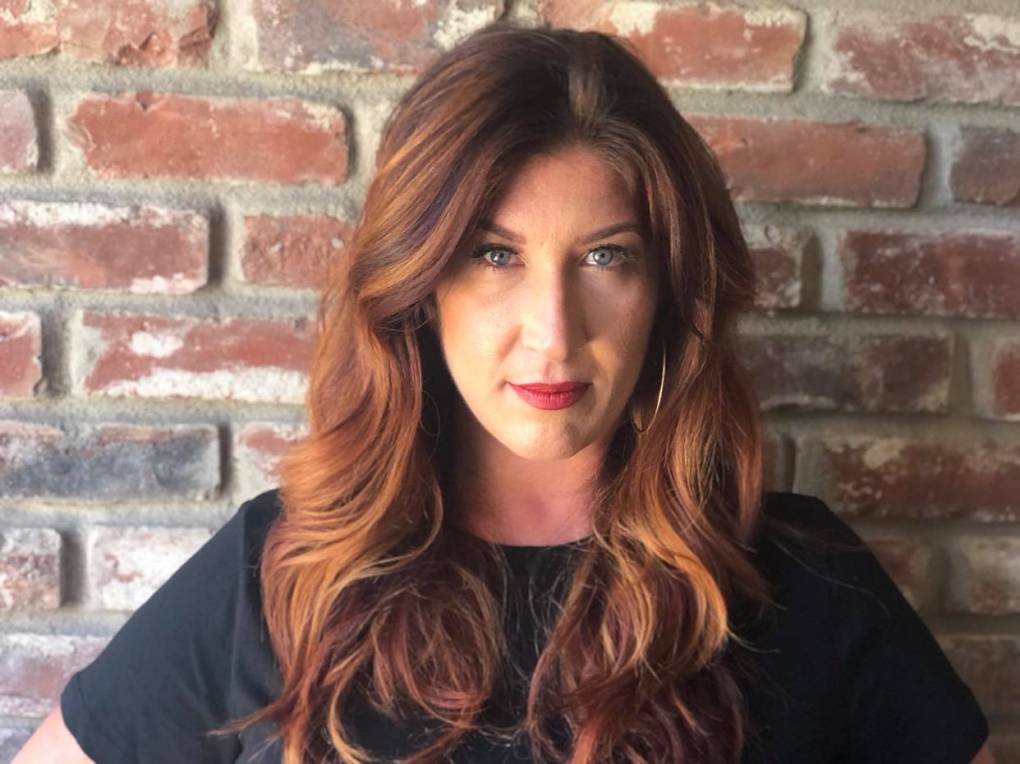
"caption": "Jenn Thomas, a hair stylist who is out of work and hurting financially, is part of a growing segment of Californians who are frustrated, anxious and confused with the state’s current shelter-in-place order.",
"description": null,
"title": "94259086_263881751447797_3499056031521046528_n",
"credit": "Courtesy Jenn Thomas",
"status": "inherit",
"isLoading": false,
"fetchFailed": false
},
"news_11813060": {
"type": "attachments",
"id": "news_11813060",
"meta": {
"index": "attachments_1716263798",
"site": "news",
"id": "11813060",
"found": true
},
"parent": 11813046,
"imgSizes": {
"apple_news_ca_landscape_5_5": {
"file": "https://ww2.kqed.org/app/uploads/sites/10/2020/04/Collage-1044x783.jpg",
"width": 1044,
"mimeType": "image/jpeg",
"height": 783
},
"apple_news_ca_square_4_0": {
"file": "https://ww2.kqed.org/app/uploads/sites/10/2020/04/Collage-470x470.jpg",
"width": 470,
"mimeType": "image/jpeg",
"height": 470
},
"twentyfourteen-full-width": {
"file": "https://ww2.kqed.org/app/uploads/sites/10/2020/04/Collage-1038x576.jpg",
"width": 1038,
"mimeType": "image/jpeg",
"height": 576
},
"thumbnail": {
"file": "https://ww2.kqed.org/app/uploads/sites/10/2020/04/Collage-160x107.jpg",
"width": 160,
"mimeType": "image/jpeg",
"height": 107
},
"post-thumbnail": {
"file": "https://ww2.kqed.org/app/uploads/sites/10/2020/04/Collage-672x372.jpg",
"width": 672,
"mimeType": "image/jpeg",
"height": 372
},
"kqedFullSize": {
"file": "https://ww2.kqed.org/app/uploads/sites/10/2020/04/Collage.jpg",
"width": 1920,
"height": 1280
},
"apple_news_ca_landscape_4_7": {
"file": "https://ww2.kqed.org/app/uploads/sites/10/2020/04/Collage-632x474.jpg",
"width": 632,
"mimeType": "image/jpeg",
"height": 474
},
"large": {
"file": "https://ww2.kqed.org/app/uploads/sites/10/2020/04/Collage-1020x680.jpg",
"width": 1020,
"mimeType": "image/jpeg",
"height": 680
},
"apple_news_ca_landscape_4_0": {
"file": "https://ww2.kqed.org/app/uploads/sites/10/2020/04/Collage-536x402.jpg",
"width": 536,
"mimeType": "image/jpeg",
"height": 402
},
"apple_news_ca_portrait_12_9": {
"file": "https://ww2.kqed.org/app/uploads/sites/10/2020/04/Collage-1122x1280.jpg",
"width": 1122,
"mimeType": "image/jpeg",
"height": 1280
},
"medium": {
"file": "https://ww2.kqed.org/app/uploads/sites/10/2020/04/Collage-800x533.jpg",
"width": 800,
"mimeType": "image/jpeg",
"height": 533
},
"apple_news_ca_portrait_4_0": {
"file": "https://ww2.kqed.org/app/uploads/sites/10/2020/04/Collage-354x472.jpg",
"width": 354,
"mimeType": "image/jpeg",
"height": 472
},
"apple_news_ca_portrait_9_7": {
"file": "https://ww2.kqed.org/app/uploads/sites/10/2020/04/Collage-840x1120.jpg",
"width": 840,
"mimeType": "image/jpeg",
"height": 1120
},
"apple_news_ca_landscape_12_9": {
"file": "https://ww2.kqed.org/app/uploads/sites/10/2020/04/Collage-1832x1280.jpg",
"width": 1832,
"mimeType": "image/jpeg",
"height": 1280
},
"apple_news_ca_square_9_7": {
"file": "https://ww2.kqed.org/app/uploads/sites/10/2020/04/Collage-1104x1104.jpg",
"width": 1104,
"mimeType": "image/jpeg",
"height": 1104
},
"apple_news_ca_portrait_4_7": {
"file": "https://ww2.kqed.org/app/uploads/sites/10/2020/04/Collage-414x552.jpg",
"width": 414,
"mimeType": "image/jpeg",
"height": 552
},
"apple_news_ca_square_12_9": {
"file": "https://ww2.kqed.org/app/uploads/sites/10/2020/04/Collage-1472x1280.jpg",
"width": 1472,
"mimeType": "image/jpeg",
"height": 1280
},
"apple_news_ca_portrait_5_5": {
"file": "https://ww2.kqed.org/app/uploads/sites/10/2020/04/Collage-687x916.jpg",
"width": 687,
"mimeType": "image/jpeg",
"height": 916
},
"full-width": {
"file": "https://ww2.kqed.org/app/uploads/sites/10/2020/04/Collage-1920x1280.jpg",
"width": 1920,
"mimeType": "image/jpeg",
"height": 1280
},
"apple_news_ca_square_4_7": {
"file": "https://ww2.kqed.org/app/uploads/sites/10/2020/04/Collage-550x550.jpg",
"width": 550,
"mimeType": "image/jpeg",
"height": 550
},
"apple_news_ca_landscape_9_7": {
"file": "https://ww2.kqed.org/app/uploads/sites/10/2020/04/Collage-1376x1032.jpg",
"width": 1376,
"mimeType": "image/jpeg",
"height": 1032
},
"apple_news_ca_square_5_5": {
"file": "https://ww2.kqed.org/app/uploads/sites/10/2020/04/Collage-912x912.jpg",
"width": 912,
"mimeType": "image/jpeg",
"height": 912
}
},
"publishDate": 1587327642,
"modified": 1587330466,
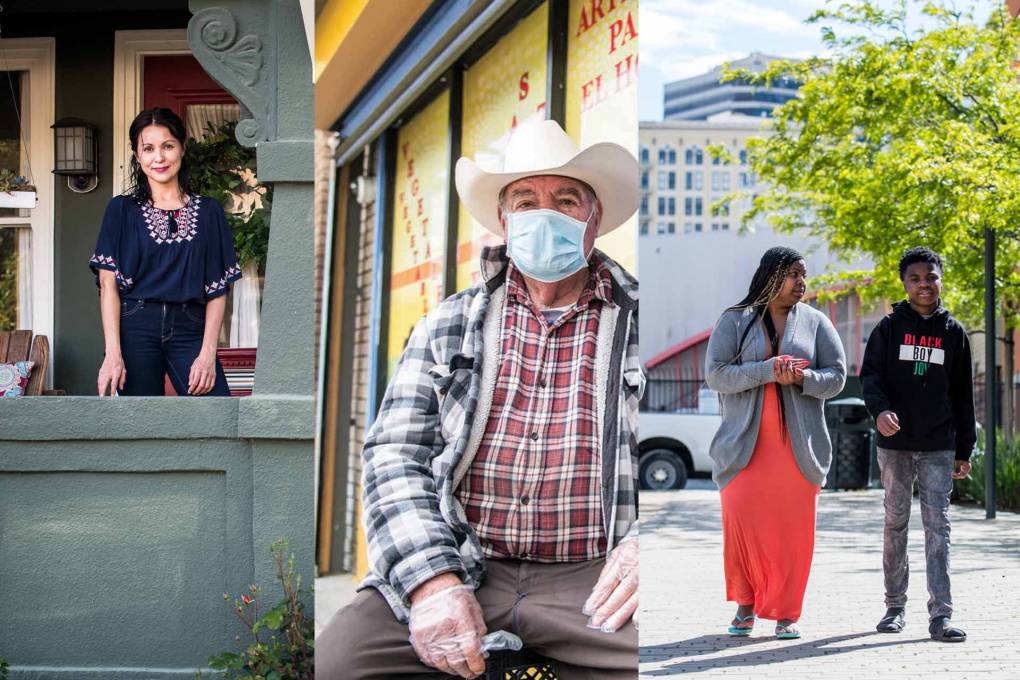
"caption": "Photos from across the Bay Area during the COVID-19 pandemic.",
"description": null,
"title": "Collage",
"credit": "Beth LaBerge/KQED",
"status": "inherit",
"isLoading": false,
"fetchFailed": false
},
"news_11813028": {
"type": "attachments",
"id": "news_11813028",
"meta": {
"index": "attachments_1716263798",
"site": "news",
"id": "11813028",
"found": true
},
"parent": 11813027,
"imgSizes": {
"apple_news_ca_landscape_5_5": {
"file": "https://ww2.kqed.org/app/uploads/sites/10/2020/04/GettyImages-1208946506-1-1044x783.jpg",
"width": 1044,
"mimeType": "image/jpeg",
"height": 783
},
"apple_news_ca_square_4_0": {
"file": "https://ww2.kqed.org/app/uploads/sites/10/2020/04/GettyImages-1208946506-1-470x470.jpg",
"width": 470,
"mimeType": "image/jpeg",
"height": 470
},
"twentyfourteen-full-width": {
"file": "https://ww2.kqed.org/app/uploads/sites/10/2020/04/GettyImages-1208946506-1-1038x576.jpg",
"width": 1038,
"mimeType": "image/jpeg",
"height": 576
},
"thumbnail": {
"file": "https://ww2.kqed.org/app/uploads/sites/10/2020/04/GettyImages-1208946506-1-160x107.jpg",
"width": 160,
"mimeType": "image/jpeg",
"height": 107
},
"post-thumbnail": {
"file": "https://ww2.kqed.org/app/uploads/sites/10/2020/04/GettyImages-1208946506-1-672x372.jpg",
"width": 672,
"mimeType": "image/jpeg",
"height": 372
},
"kqedFullSize": {
"file": "https://ww2.kqed.org/app/uploads/sites/10/2020/04/GettyImages-1208946506-1.jpg",
"width": 1920,
"height": 1280
},
"apple_news_ca_landscape_4_7": {
"file": "https://ww2.kqed.org/app/uploads/sites/10/2020/04/GettyImages-1208946506-1-632x474.jpg",
"width": 632,
"mimeType": "image/jpeg",
"height": 474
},
"large": {
"file": "https://ww2.kqed.org/app/uploads/sites/10/2020/04/GettyImages-1208946506-1-1020x680.jpg",
"width": 1020,
"mimeType": "image/jpeg",
"height": 680
},
"apple_news_ca_landscape_4_0": {
"file": "https://ww2.kqed.org/app/uploads/sites/10/2020/04/GettyImages-1208946506-1-536x402.jpg",
"width": 536,
"mimeType": "image/jpeg",
"height": 402
},
"apple_news_ca_portrait_12_9": {
"file": "https://ww2.kqed.org/app/uploads/sites/10/2020/04/GettyImages-1208946506-1-1122x1280.jpg",
"width": 1122,
"mimeType": "image/jpeg",
"height": 1280
},
"medium": {
"file": "https://ww2.kqed.org/app/uploads/sites/10/2020/04/GettyImages-1208946506-1-800x533.jpg",
"width": 800,
"mimeType": "image/jpeg",
"height": 533
},
"apple_news_ca_portrait_4_0": {
"file": "https://ww2.kqed.org/app/uploads/sites/10/2020/04/GettyImages-1208946506-1-354x472.jpg",
"width": 354,
"mimeType": "image/jpeg",
"height": 472
},
"apple_news_ca_portrait_9_7": {
"file": "https://ww2.kqed.org/app/uploads/sites/10/2020/04/GettyImages-1208946506-1-840x1120.jpg",
"width": 840,
"mimeType": "image/jpeg",
"height": 1120
},
"apple_news_ca_landscape_12_9": {
"file": "https://ww2.kqed.org/app/uploads/sites/10/2020/04/GettyImages-1208946506-1-1832x1280.jpg",
"width": 1832,
"mimeType": "image/jpeg",
"height": 1280
},
"apple_news_ca_square_9_7": {
"file": "https://ww2.kqed.org/app/uploads/sites/10/2020/04/GettyImages-1208946506-1-1104x1104.jpg",
"width": 1104,
"mimeType": "image/jpeg",
"height": 1104
},
"apple_news_ca_portrait_4_7": {
"file": "https://ww2.kqed.org/app/uploads/sites/10/2020/04/GettyImages-1208946506-1-414x552.jpg",
"width": 414,
"mimeType": "image/jpeg",
"height": 552
},
"apple_news_ca_square_12_9": {
"file": "https://ww2.kqed.org/app/uploads/sites/10/2020/04/GettyImages-1208946506-1-1472x1280.jpg",
"width": 1472,
"mimeType": "image/jpeg",
"height": 1280
},
"apple_news_ca_portrait_5_5": {
"file": "https://ww2.kqed.org/app/uploads/sites/10/2020/04/GettyImages-1208946506-1-687x916.jpg",
"width": 687,
"mimeType": "image/jpeg",
"height": 916
},
"full-width": {
"file": "https://ww2.kqed.org/app/uploads/sites/10/2020/04/GettyImages-1208946506-1-1920x1280.jpg",
"width": 1920,
"mimeType": "image/jpeg",
"height": 1280
},
"apple_news_ca_square_4_7": {
"file": "https://ww2.kqed.org/app/uploads/sites/10/2020/04/GettyImages-1208946506-1-550x550.jpg",
"width": 550,
"mimeType": "image/jpeg",
"height": 550
},
"apple_news_ca_landscape_9_7": {
"file": "https://ww2.kqed.org/app/uploads/sites/10/2020/04/GettyImages-1208946506-1-1376x1032.jpg",
"width": 1376,
"mimeType": "image/jpeg",
"height": 1032
},
"apple_news_ca_square_5_5": {
"file": "https://ww2.kqed.org/app/uploads/sites/10/2020/04/GettyImages-1208946506-1-912x912.jpg",
"width": 912,
"mimeType": "image/jpeg",
"height": 912
}
},
"publishDate": 1587241635,
"modified": 1587241690,
"caption": "On Friday, the California Employment Development Department announced the state's unemployment rate jumped to 5.3% in March, up from 3.9% the previous month. ",
"description": null,
"title": "GettyImages-1208946506 (1)",
"credit": "Apu Gomes/Getty Images",
"status": "inherit",
"isLoading": false,
"fetchFailed": false
},
"news_11812884": {
"type": "attachments",
"id": "news_11812884",
"meta": {
"index": "attachments_1716263798",
"site": "news",
"id": "11812884",
"found": true
},
"parent": 11812835,
"imgSizes": {
"apple_news_ca_landscape_5_5": {
"file": "https://ww2.kqed.org/app/uploads/sites/10/2020/04/RS42822_willis-pic-qut-1044x783.jpg",
"width": 1044,
"mimeType": "image/jpeg",
"height": 783
},
"apple_news_ca_square_4_0": {
"file": "https://ww2.kqed.org/app/uploads/sites/10/2020/04/RS42822_willis-pic-qut-470x470.jpg",
"width": 470,
"mimeType": "image/jpeg",
"height": 470
},
"twentyfourteen-full-width": {
"file": "https://ww2.kqed.org/app/uploads/sites/10/2020/04/RS42822_willis-pic-qut-1038x576.jpg",
"width": 1038,
"mimeType": "image/jpeg",
"height": 576
},
"thumbnail": {
"file": "https://ww2.kqed.org/app/uploads/sites/10/2020/04/RS42822_willis-pic-qut-160x120.jpg",
"width": 160,
"mimeType": "image/jpeg",
"height": 120
},
"post-thumbnail": {
"file": "https://ww2.kqed.org/app/uploads/sites/10/2020/04/RS42822_willis-pic-qut-672x372.jpg",
"width": 672,
"mimeType": "image/jpeg",
"height": 372
},
"kqedFullSize": {
"file": "https://ww2.kqed.org/app/uploads/sites/10/2020/04/RS42822_willis-pic-qut.jpg",
"width": 1920,
"height": 1440
},
"apple_news_ca_landscape_4_7": {
"file": "https://ww2.kqed.org/app/uploads/sites/10/2020/04/RS42822_willis-pic-qut-632x474.jpg",
"width": 632,
"mimeType": "image/jpeg",
"height": 474
},
"large": {
"file": "https://ww2.kqed.org/app/uploads/sites/10/2020/04/RS42822_willis-pic-qut-1020x765.jpg",
"width": 1020,
"mimeType": "image/jpeg",
"height": 765
},
"apple_news_ca_landscape_4_0": {
"file": "https://ww2.kqed.org/app/uploads/sites/10/2020/04/RS42822_willis-pic-qut-536x402.jpg",
"width": 536,
"mimeType": "image/jpeg",
"height": 402
},
"apple_news_ca_portrait_12_9": {
"file": "https://ww2.kqed.org/app/uploads/sites/10/2020/04/RS42822_willis-pic-qut-1122x1440.jpg",
"width": 1122,
"mimeType": "image/jpeg",
"height": 1440
},
"medium": {
"file": "https://ww2.kqed.org/app/uploads/sites/10/2020/04/RS42822_willis-pic-qut-800x600.jpg",
"width": 800,
"mimeType": "image/jpeg",
"height": 600
},
"apple_news_ca_portrait_4_0": {
"file": "https://ww2.kqed.org/app/uploads/sites/10/2020/04/RS42822_willis-pic-qut-354x472.jpg",
"width": 354,
"mimeType": "image/jpeg",
"height": 472
},
"apple_news_ca_portrait_9_7": {
"file": "https://ww2.kqed.org/app/uploads/sites/10/2020/04/RS42822_willis-pic-qut-840x1120.jpg",
"width": 840,
"mimeType": "image/jpeg",
"height": 1120
},
"apple_news_ca_landscape_12_9": {
"file": "https://ww2.kqed.org/app/uploads/sites/10/2020/04/RS42822_willis-pic-qut-1832x1374.jpg",
"width": 1832,
"mimeType": "image/jpeg",
"height": 1374
},
"apple_news_ca_square_9_7": {
"file": "https://ww2.kqed.org/app/uploads/sites/10/2020/04/RS42822_willis-pic-qut-1104x1104.jpg",
"width": 1104,
"mimeType": "image/jpeg",
"height": 1104
},
"apple_news_ca_portrait_4_7": {
"file": "https://ww2.kqed.org/app/uploads/sites/10/2020/04/RS42822_willis-pic-qut-414x552.jpg",
"width": 414,
"mimeType": "image/jpeg",
"height": 552
},
"apple_news_ca_square_12_9": {
"file": "https://ww2.kqed.org/app/uploads/sites/10/2020/04/RS42822_willis-pic-qut-1472x1440.jpg",
"width": 1472,
"mimeType": "image/jpeg",
"height": 1440
},
"apple_news_ca_portrait_5_5": {
"file": "https://ww2.kqed.org/app/uploads/sites/10/2020/04/RS42822_willis-pic-qut-687x916.jpg",
"width": 687,
"mimeType": "image/jpeg",
"height": 916
},
"full-width": {
"file": "https://ww2.kqed.org/app/uploads/sites/10/2020/04/RS42822_willis-pic-qut-1920x1440.jpg",
"width": 1920,
"mimeType": "image/jpeg",
"height": 1440
},
"apple_news_ca_square_4_7": {
"file": "https://ww2.kqed.org/app/uploads/sites/10/2020/04/RS42822_willis-pic-qut-550x550.jpg",
"width": 550,
"mimeType": "image/jpeg",
"height": 550
},
"apple_news_ca_landscape_9_7": {
"file": "https://ww2.kqed.org/app/uploads/sites/10/2020/04/RS42822_willis-pic-qut-1376x1032.jpg",
"width": 1376,
"mimeType": "image/jpeg",
"height": 1032
},
"apple_news_ca_square_5_5": {
"file": "https://ww2.kqed.org/app/uploads/sites/10/2020/04/RS42822_willis-pic-qut-912x912.jpg",
"width": 912,
"mimeType": "image/jpeg",
"height": 912
}
},
"publishDate": 1587152283,
"modified": 1587152591,
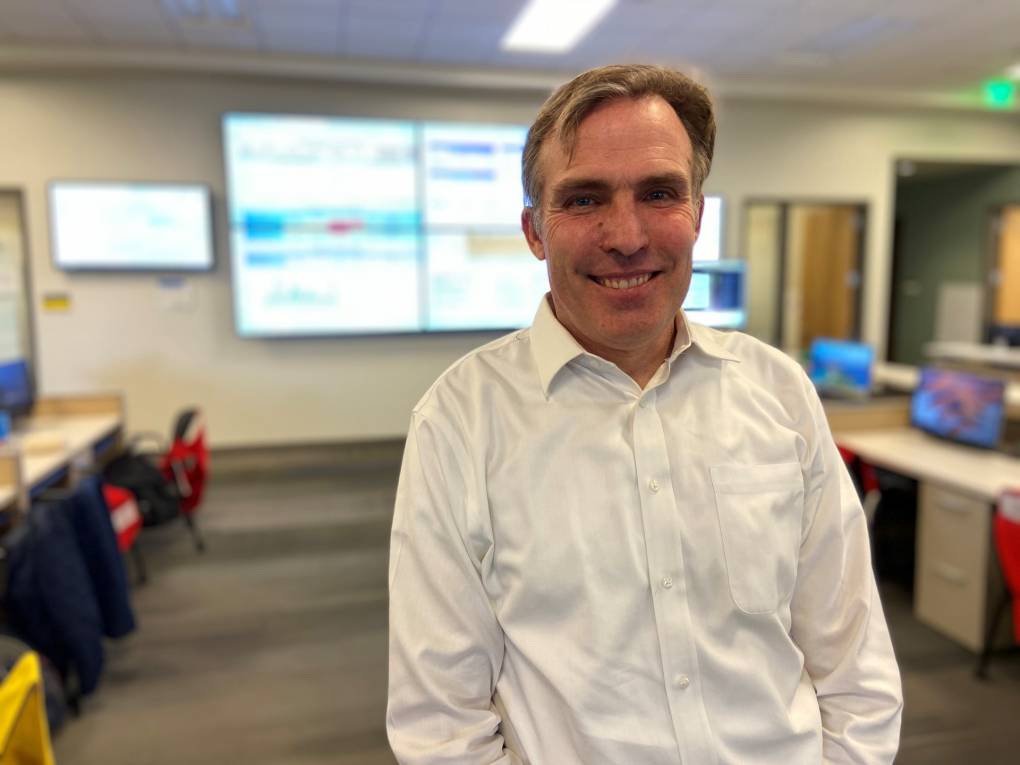
"caption": "Matt Willis, Marin County's Public Health Officer, after coming out of isolation for COVID-19. He says small things, like breakfast with his family, now feels magical.",
"description": "Matt Willis, Marin County's Public Health Officer, after coming out of isolation for COVID-19. He says small things, like breakfast with his family, now feels magical.",
"title": "RS42822_willis pic-qut",
"credit": "Photo courtesy Matt Willis",
"status": "inherit",
"isLoading": false,
"fetchFailed": false
},
"news_11813014": {
"type": "attachments",
"id": "news_11813014",
"meta": {
"index": "attachments_1716263798",
"site": "news",
"id": "11813014",
"found": true
},
"parent": 11813006,
"imgSizes": {
"apple_news_ca_landscape_5_5": {
"file": "https://ww2.kqed.org/app/uploads/sites/10/2020/04/RS42531_007_KQED_SanFrancisco_StevePantilatMD_04032020-qut-1044x783.jpg",
"width": 1044,
"mimeType": "image/jpeg",
"height": 783
},
"apple_news_ca_square_4_0": {
"file": "https://ww2.kqed.org/app/uploads/sites/10/2020/04/RS42531_007_KQED_SanFrancisco_StevePantilatMD_04032020-qut-470x470.jpg",
"width": 470,
"mimeType": "image/jpeg",
"height": 470
},
"twentyfourteen-full-width": {
"file": "https://ww2.kqed.org/app/uploads/sites/10/2020/04/RS42531_007_KQED_SanFrancisco_StevePantilatMD_04032020-qut-1038x576.jpg",
"width": 1038,
"mimeType": "image/jpeg",
"height": 576
},
"thumbnail": {
"file": "https://ww2.kqed.org/app/uploads/sites/10/2020/04/RS42531_007_KQED_SanFrancisco_StevePantilatMD_04032020-qut-160x107.jpg",
"width": 160,
"mimeType": "image/jpeg",
"height": 107
},
"post-thumbnail": {
"file": "https://ww2.kqed.org/app/uploads/sites/10/2020/04/RS42531_007_KQED_SanFrancisco_StevePantilatMD_04032020-qut-672x372.jpg",
"width": 672,
"mimeType": "image/jpeg",
"height": 372
},
"kqedFullSize": {
"file": "https://ww2.kqed.org/app/uploads/sites/10/2020/04/RS42531_007_KQED_SanFrancisco_StevePantilatMD_04032020-qut.jpg",
"width": 1920,
"height": 1280
},
"apple_news_ca_landscape_4_7": {
"file": "https://ww2.kqed.org/app/uploads/sites/10/2020/04/RS42531_007_KQED_SanFrancisco_StevePantilatMD_04032020-qut-632x474.jpg",
"width": 632,
"mimeType": "image/jpeg",
"height": 474
},
"large": {
"file": "https://ww2.kqed.org/app/uploads/sites/10/2020/04/RS42531_007_KQED_SanFrancisco_StevePantilatMD_04032020-qut-1020x680.jpg",
"width": 1020,
"mimeType": "image/jpeg",
"height": 680
},
"apple_news_ca_landscape_4_0": {
"file": "https://ww2.kqed.org/app/uploads/sites/10/2020/04/RS42531_007_KQED_SanFrancisco_StevePantilatMD_04032020-qut-536x402.jpg",
"width": 536,
"mimeType": "image/jpeg",
"height": 402
},
"apple_news_ca_portrait_12_9": {
"file": "https://ww2.kqed.org/app/uploads/sites/10/2020/04/RS42531_007_KQED_SanFrancisco_StevePantilatMD_04032020-qut-1122x1280.jpg",
"width": 1122,
"mimeType": "image/jpeg",
"height": 1280
},
"medium": {
"file": "https://ww2.kqed.org/app/uploads/sites/10/2020/04/RS42531_007_KQED_SanFrancisco_StevePantilatMD_04032020-qut-800x533.jpg",
"width": 800,
"mimeType": "image/jpeg",
"height": 533
},
"apple_news_ca_portrait_4_0": {
"file": "https://ww2.kqed.org/app/uploads/sites/10/2020/04/RS42531_007_KQED_SanFrancisco_StevePantilatMD_04032020-qut-354x472.jpg",
"width": 354,
"mimeType": "image/jpeg",
"height": 472
},
"apple_news_ca_portrait_9_7": {
"file": "https://ww2.kqed.org/app/uploads/sites/10/2020/04/RS42531_007_KQED_SanFrancisco_StevePantilatMD_04032020-qut-840x1120.jpg",
"width": 840,
"mimeType": "image/jpeg",
"height": 1120
},
"apple_news_ca_landscape_12_9": {
"file": "https://ww2.kqed.org/app/uploads/sites/10/2020/04/RS42531_007_KQED_SanFrancisco_StevePantilatMD_04032020-qut-1832x1280.jpg",
"width": 1832,
"mimeType": "image/jpeg",
"height": 1280
},
"apple_news_ca_square_9_7": {
"file": "https://ww2.kqed.org/app/uploads/sites/10/2020/04/RS42531_007_KQED_SanFrancisco_StevePantilatMD_04032020-qut-1104x1104.jpg",
"width": 1104,
"mimeType": "image/jpeg",
"height": 1104
},
"apple_news_ca_portrait_4_7": {
"file": "https://ww2.kqed.org/app/uploads/sites/10/2020/04/RS42531_007_KQED_SanFrancisco_StevePantilatMD_04032020-qut-414x552.jpg",
"width": 414,
"mimeType": "image/jpeg",
"height": 552
},
"apple_news_ca_square_12_9": {
"file": "https://ww2.kqed.org/app/uploads/sites/10/2020/04/RS42531_007_KQED_SanFrancisco_StevePantilatMD_04032020-qut-1472x1280.jpg",
"width": 1472,
"mimeType": "image/jpeg",
"height": 1280
},
"apple_news_ca_portrait_5_5": {
"file": "https://ww2.kqed.org/app/uploads/sites/10/2020/04/RS42531_007_KQED_SanFrancisco_StevePantilatMD_04032020-qut-687x916.jpg",
"width": 687,
"mimeType": "image/jpeg",
"height": 916
},
"full-width": {
"file": "https://ww2.kqed.org/app/uploads/sites/10/2020/04/RS42531_007_KQED_SanFrancisco_StevePantilatMD_04032020-qut-1920x1280.jpg",
"width": 1920,
"mimeType": "image/jpeg",
"height": 1280
},
"apple_news_ca_square_4_7": {
"file": "https://ww2.kqed.org/app/uploads/sites/10/2020/04/RS42531_007_KQED_SanFrancisco_StevePantilatMD_04032020-qut-550x550.jpg",
"width": 550,
"mimeType": "image/jpeg",
"height": 550
},
"apple_news_ca_landscape_9_7": {
"file": "https://ww2.kqed.org/app/uploads/sites/10/2020/04/RS42531_007_KQED_SanFrancisco_StevePantilatMD_04032020-qut-1376x1032.jpg",
"width": 1376,
"mimeType": "image/jpeg",
"height": 1032
},
"apple_news_ca_square_5_5": {
"file": "https://ww2.kqed.org/app/uploads/sites/10/2020/04/RS42531_007_KQED_SanFrancisco_StevePantilatMD_04032020-qut-912x912.jpg",
"width": 912,
"mimeType": "image/jpeg",
"height": 912
}
},
"publishDate": 1587180215,
"modified": 1587180261,
"caption": "Steve Pantilat, MD, a palliative care doctor for the University of California, San Francisco (UCSF) on April 3, 2020.",
"description": null,
"title": "RS42531_007_KQED_SanFrancisco_StevePantilatMD_04032020-qut",
"credit": "Beth LaBerge/KQED",
"status": "inherit",
"isLoading": false,
"fetchFailed": false
},
"news_11812970": {
"type": "attachments",
"id": "news_11812970",
"meta": {
"index": "attachments_1716263798",
"site": "news",
"id": "11812970",
"found": true
},
"parent": 11812959,
"imgSizes": {
"apple_news_ca_landscape_5_5": {
"file": "https://ww2.kqed.org/app/uploads/sites/10/2020/04/stop_041720_final-1044x783.png",
"width": 1044,
"mimeType": "image/png",
"height": 783
},
"apple_news_ca_square_4_0": {
"file": "https://ww2.kqed.org/app/uploads/sites/10/2020/04/stop_041720_final-470x470.png",
"width": 470,
"mimeType": "image/png",
"height": 470
},
"twentyfourteen-full-width": {
"file": "https://ww2.kqed.org/app/uploads/sites/10/2020/04/stop_041720_final-1038x576.png",
"width": 1038,
"mimeType": "image/png",
"height": 576
},
"thumbnail": {
"file": "https://ww2.kqed.org/app/uploads/sites/10/2020/04/stop_041720_final-160x116.png",
"width": 160,
"mimeType": "image/png",
"height": 116
},
"post-thumbnail": {
"file": "https://ww2.kqed.org/app/uploads/sites/10/2020/04/stop_041720_final-672x372.png",
"width": 672,
"mimeType": "image/png",
"height": 372
},
"kqedFullSize": {
"file": "https://ww2.kqed.org/app/uploads/sites/10/2020/04/stop_041720_final.png",
"width": 1920,
"height": 1389
},
"apple_news_ca_landscape_4_7": {
"file": "https://ww2.kqed.org/app/uploads/sites/10/2020/04/stop_041720_final-632x474.png",
"width": 632,
"mimeType": "image/png",
"height": 474
},
"large": {
"file": "https://ww2.kqed.org/app/uploads/sites/10/2020/04/stop_041720_final-1020x738.png",
"width": 1020,
"mimeType": "image/png",
"height": 738
},
"apple_news_ca_landscape_4_0": {
"file": "https://ww2.kqed.org/app/uploads/sites/10/2020/04/stop_041720_final-536x402.png",
"width": 536,
"mimeType": "image/png",
"height": 402
},
"apple_news_ca_portrait_12_9": {
"file": "https://ww2.kqed.org/app/uploads/sites/10/2020/04/stop_041720_final-1122x1389.png",
"width": 1122,
"mimeType": "image/png",
"height": 1389
},
"medium": {
"file": "https://ww2.kqed.org/app/uploads/sites/10/2020/04/stop_041720_final-800x579.png",
"width": 800,
"mimeType": "image/png",
"height": 579
},
"apple_news_ca_portrait_4_0": {
"file": "https://ww2.kqed.org/app/uploads/sites/10/2020/04/stop_041720_final-354x472.png",
"width": 354,
"mimeType": "image/png",
"height": 472
},
"apple_news_ca_portrait_9_7": {
"file": "https://ww2.kqed.org/app/uploads/sites/10/2020/04/stop_041720_final-840x1120.png",
"width": 840,
"mimeType": "image/png",
"height": 1120
},
"apple_news_ca_landscape_12_9": {
"file": "https://ww2.kqed.org/app/uploads/sites/10/2020/04/stop_041720_final-1832x1374.png",
"width": 1832,
"mimeType": "image/png",
"height": 1374
},
"apple_news_ca_square_9_7": {
"file": "https://ww2.kqed.org/app/uploads/sites/10/2020/04/stop_041720_final-1104x1104.png",
"width": 1104,
"mimeType": "image/png",
"height": 1104
},
"apple_news_ca_portrait_4_7": {
"file": "https://ww2.kqed.org/app/uploads/sites/10/2020/04/stop_041720_final-414x552.png",
"width": 414,
"mimeType": "image/png",
"height": 552
},
"apple_news_ca_square_12_9": {
"file": "https://ww2.kqed.org/app/uploads/sites/10/2020/04/stop_041720_final-1472x1389.png",
"width": 1472,
"mimeType": "image/png",
"height": 1389
},
"apple_news_ca_portrait_5_5": {
"file": "https://ww2.kqed.org/app/uploads/sites/10/2020/04/stop_041720_final-687x916.png",
"width": 687,
"mimeType": "image/png",
"height": 916
},
"full-width": {
"file": "https://ww2.kqed.org/app/uploads/sites/10/2020/04/stop_041720_final-1920x1389.png",
"width": 1920,
"mimeType": "image/png",
"height": 1389
},
"apple_news_ca_square_4_7": {
"file": "https://ww2.kqed.org/app/uploads/sites/10/2020/04/stop_041720_final-550x550.png",
"width": 550,
"mimeType": "image/png",
"height": 550
},
"apple_news_ca_landscape_9_7": {
"file": "https://ww2.kqed.org/app/uploads/sites/10/2020/04/stop_041720_final-1376x1032.png",
"width": 1376,
"mimeType": "image/png",
"height": 1032
},
"apple_news_ca_square_5_5": {
"file": "https://ww2.kqed.org/app/uploads/sites/10/2020/04/stop_041720_final-912x912.png",
"width": 912,
"mimeType": "image/png",
"height": 912
}
},
"publishDate": 1587165689,
"modified": 1587165722,
"caption": null,
"description": null,
"title": "stop_041720_final",
"credit": null,
"status": "inherit",
"isLoading": false,
"fetchFailed": false
},
"news_11812926": {
"type": "attachments",
"id": "news_11812926",
"meta": {
"index": "attachments_1716263798",
"site": "news",
"id": "11812926",
"found": true
},
"parent": 11812847,
"imgSizes": {
"apple_news_ca_landscape_5_5": {
"file": "https://ww2.kqed.org/app/uploads/sites/10/2020/04/transitrelief200417-1044x783.jpg",
"width": 1044,
"mimeType": "image/jpeg",
"height": 783
},
"apple_news_ca_square_4_0": {
"file": "https://ww2.kqed.org/app/uploads/sites/10/2020/04/transitrelief200417-470x470.jpg",
"width": 470,
"mimeType": "image/jpeg",
"height": 470
},
"twentyfourteen-full-width": {
"file": "https://ww2.kqed.org/app/uploads/sites/10/2020/04/transitrelief200417-1038x576.jpg",
"width": 1038,
"mimeType": "image/jpeg",
"height": 576
},
"thumbnail": {
"file": "https://ww2.kqed.org/app/uploads/sites/10/2020/04/transitrelief200417-160x107.jpg",
"width": 160,
"mimeType": "image/jpeg",
"height": 107
},
"post-thumbnail": {
"file": "https://ww2.kqed.org/app/uploads/sites/10/2020/04/transitrelief200417-672x372.jpg",
"width": 672,
"mimeType": "image/jpeg",
"height": 372
},
"kqedFullSize": {
"file": "https://ww2.kqed.org/app/uploads/sites/10/2020/04/transitrelief200417.jpg",
"width": 1920,
"height": 1280
},
"apple_news_ca_landscape_4_7": {
"file": "https://ww2.kqed.org/app/uploads/sites/10/2020/04/transitrelief200417-632x474.jpg",
"width": 632,
"mimeType": "image/jpeg",
"height": 474
},
"large": {
"file": "https://ww2.kqed.org/app/uploads/sites/10/2020/04/transitrelief200417-1020x680.jpg",
"width": 1020,
"mimeType": "image/jpeg",
"height": 680
},
"apple_news_ca_landscape_4_0": {
"file": "https://ww2.kqed.org/app/uploads/sites/10/2020/04/transitrelief200417-536x402.jpg",
"width": 536,
"mimeType": "image/jpeg",
"height": 402
},
"apple_news_ca_portrait_12_9": {
"file": "https://ww2.kqed.org/app/uploads/sites/10/2020/04/transitrelief200417-1122x1280.jpg",
"width": 1122,
"mimeType": "image/jpeg",
"height": 1280
},
"medium": {
"file": "https://ww2.kqed.org/app/uploads/sites/10/2020/04/transitrelief200417-800x533.jpg",
"width": 800,
"mimeType": "image/jpeg",
"height": 533
},
"apple_news_ca_portrait_4_0": {
"file": "https://ww2.kqed.org/app/uploads/sites/10/2020/04/transitrelief200417-354x472.jpg",
"width": 354,
"mimeType": "image/jpeg",
"height": 472
},
"apple_news_ca_portrait_9_7": {
"file": "https://ww2.kqed.org/app/uploads/sites/10/2020/04/transitrelief200417-840x1120.jpg",
"width": 840,
"mimeType": "image/jpeg",
"height": 1120
},
"apple_news_ca_landscape_12_9": {
"file": "https://ww2.kqed.org/app/uploads/sites/10/2020/04/transitrelief200417-1832x1280.jpg",
"width": 1832,
"mimeType": "image/jpeg",
"height": 1280
},
"apple_news_ca_square_9_7": {
"file": "https://ww2.kqed.org/app/uploads/sites/10/2020/04/transitrelief200417-1104x1104.jpg",
"width": 1104,
"mimeType": "image/jpeg",
"height": 1104
},
"apple_news_ca_portrait_4_7": {
"file": "https://ww2.kqed.org/app/uploads/sites/10/2020/04/transitrelief200417-414x552.jpg",
"width": 414,
"mimeType": "image/jpeg",
"height": 552
},
"apple_news_ca_square_12_9": {
"file": "https://ww2.kqed.org/app/uploads/sites/10/2020/04/transitrelief200417-1472x1280.jpg",
"width": 1472,
"mimeType": "image/jpeg",
"height": 1280
},
"apple_news_ca_portrait_5_5": {
"file": "https://ww2.kqed.org/app/uploads/sites/10/2020/04/transitrelief200417-687x916.jpg",
"width": 687,
"mimeType": "image/jpeg",
"height": 916
},
"full-width": {
"file": "https://ww2.kqed.org/app/uploads/sites/10/2020/04/transitrelief200417-1920x1280.jpg",
"width": 1920,
"mimeType": "image/jpeg",
"height": 1280
},
"apple_news_ca_square_4_7": {
"file": "https://ww2.kqed.org/app/uploads/sites/10/2020/04/transitrelief200417-550x550.jpg",
"width": 550,
"mimeType": "image/jpeg",
"height": 550
},
"apple_news_ca_landscape_9_7": {
"file": "https://ww2.kqed.org/app/uploads/sites/10/2020/04/transitrelief200417-1376x1032.jpg",
"width": 1376,
"mimeType": "image/jpeg",
"height": 1032
},
"apple_news_ca_square_5_5": {
"file": "https://ww2.kqed.org/app/uploads/sites/10/2020/04/transitrelief200417-912x912.jpg",
"width": 912,
"mimeType": "image/jpeg",
"height": 912
}
},
"publishDate": 1587160848,
"modified": 1587164253,
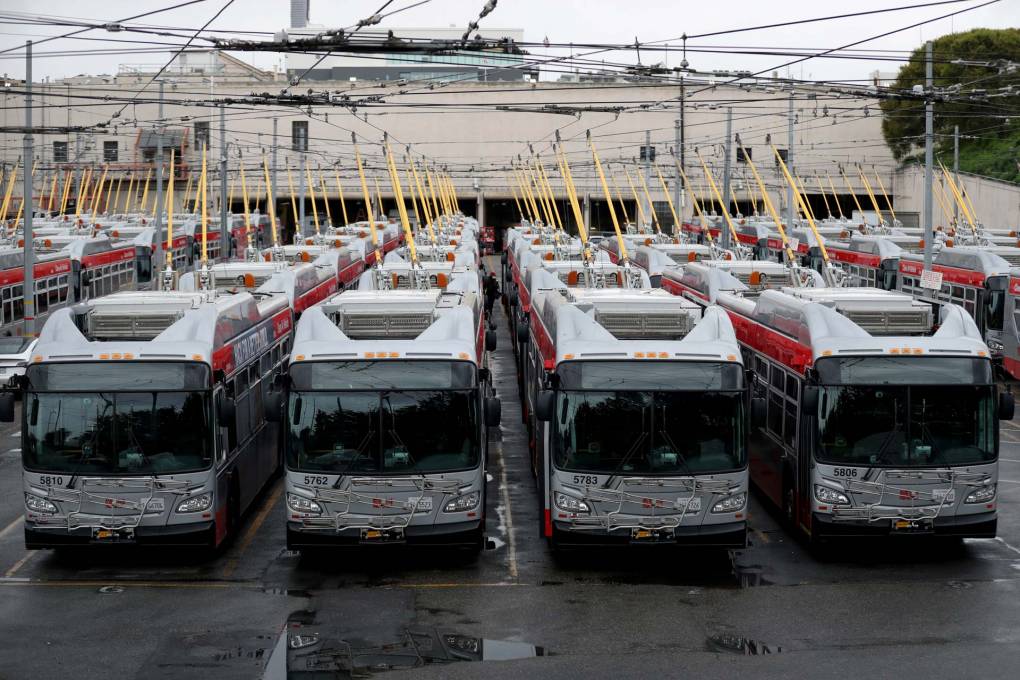
"caption": "Buses parked at a a San Francisco Muni yard on April 6, 2020.",
"description": "Buses parked at a a San Francisco Muni yard on April 6, 2020.",
"title": "San Francisco's Muni To Cut Majority Of Service During Coronavirus Shutdown",
"credit": "Justin Sullivan/Getty Images",
"status": "inherit",
"isLoading": false,
"fetchFailed": false
},
"news_11812800": {
"type": "attachments",
"id": "news_11812800",
"meta": {
"index": "attachments_1716263798",
"site": "news",
"id": "11812800",
"found": true
},
"parent": 11812389,
"imgSizes": {
"apple_news_ca_landscape_5_5": {
"file": "https://ww2.kqed.org/app/uploads/sites/10/2020/04/002_KQED_SanLeandro_OliviaBya_AddressRemoved_04132020-1044x783.jpg",
"width": 1044,
"mimeType": "image/jpeg",
"height": 783
},
"apple_news_ca_square_4_0": {
"file": "https://ww2.kqed.org/app/uploads/sites/10/2020/04/002_KQED_SanLeandro_OliviaBya_AddressRemoved_04132020-470x470.jpg",
"width": 470,
"mimeType": "image/jpeg",
"height": 470
},
"twentyfourteen-full-width": {
"file": "https://ww2.kqed.org/app/uploads/sites/10/2020/04/002_KQED_SanLeandro_OliviaBya_AddressRemoved_04132020-1038x576.jpg",
"width": 1038,
"mimeType": "image/jpeg",
"height": 576
},
"thumbnail": {
"file": "https://ww2.kqed.org/app/uploads/sites/10/2020/04/002_KQED_SanLeandro_OliviaBya_AddressRemoved_04132020-160x107.jpg",
"width": 160,
"mimeType": "image/jpeg",
"height": 107
},
"post-thumbnail": {
"file": "https://ww2.kqed.org/app/uploads/sites/10/2020/04/002_KQED_SanLeandro_OliviaBya_AddressRemoved_04132020-672x372.jpg",
"width": 672,
"mimeType": "image/jpeg",
"height": 372
},
"kqedFullSize": {
"file": "https://ww2.kqed.org/app/uploads/sites/10/2020/04/002_KQED_SanLeandro_OliviaBya_AddressRemoved_04132020.jpg",
"width": 1920,
"height": 1280
},
"apple_news_ca_landscape_4_7": {
"file": "https://ww2.kqed.org/app/uploads/sites/10/2020/04/002_KQED_SanLeandro_OliviaBya_AddressRemoved_04132020-632x474.jpg",
"width": 632,
"mimeType": "image/jpeg",
"height": 474
},
"large": {
"file": "https://ww2.kqed.org/app/uploads/sites/10/2020/04/002_KQED_SanLeandro_OliviaBya_AddressRemoved_04132020-1020x680.jpg",
"width": 1020,
"mimeType": "image/jpeg",
"height": 680
},
"apple_news_ca_landscape_4_0": {
"file": "https://ww2.kqed.org/app/uploads/sites/10/2020/04/002_KQED_SanLeandro_OliviaBya_AddressRemoved_04132020-536x402.jpg",
"width": 536,
"mimeType": "image/jpeg",
"height": 402
},
"apple_news_ca_portrait_12_9": {
"file": "https://ww2.kqed.org/app/uploads/sites/10/2020/04/002_KQED_SanLeandro_OliviaBya_AddressRemoved_04132020-1122x1280.jpg",
"width": 1122,
"mimeType": "image/jpeg",
"height": 1280
},
"medium": {
"file": "https://ww2.kqed.org/app/uploads/sites/10/2020/04/002_KQED_SanLeandro_OliviaBya_AddressRemoved_04132020-800x533.jpg",
"width": 800,
"mimeType": "image/jpeg",
"height": 533
},
"apple_news_ca_portrait_4_0": {
"file": "https://ww2.kqed.org/app/uploads/sites/10/2020/04/002_KQED_SanLeandro_OliviaBya_AddressRemoved_04132020-354x472.jpg",
"width": 354,
"mimeType": "image/jpeg",
"height": 472
},
"apple_news_ca_portrait_9_7": {
"file": "https://ww2.kqed.org/app/uploads/sites/10/2020/04/002_KQED_SanLeandro_OliviaBya_AddressRemoved_04132020-840x1120.jpg",
"width": 840,
"mimeType": "image/jpeg",
"height": 1120
},
"apple_news_ca_landscape_12_9": {
"file": "https://ww2.kqed.org/app/uploads/sites/10/2020/04/002_KQED_SanLeandro_OliviaBya_AddressRemoved_04132020-1832x1280.jpg",
"width": 1832,
"mimeType": "image/jpeg",
"height": 1280
},
"apple_news_ca_square_9_7": {
"file": "https://ww2.kqed.org/app/uploads/sites/10/2020/04/002_KQED_SanLeandro_OliviaBya_AddressRemoved_04132020-1104x1104.jpg",
"width": 1104,
"mimeType": "image/jpeg",
"height": 1104
},
"apple_news_ca_portrait_4_7": {
"file": "https://ww2.kqed.org/app/uploads/sites/10/2020/04/002_KQED_SanLeandro_OliviaBya_AddressRemoved_04132020-414x552.jpg",
"width": 414,
"mimeType": "image/jpeg",
"height": 552
},
"apple_news_ca_square_12_9": {
"file": "https://ww2.kqed.org/app/uploads/sites/10/2020/04/002_KQED_SanLeandro_OliviaBya_AddressRemoved_04132020-1472x1280.jpg",
"width": 1472,
"mimeType": "image/jpeg",
"height": 1280
},
"apple_news_ca_portrait_5_5": {
"file": "https://ww2.kqed.org/app/uploads/sites/10/2020/04/002_KQED_SanLeandro_OliviaBya_AddressRemoved_04132020-687x916.jpg",
"width": 687,
"mimeType": "image/jpeg",
"height": 916
},
"full-width": {
"file": "https://ww2.kqed.org/app/uploads/sites/10/2020/04/002_KQED_SanLeandro_OliviaBya_AddressRemoved_04132020-1920x1280.jpg",
"width": 1920,
"mimeType": "image/jpeg",
"height": 1280
},
"apple_news_ca_square_4_7": {
"file": "https://ww2.kqed.org/app/uploads/sites/10/2020/04/002_KQED_SanLeandro_OliviaBya_AddressRemoved_04132020-550x550.jpg",
"width": 550,
"mimeType": "image/jpeg",
"height": 550
},
"apple_news_ca_landscape_9_7": {
"file": "https://ww2.kqed.org/app/uploads/sites/10/2020/04/002_KQED_SanLeandro_OliviaBya_AddressRemoved_04132020-1376x1032.jpg",
"width": 1376,
"mimeType": "image/jpeg",
"height": 1032
},
"apple_news_ca_square_5_5": {
"file": "https://ww2.kqed.org/app/uploads/sites/10/2020/04/002_KQED_SanLeandro_OliviaBya_AddressRemoved_04132020-912x912.jpg",
"width": 912,
"mimeType": "image/jpeg",
"height": 912
}
},
"publishDate": 1587101461,
"modified": 1587167378,
"caption": "Olivia Bye and her family in San Leandro on April 13, 2020. The house number has been removed to protect the family's privacy.",
"description": null,
"title": "002_KQED_SanLeandro_OliviaBya_AddressRemoved_04132020",
"credit": "Beth LaBerge/KQED",
"status": "inherit",
"isLoading": false,
"fetchFailed": false
},
"news_11812927": {
"type": "attachments",
"id": "news_11812927",
"meta": {
"index": "attachments_1716263798",
"site": "news",
"id": "11812927",
"found": true
},
"parent": 11812863,
"imgSizes": {
"apple_news_ca_landscape_5_5": {
"file": "https://ww2.kqed.org/app/uploads/sites/10/2020/04/Masks-Muni-San-Francisco-1044x783.jpg",
"width": 1044,
"mimeType": "image/jpeg",
"height": 783
},
"apple_news_ca_square_4_0": {
"file": "https://ww2.kqed.org/app/uploads/sites/10/2020/04/Masks-Muni-San-Francisco-470x470.jpg",
"width": 470,
"mimeType": "image/jpeg",
"height": 470
},
"twentyfourteen-full-width": {
"file": "https://ww2.kqed.org/app/uploads/sites/10/2020/04/Masks-Muni-San-Francisco-1038x576.jpg",
"width": 1038,
"mimeType": "image/jpeg",
"height": 576
},
"thumbnail": {
"file": "https://ww2.kqed.org/app/uploads/sites/10/2020/04/Masks-Muni-San-Francisco-160x117.jpg",
"width": 160,
"mimeType": "image/jpeg",
"height": 117
},
"post-thumbnail": {
"file": "https://ww2.kqed.org/app/uploads/sites/10/2020/04/Masks-Muni-San-Francisco-672x372.jpg",
"width": 672,
"mimeType": "image/jpeg",
"height": 372
},
"kqedFullSize": {
"file": "https://ww2.kqed.org/app/uploads/sites/10/2020/04/Masks-Muni-San-Francisco.jpg",
"width": 1920,
"height": 1399
},
"apple_news_ca_landscape_4_7": {
"file": "https://ww2.kqed.org/app/uploads/sites/10/2020/04/Masks-Muni-San-Francisco-632x474.jpg",
"width": 632,
"mimeType": "image/jpeg",
"height": 474
},
"large": {
"file": "https://ww2.kqed.org/app/uploads/sites/10/2020/04/Masks-Muni-San-Francisco-1020x743.jpg",
"width": 1020,
"mimeType": "image/jpeg",
"height": 743
},
"apple_news_ca_landscape_4_0": {
"file": "https://ww2.kqed.org/app/uploads/sites/10/2020/04/Masks-Muni-San-Francisco-536x402.jpg",
"width": 536,
"mimeType": "image/jpeg",
"height": 402
},
"apple_news_ca_portrait_12_9": {
"file": "https://ww2.kqed.org/app/uploads/sites/10/2020/04/Masks-Muni-San-Francisco-1122x1399.jpg",
"width": 1122,
"mimeType": "image/jpeg",
"height": 1399
},
"medium": {
"file": "https://ww2.kqed.org/app/uploads/sites/10/2020/04/Masks-Muni-San-Francisco-800x583.jpg",
"width": 800,
"mimeType": "image/jpeg",
"height": 583
},
"apple_news_ca_portrait_4_0": {
"file": "https://ww2.kqed.org/app/uploads/sites/10/2020/04/Masks-Muni-San-Francisco-354x472.jpg",
"width": 354,
"mimeType": "image/jpeg",
"height": 472
},
"apple_news_ca_portrait_9_7": {
"file": "https://ww2.kqed.org/app/uploads/sites/10/2020/04/Masks-Muni-San-Francisco-840x1120.jpg",
"width": 840,
"mimeType": "image/jpeg",
"height": 1120
},
"apple_news_ca_landscape_12_9": {
"file": "https://ww2.kqed.org/app/uploads/sites/10/2020/04/Masks-Muni-San-Francisco-1832x1374.jpg",
"width": 1832,
"mimeType": "image/jpeg",
"height": 1374
},
"apple_news_ca_square_9_7": {
"file": "https://ww2.kqed.org/app/uploads/sites/10/2020/04/Masks-Muni-San-Francisco-1104x1104.jpg",
"width": 1104,
"mimeType": "image/jpeg",
"height": 1104
},
"apple_news_ca_portrait_4_7": {
"file": "https://ww2.kqed.org/app/uploads/sites/10/2020/04/Masks-Muni-San-Francisco-414x552.jpg",
"width": 414,
"mimeType": "image/jpeg",
"height": 552
},
"apple_news_ca_square_12_9": {
"file": "https://ww2.kqed.org/app/uploads/sites/10/2020/04/Masks-Muni-San-Francisco-1472x1399.jpg",
"width": 1472,
"mimeType": "image/jpeg",
"height": 1399
},
"apple_news_ca_portrait_5_5": {
"file": "https://ww2.kqed.org/app/uploads/sites/10/2020/04/Masks-Muni-San-Francisco-687x916.jpg",
"width": 687,
"mimeType": "image/jpeg",
"height": 916
},
"full-width": {
"file": "https://ww2.kqed.org/app/uploads/sites/10/2020/04/Masks-Muni-San-Francisco-1920x1399.jpg",
"width": 1920,
"mimeType": "image/jpeg",
"height": 1399
},
"apple_news_ca_square_4_7": {
"file": "https://ww2.kqed.org/app/uploads/sites/10/2020/04/Masks-Muni-San-Francisco-550x550.jpg",
"width": 550,
"mimeType": "image/jpeg",
"height": 550
},
"apple_news_ca_landscape_9_7": {
"file": "https://ww2.kqed.org/app/uploads/sites/10/2020/04/Masks-Muni-San-Francisco-1376x1032.jpg",
"width": 1376,
"mimeType": "image/jpeg",
"height": 1032
},
"apple_news_ca_square_5_5": {
"file": "https://ww2.kqed.org/app/uploads/sites/10/2020/04/Masks-Muni-San-Francisco-912x912.jpg",
"width": 912,
"mimeType": "image/jpeg",
"height": 912
}
},
"publishDate": 1587160910,
"modified": 1587161076,
"caption": "San Francisco commuters wear masks as they wait for their Muni bus on April 6, 2020. The city will begin requiring face coverings on public transit and at all essential businesses starting late Friday night.",
"description": "San Francisco commuters wear masks as they wait for their Muni bus on April 6, 2020. The city will begin requiring face coverings on public transit and at all essential businesses starting late Friday night.",
"title": "Masks-Muni-San-Francisco",
"credit": "Beth LaBerge/KQED",
"status": "inherit",
"isLoading": false,
"fetchFailed": false
},
"news_11812824": {
"type": "attachments",
"id": "news_11812824",
"meta": {
"index": "attachments_1716263798",
"site": "news",
"id": "11812824",
"found": true
},
"parent": 11812706,
"imgSizes": {
"apple_news_ca_landscape_5_5": {
"file": "https://ww2.kqed.org/app/uploads/sites/10/2020/04/RS42343_006_KQED_Oakland_SingleParent_Carolyn_03262020-qut-1044x783.jpg",
"width": 1044,
"mimeType": "image/jpeg",
"height": 783
},
"apple_news_ca_square_4_0": {
"file": "https://ww2.kqed.org/app/uploads/sites/10/2020/04/RS42343_006_KQED_Oakland_SingleParent_Carolyn_03262020-qut-470x470.jpg",
"width": 470,
"mimeType": "image/jpeg",
"height": 470
},
"twentyfourteen-full-width": {
"file": "https://ww2.kqed.org/app/uploads/sites/10/2020/04/RS42343_006_KQED_Oakland_SingleParent_Carolyn_03262020-qut-1038x576.jpg",
"width": 1038,
"mimeType": "image/jpeg",
"height": 576
},
"thumbnail": {
"file": "https://ww2.kqed.org/app/uploads/sites/10/2020/04/RS42343_006_KQED_Oakland_SingleParent_Carolyn_03262020-qut-160x107.jpg",
"width": 160,
"mimeType": "image/jpeg",
"height": 107
},
"post-thumbnail": {
"file": "https://ww2.kqed.org/app/uploads/sites/10/2020/04/RS42343_006_KQED_Oakland_SingleParent_Carolyn_03262020-qut-672x372.jpg",
"width": 672,
"mimeType": "image/jpeg",
"height": 372
},
"kqedFullSize": {
"file": "https://ww2.kqed.org/app/uploads/sites/10/2020/04/RS42343_006_KQED_Oakland_SingleParent_Carolyn_03262020-qut.jpg",
"width": 1920,
"height": 1280
},
"apple_news_ca_landscape_4_7": {
"file": "https://ww2.kqed.org/app/uploads/sites/10/2020/04/RS42343_006_KQED_Oakland_SingleParent_Carolyn_03262020-qut-632x474.jpg",
"width": 632,
"mimeType": "image/jpeg",
"height": 474
},
"large": {
"file": "https://ww2.kqed.org/app/uploads/sites/10/2020/04/RS42343_006_KQED_Oakland_SingleParent_Carolyn_03262020-qut-1020x680.jpg",
"width": 1020,
"mimeType": "image/jpeg",
"height": 680
},
"apple_news_ca_landscape_4_0": {
"file": "https://ww2.kqed.org/app/uploads/sites/10/2020/04/RS42343_006_KQED_Oakland_SingleParent_Carolyn_03262020-qut-536x402.jpg",
"width": 536,
"mimeType": "image/jpeg",
"height": 402
},
"apple_news_ca_portrait_12_9": {
"file": "https://ww2.kqed.org/app/uploads/sites/10/2020/04/RS42343_006_KQED_Oakland_SingleParent_Carolyn_03262020-qut-1122x1280.jpg",
"width": 1122,
"mimeType": "image/jpeg",
"height": 1280
},
"medium": {
"file": "https://ww2.kqed.org/app/uploads/sites/10/2020/04/RS42343_006_KQED_Oakland_SingleParent_Carolyn_03262020-qut-800x533.jpg",
"width": 800,
"mimeType": "image/jpeg",
"height": 533
},
"apple_news_ca_portrait_4_0": {
"file": "https://ww2.kqed.org/app/uploads/sites/10/2020/04/RS42343_006_KQED_Oakland_SingleParent_Carolyn_03262020-qut-354x472.jpg",
"width": 354,
"mimeType": "image/jpeg",
"height": 472
},
"apple_news_ca_portrait_9_7": {
"file": "https://ww2.kqed.org/app/uploads/sites/10/2020/04/RS42343_006_KQED_Oakland_SingleParent_Carolyn_03262020-qut-840x1120.jpg",
"width": 840,
"mimeType": "image/jpeg",
"height": 1120
},
"apple_news_ca_landscape_12_9": {
"file": "https://ww2.kqed.org/app/uploads/sites/10/2020/04/RS42343_006_KQED_Oakland_SingleParent_Carolyn_03262020-qut-1832x1280.jpg",
"width": 1832,
"mimeType": "image/jpeg",
"height": 1280
},
"apple_news_ca_square_9_7": {
"file": "https://ww2.kqed.org/app/uploads/sites/10/2020/04/RS42343_006_KQED_Oakland_SingleParent_Carolyn_03262020-qut-1104x1104.jpg",
"width": 1104,
"mimeType": "image/jpeg",
"height": 1104
},
"apple_news_ca_portrait_4_7": {
"file": "https://ww2.kqed.org/app/uploads/sites/10/2020/04/RS42343_006_KQED_Oakland_SingleParent_Carolyn_03262020-qut-414x552.jpg",
"width": 414,
"mimeType": "image/jpeg",
"height": 552
},
"apple_news_ca_square_12_9": {
"file": "https://ww2.kqed.org/app/uploads/sites/10/2020/04/RS42343_006_KQED_Oakland_SingleParent_Carolyn_03262020-qut-1472x1280.jpg",
"width": 1472,
"mimeType": "image/jpeg",
"height": 1280
},
"apple_news_ca_portrait_5_5": {
"file": "https://ww2.kqed.org/app/uploads/sites/10/2020/04/RS42343_006_KQED_Oakland_SingleParent_Carolyn_03262020-qut-687x916.jpg",
"width": 687,
"mimeType": "image/jpeg",
"height": 916
},
"full-width": {
"file": "https://ww2.kqed.org/app/uploads/sites/10/2020/04/RS42343_006_KQED_Oakland_SingleParent_Carolyn_03262020-qut-1920x1280.jpg",
"width": 1920,
"mimeType": "image/jpeg",
"height": 1280
},
"apple_news_ca_square_4_7": {
"file": "https://ww2.kqed.org/app/uploads/sites/10/2020/04/RS42343_006_KQED_Oakland_SingleParent_Carolyn_03262020-qut-550x550.jpg",
"width": 550,
"mimeType": "image/jpeg",
"height": 550
},
"apple_news_ca_landscape_9_7": {
"file": "https://ww2.kqed.org/app/uploads/sites/10/2020/04/RS42343_006_KQED_Oakland_SingleParent_Carolyn_03262020-qut-1376x1032.jpg",
"width": 1376,
"mimeType": "image/jpeg",
"height": 1032
},
"apple_news_ca_square_5_5": {
"file": "https://ww2.kqed.org/app/uploads/sites/10/2020/04/RS42343_006_KQED_Oakland_SingleParent_Carolyn_03262020-qut-912x912.jpg",
"width": 912,
"mimeType": "image/jpeg",
"height": 912
}
},
"publishDate": 1587140310,
"modified": 1616452943,
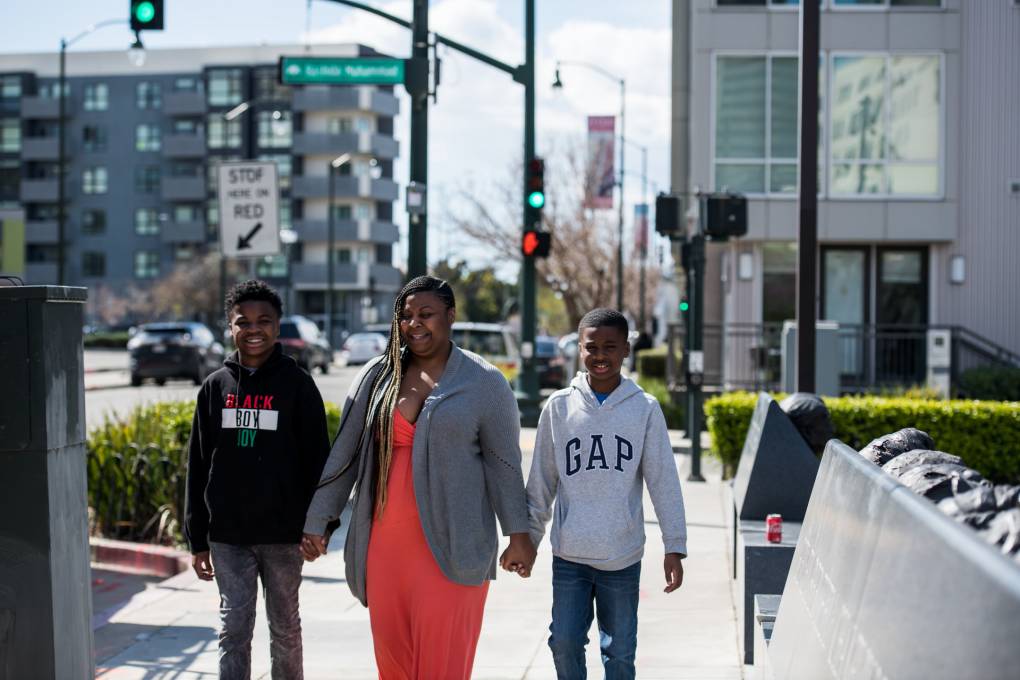
"caption": "Carolyn Bims-Payne and her two sons go for a walk to take a break from work and schoolwork while sheltering in place in 2020.",
"description": "Carolyn Bims-Payne and her two sons go for a walk to take a break from work and schoolwork while sheltering in place in Spring 2020.",
"title": "RS42343_006_KQED_Oakland_SingleParent_Carolyn_03262020-qut",
"credit": "Beth LaBerge/KQED",
"status": "inherit",
"altTag": "Carolyn Bims-Payne and her two sons go for a walk to take a break from work and schoolwork while sheltering in place.",
"isLoading": false,
"fetchFailed": false
},
"news_11812844": {
"type": "attachments",
"id": "news_11812844",
"meta": {
"index": "attachments_1716263798",
"site": "news",
"id": "11812844",
"found": true
},
"parent": 0,
"imgSizes": {
"apple_news_ca_landscape_5_5": {
"file": "https://ww2.kqed.org/app/uploads/sites/10/2020/04/munisf200416-1044x783.jpg",
"width": 1044,
"mimeType": "image/jpeg",
"height": 783
},
"apple_news_ca_square_4_0": {
"file": "https://ww2.kqed.org/app/uploads/sites/10/2020/04/munisf200416-470x470.jpg",
"width": 470,
"mimeType": "image/jpeg",
"height": 470
},
"twentyfourteen-full-width": {
"file": "https://ww2.kqed.org/app/uploads/sites/10/2020/04/munisf200416-1038x576.jpg",
"width": 1038,
"mimeType": "image/jpeg",
"height": 576
},
"thumbnail": {
"file": "https://ww2.kqed.org/app/uploads/sites/10/2020/04/munisf200416-160x100.jpg",
"width": 160,
"mimeType": "image/jpeg",
"height": 100
},
"post-thumbnail": {
"file": "https://ww2.kqed.org/app/uploads/sites/10/2020/04/munisf200416-672x372.jpg",
"width": 672,
"mimeType": "image/jpeg",
"height": 372
},
"kqedFullSize": {
"file": "https://ww2.kqed.org/app/uploads/sites/10/2020/04/munisf200416.jpg",
"width": 1920,
"height": 1197
},
"apple_news_ca_landscape_4_7": {
"file": "https://ww2.kqed.org/app/uploads/sites/10/2020/04/munisf200416-632x474.jpg",
"width": 632,
"mimeType": "image/jpeg",
"height": 474
},
"large": {
"file": "https://ww2.kqed.org/app/uploads/sites/10/2020/04/munisf200416-1020x636.jpg",
"width": 1020,
"mimeType": "image/jpeg",
"height": 636
},
"apple_news_ca_landscape_4_0": {
"file": "https://ww2.kqed.org/app/uploads/sites/10/2020/04/munisf200416-536x402.jpg",
"width": 536,
"mimeType": "image/jpeg",
"height": 402
},
"apple_news_ca_portrait_12_9": {
"file": "https://ww2.kqed.org/app/uploads/sites/10/2020/04/munisf200416-1122x1197.jpg",
"width": 1122,
"mimeType": "image/jpeg",
"height": 1197
},
"medium": {
"file": "https://ww2.kqed.org/app/uploads/sites/10/2020/04/munisf200416-800x499.jpg",
"width": 800,
"mimeType": "image/jpeg",
"height": 499
},
"apple_news_ca_portrait_4_0": {
"file": "https://ww2.kqed.org/app/uploads/sites/10/2020/04/munisf200416-354x472.jpg",
"width": 354,
"mimeType": "image/jpeg",
"height": 472
},
"apple_news_ca_portrait_9_7": {
"file": "https://ww2.kqed.org/app/uploads/sites/10/2020/04/munisf200416-840x1120.jpg",
"width": 840,
"mimeType": "image/jpeg",
"height": 1120
},
"apple_news_ca_landscape_12_9": {
"file": "https://ww2.kqed.org/app/uploads/sites/10/2020/04/munisf200416-1832x1197.jpg",
"width": 1832,
"mimeType": "image/jpeg",
"height": 1197
},
"apple_news_ca_square_9_7": {
"file": "https://ww2.kqed.org/app/uploads/sites/10/2020/04/munisf200416-1104x1104.jpg",
"width": 1104,
"mimeType": "image/jpeg",
"height": 1104
},
"apple_news_ca_portrait_4_7": {
"file": "https://ww2.kqed.org/app/uploads/sites/10/2020/04/munisf200416-414x552.jpg",
"width": 414,
"mimeType": "image/jpeg",
"height": 552
},
"apple_news_ca_square_12_9": {
"file": "https://ww2.kqed.org/app/uploads/sites/10/2020/04/munisf200416-1472x1197.jpg",
"width": 1472,
"mimeType": "image/jpeg",
"height": 1197
},
"apple_news_ca_portrait_5_5": {
"file": "https://ww2.kqed.org/app/uploads/sites/10/2020/04/munisf200416-687x916.jpg",
"width": 687,
"mimeType": "image/jpeg",
"height": 916
},
"full-width": {
"file": "https://ww2.kqed.org/app/uploads/sites/10/2020/04/munisf200416-1920x1197.jpg",
"width": 1920,
"mimeType": "image/jpeg",
"height": 1197
},
"apple_news_ca_square_4_7": {
"file": "https://ww2.kqed.org/app/uploads/sites/10/2020/04/munisf200416-550x550.jpg",
"width": 550,
"mimeType": "image/jpeg",
"height": 550
},
"apple_news_ca_landscape_9_7": {
"file": "https://ww2.kqed.org/app/uploads/sites/10/2020/04/munisf200416-1376x1032.jpg",
"width": 1376,
"mimeType": "image/jpeg",
"height": 1032
},
"apple_news_ca_square_5_5": {
"file": "https://ww2.kqed.org/app/uploads/sites/10/2020/04/munisf200416-912x912.jpg",
"width": 912,
"mimeType": "image/jpeg",
"height": 912
}
},
"publishDate": 1587145922,
"modified": 1587151490,
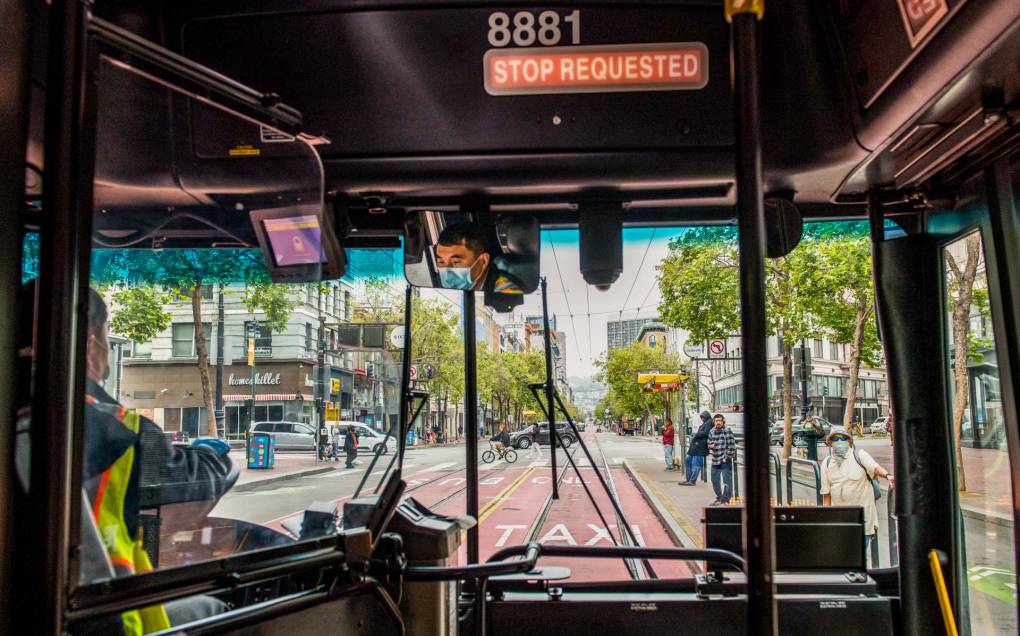
"caption": "A Muni bus picks up passengers at Sixth and Market streets in San Francisco on April 16, 2020.",
"description": "A Muni bus picks up passengers at Sixth and Market streets in San Francisco on April 16, 2020.",
"title": "San Francisco-Muni-Market Street",
"credit": "Beth LaBerge/KQED",
"status": "inherit",
"isLoading": false,
"fetchFailed": false
}
},
"audioPlayerReducer": {
"postId": "stream_live",
"isPaused": true,
"isPlaying": false,
"pfsActive": false,
"pledgeModalIsOpen": true,
"playerDrawerIsOpen": false,
"liveAudioPlayStartedAt": 0,
"liveAudioPlayContext": ""
},
"authorsReducer": {
"byline_news_11813027": {
"type": "authors",
"id": "byline_news_11813027",
"meta": {
"override": true
},
"slug": "byline_news_11813027",
"name": "Adam Beam and Jocelyn Gecker",
"isLoading": false
},
"danbrekke": {
"type": "authors",
"id": "222",
"meta": {
"index": "authors_1716337520",
"id": "222",
"found": true
},
"name": "Dan Brekke",
"firstName": "Dan",
"lastName": "Brekke",
"slug": "danbrekke",
"email": "dbrekke@kqed.org",
"display_author_email": true,
"staff_mastheads": [
"news",
"science"
],
"title": "KQED Editor and Reporter",
"bio": "Dan Brekke is a reporter and editor for KQED News, responsible for coverage of topics ranging from California water issues to the Bay Area's transportation challenges. In a newsroom career that began in Chicago in 1972, Dan has worked for \u003cem>The San Francisco Examiner,\u003c/em> Wired and TechTV and has been published in The New York Times, The New York Times Magazine, Business 2.0, Salon and elsewhere.\r\n\r\nSince joining KQED in 2007, Dan has reported, edited and produced both radio and online features and breaking news pieces. He has shared as both editor and reporter in four Society of Professional Journalists Norcal Excellence in Journalism awards and one Edward R. Murrow regional award. He was chosen for a spring 2017 residency at the Mesa Refuge to advance his research on California salmon.\r\n\r\nEmail Dan at: \u003ca href=\"mailto:dbrekke@kqed.org\">dbrekke@kqed.org\u003c/a>\r\n\r\n\u003cstrong>Twitter:\u003c/strong> \u003ca href=\"https://twitter.com/danbrekke\" rel=\"noopener noreferrer\">twitter.com/danbrekke\u003c/a>\r\n\u003cstrong>Facebook:\u003c/strong> \u003ca href=\"https://www.facebook.com/danbrekke\" rel=\"noopener noreferrer\">www.facebook.com/danbrekke\u003c/a>\r\n\u003cstrong>LinkedIn:\u003c/strong> \u003ca href=\"https://www.linkedin.com/in/danbrekke\" rel=\"noopener noreferrer\">www.linkedin.com/in/danbrekke\u003c/a>",
"avatar": "https://secure.gravatar.com/avatar/8f1f0d2a978fb3b23426c922c7e2af558fa36905b49c4ce76a97dc3c72d27226?s=600&d=mm&r=g",
"twitter": "danbrekke",
"bluesky": null,
"facebook": null,
"instagram": "https://www.instagram.com/dan.brekke/",
"linkedin": "https://www.linkedin.com/in/danbrekke/",
"sites": [
{
"site": "news",
"roles": [
"administrator",
"create_posts"
]
},
{
"site": "stateofhealth",
"roles": [
"editor"
]
},
{
"site": "science",
"roles": [
"editor"
]
},
{
"site": "quest",
"roles": [
"contributor"
]
},
{
"site": "food",
"roles": [
"contributor"
]
},
{
"site": "forum",
"roles": [
"contributor"
]
},
{
"site": "elections",
"roles": [
"editor"
]
},
{
"site": "liveblog",
"roles": [
"editor"
]
}
],
"headData": {
"title": "Dan Brekke | KQED",
"description": "KQED Editor and Reporter",
"ogImgSrc": "https://secure.gravatar.com/avatar/8f1f0d2a978fb3b23426c922c7e2af558fa36905b49c4ce76a97dc3c72d27226?s=600&d=mm&r=g",
"twImgSrc": "https://secure.gravatar.com/avatar/8f1f0d2a978fb3b23426c922c7e2af558fa36905b49c4ce76a97dc3c72d27226?s=600&d=mm&r=g"
},
"isLoading": false,
"link": "/author/danbrekke"
},
"jmcevoy": {
"type": "authors",
"id": "231",
"meta": {
"index": "authors_1716337520",
"id": "231",
"found": true
},
"name": "Julia McEvoy",
"firstName": "Julia",
"lastName": "McEvoy",
"slug": "jmcevoy",
"email": "jmcevoy@KQED.org",
"display_author_email": true,
"staff_mastheads": [
"news"
],
"title": "KQED Senior Editor",
"bio": "Julia McEvoy is KQED's Senior Editor, Education Equity.\r\n\r\nJulia heads KQED’s education coverage examining inequities students face in Bay Area and California schools, and reports on what it will take to educate the next generation.\r\n\r\nJulia's editorial work has received a Peabody Award, a Casey Medal for Coverage of Children and Families, several Edward R. Murrow awards, as well as awards from the Public Radio News Directors Inc. and the Society for Professional Journalists.",
"avatar": "https://secure.gravatar.com/avatar/aec3ce21abe02b302fd33638abd56a22?s=600&d=blank&r=g",
"twitter": "juliamcevoy1",
"facebook": null,
"instagram": null,
"linkedin": null,
"sites": [
{
"site": "news",
"roles": []
},
{
"site": "stateofhealth",
"roles": [
"author"
]
}
],
"headData": {
"title": "Julia McEvoy | KQED",
"description": "KQED Senior Editor",
"ogImgSrc": "https://secure.gravatar.com/avatar/aec3ce21abe02b302fd33638abd56a22?s=600&d=blank&r=g",
"twImgSrc": "https://secure.gravatar.com/avatar/aec3ce21abe02b302fd33638abd56a22?s=600&d=blank&r=g"
},
"isLoading": false,
"link": "/author/jmcevoy"
},
"sasha-khokha": {
"type": "authors",
"id": "254",
"meta": {
"index": "authors_1716337520",
"id": "254",
"found": true
},
"name": "Sasha Khokha",
"firstName": "Sasha",
"lastName": "Khokha",
"slug": "sasha-khokha",
"email": "skhokha@kqed.org",
"display_author_email": true,
"staff_mastheads": [
"news"
],
"title": "Host, The California Report Magazine",
"bio": "Sasha Khokha is the host of \u003cem>The California Report's \u003c/em> weekly magazine program, which takes listeners on sound-rich excursions to meet the people that make the Golden State unique -- through audio documentaries and long-form stories. As \u003cem>The California Report's\u003c/em> Central Valley Bureau Chief based in Fresno for nearly a dozen years, Sasha brought the lives and concerns of rural Californians to listeners around the state. Her reporting helped expose the hidden price immigrant women janitors and farmworkers may pay to keep their jobs: sexual assault at work. It inspired two new California laws to protect them from sexual harassment. She was a key member of the reporting team for the Frontline film \u003cem>Rape on the Night Shift, \u003c/em>which was nominated for two national Emmys. Sasha has also won a national Edward R. Murrow and a national PRNDI award for investigative reporting, as well as multiple prizes from the Society for Professional Journalists. Sasha is a proud alum of the UC Berkeley Graduate School of Journalism and Brown University and a member of the South Asian Journalists Association.",
"avatar": "https://secure.gravatar.com/avatar/e4b5e1541aaeea2aa356aa1fb2a68950?s=600&d=blank&r=g",
"twitter": "KQEDSashaKhokha",
"facebook": null,
"instagram": null,
"linkedin": null,
"sites": [
{
"site": "news",
"roles": [
"editor"
]
},
{
"site": "stateofhealth",
"roles": [
"author"
]
},
{
"site": "science",
"roles": [
"author"
]
},
{
"site": "quest",
"roles": [
"subscriber"
]
}
],
"headData": {
"title": "Sasha Khokha | KQED",
"description": "Host, The California Report Magazine",
"ogImgSrc": "https://secure.gravatar.com/avatar/e4b5e1541aaeea2aa356aa1fb2a68950?s=600&d=blank&r=g",
"twImgSrc": "https://secure.gravatar.com/avatar/e4b5e1541aaeea2aa356aa1fb2a68950?s=600&d=blank&r=g"
},
"isLoading": false,
"link": "/author/sasha-khokha"
},
"matthewgreen": {
"type": "authors",
"id": "1263",
"meta": {
"index": "authors_1716337520",
"id": "1263",
"found": true
},
"name": "Matthew Green",
"firstName": "Matthew",
"lastName": "Green",
"slug": "matthewgreen",
"email": "mgreen@kqed.org",
"display_author_email": false,
"staff_mastheads": [],
"title": "KQED Editor/Reporter",
"bio": "Matthew Green is a digital media producer for KQED News. He previously produced \u003ca href=\"http://www.kqed.org/lowdown\">The Lowdown\u003c/a>, KQED’s multimedia news education blog. Matthew's written for numerous Bay Area publications, including the Oakland Tribune and San Francisco Chronicle. He also taught journalism classes at Fremont High School in East Oakland.\r\n\r\nEmail: mgreen@kqed.org; Twitter: @MGreenKQED",
"avatar": "https://secure.gravatar.com/avatar/3bf498d1267ca02c8494f33d8cfc575e?s=600&d=blank&r=g",
"twitter": "MGreenKQED",
"facebook": null,
"instagram": null,
"linkedin": null,
"sites": [
{
"site": "news",
"roles": []
},
{
"site": "lowdown",
"roles": []
},
{
"site": "science",
"roles": []
},
{
"site": "education",
"roles": []
},
{
"site": "quest",
"roles": []
},
{
"site": "liveblog",
"roles": []
}
],
"headData": {
"title": "Matthew Green | KQED",
"description": "KQED Editor/Reporter",
"ogImgSrc": "https://secure.gravatar.com/avatar/3bf498d1267ca02c8494f33d8cfc575e?s=600&d=blank&r=g",
"twImgSrc": "https://secure.gravatar.com/avatar/3bf498d1267ca02c8494f33d8cfc575e?s=600&d=blank&r=g"
},
"isLoading": false,
"link": "/author/matthewgreen"
},
"adembosky": {
"type": "authors",
"id": "3205",
"meta": {
"index": "authors_1716337520",
"id": "3205",
"found": true
},
"name": "April Dembosky",
"firstName": "April",
"lastName": "Dembosky",
"slug": "adembosky",
"email": "adembosky@kqed.org",
"display_author_email": false,
"staff_mastheads": [
"news",
"science"
],
"title": "KQED Health Correspondent",
"bio": "April Dembosky is the health correspondent for KQED News and a regular contributor to NPR. She specializes in covering altered states of mind, from postpartum depression to methamphetamine-induced psychosis to the insanity defense. Her investigative series on insurance companies sidestepping mental health laws won multiple awards, including first place in beat reporting from the national Association of Health Care Journalists. She is the recipient of numerous other prizes and fellowships, including a national Edward R. Murrow award for investigative reporting, a Society of Professional Journalists award for long-form storytelling, and a Carter Center Fellowship for Mental Health Journalism.\r\n\r\nDembosky reported and produced \u003cem>Soundtrack of Silence\u003c/em>, an audio documentary about music and memory that is currently being made into a feature film by Paramount Pictures.\r\n\r\nBefore joining KQED in 2013, Dembosky covered technology and Silicon Valley for \u003cem>The Financial Times of London,\u003c/em> and contributed business and arts stories to \u003cem>Marketplace \u003c/em>and \u003cem>The New York Times.\u003c/em> She got her undergraduate degree in philosophy from Smith College and her master's in journalism from the University of California, Berkeley. She is a classically trained violinist and proud alum of the first symphony orchestra at Burning Man.",
"avatar": "https://secure.gravatar.com/avatar/ef92999be4ceb9ea60701e7dc276f813?s=600&d=blank&r=g",
"twitter": "adembosky",
"facebook": null,
"instagram": null,
"linkedin": null,
"sites": [
{
"site": "arts",
"roles": [
"author"
]
},
{
"site": "news",
"roles": [
"editor"
]
},
{
"site": "futureofyou",
"roles": [
"author"
]
},
{
"site": "stateofhealth",
"roles": [
"editor"
]
},
{
"site": "science",
"roles": [
"editor"
]
},
{
"site": "forum",
"roles": [
"editor"
]
}
],
"headData": {
"title": "April Dembosky | KQED",
"description": "KQED Health Correspondent",
"ogImgSrc": "https://secure.gravatar.com/avatar/ef92999be4ceb9ea60701e7dc276f813?s=600&d=blank&r=g",
"twImgSrc": "https://secure.gravatar.com/avatar/ef92999be4ceb9ea60701e7dc276f813?s=600&d=blank&r=g"
},
"isLoading": false,
"link": "/author/adembosky"
},
"markfiore": {
"type": "authors",
"id": "3236",
"meta": {
"index": "authors_1716337520",
"id": "3236",
"found": true
},
"name": "Mark Fiore",
"firstName": "Mark",
"lastName": "Fiore",
"slug": "markfiore",
"email": "mark@markfiore.com",
"display_author_email": false,
"staff_mastheads": [
"news"
],
"title": "KQED News Cartoonist",
"bio": "\u003ca href=\"http://www.MarkFiore.com\">MarkFiore.com\u003c/a> | \u003ca href=\"https://twitter.com/markfiore\">Follow on Twitter\u003c/a> | \u003ca href=\"https://www.facebook.com/pages/Mark-Fiore-Animated-Political-Cartoons/94451707396?ref=bookmarks\">Facebook\u003c/a> | \u003ca href=\"mailto:mark@markfiore.com\">email\u003c/a>\r\n\r\nPulitzer Prize-winner, Mark Fiore, who the Wall Street Journal has called “the undisputed guru of the form,” creates animated political cartoons in San Francisco, where his work has been featured regularly on the San Francisco Chronicle’s web site, SFGate.com. His work has appeared on Newsweek.com, Slate.com, CBSNews.com, MotherJones.com, DailyKos.com and NPR’s web site. Fiore’s political animation has appeared on CNN, Frontline, Bill Moyers Journal, Salon.com and cable and broadcast outlets across the globe.\r\n\r\nBeginning his professional life by drawing traditional political cartoons for newspapers, Fiore’s work appeared in publications ranging from the Washington Post to the Los Angeles Times. In the late 1990s, he began to experiment with animating political cartoons and, after a short stint at the San Jose Mercury News as their staff cartoonist, Fiore devoted all his energies to animation.\r\nGrowing up in California, Fiore also spent a good portion of his life in the backwoods of Idaho. It was this combination that shaped him politically. Mark majored in political science at Colorado College, where, in a perfect send-off for a cartoonist, he received his diploma in 1991 as commencement speaker Dick Cheney smiled approvingly.\r\nMark Fiore was awarded the Pulitzer Prize for political cartooning in 2010, a Robert F. Kennedy Journalism Award in 2004 and has twice received an Online Journalism Award for commentary from the Online News Association (2002, 2008). Fiore has received two awards for his work in new media from the National Cartoonists Society (2001, 2002), and in 2006 received The James Madison Freedom of Information Award from The Society of Professional Journalists.",
"avatar": "https://secure.gravatar.com/avatar/fc4e2a612b15b67bad0c6f0e1db4ca9b?s=600&d=blank&r=g",
"twitter": "MarkFiore",
"facebook": null,
"instagram": "https://www.instagram.com/markfiore/?hl=en",
"linkedin": null,
"sites": [
{
"site": "arts",
"roles": [
"contributor"
]
},
{
"site": "news",
"roles": [
"editor"
]
},
{
"site": "futureofyou",
"roles": [
"editor"
]
},
{
"site": "science",
"roles": [
"editor"
]
}
],
"headData": {
"title": "Mark Fiore | KQED",
"description": "KQED News Cartoonist",
"ogImgSrc": "https://secure.gravatar.com/avatar/fc4e2a612b15b67bad0c6f0e1db4ca9b?s=600&d=blank&r=g",
"twImgSrc": "https://secure.gravatar.com/avatar/fc4e2a612b15b67bad0c6f0e1db4ca9b?s=600&d=blank&r=g"
},
"isLoading": false,
"link": "/author/markfiore"
},
"lklivans": {
"type": "authors",
"id": "8648",
"meta": {
"index": "authors_1716337520",
"id": "8648",
"found": true
},
"name": "Laura Klivans",
"firstName": "Laura",
"lastName": "Klivans",
"slug": "lklivans",
"email": "lklivans@kqed.org",
"display_author_email": true,
"staff_mastheads": [
"news",
"science"
],
"title": "Reporter",
"bio": "Laura Klivans is an award-winning science reporter for KQED News, where she covers climate change with an eye on both groundbreaking progress and gaps in action. She is the former host of KQED's blockbuster video series about tiny, amazing animals, \u003cem>Deep Look\u003c/em>. Her work reaches national audiences through NPR, \u003cem>Here & Now, \u003c/em>PRI, and other major outlets. \r\n\r\nLaura’s won five Northern California Area Emmy Awards for Deep Look and First Place in the Greater Bay Area Journalism Awards for a podcast exploring how one Oakland neighborhood teamed up to reduce planet-heating pollution.\r\n\r\nBeyond her reporting, she hosts and moderates events. In the past, she taught audio storytelling at the UC Berkeley Graduate School of Journalism, led international education programs, worked with immigrants and refugees along the Thai-Burmese border, taught high schoolers sex ed, and was an actress. \r\n\r\nShe's a former UC Berkeley Human Rights Fellow, USC Center for Health Journalism's California Fellow and Coro Fellow in Public Affairs. Laura has a master’s in journalism from UC Berkeley, a master’s in education from Harvard, and an undergraduate degree from Northwestern University.\r\n\r\nShe loves trying to riddle the meaning out of vanity license plates.",
"avatar": "https://secure.gravatar.com/avatar/2d2ecd1550a494cc10ad4a503406965585902124739e775a9b3817eebf1d88be?s=600&d=blank&r=g",
"twitter": "lauraklivans",
"bluesky": null,
"facebook": null,
"instagram": null,
"linkedin": null,
"sites": [
{
"site": "news",
"roles": [
"editor"
]
},
{
"site": "stateofhealth",
"roles": [
"contributor",
"editor"
]
},
{
"site": "science",
"roles": [
"editor"
]
},
{
"site": "forum",
"roles": [
"editor"
]
}
],
"headData": {
"title": "Laura Klivans | KQED",
"description": "Reporter",
"ogImgSrc": "https://secure.gravatar.com/avatar/2d2ecd1550a494cc10ad4a503406965585902124739e775a9b3817eebf1d88be?s=600&d=blank&r=g",
"twImgSrc": "https://secure.gravatar.com/avatar/2d2ecd1550a494cc10ad4a503406965585902124739e775a9b3817eebf1d88be?s=600&d=blank&r=g"
},
"isLoading": false,
"link": "/author/lklivans"
},
"aehsanipour": {
"type": "authors",
"id": "11580",
"meta": {
"index": "authors_1716337520",
"id": "11580",
"found": true
},
"name": "Asal Ehsanipour",
"firstName": "Asal",
"lastName": "Ehsanipour",
"slug": "aehsanipour",
"email": "aehsanipour@kqed.org",
"display_author_email": false,
"staff_mastheads": [],
"title": "Reporter and Producer",
"bio": "Asal Ehsanipour is a producer and reporter for Rightnowish, Bay Curious and The California Report Magazine. She is also a producer for \u003ca href=\"https://www.thedoubleshift.com/\">The Double Shift\u003c/a>, a podcast about a new generation of working mothers. In 2018, Asal was named an Emerging Journalist Fellow by the Journalism and Women’s Symposium. Her work has appeared on KQED, KALW, PRI’s The World, and in several food and travel publications.",
"avatar": "https://secure.gravatar.com/avatar/c0e210438f5dca1b76921ff9f0eada52?s=600&d=blank&r=g",
"twitter": null,
"facebook": null,
"instagram": null,
"linkedin": null,
"sites": [
{
"site": "arts",
"roles": []
},
{
"site": "news",
"roles": [
"author",
"edit_others_posts"
]
}
],
"headData": {
"title": "Asal Ehsanipour | KQED",
"description": "Reporter and Producer",
"ogImgSrc": "https://secure.gravatar.com/avatar/c0e210438f5dca1b76921ff9f0eada52?s=600&d=blank&r=g",
"twImgSrc": "https://secure.gravatar.com/avatar/c0e210438f5dca1b76921ff9f0eada52?s=600&d=blank&r=g"
},
"isLoading": false,
"link": "/author/aehsanipour"
},
"lsarah": {
"type": "authors",
"id": "11626",
"meta": {
"index": "authors_1716337520",
"id": "11626",
"found": true
},
"name": "Lakshmi Sarah",
"firstName": "Lakshmi",
"lastName": "Sarah",
"slug": "lsarah",
"email": "lsarah@kqed.org",
"display_author_email": false,
"staff_mastheads": [],
"title": "Digital Producer",
"bio": "Lakshmi Sarah is an educator, author and journalist with a focus on innovative storytelling. She has worked with newspapers, radio and magazines from Ahmedabad, India to Los Angeles, California. She has written and produced for Die Zeit, Global Voices, AJ+, KQED, Fusion Media Group and the New York Times.",
"avatar": "https://secure.gravatar.com/avatar/652dcaecd8b28826fc17a8b2d6bb4e93?s=600&d=blank&r=g",
"twitter": "lakitalki",
"facebook": null,
"instagram": "https://www.instagram.com/laki.talki/",
"linkedin": "https://www.linkedin.com/in/lakisarah/",
"sites": [
{
"site": "arts",
"roles": []
},
{
"site": "news",
"roles": []
},
{
"site": "bayareabites",
"roles": []
},
{
"site": "science",
"roles": []
}
],
"headData": {
"title": "Lakshmi Sarah | KQED",
"description": "Digital Producer",
"ogImgSrc": "https://secure.gravatar.com/avatar/652dcaecd8b28826fc17a8b2d6bb4e93?s=600&d=blank&r=g",
"twImgSrc": "https://secure.gravatar.com/avatar/652dcaecd8b28826fc17a8b2d6bb4e93?s=600&d=blank&r=g"
},
"isLoading": false,
"link": "/author/lsarah"
},
"ggreschler": {
"type": "authors",
"id": "11647",
"meta": {
"index": "authors_1716337520",
"id": "11647",
"found": true
},
"name": "Gabe Greschler",
"firstName": "Gabe",
"lastName": "Greschler",
"slug": "ggreschler",
"email": "ggreschler@KQED.org",
"display_author_email": false,
"staff_mastheads": [],
"title": "KQED Contributor",
"bio": null,
"avatar": "https://secure.gravatar.com/avatar/8bd5de335b7e37aabeaf326c05538f44?s=600&d=blank&r=g",
"twitter": null,
"facebook": null,
"instagram": null,
"linkedin": null,
"sites": [
{
"site": "news",
"roles": [
"author"
]
},
{
"site": "science",
"roles": [
"editor"
]
}
],
"headData": {
"title": "Gabe Greschler | KQED",
"description": "KQED Contributor",
"ogImgSrc": "https://secure.gravatar.com/avatar/8bd5de335b7e37aabeaf326c05538f44?s=600&d=blank&r=g",
"twImgSrc": "https://secure.gravatar.com/avatar/8bd5de335b7e37aabeaf326c05538f44?s=600&d=blank&r=g"
},
"isLoading": false,
"link": "/author/ggreschler"
},
"blaberge": {
"type": "authors",
"id": "11667",
"meta": {
"index": "authors_1716337520",
"id": "11667",
"found": true
},
"name": "Beth LaBerge",
"firstName": "Beth",
"lastName": "LaBerge",
"slug": "blaberge",
"email": "blaberge@KQED.org",
"display_author_email": true,
"staff_mastheads": [
"news"
],
"title": "Photographer, News",
"bio": "Beth LaBerge is a visual journalist for \u003ca href=\"https://www.kqed.org/news\">KQED News\u003c/a>.",
"avatar": "https://secure.gravatar.com/avatar/ce49ecd7a1306685637b45a1f6f5dedfc4ae9481966eb596fea5160466dd6319?s=600&d=blank&r=g",
"twitter": null,
"bluesky": null,
"facebook": null,
"instagram": "https://www.instagram.com/bethlaberge/",
"linkedin": null,
"sites": [
{
"site": "arts",
"roles": [
"editor",
"manage_categories"
]
},
{
"site": "news",
"roles": [
"editor",
"edit_plugins",
"manage_categories"
]
},
{
"site": "science",
"roles": [
"editor",
"contributor",
"author",
"manage_categories"
]
},
{
"site": "perspectives",
"roles": [
"editor"
]
},
{
"site": "liveblog",
"roles": [
"editor"
]
}
],
"headData": {
"title": "Beth LaBerge | KQED",
"description": "Photographer, News",
"ogImgSrc": "https://secure.gravatar.com/avatar/ce49ecd7a1306685637b45a1f6f5dedfc4ae9481966eb596fea5160466dd6319?s=600&d=blank&r=g",
"twImgSrc": "https://secure.gravatar.com/avatar/ce49ecd7a1306685637b45a1f6f5dedfc4ae9481966eb596fea5160466dd6319?s=600&d=blank&r=g"
},
"isLoading": false,
"link": "/author/blaberge"
}
},
"pagesReducer": {
"news_tag_covid-19": {
"type": "terms",
"id": "news_27504",
"meta": {
"index": "terms_1716263798",
"site": "news",
"id": "27504",
"score": 8.558313
},
"featImg": null,
"name": "covid-19",
"description": null,
"taxonomy": "tag",
"headData": {
"twImgId": null,
"twTitle": null,
"ogTitle": null,
"ogImgId": null,
"twDescription": null,
"description": null,
"title": "covid-19 Archives | KQED News",
"ogDescription": null
},
"ttid": 27521,
"slug": "covid-19",
"isLoading": false,
"title": "covid-19",
"pageMeta": {
"site": "news",
"WpPageTemplate": "page-topic-editorial",
"currentPage": 72
},
"blocks": [
{
"blockName": "kqed/post-list",
"attrs": {
"layout": "cardArticle2",
"query": "posts/news?tag=covid-19",
"seeMore": false,
"paginated": true,
"page": 72
}
},
{
"blockName": "kqed/ad"
}
]
}
},
"pfsSessionReducer": {},
"postsReducer": {
"stream_live": {
"type": "live",
"id": "stream_live",
"audioUrl": "https://streams.kqed.org/kqedradio",
"title": "Live Stream",
"excerpt": "Live Stream information currently unavailable.",
"link": "/radio",
"featImg": "",
"label": {
"name": "KQED Live",
"link": "/"
}
},
"stream_kqedNewscast": {
"type": "posts",
"id": "stream_kqedNewscast",
"audioUrl": "https://www.kqed.org/.stream/anon/radio/RDnews/newscast.mp3?_=1",
"title": "KQED Newscast",
"featImg": "",
"label": {
"name": "88.5 FM",
"link": "/"
}
},
"news_11813091": {
"type": "posts",
"id": "news_11813091",
"meta": {
"index": "posts_1716263798",
"site": "news",
"id": "11813091",
"score": null,
"sort": [
1587346351000
]
},
"guestAuthors": [],
"slug": "hand-sanitizer-for-the-people-the-allyship-of-an-actor-and-phd-student",
"title": "Hand Sanitizer for the People: The Allyship of an Actor and PhD Student",
"publishDate": 1587346351,
"format": "standard",
"headTitle": "Hand Sanitizer for the People: The Allyship of an Actor and PhD Student | KQED",
"labelTerm": {},
"content": "\u003cp>Jamal Trulove and Elina Kostyanovskaya were both working in different ways to serve marginalized communities in the Bay Area before the coronavirus hit.\u003c/p>\n\u003cp>Trulove, an actor, activist and San Francisco resident notable for his role in “The Last Black Man in San Francisco,” is focused on the criminal justice system: He spent over six years in prison before being acquitted in a 2015 retrial. (\u003ca href=\"https://www.npr.org/2019/03/20/705019611/san-francisco-to-pay-13-1-million-to-man-framed-by-police-for-murder\" target=\"_blank\" rel=\"noopener noreferrer\">He received a $13.1 million settlement for being framed by police for murder\u003c/a>.)\u003c/p>\n\u003cp>Kostyanovskaya, a Ph.D. candidate in developmental and stem cell biology at UCSF, has worked as an organizer on issues of housing and justice.\u003c/p>\n\u003cp>The dire need for supplies like masks and hand sanitizer has now forged an alliance between the two. They, along with a group of volunteers, have been producing and distributing hand sanitizer to incarcerated people and low-income neighborhoods in the Bay Area since mid-March, working to get crucial supplies to those who need them the most.\u003c/p>\n\u003cp>Trulove said at the beginning of the crisis he looked for hand sanitizer and face masks in many local stores without any success. For many low-income people, he said, there’s a lot more to worry about with the coronavirus.\u003c/p>\n\u003cp>[ad fullwidth]\u003c/p>\n\u003cp>“People are worried about food, people are worried about rent … And a lot of these families, they’re living five to six people in a two bedroom, it’s tough,” Trulove said. “If there’s not attention being shown in our communities,” in regards to prevention and testing, “we won’t find out the cases, we’ll only find out about the deaths.”\u003c/p>\n\u003cp>Trulove noted that the \u003ca href=\"https://apnews.com/c45118f1f0e98e35a3d89742c751a7f2\" target=\"_blank\" rel=\"noopener noreferrer\">African American\u003c/a>, \u003ca href=\"https://www.npr.org/2020/04/08/829726964/new-york-citys-latinx-residents-hit-hardest-by-coronavirus-deaths\" target=\"_blank\" rel=\"noopener noreferrer\">Latinx\u003c/a> and \u003ca href=\"http://www.pbs.org/wnet/amanpour-and-company/video/pandemics-toll-native-american-community-utdemt/\" target=\"_blank\" rel=\"noopener noreferrer\">Native American\u003c/a> communities have been hit the hardest.\u003c/p>\n\u003cp>Kostyanovskaya and Trulove were linked up through recently elected San Francisco District Attorney Chesa Boudin. Trulove said he reached out to Boudin to find out if the city had hand sanitizer or masks he could bring to underserved communities. Boudin then connected him to Kostyanovskaya, who had previously worked on the Boudin election campaign and was just beginning to make hand sanitizer as part of a project with the UCSF Science Policy Group.\u003c/p>\n\u003cfigure id=\"attachment_11813093\" class=\"wp-caption alignnone\" style=\"max-width: 800px\">\u003cimg loading=\"lazy\" decoding=\"async\" class=\"size-medium wp-image-11813093\" src=\"https://ww2.kqed.org/app/uploads/sites/10/2020/04/RS42830_008_KQED_SanFrancisco_HandSanitizer_04172020-qut-800x533.jpg\" alt=\"\" width=\"800\" height=\"533\" srcset=\"https://cdn.kqed.org/wp-content/uploads/sites/10/2020/04/RS42830_008_KQED_SanFrancisco_HandSanitizer_04172020-qut-800x533.jpg 800w, https://cdn.kqed.org/wp-content/uploads/sites/10/2020/04/RS42830_008_KQED_SanFrancisco_HandSanitizer_04172020-qut-160x107.jpg 160w, https://cdn.kqed.org/wp-content/uploads/sites/10/2020/04/RS42830_008_KQED_SanFrancisco_HandSanitizer_04172020-qut-1020x680.jpg 1020w, https://cdn.kqed.org/wp-content/uploads/sites/10/2020/04/RS42830_008_KQED_SanFrancisco_HandSanitizer_04172020-qut.jpg 1920w\" sizes=\"(max-width: 800px) 100vw, 800px\">\u003cfigcaption class=\"wp-caption-text\">UCSF Ph.D. student Elina Kostyanovskaya and actor and social activist Jamal Trulove give out hand sanitizer and face masks on Fillmore Street on April 17, 2020. \u003ccite>(Beth LaBerge/KQED)\u003c/cite>\u003c/figcaption>\u003c/figure>\n\u003cp>Kostyanovskaya said that her project initially began in collaboration with the San Francisco Democratic Socialists of America (DSA) chapter. The DSA had heard from incarcerated people in the Bay Area that there was little, if any, information sharing about what the coronavirus is, or how to prevent people from getting sick.\u003c/p>\n\u003cp>So, she took action.\u003c/p>\n\u003cp>“This is one thing I know how to do. I can make hand sanitizer, I can make it in a lab,” Kostyanovskaya said. After some initial funding from the DSA and the California Wellness Foundation, lab space from a fellow UCSF student and a materials order — they began.\u003c/p>\n\u003cp>“It took us about a week to get up and running,” Kostyanovskaya said. After mixing everything together in the lab, the group bottles, labels and distributes sanitizer, along with a pamphlet explaining a bit more about the virus, social distancing and hand washing.\u003c/p>\n\u003cp>Kostyanovskaya said they can make about a thousand bottles in a day.\u003c/p>\n\u003cp>“For San Quentin, we got stuff [materials] on Tuesday night and there were three of us, so we worked from Tuesday at 3:30 p.m. until the next morning, Wednesday at 4:15 a.m.,” she said. Santa Rita Jail did not accept a donation, \u003ca href=\"https://abc7news.com/health/live-coronavirus-updates-more-than-a-dozen-new-cases-reported-in-solano-county/6115103/\" target=\"_blank\" rel=\"noopener noreferrer\">despite 14 people reportedly infected with the virus\u003c/a>, but San Quentin and San Francisco County Jail have accepted the free hand sanitizer.\u003c/p>\n\u003cp>Thus far, the project has distributed over 250 gallons and 8,300 four-ounce bottles of sanitizer. The group has started a \u003ca href=\"https://www.gofundme.com/f/gqgve-hand-sanitizer-for-vulnerable-groups-amid-covid19?\" target=\"_blank\" rel=\"noopener noreferrer\">GoFundMe\u003c/a> page to continue their work, but Kostyanovskaya says they’ve also racked up some personal debt to keep the project up and running.\u003c/p>\n\u003cp>Though the focus is on hand sanitizer, the project is also providing masks. Trulove says he’s seen people begin to use masks and hand sanitizer more often.\u003c/p>\n\u003cp>“After passing out these masks, and hand sanitizer, you start seeing more people wearing the masks,” Trulove said. “And it’s almost teaching people’s minds.”\u003c/p>\n\u003cp>He likens it to the “new shoe effect,” when someone wears a new pair of Jordans.\u003c/p>\n\u003cp>“You see one person with the new Jordans, and you’re like, ‘Oh, them is tight as hell.’ Next thing you know, it’s like, ‘Man, I gotta get those. I don’t want to be without those.’ Don’t be without your face mask and your hand sanitizer, because it could save your life,” Trulove said.\u003c/p>\n\u003cfigure id=\"attachment_11813094\" class=\"wp-caption alignnone\" style=\"max-width: 800px\">\u003cimg loading=\"lazy\" decoding=\"async\" class=\"size-medium wp-image-11813094\" src=\"https://ww2.kqed.org/app/uploads/sites/10/2020/04/RS42832_012_KQED_SanFrancisco_HandSanitizer_04172020-qut-800x533.jpg\" alt=\"\" width=\"800\" height=\"533\" srcset=\"https://cdn.kqed.org/wp-content/uploads/sites/10/2020/04/RS42832_012_KQED_SanFrancisco_HandSanitizer_04172020-qut-800x533.jpg 800w, https://cdn.kqed.org/wp-content/uploads/sites/10/2020/04/RS42832_012_KQED_SanFrancisco_HandSanitizer_04172020-qut-160x107.jpg 160w, https://cdn.kqed.org/wp-content/uploads/sites/10/2020/04/RS42832_012_KQED_SanFrancisco_HandSanitizer_04172020-qut-1020x680.jpg 1020w, https://cdn.kqed.org/wp-content/uploads/sites/10/2020/04/RS42832_012_KQED_SanFrancisco_HandSanitizer_04172020-qut.jpg 1920w\" sizes=\"(max-width: 800px) 100vw, 800px\">\u003cfigcaption class=\"wp-caption-text\">Everett Butler holds a sign that says, ‘Free Hand Sanitizer & Masks,’ in the Fillmore on April 17, 2020. \u003ccite>(Beth LaBerge/KQED)\u003c/cite>\u003c/figcaption>\u003c/figure>\n\u003cp>Kostyanovskaya said they will be serving two large prisons next week. And while she thinks mutual aid projects are great, she also said these kinds of projects are “usually something that you have to do only when someone — and in this case, the government — fails to fulfill a critical role.”\u003c/p>\n\u003cp>\u003c/p>\n\u003cp>“I can’t just sit on it, and do nothing,” Kostyanovskaya said.\u003c/p>\n\n",
"blocks": [],
"excerpt": "Actor and activist Jamal Trulove and UCSF Ph.D. candidate Elina Kostyanovskaya are working to manufacture and distribute hand sanitizer for incarcerated people, as well as those in transitional housing, public housing and shelters.",
"status": "publish",
"parent": 0,
"modified": 1725922931,
"stats": {
"hasAudio": false,
"hasVideo": false,
"hasChartOrMap": false,
"iframeSrcs": [],
"hasGoogleForm": false,
"hasGallery": false,
"hasHearkenModule": false,
"hasPolis": false,
"paragraphCount": 23,
"wordCount": 919
},
"headData": {
"title": "Hand Sanitizer for the People: The Allyship of an Actor and PhD Student | KQED",
"description": "Actor and activist Jamal Trulove and UCSF Ph.D. candidate Elina Kostyanovskaya are working to manufacture and distribute hand sanitizer for incarcerated people, as well as those in transitional housing, public housing and shelters.",
"ogTitle": "",
"ogDescription": "",
"ogImgId": "",
"twTitle": "",
"twDescription": "",
"twImgId": "",
"schema": {
"@context": "https://schema.org",
"@type": "NewsArticle",
"headline": "Hand Sanitizer for the People: The Allyship of an Actor and PhD Student",
"datePublished": "2020-04-19T18:32:31-07:00",
"dateModified": "2024-09-09T16:02:11-07:00",
"image": "https://cdn.kqed.org/wp-content/uploads/2020/02/KQED-OG-Image@1x.png",
"isAccessibleForFree": "True",
"publisher": {
"@type": "NewsMediaOrganization",
"@id": "https://www.kqed.org/#organization",
"name": "KQED",
"logo": "https://cdn.kqed.org/wp-content/uploads/2020/02/KQED-OG-Image@1x.png",
"url": "https://www.kqed.org",
"sameAs": [
"https://www.facebook.com/KQED",
"https://twitter.com/KQED",
"https://www.instagram.com/kqed/",
"https://www.tiktok.com/@kqedofficial",
"https://www.linkedin.com/company/kqed",
"https://www.youtube.com/channel/UCeC0IOo7i1P_61zVUWbJ4nw"
]
}
}
},
"source": "Coronavirus",
"sourceUrl": "https://www.kqed.org/coronavirus",
"sticky": false,
"path": "/news/11813091/hand-sanitizer-for-the-people-the-allyship-of-an-actor-and-phd-student",
"audioTrackLength": null,
"parsedContent": [
{
"type": "contentString",
"content": "\u003cdiv class=\"post-body\">\u003cp>\u003cp>Jamal Trulove and Elina Kostyanovskaya were both working in different ways to serve marginalized communities in the Bay Area before the coronavirus hit.\u003c/p>\n\u003cp>Trulove, an actor, activist and San Francisco resident notable for his role in “The Last Black Man in San Francisco,” is focused on the criminal justice system: He spent over six years in prison before being acquitted in a 2015 retrial. (\u003ca href=\"https://www.npr.org/2019/03/20/705019611/san-francisco-to-pay-13-1-million-to-man-framed-by-police-for-murder\" target=\"_blank\" rel=\"noopener noreferrer\">He received a $13.1 million settlement for being framed by police for murder\u003c/a>.)\u003c/p>\n\u003cp>Kostyanovskaya, a Ph.D. candidate in developmental and stem cell biology at UCSF, has worked as an organizer on issues of housing and justice.\u003c/p>\n\u003cp>The dire need for supplies like masks and hand sanitizer has now forged an alliance between the two. They, along with a group of volunteers, have been producing and distributing hand sanitizer to incarcerated people and low-income neighborhoods in the Bay Area since mid-March, working to get crucial supplies to those who need them the most.\u003c/p>\n\u003cp>Trulove said at the beginning of the crisis he looked for hand sanitizer and face masks in many local stores without any success. For many low-income people, he said, there’s a lot more to worry about with the coronavirus.\u003c/p>\n\u003cp>\u003c/p>\u003c/div>",
"attributes": {
"named": {},
"numeric": []
}
},
{
"type": "component",
"content": "",
"name": "ad",
"attributes": {
"named": {
"label": "fullwidth"
},
"numeric": [
"fullwidth"
]
}
},
{
"type": "contentString",
"content": "\u003cdiv class=\"post-body\">\u003cp>\u003c/p>\n\u003cp>“People are worried about food, people are worried about rent … And a lot of these families, they’re living five to six people in a two bedroom, it’s tough,” Trulove said. “If there’s not attention being shown in our communities,” in regards to prevention and testing, “we won’t find out the cases, we’ll only find out about the deaths.”\u003c/p>\n\u003cp>Trulove noted that the \u003ca href=\"https://apnews.com/c45118f1f0e98e35a3d89742c751a7f2\" target=\"_blank\" rel=\"noopener noreferrer\">African American\u003c/a>, \u003ca href=\"https://www.npr.org/2020/04/08/829726964/new-york-citys-latinx-residents-hit-hardest-by-coronavirus-deaths\" target=\"_blank\" rel=\"noopener noreferrer\">Latinx\u003c/a> and \u003ca href=\"http://www.pbs.org/wnet/amanpour-and-company/video/pandemics-toll-native-american-community-utdemt/\" target=\"_blank\" rel=\"noopener noreferrer\">Native American\u003c/a> communities have been hit the hardest.\u003c/p>\n\u003cp>Kostyanovskaya and Trulove were linked up through recently elected San Francisco District Attorney Chesa Boudin. Trulove said he reached out to Boudin to find out if the city had hand sanitizer or masks he could bring to underserved communities. Boudin then connected him to Kostyanovskaya, who had previously worked on the Boudin election campaign and was just beginning to make hand sanitizer as part of a project with the UCSF Science Policy Group.\u003c/p>\n\u003cfigure id=\"attachment_11813093\" class=\"wp-caption alignnone\" style=\"max-width: 800px\">\u003cimg loading=\"lazy\" decoding=\"async\" class=\"size-medium wp-image-11813093\" src=\"https://ww2.kqed.org/app/uploads/sites/10/2020/04/RS42830_008_KQED_SanFrancisco_HandSanitizer_04172020-qut-800x533.jpg\" alt=\"\" width=\"800\" height=\"533\" srcset=\"https://cdn.kqed.org/wp-content/uploads/sites/10/2020/04/RS42830_008_KQED_SanFrancisco_HandSanitizer_04172020-qut-800x533.jpg 800w, https://cdn.kqed.org/wp-content/uploads/sites/10/2020/04/RS42830_008_KQED_SanFrancisco_HandSanitizer_04172020-qut-160x107.jpg 160w, https://cdn.kqed.org/wp-content/uploads/sites/10/2020/04/RS42830_008_KQED_SanFrancisco_HandSanitizer_04172020-qut-1020x680.jpg 1020w, https://cdn.kqed.org/wp-content/uploads/sites/10/2020/04/RS42830_008_KQED_SanFrancisco_HandSanitizer_04172020-qut.jpg 1920w\" sizes=\"(max-width: 800px) 100vw, 800px\">\u003cfigcaption class=\"wp-caption-text\">UCSF Ph.D. student Elina Kostyanovskaya and actor and social activist Jamal Trulove give out hand sanitizer and face masks on Fillmore Street on April 17, 2020. \u003ccite>(Beth LaBerge/KQED)\u003c/cite>\u003c/figcaption>\u003c/figure>\n\u003cp>Kostyanovskaya said that her project initially began in collaboration with the San Francisco Democratic Socialists of America (DSA) chapter. The DSA had heard from incarcerated people in the Bay Area that there was little, if any, information sharing about what the coronavirus is, or how to prevent people from getting sick.\u003c/p>\n\u003cp>So, she took action.\u003c/p>\n\u003cp>“This is one thing I know how to do. I can make hand sanitizer, I can make it in a lab,” Kostyanovskaya said. After some initial funding from the DSA and the California Wellness Foundation, lab space from a fellow UCSF student and a materials order — they began.\u003c/p>\n\u003cp>“It took us about a week to get up and running,” Kostyanovskaya said. After mixing everything together in the lab, the group bottles, labels and distributes sanitizer, along with a pamphlet explaining a bit more about the virus, social distancing and hand washing.\u003c/p>\n\u003cp>Kostyanovskaya said they can make about a thousand bottles in a day.\u003c/p>\n\u003cp>“For San Quentin, we got stuff [materials] on Tuesday night and there were three of us, so we worked from Tuesday at 3:30 p.m. until the next morning, Wednesday at 4:15 a.m.,” she said. Santa Rita Jail did not accept a donation, \u003ca href=\"https://abc7news.com/health/live-coronavirus-updates-more-than-a-dozen-new-cases-reported-in-solano-county/6115103/\" target=\"_blank\" rel=\"noopener noreferrer\">despite 14 people reportedly infected with the virus\u003c/a>, but San Quentin and San Francisco County Jail have accepted the free hand sanitizer.\u003c/p>\n\u003cp>Thus far, the project has distributed over 250 gallons and 8,300 four-ounce bottles of sanitizer. The group has started a \u003ca href=\"https://www.gofundme.com/f/gqgve-hand-sanitizer-for-vulnerable-groups-amid-covid19?\" target=\"_blank\" rel=\"noopener noreferrer\">GoFundMe\u003c/a> page to continue their work, but Kostyanovskaya says they’ve also racked up some personal debt to keep the project up and running.\u003c/p>\n\u003cp>Though the focus is on hand sanitizer, the project is also providing masks. Trulove says he’s seen people begin to use masks and hand sanitizer more often.\u003c/p>\n\u003cp>“After passing out these masks, and hand sanitizer, you start seeing more people wearing the masks,” Trulove said. “And it’s almost teaching people’s minds.”\u003c/p>\n\u003cp>He likens it to the “new shoe effect,” when someone wears a new pair of Jordans.\u003c/p>\n\u003cp>“You see one person with the new Jordans, and you’re like, ‘Oh, them is tight as hell.’ Next thing you know, it’s like, ‘Man, I gotta get those. I don’t want to be without those.’ Don’t be without your face mask and your hand sanitizer, because it could save your life,” Trulove said.\u003c/p>\n\u003cfigure id=\"attachment_11813094\" class=\"wp-caption alignnone\" style=\"max-width: 800px\">\u003cimg loading=\"lazy\" decoding=\"async\" class=\"size-medium wp-image-11813094\" src=\"https://ww2.kqed.org/app/uploads/sites/10/2020/04/RS42832_012_KQED_SanFrancisco_HandSanitizer_04172020-qut-800x533.jpg\" alt=\"\" width=\"800\" height=\"533\" srcset=\"https://cdn.kqed.org/wp-content/uploads/sites/10/2020/04/RS42832_012_KQED_SanFrancisco_HandSanitizer_04172020-qut-800x533.jpg 800w, https://cdn.kqed.org/wp-content/uploads/sites/10/2020/04/RS42832_012_KQED_SanFrancisco_HandSanitizer_04172020-qut-160x107.jpg 160w, https://cdn.kqed.org/wp-content/uploads/sites/10/2020/04/RS42832_012_KQED_SanFrancisco_HandSanitizer_04172020-qut-1020x680.jpg 1020w, https://cdn.kqed.org/wp-content/uploads/sites/10/2020/04/RS42832_012_KQED_SanFrancisco_HandSanitizer_04172020-qut.jpg 1920w\" sizes=\"(max-width: 800px) 100vw, 800px\">\u003cfigcaption class=\"wp-caption-text\">Everett Butler holds a sign that says, ‘Free Hand Sanitizer & Masks,’ in the Fillmore on April 17, 2020. \u003ccite>(Beth LaBerge/KQED)\u003c/cite>\u003c/figcaption>\u003c/figure>\n\u003cp>Kostyanovskaya said they will be serving two large prisons next week. And while she thinks mutual aid projects are great, she also said these kinds of projects are “usually something that you have to do only when someone — and in this case, the government — fails to fulfill a critical role.”\u003c/p>\n\u003cp>\u003c/p>\n\u003cp>“I can’t just sit on it, and do nothing,” Kostyanovskaya said.\u003c/p>\n\n\u003c/div>\u003c/p>",
"attributes": {
"named": {},
"numeric": []
}
}
],
"link": "/news/11813091/hand-sanitizer-for-the-people-the-allyship-of-an-actor-and-phd-student",
"authors": [
"11626"
],
"categories": [
"news_6266",
"news_8"
],
"tags": [
"news_27350",
"news_27504",
"news_27626",
"news_1775",
"news_2997",
"news_27851"
],
"featImg": "news_11813092",
"label": "source_news_11813091"
},
"news_11813062": {
"type": "posts",
"id": "news_11813062",
"meta": {
"index": "posts_1716263798",
"site": "news",
"id": "11813062",
"score": null,
"sort": [
1587337299000
]
},
"parent": 0,
"labelTerm": {
"site": "news"
},
"blocks": [],
"publishDate": 1587337299,
"format": "standard",
"disqusTitle": "Who Are the Californians Wanting to Open up the State?",
"title": "Who Are the Californians Wanting to Open up the State?",
"headTitle": "KQED News",
"content": "\u003cp>Things were looking up for Jenn Thomas. In September, she bought her first home in Citrus Heights, which is a part of Sacramento County. And for a while, her hair salon was getting lots of clients and making “pretty good money.”\u003c/p>\n\u003cp>Then, a month ago today, county officials ordered all non-essential businesses to close in response to the COVID-19 pandemic. This included Thomas’ business.\u003c/p>\n\u003cp>As a single mother with two young children, Thomas says that not being able to cut hair has put her in a tough financial position. Cash is running out to make her mortgage payments and she can’t afford to put her children into day care to then look for work.\u003c/p>\n\u003cp>“I don’t want to lose my house,” Thomas, 40, said. “It scares me to death. My livelihood is in dire straits. When is this going to end?”\u003c/p>\n\u003cp>Thomas joins a growing segment of Californians who are frustrated, anxious and confused with the state’s current shelter-in-place order. Some want to know just how much longer they won’t be able to work. Others question the seriousness of the COVID-19 virus.\u003c/p>\n\u003cp>[ad fullwidth]\u003c/p>\n\u003cp>In response to her growing fears, Thomas says she’ll be participating in a protest tomorrow at the state’s capitol, where hundreds are expected to show up — while promising to stay put in their cars — demanding that officials reopen the state’s businesses. Thomas also helps run a Facebook group called “Californians Against Excessive Quarantine,” which has over 5,000 members.\u003c/p>\n\u003cp>The Sacramento event coincides with a much larger debate occurring across the country. Last Wednesday, in Lansing, Michigan, thousands of protestors carrying Trump flags, and in some cases, firearms, rallied against the state’s Democratic governor, Gretchen Whitmer, whose most recent shelter-in-place order\u003ca href=\"https://www.nytimes.com/2020/04/18/us/politics/gretchen-whitmer-michigan-protests.html\" target=\"_blank\" rel=\"noopener noreferrer\">is one of the most restrictive in the country\u003c/a>.\u003c/p>\n\u003cp>At the same time, President Trump has provided tacit support for these protests in a series of tweets on Friday when the president posted “LIBERATE MINNESOTA,” as well as Michigan and Virginia.\u003c/p>\n\u003cfigure id=\"attachment_11813080\" class=\"wp-caption aligncenter\" style=\"max-width: 640px\">\u003cimg class=\"size-large wp-image-11813080\" src=\"https://ww2.kqed.org/app/uploads/sites/10/2020/04/GettyImages-1210050168-1020x680.jpg\" alt=\"\" width=\"640\" height=\"427\" srcset=\"https://ww2.kqed.org/app/uploads/sites/10/2020/04/GettyImages-1210050168-1020x680.jpg 1020w, https://ww2.kqed.org/app/uploads/sites/10/2020/04/GettyImages-1210050168-160x107.jpg 160w, https://ww2.kqed.org/app/uploads/sites/10/2020/04/GettyImages-1210050168-800x533.jpg 800w, https://ww2.kqed.org/app/uploads/sites/10/2020/04/GettyImages-1210050168-1920x1280.jpg 1920w\" sizes=\"(max-width: 640px) 100vw, 640px\">\u003cfigcaption class=\"wp-caption-text\">People take part in a protest for 'Michiganders Against Excessive Quarantine' at the Michigan State Capitol in Lansing, Michigan, on April 15, 2020. \u003ccite>(Jeff Kowalsky/Getty Images)\u003c/cite>\u003c/figcaption>\u003c/figure>\n\u003cp>While protesters with the most extreme views have been sucking up the media attention nationwide, a series of interviews with Californians critical of the restrictions shows that some in this movement carry a more nuanced view. All of the people KQED spoke to believed the threat of the coronavirus is real. Some of the people didn’t take issue with the initial order to shelter in place.\u003c/p>\n\u003cp>But with the restrictions easing the burden on the health care system, they are skeptical as to whether California should remain in complete shutdown.\u003c/p>\n\u003cp>In the interviews, one point of doubt comes from the comparison of deaths from the flu, heart disease and cancer. Are they any deadlier than the new virus?\u003c/p>\n\u003cp>From a numbers standpoint, cancer and heart disease together kills close to 1 million U.S. adults per year, making the country’s coronavirus deaths, a little over 40,000, so far, look small.\u003c/p>\n\u003cp>But it’s the uncertainty of COVID-19, experts say, that makes these comparisons not exactly appropriate. Dr. Anthony Fauci, director of the National Institute of Allergy and Infectious Diseases, \u003ca href=\"https://www.livescience.com/new-coronavirus-compare-with-flu.html\" target=\"_blank\" rel=\"noopener noreferrer\">addressed this in a January press conference\u003c/a>, saying that the year-to-year deaths from the flu, for example, can be predicted, whereas calculations for COVID-19 deaths are harder to determine.\u003c/p>\n\u003cp>And COVID-19 \u003ca href=\"https://www.cdc.gov/flu/about/burden/2018-2019.html\" target=\"_blank\" rel=\"noopener noreferrer\">has already killed more people\u003c/a> than the U.S. 2018-19 flu season.\u003c/p>\n\u003cp>But Thomas and others say that with the health care systems stabilized, more weight needs to be given to the economic hardship and desperation a complete shutdown is creating.\u003c/p>\n\u003cp>“We can’t just continue to keep closing things up and disrupting people’s lives where [COVID-19] is not affecting people like myself physically,” said Thomas. \u003cspan style=\"font-weight: 400\">[aside tag='covid-19' label='More Coronavirus Coverage']\u003c/span>\u003c/p>\n\u003cp>Thomas rents a small, 139-square-foot office space for her salon, and she is the only employee. She said that if she were to reopen, she would be happy to wear personal protective equipment while cutting hair.\u003c/p>\n\u003cp>Which leads to the next question: Health experts said hospitals would be overloaded with COVID-19 patients. Has this actually happened in California?\u003c/p>\n\u003cp>Manav Dutta, who also helps run “Californians Against Excessive Quarantine,” was taking precautions in response to the growing coronavirus threat. He maintained social distance and washed his hands regularly. But on March 19, the governor enacted a shelter-in-place order. Then, municipalities across the state started shutting down parks and beaches. And like Thomas, Dutta is concerned that these measures don’t take into account the need for people to make money.\u003c/p>\n\u003cp>Dutta, a software engineer at the Georgia-based Movius, said that fears over the country’s health care system being overrun are “unfounded.”\u003c/p>\n\u003cp>He’s partially right. As the COVID-19 threat started to grow in March, hospitals started canceling elective surgeries to free up beds for a potential surge. That left UCSF Medical Center \u003ca href=\"https://www.kqed.org/science/1962104/thousands-of-bay-area-patients-wait-for-surgery-while-hospitals-brace-for-coronavirus-surge\" target=\"_blank\" rel=\"noopener noreferrer\">with hundreds of unused beds not filled by coronavirus patients\u003c/a>.\u003c/p>\n\u003cp>In addition, the Navy hospital ship docked in Los Angeles \u003ca href=\"https://abcnews.go.com/Health/wireStory/navy-hospital-ship-los-angeles-scale-back-mission-70174804\" target=\"_blank\" rel=\"noopener noreferrer\">may scale back its operations\u003c/a> since hospitals in the region are stable.\u003c/p>\n\u003cp>But that doesn’t mean a surge won’t still happen.\u003c/p>\n\u003cp>At a press conference in the beginning of April, Gov. Gavin Newsom \u003ca href=\"https://www.usnews.com/news/best-states/california/articles/2020-04-06/california-governor-sticking-with-mid-may-as-covid-19-peak\" target=\"_blank\" rel=\"noopener noreferrer\">said the state should expect to see a hospital surge\u003c/a> in mid-May. And a recent study by the UC Berkeley School of Public Health and Kaiser Permanente found that COVID-19 patients who stay in the hospital for the long term \u003ca href=\"https://www.mercurynews.com/2020/04/17/california-hospitals-warned-to-brace-for-surge-if-social-distancing-measures-lifted/\" target=\"_blank\" rel=\"noopener noreferrer\">could overwhelm the state’s health care infrastructure\u003c/a>, especially if shelter-in-place orders are prematurely lifted.\u003c/p>\n\u003cp>Dutta hopes that if there are to be more protests in California, it is done in a “cordial” manner and without the more “concerning” elements of the Michigan protest, like people getting out of their cars.\u003c/p>\n\u003cp>At a press conference yesterday about homelessness and COVID-19, Newsom said that if people are to protest the shelter-in-place order, they should do so “safely” and make sure they’re “not infecting others,” since the virus has “doesn’t know political ideologies.”\u003c/p>\n\u003cp>But Newsom also provided a staunch warning about the state of COVID-19 in California, and the fact that 87 people had died the night before from the virus, the highest the state has seen since the pandemic started.\u003c/p>\n\u003cp>[ad floatright]\u003c/p>\n\u003cp>“Those who think we’re out of the woods,” he said, “I caution you on the basis of that 87 number.”\u003c/p>\n\n",
"disqusIdentifier": "11813062 https://ww2.kqed.org/news/?p=11813062",
"disqusUrl": "https://ww2.kqed.org/news/2020/04/19/who-are-the-californians-wanting-to-open-up-the-state/",
"stats": {
"hasVideo": false,
"hasChartOrMap": false,
"hasAudio": false,
"hasPolis": false,
"wordCount": 1163,
"hasGoogleForm": false,
"hasGallery": false,
"hasHearkenModule": false,
"iframeSrcs": [],
"paragraphCount": 30
},
"modified": 1587498122,
"excerpt": "There's a growing segment of Californians who are frustrated, anxious and confused with the state’s current shelter-in-place order. Some want to know just how much longer they won’t be able to work. Others question the seriousness of the COVID-19 virus.",
"headData": {
"twImgId": "",
"twTitle": "",
"ogTitle": "",
"ogImgId": "",
"twDescription": "",
"description": "There's a growing segment of Californians who are frustrated, anxious and confused with the state’s current shelter-in-place order. Some want to know just how much longer they won’t be able to work. Others question the seriousness of the COVID-19 virus.",
"title": "Who Are the Californians Wanting to Open up the State? | KQED",
"ogDescription": "",
"schema": {
"@context": "https://schema.org",
"@type": "NewsArticle",
"headline": "Who Are the Californians Wanting to Open up the State?",
"datePublished": "2020-04-19T16:01:39-07:00",
"dateModified": "2020-04-21T12:42:02-07:00",
"image": "https://cdn.kqed.org/wp-content/uploads/2020/02/KQED-OG-Image@1x.png",
"isAccessibleForFree": "True",
"publisher": {
"@type": "NewsMediaOrganization",
"@id": "https://www.kqed.org/#organization",
"name": "KQED",
"logo": "https://cdn.kqed.org/wp-content/uploads/2020/02/KQED-OG-Image@1x.png",
"url": "https://www.kqed.org",
"sameAs": [
"https://www.facebook.com/KQED",
"https://twitter.com/KQED",
"https://www.instagram.com/kqed/",
"https://www.tiktok.com/@kqedofficial",
"https://www.linkedin.com/company/kqed",
"https://www.youtube.com/channel/UCeC0IOo7i1P_61zVUWbJ4nw"
]
}
}
},
"guestAuthors": [],
"slug": "who-are-the-californians-wanting-to-open-up-the-state",
"status": "publish",
"path": "/news/11813062/who-are-the-californians-wanting-to-open-up-the-state",
"audioTrackLength": null,
"parsedContent": [
{
"type": "contentString",
"content": "\u003cdiv class=\"post-body\">\u003cp>\u003cp>Things were looking up for Jenn Thomas. In September, she bought her first home in Citrus Heights, which is a part of Sacramento County. And for a while, her hair salon was getting lots of clients and making “pretty good money.”\u003c/p>\n\u003cp>Then, a month ago today, county officials ordered all non-essential businesses to close in response to the COVID-19 pandemic. This included Thomas’ business.\u003c/p>\n\u003cp>As a single mother with two young children, Thomas says that not being able to cut hair has put her in a tough financial position. Cash is running out to make her mortgage payments and she can’t afford to put her children into day care to then look for work.\u003c/p>\n\u003cp>“I don’t want to lose my house,” Thomas, 40, said. “It scares me to death. My livelihood is in dire straits. When is this going to end?”\u003c/p>\n\u003cp>Thomas joins a growing segment of Californians who are frustrated, anxious and confused with the state’s current shelter-in-place order. Some want to know just how much longer they won’t be able to work. Others question the seriousness of the COVID-19 virus.\u003c/p>\n\u003cp>\u003c/p>\u003c/div>",
"attributes": {
"named": {},
"numeric": []
}
},
{
"type": "component",
"content": "",
"name": "ad",
"attributes": {
"named": {
"label": "fullwidth"
},
"numeric": [
"fullwidth"
]
}
},
{
"type": "contentString",
"content": "\u003cdiv class=\"post-body\">\u003cp>\u003c/p>\n\u003cp>In response to her growing fears, Thomas says she’ll be participating in a protest tomorrow at the state’s capitol, where hundreds are expected to show up — while promising to stay put in their cars — demanding that officials reopen the state’s businesses. Thomas also helps run a Facebook group called “Californians Against Excessive Quarantine,” which has over 5,000 members.\u003c/p>\n\u003cp>The Sacramento event coincides with a much larger debate occurring across the country. Last Wednesday, in Lansing, Michigan, thousands of protestors carrying Trump flags, and in some cases, firearms, rallied against the state’s Democratic governor, Gretchen Whitmer, whose most recent shelter-in-place order\u003ca href=\"https://www.nytimes.com/2020/04/18/us/politics/gretchen-whitmer-michigan-protests.html\" target=\"_blank\" rel=\"noopener noreferrer\">is one of the most restrictive in the country\u003c/a>.\u003c/p>\n\u003cp>At the same time, President Trump has provided tacit support for these protests in a series of tweets on Friday when the president posted “LIBERATE MINNESOTA,” as well as Michigan and Virginia.\u003c/p>\n\u003cfigure id=\"attachment_11813080\" class=\"wp-caption aligncenter\" style=\"max-width: 640px\">\u003cimg class=\"size-large wp-image-11813080\" src=\"https://ww2.kqed.org/app/uploads/sites/10/2020/04/GettyImages-1210050168-1020x680.jpg\" alt=\"\" width=\"640\" height=\"427\" srcset=\"https://ww2.kqed.org/app/uploads/sites/10/2020/04/GettyImages-1210050168-1020x680.jpg 1020w, https://ww2.kqed.org/app/uploads/sites/10/2020/04/GettyImages-1210050168-160x107.jpg 160w, https://ww2.kqed.org/app/uploads/sites/10/2020/04/GettyImages-1210050168-800x533.jpg 800w, https://ww2.kqed.org/app/uploads/sites/10/2020/04/GettyImages-1210050168-1920x1280.jpg 1920w\" sizes=\"(max-width: 640px) 100vw, 640px\">\u003cfigcaption class=\"wp-caption-text\">People take part in a protest for 'Michiganders Against Excessive Quarantine' at the Michigan State Capitol in Lansing, Michigan, on April 15, 2020. \u003ccite>(Jeff Kowalsky/Getty Images)\u003c/cite>\u003c/figcaption>\u003c/figure>\n\u003cp>While protesters with the most extreme views have been sucking up the media attention nationwide, a series of interviews with Californians critical of the restrictions shows that some in this movement carry a more nuanced view. All of the people KQED spoke to believed the threat of the coronavirus is real. Some of the people didn’t take issue with the initial order to shelter in place.\u003c/p>\n\u003cp>But with the restrictions easing the burden on the health care system, they are skeptical as to whether California should remain in complete shutdown.\u003c/p>\n\u003cp>In the interviews, one point of doubt comes from the comparison of deaths from the flu, heart disease and cancer. Are they any deadlier than the new virus?\u003c/p>\n\u003cp>From a numbers standpoint, cancer and heart disease together kills close to 1 million U.S. adults per year, making the country’s coronavirus deaths, a little over 40,000, so far, look small.\u003c/p>\n\u003cp>But it’s the uncertainty of COVID-19, experts say, that makes these comparisons not exactly appropriate. Dr. Anthony Fauci, director of the National Institute of Allergy and Infectious Diseases, \u003ca href=\"https://www.livescience.com/new-coronavirus-compare-with-flu.html\" target=\"_blank\" rel=\"noopener noreferrer\">addressed this in a January press conference\u003c/a>, saying that the year-to-year deaths from the flu, for example, can be predicted, whereas calculations for COVID-19 deaths are harder to determine.\u003c/p>\n\u003cp>And COVID-19 \u003ca href=\"https://www.cdc.gov/flu/about/burden/2018-2019.html\" target=\"_blank\" rel=\"noopener noreferrer\">has already killed more people\u003c/a> than the U.S. 2018-19 flu season.\u003c/p>\n\u003cp>But Thomas and others say that with the health care systems stabilized, more weight needs to be given to the economic hardship and desperation a complete shutdown is creating.\u003c/p>\n\u003cp>“We can’t just continue to keep closing things up and disrupting people’s lives where [COVID-19] is not affecting people like myself physically,” said Thomas. \u003cspan style=\"font-weight: 400\">\u003c/p>\u003c/div>",
"attributes": {
"named": {},
"numeric": []
}
},
{
"type": "component",
"content": "",
"name": "aside",
"attributes": {
"named": {
"tag": "covid-19",
"label": "More Coronavirus Coverage "
},
"numeric": []
}
},
{
"type": "contentString",
"content": "\u003cdiv class=\"post-body\">\u003cp>\u003c/span>\u003c/p>\n\u003cp>Thomas rents a small, 139-square-foot office space for her salon, and she is the only employee. She said that if she were to reopen, she would be happy to wear personal protective equipment while cutting hair.\u003c/p>\n\u003cp>Which leads to the next question: Health experts said hospitals would be overloaded with COVID-19 patients. Has this actually happened in California?\u003c/p>\n\u003cp>Manav Dutta, who also helps run “Californians Against Excessive Quarantine,” was taking precautions in response to the growing coronavirus threat. He maintained social distance and washed his hands regularly. But on March 19, the governor enacted a shelter-in-place order. Then, municipalities across the state started shutting down parks and beaches. And like Thomas, Dutta is concerned that these measures don’t take into account the need for people to make money.\u003c/p>\n\u003cp>Dutta, a software engineer at the Georgia-based Movius, said that fears over the country’s health care system being overrun are “unfounded.”\u003c/p>\n\u003cp>He’s partially right. As the COVID-19 threat started to grow in March, hospitals started canceling elective surgeries to free up beds for a potential surge. That left UCSF Medical Center \u003ca href=\"https://www.kqed.org/science/1962104/thousands-of-bay-area-patients-wait-for-surgery-while-hospitals-brace-for-coronavirus-surge\" target=\"_blank\" rel=\"noopener noreferrer\">with hundreds of unused beds not filled by coronavirus patients\u003c/a>.\u003c/p>\n\u003cp>In addition, the Navy hospital ship docked in Los Angeles \u003ca href=\"https://abcnews.go.com/Health/wireStory/navy-hospital-ship-los-angeles-scale-back-mission-70174804\" target=\"_blank\" rel=\"noopener noreferrer\">may scale back its operations\u003c/a> since hospitals in the region are stable.\u003c/p>\n\u003cp>But that doesn’t mean a surge won’t still happen.\u003c/p>\n\u003cp>At a press conference in the beginning of April, Gov. Gavin Newsom \u003ca href=\"https://www.usnews.com/news/best-states/california/articles/2020-04-06/california-governor-sticking-with-mid-may-as-covid-19-peak\" target=\"_blank\" rel=\"noopener noreferrer\">said the state should expect to see a hospital surge\u003c/a> in mid-May. And a recent study by the UC Berkeley School of Public Health and Kaiser Permanente found that COVID-19 patients who stay in the hospital for the long term \u003ca href=\"https://www.mercurynews.com/2020/04/17/california-hospitals-warned-to-brace-for-surge-if-social-distancing-measures-lifted/\" target=\"_blank\" rel=\"noopener noreferrer\">could overwhelm the state’s health care infrastructure\u003c/a>, especially if shelter-in-place orders are prematurely lifted.\u003c/p>\n\u003cp>Dutta hopes that if there are to be more protests in California, it is done in a “cordial” manner and without the more “concerning” elements of the Michigan protest, like people getting out of their cars.\u003c/p>\n\u003cp>At a press conference yesterday about homelessness and COVID-19, Newsom said that if people are to protest the shelter-in-place order, they should do so “safely” and make sure they’re “not infecting others,” since the virus has “doesn’t know political ideologies.”\u003c/p>\n\u003cp>But Newsom also provided a staunch warning about the state of COVID-19 in California, and the fact that 87 people had died the night before from the virus, the highest the state has seen since the pandemic started.\u003c/p>\n\u003cp>\u003c/p>\u003c/div>",
"attributes": {
"named": {},
"numeric": []
}
},
{
"type": "component",
"content": "",
"name": "ad",
"attributes": {
"named": {
"label": "floatright"
},
"numeric": [
"floatright"
]
}
},
{
"type": "contentString",
"content": "\u003cdiv class=\"post-body\">\u003cp>\u003c/p>\n\u003cp>“Those who think we’re out of the woods,” he said, “I caution you on the basis of that 87 number.”\u003c/p>\n\n\u003c/div>\u003c/p>",
"attributes": {
"named": {},
"numeric": []
}
}
],
"link": "/news/11813062/who-are-the-californians-wanting-to-open-up-the-state",
"authors": [
"11647"
],
"categories": [
"news_1758",
"news_8",
"news_13"
],
"tags": [
"news_27350",
"news_27504",
"news_18545",
"news_2582",
"news_17968",
"news_25551",
"news_27638",
"news_631"
],
"featImg": "news_11813083",
"label": "news"
},
"news_11813046": {
"type": "posts",
"id": "news_11813046",
"meta": {
"index": "posts_1716263798",
"site": "news",
"id": "11813046",
"score": null,
"sort": [
1587332053000
]
},
"guestAuthors": [],
"slug": "the-week-in-photos-from-recycling-to-face-masks",
"title": "The Week in Photos: From Recycling to Face Masks",
"publishDate": 1587332053,
"format": "standard",
"headTitle": "The Week in Photos: From Recycling to Face Masks | KQED",
"labelTerm": {},
"content": "\u003ch3>\u003ca href=\"https://www.kqed.org/news/11812863/san-francisco-to-enforce-face-mask-requirement-as-bay-area-strengthens-mandates\" target=\"_blank\" rel=\"noopener noreferrer\">San Francisco to Enforce Face Mask Requirement as Bay Area Strengthens Mandates\u003c/a>\u003cbr>\n\u003cem>(April 17)\u003c/em>\u003c/h3>\n\u003cfigure id=\"attachment_11813057\" class=\"wp-caption alignnone\" style=\"max-width: 800px\">\u003cimg loading=\"lazy\" decoding=\"async\" class=\"size-medium wp-image-11813057\" src=\"https://ww2.kqed.org/app/uploads/sites/10/2020/04/RS42579_004_KQED_SanFrancisco_Masks_04072020-qut-800x533.jpg\" alt=\"\" width=\"800\" height=\"533\" srcset=\"https://cdn.kqed.org/wp-content/uploads/sites/10/2020/04/RS42579_004_KQED_SanFrancisco_Masks_04072020-qut-800x533.jpg 800w, https://cdn.kqed.org/wp-content/uploads/sites/10/2020/04/RS42579_004_KQED_SanFrancisco_Masks_04072020-qut-160x107.jpg 160w, https://cdn.kqed.org/wp-content/uploads/sites/10/2020/04/RS42579_004_KQED_SanFrancisco_Masks_04072020-qut-1020x680.jpg 1020w, https://cdn.kqed.org/wp-content/uploads/sites/10/2020/04/RS42579_004_KQED_SanFrancisco_Masks_04072020-qut.jpg 1920w\" sizes=\"(max-width: 800px) 100vw, 800px\">\u003cfigcaption class=\"wp-caption-text\">Alicia and Mai Gonzalez wear masks on 24th Street in San Francisco. All San Francisco residents and workers will soon be required to wear face coverings at grocery stores, medical offices and other essential businesses and on public transit as part of the city’s increasingly aggressive efforts to stem the spread of the coronavirus. \u003ccite>(Beth LaBerge/KQED)\u003c/cite>\u003c/figcaption>\u003c/figure>\n\u003cp>“Any time you’re indoors or within close proximity of others within an essential business or at work … you will be required to wear a mask,” San Francisco Mayor London Breed said during a Friday afternoon briefing.\u003c/p>\n\u003ch3>\u003ca href=\"https://www.kqed.org/news/11812706/technology-trust-and-a-lot-of-patience-single-working-moms-juggle-during-coronavirus\" target=\"_blank\" rel=\"noopener noreferrer\">Technology, Trust and a Lot of Patience: Single Working Moms Juggle During Coronavirus\u003c/a>\u003cbr>\n\u003cem>(April 17)\u003c/em>\u003c/h3>\n\u003cfigure id=\"attachment_11813050\" class=\"wp-caption alignnone\" style=\"max-width: 800px\">\u003cimg loading=\"lazy\" decoding=\"async\" class=\"size-medium wp-image-11813050\" src=\"https://ww2.kqed.org/app/uploads/sites/10/2020/04/1.RS42344_009_KQED_Oakland_SingleParent_Carolyn_03262020-qut-800x533.jpg\" alt=\"\" width=\"800\" height=\"533\" srcset=\"https://cdn.kqed.org/wp-content/uploads/sites/10/2020/04/1.RS42344_009_KQED_Oakland_SingleParent_Carolyn_03262020-qut-800x533.jpg 800w, https://cdn.kqed.org/wp-content/uploads/sites/10/2020/04/1.RS42344_009_KQED_Oakland_SingleParent_Carolyn_03262020-qut-160x107.jpg 160w, https://cdn.kqed.org/wp-content/uploads/sites/10/2020/04/1.RS42344_009_KQED_Oakland_SingleParent_Carolyn_03262020-qut-1020x680.jpg 1020w, https://cdn.kqed.org/wp-content/uploads/sites/10/2020/04/1.RS42344_009_KQED_Oakland_SingleParent_Carolyn_03262020-qut.jpg 1920w\" sizes=\"(max-width: 800px) 100vw, 800px\">\u003cfigcaption class=\"wp-caption-text\">Carolyn Bims-Payne and her two sons hold hands while on their daily walk around their neighborhood in Oakland. \u003ccite>(Bath LaBerge/KQED)\u003c/cite>\u003c/figcaption>\u003c/figure>\n\u003cfigure id=\"attachment_11813051\" class=\"wp-caption alignnone\" style=\"max-width: 800px\">\u003cimg loading=\"lazy\" decoding=\"async\" class=\"size-medium wp-image-11813051\" src=\"https://ww2.kqed.org/app/uploads/sites/10/2020/04/2.RS42345_010_KQED_Oakland_SingleParent_Carolyn_03262020-qut-800x533.jpg\" alt=\"\" width=\"800\" height=\"533\" srcset=\"https://cdn.kqed.org/wp-content/uploads/sites/10/2020/04/2.RS42345_010_KQED_Oakland_SingleParent_Carolyn_03262020-qut-800x533.jpg 800w, https://cdn.kqed.org/wp-content/uploads/sites/10/2020/04/2.RS42345_010_KQED_Oakland_SingleParent_Carolyn_03262020-qut-160x107.jpg 160w, https://cdn.kqed.org/wp-content/uploads/sites/10/2020/04/2.RS42345_010_KQED_Oakland_SingleParent_Carolyn_03262020-qut-1020x680.jpg 1020w, https://cdn.kqed.org/wp-content/uploads/sites/10/2020/04/2.RS42345_010_KQED_Oakland_SingleParent_Carolyn_03262020-qut.jpg 1920w\" sizes=\"(max-width: 800px) 100vw, 800px\">\u003cfigcaption class=\"wp-caption-text\">By 7 a.m. each weekday, Carolyn Bims-Payne is set up on her laptop in bed, trying to check in with her supervisor and clear emails before she gets her two boys up around 9 a.m. for breakfast. The three of them combine work with chores and play, trying to end each day with a walk. \u003ccite>(Beth LaBerge/KQED)\u003c/cite>\u003c/figcaption>\u003c/figure>\n\u003cp>“We’re like two peas in a pod, so this is nothing new for us,” Miesha Henderson said about her son Gregory.\u003c/p>\n\u003ch3>\u003ca href=\"https://www.kqed.org/news/11812519/even-garbage-is-under-threat-from-the-coronavirus-impact-on-the-economy\" target=\"_blank\" rel=\"noopener noreferrer\">Even Garbage Is Under Threat From the Coronavirus’ Impact on the Economy\u003c/a> \u003cem>(April 16)\u003c/em>\u003c/h3>\n\u003cfigure id=\"attachment_11813052\" class=\"wp-caption alignnone\" style=\"max-width: 800px\">\u003cimg loading=\"lazy\" decoding=\"async\" class=\"size-medium wp-image-11813052\" src=\"https://ww2.kqed.org/app/uploads/sites/10/2020/04/RS42746_054_KQED_SanFrancisco_Recology_04092020-qut-1-800x533.jpg\" alt=\"\" width=\"800\" height=\"533\" srcset=\"https://cdn.kqed.org/wp-content/uploads/sites/10/2020/04/RS42746_054_KQED_SanFrancisco_Recology_04092020-qut-1-800x533.jpg 800w, https://cdn.kqed.org/wp-content/uploads/sites/10/2020/04/RS42746_054_KQED_SanFrancisco_Recology_04092020-qut-1-160x107.jpg 160w, https://cdn.kqed.org/wp-content/uploads/sites/10/2020/04/RS42746_054_KQED_SanFrancisco_Recology_04092020-qut-1-1020x679.jpg 1020w, https://cdn.kqed.org/wp-content/uploads/sites/10/2020/04/RS42746_054_KQED_SanFrancisco_Recology_04092020-qut-1.jpg 1920w\" sizes=\"(max-width: 800px) 100vw, 800px\">\u003cfigcaption class=\"wp-caption-text\">A Recology employee at the company’s Recycle Central at Pier 96 in San Francisco. The center focuses on recovering and extracting recyclables from the waste stream. \u003ccite>(Beth LaBerge/KQED)\u003c/cite>\u003c/figcaption>\u003c/figure>\n\u003cfigure id=\"attachment_11813053\" class=\"wp-caption alignnone\" style=\"max-width: 800px\">\u003cimg loading=\"lazy\" decoding=\"async\" class=\"size-medium wp-image-11813053\" src=\"https://ww2.kqed.org/app/uploads/sites/10/2020/04/RS42708_016_KQED_SanFrancisco_Recology_04092020-qut-800x533.jpg\" alt=\"\" width=\"800\" height=\"533\" srcset=\"https://cdn.kqed.org/wp-content/uploads/sites/10/2020/04/RS42708_016_KQED_SanFrancisco_Recology_04092020-qut-800x533.jpg 800w, https://cdn.kqed.org/wp-content/uploads/sites/10/2020/04/RS42708_016_KQED_SanFrancisco_Recology_04092020-qut-160x107.jpg 160w, https://cdn.kqed.org/wp-content/uploads/sites/10/2020/04/RS42708_016_KQED_SanFrancisco_Recology_04092020-qut-1020x679.jpg 1020w, https://cdn.kqed.org/wp-content/uploads/sites/10/2020/04/RS42708_016_KQED_SanFrancisco_Recology_04092020-qut.jpg 1920w\" sizes=\"(max-width: 800px) 100vw, 800px\">\u003cfigcaption class=\"wp-caption-text\">\u003cspan style=\"font-weight: 400\">“We’re out here making sure that the city of San Francisco, everything, is going as normal, even in this crisis right now,” one employee said. “We play a big role in the economy and in the atmosphere and the Earth.”\u003c/span>\u003c/figcaption>\u003c/figure>\n\u003cp>In a \u003ca href=\"https://d12v9rtnomnebu.cloudfront.net/diveimages/2020.04.03_CA_SOLID_WASTE_AND_RECYCLING_INDUSTRY_LETTER-FINAL.pdf\">letter\u003c/a> sent to Gov. Gavin Newsom in early April, 40 industry stakeholders, including large waste haulers and the Teamsters union, warned that they will soon need support from the state to continue providing solid waste collection services.\u003c/p>\n\u003cp>“Basically, everybody still needs their waste and recycling service, whether or not they can pay the bill,” said Eric Potashner, vice president at Recology.\u003c/p>\n\u003ch3>\u003ca href=\"https://www.kqed.org/news/11812716/a-renters-market-power-shifts-from-landlords-to-tenants-with-evictions-off-the-table-in-california\" target=\"_blank\" rel=\"noopener noreferrer\">‘A Renters’ Market:’ Power Shifts From Landlords to Tenants With Evictions Off the Table in California\u003c/a>\u003cbr>\n\u003cem>(April 17)\u003c/em>\u003c/h3>\n\u003cfigure id=\"attachment_11813054\" class=\"wp-caption alignnone\" style=\"max-width: 800px\">\u003cimg loading=\"lazy\" decoding=\"async\" class=\"size-medium wp-image-11813054\" src=\"https://ww2.kqed.org/app/uploads/sites/10/2020/04/RS42805_003_KQED_Oakland_Rent_JamieBagley_04162020-qut-800x533.jpg\" alt=\"\" width=\"800\" height=\"533\" srcset=\"https://cdn.kqed.org/wp-content/uploads/sites/10/2020/04/RS42805_003_KQED_Oakland_Rent_JamieBagley_04162020-qut-800x533.jpg 800w, https://cdn.kqed.org/wp-content/uploads/sites/10/2020/04/RS42805_003_KQED_Oakland_Rent_JamieBagley_04162020-qut-160x107.jpg 160w, https://cdn.kqed.org/wp-content/uploads/sites/10/2020/04/RS42805_003_KQED_Oakland_Rent_JamieBagley_04162020-qut-1020x680.jpg 1020w, https://cdn.kqed.org/wp-content/uploads/sites/10/2020/04/RS42805_003_KQED_Oakland_Rent_JamieBagley_04162020-qut.jpg 1920w\" sizes=\"(max-width: 800px) 100vw, 800px\">\u003cfigcaption class=\"wp-caption-text\">Jamie Bagley at her apartment in Oakland on April 16, 2020. Bagley is one of \u003ca href=\"https://www.kqed.org/news/11809833/stressed-about-paying-your-april-rent-check-here-first\">thousands of Californians who didn’t pay rent this month\u003c/a> — a number that’s only expected to grow the longer workers are ordered to stay home. She and fellow renters are safe for now: On April 6, \u003ca href=\"https://www.kqed.org/news/11811012/california-court-leaders-suspend-evictions-amid-pandemic\" target=\"_blank\" rel=\"noopener noreferrer\">the state Judicial Council suspended new eviction filings\u003c/a> for 90 days after the state of emergency is lifted. \u003ccite>(Beth LaBerge/KQED)\u003c/cite>\u003c/figcaption>\u003c/figure>\n\u003cp>It was Jamie Bagley’s first apartment without roommates: a newly refurbished one-bedroom in downtown Oakland with sunlight streaming into the living room and a patio for her collection of outdoor plants.\u003c/p>\n\u003cp>[ad fullwidth]\u003c/p>\n\u003cp>“It seemed like I had just landed, that I finally had just come to this point in life where I was starting to get ahead,” Bagley said. “Now when I look into the future, it looks like I might have some hard decisions to make.”\u003c/p>\n\u003ch3>\u003ca href=\"https://www.kqed.org/news/11812389/havent-hugged-my-mom-in-a-month-kids-of-health-care-workers-feel-the-strain\" target=\"_blank\" rel=\"noopener noreferrer\">‘Haven’t Hugged My Mom in a Month:’ Kids of Health Care Workers Feel the Strain\u003c/a>\u003cbr>\n\u003cem>(April 17)\u003c/em>\u003c/h3>\n\u003cfigure id=\"attachment_11813055\" class=\"wp-caption alignnone\" style=\"max-width: 800px\">\u003cimg loading=\"lazy\" decoding=\"async\" class=\"size-medium wp-image-11813055\" src=\"https://ww2.kqed.org/app/uploads/sites/10/2020/04/001_KQED_SanLeandro_OliviaBye_04132020-800x533.jpg\" alt=\"\" width=\"800\" height=\"533\" srcset=\"https://cdn.kqed.org/wp-content/uploads/sites/10/2020/04/001_KQED_SanLeandro_OliviaBye_04132020-800x533.jpg 800w, https://cdn.kqed.org/wp-content/uploads/sites/10/2020/04/001_KQED_SanLeandro_OliviaBye_04132020-160x107.jpg 160w, https://cdn.kqed.org/wp-content/uploads/sites/10/2020/04/001_KQED_SanLeandro_OliviaBye_04132020-1020x680.jpg 1020w, https://cdn.kqed.org/wp-content/uploads/sites/10/2020/04/001_KQED_SanLeandro_OliviaBye_04132020.jpg 1920w\" sizes=\"(max-width: 800px) 100vw, 800px\">\u003cfigcaption class=\"wp-caption-text\">Olivia Bye and her family in San Leandro on April 13, 2020. The house number has been removed to protect the family’s privacy. As front-line health care workers dedicate long hours to caring for patients during the COVID-19 crisis, life has changed for their own families — especially their children. \u003ccite>(Beth LaBerge/KQED)\u003c/cite>\u003c/figcaption>\u003c/figure>\n\u003cp>As front-line health care workers dedicate long hours to caring for patients during the COVID-19 crisis, life has changed for their own families — especially their children.\u003c/p>\n\u003cp>“Obviously we can’t touch each other,” said high school sophomore Marshall Bustos about his mother Tamu, who works as an ER nurse at Highland Hospital in Oakland. “I’d love to give her a hug, and make sure she’s fine because I’m a mama’s boy. I love my mom. She’s really sweet, kind and amazing. I really don’t know what I would do if she got hurt or sick.”\u003c/p>\n\u003ch3>\u003ca href=\"https://www.kqed.org/news/11805625/coronavirus-in-the-bay-area-your-questions-answered\" target=\"_blank\" rel=\"noopener noreferrer\">Coronavirus in the Bay Area: Your Questions Answered\u003c/a>\u003cbr>\n\u003cem>(Updated April 17)\u003c/em>\u003c/h3>\n\u003cfigure id=\"attachment_11813056\" class=\"wp-caption alignnone\" style=\"max-width: 800px\">\u003cimg loading=\"lazy\" decoding=\"async\" class=\"size-medium wp-image-11813056\" src=\"https://ww2.kqed.org/app/uploads/sites/10/2020/04/RS42601_005_KQED_Oakland_CoronavirusCoverage_03172020-qut-800x533.jpg\" alt=\"\" width=\"800\" height=\"533\" srcset=\"https://cdn.kqed.org/wp-content/uploads/sites/10/2020/04/RS42601_005_KQED_Oakland_CoronavirusCoverage_03172020-qut-800x533.jpg 800w, https://cdn.kqed.org/wp-content/uploads/sites/10/2020/04/RS42601_005_KQED_Oakland_CoronavirusCoverage_03172020-qut-160x107.jpg 160w, https://cdn.kqed.org/wp-content/uploads/sites/10/2020/04/RS42601_005_KQED_Oakland_CoronavirusCoverage_03172020-qut-1020x680.jpg 1020w, https://cdn.kqed.org/wp-content/uploads/sites/10/2020/04/RS42601_005_KQED_Oakland_CoronavirusCoverage_03172020-qut.jpg 1920w\" sizes=\"(max-width: 800px) 100vw, 800px\">\u003cfigcaption class=\"wp-caption-text\">Santiago Briseño ensures that all customers wear gloves and that the gloves are sanitized when they enter Mi Ranchito Market on Foothill Blvd in Oakland. \u003ccite>(Beth LaBerge/KQED)\u003c/cite>\u003c/figcaption>\u003c/figure>\n\u003cp>For the past several weeks, the current outbreak of novel coronavirus has dominated the news cycle and caused panic across the globe. Many are working to \u003ca href=\"https://www.kqed.org/science/1958635/coronavirus-californias-best-response-may-be-to-flatten-the-curve-heres-what-that-means\" target=\"_blank\" rel=\"noopener noreferrer\">flatten the curve\u003c/a>, that is, helping to prevent the rapid escalation of cases.\u003c/p>\n\u003cp>\u003c/p>\n\u003cp>As we’ve been reporting on this, we’ve come across a lot of \u003ca href=\"https://www.kqed.org/news/11798751/coronavirus-from-symptoms-to-beer-know-your-facts-from-fiction\" target=\"_blank\" rel=\"noopener noreferrer\">myths\u003c/a>, \u003ca href=\"https://www.kqed.org/science/1957469/what-californians-need-to-know-about-the-coronavirus\" target=\"_blank\" rel=\"noopener noreferrer\">questions\u003c/a> and \u003ca href=\"https://www.kqed.org/science/1957767/im-sick-how-do-i-know-if-its-the-coronavirus\" target=\"_blank\" rel=\"noopener noreferrer\">worries\u003c/a> from our audience about how this outbreak might impact our lives. We’ve tried to answer a few questions and want to continue to take on your specific concerns.\u003c/p>\n\n",
"blocks": [],
"excerpt": "Face mask requirements, tenant's rights, recycling and more. ",
"status": "publish",
"parent": 0,
"modified": 1718399601,
"stats": {
"hasAudio": false,
"hasVideo": false,
"hasChartOrMap": false,
"iframeSrcs": [],
"hasGoogleForm": false,
"hasGallery": false,
"hasHearkenModule": false,
"hasPolis": false,
"paragraphCount": 12,
"wordCount": 905
},
"headData": {
"title": "The Week in Photos: From Recycling to Face Masks | KQED",
"description": "Face mask requirements, tenant's rights, recycling and more. ",
"ogTitle": "",
"ogDescription": "",
"ogImgId": "",
"twTitle": "",
"twDescription": "",
"twImgId": "",
"schema": {
"@context": "https://schema.org",
"@type": "NewsArticle",
"headline": "The Week in Photos: From Recycling to Face Masks",
"datePublished": "2020-04-19T14:34:13-07:00",
"dateModified": "2024-06-14T14:13:21-07:00",
"image": "https://cdn.kqed.org/wp-content/uploads/2020/02/KQED-OG-Image@1x.png",
"isAccessibleForFree": "True",
"publisher": {
"@type": "NewsMediaOrganization",
"@id": "https://www.kqed.org/#organization",
"name": "KQED",
"logo": "https://cdn.kqed.org/wp-content/uploads/2020/02/KQED-OG-Image@1x.png",
"url": "https://www.kqed.org",
"sameAs": [
"https://www.facebook.com/KQED",
"https://twitter.com/KQED",
"https://www.instagram.com/kqed/",
"https://www.tiktok.com/@kqedofficial",
"https://www.linkedin.com/company/kqed",
"https://www.youtube.com/channel/UCeC0IOo7i1P_61zVUWbJ4nw"
]
}
}
},
"source": "Coronavirus",
"sourceUrl": "https://www.kqed.org/coronavirus",
"sticky": false,
"excludeFromSiteSearch": "Include",
"articleAge": "0",
"path": "/news/11813046/the-week-in-photos-from-recycling-to-face-masks",
"audioTrackLength": null,
"parsedContent": [
{
"type": "contentString",
"content": "\u003cdiv class=\"post-body\">\u003cp>\u003ch3>\u003ca href=\"https://www.kqed.org/news/11812863/san-francisco-to-enforce-face-mask-requirement-as-bay-area-strengthens-mandates\" target=\"_blank\" rel=\"noopener noreferrer\">San Francisco to Enforce Face Mask Requirement as Bay Area Strengthens Mandates\u003c/a>\u003cbr>\n\u003cem>(April 17)\u003c/em>\u003c/h3>\n\u003cfigure id=\"attachment_11813057\" class=\"wp-caption alignnone\" style=\"max-width: 800px\">\u003cimg loading=\"lazy\" decoding=\"async\" class=\"size-medium wp-image-11813057\" src=\"https://ww2.kqed.org/app/uploads/sites/10/2020/04/RS42579_004_KQED_SanFrancisco_Masks_04072020-qut-800x533.jpg\" alt=\"\" width=\"800\" height=\"533\" srcset=\"https://cdn.kqed.org/wp-content/uploads/sites/10/2020/04/RS42579_004_KQED_SanFrancisco_Masks_04072020-qut-800x533.jpg 800w, https://cdn.kqed.org/wp-content/uploads/sites/10/2020/04/RS42579_004_KQED_SanFrancisco_Masks_04072020-qut-160x107.jpg 160w, https://cdn.kqed.org/wp-content/uploads/sites/10/2020/04/RS42579_004_KQED_SanFrancisco_Masks_04072020-qut-1020x680.jpg 1020w, https://cdn.kqed.org/wp-content/uploads/sites/10/2020/04/RS42579_004_KQED_SanFrancisco_Masks_04072020-qut.jpg 1920w\" sizes=\"(max-width: 800px) 100vw, 800px\">\u003cfigcaption class=\"wp-caption-text\">Alicia and Mai Gonzalez wear masks on 24th Street in San Francisco. All San Francisco residents and workers will soon be required to wear face coverings at grocery stores, medical offices and other essential businesses and on public transit as part of the city’s increasingly aggressive efforts to stem the spread of the coronavirus. \u003ccite>(Beth LaBerge/KQED)\u003c/cite>\u003c/figcaption>\u003c/figure>\n\u003cp>“Any time you’re indoors or within close proximity of others within an essential business or at work … you will be required to wear a mask,” San Francisco Mayor London Breed said during a Friday afternoon briefing.\u003c/p>\n\u003ch3>\u003ca href=\"https://www.kqed.org/news/11812706/technology-trust-and-a-lot-of-patience-single-working-moms-juggle-during-coronavirus\" target=\"_blank\" rel=\"noopener noreferrer\">Technology, Trust and a Lot of Patience: Single Working Moms Juggle During Coronavirus\u003c/a>\u003cbr>\n\u003cem>(April 17)\u003c/em>\u003c/h3>\n\u003cfigure id=\"attachment_11813050\" class=\"wp-caption alignnone\" style=\"max-width: 800px\">\u003cimg loading=\"lazy\" decoding=\"async\" class=\"size-medium wp-image-11813050\" src=\"https://ww2.kqed.org/app/uploads/sites/10/2020/04/1.RS42344_009_KQED_Oakland_SingleParent_Carolyn_03262020-qut-800x533.jpg\" alt=\"\" width=\"800\" height=\"533\" srcset=\"https://cdn.kqed.org/wp-content/uploads/sites/10/2020/04/1.RS42344_009_KQED_Oakland_SingleParent_Carolyn_03262020-qut-800x533.jpg 800w, https://cdn.kqed.org/wp-content/uploads/sites/10/2020/04/1.RS42344_009_KQED_Oakland_SingleParent_Carolyn_03262020-qut-160x107.jpg 160w, https://cdn.kqed.org/wp-content/uploads/sites/10/2020/04/1.RS42344_009_KQED_Oakland_SingleParent_Carolyn_03262020-qut-1020x680.jpg 1020w, https://cdn.kqed.org/wp-content/uploads/sites/10/2020/04/1.RS42344_009_KQED_Oakland_SingleParent_Carolyn_03262020-qut.jpg 1920w\" sizes=\"(max-width: 800px) 100vw, 800px\">\u003cfigcaption class=\"wp-caption-text\">Carolyn Bims-Payne and her two sons hold hands while on their daily walk around their neighborhood in Oakland. \u003ccite>(Bath LaBerge/KQED)\u003c/cite>\u003c/figcaption>\u003c/figure>\n\u003cfigure id=\"attachment_11813051\" class=\"wp-caption alignnone\" style=\"max-width: 800px\">\u003cimg loading=\"lazy\" decoding=\"async\" class=\"size-medium wp-image-11813051\" src=\"https://ww2.kqed.org/app/uploads/sites/10/2020/04/2.RS42345_010_KQED_Oakland_SingleParent_Carolyn_03262020-qut-800x533.jpg\" alt=\"\" width=\"800\" height=\"533\" srcset=\"https://cdn.kqed.org/wp-content/uploads/sites/10/2020/04/2.RS42345_010_KQED_Oakland_SingleParent_Carolyn_03262020-qut-800x533.jpg 800w, https://cdn.kqed.org/wp-content/uploads/sites/10/2020/04/2.RS42345_010_KQED_Oakland_SingleParent_Carolyn_03262020-qut-160x107.jpg 160w, https://cdn.kqed.org/wp-content/uploads/sites/10/2020/04/2.RS42345_010_KQED_Oakland_SingleParent_Carolyn_03262020-qut-1020x680.jpg 1020w, https://cdn.kqed.org/wp-content/uploads/sites/10/2020/04/2.RS42345_010_KQED_Oakland_SingleParent_Carolyn_03262020-qut.jpg 1920w\" sizes=\"(max-width: 800px) 100vw, 800px\">\u003cfigcaption class=\"wp-caption-text\">By 7 a.m. each weekday, Carolyn Bims-Payne is set up on her laptop in bed, trying to check in with her supervisor and clear emails before she gets her two boys up around 9 a.m. for breakfast. The three of them combine work with chores and play, trying to end each day with a walk. \u003ccite>(Beth LaBerge/KQED)\u003c/cite>\u003c/figcaption>\u003c/figure>\n\u003cp>“We’re like two peas in a pod, so this is nothing new for us,” Miesha Henderson said about her son Gregory.\u003c/p>\n\u003ch3>\u003ca href=\"https://www.kqed.org/news/11812519/even-garbage-is-under-threat-from-the-coronavirus-impact-on-the-economy\" target=\"_blank\" rel=\"noopener noreferrer\">Even Garbage Is Under Threat From the Coronavirus’ Impact on the Economy\u003c/a> \u003cem>(April 16)\u003c/em>\u003c/h3>\n\u003cfigure id=\"attachment_11813052\" class=\"wp-caption alignnone\" style=\"max-width: 800px\">\u003cimg loading=\"lazy\" decoding=\"async\" class=\"size-medium wp-image-11813052\" src=\"https://ww2.kqed.org/app/uploads/sites/10/2020/04/RS42746_054_KQED_SanFrancisco_Recology_04092020-qut-1-800x533.jpg\" alt=\"\" width=\"800\" height=\"533\" srcset=\"https://cdn.kqed.org/wp-content/uploads/sites/10/2020/04/RS42746_054_KQED_SanFrancisco_Recology_04092020-qut-1-800x533.jpg 800w, https://cdn.kqed.org/wp-content/uploads/sites/10/2020/04/RS42746_054_KQED_SanFrancisco_Recology_04092020-qut-1-160x107.jpg 160w, https://cdn.kqed.org/wp-content/uploads/sites/10/2020/04/RS42746_054_KQED_SanFrancisco_Recology_04092020-qut-1-1020x679.jpg 1020w, https://cdn.kqed.org/wp-content/uploads/sites/10/2020/04/RS42746_054_KQED_SanFrancisco_Recology_04092020-qut-1.jpg 1920w\" sizes=\"(max-width: 800px) 100vw, 800px\">\u003cfigcaption class=\"wp-caption-text\">A Recology employee at the company’s Recycle Central at Pier 96 in San Francisco. The center focuses on recovering and extracting recyclables from the waste stream. \u003ccite>(Beth LaBerge/KQED)\u003c/cite>\u003c/figcaption>\u003c/figure>\n\u003cfigure id=\"attachment_11813053\" class=\"wp-caption alignnone\" style=\"max-width: 800px\">\u003cimg loading=\"lazy\" decoding=\"async\" class=\"size-medium wp-image-11813053\" src=\"https://ww2.kqed.org/app/uploads/sites/10/2020/04/RS42708_016_KQED_SanFrancisco_Recology_04092020-qut-800x533.jpg\" alt=\"\" width=\"800\" height=\"533\" srcset=\"https://cdn.kqed.org/wp-content/uploads/sites/10/2020/04/RS42708_016_KQED_SanFrancisco_Recology_04092020-qut-800x533.jpg 800w, https://cdn.kqed.org/wp-content/uploads/sites/10/2020/04/RS42708_016_KQED_SanFrancisco_Recology_04092020-qut-160x107.jpg 160w, https://cdn.kqed.org/wp-content/uploads/sites/10/2020/04/RS42708_016_KQED_SanFrancisco_Recology_04092020-qut-1020x679.jpg 1020w, https://cdn.kqed.org/wp-content/uploads/sites/10/2020/04/RS42708_016_KQED_SanFrancisco_Recology_04092020-qut.jpg 1920w\" sizes=\"(max-width: 800px) 100vw, 800px\">\u003cfigcaption class=\"wp-caption-text\">\u003cspan style=\"font-weight: 400\">“We’re out here making sure that the city of San Francisco, everything, is going as normal, even in this crisis right now,” one employee said. “We play a big role in the economy and in the atmosphere and the Earth.”\u003c/span>\u003c/figcaption>\u003c/figure>\n\u003cp>In a \u003ca href=\"https://d12v9rtnomnebu.cloudfront.net/diveimages/2020.04.03_CA_SOLID_WASTE_AND_RECYCLING_INDUSTRY_LETTER-FINAL.pdf\">letter\u003c/a> sent to Gov. Gavin Newsom in early April, 40 industry stakeholders, including large waste haulers and the Teamsters union, warned that they will soon need support from the state to continue providing solid waste collection services.\u003c/p>\n\u003cp>“Basically, everybody still needs their waste and recycling service, whether or not they can pay the bill,” said Eric Potashner, vice president at Recology.\u003c/p>\n\u003ch3>\u003ca href=\"https://www.kqed.org/news/11812716/a-renters-market-power-shifts-from-landlords-to-tenants-with-evictions-off-the-table-in-california\" target=\"_blank\" rel=\"noopener noreferrer\">‘A Renters’ Market:’ Power Shifts From Landlords to Tenants With Evictions Off the Table in California\u003c/a>\u003cbr>\n\u003cem>(April 17)\u003c/em>\u003c/h3>\n\u003cfigure id=\"attachment_11813054\" class=\"wp-caption alignnone\" style=\"max-width: 800px\">\u003cimg loading=\"lazy\" decoding=\"async\" class=\"size-medium wp-image-11813054\" src=\"https://ww2.kqed.org/app/uploads/sites/10/2020/04/RS42805_003_KQED_Oakland_Rent_JamieBagley_04162020-qut-800x533.jpg\" alt=\"\" width=\"800\" height=\"533\" srcset=\"https://cdn.kqed.org/wp-content/uploads/sites/10/2020/04/RS42805_003_KQED_Oakland_Rent_JamieBagley_04162020-qut-800x533.jpg 800w, https://cdn.kqed.org/wp-content/uploads/sites/10/2020/04/RS42805_003_KQED_Oakland_Rent_JamieBagley_04162020-qut-160x107.jpg 160w, https://cdn.kqed.org/wp-content/uploads/sites/10/2020/04/RS42805_003_KQED_Oakland_Rent_JamieBagley_04162020-qut-1020x680.jpg 1020w, https://cdn.kqed.org/wp-content/uploads/sites/10/2020/04/RS42805_003_KQED_Oakland_Rent_JamieBagley_04162020-qut.jpg 1920w\" sizes=\"(max-width: 800px) 100vw, 800px\">\u003cfigcaption class=\"wp-caption-text\">Jamie Bagley at her apartment in Oakland on April 16, 2020. Bagley is one of \u003ca href=\"https://www.kqed.org/news/11809833/stressed-about-paying-your-april-rent-check-here-first\">thousands of Californians who didn’t pay rent this month\u003c/a> — a number that’s only expected to grow the longer workers are ordered to stay home. She and fellow renters are safe for now: On April 6, \u003ca href=\"https://www.kqed.org/news/11811012/california-court-leaders-suspend-evictions-amid-pandemic\" target=\"_blank\" rel=\"noopener noreferrer\">the state Judicial Council suspended new eviction filings\u003c/a> for 90 days after the state of emergency is lifted. \u003ccite>(Beth LaBerge/KQED)\u003c/cite>\u003c/figcaption>\u003c/figure>\n\u003cp>It was Jamie Bagley’s first apartment without roommates: a newly refurbished one-bedroom in downtown Oakland with sunlight streaming into the living room and a patio for her collection of outdoor plants.\u003c/p>\n\u003cp>\u003c/p>\u003c/div>",
"attributes": {
"named": {},
"numeric": []
}
},
{
"type": "component",
"content": "",
"name": "ad",
"attributes": {
"named": {
"label": "fullwidth"
},
"numeric": [
"fullwidth"
]
}
},
{
"type": "contentString",
"content": "\u003cdiv class=\"post-body\">\u003cp>\u003c/p>\n\u003cp>“It seemed like I had just landed, that I finally had just come to this point in life where I was starting to get ahead,” Bagley said. “Now when I look into the future, it looks like I might have some hard decisions to make.”\u003c/p>\n\u003ch3>\u003ca href=\"https://www.kqed.org/news/11812389/havent-hugged-my-mom-in-a-month-kids-of-health-care-workers-feel-the-strain\" target=\"_blank\" rel=\"noopener noreferrer\">‘Haven’t Hugged My Mom in a Month:’ Kids of Health Care Workers Feel the Strain\u003c/a>\u003cbr>\n\u003cem>(April 17)\u003c/em>\u003c/h3>\n\u003cfigure id=\"attachment_11813055\" class=\"wp-caption alignnone\" style=\"max-width: 800px\">\u003cimg loading=\"lazy\" decoding=\"async\" class=\"size-medium wp-image-11813055\" src=\"https://ww2.kqed.org/app/uploads/sites/10/2020/04/001_KQED_SanLeandro_OliviaBye_04132020-800x533.jpg\" alt=\"\" width=\"800\" height=\"533\" srcset=\"https://cdn.kqed.org/wp-content/uploads/sites/10/2020/04/001_KQED_SanLeandro_OliviaBye_04132020-800x533.jpg 800w, https://cdn.kqed.org/wp-content/uploads/sites/10/2020/04/001_KQED_SanLeandro_OliviaBye_04132020-160x107.jpg 160w, https://cdn.kqed.org/wp-content/uploads/sites/10/2020/04/001_KQED_SanLeandro_OliviaBye_04132020-1020x680.jpg 1020w, https://cdn.kqed.org/wp-content/uploads/sites/10/2020/04/001_KQED_SanLeandro_OliviaBye_04132020.jpg 1920w\" sizes=\"(max-width: 800px) 100vw, 800px\">\u003cfigcaption class=\"wp-caption-text\">Olivia Bye and her family in San Leandro on April 13, 2020. The house number has been removed to protect the family’s privacy. As front-line health care workers dedicate long hours to caring for patients during the COVID-19 crisis, life has changed for their own families — especially their children. \u003ccite>(Beth LaBerge/KQED)\u003c/cite>\u003c/figcaption>\u003c/figure>\n\u003cp>As front-line health care workers dedicate long hours to caring for patients during the COVID-19 crisis, life has changed for their own families — especially their children.\u003c/p>\n\u003cp>“Obviously we can’t touch each other,” said high school sophomore Marshall Bustos about his mother Tamu, who works as an ER nurse at Highland Hospital in Oakland. “I’d love to give her a hug, and make sure she’s fine because I’m a mama’s boy. I love my mom. She’s really sweet, kind and amazing. I really don’t know what I would do if she got hurt or sick.”\u003c/p>\n\u003ch3>\u003ca href=\"https://www.kqed.org/news/11805625/coronavirus-in-the-bay-area-your-questions-answered\" target=\"_blank\" rel=\"noopener noreferrer\">Coronavirus in the Bay Area: Your Questions Answered\u003c/a>\u003cbr>\n\u003cem>(Updated April 17)\u003c/em>\u003c/h3>\n\u003cfigure id=\"attachment_11813056\" class=\"wp-caption alignnone\" style=\"max-width: 800px\">\u003cimg loading=\"lazy\" decoding=\"async\" class=\"size-medium wp-image-11813056\" src=\"https://ww2.kqed.org/app/uploads/sites/10/2020/04/RS42601_005_KQED_Oakland_CoronavirusCoverage_03172020-qut-800x533.jpg\" alt=\"\" width=\"800\" height=\"533\" srcset=\"https://cdn.kqed.org/wp-content/uploads/sites/10/2020/04/RS42601_005_KQED_Oakland_CoronavirusCoverage_03172020-qut-800x533.jpg 800w, https://cdn.kqed.org/wp-content/uploads/sites/10/2020/04/RS42601_005_KQED_Oakland_CoronavirusCoverage_03172020-qut-160x107.jpg 160w, https://cdn.kqed.org/wp-content/uploads/sites/10/2020/04/RS42601_005_KQED_Oakland_CoronavirusCoverage_03172020-qut-1020x680.jpg 1020w, https://cdn.kqed.org/wp-content/uploads/sites/10/2020/04/RS42601_005_KQED_Oakland_CoronavirusCoverage_03172020-qut.jpg 1920w\" sizes=\"(max-width: 800px) 100vw, 800px\">\u003cfigcaption class=\"wp-caption-text\">Santiago Briseño ensures that all customers wear gloves and that the gloves are sanitized when they enter Mi Ranchito Market on Foothill Blvd in Oakland. \u003ccite>(Beth LaBerge/KQED)\u003c/cite>\u003c/figcaption>\u003c/figure>\n\u003cp>For the past several weeks, the current outbreak of novel coronavirus has dominated the news cycle and caused panic across the globe. Many are working to \u003ca href=\"https://www.kqed.org/science/1958635/coronavirus-californias-best-response-may-be-to-flatten-the-curve-heres-what-that-means\" target=\"_blank\" rel=\"noopener noreferrer\">flatten the curve\u003c/a>, that is, helping to prevent the rapid escalation of cases.\u003c/p>\n\u003cp>\u003c/p>\n\u003cp>As we’ve been reporting on this, we’ve come across a lot of \u003ca href=\"https://www.kqed.org/news/11798751/coronavirus-from-symptoms-to-beer-know-your-facts-from-fiction\" target=\"_blank\" rel=\"noopener noreferrer\">myths\u003c/a>, \u003ca href=\"https://www.kqed.org/science/1957469/what-californians-need-to-know-about-the-coronavirus\" target=\"_blank\" rel=\"noopener noreferrer\">questions\u003c/a> and \u003ca href=\"https://www.kqed.org/science/1957767/im-sick-how-do-i-know-if-its-the-coronavirus\" target=\"_blank\" rel=\"noopener noreferrer\">worries\u003c/a> from our audience about how this outbreak might impact our lives. We’ve tried to answer a few questions and want to continue to take on your specific concerns.\u003c/p>\n\n\u003c/div>\u003c/p>",
"attributes": {
"named": {},
"numeric": []
}
}
],
"link": "/news/11813046/the-week-in-photos-from-recycling-to-face-masks",
"authors": [
"11667",
"11626"
],
"categories": [
"news_8"
],
"tags": [
"news_27350",
"news_27504",
"news_27626",
"news_2908",
"news_9",
"news_17996",
"news_2672"
],
"featImg": "news_11813060",
"label": "source_news_11813046"
},
"news_11813027": {
"type": "posts",
"id": "news_11813027",
"meta": {
"index": "posts_1716263798",
"site": "news",
"id": "11813027",
"score": null,
"sort": [
1587242056000
]
},
"parent": 0,
"labelTerm": {},
"blocks": [],
"publishDate": 1587242056,
"format": "standard",
"disqusTitle": "California’s Unemployment Rate Soars, But Worst Yet to Come",
"title": "California’s Unemployment Rate Soars, But Worst Yet to Come",
"headTitle": "KQED News",
"content": "\u003cp>California lost nearly 100,000 jobs in March, state officials announced Friday, signaling a sudden end to a record 10-year streak of growth because of a coronavirus outbreak that has shuttered nonessential businesses and overwhelmed the state’s unemployment office.\u003c/p>\n\u003cp>The unemployment rate in the nation’s most populous state was 5.3% in March — a 1.4 percentage point increase that is the largest jump on record since 1976, when state officials began using the current formula for tracking job losses.\u003c/p>\n\u003cp>“We are now in a pandemic-induced recession here in the state of California,” Gov. Gavin Newsom said.\u003c/p>\n\u003cp>Still, the numbers are just a glimpse of the pain people are already suffering. The job losses were based on a survey taken the week that included March 12. That was one day after the NBA suspended its season and Newsom banned gatherings of more than 250 people, prompting the closure of Disneyland and other iconic attractions.\u003c/p>\n\u003cp>Most of the state’s job losses occurred after that date, accelerating once Newsom issued a mandatory stay-at-home order on March 19. On Friday, Newsom announced 3.1 million people have filed for unemployment benefits since mid-March.\u003c/p>\n\u003cp>[ad fullwidth]\u003c/p>\n\u003cp>When the April job numbers are released next month, it’s likely California’s unemployment rate will be well over 12.5% — the highest it ever got during the Great Recession, according to Michael Bernick, an attorney at the Duane Morris law firm and the former director of the state Employment Development Department.\u003c/p>\n\u003cp>“These numbers indicate only a small part of the devastation,” Bernick said.\u003c/p>\n\u003cp>California posted job losses in six of the state’s 11 industry sectors. More than 67% of the losses — or 67,200 jobs — came in the leisure and hospitality industry, which includes restaurants. But the National Restaurant Association said a survey of its California members shows job losses of 560,000 in the first three weeks of March. \u003cspan style=\"font-weight: 400\">[pullquote size='large' align='right' citation='Zachary Davis, Co-Owner of The Penny Ice Creamery']'It was surreal, calling every single employee and saying we’re not going to be open.'[/pullquote]\u003c/span>\u003c/p>\n\u003cp>In Santa Cruz, Zachary Davis and Kendra Baker opened an artisanal ice cream shop 10 years ago using federal stimulus funds following the Great Recession. They became local celebrities early on when then-Vice President Joe Biden made a thank-you call to their shop, The Penny Ice Creamery, after they had posted a YouTube video praising the economic stimulus act that provided their startup loan.\u003c/p>\n\u003cp>Their success steadily grew, they opened a second ice cream parlor, a beachside cafe and a taco bar. But when Santa Cruz County public health officials issued a shelter-in-place order on March 16, Davis and Baker laid off 70 workers.\u003c/p>\n\u003cp>“It was surreal, calling every single employee and saying we’re not going to be open. We don’t have a place for you to come to work, and we don’t know when that will change,” Davis said. “We knew the best thing we could do for them was allow them to file for unemployment.”\u003c/p>\n\u003cp>They are still doing small-scale takeout that pulls in about 17% of their normal revenue, but it’s not enough to pay the rent and salaries of a skeletal staff they have kept on. They are going into credit card debt, drawing down on limited savings.\u003c/p>\n\u003cp>Newsom announced Friday he tapped billionaire businessman and former Democratic presidential candidate Tom Steyer as an unpaid adviser for “business and jobs recovery.” Newsom also announced a task force that includes former Federal Reserve Chairwoman Janet Yellen, Disney board chair Bob Iger, Apple CEO Tim Cook and International Longshore Workers Union President Willie Adams, among others.\u003c/p>\n\u003cp>Friday’s jobs report marks the end of a historic run of growth in the Golden State. Since 2010, California added more than 3.4 million jobs, accounting for 15% of the nation’s job growth as it emerged from the Great Recession.\u003c/p>\n\u003cp>But with remarkable speed, California is now leading in the opposite direction. Its unemployment claims since mid-March account for 14% of the nation’s total, said Sung Won Sohn, a business economist at Loyola Marymount University.\u003c/p>\n\u003cp>“Unemployment is in a free fall, and no bottom is yet in sight,” he said.\u003c/p>\n\u003cp>However, Sohn said there is hope California could be in a better position to weather this downturn because of the state’s dominance in the technology industry, which has seen record demand for streaming services and remote work applications. \u003cspan style=\"font-weight: 400\">[aside tag='coronavirus' label='More Coronavirus Coverage']\u003c/span>\u003c/p>\n\u003cp>But others aren’t so optimistic. The speed of job losses is unlike anything that California — the world’s fifth-largest economy — has ever seen. The government will likely lift stay-at-home restrictions gradually, meaning spooked consumers and employers will be slow to re-engage.\u003c/p>\n\u003cp>“That’s what worries me,” Bernick said. “We’re going to have to be very innovative on how we get out of this.”\u003c/p>\n\u003cp>Davis has always thought of himself and his business partner as embodying the definition of entrepreneurs, with no experience in business but “optimism and the belief that you can figure anything out that you put your mind to.”\u003c/p>\n\u003cp>His optimism is fading.\u003c/p>\n\u003cp>\u003c/p>\n\u003cp>“There are days when I think we’re not going to make it,” said Davis, who is married with three small children. “What kind of position am I putting my family in if I’m digging us into a hole that I can’t get out of?”\u003c/p>\n\n",
"disqusIdentifier": "11813027 https://ww2.kqed.org/news/?p=11813027",
"disqusUrl": "https://ww2.kqed.org/news/2020/04/18/californias-unemployment-rate-soars-but-worst-yet-to-come/",
"stats": {
"hasVideo": false,
"hasChartOrMap": false,
"hasAudio": false,
"hasPolis": false,
"wordCount": 971,
"hasGoogleForm": false,
"hasGallery": false,
"hasHearkenModule": false,
"iframeSrcs": [],
"paragraphCount": 24
},
"modified": 1587420665,
"excerpt": "California lost nearly 100,000 jobs in March, state officials announced Friday, signaling a sudden end to a record 10-year streak of growth because of a coronavirus outbreak that has shuttered nonessential businesses and overwhelmed the state’s unemployment office.",
"headData": {
"twImgId": "",
"twTitle": "",
"ogTitle": "",
"ogImgId": "",
"twDescription": "",
"description": "California lost nearly 100,000 jobs in March, state officials announced Friday, signaling a sudden end to a record 10-year streak of growth because of a coronavirus outbreak that has shuttered nonessential businesses and overwhelmed the state’s unemployment office.",
"title": "California’s Unemployment Rate Soars, But Worst Yet to Come | KQED",
"ogDescription": "",
"schema": {
"@context": "https://schema.org",
"@type": "NewsArticle",
"headline": "California’s Unemployment Rate Soars, But Worst Yet to Come",
"datePublished": "2020-04-18T13:34:16-07:00",
"dateModified": "2020-04-20T15:11:05-07:00",
"image": "https://cdn.kqed.org/wp-content/uploads/2020/02/KQED-OG-Image@1x.png",
"isAccessibleForFree": "True",
"publisher": {
"@type": "NewsMediaOrganization",
"@id": "https://www.kqed.org/#organization",
"name": "KQED",
"logo": "https://cdn.kqed.org/wp-content/uploads/2020/02/KQED-OG-Image@1x.png",
"url": "https://www.kqed.org",
"sameAs": [
"https://www.facebook.com/KQED",
"https://twitter.com/KQED",
"https://www.instagram.com/kqed/",
"https://www.tiktok.com/@kqedofficial",
"https://www.linkedin.com/company/kqed",
"https://www.youtube.com/channel/UCeC0IOo7i1P_61zVUWbJ4nw"
]
}
}
},
"guestAuthors": [],
"slug": "californias-unemployment-rate-soars-but-worst-yet-to-come",
"status": "publish",
"sourceUrl": "https://apnews.com/",
"nprByline": "Adam Beam and Jocelyn Gecker",
"source": "Associated Press",
"path": "/news/11813027/californias-unemployment-rate-soars-but-worst-yet-to-come",
"audioTrackLength": null,
"parsedContent": [
{
"type": "contentString",
"content": "\u003cdiv class=\"post-body\">\u003cp>\u003cp>California lost nearly 100,000 jobs in March, state officials announced Friday, signaling a sudden end to a record 10-year streak of growth because of a coronavirus outbreak that has shuttered nonessential businesses and overwhelmed the state’s unemployment office.\u003c/p>\n\u003cp>The unemployment rate in the nation’s most populous state was 5.3% in March — a 1.4 percentage point increase that is the largest jump on record since 1976, when state officials began using the current formula for tracking job losses.\u003c/p>\n\u003cp>“We are now in a pandemic-induced recession here in the state of California,” Gov. Gavin Newsom said.\u003c/p>\n\u003cp>Still, the numbers are just a glimpse of the pain people are already suffering. The job losses were based on a survey taken the week that included March 12. That was one day after the NBA suspended its season and Newsom banned gatherings of more than 250 people, prompting the closure of Disneyland and other iconic attractions.\u003c/p>\n\u003cp>Most of the state’s job losses occurred after that date, accelerating once Newsom issued a mandatory stay-at-home order on March 19. On Friday, Newsom announced 3.1 million people have filed for unemployment benefits since mid-March.\u003c/p>\n\u003cp>\u003c/p>\u003c/div>",
"attributes": {
"named": {},
"numeric": []
}
},
{
"type": "component",
"content": "",
"name": "ad",
"attributes": {
"named": {
"label": "fullwidth"
},
"numeric": [
"fullwidth"
]
}
},
{
"type": "contentString",
"content": "\u003cdiv class=\"post-body\">\u003cp>\u003c/p>\n\u003cp>When the April job numbers are released next month, it’s likely California’s unemployment rate will be well over 12.5% — the highest it ever got during the Great Recession, according to Michael Bernick, an attorney at the Duane Morris law firm and the former director of the state Employment Development Department.\u003c/p>\n\u003cp>“These numbers indicate only a small part of the devastation,” Bernick said.\u003c/p>\n\u003cp>California posted job losses in six of the state’s 11 industry sectors. More than 67% of the losses — or 67,200 jobs — came in the leisure and hospitality industry, which includes restaurants. But the National Restaurant Association said a survey of its California members shows job losses of 560,000 in the first three weeks of March. \u003cspan style=\"font-weight: 400\">\u003c/p>\u003c/div>",
"attributes": {
"named": {},
"numeric": []
}
},
{
"type": "component",
"content": "'It was surreal, calling every single employee and saying we’re not going to be open.'",
"name": "pullquote",
"attributes": {
"named": {
"size": "large",
"align": "right",
"citation": "Zachary Davis, Co-Owner of The Penny Ice Creamery",
"label": ""
},
"numeric": []
}
},
{
"type": "contentString",
"content": "\u003cdiv class=\"post-body\">\u003cp>\u003c/span>\u003c/p>\n\u003cp>In Santa Cruz, Zachary Davis and Kendra Baker opened an artisanal ice cream shop 10 years ago using federal stimulus funds following the Great Recession. They became local celebrities early on when then-Vice President Joe Biden made a thank-you call to their shop, The Penny Ice Creamery, after they had posted a YouTube video praising the economic stimulus act that provided their startup loan.\u003c/p>\n\u003cp>Their success steadily grew, they opened a second ice cream parlor, a beachside cafe and a taco bar. But when Santa Cruz County public health officials issued a shelter-in-place order on March 16, Davis and Baker laid off 70 workers.\u003c/p>\n\u003cp>“It was surreal, calling every single employee and saying we’re not going to be open. We don’t have a place for you to come to work, and we don’t know when that will change,” Davis said. “We knew the best thing we could do for them was allow them to file for unemployment.”\u003c/p>\n\u003cp>They are still doing small-scale takeout that pulls in about 17% of their normal revenue, but it’s not enough to pay the rent and salaries of a skeletal staff they have kept on. They are going into credit card debt, drawing down on limited savings.\u003c/p>\n\u003cp>Newsom announced Friday he tapped billionaire businessman and former Democratic presidential candidate Tom Steyer as an unpaid adviser for “business and jobs recovery.” Newsom also announced a task force that includes former Federal Reserve Chairwoman Janet Yellen, Disney board chair Bob Iger, Apple CEO Tim Cook and International Longshore Workers Union President Willie Adams, among others.\u003c/p>\n\u003cp>Friday’s jobs report marks the end of a historic run of growth in the Golden State. Since 2010, California added more than 3.4 million jobs, accounting for 15% of the nation’s job growth as it emerged from the Great Recession.\u003c/p>\n\u003cp>But with remarkable speed, California is now leading in the opposite direction. Its unemployment claims since mid-March account for 14% of the nation’s total, said Sung Won Sohn, a business economist at Loyola Marymount University.\u003c/p>\n\u003cp>“Unemployment is in a free fall, and no bottom is yet in sight,” he said.\u003c/p>\n\u003cp>However, Sohn said there is hope California could be in a better position to weather this downturn because of the state’s dominance in the technology industry, which has seen record demand for streaming services and remote work applications. \u003cspan style=\"font-weight: 400\">\u003c/p>\u003c/div>",
"attributes": {
"named": {},
"numeric": []
}
},
{
"type": "component",
"content": "",
"name": "aside",
"attributes": {
"named": {
"tag": "coronavirus",
"label": "More Coronavirus Coverage "
},
"numeric": []
}
},
{
"type": "contentString",
"content": "\u003cdiv class=\"post-body\">\u003cp>\u003c/span>\u003c/p>\n\u003cp>But others aren’t so optimistic. The speed of job losses is unlike anything that California — the world’s fifth-largest economy — has ever seen. The government will likely lift stay-at-home restrictions gradually, meaning spooked consumers and employers will be slow to re-engage.\u003c/p>\n\u003cp>“That’s what worries me,” Bernick said. “We’re going to have to be very innovative on how we get out of this.”\u003c/p>\n\u003cp>Davis has always thought of himself and his business partner as embodying the definition of entrepreneurs, with no experience in business but “optimism and the belief that you can figure anything out that you put your mind to.”\u003c/p>\n\u003cp>His optimism is fading.\u003c/p>\n\u003cp>\u003c/p>\n\u003cp>“There are days when I think we’re not going to make it,” said Davis, who is married with three small children. “What kind of position am I putting my family in if I’m digging us into a hole that I can’t get out of?”\u003c/p>\n\n\u003c/div>\u003c/p>",
"attributes": {
"named": {},
"numeric": []
}
}
],
"link": "/news/11813027/californias-unemployment-rate-soars-but-worst-yet-to-come",
"authors": [
"byline_news_11813027"
],
"categories": [
"news_1758",
"news_457",
"news_8"
],
"tags": [
"news_27350",
"news_27504",
"news_27626",
"news_631"
],
"featImg": "news_11813028",
"label": "source_news_11813027"
},
"news_11812835": {
"type": "posts",
"id": "news_11812835",
"meta": {
"index": "posts_1716263798",
"site": "news",
"id": "11812835",
"score": null,
"sort": [
1587225644000
]
},
"guestAuthors": [],
"slug": "covid-19-diaries-marin-countys-top-doctor-shares-his-isolation-experience",
"title": "COVID-19 Diaries: Marin County's Top Doctor Shares His Isolation Experience",
"publishDate": 1587225644,
"format": "audio",
"headTitle": "COVID-19 Diaries: Marin County’s Top Doctor Shares His Isolation Experience | KQED",
"labelTerm": {
"term": 26731,
"site": "news"
},
"content": "\u003cp>Dr. Matt Willis is the public health officer for Marin County. He was leading the county’s response to the spread of the coronavirus — until he found out he’d contracted COVID-19 in March.\u003c/p>\n\u003cp>He announced his positive test result via \u003ca href=\"https://www.youtube.com/watch?v=E2OvRR_ejzI\" target=\"_blank\" rel=\"noopener noreferrer\">video on March 23\u003c/a>. “I’m here on home quarantine as Marin’s 39th confirmed case,” he said, urging others to follow stay-at-home orders.\u003c/p>\n\u003cp>“I didn’t necessarily think that I’d be such an early example of the fact that this is in our community,” he said.\u003c/p>\n\u003cp>Willis added he was “frustrated to be sidelined at this important time,” but that after recovering, “I should be more immune and can be more confident to stay active as our local incidents increase.”\u003c/p>\n\u003cp>While in home isolation, Dr. Willis kept an audio diary. Below are excerpted pieces of his experience:\u003c/p>\n\u003cp>[ad fullwidth]\u003c/p>\n\u003cp>\u003cem>March 30\u003c/em>\u003c/p>\n\u003cp>I’m at home now on day nine of my quarantine for COVID-19. My symptoms have not improved all that much. In fact, the last couple of days [were] slightly worse in terms of the respiratory symptoms. I had a chest x-ray yesterday, which was normal — which is reassuring. I’m relatively healthy and I’m doing pretty well. But I can imagine just from my experience over the last nine days that if I were more frail or older, it may not go as well. My hope is that I’ll be able to get back into the game before we see any serious surges and hopefully with some immunity to boot.\u003c/p>\n\u003cp>\u003cem>March 31\u003c/em>\u003c/p>\n\u003cp>I’m seeing only my bedroom and the upstairs bathroom. This has been where I’ve lived for the past 10 days since my quarantine started. My wife is downstairs with the kids and she brings meals. One of the biggest differences is that I am alone in our room and haven’t touched my wife or kids, or really spent any real time together in 10 days — even though we’re in the same house.\u003c/p>\n\u003cp>At my bedside, I have a thermometer and a pulse oximeter, which fits over my fingertip and measures my heart rate and oxygen levels in my blood. There’s a range of different drinks to stay hydrated and a bowl of soup made by my friend. The support of our friends and neighbors has been incredible and has made this a lot easier.\u003c/p>\n\u003cp>[pullquote size=\"medium\" align=\"right\" citation=\"Matt Willis, the public health officer for Marin County\"]‘One of the hardest things has been the uncertainty of this whole process, in terms of my own course.’[/pullquote]\u003c/p>\n\u003cp>Physically, I’m most surprised by how long this bug has lasted. Everyone has a different experience. For me, COVID-19 has mainly been 10 days in bed with low grade fevers, muscle aches, extreme fatigue and persistent chest tightness and a cough. I do feel I have a bit more energy today. I get slightly out of breath when I walk.\u003c/p>\n\u003cp>It’s been hard to step away from the public health response, from focusing on the whole population to just my place here at home.\u003c/p>\n\u003cp>I think, like a lot of people, I’m working on being patient and giving this the same time it needs to run its course without doing too much damage. And today I’m seeing signs that things are getting better.\u003c/p>\n\u003cp>\u003cem>April 3\u003c/em>\u003c/p>\n\u003cp>I’m seeing my bedroom walls still now for the 14th straight day. Outside the windows here, my sons [are] playing on the trampoline and doing tricks, which is a highlight for the day.\u003c/p>\n\u003cp>One of the hardest things has been the uncertainty of this whole process, in terms of my own course. I haven’t needed to be hospitalized. I prefer to be at home. And even as a physician, not knowing the steps I need to be taking at this point to prevent that from occurring is humbling. There is no treatment. Just resting and waiting is hard and a little bit scary when I see colleagues who have ended up on ventilators.\u003c/p>\n\u003cfigure id=\"attachment_11812845\" class=\"wp-caption aligncenter\" style=\"max-width: 800px\">\u003cimg loading=\"lazy\" decoding=\"async\" class=\"size-medium wp-image-11812845\" src=\"https://ww2.kqed.org/app/uploads/sites/10/2020/04/RS42821_Willis-fam2-qut-e1587146054515-800x543.jpg\" alt=\"Dr. Matt Willis, right, and his family after Willis recovered from COVID-19. From left to right: daughter Lily, son Luke, wife Heather. Bottom: son Basil.\" width=\"800\" height=\"543\" srcset=\"https://cdn.kqed.org/wp-content/uploads/sites/10/2020/04/RS42821_Willis-fam2-qut-e1587146054515-800x543.jpg 800w, https://cdn.kqed.org/wp-content/uploads/sites/10/2020/04/RS42821_Willis-fam2-qut-e1587146054515-160x109.jpg 160w, https://cdn.kqed.org/wp-content/uploads/sites/10/2020/04/RS42821_Willis-fam2-qut-e1587146054515-1020x692.jpg 1020w, https://cdn.kqed.org/wp-content/uploads/sites/10/2020/04/RS42821_Willis-fam2-qut-e1587146054515.jpg 1675w\" sizes=\"(max-width: 800px) 100vw, 800px\">\u003cfigcaption class=\"wp-caption-text\">Dr. Matt Willis, right, and his family after Willis recovered from COVID-19. From left to right: daughter Lily, son Luke, wife Heather. Bottom: son Basil.\u003cspan style=\"color: #2b2b2b;font-size: 16px\"> \u003c/span> \u003ccite>(Courtesy Matt Willis)\u003c/cite>\u003c/figcaption>\u003c/figure>\n\u003cp>\u003cem>April 15\u003c/em>\u003c/p>\n\u003cp>I’m seeing a lot more today than I have in the past three weeks. [I] finally transitioned out of isolation.\u003c/p>\n\u003cp>The biggest change is that I’m seeing my family at close range — less than six feet and without masks, and we’re able to touch and and share meals and really just be together in the same space. I got to go downstairs and join my kids for breakfast [and] eat with them at the table. That was really the best moment. Something that was an everyday thing felt magical.\u003c/p>\n\u003cp>\u003c/p>\n\u003cp>\u003cem>Dr. Willis has now returned to leading Marin County’s Public Health Department.\u003c/em>\u003c/p>\n\n",
"blocks": [],
"excerpt": "Dr. Matt Willis kept an audio diary while in home isolation. Here are excerpted pieces of his experience.",
"status": "publish",
"parent": 0,
"modified": 1721155334,
"stats": {
"hasAudio": false,
"hasVideo": false,
"hasChartOrMap": false,
"iframeSrcs": [],
"hasGoogleForm": false,
"hasGallery": false,
"hasHearkenModule": false,
"hasPolis": false,
"paragraphCount": 23,
"wordCount": 859
},
"headData": {
"title": "COVID-19 Diaries: Marin County's Top Doctor Shares His Isolation Experience | KQED",
"description": "Dr. Matt Willis kept an audio diary while in home isolation. Here are excerpted pieces of his experience.",
"ogTitle": "",
"ogDescription": "",
"ogImgId": "",
"twTitle": "",
"twDescription": "",
"twImgId": "",
"schema": {
"@context": "https://schema.org",
"@type": "NewsArticle",
"headline": "COVID-19 Diaries: Marin County's Top Doctor Shares His Isolation Experience",
"datePublished": "2020-04-18T09:00:44-07:00",
"dateModified": "2024-07-16T11:42:14-07:00",
"image": "https://cdn.kqed.org/wp-content/uploads/2020/02/KQED-OG-Image@1x.png",
"isAccessibleForFree": "True",
"publisher": {
"@type": "NewsMediaOrganization",
"@id": "https://www.kqed.org/#organization",
"name": "KQED",
"logo": "https://cdn.kqed.org/wp-content/uploads/2020/02/KQED-OG-Image@1x.png",
"url": "https://www.kqed.org",
"sameAs": [
"https://www.facebook.com/KQED",
"https://twitter.com/KQED",
"https://www.instagram.com/kqed/",
"https://www.tiktok.com/@kqedofficial",
"https://www.linkedin.com/company/kqed",
"https://www.youtube.com/channel/UCeC0IOo7i1P_61zVUWbJ4nw"
]
}
}
},
"audioUrl": "https://traffic.omny.fm/d/clips/0af137ef-751e-4b19-a055-aaef00d2d578/ffca7e9f-6831-41c5-bcaf-aaef00f5a073/37c3b8af-a21c-4767-b889-aba001899943/audio.mp3",
"sticky": false,
"path": "/news/11812835/covid-19-diaries-marin-countys-top-doctor-shares-his-isolation-experience",
"audioDuration": 256000,
"audioTrackLength": null,
"parsedContent": [
{
"type": "contentString",
"content": "\u003cdiv class=\"post-body\">\u003cp>\u003cp>Dr. Matt Willis is the public health officer for Marin County. He was leading the county’s response to the spread of the coronavirus — until he found out he’d contracted COVID-19 in March.\u003c/p>\n\u003cp>He announced his positive test result via \u003ca href=\"https://www.youtube.com/watch?v=E2OvRR_ejzI\" target=\"_blank\" rel=\"noopener noreferrer\">video on March 23\u003c/a>. “I’m here on home quarantine as Marin’s 39th confirmed case,” he said, urging others to follow stay-at-home orders.\u003c/p>\n\u003cp>“I didn’t necessarily think that I’d be such an early example of the fact that this is in our community,” he said.\u003c/p>\n\u003cp>Willis added he was “frustrated to be sidelined at this important time,” but that after recovering, “I should be more immune and can be more confident to stay active as our local incidents increase.”\u003c/p>\n\u003cp>While in home isolation, Dr. Willis kept an audio diary. Below are excerpted pieces of his experience:\u003c/p>\n\u003cp>\u003c/p>\u003c/div>",
"attributes": {
"named": {},
"numeric": []
}
},
{
"type": "component",
"content": "",
"name": "ad",
"attributes": {
"named": {
"label": "fullwidth"
},
"numeric": [
"fullwidth"
]
}
},
{
"type": "contentString",
"content": "\u003cdiv class=\"post-body\">\u003cp>\u003c/p>\n\u003cp>\u003cem>March 30\u003c/em>\u003c/p>\n\u003cp>I’m at home now on day nine of my quarantine for COVID-19. My symptoms have not improved all that much. In fact, the last couple of days [were] slightly worse in terms of the respiratory symptoms. I had a chest x-ray yesterday, which was normal — which is reassuring. I’m relatively healthy and I’m doing pretty well. But I can imagine just from my experience over the last nine days that if I were more frail or older, it may not go as well. My hope is that I’ll be able to get back into the game before we see any serious surges and hopefully with some immunity to boot.\u003c/p>\n\u003cp>\u003cem>March 31\u003c/em>\u003c/p>\n\u003cp>I’m seeing only my bedroom and the upstairs bathroom. This has been where I’ve lived for the past 10 days since my quarantine started. My wife is downstairs with the kids and she brings meals. One of the biggest differences is that I am alone in our room and haven’t touched my wife or kids, or really spent any real time together in 10 days — even though we’re in the same house.\u003c/p>\n\u003cp>At my bedside, I have a thermometer and a pulse oximeter, which fits over my fingertip and measures my heart rate and oxygen levels in my blood. There’s a range of different drinks to stay hydrated and a bowl of soup made by my friend. The support of our friends and neighbors has been incredible and has made this a lot easier.\u003c/p>\n\u003cp>\u003c/p>\u003c/div>",
"attributes": {
"named": {},
"numeric": []
}
},
{
"type": "component",
"content": "‘One of the hardest things has been the uncertainty of this whole process, in terms of my own course.’",
"name": "pullquote",
"attributes": {
"named": {
"size": "medium",
"align": "right",
"citation": "Matt Willis, the public health officer for Marin County",
"label": ""
},
"numeric": []
}
},
{
"type": "contentString",
"content": "\u003cdiv class=\"post-body\">\u003cp>\u003c/p>\n\u003cp>Physically, I’m most surprised by how long this bug has lasted. Everyone has a different experience. For me, COVID-19 has mainly been 10 days in bed with low grade fevers, muscle aches, extreme fatigue and persistent chest tightness and a cough. I do feel I have a bit more energy today. I get slightly out of breath when I walk.\u003c/p>\n\u003cp>It’s been hard to step away from the public health response, from focusing on the whole population to just my place here at home.\u003c/p>\n\u003cp>I think, like a lot of people, I’m working on being patient and giving this the same time it needs to run its course without doing too much damage. And today I’m seeing signs that things are getting better.\u003c/p>\n\u003cp>\u003cem>April 3\u003c/em>\u003c/p>\n\u003cp>I’m seeing my bedroom walls still now for the 14th straight day. Outside the windows here, my sons [are] playing on the trampoline and doing tricks, which is a highlight for the day.\u003c/p>\n\u003cp>One of the hardest things has been the uncertainty of this whole process, in terms of my own course. I haven’t needed to be hospitalized. I prefer to be at home. And even as a physician, not knowing the steps I need to be taking at this point to prevent that from occurring is humbling. There is no treatment. Just resting and waiting is hard and a little bit scary when I see colleagues who have ended up on ventilators.\u003c/p>\n\u003cfigure id=\"attachment_11812845\" class=\"wp-caption aligncenter\" style=\"max-width: 800px\">\u003cimg loading=\"lazy\" decoding=\"async\" class=\"size-medium wp-image-11812845\" src=\"https://ww2.kqed.org/app/uploads/sites/10/2020/04/RS42821_Willis-fam2-qut-e1587146054515-800x543.jpg\" alt=\"Dr. Matt Willis, right, and his family after Willis recovered from COVID-19. From left to right: daughter Lily, son Luke, wife Heather. Bottom: son Basil.\" width=\"800\" height=\"543\" srcset=\"https://cdn.kqed.org/wp-content/uploads/sites/10/2020/04/RS42821_Willis-fam2-qut-e1587146054515-800x543.jpg 800w, https://cdn.kqed.org/wp-content/uploads/sites/10/2020/04/RS42821_Willis-fam2-qut-e1587146054515-160x109.jpg 160w, https://cdn.kqed.org/wp-content/uploads/sites/10/2020/04/RS42821_Willis-fam2-qut-e1587146054515-1020x692.jpg 1020w, https://cdn.kqed.org/wp-content/uploads/sites/10/2020/04/RS42821_Willis-fam2-qut-e1587146054515.jpg 1675w\" sizes=\"(max-width: 800px) 100vw, 800px\">\u003cfigcaption class=\"wp-caption-text\">Dr. Matt Willis, right, and his family after Willis recovered from COVID-19. From left to right: daughter Lily, son Luke, wife Heather. Bottom: son Basil.\u003cspan style=\"color: #2b2b2b;font-size: 16px\"> \u003c/span> \u003ccite>(Courtesy Matt Willis)\u003c/cite>\u003c/figcaption>\u003c/figure>\n\u003cp>\u003cem>April 15\u003c/em>\u003c/p>\n\u003cp>I’m seeing a lot more today than I have in the past three weeks. [I] finally transitioned out of isolation.\u003c/p>\n\u003cp>The biggest change is that I’m seeing my family at close range — less than six feet and without masks, and we’re able to touch and and share meals and really just be together in the same space. I got to go downstairs and join my kids for breakfast [and] eat with them at the table. That was really the best moment. Something that was an everyday thing felt magical.\u003c/p>\n\u003cp>\u003c/p>\n\u003cp>\u003cem>Dr. Willis has now returned to leading Marin County’s Public Health Department.\u003c/em>\u003c/p>\n\n\u003c/div>\u003c/p>",
"attributes": {
"named": {},
"numeric": []
}
}
],
"link": "/news/11812835/covid-19-diaries-marin-countys-top-doctor-shares-his-isolation-experience",
"authors": [
"8648"
],
"programs": [
"news_26731"
],
"categories": [
"news_457",
"news_8",
"news_356"
],
"tags": [
"news_27504"
],
"featImg": "news_11812884",
"label": "news_26731"
},
"news_11813006": {
"type": "posts",
"id": "news_11813006",
"meta": {
"index": "posts_1716263798",
"site": "news",
"id": "11813006",
"score": null,
"sort": [
1587222022000
]
},
"guestAuthors": [],
"slug": "using-the-aids-pandemic-to-inform-palliative-care-for-covid-19-patients",
"title": "Using Lessons From the AIDS Pandemic to Inform Palliative Care for COVID-19 Patients",
"publishDate": 1587222022,
"format": "audio",
"headTitle": "Using Lessons From the AIDS Pandemic to Inform Palliative Care for COVID-19 Patients | KQED",
"labelTerm": {},
"content": "\u003cp>Steve Pantilat was in medical school and residency training in San Francisco at the peak of the AIDS crisis.\u003c/p>\n\u003cp>“While that was a different type of pandemic, there are a lot of echoes of that, of an illness we can’t treat, of people dying, a lot. Young people dying,” he said.\u003c/p>\n\u003cp>Back in the 1980s, health workers knew they could contract HIV from accidental needle sticks. The risk of contagion with coronavirus is very different.\u003c/p>\n\u003cp>“In this situation, anybody can get sick like this,” Pantilat said. “I could get sick like this also.”\u003c/p>\n\u003cp>Pantilat became a pioneer in palliative medicine, shepherding patients through serious illness and the dying process. He founded, and now directs the palliative care program at UCSF, where he’s setting the protocols that are guiding how the first generation of COVID-19 patients dies.\u003c/p>\n\u003cp>[ad fullwidth]\u003c/p>\n\u003cp>Compared to AIDS, this is much more personal.\u003c/p>\n\u003cp>“My wife and I are both in our 50s,” Pantilat said. “That is a higher risk group for serious complications, including dying of COVID-19. So in our house at least, we think about this a lot because of the work that I do and my wife does, but it’s much more tangible now.” [pullquote size=\"medium\" align=\"right\" citation=\"Dr. Steve Pantilat, chief of palliative care at UCSF\"]“All the clothes go directly in the washing machine. She goes to the shower first thing. We then wipe down every door knob and surface that she touched on the way in the house. And then, we say hello.”[/pullquote]\u003c/p>\n\u003cp>Pantilat’s wife is also a doctor. She’s been on the front lines in the hospital, caring for COVID-19 patients. The concern with carrying the infection home has led to some elaborate routines.\u003c/p>\n\u003cp>“She undresses in the garage, leaves her shoes there, wipes everything down, including the car, her shoes, her stethoscope,” Pantilat said. “She comes into the house, undressed — all the clothes go directly in the washing machine. She goes to the shower first thing. We then wipe down every door knob and surface that she touched on the way in the house. And then, we say hello.”\u003c/p>\n\u003cp>Pantilat, on the other hand, has been protecting himself and his team by working almost exclusively from home, doing his consults over video. While doctors would normally sit on the side of a patient’s bed and hold their hand when delivering bad news, now, all patients have to hold is an iPad.\u003c/p>\n\u003cp>“In order to limit exposure of our staff and to preserve the personal protection equipment, we’ve decided that we will see patients as much as we can by telemedicine, even for patients in the hospital,” he said. \u003c/p>\n\u003cp>Family and visitors are limited to video and phone calls, too. This is hard for doctors like Pantilat, who have made it their life’s work to honor peoples’ last wishes.\u003c/p>\n\u003cp>“I’ve been in rooms where there are 35 family members, people are playing music and holding a vigil and saying prayers and singing,” he said. “They’re even having weddings in the hospital. Just last month, we had another wedding for someone who was dying.”\u003c/p>\n\u003cp>But in the age of coronavirus, all that is out. There’s too much risk of visitors getting sick and there aren’t enough masks to go around. So the new policy at UCSF is one visitor, and only for patients who are actively dying.\u003c/p>\n\u003cp>“We’ve never really faced this before of trying to make these really kind of gut wrenching decisions about visitation and when and who and how many,” he said. “I think that’s really, really, really distressing for everyone involved.”\u003c/p>\n\u003cp>Many of these kinds of decisions are rushed right now. In some cases, COVID-19 can progress so fast, there’s not enough time for a considered conversation with patients about what kind of care they’re willing to have, what’s important to them, and what they want for the end of their lives. Pantilat says we should all be having these conversations with our loved ones now.\u003c/p>\n\u003cp>“Some of us who might not have thought about these issues and thought, ‘Oh, I’ve got a lot of time before I have to worry about this,’ are suddenly facing the reality that you could get suddenly sick and suddenly very, very sick,” he said. \u003c/p>\n\u003cp>Just in case, we should all be saying our goodbyes.\u003c/p>\n\u003cp>“No harm in saying, I love you and thank you and forgive me and I forgive you to the people you care about at any time,” he says. “It’s a really good time to do that now.” [aside tag=\"coronavirus\" label=\"Related Coverage\"]\u003c/p>\n\u003cp>But not all doctors take their own advice. “Good friends of ours sent us a, this sort of letter about, if both of them die, you know, asking us to be sort of official godparents to their three children,” Pantilat said.\u003c/p>\n\u003cp>Pantilat and his wife have two kids. The oldest is grown, but his younger son is 16 and still at home. They don’t have a plan for him. Neither of them have a will. \u003c/p>\n\u003cp>“We’ve talked about it, we have this sort of informal will. We have life insurance, we’ve gone that far,” he says. “But it’s a little embarrassing, as someone who takes care of people who are seriously ill, to say that we don’t have a will, but we don’t have one yet.”\u003c/p>\n\u003cp>Even now, with the haunting pressure of a fatal pandemic, Pantilat wavers. He sighs. He can’t bring himself to write an official plan for his own end. \u003c/p>\n\u003cp>\u003c/p>\n\u003cp>“You know, probably like a lot of people, there’s a little bit of denial, too, like, is this really going to happen to both of us at the same time in the next few months?” he said. “It’s very sobering to get just this very small taste of what I imagine my seriously ill patients must be thinking about all the time.”\u003c/p>\n\n",
"blocks": [],
"excerpt": "Steve Pantilat became a pioneer in palliative medicine assisting patients through the dying process. He founded, and now directs the palliative care program at UCSF, where he’s setting the protocols on COVID-19 patients.",
"status": "publish",
"parent": 0,
"modified": 1721123857,
"stats": {
"hasAudio": false,
"hasVideo": false,
"hasChartOrMap": false,
"iframeSrcs": [],
"hasGoogleForm": false,
"hasGallery": false,
"hasHearkenModule": false,
"hasPolis": false,
"paragraphCount": 26,
"wordCount": 1080
},
"headData": {
"title": "Using Lessons From the AIDS Pandemic to Inform Palliative Care for COVID-19 Patients | KQED",
"description": "Steve Pantilat became a pioneer in palliative medicine assisting patients through the dying process. He founded, and now directs the palliative care program at UCSF, where he’s setting the protocols on COVID-19 patients.",
"ogTitle": "",
"ogDescription": "",
"ogImgId": "",
"twTitle": "",
"twDescription": "",
"twImgId": "",
"schema": {
"@context": "https://schema.org",
"@type": "NewsArticle",
"headline": "Using Lessons From the AIDS Pandemic to Inform Palliative Care for COVID-19 Patients",
"datePublished": "2020-04-18T08:00:22-07:00",
"dateModified": "2024-07-16T02:57:37-07:00",
"image": "https://cdn.kqed.org/wp-content/uploads/2020/02/KQED-OG-Image@1x.png",
"isAccessibleForFree": "True",
"publisher": {
"@type": "NewsMediaOrganization",
"@id": "https://www.kqed.org/#organization",
"name": "KQED",
"logo": "https://cdn.kqed.org/wp-content/uploads/2020/02/KQED-OG-Image@1x.png",
"url": "https://www.kqed.org",
"sameAs": [
"https://www.facebook.com/KQED",
"https://twitter.com/KQED",
"https://www.instagram.com/kqed/",
"https://www.tiktok.com/@kqedofficial",
"https://www.linkedin.com/company/kqed",
"https://www.youtube.com/channel/UCeC0IOo7i1P_61zVUWbJ4nw"
]
}
}
},
"source": "Coronavirus",
"sourceUrl": "https://www.kqed.org/coronavirus",
"audioUrl": "https://traffic.omny.fm/d/clips/0af137ef-751e-4b19-a055-aaef00d2d578/ffca7e9f-6831-41c5-bcaf-aaef00f5a073/c2c32e47-61c8-44e3-a0ae-aba00188ad91/audio.mp3",
"sticky": false,
"path": "/news/11813006/using-the-aids-pandemic-to-inform-palliative-care-for-covid-19-patients",
"audioTrackLength": null,
"parsedContent": [
{
"type": "contentString",
"content": "\u003cdiv class=\"post-body\">\u003cp>\u003cp>Steve Pantilat was in medical school and residency training in San Francisco at the peak of the AIDS crisis.\u003c/p>\n\u003cp>“While that was a different type of pandemic, there are a lot of echoes of that, of an illness we can’t treat, of people dying, a lot. Young people dying,” he said.\u003c/p>\n\u003cp>Back in the 1980s, health workers knew they could contract HIV from accidental needle sticks. The risk of contagion with coronavirus is very different.\u003c/p>\n\u003cp>“In this situation, anybody can get sick like this,” Pantilat said. “I could get sick like this also.”\u003c/p>\n\u003cp>Pantilat became a pioneer in palliative medicine, shepherding patients through serious illness and the dying process. He founded, and now directs the palliative care program at UCSF, where he’s setting the protocols that are guiding how the first generation of COVID-19 patients dies.\u003c/p>\n\u003cp>\u003c/p>\u003c/div>",
"attributes": {
"named": {},
"numeric": []
}
},
{
"type": "component",
"content": "",
"name": "ad",
"attributes": {
"named": {
"label": "fullwidth"
},
"numeric": [
"fullwidth"
]
}
},
{
"type": "contentString",
"content": "\u003cdiv class=\"post-body\">\u003cp>\u003c/p>\n\u003cp>Compared to AIDS, this is much more personal.\u003c/p>\n\u003cp>“My wife and I are both in our 50s,” Pantilat said. “That is a higher risk group for serious complications, including dying of COVID-19. So in our house at least, we think about this a lot because of the work that I do and my wife does, but it’s much more tangible now.” \u003c/p>\u003c/div>",
"attributes": {
"named": {},
"numeric": []
}
},
{
"type": "component",
"content": "“All the clothes go directly in the washing machine. She goes to the shower first thing. We then wipe down every door knob and surface that she touched on the way in the house. And then, we say hello.”",
"name": "pullquote",
"attributes": {
"named": {
"size": "medium",
"align": "right",
"citation": "Dr. Steve Pantilat, chief of palliative care at UCSF",
"label": ""
},
"numeric": []
}
},
{
"type": "contentString",
"content": "\u003cdiv class=\"post-body\">\u003cp>\u003c/p>\n\u003cp>Pantilat’s wife is also a doctor. She’s been on the front lines in the hospital, caring for COVID-19 patients. The concern with carrying the infection home has led to some elaborate routines.\u003c/p>\n\u003cp>“She undresses in the garage, leaves her shoes there, wipes everything down, including the car, her shoes, her stethoscope,” Pantilat said. “She comes into the house, undressed — all the clothes go directly in the washing machine. She goes to the shower first thing. We then wipe down every door knob and surface that she touched on the way in the house. And then, we say hello.”\u003c/p>\n\u003cp>Pantilat, on the other hand, has been protecting himself and his team by working almost exclusively from home, doing his consults over video. While doctors would normally sit on the side of a patient’s bed and hold their hand when delivering bad news, now, all patients have to hold is an iPad.\u003c/p>\n\u003cp>“In order to limit exposure of our staff and to preserve the personal protection equipment, we’ve decided that we will see patients as much as we can by telemedicine, even for patients in the hospital,” he said. \u003c/p>\n\u003cp>Family and visitors are limited to video and phone calls, too. This is hard for doctors like Pantilat, who have made it their life’s work to honor peoples’ last wishes.\u003c/p>\n\u003cp>“I’ve been in rooms where there are 35 family members, people are playing music and holding a vigil and saying prayers and singing,” he said. “They’re even having weddings in the hospital. Just last month, we had another wedding for someone who was dying.”\u003c/p>\n\u003cp>But in the age of coronavirus, all that is out. There’s too much risk of visitors getting sick and there aren’t enough masks to go around. So the new policy at UCSF is one visitor, and only for patients who are actively dying.\u003c/p>\n\u003cp>“We’ve never really faced this before of trying to make these really kind of gut wrenching decisions about visitation and when and who and how many,” he said. “I think that’s really, really, really distressing for everyone involved.”\u003c/p>\n\u003cp>Many of these kinds of decisions are rushed right now. In some cases, COVID-19 can progress so fast, there’s not enough time for a considered conversation with patients about what kind of care they’re willing to have, what’s important to them, and what they want for the end of their lives. Pantilat says we should all be having these conversations with our loved ones now.\u003c/p>\n\u003cp>“Some of us who might not have thought about these issues and thought, ‘Oh, I’ve got a lot of time before I have to worry about this,’ are suddenly facing the reality that you could get suddenly sick and suddenly very, very sick,” he said. \u003c/p>\n\u003cp>Just in case, we should all be saying our goodbyes.\u003c/p>\n\u003cp>“No harm in saying, I love you and thank you and forgive me and I forgive you to the people you care about at any time,” he says. “It’s a really good time to do that now.” \u003c/p>\u003c/div>",
"attributes": {
"named": {},
"numeric": []
}
},
{
"type": "component",
"content": "",
"name": "aside",
"attributes": {
"named": {
"tag": "coronavirus",
"label": "Related Coverage "
},
"numeric": []
}
},
{
"type": "contentString",
"content": "\u003cdiv class=\"post-body\">\u003cp>\u003c/p>\n\u003cp>But not all doctors take their own advice. “Good friends of ours sent us a, this sort of letter about, if both of them die, you know, asking us to be sort of official godparents to their three children,” Pantilat said.\u003c/p>\n\u003cp>Pantilat and his wife have two kids. The oldest is grown, but his younger son is 16 and still at home. They don’t have a plan for him. Neither of them have a will. \u003c/p>\n\u003cp>“We’ve talked about it, we have this sort of informal will. We have life insurance, we’ve gone that far,” he says. “But it’s a little embarrassing, as someone who takes care of people who are seriously ill, to say that we don’t have a will, but we don’t have one yet.”\u003c/p>\n\u003cp>Even now, with the haunting pressure of a fatal pandemic, Pantilat wavers. He sighs. He can’t bring himself to write an official plan for his own end. \u003c/p>\n\u003cp>\u003c/p>\n\u003cp>“You know, probably like a lot of people, there’s a little bit of denial, too, like, is this really going to happen to both of us at the same time in the next few months?” he said. “It’s very sobering to get just this very small taste of what I imagine my seriously ill patients must be thinking about all the time.”\u003c/p>\n\n\u003c/div>\u003c/p>",
"attributes": {
"named": {},
"numeric": []
}
}
],
"link": "/news/11813006/using-the-aids-pandemic-to-inform-palliative-care-for-covid-19-patients",
"authors": [
"3205"
],
"categories": [
"news_8"
],
"tags": [
"news_27350",
"news_27504",
"news_22434",
"news_18202",
"news_18543"
],
"featImg": "news_11813014",
"label": "source_news_11813006"
},
"news_11812959": {
"type": "posts",
"id": "news_11812959",
"meta": {
"index": "posts_1716263798",
"site": "news",
"id": "11812959",
"score": null,
"sort": [
1587167323000
]
},
"parent": 0,
"labelTerm": {
"site": "news",
"term": 18515
},
"blocks": [],
"publishDate": 1587167323,
"format": "standard",
"disqusTitle": "Capes Not Required...",
"title": "Capes Not Required...",
"headTitle": "Mark Fiore: Drawn to the Bay | KQED News",
"content": "\u003cp>San Francisco and other Bay Area cities and counties are now \u003ca href=\"https://bit.ly/fioremaskrequirement\">requiring people to wear face masks\u003c/a> to help stop the spread of the coronavirus.\u003c/p>\n\u003cp>While police probably won't chase you down the street, you can get fined and charged with a misdemeanor if you don't comply with county measures.\u003c/p>\n\u003cp>The good news is that face coverings are actually a step toward easing COVID-19 mitigation efforts: stay-at-home orders can be eased if we are more protected with face masks, the reasoning goes.\u003c/p>\n\u003cp>I, for one, have finally mastered the quickie long-sleeve t-shirt face mask for biking in my neighborhood after several embarrassing failed attempts at using a short sleeve shirt loosely wrapped around my head.\u003c/p>\n\u003cp>[ad fullwidth]\u003c/p>\n\u003cp>\u003c/p>\n",
"disqusIdentifier": "11812959 https://ww2.kqed.org/news/?p=11812959",
"disqusUrl": "https://ww2.kqed.org/news/2020/04/17/capes-not-required/",
"stats": {
"hasVideo": false,
"hasChartOrMap": false,
"hasAudio": false,
"hasPolis": false,
"wordCount": 124,
"hasGoogleForm": false,
"hasGallery": false,
"hasHearkenModule": false,
"iframeSrcs": [],
"paragraphCount": 6
},
"modified": 1587167702,
"excerpt": "San Francisco and other Bay Area cities and counties are now requiring people to wear face masks to help stop the spread of coronavirus.",
"headData": {
"twImgId": "",
"twTitle": "",
"ogTitle": "",
"ogImgId": "",
"twDescription": "",
"description": "San Francisco and other Bay Area cities and counties are now requiring people to wear face masks to help stop the spread of coronavirus.",
"title": "Capes Not Required... | KQED",
"ogDescription": "",
"schema": {
"@context": "https://schema.org",
"@type": "NewsArticle",
"headline": "Capes Not Required...",
"datePublished": "2020-04-17T16:48:43-07:00",
"dateModified": "2020-04-17T16:55:02-07:00",
"image": "https://cdn.kqed.org/wp-content/uploads/2020/02/KQED-OG-Image@1x.png",
"isAccessibleForFree": "True",
"publisher": {
"@type": "NewsMediaOrganization",
"@id": "https://www.kqed.org/#organization",
"name": "KQED",
"logo": "https://cdn.kqed.org/wp-content/uploads/2020/02/KQED-OG-Image@1x.png",
"url": "https://www.kqed.org",
"sameAs": [
"https://www.facebook.com/KQED",
"https://twitter.com/KQED",
"https://www.instagram.com/kqed/",
"https://www.tiktok.com/@kqedofficial",
"https://www.linkedin.com/company/kqed",
"https://www.youtube.com/channel/UCeC0IOo7i1P_61zVUWbJ4nw"
]
}
}
},
"guestAuthors": [],
"slug": "capes-not-required",
"status": "publish",
"path": "/news/11812959/capes-not-required",
"audioTrackLength": null,
"parsedContent": [
{
"type": "contentString",
"content": "\u003cdiv class=\"post-body\">\u003cp>\u003cp>San Francisco and other Bay Area cities and counties are now \u003ca href=\"https://bit.ly/fioremaskrequirement\">requiring people to wear face masks\u003c/a> to help stop the spread of the coronavirus.\u003c/p>\n\u003cp>While police probably won't chase you down the street, you can get fined and charged with a misdemeanor if you don't comply with county measures.\u003c/p>\n\u003cp>The good news is that face coverings are actually a step toward easing COVID-19 mitigation efforts: stay-at-home orders can be eased if we are more protected with face masks, the reasoning goes.\u003c/p>\n\u003cp>I, for one, have finally mastered the quickie long-sleeve t-shirt face mask for biking in my neighborhood after several embarrassing failed attempts at using a short sleeve shirt loosely wrapped around my head.\u003c/p>\n\u003cp>\u003c/p>\u003c/div>",
"attributes": {
"named": {},
"numeric": []
}
},
{
"type": "component",
"content": "",
"name": "ad",
"attributes": {
"named": {
"label": "fullwidth"
},
"numeric": [
"fullwidth"
]
}
},
{
"type": "contentString",
"content": "\u003cdiv class=\"post-body\">\u003cp>\u003c/p>\n\u003cp>\u003c/p>\n\u003c/div>\u003c/p>",
"attributes": {
"named": {},
"numeric": []
}
}
],
"link": "/news/11812959/capes-not-required",
"authors": [
"3236"
],
"series": [
"news_18515"
],
"categories": [
"news_457",
"news_6188",
"news_13"
],
"tags": [
"news_27350",
"news_27504",
"news_27718",
"news_27804",
"news_20949",
"news_27638"
],
"featImg": "news_11812970",
"label": "news_18515"
},
"news_11812847": {
"type": "posts",
"id": "news_11812847",
"meta": {
"index": "posts_1716263798",
"site": "news",
"id": "11812847",
"score": null,
"sort": [
1587166569000
]
},
"parent": 0,
"labelTerm": {
"site": "news"
},
"blocks": [],
"publishDate": 1587166569,
"format": "standard",
"disqusTitle": "Battered by Pandemic, Bay Area Transit Agencies Line Up for 1st Round of Relief Money",
"title": "Battered by Pandemic, Bay Area Transit Agencies Line Up for 1st Round of Relief Money",
"headTitle": "KQED News",
"content": "\u003cp>Bay Area transit operators have hammered out a proposal to distribute newly available pandemic relief funding, cash intended to help the agencies survive a historic loss of ridership triggered by the coronavirus outbreak and to aid in rebuilding service once the immediate crisis is past.\u003c/p>\n\u003cp>Under a plan unveiled late Thursday, 24 agencies will split the funds to help cover operating losses projected at hundreds of millions of dollars.\u003c/p>\n\u003cp>\u003ca href=\"https://ww2.kqed.org/app/uploads/sites/10/2020/04/Screen-Shot-2020-04-17-at-1.29.57-PM.png\">\u003cimg class=\"alignright size-full wp-image-11812895\" src=\"https://ww2.kqed.org/app/uploads/sites/10/2020/04/Screen-Shot-2020-04-17-at-1.29.57-PM.png\" alt=\"Transit Relief Funds\" width=\"400\" height=\"686\" srcset=\"https://ww2.kqed.org/app/uploads/sites/10/2020/04/Screen-Shot-2020-04-17-at-1.29.57-PM.png 644w, https://ww2.kqed.org/app/uploads/sites/10/2020/04/Screen-Shot-2020-04-17-at-1.29.57-PM-160x274.png 160w\" sizes=\"(max-width: 400px) 100vw, 400px\">\u003c/a>\u003c/p>\n\u003cp>Under a blueprint that will be considered next week by the 21-member Metropolitan Transportation Commission, BART would get $252 million to help pay for ongoing operations. San Francisco's Muni is in line for $197 million, the East Bay's AC Transit would receive $80 million, the Santa Clara Valley Transportation Authority (VTA) $73 million and Caltrain $49 million.\u003c/p>\n\u003cp>The funds come from a $25 billion aid package for transit systems nationwide, approved as part of the federal government's $2.2 trillion Coronavirus Aid, Relief and Economic Security (CARES) Act.\u003c/p>\n\u003cp>Bay Area agencies, which like others around the country have seen ridership and revenue declines of 90% or more since the coronavirus outbreak prompted widespread shelter-at-home orders last month, are in line for a total of $1.3 billion. The first allocation announced Thursday represents about 60% of the available funds; the MTC says the remaining $520 million will be distributed later this year.\u003c/p>\n\u003cp>MTC spokesman Randy Rentschler said the funds were distributed proportionally based on the losses each agency has sustained so far.\u003c/p>\n\u003cp>\"We used a series of formulas that sought to mirror what the shortfall is for the operators based on what we know so far,\" Rentschler said.\u003c/p>\n\u003cp>Those shortfalls are steep, even as one agency after another slashes service to contain costs.\u003c/p>\n\u003cp>BART, which has suspended service after 9 p.m. and has cut the number of trains it runs the rest of the day in half, said earlier this month it \u003ca href=\"https://www.kqed.org/news/11811507/coronavirus-crisis-has-blown-a-big-hole-in-barts-budget-it-wont-be-fixed-soon\">expects a $173.5 million gap\u003c/a> between its expected and actual revenue through June 30. Agency management will offer a revised estimate next week.\u003c/p>\n\u003cp>San Francisco's Muni, which has suspended its Metro subway, streetcar and cable-car service and now runs buses \u003ca href=\"https://www.kqed.org/news/11810783/as-coronavirus-crisis-deepens-s-f-muni-forced-to-cancel-service-on-most-lines\">on just 17 of its normal 90 routes\u003c/a>, is expected to suffer a revenue decline of between $180 million and $260 million through June 30, according to the California Transit Association.\u003c/p>\n\u003cp>[ad fullwidth]\u003c/p>\n\u003cp>The organization says Caltrain, which has cut the number of trains it runs by more than half, is experiencing a fall of $2 million a week.\u003c/p>\n\u003cp>The group reports the figure for AC Transit, which has put virtually all of its transbay bus service on hold and is running its entire East Bay bus network on a Sunday schedule, is about $1.3 million a week.\u003c/p>\n\u003cp>Transportation officials say they assume that the recovery from their crash in ridership will be a long process. Some say it could take years to return to pre-pandemic patronage levels.\u003c/p>\n\u003cp>[aside postID=news_11811507 hero='https://ww2.kqed.org/app/uploads/sites/10/2020/04/bart-warmsprings-200212a-1020x727.jpg']In a presentation prepared for next week's meeting of the BART board of directors, for example, the agency's staff says ridership is likely to be affected by a long list of unknowns:\u003c/p>\n\u003cul>\n\u003cli>Whether seniors and others who may be vulnerable to COVID-19 may avoid taking transit\u003c/li>\n\u003cli>To what extent telecommuting will remain common for office workers\u003c/li>\n\u003cli>Whether Bay Area residents will cut the number of non-work, non-essential trips, regardless of the mode of transportation\u003c/li>\n\u003cli>The number of potential riders who will avoid trains too crowded for physical distancing\u003c/li>\n\u003cli>The possibility that a continuing severe recession and high unemployment will reduce work trips and tax revenue\u003c/li>\n\u003c/ul>\n\u003cp>BART's best-case budget scenario presented earlier this month projected that fare income would still be 15% below what the agency was taking in before the crisis.\u003c/p>\n\u003cp>\u003c/p>\n",
"disqusIdentifier": "11812847 https://ww2.kqed.org/news/?p=11812847",
"disqusUrl": "https://ww2.kqed.org/news/2020/04/17/battered-by-pandemic-bay-area-transit-agencies-line-up-for-1st-round-of-relief-money/",
"stats": {
"hasVideo": false,
"hasChartOrMap": false,
"hasAudio": false,
"hasPolis": false,
"wordCount": 648,
"hasGoogleForm": false,
"hasGallery": false,
"hasHearkenModule": false,
"iframeSrcs": [],
"paragraphCount": 18
},
"modified": 1587167311,
"excerpt": "A new proposal would distribute nearly $800 million in funds designed to help rail, bus and ferry operators to cover losses and get ready to restore service once the coronavirus crisis subsides.",
"headData": {
"twImgId": "",
"twTitle": "",
"ogTitle": "",
"ogImgId": "",
"twDescription": "",
"description": "A new proposal would distribute nearly $800 million to help transit operators cover losses and restore service once the coronavirus crisis subsides.",
"title": "Battered by Pandemic, Bay Area Transit Agencies Line Up for 1st Round of Relief Money | KQED",
"ogDescription": "",
"schema": {
"@context": "https://schema.org",
"@type": "NewsArticle",
"headline": "Battered by Pandemic, Bay Area Transit Agencies Line Up for 1st Round of Relief Money",
"datePublished": "2020-04-17T16:36:09-07:00",
"dateModified": "2020-04-17T16:48:31-07:00",
"image": "https://cdn.kqed.org/wp-content/uploads/2020/02/KQED-OG-Image@1x.png",
"isAccessibleForFree": "True",
"publisher": {
"@type": "NewsMediaOrganization",
"@id": "https://www.kqed.org/#organization",
"name": "KQED",
"logo": "https://cdn.kqed.org/wp-content/uploads/2020/02/KQED-OG-Image@1x.png",
"url": "https://www.kqed.org",
"sameAs": [
"https://www.facebook.com/KQED",
"https://twitter.com/KQED",
"https://www.instagram.com/kqed/",
"https://www.tiktok.com/@kqedofficial",
"https://www.linkedin.com/company/kqed",
"https://www.youtube.com/channel/UCeC0IOo7i1P_61zVUWbJ4nw"
]
}
}
},
"guestAuthors": [],
"slug": "battered-by-pandemic-bay-area-transit-agencies-line-up-for-1st-round-of-relief-money",
"status": "publish",
"path": "/news/11812847/battered-by-pandemic-bay-area-transit-agencies-line-up-for-1st-round-of-relief-money",
"audioTrackLength": null,
"parsedContent": [
{
"type": "contentString",
"content": "\u003cdiv class=\"post-body\">\u003cp>\u003cp>Bay Area transit operators have hammered out a proposal to distribute newly available pandemic relief funding, cash intended to help the agencies survive a historic loss of ridership triggered by the coronavirus outbreak and to aid in rebuilding service once the immediate crisis is past.\u003c/p>\n\u003cp>Under a plan unveiled late Thursday, 24 agencies will split the funds to help cover operating losses projected at hundreds of millions of dollars.\u003c/p>\n\u003cp>\u003ca href=\"https://ww2.kqed.org/app/uploads/sites/10/2020/04/Screen-Shot-2020-04-17-at-1.29.57-PM.png\">\u003cimg class=\"alignright size-full wp-image-11812895\" src=\"https://ww2.kqed.org/app/uploads/sites/10/2020/04/Screen-Shot-2020-04-17-at-1.29.57-PM.png\" alt=\"Transit Relief Funds\" width=\"400\" height=\"686\" srcset=\"https://ww2.kqed.org/app/uploads/sites/10/2020/04/Screen-Shot-2020-04-17-at-1.29.57-PM.png 644w, https://ww2.kqed.org/app/uploads/sites/10/2020/04/Screen-Shot-2020-04-17-at-1.29.57-PM-160x274.png 160w\" sizes=\"(max-width: 400px) 100vw, 400px\">\u003c/a>\u003c/p>\n\u003cp>Under a blueprint that will be considered next week by the 21-member Metropolitan Transportation Commission, BART would get $252 million to help pay for ongoing operations. San Francisco's Muni is in line for $197 million, the East Bay's AC Transit would receive $80 million, the Santa Clara Valley Transportation Authority (VTA) $73 million and Caltrain $49 million.\u003c/p>\n\u003cp>The funds come from a $25 billion aid package for transit systems nationwide, approved as part of the federal government's $2.2 trillion Coronavirus Aid, Relief and Economic Security (CARES) Act.\u003c/p>\n\u003cp>Bay Area agencies, which like others around the country have seen ridership and revenue declines of 90% or more since the coronavirus outbreak prompted widespread shelter-at-home orders last month, are in line for a total of $1.3 billion. The first allocation announced Thursday represents about 60% of the available funds; the MTC says the remaining $520 million will be distributed later this year.\u003c/p>\n\u003cp>MTC spokesman Randy Rentschler said the funds were distributed proportionally based on the losses each agency has sustained so far.\u003c/p>\n\u003cp>\"We used a series of formulas that sought to mirror what the shortfall is for the operators based on what we know so far,\" Rentschler said.\u003c/p>\n\u003cp>Those shortfalls are steep, even as one agency after another slashes service to contain costs.\u003c/p>\n\u003cp>BART, which has suspended service after 9 p.m. and has cut the number of trains it runs the rest of the day in half, said earlier this month it \u003ca href=\"https://www.kqed.org/news/11811507/coronavirus-crisis-has-blown-a-big-hole-in-barts-budget-it-wont-be-fixed-soon\">expects a $173.5 million gap\u003c/a> between its expected and actual revenue through June 30. Agency management will offer a revised estimate next week.\u003c/p>\n\u003cp>San Francisco's Muni, which has suspended its Metro subway, streetcar and cable-car service and now runs buses \u003ca href=\"https://www.kqed.org/news/11810783/as-coronavirus-crisis-deepens-s-f-muni-forced-to-cancel-service-on-most-lines\">on just 17 of its normal 90 routes\u003c/a>, is expected to suffer a revenue decline of between $180 million and $260 million through June 30, according to the California Transit Association.\u003c/p>\n\u003cp>\u003c/p>\u003c/div>",
"attributes": {
"named": {},
"numeric": []
}
},
{
"type": "component",
"content": "",
"name": "ad",
"attributes": {
"named": {
"label": "fullwidth"
},
"numeric": [
"fullwidth"
]
}
},
{
"type": "contentString",
"content": "\u003cdiv class=\"post-body\">\u003cp>\u003c/p>\n\u003cp>The organization says Caltrain, which has cut the number of trains it runs by more than half, is experiencing a fall of $2 million a week.\u003c/p>\n\u003cp>The group reports the figure for AC Transit, which has put virtually all of its transbay bus service on hold and is running its entire East Bay bus network on a Sunday schedule, is about $1.3 million a week.\u003c/p>\n\u003cp>Transportation officials say they assume that the recovery from their crash in ridership will be a long process. Some say it could take years to return to pre-pandemic patronage levels.\u003c/p>\n\u003cp>\u003c/p>\u003c/div>",
"attributes": {
"named": {},
"numeric": []
}
},
{
"type": "component",
"content": "",
"name": "aside",
"attributes": {
"named": {
"postid": "news_11811507",
"hero": "https://ww2.kqed.org/app/uploads/sites/10/2020/04/bart-warmsprings-200212a-1020x727.jpg",
"label": ""
},
"numeric": []
}
},
{
"type": "contentString",
"content": "\u003cdiv class=\"post-body\">\u003cp>In a presentation prepared for next week's meeting of the BART board of directors, for example, the agency's staff says ridership is likely to be affected by a long list of unknowns:\u003c/p>\n\u003cul>\n\u003cli>Whether seniors and others who may be vulnerable to COVID-19 may avoid taking transit\u003c/li>\n\u003cli>To what extent telecommuting will remain common for office workers\u003c/li>\n\u003cli>Whether Bay Area residents will cut the number of non-work, non-essential trips, regardless of the mode of transportation\u003c/li>\n\u003cli>The number of potential riders who will avoid trains too crowded for physical distancing\u003c/li>\n\u003cli>The possibility that a continuing severe recession and high unemployment will reduce work trips and tax revenue\u003c/li>\n\u003c/ul>\n\u003cp>BART's best-case budget scenario presented earlier this month projected that fare income would still be 15% below what the agency was taking in before the crisis.\u003c/p>\n\u003cp>\u003c/p>\n\u003c/div>\u003c/p>",
"attributes": {
"named": {},
"numeric": []
}
}
],
"link": "/news/11812847/battered-by-pandemic-bay-area-transit-agencies-line-up-for-1st-round-of-relief-money",
"authors": [
"222"
],
"categories": [
"news_8",
"news_1397"
],
"tags": [
"news_269",
"news_27350",
"news_27504",
"news_20008",
"news_3532",
"news_320",
"news_20517"
],
"featImg": "news_11812926",
"label": "news"
},
"news_11812389": {
"type": "posts",
"id": "news_11812389",
"meta": {
"index": "posts_1716263798",
"site": "news",
"id": "11812389",
"score": null,
"sort": [
1587166262000
]
},
"parent": 0,
"labelTerm": {
"site": "news",
"term": 26731
},
"blocks": [],
"publishDate": 1587166262,
"format": "image",
"disqusTitle": "'Haven't Hugged My Mom in a Month:' Kids of Health Care Workers Feel the Strain",
"title": "'Haven't Hugged My Mom in a Month:' Kids of Health Care Workers Feel the Strain",
"headTitle": "The California Report Magazine | KQED News",
"content": "\u003cp>As front line health care workers dedicate long hours to caring for patients during the COVID-19 crisis, life has changed for their own families — especially their children.\u003c/p>\n\u003cp>Some hospital workers are staying away from their families to protect their kids. Others are living in the same house and taking extra precautions to avoid passing along the virus. Many children of nurses and doctors are navigating the unpredictability of life without regular school, along with the stress of worrying about their parents. Here's a look inside the lives of four families' kids.\u003c/p>\n\u003cfigure id=\"attachment_11812791\" class=\"wp-caption alignnone\" style=\"max-width: 800px\">\u003cimg class=\"size-medium wp-image-11812791\" src=\"https://ww2.kqed.org/app/uploads/sites/10/2020/04/RS42802_002_KQED_Oakland_TamuBustos_04162020-qut-800x533.jpg\" alt=\"\" width=\"800\" height=\"533\" srcset=\"https://ww2.kqed.org/app/uploads/sites/10/2020/04/RS42802_002_KQED_Oakland_TamuBustos_04162020-qut-800x533.jpg 800w, https://ww2.kqed.org/app/uploads/sites/10/2020/04/RS42802_002_KQED_Oakland_TamuBustos_04162020-qut-160x107.jpg 160w, https://ww2.kqed.org/app/uploads/sites/10/2020/04/RS42802_002_KQED_Oakland_TamuBustos_04162020-qut-1020x680.jpg 1020w, https://ww2.kqed.org/app/uploads/sites/10/2020/04/RS42802_002_KQED_Oakland_TamuBustos_04162020-qut.jpg 1920w\" sizes=\"(max-width: 800px) 100vw, 800px\">\u003cfigcaption class=\"wp-caption-text\">Tamu Bustos outside of Highland Hospital in Oakland on April 16, 2020. \u003ccite>(Beth LaBerge/KQED)\u003c/cite>\u003c/figcaption>\u003c/figure>\n\u003ch3>When Mom Comes Home, She Stays Outside\u003c/h3>\n\u003cp>\u003cem>Marshall Rocha, 15, and Marina Rocha, 18, in Clovis\u003c/em>\u003c/p>\n\u003cp>For Marshall and Marina Rocha, the spread of coronavirus means they can’t hug their mom.\u003c/p>\n\u003cp>The teen siblings live in Clovis, near Fresno. Their mom, Tamu Bustos, works as an ER nurse at Highland Hospital in Oakland. She sleeps in a trailer in the Bay Area, but when she gets a day off, she makes the three-hour drive home to see her kids. With the coronavirus outbreak, those visits have gotten tougher.\u003c/p>\n\u003cp>Tamu doesn’t want to put her children at risk, so she avoids going inside the house where the kids stay with their dad while she’s at work. She also limits how often she visits her kids and for how long — sometimes for as little as an hour at a time.\u003c/p>\n\u003cp>https://youtu.be/C4SFJaE-y5I\u003c/p>\n\u003cp>“Obviously we can’t touch each other,” said Marshall, who is a sophomore in high school. “I'd love to give her a hug, and make sure she's fine because I'm a mama's boy. I love my mom. She's really sweet, kind and amazing. I really don't know what I would do if she got hurt or sick.”\u003c/p>\n\u003cp>Last time they saw their mom, they noticed a change.\u003c/p>\n\u003cp>“Her eyes started to bag and darken,” Marina, a senior, explained. “It's clear she's not getting as much sleep. She looked like she lost a lot of weight from stress alone.”\u003c/p>\n\u003cp>Anytime they do see her, they stay much more than six feet apart.\u003c/p>\n\u003cp>[pullquote size=\"medium\" align=\"right\" citation=\"Marina Rocha, 18\"]'We have a more real connection, we have a more real perception of life as well. On the topic of death — we already know what she wants when she dies. ... We can talk about things like that because that's what she faces every day.'[/pullquote]\u003c/p>\n\u003cp>On a recent visit, they went to a drive-thru burger joint and talked to each other from separate cars. Another time, the siblings walked to the school down the street from their house. The kids sat on one side of the stadium while their mom sat on the other, and they had breakfast together.\u003c/p>\n\u003cp>The coronavirus has also impacted Marina and Marshall’s bigger celebrations, too. Last week, Marina celebrated her 18th birthday without a big party, but her mom got a day off work and stood far away as Marina blew out her candles. Marina won’t get a high school graduation this year, either, but she said all of these milestones don’t mean as much as they did.\u003c/p>\n\u003cp>“We get to hear all the horror stories of the ER room,” said Marina. “You realize this is not something to joke around about. There are people who actually don’t get the same opportunities you do.”\u003c/p>\n\u003cfigure id=\"attachment_11812875\" class=\"wp-caption alignnone\" style=\"max-width: 800px\">\u003cimg class=\"size-medium wp-image-11812875\" src=\"https://ww2.kqed.org/app/uploads/sites/10/2020/04/IMG_0041-3-800x571.jpg\" alt=\"\" width=\"800\" height=\"571\" srcset=\"https://ww2.kqed.org/app/uploads/sites/10/2020/04/IMG_0041-3-800x571.jpg 800w, https://ww2.kqed.org/app/uploads/sites/10/2020/04/IMG_0041-3-160x114.jpg 160w, https://ww2.kqed.org/app/uploads/sites/10/2020/04/IMG_0041-3-1020x729.jpg 1020w, https://ww2.kqed.org/app/uploads/sites/10/2020/04/IMG_0041-3-1920x1371.jpg 1920w\" sizes=\"(max-width: 800px) 100vw, 800px\">\u003cfigcaption class=\"wp-caption-text\">Tamu Bustos and her children, Marshall and Marina Rocha, pose for a family photo on vacation in Australia. \u003ccite>(Courtesy of Tamu Bustos)\u003c/cite>\u003c/figcaption>\u003c/figure>\n\u003cp>Marina and Marshall say they’re worried about their mom, but say she’s one tough cookie.\u003c/p>\n\u003cp>“In all honesty, the best word I can say is ‘hardass,’” Marina said. “The joke with her has always been that it doesn't matter if you start to bleed or you break a bone, you just put a Band-Aid on it. But at the same time, she loves us and she tries to be there for us.”\u003c/p>\n\u003cp>“We have a more real connection, we have a more real perception of life as well,” she continued. “On the topic of death — we already know what she wants when she dies. It's a very normal conversation for us. We can talk about things like that because that's what she faces every day.”\u003c/p>\n\u003cp>Marina said watching her mom hasn’t inspired her to become a nurse — she said she values sleep too much. But she isn’t sleeping much these days. Instead she said she lays in bed at night, imagining the worst case scenarios of what could happen to her mom.\u003c/p>\n\u003cp>Marina has to be her mom’s alarm clock sometimes — calling to wake her up for a night shift. Other times, Marina and Marshall stay up late just for the opportunity to talk to their mom on the phone. They say they speak every day, asking when she’ll come home and telling her how much they miss her.\u003c/p>\n\u003cp>\u003c!-- iframe plugin v.4.3 wordpress.org/plugins/iframe/ -->\u003cbr>\n\u003ciframe src=\"https://omny.fm/shows/kqed-segmented-audio/hear-tamu-bustos-call-her-kids/embed\" width=\"100%\" height=\"180\" frameborder=\"0\" scrolling=\"yes\" class=\"iframe-class\">\u003c/iframe>\u003c/p>\n\u003cp>It’s been really hard for Tamu not to get to see her kids, she said.\u003c/p>\n\u003cp>“When the world is talking about social distancing, I go to an empty trailer after work and get to talk to my kids by phone,” she said. “I’m completely alone. I don’t get to see my friends. Or my family. I’m 100% alone. I don’t get to be a mom. I don’t get to be a friend. I don’t get to be an active participant in my family. I can’t even hug my kids.”\u003c/p>\n\u003cp>But Tamu says her kids are her heroes through all of this.\u003c/p>\n\u003cp>\"I can only promise my kids that I will be safe and I will call them tomorrow. I just hope this is the one promise I don’t break. I hope this is over soon. I hope to have life back again,\" Tamu wrote in a text to KQED. \"I can’t wait to sit on the couch with a kid on each side of me as I fall asleep holding them.\"\u003c/p>\n\u003cfigure class=\"wp-caption alignnone\" style=\"max-width: 800px\">\u003cimg class=\"size-medium wp-image-11812669\" src=\"https://ww2.kqed.org/app/uploads/sites/10/2020/04/RS42761_004_KQED_SanLeandro_OliviaBye_04132020-qut-800x533.jpg\" alt=\"\" width=\"800\" height=\"533\" srcset=\"https://ww2.kqed.org/app/uploads/sites/10/2020/04/RS42761_004_KQED_SanLeandro_OliviaBye_04132020-qut-800x533.jpg 800w, https://ww2.kqed.org/app/uploads/sites/10/2020/04/RS42761_004_KQED_SanLeandro_OliviaBye_04132020-qut-160x107.jpg 160w, https://ww2.kqed.org/app/uploads/sites/10/2020/04/RS42761_004_KQED_SanLeandro_OliviaBye_04132020-qut-1020x680.jpg 1020w, https://ww2.kqed.org/app/uploads/sites/10/2020/04/RS42761_004_KQED_SanLeandro_OliviaBye_04132020-qut.jpg 1920w\" sizes=\"(max-width: 800px) 100vw, 800px\">\u003cfigcaption class=\"wp-caption-text\">Olivia Bye in San Leandro on April 13, 2020.\u003c/figcaption>\u003c/figure>\n\u003ch3>Health Complications. And Then, the Coronavirus Hit\u003c/h3>\n\u003cp>\u003cem>Olivia Bye, 14, in San Leandro\u003c/em>\u003c/p>\n\u003cp>Olivia Bye, 14, likes her independence. But since the coronavirus outbreak, she’s had to be even more self-sufficient than usual. Olivia’s mom, Berenice Perez, is an emergency room doctor at a hospital in Oakland, and works long hours either treating COVID-19 patients directly or doing administrative work to address the hospital’s response to the crisis. Olivia’s dad works in IT tech support, a job requiring him to go into the office each day.\u003c/p>\n\u003cp>Olivia says the transition to spending days home alone hasn’t been too difficult. She prepares easy meals like pasta and grilled cheese to get her through the day, which she spends attending Zoom classes in advance of her eighth grade graduation. Despite those adjustments, Olivia says the biggest challenge has been worrying about her mom.\u003c/p>\n\u003cp>“My mom doesn't like to talk about [the coronavirus] a whole lot when she comes [home] from work,” said Olivia. “Sometimes we’ll have discussions about it, but it's her whole life now. So when she comes home she likes to have a little break and not to think about it constantly because she already does at the hospital.”\u003c/p>\n\u003cp>\u003cspan style=\"font-weight: 400\">Berenice\u003c/span> takes diligent precautions to ensure she doesn’t spread the virus around the house. She follows a system of leaving her protective coverall outside the door, sealing it in a bag, throwing it in the laundry, and quickly hopping in the shower — all while cleaning the surfaces she’s touched along the way. She also occasionally eats dinner on the other side of the room and sleeps in Olivia’s older sister’s empty bed.\u003c/p>\n\u003cp>[pullquote size=\"medium\" align=\"right\" citation=\"Olivia Bye, 14\"]'I think the days where it feels really hard for me are the same days that it feels really hard for my mom.'[/pullquote]\u003c/p>\n\u003cp>All these precautions are extra important, Olivia said, because her mom had a hole in her heart that caused a small stroke last April, and had a procedure to close the hole in November. Berenice said she isn’t more susceptible to facing complications as a result of COVID- 19 than other women of her age. But it’s been challenging for the family to reconcile her recent health scare with the unknowns of the pandemic.\u003c/p>\n\u003cp>“I can tell that she's always nervous and on edge about it,” Olivia said. “She didn't really expect this to be her new reality. But it's her job, so she's just trying to figure out how to make it less scary. But she's always going to have a constant worry in the back of her mind.”\u003c/p>\n\u003cp>Olivia is worried, too. She said it’s been difficult to stay positive about the situation.\u003c/p>\n\u003cp>“I think the days where it feels really hard for me are the same days that it feels really hard for my mom,” she said. “It’s hard to know what the bright side could be. I guess I try and think it's not going to last forever. It is going to get better at some point.”\u003c/p>\n\u003cp>These days, Olivia calms her mind by connecting with friends and keeping up on her schoolwork. She also writes fictional stories to help her process her feelings. She’s even writing a character whose parent also suffers from health challenges.\u003c/p>\n\u003cp>“I can form any reality I want with this,” she said. “And I incorporate my feelings into the story as an outlet.”\u003c/p>\n\u003cp>[ad fullwidth]\u003c/p>\n\u003cfigure id=\"attachment_11812498\" class=\"wp-caption alignnone\" style=\"max-width: 800px\">\u003cimg class=\"size-medium wp-image-11812498\" src=\"https://ww2.kqed.org/app/uploads/sites/10/2020/04/RS42780_alt_1004-800x945.jpg\" alt=\"\" width=\"800\" height=\"945\" srcset=\"https://ww2.kqed.org/app/uploads/sites/10/2020/04/RS42780_alt_1004-800x945.jpg 800w, https://ww2.kqed.org/app/uploads/sites/10/2020/04/RS42780_alt_1004-160x189.jpg 160w, https://ww2.kqed.org/app/uploads/sites/10/2020/04/RS42780_alt_1004-1020x1204.jpg 1020w, https://ww2.kqed.org/app/uploads/sites/10/2020/04/RS42780_alt_1004.jpg 1461w\" sizes=\"(max-width: 800px) 100vw, 800px\">\u003cfigcaption class=\"wp-caption-text\">The Skarbinski family is dealing with both parents being on the front lines of the coronavirus pandemic. \u003ccite>(Courtesy of the Skarbinski family)\u003c/cite>\u003c/figcaption>\u003c/figure>\n\u003ch3>When Both Parents Work on the Front Lines\u003c/h3>\n\u003cp>\u003cem>Isan Skarbinski, 12; Nadja Skarbinski, 10; and Lev Skarbinski, 7; in Berkeley\u003c/em>\u003c/p>\n\u003cp>For the Skarbinski siblings, home life has shifted dramatically with the spread of the coronavirus. Their dad is an infectious disease doctor and their mom is a medical epidemiologist — both working on the frontline of the pandemic. The kids admit the adjustment has been tough.\u003c/p>\n\u003cp>“It's kind of hard because a lot of the time they're not here, especially my dad,” said Isan, a sixth grader. “My mom is working from home now, but before that she was working and coming home at 11 o’clock. And my dad is working all the time.”\u003c/p>\n\u003cp>Though their mother now works from home, her days are still long and filled with taking meetings and contact tracing the virus. The kids don’t want to interrupt her. That leaves Isan, the oldest, to care for his youngest siblings throughout the day.\u003c/p>\n\u003cp>[pullquote size=\"medium\" align=\"right\" citation=\"Nadja Skarbinski, 10\"]'I worry that [my dad] is going to get the virus and that he won't survive. He can't say it's gonna be okay because, if it's not, he'd be lying. So he doesn't really respond.'[/pullquote]\u003c/p>\n\u003cp>“My brother is helping me a lot,” said seven-year-old Lev. “He gets me on all of my [Zoom] classes.” The two also do homework and build the Star Wars Millennium Falcon Lego set together most days.\u003c/p>\n\u003cp>When their parents have finally clocked out of work each night, Isan said they often talk quietly about the coronavirus amongst each other. But the kids would rather avoid talking about the pandemic.\u003c/p>\n\u003cp>“We try not to talk about COVID at home,” Isan said. “We avoid it because if we talk about it for the rest of the night it just gets to be no fun.”\u003c/p>\n\u003cp>Nadja, 10, agrees. “We don't really like to hear it because it's not very reassuring that it's ever going to end,” she said.\u003c/p>\n\u003cp>Nadja most openly expresses how challenging it’s been to juggle schoolwork and her worry about her parents. She’s the most concerned about her dad, who works at a hospital treating COVID- 19 patients.\u003c/p>\n\u003cp>[aside tag=\"coronavirus\" label=\"Related Coverage\"]\u003c/p>\n\u003cp>“I worry that [my dad] is going to get the virus and that he won't survive,” she said. “He can't say it's gonna be okay because if it's not, he'd be lying. So he doesn't really respond.”\u003c/p>\n\u003cp>When the worry gets to be too much, Nadja takes some alone time in her room, reads a book and reassures herself it’ll be okay.\u003c/p>\n\u003cp>The Skarbinski kids say there are many happy moments, too. Their dad gets home past bedtime, but the time they have together is always fun.\u003c/p>\n\u003cp>“Most of the time when we see him we just play,” said Isan. “Our time with him has changed. We obviously have less, but it's more play time … All the time we can get with him we play with him.”\u003c/p>\n\u003cp>On their parents’ days off, they’ll play music together as a family or spend time outside in the backyard. On Easter, they were able to organize a special Polish brunch.\u003c/p>\n\u003cp>“I know, in the end, the virus can't go on forever,” Nadja said. “It's going to end somehow.”\u003c/p>\n\u003cfigure id=\"attachment_11812691\" class=\"wp-caption alignnone\" style=\"max-width: 800px\">\u003cimg class=\"size-medium wp-image-11812691\" src=\"https://ww2.kqed.org/app/uploads/sites/10/2020/04/RS42798_RS42797_alt_1005-qut-800x659.jpg\" alt=\"\" width=\"800\" height=\"659\" srcset=\"https://ww2.kqed.org/app/uploads/sites/10/2020/04/RS42798_RS42797_alt_1005-qut-800x659.jpg 800w, https://ww2.kqed.org/app/uploads/sites/10/2020/04/RS42798_RS42797_alt_1005-qut-160x132.jpg 160w, https://ww2.kqed.org/app/uploads/sites/10/2020/04/RS42798_RS42797_alt_1005-qut-1020x840.jpg 1020w, https://ww2.kqed.org/app/uploads/sites/10/2020/04/RS42798_RS42797_alt_1005-qut.jpg 1920w\" sizes=\"(max-width: 800px) 100vw, 800px\">\u003cfigcaption class=\"wp-caption-text\">Bela Gonzales, 14, and her brother Louie Licea, 15, have been taking care of their little sister and running the house while their parents have been working long shifts during the COVID- 19 crisis. They also dyed their hair a matching shade of pink while sheltered in place at home. \u003ccite>(Courtsy of Veronica Licea)\u003c/cite>\u003c/figcaption>\u003c/figure>\n\u003ch3>More Tension at Home, But It's Brought Them Closer\u003c/h3>\n\u003cp>\u003cem>Bela Gonzales, 14; Louie Licea, 15; Mia Licea, 4 in Alameda\u003c/em>\u003c/p>\n\u003cp>Bela and Louie’s mom, Veronica, is an ER nurse at Kaiser Oakland. Their dad is a firefighter paramedic. Both parents are putting in longer hours with the coronavirus crisis.\u003c/p>\n\u003cp>“Honestly, I feel that the hardest thing is the tension in my house,\" said 14-year-old Bela. “Since both of my parents are in the medical field, they're both feeling so much stress. There's just so much tension between everybody in our house.”\u003c/p>\n\u003cp>[pullquote size=\"medium\" align=\"right\" citation=\"Bela Gonzales, 14\"]'We have to find ways to keep ourselves on track rather than relying on them to keep us on track. A positive of this would be that it’s teaching us a lot of responsibility.'[/pullquote]\u003c/p>\n\u003cp>“You gotta separate yourself a little bit and give them their space that they need,” added Louie, 15.\u003c/p>\n\u003cp>Both kids say they’ve had to learn to rely more on themselves and each other, rather than their parents, who are working long hours.\u003c/p>\n\u003cp>“We have to find ways to keep ourselves on track rather than relying on them to keep us on track. A positive of this would be that it’s teaching us a lot of responsibility,\" Bela said.\u003c/p>\n\u003cp>Bela and Louie have had to step up with child care for their four-year-old sister, Mia. They feed her, bathe her and put her to bed, because their mom works until midnight at the hospital.\u003c/p>\n\u003cp>Louie said the hardest thing is wondering what kinds of dangers his parents are actually facing on the job when he can’t talk to them.\u003c/p>\n\u003cfigure id=\"attachment_11812690\" class=\"wp-caption alignright\" style=\"max-width: 382px\">\u003cimg class=\" wp-image-11812690\" src=\"https://ww2.kqed.org/app/uploads/sites/10/2020/04/RS42796_IMG_8210-qut-800x1067.jpg\" alt=\"\" width=\"382\" height=\"509\" srcset=\"https://ww2.kqed.org/app/uploads/sites/10/2020/04/RS42796_IMG_8210-qut-800x1067.jpg 800w, https://ww2.kqed.org/app/uploads/sites/10/2020/04/RS42796_IMG_8210-qut-160x213.jpg 160w, https://ww2.kqed.org/app/uploads/sites/10/2020/04/RS42796_IMG_8210-qut-1020x1360.jpg 1020w, https://ww2.kqed.org/app/uploads/sites/10/2020/04/RS42796_IMG_8210-qut.jpg 1920w, https://ww2.kqed.org/app/uploads/sites/10/2020/04/RS42796_IMG_8210-qut-1122x1496.jpg 1122w, https://ww2.kqed.org/app/uploads/sites/10/2020/04/RS42796_IMG_8210-qut-840x1120.jpg 840w, https://ww2.kqed.org/app/uploads/sites/10/2020/04/RS42796_IMG_8210-qut-687x916.jpg 687w, https://ww2.kqed.org/app/uploads/sites/10/2020/04/RS42796_IMG_8210-qut-414x552.jpg 414w, https://ww2.kqed.org/app/uploads/sites/10/2020/04/RS42796_IMG_8210-qut-354x472.jpg 354w\" sizes=\"(max-width: 382px) 100vw, 382px\">\u003cfigcaption class=\"wp-caption-text\">Firefighter paramedic Louie Licea with his family: Bela Gonzales, 14, ER nurse Veronica Licea, Mia Licea 4, and Louie Licea II, 15. \u003ccite>(Courtesy of Veronica Licea)\u003c/cite>\u003c/figcaption>\u003c/figure>\n\u003cp>“I'm always thinking, ‘I wonder if she's dealing with any patients. I wonder if he's going on any calls for patients.’ It's just hard because you don't really know what's going on,\" he said.\u003c/p>\n\u003cp>Bela says it’s hard to find appropriate ways to communicate with their parents about what they’re seeing at work. “Because this is such a sensitive topic for them,” she said. “We're not on the front lines. We're not seeing the people that have this illness. And they are.”\u003c/p>\n\u003cp>Bela and Louie say their family is close-knit. They love to watch movies together and share meals. So their biggest fear is that if a parent gets sick, someone else in the family will, too.\u003c/p>\n\u003cp>“And if they both get it, then we would really have to start being more responsible than we are right now,” Louie said.\u003c/p>\n\u003cp>To relax, he’s been playing T-ball in the backyard and hanging out with their puppy. But mostly, he’s been teaming up with Bela on chores and hanging out with her. The crisis, they both say, has brought them closer as siblings. They even dyed their hair a matching shade of pink.\u003c/p>\n\u003cp>“We talk to each other a lot,” Louie said. “Especially now, we’ve started telling each other what we’re scared of and how it’s making us feel about them going to work. We’re just trying to be there for each other.”\u003c/p>\n\u003cp>Bela has some advice for other kids whose parents are frontline responders.\u003c/p>\n\u003cp>“Talk to your parents,” she said. “Even if you lash out at them because of how frustrated you are, your parents will always understand where it’s coming from and how you’re feeling. They’re always going to try their best to make you not feel like that. Just know you’re not alone. It’s gonna suck for a little while.”\u003c/p>\n\u003cp>[ad floatright]\u003c/p>\n",
"disqusIdentifier": "11812389 https://ww2.kqed.org/news/?p=11812389",
"disqusUrl": "https://ww2.kqed.org/news/2020/04/17/havent-hugged-my-mom-in-a-month-kids-of-health-care-workers-feel-the-strain/",
"stats": {
"hasVideo": false,
"hasChartOrMap": false,
"hasAudio": false,
"hasPolis": false,
"wordCount": 3078,
"hasGoogleForm": false,
"hasGallery": false,
"hasHearkenModule": false,
"iframeSrcs": [],
"paragraphCount": 72
},
"modified": 1587168652,
"excerpt": "As front line health care workers dedicate long hours to caring for patients during the COVID-19 crisis, life has changed for their own families — especially their children. Here's a look inside the lives of four families' kids.",
"headData": {
"twImgId": "",
"twTitle": "",
"ogTitle": "",
"ogImgId": "",
"twDescription": "",
"description": "As front line health care workers dedicate long hours to caring for patients during the COVID-19 crisis, life has changed for their own families — especially their children. Here's a look inside the lives of four families' kids.",
"title": "'Haven't Hugged My Mom in a Month:' Kids of Health Care Workers Feel the Strain | KQED",
"ogDescription": "",
"schema": {
"@context": "https://schema.org",
"@type": "NewsArticle",
"headline": "'Haven't Hugged My Mom in a Month:' Kids of Health Care Workers Feel the Strain",
"datePublished": "2020-04-17T16:31:02-07:00",
"dateModified": "2020-04-17T17:10:52-07:00",
"image": "https://cdn.kqed.org/wp-content/uploads/2020/02/KQED-OG-Image@1x.png",
"isAccessibleForFree": "True",
"publisher": {
"@type": "NewsMediaOrganization",
"@id": "https://www.kqed.org/#organization",
"name": "KQED",
"logo": "https://cdn.kqed.org/wp-content/uploads/2020/02/KQED-OG-Image@1x.png",
"url": "https://www.kqed.org",
"sameAs": [
"https://www.facebook.com/KQED",
"https://twitter.com/KQED",
"https://www.instagram.com/kqed/",
"https://www.tiktok.com/@kqedofficial",
"https://www.linkedin.com/company/kqed",
"https://www.youtube.com/channel/UCeC0IOo7i1P_61zVUWbJ4nw"
]
}
}
},
"guestAuthors": [],
"slug": "havent-hugged-my-mom-in-a-month-kids-of-health-care-workers-feel-the-strain",
"status": "publish",
"audioUrl": "https://traffic.omny.fm/d/clips/0af137ef-751e-4b19-a055-aaef00d2d578/ffca7e9f-6831-41c5-bcaf-aaef00f5a073/209c0fcb-5fd4-4562-bed9-aba100028020/audio.mp3",
"path": "/news/11812389/havent-hugged-my-mom-in-a-month-kids-of-health-care-workers-feel-the-strain",
"audioTrackLength": null,
"parsedContent": [
{
"type": "contentString",
"content": "\u003cdiv class=\"post-body\">\u003cp>\u003cp>As front line health care workers dedicate long hours to caring for patients during the COVID-19 crisis, life has changed for their own families — especially their children.\u003c/p>\n\u003cp>Some hospital workers are staying away from their families to protect their kids. Others are living in the same house and taking extra precautions to avoid passing along the virus. Many children of nurses and doctors are navigating the unpredictability of life without regular school, along with the stress of worrying about their parents. Here's a look inside the lives of four families' kids.\u003c/p>\n\u003cfigure id=\"attachment_11812791\" class=\"wp-caption alignnone\" style=\"max-width: 800px\">\u003cimg class=\"size-medium wp-image-11812791\" src=\"https://ww2.kqed.org/app/uploads/sites/10/2020/04/RS42802_002_KQED_Oakland_TamuBustos_04162020-qut-800x533.jpg\" alt=\"\" width=\"800\" height=\"533\" srcset=\"https://ww2.kqed.org/app/uploads/sites/10/2020/04/RS42802_002_KQED_Oakland_TamuBustos_04162020-qut-800x533.jpg 800w, https://ww2.kqed.org/app/uploads/sites/10/2020/04/RS42802_002_KQED_Oakland_TamuBustos_04162020-qut-160x107.jpg 160w, https://ww2.kqed.org/app/uploads/sites/10/2020/04/RS42802_002_KQED_Oakland_TamuBustos_04162020-qut-1020x680.jpg 1020w, https://ww2.kqed.org/app/uploads/sites/10/2020/04/RS42802_002_KQED_Oakland_TamuBustos_04162020-qut.jpg 1920w\" sizes=\"(max-width: 800px) 100vw, 800px\">\u003cfigcaption class=\"wp-caption-text\">Tamu Bustos outside of Highland Hospital in Oakland on April 16, 2020. \u003ccite>(Beth LaBerge/KQED)\u003c/cite>\u003c/figcaption>\u003c/figure>\n\u003ch3>When Mom Comes Home, She Stays Outside\u003c/h3>\n\u003cp>\u003cem>Marshall Rocha, 15, and Marina Rocha, 18, in Clovis\u003c/em>\u003c/p>\n\u003cp>For Marshall and Marina Rocha, the spread of coronavirus means they can’t hug their mom.\u003c/p>\n\u003cp>The teen siblings live in Clovis, near Fresno. Their mom, Tamu Bustos, works as an ER nurse at Highland Hospital in Oakland. She sleeps in a trailer in the Bay Area, but when she gets a day off, she makes the three-hour drive home to see her kids. With the coronavirus outbreak, those visits have gotten tougher.\u003c/p>\n\u003cp>Tamu doesn’t want to put her children at risk, so she avoids going inside the house where the kids stay with their dad while she’s at work. She also limits how often she visits her kids and for how long — sometimes for as little as an hour at a time.\u003c/p>\u003c/p>\u003cp>\u003cspan class='utils-parseShortcode-shortcodes-__youtubeShortcode__embedYoutube'>\n \u003cspan class='utils-parseShortcode-shortcodes-__youtubeShortcode__embedYoutubeInside'>\n \u003ciframe\n loading='lazy'\n class='utils-parseShortcode-shortcodes-__youtubeShortcode__youtubePlayer'\n type='text/html'\n src='//www.youtube.com/embed/C4SFJaE-y5I'\n title='//www.youtube.com/embed/C4SFJaE-y5I'\n allowfullscreen='true'\n style='border:0;'>\u003c/iframe>\n \u003c/span>\n \u003c/span>\u003c/p>\u003cp>\u003cp>“Obviously we can’t touch each other,” said Marshall, who is a sophomore in high school. “I'd love to give her a hug, and make sure she's fine because I'm a mama's boy. I love my mom. She's really sweet, kind and amazing. I really don't know what I would do if she got hurt or sick.”\u003c/p>\n\u003cp>Last time they saw their mom, they noticed a change.\u003c/p>\n\u003cp>“Her eyes started to bag and darken,” Marina, a senior, explained. “It's clear she's not getting as much sleep. She looked like she lost a lot of weight from stress alone.”\u003c/p>\n\u003cp>Anytime they do see her, they stay much more than six feet apart.\u003c/p>\n\u003cp>\u003c/p>\u003c/div>",
"attributes": {
"named": {},
"numeric": []
}
},
{
"type": "component",
"content": "'We have a more real connection, we have a more real perception of life as well. On the topic of death — we already know what she wants when she dies. ... We can talk about things like that because that's what she faces every day.'",
"name": "pullquote",
"attributes": {
"named": {
"size": "medium",
"align": "right",
"citation": "Marina Rocha, 18",
"label": ""
},
"numeric": []
}
},
{
"type": "contentString",
"content": "\u003cdiv class=\"post-body\">\u003cp>\u003c/p>\n\u003cp>On a recent visit, they went to a drive-thru burger joint and talked to each other from separate cars. Another time, the siblings walked to the school down the street from their house. The kids sat on one side of the stadium while their mom sat on the other, and they had breakfast together.\u003c/p>\n\u003cp>The coronavirus has also impacted Marina and Marshall’s bigger celebrations, too. Last week, Marina celebrated her 18th birthday without a big party, but her mom got a day off work and stood far away as Marina blew out her candles. Marina won’t get a high school graduation this year, either, but she said all of these milestones don’t mean as much as they did.\u003c/p>\n\u003cp>“We get to hear all the horror stories of the ER room,” said Marina. “You realize this is not something to joke around about. There are people who actually don’t get the same opportunities you do.”\u003c/p>\n\u003cfigure id=\"attachment_11812875\" class=\"wp-caption alignnone\" style=\"max-width: 800px\">\u003cimg class=\"size-medium wp-image-11812875\" src=\"https://ww2.kqed.org/app/uploads/sites/10/2020/04/IMG_0041-3-800x571.jpg\" alt=\"\" width=\"800\" height=\"571\" srcset=\"https://ww2.kqed.org/app/uploads/sites/10/2020/04/IMG_0041-3-800x571.jpg 800w, https://ww2.kqed.org/app/uploads/sites/10/2020/04/IMG_0041-3-160x114.jpg 160w, https://ww2.kqed.org/app/uploads/sites/10/2020/04/IMG_0041-3-1020x729.jpg 1020w, https://ww2.kqed.org/app/uploads/sites/10/2020/04/IMG_0041-3-1920x1371.jpg 1920w\" sizes=\"(max-width: 800px) 100vw, 800px\">\u003cfigcaption class=\"wp-caption-text\">Tamu Bustos and her children, Marshall and Marina Rocha, pose for a family photo on vacation in Australia. \u003ccite>(Courtesy of Tamu Bustos)\u003c/cite>\u003c/figcaption>\u003c/figure>\n\u003cp>Marina and Marshall say they’re worried about their mom, but say she’s one tough cookie.\u003c/p>\n\u003cp>“In all honesty, the best word I can say is ‘hardass,’” Marina said. “The joke with her has always been that it doesn't matter if you start to bleed or you break a bone, you just put a Band-Aid on it. But at the same time, she loves us and she tries to be there for us.”\u003c/p>\n\u003cp>“We have a more real connection, we have a more real perception of life as well,” she continued. “On the topic of death — we already know what she wants when she dies. It's a very normal conversation for us. We can talk about things like that because that's what she faces every day.”\u003c/p>\n\u003cp>Marina said watching her mom hasn’t inspired her to become a nurse — she said she values sleep too much. But she isn’t sleeping much these days. Instead she said she lays in bed at night, imagining the worst case scenarios of what could happen to her mom.\u003c/p>\n\u003cp>Marina has to be her mom’s alarm clock sometimes — calling to wake her up for a night shift. Other times, Marina and Marshall stay up late just for the opportunity to talk to their mom on the phone. They say they speak every day, asking when she’ll come home and telling her how much they miss her.\u003c/p>\n\u003cp>\u003c!-- iframe plugin v.4.3 wordpress.org/plugins/iframe/ -->\u003cbr>\n\u003ciframe src=\"https://omny.fm/shows/kqed-segmented-audio/hear-tamu-bustos-call-her-kids/embed\" width=\"100%\" height=\"180\" frameborder=\"0\" scrolling=\"yes\" class=\"iframe-class\">\u003c/iframe>\u003c/p>\n\u003cp>It’s been really hard for Tamu not to get to see her kids, she said.\u003c/p>\n\u003cp>“When the world is talking about social distancing, I go to an empty trailer after work and get to talk to my kids by phone,” she said. “I’m completely alone. I don’t get to see my friends. Or my family. I’m 100% alone. I don’t get to be a mom. I don’t get to be a friend. I don’t get to be an active participant in my family. I can’t even hug my kids.”\u003c/p>\n\u003cp>But Tamu says her kids are her heroes through all of this.\u003c/p>\n\u003cp>\"I can only promise my kids that I will be safe and I will call them tomorrow. I just hope this is the one promise I don’t break. I hope this is over soon. I hope to have life back again,\" Tamu wrote in a text to KQED. \"I can’t wait to sit on the couch with a kid on each side of me as I fall asleep holding them.\"\u003c/p>\n\u003cfigure class=\"wp-caption alignnone\" style=\"max-width: 800px\">\u003cimg class=\"size-medium wp-image-11812669\" src=\"https://ww2.kqed.org/app/uploads/sites/10/2020/04/RS42761_004_KQED_SanLeandro_OliviaBye_04132020-qut-800x533.jpg\" alt=\"\" width=\"800\" height=\"533\" srcset=\"https://ww2.kqed.org/app/uploads/sites/10/2020/04/RS42761_004_KQED_SanLeandro_OliviaBye_04132020-qut-800x533.jpg 800w, https://ww2.kqed.org/app/uploads/sites/10/2020/04/RS42761_004_KQED_SanLeandro_OliviaBye_04132020-qut-160x107.jpg 160w, https://ww2.kqed.org/app/uploads/sites/10/2020/04/RS42761_004_KQED_SanLeandro_OliviaBye_04132020-qut-1020x680.jpg 1020w, https://ww2.kqed.org/app/uploads/sites/10/2020/04/RS42761_004_KQED_SanLeandro_OliviaBye_04132020-qut.jpg 1920w\" sizes=\"(max-width: 800px) 100vw, 800px\">\u003cfigcaption class=\"wp-caption-text\">Olivia Bye in San Leandro on April 13, 2020.\u003c/figcaption>\u003c/figure>\n\u003ch3>Health Complications. And Then, the Coronavirus Hit\u003c/h3>\n\u003cp>\u003cem>Olivia Bye, 14, in San Leandro\u003c/em>\u003c/p>\n\u003cp>Olivia Bye, 14, likes her independence. But since the coronavirus outbreak, she’s had to be even more self-sufficient than usual. Olivia’s mom, Berenice Perez, is an emergency room doctor at a hospital in Oakland, and works long hours either treating COVID-19 patients directly or doing administrative work to address the hospital’s response to the crisis. Olivia’s dad works in IT tech support, a job requiring him to go into the office each day.\u003c/p>\n\u003cp>Olivia says the transition to spending days home alone hasn’t been too difficult. She prepares easy meals like pasta and grilled cheese to get her through the day, which she spends attending Zoom classes in advance of her eighth grade graduation. Despite those adjustments, Olivia says the biggest challenge has been worrying about her mom.\u003c/p>\n\u003cp>“My mom doesn't like to talk about [the coronavirus] a whole lot when she comes [home] from work,” said Olivia. “Sometimes we’ll have discussions about it, but it's her whole life now. So when she comes home she likes to have a little break and not to think about it constantly because she already does at the hospital.”\u003c/p>\n\u003cp>\u003cspan style=\"font-weight: 400\">Berenice\u003c/span> takes diligent precautions to ensure she doesn’t spread the virus around the house. She follows a system of leaving her protective coverall outside the door, sealing it in a bag, throwing it in the laundry, and quickly hopping in the shower — all while cleaning the surfaces she’s touched along the way. She also occasionally eats dinner on the other side of the room and sleeps in Olivia’s older sister’s empty bed.\u003c/p>\n\u003cp>\u003c/p>\u003c/div>",
"attributes": {
"named": {},
"numeric": []
}
},
{
"type": "component",
"content": "'I think the days where it feels really hard for me are the same days that it feels really hard for my mom.'",
"name": "pullquote",
"attributes": {
"named": {
"size": "medium",
"align": "right",
"citation": "Olivia Bye, 14",
"label": ""
},
"numeric": []
}
},
{
"type": "contentString",
"content": "\u003cdiv class=\"post-body\">\u003cp>\u003c/p>\n\u003cp>All these precautions are extra important, Olivia said, because her mom had a hole in her heart that caused a small stroke last April, and had a procedure to close the hole in November. Berenice said she isn’t more susceptible to facing complications as a result of COVID- 19 than other women of her age. But it’s been challenging for the family to reconcile her recent health scare with the unknowns of the pandemic.\u003c/p>\n\u003cp>“I can tell that she's always nervous and on edge about it,” Olivia said. “She didn't really expect this to be her new reality. But it's her job, so she's just trying to figure out how to make it less scary. But she's always going to have a constant worry in the back of her mind.”\u003c/p>\n\u003cp>Olivia is worried, too. She said it’s been difficult to stay positive about the situation.\u003c/p>\n\u003cp>“I think the days where it feels really hard for me are the same days that it feels really hard for my mom,” she said. “It’s hard to know what the bright side could be. I guess I try and think it's not going to last forever. It is going to get better at some point.”\u003c/p>\n\u003cp>These days, Olivia calms her mind by connecting with friends and keeping up on her schoolwork. She also writes fictional stories to help her process her feelings. She’s even writing a character whose parent also suffers from health challenges.\u003c/p>\n\u003cp>“I can form any reality I want with this,” she said. “And I incorporate my feelings into the story as an outlet.”\u003c/p>\n\u003cp>\u003c/p>\u003c/div>",
"attributes": {
"named": {},
"numeric": []
}
},
{
"type": "component",
"content": "",
"name": "ad",
"attributes": {
"named": {
"label": "fullwidth"
},
"numeric": [
"fullwidth"
]
}
},
{
"type": "contentString",
"content": "\u003cdiv class=\"post-body\">\u003cp>\u003c/p>\n\u003cfigure id=\"attachment_11812498\" class=\"wp-caption alignnone\" style=\"max-width: 800px\">\u003cimg class=\"size-medium wp-image-11812498\" src=\"https://ww2.kqed.org/app/uploads/sites/10/2020/04/RS42780_alt_1004-800x945.jpg\" alt=\"\" width=\"800\" height=\"945\" srcset=\"https://ww2.kqed.org/app/uploads/sites/10/2020/04/RS42780_alt_1004-800x945.jpg 800w, https://ww2.kqed.org/app/uploads/sites/10/2020/04/RS42780_alt_1004-160x189.jpg 160w, https://ww2.kqed.org/app/uploads/sites/10/2020/04/RS42780_alt_1004-1020x1204.jpg 1020w, https://ww2.kqed.org/app/uploads/sites/10/2020/04/RS42780_alt_1004.jpg 1461w\" sizes=\"(max-width: 800px) 100vw, 800px\">\u003cfigcaption class=\"wp-caption-text\">The Skarbinski family is dealing with both parents being on the front lines of the coronavirus pandemic. \u003ccite>(Courtesy of the Skarbinski family)\u003c/cite>\u003c/figcaption>\u003c/figure>\n\u003ch3>When Both Parents Work on the Front Lines\u003c/h3>\n\u003cp>\u003cem>Isan Skarbinski, 12; Nadja Skarbinski, 10; and Lev Skarbinski, 7; in Berkeley\u003c/em>\u003c/p>\n\u003cp>For the Skarbinski siblings, home life has shifted dramatically with the spread of the coronavirus. Their dad is an infectious disease doctor and their mom is a medical epidemiologist — both working on the frontline of the pandemic. The kids admit the adjustment has been tough.\u003c/p>\n\u003cp>“It's kind of hard because a lot of the time they're not here, especially my dad,” said Isan, a sixth grader. “My mom is working from home now, but before that she was working and coming home at 11 o’clock. And my dad is working all the time.”\u003c/p>\n\u003cp>Though their mother now works from home, her days are still long and filled with taking meetings and contact tracing the virus. The kids don’t want to interrupt her. That leaves Isan, the oldest, to care for his youngest siblings throughout the day.\u003c/p>\n\u003cp>\u003c/p>\u003c/div>",
"attributes": {
"named": {},
"numeric": []
}
},
{
"type": "component",
"content": "'I worry that [my dad] is going to get the virus and that he won't survive. He can't say it's gonna be okay because, if it's not, he'd be lying. So he doesn't really respond.'",
"name": "pullquote",
"attributes": {
"named": {
"size": "medium",
"align": "right",
"citation": "Nadja Skarbinski, 10",
"label": ""
},
"numeric": []
}
},
{
"type": "contentString",
"content": "\u003cdiv class=\"post-body\">\u003cp>\u003c/p>\n\u003cp>“My brother is helping me a lot,” said seven-year-old Lev. “He gets me on all of my [Zoom] classes.” The two also do homework and build the Star Wars Millennium Falcon Lego set together most days.\u003c/p>\n\u003cp>When their parents have finally clocked out of work each night, Isan said they often talk quietly about the coronavirus amongst each other. But the kids would rather avoid talking about the pandemic.\u003c/p>\n\u003cp>“We try not to talk about COVID at home,” Isan said. “We avoid it because if we talk about it for the rest of the night it just gets to be no fun.”\u003c/p>\n\u003cp>Nadja, 10, agrees. “We don't really like to hear it because it's not very reassuring that it's ever going to end,” she said.\u003c/p>\n\u003cp>Nadja most openly expresses how challenging it’s been to juggle schoolwork and her worry about her parents. She’s the most concerned about her dad, who works at a hospital treating COVID- 19 patients.\u003c/p>\n\u003cp>\u003c/p>\u003c/div>",
"attributes": {
"named": {},
"numeric": []
}
},
{
"type": "component",
"content": "",
"name": "aside",
"attributes": {
"named": {
"tag": "coronavirus",
"label": "Related Coverage "
},
"numeric": []
}
},
{
"type": "contentString",
"content": "\u003cdiv class=\"post-body\">\u003cp>\u003c/p>\n\u003cp>“I worry that [my dad] is going to get the virus and that he won't survive,” she said. “He can't say it's gonna be okay because if it's not, he'd be lying. So he doesn't really respond.”\u003c/p>\n\u003cp>When the worry gets to be too much, Nadja takes some alone time in her room, reads a book and reassures herself it’ll be okay.\u003c/p>\n\u003cp>The Skarbinski kids say there are many happy moments, too. Their dad gets home past bedtime, but the time they have together is always fun.\u003c/p>\n\u003cp>“Most of the time when we see him we just play,” said Isan. “Our time with him has changed. We obviously have less, but it's more play time … All the time we can get with him we play with him.”\u003c/p>\n\u003cp>On their parents’ days off, they’ll play music together as a family or spend time outside in the backyard. On Easter, they were able to organize a special Polish brunch.\u003c/p>\n\u003cp>“I know, in the end, the virus can't go on forever,” Nadja said. “It's going to end somehow.”\u003c/p>\n\u003cfigure id=\"attachment_11812691\" class=\"wp-caption alignnone\" style=\"max-width: 800px\">\u003cimg class=\"size-medium wp-image-11812691\" src=\"https://ww2.kqed.org/app/uploads/sites/10/2020/04/RS42798_RS42797_alt_1005-qut-800x659.jpg\" alt=\"\" width=\"800\" height=\"659\" srcset=\"https://ww2.kqed.org/app/uploads/sites/10/2020/04/RS42798_RS42797_alt_1005-qut-800x659.jpg 800w, https://ww2.kqed.org/app/uploads/sites/10/2020/04/RS42798_RS42797_alt_1005-qut-160x132.jpg 160w, https://ww2.kqed.org/app/uploads/sites/10/2020/04/RS42798_RS42797_alt_1005-qut-1020x840.jpg 1020w, https://ww2.kqed.org/app/uploads/sites/10/2020/04/RS42798_RS42797_alt_1005-qut.jpg 1920w\" sizes=\"(max-width: 800px) 100vw, 800px\">\u003cfigcaption class=\"wp-caption-text\">Bela Gonzales, 14, and her brother Louie Licea, 15, have been taking care of their little sister and running the house while their parents have been working long shifts during the COVID- 19 crisis. They also dyed their hair a matching shade of pink while sheltered in place at home. \u003ccite>(Courtsy of Veronica Licea)\u003c/cite>\u003c/figcaption>\u003c/figure>\n\u003ch3>More Tension at Home, But It's Brought Them Closer\u003c/h3>\n\u003cp>\u003cem>Bela Gonzales, 14; Louie Licea, 15; Mia Licea, 4 in Alameda\u003c/em>\u003c/p>\n\u003cp>Bela and Louie’s mom, Veronica, is an ER nurse at Kaiser Oakland. Their dad is a firefighter paramedic. Both parents are putting in longer hours with the coronavirus crisis.\u003c/p>\n\u003cp>“Honestly, I feel that the hardest thing is the tension in my house,\" said 14-year-old Bela. “Since both of my parents are in the medical field, they're both feeling so much stress. There's just so much tension between everybody in our house.”\u003c/p>\n\u003cp>\u003c/p>\u003c/div>",
"attributes": {
"named": {},
"numeric": []
}
},
{
"type": "component",
"content": "'We have to find ways to keep ourselves on track rather than relying on them to keep us on track. A positive of this would be that it’s teaching us a lot of responsibility.'",
"name": "pullquote",
"attributes": {
"named": {
"size": "medium",
"align": "right",
"citation": "Bela Gonzales, 14",
"label": ""
},
"numeric": []
}
},
{
"type": "contentString",
"content": "\u003cdiv class=\"post-body\">\u003cp>\u003c/p>\n\u003cp>“You gotta separate yourself a little bit and give them their space that they need,” added Louie, 15.\u003c/p>\n\u003cp>Both kids say they’ve had to learn to rely more on themselves and each other, rather than their parents, who are working long hours.\u003c/p>\n\u003cp>“We have to find ways to keep ourselves on track rather than relying on them to keep us on track. A positive of this would be that it’s teaching us a lot of responsibility,\" Bela said.\u003c/p>\n\u003cp>Bela and Louie have had to step up with child care for their four-year-old sister, Mia. They feed her, bathe her and put her to bed, because their mom works until midnight at the hospital.\u003c/p>\n\u003cp>Louie said the hardest thing is wondering what kinds of dangers his parents are actually facing on the job when he can’t talk to them.\u003c/p>\n\u003cfigure id=\"attachment_11812690\" class=\"wp-caption alignright\" style=\"max-width: 382px\">\u003cimg class=\" wp-image-11812690\" src=\"https://ww2.kqed.org/app/uploads/sites/10/2020/04/RS42796_IMG_8210-qut-800x1067.jpg\" alt=\"\" width=\"382\" height=\"509\" srcset=\"https://ww2.kqed.org/app/uploads/sites/10/2020/04/RS42796_IMG_8210-qut-800x1067.jpg 800w, https://ww2.kqed.org/app/uploads/sites/10/2020/04/RS42796_IMG_8210-qut-160x213.jpg 160w, https://ww2.kqed.org/app/uploads/sites/10/2020/04/RS42796_IMG_8210-qut-1020x1360.jpg 1020w, https://ww2.kqed.org/app/uploads/sites/10/2020/04/RS42796_IMG_8210-qut.jpg 1920w, https://ww2.kqed.org/app/uploads/sites/10/2020/04/RS42796_IMG_8210-qut-1122x1496.jpg 1122w, https://ww2.kqed.org/app/uploads/sites/10/2020/04/RS42796_IMG_8210-qut-840x1120.jpg 840w, https://ww2.kqed.org/app/uploads/sites/10/2020/04/RS42796_IMG_8210-qut-687x916.jpg 687w, https://ww2.kqed.org/app/uploads/sites/10/2020/04/RS42796_IMG_8210-qut-414x552.jpg 414w, https://ww2.kqed.org/app/uploads/sites/10/2020/04/RS42796_IMG_8210-qut-354x472.jpg 354w\" sizes=\"(max-width: 382px) 100vw, 382px\">\u003cfigcaption class=\"wp-caption-text\">Firefighter paramedic Louie Licea with his family: Bela Gonzales, 14, ER nurse Veronica Licea, Mia Licea 4, and Louie Licea II, 15. \u003ccite>(Courtesy of Veronica Licea)\u003c/cite>\u003c/figcaption>\u003c/figure>\n\u003cp>“I'm always thinking, ‘I wonder if she's dealing with any patients. I wonder if he's going on any calls for patients.’ It's just hard because you don't really know what's going on,\" he said.\u003c/p>\n\u003cp>Bela says it’s hard to find appropriate ways to communicate with their parents about what they’re seeing at work. “Because this is such a sensitive topic for them,” she said. “We're not on the front lines. We're not seeing the people that have this illness. And they are.”\u003c/p>\n\u003cp>Bela and Louie say their family is close-knit. They love to watch movies together and share meals. So their biggest fear is that if a parent gets sick, someone else in the family will, too.\u003c/p>\n\u003cp>“And if they both get it, then we would really have to start being more responsible than we are right now,” Louie said.\u003c/p>\n\u003cp>To relax, he’s been playing T-ball in the backyard and hanging out with their puppy. But mostly, he’s been teaming up with Bela on chores and hanging out with her. The crisis, they both say, has brought them closer as siblings. They even dyed their hair a matching shade of pink.\u003c/p>\n\u003cp>“We talk to each other a lot,” Louie said. “Especially now, we’ve started telling each other what we’re scared of and how it’s making us feel about them going to work. We’re just trying to be there for each other.”\u003c/p>\n\u003cp>Bela has some advice for other kids whose parents are frontline responders.\u003c/p>\n\u003cp>“Talk to your parents,” she said. “Even if you lash out at them because of how frustrated you are, your parents will always understand where it’s coming from and how you’re feeling. They’re always going to try their best to make you not feel like that. Just know you’re not alone. It’s gonna suck for a little while.”\u003c/p>\n\u003cp>\u003c/p>\u003c/div>",
"attributes": {
"named": {},
"numeric": []
}
},
{
"type": "component",
"content": "",
"name": "ad",
"attributes": {
"named": {
"label": "floatright"
},
"numeric": [
"floatright"
]
}
},
{
"type": "contentString",
"content": "\u003cdiv class=\"post-body\">\u003cp>\u003c/p>\n\u003c/div>\u003c/p>",
"attributes": {
"named": {},
"numeric": []
}
}
],
"link": "/news/11812389/havent-hugged-my-mom-in-a-month-kids-of-health-care-workers-feel-the-strain",
"authors": [
"254",
"11580"
],
"programs": [
"news_72",
"news_26731"
],
"categories": [
"news_457",
"news_8"
],
"tags": [
"news_2043",
"news_27350",
"news_27504",
"news_24939"
],
"featImg": "news_11812800",
"label": "news_26731"
},
"news_11812863": {
"type": "posts",
"id": "news_11812863",
"meta": {
"index": "posts_1716263798",
"site": "news",
"id": "11812863",
"score": null,
"sort": [
1587162329000
]
},
"parent": 0,
"labelTerm": {},
"blocks": [],
"publishDate": 1587162329,
"format": "standard",
"disqusTitle": "San Francisco to Enforce Face Mask Requirement as Bay Area Strengthens Mandates",
"title": "San Francisco to Enforce Face Mask Requirement as Bay Area Strengthens Mandates",
"headTitle": "KQED News",
"content": "\u003cp>All San Francisco residents and workers will soon be required to wear face coverings at grocery stores, medical offices and other essential businesses and on public transit as part of the city's increasingly aggressive efforts to stem the spread of the coronavirus. Face coverings will also be required while waiting in line for any essential service, and while waiting for public transit.\u003c/p>\n\u003cp>The order, which Mayor London Breed announced Friday afternoon, takes effect at 11:59 p.m. — but enforcement won't begin until 8 a.m. Wednesday morning. The move falls in line with a growing number of Bay Area cities and counties that have recently announced similar measures.\u003c/p>\n\u003cp>\"Any time you're indoors or within close proximity of others within an essential business or at work ... you will be required to wear a mask,\" Breed said during her Friday afternoon briefing.\u003c/p>\n\u003cp>She stressed that the order does not replace the city's existing requirements to shelter in place and maintain physical distancing, and said San Franciscans should expect face coverings to be the \"new normal\" for the foreseeable future.\u003c/p>\n\u003cp>\"It's just an additional requirement, an additional layer, that is necessary to help us flatten the curve,\" Breed said, noting that officials were working to distribute masks to the most vulnerable residents. \"We want to make sure that people know our goal isn't to enforce until April 22nd to give people who may not have access to face coverings the opportunity to get access to them.\"\u003c/p>\n\u003cp>https://twitter.com/LondonBreed/status/1251245685862592512\u003c/p>\n\u003cp>San Francisco officials started recommending the use of face coverings earlier this month, and many residents have already gotten in the habit of wearing them. But under the new measure, anyone out of compliance can be fined and charged with a misdemeanor. Essential businesses will also be required to refuse service to any customers who are not covering their faces.\u003c/p>\n\u003cp>Under the order, residents and workers are not required to wear face coverings in their homes or cars, or while walking, running, hiking or bicycling, but are encouraged to always keep one handy. Children 12 years old or younger do not have to wear them. The order warns against applying a face covering to any child age two or younger, due to risk of suffocation.\u003c/p>\n\u003cp>Face coverings include any fabric that fully covers the nose and mouth and fits securely, be that a bandanna, scarf, neck gaiter or homemade cotton mask, the city said. Officials emphasized that the coverings do not need to be medical-grade masks, like N95s or surgical masks, which they asked residents not to buy so that they don't decrease the supply for frontline health workers. [ad fullwidth]\u003c/p>\n\u003cp>The measure comes amid a spike in COVID-19 cases in San Francisco in recent weeks, including an \u003ca href=\"https://www.theguardian.com/us-news/2020/apr/15/san-francisco-homeless-coronavirus-msc-shelter\">outbreak in the city's largest homeless shelter\u003c/a>. As of April 16, 1,058 residents had tested positive for the disease and 20 had died, the city's public health department reported.\u003c/p>\n\u003cp>\"By wearing masks or face coverings when interacting with other people in public, San Franciscans will be less likely to transmit the coronavirus to one another,\" said city Public Health Director Dr. Grant Colfax. \"It is important to understand that today's order is part of a broader strategy to establish new ways of interacting and behaving. This will help us now and it will help us in the future as we hope to be able to relax the stay-at-home order.\"\u003c/p>\n\u003cp>[aside postID=\"news_11810490\" label=\"Masks: To Wear or Not to Wear\" hero=\"https://ww2.kqed.org/app/uploads/sites/10/2020/04/GettyImages-1208909845-1020x666.jpg\"]On Friday, Marin, Alameda and Contra Costa counties issued similar face-covering mandates — with enforcement also set to begin next Wednesday — and San Mateo County officials were expected to follow suit. Sonoma County announced its face covering requirement earlier this week, which went into effect today. The city of Fremont on Thursday also began requiring customers and employees at essential business to cover their faces.\u003c/p>\n\u003cp>Gov. Gavin Newsom on Friday said he is also weighing a statewide face-covering order as he considers how to reopen the state, and praised local efforts, including those in the Bay Area and in Los Angeles County, where a similar measure \u003ca href=\"https://www.latimes.com/california/story/2020-04-16/l-a-county-now-requires-residents-to-wear-face-coverings-here-are-the-details\">went into effect this week\u003c/a>.\u003c/p>\n\u003cp>In a \u003ca href=\"https://youtu.be/IUYEJyGXgzk\" target=\"_blank\" rel=\"noopener noreferrer\">video on Friday\u003c/a> announcing his county's face covering order, Marin County Health Officer Matt Willis said that widespread compliance would lift other, more restrictive orders.\u003c/p>\n\u003cp>\"One of the reasons this is so important is that we’re learning more and more about the risk of transmission of this virus from people who are not having symptoms,\" he said, noting that people who become sick can become contagious for up to two days before showing symptoms. \"The good news is that a simple facial covering with cloth will effectively reduce spreading droplets into the environment.\"\u003c/p>\n\u003cp>\u003cem>KQED's Alice Woelfle and Julia Scott contributed reporting\u003c/em>\u003c/p>\n\u003cp>\u003c/p>\n",
"disqusIdentifier": "11812863 https://ww2.kqed.org/news/?p=11812863",
"disqusUrl": "https://ww2.kqed.org/news/2020/04/17/san-francisco-to-enforce-face-mask-requirement-as-bay-area-strengthens-mandates/",
"stats": {
"hasVideo": false,
"hasChartOrMap": false,
"hasAudio": false,
"hasPolis": false,
"wordCount": 831,
"hasGoogleForm": false,
"hasGallery": false,
"hasHearkenModule": false,
"iframeSrcs": [],
"paragraphCount": 16
},
"modified": 1587168454,
"excerpt": "The order requires residents and workers to wear face coverings at essential businesses, in public facilities and while riding or waiting for public transit.",
"headData": {
"twImgId": "",
"twTitle": "",
"ogTitle": "",
"ogImgId": "",
"twDescription": "",
"description": "The order requires residents and workers to wear face coverings at essential businesses, in public facilities and while riding or waiting for public transit.",
"title": "San Francisco to Enforce Face Mask Requirement as Bay Area Strengthens Mandates | KQED",
"ogDescription": "",
"schema": {
"@context": "https://schema.org",
"@type": "NewsArticle",
"headline": "San Francisco to Enforce Face Mask Requirement as Bay Area Strengthens Mandates",
"datePublished": "2020-04-17T15:25:29-07:00",
"dateModified": "2020-04-17T17:07:34-07:00",
"image": "https://cdn.kqed.org/wp-content/uploads/2020/02/KQED-OG-Image@1x.png",
"isAccessibleForFree": "True",
"publisher": {
"@type": "NewsMediaOrganization",
"@id": "https://www.kqed.org/#organization",
"name": "KQED",
"logo": "https://cdn.kqed.org/wp-content/uploads/2020/02/KQED-OG-Image@1x.png",
"url": "https://www.kqed.org",
"sameAs": [
"https://www.facebook.com/KQED",
"https://twitter.com/KQED",
"https://www.instagram.com/kqed/",
"https://www.tiktok.com/@kqedofficial",
"https://www.linkedin.com/company/kqed",
"https://www.youtube.com/channel/UCeC0IOo7i1P_61zVUWbJ4nw"
]
}
}
},
"guestAuthors": [],
"slug": "san-francisco-to-enforce-face-mask-requirement-as-bay-area-strengthens-mandates",
"status": "publish",
"sourceUrl": "https://www.kqed.org/coronavirus",
"source": "Coronavirus",
"path": "/news/11812863/san-francisco-to-enforce-face-mask-requirement-as-bay-area-strengthens-mandates",
"audioTrackLength": null,
"parsedContent": [
{
"type": "contentString",
"content": "\u003cdiv class=\"post-body\">\u003cp>\u003cp>All San Francisco residents and workers will soon be required to wear face coverings at grocery stores, medical offices and other essential businesses and on public transit as part of the city's increasingly aggressive efforts to stem the spread of the coronavirus. Face coverings will also be required while waiting in line for any essential service, and while waiting for public transit.\u003c/p>\n\u003cp>The order, which Mayor London Breed announced Friday afternoon, takes effect at 11:59 p.m. — but enforcement won't begin until 8 a.m. Wednesday morning. The move falls in line with a growing number of Bay Area cities and counties that have recently announced similar measures.\u003c/p>\n\u003cp>\"Any time you're indoors or within close proximity of others within an essential business or at work ... you will be required to wear a mask,\" Breed said during her Friday afternoon briefing.\u003c/p>\n\u003cp>She stressed that the order does not replace the city's existing requirements to shelter in place and maintain physical distancing, and said San Franciscans should expect face coverings to be the \"new normal\" for the foreseeable future.\u003c/p>\n\u003cp>\"It's just an additional requirement, an additional layer, that is necessary to help us flatten the curve,\" Breed said, noting that officials were working to distribute masks to the most vulnerable residents. \"We want to make sure that people know our goal isn't to enforce until April 22nd to give people who may not have access to face coverings the opportunity to get access to them.\"\u003c/p>\u003c/p>\u003c/div>",
"attributes": {
"named": {},
"numeric": []
}
},
{
"type": "component",
"content": "",
"name": "singleTwitterStatus",
"attributes": {
"named": {
"id": "1251245685862592512"
},
"numeric": []
}
},
{
"type": "contentString",
"content": "\u003cdiv class=\"post-body\">\u003cp>\n\u003cp>San Francisco officials started recommending the use of face coverings earlier this month, and many residents have already gotten in the habit of wearing them. But under the new measure, anyone out of compliance can be fined and charged with a misdemeanor. Essential businesses will also be required to refuse service to any customers who are not covering their faces.\u003c/p>\n\u003cp>Under the order, residents and workers are not required to wear face coverings in their homes or cars, or while walking, running, hiking or bicycling, but are encouraged to always keep one handy. Children 12 years old or younger do not have to wear them. The order warns against applying a face covering to any child age two or younger, due to risk of suffocation.\u003c/p>\n\u003cp>Face coverings include any fabric that fully covers the nose and mouth and fits securely, be that a bandanna, scarf, neck gaiter or homemade cotton mask, the city said. Officials emphasized that the coverings do not need to be medical-grade masks, like N95s or surgical masks, which they asked residents not to buy so that they don't decrease the supply for frontline health workers. \u003c/p>\u003c/div>",
"attributes": {
"named": {},
"numeric": []
}
},
{
"type": "component",
"content": "",
"name": "ad",
"attributes": {
"named": {
"label": "fullwidth"
},
"numeric": [
"fullwidth"
]
}
},
{
"type": "contentString",
"content": "\u003cdiv class=\"post-body\">\u003cp>\u003c/p>\n\u003cp>The measure comes amid a spike in COVID-19 cases in San Francisco in recent weeks, including an \u003ca href=\"https://www.theguardian.com/us-news/2020/apr/15/san-francisco-homeless-coronavirus-msc-shelter\">outbreak in the city's largest homeless shelter\u003c/a>. As of April 16, 1,058 residents had tested positive for the disease and 20 had died, the city's public health department reported.\u003c/p>\n\u003cp>\"By wearing masks or face coverings when interacting with other people in public, San Franciscans will be less likely to transmit the coronavirus to one another,\" said city Public Health Director Dr. Grant Colfax. \"It is important to understand that today's order is part of a broader strategy to establish new ways of interacting and behaving. This will help us now and it will help us in the future as we hope to be able to relax the stay-at-home order.\"\u003c/p>\n\u003cp>\u003c/p>\u003c/div>",
"attributes": {
"named": {},
"numeric": []
}
},
{
"type": "component",
"content": "",
"name": "aside",
"attributes": {
"named": {
"postid": "news_11810490",
"label": "Masks: To Wear or Not to Wear ",
"hero": "https://ww2.kqed.org/app/uploads/sites/10/2020/04/GettyImages-1208909845-1020x666.jpg"
},
"numeric": []
}
},
{
"type": "contentString",
"content": "\u003cdiv class=\"post-body\">\u003cp>On Friday, Marin, Alameda and Contra Costa counties issued similar face-covering mandates — with enforcement also set to begin next Wednesday — and San Mateo County officials were expected to follow suit. Sonoma County announced its face covering requirement earlier this week, which went into effect today. The city of Fremont on Thursday also began requiring customers and employees at essential business to cover their faces.\u003c/p>\n\u003cp>Gov. Gavin Newsom on Friday said he is also weighing a statewide face-covering order as he considers how to reopen the state, and praised local efforts, including those in the Bay Area and in Los Angeles County, where a similar measure \u003ca href=\"https://www.latimes.com/california/story/2020-04-16/l-a-county-now-requires-residents-to-wear-face-coverings-here-are-the-details\">went into effect this week\u003c/a>.\u003c/p>\n\u003cp>In a \u003ca href=\"https://youtu.be/IUYEJyGXgzk\" target=\"_blank\" rel=\"noopener noreferrer\">video on Friday\u003c/a> announcing his county's face covering order, Marin County Health Officer Matt Willis said that widespread compliance would lift other, more restrictive orders.\u003c/p>\n\u003cp>\"One of the reasons this is so important is that we’re learning more and more about the risk of transmission of this virus from people who are not having symptoms,\" he said, noting that people who become sick can become contagious for up to two days before showing symptoms. \"The good news is that a simple facial covering with cloth will effectively reduce spreading droplets into the environment.\"\u003c/p>\n\u003cp>\u003cem>KQED's Alice Woelfle and Julia Scott contributed reporting\u003c/em>\u003c/p>\n\u003cp>\u003c/p>\n\u003c/div>\u003c/p>",
"attributes": {
"named": {},
"numeric": []
}
}
],
"link": "/news/11812863/san-francisco-to-enforce-face-mask-requirement-as-bay-area-strengthens-mandates",
"authors": [
"1263"
],
"categories": [
"news_457",
"news_8"
],
"tags": [
"news_27350",
"news_27504",
"news_27718",
"news_27804",
"news_27626",
"news_38"
],
"featImg": "news_11812927",
"label": "source_news_11812863"
},
"news_11812706": {
"type": "posts",
"id": "news_11812706",
"meta": {
"index": "posts_1716263798",
"site": "news",
"id": "11812706",
"score": null,
"sort": [
1587152233000
]
},
"parent": 0,
"labelTerm": {},
"blocks": [],
"publishDate": 1587152233,
"format": "standard",
"disqusTitle": "Technology, Trust and a Lot of Patience: Single Working Moms Juggle During Coronavirus",
"title": "Technology, Trust and a Lot of Patience: Single Working Moms Juggle During Coronavirus",
"headTitle": "KQED News",
"content": "\u003cp>The coronavirus pandemic has forced many parents to take on the role of teacher while working from home. For single parents, the adjustment has called for major changes. Three Oakland women shared how they are trying to keep their sons on track.\u003c/p>\n\u003ch3>Trusting Her Teenager\u003c/h3>\n\u003cfigure id=\"attachment_11812729\" class=\"wp-caption aligncenter\" style=\"max-width: 800px\">\u003cimg class=\"size-medium wp-image-11812729\" src=\"https://ww2.kqed.org/app/uploads/sites/10/2020/04/Oakland_SingleParent-Caroline-Colson_04042020-qut-800x533.jpg\" alt=\"\" width=\"800\" height=\"533\" srcset=\"https://ww2.kqed.org/app/uploads/sites/10/2020/04/Oakland_SingleParent-Caroline-Colson_04042020-qut-800x533.jpg 800w, https://ww2.kqed.org/app/uploads/sites/10/2020/04/Oakland_SingleParent-Caroline-Colson_04042020-qut-160x107.jpg 160w, https://ww2.kqed.org/app/uploads/sites/10/2020/04/Oakland_SingleParent-Caroline-Colson_04042020-qut-1020x680.jpg 1020w, https://ww2.kqed.org/app/uploads/sites/10/2020/04/Oakland_SingleParent-Caroline-Colson_04042020-qut.jpg 1920w\" sizes=\"(max-width: 800px) 100vw, 800px\">\u003cfigcaption class=\"wp-caption-text\">Caroline Colson in Oakland on April 4, 2020. \u003ccite>(Beth LaBerge/KQED)\u003c/cite>\u003c/figcaption>\u003c/figure>\n\u003cp>Before the coronavirus pandemic transformed her life, Caroline Colson would bring her son Saeed to church every other Sunday to help deliver food to Oakland’s homeless encampments.\u003c/p>\n\u003cp>“He has a clear understanding about helping others,” she said. “I instilled that in him.”\u003c/p>\n\u003cp>Now Colson is asking her son to bring that sense of responsibility and caring to their own home, as the statewide shelter-in-place order forces them to create what she calls, “a new normal.”\u003c/p>\n\u003cp>For Saeed, it has meant learning to cook for himself, do his laundry and take on chores like separating the recycling. “Some of these things we've been doing. But he has to do it more since he's at home,” Colson said.\u003c/p>\n\u003cp>[ad fullwidth]\u003c/p>\n\u003cp>And then there is school.\u003c/p>\n\u003cp>“He has to go to the different teachers that are available online who have loaded assignments, because not everyone does it every day,” Colson said. “He has to check, go to each tab for each teacher and then we'll talk about the assignments.”\u003c/p>\n\u003cp>As an analyst for the state’s Department of Social Services, Colson is an essential worker who can work from home three days a week, where it’s easier for her to help Saeed. But two days a week, she must head into the office and leave her 13-year-old at home.\u003c/p>\n\u003cp>Colson is a single parent, and for the past three weeks she has been trying to find the right balance between doing her job and directing her 7th grader's school work. At times her son can be with his father, she said, but mostly he is with her — which means monitoring Saeed's progress remotely while at work.\u003c/p>\n\u003cp>“He is emailing me and texting me and letting me know that he's eating, that he's doing his homework,” she said.\u003c/p>\n\u003cp>Sometimes Colson must take time to try and explain school assignments over the phone.\u003c/p>\n\u003cp>“You know, basically all the education is totally relying upon me. Unfortunately for me, I don't know all the material that is being presented, so I’m like, ‘OK. Well, share with me. Let me see what you're doing so I can read it and see what they're asking you',\" she said. “It's like I'm learning the material and, at the same time, helping him.”\u003c/p>\n\u003cp>Colson said she doesn’t know how Saeed will be graded since some of his teachers at Oakland’s Bret Harte Middle School have yet to connect with him. She said she spent one evening exchanging text messages with a teacher because an app Saeed needed for his schoolwork wasn’t working.\u003c/p>\n\u003cp>Colson would like Saeed to be able to connect with his teachers directly, because they’re the ones with expertise, and she senses his frustration.\u003c/p>\n\u003cp>“He asked me, ‘Well, why am I doing all this ton of work, Mom?’ And I had to explain to him that they still want you to have the same type of work and homework as though he was in a classroom,\" she said. \"And he's like, ‘Well, we're not a classroom, we're at home.'”\u003c/p>\n\u003cp>When Colson is working at home, she and her son take breaks together to go for a walk or have lunch. She lets him skateboard in the park and play games with friends online. Late in the afternoon, he focuses on school work.\u003c/p>\n\u003cp>She thinks he is getting a little more comfortable learning with her, one-on-one, away from the distractions of a classroom of 30.\u003c/p>\n\u003cp>“We're having more and more talks about school, about different stuff,” she said. “It is actually a blessing I don't have multiple kids and multiple grades in all different ages.”\u003c/p>\n\u003cp>“I am doing fine, to be honest with you. I've been praying every day,” she added. “That's just something that's just part of my lifestyle, because I am a Christian.”\u003c/p>\n\u003ch3>Learning on a Cell Phone\u003c/h3>\n\u003cfigure id=\"attachment_11812727\" class=\"wp-caption alignnone\" style=\"max-width: 800px\">\u003cimg class=\"size-medium wp-image-11812727\" src=\"https://ww2.kqed.org/app/uploads/sites/10/2020/04/SingleParent_Miesha_03262020-qut-800x533.jpg\" alt=\"Miesha Henderson helps her first grader do school work on a cell phone. \" width=\"800\" height=\"533\" srcset=\"https://ww2.kqed.org/app/uploads/sites/10/2020/04/SingleParent_Miesha_03262020-qut-800x533.jpg 800w, https://ww2.kqed.org/app/uploads/sites/10/2020/04/SingleParent_Miesha_03262020-qut-160x107.jpg 160w, https://ww2.kqed.org/app/uploads/sites/10/2020/04/SingleParent_Miesha_03262020-qut-1020x680.jpg 1020w, https://ww2.kqed.org/app/uploads/sites/10/2020/04/SingleParent_Miesha_03262020-qut.jpg 1920w\" sizes=\"(max-width: 800px) 100vw, 800px\">\u003cfigcaption class=\"wp-caption-text\">Miesha Henderson helps her first grader do school work on a cell phone. \u003ccite>(Beth LaBerge/KQED)\u003c/cite>\u003c/figcaption>\u003c/figure>\n\u003cp>Things were just falling into place for Miesha Henderson before the coronavirus pandemic hit the Bay Area. She had a job at Costco in Richmond. She had to take BART, a bus and then a Lyft to get there from her home in Oakland, but it was helping to pay the rent.\u003c/p>\n\u003cp>Henderson also worked as a paid crossing guard at her son’s elementary school, Think College Now, on International Boulevard, and she was in training with a local activist organization, \u003ca href=\"https://oaklandreach.org/about-us/\">The Oakland Reach\u003c/a>, where she would earn a stipend for going through the program.\u003c/p>\n\u003cp>All that income has dried up now, but the bright spot of being forced to stay at home has been spending more time with her son, Gregory.\u003c/p>\n\u003cp>“We're like two peas in a pod, so this is nothing new for us,” Henderson said.\u003c/p>\n\u003cp>She’s been continuing Gregory’s first grade math and reading lessons with help from his teacher, Julie Dulay. All of that takes place on her cell phone, since Gregory doesn’t have a laptop.\u003c/p>\n\u003cp>“We're doing a lot of stuff on the phones with Zearn.org, and a lot of the reading and the math assignments are being put on online,” Henderson said. She is also using an app called TalkingPoints\u003cstrong>,\u003c/strong> which she said all parents at her school are required to download to stay in touch with the school and their teachers.\u003c/p>\n\u003cp>Oakland Unified School District (OUSD) has said it is still surveying district families in the hopes of providing a device for all who need them. In early April, State Superintendent of Public Instruction Tony Thurmond said that despite some help from tech companies, the state is still short of about 150,000 devices.\u003c/p>\n\u003cp>Henderson said the phone apps are working for now, and it helps that she has a good relationship with Gregory’s teacher.\u003c/p>\n\u003cp>“She knows me, I know her, I miss her a lot,” Henderson said.\u003c/p>\n\u003cp>Still, she said Gregory loves school and misses his friends and teacher.\u003c/p>\n\u003cp>“It's kind of hard for him because with me, it's a difference between the teacher and then to your mom,” Henderson said. “He's kind of being like, ‘OK, well, Ma, you're not doing it the right way!’ Or he's kind of teaching me how to do it.”\u003c/p>\n\u003cp>Henderson is following the schedule provided by her son’s teacher, including recess and art time, and said Gregory's teacher is tracking his progress.\u003c/p>\n\u003cp>“She just sent me his report card through text message and what he needs to work on,” Henderson said. “He's very good at math. In the reading, we just need to work on spelling and writing for Gregory.”\u003c/p>\n\u003cp>Meanwhile, money for food and rent has become a bigger worry for Henderson. Since the beginning of sheltering in place, a neighbor has helped pick up lunches from the school district, since Henderson doesn’t have a car and she’s afraid of taking public transit for fear of getting the coronavirus. She also relies on CalWORKS and CalFresh for assistance.\u003c/p>\n\u003cp>Henderson also applied for, and received, a $550 grant from \u003ca href=\"https://oaklandreach.org/donate/apply-for-reach-relief-fund/\">The Oakland Reach Fund\u003c/a>, which had quickly raised and distributed $140,000 in cash aid to over 1,000 parents in need — weeks before the city’s \u003ca href=\"https://www.oaklandedfund.org/give/covid-19/\">Oakland Public Education Rapid Relief Fund\u003c/a> got off the ground. The Oakland Reach has continued to collect donations, and is preparing for a second round of cash help to families in the last week of April.\u003c/p>\n\u003cp>Henderson remains optimistic. She is grateful when Gregory’s father steps in to help care for him and said her son is happy and thriving. Schooling continues to be a bright spot for both of them. The one thing she longs for at home is a garden.\u003c/p>\n\u003cp>“We miss the school garden,” she said.\u003c/p>\n\u003ch3>Determined Not to Fall Behind\u003c/h3>\n\u003cfigure id=\"attachment_11812724\" class=\"wp-caption alignnone\" style=\"max-width: 800px\">\u003cimg class=\"size-medium wp-image-11812724\" src=\"https://ww2.kqed.org/app/uploads/sites/10/2020/04/Oakland_SingleParent_Carolyn_03262020-qut-1-800x533.jpg\" alt=\"Carolyn Bims-Payne and her two sons take a daily walk around their neighborhood in Oakland on Mar. 26, 2020.\" width=\"800\" height=\"533\" srcset=\"https://ww2.kqed.org/app/uploads/sites/10/2020/04/Oakland_SingleParent_Carolyn_03262020-qut-1-800x533.jpg 800w, https://ww2.kqed.org/app/uploads/sites/10/2020/04/Oakland_SingleParent_Carolyn_03262020-qut-1-160x107.jpg 160w, https://ww2.kqed.org/app/uploads/sites/10/2020/04/Oakland_SingleParent_Carolyn_03262020-qut-1-1020x680.jpg 1020w, https://ww2.kqed.org/app/uploads/sites/10/2020/04/Oakland_SingleParent_Carolyn_03262020-qut-1.jpg 1920w\" sizes=\"(max-width: 800px) 100vw, 800px\">\u003cfigcaption class=\"wp-caption-text\">Carolyn Bims-Payne and her two sons take a daily walk around their neighborhood in Oakland on Mar. 26, 2020. \u003ccite>(Beth LaBerge/KQED)\u003c/cite>\u003c/figcaption>\u003c/figure>\n\u003cp>On a recent morning, Carolyn Bims-Payne glanced up from her laptop, and saw her two boys starting to fidget while on their Chromebooks. It was a familiar moment — they were struggling with their school assignments and she knew in a moment they’d likely start to bicker.\u003c/p>\n\u003cp>Though she was loathe to pull herself away from the deadline she was on for her own work with the Alameda County Social Services, Bims-Payne stood and put on some jazz music and opened up a window to change the tone in the room.\u003c/p>\n\u003cp>The boys peppered her with questions, “Why we can’t go outside? If we're not at school, why do we have to do work?”\u003c/p>\n\u003cp>She tried to bring them back to task, stressing the importance of the curriculum. “This is not a summer break,” she reminded them gently. “We still have to learn, because when you get to the fourth grade, when you get to the seventh grade, you're expected to be at a place where you know all of this material.”\u003c/p>\n\u003cp>What occupies her mind in these moments is how she can’t let her sons fall behind in their learning, even if all their teachers are not available to teach them right now.\u003c/p>\n\u003cp>“It's very overwhelming because it's like, OK, so now I have to read your homework, understand your homework, explain it and really teach it to you and still try to focus on my job on how I feed and care for the family, financially,” said Bims-Payne, who is an essential worker for the county and is able to work from home. She said she can’t rely on the boys’ father for help, as he is not in their lives.\u003c/p>\n\u003cp>She has reached out to her sons' teachers. Some have simply handed out multiple assignments all at once, while another teacher has been sending helpful YouTube videos explaining how to get the work done.\u003c/p>\n\u003cp>Bims-Payne is concerned that OUSD has yet to let parents know how new pass/fail grading will work, or whether school will restart on campuses early in August.\u003c/p>\n\u003cp>\u003ca href=\"https://west.edtrust.org/press-release/poll-ca-parents-concerned-about-school-closures-caused-by-covid-19/\">A statewide poll\u003c/a> of California parents in early April by The Education Trust—West shows that many parents are concerned their children will fall behind during school closures.\u003c/p>\n\u003cp>A majority of Latinx and African American parents polled say they do not have the resources, including computers or supplies, to help their child stay on track. The poll also found that many of those parents said they had not been contacted by their children’s teachers or given direction by their school or district as to how instruction would happen.\u003c/p>\n\u003cp>In fact, when her sons’ campuses shut down, Bims-Payne had one Chromebook at home, but knew she would need another. It was only by chance that she learned from a neighbor that her school was giving out free Chromebooks — she hadn’t received a notice from the district.\u003c/p>\n\u003cp>OUSD has consistently told parents it is working on building out its plans, and the district's chief academic officer said on April 14 that the district is in its \"Try it Out\" phase.\u003c/p>\n\u003cp>But Bims-Payne is not waiting for the district any longer. She came up with a routine to try and balance her work and her sons' needs.\u003c/p>\n\u003cp>By 7 a.m. each weekday she is set up on her laptop in bed, trying to check in with her supervisor and clear emails before she gets her two boys up around 9 a.m. for breakfast. The three of them combine work with chores and play, trying to end each day with a walk.\u003c/p>\n\u003cp>[ad floatright]\u003c/p>\n\u003cp>“My pastor on International Woman’s Day gave a sermon on our little Facebook group, and she spoke about ‘the woman for the job,’” recalled Bims-Payne. ”I keep replaying that in my head: I'm the woman for the job, even though it's overwhelming, even though I'm tired, even though I'm frustrated with OUSD.”\u003c/p>\n\n",
"disqusIdentifier": "11812706 https://ww2.kqed.org/news/?p=11812706",
"disqusUrl": "https://ww2.kqed.org/news/2020/04/17/technology-trust-and-a-lot-of-patience-single-working-moms-juggle-during-coronavirus/",
"stats": {
"hasVideo": false,
"hasChartOrMap": false,
"hasAudio": false,
"hasPolis": false,
"wordCount": 2168,
"hasGoogleForm": false,
"hasGallery": false,
"hasHearkenModule": false,
"iframeSrcs": [],
"paragraphCount": 53
},
"modified": 1588171653,
"excerpt": "Three Oakland moms share how they are trying to keep their sons on track with school work while sheltering in place.",
"headData": {
"twImgId": "",
"twTitle": "",
"ogTitle": "",
"ogImgId": "",
"twDescription": "",
"description": "Three Oakland moms share how they are trying to keep their sons on track with school work while sheltering in place.",
"title": "Technology, Trust and a Lot of Patience: Single Working Moms Juggle During Coronavirus | KQED",
"ogDescription": "",
"schema": {
"@context": "https://schema.org",
"@type": "NewsArticle",
"headline": "Technology, Trust and a Lot of Patience: Single Working Moms Juggle During Coronavirus",
"datePublished": "2020-04-17T12:37:13-07:00",
"dateModified": "2020-04-29T07:47:33-07:00",
"image": "https://cdn.kqed.org/wp-content/uploads/2020/02/KQED-OG-Image@1x.png",
"isAccessibleForFree": "True",
"publisher": {
"@type": "NewsMediaOrganization",
"@id": "https://www.kqed.org/#organization",
"name": "KQED",
"logo": "https://cdn.kqed.org/wp-content/uploads/2020/02/KQED-OG-Image@1x.png",
"url": "https://www.kqed.org",
"sameAs": [
"https://www.facebook.com/KQED",
"https://twitter.com/KQED",
"https://www.instagram.com/kqed/",
"https://www.tiktok.com/@kqedofficial",
"https://www.linkedin.com/company/kqed",
"https://www.youtube.com/channel/UCeC0IOo7i1P_61zVUWbJ4nw"
]
}
}
},
"guestAuthors": [],
"slug": "technology-trust-and-a-lot-of-patience-single-working-moms-juggle-during-coronavirus",
"status": "publish",
"sourceUrl": "https://www.kqed.org/coronavirus",
"source": "coronavirus",
"path": "/news/11812706/technology-trust-and-a-lot-of-patience-single-working-moms-juggle-during-coronavirus",
"audioTrackLength": null,
"parsedContent": [
{
"type": "contentString",
"content": "\u003cdiv class=\"post-body\">\u003cp>\u003cp>The coronavirus pandemic has forced many parents to take on the role of teacher while working from home. For single parents, the adjustment has called for major changes. Three Oakland women shared how they are trying to keep their sons on track.\u003c/p>\n\u003ch3>Trusting Her Teenager\u003c/h3>\n\u003cfigure id=\"attachment_11812729\" class=\"wp-caption aligncenter\" style=\"max-width: 800px\">\u003cimg class=\"size-medium wp-image-11812729\" src=\"https://ww2.kqed.org/app/uploads/sites/10/2020/04/Oakland_SingleParent-Caroline-Colson_04042020-qut-800x533.jpg\" alt=\"\" width=\"800\" height=\"533\" srcset=\"https://ww2.kqed.org/app/uploads/sites/10/2020/04/Oakland_SingleParent-Caroline-Colson_04042020-qut-800x533.jpg 800w, https://ww2.kqed.org/app/uploads/sites/10/2020/04/Oakland_SingleParent-Caroline-Colson_04042020-qut-160x107.jpg 160w, https://ww2.kqed.org/app/uploads/sites/10/2020/04/Oakland_SingleParent-Caroline-Colson_04042020-qut-1020x680.jpg 1020w, https://ww2.kqed.org/app/uploads/sites/10/2020/04/Oakland_SingleParent-Caroline-Colson_04042020-qut.jpg 1920w\" sizes=\"(max-width: 800px) 100vw, 800px\">\u003cfigcaption class=\"wp-caption-text\">Caroline Colson in Oakland on April 4, 2020. \u003ccite>(Beth LaBerge/KQED)\u003c/cite>\u003c/figcaption>\u003c/figure>\n\u003cp>Before the coronavirus pandemic transformed her life, Caroline Colson would bring her son Saeed to church every other Sunday to help deliver food to Oakland’s homeless encampments.\u003c/p>\n\u003cp>“He has a clear understanding about helping others,” she said. “I instilled that in him.”\u003c/p>\n\u003cp>Now Colson is asking her son to bring that sense of responsibility and caring to their own home, as the statewide shelter-in-place order forces them to create what she calls, “a new normal.”\u003c/p>\n\u003cp>For Saeed, it has meant learning to cook for himself, do his laundry and take on chores like separating the recycling. “Some of these things we've been doing. But he has to do it more since he's at home,” Colson said.\u003c/p>\n\u003cp>\u003c/p>\u003c/div>",
"attributes": {
"named": {},
"numeric": []
}
},
{
"type": "component",
"content": "",
"name": "ad",
"attributes": {
"named": {
"label": "fullwidth"
},
"numeric": [
"fullwidth"
]
}
},
{
"type": "contentString",
"content": "\u003cdiv class=\"post-body\">\u003cp>\u003c/p>\n\u003cp>And then there is school.\u003c/p>\n\u003cp>“He has to go to the different teachers that are available online who have loaded assignments, because not everyone does it every day,” Colson said. “He has to check, go to each tab for each teacher and then we'll talk about the assignments.”\u003c/p>\n\u003cp>As an analyst for the state’s Department of Social Services, Colson is an essential worker who can work from home three days a week, where it’s easier for her to help Saeed. But two days a week, she must head into the office and leave her 13-year-old at home.\u003c/p>\n\u003cp>Colson is a single parent, and for the past three weeks she has been trying to find the right balance between doing her job and directing her 7th grader's school work. At times her son can be with his father, she said, but mostly he is with her — which means monitoring Saeed's progress remotely while at work.\u003c/p>\n\u003cp>“He is emailing me and texting me and letting me know that he's eating, that he's doing his homework,” she said.\u003c/p>\n\u003cp>Sometimes Colson must take time to try and explain school assignments over the phone.\u003c/p>\n\u003cp>“You know, basically all the education is totally relying upon me. Unfortunately for me, I don't know all the material that is being presented, so I’m like, ‘OK. Well, share with me. Let me see what you're doing so I can read it and see what they're asking you',\" she said. “It's like I'm learning the material and, at the same time, helping him.”\u003c/p>\n\u003cp>Colson said she doesn’t know how Saeed will be graded since some of his teachers at Oakland’s Bret Harte Middle School have yet to connect with him. She said she spent one evening exchanging text messages with a teacher because an app Saeed needed for his schoolwork wasn’t working.\u003c/p>\n\u003cp>Colson would like Saeed to be able to connect with his teachers directly, because they’re the ones with expertise, and she senses his frustration.\u003c/p>\n\u003cp>“He asked me, ‘Well, why am I doing all this ton of work, Mom?’ And I had to explain to him that they still want you to have the same type of work and homework as though he was in a classroom,\" she said. \"And he's like, ‘Well, we're not a classroom, we're at home.'”\u003c/p>\n\u003cp>When Colson is working at home, she and her son take breaks together to go for a walk or have lunch. She lets him skateboard in the park and play games with friends online. Late in the afternoon, he focuses on school work.\u003c/p>\n\u003cp>She thinks he is getting a little more comfortable learning with her, one-on-one, away from the distractions of a classroom of 30.\u003c/p>\n\u003cp>“We're having more and more talks about school, about different stuff,” she said. “It is actually a blessing I don't have multiple kids and multiple grades in all different ages.”\u003c/p>\n\u003cp>“I am doing fine, to be honest with you. I've been praying every day,” she added. “That's just something that's just part of my lifestyle, because I am a Christian.”\u003c/p>\n\u003ch3>Learning on a Cell Phone\u003c/h3>\n\u003cfigure id=\"attachment_11812727\" class=\"wp-caption alignnone\" style=\"max-width: 800px\">\u003cimg class=\"size-medium wp-image-11812727\" src=\"https://ww2.kqed.org/app/uploads/sites/10/2020/04/SingleParent_Miesha_03262020-qut-800x533.jpg\" alt=\"Miesha Henderson helps her first grader do school work on a cell phone. \" width=\"800\" height=\"533\" srcset=\"https://ww2.kqed.org/app/uploads/sites/10/2020/04/SingleParent_Miesha_03262020-qut-800x533.jpg 800w, https://ww2.kqed.org/app/uploads/sites/10/2020/04/SingleParent_Miesha_03262020-qut-160x107.jpg 160w, https://ww2.kqed.org/app/uploads/sites/10/2020/04/SingleParent_Miesha_03262020-qut-1020x680.jpg 1020w, https://ww2.kqed.org/app/uploads/sites/10/2020/04/SingleParent_Miesha_03262020-qut.jpg 1920w\" sizes=\"(max-width: 800px) 100vw, 800px\">\u003cfigcaption class=\"wp-caption-text\">Miesha Henderson helps her first grader do school work on a cell phone. \u003ccite>(Beth LaBerge/KQED)\u003c/cite>\u003c/figcaption>\u003c/figure>\n\u003cp>Things were just falling into place for Miesha Henderson before the coronavirus pandemic hit the Bay Area. She had a job at Costco in Richmond. She had to take BART, a bus and then a Lyft to get there from her home in Oakland, but it was helping to pay the rent.\u003c/p>\n\u003cp>Henderson also worked as a paid crossing guard at her son’s elementary school, Think College Now, on International Boulevard, and she was in training with a local activist organization, \u003ca href=\"https://oaklandreach.org/about-us/\">The Oakland Reach\u003c/a>, where she would earn a stipend for going through the program.\u003c/p>\n\u003cp>All that income has dried up now, but the bright spot of being forced to stay at home has been spending more time with her son, Gregory.\u003c/p>\n\u003cp>“We're like two peas in a pod, so this is nothing new for us,” Henderson said.\u003c/p>\n\u003cp>She’s been continuing Gregory’s first grade math and reading lessons with help from his teacher, Julie Dulay. All of that takes place on her cell phone, since Gregory doesn’t have a laptop.\u003c/p>\n\u003cp>“We're doing a lot of stuff on the phones with Zearn.org, and a lot of the reading and the math assignments are being put on online,” Henderson said. She is also using an app called TalkingPoints\u003cstrong>,\u003c/strong> which she said all parents at her school are required to download to stay in touch with the school and their teachers.\u003c/p>\n\u003cp>Oakland Unified School District (OUSD) has said it is still surveying district families in the hopes of providing a device for all who need them. In early April, State Superintendent of Public Instruction Tony Thurmond said that despite some help from tech companies, the state is still short of about 150,000 devices.\u003c/p>\n\u003cp>Henderson said the phone apps are working for now, and it helps that she has a good relationship with Gregory’s teacher.\u003c/p>\n\u003cp>“She knows me, I know her, I miss her a lot,” Henderson said.\u003c/p>\n\u003cp>Still, she said Gregory loves school and misses his friends and teacher.\u003c/p>\n\u003cp>“It's kind of hard for him because with me, it's a difference between the teacher and then to your mom,” Henderson said. “He's kind of being like, ‘OK, well, Ma, you're not doing it the right way!’ Or he's kind of teaching me how to do it.”\u003c/p>\n\u003cp>Henderson is following the schedule provided by her son’s teacher, including recess and art time, and said Gregory's teacher is tracking his progress.\u003c/p>\n\u003cp>“She just sent me his report card through text message and what he needs to work on,” Henderson said. “He's very good at math. In the reading, we just need to work on spelling and writing for Gregory.”\u003c/p>\n\u003cp>Meanwhile, money for food and rent has become a bigger worry for Henderson. Since the beginning of sheltering in place, a neighbor has helped pick up lunches from the school district, since Henderson doesn’t have a car and she’s afraid of taking public transit for fear of getting the coronavirus. She also relies on CalWORKS and CalFresh for assistance.\u003c/p>\n\u003cp>Henderson also applied for, and received, a $550 grant from \u003ca href=\"https://oaklandreach.org/donate/apply-for-reach-relief-fund/\">The Oakland Reach Fund\u003c/a>, which had quickly raised and distributed $140,000 in cash aid to over 1,000 parents in need — weeks before the city’s \u003ca href=\"https://www.oaklandedfund.org/give/covid-19/\">Oakland Public Education Rapid Relief Fund\u003c/a> got off the ground. The Oakland Reach has continued to collect donations, and is preparing for a second round of cash help to families in the last week of April.\u003c/p>\n\u003cp>Henderson remains optimistic. She is grateful when Gregory’s father steps in to help care for him and said her son is happy and thriving. Schooling continues to be a bright spot for both of them. The one thing she longs for at home is a garden.\u003c/p>\n\u003cp>“We miss the school garden,” she said.\u003c/p>\n\u003ch3>Determined Not to Fall Behind\u003c/h3>\n\u003cfigure id=\"attachment_11812724\" class=\"wp-caption alignnone\" style=\"max-width: 800px\">\u003cimg class=\"size-medium wp-image-11812724\" src=\"https://ww2.kqed.org/app/uploads/sites/10/2020/04/Oakland_SingleParent_Carolyn_03262020-qut-1-800x533.jpg\" alt=\"Carolyn Bims-Payne and her two sons take a daily walk around their neighborhood in Oakland on Mar. 26, 2020.\" width=\"800\" height=\"533\" srcset=\"https://ww2.kqed.org/app/uploads/sites/10/2020/04/Oakland_SingleParent_Carolyn_03262020-qut-1-800x533.jpg 800w, https://ww2.kqed.org/app/uploads/sites/10/2020/04/Oakland_SingleParent_Carolyn_03262020-qut-1-160x107.jpg 160w, https://ww2.kqed.org/app/uploads/sites/10/2020/04/Oakland_SingleParent_Carolyn_03262020-qut-1-1020x680.jpg 1020w, https://ww2.kqed.org/app/uploads/sites/10/2020/04/Oakland_SingleParent_Carolyn_03262020-qut-1.jpg 1920w\" sizes=\"(max-width: 800px) 100vw, 800px\">\u003cfigcaption class=\"wp-caption-text\">Carolyn Bims-Payne and her two sons take a daily walk around their neighborhood in Oakland on Mar. 26, 2020. \u003ccite>(Beth LaBerge/KQED)\u003c/cite>\u003c/figcaption>\u003c/figure>\n\u003cp>On a recent morning, Carolyn Bims-Payne glanced up from her laptop, and saw her two boys starting to fidget while on their Chromebooks. It was a familiar moment — they were struggling with their school assignments and she knew in a moment they’d likely start to bicker.\u003c/p>\n\u003cp>Though she was loathe to pull herself away from the deadline she was on for her own work with the Alameda County Social Services, Bims-Payne stood and put on some jazz music and opened up a window to change the tone in the room.\u003c/p>\n\u003cp>The boys peppered her with questions, “Why we can’t go outside? If we're not at school, why do we have to do work?”\u003c/p>\n\u003cp>She tried to bring them back to task, stressing the importance of the curriculum. “This is not a summer break,” she reminded them gently. “We still have to learn, because when you get to the fourth grade, when you get to the seventh grade, you're expected to be at a place where you know all of this material.”\u003c/p>\n\u003cp>What occupies her mind in these moments is how she can’t let her sons fall behind in their learning, even if all their teachers are not available to teach them right now.\u003c/p>\n\u003cp>“It's very overwhelming because it's like, OK, so now I have to read your homework, understand your homework, explain it and really teach it to you and still try to focus on my job on how I feed and care for the family, financially,” said Bims-Payne, who is an essential worker for the county and is able to work from home. She said she can’t rely on the boys’ father for help, as he is not in their lives.\u003c/p>\n\u003cp>She has reached out to her sons' teachers. Some have simply handed out multiple assignments all at once, while another teacher has been sending helpful YouTube videos explaining how to get the work done.\u003c/p>\n\u003cp>Bims-Payne is concerned that OUSD has yet to let parents know how new pass/fail grading will work, or whether school will restart on campuses early in August.\u003c/p>\n\u003cp>\u003ca href=\"https://west.edtrust.org/press-release/poll-ca-parents-concerned-about-school-closures-caused-by-covid-19/\">A statewide poll\u003c/a> of California parents in early April by The Education Trust—West shows that many parents are concerned their children will fall behind during school closures.\u003c/p>\n\u003cp>A majority of Latinx and African American parents polled say they do not have the resources, including computers or supplies, to help their child stay on track. The poll also found that many of those parents said they had not been contacted by their children’s teachers or given direction by their school or district as to how instruction would happen.\u003c/p>\n\u003cp>In fact, when her sons’ campuses shut down, Bims-Payne had one Chromebook at home, but knew she would need another. It was only by chance that she learned from a neighbor that her school was giving out free Chromebooks — she hadn’t received a notice from the district.\u003c/p>\n\u003cp>OUSD has consistently told parents it is working on building out its plans, and the district's chief academic officer said on April 14 that the district is in its \"Try it Out\" phase.\u003c/p>\n\u003cp>But Bims-Payne is not waiting for the district any longer. She came up with a routine to try and balance her work and her sons' needs.\u003c/p>\n\u003cp>By 7 a.m. each weekday she is set up on her laptop in bed, trying to check in with her supervisor and clear emails before she gets her two boys up around 9 a.m. for breakfast. The three of them combine work with chores and play, trying to end each day with a walk.\u003c/p>\n\u003cp>\u003c/p>\u003c/div>",
"attributes": {
"named": {},
"numeric": []
}
},
{
"type": "component",
"content": "",
"name": "ad",
"attributes": {
"named": {
"label": "floatright"
},
"numeric": [
"floatright"
]
}
},
{
"type": "contentString",
"content": "\u003cdiv class=\"post-body\">\u003cp>\u003c/p>\n\u003cp>“My pastor on International Woman’s Day gave a sermon on our little Facebook group, and she spoke about ‘the woman for the job,’” recalled Bims-Payne. ”I keep replaying that in my head: I'm the woman for the job, even though it's overwhelming, even though I'm tired, even though I'm frustrated with OUSD.”\u003c/p>\n\n\u003c/div>\u003c/p>",
"attributes": {
"named": {},
"numeric": []
}
}
],
"link": "/news/11812706/technology-trust-and-a-lot-of-patience-single-working-moms-juggle-during-coronavirus",
"authors": [
"231"
],
"categories": [
"news_18540",
"news_8"
],
"tags": [
"news_27350",
"news_27504",
"news_20013",
"news_3202",
"news_27638"
],
"featImg": "news_11812824",
"label": "source_news_11812706"
},
"news_11812635": {
"type": "posts",
"id": "news_11812635",
"meta": {
"index": "posts_1716263798",
"site": "news",
"id": "11812635",
"score": null,
"sort": [
1587148435000
]
},
"guestAuthors": [],
"slug": "muni-chief-dont-ride-our-buses-unless-you-need-to",
"title": "Muni Chief: Don't Ride Our Buses Unless You Need To",
"publishDate": 1587148435,
"format": "standard",
"headTitle": "Muni Chief: Don’t Ride Our Buses Unless You Need To | KQED",
"labelTerm": {},
"content": "\u003cp>San Francisco’s Muni today bears little resemblance to the transit service that was carrying more than 700,000 daily bus and rail passengers just a month ago.\u003c/p>\n\u003cp>The agency is currently carrying about 100,000 passengers a day on its \u003ca href=\"https://www.kqed.org/news/11810783/as-coronavirus-crisis-deepens-s-f-muni-forced-to-cancel-service-on-most-lines\" target=\"_blank\" rel=\"noopener noreferrer\">drastically pared-back bus network\u003c/a>. The region’s shelter-at-home orders, prompted by the coronavirus pandemic, have kept Muni operators, commuters and tourists off mass transit.\u003c/p>\n\u003cp>Now the city’s top transportation official is trying to talk more people out of using the system, at least for the time being, to help protect essential workers.\u003c/p>\n\u003cp>“Riding Muni as a non-essential traveler means you’re denying the opportunity for nurses and custodians and security guards and dishwashers to be able to ride Muni safely,” said Jeffrey Tumlin, director of the San Francisco Municipal Transportation Agency, which runs Muni,\u003c/p>\n\u003cp>The coronavirus crisis has had a significant effect on Muni’s workforce. [ad fullwidth]\u003c/p>\n\u003cp>The agency says about half of its drivers are out on some form of COVID-19 related leave. Only six of Muni’s 2,000-plus operators have tested positive for the coronavirus so far, but that’s forced employees who came into contact with them to self-quarantine.\u003c/p>\n\u003cp>Some workers are off because they are in vulnerable groups themselves. Others are caring for vulnerable or sick family members or children who are home from school.\u003c/p>\n\u003cp>In response, the agency has shut down its light rail network, mothballed streetcars and cable cars and, most recently, suspended 80% of its bus lines and refocused the remaining service on routes that get people to major medical facilities and commercial hubs.\u003c/p>\n\u003cp>But Tumlin sees much more work ahead. One priority task: reducing crowding on the \u003ca href=\"https://www.sfmta.com/travel-updates/covid-19-muni-core-service-plan\" target=\"_blank\" rel=\"noopener noreferrer\">17 core bus routes\u003c/a> the agency is still running. That’s necessary so that riders can maintain the required minimum six feet of physical distance from other passengers.\u003c/p>\n\u003cp>To do that, Tumlin says Muni is actively discouraging “non-essential travelers” from riding, emphasizing that the remaining service should be reserved for those whose travel is truly necessary: hospital workers, first responders, those on their way to other essential work and people headed to medical appointments or other needed errands, such as grocery shopping.\u003c/p>\n\u003cp>He says a wide range of people are still getting on buses when they don’t have to.\u003c/p>\n\u003cp>“There are a lot of San Franciscans who just decide, ‘It’s a nice day, so I’m going to take Muni out to the beach,'” Tumlin said in an interview earlier this week.\u003c/p>\n\u003cp>[aside label='Coronavirus Coverage' tag='coronavirus']Some Muni drivers have also complained that large numbers of homeless residents are seeking shelter on buses and making it harder for all passengers to maintain physical distance while riding.\u003c/p>\n\u003cp>Tumlin says the agency is responding by reaching out to people at five Market Street bus stops.\u003c/p>\n\u003cp>“We know we need to do this with some care,” Tumlin said. “There are unsheltered individuals who need to use Muni to access services — that is an essential trip. Because you are unsheltered does not mean you should not be riding Muni.”\u003c/p>\n\u003cp>The work involves Muni employees talking to would-be riders, encouraging them not to board buses if their trip is not essential and offering referrals to services. Tumlin says the response has been positive.\u003c/p>\n\u003cp>“What we’re finding — and it’s not surprising — is that even people who are struggling with mental health issues or who are seeking refuge on Muni because they’re unsheltered, if you treat them with care and compassion, they will respond with compassion,” Tumlin said. “We’re seeing compliance. We don’t need to bring in the National Guard to forcibly remove people.”\u003c/p>\n\u003cp>Tumlin says he hopes that same approach will work with those who continue to get on Muni without thinking about the impact on those who really need to be on the bus.\u003c/p>\n\u003cp>“We’re San Franciscans — we’re deeply self-involved,” Tumlin said. “But when we’re reminded that our actions have consequences for others, we often change our behavior. This is not true for everyone, but it’s true for most people.”\u003c/p>\n\u003cp>\u003c/p>\n",
"blocks": [],
"excerpt": "San Francisco's top transportation official says service must be reserved for those on essential trips. ",
"status": "publish",
"parent": 0,
"modified": 1721124533,
"stats": {
"hasAudio": false,
"hasVideo": false,
"hasChartOrMap": false,
"iframeSrcs": [],
"hasGoogleForm": false,
"hasGallery": false,
"hasHearkenModule": false,
"hasPolis": false,
"paragraphCount": 20,
"wordCount": 732
},
"headData": {
"title": "Muni Chief: Don't Ride Our Buses Unless You Need To | KQED",
"description": "San Francisco's top transportation official says service must be reserved for those on essential trips. ",
"ogTitle": "",
"ogDescription": "",
"ogImgId": "",
"twTitle": "",
"twDescription": "",
"twImgId": "",
"schema": {
"@context": "https://schema.org",
"@type": "NewsArticle",
"headline": "Muni Chief: Don't Ride Our Buses Unless You Need To",
"datePublished": "2020-04-17T11:33:55-07:00",
"dateModified": "2024-07-16T03:08:53-07:00",
"image": "https://cdn.kqed.org/wp-content/uploads/2020/02/KQED-OG-Image@1x.png",
"isAccessibleForFree": "True",
"publisher": {
"@type": "NewsMediaOrganization",
"@id": "https://www.kqed.org/#organization",
"name": "KQED",
"logo": "https://cdn.kqed.org/wp-content/uploads/2020/02/KQED-OG-Image@1x.png",
"url": "https://www.kqed.org",
"sameAs": [
"https://www.facebook.com/KQED",
"https://twitter.com/KQED",
"https://www.instagram.com/kqed/",
"https://www.tiktok.com/@kqedofficial",
"https://www.linkedin.com/company/kqed",
"https://www.youtube.com/channel/UCeC0IOo7i1P_61zVUWbJ4nw"
]
}
}
},
"source": "Coronavirus",
"sourceUrl": "https://www.kqed.org/coronavirus",
"sticky": false,
"path": "/news/11812635/muni-chief-dont-ride-our-buses-unless-you-need-to",
"audioTrackLength": null,
"parsedContent": [
{
"type": "contentString",
"content": "\u003cdiv class=\"post-body\">\u003cp>\u003cp>San Francisco’s Muni today bears little resemblance to the transit service that was carrying more than 700,000 daily bus and rail passengers just a month ago.\u003c/p>\n\u003cp>The agency is currently carrying about 100,000 passengers a day on its \u003ca href=\"https://www.kqed.org/news/11810783/as-coronavirus-crisis-deepens-s-f-muni-forced-to-cancel-service-on-most-lines\" target=\"_blank\" rel=\"noopener noreferrer\">drastically pared-back bus network\u003c/a>. The region’s shelter-at-home orders, prompted by the coronavirus pandemic, have kept Muni operators, commuters and tourists off mass transit.\u003c/p>\n\u003cp>Now the city’s top transportation official is trying to talk more people out of using the system, at least for the time being, to help protect essential workers.\u003c/p>\n\u003cp>“Riding Muni as a non-essential traveler means you’re denying the opportunity for nurses and custodians and security guards and dishwashers to be able to ride Muni safely,” said Jeffrey Tumlin, director of the San Francisco Municipal Transportation Agency, which runs Muni,\u003c/p>\n\u003cp>The coronavirus crisis has had a significant effect on Muni’s workforce. \u003c/p>\u003c/div>",
"attributes": {
"named": {},
"numeric": []
}
},
{
"type": "component",
"content": "",
"name": "ad",
"attributes": {
"named": {
"label": "fullwidth"
},
"numeric": [
"fullwidth"
]
}
},
{
"type": "contentString",
"content": "\u003cdiv class=\"post-body\">\u003cp>\u003c/p>\n\u003cp>The agency says about half of its drivers are out on some form of COVID-19 related leave. Only six of Muni’s 2,000-plus operators have tested positive for the coronavirus so far, but that’s forced employees who came into contact with them to self-quarantine.\u003c/p>\n\u003cp>Some workers are off because they are in vulnerable groups themselves. Others are caring for vulnerable or sick family members or children who are home from school.\u003c/p>\n\u003cp>In response, the agency has shut down its light rail network, mothballed streetcars and cable cars and, most recently, suspended 80% of its bus lines and refocused the remaining service on routes that get people to major medical facilities and commercial hubs.\u003c/p>\n\u003cp>But Tumlin sees much more work ahead. One priority task: reducing crowding on the \u003ca href=\"https://www.sfmta.com/travel-updates/covid-19-muni-core-service-plan\" target=\"_blank\" rel=\"noopener noreferrer\">17 core bus routes\u003c/a> the agency is still running. That’s necessary so that riders can maintain the required minimum six feet of physical distance from other passengers.\u003c/p>\n\u003cp>To do that, Tumlin says Muni is actively discouraging “non-essential travelers” from riding, emphasizing that the remaining service should be reserved for those whose travel is truly necessary: hospital workers, first responders, those on their way to other essential work and people headed to medical appointments or other needed errands, such as grocery shopping.\u003c/p>\n\u003cp>He says a wide range of people are still getting on buses when they don’t have to.\u003c/p>\n\u003cp>“There are a lot of San Franciscans who just decide, ‘It’s a nice day, so I’m going to take Muni out to the beach,'” Tumlin said in an interview earlier this week.\u003c/p>\n\u003cp>\u003c/p>\u003c/div>",
"attributes": {
"named": {},
"numeric": []
}
},
{
"type": "component",
"content": "",
"name": "aside",
"attributes": {
"named": {
"label": "Coronavirus Coverage ",
"tag": "coronavirus"
},
"numeric": []
}
},
{
"type": "contentString",
"content": "\u003cdiv class=\"post-body\">\u003cp>Some Muni drivers have also complained that large numbers of homeless residents are seeking shelter on buses and making it harder for all passengers to maintain physical distance while riding.\u003c/p>\n\u003cp>Tumlin says the agency is responding by reaching out to people at five Market Street bus stops.\u003c/p>\n\u003cp>“We know we need to do this with some care,” Tumlin said. “There are unsheltered individuals who need to use Muni to access services — that is an essential trip. Because you are unsheltered does not mean you should not be riding Muni.”\u003c/p>\n\u003cp>The work involves Muni employees talking to would-be riders, encouraging them not to board buses if their trip is not essential and offering referrals to services. Tumlin says the response has been positive.\u003c/p>\n\u003cp>“What we’re finding — and it’s not surprising — is that even people who are struggling with mental health issues or who are seeking refuge on Muni because they’re unsheltered, if you treat them with care and compassion, they will respond with compassion,” Tumlin said. “We’re seeing compliance. We don’t need to bring in the National Guard to forcibly remove people.”\u003c/p>\n\u003cp>Tumlin says he hopes that same approach will work with those who continue to get on Muni without thinking about the impact on those who really need to be on the bus.\u003c/p>\n\u003cp>“We’re San Franciscans — we’re deeply self-involved,” Tumlin said. “But when we’re reminded that our actions have consequences for others, we often change our behavior. This is not true for everyone, but it’s true for most people.”\u003c/p>\n\u003cp>\u003c/p>\n\u003c/div>\u003c/p>",
"attributes": {
"named": {},
"numeric": []
}
}
],
"link": "/news/11812635/muni-chief-dont-ride-our-buses-unless-you-need-to",
"authors": [
"222"
],
"categories": [
"news_8",
"news_1397"
],
"tags": [
"news_27350",
"news_27504",
"news_320",
"news_4096",
"news_2684"
],
"featImg": "news_11812844",
"label": "source_news_11812635"
}
},
"podcastsReducer": {
"isFetching": false,
"fetchFailed": false,
"hasFetched": false,
"podcasts": {}
},
"radioProgramsReducer": {
"isFetching": false,
"fetchFailed": false,
"hasFetched": false,
"radioPrograms": {}
},
"radioSearchSegmentsReducer": {},
"programsReducer": {
"all-things-considered": {
"id": "all-things-considered",
"title": "All Things Considered",
"info": "Every weekday, \u003cem>All Things Considered\u003c/em> hosts Robert Siegel, Audie Cornish, Ari Shapiro, and Kelly McEvers present the program's trademark mix of news, interviews, commentaries, reviews, and offbeat features. Michel Martin hosts on the weekends.",
"airtime": "MON-FRI 1pm-2pm, 4:30pm-6:30pm\u003cbr />SAT-SUN 5pm-6pm",
"imageSrc": "https://cdn.kqed.org/wp-content/uploads/2024/04/All-Things-Considered-Podcast-Tile-360x360-1.jpg",
"officialWebsiteLink": "https://www.npr.org/programs/all-things-considered/",
"meta": {
"site": "news",
"source": "npr"
},
"link": "/radio/program/all-things-considered"
},
"american-suburb-podcast": {
"id": "american-suburb-podcast",
"title": "American Suburb: The Podcast",
"tagline": "The flip side of gentrification, told through one town",
"info": "Gentrification is changing cities across America, forcing people from neighborhoods they have long called home. Call them the displaced. Now those priced out of the Bay Area are looking for a better life in an unlikely place. American Suburb follows this migration to one California town along the Delta, 45 miles from San Francisco. But is this once sleepy suburb ready for them?",
"imageSrc": "https://cdn.kqed.org/wp-content/uploads/2024/04/American-Suburb-Podcast-Tile-703x703-1.jpg",
"officialWebsiteLink": "/news/series/american-suburb-podcast",
"meta": {
"site": "news",
"source": "kqed",
"order": 19
},
"link": "/news/series/american-suburb-podcast/",
"subscribe": {
"npr": "https://rpb3r.app.goo.gl/RBrW",
"apple": "https://itunes.apple.com/WebObjects/MZStore.woa/wa/viewPodcast?mt=2&id=1287748328",
"tuneIn": "https://tunein.com/radio/American-Suburb-p1086805/",
"rss": "https://ww2.kqed.org/news/series/american-suburb-podcast/feed/podcast",
"google": "https://podcasts.google.com/feed/aHR0cHM6Ly9mZWVkcy5tZWdhcGhvbmUuZm0vS1FJTkMzMDExODgxNjA5"
}
},
"baycurious": {
"id": "baycurious",
"title": "Bay Curious",
"tagline": "Exploring the Bay Area, one question at a time",
"info": "KQED’s new podcast, Bay Curious, gets to the bottom of the mysteries — both profound and peculiar — that give the Bay Area its unique identity. And we’ll do it with your help! You ask the questions. You decide what Bay Curious investigates. And you join us on the journey to find the answers.",
"imageSrc": "https://cdn.kqed.org/wp-content/uploads/2024/04/Bay-Curious-Podcast-Tile-703x703-1.jpg",
"imageAlt": "KQED Bay Curious",
"officialWebsiteLink": "/news/series/baycurious",
"meta": {
"site": "news",
"source": "kqed",
"order": 3
},
"link": "/podcasts/baycurious",
"subscribe": {
"apple": "https://podcasts.apple.com/us/podcast/bay-curious/id1172473406",
"npr": "https://www.npr.org/podcasts/500557090/bay-curious",
"rss": "https://ww2.kqed.org/news/category/bay-curious-podcast/feed/podcast",
"amazon": "https://music.amazon.com/podcasts/9a90d476-aa04-455d-9a4c-0871ed6216d4/bay-curious",
"stitcher": "https://www.stitcher.com/podcast/kqed/bay-curious",
"spotify": "https://open.spotify.com/show/6O76IdmhixfijmhTZLIJ8k"
}
},
"bbc-world-service": {
"id": "bbc-world-service",
"title": "BBC World Service",
"info": "The day's top stories from BBC News compiled twice daily in the week, once at weekends.",
"airtime": "MON-FRI 9pm-10pm, TUE-FRI 1am-2am",
"imageSrc": "https://cdn.kqed.org/wp-content/uploads/2024/04/BBC-World-Service-Podcast-Tile-360x360-1.jpg",
"officialWebsiteLink": "https://www.bbc.co.uk/sounds/play/live:bbc_world_service",
"meta": {
"site": "news",
"source": "BBC World Service"
},
"link": "/radio/program/bbc-world-service",
"subscribe": {
"apple": "https://itunes.apple.com/us/podcast/global-news-podcast/id135067274?mt=2",
"tuneIn": "https://tunein.com/radio/BBC-World-Service-p455581/",
"rss": "https://podcasts.files.bbci.co.uk/p02nq0gn.rss"
}
},
"californiareport": {
"id": "californiareport",
"title": "The California Report",
"tagline": "California, day by day",
"info": "KQED’s statewide radio news program providing daily coverage of issues, trends and public policy decisions.",
"imageSrc": "https://cdn.kqed.org/wp-content/uploads/2024/04/The-California-Report-Podcast-Tile-703x703-1.jpg",
"imageAlt": "KQED The California Report",
"officialWebsiteLink": "/californiareport",
"meta": {
"site": "news",
"source": "kqed",
"order": 8
},
"link": "/californiareport",
"subscribe": {
"apple": "https://podcasts.apple.com/us/podcast/kqeds-the-california-report/id79681292",
"amazon": "https://music.amazon.com/podcasts/26099305-72af-4542-9dde-ac1807fe36d5/kqed-s-the-california-report",
"npr": "https://www.npr.org/podcasts/432285393/the-california-report",
"stitcher": "https://www.stitcher.com/podcast/kqedfm-kqeds-the-california-report-podcast-8838",
"rss": "https://ww2.kqed.org/news/tag/tcram/feed/podcast"
}
},
"californiareportmagazine": {
"id": "californiareportmagazine",
"title": "The California Report Magazine",
"tagline": "Your state, your stories",
"info": "Every week, The California Report Magazine takes you on a road trip for the ears: to visit the places and meet the people who make California unique. The in-depth storytelling podcast from the California Report.",
"airtime": "FRI 4:30pm-5pm, 6:30pm-7pm, 11pm-11:30pm",
"imageSrc": "https://cdn.kqed.org/wp-content/uploads/2024/04/The-California-Report-Magazine-Podcast-Tile-703x703-1.jpg",
"imageAlt": "KQED The California Report Magazine",
"officialWebsiteLink": "/californiareportmagazine",
"meta": {
"site": "news",
"source": "kqed",
"order": 10
},
"link": "/californiareportmagazine",
"subscribe": {
"apple": "https://podcasts.apple.com/us/podcast/the-california-report-magazine/id1314750545",
"google": "https://podcasts.google.com/feed/aHR0cHM6Ly9mZWVkcy5tZWdhcGhvbmUuZm0vS1FJTkM3NjkwNjk1OTAz",
"npr": "https://www.npr.org/podcasts/564733126/the-california-report-magazine",
"stitcher": "https://www.stitcher.com/podcast/kqed/the-california-report-magazine",
"rss": "https://ww2.kqed.org/news/tag/tcrmag/feed/podcast"
}
},
"city-arts": {
"id": "city-arts",
"title": "City Arts & Lectures",
"info": "A one-hour radio program to hear celebrated writers, artists and thinkers address contemporary ideas and values, often discussing the creative process. Please note: tapes or transcripts are not available",
"imageSrc": "https://ww2.kqed.org/radio/wp-content/uploads/sites/50/2018/05/cityartsandlecture-300x300.jpg",
"officialWebsiteLink": "https://www.cityarts.net/",
"airtime": "SUN 1pm-2pm, TUE 10pm, WED 1am",
"meta": {
"site": "news",
"source": "City Arts & Lectures"
},
"link": "https://www.cityarts.net",
"subscribe": {
"tuneIn": "https://tunein.com/radio/City-Arts-and-Lectures-p692/",
"rss": "https://www.cityarts.net/feed/"
}
},
"closealltabs": {
"id": "closealltabs",
"title": "Close All Tabs",
"tagline": "Your irreverent guide to the trends redefining our world",
"info": "Close All Tabs breaks down how digital culture shapes our world through thoughtful insights and irreverent humor.",
"imageSrc": "https://cdn.kqed.org/wp-content/uploads/2025/02/CAT_2_Tile-scaled.jpg",
"imageAlt": "KQED Close All Tabs",
"officialWebsiteLink": "/podcasts/closealltabs",
"meta": {
"site": "news",
"source": "kqed",
"order": 1
},
"link": "/podcasts/closealltabs",
"subscribe": {
"apple": "https://podcasts.apple.com/us/podcast/close-all-tabs/id214663465",
"rss": "https://feeds.megaphone.fm/KQINC6993880386",
"amazon": "https://music.amazon.com/podcasts/92d9d4ac-67a3-4eed-b10a-fb45d45b1ef2/close-all-tabs",
"spotify": "https://open.spotify.com/show/6LAJFHnGK1pYXYzv6SIol6?si=deb0cae19813417c"
}
},
"code-switch-life-kit": {
"id": "code-switch-life-kit",
"title": "Code Switch / Life Kit",
"info": "\u003cem>Code Switch\u003c/em>, which listeners will hear in the first part of the hour, has fearless and much-needed conversations about race. Hosted by journalists of color, the show tackles the subject of race head-on, exploring how it impacts every part of society — from politics and pop culture to history, sports and more.\u003cbr />\u003cbr />\u003cem>Life Kit\u003c/em>, which will be in the second part of the hour, guides you through spaces and feelings no one prepares you for — from finances to mental health, from workplace microaggressions to imposter syndrome, from relationships to parenting. The show features experts with real world experience and shares their knowledge. Because everyone needs a little help being human.\u003cbr />\u003cbr />\u003ca href=\"https://www.npr.org/podcasts/510312/codeswitch\">\u003cem>Code Switch\u003c/em> offical site and podcast\u003c/a>\u003cbr />\u003ca href=\"https://www.npr.org/lifekit\">\u003cem>Life Kit\u003c/em> offical site and podcast\u003c/a>\u003cbr />",
"airtime": "SUN 9pm-10pm",
"imageSrc": "https://cdn.kqed.org/wp-content/uploads/2024/04/Code-Switch-Life-Kit-Podcast-Tile-360x360-1.jpg",
"meta": {
"site": "radio",
"source": "npr"
},
"link": "/radio/program/code-switch-life-kit",
"subscribe": {
"apple": "https://podcasts.apple.com/podcast/1112190608?mt=2&at=11l79Y&ct=nprdirectory",
"google": "https://podcasts.google.com/feed/aHR0cHM6Ly93d3cubnByLm9yZy9yc3MvcG9kY2FzdC5waHA_aWQ9NTEwMzEy",
"spotify": "https://open.spotify.com/show/3bExJ9JQpkwNhoHvaIIuyV",
"rss": "https://feeds.npr.org/510312/podcast.xml"
}
},
"commonwealth-club": {
"id": "commonwealth-club",
"title": "Commonwealth Club of California Podcast",
"info": "The Commonwealth Club of California is the nation's oldest and largest public affairs forum. As a non-partisan forum, The Club brings to the public airwaves diverse viewpoints on important topics. The Club's weekly radio broadcast - the oldest in the U.S., dating back to 1924 - is carried across the nation on public radio stations and is now podcasting. Our website archive features audio of our recent programs, as well as selected speeches from our long and distinguished history. This podcast feed is usually updated twice a week and is always un-edited.",
"airtime": "THU 10pm, FRI 1am",
"imageSrc": "https://cdn.kqed.org/wp-content/uploads/2024/04/Commonwealth-Club-Podcast-Tile-360x360-1.jpg",
"officialWebsiteLink": "https://www.commonwealthclub.org/podcasts",
"meta": {
"site": "news",
"source": "Commonwealth Club of California"
},
"link": "/radio/program/commonwealth-club",
"subscribe": {
"apple": "https://itunes.apple.com/us/podcast/commonwealth-club-of-california-podcast/id976334034?mt=2",
"google": "https://podcasts.google.com/feed/aHR0cDovL3d3dy5jb21tb253ZWFsdGhjbHViLm9yZy9hdWRpby9wb2RjYXN0L3dlZWtseS54bWw",
"tuneIn": "https://tunein.com/radio/Commonwealth-Club-of-California-p1060/"
}
},
"forum": {
"id": "forum",
"title": "Forum",
"tagline": "The conversation starts here",
"info": "KQED’s live call-in program discussing local, state, national and international issues, as well as in-depth interviews.",
"airtime": "MON-FRI 9am-11am, 10pm-11pm",
"imageSrc": "https://cdn.kqed.org/wp-content/uploads/2024/04/Forum-Podcast-Tile-703x703-1.jpg",
"imageAlt": "KQED Forum with Mina Kim and Alexis Madrigal",
"officialWebsiteLink": "/forum",
"meta": {
"site": "news",
"source": "kqed",
"order": 9
},
"link": "/forum",
"subscribe": {
"apple": "https://podcasts.apple.com/us/podcast/kqeds-forum/id73329719",
"google": "https://podcasts.google.com/feed/aHR0cHM6Ly9mZWVkcy5tZWdhcGhvbmUuZm0vS1FJTkM5NTU3MzgxNjMz",
"npr": "https://www.npr.org/podcasts/432307980/forum",
"stitcher": "https://www.stitcher.com/podcast/kqedfm-kqeds-forum-podcast",
"rss": "https://feeds.megaphone.fm/KQINC9557381633"
}
},
"freakonomics-radio": {
"id": "freakonomics-radio",
"title": "Freakonomics Radio",
"info": "Freakonomics Radio is a one-hour award-winning podcast and public-radio project hosted by Stephen Dubner, with co-author Steve Levitt as a regular guest. It is produced in partnership with WNYC.",
"imageSrc": "https://ww2.kqed.org/news/wp-content/uploads/sites/10/2018/05/freakonomicsRadio.png",
"officialWebsiteLink": "http://freakonomics.com/",
"airtime": "SUN 1am-2am, SAT 3pm-4pm",
"meta": {
"site": "radio",
"source": "WNYC"
},
"link": "/radio/program/freakonomics-radio",
"subscribe": {
"npr": "https://rpb3r.app.goo.gl/4s8b",
"apple": "https://itunes.apple.com/us/podcast/freakonomics-radio/id354668519",
"tuneIn": "https://tunein.com/podcasts/WNYC-Podcasts/Freakonomics-Radio-p272293/",
"rss": "https://feeds.feedburner.com/freakonomicsradio"
}
},
"fresh-air": {
"id": "fresh-air",
"title": "Fresh Air",
"info": "Hosted by Terry Gross, \u003cem>Fresh Air from WHYY\u003c/em> is the Peabody Award-winning weekday magazine of contemporary arts and issues. One of public radio's most popular programs, Fresh Air features intimate conversations with today's biggest luminaries.",
"airtime": "MON-FRI 7pm-8pm",
"imageSrc": "https://cdn.kqed.org/wp-content/uploads/2024/04/Fresh-Air-Podcast-Tile-360x360-1.jpg",
"officialWebsiteLink": "https://www.npr.org/programs/fresh-air/",
"meta": {
"site": "radio",
"source": "npr"
},
"link": "/radio/program/fresh-air",
"subscribe": {
"npr": "https://rpb3r.app.goo.gl/4s8b",
"apple": "https://itunes.apple.com/WebObjects/MZStore.woa/wa/viewPodcast?s=143441&mt=2&id=214089682&at=11l79Y&ct=nprdirectory",
"tuneIn": "https://tunein.com/radio/Fresh-Air-p17/",
"rss": "https://feeds.npr.org/381444908/podcast.xml"
}
},
"here-and-now": {
"id": "here-and-now",
"title": "Here & Now",
"info": "A live production of NPR and WBUR Boston, in collaboration with stations across the country, Here & Now reflects the fluid world of news as it's happening in the middle of the day, with timely, in-depth news, interviews and conversation. Hosted by Robin Young, Jeremy Hobson and Tonya Mosley.",
"airtime": "MON-THU 11am-12pm",
"imageSrc": "https://cdn.kqed.org/wp-content/uploads/2024/04/Here-And-Now-Podcast-Tile-360x360-1.jpg",
"officialWebsiteLink": "http://www.wbur.org/hereandnow",
"meta": {
"site": "news",
"source": "npr"
},
"link": "/radio/program/here-and-now",
"subsdcribe": {
"apple": "https://itunes.apple.com/WebObjects/MZStore.woa/wa/viewPodcast?mt=2&id=426698661",
"tuneIn": "https://tunein.com/radio/Here--Now-p211/",
"rss": "https://feeds.npr.org/510051/podcast.xml"
}
},
"hidden-brain": {
"id": "hidden-brain",
"title": "Hidden Brain",
"info": "Shankar Vedantam uses science and storytelling to reveal the unconscious patterns that drive human behavior, shape our choices and direct our relationships.",
"imageSrc": "https://ww2.kqed.org/radio/wp-content/uploads/sites/50/2018/05/hiddenbrain.jpg",
"officialWebsiteLink": "https://www.npr.org/series/423302056/hidden-brain",
"airtime": "SUN 7pm-8pm",
"meta": {
"site": "news",
"source": "NPR"
},
"link": "/radio/program/hidden-brain",
"subscribe": {
"apple": "https://itunes.apple.com/us/podcast/hidden-brain/id1028908750?mt=2",
"tuneIn": "https://tunein.com/podcasts/Science-Podcasts/Hidden-Brain-p787503/",
"rss": "https://feeds.npr.org/510308/podcast.xml"
}
},
"how-i-built-this": {
"id": "how-i-built-this",
"title": "How I Built This with Guy Raz",
"info": "Guy Raz dives into the stories behind some of the world's best known companies. How I Built This weaves a narrative journey about innovators, entrepreneurs and idealists—and the movements they built.",
"imageSrc": "https://ww2.kqed.org/news/wp-content/uploads/sites/10/2018/05/howIBuiltThis.png",
"officialWebsiteLink": "https://www.npr.org/podcasts/510313/how-i-built-this",
"airtime": "SUN 7:30pm-8pm",
"meta": {
"site": "news",
"source": "npr"
},
"link": "/radio/program/how-i-built-this",
"subscribe": {
"npr": "https://rpb3r.app.goo.gl/3zxy",
"apple": "https://itunes.apple.com/us/podcast/how-i-built-this-with-guy-raz/id1150510297?mt=2",
"tuneIn": "https://tunein.com/podcasts/Arts--Culture-Podcasts/How-I-Built-This-p910896/",
"rss": "https://feeds.npr.org/510313/podcast.xml"
}
},
"hyphenacion": {
"id": "hyphenacion",
"title": "Hyphenación",
"tagline": "Where conversation and cultura meet",
"info": "What kind of no sabo word is Hyphenación? For us, it’s about living within a hyphenation. Like being a third-gen Mexican-American from the Texas border now living that Bay Area Chicano life. Like Xorje! Each week we bring together a couple of hyphenated Latinos to talk all about personal life choices: family, careers, relationships, belonging … everything is on the table. ",
"imageSrc": "https://cdn.kqed.org/wp-content/uploads/2025/03/Hyphenacion_FinalAssets_PodcastTile.png",
"imageAlt": "KQED Hyphenación",
"officialWebsiteLink": "/podcasts/hyphenacion",
"meta": {
"site": "news",
"source": "kqed",
"order": 15
},
"link": "/podcasts/hyphenacion",
"subscribe": {
"apple": "https://podcasts.apple.com/us/podcast/hyphenaci%C3%B3n/id1191591838",
"spotify": "https://open.spotify.com/show/2p3Fifq96nw9BPcmFdIq0o?si=39209f7b25774f38",
"youtube": "https://www.youtube.com/c/kqedarts",
"amazon": "https://music.amazon.com/podcasts/6c3dd23c-93fb-4aab-97ba-1725fa6315f1/hyphenaci%C3%B3n",
"rss": "https://feeds.megaphone.fm/KQINC2275451163"
}
},
"jerrybrown": {
"id": "jerrybrown",
"title": "The Political Mind of Jerry Brown",
"tagline": "Lessons from a lifetime in politics",
"info": "The Political Mind of Jerry Brown brings listeners the wisdom of the former Governor, Mayor, and presidential candidate. Scott Shafer interviewed Brown for more than 40 hours, covering the former governor's life and half-century in the political game – and Brown has some lessons he'd like to share. ",
"imageSrc": "https://cdn.kqed.org/wp-content/uploads/2024/04/The-Political-Mind-of-Jerry-Brown-Podcast-Tile-703x703-1.jpg",
"imageAlt": "KQED The Political Mind of Jerry Brown",
"officialWebsiteLink": "/podcasts/jerrybrown",
"meta": {
"site": "news",
"source": "kqed",
"order": 18
},
"link": "/podcasts/jerrybrown",
"subscribe": {
"npr": "https://www.npr.org/podcasts/790253322/the-political-mind-of-jerry-brown",
"apple": "https://itunes.apple.com/us/podcast/id1492194549",
"rss": "https://ww2.kqed.org/news/series/jerrybrown/feed/podcast/",
"tuneIn": "http://tun.in/pjGcK",
"stitcher": "https://www.stitcher.com/podcast/kqed/the-political-mind-of-jerry-brown",
"spotify": "https://open.spotify.com/show/54C1dmuyFyKMFttY6X2j6r?si=K8SgRCoISNK6ZbjpXrX5-w",
"amazon": "https://music.amazon.com/podcasts/44420f75-3b0e-4301-ab3b-16da6b09e543/the-political-mind-of-jerry-brown"
}
},
"latino-usa": {
"id": "latino-usa",
"title": "Latino USA",
"airtime": "MON 1am-2am, SUN 6pm-7pm",
"info": "Latino USA, the radio journal of news and culture, is the only national, English-language radio program produced from a Latino perspective.",
"imageSrc": "https://ww2.kqed.org/radio/wp-content/uploads/sites/50/2018/04/latinoUsa.jpg",
"officialWebsiteLink": "http://latinousa.org/",
"meta": {
"site": "news",
"source": "npr"
},
"link": "/radio/program/latino-usa",
"subscribe": {
"npr": "https://rpb3r.app.goo.gl/xtTd",
"apple": "https://itunes.apple.com/WebObjects/MZStore.woa/wa/viewPodcast?s=143441&mt=2&id=79681317&at=11l79Y&ct=nprdirectory",
"tuneIn": "https://tunein.com/radio/Latino-USA-p621/",
"rss": "https://feeds.npr.org/510016/podcast.xml"
}
},
"marketplace": {
"id": "marketplace",
"title": "Marketplace",
"info": "Our flagship program, helmed by Kai Ryssdal, examines what the day in money delivered, through stories, conversations, newsworthy numbers and more. Updated Monday through Friday at about 3:30 p.m. PT.",
"airtime": "MON-FRI 4pm-4:30pm, MON-WED 6:30pm-7pm",
"imageSrc": "https://cdn.kqed.org/wp-content/uploads/2024/04/Marketplace-Podcast-Tile-360x360-1.jpg",
"officialWebsiteLink": "https://www.marketplace.org/",
"meta": {
"site": "news",
"source": "American Public Media"
},
"link": "/radio/program/marketplace",
"subscribe": {
"apple": "https://itunes.apple.com/WebObjects/MZStore.woa/wa/viewPodcast?s=143441&mt=2&id=201853034&at=11l79Y&ct=nprdirectory",
"tuneIn": "https://tunein.com/radio/APM-Marketplace-p88/",
"rss": "https://feeds.publicradio.org/public_feeds/marketplace-pm/rss/rss"
}
},
"masters-of-scale": {
"id": "masters-of-scale",
"title": "Masters of Scale",
"info": "Masters of Scale is an original podcast in which LinkedIn co-founder and Greylock Partner Reid Hoffman sets out to describe and prove theories that explain how great entrepreneurs take their companies from zero to a gazillion in ingenious fashion.",
"airtime": "Every other Wednesday June 12 through October 16 at 8pm (repeats Thursdays at 2am)",
"imageSrc": "https://cdn.kqed.org/wp-content/uploads/2024/04/Masters-of-Scale-Podcast-Tile-360x360-1.jpg",
"officialWebsiteLink": "https://mastersofscale.com/",
"meta": {
"site": "radio",
"source": "WaitWhat"
},
"link": "/radio/program/masters-of-scale",
"subscribe": {
"apple": "http://mastersofscale.app.link/",
"rss": "https://rss.art19.com/masters-of-scale"
}
},
"mindshift": {
"id": "mindshift",
"title": "MindShift",
"tagline": "A podcast about the future of learning and how we raise our kids",
"info": "The MindShift podcast explores the innovations in education that are shaping how kids learn. Hosts Ki Sung and Katrina Schwartz introduce listeners to educators, researchers, parents and students who are developing effective ways to improve how kids learn. We cover topics like how fed-up administrators are developing surprising tactics to deal with classroom disruptions; how listening to podcasts are helping kids develop reading skills; the consequences of overparenting; and why interdisciplinary learning can engage students on all ends of the traditional achievement spectrum. This podcast is part of the MindShift education site, a division of KQED News. KQED is an NPR/PBS member station based in San Francisco. You can also visit the MindShift website for episodes and supplemental blog posts or tweet us \u003ca href=\"https://twitter.com/MindShiftKQED\">@MindShiftKQED\u003c/a> or visit us at \u003ca href=\"/mindshift\">MindShift.KQED.org\u003c/a>",
"imageSrc": "https://cdn.kqed.org/wp-content/uploads/2024/04/Mindshift-Podcast-Tile-703x703-1.jpg",
"imageAlt": "KQED MindShift: How We Will Learn",
"officialWebsiteLink": "/mindshift/",
"meta": {
"site": "news",
"source": "kqed",
"order": 12
},
"link": "/podcasts/mindshift",
"subscribe": {
"apple": "https://podcasts.apple.com/us/podcast/mindshift-podcast/id1078765985",
"google": "https://podcasts.google.com/feed/aHR0cHM6Ly9mZWVkcy5tZWdhcGhvbmUuZm0vS1FJTkM1NzY0NjAwNDI5",
"npr": "https://www.npr.org/podcasts/464615685/mind-shift-podcast",
"stitcher": "https://www.stitcher.com/podcast/kqed/stories-teachers-share",
"spotify": "https://open.spotify.com/show/0MxSpNYZKNprFLCl7eEtyx"
}
},
"morning-edition": {
"id": "morning-edition",
"title": "Morning Edition",
"info": "\u003cem>Morning Edition\u003c/em> takes listeners around the country and the world with multi-faceted stories and commentaries every weekday. Hosts Steve Inskeep, David Greene and Rachel Martin bring you the latest breaking news and features to prepare you for the day.",
"airtime": "MON-FRI 3am-9am",
"imageSrc": "https://cdn.kqed.org/wp-content/uploads/2024/04/Morning-Edition-Podcast-Tile-360x360-1.jpg",
"officialWebsiteLink": "https://www.npr.org/programs/morning-edition/",
"meta": {
"site": "news",
"source": "npr"
},
"link": "/radio/program/morning-edition"
},
"onourwatch": {
"id": "onourwatch",
"title": "On Our Watch",
"tagline": "Deeply-reported investigative journalism",
"info": "For decades, the process for how police police themselves has been inconsistent – if not opaque. In some states, like California, these proceedings were completely hidden. After a new police transparency law unsealed scores of internal affairs files, our reporters set out to examine these cases and the shadow world of police discipline. On Our Watch brings listeners into the rooms where officers are questioned and witnesses are interrogated to find out who this system is really protecting. Is it the officers, or the public they've sworn to serve?",
"imageSrc": "https://cdn.kqed.org/wp-content/uploads/2024/04/On-Our-Watch-Podcast-Tile-703x703-1.jpg",
"imageAlt": "On Our Watch from NPR and KQED",
"officialWebsiteLink": "/podcasts/onourwatch",
"meta": {
"site": "news",
"source": "kqed",
"order": 11
},
"link": "/podcasts/onourwatch",
"subscribe": {
"apple": "https://podcasts.apple.com/podcast/id1567098962",
"google": "https://podcasts.google.com/feed/aHR0cHM6Ly9mZWVkcy5ucHIub3JnLzUxMDM2MC9wb2RjYXN0LnhtbD9zYz1nb29nbGVwb2RjYXN0cw",
"npr": "https://rpb3r.app.goo.gl/onourwatch",
"spotify": "https://open.spotify.com/show/0OLWoyizopu6tY1XiuX70x",
"tuneIn": "https://tunein.com/radio/On-Our-Watch-p1436229/",
"stitcher": "https://www.stitcher.com/show/on-our-watch",
"rss": "https://feeds.npr.org/510360/podcast.xml"
}
},
"on-the-media": {
"id": "on-the-media",
"title": "On The Media",
"info": "Our weekly podcast explores how the media 'sausage' is made, casts an incisive eye on fluctuations in the marketplace of ideas, and examines threats to the freedom of information and expression in America and abroad. For one hour a week, the show tries to lift the veil from the process of \"making media,\" especially news media, because it's through that lens that we see the world and the world sees us",
"airtime": "SUN 2pm-3pm, MON 12am-1am",
"imageSrc": "https://ww2.kqed.org/radio/wp-content/uploads/sites/50/2018/04/onTheMedia.png",
"officialWebsiteLink": "https://www.wnycstudios.org/shows/otm",
"meta": {
"site": "news",
"source": "wnyc"
},
"link": "/radio/program/on-the-media",
"subscribe": {
"apple": "https://itunes.apple.com/us/podcast/on-the-media/id73330715?mt=2",
"tuneIn": "https://tunein.com/radio/On-the-Media-p69/",
"rss": "http://feeds.wnyc.org/onthemedia"
}
},
"pbs-newshour": {
"id": "pbs-newshour",
"title": "PBS NewsHour",
"info": "Analysis, background reports and updates from the PBS NewsHour putting today's news in context.",
"airtime": "MON-FRI 3pm-4pm",
"imageSrc": "https://cdn.kqed.org/wp-content/uploads/2024/04/PBS-News-Hour-Podcast-Tile-360x360-1.jpg",
"officialWebsiteLink": "https://www.pbs.org/newshour/",
"meta": {
"site": "news",
"source": "pbs"
},
"link": "/radio/program/pbs-newshour",
"subscribe": {
"apple": "https://itunes.apple.com/us/podcast/pbs-newshour-full-show/id394432287?mt=2",
"tuneIn": "https://tunein.com/radio/PBS-NewsHour---Full-Show-p425698/",
"rss": "https://www.pbs.org/newshour/feeds/rss/podcasts/show"
}
},
"perspectives": {
"id": "perspectives",
"title": "Perspectives",
"tagline": "KQED's series of daily listener commentaries since 1991",
"info": "KQED's series of daily listener commentaries since 1991.",
"imageSrc": "https://cdn.kqed.org/wp-content/uploads/2025/01/Perspectives_Tile_Final.jpg",
"imageAlt": "KQED Perspectives",
"officialWebsiteLink": "/perspectives/",
"meta": {
"site": "radio",
"source": "kqed",
"order": 14
},
"link": "/perspectives",
"subscribe": {
"apple": "https://podcasts.apple.com/us/podcast/id73801135",
"npr": "https://www.npr.org/podcasts/432309616/perspectives",
"rss": "https://ww2.kqed.org/perspectives/category/perspectives/feed/",
"google": "https://podcasts.google.com/feed/aHR0cHM6Ly93dzIua3FlZC5vcmcvcGVyc3BlY3RpdmVzL2NhdGVnb3J5L3BlcnNwZWN0aXZlcy9mZWVkLw"
}
},
"planet-money": {
"id": "planet-money",
"title": "Planet Money",
"info": "The economy explained. Imagine you could call up a friend and say, Meet me at the bar and tell me what's going on with the economy. Now imagine that's actually a fun evening.",
"airtime": "SUN 3pm-4pm",
"imageSrc": "https://ww2.kqed.org/radio/wp-content/uploads/sites/50/2018/04/planetmoney.jpg",
"officialWebsiteLink": "https://www.npr.org/sections/money/",
"meta": {
"site": "news",
"source": "npr"
},
"link": "/radio/program/planet-money",
"subscribe": {
"npr": "https://rpb3r.app.goo.gl/M4f5",
"apple": "https://itunes.apple.com/us/podcast/planet-money/id290783428?mt=2",
"tuneIn": "https://tunein.com/podcasts/Business--Economics-Podcasts/Planet-Money-p164680/",
"rss": "https://feeds.npr.org/510289/podcast.xml"
}
},
"politicalbreakdown": {
"id": "politicalbreakdown",
"title": "Political Breakdown",
"tagline": "Politics from a personal perspective",
"info": "Political Breakdown is a new series that explores the political intersection of California and the nation. Each week hosts Scott Shafer and Marisa Lagos are joined with a new special guest to unpack politics -- with personality — and offer an insider’s glimpse at how politics happens.",
"airtime": "THU 6:30pm-7pm",
"imageSrc": "https://cdn.kqed.org/wp-content/uploads/2024/04/Political-Breakdown-2024-Podcast-Tile-703x703-1.jpg",
"imageAlt": "KQED Political Breakdown",
"officialWebsiteLink": "/podcasts/politicalbreakdown",
"meta": {
"site": "radio",
"source": "kqed",
"order": 5
},
"link": "/podcasts/politicalbreakdown",
"subscribe": {
"apple": "https://podcasts.apple.com/us/podcast/political-breakdown/id1327641087",
"amazon": "https://music.amazon.com/podcasts/e0c2d153-ad36-4c8d-901d-f1da6a724824/political-breakdown",
"npr": "https://www.npr.org/podcasts/572155894/political-breakdown",
"stitcher": "https://www.stitcher.com/podcast/kqed/political-breakdown",
"spotify": "https://open.spotify.com/show/07RVyIjIdk2WDuVehvBMoN",
"rss": "https://ww2.kqed.org/news/tag/political-breakdown/feed/podcast"
}
},
"possible": {
"id": "possible",
"title": "Possible",
"info": "Possible is hosted by entrepreneur Reid Hoffman and writer Aria Finger. Together in Possible, Hoffman and Finger lead enlightening discussions about building a brighter collective future. The show features interviews with visionary guests like Trevor Noah, Sam Altman and Janette Sadik-Khan. Possible paints an optimistic portrait of the world we can create through science, policy, business, art and our shared humanity. It asks: What if everything goes right for once? How can we get there? Each episode also includes a short fiction story generated by advanced AI GPT-4, serving as a thought-provoking springboard to speculate how humanity could leverage technology for good.",
"airtime": "SUN 2pm",
"imageSrc": "https://cdn.kqed.org/wp-content/uploads/2024/04/Possible-Podcast-Tile-360x360-1.jpg",
"officialWebsiteLink": "https://www.possible.fm/",
"meta": {
"site": "news",
"source": "Possible"
},
"link": "/radio/program/possible",
"subscribe": {
"apple": "https://podcasts.apple.com/us/podcast/possible/id1677184070",
"spotify": "https://open.spotify.com/show/730YpdUSNlMyPQwNnyjp4k"
}
},
"pri-the-world": {
"id": "pri-the-world",
"title": "PRI's The World: Latest Edition",
"info": "Each weekday, host Marco Werman and his team of producers bring you the world's most interesting stories in an hour of radio that reminds us just how small our planet really is.",
"airtime": "MON-FRI 2pm-3pm",
"imageSrc": "https://cdn.kqed.org/wp-content/uploads/2024/04/The-World-Podcast-Tile-360x360-1.jpg",
"officialWebsiteLink": "https://www.pri.org/programs/the-world",
"meta": {
"site": "news",
"source": "PRI"
},
"link": "/radio/program/pri-the-world",
"subscribe": {
"apple": "https://itunes.apple.com/us/podcast/pris-the-world-latest-edition/id278196007?mt=2",
"tuneIn": "https://tunein.com/podcasts/News--Politics-Podcasts/PRIs-The-World-p24/",
"rss": "http://feeds.feedburner.com/pri/theworld"
}
},
"radiolab": {
"id": "radiolab",
"title": "Radiolab",
"info": "A two-time Peabody Award-winner, Radiolab is an investigation told through sounds and stories, and centered around one big idea. In the Radiolab world, information sounds like music and science and culture collide. Hosted by Jad Abumrad and Robert Krulwich, the show is designed for listeners who demand skepticism, but appreciate wonder. WNYC Studios is the producer of other leading podcasts including Freakonomics Radio, Death, Sex & Money, On the Media and many more.",
"airtime": "SUN 12am-1am, SAT 2pm-3pm",
"imageSrc": "https://ww2.kqed.org/radio/wp-content/uploads/sites/50/2018/04/radiolab1400.png",
"officialWebsiteLink": "https://www.wnycstudios.org/shows/radiolab/",
"meta": {
"site": "science",
"source": "WNYC"
},
"link": "/radio/program/radiolab",
"subscribe": {
"apple": "https://itunes.apple.com/us/podcast/radiolab/id152249110?mt=2",
"tuneIn": "https://tunein.com/radio/RadioLab-p68032/",
"rss": "https://feeds.wnyc.org/radiolab"
}
},
"reveal": {
"id": "reveal",
"title": "Reveal",
"info": "Created by The Center for Investigative Reporting and PRX, Reveal is public radios first one-hour weekly radio show and podcast dedicated to investigative reporting. Credible, fact based and without a partisan agenda, Reveal combines the power and artistry of driveway moment storytelling with data-rich reporting on critically important issues. The result is stories that inform and inspire, arming our listeners with information to right injustices, hold the powerful accountable and improve lives.Reveal is hosted by Al Letson and showcases the award-winning work of CIR and newsrooms large and small across the nation. In a radio and podcast market crowded with choices, Reveal focuses on important and often surprising stories that illuminate the world for our listeners.",
"airtime": "SAT 4pm-5pm",
"imageSrc": "https://ww2.kqed.org/radio/wp-content/uploads/sites/50/2018/04/reveal300px.png",
"officialWebsiteLink": "https://www.revealnews.org/episodes/",
"meta": {
"site": "news",
"source": "npr"
},
"link": "/radio/program/reveal",
"subscribe": {
"apple": "https://itunes.apple.com/us/podcast/reveal/id886009669",
"tuneIn": "https://tunein.com/radio/Reveal-p679597/",
"rss": "http://feeds.revealradio.org/revealpodcast"
}
},
"rightnowish": {
"id": "rightnowish",
"title": "Rightnowish",
"tagline": "Art is where you find it",
"info": "Rightnowish digs into life in the Bay Area right now… ish. Journalist Pendarvis Harshaw takes us to galleries painted on the sides of liquor stores in West Oakland. We'll dance in warehouses in the Bayview, make smoothies with kids in South Berkeley, and listen to classical music in a 1984 Cutlass Supreme in Richmond. Every week, Pen talks to movers and shakers about how the Bay Area shapes what they create, and how they shape the place we call home.",
"imageSrc": "https://cdn.kqed.org/wp-content/uploads/2024/04/Rightnowish-Podcast-Tile-500x500-1.jpg",
"imageAlt": "KQED Rightnowish with Pendarvis Harshaw",
"officialWebsiteLink": "/podcasts/rightnowish",
"meta": {
"site": "arts",
"source": "kqed",
"order": 16
},
"link": "/podcasts/rightnowish",
"subscribe": {
"npr": "https://www.npr.org/podcasts/721590300/rightnowish",
"rss": "https://ww2.kqed.org/arts/programs/rightnowish/feed/podcast",
"apple": "https://podcasts.apple.com/us/podcast/rightnowish/id1482187648",
"stitcher": "https://www.stitcher.com/podcast/kqed/rightnowish",
"google": "https://podcasts.google.com/feed/aHR0cHM6Ly9mZWVkcy5tZWdhcGhvbmUuZm0vS1FJTkMxMjU5MTY3NDc4",
"spotify": "https://open.spotify.com/show/7kEJuafTzTVan7B78ttz1I"
}
},
"science-friday": {
"id": "science-friday",
"title": "Science Friday",
"info": "Science Friday is a weekly science talk show, broadcast live over public radio stations nationwide. Each week, the show focuses on science topics that are in the news and tries to bring an educated, balanced discussion to bear on the scientific issues at hand. Panels of expert guests join host Ira Flatow, a veteran science journalist, to discuss science and to take questions from listeners during the call-in portion of the program.",
"airtime": "FRI 11am-1pm",
"imageSrc": "https://cdn.kqed.org/wp-content/uploads/2024/04/Science-Friday-Podcast-Tile-360x360-1.jpg",
"officialWebsiteLink": "https://www.wnycstudios.org/shows/science-friday",
"meta": {
"site": "news",
"source": "npr"
},
"link": "/radio/program/science-friday",
"subscribe": {
"apple": "https://itunes.apple.com/WebObjects/MZStore.woa/wa/viewPodcast?s=143441&mt=2&id=73329284&at=11l79Y&ct=nprdirectory",
"tuneIn": "https://tunein.com/radio/Science-Friday-p394/",
"rss": "http://feeds.wnyc.org/science-friday"
}
},
"snap-judgment": {
"id": "snap-judgment",
"title": "Snap Judgment",
"tagline": "Real stories with killer beats",
"info": "The Snap Judgment radio show and podcast mixes real stories with killer beats to produce cinematic, dramatic radio. Snap's musical brand of storytelling dares listeners to see the world through the eyes of another. This is storytelling... with a BEAT!! Snap first aired on public radio stations nationwide in July 2010. Today, Snap Judgment airs on over 450 public radio stations and is brought to the airwaves by KQED & PRX.",
"airtime": "SAT 1pm-2pm, 9pm-10pm",
"imageSrc": "https://cdn.kqed.org/wp-content/uploads/2024/05/Snap-Judgment-Podcast-Tile-703x703-1.jpg",
"imageAlt": "KQED Snap Judgment",
"officialWebsiteLink": "https://snapjudgment.org",
"meta": {
"site": "arts",
"source": "kqed",
"order": 4
},
"link": "https://snapjudgment.org",
"subscribe": {
"apple": "https://podcasts.apple.com/us/podcast/snap-judgment/id283657561",
"npr": "https://www.npr.org/podcasts/449018144/snap-judgment",
"stitcher": "https://www.pandora.com/podcast/snap-judgment/PC:241?source=stitcher-sunset",
"spotify": "https://open.spotify.com/show/3Cct7ZWmxHNAtLgBTqjC5v",
"rss": "https://snap.feed.snapjudgment.org/"
}
},
"soldout": {
"id": "soldout",
"title": "SOLD OUT: Rethinking Housing in America",
"tagline": "A new future for housing",
"info": "Sold Out: Rethinking Housing in America",
"imageSrc": "https://cdn.kqed.org/wp-content/uploads/2024/04/Sold-Out-Podcast-Tile-703x703-1.jpg",
"imageAlt": "KQED Sold Out: Rethinking Housing in America",
"officialWebsiteLink": "/podcasts/soldout",
"meta": {
"site": "news",
"source": "kqed",
"order": 13
},
"link": "/podcasts/soldout",
"subscribe": {
"npr": "https://www.npr.org/podcasts/911586047/s-o-l-d-o-u-t-a-new-future-for-housing",
"apple": "https://podcasts.apple.com/us/podcast/introducing-sold-out-rethinking-housing-in-america/id1531354937",
"rss": "https://feeds.megaphone.fm/soldout",
"spotify": "https://open.spotify.com/show/38dTBSk2ISFoPiyYNoKn1X",
"stitcher": "https://www.stitcher.com/podcast/kqed/sold-out-rethinking-housing-in-america",
"tunein": "https://tunein.com/radio/SOLD-OUT-Rethinking-Housing-in-America-p1365871/"
}
},
"spooked": {
"id": "spooked",
"title": "Spooked",
"tagline": "True-life supernatural stories",
"info": "",
"imageSrc": "https://cdn.kqed.org/wp-content/uploads/2024/10/Spooked-Podcast-Tile-703x703-1.jpg",
"imageAlt": "KQED Spooked",
"officialWebsiteLink": "https://spookedpodcast.org/",
"meta": {
"site": "news",
"source": "kqed",
"order": 7
},
"link": "https://spookedpodcast.org/",
"subscribe": {
"apple": "https://podcasts.apple.com/us/podcast/spooked/id1279361017",
"npr": "https://www.npr.org/podcasts/549547848/snap-judgment-presents-spooked",
"spotify": "https://open.spotify.com/show/76571Rfl3m7PLJQZKQIGCT",
"rss": "https://feeds.simplecast.com/TBotaapn"
}
},
"tech-nation": {
"id": "tech-nation",
"title": "Tech Nation Radio Podcast",
"info": "Tech Nation is a weekly public radio program, hosted by Dr. Moira Gunn. Founded in 1993, it has grown from a simple interview show to a multi-faceted production, featuring conversations with noted technology and science leaders, and a weekly science and technology-related commentary.",
"airtime": "FRI 10pm",
"imageSrc": "https://cdn.kqed.org/wp-content/uploads/2024/04/Tech-Nation-Radio-Podcast-Tile-360x360-1.jpg",
"officialWebsiteLink": "http://technation.podomatic.com/",
"meta": {
"site": "science",
"source": "Tech Nation Media"
},
"link": "/radio/program/tech-nation",
"subscribe": {
"rss": "https://technation.podomatic.com/rss2.xml"
}
},
"ted-radio-hour": {
"id": "ted-radio-hour",
"title": "TED Radio Hour",
"info": "The TED Radio Hour is a journey through fascinating ideas, astonishing inventions, fresh approaches to old problems, and new ways to think and create.",
"airtime": "SUN 3pm-4pm, SAT 10pm-11pm",
"imageSrc": "https://ww2.kqed.org/radio/wp-content/uploads/sites/50/2018/04/tedRadioHour.jpg",
"officialWebsiteLink": "https://www.npr.org/programs/ted-radio-hour/?showDate=2018-06-22",
"meta": {
"site": "news",
"source": "npr"
},
"link": "/radio/program/ted-radio-hour",
"subscribe": {
"npr": "https://rpb3r.app.goo.gl/8vsS",
"apple": "https://itunes.apple.com/WebObjects/MZStore.woa/wa/viewPodcast?s=143441&mt=2&id=523121474&at=11l79Y&ct=nprdirectory",
"tuneIn": "https://tunein.com/radio/TED-Radio-Hour-p418021/",
"rss": "https://feeds.npr.org/510298/podcast.xml"
}
},
"thebay": {
"id": "thebay",
"title": "The Bay",
"tagline": "Local news to keep you rooted",
"info": "Host Devin Katayama walks you through the biggest story of the day with reporters and newsmakers.",
"imageSrc": "https://cdn.kqed.org/wp-content/uploads/2024/04/The-Bay-Podcast-Tile-703x703-1.jpg",
"imageAlt": "KQED The Bay",
"officialWebsiteLink": "/podcasts/thebay",
"meta": {
"site": "radio",
"source": "kqed",
"order": 2
},
"link": "/podcasts/thebay",
"subscribe": {
"apple": "https://podcasts.apple.com/us/podcast/the-bay/id1350043452",
"amazon": "https://music.amazon.com/podcasts/d800ea4c-7a2c-42f2-b861-edaf78a5db0b/the-bay",
"npr": "https://www.npr.org/podcasts/586725995/the-bay",
"stitcher": "https://www.stitcher.com/podcast/kqed/the-bay",
"spotify": "https://open.spotify.com/show/4BIKBKIujizLHlIlBNaAqQ",
"rss": "https://feeds.megaphone.fm/KQINC8259786327"
}
},
"thelatest": {
"id": "thelatest",
"title": "The Latest",
"tagline": "Trusted local news in real time",
"info": "",
"imageSrc": "https://cdn.kqed.org/wp-content/uploads/2025/05/The-Latest-2025-Podcast-Tile-703x703-1.jpg",
"imageAlt": "KQED The Latest",
"officialWebsiteLink": "/thelatest",
"meta": {
"site": "news",
"source": "kqed",
"order": 6
},
"link": "/thelatest",
"subscribe": {
"apple": "https://podcasts.apple.com/us/podcast/the-latest-from-kqed/id1197721799",
"npr": "https://www.npr.org/podcasts/1257949365/the-latest-from-k-q-e-d",
"spotify": "https://open.spotify.com/show/5KIIXMgM9GTi5AepwOYvIZ?si=bd3053fec7244dba",
"rss": "https://feeds.megaphone.fm/KQINC9137121918"
}
},
"theleap": {
"id": "theleap",
"title": "The Leap",
"tagline": "What if you closed your eyes, and jumped?",
"info": "Stories about people making dramatic, risky changes, told by award-winning public radio reporter Judy Campbell.",
"imageSrc": "https://cdn.kqed.org/wp-content/uploads/2024/04/The-Leap-Podcast-Tile-703x703-1.jpg",
"imageAlt": "KQED The Leap",
"officialWebsiteLink": "/podcasts/theleap",
"meta": {
"site": "news",
"source": "kqed",
"order": 17
},
"link": "/podcasts/theleap",
"subscribe": {
"apple": "https://podcasts.apple.com/us/podcast/the-leap/id1046668171",
"npr": "https://www.npr.org/podcasts/447248267/the-leap",
"stitcher": "https://www.stitcher.com/podcast/kqed/the-leap",
"spotify": "https://open.spotify.com/show/3sSlVHHzU0ytLwuGs1SD1U",
"rss": "https://ww2.kqed.org/news/programs/the-leap/feed/podcast"
}
},
"the-moth-radio-hour": {
"id": "the-moth-radio-hour",
"title": "The Moth Radio Hour",
"info": "Since its launch in 1997, The Moth has presented thousands of true stories, told live and without notes, to standing-room-only crowds worldwide. Moth storytellers stand alone, under a spotlight, with only a microphone and a roomful of strangers. The storyteller and the audience embark on a high-wire act of shared experience which is both terrifying and exhilarating. Since 2008, The Moth podcast has featured many of our favorite stories told live on Moth stages around the country. For information on all of our programs and live events, visit themoth.org.",
"airtime": "SAT 8pm-9pm and SUN 11am-12pm",
"imageSrc": "https://ww2.kqed.org/radio/wp-content/uploads/sites/50/2018/04/theMoth.jpg",
"officialWebsiteLink": "https://themoth.org/",
"meta": {
"site": "arts",
"source": "prx"
},
"link": "/radio/program/the-moth-radio-hour",
"subscribe": {
"apple": "https://itunes.apple.com/us/podcast/the-moth-podcast/id275699983?mt=2",
"tuneIn": "https://tunein.com/radio/The-Moth-p273888/",
"rss": "http://feeds.themoth.org/themothpodcast"
}
},
"the-new-yorker-radio-hour": {
"id": "the-new-yorker-radio-hour",
"title": "The New Yorker Radio Hour",
"info": "The New Yorker Radio Hour is a weekly program presented by the magazine's editor, David Remnick, and produced by WNYC Studios and The New Yorker. Each episode features a diverse mix of interviews, profiles, storytelling, and an occasional burst of humor inspired by the magazine, and shaped by its writers, artists, and editors. This isn't a radio version of a magazine, but something all its own, reflecting the rich possibilities of audio storytelling and conversation. Theme music for the show was composed and performed by Merrill Garbus of tUnE-YArDs.",
"airtime": "SAT 10am-11am",
"imageSrc": "https://cdn.kqed.org/wp-content/uploads/2024/04/The-New-Yorker-Podcast-Tile-360x360-1.jpg",
"officialWebsiteLink": "https://www.wnycstudios.org/shows/tnyradiohour",
"meta": {
"site": "arts",
"source": "WNYC"
},
"link": "/radio/program/the-new-yorker-radio-hour",
"subscribe": {
"apple": "https://itunes.apple.com/us/podcast/id1050430296",
"tuneIn": "https://tunein.com/podcasts/WNYC-Podcasts/New-Yorker-Radio-Hour-p803804/",
"rss": "https://feeds.feedburner.com/newyorkerradiohour"
}
},
"the-sam-sanders-show": {
"id": "the-sam-sanders-show",
"title": "The Sam Sanders Show",
"info": "One of public radio's most dynamic voices, Sam Sanders helped launch The NPR Politics Podcast and hosted NPR's hit show It's Been A Minute. Now, the award-winning host returns with something brand new, The Sam Sanders Show. Every week, Sam Sanders and friends dig into the culture that shapes our lives: what's driving the biggest trends, how artists really think, and even the memes you can't stop scrolling past. Sam is beloved for his way of unpacking the world and bringing you up close to fresh currents and engaging conversations. The Sam Sanders Show is smart, funny and always a good time.",
"airtime": "FRI 12-1pm AND SAT 11am-12pm",
"imageSrc": "https://cdn.kqed.org/wp-content/uploads/2025/11/The-Sam-Sanders-Show-Podcast-Tile-400x400-1.jpg",
"officialWebsiteLink": "https://www.kcrw.com/shows/the-sam-sanders-show/latest",
"meta": {
"site": "arts",
"source": "KCRW"
},
"link": "https://www.kcrw.com/shows/the-sam-sanders-show/latest",
"subscribe": {
"rss": "https://feed.cdnstream1.com/zjb/feed/download/ac/28/59/ac28594c-e1d0-4231-8728-61865cdc80e8.xml"
}
},
"the-splendid-table": {
"id": "the-splendid-table",
"title": "The Splendid Table",
"info": "\u003cem>The Splendid Table\u003c/em> hosts our nation's conversations about cooking, sustainability and food culture.",
"imageSrc": "https://cdn.kqed.org/wp-content/uploads/2024/04/The-Splendid-Table-Podcast-Tile-360x360-1.jpg",
"officialWebsiteLink": "https://www.splendidtable.org/",
"airtime": "SUN 10-11 pm",
"meta": {
"site": "radio",
"source": "npr"
},
"link": "/radio/program/the-splendid-table"
},
"this-american-life": {
"id": "this-american-life",
"title": "This American Life",
"info": "This American Life is a weekly public radio show, heard by 2.2 million people on more than 500 stations. Another 2.5 million people download the weekly podcast. It is hosted by Ira Glass, produced in collaboration with Chicago Public Media, delivered to stations by PRX The Public Radio Exchange, and has won all of the major broadcasting awards.",
"airtime": "SAT 12pm-1pm, 7pm-8pm",
"imageSrc": "https://ww2.kqed.org/radio/wp-content/uploads/sites/50/2018/04/thisAmericanLife.png",
"officialWebsiteLink": "https://www.thisamericanlife.org/",
"meta": {
"site": "news",
"source": "wbez"
},
"link": "/radio/program/this-american-life",
"subscribe": {
"apple": "https://itunes.apple.com/WebObjects/MZStore.woa/wa/viewPodcast?s=143441&mt=2&id=201671138&at=11l79Y&ct=nprdirectory",
"rss": "https://www.thisamericanlife.org/podcast/rss.xml"
}
},
"tinydeskradio": {
"id": "tinydeskradio",
"title": "Tiny Desk Radio",
"info": "We're bringing the best of Tiny Desk to the airwaves, only on public radio.",
"airtime": "SUN 8pm and SAT 9pm",
"imageSrc": "https://cdn.kqed.org/wp-content/uploads/2025/04/300x300-For-Member-Station-Logo-Tiny-Desk-Radio-@2x.png",
"officialWebsiteLink": "https://www.npr.org/series/g-s1-52030/tiny-desk-radio",
"meta": {
"site": "news",
"source": "npr"
},
"link": "/radio/program/tinydeskradio",
"subscribe": {
"rss": "https://feeds.npr.org/g-s1-52030/rss.xml"
}
},
"wait-wait-dont-tell-me": {
"id": "wait-wait-dont-tell-me",
"title": "Wait Wait... Don't Tell Me!",
"info": "Peter Sagal and Bill Kurtis host the weekly NPR News quiz show alongside some of the best and brightest news and entertainment personalities.",
"airtime": "SUN 10am-11am, SAT 11am-12pm, SAT 6pm-7pm",
"imageSrc": "https://cdn.kqed.org/wp-content/uploads/2024/04/Wait-Wait-Podcast-Tile-300x300-1.jpg",
"officialWebsiteLink": "https://www.npr.org/programs/wait-wait-dont-tell-me/",
"meta": {
"site": "news",
"source": "npr"
},
"link": "/radio/program/wait-wait-dont-tell-me",
"subscribe": {
"npr": "https://rpb3r.app.goo.gl/Xogv",
"apple": "https://itunes.apple.com/WebObjects/MZStore.woa/wa/viewPodcast?s=143441&mt=2&id=121493804&at=11l79Y&ct=nprdirectory",
"tuneIn": "https://tunein.com/radio/Wait-Wait-Dont-Tell-Me-p46/",
"rss": "https://feeds.npr.org/344098539/podcast.xml"
}
},
"weekend-edition-saturday": {
"id": "weekend-edition-saturday",
"title": "Weekend Edition Saturday",
"info": "Weekend Edition Saturday wraps up the week's news and offers a mix of analysis and features on a wide range of topics, including arts, sports, entertainment, and human interest stories. The two-hour program is hosted by NPR's Peabody Award-winning Scott Simon.",
"airtime": "SAT 5am-10am",
"imageSrc": "https://cdn.kqed.org/wp-content/uploads/2024/04/Weekend-Edition-Podcast-Tile-360x360-1.jpg",
"officialWebsiteLink": "https://www.npr.org/programs/weekend-edition-saturday/",
"meta": {
"site": "news",
"source": "npr"
},
"link": "/radio/program/weekend-edition-saturday"
},
"weekend-edition-sunday": {
"id": "weekend-edition-sunday",
"title": "Weekend Edition Sunday",
"info": "Weekend Edition Sunday features interviews with newsmakers, artists, scientists, politicians, musicians, writers, theologians and historians. The program has covered news events from Nelson Mandela's 1990 release from a South African prison to the capture of Saddam Hussein.",
"airtime": "SUN 5am-10am",
"imageSrc": "https://cdn.kqed.org/wp-content/uploads/2024/04/Weekend-Edition-Podcast-Tile-360x360-1.jpg",
"officialWebsiteLink": "https://www.npr.org/programs/weekend-edition-sunday/",
"meta": {
"site": "news",
"source": "npr"
},
"link": "/radio/program/weekend-edition-sunday"
}
},
"racesReducer": {},
"racesGenElectionReducer": {},
"racesGenElection2026Reducer": {},
"racesGenElection2026PresidentialReducer": {},
"radioSchedulesReducer": {},
"listsReducer": {
"posts/news?tag=covid-19": {
"isFetching": false,
"latestQuery": {
"from": 852,
"size": 12
},
"vitalsOnly": false,
"totalRequested": 12,
"isLoading": false,
"isLoadingMore": true,
"total": {
"value": 1100,
"relation": "eq"
},
"items": [
"news_11813091",
"news_11813062",
"news_11813046",
"news_11813027",
"news_11812835",
"news_11813006",
"news_11812959",
"news_11812847",
"news_11812389",
"news_11812863",
"news_11812706",
"news_11812635"
],
"complete": true
}
},
"recallGuideReducer": {
"intros": {},
"policy": {},
"candidates": {}
},
"savedArticleReducer": {
"articles": [],
"status": {}
},
"newslettersReducer": {
"isFetching": false,
"fetchFailed": false,
"hasFetched": false,
"newsletters": {},
"isSubscribing": false,
"isUnsubscribing": false,
"subscribedNewsletters": {}
},
"termsReducer": {
"about": {
"name": "About",
"type": "terms",
"id": "about",
"slug": "about",
"link": "/about",
"taxonomy": "site"
},
"arts": {
"name": "Arts & Culture",
"grouping": [
"arts",
"pop",
"trulyca"
],
"description": "KQED Arts provides daily in-depth coverage of the Bay Area's music, art, film, performing arts, literature and arts news, as well as cultural commentary and criticism.",
"type": "terms",
"id": "arts",
"slug": "arts",
"link": "/arts",
"taxonomy": "site"
},
"artschool": {
"name": "Art School",
"parent": "arts",
"type": "terms",
"id": "artschool",
"slug": "artschool",
"link": "/artschool",
"taxonomy": "site"
},
"bayareabites": {
"name": "KQED food",
"grouping": [
"food",
"bayareabites",
"checkplease"
],
"parent": "food",
"type": "terms",
"id": "bayareabites",
"slug": "bayareabites",
"link": "/food",
"taxonomy": "site"
},
"bayareahiphop": {
"name": "Bay Area Hiphop",
"type": "terms",
"id": "bayareahiphop",
"slug": "bayareahiphop",
"link": "/bayareahiphop",
"taxonomy": "site"
},
"campaign21": {
"name": "Campaign 21",
"type": "terms",
"id": "campaign21",
"slug": "campaign21",
"link": "/campaign21",
"taxonomy": "site"
},
"careers": {
"name": "Careers",
"type": "terms",
"id": "careers",
"slug": "careers",
"link": "/careers",
"taxonomy": "site"
},
"checkplease": {
"name": "KQED food",
"grouping": [
"food",
"bayareabites",
"checkplease"
],
"parent": "food",
"type": "terms",
"id": "checkplease",
"slug": "checkplease",
"link": "/food",
"taxonomy": "site"
},
"education": {
"name": "Education",
"grouping": [
"education"
],
"type": "terms",
"id": "education",
"slug": "education",
"link": "/education",
"taxonomy": "site"
},
"elections": {
"name": "Elections",
"type": "terms",
"id": "elections",
"slug": "elections",
"link": "/elections",
"taxonomy": "site"
},
"events": {
"name": "Events",
"type": "terms",
"id": "events",
"slug": "events",
"link": "/events",
"taxonomy": "site"
},
"event": {
"name": "Event",
"alias": "events",
"type": "terms",
"id": "event",
"slug": "event",
"link": "/event",
"taxonomy": "site"
},
"filmschoolshorts": {
"name": "Film School Shorts",
"type": "terms",
"id": "filmschoolshorts",
"slug": "filmschoolshorts",
"link": "/filmschoolshorts",
"taxonomy": "site"
},
"food": {
"name": "KQED food",
"grouping": [
"food",
"bayareabites",
"checkplease"
],
"type": "terms",
"id": "food",
"slug": "food",
"link": "/food",
"taxonomy": "site"
},
"forum": {
"name": "Forum",
"relatedContentQuery": "posts/forum?",
"parent": "news",
"type": "terms",
"id": "forum",
"slug": "forum",
"link": "/forum",
"taxonomy": "site"
},
"futureofyou": {
"name": "Future of You",
"grouping": [
"science",
"futureofyou"
],
"parent": "science",
"type": "terms",
"id": "futureofyou",
"slug": "futureofyou",
"link": "/futureofyou",
"taxonomy": "site"
},
"jpepinheart": {
"name": "KQED food",
"relatedContentQuery": "posts/food,bayareabites,checkplease",
"parent": "food",
"type": "terms",
"id": "jpepinheart",
"slug": "jpepinheart",
"link": "/food",
"taxonomy": "site"
},
"liveblog": {
"name": "Live Blog",
"type": "terms",
"id": "liveblog",
"slug": "liveblog",
"link": "/liveblog",
"taxonomy": "site"
},
"livetv": {
"name": "Live TV",
"parent": "tv",
"type": "terms",
"id": "livetv",
"slug": "livetv",
"link": "/livetv",
"taxonomy": "site"
},
"lowdown": {
"name": "The Lowdown",
"relatedContentQuery": "posts/lowdown?",
"parent": "news",
"type": "terms",
"id": "lowdown",
"slug": "lowdown",
"link": "/lowdown",
"taxonomy": "site"
},
"mindshift": {
"name": "Mindshift",
"parent": "news",
"description": "MindShift explores the future of education by highlighting the innovative – and sometimes counterintuitive – ways educators and parents are helping all children succeed.",
"type": "terms",
"id": "mindshift",
"slug": "mindshift",
"link": "/mindshift",
"taxonomy": "site"
},
"news": {
"name": "News",
"grouping": [
"news",
"forum"
],
"type": "terms",
"id": "news",
"slug": "news",
"link": "/news",
"taxonomy": "site"
},
"newsletters": {
"name": "newsletters",
"type": "terms",
"id": "newsletters",
"slug": "newsletters",
"link": "/newsletters",
"taxonomy": "site"
},
"perspectives": {
"name": "Perspectives",
"parent": "radio",
"type": "terms",
"id": "perspectives",
"slug": "perspectives",
"link": "/perspectives",
"taxonomy": "site"
},
"podcasts": {
"name": "Podcasts",
"type": "terms",
"id": "podcasts",
"slug": "podcasts",
"link": "/podcasts",
"taxonomy": "site"
},
"pop": {
"name": "Pop",
"parent": "arts",
"type": "terms",
"id": "pop",
"slug": "pop",
"link": "/pop",
"taxonomy": "site"
},
"pressroom": {
"name": "Pressroom",
"type": "terms",
"id": "pressroom",
"slug": "pressroom",
"link": "/pressroom",
"taxonomy": "site"
},
"quest": {
"name": "Quest",
"parent": "science",
"type": "terms",
"id": "quest",
"slug": "quest",
"link": "/quest",
"taxonomy": "site"
},
"radio": {
"name": "Radio",
"grouping": [
"forum",
"perspectives"
],
"description": "Listen to KQED Public Radio – home of Forum and The California Report – on 88.5 FM in San Francisco, 89.3 FM in Sacramento, 88.3 FM in Santa Rosa and 88.1 FM in Martinez.",
"type": "terms",
"id": "radio",
"slug": "radio",
"link": "/radio",
"taxonomy": "site"
},
"root": {
"name": "KQED",
"image": "https://ww2.kqed.org/app/uploads/2020/02/KQED-OG-Image@1x.png",
"imageWidth": 1200,
"imageHeight": 630,
"headData": {
"title": "KQED | News, Radio, Podcasts, TV | Public Media for Northern California",
"description": "KQED provides public radio, television, and independent reporting on issues that matter to the Bay Area. We’re the NPR and PBS member station for Northern California."
},
"type": "terms",
"id": "root",
"slug": "root",
"link": "/root",
"taxonomy": "site"
},
"science": {
"name": "Science",
"grouping": [
"science",
"futureofyou"
],
"description": "KQED Science brings you award-winning science and environment coverage from the Bay Area and beyond.",
"type": "terms",
"id": "science",
"slug": "science",
"link": "/science",
"taxonomy": "site"
},
"stateofhealth": {
"name": "State of Health",
"parent": "science",
"type": "terms",
"id": "stateofhealth",
"slug": "stateofhealth",
"link": "/stateofhealth",
"taxonomy": "site"
},
"support": {
"name": "Support",
"type": "terms",
"id": "support",
"slug": "support",
"link": "/support",
"taxonomy": "site"
},
"thedolist": {
"name": "The Do List",
"parent": "arts",
"type": "terms",
"id": "thedolist",
"slug": "thedolist",
"link": "/thedolist",
"taxonomy": "site"
},
"trulyca": {
"name": "Truly CA",
"grouping": [
"arts",
"pop",
"trulyca"
],
"parent": "arts",
"type": "terms",
"id": "trulyca",
"slug": "trulyca",
"link": "/trulyca",
"taxonomy": "site"
},
"tv": {
"name": "TV",
"type": "terms",
"id": "tv",
"slug": "tv",
"link": "/tv",
"taxonomy": "site"
},
"voterguide": {
"name": "Voter Guide",
"parent": "elections",
"alias": "elections",
"type": "terms",
"id": "voterguide",
"slug": "voterguide",
"link": "/voterguide",
"taxonomy": "site"
},
"guiaelectoral": {
"name": "Guia Electoral",
"parent": "elections",
"alias": "elections",
"type": "terms",
"id": "guiaelectoral",
"slug": "guiaelectoral",
"link": "/guiaelectoral",
"taxonomy": "site"
},
"news_tag_covid-19": {
"isLoading": true
},
"news_27504": {
"type": "terms",
"id": "news_27504",
"meta": {
"index": "terms_1716263798",
"site": "news",
"id": "27504",
"found": true
},
"relationships": {},
"featImg": null,
"name": "covid-19",
"description": null,
"taxonomy": "tag",
"headData": {
"twImgId": null,
"twTitle": null,
"ogTitle": null,
"ogImgId": null,
"twDescription": null,
"description": null,
"title": "covid-19 Archives | KQED News",
"ogDescription": null
},
"ttid": 27521,
"slug": "covid-19",
"isLoading": false,
"link": "/news/tag/covid-19"
},
"source_news_11813091": {
"type": "terms",
"id": "source_news_11813091",
"meta": {
"override": true
},
"name": "Coronavirus",
"link": "https://www.kqed.org/coronavirus",
"isLoading": false
},
"source_news_11813046": {
"type": "terms",
"id": "source_news_11813046",
"meta": {
"override": true
},
"name": "Coronavirus",
"link": "https://www.kqed.org/coronavirus",
"isLoading": false
},
"source_news_11813027": {
"type": "terms",
"id": "source_news_11813027",
"meta": {
"override": true
},
"name": "Associated Press",
"link": "https://apnews.com/",
"isLoading": false
},
"source_news_11813006": {
"type": "terms",
"id": "source_news_11813006",
"meta": {
"override": true
},
"name": "Coronavirus",
"link": "https://www.kqed.org/coronavirus",
"isLoading": false
},
"source_news_11812863": {
"type": "terms",
"id": "source_news_11812863",
"meta": {
"override": true
},
"name": "Coronavirus",
"link": "https://www.kqed.org/coronavirus",
"isLoading": false
},
"source_news_11812706": {
"type": "terms",
"id": "source_news_11812706",
"meta": {
"override": true
},
"name": "coronavirus",
"link": "https://www.kqed.org/coronavirus",
"isLoading": false
},
"source_news_11812635": {
"type": "terms",
"id": "source_news_11812635",
"meta": {
"override": true
},
"name": "Coronavirus",
"link": "https://www.kqed.org/coronavirus",
"isLoading": false
},
"news_6266": {
"type": "terms",
"id": "news_6266",
"meta": {
"index": "terms_1716263798",
"site": "news",
"id": "6266",
"found": true
},
"relationships": {},
"featImg": null,
"name": "Housing",
"description": null,
"taxonomy": "category",
"headData": {
"twImgId": null,
"twTitle": null,
"ogTitle": null,
"ogImgId": null,
"twDescription": null,
"description": null,
"title": "Housing Archives | KQED News",
"ogDescription": null
},
"ttid": 6290,
"slug": "housing",
"isLoading": false,
"link": "/news/category/housing"
},
"news_8": {
"type": "terms",
"id": "news_8",
"meta": {
"index": "terms_1716263798",
"site": "news",
"id": "8",
"found": true
},
"relationships": {},
"featImg": null,
"name": "News",
"description": null,
"taxonomy": "category",
"headData": {
"twImgId": null,
"twTitle": null,
"ogTitle": null,
"ogImgId": null,
"twDescription": null,
"description": null,
"title": "News Archives | KQED News",
"ogDescription": null
},
"ttid": 8,
"slug": "news",
"isLoading": false,
"link": "/news/category/news"
},
"news_27350": {
"type": "terms",
"id": "news_27350",
"meta": {
"index": "terms_1716263798",
"site": "news",
"id": "27350",
"found": true
},
"relationships": {},
"featImg": null,
"name": "coronavirus",
"description": null,
"taxonomy": "tag",
"headData": {
"twImgId": null,
"twTitle": null,
"ogTitle": null,
"ogImgId": null,
"twDescription": null,
"description": null,
"title": "coronavirus Archives | KQED News",
"ogDescription": null
},
"ttid": 27367,
"slug": "coronavirus",
"isLoading": false,
"link": "/news/tag/coronavirus"
},
"news_27626": {
"type": "terms",
"id": "news_27626",
"meta": {
"index": "terms_1716263798",
"site": "news",
"id": "27626",
"found": true
},
"relationships": {},
"featImg": null,
"name": "featured-news",
"description": null,
"taxonomy": "tag",
"headData": {
"twImgId": null,
"twTitle": null,
"ogTitle": null,
"ogImgId": null,
"twDescription": null,
"description": null,
"title": "featured-news Archives | KQED News",
"ogDescription": null
},
"ttid": 27643,
"slug": "featured-news",
"isLoading": false,
"link": "/news/tag/featured-news"
},
"news_1775": {
"type": "terms",
"id": "news_1775",
"meta": {
"index": "terms_1716263798",
"site": "news",
"id": "1775",
"found": true
},
"relationships": {},
"featImg": null,
"name": "housing",
"description": null,
"taxonomy": "tag",
"headData": {
"twImgId": null,
"twTitle": null,
"ogTitle": null,
"ogImgId": null,
"twDescription": null,
"description": null,
"title": "housing Archives | KQED News",
"ogDescription": null
},
"ttid": 1790,
"slug": "housing",
"isLoading": false,
"link": "/news/tag/housing"
},
"news_2997": {
"type": "terms",
"id": "news_2997",
"meta": {
"index": "terms_1716263798",
"site": "news",
"id": "2997",
"found": true
},
"relationships": {},
"featImg": null,
"name": "justice",
"description": null,
"taxonomy": "tag",
"headData": {
"twImgId": null,
"twTitle": null,
"ogTitle": null,
"ogImgId": null,
"twDescription": null,
"description": null,
"title": "justice Archives | KQED News",
"ogDescription": null
},
"ttid": 3015,
"slug": "justice",
"isLoading": false,
"link": "/news/tag/justice"
},
"news_27851": {
"type": "terms",
"id": "news_27851",
"meta": {
"index": "terms_1716263798",
"site": "news",
"id": "27851",
"found": true
},
"relationships": {},
"featImg": null,
"name": "thebay1a",
"description": null,
"taxonomy": "tag",
"headData": {
"twImgId": null,
"twTitle": null,
"ogTitle": null,
"ogImgId": null,
"twDescription": null,
"description": null,
"title": "thebay1a Archives | KQED News",
"ogDescription": null
},
"ttid": 27868,
"slug": "thebay1a",
"isLoading": false,
"link": "/news/tag/thebay1a"
},
"news_1758": {
"type": "terms",
"id": "news_1758",
"meta": {
"index": "terms_1716263798",
"site": "news",
"id": "1758",
"found": true
},
"relationships": {},
"featImg": null,
"name": "Economy",
"description": null,
"taxonomy": "category",
"headData": {
"twImgId": null,
"twTitle": null,
"ogTitle": null,
"ogImgId": null,
"twDescription": null,
"description": "Full coverage of the economy",
"title": "Economy Archives | KQED News",
"ogDescription": null
},
"ttid": 2648,
"slug": "economy",
"isLoading": false,
"link": "/news/category/economy"
},
"news_13": {
"type": "terms",
"id": "news_13",
"meta": {
"index": "terms_1716263798",
"site": "news",
"id": "13",
"found": true
},
"relationships": {},
"name": "Politics",
"slug": "politics",
"taxonomy": "category",
"description": null,
"featImg": null,
"headData": {
"title": "Politics | KQED News",
"description": null,
"ogTitle": null,
"ogDescription": null,
"ogImgId": null,
"twTitle": null,
"twDescription": null,
"twImgId": null
},
"ttid": 13,
"isLoading": false,
"link": "/news/category/politics"
},
"news_18545": {
"type": "terms",
"id": "news_18545",
"meta": {
"index": "terms_1716263798",
"site": "news",
"id": "18545",
"found": true
},
"relationships": {},
"featImg": null,
"name": "Economy",
"description": null,
"taxonomy": "tag",
"headData": {
"twImgId": null,
"twTitle": null,
"ogTitle": null,
"ogImgId": null,
"twDescription": null,
"description": null,
"title": "Economy Archives | KQED News",
"ogDescription": null
},
"ttid": 1771,
"slug": "economy",
"isLoading": false,
"link": "/news/tag/economy"
},
"news_2582": {
"type": "terms",
"id": "news_2582",
"meta": {
"index": "terms_1716263798",
"site": "news",
"id": "2582",
"found": true
},
"relationships": {},
"featImg": null,
"name": "government",
"description": null,
"taxonomy": "tag",
"headData": {
"twImgId": null,
"twTitle": null,
"ogTitle": null,
"ogImgId": null,
"twDescription": null,
"description": null,
"title": "government Archives | KQED News",
"ogDescription": null
},
"ttid": 2598,
"slug": "government-2",
"isLoading": false,
"link": "/news/tag/government-2"
},
"news_17968": {
"type": "terms",
"id": "news_17968",
"meta": {
"index": "terms_1716263798",
"site": "news",
"id": "17968",
"found": true
},
"relationships": {},
"name": "Politics",
"slug": "politics",
"taxonomy": "tag",
"description": null,
"featImg": null,
"headData": {
"title": "Politics | KQED News",
"description": null,
"ogTitle": null,
"ogDescription": null,
"ogImgId": null,
"twTitle": null,
"twDescription": null,
"twImgId": null
},
"ttid": 18002,
"isLoading": false,
"link": "/news/tag/politics"
},
"news_25551": {
"type": "terms",
"id": "news_25551",
"meta": {
"index": "terms_1716263798",
"site": "news",
"id": "25551",
"found": true
},
"relationships": {},
"featImg": null,
"name": "quarantine",
"description": null,
"taxonomy": "tag",
"headData": {
"twImgId": null,
"twTitle": null,
"ogTitle": null,
"ogImgId": null,
"twDescription": null,
"description": null,
"title": "quarantine Archives | KQED News",
"ogDescription": null
},
"ttid": 25568,
"slug": "quarantine",
"isLoading": false,
"link": "/news/tag/quarantine"
},
"news_27638": {
"type": "terms",
"id": "news_27638",
"meta": {
"index": "terms_1716263798",
"site": "news",
"id": "27638",
"found": true
},
"relationships": {},
"featImg": null,
"name": "shelter-in-place",
"description": null,
"taxonomy": "tag",
"headData": {
"twImgId": null,
"twTitle": null,
"ogTitle": null,
"ogImgId": null,
"twDescription": null,
"description": null,
"title": "shelter-in-place Archives | KQED News",
"ogDescription": null
},
"ttid": 27655,
"slug": "shelter-in-place",
"isLoading": false,
"link": "/news/tag/shelter-in-place"
},
"news_631": {
"type": "terms",
"id": "news_631",
"meta": {
"index": "terms_1716263798",
"site": "news",
"id": "631",
"found": true
},
"relationships": {},
"featImg": null,
"name": "unemployment",
"description": null,
"taxonomy": "tag",
"headData": {
"twImgId": null,
"twTitle": null,
"ogTitle": null,
"ogImgId": null,
"twDescription": null,
"description": null,
"title": "unemployment Archives | KQED News",
"ogDescription": null
},
"ttid": 640,
"slug": "unemployment",
"isLoading": false,
"link": "/news/tag/unemployment"
},
"news_2908": {
"type": "terms",
"id": "news_2908",
"meta": {
"index": "terms_1716263798",
"site": "news",
"id": "2908",
"found": true
},
"relationships": {},
"featImg": null,
"name": "images",
"description": null,
"taxonomy": "tag",
"headData": {
"twImgId": null,
"twTitle": null,
"ogTitle": null,
"ogImgId": null,
"twDescription": null,
"description": null,
"title": "images Archives | KQED News",
"ogDescription": null
},
"ttid": 2926,
"slug": "images",
"isLoading": false,
"link": "/news/tag/images"
},
"news_9": {
"type": "terms",
"id": "news_9",
"meta": {
"index": "terms_1716263798",
"site": "news",
"id": "9",
"found": true
},
"relationships": {},
"featImg": null,
"name": "KQED",
"description": null,
"taxonomy": "tag",
"headData": {
"twImgId": null,
"twTitle": null,
"ogTitle": null,
"ogImgId": null,
"twDescription": null,
"description": null,
"title": "KQED Archives | KQED News",
"ogDescription": null
},
"ttid": 150,
"slug": "kqed",
"isLoading": false,
"link": "/news/tag/kqed"
},
"news_17996": {
"type": "terms",
"id": "news_17996",
"meta": {
"index": "terms_1716263798",
"site": "news",
"id": "17996",
"found": true
},
"relationships": {},
"featImg": null,
"name": "News",
"description": null,
"taxonomy": "tag",
"headData": {
"twImgId": null,
"twTitle": null,
"ogTitle": null,
"ogImgId": null,
"twDescription": null,
"description": null,
"title": "News Archives | KQED News",
"ogDescription": null
},
"ttid": 18030,
"slug": "news",
"isLoading": false,
"link": "/news/tag/news"
},
"news_2672": {
"type": "terms",
"id": "news_2672",
"meta": {
"index": "terms_1716263798",
"site": "news",
"id": "2672",
"found": true
},
"relationships": {},
"featImg": null,
"name": "Photography",
"description": "Witness the Bay Area through captivating images and compelling narratives. Explore the latest visually-driven storytelling by KQED and immerse yourself in the heart of our community.",
"taxonomy": "tag",
"headData": {
"twImgId": null,
"twTitle": null,
"ogTitle": null,
"ogImgId": null,
"twDescription": null,
"description": "Witness the Bay Area through captivating images and compelling narratives. Explore the latest visually-driven storytelling by KQED and immerse yourself in the heart of our community.",
"title": "Photography Archives | KQED News",
"ogDescription": null
},
"ttid": 2689,
"slug": "photography",
"isLoading": false,
"link": "/news/tag/photography"
},
"news_457": {
"type": "terms",
"id": "news_457",
"meta": {
"index": "terms_1716263798",
"site": "news",
"id": "457",
"found": true
},
"relationships": {},
"featImg": null,
"name": "Health",
"description": null,
"taxonomy": "category",
"headData": {
"twImgId": null,
"twTitle": null,
"ogTitle": null,
"ogImgId": null,
"twDescription": null,
"description": null,
"title": "Health Archives | KQED News",
"ogDescription": null
},
"ttid": 16998,
"slug": "health",
"isLoading": false,
"link": "/news/category/health"
},
"news_26731": {
"type": "terms",
"id": "news_26731",
"meta": {
"index": "terms_1716263798",
"site": "news",
"id": "26731",
"found": true
},
"relationships": {},
"featImg": null,
"name": "The California Report Magazine",
"description": null,
"taxonomy": "program",
"headData": {
"twImgId": null,
"twTitle": null,
"ogTitle": null,
"ogImgId": null,
"twDescription": null,
"description": null,
"title": "The California Report Magazine Archives | KQED News",
"ogDescription": null
},
"ttid": 26748,
"slug": "the-california-report-magazine",
"isLoading": false,
"link": "/news/program/the-california-report-magazine"
},
"news_356": {
"type": "terms",
"id": "news_356",
"meta": {
"index": "terms_1716263798",
"site": "news",
"id": "356",
"found": true
},
"relationships": {},
"featImg": null,
"name": "Science",
"description": null,
"taxonomy": "category",
"headData": {
"twImgId": null,
"twTitle": null,
"ogTitle": null,
"ogImgId": null,
"twDescription": null,
"description": null,
"title": "Science Archives | KQED News",
"ogDescription": null
},
"ttid": 364,
"slug": "science",
"isLoading": false,
"link": "/news/category/science"
},
"news_22434": {
"type": "terms",
"id": "news_22434",
"meta": {
"index": "terms_1716263798",
"site": "news",
"id": "22434",
"found": true
},
"relationships": {},
"featImg": null,
"name": "death",
"description": null,
"taxonomy": "tag",
"headData": {
"twImgId": null,
"twTitle": null,
"ogTitle": null,
"ogImgId": null,
"twDescription": null,
"description": null,
"title": "death Archives | KQED News",
"ogDescription": null
},
"ttid": 22451,
"slug": "death",
"isLoading": false,
"link": "/news/tag/death"
},
"news_18202": {
"type": "terms",
"id": "news_18202",
"meta": {
"index": "terms_1716263798",
"site": "news",
"id": "18202",
"found": true
},
"relationships": {},
"featImg": null,
"name": "End of Life",
"description": null,
"taxonomy": "tag",
"headData": {
"twImgId": null,
"twTitle": null,
"ogTitle": null,
"ogImgId": null,
"twDescription": null,
"description": null,
"title": "End of Life Archives | KQED News",
"ogDescription": null
},
"ttid": 18236,
"slug": "end-of-life",
"isLoading": false,
"link": "/news/tag/end-of-life"
},
"news_18543": {
"type": "terms",
"id": "news_18543",
"meta": {
"index": "terms_1716263798",
"site": "news",
"id": "18543",
"found": true
},
"relationships": {},
"featImg": null,
"name": "Health",
"description": null,
"taxonomy": "tag",
"headData": {
"twImgId": null,
"twTitle": null,
"ogTitle": null,
"ogImgId": null,
"twDescription": null,
"description": null,
"title": "Health Archives | KQED News",
"ogDescription": null
},
"ttid": 466,
"slug": "health",
"isLoading": false,
"link": "/news/tag/health"
},
"news_18515": {
"type": "terms",
"id": "news_18515",
"meta": {
"index": "terms_1716263798",
"site": "news",
"id": "18515",
"found": true
},
"relationships": {},
"featImg": "https://ww2.kqed.org/app/uploads/sites/10/2015/09/DrawnBayHeader.jpg",
"name": "Mark Fiore: Drawn to the Bay",
"description": "\"Mark Fiore: Drawn to the Bay\" is a look at the Bay Area through the eyes of a longtime local cartoonist. Sometimes current, sometimes quirky, always interesting and engaging, you can find Drawn to the Bay here and on KQED’s Facebook, Twitter and Instagram feeds Monday through Friday. Mark Fiore is a Pulitzer Prize-winning political animator and cartoonist who hatched in California before the Intertubes were even invented.\r\n",
"taxonomy": "series",
"headData": {
"twImgId": null,
"twTitle": null,
"ogTitle": null,
"ogImgId": null,
"twDescription": null,
"description": "\"Mark Fiore: Drawn to the Bay\" is a look at the Bay Area through the eyes of a longtime local cartoonist. Sometimes current, sometimes quirky, always interesting and engaging, you can find Drawn to the Bay here and on KQED’s Facebook, Twitter and Instagram feeds Monday through Friday. Mark Fiore is a Pulitzer Prize-winning political animator and cartoonist who hatched in California before the Intertubes were even invented.",
"title": "Mark Fiore: Drawn to the Bay Archives | KQED News",
"ogDescription": null
},
"ttid": 18549,
"slug": "mark-fiore-drawn-to-the-bay",
"isLoading": false,
"link": "/news/series/mark-fiore-drawn-to-the-bay"
},
"news_6188": {
"type": "terms",
"id": "news_6188",
"meta": {
"index": "terms_1716263798",
"site": "news",
"id": "6188",
"found": true
},
"relationships": {},
"featImg": null,
"name": "Law and Justice",
"description": null,
"taxonomy": "category",
"headData": {
"twImgId": null,
"twTitle": null,
"ogTitle": null,
"ogImgId": null,
"twDescription": null,
"description": null,
"title": "Law and Justice Archives | KQED News",
"ogDescription": null
},
"ttid": 6212,
"slug": "law-and-justice",
"isLoading": false,
"link": "/news/category/law-and-justice"
},
"news_27718": {
"type": "terms",
"id": "news_27718",
"meta": {
"index": "terms_1716263798",
"site": "news",
"id": "27718",
"found": true
},
"relationships": {},
"featImg": null,
"name": "face covering",
"description": null,
"taxonomy": "tag",
"headData": {
"twImgId": null,
"twTitle": null,
"ogTitle": null,
"ogImgId": null,
"twDescription": null,
"description": null,
"title": "face covering Archives | KQED News",
"ogDescription": null
},
"ttid": 27735,
"slug": "face-covering",
"isLoading": false,
"link": "/news/tag/face-covering"
},
"news_27804": {
"type": "terms",
"id": "news_27804",
"meta": {
"index": "terms_1716263798",
"site": "news",
"id": "27804",
"found": true
},
"relationships": {},
"featImg": null,
"name": "face masks",
"description": null,
"taxonomy": "tag",
"headData": {
"twImgId": null,
"twTitle": null,
"ogTitle": null,
"ogImgId": null,
"twDescription": null,
"description": null,
"title": "face masks Archives | KQED News",
"ogDescription": null
},
"ttid": 27821,
"slug": "face-masks",
"isLoading": false,
"link": "/news/tag/face-masks"
},
"news_20949": {
"type": "terms",
"id": "news_20949",
"meta": {
"index": "terms_1716263798",
"site": "news",
"id": "20949",
"found": true
},
"relationships": {},
"featImg": null,
"name": "mark-fiore-drawn-to-the-bay-featured",
"description": null,
"taxonomy": "tag",
"headData": {
"twImgId": null,
"twTitle": null,
"ogTitle": null,
"ogImgId": null,
"twDescription": null,
"description": null,
"title": "mark-fiore-drawn-to-the-bay-featured Archives | KQED News",
"ogDescription": null
},
"ttid": 20966,
"slug": "mark-fiore-drawn-to-the-bay-featured",
"isLoading": false,
"link": "/news/tag/mark-fiore-drawn-to-the-bay-featured"
},
"news_1397": {
"type": "terms",
"id": "news_1397",
"meta": {
"index": "terms_1716263798",
"site": "news",
"id": "1397",
"found": true
},
"relationships": {},
"featImg": null,
"name": "Transportation",
"description": null,
"taxonomy": "category",
"headData": {
"twImgId": null,
"twTitle": null,
"ogTitle": null,
"ogImgId": null,
"twDescription": null,
"description": null,
"title": "Transportation Archives | KQED News",
"ogDescription": null
},
"ttid": 1409,
"slug": "transportation",
"isLoading": false,
"link": "/news/category/transportation"
},
"news_269": {
"type": "terms",
"id": "news_269",
"meta": {
"index": "terms_1716263798",
"site": "news",
"id": "269",
"found": true
},
"relationships": {},
"featImg": null,
"name": "BART",
"description": null,
"taxonomy": "tag",
"headData": {
"twImgId": null,
"twTitle": null,
"ogTitle": null,
"ogImgId": null,
"twDescription": null,
"description": null,
"title": "BART Archives | KQED News",
"ogDescription": null
},
"ttid": 277,
"slug": "bart",
"isLoading": false,
"link": "/news/tag/bart"
},
"news_20008": {
"type": "terms",
"id": "news_20008",
"meta": {
"index": "terms_1716263798",
"site": "news",
"id": "20008",
"found": true
},
"relationships": {},
"featImg": null,
"name": "Metropolitan Transportation Commission",
"description": null,
"taxonomy": "tag",
"headData": {
"twImgId": null,
"twTitle": null,
"ogTitle": null,
"ogImgId": null,
"twDescription": null,
"description": null,
"title": "Metropolitan Transportation Commission Archives | KQED News",
"ogDescription": null
},
"ttid": 20025,
"slug": "metropolitan-transportation-commission",
"isLoading": false,
"link": "/news/tag/metropolitan-transportation-commission"
},
"news_3532": {
"type": "terms",
"id": "news_3532",
"meta": {
"index": "terms_1716263798",
"site": "news",
"id": "3532",
"found": true
},
"relationships": {},
"featImg": null,
"name": "MTC",
"description": null,
"taxonomy": "tag",
"headData": {
"twImgId": null,
"twTitle": null,
"ogTitle": null,
"ogImgId": null,
"twDescription": null,
"description": null,
"title": "MTC Archives | KQED News",
"ogDescription": null
},
"ttid": 3550,
"slug": "mtc",
"isLoading": false,
"link": "/news/tag/mtc"
},
"news_320": {
"type": "terms",
"id": "news_320",
"meta": {
"index": "terms_1716263798",
"site": "news",
"id": "320",
"found": true
},
"relationships": {},
"featImg": null,
"name": "Muni",
"description": null,
"taxonomy": "tag",
"headData": {
"twImgId": null,
"twTitle": null,
"ogTitle": null,
"ogImgId": null,
"twDescription": null,
"description": null,
"title": "Muni Archives | KQED News",
"ogDescription": null
},
"ttid": 328,
"slug": "muni",
"isLoading": false,
"link": "/news/tag/muni"
},
"news_20517": {
"type": "terms",
"id": "news_20517",
"meta": {
"index": "terms_1716263798",
"site": "news",
"id": "20517",
"found": true
},
"relationships": {},
"featImg": null,
"name": "transportation",
"description": null,
"taxonomy": "tag",
"headData": {
"twImgId": null,
"twTitle": null,
"ogTitle": null,
"ogImgId": null,
"twDescription": null,
"description": null,
"title": "transportation Archives | KQED News",
"ogDescription": null
},
"ttid": 20534,
"slug": "transportation",
"isLoading": false,
"link": "/news/tag/transportation"
},
"news_72": {
"type": "terms",
"id": "news_72",
"meta": {
"index": "terms_1716263798",
"site": "news",
"id": "72",
"found": true
},
"relationships": {},
"featImg": "https://ww2.kqed.org/app/uploads/sites/10/2014/10/TCR-2-Logo-Web-Banners-03.png",
"name": "The California Report",
"description": null,
"taxonomy": "program",
"headData": {
"twImgId": null,
"twTitle": null,
"ogTitle": null,
"ogImgId": null,
"twDescription": null,
"description": null,
"title": "The California Report Archives | KQED News",
"ogDescription": null
},
"ttid": 6969,
"slug": "the-california-report",
"isLoading": false,
"link": "/news/program/the-california-report"
},
"news_2043": {
"type": "terms",
"id": "news_2043",
"meta": {
"index": "terms_1716263798",
"site": "news",
"id": "2043",
"found": true
},
"relationships": {},
"featImg": null,
"name": "children",
"description": null,
"taxonomy": "tag",
"headData": {
"twImgId": null,
"twTitle": null,
"ogTitle": null,
"ogImgId": null,
"twDescription": null,
"description": null,
"title": "children Archives | KQED News",
"ogDescription": null
},
"ttid": 2058,
"slug": "children",
"isLoading": false,
"link": "/news/tag/children"
},
"news_24939": {
"type": "terms",
"id": "news_24939",
"meta": {
"index": "terms_1716263798",
"site": "news",
"id": "24939",
"found": true
},
"relationships": {},
"featImg": null,
"name": "health care workers",
"description": null,
"taxonomy": "tag",
"headData": {
"twImgId": null,
"twTitle": null,
"ogTitle": null,
"ogImgId": null,
"twDescription": null,
"description": null,
"title": "health care workers Archives | KQED News",
"ogDescription": null
},
"ttid": 24956,
"slug": "health-care-workers",
"isLoading": false,
"link": "/news/tag/health-care-workers"
},
"news_38": {
"type": "terms",
"id": "news_38",
"meta": {
"index": "terms_1716263798",
"site": "news",
"id": "38",
"found": true
},
"relationships": {},
"featImg": null,
"name": "San Francisco",
"description": null,
"taxonomy": "tag",
"headData": {
"twImgId": null,
"twTitle": null,
"ogTitle": null,
"ogImgId": null,
"twDescription": null,
"description": null,
"title": "San Francisco Archives | KQED News",
"ogDescription": null
},
"ttid": 58,
"slug": "san-francisco",
"isLoading": false,
"link": "/news/tag/san-francisco"
},
"news_18540": {
"type": "terms",
"id": "news_18540",
"meta": {
"index": "terms_1716263798",
"site": "news",
"id": "18540",
"found": true
},
"relationships": {},
"featImg": null,
"name": "Education",
"description": null,
"taxonomy": "category",
"headData": {
"twImgId": null,
"twTitle": null,
"ogTitle": null,
"ogImgId": null,
"twDescription": null,
"description": null,
"title": "Education Archives | KQED News",
"ogDescription": null
},
"ttid": 2595,
"slug": "education",
"isLoading": false,
"link": "/news/category/education"
},
"news_20013": {
"type": "terms",
"id": "news_20013",
"meta": {
"index": "terms_1716263798",
"site": "news",
"id": "20013",
"found": true
},
"relationships": {},
"featImg": null,
"name": "education",
"description": null,
"taxonomy": "tag",
"headData": {
"twImgId": null,
"twTitle": null,
"ogTitle": null,
"ogImgId": null,
"twDescription": null,
"description": null,
"title": "education Archives | KQED News",
"ogDescription": null
},
"ttid": 20030,
"slug": "education",
"isLoading": false,
"link": "/news/tag/education"
},
"news_3202": {
"type": "terms",
"id": "news_3202",
"meta": {
"index": "terms_1716263798",
"site": "news",
"id": "3202",
"found": true
},
"relationships": {},
"featImg": null,
"name": "Oakland schools",
"description": null,
"taxonomy": "tag",
"headData": {
"twImgId": null,
"twTitle": null,
"ogTitle": null,
"ogImgId": null,
"twDescription": null,
"description": null,
"title": "Oakland schools Archives | KQED News",
"ogDescription": null
},
"ttid": 3220,
"slug": "oakland-schools",
"isLoading": false,
"link": "/news/tag/oakland-schools"
},
"news_4096": {
"type": "terms",
"id": "news_4096",
"meta": {
"index": "terms_1716263798",
"site": "news",
"id": "4096",
"found": true
},
"relationships": {},
"featImg": null,
"name": "San Francisco Municipal Transportation Agency",
"description": null,
"taxonomy": "tag",
"headData": {
"twImgId": null,
"twTitle": null,
"ogTitle": null,
"ogImgId": null,
"twDescription": null,
"description": null,
"title": "San Francisco Municipal Transportation Agency Archives | KQED News",
"ogDescription": null
},
"ttid": 4115,
"slug": "san-francisco-municipal-transportation-agency",
"isLoading": false,
"link": "/news/tag/san-francisco-municipal-transportation-agency"
},
"news_2684": {
"type": "terms",
"id": "news_2684",
"meta": {
"index": "terms_1716263798",
"site": "news",
"id": "2684",
"found": true
},
"relationships": {},
"featImg": null,
"name": "transit",
"description": null,
"taxonomy": "tag",
"headData": {
"twImgId": null,
"twTitle": null,
"ogTitle": null,
"ogImgId": null,
"twDescription": null,
"description": null,
"title": "transit Archives | KQED News",
"ogDescription": null
},
"ttid": 2701,
"slug": "transit",
"isLoading": false,
"link": "/news/tag/transit"
}
},
"userPermissionsReducer": {
"wpLoggedIn": false
},
"eventsReducer": {},
"fssReducer": {},
"tvDailyScheduleReducer": {},
"tvWeeklyScheduleReducer": {},
"tvPrimetimeScheduleReducer": {},
"tvMonthlyScheduleReducer": {},
"userAccountReducer": {
"user": {
"email": null,
"emailStatus": "EMAIL_UNVALIDATED",
"loggedStatus": "LOGGED_OUT",
"loggingChecked": false,
"articles": [],
"firstName": null,
"lastName": null,
"phoneNumber": null,
"fetchingMembership": false,
"membershipError": false,
"memberships": [
{
"id": null,
"startDate": null,
"firstName": null,
"lastName": null,
"familyNumber": null,
"memberNumber": null,
"memberSince": null,
"expirationDate": null,
"pfsEligible": false,
"isSustaining": false,
"membershipLevel": "Prospect",
"membershipStatus": "Non Member",
"lastGiftDate": null,
"renewalDate": null,
"lastDonationAmount": null
}
]
},
"authModal": {
"isOpen": false,
"view": "LANDING_VIEW"
},
"error": null
},
"youthMediaReducer": {},
"checkPleaseReducer": {
"filterData": {
"region": {
"key": "Restaurant Region",
"filters": [
"Any Region"
]
},
"cuisine": {
"key": "Restaurant Cuisine",
"filters": [
"Any Cuisine"
]
}
},
"restaurantDataById": {},
"restaurantIdsSorted": [],
"error": null
},
"userAgentReducer": {
"userAgent": "Mozilla/5.0 AppleWebKit/537.36 (KHTML, like Gecko; compatible; ClaudeBot/1.0; +claudebot@anthropic.com)",
"isBot": true
},
"requestOutcomesReducer": {
"notFound": []
}
}