window.__IS_SSR__=true
window.__INITIAL_STATE__={
"attachmentsReducer": {
"audio_0": {
"type": "attachments",
"id": "audio_0",
"imgSizes": {
"kqedFullSize": {
"file": "https://ww2.kqed.org/news/wp-content/themes/KQED-unified/img/audio_bgs/background0.jpg"
}
}
},
"audio_1": {
"type": "attachments",
"id": "audio_1",
"imgSizes": {
"kqedFullSize": {
"file": "https://ww2.kqed.org/news/wp-content/themes/KQED-unified/img/audio_bgs/background1.jpg"
}
}
},
"audio_2": {
"type": "attachments",
"id": "audio_2",
"imgSizes": {
"kqedFullSize": {
"file": "https://ww2.kqed.org/news/wp-content/themes/KQED-unified/img/audio_bgs/background2.jpg"
}
}
},
"audio_3": {
"type": "attachments",
"id": "audio_3",
"imgSizes": {
"kqedFullSize": {
"file": "https://ww2.kqed.org/news/wp-content/themes/KQED-unified/img/audio_bgs/background3.jpg"
}
}
},
"audio_4": {
"type": "attachments",
"id": "audio_4",
"imgSizes": {
"kqedFullSize": {
"file": "https://ww2.kqed.org/news/wp-content/themes/KQED-unified/img/audio_bgs/background4.jpg"
}
}
},
"placeholder": {
"type": "attachments",
"id": "placeholder",
"imgSizes": {
"thumbnail": {
"file": "https://cdn.kqed.org/wp-content/uploads/2024/12/KQED-Default-Image-816638274-2000x1333-1-160x107.jpg",
"width": 160,
"height": 107,
"mimeType": "image/jpeg"
},
"medium": {
"file": "https://cdn.kqed.org/wp-content/uploads/2024/12/KQED-Default-Image-816638274-2000x1333-1-800x533.jpg",
"width": 800,
"height": 533,
"mimeType": "image/jpeg"
},
"medium_large": {
"file": "https://cdn.kqed.org/wp-content/uploads/2024/12/KQED-Default-Image-816638274-2000x1333-1-768x512.jpg",
"width": 768,
"height": 512,
"mimeType": "image/jpeg"
},
"large": {
"file": "https://cdn.kqed.org/wp-content/uploads/2024/12/KQED-Default-Image-816638274-2000x1333-1-1020x680.jpg",
"width": 1020,
"height": 680,
"mimeType": "image/jpeg"
},
"1536x1536": {
"file": "https://cdn.kqed.org/wp-content/uploads/2024/12/KQED-Default-Image-816638274-2000x1333-1-1536x1024.jpg",
"width": 1536,
"height": 1024,
"mimeType": "image/jpeg"
},
"fd-lrg": {
"file": "https://cdn.kqed.org/wp-content/uploads/2024/12/KQED-Default-Image-816638274-2000x1333-1-1536x1024.jpg",
"width": 1536,
"height": 1024,
"mimeType": "image/jpeg"
},
"fd-med": {
"file": "https://cdn.kqed.org/wp-content/uploads/2024/12/KQED-Default-Image-816638274-2000x1333-1-1020x680.jpg",
"width": 1020,
"height": 680,
"mimeType": "image/jpeg"
},
"fd-sm": {
"file": "https://cdn.kqed.org/wp-content/uploads/2024/12/KQED-Default-Image-816638274-2000x1333-1-800x533.jpg",
"width": 800,
"height": 533,
"mimeType": "image/jpeg"
},
"post-thumbnail": {
"file": "https://cdn.kqed.org/wp-content/uploads/2024/12/KQED-Default-Image-816638274-2000x1333-1-672x372.jpg",
"width": 672,
"height": 372,
"mimeType": "image/jpeg"
},
"twentyfourteen-full-width": {
"file": "https://cdn.kqed.org/wp-content/uploads/2024/12/KQED-Default-Image-816638274-2000x1333-1-1038x576.jpg",
"width": 1038,
"height": 576,
"mimeType": "image/jpeg"
},
"xxsmall": {
"file": "https://cdn.kqed.org/wp-content/uploads/2024/12/KQED-Default-Image-816638274-2000x1333-1-160x107.jpg",
"width": 160,
"height": 107,
"mimeType": "image/jpeg"
},
"xsmall": {
"file": "https://cdn.kqed.org/wp-content/uploads/2024/12/KQED-Default-Image-816638274-2000x1333-1-672x372.jpg",
"width": 672,
"height": 372,
"mimeType": "image/jpeg"
},
"small": {
"file": "https://cdn.kqed.org/wp-content/uploads/2024/12/KQED-Default-Image-816638274-2000x1333-1-672x372.jpg",
"width": 672,
"height": 372,
"mimeType": "image/jpeg"
},
"xlarge": {
"file": "https://cdn.kqed.org/wp-content/uploads/2024/12/KQED-Default-Image-816638274-2000x1333-1-1020x680.jpg",
"width": 1020,
"height": 680,
"mimeType": "image/jpeg"
},
"full-width": {
"file": "https://cdn.kqed.org/wp-content/uploads/2024/12/KQED-Default-Image-816638274-2000x1333-1-1920x1280.jpg",
"width": 1920,
"height": 1280,
"mimeType": "image/jpeg"
},
"guest-author-32": {
"file": "https://cdn.kqed.org/wp-content/uploads/2025/01/KQED-Default-Image-816638274-1333x1333-1-160x160.jpg",
"width": 32,
"height": 32,
"mimeType": "image/jpeg"
},
"guest-author-50": {
"file": "https://cdn.kqed.org/wp-content/uploads/2025/01/KQED-Default-Image-816638274-1333x1333-1-160x160.jpg",
"width": 50,
"height": 50,
"mimeType": "image/jpeg"
},
"guest-author-64": {
"file": "https://cdn.kqed.org/wp-content/uploads/2025/01/KQED-Default-Image-816638274-1333x1333-1-160x160.jpg",
"width": 64,
"height": 64,
"mimeType": "image/jpeg"
},
"guest-author-96": {
"file": "https://cdn.kqed.org/wp-content/uploads/2025/01/KQED-Default-Image-816638274-1333x1333-1-160x160.jpg",
"width": 96,
"height": 96,
"mimeType": "image/jpeg"
},
"guest-author-128": {
"file": "https://cdn.kqed.org/wp-content/uploads/2025/01/KQED-Default-Image-816638274-1333x1333-1-160x160.jpg",
"width": 128,
"height": 128,
"mimeType": "image/jpeg"
},
"detail": {
"file": "https://cdn.kqed.org/wp-content/uploads/2025/01/KQED-Default-Image-816638274-1333x1333-1-160x160.jpg",
"width": 160,
"height": 160,
"mimeType": "image/jpeg"
},
"kqedFullSize": {
"file": "https://cdn.kqed.org/wp-content/uploads/2024/12/KQED-Default-Image-816638274-2000x1333-1.jpg",
"width": 2000,
"height": 1333
}
}
},
"news_11816433": {
"type": "attachments",
"id": "news_11816433",
"meta": {
"index": "attachments_1716263798",
"site": "news",
"id": "11816433",
"found": true
},
"parent": 11816116,
"imgSizes": {
"apple_news_ca_landscape_5_5": {
"file": "https://ww2.kqed.org/app/uploads/sites/10/2020/05/San-Francisco-Chinatown-Meal-Delivery-1044x783.jpg",
"width": 1044,
"mimeType": "image/jpeg",
"height": 783
},
"apple_news_ca_square_4_0": {
"file": "https://ww2.kqed.org/app/uploads/sites/10/2020/05/San-Francisco-Chinatown-Meal-Delivery-470x470.jpg",
"width": 470,
"mimeType": "image/jpeg",
"height": 470
},
"twentyfourteen-full-width": {
"file": "https://ww2.kqed.org/app/uploads/sites/10/2020/05/San-Francisco-Chinatown-Meal-Delivery-1038x576.jpg",
"width": 1038,
"mimeType": "image/jpeg",
"height": 576
},
"thumbnail": {
"file": "https://ww2.kqed.org/app/uploads/sites/10/2020/05/San-Francisco-Chinatown-Meal-Delivery-160x107.jpg",
"width": 160,
"mimeType": "image/jpeg",
"height": 107
},
"post-thumbnail": {
"file": "https://ww2.kqed.org/app/uploads/sites/10/2020/05/San-Francisco-Chinatown-Meal-Delivery-672x372.jpg",
"width": 672,
"mimeType": "image/jpeg",
"height": 372
},
"kqedFullSize": {
"file": "https://ww2.kqed.org/app/uploads/sites/10/2020/05/San-Francisco-Chinatown-Meal-Delivery.jpg",
"width": 1920,
"height": 1278
},
"apple_news_ca_landscape_4_7": {
"file": "https://ww2.kqed.org/app/uploads/sites/10/2020/05/San-Francisco-Chinatown-Meal-Delivery-632x474.jpg",
"width": 632,
"mimeType": "image/jpeg",
"height": 474
},
"large": {
"file": "https://ww2.kqed.org/app/uploads/sites/10/2020/05/San-Francisco-Chinatown-Meal-Delivery-1020x679.jpg",
"width": 1020,
"mimeType": "image/jpeg",
"height": 679
},
"apple_news_ca_landscape_4_0": {
"file": "https://ww2.kqed.org/app/uploads/sites/10/2020/05/San-Francisco-Chinatown-Meal-Delivery-536x402.jpg",
"width": 536,
"mimeType": "image/jpeg",
"height": 402
},
"apple_news_ca_portrait_12_9": {
"file": "https://ww2.kqed.org/app/uploads/sites/10/2020/05/San-Francisco-Chinatown-Meal-Delivery-1122x1278.jpg",
"width": 1122,
"mimeType": "image/jpeg",
"height": 1278
},
"medium": {
"file": "https://ww2.kqed.org/app/uploads/sites/10/2020/05/San-Francisco-Chinatown-Meal-Delivery-800x533.jpg",
"width": 800,
"mimeType": "image/jpeg",
"height": 533
},
"apple_news_ca_portrait_4_0": {
"file": "https://ww2.kqed.org/app/uploads/sites/10/2020/05/San-Francisco-Chinatown-Meal-Delivery-354x472.jpg",
"width": 354,
"mimeType": "image/jpeg",
"height": 472
},
"apple_news_ca_portrait_9_7": {
"file": "https://ww2.kqed.org/app/uploads/sites/10/2020/05/San-Francisco-Chinatown-Meal-Delivery-840x1120.jpg",
"width": 840,
"mimeType": "image/jpeg",
"height": 1120
},
"apple_news_ca_landscape_12_9": {
"file": "https://ww2.kqed.org/app/uploads/sites/10/2020/05/San-Francisco-Chinatown-Meal-Delivery-1832x1278.jpg",
"width": 1832,
"mimeType": "image/jpeg",
"height": 1278
},
"apple_news_ca_square_9_7": {
"file": "https://ww2.kqed.org/app/uploads/sites/10/2020/05/San-Francisco-Chinatown-Meal-Delivery-1104x1104.jpg",
"width": 1104,
"mimeType": "image/jpeg",
"height": 1104
},
"apple_news_ca_portrait_4_7": {
"file": "https://ww2.kqed.org/app/uploads/sites/10/2020/05/San-Francisco-Chinatown-Meal-Delivery-414x552.jpg",
"width": 414,
"mimeType": "image/jpeg",
"height": 552
},
"apple_news_ca_square_12_9": {
"file": "https://ww2.kqed.org/app/uploads/sites/10/2020/05/San-Francisco-Chinatown-Meal-Delivery-1472x1278.jpg",
"width": 1472,
"mimeType": "image/jpeg",
"height": 1278
},
"apple_news_ca_portrait_5_5": {
"file": "https://ww2.kqed.org/app/uploads/sites/10/2020/05/San-Francisco-Chinatown-Meal-Delivery-687x916.jpg",
"width": 687,
"mimeType": "image/jpeg",
"height": 916
},
"full-width": {
"file": "https://ww2.kqed.org/app/uploads/sites/10/2020/05/San-Francisco-Chinatown-Meal-Delivery-1920x1278.jpg",
"width": 1920,
"mimeType": "image/jpeg",
"height": 1278
},
"apple_news_ca_square_4_7": {
"file": "https://ww2.kqed.org/app/uploads/sites/10/2020/05/San-Francisco-Chinatown-Meal-Delivery-550x550.jpg",
"width": 550,
"mimeType": "image/jpeg",
"height": 550
},
"apple_news_ca_landscape_9_7": {
"file": "https://ww2.kqed.org/app/uploads/sites/10/2020/05/San-Francisco-Chinatown-Meal-Delivery-1376x1032.jpg",
"width": 1376,
"mimeType": "image/jpeg",
"height": 1032
},
"apple_news_ca_square_5_5": {
"file": "https://ww2.kqed.org/app/uploads/sites/10/2020/05/San-Francisco-Chinatown-Meal-Delivery-912x912.jpg",
"width": 912,
"mimeType": "image/jpeg",
"height": 912
}
},
"publishDate": 1588725641,
"modified": 1590620407,
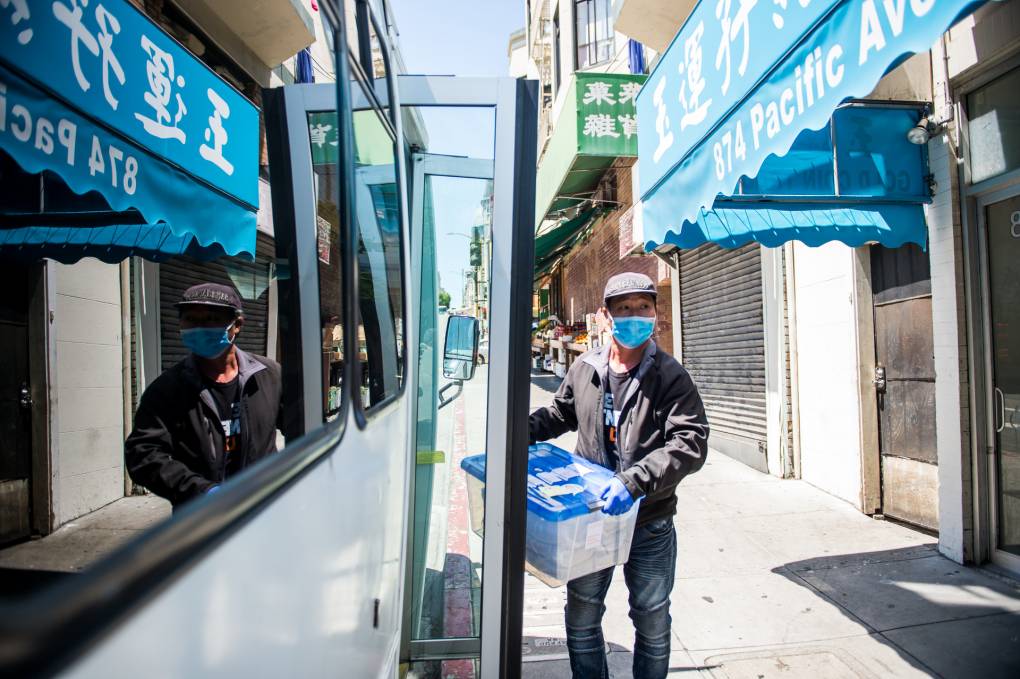
"caption": "Meals that were prepared at Far East Cafe are brought to Ping Yuen, a public housing building in San Francisco's Chinatown, where employees of a Chinatown nonprofit and volunteers help distribute meals to residents on May 5, 2020.",
"description": "Meals that were prepared at Far East Cafe are brought to Ping Yuen, a public housing building in San Francisco's Chinatown, where employees of a Chinatown nonprofit and volunteers help distribute meals to residents on May 5, 2020.",
"title": "San-Francisco-Chinatown-Meal-Delivery",
"credit": "Beth LaBerge/KQED",
"status": "inherit",
"isLoading": false,
"fetchFailed": false
},
"news_11816400": {
"type": "attachments",
"id": "news_11816400",
"meta": {
"index": "attachments_1716263798",
"site": "news",
"id": "11816400",
"found": true
},
"parent": 11816272,
"imgSizes": {
"apple_news_ca_landscape_5_5": {
"file": "https://ww2.kqed.org/app/uploads/sites/10/2020/05/RS43002_GettyImages-107516849-qut-1044x783.jpg",
"width": 1044,
"mimeType": "image/jpeg",
"height": 783
},
"apple_news_ca_square_4_0": {
"file": "https://ww2.kqed.org/app/uploads/sites/10/2020/05/RS43002_GettyImages-107516849-qut-470x470.jpg",
"width": 470,
"mimeType": "image/jpeg",
"height": 470
},
"twentyfourteen-full-width": {
"file": "https://ww2.kqed.org/app/uploads/sites/10/2020/05/RS43002_GettyImages-107516849-qut-1038x576.jpg",
"width": 1038,
"mimeType": "image/jpeg",
"height": 576
},
"thumbnail": {
"file": "https://ww2.kqed.org/app/uploads/sites/10/2020/05/RS43002_GettyImages-107516849-qut-160x110.jpg",
"width": 160,
"mimeType": "image/jpeg",
"height": 110
},
"post-thumbnail": {
"file": "https://ww2.kqed.org/app/uploads/sites/10/2020/05/RS43002_GettyImages-107516849-qut-672x372.jpg",
"width": 672,
"mimeType": "image/jpeg",
"height": 372
},
"kqedFullSize": {
"file": "https://ww2.kqed.org/app/uploads/sites/10/2020/05/RS43002_GettyImages-107516849-qut.jpg",
"width": 1920,
"height": 1324
},
"apple_news_ca_landscape_4_7": {
"file": "https://ww2.kqed.org/app/uploads/sites/10/2020/05/RS43002_GettyImages-107516849-qut-632x474.jpg",
"width": 632,
"mimeType": "image/jpeg",
"height": 474
},
"large": {
"file": "https://ww2.kqed.org/app/uploads/sites/10/2020/05/RS43002_GettyImages-107516849-qut-1020x703.jpg",
"width": 1020,
"mimeType": "image/jpeg",
"height": 703
},
"apple_news_ca_landscape_4_0": {
"file": "https://ww2.kqed.org/app/uploads/sites/10/2020/05/RS43002_GettyImages-107516849-qut-536x402.jpg",
"width": 536,
"mimeType": "image/jpeg",
"height": 402
},
"apple_news_ca_portrait_12_9": {
"file": "https://ww2.kqed.org/app/uploads/sites/10/2020/05/RS43002_GettyImages-107516849-qut-1122x1324.jpg",
"width": 1122,
"mimeType": "image/jpeg",
"height": 1324
},
"medium": {
"file": "https://ww2.kqed.org/app/uploads/sites/10/2020/05/RS43002_GettyImages-107516849-qut-800x552.jpg",
"width": 800,
"mimeType": "image/jpeg",
"height": 552
},
"apple_news_ca_portrait_4_0": {
"file": "https://ww2.kqed.org/app/uploads/sites/10/2020/05/RS43002_GettyImages-107516849-qut-354x472.jpg",
"width": 354,
"mimeType": "image/jpeg",
"height": 472
},
"apple_news_ca_portrait_9_7": {
"file": "https://ww2.kqed.org/app/uploads/sites/10/2020/05/RS43002_GettyImages-107516849-qut-840x1120.jpg",
"width": 840,
"mimeType": "image/jpeg",
"height": 1120
},
"apple_news_ca_landscape_12_9": {
"file": "https://ww2.kqed.org/app/uploads/sites/10/2020/05/RS43002_GettyImages-107516849-qut-1832x1324.jpg",
"width": 1832,
"mimeType": "image/jpeg",
"height": 1324
},
"apple_news_ca_square_9_7": {
"file": "https://ww2.kqed.org/app/uploads/sites/10/2020/05/RS43002_GettyImages-107516849-qut-1104x1104.jpg",
"width": 1104,
"mimeType": "image/jpeg",
"height": 1104
},
"apple_news_ca_portrait_4_7": {
"file": "https://ww2.kqed.org/app/uploads/sites/10/2020/05/RS43002_GettyImages-107516849-qut-414x552.jpg",
"width": 414,
"mimeType": "image/jpeg",
"height": 552
},
"apple_news_ca_square_12_9": {
"file": "https://ww2.kqed.org/app/uploads/sites/10/2020/05/RS43002_GettyImages-107516849-qut-1472x1324.jpg",
"width": 1472,
"mimeType": "image/jpeg",
"height": 1324
},
"apple_news_ca_portrait_5_5": {
"file": "https://ww2.kqed.org/app/uploads/sites/10/2020/05/RS43002_GettyImages-107516849-qut-687x916.jpg",
"width": 687,
"mimeType": "image/jpeg",
"height": 916
},
"full-width": {
"file": "https://ww2.kqed.org/app/uploads/sites/10/2020/05/RS43002_GettyImages-107516849-qut-1920x1324.jpg",
"width": 1920,
"mimeType": "image/jpeg",
"height": 1324
},
"apple_news_ca_square_4_7": {
"file": "https://ww2.kqed.org/app/uploads/sites/10/2020/05/RS43002_GettyImages-107516849-qut-550x550.jpg",
"width": 550,
"mimeType": "image/jpeg",
"height": 550
},
"apple_news_ca_landscape_9_7": {
"file": "https://ww2.kqed.org/app/uploads/sites/10/2020/05/RS43002_GettyImages-107516849-qut-1376x1032.jpg",
"width": 1376,
"mimeType": "image/jpeg",
"height": 1032
},
"apple_news_ca_square_5_5": {
"file": "https://ww2.kqed.org/app/uploads/sites/10/2020/05/RS43002_GettyImages-107516849-qut-912x912.jpg",
"width": 912,
"mimeType": "image/jpeg",
"height": 912
}
},
"publishDate": 1588722475,
"modified": 1588785179,
"caption": "At least 247 prisoners at the California Institution for Men in San Bernardino County have tested positive for COVID-19, along with 44 staff members.",
"description": "247 prisoners at the California Institution for Men (CIM) in San Bernardino County have tested positive for COVID-19, along with 44 staff members.",
"title": "Supreme Court To Rule On California's Overcrowded Prisons",
"credit": "Kevork Djansezian/Getty Images",
"status": "inherit",
"isLoading": false,
"fetchFailed": false
},
"news_11772673": {
"type": "attachments",
"id": "news_11772673",
"meta": {
"index": "attachments_1716263798",
"site": "news",
"id": "11772673",
"found": true
},
"parent": 11772671,
"imgSizes": {
"apple_news_ca_landscape_5_5": {
"file": "https://ww2.kqed.org/app/uploads/sites/10/2019/09/RS38036_Almena-CU-20190708-1-1044x783.jpg",
"width": 1044,
"mimeType": "image/jpeg",
"height": 783
},
"apple_news_ca_square_4_0": {
"file": "https://ww2.kqed.org/app/uploads/sites/10/2019/09/RS38036_Almena-CU-20190708-1-470x470.jpg",
"width": 470,
"mimeType": "image/jpeg",
"height": 470
},
"twentyfourteen-full-width": {
"file": "https://ww2.kqed.org/app/uploads/sites/10/2019/09/RS38036_Almena-CU-20190708-1-1038x576.jpg",
"width": 1038,
"mimeType": "image/jpeg",
"height": 576
},
"thumbnail": {
"file": "https://ww2.kqed.org/app/uploads/sites/10/2019/09/RS38036_Almena-CU-20190708-1-160x90.jpg",
"width": 160,
"mimeType": "image/jpeg",
"height": 90
},
"post-thumbnail": {
"file": "https://ww2.kqed.org/app/uploads/sites/10/2019/09/RS38036_Almena-CU-20190708-1-672x372.jpg",
"width": 672,
"mimeType": "image/jpeg",
"height": 372
},
"kqedFullSize": {
"file": "https://ww2.kqed.org/app/uploads/sites/10/2019/09/RS38036_Almena-CU-20190708-1-e1588696946275.jpg",
"width": 1920,
"height": 1080
},
"apple_news_ca_landscape_4_7": {
"file": "https://ww2.kqed.org/app/uploads/sites/10/2019/09/RS38036_Almena-CU-20190708-1-632x474.jpg",
"width": 632,
"mimeType": "image/jpeg",
"height": 474
},
"large": {
"file": "https://ww2.kqed.org/app/uploads/sites/10/2019/09/RS38036_Almena-CU-20190708-1-1020x574.jpg",
"width": 1020,
"mimeType": "image/jpeg",
"height": 574
},
"complete_open_graph": {
"file": "https://ww2.kqed.org/app/uploads/sites/10/2019/09/RS38036_Almena-CU-20190708-1-1200x675.jpg",
"width": 1200,
"mimeType": "image/jpeg",
"height": 675
},
"apple_news_ca_landscape_4_0": {
"file": "https://ww2.kqed.org/app/uploads/sites/10/2019/09/RS38036_Almena-CU-20190708-1-536x402.jpg",
"width": 536,
"mimeType": "image/jpeg",
"height": 402
},
"apple_news_ca_portrait_12_9": {
"file": "https://ww2.kqed.org/app/uploads/sites/10/2019/09/RS38036_Almena-CU-20190708-1-1122x1496.jpg",
"width": 1122,
"mimeType": "image/jpeg",
"height": 1496
},
"medium": {
"file": "https://ww2.kqed.org/app/uploads/sites/10/2019/09/RS38036_Almena-CU-20190708-1-800x450.jpg",
"width": 800,
"mimeType": "image/jpeg",
"height": 450
},
"apple_news_ca_portrait_4_0": {
"file": "https://ww2.kqed.org/app/uploads/sites/10/2019/09/RS38036_Almena-CU-20190708-1-354x472.jpg",
"width": 354,
"mimeType": "image/jpeg",
"height": 472
},
"apple_news_ca_portrait_9_7": {
"file": "https://ww2.kqed.org/app/uploads/sites/10/2019/09/RS38036_Almena-CU-20190708-1-840x1120.jpg",
"width": 840,
"mimeType": "image/jpeg",
"height": 1120
},
"apple_news_ca_landscape_12_9": {
"file": "https://ww2.kqed.org/app/uploads/sites/10/2019/09/RS38036_Almena-CU-20190708-1-1832x1374.jpg",
"width": 1832,
"mimeType": "image/jpeg",
"height": 1374
},
"apple_news_ca_square_9_7": {
"file": "https://ww2.kqed.org/app/uploads/sites/10/2019/09/RS38036_Almena-CU-20190708-1-1104x1104.jpg",
"width": 1104,
"mimeType": "image/jpeg",
"height": 1104
},
"apple_news_ca_portrait_4_7": {
"file": "https://ww2.kqed.org/app/uploads/sites/10/2019/09/RS38036_Almena-CU-20190708-1-414x552.jpg",
"width": 414,
"mimeType": "image/jpeg",
"height": 552
},
"apple_news_ca_square_12_9": {
"file": "https://ww2.kqed.org/app/uploads/sites/10/2019/09/RS38036_Almena-CU-20190708-1-1472x1472.jpg",
"width": 1472,
"mimeType": "image/jpeg",
"height": 1472
},
"apple_news_ca_portrait_5_5": {
"file": "https://ww2.kqed.org/app/uploads/sites/10/2019/09/RS38036_Almena-CU-20190708-1-687x916.jpg",
"width": 687,
"mimeType": "image/jpeg",
"height": 916
},
"full-width": {
"file": "https://ww2.kqed.org/app/uploads/sites/10/2019/09/RS38036_Almena-CU-20190708-1-1920x1080.jpg",
"width": 1920,
"mimeType": "image/jpeg",
"height": 1080
},
"apple_news_ca_square_4_7": {
"file": "https://ww2.kqed.org/app/uploads/sites/10/2019/09/RS38036_Almena-CU-20190708-1-550x550.jpg",
"width": 550,
"mimeType": "image/jpeg",
"height": 550
},
"apple_news_ca_landscape_9_7": {
"file": "https://ww2.kqed.org/app/uploads/sites/10/2019/09/RS38036_Almena-CU-20190708-1-1376x1032.jpg",
"width": 1376,
"mimeType": "image/jpeg",
"height": 1032
},
"apple_news_ca_square_5_5": {
"file": "https://ww2.kqed.org/app/uploads/sites/10/2019/09/RS38036_Almena-CU-20190708-1-912x912.jpg",
"width": 912,
"mimeType": "image/jpeg",
"height": 912
}
},
"publishDate": 1567789127,
"modified": 1611352712,
"caption": "Ghost Ship master tenant Derick Almena during his first day of testimony in the 2019 criminal trial in which he faced 36 counts of involuntary manslaughter.",
"description": "Ghost Ship master tenant Derick Almena during his first day of testimony in the 2019 criminal trial in which he faced 36 counts of involuntary manslaughter. He is set to be re-tried this year.",
"title": "RS38036_Almena CU 20190708 (1)",
"credit": "Vicki Behringer/KQED",
"status": "inherit",
"altTag": "Ghost Ship master tenant Derick Almena during his first day of testimony in the 2019 criminal trial in which he faced 36 counts of involuntary manslaughter. He is set to be re-tried this year.",
"isLoading": false,
"fetchFailed": false
},
"news_11816186": {
"type": "attachments",
"id": "news_11816186",
"meta": {
"index": "attachments_1716263798",
"site": "news",
"id": "11816186",
"found": true
},
"parent": 11816135,
"imgSizes": {
"apple_news_ca_landscape_5_5": {
"file": "https://ww2.kqed.org/app/uploads/sites/10/2020/05/Santa-Clara-County-Medical-Examiner-1044x783.jpg",
"width": 1044,
"mimeType": "image/jpeg",
"height": 783
},
"apple_news_ca_square_4_0": {
"file": "https://ww2.kqed.org/app/uploads/sites/10/2020/05/Santa-Clara-County-Medical-Examiner-470x470.jpg",
"width": 470,
"mimeType": "image/jpeg",
"height": 470
},
"twentyfourteen-full-width": {
"file": "https://ww2.kqed.org/app/uploads/sites/10/2020/05/Santa-Clara-County-Medical-Examiner-1038x576.jpg",
"width": 1038,
"mimeType": "image/jpeg",
"height": 576
},
"thumbnail": {
"file": "https://ww2.kqed.org/app/uploads/sites/10/2020/05/Santa-Clara-County-Medical-Examiner-160x126.jpg",
"width": 160,
"mimeType": "image/jpeg",
"height": 126
},
"post-thumbnail": {
"file": "https://ww2.kqed.org/app/uploads/sites/10/2020/05/Santa-Clara-County-Medical-Examiner-672x372.jpg",
"width": 672,
"mimeType": "image/jpeg",
"height": 372
},
"kqedFullSize": {
"file": "https://ww2.kqed.org/app/uploads/sites/10/2020/05/Santa-Clara-County-Medical-Examiner.jpg",
"width": 1920,
"height": 1509
},
"apple_news_ca_landscape_4_7": {
"file": "https://ww2.kqed.org/app/uploads/sites/10/2020/05/Santa-Clara-County-Medical-Examiner-632x474.jpg",
"width": 632,
"mimeType": "image/jpeg",
"height": 474
},
"large": {
"file": "https://ww2.kqed.org/app/uploads/sites/10/2020/05/Santa-Clara-County-Medical-Examiner-1020x802.jpg",
"width": 1020,
"mimeType": "image/jpeg",
"height": 802
},
"apple_news_ca_landscape_4_0": {
"file": "https://ww2.kqed.org/app/uploads/sites/10/2020/05/Santa-Clara-County-Medical-Examiner-536x402.jpg",
"width": 536,
"mimeType": "image/jpeg",
"height": 402
},
"apple_news_ca_portrait_12_9": {
"file": "https://ww2.kqed.org/app/uploads/sites/10/2020/05/Santa-Clara-County-Medical-Examiner-1122x1496.jpg",
"width": 1122,
"mimeType": "image/jpeg",
"height": 1496
},
"medium": {
"file": "https://ww2.kqed.org/app/uploads/sites/10/2020/05/Santa-Clara-County-Medical-Examiner-800x629.jpg",
"width": 800,
"mimeType": "image/jpeg",
"height": 629
},
"apple_news_ca_portrait_4_0": {
"file": "https://ww2.kqed.org/app/uploads/sites/10/2020/05/Santa-Clara-County-Medical-Examiner-354x472.jpg",
"width": 354,
"mimeType": "image/jpeg",
"height": 472
},
"apple_news_ca_portrait_9_7": {
"file": "https://ww2.kqed.org/app/uploads/sites/10/2020/05/Santa-Clara-County-Medical-Examiner-840x1120.jpg",
"width": 840,
"mimeType": "image/jpeg",
"height": 1120
},
"apple_news_ca_landscape_12_9": {
"file": "https://ww2.kqed.org/app/uploads/sites/10/2020/05/Santa-Clara-County-Medical-Examiner-1832x1374.jpg",
"width": 1832,
"mimeType": "image/jpeg",
"height": 1374
},
"apple_news_ca_square_9_7": {
"file": "https://ww2.kqed.org/app/uploads/sites/10/2020/05/Santa-Clara-County-Medical-Examiner-1104x1104.jpg",
"width": 1104,
"mimeType": "image/jpeg",
"height": 1104
},
"apple_news_ca_portrait_4_7": {
"file": "https://ww2.kqed.org/app/uploads/sites/10/2020/05/Santa-Clara-County-Medical-Examiner-414x552.jpg",
"width": 414,
"mimeType": "image/jpeg",
"height": 552
},
"apple_news_ca_square_12_9": {
"file": "https://ww2.kqed.org/app/uploads/sites/10/2020/05/Santa-Clara-County-Medical-Examiner-1472x1472.jpg",
"width": 1472,
"mimeType": "image/jpeg",
"height": 1472
},
"apple_news_ca_portrait_5_5": {
"file": "https://ww2.kqed.org/app/uploads/sites/10/2020/05/Santa-Clara-County-Medical-Examiner-687x916.jpg",
"width": 687,
"mimeType": "image/jpeg",
"height": 916
},
"full-width": {
"file": "https://ww2.kqed.org/app/uploads/sites/10/2020/05/Santa-Clara-County-Medical-Examiner-1920x1509.jpg",
"width": 1920,
"mimeType": "image/jpeg",
"height": 1509
},
"apple_news_ca_square_4_7": {
"file": "https://ww2.kqed.org/app/uploads/sites/10/2020/05/Santa-Clara-County-Medical-Examiner-550x550.jpg",
"width": 550,
"mimeType": "image/jpeg",
"height": 550
},
"apple_news_ca_landscape_9_7": {
"file": "https://ww2.kqed.org/app/uploads/sites/10/2020/05/Santa-Clara-County-Medical-Examiner-1376x1032.jpg",
"width": 1376,
"mimeType": "image/jpeg",
"height": 1032
},
"apple_news_ca_square_5_5": {
"file": "https://ww2.kqed.org/app/uploads/sites/10/2020/05/Santa-Clara-County-Medical-Examiner-912x912.jpg",
"width": 912,
"mimeType": "image/jpeg",
"height": 912
}
},
"publishDate": 1588636222,
"modified": 1588640480,
"caption": "Recent revelations raise questions about whether Santa Clara County officials could have warned neighboring counties and state officials of possible community spread and pushed for earlier testing of a number of suspicious COVID-19 cases.",
"description": "Recent revelations raise questions about whether Santa Clara County officials could have warned neighboring counties and state officials of possible community spread and pushed for earlier testing of a number of suspicious COVID-19 cases.",
"title": "Santa-Clara-County-Medical-Examiner",
"credit": "Julie Small/KQED",
"status": "inherit",
"isLoading": false,
"fetchFailed": false
},
"news_11816191": {
"type": "attachments",
"id": "news_11816191",
"meta": {
"index": "attachments_1716263798",
"site": "news",
"id": "11816191",
"found": true
},
"parent": 11816189,
"imgSizes": {
"apple_news_ca_landscape_5_5": {
"file": "https://ww2.kqed.org/app/uploads/sites/10/2020/05/masks_050420_final-1044x783.png",
"width": 1044,
"mimeType": "image/png",
"height": 783
},
"apple_news_ca_square_4_0": {
"file": "https://ww2.kqed.org/app/uploads/sites/10/2020/05/masks_050420_final-470x470.png",
"width": 470,
"mimeType": "image/png",
"height": 470
},
"twentyfourteen-full-width": {
"file": "https://ww2.kqed.org/app/uploads/sites/10/2020/05/masks_050420_final-1038x576.png",
"width": 1038,
"mimeType": "image/png",
"height": 576
},
"thumbnail": {
"file": "https://ww2.kqed.org/app/uploads/sites/10/2020/05/masks_050420_final-160x117.png",
"width": 160,
"mimeType": "image/png",
"height": 117
},
"post-thumbnail": {
"file": "https://ww2.kqed.org/app/uploads/sites/10/2020/05/masks_050420_final-672x372.png",
"width": 672,
"mimeType": "image/png",
"height": 372
},
"kqedFullSize": {
"file": "https://ww2.kqed.org/app/uploads/sites/10/2020/05/masks_050420_final.png",
"width": 1920,
"height": 1399
},
"apple_news_ca_landscape_4_7": {
"file": "https://ww2.kqed.org/app/uploads/sites/10/2020/05/masks_050420_final-632x474.png",
"width": 632,
"mimeType": "image/png",
"height": 474
},
"large": {
"file": "https://ww2.kqed.org/app/uploads/sites/10/2020/05/masks_050420_final-1020x743.png",
"width": 1020,
"mimeType": "image/png",
"height": 743
},
"apple_news_ca_landscape_4_0": {
"file": "https://ww2.kqed.org/app/uploads/sites/10/2020/05/masks_050420_final-536x402.png",
"width": 536,
"mimeType": "image/png",
"height": 402
},
"apple_news_ca_portrait_12_9": {
"file": "https://ww2.kqed.org/app/uploads/sites/10/2020/05/masks_050420_final-1122x1399.png",
"width": 1122,
"mimeType": "image/png",
"height": 1399
},
"medium": {
"file": "https://ww2.kqed.org/app/uploads/sites/10/2020/05/masks_050420_final-800x583.png",
"width": 800,
"mimeType": "image/png",
"height": 583
},
"apple_news_ca_portrait_4_0": {
"file": "https://ww2.kqed.org/app/uploads/sites/10/2020/05/masks_050420_final-354x472.png",
"width": 354,
"mimeType": "image/png",
"height": 472
},
"apple_news_ca_portrait_9_7": {
"file": "https://ww2.kqed.org/app/uploads/sites/10/2020/05/masks_050420_final-840x1120.png",
"width": 840,
"mimeType": "image/png",
"height": 1120
},
"apple_news_ca_landscape_12_9": {
"file": "https://ww2.kqed.org/app/uploads/sites/10/2020/05/masks_050420_final-1832x1374.png",
"width": 1832,
"mimeType": "image/png",
"height": 1374
},
"apple_news_ca_square_9_7": {
"file": "https://ww2.kqed.org/app/uploads/sites/10/2020/05/masks_050420_final-1104x1104.png",
"width": 1104,
"mimeType": "image/png",
"height": 1104
},
"apple_news_ca_portrait_4_7": {
"file": "https://ww2.kqed.org/app/uploads/sites/10/2020/05/masks_050420_final-414x552.png",
"width": 414,
"mimeType": "image/png",
"height": 552
},
"apple_news_ca_square_12_9": {
"file": "https://ww2.kqed.org/app/uploads/sites/10/2020/05/masks_050420_final-1472x1399.png",
"width": 1472,
"mimeType": "image/png",
"height": 1399
},
"apple_news_ca_portrait_5_5": {
"file": "https://ww2.kqed.org/app/uploads/sites/10/2020/05/masks_050420_final-687x916.png",
"width": 687,
"mimeType": "image/png",
"height": 916
},
"full-width": {
"file": "https://ww2.kqed.org/app/uploads/sites/10/2020/05/masks_050420_final-1920x1399.png",
"width": 1920,
"mimeType": "image/png",
"height": 1399
},
"apple_news_ca_square_4_7": {
"file": "https://ww2.kqed.org/app/uploads/sites/10/2020/05/masks_050420_final-550x550.png",
"width": 550,
"mimeType": "image/png",
"height": 550
},
"apple_news_ca_landscape_9_7": {
"file": "https://ww2.kqed.org/app/uploads/sites/10/2020/05/masks_050420_final-1376x1032.png",
"width": 1376,
"mimeType": "image/png",
"height": 1032
},
"apple_news_ca_square_5_5": {
"file": "https://ww2.kqed.org/app/uploads/sites/10/2020/05/masks_050420_final-912x912.png",
"width": 912,
"mimeType": "image/png",
"height": 912
}
},
"publishDate": 1588636559,
"modified": 1588636603,
"caption": null,
"description": null,
"title": "masks_050420_final",
"credit": null,
"status": "inherit",
"isLoading": false,
"fetchFailed": false
},
"news_11816126": {
"type": "attachments",
"id": "news_11816126",
"meta": {
"index": "attachments_1716263798",
"site": "news",
"id": "11816126",
"found": true
},
"parent": 11816082,
"imgSizes": {
"apple_news_ca_landscape_5_5": {
"file": "https://ww2.kqed.org/app/uploads/sites/10/2020/05/RS42987_GettyImages-1222675411-qut-1044x783.jpg",
"width": 1044,
"mimeType": "image/jpeg",
"height": 783
},
"apple_news_ca_square_4_0": {
"file": "https://ww2.kqed.org/app/uploads/sites/10/2020/05/RS42987_GettyImages-1222675411-qut-470x470.jpg",
"width": 470,
"mimeType": "image/jpeg",
"height": 470
},
"twentyfourteen-full-width": {
"file": "https://ww2.kqed.org/app/uploads/sites/10/2020/05/RS42987_GettyImages-1222675411-qut-1038x576.jpg",
"width": 1038,
"mimeType": "image/jpeg",
"height": 576
},
"thumbnail": {
"file": "https://ww2.kqed.org/app/uploads/sites/10/2020/05/RS42987_GettyImages-1222675411-qut-160x107.jpg",
"width": 160,
"mimeType": "image/jpeg",
"height": 107
},
"post-thumbnail": {
"file": "https://ww2.kqed.org/app/uploads/sites/10/2020/05/RS42987_GettyImages-1222675411-qut-672x372.jpg",
"width": 672,
"mimeType": "image/jpeg",
"height": 372
},
"kqedFullSize": {
"file": "https://ww2.kqed.org/app/uploads/sites/10/2020/05/RS42987_GettyImages-1222675411-qut.jpg",
"width": 1920,
"height": 1280
},
"apple_news_ca_landscape_4_7": {
"file": "https://ww2.kqed.org/app/uploads/sites/10/2020/05/RS42987_GettyImages-1222675411-qut-632x474.jpg",
"width": 632,
"mimeType": "image/jpeg",
"height": 474
},
"large": {
"file": "https://ww2.kqed.org/app/uploads/sites/10/2020/05/RS42987_GettyImages-1222675411-qut-1020x680.jpg",
"width": 1020,
"mimeType": "image/jpeg",
"height": 680
},
"apple_news_ca_landscape_4_0": {
"file": "https://ww2.kqed.org/app/uploads/sites/10/2020/05/RS42987_GettyImages-1222675411-qut-536x402.jpg",
"width": 536,
"mimeType": "image/jpeg",
"height": 402
},
"apple_news_ca_portrait_12_9": {
"file": "https://ww2.kqed.org/app/uploads/sites/10/2020/05/RS42987_GettyImages-1222675411-qut-1122x1280.jpg",
"width": 1122,
"mimeType": "image/jpeg",
"height": 1280
},
"medium": {
"file": "https://ww2.kqed.org/app/uploads/sites/10/2020/05/RS42987_GettyImages-1222675411-qut-800x533.jpg",
"width": 800,
"mimeType": "image/jpeg",
"height": 533
},
"apple_news_ca_portrait_4_0": {
"file": "https://ww2.kqed.org/app/uploads/sites/10/2020/05/RS42987_GettyImages-1222675411-qut-354x472.jpg",
"width": 354,
"mimeType": "image/jpeg",
"height": 472
},
"apple_news_ca_portrait_9_7": {
"file": "https://ww2.kqed.org/app/uploads/sites/10/2020/05/RS42987_GettyImages-1222675411-qut-840x1120.jpg",
"width": 840,
"mimeType": "image/jpeg",
"height": 1120
},
"apple_news_ca_landscape_12_9": {
"file": "https://ww2.kqed.org/app/uploads/sites/10/2020/05/RS42987_GettyImages-1222675411-qut-1832x1280.jpg",
"width": 1832,
"mimeType": "image/jpeg",
"height": 1280
},
"apple_news_ca_square_9_7": {
"file": "https://ww2.kqed.org/app/uploads/sites/10/2020/05/RS42987_GettyImages-1222675411-qut-1104x1104.jpg",
"width": 1104,
"mimeType": "image/jpeg",
"height": 1104
},
"apple_news_ca_portrait_4_7": {
"file": "https://ww2.kqed.org/app/uploads/sites/10/2020/05/RS42987_GettyImages-1222675411-qut-414x552.jpg",
"width": 414,
"mimeType": "image/jpeg",
"height": 552
},
"apple_news_ca_square_12_9": {
"file": "https://ww2.kqed.org/app/uploads/sites/10/2020/05/RS42987_GettyImages-1222675411-qut-1472x1280.jpg",
"width": 1472,
"mimeType": "image/jpeg",
"height": 1280
},
"apple_news_ca_portrait_5_5": {
"file": "https://ww2.kqed.org/app/uploads/sites/10/2020/05/RS42987_GettyImages-1222675411-qut-687x916.jpg",
"width": 687,
"mimeType": "image/jpeg",
"height": 916
},
"full-width": {
"file": "https://ww2.kqed.org/app/uploads/sites/10/2020/05/RS42987_GettyImages-1222675411-qut-1920x1280.jpg",
"width": 1920,
"mimeType": "image/jpeg",
"height": 1280
},
"apple_news_ca_square_4_7": {
"file": "https://ww2.kqed.org/app/uploads/sites/10/2020/05/RS42987_GettyImages-1222675411-qut-550x550.jpg",
"width": 550,
"mimeType": "image/jpeg",
"height": 550
},
"apple_news_ca_landscape_9_7": {
"file": "https://ww2.kqed.org/app/uploads/sites/10/2020/05/RS42987_GettyImages-1222675411-qut-1376x1032.jpg",
"width": 1376,
"mimeType": "image/jpeg",
"height": 1032
},
"apple_news_ca_square_5_5": {
"file": "https://ww2.kqed.org/app/uploads/sites/10/2020/05/RS42987_GettyImages-1222675411-qut-912x912.jpg",
"width": 912,
"mimeType": "image/jpeg",
"height": 912
}
},
"publishDate": 1588627425,
"modified": 1588627473,
"caption": "People wear masks walking a dog at Alamo Square Park during the coronavirus pandemic on May 03, 2020 in San Francisco, California. ",
"description": "People wear masks walking a dog at Alamo Square Park during the coronavirus pandemic on May 03, 2020 in San Francisco, California. ",
"title": "Daily Life In San Francisco Amid Coronavirus Outbreak",
"credit": "Rich Fury/Getty Images",
"status": "inherit",
"isLoading": false,
"fetchFailed": false
},
"news_11816018": {
"type": "attachments",
"id": "news_11816018",
"meta": {
"index": "attachments_1716263798",
"site": "news",
"id": "11816018",
"found": true
},
"parent": 11816014,
"imgSizes": {
"apple_news_ca_landscape_5_5": {
"file": "https://ww2.kqed.org/app/uploads/sites/10/2020/05/NursesResize-1044x783.jpg",
"width": 1044,
"mimeType": "image/jpeg",
"height": 783
},
"apple_news_ca_square_4_0": {
"file": "https://ww2.kqed.org/app/uploads/sites/10/2020/05/NursesResize-470x470.jpg",
"width": 470,
"mimeType": "image/jpeg",
"height": 470
},
"twentyfourteen-full-width": {
"file": "https://ww2.kqed.org/app/uploads/sites/10/2020/05/NursesResize-1038x576.jpg",
"width": 1038,
"mimeType": "image/jpeg",
"height": 576
},
"thumbnail": {
"file": "https://ww2.kqed.org/app/uploads/sites/10/2020/05/NursesResize-160x109.jpg",
"width": 160,
"mimeType": "image/jpeg",
"height": 109
},
"post-thumbnail": {
"file": "https://ww2.kqed.org/app/uploads/sites/10/2020/05/NursesResize-672x372.jpg",
"width": 672,
"mimeType": "image/jpeg",
"height": 372
},
"kqedFullSize": {
"file": "https://ww2.kqed.org/app/uploads/sites/10/2020/05/NursesResize.jpg",
"width": 1920,
"height": 1309
},
"apple_news_ca_landscape_4_7": {
"file": "https://ww2.kqed.org/app/uploads/sites/10/2020/05/NursesResize-632x474.jpg",
"width": 632,
"mimeType": "image/jpeg",
"height": 474
},
"large": {
"file": "https://ww2.kqed.org/app/uploads/sites/10/2020/05/NursesResize-1020x695.jpg",
"width": 1020,
"mimeType": "image/jpeg",
"height": 695
},
"apple_news_ca_landscape_4_0": {
"file": "https://ww2.kqed.org/app/uploads/sites/10/2020/05/NursesResize-536x402.jpg",
"width": 536,
"mimeType": "image/jpeg",
"height": 402
},
"apple_news_ca_portrait_12_9": {
"file": "https://ww2.kqed.org/app/uploads/sites/10/2020/05/NursesResize-1122x1309.jpg",
"width": 1122,
"mimeType": "image/jpeg",
"height": 1309
},
"medium": {
"file": "https://ww2.kqed.org/app/uploads/sites/10/2020/05/NursesResize-800x545.jpg",
"width": 800,
"mimeType": "image/jpeg",
"height": 545
},
"apple_news_ca_portrait_4_0": {
"file": "https://ww2.kqed.org/app/uploads/sites/10/2020/05/NursesResize-354x472.jpg",
"width": 354,
"mimeType": "image/jpeg",
"height": 472
},
"apple_news_ca_portrait_9_7": {
"file": "https://ww2.kqed.org/app/uploads/sites/10/2020/05/NursesResize-840x1120.jpg",
"width": 840,
"mimeType": "image/jpeg",
"height": 1120
},
"apple_news_ca_landscape_12_9": {
"file": "https://ww2.kqed.org/app/uploads/sites/10/2020/05/NursesResize-1832x1309.jpg",
"width": 1832,
"mimeType": "image/jpeg",
"height": 1309
},
"apple_news_ca_square_9_7": {
"file": "https://ww2.kqed.org/app/uploads/sites/10/2020/05/NursesResize-1104x1104.jpg",
"width": 1104,
"mimeType": "image/jpeg",
"height": 1104
},
"apple_news_ca_portrait_4_7": {
"file": "https://ww2.kqed.org/app/uploads/sites/10/2020/05/NursesResize-414x552.jpg",
"width": 414,
"mimeType": "image/jpeg",
"height": 552
},
"apple_news_ca_square_12_9": {
"file": "https://ww2.kqed.org/app/uploads/sites/10/2020/05/NursesResize-1472x1309.jpg",
"width": 1472,
"mimeType": "image/jpeg",
"height": 1309
},
"apple_news_ca_portrait_5_5": {
"file": "https://ww2.kqed.org/app/uploads/sites/10/2020/05/NursesResize-687x916.jpg",
"width": 687,
"mimeType": "image/jpeg",
"height": 916
},
"full-width": {
"file": "https://ww2.kqed.org/app/uploads/sites/10/2020/05/NursesResize-1920x1309.jpg",
"width": 1920,
"mimeType": "image/jpeg",
"height": 1309
},
"apple_news_ca_square_4_7": {
"file": "https://ww2.kqed.org/app/uploads/sites/10/2020/05/NursesResize-550x550.jpg",
"width": 550,
"mimeType": "image/jpeg",
"height": 550
},
"apple_news_ca_landscape_9_7": {
"file": "https://ww2.kqed.org/app/uploads/sites/10/2020/05/NursesResize-1376x1032.jpg",
"width": 1376,
"mimeType": "image/jpeg",
"height": 1032
},
"apple_news_ca_square_5_5": {
"file": "https://ww2.kqed.org/app/uploads/sites/10/2020/05/NursesResize-912x912.jpg",
"width": 912,
"mimeType": "image/jpeg",
"height": 912
}
},
"publishDate": 1588558328,
"modified": 1588564173,
"caption": "A nurse holds up a sign to protest the lack of personal protective gear available at UCI Medical Center amid the coronavirus pandemic on April 3, 2020 in Orange, California. Hospitals nationwide are facing shortages of PPE due to the COVID-19 outbreak.",
"description": "ORANGE, CALIFORNIA - APRIL 03: A nurse holds up a sign to protest the lack of personal protective gear available at UCI Medical Center amid the coronavirus pandemic on April 3, 2020 in Orange, California. Hospitals nationwide are facing shortages of PPE due to the COVID-19 outbreak.",
"title": "NursesResize",
"credit": "Mario Tama/Getty Images",
"status": "inherit",
"isLoading": false,
"fetchFailed": false
},
"news_11815979": {
"type": "attachments",
"id": "news_11815979",
"meta": {
"index": "attachments_1716263798",
"site": "news",
"id": "11815979",
"found": true
},
"parent": 11815978,
"imgSizes": {
"apple_news_ca_landscape_5_5": {
"file": "https://ww2.kqed.org/app/uploads/sites/10/2020/05/GettyImages-1218635194-1-1044x783.jpg",
"width": 1044,
"mimeType": "image/jpeg",
"height": 783
},
"apple_news_ca_square_4_0": {
"file": "https://ww2.kqed.org/app/uploads/sites/10/2020/05/GettyImages-1218635194-1-470x470.jpg",
"width": 470,
"mimeType": "image/jpeg",
"height": 470
},
"twentyfourteen-full-width": {
"file": "https://ww2.kqed.org/app/uploads/sites/10/2020/05/GettyImages-1218635194-1-1038x576.jpg",
"width": 1038,
"mimeType": "image/jpeg",
"height": 576
},
"thumbnail": {
"file": "https://ww2.kqed.org/app/uploads/sites/10/2020/05/GettyImages-1218635194-1-160x115.jpg",
"width": 160,
"mimeType": "image/jpeg",
"height": 115
},
"post-thumbnail": {
"file": "https://ww2.kqed.org/app/uploads/sites/10/2020/05/GettyImages-1218635194-1-672x372.jpg",
"width": 672,
"mimeType": "image/jpeg",
"height": 372
},
"kqedFullSize": {
"file": "https://ww2.kqed.org/app/uploads/sites/10/2020/05/GettyImages-1218635194-1.jpg",
"width": 1920,
"height": 1383
},
"apple_news_ca_landscape_4_7": {
"file": "https://ww2.kqed.org/app/uploads/sites/10/2020/05/GettyImages-1218635194-1-632x474.jpg",
"width": 632,
"mimeType": "image/jpeg",
"height": 474
},
"large": {
"file": "https://ww2.kqed.org/app/uploads/sites/10/2020/05/GettyImages-1218635194-1-1020x735.jpg",
"width": 1020,
"mimeType": "image/jpeg",
"height": 735
},
"apple_news_ca_landscape_4_0": {
"file": "https://ww2.kqed.org/app/uploads/sites/10/2020/05/GettyImages-1218635194-1-536x402.jpg",
"width": 536,
"mimeType": "image/jpeg",
"height": 402
},
"apple_news_ca_portrait_12_9": {
"file": "https://ww2.kqed.org/app/uploads/sites/10/2020/05/GettyImages-1218635194-1-1122x1383.jpg",
"width": 1122,
"mimeType": "image/jpeg",
"height": 1383
},
"medium": {
"file": "https://ww2.kqed.org/app/uploads/sites/10/2020/05/GettyImages-1218635194-1-800x576.jpg",
"width": 800,
"mimeType": "image/jpeg",
"height": 576
},
"apple_news_ca_portrait_4_0": {
"file": "https://ww2.kqed.org/app/uploads/sites/10/2020/05/GettyImages-1218635194-1-354x472.jpg",
"width": 354,
"mimeType": "image/jpeg",
"height": 472
},
"apple_news_ca_portrait_9_7": {
"file": "https://ww2.kqed.org/app/uploads/sites/10/2020/05/GettyImages-1218635194-1-840x1120.jpg",
"width": 840,
"mimeType": "image/jpeg",
"height": 1120
},
"apple_news_ca_landscape_12_9": {
"file": "https://ww2.kqed.org/app/uploads/sites/10/2020/05/GettyImages-1218635194-1-1832x1374.jpg",
"width": 1832,
"mimeType": "image/jpeg",
"height": 1374
},
"apple_news_ca_square_9_7": {
"file": "https://ww2.kqed.org/app/uploads/sites/10/2020/05/GettyImages-1218635194-1-1104x1104.jpg",
"width": 1104,
"mimeType": "image/jpeg",
"height": 1104
},
"apple_news_ca_portrait_4_7": {
"file": "https://ww2.kqed.org/app/uploads/sites/10/2020/05/GettyImages-1218635194-1-414x552.jpg",
"width": 414,
"mimeType": "image/jpeg",
"height": 552
},
"apple_news_ca_square_12_9": {
"file": "https://ww2.kqed.org/app/uploads/sites/10/2020/05/GettyImages-1218635194-1-1472x1383.jpg",
"width": 1472,
"mimeType": "image/jpeg",
"height": 1383
},
"apple_news_ca_portrait_5_5": {
"file": "https://ww2.kqed.org/app/uploads/sites/10/2020/05/GettyImages-1218635194-1-687x916.jpg",
"width": 687,
"mimeType": "image/jpeg",
"height": 916
},
"full-width": {
"file": "https://ww2.kqed.org/app/uploads/sites/10/2020/05/GettyImages-1218635194-1-1920x1383.jpg",
"width": 1920,
"mimeType": "image/jpeg",
"height": 1383
},
"apple_news_ca_square_4_7": {
"file": "https://ww2.kqed.org/app/uploads/sites/10/2020/05/GettyImages-1218635194-1-550x550.jpg",
"width": 550,
"mimeType": "image/jpeg",
"height": 550
},
"apple_news_ca_landscape_9_7": {
"file": "https://ww2.kqed.org/app/uploads/sites/10/2020/05/GettyImages-1218635194-1-1376x1032.jpg",
"width": 1376,
"mimeType": "image/jpeg",
"height": 1032
},
"apple_news_ca_square_5_5": {
"file": "https://ww2.kqed.org/app/uploads/sites/10/2020/05/GettyImages-1218635194-1-912x912.jpg",
"width": 912,
"mimeType": "image/jpeg",
"height": 912
}
},
"publishDate": 1588535529,
"modified": 1594646141,
"caption": null,
"description": null,
"title": "GettyImages-1218635194 (1)",
"credit": "Kevin Winter/Getty Images",
"status": "inherit",
"isLoading": false,
"fetchFailed": false
},
"news_11814963": {
"type": "attachments",
"id": "news_11814963",
"meta": {
"index": "attachments_1716263798",
"site": "news",
"id": "11814963",
"found": true
},
"parent": 11814956,
"imgSizes": {
"apple_news_ca_landscape_5_5": {
"file": "https://ww2.kqed.org/app/uploads/sites/10/2020/04/RS42969_IMG_2762-qut-1044x783.jpg",
"width": 1044,
"mimeType": "image/jpeg",
"height": 783
},
"apple_news_ca_square_4_0": {
"file": "https://ww2.kqed.org/app/uploads/sites/10/2020/04/RS42969_IMG_2762-qut-470x470.jpg",
"width": 470,
"mimeType": "image/jpeg",
"height": 470
},
"twentyfourteen-full-width": {
"file": "https://ww2.kqed.org/app/uploads/sites/10/2020/04/RS42969_IMG_2762-qut-1038x576.jpg",
"width": 1038,
"mimeType": "image/jpeg",
"height": 576
},
"thumbnail": {
"file": "https://ww2.kqed.org/app/uploads/sites/10/2020/04/RS42969_IMG_2762-qut-160x120.jpg",
"width": 160,
"mimeType": "image/jpeg",
"height": 120
},
"post-thumbnail": {
"file": "https://ww2.kqed.org/app/uploads/sites/10/2020/04/RS42969_IMG_2762-qut-672x372.jpg",
"width": 672,
"mimeType": "image/jpeg",
"height": 372
},
"kqedFullSize": {
"file": "https://ww2.kqed.org/app/uploads/sites/10/2020/04/RS42969_IMG_2762-qut.jpg",
"width": 1920,
"height": 1440
},
"apple_news_ca_landscape_4_7": {
"file": "https://ww2.kqed.org/app/uploads/sites/10/2020/04/RS42969_IMG_2762-qut-632x474.jpg",
"width": 632,
"mimeType": "image/jpeg",
"height": 474
},
"large": {
"file": "https://ww2.kqed.org/app/uploads/sites/10/2020/04/RS42969_IMG_2762-qut-1020x765.jpg",
"width": 1020,
"mimeType": "image/jpeg",
"height": 765
},
"apple_news_ca_landscape_4_0": {
"file": "https://ww2.kqed.org/app/uploads/sites/10/2020/04/RS42969_IMG_2762-qut-536x402.jpg",
"width": 536,
"mimeType": "image/jpeg",
"height": 402
},
"apple_news_ca_portrait_12_9": {
"file": "https://ww2.kqed.org/app/uploads/sites/10/2020/04/RS42969_IMG_2762-qut-1122x1440.jpg",
"width": 1122,
"mimeType": "image/jpeg",
"height": 1440
},
"medium": {
"file": "https://ww2.kqed.org/app/uploads/sites/10/2020/04/RS42969_IMG_2762-qut-800x600.jpg",
"width": 800,
"mimeType": "image/jpeg",
"height": 600
},
"apple_news_ca_portrait_4_0": {
"file": "https://ww2.kqed.org/app/uploads/sites/10/2020/04/RS42969_IMG_2762-qut-354x472.jpg",
"width": 354,
"mimeType": "image/jpeg",
"height": 472
},
"apple_news_ca_portrait_9_7": {
"file": "https://ww2.kqed.org/app/uploads/sites/10/2020/04/RS42969_IMG_2762-qut-840x1120.jpg",
"width": 840,
"mimeType": "image/jpeg",
"height": 1120
},
"apple_news_ca_landscape_12_9": {
"file": "https://ww2.kqed.org/app/uploads/sites/10/2020/04/RS42969_IMG_2762-qut-1832x1374.jpg",
"width": 1832,
"mimeType": "image/jpeg",
"height": 1374
},
"apple_news_ca_square_9_7": {
"file": "https://ww2.kqed.org/app/uploads/sites/10/2020/04/RS42969_IMG_2762-qut-1104x1104.jpg",
"width": 1104,
"mimeType": "image/jpeg",
"height": 1104
},
"apple_news_ca_portrait_4_7": {
"file": "https://ww2.kqed.org/app/uploads/sites/10/2020/04/RS42969_IMG_2762-qut-414x552.jpg",
"width": 414,
"mimeType": "image/jpeg",
"height": 552
},
"apple_news_ca_square_12_9": {
"file": "https://ww2.kqed.org/app/uploads/sites/10/2020/04/RS42969_IMG_2762-qut-1472x1440.jpg",
"width": 1472,
"mimeType": "image/jpeg",
"height": 1440
},
"apple_news_ca_portrait_5_5": {
"file": "https://ww2.kqed.org/app/uploads/sites/10/2020/04/RS42969_IMG_2762-qut-687x916.jpg",
"width": 687,
"mimeType": "image/jpeg",
"height": 916
},
"full-width": {
"file": "https://ww2.kqed.org/app/uploads/sites/10/2020/04/RS42969_IMG_2762-qut-1920x1440.jpg",
"width": 1920,
"mimeType": "image/jpeg",
"height": 1440
},
"apple_news_ca_square_4_7": {
"file": "https://ww2.kqed.org/app/uploads/sites/10/2020/04/RS42969_IMG_2762-qut-550x550.jpg",
"width": 550,
"mimeType": "image/jpeg",
"height": 550
},
"apple_news_ca_landscape_9_7": {
"file": "https://ww2.kqed.org/app/uploads/sites/10/2020/04/RS42969_IMG_2762-qut-1376x1032.jpg",
"width": 1376,
"mimeType": "image/jpeg",
"height": 1032
},
"apple_news_ca_square_5_5": {
"file": "https://ww2.kqed.org/app/uploads/sites/10/2020/04/RS42969_IMG_2762-qut-912x912.jpg",
"width": 912,
"mimeType": "image/jpeg",
"height": 912
}
},
"publishDate": 1588182528,
"modified": 1588190401,
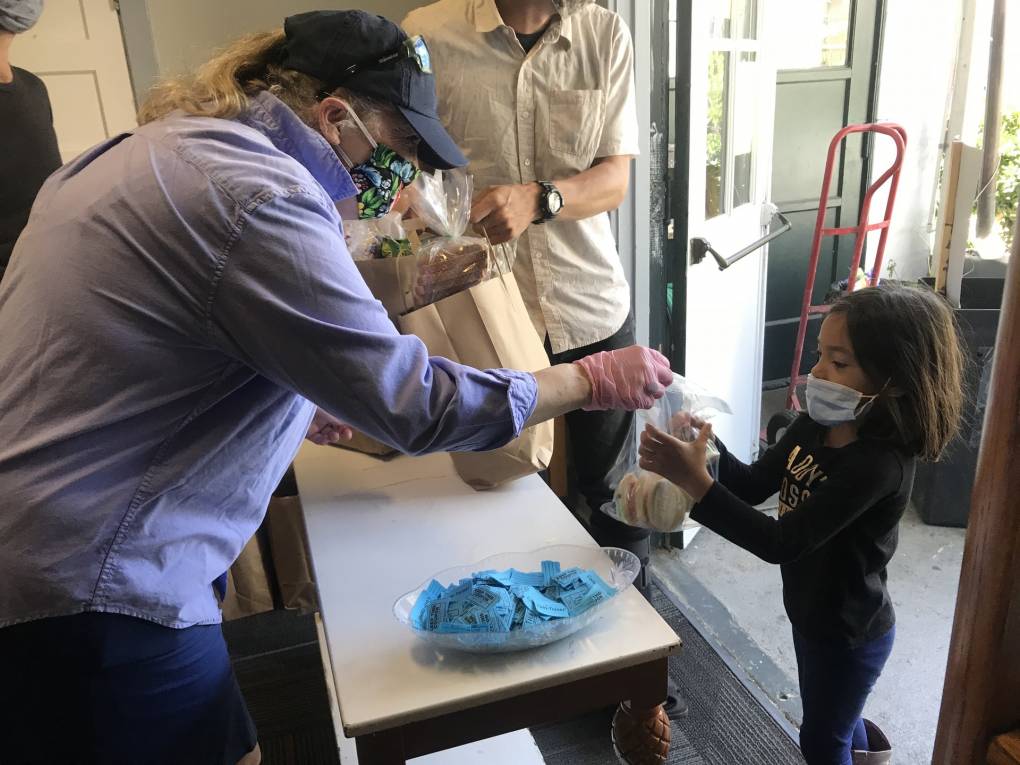
"caption": "Niah Gerard, a food pantry organizer, passes groceries to a young girl who came with her family. ",
"description": null,
"title": "RS42969_IMG_2762-qut",
"credit": "Ariella Markowitz",
"status": "inherit",
"isLoading": false,
"fetchFailed": false
},
"news_11815931": {
"type": "attachments",
"id": "news_11815931",
"meta": {
"index": "attachments_1716263798",
"site": "news",
"id": "11815931",
"found": true
},
"parent": 11815922,
"imgSizes": {
"apple_news_ca_landscape_5_5": {
"file": "https://ww2.kqed.org/app/uploads/sites/10/2020/05/ModocResize-1044x783.jpg",
"width": 1044,
"mimeType": "image/jpeg",
"height": 783
},
"apple_news_ca_square_4_0": {
"file": "https://ww2.kqed.org/app/uploads/sites/10/2020/05/ModocResize-470x470.jpg",
"width": 470,
"mimeType": "image/jpeg",
"height": 470
},
"twentyfourteen-full-width": {
"file": "https://ww2.kqed.org/app/uploads/sites/10/2020/05/ModocResize-1038x576.jpg",
"width": 1038,
"mimeType": "image/jpeg",
"height": 576
},
"thumbnail": {
"file": "https://ww2.kqed.org/app/uploads/sites/10/2020/05/ModocResize-160x120.jpg",
"width": 160,
"mimeType": "image/jpeg",
"height": 120
},
"post-thumbnail": {
"file": "https://ww2.kqed.org/app/uploads/sites/10/2020/05/ModocResize-672x372.jpg",
"width": 672,
"mimeType": "image/jpeg",
"height": 372
},
"kqedFullSize": {
"file": "https://ww2.kqed.org/app/uploads/sites/10/2020/05/ModocResize.jpg",
"width": 1920,
"height": 1440
},
"apple_news_ca_landscape_4_7": {
"file": "https://ww2.kqed.org/app/uploads/sites/10/2020/05/ModocResize-632x474.jpg",
"width": 632,
"mimeType": "image/jpeg",
"height": 474
},
"large": {
"file": "https://ww2.kqed.org/app/uploads/sites/10/2020/05/ModocResize-1020x765.jpg",
"width": 1020,
"mimeType": "image/jpeg",
"height": 765
},
"apple_news_ca_landscape_4_0": {
"file": "https://ww2.kqed.org/app/uploads/sites/10/2020/05/ModocResize-536x402.jpg",
"width": 536,
"mimeType": "image/jpeg",
"height": 402
},
"apple_news_ca_portrait_12_9": {
"file": "https://ww2.kqed.org/app/uploads/sites/10/2020/05/ModocResize-1122x1440.jpg",
"width": 1122,
"mimeType": "image/jpeg",
"height": 1440
},
"medium": {
"file": "https://ww2.kqed.org/app/uploads/sites/10/2020/05/ModocResize-800x600.jpg",
"width": 800,
"mimeType": "image/jpeg",
"height": 600
},
"apple_news_ca_portrait_4_0": {
"file": "https://ww2.kqed.org/app/uploads/sites/10/2020/05/ModocResize-354x472.jpg",
"width": 354,
"mimeType": "image/jpeg",
"height": 472
},
"apple_news_ca_portrait_9_7": {
"file": "https://ww2.kqed.org/app/uploads/sites/10/2020/05/ModocResize-840x1120.jpg",
"width": 840,
"mimeType": "image/jpeg",
"height": 1120
},
"apple_news_ca_landscape_12_9": {
"file": "https://ww2.kqed.org/app/uploads/sites/10/2020/05/ModocResize-1832x1374.jpg",
"width": 1832,
"mimeType": "image/jpeg",
"height": 1374
},
"apple_news_ca_square_9_7": {
"file": "https://ww2.kqed.org/app/uploads/sites/10/2020/05/ModocResize-1104x1104.jpg",
"width": 1104,
"mimeType": "image/jpeg",
"height": 1104
},
"apple_news_ca_portrait_4_7": {
"file": "https://ww2.kqed.org/app/uploads/sites/10/2020/05/ModocResize-414x552.jpg",
"width": 414,
"mimeType": "image/jpeg",
"height": 552
},
"apple_news_ca_square_12_9": {
"file": "https://ww2.kqed.org/app/uploads/sites/10/2020/05/ModocResize-1472x1440.jpg",
"width": 1472,
"mimeType": "image/jpeg",
"height": 1440
},
"apple_news_ca_portrait_5_5": {
"file": "https://ww2.kqed.org/app/uploads/sites/10/2020/05/ModocResize-687x916.jpg",
"width": 687,
"mimeType": "image/jpeg",
"height": 916
},
"full-width": {
"file": "https://ww2.kqed.org/app/uploads/sites/10/2020/05/ModocResize-1920x1440.jpg",
"width": 1920,
"mimeType": "image/jpeg",
"height": 1440
},
"apple_news_ca_square_4_7": {
"file": "https://ww2.kqed.org/app/uploads/sites/10/2020/05/ModocResize-550x550.jpg",
"width": 550,
"mimeType": "image/jpeg",
"height": 550
},
"apple_news_ca_landscape_9_7": {
"file": "https://ww2.kqed.org/app/uploads/sites/10/2020/05/ModocResize-1376x1032.jpg",
"width": 1376,
"mimeType": "image/jpeg",
"height": 1032
},
"apple_news_ca_square_5_5": {
"file": "https://ww2.kqed.org/app/uploads/sites/10/2020/05/ModocResize-912x912.jpg",
"width": 912,
"mimeType": "image/jpeg",
"height": 912
}
},
"publishDate": 1588446602,
"modified": 1588447763,
"caption": "Summit Trail in South Warner Wilderness, Modoc National Forest, northeastern California. ",
"description": "Summit Trail in South Warner Wilderness, Modoc National Forest, northeastern California. ",
"title": "ModocResize",
"credit": "Jim Gumm/Wikimedia Commons",
"status": "inherit",
"isLoading": false,
"fetchFailed": false
},
"news_11815920": {
"type": "attachments",
"id": "news_11815920",
"meta": {
"index": "attachments_1716263798",
"site": "news",
"id": "11815920",
"found": true
},
"parent": 11815762,
"imgSizes": {
"apple_news_ca_landscape_5_5": {
"file": "https://ww2.kqed.org/app/uploads/sites/10/2020/05/tommaso-urli-vEtYK2wkOt0-unsplash-1-1044x783.jpg",
"width": 1044,
"mimeType": "image/jpeg",
"height": 783
},
"apple_news_ca_square_4_0": {
"file": "https://ww2.kqed.org/app/uploads/sites/10/2020/05/tommaso-urli-vEtYK2wkOt0-unsplash-1-470x470.jpg",
"width": 470,
"mimeType": "image/jpeg",
"height": 470
},
"twentyfourteen-full-width": {
"file": "https://ww2.kqed.org/app/uploads/sites/10/2020/05/tommaso-urli-vEtYK2wkOt0-unsplash-1-1038x576.jpg",
"width": 1038,
"mimeType": "image/jpeg",
"height": 576
},
"thumbnail": {
"file": "https://ww2.kqed.org/app/uploads/sites/10/2020/05/tommaso-urli-vEtYK2wkOt0-unsplash-1-160x107.jpg",
"width": 160,
"mimeType": "image/jpeg",
"height": 107
},
"post-thumbnail": {
"file": "https://ww2.kqed.org/app/uploads/sites/10/2020/05/tommaso-urli-vEtYK2wkOt0-unsplash-1-672x372.jpg",
"width": 672,
"mimeType": "image/jpeg",
"height": 372
},
"kqedFullSize": {
"file": "https://ww2.kqed.org/app/uploads/sites/10/2020/05/tommaso-urli-vEtYK2wkOt0-unsplash-1.jpg",
"width": 1920,
"height": 1280
},
"apple_news_ca_landscape_4_7": {
"file": "https://ww2.kqed.org/app/uploads/sites/10/2020/05/tommaso-urli-vEtYK2wkOt0-unsplash-1-632x474.jpg",
"width": 632,
"mimeType": "image/jpeg",
"height": 474
},
"large": {
"file": "https://ww2.kqed.org/app/uploads/sites/10/2020/05/tommaso-urli-vEtYK2wkOt0-unsplash-1-1020x680.jpg",
"width": 1020,
"mimeType": "image/jpeg",
"height": 680
},
"apple_news_ca_landscape_4_0": {
"file": "https://ww2.kqed.org/app/uploads/sites/10/2020/05/tommaso-urli-vEtYK2wkOt0-unsplash-1-536x402.jpg",
"width": 536,
"mimeType": "image/jpeg",
"height": 402
},
"apple_news_ca_portrait_12_9": {
"file": "https://ww2.kqed.org/app/uploads/sites/10/2020/05/tommaso-urli-vEtYK2wkOt0-unsplash-1-1122x1280.jpg",
"width": 1122,
"mimeType": "image/jpeg",
"height": 1280
},
"medium": {
"file": "https://ww2.kqed.org/app/uploads/sites/10/2020/05/tommaso-urli-vEtYK2wkOt0-unsplash-1-800x533.jpg",
"width": 800,
"mimeType": "image/jpeg",
"height": 533
},
"apple_news_ca_portrait_4_0": {
"file": "https://ww2.kqed.org/app/uploads/sites/10/2020/05/tommaso-urli-vEtYK2wkOt0-unsplash-1-354x472.jpg",
"width": 354,
"mimeType": "image/jpeg",
"height": 472
},
"apple_news_ca_portrait_9_7": {
"file": "https://ww2.kqed.org/app/uploads/sites/10/2020/05/tommaso-urli-vEtYK2wkOt0-unsplash-1-840x1120.jpg",
"width": 840,
"mimeType": "image/jpeg",
"height": 1120
},
"apple_news_ca_landscape_12_9": {
"file": "https://ww2.kqed.org/app/uploads/sites/10/2020/05/tommaso-urli-vEtYK2wkOt0-unsplash-1-1832x1280.jpg",
"width": 1832,
"mimeType": "image/jpeg",
"height": 1280
},
"apple_news_ca_square_9_7": {
"file": "https://ww2.kqed.org/app/uploads/sites/10/2020/05/tommaso-urli-vEtYK2wkOt0-unsplash-1-1104x1104.jpg",
"width": 1104,
"mimeType": "image/jpeg",
"height": 1104
},
"apple_news_ca_portrait_4_7": {
"file": "https://ww2.kqed.org/app/uploads/sites/10/2020/05/tommaso-urli-vEtYK2wkOt0-unsplash-1-414x552.jpg",
"width": 414,
"mimeType": "image/jpeg",
"height": 552
},
"apple_news_ca_square_12_9": {
"file": "https://ww2.kqed.org/app/uploads/sites/10/2020/05/tommaso-urli-vEtYK2wkOt0-unsplash-1-1472x1280.jpg",
"width": 1472,
"mimeType": "image/jpeg",
"height": 1280
},
"apple_news_ca_portrait_5_5": {
"file": "https://ww2.kqed.org/app/uploads/sites/10/2020/05/tommaso-urli-vEtYK2wkOt0-unsplash-1-687x916.jpg",
"width": 687,
"mimeType": "image/jpeg",
"height": 916
},
"full-width": {
"file": "https://ww2.kqed.org/app/uploads/sites/10/2020/05/tommaso-urli-vEtYK2wkOt0-unsplash-1-1920x1280.jpg",
"width": 1920,
"mimeType": "image/jpeg",
"height": 1280
},
"apple_news_ca_square_4_7": {
"file": "https://ww2.kqed.org/app/uploads/sites/10/2020/05/tommaso-urli-vEtYK2wkOt0-unsplash-1-550x550.jpg",
"width": 550,
"mimeType": "image/jpeg",
"height": 550
},
"apple_news_ca_landscape_9_7": {
"file": "https://ww2.kqed.org/app/uploads/sites/10/2020/05/tommaso-urli-vEtYK2wkOt0-unsplash-1-1376x1032.jpg",
"width": 1376,
"mimeType": "image/jpeg",
"height": 1032
},
"apple_news_ca_square_5_5": {
"file": "https://ww2.kqed.org/app/uploads/sites/10/2020/05/tommaso-urli-vEtYK2wkOt0-unsplash-1-912x912.jpg",
"width": 912,
"mimeType": "image/jpeg",
"height": 912
}
},
"publishDate": 1588435228,
"modified": 1588435299,
"caption": "KQED staff share shelter-in-place tips: Baking sourdough, renting digital books and Zoom-calling family.",
"description": null,
"title": "tommaso-urli-vEtYK2wkOt0-unsplash (1)",
"credit": "Tommaso Urli/Unsplash",
"status": "inherit",
"isLoading": false,
"fetchFailed": false
},
"news_11815880": {
"type": "attachments",
"id": "news_11815880",
"meta": {
"index": "attachments_1716263798",
"site": "news",
"id": "11815880",
"found": true
},
"parent": 11815688,
"imgSizes": {
"apple_news_ca_landscape_5_5": {
"file": "https://ww2.kqed.org/app/uploads/sites/10/2020/05/727-MARQUEE-1044x720.jpg",
"width": 1044,
"mimeType": "image/jpeg",
"height": 720
},
"apple_news_ca_square_4_0": {
"file": "https://ww2.kqed.org/app/uploads/sites/10/2020/05/727-MARQUEE-470x470.jpg",
"width": 470,
"mimeType": "image/jpeg",
"height": 470
},
"twentyfourteen-full-width": {
"file": "https://ww2.kqed.org/app/uploads/sites/10/2020/05/727-MARQUEE-1038x576.jpg",
"width": 1038,
"mimeType": "image/jpeg",
"height": 576
},
"thumbnail": {
"file": "https://ww2.kqed.org/app/uploads/sites/10/2020/05/727-MARQUEE-160x90.jpg",
"width": 160,
"mimeType": "image/jpeg",
"height": 90
},
"post-thumbnail": {
"file": "https://ww2.kqed.org/app/uploads/sites/10/2020/05/727-MARQUEE-672x372.jpg",
"width": 672,
"mimeType": "image/jpeg",
"height": 372
},
"kqedFullSize": {
"file": "https://ww2.kqed.org/app/uploads/sites/10/2020/05/727-MARQUEE.jpg",
"width": 1280,
"height": 720
},
"apple_news_ca_landscape_4_7": {
"file": "https://ww2.kqed.org/app/uploads/sites/10/2020/05/727-MARQUEE-632x474.jpg",
"width": 632,
"mimeType": "image/jpeg",
"height": 474
},
"large": {
"file": "https://ww2.kqed.org/app/uploads/sites/10/2020/05/727-MARQUEE-1020x574.jpg",
"width": 1020,
"mimeType": "image/jpeg",
"height": 574
},
"apple_news_ca_landscape_4_0": {
"file": "https://ww2.kqed.org/app/uploads/sites/10/2020/05/727-MARQUEE-536x402.jpg",
"width": 536,
"mimeType": "image/jpeg",
"height": 402
},
"apple_news_ca_portrait_12_9": {
"file": "https://ww2.kqed.org/app/uploads/sites/10/2020/05/727-MARQUEE-1122x720.jpg",
"width": 1122,
"mimeType": "image/jpeg",
"height": 720
},
"medium": {
"file": "https://ww2.kqed.org/app/uploads/sites/10/2020/05/727-MARQUEE-800x450.jpg",
"width": 800,
"mimeType": "image/jpeg",
"height": 450
},
"apple_news_ca_portrait_4_0": {
"file": "https://ww2.kqed.org/app/uploads/sites/10/2020/05/727-MARQUEE-354x472.jpg",
"width": 354,
"mimeType": "image/jpeg",
"height": 472
},
"apple_news_ca_portrait_9_7": {
"file": "https://ww2.kqed.org/app/uploads/sites/10/2020/05/727-MARQUEE-840x720.jpg",
"width": 840,
"mimeType": "image/jpeg",
"height": 720
},
"apple_news_ca_square_9_7": {
"file": "https://ww2.kqed.org/app/uploads/sites/10/2020/05/727-MARQUEE-1104x720.jpg",
"width": 1104,
"mimeType": "image/jpeg",
"height": 720
},
"apple_news_ca_portrait_4_7": {
"file": "https://ww2.kqed.org/app/uploads/sites/10/2020/05/727-MARQUEE-414x552.jpg",
"width": 414,
"mimeType": "image/jpeg",
"height": 552
},
"apple_news_ca_portrait_5_5": {
"file": "https://ww2.kqed.org/app/uploads/sites/10/2020/05/727-MARQUEE-687x720.jpg",
"width": 687,
"mimeType": "image/jpeg",
"height": 720
},
"apple_news_ca_square_4_7": {
"file": "https://ww2.kqed.org/app/uploads/sites/10/2020/05/727-MARQUEE-550x550.jpg",
"width": 550,
"mimeType": "image/jpeg",
"height": 550
},
"apple_news_ca_square_5_5": {
"file": "https://ww2.kqed.org/app/uploads/sites/10/2020/05/727-MARQUEE-912x720.jpg",
"width": 912,
"mimeType": "image/jpeg",
"height": 720
}
},
"publishDate": 1588380645,
"modified": 1588380645,
"caption": null,
"description": null,
"title": "727 MARQUEE",
"credit": null,
"status": "inherit",
"isLoading": false,
"fetchFailed": false
}
},
"audioPlayerReducer": {
"postId": "stream_live",
"isPaused": true,
"isPlaying": false,
"pfsActive": false,
"pledgeModalIsOpen": true,
"playerDrawerIsOpen": false,
"liveAudioPlayStartedAt": 0,
"liveAudioPlayContext": ""
},
"authorsReducer": {
"byline_news_11816247": {
"type": "authors",
"id": "byline_news_11816247",
"meta": {
"override": true
},
"slug": "byline_news_11816247",
"name": "The Associated Press",
"isLoading": false
},
"byline_news_11815978": {
"type": "authors",
"id": "byline_news_11815978",
"meta": {
"override": true
},
"slug": "byline_news_11815978",
"name": "Anna Maria Barry-Jester, Angela Hart and Rachel Bluth",
"isLoading": false
},
"byline_news_11815922": {
"type": "authors",
"id": "byline_news_11815922",
"meta": {
"override": true
},
"slug": "byline_news_11815922",
"name": "Scott Sonner and Juliet Williams",
"isLoading": false
},
"kqed": {
"type": "authors",
"id": "236",
"meta": {
"index": "authors_1716337520",
"id": "236",
"found": true
},
"name": "KQED News Staff",
"firstName": "KQED News Staff",
"lastName": null,
"slug": "kqed",
"email": "faq@kqed.org",
"display_author_email": false,
"staff_mastheads": [],
"title": null,
"bio": null,
"avatar": "https://secure.gravatar.com/avatar/ef0e801a68c4c54afa9180db14084167?s=600&d=blank&r=g",
"twitter": null,
"facebook": null,
"instagram": null,
"linkedin": null,
"sites": [
{
"site": "arts",
"roles": [
"contributor"
]
},
{
"site": "news",
"roles": [
"editor"
]
},
{
"site": "futureofyou",
"roles": [
"author"
]
}
],
"headData": {
"title": "KQED News Staff | KQED",
"description": null,
"ogImgSrc": "https://secure.gravatar.com/avatar/ef0e801a68c4c54afa9180db14084167?s=600&d=blank&r=g",
"twImgSrc": "https://secure.gravatar.com/avatar/ef0e801a68c4c54afa9180db14084167?s=600&d=blank&r=g"
},
"isLoading": false,
"link": "/author/kqed"
},
"markfiore": {
"type": "authors",
"id": "3236",
"meta": {
"index": "authors_1716337520",
"id": "3236",
"found": true
},
"name": "Mark Fiore",
"firstName": "Mark",
"lastName": "Fiore",
"slug": "markfiore",
"email": "mark@markfiore.com",
"display_author_email": false,
"staff_mastheads": [
"news"
],
"title": "KQED News Cartoonist",
"bio": "\u003ca href=\"http://www.MarkFiore.com\">MarkFiore.com\u003c/a> | \u003ca href=\"https://twitter.com/markfiore\">Follow on Twitter\u003c/a> | \u003ca href=\"https://www.facebook.com/pages/Mark-Fiore-Animated-Political-Cartoons/94451707396?ref=bookmarks\">Facebook\u003c/a> | \u003ca href=\"mailto:mark@markfiore.com\">email\u003c/a>\r\n\r\nPulitzer Prize-winner, Mark Fiore, who the Wall Street Journal has called “the undisputed guru of the form,” creates animated political cartoons in San Francisco, where his work has been featured regularly on the San Francisco Chronicle’s web site, SFGate.com. His work has appeared on Newsweek.com, Slate.com, CBSNews.com, MotherJones.com, DailyKos.com and NPR’s web site. Fiore’s political animation has appeared on CNN, Frontline, Bill Moyers Journal, Salon.com and cable and broadcast outlets across the globe.\r\n\r\nBeginning his professional life by drawing traditional political cartoons for newspapers, Fiore’s work appeared in publications ranging from the Washington Post to the Los Angeles Times. In the late 1990s, he began to experiment with animating political cartoons and, after a short stint at the San Jose Mercury News as their staff cartoonist, Fiore devoted all his energies to animation.\r\nGrowing up in California, Fiore also spent a good portion of his life in the backwoods of Idaho. It was this combination that shaped him politically. Mark majored in political science at Colorado College, where, in a perfect send-off for a cartoonist, he received his diploma in 1991 as commencement speaker Dick Cheney smiled approvingly.\r\nMark Fiore was awarded the Pulitzer Prize for political cartooning in 2010, a Robert F. Kennedy Journalism Award in 2004 and has twice received an Online Journalism Award for commentary from the Online News Association (2002, 2008). Fiore has received two awards for his work in new media from the National Cartoonists Society (2001, 2002), and in 2006 received The James Madison Freedom of Information Award from The Society of Professional Journalists.",
"avatar": "https://secure.gravatar.com/avatar/fc4e2a612b15b67bad0c6f0e1db4ca9b?s=600&d=blank&r=g",
"twitter": "MarkFiore",
"facebook": null,
"instagram": "https://www.instagram.com/markfiore/?hl=en",
"linkedin": null,
"sites": [
{
"site": "arts",
"roles": [
"contributor"
]
},
{
"site": "news",
"roles": [
"editor"
]
},
{
"site": "futureofyou",
"roles": [
"editor"
]
},
{
"site": "science",
"roles": [
"editor"
]
}
],
"headData": {
"title": "Mark Fiore | KQED",
"description": "KQED News Cartoonist",
"ogImgSrc": "https://secure.gravatar.com/avatar/fc4e2a612b15b67bad0c6f0e1db4ca9b?s=600&d=blank&r=g",
"twImgSrc": "https://secure.gravatar.com/avatar/fc4e2a612b15b67bad0c6f0e1db4ca9b?s=600&d=blank&r=g"
},
"isLoading": false,
"link": "/author/markfiore"
},
"mlagos": {
"type": "authors",
"id": "3239",
"meta": {
"index": "authors_1716337520",
"id": "3239",
"found": true
},
"name": "Marisa Lagos",
"firstName": "Marisa",
"lastName": "Lagos",
"slug": "mlagos",
"email": "mlagos@kqed.org",
"display_author_email": false,
"staff_mastheads": [
"news"
],
"title": "KQED Contributor",
"bio": "Marisa Lagos is a correspondent for KQED’s California Politics and Government Desk and co-hosts the award-winning show and podcast, Political Breakdown. At KQED, Lagos also conducts reporting, analysis and investigations into state, local and national politics for radio, TV, online and onstage. In 2022, she and co-host, Scott Shafer, moderated the only gubernatorial debate in California. In 2020, the \u003ci>Washington Post\u003c/i> named her one of the top political journalists in California; she was nominated for a Peabody and won several other awards for her work investigating the 2017 California wildfires. She has worked at the \u003ci>San Francisco Chronicle\u003c/i>, \u003ci>San Francisco Examiner\u003c/i> and \u003ci>Los Angeles Times\u003c/i>. A UC Santa Barbara graduate, she lives in San Francisco with her two sons and husband.",
"avatar": "https://secure.gravatar.com/avatar/a261a0d3696fc066871ef96b85b5e7d2?s=600&d=blank&r=g",
"twitter": "@mlagos",
"facebook": null,
"instagram": null,
"linkedin": null,
"sites": [
{
"site": "arts",
"roles": [
"author"
]
},
{
"site": "news",
"roles": [
"editor"
]
},
{
"site": "science",
"roles": [
"editor"
]
},
{
"site": "forum",
"roles": [
"author"
]
},
{
"site": "liveblog",
"roles": [
"author"
]
}
],
"headData": {
"title": "Marisa Lagos | KQED",
"description": "KQED Contributor",
"ogImgSrc": "https://secure.gravatar.com/avatar/a261a0d3696fc066871ef96b85b5e7d2?s=600&d=blank&r=g",
"twImgSrc": "https://secure.gravatar.com/avatar/a261a0d3696fc066871ef96b85b5e7d2?s=600&d=blank&r=g"
},
"isLoading": false,
"link": "/author/mlagos"
},
"jsmall": {
"type": "authors",
"id": "6625",
"meta": {
"index": "authors_1716337520",
"id": "6625",
"found": true
},
"name": "Julie Small",
"firstName": "Julie",
"lastName": "Small",
"slug": "jsmall",
"email": "jsmall@kqed.org",
"display_author_email": true,
"staff_mastheads": [
"news"
],
"title": "KQED Contributor",
"bio": "Julie Small reports on criminal justice and immigration.\r\n\r\nShe was part of a team at KQED awarded a regional 2019 Edward R. Murrow award for continuing coverage of the Trump Administration's family separation policy.\r\n\r\nThe Society for Professional Journalists recognized Julie's 2018 \u003ca href=\"https://www.kqed.org/news/11636262/the-officer-tased-him-31-times-the-sheriff-called-his-death-an-accident\">reporting\u003c/a> on the San Joaquin County Sheriff's \u003ca href=\"https://www.kqed.org/news/11634689/autopsy-doctors-sheriff-overrode-death-findings-to-protect-law-enforcement\">interference\u003c/a> in death investigations with an Excellence in Journalism Award for Ongoing Coverage.\r\n\r\nJulie's\u003ca href=\"https://www.kqed.org/news/11039666/two-mentally-ill-inmates-died-one-month-in-santa-clara\"> reporting\u003c/a> with Lisa Pickoff-White on the treatment of mentally ill offenders in California jails earned a 2017 regional Edward R. Murrow Award for news reporting and an investigative reporting award from the SPJ of Northern California.\r\n\r\nBefore joining KQED, Julie covered government and politics in Sacramento for Southern California Public Radio (SCPR). Her 2010 \u003ca href=\"https://www.scpr.org/specials/prisonmedical/\">series\u003c/a> on lapses in California’s prison medical care also won a regional Edward R. Murrow Award for investigative reporting and a Golden Mic Award from the RTNDA of Southern California.\r\n\r\nJulie began her career in journalism in 2000 as the deputy foreign editor for public radio's \u003cem>Marketplace, \u003c/em>while earning her master's degree in journalism from USC’s Annenberg School of Communication.",
"avatar": "https://secure.gravatar.com/avatar/4baedf201468df97be97c2a9dd7585d0?s=600&d=blank&r=g",
"twitter": "@SmallRadio2",
"facebook": null,
"instagram": null,
"linkedin": null,
"sites": [
{
"site": "news",
"roles": [
"editor"
]
},
{
"site": "stateofhealth",
"roles": [
"author"
]
},
{
"site": "science",
"roles": [
"author"
]
}
],
"headData": {
"title": "Julie Small | KQED",
"description": "KQED Contributor",
"ogImgSrc": "https://secure.gravatar.com/avatar/4baedf201468df97be97c2a9dd7585d0?s=600&d=blank&r=g",
"twImgSrc": "https://secure.gravatar.com/avatar/4baedf201468df97be97c2a9dd7585d0?s=600&d=blank&r=g"
},
"isLoading": false,
"link": "/author/jsmall"
},
"clei": {
"type": "authors",
"id": "8617",
"meta": {
"index": "authors_1716337520",
"id": "8617",
"found": true
},
"name": "Cecilia Lei",
"firstName": "Cecilia",
"lastName": "Lei",
"slug": "clei",
"email": "clei@KQED.org",
"display_author_email": false,
"staff_mastheads": [],
"title": "KQED Contributor",
"bio": "Cecilia Lei is an on-call host and producer for KQED News and Podcasts. Previously, she was the executive producer and host of the San Francisco Chronicle's daily news podcast, 'Fifth and Mission'. Cecilia is a graduate of UC Berkeley’s Graduate School of Journalism and the former president of the Asian American Journalists Association San Francisco Bay Area chapter.",
"avatar": "https://secure.gravatar.com/avatar/40975f1f88fccf628ee537bf6ffc2af8?s=600&d=blank&r=g",
"twitter": null,
"facebook": null,
"instagram": null,
"linkedin": null,
"sites": [
{
"site": "arts",
"roles": [
"contributor"
]
},
{
"site": "news",
"roles": [
"author",
"read_private_posts"
]
},
{
"site": "about",
"roles": [
"editor"
]
}
],
"headData": {
"title": "Cecilia Lei | KQED",
"description": "KQED Contributor",
"ogImgSrc": "https://secure.gravatar.com/avatar/40975f1f88fccf628ee537bf6ffc2af8?s=600&d=blank&r=g",
"twImgSrc": "https://secure.gravatar.com/avatar/40975f1f88fccf628ee537bf6ffc2af8?s=600&d=blank&r=g"
},
"isLoading": false,
"link": "/author/clei"
},
"bhernandez": {
"type": "authors",
"id": "11359",
"meta": {
"index": "authors_1716337520",
"id": "11359",
"found": true
},
"name": "Bianca Hernandez",
"firstName": "Bianca",
"lastName": "Hernandez",
"slug": "bhernandez",
"email": "bhernandez@kqed.org",
"display_author_email": false,
"staff_mastheads": [],
"title": "KQED Contributor",
"bio": "Bianca Hernandez is a former Interactive Producer for KQED. She has produced at KGPE, KSEE24 and Sierra Magazine. In 2011 she received an undergraduate degree in Journalism and Anthropology from CSU, Chico . She earned a Master's from the University of Southern California in 2013, where she completed a documentary on teenage farmworkers. She is an avid Jane Austen fan and takes lightsaber combat class for fun.",
"avatar": "https://secure.gravatar.com/avatar/75b3424851e2f9fa131f2cb6a051aeac?s=600&d=blank&r=g",
"twitter": "bookhoarding",
"facebook": null,
"instagram": null,
"linkedin": null,
"sites": [
{
"site": "arts",
"roles": []
},
{
"site": "news",
"roles": []
},
{
"site": "science",
"roles": []
},
{
"site": "forum",
"roles": []
}
],
"headData": {
"title": "Bianca Hernandez | KQED",
"description": "KQED Contributor",
"ogImgSrc": "https://secure.gravatar.com/avatar/75b3424851e2f9fa131f2cb6a051aeac?s=600&d=blank&r=g",
"twImgSrc": "https://secure.gravatar.com/avatar/75b3424851e2f9fa131f2cb6a051aeac?s=600&d=blank&r=g"
},
"isLoading": false,
"link": "/author/bhernandez"
},
"mwiley": {
"type": "authors",
"id": "11526",
"meta": {
"index": "authors_1716337520",
"id": "11526",
"found": true
},
"name": "Michelle Wiley",
"firstName": "Michelle",
"lastName": "Wiley",
"slug": "mwiley",
"email": "mwiley@KQED.org",
"display_author_email": true,
"staff_mastheads": [],
"title": null,
"bio": "Michelle Wiley was the senior editor of weekends.",
"avatar": "https://secure.gravatar.com/avatar/3b897d82a09e8587e8e73fa69fbcc635?s=600&d=blank&r=g",
"twitter": "michelleewiley",
"facebook": null,
"instagram": null,
"linkedin": null,
"sites": [
{
"site": "",
"roles": [
"editor"
]
},
{
"site": "arts",
"roles": [
"editor"
]
},
{
"site": "news",
"roles": [
"subscriber"
]
},
{
"site": "lowdown",
"roles": [
"editor"
]
},
{
"site": "science",
"roles": [
"editor"
]
},
{
"site": "podcasts",
"roles": [
"editor"
]
}
],
"headData": {
"title": "Michelle Wiley | KQED",
"description": null,
"ogImgSrc": "https://secure.gravatar.com/avatar/3b897d82a09e8587e8e73fa69fbcc635?s=600&d=blank&r=g",
"twImgSrc": "https://secure.gravatar.com/avatar/3b897d82a09e8587e8e73fa69fbcc635?s=600&d=blank&r=g"
},
"isLoading": false,
"link": "/author/mwiley"
},
"amarkowitz": {
"type": "authors",
"id": "11660",
"meta": {
"index": "authors_1716337520",
"id": "11660",
"found": true
},
"name": "Ariella Markowitz",
"firstName": "Ariella",
"lastName": "Markowitz",
"slug": "amarkowitz",
"email": "amarkowitz@kqed.org",
"display_author_email": false,
"staff_mastheads": [],
"title": "KQED Contributor",
"bio": "Ariella is a former intern for the California Report Magazine. Before that, she helped mobilize freelance journalists with Association of Independents in Radio (AIR) and made radio features for KALW. Ariella loves investigative reporting, personal stories that interrogate power, and spicy vegan cooking.",
"avatar": "https://secure.gravatar.com/avatar/7076c77064fecef602a2c779f2b9e1d33cb6f9b5fa13542bd1a6e2846a7c85a9?s=600&d=blank&r=g",
"twitter": "ariellaudio",
"bluesky": null,
"facebook": null,
"instagram": null,
"linkedin": null,
"sites": [
{
"site": "news",
"roles": [
"author"
]
},
{
"site": "forum",
"roles": [
"editor"
]
},
{
"site": "perspectives",
"roles": [
"administrator"
]
}
],
"headData": {
"title": "Ariella Markowitz | KQED",
"description": "KQED Contributor",
"ogImgSrc": "https://secure.gravatar.com/avatar/7076c77064fecef602a2c779f2b9e1d33cb6f9b5fa13542bd1a6e2846a7c85a9?s=600&d=blank&r=g",
"twImgSrc": "https://secure.gravatar.com/avatar/7076c77064fecef602a2c779f2b9e1d33cb6f9b5fa13542bd1a6e2846a7c85a9?s=600&d=blank&r=g"
},
"isLoading": false,
"link": "/author/amarkowitz"
},
"jrodriguez": {
"type": "authors",
"id": "11690",
"meta": {
"index": "authors_1716337520",
"id": "11690",
"found": true
},
"name": "Joe Fitzgerald Rodriguez",
"firstName": "Joe",
"lastName": "Fitzgerald Rodriguez",
"slug": "jrodriguez",
"email": "jrodriguez@kqed.org",
"display_author_email": true,
"staff_mastheads": [
"news"
],
"title": "Reporter and Producer",
"bio": "Joe Fitzgerald Rodriguez is a reporter and digital producer for KQED covering politics. Joe most recently wrote for the \u003cem>San Francisco Examiner\u003c/em> as a political columnist covering The City. He was raised in San Francisco and has spent his reporting career in his beloved, foggy, city by the bay. Joe was 12-years-old when he conducted his first interview in journalism, grilling former San Francisco Mayor Willie Brown for the Marina Middle School newspaper, \u003cem>The Penguin Press, \u003c/em>and he continues to report on the San Francisco Bay Area to this day.",
"avatar": "https://secure.gravatar.com/avatar/2247beb0564c1e9c62228d5649d2edac?s=600&d=blank&r=g",
"twitter": "FitztheReporter",
"facebook": null,
"instagram": "https://www.instagram.com/fitzthereporter/",
"linkedin": null,
"sites": [
{
"site": "",
"roles": [
"editor"
]
},
{
"site": "arts",
"roles": [
"editor"
]
},
{
"site": "news",
"roles": [
"editor"
]
},
{
"site": "science",
"roles": [
"editor"
]
},
{
"site": "elections",
"roles": [
"editor"
]
},
{
"site": "liveblog",
"roles": [
"editor"
]
}
],
"headData": {
"title": "Joe Fitzgerald Rodriguez | KQED",
"description": "Reporter and Producer",
"ogImgSrc": "https://secure.gravatar.com/avatar/2247beb0564c1e9c62228d5649d2edac?s=600&d=blank&r=g",
"twImgSrc": "https://secure.gravatar.com/avatar/2247beb0564c1e9c62228d5649d2edac?s=600&d=blank&r=g"
},
"isLoading": false,
"link": "/author/jrodriguez"
}
},
"pagesReducer": {
"news_tag_covid-19": {
"type": "terms",
"id": "news_27504",
"meta": {
"index": "terms_1716263798",
"site": "news",
"id": "27504",
"score": 8.558294
},
"featImg": null,
"name": "covid-19",
"description": null,
"taxonomy": "tag",
"headData": {
"twImgId": null,
"twTitle": null,
"ogTitle": null,
"ogImgId": null,
"twDescription": null,
"description": null,
"title": "covid-19 Archives | KQED News",
"ogDescription": null
},
"ttid": 27521,
"slug": "covid-19",
"isLoading": false,
"title": "covid-19",
"pageMeta": {
"site": "news",
"WpPageTemplate": "page-topic-editorial",
"currentPage": 67
},
"blocks": [
{
"blockName": "kqed/post-list",
"attrs": {
"layout": "cardArticle2",
"query": "posts/news?tag=covid-19",
"seeMore": false,
"paginated": true,
"page": 67
}
},
{
"blockName": "kqed/ad"
}
]
}
},
"pfsSessionReducer": {},
"postsReducer": {
"stream_live": {
"type": "live",
"id": "stream_live",
"audioUrl": "https://streams.kqed.org/kqedradio",
"title": "Live Stream",
"excerpt": "Live Stream information currently unavailable.",
"link": "/radio",
"featImg": "",
"label": {
"name": "KQED Live",
"link": "/"
}
},
"stream_kqedNewscast": {
"type": "posts",
"id": "stream_kqedNewscast",
"audioUrl": "https://www.kqed.org/.stream/anon/radio/RDnews/newscast.mp3?_=1",
"title": "KQED Newscast",
"featImg": "",
"label": {
"name": "88.5 FM",
"link": "/"
}
},
"news_11816116": {
"type": "posts",
"id": "news_11816116",
"meta": {
"index": "posts_1716263798",
"site": "news",
"id": "11816116",
"score": null,
"sort": [
1588770387000
]
},
"guestAuthors": [],
"slug": "chinatown-housing-group-feeds-vulnerable-sro-tenants-by-reviving-legacy-restaurants",
"title": "Chinatown Housing Group Feeds Vulnerable SRO Tenants – by Reviving Legacy Restaurants",
"publishDate": 1588770387,
"format": "image",
"headTitle": "Chinatown Housing Group Feeds Vulnerable SRO Tenants – by Reviving Legacy Restaurants | KQED",
"labelTerm": {},
"content": "\u003cp>To prepare meals for her family these days, San Francisco Chinatown resident Tina Yu keeps a careful watch outside of her single room occupancy unit, or SRO, on Stockton Street. Yu monitors how many of her neighbors are in the building’s communal kitchen at one time: If there are more than two people inside, she will hold off cooking and wait.\u003c/p>\n\u003cp>Before the coronavirus pandemic, Yu would usually wait in a long line in order to use the communal kitchen, but with the city’s social distancing orders in place – and \u003ca href=\"https://www.kqed.org/news/11814970/bay-area-shelter-in-place-orders-extended-through-may-31\">shelter-in-place orders extended through the end of May\u003c/a> – queuing in tight hallways and cooking shoulder-to-shoulder with neighbors is no longer a safe or viable option.\u003c/p>\n\u003cp>Yu, who shares the SRO with her husband and two young daughters, is one of roughly 13,000 residents in Chinatown who live in SROs. The one-room housing units are typically 80 square feet and make up about half of the neighborhood’s entire housing stock. As one of the last remaining affordable housing options in San Francisco, they are largely occupied by many senior residents and new Chinese immigrant families. There are no private kitchens or bathrooms. Despite being one of the densest residential neighborhoods in the nation, San Francisco Chinatown has been \u003ca href=\"https://www.kqed.org/news/11814026/how-san-franciscos-chinatown-avoided-covid-19-panic\">largely successful\u003c/a> in managing the coronavirus outbreak – but residents say cooking and eating at home often still feels like a daily gamble.\u003c/p>\n\u003cp>One form of relief has come in the form of \u003ca href=\"https://www.chinatowncdc.org/feed-fuel-chinatown\">Feed + Fuel Chinatown\u003c/a>, a free cooked-meal program organized by the \u003ca href=\"https://www.chinatowncdc.org/\">Chinatown Community Development Center (CCDC)\u003c/a>, a nonprofit affordable housing organization. CCDC owns about 465 SRO units in the neighborhood, and its leaders realized early on that food security was a key vulnerability that needed to be addressed immediately.\u003c/p>\n\u003cp>[ad fullwidth]\u003c/p>\n\u003cp>“About a week in [of the shelter-in-place order], we started hearing reports from SRO families that we’ve been working with, that they were starting to see a significant uptick in kitchen usage,” said Malcolm Yeung, CCDC’s executive director. He added that many SRO residents work in Chinatown’s restaurants – a common starter job for new Chinese immigrants – and because they recently lost their employment, they weren’t able to bring extra meals home from work. So cooking at home in risky communal kitchens became even more of a necessity.\u003c/p>\n\u003cp>[pullquote size=\"medium\" align=\"right\" citation=\"Malcolm Yeung, Chinatown Community Development Center executive director\"]‘We’re feeding the most vulnerable, we’re activating restaurants, but I think the most important thing we’re trying to do is just reduce the chances of transmission. That’s why we embarked on this effort.’[/pullquote]\u003c/p>\n\u003cp>Yeung said that although food programs that serve Chinatown are helpful, they utilize a food pantry model, which provides groceries that still need to be cooked. And so, by early March, CCDC sprung into action in an attempt to decrease kitchen usage. They pivoted their employees from their usual affordable housing work and came up with a strategy to feed their most vulnerable clients: about 300 elderly residents that live in nine of CCDC’s SRO buildings.\u003c/p>\n\u003cp>It was a huge logistical effort, according to Yeung, and it required partnering with San Francisco’s \u003ca href=\"https://www.selfhelpelderly.org/san-francisco\">Self-Help for the Elderly\u003c/a>, redeploying about 60 CCDC staff members and relying on about 100 volunteers to package meals and deliver them straight to the doorsteps of each senior resident’s SRO unit.\u003c/p>\n\u003cfigure id=\"attachment_11816448\" class=\"wp-caption aligncenter\" style=\"max-width: 1920px\">\u003cimg loading=\"lazy\" decoding=\"async\" class=\"size-full wp-image-11816448\" src=\"https://ww2.kqed.org/app/uploads/sites/10/2020/05/RS43015_030_KQED_SanFrancisco_ChinatownMeals_05052020-qut.jpg\" alt=\"CCDC community organzier Kitty Fong at New Asia restaurant in Chinatown on April 5, 2020. CCDC partnered with New Asia to form its community kitchen meal takeout program.\" width=\"1920\" height=\"1280\" srcset=\"https://cdn.kqed.org/wp-content/uploads/sites/10/2020/05/RS43015_030_KQED_SanFrancisco_ChinatownMeals_05052020-qut.jpg 1920w, https://cdn.kqed.org/wp-content/uploads/sites/10/2020/05/RS43015_030_KQED_SanFrancisco_ChinatownMeals_05052020-qut-160x107.jpg 160w, https://cdn.kqed.org/wp-content/uploads/sites/10/2020/05/RS43015_030_KQED_SanFrancisco_ChinatownMeals_05052020-qut-800x533.jpg 800w, https://cdn.kqed.org/wp-content/uploads/sites/10/2020/05/RS43015_030_KQED_SanFrancisco_ChinatownMeals_05052020-qut-1020x680.jpg 1020w\" sizes=\"(max-width: 1920px) 100vw, 1920px\">\u003cfigcaption class=\"wp-caption-text\">CCDC community organzier Kitty Fong at New Asia restaurant in Chinatown on April 5, 2020. CCDC partnered with New Asia to form its community kitchen meal takeout program. \u003ccite>(Beth LaBerge/KQED)\u003c/cite>\u003c/figcaption>\u003c/figure>\n\u003cp>Kitty Fong, a CCDC community organizer, said the transition to prioritizing a food program – a whole new line of work for the organization – was tricky at first, but now the daily weekday process has become a smooth assembly line. Fong said elderly residents eagerly express enthusiasm and gratitude for their daily meals.\u003c/p>\n\u003cp>“Whenever I get into the building, they rush out and welcome us, like, ‘Oh, you’re here, we’ve been waiting!’ They are just really welcoming, but at the same time, you’ll have to remind them: ‘OK, but please keep social distancing!’ ” Fong said.\u003c/p>\n\u003ch3>Helping Chinatown’s Anchor Businesses Stay Afloat\u003c/h3>\n\u003cp>After implementing the senior resident meal program successfully, CCDC looked at other ways of expanding the program to feed even more Chinatown SRO residents. As part of San Francisco’s \u003ca href=\"https://sfdbi.org/SRO\">SRO Families United Collaborative\u003c/a>, CCDC has a direct relationship with more than 350 Chinatown families who have children under the age of 18. Through fundraising and the support of philanthropic dollars, CCDC raised enough money to set up a takeout meal program, where SRO families can pick up two cooked meals – lunch and dinner – for each member of their families.\u003c/p>\n\u003cp>The program also has an additional benefit: CCDC reopened the doors of New Asia, one of Chinatown’s last two remaining large community banquet restaurants, and paid the restaurant’s owner to rehire some of his staff members to cook about 700 takeout meals for SRO families each day.\u003c/p>\n\u003cp>These days, New Asia looks like a shell of what it used to be: yellow tablecloths drape its table and furniture, and the lights remain mostly off until SRO families begin arriving by around 11:30 a.m. to pick up their boxed meals. Instead of its usual hectic environment, where waiters hustle in and out through its doors and cooks stir fry dishes on flaming hot woks, the kitchen is now a quiet assembly line. Last Friday afternoon, seven staff members scooped white rice, broccoli and chicken into takeout boxes, which were then placed into white “thank you” takeout bags that lined the tables at the restaurant’s entrance.\u003c/p>\n\u003cfigure id=\"attachment_11816431\" class=\"wp-caption aligncenter\" style=\"max-width: 1920px\">\u003cimg loading=\"lazy\" decoding=\"async\" class=\"size-full wp-image-11816431\" src=\"https://ww2.kqed.org/app/uploads/sites/10/2020/05/Chinatown-Meal-Pickup-new-asia.jpg\" alt=\"Meals are distrubted at New Asia restaurant in San Francisco's Chinatown on April 5, 2020. A Chinatown housing nonprofit partnered with New Asia to form the Community Kitchen Meal Takeout Program, which provides 700 takeout meals per day to families living in SROs, 5 days a week.\" width=\"1920\" height=\"1280\" srcset=\"https://cdn.kqed.org/wp-content/uploads/sites/10/2020/05/Chinatown-Meal-Pickup-new-asia.jpg 1920w, https://cdn.kqed.org/wp-content/uploads/sites/10/2020/05/Chinatown-Meal-Pickup-new-asia-160x107.jpg 160w, https://cdn.kqed.org/wp-content/uploads/sites/10/2020/05/Chinatown-Meal-Pickup-new-asia-800x533.jpg 800w, https://cdn.kqed.org/wp-content/uploads/sites/10/2020/05/Chinatown-Meal-Pickup-new-asia-1020x680.jpg 1020w\" sizes=\"(max-width: 1920px) 100vw, 1920px\">\u003cfigcaption class=\"wp-caption-text\">Meals are distrubted at New Asia restaurant in San Francisco’s Chinatown on April 5, 2020. A Chinatown housing nonprofit partnered with New Asia to form the Community Kitchen Meal Takeout Program, which provides 700 takeout meals per day to families living in SROs, 5 days a week. \u003ccite>(Beth LaBerge/KQED)\u003c/cite>\u003c/figcaption>\u003c/figure>\n\u003cp>While restaurants in other communities have relied on a similar model to keep business going during the pandemic – by feeding \u003ca href=\"https://www.kqed.org/news/11815327/jewish-deli-transforms-into-community-kitchen-to-feed-sacramentos-vulnerable\">vulnerable populations\u003c/a> and \u003ca href=\"https://www.kqed.org/news/11810730/east-bay-restaurants-and-health-care-workers-are-hurting-this-grassroots-campaign-helps-them-both\">health care workers\u003c/a>, for example – Yeung said saving Chinatown restaurants was a deeply personal mission of the CCDC’s.\u003c/p>\n\u003cp>He explained that many of the restaurants were hit especially hard, even before shelter-in-place orders took place, because of misplaced blame and xenophobic attitudes towards the neighborhood. The potential permanent closures of key Chinatown businesses like New Asia would also mean a threat to traditions that are central to the Bay Area Chinese American community.\u003c/p>\n\u003cp>“One of the unique cultural characteristics about Chinatown are the frequent number of banquets that we host, especially during the Chinese New Year’s period,” Yeung said.\u003c/p>\n\u003cp>Because New Asia is one of the only large restaurants in the city that can host so many parties at once – and at reasonable prices – Yeung said New Asia plays a critical role in keeping cultural practices alive in Chinatown.\u003c/p>\n\u003cp>“It was particularly important to make sure that unique facilities like New Asia were able to survive this pandemic,” Yeung said.\u003c/p>\n\u003cfigure id=\"attachment_11816451\" class=\"wp-caption aligncenter\" style=\"max-width: 1920px\">\u003cimg loading=\"lazy\" decoding=\"async\" class=\"size-full wp-image-11816451\" src=\"https://ww2.kqed.org/app/uploads/sites/10/2020/05/RS43010_025_KQED_SanFrancisco_ChinatownMeals_05052020-qut-1.jpg\" alt=\"Meals are distributed at New Asia restaurant in Chinatown on April 5, 2020.\" width=\"1920\" height=\"1278\" srcset=\"https://cdn.kqed.org/wp-content/uploads/sites/10/2020/05/RS43010_025_KQED_SanFrancisco_ChinatownMeals_05052020-qut-1.jpg 1920w, https://cdn.kqed.org/wp-content/uploads/sites/10/2020/05/RS43010_025_KQED_SanFrancisco_ChinatownMeals_05052020-qut-1-160x107.jpg 160w, https://cdn.kqed.org/wp-content/uploads/sites/10/2020/05/RS43010_025_KQED_SanFrancisco_ChinatownMeals_05052020-qut-1-800x533.jpg 800w, https://cdn.kqed.org/wp-content/uploads/sites/10/2020/05/RS43010_025_KQED_SanFrancisco_ChinatownMeals_05052020-qut-1-1020x679.jpg 1020w\" sizes=\"(max-width: 1920px) 100vw, 1920px\">\u003cfigcaption class=\"wp-caption-text\">Meals are distributed at New Asia restaurant in Chinatown on April 5, 2020. \u003ccite>(Beth LaBerge/KQED)\u003c/cite>\u003c/figcaption>\u003c/figure>\n\u003cp>During an average Chinese New Year celebration season – the restaurant’s busiest time of year – New Asia is normally packed and serves up to 10 full banquet tables each night of the week, said owner Hong So.\u003c/p>\n\u003cp>But this past Chinese New Year, which took place just as anxieties about the coronavirus were starting to ramp up in the Bay Area, New Asia suffered an 80% to 90% decline in revenue compared to a typical New Year season. According to So, New Asia has regained about 30% to 40% of that total revenue thanks to the meal program. Even though that’s not anywhere near where the restaurant is used to being financially this time of year, So said there is an added value in being able to serve Chinatown in a new way.\u003c/p>\n\u003cp>“Chinese people have this unique characteristic that when people have shared difficulties, we want to help the community,” So said. “Especially the SRO tenants.”\u003c/p>\n\u003cp>In addition to the New Asia takeout program for families, Feed + Fuel Chinatown also manages the meal deliveries to Chinese elderly who live in public housing buildings through the \u003ca href=\"https://sfnewdeal.org/\">SF New Deal program\u003c/a>. In a similar revival, another banquet restaurant, the Far East Cafe, and Capital Restaurant, are cooking meals for an additional 300 Chinatown seniors.\u003c/p>\n\u003cfigure id=\"attachment_11816445\" class=\"wp-caption aligncenter\" style=\"max-width: 1920px\">\u003cimg loading=\"lazy\" decoding=\"async\" class=\"size-full wp-image-11816445\" src=\"https://ww2.kqed.org/app/uploads/sites/10/2020/05/RS43024_042_KQED_SanFrancisco_ChinatownMeals_05052020-qut.jpg\" alt=\"Ruqiong Fang delivers meals to residents at Ping Yuen, a public housing building in Chinatown, on April 5, 2020. Fang volunteers five days a week to help deliver meals.\" width=\"1920\" height=\"1278\" srcset=\"https://cdn.kqed.org/wp-content/uploads/sites/10/2020/05/RS43024_042_KQED_SanFrancisco_ChinatownMeals_05052020-qut.jpg 1920w, https://cdn.kqed.org/wp-content/uploads/sites/10/2020/05/RS43024_042_KQED_SanFrancisco_ChinatownMeals_05052020-qut-160x107.jpg 160w, https://cdn.kqed.org/wp-content/uploads/sites/10/2020/05/RS43024_042_KQED_SanFrancisco_ChinatownMeals_05052020-qut-800x533.jpg 800w, https://cdn.kqed.org/wp-content/uploads/sites/10/2020/05/RS43024_042_KQED_SanFrancisco_ChinatownMeals_05052020-qut-1020x679.jpg 1020w\" sizes=\"(max-width: 1920px) 100vw, 1920px\">\u003cfigcaption class=\"wp-caption-text\">Ruqiong Fang delivers meals to residents at Ping Yuen, a public housing building in Chinatown, on April 5, 2020. Fang volunteers five days a week to help deliver meals. \u003ccite>(Beth LaBerge/KQED)\u003c/cite>\u003c/figcaption>\u003c/figure>\n\u003cp>CCDC also wanted to reach Chinatown seniors who live in privately owned SROs and recently launched a new meal voucher program that leverages the staff and kitchens of 15 additional Chinatown legacy restaurants, businesses that have been around for at least 30 years.\u003c/p>\n\u003cp>In all, Yeung estimated that the number of meals that CCDC helps manage and coordinate through the program’s different components adds up to more than 2,000 meals each day.\u003c/p>\n\u003cp>It’s been a huge and sudden shift for the housing organization.\u003c/p>\n\u003cp>“Basically, we went from zero meals as an organization to [this],” Yeung said. “We’re feeding the most vulnerable, we’re activating restaurants, but I think the most important thing we’re trying to do is just reduce the chances of transmission. That’s why we embarked on this effort.”\u003c/p>\n\u003cp>Others agree that it’s a worthy cause. CCDC has \u003ca href=\"https://www.facebook.com/donate/576781886525952/10107483608081244/\">raised more than $50,000\u003c/a>, which Facebook is matching with another $30,000. Yeung said it’s heartening to see the community’s response to CCDC’s efforts.\u003c/p>\n\u003cp>“We’ve raised more money in the two-week period from individual donations than I think we ever have in the history of the organization.”\u003c/p>\n\u003ch3>For SRO Parents, a Free Meal Is Also a Respite\u003c/h3>\n\u003cp>As SRO residents stood on blue masking tape markers measured 6 feet apart outside New Asia, volunteers and staff ensured safety precautions: They each wore masks and gloves and some even procured face shields. Their work includes checking in residents, counting out the meals for each resident and diverting away other Chinatown residents and passersby who don’t qualify to receive a share of the meals.\u003c/p>\n\u003cp>Many of the volunteers running the program are also SRO residents – in particular, mothers of young children who have been trained by CCDC to help organize and manage the needs of different SRO families.\u003c/p>\n\u003cp>One such person is Yanyu Lin, who said CCDC’s takeout meals have the additional benefit of relieving the stress of stay-at-home parenting inside an SRO. Lin, who lives with her husband and 5-year-old daughter, recently lost her job at a laundromat. She said among her chief concerns about the pandemic is the mental toll it’s taking on her daughter.\u003c/p>\n\u003cp>“Though I’m out of work right now, there is a lot for me to do and prepare at home with my child who has to still attend classes,” Lin said. “The meals from this program take one less worry off my plate so that I can tend to my daughter and her academics.”\u003c/p>\n\u003cfigure id=\"attachment_11816453\" class=\"wp-caption aligncenter\" style=\"max-width: 1920px\">\u003cimg loading=\"lazy\" decoding=\"async\" class=\"size-full wp-image-11816453\" src=\"https://ww2.kqed.org/app/uploads/sites/10/2020/05/RS42992_005_KQED_SanFrancisco_ChinatownMeals_05052020-qut-1.jpg\" alt=\"Volunteers and city employees prepare meals at Lady Shaw Senior Center to be delivered to seniors living in Chinatown Community Development Center-owned SROs on April 5, 2020.\" width=\"1920\" height=\"1280\" srcset=\"https://cdn.kqed.org/wp-content/uploads/sites/10/2020/05/RS42992_005_KQED_SanFrancisco_ChinatownMeals_05052020-qut-1.jpg 1920w, https://cdn.kqed.org/wp-content/uploads/sites/10/2020/05/RS42992_005_KQED_SanFrancisco_ChinatownMeals_05052020-qut-1-160x107.jpg 160w, https://cdn.kqed.org/wp-content/uploads/sites/10/2020/05/RS42992_005_KQED_SanFrancisco_ChinatownMeals_05052020-qut-1-800x533.jpg 800w, https://cdn.kqed.org/wp-content/uploads/sites/10/2020/05/RS42992_005_KQED_SanFrancisco_ChinatownMeals_05052020-qut-1-1020x680.jpg 1020w\" sizes=\"(max-width: 1920px) 100vw, 1920px\">\u003cfigcaption class=\"wp-caption-text\">Volunteers and city employees prepare meals at Lady Shaw Senior Center to be delivered to seniors living in Chinatown Community Development Center-owned SROs on April 5, 2020. \u003ccite>(Beth LaBerge/KQED)\u003c/cite>\u003c/figcaption>\u003c/figure>\n\u003cp>Bonnie Zhao, a stay-at-home mom who lives in an SRO unit with her husband and 8-year-old son, agreed. Like many SRO buildings, Zhao’s has the added challenge of not even having a communal kitchen – simple meals only can be quickly assembled inside her family’s room. But Zhao said that with her son staying at home from school, there isn’t much time for her to do even that while taking care of him. Zhao said the anxiety of living in a cramped building with her neighbors has started affecting her son.\u003c/p>\n\u003cp>“My biggest fear is if someone in the building became infected and spread it to the rest of us,” Zhao said. “Even now, my son hasn’t left the room.”\u003c/p>\n\u003cp>Tina Yu, who also volunteers each day for the takeout program, added that because it’s been so difficult to manage both her daughters’ school and play times in such a small room, CCDC’s meals provide a much needed peace of mind.\u003c/p>\n\u003cp>[aside postID=news_11814026 hero='https://ww2.kqed.org/app/uploads/sites/10/2020/04/image-1020x765.png']“It lessens the frequency of using the communal kitchen facilities, and I don’t have to worry about lunch,” Yu said. “In fact, I can eat a little bit of this meal and save some of it for breakfast the next day.”\u003c/p>\n\u003cp>For now, Yu said it’s fulfilling to lend a hand to a program she directly benefits from. “Because I feel like I can relate to these families’ concerns, being able to help others is a joyful thing,” she said.\u003c/p>\n\u003cp>Yu’s husband works at night as a janitor, and she’s worried that her husband many contract the coronavirus and bring it back to their SRO home. “If he becomes infected, I’d have no idea where we’d go,” she said. “My biggest hope is that one day we can move out.”\u003c/p>\n\u003cp>Yeung admits that despite all the extensive and thorough efforts that CCDC and other Chinatown community members have made to prevent a coronavirus outbreak in the neighborhood, the fear never dissipates.\u003c/p>\n\u003cp>“We’re holding our breaths,” Yeung said. “I’m just waiting for, preparing for the moment that there is an outbreak … I hope it’s not inevitable, but I think we need to keep preparing as if it was.”\u003c/p>\n\u003cp>[ad floatright]\u003c/p>\n",
"blocks": [],
"excerpt": "Many San Francisco Chinatown residents share communal kitchens, making cooking risky due to coronavirus. A nonprofit hopes a program that reopens the doors of shuttered restaurants can help.",
"status": "publish",
"parent": 0,
"modified": 1718403262,
"stats": {
"hasAudio": false,
"hasVideo": false,
"hasChartOrMap": false,
"iframeSrcs": [],
"hasGoogleForm": false,
"hasGallery": false,
"hasHearkenModule": false,
"hasPolis": false,
"paragraphCount": 42,
"wordCount": 2435
},
"headData": {
"title": "Chinatown Housing Group Feeds Vulnerable SRO Tenants – by Reviving Legacy Restaurants | KQED",
"description": "Many SF Chinatown residents share kitchens, making cooking risky due to coronavirus. A program that's also reopening shuttered restaurants aims to help.",
"ogTitle": "",
"ogDescription": "",
"ogImgId": "",
"twTitle": "",
"twDescription": "",
"twImgId": "",
"socialDescription": "Many SF Chinatown residents share kitchens, making cooking risky due to coronavirus. A program that's also reopening shuttered restaurants aims to help.",
"schema": {
"@context": "https://schema.org",
"@type": "NewsArticle",
"headline": "Chinatown Housing Group Feeds Vulnerable SRO Tenants – by Reviving Legacy Restaurants",
"datePublished": "2020-05-06T06:06:27-07:00",
"dateModified": "2024-06-14T15:14:22-07:00",
"image": "https://cdn.kqed.org/wp-content/uploads/2020/02/KQED-OG-Image@1x.png",
"isAccessibleForFree": "True",
"publisher": {
"@type": "NewsMediaOrganization",
"@id": "https://www.kqed.org/#organization",
"name": "KQED",
"logo": "https://cdn.kqed.org/wp-content/uploads/2020/02/KQED-OG-Image@1x.png",
"url": "https://www.kqed.org",
"sameAs": [
"https://www.facebook.com/KQED",
"https://twitter.com/KQED",
"https://www.instagram.com/kqed/",
"https://www.tiktok.com/@kqedofficial",
"https://www.linkedin.com/company/kqed",
"https://www.youtube.com/channel/UCeC0IOo7i1P_61zVUWbJ4nw"
]
}
}
},
"source": "Coronavirus",
"sourceUrl": "https://www.kqed.org/coronavirus",
"audioUrl": "https://www.kqed.org/.stream/anon/radio/RDnews/2020/05/LeiRestaurantsChinatown.mp3",
"sticky": false,
"excludeFromSiteSearch": "Include",
"articleAge": "0",
"path": "/news/11816116/chinatown-housing-group-feeds-vulnerable-sro-tenants-by-reviving-legacy-restaurants",
"audioDuration": 121000,
"audioTrackLength": null,
"parsedContent": [
{
"type": "contentString",
"content": "\u003cdiv class=\"post-body\">\u003cp>\u003cp>To prepare meals for her family these days, San Francisco Chinatown resident Tina Yu keeps a careful watch outside of her single room occupancy unit, or SRO, on Stockton Street. Yu monitors how many of her neighbors are in the building’s communal kitchen at one time: If there are more than two people inside, she will hold off cooking and wait.\u003c/p>\n\u003cp>Before the coronavirus pandemic, Yu would usually wait in a long line in order to use the communal kitchen, but with the city’s social distancing orders in place – and \u003ca href=\"https://www.kqed.org/news/11814970/bay-area-shelter-in-place-orders-extended-through-may-31\">shelter-in-place orders extended through the end of May\u003c/a> – queuing in tight hallways and cooking shoulder-to-shoulder with neighbors is no longer a safe or viable option.\u003c/p>\n\u003cp>Yu, who shares the SRO with her husband and two young daughters, is one of roughly 13,000 residents in Chinatown who live in SROs. The one-room housing units are typically 80 square feet and make up about half of the neighborhood’s entire housing stock. As one of the last remaining affordable housing options in San Francisco, they are largely occupied by many senior residents and new Chinese immigrant families. There are no private kitchens or bathrooms. Despite being one of the densest residential neighborhoods in the nation, San Francisco Chinatown has been \u003ca href=\"https://www.kqed.org/news/11814026/how-san-franciscos-chinatown-avoided-covid-19-panic\">largely successful\u003c/a> in managing the coronavirus outbreak – but residents say cooking and eating at home often still feels like a daily gamble.\u003c/p>\n\u003cp>One form of relief has come in the form of \u003ca href=\"https://www.chinatowncdc.org/feed-fuel-chinatown\">Feed + Fuel Chinatown\u003c/a>, a free cooked-meal program organized by the \u003ca href=\"https://www.chinatowncdc.org/\">Chinatown Community Development Center (CCDC)\u003c/a>, a nonprofit affordable housing organization. CCDC owns about 465 SRO units in the neighborhood, and its leaders realized early on that food security was a key vulnerability that needed to be addressed immediately.\u003c/p>\n\u003cp>\u003c/p>\u003c/div>",
"attributes": {
"named": {},
"numeric": []
}
},
{
"type": "component",
"content": "",
"name": "ad",
"attributes": {
"named": {
"label": "fullwidth"
},
"numeric": [
"fullwidth"
]
}
},
{
"type": "contentString",
"content": "\u003cdiv class=\"post-body\">\u003cp>\u003c/p>\n\u003cp>“About a week in [of the shelter-in-place order], we started hearing reports from SRO families that we’ve been working with, that they were starting to see a significant uptick in kitchen usage,” said Malcolm Yeung, CCDC’s executive director. He added that many SRO residents work in Chinatown’s restaurants – a common starter job for new Chinese immigrants – and because they recently lost their employment, they weren’t able to bring extra meals home from work. So cooking at home in risky communal kitchens became even more of a necessity.\u003c/p>\n\u003cp>\u003c/p>\u003c/div>",
"attributes": {
"named": {},
"numeric": []
}
},
{
"type": "component",
"content": "‘We’re feeding the most vulnerable, we’re activating restaurants, but I think the most important thing we’re trying to do is just reduce the chances of transmission. That’s why we embarked on this effort.’",
"name": "pullquote",
"attributes": {
"named": {
"size": "medium",
"align": "right",
"citation": "Malcolm Yeung, Chinatown Community Development Center executive director",
"label": ""
},
"numeric": []
}
},
{
"type": "contentString",
"content": "\u003cdiv class=\"post-body\">\u003cp>\u003c/p>\n\u003cp>Yeung said that although food programs that serve Chinatown are helpful, they utilize a food pantry model, which provides groceries that still need to be cooked. And so, by early March, CCDC sprung into action in an attempt to decrease kitchen usage. They pivoted their employees from their usual affordable housing work and came up with a strategy to feed their most vulnerable clients: about 300 elderly residents that live in nine of CCDC’s SRO buildings.\u003c/p>\n\u003cp>It was a huge logistical effort, according to Yeung, and it required partnering with San Francisco’s \u003ca href=\"https://www.selfhelpelderly.org/san-francisco\">Self-Help for the Elderly\u003c/a>, redeploying about 60 CCDC staff members and relying on about 100 volunteers to package meals and deliver them straight to the doorsteps of each senior resident’s SRO unit.\u003c/p>\n\u003cfigure id=\"attachment_11816448\" class=\"wp-caption aligncenter\" style=\"max-width: 1920px\">\u003cimg loading=\"lazy\" decoding=\"async\" class=\"size-full wp-image-11816448\" src=\"https://ww2.kqed.org/app/uploads/sites/10/2020/05/RS43015_030_KQED_SanFrancisco_ChinatownMeals_05052020-qut.jpg\" alt=\"CCDC community organzier Kitty Fong at New Asia restaurant in Chinatown on April 5, 2020. CCDC partnered with New Asia to form its community kitchen meal takeout program.\" width=\"1920\" height=\"1280\" srcset=\"https://cdn.kqed.org/wp-content/uploads/sites/10/2020/05/RS43015_030_KQED_SanFrancisco_ChinatownMeals_05052020-qut.jpg 1920w, https://cdn.kqed.org/wp-content/uploads/sites/10/2020/05/RS43015_030_KQED_SanFrancisco_ChinatownMeals_05052020-qut-160x107.jpg 160w, https://cdn.kqed.org/wp-content/uploads/sites/10/2020/05/RS43015_030_KQED_SanFrancisco_ChinatownMeals_05052020-qut-800x533.jpg 800w, https://cdn.kqed.org/wp-content/uploads/sites/10/2020/05/RS43015_030_KQED_SanFrancisco_ChinatownMeals_05052020-qut-1020x680.jpg 1020w\" sizes=\"(max-width: 1920px) 100vw, 1920px\">\u003cfigcaption class=\"wp-caption-text\">CCDC community organzier Kitty Fong at New Asia restaurant in Chinatown on April 5, 2020. CCDC partnered with New Asia to form its community kitchen meal takeout program. \u003ccite>(Beth LaBerge/KQED)\u003c/cite>\u003c/figcaption>\u003c/figure>\n\u003cp>Kitty Fong, a CCDC community organizer, said the transition to prioritizing a food program – a whole new line of work for the organization – was tricky at first, but now the daily weekday process has become a smooth assembly line. Fong said elderly residents eagerly express enthusiasm and gratitude for their daily meals.\u003c/p>\n\u003cp>“Whenever I get into the building, they rush out and welcome us, like, ‘Oh, you’re here, we’ve been waiting!’ They are just really welcoming, but at the same time, you’ll have to remind them: ‘OK, but please keep social distancing!’ ” Fong said.\u003c/p>\n\u003ch3>Helping Chinatown’s Anchor Businesses Stay Afloat\u003c/h3>\n\u003cp>After implementing the senior resident meal program successfully, CCDC looked at other ways of expanding the program to feed even more Chinatown SRO residents. As part of San Francisco’s \u003ca href=\"https://sfdbi.org/SRO\">SRO Families United Collaborative\u003c/a>, CCDC has a direct relationship with more than 350 Chinatown families who have children under the age of 18. Through fundraising and the support of philanthropic dollars, CCDC raised enough money to set up a takeout meal program, where SRO families can pick up two cooked meals – lunch and dinner – for each member of their families.\u003c/p>\n\u003cp>The program also has an additional benefit: CCDC reopened the doors of New Asia, one of Chinatown’s last two remaining large community banquet restaurants, and paid the restaurant’s owner to rehire some of his staff members to cook about 700 takeout meals for SRO families each day.\u003c/p>\n\u003cp>These days, New Asia looks like a shell of what it used to be: yellow tablecloths drape its table and furniture, and the lights remain mostly off until SRO families begin arriving by around 11:30 a.m. to pick up their boxed meals. Instead of its usual hectic environment, where waiters hustle in and out through its doors and cooks stir fry dishes on flaming hot woks, the kitchen is now a quiet assembly line. Last Friday afternoon, seven staff members scooped white rice, broccoli and chicken into takeout boxes, which were then placed into white “thank you” takeout bags that lined the tables at the restaurant’s entrance.\u003c/p>\n\u003cfigure id=\"attachment_11816431\" class=\"wp-caption aligncenter\" style=\"max-width: 1920px\">\u003cimg loading=\"lazy\" decoding=\"async\" class=\"size-full wp-image-11816431\" src=\"https://ww2.kqed.org/app/uploads/sites/10/2020/05/Chinatown-Meal-Pickup-new-asia.jpg\" alt=\"Meals are distrubted at New Asia restaurant in San Francisco's Chinatown on April 5, 2020. A Chinatown housing nonprofit partnered with New Asia to form the Community Kitchen Meal Takeout Program, which provides 700 takeout meals per day to families living in SROs, 5 days a week.\" width=\"1920\" height=\"1280\" srcset=\"https://cdn.kqed.org/wp-content/uploads/sites/10/2020/05/Chinatown-Meal-Pickup-new-asia.jpg 1920w, https://cdn.kqed.org/wp-content/uploads/sites/10/2020/05/Chinatown-Meal-Pickup-new-asia-160x107.jpg 160w, https://cdn.kqed.org/wp-content/uploads/sites/10/2020/05/Chinatown-Meal-Pickup-new-asia-800x533.jpg 800w, https://cdn.kqed.org/wp-content/uploads/sites/10/2020/05/Chinatown-Meal-Pickup-new-asia-1020x680.jpg 1020w\" sizes=\"(max-width: 1920px) 100vw, 1920px\">\u003cfigcaption class=\"wp-caption-text\">Meals are distrubted at New Asia restaurant in San Francisco’s Chinatown on April 5, 2020. A Chinatown housing nonprofit partnered with New Asia to form the Community Kitchen Meal Takeout Program, which provides 700 takeout meals per day to families living in SROs, 5 days a week. \u003ccite>(Beth LaBerge/KQED)\u003c/cite>\u003c/figcaption>\u003c/figure>\n\u003cp>While restaurants in other communities have relied on a similar model to keep business going during the pandemic – by feeding \u003ca href=\"https://www.kqed.org/news/11815327/jewish-deli-transforms-into-community-kitchen-to-feed-sacramentos-vulnerable\">vulnerable populations\u003c/a> and \u003ca href=\"https://www.kqed.org/news/11810730/east-bay-restaurants-and-health-care-workers-are-hurting-this-grassroots-campaign-helps-them-both\">health care workers\u003c/a>, for example – Yeung said saving Chinatown restaurants was a deeply personal mission of the CCDC’s.\u003c/p>\n\u003cp>He explained that many of the restaurants were hit especially hard, even before shelter-in-place orders took place, because of misplaced blame and xenophobic attitudes towards the neighborhood. The potential permanent closures of key Chinatown businesses like New Asia would also mean a threat to traditions that are central to the Bay Area Chinese American community.\u003c/p>\n\u003cp>“One of the unique cultural characteristics about Chinatown are the frequent number of banquets that we host, especially during the Chinese New Year’s period,” Yeung said.\u003c/p>\n\u003cp>Because New Asia is one of the only large restaurants in the city that can host so many parties at once – and at reasonable prices – Yeung said New Asia plays a critical role in keeping cultural practices alive in Chinatown.\u003c/p>\n\u003cp>“It was particularly important to make sure that unique facilities like New Asia were able to survive this pandemic,” Yeung said.\u003c/p>\n\u003cfigure id=\"attachment_11816451\" class=\"wp-caption aligncenter\" style=\"max-width: 1920px\">\u003cimg loading=\"lazy\" decoding=\"async\" class=\"size-full wp-image-11816451\" src=\"https://ww2.kqed.org/app/uploads/sites/10/2020/05/RS43010_025_KQED_SanFrancisco_ChinatownMeals_05052020-qut-1.jpg\" alt=\"Meals are distributed at New Asia restaurant in Chinatown on April 5, 2020.\" width=\"1920\" height=\"1278\" srcset=\"https://cdn.kqed.org/wp-content/uploads/sites/10/2020/05/RS43010_025_KQED_SanFrancisco_ChinatownMeals_05052020-qut-1.jpg 1920w, https://cdn.kqed.org/wp-content/uploads/sites/10/2020/05/RS43010_025_KQED_SanFrancisco_ChinatownMeals_05052020-qut-1-160x107.jpg 160w, https://cdn.kqed.org/wp-content/uploads/sites/10/2020/05/RS43010_025_KQED_SanFrancisco_ChinatownMeals_05052020-qut-1-800x533.jpg 800w, https://cdn.kqed.org/wp-content/uploads/sites/10/2020/05/RS43010_025_KQED_SanFrancisco_ChinatownMeals_05052020-qut-1-1020x679.jpg 1020w\" sizes=\"(max-width: 1920px) 100vw, 1920px\">\u003cfigcaption class=\"wp-caption-text\">Meals are distributed at New Asia restaurant in Chinatown on April 5, 2020. \u003ccite>(Beth LaBerge/KQED)\u003c/cite>\u003c/figcaption>\u003c/figure>\n\u003cp>During an average Chinese New Year celebration season – the restaurant’s busiest time of year – New Asia is normally packed and serves up to 10 full banquet tables each night of the week, said owner Hong So.\u003c/p>\n\u003cp>But this past Chinese New Year, which took place just as anxieties about the coronavirus were starting to ramp up in the Bay Area, New Asia suffered an 80% to 90% decline in revenue compared to a typical New Year season. According to So, New Asia has regained about 30% to 40% of that total revenue thanks to the meal program. Even though that’s not anywhere near where the restaurant is used to being financially this time of year, So said there is an added value in being able to serve Chinatown in a new way.\u003c/p>\n\u003cp>“Chinese people have this unique characteristic that when people have shared difficulties, we want to help the community,” So said. “Especially the SRO tenants.”\u003c/p>\n\u003cp>In addition to the New Asia takeout program for families, Feed + Fuel Chinatown also manages the meal deliveries to Chinese elderly who live in public housing buildings through the \u003ca href=\"https://sfnewdeal.org/\">SF New Deal program\u003c/a>. In a similar revival, another banquet restaurant, the Far East Cafe, and Capital Restaurant, are cooking meals for an additional 300 Chinatown seniors.\u003c/p>\n\u003cfigure id=\"attachment_11816445\" class=\"wp-caption aligncenter\" style=\"max-width: 1920px\">\u003cimg loading=\"lazy\" decoding=\"async\" class=\"size-full wp-image-11816445\" src=\"https://ww2.kqed.org/app/uploads/sites/10/2020/05/RS43024_042_KQED_SanFrancisco_ChinatownMeals_05052020-qut.jpg\" alt=\"Ruqiong Fang delivers meals to residents at Ping Yuen, a public housing building in Chinatown, on April 5, 2020. Fang volunteers five days a week to help deliver meals.\" width=\"1920\" height=\"1278\" srcset=\"https://cdn.kqed.org/wp-content/uploads/sites/10/2020/05/RS43024_042_KQED_SanFrancisco_ChinatownMeals_05052020-qut.jpg 1920w, https://cdn.kqed.org/wp-content/uploads/sites/10/2020/05/RS43024_042_KQED_SanFrancisco_ChinatownMeals_05052020-qut-160x107.jpg 160w, https://cdn.kqed.org/wp-content/uploads/sites/10/2020/05/RS43024_042_KQED_SanFrancisco_ChinatownMeals_05052020-qut-800x533.jpg 800w, https://cdn.kqed.org/wp-content/uploads/sites/10/2020/05/RS43024_042_KQED_SanFrancisco_ChinatownMeals_05052020-qut-1020x679.jpg 1020w\" sizes=\"(max-width: 1920px) 100vw, 1920px\">\u003cfigcaption class=\"wp-caption-text\">Ruqiong Fang delivers meals to residents at Ping Yuen, a public housing building in Chinatown, on April 5, 2020. Fang volunteers five days a week to help deliver meals. \u003ccite>(Beth LaBerge/KQED)\u003c/cite>\u003c/figcaption>\u003c/figure>\n\u003cp>CCDC also wanted to reach Chinatown seniors who live in privately owned SROs and recently launched a new meal voucher program that leverages the staff and kitchens of 15 additional Chinatown legacy restaurants, businesses that have been around for at least 30 years.\u003c/p>\n\u003cp>In all, Yeung estimated that the number of meals that CCDC helps manage and coordinate through the program’s different components adds up to more than 2,000 meals each day.\u003c/p>\n\u003cp>It’s been a huge and sudden shift for the housing organization.\u003c/p>\n\u003cp>“Basically, we went from zero meals as an organization to [this],” Yeung said. “We’re feeding the most vulnerable, we’re activating restaurants, but I think the most important thing we’re trying to do is just reduce the chances of transmission. That’s why we embarked on this effort.”\u003c/p>\n\u003cp>Others agree that it’s a worthy cause. CCDC has \u003ca href=\"https://www.facebook.com/donate/576781886525952/10107483608081244/\">raised more than $50,000\u003c/a>, which Facebook is matching with another $30,000. Yeung said it’s heartening to see the community’s response to CCDC’s efforts.\u003c/p>\n\u003cp>“We’ve raised more money in the two-week period from individual donations than I think we ever have in the history of the organization.”\u003c/p>\n\u003ch3>For SRO Parents, a Free Meal Is Also a Respite\u003c/h3>\n\u003cp>As SRO residents stood on blue masking tape markers measured 6 feet apart outside New Asia, volunteers and staff ensured safety precautions: They each wore masks and gloves and some even procured face shields. Their work includes checking in residents, counting out the meals for each resident and diverting away other Chinatown residents and passersby who don’t qualify to receive a share of the meals.\u003c/p>\n\u003cp>Many of the volunteers running the program are also SRO residents – in particular, mothers of young children who have been trained by CCDC to help organize and manage the needs of different SRO families.\u003c/p>\n\u003cp>One such person is Yanyu Lin, who said CCDC’s takeout meals have the additional benefit of relieving the stress of stay-at-home parenting inside an SRO. Lin, who lives with her husband and 5-year-old daughter, recently lost her job at a laundromat. She said among her chief concerns about the pandemic is the mental toll it’s taking on her daughter.\u003c/p>\n\u003cp>“Though I’m out of work right now, there is a lot for me to do and prepare at home with my child who has to still attend classes,” Lin said. “The meals from this program take one less worry off my plate so that I can tend to my daughter and her academics.”\u003c/p>\n\u003cfigure id=\"attachment_11816453\" class=\"wp-caption aligncenter\" style=\"max-width: 1920px\">\u003cimg loading=\"lazy\" decoding=\"async\" class=\"size-full wp-image-11816453\" src=\"https://ww2.kqed.org/app/uploads/sites/10/2020/05/RS42992_005_KQED_SanFrancisco_ChinatownMeals_05052020-qut-1.jpg\" alt=\"Volunteers and city employees prepare meals at Lady Shaw Senior Center to be delivered to seniors living in Chinatown Community Development Center-owned SROs on April 5, 2020.\" width=\"1920\" height=\"1280\" srcset=\"https://cdn.kqed.org/wp-content/uploads/sites/10/2020/05/RS42992_005_KQED_SanFrancisco_ChinatownMeals_05052020-qut-1.jpg 1920w, https://cdn.kqed.org/wp-content/uploads/sites/10/2020/05/RS42992_005_KQED_SanFrancisco_ChinatownMeals_05052020-qut-1-160x107.jpg 160w, https://cdn.kqed.org/wp-content/uploads/sites/10/2020/05/RS42992_005_KQED_SanFrancisco_ChinatownMeals_05052020-qut-1-800x533.jpg 800w, https://cdn.kqed.org/wp-content/uploads/sites/10/2020/05/RS42992_005_KQED_SanFrancisco_ChinatownMeals_05052020-qut-1-1020x680.jpg 1020w\" sizes=\"(max-width: 1920px) 100vw, 1920px\">\u003cfigcaption class=\"wp-caption-text\">Volunteers and city employees prepare meals at Lady Shaw Senior Center to be delivered to seniors living in Chinatown Community Development Center-owned SROs on April 5, 2020. \u003ccite>(Beth LaBerge/KQED)\u003c/cite>\u003c/figcaption>\u003c/figure>\n\u003cp>Bonnie Zhao, a stay-at-home mom who lives in an SRO unit with her husband and 8-year-old son, agreed. Like many SRO buildings, Zhao’s has the added challenge of not even having a communal kitchen – simple meals only can be quickly assembled inside her family’s room. But Zhao said that with her son staying at home from school, there isn’t much time for her to do even that while taking care of him. Zhao said the anxiety of living in a cramped building with her neighbors has started affecting her son.\u003c/p>\n\u003cp>“My biggest fear is if someone in the building became infected and spread it to the rest of us,” Zhao said. “Even now, my son hasn’t left the room.”\u003c/p>\n\u003cp>Tina Yu, who also volunteers each day for the takeout program, added that because it’s been so difficult to manage both her daughters’ school and play times in such a small room, CCDC’s meals provide a much needed peace of mind.\u003c/p>\n\u003cp>\u003c/p>\u003c/div>",
"attributes": {
"named": {},
"numeric": []
}
},
{
"type": "component",
"content": "",
"name": "aside",
"attributes": {
"named": {
"postid": "news_11814026",
"hero": "https://ww2.kqed.org/app/uploads/sites/10/2020/04/image-1020x765.png",
"label": ""
},
"numeric": []
}
},
{
"type": "contentString",
"content": "\u003cdiv class=\"post-body\">\u003cp>“It lessens the frequency of using the communal kitchen facilities, and I don’t have to worry about lunch,” Yu said. “In fact, I can eat a little bit of this meal and save some of it for breakfast the next day.”\u003c/p>\n\u003cp>For now, Yu said it’s fulfilling to lend a hand to a program she directly benefits from. “Because I feel like I can relate to these families’ concerns, being able to help others is a joyful thing,” she said.\u003c/p>\n\u003cp>Yu’s husband works at night as a janitor, and she’s worried that her husband many contract the coronavirus and bring it back to their SRO home. “If he becomes infected, I’d have no idea where we’d go,” she said. “My biggest hope is that one day we can move out.”\u003c/p>\n\u003cp>Yeung admits that despite all the extensive and thorough efforts that CCDC and other Chinatown community members have made to prevent a coronavirus outbreak in the neighborhood, the fear never dissipates.\u003c/p>\n\u003cp>“We’re holding our breaths,” Yeung said. “I’m just waiting for, preparing for the moment that there is an outbreak … I hope it’s not inevitable, but I think we need to keep preparing as if it was.”\u003c/p>\n\u003cp>\u003c/p>\u003c/div>",
"attributes": {
"named": {},
"numeric": []
}
},
{
"type": "component",
"content": "",
"name": "ad",
"attributes": {
"named": {
"label": "floatright"
},
"numeric": [
"floatright"
]
}
},
{
"type": "contentString",
"content": "\u003cdiv class=\"post-body\">\u003cp>\u003c/p>\n\u003c/div>\u003c/p>",
"attributes": {
"named": {},
"numeric": []
}
}
],
"link": "/news/11816116/chinatown-housing-group-feeds-vulnerable-sro-tenants-by-reviving-legacy-restaurants",
"authors": [
"8617"
],
"categories": [
"news_1758",
"news_24114",
"news_6266",
"news_1169",
"news_8"
],
"tags": [
"news_17611",
"news_393",
"news_23152",
"news_27350",
"news_27504",
"news_27626",
"news_2672",
"news_26943",
"news_38"
],
"featImg": "news_11816433",
"label": "source_news_11816116"
},
"news_11816272": {
"type": "posts",
"id": "news_11816272",
"meta": {
"index": "posts_1716263798",
"site": "news",
"id": "11816272",
"score": null,
"sort": [
1588726040000
]
},
"guestAuthors": [],
"slug": "cluster-of-covid-19-cases-in-chino-prison-alarms-advocates",
"title": "Cluster of COVID-19 Cases in Chino Prison Alarms Advocates",
"publishDate": 1588726040,
"format": "standard",
"headTitle": "Cluster of COVID-19 Cases in Chino Prison Alarms Advocates | KQED",
"labelTerm": {},
"content": "\u003cp>\u003cem>Updated 6:03 p.m.\u003c/em>\u003c/p>\n\u003cp>\u003ca href=\"https://www.cdcr.ca.gov/covid19/population-status-tracking/\">More than 370 inmates\u003c/a> and at least \u003ca href=\"https://www.cdcr.ca.gov/covid19/cdcr-cchcs-covid-19-status/\">164 staff\u003c/a> members at California state prisons are now infected with the coronavirus — the majority at a single prison in Chino, where hundreds more test results are pending.\u003c/p>\n\u003cp>In all, 247 prisoners at the California Institution for Men (CIM) in San Bernardino County have tested positive for COVID-19, along with 44 staff members. One inmate has died, while four have been released.\u003c/p>\n\u003cp>But the outbreak at CIM stands to be much larger: Prison officials said another 287 inmates have tests pending, with results expected over the coming days.\u003c/p>\n\u003cp>CIM is one of two state prisons where more widespread testing is underway: California Men’s Colony in San Luis Obispo County, where only 11 prisoners and two staff members have so far tested positive, conducted tests of 230 inmates on Monday alone, California Department of Corrections and Rehabilitation spokeswoman Dana Simas said.\u003c/p>\n\u003cp>[ad fullwidth]\u003c/p>\n\u003cp>California State Prison, Los Angeles County also has a cluster of more than 100 inmate cases of COVID-19.\u003c/p>\n\u003cp>In a statement, Simas said the uptick in cases at CIM is the result of expanded testing of asymptomatic prisoners.\u003c/p>\n\u003cp>“These asymptomatic patients do not represent a new outbreak,” she said. “The testing data will help us identify who is negative and help us identify better medical care and housing needs for those who are positive.”\u003c/p>\n\u003cp>Kate Chatfield, who advocates for prisoners, rejected that argument outright.\u003c/p>\n\u003cp>“The fact that infections are spreading is not a result, of course, as we know, of testing — it is rather a result of inaction on the part of the Newsom administration and CDCR,” said Chatfield, a senior policy adviser at the Justice Collaborative, which works to reduce incarceration.\u003c/p>\n\u003cp>[aside label=\"related coverage\" tag=\"california-prisons\"]\u003c/p>\n\u003cp>Chatfield said prison officials need to release far more elderly and low-risk inmates than the 3,500 prisoners already sent home over the past few months. She warned that infections inside prisons won’t stay inside the facility.\u003c/p>\n\u003cp>“We cannot reopen our economy as people want unless and until we limit the spread of this infection, and we can’t limit the spread of the infection unless and until we engage in measures to depopulate our prisons and jails that are now vectors for the infection,” Chatfield said.\u003c/p>\n\u003cp>\u003c/p>\n\u003cp>She said the virus will inevitably spread outside of prisons and into California communities without effective social distancing measures inside lockups — and that to institute social distancing, prisons need to be far less crowded.\u003c/p>\n\n",
"blocks": [],
"excerpt": "More than 370 inmates and 159 staff members at California state prisons are now infected with the coronavirus — the majority at a single prison in Chino, where hundreds more test results are pending.",
"status": "publish",
"parent": 0,
"modified": 1738778336,
"stats": {
"hasAudio": false,
"hasVideo": false,
"hasChartOrMap": false,
"iframeSrcs": [],
"hasGoogleForm": false,
"hasGallery": false,
"hasHearkenModule": false,
"hasPolis": false,
"paragraphCount": 16,
"wordCount": 435
},
"headData": {
"title": "Cluster of COVID-19 Cases in Chino Prison Alarms Advocates | KQED",
"description": "More than 370 inmates and 159 staff members at California state prisons are now infected with the coronavirus — the majority at a single prison in Chino, where hundreds more test results are pending.",
"ogTitle": "",
"ogDescription": "",
"ogImgId": "",
"twTitle": "",
"twDescription": "",
"twImgId": "",
"schema": {
"@context": "https://schema.org",
"@type": "NewsArticle",
"headline": "Cluster of COVID-19 Cases in Chino Prison Alarms Advocates",
"datePublished": "2020-05-05T17:47:20-07:00",
"dateModified": "2025-02-05T09:58:56-08:00",
"image": "https://cdn.kqed.org/wp-content/uploads/2020/02/KQED-OG-Image@1x.png",
"isAccessibleForFree": "True",
"publisher": {
"@type": "NewsMediaOrganization",
"@id": "https://www.kqed.org/#organization",
"name": "KQED",
"logo": "https://cdn.kqed.org/wp-content/uploads/2020/02/KQED-OG-Image@1x.png",
"url": "https://www.kqed.org",
"sameAs": [
"https://www.facebook.com/KQED",
"https://twitter.com/KQED",
"https://www.instagram.com/kqed/",
"https://www.tiktok.com/@kqedofficial",
"https://www.linkedin.com/company/kqed",
"https://www.youtube.com/channel/UCeC0IOo7i1P_61zVUWbJ4nw"
]
}
}
},
"source": "Coronavirus",
"sourceUrl": "https://www.kqed.org/coronavirus",
"sticky": false,
"path": "/news/11816272/cluster-of-covid-19-cases-in-chino-prison-alarms-advocates",
"audioTrackLength": null,
"parsedContent": [
{
"type": "contentString",
"content": "\u003cdiv class=\"post-body\">\u003cp>\u003cp>\u003cem>Updated 6:03 p.m.\u003c/em>\u003c/p>\n\u003cp>\u003ca href=\"https://www.cdcr.ca.gov/covid19/population-status-tracking/\">More than 370 inmates\u003c/a> and at least \u003ca href=\"https://www.cdcr.ca.gov/covid19/cdcr-cchcs-covid-19-status/\">164 staff\u003c/a> members at California state prisons are now infected with the coronavirus — the majority at a single prison in Chino, where hundreds more test results are pending.\u003c/p>\n\u003cp>In all, 247 prisoners at the California Institution for Men (CIM) in San Bernardino County have tested positive for COVID-19, along with 44 staff members. One inmate has died, while four have been released.\u003c/p>\n\u003cp>But the outbreak at CIM stands to be much larger: Prison officials said another 287 inmates have tests pending, with results expected over the coming days.\u003c/p>\n\u003cp>CIM is one of two state prisons where more widespread testing is underway: California Men’s Colony in San Luis Obispo County, where only 11 prisoners and two staff members have so far tested positive, conducted tests of 230 inmates on Monday alone, California Department of Corrections and Rehabilitation spokeswoman Dana Simas said.\u003c/p>\n\u003cp>\u003c/p>\u003c/div>",
"attributes": {
"named": {},
"numeric": []
}
},
{
"type": "component",
"content": "",
"name": "ad",
"attributes": {
"named": {
"label": "fullwidth"
},
"numeric": [
"fullwidth"
]
}
},
{
"type": "contentString",
"content": "\u003cdiv class=\"post-body\">\u003cp>\u003c/p>\n\u003cp>California State Prison, Los Angeles County also has a cluster of more than 100 inmate cases of COVID-19.\u003c/p>\n\u003cp>In a statement, Simas said the uptick in cases at CIM is the result of expanded testing of asymptomatic prisoners.\u003c/p>\n\u003cp>“These asymptomatic patients do not represent a new outbreak,” she said. “The testing data will help us identify who is negative and help us identify better medical care and housing needs for those who are positive.”\u003c/p>\n\u003cp>Kate Chatfield, who advocates for prisoners, rejected that argument outright.\u003c/p>\n\u003cp>“The fact that infections are spreading is not a result, of course, as we know, of testing — it is rather a result of inaction on the part of the Newsom administration and CDCR,” said Chatfield, a senior policy adviser at the Justice Collaborative, which works to reduce incarceration.\u003c/p>\n\u003cp>\u003c/p>\u003c/div>",
"attributes": {
"named": {},
"numeric": []
}
},
{
"type": "component",
"content": "",
"name": "aside",
"attributes": {
"named": {
"label": "related coverage ",
"tag": "california-prisons"
},
"numeric": []
}
},
{
"type": "contentString",
"content": "\u003cdiv class=\"post-body\">\u003cp>\u003c/p>\n\u003cp>Chatfield said prison officials need to release far more elderly and low-risk inmates than the 3,500 prisoners already sent home over the past few months. She warned that infections inside prisons won’t stay inside the facility.\u003c/p>\n\u003cp>“We cannot reopen our economy as people want unless and until we limit the spread of this infection, and we can’t limit the spread of the infection unless and until we engage in measures to depopulate our prisons and jails that are now vectors for the infection,” Chatfield said.\u003c/p>\n\u003cp>\u003c/p>\n\u003cp>She said the virus will inevitably spread outside of prisons and into California communities without effective social distancing measures inside lockups — and that to institute social distancing, prisons need to be far less crowded.\u003c/p>\n\n\u003c/div>\u003c/p>",
"attributes": {
"named": {},
"numeric": []
}
}
],
"link": "/news/11816272/cluster-of-covid-19-cases-in-chino-prison-alarms-advocates",
"authors": [
"3239"
],
"programs": [
"news_72"
],
"categories": [
"news_457",
"news_6188",
"news_8",
"news_33520",
"news_13"
],
"tags": [
"news_1628",
"news_616",
"news_1629",
"news_27350",
"news_27646",
"news_27504",
"news_1471"
],
"featImg": "news_11816400",
"label": "source_news_11816272"
},
"news_11816247": {
"type": "posts",
"id": "news_11816247",
"meta": {
"index": "posts_1716263798",
"site": "news",
"id": "11816247",
"score": null,
"sort": [
1588698038000
]
},
"parent": 0,
"labelTerm": {
"site": "news"
},
"blocks": [],
"publishDate": 1588698038,
"format": "standard",
"disqusTitle": "Ghost Ship Fire Defendant Derick Almena Released on Bail Over Coronavirus Concerns",
"title": "Ghost Ship Fire Defendant Derick Almena Released on Bail Over Coronavirus Concerns",
"headTitle": "KQED News",
"content": "\u003cp>Derick Almena, the man charged with 36 counts of involuntary manslaughter for the deaths of three dozen people in a 2016 fire that burned through a converted Oakland warehouse known as the Ghost Ship, was released from jail Monday over coronavirus concerns.\u003c/p>\n\u003cp>Almena, who's been behind bars since 2017, was released after a court hearing by phone, the Alameda County Sheriff's Office said. He will be under electronic monitoring while he awaits his retrial.\u003c/p>\n\u003cp>Prosecutors allege Almena, who was the master tenant on the Ghost Ship's lease, was criminally negligent when he turned the industrial building into a residence for artists and held events without proper permits.\u003c/p>\n\u003cp>The building was packed with furniture, extension cords and other flammable material but had only two exits and no smoke detectors, fire alarms or sprinklers, prosecutors say.\u003c/p>\n\u003cp>[ad fullwidth]\u003c/p>\n\u003cp>A jury \u003ca href=\"https://www.kqed.org/news/11764921/ghost-ship-defendant-max-harris-acquitted-of-all-charges-jury-hung-on-derick-almena\">deadlocked on the charges against Almena in September\u003c/a>, and a new trial has been scheduled for July. His co-defendant, Max Harris, was acquitted of the same charges.\u003c/p>\n\u003cp>[aside postID=news_11777745 hero='https://ww2.kqed.org/app/uploads/sites/10/2019/06/RS37743__DSC0984-qut-1020x681.jpg']\u003c/p>\n\u003cp>At least 35 confirmed cases of COVID-19 have been reported at the Santa Rita Jail where Almena was held. According to his attorneys, a report by jail medical staff said Almena's psychological and physical health were in jeopardy.\u003c/p>\n\u003cp>Almena was released in the rural community of Upper Lake, where his wife and children live. He is banned from contacting relatives of victims or witnesses. He cannot leave home unless a court gives written approval, and any violation can send him back to jail.\u003c/p>\n\u003cp>Almena posted $150,000 bail last month, and officials verified where he is staying Monday, the last step for his release, the newspaper reported.\u003c/p>\n\u003cp>Jails and prisons in California and across the U.S. have released inmates in response to the pandemic, with crowded quarters and a lack of protective equipment making it ripe for the virus to spread behind bars.\u003c/p>\n\u003cp>\u003c/p>\n",
"disqusIdentifier": "11816247 https://ww2.kqed.org/news/?p=11816247",
"disqusUrl": "https://ww2.kqed.org/news/2020/05/05/ghost-ship-fire-defendant-derick-almena-released-on-bail-over-coronavirus-concerns/",
"stats": {
"hasVideo": false,
"hasChartOrMap": false,
"hasAudio": false,
"hasPolis": false,
"wordCount": 333,
"hasGoogleForm": false,
"hasGallery": false,
"hasHearkenModule": false,
"iframeSrcs": [],
"paragraphCount": 12
},
"modified": 1588705644,
"excerpt": "Almena, who's been behind bars since 2017, was released after a court hearing by phone, the Alameda County Sheriff's Office said. He will be under electronic monitoring while he awaits his retrial.",
"headData": {
"twImgId": "",
"twTitle": "",
"ogTitle": "",
"ogImgId": "",
"twDescription": "",
"description": "Almena, who's been behind bars since 2017, was released after a court hearing by phone, the Alameda County Sheriff's Office said. He will be under electronic monitoring while he awaits his retrial.",
"title": "Ghost Ship Fire Defendant Derick Almena Released on Bail Over Coronavirus Concerns | KQED",
"ogDescription": "",
"schema": {
"@context": "https://schema.org",
"@type": "NewsArticle",
"headline": "Ghost Ship Fire Defendant Derick Almena Released on Bail Over Coronavirus Concerns",
"datePublished": "2020-05-05T10:00:38-07:00",
"dateModified": "2020-05-05T12:07:24-07:00",
"image": "https://cdn.kqed.org/wp-content/uploads/2020/02/KQED-OG-Image@1x.png",
"isAccessibleForFree": "True",
"publisher": {
"@type": "NewsMediaOrganization",
"@id": "https://www.kqed.org/#organization",
"name": "KQED",
"logo": "https://cdn.kqed.org/wp-content/uploads/2020/02/KQED-OG-Image@1x.png",
"url": "https://www.kqed.org",
"sameAs": [
"https://www.facebook.com/KQED",
"https://twitter.com/KQED",
"https://www.instagram.com/kqed/",
"https://www.tiktok.com/@kqedofficial",
"https://www.linkedin.com/company/kqed",
"https://www.youtube.com/channel/UCeC0IOo7i1P_61zVUWbJ4nw"
]
}
}
},
"guestAuthors": [],
"slug": "ghost-ship-fire-defendant-derick-almena-released-on-bail-over-coronavirus-concerns",
"status": "publish",
"nprByline": "The Associated Press",
"path": "/news/11816247/ghost-ship-fire-defendant-derick-almena-released-on-bail-over-coronavirus-concerns",
"audioTrackLength": null,
"parsedContent": [
{
"type": "contentString",
"content": "\u003cdiv class=\"post-body\">\u003cp>\u003cp>Derick Almena, the man charged with 36 counts of involuntary manslaughter for the deaths of three dozen people in a 2016 fire that burned through a converted Oakland warehouse known as the Ghost Ship, was released from jail Monday over coronavirus concerns.\u003c/p>\n\u003cp>Almena, who's been behind bars since 2017, was released after a court hearing by phone, the Alameda County Sheriff's Office said. He will be under electronic monitoring while he awaits his retrial.\u003c/p>\n\u003cp>Prosecutors allege Almena, who was the master tenant on the Ghost Ship's lease, was criminally negligent when he turned the industrial building into a residence for artists and held events without proper permits.\u003c/p>\n\u003cp>The building was packed with furniture, extension cords and other flammable material but had only two exits and no smoke detectors, fire alarms or sprinklers, prosecutors say.\u003c/p>\n\u003cp>\u003c/p>\u003c/div>",
"attributes": {
"named": {},
"numeric": []
}
},
{
"type": "component",
"content": "",
"name": "ad",
"attributes": {
"named": {
"label": "fullwidth"
},
"numeric": [
"fullwidth"
]
}
},
{
"type": "contentString",
"content": "\u003cdiv class=\"post-body\">\u003cp>\u003c/p>\n\u003cp>A jury \u003ca href=\"https://www.kqed.org/news/11764921/ghost-ship-defendant-max-harris-acquitted-of-all-charges-jury-hung-on-derick-almena\">deadlocked on the charges against Almena in September\u003c/a>, and a new trial has been scheduled for July. His co-defendant, Max Harris, was acquitted of the same charges.\u003c/p>\n\u003cp>\u003c/p>\u003c/div>",
"attributes": {
"named": {},
"numeric": []
}
},
{
"type": "component",
"content": "",
"name": "aside",
"attributes": {
"named": {
"postid": "news_11777745",
"hero": "https://ww2.kqed.org/app/uploads/sites/10/2019/06/RS37743__DSC0984-qut-1020x681.jpg",
"label": ""
},
"numeric": []
}
},
{
"type": "contentString",
"content": "\u003cdiv class=\"post-body\">\u003cp>\u003c/p>\n\u003cp>At least 35 confirmed cases of COVID-19 have been reported at the Santa Rita Jail where Almena was held. According to his attorneys, a report by jail medical staff said Almena's psychological and physical health were in jeopardy.\u003c/p>\n\u003cp>Almena was released in the rural community of Upper Lake, where his wife and children live. He is banned from contacting relatives of victims or witnesses. He cannot leave home unless a court gives written approval, and any violation can send him back to jail.\u003c/p>\n\u003cp>Almena posted $150,000 bail last month, and officials verified where he is staying Monday, the last step for his release, the newspaper reported.\u003c/p>\n\u003cp>Jails and prisons in California and across the U.S. have released inmates in response to the pandemic, with crowded quarters and a lack of protective equipment making it ripe for the virus to spread behind bars.\u003c/p>\n\u003cp>\u003c/p>\n\u003c/div>\u003c/p>",
"attributes": {
"named": {},
"numeric": []
}
}
],
"link": "/news/11816247/ghost-ship-fire-defendant-derick-almena-released-on-bail-over-coronavirus-concerns",
"authors": [
"byline_news_11816247"
],
"categories": [
"news_223",
"news_6188",
"news_8"
],
"tags": [
"news_27350",
"news_27504",
"news_21915",
"news_20259",
"news_20258",
"news_25388",
"news_21568"
],
"featImg": "news_11772673",
"label": "news"
},
"news_11816135": {
"type": "posts",
"id": "news_11816135",
"meta": {
"index": "posts_1716263798",
"site": "news",
"id": "11816135",
"score": null,
"sort": [
1588641835000
]
},
"parent": 0,
"labelTerm": {},
"blocks": [],
"publishDate": 1588641835,
"format": "standard",
"disqusTitle": "How the Nation's First COVID-19 Death Went Undetected in San Jose",
"title": "How the Nation's First COVID-19 Death Went Undetected in San Jose",
"headTitle": "KQED News",
"content": "\u003cp>The \u003ca href=\"https://www.latimes.com/california/story/2020-04-22/coronavirus-first-known-fatality-us-california\">revelation\u003c/a> last month that the first COVID-19 death in the United States actually occurred on Feb. 6 in Santa Clara County has shifted the understanding of how and when the pandemic moved into California and the rest of the nation.\u003c/p>\n\u003cp>Patricia Dowd, 57, died at her home in San Jose – not in a hospital, and with no known travel exposure – suggesting the coronavirus spread in Northern California much earlier and wider than initially thought.\u003c/p>\n\u003cp>These revelations also raise questions about whether Santa Clara County officials could have warned neighboring counties and state officials of possible community spread and pushed for earlier testing of a number of suspicious cases in February and early March. \u003c/p>\n\u003cp>Dowd was working from her San Jose home, suffering from a flu-like illness, when she died on Feb. 6. Her body was taken to the Santa Clara County Medical Examiner-Coroner, the procedure for sudden, unexpected deaths occurring at home.\u003c/p>\n\u003cp>Forensic pathologist Dr. Susan Parson performed an autopsy the day after Dowd’s death and, following standard medical practice, collected swabs and tissue samples. Suspecting COVID-19 infection, she kept the case open. \u003c/p>\n\u003cp>[ad fullwidth]\u003c/p>\n\u003cp>Dowd had not traveled outside the United States for months before her death, according to county public health officials. So even though the San Jose resident died with flu-like symptoms, she did not meet the U.S. Centers for Disease Control and Prevention's testing criteria at the time.\u003c/p>\n\u003cp>Santa Clara County Health Officer Dr. Sara Cody said at an April 22 press conference that there wasn’t much testing available in January and February.\u003c/p>\n\u003cp>\"We couldn't test everyone,\" Cody said. \"So the medical examiner had these cases where there was a question whether there may have been an infectious cause. And so they just sort of didn't close the cases.\"\u003c/p>\n\u003cp>[pullquote size=\"medium\" align=\"right\" citation=\"Judy Melinek, Bay Area forensic pathologist\"]'If we're not capable of recognizing a potentially transmissible infectious disease when it comes to our door, then we are not doing our job guarding the public health.'[/pullquote]\u003c/p>\n\u003cp>The county’s chief medical examiner, Dr. Michelle Jorden, wrote in an email Thursday that she tested for other viruses that might have contributed to Dowd’s death to rule out other causes before testing for COVID-19. That process took several weeks.\u003c/p>\n\u003cp>By the time Dowd’s test results came back negative for other viruses, the criteria for COVID-19 testing at the CDC had changed. On Feb. 27, the agency issued new guidance that anyone doctors strongly suspected of having the virus could be tested.\u003c/p>\n\u003cp>Jorden wrote that because the tissue from Dowd was taken after her death, it could not be analyzed by a local lab. So she sent the sample to the CDC on March 16 and notified her county health department. It had been over a month since Dowd’s death. \u003c/p>\n\u003cp>“It took the CDC several weeks to provide the results, and those results were released publicly the same day they were received by the Medical Examiner-Coroner” on April 21, Jorden wrote. \u003c/p>\n\u003cp>Dowd's autopsy officially listed COVID-19 as her cause of death on April 23.\u003c/p>\n\u003ch3>Did the County Alert Others About 3 Suspicious Deaths?\u003c/h3>\n\u003cp>Santa Clara County Public Health officials did not disseminate information about the case to others until the test confirmed COVID-19 on April 21 – more than two months after Dowd’s death.\u003c/p>\n\u003cp>“The day the results were received from the CDC, they were immediately shared with the state of California Department of Public Health and other partners, and were shared publicly,” an agency spokesperson wrote in a May 1 email.\u003c/p>\n\u003cp>Santa Clara County announced the news that COVID-19 was confirmed in the tissue samples belonging to three people who died at home: Dowd, and two men who died on Feb. 17 and March 6, respectively. None of them had traveled beforehand, which indicated they caught the virus through community spread.\u003c/p>\n\u003cp>All three of the COVID-19 deaths Santa Clara County announced in April died in their homes well before March 16, when six Bay Area counties and the city of Berkeley issued shelter-in-place orders to combat community spread of the coronavirus.\u003c/p>\n\u003cp>“We had been wondering, ‘How will we detect community transmission if we're not testing people who haven't traveled?’ ” Santa Clara County Health Officer Dr. Sara Cody said at a press conference announcing the test results. “And I think this answers the question, in that, ‘We didn't detect community spread.’ ” \u003c/p>\n\u003cfigure id=\"attachment_11816183\" class=\"wp-caption aligncenter\" style=\"max-width: 1920px\">\u003ca href=\"https://ww2.kqed.org/app/uploads/sites/10/2020/05/SantaClaraCoMorgue.jpg\">\u003cimg src=\"https://ww2.kqed.org/app/uploads/sites/10/2020/05/SantaClaraCoMorgue.jpg\" alt=\"An examination table in the Santa Clara County morgue at the medical examiner's office.\" width=\"1920\" height=\"1440\" class=\"size-full wp-image-11816183\" srcset=\"https://ww2.kqed.org/app/uploads/sites/10/2020/05/SantaClaraCoMorgue.jpg 1920w, https://ww2.kqed.org/app/uploads/sites/10/2020/05/SantaClaraCoMorgue-160x120.jpg 160w, https://ww2.kqed.org/app/uploads/sites/10/2020/05/SantaClaraCoMorgue-800x600.jpg 800w, https://ww2.kqed.org/app/uploads/sites/10/2020/05/SantaClaraCoMorgue-1020x765.jpg 1020w, https://ww2.kqed.org/app/uploads/sites/10/2020/05/SantaClaraCoMorgue-1832x1374.jpg 1832w, https://ww2.kqed.org/app/uploads/sites/10/2020/05/SantaClaraCoMorgue-1376x1032.jpg 1376w, https://ww2.kqed.org/app/uploads/sites/10/2020/05/SantaClaraCoMorgue-1044x783.jpg 1044w, https://ww2.kqed.org/app/uploads/sites/10/2020/05/SantaClaraCoMorgue-632x474.jpg 632w, https://ww2.kqed.org/app/uploads/sites/10/2020/05/SantaClaraCoMorgue-536x402.jpg 536w\" sizes=\"(max-width: 1920px) 100vw, 1920px\">\u003c/a>\u003cfigcaption class=\"wp-caption-text\">An examination table in the Santa Clara County morgue at the Medical Examiner's Office. \u003ccite>(Julie Small/KQED)\u003c/cite>\u003c/figcaption>\u003c/figure>\n\u003cp>But there were strong suspicions in the Medical Examiner’s Office that COVID-19 was causing deaths in the community long before those test results were received.\u003c/p>\n\u003cp>A March 6 memo obtained by KQED suggests that at least one of the medical examiners in Santa Clara County suspected he had been exposed to multiple decedents with COVID-19 as early as mid-February.\u003c/p>\n\u003cp>Dr. Joseph O’Hara wrote to a judge to ask that he be excused from testifying in court. \u003c/p>\n\u003cp>“In the last 2 weeks I have performed examinations on 4 individuals suspected of infection with the COVID-19 virus,” O’Hara wrote, “including one individual who died after being exposed to the virus on the Princess Cruise Line ship.” \u003c/p>\n\u003cp>O’Hara also stated he was “experiencing symptoms of cough and headache” and couldn’t guarantee he had not been exposed. \u003c/p>\n\u003cp>The county has not confirmed whether O’Hara was ever quarantined, and attempts to reach him directly were unsuccessful. \u003c/p>\n\u003cp>When asked about O’Hara’s memo, Jorden responded that she could not provide personal health information about employees, but that staff are following strict guidelines on protecting themselves by using personal protective equipment.\u003c/p>\n\u003cp>In an earlier interview, Jorden said none of her staff had been “confirmed” to have COVID-19.\u003c/p>\n\u003cp>Bay Area forensic pathologist Dr. Judy Melinek said Santa Clara County should have sounded an alarm as soon as pathologists suspected COVID-19 caused Dowd’s death.\u003c/p>\n\u003cp>“If we're not capable of recognizing a potentially transmissible infectious disease when it comes to our door, then we are not doing our job guarding the public health,” Melinek said.\u003c/p>\n\u003cp>Melinek believes the region may have lost crucial time to isolate people with the virus and implement broad shelter-in-place orders.\u003c/p>\n\u003cp>“Every day that you don't do contact tracing is a day lost where people who are asymptomatic spreaders or pre-symptomatic spreaders are sharing that virus with other people,” Melinek said. “So every day of delay is potential lives lost.”\u003c/p>\n\u003cp>[aside postID=news_11815978 hero='https://ww2.kqed.org/app/uploads/sites/10/2020/05/GettyImages-1218635194-1-1020x735.jpg']Before the COVID-19 pandemic, medical examiners and coroners could send samples freely to a special division of the CDC. Despite repeated inquiries, the CDC has not confirmed whether testing by that division was available in early February when Dowd died.\u003c/p>\n\u003cp>Still, Melinek was able to rule out COVID-19 in a separate case through CDC testing a couple weeks before Dowd’s death. Melinek examined a decedent in late January who had recently traveled to China and whom she suspected had COVID-19.\u003c/p>\n\u003cp>Melinek said she contacted CDC’s Infectious Disease Pathology Branch, and that agency staff attended the autopsy and took samples for testing.\u003c/p>\n\u003cp>“I got an immediate response from them and results within a week or two,” Melinek said. \u003c/p>\n\u003cp>Dr. Sally Aiken, president of the National Association of Medical Examiners, said forensic pathologists typically can freely submit samples to the special CDC lab for testing that’s not available in other facilities.\u003c/p>\n\u003cp>“They do immuno-testing for a number of pathogens and unusual pathogens and they provide advice,” Aiken said. “That is available to forensic pathologists, medical examiners and coroners during normal times. And as far as COVID-19 testing, I'm not sure what their limitations were.”\u003c/p>\n\u003cp>“There was just a major breakdown in obvious, necessary communications,” Santa Clara County Supervisor David Cortese said Monday.\u003c/p>\n\u003cfigure id=\"attachment_11816217\" class=\"wp-caption aligncenter\" style=\"max-width: 1920px\">\u003cimg src=\"https://ww2.kqed.org/app/uploads/sites/10/2020/05/RS41440_011_KQED_District15Candidates_02192020_3397-qut.jpg\" alt=\"Santa Clara County Supervisor David Cortese, pictured in February.\" width=\"1920\" height=\"1280\" class=\"size-full wp-image-11816217\" srcset=\"https://ww2.kqed.org/app/uploads/sites/10/2020/05/RS41440_011_KQED_District15Candidates_02192020_3397-qut.jpg 1920w, https://ww2.kqed.org/app/uploads/sites/10/2020/05/RS41440_011_KQED_District15Candidates_02192020_3397-qut-160x107.jpg 160w, https://ww2.kqed.org/app/uploads/sites/10/2020/05/RS41440_011_KQED_District15Candidates_02192020_3397-qut-800x533.jpg 800w, https://ww2.kqed.org/app/uploads/sites/10/2020/05/RS41440_011_KQED_District15Candidates_02192020_3397-qut-1020x680.jpg 1020w\" sizes=\"(max-width: 1920px) 100vw, 1920px\">\u003cfigcaption class=\"wp-caption-text\">Santa Clara County Supervisor David Cortese, pictured in February. \u003ccite>(Beth LaBerge/KQED)\u003c/cite>\u003c/figcaption>\u003c/figure>\n\u003cp>Cortese recently criticized the Medical Examiner-Coroner’s Office for not telling the board about a 20% increase in March fatalities, compared to the year before. \u003c/p>\n\u003cp>“It just seems to me if I'm running that shop and I see those numbers are trending up, that I start collaborating more closely with public health,” Cortese said. “I'd probably go to the Board of Supervisors and the county executive and say, ‘Hey, these numbers are trending up. How can we be helpful and collaborative and useful in this process?' ”\u003c/p>\n\u003cp>Many of the deaths were still under investigation and were not yet included in official counts. But, Cortese said, during a pandemic even provisional death data is critical to relay.\u003c/p>\n\u003cp>“It's important that what you can say, you know,” Cortese said. “But it's also important to say what you don't know, and what is sort of pending, unverified information out there to give people a better handle on what's really going on.”\u003c/p>\n\u003cp>[pullquote size=\"medium\" align=\"right\" citation=\"Scott Morrow, San Mateo County health officer\"]'I told my colleagues in mid-January that it was likely spreading under our noses ... Without testing we were flying blind, and we continue to fly pretty blind.'[/pullquote]Melinek believes, if nothing else, that Santa Clara County had a duty to alert forensic pathologists in other offices about these early suspected cases.\u003c/p>\n\u003cp>“As front-line workers in the death industry, whether we're forensic pathologists or people who work in mortuaries, we have not just a professional responsibility, but also an ethical responsibility to notify each other of potentially transmissible infectious diseases,” Melinek said. “Not only because it impacts us when we're doing our work, but more importantly, because it impacts the public at large.” \u003c/p>\n\u003cp>Jorden has not responded to questions about why she did not immediately flag Dowd’s and other early cases publicly.\u003c/p>\n\u003cp>Aiken said pathologists can share that kind of information via a list-serve maintained by professional organizations for medical examiners. \u003c/p>\n\u003cp>In addition, she said, “Most of us would share that – if not all of us – with public health officials.”\u003c/p>\n\u003cp>However, Aiken said the awareness of COVID-19 was just beginning in early February. \u003c/p>\n\u003cp>“They probably did really well to find these cases and get them to the Centers for Disease Control for testing, actually,” Aiken said. “I think they were pretty proactive doing that.”\u003c/p>\n\u003ch3>Narrow Testing Skewed COVID-19 Death Data Statewide\u003c/h3>\n\u003cp>Dr. Scott Morrow, the health officer for neighboring San Mateo County, wrote in an email last week that he wasn’t surprised when he learned of Dowd’s death in news reports.\u003c/p>\n\u003cp>“I told my colleagues in mid-January that it was likely spreading under our noses,” Morrow wrote. “Without testing we were flying blind, and we continue to fly pretty blind.”\u003c/p>\n\u003cp>Morrow called the lack of adequate COVID-19 testing “one of the fundamental missteps our country took and continues to take.”\u003c/p>\n\u003cp>The lack of adequate testing is no fault of Santa Clara County – and was still a factor at the end of March for medical examiners and coroners for some of California's most populous counties. Alameda, Los Angeles, San Francisco, San Mateo and Santa Clara counties were only testing decedents who were known to be symptomatic before they died.\u003c/p>\n\u003cp>“It’s not that we're having tests fall off the shelves,” Los Angeles County Medical Examiner-Coroner Dr. Jonathan Lucas said in a phone interview in late March. “We're doing a reasonable sort of screening, where, if somebody has symptoms, if they have had a fever in the days before they passed away, we're erring on the side of getting that test.”\u003c/p>\n\u003cp>Lucas feared that COVID-19 infections may not be detected in all cases where the disease was a contributing factor in someone’s death.\u003c/p>\n\u003cp>“It's plausible right now, given the shortage of tests, that if somebody died and they didn't have any symptoms whatsoever – nobody brings it up – but maybe they were simply asymptomatic and had the virus, we might not test them,” he said.\u003c/p>\n\u003cp>[aside label='Coronavirus Coverage' tag='coronavirus']The day Santa Clara County announced the news of Dowd’s death, Gov. Gavin Newsom said he had asked other counties to review deaths dating back to December.\u003c/p>\n\u003cp>“I imagine subsequent announcements that may be made by similar efforts all across the state of California,” Newsom said. The governor’s office deferred questions about when and to whom this directive was sent.\u003c/p>\n\u003cp>It’s up to counties to submit any changes to the cause of death to the state Department of Public Health, which would recategorize deaths attributed to COVID-19 so they are counted in state totals and shared with the CDC and the National Center for Health Statistics.\u003c/p>\n\u003cp>A number of medical examiners and coroners contacted by KQED and NPR were not immediately aware of the governor’s directive, but a spokeswoman for the Orange County Sheriff Coroner’s office said protocols are being put in place to review deaths.\u003c/p>\n\u003cp>Dr. Jorden, the Santa Clara County medical examiner, has continued to identify additional early COVID-19 deaths.\u003c/p>\n\u003cp>In a letter to the county Board of Supervisors last month, Jorden stated her office had identified 29 people who died with flu-like symptoms and that subsequent tests had confirmed nine of the decedents had the virus, including Dowd. \u003c/p>\n\u003cp>In some cases, efforts to determine whether COVID-19 caused or contributed to the person’s death were ongoing and were not included in county death totals.\u003c/p>\n\u003cp>Jorden’s office is continuing to review cases back to Dec 1, 2019, to identify any that warrant further testing.\u003c/p>\n\u003cp>\u003c!-- iframe plugin v.4.3 wordpress.org/plugins/iframe/ -->\u003cbr>\n\u003ciframe src=\"https://laist.com/projects/2020/coronavirus-tracker/california.html\" width=\"1000\" height=\"1500\" scrolling=\"yes\" class=\"iframe-class\" frameborder=\"0\">\u003c/iframe>\u003c/p>\n\u003cp>[ad floatright]\u003c/p>\n",
"disqusIdentifier": "11816135 https://ww2.kqed.org/news/?p=11816135",
"disqusUrl": "https://ww2.kqed.org/news/2020/05/04/how-the-nations-first-covid-19-death-went-undetected-in-san-jose/",
"stats": {
"hasVideo": false,
"hasChartOrMap": false,
"hasAudio": false,
"hasPolis": false,
"wordCount": 2408,
"hasGoogleForm": false,
"hasGallery": false,
"hasHearkenModule": false,
"iframeSrcs": [],
"paragraphCount": 67
},
"modified": 1589652835,
"excerpt": "Long before the Bay Area sheltered in place, a medical examiner suspected a San Jose woman who died Feb. 6 had COVID-19. A shortage of tests delayed confirmation of that critical signal of community spread for months.",
"headData": {
"twImgId": "",
"twTitle": "",
"ogTitle": "",
"ogImgId": "",
"twDescription": "",
"description": "Long before the Bay Area sheltered in place, a medical examiner suspected a San Jose woman who died Feb. 6 had COVID-19. A shortage of tests delayed confirmation of that critical signal of community spread for months.",
"title": "How the Nation's First COVID-19 Death Went Undetected in San Jose | KQED",
"ogDescription": "",
"schema": {
"@context": "https://schema.org",
"@type": "NewsArticle",
"headline": "How the Nation's First COVID-19 Death Went Undetected in San Jose",
"datePublished": "2020-05-04T18:23:55-07:00",
"dateModified": "2020-05-16T11:13:55-07:00",
"image": "https://cdn.kqed.org/wp-content/uploads/2020/02/KQED-OG-Image@1x.png",
"isAccessibleForFree": "True",
"publisher": {
"@type": "NewsMediaOrganization",
"@id": "https://www.kqed.org/#organization",
"name": "KQED",
"logo": "https://cdn.kqed.org/wp-content/uploads/2020/02/KQED-OG-Image@1x.png",
"url": "https://www.kqed.org",
"sameAs": [
"https://www.facebook.com/KQED",
"https://twitter.com/KQED",
"https://www.instagram.com/kqed/",
"https://www.tiktok.com/@kqedofficial",
"https://www.linkedin.com/company/kqed",
"https://www.youtube.com/channel/UCeC0IOo7i1P_61zVUWbJ4nw"
]
}
}
},
"guestAuthors": [],
"slug": "how-the-nations-first-covid-19-death-went-undetected-in-san-jose",
"status": "publish",
"sourceUrl": "https://www.kqed.org/coronavirus",
"audioUrl": "https://www.kqed.org/.stream/anon/radio/RDnews/2020/05/SmallEarlyCOVIDDeaths.mp3",
"source": "Coronavirus",
"path": "/news/11816135/how-the-nations-first-covid-19-death-went-undetected-in-san-jose",
"audioTrackLength": null,
"parsedContent": [
{
"type": "contentString",
"content": "\u003cdiv class=\"post-body\">\u003cp>\u003cp>The \u003ca href=\"https://www.latimes.com/california/story/2020-04-22/coronavirus-first-known-fatality-us-california\">revelation\u003c/a> last month that the first COVID-19 death in the United States actually occurred on Feb. 6 in Santa Clara County has shifted the understanding of how and when the pandemic moved into California and the rest of the nation.\u003c/p>\n\u003cp>Patricia Dowd, 57, died at her home in San Jose – not in a hospital, and with no known travel exposure – suggesting the coronavirus spread in Northern California much earlier and wider than initially thought.\u003c/p>\n\u003cp>These revelations also raise questions about whether Santa Clara County officials could have warned neighboring counties and state officials of possible community spread and pushed for earlier testing of a number of suspicious cases in February and early March. \u003c/p>\n\u003cp>Dowd was working from her San Jose home, suffering from a flu-like illness, when she died on Feb. 6. Her body was taken to the Santa Clara County Medical Examiner-Coroner, the procedure for sudden, unexpected deaths occurring at home.\u003c/p>\n\u003cp>Forensic pathologist Dr. Susan Parson performed an autopsy the day after Dowd’s death and, following standard medical practice, collected swabs and tissue samples. Suspecting COVID-19 infection, she kept the case open. \u003c/p>\n\u003cp>\u003c/p>\u003c/div>",
"attributes": {
"named": {},
"numeric": []
}
},
{
"type": "component",
"content": "",
"name": "ad",
"attributes": {
"named": {
"label": "fullwidth"
},
"numeric": [
"fullwidth"
]
}
},
{
"type": "contentString",
"content": "\u003cdiv class=\"post-body\">\u003cp>\u003c/p>\n\u003cp>Dowd had not traveled outside the United States for months before her death, according to county public health officials. So even though the San Jose resident died with flu-like symptoms, she did not meet the U.S. Centers for Disease Control and Prevention's testing criteria at the time.\u003c/p>\n\u003cp>Santa Clara County Health Officer Dr. Sara Cody said at an April 22 press conference that there wasn’t much testing available in January and February.\u003c/p>\n\u003cp>\"We couldn't test everyone,\" Cody said. \"So the medical examiner had these cases where there was a question whether there may have been an infectious cause. And so they just sort of didn't close the cases.\"\u003c/p>\n\u003cp>\u003c/p>\u003c/div>",
"attributes": {
"named": {},
"numeric": []
}
},
{
"type": "component",
"content": "'If we're not capable of recognizing a potentially transmissible infectious disease when it comes to our door, then we are not doing our job guarding the public health.'",
"name": "pullquote",
"attributes": {
"named": {
"size": "medium",
"align": "right",
"citation": "Judy Melinek, Bay Area forensic pathologist",
"label": ""
},
"numeric": []
}
},
{
"type": "contentString",
"content": "\u003cdiv class=\"post-body\">\u003cp>\u003c/p>\n\u003cp>The county’s chief medical examiner, Dr. Michelle Jorden, wrote in an email Thursday that she tested for other viruses that might have contributed to Dowd’s death to rule out other causes before testing for COVID-19. That process took several weeks.\u003c/p>\n\u003cp>By the time Dowd’s test results came back negative for other viruses, the criteria for COVID-19 testing at the CDC had changed. On Feb. 27, the agency issued new guidance that anyone doctors strongly suspected of having the virus could be tested.\u003c/p>\n\u003cp>Jorden wrote that because the tissue from Dowd was taken after her death, it could not be analyzed by a local lab. So she sent the sample to the CDC on March 16 and notified her county health department. It had been over a month since Dowd’s death. \u003c/p>\n\u003cp>“It took the CDC several weeks to provide the results, and those results were released publicly the same day they were received by the Medical Examiner-Coroner” on April 21, Jorden wrote. \u003c/p>\n\u003cp>Dowd's autopsy officially listed COVID-19 as her cause of death on April 23.\u003c/p>\n\u003ch3>Did the County Alert Others About 3 Suspicious Deaths?\u003c/h3>\n\u003cp>Santa Clara County Public Health officials did not disseminate information about the case to others until the test confirmed COVID-19 on April 21 – more than two months after Dowd’s death.\u003c/p>\n\u003cp>“The day the results were received from the CDC, they were immediately shared with the state of California Department of Public Health and other partners, and were shared publicly,” an agency spokesperson wrote in a May 1 email.\u003c/p>\n\u003cp>Santa Clara County announced the news that COVID-19 was confirmed in the tissue samples belonging to three people who died at home: Dowd, and two men who died on Feb. 17 and March 6, respectively. None of them had traveled beforehand, which indicated they caught the virus through community spread.\u003c/p>\n\u003cp>All three of the COVID-19 deaths Santa Clara County announced in April died in their homes well before March 16, when six Bay Area counties and the city of Berkeley issued shelter-in-place orders to combat community spread of the coronavirus.\u003c/p>\n\u003cp>“We had been wondering, ‘How will we detect community transmission if we're not testing people who haven't traveled?’ ” Santa Clara County Health Officer Dr. Sara Cody said at a press conference announcing the test results. “And I think this answers the question, in that, ‘We didn't detect community spread.’ ” \u003c/p>\n\u003cfigure id=\"attachment_11816183\" class=\"wp-caption aligncenter\" style=\"max-width: 1920px\">\u003ca href=\"https://ww2.kqed.org/app/uploads/sites/10/2020/05/SantaClaraCoMorgue.jpg\">\u003cimg src=\"https://ww2.kqed.org/app/uploads/sites/10/2020/05/SantaClaraCoMorgue.jpg\" alt=\"An examination table in the Santa Clara County morgue at the medical examiner's office.\" width=\"1920\" height=\"1440\" class=\"size-full wp-image-11816183\" srcset=\"https://ww2.kqed.org/app/uploads/sites/10/2020/05/SantaClaraCoMorgue.jpg 1920w, https://ww2.kqed.org/app/uploads/sites/10/2020/05/SantaClaraCoMorgue-160x120.jpg 160w, https://ww2.kqed.org/app/uploads/sites/10/2020/05/SantaClaraCoMorgue-800x600.jpg 800w, https://ww2.kqed.org/app/uploads/sites/10/2020/05/SantaClaraCoMorgue-1020x765.jpg 1020w, https://ww2.kqed.org/app/uploads/sites/10/2020/05/SantaClaraCoMorgue-1832x1374.jpg 1832w, https://ww2.kqed.org/app/uploads/sites/10/2020/05/SantaClaraCoMorgue-1376x1032.jpg 1376w, https://ww2.kqed.org/app/uploads/sites/10/2020/05/SantaClaraCoMorgue-1044x783.jpg 1044w, https://ww2.kqed.org/app/uploads/sites/10/2020/05/SantaClaraCoMorgue-632x474.jpg 632w, https://ww2.kqed.org/app/uploads/sites/10/2020/05/SantaClaraCoMorgue-536x402.jpg 536w\" sizes=\"(max-width: 1920px) 100vw, 1920px\">\u003c/a>\u003cfigcaption class=\"wp-caption-text\">An examination table in the Santa Clara County morgue at the Medical Examiner's Office. \u003ccite>(Julie Small/KQED)\u003c/cite>\u003c/figcaption>\u003c/figure>\n\u003cp>But there were strong suspicions in the Medical Examiner’s Office that COVID-19 was causing deaths in the community long before those test results were received.\u003c/p>\n\u003cp>A March 6 memo obtained by KQED suggests that at least one of the medical examiners in Santa Clara County suspected he had been exposed to multiple decedents with COVID-19 as early as mid-February.\u003c/p>\n\u003cp>Dr. Joseph O’Hara wrote to a judge to ask that he be excused from testifying in court. \u003c/p>\n\u003cp>“In the last 2 weeks I have performed examinations on 4 individuals suspected of infection with the COVID-19 virus,” O’Hara wrote, “including one individual who died after being exposed to the virus on the Princess Cruise Line ship.” \u003c/p>\n\u003cp>O’Hara also stated he was “experiencing symptoms of cough and headache” and couldn’t guarantee he had not been exposed. \u003c/p>\n\u003cp>The county has not confirmed whether O’Hara was ever quarantined, and attempts to reach him directly were unsuccessful. \u003c/p>\n\u003cp>When asked about O’Hara’s memo, Jorden responded that she could not provide personal health information about employees, but that staff are following strict guidelines on protecting themselves by using personal protective equipment.\u003c/p>\n\u003cp>In an earlier interview, Jorden said none of her staff had been “confirmed” to have COVID-19.\u003c/p>\n\u003cp>Bay Area forensic pathologist Dr. Judy Melinek said Santa Clara County should have sounded an alarm as soon as pathologists suspected COVID-19 caused Dowd’s death.\u003c/p>\n\u003cp>“If we're not capable of recognizing a potentially transmissible infectious disease when it comes to our door, then we are not doing our job guarding the public health,” Melinek said.\u003c/p>\n\u003cp>Melinek believes the region may have lost crucial time to isolate people with the virus and implement broad shelter-in-place orders.\u003c/p>\n\u003cp>“Every day that you don't do contact tracing is a day lost where people who are asymptomatic spreaders or pre-symptomatic spreaders are sharing that virus with other people,” Melinek said. “So every day of delay is potential lives lost.”\u003c/p>\n\u003cp>\u003c/p>\u003c/div>",
"attributes": {
"named": {},
"numeric": []
}
},
{
"type": "component",
"content": "",
"name": "aside",
"attributes": {
"named": {
"postid": "news_11815978",
"hero": "https://ww2.kqed.org/app/uploads/sites/10/2020/05/GettyImages-1218635194-1-1020x735.jpg",
"label": ""
},
"numeric": []
}
},
{
"type": "contentString",
"content": "\u003cdiv class=\"post-body\">\u003cp>Before the COVID-19 pandemic, medical examiners and coroners could send samples freely to a special division of the CDC. Despite repeated inquiries, the CDC has not confirmed whether testing by that division was available in early February when Dowd died.\u003c/p>\n\u003cp>Still, Melinek was able to rule out COVID-19 in a separate case through CDC testing a couple weeks before Dowd’s death. Melinek examined a decedent in late January who had recently traveled to China and whom she suspected had COVID-19.\u003c/p>\n\u003cp>Melinek said she contacted CDC’s Infectious Disease Pathology Branch, and that agency staff attended the autopsy and took samples for testing.\u003c/p>\n\u003cp>“I got an immediate response from them and results within a week or two,” Melinek said. \u003c/p>\n\u003cp>Dr. Sally Aiken, president of the National Association of Medical Examiners, said forensic pathologists typically can freely submit samples to the special CDC lab for testing that’s not available in other facilities.\u003c/p>\n\u003cp>“They do immuno-testing for a number of pathogens and unusual pathogens and they provide advice,” Aiken said. “That is available to forensic pathologists, medical examiners and coroners during normal times. And as far as COVID-19 testing, I'm not sure what their limitations were.”\u003c/p>\n\u003cp>“There was just a major breakdown in obvious, necessary communications,” Santa Clara County Supervisor David Cortese said Monday.\u003c/p>\n\u003cfigure id=\"attachment_11816217\" class=\"wp-caption aligncenter\" style=\"max-width: 1920px\">\u003cimg src=\"https://ww2.kqed.org/app/uploads/sites/10/2020/05/RS41440_011_KQED_District15Candidates_02192020_3397-qut.jpg\" alt=\"Santa Clara County Supervisor David Cortese, pictured in February.\" width=\"1920\" height=\"1280\" class=\"size-full wp-image-11816217\" srcset=\"https://ww2.kqed.org/app/uploads/sites/10/2020/05/RS41440_011_KQED_District15Candidates_02192020_3397-qut.jpg 1920w, https://ww2.kqed.org/app/uploads/sites/10/2020/05/RS41440_011_KQED_District15Candidates_02192020_3397-qut-160x107.jpg 160w, https://ww2.kqed.org/app/uploads/sites/10/2020/05/RS41440_011_KQED_District15Candidates_02192020_3397-qut-800x533.jpg 800w, https://ww2.kqed.org/app/uploads/sites/10/2020/05/RS41440_011_KQED_District15Candidates_02192020_3397-qut-1020x680.jpg 1020w\" sizes=\"(max-width: 1920px) 100vw, 1920px\">\u003cfigcaption class=\"wp-caption-text\">Santa Clara County Supervisor David Cortese, pictured in February. \u003ccite>(Beth LaBerge/KQED)\u003c/cite>\u003c/figcaption>\u003c/figure>\n\u003cp>Cortese recently criticized the Medical Examiner-Coroner’s Office for not telling the board about a 20% increase in March fatalities, compared to the year before. \u003c/p>\n\u003cp>“It just seems to me if I'm running that shop and I see those numbers are trending up, that I start collaborating more closely with public health,” Cortese said. “I'd probably go to the Board of Supervisors and the county executive and say, ‘Hey, these numbers are trending up. How can we be helpful and collaborative and useful in this process?' ”\u003c/p>\n\u003cp>Many of the deaths were still under investigation and were not yet included in official counts. But, Cortese said, during a pandemic even provisional death data is critical to relay.\u003c/p>\n\u003cp>“It's important that what you can say, you know,” Cortese said. “But it's also important to say what you don't know, and what is sort of pending, unverified information out there to give people a better handle on what's really going on.”\u003c/p>\n\u003cp>\u003c/p>\u003c/div>",
"attributes": {
"named": {},
"numeric": []
}
},
{
"type": "component",
"content": "'I told my colleagues in mid-January that it was likely spreading under our noses ... Without testing we were flying blind, and we continue to fly pretty blind.'",
"name": "pullquote",
"attributes": {
"named": {
"size": "medium",
"align": "right",
"citation": "Scott Morrow, San Mateo County health officer",
"label": ""
},
"numeric": []
}
},
{
"type": "contentString",
"content": "\u003cdiv class=\"post-body\">\u003cp>Melinek believes, if nothing else, that Santa Clara County had a duty to alert forensic pathologists in other offices about these early suspected cases.\u003c/p>\n\u003cp>“As front-line workers in the death industry, whether we're forensic pathologists or people who work in mortuaries, we have not just a professional responsibility, but also an ethical responsibility to notify each other of potentially transmissible infectious diseases,” Melinek said. “Not only because it impacts us when we're doing our work, but more importantly, because it impacts the public at large.” \u003c/p>\n\u003cp>Jorden has not responded to questions about why she did not immediately flag Dowd’s and other early cases publicly.\u003c/p>\n\u003cp>Aiken said pathologists can share that kind of information via a list-serve maintained by professional organizations for medical examiners. \u003c/p>\n\u003cp>In addition, she said, “Most of us would share that – if not all of us – with public health officials.”\u003c/p>\n\u003cp>However, Aiken said the awareness of COVID-19 was just beginning in early February. \u003c/p>\n\u003cp>“They probably did really well to find these cases and get them to the Centers for Disease Control for testing, actually,” Aiken said. “I think they were pretty proactive doing that.”\u003c/p>\n\u003ch3>Narrow Testing Skewed COVID-19 Death Data Statewide\u003c/h3>\n\u003cp>Dr. Scott Morrow, the health officer for neighboring San Mateo County, wrote in an email last week that he wasn’t surprised when he learned of Dowd’s death in news reports.\u003c/p>\n\u003cp>“I told my colleagues in mid-January that it was likely spreading under our noses,” Morrow wrote. “Without testing we were flying blind, and we continue to fly pretty blind.”\u003c/p>\n\u003cp>Morrow called the lack of adequate COVID-19 testing “one of the fundamental missteps our country took and continues to take.”\u003c/p>\n\u003cp>The lack of adequate testing is no fault of Santa Clara County – and was still a factor at the end of March for medical examiners and coroners for some of California's most populous counties. Alameda, Los Angeles, San Francisco, San Mateo and Santa Clara counties were only testing decedents who were known to be symptomatic before they died.\u003c/p>\n\u003cp>“It’s not that we're having tests fall off the shelves,” Los Angeles County Medical Examiner-Coroner Dr. Jonathan Lucas said in a phone interview in late March. “We're doing a reasonable sort of screening, where, if somebody has symptoms, if they have had a fever in the days before they passed away, we're erring on the side of getting that test.”\u003c/p>\n\u003cp>Lucas feared that COVID-19 infections may not be detected in all cases where the disease was a contributing factor in someone’s death.\u003c/p>\n\u003cp>“It's plausible right now, given the shortage of tests, that if somebody died and they didn't have any symptoms whatsoever – nobody brings it up – but maybe they were simply asymptomatic and had the virus, we might not test them,” he said.\u003c/p>\n\u003cp>\u003c/p>\u003c/div>",
"attributes": {
"named": {},
"numeric": []
}
},
{
"type": "component",
"content": "",
"name": "aside",
"attributes": {
"named": {
"label": "Coronavirus Coverage ",
"tag": "coronavirus"
},
"numeric": []
}
},
{
"type": "contentString",
"content": "\u003cdiv class=\"post-body\">\u003cp>The day Santa Clara County announced the news of Dowd’s death, Gov. Gavin Newsom said he had asked other counties to review deaths dating back to December.\u003c/p>\n\u003cp>“I imagine subsequent announcements that may be made by similar efforts all across the state of California,” Newsom said. The governor’s office deferred questions about when and to whom this directive was sent.\u003c/p>\n\u003cp>It’s up to counties to submit any changes to the cause of death to the state Department of Public Health, which would recategorize deaths attributed to COVID-19 so they are counted in state totals and shared with the CDC and the National Center for Health Statistics.\u003c/p>\n\u003cp>A number of medical examiners and coroners contacted by KQED and NPR were not immediately aware of the governor’s directive, but a spokeswoman for the Orange County Sheriff Coroner’s office said protocols are being put in place to review deaths.\u003c/p>\n\u003cp>Dr. Jorden, the Santa Clara County medical examiner, has continued to identify additional early COVID-19 deaths.\u003c/p>\n\u003cp>In a letter to the county Board of Supervisors last month, Jorden stated her office had identified 29 people who died with flu-like symptoms and that subsequent tests had confirmed nine of the decedents had the virus, including Dowd. \u003c/p>\n\u003cp>In some cases, efforts to determine whether COVID-19 caused or contributed to the person’s death were ongoing and were not included in county death totals.\u003c/p>\n\u003cp>Jorden’s office is continuing to review cases back to Dec 1, 2019, to identify any that warrant further testing.\u003c/p>\n\u003cp>\u003c!-- iframe plugin v.4.3 wordpress.org/plugins/iframe/ -->\u003cbr>\n\u003ciframe src=\"https://laist.com/projects/2020/coronavirus-tracker/california.html\" width=\"1000\" height=\"1500\" scrolling=\"yes\" class=\"iframe-class\" frameborder=\"0\">\u003c/iframe>\u003c/p>\n\u003cp>\u003c/p>\u003c/div>",
"attributes": {
"named": {},
"numeric": []
}
},
{
"type": "component",
"content": "",
"name": "ad",
"attributes": {
"named": {
"label": "floatright"
},
"numeric": [
"floatright"
]
}
},
{
"type": "contentString",
"content": "\u003cdiv class=\"post-body\">\u003cp>\u003c/p>\n\u003c/div>\u003c/p>",
"attributes": {
"named": {},
"numeric": []
}
}
],
"link": "/news/11816135/how-the-nations-first-covid-19-death-went-undetected-in-san-jose",
"authors": [
"6625"
],
"categories": [
"news_457",
"news_6188",
"news_8",
"news_13",
"news_356"
],
"tags": [
"news_27350",
"news_27646",
"news_27504",
"news_27626",
"news_18188",
"news_25766"
],
"featImg": "news_11816186",
"label": "source_news_11816135"
},
"news_11816189": {
"type": "posts",
"id": "news_11816189",
"meta": {
"index": "posts_1716263798",
"site": "news",
"id": "11816189",
"score": null,
"sort": [
1588637439000
]
},
"guestAuthors": [],
"slug": "maybe-we-should-stick-to-bottles-and-cans",
"title": "Maybe We Should Stick to Bottles and Cans",
"publishDate": 1588637439,
"format": "standard",
"headTitle": "Maybe We Should Stick to Bottles and Cans | KQED",
"labelTerm": {
"term": 18515,
"site": "news"
},
"content": "\u003cp>California hospitals are planning to disinfect and reuse previously worn N95 masks, but \u003ca href=\"https://bit.ly/fioren95maskreuse\">nurses worry that may lead to increased COVID-19 exposure\u003c/a>.\u003c/p>\n\u003cp>I’m usually all for recycling and reusing, but it’s a sad testament to how unprepared we are to handle this pandemic that we’re reusing personal protective equipment that could potentially further the spread of coronavirus.\u003c/p>\n\u003cp>With all the emphasis on social distancing, putting thousands of potentially infected masks in a confined space and spraying them with disinfectant sure seems like a risky solution.\u003c/p>\n\u003cp>I sure hope my fears are misguided.\u003c/p>\n\u003cp>https://twitter.com/Battelle/status/1245064345500999681?ref_src=twsrc%5Etfw%7Ctwcamp%5Etweetembed&ref_url=https%3A%2F%2Fwww.kqed.org%2F\u003c/p>\n\u003cp>[ad fullwidth]\u003c/p>\n\u003cp>\u003c/p>\n",
"blocks": [],
"excerpt": "California hospitals are planning to disinfect and reuse previously worn N95 masks, but nurses worry that may lead to increased COVID-19 exposure.",
"status": "publish",
"parent": 0,
"modified": 1726006969,
"stats": {
"hasAudio": false,
"hasVideo": false,
"hasChartOrMap": false,
"iframeSrcs": [],
"hasGoogleForm": false,
"hasGallery": false,
"hasHearkenModule": false,
"hasPolis": false,
"paragraphCount": 6,
"wordCount": 121
},
"headData": {
"title": "Maybe We Should Stick to Bottles and Cans | KQED",
"description": "California hospitals are planning to disinfect and reuse previously worn N95 masks, but nurses worry that may lead to increased COVID-19 exposure.",
"ogTitle": "",
"ogDescription": "",
"ogImgId": "",
"twTitle": "",
"twDescription": "",
"twImgId": "",
"schema": {
"@context": "https://schema.org",
"@type": "NewsArticle",
"headline": "Maybe We Should Stick to Bottles and Cans",
"datePublished": "2020-05-04T17:10:39-07:00",
"dateModified": "2024-09-10T15:22:49-07:00",
"image": "https://cdn.kqed.org/wp-content/uploads/2020/02/KQED-OG-Image@1x.png",
"isAccessibleForFree": "True",
"publisher": {
"@type": "NewsMediaOrganization",
"@id": "https://www.kqed.org/#organization",
"name": "KQED",
"logo": "https://cdn.kqed.org/wp-content/uploads/2020/02/KQED-OG-Image@1x.png",
"url": "https://www.kqed.org",
"sameAs": [
"https://www.facebook.com/KQED",
"https://twitter.com/KQED",
"https://www.instagram.com/kqed/",
"https://www.tiktok.com/@kqedofficial",
"https://www.linkedin.com/company/kqed",
"https://www.youtube.com/channel/UCeC0IOo7i1P_61zVUWbJ4nw"
]
}
}
},
"sticky": false,
"path": "/news/11816189/maybe-we-should-stick-to-bottles-and-cans",
"audioTrackLength": null,
"parsedContent": [
{
"type": "contentString",
"content": "\u003cdiv class=\"post-body\">\u003cp>\u003cp>California hospitals are planning to disinfect and reuse previously worn N95 masks, but \u003ca href=\"https://bit.ly/fioren95maskreuse\">nurses worry that may lead to increased COVID-19 exposure\u003c/a>.\u003c/p>\n\u003cp>I’m usually all for recycling and reusing, but it’s a sad testament to how unprepared we are to handle this pandemic that we’re reusing personal protective equipment that could potentially further the spread of coronavirus.\u003c/p>\n\u003cp>With all the emphasis on social distancing, putting thousands of potentially infected masks in a confined space and spraying them with disinfectant sure seems like a risky solution.\u003c/p>\n\u003cp>I sure hope my fears are misguided.\u003c/p>\u003c/p>\u003c/div>",
"attributes": {
"named": {},
"numeric": []
}
},
{
"type": "component",
"content": "",
"name": "singleTwitterStatus",
"attributes": {
"named": {
"id": "1245064345500999681"
},
"numeric": []
}
},
{
"type": "contentString",
"content": "\u003cdiv class=\"post-body\">\u003cp>\n\u003cp>\u003c/p>\u003c/div>",
"attributes": {
"named": {},
"numeric": []
}
},
{
"type": "component",
"content": "",
"name": "ad",
"attributes": {
"named": {
"label": "fullwidth"
},
"numeric": [
"fullwidth"
]
}
},
{
"type": "contentString",
"content": "\u003cdiv class=\"post-body\">\u003cp>\u003c/p>\n\u003cp>\u003c/p>\n\u003c/div>\u003c/p>",
"attributes": {
"named": {},
"numeric": []
}
}
],
"link": "/news/11816189/maybe-we-should-stick-to-bottles-and-cans",
"authors": [
"3236"
],
"series": [
"news_18515"
],
"categories": [
"news_457"
],
"tags": [
"news_27350",
"news_27504",
"news_18543",
"news_18659",
"news_20949",
"news_27651",
"news_21789",
"news_27660"
],
"featImg": "news_11816191",
"label": "news_18515"
},
"news_11816082": {
"type": "posts",
"id": "news_11816082",
"meta": {
"index": "posts_1716263798",
"site": "news",
"id": "11816082",
"score": null,
"sort": [
1588627714000
]
},
"parent": 0,
"labelTerm": {},
"blocks": [],
"publishDate": 1588627714,
"format": "standard",
"disqusTitle": "Many Stores in California Can Start Reopening Friday, Newsom Says",
"title": "Many Stores in California Can Start Reopening Friday, Newsom Says",
"headTitle": "KQED News",
"content": "\u003cp>Gov. Gavin Newsom on Monday announced plans to further ease California's stay-at-home restrictions by allowing most lower-risk retail businesses to reopen in some capacity starting Friday.\u003c/p>\n\u003cp>The changes, which will be formally announced Thursday, will \u003ca href=\"https://www.kqed.org/news/11814720/beginning-of-california-reopening-businesses-is-weeks-away-says-newsom\">move the state\u003c/a> into the beginning of its second reopening phase, Newsom said. Under the order, a broad swath of retail shops can open for curbside pickup service by the end of the week, including clothing stores, bookstores and flower shops. However, offices, eat-in restaurants, shopping malls and other types of high-contact businesses will remain closed for now.\u003c/p>\n\u003cp>https://twitter.com/CAgovernor/status/1255221341894123522?s=20\u003c/p>\n\u003cp>\"This is an optimistic day as we see a little bit a ray of sunshine on the horizon,\" said Newsom, praising the work done by local officials and residents to follow public health guidelines.\u003c/p>\n\u003cp>As for reopening some closed or partially closed parks, Newsom said more specific protocols will be announced later this week.\u003c/p>\n\u003cp>[ad fullwidth]\u003c/p>\n\u003cp>Newsom also said that individual counties can apply to move more quickly into the full second phase of the stay-at-home order by providing a plan that the state must approve to minimize the local spread of the virus. The state will publish those plans for public review.\u003c/p>\n\u003cp>\"One thing I know very well, is that many of these counties, regions, have done a ton of work in this space and are already ready to go,\" he said.\u003c/p>\n\u003cp>Newsom emphasized, though, the state has power to intervene if these plans do not adequately contain the spread of the virus, and added that counties will also need to provide a strategy to \"claw back\" if case numbers begin to surge.\u003c/p>\n\u003cp>The governor also underscored that counties with stricter guidelines, like those in the Bay Area, will be allowed to continue enforcing their regulations.\u003c/p>\n\u003cp>The new \u003ca href=\"https://www.kqed.org/news/11814970/bay-area-shelter-in-place-orders-extended-through-may-31\">Bay Area shelter-in-place order\u003c/a>, which went into effect at 11:59 p.m. on May 3, specifies that residents must comply with the strictest order — be it state or local.\u003c/p>\n\u003cp>In further explaining the changes, California Department of Public Health Director Dr. Sonia Angell said the data support the easing of restrictions, adding that California will monitor four factors as restrictions ease:\u003c/p>\n\u003cul>\n\u003cli>Ensure the state's ability to care for the sick within hospitals;\u003c/li>\n\u003cli>Prevent infection in high-risk populations;\u003c/li>\n\u003cli>Build capacity to protect the health and well-being of the public;\u003c/li>\n\u003cli>Reduce social, emotional and economic disruptions.\u003c/li>\n\u003c/ul>\n\u003cp>Angell said the state is showing good metrics in key areas, which include stability of hospitalizations, the availability of personal protective equipment and the ability to provide contract tracing and testing.\u003c/p>\n\u003cp>https://twitter.com/CAgovernor/status/1257395106895847424?s=20\u003c/p>\n\u003cp>California currently has 14 facilities available to take in patients infected with the coronavirus, providing more than 2,000 additional beds if there is a surge in cases, Angell said. The state also has more than 10,000 ventilators available and more than 94,000 applicants interested in joining the California Health Corps.\u003c/p>\n\u003cp>[aside label=\"related coverage\" tag=\"coronavirus\"]Newsom also announced a new partnership with UCSF and UCLA, who will work with the state to run a virtual academy to train new contact tracers, with the goal of adding 3,000 new tracers each week to help identify and quarantine people who may have been exposed to the virus. The state will also provide a confidentially managed data platform to support contract tracing and data manifestation.\u003c/p>\n\u003cp>In response to certain regions in the state, including Yuba, Sutter and Modoc counties, moving forward with reopening this weekend ahead of the state's direction, Newsom said there are mechanisms to make counties pull back if need be, but would rather try to work cooperatively with those localities.\u003c/p>\n\u003cp>\u003c/p>\n\u003cp>\"This virus has not gone away. Let's not develop amnesia, let's not forget why we're in this position in the first place, let's not be naive about the virulence of this disease,\" Newsom said. \"History doesn't repeat, it rhymes. I just hope we are stewards of our public health first and foremost in those cities and counties, and I know the vast majority of them are.\"\u003c/p>\n\n",
"disqusIdentifier": "11816082 https://ww2.kqed.org/news/?p=11816082",
"disqusUrl": "https://ww2.kqed.org/news/2020/05/04/most-retail-businesses-in-california-can-reopen-with-restrictions-by-friday-newsom-announces/",
"stats": {
"hasVideo": false,
"hasChartOrMap": false,
"hasAudio": false,
"hasPolis": false,
"wordCount": 695,
"hasGoogleForm": false,
"hasGallery": false,
"hasHearkenModule": false,
"iframeSrcs": [],
"paragraphCount": 17
},
"modified": 1588689370,
"excerpt": "The upcoming order allows a wide swath of nonessential retail businesses to reopen by Friday, but only for curbside, pickup service.",
"headData": {
"twImgId": "",
"twTitle": "",
"ogTitle": "",
"ogImgId": "",
"twDescription": "",
"description": "The upcoming order allows a wide swath of nonessential retail businesses to reopen by Friday, but only for curbside, pickup service.",
"title": "Many Stores in California Can Start Reopening Friday, Newsom Says | KQED",
"ogDescription": "",
"schema": {
"@context": "https://schema.org",
"@type": "NewsArticle",
"headline": "Many Stores in California Can Start Reopening Friday, Newsom Says",
"datePublished": "2020-05-04T14:28:34-07:00",
"dateModified": "2020-05-05T07:36:10-07:00",
"image": "https://cdn.kqed.org/wp-content/uploads/2020/02/KQED-OG-Image@1x.png",
"isAccessibleForFree": "True",
"publisher": {
"@type": "NewsMediaOrganization",
"@id": "https://www.kqed.org/#organization",
"name": "KQED",
"logo": "https://cdn.kqed.org/wp-content/uploads/2020/02/KQED-OG-Image@1x.png",
"url": "https://www.kqed.org",
"sameAs": [
"https://www.facebook.com/KQED",
"https://twitter.com/KQED",
"https://www.instagram.com/kqed/",
"https://www.tiktok.com/@kqedofficial",
"https://www.linkedin.com/company/kqed",
"https://www.youtube.com/channel/UCeC0IOo7i1P_61zVUWbJ4nw"
]
}
}
},
"guestAuthors": [],
"slug": "most-retail-businesses-in-california-can-reopen-with-restrictions-by-friday-newsom-announces",
"status": "publish",
"sourceUrl": "https://www.kqed.org/coronavirus",
"templateType": "standard",
"featuredImageType": "standard",
"source": "Coronavirus",
"WpOldSlug": "most-retail-businesses-in-california-can-reopen-with-restrictions-by-friday-newsom-announcnes",
"path": "/news/11816082/most-retail-businesses-in-california-can-reopen-with-restrictions-by-friday-newsom-announces",
"audioTrackLength": null,
"parsedContent": [
{
"type": "contentString",
"content": "\u003cdiv class=\"post-body\">\u003cp>\u003cp>Gov. Gavin Newsom on Monday announced plans to further ease California's stay-at-home restrictions by allowing most lower-risk retail businesses to reopen in some capacity starting Friday.\u003c/p>\n\u003cp>The changes, which will be formally announced Thursday, will \u003ca href=\"https://www.kqed.org/news/11814720/beginning-of-california-reopening-businesses-is-weeks-away-says-newsom\">move the state\u003c/a> into the beginning of its second reopening phase, Newsom said. Under the order, a broad swath of retail shops can open for curbside pickup service by the end of the week, including clothing stores, bookstores and flower shops. However, offices, eat-in restaurants, shopping malls and other types of high-contact businesses will remain closed for now.\u003c/p>\u003c/p>\u003c/div>",
"attributes": {
"named": {},
"numeric": []
}
},
{
"type": "component",
"content": "",
"name": "singleTwitterStatus",
"attributes": {
"named": {
"id": "1255221341894123522"
},
"numeric": []
}
},
{
"type": "contentString",
"content": "\u003cdiv class=\"post-body\">\u003cp>\n\u003cp>\"This is an optimistic day as we see a little bit a ray of sunshine on the horizon,\" said Newsom, praising the work done by local officials and residents to follow public health guidelines.\u003c/p>\n\u003cp>As for reopening some closed or partially closed parks, Newsom said more specific protocols will be announced later this week.\u003c/p>\n\u003cp>\u003c/p>\u003c/div>",
"attributes": {
"named": {},
"numeric": []
}
},
{
"type": "component",
"content": "",
"name": "ad",
"attributes": {
"named": {
"label": "fullwidth"
},
"numeric": [
"fullwidth"
]
}
},
{
"type": "contentString",
"content": "\u003cdiv class=\"post-body\">\u003cp>\u003c/p>\n\u003cp>Newsom also said that individual counties can apply to move more quickly into the full second phase of the stay-at-home order by providing a plan that the state must approve to minimize the local spread of the virus. The state will publish those plans for public review.\u003c/p>\n\u003cp>\"One thing I know very well, is that many of these counties, regions, have done a ton of work in this space and are already ready to go,\" he said.\u003c/p>\n\u003cp>Newsom emphasized, though, the state has power to intervene if these plans do not adequately contain the spread of the virus, and added that counties will also need to provide a strategy to \"claw back\" if case numbers begin to surge.\u003c/p>\n\u003cp>The governor also underscored that counties with stricter guidelines, like those in the Bay Area, will be allowed to continue enforcing their regulations.\u003c/p>\n\u003cp>The new \u003ca href=\"https://www.kqed.org/news/11814970/bay-area-shelter-in-place-orders-extended-through-may-31\">Bay Area shelter-in-place order\u003c/a>, which went into effect at 11:59 p.m. on May 3, specifies that residents must comply with the strictest order — be it state or local.\u003c/p>\n\u003cp>In further explaining the changes, California Department of Public Health Director Dr. Sonia Angell said the data support the easing of restrictions, adding that California will monitor four factors as restrictions ease:\u003c/p>\n\u003cul>\n\u003cli>Ensure the state's ability to care for the sick within hospitals;\u003c/li>\n\u003cli>Prevent infection in high-risk populations;\u003c/li>\n\u003cli>Build capacity to protect the health and well-being of the public;\u003c/li>\n\u003cli>Reduce social, emotional and economic disruptions.\u003c/li>\n\u003c/ul>\n\u003cp>Angell said the state is showing good metrics in key areas, which include stability of hospitalizations, the availability of personal protective equipment and the ability to provide contract tracing and testing.\u003c/p>\u003c/p>\u003c/div>",
"attributes": {
"named": {},
"numeric": []
}
},
{
"type": "component",
"content": "",
"name": "singleTwitterStatus",
"attributes": {
"named": {
"id": "1257395106895847424"
},
"numeric": []
}
},
{
"type": "contentString",
"content": "\u003cdiv class=\"post-body\">\u003cp>\n\u003cp>California currently has 14 facilities available to take in patients infected with the coronavirus, providing more than 2,000 additional beds if there is a surge in cases, Angell said. The state also has more than 10,000 ventilators available and more than 94,000 applicants interested in joining the California Health Corps.\u003c/p>\n\u003cp>\u003c/p>\u003c/div>",
"attributes": {
"named": {},
"numeric": []
}
},
{
"type": "component",
"content": "",
"name": "aside",
"attributes": {
"named": {
"label": "related coverage ",
"tag": "coronavirus"
},
"numeric": []
}
},
{
"type": "contentString",
"content": "\u003cdiv class=\"post-body\">\u003cp>Newsom also announced a new partnership with UCSF and UCLA, who will work with the state to run a virtual academy to train new contact tracers, with the goal of adding 3,000 new tracers each week to help identify and quarantine people who may have been exposed to the virus. The state will also provide a confidentially managed data platform to support contract tracing and data manifestation.\u003c/p>\n\u003cp>In response to certain regions in the state, including Yuba, Sutter and Modoc counties, moving forward with reopening this weekend ahead of the state's direction, Newsom said there are mechanisms to make counties pull back if need be, but would rather try to work cooperatively with those localities.\u003c/p>\n\u003cp>\u003c/p>\n\u003cp>\"This virus has not gone away. Let's not develop amnesia, let's not forget why we're in this position in the first place, let's not be naive about the virulence of this disease,\" Newsom said. \"History doesn't repeat, it rhymes. I just hope we are stewards of our public health first and foremost in those cities and counties, and I know the vast majority of them are.\"\u003c/p>\n\n\u003c/div>\u003c/p>",
"attributes": {
"named": {},
"numeric": []
}
}
],
"link": "/news/11816082/most-retail-businesses-in-california-can-reopen-with-restrictions-by-friday-newsom-announces",
"authors": [
"11526"
],
"categories": [
"news_1758",
"news_457",
"news_8"
],
"tags": [
"news_27504",
"news_27626",
"news_16",
"news_27881",
"news_27638",
"news_27879"
],
"featImg": "news_11816126",
"label": "source_news_11816082"
},
"news_11816014": {
"type": "posts",
"id": "news_11816014",
"meta": {
"index": "posts_1716263798",
"site": "news",
"id": "11816014",
"score": null,
"sort": [
1588597259000
]
},
"guestAuthors": [],
"slug": "california-hospitals-begin-sterilizing-previously-worn-n95-masks-for-reuse-but-nurses-call-them-unsafe",
"title": "California Hospitals Begin Sterilizing Previously Worn N95 Masks for Reuse, but Nurses Call Them Unsafe",
"publishDate": 1588597259,
"format": "standard",
"headTitle": "California Hospitals Begin Sterilizing Previously Worn N95 Masks for Reuse, but Nurses Call Them Unsafe | KQED",
"labelTerm": {},
"content": "\u003cp>How does California plan to stem a personal protective equipment shortage? Hospitals will sterilize previously worn N95 respirator masks and reuse them.\u003c/p>\n\u003cp>Across California, hospitals are readying machines to spray down masks with disinfectant, but nurses fear wearing previously used respirators may expose them to COVID-19 infection.\u003c/p>\n\u003cp>Some nurses claim the sterilization machines are untested, unproven and could put their lives at risk — the California Nurses Association plans to protest their use at two Kaiser Permanente hospitals in the Bay Area this week.\u003c/p>\n\u003cp>The two sterilization machines that will be employed across the state were granted emergency authorization by the Food and Drug Administration in the last two months in response to the pandemic.\u003c/p>\n\u003cp>While the FDA authorized the use of the machines, \u003ca href=\"https://www.fda.gov/media/136884/download\">it issued a strict warning to producers of both machines\u003c/a> that they cannot “represent or suggest that this product is safe or effective for the prevention or treatment of COVID-19.”\u003c/p>\n\u003cp>[ad fullwidth]\u003c/p>\n\u003cp>Yet Gov. Gavin Newsom and the hospital chain Kaiser Permanente said the sterilization method is necessary to help shore up an ongoing shortage of personal protective equipment for health care professionals on the front lines of the pandemic.\u003c/p>\n\u003ch3>\u003cstrong>Nurses Outraged\u003c/strong>\u003c/h3>\n\u003cp>One of the machines is produced by defense contractor Battelle, which is based in Columbus, Ohio, and will be used in public hospitals. Another respirator sterilization machine, Sterrad, produced by the Irvine-based company Advanced Sterilization Products, will be used in Kaiser hospitals. Both machines sanitize single-use N95 masks with hydrogen peroxide up to two times.\u003c/p>\n\u003cp>The California Nurses Association is opposing the use of Sterrad in Kaiser hospitals across California. Similarly, nurses represented by Service Employees International Union Local 1021 fear the use of Battelle’s sterilization techniques in public hospitals.\u003c/p>\n\u003cp>https://twitter.com/Battelle/status/1245064345500999681\u003c/p>\n\u003cp>Kaiser Permanente has already issued nurses masks sterilized by Sterrad machines. One of Kaiser’s first California hospitals to get the machine was in Roseville.\u003c/p>\n\u003cp>“Battelle is providing critical support to our healthcare professionals across the country who are in desperate need for N95 respirator masks,” said Matt Vaughan, Battelle’s contract research president, in a press statement about its decontamination technology.\u003c/p>\n\u003cp>But Joanne Imwalle, a Kaiser Permanente nurse in Roseville, said the sterilization techniques for N95 masks haven’t been tested enough to grant her assurances that she won’t contract COVID-19 or spread the virus. Imwalle has worked in and out of hospitals for 37 years.\u003c/p>\n\u003cp>On the phone with KQED News, the nurse’s voice shook with fury.\u003c/p>\n\u003cp>“When I talk to my neighbor or go into a grocery store, could I infect my neighbors and community members? It’s so egregious to me it’s overwhelming at times,” Imwalle said. “I went into this to save lives, not to sacrifice mine.”\u003c/p>\n\u003cp>One representative of SEIU Local 1021, which represents roughly 4,000 nurses in the Bay Area, called the method “dangerous.”\u003c/p>\n\u003cp>“There is no plausible rationale for recycling (personal protective equipment),” said Sasha Cuttler, a nurse at San Francisco’s Laguna Honda Hospital, \u003ca href=\"https://www.kqed.org/news/11810126/sf-mayor-breed-explains-extending-shelter-in-place-order-discusses-laguna-honda-hospital\" target=\"_blank\" rel=\"noopener noreferrer\">which experienced an outbreak of COVID-19 in early April\u003c/a>. Cuttler, who is also the Registered Nurse Chair of SEIU Local 1021, warned sterilized masks may pose a new threat.\u003c/p>\n\u003ch3>\u003cstrong>Statewide Shortage\u003c/strong>\u003c/h3>\n\u003cp>Advanced Sterilization Products conducted its own tests of the Sterrad system in partnership with N95 mask manufacturers, a company spokesperson said, and submitted those test results to the FDA in order to obtain its emergency use authorization.\u003c/p>\n\u003cp>“FDA may issue an (emergency use authorization) when certain criteria are met, which includes that there are no adequate, approved, available alternatives, and based on the totality of scientific evidence available, it is reasonable to believe the ASP Sterrad Sterilization System may be effective at decontaminating compatible N95 respirators,” a company spokesperson wrote to KQED News. [pullquote size=\"medium\" align=\"right\" citation=\"Joanne Imwalle, Kaiser Permanente nurse\"]“I went into this to save lives, not to sacrifice mine.”[/pullquote]\u003c/p>\n\u003cp>Battelle did not respond to a request for comment.\u003c/p>\n\u003cp>The decontamination system produced by Battelle is based on research that Battelle itself performed for the FDA in 2015 to assess the feasibility to decontaminate N95 respirator masks in the event of a personal protective equipment shortage resulting from a pandemic, according to a public statement on the company’s website. [aside tag=\"coronavirus, COVID-19\" label=\"More Coronavirus Coverage\"]\u003c/p>\n\u003cp>While the first Battelle sterilization in California began in Burbank, Newsom told KQED News on Friday that “quite literally as we speak” another Battelle sterilization unit is being assembled in Northern California.\u003c/p>\n\u003cp>“One of those masks arrived that was sterilized off that line from Burbank today, and was presented and shared with our team in our morning meeting, and it looks as new as any other mask,” Newsom said.\u003c/p>\n\u003cp>But, addressing the nurses’ worries, the governor added, “I appreciate sterilization, up to 20 times per mask, is not everybody’s first choice.”\u003c/p>\n\u003cp>Battelle’s own reports show its technology had 99.9% efficiency in killing bacterial spores and sterilization could be performed up to 20 times before damaging a respirator, according to the Centers for Disease Control and Prevention.\u003c/p>\n\u003cp>Speaking on behalf of Kaiser Permanente, David Witt, MD, said Kaiser’s “top priority” is the safety of its patients, members and staff.\u003c/p>\n\u003cp>“Given the global shortage of protective masks during this pandemic, we are taking every action possible to make sure our staff have the equipment they need to deliver care safely,” Witt said in a statement. “Kaiser Permanente currently uses Sterrad to sterilize N95 masks, which aligns with the CDC guidance for decontamination methods.”[pullquote size=\"medium\" align=\"right\" citation=\"Gov. Gavin Newsom\"]“One of those masks arrived that was sterilized off that line from Burbank today, and was presented and shared with our team in our morning meeting, and it looks as new as any other mask.”[/pullquote]\u003c/p>\n\u003cp>Despite assurances from the CDC, nurses are concerned the FDA issued a list of risks to health care professionals for use of both sterilization methods, Sterrad and Battelle, which included the warning that “Reused respirators may not have been effectively decontaminated of SARS-CoV-2 or other pathogens.”\u003c/p>\n\u003cp>Unlike Kaiser, some California public hospitals issued assurances to staff that sterilization methods would not be used unless absolutely necessary. For now, they’ve said they have enough masks — but that’s dependent on the number of patients remaining low.\u003c/p>\n\u003cp>https://twitter.com/NNUBonnie/status/1256286520853491712\u003c/p>\n\u003cp>In an email to hospital staff obtained by KQED, UCSF, which runs departments at San Francisco General Hospital, wrote “UCSF remains committed to sourcing and distributing new N95 respirators. Redistribution of reprocessed N95 respirators will be initiated when UCSF reaches crisis levels and other options have been exhausted.”\u003c/p>\n\u003ch3>\u003cstrong>Shifting Standards\u003c/strong>\u003c/h3>\n\u003cp>That’s small comfort to Havilah Smith, a nurse at Kaiser Permanente San Francisco Medical Center on Geary Boulevard, who is the CNA’s chief nurse representative, and has herself treated COVID-19 positive patients.\u003c/p>\n\u003cp>Smith has been told Kaiser will begin distributing masks sterilized with Sterrad next week.\u003c/p>\n\u003cp>In the beginning, nurses disposed of an N95 mask after seeing each patient. Then they were guided to wear the masks with multiple patients and for longer periods, keeping their respirators in paper bags where Smith fears the virus may spread more easily.\u003c/p>\n\u003cp>“Nurses are being treated as more disposable as a health care professional than a mask,” Smith said.\u003c/p>\n\u003cp>As of Friday, 5,743 health care workers in California tested positive for COVID-19, according to the California Department of Public Health, with 31 health care workers confirmed dead from the virus.\u003c/p>\n\u003cp>[ad floatright]\u003c/p>\n\u003cp>\u003cem>KQED reporter Marisa Lagos contributed to this report.\u003c/em>\u003c/p>\n\n",
"blocks": [],
"excerpt": "California nurses plan to protest the use of sterilized N95 masks, which they claim are dangerous.",
"status": "publish",
"parent": 0,
"modified": 1726006973,
"stats": {
"hasAudio": false,
"hasVideo": false,
"hasChartOrMap": false,
"iframeSrcs": [],
"hasGoogleForm": false,
"hasGallery": false,
"hasHearkenModule": false,
"hasPolis": false,
"paragraphCount": 36,
"wordCount": 1323
},
"headData": {
"title": "California Hospitals Begin Sterilizing Previously Worn N95 Masks for Reuse, but Nurses Call Them Unsafe | KQED",
"description": "California nurses plan to protest the use of sterilized N95 masks, which they claim are dangerous.",
"ogTitle": "",
"ogDescription": "",
"ogImgId": "",
"twTitle": "",
"twDescription": "",
"twImgId": "",
"schema": {
"@context": "https://schema.org",
"@type": "NewsArticle",
"headline": "California Hospitals Begin Sterilizing Previously Worn N95 Masks for Reuse, but Nurses Call Them Unsafe",
"datePublished": "2020-05-04T06:00:59-07:00",
"dateModified": "2024-09-10T15:22:53-07:00",
"image": "https://cdn.kqed.org/wp-content/uploads/2020/02/KQED-OG-Image@1x.png",
"isAccessibleForFree": "True",
"publisher": {
"@type": "NewsMediaOrganization",
"@id": "https://www.kqed.org/#organization",
"name": "KQED",
"logo": "https://cdn.kqed.org/wp-content/uploads/2020/02/KQED-OG-Image@1x.png",
"url": "https://www.kqed.org",
"sameAs": [
"https://www.facebook.com/KQED",
"https://twitter.com/KQED",
"https://www.instagram.com/kqed/",
"https://www.tiktok.com/@kqedofficial",
"https://www.linkedin.com/company/kqed",
"https://www.youtube.com/channel/UCeC0IOo7i1P_61zVUWbJ4nw"
]
}
}
},
"source": "Coronavirus",
"sourceUrl": "https://www.kqed.org/coronavirus",
"sticky": false,
"path": "/news/11816014/california-hospitals-begin-sterilizing-previously-worn-n95-masks-for-reuse-but-nurses-call-them-unsafe",
"audioTrackLength": null,
"parsedContent": [
{
"type": "contentString",
"content": "\u003cdiv class=\"post-body\">\u003cp>\u003cp>How does California plan to stem a personal protective equipment shortage? Hospitals will sterilize previously worn N95 respirator masks and reuse them.\u003c/p>\n\u003cp>Across California, hospitals are readying machines to spray down masks with disinfectant, but nurses fear wearing previously used respirators may expose them to COVID-19 infection.\u003c/p>\n\u003cp>Some nurses claim the sterilization machines are untested, unproven and could put their lives at risk — the California Nurses Association plans to protest their use at two Kaiser Permanente hospitals in the Bay Area this week.\u003c/p>\n\u003cp>The two sterilization machines that will be employed across the state were granted emergency authorization by the Food and Drug Administration in the last two months in response to the pandemic.\u003c/p>\n\u003cp>While the FDA authorized the use of the machines, \u003ca href=\"https://www.fda.gov/media/136884/download\">it issued a strict warning to producers of both machines\u003c/a> that they cannot “represent or suggest that this product is safe or effective for the prevention or treatment of COVID-19.”\u003c/p>\n\u003cp>\u003c/p>\u003c/div>",
"attributes": {
"named": {},
"numeric": []
}
},
{
"type": "component",
"content": "",
"name": "ad",
"attributes": {
"named": {
"label": "fullwidth"
},
"numeric": [
"fullwidth"
]
}
},
{
"type": "contentString",
"content": "\u003cdiv class=\"post-body\">\u003cp>\u003c/p>\n\u003cp>Yet Gov. Gavin Newsom and the hospital chain Kaiser Permanente said the sterilization method is necessary to help shore up an ongoing shortage of personal protective equipment for health care professionals on the front lines of the pandemic.\u003c/p>\n\u003ch3>\u003cstrong>Nurses Outraged\u003c/strong>\u003c/h3>\n\u003cp>One of the machines is produced by defense contractor Battelle, which is based in Columbus, Ohio, and will be used in public hospitals. Another respirator sterilization machine, Sterrad, produced by the Irvine-based company Advanced Sterilization Products, will be used in Kaiser hospitals. Both machines sanitize single-use N95 masks with hydrogen peroxide up to two times.\u003c/p>\n\u003cp>The California Nurses Association is opposing the use of Sterrad in Kaiser hospitals across California. Similarly, nurses represented by Service Employees International Union Local 1021 fear the use of Battelle’s sterilization techniques in public hospitals.\u003c/p>\u003c/p>\u003c/div>",
"attributes": {
"named": {},
"numeric": []
}
},
{
"type": "component",
"content": "",
"name": "singleTwitterStatus",
"attributes": {
"named": {
"id": "1245064345500999681"
},
"numeric": []
}
},
{
"type": "contentString",
"content": "\u003cdiv class=\"post-body\">\u003cp>\n\u003cp>Kaiser Permanente has already issued nurses masks sterilized by Sterrad machines. One of Kaiser’s first California hospitals to get the machine was in Roseville.\u003c/p>\n\u003cp>“Battelle is providing critical support to our healthcare professionals across the country who are in desperate need for N95 respirator masks,” said Matt Vaughan, Battelle’s contract research president, in a press statement about its decontamination technology.\u003c/p>\n\u003cp>But Joanne Imwalle, a Kaiser Permanente nurse in Roseville, said the sterilization techniques for N95 masks haven’t been tested enough to grant her assurances that she won’t contract COVID-19 or spread the virus. Imwalle has worked in and out of hospitals for 37 years.\u003c/p>\n\u003cp>On the phone with KQED News, the nurse’s voice shook with fury.\u003c/p>\n\u003cp>“When I talk to my neighbor or go into a grocery store, could I infect my neighbors and community members? It’s so egregious to me it’s overwhelming at times,” Imwalle said. “I went into this to save lives, not to sacrifice mine.”\u003c/p>\n\u003cp>One representative of SEIU Local 1021, which represents roughly 4,000 nurses in the Bay Area, called the method “dangerous.”\u003c/p>\n\u003cp>“There is no plausible rationale for recycling (personal protective equipment),” said Sasha Cuttler, a nurse at San Francisco’s Laguna Honda Hospital, \u003ca href=\"https://www.kqed.org/news/11810126/sf-mayor-breed-explains-extending-shelter-in-place-order-discusses-laguna-honda-hospital\" target=\"_blank\" rel=\"noopener noreferrer\">which experienced an outbreak of COVID-19 in early April\u003c/a>. Cuttler, who is also the Registered Nurse Chair of SEIU Local 1021, warned sterilized masks may pose a new threat.\u003c/p>\n\u003ch3>\u003cstrong>Statewide Shortage\u003c/strong>\u003c/h3>\n\u003cp>Advanced Sterilization Products conducted its own tests of the Sterrad system in partnership with N95 mask manufacturers, a company spokesperson said, and submitted those test results to the FDA in order to obtain its emergency use authorization.\u003c/p>\n\u003cp>“FDA may issue an (emergency use authorization) when certain criteria are met, which includes that there are no adequate, approved, available alternatives, and based on the totality of scientific evidence available, it is reasonable to believe the ASP Sterrad Sterilization System may be effective at decontaminating compatible N95 respirators,” a company spokesperson wrote to KQED News. \u003c/p>\u003c/div>",
"attributes": {
"named": {},
"numeric": []
}
},
{
"type": "component",
"content": "“I went into this to save lives, not to sacrifice mine.”",
"name": "pullquote",
"attributes": {
"named": {
"size": "medium",
"align": "right",
"citation": "Joanne Imwalle, Kaiser Permanente nurse",
"label": ""
},
"numeric": []
}
},
{
"type": "contentString",
"content": "\u003cdiv class=\"post-body\">\u003cp>\u003c/p>\n\u003cp>Battelle did not respond to a request for comment.\u003c/p>\n\u003cp>The decontamination system produced by Battelle is based on research that Battelle itself performed for the FDA in 2015 to assess the feasibility to decontaminate N95 respirator masks in the event of a personal protective equipment shortage resulting from a pandemic, according to a public statement on the company’s website. \u003c/p>\u003c/div>",
"attributes": {
"named": {},
"numeric": []
}
},
{
"type": "component",
"content": "",
"name": "aside",
"attributes": {
"named": {
"tag": "coronavirus, COVID-19",
"label": "More Coronavirus Coverage "
},
"numeric": []
}
},
{
"type": "contentString",
"content": "\u003cdiv class=\"post-body\">\u003cp>\u003c/p>\n\u003cp>While the first Battelle sterilization in California began in Burbank, Newsom told KQED News on Friday that “quite literally as we speak” another Battelle sterilization unit is being assembled in Northern California.\u003c/p>\n\u003cp>“One of those masks arrived that was sterilized off that line from Burbank today, and was presented and shared with our team in our morning meeting, and it looks as new as any other mask,” Newsom said.\u003c/p>\n\u003cp>But, addressing the nurses’ worries, the governor added, “I appreciate sterilization, up to 20 times per mask, is not everybody’s first choice.”\u003c/p>\n\u003cp>Battelle’s own reports show its technology had 99.9% efficiency in killing bacterial spores and sterilization could be performed up to 20 times before damaging a respirator, according to the Centers for Disease Control and Prevention.\u003c/p>\n\u003cp>Speaking on behalf of Kaiser Permanente, David Witt, MD, said Kaiser’s “top priority” is the safety of its patients, members and staff.\u003c/p>\n\u003cp>“Given the global shortage of protective masks during this pandemic, we are taking every action possible to make sure our staff have the equipment they need to deliver care safely,” Witt said in a statement. “Kaiser Permanente currently uses Sterrad to sterilize N95 masks, which aligns with the CDC guidance for decontamination methods.”\u003c/p>\u003c/div>",
"attributes": {
"named": {},
"numeric": []
}
},
{
"type": "component",
"content": "“One of those masks arrived that was sterilized off that line from Burbank today, and was presented and shared with our team in our morning meeting, and it looks as new as any other mask.”",
"name": "pullquote",
"attributes": {
"named": {
"size": "medium",
"align": "right",
"citation": "Gov. Gavin Newsom",
"label": ""
},
"numeric": []
}
},
{
"type": "contentString",
"content": "\u003cdiv class=\"post-body\">\u003cp>\u003c/p>\n\u003cp>Despite assurances from the CDC, nurses are concerned the FDA issued a list of risks to health care professionals for use of both sterilization methods, Sterrad and Battelle, which included the warning that “Reused respirators may not have been effectively decontaminated of SARS-CoV-2 or other pathogens.”\u003c/p>\n\u003cp>Unlike Kaiser, some California public hospitals issued assurances to staff that sterilization methods would not be used unless absolutely necessary. For now, they’ve said they have enough masks — but that’s dependent on the number of patients remaining low.\u003c/p>\u003c/p>\u003c/div>",
"attributes": {
"named": {},
"numeric": []
}
},
{
"type": "component",
"content": "",
"name": "singleTwitterStatus",
"attributes": {
"named": {
"id": "1256286520853491712"
},
"numeric": []
}
},
{
"type": "contentString",
"content": "\u003cdiv class=\"post-body\">\u003cp>\n\u003cp>In an email to hospital staff obtained by KQED, UCSF, which runs departments at San Francisco General Hospital, wrote “UCSF remains committed to sourcing and distributing new N95 respirators. Redistribution of reprocessed N95 respirators will be initiated when UCSF reaches crisis levels and other options have been exhausted.”\u003c/p>\n\u003ch3>\u003cstrong>Shifting Standards\u003c/strong>\u003c/h3>\n\u003cp>That’s small comfort to Havilah Smith, a nurse at Kaiser Permanente San Francisco Medical Center on Geary Boulevard, who is the CNA’s chief nurse representative, and has herself treated COVID-19 positive patients.\u003c/p>\n\u003cp>Smith has been told Kaiser will begin distributing masks sterilized with Sterrad next week.\u003c/p>\n\u003cp>In the beginning, nurses disposed of an N95 mask after seeing each patient. Then they were guided to wear the masks with multiple patients and for longer periods, keeping their respirators in paper bags where Smith fears the virus may spread more easily.\u003c/p>\n\u003cp>“Nurses are being treated as more disposable as a health care professional than a mask,” Smith said.\u003c/p>\n\u003cp>As of Friday, 5,743 health care workers in California tested positive for COVID-19, according to the California Department of Public Health, with 31 health care workers confirmed dead from the virus.\u003c/p>\n\u003cp>\u003c/p>\u003c/div>",
"attributes": {
"named": {},
"numeric": []
}
},
{
"type": "component",
"content": "",
"name": "ad",
"attributes": {
"named": {
"label": "floatright"
},
"numeric": [
"floatright"
]
}
},
{
"type": "contentString",
"content": "\u003cdiv class=\"post-body\">\u003cp>\u003c/p>\n\u003cp>\u003cem>KQED reporter Marisa Lagos contributed to this report.\u003c/em>\u003c/p>\n\n\u003c/div>\u003c/p>",
"attributes": {
"named": {},
"numeric": []
}
}
],
"link": "/news/11816014/california-hospitals-begin-sterilizing-previously-worn-n95-masks-for-reuse-but-nurses-call-them-unsafe",
"authors": [
"11690"
],
"categories": [
"news_457",
"news_8"
],
"tags": [
"news_18538",
"news_27350",
"news_27504",
"news_27626",
"news_18543",
"news_21789",
"news_27684",
"news_794"
],
"featImg": "news_11816018",
"label": "source_news_11816014"
},
"news_11815978": {
"type": "posts",
"id": "news_11815978",
"meta": {
"index": "posts_1716263798",
"site": "news",
"id": "11815978",
"score": null,
"sort": [
1588536108000
]
},
"guestAuthors": [],
"slug": "californias-coronavirus-testing-still-a-frustrating-patchwork-of-haves-and-have-nots",
"title": "California's Coronavirus Testing Still a Frustrating Patchwork of Haves and Have-Nots",
"publishDate": 1588536108,
"format": "standard",
"headTitle": "California’s Coronavirus Testing Still a Frustrating Patchwork of Haves and Have-Nots | KQED",
"labelTerm": {},
"content": "\u003cp>Months into the spread of the novel coronavirus in the United States, widespread diagnostic testing still isn’t available. California offers a sobering view of the dysfunction blocking the way nationally.\u003c/p>\n\u003cp>It’s hard to overstate how uneven the access to critical test kits remains in the nation’s largest state. Even as some Southern California counties are opening drive-through sites to make testing available to any resident who wants it, a rural northern county is testing raw sewage to determine whether the coronavirus has infiltrated its communities.\u003c/p>\n\u003cp>County to county, city to city — even hospital to hospital within a city — testing capacity varies widely, as does the definition of who qualifies for testing.\u003c/p>\n\u003cp>Testing deserts, stemming from an overwhelmed supply chain and a disjointed public health system, have hit hardest in California’s rural north and in lower-income urban neighborhoods with concentrations of residents who already were struggling to get quality medical care, long before the pandemic.\u003c/p>\n\u003cp>In the absence of a coordinated federal response, local health departments, hospitals and commercial labs across the state have been competing for the same scarce materials. Whether they are “haves” — or have-nots — is determined largely by how deep their pockets are, their connections to suppliers and how the state is allocating emergency supplies.[aside tag='coronavirus' label='More Coronavirus Coverage']\u003c/p>\n\u003cp>Compounding these problems is the lack of a state or federal public health infrastructure empowered to acquire and allocate resources on a grand and equitable scale. Hospitals and health systems where many people go for care are, by design, set up to focus resources on their own patients and workers. Their bureaucracies can’t readily adapt to do the community outreach and education that could bring testing to the masses; nor are they set up to do the contact tracing that ensures that people who have been exposed to COVID-19 patients are tested and monitored.\u003c/p>\n\u003cp>Those roles typically fall to county health departments, which in much of California operate on bare-bones budgets that make it a struggle to contain perennial STD outbreaks, let alone a deadly pandemic.\u003c/p>\n\u003cp>Over the past two months, the state has triaged one testing disaster after another, but it is finally making headway on making tests more widely available, in part by cutting its own deals for supplies and expanding testing sites in underserved areas, said \u003ca href=\"https://profiles.stanford.edu/robert-kocher\" target=\"_blank\" rel=\"noopener noreferrer\">Dr. Bob Kocher\u003c/a>, one of three people on a testing task force convened by California Gov. Gavin Newsom.\u003c/p>\n\u003cp>But conversations with dozens of local health officials, hospital systems, scientists and elected officials reveal just how complicated a task it will be.\u003c/p>\n\u003cp>Take Lake County, a recreational mecca just over two hours north of San Francisco. With 65,000 residents, it has had so few testing supplies that officials have resorted to buying swabs on Amazon and pilfering chlamydia testing kits for swabs and the liquid used to transport specimens to labs. Through what the county has cobbled together, it has identified six cases of COVID-19, all found via nurses or volunteers who have gone out looking for patients.\u003c/p>\n\u003cp>“We’re basically having to do tea leaves to figure out what’s going on,” said \u003ca href=\"http://www.lakecountyca.gov/Government/PressReleases/Pace.htm\" target=\"_blank\" rel=\"noopener noreferrer\">Dr. Gary Pace\u003c/a>, the county’s health officer.\u003c/p>\n\u003cp>[ad fullwidth]\u003c/p>\n\u003cp>Pace knows the county has community transmission, both from the cases they’ve identified and because they’ve started running tests on raw sewage to check for the COVID-19 virus; samples from four treatment plants have come back positive. “It is a way to just get more information because we can’t do testing,” he said. Unlike the diagnostic kits — which make use of supplies every health department in the country is competing for — the sewage sampling is done pro bono by a technology startup.\u003c/p>\n\u003cp>While announcing an ambitious program to increase testing last week, Newsom highlighted the rural-urban divide. “One of the big struggles we have had in the last few weeks of this pandemic is getting to rural and remote parts of this state and getting up testing sites and making them available,” he said.[pullquote size='large' align='right' citation='Lake County Health Officer Dr. Gary Pace']‘We’re basically having to do tea leaves to figure out what’s going on.’[/pullquote]\u003c/p>\n\u003cp>Newsom is promising to dramatically increase the level of coronavirus testing, with a focus on rural towns and communities of color. California currently tests about 25,000 people a day but has a strategy to raise that to 60,000 to 80,000 per day.\u003c/p>\n\u003cp>The state has opened the first of 86 pop-up testing sites targeted for areas in need. It is launching a program to train 10,000 workers to serve as temporary disease investigators who can do the contact tracing considered fundamental in stemming the spread of the virus.\u003c/p>\n\u003cp>Pace said he wrote the governor to ask for one of the pop-up sites. “Statewide, there’s a situation where there’s not enough testing, and if you’re trying to demonstrate progress, the way you do that is numbers,” he said. “We are interested in equity, though, and in my view, we need some horizontal coverage instead of just lots of numbers.”\u003c/p>\n\u003cp>In Mendocino County, situated along California’s rugged North Coast, officials expressed similar frustration. In late April, a health center on the Round Valley Indian Reservation got a rapid test machine made by Abbott Laboratories, distributed via the Indian Health Service. That same day, a tribal member came in feeling sick. That person tested positive for COVID-19, as did five family members. The county previously had identified just five cases, all linked to travel.\u003c/p>\n\u003cp>\u003ca href=\"https://kymkemp.com/2019/08/24/dr-noemi-doohan-appointed-as-interim-public-health-officer-for-mendocino-county/\" target=\"_blank\" rel=\"noopener noreferrer\">Dr. Noemi Doohan\u003c/a>, the Mendocino County public health officer, fears a broader outbreak among the six tribes who live on the reservation. The state since has provided 2,000 test kits for people who live or work around the reservation. Doohan’s office will have to hire couriers to drive 2½ hours to a public lab in nearby Sonoma County, which also has limited supplies, to get the tests processed.\u003c/p>\n\u003ch3>It’s every lab — and county — for itself\u003c/h3>\n\u003cp>A mix of commercial and public labs are responsible for testing in California, and supply chain limitations have plagued them all. But those with deeper pockets and stronger commercial relationships have been out-competing counties and public labs with limited resources.\u003c/p>\n\u003cp>Rural Tulare County, spanning the peaks and foothills of the Sierra Nevada, is home to half a million people. It also has one of the highest per capita death counts of COVID-19 in California. Until recently, the local public lab was the only place in the county that could test for the disease. After borrowing staff from another county, buying additional machines, and suspending testing for most other diseases, they are now able to process 85 tests a day. Officials also can send specimens to commercial labs in other parts of the state, but say days-long turnarounds create bottlenecks for tracking patients and finding contacts.\u003c/p>\n\u003cp>Monterey County, in the heart of the state’s “salad bowl” coastal farming region, has relied on donations — and horse-trading — to meet demand. A local hospital found the expensive materials needed to make a missing reagent and mixed a batch for the \u003ca href=\"https://www.co.monterey.ca.us/government/departments-a-h/health/public-health/public-health-lab\" target=\"_blank\" rel=\"noopener noreferrer\">public lab\u003c/a>, said lab director Donna Ferguson. The hospital also gave the county 1,000 swabs, which Ferguson used to barter with Riverside County for extraction kits.\u003c/p>\n\u003cp>And through the kindness of strangers, she found a stopgap for limits on another important resource: lab workers.\u003c/p>\n\u003cp>During an interview with a local public radio station in March, Ferguson mused that if one of the three microbiologists working in her lab got sick, it could be disastrous for the county’s ability to process tests. The next day, she got a call from a graduate student at Stanford’s nearby Hopkins Marine Station. He’d heard the interview. Could he and his colleagues help? The crew of six graduate students from three universities has been volunteering at the lab since, tripling its capacity to 120 tests a day.\u003c/p>\n\u003cp>Though the supply chain is a concern for labs of all sizes, manufacturers appear to be prioritizing orders from commercial labs and big health systems over public health labs, said Eric Blanks, chief program officer for the \u003ca href=\"https://www.aphl.org/consulting/Pages/General-Consulting.aspx\" target=\"_blank\" rel=\"noopener noreferrer\">Association of Public Health Laboratories\u003c/a>, which represents most of the labs run by public health departments in the nation.\u003c/p>\n\u003cp>Quest Diagnostics, the medical testing giant headquartered in New Jersey, is running 350,000 coronavirus tests a week in its facilities around the nation. But it is being inundated with samples from across the country, and even as it has worked to ease backlogs, counties and private hospitals are waiting days for results.\u003c/p>\n\u003cp>Kaiser Permanente says it can test 2,000 to 2,500 people throughout the state each week. Sutter Health, a major provider in Northern California, tests around 650 people each day across its hospitals. CommonSpirit Health, which includes Dignity Health hospitals, says it could process 50,000 samples a week if it had to. As of last week, Stanford had run more than 20,000 tests for Bay Area residents.\u003c/p>\n\u003cp>But even the giants don’t have unlimited supplies. “It really is the manufacturing lines. They’re the ones that right now are the limiting factor,” said Karen Smith, system vice president of laboratory services at CommonSpirit Health.\u003c/p>\n\u003cp>Moreover, hospitals are not set up to solve the broader issue of statewide disparities in access. They can generally handle the patients sick enough to seek out their ERs. But it hasn’t historically been their role to arrange community-wide supplies and testing.\u003c/p>\n\u003cp>“You’re not going to go to an emergency room if you’re asymptomatic. That’s the last place in the world you want to be right now,” said Dr. Omid Bakhtar, medical director for outreach laboratory services at Sharp HealthCare in San Diego. “It’s frustrating for me. I have the ability to do more [specimens], but how do I get them?”\u003c/p>\n\u003ch3>Tests but no takers\u003c/h3>\n\u003cp>In pockets around the state, some counties have been able to stabilize their flow of supplies, in some cases because they have more financial means, in others because of their relationships with major hospital systems and research institutions.\u003c/p>\n\u003cp>With more confidence in their supply chains, Los Angeles and Riverside counties say they are ready to offer testing to any resident. Several other counties, including much of the Bay Area, are asking more people — including workers deemed essential who don’t have COVID-19 symptoms — to get tested.\u003c/p>\n\u003cp>But some counties that have managed to ramp up testing are wrestling with yet another problem: not enough people to test. The reasons are twofold. After weeks of being told they shouldn’t go for testing because of shortages, the public seems to be adhering to that message even now that more testing is available. And the public health workforce tasked with locating those in need of testing is depleted.\u003c/p>\n\u003cp>San Francisco can test 4,300 people each day in its publicly supported labs but was receiving just 500 samples a day as of late April. Los Angeles is testing roughly 10,000 people daily but says it needs to double that to lift the shelter-in-place orders. Its focus in coming weeks is to increase testing among the uninsured and those in at-risk living environments such as homeless encampments and skilled nursing facilities.\u003c/p>\n\u003cp>Health officials say part of the challenge is they aren’t getting the word out to poorer residents and communities of color, even as those same groups are being hit harder by the virus in many cities. In San Francisco, for example, Latino residents make up 16% of the population but 25% of COVID-19 cases. In Los Angeles, black people are 9% of the county’s population but represent 15% of the deaths from COVID-19 for which race and ethnicity data is available.\u003c/p>\n\u003cp>Kocher, of the state testing task force, acknowledged the state has more work to do. But, he argued, there’s also a sufficient amount of testing capability available today, especially via high-capacity commercial labs where the state says the vast majority of specimens should be processed.\u003c/p>\n\u003cp>“Right now, we’re concerned with not having enough samples collected,” he said.\u003c/p>\n\u003cp>When officials do slowly begin to let people return to work and school, experts agree that cases will go up, creating even more need for labs, testing and contact tracers. Preparing for that future will require even more resources.\u003c/p>\n\u003cp>“We need money,” said Santa Barbara County Health Officer Dr. Henning Ansorg. “Lots of money. Lots and lots of it.”\u003c/p>\n\u003cp>[ad floatright]\u003c/p>\n",
"blocks": [],
"excerpt": "Testing capacity in California varies widely, as does the definition of who qualifies for it.",
"status": "publish",
"parent": 0,
"modified": 1738185440,
"stats": {
"hasAudio": false,
"hasVideo": false,
"hasChartOrMap": false,
"iframeSrcs": [],
"hasGoogleForm": false,
"hasGallery": false,
"hasHearkenModule": false,
"hasPolis": false,
"paragraphCount": 40,
"wordCount": 2187
},
"headData": {
"title": "California's Coronavirus Testing Still a Frustrating Patchwork of Haves and Have-Nots | KQED",
"description": "Testing capacity in California varies widely, as does the definition of who qualifies for it.",
"ogTitle": "",
"ogDescription": "",
"ogImgId": "",
"twTitle": "",
"twDescription": "",
"twImgId": "",
"schema": {
"@context": "https://schema.org",
"@type": "NewsArticle",
"headline": "California's Coronavirus Testing Still a Frustrating Patchwork of Haves and Have-Nots",
"datePublished": "2020-05-03T13:01:48-07:00",
"dateModified": "2025-01-29T13:17:20-08:00",
"image": "https://cdn.kqed.org/wp-content/uploads/2020/02/KQED-OG-Image@1x.png",
"isAccessibleForFree": "True",
"publisher": {
"@type": "NewsMediaOrganization",
"@id": "https://www.kqed.org/#organization",
"name": "KQED",
"logo": "https://cdn.kqed.org/wp-content/uploads/2020/02/KQED-OG-Image@1x.png",
"url": "https://www.kqed.org",
"sameAs": [
"https://www.facebook.com/KQED",
"https://twitter.com/KQED",
"https://www.instagram.com/kqed/",
"https://www.tiktok.com/@kqedofficial",
"https://www.linkedin.com/company/kqed",
"https://www.youtube.com/channel/UCeC0IOo7i1P_61zVUWbJ4nw"
]
}
}
},
"source": "NPR via Kaiser Health News",
"sourceUrl": "https://www.npr.org/",
"sticky": false,
"nprByline": "Anna Maria Barry-Jester, Angela Hart and Rachel Bluth",
"path": "/news/11815978/californias-coronavirus-testing-still-a-frustrating-patchwork-of-haves-and-have-nots",
"audioTrackLength": null,
"parsedContent": [
{
"type": "contentString",
"content": "\u003cdiv class=\"post-body\">\u003cp>\u003cp>Months into the spread of the novel coronavirus in the United States, widespread diagnostic testing still isn’t available. California offers a sobering view of the dysfunction blocking the way nationally.\u003c/p>\n\u003cp>It’s hard to overstate how uneven the access to critical test kits remains in the nation’s largest state. Even as some Southern California counties are opening drive-through sites to make testing available to any resident who wants it, a rural northern county is testing raw sewage to determine whether the coronavirus has infiltrated its communities.\u003c/p>\n\u003cp>County to county, city to city — even hospital to hospital within a city — testing capacity varies widely, as does the definition of who qualifies for testing.\u003c/p>\n\u003cp>Testing deserts, stemming from an overwhelmed supply chain and a disjointed public health system, have hit hardest in California’s rural north and in lower-income urban neighborhoods with concentrations of residents who already were struggling to get quality medical care, long before the pandemic.\u003c/p>\n\u003cp>In the absence of a coordinated federal response, local health departments, hospitals and commercial labs across the state have been competing for the same scarce materials. Whether they are “haves” — or have-nots — is determined largely by how deep their pockets are, their connections to suppliers and how the state is allocating emergency supplies.\u003c/p>\u003c/div>",
"attributes": {
"named": {},
"numeric": []
}
},
{
"type": "component",
"content": "",
"name": "aside",
"attributes": {
"named": {
"tag": "coronavirus",
"label": "More Coronavirus Coverage "
},
"numeric": []
}
},
{
"type": "contentString",
"content": "\u003cdiv class=\"post-body\">\u003cp>\u003c/p>\n\u003cp>Compounding these problems is the lack of a state or federal public health infrastructure empowered to acquire and allocate resources on a grand and equitable scale. Hospitals and health systems where many people go for care are, by design, set up to focus resources on their own patients and workers. Their bureaucracies can’t readily adapt to do the community outreach and education that could bring testing to the masses; nor are they set up to do the contact tracing that ensures that people who have been exposed to COVID-19 patients are tested and monitored.\u003c/p>\n\u003cp>Those roles typically fall to county health departments, which in much of California operate on bare-bones budgets that make it a struggle to contain perennial STD outbreaks, let alone a deadly pandemic.\u003c/p>\n\u003cp>Over the past two months, the state has triaged one testing disaster after another, but it is finally making headway on making tests more widely available, in part by cutting its own deals for supplies and expanding testing sites in underserved areas, said \u003ca href=\"https://profiles.stanford.edu/robert-kocher\" target=\"_blank\" rel=\"noopener noreferrer\">Dr. Bob Kocher\u003c/a>, one of three people on a testing task force convened by California Gov. Gavin Newsom.\u003c/p>\n\u003cp>But conversations with dozens of local health officials, hospital systems, scientists and elected officials reveal just how complicated a task it will be.\u003c/p>\n\u003cp>Take Lake County, a recreational mecca just over two hours north of San Francisco. With 65,000 residents, it has had so few testing supplies that officials have resorted to buying swabs on Amazon and pilfering chlamydia testing kits for swabs and the liquid used to transport specimens to labs. Through what the county has cobbled together, it has identified six cases of COVID-19, all found via nurses or volunteers who have gone out looking for patients.\u003c/p>\n\u003cp>“We’re basically having to do tea leaves to figure out what’s going on,” said \u003ca href=\"http://www.lakecountyca.gov/Government/PressReleases/Pace.htm\" target=\"_blank\" rel=\"noopener noreferrer\">Dr. Gary Pace\u003c/a>, the county’s health officer.\u003c/p>\n\u003cp>\u003c/p>\u003c/div>",
"attributes": {
"named": {},
"numeric": []
}
},
{
"type": "component",
"content": "",
"name": "ad",
"attributes": {
"named": {
"label": "fullwidth"
},
"numeric": [
"fullwidth"
]
}
},
{
"type": "contentString",
"content": "\u003cdiv class=\"post-body\">\u003cp>\u003c/p>\n\u003cp>Pace knows the county has community transmission, both from the cases they’ve identified and because they’ve started running tests on raw sewage to check for the COVID-19 virus; samples from four treatment plants have come back positive. “It is a way to just get more information because we can’t do testing,” he said. Unlike the diagnostic kits — which make use of supplies every health department in the country is competing for — the sewage sampling is done pro bono by a technology startup.\u003c/p>\n\u003cp>While announcing an ambitious program to increase testing last week, Newsom highlighted the rural-urban divide. “One of the big struggles we have had in the last few weeks of this pandemic is getting to rural and remote parts of this state and getting up testing sites and making them available,” he said.\u003c/p>\u003c/div>",
"attributes": {
"named": {},
"numeric": []
}
},
{
"type": "component",
"content": "‘We’re basically having to do tea leaves to figure out what’s going on.’",
"name": "pullquote",
"attributes": {
"named": {
"size": "large",
"align": "right",
"citation": "Lake County Health Officer Dr. Gary Pace",
"label": ""
},
"numeric": []
}
},
{
"type": "contentString",
"content": "\u003cdiv class=\"post-body\">\u003cp>\u003c/p>\n\u003cp>Newsom is promising to dramatically increase the level of coronavirus testing, with a focus on rural towns and communities of color. California currently tests about 25,000 people a day but has a strategy to raise that to 60,000 to 80,000 per day.\u003c/p>\n\u003cp>The state has opened the first of 86 pop-up testing sites targeted for areas in need. It is launching a program to train 10,000 workers to serve as temporary disease investigators who can do the contact tracing considered fundamental in stemming the spread of the virus.\u003c/p>\n\u003cp>Pace said he wrote the governor to ask for one of the pop-up sites. “Statewide, there’s a situation where there’s not enough testing, and if you’re trying to demonstrate progress, the way you do that is numbers,” he said. “We are interested in equity, though, and in my view, we need some horizontal coverage instead of just lots of numbers.”\u003c/p>\n\u003cp>In Mendocino County, situated along California’s rugged North Coast, officials expressed similar frustration. In late April, a health center on the Round Valley Indian Reservation got a rapid test machine made by Abbott Laboratories, distributed via the Indian Health Service. That same day, a tribal member came in feeling sick. That person tested positive for COVID-19, as did five family members. The county previously had identified just five cases, all linked to travel.\u003c/p>\n\u003cp>\u003ca href=\"https://kymkemp.com/2019/08/24/dr-noemi-doohan-appointed-as-interim-public-health-officer-for-mendocino-county/\" target=\"_blank\" rel=\"noopener noreferrer\">Dr. Noemi Doohan\u003c/a>, the Mendocino County public health officer, fears a broader outbreak among the six tribes who live on the reservation. The state since has provided 2,000 test kits for people who live or work around the reservation. Doohan’s office will have to hire couriers to drive 2½ hours to a public lab in nearby Sonoma County, which also has limited supplies, to get the tests processed.\u003c/p>\n\u003ch3>It’s every lab — and county — for itself\u003c/h3>\n\u003cp>A mix of commercial and public labs are responsible for testing in California, and supply chain limitations have plagued them all. But those with deeper pockets and stronger commercial relationships have been out-competing counties and public labs with limited resources.\u003c/p>\n\u003cp>Rural Tulare County, spanning the peaks and foothills of the Sierra Nevada, is home to half a million people. It also has one of the highest per capita death counts of COVID-19 in California. Until recently, the local public lab was the only place in the county that could test for the disease. After borrowing staff from another county, buying additional machines, and suspending testing for most other diseases, they are now able to process 85 tests a day. Officials also can send specimens to commercial labs in other parts of the state, but say days-long turnarounds create bottlenecks for tracking patients and finding contacts.\u003c/p>\n\u003cp>Monterey County, in the heart of the state’s “salad bowl” coastal farming region, has relied on donations — and horse-trading — to meet demand. A local hospital found the expensive materials needed to make a missing reagent and mixed a batch for the \u003ca href=\"https://www.co.monterey.ca.us/government/departments-a-h/health/public-health/public-health-lab\" target=\"_blank\" rel=\"noopener noreferrer\">public lab\u003c/a>, said lab director Donna Ferguson. The hospital also gave the county 1,000 swabs, which Ferguson used to barter with Riverside County for extraction kits.\u003c/p>\n\u003cp>And through the kindness of strangers, she found a stopgap for limits on another important resource: lab workers.\u003c/p>\n\u003cp>During an interview with a local public radio station in March, Ferguson mused that if one of the three microbiologists working in her lab got sick, it could be disastrous for the county’s ability to process tests. The next day, she got a call from a graduate student at Stanford’s nearby Hopkins Marine Station. He’d heard the interview. Could he and his colleagues help? The crew of six graduate students from three universities has been volunteering at the lab since, tripling its capacity to 120 tests a day.\u003c/p>\n\u003cp>Though the supply chain is a concern for labs of all sizes, manufacturers appear to be prioritizing orders from commercial labs and big health systems over public health labs, said Eric Blanks, chief program officer for the \u003ca href=\"https://www.aphl.org/consulting/Pages/General-Consulting.aspx\" target=\"_blank\" rel=\"noopener noreferrer\">Association of Public Health Laboratories\u003c/a>, which represents most of the labs run by public health departments in the nation.\u003c/p>\n\u003cp>Quest Diagnostics, the medical testing giant headquartered in New Jersey, is running 350,000 coronavirus tests a week in its facilities around the nation. But it is being inundated with samples from across the country, and even as it has worked to ease backlogs, counties and private hospitals are waiting days for results.\u003c/p>\n\u003cp>Kaiser Permanente says it can test 2,000 to 2,500 people throughout the state each week. Sutter Health, a major provider in Northern California, tests around 650 people each day across its hospitals. CommonSpirit Health, which includes Dignity Health hospitals, says it could process 50,000 samples a week if it had to. As of last week, Stanford had run more than 20,000 tests for Bay Area residents.\u003c/p>\n\u003cp>But even the giants don’t have unlimited supplies. “It really is the manufacturing lines. They’re the ones that right now are the limiting factor,” said Karen Smith, system vice president of laboratory services at CommonSpirit Health.\u003c/p>\n\u003cp>Moreover, hospitals are not set up to solve the broader issue of statewide disparities in access. They can generally handle the patients sick enough to seek out their ERs. But it hasn’t historically been their role to arrange community-wide supplies and testing.\u003c/p>\n\u003cp>“You’re not going to go to an emergency room if you’re asymptomatic. That’s the last place in the world you want to be right now,” said Dr. Omid Bakhtar, medical director for outreach laboratory services at Sharp HealthCare in San Diego. “It’s frustrating for me. I have the ability to do more [specimens], but how do I get them?”\u003c/p>\n\u003ch3>Tests but no takers\u003c/h3>\n\u003cp>In pockets around the state, some counties have been able to stabilize their flow of supplies, in some cases because they have more financial means, in others because of their relationships with major hospital systems and research institutions.\u003c/p>\n\u003cp>With more confidence in their supply chains, Los Angeles and Riverside counties say they are ready to offer testing to any resident. Several other counties, including much of the Bay Area, are asking more people — including workers deemed essential who don’t have COVID-19 symptoms — to get tested.\u003c/p>\n\u003cp>But some counties that have managed to ramp up testing are wrestling with yet another problem: not enough people to test. The reasons are twofold. After weeks of being told they shouldn’t go for testing because of shortages, the public seems to be adhering to that message even now that more testing is available. And the public health workforce tasked with locating those in need of testing is depleted.\u003c/p>\n\u003cp>San Francisco can test 4,300 people each day in its publicly supported labs but was receiving just 500 samples a day as of late April. Los Angeles is testing roughly 10,000 people daily but says it needs to double that to lift the shelter-in-place orders. Its focus in coming weeks is to increase testing among the uninsured and those in at-risk living environments such as homeless encampments and skilled nursing facilities.\u003c/p>\n\u003cp>Health officials say part of the challenge is they aren’t getting the word out to poorer residents and communities of color, even as those same groups are being hit harder by the virus in many cities. In San Francisco, for example, Latino residents make up 16% of the population but 25% of COVID-19 cases. In Los Angeles, black people are 9% of the county’s population but represent 15% of the deaths from COVID-19 for which race and ethnicity data is available.\u003c/p>\n\u003cp>Kocher, of the state testing task force, acknowledged the state has more work to do. But, he argued, there’s also a sufficient amount of testing capability available today, especially via high-capacity commercial labs where the state says the vast majority of specimens should be processed.\u003c/p>\n\u003cp>“Right now, we’re concerned with not having enough samples collected,” he said.\u003c/p>\n\u003cp>When officials do slowly begin to let people return to work and school, experts agree that cases will go up, creating even more need for labs, testing and contact tracers. Preparing for that future will require even more resources.\u003c/p>\n\u003cp>“We need money,” said Santa Barbara County Health Officer Dr. Henning Ansorg. “Lots of money. Lots and lots of it.”\u003c/p>\n\u003cp>\u003c/p>\u003c/div>",
"attributes": {
"named": {},
"numeric": []
}
},
{
"type": "component",
"content": "",
"name": "ad",
"attributes": {
"named": {
"label": "floatright"
},
"numeric": [
"floatright"
]
}
},
{
"type": "contentString",
"content": "\u003cdiv class=\"post-body\">\u003cp>\u003c/p>\n\u003c/div>\u003c/p>",
"attributes": {
"named": {},
"numeric": []
}
}
],
"link": "/news/11815978/californias-coronavirus-testing-still-a-frustrating-patchwork-of-haves-and-have-nots",
"authors": [
"byline_news_11815978"
],
"categories": [
"news_457",
"news_8"
],
"tags": [
"news_27350",
"news_27646",
"news_27504",
"news_27626",
"news_18543"
],
"featImg": "news_11815979",
"label": "source_news_11815978"
},
"news_11814956": {
"type": "posts",
"id": "news_11814956",
"meta": {
"index": "posts_1716263798",
"site": "news",
"id": "11814956",
"score": null,
"sort": [
1588465934000
]
},
"parent": 0,
"labelTerm": {},
"blocks": [],
"publishDate": 1588465934,
"format": "audio",
"disqusTitle": "On Catalina Island, Unemployment Is 90%. A Local Food Pantry Is Making Sure No One Goes Hungry",
"title": "On Catalina Island, Unemployment Is 90%. A Local Food Pantry Is Making Sure No One Goes Hungry",
"headTitle": "The California Report Magazine | KQED News",
"content": "\u003cp>Catalina Island is 26 miles off the coast of Long Beach, a peaceful rock in the glimmering Pacific. It is known as a tourist destination, but around 4,000 people live there year-round. The island is accessible by small airplane, but most visitors and locals take the ferry — a $75 round-trip journey.\u003c/p>\n\u003cp>The hour-long ferry from Long Beach to the town of Avalon on Catalina Island is only \u003ca href=\"https://catalinaexpress.com/\" target=\"_blank\" rel=\"noopener noreferrer\">open for essential travel\u003c/a>. Mask-wearing is mandatory (though you can still purchase a Bloody Mary, if you slip the straw under your mask).\u003c/p>\n\u003cp>I know this because I’m from Catalina. I rode the ferry from Long Beach earlier this month to shelter in place with my mom. There are only \u003ca href=\"https://thecatalinaislander.com/local-covid-patients-recover-mayor-says/\" target=\"_blank\" rel=\"noopener noreferrer\">two documented cases\u003c/a> of COVID-19 on Catalina Island, but for a town that relies on tourism, the loss of business has devastated locals.\u003c/p>\n\u003cp>The city of Avalon unemployment estimates are as high as 90%, and most of the town's restaurants, hotels and beaches are closed. The red-brick streets that would typically be bustling with selfie-stick wielding tourists are empty. Avalon feels like a ghost town.\u003c/p>\n\u003cp>It takes just five minutes to walk from the ferry to the Avalon Community Church. Every Wednesday since mid-March, dozens of families stand 6 feet apart on the sidewalk outside the church, seeking out the shade on a hot spring day.\u003c/p>\n\u003cfigure id=\"attachment_11814962\" class=\"wp-caption alignnone\" style=\"max-width: 800px\">\u003cimg class=\"size-medium wp-image-11814962\" src=\"https://ww2.kqed.org/app/uploads/sites/10/2020/04/RS42968_IMG_2785-qut-800x600.jpg\" alt=\"\" width=\"800\" height=\"600\" srcset=\"https://ww2.kqed.org/app/uploads/sites/10/2020/04/RS42968_IMG_2785-qut-800x600.jpg 800w, https://ww2.kqed.org/app/uploads/sites/10/2020/04/RS42968_IMG_2785-qut-160x120.jpg 160w, https://ww2.kqed.org/app/uploads/sites/10/2020/04/RS42968_IMG_2785-qut-1020x765.jpg 1020w, https://ww2.kqed.org/app/uploads/sites/10/2020/04/RS42968_IMG_2785-qut.jpg 1920w, https://ww2.kqed.org/app/uploads/sites/10/2020/04/RS42968_IMG_2785-qut-1832x1374.jpg 1832w, https://ww2.kqed.org/app/uploads/sites/10/2020/04/RS42968_IMG_2785-qut-1376x1032.jpg 1376w, https://ww2.kqed.org/app/uploads/sites/10/2020/04/RS42968_IMG_2785-qut-1044x783.jpg 1044w, https://ww2.kqed.org/app/uploads/sites/10/2020/04/RS42968_IMG_2785-qut-632x474.jpg 632w, https://ww2.kqed.org/app/uploads/sites/10/2020/04/RS42968_IMG_2785-qut-536x402.jpg 536w\" sizes=\"(max-width: 800px) 100vw, 800px\">\u003cfigcaption class=\"wp-caption-text\">Families wait in line for groceries at the Avalon Food Pantry. The line stretches around the corner. \u003ccite>(Ariella Markowitz)\u003c/cite>\u003c/figcaption>\u003c/figure>\n\u003cp>They’re chatting mostly in Spanish — around two-thirds of Avalon is Latinx. Many are Mexican American and primarily work in the hospitality and food service industry, meaning many are now unemployed. They're waiting patiently in line at the Avalon Food Pantry.\u003c/p>\n\u003cp>[ad fullwidth]\u003c/p>\n\u003cp>Dany Silva Rios is a high school senior who volunteers at the pantry. “We all need help right now,\" he said. \"Since the whole island pretty much shut down and no tourists are allowed to come in right now.”\u003c/p>\n\u003cp>Silva Rios didn’t know the food pantry existed a month ago. Before the coronavirus, it fed five to seven families a week. Now, 150 families come by every week for groceries, according to Niah Gerard, a pantry organizer.\u003c/p>\n\u003cfigure id=\"attachment_11814964\" class=\"wp-caption alignnone\" style=\"max-width: 800px\">\u003cimg class=\"size-medium wp-image-11814964\" src=\"https://ww2.kqed.org/app/uploads/sites/10/2020/04/RS42966_IMG_2754-qut-800x600.jpg\" alt=\"\" width=\"800\" height=\"600\" srcset=\"https://ww2.kqed.org/app/uploads/sites/10/2020/04/RS42966_IMG_2754-qut-800x600.jpg 800w, https://ww2.kqed.org/app/uploads/sites/10/2020/04/RS42966_IMG_2754-qut-160x120.jpg 160w, https://ww2.kqed.org/app/uploads/sites/10/2020/04/RS42966_IMG_2754-qut-1020x765.jpg 1020w, https://ww2.kqed.org/app/uploads/sites/10/2020/04/RS42966_IMG_2754-qut.jpg 1920w, https://ww2.kqed.org/app/uploads/sites/10/2020/04/RS42966_IMG_2754-qut-1832x1374.jpg 1832w, https://ww2.kqed.org/app/uploads/sites/10/2020/04/RS42966_IMG_2754-qut-1376x1032.jpg 1376w, https://ww2.kqed.org/app/uploads/sites/10/2020/04/RS42966_IMG_2754-qut-1044x783.jpg 1044w, https://ww2.kqed.org/app/uploads/sites/10/2020/04/RS42966_IMG_2754-qut-632x474.jpg 632w, https://ww2.kqed.org/app/uploads/sites/10/2020/04/RS42966_IMG_2754-qut-536x402.jpg 536w\" sizes=\"(max-width: 800px) 100vw, 800px\">\u003cfigcaption class=\"wp-caption-text\">Dany Silva Rios wears rubber gloves when volunteering, as is required.\u003c/figcaption>\u003c/figure>\n\u003cp>On Wednesdays, Silva Rios helps put together bags of groceries for elderly and disabled residents. He has been doing community service for a long time and he's president of Avalon High’s volunteer club. “I joined mainly because I had a bunch of free time on me. But as soon as I kept going with it, I pretty much just fell in love with helping out people,” he said.\u003c/p>\n\u003cp>Now, with the sudden need for volunteers at the food pantry, Silva Rios and his fellow students are delivering groceries to people they have known their entire lives.\u003c/p>\n\u003ch3>\u003cstrong>Almost Everyone in Avalon Is Affected\u003c/strong>\u003c/h3>\n\u003cp>Everyone I know on the island is impacted by the coronavirus. Even my mom, who works as a tour guide at the zip line, a popular activity for tourists, was furloughed. My sister usually works next door at the aerial adventure park, which is also closed. Both just filed for unemployment.\u003c/p>\n\u003cfigure id=\"attachment_11814969\" class=\"wp-caption alignnone\" style=\"max-width: 800px\">\u003cimg class=\"size-medium wp-image-11814969\" src=\"https://ww2.kqed.org/app/uploads/sites/10/2020/04/RS42970_IMG_2760-qut-800x600.jpg\" alt=\"\" width=\"800\" height=\"600\" srcset=\"https://ww2.kqed.org/app/uploads/sites/10/2020/04/RS42970_IMG_2760-qut-800x600.jpg 800w, https://ww2.kqed.org/app/uploads/sites/10/2020/04/RS42970_IMG_2760-qut-160x120.jpg 160w, https://ww2.kqed.org/app/uploads/sites/10/2020/04/RS42970_IMG_2760-qut-1020x765.jpg 1020w, https://ww2.kqed.org/app/uploads/sites/10/2020/04/RS42970_IMG_2760-qut.jpg 1920w, https://ww2.kqed.org/app/uploads/sites/10/2020/04/RS42970_IMG_2760-qut-1832x1374.jpg 1832w, https://ww2.kqed.org/app/uploads/sites/10/2020/04/RS42970_IMG_2760-qut-1376x1032.jpg 1376w, https://ww2.kqed.org/app/uploads/sites/10/2020/04/RS42970_IMG_2760-qut-1044x783.jpg 1044w, https://ww2.kqed.org/app/uploads/sites/10/2020/04/RS42970_IMG_2760-qut-632x474.jpg 632w, https://ww2.kqed.org/app/uploads/sites/10/2020/04/RS42970_IMG_2760-qut-536x402.jpg 536w\" sizes=\"(max-width: 800px) 100vw, 800px\">\u003cfigcaption class=\"wp-caption-text\">Dany Silva Rios usually works in the food service industry. Now, he is feeding people in a different way. \u003ccite>(Ariella Markowitz)\u003c/cite>\u003c/figcaption>\u003c/figure>\n\u003cp>In Avalon, folks struggle to make it on a good day. Many high school students like Silva Rios work to help support their families. “The general goal is to work during most of the summer, the two jobs I have, and save up so I could get ready to go to college,” he said. [aside tag=\"coronavirus\" label=\"More Coronavirus Coverage\"]\u003c/p>\n\u003cp>He just committed to the University of Denver, and even though he received a big scholarship from Southern California Edison, he’s concerned for his family and community. The rest of his family are also out of work now that the restaurant where his dad waited tables is closed.\u003c/p>\n\u003cp>The city government knows they can’t rush to bring tourists back because we live in such close quarters — there’s a huge risk of community infection.\u003c/p>\n\u003cp>In the meantime, Catalina Island residents are hoping for generous state and federal relief money to help people survive.\u003c/p>\n\u003ch3>\u003cstrong>A Tight-knit Island Community\u003c/strong>\u003c/h3>\n\u003cp>There is a small silver lining: Everyone in Avalon is used to constantly working, so the pause has allowed time for families to bond, cook and play board games. \u003c/p>\n\u003cp>“Right now we're just playing Monopoly and everyone seems to have fun,” Silva Rios said. “There was a night where we started like at nine and then we didn't finish it until one in the morning.”\u003c/p>\n\u003cp>Almost everyone in my hometown is struggling. But at the food pantry, there’s still a feeling of togetherness. I watched Niah Gerard pass out groceries, dish soap and sometimes cookies for those with kids.\u003c/p>\n\u003cp>\u003c/p>\n\u003cp>“We’re here to help,” Gerard said. For now, at least nobody is going hungry.\u003c/p>\n\n",
"disqusIdentifier": "11814956 https://ww2.kqed.org/news/?p=11814956",
"disqusUrl": "https://ww2.kqed.org/news/2020/05/02/on-catalina-island-unemployment-is-90-a-local-food-pantry-is-making-sure-no-one-goes-hungry/",
"stats": {
"hasVideo": false,
"hasChartOrMap": false,
"hasAudio": false,
"hasPolis": false,
"wordCount": 866,
"hasGoogleForm": false,
"hasGallery": false,
"hasHearkenModule": false,
"iframeSrcs": [],
"paragraphCount": 21
},
"modified": 1588625945,
"excerpt": "There are only two documented cases of COVID-19 on Catalina Island, but for a town that relies on tourism, the loss of business has devastated locals.",
"headData": {
"twImgId": "",
"twTitle": "",
"ogTitle": "",
"ogImgId": "",
"twDescription": "",
"description": "There are only two documented cases of COVID-19 on Catalina Island, but for a town that relies on tourism, the loss of business has devastated locals.",
"title": "On Catalina Island, Unemployment Is 90%. A Local Food Pantry Is Making Sure No One Goes Hungry | KQED",
"ogDescription": "",
"schema": {
"@context": "https://schema.org",
"@type": "NewsArticle",
"headline": "On Catalina Island, Unemployment Is 90%. A Local Food Pantry Is Making Sure No One Goes Hungry",
"datePublished": "2020-05-02T17:32:14-07:00",
"dateModified": "2020-05-04T13:59:05-07:00",
"image": "https://cdn.kqed.org/wp-content/uploads/2020/02/KQED-OG-Image@1x.png",
"isAccessibleForFree": "True",
"publisher": {
"@type": "NewsMediaOrganization",
"@id": "https://www.kqed.org/#organization",
"name": "KQED",
"logo": "https://cdn.kqed.org/wp-content/uploads/2020/02/KQED-OG-Image@1x.png",
"url": "https://www.kqed.org",
"sameAs": [
"https://www.facebook.com/KQED",
"https://twitter.com/KQED",
"https://www.instagram.com/kqed/",
"https://www.tiktok.com/@kqedofficial",
"https://www.linkedin.com/company/kqed",
"https://www.youtube.com/channel/UCeC0IOo7i1P_61zVUWbJ4nw"
]
}
}
},
"guestAuthors": [],
"slug": "on-catalina-island-unemployment-is-90-a-local-food-pantry-is-making-sure-no-one-goes-hungry",
"status": "publish",
"sourceUrl": "https://www.kqed.org/coronavirus",
"audioUrl": "https://traffic.omny.fm/d/clips/0af137ef-751e-4b19-a055-aaef00d2d578/ffca7e9f-6831-41c5-bcaf-aaef00f5a073/096bd8cf-cd3c-4aef-893e-abae01869047/audio.mp3",
"source": "Coronavirus",
"path": "/news/11814956/on-catalina-island-unemployment-is-90-a-local-food-pantry-is-making-sure-no-one-goes-hungry",
"audioDuration": 301000,
"audioTrackLength": null,
"parsedContent": [
{
"type": "contentString",
"content": "\u003cdiv class=\"post-body\">\u003cp>\u003cp>Catalina Island is 26 miles off the coast of Long Beach, a peaceful rock in the glimmering Pacific. It is known as a tourist destination, but around 4,000 people live there year-round. The island is accessible by small airplane, but most visitors and locals take the ferry — a $75 round-trip journey.\u003c/p>\n\u003cp>The hour-long ferry from Long Beach to the town of Avalon on Catalina Island is only \u003ca href=\"https://catalinaexpress.com/\" target=\"_blank\" rel=\"noopener noreferrer\">open for essential travel\u003c/a>. Mask-wearing is mandatory (though you can still purchase a Bloody Mary, if you slip the straw under your mask).\u003c/p>\n\u003cp>I know this because I’m from Catalina. I rode the ferry from Long Beach earlier this month to shelter in place with my mom. There are only \u003ca href=\"https://thecatalinaislander.com/local-covid-patients-recover-mayor-says/\" target=\"_blank\" rel=\"noopener noreferrer\">two documented cases\u003c/a> of COVID-19 on Catalina Island, but for a town that relies on tourism, the loss of business has devastated locals.\u003c/p>\n\u003cp>The city of Avalon unemployment estimates are as high as 90%, and most of the town's restaurants, hotels and beaches are closed. The red-brick streets that would typically be bustling with selfie-stick wielding tourists are empty. Avalon feels like a ghost town.\u003c/p>\n\u003cp>It takes just five minutes to walk from the ferry to the Avalon Community Church. Every Wednesday since mid-March, dozens of families stand 6 feet apart on the sidewalk outside the church, seeking out the shade on a hot spring day.\u003c/p>\n\u003cfigure id=\"attachment_11814962\" class=\"wp-caption alignnone\" style=\"max-width: 800px\">\u003cimg class=\"size-medium wp-image-11814962\" src=\"https://ww2.kqed.org/app/uploads/sites/10/2020/04/RS42968_IMG_2785-qut-800x600.jpg\" alt=\"\" width=\"800\" height=\"600\" srcset=\"https://ww2.kqed.org/app/uploads/sites/10/2020/04/RS42968_IMG_2785-qut-800x600.jpg 800w, https://ww2.kqed.org/app/uploads/sites/10/2020/04/RS42968_IMG_2785-qut-160x120.jpg 160w, https://ww2.kqed.org/app/uploads/sites/10/2020/04/RS42968_IMG_2785-qut-1020x765.jpg 1020w, https://ww2.kqed.org/app/uploads/sites/10/2020/04/RS42968_IMG_2785-qut.jpg 1920w, https://ww2.kqed.org/app/uploads/sites/10/2020/04/RS42968_IMG_2785-qut-1832x1374.jpg 1832w, https://ww2.kqed.org/app/uploads/sites/10/2020/04/RS42968_IMG_2785-qut-1376x1032.jpg 1376w, https://ww2.kqed.org/app/uploads/sites/10/2020/04/RS42968_IMG_2785-qut-1044x783.jpg 1044w, https://ww2.kqed.org/app/uploads/sites/10/2020/04/RS42968_IMG_2785-qut-632x474.jpg 632w, https://ww2.kqed.org/app/uploads/sites/10/2020/04/RS42968_IMG_2785-qut-536x402.jpg 536w\" sizes=\"(max-width: 800px) 100vw, 800px\">\u003cfigcaption class=\"wp-caption-text\">Families wait in line for groceries at the Avalon Food Pantry. The line stretches around the corner. \u003ccite>(Ariella Markowitz)\u003c/cite>\u003c/figcaption>\u003c/figure>\n\u003cp>They’re chatting mostly in Spanish — around two-thirds of Avalon is Latinx. Many are Mexican American and primarily work in the hospitality and food service industry, meaning many are now unemployed. They're waiting patiently in line at the Avalon Food Pantry.\u003c/p>\n\u003cp>\u003c/p>\u003c/div>",
"attributes": {
"named": {},
"numeric": []
}
},
{
"type": "component",
"content": "",
"name": "ad",
"attributes": {
"named": {
"label": "fullwidth"
},
"numeric": [
"fullwidth"
]
}
},
{
"type": "contentString",
"content": "\u003cdiv class=\"post-body\">\u003cp>\u003c/p>\n\u003cp>Dany Silva Rios is a high school senior who volunteers at the pantry. “We all need help right now,\" he said. \"Since the whole island pretty much shut down and no tourists are allowed to come in right now.”\u003c/p>\n\u003cp>Silva Rios didn’t know the food pantry existed a month ago. Before the coronavirus, it fed five to seven families a week. Now, 150 families come by every week for groceries, according to Niah Gerard, a pantry organizer.\u003c/p>\n\u003cfigure id=\"attachment_11814964\" class=\"wp-caption alignnone\" style=\"max-width: 800px\">\u003cimg class=\"size-medium wp-image-11814964\" src=\"https://ww2.kqed.org/app/uploads/sites/10/2020/04/RS42966_IMG_2754-qut-800x600.jpg\" alt=\"\" width=\"800\" height=\"600\" srcset=\"https://ww2.kqed.org/app/uploads/sites/10/2020/04/RS42966_IMG_2754-qut-800x600.jpg 800w, https://ww2.kqed.org/app/uploads/sites/10/2020/04/RS42966_IMG_2754-qut-160x120.jpg 160w, https://ww2.kqed.org/app/uploads/sites/10/2020/04/RS42966_IMG_2754-qut-1020x765.jpg 1020w, https://ww2.kqed.org/app/uploads/sites/10/2020/04/RS42966_IMG_2754-qut.jpg 1920w, https://ww2.kqed.org/app/uploads/sites/10/2020/04/RS42966_IMG_2754-qut-1832x1374.jpg 1832w, https://ww2.kqed.org/app/uploads/sites/10/2020/04/RS42966_IMG_2754-qut-1376x1032.jpg 1376w, https://ww2.kqed.org/app/uploads/sites/10/2020/04/RS42966_IMG_2754-qut-1044x783.jpg 1044w, https://ww2.kqed.org/app/uploads/sites/10/2020/04/RS42966_IMG_2754-qut-632x474.jpg 632w, https://ww2.kqed.org/app/uploads/sites/10/2020/04/RS42966_IMG_2754-qut-536x402.jpg 536w\" sizes=\"(max-width: 800px) 100vw, 800px\">\u003cfigcaption class=\"wp-caption-text\">Dany Silva Rios wears rubber gloves when volunteering, as is required.\u003c/figcaption>\u003c/figure>\n\u003cp>On Wednesdays, Silva Rios helps put together bags of groceries for elderly and disabled residents. He has been doing community service for a long time and he's president of Avalon High’s volunteer club. “I joined mainly because I had a bunch of free time on me. But as soon as I kept going with it, I pretty much just fell in love with helping out people,” he said.\u003c/p>\n\u003cp>Now, with the sudden need for volunteers at the food pantry, Silva Rios and his fellow students are delivering groceries to people they have known their entire lives.\u003c/p>\n\u003ch3>\u003cstrong>Almost Everyone in Avalon Is Affected\u003c/strong>\u003c/h3>\n\u003cp>Everyone I know on the island is impacted by the coronavirus. Even my mom, who works as a tour guide at the zip line, a popular activity for tourists, was furloughed. My sister usually works next door at the aerial adventure park, which is also closed. Both just filed for unemployment.\u003c/p>\n\u003cfigure id=\"attachment_11814969\" class=\"wp-caption alignnone\" style=\"max-width: 800px\">\u003cimg class=\"size-medium wp-image-11814969\" src=\"https://ww2.kqed.org/app/uploads/sites/10/2020/04/RS42970_IMG_2760-qut-800x600.jpg\" alt=\"\" width=\"800\" height=\"600\" srcset=\"https://ww2.kqed.org/app/uploads/sites/10/2020/04/RS42970_IMG_2760-qut-800x600.jpg 800w, https://ww2.kqed.org/app/uploads/sites/10/2020/04/RS42970_IMG_2760-qut-160x120.jpg 160w, https://ww2.kqed.org/app/uploads/sites/10/2020/04/RS42970_IMG_2760-qut-1020x765.jpg 1020w, https://ww2.kqed.org/app/uploads/sites/10/2020/04/RS42970_IMG_2760-qut.jpg 1920w, https://ww2.kqed.org/app/uploads/sites/10/2020/04/RS42970_IMG_2760-qut-1832x1374.jpg 1832w, https://ww2.kqed.org/app/uploads/sites/10/2020/04/RS42970_IMG_2760-qut-1376x1032.jpg 1376w, https://ww2.kqed.org/app/uploads/sites/10/2020/04/RS42970_IMG_2760-qut-1044x783.jpg 1044w, https://ww2.kqed.org/app/uploads/sites/10/2020/04/RS42970_IMG_2760-qut-632x474.jpg 632w, https://ww2.kqed.org/app/uploads/sites/10/2020/04/RS42970_IMG_2760-qut-536x402.jpg 536w\" sizes=\"(max-width: 800px) 100vw, 800px\">\u003cfigcaption class=\"wp-caption-text\">Dany Silva Rios usually works in the food service industry. Now, he is feeding people in a different way. \u003ccite>(Ariella Markowitz)\u003c/cite>\u003c/figcaption>\u003c/figure>\n\u003cp>In Avalon, folks struggle to make it on a good day. Many high school students like Silva Rios work to help support their families. “The general goal is to work during most of the summer, the two jobs I have, and save up so I could get ready to go to college,” he said. \u003c/p>\u003c/div>",
"attributes": {
"named": {},
"numeric": []
}
},
{
"type": "component",
"content": "",
"name": "aside",
"attributes": {
"named": {
"tag": "coronavirus",
"label": "More Coronavirus Coverage "
},
"numeric": []
}
},
{
"type": "contentString",
"content": "\u003cdiv class=\"post-body\">\u003cp>\u003c/p>\n\u003cp>He just committed to the University of Denver, and even though he received a big scholarship from Southern California Edison, he’s concerned for his family and community. The rest of his family are also out of work now that the restaurant where his dad waited tables is closed.\u003c/p>\n\u003cp>The city government knows they can’t rush to bring tourists back because we live in such close quarters — there’s a huge risk of community infection.\u003c/p>\n\u003cp>In the meantime, Catalina Island residents are hoping for generous state and federal relief money to help people survive.\u003c/p>\n\u003ch3>\u003cstrong>A Tight-knit Island Community\u003c/strong>\u003c/h3>\n\u003cp>There is a small silver lining: Everyone in Avalon is used to constantly working, so the pause has allowed time for families to bond, cook and play board games. \u003c/p>\n\u003cp>“Right now we're just playing Monopoly and everyone seems to have fun,” Silva Rios said. “There was a night where we started like at nine and then we didn't finish it until one in the morning.”\u003c/p>\n\u003cp>Almost everyone in my hometown is struggling. But at the food pantry, there’s still a feeling of togetherness. I watched Niah Gerard pass out groceries, dish soap and sometimes cookies for those with kids.\u003c/p>\n\u003cp>\u003c/p>\n\u003cp>“We’re here to help,” Gerard said. For now, at least nobody is going hungry.\u003c/p>\n\n\u003c/div>\u003c/p>",
"attributes": {
"named": {},
"numeric": []
}
}
],
"link": "/news/11814956/on-catalina-island-unemployment-is-90-a-local-food-pantry-is-making-sure-no-one-goes-hungry",
"authors": [
"11660"
],
"programs": [
"news_72",
"news_26731"
],
"categories": [
"news_8"
],
"tags": [
"news_27563",
"news_27350",
"news_27504",
"news_333",
"news_21602"
],
"featImg": "news_11814963",
"label": "source_news_11814956"
},
"news_11815922": {
"type": "posts",
"id": "news_11815922",
"meta": {
"index": "posts_1716263798",
"site": "news",
"id": "11815922",
"score": null,
"sort": [
1588447683000
]
},
"parent": 0,
"labelTerm": {},
"blocks": [],
"publishDate": 1588447683,
"format": "standard",
"disqusTitle": "Remote Northern California County Defies Stay-at-Home Order",
"title": "Remote Northern California County Defies Stay-at-Home Order",
"headTitle": "KQED News",
"content": "\u003cp>Defiance came with biscuits and gravy as a remote California county became the first to buck Gov. Gavin Newsom’s stay-at-home order.\u003c/p>\n\u003cp>Modoc County moved Friday to reopen hair salons, churches, restaurants and the county’s only movie theater. There haven’t been any confirmed cases of COVID-19 among 9,000 residents, but the reopening came with strict social distancing limits. Businesses could only have half the patrons, and customers must stay 6 feet apart.\u003c/p>\n\u003cp>The county is an outlier in every sense of the word. It is tucked into the far northeast near the Oregon border, hundreds of miles from the capital of Sacramento and even further politically from the Democrat-controlled state; it’s a place where seven in 10 voted for Donald Trump in 2016.\u003c/p>\n\u003cp>At the Brass Rail in Alturas, two neon signs beamed “OPEN” and about a dozen customers were at the bar — the only portion of the Basque restaurant open so far. After a six-week shutdown, people were eager to be back among friends and neighbors.\u003c/p>\n\u003cp>“It’s been a long haul. We’re a small community,” owner Jodie Larranga said. “It’s not that we’ve been given permission, we’ve just had a belly full. People are fed up.”\u003c/p>\n\u003cp>[ad fullwidth]\u003c/p>\n\u003cp>Residents were putting their faith in local officials, not the state.\u003c/p>\n\u003cp>“Tex would never say it’s OK to be out in public if he didn’t truly feel it in his heart,” said Amber McCandles, 41, referring to Sheriff Tex Dowdy. He “has done a great job keeping us healthy. He shut the town down and kept us isolated, in quarantine and kept us COVID-free.”\u003c/p>\n\u003cp>Local officials stressed the reopening followed Newsom’s phased plan to reopen the whole state, albeit earlier than he has approved.\u003c/p>\n\u003cp>“Our residents were moving forward with or without us,” Heather Hardwick, deputy director of emergency services, said in an email, adding that residents needed guidelines to do it safely.\u003c/p>\n\u003cp>At Country Hearth Restaurant and Bakery in the small town of Cedarville, manager Janet Irene served up breakfast orders of biscuits and gravy, sausage, hash browns, omelettes and chicken fried steak.\u003c/p>\n\u003cp>Irene said she’s been following “the guiding light” of county officials in keeping the small eatery she’s run for 35 years closed except for takeout during the lockdown and was relieved to welcome folks back inside.\u003c/p>\n\u003cp>“People were constantly asking to be able to sit in the restaurant, and it was really, really difficult during this time to deny that,” she said. “It’s like the hardest thing I’ve ever done in my life, because part of that time we had inclement weather, rain and — no snow — but cold outside.”\u003c/p>\n\u003cp>Irene agreed that it was difficult for a law-respecting person to figure out what should be done when different levels of government are giving out different instructions.\u003c/p>\n\u003cp>Newsom has declined to address Modoc County’s move directly and has not responded to a demand from six other rural Northern California counties to also be allowed to reopen.\u003c/p>\n\u003cp>He said Friday during his daily coronavirus briefing that he is paying attention to their pleas.\u003c/p>\n\u003cp>“I’m looking forward to answering your call, addressing your anxiety,” he said, adding: “We’re not turning our back to those concerns.”\u003c/p>\n\u003cp>California is hardly the only state where restrictions designed to slow the spread of the coronavirus have been met with recalcitrance.\u003c/p>\n\u003cp>On Thursday, the New Mexico Supreme Court ordered the mayor of the small city of Grants to comply with a statewide public health order and stop nonessential businesses from reopening. Martin “Modey” Hicks moved to let his city’s businesses open despite rising New Mexico COVID-19 cases. One local business, a pawn shop, was notified of a possible $60,000 fine for remaining open.\u003c/p>\n\u003cp>In Arizona, warnings from police and health officials didn’t stop Debbie Thompson from serving food Friday inside her small-town Horseshoe Café in Wickenburg, a town of 6,300 people west of Phoenix.\u003c/p>\n\u003cp>Thompson, 65, said her restaurant can’t survive on only carry-out orders until the restrictions expire in two weeks.\u003c/p>\n\u003cp>“They have just told me that I have to shut down. I am not. They will have to arrest me,” Thompson declared to the cheers and applause from several seated customers. \u003cspan style=\"font-weight: 400\">[aside tag='coronavirus' label='More related coverage']\u003c/span>\u003c/p>\n\u003cp>Though she was not arrested, Thompson later received a call from the state Department of Health Services telling her to stop violating Gov. Doug Ducey’s stay-at-home order that’s designed to stem the spread of the coronavirus.\u003c/p>\n\u003cp>In Maine, more than 100 people — virtually none wearing the required masks — gathered Friday to dine at the Sunday River Brewing Co. in violation of executive orders by Gov. Janet Mills, which bars restaurants from offering inside seating until June 1.\u003c/p>\n\u003cp>The restaurant is in Oxford County, where there have been only 15 virus cases and no deaths.\u003c/p>\n\u003cp>Owner Rick Savage was undeterred after the health department took away his food license Friday evening. That meant an automatic liquor license revocation, as well.\u003c/p>\n\u003cp>“They’re going to give me fine after fine after fine. I don’t care,” he told The Associated Press. “I’m defying the order and staying open.”\u003c/p>\n\u003cp>In Louisiana, LaSalle Parish in central Louisiana and East Feliciana Parish near Baton Rouge were bucking the governor’s continued coronavirus order by letting churches and other establishments open their doors to more people Friday.\u003c/p>\n\u003cp>\u003c/p>\n\u003cp>\u003cem>Williams reported from San Francisco. Associated Press writers John Antczak in Los Angeles contributed to this report.\u003c/em>\u003c/p>\n\n",
"disqusIdentifier": "11815922 https://ww2.kqed.org/news/?p=11815922",
"disqusUrl": "https://ww2.kqed.org/news/2020/05/02/remote-northern-california-county-defies-stay-at-home-order/",
"stats": {
"hasVideo": false,
"hasChartOrMap": false,
"hasAudio": false,
"hasPolis": false,
"wordCount": 996,
"hasGoogleForm": false,
"hasGallery": false,
"hasHearkenModule": false,
"iframeSrcs": [],
"paragraphCount": 30
},
"modified": 1588630457,
"excerpt": "Modoc County moved Friday to reopen hair salons, churches, restaurants and the county’s only movie theater.",
"headData": {
"twImgId": "",
"twTitle": "",
"ogTitle": "",
"ogImgId": "",
"twDescription": "",
"description": "Modoc County moved Friday to reopen hair salons, churches, restaurants and the county’s only movie theater.",
"title": "Remote Northern California County Defies Stay-at-Home Order | KQED",
"ogDescription": "",
"schema": {
"@context": "https://schema.org",
"@type": "NewsArticle",
"headline": "Remote Northern California County Defies Stay-at-Home Order",
"datePublished": "2020-05-02T12:28:03-07:00",
"dateModified": "2020-05-04T15:14:17-07:00",
"image": "https://cdn.kqed.org/wp-content/uploads/2020/02/KQED-OG-Image@1x.png",
"isAccessibleForFree": "True",
"publisher": {
"@type": "NewsMediaOrganization",
"@id": "https://www.kqed.org/#organization",
"name": "KQED",
"logo": "https://cdn.kqed.org/wp-content/uploads/2020/02/KQED-OG-Image@1x.png",
"url": "https://www.kqed.org",
"sameAs": [
"https://www.facebook.com/KQED",
"https://twitter.com/KQED",
"https://www.instagram.com/kqed/",
"https://www.tiktok.com/@kqedofficial",
"https://www.linkedin.com/company/kqed",
"https://www.youtube.com/channel/UCeC0IOo7i1P_61zVUWbJ4nw"
]
}
}
},
"guestAuthors": [],
"slug": "remote-northern-california-county-defies-stay-at-home-order",
"status": "publish",
"sourceUrl": "https://apnews.com/",
"nprByline": "Scott Sonner and Juliet Williams",
"source": "Associated Press",
"path": "/news/11815922/remote-northern-california-county-defies-stay-at-home-order",
"audioTrackLength": null,
"parsedContent": [
{
"type": "contentString",
"content": "\u003cdiv class=\"post-body\">\u003cp>\u003cp>Defiance came with biscuits and gravy as a remote California county became the first to buck Gov. Gavin Newsom’s stay-at-home order.\u003c/p>\n\u003cp>Modoc County moved Friday to reopen hair salons, churches, restaurants and the county’s only movie theater. There haven’t been any confirmed cases of COVID-19 among 9,000 residents, but the reopening came with strict social distancing limits. Businesses could only have half the patrons, and customers must stay 6 feet apart.\u003c/p>\n\u003cp>The county is an outlier in every sense of the word. It is tucked into the far northeast near the Oregon border, hundreds of miles from the capital of Sacramento and even further politically from the Democrat-controlled state; it’s a place where seven in 10 voted for Donald Trump in 2016.\u003c/p>\n\u003cp>At the Brass Rail in Alturas, two neon signs beamed “OPEN” and about a dozen customers were at the bar — the only portion of the Basque restaurant open so far. After a six-week shutdown, people were eager to be back among friends and neighbors.\u003c/p>\n\u003cp>“It’s been a long haul. We’re a small community,” owner Jodie Larranga said. “It’s not that we’ve been given permission, we’ve just had a belly full. People are fed up.”\u003c/p>\n\u003cp>\u003c/p>\u003c/div>",
"attributes": {
"named": {},
"numeric": []
}
},
{
"type": "component",
"content": "",
"name": "ad",
"attributes": {
"named": {
"label": "fullwidth"
},
"numeric": [
"fullwidth"
]
}
},
{
"type": "contentString",
"content": "\u003cdiv class=\"post-body\">\u003cp>\u003c/p>\n\u003cp>Residents were putting their faith in local officials, not the state.\u003c/p>\n\u003cp>“Tex would never say it’s OK to be out in public if he didn’t truly feel it in his heart,” said Amber McCandles, 41, referring to Sheriff Tex Dowdy. He “has done a great job keeping us healthy. He shut the town down and kept us isolated, in quarantine and kept us COVID-free.”\u003c/p>\n\u003cp>Local officials stressed the reopening followed Newsom’s phased plan to reopen the whole state, albeit earlier than he has approved.\u003c/p>\n\u003cp>“Our residents were moving forward with or without us,” Heather Hardwick, deputy director of emergency services, said in an email, adding that residents needed guidelines to do it safely.\u003c/p>\n\u003cp>At Country Hearth Restaurant and Bakery in the small town of Cedarville, manager Janet Irene served up breakfast orders of biscuits and gravy, sausage, hash browns, omelettes and chicken fried steak.\u003c/p>\n\u003cp>Irene said she’s been following “the guiding light” of county officials in keeping the small eatery she’s run for 35 years closed except for takeout during the lockdown and was relieved to welcome folks back inside.\u003c/p>\n\u003cp>“People were constantly asking to be able to sit in the restaurant, and it was really, really difficult during this time to deny that,” she said. “It’s like the hardest thing I’ve ever done in my life, because part of that time we had inclement weather, rain and — no snow — but cold outside.”\u003c/p>\n\u003cp>Irene agreed that it was difficult for a law-respecting person to figure out what should be done when different levels of government are giving out different instructions.\u003c/p>\n\u003cp>Newsom has declined to address Modoc County’s move directly and has not responded to a demand from six other rural Northern California counties to also be allowed to reopen.\u003c/p>\n\u003cp>He said Friday during his daily coronavirus briefing that he is paying attention to their pleas.\u003c/p>\n\u003cp>“I’m looking forward to answering your call, addressing your anxiety,” he said, adding: “We’re not turning our back to those concerns.”\u003c/p>\n\u003cp>California is hardly the only state where restrictions designed to slow the spread of the coronavirus have been met with recalcitrance.\u003c/p>\n\u003cp>On Thursday, the New Mexico Supreme Court ordered the mayor of the small city of Grants to comply with a statewide public health order and stop nonessential businesses from reopening. Martin “Modey” Hicks moved to let his city’s businesses open despite rising New Mexico COVID-19 cases. One local business, a pawn shop, was notified of a possible $60,000 fine for remaining open.\u003c/p>\n\u003cp>In Arizona, warnings from police and health officials didn’t stop Debbie Thompson from serving food Friday inside her small-town Horseshoe Café in Wickenburg, a town of 6,300 people west of Phoenix.\u003c/p>\n\u003cp>Thompson, 65, said her restaurant can’t survive on only carry-out orders until the restrictions expire in two weeks.\u003c/p>\n\u003cp>“They have just told me that I have to shut down. I am not. They will have to arrest me,” Thompson declared to the cheers and applause from several seated customers. \u003cspan style=\"font-weight: 400\">\u003c/p>\u003c/div>",
"attributes": {
"named": {},
"numeric": []
}
},
{
"type": "component",
"content": "",
"name": "aside",
"attributes": {
"named": {
"tag": "coronavirus",
"label": "More related coverage "
},
"numeric": []
}
},
{
"type": "contentString",
"content": "\u003cdiv class=\"post-body\">\u003cp>\u003c/span>\u003c/p>\n\u003cp>Though she was not arrested, Thompson later received a call from the state Department of Health Services telling her to stop violating Gov. Doug Ducey’s stay-at-home order that’s designed to stem the spread of the coronavirus.\u003c/p>\n\u003cp>In Maine, more than 100 people — virtually none wearing the required masks — gathered Friday to dine at the Sunday River Brewing Co. in violation of executive orders by Gov. Janet Mills, which bars restaurants from offering inside seating until June 1.\u003c/p>\n\u003cp>The restaurant is in Oxford County, where there have been only 15 virus cases and no deaths.\u003c/p>\n\u003cp>Owner Rick Savage was undeterred after the health department took away his food license Friday evening. That meant an automatic liquor license revocation, as well.\u003c/p>\n\u003cp>“They’re going to give me fine after fine after fine. I don’t care,” he told The Associated Press. “I’m defying the order and staying open.”\u003c/p>\n\u003cp>In Louisiana, LaSalle Parish in central Louisiana and East Feliciana Parish near Baton Rouge were bucking the governor’s continued coronavirus order by letting churches and other establishments open their doors to more people Friday.\u003c/p>\n\u003cp>\u003c/p>\n\u003cp>\u003cem>Williams reported from San Francisco. Associated Press writers John Antczak in Los Angeles contributed to this report.\u003c/em>\u003c/p>\n\n\u003c/div>\u003c/p>",
"attributes": {
"named": {},
"numeric": []
}
}
],
"link": "/news/11815922/remote-northern-california-county-defies-stay-at-home-order",
"authors": [
"byline_news_11815922"
],
"categories": [
"news_457",
"news_8",
"news_13"
],
"tags": [
"news_27350",
"news_27504",
"news_3885",
"news_27881"
],
"featImg": "news_11815931",
"label": "source_news_11815922"
},
"news_11815762": {
"type": "posts",
"id": "news_11815762",
"meta": {
"index": "posts_1716263798",
"site": "news",
"id": "11815762",
"score": null,
"sort": [
1588435394000
]
},
"parent": 0,
"labelTerm": {
"site": "news"
},
"blocks": [],
"publishDate": 1588435394,
"format": "standard",
"disqusTitle": "From Groceries to Babysitting, Life Tips for Getting Through This",
"title": "From Groceries to Babysitting, Life Tips for Getting Through This",
"headTitle": "KQED News",
"content": "\u003cp>When the shelter-in-place orders came down, life as we knew it in the Bay Area changed. Getting groceries and taking care of loved ones became a whole new adventure, and for a lot of us, it's meant huge adjustments.\u003c/p>\n\u003cp>As the weeks have gone on, some of us have come up with new strategies for finding flour, free entertainment and even babysitting.\u003c/p>\n\u003cp>Here are some collected tips from the KQED staff on how we're making things work during this difficult time:\u003c/p>\n\u003ch3>Connecting with Family\u003c/h3>\n\u003cp>\u003cem>\u003cb>Lisa Pickoff-White\u003c/b>, data journalist, senior producer, KQED News\u003c/em>\u003cbr>\nPerhaps you need to make dinner, do some work or are locked in a bathroom for two hours? Often before dinner and sometimes during an emergency I've called family on their favorite video chat app so they can read, sing or play with my toddler. He'll sit through piles of books and anything musical. Friends can also show off their pets!\u003c/p>\n\u003cp>\u003cem>\u003cb>Sasha Khokha\u003c/b>, host, The California Report Magazine\u003c/em>\u003cbr>\nMy parents do one hour of Zoom with my kids every day from L.A. They play bingo, do word searches, drawing time, virtual chess and more. My parents have even learned how to share screens on zoom to do virtual museum tours together. It's the highlight of my parent's day — and allows me and my partner to have and hour when we can both work!\u003c/p>\n\u003ch3>Entertainment\u003c/h3>\n\u003cp>\u003cem>\u003cb>Bianca Taylor\u003c/b>, associate producer, KQED segmented audio and podcasts\u003c/em>\u003cbr>\nMy pro tip is getting e-books from the public library. You can download books FO'FREE NINETY-NINE on your Kindle, or even as a PDF on your computer or phone. Extra pro tip is once you have the book on your kindle, you turn that puppy on airplane mode so it doesn't get whisked off your device once the loan is over! (the loan goes back to the library so someone else can check it out but the book is still on your device until you take it off airplane mode and sync it).\u003c/p>\n\u003cp>[ad fullwidth]\u003c/p>\n\u003cp>\u003cem>\u003cb>Carly Severn\u003c/b>, KQED senior social media specialist\u003c/em>\u003cbr>\nOne unexpected perk of my lack of commute (apart from, you know, not having to commute) has been an extra hour in the evening to properly watch movies. When you’ve reached “the end” of Netflix — it does exist — there’s a number of streaming options out there I hadn’t really ever considered before.\u003c/p>\n\u003cp>Limited free trials are common, but with a little digging you can find their promo codes to extend them – for example, I got a month of the excellent horror-only streaming service Shudder with such a code, rather than their usual two weeks. Try searching Twitter for “[name of service]” + “trial” + “code”, or sign up to their emails – they’ll probably send you one. Of course, there’s Kanopy, too, which you can access free online with your library card. The selection there is stunning, and I am ashamed it took a pandemic for me to discover what your library card can get you.\u003c/p>\n\u003ch3>Screen time \u003c/h3>\n\u003cp>\u003cem>\u003cb>Sreehari Menon\u003c/b>, reader submitted tip\u003c/em>\u003cbr>\nTo reduce effects of screen-time that doubled (8hrs/day), I turned the night mode, which cuts blue light, to Always ON mode.\u003c/p>\n\u003cp>\u003cem>\u003cb>Lina Blanco\u003c/b>, Digital Manager of Engagement, KQED Arts & Culture\u003c/em>\u003cbr>\nI need to get away from my screen! What's helped is trying to become a plant mom and be aware of my plant's needs. Also — JIGSAW PUZZLES!\u003c/p>\n\u003ch3>Groceries\u003c/h3>\n\u003cp>\u003cem>\u003cb>Rachael Myrow\u003c/b>, senior editor, KQED Silicon Valley News desk\u003c/em>\u003cbr>\nI'm making a point of stocking my larder and freezer with orders from small, conscious food purveyors local and further away who've lost much of their restaurant and farmers market business in recent weeks. In a similar fashion, I'm sending birthday gifts from the same folks. Note — this is not an original idea, and many of the online stores are sold out of many items: Andy's Orchard, Bariani, Charles Chocolates, Cowgirl Creamery, Far West Fungi, Heritage Foods, June Tayor Company, Lummi Island Wild, Native Harvest, Point Reyes Farmstead Cheese Co., Weavers Coffee and Tea.\u003c/p>\n\u003cp>\u003cem>\u003cb>Molly Solomon\u003c/b>, KQED housing reporter\u003c/em>\u003cbr>\nSomething I discovered the other day was that a lot of bakeries are now selling their own sourdough starters or small packets of yeast for a dollar. Some have also been selling local flours. With flour and active yeast sold out at most major supermarkets or grocery stores, this has been so much easier! Most of the bakeries are doing curbside pick up, too, so you don’t even have to stand in line somewhere. The ones I like are Midwife and the Baker (in Mountain View) and Starter Bakery (in Berkeley). I’m sure other local bakeries are doing similar things. [aside tag='coronavirus' label='More coronavirus coverage']\u003c/p>\n\u003cp>\u003cem>\u003cb>Blanca Torres\u003c/b>, Forum producer\u003c/em>\u003cbr>\nOne thing that people mentioned during our food supply segment was the rise in people signing up for Community-Supported-Agriculture boxes (CSAs), which is where you get a box of produce every week from a farm for a set price. My family has been ordering from Imperfect Foods for a few years now, so we were already on the get-produce-delivered-at-home bandwagon. Imperfect offers other grocery items as well such as pasta, eggs, dairy, pancake mix. The one downside is that the selection is not super consistent.\u003c/p>\n\u003cp>\u003cem>\u003cb>Sasha Khokha\u003c/b>, host, The California Report Magazine\u003c/em>\u003cbr>\nWe are trading produce and bulk items (bags of rice and beans) with neighbors on our street. When one of us goes to the store or farmers market, we get extra and pay it back the next time!\u003c/p>\n\u003cp>\u003cem>\u003cb>Olivia Allen-Price\u003c/b>, host, Bay Curious\u003c/em>\u003cbr>\nLots of local bakeries are selling flour directly to customers. I’ve been able to buy some from Baking Arts, a retail shop specializing in all things baking, in San Mateo.\u003c/p>\n\u003cp>When I can’t find something, I go on Nextdoor and search posts. Generally, someone else has asked about where to find it and you can read through everyone’s tips. I learned what time of day Safeway tends to stock toilet paper this way, and was able to snag a pack.\u003c/p>\n\u003cp>\u003cem>\u003cb>Polly Stryker\u003c/b>, editor, KQED Science\u003c/em>\u003cbr>\nI'm ordering food delivery for my dad (this is in the UK, but still), meals to his door. I'm ordering movies for him on Amazon and sending him chocolates and anything he needs by Amazon. I just ask to see what he wants.\u003c/p>\n\u003cp>One of our neighbors is gluten-intolerant. He can only eat a certain kind of bread (Ezekiel or wheat-free rye). We buy it for him and he's ordering wine for us from a wine shop. So, I guess, we communicate what each other needs and look out for it when we're at the store. We've been able to get him four loaves of this special bread.\u003c/p>\n\u003ch3>Mental Health\u003c/h3>\n\u003cp>\u003cem>\u003cb>Rick Hanson\u003c/b>, psychologist \u003ca href=\"https://www.kqed.org/forum/2010101877359/psychologist-rick-hanson-on-building-resilience-in-a-pandemic\">on KQED Forum\u003c/a> discussing dealing with anxiety:\u003c/em>\u003cbr>\nI think there are three key things to do. Supported by a lot of research, certainly personal experience as well.\u003c/p>\n\u003cp>First, find your footing. When we don't know where we stand, when we don't know what's going on around us and we don't have an immediate sort of action plan, then, of course, we're going to be more anxious. So to me, at this time in particular, it's important to draw on expertise, to listen to people who are scientists, public health officials, and clarify your immediate situation, find your footing.\u003c/p>\n\u003cp>Second, calm and center.... Take those breaths, tune into your body, get us, get a grip, common center.\u003c/p>\n\u003cp>And then third, tend and be friend.... We're profoundly social mammals and this time, in particular, really calls us, I think, to tend to others and befriend others to make connections with others. And in so doing, besides coping more effectively neurologically and hormonally, it helps to calm us down and help us feel better and function better.\u003cbr>\n\u003cem>(Quote edited for length and clarity.)\u003c/em>\u003c/p>\n\u003cp>[ad floatright]\u003c/p>\n\u003cp>\u003cb>We want to know what changes you've made, big or small, to help get through this time. Please feel free to share your tips below:\u003c/b>\u003cbr>\n[hearken id=\"5599\" src=\"https://modules.wearehearken.com/kqed/embed/5599.js\"]\u003c/p>\n\n",
"disqusIdentifier": "11815762 https://ww2.kqed.org/news/?p=11815762",
"disqusUrl": "https://ww2.kqed.org/news/2020/05/02/from-groceries-to-babysitting-life-tips-for-getting-through-this/",
"stats": {
"hasVideo": false,
"hasChartOrMap": false,
"hasAudio": false,
"hasPolis": false,
"wordCount": 1407,
"hasGoogleForm": false,
"hasGallery": false,
"hasHearkenModule": true,
"iframeSrcs": [],
"paragraphCount": 25
},
"modified": 1589392355,
"excerpt": "KQED staff share shelter-in-place tips: Baking sourdough, renting digital books and Zoom-calling family.",
"headData": {
"twImgId": "",
"twTitle": "",
"ogTitle": "",
"ogImgId": "",
"twDescription": "",
"description": "KQED staff tips for getting by during shelter-in-place: Digital library checkouts, Zoom family calls, sourdough baking and enjoying imperfect groceries.",
"title": "From Groceries to Babysitting, Life Tips for Getting Through This | KQED",
"ogDescription": "",
"schema": {
"@context": "https://schema.org",
"@type": "NewsArticle",
"headline": "From Groceries to Babysitting, Life Tips for Getting Through This",
"datePublished": "2020-05-02T09:03:14-07:00",
"dateModified": "2020-05-13T10:52:35-07:00",
"image": "https://cdn.kqed.org/wp-content/uploads/2020/02/KQED-OG-Image@1x.png",
"isAccessibleForFree": "True",
"publisher": {
"@type": "NewsMediaOrganization",
"@id": "https://www.kqed.org/#organization",
"name": "KQED",
"logo": "https://cdn.kqed.org/wp-content/uploads/2020/02/KQED-OG-Image@1x.png",
"url": "https://www.kqed.org",
"sameAs": [
"https://www.facebook.com/KQED",
"https://twitter.com/KQED",
"https://www.instagram.com/kqed/",
"https://www.tiktok.com/@kqedofficial",
"https://www.linkedin.com/company/kqed",
"https://www.youtube.com/channel/UCeC0IOo7i1P_61zVUWbJ4nw"
]
}
}
},
"guestAuthors": [],
"slug": "from-groceries-to-babysitting-life-tips-for-getting-through-this",
"status": "publish",
"path": "/news/11815762/from-groceries-to-babysitting-life-tips-for-getting-through-this",
"audioTrackLength": null,
"parsedContent": [
{
"type": "contentString",
"content": "\u003cdiv class=\"post-body\">\u003cp>\u003cp>When the shelter-in-place orders came down, life as we knew it in the Bay Area changed. Getting groceries and taking care of loved ones became a whole new adventure, and for a lot of us, it's meant huge adjustments.\u003c/p>\n\u003cp>As the weeks have gone on, some of us have come up with new strategies for finding flour, free entertainment and even babysitting.\u003c/p>\n\u003cp>Here are some collected tips from the KQED staff on how we're making things work during this difficult time:\u003c/p>\n\u003ch3>Connecting with Family\u003c/h3>\n\u003cp>\u003cem>\u003cb>Lisa Pickoff-White\u003c/b>, data journalist, senior producer, KQED News\u003c/em>\u003cbr>\nPerhaps you need to make dinner, do some work or are locked in a bathroom for two hours? Often before dinner and sometimes during an emergency I've called family on their favorite video chat app so they can read, sing or play with my toddler. He'll sit through piles of books and anything musical. Friends can also show off their pets!\u003c/p>\n\u003cp>\u003cem>\u003cb>Sasha Khokha\u003c/b>, host, The California Report Magazine\u003c/em>\u003cbr>\nMy parents do one hour of Zoom with my kids every day from L.A. They play bingo, do word searches, drawing time, virtual chess and more. My parents have even learned how to share screens on zoom to do virtual museum tours together. It's the highlight of my parent's day — and allows me and my partner to have and hour when we can both work!\u003c/p>\n\u003ch3>Entertainment\u003c/h3>\n\u003cp>\u003cem>\u003cb>Bianca Taylor\u003c/b>, associate producer, KQED segmented audio and podcasts\u003c/em>\u003cbr>\nMy pro tip is getting e-books from the public library. You can download books FO'FREE NINETY-NINE on your Kindle, or even as a PDF on your computer or phone. Extra pro tip is once you have the book on your kindle, you turn that puppy on airplane mode so it doesn't get whisked off your device once the loan is over! (the loan goes back to the library so someone else can check it out but the book is still on your device until you take it off airplane mode and sync it).\u003c/p>\n\u003cp>\u003c/p>\u003c/div>",
"attributes": {
"named": {},
"numeric": []
}
},
{
"type": "component",
"content": "",
"name": "ad",
"attributes": {
"named": {
"label": "fullwidth"
},
"numeric": [
"fullwidth"
]
}
},
{
"type": "contentString",
"content": "\u003cdiv class=\"post-body\">\u003cp>\u003c/p>\n\u003cp>\u003cem>\u003cb>Carly Severn\u003c/b>, KQED senior social media specialist\u003c/em>\u003cbr>\nOne unexpected perk of my lack of commute (apart from, you know, not having to commute) has been an extra hour in the evening to properly watch movies. When you’ve reached “the end” of Netflix — it does exist — there’s a number of streaming options out there I hadn’t really ever considered before.\u003c/p>\n\u003cp>Limited free trials are common, but with a little digging you can find their promo codes to extend them – for example, I got a month of the excellent horror-only streaming service Shudder with such a code, rather than their usual two weeks. Try searching Twitter for “[name of service]” + “trial” + “code”, or sign up to their emails – they’ll probably send you one. Of course, there’s Kanopy, too, which you can access free online with your library card. The selection there is stunning, and I am ashamed it took a pandemic for me to discover what your library card can get you.\u003c/p>\n\u003ch3>Screen time \u003c/h3>\n\u003cp>\u003cem>\u003cb>Sreehari Menon\u003c/b>, reader submitted tip\u003c/em>\u003cbr>\nTo reduce effects of screen-time that doubled (8hrs/day), I turned the night mode, which cuts blue light, to Always ON mode.\u003c/p>\n\u003cp>\u003cem>\u003cb>Lina Blanco\u003c/b>, Digital Manager of Engagement, KQED Arts & Culture\u003c/em>\u003cbr>\nI need to get away from my screen! What's helped is trying to become a plant mom and be aware of my plant's needs. Also — JIGSAW PUZZLES!\u003c/p>\n\u003ch3>Groceries\u003c/h3>\n\u003cp>\u003cem>\u003cb>Rachael Myrow\u003c/b>, senior editor, KQED Silicon Valley News desk\u003c/em>\u003cbr>\nI'm making a point of stocking my larder and freezer with orders from small, conscious food purveyors local and further away who've lost much of their restaurant and farmers market business in recent weeks. In a similar fashion, I'm sending birthday gifts from the same folks. Note — this is not an original idea, and many of the online stores are sold out of many items: Andy's Orchard, Bariani, Charles Chocolates, Cowgirl Creamery, Far West Fungi, Heritage Foods, June Tayor Company, Lummi Island Wild, Native Harvest, Point Reyes Farmstead Cheese Co., Weavers Coffee and Tea.\u003c/p>\n\u003cp>\u003cem>\u003cb>Molly Solomon\u003c/b>, KQED housing reporter\u003c/em>\u003cbr>\nSomething I discovered the other day was that a lot of bakeries are now selling their own sourdough starters or small packets of yeast for a dollar. Some have also been selling local flours. With flour and active yeast sold out at most major supermarkets or grocery stores, this has been so much easier! Most of the bakeries are doing curbside pick up, too, so you don’t even have to stand in line somewhere. The ones I like are Midwife and the Baker (in Mountain View) and Starter Bakery (in Berkeley). I’m sure other local bakeries are doing similar things. \u003c/p>\u003c/div>",
"attributes": {
"named": {},
"numeric": []
}
},
{
"type": "component",
"content": "",
"name": "aside",
"attributes": {
"named": {
"tag": "coronavirus",
"label": "More coronavirus coverage "
},
"numeric": []
}
},
{
"type": "contentString",
"content": "\u003cdiv class=\"post-body\">\u003cp>\u003c/p>\n\u003cp>\u003cem>\u003cb>Blanca Torres\u003c/b>, Forum producer\u003c/em>\u003cbr>\nOne thing that people mentioned during our food supply segment was the rise in people signing up for Community-Supported-Agriculture boxes (CSAs), which is where you get a box of produce every week from a farm for a set price. My family has been ordering from Imperfect Foods for a few years now, so we were already on the get-produce-delivered-at-home bandwagon. Imperfect offers other grocery items as well such as pasta, eggs, dairy, pancake mix. The one downside is that the selection is not super consistent.\u003c/p>\n\u003cp>\u003cem>\u003cb>Sasha Khokha\u003c/b>, host, The California Report Magazine\u003c/em>\u003cbr>\nWe are trading produce and bulk items (bags of rice and beans) with neighbors on our street. When one of us goes to the store or farmers market, we get extra and pay it back the next time!\u003c/p>\n\u003cp>\u003cem>\u003cb>Olivia Allen-Price\u003c/b>, host, Bay Curious\u003c/em>\u003cbr>\nLots of local bakeries are selling flour directly to customers. I’ve been able to buy some from Baking Arts, a retail shop specializing in all things baking, in San Mateo.\u003c/p>\n\u003cp>When I can’t find something, I go on Nextdoor and search posts. Generally, someone else has asked about where to find it and you can read through everyone’s tips. I learned what time of day Safeway tends to stock toilet paper this way, and was able to snag a pack.\u003c/p>\n\u003cp>\u003cem>\u003cb>Polly Stryker\u003c/b>, editor, KQED Science\u003c/em>\u003cbr>\nI'm ordering food delivery for my dad (this is in the UK, but still), meals to his door. I'm ordering movies for him on Amazon and sending him chocolates and anything he needs by Amazon. I just ask to see what he wants.\u003c/p>\n\u003cp>One of our neighbors is gluten-intolerant. He can only eat a certain kind of bread (Ezekiel or wheat-free rye). We buy it for him and he's ordering wine for us from a wine shop. So, I guess, we communicate what each other needs and look out for it when we're at the store. We've been able to get him four loaves of this special bread.\u003c/p>\n\u003ch3>Mental Health\u003c/h3>\n\u003cp>\u003cem>\u003cb>Rick Hanson\u003c/b>, psychologist \u003ca href=\"https://www.kqed.org/forum/2010101877359/psychologist-rick-hanson-on-building-resilience-in-a-pandemic\">on KQED Forum\u003c/a> discussing dealing with anxiety:\u003c/em>\u003cbr>\nI think there are three key things to do. Supported by a lot of research, certainly personal experience as well.\u003c/p>\n\u003cp>First, find your footing. When we don't know where we stand, when we don't know what's going on around us and we don't have an immediate sort of action plan, then, of course, we're going to be more anxious. So to me, at this time in particular, it's important to draw on expertise, to listen to people who are scientists, public health officials, and clarify your immediate situation, find your footing.\u003c/p>\n\u003cp>Second, calm and center.... Take those breaths, tune into your body, get us, get a grip, common center.\u003c/p>\n\u003cp>And then third, tend and be friend.... We're profoundly social mammals and this time, in particular, really calls us, I think, to tend to others and befriend others to make connections with others. And in so doing, besides coping more effectively neurologically and hormonally, it helps to calm us down and help us feel better and function better.\u003cbr>\n\u003cem>(Quote edited for length and clarity.)\u003c/em>\u003c/p>\n\u003cp>\u003c/p>\u003c/div>",
"attributes": {
"named": {},
"numeric": []
}
},
{
"type": "component",
"content": "",
"name": "ad",
"attributes": {
"named": {
"label": "floatright"
},
"numeric": [
"floatright"
]
}
},
{
"type": "contentString",
"content": "\u003cdiv class=\"post-body\">\u003cp>\u003c/p>\n\u003cp>\u003cb>We want to know what changes you've made, big or small, to help get through this time. Please feel free to share your tips below:\u003c/b>\u003cbr>\n\u003c/p>\u003c/div>",
"attributes": {
"named": {},
"numeric": []
}
},
{
"type": "component",
"content": "",
"name": "hearken",
"attributes": {
"named": {
"id": "5599",
"src": "https://modules.wearehearken.com/kqed/embed/5599.js",
"label": ""
},
"numeric": []
}
},
{
"type": "contentString",
"content": "\u003cdiv class=\"post-body\">\u003cp>\u003c/p>\n\n\u003c/div>\u003c/p>",
"attributes": {
"named": {},
"numeric": []
}
}
],
"link": "/news/11815762/from-groceries-to-babysitting-life-tips-for-getting-through-this",
"authors": [
"11359"
],
"categories": [
"news_24114",
"news_457",
"news_8"
],
"tags": [
"news_27350",
"news_27504",
"news_333",
"news_18543",
"news_26702",
"news_27808"
],
"featImg": "news_11815920",
"label": "news"
},
"news_11815688": {
"type": "posts",
"id": "news_11815688",
"meta": {
"index": "posts_1716263798",
"site": "news",
"id": "11815688",
"score": null,
"sort": [
1588380687000
]
},
"guestAuthors": [],
"slug": "contact-tracing-federal-aid-for-businesses-stanford-engineer-makes-masks",
"title": "Contact Tracing, Federal Aid for Businesses, Stanford Engineer Makes Masks",
"publishDate": 1588380687,
"format": "video",
"headTitle": "Contact Tracing, Federal Aid for Businesses, Stanford Engineer Makes Masks | KQED",
"labelTerm": {
"term": 7052,
"site": "news"
},
"content": "\u003cp>\u003cb>Coronavirus Contact Tracing Efforts Ramp Up\u003cbr>\n\u003c/b>\u003cspan style=\"font-weight: 400\">This week, the U.S. surpassed one million coronavirus cases and more than 63,000 people across the nation have died from COVID-19, the respiratory disease caused by the virus. Also, six Bay Area counties — Alameda, Contra Costa, Marin, San Francisco, San Mateo and Santa Clara — announced an extension of stay-at-home orders through the end of May, while relaxing restrictions on some businesses and outdoor activities. As testing efforts ramp up throughout the Bay Area, UCSF and the San Francisco Department of Public Health are enlisting dozens of trained volunteers to trace and contact new coronavirus infections, a critical step in containing disease outbreaks.\u003c/span>\u003c/p>\n\u003cp>\u003cb>Guest:\u003c/b>\u003c/p>\n\u003cul>\n\u003cli style=\"font-weight: 400\">\u003cspan style=\"font-weight: 400\">Dr. George Rutherford, professor of epidemiology, UCSF\u003c/span>\u003c/li>\n\u003c/ul>\n\u003cp>\u003cb>Small Businesses Scramble for New Round of Federal Aid\u003cbr>\n\u003c/b>\u003cspan style=\"font-weight: 400\">This week, the Small Business Administration started accepting applications once again for the Paycheck Protection Program, created by Congress to serve as a lifeline for small businesses and nonprofits struggling to survive the economic turmoil caused by the coronavirus pandemic. The initial round of funding was depleted in less than two weeks when the program launched nearly a month ago. Last week, Congress approved an additional $310 billion in funding for the program, which enables eligible businesses and nonprofits to apply for low-interest, forgivable loans through banks to retain their workforce during the crisis. \u003c/span>\u003ci>\u003cspan style=\"font-weight: 400\">(Editor’s Note: KQED is among the local businesses and media organizations that have received a Paycheck Protection Program loan. This helps us continue to provide essential information and services to our audience during the COVID-19 pandemic.)\u003c/span>\u003c/i>\u003ci>\u003cspan style=\"font-weight: 400\"> \u003c/span>\u003c/i>\u003c/p>\n\u003cp>\u003cb>Guests:\u003c/b>\u003c/p>\n\u003cul>\n\u003cli style=\"font-weight: 400\">\u003cspan style=\"font-weight: 400\">Avital Ungar, founder and owner, Avital Food Tours\u003c/span>\u003c/li>\n\u003cli style=\"font-weight: 400\">\u003cspan style=\"font-weight: 400\">Randell Leach, CEO, Beneficial State Bank\u003c/span>\u003c/li>\n\u003c/ul>\n\u003cp>\u003cb>Stanford Lab Engineers Low-cost, Scalable Equipment to Fight COVID-19\u003cbr>\n\u003c/b>\u003cspan style=\"font-weight: 400\">In just a few months, the fight against the pandemic has revealed an alarming truth: There aren’t enough masks, gowns and goggles for the army of health workers trying to save lives while avoiding infection themselves. So Manu Prakash, a bioengineer and 2016 MacArthur “genius grant” recipient, is engineering novel, quickly scalable solutions to this global problem. In his lab at Stanford University, off-the-shelf snorkel masks are transformed into protective equipment, with an air filter to keep out virus particles. Unlike traditional respirators, these “pneumasks” can be reused for up to 28 days and easily disinfected with bleach. Nearly three thousand units have been deployed to clinicians and hospitals throughout the U.S., including the Bay Area, New York City and Miami. Prakash and his team also found inspiration in a cotton candy machine, hacking and retooling it to spin N95-grade face mask material quickly and cheaply, and are making ventilators with parts taken from automobiles and coffee makers. \u003c/span>\u003c/p>\n\u003cp>[ad fullwidth]\u003c/p>\n\u003cp>\u003c/p>\n\u003cp>\u003cb>Guest:\u003c/b>\u003c/p>\n\u003cul>\n\u003cli style=\"font-weight: 400\">\u003cspan style=\"font-weight: 400\">Manu Prakash, associate professor of bioengineering, Stanford University\u003c/span>\u003c/li>\n\u003c/ul>\n\n",
"blocks": [],
"excerpt": null,
"status": "publish",
"parent": 0,
"modified": 1721124519,
"stats": {
"hasAudio": false,
"hasVideo": false,
"hasChartOrMap": false,
"iframeSrcs": [],
"hasGoogleForm": false,
"hasGallery": false,
"hasHearkenModule": false,
"hasPolis": false,
"paragraphCount": 8,
"wordCount": 477
},
"headData": {
"title": "Contact Tracing, Federal Aid for Businesses, Stanford Engineer Makes Masks | KQED",
"description": "Coronavirus Contact Tracing Efforts Ramp Up This week, the U.S. surpassed one million coronavirus cases and more than 63,000 people across the nation have died from COVID-19, the respiratory disease caused by the virus. Also, six Bay Area counties — Alameda, Contra Costa, Marin, San Francisco, San Mateo and Santa Clara — announced an extension",
"ogTitle": "",
"ogDescription": "",
"ogImgId": "",
"twTitle": "",
"twDescription": "",
"twImgId": "",
"schema": {
"@context": "https://schema.org",
"@type": "NewsArticle",
"headline": "Contact Tracing, Federal Aid for Businesses, Stanford Engineer Makes Masks",
"datePublished": "2020-05-01T17:51:27-07:00",
"dateModified": "2024-07-16T03:08:39-07:00",
"image": "https://cdn.kqed.org/wp-content/uploads/2020/02/KQED-OG-Image@1x.png",
"isAccessibleForFree": "True",
"publisher": {
"@type": "NewsMediaOrganization",
"@id": "https://www.kqed.org/#organization",
"name": "KQED",
"logo": "https://cdn.kqed.org/wp-content/uploads/2020/02/KQED-OG-Image@1x.png",
"url": "https://www.kqed.org",
"sameAs": [
"https://www.facebook.com/KQED",
"https://twitter.com/KQED",
"https://www.instagram.com/kqed/",
"https://www.tiktok.com/@kqedofficial",
"https://www.linkedin.com/company/kqed",
"https://www.youtube.com/channel/UCeC0IOo7i1P_61zVUWbJ4nw"
]
}
}
},
"videoEmbed": "https://youtu.be/DKMTXTRu-WQ",
"sticky": false,
"path": "/news/11815688/contact-tracing-federal-aid-for-businesses-stanford-engineer-makes-masks",
"audioTrackLength": null,
"parsedContent": [
{
"type": "contentString",
"content": "\u003cdiv class=\"post-body\">\u003cp>\u003cp>\u003cb>Coronavirus Contact Tracing Efforts Ramp Up\u003cbr>\n\u003c/b>\u003cspan style=\"font-weight: 400\">This week, the U.S. surpassed one million coronavirus cases and more than 63,000 people across the nation have died from COVID-19, the respiratory disease caused by the virus. Also, six Bay Area counties — Alameda, Contra Costa, Marin, San Francisco, San Mateo and Santa Clara — announced an extension of stay-at-home orders through the end of May, while relaxing restrictions on some businesses and outdoor activities. As testing efforts ramp up throughout the Bay Area, UCSF and the San Francisco Department of Public Health are enlisting dozens of trained volunteers to trace and contact new coronavirus infections, a critical step in containing disease outbreaks.\u003c/span>\u003c/p>\n\u003cp>\u003cb>Guest:\u003c/b>\u003c/p>\n\u003cul>\n\u003cli style=\"font-weight: 400\">\u003cspan style=\"font-weight: 400\">Dr. George Rutherford, professor of epidemiology, UCSF\u003c/span>\u003c/li>\n\u003c/ul>\n\u003cp>\u003cb>Small Businesses Scramble for New Round of Federal Aid\u003cbr>\n\u003c/b>\u003cspan style=\"font-weight: 400\">This week, the Small Business Administration started accepting applications once again for the Paycheck Protection Program, created by Congress to serve as a lifeline for small businesses and nonprofits struggling to survive the economic turmoil caused by the coronavirus pandemic. The initial round of funding was depleted in less than two weeks when the program launched nearly a month ago. Last week, Congress approved an additional $310 billion in funding for the program, which enables eligible businesses and nonprofits to apply for low-interest, forgivable loans through banks to retain their workforce during the crisis. \u003c/span>\u003ci>\u003cspan style=\"font-weight: 400\">(Editor’s Note: KQED is among the local businesses and media organizations that have received a Paycheck Protection Program loan. This helps us continue to provide essential information and services to our audience during the COVID-19 pandemic.)\u003c/span>\u003c/i>\u003ci>\u003cspan style=\"font-weight: 400\"> \u003c/span>\u003c/i>\u003c/p>\n\u003cp>\u003cb>Guests:\u003c/b>\u003c/p>\n\u003cul>\n\u003cli style=\"font-weight: 400\">\u003cspan style=\"font-weight: 400\">Avital Ungar, founder and owner, Avital Food Tours\u003c/span>\u003c/li>\n\u003cli style=\"font-weight: 400\">\u003cspan style=\"font-weight: 400\">Randell Leach, CEO, Beneficial State Bank\u003c/span>\u003c/li>\n\u003c/ul>\n\u003cp>\u003cb>Stanford Lab Engineers Low-cost, Scalable Equipment to Fight COVID-19\u003cbr>\n\u003c/b>\u003cspan style=\"font-weight: 400\">In just a few months, the fight against the pandemic has revealed an alarming truth: There aren’t enough masks, gowns and goggles for the army of health workers trying to save lives while avoiding infection themselves. So Manu Prakash, a bioengineer and 2016 MacArthur “genius grant” recipient, is engineering novel, quickly scalable solutions to this global problem. In his lab at Stanford University, off-the-shelf snorkel masks are transformed into protective equipment, with an air filter to keep out virus particles. Unlike traditional respirators, these “pneumasks” can be reused for up to 28 days and easily disinfected with bleach. Nearly three thousand units have been deployed to clinicians and hospitals throughout the U.S., including the Bay Area, New York City and Miami. Prakash and his team also found inspiration in a cotton candy machine, hacking and retooling it to spin N95-grade face mask material quickly and cheaply, and are making ventilators with parts taken from automobiles and coffee makers. \u003c/span>\u003c/p>\n\u003cp>\u003c/p>\u003c/div>",
"attributes": {
"named": {},
"numeric": []
}
},
{
"type": "component",
"content": "",
"name": "ad",
"attributes": {
"named": {
"label": "fullwidth"
},
"numeric": [
"fullwidth"
]
}
},
{
"type": "contentString",
"content": "\u003cdiv class=\"post-body\">\u003cp>\u003c/p>\n\u003cp>\u003c/p>\n\u003cp>\u003cb>Guest:\u003c/b>\u003c/p>\n\u003cul>\n\u003cli style=\"font-weight: 400\">\u003cspan style=\"font-weight: 400\">Manu Prakash, associate professor of bioengineering, Stanford University\u003c/span>\u003c/li>\n\u003c/ul>\n\n\u003c/div>\u003c/p>",
"attributes": {
"named": {},
"numeric": []
}
}
],
"link": "/news/11815688/contact-tracing-federal-aid-for-businesses-stanford-engineer-makes-masks",
"authors": [
"236"
],
"programs": [
"news_7052"
],
"categories": [
"news_1758",
"news_457",
"news_8",
"news_13"
],
"tags": [
"news_27828",
"news_27504",
"news_20297",
"news_19177",
"news_27814"
],
"featImg": "news_11815880",
"label": "news_7052"
}
},
"podcastsReducer": {
"isFetching": false,
"fetchFailed": false,
"hasFetched": false,
"podcasts": {}
},
"radioProgramsReducer": {
"isFetching": false,
"fetchFailed": false,
"hasFetched": false,
"radioPrograms": {}
},
"radioSearchSegmentsReducer": {},
"programsReducer": {
"all-things-considered": {
"id": "all-things-considered",
"title": "All Things Considered",
"info": "Every weekday, \u003cem>All Things Considered\u003c/em> hosts Robert Siegel, Audie Cornish, Ari Shapiro, and Kelly McEvers present the program's trademark mix of news, interviews, commentaries, reviews, and offbeat features. Michel Martin hosts on the weekends.",
"airtime": "MON-FRI 1pm-2pm, 4:30pm-6:30pm\u003cbr />SAT-SUN 5pm-6pm",
"imageSrc": "https://cdn.kqed.org/wp-content/uploads/2024/04/All-Things-Considered-Podcast-Tile-360x360-1.jpg",
"officialWebsiteLink": "https://www.npr.org/programs/all-things-considered/",
"meta": {
"site": "news",
"source": "npr"
},
"link": "/radio/program/all-things-considered"
},
"american-suburb-podcast": {
"id": "american-suburb-podcast",
"title": "American Suburb: The Podcast",
"tagline": "The flip side of gentrification, told through one town",
"info": "Gentrification is changing cities across America, forcing people from neighborhoods they have long called home. Call them the displaced. Now those priced out of the Bay Area are looking for a better life in an unlikely place. American Suburb follows this migration to one California town along the Delta, 45 miles from San Francisco. But is this once sleepy suburb ready for them?",
"imageSrc": "https://cdn.kqed.org/wp-content/uploads/2024/04/American-Suburb-Podcast-Tile-703x703-1.jpg",
"officialWebsiteLink": "/news/series/american-suburb-podcast",
"meta": {
"site": "news",
"source": "kqed",
"order": 19
},
"link": "/news/series/american-suburb-podcast/",
"subscribe": {
"npr": "https://rpb3r.app.goo.gl/RBrW",
"apple": "https://itunes.apple.com/WebObjects/MZStore.woa/wa/viewPodcast?mt=2&id=1287748328",
"tuneIn": "https://tunein.com/radio/American-Suburb-p1086805/",
"rss": "https://ww2.kqed.org/news/series/american-suburb-podcast/feed/podcast",
"google": "https://podcasts.google.com/feed/aHR0cHM6Ly9mZWVkcy5tZWdhcGhvbmUuZm0vS1FJTkMzMDExODgxNjA5"
}
},
"baycurious": {
"id": "baycurious",
"title": "Bay Curious",
"tagline": "Exploring the Bay Area, one question at a time",
"info": "KQED’s new podcast, Bay Curious, gets to the bottom of the mysteries — both profound and peculiar — that give the Bay Area its unique identity. And we’ll do it with your help! You ask the questions. You decide what Bay Curious investigates. And you join us on the journey to find the answers.",
"imageSrc": "https://cdn.kqed.org/wp-content/uploads/2024/04/Bay-Curious-Podcast-Tile-703x703-1.jpg",
"imageAlt": "KQED Bay Curious",
"officialWebsiteLink": "/news/series/baycurious",
"meta": {
"site": "news",
"source": "kqed",
"order": 3
},
"link": "/podcasts/baycurious",
"subscribe": {
"apple": "https://podcasts.apple.com/us/podcast/bay-curious/id1172473406",
"npr": "https://www.npr.org/podcasts/500557090/bay-curious",
"rss": "https://ww2.kqed.org/news/category/bay-curious-podcast/feed/podcast",
"amazon": "https://music.amazon.com/podcasts/9a90d476-aa04-455d-9a4c-0871ed6216d4/bay-curious",
"stitcher": "https://www.stitcher.com/podcast/kqed/bay-curious",
"spotify": "https://open.spotify.com/show/6O76IdmhixfijmhTZLIJ8k"
}
},
"bbc-world-service": {
"id": "bbc-world-service",
"title": "BBC World Service",
"info": "The day's top stories from BBC News compiled twice daily in the week, once at weekends.",
"airtime": "MON-FRI 9pm-10pm, TUE-FRI 1am-2am",
"imageSrc": "https://cdn.kqed.org/wp-content/uploads/2024/04/BBC-World-Service-Podcast-Tile-360x360-1.jpg",
"officialWebsiteLink": "https://www.bbc.co.uk/sounds/play/live:bbc_world_service",
"meta": {
"site": "news",
"source": "BBC World Service"
},
"link": "/radio/program/bbc-world-service",
"subscribe": {
"apple": "https://itunes.apple.com/us/podcast/global-news-podcast/id135067274?mt=2",
"tuneIn": "https://tunein.com/radio/BBC-World-Service-p455581/",
"rss": "https://podcasts.files.bbci.co.uk/p02nq0gn.rss"
}
},
"californiareport": {
"id": "californiareport",
"title": "The California Report",
"tagline": "California, day by day",
"info": "KQED’s statewide radio news program providing daily coverage of issues, trends and public policy decisions.",
"imageSrc": "https://cdn.kqed.org/wp-content/uploads/2024/04/The-California-Report-Podcast-Tile-703x703-1.jpg",
"imageAlt": "KQED The California Report",
"officialWebsiteLink": "/californiareport",
"meta": {
"site": "news",
"source": "kqed",
"order": 8
},
"link": "/californiareport",
"subscribe": {
"apple": "https://podcasts.apple.com/us/podcast/kqeds-the-california-report/id79681292",
"amazon": "https://music.amazon.com/podcasts/26099305-72af-4542-9dde-ac1807fe36d5/kqed-s-the-california-report",
"npr": "https://www.npr.org/podcasts/432285393/the-california-report",
"stitcher": "https://www.stitcher.com/podcast/kqedfm-kqeds-the-california-report-podcast-8838",
"rss": "https://ww2.kqed.org/news/tag/tcram/feed/podcast"
}
},
"californiareportmagazine": {
"id": "californiareportmagazine",
"title": "The California Report Magazine",
"tagline": "Your state, your stories",
"info": "Every week, The California Report Magazine takes you on a road trip for the ears: to visit the places and meet the people who make California unique. The in-depth storytelling podcast from the California Report.",
"airtime": "FRI 4:30pm-5pm, 6:30pm-7pm, 11pm-11:30pm",
"imageSrc": "https://cdn.kqed.org/wp-content/uploads/2024/04/The-California-Report-Magazine-Podcast-Tile-703x703-1.jpg",
"imageAlt": "KQED The California Report Magazine",
"officialWebsiteLink": "/californiareportmagazine",
"meta": {
"site": "news",
"source": "kqed",
"order": 10
},
"link": "/californiareportmagazine",
"subscribe": {
"apple": "https://podcasts.apple.com/us/podcast/the-california-report-magazine/id1314750545",
"google": "https://podcasts.google.com/feed/aHR0cHM6Ly9mZWVkcy5tZWdhcGhvbmUuZm0vS1FJTkM3NjkwNjk1OTAz",
"npr": "https://www.npr.org/podcasts/564733126/the-california-report-magazine",
"stitcher": "https://www.stitcher.com/podcast/kqed/the-california-report-magazine",
"rss": "https://ww2.kqed.org/news/tag/tcrmag/feed/podcast"
}
},
"city-arts": {
"id": "city-arts",
"title": "City Arts & Lectures",
"info": "A one-hour radio program to hear celebrated writers, artists and thinkers address contemporary ideas and values, often discussing the creative process. Please note: tapes or transcripts are not available",
"imageSrc": "https://ww2.kqed.org/radio/wp-content/uploads/sites/50/2018/05/cityartsandlecture-300x300.jpg",
"officialWebsiteLink": "https://www.cityarts.net/",
"airtime": "SUN 1pm-2pm, TUE 10pm, WED 1am",
"meta": {
"site": "news",
"source": "City Arts & Lectures"
},
"link": "https://www.cityarts.net",
"subscribe": {
"tuneIn": "https://tunein.com/radio/City-Arts-and-Lectures-p692/",
"rss": "https://www.cityarts.net/feed/"
}
},
"closealltabs": {
"id": "closealltabs",
"title": "Close All Tabs",
"tagline": "Your irreverent guide to the trends redefining our world",
"info": "Close All Tabs breaks down how digital culture shapes our world through thoughtful insights and irreverent humor.",
"imageSrc": "https://cdn.kqed.org/wp-content/uploads/2025/02/CAT_2_Tile-scaled.jpg",
"imageAlt": "KQED Close All Tabs",
"officialWebsiteLink": "/podcasts/closealltabs",
"meta": {
"site": "news",
"source": "kqed",
"order": 1
},
"link": "/podcasts/closealltabs",
"subscribe": {
"apple": "https://podcasts.apple.com/us/podcast/close-all-tabs/id214663465",
"rss": "https://feeds.megaphone.fm/KQINC6993880386",
"amazon": "https://music.amazon.com/podcasts/92d9d4ac-67a3-4eed-b10a-fb45d45b1ef2/close-all-tabs",
"spotify": "https://open.spotify.com/show/6LAJFHnGK1pYXYzv6SIol6?si=deb0cae19813417c"
}
},
"code-switch-life-kit": {
"id": "code-switch-life-kit",
"title": "Code Switch / Life Kit",
"info": "\u003cem>Code Switch\u003c/em>, which listeners will hear in the first part of the hour, has fearless and much-needed conversations about race. Hosted by journalists of color, the show tackles the subject of race head-on, exploring how it impacts every part of society — from politics and pop culture to history, sports and more.\u003cbr />\u003cbr />\u003cem>Life Kit\u003c/em>, which will be in the second part of the hour, guides you through spaces and feelings no one prepares you for — from finances to mental health, from workplace microaggressions to imposter syndrome, from relationships to parenting. The show features experts with real world experience and shares their knowledge. Because everyone needs a little help being human.\u003cbr />\u003cbr />\u003ca href=\"https://www.npr.org/podcasts/510312/codeswitch\">\u003cem>Code Switch\u003c/em> offical site and podcast\u003c/a>\u003cbr />\u003ca href=\"https://www.npr.org/lifekit\">\u003cem>Life Kit\u003c/em> offical site and podcast\u003c/a>\u003cbr />",
"airtime": "SUN 9pm-10pm",
"imageSrc": "https://cdn.kqed.org/wp-content/uploads/2024/04/Code-Switch-Life-Kit-Podcast-Tile-360x360-1.jpg",
"meta": {
"site": "radio",
"source": "npr"
},
"link": "/radio/program/code-switch-life-kit",
"subscribe": {
"apple": "https://podcasts.apple.com/podcast/1112190608?mt=2&at=11l79Y&ct=nprdirectory",
"google": "https://podcasts.google.com/feed/aHR0cHM6Ly93d3cubnByLm9yZy9yc3MvcG9kY2FzdC5waHA_aWQ9NTEwMzEy",
"spotify": "https://open.spotify.com/show/3bExJ9JQpkwNhoHvaIIuyV",
"rss": "https://feeds.npr.org/510312/podcast.xml"
}
},
"commonwealth-club": {
"id": "commonwealth-club",
"title": "Commonwealth Club of California Podcast",
"info": "The Commonwealth Club of California is the nation's oldest and largest public affairs forum. As a non-partisan forum, The Club brings to the public airwaves diverse viewpoints on important topics. The Club's weekly radio broadcast - the oldest in the U.S., dating back to 1924 - is carried across the nation on public radio stations and is now podcasting. Our website archive features audio of our recent programs, as well as selected speeches from our long and distinguished history. This podcast feed is usually updated twice a week and is always un-edited.",
"airtime": "THU 10pm, FRI 1am",
"imageSrc": "https://cdn.kqed.org/wp-content/uploads/2024/04/Commonwealth-Club-Podcast-Tile-360x360-1.jpg",
"officialWebsiteLink": "https://www.commonwealthclub.org/podcasts",
"meta": {
"site": "news",
"source": "Commonwealth Club of California"
},
"link": "/radio/program/commonwealth-club",
"subscribe": {
"apple": "https://itunes.apple.com/us/podcast/commonwealth-club-of-california-podcast/id976334034?mt=2",
"google": "https://podcasts.google.com/feed/aHR0cDovL3d3dy5jb21tb253ZWFsdGhjbHViLm9yZy9hdWRpby9wb2RjYXN0L3dlZWtseS54bWw",
"tuneIn": "https://tunein.com/radio/Commonwealth-Club-of-California-p1060/"
}
},
"forum": {
"id": "forum",
"title": "Forum",
"tagline": "The conversation starts here",
"info": "KQED’s live call-in program discussing local, state, national and international issues, as well as in-depth interviews.",
"airtime": "MON-FRI 9am-11am, 10pm-11pm",
"imageSrc": "https://cdn.kqed.org/wp-content/uploads/2024/04/Forum-Podcast-Tile-703x703-1.jpg",
"imageAlt": "KQED Forum with Mina Kim and Alexis Madrigal",
"officialWebsiteLink": "/forum",
"meta": {
"site": "news",
"source": "kqed",
"order": 9
},
"link": "/forum",
"subscribe": {
"apple": "https://podcasts.apple.com/us/podcast/kqeds-forum/id73329719",
"google": "https://podcasts.google.com/feed/aHR0cHM6Ly9mZWVkcy5tZWdhcGhvbmUuZm0vS1FJTkM5NTU3MzgxNjMz",
"npr": "https://www.npr.org/podcasts/432307980/forum",
"stitcher": "https://www.stitcher.com/podcast/kqedfm-kqeds-forum-podcast",
"rss": "https://feeds.megaphone.fm/KQINC9557381633"
}
},
"freakonomics-radio": {
"id": "freakonomics-radio",
"title": "Freakonomics Radio",
"info": "Freakonomics Radio is a one-hour award-winning podcast and public-radio project hosted by Stephen Dubner, with co-author Steve Levitt as a regular guest. It is produced in partnership with WNYC.",
"imageSrc": "https://ww2.kqed.org/news/wp-content/uploads/sites/10/2018/05/freakonomicsRadio.png",
"officialWebsiteLink": "http://freakonomics.com/",
"airtime": "SUN 1am-2am, SAT 3pm-4pm",
"meta": {
"site": "radio",
"source": "WNYC"
},
"link": "/radio/program/freakonomics-radio",
"subscribe": {
"npr": "https://rpb3r.app.goo.gl/4s8b",
"apple": "https://itunes.apple.com/us/podcast/freakonomics-radio/id354668519",
"tuneIn": "https://tunein.com/podcasts/WNYC-Podcasts/Freakonomics-Radio-p272293/",
"rss": "https://feeds.feedburner.com/freakonomicsradio"
}
},
"fresh-air": {
"id": "fresh-air",
"title": "Fresh Air",
"info": "Hosted by Terry Gross, \u003cem>Fresh Air from WHYY\u003c/em> is the Peabody Award-winning weekday magazine of contemporary arts and issues. One of public radio's most popular programs, Fresh Air features intimate conversations with today's biggest luminaries.",
"airtime": "MON-FRI 7pm-8pm",
"imageSrc": "https://cdn.kqed.org/wp-content/uploads/2024/04/Fresh-Air-Podcast-Tile-360x360-1.jpg",
"officialWebsiteLink": "https://www.npr.org/programs/fresh-air/",
"meta": {
"site": "radio",
"source": "npr"
},
"link": "/radio/program/fresh-air",
"subscribe": {
"npr": "https://rpb3r.app.goo.gl/4s8b",
"apple": "https://itunes.apple.com/WebObjects/MZStore.woa/wa/viewPodcast?s=143441&mt=2&id=214089682&at=11l79Y&ct=nprdirectory",
"tuneIn": "https://tunein.com/radio/Fresh-Air-p17/",
"rss": "https://feeds.npr.org/381444908/podcast.xml"
}
},
"here-and-now": {
"id": "here-and-now",
"title": "Here & Now",
"info": "A live production of NPR and WBUR Boston, in collaboration with stations across the country, Here & Now reflects the fluid world of news as it's happening in the middle of the day, with timely, in-depth news, interviews and conversation. Hosted by Robin Young, Jeremy Hobson and Tonya Mosley.",
"airtime": "MON-THU 11am-12pm",
"imageSrc": "https://cdn.kqed.org/wp-content/uploads/2024/04/Here-And-Now-Podcast-Tile-360x360-1.jpg",
"officialWebsiteLink": "http://www.wbur.org/hereandnow",
"meta": {
"site": "news",
"source": "npr"
},
"link": "/radio/program/here-and-now",
"subsdcribe": {
"apple": "https://itunes.apple.com/WebObjects/MZStore.woa/wa/viewPodcast?mt=2&id=426698661",
"tuneIn": "https://tunein.com/radio/Here--Now-p211/",
"rss": "https://feeds.npr.org/510051/podcast.xml"
}
},
"hidden-brain": {
"id": "hidden-brain",
"title": "Hidden Brain",
"info": "Shankar Vedantam uses science and storytelling to reveal the unconscious patterns that drive human behavior, shape our choices and direct our relationships.",
"imageSrc": "https://ww2.kqed.org/radio/wp-content/uploads/sites/50/2018/05/hiddenbrain.jpg",
"officialWebsiteLink": "https://www.npr.org/series/423302056/hidden-brain",
"airtime": "SUN 7pm-8pm",
"meta": {
"site": "news",
"source": "NPR"
},
"link": "/radio/program/hidden-brain",
"subscribe": {
"apple": "https://itunes.apple.com/us/podcast/hidden-brain/id1028908750?mt=2",
"tuneIn": "https://tunein.com/podcasts/Science-Podcasts/Hidden-Brain-p787503/",
"rss": "https://feeds.npr.org/510308/podcast.xml"
}
},
"how-i-built-this": {
"id": "how-i-built-this",
"title": "How I Built This with Guy Raz",
"info": "Guy Raz dives into the stories behind some of the world's best known companies. How I Built This weaves a narrative journey about innovators, entrepreneurs and idealists—and the movements they built.",
"imageSrc": "https://ww2.kqed.org/news/wp-content/uploads/sites/10/2018/05/howIBuiltThis.png",
"officialWebsiteLink": "https://www.npr.org/podcasts/510313/how-i-built-this",
"airtime": "SUN 7:30pm-8pm",
"meta": {
"site": "news",
"source": "npr"
},
"link": "/radio/program/how-i-built-this",
"subscribe": {
"npr": "https://rpb3r.app.goo.gl/3zxy",
"apple": "https://itunes.apple.com/us/podcast/how-i-built-this-with-guy-raz/id1150510297?mt=2",
"tuneIn": "https://tunein.com/podcasts/Arts--Culture-Podcasts/How-I-Built-This-p910896/",
"rss": "https://feeds.npr.org/510313/podcast.xml"
}
},
"hyphenacion": {
"id": "hyphenacion",
"title": "Hyphenación",
"tagline": "Where conversation and cultura meet",
"info": "What kind of no sabo word is Hyphenación? For us, it’s about living within a hyphenation. Like being a third-gen Mexican-American from the Texas border now living that Bay Area Chicano life. Like Xorje! Each week we bring together a couple of hyphenated Latinos to talk all about personal life choices: family, careers, relationships, belonging … everything is on the table. ",
"imageSrc": "https://cdn.kqed.org/wp-content/uploads/2025/03/Hyphenacion_FinalAssets_PodcastTile.png",
"imageAlt": "KQED Hyphenación",
"officialWebsiteLink": "/podcasts/hyphenacion",
"meta": {
"site": "news",
"source": "kqed",
"order": 15
},
"link": "/podcasts/hyphenacion",
"subscribe": {
"apple": "https://podcasts.apple.com/us/podcast/hyphenaci%C3%B3n/id1191591838",
"spotify": "https://open.spotify.com/show/2p3Fifq96nw9BPcmFdIq0o?si=39209f7b25774f38",
"youtube": "https://www.youtube.com/c/kqedarts",
"amazon": "https://music.amazon.com/podcasts/6c3dd23c-93fb-4aab-97ba-1725fa6315f1/hyphenaci%C3%B3n",
"rss": "https://feeds.megaphone.fm/KQINC2275451163"
}
},
"jerrybrown": {
"id": "jerrybrown",
"title": "The Political Mind of Jerry Brown",
"tagline": "Lessons from a lifetime in politics",
"info": "The Political Mind of Jerry Brown brings listeners the wisdom of the former Governor, Mayor, and presidential candidate. Scott Shafer interviewed Brown for more than 40 hours, covering the former governor's life and half-century in the political game – and Brown has some lessons he'd like to share. ",
"imageSrc": "https://cdn.kqed.org/wp-content/uploads/2024/04/The-Political-Mind-of-Jerry-Brown-Podcast-Tile-703x703-1.jpg",
"imageAlt": "KQED The Political Mind of Jerry Brown",
"officialWebsiteLink": "/podcasts/jerrybrown",
"meta": {
"site": "news",
"source": "kqed",
"order": 18
},
"link": "/podcasts/jerrybrown",
"subscribe": {
"npr": "https://www.npr.org/podcasts/790253322/the-political-mind-of-jerry-brown",
"apple": "https://itunes.apple.com/us/podcast/id1492194549",
"rss": "https://ww2.kqed.org/news/series/jerrybrown/feed/podcast/",
"tuneIn": "http://tun.in/pjGcK",
"stitcher": "https://www.stitcher.com/podcast/kqed/the-political-mind-of-jerry-brown",
"spotify": "https://open.spotify.com/show/54C1dmuyFyKMFttY6X2j6r?si=K8SgRCoISNK6ZbjpXrX5-w",
"amazon": "https://music.amazon.com/podcasts/44420f75-3b0e-4301-ab3b-16da6b09e543/the-political-mind-of-jerry-brown"
}
},
"latino-usa": {
"id": "latino-usa",
"title": "Latino USA",
"airtime": "MON 1am-2am, SUN 6pm-7pm",
"info": "Latino USA, the radio journal of news and culture, is the only national, English-language radio program produced from a Latino perspective.",
"imageSrc": "https://ww2.kqed.org/radio/wp-content/uploads/sites/50/2018/04/latinoUsa.jpg",
"officialWebsiteLink": "http://latinousa.org/",
"meta": {
"site": "news",
"source": "npr"
},
"link": "/radio/program/latino-usa",
"subscribe": {
"npr": "https://rpb3r.app.goo.gl/xtTd",
"apple": "https://itunes.apple.com/WebObjects/MZStore.woa/wa/viewPodcast?s=143441&mt=2&id=79681317&at=11l79Y&ct=nprdirectory",
"tuneIn": "https://tunein.com/radio/Latino-USA-p621/",
"rss": "https://feeds.npr.org/510016/podcast.xml"
}
},
"marketplace": {
"id": "marketplace",
"title": "Marketplace",
"info": "Our flagship program, helmed by Kai Ryssdal, examines what the day in money delivered, through stories, conversations, newsworthy numbers and more. Updated Monday through Friday at about 3:30 p.m. PT.",
"airtime": "MON-FRI 4pm-4:30pm, MON-WED 6:30pm-7pm",
"imageSrc": "https://cdn.kqed.org/wp-content/uploads/2024/04/Marketplace-Podcast-Tile-360x360-1.jpg",
"officialWebsiteLink": "https://www.marketplace.org/",
"meta": {
"site": "news",
"source": "American Public Media"
},
"link": "/radio/program/marketplace",
"subscribe": {
"apple": "https://itunes.apple.com/WebObjects/MZStore.woa/wa/viewPodcast?s=143441&mt=2&id=201853034&at=11l79Y&ct=nprdirectory",
"tuneIn": "https://tunein.com/radio/APM-Marketplace-p88/",
"rss": "https://feeds.publicradio.org/public_feeds/marketplace-pm/rss/rss"
}
},
"masters-of-scale": {
"id": "masters-of-scale",
"title": "Masters of Scale",
"info": "Masters of Scale is an original podcast in which LinkedIn co-founder and Greylock Partner Reid Hoffman sets out to describe and prove theories that explain how great entrepreneurs take their companies from zero to a gazillion in ingenious fashion.",
"airtime": "Every other Wednesday June 12 through October 16 at 8pm (repeats Thursdays at 2am)",
"imageSrc": "https://cdn.kqed.org/wp-content/uploads/2024/04/Masters-of-Scale-Podcast-Tile-360x360-1.jpg",
"officialWebsiteLink": "https://mastersofscale.com/",
"meta": {
"site": "radio",
"source": "WaitWhat"
},
"link": "/radio/program/masters-of-scale",
"subscribe": {
"apple": "http://mastersofscale.app.link/",
"rss": "https://rss.art19.com/masters-of-scale"
}
},
"mindshift": {
"id": "mindshift",
"title": "MindShift",
"tagline": "A podcast about the future of learning and how we raise our kids",
"info": "The MindShift podcast explores the innovations in education that are shaping how kids learn. Hosts Ki Sung and Katrina Schwartz introduce listeners to educators, researchers, parents and students who are developing effective ways to improve how kids learn. We cover topics like how fed-up administrators are developing surprising tactics to deal with classroom disruptions; how listening to podcasts are helping kids develop reading skills; the consequences of overparenting; and why interdisciplinary learning can engage students on all ends of the traditional achievement spectrum. This podcast is part of the MindShift education site, a division of KQED News. KQED is an NPR/PBS member station based in San Francisco. You can also visit the MindShift website for episodes and supplemental blog posts or tweet us \u003ca href=\"https://twitter.com/MindShiftKQED\">@MindShiftKQED\u003c/a> or visit us at \u003ca href=\"/mindshift\">MindShift.KQED.org\u003c/a>",
"imageSrc": "https://cdn.kqed.org/wp-content/uploads/2024/04/Mindshift-Podcast-Tile-703x703-1.jpg",
"imageAlt": "KQED MindShift: How We Will Learn",
"officialWebsiteLink": "/mindshift/",
"meta": {
"site": "news",
"source": "kqed",
"order": 12
},
"link": "/podcasts/mindshift",
"subscribe": {
"apple": "https://podcasts.apple.com/us/podcast/mindshift-podcast/id1078765985",
"google": "https://podcasts.google.com/feed/aHR0cHM6Ly9mZWVkcy5tZWdhcGhvbmUuZm0vS1FJTkM1NzY0NjAwNDI5",
"npr": "https://www.npr.org/podcasts/464615685/mind-shift-podcast",
"stitcher": "https://www.stitcher.com/podcast/kqed/stories-teachers-share",
"spotify": "https://open.spotify.com/show/0MxSpNYZKNprFLCl7eEtyx"
}
},
"morning-edition": {
"id": "morning-edition",
"title": "Morning Edition",
"info": "\u003cem>Morning Edition\u003c/em> takes listeners around the country and the world with multi-faceted stories and commentaries every weekday. Hosts Steve Inskeep, David Greene and Rachel Martin bring you the latest breaking news and features to prepare you for the day.",
"airtime": "MON-FRI 3am-9am",
"imageSrc": "https://cdn.kqed.org/wp-content/uploads/2024/04/Morning-Edition-Podcast-Tile-360x360-1.jpg",
"officialWebsiteLink": "https://www.npr.org/programs/morning-edition/",
"meta": {
"site": "news",
"source": "npr"
},
"link": "/radio/program/morning-edition"
},
"onourwatch": {
"id": "onourwatch",
"title": "On Our Watch",
"tagline": "Deeply-reported investigative journalism",
"info": "For decades, the process for how police police themselves has been inconsistent – if not opaque. In some states, like California, these proceedings were completely hidden. After a new police transparency law unsealed scores of internal affairs files, our reporters set out to examine these cases and the shadow world of police discipline. On Our Watch brings listeners into the rooms where officers are questioned and witnesses are interrogated to find out who this system is really protecting. Is it the officers, or the public they've sworn to serve?",
"imageSrc": "https://cdn.kqed.org/wp-content/uploads/2024/04/On-Our-Watch-Podcast-Tile-703x703-1.jpg",
"imageAlt": "On Our Watch from NPR and KQED",
"officialWebsiteLink": "/podcasts/onourwatch",
"meta": {
"site": "news",
"source": "kqed",
"order": 11
},
"link": "/podcasts/onourwatch",
"subscribe": {
"apple": "https://podcasts.apple.com/podcast/id1567098962",
"google": "https://podcasts.google.com/feed/aHR0cHM6Ly9mZWVkcy5ucHIub3JnLzUxMDM2MC9wb2RjYXN0LnhtbD9zYz1nb29nbGVwb2RjYXN0cw",
"npr": "https://rpb3r.app.goo.gl/onourwatch",
"spotify": "https://open.spotify.com/show/0OLWoyizopu6tY1XiuX70x",
"tuneIn": "https://tunein.com/radio/On-Our-Watch-p1436229/",
"stitcher": "https://www.stitcher.com/show/on-our-watch",
"rss": "https://feeds.npr.org/510360/podcast.xml"
}
},
"on-the-media": {
"id": "on-the-media",
"title": "On The Media",
"info": "Our weekly podcast explores how the media 'sausage' is made, casts an incisive eye on fluctuations in the marketplace of ideas, and examines threats to the freedom of information and expression in America and abroad. For one hour a week, the show tries to lift the veil from the process of \"making media,\" especially news media, because it's through that lens that we see the world and the world sees us",
"airtime": "SUN 2pm-3pm, MON 12am-1am",
"imageSrc": "https://ww2.kqed.org/radio/wp-content/uploads/sites/50/2018/04/onTheMedia.png",
"officialWebsiteLink": "https://www.wnycstudios.org/shows/otm",
"meta": {
"site": "news",
"source": "wnyc"
},
"link": "/radio/program/on-the-media",
"subscribe": {
"apple": "https://itunes.apple.com/us/podcast/on-the-media/id73330715?mt=2",
"tuneIn": "https://tunein.com/radio/On-the-Media-p69/",
"rss": "http://feeds.wnyc.org/onthemedia"
}
},
"pbs-newshour": {
"id": "pbs-newshour",
"title": "PBS NewsHour",
"info": "Analysis, background reports and updates from the PBS NewsHour putting today's news in context.",
"airtime": "MON-FRI 3pm-4pm",
"imageSrc": "https://cdn.kqed.org/wp-content/uploads/2024/04/PBS-News-Hour-Podcast-Tile-360x360-1.jpg",
"officialWebsiteLink": "https://www.pbs.org/newshour/",
"meta": {
"site": "news",
"source": "pbs"
},
"link": "/radio/program/pbs-newshour",
"subscribe": {
"apple": "https://itunes.apple.com/us/podcast/pbs-newshour-full-show/id394432287?mt=2",
"tuneIn": "https://tunein.com/radio/PBS-NewsHour---Full-Show-p425698/",
"rss": "https://www.pbs.org/newshour/feeds/rss/podcasts/show"
}
},
"perspectives": {
"id": "perspectives",
"title": "Perspectives",
"tagline": "KQED's series of daily listener commentaries since 1991",
"info": "KQED's series of daily listener commentaries since 1991.",
"imageSrc": "https://cdn.kqed.org/wp-content/uploads/2025/01/Perspectives_Tile_Final.jpg",
"imageAlt": "KQED Perspectives",
"officialWebsiteLink": "/perspectives/",
"meta": {
"site": "radio",
"source": "kqed",
"order": 14
},
"link": "/perspectives",
"subscribe": {
"apple": "https://podcasts.apple.com/us/podcast/id73801135",
"npr": "https://www.npr.org/podcasts/432309616/perspectives",
"rss": "https://ww2.kqed.org/perspectives/category/perspectives/feed/",
"google": "https://podcasts.google.com/feed/aHR0cHM6Ly93dzIua3FlZC5vcmcvcGVyc3BlY3RpdmVzL2NhdGVnb3J5L3BlcnNwZWN0aXZlcy9mZWVkLw"
}
},
"planet-money": {
"id": "planet-money",
"title": "Planet Money",
"info": "The economy explained. Imagine you could call up a friend and say, Meet me at the bar and tell me what's going on with the economy. Now imagine that's actually a fun evening.",
"airtime": "SUN 3pm-4pm",
"imageSrc": "https://ww2.kqed.org/radio/wp-content/uploads/sites/50/2018/04/planetmoney.jpg",
"officialWebsiteLink": "https://www.npr.org/sections/money/",
"meta": {
"site": "news",
"source": "npr"
},
"link": "/radio/program/planet-money",
"subscribe": {
"npr": "https://rpb3r.app.goo.gl/M4f5",
"apple": "https://itunes.apple.com/us/podcast/planet-money/id290783428?mt=2",
"tuneIn": "https://tunein.com/podcasts/Business--Economics-Podcasts/Planet-Money-p164680/",
"rss": "https://feeds.npr.org/510289/podcast.xml"
}
},
"politicalbreakdown": {
"id": "politicalbreakdown",
"title": "Political Breakdown",
"tagline": "Politics from a personal perspective",
"info": "Political Breakdown is a new series that explores the political intersection of California and the nation. Each week hosts Scott Shafer and Marisa Lagos are joined with a new special guest to unpack politics -- with personality — and offer an insider’s glimpse at how politics happens.",
"airtime": "THU 6:30pm-7pm",
"imageSrc": "https://cdn.kqed.org/wp-content/uploads/2024/04/Political-Breakdown-2024-Podcast-Tile-703x703-1.jpg",
"imageAlt": "KQED Political Breakdown",
"officialWebsiteLink": "/podcasts/politicalbreakdown",
"meta": {
"site": "radio",
"source": "kqed",
"order": 5
},
"link": "/podcasts/politicalbreakdown",
"subscribe": {
"apple": "https://podcasts.apple.com/us/podcast/political-breakdown/id1327641087",
"amazon": "https://music.amazon.com/podcasts/e0c2d153-ad36-4c8d-901d-f1da6a724824/political-breakdown",
"npr": "https://www.npr.org/podcasts/572155894/political-breakdown",
"stitcher": "https://www.stitcher.com/podcast/kqed/political-breakdown",
"spotify": "https://open.spotify.com/show/07RVyIjIdk2WDuVehvBMoN",
"rss": "https://ww2.kqed.org/news/tag/political-breakdown/feed/podcast"
}
},
"possible": {
"id": "possible",
"title": "Possible",
"info": "Possible is hosted by entrepreneur Reid Hoffman and writer Aria Finger. Together in Possible, Hoffman and Finger lead enlightening discussions about building a brighter collective future. The show features interviews with visionary guests like Trevor Noah, Sam Altman and Janette Sadik-Khan. Possible paints an optimistic portrait of the world we can create through science, policy, business, art and our shared humanity. It asks: What if everything goes right for once? How can we get there? Each episode also includes a short fiction story generated by advanced AI GPT-4, serving as a thought-provoking springboard to speculate how humanity could leverage technology for good.",
"airtime": "SUN 2pm",
"imageSrc": "https://cdn.kqed.org/wp-content/uploads/2024/04/Possible-Podcast-Tile-360x360-1.jpg",
"officialWebsiteLink": "https://www.possible.fm/",
"meta": {
"site": "news",
"source": "Possible"
},
"link": "/radio/program/possible",
"subscribe": {
"apple": "https://podcasts.apple.com/us/podcast/possible/id1677184070",
"spotify": "https://open.spotify.com/show/730YpdUSNlMyPQwNnyjp4k"
}
},
"pri-the-world": {
"id": "pri-the-world",
"title": "PRI's The World: Latest Edition",
"info": "Each weekday, host Marco Werman and his team of producers bring you the world's most interesting stories in an hour of radio that reminds us just how small our planet really is.",
"airtime": "MON-FRI 2pm-3pm",
"imageSrc": "https://cdn.kqed.org/wp-content/uploads/2024/04/The-World-Podcast-Tile-360x360-1.jpg",
"officialWebsiteLink": "https://www.pri.org/programs/the-world",
"meta": {
"site": "news",
"source": "PRI"
},
"link": "/radio/program/pri-the-world",
"subscribe": {
"apple": "https://itunes.apple.com/us/podcast/pris-the-world-latest-edition/id278196007?mt=2",
"tuneIn": "https://tunein.com/podcasts/News--Politics-Podcasts/PRIs-The-World-p24/",
"rss": "http://feeds.feedburner.com/pri/theworld"
}
},
"radiolab": {
"id": "radiolab",
"title": "Radiolab",
"info": "A two-time Peabody Award-winner, Radiolab is an investigation told through sounds and stories, and centered around one big idea. In the Radiolab world, information sounds like music and science and culture collide. Hosted by Jad Abumrad and Robert Krulwich, the show is designed for listeners who demand skepticism, but appreciate wonder. WNYC Studios is the producer of other leading podcasts including Freakonomics Radio, Death, Sex & Money, On the Media and many more.",
"airtime": "SUN 12am-1am, SAT 2pm-3pm",
"imageSrc": "https://ww2.kqed.org/radio/wp-content/uploads/sites/50/2018/04/radiolab1400.png",
"officialWebsiteLink": "https://www.wnycstudios.org/shows/radiolab/",
"meta": {
"site": "science",
"source": "WNYC"
},
"link": "/radio/program/radiolab",
"subscribe": {
"apple": "https://itunes.apple.com/us/podcast/radiolab/id152249110?mt=2",
"tuneIn": "https://tunein.com/radio/RadioLab-p68032/",
"rss": "https://feeds.wnyc.org/radiolab"
}
},
"reveal": {
"id": "reveal",
"title": "Reveal",
"info": "Created by The Center for Investigative Reporting and PRX, Reveal is public radios first one-hour weekly radio show and podcast dedicated to investigative reporting. Credible, fact based and without a partisan agenda, Reveal combines the power and artistry of driveway moment storytelling with data-rich reporting on critically important issues. The result is stories that inform and inspire, arming our listeners with information to right injustices, hold the powerful accountable and improve lives.Reveal is hosted by Al Letson and showcases the award-winning work of CIR and newsrooms large and small across the nation. In a radio and podcast market crowded with choices, Reveal focuses on important and often surprising stories that illuminate the world for our listeners.",
"airtime": "SAT 4pm-5pm",
"imageSrc": "https://ww2.kqed.org/radio/wp-content/uploads/sites/50/2018/04/reveal300px.png",
"officialWebsiteLink": "https://www.revealnews.org/episodes/",
"meta": {
"site": "news",
"source": "npr"
},
"link": "/radio/program/reveal",
"subscribe": {
"apple": "https://itunes.apple.com/us/podcast/reveal/id886009669",
"tuneIn": "https://tunein.com/radio/Reveal-p679597/",
"rss": "http://feeds.revealradio.org/revealpodcast"
}
},
"rightnowish": {
"id": "rightnowish",
"title": "Rightnowish",
"tagline": "Art is where you find it",
"info": "Rightnowish digs into life in the Bay Area right now… ish. Journalist Pendarvis Harshaw takes us to galleries painted on the sides of liquor stores in West Oakland. We'll dance in warehouses in the Bayview, make smoothies with kids in South Berkeley, and listen to classical music in a 1984 Cutlass Supreme in Richmond. Every week, Pen talks to movers and shakers about how the Bay Area shapes what they create, and how they shape the place we call home.",
"imageSrc": "https://cdn.kqed.org/wp-content/uploads/2024/04/Rightnowish-Podcast-Tile-500x500-1.jpg",
"imageAlt": "KQED Rightnowish with Pendarvis Harshaw",
"officialWebsiteLink": "/podcasts/rightnowish",
"meta": {
"site": "arts",
"source": "kqed",
"order": 16
},
"link": "/podcasts/rightnowish",
"subscribe": {
"npr": "https://www.npr.org/podcasts/721590300/rightnowish",
"rss": "https://ww2.kqed.org/arts/programs/rightnowish/feed/podcast",
"apple": "https://podcasts.apple.com/us/podcast/rightnowish/id1482187648",
"stitcher": "https://www.stitcher.com/podcast/kqed/rightnowish",
"google": "https://podcasts.google.com/feed/aHR0cHM6Ly9mZWVkcy5tZWdhcGhvbmUuZm0vS1FJTkMxMjU5MTY3NDc4",
"spotify": "https://open.spotify.com/show/7kEJuafTzTVan7B78ttz1I"
}
},
"science-friday": {
"id": "science-friday",
"title": "Science Friday",
"info": "Science Friday is a weekly science talk show, broadcast live over public radio stations nationwide. Each week, the show focuses on science topics that are in the news and tries to bring an educated, balanced discussion to bear on the scientific issues at hand. Panels of expert guests join host Ira Flatow, a veteran science journalist, to discuss science and to take questions from listeners during the call-in portion of the program.",
"airtime": "FRI 11am-1pm",
"imageSrc": "https://cdn.kqed.org/wp-content/uploads/2024/04/Science-Friday-Podcast-Tile-360x360-1.jpg",
"officialWebsiteLink": "https://www.wnycstudios.org/shows/science-friday",
"meta": {
"site": "news",
"source": "npr"
},
"link": "/radio/program/science-friday",
"subscribe": {
"apple": "https://itunes.apple.com/WebObjects/MZStore.woa/wa/viewPodcast?s=143441&mt=2&id=73329284&at=11l79Y&ct=nprdirectory",
"tuneIn": "https://tunein.com/radio/Science-Friday-p394/",
"rss": "http://feeds.wnyc.org/science-friday"
}
},
"snap-judgment": {
"id": "snap-judgment",
"title": "Snap Judgment",
"tagline": "Real stories with killer beats",
"info": "The Snap Judgment radio show and podcast mixes real stories with killer beats to produce cinematic, dramatic radio. Snap's musical brand of storytelling dares listeners to see the world through the eyes of another. This is storytelling... with a BEAT!! Snap first aired on public radio stations nationwide in July 2010. Today, Snap Judgment airs on over 450 public radio stations and is brought to the airwaves by KQED & PRX.",
"airtime": "SAT 1pm-2pm, 9pm-10pm",
"imageSrc": "https://cdn.kqed.org/wp-content/uploads/2024/05/Snap-Judgment-Podcast-Tile-703x703-1.jpg",
"imageAlt": "KQED Snap Judgment",
"officialWebsiteLink": "https://snapjudgment.org",
"meta": {
"site": "arts",
"source": "kqed",
"order": 4
},
"link": "https://snapjudgment.org",
"subscribe": {
"apple": "https://podcasts.apple.com/us/podcast/snap-judgment/id283657561",
"npr": "https://www.npr.org/podcasts/449018144/snap-judgment",
"stitcher": "https://www.pandora.com/podcast/snap-judgment/PC:241?source=stitcher-sunset",
"spotify": "https://open.spotify.com/show/3Cct7ZWmxHNAtLgBTqjC5v",
"rss": "https://snap.feed.snapjudgment.org/"
}
},
"soldout": {
"id": "soldout",
"title": "SOLD OUT: Rethinking Housing in America",
"tagline": "A new future for housing",
"info": "Sold Out: Rethinking Housing in America",
"imageSrc": "https://cdn.kqed.org/wp-content/uploads/2024/04/Sold-Out-Podcast-Tile-703x703-1.jpg",
"imageAlt": "KQED Sold Out: Rethinking Housing in America",
"officialWebsiteLink": "/podcasts/soldout",
"meta": {
"site": "news",
"source": "kqed",
"order": 13
},
"link": "/podcasts/soldout",
"subscribe": {
"npr": "https://www.npr.org/podcasts/911586047/s-o-l-d-o-u-t-a-new-future-for-housing",
"apple": "https://podcasts.apple.com/us/podcast/introducing-sold-out-rethinking-housing-in-america/id1531354937",
"rss": "https://feeds.megaphone.fm/soldout",
"spotify": "https://open.spotify.com/show/38dTBSk2ISFoPiyYNoKn1X",
"stitcher": "https://www.stitcher.com/podcast/kqed/sold-out-rethinking-housing-in-america",
"tunein": "https://tunein.com/radio/SOLD-OUT-Rethinking-Housing-in-America-p1365871/"
}
},
"spooked": {
"id": "spooked",
"title": "Spooked",
"tagline": "True-life supernatural stories",
"info": "",
"imageSrc": "https://cdn.kqed.org/wp-content/uploads/2024/10/Spooked-Podcast-Tile-703x703-1.jpg",
"imageAlt": "KQED Spooked",
"officialWebsiteLink": "https://spookedpodcast.org/",
"meta": {
"site": "news",
"source": "kqed",
"order": 7
},
"link": "https://spookedpodcast.org/",
"subscribe": {
"apple": "https://podcasts.apple.com/us/podcast/spooked/id1279361017",
"npr": "https://www.npr.org/podcasts/549547848/snap-judgment-presents-spooked",
"spotify": "https://open.spotify.com/show/76571Rfl3m7PLJQZKQIGCT",
"rss": "https://feeds.simplecast.com/TBotaapn"
}
},
"tech-nation": {
"id": "tech-nation",
"title": "Tech Nation Radio Podcast",
"info": "Tech Nation is a weekly public radio program, hosted by Dr. Moira Gunn. Founded in 1993, it has grown from a simple interview show to a multi-faceted production, featuring conversations with noted technology and science leaders, and a weekly science and technology-related commentary.",
"airtime": "FRI 10pm",
"imageSrc": "https://cdn.kqed.org/wp-content/uploads/2024/04/Tech-Nation-Radio-Podcast-Tile-360x360-1.jpg",
"officialWebsiteLink": "http://technation.podomatic.com/",
"meta": {
"site": "science",
"source": "Tech Nation Media"
},
"link": "/radio/program/tech-nation",
"subscribe": {
"rss": "https://technation.podomatic.com/rss2.xml"
}
},
"ted-radio-hour": {
"id": "ted-radio-hour",
"title": "TED Radio Hour",
"info": "The TED Radio Hour is a journey through fascinating ideas, astonishing inventions, fresh approaches to old problems, and new ways to think and create.",
"airtime": "SUN 3pm-4pm, SAT 10pm-11pm",
"imageSrc": "https://ww2.kqed.org/radio/wp-content/uploads/sites/50/2018/04/tedRadioHour.jpg",
"officialWebsiteLink": "https://www.npr.org/programs/ted-radio-hour/?showDate=2018-06-22",
"meta": {
"site": "news",
"source": "npr"
},
"link": "/radio/program/ted-radio-hour",
"subscribe": {
"npr": "https://rpb3r.app.goo.gl/8vsS",
"apple": "https://itunes.apple.com/WebObjects/MZStore.woa/wa/viewPodcast?s=143441&mt=2&id=523121474&at=11l79Y&ct=nprdirectory",
"tuneIn": "https://tunein.com/radio/TED-Radio-Hour-p418021/",
"rss": "https://feeds.npr.org/510298/podcast.xml"
}
},
"thebay": {
"id": "thebay",
"title": "The Bay",
"tagline": "Local news to keep you rooted",
"info": "Host Devin Katayama walks you through the biggest story of the day with reporters and newsmakers.",
"imageSrc": "https://cdn.kqed.org/wp-content/uploads/2024/04/The-Bay-Podcast-Tile-703x703-1.jpg",
"imageAlt": "KQED The Bay",
"officialWebsiteLink": "/podcasts/thebay",
"meta": {
"site": "radio",
"source": "kqed",
"order": 2
},
"link": "/podcasts/thebay",
"subscribe": {
"apple": "https://podcasts.apple.com/us/podcast/the-bay/id1350043452",
"amazon": "https://music.amazon.com/podcasts/d800ea4c-7a2c-42f2-b861-edaf78a5db0b/the-bay",
"npr": "https://www.npr.org/podcasts/586725995/the-bay",
"stitcher": "https://www.stitcher.com/podcast/kqed/the-bay",
"spotify": "https://open.spotify.com/show/4BIKBKIujizLHlIlBNaAqQ",
"rss": "https://feeds.megaphone.fm/KQINC8259786327"
}
},
"thelatest": {
"id": "thelatest",
"title": "The Latest",
"tagline": "Trusted local news in real time",
"info": "",
"imageSrc": "https://cdn.kqed.org/wp-content/uploads/2025/05/The-Latest-2025-Podcast-Tile-703x703-1.jpg",
"imageAlt": "KQED The Latest",
"officialWebsiteLink": "/thelatest",
"meta": {
"site": "news",
"source": "kqed",
"order": 6
},
"link": "/thelatest",
"subscribe": {
"apple": "https://podcasts.apple.com/us/podcast/the-latest-from-kqed/id1197721799",
"npr": "https://www.npr.org/podcasts/1257949365/the-latest-from-k-q-e-d",
"spotify": "https://open.spotify.com/show/5KIIXMgM9GTi5AepwOYvIZ?si=bd3053fec7244dba",
"rss": "https://feeds.megaphone.fm/KQINC9137121918"
}
},
"theleap": {
"id": "theleap",
"title": "The Leap",
"tagline": "What if you closed your eyes, and jumped?",
"info": "Stories about people making dramatic, risky changes, told by award-winning public radio reporter Judy Campbell.",
"imageSrc": "https://cdn.kqed.org/wp-content/uploads/2024/04/The-Leap-Podcast-Tile-703x703-1.jpg",
"imageAlt": "KQED The Leap",
"officialWebsiteLink": "/podcasts/theleap",
"meta": {
"site": "news",
"source": "kqed",
"order": 17
},
"link": "/podcasts/theleap",
"subscribe": {
"apple": "https://podcasts.apple.com/us/podcast/the-leap/id1046668171",
"npr": "https://www.npr.org/podcasts/447248267/the-leap",
"stitcher": "https://www.stitcher.com/podcast/kqed/the-leap",
"spotify": "https://open.spotify.com/show/3sSlVHHzU0ytLwuGs1SD1U",
"rss": "https://ww2.kqed.org/news/programs/the-leap/feed/podcast"
}
},
"the-moth-radio-hour": {
"id": "the-moth-radio-hour",
"title": "The Moth Radio Hour",
"info": "Since its launch in 1997, The Moth has presented thousands of true stories, told live and without notes, to standing-room-only crowds worldwide. Moth storytellers stand alone, under a spotlight, with only a microphone and a roomful of strangers. The storyteller and the audience embark on a high-wire act of shared experience which is both terrifying and exhilarating. Since 2008, The Moth podcast has featured many of our favorite stories told live on Moth stages around the country. For information on all of our programs and live events, visit themoth.org.",
"airtime": "SAT 8pm-9pm and SUN 11am-12pm",
"imageSrc": "https://ww2.kqed.org/radio/wp-content/uploads/sites/50/2018/04/theMoth.jpg",
"officialWebsiteLink": "https://themoth.org/",
"meta": {
"site": "arts",
"source": "prx"
},
"link": "/radio/program/the-moth-radio-hour",
"subscribe": {
"apple": "https://itunes.apple.com/us/podcast/the-moth-podcast/id275699983?mt=2",
"tuneIn": "https://tunein.com/radio/The-Moth-p273888/",
"rss": "http://feeds.themoth.org/themothpodcast"
}
},
"the-new-yorker-radio-hour": {
"id": "the-new-yorker-radio-hour",
"title": "The New Yorker Radio Hour",
"info": "The New Yorker Radio Hour is a weekly program presented by the magazine's editor, David Remnick, and produced by WNYC Studios and The New Yorker. Each episode features a diverse mix of interviews, profiles, storytelling, and an occasional burst of humor inspired by the magazine, and shaped by its writers, artists, and editors. This isn't a radio version of a magazine, but something all its own, reflecting the rich possibilities of audio storytelling and conversation. Theme music for the show was composed and performed by Merrill Garbus of tUnE-YArDs.",
"airtime": "SAT 10am-11am",
"imageSrc": "https://cdn.kqed.org/wp-content/uploads/2024/04/The-New-Yorker-Podcast-Tile-360x360-1.jpg",
"officialWebsiteLink": "https://www.wnycstudios.org/shows/tnyradiohour",
"meta": {
"site": "arts",
"source": "WNYC"
},
"link": "/radio/program/the-new-yorker-radio-hour",
"subscribe": {
"apple": "https://itunes.apple.com/us/podcast/id1050430296",
"tuneIn": "https://tunein.com/podcasts/WNYC-Podcasts/New-Yorker-Radio-Hour-p803804/",
"rss": "https://feeds.feedburner.com/newyorkerradiohour"
}
},
"the-sam-sanders-show": {
"id": "the-sam-sanders-show",
"title": "The Sam Sanders Show",
"info": "One of public radio's most dynamic voices, Sam Sanders helped launch The NPR Politics Podcast and hosted NPR's hit show It's Been A Minute. Now, the award-winning host returns with something brand new, The Sam Sanders Show. Every week, Sam Sanders and friends dig into the culture that shapes our lives: what's driving the biggest trends, how artists really think, and even the memes you can't stop scrolling past. Sam is beloved for his way of unpacking the world and bringing you up close to fresh currents and engaging conversations. The Sam Sanders Show is smart, funny and always a good time.",
"airtime": "FRI 12-1pm AND SAT 11am-12pm",
"imageSrc": "https://cdn.kqed.org/wp-content/uploads/2025/11/The-Sam-Sanders-Show-Podcast-Tile-400x400-1.jpg",
"officialWebsiteLink": "https://www.kcrw.com/shows/the-sam-sanders-show/latest",
"meta": {
"site": "arts",
"source": "KCRW"
},
"link": "https://www.kcrw.com/shows/the-sam-sanders-show/latest",
"subscribe": {
"rss": "https://feed.cdnstream1.com/zjb/feed/download/ac/28/59/ac28594c-e1d0-4231-8728-61865cdc80e8.xml"
}
},
"the-splendid-table": {
"id": "the-splendid-table",
"title": "The Splendid Table",
"info": "\u003cem>The Splendid Table\u003c/em> hosts our nation's conversations about cooking, sustainability and food culture.",
"imageSrc": "https://cdn.kqed.org/wp-content/uploads/2024/04/The-Splendid-Table-Podcast-Tile-360x360-1.jpg",
"officialWebsiteLink": "https://www.splendidtable.org/",
"airtime": "SUN 10-11 pm",
"meta": {
"site": "radio",
"source": "npr"
},
"link": "/radio/program/the-splendid-table"
},
"this-american-life": {
"id": "this-american-life",
"title": "This American Life",
"info": "This American Life is a weekly public radio show, heard by 2.2 million people on more than 500 stations. Another 2.5 million people download the weekly podcast. It is hosted by Ira Glass, produced in collaboration with Chicago Public Media, delivered to stations by PRX The Public Radio Exchange, and has won all of the major broadcasting awards.",
"airtime": "SAT 12pm-1pm, 7pm-8pm",
"imageSrc": "https://ww2.kqed.org/radio/wp-content/uploads/sites/50/2018/04/thisAmericanLife.png",
"officialWebsiteLink": "https://www.thisamericanlife.org/",
"meta": {
"site": "news",
"source": "wbez"
},
"link": "/radio/program/this-american-life",
"subscribe": {
"apple": "https://itunes.apple.com/WebObjects/MZStore.woa/wa/viewPodcast?s=143441&mt=2&id=201671138&at=11l79Y&ct=nprdirectory",
"rss": "https://www.thisamericanlife.org/podcast/rss.xml"
}
},
"tinydeskradio": {
"id": "tinydeskradio",
"title": "Tiny Desk Radio",
"info": "We're bringing the best of Tiny Desk to the airwaves, only on public radio.",
"airtime": "SUN 8pm and SAT 9pm",
"imageSrc": "https://cdn.kqed.org/wp-content/uploads/2025/04/300x300-For-Member-Station-Logo-Tiny-Desk-Radio-@2x.png",
"officialWebsiteLink": "https://www.npr.org/series/g-s1-52030/tiny-desk-radio",
"meta": {
"site": "news",
"source": "npr"
},
"link": "/radio/program/tinydeskradio",
"subscribe": {
"rss": "https://feeds.npr.org/g-s1-52030/rss.xml"
}
},
"wait-wait-dont-tell-me": {
"id": "wait-wait-dont-tell-me",
"title": "Wait Wait... Don't Tell Me!",
"info": "Peter Sagal and Bill Kurtis host the weekly NPR News quiz show alongside some of the best and brightest news and entertainment personalities.",
"airtime": "SUN 10am-11am, SAT 11am-12pm, SAT 6pm-7pm",
"imageSrc": "https://cdn.kqed.org/wp-content/uploads/2024/04/Wait-Wait-Podcast-Tile-300x300-1.jpg",
"officialWebsiteLink": "https://www.npr.org/programs/wait-wait-dont-tell-me/",
"meta": {
"site": "news",
"source": "npr"
},
"link": "/radio/program/wait-wait-dont-tell-me",
"subscribe": {
"npr": "https://rpb3r.app.goo.gl/Xogv",
"apple": "https://itunes.apple.com/WebObjects/MZStore.woa/wa/viewPodcast?s=143441&mt=2&id=121493804&at=11l79Y&ct=nprdirectory",
"tuneIn": "https://tunein.com/radio/Wait-Wait-Dont-Tell-Me-p46/",
"rss": "https://feeds.npr.org/344098539/podcast.xml"
}
},
"weekend-edition-saturday": {
"id": "weekend-edition-saturday",
"title": "Weekend Edition Saturday",
"info": "Weekend Edition Saturday wraps up the week's news and offers a mix of analysis and features on a wide range of topics, including arts, sports, entertainment, and human interest stories. The two-hour program is hosted by NPR's Peabody Award-winning Scott Simon.",
"airtime": "SAT 5am-10am",
"imageSrc": "https://cdn.kqed.org/wp-content/uploads/2024/04/Weekend-Edition-Podcast-Tile-360x360-1.jpg",
"officialWebsiteLink": "https://www.npr.org/programs/weekend-edition-saturday/",
"meta": {
"site": "news",
"source": "npr"
},
"link": "/radio/program/weekend-edition-saturday"
},
"weekend-edition-sunday": {
"id": "weekend-edition-sunday",
"title": "Weekend Edition Sunday",
"info": "Weekend Edition Sunday features interviews with newsmakers, artists, scientists, politicians, musicians, writers, theologians and historians. The program has covered news events from Nelson Mandela's 1990 release from a South African prison to the capture of Saddam Hussein.",
"airtime": "SUN 5am-10am",
"imageSrc": "https://cdn.kqed.org/wp-content/uploads/2024/04/Weekend-Edition-Podcast-Tile-360x360-1.jpg",
"officialWebsiteLink": "https://www.npr.org/programs/weekend-edition-sunday/",
"meta": {
"site": "news",
"source": "npr"
},
"link": "/radio/program/weekend-edition-sunday"
}
},
"racesReducer": {},
"racesGenElectionReducer": {},
"racesGenElection2026Reducer": {},
"racesGenElection2026PresidentialReducer": {},
"radioSchedulesReducer": {},
"listsReducer": {
"posts/news?tag=covid-19": {
"isFetching": false,
"latestQuery": {
"from": 792,
"size": 12
},
"vitalsOnly": false,
"totalRequested": 12,
"isLoading": false,
"isLoadingMore": true,
"total": {
"value": 1100,
"relation": "eq"
},
"items": [
"news_11816116",
"news_11816272",
"news_11816247",
"news_11816135",
"news_11816189",
"news_11816082",
"news_11816014",
"news_11815978",
"news_11814956",
"news_11815922",
"news_11815762",
"news_11815688"
],
"complete": true
}
},
"recallGuideReducer": {
"intros": {},
"policy": {},
"candidates": {}
},
"savedArticleReducer": {
"articles": [],
"status": {}
},
"newslettersReducer": {
"isFetching": false,
"fetchFailed": false,
"hasFetched": false,
"newsletters": {},
"isSubscribing": false,
"isUnsubscribing": false,
"subscribedNewsletters": {}
},
"termsReducer": {
"about": {
"name": "About",
"type": "terms",
"id": "about",
"slug": "about",
"link": "/about",
"taxonomy": "site"
},
"arts": {
"name": "Arts & Culture",
"grouping": [
"arts",
"pop",
"trulyca"
],
"description": "KQED Arts provides daily in-depth coverage of the Bay Area's music, art, film, performing arts, literature and arts news, as well as cultural commentary and criticism.",
"type": "terms",
"id": "arts",
"slug": "arts",
"link": "/arts",
"taxonomy": "site"
},
"artschool": {
"name": "Art School",
"parent": "arts",
"type": "terms",
"id": "artschool",
"slug": "artschool",
"link": "/artschool",
"taxonomy": "site"
},
"bayareabites": {
"name": "KQED food",
"grouping": [
"food",
"bayareabites",
"checkplease"
],
"parent": "food",
"type": "terms",
"id": "bayareabites",
"slug": "bayareabites",
"link": "/food",
"taxonomy": "site"
},
"bayareahiphop": {
"name": "Bay Area Hiphop",
"type": "terms",
"id": "bayareahiphop",
"slug": "bayareahiphop",
"link": "/bayareahiphop",
"taxonomy": "site"
},
"campaign21": {
"name": "Campaign 21",
"type": "terms",
"id": "campaign21",
"slug": "campaign21",
"link": "/campaign21",
"taxonomy": "site"
},
"careers": {
"name": "Careers",
"type": "terms",
"id": "careers",
"slug": "careers",
"link": "/careers",
"taxonomy": "site"
},
"checkplease": {
"name": "KQED food",
"grouping": [
"food",
"bayareabites",
"checkplease"
],
"parent": "food",
"type": "terms",
"id": "checkplease",
"slug": "checkplease",
"link": "/food",
"taxonomy": "site"
},
"education": {
"name": "Education",
"grouping": [
"education"
],
"type": "terms",
"id": "education",
"slug": "education",
"link": "/education",
"taxonomy": "site"
},
"elections": {
"name": "Elections",
"type": "terms",
"id": "elections",
"slug": "elections",
"link": "/elections",
"taxonomy": "site"
},
"events": {
"name": "Events",
"type": "terms",
"id": "events",
"slug": "events",
"link": "/events",
"taxonomy": "site"
},
"event": {
"name": "Event",
"alias": "events",
"type": "terms",
"id": "event",
"slug": "event",
"link": "/event",
"taxonomy": "site"
},
"filmschoolshorts": {
"name": "Film School Shorts",
"type": "terms",
"id": "filmschoolshorts",
"slug": "filmschoolshorts",
"link": "/filmschoolshorts",
"taxonomy": "site"
},
"food": {
"name": "KQED food",
"grouping": [
"food",
"bayareabites",
"checkplease"
],
"type": "terms",
"id": "food",
"slug": "food",
"link": "/food",
"taxonomy": "site"
},
"forum": {
"name": "Forum",
"relatedContentQuery": "posts/forum?",
"parent": "news",
"type": "terms",
"id": "forum",
"slug": "forum",
"link": "/forum",
"taxonomy": "site"
},
"futureofyou": {
"name": "Future of You",
"grouping": [
"science",
"futureofyou"
],
"parent": "science",
"type": "terms",
"id": "futureofyou",
"slug": "futureofyou",
"link": "/futureofyou",
"taxonomy": "site"
},
"jpepinheart": {
"name": "KQED food",
"relatedContentQuery": "posts/food,bayareabites,checkplease",
"parent": "food",
"type": "terms",
"id": "jpepinheart",
"slug": "jpepinheart",
"link": "/food",
"taxonomy": "site"
},
"liveblog": {
"name": "Live Blog",
"type": "terms",
"id": "liveblog",
"slug": "liveblog",
"link": "/liveblog",
"taxonomy": "site"
},
"livetv": {
"name": "Live TV",
"parent": "tv",
"type": "terms",
"id": "livetv",
"slug": "livetv",
"link": "/livetv",
"taxonomy": "site"
},
"lowdown": {
"name": "The Lowdown",
"relatedContentQuery": "posts/lowdown?",
"parent": "news",
"type": "terms",
"id": "lowdown",
"slug": "lowdown",
"link": "/lowdown",
"taxonomy": "site"
},
"mindshift": {
"name": "Mindshift",
"parent": "news",
"description": "MindShift explores the future of education by highlighting the innovative – and sometimes counterintuitive – ways educators and parents are helping all children succeed.",
"type": "terms",
"id": "mindshift",
"slug": "mindshift",
"link": "/mindshift",
"taxonomy": "site"
},
"news": {
"name": "News",
"grouping": [
"news",
"forum"
],
"type": "terms",
"id": "news",
"slug": "news",
"link": "/news",
"taxonomy": "site"
},
"newsletters": {
"name": "newsletters",
"type": "terms",
"id": "newsletters",
"slug": "newsletters",
"link": "/newsletters",
"taxonomy": "site"
},
"perspectives": {
"name": "Perspectives",
"parent": "radio",
"type": "terms",
"id": "perspectives",
"slug": "perspectives",
"link": "/perspectives",
"taxonomy": "site"
},
"podcasts": {
"name": "Podcasts",
"type": "terms",
"id": "podcasts",
"slug": "podcasts",
"link": "/podcasts",
"taxonomy": "site"
},
"pop": {
"name": "Pop",
"parent": "arts",
"type": "terms",
"id": "pop",
"slug": "pop",
"link": "/pop",
"taxonomy": "site"
},
"pressroom": {
"name": "Pressroom",
"type": "terms",
"id": "pressroom",
"slug": "pressroom",
"link": "/pressroom",
"taxonomy": "site"
},
"quest": {
"name": "Quest",
"parent": "science",
"type": "terms",
"id": "quest",
"slug": "quest",
"link": "/quest",
"taxonomy": "site"
},
"radio": {
"name": "Radio",
"grouping": [
"forum",
"perspectives"
],
"description": "Listen to KQED Public Radio – home of Forum and The California Report – on 88.5 FM in San Francisco, 89.3 FM in Sacramento, 88.3 FM in Santa Rosa and 88.1 FM in Martinez.",
"type": "terms",
"id": "radio",
"slug": "radio",
"link": "/radio",
"taxonomy": "site"
},
"root": {
"name": "KQED",
"image": "https://ww2.kqed.org/app/uploads/2020/02/KQED-OG-Image@1x.png",
"imageWidth": 1200,
"imageHeight": 630,
"headData": {
"title": "KQED | News, Radio, Podcasts, TV | Public Media for Northern California",
"description": "KQED provides public radio, television, and independent reporting on issues that matter to the Bay Area. We’re the NPR and PBS member station for Northern California."
},
"type": "terms",
"id": "root",
"slug": "root",
"link": "/root",
"taxonomy": "site"
},
"science": {
"name": "Science",
"grouping": [
"science",
"futureofyou"
],
"description": "KQED Science brings you award-winning science and environment coverage from the Bay Area and beyond.",
"type": "terms",
"id": "science",
"slug": "science",
"link": "/science",
"taxonomy": "site"
},
"stateofhealth": {
"name": "State of Health",
"parent": "science",
"type": "terms",
"id": "stateofhealth",
"slug": "stateofhealth",
"link": "/stateofhealth",
"taxonomy": "site"
},
"support": {
"name": "Support",
"type": "terms",
"id": "support",
"slug": "support",
"link": "/support",
"taxonomy": "site"
},
"thedolist": {
"name": "The Do List",
"parent": "arts",
"type": "terms",
"id": "thedolist",
"slug": "thedolist",
"link": "/thedolist",
"taxonomy": "site"
},
"trulyca": {
"name": "Truly CA",
"grouping": [
"arts",
"pop",
"trulyca"
],
"parent": "arts",
"type": "terms",
"id": "trulyca",
"slug": "trulyca",
"link": "/trulyca",
"taxonomy": "site"
},
"tv": {
"name": "TV",
"type": "terms",
"id": "tv",
"slug": "tv",
"link": "/tv",
"taxonomy": "site"
},
"voterguide": {
"name": "Voter Guide",
"parent": "elections",
"alias": "elections",
"type": "terms",
"id": "voterguide",
"slug": "voterguide",
"link": "/voterguide",
"taxonomy": "site"
},
"guiaelectoral": {
"name": "Guia Electoral",
"parent": "elections",
"alias": "elections",
"type": "terms",
"id": "guiaelectoral",
"slug": "guiaelectoral",
"link": "/guiaelectoral",
"taxonomy": "site"
},
"news_tag_covid-19": {
"isLoading": true
},
"news_27504": {
"type": "terms",
"id": "news_27504",
"meta": {
"index": "terms_1716263798",
"site": "news",
"id": "27504",
"found": true
},
"relationships": {},
"featImg": null,
"name": "covid-19",
"description": null,
"taxonomy": "tag",
"headData": {
"twImgId": null,
"twTitle": null,
"ogTitle": null,
"ogImgId": null,
"twDescription": null,
"description": null,
"title": "covid-19 Archives | KQED News",
"ogDescription": null
},
"ttid": 27521,
"slug": "covid-19",
"isLoading": false,
"link": "/news/tag/covid-19"
},
"source_news_11816116": {
"type": "terms",
"id": "source_news_11816116",
"meta": {
"override": true
},
"name": "Coronavirus",
"link": "https://www.kqed.org/coronavirus",
"isLoading": false
},
"source_news_11816272": {
"type": "terms",
"id": "source_news_11816272",
"meta": {
"override": true
},
"name": "Coronavirus",
"link": "https://www.kqed.org/coronavirus",
"isLoading": false
},
"source_news_11816135": {
"type": "terms",
"id": "source_news_11816135",
"meta": {
"override": true
},
"name": "Coronavirus",
"link": "https://www.kqed.org/coronavirus",
"isLoading": false
},
"source_news_11816082": {
"type": "terms",
"id": "source_news_11816082",
"meta": {
"override": true
},
"name": "Coronavirus",
"link": "https://www.kqed.org/coronavirus",
"isLoading": false
},
"source_news_11816014": {
"type": "terms",
"id": "source_news_11816014",
"meta": {
"override": true
},
"name": "Coronavirus",
"link": "https://www.kqed.org/coronavirus",
"isLoading": false
},
"source_news_11815978": {
"type": "terms",
"id": "source_news_11815978",
"meta": {
"override": true
},
"name": "NPR via Kaiser Health News",
"link": "https://www.npr.org/",
"isLoading": false
},
"source_news_11814956": {
"type": "terms",
"id": "source_news_11814956",
"meta": {
"override": true
},
"name": "Coronavirus",
"link": "https://www.kqed.org/coronavirus",
"isLoading": false
},
"source_news_11815922": {
"type": "terms",
"id": "source_news_11815922",
"meta": {
"override": true
},
"name": "Associated Press",
"link": "https://apnews.com/",
"isLoading": false
},
"news_1758": {
"type": "terms",
"id": "news_1758",
"meta": {
"index": "terms_1716263798",
"site": "news",
"id": "1758",
"found": true
},
"relationships": {},
"featImg": null,
"name": "Economy",
"description": null,
"taxonomy": "category",
"headData": {
"twImgId": null,
"twTitle": null,
"ogTitle": null,
"ogImgId": null,
"twDescription": null,
"description": "Full coverage of the economy",
"title": "Economy Archives | KQED News",
"ogDescription": null
},
"ttid": 2648,
"slug": "economy",
"isLoading": false,
"link": "/news/category/economy"
},
"news_24114": {
"type": "terms",
"id": "news_24114",
"meta": {
"index": "terms_1716263798",
"site": "news",
"id": "24114",
"found": true
},
"relationships": {},
"featImg": null,
"name": "Food",
"description": null,
"taxonomy": "category",
"headData": {
"twImgId": null,
"twTitle": null,
"ogTitle": null,
"ogImgId": null,
"twDescription": null,
"description": null,
"title": "Food Archives | KQED News",
"ogDescription": null
},
"ttid": 24131,
"slug": "food",
"isLoading": false,
"link": "/news/category/food"
},
"news_6266": {
"type": "terms",
"id": "news_6266",
"meta": {
"index": "terms_1716263798",
"site": "news",
"id": "6266",
"found": true
},
"relationships": {},
"featImg": null,
"name": "Housing",
"description": null,
"taxonomy": "category",
"headData": {
"twImgId": null,
"twTitle": null,
"ogTitle": null,
"ogImgId": null,
"twDescription": null,
"description": null,
"title": "Housing Archives | KQED News",
"ogDescription": null
},
"ttid": 6290,
"slug": "housing",
"isLoading": false,
"link": "/news/category/housing"
},
"news_1169": {
"type": "terms",
"id": "news_1169",
"meta": {
"index": "terms_1716263798",
"site": "news",
"id": "1169",
"found": true
},
"relationships": {},
"featImg": null,
"name": "Immigration",
"description": null,
"taxonomy": "category",
"headData": {
"twImgId": null,
"twTitle": null,
"ogTitle": null,
"ogImgId": null,
"twDescription": null,
"description": null,
"title": "Immigration Archives | KQED News",
"ogDescription": null
},
"ttid": 1180,
"slug": "immigration",
"isLoading": false,
"link": "/news/category/immigration"
},
"news_8": {
"type": "terms",
"id": "news_8",
"meta": {
"index": "terms_1716263798",
"site": "news",
"id": "8",
"found": true
},
"relationships": {},
"featImg": null,
"name": "News",
"description": null,
"taxonomy": "category",
"headData": {
"twImgId": null,
"twTitle": null,
"ogTitle": null,
"ogImgId": null,
"twDescription": null,
"description": null,
"title": "News Archives | KQED News",
"ogDescription": null
},
"ttid": 8,
"slug": "news",
"isLoading": false,
"link": "/news/category/news"
},
"news_17611": {
"type": "terms",
"id": "news_17611",
"meta": {
"index": "terms_1716263798",
"site": "news",
"id": "17611",
"found": true
},
"relationships": {},
"featImg": null,
"name": "business",
"description": null,
"taxonomy": "tag",
"headData": {
"twImgId": null,
"twTitle": null,
"ogTitle": null,
"ogImgId": null,
"twDescription": null,
"description": null,
"title": "business Archives | KQED News",
"ogDescription": null
},
"ttid": 17645,
"slug": "business",
"isLoading": false,
"link": "/news/tag/business"
},
"news_393": {
"type": "terms",
"id": "news_393",
"meta": {
"index": "terms_1716263798",
"site": "news",
"id": "393",
"found": true
},
"relationships": {},
"featImg": null,
"name": "Chinatown",
"description": null,
"taxonomy": "tag",
"headData": {
"twImgId": null,
"twTitle": null,
"ogTitle": null,
"ogImgId": null,
"twDescription": null,
"description": null,
"title": "Chinatown Archives | KQED News",
"ogDescription": null
},
"ttid": 401,
"slug": "chinatown",
"isLoading": false,
"link": "/news/tag/chinatown"
},
"news_23152": {
"type": "terms",
"id": "news_23152",
"meta": {
"index": "terms_1716263798",
"site": "news",
"id": "23152",
"found": true
},
"relationships": {},
"featImg": null,
"name": "Chinese immigrants",
"description": null,
"taxonomy": "tag",
"headData": {
"twImgId": null,
"twTitle": null,
"ogTitle": null,
"ogImgId": null,
"twDescription": null,
"description": null,
"title": "Chinese immigrants Archives | KQED News",
"ogDescription": null
},
"ttid": 23169,
"slug": "chinese-immigrants",
"isLoading": false,
"link": "/news/tag/chinese-immigrants"
},
"news_27350": {
"type": "terms",
"id": "news_27350",
"meta": {
"index": "terms_1716263798",
"site": "news",
"id": "27350",
"found": true
},
"relationships": {},
"featImg": null,
"name": "coronavirus",
"description": null,
"taxonomy": "tag",
"headData": {
"twImgId": null,
"twTitle": null,
"ogTitle": null,
"ogImgId": null,
"twDescription": null,
"description": null,
"title": "coronavirus Archives | KQED News",
"ogDescription": null
},
"ttid": 27367,
"slug": "coronavirus",
"isLoading": false,
"link": "/news/tag/coronavirus"
},
"news_27626": {
"type": "terms",
"id": "news_27626",
"meta": {
"index": "terms_1716263798",
"site": "news",
"id": "27626",
"found": true
},
"relationships": {},
"featImg": null,
"name": "featured-news",
"description": null,
"taxonomy": "tag",
"headData": {
"twImgId": null,
"twTitle": null,
"ogTitle": null,
"ogImgId": null,
"twDescription": null,
"description": null,
"title": "featured-news Archives | KQED News",
"ogDescription": null
},
"ttid": 27643,
"slug": "featured-news",
"isLoading": false,
"link": "/news/tag/featured-news"
},
"news_2672": {
"type": "terms",
"id": "news_2672",
"meta": {
"index": "terms_1716263798",
"site": "news",
"id": "2672",
"found": true
},
"relationships": {},
"featImg": null,
"name": "Photography",
"description": "Witness the Bay Area through captivating images and compelling narratives. Explore the latest visually-driven storytelling by KQED and immerse yourself in the heart of our community.",
"taxonomy": "tag",
"headData": {
"twImgId": null,
"twTitle": null,
"ogTitle": null,
"ogImgId": null,
"twDescription": null,
"description": "Witness the Bay Area through captivating images and compelling narratives. Explore the latest visually-driven storytelling by KQED and immerse yourself in the heart of our community.",
"title": "Photography Archives | KQED News",
"ogDescription": null
},
"ttid": 2689,
"slug": "photography",
"isLoading": false,
"link": "/news/tag/photography"
},
"news_26943": {
"type": "terms",
"id": "news_26943",
"meta": {
"index": "terms_1716263798",
"site": "news",
"id": "26943",
"found": true
},
"relationships": {},
"featImg": null,
"name": "restaurant",
"description": null,
"taxonomy": "tag",
"headData": {
"twImgId": null,
"twTitle": null,
"ogTitle": null,
"ogImgId": null,
"twDescription": null,
"description": null,
"title": "restaurant Archives | KQED News",
"ogDescription": null
},
"ttid": 26960,
"slug": "restaurant",
"isLoading": false,
"link": "/news/tag/restaurant"
},
"news_38": {
"type": "terms",
"id": "news_38",
"meta": {
"index": "terms_1716263798",
"site": "news",
"id": "38",
"found": true
},
"relationships": {},
"featImg": null,
"name": "San Francisco",
"description": null,
"taxonomy": "tag",
"headData": {
"twImgId": null,
"twTitle": null,
"ogTitle": null,
"ogImgId": null,
"twDescription": null,
"description": null,
"title": "San Francisco Archives | KQED News",
"ogDescription": null
},
"ttid": 58,
"slug": "san-francisco",
"isLoading": false,
"link": "/news/tag/san-francisco"
},
"news_72": {
"type": "terms",
"id": "news_72",
"meta": {
"index": "terms_1716263798",
"site": "news",
"id": "72",
"found": true
},
"relationships": {},
"featImg": "https://ww2.kqed.org/app/uploads/sites/10/2014/10/TCR-2-Logo-Web-Banners-03.png",
"name": "The California Report",
"description": null,
"taxonomy": "program",
"headData": {
"twImgId": null,
"twTitle": null,
"ogTitle": null,
"ogImgId": null,
"twDescription": null,
"description": null,
"title": "The California Report Archives | KQED News",
"ogDescription": null
},
"ttid": 6969,
"slug": "the-california-report",
"isLoading": false,
"link": "/news/program/the-california-report"
},
"news_457": {
"type": "terms",
"id": "news_457",
"meta": {
"index": "terms_1716263798",
"site": "news",
"id": "457",
"found": true
},
"relationships": {},
"featImg": null,
"name": "Health",
"description": null,
"taxonomy": "category",
"headData": {
"twImgId": null,
"twTitle": null,
"ogTitle": null,
"ogImgId": null,
"twDescription": null,
"description": null,
"title": "Health Archives | KQED News",
"ogDescription": null
},
"ttid": 16998,
"slug": "health",
"isLoading": false,
"link": "/news/category/health"
},
"news_6188": {
"type": "terms",
"id": "news_6188",
"meta": {
"index": "terms_1716263798",
"site": "news",
"id": "6188",
"found": true
},
"relationships": {},
"featImg": null,
"name": "Law and Justice",
"description": null,
"taxonomy": "category",
"headData": {
"twImgId": null,
"twTitle": null,
"ogTitle": null,
"ogImgId": null,
"twDescription": null,
"description": null,
"title": "Law and Justice Archives | KQED News",
"ogDescription": null
},
"ttid": 6212,
"slug": "law-and-justice",
"isLoading": false,
"link": "/news/category/law-and-justice"
},
"news_33520": {
"type": "terms",
"id": "news_33520",
"meta": {
"index": "terms_1716263798",
"site": "news",
"id": "33520",
"found": true
},
"relationships": {},
"featImg": null,
"name": "Podcast",
"description": null,
"taxonomy": "category",
"headData": {
"twImgId": null,
"twTitle": null,
"ogTitle": null,
"ogImgId": null,
"twDescription": null,
"description": null,
"title": "Podcast Archives | KQED News",
"ogDescription": null
},
"ttid": 33537,
"slug": "podcast",
"isLoading": false,
"link": "/news/category/podcast"
},
"news_13": {
"type": "terms",
"id": "news_13",
"meta": {
"index": "terms_1716263798",
"site": "news",
"id": "13",
"found": true
},
"relationships": {},
"name": "Politics",
"slug": "politics",
"taxonomy": "category",
"description": null,
"featImg": null,
"headData": {
"title": "Politics | KQED News",
"description": null,
"ogTitle": null,
"ogDescription": null,
"ogImgId": null,
"twTitle": null,
"twDescription": null,
"twImgId": null
},
"ttid": 13,
"isLoading": false,
"link": "/news/category/politics"
},
"news_1628": {
"type": "terms",
"id": "news_1628",
"meta": {
"index": "terms_1716263798",
"site": "news",
"id": "1628",
"found": true
},
"relationships": {},
"featImg": null,
"name": "California Department of Corrections and Rehabilitation",
"description": null,
"taxonomy": "tag",
"headData": {
"twImgId": null,
"twTitle": null,
"ogTitle": null,
"ogImgId": null,
"twDescription": null,
"description": null,
"title": "California Department of Corrections and Rehabilitation Archives | KQED News",
"ogDescription": null
},
"ttid": 1640,
"slug": "california-department-of-corrections-and-rehabilitation",
"isLoading": false,
"link": "/news/tag/california-department-of-corrections-and-rehabilitation"
},
"news_616": {
"type": "terms",
"id": "news_616",
"meta": {
"index": "terms_1716263798",
"site": "news",
"id": "616",
"found": true
},
"relationships": {},
"featImg": null,
"name": "California prisons",
"description": null,
"taxonomy": "tag",
"headData": {
"twImgId": null,
"twTitle": null,
"ogTitle": null,
"ogImgId": null,
"twDescription": null,
"description": null,
"title": "California prisons Archives | KQED News",
"ogDescription": null
},
"ttid": 625,
"slug": "california-prisons",
"isLoading": false,
"link": "/news/tag/california-prisons"
},
"news_1629": {
"type": "terms",
"id": "news_1629",
"meta": {
"index": "terms_1716263798",
"site": "news",
"id": "1629",
"found": true
},
"relationships": {},
"featImg": null,
"name": "CDCR",
"description": null,
"taxonomy": "tag",
"headData": {
"twImgId": null,
"twTitle": null,
"ogTitle": null,
"ogImgId": null,
"twDescription": null,
"description": null,
"title": "CDCR Archives | KQED News",
"ogDescription": null
},
"ttid": 1641,
"slug": "cdcr",
"isLoading": false,
"link": "/news/tag/cdcr"
},
"news_27646": {
"type": "terms",
"id": "news_27646",
"meta": {
"index": "terms_1716263798",
"site": "news",
"id": "27646",
"found": true
},
"relationships": {},
"featImg": null,
"name": "coronavirus testing",
"description": null,
"taxonomy": "tag",
"headData": {
"twImgId": null,
"twTitle": null,
"ogTitle": null,
"ogImgId": null,
"twDescription": null,
"description": null,
"title": "coronavirus testing Archives | KQED News",
"ogDescription": null
},
"ttid": 27663,
"slug": "coronavirus-testing",
"isLoading": false,
"link": "/news/tag/coronavirus-testing"
},
"news_1471": {
"type": "terms",
"id": "news_1471",
"meta": {
"index": "terms_1716263798",
"site": "news",
"id": "1471",
"found": true
},
"relationships": {},
"featImg": null,
"name": "prisons",
"description": null,
"taxonomy": "tag",
"headData": {
"twImgId": null,
"twTitle": null,
"ogTitle": null,
"ogImgId": null,
"twDescription": null,
"description": null,
"title": "prisons Archives | KQED News",
"ogDescription": null
},
"ttid": 1483,
"slug": "prisons",
"isLoading": false,
"link": "/news/tag/prisons"
},
"news_223": {
"type": "terms",
"id": "news_223",
"meta": {
"index": "terms_1716263798",
"site": "news",
"id": "223",
"found": true
},
"relationships": {},
"featImg": null,
"name": "Arts and Culture",
"description": null,
"taxonomy": "category",
"headData": {
"twImgId": null,
"twTitle": null,
"ogTitle": null,
"ogImgId": null,
"twDescription": null,
"description": null,
"title": "Arts and Culture Archives | KQED News",
"ogDescription": null
},
"ttid": 231,
"slug": "arts-and-culture",
"isLoading": false,
"link": "/news/category/arts-and-culture"
},
"news_21915": {
"type": "terms",
"id": "news_21915",
"meta": {
"index": "terms_1716263798",
"site": "news",
"id": "21915",
"found": true
},
"relationships": {},
"featImg": null,
"name": "Derick Almena",
"description": null,
"taxonomy": "tag",
"headData": {
"twImgId": null,
"twTitle": null,
"ogTitle": null,
"ogImgId": null,
"twDescription": null,
"description": null,
"title": "Derick Almena Archives | KQED News",
"ogDescription": null
},
"ttid": 21932,
"slug": "derick-almena",
"isLoading": false,
"link": "/news/tag/derick-almena"
},
"news_20259": {
"type": "terms",
"id": "news_20259",
"meta": {
"index": "terms_1716263798",
"site": "news",
"id": "20259",
"found": true
},
"relationships": {},
"featImg": null,
"name": "Ghost Ship",
"description": null,
"taxonomy": "tag",
"headData": {
"twImgId": null,
"twTitle": null,
"ogTitle": null,
"ogImgId": null,
"twDescription": null,
"description": null,
"title": "Ghost Ship Archives | KQED News",
"ogDescription": null
},
"ttid": 20276,
"slug": "ghost-ship",
"isLoading": false,
"link": "/news/tag/ghost-ship"
},
"news_20258": {
"type": "terms",
"id": "news_20258",
"meta": {
"index": "terms_1716263798",
"site": "news",
"id": "20258",
"found": true
},
"relationships": {},
"featImg": null,
"name": "Ghost Ship Fire",
"description": null,
"taxonomy": "tag",
"headData": {
"twImgId": null,
"twTitle": null,
"ogTitle": null,
"ogImgId": null,
"twDescription": null,
"description": null,
"title": "Ghost Ship Fire Archives | KQED News",
"ogDescription": null
},
"ttid": 20275,
"slug": "ghost-ship-fire",
"isLoading": false,
"link": "/news/tag/ghost-ship-fire"
},
"news_25388": {
"type": "terms",
"id": "news_25388",
"meta": {
"index": "terms_1716263798",
"site": "news",
"id": "25388",
"found": true
},
"relationships": {},
"featImg": null,
"name": "Ghost Ship Trial",
"description": null,
"taxonomy": "tag",
"headData": {
"twImgId": null,
"twTitle": null,
"ogTitle": null,
"ogImgId": null,
"twDescription": null,
"description": null,
"title": "Ghost Ship Trial Archives | KQED News",
"ogDescription": null
},
"ttid": 25405,
"slug": "ghost-ship-trial",
"isLoading": false,
"link": "/news/tag/ghost-ship-trial"
},
"news_21568": {
"type": "terms",
"id": "news_21568",
"meta": {
"index": "terms_1716263798",
"site": "news",
"id": "21568",
"found": true
},
"relationships": {},
"featImg": null,
"name": "Santa Rita jail",
"description": null,
"taxonomy": "tag",
"headData": {
"twImgId": null,
"twTitle": null,
"ogTitle": null,
"ogImgId": null,
"twDescription": null,
"description": null,
"title": "Santa Rita jail Archives | KQED News",
"ogDescription": null
},
"ttid": 21585,
"slug": "santa-rita-jail",
"isLoading": false,
"link": "/news/tag/santa-rita-jail"
},
"news_356": {
"type": "terms",
"id": "news_356",
"meta": {
"index": "terms_1716263798",
"site": "news",
"id": "356",
"found": true
},
"relationships": {},
"featImg": null,
"name": "Science",
"description": null,
"taxonomy": "category",
"headData": {
"twImgId": null,
"twTitle": null,
"ogTitle": null,
"ogImgId": null,
"twDescription": null,
"description": null,
"title": "Science Archives | KQED News",
"ogDescription": null
},
"ttid": 364,
"slug": "science",
"isLoading": false,
"link": "/news/category/science"
},
"news_18188": {
"type": "terms",
"id": "news_18188",
"meta": {
"index": "terms_1716263798",
"site": "news",
"id": "18188",
"found": true
},
"relationships": {},
"featImg": null,
"name": "Santa Clara County",
"description": null,
"taxonomy": "tag",
"headData": {
"twImgId": null,
"twTitle": null,
"ogTitle": null,
"ogImgId": null,
"twDescription": null,
"description": null,
"title": "Santa Clara County Archives | KQED News",
"ogDescription": null
},
"ttid": 18222,
"slug": "santa-clara-county",
"isLoading": false,
"link": "/news/tag/santa-clara-county"
},
"news_25766": {
"type": "terms",
"id": "news_25766",
"meta": {
"index": "terms_1716263798",
"site": "news",
"id": "25766",
"found": true
},
"relationships": {},
"featImg": null,
"name": "Santa Clara County Board of Supervisors",
"description": null,
"taxonomy": "tag",
"headData": {
"twImgId": null,
"twTitle": null,
"ogTitle": null,
"ogImgId": null,
"twDescription": null,
"description": null,
"title": "Santa Clara County Board of Supervisors Archives | KQED News",
"ogDescription": null
},
"ttid": 25783,
"slug": "santa-clara-county-board-of-supervisors",
"isLoading": false,
"link": "/news/tag/santa-clara-county-board-of-supervisors"
},
"news_18515": {
"type": "terms",
"id": "news_18515",
"meta": {
"index": "terms_1716263798",
"site": "news",
"id": "18515",
"found": true
},
"relationships": {},
"featImg": "https://ww2.kqed.org/app/uploads/sites/10/2015/09/DrawnBayHeader.jpg",
"name": "Mark Fiore: Drawn to the Bay",
"description": "\"Mark Fiore: Drawn to the Bay\" is a look at the Bay Area through the eyes of a longtime local cartoonist. Sometimes current, sometimes quirky, always interesting and engaging, you can find Drawn to the Bay here and on KQED’s Facebook, Twitter and Instagram feeds Monday through Friday. Mark Fiore is a Pulitzer Prize-winning political animator and cartoonist who hatched in California before the Intertubes were even invented.\r\n",
"taxonomy": "series",
"headData": {
"twImgId": null,
"twTitle": null,
"ogTitle": null,
"ogImgId": null,
"twDescription": null,
"description": "\"Mark Fiore: Drawn to the Bay\" is a look at the Bay Area through the eyes of a longtime local cartoonist. Sometimes current, sometimes quirky, always interesting and engaging, you can find Drawn to the Bay here and on KQED’s Facebook, Twitter and Instagram feeds Monday through Friday. Mark Fiore is a Pulitzer Prize-winning political animator and cartoonist who hatched in California before the Intertubes were even invented.",
"title": "Mark Fiore: Drawn to the Bay Archives | KQED News",
"ogDescription": null
},
"ttid": 18549,
"slug": "mark-fiore-drawn-to-the-bay",
"isLoading": false,
"link": "/news/series/mark-fiore-drawn-to-the-bay"
},
"news_18543": {
"type": "terms",
"id": "news_18543",
"meta": {
"index": "terms_1716263798",
"site": "news",
"id": "18543",
"found": true
},
"relationships": {},
"featImg": null,
"name": "Health",
"description": null,
"taxonomy": "tag",
"headData": {
"twImgId": null,
"twTitle": null,
"ogTitle": null,
"ogImgId": null,
"twDescription": null,
"description": null,
"title": "Health Archives | KQED News",
"ogDescription": null
},
"ttid": 466,
"slug": "health",
"isLoading": false,
"link": "/news/tag/health"
},
"news_18659": {
"type": "terms",
"id": "news_18659",
"meta": {
"index": "terms_1716263798",
"site": "news",
"id": "18659",
"found": true
},
"relationships": {},
"featImg": null,
"name": "hospitals",
"description": null,
"taxonomy": "tag",
"headData": {
"twImgId": null,
"twTitle": null,
"ogTitle": null,
"ogImgId": null,
"twDescription": null,
"description": null,
"title": "hospitals Archives | KQED News",
"ogDescription": null
},
"ttid": 18676,
"slug": "hospitals",
"isLoading": false,
"link": "/news/tag/hospitals"
},
"news_20949": {
"type": "terms",
"id": "news_20949",
"meta": {
"index": "terms_1716263798",
"site": "news",
"id": "20949",
"found": true
},
"relationships": {},
"featImg": null,
"name": "mark-fiore-drawn-to-the-bay-featured",
"description": null,
"taxonomy": "tag",
"headData": {
"twImgId": null,
"twTitle": null,
"ogTitle": null,
"ogImgId": null,
"twDescription": null,
"description": null,
"title": "mark-fiore-drawn-to-the-bay-featured Archives | KQED News",
"ogDescription": null
},
"ttid": 20966,
"slug": "mark-fiore-drawn-to-the-bay-featured",
"isLoading": false,
"link": "/news/tag/mark-fiore-drawn-to-the-bay-featured"
},
"news_27651": {
"type": "terms",
"id": "news_27651",
"meta": {
"index": "terms_1716263798",
"site": "news",
"id": "27651",
"found": true
},
"relationships": {},
"featImg": null,
"name": "masks",
"description": null,
"taxonomy": "tag",
"headData": {
"twImgId": null,
"twTitle": null,
"ogTitle": null,
"ogImgId": null,
"twDescription": null,
"description": null,
"title": "masks Archives | KQED News",
"ogDescription": null
},
"ttid": 27668,
"slug": "masks",
"isLoading": false,
"link": "/news/tag/masks"
},
"news_21789": {
"type": "terms",
"id": "news_21789",
"meta": {
"index": "terms_1716263798",
"site": "news",
"id": "21789",
"found": true
},
"relationships": {},
"featImg": null,
"name": "nurses",
"description": null,
"taxonomy": "tag",
"headData": {
"twImgId": null,
"twTitle": null,
"ogTitle": null,
"ogImgId": null,
"twDescription": null,
"description": null,
"title": "nurses Archives | KQED News",
"ogDescription": null
},
"ttid": 21806,
"slug": "nurses",
"isLoading": false,
"link": "/news/tag/nurses"
},
"news_27660": {
"type": "terms",
"id": "news_27660",
"meta": {
"index": "terms_1716263798",
"site": "news",
"id": "27660",
"found": true
},
"relationships": {},
"featImg": null,
"name": "pandemic",
"description": null,
"taxonomy": "tag",
"headData": {
"twImgId": null,
"twTitle": null,
"ogTitle": null,
"ogImgId": null,
"twDescription": null,
"description": null,
"title": "pandemic Archives | KQED News",
"ogDescription": null
},
"ttid": 27677,
"slug": "pandemic",
"isLoading": false,
"link": "/news/tag/pandemic"
},
"news_16": {
"type": "terms",
"id": "news_16",
"meta": {
"index": "terms_1716263798",
"site": "news",
"id": "16",
"found": true
},
"relationships": {},
"featImg": null,
"name": "Gavin Newsom",
"description": null,
"taxonomy": "tag",
"headData": {
"twImgId": null,
"twTitle": null,
"ogTitle": null,
"ogImgId": null,
"twDescription": null,
"description": null,
"title": "Gavin Newsom Archives | KQED News",
"ogDescription": null
},
"ttid": 16,
"slug": "gavin-newsom",
"isLoading": false,
"link": "/news/tag/gavin-newsom"
},
"news_27881": {
"type": "terms",
"id": "news_27881",
"meta": {
"index": "terms_1716263798",
"site": "news",
"id": "27881",
"found": true
},
"relationships": {},
"featImg": null,
"name": "reopening",
"description": null,
"taxonomy": "tag",
"headData": {
"twImgId": null,
"twTitle": null,
"ogTitle": null,
"ogImgId": null,
"twDescription": null,
"description": null,
"title": "reopening Archives | KQED News",
"ogDescription": null
},
"ttid": 27898,
"slug": "reopening",
"isLoading": false,
"link": "/news/tag/reopening"
},
"news_27638": {
"type": "terms",
"id": "news_27638",
"meta": {
"index": "terms_1716263798",
"site": "news",
"id": "27638",
"found": true
},
"relationships": {},
"featImg": null,
"name": "shelter-in-place",
"description": null,
"taxonomy": "tag",
"headData": {
"twImgId": null,
"twTitle": null,
"ogTitle": null,
"ogImgId": null,
"twDescription": null,
"description": null,
"title": "shelter-in-place Archives | KQED News",
"ogDescription": null
},
"ttid": 27655,
"slug": "shelter-in-place",
"isLoading": false,
"link": "/news/tag/shelter-in-place"
},
"news_27879": {
"type": "terms",
"id": "news_27879",
"meta": {
"index": "terms_1716263798",
"site": "news",
"id": "27879",
"found": true
},
"relationships": {},
"featImg": null,
"name": "stay-at-home",
"description": null,
"taxonomy": "tag",
"headData": {
"twImgId": null,
"twTitle": null,
"ogTitle": null,
"ogImgId": null,
"twDescription": null,
"description": null,
"title": "stay-at-home Archives | KQED News",
"ogDescription": null
},
"ttid": 27896,
"slug": "stay-at-home",
"isLoading": false,
"link": "/news/tag/stay-at-home"
},
"news_18538": {
"type": "terms",
"id": "news_18538",
"meta": {
"index": "terms_1716263798",
"site": "news",
"id": "18538",
"found": true
},
"relationships": {},
"featImg": null,
"name": "California",
"description": null,
"taxonomy": "tag",
"headData": {
"twImgId": null,
"twTitle": null,
"ogTitle": null,
"ogImgId": null,
"twDescription": null,
"description": null,
"title": "California Archives | KQED News",
"ogDescription": null
},
"ttid": 31,
"slug": "california",
"isLoading": false,
"link": "/news/tag/california"
},
"news_27684": {
"type": "terms",
"id": "news_27684",
"meta": {
"index": "terms_1716263798",
"site": "news",
"id": "27684",
"found": true
},
"relationships": {},
"featImg": null,
"name": "ppe",
"description": null,
"taxonomy": "tag",
"headData": {
"twImgId": null,
"twTitle": null,
"ogTitle": null,
"ogImgId": null,
"twDescription": null,
"description": null,
"title": "ppe Archives | KQED News",
"ogDescription": null
},
"ttid": 27701,
"slug": "ppe",
"isLoading": false,
"link": "/news/tag/ppe"
},
"news_794": {
"type": "terms",
"id": "news_794",
"meta": {
"index": "terms_1716263798",
"site": "news",
"id": "794",
"found": true
},
"relationships": {},
"name": "Unions",
"slug": "unions",
"taxonomy": "tag",
"description": null,
"featImg": null,
"headData": {
"title": "Unions | KQED News",
"description": null,
"ogTitle": null,
"ogDescription": null,
"ogImgId": null,
"twTitle": null,
"twDescription": null,
"twImgId": null
},
"ttid": 804,
"isLoading": false,
"link": "/news/tag/unions"
},
"news_26731": {
"type": "terms",
"id": "news_26731",
"meta": {
"index": "terms_1716263798",
"site": "news",
"id": "26731",
"found": true
},
"relationships": {},
"featImg": null,
"name": "The California Report Magazine",
"description": null,
"taxonomy": "program",
"headData": {
"twImgId": null,
"twTitle": null,
"ogTitle": null,
"ogImgId": null,
"twDescription": null,
"description": null,
"title": "The California Report Magazine Archives | KQED News",
"ogDescription": null
},
"ttid": 26748,
"slug": "the-california-report-magazine",
"isLoading": false,
"link": "/news/program/the-california-report-magazine"
},
"news_27563": {
"type": "terms",
"id": "news_27563",
"meta": {
"index": "terms_1716263798",
"site": "news",
"id": "27563",
"found": true
},
"relationships": {},
"featImg": null,
"name": "Catalina Island",
"description": null,
"taxonomy": "tag",
"headData": {
"twImgId": null,
"twTitle": null,
"ogTitle": null,
"ogImgId": null,
"twDescription": null,
"description": null,
"title": "Catalina Island Archives | KQED News",
"ogDescription": null
},
"ttid": 27580,
"slug": "catalina-island",
"isLoading": false,
"link": "/news/tag/catalina-island"
},
"news_333": {
"type": "terms",
"id": "news_333",
"meta": {
"index": "terms_1716263798",
"site": "news",
"id": "333",
"found": true
},
"relationships": {},
"featImg": null,
"name": "Food",
"description": null,
"taxonomy": "tag",
"headData": {
"twImgId": null,
"twTitle": null,
"ogTitle": null,
"ogImgId": null,
"twDescription": null,
"description": null,
"title": "Food Archives | KQED News",
"ogDescription": null
},
"ttid": 341,
"slug": "food",
"isLoading": false,
"link": "/news/tag/food"
},
"news_21602": {
"type": "terms",
"id": "news_21602",
"meta": {
"index": "terms_1716263798",
"site": "news",
"id": "21602",
"found": true
},
"relationships": {},
"featImg": null,
"name": "food insecurity",
"description": null,
"taxonomy": "tag",
"headData": {
"twImgId": null,
"twTitle": null,
"ogTitle": null,
"ogImgId": null,
"twDescription": null,
"description": null,
"title": "food insecurity Archives | KQED News",
"ogDescription": null
},
"ttid": 21619,
"slug": "food-insecurity",
"isLoading": false,
"link": "/news/tag/food-insecurity"
},
"news_3885": {
"type": "terms",
"id": "news_3885",
"meta": {
"index": "terms_1716263798",
"site": "news",
"id": "3885",
"found": true
},
"relationships": {},
"featImg": null,
"name": "Modoc County",
"description": null,
"taxonomy": "tag",
"headData": {
"twImgId": null,
"twTitle": null,
"ogTitle": null,
"ogImgId": null,
"twDescription": null,
"description": null,
"title": "Modoc County Archives | KQED News",
"ogDescription": null
},
"ttid": 3904,
"slug": "modoc-county",
"isLoading": false,
"link": "/news/tag/modoc-county"
},
"news_26702": {
"type": "terms",
"id": "news_26702",
"meta": {
"index": "terms_1716263798",
"site": "news",
"id": "26702",
"found": true
},
"relationships": {},
"featImg": null,
"name": "KQED guides",
"description": null,
"taxonomy": "tag",
"headData": {
"twImgId": null,
"twTitle": null,
"ogTitle": null,
"ogImgId": null,
"twDescription": null,
"description": null,
"title": "KQED guides Archives | KQED News",
"ogDescription": null
},
"ttid": 26719,
"slug": "kqed-guides",
"isLoading": false,
"link": "/news/tag/kqed-guides"
},
"news_27808": {
"type": "terms",
"id": "news_27808",
"meta": {
"index": "terms_1716263798",
"site": "news",
"id": "27808",
"found": true
},
"relationships": {},
"featImg": null,
"name": "resource",
"description": null,
"taxonomy": "tag",
"headData": {
"twImgId": null,
"twTitle": null,
"ogTitle": null,
"ogImgId": null,
"twDescription": null,
"description": null,
"title": "resource Archives | KQED News",
"ogDescription": null
},
"ttid": 27825,
"slug": "resource",
"isLoading": false,
"link": "/news/tag/resource"
},
"news_7052": {
"type": "terms",
"id": "news_7052",
"meta": {
"index": "terms_1716263798",
"site": "news",
"id": "7052",
"found": true
},
"relationships": {
"ogImgId": {
"data": {
"type": "attachments",
"id": "news_117396"
}
}
},
"featImg": "https://ww2.kqed.org/app/uploads/sites/10/2014/10/KQED-Newsroom-Logo-Web-Banners-051.png",
"name": "KQED Newsroom",
"description": null,
"taxonomy": "program",
"headData": {
"twImgId": null,
"twTitle": null,
"ogTitle": "KQED Newsroom",
"ogImgId": "news_117396",
"twDescription": null,
"description": "KQED Newsroom airs every Friday on KQED-9",
"title": "KQED Newsroom | KQED Arts",
"ogDescription": "KQED Newsroom is our weekly show highlighting the issues that matter most to the people of Northern California."
},
"ttid": 7078,
"slug": "kqed-newsroom",
"isLoading": false,
"link": "/news/program/kqed-newsroom"
},
"news_27828": {
"type": "terms",
"id": "news_27828",
"meta": {
"index": "terms_1716263798",
"site": "news",
"id": "27828",
"found": true
},
"relationships": {},
"featImg": null,
"name": "contact tracing",
"description": null,
"taxonomy": "tag",
"headData": {
"twImgId": null,
"twTitle": null,
"ogTitle": null,
"ogImgId": null,
"twDescription": null,
"description": null,
"title": "contact tracing Archives | KQED News",
"ogDescription": null
},
"ttid": 27845,
"slug": "contact-tracing",
"isLoading": false,
"link": "/news/tag/contact-tracing"
},
"news_20297": {
"type": "terms",
"id": "news_20297",
"meta": {
"index": "terms_1716263798",
"site": "news",
"id": "20297",
"found": true
},
"relationships": {},
"featImg": "https://ww2.kqed.org/app/uploads/sites/10/2014/10/KQED-Newsroom-Logo-Web-Banners-051.png",
"name": "KQED Newsroom Full Episodes",
"description": null,
"taxonomy": "tag",
"headData": {
"twImgId": null,
"twTitle": null,
"ogTitle": null,
"ogImgId": null,
"twDescription": null,
"description": null,
"title": "KQED Newsroom Full Episodes Archives | KQED News",
"ogDescription": null
},
"ttid": 20314,
"slug": "kqed-newsroom-episode",
"isLoading": false,
"link": "/news/tag/kqed-newsroom-episode"
},
"news_19177": {
"type": "terms",
"id": "news_19177",
"meta": {
"index": "terms_1716263798",
"site": "news",
"id": "19177",
"found": true
},
"relationships": {},
"featImg": null,
"name": "kqed-newsroom-featured",
"description": null,
"taxonomy": "tag",
"headData": {
"twImgId": null,
"twTitle": null,
"ogTitle": null,
"ogImgId": null,
"twDescription": null,
"description": null,
"title": "kqed-newsroom-featured Archives | KQED News",
"ogDescription": null
},
"ttid": 19194,
"slug": "kqed-newsroom-featured",
"isLoading": false,
"link": "/news/tag/kqed-newsroom-featured"
},
"news_27814": {
"type": "terms",
"id": "news_27814",
"meta": {
"index": "terms_1716263798",
"site": "news",
"id": "27814",
"found": true
},
"relationships": {},
"featImg": null,
"name": "Paycheck Protection Program",
"description": null,
"taxonomy": "tag",
"headData": {
"twImgId": null,
"twTitle": null,
"ogTitle": null,
"ogImgId": null,
"twDescription": null,
"description": null,
"title": "Paycheck Protection Program Archives | KQED News",
"ogDescription": null
},
"ttid": 27831,
"slug": "paycheck-protection-program",
"isLoading": false,
"link": "/news/tag/paycheck-protection-program"
}
},
"userPermissionsReducer": {
"wpLoggedIn": false
},
"eventsReducer": {},
"fssReducer": {},
"tvDailyScheduleReducer": {},
"tvWeeklyScheduleReducer": {},
"tvPrimetimeScheduleReducer": {},
"tvMonthlyScheduleReducer": {},
"userAccountReducer": {
"user": {
"email": null,
"emailStatus": "EMAIL_UNVALIDATED",
"loggedStatus": "LOGGED_OUT",
"loggingChecked": false,
"articles": [],
"firstName": null,
"lastName": null,
"phoneNumber": null,
"fetchingMembership": false,
"membershipError": false,
"memberships": [
{
"id": null,
"startDate": null,
"firstName": null,
"lastName": null,
"familyNumber": null,
"memberNumber": null,
"memberSince": null,
"expirationDate": null,
"pfsEligible": false,
"isSustaining": false,
"membershipLevel": "Prospect",
"membershipStatus": "Non Member",
"lastGiftDate": null,
"renewalDate": null,
"lastDonationAmount": null
}
]
},
"authModal": {
"isOpen": false,
"view": "LANDING_VIEW"
},
"error": null
},
"youthMediaReducer": {},
"checkPleaseReducer": {
"filterData": {
"region": {
"key": "Restaurant Region",
"filters": [
"Any Region"
]
},
"cuisine": {
"key": "Restaurant Cuisine",
"filters": [
"Any Cuisine"
]
}
},
"restaurantDataById": {},
"restaurantIdsSorted": [],
"error": null
},
"userAgentReducer": {
"userAgent": "Mozilla/5.0 AppleWebKit/537.36 (KHTML, like Gecko; compatible; ClaudeBot/1.0; +claudebot@anthropic.com)",
"isBot": true
},
"requestOutcomesReducer": {
"notFound": []
}
}