window.__IS_SSR__=true
window.__INITIAL_STATE__={
"attachmentsReducer": {
"audio_0": {
"type": "attachments",
"id": "audio_0",
"imgSizes": {
"kqedFullSize": {
"file": "https://ww2.kqed.org/news/wp-content/themes/KQED-unified/img/audio_bgs/background0.jpg"
}
}
},
"audio_1": {
"type": "attachments",
"id": "audio_1",
"imgSizes": {
"kqedFullSize": {
"file": "https://ww2.kqed.org/news/wp-content/themes/KQED-unified/img/audio_bgs/background1.jpg"
}
}
},
"audio_2": {
"type": "attachments",
"id": "audio_2",
"imgSizes": {
"kqedFullSize": {
"file": "https://ww2.kqed.org/news/wp-content/themes/KQED-unified/img/audio_bgs/background2.jpg"
}
}
},
"audio_3": {
"type": "attachments",
"id": "audio_3",
"imgSizes": {
"kqedFullSize": {
"file": "https://ww2.kqed.org/news/wp-content/themes/KQED-unified/img/audio_bgs/background3.jpg"
}
}
},
"audio_4": {
"type": "attachments",
"id": "audio_4",
"imgSizes": {
"kqedFullSize": {
"file": "https://ww2.kqed.org/news/wp-content/themes/KQED-unified/img/audio_bgs/background4.jpg"
}
}
},
"placeholder": {
"type": "attachments",
"id": "placeholder",
"imgSizes": {
"thumbnail": {
"file": "https://cdn.kqed.org/wp-content/uploads/2024/12/KQED-Default-Image-816638274-2000x1333-1-160x107.jpg",
"width": 160,
"height": 107,
"mimeType": "image/jpeg"
},
"medium": {
"file": "https://cdn.kqed.org/wp-content/uploads/2024/12/KQED-Default-Image-816638274-2000x1333-1-800x533.jpg",
"width": 800,
"height": 533,
"mimeType": "image/jpeg"
},
"medium_large": {
"file": "https://cdn.kqed.org/wp-content/uploads/2024/12/KQED-Default-Image-816638274-2000x1333-1-768x512.jpg",
"width": 768,
"height": 512,
"mimeType": "image/jpeg"
},
"large": {
"file": "https://cdn.kqed.org/wp-content/uploads/2024/12/KQED-Default-Image-816638274-2000x1333-1-1020x680.jpg",
"width": 1020,
"height": 680,
"mimeType": "image/jpeg"
},
"1536x1536": {
"file": "https://cdn.kqed.org/wp-content/uploads/2024/12/KQED-Default-Image-816638274-2000x1333-1-1536x1024.jpg",
"width": 1536,
"height": 1024,
"mimeType": "image/jpeg"
},
"fd-lrg": {
"file": "https://cdn.kqed.org/wp-content/uploads/2024/12/KQED-Default-Image-816638274-2000x1333-1-1536x1024.jpg",
"width": 1536,
"height": 1024,
"mimeType": "image/jpeg"
},
"fd-med": {
"file": "https://cdn.kqed.org/wp-content/uploads/2024/12/KQED-Default-Image-816638274-2000x1333-1-1020x680.jpg",
"width": 1020,
"height": 680,
"mimeType": "image/jpeg"
},
"fd-sm": {
"file": "https://cdn.kqed.org/wp-content/uploads/2024/12/KQED-Default-Image-816638274-2000x1333-1-800x533.jpg",
"width": 800,
"height": 533,
"mimeType": "image/jpeg"
},
"post-thumbnail": {
"file": "https://cdn.kqed.org/wp-content/uploads/2024/12/KQED-Default-Image-816638274-2000x1333-1-672x372.jpg",
"width": 672,
"height": 372,
"mimeType": "image/jpeg"
},
"twentyfourteen-full-width": {
"file": "https://cdn.kqed.org/wp-content/uploads/2024/12/KQED-Default-Image-816638274-2000x1333-1-1038x576.jpg",
"width": 1038,
"height": 576,
"mimeType": "image/jpeg"
},
"xxsmall": {
"file": "https://cdn.kqed.org/wp-content/uploads/2024/12/KQED-Default-Image-816638274-2000x1333-1-160x107.jpg",
"width": 160,
"height": 107,
"mimeType": "image/jpeg"
},
"xsmall": {
"file": "https://cdn.kqed.org/wp-content/uploads/2024/12/KQED-Default-Image-816638274-2000x1333-1-672x372.jpg",
"width": 672,
"height": 372,
"mimeType": "image/jpeg"
},
"small": {
"file": "https://cdn.kqed.org/wp-content/uploads/2024/12/KQED-Default-Image-816638274-2000x1333-1-672x372.jpg",
"width": 672,
"height": 372,
"mimeType": "image/jpeg"
},
"xlarge": {
"file": "https://cdn.kqed.org/wp-content/uploads/2024/12/KQED-Default-Image-816638274-2000x1333-1-1020x680.jpg",
"width": 1020,
"height": 680,
"mimeType": "image/jpeg"
},
"full-width": {
"file": "https://cdn.kqed.org/wp-content/uploads/2024/12/KQED-Default-Image-816638274-2000x1333-1-1920x1280.jpg",
"width": 1920,
"height": 1280,
"mimeType": "image/jpeg"
},
"guest-author-32": {
"file": "https://cdn.kqed.org/wp-content/uploads/2025/01/KQED-Default-Image-816638274-1333x1333-1-160x160.jpg",
"width": 32,
"height": 32,
"mimeType": "image/jpeg"
},
"guest-author-50": {
"file": "https://cdn.kqed.org/wp-content/uploads/2025/01/KQED-Default-Image-816638274-1333x1333-1-160x160.jpg",
"width": 50,
"height": 50,
"mimeType": "image/jpeg"
},
"guest-author-64": {
"file": "https://cdn.kqed.org/wp-content/uploads/2025/01/KQED-Default-Image-816638274-1333x1333-1-160x160.jpg",
"width": 64,
"height": 64,
"mimeType": "image/jpeg"
},
"guest-author-96": {
"file": "https://cdn.kqed.org/wp-content/uploads/2025/01/KQED-Default-Image-816638274-1333x1333-1-160x160.jpg",
"width": 96,
"height": 96,
"mimeType": "image/jpeg"
},
"guest-author-128": {
"file": "https://cdn.kqed.org/wp-content/uploads/2025/01/KQED-Default-Image-816638274-1333x1333-1-160x160.jpg",
"width": 128,
"height": 128,
"mimeType": "image/jpeg"
},
"detail": {
"file": "https://cdn.kqed.org/wp-content/uploads/2025/01/KQED-Default-Image-816638274-1333x1333-1-160x160.jpg",
"width": 160,
"height": 160,
"mimeType": "image/jpeg"
},
"kqedFullSize": {
"file": "https://cdn.kqed.org/wp-content/uploads/2024/12/KQED-Default-Image-816638274-2000x1333-1.jpg",
"width": 2000,
"height": 1333
}
}
},
"news_11825887": {
"type": "attachments",
"id": "news_11825887",
"meta": {
"index": "attachments_1716263798",
"site": "news",
"id": "11825887",
"found": true
},
"parent": 11825885,
"imgSizes": {
"apple_news_ca_landscape_5_5": {
"file": "https://ww2.kqed.org/app/uploads/sites/10/2020/06/drawinggames-1044x783.png",
"width": 1044,
"mimeType": "image/png",
"height": 783
},
"apple_news_ca_square_4_0": {
"file": "https://ww2.kqed.org/app/uploads/sites/10/2020/06/drawinggames-470x470.png",
"width": 470,
"mimeType": "image/png",
"height": 470
},
"twentyfourteen-full-width": {
"file": "https://ww2.kqed.org/app/uploads/sites/10/2020/06/drawinggames-1038x576.png",
"width": 1038,
"mimeType": "image/png",
"height": 576
},
"thumbnail": {
"file": "https://ww2.kqed.org/app/uploads/sites/10/2020/06/drawinggames-160x90.png",
"width": 160,
"mimeType": "image/png",
"height": 90
},
"post-thumbnail": {
"file": "https://ww2.kqed.org/app/uploads/sites/10/2020/06/drawinggames-672x372.png",
"width": 672,
"mimeType": "image/png",
"height": 372
},
"kqedFullSize": {
"file": "https://ww2.kqed.org/app/uploads/sites/10/2020/06/drawinggames-e1593025182210.png",
"width": 1918,
"height": 1079
},
"apple_news_ca_landscape_4_7": {
"file": "https://ww2.kqed.org/app/uploads/sites/10/2020/06/drawinggames-632x474.png",
"width": 632,
"mimeType": "image/png",
"height": 474
},
"large": {
"file": "https://ww2.kqed.org/app/uploads/sites/10/2020/06/drawinggames-1020x574.png",
"width": 1020,
"mimeType": "image/png",
"height": 574
},
"apple_news_ca_landscape_4_0": {
"file": "https://ww2.kqed.org/app/uploads/sites/10/2020/06/drawinggames-536x402.png",
"width": 536,
"mimeType": "image/png",
"height": 402
},
"apple_news_ca_portrait_12_9": {
"file": "https://ww2.kqed.org/app/uploads/sites/10/2020/06/drawinggames-1122x1080.png",
"width": 1122,
"mimeType": "image/png",
"height": 1080
},
"medium": {
"file": "https://ww2.kqed.org/app/uploads/sites/10/2020/06/drawinggames-800x450.png",
"width": 800,
"mimeType": "image/png",
"height": 450
},
"apple_news_ca_portrait_4_0": {
"file": "https://ww2.kqed.org/app/uploads/sites/10/2020/06/drawinggames-354x472.png",
"width": 354,
"mimeType": "image/png",
"height": 472
},
"apple_news_ca_portrait_9_7": {
"file": "https://ww2.kqed.org/app/uploads/sites/10/2020/06/drawinggames-840x1080.png",
"width": 840,
"mimeType": "image/png",
"height": 1080
},
"apple_news_ca_landscape_12_9": {
"file": "https://ww2.kqed.org/app/uploads/sites/10/2020/06/drawinggames-1832x1080.png",
"width": 1832,
"mimeType": "image/png",
"height": 1080
},
"apple_news_ca_square_9_7": {
"file": "https://ww2.kqed.org/app/uploads/sites/10/2020/06/drawinggames-1104x1080.png",
"width": 1104,
"mimeType": "image/png",
"height": 1080
},
"1536x1536": {
"file": "https://ww2.kqed.org/app/uploads/sites/10/2020/06/drawinggames-1536x864.png",
"width": 1536,
"mimeType": "image/png",
"height": 864
},
"apple_news_ca_portrait_4_7": {
"file": "https://ww2.kqed.org/app/uploads/sites/10/2020/06/drawinggames-414x552.png",
"width": 414,
"mimeType": "image/png",
"height": 552
},
"apple_news_ca_square_12_9": {
"file": "https://ww2.kqed.org/app/uploads/sites/10/2020/06/drawinggames-1472x1080.png",
"width": 1472,
"mimeType": "image/png",
"height": 1080
},
"apple_news_ca_portrait_5_5": {
"file": "https://ww2.kqed.org/app/uploads/sites/10/2020/06/drawinggames-687x916.png",
"width": 687,
"mimeType": "image/png",
"height": 916
},
"apple_news_ca_square_4_7": {
"file": "https://ww2.kqed.org/app/uploads/sites/10/2020/06/drawinggames-550x550.png",
"width": 550,
"mimeType": "image/png",
"height": 550
},
"apple_news_ca_landscape_9_7": {
"file": "https://ww2.kqed.org/app/uploads/sites/10/2020/06/drawinggames-1376x1032.png",
"width": 1376,
"mimeType": "image/png",
"height": 1032
},
"apple_news_ca_square_5_5": {
"file": "https://ww2.kqed.org/app/uploads/sites/10/2020/06/drawinggames-912x912.png",
"width": 912,
"mimeType": "image/png",
"height": 912
}
},
"publishDate": 1592956065,
"modified": 1592956230,
"caption": "KQED’s Mark Fiore shows off his favorite cartooning exercises to get your imagination going.",
"description": "KQED’s Mark Fiore shows off his favorite cartooning exercises to get your imagination going.",
"title": "drawinggames",
"credit": "Mark Fiore/KQED",
"status": "inherit",
"isLoading": false,
"fetchFailed": false
},
"news_11825939": {
"type": "attachments",
"id": "news_11825939",
"meta": {
"index": "attachments_1716263798",
"site": "news",
"id": "11825939",
"found": true
},
"parent": 11825898,
"imgSizes": {
"apple_news_ca_landscape_5_5": {
"file": "https://ww2.kqed.org/app/uploads/sites/10/2020/06/RS43675_003_KQED_Emeryville_TiffanyChiomaAnaebere_06172020-qut-1044x783.jpg",
"width": 1044,
"mimeType": "image/jpeg",
"height": 783
},
"apple_news_ca_square_4_0": {
"file": "https://ww2.kqed.org/app/uploads/sites/10/2020/06/RS43675_003_KQED_Emeryville_TiffanyChiomaAnaebere_06172020-qut-470x470.jpg",
"width": 470,
"mimeType": "image/jpeg",
"height": 470
},
"twentyfourteen-full-width": {
"file": "https://ww2.kqed.org/app/uploads/sites/10/2020/06/RS43675_003_KQED_Emeryville_TiffanyChiomaAnaebere_06172020-qut-1038x576.jpg",
"width": 1038,
"mimeType": "image/jpeg",
"height": 576
},
"thumbnail": {
"file": "https://ww2.kqed.org/app/uploads/sites/10/2020/06/RS43675_003_KQED_Emeryville_TiffanyChiomaAnaebere_06172020-qut-160x107.jpg",
"width": 160,
"mimeType": "image/jpeg",
"height": 107
},
"post-thumbnail": {
"file": "https://ww2.kqed.org/app/uploads/sites/10/2020/06/RS43675_003_KQED_Emeryville_TiffanyChiomaAnaebere_06172020-qut-672x372.jpg",
"width": 672,
"mimeType": "image/jpeg",
"height": 372
},
"kqedFullSize": {
"file": "https://ww2.kqed.org/app/uploads/sites/10/2020/06/RS43675_003_KQED_Emeryville_TiffanyChiomaAnaebere_06172020-qut.jpg",
"width": 1920,
"height": 1280
},
"apple_news_ca_landscape_4_7": {
"file": "https://ww2.kqed.org/app/uploads/sites/10/2020/06/RS43675_003_KQED_Emeryville_TiffanyChiomaAnaebere_06172020-qut-632x474.jpg",
"width": 632,
"mimeType": "image/jpeg",
"height": 474
},
"large": {
"file": "https://ww2.kqed.org/app/uploads/sites/10/2020/06/RS43675_003_KQED_Emeryville_TiffanyChiomaAnaebere_06172020-qut-1020x680.jpg",
"width": 1020,
"mimeType": "image/jpeg",
"height": 680
},
"apple_news_ca_landscape_4_0": {
"file": "https://ww2.kqed.org/app/uploads/sites/10/2020/06/RS43675_003_KQED_Emeryville_TiffanyChiomaAnaebere_06172020-qut-536x402.jpg",
"width": 536,
"mimeType": "image/jpeg",
"height": 402
},
"apple_news_ca_portrait_12_9": {
"file": "https://ww2.kqed.org/app/uploads/sites/10/2020/06/RS43675_003_KQED_Emeryville_TiffanyChiomaAnaebere_06172020-qut-1122x1280.jpg",
"width": 1122,
"mimeType": "image/jpeg",
"height": 1280
},
"medium": {
"file": "https://ww2.kqed.org/app/uploads/sites/10/2020/06/RS43675_003_KQED_Emeryville_TiffanyChiomaAnaebere_06172020-qut-800x533.jpg",
"width": 800,
"mimeType": "image/jpeg",
"height": 533
},
"apple_news_ca_portrait_4_0": {
"file": "https://ww2.kqed.org/app/uploads/sites/10/2020/06/RS43675_003_KQED_Emeryville_TiffanyChiomaAnaebere_06172020-qut-354x472.jpg",
"width": 354,
"mimeType": "image/jpeg",
"height": 472
},
"apple_news_ca_portrait_9_7": {
"file": "https://ww2.kqed.org/app/uploads/sites/10/2020/06/RS43675_003_KQED_Emeryville_TiffanyChiomaAnaebere_06172020-qut-840x1120.jpg",
"width": 840,
"mimeType": "image/jpeg",
"height": 1120
},
"apple_news_ca_landscape_12_9": {
"file": "https://ww2.kqed.org/app/uploads/sites/10/2020/06/RS43675_003_KQED_Emeryville_TiffanyChiomaAnaebere_06172020-qut-1832x1280.jpg",
"width": 1832,
"mimeType": "image/jpeg",
"height": 1280
},
"apple_news_ca_square_9_7": {
"file": "https://ww2.kqed.org/app/uploads/sites/10/2020/06/RS43675_003_KQED_Emeryville_TiffanyChiomaAnaebere_06172020-qut-1104x1104.jpg",
"width": 1104,
"mimeType": "image/jpeg",
"height": 1104
},
"1536x1536": {
"file": "https://ww2.kqed.org/app/uploads/sites/10/2020/06/RS43675_003_KQED_Emeryville_TiffanyChiomaAnaebere_06172020-qut-1536x1024.jpg",
"width": 1536,
"mimeType": "image/jpeg",
"height": 1024
},
"apple_news_ca_portrait_4_7": {
"file": "https://ww2.kqed.org/app/uploads/sites/10/2020/06/RS43675_003_KQED_Emeryville_TiffanyChiomaAnaebere_06172020-qut-414x552.jpg",
"width": 414,
"mimeType": "image/jpeg",
"height": 552
},
"apple_news_ca_square_12_9": {
"file": "https://ww2.kqed.org/app/uploads/sites/10/2020/06/RS43675_003_KQED_Emeryville_TiffanyChiomaAnaebere_06172020-qut-1472x1280.jpg",
"width": 1472,
"mimeType": "image/jpeg",
"height": 1280
},
"apple_news_ca_portrait_5_5": {
"file": "https://ww2.kqed.org/app/uploads/sites/10/2020/06/RS43675_003_KQED_Emeryville_TiffanyChiomaAnaebere_06172020-qut-687x916.jpg",
"width": 687,
"mimeType": "image/jpeg",
"height": 916
},
"apple_news_ca_square_4_7": {
"file": "https://ww2.kqed.org/app/uploads/sites/10/2020/06/RS43675_003_KQED_Emeryville_TiffanyChiomaAnaebere_06172020-qut-550x550.jpg",
"width": 550,
"mimeType": "image/jpeg",
"height": 550
},
"apple_news_ca_landscape_9_7": {
"file": "https://ww2.kqed.org/app/uploads/sites/10/2020/06/RS43675_003_KQED_Emeryville_TiffanyChiomaAnaebere_06172020-qut-1376x1032.jpg",
"width": 1376,
"mimeType": "image/jpeg",
"height": 1032
},
"apple_news_ca_square_5_5": {
"file": "https://ww2.kqed.org/app/uploads/sites/10/2020/06/RS43675_003_KQED_Emeryville_TiffanyChiomaAnaebere_06172020-qut-912x912.jpg",
"width": 912,
"mimeType": "image/jpeg",
"height": 912
}
},
"publishDate": 1592974271,
"modified": 1592976961,
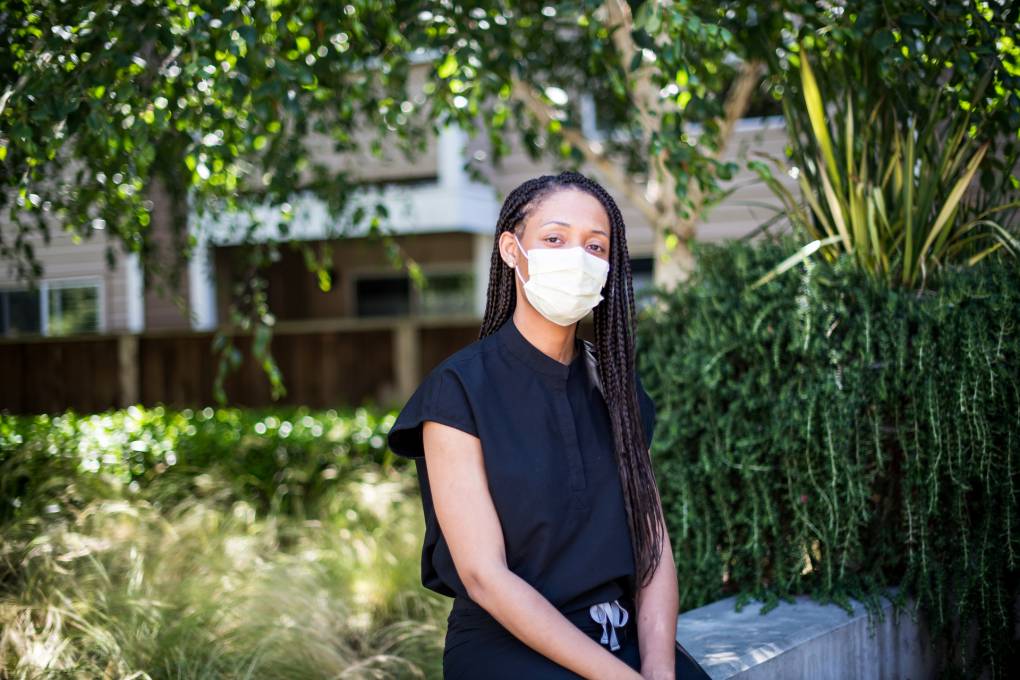
"caption": "Dr. Tiffany Chioma Anaebere near her home in Emeryville. She said after watching the video of George Floyd being killed, she felt \"debilitatingly depressed.\"",
"description": "Dr. Tiffany Chioma Anaebere near her home in Emeryville. She said after watching the video of George Floyd being killed, she felt \"debilitatingly depressed.\"",
"title": "Tiffany Chioma Anaebere near her home in Emeryville on June 17, 2020.",
"credit": "Beth LaBerge/KQED",
"status": "inherit",
"isLoading": false,
"fetchFailed": false
},
"news_11825932": {
"type": "attachments",
"id": "news_11825932",
"meta": {
"index": "attachments_1716263798",
"site": "news",
"id": "11825932",
"found": true
},
"parent": 11825930,
"imgSizes": {
"apple_news_ca_landscape_5_5": {
"file": "https://ww2.kqed.org/app/uploads/sites/10/2020/06/GettyImages-1251168218_1920x-1044x783.jpg",
"width": 1044,
"mimeType": "image/jpeg",
"height": 783
},
"apple_news_ca_square_4_0": {
"file": "https://ww2.kqed.org/app/uploads/sites/10/2020/06/GettyImages-1251168218_1920x-470x470.jpg",
"width": 470,
"mimeType": "image/jpeg",
"height": 470
},
"twentyfourteen-full-width": {
"file": "https://ww2.kqed.org/app/uploads/sites/10/2020/06/GettyImages-1251168218_1920x-1038x576.jpg",
"width": 1038,
"mimeType": "image/jpeg",
"height": 576
},
"thumbnail": {
"file": "https://ww2.kqed.org/app/uploads/sites/10/2020/06/GettyImages-1251168218_1920x-160x105.jpg",
"width": 160,
"mimeType": "image/jpeg",
"height": 105
},
"post-thumbnail": {
"file": "https://ww2.kqed.org/app/uploads/sites/10/2020/06/GettyImages-1251168218_1920x-672x372.jpg",
"width": 672,
"mimeType": "image/jpeg",
"height": 372
},
"kqedFullSize": {
"file": "https://ww2.kqed.org/app/uploads/sites/10/2020/06/GettyImages-1251168218_1920x.jpg",
"width": 1920,
"height": 1262
},
"apple_news_ca_landscape_4_7": {
"file": "https://ww2.kqed.org/app/uploads/sites/10/2020/06/GettyImages-1251168218_1920x-632x474.jpg",
"width": 632,
"mimeType": "image/jpeg",
"height": 474
},
"large": {
"file": "https://ww2.kqed.org/app/uploads/sites/10/2020/06/GettyImages-1251168218_1920x-1020x670.jpg",
"width": 1020,
"mimeType": "image/jpeg",
"height": 670
},
"apple_news_ca_landscape_4_0": {
"file": "https://ww2.kqed.org/app/uploads/sites/10/2020/06/GettyImages-1251168218_1920x-536x402.jpg",
"width": 536,
"mimeType": "image/jpeg",
"height": 402
},
"apple_news_ca_portrait_12_9": {
"file": "https://ww2.kqed.org/app/uploads/sites/10/2020/06/GettyImages-1251168218_1920x-1122x1262.jpg",
"width": 1122,
"mimeType": "image/jpeg",
"height": 1262
},
"medium": {
"file": "https://ww2.kqed.org/app/uploads/sites/10/2020/06/GettyImages-1251168218_1920x-800x526.jpg",
"width": 800,
"mimeType": "image/jpeg",
"height": 526
},
"apple_news_ca_portrait_4_0": {
"file": "https://ww2.kqed.org/app/uploads/sites/10/2020/06/GettyImages-1251168218_1920x-354x472.jpg",
"width": 354,
"mimeType": "image/jpeg",
"height": 472
},
"apple_news_ca_portrait_9_7": {
"file": "https://ww2.kqed.org/app/uploads/sites/10/2020/06/GettyImages-1251168218_1920x-840x1120.jpg",
"width": 840,
"mimeType": "image/jpeg",
"height": 1120
},
"apple_news_ca_landscape_12_9": {
"file": "https://ww2.kqed.org/app/uploads/sites/10/2020/06/GettyImages-1251168218_1920x-1832x1262.jpg",
"width": 1832,
"mimeType": "image/jpeg",
"height": 1262
},
"apple_news_ca_square_9_7": {
"file": "https://ww2.kqed.org/app/uploads/sites/10/2020/06/GettyImages-1251168218_1920x-1104x1104.jpg",
"width": 1104,
"mimeType": "image/jpeg",
"height": 1104
},
"1536x1536": {
"file": "https://ww2.kqed.org/app/uploads/sites/10/2020/06/GettyImages-1251168218_1920x-1536x1010.jpg",
"width": 1536,
"mimeType": "image/jpeg",
"height": 1010
},
"apple_news_ca_portrait_4_7": {
"file": "https://ww2.kqed.org/app/uploads/sites/10/2020/06/GettyImages-1251168218_1920x-414x552.jpg",
"width": 414,
"mimeType": "image/jpeg",
"height": 552
},
"apple_news_ca_square_12_9": {
"file": "https://ww2.kqed.org/app/uploads/sites/10/2020/06/GettyImages-1251168218_1920x-1472x1262.jpg",
"width": 1472,
"mimeType": "image/jpeg",
"height": 1262
},
"apple_news_ca_portrait_5_5": {
"file": "https://ww2.kqed.org/app/uploads/sites/10/2020/06/GettyImages-1251168218_1920x-687x916.jpg",
"width": 687,
"mimeType": "image/jpeg",
"height": 916
},
"apple_news_ca_square_4_7": {
"file": "https://ww2.kqed.org/app/uploads/sites/10/2020/06/GettyImages-1251168218_1920x-550x550.jpg",
"width": 550,
"mimeType": "image/jpeg",
"height": 550
},
"apple_news_ca_landscape_9_7": {
"file": "https://ww2.kqed.org/app/uploads/sites/10/2020/06/GettyImages-1251168218_1920x-1376x1032.jpg",
"width": 1376,
"mimeType": "image/jpeg",
"height": 1032
},
"apple_news_ca_square_5_5": {
"file": "https://ww2.kqed.org/app/uploads/sites/10/2020/06/GettyImages-1251168218_1920x-912x912.jpg",
"width": 912,
"mimeType": "image/jpeg",
"height": 912
}
},
"publishDate": 1592971827,
"modified": 1597086716,
"caption": "San Quentin State Prison is experiencing an outbreak of COVID-19 cases amongst the staff and inmate population. San Quentin had zero cases of COVID-19 prior to a May 30 transfer of inmates from a Southern California facility that had hundreds of active cases.",
"description": "San Quentin State Prison is experiencing an outbreak of COVID-19 cases amongst the staff and inmate population. San Quentin had zero cases of COVID-19 prior to a May 30 transfer of inmates from a Southern California facility that had hundreds of active cases.",
"title": "San Quentin Prison Coronavirus Outbreak Rises To 190 Infected",
"credit": "Justin Sullivan/Getty Images",
"status": "inherit",
"isLoading": false,
"fetchFailed": false
},
"news_11825788": {
"type": "attachments",
"id": "news_11825788",
"meta": {
"index": "attachments_1716263798",
"site": "news",
"id": "11825788",
"found": true
},
"parent": 11825653,
"imgSizes": {
"apple_news_ca_landscape_5_5": {
"file": "https://ww2.kqed.org/app/uploads/sites/10/2020/06/Alan-Tolbert-Project-Roomkey-1044x783.jpg",
"width": 1044,
"mimeType": "image/jpeg",
"height": 783
},
"apple_news_ca_square_4_0": {
"file": "https://ww2.kqed.org/app/uploads/sites/10/2020/06/Alan-Tolbert-Project-Roomkey-470x470.jpg",
"width": 470,
"mimeType": "image/jpeg",
"height": 470
},
"twentyfourteen-full-width": {
"file": "https://ww2.kqed.org/app/uploads/sites/10/2020/06/Alan-Tolbert-Project-Roomkey-1038x576.jpg",
"width": 1038,
"mimeType": "image/jpeg",
"height": 576
},
"thumbnail": {
"file": "https://ww2.kqed.org/app/uploads/sites/10/2020/06/Alan-Tolbert-Project-Roomkey-160x120.jpg",
"width": 160,
"mimeType": "image/jpeg",
"height": 120
},
"post-thumbnail": {
"file": "https://ww2.kqed.org/app/uploads/sites/10/2020/06/Alan-Tolbert-Project-Roomkey-672x372.jpg",
"width": 672,
"mimeType": "image/jpeg",
"height": 372
},
"kqedFullSize": {
"file": "https://ww2.kqed.org/app/uploads/sites/10/2020/06/Alan-Tolbert-Project-Roomkey.jpg",
"width": 1920,
"height": 1440
},
"apple_news_ca_landscape_4_7": {
"file": "https://ww2.kqed.org/app/uploads/sites/10/2020/06/Alan-Tolbert-Project-Roomkey-632x474.jpg",
"width": 632,
"mimeType": "image/jpeg",
"height": 474
},
"large": {
"file": "https://ww2.kqed.org/app/uploads/sites/10/2020/06/Alan-Tolbert-Project-Roomkey-1020x765.jpg",
"width": 1020,
"mimeType": "image/jpeg",
"height": 765
},
"apple_news_ca_landscape_4_0": {
"file": "https://ww2.kqed.org/app/uploads/sites/10/2020/06/Alan-Tolbert-Project-Roomkey-536x402.jpg",
"width": 536,
"mimeType": "image/jpeg",
"height": 402
},
"apple_news_ca_portrait_12_9": {
"file": "https://ww2.kqed.org/app/uploads/sites/10/2020/06/Alan-Tolbert-Project-Roomkey-1122x1440.jpg",
"width": 1122,
"mimeType": "image/jpeg",
"height": 1440
},
"medium": {
"file": "https://ww2.kqed.org/app/uploads/sites/10/2020/06/Alan-Tolbert-Project-Roomkey-800x600.jpg",
"width": 800,
"mimeType": "image/jpeg",
"height": 600
},
"apple_news_ca_portrait_4_0": {
"file": "https://ww2.kqed.org/app/uploads/sites/10/2020/06/Alan-Tolbert-Project-Roomkey-354x472.jpg",
"width": 354,
"mimeType": "image/jpeg",
"height": 472
},
"apple_news_ca_portrait_9_7": {
"file": "https://ww2.kqed.org/app/uploads/sites/10/2020/06/Alan-Tolbert-Project-Roomkey-840x1120.jpg",
"width": 840,
"mimeType": "image/jpeg",
"height": 1120
},
"apple_news_ca_landscape_12_9": {
"file": "https://ww2.kqed.org/app/uploads/sites/10/2020/06/Alan-Tolbert-Project-Roomkey-1832x1374.jpg",
"width": 1832,
"mimeType": "image/jpeg",
"height": 1374
},
"apple_news_ca_square_9_7": {
"file": "https://ww2.kqed.org/app/uploads/sites/10/2020/06/Alan-Tolbert-Project-Roomkey-1104x1104.jpg",
"width": 1104,
"mimeType": "image/jpeg",
"height": 1104
},
"1536x1536": {
"file": "https://ww2.kqed.org/app/uploads/sites/10/2020/06/Alan-Tolbert-Project-Roomkey-1536x1152.jpg",
"width": 1536,
"mimeType": "image/jpeg",
"height": 1152
},
"apple_news_ca_portrait_4_7": {
"file": "https://ww2.kqed.org/app/uploads/sites/10/2020/06/Alan-Tolbert-Project-Roomkey-414x552.jpg",
"width": 414,
"mimeType": "image/jpeg",
"height": 552
},
"apple_news_ca_square_12_9": {
"file": "https://ww2.kqed.org/app/uploads/sites/10/2020/06/Alan-Tolbert-Project-Roomkey-1472x1440.jpg",
"width": 1472,
"mimeType": "image/jpeg",
"height": 1440
},
"apple_news_ca_portrait_5_5": {
"file": "https://ww2.kqed.org/app/uploads/sites/10/2020/06/Alan-Tolbert-Project-Roomkey-687x916.jpg",
"width": 687,
"mimeType": "image/jpeg",
"height": 916
},
"apple_news_ca_square_4_7": {
"file": "https://ww2.kqed.org/app/uploads/sites/10/2020/06/Alan-Tolbert-Project-Roomkey-550x550.jpg",
"width": 550,
"mimeType": "image/jpeg",
"height": 550
},
"apple_news_ca_landscape_9_7": {
"file": "https://ww2.kqed.org/app/uploads/sites/10/2020/06/Alan-Tolbert-Project-Roomkey-1376x1032.jpg",
"width": 1376,
"mimeType": "image/jpeg",
"height": 1032
},
"apple_news_ca_square_5_5": {
"file": "https://ww2.kqed.org/app/uploads/sites/10/2020/06/Alan-Tolbert-Project-Roomkey-912x912.jpg",
"width": 912,
"mimeType": "image/jpeg",
"height": 912
}
},
"publishDate": 1592938037,
"modified": 1592938083,
"caption": "Alan Tolbert and his dog, Coco, inside their room at Hotel Whitcomb.",
"description": "Alan Tolbert and his dog, Coco, inside their room at Hotel Whitcomb.",
"title": "Alan-Tolbert-Project-Roomkey",
"credit": "Courtesy Alan Tolbert",
"status": "inherit",
"isLoading": false,
"fetchFailed": false
},
"news_11825760": {
"type": "attachments",
"id": "news_11825760",
"meta": {
"index": "attachments_1716263798",
"site": "news",
"id": "11825760",
"found": true
},
"parent": 11825738,
"imgSizes": {
"apple_news_ca_landscape_5_5": {
"file": "https://ww2.kqed.org/app/uploads/sites/10/2020/06/GettyImages-1214738423_1920x-1044x783.jpg",
"width": 1044,
"mimeType": "image/jpeg",
"height": 783
},
"apple_news_ca_square_4_0": {
"file": "https://ww2.kqed.org/app/uploads/sites/10/2020/06/GettyImages-1214738423_1920x-470x470.jpg",
"width": 470,
"mimeType": "image/jpeg",
"height": 470
},
"twentyfourteen-full-width": {
"file": "https://ww2.kqed.org/app/uploads/sites/10/2020/06/GettyImages-1214738423_1920x-1038x576.jpg",
"width": 1038,
"mimeType": "image/jpeg",
"height": 576
},
"thumbnail": {
"file": "https://ww2.kqed.org/app/uploads/sites/10/2020/06/GettyImages-1214738423_1920x-160x90.jpg",
"width": 160,
"mimeType": "image/jpeg",
"height": 90
},
"post-thumbnail": {
"file": "https://ww2.kqed.org/app/uploads/sites/10/2020/06/GettyImages-1214738423_1920x-672x372.jpg",
"width": 672,
"mimeType": "image/jpeg",
"height": 372
},
"kqedFullSize": {
"file": "https://ww2.kqed.org/app/uploads/sites/10/2020/06/GettyImages-1214738423_1920x.jpg",
"width": 1920,
"height": 1078
},
"apple_news_ca_landscape_4_7": {
"file": "https://ww2.kqed.org/app/uploads/sites/10/2020/06/GettyImages-1214738423_1920x-632x474.jpg",
"width": 632,
"mimeType": "image/jpeg",
"height": 474
},
"large": {
"file": "https://ww2.kqed.org/app/uploads/sites/10/2020/06/GettyImages-1214738423_1920x-1020x573.jpg",
"width": 1020,
"mimeType": "image/jpeg",
"height": 573
},
"apple_news_ca_landscape_4_0": {
"file": "https://ww2.kqed.org/app/uploads/sites/10/2020/06/GettyImages-1214738423_1920x-536x402.jpg",
"width": 536,
"mimeType": "image/jpeg",
"height": 402
},
"apple_news_ca_portrait_12_9": {
"file": "https://ww2.kqed.org/app/uploads/sites/10/2020/06/GettyImages-1214738423_1920x-1122x1078.jpg",
"width": 1122,
"mimeType": "image/jpeg",
"height": 1078
},
"medium": {
"file": "https://ww2.kqed.org/app/uploads/sites/10/2020/06/GettyImages-1214738423_1920x-800x449.jpg",
"width": 800,
"mimeType": "image/jpeg",
"height": 449
},
"apple_news_ca_portrait_4_0": {
"file": "https://ww2.kqed.org/app/uploads/sites/10/2020/06/GettyImages-1214738423_1920x-354x472.jpg",
"width": 354,
"mimeType": "image/jpeg",
"height": 472
},
"apple_news_ca_portrait_9_7": {
"file": "https://ww2.kqed.org/app/uploads/sites/10/2020/06/GettyImages-1214738423_1920x-840x1078.jpg",
"width": 840,
"mimeType": "image/jpeg",
"height": 1078
},
"apple_news_ca_landscape_12_9": {
"file": "https://ww2.kqed.org/app/uploads/sites/10/2020/06/GettyImages-1214738423_1920x-1832x1078.jpg",
"width": 1832,
"mimeType": "image/jpeg",
"height": 1078
},
"apple_news_ca_square_9_7": {
"file": "https://ww2.kqed.org/app/uploads/sites/10/2020/06/GettyImages-1214738423_1920x-1104x1078.jpg",
"width": 1104,
"mimeType": "image/jpeg",
"height": 1078
},
"apple_news_ca_portrait_4_7": {
"file": "https://ww2.kqed.org/app/uploads/sites/10/2020/06/GettyImages-1214738423_1920x-414x552.jpg",
"width": 414,
"mimeType": "image/jpeg",
"height": 552
},
"apple_news_ca_square_12_9": {
"file": "https://ww2.kqed.org/app/uploads/sites/10/2020/06/GettyImages-1214738423_1920x-1472x1078.jpg",
"width": 1472,
"mimeType": "image/jpeg",
"height": 1078
},
"apple_news_ca_portrait_5_5": {
"file": "https://ww2.kqed.org/app/uploads/sites/10/2020/06/GettyImages-1214738423_1920x-687x916.jpg",
"width": 687,
"mimeType": "image/jpeg",
"height": 916
},
"full-width": {
"file": "https://ww2.kqed.org/app/uploads/sites/10/2020/06/GettyImages-1214738423_1920x-1920x1078.jpg",
"width": 1920,
"mimeType": "image/jpeg",
"height": 1078
},
"apple_news_ca_square_4_7": {
"file": "https://ww2.kqed.org/app/uploads/sites/10/2020/06/GettyImages-1214738423_1920x-550x550.jpg",
"width": 550,
"mimeType": "image/jpeg",
"height": 550
},
"apple_news_ca_landscape_9_7": {
"file": "https://ww2.kqed.org/app/uploads/sites/10/2020/06/GettyImages-1214738423_1920x-1376x1032.jpg",
"width": 1376,
"mimeType": "image/jpeg",
"height": 1032
},
"apple_news_ca_square_5_5": {
"file": "https://ww2.kqed.org/app/uploads/sites/10/2020/06/GettyImages-1214738423_1920x-912x912.jpg",
"width": 912,
"mimeType": "image/jpeg",
"height": 912
}
},
"publishDate": 1592892893,
"modified": 1594316085,
"caption": "As shelter-in-place order ease, Bay Area residents will have to negotiate new boundaries around who they hang out with, and how. ",
"description": "As shelter-in-place order ease, Bay Area residents will have to negotiate new boundaries around who they hang out with, and how. And communication skills from negotiating safe sex could help.",
"title": "US-HEALTH-VIRUS",
"credit": "Photo by JOSH EDELSON/AFP via Getty Images",
"status": "inherit",
"isLoading": false,
"fetchFailed": false
},
"news_11810710": {
"type": "attachments",
"id": "news_11810710",
"meta": {
"index": "attachments_1716263798",
"site": "news",
"id": "11810710",
"found": true
},
"parent": 11810709,
"imgSizes": {
"apple_news_ca_landscape_5_5": {
"file": "https://ww2.kqed.org/app/uploads/sites/10/2020/04/RS40607_GettyImages-1189643415-qut-1044x783.jpg",
"width": 1044,
"mimeType": "image/jpeg",
"height": 783
},
"apple_news_ca_square_4_0": {
"file": "https://ww2.kqed.org/app/uploads/sites/10/2020/04/RS40607_GettyImages-1189643415-qut-470x470.jpg",
"width": 470,
"mimeType": "image/jpeg",
"height": 470
},
"twentyfourteen-full-width": {
"file": "https://ww2.kqed.org/app/uploads/sites/10/2020/04/RS40607_GettyImages-1189643415-qut-1038x576.jpg",
"width": 1038,
"mimeType": "image/jpeg",
"height": 576
},
"thumbnail": {
"file": "https://ww2.kqed.org/app/uploads/sites/10/2020/04/RS40607_GettyImages-1189643415-qut-160x107.jpg",
"width": 160,
"mimeType": "image/jpeg",
"height": 107
},
"post-thumbnail": {
"file": "https://ww2.kqed.org/app/uploads/sites/10/2020/04/RS40607_GettyImages-1189643415-qut-672x372.jpg",
"width": 672,
"mimeType": "image/jpeg",
"height": 372
},
"kqedFullSize": {
"file": "https://ww2.kqed.org/app/uploads/sites/10/2020/04/RS40607_GettyImages-1189643415-qut.jpg",
"width": 1920,
"height": 1282
},
"apple_news_ca_landscape_4_7": {
"file": "https://ww2.kqed.org/app/uploads/sites/10/2020/04/RS40607_GettyImages-1189643415-qut-632x474.jpg",
"width": 632,
"mimeType": "image/jpeg",
"height": 474
},
"large": {
"file": "https://ww2.kqed.org/app/uploads/sites/10/2020/04/RS40607_GettyImages-1189643415-qut-1020x681.jpg",
"width": 1020,
"mimeType": "image/jpeg",
"height": 681
},
"apple_news_ca_landscape_4_0": {
"file": "https://ww2.kqed.org/app/uploads/sites/10/2020/04/RS40607_GettyImages-1189643415-qut-536x402.jpg",
"width": 536,
"mimeType": "image/jpeg",
"height": 402
},
"apple_news_ca_portrait_12_9": {
"file": "https://ww2.kqed.org/app/uploads/sites/10/2020/04/RS40607_GettyImages-1189643415-qut-1122x1282.jpg",
"width": 1122,
"mimeType": "image/jpeg",
"height": 1282
},
"medium": {
"file": "https://ww2.kqed.org/app/uploads/sites/10/2020/04/RS40607_GettyImages-1189643415-qut-800x534.jpg",
"width": 800,
"mimeType": "image/jpeg",
"height": 534
},
"apple_news_ca_portrait_4_0": {
"file": "https://ww2.kqed.org/app/uploads/sites/10/2020/04/RS40607_GettyImages-1189643415-qut-354x472.jpg",
"width": 354,
"mimeType": "image/jpeg",
"height": 472
},
"apple_news_ca_portrait_9_7": {
"file": "https://ww2.kqed.org/app/uploads/sites/10/2020/04/RS40607_GettyImages-1189643415-qut-840x1120.jpg",
"width": 840,
"mimeType": "image/jpeg",
"height": 1120
},
"apple_news_ca_landscape_12_9": {
"file": "https://ww2.kqed.org/app/uploads/sites/10/2020/04/RS40607_GettyImages-1189643415-qut-1832x1282.jpg",
"width": 1832,
"mimeType": "image/jpeg",
"height": 1282
},
"apple_news_ca_square_9_7": {
"file": "https://ww2.kqed.org/app/uploads/sites/10/2020/04/RS40607_GettyImages-1189643415-qut-1104x1104.jpg",
"width": 1104,
"mimeType": "image/jpeg",
"height": 1104
},
"apple_news_ca_portrait_4_7": {
"file": "https://ww2.kqed.org/app/uploads/sites/10/2020/04/RS40607_GettyImages-1189643415-qut-414x552.jpg",
"width": 414,
"mimeType": "image/jpeg",
"height": 552
},
"apple_news_ca_square_12_9": {
"file": "https://ww2.kqed.org/app/uploads/sites/10/2020/04/RS40607_GettyImages-1189643415-qut-1472x1282.jpg",
"width": 1472,
"mimeType": "image/jpeg",
"height": 1282
},
"apple_news_ca_portrait_5_5": {
"file": "https://ww2.kqed.org/app/uploads/sites/10/2020/04/RS40607_GettyImages-1189643415-qut-687x916.jpg",
"width": 687,
"mimeType": "image/jpeg",
"height": 916
},
"full-width": {
"file": "https://ww2.kqed.org/app/uploads/sites/10/2020/04/RS40607_GettyImages-1189643415-qut-1920x1282.jpg",
"width": 1920,
"mimeType": "image/jpeg",
"height": 1282
},
"apple_news_ca_square_4_7": {
"file": "https://ww2.kqed.org/app/uploads/sites/10/2020/04/RS40607_GettyImages-1189643415-qut-550x550.jpg",
"width": 550,
"mimeType": "image/jpeg",
"height": 550
},
"apple_news_ca_landscape_9_7": {
"file": "https://ww2.kqed.org/app/uploads/sites/10/2020/04/RS40607_GettyImages-1189643415-qut-1376x1032.jpg",
"width": 1376,
"mimeType": "image/jpeg",
"height": 1032
},
"apple_news_ca_square_5_5": {
"file": "https://ww2.kqed.org/app/uploads/sites/10/2020/04/RS40607_GettyImages-1189643415-qut-912x912.jpg",
"width": 912,
"mimeType": "image/jpeg",
"height": 912
}
},
"publishDate": 1586024850,
"modified": 1592927704,
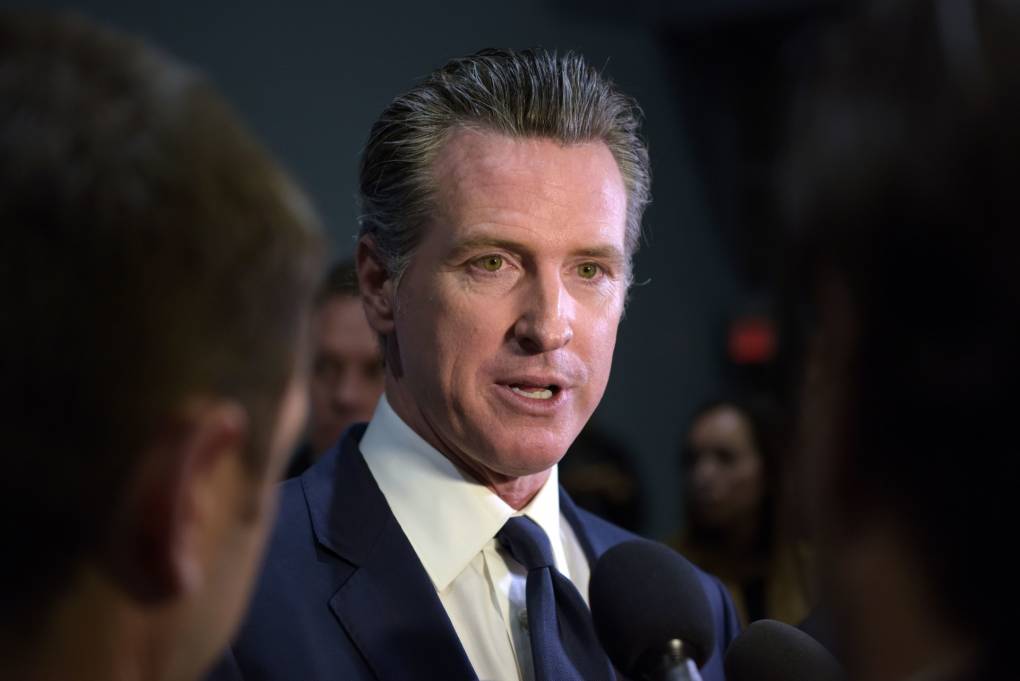
"caption": "'We feel a deep sense of gratitude for people that are in fear of deportation, but are still addressing the essential needs of tens of millions of Californians,' said Gov. Gavin Newsom during an April briefing on the coronavirus pandemic.",
"description": "'We feel a deep sense of gratitude for people that are in fear of deportation, but are still addressing the essential needs of tens of millions of Californians,' said Gov. Gavin Newsom during an April briefing on the coronavirus pandemic.",
"title": "US-VOTE-2020-DEMOCRATS-DEBATE",
"credit": "Agustin Paullier/AFP via Getty Images",
"status": "inherit",
"isLoading": false,
"fetchFailed": false
},
"news_11825499": {
"type": "attachments",
"id": "news_11825499",
"meta": {
"index": "attachments_1716263798",
"site": "news",
"id": "11825499",
"found": true
},
"parent": 11824642,
"imgSizes": {
"apple_news_ca_landscape_5_5": {
"file": "https://ww2.kqed.org/app/uploads/sites/10/2020/06/RS43701_IMG_2103_v2-qut-1044x783.jpg",
"width": 1044,
"mimeType": "image/jpeg",
"height": 783
},
"apple_news_ca_square_4_0": {
"file": "https://ww2.kqed.org/app/uploads/sites/10/2020/06/RS43701_IMG_2103_v2-qut-470x470.jpg",
"width": 470,
"mimeType": "image/jpeg",
"height": 470
},
"twentyfourteen-full-width": {
"file": "https://ww2.kqed.org/app/uploads/sites/10/2020/06/RS43701_IMG_2103_v2-qut-1038x576.jpg",
"width": 1038,
"mimeType": "image/jpeg",
"height": 576
},
"thumbnail": {
"file": "https://ww2.kqed.org/app/uploads/sites/10/2020/06/RS43701_IMG_2103_v2-qut-160x98.jpg",
"width": 160,
"mimeType": "image/jpeg",
"height": 98
},
"post-thumbnail": {
"file": "https://ww2.kqed.org/app/uploads/sites/10/2020/06/RS43701_IMG_2103_v2-qut-672x372.jpg",
"width": 672,
"mimeType": "image/jpeg",
"height": 372
},
"kqedFullSize": {
"file": "https://ww2.kqed.org/app/uploads/sites/10/2020/06/RS43701_IMG_2103_v2-qut.jpg",
"width": 1920,
"height": 1170
},
"apple_news_ca_landscape_4_7": {
"file": "https://ww2.kqed.org/app/uploads/sites/10/2020/06/RS43701_IMG_2103_v2-qut-632x474.jpg",
"width": 632,
"mimeType": "image/jpeg",
"height": 474
},
"large": {
"file": "https://ww2.kqed.org/app/uploads/sites/10/2020/06/RS43701_IMG_2103_v2-qut-1020x622.jpg",
"width": 1020,
"mimeType": "image/jpeg",
"height": 622
},
"apple_news_ca_landscape_4_0": {
"file": "https://ww2.kqed.org/app/uploads/sites/10/2020/06/RS43701_IMG_2103_v2-qut-536x402.jpg",
"width": 536,
"mimeType": "image/jpeg",
"height": 402
},
"apple_news_ca_portrait_12_9": {
"file": "https://ww2.kqed.org/app/uploads/sites/10/2020/06/RS43701_IMG_2103_v2-qut-1122x1170.jpg",
"width": 1122,
"mimeType": "image/jpeg",
"height": 1170
},
"medium": {
"file": "https://ww2.kqed.org/app/uploads/sites/10/2020/06/RS43701_IMG_2103_v2-qut-800x488.jpg",
"width": 800,
"mimeType": "image/jpeg",
"height": 488
},
"apple_news_ca_portrait_4_0": {
"file": "https://ww2.kqed.org/app/uploads/sites/10/2020/06/RS43701_IMG_2103_v2-qut-354x472.jpg",
"width": 354,
"mimeType": "image/jpeg",
"height": 472
},
"apple_news_ca_portrait_9_7": {
"file": "https://ww2.kqed.org/app/uploads/sites/10/2020/06/RS43701_IMG_2103_v2-qut-840x1120.jpg",
"width": 840,
"mimeType": "image/jpeg",
"height": 1120
},
"apple_news_ca_landscape_12_9": {
"file": "https://ww2.kqed.org/app/uploads/sites/10/2020/06/RS43701_IMG_2103_v2-qut-1832x1170.jpg",
"width": 1832,
"mimeType": "image/jpeg",
"height": 1170
},
"apple_news_ca_square_9_7": {
"file": "https://ww2.kqed.org/app/uploads/sites/10/2020/06/RS43701_IMG_2103_v2-qut-1104x1104.jpg",
"width": 1104,
"mimeType": "image/jpeg",
"height": 1104
},
"apple_news_ca_portrait_4_7": {
"file": "https://ww2.kqed.org/app/uploads/sites/10/2020/06/RS43701_IMG_2103_v2-qut-414x552.jpg",
"width": 414,
"mimeType": "image/jpeg",
"height": 552
},
"apple_news_ca_square_12_9": {
"file": "https://ww2.kqed.org/app/uploads/sites/10/2020/06/RS43701_IMG_2103_v2-qut-1472x1170.jpg",
"width": 1472,
"mimeType": "image/jpeg",
"height": 1170
},
"apple_news_ca_portrait_5_5": {
"file": "https://ww2.kqed.org/app/uploads/sites/10/2020/06/RS43701_IMG_2103_v2-qut-687x916.jpg",
"width": 687,
"mimeType": "image/jpeg",
"height": 916
},
"full-width": {
"file": "https://ww2.kqed.org/app/uploads/sites/10/2020/06/RS43701_IMG_2103_v2-qut-1920x1170.jpg",
"width": 1920,
"mimeType": "image/jpeg",
"height": 1170
},
"apple_news_ca_square_4_7": {
"file": "https://ww2.kqed.org/app/uploads/sites/10/2020/06/RS43701_IMG_2103_v2-qut-550x550.jpg",
"width": 550,
"mimeType": "image/jpeg",
"height": 550
},
"apple_news_ca_landscape_9_7": {
"file": "https://ww2.kqed.org/app/uploads/sites/10/2020/06/RS43701_IMG_2103_v2-qut-1376x1032.jpg",
"width": 1376,
"mimeType": "image/jpeg",
"height": 1032
},
"apple_news_ca_square_5_5": {
"file": "https://ww2.kqed.org/app/uploads/sites/10/2020/06/RS43701_IMG_2103_v2-qut-912x912.jpg",
"width": 912,
"mimeType": "image/jpeg",
"height": 912
}
},
"publishDate": 1592612889,
"modified": 1592613505,
"caption": "Students under 12 years of age are not required to wear masks, according to the Marin Health and Human Services, even while attending an in-person pilot program at Bayside Martin Luther King Jr. Academy.",
"description": "Students under 12 years of age are not required to wear masks, according to the Marin Health and Human Services, even while attending an in-person pilot program at Bayside Martin Luther King Jr. Academy.",
"title": "RS43701_IMG_2103_v2-qut",
"credit": "Julia McEvoy/KQED",
"status": "inherit",
"isLoading": false,
"fetchFailed": false
},
"news_11825609": {
"type": "attachments",
"id": "news_11825609",
"meta": {
"index": "attachments_1716263798",
"site": "news",
"id": "11825609",
"found": true
},
"parent": 11825594,
"imgSizes": {
"apple_news_ca_landscape_5_5": {
"file": "https://ww2.kqed.org/app/uploads/sites/10/2020/06/IMG_2379-1044x783.jpg",
"width": 1044,
"mimeType": "image/jpeg",
"height": 783
},
"apple_news_ca_square_4_0": {
"file": "https://ww2.kqed.org/app/uploads/sites/10/2020/06/IMG_2379-470x470.jpg",
"width": 470,
"mimeType": "image/jpeg",
"height": 470
},
"twentyfourteen-full-width": {
"file": "https://ww2.kqed.org/app/uploads/sites/10/2020/06/IMG_2379-1038x576.jpg",
"width": 1038,
"mimeType": "image/jpeg",
"height": 576
},
"thumbnail": {
"file": "https://ww2.kqed.org/app/uploads/sites/10/2020/06/IMG_2379-160x120.jpg",
"width": 160,
"mimeType": "image/jpeg",
"height": 120
},
"post-thumbnail": {
"file": "https://ww2.kqed.org/app/uploads/sites/10/2020/06/IMG_2379-672x372.jpg",
"width": 672,
"mimeType": "image/jpeg",
"height": 372
},
"kqedFullSize": {
"file": "https://ww2.kqed.org/app/uploads/sites/10/2020/06/IMG_2379.jpg",
"width": 2016,
"height": 1512
},
"apple_news_ca_landscape_4_7": {
"file": "https://ww2.kqed.org/app/uploads/sites/10/2020/06/IMG_2379-632x474.jpg",
"width": 632,
"mimeType": "image/jpeg",
"height": 474
},
"large": {
"file": "https://ww2.kqed.org/app/uploads/sites/10/2020/06/IMG_2379-1020x765.jpg",
"width": 1020,
"mimeType": "image/jpeg",
"height": 765
},
"apple_news_ca_landscape_4_0": {
"file": "https://ww2.kqed.org/app/uploads/sites/10/2020/06/IMG_2379-536x402.jpg",
"width": 536,
"mimeType": "image/jpeg",
"height": 402
},
"apple_news_ca_portrait_12_9": {
"file": "https://ww2.kqed.org/app/uploads/sites/10/2020/06/IMG_2379-1122x1496.jpg",
"width": 1122,
"mimeType": "image/jpeg",
"height": 1496
},
"medium": {
"file": "https://ww2.kqed.org/app/uploads/sites/10/2020/06/IMG_2379-800x600.jpg",
"width": 800,
"mimeType": "image/jpeg",
"height": 600
},
"apple_news_ca_portrait_4_0": {
"file": "https://ww2.kqed.org/app/uploads/sites/10/2020/06/IMG_2379-354x472.jpg",
"width": 354,
"mimeType": "image/jpeg",
"height": 472
},
"apple_news_ca_portrait_9_7": {
"file": "https://ww2.kqed.org/app/uploads/sites/10/2020/06/IMG_2379-840x1120.jpg",
"width": 840,
"mimeType": "image/jpeg",
"height": 1120
},
"apple_news_ca_landscape_12_9": {
"file": "https://ww2.kqed.org/app/uploads/sites/10/2020/06/IMG_2379-1832x1374.jpg",
"width": 1832,
"mimeType": "image/jpeg",
"height": 1374
},
"apple_news_ca_square_9_7": {
"file": "https://ww2.kqed.org/app/uploads/sites/10/2020/06/IMG_2379-1104x1104.jpg",
"width": 1104,
"mimeType": "image/jpeg",
"height": 1104
},
"apple_news_ca_portrait_4_7": {
"file": "https://ww2.kqed.org/app/uploads/sites/10/2020/06/IMG_2379-414x552.jpg",
"width": 414,
"mimeType": "image/jpeg",
"height": 552
},
"apple_news_ca_square_12_9": {
"file": "https://ww2.kqed.org/app/uploads/sites/10/2020/06/IMG_2379-1472x1472.jpg",
"width": 1472,
"mimeType": "image/jpeg",
"height": 1472
},
"apple_news_ca_portrait_5_5": {
"file": "https://ww2.kqed.org/app/uploads/sites/10/2020/06/IMG_2379-687x916.jpg",
"width": 687,
"mimeType": "image/jpeg",
"height": 916
},
"full-width": {
"file": "https://ww2.kqed.org/app/uploads/sites/10/2020/06/IMG_2379-1920x1440.jpg",
"width": 1920,
"mimeType": "image/jpeg",
"height": 1440
},
"apple_news_ca_square_4_7": {
"file": "https://ww2.kqed.org/app/uploads/sites/10/2020/06/IMG_2379-550x550.jpg",
"width": 550,
"mimeType": "image/jpeg",
"height": 550
},
"apple_news_ca_landscape_9_7": {
"file": "https://ww2.kqed.org/app/uploads/sites/10/2020/06/IMG_2379-1376x1032.jpg",
"width": 1376,
"mimeType": "image/jpeg",
"height": 1032
},
"apple_news_ca_square_5_5": {
"file": "https://ww2.kqed.org/app/uploads/sites/10/2020/06/IMG_2379-912x912.jpg",
"width": 912,
"mimeType": "image/jpeg",
"height": 912
}
},
"publishDate": 1592834586,
"modified": 1592867582,
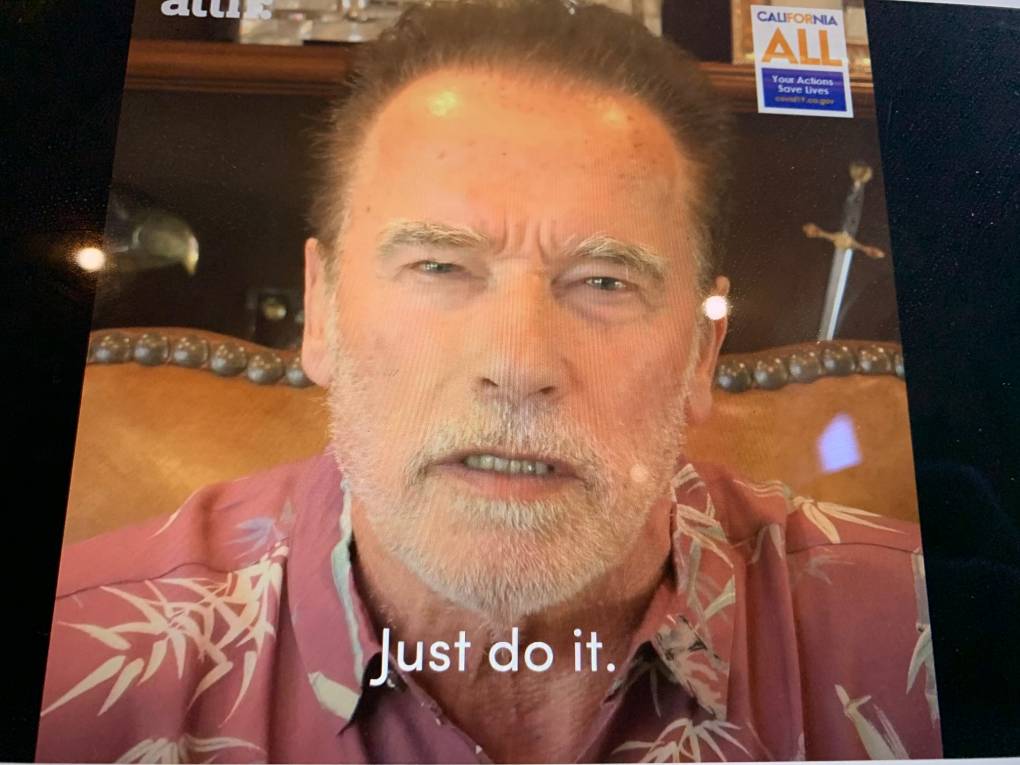
"caption": "Arnold Schwarzegger is one of five California governors in a new public service announcement urging people to wear face coverings.",
"description": "Arnold Schwarzegger is one of five California governors in a new public service announcement urging people to wear face coverings.",
"title": "IMG_2379",
"credit": "Courtesy the State of California",
"status": "inherit",
"isLoading": false,
"fetchFailed": false
},
"news_11825517": {
"type": "attachments",
"id": "news_11825517",
"meta": {
"index": "attachments_1716263798",
"site": "news",
"id": "11825517",
"found": true
},
"parent": 11825189,
"imgSizes": {
"apple_news_ca_landscape_5_5": {
"file": "https://ww2.kqed.org/app/uploads/sites/10/2020/06/RS43663_IMG_5400-qut_v2-827x783.jpg",
"width": 827,
"mimeType": "image/jpeg",
"height": 783
},
"apple_news_ca_square_4_0": {
"file": "https://ww2.kqed.org/app/uploads/sites/10/2020/06/RS43663_IMG_5400-qut_v2-470x470.jpg",
"width": 470,
"mimeType": "image/jpeg",
"height": 470
},
"twentyfourteen-full-width": {
"file": "https://ww2.kqed.org/app/uploads/sites/10/2020/06/RS43663_IMG_5400-qut_v2-827x576.jpg",
"width": 827,
"mimeType": "image/jpeg",
"height": 576
},
"thumbnail": {
"file": "https://ww2.kqed.org/app/uploads/sites/10/2020/06/RS43663_IMG_5400-qut_v2-160x157.jpg",
"width": 160,
"mimeType": "image/jpeg",
"height": 157
},
"post-thumbnail": {
"file": "https://ww2.kqed.org/app/uploads/sites/10/2020/06/RS43663_IMG_5400-qut_v2-672x372.jpg",
"width": 672,
"mimeType": "image/jpeg",
"height": 372
},
"kqedFullSize": {
"file": "https://ww2.kqed.org/app/uploads/sites/10/2020/06/RS43663_IMG_5400-qut_v2.jpg",
"width": 827,
"height": 813
},
"apple_news_ca_landscape_4_7": {
"file": "https://ww2.kqed.org/app/uploads/sites/10/2020/06/RS43663_IMG_5400-qut_v2-632x474.jpg",
"width": 632,
"mimeType": "image/jpeg",
"height": 474
},
"apple_news_ca_landscape_4_0": {
"file": "https://ww2.kqed.org/app/uploads/sites/10/2020/06/RS43663_IMG_5400-qut_v2-536x402.jpg",
"width": 536,
"mimeType": "image/jpeg",
"height": 402
},
"medium": {
"file": "https://ww2.kqed.org/app/uploads/sites/10/2020/06/RS43663_IMG_5400-qut_v2-800x786.jpg",
"width": 800,
"mimeType": "image/jpeg",
"height": 786
},
"apple_news_ca_portrait_4_0": {
"file": "https://ww2.kqed.org/app/uploads/sites/10/2020/06/RS43663_IMG_5400-qut_v2-354x472.jpg",
"width": 354,
"mimeType": "image/jpeg",
"height": 472
},
"apple_news_ca_portrait_4_7": {
"file": "https://ww2.kqed.org/app/uploads/sites/10/2020/06/RS43663_IMG_5400-qut_v2-414x552.jpg",
"width": 414,
"mimeType": "image/jpeg",
"height": 552
},
"apple_news_ca_portrait_5_5": {
"file": "https://ww2.kqed.org/app/uploads/sites/10/2020/06/RS43663_IMG_5400-qut_v2-687x813.jpg",
"width": 687,
"mimeType": "image/jpeg",
"height": 813
},
"apple_news_ca_square_4_7": {
"file": "https://ww2.kqed.org/app/uploads/sites/10/2020/06/RS43663_IMG_5400-qut_v2-550x550.jpg",
"width": 550,
"mimeType": "image/jpeg",
"height": 550
}
},
"publishDate": 1592614969,
"modified": 1592615002,
"caption": "Lucia Gomez with her dad, Gaspar Gomez, in a recent selfie.",
"description": null,
"title": "RS43663_IMG_5400-qut_v2",
"credit": "Courtesy of Lucia Gomez",
"status": "inherit",
"isLoading": false,
"fetchFailed": false
},
"news_11810617": {
"type": "attachments",
"id": "news_11810617",
"meta": {
"index": "attachments_1716263798",
"site": "news",
"id": "11810617",
"found": true
},
"parent": 11810490,
"imgSizes": {
"apple_news_ca_landscape_5_5": {
"file": "https://ww2.kqed.org/app/uploads/sites/10/2020/04/GettyImages-1208909845-1044x783.jpg",
"width": 1044,
"mimeType": "image/jpeg",
"height": 783
},
"apple_news_ca_square_4_0": {
"file": "https://ww2.kqed.org/app/uploads/sites/10/2020/04/GettyImages-1208909845-470x470.jpg",
"width": 470,
"mimeType": "image/jpeg",
"height": 470
},
"twentyfourteen-full-width": {
"file": "https://ww2.kqed.org/app/uploads/sites/10/2020/04/GettyImages-1208909845-1038x576.jpg",
"width": 1038,
"mimeType": "image/jpeg",
"height": 576
},
"thumbnail": {
"file": "https://ww2.kqed.org/app/uploads/sites/10/2020/04/GettyImages-1208909845-160x104.jpg",
"width": 160,
"mimeType": "image/jpeg",
"height": 104
},
"post-thumbnail": {
"file": "https://ww2.kqed.org/app/uploads/sites/10/2020/04/GettyImages-1208909845-672x372.jpg",
"width": 672,
"mimeType": "image/jpeg",
"height": 372
},
"kqedFullSize": {
"file": "https://ww2.kqed.org/app/uploads/sites/10/2020/04/GettyImages-1208909845-e1585955364736.jpg",
"width": 1920,
"height": 1254
},
"apple_news_ca_landscape_4_7": {
"file": "https://ww2.kqed.org/app/uploads/sites/10/2020/04/GettyImages-1208909845-632x474.jpg",
"width": 632,
"mimeType": "image/jpeg",
"height": 474
},
"large": {
"file": "https://ww2.kqed.org/app/uploads/sites/10/2020/04/GettyImages-1208909845-1020x666.jpg",
"width": 1020,
"mimeType": "image/jpeg",
"height": 666
},
"apple_news_ca_landscape_4_0": {
"file": "https://ww2.kqed.org/app/uploads/sites/10/2020/04/GettyImages-1208909845-536x402.jpg",
"width": 536,
"mimeType": "image/jpeg",
"height": 402
},
"apple_news_ca_portrait_12_9": {
"file": "https://ww2.kqed.org/app/uploads/sites/10/2020/04/GettyImages-1208909845-1122x1496.jpg",
"width": 1122,
"mimeType": "image/jpeg",
"height": 1496
},
"medium": {
"file": "https://ww2.kqed.org/app/uploads/sites/10/2020/04/GettyImages-1208909845-800x522.jpg",
"width": 800,
"mimeType": "image/jpeg",
"height": 522
},
"apple_news_ca_portrait_4_0": {
"file": "https://ww2.kqed.org/app/uploads/sites/10/2020/04/GettyImages-1208909845-354x472.jpg",
"width": 354,
"mimeType": "image/jpeg",
"height": 472
},
"apple_news_ca_portrait_9_7": {
"file": "https://ww2.kqed.org/app/uploads/sites/10/2020/04/GettyImages-1208909845-840x1120.jpg",
"width": 840,
"mimeType": "image/jpeg",
"height": 1120
},
"apple_news_ca_landscape_12_9": {
"file": "https://ww2.kqed.org/app/uploads/sites/10/2020/04/GettyImages-1208909845-1832x1374.jpg",
"width": 1832,
"mimeType": "image/jpeg",
"height": 1374
},
"apple_news_ca_square_9_7": {
"file": "https://ww2.kqed.org/app/uploads/sites/10/2020/04/GettyImages-1208909845-1104x1104.jpg",
"width": 1104,
"mimeType": "image/jpeg",
"height": 1104
},
"apple_news_ca_portrait_4_7": {
"file": "https://ww2.kqed.org/app/uploads/sites/10/2020/04/GettyImages-1208909845-414x552.jpg",
"width": 414,
"mimeType": "image/jpeg",
"height": 552
},
"apple_news_ca_square_12_9": {
"file": "https://ww2.kqed.org/app/uploads/sites/10/2020/04/GettyImages-1208909845-1472x1472.jpg",
"width": 1472,
"mimeType": "image/jpeg",
"height": 1472
},
"apple_news_ca_portrait_5_5": {
"file": "https://ww2.kqed.org/app/uploads/sites/10/2020/04/GettyImages-1208909845-687x916.jpg",
"width": 687,
"mimeType": "image/jpeg",
"height": 916
},
"full-width": {
"file": "https://ww2.kqed.org/app/uploads/sites/10/2020/04/GettyImages-1208909845-1920x1254.jpg",
"width": 1920,
"mimeType": "image/jpeg",
"height": 1254
},
"apple_news_ca_square_4_7": {
"file": "https://ww2.kqed.org/app/uploads/sites/10/2020/04/GettyImages-1208909845-550x550.jpg",
"width": 550,
"mimeType": "image/jpeg",
"height": 550
},
"apple_news_ca_landscape_9_7": {
"file": "https://ww2.kqed.org/app/uploads/sites/10/2020/04/GettyImages-1208909845-1376x1032.jpg",
"width": 1376,
"mimeType": "image/jpeg",
"height": 1032
},
"apple_news_ca_square_5_5": {
"file": "https://ww2.kqed.org/app/uploads/sites/10/2020/04/GettyImages-1208909845-912x912.jpg",
"width": 912,
"mimeType": "image/jpeg",
"height": 912
}
},
"publishDate": 1585954786,
"modified": 1585979126,
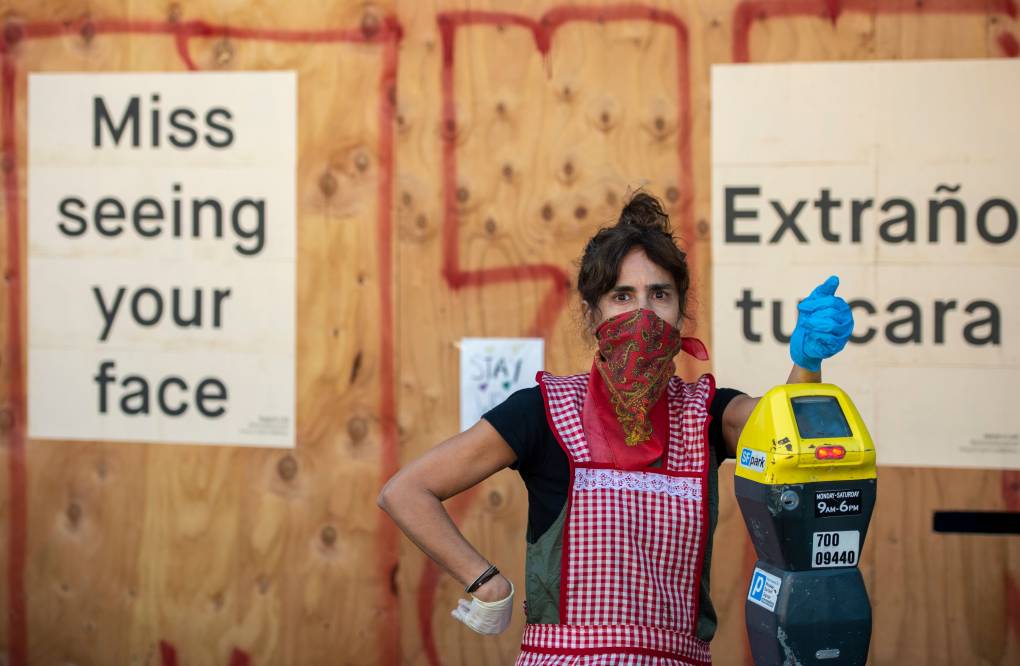
"caption": "Lorena Zeruche, who owns Loló, a Mexican restaurant in San Francisco’s Mission District, wears a bandana on her face on April, 1, 2020 as she prepares for another day of takeout-only service. ",
"description": null,
"title": "US-HEALTH-VIRUS",
"credit": "Josh Edelson/AFP via Getty Images",
"status": "inherit",
"isLoading": false,
"fetchFailed": false
},
"news_11825197": {
"type": "attachments",
"id": "news_11825197",
"meta": {
"index": "attachments_1716263798",
"site": "news",
"id": "11825197",
"found": true
},
"parent": 11825172,
"imgSizes": {
"apple_news_ca_landscape_5_5": {
"file": "https://ww2.kqed.org/app/uploads/sites/10/2020/06/divided-states-pandemic-v3-smaller-1044x783.jpg",
"width": 1044,
"mimeType": "image/jpeg",
"height": 783
},
"apple_news_ca_square_4_0": {
"file": "https://ww2.kqed.org/app/uploads/sites/10/2020/06/divided-states-pandemic-v3-smaller-470x470.jpg",
"width": 470,
"mimeType": "image/jpeg",
"height": 470
},
"twentyfourteen-full-width": {
"file": "https://ww2.kqed.org/app/uploads/sites/10/2020/06/divided-states-pandemic-v3-smaller-1038x576.jpg",
"width": 1038,
"mimeType": "image/jpeg",
"height": 576
},
"thumbnail": {
"file": "https://ww2.kqed.org/app/uploads/sites/10/2020/06/divided-states-pandemic-v3-smaller-160x107.jpg",
"width": 160,
"mimeType": "image/jpeg",
"height": 107
},
"post-thumbnail": {
"file": "https://ww2.kqed.org/app/uploads/sites/10/2020/06/divided-states-pandemic-v3-smaller-672x372.jpg",
"width": 672,
"mimeType": "image/jpeg",
"height": 372
},
"kqedFullSize": {
"file": "https://ww2.kqed.org/app/uploads/sites/10/2020/06/divided-states-pandemic-v3-smaller-e1592511829376.jpg",
"width": 1920,
"height": 1280
},
"apple_news_ca_landscape_4_7": {
"file": "https://ww2.kqed.org/app/uploads/sites/10/2020/06/divided-states-pandemic-v3-smaller-632x474.jpg",
"width": 632,
"mimeType": "image/jpeg",
"height": 474
},
"large": {
"file": "https://ww2.kqed.org/app/uploads/sites/10/2020/06/divided-states-pandemic-v3-smaller-1020x680.jpg",
"width": 1020,
"mimeType": "image/jpeg",
"height": 680
},
"apple_news_ca_landscape_4_0": {
"file": "https://ww2.kqed.org/app/uploads/sites/10/2020/06/divided-states-pandemic-v3-smaller-536x402.jpg",
"width": 536,
"mimeType": "image/jpeg",
"height": 402
},
"apple_news_ca_portrait_12_9": {
"file": "https://ww2.kqed.org/app/uploads/sites/10/2020/06/divided-states-pandemic-v3-smaller-1122x1333.jpg",
"width": 1122,
"mimeType": "image/jpeg",
"height": 1333
},
"medium": {
"file": "https://ww2.kqed.org/app/uploads/sites/10/2020/06/divided-states-pandemic-v3-smaller-800x533.jpg",
"width": 800,
"mimeType": "image/jpeg",
"height": 533
},
"apple_news_ca_portrait_4_0": {
"file": "https://ww2.kqed.org/app/uploads/sites/10/2020/06/divided-states-pandemic-v3-smaller-354x472.jpg",
"width": 354,
"mimeType": "image/jpeg",
"height": 472
},
"apple_news_ca_portrait_9_7": {
"file": "https://ww2.kqed.org/app/uploads/sites/10/2020/06/divided-states-pandemic-v3-smaller-840x1120.jpg",
"width": 840,
"mimeType": "image/jpeg",
"height": 1120
},
"apple_news_ca_landscape_12_9": {
"file": "https://ww2.kqed.org/app/uploads/sites/10/2020/06/divided-states-pandemic-v3-smaller-1832x1333.jpg",
"width": 1832,
"mimeType": "image/jpeg",
"height": 1333
},
"apple_news_ca_square_9_7": {
"file": "https://ww2.kqed.org/app/uploads/sites/10/2020/06/divided-states-pandemic-v3-smaller-1104x1104.jpg",
"width": 1104,
"mimeType": "image/jpeg",
"height": 1104
},
"apple_news_ca_portrait_4_7": {
"file": "https://ww2.kqed.org/app/uploads/sites/10/2020/06/divided-states-pandemic-v3-smaller-414x552.jpg",
"width": 414,
"mimeType": "image/jpeg",
"height": 552
},
"apple_news_ca_square_12_9": {
"file": "https://ww2.kqed.org/app/uploads/sites/10/2020/06/divided-states-pandemic-v3-smaller-1472x1333.jpg",
"width": 1472,
"mimeType": "image/jpeg",
"height": 1333
},
"apple_news_ca_portrait_5_5": {
"file": "https://ww2.kqed.org/app/uploads/sites/10/2020/06/divided-states-pandemic-v3-smaller-687x916.jpg",
"width": 687,
"mimeType": "image/jpeg",
"height": 916
},
"full-width": {
"file": "https://ww2.kqed.org/app/uploads/sites/10/2020/06/divided-states-pandemic-v3-smaller-1920x1280.jpg",
"width": 1920,
"mimeType": "image/jpeg",
"height": 1280
},
"apple_news_ca_square_4_7": {
"file": "https://ww2.kqed.org/app/uploads/sites/10/2020/06/divided-states-pandemic-v3-smaller-550x550.jpg",
"width": 550,
"mimeType": "image/jpeg",
"height": 550
},
"apple_news_ca_landscape_9_7": {
"file": "https://ww2.kqed.org/app/uploads/sites/10/2020/06/divided-states-pandemic-v3-smaller-1376x1032.jpg",
"width": 1376,
"mimeType": "image/jpeg",
"height": 1032
},
"apple_news_ca_square_5_5": {
"file": "https://ww2.kqed.org/app/uploads/sites/10/2020/06/divided-states-pandemic-v3-smaller-912x912.jpg",
"width": 912,
"mimeType": "image/jpeg",
"height": 912
}
},
"publishDate": 1592511784,
"modified": 1592511824,
"caption": null,
"description": null,
"title": "divided-states-pandemic-v3-smaller",
"credit": "Gabriel Hongsdusit/Reveal",
"status": "inherit",
"isLoading": false,
"fetchFailed": false
},
"news_11825260": {
"type": "attachments",
"id": "news_11825260",
"meta": {
"index": "attachments_1716263798",
"site": "news",
"id": "11825260",
"found": true
},
"parent": 11824854,
"imgSizes": {
"apple_news_ca_landscape_5_5": {
"file": "https://ww2.kqed.org/app/uploads/sites/10/2020/06/RS43692_molly-mccall1-qut-1044x783.jpg",
"width": 1044,
"mimeType": "image/jpeg",
"height": 783
},
"apple_news_ca_square_4_0": {
"file": "https://ww2.kqed.org/app/uploads/sites/10/2020/06/RS43692_molly-mccall1-qut-470x470.jpg",
"width": 470,
"mimeType": "image/jpeg",
"height": 470
},
"twentyfourteen-full-width": {
"file": "https://ww2.kqed.org/app/uploads/sites/10/2020/06/RS43692_molly-mccall1-qut-1038x576.jpg",
"width": 1038,
"mimeType": "image/jpeg",
"height": 576
},
"thumbnail": {
"file": "https://ww2.kqed.org/app/uploads/sites/10/2020/06/RS43692_molly-mccall1-qut-160x120.jpg",
"width": 160,
"mimeType": "image/jpeg",
"height": 120
},
"post-thumbnail": {
"file": "https://ww2.kqed.org/app/uploads/sites/10/2020/06/RS43692_molly-mccall1-qut-672x372.jpg",
"width": 672,
"mimeType": "image/jpeg",
"height": 372
},
"kqedFullSize": {
"file": "https://ww2.kqed.org/app/uploads/sites/10/2020/06/RS43692_molly-mccall1-qut.jpg",
"width": 1920,
"height": 1440
},
"apple_news_ca_landscape_4_7": {
"file": "https://ww2.kqed.org/app/uploads/sites/10/2020/06/RS43692_molly-mccall1-qut-632x474.jpg",
"width": 632,
"mimeType": "image/jpeg",
"height": 474
},
"large": {
"file": "https://ww2.kqed.org/app/uploads/sites/10/2020/06/RS43692_molly-mccall1-qut-1020x765.jpg",
"width": 1020,
"mimeType": "image/jpeg",
"height": 765
},
"apple_news_ca_landscape_4_0": {
"file": "https://ww2.kqed.org/app/uploads/sites/10/2020/06/RS43692_molly-mccall1-qut-536x402.jpg",
"width": 536,
"mimeType": "image/jpeg",
"height": 402
},
"apple_news_ca_portrait_12_9": {
"file": "https://ww2.kqed.org/app/uploads/sites/10/2020/06/RS43692_molly-mccall1-qut-1122x1440.jpg",
"width": 1122,
"mimeType": "image/jpeg",
"height": 1440
},
"medium": {
"file": "https://ww2.kqed.org/app/uploads/sites/10/2020/06/RS43692_molly-mccall1-qut-800x600.jpg",
"width": 800,
"mimeType": "image/jpeg",
"height": 600
},
"apple_news_ca_portrait_4_0": {
"file": "https://ww2.kqed.org/app/uploads/sites/10/2020/06/RS43692_molly-mccall1-qut-354x472.jpg",
"width": 354,
"mimeType": "image/jpeg",
"height": 472
},
"apple_news_ca_portrait_9_7": {
"file": "https://ww2.kqed.org/app/uploads/sites/10/2020/06/RS43692_molly-mccall1-qut-840x1120.jpg",
"width": 840,
"mimeType": "image/jpeg",
"height": 1120
},
"apple_news_ca_landscape_12_9": {
"file": "https://ww2.kqed.org/app/uploads/sites/10/2020/06/RS43692_molly-mccall1-qut-1832x1374.jpg",
"width": 1832,
"mimeType": "image/jpeg",
"height": 1374
},
"apple_news_ca_square_9_7": {
"file": "https://ww2.kqed.org/app/uploads/sites/10/2020/06/RS43692_molly-mccall1-qut-1104x1104.jpg",
"width": 1104,
"mimeType": "image/jpeg",
"height": 1104
},
"apple_news_ca_portrait_4_7": {
"file": "https://ww2.kqed.org/app/uploads/sites/10/2020/06/RS43692_molly-mccall1-qut-414x552.jpg",
"width": 414,
"mimeType": "image/jpeg",
"height": 552
},
"apple_news_ca_square_12_9": {
"file": "https://ww2.kqed.org/app/uploads/sites/10/2020/06/RS43692_molly-mccall1-qut-1472x1440.jpg",
"width": 1472,
"mimeType": "image/jpeg",
"height": 1440
},
"apple_news_ca_portrait_5_5": {
"file": "https://ww2.kqed.org/app/uploads/sites/10/2020/06/RS43692_molly-mccall1-qut-687x916.jpg",
"width": 687,
"mimeType": "image/jpeg",
"height": 916
},
"full-width": {
"file": "https://ww2.kqed.org/app/uploads/sites/10/2020/06/RS43692_molly-mccall1-qut-1920x1440.jpg",
"width": 1920,
"mimeType": "image/jpeg",
"height": 1440
},
"apple_news_ca_square_4_7": {
"file": "https://ww2.kqed.org/app/uploads/sites/10/2020/06/RS43692_molly-mccall1-qut-550x550.jpg",
"width": 550,
"mimeType": "image/jpeg",
"height": 550
},
"apple_news_ca_landscape_9_7": {
"file": "https://ww2.kqed.org/app/uploads/sites/10/2020/06/RS43692_molly-mccall1-qut-1376x1032.jpg",
"width": 1376,
"mimeType": "image/jpeg",
"height": 1032
},
"apple_news_ca_square_5_5": {
"file": "https://ww2.kqed.org/app/uploads/sites/10/2020/06/RS43692_molly-mccall1-qut-912x912.jpg",
"width": 912,
"mimeType": "image/jpeg",
"height": 912
}
},
"publishDate": 1592518557,
"modified": 1592524301,
"caption": "San Francisco Public Library librarian Molly McCall has been working on the front lines of the coronavirus pandemic as a disaster service worker. She is one of many of the city's librarians who are wondering when they'll be able to get back to their regular jobs.",
"description": "San Francisco Public Library librarian Molly McCall has been working on the front lines of the coronavirus pandemic as a disaster service worker. She is one of many of the city's librarians who are wondering when they'll be able to get back to their regular jobs.",
"title": "RS43692_molly mccall1-qut",
"credit": "Courtesy Molly McCall",
"status": "inherit",
"isLoading": false,
"fetchFailed": false
}
},
"audioPlayerReducer": {
"postId": "stream_live",
"isPaused": true,
"isPlaying": false,
"pfsActive": false,
"pledgeModalIsOpen": true,
"playerDrawerIsOpen": false,
"liveAudioPlayStartedAt": 0,
"liveAudioPlayContext": ""
},
"authorsReducer": {
"byline_news_11825172": {
"type": "authors",
"id": "byline_news_11825172",
"meta": {
"override": true
},
"slug": "byline_news_11825172",
"name": "\u003ca class=\"stk-reset\" href=\"https://revealnews.org/author/lance-williams/\" target=\"_blank\" rel=\"noopener noreferrer\">Lance Williams\u003c/a>, \u003ca class=\"stk-reset\" href=\"https://revealnews.org/author/laura-morel/\" target=\"_blank\" rel=\"noopener noreferrer\">Laura C. Morel\u003c/a>, \u003ca class=\"stk-reset\" href=\"https://www.kqed.org/author/mlagos\" target=\"_blank\" rel=\"noopener noreferrer\">Marisa Lagos\u003c/a>, \u003ca class=\"stk-reset\" href=\"https://www.wlrn.org/people/caitie-switalski\" target=\"_blank\" rel=\"noopener noreferrer\">Caitie Switalski\u003c/a>, \u003ca class=\"stk-reset\" href=\"https://revealnews.org/author/melissa-lewis\" target=\"_blank\" rel=\"noopener noreferrer\">Melissa Lewis\u003c/a> and \u003ca class=\"stk-reset\" href=\"https://revealnews.org/author/emily-harris/\" target=\"_blank\" rel=\"noopener noreferrer\">Emily Harris",
"isLoading": false
},
"dmarks": {
"type": "authors",
"id": "182",
"meta": {
"index": "authors_1716337520",
"id": "182",
"found": true
},
"name": "David Marks",
"firstName": "David",
"lastName": "Marks",
"slug": "dmarks",
"email": "dmarks@kqed.org",
"display_author_email": false,
"staff_mastheads": [],
"title": "KQED Editor",
"bio": "David Marks is a senior digital editor for KQED News. \u003c/a>Reach him at dmarks@kqed.org.",
"avatar": "https://secure.gravatar.com/avatar/b88bd6227ce6cb96ae33fefaf42b2a29?s=600&d=mm&r=g",
"twitter": "divadskram",
"facebook": null,
"instagram": null,
"linkedin": null,
"sites": [
{
"site": "news",
"roles": []
},
{
"site": "science",
"roles": []
},
{
"site": "perspectives",
"roles": []
},
{
"site": "liveblog",
"roles": []
}
],
"headData": {
"title": "David Marks | KQED",
"description": "KQED Editor",
"ogImgSrc": "https://secure.gravatar.com/avatar/b88bd6227ce6cb96ae33fefaf42b2a29?s=600&d=mm&r=g",
"twImgSrc": "https://secure.gravatar.com/avatar/b88bd6227ce6cb96ae33fefaf42b2a29?s=600&d=mm&r=g"
},
"isLoading": false,
"link": "/author/dmarks"
},
"jmcevoy": {
"type": "authors",
"id": "231",
"meta": {
"index": "authors_1716337520",
"id": "231",
"found": true
},
"name": "Julia McEvoy",
"firstName": "Julia",
"lastName": "McEvoy",
"slug": "jmcevoy",
"email": "jmcevoy@KQED.org",
"display_author_email": true,
"staff_mastheads": [
"news"
],
"title": "KQED Senior Editor",
"bio": "Julia McEvoy is KQED's Senior Editor, Education Equity.\r\n\r\nJulia heads KQED’s education coverage examining inequities students face in Bay Area and California schools, and reports on what it will take to educate the next generation.\r\n\r\nJulia's editorial work has received a Peabody Award, a Casey Medal for Coverage of Children and Families, several Edward R. Murrow awards, as well as awards from the Public Radio News Directors Inc. and the Society for Professional Journalists.",
"avatar": "https://secure.gravatar.com/avatar/aec3ce21abe02b302fd33638abd56a22?s=600&d=blank&r=g",
"twitter": "juliamcevoy1",
"facebook": null,
"instagram": null,
"linkedin": null,
"sites": [
{
"site": "news",
"roles": []
},
{
"site": "stateofhealth",
"roles": [
"author"
]
}
],
"headData": {
"title": "Julia McEvoy | KQED",
"description": "KQED Senior Editor",
"ogImgSrc": "https://secure.gravatar.com/avatar/aec3ce21abe02b302fd33638abd56a22?s=600&d=blank&r=g",
"twImgSrc": "https://secure.gravatar.com/avatar/aec3ce21abe02b302fd33638abd56a22?s=600&d=blank&r=g"
},
"isLoading": false,
"link": "/author/jmcevoy"
},
"mlam": {
"type": "authors",
"id": "244",
"meta": {
"index": "authors_1716337520",
"id": "244",
"found": true
},
"name": "Monica Lam",
"firstName": "Monica Z.",
"lastName": "Lam",
"slug": "mlam",
"email": "mlam@kqed.org",
"display_author_email": true,
"staff_mastheads": [
"news"
],
"title": "KQED Senior Producer",
"bio": "Monica is senior producer of the weekly current affairs program, \"KQED Newsroom.\" She's also served as senior editor of digital content at KQED. She likes to report and edit as well as produce video and take photos.\r\n\r\nBefore joining KQED, Monica worked at the Center for Investigative Reporting, where she examined conditions inside \u003cspan style=\"font-weight: 400;\">maximum security \u003c/span>prisons and abuse in state-run institutions for the developmentally disabled. Prior to that, she produced and directed \u003cem>Journey of the Bonesetter's Daughter,\u003c/em> a documentary that follows novelist Amy Tan as she creates an opera based on her family history.\r\n\r\nMonica's work has been honored with a duPont Award, five Emmys, regional and national Murrow Awards, and has been recognized by Investigative Reporters and Editors, the Society of Professional Journalists, Religion Newswriters Association and the San Francisco Peninsula Press Club. Monica studied urban studies at Stanford University and earned a master's in journalism at University of California at Berkeley. Follow her on twitter: @monicazlam",
"avatar": "https://secure.gravatar.com/avatar/018c474b2b71f43e0e6ca9b15a0ad36f?s=600&d=blank&r=g",
"twitter": "@monicazlam",
"facebook": null,
"instagram": null,
"linkedin": null,
"sites": [
{
"site": "arts",
"roles": [
"administrator"
]
},
{
"site": "news",
"roles": [
"editor"
]
},
{
"site": "trulyca",
"roles": [
"editor"
]
},
{
"site": "science",
"roles": [
"editor"
]
},
{
"site": "breakingnews",
"roles": [
"editor"
]
}
],
"headData": {
"title": "Monica Lam | KQED",
"description": "KQED Senior Producer",
"ogImgSrc": "https://secure.gravatar.com/avatar/018c474b2b71f43e0e6ca9b15a0ad36f?s=600&d=blank&r=g",
"twImgSrc": "https://secure.gravatar.com/avatar/018c474b2b71f43e0e6ca9b15a0ad36f?s=600&d=blank&r=g"
},
"isLoading": false,
"link": "/author/mlam"
},
"scottshafer": {
"type": "authors",
"id": "255",
"meta": {
"index": "authors_1716337520",
"id": "255",
"found": true
},
"name": "Scott Shafer",
"firstName": "Scott",
"lastName": "Shafer",
"slug": "scottshafer",
"email": "sshafer@kqed.org",
"display_author_email": false,
"staff_mastheads": [
"news"
],
"title": "KQED Contributor",
"bio": "Scott Shafer is a senior editor with the KQED Politics and Government desk. He is co-host of Political Breakdown, the award-winning radio show and podcast with a personal take on the world of politics. Scott came to KQED in 1998 to host the statewide\u003cem> California Report\u003c/em>. Prior to that he had extended stints in politics and government\u003cem>.\u003c/em> He uses that inside experience at KQED in his, reporting, hosting and analysis for the politics desk. Scott collaborated \u003cem>Political Breakdown a\u003c/em>nd on \u003cem>The Political Mind of Jerry Brown, \u003c/em>an eight-part series about the life and extraordinary political career of the former governor. For fun, he plays water polo with the San Francisco Tsunami.",
"avatar": "https://secure.gravatar.com/avatar/a62ebae45b79d7aed1a39a0e3bf68104?s=600&d=blank&r=g",
"twitter": "scottshafer",
"bluesky": null,
"facebook": null,
"instagram": null,
"linkedin": null,
"sites": [
{
"site": "news",
"roles": [
"editor"
]
},
{
"site": "stateofhealth",
"roles": [
"author"
]
},
{
"site": "science",
"roles": [
"author"
]
},
{
"site": "forum",
"roles": [
"subscriber"
]
},
{
"site": "liveblog",
"roles": [
"author"
]
}
],
"headData": {
"title": "Scott Shafer | KQED",
"description": "KQED Contributor",
"ogImgSrc": "https://secure.gravatar.com/avatar/a62ebae45b79d7aed1a39a0e3bf68104?s=600&d=blank&r=g",
"twImgSrc": "https://secure.gravatar.com/avatar/a62ebae45b79d7aed1a39a0e3bf68104?s=600&d=blank&r=g"
},
"isLoading": false,
"link": "/author/scottshafer"
},
"matthewgreen": {
"type": "authors",
"id": "1263",
"meta": {
"index": "authors_1716337520",
"id": "1263",
"found": true
},
"name": "Matthew Green",
"firstName": "Matthew",
"lastName": "Green",
"slug": "matthewgreen",
"email": "mgreen@kqed.org",
"display_author_email": false,
"staff_mastheads": [],
"title": "KQED Editor/Reporter",
"bio": "Matthew Green is a digital media producer for KQED News. He previously produced \u003ca href=\"http://www.kqed.org/lowdown\">The Lowdown\u003c/a>, KQED’s multimedia news education blog. Matthew's written for numerous Bay Area publications, including the Oakland Tribune and San Francisco Chronicle. He also taught journalism classes at Fremont High School in East Oakland.\r\n\r\nEmail: mgreen@kqed.org; Twitter: @MGreenKQED",
"avatar": "https://secure.gravatar.com/avatar/3bf498d1267ca02c8494f33d8cfc575e?s=600&d=blank&r=g",
"twitter": "MGreenKQED",
"facebook": null,
"instagram": null,
"linkedin": null,
"sites": [
{
"site": "news",
"roles": []
},
{
"site": "lowdown",
"roles": []
},
{
"site": "science",
"roles": []
},
{
"site": "education",
"roles": []
},
{
"site": "quest",
"roles": []
},
{
"site": "liveblog",
"roles": []
}
],
"headData": {
"title": "Matthew Green | KQED",
"description": "KQED Editor/Reporter",
"ogImgSrc": "https://secure.gravatar.com/avatar/3bf498d1267ca02c8494f33d8cfc575e?s=600&d=blank&r=g",
"twImgSrc": "https://secure.gravatar.com/avatar/3bf498d1267ca02c8494f33d8cfc575e?s=600&d=blank&r=g"
},
"isLoading": false,
"link": "/author/matthewgreen"
},
"adembosky": {
"type": "authors",
"id": "3205",
"meta": {
"index": "authors_1716337520",
"id": "3205",
"found": true
},
"name": "April Dembosky",
"firstName": "April",
"lastName": "Dembosky",
"slug": "adembosky",
"email": "adembosky@kqed.org",
"display_author_email": false,
"staff_mastheads": [
"news",
"science"
],
"title": "KQED Health Correspondent",
"bio": "April Dembosky is the health correspondent for KQED News and a regular contributor to NPR. She specializes in covering altered states of mind, from postpartum depression to methamphetamine-induced psychosis to the insanity defense. Her investigative series on insurance companies sidestepping mental health laws won multiple awards, including first place in beat reporting from the national Association of Health Care Journalists. She is the recipient of numerous other prizes and fellowships, including a national Edward R. Murrow award for investigative reporting, a Society of Professional Journalists award for long-form storytelling, and a Carter Center Fellowship for Mental Health Journalism.\r\n\r\nDembosky reported and produced \u003cem>Soundtrack of Silence\u003c/em>, an audio documentary about music and memory that is currently being made into a feature film by Paramount Pictures.\r\n\r\nBefore joining KQED in 2013, Dembosky covered technology and Silicon Valley for \u003cem>The Financial Times of London,\u003c/em> and contributed business and arts stories to \u003cem>Marketplace \u003c/em>and \u003cem>The New York Times.\u003c/em> She got her undergraduate degree in philosophy from Smith College and her master's in journalism from the University of California, Berkeley. She is a classically trained violinist and proud alum of the first symphony orchestra at Burning Man.",
"avatar": "https://secure.gravatar.com/avatar/ef92999be4ceb9ea60701e7dc276f813?s=600&d=blank&r=g",
"twitter": "adembosky",
"facebook": null,
"instagram": null,
"linkedin": null,
"sites": [
{
"site": "arts",
"roles": [
"author"
]
},
{
"site": "news",
"roles": [
"editor"
]
},
{
"site": "futureofyou",
"roles": [
"author"
]
},
{
"site": "stateofhealth",
"roles": [
"editor"
]
},
{
"site": "science",
"roles": [
"editor"
]
},
{
"site": "forum",
"roles": [
"editor"
]
}
],
"headData": {
"title": "April Dembosky | KQED",
"description": "KQED Health Correspondent",
"ogImgSrc": "https://secure.gravatar.com/avatar/ef92999be4ceb9ea60701e7dc276f813?s=600&d=blank&r=g",
"twImgSrc": "https://secure.gravatar.com/avatar/ef92999be4ceb9ea60701e7dc276f813?s=600&d=blank&r=g"
},
"isLoading": false,
"link": "/author/adembosky"
},
"markfiore": {
"type": "authors",
"id": "3236",
"meta": {
"index": "authors_1716337520",
"id": "3236",
"found": true
},
"name": "Mark Fiore",
"firstName": "Mark",
"lastName": "Fiore",
"slug": "markfiore",
"email": "mark@markfiore.com",
"display_author_email": false,
"staff_mastheads": [
"news"
],
"title": "KQED News Cartoonist",
"bio": "\u003ca href=\"http://www.MarkFiore.com\">MarkFiore.com\u003c/a> | \u003ca href=\"https://twitter.com/markfiore\">Follow on Twitter\u003c/a> | \u003ca href=\"https://www.facebook.com/pages/Mark-Fiore-Animated-Political-Cartoons/94451707396?ref=bookmarks\">Facebook\u003c/a> | \u003ca href=\"mailto:mark@markfiore.com\">email\u003c/a>\r\n\r\nPulitzer Prize-winner, Mark Fiore, who the Wall Street Journal has called “the undisputed guru of the form,” creates animated political cartoons in San Francisco, where his work has been featured regularly on the San Francisco Chronicle’s web site, SFGate.com. His work has appeared on Newsweek.com, Slate.com, CBSNews.com, MotherJones.com, DailyKos.com and NPR’s web site. Fiore’s political animation has appeared on CNN, Frontline, Bill Moyers Journal, Salon.com and cable and broadcast outlets across the globe.\r\n\r\nBeginning his professional life by drawing traditional political cartoons for newspapers, Fiore’s work appeared in publications ranging from the Washington Post to the Los Angeles Times. In the late 1990s, he began to experiment with animating political cartoons and, after a short stint at the San Jose Mercury News as their staff cartoonist, Fiore devoted all his energies to animation.\r\nGrowing up in California, Fiore also spent a good portion of his life in the backwoods of Idaho. It was this combination that shaped him politically. Mark majored in political science at Colorado College, where, in a perfect send-off for a cartoonist, he received his diploma in 1991 as commencement speaker Dick Cheney smiled approvingly.\r\nMark Fiore was awarded the Pulitzer Prize for political cartooning in 2010, a Robert F. Kennedy Journalism Award in 2004 and has twice received an Online Journalism Award for commentary from the Online News Association (2002, 2008). Fiore has received two awards for his work in new media from the National Cartoonists Society (2001, 2002), and in 2006 received The James Madison Freedom of Information Award from The Society of Professional Journalists.",
"avatar": "https://secure.gravatar.com/avatar/fc4e2a612b15b67bad0c6f0e1db4ca9b?s=600&d=blank&r=g",
"twitter": "MarkFiore",
"facebook": null,
"instagram": "https://www.instagram.com/markfiore/?hl=en",
"linkedin": null,
"sites": [
{
"site": "arts",
"roles": [
"contributor"
]
},
{
"site": "news",
"roles": [
"editor"
]
},
{
"site": "futureofyou",
"roles": [
"editor"
]
},
{
"site": "science",
"roles": [
"editor"
]
}
],
"headData": {
"title": "Mark Fiore | KQED",
"description": "KQED News Cartoonist",
"ogImgSrc": "https://secure.gravatar.com/avatar/fc4e2a612b15b67bad0c6f0e1db4ca9b?s=600&d=blank&r=g",
"twImgSrc": "https://secure.gravatar.com/avatar/fc4e2a612b15b67bad0c6f0e1db4ca9b?s=600&d=blank&r=g"
},
"isLoading": false,
"link": "/author/markfiore"
},
"cveltman": {
"type": "authors",
"id": "8608",
"meta": {
"index": "authors_1716337520",
"id": "8608",
"found": true
},
"name": "Chloe Veltman",
"firstName": "Chloe",
"lastName": "Veltman",
"slug": "cveltman",
"email": "cveltman@kqed.org",
"display_author_email": true,
"staff_mastheads": [],
"title": "Arts and Culture Reporter",
"bio": "Chloe Veltman is a former arts and culture reporter for KQED. Prior to joining the organization, she launched and led the arts bureau at Colorado Public Radio, served as the Bay Area's culture columnist for the New York Times, and was the founder, host and executive producer of VoiceBox, a national award-winning weekly podcast/radio show and live events series all about the human voice. Chloe is the recipient of numerous prizes, grants and fellowships including a Webby Award for her work on interactive storytelling, both the John S Knight Journalism Fellowship and Humanities Center Fellowship at Stanford University, the Sundance Arts Writing Fellowship and a Library of Congress Research Fellowship. She is the author of the book \"On Acting\" and has appeared as a guest lecturer at Yale University and the San Francisco Conservatory of Music among other institutions. She holds a BA in english literature from King's College, Cambridge, and a Masters in Dramaturgy from the Central School of Speech and Drama/Harvard Institute for Advanced Theater Training.\r\n\u003ca href=\"https://www.chloeveltman.com\">www.chloeveltman.com\u003c/a>",
"avatar": "https://secure.gravatar.com/avatar/55403394b00a1ddab683952c2eb2cf85?s=600&d=blank&r=g",
"twitter": "chloeveltman",
"facebook": null,
"instagram": null,
"linkedin": null,
"sites": [
{
"site": "arts",
"roles": []
},
{
"site": "news",
"roles": [
"author"
]
},
{
"site": "pop",
"roles": [
"editor"
]
},
{
"site": "science",
"roles": []
}
],
"headData": {
"title": "Chloe Veltman | KQED",
"description": "Arts and Culture Reporter",
"ogImgSrc": "https://secure.gravatar.com/avatar/55403394b00a1ddab683952c2eb2cf85?s=600&d=blank&r=g",
"twImgSrc": "https://secure.gravatar.com/avatar/55403394b00a1ddab683952c2eb2cf85?s=600&d=blank&r=g"
},
"isLoading": false,
"link": "/author/cveltman"
},
"korr": {
"type": "authors",
"id": "11200",
"meta": {
"index": "authors_1716337520",
"id": "11200",
"found": true
},
"name": "Katie Orr",
"firstName": "Katie",
"lastName": "Orr",
"slug": "korr",
"email": "korr@kqed.org",
"display_author_email": false,
"staff_mastheads": [],
"title": "KQED Contributor",
"bio": "Katie Orr was a Sacramento-based reporter for KQED's Politics and Government Desk, covering the state Capitol and a variety of issues including women in politics, voting and elections and legislation. Prior to joining KQED in 2016, Katie was state government reporter for Capital Public Radio in Sacramento. She's also worked for KPBS in San Diego, where she covered City Hall.\r\n\r\nKatie received her masters degree in political science from San Diego State University and holds a Bachelors degree in broadcast journalism from Arizona State University.\r\n\r\nIn 2015 Katie won a national Clarion Award for a series of stories she did on women in California politics. She's been honored by the Society for Professional Journalists and, in 2013, was named by \u003cem>The Washington Post\u003c/em> as one of the country's top state Capitol reporters. She's also reported for the award-winning documentary series \u003cem>The View from Here \u003c/em>and was part of the team that won national PRNDI and Gabriel Awards in 2015. She lives in Sacramento with her husband. Twitter: @1KatieOrr",
"avatar": "https://secure.gravatar.com/avatar/41a40b25845adc78f50808670860449e?s=600&d=blank&r=g",
"twitter": "1katieorr",
"facebook": null,
"instagram": null,
"linkedin": null,
"sites": [
{
"site": "news",
"roles": [
"subscriber"
]
},
{
"site": "stateofhealth",
"roles": [
"author"
]
},
{
"site": "forum",
"roles": [
"author"
]
}
],
"headData": {
"title": "Katie Orr | KQED",
"description": "KQED Contributor",
"ogImgSrc": "https://secure.gravatar.com/avatar/41a40b25845adc78f50808670860449e?s=600&d=blank&r=g",
"twImgSrc": "https://secure.gravatar.com/avatar/41a40b25845adc78f50808670860449e?s=600&d=blank&r=g"
},
"isLoading": false,
"link": "/author/korr"
},
"katewolffe": {
"type": "authors",
"id": "11523",
"meta": {
"index": "authors_1716337520",
"id": "11523",
"found": true
},
"name": "Kate Wolffe",
"firstName": "Kate",
"lastName": "Wolffe",
"slug": "katewolffe",
"email": "kwolffe@kqed.org",
"display_author_email": true,
"staff_mastheads": [
"news"
],
"title": "KQED Reporter + Weekend Host",
"bio": "Kate Wolffe reports on local Bay Area happenings for KQED, and hosts the news on weekend afternoons. She joined KQED in 2018 as an intern on the Forum team, before moving to cover topics ranging from politics to criminal justice to homelessness. A Bay Area native and UC Berkeley graduate, Kate loves to discover new corners of the region.",
"avatar": "https://secure.gravatar.com/avatar/22455f14db824a03ee252f73052fe939?s=600&d=blank&r=g",
"twitter": "katewolffe",
"facebook": null,
"instagram": null,
"linkedin": null,
"sites": [
{
"site": "arts",
"roles": [
"editor"
]
},
{
"site": "news",
"roles": [
"author",
"edit_others_posts"
]
},
{
"site": "forum",
"roles": [
"editor"
]
}
],
"headData": {
"title": "Kate Wolffe | KQED",
"description": "KQED Reporter + Weekend Host",
"ogImgSrc": "https://secure.gravatar.com/avatar/22455f14db824a03ee252f73052fe939?s=600&d=blank&r=g",
"twImgSrc": "https://secure.gravatar.com/avatar/22455f14db824a03ee252f73052fe939?s=600&d=blank&r=g"
},
"isLoading": false,
"link": "/author/katewolffe"
},
"mwiley": {
"type": "authors",
"id": "11526",
"meta": {
"index": "authors_1716337520",
"id": "11526",
"found": true
},
"name": "Michelle Wiley",
"firstName": "Michelle",
"lastName": "Wiley",
"slug": "mwiley",
"email": "mwiley@KQED.org",
"display_author_email": true,
"staff_mastheads": [],
"title": null,
"bio": "Michelle Wiley was the senior editor of weekends.",
"avatar": "https://secure.gravatar.com/avatar/3b897d82a09e8587e8e73fa69fbcc635?s=600&d=blank&r=g",
"twitter": "michelleewiley",
"facebook": null,
"instagram": null,
"linkedin": null,
"sites": [
{
"site": "",
"roles": [
"editor"
]
},
{
"site": "arts",
"roles": [
"editor"
]
},
{
"site": "news",
"roles": [
"subscriber"
]
},
{
"site": "lowdown",
"roles": [
"editor"
]
},
{
"site": "science",
"roles": [
"editor"
]
},
{
"site": "podcasts",
"roles": [
"editor"
]
}
],
"headData": {
"title": "Michelle Wiley | KQED",
"description": null,
"ogImgSrc": "https://secure.gravatar.com/avatar/3b897d82a09e8587e8e73fa69fbcc635?s=600&d=blank&r=g",
"twImgSrc": "https://secure.gravatar.com/avatar/3b897d82a09e8587e8e73fa69fbcc635?s=600&d=blank&r=g"
},
"isLoading": false,
"link": "/author/mwiley"
},
"msolomon": {
"type": "authors",
"id": "11651",
"meta": {
"index": "authors_1716337520",
"id": "11651",
"found": true
},
"name": "Molly Solomon",
"firstName": "Molly",
"lastName": "Solomon",
"slug": "msolomon",
"email": "msolomon@KQED.org",
"display_author_email": false,
"staff_mastheads": [
"news"
],
"title": "Senior Editor",
"bio": "Molly Solomon is the senior editor of KQED's California Politics and Government Desk. Previously, she was the station's editor-at-large, with a focus on editing early childhood education, politics, and criminal justice. Before that, she managed and edited statewide election coverage for The California Newsroom, a collaboration of local public radio stations, CalMatters and NPR. Molly joined KQED in 2019 to launch the station’s housing affordability desk, where she reported on homelessness, evictions and is the co-host of KQED’s housing podcast, SOLD OUT: Rethinking Housing in America. Before that, she was the Southwest Washington Bureau Chief for Oregon Public Broadcasting and a reporter at Hawaii Public Radio. Her stories have aired on NPR’s \u003cem>Morning Edition\u003c/em>, \u003cem>All Things Considered\u003c/em>, \u003cem>Here & Now\u003c/em>, \u003cem>Science Friday\u003c/em> and \u003cem>Marketplace\u003c/em>. Molly's award-winning reporting has been honored by the Best of the West, Edward R. Murrow awards, Society of Professional Journalists, National Headliner Awards, and the Asian American Journalists Association. Born and raised in Berkeley, Molly is a big fan of burritos and her scruffy terrier, Ollie.",
"avatar": "https://secure.gravatar.com/avatar/9ad9794616923d81c9a79897161545bd?s=600&d=blank&r=g",
"twitter": "solomonout",
"facebook": null,
"instagram": null,
"linkedin": null,
"sites": [
{
"site": "news",
"roles": [
"editor"
]
},
{
"site": "science",
"roles": [
"editor"
]
}
],
"headData": {
"title": "Molly Solomon | KQED",
"description": "Senior Editor",
"ogImgSrc": "https://secure.gravatar.com/avatar/9ad9794616923d81c9a79897161545bd?s=600&d=blank&r=g",
"twImgSrc": "https://secure.gravatar.com/avatar/9ad9794616923d81c9a79897161545bd?s=600&d=blank&r=g"
},
"isLoading": false,
"link": "/author/msolomon"
},
"ebaldassari": {
"type": "authors",
"id": "11652",
"meta": {
"index": "authors_1716337520",
"id": "11652",
"found": true
},
"name": "Erin Baldassari",
"firstName": "Erin",
"lastName": "Baldassari",
"slug": "ebaldassari",
"email": "ebaldassari@KQED.org",
"display_author_email": true,
"staff_mastheads": [
"news"
],
"title": "Staff Writer",
"bio": "Erin Baldassari covers housing for KQED. She's a former print journalist and most recently worked as the transportation reporter for the \u003cem>Mercury News\u003c/em> and \u003cem>East Bay Times. \u003c/em>There, she focused on how the Bay Area’s housing shortage has changed the way people move around the region. She also served on the \u003cem>East Bay Times\u003c/em>’ 2017 Pulitzer Prize-winning team for coverage of the Ghost Ship Fire in Oakland. Prior to that, Erin worked as a breaking news and general assignment reporter for a variety of outlets in the Bay Area and the greater Boston area. A Tufts University alumna, Erin grew up in the foothills of the Sierra Nevada mountains and in Sonoma County. She is a life-long KQED listener.",
"avatar": "https://secure.gravatar.com/avatar/5e95cad64a8ca08288082212e199d2b0cbeb4fd8e8ef5339395f361032bbe005?s=600&d=blank&r=g",
"twitter": "e_baldi",
"bluesky": null,
"facebook": null,
"instagram": null,
"linkedin": null,
"sites": [
{
"site": "news",
"roles": [
"edit_others_posts",
"editor"
]
},
{
"site": "science",
"roles": [
"editor"
]
},
{
"site": "liveblog",
"roles": [
"editor"
]
}
],
"headData": {
"title": "Erin Baldassari | KQED",
"description": "Staff Writer",
"ogImgSrc": "https://secure.gravatar.com/avatar/5e95cad64a8ca08288082212e199d2b0cbeb4fd8e8ef5339395f361032bbe005?s=600&d=blank&r=g",
"twImgSrc": "https://secure.gravatar.com/avatar/5e95cad64a8ca08288082212e199d2b0cbeb4fd8e8ef5339395f361032bbe005?s=600&d=blank&r=g"
},
"isLoading": false,
"link": "/author/ebaldassari"
},
"amarkowitz": {
"type": "authors",
"id": "11660",
"meta": {
"index": "authors_1716337520",
"id": "11660",
"found": true
},
"name": "Ariella Markowitz",
"firstName": "Ariella",
"lastName": "Markowitz",
"slug": "amarkowitz",
"email": "amarkowitz@kqed.org",
"display_author_email": false,
"staff_mastheads": [],
"title": "KQED Contributor",
"bio": "Ariella is a former intern for the California Report Magazine. Before that, she helped mobilize freelance journalists with Association of Independents in Radio (AIR) and made radio features for KALW. Ariella loves investigative reporting, personal stories that interrogate power, and spicy vegan cooking.",
"avatar": "https://secure.gravatar.com/avatar/7076c77064fecef602a2c779f2b9e1d33cb6f9b5fa13542bd1a6e2846a7c85a9?s=600&d=blank&r=g",
"twitter": "ariellaudio",
"bluesky": null,
"facebook": null,
"instagram": null,
"linkedin": null,
"sites": [
{
"site": "news",
"roles": [
"author"
]
},
{
"site": "forum",
"roles": [
"editor"
]
},
{
"site": "perspectives",
"roles": [
"administrator"
]
}
],
"headData": {
"title": "Ariella Markowitz | KQED",
"description": "KQED Contributor",
"ogImgSrc": "https://secure.gravatar.com/avatar/7076c77064fecef602a2c779f2b9e1d33cb6f9b5fa13542bd1a6e2846a7c85a9?s=600&d=blank&r=g",
"twImgSrc": "https://secure.gravatar.com/avatar/7076c77064fecef602a2c779f2b9e1d33cb6f9b5fa13542bd1a6e2846a7c85a9?s=600&d=blank&r=g"
},
"isLoading": false,
"link": "/author/amarkowitz"
}
},
"pagesReducer": {
"news_tag_covid-19": {
"type": "terms",
"id": "news_27504",
"meta": {
"index": "terms_1716263798",
"site": "news",
"id": "27504",
"score": 8.558495
},
"featImg": null,
"name": "covid-19",
"description": null,
"taxonomy": "tag",
"headData": {
"twImgId": null,
"twTitle": null,
"ogTitle": null,
"ogImgId": null,
"twDescription": null,
"description": null,
"title": "covid-19 Archives | KQED News",
"ogDescription": null
},
"ttid": 27521,
"slug": "covid-19",
"isLoading": false,
"title": "covid-19",
"pageMeta": {
"site": "news",
"WpPageTemplate": "page-topic-editorial",
"currentPage": 57
},
"blocks": [
{
"blockName": "kqed/post-list",
"attrs": {
"layout": "cardArticle2",
"query": "posts/news?tag=covid-19",
"seeMore": false,
"paginated": true,
"page": 57
}
},
{
"blockName": "kqed/ad"
}
]
}
},
"pfsSessionReducer": {},
"postsReducer": {
"stream_live": {
"type": "live",
"id": "stream_live",
"audioUrl": "https://streams.kqed.org/kqedradio",
"title": "Live Stream",
"excerpt": "Live Stream information currently unavailable.",
"link": "/radio",
"featImg": "",
"label": {
"name": "KQED Live",
"link": "/"
}
},
"stream_kqedNewscast": {
"type": "posts",
"id": "stream_kqedNewscast",
"audioUrl": "https://www.kqed.org/.stream/anon/radio/RDnews/newscast.mp3?_=1",
"title": "KQED Newscast",
"featImg": "",
"label": {
"name": "88.5 FM",
"link": "/"
}
},
"news_11825885": {
"type": "posts",
"id": "news_11825885",
"meta": {
"index": "posts_1716263798",
"site": "news",
"id": "11825885",
"score": null,
"sort": [
1593025081000
]
},
"parent": 0,
"labelTerm": {
"site": "news",
"term": 18515
},
"blocks": [],
"publishDate": 1593025081,
"format": "aside",
"disqusTitle": "Cartooning-in-Place: Drawing Games to Jump-Start Your Imagination",
"title": "Cartooning-in-Place: Drawing Games to Jump-Start Your Imagination",
"headTitle": "Mark Fiore: Drawn to the Bay | KQED News",
"content": "\u003cp>Having a creative block? Not sure what to draw next?\u003c/p>\n\u003cp>In this episode of Cartooning-in-Place, KQED’s Mark Fiore shows off his favorite cartooning exercises to get your imagination going. He'll explain how to warm up and then gives us three drawing games we can play at home. \u003c/p>\n\u003cp>https://youtu.be/FdiOYNbtaVA\u003c/p>\n\u003cp>What will you come up with? Remember to share your creations with us at \u003ca href=\"mailto:cartoons@kqed.org\">cartoons@kqed.org\u003c/a>. \u003c/p>\n\u003cp>When he's not showing you how to cartoon, Mark creates daily cartoons for KQED called \u003ca href=\"https://www.kqed.org/mark-fiore-drawn-to-the-bay\">Drawn to the Bay\u003c/a> and a \u003ca href=\"http://www.markfiore.com/january-march-2020/2020/3/19/keep-your-distance\">weekly political animation\u003c/a>.\u003c/p>\n\u003cp>You can catch more wore video tutorials with Mark \u003ca href=\"https://www.youtube.com/playlist?list=PLCxtKFQXBuRhNvgC-PnGiYHGALe8W84Qp\">here\u003c/a>.\u003c/p>\n\u003cp>\u003cem>Have a request for something you'd like to learn to draw? Send an email to \u003ca href=\"mailto:cartoons@kqed.org\">cartoons@kqed.org\u003c/a>. And if you want to share a cartoon you've drawn after watching Cartooning-in-Place, send it in! We may feature it in a future episode.\u003c/em>\u003c/p>\n\u003cp>[ad fullwidth]\u003c/p>\n\u003cp>\u003c/p>\n",
"disqusIdentifier": "11825885 https://ww2.kqed.org/news/?p=11825885",
"disqusUrl": "https://ww2.kqed.org/news/2020/06/24/cartooning-in-place-drawing-games-to-jump-start-your-imagination/",
"stats": {
"hasVideo": false,
"hasChartOrMap": false,
"hasAudio": false,
"hasPolis": false,
"wordCount": 156,
"hasGoogleForm": false,
"hasGallery": false,
"hasHearkenModule": false,
"iframeSrcs": [],
"paragraphCount": 8
},
"modified": 1593025210,
"excerpt": "KQED’s Mark Fiore shows off his favorite cartooning exercises to get your imagination going.",
"headData": {
"twImgId": "",
"twTitle": "",
"ogTitle": "",
"ogImgId": "",
"twDescription": "",
"description": "KQED’s Mark Fiore shows off his favorite cartooning exercises to get your imagination going.",
"title": "Cartooning-in-Place: Drawing Games to Jump-Start Your Imagination | KQED",
"ogDescription": "",
"schema": {
"@context": "https://schema.org",
"@type": "NewsArticle",
"headline": "Cartooning-in-Place: Drawing Games to Jump-Start Your Imagination",
"datePublished": "2020-06-24T11:58:01-07:00",
"dateModified": "2020-06-24T12:00:10-07:00",
"image": "https://cdn.kqed.org/wp-content/uploads/2020/02/KQED-OG-Image@1x.png",
"isAccessibleForFree": "True",
"publisher": {
"@type": "NewsMediaOrganization",
"@id": "https://www.kqed.org/#organization",
"name": "KQED",
"logo": "https://cdn.kqed.org/wp-content/uploads/2020/02/KQED-OG-Image@1x.png",
"url": "https://www.kqed.org",
"sameAs": [
"https://www.facebook.com/KQED",
"https://twitter.com/KQED",
"https://www.instagram.com/kqed/",
"https://www.tiktok.com/@kqedofficial",
"https://www.linkedin.com/company/kqed",
"https://www.youtube.com/channel/UCeC0IOo7i1P_61zVUWbJ4nw"
]
}
}
},
"guestAuthors": [],
"slug": "cartooning-in-place-drawing-games-to-jump-start-your-imagination",
"status": "publish",
"path": "/news/11825885/cartooning-in-place-drawing-games-to-jump-start-your-imagination",
"audioTrackLength": null,
"parsedContent": [
{
"type": "contentString",
"content": "\u003cdiv class=\"post-body\">\u003cp>\u003cp>Having a creative block? Not sure what to draw next?\u003c/p>\n\u003cp>In this episode of Cartooning-in-Place, KQED’s Mark Fiore shows off his favorite cartooning exercises to get your imagination going. He'll explain how to warm up and then gives us three drawing games we can play at home. \u003c/p>\u003c/p>\u003cp>\u003cspan class='utils-parseShortcode-shortcodes-__youtubeShortcode__embedYoutube'>\n \u003cspan class='utils-parseShortcode-shortcodes-__youtubeShortcode__embedYoutubeInside'>\n \u003ciframe\n loading='lazy'\n class='utils-parseShortcode-shortcodes-__youtubeShortcode__youtubePlayer'\n type='text/html'\n src='//www.youtube.com/embed/FdiOYNbtaVA'\n title='//www.youtube.com/embed/FdiOYNbtaVA'\n allowfullscreen='true'\n style='border:0;'>\u003c/iframe>\n \u003c/span>\n \u003c/span>\u003c/p>\u003cp>\u003cp>What will you come up with? Remember to share your creations with us at \u003ca href=\"mailto:cartoons@kqed.org\">cartoons@kqed.org\u003c/a>. \u003c/p>\n\u003cp>When he's not showing you how to cartoon, Mark creates daily cartoons for KQED called \u003ca href=\"https://www.kqed.org/mark-fiore-drawn-to-the-bay\">Drawn to the Bay\u003c/a> and a \u003ca href=\"http://www.markfiore.com/january-march-2020/2020/3/19/keep-your-distance\">weekly political animation\u003c/a>.\u003c/p>\n\u003cp>You can catch more wore video tutorials with Mark \u003ca href=\"https://www.youtube.com/playlist?list=PLCxtKFQXBuRhNvgC-PnGiYHGALe8W84Qp\">here\u003c/a>.\u003c/p>\n\u003cp>\u003cem>Have a request for something you'd like to learn to draw? Send an email to \u003ca href=\"mailto:cartoons@kqed.org\">cartoons@kqed.org\u003c/a>. And if you want to share a cartoon you've drawn after watching Cartooning-in-Place, send it in! We may feature it in a future episode.\u003c/em>\u003c/p>\n\u003cp>\u003c/p>\u003c/div>",
"attributes": {
"named": {},
"numeric": []
}
},
{
"type": "component",
"content": "",
"name": "ad",
"attributes": {
"named": {
"label": "fullwidth"
},
"numeric": [
"fullwidth"
]
}
},
{
"type": "contentString",
"content": "\u003cdiv class=\"post-body\">\u003cp>\u003c/p>\n\u003cp>\u003c/p>\n\u003c/div>\u003c/p>",
"attributes": {
"named": {},
"numeric": []
}
}
],
"link": "/news/11825885/cartooning-in-place-drawing-games-to-jump-start-your-imagination",
"authors": [
"3236"
],
"series": [
"news_18515"
],
"categories": [
"news_223",
"news_18540",
"news_8"
],
"tags": [
"news_27932",
"news_27934",
"news_27350",
"news_27504",
"news_20949",
"news_4921",
"news_27660",
"news_27638",
"news_27933"
],
"featImg": "news_11825887",
"label": "news_18515"
},
"news_11825898": {
"type": "posts",
"id": "news_11825898",
"meta": {
"index": "posts_1716263798",
"site": "news",
"id": "11825898",
"score": null,
"sort": [
1593007241000
]
},
"guestAuthors": [],
"slug": "i-feel-so-overwhelmed-covid-19-and-police-violence-takes-a-toll-on-black-health-care-workers",
"title": "'I Feel So Overwhelmed': COVID-19 and Police Violence Takes a Toll on Black Health Care Workers",
"publishDate": 1593007241,
"format": "audio",
"headTitle": "‘I Feel So Overwhelmed’: COVID-19 and Police Violence Takes a Toll on Black Health Care Workers | KQED",
"labelTerm": {
"site": "news"
},
"content": "\u003cp>Dr. Tiffany Chioma Anaebere doesn’t remember where she was when she heard about George Floyd’s death.\u003c/p>\n\u003cp>She could’ve been at her home in Emeryville, where she lives with her fiance. Or in the car, during one of her many commutes between Stockton and Modesto, where she works in two different hospitals as an emergency medicine physician on the frontlines of the coronavirus pandemic.\u003c/p>\n\u003cp>All she knows is that, at first, she avoided watching the video.\u003c/p>\n\u003cp>“I refused to. Like, I cannot see anything right now. And I’m normally the person that’s like, ‘Girl, did you see this video?’” she said. “I was like ‘No, no, no, no, no, I’m not watching anything.’”\u003c/p>\n\u003cp>But eventually, days after the story of Floyd’s death had permeated the national consciousness and tens of thousands took to the streets to demand justice, Chioma Anaebere finally sat down and watched it.\u003c/p>\n\u003cp>“I remember watching it and just being like, ‘OK, well, I am now debilitatingly depressed,’” she said. “I was already teetering on the edge. And… it was over after that.”\u003c/p>\n\u003cfigure id=\"attachment_11825940\" class=\"wp-caption aligncenter\" style=\"max-width: 1920px\">\u003cimg loading=\"lazy\" decoding=\"async\" class=\"size-full wp-image-11825940\" src=\"https://ww2.kqed.org/app/uploads/sites/10/2020/06/RS43685_013_KQED_Emeryville_TiffanyChiomaAnaebere_06172020-qut.jpg\" alt=\"\" width=\"1920\" height=\"1280\" srcset=\"https://cdn.kqed.org/wp-content/uploads/sites/10/2020/06/RS43685_013_KQED_Emeryville_TiffanyChiomaAnaebere_06172020-qut.jpg 1920w, https://cdn.kqed.org/wp-content/uploads/sites/10/2020/06/RS43685_013_KQED_Emeryville_TiffanyChiomaAnaebere_06172020-qut-800x533.jpg 800w, https://cdn.kqed.org/wp-content/uploads/sites/10/2020/06/RS43685_013_KQED_Emeryville_TiffanyChiomaAnaebere_06172020-qut-1020x680.jpg 1020w, https://cdn.kqed.org/wp-content/uploads/sites/10/2020/06/RS43685_013_KQED_Emeryville_TiffanyChiomaAnaebere_06172020-qut-160x107.jpg 160w, https://cdn.kqed.org/wp-content/uploads/sites/10/2020/06/RS43685_013_KQED_Emeryville_TiffanyChiomaAnaebere_06172020-qut-1536x1024.jpg 1536w\" sizes=\"(max-width: 1920px) 100vw, 1920px\">\u003cfigcaption class=\"wp-caption-text\">Dr. Tiffany Chioma Anaebere removes the medical gear that she uses as an emergency room doctor. \u003ccite>(Beth LaBerge/KQED)\u003c/cite>\u003c/figcaption>\u003c/figure>\n\u003ch3>‘Depression, Anxiety, Insomnia, Distress’\u003c/h3>\n\u003cp>Across the United States, and the world, health care workers are experiencing high levels of anxiety and stress due to the overwhelming workload of the COVID-19 pandemic. \u003ca href=\"https://jamanetwork.com/journals/jamanetworkopen/fullarticle/2763229\">A March study\u003c/a> of over 1,200 health care workers in China found that a large proportion experienced symptoms of “depression, anxiety, insomnia and distress.”\u003c/p>\n\u003cp>And those feelings of stress and anxiety can be compounded for Black health care workers, who make up more than 11% of these types of workers in the United States.\u003c/p>\n\u003cp>Along with reports showing that the coronavirus \u003ca href=\"https://www.npr.org/sections/health-shots/2020/05/30/865413079/what-do-coronavirus-racial-disparities-look-like-state-by-state\">disproportionately impacts\u003c/a> Black, Latino and Indigenous people, workers also leave their long, grueling shifts only to experience racism in many aspects of their daily life — including coming home to news reports and videos of violence. [pullquote size='medium' align='right' citation='Dr. Tiffany Chioma Anaebere, after seeing the video of George Floyd being killed']”OK, well, I am now debilitatingly depressed.’ I was already teetering on the edge. And… it was over after that.’[/pullquote]\u003c/p>\n\u003cp>Dr. Georgia Davies is an emergency medicine physician currently wrapping up her residency at Rutgers Medical School. Davies said she felt the same depression and sadness as her colleagues in the medical field due to COVID-19. But it wasn’t until news about the deaths of George Floyd, Breonna Taylor and numerous others came out that she started noticing the effects on her mental health.\u003c/p>\n\u003cp>“I’m the type of person that, when I’m tired, I can go to sleep immediately. And for the first time ever in my life, like, last week and the week before, I’ve not really been able to,” Davies said.\u003c/p>\n\u003cp>“You have fathers, your brothers, your uncles, you have nephews, … you have significant others that look like someone like George Floyd. And just, getting scared for them and scared for yourself,” she added.\u003c/p>\n\u003cp>“The racism, the police brutality, the [pandemic], the poverty, the inequities and injustices—all of those things are creating this hurricane of violence that’s out there in the community,” said Deborah Burger, president of the California Nurses Association.\u003c/p>\n\u003cp>Burger said health care workers need “some kind of outlet” to help deal with both their stressful work environment and the stressors they’re experiencing every day.\u003c/p>\n\u003ch3>A Crisis Line for Health Care Workers\u003c/h3>\n\u003cp>It was in that spirit that Alameda County mental health workers and advocates began developing a crisis line for health care workers. The line \u003ca href=\"https://sites.google.com/crisissupport.org/ssac19/home\">launched in May\u003c/a> and is designed to encompass workers from all sectors of the health care — including janitorial and maintenance staff.\u003c/p>\n\u003cp>Alice LoCicero, president-elect of the Alameda County Psychological Association, helped craft the program.\u003c/p>\n\u003cp>“Some of the least well-served and most stressed people in the health care settings are not only the health care workers themselves … but all the other workers,” LoCicero said. “Sanitation crews and maintenance people and food service employees and others who are really often unseen, but are having the same kinds of stresses.” [pullquote size='medium' align='right' citation='Binh Au, Crisis Line Program Director']‘Everyday they’re holding a trauma and they’re holding these experiences and grief. And COVID-19 has exacerbated that trauma, has exacerbated that grief’[/pullquote]\u003c/p>\n\u003cp>The line currently has 100 volunteers and 20 paid staff. Workers at the crisis line say callers are expressing feelings of compassion-fatigue and burnout.\u003c/p>\n\u003cp>“When you’re in the helping profession, one way of self care is to have a distance between yourself and the person you’re helping,” said Binh Au, the crisis line program director at Crisis Support Services of Alameda County.\u003c/p>\n\u003cp>But, Au said, during a pandemic it’s difficult to get that distance because workers are experiencing the same conditions as the people they’re serving. And that includes experiencing racism firsthand as well as the secondary trauma of seeing Black people killed by police officers.\u003c/p>\n\u003cp>“Everyday they’re holding a trauma and they’re holding these experiences and grief. And COVID-19 has exacerbated that trauma, has exacerbated that grief,” Au explained.\u003c/p>\n\u003cfigure id=\"attachment_11825941\" class=\"wp-caption aligncenter\" style=\"max-width: 1912px\">\u003cimg loading=\"lazy\" decoding=\"async\" class=\"size-full wp-image-11825941\" src=\"https://ww2.kqed.org/app/uploads/sites/10/2020/06/RS43682_010_KQED_Emeryville_TiffanyChiomaAnaebere_06172020-qut.jpg\" alt=\"\" width=\"1912\" height=\"1403\">\u003cfigcaption class=\"wp-caption-text\">“We’re not getting any reprieve,” Dr. Tiffany Chioma Anaebere said. “We’re not getting any sort of respite from the pandemic. And you’re putting this on our communities as well. Like… have some empathy, have some mercy.” \u003ccite>(Beth LaBerge/KQED)\u003c/cite>\u003c/figcaption>\u003c/figure>\n\u003ch3>Coping with Additive Stress\u003c/h3>\n\u003cp>After watching the video of George Floyd, Chioma Anaebere said she stayed in bed, in the dark, for days. At one point, she considered calling out sick from work.\u003c/p>\n\u003cp>“I feel so overwhelmed and almost as if I can’t pay attention,” she said. “And I don’t want to, you know, put patients at risk cause I literally cannot focus. But then having to [say] like, ‘OK, I need to block this out.’”\u003c/p>\n\u003cfigure id=\"attachment_11825943\" class=\"wp-caption alignright\" style=\"max-width: 1920px\">\u003cimg loading=\"lazy\" decoding=\"async\" class=\"wp-image-11825943 size-full\" src=\"https://ww2.kqed.org/app/uploads/sites/10/2020/06/123_1.jpeg\" alt=\"Dr. Jessica Edwards of Texas said she's been spending even more time with her patients, talking through their feelings in this moment.\" width=\"1920\" height=\"2560\" srcset=\"https://cdn.kqed.org/wp-content/uploads/sites/10/2020/06/123_1.jpeg 1920w, https://cdn.kqed.org/wp-content/uploads/sites/10/2020/06/123_1-800x1067.jpeg 800w, https://cdn.kqed.org/wp-content/uploads/sites/10/2020/06/123_1-1020x1360.jpeg 1020w, https://cdn.kqed.org/wp-content/uploads/sites/10/2020/06/123_1-160x213.jpeg 160w, https://cdn.kqed.org/wp-content/uploads/sites/10/2020/06/123_1-1152x1536.jpeg 1152w, https://cdn.kqed.org/wp-content/uploads/sites/10/2020/06/123_1-1536x2048.jpeg 1536w, https://cdn.kqed.org/wp-content/uploads/sites/10/2020/06/123_1-1122x1496.jpeg 1122w, https://cdn.kqed.org/wp-content/uploads/sites/10/2020/06/123_1-840x1120.jpeg 840w, https://cdn.kqed.org/wp-content/uploads/sites/10/2020/06/123_1-687x916.jpeg 687w, https://cdn.kqed.org/wp-content/uploads/sites/10/2020/06/123_1-414x552.jpeg 414w, https://cdn.kqed.org/wp-content/uploads/sites/10/2020/06/123_1-354x472.jpeg 354w\" sizes=\"(max-width: 1920px) 100vw, 1920px\">\u003cfigcaption class=\"wp-caption-text\">Dr. Jessica Edwards of Texas said she’s been spending even more time with her patients, talking through their feelings in this moment. \u003ccite>(Courtesy of Dr. Jessica Edwards)\u003c/cite>\u003c/figcaption>\u003c/figure>\n\u003cp>But the video sat in the back of her mind. In order to help process what she’d seen, Chioma Anaebere started writing.\u003c/p>\n\u003cp>She drafted an article on the lessons police can learn from health care practitioners, which was recently published in \u003ca href=\"https://www.scientificamerican.com/article/policing-can-take-a-lesson-from-health-care/\">Scientific American\u003c/a>. Finishing it, she said, was the first time she felt “a huge sigh of relief” because it allowed her to work her thoughts and feelings out on the page.\u003c/p>\n\u003cp>Dr. Jessica Edwards, a family physician in Texas, also said writing has helped her process her feelings. She’s written several \u003ca href=\"https://www.straightfactsnochaserpodcast.com/blog\">blog posts\u003c/a> and dedicated an episode of \u003ca href=\"https://www.straightfactsnochaserpodcast.com/podcastepisodes\">her podcast\u003c/a> to social determinants of health and how they impact Black Americans.\u003c/p>\n\u003cp>“For me, those things have been really important for my mental health,” Edwards said.\u003c/p>\n\u003cp>Edwards has also been spending even more time with her patients, talking through their feelings in this moment.\u003c/p>\n\u003cp>But between a pandemic that disproportionately impacts communities of color and ongoing police violence, it’s a lot of weight to carry.\u003c/p>\n\u003cp>“We’re not getting any reprieve,” Chioma Anaebere said. “We’re not getting any sort of respite from the pandemic. And you’re putting this on our communities as well. Like… have some empathy, have some mercy.”\u003c/p>\n\u003cp>And while protesting in a pandemic may be dangerous, Chioma Anaebere says that, for many, this issue is more important than their own personal health. [ad fullwidth]\u003c/p>\n\u003ch3>Other Ways to Cope\u003c/h3>\n\u003cp>Here are some other techniques health care workers recommended for taking care of one’s mental health during this challenging time:\u003c/p>\n\u003cp>\u003cstrong>Dr. Tiffany Chioma Anaebere, Emeryville:\u003c/strong> “Talking to friends and family helps a lot as well. And hearing people feel the same way that you do, and know that you’re not isolated in your own experience.”\u003c/p>\n\u003cp>\u003cstrong>Dr. Georgia Davies, New Jersey:\u003c/strong> “I’m really big on my mental health and physical fitness, and I feel like physical being physically fit kind of helps with your mental health.\u003c/p>\n\u003cp>“One thing I had to do in the last two weeks is, I don’t turn on the TV anymore to really watch the news at all, because I think I was also making me very anxious. … [I]t’s always something new. It’s always something different. So I think shutting that off is, kind of, helping me cope as well.”\u003c/p>\n\u003cp>\u003cstrong>Dr. Jessica Edwards, Texas:\u003c/strong> “…Being able to, you know, donate to an action PAC … volunteering with my local democratic society as a physician, volunteering and, you know, going door to door, knocking on doors … it’s not always a fun experience, but that’s the way that I can sort of get my emotions out now.”\u003c/p>\n\u003cp>\u003cstrong>President-Elect of the Alameda County Psychological Association Alice LoCicero:\u003c/strong> “The big four are: sleep, nutrition, exercise and social connection.”\u003c/p>\n\u003cp>\u003cstrong>Crisis Support Services of Alameda County Director Binh Au:\u003c/strong> “The message that we want to send our workers is that: please reach out for help. Treat yourself with the kindness and care that you would treat your patients, your colleagues, your clients. And think about self care as a necessary part of your job.”\u003c/p>\n\u003ch3>More Resources\u003c/h3>\n\u003cul>\n\u003cli>\u003ca href=\"https://sites.google.com/crisissupport.org/ssac19/home\">Staying Strong Against COVID-19\u003c/a>: The Alameda County Crisis Line for Health Care Workers, 510-420-3222\u003c/li>\n\u003cli>\u003ca href=\"https://www.kqed.org/arts/13881725/where-to-find-affordable-culturally-competent-therapy-in-bay-area-and-beyond\">Where to Find Affordable, Culturally Competent Therapy in Bay Area and Beyond\u003c/a>\u003c/li>\n\u003cli>\u003ca href=\"https://www.kqed.org/news/11808968/coronavirus-is-impacting-the-bay-areas-mental-health-where-can-you-find-help#resources\">Coronavirus Is Impacting the Bay Area’s Mental Health. Where Can You Find Help?\u003c/a>\u003c/li>\n\u003c/ul>\n\u003cp>California state officials also compiled a list of mental health resources \u003ca href=\"https://covid19.ca.gov/resources-for-emotional-support-and-well-being/#top\">here\u003c/a>.\u003c/p>\n\u003cp>[ad floatright]\u003c/p>\n",
"blocks": [],
"excerpt": "Across the United States, and the world, health care workers are experiencing high levels of anxiety and stress due to the overwhelming workload of the COVID-19 pandemic. And those feelings of stress and anxiety can be compounded for Black health care workers. ",
"status": "publish",
"parent": 0,
"modified": 1726006932,
"stats": {
"hasAudio": false,
"hasVideo": false,
"hasChartOrMap": false,
"iframeSrcs": [],
"hasGoogleForm": false,
"hasGallery": false,
"hasHearkenModule": false,
"hasPolis": false,
"paragraphCount": 40,
"wordCount": 1719
},
"headData": {
"title": "'I Feel So Overwhelmed': COVID-19 and Police Violence Takes a Toll on Black Health Care Workers | KQED",
"description": "Across the United States, and the world, health care workers are experiencing high levels of anxiety and stress due to the overwhelming workload of the COVID-19 pandemic. And those feelings of stress and anxiety can be compounded for Black health care workers. ",
"ogTitle": "",
"ogDescription": "",
"ogImgId": "",
"twTitle": "",
"twDescription": "",
"twImgId": "",
"schema": {
"@context": "https://schema.org",
"@type": "NewsArticle",
"headline": "'I Feel So Overwhelmed': COVID-19 and Police Violence Takes a Toll on Black Health Care Workers",
"datePublished": "2020-06-24T07:00:41-07:00",
"dateModified": "2024-09-10T15:22:12-07:00",
"image": "https://cdn.kqed.org/wp-content/uploads/2020/02/KQED-OG-Image@1x.png",
"isAccessibleForFree": "True",
"publisher": {
"@type": "NewsMediaOrganization",
"@id": "https://www.kqed.org/#organization",
"name": "KQED",
"logo": "https://cdn.kqed.org/wp-content/uploads/2020/02/KQED-OG-Image@1x.png",
"url": "https://www.kqed.org",
"sameAs": [
"https://www.facebook.com/KQED",
"https://twitter.com/KQED",
"https://www.instagram.com/kqed/",
"https://www.tiktok.com/@kqedofficial",
"https://www.linkedin.com/company/kqed",
"https://www.youtube.com/channel/UCeC0IOo7i1P_61zVUWbJ4nw"
]
}
}
},
"audioUrl": "https://traffic.omny.fm/d/clips/0af137ef-751e-4b19-a055-aaef00d2d578/ffca7e9f-6831-41c5-bcaf-aaef00f5a073/42722567-4b40-452a-86aa-abe30106e296/audio.mp3",
"sticky": false,
"path": "/news/11825898/i-feel-so-overwhelmed-covid-19-and-police-violence-takes-a-toll-on-black-health-care-workers",
"audioTrackLength": null,
"parsedContent": [
{
"type": "contentString",
"content": "\u003cdiv class=\"post-body\">\u003cp>\u003cp>Dr. Tiffany Chioma Anaebere doesn’t remember where she was when she heard about George Floyd’s death.\u003c/p>\n\u003cp>She could’ve been at her home in Emeryville, where she lives with her fiance. Or in the car, during one of her many commutes between Stockton and Modesto, where she works in two different hospitals as an emergency medicine physician on the frontlines of the coronavirus pandemic.\u003c/p>\n\u003cp>All she knows is that, at first, she avoided watching the video.\u003c/p>\n\u003cp>“I refused to. Like, I cannot see anything right now. And I’m normally the person that’s like, ‘Girl, did you see this video?’” she said. “I was like ‘No, no, no, no, no, I’m not watching anything.’”\u003c/p>\n\u003cp>But eventually, days after the story of Floyd’s death had permeated the national consciousness and tens of thousands took to the streets to demand justice, Chioma Anaebere finally sat down and watched it.\u003c/p>\n\u003cp>“I remember watching it and just being like, ‘OK, well, I am now debilitatingly depressed,’” she said. “I was already teetering on the edge. And… it was over after that.”\u003c/p>\n\u003cfigure id=\"attachment_11825940\" class=\"wp-caption aligncenter\" style=\"max-width: 1920px\">\u003cimg loading=\"lazy\" decoding=\"async\" class=\"size-full wp-image-11825940\" src=\"https://ww2.kqed.org/app/uploads/sites/10/2020/06/RS43685_013_KQED_Emeryville_TiffanyChiomaAnaebere_06172020-qut.jpg\" alt=\"\" width=\"1920\" height=\"1280\" srcset=\"https://cdn.kqed.org/wp-content/uploads/sites/10/2020/06/RS43685_013_KQED_Emeryville_TiffanyChiomaAnaebere_06172020-qut.jpg 1920w, https://cdn.kqed.org/wp-content/uploads/sites/10/2020/06/RS43685_013_KQED_Emeryville_TiffanyChiomaAnaebere_06172020-qut-800x533.jpg 800w, https://cdn.kqed.org/wp-content/uploads/sites/10/2020/06/RS43685_013_KQED_Emeryville_TiffanyChiomaAnaebere_06172020-qut-1020x680.jpg 1020w, https://cdn.kqed.org/wp-content/uploads/sites/10/2020/06/RS43685_013_KQED_Emeryville_TiffanyChiomaAnaebere_06172020-qut-160x107.jpg 160w, https://cdn.kqed.org/wp-content/uploads/sites/10/2020/06/RS43685_013_KQED_Emeryville_TiffanyChiomaAnaebere_06172020-qut-1536x1024.jpg 1536w\" sizes=\"(max-width: 1920px) 100vw, 1920px\">\u003cfigcaption class=\"wp-caption-text\">Dr. Tiffany Chioma Anaebere removes the medical gear that she uses as an emergency room doctor. \u003ccite>(Beth LaBerge/KQED)\u003c/cite>\u003c/figcaption>\u003c/figure>\n\u003ch3>‘Depression, Anxiety, Insomnia, Distress’\u003c/h3>\n\u003cp>Across the United States, and the world, health care workers are experiencing high levels of anxiety and stress due to the overwhelming workload of the COVID-19 pandemic. \u003ca href=\"https://jamanetwork.com/journals/jamanetworkopen/fullarticle/2763229\">A March study\u003c/a> of over 1,200 health care workers in China found that a large proportion experienced symptoms of “depression, anxiety, insomnia and distress.”\u003c/p>\n\u003cp>And those feelings of stress and anxiety can be compounded for Black health care workers, who make up more than 11% of these types of workers in the United States.\u003c/p>\n\u003cp>Along with reports showing that the coronavirus \u003ca href=\"https://www.npr.org/sections/health-shots/2020/05/30/865413079/what-do-coronavirus-racial-disparities-look-like-state-by-state\">disproportionately impacts\u003c/a> Black, Latino and Indigenous people, workers also leave their long, grueling shifts only to experience racism in many aspects of their daily life — including coming home to news reports and videos of violence. \u003c/p>\u003c/div>",
"attributes": {
"named": {},
"numeric": []
}
},
{
"type": "component",
"content": "”OK, well, I am now debilitatingly depressed.’ I was already teetering on the edge. And… it was over after that.’",
"name": "pullquote",
"attributes": {
"named": {
"size": "medium",
"align": "right",
"citation": "Dr. Tiffany Chioma Anaebere, after seeing the video of George Floyd being killed",
"label": ""
},
"numeric": []
}
},
{
"type": "contentString",
"content": "\u003cdiv class=\"post-body\">\u003cp>\u003c/p>\n\u003cp>Dr. Georgia Davies is an emergency medicine physician currently wrapping up her residency at Rutgers Medical School. Davies said she felt the same depression and sadness as her colleagues in the medical field due to COVID-19. But it wasn’t until news about the deaths of George Floyd, Breonna Taylor and numerous others came out that she started noticing the effects on her mental health.\u003c/p>\n\u003cp>“I’m the type of person that, when I’m tired, I can go to sleep immediately. And for the first time ever in my life, like, last week and the week before, I’ve not really been able to,” Davies said.\u003c/p>\n\u003cp>“You have fathers, your brothers, your uncles, you have nephews, … you have significant others that look like someone like George Floyd. And just, getting scared for them and scared for yourself,” she added.\u003c/p>\n\u003cp>“The racism, the police brutality, the [pandemic], the poverty, the inequities and injustices—all of those things are creating this hurricane of violence that’s out there in the community,” said Deborah Burger, president of the California Nurses Association.\u003c/p>\n\u003cp>Burger said health care workers need “some kind of outlet” to help deal with both their stressful work environment and the stressors they’re experiencing every day.\u003c/p>\n\u003ch3>A Crisis Line for Health Care Workers\u003c/h3>\n\u003cp>It was in that spirit that Alameda County mental health workers and advocates began developing a crisis line for health care workers. The line \u003ca href=\"https://sites.google.com/crisissupport.org/ssac19/home\">launched in May\u003c/a> and is designed to encompass workers from all sectors of the health care — including janitorial and maintenance staff.\u003c/p>\n\u003cp>Alice LoCicero, president-elect of the Alameda County Psychological Association, helped craft the program.\u003c/p>\n\u003cp>“Some of the least well-served and most stressed people in the health care settings are not only the health care workers themselves … but all the other workers,” LoCicero said. “Sanitation crews and maintenance people and food service employees and others who are really often unseen, but are having the same kinds of stresses.” \u003c/p>\u003c/div>",
"attributes": {
"named": {},
"numeric": []
}
},
{
"type": "component",
"content": "‘Everyday they’re holding a trauma and they’re holding these experiences and grief. And COVID-19 has exacerbated that trauma, has exacerbated that grief’",
"name": "pullquote",
"attributes": {
"named": {
"size": "medium",
"align": "right",
"citation": "Binh Au, Crisis Line Program Director",
"label": ""
},
"numeric": []
}
},
{
"type": "contentString",
"content": "\u003cdiv class=\"post-body\">\u003cp>\u003c/p>\n\u003cp>The line currently has 100 volunteers and 20 paid staff. Workers at the crisis line say callers are expressing feelings of compassion-fatigue and burnout.\u003c/p>\n\u003cp>“When you’re in the helping profession, one way of self care is to have a distance between yourself and the person you’re helping,” said Binh Au, the crisis line program director at Crisis Support Services of Alameda County.\u003c/p>\n\u003cp>But, Au said, during a pandemic it’s difficult to get that distance because workers are experiencing the same conditions as the people they’re serving. And that includes experiencing racism firsthand as well as the secondary trauma of seeing Black people killed by police officers.\u003c/p>\n\u003cp>“Everyday they’re holding a trauma and they’re holding these experiences and grief. And COVID-19 has exacerbated that trauma, has exacerbated that grief,” Au explained.\u003c/p>\n\u003cfigure id=\"attachment_11825941\" class=\"wp-caption aligncenter\" style=\"max-width: 1912px\">\u003cimg loading=\"lazy\" decoding=\"async\" class=\"size-full wp-image-11825941\" src=\"https://ww2.kqed.org/app/uploads/sites/10/2020/06/RS43682_010_KQED_Emeryville_TiffanyChiomaAnaebere_06172020-qut.jpg\" alt=\"\" width=\"1912\" height=\"1403\">\u003cfigcaption class=\"wp-caption-text\">“We’re not getting any reprieve,” Dr. Tiffany Chioma Anaebere said. “We’re not getting any sort of respite from the pandemic. And you’re putting this on our communities as well. Like… have some empathy, have some mercy.” \u003ccite>(Beth LaBerge/KQED)\u003c/cite>\u003c/figcaption>\u003c/figure>\n\u003ch3>Coping with Additive Stress\u003c/h3>\n\u003cp>After watching the video of George Floyd, Chioma Anaebere said she stayed in bed, in the dark, for days. At one point, she considered calling out sick from work.\u003c/p>\n\u003cp>“I feel so overwhelmed and almost as if I can’t pay attention,” she said. “And I don’t want to, you know, put patients at risk cause I literally cannot focus. But then having to [say] like, ‘OK, I need to block this out.’”\u003c/p>\n\u003cfigure id=\"attachment_11825943\" class=\"wp-caption alignright\" style=\"max-width: 1920px\">\u003cimg loading=\"lazy\" decoding=\"async\" class=\"wp-image-11825943 size-full\" src=\"https://ww2.kqed.org/app/uploads/sites/10/2020/06/123_1.jpeg\" alt=\"Dr. Jessica Edwards of Texas said she's been spending even more time with her patients, talking through their feelings in this moment.\" width=\"1920\" height=\"2560\" srcset=\"https://cdn.kqed.org/wp-content/uploads/sites/10/2020/06/123_1.jpeg 1920w, https://cdn.kqed.org/wp-content/uploads/sites/10/2020/06/123_1-800x1067.jpeg 800w, https://cdn.kqed.org/wp-content/uploads/sites/10/2020/06/123_1-1020x1360.jpeg 1020w, https://cdn.kqed.org/wp-content/uploads/sites/10/2020/06/123_1-160x213.jpeg 160w, https://cdn.kqed.org/wp-content/uploads/sites/10/2020/06/123_1-1152x1536.jpeg 1152w, https://cdn.kqed.org/wp-content/uploads/sites/10/2020/06/123_1-1536x2048.jpeg 1536w, https://cdn.kqed.org/wp-content/uploads/sites/10/2020/06/123_1-1122x1496.jpeg 1122w, https://cdn.kqed.org/wp-content/uploads/sites/10/2020/06/123_1-840x1120.jpeg 840w, https://cdn.kqed.org/wp-content/uploads/sites/10/2020/06/123_1-687x916.jpeg 687w, https://cdn.kqed.org/wp-content/uploads/sites/10/2020/06/123_1-414x552.jpeg 414w, https://cdn.kqed.org/wp-content/uploads/sites/10/2020/06/123_1-354x472.jpeg 354w\" sizes=\"(max-width: 1920px) 100vw, 1920px\">\u003cfigcaption class=\"wp-caption-text\">Dr. Jessica Edwards of Texas said she’s been spending even more time with her patients, talking through their feelings in this moment. \u003ccite>(Courtesy of Dr. Jessica Edwards)\u003c/cite>\u003c/figcaption>\u003c/figure>\n\u003cp>But the video sat in the back of her mind. In order to help process what she’d seen, Chioma Anaebere started writing.\u003c/p>\n\u003cp>She drafted an article on the lessons police can learn from health care practitioners, which was recently published in \u003ca href=\"https://www.scientificamerican.com/article/policing-can-take-a-lesson-from-health-care/\">Scientific American\u003c/a>. Finishing it, she said, was the first time she felt “a huge sigh of relief” because it allowed her to work her thoughts and feelings out on the page.\u003c/p>\n\u003cp>Dr. Jessica Edwards, a family physician in Texas, also said writing has helped her process her feelings. She’s written several \u003ca href=\"https://www.straightfactsnochaserpodcast.com/blog\">blog posts\u003c/a> and dedicated an episode of \u003ca href=\"https://www.straightfactsnochaserpodcast.com/podcastepisodes\">her podcast\u003c/a> to social determinants of health and how they impact Black Americans.\u003c/p>\n\u003cp>“For me, those things have been really important for my mental health,” Edwards said.\u003c/p>\n\u003cp>Edwards has also been spending even more time with her patients, talking through their feelings in this moment.\u003c/p>\n\u003cp>But between a pandemic that disproportionately impacts communities of color and ongoing police violence, it’s a lot of weight to carry.\u003c/p>\n\u003cp>“We’re not getting any reprieve,” Chioma Anaebere said. “We’re not getting any sort of respite from the pandemic. And you’re putting this on our communities as well. Like… have some empathy, have some mercy.”\u003c/p>\n\u003cp>And while protesting in a pandemic may be dangerous, Chioma Anaebere says that, for many, this issue is more important than their own personal health. \u003c/p>\u003c/div>",
"attributes": {
"named": {},
"numeric": []
}
},
{
"type": "component",
"content": "",
"name": "ad",
"attributes": {
"named": {
"label": "fullwidth"
},
"numeric": [
"fullwidth"
]
}
},
{
"type": "contentString",
"content": "\u003cdiv class=\"post-body\">\u003cp>\u003c/p>\n\u003ch3>Other Ways to Cope\u003c/h3>\n\u003cp>Here are some other techniques health care workers recommended for taking care of one’s mental health during this challenging time:\u003c/p>\n\u003cp>\u003cstrong>Dr. Tiffany Chioma Anaebere, Emeryville:\u003c/strong> “Talking to friends and family helps a lot as well. And hearing people feel the same way that you do, and know that you’re not isolated in your own experience.”\u003c/p>\n\u003cp>\u003cstrong>Dr. Georgia Davies, New Jersey:\u003c/strong> “I’m really big on my mental health and physical fitness, and I feel like physical being physically fit kind of helps with your mental health.\u003c/p>\n\u003cp>“One thing I had to do in the last two weeks is, I don’t turn on the TV anymore to really watch the news at all, because I think I was also making me very anxious. … [I]t’s always something new. It’s always something different. So I think shutting that off is, kind of, helping me cope as well.”\u003c/p>\n\u003cp>\u003cstrong>Dr. Jessica Edwards, Texas:\u003c/strong> “…Being able to, you know, donate to an action PAC … volunteering with my local democratic society as a physician, volunteering and, you know, going door to door, knocking on doors … it’s not always a fun experience, but that’s the way that I can sort of get my emotions out now.”\u003c/p>\n\u003cp>\u003cstrong>President-Elect of the Alameda County Psychological Association Alice LoCicero:\u003c/strong> “The big four are: sleep, nutrition, exercise and social connection.”\u003c/p>\n\u003cp>\u003cstrong>Crisis Support Services of Alameda County Director Binh Au:\u003c/strong> “The message that we want to send our workers is that: please reach out for help. Treat yourself with the kindness and care that you would treat your patients, your colleagues, your clients. And think about self care as a necessary part of your job.”\u003c/p>\n\u003ch3>More Resources\u003c/h3>\n\u003cul>\n\u003cli>\u003ca href=\"https://sites.google.com/crisissupport.org/ssac19/home\">Staying Strong Against COVID-19\u003c/a>: The Alameda County Crisis Line for Health Care Workers, 510-420-3222\u003c/li>\n\u003cli>\u003ca href=\"https://www.kqed.org/arts/13881725/where-to-find-affordable-culturally-competent-therapy-in-bay-area-and-beyond\">Where to Find Affordable, Culturally Competent Therapy in Bay Area and Beyond\u003c/a>\u003c/li>\n\u003cli>\u003ca href=\"https://www.kqed.org/news/11808968/coronavirus-is-impacting-the-bay-areas-mental-health-where-can-you-find-help#resources\">Coronavirus Is Impacting the Bay Area’s Mental Health. Where Can You Find Help?\u003c/a>\u003c/li>\n\u003c/ul>\n\u003cp>California state officials also compiled a list of mental health resources \u003ca href=\"https://covid19.ca.gov/resources-for-emotional-support-and-well-being/#top\">here\u003c/a>.\u003c/p>\n\u003cp>\u003c/p>\u003c/div>",
"attributes": {
"named": {},
"numeric": []
}
},
{
"type": "component",
"content": "",
"name": "ad",
"attributes": {
"named": {
"label": "floatright"
},
"numeric": [
"floatright"
]
}
},
{
"type": "contentString",
"content": "\u003cdiv class=\"post-body\">\u003cp>\u003c/p>\n\u003c/div>\u003c/p>",
"attributes": {
"named": {},
"numeric": []
}
}
],
"link": "/news/11825898/i-feel-so-overwhelmed-covid-19-and-police-violence-takes-a-toll-on-black-health-care-workers",
"authors": [
"11526"
],
"categories": [
"news_457",
"news_8"
],
"tags": [
"news_27350",
"news_27504",
"news_17606",
"news_27626",
"news_18543",
"news_2109"
],
"featImg": "news_11825939",
"label": "news"
},
"news_11825930": {
"type": "posts",
"id": "news_11825930",
"meta": {
"index": "posts_1716263798",
"site": "news",
"id": "11825930",
"score": null,
"sort": [
1593003658000
]
},
"parent": 0,
"labelTerm": {
"site": "news"
},
"blocks": [],
"publishDate": 1593003658,
"format": "standard",
"disqusTitle": "As Coronavirus Cases Surge at San Quentin, Lawmakers Demand an Explanation",
"title": "As Coronavirus Cases Surge at San Quentin, Lawmakers Demand an Explanation",
"headTitle": "KQED News",
"content": "\u003cp>The confirmed cases of COVID-19 in San Quentin State Prison have been increasing at a dizzying rate. Over the course of one week, 46 confirmed cases among inmates ballooned to more than 400 in the state’s oldest prison, which houses almost 4,000 people. So far, at least two inmates have been transported to Marin hospitals for treatment.\u003c/p>\n\u003cp>[aside tag=\"covid-19,coronavirus\" label=\"more coronavirus coverage\"]Last week, San Quentin completed testing mandated by a federal judge. An additional 43 staff members are so far confirmed to have tested positive for the virus. Among the inmate population, there were zero reported cases one month ago.\u003c/p>\n\u003cp>After a controversial transfer of over 100 inmates, confirmed cases in the facility have risen exponentially. The transfer has now been folded into a longstanding and evolving lawsuit over medical care in the state prison system.\u003c/p>\n\u003cp>U.S. District Judge Jon Tigar, who’s presiding over that case, called the action a “significant failure of policy and planning,” according to the \u003ca href=\"https://www.sfchronicle.com/crime/article/Federal-judge-San-Quentin-COVID-19-outbreak-15358348.php#photo-19579540\">San Francisco Chronicle\u003c/a>.\u003c/p>\n\u003cp>Steven Fama, a staff attorney for the Prison Law Office representing the plaintiffs in the suit, said that the judge became emotional during Friday’s hearing, saying the current situation at the prison “broke (his) heart.”\u003c/p>\n\u003cp>Now, activists, lawmakers and the families of those incarcerated at the prison are calling on the state to explain how this happened, and stop the spread. [ad fullwidth]\u003c/p>\n\u003ch3>The Beginning of the Outbreak\u003c/h3>\n\u003cp>The outbreak at San Quentin began in late May when, in order to quell a separate outbreak at the California Institution for Men (CIM) in Chino, 121 medically vulnerable people were transferred from there to San Quentin. After being bused together for hours, some tested positive for the virus upon arrival and were then isolated. A \u003ca href=\"https://www.sfchronicle.com/crime/article/Coronavirus-and-prisons-Prisoners-went-weeks-15325787.php\">Chronicle investigation\u003c/a> found that some CIM inmates were not tested for up to a month before they were transferred to San Quentin and Corcoran, another state prison.\u003c/p>\n\u003cp>At least part of the outbreak, according to Fama, can be traced to South Block, or ‘reception’ — the building at the front of the prison where men are processed before they enter the general population. He says men transferred from CIM were housed there with other people waiting to enter the general population. According to data from the California Correctional Health Care Services, South Block is now one of the areas with the largest number of cases.\u003c/p>\n\u003cp>The other area seeing an increase in cases is East Block, where condemned inmates are housed. And at least one case has been confirmed in North Block. [pullquote size='medium' align='right' citation='Steven Fama']'Quarters are even tighter than on a cruise ship. And the patient characteristics approach that of a skilled nursing facility, in terms of age and medical condition.'[/pullquote]\u003c/p>\n\u003cp>While it is not known how the virus spread to those other areas of the prison, the occurrence in North Block is particularly worrying, according to Fama.\u003c/p>\n\u003cp>“Quarters are even tighter than on a cruise ship,” he said. “And the patient characteristics approach that of a skilled nursing facility, in terms of age and medical condition.”\u003c/p>\n\u003cp>Fama also said that at the start of the outbreak, inmates were housed in isolation in the Adjustment Center, which has closed doors that would lessen possible transmission. Since then, Fama said, the approximately 100 units have all been filled, and now people are being held in their cells, sometimes with their cellmates.\u003c/p>\n\u003cp>According to the California Department of Corrections and Rehabilitation (CDCR), the institution has completed testing of about 1,332 inmates, and results are coming in from testing done about four days before. CDCR has not said whether or not they will test all the inmates at the prison.\u003c/p>\n\u003cp>Marin Public Health Officer Dr. Matt Willis said the exponential spread of the virus is concerning.\u003c/p>\n\u003cp>“If a small fraction of those cases end up needing to be hospitalized, that can be significant for hospitals in the region,” he said.\u003c/p>\n\u003ch3>Outbreak Raises ‘Serious Questions’ About Prison Management\u003c/h3>\n\u003cp>As reports emerge about surging numbers, incarcerated people and their families say they have been left mostly in the dark about how the situation is being handled.\u003c/p>\n\u003cp>Vanessa Silva said she has been checking the CDCR patient tracker constantly these past two weeks. Her fiancé, Floyd, is serving a sentence of 25 years to life.\u003c/p>\n\u003cp>She said watching San Quentin move from the prison with the seventh-most cases, to third-most over the weekend, made her extremely anxious.\u003c/p>\n\u003cp>“Are they safe? How do they practice social distance? Do they have proper PPE for that? [Does CDCR] even care if they contracted the virus? And then what is protocol after that for them?” Silva asked. [pullquote size='medium' align='right' citation='State Sen. Nancy Skinner']'You do not move people from a facility where the virus is widespread. You do not move them without immediate testing prior to the moving so that you're not moving anyone with an active infection'[/pullquote]\u003c/p>\n\u003cp>Activists and attorneys for prisoners are calling on CDCR to release medically vulnerable people at a large scale. The Ella Baker Center for Human Rights has started a campaign called \u003ca href=\"https://sanfrancisco.cbslocal.com/2020/06/16/activists-inmates-call-for-action-san-quentin-covid-19-outbreak/?fbclid=IwAR0N1KBVE6WGcfx87Gyt37G81eO7KypGd8_MLLS0f-uucHt0G1N8nVjsNDE\">#StopSanQuentinOutbreak\u003c/a>, which along with calling for the release, is demanding ongoing testing of the entire prison population, relegation of prison staff to specific areas and free hygiene products.\u003c/p>\n\u003cp>Although no lawmakers or public health officials have expressed support for large-scale release, a growing number are calling for accountability from the state.\u003c/p>\n\u003cp>State Assemblymember Marc Levine, who represents the North Bay Area where the prison is located, anticipates San Quentin will likely see “hundreds” more cases. He also said transfer from CIM was “botched,” and called on CDCR to create an incident command station to deal with the outbreak. The department has since created such a station.\u003c/p>\n\u003cp>Levine is now calling for the person in charge of managing this crisis within the CDCR to step down, and says Gov. Gavin Newsom should immediately appoint an epidemiologist to address the outbreak.\u003c/p>\n\u003cp>https://twitter.com/HollyMcDede/status/1275201103882145793?s=20\u003c/p>\n\u003cp>State Sen. Nancy Skinner (D-Berkeley), who chairs the Senate Public Safety Committee, plans to hold an oversight hearing next Wednesday. She says the outbreak at San Quentin raises “serious questions” about the Department of Corrections’ management.\u003c/p>\n\u003cp>“You do not move people from a facility where the virus is widespread,” she said. “You do not move them without immediate testing prior to the moving so that you're not moving anyone with an active infection.”\u003c/p>\n\u003cp>“Clearly, something went wrong here,” said State Sen. Scott Wiener (D-San Francisco), who is also a member of the Public Safety Committee. “And CDCR needs enhanced protocols in terms of testing and monitoring when someone is being transferred to another facility. Clearly, that is not happening systematically.”\u003c/p>\n\u003cp>Newsom’s office referred to CDCR when asked for a comment.\u003c/p>\n\u003cp>CDCR said in a statement that on July 1, as part of its’ Community Supervision Program, it will release eligible inmates who have 180 days or less to serve on their sentences. Those inmates will spend the remaining time under supervision at home.\u003c/p>\n\u003cp>That response isn’t enough for Fama. He says CDCR’s solution is insufficient because it’s the at-risk community — not those with shorter sentences — that need to be released.\u003c/p>\n\u003cp>“I believe that is what's necessary to reduce the incidence or risk of harm and death from COVID-19,” he said.\u003c/p>\n\u003cp>The next federal hearing is set to take place July 2nd, and will be livestreamed.\u003c/p>\n\u003cp>\u003cem>KQED’s Shannon Lin contributed reporting to this story.\u003c/em>\u003c/p>\n\u003cp>[ad floatright]\u003c/p>\n",
"disqusIdentifier": "11825930 https://ww2.kqed.org/news/?p=11825930",
"disqusUrl": "https://ww2.kqed.org/news/2020/06/24/as-coronavirus-cases-surge-at-san-quentin-lawmakers-demand-an-explanation/",
"stats": {
"hasVideo": false,
"hasChartOrMap": false,
"hasAudio": false,
"hasPolis": false,
"wordCount": 1310,
"hasGoogleForm": false,
"hasGallery": false,
"hasHearkenModule": false,
"iframeSrcs": [],
"paragraphCount": 33
},
"modified": 1592973881,
"excerpt": "The outbreak at San Quentin began in late May when, in order to quell a separate outbreak at the California Institution for Men, 121 medically vulnerable people were transferred to San Quentin.",
"headData": {
"twImgId": "",
"twTitle": "",
"ogTitle": "",
"ogImgId": "",
"twDescription": "",
"description": "The outbreak at San Quentin began in late May when, in order to quell a separate outbreak at the California Institution for Men, 121 medically vulnerable people were transferred to San Quentin.",
"title": "As Coronavirus Cases Surge at San Quentin, Lawmakers Demand an Explanation | KQED",
"ogDescription": "",
"schema": {
"@context": "https://schema.org",
"@type": "NewsArticle",
"headline": "As Coronavirus Cases Surge at San Quentin, Lawmakers Demand an Explanation",
"datePublished": "2020-06-24T06:00:58-07:00",
"dateModified": "2020-06-23T21:44:41-07:00",
"image": "https://cdn.kqed.org/wp-content/uploads/2020/02/KQED-OG-Image@1x.png",
"isAccessibleForFree": "True",
"publisher": {
"@type": "NewsMediaOrganization",
"@id": "https://www.kqed.org/#organization",
"name": "KQED",
"logo": "https://cdn.kqed.org/wp-content/uploads/2020/02/KQED-OG-Image@1x.png",
"url": "https://www.kqed.org",
"sameAs": [
"https://www.facebook.com/KQED",
"https://twitter.com/KQED",
"https://www.instagram.com/kqed/",
"https://www.tiktok.com/@kqedofficial",
"https://www.linkedin.com/company/kqed",
"https://www.youtube.com/channel/UCeC0IOo7i1P_61zVUWbJ4nw"
]
}
}
},
"guestAuthors": [],
"slug": "as-coronavirus-cases-surge-at-san-quentin-lawmakers-demand-an-explanation",
"status": "publish",
"path": "/news/11825930/as-coronavirus-cases-surge-at-san-quentin-lawmakers-demand-an-explanation",
"audioTrackLength": null,
"parsedContent": [
{
"type": "contentString",
"content": "\u003cdiv class=\"post-body\">\u003cp>\u003cp>The confirmed cases of COVID-19 in San Quentin State Prison have been increasing at a dizzying rate. Over the course of one week, 46 confirmed cases among inmates ballooned to more than 400 in the state’s oldest prison, which houses almost 4,000 people. So far, at least two inmates have been transported to Marin hospitals for treatment.\u003c/p>\n\u003cp>\u003c/p>\u003c/div>",
"attributes": {
"named": {},
"numeric": []
}
},
{
"type": "component",
"content": "",
"name": "aside",
"attributes": {
"named": {
"tag": "covid-19,coronavirus",
"label": "more coronavirus coverage "
},
"numeric": []
}
},
{
"type": "contentString",
"content": "\u003cdiv class=\"post-body\">\u003cp>Last week, San Quentin completed testing mandated by a federal judge. An additional 43 staff members are so far confirmed to have tested positive for the virus. Among the inmate population, there were zero reported cases one month ago.\u003c/p>\n\u003cp>After a controversial transfer of over 100 inmates, confirmed cases in the facility have risen exponentially. The transfer has now been folded into a longstanding and evolving lawsuit over medical care in the state prison system.\u003c/p>\n\u003cp>U.S. District Judge Jon Tigar, who’s presiding over that case, called the action a “significant failure of policy and planning,” according to the \u003ca href=\"https://www.sfchronicle.com/crime/article/Federal-judge-San-Quentin-COVID-19-outbreak-15358348.php#photo-19579540\">San Francisco Chronicle\u003c/a>.\u003c/p>\n\u003cp>Steven Fama, a staff attorney for the Prison Law Office representing the plaintiffs in the suit, said that the judge became emotional during Friday’s hearing, saying the current situation at the prison “broke (his) heart.”\u003c/p>\n\u003cp>Now, activists, lawmakers and the families of those incarcerated at the prison are calling on the state to explain how this happened, and stop the spread. \u003c/p>\u003c/div>",
"attributes": {
"named": {},
"numeric": []
}
},
{
"type": "component",
"content": "",
"name": "ad",
"attributes": {
"named": {
"label": "fullwidth"
},
"numeric": [
"fullwidth"
]
}
},
{
"type": "contentString",
"content": "\u003cdiv class=\"post-body\">\u003cp>\u003c/p>\n\u003ch3>The Beginning of the Outbreak\u003c/h3>\n\u003cp>The outbreak at San Quentin began in late May when, in order to quell a separate outbreak at the California Institution for Men (CIM) in Chino, 121 medically vulnerable people were transferred from there to San Quentin. After being bused together for hours, some tested positive for the virus upon arrival and were then isolated. A \u003ca href=\"https://www.sfchronicle.com/crime/article/Coronavirus-and-prisons-Prisoners-went-weeks-15325787.php\">Chronicle investigation\u003c/a> found that some CIM inmates were not tested for up to a month before they were transferred to San Quentin and Corcoran, another state prison.\u003c/p>\n\u003cp>At least part of the outbreak, according to Fama, can be traced to South Block, or ‘reception’ — the building at the front of the prison where men are processed before they enter the general population. He says men transferred from CIM were housed there with other people waiting to enter the general population. According to data from the California Correctional Health Care Services, South Block is now one of the areas with the largest number of cases.\u003c/p>\n\u003cp>The other area seeing an increase in cases is East Block, where condemned inmates are housed. And at least one case has been confirmed in North Block. \u003c/p>\u003c/div>",
"attributes": {
"named": {},
"numeric": []
}
},
{
"type": "component",
"content": "'Quarters are even tighter than on a cruise ship. And the patient characteristics approach that of a skilled nursing facility, in terms of age and medical condition.'",
"name": "pullquote",
"attributes": {
"named": {
"size": "medium",
"align": "right",
"citation": "Steven Fama",
"label": ""
},
"numeric": []
}
},
{
"type": "contentString",
"content": "\u003cdiv class=\"post-body\">\u003cp>\u003c/p>\n\u003cp>While it is not known how the virus spread to those other areas of the prison, the occurrence in North Block is particularly worrying, according to Fama.\u003c/p>\n\u003cp>“Quarters are even tighter than on a cruise ship,” he said. “And the patient characteristics approach that of a skilled nursing facility, in terms of age and medical condition.”\u003c/p>\n\u003cp>Fama also said that at the start of the outbreak, inmates were housed in isolation in the Adjustment Center, which has closed doors that would lessen possible transmission. Since then, Fama said, the approximately 100 units have all been filled, and now people are being held in their cells, sometimes with their cellmates.\u003c/p>\n\u003cp>According to the California Department of Corrections and Rehabilitation (CDCR), the institution has completed testing of about 1,332 inmates, and results are coming in from testing done about four days before. CDCR has not said whether or not they will test all the inmates at the prison.\u003c/p>\n\u003cp>Marin Public Health Officer Dr. Matt Willis said the exponential spread of the virus is concerning.\u003c/p>\n\u003cp>“If a small fraction of those cases end up needing to be hospitalized, that can be significant for hospitals in the region,” he said.\u003c/p>\n\u003ch3>Outbreak Raises ‘Serious Questions’ About Prison Management\u003c/h3>\n\u003cp>As reports emerge about surging numbers, incarcerated people and their families say they have been left mostly in the dark about how the situation is being handled.\u003c/p>\n\u003cp>Vanessa Silva said she has been checking the CDCR patient tracker constantly these past two weeks. Her fiancé, Floyd, is serving a sentence of 25 years to life.\u003c/p>\n\u003cp>She said watching San Quentin move from the prison with the seventh-most cases, to third-most over the weekend, made her extremely anxious.\u003c/p>\n\u003cp>“Are they safe? How do they practice social distance? Do they have proper PPE for that? [Does CDCR] even care if they contracted the virus? And then what is protocol after that for them?” Silva asked. \u003c/p>\u003c/div>",
"attributes": {
"named": {},
"numeric": []
}
},
{
"type": "component",
"content": "'You do not move people from a facility where the virus is widespread. You do not move them without immediate testing prior to the moving so that you're not moving anyone with an active infection'",
"name": "pullquote",
"attributes": {
"named": {
"size": "medium",
"align": "right",
"citation": "State Sen. Nancy Skinner",
"label": ""
},
"numeric": []
}
},
{
"type": "contentString",
"content": "\u003cdiv class=\"post-body\">\u003cp>\u003c/p>\n\u003cp>Activists and attorneys for prisoners are calling on CDCR to release medically vulnerable people at a large scale. The Ella Baker Center for Human Rights has started a campaign called \u003ca href=\"https://sanfrancisco.cbslocal.com/2020/06/16/activists-inmates-call-for-action-san-quentin-covid-19-outbreak/?fbclid=IwAR0N1KBVE6WGcfx87Gyt37G81eO7KypGd8_MLLS0f-uucHt0G1N8nVjsNDE\">#StopSanQuentinOutbreak\u003c/a>, which along with calling for the release, is demanding ongoing testing of the entire prison population, relegation of prison staff to specific areas and free hygiene products.\u003c/p>\n\u003cp>Although no lawmakers or public health officials have expressed support for large-scale release, a growing number are calling for accountability from the state.\u003c/p>\n\u003cp>State Assemblymember Marc Levine, who represents the North Bay Area where the prison is located, anticipates San Quentin will likely see “hundreds” more cases. He also said transfer from CIM was “botched,” and called on CDCR to create an incident command station to deal with the outbreak. The department has since created such a station.\u003c/p>\n\u003cp>Levine is now calling for the person in charge of managing this crisis within the CDCR to step down, and says Gov. Gavin Newsom should immediately appoint an epidemiologist to address the outbreak.\u003c/p>\u003c/p>\u003c/div>",
"attributes": {
"named": {},
"numeric": []
}
},
{
"type": "component",
"content": "",
"name": "singleTwitterStatus",
"attributes": {
"named": {
"id": "1275201103882145793"
},
"numeric": []
}
},
{
"type": "contentString",
"content": "\u003cdiv class=\"post-body\">\u003cp>\n\u003cp>State Sen. Nancy Skinner (D-Berkeley), who chairs the Senate Public Safety Committee, plans to hold an oversight hearing next Wednesday. She says the outbreak at San Quentin raises “serious questions” about the Department of Corrections’ management.\u003c/p>\n\u003cp>“You do not move people from a facility where the virus is widespread,” she said. “You do not move them without immediate testing prior to the moving so that you're not moving anyone with an active infection.”\u003c/p>\n\u003cp>“Clearly, something went wrong here,” said State Sen. Scott Wiener (D-San Francisco), who is also a member of the Public Safety Committee. “And CDCR needs enhanced protocols in terms of testing and monitoring when someone is being transferred to another facility. Clearly, that is not happening systematically.”\u003c/p>\n\u003cp>Newsom’s office referred to CDCR when asked for a comment.\u003c/p>\n\u003cp>CDCR said in a statement that on July 1, as part of its’ Community Supervision Program, it will release eligible inmates who have 180 days or less to serve on their sentences. Those inmates will spend the remaining time under supervision at home.\u003c/p>\n\u003cp>That response isn’t enough for Fama. He says CDCR’s solution is insufficient because it’s the at-risk community — not those with shorter sentences — that need to be released.\u003c/p>\n\u003cp>“I believe that is what's necessary to reduce the incidence or risk of harm and death from COVID-19,” he said.\u003c/p>\n\u003cp>The next federal hearing is set to take place July 2nd, and will be livestreamed.\u003c/p>\n\u003cp>\u003cem>KQED’s Shannon Lin contributed reporting to this story.\u003c/em>\u003c/p>\n\u003cp>\u003c/p>\u003c/div>",
"attributes": {
"named": {},
"numeric": []
}
},
{
"type": "component",
"content": "",
"name": "ad",
"attributes": {
"named": {
"label": "floatright"
},
"numeric": [
"floatright"
]
}
},
{
"type": "contentString",
"content": "\u003cdiv class=\"post-body\">\u003cp>\u003c/p>\n\u003c/div>\u003c/p>",
"attributes": {
"named": {},
"numeric": []
}
}
],
"link": "/news/11825930/as-coronavirus-cases-surge-at-san-quentin-lawmakers-demand-an-explanation",
"authors": [
"11523"
],
"categories": [
"news_457",
"news_6188",
"news_8"
],
"tags": [
"news_27350",
"news_27504",
"news_486",
"news_23"
],
"featImg": "news_11825932",
"label": "news"
},
"news_11825653": {
"type": "posts",
"id": "news_11825653",
"meta": {
"index": "posts_1716263798",
"site": "news",
"id": "11825653",
"score": null,
"sort": [
1592942190000
]
},
"guestAuthors": [],
"slug": "california-found-hotels-for-10000-homeless-residents-what-next",
"title": "California Found Hotels for 10,000 Homeless Residents. What Next?",
"publishDate": 1592942190,
"format": "audio",
"headTitle": "California Found Hotels for 10,000 Homeless Residents. What Next? | KQED",
"labelTerm": {},
"content": "\u003cp>When Alan Tolbert first walked into San Francisco’s Hotel Whitcomb in April, he couldn’t help but smile. For the first time in two years, he had a room to call his own.\u003c/p>\n\u003cp>“It’s just great being here,” said Tolbert, who shares his room with his pitbull terrier, Coco. “I love it.”\u003c/p>\n\u003cp>Tolbert is one of more than 10,000 homeless seniors and people with medical conditions who were able to move into hotel rooms in California through a state-led effort to isolate and quarantine people during the coronavirus pandemic.\u003c/p>\n\u003cp>Gov. Gavin Newsom introduced the program, dubbed \u003ca href=\"https://www.kqed.org/news/11818462/newsoms-budget-puts-new-focus-on-buying-hotels-to-house-homeless\">Project Roomkey\u003c/a>, in April as a temporary solution to reduce the potential spread of COVID-19 among people living in emergency shelters and outdoor tent communities. As of Friday, the state had filled 10,644 hotel rooms, and leased a total of 15,837.\u003c/p>\n\u003cp>[pullquote size=\"medium\" align=\"right\" citation=\"Alan Tolbert, unhoused resident moved into an SF hotel due to COVID-19\"]‘They’re not going to put us on the street… That defeats the purpose. They’re going to have to do something, right?’[/pullquote]\u003c/p>\n\u003cp>Now, Newsom says he wants to turn that temporary solution into a permanent one by helping counties buy hotels and motels across the state. Advocates for people experiencing homelessness say it’s a rare opportunity to put a meaningful dent in the state’s housing shortage by providing housing for around 10% of the state’s more than 150,000 homeless residents.\u003c/p>\n\u003cp>It’s also a unique chance to avoid some of the complex funding and permitting schemes that often stymie such projects, said Amanda Wehrman, deputy director of HomeBase, a public policy nonprofit focused on addressing homelessness. That’s not to say the project hasn’t been without \u003ca href=\"https://www.whittierdailynews.com/city-officials-oppose-plan-to-house-homeless-in-norwalk-motel-county-vows-to-sue\" target=\"_blank\" rel=\"noopener noreferrer\">neighborhood opposition\u003c/a> in a few cities.\u003c/p>\n\u003cp>“Right now is a moment where we can take some meaningful steps to address the needs around homelessness,” Wehrman said. “The next thing that needs to happen is to make sure we can address our public health crisis and address homelessness through these opportunities.”\u003c/p>\n\u003cp>[ad fullwidth]\u003c/p>\n\u003cp>In the Bay Area’s nine counties, officials have leased a total of 5,169 rooms, with individuals and families living in 3,339 of them, according to the state’s Department of Social Services. And so far, FEMA has agreed to provide a 75% reimbursement to counties for the rooms through June 30, unless the federal agency agrees to \u003ca href=\"https://www.cdss.ca.gov/Portals/9/FEMA/202006-CA_NCS-all-others-TE%20Response_6012020.pdf\" target=\"_blank\" rel=\"noopener noreferrer\">an extension\u003c/a>.\u003c/p>\n\u003cp>Newsom’s May budget proposal included $600 million in federal funds from the CARES Act to help counties purchase the hotels — but it’s unclear where the money will come from to operate the hotels and provide services for the people who live there after FEMA’s subsidies end.\u003c/p>\n\u003ch3>Devil in the Details\u003c/h3>\n\u003cp>Contra Costa County spends roughly $2.5 million a month to house 550 people in five hotels. That includes the cost of the rooms, plus food, staffing and supportive services, said Jaime Jenett, a spokesperson for the county office of Health, Housing and Homeless Services. The leases will end in August unless extended, she said.\u003c/p>\n\u003cp>“There’s the initial outlay of purchasing a hotel, and then there is the ongoing costs of actually running programs,” Jenett said. “And a lot of what the future looks like depends on funding.”\u003c/p>\n\u003cp>Kerry Abbott, director of Alameda County’s Office of Homeless Care and Coordination, says it’s likely costs will fall when the facilities become permanent and social distancing protocols are lifted.\u003c/p>\n\u003cp>Alameda County estimates the cost of providing housing with supportive services to formerly homeless people on an ongoing basis to about $60 per night, per household, compared to $100 during the pandemic.\u003c/p>\n\u003cp>That’s because there are higher transportation, medical and cleaning costs associated with providing housing during a public health emergency, she said.\u003c/p>\n\u003cp>For hotel guests who have tested positive for COVID-19 or are awaiting test results, Abbott said, transportation is “much more expensive because we can only move one or two people at a time to allow for distancing.”\u003c/p>\n\u003cfigure id=\"attachment_11825792\" class=\"wp-caption aligncenter\" style=\"max-width: 1920px\">\u003cimg loading=\"lazy\" decoding=\"async\" class=\"size-full wp-image-11825792\" src=\"https://ww2.kqed.org/app/uploads/sites/10/2020/06/AlCo-Hotel-PPE.jpg\" alt=\"Alameda County public health staff take part in a training on how to use personal protective equipment while working with guests at the Radisson Hotel in Oakland in late March.\" width=\"1920\" height=\"1208\" srcset=\"https://cdn.kqed.org/wp-content/uploads/sites/10/2020/06/AlCo-Hotel-PPE.jpg 1920w, https://cdn.kqed.org/wp-content/uploads/sites/10/2020/06/AlCo-Hotel-PPE-800x503.jpg 800w, https://cdn.kqed.org/wp-content/uploads/sites/10/2020/06/AlCo-Hotel-PPE-1020x642.jpg 1020w, https://cdn.kqed.org/wp-content/uploads/sites/10/2020/06/AlCo-Hotel-PPE-160x101.jpg 160w, https://cdn.kqed.org/wp-content/uploads/sites/10/2020/06/AlCo-Hotel-PPE-1536x966.jpg 1536w\" sizes=\"auto, (max-width: 1920px) 100vw, 1920px\">\u003cfigcaption class=\"wp-caption-text\">Alameda County public health staff take part in a training on how to use personal protective equipment while working with guests at the Radisson Hotel in Oakland in late March. \u003ccite>(Courtesy Alameda County Health Care Services Agency)\u003c/cite>\u003c/figcaption>\u003c/figure>\n\u003cp>But whether Alameda County purchases the actual hotels where guests are staying right now remains to be seen. Not all of the hotels have a suitable layout for long-term use, Abbott said, especially for an older population with mobility impairments.\u003c/p>\n\u003cp>And others are “further along in their lifetime and need significant rehabilitation,” she said.\u003c/p>\n\u003cp>That’s true of several of the hotels being leased throughout the Bay Area. At the Hotel Whitcomb, Alan Tolbert said it can take several hours for shower water to drain due to a persistent clog.\u003c/p>\n\u003cp>“It’s unsanitary,” he said. “I’ve been asking staff for weeks to solve this problem.”\u003c/p>\n\u003cp>[aside label='Related Coverage' tag='homelessness']The difficulty in retrofitting hotels for long-term use is why officials in Alameda County are eyeing other sites for permanent housing. The Alameda County Board of Supervisors \u003ca href=\"http://www.acgov.org/board/bos_calendar/documents/DocsAgendaReg_06_09_20/HEALTH%20CARE%20SERVICES/Regular%20Calendar/HCSA_GSA_296977.pdf\" target=\"_blank\" rel=\"noopener noreferrer\">earlier this month\u003c/a> approved a $23.3 million purchase of three buildings, including \u003ca href=\"https://www.berkeleyside.com/2020/06/11/oaklands-old-lake-merritt-lodge-will-become-a-covid-19-homeless-shelter\" target=\"_blank\" rel=\"noopener noreferrer\">two near Oakland’s Lake Merritt\u003c/a>.\u003c/p>\n\u003cp>But at the same time, Abbott said Alameda County is working with the state to rapidly place at least 400 families and individuals staying at the hotels into existing subsidized, affordable apartments.\u003c/p>\n\u003cp>“[We’re] trying to really get people into housing now, because obviously that’s an even better situation than Project Roomkey,” she said, “but also to keep the non-congregate hotel shelters available as long as COVID continues to be so prevalent in the community.”\u003c/p>\n\u003ch3>No Going Back\u003c/h3>\n\u003cp>Anita de Asis Miralle, the founder and director of The Village, a community-based homeless services provider in Oakland, said her organization has a similar exit strategy. The Village has housed about 40 families and individuals in hotel rooms as an alternative to the county and the state-led Project Roomkey. It’s been able to pay for the rooms with nearly $100,000 in philanthropic donations.\u003c/p>\n\u003cp>Her group is working on finding places to move people as they exit hotel rooms, anything from apartments or rooms to rent, tiny homes or working RVs. But, she says, finding those affordable options has been a real challenge.\u003c/p>\n\u003cp>“What is very clear to us is that having people in a stable environment for any amount of time and then releasing them back into the streets is going to cause so much trauma and mental hardship,” de Asis Miralle said. “We’re not going to allow that to happen to our folks.”\u003c/p>\n\u003cfigure id=\"attachment_11825657\" class=\"wp-caption aligncenter\" style=\"max-width: 1920px\">\u003cimg loading=\"lazy\" decoding=\"async\" class=\"size-full wp-image-11825657\" src=\"https://ww2.kqed.org/app/uploads/sites/10/2020/06/AlCo-Hotels_WEB-e1592937750672.jpg\" alt=\"This Comfort Inn in Oakland was one of the first hotels to become part of Project Roomkey.\" width=\"1920\" height=\"1576\">\u003cfigcaption class=\"wp-caption-text\">This Comfort Inn in Oakland was one of the first hotels to become part of Project Roomkey. \u003ccite>(Courtesy Alameda County Health Care Services Agency)\u003c/cite>\u003c/figcaption>\u003c/figure>\n\u003cp>For Alan Tolbert, the opportunity to have a room in a San Francisco hotel has been transformative. The 48-year-old has congestive heart failure but saw his health improve soon after moving in, he said.\u003c/p>\n\u003cp>“It’s a big difference,” Tolbert said. “The feeling of privacy, I can sleep better. My stress levels are down. It’s really calmed me.”\u003c/p>\n\u003cp>Tolbert said there were times he would feel shortness of breath just walking through the city, because of his medical condition and the chaos of living in a shelter.\u003c/p>\n\u003cp>“I feel better now, healthier,” he said.\u003c/p>\n\u003cp>With the future of his hotel room still unknown, Tolbert said he can’t imagine going back to a congregate shelter now, with the threat of the coronavirus still looming.\u003c/p>\n\u003cp>“They’re not going to put us on the street,” he said. “That defeats the purpose.”\u003c/p>\n\u003cp>Tolbert wondered, “They’re going to have to do something, right?”\u003c/p>\n\u003cp>[ad floatright]\u003c/p>\n",
"blocks": [],
"excerpt": "The state quarantined thousands of unhoused people vulnerable to COVID-19 in hotels. As California moves toward reopening, health officials are scrambling to find permanent housing.",
"status": "publish",
"parent": 0,
"modified": 1740517230,
"stats": {
"hasAudio": false,
"hasVideo": false,
"hasChartOrMap": false,
"iframeSrcs": [],
"hasGoogleForm": false,
"hasGallery": false,
"hasHearkenModule": false,
"hasPolis": false,
"paragraphCount": 35,
"wordCount": 1368
},
"headData": {
"title": "California Found Hotels for 10,000 Homeless Residents. What Next? | KQED",
"description": "The state quarantined thousands of unhoused people vulnerable to COVID-19 in hotels. Now, health officials are scrambling to find permanent housing.",
"ogTitle": "",
"ogDescription": "",
"ogImgId": "",
"twTitle": "",
"twDescription": "",
"twImgId": "",
"socialDescription": "The state quarantined thousands of unhoused people vulnerable to COVID-19 in hotels. Now, health officials are scrambling to find permanent housing.",
"schema": {
"@context": "https://schema.org",
"@type": "NewsArticle",
"headline": "California Found Hotels for 10,000 Homeless Residents. What Next?",
"datePublished": "2020-06-23T12:56:30-07:00",
"dateModified": "2025-02-25T13:00:30-08:00",
"image": "https://cdn.kqed.org/wp-content/uploads/2020/02/KQED-OG-Image@1x.png",
"isAccessibleForFree": "True",
"publisher": {
"@type": "NewsMediaOrganization",
"@id": "https://www.kqed.org/#organization",
"name": "KQED",
"logo": "https://cdn.kqed.org/wp-content/uploads/2020/02/KQED-OG-Image@1x.png",
"url": "https://www.kqed.org",
"sameAs": [
"https://www.facebook.com/KQED",
"https://twitter.com/KQED",
"https://www.instagram.com/kqed/",
"https://www.tiktok.com/@kqedofficial",
"https://www.linkedin.com/company/kqed",
"https://www.youtube.com/channel/UCeC0IOo7i1P_61zVUWbJ4nw"
]
}
}
},
"source": "Coronavirus",
"sourceUrl": "https://www.kqed.org/coronavirus",
"audioUrl": "https://traffic.omny.fm/d/clips/0af137ef-751e-4b19-a055-aaef00d2d578/ffca7e9f-6831-41c5-bcaf-aaef00f5a073/cf104c8f-ddf8-4759-8208-abe5012e634c/audio.mp3",
"sticky": false,
"path": "/news/11825653/california-found-hotels-for-10000-homeless-residents-what-next",
"audioDuration": 232000,
"audioTrackLength": null,
"parsedContent": [
{
"type": "contentString",
"content": "\u003cdiv class=\"post-body\">\u003cp>\u003cp>When Alan Tolbert first walked into San Francisco’s Hotel Whitcomb in April, he couldn’t help but smile. For the first time in two years, he had a room to call his own.\u003c/p>\n\u003cp>“It’s just great being here,” said Tolbert, who shares his room with his pitbull terrier, Coco. “I love it.”\u003c/p>\n\u003cp>Tolbert is one of more than 10,000 homeless seniors and people with medical conditions who were able to move into hotel rooms in California through a state-led effort to isolate and quarantine people during the coronavirus pandemic.\u003c/p>\n\u003cp>Gov. Gavin Newsom introduced the program, dubbed \u003ca href=\"https://www.kqed.org/news/11818462/newsoms-budget-puts-new-focus-on-buying-hotels-to-house-homeless\">Project Roomkey\u003c/a>, in April as a temporary solution to reduce the potential spread of COVID-19 among people living in emergency shelters and outdoor tent communities. As of Friday, the state had filled 10,644 hotel rooms, and leased a total of 15,837.\u003c/p>\n\u003cp>\u003c/p>\u003c/div>",
"attributes": {
"named": {},
"numeric": []
}
},
{
"type": "component",
"content": "‘They’re not going to put us on the street… That defeats the purpose. They’re going to have to do something, right?’",
"name": "pullquote",
"attributes": {
"named": {
"size": "medium",
"align": "right",
"citation": "Alan Tolbert, unhoused resident moved into an SF hotel due to COVID-19",
"label": ""
},
"numeric": []
}
},
{
"type": "contentString",
"content": "\u003cdiv class=\"post-body\">\u003cp>\u003c/p>\n\u003cp>Now, Newsom says he wants to turn that temporary solution into a permanent one by helping counties buy hotels and motels across the state. Advocates for people experiencing homelessness say it’s a rare opportunity to put a meaningful dent in the state’s housing shortage by providing housing for around 10% of the state’s more than 150,000 homeless residents.\u003c/p>\n\u003cp>It’s also a unique chance to avoid some of the complex funding and permitting schemes that often stymie such projects, said Amanda Wehrman, deputy director of HomeBase, a public policy nonprofit focused on addressing homelessness. That’s not to say the project hasn’t been without \u003ca href=\"https://www.whittierdailynews.com/city-officials-oppose-plan-to-house-homeless-in-norwalk-motel-county-vows-to-sue\" target=\"_blank\" rel=\"noopener noreferrer\">neighborhood opposition\u003c/a> in a few cities.\u003c/p>\n\u003cp>“Right now is a moment where we can take some meaningful steps to address the needs around homelessness,” Wehrman said. “The next thing that needs to happen is to make sure we can address our public health crisis and address homelessness through these opportunities.”\u003c/p>\n\u003cp>\u003c/p>\u003c/div>",
"attributes": {
"named": {},
"numeric": []
}
},
{
"type": "component",
"content": "",
"name": "ad",
"attributes": {
"named": {
"label": "fullwidth"
},
"numeric": [
"fullwidth"
]
}
},
{
"type": "contentString",
"content": "\u003cdiv class=\"post-body\">\u003cp>\u003c/p>\n\u003cp>In the Bay Area’s nine counties, officials have leased a total of 5,169 rooms, with individuals and families living in 3,339 of them, according to the state’s Department of Social Services. And so far, FEMA has agreed to provide a 75% reimbursement to counties for the rooms through June 30, unless the federal agency agrees to \u003ca href=\"https://www.cdss.ca.gov/Portals/9/FEMA/202006-CA_NCS-all-others-TE%20Response_6012020.pdf\" target=\"_blank\" rel=\"noopener noreferrer\">an extension\u003c/a>.\u003c/p>\n\u003cp>Newsom’s May budget proposal included $600 million in federal funds from the CARES Act to help counties purchase the hotels — but it’s unclear where the money will come from to operate the hotels and provide services for the people who live there after FEMA’s subsidies end.\u003c/p>\n\u003ch3>Devil in the Details\u003c/h3>\n\u003cp>Contra Costa County spends roughly $2.5 million a month to house 550 people in five hotels. That includes the cost of the rooms, plus food, staffing and supportive services, said Jaime Jenett, a spokesperson for the county office of Health, Housing and Homeless Services. The leases will end in August unless extended, she said.\u003c/p>\n\u003cp>“There’s the initial outlay of purchasing a hotel, and then there is the ongoing costs of actually running programs,” Jenett said. “And a lot of what the future looks like depends on funding.”\u003c/p>\n\u003cp>Kerry Abbott, director of Alameda County’s Office of Homeless Care and Coordination, says it’s likely costs will fall when the facilities become permanent and social distancing protocols are lifted.\u003c/p>\n\u003cp>Alameda County estimates the cost of providing housing with supportive services to formerly homeless people on an ongoing basis to about $60 per night, per household, compared to $100 during the pandemic.\u003c/p>\n\u003cp>That’s because there are higher transportation, medical and cleaning costs associated with providing housing during a public health emergency, she said.\u003c/p>\n\u003cp>For hotel guests who have tested positive for COVID-19 or are awaiting test results, Abbott said, transportation is “much more expensive because we can only move one or two people at a time to allow for distancing.”\u003c/p>\n\u003cfigure id=\"attachment_11825792\" class=\"wp-caption aligncenter\" style=\"max-width: 1920px\">\u003cimg loading=\"lazy\" decoding=\"async\" class=\"size-full wp-image-11825792\" src=\"https://ww2.kqed.org/app/uploads/sites/10/2020/06/AlCo-Hotel-PPE.jpg\" alt=\"Alameda County public health staff take part in a training on how to use personal protective equipment while working with guests at the Radisson Hotel in Oakland in late March.\" width=\"1920\" height=\"1208\" srcset=\"https://cdn.kqed.org/wp-content/uploads/sites/10/2020/06/AlCo-Hotel-PPE.jpg 1920w, https://cdn.kqed.org/wp-content/uploads/sites/10/2020/06/AlCo-Hotel-PPE-800x503.jpg 800w, https://cdn.kqed.org/wp-content/uploads/sites/10/2020/06/AlCo-Hotel-PPE-1020x642.jpg 1020w, https://cdn.kqed.org/wp-content/uploads/sites/10/2020/06/AlCo-Hotel-PPE-160x101.jpg 160w, https://cdn.kqed.org/wp-content/uploads/sites/10/2020/06/AlCo-Hotel-PPE-1536x966.jpg 1536w\" sizes=\"auto, (max-width: 1920px) 100vw, 1920px\">\u003cfigcaption class=\"wp-caption-text\">Alameda County public health staff take part in a training on how to use personal protective equipment while working with guests at the Radisson Hotel in Oakland in late March. \u003ccite>(Courtesy Alameda County Health Care Services Agency)\u003c/cite>\u003c/figcaption>\u003c/figure>\n\u003cp>But whether Alameda County purchases the actual hotels where guests are staying right now remains to be seen. Not all of the hotels have a suitable layout for long-term use, Abbott said, especially for an older population with mobility impairments.\u003c/p>\n\u003cp>And others are “further along in their lifetime and need significant rehabilitation,” she said.\u003c/p>\n\u003cp>That’s true of several of the hotels being leased throughout the Bay Area. At the Hotel Whitcomb, Alan Tolbert said it can take several hours for shower water to drain due to a persistent clog.\u003c/p>\n\u003cp>“It’s unsanitary,” he said. “I’ve been asking staff for weeks to solve this problem.”\u003c/p>\n\u003cp>\u003c/p>\u003c/div>",
"attributes": {
"named": {},
"numeric": []
}
},
{
"type": "component",
"content": "",
"name": "aside",
"attributes": {
"named": {
"label": "Related Coverage ",
"tag": "homelessness"
},
"numeric": []
}
},
{
"type": "contentString",
"content": "\u003cdiv class=\"post-body\">\u003cp>The difficulty in retrofitting hotels for long-term use is why officials in Alameda County are eyeing other sites for permanent housing. The Alameda County Board of Supervisors \u003ca href=\"http://www.acgov.org/board/bos_calendar/documents/DocsAgendaReg_06_09_20/HEALTH%20CARE%20SERVICES/Regular%20Calendar/HCSA_GSA_296977.pdf\" target=\"_blank\" rel=\"noopener noreferrer\">earlier this month\u003c/a> approved a $23.3 million purchase of three buildings, including \u003ca href=\"https://www.berkeleyside.com/2020/06/11/oaklands-old-lake-merritt-lodge-will-become-a-covid-19-homeless-shelter\" target=\"_blank\" rel=\"noopener noreferrer\">two near Oakland’s Lake Merritt\u003c/a>.\u003c/p>\n\u003cp>But at the same time, Abbott said Alameda County is working with the state to rapidly place at least 400 families and individuals staying at the hotels into existing subsidized, affordable apartments.\u003c/p>\n\u003cp>“[We’re] trying to really get people into housing now, because obviously that’s an even better situation than Project Roomkey,” she said, “but also to keep the non-congregate hotel shelters available as long as COVID continues to be so prevalent in the community.”\u003c/p>\n\u003ch3>No Going Back\u003c/h3>\n\u003cp>Anita de Asis Miralle, the founder and director of The Village, a community-based homeless services provider in Oakland, said her organization has a similar exit strategy. The Village has housed about 40 families and individuals in hotel rooms as an alternative to the county and the state-led Project Roomkey. It’s been able to pay for the rooms with nearly $100,000 in philanthropic donations.\u003c/p>\n\u003cp>Her group is working on finding places to move people as they exit hotel rooms, anything from apartments or rooms to rent, tiny homes or working RVs. But, she says, finding those affordable options has been a real challenge.\u003c/p>\n\u003cp>“What is very clear to us is that having people in a stable environment for any amount of time and then releasing them back into the streets is going to cause so much trauma and mental hardship,” de Asis Miralle said. “We’re not going to allow that to happen to our folks.”\u003c/p>\n\u003cfigure id=\"attachment_11825657\" class=\"wp-caption aligncenter\" style=\"max-width: 1920px\">\u003cimg loading=\"lazy\" decoding=\"async\" class=\"size-full wp-image-11825657\" src=\"https://ww2.kqed.org/app/uploads/sites/10/2020/06/AlCo-Hotels_WEB-e1592937750672.jpg\" alt=\"This Comfort Inn in Oakland was one of the first hotels to become part of Project Roomkey.\" width=\"1920\" height=\"1576\">\u003cfigcaption class=\"wp-caption-text\">This Comfort Inn in Oakland was one of the first hotels to become part of Project Roomkey. \u003ccite>(Courtesy Alameda County Health Care Services Agency)\u003c/cite>\u003c/figcaption>\u003c/figure>\n\u003cp>For Alan Tolbert, the opportunity to have a room in a San Francisco hotel has been transformative. The 48-year-old has congestive heart failure but saw his health improve soon after moving in, he said.\u003c/p>\n\u003cp>“It’s a big difference,” Tolbert said. “The feeling of privacy, I can sleep better. My stress levels are down. It’s really calmed me.”\u003c/p>\n\u003cp>Tolbert said there were times he would feel shortness of breath just walking through the city, because of his medical condition and the chaos of living in a shelter.\u003c/p>\n\u003cp>“I feel better now, healthier,” he said.\u003c/p>\n\u003cp>With the future of his hotel room still unknown, Tolbert said he can’t imagine going back to a congregate shelter now, with the threat of the coronavirus still looming.\u003c/p>\n\u003cp>“They’re not going to put us on the street,” he said. “That defeats the purpose.”\u003c/p>\n\u003cp>Tolbert wondered, “They’re going to have to do something, right?”\u003c/p>\n\u003cp>\u003c/p>\u003c/div>",
"attributes": {
"named": {},
"numeric": []
}
},
{
"type": "component",
"content": "",
"name": "ad",
"attributes": {
"named": {
"label": "floatright"
},
"numeric": [
"floatright"
]
}
},
{
"type": "contentString",
"content": "\u003cdiv class=\"post-body\">\u003cp>\u003c/p>\n\u003c/div>\u003c/p>",
"attributes": {
"named": {},
"numeric": []
}
}
],
"link": "/news/11825653/california-found-hotels-for-10000-homeless-residents-what-next",
"authors": [
"11652",
"11651"
],
"categories": [
"news_1758",
"news_457",
"news_6266",
"news_8"
],
"tags": [
"news_3921",
"news_18538",
"news_27350",
"news_27504",
"news_27626",
"news_16",
"news_4020",
"news_6114"
],
"featImg": "news_11825788",
"label": "source_news_11825653"
},
"news_11825738": {
"type": "posts",
"id": "news_11825738",
"meta": {
"index": "posts_1716263798",
"site": "news",
"id": "11825738",
"score": null,
"sort": [
1592920854000
]
},
"guestAuthors": [],
"slug": "negotiating-safe-socializing-has-a-lot-in-common-with-negotiating-safe-sex",
"title": "Negotiating Safe Socializing Has a Lot in Common With Negotiating Safe Sex",
"publishDate": 1592920854,
"format": "image",
"headTitle": "Negotiating Safe Socializing Has a Lot in Common With Negotiating Safe Sex | KQED",
"labelTerm": {
"site": "news"
},
"content": "\u003cp>Ina Park has been in a monogamous marriage for more than 15 years, but she feels like she’s been having one safe sex conversation after another these days.\u003c/p>\n\u003cp>Like, after she and some close friends spent time together without masks on, forcing her to later ask: “Are you seeing other people?”\u003c/p>\n\u003cp>Then, the mother of her son’s friend suggested letting the boys play basketball together, leading to detailed negotiations about risk tolerance, boundaries and protection.\u003c/p>\n\u003cp>“Those are conversations that some of us were used to having in the past and have not had for a long time,” said Park. “Now, suddenly, we’re having to have these awkward, safe sex-type conversations with all types of people that you wouldn’t ordinarily have to have these conversations with.” [pullquote size='medium' align='right' citation='Julia Feldman']‘The more people communicate what they want and what they desire and what they’re comfortable with, the more we actually get what we want.’[/pullquote]\u003c/p>\n\u003cp>Park is a doctor who treats people with sexually transmitted infections at the San Francisco City Clinic and author of a book about STIs, “\u003ca href=\"https://us.macmillan.com/books/9781250206657\" target=\"_blank\" rel=\"noopener noreferrer\">Strange Bedfellows\u003c/a>“, so she’s used to explaining to people, when you have sex with someone, you’re essentially having sex with whoever else they’re having sex with.\u003c/p>\n\u003cp>Now, it’s whoever you’re breathing next to.\u003c/p>\n\u003cp>As Bay Area residents emerge from strict shelter-in-place rules and consider getting a haircut or hosting a family BBQ, we have a lot to negotiate with each other about what we’re willing to do, with whom and how.\u003c/p>\n\u003cp>All this requires some nuanced communication skills. Doctors and sex education teachers, as well as polyamory and BDSM practitioners, have years of best practices and guidance to offer, drawing various parallels between negotiating safe sex and negotiating safe socializing. [aside tag=\"coronavirus\" label=\"more coronavirus coverage\"]\u003c/p>\n\u003cp>“If you really want to make sure your partner uses a condom, you have to express why it’s important to you and why it’s aligned with your values and why that’s something that you need from them,” said Julia Feldman, who runs the sex education consultancy, Giving the Talk. “If you want your mom to wear a mask when you see her, you need to explain why it’s important to you and why it’s aligned with your values.”\u003c/p>\n\u003cp>Feldman helped develop sex education curriculum for the Oakland Unified School District. She says Bay Area schools have shifted away from knowledge-based teaching — sperm fertilizing the egg, etc — to focusing more on communication skills like these; skills many adults have never received formal training on.\u003c/p>\n\u003cp>“The more people communicate what they want and what they desire and what they’re comfortable with, the more we actually get what we want,” Feldman said. “This is a really good time to practice that.”\u003c/p>\n\u003cp>Feldman has been practicing her skills over and over during the pandemic, like when she invited a friend over for a socially-distanced cocktail in her backyard. They had an extensive conversation about how they would sit (six feet apart); what they would drink (her friend would accept a can she could wipe down); whether they would wear masks (no); if Feldman would serve snacks (no).\u003c/p>\n\u003cfigure id=\"attachment_11825740\" class=\"wp-caption aligncenter\" style=\"max-width: 1280px\">\u003cimg loading=\"lazy\" decoding=\"async\" class=\"size-full wp-image-11825740\" src=\"https://ww2.kqed.org/app/uploads/sites/10/2020/06/IMG_0214-1.jpg\" alt=\"\" width=\"1280\" height=\"854\" srcset=\"https://cdn.kqed.org/wp-content/uploads/sites/10/2020/06/IMG_0214-1.jpg 1280w, https://cdn.kqed.org/wp-content/uploads/sites/10/2020/06/IMG_0214-1-160x107.jpg 160w, https://cdn.kqed.org/wp-content/uploads/sites/10/2020/06/IMG_0214-1-800x534.jpg 800w, https://cdn.kqed.org/wp-content/uploads/sites/10/2020/06/IMG_0214-1-1020x681.jpg 1020w\" sizes=\"(max-width: 1280px) 100vw, 1280px\">\u003cfigcaption class=\"wp-caption-text\">Sex educator Julia Feldman says the same communication skills she teaches teens about sex are helpful for everyone during the pandemic. \u003ccite>(Courtesy of Julia Feldman)\u003c/cite>\u003c/figcaption>\u003c/figure>\n\u003cp>“Because if you show up at someone’s house and they have a beautiful spread and they’re expecting that you’re just going to dig into a platter of food with them, and that’s not what you’re comfortable with, there might be disappointment on their part,” Feldman said. “There’s a lot of emotions involved.”\u003c/p>\n\u003cp>Her friend also asked in advance if she could use Feldman’s bathroom while she was there.\u003c/p>\n\u003cp>“So I disinfected this one bathroom and created a pathway through my house. But it really was only because she was cognizant of articulating that need and I was able to take time to accommodate it,” she said. “If she had showed up and said, ‘Oh, I really have to pee. Can I use your bathroom?’ I don’t know what I would have done.”\u003c/p>\n\u003ch3>\u003cstrong>Lessons from Kink\u003c/strong>\u003c/h3>\n\u003cp>This very detailed thinking and advanced negotiating shares similarities with the world of BDSM; sexual role-play, involving bondage, dominance and submission.\u003c/p>\n\u003cp>“You start tying people up without consent and it just goes south right away — you just can’t do that,” said Carol Queen, staff sexologist at Good Vibrations, the sex toy and sexual health company with locations throughout the Bay Area.\u003c/p>\n\u003cfigure id=\"attachment_11825741\" class=\"wp-caption alignright\" style=\"max-width: 476px\">\u003cimg loading=\"lazy\" decoding=\"async\" class=\"size-full wp-image-11825741\" src=\"https://ww2.kqed.org/app/uploads/sites/10/2020/06/CQ-speaks-at-Catalyst.jpg\" alt=\"\" width=\"476\" height=\"261\" srcset=\"https://cdn.kqed.org/wp-content/uploads/sites/10/2020/06/CQ-speaks-at-Catalyst.jpg 476w, https://cdn.kqed.org/wp-content/uploads/sites/10/2020/06/CQ-speaks-at-Catalyst-160x88.jpg 160w\" sizes=\"(max-width: 476px) 100vw, 476px\">\u003cfigcaption class=\"wp-caption-text\">Good Vibrations sexologist Carol Queen says we have a lot of lessons we can borrow from the BDSM and polyamory communities in negotiating consent during the pandemic. \u003ccite>(Courtesy of Good Vibrations)\u003c/cite>\u003c/figcaption>\u003c/figure>\n\u003cp>She suggests considering a common tool from the BDSM world: a detailed spreadsheet of every possible kinky activity — from leather restraints to nipple clamps — with columns to be filled in for yes, no or maybe. It’s a conversation starter for beginners and helps facilitate conversations ahead of kink parties. Queen says we need an equivalent checklist for the coronavirus.\u003c/p>\n\u003cp>“That helps people do that very first step of understanding what their own situation and needs and desires are,” she said. “Somebody, make this list for us!”\u003c/p>\n\u003cp>Queen has always emphasized that communication doesn’t stop once you get to the party. In her starring role in the 1998 instructional video/feminist porn film, Bend Over Boyfriend, she stressed the point repeatedly: “It’s deeply important that you are verbal with each other and say, ‘Yes, no, faster, I’m ready, I’m not ready.’ It’s very important because if you’re going on your partner’s wavelength, you’re going to have a greater experience.”\u003c/p>\n\u003cp>Two decades later, through a pandemic, she said it still holds true.\u003c/p>\n\u003cp>“The idea that it’s okay to be that talkative in the service of safety and comfort really is what we learned from that,” Queen said. “It’s a very important lesson in sex and, these days, under most other circumstances.” [ad fullwidth]\u003c/p>\n\u003ch3>\u003cstrong>Negotiating commitment\u003c/strong>\u003c/h3>\n\u003cp>As some counties start to encourage people to form social pods or “quaranteams” as a way to limit socializing among two or three households, we now essentially have to decide which of our friends or family we ask to go steady with us.\u003c/p>\n\u003cp>“I wish I had more polyamorous friends to help me navigate that situation,” said Park, the STI doctor. As in, folks with experience brokering different levels of intimacy with multiple partners and establishing ground rules for the group.\u003c/p>\n\u003cp>As a physician who often talks with patients about infidelity when an infection enters the picture, Park wonders how pods will deal with social infidelities [pullquote size='medium' align='right' citation='Carol Queen']‘You start tying people up without consent and it just goes south right away — you just can’t do that.’[/pullquote]\u003c/p>\n\u003cp>“There’s inevitably going to be betrayals, ‘Oh, I cheated on our pod with somebody else,’ and then having to disclose that to the pod,” she said. “Does the relationship recover? Or do you kick that person out of your pod forever?”\u003c/p>\n\u003cp>In Park’s experience, it’s always better to admit to an affair before an infection enters the picture, whether it’s chlamydia or the coronavirus, so everyone can take precautions. With the coronavirus, the offending pod member can self-quarantine for two weeks away from the rest of the group, so no one gets sick.\u003c/p>\n\u003cp>But whether you’re being kicked out of a pod or no one’s invited you to be part of a pod in the first place, the experts agree we all need to get better at handling rejection. The pandemic is temporary, but we’re in it with our loved ones for the long term, so we need to respect each other’s anxieties and boundaries.\u003c/p>\n\u003cp>“Don’t take it personally,” said Queen. “We’re all new here at this party.”\u003c/p>\n\u003cp>[ad floatright]\u003c/p>\n",
"blocks": [],
"excerpt": "Sex educators have a lot to teach all of us about how to communicate our social boundaries with each other during the pandemic. ",
"status": "publish",
"parent": 0,
"modified": 1721125419,
"stats": {
"hasAudio": false,
"hasVideo": false,
"hasChartOrMap": false,
"iframeSrcs": [],
"hasGoogleForm": false,
"hasGallery": false,
"hasHearkenModule": false,
"hasPolis": false,
"paragraphCount": 30,
"wordCount": 1463
},
"headData": {
"title": "Negotiating Safe Socializing Has a Lot in Common With Negotiating Safe Sex | KQED",
"description": "Sex educators have a lot to teach all of us about how to communicate our social boundaries with each other during the pandemic. ",
"ogTitle": "",
"ogDescription": "",
"ogImgId": "",
"twTitle": "",
"twDescription": "",
"twImgId": "",
"schema": {
"@context": "https://schema.org",
"@type": "NewsArticle",
"headline": "Negotiating Safe Socializing Has a Lot in Common With Negotiating Safe Sex",
"datePublished": "2020-06-23T07:00:54-07:00",
"dateModified": "2024-07-16T03:23:39-07:00",
"image": "https://cdn.kqed.org/wp-content/uploads/2020/02/KQED-OG-Image@1x.png",
"isAccessibleForFree": "True",
"publisher": {
"@type": "NewsMediaOrganization",
"@id": "https://www.kqed.org/#organization",
"name": "KQED",
"logo": "https://cdn.kqed.org/wp-content/uploads/2020/02/KQED-OG-Image@1x.png",
"url": "https://www.kqed.org",
"sameAs": [
"https://www.facebook.com/KQED",
"https://twitter.com/KQED",
"https://www.instagram.com/kqed/",
"https://www.tiktok.com/@kqedofficial",
"https://www.linkedin.com/company/kqed",
"https://www.youtube.com/channel/UCeC0IOo7i1P_61zVUWbJ4nw"
]
}
}
},
"audioUrl": "https://traffic.omny.fm/d/clips/0af137ef-751e-4b19-a055-aaef00d2d578/ffca7e9f-6831-41c5-bcaf-aaef00f5a073/3da71d33-761f-43e7-8f55-abe30130ed8b/audio.mp3",
"sticky": false,
"path": "/news/11825738/negotiating-safe-socializing-has-a-lot-in-common-with-negotiating-safe-sex",
"audioTrackLength": null,
"parsedContent": [
{
"type": "contentString",
"content": "\u003cdiv class=\"post-body\">\u003cp>\u003cp>Ina Park has been in a monogamous marriage for more than 15 years, but she feels like she’s been having one safe sex conversation after another these days.\u003c/p>\n\u003cp>Like, after she and some close friends spent time together without masks on, forcing her to later ask: “Are you seeing other people?”\u003c/p>\n\u003cp>Then, the mother of her son’s friend suggested letting the boys play basketball together, leading to detailed negotiations about risk tolerance, boundaries and protection.\u003c/p>\n\u003cp>“Those are conversations that some of us were used to having in the past and have not had for a long time,” said Park. “Now, suddenly, we’re having to have these awkward, safe sex-type conversations with all types of people that you wouldn’t ordinarily have to have these conversations with.” \u003c/p>\u003c/div>",
"attributes": {
"named": {},
"numeric": []
}
},
{
"type": "component",
"content": "‘The more people communicate what they want and what they desire and what they’re comfortable with, the more we actually get what we want.’",
"name": "pullquote",
"attributes": {
"named": {
"size": "medium",
"align": "right",
"citation": "Julia Feldman",
"label": ""
},
"numeric": []
}
},
{
"type": "contentString",
"content": "\u003cdiv class=\"post-body\">\u003cp>\u003c/p>\n\u003cp>Park is a doctor who treats people with sexually transmitted infections at the San Francisco City Clinic and author of a book about STIs, “\u003ca href=\"https://us.macmillan.com/books/9781250206657\" target=\"_blank\" rel=\"noopener noreferrer\">Strange Bedfellows\u003c/a>“, so she’s used to explaining to people, when you have sex with someone, you’re essentially having sex with whoever else they’re having sex with.\u003c/p>\n\u003cp>Now, it’s whoever you’re breathing next to.\u003c/p>\n\u003cp>As Bay Area residents emerge from strict shelter-in-place rules and consider getting a haircut or hosting a family BBQ, we have a lot to negotiate with each other about what we’re willing to do, with whom and how.\u003c/p>\n\u003cp>All this requires some nuanced communication skills. Doctors and sex education teachers, as well as polyamory and BDSM practitioners, have years of best practices and guidance to offer, drawing various parallels between negotiating safe sex and negotiating safe socializing. \u003c/p>\u003c/div>",
"attributes": {
"named": {},
"numeric": []
}
},
{
"type": "component",
"content": "",
"name": "aside",
"attributes": {
"named": {
"tag": "coronavirus",
"label": "more coronavirus coverage "
},
"numeric": []
}
},
{
"type": "contentString",
"content": "\u003cdiv class=\"post-body\">\u003cp>\u003c/p>\n\u003cp>“If you really want to make sure your partner uses a condom, you have to express why it’s important to you and why it’s aligned with your values and why that’s something that you need from them,” said Julia Feldman, who runs the sex education consultancy, Giving the Talk. “If you want your mom to wear a mask when you see her, you need to explain why it’s important to you and why it’s aligned with your values.”\u003c/p>\n\u003cp>Feldman helped develop sex education curriculum for the Oakland Unified School District. She says Bay Area schools have shifted away from knowledge-based teaching — sperm fertilizing the egg, etc — to focusing more on communication skills like these; skills many adults have never received formal training on.\u003c/p>\n\u003cp>“The more people communicate what they want and what they desire and what they’re comfortable with, the more we actually get what we want,” Feldman said. “This is a really good time to practice that.”\u003c/p>\n\u003cp>Feldman has been practicing her skills over and over during the pandemic, like when she invited a friend over for a socially-distanced cocktail in her backyard. They had an extensive conversation about how they would sit (six feet apart); what they would drink (her friend would accept a can she could wipe down); whether they would wear masks (no); if Feldman would serve snacks (no).\u003c/p>\n\u003cfigure id=\"attachment_11825740\" class=\"wp-caption aligncenter\" style=\"max-width: 1280px\">\u003cimg loading=\"lazy\" decoding=\"async\" class=\"size-full wp-image-11825740\" src=\"https://ww2.kqed.org/app/uploads/sites/10/2020/06/IMG_0214-1.jpg\" alt=\"\" width=\"1280\" height=\"854\" srcset=\"https://cdn.kqed.org/wp-content/uploads/sites/10/2020/06/IMG_0214-1.jpg 1280w, https://cdn.kqed.org/wp-content/uploads/sites/10/2020/06/IMG_0214-1-160x107.jpg 160w, https://cdn.kqed.org/wp-content/uploads/sites/10/2020/06/IMG_0214-1-800x534.jpg 800w, https://cdn.kqed.org/wp-content/uploads/sites/10/2020/06/IMG_0214-1-1020x681.jpg 1020w\" sizes=\"(max-width: 1280px) 100vw, 1280px\">\u003cfigcaption class=\"wp-caption-text\">Sex educator Julia Feldman says the same communication skills she teaches teens about sex are helpful for everyone during the pandemic. \u003ccite>(Courtesy of Julia Feldman)\u003c/cite>\u003c/figcaption>\u003c/figure>\n\u003cp>“Because if you show up at someone’s house and they have a beautiful spread and they’re expecting that you’re just going to dig into a platter of food with them, and that’s not what you’re comfortable with, there might be disappointment on their part,” Feldman said. “There’s a lot of emotions involved.”\u003c/p>\n\u003cp>Her friend also asked in advance if she could use Feldman’s bathroom while she was there.\u003c/p>\n\u003cp>“So I disinfected this one bathroom and created a pathway through my house. But it really was only because she was cognizant of articulating that need and I was able to take time to accommodate it,” she said. “If she had showed up and said, ‘Oh, I really have to pee. Can I use your bathroom?’ I don’t know what I would have done.”\u003c/p>\n\u003ch3>\u003cstrong>Lessons from Kink\u003c/strong>\u003c/h3>\n\u003cp>This very detailed thinking and advanced negotiating shares similarities with the world of BDSM; sexual role-play, involving bondage, dominance and submission.\u003c/p>\n\u003cp>“You start tying people up without consent and it just goes south right away — you just can’t do that,” said Carol Queen, staff sexologist at Good Vibrations, the sex toy and sexual health company with locations throughout the Bay Area.\u003c/p>\n\u003cfigure id=\"attachment_11825741\" class=\"wp-caption alignright\" style=\"max-width: 476px\">\u003cimg loading=\"lazy\" decoding=\"async\" class=\"size-full wp-image-11825741\" src=\"https://ww2.kqed.org/app/uploads/sites/10/2020/06/CQ-speaks-at-Catalyst.jpg\" alt=\"\" width=\"476\" height=\"261\" srcset=\"https://cdn.kqed.org/wp-content/uploads/sites/10/2020/06/CQ-speaks-at-Catalyst.jpg 476w, https://cdn.kqed.org/wp-content/uploads/sites/10/2020/06/CQ-speaks-at-Catalyst-160x88.jpg 160w\" sizes=\"(max-width: 476px) 100vw, 476px\">\u003cfigcaption class=\"wp-caption-text\">Good Vibrations sexologist Carol Queen says we have a lot of lessons we can borrow from the BDSM and polyamory communities in negotiating consent during the pandemic. \u003ccite>(Courtesy of Good Vibrations)\u003c/cite>\u003c/figcaption>\u003c/figure>\n\u003cp>She suggests considering a common tool from the BDSM world: a detailed spreadsheet of every possible kinky activity — from leather restraints to nipple clamps — with columns to be filled in for yes, no or maybe. It’s a conversation starter for beginners and helps facilitate conversations ahead of kink parties. Queen says we need an equivalent checklist for the coronavirus.\u003c/p>\n\u003cp>“That helps people do that very first step of understanding what their own situation and needs and desires are,” she said. “Somebody, make this list for us!”\u003c/p>\n\u003cp>Queen has always emphasized that communication doesn’t stop once you get to the party. In her starring role in the 1998 instructional video/feminist porn film, Bend Over Boyfriend, she stressed the point repeatedly: “It’s deeply important that you are verbal with each other and say, ‘Yes, no, faster, I’m ready, I’m not ready.’ It’s very important because if you’re going on your partner’s wavelength, you’re going to have a greater experience.”\u003c/p>\n\u003cp>Two decades later, through a pandemic, she said it still holds true.\u003c/p>\n\u003cp>“The idea that it’s okay to be that talkative in the service of safety and comfort really is what we learned from that,” Queen said. “It’s a very important lesson in sex and, these days, under most other circumstances.” \u003c/p>\u003c/div>",
"attributes": {
"named": {},
"numeric": []
}
},
{
"type": "component",
"content": "",
"name": "ad",
"attributes": {
"named": {
"label": "fullwidth"
},
"numeric": [
"fullwidth"
]
}
},
{
"type": "contentString",
"content": "\u003cdiv class=\"post-body\">\u003cp>\u003c/p>\n\u003ch3>\u003cstrong>Negotiating commitment\u003c/strong>\u003c/h3>\n\u003cp>As some counties start to encourage people to form social pods or “quaranteams” as a way to limit socializing among two or three households, we now essentially have to decide which of our friends or family we ask to go steady with us.\u003c/p>\n\u003cp>“I wish I had more polyamorous friends to help me navigate that situation,” said Park, the STI doctor. As in, folks with experience brokering different levels of intimacy with multiple partners and establishing ground rules for the group.\u003c/p>\n\u003cp>As a physician who often talks with patients about infidelity when an infection enters the picture, Park wonders how pods will deal with social infidelities \u003c/p>\u003c/div>",
"attributes": {
"named": {},
"numeric": []
}
},
{
"type": "component",
"content": "‘You start tying people up without consent and it just goes south right away — you just can’t do that.’",
"name": "pullquote",
"attributes": {
"named": {
"size": "medium",
"align": "right",
"citation": "Carol Queen",
"label": ""
},
"numeric": []
}
},
{
"type": "contentString",
"content": "\u003cdiv class=\"post-body\">\u003cp>\u003c/p>\n\u003cp>“There’s inevitably going to be betrayals, ‘Oh, I cheated on our pod with somebody else,’ and then having to disclose that to the pod,” she said. “Does the relationship recover? Or do you kick that person out of your pod forever?”\u003c/p>\n\u003cp>In Park’s experience, it’s always better to admit to an affair before an infection enters the picture, whether it’s chlamydia or the coronavirus, so everyone can take precautions. With the coronavirus, the offending pod member can self-quarantine for two weeks away from the rest of the group, so no one gets sick.\u003c/p>\n\u003cp>But whether you’re being kicked out of a pod or no one’s invited you to be part of a pod in the first place, the experts agree we all need to get better at handling rejection. The pandemic is temporary, but we’re in it with our loved ones for the long term, so we need to respect each other’s anxieties and boundaries.\u003c/p>\n\u003cp>“Don’t take it personally,” said Queen. “We’re all new here at this party.”\u003c/p>\n\u003cp>\u003c/p>\u003c/div>",
"attributes": {
"named": {},
"numeric": []
}
},
{
"type": "component",
"content": "",
"name": "ad",
"attributes": {
"named": {
"label": "floatright"
},
"numeric": [
"floatright"
]
}
},
{
"type": "contentString",
"content": "\u003cdiv class=\"post-body\">\u003cp>\u003c/p>\n\u003c/div>\u003c/p>",
"attributes": {
"named": {},
"numeric": []
}
}
],
"link": "/news/11825738/negotiating-safe-socializing-has-a-lot-in-common-with-negotiating-safe-sex",
"authors": [
"3205"
],
"categories": [
"news_457",
"news_8",
"news_356"
],
"tags": [
"news_27350",
"news_29029",
"news_27504",
"news_27626",
"news_2999",
"news_3136"
],
"featImg": "news_11825760",
"label": "news"
},
"news_11825663": {
"type": "posts",
"id": "news_11825663",
"meta": {
"index": "posts_1716263798",
"site": "news",
"id": "11825663",
"score": null,
"sort": [
1592913647000
]
},
"guestAuthors": [],
"slug": "undocumented-residents-have-a-week-left-to-apply-for-covid-relief",
"title": "Undocumented Residents Have a Week Left to Apply for COVID-19 Relief",
"publishDate": 1592913647,
"format": "standard",
"headTitle": "Undocumented Residents Have a Week Left to Apply for COVID-19 Relief | KQED",
"labelTerm": {
"site": "news"
},
"content": "\u003cp>In April, Gov. Gavin Newsom announced California would offer $500 to undocumented adults who’ve lost money because of COVID-19. It was a way to help out those who don’t qualify for federal relief, many of whom are essential workers.\u003c/p>\n\u003cp>“We feel a deep sense of gratitude for people that are in fear of deportation, but are still addressing the essential needs of tens of millions of Californians,” Newsom said during one of his \u003ca href=\"https://www.facebook.com/CAgovernor/videos/696710584472831\"> regular briefings\u003c/a> on the coronavirus pandemic.\u003c/p>\n\u003cp>But time to apply for California’s \u003ca href=\"https://www.kqed.org/news/11818967/how-to-apply-for-californias-disaster-relief-assistance-fund-for-undocumented-immigrants\">Disaster Relief Assistance for Immigrants\u003c/a> (DRAI) program is running out. \u003ca href=\"https://cdss.ca.gov/inforesources/immigration/covid-19-drai\">Applications\u003c/a> must be complete by June 30, and advocates are worried that a bureaucratic process is preventing many from accessing the help. [pullquote size='medium' align='right' citation='Unai Montes, United Way']‘The bottom line here is that it’s not enough money’[/pullquote]\u003c/p>\n\u003cp>Lorena Gonzalez, a domestic worker in Santa Ana, said she’s one of the lucky ones. She lost her job early on in the COVID-19 pandemic, but was able to apply for and receive her $500 within the first week of the program, in mid-May.\u003c/p>\n\u003cp>Her husband, who lost his job on March 13, didn’t receive his money until June. Through a translator, Gonzalez said they desperately needed it.\u003c/p>\n\u003cp>“It helps a lot in being able to catch up on rent because we were already behind on rent,” she said. “With the help of a lot of friends and family we’ve been able to make it through.” [ad fullwidth]\u003c/p>\n\u003cp>California expects to help approximately 150,000 undocumented adults through the $75 million program. And nonprofits around the state have been tasked with distributing the money. Unai Montes is with the United Way, which is helping coordinate the effort. He said while the intent of the program is good, it doesn’t go far enough.\u003c/p>\n\u003cp>“The bottom line here is that it’s not enough money,” he said. “It won’t reach enough people. It just not a sustainable solution to the problem.”\u003c/p>\n\u003cp>And Montes said the execution of the program is lacking too. The process has been bogged down by high demand, overwhelmed call centers and people struggling to provide documentation that they’ve been affected by COVID-19. [aside postID=\"news_11818967\" label=\"Disaster Relief Assistance Fund\" hero=\"https://ww2.kqed.org/app/uploads/sites/10/2020/05/RS42587_003_KQED_SanFrancisco_SpanishLanguageSigns_04072020-qut-1020x680.jpg\"]\u003c/p>\n\u003cp>Montes said it would have been easier to use the state’s tax agency to distribute the funds.\u003c/p>\n\u003cp>“The California Franchise Tax Board is in the business of sending people checks and making direct deposits,” he said. “It is the only statewide entity that, without adding any additional workers or any additional infrastructure, can send checks.”\u003c/p>\n\u003cp>But Eliana Kaimowitz, Chief of the Immigrant Integration Branch at the state Department of Social Services, said the state felt applicants would feel more comfortable going through nonprofits.\u003c/p>\n\u003cp>“Because of immigration enforcement and the way that the undocumented community has been targeted, many are not as comfortable coming forward to government programs and applying,” she said.\u003c/p>\n\u003cp>As of mid-June the state had approved $21.5 million in assistance. Kaimowitz said she expects all of the program’s money to be awarded.\u003c/p>\n\u003cp>A companion \u003ca href=\"https://www.immigrantfundca.org/\">philanthropic effort\u003c/a> has pledged to raise an additional $50 million to help undocumented Californians. So far organizers say the group has distributed $10 million, with plans to award another $7.5 million this week.\u003c/p>\n\u003cp>\u003cem>\u003ca href=\"https://www.kqed.org/news/11818967/how-to-apply-for-californias-disaster-relief-assistance-fund-for-undocumented-immigrants\">Check out our guide on how to apply for the DRAI program here\u003c/a>. \u003c/em>\u003c/p>\n\u003cp>\u003c/p>\n",
"blocks": [],
"excerpt": "Applications for California's Disaster Relief Assistance for Immigrants program must be complete by June 30. Advocates worry a bureaucratic process is preventing many from accessing the help.",
"status": "publish",
"parent": 0,
"modified": 1722643841,
"stats": {
"hasAudio": false,
"hasVideo": false,
"hasChartOrMap": false,
"iframeSrcs": [],
"hasGoogleForm": false,
"hasGallery": false,
"hasHearkenModule": false,
"hasPolis": false,
"paragraphCount": 17,
"wordCount": 620
},
"headData": {
"title": "Undocumented Residents Have a Week Left to Apply for COVID-19 Relief | KQED",
"description": "Applications for California's Disaster Relief Assistance for Immigrants program must be complete by June 30. Advocates worry a bureaucratic process is preventing many from accessing the help.",
"ogTitle": "",
"ogDescription": "",
"ogImgId": "",
"twTitle": "",
"twDescription": "",
"twImgId": "",
"schema": {
"@context": "https://schema.org",
"@type": "NewsArticle",
"headline": "Undocumented Residents Have a Week Left to Apply for COVID-19 Relief",
"datePublished": "2020-06-23T05:00:47-07:00",
"dateModified": "2024-08-02T17:10:41-07:00",
"image": "https://cdn.kqed.org/wp-content/uploads/2020/02/KQED-OG-Image@1x.png",
"isAccessibleForFree": "True",
"publisher": {
"@type": "NewsMediaOrganization",
"@id": "https://www.kqed.org/#organization",
"name": "KQED",
"logo": "https://cdn.kqed.org/wp-content/uploads/2020/02/KQED-OG-Image@1x.png",
"url": "https://www.kqed.org",
"sameAs": [
"https://www.facebook.com/KQED",
"https://twitter.com/KQED",
"https://www.instagram.com/kqed/",
"https://www.tiktok.com/@kqedofficial",
"https://www.linkedin.com/company/kqed",
"https://www.youtube.com/channel/UCeC0IOo7i1P_61zVUWbJ4nw"
]
}
}
},
"sticky": false,
"path": "/news/11825663/undocumented-residents-have-a-week-left-to-apply-for-covid-relief",
"audioTrackLength": null,
"parsedContent": [
{
"type": "contentString",
"content": "\u003cdiv class=\"post-body\">\u003cp>\u003cp>In April, Gov. Gavin Newsom announced California would offer $500 to undocumented adults who’ve lost money because of COVID-19. It was a way to help out those who don’t qualify for federal relief, many of whom are essential workers.\u003c/p>\n\u003cp>“We feel a deep sense of gratitude for people that are in fear of deportation, but are still addressing the essential needs of tens of millions of Californians,” Newsom said during one of his \u003ca href=\"https://www.facebook.com/CAgovernor/videos/696710584472831\"> regular briefings\u003c/a> on the coronavirus pandemic.\u003c/p>\n\u003cp>But time to apply for California’s \u003ca href=\"https://www.kqed.org/news/11818967/how-to-apply-for-californias-disaster-relief-assistance-fund-for-undocumented-immigrants\">Disaster Relief Assistance for Immigrants\u003c/a> (DRAI) program is running out. \u003ca href=\"https://cdss.ca.gov/inforesources/immigration/covid-19-drai\">Applications\u003c/a> must be complete by June 30, and advocates are worried that a bureaucratic process is preventing many from accessing the help. \u003c/p>\u003c/div>",
"attributes": {
"named": {},
"numeric": []
}
},
{
"type": "component",
"content": "‘The bottom line here is that it’s not enough money’",
"name": "pullquote",
"attributes": {
"named": {
"size": "medium",
"align": "right",
"citation": "Unai Montes, United Way",
"label": ""
},
"numeric": []
}
},
{
"type": "contentString",
"content": "\u003cdiv class=\"post-body\">\u003cp>\u003c/p>\n\u003cp>Lorena Gonzalez, a domestic worker in Santa Ana, said she’s one of the lucky ones. She lost her job early on in the COVID-19 pandemic, but was able to apply for and receive her $500 within the first week of the program, in mid-May.\u003c/p>\n\u003cp>Her husband, who lost his job on March 13, didn’t receive his money until June. Through a translator, Gonzalez said they desperately needed it.\u003c/p>\n\u003cp>“It helps a lot in being able to catch up on rent because we were already behind on rent,” she said. “With the help of a lot of friends and family we’ve been able to make it through.” \u003c/p>\u003c/div>",
"attributes": {
"named": {},
"numeric": []
}
},
{
"type": "component",
"content": "",
"name": "ad",
"attributes": {
"named": {
"label": "fullwidth"
},
"numeric": [
"fullwidth"
]
}
},
{
"type": "contentString",
"content": "\u003cdiv class=\"post-body\">\u003cp>\u003c/p>\n\u003cp>California expects to help approximately 150,000 undocumented adults through the $75 million program. And nonprofits around the state have been tasked with distributing the money. Unai Montes is with the United Way, which is helping coordinate the effort. He said while the intent of the program is good, it doesn’t go far enough.\u003c/p>\n\u003cp>“The bottom line here is that it’s not enough money,” he said. “It won’t reach enough people. It just not a sustainable solution to the problem.”\u003c/p>\n\u003cp>And Montes said the execution of the program is lacking too. The process has been bogged down by high demand, overwhelmed call centers and people struggling to provide documentation that they’ve been affected by COVID-19. \u003c/p>\u003c/div>",
"attributes": {
"named": {},
"numeric": []
}
},
{
"type": "component",
"content": "",
"name": "aside",
"attributes": {
"named": {
"postid": "news_11818967",
"label": "Disaster Relief Assistance Fund ",
"hero": "https://ww2.kqed.org/app/uploads/sites/10/2020/05/RS42587_003_KQED_SanFrancisco_SpanishLanguageSigns_04072020-qut-1020x680.jpg"
},
"numeric": []
}
},
{
"type": "contentString",
"content": "\u003cdiv class=\"post-body\">\u003cp>\u003c/p>\n\u003cp>Montes said it would have been easier to use the state’s tax agency to distribute the funds.\u003c/p>\n\u003cp>“The California Franchise Tax Board is in the business of sending people checks and making direct deposits,” he said. “It is the only statewide entity that, without adding any additional workers or any additional infrastructure, can send checks.”\u003c/p>\n\u003cp>But Eliana Kaimowitz, Chief of the Immigrant Integration Branch at the state Department of Social Services, said the state felt applicants would feel more comfortable going through nonprofits.\u003c/p>\n\u003cp>“Because of immigration enforcement and the way that the undocumented community has been targeted, many are not as comfortable coming forward to government programs and applying,” she said.\u003c/p>\n\u003cp>As of mid-June the state had approved $21.5 million in assistance. Kaimowitz said she expects all of the program’s money to be awarded.\u003c/p>\n\u003cp>A companion \u003ca href=\"https://www.immigrantfundca.org/\">philanthropic effort\u003c/a> has pledged to raise an additional $50 million to help undocumented Californians. So far organizers say the group has distributed $10 million, with plans to award another $7.5 million this week.\u003c/p>\n\u003cp>\u003cem>\u003ca href=\"https://www.kqed.org/news/11818967/how-to-apply-for-californias-disaster-relief-assistance-fund-for-undocumented-immigrants\">Check out our guide on how to apply for the DRAI program here\u003c/a>. \u003c/em>\u003c/p>\n\u003cp>\u003c/p>\n\u003c/div>\u003c/p>",
"attributes": {
"named": {},
"numeric": []
}
}
],
"link": "/news/11825663/undocumented-residents-have-a-week-left-to-apply-for-covid-relief",
"authors": [
"11200"
],
"categories": [
"news_457",
"news_1169",
"news_8",
"news_13"
],
"tags": [
"news_27350",
"news_27504",
"news_16",
"news_20202",
"news_17968",
"news_244"
],
"featImg": "news_11810710",
"label": "news"
},
"news_11824642": {
"type": "posts",
"id": "news_11824642",
"meta": {
"index": "posts_1716263798",
"site": "news",
"id": "11824642",
"score": null,
"sort": [
1592838026000
]
},
"guestAuthors": [],
"slug": "a-sausalito-school-reopened-during-the-pandemic-heres-what-they-learned",
"title": "A Sausalito School Reopened During the Pandemic. Here's What They Learned",
"publishDate": 1592838026,
"format": "audio",
"headTitle": "A Sausalito School Reopened During the Pandemic. Here’s What They Learned | KQED",
"labelTerm": {},
"content": "\u003cp>Every day that Kim Lewis headed out the door to her job at a nursing home in San Rafael, she left her husband, Robert Lewis, to keep track of their first- and third-graders’ homeschooling, while he also watched their 4 year old.\u003c/p>\n\u003cp>Lewis said their kids’ teachers had been pretty good at communicating and tracking progress, but she said sometimes the kids would be “sneaky.”\u003c/p>\n\u003cp>“They pretend they’re doing their homework, but they don’t,” she said, laughing. “They think it’s vacation.”\u003c/p>\n\u003cp>Then one day, school principal David Finnane knocked on their door.\u003c/p>\n\u003cp>“He was so funny. He said, ‘What’s going on? Where’s my kids?'” said Lewis. “And then my husband was like, ‘Oh, they didn’t do their homework today.’”\u003c/p>\n\u003cp>[ad fullwidth]\u003c/p>\n\u003cp>Shortly after Marin County issued shelter-in-place orders in mid-March, Bayside Martin Luther King Jr. Academy realized a small number of its 120 students were having a hard time learning from home.\u003c/p>\n\u003cp>Superintendent of the Sausalito Marin City School District, Itoco Garcia, said staff came together as a team and began calling families at home.\u003c/p>\n\u003cp>“Part of the reason some of our kids were struggling to get their distance learning done is that their parents are essential workers and they’re still working,” said Garcia, adding that he could relate, with kids of his own at home.\u003c/p>\n\u003cp>But the phone calls weren’t enough, so the school decided to offer 35 parents the option of sending their children to school from 9 a.m. to 11 a.m. to learn in class with a teacher.\u003c/p>\n\u003cfigure id=\"attachment_11825498\" class=\"wp-caption alignnone\" style=\"max-width: 800px\">\u003cimg loading=\"lazy\" decoding=\"async\" class=\"size-medium wp-image-11825498\" src=\"https://ww2.kqed.org/app/uploads/sites/10/2020/06/RS43702_IMG_2099_v2-qut-800x501.jpg\" alt=\"Kim Lewis said she signed a school waiver so that her two children could attend an in-person pilot program at Bayside Martin Luther King Jr. Academy.\" width=\"800\" height=\"501\" srcset=\"https://cdn.kqed.org/wp-content/uploads/sites/10/2020/06/RS43702_IMG_2099_v2-qut-800x501.jpg 800w, https://cdn.kqed.org/wp-content/uploads/sites/10/2020/06/RS43702_IMG_2099_v2-qut-160x100.jpg 160w, https://cdn.kqed.org/wp-content/uploads/sites/10/2020/06/RS43702_IMG_2099_v2-qut-1020x639.jpg 1020w, https://cdn.kqed.org/wp-content/uploads/sites/10/2020/06/RS43702_IMG_2099_v2-qut.jpg 1500w\" sizes=\"(max-width: 800px) 100vw, 800px\">\u003cfigcaption class=\"wp-caption-text\">Kim Lewis said she signed a school waiver so that her two children could attend an in-person pilot program at Bayside Martin Luther King Jr. Academy. \u003ccite>(Julia McEvoy/KQED)\u003c/cite>\u003c/figcaption>\u003c/figure>\n\u003cp>Lewis said that after learning about the safety procedures the school would put in place, she felt comfortable signing the school’s waiver and agreed to send in her children, Cameron and Camora.\u003c/p>\n\u003cp>“I trust the school,” she said. “It was a relief.”\u003c/p>\n\u003cp>The three-week pilot began May 20 and ended on the last day of school, June 4. Twenty-seven students from the K-8 school, which is near the border of Marin City and Sausalito, consistently attended school in the building as part of a limited test run of how things could work this summer and in the fall. The school took guidance from the county health department.\u003c/p>\n\u003cfigure id=\"attachment_11825497\" class=\"wp-caption aligncenter\" style=\"max-width: 800px\">\u003cimg loading=\"lazy\" decoding=\"async\" class=\"wp-image-11825497 size-medium\" src=\"https://ww2.kqed.org/app/uploads/sites/10/2020/06/RS43703_IMG_2092_v2-qut-800x853.jpg\" alt=\"Administrative assistant Julius Holtzclaw checks a kindergartner's temperature when she arrives at school.\" width=\"800\" height=\"853\" srcset=\"https://cdn.kqed.org/wp-content/uploads/sites/10/2020/06/RS43703_IMG_2092_v2-qut-800x853.jpg 800w, https://cdn.kqed.org/wp-content/uploads/sites/10/2020/06/RS43703_IMG_2092_v2-qut-160x171.jpg 160w, https://cdn.kqed.org/wp-content/uploads/sites/10/2020/06/RS43703_IMG_2092_v2-qut-1020x1088.jpg 1020w, https://cdn.kqed.org/wp-content/uploads/sites/10/2020/06/RS43703_IMG_2092_v2-qut.jpg 1500w\" sizes=\"(max-width: 800px) 100vw, 800px\">\u003cfigcaption class=\"wp-caption-text\">Administrative assistant Julius Holtzclaw checks a kindergartner’s temperature when she arrives at school. \u003ccite>(Julia McEvoy/KQED)\u003c/cite>\u003c/figcaption>\u003c/figure>\n\u003cp>Protocol during the three weeks required families to drop their children off outside the school at staggered times in 10 to 15 minute intervals and by grade level or cohort; if students arrived in groups, they were directed to stand on taped marks 6 feet apart outside.\u003c/p>\n\u003cp>At the school doorway, administrative assistant Julius Holtzclaw checked each student, making sure they had masks on, got their temperature checked, and received a big squirt of hand sanitizer and rubbed while he counted to 20. He asked them whether they had had any diarrhea or vomiting the night before.\u003c/p>\n\u003cp>Superintendent Garcia said county public health officials had advised that students in the pilot program under the age of 12 didn’t need to wear masks, but the school still encouraged it. Teachers had to wear masks, and inside each classroom was a desk holding extra masks and hand sanitizer.\u003c/p>\n\u003cp>As fifth grader Roderick Bradley arrived, Holtzclaw reminded him to put on his mask\u003c/p>\n\u003cp>“Yeah, a little bit, it bothers me,” said Roderick. But he said he was glad to be back in class with his friend Bairon Puertas.\u003c/p>\n\u003cp>“This was a good idea,” said Bairon. “Because if I don’t get something, the teacher is there. I could just ask for help.”\u003c/p>\n\u003cp>The boys sat at desks 6 feet apart, and the maximum class size during the pilot was 10.\u003c/p>\n\u003cfigure id=\"attachment_11825495\" class=\"wp-caption alignnone\" style=\"max-width: 800px\">\u003cimg loading=\"lazy\" decoding=\"async\" class=\"size-medium wp-image-11825495\" src=\"https://ww2.kqed.org/app/uploads/sites/10/2020/06/RS43705_IMG_2114_v2-qut-800x450.jpg\" alt=\"Fifth grade teacher Brandon Culley makes a point of getting his in-person class of six students out on a walk during the school day.\" width=\"800\" height=\"450\" srcset=\"https://cdn.kqed.org/wp-content/uploads/sites/10/2020/06/RS43705_IMG_2114_v2-qut-800x450.jpg 800w, https://cdn.kqed.org/wp-content/uploads/sites/10/2020/06/RS43705_IMG_2114_v2-qut-160x90.jpg 160w, https://cdn.kqed.org/wp-content/uploads/sites/10/2020/06/RS43705_IMG_2114_v2-qut-1020x573.jpg 1020w, https://cdn.kqed.org/wp-content/uploads/sites/10/2020/06/RS43705_IMG_2114_v2-qut.jpg 1599w\" sizes=\"(max-width: 800px) 100vw, 800px\">\u003cfigcaption class=\"wp-caption-text\">Fifth grade teacher Brandon Culley makes a point of getting his in-person class of six students out on a walk during the school day. \u003ccite>(Julia McEvoy/KQED)\u003c/cite>\u003c/figcaption>\u003c/figure>\n\u003cp>Fifth grade teacher Brandon Culley is one of several teachers who volunteered to return to Bayside MLK. He figured he could run his virtual classes from inside the school for the majority of his students who were doing fine learning from home, while at the same time provide in-person instruction for six of his students for whom virtual learning was not working.\u003c/p>\n\u003cp>“I just really wanted to come back to work,” said Culley. “I’m a person-to-person kind of teacher. It was just really odd, trying to get it all done through Zoom.”\u003c/p>\n\u003cp>However, it’s not lost on Culley that reopening school campuses is a risk. As shelter-in-place orders ease up, California is seeing a rise in the number of COVID-19 infections. The virus can spread from an adult to a child who then, potentially asymptomatic, can spread it to others.\u003c/p>\n\u003cp>“I’m questioning myself as to how close do I get? When is the last time I washed my hands or used hand sanitizer? There’s a lot of filtering going on that is hard to get used to,” Culley said. “I’m constantly worried about kids being human beings in the sense of being close and talking and touching, and that’s been challenging.”\u003c/p>\n\u003cfigure id=\"attachment_11825496\" class=\"wp-caption alignnone\" style=\"max-width: 800px\">\u003cimg loading=\"lazy\" decoding=\"async\" class=\"size-medium wp-image-11825496\" src=\"https://ww2.kqed.org/app/uploads/sites/10/2020/06/RS43704_IMG_2101_v2-qut-800x450.jpg\" alt=\"Sausalito Marin City schools superintendent Itoco Garcia drops in on a pilot program class, where desks are spaced 6 feet apart.\" width=\"800\" height=\"450\" srcset=\"https://cdn.kqed.org/wp-content/uploads/sites/10/2020/06/RS43704_IMG_2101_v2-qut-800x450.jpg 800w, https://cdn.kqed.org/wp-content/uploads/sites/10/2020/06/RS43704_IMG_2101_v2-qut-160x90.jpg 160w, https://cdn.kqed.org/wp-content/uploads/sites/10/2020/06/RS43704_IMG_2101_v2-qut-1020x574.jpg 1020w, https://cdn.kqed.org/wp-content/uploads/sites/10/2020/06/RS43704_IMG_2101_v2-qut.jpg 1500w\" sizes=\"(max-width: 800px) 100vw, 800px\">\u003cfigcaption class=\"wp-caption-text\">Sausalito Marin City schools superintendent Itoco Garcia drops in on a pilot program class, where desks are spaced 6 feet apart. \u003ccite>(Julia McEvoy/KQED)\u003c/cite>\u003c/figcaption>\u003c/figure>\n\u003cp>Garcia said the pilot program proved that this school community can reopen classrooms safely. But he said it will take more investment by the state to achieve smaller class sizes in the fall.\u003c/p>\n\u003cp>Garcia said he will need to hire three more teachers in the fall to keep students in groups of 12, as recommended by public health and state guidelines for schools. Yet, he is facing a 10% budget reduction.\u003c/p>\n\u003cp>The state Legislature just passed a budget that rejected the deep cuts to education proposed by Gov. Gavin Newsom. However, it won’t be until July that state tax revenues will be tallied and word on whether any further COVID-19 relief is on its way from the federal government.\u003c/p>\n\u003cp>Some 80 families dropped their children off Monday at Bayside MLK for summer school. Summer school is when many students who need to catch up on learning can do so — and with the pandemic, this year there are plenty of takers.\u003c/p>\n\u003cp>[ad floatright]\u003c/p>\n\u003cp>Lewis said she signed up her children to attend.\u003c/p>\n\n",
"blocks": [],
"excerpt": "A Marin County elementary school experimented with a small three-week pilot program to offer in-person instruction with adjustments for social distancing and health protocols.",
"status": "publish",
"parent": 0,
"modified": 1721155793,
"stats": {
"hasAudio": false,
"hasVideo": false,
"hasChartOrMap": false,
"iframeSrcs": [],
"hasGoogleForm": false,
"hasGallery": false,
"hasHearkenModule": false,
"hasPolis": false,
"paragraphCount": 30,
"wordCount": 1144
},
"headData": {
"title": "A Sausalito School Reopened During the Pandemic. Here's What They Learned | KQED",
"description": "A Marin County elementary school experimented with a small three-week pilot program to offer in-person instruction with adjustments for social distancing and health protocols.",
"ogTitle": "",
"ogDescription": "",
"ogImgId": "",
"twTitle": "",
"twDescription": "",
"twImgId": "",
"schema": {
"@context": "https://schema.org",
"@type": "NewsArticle",
"headline": "A Sausalito School Reopened During the Pandemic. Here's What They Learned",
"datePublished": "2020-06-22T08:00:26-07:00",
"dateModified": "2024-07-16T11:49:53-07:00",
"image": "https://cdn.kqed.org/wp-content/uploads/2020/02/KQED-OG-Image@1x.png",
"isAccessibleForFree": "True",
"publisher": {
"@type": "NewsMediaOrganization",
"@id": "https://www.kqed.org/#organization",
"name": "KQED",
"logo": "https://cdn.kqed.org/wp-content/uploads/2020/02/KQED-OG-Image@1x.png",
"url": "https://www.kqed.org",
"sameAs": [
"https://www.facebook.com/KQED",
"https://twitter.com/KQED",
"https://www.instagram.com/kqed/",
"https://www.tiktok.com/@kqedofficial",
"https://www.linkedin.com/company/kqed",
"https://www.youtube.com/channel/UCeC0IOo7i1P_61zVUWbJ4nw"
]
}
}
},
"source": "coronavirus",
"sourceUrl": "https://www.kqed.org/coronavirus",
"audioUrl": "https://traffic.omny.fm/d/clips/0af137ef-751e-4b19-a055-aaef00d2d578/ffca7e9f-6831-41c5-bcaf-aaef00f5a073/afdd3510-f5d1-4b3d-8b9f-abdc01321b39/audio.mp3",
"sticky": false,
"path": "/news/11824642/a-sausalito-school-reopened-during-the-pandemic-heres-what-they-learned",
"audioDuration": 435000,
"audioTrackLength": null,
"parsedContent": [
{
"type": "contentString",
"content": "\u003cdiv class=\"post-body\">\u003cp>\u003cp>Every day that Kim Lewis headed out the door to her job at a nursing home in San Rafael, she left her husband, Robert Lewis, to keep track of their first- and third-graders’ homeschooling, while he also watched their 4 year old.\u003c/p>\n\u003cp>Lewis said their kids’ teachers had been pretty good at communicating and tracking progress, but she said sometimes the kids would be “sneaky.”\u003c/p>\n\u003cp>“They pretend they’re doing their homework, but they don’t,” she said, laughing. “They think it’s vacation.”\u003c/p>\n\u003cp>Then one day, school principal David Finnane knocked on their door.\u003c/p>\n\u003cp>“He was so funny. He said, ‘What’s going on? Where’s my kids?'” said Lewis. “And then my husband was like, ‘Oh, they didn’t do their homework today.’”\u003c/p>\n\u003cp>\u003c/p>\u003c/div>",
"attributes": {
"named": {},
"numeric": []
}
},
{
"type": "component",
"content": "",
"name": "ad",
"attributes": {
"named": {
"label": "fullwidth"
},
"numeric": [
"fullwidth"
]
}
},
{
"type": "contentString",
"content": "\u003cdiv class=\"post-body\">\u003cp>\u003c/p>\n\u003cp>Shortly after Marin County issued shelter-in-place orders in mid-March, Bayside Martin Luther King Jr. Academy realized a small number of its 120 students were having a hard time learning from home.\u003c/p>\n\u003cp>Superintendent of the Sausalito Marin City School District, Itoco Garcia, said staff came together as a team and began calling families at home.\u003c/p>\n\u003cp>“Part of the reason some of our kids were struggling to get their distance learning done is that their parents are essential workers and they’re still working,” said Garcia, adding that he could relate, with kids of his own at home.\u003c/p>\n\u003cp>But the phone calls weren’t enough, so the school decided to offer 35 parents the option of sending their children to school from 9 a.m. to 11 a.m. to learn in class with a teacher.\u003c/p>\n\u003cfigure id=\"attachment_11825498\" class=\"wp-caption alignnone\" style=\"max-width: 800px\">\u003cimg loading=\"lazy\" decoding=\"async\" class=\"size-medium wp-image-11825498\" src=\"https://ww2.kqed.org/app/uploads/sites/10/2020/06/RS43702_IMG_2099_v2-qut-800x501.jpg\" alt=\"Kim Lewis said she signed a school waiver so that her two children could attend an in-person pilot program at Bayside Martin Luther King Jr. Academy.\" width=\"800\" height=\"501\" srcset=\"https://cdn.kqed.org/wp-content/uploads/sites/10/2020/06/RS43702_IMG_2099_v2-qut-800x501.jpg 800w, https://cdn.kqed.org/wp-content/uploads/sites/10/2020/06/RS43702_IMG_2099_v2-qut-160x100.jpg 160w, https://cdn.kqed.org/wp-content/uploads/sites/10/2020/06/RS43702_IMG_2099_v2-qut-1020x639.jpg 1020w, https://cdn.kqed.org/wp-content/uploads/sites/10/2020/06/RS43702_IMG_2099_v2-qut.jpg 1500w\" sizes=\"(max-width: 800px) 100vw, 800px\">\u003cfigcaption class=\"wp-caption-text\">Kim Lewis said she signed a school waiver so that her two children could attend an in-person pilot program at Bayside Martin Luther King Jr. Academy. \u003ccite>(Julia McEvoy/KQED)\u003c/cite>\u003c/figcaption>\u003c/figure>\n\u003cp>Lewis said that after learning about the safety procedures the school would put in place, she felt comfortable signing the school’s waiver and agreed to send in her children, Cameron and Camora.\u003c/p>\n\u003cp>“I trust the school,” she said. “It was a relief.”\u003c/p>\n\u003cp>The three-week pilot began May 20 and ended on the last day of school, June 4. Twenty-seven students from the K-8 school, which is near the border of Marin City and Sausalito, consistently attended school in the building as part of a limited test run of how things could work this summer and in the fall. The school took guidance from the county health department.\u003c/p>\n\u003cfigure id=\"attachment_11825497\" class=\"wp-caption aligncenter\" style=\"max-width: 800px\">\u003cimg loading=\"lazy\" decoding=\"async\" class=\"wp-image-11825497 size-medium\" src=\"https://ww2.kqed.org/app/uploads/sites/10/2020/06/RS43703_IMG_2092_v2-qut-800x853.jpg\" alt=\"Administrative assistant Julius Holtzclaw checks a kindergartner's temperature when she arrives at school.\" width=\"800\" height=\"853\" srcset=\"https://cdn.kqed.org/wp-content/uploads/sites/10/2020/06/RS43703_IMG_2092_v2-qut-800x853.jpg 800w, https://cdn.kqed.org/wp-content/uploads/sites/10/2020/06/RS43703_IMG_2092_v2-qut-160x171.jpg 160w, https://cdn.kqed.org/wp-content/uploads/sites/10/2020/06/RS43703_IMG_2092_v2-qut-1020x1088.jpg 1020w, https://cdn.kqed.org/wp-content/uploads/sites/10/2020/06/RS43703_IMG_2092_v2-qut.jpg 1500w\" sizes=\"(max-width: 800px) 100vw, 800px\">\u003cfigcaption class=\"wp-caption-text\">Administrative assistant Julius Holtzclaw checks a kindergartner’s temperature when she arrives at school. \u003ccite>(Julia McEvoy/KQED)\u003c/cite>\u003c/figcaption>\u003c/figure>\n\u003cp>Protocol during the three weeks required families to drop their children off outside the school at staggered times in 10 to 15 minute intervals and by grade level or cohort; if students arrived in groups, they were directed to stand on taped marks 6 feet apart outside.\u003c/p>\n\u003cp>At the school doorway, administrative assistant Julius Holtzclaw checked each student, making sure they had masks on, got their temperature checked, and received a big squirt of hand sanitizer and rubbed while he counted to 20. He asked them whether they had had any diarrhea or vomiting the night before.\u003c/p>\n\u003cp>Superintendent Garcia said county public health officials had advised that students in the pilot program under the age of 12 didn’t need to wear masks, but the school still encouraged it. Teachers had to wear masks, and inside each classroom was a desk holding extra masks and hand sanitizer.\u003c/p>\n\u003cp>As fifth grader Roderick Bradley arrived, Holtzclaw reminded him to put on his mask\u003c/p>\n\u003cp>“Yeah, a little bit, it bothers me,” said Roderick. But he said he was glad to be back in class with his friend Bairon Puertas.\u003c/p>\n\u003cp>“This was a good idea,” said Bairon. “Because if I don’t get something, the teacher is there. I could just ask for help.”\u003c/p>\n\u003cp>The boys sat at desks 6 feet apart, and the maximum class size during the pilot was 10.\u003c/p>\n\u003cfigure id=\"attachment_11825495\" class=\"wp-caption alignnone\" style=\"max-width: 800px\">\u003cimg loading=\"lazy\" decoding=\"async\" class=\"size-medium wp-image-11825495\" src=\"https://ww2.kqed.org/app/uploads/sites/10/2020/06/RS43705_IMG_2114_v2-qut-800x450.jpg\" alt=\"Fifth grade teacher Brandon Culley makes a point of getting his in-person class of six students out on a walk during the school day.\" width=\"800\" height=\"450\" srcset=\"https://cdn.kqed.org/wp-content/uploads/sites/10/2020/06/RS43705_IMG_2114_v2-qut-800x450.jpg 800w, https://cdn.kqed.org/wp-content/uploads/sites/10/2020/06/RS43705_IMG_2114_v2-qut-160x90.jpg 160w, https://cdn.kqed.org/wp-content/uploads/sites/10/2020/06/RS43705_IMG_2114_v2-qut-1020x573.jpg 1020w, https://cdn.kqed.org/wp-content/uploads/sites/10/2020/06/RS43705_IMG_2114_v2-qut.jpg 1599w\" sizes=\"(max-width: 800px) 100vw, 800px\">\u003cfigcaption class=\"wp-caption-text\">Fifth grade teacher Brandon Culley makes a point of getting his in-person class of six students out on a walk during the school day. \u003ccite>(Julia McEvoy/KQED)\u003c/cite>\u003c/figcaption>\u003c/figure>\n\u003cp>Fifth grade teacher Brandon Culley is one of several teachers who volunteered to return to Bayside MLK. He figured he could run his virtual classes from inside the school for the majority of his students who were doing fine learning from home, while at the same time provide in-person instruction for six of his students for whom virtual learning was not working.\u003c/p>\n\u003cp>“I just really wanted to come back to work,” said Culley. “I’m a person-to-person kind of teacher. It was just really odd, trying to get it all done through Zoom.”\u003c/p>\n\u003cp>However, it’s not lost on Culley that reopening school campuses is a risk. As shelter-in-place orders ease up, California is seeing a rise in the number of COVID-19 infections. The virus can spread from an adult to a child who then, potentially asymptomatic, can spread it to others.\u003c/p>\n\u003cp>“I’m questioning myself as to how close do I get? When is the last time I washed my hands or used hand sanitizer? There’s a lot of filtering going on that is hard to get used to,” Culley said. “I’m constantly worried about kids being human beings in the sense of being close and talking and touching, and that’s been challenging.”\u003c/p>\n\u003cfigure id=\"attachment_11825496\" class=\"wp-caption alignnone\" style=\"max-width: 800px\">\u003cimg loading=\"lazy\" decoding=\"async\" class=\"size-medium wp-image-11825496\" src=\"https://ww2.kqed.org/app/uploads/sites/10/2020/06/RS43704_IMG_2101_v2-qut-800x450.jpg\" alt=\"Sausalito Marin City schools superintendent Itoco Garcia drops in on a pilot program class, where desks are spaced 6 feet apart.\" width=\"800\" height=\"450\" srcset=\"https://cdn.kqed.org/wp-content/uploads/sites/10/2020/06/RS43704_IMG_2101_v2-qut-800x450.jpg 800w, https://cdn.kqed.org/wp-content/uploads/sites/10/2020/06/RS43704_IMG_2101_v2-qut-160x90.jpg 160w, https://cdn.kqed.org/wp-content/uploads/sites/10/2020/06/RS43704_IMG_2101_v2-qut-1020x574.jpg 1020w, https://cdn.kqed.org/wp-content/uploads/sites/10/2020/06/RS43704_IMG_2101_v2-qut.jpg 1500w\" sizes=\"(max-width: 800px) 100vw, 800px\">\u003cfigcaption class=\"wp-caption-text\">Sausalito Marin City schools superintendent Itoco Garcia drops in on a pilot program class, where desks are spaced 6 feet apart. \u003ccite>(Julia McEvoy/KQED)\u003c/cite>\u003c/figcaption>\u003c/figure>\n\u003cp>Garcia said the pilot program proved that this school community can reopen classrooms safely. But he said it will take more investment by the state to achieve smaller class sizes in the fall.\u003c/p>\n\u003cp>Garcia said he will need to hire three more teachers in the fall to keep students in groups of 12, as recommended by public health and state guidelines for schools. Yet, he is facing a 10% budget reduction.\u003c/p>\n\u003cp>The state Legislature just passed a budget that rejected the deep cuts to education proposed by Gov. Gavin Newsom. However, it won’t be until July that state tax revenues will be tallied and word on whether any further COVID-19 relief is on its way from the federal government.\u003c/p>\n\u003cp>Some 80 families dropped their children off Monday at Bayside MLK for summer school. Summer school is when many students who need to catch up on learning can do so — and with the pandemic, this year there are plenty of takers.\u003c/p>\n\u003cp>\u003c/p>\u003c/div>",
"attributes": {
"named": {},
"numeric": []
}
},
{
"type": "component",
"content": "",
"name": "ad",
"attributes": {
"named": {
"label": "floatright"
},
"numeric": [
"floatright"
]
}
},
{
"type": "contentString",
"content": "\u003cdiv class=\"post-body\">\u003cp>\u003c/p>\n\u003cp>Lewis said she signed up her children to attend.\u003c/p>\n\n\u003c/div>\u003c/p>",
"attributes": {
"named": {},
"numeric": []
}
}
],
"link": "/news/11824642/a-sausalito-school-reopened-during-the-pandemic-heres-what-they-learned",
"authors": [
"231"
],
"categories": [
"news_18540",
"news_457",
"news_8"
],
"tags": [
"news_27350",
"news_27504",
"news_20013",
"news_27626",
"news_24539",
"news_3729",
"news_2998"
],
"featImg": "news_11825499",
"label": "source_news_11824642"
},
"news_11825594": {
"type": "posts",
"id": "news_11825594",
"meta": {
"index": "posts_1716263798",
"site": "news",
"id": "11825594",
"score": null,
"sort": [
1592818216000
]
},
"guestAuthors": [],
"slug": "5-governors-1-message-wear-a-mask",
"title": "5 Governors, 1 Message: 'Wear a Mask'",
"publishDate": 1592818216,
"format": "standard",
"headTitle": "5 Governors, 1 Message: ‘Wear a Mask’ | KQED",
"labelTerm": {
"term": 72,
"site": "news"
},
"content": "\u003cp>Gov. Gavin Newsom and former Govs. Jerry Brown, Arnold Schwarzenegger, Gray Davis and Pete Wilson may not all agree on much, but they’re teaming up in a new public service campaign with a single message: “Wear a Mask.”\u003c/p>\n\u003cp>The five governors all appear in a clever and playful \u003ca href=\"https://f.io/STYqwY2Z\" target=\"_blank\" rel=\"noopener noreferrer\">56-second public service announcement\u003c/a>, produced by the advertising firm ATTN: in collaboration with Newsom’s office, that is intended to encourage Californians to wear a face covering to fight the coronavirus.\u003c/p>\n\u003cp>[ad fullwidth]\u003c/p>\n\u003cp>“Look, nobody wants to wear one of these things,” says Brown in a somewhat muffled voice from behind a blue mask.\u003c/p>\n\u003cp>“This is not about being weak,” Schwarzenegger says, holding up a mask.\u003c/p>\n\u003cp>Davis adds, “It’s about fighting the disease and keeping our families and ourselves safe.”\u003c/p>\n\u003cp>“It’s about getting Californians back to work,” Wilson chimes in.\u003c/p>\n\u003cp>“And small businesses open safely,” Newsom follows up.\u003c/p>\n\u003cp>https://www.youtube.com/watch?v=wMydOvlqcck\u003c/p>\n\u003cp>The campaign comes days after the California Department of Public Health issued updated \u003ca href=\"https://www.cdph.ca.gov/Programs/OPA/Pages/NR20-128.aspx\" target=\"_blank\" rel=\"noopener noreferrer\">guidance\u003c/a> requiring Californians to wear face coverings in most settings outside the home. Epidemiologists believe masks, which are\u003ca href=\"https://www.hopkinsmedicine.org/health/conditions-and-diseases/coronavirus/coronavirus-face-masks-what-you-need-to-know\"> intended to protect others\u003c/a> from getting infected more than protecting the person wearing the mask, can greatly reduce spread of the disease.\u003c/p>\n\u003cp>But increasingly, whether or not to wear a mask has gotten caught up in the nation’s political and culture wars, with President Donald Trump refusing to wear a mask in public and his campaign not requiring them of attendees at his recent political rally in Tulsa, Oklahoma. And when former Vice President Joe Biden wore a mask in public for a Memorial Day commemoration, Trump mocked the way Biden looked.\u003c/p>\n\u003cp>[aside postID=\"news_11810490\" label=\"Mask Guidance\" hero=\"https://cdn.kqed.org/wp-content/uploads/sites/10/2020/04/GettyImages-1208909845-1020x666.jpg\"]\u003c/p>\n\u003cp>The PSA with three Democrats and two Republicans is intended to break through the politics with a united, bipartisan message.\u003c/p>\n\u003cp>“This isn’t over,” Wilson says in the ad.\u003c/p>\n\u003cp>“So do your part,” urges Schwarzenegger.\u003c/p>\n\u003cp>“Don’t let COVID win, wear a mask,” says Newsom.\u003c/p>\n\u003cp>The PSA is the kind of campaign U.S. presidents and former presidents would wage together in the past as a bipartisan, unified fight against natural disasters. For example, George H.W. Bush and Bill Clinton worked together on financial relief after the 2010 earthquake devastated in Haiti.\u003c/p>\n\u003cp>In different times, former living presidents like Barack Obama and George W. Bush would be called on by the sitting president to help with the kind of COVID-19 message represented here. But Trump has made a point of saying it’s not his style to do such a thing.\u003c/p>\n\u003cp>In a written statement, Newsom, who has gradually allowed counties to reopen their economies said, “Simply put, we are seeing too many people with faces uncovered — putting at risk the real progress we have made in fighting the disease.\u003c/p>\n\u003cp>“California’s strategy to restart the economy and get people back to work will only be successful if people act safely and follow health recommendations,” Newsom said.\u003c/p>\n\u003cp>As of Sunday, there were more than 178,000 cases of COVID-19 in the state, with over 5,500 dead.\u003c/p>\n\u003cp>\u003c/p>\n",
"blocks": [],
"excerpt": "Two Republicans and three Democrats put aside political differences to encourage face coverings to prevent COVID-19.",
"status": "publish",
"parent": 0,
"modified": 1721117696,
"stats": {
"hasAudio": false,
"hasVideo": true,
"hasChartOrMap": false,
"iframeSrcs": [],
"hasGoogleForm": false,
"hasGallery": false,
"hasHearkenModule": false,
"hasPolis": false,
"paragraphCount": 21,
"wordCount": 565
},
"headData": {
"title": "5 Governors, 1 Message: 'Wear a Mask' | KQED",
"description": "Two Republicans and three Democrats put aside political differences to encourage face coverings to prevent COVID-19.",
"ogTitle": "",
"ogDescription": "",
"ogImgId": "",
"twTitle": "",
"twDescription": "",
"twImgId": "",
"schema": {
"@context": "https://schema.org",
"@type": "NewsArticle",
"headline": "5 Governors, 1 Message: 'Wear a Mask'",
"datePublished": "2020-06-22T02:30:16-07:00",
"dateModified": "2024-07-16T01:14:56-07:00",
"image": "https://cdn.kqed.org/wp-content/uploads/2020/02/KQED-OG-Image@1x.png",
"isAccessibleForFree": "True",
"publisher": {
"@type": "NewsMediaOrganization",
"@id": "https://www.kqed.org/#organization",
"name": "KQED",
"logo": "https://cdn.kqed.org/wp-content/uploads/2020/02/KQED-OG-Image@1x.png",
"url": "https://www.kqed.org",
"sameAs": [
"https://www.facebook.com/KQED",
"https://twitter.com/KQED",
"https://www.instagram.com/kqed/",
"https://www.tiktok.com/@kqedofficial",
"https://www.linkedin.com/company/kqed",
"https://www.youtube.com/channel/UCeC0IOo7i1P_61zVUWbJ4nw"
]
}
}
},
"sticky": false,
"path": "/news/11825594/5-governors-1-message-wear-a-mask",
"audioTrackLength": null,
"parsedContent": [
{
"type": "contentString",
"content": "\u003cdiv class=\"post-body\">\u003cp>\u003cp>Gov. Gavin Newsom and former Govs. Jerry Brown, Arnold Schwarzenegger, Gray Davis and Pete Wilson may not all agree on much, but they’re teaming up in a new public service campaign with a single message: “Wear a Mask.”\u003c/p>\n\u003cp>The five governors all appear in a clever and playful \u003ca href=\"https://f.io/STYqwY2Z\" target=\"_blank\" rel=\"noopener noreferrer\">56-second public service announcement\u003c/a>, produced by the advertising firm ATTN: in collaboration with Newsom’s office, that is intended to encourage Californians to wear a face covering to fight the coronavirus.\u003c/p>\n\u003cp>\u003c/p>\u003c/div>",
"attributes": {
"named": {},
"numeric": []
}
},
{
"type": "component",
"content": "",
"name": "ad",
"attributes": {
"named": {
"label": "fullwidth"
},
"numeric": [
"fullwidth"
]
}
},
{
"type": "contentString",
"content": "\u003cdiv class=\"post-body\">\u003cp>\u003c/p>\n\u003cp>“Look, nobody wants to wear one of these things,” says Brown in a somewhat muffled voice from behind a blue mask.\u003c/p>\n\u003cp>“This is not about being weak,” Schwarzenegger says, holding up a mask.\u003c/p>\n\u003cp>Davis adds, “It’s about fighting the disease and keeping our families and ourselves safe.”\u003c/p>\n\u003cp>“It’s about getting Californians back to work,” Wilson chimes in.\u003c/p>\n\u003cp>“And small businesses open safely,” Newsom follows up.\u003c/p>\u003c/p>\u003cp>\u003cspan class='utils-parseShortcode-shortcodes-__youtubeShortcode__embedYoutube'>\n \u003cspan class='utils-parseShortcode-shortcodes-__youtubeShortcode__embedYoutubeInside'>\n \u003ciframe\n loading='lazy'\n class='utils-parseShortcode-shortcodes-__youtubeShortcode__youtubePlayer'\n type='text/html'\n src='//www.youtube.com/embed/wMydOvlqcck'\n title='//www.youtube.com/embed/wMydOvlqcck'\n allowfullscreen='true'\n style='border:0;'>\u003c/iframe>\n \u003c/span>\n \u003c/span>\u003c/p>\u003cp>\u003cp>The campaign comes days after the California Department of Public Health issued updated \u003ca href=\"https://www.cdph.ca.gov/Programs/OPA/Pages/NR20-128.aspx\" target=\"_blank\" rel=\"noopener noreferrer\">guidance\u003c/a> requiring Californians to wear face coverings in most settings outside the home. Epidemiologists believe masks, which are\u003ca href=\"https://www.hopkinsmedicine.org/health/conditions-and-diseases/coronavirus/coronavirus-face-masks-what-you-need-to-know\"> intended to protect others\u003c/a> from getting infected more than protecting the person wearing the mask, can greatly reduce spread of the disease.\u003c/p>\n\u003cp>But increasingly, whether or not to wear a mask has gotten caught up in the nation’s political and culture wars, with President Donald Trump refusing to wear a mask in public and his campaign not requiring them of attendees at his recent political rally in Tulsa, Oklahoma. And when former Vice President Joe Biden wore a mask in public for a Memorial Day commemoration, Trump mocked the way Biden looked.\u003c/p>\n\u003cp>\u003c/p>\u003c/div>",
"attributes": {
"named": {},
"numeric": []
}
},
{
"type": "component",
"content": "",
"name": "aside",
"attributes": {
"named": {
"postid": "news_11810490",
"label": "Mask Guidance ",
"hero": "https://cdn.kqed.org/wp-content/uploads/sites/10/2020/04/GettyImages-1208909845-1020x666.jpg"
},
"numeric": []
}
},
{
"type": "contentString",
"content": "\u003cdiv class=\"post-body\">\u003cp>\u003c/p>\n\u003cp>The PSA with three Democrats and two Republicans is intended to break through the politics with a united, bipartisan message.\u003c/p>\n\u003cp>“This isn’t over,” Wilson says in the ad.\u003c/p>\n\u003cp>“So do your part,” urges Schwarzenegger.\u003c/p>\n\u003cp>“Don’t let COVID win, wear a mask,” says Newsom.\u003c/p>\n\u003cp>The PSA is the kind of campaign U.S. presidents and former presidents would wage together in the past as a bipartisan, unified fight against natural disasters. For example, George H.W. Bush and Bill Clinton worked together on financial relief after the 2010 earthquake devastated in Haiti.\u003c/p>\n\u003cp>In different times, former living presidents like Barack Obama and George W. Bush would be called on by the sitting president to help with the kind of COVID-19 message represented here. But Trump has made a point of saying it’s not his style to do such a thing.\u003c/p>\n\u003cp>In a written statement, Newsom, who has gradually allowed counties to reopen their economies said, “Simply put, we are seeing too many people with faces uncovered — putting at risk the real progress we have made in fighting the disease.\u003c/p>\n\u003cp>“California’s strategy to restart the economy and get people back to work will only be successful if people act safely and follow health recommendations,” Newsom said.\u003c/p>\n\u003cp>As of Sunday, there were more than 178,000 cases of COVID-19 in the state, with over 5,500 dead.\u003c/p>\n\u003cp>\u003c/p>\n\u003c/div>\u003c/p>",
"attributes": {
"named": {},
"numeric": []
}
}
],
"link": "/news/11825594/5-governors-1-message-wear-a-mask",
"authors": [
"255"
],
"programs": [
"news_72"
],
"categories": [
"news_8",
"news_13"
],
"tags": [
"news_21267",
"news_65",
"news_27350",
"news_27504",
"news_27804",
"news_27651",
"news_17968"
],
"featImg": "news_11825609",
"label": "news_72"
},
"news_11825189": {
"type": "posts",
"id": "news_11825189",
"meta": {
"index": "posts_1716263798",
"site": "news",
"id": "11825189",
"score": null,
"sort": [
1592751611000
]
},
"parent": 0,
"labelTerm": {
"site": "news",
"term": 26731
},
"blocks": [],
"publishDate": 1592751611,
"format": "standard",
"disqusTitle": "‘We Always Had A Bond’: Remembering a Dad Lost to COVID-19",
"title": "‘We Always Had A Bond’: Remembering a Dad Lost to COVID-19",
"headTitle": "The California Report Magazine | KQED News",
"content": "\u003cp>Gaspar Gomez first came to this country from Mexico City when he was 16 years old. He lived in the San Fernando Valley and worked as a day laborer in construction for most of his life.\u003c/p>\n\u003cp>On May 3, he died of COVID-19.\u003c/p>\n\u003cp>He was 51 years old. His daughter, Lucia Gomez, said they've sometimes had a difficult relationship, but they’ve always had a special connection.\u003c/p>\n\u003cp>Gomez said banda music was a big part of her dad’s life — he loved listening to Chalino Sanchez’s \"\u003ca href=\"https://www.youtube.com/watch?v=3xmtm8W1FN0\">El Pavido Navido\u003c/a>.\"\u003c/p>\n\u003cp>“He loved dancing and I did too,” said Gomez. “We would go to this place, it's called La Perla,” which used to be located in north Los Angeles on Vanowen and Sepulveda. “Him and I would just have dinner and have our dance. We’d love to be happy.”\u003c/p>\n\u003cp>[pullquote size=\"medium\" align=\"right\" citation=\"Lucia Gomez\"]'I saw my dad again, you know, I saw who he's always been — a happy soul, loving towards his family.'[/pullquote]\u003c/p>\n\u003cp>Gomez’s parents split up when she was about 8 years old. Her mom moved with the kids to the Fresno area.\u003c/p>\n\u003cp>“I feel like that really hurt my dad because he really loves his family,” said Gomez. “He really was a family guy. And to not have his family … it made him get into a worse path in his life. He looked into drugs, and he went in and out of jail for a few years because he just was so lost.”\u003c/p>\n\u003cp>But Gomez tried to stay in touch with her dad.\u003c/p>\n\u003cp>“I always tried to stay by his side and make sure that he tried to follow his path and better his life,” she said. “But unfortunately, I spent so many years trying to make that happen, and it just wouldn't.”\u003c/p>\n\u003cp>Gomez and her dad stopped talking for three years. Then she started hearing from friends and family that he was doing better.\u003c/p>\n\u003cp>“He had met someone,” said Gomez. “Elba, his wife, really helped him to get on a better path.”\u003c/p>\n\u003cfigure id=\"attachment_11825196\" class=\"wp-caption alignnone\" style=\"max-width: 800px\">\u003cimg class=\"size-medium wp-image-11825196\" src=\"https://ww2.kqed.org/app/uploads/sites/10/2020/06/RS43665_IMG_5410-qut-800x1061.jpg\" alt=\"\" width=\"800\" height=\"1061\" srcset=\"https://ww2.kqed.org/app/uploads/sites/10/2020/06/RS43665_IMG_5410-qut-800x1061.jpg 800w, https://ww2.kqed.org/app/uploads/sites/10/2020/06/RS43665_IMG_5410-qut-160x212.jpg 160w, https://ww2.kqed.org/app/uploads/sites/10/2020/06/RS43665_IMG_5410-qut.jpg 828w\" sizes=\"(max-width: 800px) 100vw, 800px\">\u003cfigcaption class=\"wp-caption-text\">Gaspar Gomez with his second wife, Elba Regalado. \u003ccite>(Courtesy of Lucia Gomez)\u003c/cite>\u003c/figcaption>\u003c/figure>\n\u003cp>A few years ago, her father's wife Elba Regalado called Gomez. “‘Look, Lucy, your dad really has changed,’” Gomez said Elba told her. “‘Give him another chance, you know, and you'll see, you know, that he is doing a lot better and maybe you guys can bond again.’”\u003c/p>\n\u003cp>Gomez agreed with Regalado to meet with her dad.\u003c/p>\n\u003cp>“Me and my husband met with them at a Denny's,” said Gomez. “I saw my dad again, you know, I saw who he's always been — a happy soul, loving towards his family.”\u003c/p>\n\u003cp>[pullquote size=\"medium\" align=\"right\" citation=\"Lucia Gomez\"]'Even though he is gone, I know he will always be in our hearts. So Happy Father's Day, dad. Until we meet again.'[/pullquote]\u003c/p>\n\u003cp>Gomez said she's shared many more good moments with her dad since they reconnected. Two years ago Gaspar held a quinceañera for his stepdaughter, Janet.\u003c/p>\n\u003cp>“We got to dance once again,” said Gomez. “And who would have known that that was going to be the last time we were going to get to dance, but I'm very grateful that we did and thankfully we have a video of it.”\u003c/p>\n\u003cp>“\u003ca href=\"https://www.youtube.com/watch?v=ve-v3KUMVd8\">La Loba Del Mal\u003c/a>,” another classic Chalino Sanchez song, is playing in the background of the video, as Gomez and her dad tear up the dance floor.\u003c/p>\n\u003cp>[ad fullwidth]\u003c/p>\n\u003cp>“When I get sad or when I think of anything sad about him not being here, I look at that video and it just brings me back to reality that, at least, even though our life was tough, we at least most of our life always had a bond with each other,” said Gomez.\u003c/p>\n\u003cfigure id=\"attachment_11825200\" class=\"wp-caption alignright\" style=\"max-width: 418px\">\u003cimg class=\" wp-image-11825200\" src=\"https://ww2.kqed.org/app/uploads/sites/10/2020/06/RS43664_IMG_5404-qut-800x1052.jpg\" alt=\"\" width=\"418\" height=\"549\" srcset=\"https://ww2.kqed.org/app/uploads/sites/10/2020/06/RS43664_IMG_5404-qut-800x1052.jpg 800w, https://ww2.kqed.org/app/uploads/sites/10/2020/06/RS43664_IMG_5404-qut-160x210.jpg 160w, https://ww2.kqed.org/app/uploads/sites/10/2020/06/RS43664_IMG_5404-qut.jpg 828w\" sizes=\"(max-width: 418px) 100vw, 418px\">\u003cfigcaption class=\"wp-caption-text\">Gaspar Gomez celebrating Father's Day last year. \u003ccite>(Courtesy of Lucia Gomez)\u003c/cite>\u003c/figcaption>\u003c/figure>\n\u003cp>“Before he passed away, he understood that I never held a grudge on him and that I forgave him for anything\u003cb> \u003c/b>that I felt he did wrong to us in our life,” said Gomez. “He left with that peace of mind.”\u003c/p>\n\u003cp>Gomez isn’t sure how her dad contracted COVID-19. But Gaspar was also able to reconnect with his other children before he passed away in Holy Cross Hospital in the San Fernando Valley. After a few weeks of treatment, the doctors told Regalado to choose whether or not to take her dad off life support. But Regalado wanted Gomez to make the decision.\u003c/p>\n\u003cp>“If we keep him, it's us being selfish because it's going to hurt us to lose him,” said Gomez. After talking to the doctors, Gomez made the decision to let him go.\u003c/p>\n\u003cp>“Even though he is gone, I know he will always be in our hearts. So Happy Father's Day, dad,\" Gomez said. \"Until we meet again.”\u003c/p>\n\u003cp>Gomez has set up a \u003ca href=\"https://www.gofundme.com/f/we-will-always-miss-you-dad\">family gofundme\u003c/a> for memorial and hospital expenses.\u003c/p>\n\u003cp>\u003c/p>\n",
"disqusIdentifier": "11825189 https://ww2.kqed.org/news/?p=11825189",
"disqusUrl": "https://ww2.kqed.org/news/2020/06/21/we-always-had-a-bond-remembering-a-dad-lost-to-covid-19/",
"stats": {
"hasVideo": false,
"hasChartOrMap": false,
"hasAudio": false,
"hasPolis": false,
"wordCount": 888,
"hasGoogleForm": false,
"hasGallery": false,
"hasHearkenModule": false,
"iframeSrcs": [],
"paragraphCount": 27
},
"modified": 1592751166,
"excerpt": "Gaspar Gomez immigrated from Mexico City when he was 16. On May 3, he died of COVID-19. His daughter Lucia Gomez remembers their special connection –– especially a shared love for dancing to banda music.",
"headData": {
"twImgId": "",
"twTitle": "",
"ogTitle": "",
"ogImgId": "",
"twDescription": "",
"description": "Gaspar Gomez immigrated from Mexico City when he was 16. On May 3, he died of COVID-19. His daughter Lucia Gomez remembers their special connection –– especially a shared love for dancing to banda music.",
"title": "‘We Always Had A Bond’: Remembering a Dad Lost to COVID-19 | KQED",
"ogDescription": "",
"schema": {
"@context": "https://schema.org",
"@type": "NewsArticle",
"headline": "‘We Always Had A Bond’: Remembering a Dad Lost to COVID-19",
"datePublished": "2020-06-21T08:00:11-07:00",
"dateModified": "2020-06-21T07:52:46-07:00",
"image": "https://cdn.kqed.org/wp-content/uploads/2020/02/KQED-OG-Image@1x.png",
"isAccessibleForFree": "True",
"publisher": {
"@type": "NewsMediaOrganization",
"@id": "https://www.kqed.org/#organization",
"name": "KQED",
"logo": "https://cdn.kqed.org/wp-content/uploads/2020/02/KQED-OG-Image@1x.png",
"url": "https://www.kqed.org",
"sameAs": [
"https://www.facebook.com/KQED",
"https://twitter.com/KQED",
"https://www.instagram.com/kqed/",
"https://www.tiktok.com/@kqedofficial",
"https://www.linkedin.com/company/kqed",
"https://www.youtube.com/channel/UCeC0IOo7i1P_61zVUWbJ4nw"
]
}
}
},
"guestAuthors": [],
"slug": "we-always-had-a-bond-remembering-a-dad-lost-to-covid-19",
"status": "publish",
"path": "/news/11825189/we-always-had-a-bond-remembering-a-dad-lost-to-covid-19",
"audioTrackLength": null,
"parsedContent": [
{
"type": "contentString",
"content": "\u003cdiv class=\"post-body\">\u003cp>\u003cp>Gaspar Gomez first came to this country from Mexico City when he was 16 years old. He lived in the San Fernando Valley and worked as a day laborer in construction for most of his life.\u003c/p>\n\u003cp>On May 3, he died of COVID-19.\u003c/p>\n\u003cp>He was 51 years old. His daughter, Lucia Gomez, said they've sometimes had a difficult relationship, but they’ve always had a special connection.\u003c/p>\n\u003cp>Gomez said banda music was a big part of her dad’s life — he loved listening to Chalino Sanchez’s \"\u003ca href=\"https://www.youtube.com/watch?v=3xmtm8W1FN0\">El Pavido Navido\u003c/a>.\"\u003c/p>\n\u003cp>“He loved dancing and I did too,” said Gomez. “We would go to this place, it's called La Perla,” which used to be located in north Los Angeles on Vanowen and Sepulveda. “Him and I would just have dinner and have our dance. We’d love to be happy.”\u003c/p>\n\u003cp>\u003c/p>\u003c/div>",
"attributes": {
"named": {},
"numeric": []
}
},
{
"type": "component",
"content": "'I saw my dad again, you know, I saw who he's always been — a happy soul, loving towards his family.'",
"name": "pullquote",
"attributes": {
"named": {
"size": "medium",
"align": "right",
"citation": "Lucia Gomez",
"label": ""
},
"numeric": []
}
},
{
"type": "contentString",
"content": "\u003cdiv class=\"post-body\">\u003cp>\u003c/p>\n\u003cp>Gomez’s parents split up when she was about 8 years old. Her mom moved with the kids to the Fresno area.\u003c/p>\n\u003cp>“I feel like that really hurt my dad because he really loves his family,” said Gomez. “He really was a family guy. And to not have his family … it made him get into a worse path in his life. He looked into drugs, and he went in and out of jail for a few years because he just was so lost.”\u003c/p>\n\u003cp>But Gomez tried to stay in touch with her dad.\u003c/p>\n\u003cp>“I always tried to stay by his side and make sure that he tried to follow his path and better his life,” she said. “But unfortunately, I spent so many years trying to make that happen, and it just wouldn't.”\u003c/p>\n\u003cp>Gomez and her dad stopped talking for three years. Then she started hearing from friends and family that he was doing better.\u003c/p>\n\u003cp>“He had met someone,” said Gomez. “Elba, his wife, really helped him to get on a better path.”\u003c/p>\n\u003cfigure id=\"attachment_11825196\" class=\"wp-caption alignnone\" style=\"max-width: 800px\">\u003cimg class=\"size-medium wp-image-11825196\" src=\"https://ww2.kqed.org/app/uploads/sites/10/2020/06/RS43665_IMG_5410-qut-800x1061.jpg\" alt=\"\" width=\"800\" height=\"1061\" srcset=\"https://ww2.kqed.org/app/uploads/sites/10/2020/06/RS43665_IMG_5410-qut-800x1061.jpg 800w, https://ww2.kqed.org/app/uploads/sites/10/2020/06/RS43665_IMG_5410-qut-160x212.jpg 160w, https://ww2.kqed.org/app/uploads/sites/10/2020/06/RS43665_IMG_5410-qut.jpg 828w\" sizes=\"(max-width: 800px) 100vw, 800px\">\u003cfigcaption class=\"wp-caption-text\">Gaspar Gomez with his second wife, Elba Regalado. \u003ccite>(Courtesy of Lucia Gomez)\u003c/cite>\u003c/figcaption>\u003c/figure>\n\u003cp>A few years ago, her father's wife Elba Regalado called Gomez. “‘Look, Lucy, your dad really has changed,’” Gomez said Elba told her. “‘Give him another chance, you know, and you'll see, you know, that he is doing a lot better and maybe you guys can bond again.’”\u003c/p>\n\u003cp>Gomez agreed with Regalado to meet with her dad.\u003c/p>\n\u003cp>“Me and my husband met with them at a Denny's,” said Gomez. “I saw my dad again, you know, I saw who he's always been — a happy soul, loving towards his family.”\u003c/p>\n\u003cp>\u003c/p>\u003c/div>",
"attributes": {
"named": {},
"numeric": []
}
},
{
"type": "component",
"content": "'Even though he is gone, I know he will always be in our hearts. So Happy Father's Day, dad. Until we meet again.'",
"name": "pullquote",
"attributes": {
"named": {
"size": "medium",
"align": "right",
"citation": "Lucia Gomez",
"label": ""
},
"numeric": []
}
},
{
"type": "contentString",
"content": "\u003cdiv class=\"post-body\">\u003cp>\u003c/p>\n\u003cp>Gomez said she's shared many more good moments with her dad since they reconnected. Two years ago Gaspar held a quinceañera for his stepdaughter, Janet.\u003c/p>\n\u003cp>“We got to dance once again,” said Gomez. “And who would have known that that was going to be the last time we were going to get to dance, but I'm very grateful that we did and thankfully we have a video of it.”\u003c/p>\n\u003cp>“\u003ca href=\"https://www.youtube.com/watch?v=ve-v3KUMVd8\">La Loba Del Mal\u003c/a>,” another classic Chalino Sanchez song, is playing in the background of the video, as Gomez and her dad tear up the dance floor.\u003c/p>\n\u003cp>\u003c/p>\u003c/div>",
"attributes": {
"named": {},
"numeric": []
}
},
{
"type": "component",
"content": "",
"name": "ad",
"attributes": {
"named": {
"label": "fullwidth"
},
"numeric": [
"fullwidth"
]
}
},
{
"type": "contentString",
"content": "\u003cdiv class=\"post-body\">\u003cp>\u003c/p>\n\u003cp>“When I get sad or when I think of anything sad about him not being here, I look at that video and it just brings me back to reality that, at least, even though our life was tough, we at least most of our life always had a bond with each other,” said Gomez.\u003c/p>\n\u003cfigure id=\"attachment_11825200\" class=\"wp-caption alignright\" style=\"max-width: 418px\">\u003cimg class=\" wp-image-11825200\" src=\"https://ww2.kqed.org/app/uploads/sites/10/2020/06/RS43664_IMG_5404-qut-800x1052.jpg\" alt=\"\" width=\"418\" height=\"549\" srcset=\"https://ww2.kqed.org/app/uploads/sites/10/2020/06/RS43664_IMG_5404-qut-800x1052.jpg 800w, https://ww2.kqed.org/app/uploads/sites/10/2020/06/RS43664_IMG_5404-qut-160x210.jpg 160w, https://ww2.kqed.org/app/uploads/sites/10/2020/06/RS43664_IMG_5404-qut.jpg 828w\" sizes=\"(max-width: 418px) 100vw, 418px\">\u003cfigcaption class=\"wp-caption-text\">Gaspar Gomez celebrating Father's Day last year. \u003ccite>(Courtesy of Lucia Gomez)\u003c/cite>\u003c/figcaption>\u003c/figure>\n\u003cp>“Before he passed away, he understood that I never held a grudge on him and that I forgave him for anything\u003cb> \u003c/b>that I felt he did wrong to us in our life,” said Gomez. “He left with that peace of mind.”\u003c/p>\n\u003cp>Gomez isn’t sure how her dad contracted COVID-19. But Gaspar was also able to reconnect with his other children before he passed away in Holy Cross Hospital in the San Fernando Valley. After a few weeks of treatment, the doctors told Regalado to choose whether or not to take her dad off life support. But Regalado wanted Gomez to make the decision.\u003c/p>\n\u003cp>“If we keep him, it's us being selfish because it's going to hurt us to lose him,” said Gomez. After talking to the doctors, Gomez made the decision to let him go.\u003c/p>\n\u003cp>“Even though he is gone, I know he will always be in our hearts. So Happy Father's Day, dad,\" Gomez said. \"Until we meet again.”\u003c/p>\n\u003cp>Gomez has set up a \u003ca href=\"https://www.gofundme.com/f/we-will-always-miss-you-dad\">family gofundme\u003c/a> for memorial and hospital expenses.\u003c/p>\n\u003cp>\u003c/p>\n\u003c/div>\u003c/p>",
"attributes": {
"named": {},
"numeric": []
}
}
],
"link": "/news/11825189/we-always-had-a-bond-remembering-a-dad-lost-to-covid-19",
"authors": [
"11660"
],
"programs": [
"news_72",
"news_26731"
],
"categories": [
"news_8"
],
"tags": [
"news_27504",
"news_28005",
"news_6463",
"news_1773"
],
"featImg": "news_11825517",
"label": "news_26731"
},
"news_11810490": {
"type": "posts",
"id": "news_11810490",
"meta": {
"index": "posts_1716263798",
"site": "news",
"id": "11810490",
"score": null,
"sort": [
1592597828000
]
},
"parent": 0,
"labelTerm": {},
"blocks": [],
"publishDate": 1592597828,
"format": "standard",
"disqusTitle": "California's Mask Guidelines: What You Need to Know",
"title": "California's Mask Guidelines: What You Need to Know",
"headTitle": "KQED News",
"content": "\u003cp>\u003cem>Updated Nov. 16, 3 p.m.\u003c/em>\u003c/p>\n\u003cp>As COVID-19 cases and hospitalization rates continue to quickly climb across California and the nation as the winter holidays approach, Gov. Gavin Newsom \u003ca href=\"https://www.kqed.org/news/11847641/california-tightens-coronavirus-restrictions-most-counties-must-close-nonessential-indoor-businesses\">\"pulled the emergency brake\" on the state's reopening guidelines\u003c/a> on Monday. Newsom announced that a whopping 41 counties – comprising 94% of California's population – would now find themselves in the purple, most restrictive color-coded tier of the \u003ca href=\"https://covid19.ca.gov/safer-economy/\">state's blueprint\u003c/a> for reopening.\u003c/p>\n\u003cp>Newsom's office also announced \u003ca href=\"https://www.cdph.ca.gov/Programs/CID/DCDC/Pages/COVID-19/guidance-for-face-coverings.aspx\">new guidelines on mask wearing\u003c/a> from the state health department, which supersede a previous order issued in June.\u003c/p>\n\u003cp>Instead of specifying when masks \u003cem>must\u003c/em> be worn, the new order simplifies face-covering guidance by spelling out the only acceptable times to \u003cem>not\u003c/em> wear a mask outside the home.\u003c/p>\n\u003cp>Like the old order, the new guidelines apply to children over the age of 2. The move is based on evidence that COVID-19 can be spread by people who are infected, but are asymptomatic or presymptomatic – and on growing evidence that even cloth face coverings \u003ca href=\"https://www.kqed.org/science/1971025/cdc-says-masks-protect-the-wearer-not-just-other-people\">offer some protection to the wearer\u003c/a>, and not just other people.\u003c/p>\n\u003cp>Under the new statewide guidelines, you must wear a face covering when outside of the home at all times, unless one of these exemptions applies:\u003c/p>\n\u003cul>\n\u003cli>When in a car alone or solely with members of your household\u003c/li>\n\u003cli>When working in a room alone\u003c/li>\n\u003cli>When actively eating or drinking, as long as you're able to maintain 6-foot distance from others who are not members of your household\u003c/li>\n\u003cli>When outdoors and maintaining at least 6 feet of social distancing from others not in your household – but you must carry a face covering with you at all times and put it on when within 6 feet\u003c/li>\n\u003cli>When obtaining a service involving the nose or face for which temporary removal of the mask is necessary\u003c/li>\n\u003cli>When working a job that requires respiratory protection\u003c/li>\n\u003c/ul>\n\u003cp>Certain people are exempt from the order, including:\u003c/p>\n\u003cul>\n\u003cli>Children under the age of 2 should not wear masks due to the risk of suffocation. Unlike previous orders concerning face masks, children under the age of 12 are no longer exempt.\u003c/li>\n\u003cli>People with a medical condition, mental health condition or disability that prevents wearing a face covering\u003c/li>\n\u003cli>People who are hearing impaired or communicating with a person who is hearing impaired, where the ability to see the mouth is essential for communication\u003c/li>\n\u003c/ul>\n\u003cp>Face coverings include any fabric that fully covers the nose and mouth and fits securely, be that a bandanna, scarf, neck gaiter or homemade cotton mask. Officials are encouraging residents to avoid purchasing N95 or surgical masks, which they say are in short supply and should be reserved for front-line health care workers.\u003c/p>\n\u003cp>\u003ca href=\"https://www.cdph.ca.gov/Programs/CID/DCDC/Pages/Face-Coverings-Guidance.aspx\">State health officials say\u003c/a> masks help \"reduce the release of infectious particles into the air when someone speaks, coughs or sneezes, including someone who has COVID-19 but has yet to show any symptoms.\"\u003c/p>\n\u003cp>[ad fullwidth]\u003c/p>\n\u003cp>While federal, state and local officials say masks can certainly help reduce the spread of the coronavirus, they stress that wearing them should not replace ongoing hygiene protocols.\u003c/p>\n\u003cp>[aside postID=\"news_11834305,science_1966762\" label=\"Related Coverage\"]\u003c/p>\n\u003cp>Here are few reminders when wearing a face mask:\u003c/p>\n\u003cul>\n\u003cli>Make sure it completely covers your mouth and nose\u003c/li>\n\u003cli>Once you put it on, leave the thing alone! Try not to adjust it\u003c/li>\n\u003cli>Wash it frequently\u003c/li>\n\u003cli>Continue social distancing practices — stay at least 6 feet away from other people\u003c/li>\n\u003cli>Maintain good hygiene — wash your hands thoroughly and often\u003c/li>\n\u003cli>Discard your face covering if it is damaged, stretched out or no longer fits over your entire mouth and nose.\u003c/li>\n\u003c/ul>\n\u003cp>Check out \u003ca href=\"https://www.cdc.gov/coronavirus/2019-ncov/prevent-getting-sick/diy-cloth-face-coverings.html\">this Centers for Disease Control and Prevention guide\u003c/a> for more on how to properly wear face coverings and instructions for making your own.\u003c/p>\n\u003cp>\u003c/p>\n",
"disqusIdentifier": "11810490 https://ww2.kqed.org/news/?p=11810490",
"disqusUrl": "https://ww2.kqed.org/news/2020/06/19/masks-to-wear-or-not-to-wear-that-is-the-question/",
"stats": {
"hasVideo": false,
"hasChartOrMap": false,
"hasAudio": false,
"hasPolis": false,
"wordCount": 630,
"hasGoogleForm": false,
"hasGallery": false,
"hasHearkenModule": false,
"iframeSrcs": [],
"paragraphCount": 15
},
"modified": 1610569129,
"excerpt": "Gov. Gavin Newsom strengthened requirements for wearing face coverings when outside the home amid a growing surge of COVID-19 cases and hospitalizations ahead of the winter holidays.",
"headData": {
"twImgId": "",
"twTitle": "",
"ogTitle": "",
"ogImgId": "",
"twDescription": "",
"description": "0",
"title": "California's Mask Guidelines: What You Need to Know | KQED",
"ogDescription": "",
"schema": {
"@context": "https://schema.org",
"@type": "NewsArticle",
"headline": "California's Mask Guidelines: What You Need to Know",
"datePublished": "2020-06-19T13:17:08-07:00",
"dateModified": "2021-01-13T12:18:49-08:00",
"image": "https://cdn.kqed.org/wp-content/uploads/2020/02/KQED-OG-Image@1x.png",
"isAccessibleForFree": "True",
"publisher": {
"@type": "NewsMediaOrganization",
"@id": "https://www.kqed.org/#organization",
"name": "KQED",
"logo": "https://cdn.kqed.org/wp-content/uploads/2020/02/KQED-OG-Image@1x.png",
"url": "https://www.kqed.org",
"sameAs": [
"https://www.facebook.com/KQED",
"https://twitter.com/KQED",
"https://www.instagram.com/kqed/",
"https://www.tiktok.com/@kqedofficial",
"https://www.linkedin.com/company/kqed",
"https://www.youtube.com/channel/UCeC0IOo7i1P_61zVUWbJ4nw"
]
}
}
},
"guestAuthors": [],
"slug": "masks-to-wear-or-not-to-wear-that-is-the-question",
"status": "publish",
"sourceUrl": "https://www.kqed.org/coronavirus",
"source": "Coronavirus",
"path": "/news/11810490/masks-to-wear-or-not-to-wear-that-is-the-question",
"audioTrackLength": null,
"parsedContent": [
{
"type": "contentString",
"content": "\u003cdiv class=\"post-body\">\u003cp>\u003cp>\u003cem>Updated Nov. 16, 3 p.m.\u003c/em>\u003c/p>\n\u003cp>As COVID-19 cases and hospitalization rates continue to quickly climb across California and the nation as the winter holidays approach, Gov. Gavin Newsom \u003ca href=\"https://www.kqed.org/news/11847641/california-tightens-coronavirus-restrictions-most-counties-must-close-nonessential-indoor-businesses\">\"pulled the emergency brake\" on the state's reopening guidelines\u003c/a> on Monday. Newsom announced that a whopping 41 counties – comprising 94% of California's population – would now find themselves in the purple, most restrictive color-coded tier of the \u003ca href=\"https://covid19.ca.gov/safer-economy/\">state's blueprint\u003c/a> for reopening.\u003c/p>\n\u003cp>Newsom's office also announced \u003ca href=\"https://www.cdph.ca.gov/Programs/CID/DCDC/Pages/COVID-19/guidance-for-face-coverings.aspx\">new guidelines on mask wearing\u003c/a> from the state health department, which supersede a previous order issued in June.\u003c/p>\n\u003cp>Instead of specifying when masks \u003cem>must\u003c/em> be worn, the new order simplifies face-covering guidance by spelling out the only acceptable times to \u003cem>not\u003c/em> wear a mask outside the home.\u003c/p>\n\u003cp>Like the old order, the new guidelines apply to children over the age of 2. The move is based on evidence that COVID-19 can be spread by people who are infected, but are asymptomatic or presymptomatic – and on growing evidence that even cloth face coverings \u003ca href=\"https://www.kqed.org/science/1971025/cdc-says-masks-protect-the-wearer-not-just-other-people\">offer some protection to the wearer\u003c/a>, and not just other people.\u003c/p>\n\u003cp>Under the new statewide guidelines, you must wear a face covering when outside of the home at all times, unless one of these exemptions applies:\u003c/p>\n\u003cul>\n\u003cli>When in a car alone or solely with members of your household\u003c/li>\n\u003cli>When working in a room alone\u003c/li>\n\u003cli>When actively eating or drinking, as long as you're able to maintain 6-foot distance from others who are not members of your household\u003c/li>\n\u003cli>When outdoors and maintaining at least 6 feet of social distancing from others not in your household – but you must carry a face covering with you at all times and put it on when within 6 feet\u003c/li>\n\u003cli>When obtaining a service involving the nose or face for which temporary removal of the mask is necessary\u003c/li>\n\u003cli>When working a job that requires respiratory protection\u003c/li>\n\u003c/ul>\n\u003cp>Certain people are exempt from the order, including:\u003c/p>\n\u003cul>\n\u003cli>Children under the age of 2 should not wear masks due to the risk of suffocation. Unlike previous orders concerning face masks, children under the age of 12 are no longer exempt.\u003c/li>\n\u003cli>People with a medical condition, mental health condition or disability that prevents wearing a face covering\u003c/li>\n\u003cli>People who are hearing impaired or communicating with a person who is hearing impaired, where the ability to see the mouth is essential for communication\u003c/li>\n\u003c/ul>\n\u003cp>Face coverings include any fabric that fully covers the nose and mouth and fits securely, be that a bandanna, scarf, neck gaiter or homemade cotton mask. Officials are encouraging residents to avoid purchasing N95 or surgical masks, which they say are in short supply and should be reserved for front-line health care workers.\u003c/p>\n\u003cp>\u003ca href=\"https://www.cdph.ca.gov/Programs/CID/DCDC/Pages/Face-Coverings-Guidance.aspx\">State health officials say\u003c/a> masks help \"reduce the release of infectious particles into the air when someone speaks, coughs or sneezes, including someone who has COVID-19 but has yet to show any symptoms.\"\u003c/p>\n\u003cp>\u003c/p>\u003c/div>",
"attributes": {
"named": {},
"numeric": []
}
},
{
"type": "component",
"content": "",
"name": "ad",
"attributes": {
"named": {
"label": "fullwidth"
},
"numeric": [
"fullwidth"
]
}
},
{
"type": "contentString",
"content": "\u003cdiv class=\"post-body\">\u003cp>\u003c/p>\n\u003cp>While federal, state and local officials say masks can certainly help reduce the spread of the coronavirus, they stress that wearing them should not replace ongoing hygiene protocols.\u003c/p>\n\u003cp>\u003c/p>\u003c/div>",
"attributes": {
"named": {},
"numeric": []
}
},
{
"type": "component",
"content": "",
"name": "aside",
"attributes": {
"named": {
"postid": "news_11834305,science_1966762",
"label": "Related Coverage "
},
"numeric": []
}
},
{
"type": "contentString",
"content": "\u003cdiv class=\"post-body\">\u003cp>\u003c/p>\n\u003cp>Here are few reminders when wearing a face mask:\u003c/p>\n\u003cul>\n\u003cli>Make sure it completely covers your mouth and nose\u003c/li>\n\u003cli>Once you put it on, leave the thing alone! Try not to adjust it\u003c/li>\n\u003cli>Wash it frequently\u003c/li>\n\u003cli>Continue social distancing practices — stay at least 6 feet away from other people\u003c/li>\n\u003cli>Maintain good hygiene — wash your hands thoroughly and often\u003c/li>\n\u003cli>Discard your face covering if it is damaged, stretched out or no longer fits over your entire mouth and nose.\u003c/li>\n\u003c/ul>\n\u003cp>Check out \u003ca href=\"https://www.cdc.gov/coronavirus/2019-ncov/prevent-getting-sick/diy-cloth-face-coverings.html\">this Centers for Disease Control and Prevention guide\u003c/a> for more on how to properly wear face coverings and instructions for making your own.\u003c/p>\n\u003cp>\u003c/p>\n\u003c/div>\u003c/p>",
"attributes": {
"named": {},
"numeric": []
}
}
],
"link": "/news/11810490/masks-to-wear-or-not-to-wear-that-is-the-question",
"authors": [
"11526",
"1263",
"244",
"182"
],
"categories": [
"news_457",
"news_8"
],
"tags": [
"news_27350",
"news_29029",
"news_27504",
"news_27718",
"news_27651",
"news_27808"
],
"featImg": "news_11810617",
"label": "source_news_11810490"
},
"news_11825172": {
"type": "posts",
"id": "news_11825172",
"meta": {
"index": "posts_1716263798",
"site": "news",
"id": "11825172",
"score": null,
"sort": [
1592589651000
]
},
"parent": 0,
"labelTerm": {},
"blocks": [],
"publishDate": 1592589651,
"format": "standard",
"disqusTitle": "How a National Health Crisis Fell on the Backs of Local Leaders",
"title": "How a National Health Crisis Fell on the Backs of Local Leaders",
"headTitle": "Center for Investigative Reporting | KQED News",
"content": "\u003cp>\u003cem>This story was reported in collaboration with \u003ca class=\"stk-reset\" href=\"https://www.kqed.org/\" target=\"_blank\" rel=\"noopener noreferrer\">KQED\u003c/a> in San Francisco and \u003ca class=\"stk-reset\" href=\"https://www.wlrn.org/\" target=\"_blank\" rel=\"noopener noreferrer\">WLRN Public Media\u003c/a> of South Florida.\u003c/em>\u003c/p>\n\u003cp>[dropcap]O[/dropcap]n Friday, March 13, President Donald Trump and Vice President Mike Pence stood in the White House Rose Garden to \u003ca class=\"stk-reset\" href=\"https://www.whitehouse.gov/briefings-statements/remarks-president-trump-vice-president-pence-members-coronavirus-task-force-press-conference-3/\" target=\"_blank\" rel=\"noopener noreferrer\">declare\u003c/a> COVID-19 a national emergency. But the risk of the disease, Pence told the nation, remained low.\u003c/p>\n\u003cp>“We don’t want everybody taking this test; it’s totally unnecessary,” Trump assured Americans. “This will pass.”\u003c/p>\n\u003cp>About 1,000 miles south of Washington, as if heeding their call, thousands of spring breakers had converged on Miami Beach. They played tug of war on the sand and snapped selfies by the water.\u003c/p>\n\u003cp>“If I get corona, I get corona,” one tourist from Ohio \u003ca class=\"stk-reset\" href=\"https://news.yahoo.com/aint-serious-miami-spring-breakers-074801407.html\" target=\"_blank\" rel=\"noopener noreferrer\">told reporters\u003c/a>. “At the end of the day, I’m not gonna let it stop me from partying.” For them, the specter of the COVID-19 pandemic seemed very far away.\u003c/p>\n\u003cp>Like Trump, Florida’s Republican governor, Ron DeSantis, had downplayed the threat of COVID-19. Just a few days earlier, when Dr. Anthony Fauci, the nation’s leading expert on the pandemic, had said Florida was experiencing community spread of the virus, DeSantis had retorted that \u003ca class=\"stk-reset\" href=\"https://www.tampabay.com/news/health/2020/03/11/feds-say-florida-has-community-spread-of-coronavirus-florida-disagrees/\" target=\"_blank\" rel=\"noopener noreferrer\">it wasn’t true\u003c/a>. The governor also had \u003ca class=\"stk-reset\" href=\"https://www.cnn.com/2020/03/19/politics/florida-coronavirus-beaches/index.html\" target=\"_blank\" rel=\"noopener noreferrer\">balked at closing the state’s beaches\u003c/a> to check the virus’ spread.\u003c/p>\n\u003cp>That weekend after Trump’s address, Miami Beach Mayor Dan Gelber took a stroll on Ocean Drive, a thoroughfare lined with palm trees and historic Art Deco buildings. He came to a sudden realization that not one person out of the thousands he saw was practicing social distancing. Without widespread testing, he thought, the virus could be silently spreading through his city.\u003c/p>\n\u003cp>It hit Gelber: He had to close the beach.\u003c/p>\n\u003cfigure id=\"attachment_11825247\" class=\"wp-caption alignnone\" style=\"max-width: 800px\">\u003cimg class=\"size-medium wp-image-11825247\" src=\"https://ww2.kqed.org/app/uploads/sites/10/2020/06/GettyImages-1213092455-resized-800x533.jpg\" alt=\"\" width=\"800\" height=\"533\" srcset=\"https://ww2.kqed.org/app/uploads/sites/10/2020/06/GettyImages-1213092455-resized-800x533.jpg 800w, https://ww2.kqed.org/app/uploads/sites/10/2020/06/GettyImages-1213092455-resized-160x107.jpg 160w, https://ww2.kqed.org/app/uploads/sites/10/2020/06/GettyImages-1213092455-resized-1020x680.jpg 1020w, https://ww2.kqed.org/app/uploads/sites/10/2020/06/GettyImages-1213092455-resized.jpg 1800w\" sizes=\"(max-width: 800px) 100vw, 800px\">\u003cfigcaption class=\"wp-caption-text\">People eat at a restaurant along Ocean Drive on March 17, 2020 in Miami Beach, Florida. \u003ccite>(Joe Raedle/Getty Images)\u003c/cite>\u003c/figcaption>\u003c/figure>\n\u003cfigure id=\"attachment_11825234\" class=\"wp-caption alignnone\" style=\"max-width: 800px\">\u003cimg class=\"size-medium wp-image-11825234\" src=\"https://ww2.kqed.org/app/uploads/sites/10/2020/06/SF-California-St.-800x534.jpg\" alt=\"\" width=\"800\" height=\"534\" srcset=\"https://ww2.kqed.org/app/uploads/sites/10/2020/06/SF-California-St.-800x534.jpg 800w, https://ww2.kqed.org/app/uploads/sites/10/2020/06/SF-California-St.-160x107.jpg 160w, https://ww2.kqed.org/app/uploads/sites/10/2020/06/SF-California-St.-1020x680.jpg 1020w, https://ww2.kqed.org/app/uploads/sites/10/2020/06/SF-California-St..jpg 1024w\" sizes=\"(max-width: 800px) 100vw, 800px\">\u003cfigcaption class=\"wp-caption-text\">California Street in San Francisco’s Financial District is free of cars and pedestrians March 17. \u003ccite>(Justin Sullivan/Getty Images)\u003c/cite>\u003c/figcaption>\u003c/figure>\n\u003cp>At that point, I realized that I was not going to rely on the federal government to tell us what to do,” he said. “I obviously couldn’t rely on the state.”\u003c/p>\n\u003cp>Across the country, Dr. Scott Morrow was experiencing his own day of dread. The veteran public health officer for San Mateo County, on California’s San Francisco Peninsula, Morrow had no proof that the virus was spreading. Medical testing supplies were maddeningly impossible to come by. But he had become convinced that the potentially deadly virus, which had first been noted in the area only six weeks before, was “spreading like wildfire under our noses.”\u003c/p>\n\u003cp>Morrow feared that the entire San Francisco Bay Area, a region of more than 7 million people, would soon be “following Italy into the abyss,” with an exponential growth curve of infection and death.\u003c/p>\n\u003cfigure id=\"attachment_11825227\" class=\"wp-caption alignright\" style=\"max-width: 800px\">\u003cimg class=\"size-medium wp-image-11825227\" src=\"https://ww2.kqed.org/app/uploads/sites/10/2020/06/Dr.-Scott-Morrow-800x534.jpg\" alt=\"\" width=\"800\" height=\"534\" srcset=\"https://ww2.kqed.org/app/uploads/sites/10/2020/06/Dr.-Scott-Morrow-800x534.jpg 800w, https://ww2.kqed.org/app/uploads/sites/10/2020/06/Dr.-Scott-Morrow-160x107.jpg 160w, https://ww2.kqed.org/app/uploads/sites/10/2020/06/Dr.-Scott-Morrow-1020x680.jpg 1020w, https://ww2.kqed.org/app/uploads/sites/10/2020/06/Dr.-Scott-Morrow.jpg 1024w\" sizes=\"(max-width: 800px) 100vw, 800px\">\u003cfigcaption class=\"wp-caption-text\">San Mateo County Health Officer Dr. Scott Morrow speaks during a March 16 press conference by public health directors in six San Francisco Bay Area counties. \u003ccite>(Dai Sugano/MediaNews Group/The Mercury News/Getty Images)\u003c/cite>\u003c/figcaption>\u003c/figure>\n\u003cp>Worse, Morrow was running out of ideas for checking the contagion. Already, he had banned large public gatherings. The county’s schools were shutting down. Deeply frustrated, he recalled sending an email to county officials, warning them, “This is all I can do – I’m out of options.”\u003c/p>\n\u003cp>On a rainy Sunday morning two days later, Morrow was awoken by a text message: Would he jump on a call with Dr. Tomás Aragón, the public health officer in San Francisco, and Dr. Sara Cody, the health officer of Santa Clara County in the hard-hit Silicon Valley?\u003c/p>\n\u003cp>In a day of calls that soon included county counsel, the officers converged on a radical consensus — to use their broad powers under California public health law in a way that had never been tried in the United States. To stop the spread of the disease, they would order the public to stay in their homes and shelter in place.\u003c/p>\n\u003cp>“This is what needed to be done,” Morrow said. Bay Area health officers announced vast shutdown orders the next day.\u003c/p>\n\u003cp>Morrow recalls feeling “scared shitless.” Would the public comply with shelter in place? And even if they did, would it work?\u003c/p>\n\u003cp>A week and a half later, on March 26, the U.S. became the global epicenter of the COVID-19 pandemic.\u003c/p>\n\u003ch3 class=\"stk-reset align-center stk-theme_26115__style_accented_text wp-exclude-emoji\">Blunting the Pandemic\u003c/h3>\n\u003cp>At a congressional hearing in mid-May, a recently ousted federal health official pulled back the curtain on the colossal missteps that had undercut the federal response to the pandemic. Rick Bright had filed a whistleblower complaint charging that \u003ca class=\"stk-reset\" href=\"https://www.nytimes.com/2020/04/22/us/politics/rick-bright-trump-hydroxychloroquine-coronavirus.html\" target=\"_blank\" rel=\"noopener noreferrer\">he was removed\u003c/a> from his post as the deputy assistant secretary for preparedness and response at the Department of Health and Human Services when he urged the vetting of hydroxychloroquine, the anti-malaria drug Trump touted as a cure for COVID-19.\u003c/p>\n\u003cp>Bright testified that he and several colleagues had warned the White House as early as January that the country was unprepared for a pandemic.\u003c/p>\n\u003cp>We knew going into this pandemic that critical medical equipment would be in short supply,” he told \u003ca class=\"stk-reset\" href=\"https://www.cnn.com/2020/05/14/politics/coronavirus-whistleblower-testimony/index.html\" target=\"_blank\" rel=\"noopener noreferrer\">Congress on May 14\u003c/a>. “I was met with indifference, saying they were either too busy, they didn’t have a plan, they didn’t know who was responsible for procuring those.”\u003c/p>\n\u003cp>The federal government not only had failed to secure critical supplies, such as ventilator masks and testing swabs, he said, but had failed to provide clear guidance to the nation.\u003c/p>\n\u003cp>\"Our population is being paralyzed by fear,” he said, “stemming from a lack of a coordinated response and a dearth of accurate, clear communication about the path forward.”\u003c/p>\n\u003cfigure id=\"attachment_11825221\" class=\"wp-caption alignright\" style=\"max-width: 800px\">\u003cimg class=\"size-medium wp-image-11825221\" src=\"https://ww2.kqed.org/app/uploads/sites/10/2020/06/Bright-800x573.jpg\" alt=\"\" width=\"800\" height=\"573\" srcset=\"https://ww2.kqed.org/app/uploads/sites/10/2020/06/Bright-800x573.jpg 800w, https://ww2.kqed.org/app/uploads/sites/10/2020/06/Bright-160x115.jpg 160w, https://ww2.kqed.org/app/uploads/sites/10/2020/06/Bright-1020x730.jpg 1020w, https://ww2.kqed.org/app/uploads/sites/10/2020/06/Bright.jpg 1024w\" sizes=\"(max-width: 800px) 100vw, 800px\">\u003cfigcaption class=\"wp-caption-text\">Rick Bright, a former deputy assistant secretary at the Department of Health and Human Services, testifies before a House subcommittee May 14. \u003ccite>(Shawn Thew/Pool via Associated Press)\u003c/cite>\u003c/figcaption>\u003c/figure>\n\u003cp>The testing shortages, in particular, hampered public health officials as they tried to confront the looming threat, said Dr. John Swartzberg, an epidemiologist with the joint medical program of the University of California, Berkeley\u003cstrong class=\"stk-reset\"> \u003c/strong>and UC San Francisco. For epidemiologists, tests are “our eyes” in a pandemic, Swartzberg said, and the rollout was so badly botched that decision-makers were left in the dark.\u003c/p>\n\u003cp>At first, testing was delayed because the Centers for Disease Control and Prevention\u003cstrong class=\"stk-reset\"> \u003c/strong>chose to create its own test rather than partner with private labs. When the new CDC tests were finally ready, the \u003ca class=\"stk-reset\" href=\"https://www.washingtonpost.com/national-security/2020/04/04/coronavirus-government-dysfunction/?arc404=true\" target=\"_blank\" rel=\"noopener noreferrer\">agency failed\u003c/a> to ramp up production – and the tests themselves had technical defects. State labs had to send their samples to CDC headquarters in Atlanta, causing a long backlog.\u003c/p>\n\u003cp>\"States can do their own testing,” Trump would \u003ca class=\"stk-reset\" href=\"https://www.whitehouse.gov/briefings-statements/remarks-president-trump-vice-president-pence-members-coronavirus-task-force-press-briefing-21/\" target=\"_blank\" rel=\"noopener noreferrer\">later say\u003c/a>. “We’re the federal government. We’re not supposed to stand on street corners doing testing.”\u003c/p>\n\u003cp>Response to the pandemic in the global epicenter would be left to states and cities.\u003c/p>\n\u003cp>The earliest states to be hit by the pandemic would face the toughest tests, forced to consider unprecedented decisions. Among the first states with confirmed cases — and confirmed deaths — were California and Florida, whose governors’ wildly different leadership styles influenced the states’ responses.\u003c/p>\n\u003cp>California Gov. Gavin Newsom, a Democrat, ultimately followed the lead of local health officers and became the first in the nation to extend shelter-in-place orders to the entire state.\u003c/p>\n\u003cp>In Florida, Gov. Ron DeSantis, a Republican, issued only vague recommendations until late in the game, leaving\u003cstrong class=\"stk-reset\"> \u003c/strong>local governments in charge of crucial decisions. He refused to close all of\u003cstrong class=\"stk-reset\"> \u003c/strong>the state’s beaches and delayed issuing a statewide stay-at-home order for weeks, until 36 states had already done so and Florida had surpassed 100 deaths. In a statement to Reveal from The Center for Investigative Reporting, DeSantis spokesperson\u003cstrong class=\"stk-reset\"> \u003c/strong>Cody McCloud said “the Governor’s Office worked with these mayors to ensure the needs of their counties were being met” as they made decisions early on in the pandemic.\u003c/p>\n\u003cp>Nowhere was the federal government’s scattershot response to the pandemic — and the contrast between the two governors — on more vivid display than in the distinct fates of cruise ship outbreaks that ended up in California and Florida ports.\u003c/p>\n\u003cp>The California-bound liner, the 3,500-passenger Grand Princess, had one COVID-19 \u003ca class=\"stk-reset\" href=\"https://abc7news.com/coronavirus-princess-cruise-san-francisco-grand-placer-county-death/5988195/\" target=\"_blank\" rel=\"noopener noreferrer\">death\u003c/a> and nearly two dozen other cases by the time it approached San Francisco Bay in early March. Trump had made clear that he wasn’t keen on the ship coming ashore, concerned it would inflate the nation’s COVID-19 caseload.\u003c/p>\n\u003cfigure id=\"attachment_11825233\" class=\"wp-caption alignnone\" style=\"max-width: 800px\">\u003cimg class=\"size-medium wp-image-11825233\" src=\"https://ww2.kqed.org/app/uploads/sites/10/2020/06/Princess-Cruise-800x512.jpg\" alt=\"\" width=\"800\" height=\"512\" srcset=\"https://ww2.kqed.org/app/uploads/sites/10/2020/06/Princess-Cruise-800x512.jpg 800w, https://ww2.kqed.org/app/uploads/sites/10/2020/06/Princess-Cruise-160x102.jpg 160w, https://ww2.kqed.org/app/uploads/sites/10/2020/06/Princess-Cruise-1020x652.jpg 1020w, https://ww2.kqed.org/app/uploads/sites/10/2020/06/Princess-Cruise.jpg 1024w\" sizes=\"(max-width: 800px) 100vw, 800px\">\u003cfigcaption class=\"wp-caption-text\">The Grand Princess cruise heads to the Port of Oakland, Calif., on March 9. At least 21 people aboard had tested positive for COVID-19. \u003ccite>(Josh Edelson/AFP via Getty Images)\u003c/cite>\u003c/figcaption>\u003c/figure>\n\u003cp>“I like the numbers being where they are,” \u003ca class=\"stk-reset\" href=\"https://www.theguardian.com/us-news/video/2020/mar/07/i-like-the-numbers-being-where-they-are-trump-video\" target=\"_blank\" rel=\"noopener noreferrer\">he said\u003c/a> March 6. “I don’t need to have the numbers double because of one ship that wasn’t our fault.”\u003c/p>\n\u003cp>Newsom feared that if the ship docked in San Francisco, infection might sweep through the city. After prolonged consultations with the CDC, Pence’s coronavirus task force and other federal health officials, Newsom announced a plan: The Grand Princess would dock in Oakland, and U.S. passengers\u003cstrong class=\"stk-reset\"> \u003c/strong>would be put into quarantine at a cluster of military bases.\u003c/p>\n\u003cp>Florida’s cruise ship crisis involved 1,200 passengers on two Holland America liners, the Zaandam and the Rotterdam. Some\u003ca class=\"stk-reset\" href=\"https://www.miamiherald.com/news/coronavirus/article241559956.html\" target=\"_blank\" rel=\"noopener noreferrer\"> 150 passengers\u003c/a> had developed flu-like symptoms by the time Port Everglades became the ships’ last resort.\u003c/p>\n\u003cp>Here, DeSantis\u003cstrong class=\"stk-reset\"> \u003c/strong>left decision-making in the hands of a unified command of eight local and federal agencies. That team, as in California, included the CDC. But the outcome could not have been more different.\u003c/p>\n\u003cp>On April 2, when the ships were allowed to dock, 13 seriously ill passengers and one crew member were taken to hospitals. Without being tested or quarantined, the other passengers headed for the airport, where they boarded chartered flights to such major cities as Atlanta, Toronto, London — and San Francisco.\u003c/p>\n\u003cp>The distinct pandemic responses in California and Florida were also shaped by the two states’ vastly different health infrastructures. While in California, counties have independent and highly autonomous health officers, Florida has a more centralized health department with branch offices in each county. The department largely \u003ca class=\"stk-reset\" href=\"https://www.flgov.com/wp-content/uploads/orders/2020/EO_20-51.pdf\" target=\"_blank\" rel=\"noopener noreferrer\">takes orders\u003c/a> from the governor. If the state’s leadership is slow, so is the department’s response.\u003c/p>\n\u003cp>Florida Department of Health officials declined an interview to discuss their pandemic response, noting in a statement only that their approach has been “strategic and methodical.”\u003c/p>\n\u003cp>Reveal, in partnership with KQED in San Francisco and WLRN Public Media of South Florida, interviewed dozens of elected officials, public health officers, mayors, hospital directors and educators to provide an unprecedented look at how key decisions made by local officials ultimately saved lives as the Trump administration downplayed the threat of the virus in the early days of the pandemic.\u003c/p>\n\u003cp>[pullquote size=\"medium\" align=\"right\" citation=\"Chief Medical Officer Dr. Stanley Marks\"]'My chief of infectious disease and my chief epidemiologist basically said that this will come. This will be a pandemic.'[/pullquote]\u003c/p>\n\u003cp>California’s governor had feared millions of coronavirus infections. Instead, the state’s case rate fell below the national average, and the death toll, according to information compiled by the CDC and the Institute for Health Metrics Evaluation at the University of Washington, was far lower than initially feared.\u003c/p>\n\u003cp>Florida also skirted the early disaster that some experts had feared. By late March, Florida’s case\u003cstrong class=\"stk-reset\"> \u003c/strong>rate began to overtake California’s, but the state’s hospital system was never overwhelmed.\u003c/p>\n\u003cp>Bold action by local officials appears to have blunted the force of the pandemic in those crucial early weeks.\u003c/p>\n\u003cp>California’s first case — and the nation’s third — was confirmed Jan. 25, when an Orange County man who had recently traveled to Wuhan, China, \u003ca class=\"stk-reset\" href=\"https://mailchi.mp/ochca/novelcoronavirus\" target=\"_blank\" rel=\"noopener noreferrer\">was hospitalized\u003c/a>. But experts now believe that COVID-19 likely established itself weeks earlier.\u003c/p>\n\u003cp>That’s when Jian Zhang, CEO of the Chinese Hospital in San Francisco’s Chinatown, began to sense that the viral outbreak in Wuhan was building into a pandemic that would inevitably spread to the West Coast.\u003c/p>\n\u003cp>Trump, in his \u003ca class=\"stk-reset\" href=\"https://www.poynter.org/fact-checking/2020/we-have-it-totally-under-control-a-timeline-of-president-donald-trumps-response-to-the-coronavirus-pandemic/\" target=\"_blank\" rel=\"noopener noreferrer\">first public comment\u003c/a> on the novel virus, had dismissed concerns, saying: “It’s one person coming in from China, and we have it under control. It’s going to be just fine.”\u003c/p>\n\u003cp>But Zhang said she was alarmed by word from an old medical school classmate that a volunteer Chinese medical team was flying three hours to Wuhan before the Jan. 25 start of the Lunar New Year, China’s biggest holiday. “When you deploy a team like that and you have to leave on Chinese New Year’s Eve,” Zhang recalled thinking, “something must be really serious.”\u003c/p>\n\u003cfigure id=\"attachment_11825231\" class=\"wp-caption alignright\" style=\"max-width: 800px\">\u003cimg class=\"size-medium wp-image-11825231\" src=\"https://ww2.kqed.org/app/uploads/sites/10/2020/06/J.-Zhang-800x443.jpg\" alt=\"\" width=\"800\" height=\"443\" srcset=\"https://ww2.kqed.org/app/uploads/sites/10/2020/06/J.-Zhang-800x443.jpg 800w, https://ww2.kqed.org/app/uploads/sites/10/2020/06/J.-Zhang-160x89.jpg 160w, https://ww2.kqed.org/app/uploads/sites/10/2020/06/J.-Zhang-1020x565.jpg 1020w, https://ww2.kqed.org/app/uploads/sites/10/2020/06/J.-Zhang-672x372.jpg 672w, https://ww2.kqed.org/app/uploads/sites/10/2020/06/J.-Zhang.jpg 1024w\" sizes=\"(max-width: 800px) 100vw, 800px\">\u003cfigcaption class=\"wp-caption-text\">Jian Zhang, CEO of the Chinese Hospital in San Francisco, says that in late January, she began to sense that the viral outbreak in Wuhan, China, would inevitably spread to the West Coast. \u003ccite>(CBS SF Bay Area)\u003c/cite>\u003c/figcaption>\u003c/figure>\n\u003cp>The outbreak was coming at a dangerous time. The Lunar New Year marks the largest human migration on earth, as hundreds of millions travel to visit family for the extended holiday. And Zhang knew there was direct air service between Wuhan and San Francisco.\u003c/p>\n\u003cp>“I’m like, my God, it’s only 12 hours away,” she said.\u003c/p>\n\u003cp>Zhang decided to stock up on protective equipment for the hospital, including 2,000 ventilator\u003cstrong class=\"stk-reset\"> \u003c/strong>masks. But the masks\u003cstrong class=\"stk-reset\"> \u003c/strong>were back-ordered.\u003cstrong class=\"stk-reset\"> \u003c/strong>She phoned the local official who represents Chinatown on the Board of Supervisors, Aaron Peskin.\u003c/p>\n\u003cp>“This will be a nightmare of yours and mine if we have the outbreak in Chinatown,” she told him. Zhang and Peskin pulled together a news conference Feb. 1 to warn of the coronavirus threat and urge Chinatown residents to reduce their risk of infection. Wash your hands, they repeated.\u003c/p>\n\u003cp>Meanwhile in Florida, a hospital just outside Fort Lauderdale was having its first brush with COVID-19. A woman visiting from a province near Wuhan showed up at a Memorial Healthcare System hospital with flu symptoms, sparking a flurry of\u003cstrong class=\"stk-reset\"> \u003c/strong>local coverage. She tested negative for COVID-19, but the incident was a wake-up call, prompting the hospital to dust off its pandemic preparedness plan.\u003c/p>\n\u003cp>“My chief of infectious disease and my chief epidemiologist basically said that this will come,” said Chief Medical Officer Dr. Stanley Marks. “This will be a pandemic.”\u003c/p>\n\u003ch3>Eerie Days\u003c/h3>\n\u003cp class=\"stk-reset wp-exclude-emoji stk-theme_26115__style_font_style-1560426838969\">For Dr. Sara Cody, health officer in California’s Santa Clara County, the weeks before COVID-19 were like driving in a dense fog. You knew there might be a cliff around the bend. But you couldn’t see it.\u003c/p>\n\u003cp class=\"stk-reset wp-exclude-emoji stk-theme_26115__style_font_style-1560426838969\">In January, she and her staff started reading up about “some unusual virus that was emerging in China,” she said in an interview.\u003c/p>\n\u003cp>Whatever the virus turned out to be, Cody thought it was headed her way: There’s a tremendous amount of routine air travel between Silicon Valley and Asia.\u003c/p>\n\u003cp>“So I was thinking, you know, it’s likely we’re going to see this early,” she said.\u003c/p>\n\u003cp>By Feb. 3, Santa Clara County, home to San Jose, had confirmed two cases of COVID-19: Both patients had traveled to Wuhan. Cody declared a local public health emergency.\u003c/p>\n\u003cp>“And then,” she recalled, “we had this eerie February, where we had no more cases reported, no more cases detected.”\u003c/p>\n\u003cp>As the weeks passed, Cody made reassuring public statements about COVID-19, to the point that some local officials complained that she was downplaying the risk. At one meeting, on Feb. 19, she said, “We don’t have any evidence still to date that the coronavirus is circulating in our county.”\u003c/p>\n\u003cfigure id=\"attachment_11825223\" class=\"wp-caption alignnone\" style=\"max-width: 800px\">\u003cimg class=\"size-medium wp-image-11825223\" src=\"https://ww2.kqed.org/app/uploads/sites/10/2020/06/CODY-800x534.jpg\" alt=\"\" width=\"800\" height=\"534\" srcset=\"https://ww2.kqed.org/app/uploads/sites/10/2020/06/CODY-800x534.jpg 800w, https://ww2.kqed.org/app/uploads/sites/10/2020/06/CODY-160x107.jpg 160w, https://ww2.kqed.org/app/uploads/sites/10/2020/06/CODY-1020x680.jpg 1020w, https://ww2.kqed.org/app/uploads/sites/10/2020/06/CODY.jpg 1024w\" sizes=\"(max-width: 800px) 100vw, 800px\">\u003cfigcaption class=\"wp-caption-text\">Dr. Sara Cody, health Officer of California’s Santa Clara County, speaks during a Feb. 28 press conference about the county’s third confirmed case of COVID-19. \u003ccite>(Yichuan Cao/Sipa via AP Images)\u003c/cite>\u003c/figcaption>\u003c/figure>\n\u003cp>But behind the scenes, she was scrambling to track the virus’s spread. A health officer’s playbook for containing a pandemic begins with aggressive testing. In the case of COVID-19, the supply of tests was grossly inadequate — and the tests themselves were unreliable.\u003c/p>\n\u003cp>Throughout February, Cody said her staff was desperately trying to run the new CDC tests in local laboratories, but they couldn’t make them work. So every sample had to be sent to the CDC for testing, and “there was this huge, long process to get a specimen to the CDC and get it back,” she said.\u003c/p>\n\u003cp>“And so the month of February was just strange, because you had the sense that probably something might be going on, but we didn’t know what it was.”\u003c/p>\n\u003cp>On Feb. 27, Dr. Scott Morrow of neighboring San Mateo County, Cody’s longtime colleague, wrote an extraordinarily blunt \u003ca class=\"stk-reset\" href=\"https://www.smchealth.org/health-officer-orders-and-statements\" target=\"_blank\" rel=\"noopener noreferrer\">letter\u003c/a> to the county’s 700,000 residents.\u003c/p>\n\u003cp>COVID-19 might become “a severe pandemic,” read the letter, posted on the county’s website. Everyone’s lives might be “significantly disrupted.”\u003c/p>\n\u003cp>He ticked off a series of orders that might become necessary: social distancing. A ban on gatherings. Closing schools. Rationing critical supplies.\u003c/p>\n\u003cp>“This is a difficult message to share,” he wrote, “but it is important to recognize how difficult the times ahead may be.”\u003c/p>\n\u003cp>In Florida, February was an extraordinarily quiet month when it came to the emerging world pandemic.\u003c/p>\n\u003cp>[aside postID=\"news_11823854\" label=\"Reopening: What You Need to Know\" hero=\"https://cdn.kqed.org/wp-content/uploads/sites/10/2020/06/cheers.jpg\"]\u003c/p>\n\u003cp>One of the first public rumblings about the virus came from the governor at a\u003ca class=\"stk-reset\" href=\"https://www.miamiherald.com/news/health-care/article240695761.html\" target=\"_blank\" rel=\"noopener noreferrer\"> Feb. 27 news conference\u003c/a>. DeSantis said there were no confirmed cases of COVID-19 in the state, then evaded questions from reporters about how many people had actually been tested.\u003c/p>\n\u003cp>“I don’t think I’m allowed to go into the numbers,” he said, citing a\u003ca class=\"stk-reset\" href=\"http://www.leg.state.fl.us/statutes/index.cfm?App_mode=Display_Statute&URL=0300-0399/0381/Sections/0381.0031.html\" target=\"_blank\" rel=\"noopener noreferrer\"> state law\u003c/a> that protects medical information of people undergoing “epidemiological investigations.”\u003c/p>\n\u003cp>But \u003ca class=\"stk-reset\" href=\"https://www.miamiherald.com/news/health-care/article242844471.html\" target=\"_blank\" rel=\"noopener noreferrer\">legal experts\u003c/a> and lawmakers were quick to point out that the law allowed the state to share aggregate numbers during a public health crisis. “It was a complete firewall of information,” said state Sen. Jose Javier Rodriguez, a Miami Democrat. “They say they can’t, when in reality they won’t.”\u003c/p>\n\u003cp>While Rodriguez was in Tallahassee for the legislative session, he asked for a meeting with the state Department of Health to discuss COVID-19 testing and preparedness. Medical experts were already encouraging elbow bumps in lieu of handshakes to prevent infection. So he was stunned when the health officials arrived at his office and one tried to shake his hand.\u003c/p>\n\u003cp>“I really did feel like Chicken Little,” Rodriguez said. “This is a real thing. They’re not telling us if it’s here or if it’s coming. And the first person at the first meeting I’m having about this is trying to shake my hand. And I was like, what’s going on?”\u003c/p>\n\u003cp>Within days, on March 1, DeSantis confirmed the state’s first two cases.\u003c/p>\n\u003cp>From the start, Gov. Gavin Newsom was the telegenic face of California’s fight against the pandemic. His earnest, information-packed \u003ca class=\"stk-reset\" href=\"https://www.gov.ca.gov/2020/03/\" target=\"_blank\" rel=\"noopener noreferrer\">press conferences\u003c/a>, some lasting as long as an hour, were live-streamed and often dominated local evening news.\u003c/p>\n\u003cp>Californians liked what they saw: By April, Newsom’s approval rating had increased by an astonishing 41 points, to 83%, FiveThirtyEight \u003ca class=\"stk-reset\" href=\"https://fivethirtyeight.com/features/most-americans-like-how-their-governor-is-handling-the-coronavirus-outbreak/\" target=\"_blank\" rel=\"noopener noreferrer\">reported\u003c/a>. After he made an appearance on Rachel Maddow’s MSNBC show, the hashtag #PresidentNewsom briefly trended \u003ca class=\"stk-reset\" href=\"https://account.sacbee.com/paywall/stop?resume=241860561\" target=\"_blank\" rel=\"noopener noreferrer\">on Twitter\u003c/a>.\u003c/p>\n\u003cp>There were missteps: Newsom was slow to acknowledge problems with COVID-19 testing — at one point, California had a backlog of 60,000 tests, reportedly the\u003ca class=\"stk-reset\" href=\"https://www.businessinsider.com/california-coronavirus-tests-backlog-unprocessed-2020-4\" target=\"_blank\" rel=\"noopener noreferrer\"> worst in the country\u003c/a> — and for a time, like Trump, he insisted, despite all evidence, that testing was readily available. (Newsom later acknowledged a problem — “I own that,” he said — and\u003ca class=\"stk-reset\" href=\"https://calmatters.org/health/coronavirus/2020/04/california-coronavirus-test-backlog-delays-newsom-announces-ramp-up/\" target=\"_blank\" rel=\"noopener noreferrer\"> promised to improve\u003c/a>.)\u003c/p>\n\u003cp>Yet the governor took action only after local officials had cleared the way. That first became apparent in connection with one of his earliest attempts to check the virus — the March 11 ban on large gatherings.\u003c/p>\n\u003cfigure id=\"attachment_11825257\" class=\"wp-caption alignnone\" style=\"max-width: 800px\">\u003cimg class=\"size-medium wp-image-11825257\" src=\"https://ww2.kqed.org/app/uploads/sites/10/2020/06/AP_20077628870080-resized-800x533.jpg\" alt=\"\" width=\"800\" height=\"533\" srcset=\"https://ww2.kqed.org/app/uploads/sites/10/2020/06/AP_20077628870080-resized-800x533.jpg 800w, https://ww2.kqed.org/app/uploads/sites/10/2020/06/AP_20077628870080-resized-160x107.jpg 160w, https://ww2.kqed.org/app/uploads/sites/10/2020/06/AP_20077628870080-resized-1020x680.jpg 1020w, https://ww2.kqed.org/app/uploads/sites/10/2020/06/AP_20077628870080-resized.jpg 1800w\" sizes=\"(max-width: 800px) 100vw, 800px\">\u003cfigcaption class=\"wp-caption-text\">California Gov. Gavin Newsom speaks to reporters March 12 about the state’s response to the pandemic. \u003ccite>(Rich Pedroncelli/Associated Press)\u003c/cite>\u003c/figcaption>\u003c/figure>\n\u003cp>As COVID-19 gathered steam in the early days of March, health officers in the Bay Area started rolling out strategies to disrupt its spread. At first, this amounted only to strongly worded guidance.\u003cbr>\nIn a March 5 letter, Dr. Scott Morrow urged San Mateo County residents to practice social distancing and cancel nonessential gatherings. “This is not business as usual,” he wrote.\u003c/p>\n\u003cp>The following day, San Francisco Mayor London Breed issued her own recommendations \u003ca class=\"stk-reset\" href=\"https://sfmayor.org/article/san-francisco-department-public-health-announces-aggressive-recommendations-reduce-spread\" target=\"_blank\" rel=\"noopener noreferrer\">discouraging large gatherings\u003c/a>. In Santa Clara County, Dr. Sara Cody did the same.\u003c/p>\n\u003cp>Across Silicon Valley, the giants of the tech industry responded in force, asking tens of thousands of employees to\u003ca class=\"stk-reset\" href=\"https://www.dailymail.co.uk/sciencetech/article-8082517/Microsoft-Facebook-embrace-home-working-amid-coronavirus-crisis.html\" target=\"_blank\" rel=\"noopener noreferrer\"> work from home\u003c/a>. Among them were such powerhouses as Facebook, Google, Apple, Twitter, Salesforce and LinkedIn.\u003c/p>\n\u003cp>But as the health officers learned, not every business was willing to voluntarily follow suit.\u003c/p>\n\u003cp>San Jose’s NHL team, the Sharks, and San Francisco’s NBA team, the Golden State Warriors, both continued to play games — potentially allowing the virus to spread among their thousands of fans.\u003c/p>\n\u003cp>Playing those games was “the worst thing you could do in the face of the pandemic,” said Dr. John Swartzberg, the UC epidemiologist.\u003c/p>\n\u003cp>The health officers countered by issuing orders banning large gatherings altogether, shutting the sports teams down.\u003c/p>\n\u003cp>[ad fullwidth]\u003c/p>\n\u003cp>It was two days after Santa Clara announced its ban that Newsom followed suit by \u003ca class=\"stk-reset\" href=\"https://www.gov.ca.gov/2020/03/11/california-public-health-experts-mass-gatherings-should-be-postponed-or-canceled-statewide-to-slow-the-spread-of-covid-19/\" target=\"_blank\" rel=\"noopener noreferrer\">issuing one statewide\u003c/a>. That became the pattern: Local officials would issue tough orders, and the governor would expand on what they did. On the difficult matter\u003cstrong class=\"stk-reset\"> \u003c/strong>of closing public schools, for example, educators said\u003cstrong class=\"stk-reset\"> \u003c/strong>the governor flatly refused to take the lead.\u003c/p>\n\u003cp>Experts knew that public schools were a potential breeding ground for the virus. One infected child could pass on the virus to dozens of classmates, teachers and family members. Closing schools was an obvious way to limit viral transmission.\u003c/p>\n\u003cp>But officials also recognized that school closings would send a ripple of pain through every community. Working families would have to arrange child care or give up jobs. Grandparents — among the most vulnerable to serious illness from COVID-19 — would wind up taking care of kids. The logistics of reaching families in need of school meal programs would be formidable.\u003c/p>\n\u003cp>For a while, the downside of closing schools outweighed the benefits, as Cody put it. But early in March, starting with \u003ca class=\"stk-reset\" href=\"https://www.capradio.org/articles/2020/03/07/family-tests-positive-for-coronavirus-in-elk-grove-district-closes-schools-next-week/\" target=\"_blank\" rel=\"noopener noreferrer\">Elk Grove\u003c/a> in suburban Sacramento, individual districts in California began to close schools\u003cstrong class=\"stk-reset\"> \u003c/strong>when students or parents were diagnosed with COVID-19. In San Francisco, Superintendent Vincent Matthews shut down 2,900-student Lowell High School.\u003c/p>\n\u003cp>On Monday, March 9, the governor met with school superintendents in the State Capitol. Matthews drove\u003cstrong class=\"stk-reset\"> \u003c/strong>the 90 miles\u003cstrong class=\"stk-reset\"> \u003c/strong>to Sacramento, he recalled, “to find out whether he was going to close schools or not.”\u003c/p>\n\u003cp>Newsom wouldn’t do it.\u003c/p>\n\u003cp>\"He was emphatic about that,” Matthews said, “that he was not going to close schools. He just said it was a local decision and he was going to let local districts make the call.”\u003c/p>\n\u003cp>Back in San Francisco, Matthews decided to act swiftly. He consulted the county health officer, Dr. Tomás Aragón, and held an emergency meeting of the school board. On Thursday, March 12, he announced that\u003ca class=\"stk-reset\" href=\"https://www.sfusd.edu/about/news/current-news/schools-will-close-students-3-weeks\" target=\"_blank\" rel=\"noopener noreferrer\"> all schools in his district would close\u003c/a>. “We just determined that, you know, we needed to slow things down,” Matthews said.\u003c/p>\n\u003cp>[aside postID=\"news_11824758\" label=\"Impacts on Bay Area Transit\" hero=\"https://cdn.kqed.org/wp-content/uploads/sites/10/2020/06/RS42564_001_KQED_SanFrancisco_Muni_04062020-qut-1020x680.jpg\"]\u003c/p>\n\u003cp>The following day, \u003ca class=\"stk-reset\" href=\"https://edsource.org/2020/california-k-12-schools-closed-due-to-the-coronavirus/624984\" target=\"_blank\" rel=\"noopener noreferrer\">a wave\u003c/a> of other districts — including Los Angeles, with more than 700,000 students — followed San Francisco and shut down schools. Only then did the governor issue an \u003ca class=\"stk-reset\" href=\"https://www.gov.ca.gov/wp-content/uploads/2020/03/3.13.20-EO-N-26-20-Schools.pdf\" target=\"_blank\" rel=\"noopener noreferrer\">order\u003c/a> guaranteeing that districts that closed because of the pandemic would still receive\u003cstrong class=\"stk-reset\"> \u003c/strong>state funding.\u003c/p>\n\u003cp>As life in California was grinding to a halt, Florida’s social and political life mostly went on undisturbed. In early March, state lawmakers still greeted each other with \u003ca class=\"stk-reset\" href=\"https://www.tampabay.com/news/health/2020/03/12/do-florida-lawmakers-take-coronavirus-seriously-ask-when-they-stop-hugging/\" target=\"_blank\" rel=\"noopener noreferrer\">bear hugs\u003c/a> in the State Capitol. Tourists still crowded Disney World and Universal Studios. The \u003ca class=\"stk-reset\" href=\"https://www.miamiherald.com/news/local/community/miami-dade/miami-beach/article240915331.html\" target=\"_blank\" rel=\"noopener noreferrer\">Winter Party Festival\u003c/a>, an annual LGBTQ event in Miami Beach, drew thousands of partygoers, some of whom \u003ca class=\"stk-reset\" href=\"https://www.miamiherald.com/news/coronavirus/article242034896.html\" target=\"_blank\" rel=\"noopener noreferrer\">later died\u003c/a> of COVID-19.\u003c/p>\n\u003cp>But slowly, the first signs of a disturbance to Florida life emerged. Miami officials postponed the electronic dance music event Ultra Music Festival, despite \u003ca class=\"stk-reset\" href=\"https://www.miamiherald.com/news/local/community/miami-dade/downtown-miami/article240878956.html\" target=\"_blank\" rel=\"noopener noreferrer\">protests\u003c/a> by ticket holders on social media. As\u003cstrong class=\"stk-reset\"> \u003c/strong>Florida’s\u003cstrong class=\"stk-reset\"> \u003c/strong>presidential primary neared, older poll workers concerned about getting exposed to the virus started to drop out, local elections officials said.\u003c/p>\n\u003cp>“We began receiving calls from people saying, ‘I’m not going to show up,’” said Peter Antonacci, Broward County’s elections supervisor. “‘I’m afraid of the virus.’ So we knew then that we had an issue.”\u003c/p>\n\u003cp>In the absence of guidance from federal and state officials, some local businesses took their own steps to protect their customers. Ruth Ann Bradley, who runs a yoga studio in Cooper City, near Fort Lauderdale, had been concerned about COVID-19 for days. She’d followed along on Facebook as yoga studios in California were closing.\u003c/p>\n\u003cp>She began extra cleaning precautions in early March. She and her students wiped down their yoga mats and she steam-cleaned props between classes. She encouraged everyone to use hand sanitizer and wash their hands frequently.\u003c/p>\n\u003cp>It was only a matter of time, Bradley thought, before the virus swept across South Florida.\u003c/p>\n\u003ch3>Shelter in Place\u003c/h3>\n\u003cp class=\"stk-reset wp-exclude-emoji stk-theme_26115__style_font_style-1560426838969\">By Friday, March 13, the lives of millions of Californians had been disrupted to fight the pandemic. But the virus’s spread still seemed to be accelerating, and San Mateo County’s Dr. Scott Morrow began to fear that the Bay Area might be “only one or two weeks behind Italy.” There, the surge in COVID-19 cases had overwhelmed the nation’s health care system — and its morgues.\u003c/p>\n\u003cp>More needed to be done, Morrow believed. But as a local health officer battling a worldwide pandemic, he was “out of options,” as he wrote to county officials. Further measures would have to come from the state or federal government.\u003c/p>\n\u003cp>In San Francisco, Mayor London Breed said she too had concluded that more drastic action was needed: Her city of nearly 900,000 people would have to shut down.\u003c/p>\n\u003cp>“I felt strongly that the sooner we get there, the faster we can hopefully get out of there,” she said.\u003c/p>\n\u003cp>Over that weekend, Breed said she “reached out to the governor,” telling him that shutting down the city was “what we need to do.” Newsom “didn’t want me to go out there and do it on my own,” Breed said. “He wanted us to collaborate.”\u003c/p>\n\u003cp>And so on Sunday, Breed’s health officer, Aragón, got on the phone with his counterparts\u003cstrong class=\"stk-reset\"> \u003c/strong>Cody and Morrow.\u003c/p>\n\u003cfigure id=\"attachment_11825220\" class=\"wp-caption alignnone\" style=\"max-width: 800px\">\u003cimg class=\"size-medium wp-image-11825220\" src=\"https://ww2.kqed.org/app/uploads/sites/10/2020/06/Breed-800x534.jpg\" alt=\"\" width=\"800\" height=\"534\" srcset=\"https://ww2.kqed.org/app/uploads/sites/10/2020/06/Breed-800x534.jpg 800w, https://ww2.kqed.org/app/uploads/sites/10/2020/06/Breed-160x107.jpg 160w, https://ww2.kqed.org/app/uploads/sites/10/2020/06/Breed-1020x680.jpg 1020w, https://ww2.kqed.org/app/uploads/sites/10/2020/06/Breed.jpg 1024w\" sizes=\"(max-width: 800px) 100vw, 800px\">\u003cfigcaption class=\"wp-caption-text\">San Francisco Mayor London Breed announces a shelter-in-place order March 16. \u003ccite>(Justin Sullivan/Getty Images)\u003c/cite>\u003c/figcaption>\u003c/figure>\n\u003cp>Bay Area health officers had been collaborating on regional health crises since the AIDS epidemic in the 1980s. They knew that state laws allow them to “take any action that you need to take to stop disease,” as Morrow put it. “They’re kind of brilliantly written. They kind of take politics out of the mix.” At one time or another, all had used those broad powers. But typically, the target was one person — a tuberculosis patient who needed to be quarantined, for example.\u003c/p>\n\u003cp>Now, the officers were contemplating an order quarantining an entire region — both the healthy and the sick.\u003c/p>\n\u003cp>Like COVID-19 itself, their discussion moved rapidly. Only two days before, when Cody had banned large gatherings in Silicon Valley, the order had struck her as “so monumental and so difficult and having such profound impact,” she said.\u003c/p>\n\u003cp>“Never did I imagine that 48 hours later, I would have come as far as thinking that we actually needed to completely shut things down and shelter in place.”\u003c/p>\n\u003cp>Morrow called the process “otherworldly, literally otherworldly. … It did not seem in the realms of this world.” But somehow, by that evening, they had crafted the unprecedented shelter-in-place order. Health officers from four other counties signed on.\u003c/p>\n\u003cp>[pullquote size=\"medium\" align=\"right\" citation=\"San Francisco Mayor London Breed, on the county health officers\"]'They said they don’t want to put politics in it, but that’s wrong. The fact is they put forward directives and then … we have to go out there and defend their orders and explain.'[/pullquote]\u003c/p>\n\u003cp>It’s striking how absent state officials were from the deliberations. Morrow said none of the health officials alerted Gov. Gavin Newsom or other elected officials and their input was not sought. Cody said she couldn’t remember distinctly, but thought that somebody must have at least looped in the governor via the state health department.\u003c/p>\n\u003cp>Only Breed recalled telling the governor of her plan to lock down San Francisco; by her account, he preferred joint action by local officials. The governor’s office declined to comment for this story.\u003c/p>\n\u003cp>The health officers of six counties \u003ca href=\"https://www.kqed.org/news/11806988/sheltering-in-place-what-you-need-to-know\">announced shelter in place\u003c/a> that Monday, March 16, at a joint news conference in the city of Santa Clara. Breed announced San Francisco’s closure herself.\u003c/p>\n\u003cp>“They said they don’t want to put politics in it, but that’s wrong,” Breed said of the county health officers. “The fact is they put forward directives and then … we have to go out there and defend their orders and explain.”\u003c/p>\n\u003cp>Their actions may not have been coordinated with the governor, but they appear to have\u003cstrong class=\"stk-reset\"> \u003c/strong>sent a message.\u003c/p>\n\u003cp>Two days later, Newsom appeared deeply worried about COVID-19. He wrote a\u003ca class=\"stk-reset\" href=\"https://www.gov.ca.gov/wp-content/uploads/2020/03/3.18.20-Letter-USNS-Mercy-Hospital-Ship.pdf\" target=\"_blank\" rel=\"noopener noreferrer\"> letter to Trump\u003c/a>, saying the state projected that 25.5 million Californians could become infected with the virus over the next eight weeks — a startlingly high figure that implied hundreds of thousands might die. Newsom’s aides later walked back the number, calling it a worst-case scenario that didn’t factor in efforts to fight the pandemic.\u003c/p>\n\u003cp>At the same time, California mayors —including Eric Garcetti of Los Angeles and Sam Liccardo of San Jose — were urgently lobbying the governor for a statewide shelter-in-place order. “If we didn’t have a uniform set of rules, then we would all just have our communities getting reinfected,” Liccardo said.\u003c/p>\n\u003cfigure id=\"attachment_11825229\" class=\"wp-caption alignnone\" style=\"max-width: 800px\">\u003cimg class=\"size-medium wp-image-11825229\" src=\"https://ww2.kqed.org/app/uploads/sites/10/2020/06/Empty-Freeway-800x534.jpg\" alt=\"\" width=\"800\" height=\"534\" srcset=\"https://ww2.kqed.org/app/uploads/sites/10/2020/06/Empty-Freeway-800x534.jpg 800w, https://ww2.kqed.org/app/uploads/sites/10/2020/06/Empty-Freeway-160x107.jpg 160w, https://ww2.kqed.org/app/uploads/sites/10/2020/06/Empty-Freeway-1020x680.jpg 1020w, https://ww2.kqed.org/app/uploads/sites/10/2020/06/Empty-Freeway.jpg 1024w\" sizes=\"(max-width: 800px) 100vw, 800px\">\u003cfigcaption class=\"wp-caption-text\">The normally choked 110 Freeway heading into downtown Los Angeles on March 20, the day after California Gov. Gavin Newsom issued a statewide stay-at-home order. \u003ccite>(Mario Tama/Getty Images)\u003c/cite>\u003c/figcaption>\u003c/figure>\n\u003cp>On March 19, two days after the Bay Area shutdown orders went into effect, Newsom extended them to the \u003ca class=\"stk-reset\" href=\"https://www.gov.ca.gov/wp-content/uploads/2020/03/3.19.20-attested-EO-N-33-20-COVID-19-HEALTH-ORDER.pdf\" target=\"_blank\" rel=\"noopener noreferrer\">entire state\u003c/a>. Effective immediately, nearly 40 million residents were ordered to stay at home except when conducting essential business.\u003c/p>\n\u003cp>California, with\u003cstrong class=\"stk-reset\"> \u003c/strong>19\u003cstrong class=\"stk-reset\"> \u003c/strong>confirmed deaths, was the first state to take this drastic measure. Without the ability to test and trace, it was arguably the only effective means of checking the spread of the pandemic. Over the next four days,\u003cstrong class=\"stk-reset\"> \u003c/strong>eight other states shut down. Florida held off 15 more days, until April 3, when it became the 37th state to mandate shelter in place.\u003c/p>\n\u003cp>Florida Gov. Ron DeSantis said he was taking his lead from the White House: “It makes sense to make this move now. I did consult with folks in the White House about it. I did talk to the president about it.”\u003c/p>\n\u003cp>Trump had long insisted that the nation would be \u003ca class=\"stk-reset\" href=\"https://www.cnn.com/2020/03/24/politics/trump-easter-economy-coronavirus/index.html\" target=\"_blank\" rel=\"noopener noreferrer\">back to normal by Easter\u003c/a>; by the end of March, he finally conceded\u003cstrong class=\"stk-reset\"> \u003c/strong>that was “\u003ca class=\"stk-reset\" href=\"https://www.medpagetoday.com/infectiousdisease/covid19/85678\" target=\"_blank\" rel=\"noopener noreferrer\">just an aspiration\u003c/a>” after extending federal COVID-19 guidelines, which encouraged older people and those who feel sick to stay home, for another 30 days. DeSantis called that decision a “\u003ca class=\"stk-reset\" href=\"https://www.nytimes.com/interactive/2020/us/coronavirus-stay-at-home-order.html\" target=\"_blank\" rel=\"noopener noreferrer\">national pause button\u003c/a>.”\u003c/p>\n\u003cp>With contradictory signals coming from Washington, all eyes were on California.\u003c/p>\n\u003cp>After San Francisco announced its shelter-in-place order, Breed recalls telling several mayors that they should shut down their cities.\u003c/p>\n\u003cp>“At the time, people probably thought I was overreacting just a little bit,” she said.\u003c/p>\n\u003cp>City of Miami Mayor Francis Suarez was one of the mayors who immediately\u003cstrong class=\"stk-reset\"> \u003c/strong>got on the phone with Breed in mid-March. The two are close, and Suarez took her advice seriously. He wanted to issue a shelter-in-place order in Miami, but the path forward was less clear than in the Bay Area, where the health officers enjoy extraordinary autonomy. Miami’s city attorney didn’t think Suarez or the city manager had the legal power to do it.\u003c/p>\n\u003cp>“We had to put a lot of internal pressure on our city attorney with our commissioners to get her to agree to it,” Suarez said.\u003c/p>\n\u003cp>In Fort Lauderdale, 30 miles north of Miami, City Manager Chris Lagerbloom also was in touch with his counterparts in California. They had been grappling with the virus for longer. Lagerbloom asked them: \"What do you wish you knew at our stage in the game?\"\u003c/p>\n\u003cp>“The answer was a resounding, ‘Don’t\u003cstrong class=\"stk-reset\"> \u003c/strong>wait for it to get worse before you decide to take action,’” he said. “It was one of those times where that sank in.”\u003c/p>\n\u003cp>DeSantis was not yet ready to hit pause\u003cstrong class=\"stk-reset\">. \u003c/strong>He insisted on going forward with the state’s March 17 presidential primary. “We’re definitely voting. They voted during the Civil War,” DeSantis said at the time. Canceling it, he said, “would have really sent a signal about panic. And I don’t think that’s the signal that you want to send.”\u003c/p>\n\u003cp>And although he recommended postponing or\u003ca class=\"stk-reset\" href=\"https://www.tampabay.com/news/health/2020/03/12/mass-gatherings-in-florida-should-be-postponed-to-stop-coronavirus-spread-desantis-says/\" target=\"_blank\" rel=\"noopener noreferrer\"> canceling mass gatherings\u003c/a>, he didn’t issue orders to ban them outright. By the second weekend of March, business and political leaders began to shut down South Florida. Miami-Dade County officials canceled the \u003ca class=\"stk-reset\" href=\"https://www.miamiherald.com/news/local/community/miami-dade/west-miami-dade/article241125471.html\" target=\"_blank\" rel=\"noopener noreferrer\">annual Youth Fair\u003c/a> hours before it was scheduled to open.\u003c/p>\n\u003cp>[aside postID=\"news_11818312\" label=\"Where to Find Free Testing\" hero=\"https://cdn.kqed.org/wp-content/uploads/sites/10/2020/03/HaywardCoronavirusTesting-1020x664.jpg\"]\u003c/p>\n\u003cp>Organizers of the Firestone Grand Prix in southwest Florida postponed the race. Disney shut down its parks. At Magic Kingdom, Mickey Mouse and a menagerie of other Disney characters waved at the crowds one last time before the park shut its massive gates.\u003c/p>\n\u003cp>School districts, following California, began shutting down. “We started paying attention to it when [COVID-19] impacted the West Coast in particular,” said Broward County\u003cstrong class=\"stk-reset\"> \u003c/strong>Superintendent Robert Runcie.\u003c/p>\n\u003cp>Runcie and his deputies met regularly to go over the district’s COVID-19 preparedness plan starting in February. Beyond protecting his staff and students, Runcie realized that he would need to coordinate any school closures with other South Florida superintendents. What happened in his district would inevitably affect neighboring ones, because many Broward County residents worked at Miami-Dade schools and some Broward school employees lived in Palm Beach County. The three superintendents began to confer, Runcie said.\u003c/p>\n\u003cp>“We’re all connected,” Runcie said. “So you make a decision in one district, it’s going to have ramifications in the other.”\u003c/p>\n\u003cp>On Friday, March 13, all three districts announced they would close schools.\u003c/p>\n\u003cp>But on the beach, spring break\u003cstrong class=\"stk-reset\"> \u003c/strong>raged on through the weekend — until the Miami Beach and Fort Lauderdale mayors took the extraordinary step on Sunday afternoon of announcing that their beaches would close.\u003c/p>\n\u003cp>Florida is known to shut down beaches for one reason: a hurricane. Daniel Stermer, mayor of Weston and then-president of the Broward League of Cities, said he was blindsided by Fort Lauderdale’s move.\u003c/p>\n\u003cp>“The rest of us sort of went, ‘What did you just do? You didn’t discuss that with us,’” Stermer said.\u003c/p>\n\u003cp>As Miami Beach and Fort Lauderdale beaches emptied out, nearby coastal mayors scrambled to impose their own closures as spring breakers searched for new places to party.\u003c/p>\n\u003cfigure id=\"attachment_11825235\" class=\"wp-caption alignnone\" style=\"max-width: 800px\">\u003cimg class=\"size-medium wp-image-11825235\" src=\"https://ww2.kqed.org/app/uploads/sites/10/2020/06/Spring-Break-800x534.jpg\" alt=\"\" width=\"800\" height=\"534\" srcset=\"https://ww2.kqed.org/app/uploads/sites/10/2020/06/Spring-Break-800x534.jpg 800w, https://ww2.kqed.org/app/uploads/sites/10/2020/06/Spring-Break-160x107.jpg 160w, https://ww2.kqed.org/app/uploads/sites/10/2020/06/Spring-Break-1020x680.jpg 1020w, https://ww2.kqed.org/app/uploads/sites/10/2020/06/Spring-Break.jpg 1024w\" sizes=\"(max-width: 800px) 100vw, 800px\">\u003cfigcaption class=\"wp-caption-text\">Spring breakers party on Pompano Beach, Fla., on March 17. \u003ccite>(Julio Cortez/Associated Press)\u003c/cite>\u003c/figcaption>\u003c/figure>\n\u003cp>In Key Biscayne, Mayor Michael Davey quickly noticed a rush on the grocery stores in his beach town.\u003c/p>\n\u003cp>“They’re obviously going to the beach,” he said. “They’re in bathing suits and they’re getting their beer and they’re getting their hot dogs and they’re getting all their stuff and they’re buying the coolers. And I’m saying, ‘Well, this isn’t good.’”\u003c/p>\n\u003cp>Key Biscayne soon closed its beaches. So did Hollywood, where Mayor Josh Levy anticipated that spring breakers would descend on his city. “We needed to take decisive and immediate action,” he said.\u003c/p>\n\u003cp>For his part, the governor continued his hands-off approach. He banned gatherings larger than 10 people at beaches, but left much of the rest up to local governments. A DeSantis spokesman told Reveal that beaches weren’t closed statewide “because a one-size-fits-all approach was not the right model for Florida.”\u003c/p>\n\u003cp>“If you have a mother just walking down the beach with her daughter, I think that can be done safely,” DeSantis \u003ca class=\"stk-reset\" href=\"https://www.mysuncoast.com/2020/03/24/desantis-cracking-down-travelers-hotspots-will-require-them-self-quarantine/\" target=\"_blank\" rel=\"noopener noreferrer\">said\u003c/a>. “That is much different than doing a Jell-O shot off somebody’s stomach.”\u003c/p>\n\u003cp>Looking back, Dan Gelber, Miami Beach’s mayor, said beaches should have closed sooner. The COVID-19 numbers may have been low, but who knew what that meant without widespread testing. The virus had likely already spread undetected. Miami Beach was the first to close its beach, he said, “and still, we were very late.”\u003c/p>\n\u003ch3 class=\"stk-reset wp-exclude-emoji align-center stk-theme_26115__style_accented_text\">Cascade of Orders\u003c/h3>\n\u003cp class=\"stk-reset wp-exclude-emoji stk-theme_26115__style_font_style-1560426838969\">After the beach closures came a wave of aggressive local action, as cities and towns across South Florida issued stay-at-home orders.\u003c/p>\n\u003cp class=\"stk-reset wp-exclude-emoji stk-theme_26115__style_font_style-1560426838969\">In Broward, officials from the county’s 31 municipalities scrambled to coordinate their orders, said Chris Lagerbloom, the Fort Lauderdale city manager. He was among three city managers who joined forces to draft a list of recommendations and deliver them to the rest of the cities.\u003c/p>\n\u003cp class=\"stk-reset wp-exclude-emoji stk-theme_26115__style_font_style-1560426838969\">Local leaders\u003cstrong class=\"stk-reset\"> \u003c/strong>went their own way on some issues. Some instituted their own curfews. Others classified active construction projects as essential businesses. But all ultimately came out with stay-at-home orders of their own.\u003c/p>\n\u003cp class=\"stk-reset wp-exclude-emoji stk-theme_26115__style_font_style-1560426838969\">“It was really neat to watch,” Lagerbloom said, “because I didn’t think it was possible.”\u003c/p>\n\u003cp class=\"stk-reset wp-exclude-emoji stk-theme_26115__style_font_style-1560426838969\">After several cities had issued their orders, Miami-Dade and Broward counties \u003ca class=\"stk-reset\" href=\"https://www.miamiherald.com/news/local/community/broward/article241535856.html\" target=\"_blank\" rel=\"noopener noreferrer\">told residents to stay home\u003c/a> March 26.\u003c/p>\n\u003cfigure id=\"attachment_11825228\" class=\"wp-caption alignnone\" style=\"max-width: 800px\">\u003cimg class=\"size-medium wp-image-11825228\" src=\"https://ww2.kqed.org/app/uploads/sites/10/2020/06/Empty-Beach-800x534.jpg\" alt=\"\" width=\"800\" height=\"534\" srcset=\"https://ww2.kqed.org/app/uploads/sites/10/2020/06/Empty-Beach-800x534.jpg 800w, https://ww2.kqed.org/app/uploads/sites/10/2020/06/Empty-Beach-160x107.jpg 160w, https://ww2.kqed.org/app/uploads/sites/10/2020/06/Empty-Beach-1020x680.jpg 1020w, https://ww2.kqed.org/app/uploads/sites/10/2020/06/Empty-Beach.jpg 1024w\" sizes=\"(max-width: 800px) 100vw, 800px\">\u003cfigcaption class=\"wp-caption-text\">An aerial view shows a deserted stretch of sand in Miami Beach, Fla., on March 20. \u003ccite>(Chandan Khanna/AFP via Getty Images)\u003c/cite>\u003c/figcaption>\u003c/figure>\n\u003cp>Some residents had already taken action. At her Cooper City\u003cstrong class=\"stk-reset\"> \u003c/strong>yoga studio\u003cstrong class=\"stk-reset\">,\u003c/strong> in Broward County, Ruth Ann Bradley said she felt exhausted from disinfecting her entire studio after each class. She worried about the safety of her students. Her larger classes could accommodate up to 20 at a time.\u003c/p>\n\u003cp>“I just kind of saw the writing on the wall,” Bradley said. “I can’t go through another week of all this cleaning if I’m basically going to be closing anyway. And it just seemed like the right thing to do.”\u003c/p>\n\u003cp>On March 15, a week before Broward County issued its order closing nonessential businesses, she sent a notice to her students: The studio would close,\u003cstrong class=\"stk-reset\"> \u003c/strong>and classes would be offered via Zoom.\u003c/p>\n\u003cp>A \u003ca class=\"stk-reset\" href=\"https://www.tampabay.com/news/health/2020/05/10/how-florida-slowed-coronavirus-everyone-stayed-home-before-they-were-told-to/\" target=\"_blank\" rel=\"noopener noreferrer\">Tampa Bay Times analysis\u003c/a> of cellphone tracking data found that Bradley was not alone: In every county in the state, people had begun staying home well before county and state orders were issued. By the time the governor finally ordered residents to stay home, nearly half of the state’s counties had already seen a 50% decline in activity.\u003c/p>\n\u003cp>DeSantis, who had been loath to intervene early on, issued a series of orders in March, ordering international travelers to self-quarantine, discouraging mass gatherings and barring visitors from nursing homes. He also ordered 1 million doses of hydroxychloroquine following Trump’s praise of the anti-malaria drug as a treatment for COVID-19. (\u003ca class=\"stk-reset\" href=\"https://www.washingtonpost.com/politics/drug-promoted-by-trump-as-coronavirus-game-changer-increasingly-linked-to-deaths/2020/05/15/85d024fe-96bd-11ea-9f5e-56d8239bf9ad_story.html\" target=\"_blank\" rel=\"noopener noreferrer\">Studies\u003c/a> later established that it was dangerous for COVID-19 patients.)\u003c/p>\n\u003cp>But DeSantis \u003ca class=\"stk-reset\" href=\"https://www.wfla.com/community/health/coronavirus/florida-lawmakers-sign-letter-urging-desantis-to-issue-statewide-stay-at-home-order/\" target=\"_blank\" rel=\"noopener noreferrer\">rebuffed calls\u003c/a> for a statewide stay-at-home order, arguing that a uniform approach wouldn’t be appropriate, given that some counties had very few cases.\u003c/p>\n\u003cp>“You simply cannot lock down our society indefinitely with no end in sight,” he \u003ca class=\"stk-reset\" href=\"https://www.youtube.com/watch?v=HlIR7JMoaj8\" target=\"_blank\" rel=\"noopener noreferrer\">said\u003c/a> at a March 23 press conference. “And when people say that we may do this for seven to nine months, I can tell you that is not sustainable. That is not something that this society would accept.”\u003c/p>\n\u003cfigure id=\"attachment_11825225\" class=\"wp-caption alignnone\" style=\"max-width: 800px\">\u003cimg class=\"size-medium wp-image-11825225\" src=\"https://ww2.kqed.org/app/uploads/sites/10/2020/06/DeSantis-800x534.jpg\" alt=\"\" width=\"800\" height=\"534\" srcset=\"https://ww2.kqed.org/app/uploads/sites/10/2020/06/DeSantis-800x534.jpg 800w, https://ww2.kqed.org/app/uploads/sites/10/2020/06/DeSantis-160x107.jpg 160w, https://ww2.kqed.org/app/uploads/sites/10/2020/06/DeSantis-1020x680.jpg 1020w, https://ww2.kqed.org/app/uploads/sites/10/2020/06/DeSantis.jpg 1024w\" sizes=\"(max-width: 800px) 100vw, 800px\">\u003cfigcaption class=\"wp-caption-text\">Florida Gov. Ron DeSantis speaks during a March 30 news conference in a parking lot being used as a COVID-19 testing center. \u003ccite>(Joe Raedle/Getty Images)\u003c/cite>\u003c/figcaption>\u003c/figure>\n\u003cp>When his stay-at-home order landed April 1, the\u003ca class=\"stk-reset\" href=\"https://www.flgov.com/wp-content/uploads/orders/2020/EO_20-91-compressed.pdf\" target=\"_blank\" rel=\"noopener noreferrer\"> 34-page executive order\u003c/a> listed religious services as essential and thus exempt from the shutdown. Two Broward County mayors, Weston’s Daniel Stermer and city of Sunrise Mayor Michael Ryan, fired off emails to DeSantis’ office asking the governor to reconsider.\u003c/p>\n\u003cp>“Based upon proven science, these large gatherings are jeopardizing the health, safety and welfare,” Ryan wrote. “As a result, we feel very strongly not only can we restrict access, we have an obligation to do so based upon the science.”\u003c/p>\n\u003cp>Joe Jacquot, the governor’s general counsel, responded that DeSantis’ order allowed cities to restrict churches if they chose. Ryan wasn’t satisfied. The order, he wrote, “explicitly invalidates our local orders. We are going to run into conflict with those who do not want to comply.” A subsequent email exchange indicates that Stermer’s city attorney would call Jacquot to talk things through.\u003cbr>\nBy the time the state order went into effect, Florida’s reported coronavirus death toll had topped 100.\u003c/p>\n\u003ch3 class=\"stk-reset wp-exclude-emoji align-center stk-theme_26115__style_accented_text\">Flattening the Curve\u003c/h3>\n\u003cp class=\"stk-reset wp-exclude-emoji stk-theme_26115__style_font_style-1560426838969\">At first, it was not at all clear whether Californians would comply with Gov. Gavin Newsom’s pathbreaking shelter-in-place order. The weekend after it went into effect, Venice Beach in Los Angeles was mobbed, and the governor was irked.\u003c/p>\n\u003cp>“Those young people are still out there on the beaches thinking it’s time to party,” Newsom said at a news conference. “It’s time to grow up.”\u003c/p>\n\u003cp>The normally secluded beaches of San Mateo County, south of San Francisco, “looked like Waikiki,” complained Dr. Scott Morrow, the county health officer. And he had noticed other signs of noncompliance\u003cstrong class=\"stk-reset\"> —\u003c/strong> large picnics and outdoor sports. Morrow called out\u003cstrong class=\"stk-reset\"> \u003c/strong>the scofflaws.\u003c/p>\n\u003cp>[pullquote size=\"medium\" align=\"right\" citation=\"Santa Clara County’s Dr. Sara Cody\"]'What I mostly remember from those weeks is racing around trying to find out, you know, where we can stand up alternate care sites. We were imagining ICUs that were going to be brimming.'[/pullquote]\u003c/p>\n\u003cp>“If you decide you want to do your own thing and follow your own rules, you disrespect us all,” he wrote in an open letter. “You spit in our face, and you will contribute to the death toll that will follow.”\u003cbr>\nAs days passed, compliance improved. The experts’ worst fears — that, like Italy, California’s hospitals would be overwhelmed with gravely ill patients — had been staved off, for now.\u003c/p>\n\u003cp>“What I mostly remember from those weeks is racing around trying to find out, you know, where we can stand up alternate care sites,” said Santa Clara County’s Dr. Sara Cody, referring to temporary facilities that could house patients once Bay Area hospitals were full.\u003c/p>\n\u003cp>\"We were imagining ICUs that were going to be brimming,” she\u003cstrong class=\"stk-reset\"> \u003c/strong>said. “We had our mass fatality plans reviewed and revised. And then, of course, our shelter in place helped to really slow things down. And our hospitals never saw that surge.”\u003c/p>\n\u003cp>Newsom’s statewide shutdown order appears to have gotten traction: In the weeks that followed, California suffered far less from the pandemic than other states, with both case\u003cstrong class=\"stk-reset\"> \u003c/strong>rates and death rates below the national average, despite the state having been host to the first confirmed case of community transmission.\u003c/p>\n\u003cp>Testing data also suggests the profound impact of those early Bay Area shelter-in-place orders: The Bay Area’s curve flattened quickly and dramatically after the shutdown and continued to plateau even as the number of COVID-19 cases in the rest of the state rose.\u003c/p>\n\u003cp>\u003cimg class=\"alignnone size-medium wp-image-11825222\" src=\"https://ww2.kqed.org/app/uploads/sites/10/2020/06/CA-Graph-800x617.png\" alt=\"\" width=\"800\" height=\"617\" srcset=\"https://ww2.kqed.org/app/uploads/sites/10/2020/06/CA-Graph-800x617.png 800w, https://ww2.kqed.org/app/uploads/sites/10/2020/06/CA-Graph-160x123.png 160w, https://ww2.kqed.org/app/uploads/sites/10/2020/06/CA-Graph-1020x787.png 1020w, https://ww2.kqed.org/app/uploads/sites/10/2020/06/CA-Graph.png 1024w\" sizes=\"(max-width: 800px) 100vw, 800px\">\u003c/p>\n\u003cp>The same pattern was visible to a lesser extent in Florida, where officials in Miami-Dade and Broward counties mobilized quickly while Gov. Ron\u003cstrong class=\"stk-reset\"> \u003c/strong>DeSantis embraced a laissez-faire approach. Just as in California, their decisions made a difference. By late\u003cstrong class=\"stk-reset\"> \u003c/strong>April, confirmed cases in those counties began to drop as other Florida counties reported an increase.\u003c/p>\n\u003cp>\u003cimg class=\"alignnone size-medium wp-image-11825230\" src=\"https://ww2.kqed.org/app/uploads/sites/10/2020/06/Florida-Graph-800x604.png\" alt=\"\" width=\"800\" height=\"604\" srcset=\"https://ww2.kqed.org/app/uploads/sites/10/2020/06/Florida-Graph-800x604.png 800w, https://ww2.kqed.org/app/uploads/sites/10/2020/06/Florida-Graph-160x121.png 160w, https://ww2.kqed.org/app/uploads/sites/10/2020/06/Florida-Graph-1020x770.png 1020w, https://ww2.kqed.org/app/uploads/sites/10/2020/06/Florida-Graph.png 1024w\" sizes=\"(max-width: 800px) 100vw, 800px\">\u003c/p>\n\u003cp>Although\u003cstrong class=\"stk-reset\"> \u003c/strong>the limited testing data makes it difficult to draw conclusions, the flattened\u003cstrong class=\"stk-reset\"> \u003c/strong>curves in Florida and California “emphasize the point that early action makes a difference,” said\u003cstrong class=\"stk-reset\"> \u003c/strong>Dr.\u003cstrong class=\"stk-reset\"> \u003c/strong>Marissa Levine, director of the Center for Leadership in Public Health Practice at the University of South Florida.\u003c/p>\n\u003cp>\u003cem class=\"stk-reset\">“\u003c/em>In both states, we know that local leaders acted before state leaders did,” she said. “To some degree, we’re seeing that reflected in the data.”\u003c/p>\n\u003cp>By April 20, the day Florida’s task force for reopening \u003ca class=\"stk-reset\" href=\"https://www.tampabay.com/florida-politics/buzz/2020/04/20/governors-task-force-to-reopen-florida-will-make-recommendations-this-week/\" target=\"_blank\" rel=\"noopener noreferrer\">first convened\u003c/a>,\u003cstrong class=\"stk-reset\"> \u003c/strong>California was\u003cstrong class=\"stk-reset\"> \u003c/strong>reporting 86\u003cstrong class=\"stk-reset\"> \u003c/strong>cases per 100,000 residents, and Florida, 126. New York, the nation’s epicenter, had 1,293.\u003c/p>\n\u003cp>\"Florida is not doing great,” Dr. John Swartzberg, the California epidemiologist, said in early May, before Florida began to reopen, \u003cstrong class=\"stk-reset\">“\u003c/strong>but it’s doing a lot better than I thought it would be given their really poor judgment, and a governor who doesn’t understand public health\u003cstrong class=\"stk-reset\">.”\u003cbr>\n\u003c/strong>\u003cbr>\nBut we may never know the full cost of DeSantis’ delays. Cellphone tracking data showed that Fort Lauderdale spring breakers \u003ca class=\"stk-reset\" href=\"https://www.cnn.com/2020/04/04/tech/location-tracking-florida-coronavirus/index.html\" target=\"_blank\" rel=\"noopener noreferrer\">dispersed\u003c/a> to locales across the country, including to New York City, which would soon be overwhelmed. Nor can we know just how far the nation might have plunged into the COVID-19 abyss if California leaders had failed to take bold actions early on, clearing the way for elected officials elsewhere to follow suit.\u003c/p>\n\u003cp>[pullquote size=\"medium\" align=\"right\" citation=\"Dr. Marissa Levine, director of the Center for Leadership in Public Health Practice at the University of South Florida\"]'The challenge we have here is that every state has kind of been left to its own to figure out the path forward. To some degree, that’s OK. But it should be done under a national framework that provides some level of standardization.'[/pullquote]\u003c/p>\n\u003cp>“It was really critical to set a standard,” Levine said, referring to California. “Clearly, somebody had to go first. That always helps others make decisions a little more readily.” And California’s decision, she points out, built on Wuhan’s, where officials instituted a massive shutdown.\u003c/p>\n\u003cp>Ultimately, officials in both states faced dilemmas triggered by the lack of federal leadership — and the inability to conduct widespread testing. The testing shortage not only hampered early decision-making, but it also robbed local health officials of traditional tools such as testing and contact tracing and forced them to consider drastic, unprecedented measures such as shelter in place.\u003c/p>\n\u003cp>“The challenge we have here is that every state has kind of been left to its own to figure out the path forward,” Levine said. “To some degree, that’s OK. But it should be done under a national framework that provides some level of standardization.”\u003c/p>\n\u003cp>Such standardization would hinge on a strong testing infrastructure that, five months into the U.S. pandemic, is still not in place. Without it, states are still largely\u003cstrong class=\"stk-reset\"> \u003c/strong>in the dark as they take steps to reopen.\u003c/p>\n\u003cp>Trump, resistant to aggressive testing from the start, has yet to embrace it as a linchpin of restarting the economy. Just three weeks after the U.S. became the global epicenter of the pandemic, the Trump administration released its \u003ca class=\"stk-reset\" href=\"https://www.vox.com/2020/4/16/21224405/opening-up-america-again-trump-coronavirus-testing\" target=\"_blank\" rel=\"noopener noreferrer\">guidelines for reopening\u003c/a>, called “Opening Up America Again.”\u003c/p>\n\u003cp>[aside tag=\"coronavirus\" label=\"related coverage\"]\u003c/p>\n\u003cp>That next week in Florida, DeSantis launched his\u003cstrong class=\"stk-reset\"> \u003c/strong>Re-Open Florida Task Force. None of the executive\u003cstrong class=\"stk-reset\"> \u003c/strong>committee members are medical doctors or epidemiologists. Instead, it’s packed with leaders of the state’s largest corporations. Thanks to their guidance, South Florida has begun to loosen restrictions, allowing businesses to open at a reduced capacity and reopening the beaches that are the engine of Florida’s tourism industry. Disney World plans to reopen next month. Schools \u003ca class=\"stk-reset\" href=\"https://www.tampabay.com/news/education/2020/06/11/gov-ron-desantis-announces-plan-for-reopening-florida-schools/?utm_campaign=SocialFlow&utm_source=twitter&utm_medium=social&utm_content=%40TB_Tmes\" target=\"_blank\" rel=\"noopener noreferrer\">may reopen\u003c/a> in August.\u003c/p>\n\u003cp>As restrictions unravel, COVID-19 numbers have already begun to surge in Florida. On Tuesday, the state recorded its highest number of reported cases in a single day.\u003c/p>\n\u003cp>Levine worries about the public abandoning safety measures as they emerge from strict shelter-in-place orders from the early days of the pandemic. “A lot of people think we did what we needed to do, and now we just need to go back to the way it was.”\u003c/p>\n\u003cp>“That’s the wrong message, unfortunately,” Levine said. “I think we may pay the price as we watch cases go up here in Florida and around the country.”\u003c/p>\n\u003cp class=\"stk-reset wp-exclude-emoji stk-theme_26115__color_26115_custom_color_3\">\u003cem class=\"stk-reset\">This story was edited by Esther Kaplan, Soo Oh, Jen Chien and Matt Thompson\u003c/em> \u003cem class=\"stk-reset\">and copy edited by Nikki Frick. \u003c/em>\u003cem class=\"stk-reset\">Editors Terence Shepherd and Alicia Zuckerman from WLRN and Julia B. Chan and Ethan Toven-Lindsey from KQED contributed.\u003c/em>\u003c/p>\n\u003cp>[ad floatright]\u003c/p>\n",
"disqusIdentifier": "11825172 https://ww2.kqed.org/news/?p=11825172",
"disqusUrl": "https://ww2.kqed.org/news/2020/06/19/how-a-national-health-crisis-fell-on-the-backs-of-local-leaders/",
"stats": {
"hasVideo": false,
"hasChartOrMap": false,
"hasAudio": false,
"hasPolis": false,
"wordCount": 8709,
"hasGoogleForm": false,
"hasGallery": false,
"hasHearkenModule": false,
"iframeSrcs": [],
"paragraphCount": 185
},
"modified": 1592611468,
"excerpt": "With a leadership vacuum in Washington, the Bay Area’s shelter-in-place orders led the nation’s response to the coronavirus pandemic.",
"headData": {
"twImgId": "",
"twTitle": "",
"ogTitle": "",
"ogImgId": "",
"twDescription": "",
"description": "With a leadership vacuum in Washington, the Bay Area’s shelter-in-place orders led the nation’s response to the coronavirus pandemic.",
"title": "How a National Health Crisis Fell on the Backs of Local Leaders | KQED",
"ogDescription": "",
"schema": {
"@context": "https://schema.org",
"@type": "NewsArticle",
"headline": "How a National Health Crisis Fell on the Backs of Local Leaders",
"datePublished": "2020-06-19T11:00:51-07:00",
"dateModified": "2020-06-19T17:04:28-07:00",
"image": "https://cdn.kqed.org/wp-content/uploads/2020/02/KQED-OG-Image@1x.png",
"isAccessibleForFree": "True",
"publisher": {
"@type": "NewsMediaOrganization",
"@id": "https://www.kqed.org/#organization",
"name": "KQED",
"logo": "https://cdn.kqed.org/wp-content/uploads/2020/02/KQED-OG-Image@1x.png",
"url": "https://www.kqed.org",
"sameAs": [
"https://www.facebook.com/KQED",
"https://twitter.com/KQED",
"https://www.instagram.com/kqed/",
"https://www.tiktok.com/@kqedofficial",
"https://www.linkedin.com/company/kqed",
"https://www.youtube.com/channel/UCeC0IOo7i1P_61zVUWbJ4nw"
]
}
}
},
"guestAuthors": [],
"slug": "how-a-national-health-crisis-fell-on-the-backs-of-local-leaders",
"status": "publish",
"sourceUrl": "https://www.revealnews.org",
"nprByline": "\u003ca class=\"stk-reset\" href=\"https://revealnews.org/author/lance-williams/\" target=\"_blank\" rel=\"noopener noreferrer\">Lance Williams\u003c/a>, \u003ca class=\"stk-reset\" href=\"https://revealnews.org/author/laura-morel/\" target=\"_blank\" rel=\"noopener noreferrer\">Laura C. Morel\u003c/a>, \u003ca class=\"stk-reset\" href=\"https://www.kqed.org/author/mlagos\" target=\"_blank\" rel=\"noopener noreferrer\">Marisa Lagos\u003c/a>, \u003ca class=\"stk-reset\" href=\"https://www.wlrn.org/people/caitie-switalski\" target=\"_blank\" rel=\"noopener noreferrer\">Caitie Switalski\u003c/a>, \u003ca class=\"stk-reset\" href=\"https://revealnews.org/author/melissa-lewis\" target=\"_blank\" rel=\"noopener noreferrer\">Melissa Lewis\u003c/a> and \u003ca class=\"stk-reset\" href=\"https://revealnews.org/author/emily-harris/\" target=\"_blank\" rel=\"noopener noreferrer\">Emily Harris",
"source": "Reveal",
"path": "/news/11825172/how-a-national-health-crisis-fell-on-the-backs-of-local-leaders",
"audioTrackLength": null,
"parsedContent": [
{
"type": "contentString",
"content": "\u003cdiv class=\"post-body\">\u003cp>\u003cp>\u003cem>This story was reported in collaboration with \u003ca class=\"stk-reset\" href=\"https://www.kqed.org/\" target=\"_blank\" rel=\"noopener noreferrer\">KQED\u003c/a> in San Francisco and \u003ca class=\"stk-reset\" href=\"https://www.wlrn.org/\" target=\"_blank\" rel=\"noopener noreferrer\">WLRN Public Media\u003c/a> of South Florida.\u003c/em>\u003c/p>\n\u003cp>\u003c/p>\u003cp>\u003cspan class=\"utils-parseShortcode-shortcodes-__dropcapShortcode__dropcap\">O\u003c/span>\u003c/p>\u003cp>n Friday, March 13, President Donald Trump and Vice President Mike Pence stood in the White House Rose Garden to \u003ca class=\"stk-reset\" href=\"https://www.whitehouse.gov/briefings-statements/remarks-president-trump-vice-president-pence-members-coronavirus-task-force-press-conference-3/\" target=\"_blank\" rel=\"noopener noreferrer\">declare\u003c/a> COVID-19 a national emergency. But the risk of the disease, Pence told the nation, remained low.\u003c/p>\n\u003cp>“We don’t want everybody taking this test; it’s totally unnecessary,” Trump assured Americans. “This will pass.”\u003c/p>\n\u003cp>About 1,000 miles south of Washington, as if heeding their call, thousands of spring breakers had converged on Miami Beach. They played tug of war on the sand and snapped selfies by the water.\u003c/p>\n\u003cp>“If I get corona, I get corona,” one tourist from Ohio \u003ca class=\"stk-reset\" href=\"https://news.yahoo.com/aint-serious-miami-spring-breakers-074801407.html\" target=\"_blank\" rel=\"noopener noreferrer\">told reporters\u003c/a>. “At the end of the day, I’m not gonna let it stop me from partying.” For them, the specter of the COVID-19 pandemic seemed very far away.\u003c/p>\n\u003cp>Like Trump, Florida’s Republican governor, Ron DeSantis, had downplayed the threat of COVID-19. Just a few days earlier, when Dr. Anthony Fauci, the nation’s leading expert on the pandemic, had said Florida was experiencing community spread of the virus, DeSantis had retorted that \u003ca class=\"stk-reset\" href=\"https://www.tampabay.com/news/health/2020/03/11/feds-say-florida-has-community-spread-of-coronavirus-florida-disagrees/\" target=\"_blank\" rel=\"noopener noreferrer\">it wasn’t true\u003c/a>. The governor also had \u003ca class=\"stk-reset\" href=\"https://www.cnn.com/2020/03/19/politics/florida-coronavirus-beaches/index.html\" target=\"_blank\" rel=\"noopener noreferrer\">balked at closing the state’s beaches\u003c/a> to check the virus’ spread.\u003c/p>\n\u003cp>That weekend after Trump’s address, Miami Beach Mayor Dan Gelber took a stroll on Ocean Drive, a thoroughfare lined with palm trees and historic Art Deco buildings. He came to a sudden realization that not one person out of the thousands he saw was practicing social distancing. Without widespread testing, he thought, the virus could be silently spreading through his city.\u003c/p>\n\u003cp>It hit Gelber: He had to close the beach.\u003c/p>\n\u003cfigure id=\"attachment_11825247\" class=\"wp-caption alignnone\" style=\"max-width: 800px\">\u003cimg class=\"size-medium wp-image-11825247\" src=\"https://ww2.kqed.org/app/uploads/sites/10/2020/06/GettyImages-1213092455-resized-800x533.jpg\" alt=\"\" width=\"800\" height=\"533\" srcset=\"https://ww2.kqed.org/app/uploads/sites/10/2020/06/GettyImages-1213092455-resized-800x533.jpg 800w, https://ww2.kqed.org/app/uploads/sites/10/2020/06/GettyImages-1213092455-resized-160x107.jpg 160w, https://ww2.kqed.org/app/uploads/sites/10/2020/06/GettyImages-1213092455-resized-1020x680.jpg 1020w, https://ww2.kqed.org/app/uploads/sites/10/2020/06/GettyImages-1213092455-resized.jpg 1800w\" sizes=\"(max-width: 800px) 100vw, 800px\">\u003cfigcaption class=\"wp-caption-text\">People eat at a restaurant along Ocean Drive on March 17, 2020 in Miami Beach, Florida. \u003ccite>(Joe Raedle/Getty Images)\u003c/cite>\u003c/figcaption>\u003c/figure>\n\u003cfigure id=\"attachment_11825234\" class=\"wp-caption alignnone\" style=\"max-width: 800px\">\u003cimg class=\"size-medium wp-image-11825234\" src=\"https://ww2.kqed.org/app/uploads/sites/10/2020/06/SF-California-St.-800x534.jpg\" alt=\"\" width=\"800\" height=\"534\" srcset=\"https://ww2.kqed.org/app/uploads/sites/10/2020/06/SF-California-St.-800x534.jpg 800w, https://ww2.kqed.org/app/uploads/sites/10/2020/06/SF-California-St.-160x107.jpg 160w, https://ww2.kqed.org/app/uploads/sites/10/2020/06/SF-California-St.-1020x680.jpg 1020w, https://ww2.kqed.org/app/uploads/sites/10/2020/06/SF-California-St..jpg 1024w\" sizes=\"(max-width: 800px) 100vw, 800px\">\u003cfigcaption class=\"wp-caption-text\">California Street in San Francisco’s Financial District is free of cars and pedestrians March 17. \u003ccite>(Justin Sullivan/Getty Images)\u003c/cite>\u003c/figcaption>\u003c/figure>\n\u003cp>At that point, I realized that I was not going to rely on the federal government to tell us what to do,” he said. “I obviously couldn’t rely on the state.”\u003c/p>\n\u003cp>Across the country, Dr. Scott Morrow was experiencing his own day of dread. The veteran public health officer for San Mateo County, on California’s San Francisco Peninsula, Morrow had no proof that the virus was spreading. Medical testing supplies were maddeningly impossible to come by. But he had become convinced that the potentially deadly virus, which had first been noted in the area only six weeks before, was “spreading like wildfire under our noses.”\u003c/p>\n\u003cp>Morrow feared that the entire San Francisco Bay Area, a region of more than 7 million people, would soon be “following Italy into the abyss,” with an exponential growth curve of infection and death.\u003c/p>\n\u003cfigure id=\"attachment_11825227\" class=\"wp-caption alignright\" style=\"max-width: 800px\">\u003cimg class=\"size-medium wp-image-11825227\" src=\"https://ww2.kqed.org/app/uploads/sites/10/2020/06/Dr.-Scott-Morrow-800x534.jpg\" alt=\"\" width=\"800\" height=\"534\" srcset=\"https://ww2.kqed.org/app/uploads/sites/10/2020/06/Dr.-Scott-Morrow-800x534.jpg 800w, https://ww2.kqed.org/app/uploads/sites/10/2020/06/Dr.-Scott-Morrow-160x107.jpg 160w, https://ww2.kqed.org/app/uploads/sites/10/2020/06/Dr.-Scott-Morrow-1020x680.jpg 1020w, https://ww2.kqed.org/app/uploads/sites/10/2020/06/Dr.-Scott-Morrow.jpg 1024w\" sizes=\"(max-width: 800px) 100vw, 800px\">\u003cfigcaption class=\"wp-caption-text\">San Mateo County Health Officer Dr. Scott Morrow speaks during a March 16 press conference by public health directors in six San Francisco Bay Area counties. \u003ccite>(Dai Sugano/MediaNews Group/The Mercury News/Getty Images)\u003c/cite>\u003c/figcaption>\u003c/figure>\n\u003cp>Worse, Morrow was running out of ideas for checking the contagion. Already, he had banned large public gatherings. The county’s schools were shutting down. Deeply frustrated, he recalled sending an email to county officials, warning them, “This is all I can do – I’m out of options.”\u003c/p>\n\u003cp>On a rainy Sunday morning two days later, Morrow was awoken by a text message: Would he jump on a call with Dr. Tomás Aragón, the public health officer in San Francisco, and Dr. Sara Cody, the health officer of Santa Clara County in the hard-hit Silicon Valley?\u003c/p>\n\u003cp>In a day of calls that soon included county counsel, the officers converged on a radical consensus — to use their broad powers under California public health law in a way that had never been tried in the United States. To stop the spread of the disease, they would order the public to stay in their homes and shelter in place.\u003c/p>\n\u003cp>“This is what needed to be done,” Morrow said. Bay Area health officers announced vast shutdown orders the next day.\u003c/p>\n\u003cp>Morrow recalls feeling “scared shitless.” Would the public comply with shelter in place? And even if they did, would it work?\u003c/p>\n\u003cp>A week and a half later, on March 26, the U.S. became the global epicenter of the COVID-19 pandemic.\u003c/p>\n\u003ch3 class=\"stk-reset align-center stk-theme_26115__style_accented_text wp-exclude-emoji\">Blunting the Pandemic\u003c/h3>\n\u003cp>At a congressional hearing in mid-May, a recently ousted federal health official pulled back the curtain on the colossal missteps that had undercut the federal response to the pandemic. Rick Bright had filed a whistleblower complaint charging that \u003ca class=\"stk-reset\" href=\"https://www.nytimes.com/2020/04/22/us/politics/rick-bright-trump-hydroxychloroquine-coronavirus.html\" target=\"_blank\" rel=\"noopener noreferrer\">he was removed\u003c/a> from his post as the deputy assistant secretary for preparedness and response at the Department of Health and Human Services when he urged the vetting of hydroxychloroquine, the anti-malaria drug Trump touted as a cure for COVID-19.\u003c/p>\n\u003cp>Bright testified that he and several colleagues had warned the White House as early as January that the country was unprepared for a pandemic.\u003c/p>\n\u003cp>We knew going into this pandemic that critical medical equipment would be in short supply,” he told \u003ca class=\"stk-reset\" href=\"https://www.cnn.com/2020/05/14/politics/coronavirus-whistleblower-testimony/index.html\" target=\"_blank\" rel=\"noopener noreferrer\">Congress on May 14\u003c/a>. “I was met with indifference, saying they were either too busy, they didn’t have a plan, they didn’t know who was responsible for procuring those.”\u003c/p>\n\u003cp>The federal government not only had failed to secure critical supplies, such as ventilator masks and testing swabs, he said, but had failed to provide clear guidance to the nation.\u003c/p>\n\u003cp>\"Our population is being paralyzed by fear,” he said, “stemming from a lack of a coordinated response and a dearth of accurate, clear communication about the path forward.”\u003c/p>\n\u003cfigure id=\"attachment_11825221\" class=\"wp-caption alignright\" style=\"max-width: 800px\">\u003cimg class=\"size-medium wp-image-11825221\" src=\"https://ww2.kqed.org/app/uploads/sites/10/2020/06/Bright-800x573.jpg\" alt=\"\" width=\"800\" height=\"573\" srcset=\"https://ww2.kqed.org/app/uploads/sites/10/2020/06/Bright-800x573.jpg 800w, https://ww2.kqed.org/app/uploads/sites/10/2020/06/Bright-160x115.jpg 160w, https://ww2.kqed.org/app/uploads/sites/10/2020/06/Bright-1020x730.jpg 1020w, https://ww2.kqed.org/app/uploads/sites/10/2020/06/Bright.jpg 1024w\" sizes=\"(max-width: 800px) 100vw, 800px\">\u003cfigcaption class=\"wp-caption-text\">Rick Bright, a former deputy assistant secretary at the Department of Health and Human Services, testifies before a House subcommittee May 14. \u003ccite>(Shawn Thew/Pool via Associated Press)\u003c/cite>\u003c/figcaption>\u003c/figure>\n\u003cp>The testing shortages, in particular, hampered public health officials as they tried to confront the looming threat, said Dr. John Swartzberg, an epidemiologist with the joint medical program of the University of California, Berkeley\u003cstrong class=\"stk-reset\"> \u003c/strong>and UC San Francisco. For epidemiologists, tests are “our eyes” in a pandemic, Swartzberg said, and the rollout was so badly botched that decision-makers were left in the dark.\u003c/p>\n\u003cp>At first, testing was delayed because the Centers for Disease Control and Prevention\u003cstrong class=\"stk-reset\"> \u003c/strong>chose to create its own test rather than partner with private labs. When the new CDC tests were finally ready, the \u003ca class=\"stk-reset\" href=\"https://www.washingtonpost.com/national-security/2020/04/04/coronavirus-government-dysfunction/?arc404=true\" target=\"_blank\" rel=\"noopener noreferrer\">agency failed\u003c/a> to ramp up production – and the tests themselves had technical defects. State labs had to send their samples to CDC headquarters in Atlanta, causing a long backlog.\u003c/p>\n\u003cp>\"States can do their own testing,” Trump would \u003ca class=\"stk-reset\" href=\"https://www.whitehouse.gov/briefings-statements/remarks-president-trump-vice-president-pence-members-coronavirus-task-force-press-briefing-21/\" target=\"_blank\" rel=\"noopener noreferrer\">later say\u003c/a>. “We’re the federal government. We’re not supposed to stand on street corners doing testing.”\u003c/p>\n\u003cp>Response to the pandemic in the global epicenter would be left to states and cities.\u003c/p>\n\u003cp>The earliest states to be hit by the pandemic would face the toughest tests, forced to consider unprecedented decisions. Among the first states with confirmed cases — and confirmed deaths — were California and Florida, whose governors’ wildly different leadership styles influenced the states’ responses.\u003c/p>\n\u003cp>California Gov. Gavin Newsom, a Democrat, ultimately followed the lead of local health officers and became the first in the nation to extend shelter-in-place orders to the entire state.\u003c/p>\n\u003cp>In Florida, Gov. Ron DeSantis, a Republican, issued only vague recommendations until late in the game, leaving\u003cstrong class=\"stk-reset\"> \u003c/strong>local governments in charge of crucial decisions. He refused to close all of\u003cstrong class=\"stk-reset\"> \u003c/strong>the state’s beaches and delayed issuing a statewide stay-at-home order for weeks, until 36 states had already done so and Florida had surpassed 100 deaths. In a statement to Reveal from The Center for Investigative Reporting, DeSantis spokesperson\u003cstrong class=\"stk-reset\"> \u003c/strong>Cody McCloud said “the Governor’s Office worked with these mayors to ensure the needs of their counties were being met” as they made decisions early on in the pandemic.\u003c/p>\n\u003cp>Nowhere was the federal government’s scattershot response to the pandemic — and the contrast between the two governors — on more vivid display than in the distinct fates of cruise ship outbreaks that ended up in California and Florida ports.\u003c/p>\n\u003cp>The California-bound liner, the 3,500-passenger Grand Princess, had one COVID-19 \u003ca class=\"stk-reset\" href=\"https://abc7news.com/coronavirus-princess-cruise-san-francisco-grand-placer-county-death/5988195/\" target=\"_blank\" rel=\"noopener noreferrer\">death\u003c/a> and nearly two dozen other cases by the time it approached San Francisco Bay in early March. Trump had made clear that he wasn’t keen on the ship coming ashore, concerned it would inflate the nation’s COVID-19 caseload.\u003c/p>\n\u003cfigure id=\"attachment_11825233\" class=\"wp-caption alignnone\" style=\"max-width: 800px\">\u003cimg class=\"size-medium wp-image-11825233\" src=\"https://ww2.kqed.org/app/uploads/sites/10/2020/06/Princess-Cruise-800x512.jpg\" alt=\"\" width=\"800\" height=\"512\" srcset=\"https://ww2.kqed.org/app/uploads/sites/10/2020/06/Princess-Cruise-800x512.jpg 800w, https://ww2.kqed.org/app/uploads/sites/10/2020/06/Princess-Cruise-160x102.jpg 160w, https://ww2.kqed.org/app/uploads/sites/10/2020/06/Princess-Cruise-1020x652.jpg 1020w, https://ww2.kqed.org/app/uploads/sites/10/2020/06/Princess-Cruise.jpg 1024w\" sizes=\"(max-width: 800px) 100vw, 800px\">\u003cfigcaption class=\"wp-caption-text\">The Grand Princess cruise heads to the Port of Oakland, Calif., on March 9. At least 21 people aboard had tested positive for COVID-19. \u003ccite>(Josh Edelson/AFP via Getty Images)\u003c/cite>\u003c/figcaption>\u003c/figure>\n\u003cp>“I like the numbers being where they are,” \u003ca class=\"stk-reset\" href=\"https://www.theguardian.com/us-news/video/2020/mar/07/i-like-the-numbers-being-where-they-are-trump-video\" target=\"_blank\" rel=\"noopener noreferrer\">he said\u003c/a> March 6. “I don’t need to have the numbers double because of one ship that wasn’t our fault.”\u003c/p>\n\u003cp>Newsom feared that if the ship docked in San Francisco, infection might sweep through the city. After prolonged consultations with the CDC, Pence’s coronavirus task force and other federal health officials, Newsom announced a plan: The Grand Princess would dock in Oakland, and U.S. passengers\u003cstrong class=\"stk-reset\"> \u003c/strong>would be put into quarantine at a cluster of military bases.\u003c/p>\n\u003cp>Florida’s cruise ship crisis involved 1,200 passengers on two Holland America liners, the Zaandam and the Rotterdam. Some\u003ca class=\"stk-reset\" href=\"https://www.miamiherald.com/news/coronavirus/article241559956.html\" target=\"_blank\" rel=\"noopener noreferrer\"> 150 passengers\u003c/a> had developed flu-like symptoms by the time Port Everglades became the ships’ last resort.\u003c/p>\n\u003cp>Here, DeSantis\u003cstrong class=\"stk-reset\"> \u003c/strong>left decision-making in the hands of a unified command of eight local and federal agencies. That team, as in California, included the CDC. But the outcome could not have been more different.\u003c/p>\n\u003cp>On April 2, when the ships were allowed to dock, 13 seriously ill passengers and one crew member were taken to hospitals. Without being tested or quarantined, the other passengers headed for the airport, where they boarded chartered flights to such major cities as Atlanta, Toronto, London — and San Francisco.\u003c/p>\n\u003cp>The distinct pandemic responses in California and Florida were also shaped by the two states’ vastly different health infrastructures. While in California, counties have independent and highly autonomous health officers, Florida has a more centralized health department with branch offices in each county. The department largely \u003ca class=\"stk-reset\" href=\"https://www.flgov.com/wp-content/uploads/orders/2020/EO_20-51.pdf\" target=\"_blank\" rel=\"noopener noreferrer\">takes orders\u003c/a> from the governor. If the state’s leadership is slow, so is the department’s response.\u003c/p>\n\u003cp>Florida Department of Health officials declined an interview to discuss their pandemic response, noting in a statement only that their approach has been “strategic and methodical.”\u003c/p>\n\u003cp>Reveal, in partnership with KQED in San Francisco and WLRN Public Media of South Florida, interviewed dozens of elected officials, public health officers, mayors, hospital directors and educators to provide an unprecedented look at how key decisions made by local officials ultimately saved lives as the Trump administration downplayed the threat of the virus in the early days of the pandemic.\u003c/p>\n\u003cp>\u003c/p>\u003c/div>",
"attributes": {
"named": {},
"numeric": []
}
},
{
"type": "component",
"content": "'My chief of infectious disease and my chief epidemiologist basically said that this will come. This will be a pandemic.'",
"name": "pullquote",
"attributes": {
"named": {
"size": "medium",
"align": "right",
"citation": "Chief Medical Officer Dr. Stanley Marks",
"label": ""
},
"numeric": []
}
},
{
"type": "contentString",
"content": "\u003cdiv class=\"post-body\">\u003cp>\u003c/p>\n\u003cp>California’s governor had feared millions of coronavirus infections. Instead, the state’s case rate fell below the national average, and the death toll, according to information compiled by the CDC and the Institute for Health Metrics Evaluation at the University of Washington, was far lower than initially feared.\u003c/p>\n\u003cp>Florida also skirted the early disaster that some experts had feared. By late March, Florida’s case\u003cstrong class=\"stk-reset\"> \u003c/strong>rate began to overtake California’s, but the state’s hospital system was never overwhelmed.\u003c/p>\n\u003cp>Bold action by local officials appears to have blunted the force of the pandemic in those crucial early weeks.\u003c/p>\n\u003cp>California’s first case — and the nation’s third — was confirmed Jan. 25, when an Orange County man who had recently traveled to Wuhan, China, \u003ca class=\"stk-reset\" href=\"https://mailchi.mp/ochca/novelcoronavirus\" target=\"_blank\" rel=\"noopener noreferrer\">was hospitalized\u003c/a>. But experts now believe that COVID-19 likely established itself weeks earlier.\u003c/p>\n\u003cp>That’s when Jian Zhang, CEO of the Chinese Hospital in San Francisco’s Chinatown, began to sense that the viral outbreak in Wuhan was building into a pandemic that would inevitably spread to the West Coast.\u003c/p>\n\u003cp>Trump, in his \u003ca class=\"stk-reset\" href=\"https://www.poynter.org/fact-checking/2020/we-have-it-totally-under-control-a-timeline-of-president-donald-trumps-response-to-the-coronavirus-pandemic/\" target=\"_blank\" rel=\"noopener noreferrer\">first public comment\u003c/a> on the novel virus, had dismissed concerns, saying: “It’s one person coming in from China, and we have it under control. It’s going to be just fine.”\u003c/p>\n\u003cp>But Zhang said she was alarmed by word from an old medical school classmate that a volunteer Chinese medical team was flying three hours to Wuhan before the Jan. 25 start of the Lunar New Year, China’s biggest holiday. “When you deploy a team like that and you have to leave on Chinese New Year’s Eve,” Zhang recalled thinking, “something must be really serious.”\u003c/p>\n\u003cfigure id=\"attachment_11825231\" class=\"wp-caption alignright\" style=\"max-width: 800px\">\u003cimg class=\"size-medium wp-image-11825231\" src=\"https://ww2.kqed.org/app/uploads/sites/10/2020/06/J.-Zhang-800x443.jpg\" alt=\"\" width=\"800\" height=\"443\" srcset=\"https://ww2.kqed.org/app/uploads/sites/10/2020/06/J.-Zhang-800x443.jpg 800w, https://ww2.kqed.org/app/uploads/sites/10/2020/06/J.-Zhang-160x89.jpg 160w, https://ww2.kqed.org/app/uploads/sites/10/2020/06/J.-Zhang-1020x565.jpg 1020w, https://ww2.kqed.org/app/uploads/sites/10/2020/06/J.-Zhang-672x372.jpg 672w, https://ww2.kqed.org/app/uploads/sites/10/2020/06/J.-Zhang.jpg 1024w\" sizes=\"(max-width: 800px) 100vw, 800px\">\u003cfigcaption class=\"wp-caption-text\">Jian Zhang, CEO of the Chinese Hospital in San Francisco, says that in late January, she began to sense that the viral outbreak in Wuhan, China, would inevitably spread to the West Coast. \u003ccite>(CBS SF Bay Area)\u003c/cite>\u003c/figcaption>\u003c/figure>\n\u003cp>The outbreak was coming at a dangerous time. The Lunar New Year marks the largest human migration on earth, as hundreds of millions travel to visit family for the extended holiday. And Zhang knew there was direct air service between Wuhan and San Francisco.\u003c/p>\n\u003cp>“I’m like, my God, it’s only 12 hours away,” she said.\u003c/p>\n\u003cp>Zhang decided to stock up on protective equipment for the hospital, including 2,000 ventilator\u003cstrong class=\"stk-reset\"> \u003c/strong>masks. But the masks\u003cstrong class=\"stk-reset\"> \u003c/strong>were back-ordered.\u003cstrong class=\"stk-reset\"> \u003c/strong>She phoned the local official who represents Chinatown on the Board of Supervisors, Aaron Peskin.\u003c/p>\n\u003cp>“This will be a nightmare of yours and mine if we have the outbreak in Chinatown,” she told him. Zhang and Peskin pulled together a news conference Feb. 1 to warn of the coronavirus threat and urge Chinatown residents to reduce their risk of infection. Wash your hands, they repeated.\u003c/p>\n\u003cp>Meanwhile in Florida, a hospital just outside Fort Lauderdale was having its first brush with COVID-19. A woman visiting from a province near Wuhan showed up at a Memorial Healthcare System hospital with flu symptoms, sparking a flurry of\u003cstrong class=\"stk-reset\"> \u003c/strong>local coverage. She tested negative for COVID-19, but the incident was a wake-up call, prompting the hospital to dust off its pandemic preparedness plan.\u003c/p>\n\u003cp>“My chief of infectious disease and my chief epidemiologist basically said that this will come,” said Chief Medical Officer Dr. Stanley Marks. “This will be a pandemic.”\u003c/p>\n\u003ch3>Eerie Days\u003c/h3>\n\u003cp class=\"stk-reset wp-exclude-emoji stk-theme_26115__style_font_style-1560426838969\">For Dr. Sara Cody, health officer in California’s Santa Clara County, the weeks before COVID-19 were like driving in a dense fog. You knew there might be a cliff around the bend. But you couldn’t see it.\u003c/p>\n\u003cp class=\"stk-reset wp-exclude-emoji stk-theme_26115__style_font_style-1560426838969\">In January, she and her staff started reading up about “some unusual virus that was emerging in China,” she said in an interview.\u003c/p>\n\u003cp>Whatever the virus turned out to be, Cody thought it was headed her way: There’s a tremendous amount of routine air travel between Silicon Valley and Asia.\u003c/p>\n\u003cp>“So I was thinking, you know, it’s likely we’re going to see this early,” she said.\u003c/p>\n\u003cp>By Feb. 3, Santa Clara County, home to San Jose, had confirmed two cases of COVID-19: Both patients had traveled to Wuhan. Cody declared a local public health emergency.\u003c/p>\n\u003cp>“And then,” she recalled, “we had this eerie February, where we had no more cases reported, no more cases detected.”\u003c/p>\n\u003cp>As the weeks passed, Cody made reassuring public statements about COVID-19, to the point that some local officials complained that she was downplaying the risk. At one meeting, on Feb. 19, she said, “We don’t have any evidence still to date that the coronavirus is circulating in our county.”\u003c/p>\n\u003cfigure id=\"attachment_11825223\" class=\"wp-caption alignnone\" style=\"max-width: 800px\">\u003cimg class=\"size-medium wp-image-11825223\" src=\"https://ww2.kqed.org/app/uploads/sites/10/2020/06/CODY-800x534.jpg\" alt=\"\" width=\"800\" height=\"534\" srcset=\"https://ww2.kqed.org/app/uploads/sites/10/2020/06/CODY-800x534.jpg 800w, https://ww2.kqed.org/app/uploads/sites/10/2020/06/CODY-160x107.jpg 160w, https://ww2.kqed.org/app/uploads/sites/10/2020/06/CODY-1020x680.jpg 1020w, https://ww2.kqed.org/app/uploads/sites/10/2020/06/CODY.jpg 1024w\" sizes=\"(max-width: 800px) 100vw, 800px\">\u003cfigcaption class=\"wp-caption-text\">Dr. Sara Cody, health Officer of California’s Santa Clara County, speaks during a Feb. 28 press conference about the county’s third confirmed case of COVID-19. \u003ccite>(Yichuan Cao/Sipa via AP Images)\u003c/cite>\u003c/figcaption>\u003c/figure>\n\u003cp>But behind the scenes, she was scrambling to track the virus’s spread. A health officer’s playbook for containing a pandemic begins with aggressive testing. In the case of COVID-19, the supply of tests was grossly inadequate — and the tests themselves were unreliable.\u003c/p>\n\u003cp>Throughout February, Cody said her staff was desperately trying to run the new CDC tests in local laboratories, but they couldn’t make them work. So every sample had to be sent to the CDC for testing, and “there was this huge, long process to get a specimen to the CDC and get it back,” she said.\u003c/p>\n\u003cp>“And so the month of February was just strange, because you had the sense that probably something might be going on, but we didn’t know what it was.”\u003c/p>\n\u003cp>On Feb. 27, Dr. Scott Morrow of neighboring San Mateo County, Cody’s longtime colleague, wrote an extraordinarily blunt \u003ca class=\"stk-reset\" href=\"https://www.smchealth.org/health-officer-orders-and-statements\" target=\"_blank\" rel=\"noopener noreferrer\">letter\u003c/a> to the county’s 700,000 residents.\u003c/p>\n\u003cp>COVID-19 might become “a severe pandemic,” read the letter, posted on the county’s website. Everyone’s lives might be “significantly disrupted.”\u003c/p>\n\u003cp>He ticked off a series of orders that might become necessary: social distancing. A ban on gatherings. Closing schools. Rationing critical supplies.\u003c/p>\n\u003cp>“This is a difficult message to share,” he wrote, “but it is important to recognize how difficult the times ahead may be.”\u003c/p>\n\u003cp>In Florida, February was an extraordinarily quiet month when it came to the emerging world pandemic.\u003c/p>\n\u003cp>\u003c/p>\u003c/div>",
"attributes": {
"named": {},
"numeric": []
}
},
{
"type": "component",
"content": "",
"name": "aside",
"attributes": {
"named": {
"postid": "news_11823854",
"label": "Reopening: What You Need to Know ",
"hero": "https://cdn.kqed.org/wp-content/uploads/sites/10/2020/06/cheers.jpg"
},
"numeric": []
}
},
{
"type": "contentString",
"content": "\u003cdiv class=\"post-body\">\u003cp>\u003c/p>\n\u003cp>One of the first public rumblings about the virus came from the governor at a\u003ca class=\"stk-reset\" href=\"https://www.miamiherald.com/news/health-care/article240695761.html\" target=\"_blank\" rel=\"noopener noreferrer\"> Feb. 27 news conference\u003c/a>. DeSantis said there were no confirmed cases of COVID-19 in the state, then evaded questions from reporters about how many people had actually been tested.\u003c/p>\n\u003cp>“I don’t think I’m allowed to go into the numbers,” he said, citing a\u003ca class=\"stk-reset\" href=\"http://www.leg.state.fl.us/statutes/index.cfm?App_mode=Display_Statute&URL=0300-0399/0381/Sections/0381.0031.html\" target=\"_blank\" rel=\"noopener noreferrer\"> state law\u003c/a> that protects medical information of people undergoing “epidemiological investigations.”\u003c/p>\n\u003cp>But \u003ca class=\"stk-reset\" href=\"https://www.miamiherald.com/news/health-care/article242844471.html\" target=\"_blank\" rel=\"noopener noreferrer\">legal experts\u003c/a> and lawmakers were quick to point out that the law allowed the state to share aggregate numbers during a public health crisis. “It was a complete firewall of information,” said state Sen. Jose Javier Rodriguez, a Miami Democrat. “They say they can’t, when in reality they won’t.”\u003c/p>\n\u003cp>While Rodriguez was in Tallahassee for the legislative session, he asked for a meeting with the state Department of Health to discuss COVID-19 testing and preparedness. Medical experts were already encouraging elbow bumps in lieu of handshakes to prevent infection. So he was stunned when the health officials arrived at his office and one tried to shake his hand.\u003c/p>\n\u003cp>“I really did feel like Chicken Little,” Rodriguez said. “This is a real thing. They’re not telling us if it’s here or if it’s coming. And the first person at the first meeting I’m having about this is trying to shake my hand. And I was like, what’s going on?”\u003c/p>\n\u003cp>Within days, on March 1, DeSantis confirmed the state’s first two cases.\u003c/p>\n\u003cp>From the start, Gov. Gavin Newsom was the telegenic face of California’s fight against the pandemic. His earnest, information-packed \u003ca class=\"stk-reset\" href=\"https://www.gov.ca.gov/2020/03/\" target=\"_blank\" rel=\"noopener noreferrer\">press conferences\u003c/a>, some lasting as long as an hour, were live-streamed and often dominated local evening news.\u003c/p>\n\u003cp>Californians liked what they saw: By April, Newsom’s approval rating had increased by an astonishing 41 points, to 83%, FiveThirtyEight \u003ca class=\"stk-reset\" href=\"https://fivethirtyeight.com/features/most-americans-like-how-their-governor-is-handling-the-coronavirus-outbreak/\" target=\"_blank\" rel=\"noopener noreferrer\">reported\u003c/a>. After he made an appearance on Rachel Maddow’s MSNBC show, the hashtag #PresidentNewsom briefly trended \u003ca class=\"stk-reset\" href=\"https://account.sacbee.com/paywall/stop?resume=241860561\" target=\"_blank\" rel=\"noopener noreferrer\">on Twitter\u003c/a>.\u003c/p>\n\u003cp>There were missteps: Newsom was slow to acknowledge problems with COVID-19 testing — at one point, California had a backlog of 60,000 tests, reportedly the\u003ca class=\"stk-reset\" href=\"https://www.businessinsider.com/california-coronavirus-tests-backlog-unprocessed-2020-4\" target=\"_blank\" rel=\"noopener noreferrer\"> worst in the country\u003c/a> — and for a time, like Trump, he insisted, despite all evidence, that testing was readily available. (Newsom later acknowledged a problem — “I own that,” he said — and\u003ca class=\"stk-reset\" href=\"https://calmatters.org/health/coronavirus/2020/04/california-coronavirus-test-backlog-delays-newsom-announces-ramp-up/\" target=\"_blank\" rel=\"noopener noreferrer\"> promised to improve\u003c/a>.)\u003c/p>\n\u003cp>Yet the governor took action only after local officials had cleared the way. That first became apparent in connection with one of his earliest attempts to check the virus — the March 11 ban on large gatherings.\u003c/p>\n\u003cfigure id=\"attachment_11825257\" class=\"wp-caption alignnone\" style=\"max-width: 800px\">\u003cimg class=\"size-medium wp-image-11825257\" src=\"https://ww2.kqed.org/app/uploads/sites/10/2020/06/AP_20077628870080-resized-800x533.jpg\" alt=\"\" width=\"800\" height=\"533\" srcset=\"https://ww2.kqed.org/app/uploads/sites/10/2020/06/AP_20077628870080-resized-800x533.jpg 800w, https://ww2.kqed.org/app/uploads/sites/10/2020/06/AP_20077628870080-resized-160x107.jpg 160w, https://ww2.kqed.org/app/uploads/sites/10/2020/06/AP_20077628870080-resized-1020x680.jpg 1020w, https://ww2.kqed.org/app/uploads/sites/10/2020/06/AP_20077628870080-resized.jpg 1800w\" sizes=\"(max-width: 800px) 100vw, 800px\">\u003cfigcaption class=\"wp-caption-text\">California Gov. Gavin Newsom speaks to reporters March 12 about the state’s response to the pandemic. \u003ccite>(Rich Pedroncelli/Associated Press)\u003c/cite>\u003c/figcaption>\u003c/figure>\n\u003cp>As COVID-19 gathered steam in the early days of March, health officers in the Bay Area started rolling out strategies to disrupt its spread. At first, this amounted only to strongly worded guidance.\u003cbr>\nIn a March 5 letter, Dr. Scott Morrow urged San Mateo County residents to practice social distancing and cancel nonessential gatherings. “This is not business as usual,” he wrote.\u003c/p>\n\u003cp>The following day, San Francisco Mayor London Breed issued her own recommendations \u003ca class=\"stk-reset\" href=\"https://sfmayor.org/article/san-francisco-department-public-health-announces-aggressive-recommendations-reduce-spread\" target=\"_blank\" rel=\"noopener noreferrer\">discouraging large gatherings\u003c/a>. In Santa Clara County, Dr. Sara Cody did the same.\u003c/p>\n\u003cp>Across Silicon Valley, the giants of the tech industry responded in force, asking tens of thousands of employees to\u003ca class=\"stk-reset\" href=\"https://www.dailymail.co.uk/sciencetech/article-8082517/Microsoft-Facebook-embrace-home-working-amid-coronavirus-crisis.html\" target=\"_blank\" rel=\"noopener noreferrer\"> work from home\u003c/a>. Among them were such powerhouses as Facebook, Google, Apple, Twitter, Salesforce and LinkedIn.\u003c/p>\n\u003cp>But as the health officers learned, not every business was willing to voluntarily follow suit.\u003c/p>\n\u003cp>San Jose’s NHL team, the Sharks, and San Francisco’s NBA team, the Golden State Warriors, both continued to play games — potentially allowing the virus to spread among their thousands of fans.\u003c/p>\n\u003cp>Playing those games was “the worst thing you could do in the face of the pandemic,” said Dr. John Swartzberg, the UC epidemiologist.\u003c/p>\n\u003cp>The health officers countered by issuing orders banning large gatherings altogether, shutting the sports teams down.\u003c/p>\n\u003cp>\u003c/p>\u003c/div>",
"attributes": {
"named": {},
"numeric": []
}
},
{
"type": "component",
"content": "",
"name": "ad",
"attributes": {
"named": {
"label": "fullwidth"
},
"numeric": [
"fullwidth"
]
}
},
{
"type": "contentString",
"content": "\u003cdiv class=\"post-body\">\u003cp>\u003c/p>\n\u003cp>It was two days after Santa Clara announced its ban that Newsom followed suit by \u003ca class=\"stk-reset\" href=\"https://www.gov.ca.gov/2020/03/11/california-public-health-experts-mass-gatherings-should-be-postponed-or-canceled-statewide-to-slow-the-spread-of-covid-19/\" target=\"_blank\" rel=\"noopener noreferrer\">issuing one statewide\u003c/a>. That became the pattern: Local officials would issue tough orders, and the governor would expand on what they did. On the difficult matter\u003cstrong class=\"stk-reset\"> \u003c/strong>of closing public schools, for example, educators said\u003cstrong class=\"stk-reset\"> \u003c/strong>the governor flatly refused to take the lead.\u003c/p>\n\u003cp>Experts knew that public schools were a potential breeding ground for the virus. One infected child could pass on the virus to dozens of classmates, teachers and family members. Closing schools was an obvious way to limit viral transmission.\u003c/p>\n\u003cp>But officials also recognized that school closings would send a ripple of pain through every community. Working families would have to arrange child care or give up jobs. Grandparents — among the most vulnerable to serious illness from COVID-19 — would wind up taking care of kids. The logistics of reaching families in need of school meal programs would be formidable.\u003c/p>\n\u003cp>For a while, the downside of closing schools outweighed the benefits, as Cody put it. But early in March, starting with \u003ca class=\"stk-reset\" href=\"https://www.capradio.org/articles/2020/03/07/family-tests-positive-for-coronavirus-in-elk-grove-district-closes-schools-next-week/\" target=\"_blank\" rel=\"noopener noreferrer\">Elk Grove\u003c/a> in suburban Sacramento, individual districts in California began to close schools\u003cstrong class=\"stk-reset\"> \u003c/strong>when students or parents were diagnosed with COVID-19. In San Francisco, Superintendent Vincent Matthews shut down 2,900-student Lowell High School.\u003c/p>\n\u003cp>On Monday, March 9, the governor met with school superintendents in the State Capitol. Matthews drove\u003cstrong class=\"stk-reset\"> \u003c/strong>the 90 miles\u003cstrong class=\"stk-reset\"> \u003c/strong>to Sacramento, he recalled, “to find out whether he was going to close schools or not.”\u003c/p>\n\u003cp>Newsom wouldn’t do it.\u003c/p>\n\u003cp>\"He was emphatic about that,” Matthews said, “that he was not going to close schools. He just said it was a local decision and he was going to let local districts make the call.”\u003c/p>\n\u003cp>Back in San Francisco, Matthews decided to act swiftly. He consulted the county health officer, Dr. Tomás Aragón, and held an emergency meeting of the school board. On Thursday, March 12, he announced that\u003ca class=\"stk-reset\" href=\"https://www.sfusd.edu/about/news/current-news/schools-will-close-students-3-weeks\" target=\"_blank\" rel=\"noopener noreferrer\"> all schools in his district would close\u003c/a>. “We just determined that, you know, we needed to slow things down,” Matthews said.\u003c/p>\n\u003cp>\u003c/p>\u003c/div>",
"attributes": {
"named": {},
"numeric": []
}
},
{
"type": "component",
"content": "",
"name": "aside",
"attributes": {
"named": {
"postid": "news_11824758",
"label": "Impacts on Bay Area Transit ",
"hero": "https://cdn.kqed.org/wp-content/uploads/sites/10/2020/06/RS42564_001_KQED_SanFrancisco_Muni_04062020-qut-1020x680.jpg"
},
"numeric": []
}
},
{
"type": "contentString",
"content": "\u003cdiv class=\"post-body\">\u003cp>\u003c/p>\n\u003cp>The following day, \u003ca class=\"stk-reset\" href=\"https://edsource.org/2020/california-k-12-schools-closed-due-to-the-coronavirus/624984\" target=\"_blank\" rel=\"noopener noreferrer\">a wave\u003c/a> of other districts — including Los Angeles, with more than 700,000 students — followed San Francisco and shut down schools. Only then did the governor issue an \u003ca class=\"stk-reset\" href=\"https://www.gov.ca.gov/wp-content/uploads/2020/03/3.13.20-EO-N-26-20-Schools.pdf\" target=\"_blank\" rel=\"noopener noreferrer\">order\u003c/a> guaranteeing that districts that closed because of the pandemic would still receive\u003cstrong class=\"stk-reset\"> \u003c/strong>state funding.\u003c/p>\n\u003cp>As life in California was grinding to a halt, Florida’s social and political life mostly went on undisturbed. In early March, state lawmakers still greeted each other with \u003ca class=\"stk-reset\" href=\"https://www.tampabay.com/news/health/2020/03/12/do-florida-lawmakers-take-coronavirus-seriously-ask-when-they-stop-hugging/\" target=\"_blank\" rel=\"noopener noreferrer\">bear hugs\u003c/a> in the State Capitol. Tourists still crowded Disney World and Universal Studios. The \u003ca class=\"stk-reset\" href=\"https://www.miamiherald.com/news/local/community/miami-dade/miami-beach/article240915331.html\" target=\"_blank\" rel=\"noopener noreferrer\">Winter Party Festival\u003c/a>, an annual LGBTQ event in Miami Beach, drew thousands of partygoers, some of whom \u003ca class=\"stk-reset\" href=\"https://www.miamiherald.com/news/coronavirus/article242034896.html\" target=\"_blank\" rel=\"noopener noreferrer\">later died\u003c/a> of COVID-19.\u003c/p>\n\u003cp>But slowly, the first signs of a disturbance to Florida life emerged. Miami officials postponed the electronic dance music event Ultra Music Festival, despite \u003ca class=\"stk-reset\" href=\"https://www.miamiherald.com/news/local/community/miami-dade/downtown-miami/article240878956.html\" target=\"_blank\" rel=\"noopener noreferrer\">protests\u003c/a> by ticket holders on social media. As\u003cstrong class=\"stk-reset\"> \u003c/strong>Florida’s\u003cstrong class=\"stk-reset\"> \u003c/strong>presidential primary neared, older poll workers concerned about getting exposed to the virus started to drop out, local elections officials said.\u003c/p>\n\u003cp>“We began receiving calls from people saying, ‘I’m not going to show up,’” said Peter Antonacci, Broward County’s elections supervisor. “‘I’m afraid of the virus.’ So we knew then that we had an issue.”\u003c/p>\n\u003cp>In the absence of guidance from federal and state officials, some local businesses took their own steps to protect their customers. Ruth Ann Bradley, who runs a yoga studio in Cooper City, near Fort Lauderdale, had been concerned about COVID-19 for days. She’d followed along on Facebook as yoga studios in California were closing.\u003c/p>\n\u003cp>She began extra cleaning precautions in early March. She and her students wiped down their yoga mats and she steam-cleaned props between classes. She encouraged everyone to use hand sanitizer and wash their hands frequently.\u003c/p>\n\u003cp>It was only a matter of time, Bradley thought, before the virus swept across South Florida.\u003c/p>\n\u003ch3>Shelter in Place\u003c/h3>\n\u003cp class=\"stk-reset wp-exclude-emoji stk-theme_26115__style_font_style-1560426838969\">By Friday, March 13, the lives of millions of Californians had been disrupted to fight the pandemic. But the virus’s spread still seemed to be accelerating, and San Mateo County’s Dr. Scott Morrow began to fear that the Bay Area might be “only one or two weeks behind Italy.” There, the surge in COVID-19 cases had overwhelmed the nation’s health care system — and its morgues.\u003c/p>\n\u003cp>More needed to be done, Morrow believed. But as a local health officer battling a worldwide pandemic, he was “out of options,” as he wrote to county officials. Further measures would have to come from the state or federal government.\u003c/p>\n\u003cp>In San Francisco, Mayor London Breed said she too had concluded that more drastic action was needed: Her city of nearly 900,000 people would have to shut down.\u003c/p>\n\u003cp>“I felt strongly that the sooner we get there, the faster we can hopefully get out of there,” she said.\u003c/p>\n\u003cp>Over that weekend, Breed said she “reached out to the governor,” telling him that shutting down the city was “what we need to do.” Newsom “didn’t want me to go out there and do it on my own,” Breed said. “He wanted us to collaborate.”\u003c/p>\n\u003cp>And so on Sunday, Breed’s health officer, Aragón, got on the phone with his counterparts\u003cstrong class=\"stk-reset\"> \u003c/strong>Cody and Morrow.\u003c/p>\n\u003cfigure id=\"attachment_11825220\" class=\"wp-caption alignnone\" style=\"max-width: 800px\">\u003cimg class=\"size-medium wp-image-11825220\" src=\"https://ww2.kqed.org/app/uploads/sites/10/2020/06/Breed-800x534.jpg\" alt=\"\" width=\"800\" height=\"534\" srcset=\"https://ww2.kqed.org/app/uploads/sites/10/2020/06/Breed-800x534.jpg 800w, https://ww2.kqed.org/app/uploads/sites/10/2020/06/Breed-160x107.jpg 160w, https://ww2.kqed.org/app/uploads/sites/10/2020/06/Breed-1020x680.jpg 1020w, https://ww2.kqed.org/app/uploads/sites/10/2020/06/Breed.jpg 1024w\" sizes=\"(max-width: 800px) 100vw, 800px\">\u003cfigcaption class=\"wp-caption-text\">San Francisco Mayor London Breed announces a shelter-in-place order March 16. \u003ccite>(Justin Sullivan/Getty Images)\u003c/cite>\u003c/figcaption>\u003c/figure>\n\u003cp>Bay Area health officers had been collaborating on regional health crises since the AIDS epidemic in the 1980s. They knew that state laws allow them to “take any action that you need to take to stop disease,” as Morrow put it. “They’re kind of brilliantly written. They kind of take politics out of the mix.” At one time or another, all had used those broad powers. But typically, the target was one person — a tuberculosis patient who needed to be quarantined, for example.\u003c/p>\n\u003cp>Now, the officers were contemplating an order quarantining an entire region — both the healthy and the sick.\u003c/p>\n\u003cp>Like COVID-19 itself, their discussion moved rapidly. Only two days before, when Cody had banned large gatherings in Silicon Valley, the order had struck her as “so monumental and so difficult and having such profound impact,” she said.\u003c/p>\n\u003cp>“Never did I imagine that 48 hours later, I would have come as far as thinking that we actually needed to completely shut things down and shelter in place.”\u003c/p>\n\u003cp>Morrow called the process “otherworldly, literally otherworldly. … It did not seem in the realms of this world.” But somehow, by that evening, they had crafted the unprecedented shelter-in-place order. Health officers from four other counties signed on.\u003c/p>\n\u003cp>\u003c/p>\u003c/div>",
"attributes": {
"named": {},
"numeric": []
}
},
{
"type": "component",
"content": "'They said they don’t want to put politics in it, but that’s wrong. The fact is they put forward directives and then … we have to go out there and defend their orders and explain.'",
"name": "pullquote",
"attributes": {
"named": {
"size": "medium",
"align": "right",
"citation": "San Francisco Mayor London Breed, on the county health officers",
"label": ""
},
"numeric": []
}
},
{
"type": "contentString",
"content": "\u003cdiv class=\"post-body\">\u003cp>\u003c/p>\n\u003cp>It’s striking how absent state officials were from the deliberations. Morrow said none of the health officials alerted Gov. Gavin Newsom or other elected officials and their input was not sought. Cody said she couldn’t remember distinctly, but thought that somebody must have at least looped in the governor via the state health department.\u003c/p>\n\u003cp>Only Breed recalled telling the governor of her plan to lock down San Francisco; by her account, he preferred joint action by local officials. The governor’s office declined to comment for this story.\u003c/p>\n\u003cp>The health officers of six counties \u003ca href=\"https://www.kqed.org/news/11806988/sheltering-in-place-what-you-need-to-know\">announced shelter in place\u003c/a> that Monday, March 16, at a joint news conference in the city of Santa Clara. Breed announced San Francisco’s closure herself.\u003c/p>\n\u003cp>“They said they don’t want to put politics in it, but that’s wrong,” Breed said of the county health officers. “The fact is they put forward directives and then … we have to go out there and defend their orders and explain.”\u003c/p>\n\u003cp>Their actions may not have been coordinated with the governor, but they appear to have\u003cstrong class=\"stk-reset\"> \u003c/strong>sent a message.\u003c/p>\n\u003cp>Two days later, Newsom appeared deeply worried about COVID-19. He wrote a\u003ca class=\"stk-reset\" href=\"https://www.gov.ca.gov/wp-content/uploads/2020/03/3.18.20-Letter-USNS-Mercy-Hospital-Ship.pdf\" target=\"_blank\" rel=\"noopener noreferrer\"> letter to Trump\u003c/a>, saying the state projected that 25.5 million Californians could become infected with the virus over the next eight weeks — a startlingly high figure that implied hundreds of thousands might die. Newsom’s aides later walked back the number, calling it a worst-case scenario that didn’t factor in efforts to fight the pandemic.\u003c/p>\n\u003cp>At the same time, California mayors —including Eric Garcetti of Los Angeles and Sam Liccardo of San Jose — were urgently lobbying the governor for a statewide shelter-in-place order. “If we didn’t have a uniform set of rules, then we would all just have our communities getting reinfected,” Liccardo said.\u003c/p>\n\u003cfigure id=\"attachment_11825229\" class=\"wp-caption alignnone\" style=\"max-width: 800px\">\u003cimg class=\"size-medium wp-image-11825229\" src=\"https://ww2.kqed.org/app/uploads/sites/10/2020/06/Empty-Freeway-800x534.jpg\" alt=\"\" width=\"800\" height=\"534\" srcset=\"https://ww2.kqed.org/app/uploads/sites/10/2020/06/Empty-Freeway-800x534.jpg 800w, https://ww2.kqed.org/app/uploads/sites/10/2020/06/Empty-Freeway-160x107.jpg 160w, https://ww2.kqed.org/app/uploads/sites/10/2020/06/Empty-Freeway-1020x680.jpg 1020w, https://ww2.kqed.org/app/uploads/sites/10/2020/06/Empty-Freeway.jpg 1024w\" sizes=\"(max-width: 800px) 100vw, 800px\">\u003cfigcaption class=\"wp-caption-text\">The normally choked 110 Freeway heading into downtown Los Angeles on March 20, the day after California Gov. Gavin Newsom issued a statewide stay-at-home order. \u003ccite>(Mario Tama/Getty Images)\u003c/cite>\u003c/figcaption>\u003c/figure>\n\u003cp>On March 19, two days after the Bay Area shutdown orders went into effect, Newsom extended them to the \u003ca class=\"stk-reset\" href=\"https://www.gov.ca.gov/wp-content/uploads/2020/03/3.19.20-attested-EO-N-33-20-COVID-19-HEALTH-ORDER.pdf\" target=\"_blank\" rel=\"noopener noreferrer\">entire state\u003c/a>. Effective immediately, nearly 40 million residents were ordered to stay at home except when conducting essential business.\u003c/p>\n\u003cp>California, with\u003cstrong class=\"stk-reset\"> \u003c/strong>19\u003cstrong class=\"stk-reset\"> \u003c/strong>confirmed deaths, was the first state to take this drastic measure. Without the ability to test and trace, it was arguably the only effective means of checking the spread of the pandemic. Over the next four days,\u003cstrong class=\"stk-reset\"> \u003c/strong>eight other states shut down. Florida held off 15 more days, until April 3, when it became the 37th state to mandate shelter in place.\u003c/p>\n\u003cp>Florida Gov. Ron DeSantis said he was taking his lead from the White House: “It makes sense to make this move now. I did consult with folks in the White House about it. I did talk to the president about it.”\u003c/p>\n\u003cp>Trump had long insisted that the nation would be \u003ca class=\"stk-reset\" href=\"https://www.cnn.com/2020/03/24/politics/trump-easter-economy-coronavirus/index.html\" target=\"_blank\" rel=\"noopener noreferrer\">back to normal by Easter\u003c/a>; by the end of March, he finally conceded\u003cstrong class=\"stk-reset\"> \u003c/strong>that was “\u003ca class=\"stk-reset\" href=\"https://www.medpagetoday.com/infectiousdisease/covid19/85678\" target=\"_blank\" rel=\"noopener noreferrer\">just an aspiration\u003c/a>” after extending federal COVID-19 guidelines, which encouraged older people and those who feel sick to stay home, for another 30 days. DeSantis called that decision a “\u003ca class=\"stk-reset\" href=\"https://www.nytimes.com/interactive/2020/us/coronavirus-stay-at-home-order.html\" target=\"_blank\" rel=\"noopener noreferrer\">national pause button\u003c/a>.”\u003c/p>\n\u003cp>With contradictory signals coming from Washington, all eyes were on California.\u003c/p>\n\u003cp>After San Francisco announced its shelter-in-place order, Breed recalls telling several mayors that they should shut down their cities.\u003c/p>\n\u003cp>“At the time, people probably thought I was overreacting just a little bit,” she said.\u003c/p>\n\u003cp>City of Miami Mayor Francis Suarez was one of the mayors who immediately\u003cstrong class=\"stk-reset\"> \u003c/strong>got on the phone with Breed in mid-March. The two are close, and Suarez took her advice seriously. He wanted to issue a shelter-in-place order in Miami, but the path forward was less clear than in the Bay Area, where the health officers enjoy extraordinary autonomy. Miami’s city attorney didn’t think Suarez or the city manager had the legal power to do it.\u003c/p>\n\u003cp>“We had to put a lot of internal pressure on our city attorney with our commissioners to get her to agree to it,” Suarez said.\u003c/p>\n\u003cp>In Fort Lauderdale, 30 miles north of Miami, City Manager Chris Lagerbloom also was in touch with his counterparts in California. They had been grappling with the virus for longer. Lagerbloom asked them: \"What do you wish you knew at our stage in the game?\"\u003c/p>\n\u003cp>“The answer was a resounding, ‘Don’t\u003cstrong class=\"stk-reset\"> \u003c/strong>wait for it to get worse before you decide to take action,’” he said. “It was one of those times where that sank in.”\u003c/p>\n\u003cp>DeSantis was not yet ready to hit pause\u003cstrong class=\"stk-reset\">. \u003c/strong>He insisted on going forward with the state’s March 17 presidential primary. “We’re definitely voting. They voted during the Civil War,” DeSantis said at the time. Canceling it, he said, “would have really sent a signal about panic. And I don’t think that’s the signal that you want to send.”\u003c/p>\n\u003cp>And although he recommended postponing or\u003ca class=\"stk-reset\" href=\"https://www.tampabay.com/news/health/2020/03/12/mass-gatherings-in-florida-should-be-postponed-to-stop-coronavirus-spread-desantis-says/\" target=\"_blank\" rel=\"noopener noreferrer\"> canceling mass gatherings\u003c/a>, he didn’t issue orders to ban them outright. By the second weekend of March, business and political leaders began to shut down South Florida. Miami-Dade County officials canceled the \u003ca class=\"stk-reset\" href=\"https://www.miamiherald.com/news/local/community/miami-dade/west-miami-dade/article241125471.html\" target=\"_blank\" rel=\"noopener noreferrer\">annual Youth Fair\u003c/a> hours before it was scheduled to open.\u003c/p>\n\u003cp>\u003c/p>\u003c/div>",
"attributes": {
"named": {},
"numeric": []
}
},
{
"type": "component",
"content": "",
"name": "aside",
"attributes": {
"named": {
"postid": "news_11818312",
"label": "Where to Find Free Testing ",
"hero": "https://cdn.kqed.org/wp-content/uploads/sites/10/2020/03/HaywardCoronavirusTesting-1020x664.jpg"
},
"numeric": []
}
},
{
"type": "contentString",
"content": "\u003cdiv class=\"post-body\">\u003cp>\u003c/p>\n\u003cp>Organizers of the Firestone Grand Prix in southwest Florida postponed the race. Disney shut down its parks. At Magic Kingdom, Mickey Mouse and a menagerie of other Disney characters waved at the crowds one last time before the park shut its massive gates.\u003c/p>\n\u003cp>School districts, following California, began shutting down. “We started paying attention to it when [COVID-19] impacted the West Coast in particular,” said Broward County\u003cstrong class=\"stk-reset\"> \u003c/strong>Superintendent Robert Runcie.\u003c/p>\n\u003cp>Runcie and his deputies met regularly to go over the district’s COVID-19 preparedness plan starting in February. Beyond protecting his staff and students, Runcie realized that he would need to coordinate any school closures with other South Florida superintendents. What happened in his district would inevitably affect neighboring ones, because many Broward County residents worked at Miami-Dade schools and some Broward school employees lived in Palm Beach County. The three superintendents began to confer, Runcie said.\u003c/p>\n\u003cp>“We’re all connected,” Runcie said. “So you make a decision in one district, it’s going to have ramifications in the other.”\u003c/p>\n\u003cp>On Friday, March 13, all three districts announced they would close schools.\u003c/p>\n\u003cp>But on the beach, spring break\u003cstrong class=\"stk-reset\"> \u003c/strong>raged on through the weekend — until the Miami Beach and Fort Lauderdale mayors took the extraordinary step on Sunday afternoon of announcing that their beaches would close.\u003c/p>\n\u003cp>Florida is known to shut down beaches for one reason: a hurricane. Daniel Stermer, mayor of Weston and then-president of the Broward League of Cities, said he was blindsided by Fort Lauderdale’s move.\u003c/p>\n\u003cp>“The rest of us sort of went, ‘What did you just do? You didn’t discuss that with us,’” Stermer said.\u003c/p>\n\u003cp>As Miami Beach and Fort Lauderdale beaches emptied out, nearby coastal mayors scrambled to impose their own closures as spring breakers searched for new places to party.\u003c/p>\n\u003cfigure id=\"attachment_11825235\" class=\"wp-caption alignnone\" style=\"max-width: 800px\">\u003cimg class=\"size-medium wp-image-11825235\" src=\"https://ww2.kqed.org/app/uploads/sites/10/2020/06/Spring-Break-800x534.jpg\" alt=\"\" width=\"800\" height=\"534\" srcset=\"https://ww2.kqed.org/app/uploads/sites/10/2020/06/Spring-Break-800x534.jpg 800w, https://ww2.kqed.org/app/uploads/sites/10/2020/06/Spring-Break-160x107.jpg 160w, https://ww2.kqed.org/app/uploads/sites/10/2020/06/Spring-Break-1020x680.jpg 1020w, https://ww2.kqed.org/app/uploads/sites/10/2020/06/Spring-Break.jpg 1024w\" sizes=\"(max-width: 800px) 100vw, 800px\">\u003cfigcaption class=\"wp-caption-text\">Spring breakers party on Pompano Beach, Fla., on March 17. \u003ccite>(Julio Cortez/Associated Press)\u003c/cite>\u003c/figcaption>\u003c/figure>\n\u003cp>In Key Biscayne, Mayor Michael Davey quickly noticed a rush on the grocery stores in his beach town.\u003c/p>\n\u003cp>“They’re obviously going to the beach,” he said. “They’re in bathing suits and they’re getting their beer and they’re getting their hot dogs and they’re getting all their stuff and they’re buying the coolers. And I’m saying, ‘Well, this isn’t good.’”\u003c/p>\n\u003cp>Key Biscayne soon closed its beaches. So did Hollywood, where Mayor Josh Levy anticipated that spring breakers would descend on his city. “We needed to take decisive and immediate action,” he said.\u003c/p>\n\u003cp>For his part, the governor continued his hands-off approach. He banned gatherings larger than 10 people at beaches, but left much of the rest up to local governments. A DeSantis spokesman told Reveal that beaches weren’t closed statewide “because a one-size-fits-all approach was not the right model for Florida.”\u003c/p>\n\u003cp>“If you have a mother just walking down the beach with her daughter, I think that can be done safely,” DeSantis \u003ca class=\"stk-reset\" href=\"https://www.mysuncoast.com/2020/03/24/desantis-cracking-down-travelers-hotspots-will-require-them-self-quarantine/\" target=\"_blank\" rel=\"noopener noreferrer\">said\u003c/a>. “That is much different than doing a Jell-O shot off somebody’s stomach.”\u003c/p>\n\u003cp>Looking back, Dan Gelber, Miami Beach’s mayor, said beaches should have closed sooner. The COVID-19 numbers may have been low, but who knew what that meant without widespread testing. The virus had likely already spread undetected. Miami Beach was the first to close its beach, he said, “and still, we were very late.”\u003c/p>\n\u003ch3 class=\"stk-reset wp-exclude-emoji align-center stk-theme_26115__style_accented_text\">Cascade of Orders\u003c/h3>\n\u003cp class=\"stk-reset wp-exclude-emoji stk-theme_26115__style_font_style-1560426838969\">After the beach closures came a wave of aggressive local action, as cities and towns across South Florida issued stay-at-home orders.\u003c/p>\n\u003cp class=\"stk-reset wp-exclude-emoji stk-theme_26115__style_font_style-1560426838969\">In Broward, officials from the county’s 31 municipalities scrambled to coordinate their orders, said Chris Lagerbloom, the Fort Lauderdale city manager. He was among three city managers who joined forces to draft a list of recommendations and deliver them to the rest of the cities.\u003c/p>\n\u003cp class=\"stk-reset wp-exclude-emoji stk-theme_26115__style_font_style-1560426838969\">Local leaders\u003cstrong class=\"stk-reset\"> \u003c/strong>went their own way on some issues. Some instituted their own curfews. Others classified active construction projects as essential businesses. But all ultimately came out with stay-at-home orders of their own.\u003c/p>\n\u003cp class=\"stk-reset wp-exclude-emoji stk-theme_26115__style_font_style-1560426838969\">“It was really neat to watch,” Lagerbloom said, “because I didn’t think it was possible.”\u003c/p>\n\u003cp class=\"stk-reset wp-exclude-emoji stk-theme_26115__style_font_style-1560426838969\">After several cities had issued their orders, Miami-Dade and Broward counties \u003ca class=\"stk-reset\" href=\"https://www.miamiherald.com/news/local/community/broward/article241535856.html\" target=\"_blank\" rel=\"noopener noreferrer\">told residents to stay home\u003c/a> March 26.\u003c/p>\n\u003cfigure id=\"attachment_11825228\" class=\"wp-caption alignnone\" style=\"max-width: 800px\">\u003cimg class=\"size-medium wp-image-11825228\" src=\"https://ww2.kqed.org/app/uploads/sites/10/2020/06/Empty-Beach-800x534.jpg\" alt=\"\" width=\"800\" height=\"534\" srcset=\"https://ww2.kqed.org/app/uploads/sites/10/2020/06/Empty-Beach-800x534.jpg 800w, https://ww2.kqed.org/app/uploads/sites/10/2020/06/Empty-Beach-160x107.jpg 160w, https://ww2.kqed.org/app/uploads/sites/10/2020/06/Empty-Beach-1020x680.jpg 1020w, https://ww2.kqed.org/app/uploads/sites/10/2020/06/Empty-Beach.jpg 1024w\" sizes=\"(max-width: 800px) 100vw, 800px\">\u003cfigcaption class=\"wp-caption-text\">An aerial view shows a deserted stretch of sand in Miami Beach, Fla., on March 20. \u003ccite>(Chandan Khanna/AFP via Getty Images)\u003c/cite>\u003c/figcaption>\u003c/figure>\n\u003cp>Some residents had already taken action. At her Cooper City\u003cstrong class=\"stk-reset\"> \u003c/strong>yoga studio\u003cstrong class=\"stk-reset\">,\u003c/strong> in Broward County, Ruth Ann Bradley said she felt exhausted from disinfecting her entire studio after each class. She worried about the safety of her students. Her larger classes could accommodate up to 20 at a time.\u003c/p>\n\u003cp>“I just kind of saw the writing on the wall,” Bradley said. “I can’t go through another week of all this cleaning if I’m basically going to be closing anyway. And it just seemed like the right thing to do.”\u003c/p>\n\u003cp>On March 15, a week before Broward County issued its order closing nonessential businesses, she sent a notice to her students: The studio would close,\u003cstrong class=\"stk-reset\"> \u003c/strong>and classes would be offered via Zoom.\u003c/p>\n\u003cp>A \u003ca class=\"stk-reset\" href=\"https://www.tampabay.com/news/health/2020/05/10/how-florida-slowed-coronavirus-everyone-stayed-home-before-they-were-told-to/\" target=\"_blank\" rel=\"noopener noreferrer\">Tampa Bay Times analysis\u003c/a> of cellphone tracking data found that Bradley was not alone: In every county in the state, people had begun staying home well before county and state orders were issued. By the time the governor finally ordered residents to stay home, nearly half of the state’s counties had already seen a 50% decline in activity.\u003c/p>\n\u003cp>DeSantis, who had been loath to intervene early on, issued a series of orders in March, ordering international travelers to self-quarantine, discouraging mass gatherings and barring visitors from nursing homes. He also ordered 1 million doses of hydroxychloroquine following Trump’s praise of the anti-malaria drug as a treatment for COVID-19. (\u003ca class=\"stk-reset\" href=\"https://www.washingtonpost.com/politics/drug-promoted-by-trump-as-coronavirus-game-changer-increasingly-linked-to-deaths/2020/05/15/85d024fe-96bd-11ea-9f5e-56d8239bf9ad_story.html\" target=\"_blank\" rel=\"noopener noreferrer\">Studies\u003c/a> later established that it was dangerous for COVID-19 patients.)\u003c/p>\n\u003cp>But DeSantis \u003ca class=\"stk-reset\" href=\"https://www.wfla.com/community/health/coronavirus/florida-lawmakers-sign-letter-urging-desantis-to-issue-statewide-stay-at-home-order/\" target=\"_blank\" rel=\"noopener noreferrer\">rebuffed calls\u003c/a> for a statewide stay-at-home order, arguing that a uniform approach wouldn’t be appropriate, given that some counties had very few cases.\u003c/p>\n\u003cp>“You simply cannot lock down our society indefinitely with no end in sight,” he \u003ca class=\"stk-reset\" href=\"https://www.youtube.com/watch?v=HlIR7JMoaj8\" target=\"_blank\" rel=\"noopener noreferrer\">said\u003c/a> at a March 23 press conference. “And when people say that we may do this for seven to nine months, I can tell you that is not sustainable. That is not something that this society would accept.”\u003c/p>\n\u003cfigure id=\"attachment_11825225\" class=\"wp-caption alignnone\" style=\"max-width: 800px\">\u003cimg class=\"size-medium wp-image-11825225\" src=\"https://ww2.kqed.org/app/uploads/sites/10/2020/06/DeSantis-800x534.jpg\" alt=\"\" width=\"800\" height=\"534\" srcset=\"https://ww2.kqed.org/app/uploads/sites/10/2020/06/DeSantis-800x534.jpg 800w, https://ww2.kqed.org/app/uploads/sites/10/2020/06/DeSantis-160x107.jpg 160w, https://ww2.kqed.org/app/uploads/sites/10/2020/06/DeSantis-1020x680.jpg 1020w, https://ww2.kqed.org/app/uploads/sites/10/2020/06/DeSantis.jpg 1024w\" sizes=\"(max-width: 800px) 100vw, 800px\">\u003cfigcaption class=\"wp-caption-text\">Florida Gov. Ron DeSantis speaks during a March 30 news conference in a parking lot being used as a COVID-19 testing center. \u003ccite>(Joe Raedle/Getty Images)\u003c/cite>\u003c/figcaption>\u003c/figure>\n\u003cp>When his stay-at-home order landed April 1, the\u003ca class=\"stk-reset\" href=\"https://www.flgov.com/wp-content/uploads/orders/2020/EO_20-91-compressed.pdf\" target=\"_blank\" rel=\"noopener noreferrer\"> 34-page executive order\u003c/a> listed religious services as essential and thus exempt from the shutdown. Two Broward County mayors, Weston’s Daniel Stermer and city of Sunrise Mayor Michael Ryan, fired off emails to DeSantis’ office asking the governor to reconsider.\u003c/p>\n\u003cp>“Based upon proven science, these large gatherings are jeopardizing the health, safety and welfare,” Ryan wrote. “As a result, we feel very strongly not only can we restrict access, we have an obligation to do so based upon the science.”\u003c/p>\n\u003cp>Joe Jacquot, the governor’s general counsel, responded that DeSantis’ order allowed cities to restrict churches if they chose. Ryan wasn’t satisfied. The order, he wrote, “explicitly invalidates our local orders. We are going to run into conflict with those who do not want to comply.” A subsequent email exchange indicates that Stermer’s city attorney would call Jacquot to talk things through.\u003cbr>\nBy the time the state order went into effect, Florida’s reported coronavirus death toll had topped 100.\u003c/p>\n\u003ch3 class=\"stk-reset wp-exclude-emoji align-center stk-theme_26115__style_accented_text\">Flattening the Curve\u003c/h3>\n\u003cp class=\"stk-reset wp-exclude-emoji stk-theme_26115__style_font_style-1560426838969\">At first, it was not at all clear whether Californians would comply with Gov. Gavin Newsom’s pathbreaking shelter-in-place order. The weekend after it went into effect, Venice Beach in Los Angeles was mobbed, and the governor was irked.\u003c/p>\n\u003cp>“Those young people are still out there on the beaches thinking it’s time to party,” Newsom said at a news conference. “It’s time to grow up.”\u003c/p>\n\u003cp>The normally secluded beaches of San Mateo County, south of San Francisco, “looked like Waikiki,” complained Dr. Scott Morrow, the county health officer. And he had noticed other signs of noncompliance\u003cstrong class=\"stk-reset\"> —\u003c/strong> large picnics and outdoor sports. Morrow called out\u003cstrong class=\"stk-reset\"> \u003c/strong>the scofflaws.\u003c/p>\n\u003cp>\u003c/p>\u003c/div>",
"attributes": {
"named": {},
"numeric": []
}
},
{
"type": "component",
"content": "'What I mostly remember from those weeks is racing around trying to find out, you know, where we can stand up alternate care sites. We were imagining ICUs that were going to be brimming.'",
"name": "pullquote",
"attributes": {
"named": {
"size": "medium",
"align": "right",
"citation": "Santa Clara County’s Dr. Sara Cody",
"label": ""
},
"numeric": []
}
},
{
"type": "contentString",
"content": "\u003cdiv class=\"post-body\">\u003cp>\u003c/p>\n\u003cp>“If you decide you want to do your own thing and follow your own rules, you disrespect us all,” he wrote in an open letter. “You spit in our face, and you will contribute to the death toll that will follow.”\u003cbr>\nAs days passed, compliance improved. The experts’ worst fears — that, like Italy, California’s hospitals would be overwhelmed with gravely ill patients — had been staved off, for now.\u003c/p>\n\u003cp>“What I mostly remember from those weeks is racing around trying to find out, you know, where we can stand up alternate care sites,” said Santa Clara County’s Dr. Sara Cody, referring to temporary facilities that could house patients once Bay Area hospitals were full.\u003c/p>\n\u003cp>\"We were imagining ICUs that were going to be brimming,” she\u003cstrong class=\"stk-reset\"> \u003c/strong>said. “We had our mass fatality plans reviewed and revised. And then, of course, our shelter in place helped to really slow things down. And our hospitals never saw that surge.”\u003c/p>\n\u003cp>Newsom’s statewide shutdown order appears to have gotten traction: In the weeks that followed, California suffered far less from the pandemic than other states, with both case\u003cstrong class=\"stk-reset\"> \u003c/strong>rates and death rates below the national average, despite the state having been host to the first confirmed case of community transmission.\u003c/p>\n\u003cp>Testing data also suggests the profound impact of those early Bay Area shelter-in-place orders: The Bay Area’s curve flattened quickly and dramatically after the shutdown and continued to plateau even as the number of COVID-19 cases in the rest of the state rose.\u003c/p>\n\u003cp>\u003cimg class=\"alignnone size-medium wp-image-11825222\" src=\"https://ww2.kqed.org/app/uploads/sites/10/2020/06/CA-Graph-800x617.png\" alt=\"\" width=\"800\" height=\"617\" srcset=\"https://ww2.kqed.org/app/uploads/sites/10/2020/06/CA-Graph-800x617.png 800w, https://ww2.kqed.org/app/uploads/sites/10/2020/06/CA-Graph-160x123.png 160w, https://ww2.kqed.org/app/uploads/sites/10/2020/06/CA-Graph-1020x787.png 1020w, https://ww2.kqed.org/app/uploads/sites/10/2020/06/CA-Graph.png 1024w\" sizes=\"(max-width: 800px) 100vw, 800px\">\u003c/p>\n\u003cp>The same pattern was visible to a lesser extent in Florida, where officials in Miami-Dade and Broward counties mobilized quickly while Gov. Ron\u003cstrong class=\"stk-reset\"> \u003c/strong>DeSantis embraced a laissez-faire approach. Just as in California, their decisions made a difference. By late\u003cstrong class=\"stk-reset\"> \u003c/strong>April, confirmed cases in those counties began to drop as other Florida counties reported an increase.\u003c/p>\n\u003cp>\u003cimg class=\"alignnone size-medium wp-image-11825230\" src=\"https://ww2.kqed.org/app/uploads/sites/10/2020/06/Florida-Graph-800x604.png\" alt=\"\" width=\"800\" height=\"604\" srcset=\"https://ww2.kqed.org/app/uploads/sites/10/2020/06/Florida-Graph-800x604.png 800w, https://ww2.kqed.org/app/uploads/sites/10/2020/06/Florida-Graph-160x121.png 160w, https://ww2.kqed.org/app/uploads/sites/10/2020/06/Florida-Graph-1020x770.png 1020w, https://ww2.kqed.org/app/uploads/sites/10/2020/06/Florida-Graph.png 1024w\" sizes=\"(max-width: 800px) 100vw, 800px\">\u003c/p>\n\u003cp>Although\u003cstrong class=\"stk-reset\"> \u003c/strong>the limited testing data makes it difficult to draw conclusions, the flattened\u003cstrong class=\"stk-reset\"> \u003c/strong>curves in Florida and California “emphasize the point that early action makes a difference,” said\u003cstrong class=\"stk-reset\"> \u003c/strong>Dr.\u003cstrong class=\"stk-reset\"> \u003c/strong>Marissa Levine, director of the Center for Leadership in Public Health Practice at the University of South Florida.\u003c/p>\n\u003cp>\u003cem class=\"stk-reset\">“\u003c/em>In both states, we know that local leaders acted before state leaders did,” she said. “To some degree, we’re seeing that reflected in the data.”\u003c/p>\n\u003cp>By April 20, the day Florida’s task force for reopening \u003ca class=\"stk-reset\" href=\"https://www.tampabay.com/florida-politics/buzz/2020/04/20/governors-task-force-to-reopen-florida-will-make-recommendations-this-week/\" target=\"_blank\" rel=\"noopener noreferrer\">first convened\u003c/a>,\u003cstrong class=\"stk-reset\"> \u003c/strong>California was\u003cstrong class=\"stk-reset\"> \u003c/strong>reporting 86\u003cstrong class=\"stk-reset\"> \u003c/strong>cases per 100,000 residents, and Florida, 126. New York, the nation’s epicenter, had 1,293.\u003c/p>\n\u003cp>\"Florida is not doing great,” Dr. John Swartzberg, the California epidemiologist, said in early May, before Florida began to reopen, \u003cstrong class=\"stk-reset\">“\u003c/strong>but it’s doing a lot better than I thought it would be given their really poor judgment, and a governor who doesn’t understand public health\u003cstrong class=\"stk-reset\">.”\u003cbr>\n\u003c/strong>\u003cbr>\nBut we may never know the full cost of DeSantis’ delays. Cellphone tracking data showed that Fort Lauderdale spring breakers \u003ca class=\"stk-reset\" href=\"https://www.cnn.com/2020/04/04/tech/location-tracking-florida-coronavirus/index.html\" target=\"_blank\" rel=\"noopener noreferrer\">dispersed\u003c/a> to locales across the country, including to New York City, which would soon be overwhelmed. Nor can we know just how far the nation might have plunged into the COVID-19 abyss if California leaders had failed to take bold actions early on, clearing the way for elected officials elsewhere to follow suit.\u003c/p>\n\u003cp>\u003c/p>\u003c/div>",
"attributes": {
"named": {},
"numeric": []
}
},
{
"type": "component",
"content": "'The challenge we have here is that every state has kind of been left to its own to figure out the path forward. To some degree, that’s OK. But it should be done under a national framework that provides some level of standardization.'",
"name": "pullquote",
"attributes": {
"named": {
"size": "medium",
"align": "right",
"citation": "Dr. Marissa Levine, director of the Center for Leadership in Public Health Practice at the University of South Florida",
"label": ""
},
"numeric": []
}
},
{
"type": "contentString",
"content": "\u003cdiv class=\"post-body\">\u003cp>\u003c/p>\n\u003cp>“It was really critical to set a standard,” Levine said, referring to California. “Clearly, somebody had to go first. That always helps others make decisions a little more readily.” And California’s decision, she points out, built on Wuhan’s, where officials instituted a massive shutdown.\u003c/p>\n\u003cp>Ultimately, officials in both states faced dilemmas triggered by the lack of federal leadership — and the inability to conduct widespread testing. The testing shortage not only hampered early decision-making, but it also robbed local health officials of traditional tools such as testing and contact tracing and forced them to consider drastic, unprecedented measures such as shelter in place.\u003c/p>\n\u003cp>“The challenge we have here is that every state has kind of been left to its own to figure out the path forward,” Levine said. “To some degree, that’s OK. But it should be done under a national framework that provides some level of standardization.”\u003c/p>\n\u003cp>Such standardization would hinge on a strong testing infrastructure that, five months into the U.S. pandemic, is still not in place. Without it, states are still largely\u003cstrong class=\"stk-reset\"> \u003c/strong>in the dark as they take steps to reopen.\u003c/p>\n\u003cp>Trump, resistant to aggressive testing from the start, has yet to embrace it as a linchpin of restarting the economy. Just three weeks after the U.S. became the global epicenter of the pandemic, the Trump administration released its \u003ca class=\"stk-reset\" href=\"https://www.vox.com/2020/4/16/21224405/opening-up-america-again-trump-coronavirus-testing\" target=\"_blank\" rel=\"noopener noreferrer\">guidelines for reopening\u003c/a>, called “Opening Up America Again.”\u003c/p>\n\u003cp>\u003c/p>\u003c/div>",
"attributes": {
"named": {},
"numeric": []
}
},
{
"type": "component",
"content": "",
"name": "aside",
"attributes": {
"named": {
"tag": "coronavirus",
"label": "related coverage "
},
"numeric": []
}
},
{
"type": "contentString",
"content": "\u003cdiv class=\"post-body\">\u003cp>\u003c/p>\n\u003cp>That next week in Florida, DeSantis launched his\u003cstrong class=\"stk-reset\"> \u003c/strong>Re-Open Florida Task Force. None of the executive\u003cstrong class=\"stk-reset\"> \u003c/strong>committee members are medical doctors or epidemiologists. Instead, it’s packed with leaders of the state’s largest corporations. Thanks to their guidance, South Florida has begun to loosen restrictions, allowing businesses to open at a reduced capacity and reopening the beaches that are the engine of Florida’s tourism industry. Disney World plans to reopen next month. Schools \u003ca class=\"stk-reset\" href=\"https://www.tampabay.com/news/education/2020/06/11/gov-ron-desantis-announces-plan-for-reopening-florida-schools/?utm_campaign=SocialFlow&utm_source=twitter&utm_medium=social&utm_content=%40TB_Tmes\" target=\"_blank\" rel=\"noopener noreferrer\">may reopen\u003c/a> in August.\u003c/p>\n\u003cp>As restrictions unravel, COVID-19 numbers have already begun to surge in Florida. On Tuesday, the state recorded its highest number of reported cases in a single day.\u003c/p>\n\u003cp>Levine worries about the public abandoning safety measures as they emerge from strict shelter-in-place orders from the early days of the pandemic. “A lot of people think we did what we needed to do, and now we just need to go back to the way it was.”\u003c/p>\n\u003cp>“That’s the wrong message, unfortunately,” Levine said. “I think we may pay the price as we watch cases go up here in Florida and around the country.”\u003c/p>\n\u003cp class=\"stk-reset wp-exclude-emoji stk-theme_26115__color_26115_custom_color_3\">\u003cem class=\"stk-reset\">This story was edited by Esther Kaplan, Soo Oh, Jen Chien and Matt Thompson\u003c/em> \u003cem class=\"stk-reset\">and copy edited by Nikki Frick. \u003c/em>\u003cem class=\"stk-reset\">Editors Terence Shepherd and Alicia Zuckerman from WLRN and Julia B. Chan and Ethan Toven-Lindsey from KQED contributed.\u003c/em>\u003c/p>\n\u003cp>\u003c/p>\u003c/div>",
"attributes": {
"named": {},
"numeric": []
}
},
{
"type": "component",
"content": "",
"name": "ad",
"attributes": {
"named": {
"label": "floatright"
},
"numeric": [
"floatright"
]
}
},
{
"type": "contentString",
"content": "\u003cdiv class=\"post-body\">\u003cp>\u003c/p>\n\u003c/div>\u003c/p>",
"attributes": {
"named": {},
"numeric": []
}
}
],
"link": "/news/11825172/how-a-national-health-crisis-fell-on-the-backs-of-local-leaders",
"authors": [
"byline_news_11825172"
],
"categories": [
"news_457",
"news_8",
"news_13",
"news_356"
],
"tags": [
"news_23099",
"news_27350",
"news_27504",
"news_22608",
"news_16",
"news_6931",
"news_19960",
"news_38"
],
"affiliates": [
"news_1667"
],
"featImg": "news_11825197",
"label": "source_news_11825172"
},
"news_11824854": {
"type": "posts",
"id": "news_11824854",
"meta": {
"index": "posts_1716263798",
"site": "news",
"id": "11824854",
"score": null,
"sort": [
1592526327000
]
},
"parent": 0,
"labelTerm": {},
"blocks": [],
"publishDate": 1592526327,
"format": "audio",
"disqusTitle": "San Francisco Libraries Still Closed As Their Staff Work on COVID-19 Front Lines",
"title": "San Francisco Libraries Still Closed As Their Staff Work on COVID-19 Front Lines",
"headTitle": "KQED News",
"content": "\u003cp>Molly McCall is a librarian based at the \u003ca href=\"https://sfpl.org/locations/excelsior\" target=\"_blank\" rel=\"noopener noreferrer\">San Francisco Public Library\u003c/a>’s Excelsior branch. For the past couple of months, she’s been reassigned as a disaster service worker.\u003c/p>\n\u003cp>\"You get a badge and everything,\" she said.\u003c/p>\n\u003cp>Lately, McCall has been delivering meals to at-risk people in a Civic Center hotel. She and other library workers are doing contact tracing, running food banks and helping out at hotels and trailer parks where the city is housing homeless people.\u003c/p>\n\u003cp>She said she’s proud of San Francisco for taking such a cautious approach to the coronavirus recovery process and loves being of service.\u003c/p>\n\u003cp>\"It is really satisfying, rewarding work,\" McCall said. \"It feels great to be giving people food and helping.\"\u003c/p>\n\u003cp>[ad fullwidth]\u003c/p>\n\u003cp>Many of her colleagues agree.\u003c/p>\n\u003cp>\"Being with the most needy in the city at this time is very gratifying,\" said\u003cb> \u003cspan style=\"font-weight: 400\">\u003ca href=\"https://sfpl.org/locations/main-library\" target=\"_blank\" rel=\"noopener noreferrer\">Main Library \u003c/a>librarian Moazzam Sheikh, who recently completed a stint as a disaster service worker delivering meals at a trailer park. \u003c/span>\u003c/b>\"People were so grateful.\"\u003c/p>\n\u003cp>\"We love our city. We want to help people,\" said \u003ca href=\"https://sfpl.org/locations/west-portal\" target=\"_blank\" rel=\"noopener noreferrer\">West Portal branch\u003c/a> librarian Angela Moffett, who has contributed to the disaster relief effort also by serving meals at an outdoor site.\u003c/p>\n\u003cp>Now, after months of closure, the public libraries around the Bay Area are slowly starting to reopen.\u003c/p>\n\u003cp>Libraries in \u003ca href=\"https://www.sjpl.org/express-pickup\" target=\"_blank\" rel=\"noopener noreferrer\">San Jose, \u003c/a>\u003ca href=\"https://sonomalibrary.org/curbside-pickup-at-library\">Santa Rosa\u003c/a> and \u003ca href=\"https://guides.aclibrary.org/NoContactPickup\">Alameda County\u003c/a> have started offering curbside pickup. \u003ca href=\"https://twitter.com/oaklibrary/status/1272608688935583745?ref_src=twsrc%5Egoogle%7Ctwcamp%5Eserp%7Ctwgr%5Etweet\" target=\"_blank\" rel=\"noopener noreferrer\">Oakland\u003c/a> will begin its service on Friday, and Berkeley \u003ca href=\"https://www.berkeleyside.com/2020/05/29/berkeley-public-library-plans-to-offer-curbside-pick-up-of-books-in-mid-to-late-june\" target=\"_blank\" rel=\"noopener noreferrer\">has gone public\u003c/a> on plans to do the same soon.\u003c/p>\n\u003cp>One notable exception is San Francisco, where more than a third of library workers continue to do frontline disaster relief, while reopening plans remain under wraps.\u003c/p>\n\u003cp>As of June 12\u003cstrong>,\u003c/strong> roughly 350 San Francisco library employees out of a total staff of around 900 were currently working on the front lines of the city’s coronavirus relief efforts, alongside workers from other city departments such as the \u003ca href=\"https://www.sfhsa.org/\" target=\"_blank\" rel=\"noopener noreferrer\">Human Services Agency\u003c/a> and the \u003ca href=\"https://www.sfwater.org/\" target=\"_blank\" rel=\"noopener noreferrer\">Public Utilities Commission\u003c/a>.\u003c/p>\n\u003cp>There’s \u003ca href=\"https://sfdhr.org/disaster-service-workers\" target=\"_blank\" rel=\"noopener noreferrer\">a clause in the employment contracts\u003c/a> of all San Francisco city employees that states they may be called upon to do disaster service work in the case of a local emergency.\u003c/p>\n\u003cp>\"But of course, we all thought of it as, like, responding after an earthquake or something like that,\" McCall said. \"I mean, who could imagine any of this?\"\u003c/p>\n\u003cp>With other Bay Area libraries in the process of bringing librarians back to their regular jobs, McCall and many of her colleagues are concerned that San Francisco hasn’t yet done the same.\u003c/p>\n\u003cp>On May 28, the city included libraries in the draft press release detailing reopening plans for the week of June 15, dubbed Phase 2B — but then removed them by the time the \u003ca href=\"https://sfmayor.org/article/mayor-london-breed-announces-timeline-and-plan-safely-reopening-san-francisco\" target=\"_blank\" rel=\"noopener noreferrer\">official statement\u003c/a> was released, a few hours later.\u003c/p>\n\u003cfigure id=\"attachment_11824960\" class=\"wp-caption alignnone\" style=\"max-width: 800px\">\u003cimg class=\"size-medium wp-image-11824960\" src=\"https://ww2.kqed.org/app/uploads/sites/10/2020/06/RS43668_draft-press-release-qut-800x526.jpg\" alt=\"A draft press release from the San Francisco mayor's office shows libraries as being slated for reopening for curbside pickup in Phase 2B starting June 15. The mention of libraries was removed by the time the official press release went out later on May 28.\" width=\"800\" height=\"526\" srcset=\"https://ww2.kqed.org/app/uploads/sites/10/2020/06/RS43668_draft-press-release-qut-800x526.jpg 800w, https://ww2.kqed.org/app/uploads/sites/10/2020/06/RS43668_draft-press-release-qut-160x105.jpg 160w, https://ww2.kqed.org/app/uploads/sites/10/2020/06/RS43668_draft-press-release-qut-1020x671.jpg 1020w, https://ww2.kqed.org/app/uploads/sites/10/2020/06/RS43668_draft-press-release-qut.jpg 1778w\" sizes=\"(max-width: 800px) 100vw, 800px\">\u003cfigcaption class=\"wp-caption-text\">A draft press release from the San Francisco mayor's office shows libraries as being slated for reopening for curbside pickup in Phase 2B starting June 15. The mention of libraries was removed by the time the official press release went out later on May 28. \u003ccite>(Screenshot of draft press release)\u003c/cite>\u003c/figcaption>\u003c/figure>\n\u003cp>\"\u003cspan style=\"font-weight: 400\">The content in the embargoed release was based on a draft list of activities that would be allowed to resume in phases,\" wrote the mayor's deputy press director Sarah Owens in an email. \"There were some adjustments to that content prior to issuing the final release, which is why library curbside pickup wasn't in the final version.\"\u003c/span>\u003c/p>\n\u003cp>\u003cspan style=\"font-weight: 400\">\"I don't know anything about a draft press release indicating we were supposed to reopen on June 15,\" wrote Michelle Jeffers, San Francisco Public Library's c\u003c/span>hief of community programs and partnerships. \"That is the first I've heard of that.\"\u003c/p>\n\u003cp>Members of the library's rank and file said they have been receiving conflicting messages and an overall lack of communication from the city's senior management.\u003c/p>\n\u003cfigure id=\"attachment_11824958\" class=\"wp-caption aligncenter\" style=\"max-width: 800px\">\u003cimg class=\"wp-image-11824958 size-medium\" src=\"https://ww2.kqed.org/app/uploads/sites/10/2020/06/RS43666_Angela-Moffett-me-at-work-with-butterbeer-during-a-Harry-Potter-STEM-event-qut-e1592436462167-800x1067.jpg\" alt=\"\" width=\"800\" height=\"1067\" srcset=\"https://ww2.kqed.org/app/uploads/sites/10/2020/06/RS43666_Angela-Moffett-me-at-work-with-butterbeer-during-a-Harry-Potter-STEM-event-qut-e1592436462167-800x1067.jpg 800w, https://ww2.kqed.org/app/uploads/sites/10/2020/06/RS43666_Angela-Moffett-me-at-work-with-butterbeer-during-a-Harry-Potter-STEM-event-qut-e1592436462167-160x213.jpg 160w, https://ww2.kqed.org/app/uploads/sites/10/2020/06/RS43666_Angela-Moffett-me-at-work-with-butterbeer-during-a-Harry-Potter-STEM-event-qut-e1592436462167-1020x1360.jpg 1020w, https://ww2.kqed.org/app/uploads/sites/10/2020/06/RS43666_Angela-Moffett-me-at-work-with-butterbeer-during-a-Harry-Potter-STEM-event-qut-e1592436462167-1122x1496.jpg 1122w, https://ww2.kqed.org/app/uploads/sites/10/2020/06/RS43666_Angela-Moffett-me-at-work-with-butterbeer-during-a-Harry-Potter-STEM-event-qut-e1592436462167-840x1120.jpg 840w, https://ww2.kqed.org/app/uploads/sites/10/2020/06/RS43666_Angela-Moffett-me-at-work-with-butterbeer-during-a-Harry-Potter-STEM-event-qut-e1592436462167-687x916.jpg 687w, https://ww2.kqed.org/app/uploads/sites/10/2020/06/RS43666_Angela-Moffett-me-at-work-with-butterbeer-during-a-Harry-Potter-STEM-event-qut-e1592436462167-414x552.jpg 414w, https://ww2.kqed.org/app/uploads/sites/10/2020/06/RS43666_Angela-Moffett-me-at-work-with-butterbeer-during-a-Harry-Potter-STEM-event-qut-e1592436462167-354x472.jpg 354w, https://ww2.kqed.org/app/uploads/sites/10/2020/06/RS43666_Angela-Moffett-me-at-work-with-butterbeer-during-a-Harry-Potter-STEM-event-qut-e1592436462167.jpg 1440w\" sizes=\"(max-width: 800px) 100vw, 800px\">\u003cfigcaption class=\"wp-caption-text\">West Portal branch librarian Angela Moffett in costume for a special library event. \u003ccite>(Courtesy of Angela Moffett)\u003c/cite>\u003c/figcaption>\u003c/figure>\n\u003cp>\"I think there's been a real lack of transparency,\" said librarian Moffett. \"We're not really privy to the decision making.\"\u003c/p>\n\u003cp>Moffett said patrons have also been asking what’s going on.\u003c/p>\n\u003cp>\"Myself and other librarians at our branches have been getting calls and emails from patrons wanting to know when we're reopening,\" said Moffett. \"So I know the patrons are eager to see some kind of service resume.\"\u003c/p>\n\u003cp>The San Francisco Public Library turned down KQED’s request for an interview with its top official, \u003ca href=\"https://sfpl.org/about-us/library-administration/michael-lambert-city-librarian\" target=\"_blank\" rel=\"noopener noreferrer\">City Librarian Michael Lambert\u003c/a>.\u003c/p>\n\u003cp>But in a recent email obtained by KQED, Lambert told library staff, \"One of the challenges to be overcome for our eventual reopening of SFPL is orchestrating the return of library workers from their Disaster Service Work assignments.\"\u003c/p>\n\u003cfigure id=\"attachment_11824970\" class=\"wp-caption aligncenter\" style=\"max-width: 800px\">\u003cimg class=\"wp-image-11824970 size-medium\" src=\"https://ww2.kqed.org/app/uploads/sites/10/2020/06/RS43671_Michael-Lambert-qut-800x535.jpg\" alt=\"\" width=\"800\" height=\"535\" srcset=\"https://ww2.kqed.org/app/uploads/sites/10/2020/06/RS43671_Michael-Lambert-qut-800x535.jpg 800w, https://ww2.kqed.org/app/uploads/sites/10/2020/06/RS43671_Michael-Lambert-qut-160x107.jpg 160w, https://ww2.kqed.org/app/uploads/sites/10/2020/06/RS43671_Michael-Lambert-qut.jpg 941w\" sizes=\"(max-width: 800px) 100vw, 800px\">\u003cfigcaption class=\"wp-caption-text\">San Francisco City Librarian Michel Lambert. \u003ccite>(Courtesy of San Francisco Public Library)\u003c/cite>\u003c/figcaption>\u003c/figure>\n\u003cp>\u003cspan style=\"font-weight: 400\">Lambert wrote that it could be a year before some librarians, particularly those involved in contact tracing, will get to return to their regular jobs. The city's Human Services Agency has started \u003ca href=\"https://www.sfhsa.org/job-opportunity-site-monitor-emergency-housing\" target=\"_blank\" rel=\"noopener noreferrer\">advertising for jobs helping out at hotels and trailer parks\u003c/a>, suggesting disaster service workers in those positions may be relieved sooner.\u003c/span>\u003c/p>\n\u003cp>Lambert said in his email that the city is likely to reopen the main branch first, with other select locations, yet to be determined, reopening for business with limited hours of operation thereafter.\u003c/p>\n\u003cp>While more than a third of San Francisco's library staffers are currently part of the city's disaster recovery workforce, by comparison, only 17% of San Jose's library employees have been deployed as emergency workers. San Jose was able to launch its \"Express Pickup\" service at libraries on June 15.\u003c/p>\n\u003cp>\"Many of our staff members are continuing to support the emergency operations center on a part-time basis while also supporting the library’s transition to express pickup,\" wrote San Jose library spokeswoman Elizabeth Castaneda in an email. \u003cspan style=\"font-weight: 400\">\"First, we are bringing back staff who have yet to be fully assigned; as we expand library services that can be provided within our county public health orders, we will transition other emergency deployed staff back into library service.\" \u003c/span>\u003c/p>\n\u003cp>San Francisco librarian McCall said she and her colleagues could be using their training and experience to do more to help those hit hardest by the pandemic, like helping people fill out online unemployment forms or research health information.\u003c/p>\n\u003cp>\"There's this vital thing out there that I'm trained and experienced in that I'm not doing,\" McCall said.\u003c/p>\n\u003cp>Before she started disaster recovery work, McCall, who's a children's librarian, was part of a team creating online tutorial videos for kids.\u003c/p>\n\u003cblockquote class=\"embedly-card\" data-card-align=\"center\" data-card-theme=\"light\" data-card-key=\"315412bdcd554e5fab14e2295681d82f\">\n\u003ch4>\u003ca href=\"https://www.youtube.com/watch?v=S_r3cwkC0as\">Brainfuse -- Show & Tell with SFPL\u003c/a>\u003c/h4>\n\u003cp>Brainfuse -- Show & Tell with SFPL Got homework woes? Meet Brainfuse, the tech support for your homework. Brainfuse is available 24/7, with online tutors on ...\u003c/p>\n\u003c/blockquote>\n\u003cp>\u003cscript async src=\"//cdn.embedly.com/widgets/platform.js\" charset=\"UTF-8\">\u003c/script>\u003c/p>\n\u003cp>She is worried about what the ongoing closure of San Francisco’s libraries could mean for young people.\u003c/p>\n\u003cp>\"Kids, when they go into the summer, and if they don't read, their reading skills slide,\" she said.\u003c/p>\n\u003cp>Public elementary school teacher and mom Sandra Vega-Martinez said before the pandemic hit, she had come to rely on her local library to keep her students and her own kids happy and busy.\u003c/p>\n\u003cfigure id=\"attachment_11825124\" class=\"wp-caption aligncenter\" style=\"max-width: 800px\">\u003cimg class=\"wp-image-11825124 size-medium\" src=\"https://ww2.kqed.org/app/uploads/sites/10/2020/06/RS43690_Sandra-Georgia-and-Austin-Vega-qut-800x1045.jpg\" alt=\"\" width=\"800\" height=\"1045\" srcset=\"https://ww2.kqed.org/app/uploads/sites/10/2020/06/RS43690_Sandra-Georgia-and-Austin-Vega-qut-800x1045.jpg 800w, https://ww2.kqed.org/app/uploads/sites/10/2020/06/RS43690_Sandra-Georgia-and-Austin-Vega-qut-160x209.jpg 160w, https://ww2.kqed.org/app/uploads/sites/10/2020/06/RS43690_Sandra-Georgia-and-Austin-Vega-qut-1020x1333.jpg 1020w, https://ww2.kqed.org/app/uploads/sites/10/2020/06/RS43690_Sandra-Georgia-and-Austin-Vega-qut.jpg 1214w\" sizes=\"(max-width: 800px) 100vw, 800px\">\u003cfigcaption class=\"wp-caption-text\">San Francisco teacher and mom Sandra Vega-Martinez with her children Georgia and Austin. The family misses their local library branch. \u003ccite>(Courtesy Sandra Vega-Martinez)\u003c/cite>\u003c/figcaption>\u003c/figure>\n\u003cp>\"Not being able to go there and interact with the staff and with the kids has I think unfortunately helped some of the kids regress,\" Vega-Martinez said.\u003c/p>\n\u003cp>She said she’s always thought libraries were important. But their closure has made her realize how essential they are.\u003c/p>\n\u003cp>\"We don't know what's going on with the schools,\" Vega-Martinez said. \"But at least the library would offer some option for the kids to go back inside and have some sort of interaction.\"\u003c/p>\n\u003cp>[aside tag=\"coronavirus\" label=\"related coverage\"]\u003c/p>\n\u003cp>The extended closure of the libraries isn't just an issue for children and their families.\u003c/p>\n\u003cp>\"\u003cb>\u003c/b>It's been like losing a friend,\" said San Francisco resident Anne Jones, who's been frequenting the West Portal branch since moving into the neighborhood more than a decade ago. \"I can talk to my friends on the phone or text them, but I can't talk to or text being at the library. Just being in the middle of all those books and all the knowledge that's there — I miss that.\u003ci>\"\u003c/i>\u003c/p>\n\u003cp>The library \u003ca href=\"https://sfpl.org/sites/default/files/2020-06/06%2015%202020%20Phased%20Resumption%20of%20Library%20Services%20CL%20Memo.FINAL_.pdf\" target=\"_blank\" rel=\"noopener noreferrer\">did issue a public statement\u003c/a> earlier this week outlining the beginnings of a plan — but no dates — to start curbside pickup in some locations. A launch date for the service, dubbed \"SFPL To Go\", has yet to be determined. The Excelsior branch's McCall is excited about the prospect.\u003c/p>\n\u003cp>[ad floatright]\u003c/p>\n\u003cp>\"Right now, my greatest hope is just that we are able to start getting books into kids hands,\" she said. \"Even if it's a very cautious, limited opening of just certain branches in key areas.\"\u003c/p>\n\n",
"disqusIdentifier": "11824854 https://ww2.kqed.org/news/?p=11824854",
"disqusUrl": "https://ww2.kqed.org/news/2020/06/18/san-francisco-libraries-still-closed-as-their-staff-work-on-covid-19-front-lines/",
"stats": {
"hasVideo": false,
"hasChartOrMap": false,
"hasAudio": false,
"hasPolis": false,
"wordCount": 1511,
"hasGoogleForm": false,
"hasGallery": false,
"hasHearkenModule": false,
"iframeSrcs": [],
"paragraphCount": 46
},
"modified": 1592530151,
"excerpt": "Cities around the Bay Area have started curbside pickup or plan to do so soon. But in San Francisco, where more than a third of library workers continue to do front line disaster relief, reopening plans remain under wraps.",
"headData": {
"twImgId": "",
"twTitle": "",
"ogTitle": "",
"ogImgId": "",
"twDescription": "",
"description": "Cities around the Bay Area have started curbside pickup or plan to do so soon. But in San Francisco, where more than a third of library workers continue to do front line disaster relief, reopening plans remain under wraps.",
"title": "San Francisco Libraries Still Closed As Their Staff Work on COVID-19 Front Lines | KQED",
"ogDescription": "",
"schema": {
"@context": "https://schema.org",
"@type": "NewsArticle",
"headline": "San Francisco Libraries Still Closed As Their Staff Work on COVID-19 Front Lines",
"datePublished": "2020-06-18T17:25:27-07:00",
"dateModified": "2020-06-18T18:29:11-07:00",
"image": "https://cdn.kqed.org/wp-content/uploads/2020/02/KQED-OG-Image@1x.png",
"isAccessibleForFree": "True",
"publisher": {
"@type": "NewsMediaOrganization",
"@id": "https://www.kqed.org/#organization",
"name": "KQED",
"logo": "https://cdn.kqed.org/wp-content/uploads/2020/02/KQED-OG-Image@1x.png",
"url": "https://www.kqed.org",
"sameAs": [
"https://www.facebook.com/KQED",
"https://twitter.com/KQED",
"https://www.instagram.com/kqed/",
"https://www.tiktok.com/@kqedofficial",
"https://www.linkedin.com/company/kqed",
"https://www.youtube.com/channel/UCeC0IOo7i1P_61zVUWbJ4nw"
]
}
}
},
"guestAuthors": [],
"slug": "san-francisco-libraries-still-closed-as-their-staff-work-on-covid-19-front-lines",
"status": "publish",
"sourceUrl": "https://www.kqed.org/coronavirus",
"audioUrl": "https://traffic.omny.fm/d/clips/0af137ef-751e-4b19-a055-aaef00d2d578/ffca7e9f-6831-41c5-bcaf-aaef00f5a073/dfbd91b2-1569-4d65-ae41-abde0128b8f3/audio.mp3",
"source": "Coronavirus",
"path": "/news/11824854/san-francisco-libraries-still-closed-as-their-staff-work-on-covid-19-front-lines",
"audioDuration": 267000,
"audioTrackLength": null,
"parsedContent": [
{
"type": "contentString",
"content": "\u003cdiv class=\"post-body\">\u003cp>\u003cp>Molly McCall is a librarian based at the \u003ca href=\"https://sfpl.org/locations/excelsior\" target=\"_blank\" rel=\"noopener noreferrer\">San Francisco Public Library\u003c/a>’s Excelsior branch. For the past couple of months, she’s been reassigned as a disaster service worker.\u003c/p>\n\u003cp>\"You get a badge and everything,\" she said.\u003c/p>\n\u003cp>Lately, McCall has been delivering meals to at-risk people in a Civic Center hotel. She and other library workers are doing contact tracing, running food banks and helping out at hotels and trailer parks where the city is housing homeless people.\u003c/p>\n\u003cp>She said she’s proud of San Francisco for taking such a cautious approach to the coronavirus recovery process and loves being of service.\u003c/p>\n\u003cp>\"It is really satisfying, rewarding work,\" McCall said. \"It feels great to be giving people food and helping.\"\u003c/p>\n\u003cp>\u003c/p>\u003c/div>",
"attributes": {
"named": {},
"numeric": []
}
},
{
"type": "component",
"content": "",
"name": "ad",
"attributes": {
"named": {
"label": "fullwidth"
},
"numeric": [
"fullwidth"
]
}
},
{
"type": "contentString",
"content": "\u003cdiv class=\"post-body\">\u003cp>\u003c/p>\n\u003cp>Many of her colleagues agree.\u003c/p>\n\u003cp>\"Being with the most needy in the city at this time is very gratifying,\" said\u003cb> \u003cspan style=\"font-weight: 400\">\u003ca href=\"https://sfpl.org/locations/main-library\" target=\"_blank\" rel=\"noopener noreferrer\">Main Library \u003c/a>librarian Moazzam Sheikh, who recently completed a stint as a disaster service worker delivering meals at a trailer park. \u003c/span>\u003c/b>\"People were so grateful.\"\u003c/p>\n\u003cp>\"We love our city. We want to help people,\" said \u003ca href=\"https://sfpl.org/locations/west-portal\" target=\"_blank\" rel=\"noopener noreferrer\">West Portal branch\u003c/a> librarian Angela Moffett, who has contributed to the disaster relief effort also by serving meals at an outdoor site.\u003c/p>\n\u003cp>Now, after months of closure, the public libraries around the Bay Area are slowly starting to reopen.\u003c/p>\n\u003cp>Libraries in \u003ca href=\"https://www.sjpl.org/express-pickup\" target=\"_blank\" rel=\"noopener noreferrer\">San Jose, \u003c/a>\u003ca href=\"https://sonomalibrary.org/curbside-pickup-at-library\">Santa Rosa\u003c/a> and \u003ca href=\"https://guides.aclibrary.org/NoContactPickup\">Alameda County\u003c/a> have started offering curbside pickup. \u003ca href=\"https://twitter.com/oaklibrary/status/1272608688935583745?ref_src=twsrc%5Egoogle%7Ctwcamp%5Eserp%7Ctwgr%5Etweet\" target=\"_blank\" rel=\"noopener noreferrer\">Oakland\u003c/a> will begin its service on Friday, and Berkeley \u003ca href=\"https://www.berkeleyside.com/2020/05/29/berkeley-public-library-plans-to-offer-curbside-pick-up-of-books-in-mid-to-late-june\" target=\"_blank\" rel=\"noopener noreferrer\">has gone public\u003c/a> on plans to do the same soon.\u003c/p>\n\u003cp>One notable exception is San Francisco, where more than a third of library workers continue to do frontline disaster relief, while reopening plans remain under wraps.\u003c/p>\n\u003cp>As of June 12\u003cstrong>,\u003c/strong> roughly 350 San Francisco library employees out of a total staff of around 900 were currently working on the front lines of the city’s coronavirus relief efforts, alongside workers from other city departments such as the \u003ca href=\"https://www.sfhsa.org/\" target=\"_blank\" rel=\"noopener noreferrer\">Human Services Agency\u003c/a> and the \u003ca href=\"https://www.sfwater.org/\" target=\"_blank\" rel=\"noopener noreferrer\">Public Utilities Commission\u003c/a>.\u003c/p>\n\u003cp>There’s \u003ca href=\"https://sfdhr.org/disaster-service-workers\" target=\"_blank\" rel=\"noopener noreferrer\">a clause in the employment contracts\u003c/a> of all San Francisco city employees that states they may be called upon to do disaster service work in the case of a local emergency.\u003c/p>\n\u003cp>\"But of course, we all thought of it as, like, responding after an earthquake or something like that,\" McCall said. \"I mean, who could imagine any of this?\"\u003c/p>\n\u003cp>With other Bay Area libraries in the process of bringing librarians back to their regular jobs, McCall and many of her colleagues are concerned that San Francisco hasn’t yet done the same.\u003c/p>\n\u003cp>On May 28, the city included libraries in the draft press release detailing reopening plans for the week of June 15, dubbed Phase 2B — but then removed them by the time the \u003ca href=\"https://sfmayor.org/article/mayor-london-breed-announces-timeline-and-plan-safely-reopening-san-francisco\" target=\"_blank\" rel=\"noopener noreferrer\">official statement\u003c/a> was released, a few hours later.\u003c/p>\n\u003cfigure id=\"attachment_11824960\" class=\"wp-caption alignnone\" style=\"max-width: 800px\">\u003cimg class=\"size-medium wp-image-11824960\" src=\"https://ww2.kqed.org/app/uploads/sites/10/2020/06/RS43668_draft-press-release-qut-800x526.jpg\" alt=\"A draft press release from the San Francisco mayor's office shows libraries as being slated for reopening for curbside pickup in Phase 2B starting June 15. The mention of libraries was removed by the time the official press release went out later on May 28.\" width=\"800\" height=\"526\" srcset=\"https://ww2.kqed.org/app/uploads/sites/10/2020/06/RS43668_draft-press-release-qut-800x526.jpg 800w, https://ww2.kqed.org/app/uploads/sites/10/2020/06/RS43668_draft-press-release-qut-160x105.jpg 160w, https://ww2.kqed.org/app/uploads/sites/10/2020/06/RS43668_draft-press-release-qut-1020x671.jpg 1020w, https://ww2.kqed.org/app/uploads/sites/10/2020/06/RS43668_draft-press-release-qut.jpg 1778w\" sizes=\"(max-width: 800px) 100vw, 800px\">\u003cfigcaption class=\"wp-caption-text\">A draft press release from the San Francisco mayor's office shows libraries as being slated for reopening for curbside pickup in Phase 2B starting June 15. The mention of libraries was removed by the time the official press release went out later on May 28. \u003ccite>(Screenshot of draft press release)\u003c/cite>\u003c/figcaption>\u003c/figure>\n\u003cp>\"\u003cspan style=\"font-weight: 400\">The content in the embargoed release was based on a draft list of activities that would be allowed to resume in phases,\" wrote the mayor's deputy press director Sarah Owens in an email. \"There were some adjustments to that content prior to issuing the final release, which is why library curbside pickup wasn't in the final version.\"\u003c/span>\u003c/p>\n\u003cp>\u003cspan style=\"font-weight: 400\">\"I don't know anything about a draft press release indicating we were supposed to reopen on June 15,\" wrote Michelle Jeffers, San Francisco Public Library's c\u003c/span>hief of community programs and partnerships. \"That is the first I've heard of that.\"\u003c/p>\n\u003cp>Members of the library's rank and file said they have been receiving conflicting messages and an overall lack of communication from the city's senior management.\u003c/p>\n\u003cfigure id=\"attachment_11824958\" class=\"wp-caption aligncenter\" style=\"max-width: 800px\">\u003cimg class=\"wp-image-11824958 size-medium\" src=\"https://ww2.kqed.org/app/uploads/sites/10/2020/06/RS43666_Angela-Moffett-me-at-work-with-butterbeer-during-a-Harry-Potter-STEM-event-qut-e1592436462167-800x1067.jpg\" alt=\"\" width=\"800\" height=\"1067\" srcset=\"https://ww2.kqed.org/app/uploads/sites/10/2020/06/RS43666_Angela-Moffett-me-at-work-with-butterbeer-during-a-Harry-Potter-STEM-event-qut-e1592436462167-800x1067.jpg 800w, https://ww2.kqed.org/app/uploads/sites/10/2020/06/RS43666_Angela-Moffett-me-at-work-with-butterbeer-during-a-Harry-Potter-STEM-event-qut-e1592436462167-160x213.jpg 160w, https://ww2.kqed.org/app/uploads/sites/10/2020/06/RS43666_Angela-Moffett-me-at-work-with-butterbeer-during-a-Harry-Potter-STEM-event-qut-e1592436462167-1020x1360.jpg 1020w, https://ww2.kqed.org/app/uploads/sites/10/2020/06/RS43666_Angela-Moffett-me-at-work-with-butterbeer-during-a-Harry-Potter-STEM-event-qut-e1592436462167-1122x1496.jpg 1122w, https://ww2.kqed.org/app/uploads/sites/10/2020/06/RS43666_Angela-Moffett-me-at-work-with-butterbeer-during-a-Harry-Potter-STEM-event-qut-e1592436462167-840x1120.jpg 840w, https://ww2.kqed.org/app/uploads/sites/10/2020/06/RS43666_Angela-Moffett-me-at-work-with-butterbeer-during-a-Harry-Potter-STEM-event-qut-e1592436462167-687x916.jpg 687w, https://ww2.kqed.org/app/uploads/sites/10/2020/06/RS43666_Angela-Moffett-me-at-work-with-butterbeer-during-a-Harry-Potter-STEM-event-qut-e1592436462167-414x552.jpg 414w, https://ww2.kqed.org/app/uploads/sites/10/2020/06/RS43666_Angela-Moffett-me-at-work-with-butterbeer-during-a-Harry-Potter-STEM-event-qut-e1592436462167-354x472.jpg 354w, https://ww2.kqed.org/app/uploads/sites/10/2020/06/RS43666_Angela-Moffett-me-at-work-with-butterbeer-during-a-Harry-Potter-STEM-event-qut-e1592436462167.jpg 1440w\" sizes=\"(max-width: 800px) 100vw, 800px\">\u003cfigcaption class=\"wp-caption-text\">West Portal branch librarian Angela Moffett in costume for a special library event. \u003ccite>(Courtesy of Angela Moffett)\u003c/cite>\u003c/figcaption>\u003c/figure>\n\u003cp>\"I think there's been a real lack of transparency,\" said librarian Moffett. \"We're not really privy to the decision making.\"\u003c/p>\n\u003cp>Moffett said patrons have also been asking what’s going on.\u003c/p>\n\u003cp>\"Myself and other librarians at our branches have been getting calls and emails from patrons wanting to know when we're reopening,\" said Moffett. \"So I know the patrons are eager to see some kind of service resume.\"\u003c/p>\n\u003cp>The San Francisco Public Library turned down KQED’s request for an interview with its top official, \u003ca href=\"https://sfpl.org/about-us/library-administration/michael-lambert-city-librarian\" target=\"_blank\" rel=\"noopener noreferrer\">City Librarian Michael Lambert\u003c/a>.\u003c/p>\n\u003cp>But in a recent email obtained by KQED, Lambert told library staff, \"One of the challenges to be overcome for our eventual reopening of SFPL is orchestrating the return of library workers from their Disaster Service Work assignments.\"\u003c/p>\n\u003cfigure id=\"attachment_11824970\" class=\"wp-caption aligncenter\" style=\"max-width: 800px\">\u003cimg class=\"wp-image-11824970 size-medium\" src=\"https://ww2.kqed.org/app/uploads/sites/10/2020/06/RS43671_Michael-Lambert-qut-800x535.jpg\" alt=\"\" width=\"800\" height=\"535\" srcset=\"https://ww2.kqed.org/app/uploads/sites/10/2020/06/RS43671_Michael-Lambert-qut-800x535.jpg 800w, https://ww2.kqed.org/app/uploads/sites/10/2020/06/RS43671_Michael-Lambert-qut-160x107.jpg 160w, https://ww2.kqed.org/app/uploads/sites/10/2020/06/RS43671_Michael-Lambert-qut.jpg 941w\" sizes=\"(max-width: 800px) 100vw, 800px\">\u003cfigcaption class=\"wp-caption-text\">San Francisco City Librarian Michel Lambert. \u003ccite>(Courtesy of San Francisco Public Library)\u003c/cite>\u003c/figcaption>\u003c/figure>\n\u003cp>\u003cspan style=\"font-weight: 400\">Lambert wrote that it could be a year before some librarians, particularly those involved in contact tracing, will get to return to their regular jobs. The city's Human Services Agency has started \u003ca href=\"https://www.sfhsa.org/job-opportunity-site-monitor-emergency-housing\" target=\"_blank\" rel=\"noopener noreferrer\">advertising for jobs helping out at hotels and trailer parks\u003c/a>, suggesting disaster service workers in those positions may be relieved sooner.\u003c/span>\u003c/p>\n\u003cp>Lambert said in his email that the city is likely to reopen the main branch first, with other select locations, yet to be determined, reopening for business with limited hours of operation thereafter.\u003c/p>\n\u003cp>While more than a third of San Francisco's library staffers are currently part of the city's disaster recovery workforce, by comparison, only 17% of San Jose's library employees have been deployed as emergency workers. San Jose was able to launch its \"Express Pickup\" service at libraries on June 15.\u003c/p>\n\u003cp>\"Many of our staff members are continuing to support the emergency operations center on a part-time basis while also supporting the library’s transition to express pickup,\" wrote San Jose library spokeswoman Elizabeth Castaneda in an email. \u003cspan style=\"font-weight: 400\">\"First, we are bringing back staff who have yet to be fully assigned; as we expand library services that can be provided within our county public health orders, we will transition other emergency deployed staff back into library service.\" \u003c/span>\u003c/p>\n\u003cp>San Francisco librarian McCall said she and her colleagues could be using their training and experience to do more to help those hit hardest by the pandemic, like helping people fill out online unemployment forms or research health information.\u003c/p>\n\u003cp>\"There's this vital thing out there that I'm trained and experienced in that I'm not doing,\" McCall said.\u003c/p>\n\u003cp>Before she started disaster recovery work, McCall, who's a children's librarian, was part of a team creating online tutorial videos for kids.\u003c/p>\n\u003cblockquote class=\"embedly-card\" data-card-align=\"center\" data-card-theme=\"light\" data-card-key=\"315412bdcd554e5fab14e2295681d82f\">\n\u003ch4>\u003ca href=\"https://www.youtube.com/watch?v=S_r3cwkC0as\">Brainfuse -- Show & Tell with SFPL\u003c/a>\u003c/h4>\n\u003cp>Brainfuse -- Show & Tell with SFPL Got homework woes? Meet Brainfuse, the tech support for your homework. Brainfuse is available 24/7, with online tutors on ...\u003c/p>\n\u003c/blockquote>\n\u003cp>\u003cscript async src=\"//cdn.embedly.com/widgets/platform.js\" charset=\"UTF-8\">\u003c/script>\u003c/p>\n\u003cp>She is worried about what the ongoing closure of San Francisco’s libraries could mean for young people.\u003c/p>\n\u003cp>\"Kids, when they go into the summer, and if they don't read, their reading skills slide,\" she said.\u003c/p>\n\u003cp>Public elementary school teacher and mom Sandra Vega-Martinez said before the pandemic hit, she had come to rely on her local library to keep her students and her own kids happy and busy.\u003c/p>\n\u003cfigure id=\"attachment_11825124\" class=\"wp-caption aligncenter\" style=\"max-width: 800px\">\u003cimg class=\"wp-image-11825124 size-medium\" src=\"https://ww2.kqed.org/app/uploads/sites/10/2020/06/RS43690_Sandra-Georgia-and-Austin-Vega-qut-800x1045.jpg\" alt=\"\" width=\"800\" height=\"1045\" srcset=\"https://ww2.kqed.org/app/uploads/sites/10/2020/06/RS43690_Sandra-Georgia-and-Austin-Vega-qut-800x1045.jpg 800w, https://ww2.kqed.org/app/uploads/sites/10/2020/06/RS43690_Sandra-Georgia-and-Austin-Vega-qut-160x209.jpg 160w, https://ww2.kqed.org/app/uploads/sites/10/2020/06/RS43690_Sandra-Georgia-and-Austin-Vega-qut-1020x1333.jpg 1020w, https://ww2.kqed.org/app/uploads/sites/10/2020/06/RS43690_Sandra-Georgia-and-Austin-Vega-qut.jpg 1214w\" sizes=\"(max-width: 800px) 100vw, 800px\">\u003cfigcaption class=\"wp-caption-text\">San Francisco teacher and mom Sandra Vega-Martinez with her children Georgia and Austin. The family misses their local library branch. \u003ccite>(Courtesy Sandra Vega-Martinez)\u003c/cite>\u003c/figcaption>\u003c/figure>\n\u003cp>\"Not being able to go there and interact with the staff and with the kids has I think unfortunately helped some of the kids regress,\" Vega-Martinez said.\u003c/p>\n\u003cp>She said she’s always thought libraries were important. But their closure has made her realize how essential they are.\u003c/p>\n\u003cp>\"We don't know what's going on with the schools,\" Vega-Martinez said. \"But at least the library would offer some option for the kids to go back inside and have some sort of interaction.\"\u003c/p>\n\u003cp>\u003c/p>\u003c/div>",
"attributes": {
"named": {},
"numeric": []
}
},
{
"type": "component",
"content": "",
"name": "aside",
"attributes": {
"named": {
"tag": "coronavirus",
"label": "related coverage "
},
"numeric": []
}
},
{
"type": "contentString",
"content": "\u003cdiv class=\"post-body\">\u003cp>\u003c/p>\n\u003cp>The extended closure of the libraries isn't just an issue for children and their families.\u003c/p>\n\u003cp>\"\u003cb>\u003c/b>It's been like losing a friend,\" said San Francisco resident Anne Jones, who's been frequenting the West Portal branch since moving into the neighborhood more than a decade ago. \"I can talk to my friends on the phone or text them, but I can't talk to or text being at the library. Just being in the middle of all those books and all the knowledge that's there — I miss that.\u003ci>\"\u003c/i>\u003c/p>\n\u003cp>The library \u003ca href=\"https://sfpl.org/sites/default/files/2020-06/06%2015%202020%20Phased%20Resumption%20of%20Library%20Services%20CL%20Memo.FINAL_.pdf\" target=\"_blank\" rel=\"noopener noreferrer\">did issue a public statement\u003c/a> earlier this week outlining the beginnings of a plan — but no dates — to start curbside pickup in some locations. A launch date for the service, dubbed \"SFPL To Go\", has yet to be determined. The Excelsior branch's McCall is excited about the prospect.\u003c/p>\n\u003cp>\u003c/p>\u003c/div>",
"attributes": {
"named": {},
"numeric": []
}
},
{
"type": "component",
"content": "",
"name": "ad",
"attributes": {
"named": {
"label": "floatright"
},
"numeric": [
"floatright"
]
}
},
{
"type": "contentString",
"content": "\u003cdiv class=\"post-body\">\u003cp>\u003c/p>\n\u003cp>\"Right now, my greatest hope is just that we are able to start getting books into kids hands,\" she said. \"Even if it's a very cautious, limited opening of just certain branches in key areas.\"\u003c/p>\n\n\u003c/div>\u003c/p>",
"attributes": {
"named": {},
"numeric": []
}
}
],
"link": "/news/11824854/san-francisco-libraries-still-closed-as-their-staff-work-on-covid-19-front-lines",
"authors": [
"8608"
],
"categories": [
"news_223",
"news_18540",
"news_8"
],
"tags": [
"news_27350",
"news_27504",
"news_23243"
],
"featImg": "news_11825260",
"label": "source_news_11824854"
}
},
"podcastsReducer": {
"isFetching": false,
"fetchFailed": false,
"hasFetched": false,
"podcasts": {}
},
"radioProgramsReducer": {
"isFetching": false,
"fetchFailed": false,
"hasFetched": false,
"radioPrograms": {}
},
"radioSearchSegmentsReducer": {},
"programsReducer": {
"all-things-considered": {
"id": "all-things-considered",
"title": "All Things Considered",
"info": "Every weekday, \u003cem>All Things Considered\u003c/em> hosts Robert Siegel, Audie Cornish, Ari Shapiro, and Kelly McEvers present the program's trademark mix of news, interviews, commentaries, reviews, and offbeat features. Michel Martin hosts on the weekends.",
"airtime": "MON-FRI 1pm-2pm, 4:30pm-6:30pm\u003cbr />SAT-SUN 5pm-6pm",
"imageSrc": "https://cdn.kqed.org/wp-content/uploads/2024/04/All-Things-Considered-Podcast-Tile-360x360-1.jpg",
"officialWebsiteLink": "https://www.npr.org/programs/all-things-considered/",
"meta": {
"site": "news",
"source": "npr"
},
"link": "/radio/program/all-things-considered"
},
"american-suburb-podcast": {
"id": "american-suburb-podcast",
"title": "American Suburb: The Podcast",
"tagline": "The flip side of gentrification, told through one town",
"info": "Gentrification is changing cities across America, forcing people from neighborhoods they have long called home. Call them the displaced. Now those priced out of the Bay Area are looking for a better life in an unlikely place. American Suburb follows this migration to one California town along the Delta, 45 miles from San Francisco. But is this once sleepy suburb ready for them?",
"imageSrc": "https://cdn.kqed.org/wp-content/uploads/2024/04/American-Suburb-Podcast-Tile-703x703-1.jpg",
"officialWebsiteLink": "/news/series/american-suburb-podcast",
"meta": {
"site": "news",
"source": "kqed",
"order": 19
},
"link": "/news/series/american-suburb-podcast/",
"subscribe": {
"npr": "https://rpb3r.app.goo.gl/RBrW",
"apple": "https://itunes.apple.com/WebObjects/MZStore.woa/wa/viewPodcast?mt=2&id=1287748328",
"tuneIn": "https://tunein.com/radio/American-Suburb-p1086805/",
"rss": "https://ww2.kqed.org/news/series/american-suburb-podcast/feed/podcast",
"google": "https://podcasts.google.com/feed/aHR0cHM6Ly9mZWVkcy5tZWdhcGhvbmUuZm0vS1FJTkMzMDExODgxNjA5"
}
},
"baycurious": {
"id": "baycurious",
"title": "Bay Curious",
"tagline": "Exploring the Bay Area, one question at a time",
"info": "KQED’s new podcast, Bay Curious, gets to the bottom of the mysteries — both profound and peculiar — that give the Bay Area its unique identity. And we’ll do it with your help! You ask the questions. You decide what Bay Curious investigates. And you join us on the journey to find the answers.",
"imageSrc": "https://cdn.kqed.org/wp-content/uploads/2024/04/Bay-Curious-Podcast-Tile-703x703-1.jpg",
"imageAlt": "KQED Bay Curious",
"officialWebsiteLink": "/news/series/baycurious",
"meta": {
"site": "news",
"source": "kqed",
"order": 3
},
"link": "/podcasts/baycurious",
"subscribe": {
"apple": "https://podcasts.apple.com/us/podcast/bay-curious/id1172473406",
"npr": "https://www.npr.org/podcasts/500557090/bay-curious",
"rss": "https://ww2.kqed.org/news/category/bay-curious-podcast/feed/podcast",
"amazon": "https://music.amazon.com/podcasts/9a90d476-aa04-455d-9a4c-0871ed6216d4/bay-curious",
"stitcher": "https://www.stitcher.com/podcast/kqed/bay-curious",
"spotify": "https://open.spotify.com/show/6O76IdmhixfijmhTZLIJ8k"
}
},
"bbc-world-service": {
"id": "bbc-world-service",
"title": "BBC World Service",
"info": "The day's top stories from BBC News compiled twice daily in the week, once at weekends.",
"airtime": "MON-FRI 9pm-10pm, TUE-FRI 1am-2am",
"imageSrc": "https://cdn.kqed.org/wp-content/uploads/2024/04/BBC-World-Service-Podcast-Tile-360x360-1.jpg",
"officialWebsiteLink": "https://www.bbc.co.uk/sounds/play/live:bbc_world_service",
"meta": {
"site": "news",
"source": "BBC World Service"
},
"link": "/radio/program/bbc-world-service",
"subscribe": {
"apple": "https://itunes.apple.com/us/podcast/global-news-podcast/id135067274?mt=2",
"tuneIn": "https://tunein.com/radio/BBC-World-Service-p455581/",
"rss": "https://podcasts.files.bbci.co.uk/p02nq0gn.rss"
}
},
"californiareport": {
"id": "californiareport",
"title": "The California Report",
"tagline": "California, day by day",
"info": "KQED’s statewide radio news program providing daily coverage of issues, trends and public policy decisions.",
"imageSrc": "https://cdn.kqed.org/wp-content/uploads/2024/04/The-California-Report-Podcast-Tile-703x703-1.jpg",
"imageAlt": "KQED The California Report",
"officialWebsiteLink": "/californiareport",
"meta": {
"site": "news",
"source": "kqed",
"order": 8
},
"link": "/californiareport",
"subscribe": {
"apple": "https://podcasts.apple.com/us/podcast/kqeds-the-california-report/id79681292",
"amazon": "https://music.amazon.com/podcasts/26099305-72af-4542-9dde-ac1807fe36d5/kqed-s-the-california-report",
"npr": "https://www.npr.org/podcasts/432285393/the-california-report",
"stitcher": "https://www.stitcher.com/podcast/kqedfm-kqeds-the-california-report-podcast-8838",
"rss": "https://ww2.kqed.org/news/tag/tcram/feed/podcast"
}
},
"californiareportmagazine": {
"id": "californiareportmagazine",
"title": "The California Report Magazine",
"tagline": "Your state, your stories",
"info": "Every week, The California Report Magazine takes you on a road trip for the ears: to visit the places and meet the people who make California unique. The in-depth storytelling podcast from the California Report.",
"airtime": "FRI 4:30pm-5pm, 6:30pm-7pm, 11pm-11:30pm",
"imageSrc": "https://cdn.kqed.org/wp-content/uploads/2024/04/The-California-Report-Magazine-Podcast-Tile-703x703-1.jpg",
"imageAlt": "KQED The California Report Magazine",
"officialWebsiteLink": "/californiareportmagazine",
"meta": {
"site": "news",
"source": "kqed",
"order": 10
},
"link": "/californiareportmagazine",
"subscribe": {
"apple": "https://podcasts.apple.com/us/podcast/the-california-report-magazine/id1314750545",
"google": "https://podcasts.google.com/feed/aHR0cHM6Ly9mZWVkcy5tZWdhcGhvbmUuZm0vS1FJTkM3NjkwNjk1OTAz",
"npr": "https://www.npr.org/podcasts/564733126/the-california-report-magazine",
"stitcher": "https://www.stitcher.com/podcast/kqed/the-california-report-magazine",
"rss": "https://ww2.kqed.org/news/tag/tcrmag/feed/podcast"
}
},
"city-arts": {
"id": "city-arts",
"title": "City Arts & Lectures",
"info": "A one-hour radio program to hear celebrated writers, artists and thinkers address contemporary ideas and values, often discussing the creative process. Please note: tapes or transcripts are not available",
"imageSrc": "https://ww2.kqed.org/radio/wp-content/uploads/sites/50/2018/05/cityartsandlecture-300x300.jpg",
"officialWebsiteLink": "https://www.cityarts.net/",
"airtime": "SUN 1pm-2pm, TUE 10pm, WED 1am",
"meta": {
"site": "news",
"source": "City Arts & Lectures"
},
"link": "https://www.cityarts.net",
"subscribe": {
"tuneIn": "https://tunein.com/radio/City-Arts-and-Lectures-p692/",
"rss": "https://www.cityarts.net/feed/"
}
},
"closealltabs": {
"id": "closealltabs",
"title": "Close All Tabs",
"tagline": "Your irreverent guide to the trends redefining our world",
"info": "Close All Tabs breaks down how digital culture shapes our world through thoughtful insights and irreverent humor.",
"imageSrc": "https://cdn.kqed.org/wp-content/uploads/2025/02/CAT_2_Tile-scaled.jpg",
"imageAlt": "KQED Close All Tabs",
"officialWebsiteLink": "/podcasts/closealltabs",
"meta": {
"site": "news",
"source": "kqed",
"order": 1
},
"link": "/podcasts/closealltabs",
"subscribe": {
"apple": "https://podcasts.apple.com/us/podcast/close-all-tabs/id214663465",
"rss": "https://feeds.megaphone.fm/KQINC6993880386",
"amazon": "https://music.amazon.com/podcasts/92d9d4ac-67a3-4eed-b10a-fb45d45b1ef2/close-all-tabs",
"spotify": "https://open.spotify.com/show/6LAJFHnGK1pYXYzv6SIol6?si=deb0cae19813417c"
}
},
"code-switch-life-kit": {
"id": "code-switch-life-kit",
"title": "Code Switch / Life Kit",
"info": "\u003cem>Code Switch\u003c/em>, which listeners will hear in the first part of the hour, has fearless and much-needed conversations about race. Hosted by journalists of color, the show tackles the subject of race head-on, exploring how it impacts every part of society — from politics and pop culture to history, sports and more.\u003cbr />\u003cbr />\u003cem>Life Kit\u003c/em>, which will be in the second part of the hour, guides you through spaces and feelings no one prepares you for — from finances to mental health, from workplace microaggressions to imposter syndrome, from relationships to parenting. The show features experts with real world experience and shares their knowledge. Because everyone needs a little help being human.\u003cbr />\u003cbr />\u003ca href=\"https://www.npr.org/podcasts/510312/codeswitch\">\u003cem>Code Switch\u003c/em> offical site and podcast\u003c/a>\u003cbr />\u003ca href=\"https://www.npr.org/lifekit\">\u003cem>Life Kit\u003c/em> offical site and podcast\u003c/a>\u003cbr />",
"airtime": "SUN 9pm-10pm",
"imageSrc": "https://cdn.kqed.org/wp-content/uploads/2024/04/Code-Switch-Life-Kit-Podcast-Tile-360x360-1.jpg",
"meta": {
"site": "radio",
"source": "npr"
},
"link": "/radio/program/code-switch-life-kit",
"subscribe": {
"apple": "https://podcasts.apple.com/podcast/1112190608?mt=2&at=11l79Y&ct=nprdirectory",
"google": "https://podcasts.google.com/feed/aHR0cHM6Ly93d3cubnByLm9yZy9yc3MvcG9kY2FzdC5waHA_aWQ9NTEwMzEy",
"spotify": "https://open.spotify.com/show/3bExJ9JQpkwNhoHvaIIuyV",
"rss": "https://feeds.npr.org/510312/podcast.xml"
}
},
"commonwealth-club": {
"id": "commonwealth-club",
"title": "Commonwealth Club of California Podcast",
"info": "The Commonwealth Club of California is the nation's oldest and largest public affairs forum. As a non-partisan forum, The Club brings to the public airwaves diverse viewpoints on important topics. The Club's weekly radio broadcast - the oldest in the U.S., dating back to 1924 - is carried across the nation on public radio stations and is now podcasting. Our website archive features audio of our recent programs, as well as selected speeches from our long and distinguished history. This podcast feed is usually updated twice a week and is always un-edited.",
"airtime": "THU 10pm, FRI 1am",
"imageSrc": "https://cdn.kqed.org/wp-content/uploads/2024/04/Commonwealth-Club-Podcast-Tile-360x360-1.jpg",
"officialWebsiteLink": "https://www.commonwealthclub.org/podcasts",
"meta": {
"site": "news",
"source": "Commonwealth Club of California"
},
"link": "/radio/program/commonwealth-club",
"subscribe": {
"apple": "https://itunes.apple.com/us/podcast/commonwealth-club-of-california-podcast/id976334034?mt=2",
"google": "https://podcasts.google.com/feed/aHR0cDovL3d3dy5jb21tb253ZWFsdGhjbHViLm9yZy9hdWRpby9wb2RjYXN0L3dlZWtseS54bWw",
"tuneIn": "https://tunein.com/radio/Commonwealth-Club-of-California-p1060/"
}
},
"forum": {
"id": "forum",
"title": "Forum",
"tagline": "The conversation starts here",
"info": "KQED’s live call-in program discussing local, state, national and international issues, as well as in-depth interviews.",
"airtime": "MON-FRI 9am-11am, 10pm-11pm",
"imageSrc": "https://cdn.kqed.org/wp-content/uploads/2024/04/Forum-Podcast-Tile-703x703-1.jpg",
"imageAlt": "KQED Forum with Mina Kim and Alexis Madrigal",
"officialWebsiteLink": "/forum",
"meta": {
"site": "news",
"source": "kqed",
"order": 9
},
"link": "/forum",
"subscribe": {
"apple": "https://podcasts.apple.com/us/podcast/kqeds-forum/id73329719",
"google": "https://podcasts.google.com/feed/aHR0cHM6Ly9mZWVkcy5tZWdhcGhvbmUuZm0vS1FJTkM5NTU3MzgxNjMz",
"npr": "https://www.npr.org/podcasts/432307980/forum",
"stitcher": "https://www.stitcher.com/podcast/kqedfm-kqeds-forum-podcast",
"rss": "https://feeds.megaphone.fm/KQINC9557381633"
}
},
"freakonomics-radio": {
"id": "freakonomics-radio",
"title": "Freakonomics Radio",
"info": "Freakonomics Radio is a one-hour award-winning podcast and public-radio project hosted by Stephen Dubner, with co-author Steve Levitt as a regular guest. It is produced in partnership with WNYC.",
"imageSrc": "https://ww2.kqed.org/news/wp-content/uploads/sites/10/2018/05/freakonomicsRadio.png",
"officialWebsiteLink": "http://freakonomics.com/",
"airtime": "SUN 1am-2am, SAT 3pm-4pm",
"meta": {
"site": "radio",
"source": "WNYC"
},
"link": "/radio/program/freakonomics-radio",
"subscribe": {
"npr": "https://rpb3r.app.goo.gl/4s8b",
"apple": "https://itunes.apple.com/us/podcast/freakonomics-radio/id354668519",
"tuneIn": "https://tunein.com/podcasts/WNYC-Podcasts/Freakonomics-Radio-p272293/",
"rss": "https://feeds.feedburner.com/freakonomicsradio"
}
},
"fresh-air": {
"id": "fresh-air",
"title": "Fresh Air",
"info": "Hosted by Terry Gross, \u003cem>Fresh Air from WHYY\u003c/em> is the Peabody Award-winning weekday magazine of contemporary arts and issues. One of public radio's most popular programs, Fresh Air features intimate conversations with today's biggest luminaries.",
"airtime": "MON-FRI 7pm-8pm",
"imageSrc": "https://cdn.kqed.org/wp-content/uploads/2024/04/Fresh-Air-Podcast-Tile-360x360-1.jpg",
"officialWebsiteLink": "https://www.npr.org/programs/fresh-air/",
"meta": {
"site": "radio",
"source": "npr"
},
"link": "/radio/program/fresh-air",
"subscribe": {
"npr": "https://rpb3r.app.goo.gl/4s8b",
"apple": "https://itunes.apple.com/WebObjects/MZStore.woa/wa/viewPodcast?s=143441&mt=2&id=214089682&at=11l79Y&ct=nprdirectory",
"tuneIn": "https://tunein.com/radio/Fresh-Air-p17/",
"rss": "https://feeds.npr.org/381444908/podcast.xml"
}
},
"here-and-now": {
"id": "here-and-now",
"title": "Here & Now",
"info": "A live production of NPR and WBUR Boston, in collaboration with stations across the country, Here & Now reflects the fluid world of news as it's happening in the middle of the day, with timely, in-depth news, interviews and conversation. Hosted by Robin Young, Jeremy Hobson and Tonya Mosley.",
"airtime": "MON-THU 11am-12pm",
"imageSrc": "https://cdn.kqed.org/wp-content/uploads/2024/04/Here-And-Now-Podcast-Tile-360x360-1.jpg",
"officialWebsiteLink": "http://www.wbur.org/hereandnow",
"meta": {
"site": "news",
"source": "npr"
},
"link": "/radio/program/here-and-now",
"subsdcribe": {
"apple": "https://itunes.apple.com/WebObjects/MZStore.woa/wa/viewPodcast?mt=2&id=426698661",
"tuneIn": "https://tunein.com/radio/Here--Now-p211/",
"rss": "https://feeds.npr.org/510051/podcast.xml"
}
},
"hidden-brain": {
"id": "hidden-brain",
"title": "Hidden Brain",
"info": "Shankar Vedantam uses science and storytelling to reveal the unconscious patterns that drive human behavior, shape our choices and direct our relationships.",
"imageSrc": "https://ww2.kqed.org/radio/wp-content/uploads/sites/50/2018/05/hiddenbrain.jpg",
"officialWebsiteLink": "https://www.npr.org/series/423302056/hidden-brain",
"airtime": "SUN 7pm-8pm",
"meta": {
"site": "news",
"source": "NPR"
},
"link": "/radio/program/hidden-brain",
"subscribe": {
"apple": "https://itunes.apple.com/us/podcast/hidden-brain/id1028908750?mt=2",
"tuneIn": "https://tunein.com/podcasts/Science-Podcasts/Hidden-Brain-p787503/",
"rss": "https://feeds.npr.org/510308/podcast.xml"
}
},
"how-i-built-this": {
"id": "how-i-built-this",
"title": "How I Built This with Guy Raz",
"info": "Guy Raz dives into the stories behind some of the world's best known companies. How I Built This weaves a narrative journey about innovators, entrepreneurs and idealists—and the movements they built.",
"imageSrc": "https://ww2.kqed.org/news/wp-content/uploads/sites/10/2018/05/howIBuiltThis.png",
"officialWebsiteLink": "https://www.npr.org/podcasts/510313/how-i-built-this",
"airtime": "SUN 7:30pm-8pm",
"meta": {
"site": "news",
"source": "npr"
},
"link": "/radio/program/how-i-built-this",
"subscribe": {
"npr": "https://rpb3r.app.goo.gl/3zxy",
"apple": "https://itunes.apple.com/us/podcast/how-i-built-this-with-guy-raz/id1150510297?mt=2",
"tuneIn": "https://tunein.com/podcasts/Arts--Culture-Podcasts/How-I-Built-This-p910896/",
"rss": "https://feeds.npr.org/510313/podcast.xml"
}
},
"hyphenacion": {
"id": "hyphenacion",
"title": "Hyphenación",
"tagline": "Where conversation and cultura meet",
"info": "What kind of no sabo word is Hyphenación? For us, it’s about living within a hyphenation. Like being a third-gen Mexican-American from the Texas border now living that Bay Area Chicano life. Like Xorje! Each week we bring together a couple of hyphenated Latinos to talk all about personal life choices: family, careers, relationships, belonging … everything is on the table. ",
"imageSrc": "https://cdn.kqed.org/wp-content/uploads/2025/03/Hyphenacion_FinalAssets_PodcastTile.png",
"imageAlt": "KQED Hyphenación",
"officialWebsiteLink": "/podcasts/hyphenacion",
"meta": {
"site": "news",
"source": "kqed",
"order": 15
},
"link": "/podcasts/hyphenacion",
"subscribe": {
"apple": "https://podcasts.apple.com/us/podcast/hyphenaci%C3%B3n/id1191591838",
"spotify": "https://open.spotify.com/show/2p3Fifq96nw9BPcmFdIq0o?si=39209f7b25774f38",
"youtube": "https://www.youtube.com/c/kqedarts",
"amazon": "https://music.amazon.com/podcasts/6c3dd23c-93fb-4aab-97ba-1725fa6315f1/hyphenaci%C3%B3n",
"rss": "https://feeds.megaphone.fm/KQINC2275451163"
}
},
"jerrybrown": {
"id": "jerrybrown",
"title": "The Political Mind of Jerry Brown",
"tagline": "Lessons from a lifetime in politics",
"info": "The Political Mind of Jerry Brown brings listeners the wisdom of the former Governor, Mayor, and presidential candidate. Scott Shafer interviewed Brown for more than 40 hours, covering the former governor's life and half-century in the political game – and Brown has some lessons he'd like to share. ",
"imageSrc": "https://cdn.kqed.org/wp-content/uploads/2024/04/The-Political-Mind-of-Jerry-Brown-Podcast-Tile-703x703-1.jpg",
"imageAlt": "KQED The Political Mind of Jerry Brown",
"officialWebsiteLink": "/podcasts/jerrybrown",
"meta": {
"site": "news",
"source": "kqed",
"order": 18
},
"link": "/podcasts/jerrybrown",
"subscribe": {
"npr": "https://www.npr.org/podcasts/790253322/the-political-mind-of-jerry-brown",
"apple": "https://itunes.apple.com/us/podcast/id1492194549",
"rss": "https://ww2.kqed.org/news/series/jerrybrown/feed/podcast/",
"tuneIn": "http://tun.in/pjGcK",
"stitcher": "https://www.stitcher.com/podcast/kqed/the-political-mind-of-jerry-brown",
"spotify": "https://open.spotify.com/show/54C1dmuyFyKMFttY6X2j6r?si=K8SgRCoISNK6ZbjpXrX5-w",
"amazon": "https://music.amazon.com/podcasts/44420f75-3b0e-4301-ab3b-16da6b09e543/the-political-mind-of-jerry-brown"
}
},
"latino-usa": {
"id": "latino-usa",
"title": "Latino USA",
"airtime": "MON 1am-2am, SUN 6pm-7pm",
"info": "Latino USA, the radio journal of news and culture, is the only national, English-language radio program produced from a Latino perspective.",
"imageSrc": "https://ww2.kqed.org/radio/wp-content/uploads/sites/50/2018/04/latinoUsa.jpg",
"officialWebsiteLink": "http://latinousa.org/",
"meta": {
"site": "news",
"source": "npr"
},
"link": "/radio/program/latino-usa",
"subscribe": {
"npr": "https://rpb3r.app.goo.gl/xtTd",
"apple": "https://itunes.apple.com/WebObjects/MZStore.woa/wa/viewPodcast?s=143441&mt=2&id=79681317&at=11l79Y&ct=nprdirectory",
"tuneIn": "https://tunein.com/radio/Latino-USA-p621/",
"rss": "https://feeds.npr.org/510016/podcast.xml"
}
},
"marketplace": {
"id": "marketplace",
"title": "Marketplace",
"info": "Our flagship program, helmed by Kai Ryssdal, examines what the day in money delivered, through stories, conversations, newsworthy numbers and more. Updated Monday through Friday at about 3:30 p.m. PT.",
"airtime": "MON-FRI 4pm-4:30pm, MON-WED 6:30pm-7pm",
"imageSrc": "https://cdn.kqed.org/wp-content/uploads/2024/04/Marketplace-Podcast-Tile-360x360-1.jpg",
"officialWebsiteLink": "https://www.marketplace.org/",
"meta": {
"site": "news",
"source": "American Public Media"
},
"link": "/radio/program/marketplace",
"subscribe": {
"apple": "https://itunes.apple.com/WebObjects/MZStore.woa/wa/viewPodcast?s=143441&mt=2&id=201853034&at=11l79Y&ct=nprdirectory",
"tuneIn": "https://tunein.com/radio/APM-Marketplace-p88/",
"rss": "https://feeds.publicradio.org/public_feeds/marketplace-pm/rss/rss"
}
},
"masters-of-scale": {
"id": "masters-of-scale",
"title": "Masters of Scale",
"info": "Masters of Scale is an original podcast in which LinkedIn co-founder and Greylock Partner Reid Hoffman sets out to describe and prove theories that explain how great entrepreneurs take their companies from zero to a gazillion in ingenious fashion.",
"airtime": "Every other Wednesday June 12 through October 16 at 8pm (repeats Thursdays at 2am)",
"imageSrc": "https://cdn.kqed.org/wp-content/uploads/2024/04/Masters-of-Scale-Podcast-Tile-360x360-1.jpg",
"officialWebsiteLink": "https://mastersofscale.com/",
"meta": {
"site": "radio",
"source": "WaitWhat"
},
"link": "/radio/program/masters-of-scale",
"subscribe": {
"apple": "http://mastersofscale.app.link/",
"rss": "https://rss.art19.com/masters-of-scale"
}
},
"mindshift": {
"id": "mindshift",
"title": "MindShift",
"tagline": "A podcast about the future of learning and how we raise our kids",
"info": "The MindShift podcast explores the innovations in education that are shaping how kids learn. Hosts Ki Sung and Katrina Schwartz introduce listeners to educators, researchers, parents and students who are developing effective ways to improve how kids learn. We cover topics like how fed-up administrators are developing surprising tactics to deal with classroom disruptions; how listening to podcasts are helping kids develop reading skills; the consequences of overparenting; and why interdisciplinary learning can engage students on all ends of the traditional achievement spectrum. This podcast is part of the MindShift education site, a division of KQED News. KQED is an NPR/PBS member station based in San Francisco. You can also visit the MindShift website for episodes and supplemental blog posts or tweet us \u003ca href=\"https://twitter.com/MindShiftKQED\">@MindShiftKQED\u003c/a> or visit us at \u003ca href=\"/mindshift\">MindShift.KQED.org\u003c/a>",
"imageSrc": "https://cdn.kqed.org/wp-content/uploads/2024/04/Mindshift-Podcast-Tile-703x703-1.jpg",
"imageAlt": "KQED MindShift: How We Will Learn",
"officialWebsiteLink": "/mindshift/",
"meta": {
"site": "news",
"source": "kqed",
"order": 12
},
"link": "/podcasts/mindshift",
"subscribe": {
"apple": "https://podcasts.apple.com/us/podcast/mindshift-podcast/id1078765985",
"google": "https://podcasts.google.com/feed/aHR0cHM6Ly9mZWVkcy5tZWdhcGhvbmUuZm0vS1FJTkM1NzY0NjAwNDI5",
"npr": "https://www.npr.org/podcasts/464615685/mind-shift-podcast",
"stitcher": "https://www.stitcher.com/podcast/kqed/stories-teachers-share",
"spotify": "https://open.spotify.com/show/0MxSpNYZKNprFLCl7eEtyx"
}
},
"morning-edition": {
"id": "morning-edition",
"title": "Morning Edition",
"info": "\u003cem>Morning Edition\u003c/em> takes listeners around the country and the world with multi-faceted stories and commentaries every weekday. Hosts Steve Inskeep, David Greene and Rachel Martin bring you the latest breaking news and features to prepare you for the day.",
"airtime": "MON-FRI 3am-9am",
"imageSrc": "https://cdn.kqed.org/wp-content/uploads/2024/04/Morning-Edition-Podcast-Tile-360x360-1.jpg",
"officialWebsiteLink": "https://www.npr.org/programs/morning-edition/",
"meta": {
"site": "news",
"source": "npr"
},
"link": "/radio/program/morning-edition"
},
"onourwatch": {
"id": "onourwatch",
"title": "On Our Watch",
"tagline": "Deeply-reported investigative journalism",
"info": "For decades, the process for how police police themselves has been inconsistent – if not opaque. In some states, like California, these proceedings were completely hidden. After a new police transparency law unsealed scores of internal affairs files, our reporters set out to examine these cases and the shadow world of police discipline. On Our Watch brings listeners into the rooms where officers are questioned and witnesses are interrogated to find out who this system is really protecting. Is it the officers, or the public they've sworn to serve?",
"imageSrc": "https://cdn.kqed.org/wp-content/uploads/2024/04/On-Our-Watch-Podcast-Tile-703x703-1.jpg",
"imageAlt": "On Our Watch from NPR and KQED",
"officialWebsiteLink": "/podcasts/onourwatch",
"meta": {
"site": "news",
"source": "kqed",
"order": 11
},
"link": "/podcasts/onourwatch",
"subscribe": {
"apple": "https://podcasts.apple.com/podcast/id1567098962",
"google": "https://podcasts.google.com/feed/aHR0cHM6Ly9mZWVkcy5ucHIub3JnLzUxMDM2MC9wb2RjYXN0LnhtbD9zYz1nb29nbGVwb2RjYXN0cw",
"npr": "https://rpb3r.app.goo.gl/onourwatch",
"spotify": "https://open.spotify.com/show/0OLWoyizopu6tY1XiuX70x",
"tuneIn": "https://tunein.com/radio/On-Our-Watch-p1436229/",
"stitcher": "https://www.stitcher.com/show/on-our-watch",
"rss": "https://feeds.npr.org/510360/podcast.xml"
}
},
"on-the-media": {
"id": "on-the-media",
"title": "On The Media",
"info": "Our weekly podcast explores how the media 'sausage' is made, casts an incisive eye on fluctuations in the marketplace of ideas, and examines threats to the freedom of information and expression in America and abroad. For one hour a week, the show tries to lift the veil from the process of \"making media,\" especially news media, because it's through that lens that we see the world and the world sees us",
"airtime": "SUN 2pm-3pm, MON 12am-1am",
"imageSrc": "https://ww2.kqed.org/radio/wp-content/uploads/sites/50/2018/04/onTheMedia.png",
"officialWebsiteLink": "https://www.wnycstudios.org/shows/otm",
"meta": {
"site": "news",
"source": "wnyc"
},
"link": "/radio/program/on-the-media",
"subscribe": {
"apple": "https://itunes.apple.com/us/podcast/on-the-media/id73330715?mt=2",
"tuneIn": "https://tunein.com/radio/On-the-Media-p69/",
"rss": "http://feeds.wnyc.org/onthemedia"
}
},
"pbs-newshour": {
"id": "pbs-newshour",
"title": "PBS NewsHour",
"info": "Analysis, background reports and updates from the PBS NewsHour putting today's news in context.",
"airtime": "MON-FRI 3pm-4pm",
"imageSrc": "https://cdn.kqed.org/wp-content/uploads/2024/04/PBS-News-Hour-Podcast-Tile-360x360-1.jpg",
"officialWebsiteLink": "https://www.pbs.org/newshour/",
"meta": {
"site": "news",
"source": "pbs"
},
"link": "/radio/program/pbs-newshour",
"subscribe": {
"apple": "https://itunes.apple.com/us/podcast/pbs-newshour-full-show/id394432287?mt=2",
"tuneIn": "https://tunein.com/radio/PBS-NewsHour---Full-Show-p425698/",
"rss": "https://www.pbs.org/newshour/feeds/rss/podcasts/show"
}
},
"perspectives": {
"id": "perspectives",
"title": "Perspectives",
"tagline": "KQED's series of daily listener commentaries since 1991",
"info": "KQED's series of daily listener commentaries since 1991.",
"imageSrc": "https://cdn.kqed.org/wp-content/uploads/2025/01/Perspectives_Tile_Final.jpg",
"imageAlt": "KQED Perspectives",
"officialWebsiteLink": "/perspectives/",
"meta": {
"site": "radio",
"source": "kqed",
"order": 14
},
"link": "/perspectives",
"subscribe": {
"apple": "https://podcasts.apple.com/us/podcast/id73801135",
"npr": "https://www.npr.org/podcasts/432309616/perspectives",
"rss": "https://ww2.kqed.org/perspectives/category/perspectives/feed/",
"google": "https://podcasts.google.com/feed/aHR0cHM6Ly93dzIua3FlZC5vcmcvcGVyc3BlY3RpdmVzL2NhdGVnb3J5L3BlcnNwZWN0aXZlcy9mZWVkLw"
}
},
"planet-money": {
"id": "planet-money",
"title": "Planet Money",
"info": "The economy explained. Imagine you could call up a friend and say, Meet me at the bar and tell me what's going on with the economy. Now imagine that's actually a fun evening.",
"airtime": "SUN 3pm-4pm",
"imageSrc": "https://ww2.kqed.org/radio/wp-content/uploads/sites/50/2018/04/planetmoney.jpg",
"officialWebsiteLink": "https://www.npr.org/sections/money/",
"meta": {
"site": "news",
"source": "npr"
},
"link": "/radio/program/planet-money",
"subscribe": {
"npr": "https://rpb3r.app.goo.gl/M4f5",
"apple": "https://itunes.apple.com/us/podcast/planet-money/id290783428?mt=2",
"tuneIn": "https://tunein.com/podcasts/Business--Economics-Podcasts/Planet-Money-p164680/",
"rss": "https://feeds.npr.org/510289/podcast.xml"
}
},
"politicalbreakdown": {
"id": "politicalbreakdown",
"title": "Political Breakdown",
"tagline": "Politics from a personal perspective",
"info": "Political Breakdown is a new series that explores the political intersection of California and the nation. Each week hosts Scott Shafer and Marisa Lagos are joined with a new special guest to unpack politics -- with personality — and offer an insider’s glimpse at how politics happens.",
"airtime": "THU 6:30pm-7pm",
"imageSrc": "https://cdn.kqed.org/wp-content/uploads/2024/04/Political-Breakdown-2024-Podcast-Tile-703x703-1.jpg",
"imageAlt": "KQED Political Breakdown",
"officialWebsiteLink": "/podcasts/politicalbreakdown",
"meta": {
"site": "radio",
"source": "kqed",
"order": 5
},
"link": "/podcasts/politicalbreakdown",
"subscribe": {
"apple": "https://podcasts.apple.com/us/podcast/political-breakdown/id1327641087",
"amazon": "https://music.amazon.com/podcasts/e0c2d153-ad36-4c8d-901d-f1da6a724824/political-breakdown",
"npr": "https://www.npr.org/podcasts/572155894/political-breakdown",
"stitcher": "https://www.stitcher.com/podcast/kqed/political-breakdown",
"spotify": "https://open.spotify.com/show/07RVyIjIdk2WDuVehvBMoN",
"rss": "https://ww2.kqed.org/news/tag/political-breakdown/feed/podcast"
}
},
"possible": {
"id": "possible",
"title": "Possible",
"info": "Possible is hosted by entrepreneur Reid Hoffman and writer Aria Finger. Together in Possible, Hoffman and Finger lead enlightening discussions about building a brighter collective future. The show features interviews with visionary guests like Trevor Noah, Sam Altman and Janette Sadik-Khan. Possible paints an optimistic portrait of the world we can create through science, policy, business, art and our shared humanity. It asks: What if everything goes right for once? How can we get there? Each episode also includes a short fiction story generated by advanced AI GPT-4, serving as a thought-provoking springboard to speculate how humanity could leverage technology for good.",
"airtime": "SUN 2pm",
"imageSrc": "https://cdn.kqed.org/wp-content/uploads/2024/04/Possible-Podcast-Tile-360x360-1.jpg",
"officialWebsiteLink": "https://www.possible.fm/",
"meta": {
"site": "news",
"source": "Possible"
},
"link": "/radio/program/possible",
"subscribe": {
"apple": "https://podcasts.apple.com/us/podcast/possible/id1677184070",
"spotify": "https://open.spotify.com/show/730YpdUSNlMyPQwNnyjp4k"
}
},
"pri-the-world": {
"id": "pri-the-world",
"title": "PRI's The World: Latest Edition",
"info": "Each weekday, host Marco Werman and his team of producers bring you the world's most interesting stories in an hour of radio that reminds us just how small our planet really is.",
"airtime": "MON-FRI 2pm-3pm",
"imageSrc": "https://cdn.kqed.org/wp-content/uploads/2024/04/The-World-Podcast-Tile-360x360-1.jpg",
"officialWebsiteLink": "https://www.pri.org/programs/the-world",
"meta": {
"site": "news",
"source": "PRI"
},
"link": "/radio/program/pri-the-world",
"subscribe": {
"apple": "https://itunes.apple.com/us/podcast/pris-the-world-latest-edition/id278196007?mt=2",
"tuneIn": "https://tunein.com/podcasts/News--Politics-Podcasts/PRIs-The-World-p24/",
"rss": "http://feeds.feedburner.com/pri/theworld"
}
},
"radiolab": {
"id": "radiolab",
"title": "Radiolab",
"info": "A two-time Peabody Award-winner, Radiolab is an investigation told through sounds and stories, and centered around one big idea. In the Radiolab world, information sounds like music and science and culture collide. Hosted by Jad Abumrad and Robert Krulwich, the show is designed for listeners who demand skepticism, but appreciate wonder. WNYC Studios is the producer of other leading podcasts including Freakonomics Radio, Death, Sex & Money, On the Media and many more.",
"airtime": "SUN 12am-1am, SAT 2pm-3pm",
"imageSrc": "https://ww2.kqed.org/radio/wp-content/uploads/sites/50/2018/04/radiolab1400.png",
"officialWebsiteLink": "https://www.wnycstudios.org/shows/radiolab/",
"meta": {
"site": "science",
"source": "WNYC"
},
"link": "/radio/program/radiolab",
"subscribe": {
"apple": "https://itunes.apple.com/us/podcast/radiolab/id152249110?mt=2",
"tuneIn": "https://tunein.com/radio/RadioLab-p68032/",
"rss": "https://feeds.wnyc.org/radiolab"
}
},
"reveal": {
"id": "reveal",
"title": "Reveal",
"info": "Created by The Center for Investigative Reporting and PRX, Reveal is public radios first one-hour weekly radio show and podcast dedicated to investigative reporting. Credible, fact based and without a partisan agenda, Reveal combines the power and artistry of driveway moment storytelling with data-rich reporting on critically important issues. The result is stories that inform and inspire, arming our listeners with information to right injustices, hold the powerful accountable and improve lives.Reveal is hosted by Al Letson and showcases the award-winning work of CIR and newsrooms large and small across the nation. In a radio and podcast market crowded with choices, Reveal focuses on important and often surprising stories that illuminate the world for our listeners.",
"airtime": "SAT 4pm-5pm",
"imageSrc": "https://ww2.kqed.org/radio/wp-content/uploads/sites/50/2018/04/reveal300px.png",
"officialWebsiteLink": "https://www.revealnews.org/episodes/",
"meta": {
"site": "news",
"source": "npr"
},
"link": "/radio/program/reveal",
"subscribe": {
"apple": "https://itunes.apple.com/us/podcast/reveal/id886009669",
"tuneIn": "https://tunein.com/radio/Reveal-p679597/",
"rss": "http://feeds.revealradio.org/revealpodcast"
}
},
"rightnowish": {
"id": "rightnowish",
"title": "Rightnowish",
"tagline": "Art is where you find it",
"info": "Rightnowish digs into life in the Bay Area right now… ish. Journalist Pendarvis Harshaw takes us to galleries painted on the sides of liquor stores in West Oakland. We'll dance in warehouses in the Bayview, make smoothies with kids in South Berkeley, and listen to classical music in a 1984 Cutlass Supreme in Richmond. Every week, Pen talks to movers and shakers about how the Bay Area shapes what they create, and how they shape the place we call home.",
"imageSrc": "https://cdn.kqed.org/wp-content/uploads/2024/04/Rightnowish-Podcast-Tile-500x500-1.jpg",
"imageAlt": "KQED Rightnowish with Pendarvis Harshaw",
"officialWebsiteLink": "/podcasts/rightnowish",
"meta": {
"site": "arts",
"source": "kqed",
"order": 16
},
"link": "/podcasts/rightnowish",
"subscribe": {
"npr": "https://www.npr.org/podcasts/721590300/rightnowish",
"rss": "https://ww2.kqed.org/arts/programs/rightnowish/feed/podcast",
"apple": "https://podcasts.apple.com/us/podcast/rightnowish/id1482187648",
"stitcher": "https://www.stitcher.com/podcast/kqed/rightnowish",
"google": "https://podcasts.google.com/feed/aHR0cHM6Ly9mZWVkcy5tZWdhcGhvbmUuZm0vS1FJTkMxMjU5MTY3NDc4",
"spotify": "https://open.spotify.com/show/7kEJuafTzTVan7B78ttz1I"
}
},
"science-friday": {
"id": "science-friday",
"title": "Science Friday",
"info": "Science Friday is a weekly science talk show, broadcast live over public radio stations nationwide. Each week, the show focuses on science topics that are in the news and tries to bring an educated, balanced discussion to bear on the scientific issues at hand. Panels of expert guests join host Ira Flatow, a veteran science journalist, to discuss science and to take questions from listeners during the call-in portion of the program.",
"airtime": "FRI 11am-1pm",
"imageSrc": "https://cdn.kqed.org/wp-content/uploads/2024/04/Science-Friday-Podcast-Tile-360x360-1.jpg",
"officialWebsiteLink": "https://www.wnycstudios.org/shows/science-friday",
"meta": {
"site": "news",
"source": "npr"
},
"link": "/radio/program/science-friday",
"subscribe": {
"apple": "https://itunes.apple.com/WebObjects/MZStore.woa/wa/viewPodcast?s=143441&mt=2&id=73329284&at=11l79Y&ct=nprdirectory",
"tuneIn": "https://tunein.com/radio/Science-Friday-p394/",
"rss": "http://feeds.wnyc.org/science-friday"
}
},
"snap-judgment": {
"id": "snap-judgment",
"title": "Snap Judgment",
"tagline": "Real stories with killer beats",
"info": "The Snap Judgment radio show and podcast mixes real stories with killer beats to produce cinematic, dramatic radio. Snap's musical brand of storytelling dares listeners to see the world through the eyes of another. This is storytelling... with a BEAT!! Snap first aired on public radio stations nationwide in July 2010. Today, Snap Judgment airs on over 450 public radio stations and is brought to the airwaves by KQED & PRX.",
"airtime": "SAT 1pm-2pm, 9pm-10pm",
"imageSrc": "https://cdn.kqed.org/wp-content/uploads/2024/05/Snap-Judgment-Podcast-Tile-703x703-1.jpg",
"imageAlt": "KQED Snap Judgment",
"officialWebsiteLink": "https://snapjudgment.org",
"meta": {
"site": "arts",
"source": "kqed",
"order": 4
},
"link": "https://snapjudgment.org",
"subscribe": {
"apple": "https://podcasts.apple.com/us/podcast/snap-judgment/id283657561",
"npr": "https://www.npr.org/podcasts/449018144/snap-judgment",
"stitcher": "https://www.pandora.com/podcast/snap-judgment/PC:241?source=stitcher-sunset",
"spotify": "https://open.spotify.com/show/3Cct7ZWmxHNAtLgBTqjC5v",
"rss": "https://snap.feed.snapjudgment.org/"
}
},
"soldout": {
"id": "soldout",
"title": "SOLD OUT: Rethinking Housing in America",
"tagline": "A new future for housing",
"info": "Sold Out: Rethinking Housing in America",
"imageSrc": "https://cdn.kqed.org/wp-content/uploads/2024/04/Sold-Out-Podcast-Tile-703x703-1.jpg",
"imageAlt": "KQED Sold Out: Rethinking Housing in America",
"officialWebsiteLink": "/podcasts/soldout",
"meta": {
"site": "news",
"source": "kqed",
"order": 13
},
"link": "/podcasts/soldout",
"subscribe": {
"npr": "https://www.npr.org/podcasts/911586047/s-o-l-d-o-u-t-a-new-future-for-housing",
"apple": "https://podcasts.apple.com/us/podcast/introducing-sold-out-rethinking-housing-in-america/id1531354937",
"rss": "https://feeds.megaphone.fm/soldout",
"spotify": "https://open.spotify.com/show/38dTBSk2ISFoPiyYNoKn1X",
"stitcher": "https://www.stitcher.com/podcast/kqed/sold-out-rethinking-housing-in-america",
"tunein": "https://tunein.com/radio/SOLD-OUT-Rethinking-Housing-in-America-p1365871/"
}
},
"spooked": {
"id": "spooked",
"title": "Spooked",
"tagline": "True-life supernatural stories",
"info": "",
"imageSrc": "https://cdn.kqed.org/wp-content/uploads/2024/10/Spooked-Podcast-Tile-703x703-1.jpg",
"imageAlt": "KQED Spooked",
"officialWebsiteLink": "https://spookedpodcast.org/",
"meta": {
"site": "news",
"source": "kqed",
"order": 7
},
"link": "https://spookedpodcast.org/",
"subscribe": {
"apple": "https://podcasts.apple.com/us/podcast/spooked/id1279361017",
"npr": "https://www.npr.org/podcasts/549547848/snap-judgment-presents-spooked",
"spotify": "https://open.spotify.com/show/76571Rfl3m7PLJQZKQIGCT",
"rss": "https://feeds.simplecast.com/TBotaapn"
}
},
"tech-nation": {
"id": "tech-nation",
"title": "Tech Nation Radio Podcast",
"info": "Tech Nation is a weekly public radio program, hosted by Dr. Moira Gunn. Founded in 1993, it has grown from a simple interview show to a multi-faceted production, featuring conversations with noted technology and science leaders, and a weekly science and technology-related commentary.",
"airtime": "FRI 10pm",
"imageSrc": "https://cdn.kqed.org/wp-content/uploads/2024/04/Tech-Nation-Radio-Podcast-Tile-360x360-1.jpg",
"officialWebsiteLink": "http://technation.podomatic.com/",
"meta": {
"site": "science",
"source": "Tech Nation Media"
},
"link": "/radio/program/tech-nation",
"subscribe": {
"rss": "https://technation.podomatic.com/rss2.xml"
}
},
"ted-radio-hour": {
"id": "ted-radio-hour",
"title": "TED Radio Hour",
"info": "The TED Radio Hour is a journey through fascinating ideas, astonishing inventions, fresh approaches to old problems, and new ways to think and create.",
"airtime": "SUN 3pm-4pm, SAT 10pm-11pm",
"imageSrc": "https://ww2.kqed.org/radio/wp-content/uploads/sites/50/2018/04/tedRadioHour.jpg",
"officialWebsiteLink": "https://www.npr.org/programs/ted-radio-hour/?showDate=2018-06-22",
"meta": {
"site": "news",
"source": "npr"
},
"link": "/radio/program/ted-radio-hour",
"subscribe": {
"npr": "https://rpb3r.app.goo.gl/8vsS",
"apple": "https://itunes.apple.com/WebObjects/MZStore.woa/wa/viewPodcast?s=143441&mt=2&id=523121474&at=11l79Y&ct=nprdirectory",
"tuneIn": "https://tunein.com/radio/TED-Radio-Hour-p418021/",
"rss": "https://feeds.npr.org/510298/podcast.xml"
}
},
"thebay": {
"id": "thebay",
"title": "The Bay",
"tagline": "Local news to keep you rooted",
"info": "Host Devin Katayama walks you through the biggest story of the day with reporters and newsmakers.",
"imageSrc": "https://cdn.kqed.org/wp-content/uploads/2024/04/The-Bay-Podcast-Tile-703x703-1.jpg",
"imageAlt": "KQED The Bay",
"officialWebsiteLink": "/podcasts/thebay",
"meta": {
"site": "radio",
"source": "kqed",
"order": 2
},
"link": "/podcasts/thebay",
"subscribe": {
"apple": "https://podcasts.apple.com/us/podcast/the-bay/id1350043452",
"amazon": "https://music.amazon.com/podcasts/d800ea4c-7a2c-42f2-b861-edaf78a5db0b/the-bay",
"npr": "https://www.npr.org/podcasts/586725995/the-bay",
"stitcher": "https://www.stitcher.com/podcast/kqed/the-bay",
"spotify": "https://open.spotify.com/show/4BIKBKIujizLHlIlBNaAqQ",
"rss": "https://feeds.megaphone.fm/KQINC8259786327"
}
},
"thelatest": {
"id": "thelatest",
"title": "The Latest",
"tagline": "Trusted local news in real time",
"info": "",
"imageSrc": "https://cdn.kqed.org/wp-content/uploads/2025/05/The-Latest-2025-Podcast-Tile-703x703-1.jpg",
"imageAlt": "KQED The Latest",
"officialWebsiteLink": "/thelatest",
"meta": {
"site": "news",
"source": "kqed",
"order": 6
},
"link": "/thelatest",
"subscribe": {
"apple": "https://podcasts.apple.com/us/podcast/the-latest-from-kqed/id1197721799",
"npr": "https://www.npr.org/podcasts/1257949365/the-latest-from-k-q-e-d",
"spotify": "https://open.spotify.com/show/5KIIXMgM9GTi5AepwOYvIZ?si=bd3053fec7244dba",
"rss": "https://feeds.megaphone.fm/KQINC9137121918"
}
},
"theleap": {
"id": "theleap",
"title": "The Leap",
"tagline": "What if you closed your eyes, and jumped?",
"info": "Stories about people making dramatic, risky changes, told by award-winning public radio reporter Judy Campbell.",
"imageSrc": "https://cdn.kqed.org/wp-content/uploads/2024/04/The-Leap-Podcast-Tile-703x703-1.jpg",
"imageAlt": "KQED The Leap",
"officialWebsiteLink": "/podcasts/theleap",
"meta": {
"site": "news",
"source": "kqed",
"order": 17
},
"link": "/podcasts/theleap",
"subscribe": {
"apple": "https://podcasts.apple.com/us/podcast/the-leap/id1046668171",
"npr": "https://www.npr.org/podcasts/447248267/the-leap",
"stitcher": "https://www.stitcher.com/podcast/kqed/the-leap",
"spotify": "https://open.spotify.com/show/3sSlVHHzU0ytLwuGs1SD1U",
"rss": "https://ww2.kqed.org/news/programs/the-leap/feed/podcast"
}
},
"the-moth-radio-hour": {
"id": "the-moth-radio-hour",
"title": "The Moth Radio Hour",
"info": "Since its launch in 1997, The Moth has presented thousands of true stories, told live and without notes, to standing-room-only crowds worldwide. Moth storytellers stand alone, under a spotlight, with only a microphone and a roomful of strangers. The storyteller and the audience embark on a high-wire act of shared experience which is both terrifying and exhilarating. Since 2008, The Moth podcast has featured many of our favorite stories told live on Moth stages around the country. For information on all of our programs and live events, visit themoth.org.",
"airtime": "SAT 8pm-9pm and SUN 11am-12pm",
"imageSrc": "https://ww2.kqed.org/radio/wp-content/uploads/sites/50/2018/04/theMoth.jpg",
"officialWebsiteLink": "https://themoth.org/",
"meta": {
"site": "arts",
"source": "prx"
},
"link": "/radio/program/the-moth-radio-hour",
"subscribe": {
"apple": "https://itunes.apple.com/us/podcast/the-moth-podcast/id275699983?mt=2",
"tuneIn": "https://tunein.com/radio/The-Moth-p273888/",
"rss": "http://feeds.themoth.org/themothpodcast"
}
},
"the-new-yorker-radio-hour": {
"id": "the-new-yorker-radio-hour",
"title": "The New Yorker Radio Hour",
"info": "The New Yorker Radio Hour is a weekly program presented by the magazine's editor, David Remnick, and produced by WNYC Studios and The New Yorker. Each episode features a diverse mix of interviews, profiles, storytelling, and an occasional burst of humor inspired by the magazine, and shaped by its writers, artists, and editors. This isn't a radio version of a magazine, but something all its own, reflecting the rich possibilities of audio storytelling and conversation. Theme music for the show was composed and performed by Merrill Garbus of tUnE-YArDs.",
"airtime": "SAT 10am-11am",
"imageSrc": "https://cdn.kqed.org/wp-content/uploads/2024/04/The-New-Yorker-Podcast-Tile-360x360-1.jpg",
"officialWebsiteLink": "https://www.wnycstudios.org/shows/tnyradiohour",
"meta": {
"site": "arts",
"source": "WNYC"
},
"link": "/radio/program/the-new-yorker-radio-hour",
"subscribe": {
"apple": "https://itunes.apple.com/us/podcast/id1050430296",
"tuneIn": "https://tunein.com/podcasts/WNYC-Podcasts/New-Yorker-Radio-Hour-p803804/",
"rss": "https://feeds.feedburner.com/newyorkerradiohour"
}
},
"the-sam-sanders-show": {
"id": "the-sam-sanders-show",
"title": "The Sam Sanders Show",
"info": "One of public radio's most dynamic voices, Sam Sanders helped launch The NPR Politics Podcast and hosted NPR's hit show It's Been A Minute. Now, the award-winning host returns with something brand new, The Sam Sanders Show. Every week, Sam Sanders and friends dig into the culture that shapes our lives: what's driving the biggest trends, how artists really think, and even the memes you can't stop scrolling past. Sam is beloved for his way of unpacking the world and bringing you up close to fresh currents and engaging conversations. The Sam Sanders Show is smart, funny and always a good time.",
"airtime": "FRI 12-1pm AND SAT 11am-12pm",
"imageSrc": "https://cdn.kqed.org/wp-content/uploads/2025/11/The-Sam-Sanders-Show-Podcast-Tile-400x400-1.jpg",
"officialWebsiteLink": "https://www.kcrw.com/shows/the-sam-sanders-show/latest",
"meta": {
"site": "arts",
"source": "KCRW"
},
"link": "https://www.kcrw.com/shows/the-sam-sanders-show/latest",
"subscribe": {
"rss": "https://feed.cdnstream1.com/zjb/feed/download/ac/28/59/ac28594c-e1d0-4231-8728-61865cdc80e8.xml"
}
},
"the-splendid-table": {
"id": "the-splendid-table",
"title": "The Splendid Table",
"info": "\u003cem>The Splendid Table\u003c/em> hosts our nation's conversations about cooking, sustainability and food culture.",
"imageSrc": "https://cdn.kqed.org/wp-content/uploads/2024/04/The-Splendid-Table-Podcast-Tile-360x360-1.jpg",
"officialWebsiteLink": "https://www.splendidtable.org/",
"airtime": "SUN 10-11 pm",
"meta": {
"site": "radio",
"source": "npr"
},
"link": "/radio/program/the-splendid-table"
},
"this-american-life": {
"id": "this-american-life",
"title": "This American Life",
"info": "This American Life is a weekly public radio show, heard by 2.2 million people on more than 500 stations. Another 2.5 million people download the weekly podcast. It is hosted by Ira Glass, produced in collaboration with Chicago Public Media, delivered to stations by PRX The Public Radio Exchange, and has won all of the major broadcasting awards.",
"airtime": "SAT 12pm-1pm, 7pm-8pm",
"imageSrc": "https://ww2.kqed.org/radio/wp-content/uploads/sites/50/2018/04/thisAmericanLife.png",
"officialWebsiteLink": "https://www.thisamericanlife.org/",
"meta": {
"site": "news",
"source": "wbez"
},
"link": "/radio/program/this-american-life",
"subscribe": {
"apple": "https://itunes.apple.com/WebObjects/MZStore.woa/wa/viewPodcast?s=143441&mt=2&id=201671138&at=11l79Y&ct=nprdirectory",
"rss": "https://www.thisamericanlife.org/podcast/rss.xml"
}
},
"tinydeskradio": {
"id": "tinydeskradio",
"title": "Tiny Desk Radio",
"info": "We're bringing the best of Tiny Desk to the airwaves, only on public radio.",
"airtime": "SUN 8pm and SAT 9pm",
"imageSrc": "https://cdn.kqed.org/wp-content/uploads/2025/04/300x300-For-Member-Station-Logo-Tiny-Desk-Radio-@2x.png",
"officialWebsiteLink": "https://www.npr.org/series/g-s1-52030/tiny-desk-radio",
"meta": {
"site": "news",
"source": "npr"
},
"link": "/radio/program/tinydeskradio",
"subscribe": {
"rss": "https://feeds.npr.org/g-s1-52030/rss.xml"
}
},
"wait-wait-dont-tell-me": {
"id": "wait-wait-dont-tell-me",
"title": "Wait Wait... Don't Tell Me!",
"info": "Peter Sagal and Bill Kurtis host the weekly NPR News quiz show alongside some of the best and brightest news and entertainment personalities.",
"airtime": "SUN 10am-11am, SAT 11am-12pm, SAT 6pm-7pm",
"imageSrc": "https://cdn.kqed.org/wp-content/uploads/2024/04/Wait-Wait-Podcast-Tile-300x300-1.jpg",
"officialWebsiteLink": "https://www.npr.org/programs/wait-wait-dont-tell-me/",
"meta": {
"site": "news",
"source": "npr"
},
"link": "/radio/program/wait-wait-dont-tell-me",
"subscribe": {
"npr": "https://rpb3r.app.goo.gl/Xogv",
"apple": "https://itunes.apple.com/WebObjects/MZStore.woa/wa/viewPodcast?s=143441&mt=2&id=121493804&at=11l79Y&ct=nprdirectory",
"tuneIn": "https://tunein.com/radio/Wait-Wait-Dont-Tell-Me-p46/",
"rss": "https://feeds.npr.org/344098539/podcast.xml"
}
},
"weekend-edition-saturday": {
"id": "weekend-edition-saturday",
"title": "Weekend Edition Saturday",
"info": "Weekend Edition Saturday wraps up the week's news and offers a mix of analysis and features on a wide range of topics, including arts, sports, entertainment, and human interest stories. The two-hour program is hosted by NPR's Peabody Award-winning Scott Simon.",
"airtime": "SAT 5am-10am",
"imageSrc": "https://cdn.kqed.org/wp-content/uploads/2024/04/Weekend-Edition-Podcast-Tile-360x360-1.jpg",
"officialWebsiteLink": "https://www.npr.org/programs/weekend-edition-saturday/",
"meta": {
"site": "news",
"source": "npr"
},
"link": "/radio/program/weekend-edition-saturday"
},
"weekend-edition-sunday": {
"id": "weekend-edition-sunday",
"title": "Weekend Edition Sunday",
"info": "Weekend Edition Sunday features interviews with newsmakers, artists, scientists, politicians, musicians, writers, theologians and historians. The program has covered news events from Nelson Mandela's 1990 release from a South African prison to the capture of Saddam Hussein.",
"airtime": "SUN 5am-10am",
"imageSrc": "https://cdn.kqed.org/wp-content/uploads/2024/04/Weekend-Edition-Podcast-Tile-360x360-1.jpg",
"officialWebsiteLink": "https://www.npr.org/programs/weekend-edition-sunday/",
"meta": {
"site": "news",
"source": "npr"
},
"link": "/radio/program/weekend-edition-sunday"
}
},
"racesReducer": {},
"racesGenElectionReducer": {},
"racesGenElection2026Reducer": {},
"racesGenElection2026PresidentialReducer": {},
"radioSchedulesReducer": {},
"listsReducer": {
"posts/news?tag=covid-19": {
"isFetching": false,
"latestQuery": {
"from": 672,
"size": 12
},
"vitalsOnly": false,
"totalRequested": 12,
"isLoading": false,
"isLoadingMore": true,
"total": {
"value": 1100,
"relation": "eq"
},
"items": [
"news_11825885",
"news_11825898",
"news_11825930",
"news_11825653",
"news_11825738",
"news_11825663",
"news_11824642",
"news_11825594",
"news_11825189",
"news_11810490",
"news_11825172",
"news_11824854"
],
"complete": true
}
},
"recallGuideReducer": {
"intros": {},
"policy": {},
"candidates": {}
},
"savedArticleReducer": {
"articles": [],
"status": {}
},
"newslettersReducer": {
"isFetching": false,
"fetchFailed": false,
"hasFetched": false,
"newsletters": {},
"isSubscribing": false,
"isUnsubscribing": false,
"subscribedNewsletters": {}
},
"termsReducer": {
"about": {
"name": "About",
"type": "terms",
"id": "about",
"slug": "about",
"link": "/about",
"taxonomy": "site"
},
"arts": {
"name": "Arts & Culture",
"grouping": [
"arts",
"pop",
"trulyca"
],
"description": "KQED Arts provides daily in-depth coverage of the Bay Area's music, art, film, performing arts, literature and arts news, as well as cultural commentary and criticism.",
"type": "terms",
"id": "arts",
"slug": "arts",
"link": "/arts",
"taxonomy": "site"
},
"artschool": {
"name": "Art School",
"parent": "arts",
"type": "terms",
"id": "artschool",
"slug": "artschool",
"link": "/artschool",
"taxonomy": "site"
},
"bayareabites": {
"name": "KQED food",
"grouping": [
"food",
"bayareabites",
"checkplease"
],
"parent": "food",
"type": "terms",
"id": "bayareabites",
"slug": "bayareabites",
"link": "/food",
"taxonomy": "site"
},
"bayareahiphop": {
"name": "Bay Area Hiphop",
"type": "terms",
"id": "bayareahiphop",
"slug": "bayareahiphop",
"link": "/bayareahiphop",
"taxonomy": "site"
},
"campaign21": {
"name": "Campaign 21",
"type": "terms",
"id": "campaign21",
"slug": "campaign21",
"link": "/campaign21",
"taxonomy": "site"
},
"careers": {
"name": "Careers",
"type": "terms",
"id": "careers",
"slug": "careers",
"link": "/careers",
"taxonomy": "site"
},
"checkplease": {
"name": "KQED food",
"grouping": [
"food",
"bayareabites",
"checkplease"
],
"parent": "food",
"type": "terms",
"id": "checkplease",
"slug": "checkplease",
"link": "/food",
"taxonomy": "site"
},
"education": {
"name": "Education",
"grouping": [
"education"
],
"type": "terms",
"id": "education",
"slug": "education",
"link": "/education",
"taxonomy": "site"
},
"elections": {
"name": "Elections",
"type": "terms",
"id": "elections",
"slug": "elections",
"link": "/elections",
"taxonomy": "site"
},
"events": {
"name": "Events",
"type": "terms",
"id": "events",
"slug": "events",
"link": "/events",
"taxonomy": "site"
},
"event": {
"name": "Event",
"alias": "events",
"type": "terms",
"id": "event",
"slug": "event",
"link": "/event",
"taxonomy": "site"
},
"filmschoolshorts": {
"name": "Film School Shorts",
"type": "terms",
"id": "filmschoolshorts",
"slug": "filmschoolshorts",
"link": "/filmschoolshorts",
"taxonomy": "site"
},
"food": {
"name": "KQED food",
"grouping": [
"food",
"bayareabites",
"checkplease"
],
"type": "terms",
"id": "food",
"slug": "food",
"link": "/food",
"taxonomy": "site"
},
"forum": {
"name": "Forum",
"relatedContentQuery": "posts/forum?",
"parent": "news",
"type": "terms",
"id": "forum",
"slug": "forum",
"link": "/forum",
"taxonomy": "site"
},
"futureofyou": {
"name": "Future of You",
"grouping": [
"science",
"futureofyou"
],
"parent": "science",
"type": "terms",
"id": "futureofyou",
"slug": "futureofyou",
"link": "/futureofyou",
"taxonomy": "site"
},
"jpepinheart": {
"name": "KQED food",
"relatedContentQuery": "posts/food,bayareabites,checkplease",
"parent": "food",
"type": "terms",
"id": "jpepinheart",
"slug": "jpepinheart",
"link": "/food",
"taxonomy": "site"
},
"liveblog": {
"name": "Live Blog",
"type": "terms",
"id": "liveblog",
"slug": "liveblog",
"link": "/liveblog",
"taxonomy": "site"
},
"livetv": {
"name": "Live TV",
"parent": "tv",
"type": "terms",
"id": "livetv",
"slug": "livetv",
"link": "/livetv",
"taxonomy": "site"
},
"lowdown": {
"name": "The Lowdown",
"relatedContentQuery": "posts/lowdown?",
"parent": "news",
"type": "terms",
"id": "lowdown",
"slug": "lowdown",
"link": "/lowdown",
"taxonomy": "site"
},
"mindshift": {
"name": "Mindshift",
"parent": "news",
"description": "MindShift explores the future of education by highlighting the innovative – and sometimes counterintuitive – ways educators and parents are helping all children succeed.",
"type": "terms",
"id": "mindshift",
"slug": "mindshift",
"link": "/mindshift",
"taxonomy": "site"
},
"news": {
"name": "News",
"grouping": [
"news",
"forum"
],
"type": "terms",
"id": "news",
"slug": "news",
"link": "/news",
"taxonomy": "site"
},
"newsletters": {
"name": "newsletters",
"type": "terms",
"id": "newsletters",
"slug": "newsletters",
"link": "/newsletters",
"taxonomy": "site"
},
"perspectives": {
"name": "Perspectives",
"parent": "radio",
"type": "terms",
"id": "perspectives",
"slug": "perspectives",
"link": "/perspectives",
"taxonomy": "site"
},
"podcasts": {
"name": "Podcasts",
"type": "terms",
"id": "podcasts",
"slug": "podcasts",
"link": "/podcasts",
"taxonomy": "site"
},
"pop": {
"name": "Pop",
"parent": "arts",
"type": "terms",
"id": "pop",
"slug": "pop",
"link": "/pop",
"taxonomy": "site"
},
"pressroom": {
"name": "Pressroom",
"type": "terms",
"id": "pressroom",
"slug": "pressroom",
"link": "/pressroom",
"taxonomy": "site"
},
"quest": {
"name": "Quest",
"parent": "science",
"type": "terms",
"id": "quest",
"slug": "quest",
"link": "/quest",
"taxonomy": "site"
},
"radio": {
"name": "Radio",
"grouping": [
"forum",
"perspectives"
],
"description": "Listen to KQED Public Radio – home of Forum and The California Report – on 88.5 FM in San Francisco, 89.3 FM in Sacramento, 88.3 FM in Santa Rosa and 88.1 FM in Martinez.",
"type": "terms",
"id": "radio",
"slug": "radio",
"link": "/radio",
"taxonomy": "site"
},
"root": {
"name": "KQED",
"image": "https://ww2.kqed.org/app/uploads/2020/02/KQED-OG-Image@1x.png",
"imageWidth": 1200,
"imageHeight": 630,
"headData": {
"title": "KQED | News, Radio, Podcasts, TV | Public Media for Northern California",
"description": "KQED provides public radio, television, and independent reporting on issues that matter to the Bay Area. We’re the NPR and PBS member station for Northern California."
},
"type": "terms",
"id": "root",
"slug": "root",
"link": "/root",
"taxonomy": "site"
},
"science": {
"name": "Science",
"grouping": [
"science",
"futureofyou"
],
"description": "KQED Science brings you award-winning science and environment coverage from the Bay Area and beyond.",
"type": "terms",
"id": "science",
"slug": "science",
"link": "/science",
"taxonomy": "site"
},
"stateofhealth": {
"name": "State of Health",
"parent": "science",
"type": "terms",
"id": "stateofhealth",
"slug": "stateofhealth",
"link": "/stateofhealth",
"taxonomy": "site"
},
"support": {
"name": "Support",
"type": "terms",
"id": "support",
"slug": "support",
"link": "/support",
"taxonomy": "site"
},
"thedolist": {
"name": "The Do List",
"parent": "arts",
"type": "terms",
"id": "thedolist",
"slug": "thedolist",
"link": "/thedolist",
"taxonomy": "site"
},
"trulyca": {
"name": "Truly CA",
"grouping": [
"arts",
"pop",
"trulyca"
],
"parent": "arts",
"type": "terms",
"id": "trulyca",
"slug": "trulyca",
"link": "/trulyca",
"taxonomy": "site"
},
"tv": {
"name": "TV",
"type": "terms",
"id": "tv",
"slug": "tv",
"link": "/tv",
"taxonomy": "site"
},
"voterguide": {
"name": "Voter Guide",
"parent": "elections",
"alias": "elections",
"type": "terms",
"id": "voterguide",
"slug": "voterguide",
"link": "/voterguide",
"taxonomy": "site"
},
"guiaelectoral": {
"name": "Guia Electoral",
"parent": "elections",
"alias": "elections",
"type": "terms",
"id": "guiaelectoral",
"slug": "guiaelectoral",
"link": "/guiaelectoral",
"taxonomy": "site"
},
"news_tag_covid-19": {
"isLoading": true
},
"news_27504": {
"type": "terms",
"id": "news_27504",
"meta": {
"index": "terms_1716263798",
"site": "news",
"id": "27504",
"found": true
},
"relationships": {},
"featImg": null,
"name": "covid-19",
"description": null,
"taxonomy": "tag",
"headData": {
"twImgId": null,
"twTitle": null,
"ogTitle": null,
"ogImgId": null,
"twDescription": null,
"description": null,
"title": "covid-19 Archives | KQED News",
"ogDescription": null
},
"ttid": 27521,
"slug": "covid-19",
"isLoading": false,
"link": "/news/tag/covid-19"
},
"source_news_11825653": {
"type": "terms",
"id": "source_news_11825653",
"meta": {
"override": true
},
"name": "Coronavirus",
"link": "https://www.kqed.org/coronavirus",
"isLoading": false
},
"source_news_11824642": {
"type": "terms",
"id": "source_news_11824642",
"meta": {
"override": true
},
"name": "coronavirus",
"link": "https://www.kqed.org/coronavirus",
"isLoading": false
},
"source_news_11810490": {
"type": "terms",
"id": "source_news_11810490",
"meta": {
"override": true
},
"name": "Coronavirus",
"link": "https://www.kqed.org/coronavirus",
"isLoading": false
},
"source_news_11825172": {
"type": "terms",
"id": "source_news_11825172",
"meta": {
"override": true
},
"name": "Reveal",
"link": "https://www.revealnews.org",
"isLoading": false
},
"source_news_11824854": {
"type": "terms",
"id": "source_news_11824854",
"meta": {
"override": true
},
"name": "Coronavirus",
"link": "https://www.kqed.org/coronavirus",
"isLoading": false
},
"news_18515": {
"type": "terms",
"id": "news_18515",
"meta": {
"index": "terms_1716263798",
"site": "news",
"id": "18515",
"found": true
},
"relationships": {},
"featImg": "https://ww2.kqed.org/app/uploads/sites/10/2015/09/DrawnBayHeader.jpg",
"name": "Mark Fiore: Drawn to the Bay",
"description": "\"Mark Fiore: Drawn to the Bay\" is a look at the Bay Area through the eyes of a longtime local cartoonist. Sometimes current, sometimes quirky, always interesting and engaging, you can find Drawn to the Bay here and on KQED’s Facebook, Twitter and Instagram feeds Monday through Friday. Mark Fiore is a Pulitzer Prize-winning political animator and cartoonist who hatched in California before the Intertubes were even invented.\r\n",
"taxonomy": "series",
"headData": {
"twImgId": null,
"twTitle": null,
"ogTitle": null,
"ogImgId": null,
"twDescription": null,
"description": "\"Mark Fiore: Drawn to the Bay\" is a look at the Bay Area through the eyes of a longtime local cartoonist. Sometimes current, sometimes quirky, always interesting and engaging, you can find Drawn to the Bay here and on KQED’s Facebook, Twitter and Instagram feeds Monday through Friday. Mark Fiore is a Pulitzer Prize-winning political animator and cartoonist who hatched in California before the Intertubes were even invented.",
"title": "Mark Fiore: Drawn to the Bay Archives | KQED News",
"ogDescription": null
},
"ttid": 18549,
"slug": "mark-fiore-drawn-to-the-bay",
"isLoading": false,
"link": "/news/series/mark-fiore-drawn-to-the-bay"
},
"news_223": {
"type": "terms",
"id": "news_223",
"meta": {
"index": "terms_1716263798",
"site": "news",
"id": "223",
"found": true
},
"relationships": {},
"featImg": null,
"name": "Arts and Culture",
"description": null,
"taxonomy": "category",
"headData": {
"twImgId": null,
"twTitle": null,
"ogTitle": null,
"ogImgId": null,
"twDescription": null,
"description": null,
"title": "Arts and Culture Archives | KQED News",
"ogDescription": null
},
"ttid": 231,
"slug": "arts-and-culture",
"isLoading": false,
"link": "/news/category/arts-and-culture"
},
"news_18540": {
"type": "terms",
"id": "news_18540",
"meta": {
"index": "terms_1716263798",
"site": "news",
"id": "18540",
"found": true
},
"relationships": {},
"featImg": null,
"name": "Education",
"description": null,
"taxonomy": "category",
"headData": {
"twImgId": null,
"twTitle": null,
"ogTitle": null,
"ogImgId": null,
"twDescription": null,
"description": null,
"title": "Education Archives | KQED News",
"ogDescription": null
},
"ttid": 2595,
"slug": "education",
"isLoading": false,
"link": "/news/category/education"
},
"news_8": {
"type": "terms",
"id": "news_8",
"meta": {
"index": "terms_1716263798",
"site": "news",
"id": "8",
"found": true
},
"relationships": {},
"featImg": null,
"name": "News",
"description": null,
"taxonomy": "category",
"headData": {
"twImgId": null,
"twTitle": null,
"ogTitle": null,
"ogImgId": null,
"twDescription": null,
"description": null,
"title": "News Archives | KQED News",
"ogDescription": null
},
"ttid": 8,
"slug": "news",
"isLoading": false,
"link": "/news/category/news"
},
"news_27932": {
"type": "terms",
"id": "news_27932",
"meta": {
"index": "terms_1716263798",
"site": "news",
"id": "27932",
"found": true
},
"relationships": {},
"featImg": null,
"name": "cartooning-in-place",
"description": null,
"taxonomy": "tag",
"headData": {
"twImgId": null,
"twTitle": null,
"ogTitle": null,
"ogImgId": null,
"twDescription": null,
"description": null,
"title": "cartooning-in-place Archives | KQED News",
"ogDescription": null
},
"ttid": 27949,
"slug": "cartooning-in-place",
"isLoading": false,
"link": "/news/tag/cartooning-in-place"
},
"news_27934": {
"type": "terms",
"id": "news_27934",
"meta": {
"index": "terms_1716263798",
"site": "news",
"id": "27934",
"found": true
},
"relationships": {},
"featImg": null,
"name": "cartoons",
"description": null,
"taxonomy": "tag",
"headData": {
"twImgId": null,
"twTitle": null,
"ogTitle": null,
"ogImgId": null,
"twDescription": null,
"description": null,
"title": "cartoons Archives | KQED News",
"ogDescription": null
},
"ttid": 27951,
"slug": "cartoons",
"isLoading": false,
"link": "/news/tag/cartoons"
},
"news_27350": {
"type": "terms",
"id": "news_27350",
"meta": {
"index": "terms_1716263798",
"site": "news",
"id": "27350",
"found": true
},
"relationships": {},
"featImg": null,
"name": "coronavirus",
"description": null,
"taxonomy": "tag",
"headData": {
"twImgId": null,
"twTitle": null,
"ogTitle": null,
"ogImgId": null,
"twDescription": null,
"description": null,
"title": "coronavirus Archives | KQED News",
"ogDescription": null
},
"ttid": 27367,
"slug": "coronavirus",
"isLoading": false,
"link": "/news/tag/coronavirus"
},
"news_20949": {
"type": "terms",
"id": "news_20949",
"meta": {
"index": "terms_1716263798",
"site": "news",
"id": "20949",
"found": true
},
"relationships": {},
"featImg": null,
"name": "mark-fiore-drawn-to-the-bay-featured",
"description": null,
"taxonomy": "tag",
"headData": {
"twImgId": null,
"twTitle": null,
"ogTitle": null,
"ogImgId": null,
"twDescription": null,
"description": null,
"title": "mark-fiore-drawn-to-the-bay-featured Archives | KQED News",
"ogDescription": null
},
"ttid": 20966,
"slug": "mark-fiore-drawn-to-the-bay-featured",
"isLoading": false,
"link": "/news/tag/mark-fiore-drawn-to-the-bay-featured"
},
"news_4921": {
"type": "terms",
"id": "news_4921",
"meta": {
"index": "terms_1716263798",
"site": "news",
"id": "4921",
"found": true
},
"relationships": {},
"featImg": null,
"name": "middle school",
"description": null,
"taxonomy": "tag",
"headData": {
"twImgId": null,
"twTitle": null,
"ogTitle": null,
"ogImgId": null,
"twDescription": null,
"description": null,
"title": "middle school Archives | KQED News",
"ogDescription": null
},
"ttid": 4940,
"slug": "middle-school",
"isLoading": false,
"link": "/news/tag/middle-school"
},
"news_27660": {
"type": "terms",
"id": "news_27660",
"meta": {
"index": "terms_1716263798",
"site": "news",
"id": "27660",
"found": true
},
"relationships": {},
"featImg": null,
"name": "pandemic",
"description": null,
"taxonomy": "tag",
"headData": {
"twImgId": null,
"twTitle": null,
"ogTitle": null,
"ogImgId": null,
"twDescription": null,
"description": null,
"title": "pandemic Archives | KQED News",
"ogDescription": null
},
"ttid": 27677,
"slug": "pandemic",
"isLoading": false,
"link": "/news/tag/pandemic"
},
"news_27638": {
"type": "terms",
"id": "news_27638",
"meta": {
"index": "terms_1716263798",
"site": "news",
"id": "27638",
"found": true
},
"relationships": {},
"featImg": null,
"name": "shelter-in-place",
"description": null,
"taxonomy": "tag",
"headData": {
"twImgId": null,
"twTitle": null,
"ogTitle": null,
"ogImgId": null,
"twDescription": null,
"description": null,
"title": "shelter-in-place Archives | KQED News",
"ogDescription": null
},
"ttid": 27655,
"slug": "shelter-in-place",
"isLoading": false,
"link": "/news/tag/shelter-in-place"
},
"news_27933": {
"type": "terms",
"id": "news_27933",
"meta": {
"index": "terms_1716263798",
"site": "news",
"id": "27933",
"found": true
},
"relationships": {},
"featImg": null,
"name": "tutorial",
"description": null,
"taxonomy": "tag",
"headData": {
"twImgId": null,
"twTitle": null,
"ogTitle": null,
"ogImgId": null,
"twDescription": null,
"description": null,
"title": "tutorial Archives | KQED News",
"ogDescription": null
},
"ttid": 27950,
"slug": "tutorial",
"isLoading": false,
"link": "/news/tag/tutorial"
},
"news_457": {
"type": "terms",
"id": "news_457",
"meta": {
"index": "terms_1716263798",
"site": "news",
"id": "457",
"found": true
},
"relationships": {},
"featImg": null,
"name": "Health",
"description": null,
"taxonomy": "category",
"headData": {
"twImgId": null,
"twTitle": null,
"ogTitle": null,
"ogImgId": null,
"twDescription": null,
"description": null,
"title": "Health Archives | KQED News",
"ogDescription": null
},
"ttid": 16998,
"slug": "health",
"isLoading": false,
"link": "/news/category/health"
},
"news_17606": {
"type": "terms",
"id": "news_17606",
"meta": {
"index": "terms_1716263798",
"site": "news",
"id": "17606",
"found": true
},
"relationships": {},
"featImg": null,
"name": "doctors",
"description": null,
"taxonomy": "tag",
"headData": {
"twImgId": null,
"twTitle": null,
"ogTitle": null,
"ogImgId": null,
"twDescription": null,
"description": null,
"title": "doctors Archives | KQED News",
"ogDescription": null
},
"ttid": 17640,
"slug": "doctors",
"isLoading": false,
"link": "/news/tag/doctors"
},
"news_27626": {
"type": "terms",
"id": "news_27626",
"meta": {
"index": "terms_1716263798",
"site": "news",
"id": "27626",
"found": true
},
"relationships": {},
"featImg": null,
"name": "featured-news",
"description": null,
"taxonomy": "tag",
"headData": {
"twImgId": null,
"twTitle": null,
"ogTitle": null,
"ogImgId": null,
"twDescription": null,
"description": null,
"title": "featured-news Archives | KQED News",
"ogDescription": null
},
"ttid": 27643,
"slug": "featured-news",
"isLoading": false,
"link": "/news/tag/featured-news"
},
"news_18543": {
"type": "terms",
"id": "news_18543",
"meta": {
"index": "terms_1716263798",
"site": "news",
"id": "18543",
"found": true
},
"relationships": {},
"featImg": null,
"name": "Health",
"description": null,
"taxonomy": "tag",
"headData": {
"twImgId": null,
"twTitle": null,
"ogTitle": null,
"ogImgId": null,
"twDescription": null,
"description": null,
"title": "Health Archives | KQED News",
"ogDescription": null
},
"ttid": 466,
"slug": "health",
"isLoading": false,
"link": "/news/tag/health"
},
"news_2109": {
"type": "terms",
"id": "news_2109",
"meta": {
"index": "terms_1716263798",
"site": "news",
"id": "2109",
"found": true
},
"relationships": {},
"featImg": null,
"name": "mental health",
"description": null,
"taxonomy": "tag",
"headData": {
"twImgId": null,
"twTitle": null,
"ogTitle": null,
"ogImgId": null,
"twDescription": null,
"description": null,
"title": "mental health Archives | KQED News",
"ogDescription": null
},
"ttid": 2124,
"slug": "mental-health",
"isLoading": false,
"link": "/news/tag/mental-health"
},
"news_6188": {
"type": "terms",
"id": "news_6188",
"meta": {
"index": "terms_1716263798",
"site": "news",
"id": "6188",
"found": true
},
"relationships": {},
"featImg": null,
"name": "Law and Justice",
"description": null,
"taxonomy": "category",
"headData": {
"twImgId": null,
"twTitle": null,
"ogTitle": null,
"ogImgId": null,
"twDescription": null,
"description": null,
"title": "Law and Justice Archives | KQED News",
"ogDescription": null
},
"ttid": 6212,
"slug": "law-and-justice",
"isLoading": false,
"link": "/news/category/law-and-justice"
},
"news_486": {
"type": "terms",
"id": "news_486",
"meta": {
"index": "terms_1716263798",
"site": "news",
"id": "486",
"found": true
},
"relationships": {},
"featImg": null,
"name": "San Quentin",
"description": null,
"taxonomy": "tag",
"headData": {
"twImgId": null,
"twTitle": null,
"ogTitle": null,
"ogImgId": null,
"twDescription": null,
"description": null,
"title": "San Quentin Archives | KQED News",
"ogDescription": null
},
"ttid": 495,
"slug": "san-quentin",
"isLoading": false,
"link": "/news/tag/san-quentin"
},
"news_23": {
"type": "terms",
"id": "news_23",
"meta": {
"index": "terms_1716263798",
"site": "news",
"id": "23",
"found": true
},
"relationships": {},
"featImg": null,
"name": "San Quentin State Prison",
"description": null,
"taxonomy": "tag",
"headData": {
"twImgId": null,
"twTitle": null,
"ogTitle": null,
"ogImgId": null,
"twDescription": null,
"description": null,
"title": "San Quentin State Prison Archives | KQED News",
"ogDescription": null
},
"ttid": 23,
"slug": "san-quentin-state-prison",
"isLoading": false,
"link": "/news/tag/san-quentin-state-prison"
},
"news_1758": {
"type": "terms",
"id": "news_1758",
"meta": {
"index": "terms_1716263798",
"site": "news",
"id": "1758",
"found": true
},
"relationships": {},
"featImg": null,
"name": "Economy",
"description": null,
"taxonomy": "category",
"headData": {
"twImgId": null,
"twTitle": null,
"ogTitle": null,
"ogImgId": null,
"twDescription": null,
"description": "Full coverage of the economy",
"title": "Economy Archives | KQED News",
"ogDescription": null
},
"ttid": 2648,
"slug": "economy",
"isLoading": false,
"link": "/news/category/economy"
},
"news_6266": {
"type": "terms",
"id": "news_6266",
"meta": {
"index": "terms_1716263798",
"site": "news",
"id": "6266",
"found": true
},
"relationships": {},
"featImg": null,
"name": "Housing",
"description": null,
"taxonomy": "category",
"headData": {
"twImgId": null,
"twTitle": null,
"ogTitle": null,
"ogImgId": null,
"twDescription": null,
"description": null,
"title": "Housing Archives | KQED News",
"ogDescription": null
},
"ttid": 6290,
"slug": "housing",
"isLoading": false,
"link": "/news/category/housing"
},
"news_3921": {
"type": "terms",
"id": "news_3921",
"meta": {
"index": "terms_1716263798",
"site": "news",
"id": "3921",
"found": true
},
"relationships": {},
"featImg": null,
"name": "affordable housing",
"description": null,
"taxonomy": "tag",
"headData": {
"twImgId": null,
"twTitle": null,
"ogTitle": null,
"ogImgId": null,
"twDescription": null,
"description": null,
"title": "affordable housing Archives | KQED News",
"ogDescription": null
},
"ttid": 3940,
"slug": "affordable-housing",
"isLoading": false,
"link": "/news/tag/affordable-housing"
},
"news_18538": {
"type": "terms",
"id": "news_18538",
"meta": {
"index": "terms_1716263798",
"site": "news",
"id": "18538",
"found": true
},
"relationships": {},
"featImg": null,
"name": "California",
"description": null,
"taxonomy": "tag",
"headData": {
"twImgId": null,
"twTitle": null,
"ogTitle": null,
"ogImgId": null,
"twDescription": null,
"description": null,
"title": "California Archives | KQED News",
"ogDescription": null
},
"ttid": 31,
"slug": "california",
"isLoading": false,
"link": "/news/tag/california"
},
"news_16": {
"type": "terms",
"id": "news_16",
"meta": {
"index": "terms_1716263798",
"site": "news",
"id": "16",
"found": true
},
"relationships": {},
"featImg": null,
"name": "Gavin Newsom",
"description": null,
"taxonomy": "tag",
"headData": {
"twImgId": null,
"twTitle": null,
"ogTitle": null,
"ogImgId": null,
"twDescription": null,
"description": null,
"title": "Gavin Newsom Archives | KQED News",
"ogDescription": null
},
"ttid": 16,
"slug": "gavin-newsom",
"isLoading": false,
"link": "/news/tag/gavin-newsom"
},
"news_4020": {
"type": "terms",
"id": "news_4020",
"meta": {
"index": "terms_1716263798",
"site": "news",
"id": "4020",
"found": true
},
"relationships": {},
"name": "Homelessness",
"slug": "homelessness",
"taxonomy": "tag",
"description": null,
"featImg": null,
"headData": {
"title": "Homelessness | KQED News",
"description": null,
"ogTitle": null,
"ogDescription": null,
"ogImgId": null,
"twTitle": null,
"twDescription": null,
"twImgId": null,
"metaRobotsNoIndex": "index"
},
"ttid": 4039,
"isLoading": false,
"link": "/news/tag/homelessness"
},
"news_6114": {
"type": "terms",
"id": "news_6114",
"meta": {
"index": "terms_1716263798",
"site": "news",
"id": "6114",
"found": true
},
"relationships": {},
"featImg": null,
"name": "hotels",
"description": null,
"taxonomy": "tag",
"headData": {
"twImgId": null,
"twTitle": null,
"ogTitle": null,
"ogImgId": null,
"twDescription": null,
"description": null,
"title": "hotels Archives | KQED News",
"ogDescription": null
},
"ttid": 6138,
"slug": "hotels",
"isLoading": false,
"link": "/news/tag/hotels"
},
"news_356": {
"type": "terms",
"id": "news_356",
"meta": {
"index": "terms_1716263798",
"site": "news",
"id": "356",
"found": true
},
"relationships": {},
"featImg": null,
"name": "Science",
"description": null,
"taxonomy": "category",
"headData": {
"twImgId": null,
"twTitle": null,
"ogTitle": null,
"ogImgId": null,
"twDescription": null,
"description": null,
"title": "Science Archives | KQED News",
"ogDescription": null
},
"ttid": 364,
"slug": "science",
"isLoading": false,
"link": "/news/category/science"
},
"news_29029": {
"type": "terms",
"id": "news_29029",
"meta": {
"index": "terms_1716263798",
"site": "news",
"id": "29029",
"found": true
},
"relationships": {},
"featImg": null,
"name": "Coronavirus Resources and Explainers",
"description": null,
"taxonomy": "tag",
"headData": {
"twImgId": null,
"twTitle": null,
"ogTitle": null,
"ogImgId": null,
"twDescription": null,
"description": null,
"title": "Coronavirus Resources and Explainers Archives | KQED News",
"ogDescription": null
},
"ttid": 29046,
"slug": "coronavirus-resources-and-explainers",
"isLoading": false,
"link": "/news/tag/coronavirus-resources-and-explainers"
},
"news_2999": {
"type": "terms",
"id": "news_2999",
"meta": {
"index": "terms_1716263798",
"site": "news",
"id": "2999",
"found": true
},
"relationships": {},
"name": "polyamory",
"slug": "polyamory",
"taxonomy": "tag",
"description": null,
"featImg": null,
"headData": {
"title": "polyamory | KQED News",
"description": null,
"ogTitle": null,
"ogDescription": null,
"ogImgId": null,
"twTitle": null,
"twDescription": null,
"twImgId": null,
"metaRobotsNoIndex": "noindex"
},
"ttid": 3017,
"isLoading": false,
"link": "/news/tag/polyamory"
},
"news_3136": {
"type": "terms",
"id": "news_3136",
"meta": {
"index": "terms_1716263798",
"site": "news",
"id": "3136",
"found": true
},
"relationships": {},
"featImg": null,
"name": "sex",
"description": null,
"taxonomy": "tag",
"headData": {
"twImgId": null,
"twTitle": null,
"ogTitle": null,
"ogImgId": null,
"twDescription": null,
"description": null,
"title": "sex Archives | KQED News",
"ogDescription": null
},
"ttid": 3154,
"slug": "sex",
"isLoading": false,
"link": "/news/tag/sex"
},
"news_1169": {
"type": "terms",
"id": "news_1169",
"meta": {
"index": "terms_1716263798",
"site": "news",
"id": "1169",
"found": true
},
"relationships": {},
"featImg": null,
"name": "Immigration",
"description": null,
"taxonomy": "category",
"headData": {
"twImgId": null,
"twTitle": null,
"ogTitle": null,
"ogImgId": null,
"twDescription": null,
"description": null,
"title": "Immigration Archives | KQED News",
"ogDescription": null
},
"ttid": 1180,
"slug": "immigration",
"isLoading": false,
"link": "/news/category/immigration"
},
"news_13": {
"type": "terms",
"id": "news_13",
"meta": {
"index": "terms_1716263798",
"site": "news",
"id": "13",
"found": true
},
"relationships": {},
"name": "Politics",
"slug": "politics",
"taxonomy": "category",
"description": null,
"featImg": null,
"headData": {
"title": "Politics | KQED News",
"description": null,
"ogTitle": null,
"ogDescription": null,
"ogImgId": null,
"twTitle": null,
"twDescription": null,
"twImgId": null
},
"ttid": 13,
"isLoading": false,
"link": "/news/category/politics"
},
"news_20202": {
"type": "terms",
"id": "news_20202",
"meta": {
"index": "terms_1716263798",
"site": "news",
"id": "20202",
"found": true
},
"relationships": {},
"featImg": null,
"name": "immigration",
"description": null,
"taxonomy": "tag",
"headData": {
"twImgId": null,
"twTitle": null,
"ogTitle": null,
"ogImgId": null,
"twDescription": null,
"description": null,
"title": "immigration Archives | KQED News",
"ogDescription": null
},
"ttid": 20219,
"slug": "immigration",
"isLoading": false,
"link": "/news/tag/immigration"
},
"news_17968": {
"type": "terms",
"id": "news_17968",
"meta": {
"index": "terms_1716263798",
"site": "news",
"id": "17968",
"found": true
},
"relationships": {},
"name": "Politics",
"slug": "politics",
"taxonomy": "tag",
"description": null,
"featImg": null,
"headData": {
"title": "Politics | KQED News",
"description": null,
"ogTitle": null,
"ogDescription": null,
"ogImgId": null,
"twTitle": null,
"twDescription": null,
"twImgId": null
},
"ttid": 18002,
"isLoading": false,
"link": "/news/tag/politics"
},
"news_244": {
"type": "terms",
"id": "news_244",
"meta": {
"index": "terms_1716263798",
"site": "news",
"id": "244",
"found": true
},
"relationships": {},
"featImg": null,
"name": "undocumented immigrants",
"description": null,
"taxonomy": "tag",
"headData": {
"twImgId": null,
"twTitle": null,
"ogTitle": null,
"ogImgId": null,
"twDescription": null,
"description": null,
"title": "undocumented immigrants Archives | KQED News",
"ogDescription": null
},
"ttid": 252,
"slug": "undocumented-immigrants",
"isLoading": false,
"link": "/news/tag/undocumented-immigrants"
},
"news_20013": {
"type": "terms",
"id": "news_20013",
"meta": {
"index": "terms_1716263798",
"site": "news",
"id": "20013",
"found": true
},
"relationships": {},
"featImg": null,
"name": "education",
"description": null,
"taxonomy": "tag",
"headData": {
"twImgId": null,
"twTitle": null,
"ogTitle": null,
"ogImgId": null,
"twDescription": null,
"description": null,
"title": "education Archives | KQED News",
"ogDescription": null
},
"ttid": 20030,
"slug": "education",
"isLoading": false,
"link": "/news/tag/education"
},
"news_24539": {
"type": "terms",
"id": "news_24539",
"meta": {
"index": "terms_1716263798",
"site": "news",
"id": "24539",
"found": true
},
"relationships": {},
"featImg": null,
"name": "Julia McEvoy",
"description": null,
"taxonomy": "tag",
"headData": {
"twImgId": null,
"twTitle": null,
"ogTitle": null,
"ogImgId": null,
"twDescription": null,
"description": null,
"title": "Julia McEvoy Archives | KQED News",
"ogDescription": null
},
"ttid": 24556,
"slug": "julia-mcevoy",
"isLoading": false,
"link": "/news/tag/julia-mcevoy"
},
"news_3729": {
"type": "terms",
"id": "news_3729",
"meta": {
"index": "terms_1716263798",
"site": "news",
"id": "3729",
"found": true
},
"relationships": {},
"featImg": null,
"name": "Marin County",
"description": null,
"taxonomy": "tag",
"headData": {
"twImgId": null,
"twTitle": null,
"ogTitle": null,
"ogImgId": null,
"twDescription": null,
"description": null,
"title": "Marin County Archives | KQED News",
"ogDescription": null
},
"ttid": 3747,
"slug": "marin-county",
"isLoading": false,
"link": "/news/tag/marin-county"
},
"news_2998": {
"type": "terms",
"id": "news_2998",
"meta": {
"index": "terms_1716263798",
"site": "news",
"id": "2998",
"found": true
},
"relationships": {},
"featImg": null,
"name": "schools",
"description": null,
"taxonomy": "tag",
"headData": {
"twImgId": null,
"twTitle": null,
"ogTitle": null,
"ogImgId": null,
"twDescription": null,
"description": null,
"title": "schools Archives | KQED News",
"ogDescription": null
},
"ttid": 3016,
"slug": "schools",
"isLoading": false,
"link": "/news/tag/schools"
},
"news_72": {
"type": "terms",
"id": "news_72",
"meta": {
"index": "terms_1716263798",
"site": "news",
"id": "72",
"found": true
},
"relationships": {},
"featImg": "https://ww2.kqed.org/app/uploads/sites/10/2014/10/TCR-2-Logo-Web-Banners-03.png",
"name": "The California Report",
"description": null,
"taxonomy": "program",
"headData": {
"twImgId": null,
"twTitle": null,
"ogTitle": null,
"ogImgId": null,
"twDescription": null,
"description": null,
"title": "The California Report Archives | KQED News",
"ogDescription": null
},
"ttid": 6969,
"slug": "the-california-report",
"isLoading": false,
"link": "/news/program/the-california-report"
},
"news_21267": {
"type": "terms",
"id": "news_21267",
"meta": {
"index": "terms_1716263798",
"site": "news",
"id": "21267",
"found": true
},
"relationships": {},
"featImg": null,
"name": "Advertising",
"description": null,
"taxonomy": "tag",
"headData": {
"twImgId": null,
"twTitle": null,
"ogTitle": null,
"ogImgId": null,
"twDescription": null,
"description": null,
"title": "Advertising Archives | KQED News",
"ogDescription": null
},
"ttid": 21284,
"slug": "advertising",
"isLoading": false,
"link": "/news/tag/advertising"
},
"news_65": {
"type": "terms",
"id": "news_65",
"meta": {
"index": "terms_1716263798",
"site": "news",
"id": "65",
"found": true
},
"relationships": {},
"featImg": null,
"name": "Arnold Schwarzenegger",
"description": null,
"taxonomy": "tag",
"headData": {
"twImgId": null,
"twTitle": null,
"ogTitle": null,
"ogImgId": null,
"twDescription": null,
"description": null,
"title": "Arnold Schwarzenegger Archives | KQED News",
"ogDescription": null
},
"ttid": 66,
"slug": "arnold-schwarzenegger",
"isLoading": false,
"link": "/news/tag/arnold-schwarzenegger"
},
"news_27804": {
"type": "terms",
"id": "news_27804",
"meta": {
"index": "terms_1716263798",
"site": "news",
"id": "27804",
"found": true
},
"relationships": {},
"featImg": null,
"name": "face masks",
"description": null,
"taxonomy": "tag",
"headData": {
"twImgId": null,
"twTitle": null,
"ogTitle": null,
"ogImgId": null,
"twDescription": null,
"description": null,
"title": "face masks Archives | KQED News",
"ogDescription": null
},
"ttid": 27821,
"slug": "face-masks",
"isLoading": false,
"link": "/news/tag/face-masks"
},
"news_27651": {
"type": "terms",
"id": "news_27651",
"meta": {
"index": "terms_1716263798",
"site": "news",
"id": "27651",
"found": true
},
"relationships": {},
"featImg": null,
"name": "masks",
"description": null,
"taxonomy": "tag",
"headData": {
"twImgId": null,
"twTitle": null,
"ogTitle": null,
"ogImgId": null,
"twDescription": null,
"description": null,
"title": "masks Archives | KQED News",
"ogDescription": null
},
"ttid": 27668,
"slug": "masks",
"isLoading": false,
"link": "/news/tag/masks"
},
"news_26731": {
"type": "terms",
"id": "news_26731",
"meta": {
"index": "terms_1716263798",
"site": "news",
"id": "26731",
"found": true
},
"relationships": {},
"featImg": null,
"name": "The California Report Magazine",
"description": null,
"taxonomy": "program",
"headData": {
"twImgId": null,
"twTitle": null,
"ogTitle": null,
"ogImgId": null,
"twDescription": null,
"description": null,
"title": "The California Report Magazine Archives | KQED News",
"ogDescription": null
},
"ttid": 26748,
"slug": "the-california-report-magazine",
"isLoading": false,
"link": "/news/program/the-california-report-magazine"
},
"news_28005": {
"type": "terms",
"id": "news_28005",
"meta": {
"index": "terms_1716263798",
"site": "news",
"id": "28005",
"found": true
},
"relationships": {},
"featImg": null,
"name": "covid-19 deaths",
"description": null,
"taxonomy": "tag",
"headData": {
"twImgId": null,
"twTitle": null,
"ogTitle": null,
"ogImgId": null,
"twDescription": null,
"description": null,
"title": "covid-19 deaths Archives | KQED News",
"ogDescription": null
},
"ttid": 28022,
"slug": "covid-19-deaths",
"isLoading": false,
"link": "/news/tag/covid-19-deaths"
},
"news_6463": {
"type": "terms",
"id": "news_6463",
"meta": {
"index": "terms_1716263798",
"site": "news",
"id": "6463",
"found": true
},
"relationships": {},
"featImg": null,
"name": "Father's Day",
"description": null,
"taxonomy": "tag",
"headData": {
"twImgId": null,
"twTitle": null,
"ogTitle": null,
"ogImgId": null,
"twDescription": null,
"description": null,
"title": "Father's Day Archives | KQED News",
"ogDescription": null
},
"ttid": 6487,
"slug": "fathers-day",
"isLoading": false,
"link": "/news/tag/fathers-day"
},
"news_1773": {
"type": "terms",
"id": "news_1773",
"meta": {
"index": "terms_1716263798",
"site": "news",
"id": "1773",
"found": true
},
"relationships": {},
"featImg": null,
"name": "obituary",
"description": null,
"taxonomy": "tag",
"headData": {
"twImgId": null,
"twTitle": null,
"ogTitle": null,
"ogImgId": null,
"twDescription": null,
"description": null,
"title": "obituary Archives | KQED News",
"ogDescription": null
},
"ttid": 1788,
"slug": "obituary",
"isLoading": false,
"link": "/news/tag/obituary"
},
"news_27718": {
"type": "terms",
"id": "news_27718",
"meta": {
"index": "terms_1716263798",
"site": "news",
"id": "27718",
"found": true
},
"relationships": {},
"featImg": null,
"name": "face covering",
"description": null,
"taxonomy": "tag",
"headData": {
"twImgId": null,
"twTitle": null,
"ogTitle": null,
"ogImgId": null,
"twDescription": null,
"description": null,
"title": "face covering Archives | KQED News",
"ogDescription": null
},
"ttid": 27735,
"slug": "face-covering",
"isLoading": false,
"link": "/news/tag/face-covering"
},
"news_27808": {
"type": "terms",
"id": "news_27808",
"meta": {
"index": "terms_1716263798",
"site": "news",
"id": "27808",
"found": true
},
"relationships": {},
"featImg": null,
"name": "resource",
"description": null,
"taxonomy": "tag",
"headData": {
"twImgId": null,
"twTitle": null,
"ogTitle": null,
"ogImgId": null,
"twDescription": null,
"description": null,
"title": "resource Archives | KQED News",
"ogDescription": null
},
"ttid": 27825,
"slug": "resource",
"isLoading": false,
"link": "/news/tag/resource"
},
"news_23099": {
"type": "terms",
"id": "news_23099",
"meta": {
"index": "terms_1716263798",
"site": "news",
"id": "23099",
"found": true
},
"relationships": {},
"featImg": null,
"name": "Centers for Disease Control and Prevention",
"description": null,
"taxonomy": "tag",
"headData": {
"twImgId": null,
"twTitle": null,
"ogTitle": null,
"ogImgId": null,
"twDescription": null,
"description": null,
"title": "Centers for Disease Control and Prevention Archives | KQED News",
"ogDescription": null
},
"ttid": 23116,
"slug": "centers-for-disease-control-and-prevention",
"isLoading": false,
"link": "/news/tag/centers-for-disease-control-and-prevention"
},
"news_22608": {
"type": "terms",
"id": "news_22608",
"meta": {
"index": "terms_1716263798",
"site": "news",
"id": "22608",
"found": true
},
"relationships": {},
"featImg": null,
"name": "Florida",
"description": null,
"taxonomy": "tag",
"headData": {
"twImgId": null,
"twTitle": null,
"ogTitle": null,
"ogImgId": null,
"twDescription": null,
"description": null,
"title": "Florida Archives | KQED News",
"ogDescription": null
},
"ttid": 22625,
"slug": "florida",
"isLoading": false,
"link": "/news/tag/florida"
},
"news_6931": {
"type": "terms",
"id": "news_6931",
"meta": {
"index": "terms_1716263798",
"site": "news",
"id": "6931",
"found": true
},
"relationships": {},
"featImg": null,
"name": "London Breed",
"description": null,
"taxonomy": "tag",
"headData": {
"twImgId": null,
"twTitle": null,
"ogTitle": null,
"ogImgId": null,
"twDescription": null,
"description": null,
"title": "London Breed Archives | KQED News",
"ogDescription": null
},
"ttid": 6955,
"slug": "london-breed",
"isLoading": false,
"link": "/news/tag/london-breed"
},
"news_19960": {
"type": "terms",
"id": "news_19960",
"meta": {
"index": "terms_1716263798",
"site": "news",
"id": "19960",
"found": true
},
"relationships": {},
"featImg": null,
"name": "public health",
"description": null,
"taxonomy": "tag",
"headData": {
"twImgId": null,
"twTitle": null,
"ogTitle": null,
"ogImgId": null,
"twDescription": null,
"description": null,
"title": "public health Archives | KQED News",
"ogDescription": null
},
"ttid": 19977,
"slug": "public-health",
"isLoading": false,
"link": "/news/tag/public-health"
},
"news_38": {
"type": "terms",
"id": "news_38",
"meta": {
"index": "terms_1716263798",
"site": "news",
"id": "38",
"found": true
},
"relationships": {},
"featImg": null,
"name": "San Francisco",
"description": null,
"taxonomy": "tag",
"headData": {
"twImgId": null,
"twTitle": null,
"ogTitle": null,
"ogImgId": null,
"twDescription": null,
"description": null,
"title": "San Francisco Archives | KQED News",
"ogDescription": null
},
"ttid": 58,
"slug": "san-francisco",
"isLoading": false,
"link": "/news/tag/san-francisco"
},
"news_1667": {
"type": "terms",
"id": "news_1667",
"meta": {
"index": "terms_1716263798",
"site": "news",
"id": "1667",
"found": true
},
"relationships": {},
"featImg": "https://ww2.kqed.org/app/uploads/sites/10/2014/09/cir_large.png",
"name": "Center for Investigative Reporting",
"description": null,
"taxonomy": "affiliate",
"headData": {
"twImgId": null,
"twTitle": null,
"ogTitle": null,
"ogImgId": null,
"twDescription": null,
"description": null,
"title": "Center for Investigative Reporting Archives | KQED Arts",
"ogDescription": null
},
"ttid": 7080,
"slug": "center-for-investigative-reporting",
"isLoading": false,
"link": "/news/affiliate/center-for-investigative-reporting"
},
"news_23243": {
"type": "terms",
"id": "news_23243",
"meta": {
"index": "terms_1716263798",
"site": "news",
"id": "23243",
"found": true
},
"relationships": {},
"featImg": null,
"name": "San Francisco Public Library",
"description": null,
"taxonomy": "tag",
"headData": {
"twImgId": null,
"twTitle": null,
"ogTitle": null,
"ogImgId": null,
"twDescription": null,
"description": null,
"title": "San Francisco Public Library Archives | KQED News",
"ogDescription": null
},
"ttid": 23260,
"slug": "san-francisco-public-library",
"isLoading": false,
"link": "/news/tag/san-francisco-public-library"
}
},
"userPermissionsReducer": {
"wpLoggedIn": false
},
"eventsReducer": {},
"fssReducer": {},
"tvDailyScheduleReducer": {},
"tvWeeklyScheduleReducer": {},
"tvPrimetimeScheduleReducer": {},
"tvMonthlyScheduleReducer": {},
"userAccountReducer": {
"user": {
"email": null,
"emailStatus": "EMAIL_UNVALIDATED",
"loggedStatus": "LOGGED_OUT",
"loggingChecked": false,
"articles": [],
"firstName": null,
"lastName": null,
"phoneNumber": null,
"fetchingMembership": false,
"membershipError": false,
"memberships": [
{
"id": null,
"startDate": null,
"firstName": null,
"lastName": null,
"familyNumber": null,
"memberNumber": null,
"memberSince": null,
"expirationDate": null,
"pfsEligible": false,
"isSustaining": false,
"membershipLevel": "Prospect",
"membershipStatus": "Non Member",
"lastGiftDate": null,
"renewalDate": null,
"lastDonationAmount": null
}
]
},
"authModal": {
"isOpen": false,
"view": "LANDING_VIEW"
},
"error": null
},
"youthMediaReducer": {},
"checkPleaseReducer": {
"filterData": {
"region": {
"key": "Restaurant Region",
"filters": [
"Any Region"
]
},
"cuisine": {
"key": "Restaurant Cuisine",
"filters": [
"Any Cuisine"
]
}
},
"restaurantDataById": {},
"restaurantIdsSorted": [],
"error": null
},
"userAgentReducer": {
"userAgent": "Mozilla/5.0 AppleWebKit/537.36 (KHTML, like Gecko; compatible; ClaudeBot/1.0; +claudebot@anthropic.com)",
"isBot": true
},
"requestOutcomesReducer": {
"notFound": []
}
}