window.__IS_SSR__=true
window.__INITIAL_STATE__={
"attachmentsReducer": {
"audio_0": {
"type": "attachments",
"id": "audio_0",
"imgSizes": {
"kqedFullSize": {
"file": "https://ww2.kqed.org/news/wp-content/themes/KQED-unified/img/audio_bgs/background0.jpg"
}
}
},
"audio_1": {
"type": "attachments",
"id": "audio_1",
"imgSizes": {
"kqedFullSize": {
"file": "https://ww2.kqed.org/news/wp-content/themes/KQED-unified/img/audio_bgs/background1.jpg"
}
}
},
"audio_2": {
"type": "attachments",
"id": "audio_2",
"imgSizes": {
"kqedFullSize": {
"file": "https://ww2.kqed.org/news/wp-content/themes/KQED-unified/img/audio_bgs/background2.jpg"
}
}
},
"audio_3": {
"type": "attachments",
"id": "audio_3",
"imgSizes": {
"kqedFullSize": {
"file": "https://ww2.kqed.org/news/wp-content/themes/KQED-unified/img/audio_bgs/background3.jpg"
}
}
},
"audio_4": {
"type": "attachments",
"id": "audio_4",
"imgSizes": {
"kqedFullSize": {
"file": "https://ww2.kqed.org/news/wp-content/themes/KQED-unified/img/audio_bgs/background4.jpg"
}
}
},
"placeholder": {
"type": "attachments",
"id": "placeholder",
"imgSizes": {
"thumbnail": {
"file": "https://cdn.kqed.org/wp-content/uploads/2024/12/KQED-Default-Image-816638274-2000x1333-1-160x107.jpg",
"width": 160,
"height": 107,
"mimeType": "image/jpeg"
},
"medium": {
"file": "https://cdn.kqed.org/wp-content/uploads/2024/12/KQED-Default-Image-816638274-2000x1333-1-800x533.jpg",
"width": 800,
"height": 533,
"mimeType": "image/jpeg"
},
"medium_large": {
"file": "https://cdn.kqed.org/wp-content/uploads/2024/12/KQED-Default-Image-816638274-2000x1333-1-768x512.jpg",
"width": 768,
"height": 512,
"mimeType": "image/jpeg"
},
"large": {
"file": "https://cdn.kqed.org/wp-content/uploads/2024/12/KQED-Default-Image-816638274-2000x1333-1-1020x680.jpg",
"width": 1020,
"height": 680,
"mimeType": "image/jpeg"
},
"1536x1536": {
"file": "https://cdn.kqed.org/wp-content/uploads/2024/12/KQED-Default-Image-816638274-2000x1333-1-1536x1024.jpg",
"width": 1536,
"height": 1024,
"mimeType": "image/jpeg"
},
"fd-lrg": {
"file": "https://cdn.kqed.org/wp-content/uploads/2024/12/KQED-Default-Image-816638274-2000x1333-1-1536x1024.jpg",
"width": 1536,
"height": 1024,
"mimeType": "image/jpeg"
},
"fd-med": {
"file": "https://cdn.kqed.org/wp-content/uploads/2024/12/KQED-Default-Image-816638274-2000x1333-1-1020x680.jpg",
"width": 1020,
"height": 680,
"mimeType": "image/jpeg"
},
"fd-sm": {
"file": "https://cdn.kqed.org/wp-content/uploads/2024/12/KQED-Default-Image-816638274-2000x1333-1-800x533.jpg",
"width": 800,
"height": 533,
"mimeType": "image/jpeg"
},
"post-thumbnail": {
"file": "https://cdn.kqed.org/wp-content/uploads/2024/12/KQED-Default-Image-816638274-2000x1333-1-672x372.jpg",
"width": 672,
"height": 372,
"mimeType": "image/jpeg"
},
"twentyfourteen-full-width": {
"file": "https://cdn.kqed.org/wp-content/uploads/2024/12/KQED-Default-Image-816638274-2000x1333-1-1038x576.jpg",
"width": 1038,
"height": 576,
"mimeType": "image/jpeg"
},
"xxsmall": {
"file": "https://cdn.kqed.org/wp-content/uploads/2024/12/KQED-Default-Image-816638274-2000x1333-1-160x107.jpg",
"width": 160,
"height": 107,
"mimeType": "image/jpeg"
},
"xsmall": {
"file": "https://cdn.kqed.org/wp-content/uploads/2024/12/KQED-Default-Image-816638274-2000x1333-1-672x372.jpg",
"width": 672,
"height": 372,
"mimeType": "image/jpeg"
},
"small": {
"file": "https://cdn.kqed.org/wp-content/uploads/2024/12/KQED-Default-Image-816638274-2000x1333-1-672x372.jpg",
"width": 672,
"height": 372,
"mimeType": "image/jpeg"
},
"xlarge": {
"file": "https://cdn.kqed.org/wp-content/uploads/2024/12/KQED-Default-Image-816638274-2000x1333-1-1020x680.jpg",
"width": 1020,
"height": 680,
"mimeType": "image/jpeg"
},
"full-width": {
"file": "https://cdn.kqed.org/wp-content/uploads/2024/12/KQED-Default-Image-816638274-2000x1333-1-1920x1280.jpg",
"width": 1920,
"height": 1280,
"mimeType": "image/jpeg"
},
"guest-author-32": {
"file": "https://cdn.kqed.org/wp-content/uploads/2025/01/KQED-Default-Image-816638274-1333x1333-1-160x160.jpg",
"width": 32,
"height": 32,
"mimeType": "image/jpeg"
},
"guest-author-50": {
"file": "https://cdn.kqed.org/wp-content/uploads/2025/01/KQED-Default-Image-816638274-1333x1333-1-160x160.jpg",
"width": 50,
"height": 50,
"mimeType": "image/jpeg"
},
"guest-author-64": {
"file": "https://cdn.kqed.org/wp-content/uploads/2025/01/KQED-Default-Image-816638274-1333x1333-1-160x160.jpg",
"width": 64,
"height": 64,
"mimeType": "image/jpeg"
},
"guest-author-96": {
"file": "https://cdn.kqed.org/wp-content/uploads/2025/01/KQED-Default-Image-816638274-1333x1333-1-160x160.jpg",
"width": 96,
"height": 96,
"mimeType": "image/jpeg"
},
"guest-author-128": {
"file": "https://cdn.kqed.org/wp-content/uploads/2025/01/KQED-Default-Image-816638274-1333x1333-1-160x160.jpg",
"width": 128,
"height": 128,
"mimeType": "image/jpeg"
},
"detail": {
"file": "https://cdn.kqed.org/wp-content/uploads/2025/01/KQED-Default-Image-816638274-1333x1333-1-160x160.jpg",
"width": 160,
"height": 160,
"mimeType": "image/jpeg"
},
"kqedFullSize": {
"file": "https://cdn.kqed.org/wp-content/uploads/2024/12/KQED-Default-Image-816638274-2000x1333-1.jpg",
"width": 2000,
"height": 1333
}
}
},
"news_11827528": {
"type": "attachments",
"id": "news_11827528",
"meta": {
"index": "attachments_1716263798",
"site": "news",
"id": "11827528",
"found": true
},
"parent": 11827500,
"imgSizes": {
"apple_news_ca_landscape_5_5": {
"file": "https://ww2.kqed.org/app/uploads/sites/10/2020/07/1920_GettyImages-1253314493-1044x783.jpg",
"width": 1044,
"mimeType": "image/jpeg",
"height": 783
},
"apple_news_ca_square_4_0": {
"file": "https://ww2.kqed.org/app/uploads/sites/10/2020/07/1920_GettyImages-1253314493-470x470.jpg",
"width": 470,
"mimeType": "image/jpeg",
"height": 470
},
"twentyfourteen-full-width": {
"file": "https://ww2.kqed.org/app/uploads/sites/10/2020/07/1920_GettyImages-1253314493-1038x576.jpg",
"width": 1038,
"mimeType": "image/jpeg",
"height": 576
},
"thumbnail": {
"file": "https://ww2.kqed.org/app/uploads/sites/10/2020/07/1920_GettyImages-1253314493-160x90.jpg",
"width": 160,
"mimeType": "image/jpeg",
"height": 90
},
"post-thumbnail": {
"file": "https://ww2.kqed.org/app/uploads/sites/10/2020/07/1920_GettyImages-1253314493-672x372.jpg",
"width": 672,
"mimeType": "image/jpeg",
"height": 372
},
"kqedFullSize": {
"file": "https://ww2.kqed.org/app/uploads/sites/10/2020/07/1920_GettyImages-1253314493-scaled.jpg",
"width": 2560,
"height": 1440
},
"2048x2048": {
"file": "https://ww2.kqed.org/app/uploads/sites/10/2020/07/1920_GettyImages-1253314493-2048x1152.jpg",
"width": 2048,
"mimeType": "image/jpeg",
"height": 1152
},
"apple_news_ca_landscape_4_7": {
"file": "https://ww2.kqed.org/app/uploads/sites/10/2020/07/1920_GettyImages-1253314493-632x474.jpg",
"width": 632,
"mimeType": "image/jpeg",
"height": 474
},
"large": {
"file": "https://ww2.kqed.org/app/uploads/sites/10/2020/07/1920_GettyImages-1253314493-1020x574.jpg",
"width": 1020,
"mimeType": "image/jpeg",
"height": 574
},
"apple_news_ca_landscape_4_0": {
"file": "https://ww2.kqed.org/app/uploads/sites/10/2020/07/1920_GettyImages-1253314493-536x402.jpg",
"width": 536,
"mimeType": "image/jpeg",
"height": 402
},
"apple_news_ca_portrait_12_9": {
"file": "https://ww2.kqed.org/app/uploads/sites/10/2020/07/1920_GettyImages-1253314493-1122x1496.jpg",
"width": 1122,
"mimeType": "image/jpeg",
"height": 1496
},
"medium": {
"file": "https://ww2.kqed.org/app/uploads/sites/10/2020/07/1920_GettyImages-1253314493-800x450.jpg",
"width": 800,
"mimeType": "image/jpeg",
"height": 450
},
"apple_news_ca_portrait_4_0": {
"file": "https://ww2.kqed.org/app/uploads/sites/10/2020/07/1920_GettyImages-1253314493-354x472.jpg",
"width": 354,
"mimeType": "image/jpeg",
"height": 472
},
"apple_news_ca_portrait_9_7": {
"file": "https://ww2.kqed.org/app/uploads/sites/10/2020/07/1920_GettyImages-1253314493-840x1120.jpg",
"width": 840,
"mimeType": "image/jpeg",
"height": 1120
},
"apple_news_ca_landscape_12_9": {
"file": "https://ww2.kqed.org/app/uploads/sites/10/2020/07/1920_GettyImages-1253314493-1832x1374.jpg",
"width": 1832,
"mimeType": "image/jpeg",
"height": 1374
},
"apple_news_ca_square_9_7": {
"file": "https://ww2.kqed.org/app/uploads/sites/10/2020/07/1920_GettyImages-1253314493-1104x1104.jpg",
"width": 1104,
"mimeType": "image/jpeg",
"height": 1104
},
"1536x1536": {
"file": "https://ww2.kqed.org/app/uploads/sites/10/2020/07/1920_GettyImages-1253314493-1536x864.jpg",
"width": 1536,
"mimeType": "image/jpeg",
"height": 864
},
"apple_news_ca_portrait_4_7": {
"file": "https://ww2.kqed.org/app/uploads/sites/10/2020/07/1920_GettyImages-1253314493-414x552.jpg",
"width": 414,
"mimeType": "image/jpeg",
"height": 552
},
"apple_news_ca_square_12_9": {
"file": "https://ww2.kqed.org/app/uploads/sites/10/2020/07/1920_GettyImages-1253314493-1472x1472.jpg",
"width": 1472,
"mimeType": "image/jpeg",
"height": 1472
},
"apple_news_ca_portrait_5_5": {
"file": "https://ww2.kqed.org/app/uploads/sites/10/2020/07/1920_GettyImages-1253314493-687x916.jpg",
"width": 687,
"mimeType": "image/jpeg",
"height": 916
},
"full-width": {
"file": "https://ww2.kqed.org/app/uploads/sites/10/2020/07/1920_GettyImages-1253314493-1920x1080.jpg",
"width": 1920,
"mimeType": "image/jpeg",
"height": 1080
},
"apple_news_ca_square_4_7": {
"file": "https://ww2.kqed.org/app/uploads/sites/10/2020/07/1920_GettyImages-1253314493-550x550.jpg",
"width": 550,
"mimeType": "image/jpeg",
"height": 550
},
"apple_news_ca_landscape_9_7": {
"file": "https://ww2.kqed.org/app/uploads/sites/10/2020/07/1920_GettyImages-1253314493-1376x1032.jpg",
"width": 1376,
"mimeType": "image/jpeg",
"height": 1032
},
"apple_news_ca_square_5_5": {
"file": "https://ww2.kqed.org/app/uploads/sites/10/2020/07/1920_GettyImages-1253314493-912x912.jpg",
"width": 912,
"mimeType": "image/jpeg",
"height": 912
}
},
"publishDate": 1593979989,
"modified": 1594073654,
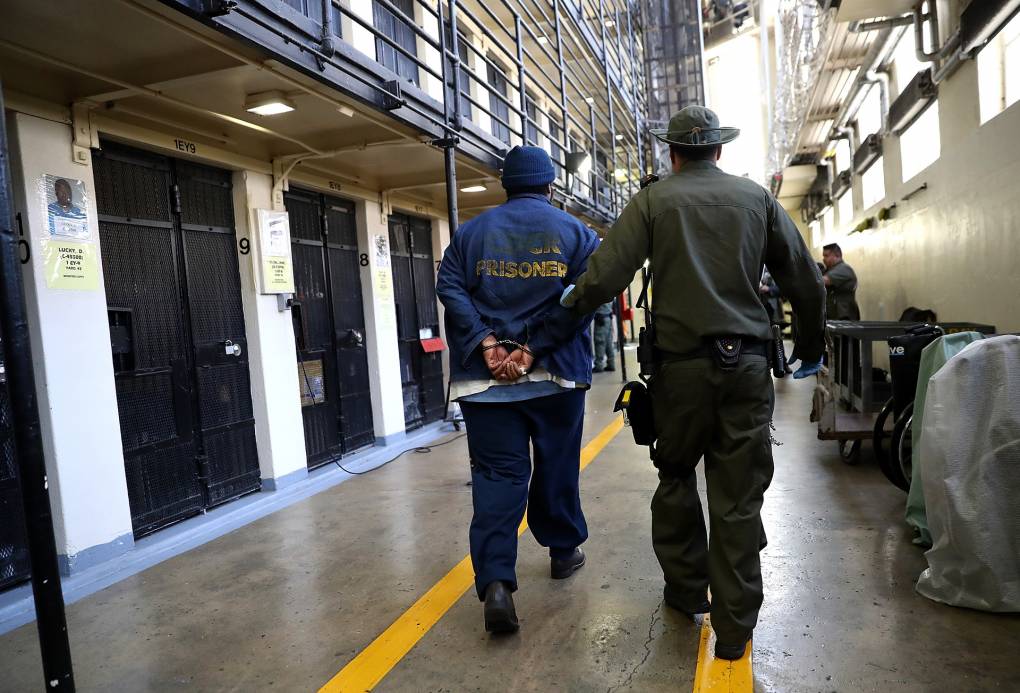
"caption": "San Quentin State Prison is continuing to experience an outbreak of coronavirus COVID-19 cases with over 1,000 confirmed cases amongst the staff and inmate population. San Quentin had zero cases of COVID-19 prior to a May 30th transfer of 121 inmates from a Southern California facility.",
"description": "San Quentin State Prison is continuing to experience an outbreak of coronavirus COVID-19 cases with over 1,000 confirmed cases amongst the staff and inmate population. San Quentin had zero cases of COVID-19 prior to a May 30th transfer of 121 inmates from a Southern California facility.",
"title": "Coronavirus Cases Surge To Over A Thousand At San Quentin Prison",
"credit": "Justin Sullivan/Getty Images",
"status": "inherit",
"isLoading": false,
"fetchFailed": false
},
"news_11827494": {
"type": "attachments",
"id": "news_11827494",
"meta": {
"index": "attachments_1716263798",
"site": "news",
"id": "11827494",
"found": true
},
"parent": 11827493,
"imgSizes": {
"apple_news_ca_landscape_5_5": {
"file": "https://ww2.kqed.org/app/uploads/sites/10/2020/07/gettyimages-1221399548-37f5812d1c472d5d3d4f1915c55a77075bd3105a-1044x783.jpg",
"width": 1044,
"mimeType": "image/jpeg",
"height": 783
},
"apple_news_ca_square_4_0": {
"file": "https://ww2.kqed.org/app/uploads/sites/10/2020/07/gettyimages-1221399548-37f5812d1c472d5d3d4f1915c55a77075bd3105a-470x470.jpg",
"width": 470,
"mimeType": "image/jpeg",
"height": 470
},
"twentyfourteen-full-width": {
"file": "https://ww2.kqed.org/app/uploads/sites/10/2020/07/gettyimages-1221399548-37f5812d1c472d5d3d4f1915c55a77075bd3105a-1038x576.jpg",
"width": 1038,
"mimeType": "image/jpeg",
"height": 576
},
"thumbnail": {
"file": "https://ww2.kqed.org/app/uploads/sites/10/2020/07/gettyimages-1221399548-37f5812d1c472d5d3d4f1915c55a77075bd3105a-160x120.jpg",
"width": 160,
"mimeType": "image/jpeg",
"height": 120
},
"post-thumbnail": {
"file": "https://ww2.kqed.org/app/uploads/sites/10/2020/07/gettyimages-1221399548-37f5812d1c472d5d3d4f1915c55a77075bd3105a-672x372.jpg",
"width": 672,
"mimeType": "image/jpeg",
"height": 372
},
"kqedFullSize": {
"file": "https://ww2.kqed.org/app/uploads/sites/10/2020/07/gettyimages-1221399548-37f5812d1c472d5d3d4f1915c55a77075bd3105a-scaled-e1593898140537.jpg",
"width": 1920,
"height": 1440
},
"2048x2048": {
"file": "https://ww2.kqed.org/app/uploads/sites/10/2020/07/gettyimages-1221399548-37f5812d1c472d5d3d4f1915c55a77075bd3105a-2048x1536.jpg",
"width": 2048,
"mimeType": "image/jpeg",
"height": 1536
},
"apple_news_ca_landscape_4_7": {
"file": "https://ww2.kqed.org/app/uploads/sites/10/2020/07/gettyimages-1221399548-37f5812d1c472d5d3d4f1915c55a77075bd3105a-632x474.jpg",
"width": 632,
"mimeType": "image/jpeg",
"height": 474
},
"large": {
"file": "https://ww2.kqed.org/app/uploads/sites/10/2020/07/gettyimages-1221399548-37f5812d1c472d5d3d4f1915c55a77075bd3105a-1020x765.jpg",
"width": 1020,
"mimeType": "image/jpeg",
"height": 765
},
"apple_news_ca_landscape_4_0": {
"file": "https://ww2.kqed.org/app/uploads/sites/10/2020/07/gettyimages-1221399548-37f5812d1c472d5d3d4f1915c55a77075bd3105a-536x402.jpg",
"width": 536,
"mimeType": "image/jpeg",
"height": 402
},
"apple_news_ca_portrait_12_9": {
"file": "https://ww2.kqed.org/app/uploads/sites/10/2020/07/gettyimages-1221399548-37f5812d1c472d5d3d4f1915c55a77075bd3105a-1122x1496.jpg",
"width": 1122,
"mimeType": "image/jpeg",
"height": 1496
},
"medium": {
"file": "https://ww2.kqed.org/app/uploads/sites/10/2020/07/gettyimages-1221399548-37f5812d1c472d5d3d4f1915c55a77075bd3105a-800x600.jpg",
"width": 800,
"mimeType": "image/jpeg",
"height": 600
},
"apple_news_ca_portrait_4_0": {
"file": "https://ww2.kqed.org/app/uploads/sites/10/2020/07/gettyimages-1221399548-37f5812d1c472d5d3d4f1915c55a77075bd3105a-354x472.jpg",
"width": 354,
"mimeType": "image/jpeg",
"height": 472
},
"apple_news_ca_portrait_9_7": {
"file": "https://ww2.kqed.org/app/uploads/sites/10/2020/07/gettyimages-1221399548-37f5812d1c472d5d3d4f1915c55a77075bd3105a-840x1120.jpg",
"width": 840,
"mimeType": "image/jpeg",
"height": 1120
},
"apple_news_ca_landscape_12_9": {
"file": "https://ww2.kqed.org/app/uploads/sites/10/2020/07/gettyimages-1221399548-37f5812d1c472d5d3d4f1915c55a77075bd3105a-1832x1374.jpg",
"width": 1832,
"mimeType": "image/jpeg",
"height": 1374
},
"apple_news_ca_square_9_7": {
"file": "https://ww2.kqed.org/app/uploads/sites/10/2020/07/gettyimages-1221399548-37f5812d1c472d5d3d4f1915c55a77075bd3105a-1104x1104.jpg",
"width": 1104,
"mimeType": "image/jpeg",
"height": 1104
},
"1536x1536": {
"file": "https://ww2.kqed.org/app/uploads/sites/10/2020/07/gettyimages-1221399548-37f5812d1c472d5d3d4f1915c55a77075bd3105a-1536x1152.jpg",
"width": 1536,
"mimeType": "image/jpeg",
"height": 1152
},
"apple_news_ca_portrait_4_7": {
"file": "https://ww2.kqed.org/app/uploads/sites/10/2020/07/gettyimages-1221399548-37f5812d1c472d5d3d4f1915c55a77075bd3105a-414x552.jpg",
"width": 414,
"mimeType": "image/jpeg",
"height": 552
},
"apple_news_ca_square_12_9": {
"file": "https://ww2.kqed.org/app/uploads/sites/10/2020/07/gettyimages-1221399548-37f5812d1c472d5d3d4f1915c55a77075bd3105a-1472x1472.jpg",
"width": 1472,
"mimeType": "image/jpeg",
"height": 1472
},
"apple_news_ca_portrait_5_5": {
"file": "https://ww2.kqed.org/app/uploads/sites/10/2020/07/gettyimages-1221399548-37f5812d1c472d5d3d4f1915c55a77075bd3105a-687x916.jpg",
"width": 687,
"mimeType": "image/jpeg",
"height": 916
},
"full-width": {
"file": "https://ww2.kqed.org/app/uploads/sites/10/2020/07/gettyimages-1221399548-37f5812d1c472d5d3d4f1915c55a77075bd3105a-1920x1440.jpg",
"width": 1920,
"mimeType": "image/jpeg",
"height": 1440
},
"apple_news_ca_square_4_7": {
"file": "https://ww2.kqed.org/app/uploads/sites/10/2020/07/gettyimages-1221399548-37f5812d1c472d5d3d4f1915c55a77075bd3105a-550x550.jpg",
"width": 550,
"mimeType": "image/jpeg",
"height": 550
},
"apple_news_ca_landscape_9_7": {
"file": "https://ww2.kqed.org/app/uploads/sites/10/2020/07/gettyimages-1221399548-37f5812d1c472d5d3d4f1915c55a77075bd3105a-1376x1032.jpg",
"width": 1376,
"mimeType": "image/jpeg",
"height": 1032
},
"apple_news_ca_square_5_5": {
"file": "https://ww2.kqed.org/app/uploads/sites/10/2020/07/gettyimages-1221399548-37f5812d1c472d5d3d4f1915c55a77075bd3105a-912x912.jpg",
"width": 912,
"mimeType": "image/jpeg",
"height": 912
}
},
"publishDate": 1593891172,
"modified": 1593898151,
"caption": null,
"description": "More than 4,000 foreign-born doctors officially begin their residencies at hospitals across the United States today. They'll confront two historic challenges: The coronavirus pandemic and some of the most restrictive immigration policies this nation has seen in decades.",
"title": "More than 4,000 foreign-born doctors officially begin their residencies at hospitals across the United States today. They'll confront two historic challenges: The coronavirus pandemic and some of the most restrictive immigration policies this nation has seen in decades.",
"credit": "smartboy10/DigitalVision Vectors/GettyImages",
"status": "inherit",
"isLoading": false,
"fetchFailed": false
},
"news_11827465": {
"type": "attachments",
"id": "news_11827465",
"meta": {
"index": "attachments_1716263798",
"site": "news",
"id": "11827465",
"found": true
},
"parent": 11827453,
"imgSizes": {
"apple_news_ca_landscape_5_5": {
"file": "https://ww2.kqed.org/app/uploads/sites/10/2020/07/RS43857_GettyImages-1253315032-qut-1044x783.jpg",
"width": 1044,
"mimeType": "image/jpeg",
"height": 783
},
"apple_news_ca_square_4_0": {
"file": "https://ww2.kqed.org/app/uploads/sites/10/2020/07/RS43857_GettyImages-1253315032-qut-470x470.jpg",
"width": 470,
"mimeType": "image/jpeg",
"height": 470
},
"twentyfourteen-full-width": {
"file": "https://ww2.kqed.org/app/uploads/sites/10/2020/07/RS43857_GettyImages-1253315032-qut-1038x576.jpg",
"width": 1038,
"mimeType": "image/jpeg",
"height": 576
},
"thumbnail": {
"file": "https://ww2.kqed.org/app/uploads/sites/10/2020/07/RS43857_GettyImages-1253315032-qut-160x107.jpg",
"width": 160,
"mimeType": "image/jpeg",
"height": 107
},
"post-thumbnail": {
"file": "https://ww2.kqed.org/app/uploads/sites/10/2020/07/RS43857_GettyImages-1253315032-qut-672x372.jpg",
"width": 672,
"mimeType": "image/jpeg",
"height": 372
},
"kqedFullSize": {
"file": "https://ww2.kqed.org/app/uploads/sites/10/2020/07/RS43857_GettyImages-1253315032-qut.jpg",
"width": 1920,
"height": 1280
},
"apple_news_ca_landscape_4_7": {
"file": "https://ww2.kqed.org/app/uploads/sites/10/2020/07/RS43857_GettyImages-1253315032-qut-632x474.jpg",
"width": 632,
"mimeType": "image/jpeg",
"height": 474
},
"large": {
"file": "https://ww2.kqed.org/app/uploads/sites/10/2020/07/RS43857_GettyImages-1253315032-qut-1020x680.jpg",
"width": 1020,
"mimeType": "image/jpeg",
"height": 680
},
"apple_news_ca_landscape_4_0": {
"file": "https://ww2.kqed.org/app/uploads/sites/10/2020/07/RS43857_GettyImages-1253315032-qut-536x402.jpg",
"width": 536,
"mimeType": "image/jpeg",
"height": 402
},
"apple_news_ca_portrait_12_9": {
"file": "https://ww2.kqed.org/app/uploads/sites/10/2020/07/RS43857_GettyImages-1253315032-qut-1122x1280.jpg",
"width": 1122,
"mimeType": "image/jpeg",
"height": 1280
},
"medium": {
"file": "https://ww2.kqed.org/app/uploads/sites/10/2020/07/RS43857_GettyImages-1253315032-qut-800x533.jpg",
"width": 800,
"mimeType": "image/jpeg",
"height": 533
},
"apple_news_ca_portrait_4_0": {
"file": "https://ww2.kqed.org/app/uploads/sites/10/2020/07/RS43857_GettyImages-1253315032-qut-354x472.jpg",
"width": 354,
"mimeType": "image/jpeg",
"height": 472
},
"apple_news_ca_portrait_9_7": {
"file": "https://ww2.kqed.org/app/uploads/sites/10/2020/07/RS43857_GettyImages-1253315032-qut-840x1120.jpg",
"width": 840,
"mimeType": "image/jpeg",
"height": 1120
},
"apple_news_ca_landscape_12_9": {
"file": "https://ww2.kqed.org/app/uploads/sites/10/2020/07/RS43857_GettyImages-1253315032-qut-1832x1280.jpg",
"width": 1832,
"mimeType": "image/jpeg",
"height": 1280
},
"apple_news_ca_square_9_7": {
"file": "https://ww2.kqed.org/app/uploads/sites/10/2020/07/RS43857_GettyImages-1253315032-qut-1104x1104.jpg",
"width": 1104,
"mimeType": "image/jpeg",
"height": 1104
},
"1536x1536": {
"file": "https://ww2.kqed.org/app/uploads/sites/10/2020/07/RS43857_GettyImages-1253315032-qut-1536x1024.jpg",
"width": 1536,
"mimeType": "image/jpeg",
"height": 1024
},
"apple_news_ca_portrait_4_7": {
"file": "https://ww2.kqed.org/app/uploads/sites/10/2020/07/RS43857_GettyImages-1253315032-qut-414x552.jpg",
"width": 414,
"mimeType": "image/jpeg",
"height": 552
},
"apple_news_ca_square_12_9": {
"file": "https://ww2.kqed.org/app/uploads/sites/10/2020/07/RS43857_GettyImages-1253315032-qut-1472x1280.jpg",
"width": 1472,
"mimeType": "image/jpeg",
"height": 1280
},
"apple_news_ca_portrait_5_5": {
"file": "https://ww2.kqed.org/app/uploads/sites/10/2020/07/RS43857_GettyImages-1253315032-qut-687x916.jpg",
"width": 687,
"mimeType": "image/jpeg",
"height": 916
},
"apple_news_ca_square_4_7": {
"file": "https://ww2.kqed.org/app/uploads/sites/10/2020/07/RS43857_GettyImages-1253315032-qut-550x550.jpg",
"width": 550,
"mimeType": "image/jpeg",
"height": 550
},
"apple_news_ca_landscape_9_7": {
"file": "https://ww2.kqed.org/app/uploads/sites/10/2020/07/RS43857_GettyImages-1253315032-qut-1376x1032.jpg",
"width": 1376,
"mimeType": "image/jpeg",
"height": 1032
},
"apple_news_ca_square_5_5": {
"file": "https://ww2.kqed.org/app/uploads/sites/10/2020/07/RS43857_GettyImages-1253315032-qut-912x912.jpg",
"width": 912,
"mimeType": "image/jpeg",
"height": 912
}
},
"publishDate": 1593824444,
"modified": 1603419416,
"caption": null,
"description": null,
"title": "Coronavirus Cases Surge To Over A Thousand At San Quentin Prison",
"credit": "Justin Sullivan/Getty Images",
"status": "inherit",
"isLoading": false,
"fetchFailed": false
},
"news_11827410": {
"type": "attachments",
"id": "news_11827410",
"meta": {
"index": "attachments_1716263798",
"site": "news",
"id": "11827410",
"found": true
},
"parent": 11827407,
"imgSizes": {
"apple_news_ca_landscape_5_5": {
"file": "https://ww2.kqed.org/app/uploads/sites/10/2020/07/1920_GettyImages-1223036039-1044x783.jpg",
"width": 1044,
"mimeType": "image/jpeg",
"height": 783
},
"apple_news_ca_square_4_0": {
"file": "https://ww2.kqed.org/app/uploads/sites/10/2020/07/1920_GettyImages-1223036039-470x470.jpg",
"width": 470,
"mimeType": "image/jpeg",
"height": 470
},
"twentyfourteen-full-width": {
"file": "https://ww2.kqed.org/app/uploads/sites/10/2020/07/1920_GettyImages-1223036039-1038x576.jpg",
"width": 1038,
"mimeType": "image/jpeg",
"height": 576
},
"thumbnail": {
"file": "https://ww2.kqed.org/app/uploads/sites/10/2020/07/1920_GettyImages-1223036039-160x90.jpg",
"width": 160,
"mimeType": "image/jpeg",
"height": 90
},
"post-thumbnail": {
"file": "https://ww2.kqed.org/app/uploads/sites/10/2020/07/1920_GettyImages-1223036039-672x372.jpg",
"width": 672,
"mimeType": "image/jpeg",
"height": 372
},
"kqedFullSize": {
"file": "https://ww2.kqed.org/app/uploads/sites/10/2020/07/1920_GettyImages-1223036039-scaled.jpg",
"width": 2560,
"height": 1440
},
"2048x2048": {
"file": "https://ww2.kqed.org/app/uploads/sites/10/2020/07/1920_GettyImages-1223036039-2048x1152.jpg",
"width": 2048,
"mimeType": "image/jpeg",
"height": 1152
},
"apple_news_ca_landscape_4_7": {
"file": "https://ww2.kqed.org/app/uploads/sites/10/2020/07/1920_GettyImages-1223036039-632x474.jpg",
"width": 632,
"mimeType": "image/jpeg",
"height": 474
},
"large": {
"file": "https://ww2.kqed.org/app/uploads/sites/10/2020/07/1920_GettyImages-1223036039-1020x574.jpg",
"width": 1020,
"mimeType": "image/jpeg",
"height": 574
},
"apple_news_ca_landscape_4_0": {
"file": "https://ww2.kqed.org/app/uploads/sites/10/2020/07/1920_GettyImages-1223036039-536x402.jpg",
"width": 536,
"mimeType": "image/jpeg",
"height": 402
},
"apple_news_ca_portrait_12_9": {
"file": "https://ww2.kqed.org/app/uploads/sites/10/2020/07/1920_GettyImages-1223036039-1122x1496.jpg",
"width": 1122,
"mimeType": "image/jpeg",
"height": 1496
},
"medium": {
"file": "https://ww2.kqed.org/app/uploads/sites/10/2020/07/1920_GettyImages-1223036039-800x450.jpg",
"width": 800,
"mimeType": "image/jpeg",
"height": 450
},
"apple_news_ca_portrait_4_0": {
"file": "https://ww2.kqed.org/app/uploads/sites/10/2020/07/1920_GettyImages-1223036039-354x472.jpg",
"width": 354,
"mimeType": "image/jpeg",
"height": 472
},
"apple_news_ca_portrait_9_7": {
"file": "https://ww2.kqed.org/app/uploads/sites/10/2020/07/1920_GettyImages-1223036039-840x1120.jpg",
"width": 840,
"mimeType": "image/jpeg",
"height": 1120
},
"apple_news_ca_landscape_12_9": {
"file": "https://ww2.kqed.org/app/uploads/sites/10/2020/07/1920_GettyImages-1223036039-1832x1374.jpg",
"width": 1832,
"mimeType": "image/jpeg",
"height": 1374
},
"apple_news_ca_square_9_7": {
"file": "https://ww2.kqed.org/app/uploads/sites/10/2020/07/1920_GettyImages-1223036039-1104x1104.jpg",
"width": 1104,
"mimeType": "image/jpeg",
"height": 1104
},
"1536x1536": {
"file": "https://ww2.kqed.org/app/uploads/sites/10/2020/07/1920_GettyImages-1223036039-1536x864.jpg",
"width": 1536,
"mimeType": "image/jpeg",
"height": 864
},
"apple_news_ca_portrait_4_7": {
"file": "https://ww2.kqed.org/app/uploads/sites/10/2020/07/1920_GettyImages-1223036039-414x552.jpg",
"width": 414,
"mimeType": "image/jpeg",
"height": 552
},
"apple_news_ca_square_12_9": {
"file": "https://ww2.kqed.org/app/uploads/sites/10/2020/07/1920_GettyImages-1223036039-1472x1472.jpg",
"width": 1472,
"mimeType": "image/jpeg",
"height": 1472
},
"apple_news_ca_portrait_5_5": {
"file": "https://ww2.kqed.org/app/uploads/sites/10/2020/07/1920_GettyImages-1223036039-687x916.jpg",
"width": 687,
"mimeType": "image/jpeg",
"height": 916
},
"full-width": {
"file": "https://ww2.kqed.org/app/uploads/sites/10/2020/07/1920_GettyImages-1223036039-1920x1080.jpg",
"width": 1920,
"mimeType": "image/jpeg",
"height": 1080
},
"apple_news_ca_square_4_7": {
"file": "https://ww2.kqed.org/app/uploads/sites/10/2020/07/1920_GettyImages-1223036039-550x550.jpg",
"width": 550,
"mimeType": "image/jpeg",
"height": 550
},
"apple_news_ca_landscape_9_7": {
"file": "https://ww2.kqed.org/app/uploads/sites/10/2020/07/1920_GettyImages-1223036039-1376x1032.jpg",
"width": 1376,
"mimeType": "image/jpeg",
"height": 1032
},
"apple_news_ca_square_5_5": {
"file": "https://ww2.kqed.org/app/uploads/sites/10/2020/07/1920_GettyImages-1223036039-912x912.jpg",
"width": 912,
"mimeType": "image/jpeg",
"height": 912
}
},
"publishDate": 1593789610,
"modified": 1619544265,
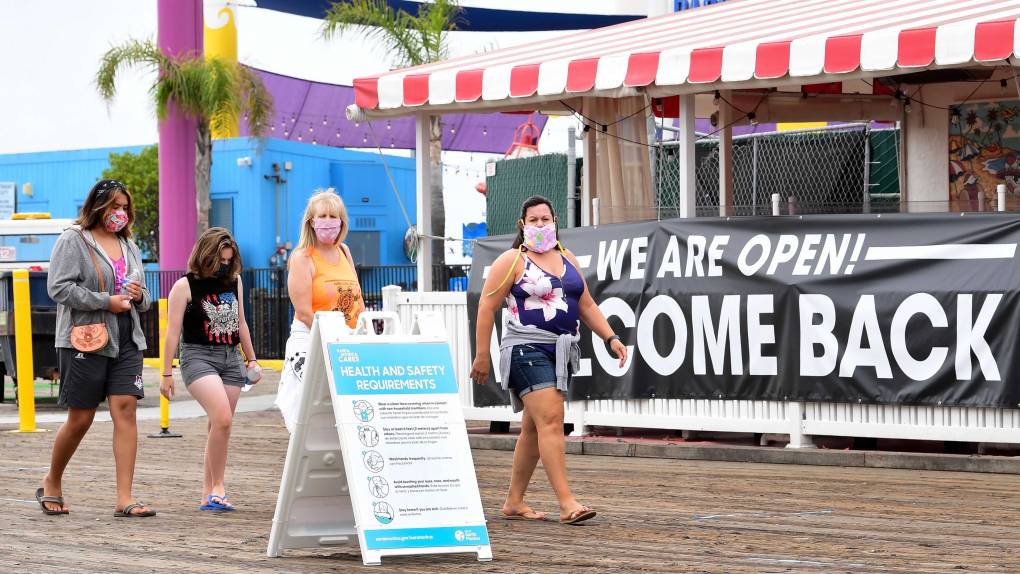
"caption": "People wearing face masks walk past a health and safety guideline board and an open restaurant on Santa Monica Pier which reopened on June 25 after closure for over three months due to the coronavirus pandemic, on June 26, 2020 in Santa Monica. ",
"description": null,
"title": "US-HEALTH-VIRUS-CALIFORNIA",
"credit": "Frederic J. Brown/AFP via Getty Images",
"status": "inherit",
"altTag": null,
"isLoading": false,
"fetchFailed": false
},
"news_11827394": {
"type": "attachments",
"id": "news_11827394",
"meta": {
"index": "attachments_1716263798",
"site": "news",
"id": "11827394",
"found": true
},
"parent": 11827388,
"imgSizes": {
"apple_news_ca_square_4_0": {
"file": "https://ww2.kqed.org/app/uploads/sites/10/2020/07/1920_sign-470x339.jpg",
"width": 470,
"mimeType": "image/jpeg",
"height": 339
},
"thumbnail": {
"file": "https://ww2.kqed.org/app/uploads/sites/10/2020/07/1920_sign-160x90.jpg",
"width": 160,
"mimeType": "image/jpeg",
"height": 90
},
"kqedFullSize": {
"file": "https://ww2.kqed.org/app/uploads/sites/10/2020/07/1920_sign.jpg",
"width": 604,
"height": 339
},
"apple_news_ca_portrait_4_7": {
"file": "https://ww2.kqed.org/app/uploads/sites/10/2020/07/1920_sign-414x339.jpg",
"width": 414,
"mimeType": "image/jpeg",
"height": 339
},
"apple_news_ca_square_4_7": {
"file": "https://ww2.kqed.org/app/uploads/sites/10/2020/07/1920_sign-550x339.jpg",
"width": 550,
"mimeType": "image/jpeg",
"height": 339
},
"apple_news_ca_landscape_4_0": {
"file": "https://ww2.kqed.org/app/uploads/sites/10/2020/07/1920_sign-536x339.jpg",
"width": 536,
"mimeType": "image/jpeg",
"height": 339
},
"apple_news_ca_portrait_4_0": {
"file": "https://ww2.kqed.org/app/uploads/sites/10/2020/07/1920_sign-354x339.jpg",
"width": 354,
"mimeType": "image/jpeg",
"height": 339
}
},
"publishDate": 1593743078,
"modified": 1593743444,
"caption": "Chanthon Bun, in orange mask, is greeted by supporters in San Francisco Wednesday after being released from San Quentin State Prison. Bun was relieved he had not been transferred to ICE but learned later in the day that he had been infected with COVID-19 while in prison.",
"description": null,
"title": "1920_sign",
"credit": "Courtesy of Anoop Prasad",
"status": "inherit",
"isLoading": false,
"fetchFailed": false
},
"news_11827316": {
"type": "attachments",
"id": "news_11827316",
"meta": {
"index": "attachments_1716263798",
"site": "news",
"id": "11827316",
"found": true
},
"parent": 11827277,
"imgSizes": {
"apple_news_ca_landscape_5_5": {
"file": "https://ww2.kqed.org/app/uploads/sites/10/2020/07/RS43852_Savannah_Malte_v2-qut-1044x783.jpg",
"width": 1044,
"mimeType": "image/jpeg",
"height": 783
},
"apple_news_ca_square_4_0": {
"file": "https://ww2.kqed.org/app/uploads/sites/10/2020/07/RS43852_Savannah_Malte_v2-qut-470x470.jpg",
"width": 470,
"mimeType": "image/jpeg",
"height": 470
},
"twentyfourteen-full-width": {
"file": "https://ww2.kqed.org/app/uploads/sites/10/2020/07/RS43852_Savannah_Malte_v2-qut-1038x576.jpg",
"width": 1038,
"mimeType": "image/jpeg",
"height": 576
},
"thumbnail": {
"file": "https://ww2.kqed.org/app/uploads/sites/10/2020/07/RS43852_Savannah_Malte_v2-qut-160x132.jpg",
"width": 160,
"mimeType": "image/jpeg",
"height": 132
},
"post-thumbnail": {
"file": "https://ww2.kqed.org/app/uploads/sites/10/2020/07/RS43852_Savannah_Malte_v2-qut-672x372.jpg",
"width": 672,
"mimeType": "image/jpeg",
"height": 372
},
"kqedFullSize": {
"file": "https://ww2.kqed.org/app/uploads/sites/10/2020/07/RS43852_Savannah_Malte_v2-qut.jpg",
"width": 1600,
"height": 1317
},
"apple_news_ca_landscape_4_7": {
"file": "https://ww2.kqed.org/app/uploads/sites/10/2020/07/RS43852_Savannah_Malte_v2-qut-632x474.jpg",
"width": 632,
"mimeType": "image/jpeg",
"height": 474
},
"large": {
"file": "https://ww2.kqed.org/app/uploads/sites/10/2020/07/RS43852_Savannah_Malte_v2-qut-1020x840.jpg",
"width": 1020,
"mimeType": "image/jpeg",
"height": 840
},
"apple_news_ca_landscape_4_0": {
"file": "https://ww2.kqed.org/app/uploads/sites/10/2020/07/RS43852_Savannah_Malte_v2-qut-536x402.jpg",
"width": 536,
"mimeType": "image/jpeg",
"height": 402
},
"apple_news_ca_portrait_12_9": {
"file": "https://ww2.kqed.org/app/uploads/sites/10/2020/07/RS43852_Savannah_Malte_v2-qut-1122x1317.jpg",
"width": 1122,
"mimeType": "image/jpeg",
"height": 1317
},
"medium": {
"file": "https://ww2.kqed.org/app/uploads/sites/10/2020/07/RS43852_Savannah_Malte_v2-qut-800x659.jpg",
"width": 800,
"mimeType": "image/jpeg",
"height": 659
},
"apple_news_ca_portrait_4_0": {
"file": "https://ww2.kqed.org/app/uploads/sites/10/2020/07/RS43852_Savannah_Malte_v2-qut-354x472.jpg",
"width": 354,
"mimeType": "image/jpeg",
"height": 472
},
"apple_news_ca_portrait_9_7": {
"file": "https://ww2.kqed.org/app/uploads/sites/10/2020/07/RS43852_Savannah_Malte_v2-qut-840x1120.jpg",
"width": 840,
"mimeType": "image/jpeg",
"height": 1120
},
"apple_news_ca_square_9_7": {
"file": "https://ww2.kqed.org/app/uploads/sites/10/2020/07/RS43852_Savannah_Malte_v2-qut-1104x1104.jpg",
"width": 1104,
"mimeType": "image/jpeg",
"height": 1104
},
"1536x1536": {
"file": "https://ww2.kqed.org/app/uploads/sites/10/2020/07/RS43852_Savannah_Malte_v2-qut-1536x1264.jpg",
"width": 1536,
"mimeType": "image/jpeg",
"height": 1264
},
"apple_news_ca_portrait_4_7": {
"file": "https://ww2.kqed.org/app/uploads/sites/10/2020/07/RS43852_Savannah_Malte_v2-qut-414x552.jpg",
"width": 414,
"mimeType": "image/jpeg",
"height": 552
},
"apple_news_ca_square_12_9": {
"file": "https://ww2.kqed.org/app/uploads/sites/10/2020/07/RS43852_Savannah_Malte_v2-qut-1472x1317.jpg",
"width": 1472,
"mimeType": "image/jpeg",
"height": 1317
},
"apple_news_ca_portrait_5_5": {
"file": "https://ww2.kqed.org/app/uploads/sites/10/2020/07/RS43852_Savannah_Malte_v2-qut-687x916.jpg",
"width": 687,
"mimeType": "image/jpeg",
"height": 916
},
"apple_news_ca_square_4_7": {
"file": "https://ww2.kqed.org/app/uploads/sites/10/2020/07/RS43852_Savannah_Malte_v2-qut-550x550.jpg",
"width": 550,
"mimeType": "image/jpeg",
"height": 550
},
"apple_news_ca_landscape_9_7": {
"file": "https://ww2.kqed.org/app/uploads/sites/10/2020/07/RS43852_Savannah_Malte_v2-qut-1376x1032.jpg",
"width": 1376,
"mimeType": "image/jpeg",
"height": 1032
},
"apple_news_ca_square_5_5": {
"file": "https://ww2.kqed.org/app/uploads/sites/10/2020/07/RS43852_Savannah_Malte_v2-qut-912x912.jpg",
"width": 912,
"mimeType": "image/jpeg",
"height": 912
}
},
"publishDate": 1593727892,
"modified": 1593804531,
"caption": "Savannah Malakoff lives in California, while her fiance Malte Schmidt is from Germany. The couple received approval for their petition to get married, but can't travel to be in the same country because of COVID-19 restrictions.\n",
"description": "Savannah Malakoff lives in California, while her fiance Malte Schmidt is from Germany. The couple received approval for their petition to get married, but can't travel to be in the same country because of COVID-19 restrictions.\n",
"title": "RS43852_Savannah_Malte_v2-qut",
"credit": "Tim Schmidt",
"status": "inherit",
"isLoading": false,
"fetchFailed": false
},
"news_11827202": {
"type": "attachments",
"id": "news_11827202",
"meta": {
"index": "attachments_1716263798",
"site": "news",
"id": "11827202",
"found": true
},
"parent": 11827053,
"imgSizes": {
"apple_news_ca_square_4_0": {
"file": "https://ww2.kqed.org/app/uploads/sites/10/2020/07/GettyImages-1219993374-1-470x470.jpg",
"width": 470,
"mimeType": "image/jpeg",
"height": 470
},
"twentyfourteen-full-width": {
"file": "https://ww2.kqed.org/app/uploads/sites/10/2020/07/GettyImages-1219993374-1-1024x576.jpg",
"width": 1024,
"mimeType": "image/jpeg",
"height": 576
},
"thumbnail": {
"file": "https://ww2.kqed.org/app/uploads/sites/10/2020/07/GettyImages-1219993374-1-160x105.jpg",
"width": 160,
"mimeType": "image/jpeg",
"height": 105
},
"post-thumbnail": {
"file": "https://ww2.kqed.org/app/uploads/sites/10/2020/07/GettyImages-1219993374-1-672x372.jpg",
"width": 672,
"mimeType": "image/jpeg",
"height": 372
},
"kqedFullSize": {
"file": "https://ww2.kqed.org/app/uploads/sites/10/2020/07/GettyImages-1219993374-1.jpg",
"width": 1024,
"height": 674
},
"apple_news_ca_landscape_4_7": {
"file": "https://ww2.kqed.org/app/uploads/sites/10/2020/07/GettyImages-1219993374-1-632x474.jpg",
"width": 632,
"mimeType": "image/jpeg",
"height": 474
},
"large": {
"file": "https://ww2.kqed.org/app/uploads/sites/10/2020/07/GettyImages-1219993374-1-1020x671.jpg",
"width": 1020,
"mimeType": "image/jpeg",
"height": 671
},
"apple_news_ca_landscape_4_0": {
"file": "https://ww2.kqed.org/app/uploads/sites/10/2020/07/GettyImages-1219993374-1-536x402.jpg",
"width": 536,
"mimeType": "image/jpeg",
"height": 402
},
"medium": {
"file": "https://ww2.kqed.org/app/uploads/sites/10/2020/07/GettyImages-1219993374-1-800x527.jpg",
"width": 800,
"mimeType": "image/jpeg",
"height": 527
},
"apple_news_ca_portrait_4_0": {
"file": "https://ww2.kqed.org/app/uploads/sites/10/2020/07/GettyImages-1219993374-1-354x472.jpg",
"width": 354,
"mimeType": "image/jpeg",
"height": 472
},
"apple_news_ca_portrait_9_7": {
"file": "https://ww2.kqed.org/app/uploads/sites/10/2020/07/GettyImages-1219993374-1-840x674.jpg",
"width": 840,
"mimeType": "image/jpeg",
"height": 674
},
"apple_news_ca_portrait_4_7": {
"file": "https://ww2.kqed.org/app/uploads/sites/10/2020/07/GettyImages-1219993374-1-414x552.jpg",
"width": 414,
"mimeType": "image/jpeg",
"height": 552
},
"apple_news_ca_portrait_5_5": {
"file": "https://ww2.kqed.org/app/uploads/sites/10/2020/07/GettyImages-1219993374-1-687x674.jpg",
"width": 687,
"mimeType": "image/jpeg",
"height": 674
},
"apple_news_ca_square_4_7": {
"file": "https://ww2.kqed.org/app/uploads/sites/10/2020/07/GettyImages-1219993374-1-550x550.jpg",
"width": 550,
"mimeType": "image/jpeg",
"height": 550
},
"apple_news_ca_square_5_5": {
"file": "https://ww2.kqed.org/app/uploads/sites/10/2020/07/GettyImages-1219993374-1-912x674.jpg",
"width": 912,
"mimeType": "image/jpeg",
"height": 674
}
},
"publishDate": 1593652414,
"modified": 1594214598,
"caption": null,
"description": null,
"title": "Town Of Bolinas, CA Attempts To Test All Residents For COVID-19 And Antibodies",
"credit": "Ezra Shaw/Getty Images",
"status": "inherit",
"isLoading": false,
"fetchFailed": false
},
"news_11826473": {
"type": "attachments",
"id": "news_11826473",
"meta": {
"index": "attachments_1716263798",
"site": "news",
"id": "11826473",
"found": true
},
"parent": 11826469,
"imgSizes": {
"apple_news_ca_landscape_5_5": {
"file": "https://ww2.kqed.org/app/uploads/sites/10/2020/06/RS21213_GettyImages-589931494-qut-1044x783.jpg",
"width": 1044,
"mimeType": "image/jpeg",
"height": 783
},
"apple_news_ca_square_4_0": {
"file": "https://ww2.kqed.org/app/uploads/sites/10/2020/06/RS21213_GettyImages-589931494-qut-470x470.jpg",
"width": 470,
"mimeType": "image/jpeg",
"height": 470
},
"twentyfourteen-full-width": {
"file": "https://ww2.kqed.org/app/uploads/sites/10/2020/06/RS21213_GettyImages-589931494-qut-1038x576.jpg",
"width": 1038,
"mimeType": "image/jpeg",
"height": 576
},
"thumbnail": {
"file": "https://ww2.kqed.org/app/uploads/sites/10/2020/06/RS21213_GettyImages-589931494-qut-160x109.jpg",
"width": 160,
"mimeType": "image/jpeg",
"height": 109
},
"post-thumbnail": {
"file": "https://ww2.kqed.org/app/uploads/sites/10/2020/06/RS21213_GettyImages-589931494-qut-672x372.jpg",
"width": 672,
"mimeType": "image/jpeg",
"height": 372
},
"kqedFullSize": {
"file": "https://ww2.kqed.org/app/uploads/sites/10/2020/06/RS21213_GettyImages-589931494-qut.jpg",
"width": 1920,
"height": 1305
},
"apple_news_ca_landscape_4_7": {
"file": "https://ww2.kqed.org/app/uploads/sites/10/2020/06/RS21213_GettyImages-589931494-qut-632x474.jpg",
"width": 632,
"mimeType": "image/jpeg",
"height": 474
},
"large": {
"file": "https://ww2.kqed.org/app/uploads/sites/10/2020/06/RS21213_GettyImages-589931494-qut-1020x693.jpg",
"width": 1020,
"mimeType": "image/jpeg",
"height": 693
},
"apple_news_ca_landscape_4_0": {
"file": "https://ww2.kqed.org/app/uploads/sites/10/2020/06/RS21213_GettyImages-589931494-qut-536x402.jpg",
"width": 536,
"mimeType": "image/jpeg",
"height": 402
},
"apple_news_ca_portrait_12_9": {
"file": "https://ww2.kqed.org/app/uploads/sites/10/2020/06/RS21213_GettyImages-589931494-qut-1122x1305.jpg",
"width": 1122,
"mimeType": "image/jpeg",
"height": 1305
},
"medium": {
"file": "https://ww2.kqed.org/app/uploads/sites/10/2020/06/RS21213_GettyImages-589931494-qut-800x544.jpg",
"width": 800,
"mimeType": "image/jpeg",
"height": 544
},
"apple_news_ca_portrait_4_0": {
"file": "https://ww2.kqed.org/app/uploads/sites/10/2020/06/RS21213_GettyImages-589931494-qut-354x472.jpg",
"width": 354,
"mimeType": "image/jpeg",
"height": 472
},
"apple_news_ca_portrait_9_7": {
"file": "https://ww2.kqed.org/app/uploads/sites/10/2020/06/RS21213_GettyImages-589931494-qut-840x1120.jpg",
"width": 840,
"mimeType": "image/jpeg",
"height": 1120
},
"apple_news_ca_landscape_12_9": {
"file": "https://ww2.kqed.org/app/uploads/sites/10/2020/06/RS21213_GettyImages-589931494-qut-1832x1305.jpg",
"width": 1832,
"mimeType": "image/jpeg",
"height": 1305
},
"apple_news_ca_square_9_7": {
"file": "https://ww2.kqed.org/app/uploads/sites/10/2020/06/RS21213_GettyImages-589931494-qut-1104x1104.jpg",
"width": 1104,
"mimeType": "image/jpeg",
"height": 1104
},
"1536x1536": {
"file": "https://ww2.kqed.org/app/uploads/sites/10/2020/06/RS21213_GettyImages-589931494-qut-1536x1044.jpg",
"width": 1536,
"mimeType": "image/jpeg",
"height": 1044
},
"apple_news_ca_portrait_4_7": {
"file": "https://ww2.kqed.org/app/uploads/sites/10/2020/06/RS21213_GettyImages-589931494-qut-414x552.jpg",
"width": 414,
"mimeType": "image/jpeg",
"height": 552
},
"apple_news_ca_square_12_9": {
"file": "https://ww2.kqed.org/app/uploads/sites/10/2020/06/RS21213_GettyImages-589931494-qut-1472x1305.jpg",
"width": 1472,
"mimeType": "image/jpeg",
"height": 1305
},
"apple_news_ca_portrait_5_5": {
"file": "https://ww2.kqed.org/app/uploads/sites/10/2020/06/RS21213_GettyImages-589931494-qut-687x916.jpg",
"width": 687,
"mimeType": "image/jpeg",
"height": 916
},
"apple_news_ca_square_4_7": {
"file": "https://ww2.kqed.org/app/uploads/sites/10/2020/06/RS21213_GettyImages-589931494-qut-550x550.jpg",
"width": 550,
"mimeType": "image/jpeg",
"height": 550
},
"apple_news_ca_landscape_9_7": {
"file": "https://ww2.kqed.org/app/uploads/sites/10/2020/06/RS21213_GettyImages-589931494-qut-1376x1032.jpg",
"width": 1376,
"mimeType": "image/jpeg",
"height": 1032
},
"apple_news_ca_square_5_5": {
"file": "https://ww2.kqed.org/app/uploads/sites/10/2020/06/RS21213_GettyImages-589931494-qut-912x912.jpg",
"width": 912,
"mimeType": "image/jpeg",
"height": 912
}
},
"publishDate": 1593278259,
"modified": 1593663813,
"caption": "Health officials are working to keep a fast-moving COVID-19 outbreak at California's San Quentin State Prison from spreading into the broader Bay Area community. San Quentin State Prison opened in 1852 and is California's oldest penitentiary. ",
"description": "Health officials are working to keep a fast-moving COVID-19 outbreak at California's San Quentin State Prison from spreading into the broader Bay Area community. San Quentin State Prison opened in 1852 and is California's oldest penitentiary. ",
"title": "RS21213_GettyImages-589931494-qut",
"credit": "Justin Sullivan/Getty Images",
"status": "inherit",
"isLoading": false,
"fetchFailed": false
},
"news_11827103": {
"type": "attachments",
"id": "news_11827103",
"meta": {
"index": "attachments_1716263798",
"site": "news",
"id": "11827103",
"found": true
},
"parent": 11827083,
"imgSizes": {
"apple_news_ca_landscape_5_5": {
"file": "https://ww2.kqed.org/app/uploads/sites/10/2020/07/bars3-1044x783.jpg",
"width": 1044,
"mimeType": "image/jpeg",
"height": 783
},
"apple_news_ca_square_4_0": {
"file": "https://ww2.kqed.org/app/uploads/sites/10/2020/07/bars3-470x470.jpg",
"width": 470,
"mimeType": "image/jpeg",
"height": 470
},
"twentyfourteen-full-width": {
"file": "https://ww2.kqed.org/app/uploads/sites/10/2020/07/bars3-1038x576.jpg",
"width": 1038,
"mimeType": "image/jpeg",
"height": 576
},
"thumbnail": {
"file": "https://ww2.kqed.org/app/uploads/sites/10/2020/07/bars3-160x108.jpg",
"width": 160,
"mimeType": "image/jpeg",
"height": 108
},
"post-thumbnail": {
"file": "https://ww2.kqed.org/app/uploads/sites/10/2020/07/bars3-672x372.jpg",
"width": 672,
"mimeType": "image/jpeg",
"height": 372
},
"kqedFullSize": {
"file": "https://ww2.kqed.org/app/uploads/sites/10/2020/07/bars3.jpg",
"width": 1900,
"height": 1280
},
"apple_news_ca_landscape_4_7": {
"file": "https://ww2.kqed.org/app/uploads/sites/10/2020/07/bars3-632x474.jpg",
"width": 632,
"mimeType": "image/jpeg",
"height": 474
},
"large": {
"file": "https://ww2.kqed.org/app/uploads/sites/10/2020/07/bars3-1020x687.jpg",
"width": 1020,
"mimeType": "image/jpeg",
"height": 687
},
"apple_news_ca_landscape_4_0": {
"file": "https://ww2.kqed.org/app/uploads/sites/10/2020/07/bars3-536x402.jpg",
"width": 536,
"mimeType": "image/jpeg",
"height": 402
},
"apple_news_ca_portrait_12_9": {
"file": "https://ww2.kqed.org/app/uploads/sites/10/2020/07/bars3-1122x1280.jpg",
"width": 1122,
"mimeType": "image/jpeg",
"height": 1280
},
"medium": {
"file": "https://ww2.kqed.org/app/uploads/sites/10/2020/07/bars3-800x539.jpg",
"width": 800,
"mimeType": "image/jpeg",
"height": 539
},
"apple_news_ca_portrait_4_0": {
"file": "https://ww2.kqed.org/app/uploads/sites/10/2020/07/bars3-354x472.jpg",
"width": 354,
"mimeType": "image/jpeg",
"height": 472
},
"apple_news_ca_portrait_9_7": {
"file": "https://ww2.kqed.org/app/uploads/sites/10/2020/07/bars3-840x1120.jpg",
"width": 840,
"mimeType": "image/jpeg",
"height": 1120
},
"apple_news_ca_landscape_12_9": {
"file": "https://ww2.kqed.org/app/uploads/sites/10/2020/07/bars3-1832x1280.jpg",
"width": 1832,
"mimeType": "image/jpeg",
"height": 1280
},
"apple_news_ca_square_9_7": {
"file": "https://ww2.kqed.org/app/uploads/sites/10/2020/07/bars3-1104x1104.jpg",
"width": 1104,
"mimeType": "image/jpeg",
"height": 1104
},
"1536x1536": {
"file": "https://ww2.kqed.org/app/uploads/sites/10/2020/07/bars3-1536x1035.jpg",
"width": 1536,
"mimeType": "image/jpeg",
"height": 1035
},
"apple_news_ca_portrait_4_7": {
"file": "https://ww2.kqed.org/app/uploads/sites/10/2020/07/bars3-414x552.jpg",
"width": 414,
"mimeType": "image/jpeg",
"height": 552
},
"apple_news_ca_square_12_9": {
"file": "https://ww2.kqed.org/app/uploads/sites/10/2020/07/bars3-1472x1280.jpg",
"width": 1472,
"mimeType": "image/jpeg",
"height": 1280
},
"apple_news_ca_portrait_5_5": {
"file": "https://ww2.kqed.org/app/uploads/sites/10/2020/07/bars3-687x916.jpg",
"width": 687,
"mimeType": "image/jpeg",
"height": 916
},
"apple_news_ca_square_4_7": {
"file": "https://ww2.kqed.org/app/uploads/sites/10/2020/07/bars3-550x550.jpg",
"width": 550,
"mimeType": "image/jpeg",
"height": 550
},
"apple_news_ca_landscape_9_7": {
"file": "https://ww2.kqed.org/app/uploads/sites/10/2020/07/bars3-1376x1032.jpg",
"width": 1376,
"mimeType": "image/jpeg",
"height": 1032
},
"apple_news_ca_square_5_5": {
"file": "https://ww2.kqed.org/app/uploads/sites/10/2020/07/bars3-912x912.jpg",
"width": 912,
"mimeType": "image/jpeg",
"height": 912
}
},
"publishDate": 1593643332,
"modified": 1593662914,
"caption": "All bars in 19 California counties have been ordered to close to limit the spread of COVID-19.",
"description": "All bars in 19 California counties have been ordered to close to limit the spread of COVID-19.",
"title": "bars3",
"credit": "Mike Yakaites/Pexels",
"status": "inherit",
"isLoading": false,
"fetchFailed": false
},
"news_11826997": {
"type": "attachments",
"id": "news_11826997",
"meta": {
"index": "attachments_1716263798",
"site": "news",
"id": "11826997",
"found": true
},
"parent": 11826950,
"imgSizes": {
"apple_news_ca_square_4_0": {
"file": "https://ww2.kqed.org/app/uploads/sites/10/2020/07/Mission-Latino-Food-Hub_5156_WEB-1-470x470.jpg",
"width": 470,
"mimeType": "image/jpeg",
"height": 470
},
"thumbnail": {
"file": "https://ww2.kqed.org/app/uploads/sites/10/2020/07/Mission-Latino-Food-Hub_5156_WEB-1-160x107.jpg",
"width": 160,
"mimeType": "image/jpeg",
"height": 107
},
"post-thumbnail": {
"file": "https://ww2.kqed.org/app/uploads/sites/10/2020/07/Mission-Latino-Food-Hub_5156_WEB-1-672x372.jpg",
"width": 672,
"mimeType": "image/jpeg",
"height": 372
},
"kqedFullSize": {
"file": "https://ww2.kqed.org/app/uploads/sites/10/2020/07/Mission-Latino-Food-Hub_5156_WEB-1.jpg",
"width": 800,
"height": 534
},
"apple_news_ca_landscape_4_7": {
"file": "https://ww2.kqed.org/app/uploads/sites/10/2020/07/Mission-Latino-Food-Hub_5156_WEB-1-632x474.jpg",
"width": 632,
"mimeType": "image/jpeg",
"height": 474
},
"apple_news_ca_portrait_4_7": {
"file": "https://ww2.kqed.org/app/uploads/sites/10/2020/07/Mission-Latino-Food-Hub_5156_WEB-1-414x534.jpg",
"width": 414,
"mimeType": "image/jpeg",
"height": 534
},
"apple_news_ca_portrait_5_5": {
"file": "https://ww2.kqed.org/app/uploads/sites/10/2020/07/Mission-Latino-Food-Hub_5156_WEB-1-687x534.jpg",
"width": 687,
"mimeType": "image/jpeg",
"height": 534
},
"apple_news_ca_square_4_7": {
"file": "https://ww2.kqed.org/app/uploads/sites/10/2020/07/Mission-Latino-Food-Hub_5156_WEB-1-550x534.jpg",
"width": 550,
"mimeType": "image/jpeg",
"height": 534
},
"apple_news_ca_landscape_4_0": {
"file": "https://ww2.kqed.org/app/uploads/sites/10/2020/07/Mission-Latino-Food-Hub_5156_WEB-1-536x402.jpg",
"width": 536,
"mimeType": "image/jpeg",
"height": 402
},
"apple_news_ca_portrait_4_0": {
"file": "https://ww2.kqed.org/app/uploads/sites/10/2020/07/Mission-Latino-Food-Hub_5156_WEB-1-354x472.jpg",
"width": 354,
"mimeType": "image/jpeg",
"height": 472
}
},
"publishDate": 1593624650,
"modified": 1593630854,
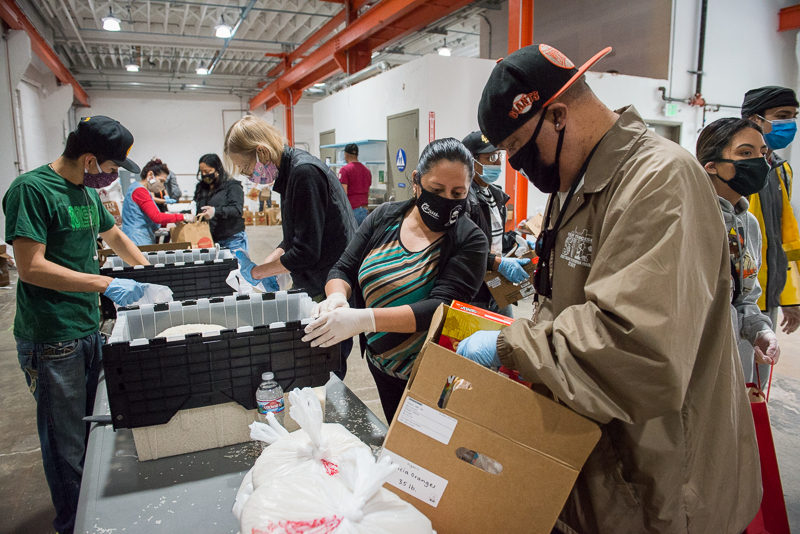
"caption": "Community volunteers put together food packages at what community organizer Roberto Hernandez calls the Mission Latino Food Hub, a warehouse on 701 Alabama Street in San Francisco.",
"description": "Community volunteers put together food packages at what community organizer Roberto Hernandez calls the Mission Latino Food Hub, a warehouse on 701 Alabama Street in San Francisco.",
"title": "Mission Latino Food Hub_5156_WEB",
"credit": "Mabel Jiménez/El Tecolote",
"status": "inherit",
"isLoading": false,
"fetchFailed": false
},
"news_11826928": {
"type": "attachments",
"id": "news_11826928",
"meta": {
"index": "attachments_1716263798",
"site": "news",
"id": "11826928",
"found": true
},
"parent": 11826872,
"imgSizes": {
"apple_news_ca_landscape_5_5": {
"file": "https://ww2.kqed.org/app/uploads/sites/10/2020/06/Karla-Monterroso-1044x720.jpg",
"width": 1044,
"mimeType": "image/jpeg",
"height": 720
},
"apple_news_ca_square_4_0": {
"file": "https://ww2.kqed.org/app/uploads/sites/10/2020/06/Karla-Monterroso-470x470.jpg",
"width": 470,
"mimeType": "image/jpeg",
"height": 470
},
"twentyfourteen-full-width": {
"file": "https://ww2.kqed.org/app/uploads/sites/10/2020/06/Karla-Monterroso-1038x576.jpg",
"width": 1038,
"mimeType": "image/jpeg",
"height": 576
},
"thumbnail": {
"file": "https://ww2.kqed.org/app/uploads/sites/10/2020/06/Karla-Monterroso-160x107.jpg",
"width": 160,
"mimeType": "image/jpeg",
"height": 107
},
"post-thumbnail": {
"file": "https://ww2.kqed.org/app/uploads/sites/10/2020/06/Karla-Monterroso-672x372.jpg",
"width": 672,
"mimeType": "image/jpeg",
"height": 372
},
"kqedFullSize": {
"file": "https://ww2.kqed.org/app/uploads/sites/10/2020/06/Karla-Monterroso.jpg",
"width": 1080,
"height": 720
},
"apple_news_ca_landscape_4_7": {
"file": "https://ww2.kqed.org/app/uploads/sites/10/2020/06/Karla-Monterroso-632x474.jpg",
"width": 632,
"mimeType": "image/jpeg",
"height": 474
},
"large": {
"file": "https://ww2.kqed.org/app/uploads/sites/10/2020/06/Karla-Monterroso-1020x680.jpg",
"width": 1020,
"mimeType": "image/jpeg",
"height": 680
},
"apple_news_ca_landscape_4_0": {
"file": "https://ww2.kqed.org/app/uploads/sites/10/2020/06/Karla-Monterroso-536x402.jpg",
"width": 536,
"mimeType": "image/jpeg",
"height": 402
},
"medium": {
"file": "https://ww2.kqed.org/app/uploads/sites/10/2020/06/Karla-Monterroso-800x533.jpg",
"width": 800,
"mimeType": "image/jpeg",
"height": 533
},
"apple_news_ca_portrait_4_0": {
"file": "https://ww2.kqed.org/app/uploads/sites/10/2020/06/Karla-Monterroso-354x472.jpg",
"width": 354,
"mimeType": "image/jpeg",
"height": 472
},
"apple_news_ca_portrait_9_7": {
"file": "https://ww2.kqed.org/app/uploads/sites/10/2020/06/Karla-Monterroso-840x720.jpg",
"width": 840,
"mimeType": "image/jpeg",
"height": 720
},
"apple_news_ca_portrait_4_7": {
"file": "https://ww2.kqed.org/app/uploads/sites/10/2020/06/Karla-Monterroso-414x552.jpg",
"width": 414,
"mimeType": "image/jpeg",
"height": 552
},
"apple_news_ca_portrait_5_5": {
"file": "https://ww2.kqed.org/app/uploads/sites/10/2020/06/Karla-Monterroso-687x720.jpg",
"width": 687,
"mimeType": "image/jpeg",
"height": 720
},
"apple_news_ca_square_4_7": {
"file": "https://ww2.kqed.org/app/uploads/sites/10/2020/06/Karla-Monterroso-550x550.jpg",
"width": 550,
"mimeType": "image/jpeg",
"height": 550
},
"apple_news_ca_square_5_5": {
"file": "https://ww2.kqed.org/app/uploads/sites/10/2020/06/Karla-Monterroso-912x720.jpg",
"width": 912,
"mimeType": "image/jpeg",
"height": 720
}
},
"publishDate": 1593566858,
"modified": 1593627599,
"caption": "Karla Monterroso says after going to Alameda Hospital in May with a very accelerated heart rate, very low blood pressure and cycling oxygen levels, her entire experience was one of being punished for being 'insubordinate.'",
"description": "Karla Monterroso says after going to Alameda Hospital in May with a very accelerated heart rate, very low blood pressure and cycling oxygen levels, her entire experience was one of being punished for being 'insubordinate.'",
"title": "Karla Monterroso",
"credit": "Courtesy of Kenneth Eke",
"status": "inherit",
"isLoading": false,
"fetchFailed": false
},
"news_11814940": {
"type": "attachments",
"id": "news_11814940",
"meta": {
"index": "attachments_1716263798",
"site": "news",
"id": "11814940",
"found": true
},
"parent": 11809833,
"imgSizes": {
"apple_news_ca_landscape_5_5": {
"file": "https://ww2.kqed.org/app/uploads/sites/10/2020/03/RS42470_001_KQED_SanFrancisco_RentStrike_03312020-qut-1044x783.jpg",
"width": 1044,
"mimeType": "image/jpeg",
"height": 783
},
"apple_news_ca_square_4_0": {
"file": "https://ww2.kqed.org/app/uploads/sites/10/2020/03/RS42470_001_KQED_SanFrancisco_RentStrike_03312020-qut-470x470.jpg",
"width": 470,
"mimeType": "image/jpeg",
"height": 470
},
"twentyfourteen-full-width": {
"file": "https://ww2.kqed.org/app/uploads/sites/10/2020/03/RS42470_001_KQED_SanFrancisco_RentStrike_03312020-qut-1038x576.jpg",
"width": 1038,
"mimeType": "image/jpeg",
"height": 576
},
"thumbnail": {
"file": "https://ww2.kqed.org/app/uploads/sites/10/2020/03/RS42470_001_KQED_SanFrancisco_RentStrike_03312020-qut-160x107.jpg",
"width": 160,
"mimeType": "image/jpeg",
"height": 107
},
"post-thumbnail": {
"file": "https://ww2.kqed.org/app/uploads/sites/10/2020/03/RS42470_001_KQED_SanFrancisco_RentStrike_03312020-qut-672x372.jpg",
"width": 672,
"mimeType": "image/jpeg",
"height": 372
},
"kqedFullSize": {
"file": "https://ww2.kqed.org/app/uploads/sites/10/2020/03/RS42470_001_KQED_SanFrancisco_RentStrike_03312020-qut.jpg",
"width": 1920,
"height": 1280
},
"apple_news_ca_landscape_4_7": {
"file": "https://ww2.kqed.org/app/uploads/sites/10/2020/03/RS42470_001_KQED_SanFrancisco_RentStrike_03312020-qut-632x474.jpg",
"width": 632,
"mimeType": "image/jpeg",
"height": 474
},
"large": {
"file": "https://ww2.kqed.org/app/uploads/sites/10/2020/03/RS42470_001_KQED_SanFrancisco_RentStrike_03312020-qut-1020x680.jpg",
"width": 1020,
"mimeType": "image/jpeg",
"height": 680
},
"apple_news_ca_landscape_4_0": {
"file": "https://ww2.kqed.org/app/uploads/sites/10/2020/03/RS42470_001_KQED_SanFrancisco_RentStrike_03312020-qut-536x402.jpg",
"width": 536,
"mimeType": "image/jpeg",
"height": 402
},
"apple_news_ca_portrait_12_9": {
"file": "https://ww2.kqed.org/app/uploads/sites/10/2020/03/RS42470_001_KQED_SanFrancisco_RentStrike_03312020-qut-1122x1280.jpg",
"width": 1122,
"mimeType": "image/jpeg",
"height": 1280
},
"medium": {
"file": "https://ww2.kqed.org/app/uploads/sites/10/2020/03/RS42470_001_KQED_SanFrancisco_RentStrike_03312020-qut-800x533.jpg",
"width": 800,
"mimeType": "image/jpeg",
"height": 533
},
"apple_news_ca_portrait_4_0": {
"file": "https://ww2.kqed.org/app/uploads/sites/10/2020/03/RS42470_001_KQED_SanFrancisco_RentStrike_03312020-qut-354x472.jpg",
"width": 354,
"mimeType": "image/jpeg",
"height": 472
},
"apple_news_ca_portrait_9_7": {
"file": "https://ww2.kqed.org/app/uploads/sites/10/2020/03/RS42470_001_KQED_SanFrancisco_RentStrike_03312020-qut-840x1120.jpg",
"width": 840,
"mimeType": "image/jpeg",
"height": 1120
},
"apple_news_ca_landscape_12_9": {
"file": "https://ww2.kqed.org/app/uploads/sites/10/2020/03/RS42470_001_KQED_SanFrancisco_RentStrike_03312020-qut-1832x1280.jpg",
"width": 1832,
"mimeType": "image/jpeg",
"height": 1280
},
"apple_news_ca_square_9_7": {
"file": "https://ww2.kqed.org/app/uploads/sites/10/2020/03/RS42470_001_KQED_SanFrancisco_RentStrike_03312020-qut-1104x1104.jpg",
"width": 1104,
"mimeType": "image/jpeg",
"height": 1104
},
"apple_news_ca_portrait_4_7": {
"file": "https://ww2.kqed.org/app/uploads/sites/10/2020/03/RS42470_001_KQED_SanFrancisco_RentStrike_03312020-qut-414x552.jpg",
"width": 414,
"mimeType": "image/jpeg",
"height": 552
},
"apple_news_ca_square_12_9": {
"file": "https://ww2.kqed.org/app/uploads/sites/10/2020/03/RS42470_001_KQED_SanFrancisco_RentStrike_03312020-qut-1472x1280.jpg",
"width": 1472,
"mimeType": "image/jpeg",
"height": 1280
},
"apple_news_ca_portrait_5_5": {
"file": "https://ww2.kqed.org/app/uploads/sites/10/2020/03/RS42470_001_KQED_SanFrancisco_RentStrike_03312020-qut-687x916.jpg",
"width": 687,
"mimeType": "image/jpeg",
"height": 916
},
"full-width": {
"file": "https://ww2.kqed.org/app/uploads/sites/10/2020/03/RS42470_001_KQED_SanFrancisco_RentStrike_03312020-qut-1920x1280.jpg",
"width": 1920,
"mimeType": "image/jpeg",
"height": 1280
},
"apple_news_ca_square_4_7": {
"file": "https://ww2.kqed.org/app/uploads/sites/10/2020/03/RS42470_001_KQED_SanFrancisco_RentStrike_03312020-qut-550x550.jpg",
"width": 550,
"mimeType": "image/jpeg",
"height": 550
},
"apple_news_ca_landscape_9_7": {
"file": "https://ww2.kqed.org/app/uploads/sites/10/2020/03/RS42470_001_KQED_SanFrancisco_RentStrike_03312020-qut-1376x1032.jpg",
"width": 1376,
"mimeType": "image/jpeg",
"height": 1032
},
"apple_news_ca_square_5_5": {
"file": "https://ww2.kqed.org/app/uploads/sites/10/2020/03/RS42470_001_KQED_SanFrancisco_RentStrike_03312020-qut-912x912.jpg",
"width": 912,
"mimeType": "image/jpeg",
"height": 912
}
},
"publishDate": 1588178458,
"modified": 1589412146,
"caption": "A row of houses in the Mission District of San Francisco on Tuesday, March 31, 2020. (Photo by Beth LaBerge/KQED)",
"description": "A row of houses in the Mission District of San Francisco on Tuesday, March 31, 2020.",
"title": "RS42470_001_KQED_SanFrancisco_RentStrike_03312020-qut",
"credit": "Beth LaBerge/KQED",
"status": "inherit",
"isLoading": false,
"fetchFailed": false
}
},
"audioPlayerReducer": {
"postId": "stream_live",
"isPaused": true,
"isPlaying": false,
"pfsActive": false,
"pledgeModalIsOpen": true,
"playerDrawerIsOpen": false,
"liveAudioPlayStartedAt": 0,
"liveAudioPlayContext": ""
},
"authorsReducer": {
"byline_news_11827493": {
"type": "authors",
"id": "byline_news_11827493",
"meta": {
"override": true
},
"slug": "byline_news_11827493",
"name": "Joel Rose \u003cbr>NPR",
"isLoading": false
},
"byline_news_11827407": {
"type": "authors",
"id": "byline_news_11827407",
"meta": {
"override": true
},
"slug": "byline_news_11827407",
"name": "Will Stone \u003cbr>NPR",
"isLoading": false
},
"byline_news_11827277": {
"type": "authors",
"id": "byline_news_11827277",
"meta": {
"override": true
},
"slug": "byline_news_11827277",
"name": "Sophie Timmermann",
"isLoading": false
},
"tychehendricks": {
"type": "authors",
"id": "259",
"meta": {
"index": "authors_1716337520",
"id": "259",
"found": true
},
"name": "Tyche Hendricks",
"firstName": "Tyche",
"lastName": "Hendricks",
"slug": "tychehendricks",
"email": "thendricks@kqed.org",
"display_author_email": true,
"staff_mastheads": [
"news"
],
"title": "KQED Senior Editor, Immigration",
"bio": "\u003cspan style=\"font-weight: 400;\">Tyche Hendricks is KQED’s senior editor for immigration, leading coverage of the policy and politics that affect California’s immigrant communities. Her work for KQED’s radio and online audiences is also carried on NPR and other national outlets. She has been recognized with awards from the Radio and Television News Directors Association, the Society for Professional Journalists; the Education Writers Association; the Best of the West and the National Federation of Community Broadcasters. Before joining KQED in 2010, Tyche spent more than a dozen years as a newspaper reporter, notably at the \u003c/span>\u003ci>\u003cspan style=\"font-weight: 400;\">San Francisco Chronicle\u003c/span>\u003c/i>\u003cspan style=\"font-weight: 400;\">. At different times she has covered criminal justice, government and politics and urban planning. Tyche has taught in the MFA Creative Writing program at the University of San Francisco and at UC Berkeley’s Graduate School of Journalism, where she was co-director of a national immigration symposium for professional journalists. She is the author of \u003c/span>\u003ci>\u003cspan style=\"font-weight: 400;\">The Wind Doesn't Need a Passport: Stories from the U.S.-Mexico Borderlands\u003c/span>\u003c/i>\u003cspan style=\"font-weight: 400;\"> (University of California Press). \u003c/span>",
"avatar": "https://secure.gravatar.com/avatar/b8ee458e2731c2d43df86882ce17267e?s=600&d=blank&r=g",
"twitter": "tychehendricks",
"facebook": null,
"instagram": null,
"linkedin": null,
"sites": [
{
"site": "news",
"roles": [
"editor"
]
},
{
"site": "stateofhealth",
"roles": [
"editor"
]
}
],
"headData": {
"title": "Tyche Hendricks | KQED",
"description": "KQED Senior Editor, Immigration",
"ogImgSrc": "https://secure.gravatar.com/avatar/b8ee458e2731c2d43df86882ce17267e?s=600&d=blank&r=g",
"twImgSrc": "https://secure.gravatar.com/avatar/b8ee458e2731c2d43df86882ce17267e?s=600&d=blank&r=g"
},
"isLoading": false,
"link": "/author/tychehendricks"
},
"matthewgreen": {
"type": "authors",
"id": "1263",
"meta": {
"index": "authors_1716337520",
"id": "1263",
"found": true
},
"name": "Matthew Green",
"firstName": "Matthew",
"lastName": "Green",
"slug": "matthewgreen",
"email": "mgreen@kqed.org",
"display_author_email": false,
"staff_mastheads": [],
"title": "KQED Editor/Reporter",
"bio": "Matthew Green is a digital media producer for KQED News. He previously produced \u003ca href=\"http://www.kqed.org/lowdown\">The Lowdown\u003c/a>, KQED’s multimedia news education blog. Matthew's written for numerous Bay Area publications, including the Oakland Tribune and San Francisco Chronicle. He also taught journalism classes at Fremont High School in East Oakland.\r\n\r\nEmail: mgreen@kqed.org; Twitter: @MGreenKQED",
"avatar": "https://secure.gravatar.com/avatar/3bf498d1267ca02c8494f33d8cfc575e?s=600&d=blank&r=g",
"twitter": "MGreenKQED",
"facebook": null,
"instagram": null,
"linkedin": null,
"sites": [
{
"site": "news",
"roles": []
},
{
"site": "lowdown",
"roles": []
},
{
"site": "science",
"roles": []
},
{
"site": "education",
"roles": []
},
{
"site": "quest",
"roles": []
},
{
"site": "liveblog",
"roles": []
}
],
"headData": {
"title": "Matthew Green | KQED",
"description": "KQED Editor/Reporter",
"ogImgSrc": "https://secure.gravatar.com/avatar/3bf498d1267ca02c8494f33d8cfc575e?s=600&d=blank&r=g",
"twImgSrc": "https://secure.gravatar.com/avatar/3bf498d1267ca02c8494f33d8cfc575e?s=600&d=blank&r=g"
},
"isLoading": false,
"link": "/author/matthewgreen"
},
"adembosky": {
"type": "authors",
"id": "3205",
"meta": {
"index": "authors_1716337520",
"id": "3205",
"found": true
},
"name": "April Dembosky",
"firstName": "April",
"lastName": "Dembosky",
"slug": "adembosky",
"email": "adembosky@kqed.org",
"display_author_email": false,
"staff_mastheads": [
"news",
"science"
],
"title": "KQED Health Correspondent",
"bio": "April Dembosky is the health correspondent for KQED News and a regular contributor to NPR. She specializes in covering altered states of mind, from postpartum depression to methamphetamine-induced psychosis to the insanity defense. Her investigative series on insurance companies sidestepping mental health laws won multiple awards, including first place in beat reporting from the national Association of Health Care Journalists. She is the recipient of numerous other prizes and fellowships, including a national Edward R. Murrow award for investigative reporting, a Society of Professional Journalists award for long-form storytelling, and a Carter Center Fellowship for Mental Health Journalism.\r\n\r\nDembosky reported and produced \u003cem>Soundtrack of Silence\u003c/em>, an audio documentary about music and memory that is currently being made into a feature film by Paramount Pictures.\r\n\r\nBefore joining KQED in 2013, Dembosky covered technology and Silicon Valley for \u003cem>The Financial Times of London,\u003c/em> and contributed business and arts stories to \u003cem>Marketplace \u003c/em>and \u003cem>The New York Times.\u003c/em> She got her undergraduate degree in philosophy from Smith College and her master's in journalism from the University of California, Berkeley. She is a classically trained violinist and proud alum of the first symphony orchestra at Burning Man.",
"avatar": "https://secure.gravatar.com/avatar/ef92999be4ceb9ea60701e7dc276f813?s=600&d=blank&r=g",
"twitter": "adembosky",
"facebook": null,
"instagram": null,
"linkedin": null,
"sites": [
{
"site": "arts",
"roles": [
"author"
]
},
{
"site": "news",
"roles": [
"editor"
]
},
{
"site": "futureofyou",
"roles": [
"author"
]
},
{
"site": "stateofhealth",
"roles": [
"editor"
]
},
{
"site": "science",
"roles": [
"editor"
]
},
{
"site": "forum",
"roles": [
"editor"
]
}
],
"headData": {
"title": "April Dembosky | KQED",
"description": "KQED Health Correspondent",
"ogImgSrc": "https://secure.gravatar.com/avatar/ef92999be4ceb9ea60701e7dc276f813?s=600&d=blank&r=g",
"twImgSrc": "https://secure.gravatar.com/avatar/ef92999be4ceb9ea60701e7dc276f813?s=600&d=blank&r=g"
},
"isLoading": false,
"link": "/author/adembosky"
},
"carlysevern": {
"type": "authors",
"id": "3243",
"meta": {
"index": "authors_1716337520",
"id": "3243",
"found": true
},
"name": "Carly Severn",
"firstName": "Carly",
"lastName": "Severn",
"slug": "carlysevern",
"email": "csevern@kqed.org",
"display_author_email": false,
"staff_mastheads": [
"news"
],
"title": "Senior Editor, Audience News ",
"bio": "Carly is KQED's Senior Editor of Audience News on the Digital News team, and has reported for the California Report Magazine, Bay Curious and KQED Arts. She's formerly the host of \u003ca href=\"http://ww2.kqed.org/pop/category/the-cooler/\" rel=\"noopener noreferrer\">The Cooler\u003c/a> podcast.",
"avatar": "https://secure.gravatar.com/avatar/54037bf5c128fe678f0ef26cec97a93f2e7f220a22d7285703328f12c42c1b1d?s=600&d=blank&r=g",
"twitter": "teacupinthebay",
"bluesky": null,
"facebook": null,
"instagram": null,
"linkedin": null,
"sites": [
{
"site": "",
"roles": [
"editor"
]
},
{
"site": "arts",
"roles": [
"editor"
]
},
{
"site": "news",
"roles": [
"administrator"
]
},
{
"site": "pop",
"roles": [
"editor"
]
},
{
"site": "futureofyou",
"roles": [
"editor"
]
},
{
"site": "about",
"roles": [
"administrator"
]
},
{
"site": "mindshift",
"roles": [
"editor"
]
},
{
"site": "bayareabites",
"roles": [
"editor"
]
},
{
"site": "stateofhealth",
"roles": [
"editor"
]
},
{
"site": "science",
"roles": [
"editor"
]
},
{
"site": "food",
"roles": [
"contributor"
]
},
{
"site": "forum",
"roles": [
"editor"
]
},
{
"site": "perspectives",
"roles": [
"administrator"
]
},
{
"site": "liveblog",
"roles": [
"editor"
]
}
],
"headData": {
"title": "Carly Severn | KQED",
"description": "Senior Editor, Audience News ",
"ogImgSrc": "https://secure.gravatar.com/avatar/54037bf5c128fe678f0ef26cec97a93f2e7f220a22d7285703328f12c42c1b1d?s=600&d=blank&r=g",
"twImgSrc": "https://secure.gravatar.com/avatar/54037bf5c128fe678f0ef26cec97a93f2e7f220a22d7285703328f12c42c1b1d?s=600&d=blank&r=g"
},
"isLoading": false,
"link": "/author/carlysevern"
},
"jsmall": {
"type": "authors",
"id": "6625",
"meta": {
"index": "authors_1716337520",
"id": "6625",
"found": true
},
"name": "Julie Small",
"firstName": "Julie",
"lastName": "Small",
"slug": "jsmall",
"email": "jsmall@kqed.org",
"display_author_email": true,
"staff_mastheads": [
"news"
],
"title": "KQED Contributor",
"bio": "Julie Small reports on criminal justice and immigration.\r\n\r\nShe was part of a team at KQED awarded a regional 2019 Edward R. Murrow award for continuing coverage of the Trump Administration's family separation policy.\r\n\r\nThe Society for Professional Journalists recognized Julie's 2018 \u003ca href=\"https://www.kqed.org/news/11636262/the-officer-tased-him-31-times-the-sheriff-called-his-death-an-accident\">reporting\u003c/a> on the San Joaquin County Sheriff's \u003ca href=\"https://www.kqed.org/news/11634689/autopsy-doctors-sheriff-overrode-death-findings-to-protect-law-enforcement\">interference\u003c/a> in death investigations with an Excellence in Journalism Award for Ongoing Coverage.\r\n\r\nJulie's\u003ca href=\"https://www.kqed.org/news/11039666/two-mentally-ill-inmates-died-one-month-in-santa-clara\"> reporting\u003c/a> with Lisa Pickoff-White on the treatment of mentally ill offenders in California jails earned a 2017 regional Edward R. Murrow Award for news reporting and an investigative reporting award from the SPJ of Northern California.\r\n\r\nBefore joining KQED, Julie covered government and politics in Sacramento for Southern California Public Radio (SCPR). Her 2010 \u003ca href=\"https://www.scpr.org/specials/prisonmedical/\">series\u003c/a> on lapses in California’s prison medical care also won a regional Edward R. Murrow Award for investigative reporting and a Golden Mic Award from the RTNDA of Southern California.\r\n\r\nJulie began her career in journalism in 2000 as the deputy foreign editor for public radio's \u003cem>Marketplace, \u003c/em>while earning her master's degree in journalism from USC’s Annenberg School of Communication.",
"avatar": "https://secure.gravatar.com/avatar/4baedf201468df97be97c2a9dd7585d0?s=600&d=blank&r=g",
"twitter": "@SmallRadio2",
"facebook": null,
"instagram": null,
"linkedin": null,
"sites": [
{
"site": "news",
"roles": [
"editor"
]
},
{
"site": "stateofhealth",
"roles": [
"author"
]
},
{
"site": "science",
"roles": [
"author"
]
}
],
"headData": {
"title": "Julie Small | KQED",
"description": "KQED Contributor",
"ogImgSrc": "https://secure.gravatar.com/avatar/4baedf201468df97be97c2a9dd7585d0?s=600&d=blank&r=g",
"twImgSrc": "https://secure.gravatar.com/avatar/4baedf201468df97be97c2a9dd7585d0?s=600&d=blank&r=g"
},
"isLoading": false,
"link": "/author/jsmall"
},
"mwiley": {
"type": "authors",
"id": "11526",
"meta": {
"index": "authors_1716337520",
"id": "11526",
"found": true
},
"name": "Michelle Wiley",
"firstName": "Michelle",
"lastName": "Wiley",
"slug": "mwiley",
"email": "mwiley@KQED.org",
"display_author_email": true,
"staff_mastheads": [],
"title": null,
"bio": "Michelle Wiley was the senior editor of weekends.",
"avatar": "https://secure.gravatar.com/avatar/3b897d82a09e8587e8e73fa69fbcc635?s=600&d=blank&r=g",
"twitter": "michelleewiley",
"facebook": null,
"instagram": null,
"linkedin": null,
"sites": [
{
"site": "",
"roles": [
"editor"
]
},
{
"site": "arts",
"roles": [
"editor"
]
},
{
"site": "news",
"roles": [
"subscriber"
]
},
{
"site": "lowdown",
"roles": [
"editor"
]
},
{
"site": "science",
"roles": [
"editor"
]
},
{
"site": "podcasts",
"roles": [
"editor"
]
}
],
"headData": {
"title": "Michelle Wiley | KQED",
"description": null,
"ogImgSrc": "https://secure.gravatar.com/avatar/3b897d82a09e8587e8e73fa69fbcc635?s=600&d=blank&r=g",
"twImgSrc": "https://secure.gravatar.com/avatar/3b897d82a09e8587e8e73fa69fbcc635?s=600&d=blank&r=g"
},
"isLoading": false,
"link": "/author/mwiley"
},
"lsarah": {
"type": "authors",
"id": "11626",
"meta": {
"index": "authors_1716337520",
"id": "11626",
"found": true
},
"name": "Lakshmi Sarah",
"firstName": "Lakshmi",
"lastName": "Sarah",
"slug": "lsarah",
"email": "lsarah@kqed.org",
"display_author_email": false,
"staff_mastheads": [],
"title": "Digital Producer",
"bio": "Lakshmi Sarah is an educator, author and journalist with a focus on innovative storytelling. She has worked with newspapers, radio and magazines from Ahmedabad, India to Los Angeles, California. She has written and produced for Die Zeit, Global Voices, AJ+, KQED, Fusion Media Group and the New York Times.",
"avatar": "https://secure.gravatar.com/avatar/652dcaecd8b28826fc17a8b2d6bb4e93?s=600&d=blank&r=g",
"twitter": "lakitalki",
"facebook": null,
"instagram": "https://www.instagram.com/laki.talki/",
"linkedin": "https://www.linkedin.com/in/lakisarah/",
"sites": [
{
"site": "arts",
"roles": []
},
{
"site": "news",
"roles": []
},
{
"site": "bayareabites",
"roles": []
},
{
"site": "science",
"roles": []
}
],
"headData": {
"title": "Lakshmi Sarah | KQED",
"description": "Digital Producer",
"ogImgSrc": "https://secure.gravatar.com/avatar/652dcaecd8b28826fc17a8b2d6bb4e93?s=600&d=blank&r=g",
"twImgSrc": "https://secure.gravatar.com/avatar/652dcaecd8b28826fc17a8b2d6bb4e93?s=600&d=blank&r=g"
},
"isLoading": false,
"link": "/author/lsarah"
},
"amorga": {
"type": "authors",
"id": "11629",
"meta": {
"index": "authors_1716337520",
"id": "11629",
"found": true
},
"name": "Adriana Morga",
"firstName": "Adriana",
"lastName": "Morga",
"slug": "amorga",
"email": "amorga@kqed.org",
"display_author_email": false,
"staff_mastheads": [],
"title": "KQED Contributor",
"bio": "Adriana Morga is an on-call Digital Producer for KQED en Español. She is also completing her journalism degree at San Francisco State University. She has experience working in print and radio. Morga, who was born in Tijuana, Mexico, has spent her developing career covering the Latino community for English and Spanish-language publications including KALW and El Tecolote.",
"avatar": "https://secure.gravatar.com/avatar/9ef1c5a7ff2f2ae1ab05809325f43d03?s=600&d=blank&r=g",
"twitter": null,
"facebook": null,
"instagram": null,
"linkedin": null,
"sites": [
{
"site": "arts",
"roles": []
},
{
"site": "news",
"roles": [
"author"
]
},
{
"site": "science",
"roles": [
"editor"
]
}
],
"headData": {
"title": "Adriana Morga | KQED",
"description": "KQED Contributor",
"ogImgSrc": "https://secure.gravatar.com/avatar/9ef1c5a7ff2f2ae1ab05809325f43d03?s=600&d=blank&r=g",
"twImgSrc": "https://secure.gravatar.com/avatar/9ef1c5a7ff2f2ae1ab05809325f43d03?s=600&d=blank&r=g"
},
"isLoading": false,
"link": "/author/amorga"
},
"msolomon": {
"type": "authors",
"id": "11651",
"meta": {
"index": "authors_1716337520",
"id": "11651",
"found": true
},
"name": "Molly Solomon",
"firstName": "Molly",
"lastName": "Solomon",
"slug": "msolomon",
"email": "msolomon@KQED.org",
"display_author_email": false,
"staff_mastheads": [
"news"
],
"title": "Senior Editor",
"bio": "Molly Solomon is the senior editor of KQED's California Politics and Government Desk. Previously, she was the station's editor-at-large, with a focus on editing early childhood education, politics, and criminal justice. Before that, she managed and edited statewide election coverage for The California Newsroom, a collaboration of local public radio stations, CalMatters and NPR. Molly joined KQED in 2019 to launch the station’s housing affordability desk, where she reported on homelessness, evictions and is the co-host of KQED’s housing podcast, SOLD OUT: Rethinking Housing in America. Before that, she was the Southwest Washington Bureau Chief for Oregon Public Broadcasting and a reporter at Hawaii Public Radio. Her stories have aired on NPR’s \u003cem>Morning Edition\u003c/em>, \u003cem>All Things Considered\u003c/em>, \u003cem>Here & Now\u003c/em>, \u003cem>Science Friday\u003c/em> and \u003cem>Marketplace\u003c/em>. Molly's award-winning reporting has been honored by the Best of the West, Edward R. Murrow awards, Society of Professional Journalists, National Headliner Awards, and the Asian American Journalists Association. Born and raised in Berkeley, Molly is a big fan of burritos and her scruffy terrier, Ollie.",
"avatar": "https://secure.gravatar.com/avatar/9ad9794616923d81c9a79897161545bd?s=600&d=blank&r=g",
"twitter": "solomonout",
"facebook": null,
"instagram": null,
"linkedin": null,
"sites": [
{
"site": "news",
"roles": [
"editor"
]
},
{
"site": "science",
"roles": [
"editor"
]
}
],
"headData": {
"title": "Molly Solomon | KQED",
"description": "Senior Editor",
"ogImgSrc": "https://secure.gravatar.com/avatar/9ad9794616923d81c9a79897161545bd?s=600&d=blank&r=g",
"twImgSrc": "https://secure.gravatar.com/avatar/9ad9794616923d81c9a79897161545bd?s=600&d=blank&r=g"
},
"isLoading": false,
"link": "/author/msolomon"
},
"ebaldassari": {
"type": "authors",
"id": "11652",
"meta": {
"index": "authors_1716337520",
"id": "11652",
"found": true
},
"name": "Erin Baldassari",
"firstName": "Erin",
"lastName": "Baldassari",
"slug": "ebaldassari",
"email": "ebaldassari@KQED.org",
"display_author_email": true,
"staff_mastheads": [
"news"
],
"title": "Staff Writer",
"bio": "Erin Baldassari covers housing for KQED. She's a former print journalist and most recently worked as the transportation reporter for the \u003cem>Mercury News\u003c/em> and \u003cem>East Bay Times. \u003c/em>There, she focused on how the Bay Area’s housing shortage has changed the way people move around the region. She also served on the \u003cem>East Bay Times\u003c/em>’ 2017 Pulitzer Prize-winning team for coverage of the Ghost Ship Fire in Oakland. Prior to that, Erin worked as a breaking news and general assignment reporter for a variety of outlets in the Bay Area and the greater Boston area. A Tufts University alumna, Erin grew up in the foothills of the Sierra Nevada mountains and in Sonoma County. She is a life-long KQED listener.",
"avatar": "https://secure.gravatar.com/avatar/5e95cad64a8ca08288082212e199d2b0cbeb4fd8e8ef5339395f361032bbe005?s=600&d=blank&r=g",
"twitter": "e_baldi",
"bluesky": null,
"facebook": null,
"instagram": null,
"linkedin": null,
"sites": [
{
"site": "news",
"roles": [
"edit_others_posts",
"editor"
]
},
{
"site": "science",
"roles": [
"editor"
]
},
{
"site": "liveblog",
"roles": [
"editor"
]
}
],
"headData": {
"title": "Erin Baldassari | KQED",
"description": "Staff Writer",
"ogImgSrc": "https://secure.gravatar.com/avatar/5e95cad64a8ca08288082212e199d2b0cbeb4fd8e8ef5339395f361032bbe005?s=600&d=blank&r=g",
"twImgSrc": "https://secure.gravatar.com/avatar/5e95cad64a8ca08288082212e199d2b0cbeb4fd8e8ef5339395f361032bbe005?s=600&d=blank&r=g"
},
"isLoading": false,
"link": "/author/ebaldassari"
}
},
"pagesReducer": {
"news_tag_covid-19": {
"type": "terms",
"id": "news_27504",
"meta": {
"index": "terms_1716263798",
"site": "news",
"id": "27504",
"score": 8.558495
},
"featImg": null,
"name": "covid-19",
"description": null,
"taxonomy": "tag",
"headData": {
"twImgId": null,
"twTitle": null,
"ogTitle": null,
"ogImgId": null,
"twDescription": null,
"description": null,
"title": "covid-19 Archives | KQED News",
"ogDescription": null
},
"ttid": 27521,
"slug": "covid-19",
"isLoading": false,
"title": "covid-19",
"pageMeta": {
"site": "news",
"WpPageTemplate": "page-topic-editorial",
"currentPage": 55
},
"blocks": [
{
"blockName": "kqed/post-list",
"attrs": {
"layout": "cardArticle2",
"query": "posts/news?tag=covid-19",
"seeMore": false,
"paginated": true,
"page": 55
}
},
{
"blockName": "kqed/ad"
}
]
}
},
"pfsSessionReducer": {},
"postsReducer": {
"stream_live": {
"type": "live",
"id": "stream_live",
"audioUrl": "https://streams.kqed.org/kqedradio",
"title": "Live Stream",
"excerpt": "Live Stream information currently unavailable.",
"link": "/radio",
"featImg": "",
"label": {
"name": "KQED Live",
"link": "/"
}
},
"stream_kqedNewscast": {
"type": "posts",
"id": "stream_kqedNewscast",
"audioUrl": "https://www.kqed.org/.stream/anon/radio/RDnews/newscast.mp3?_=1",
"title": "KQED Newscast",
"featImg": "",
"label": {
"name": "88.5 FM",
"link": "/"
}
},
"news_11827500": {
"type": "posts",
"id": "news_11827500",
"meta": {
"index": "posts_1716263798",
"site": "news",
"id": "11827500",
"score": null,
"sort": [
1593981814000
]
},
"guestAuthors": [],
"slug": "sf-public-defenders-office-to-file-for-immediate-release-of-60-in-san-quentin-as-covid-19-cases-increase",
"title": "SF Public Defender's Office Files for Immediate Release of Clients in San Quentin, Amid COVID-19 Outbreak",
"publishDate": 1593981814,
"format": "standard",
"headTitle": "SF Public Defender’s Office Files for Immediate Release of Clients in San Quentin, Amid COVID-19 Outbreak | KQED",
"labelTerm": {},
"content": "\u003cp style=\"text-align: left\">Staff at the San Francisco Public Defender’s office worked throughout the holiday weekend in an effort to secure the immediate release of roughly 60 clients in San Quentin State Prison, where COVID-19 cases have skyrocketed.\u003c/p>\n\u003cp>“Our research unit has prepared a habeas petition calling for the Superior Court to immediately release these individuals … on the basis that it represents a risk to their health and safety,” said Stephen Liebb, a legal assistant in the public defender’s office.\u003c/p>\n\u003cp>[aside tag=\"san-quentin\" label=\"more coverage\"] Many of those clients are serving life sentences for a third strike, Liebb said. “They’re no longer a threat to public safety, except if they were released with a transmissible disease that was propagated by CDCR.”\u003c/p>\n\u003cp>Until the end of May, San Quentin had remained untouched by the virus, with no recorded cases. That changed quickly after the state Department of Corrections and Rehabilitation \u003ca href=\"https://www.kqed.org/news/11823976/botched-outbreak-of-covid-19-at-san-quentin-was-preventable-lawmaker-says\">transferred 121 people\u003c/a> there from the California Institution for Men in Chino — 25 of whom subsequently tested positive. Since then, the virus has spread like wildfire; as of July 6, \u003ca href=\"https://www.cdcr.ca.gov/covid19/population-status-tracking/\">more than 1,400 people\u003c/a> — including 165 employees — inside San Quentin have tested positive, and at least six have died, according to department records.\u003c/p>\n\u003cp>“The only way we can protect the lives of people at San Quentin and the larger public is to reduce the prison population as quickly as possible,” San Francisco Public Defender Manohar Raju said in a statement on July 1. “Not only is the treatment of incarcerated people inside California’s prisons unconscionable, but so is the lack of information and transparency regarding the outbreak.”\u003c/p>\n\u003cp>On Friday, the California Department of Corrections and Rehabilitation said it was taking active steps to curb the spread of the virus at the prison.\u003c/p>\n\u003cp>[ad fullwidth]“CDCR has increased testing at San Quentin for both inmates and staff, ceased intake and non-essential transfers, and implemented limited movement throughout the prison,” the agency said in a statement.\u003c/p>\n\u003cp>Liebb, who was incarcerated in San Quentin from 1995 to 2013, knows firsthand that social distancing is virtually impossible inside the crowded facility, where cells are about the size of a closet.\u003c/p>\n\u003cp>But his biggest concern is the lack of accountability inside the prison — where family members, volunteers and lawyers are currently not allowed to visit — which, he said, creates a situation rife for “extreme abuse.”\u003c/p>\n\u003cp>“This is just a devastating situation to be in, where the helplessness and lack of control of incarceration is compounded by a very serious health threat … exacerbated by CDCR,” Liebb said.\u003c/p>\n\u003cp>https://twitter.com/danimargo/status/1276901199439032328\u003c/p>\n\u003cp>The public defender’s office is also hurriedly preparing re-entry plans for its clients — including housing accommodations — a cumbersome process that the court requires before considering early release, Liebb said.\u003c/p>\n\u003cp>“Frankly, I don’t see a sense of urgency [among officials]. I see a lot of indifference [despite] a lot of rhetoric that they consider this a serious matter,” he said.\u003c/p>\n\u003cp>Danielle Harris, an attorney at the public defender’s office, was among the staff who spent the weekend completing paperwork on behalf of her clients.\u003c/p>\n\u003cp>“Knowing it is a matter of life and death for some, we are using whatever legal tools we have to urgently help these men and their families,” she said in a statement.\u003c/p>\n\u003ch3>Additional Resources\u003c/h3>\n\u003cp>A guide for \u003ca href=\"https://amend.us/wp-content/uploads/2020/07/Caring-for-Seriously-Ill-CDCR-Patients-7.2-PM-LBR-1.pdf\" target=\"_blank\" rel=\"noopener noreferrer\">Providing Acute Care for Seriously Ill Incarcerated Patients\u003c/a>, from \u003ca href=\"https://amend.us/\" target=\"_blank\" rel=\"noopener noreferrer\">Amend\u003c/a>\u003c/p>\n\u003cp>KQED’s \u003ca href=\"https://www.kqed.org/news/11815458/how-can-you-help-people-in-prison-right-now\" target=\"_blank\" rel=\"noopener noreferrer\">How Can You Help People in Prison Right Now\u003c/a> | \u003ca href=\"https://www.kqed.org/news/11817518/como-puede-ayudar-a-las-personas-que-actualmente-se-encuentran-en-prision\" target=\"_blank\" rel=\"noopener noreferrer\">Cómo Puede Ayudar a Las Personas Que Actualmente Se Encuentran en Prisión\u003c/a>\u003c/p>\n\u003cp>\u003c/p>\n",
"blocks": [],
"excerpt": "The San Francisco Public Defender’s office has been working throughout the holiday weekend to call for the immediate release of roughly 60 of their clients as the number of COVID-19 cases in San Quentin continues to increase.",
"status": "publish",
"parent": 0,
"modified": 1738778300,
"stats": {
"hasAudio": false,
"hasVideo": false,
"hasChartOrMap": false,
"iframeSrcs": [],
"hasGoogleForm": false,
"hasGallery": false,
"hasHearkenModule": false,
"hasPolis": false,
"paragraphCount": 16,
"wordCount": 628
},
"headData": {
"title": "SF Public Defender's Office Files for Immediate Release of Clients in San Quentin, Amid COVID-19 Outbreak | KQED",
"description": "The San Francisco Public Defender’s office has been working throughout the holiday weekend to call for the immediate release of roughly 60 of their clients as the number of COVID-19 cases in San Quentin continues to increase.",
"ogTitle": "",
"ogDescription": "",
"ogImgId": "",
"twTitle": "",
"twDescription": "",
"twImgId": "",
"schema": {
"@context": "https://schema.org",
"@type": "NewsArticle",
"headline": "SF Public Defender's Office Files for Immediate Release of Clients in San Quentin, Amid COVID-19 Outbreak",
"datePublished": "2020-07-05T13:43:34-07:00",
"dateModified": "2025-02-05T09:58:20-08:00",
"image": "https://cdn.kqed.org/wp-content/uploads/2020/02/KQED-OG-Image@1x.png",
"isAccessibleForFree": "True",
"publisher": {
"@type": "NewsMediaOrganization",
"@id": "https://www.kqed.org/#organization",
"name": "KQED",
"logo": "https://cdn.kqed.org/wp-content/uploads/2020/02/KQED-OG-Image@1x.png",
"url": "https://www.kqed.org",
"sameAs": [
"https://www.facebook.com/KQED",
"https://twitter.com/KQED",
"https://www.instagram.com/kqed/",
"https://www.tiktok.com/@kqedofficial",
"https://www.linkedin.com/company/kqed",
"https://www.youtube.com/channel/UCeC0IOo7i1P_61zVUWbJ4nw"
]
}
}
},
"source": "Coronavirus",
"sourceUrl": "http://kqed.org/",
"sticky": false,
"path": "/news/11827500/sf-public-defenders-office-to-file-for-immediate-release-of-60-in-san-quentin-as-covid-19-cases-increase",
"audioTrackLength": null,
"parsedContent": [
{
"type": "contentString",
"content": "\u003cdiv class=\"post-body\">\u003cp>\u003cp style=\"text-align: left\">Staff at the San Francisco Public Defender’s office worked throughout the holiday weekend in an effort to secure the immediate release of roughly 60 clients in San Quentin State Prison, where COVID-19 cases have skyrocketed.\u003c/p>\n\u003cp>“Our research unit has prepared a habeas petition calling for the Superior Court to immediately release these individuals … on the basis that it represents a risk to their health and safety,” said Stephen Liebb, a legal assistant in the public defender’s office.\u003c/p>\n\u003cp>\u003c/p>\u003c/div>",
"attributes": {
"named": {},
"numeric": []
}
},
{
"type": "component",
"content": "",
"name": "aside",
"attributes": {
"named": {
"tag": "san-quentin",
"label": "more coverage "
},
"numeric": []
}
},
{
"type": "contentString",
"content": "\u003cdiv class=\"post-body\">\u003cp> Many of those clients are serving life sentences for a third strike, Liebb said. “They’re no longer a threat to public safety, except if they were released with a transmissible disease that was propagated by CDCR.”\u003c/p>\n\u003cp>Until the end of May, San Quentin had remained untouched by the virus, with no recorded cases. That changed quickly after the state Department of Corrections and Rehabilitation \u003ca href=\"https://www.kqed.org/news/11823976/botched-outbreak-of-covid-19-at-san-quentin-was-preventable-lawmaker-says\">transferred 121 people\u003c/a> there from the California Institution for Men in Chino — 25 of whom subsequently tested positive. Since then, the virus has spread like wildfire; as of July 6, \u003ca href=\"https://www.cdcr.ca.gov/covid19/population-status-tracking/\">more than 1,400 people\u003c/a> — including 165 employees — inside San Quentin have tested positive, and at least six have died, according to department records.\u003c/p>\n\u003cp>“The only way we can protect the lives of people at San Quentin and the larger public is to reduce the prison population as quickly as possible,” San Francisco Public Defender Manohar Raju said in a statement on July 1. “Not only is the treatment of incarcerated people inside California’s prisons unconscionable, but so is the lack of information and transparency regarding the outbreak.”\u003c/p>\n\u003cp>On Friday, the California Department of Corrections and Rehabilitation said it was taking active steps to curb the spread of the virus at the prison.\u003c/p>\n\u003cp>\u003c/p>\u003c/div>",
"attributes": {
"named": {},
"numeric": []
}
},
{
"type": "component",
"content": "",
"name": "ad",
"attributes": {
"named": {
"label": "fullwidth"
},
"numeric": [
"fullwidth"
]
}
},
{
"type": "contentString",
"content": "\u003cdiv class=\"post-body\">\u003cp>“CDCR has increased testing at San Quentin for both inmates and staff, ceased intake and non-essential transfers, and implemented limited movement throughout the prison,” the agency said in a statement.\u003c/p>\n\u003cp>Liebb, who was incarcerated in San Quentin from 1995 to 2013, knows firsthand that social distancing is virtually impossible inside the crowded facility, where cells are about the size of a closet.\u003c/p>\n\u003cp>But his biggest concern is the lack of accountability inside the prison — where family members, volunteers and lawyers are currently not allowed to visit — which, he said, creates a situation rife for “extreme abuse.”\u003c/p>\n\u003cp>“This is just a devastating situation to be in, where the helplessness and lack of control of incarceration is compounded by a very serious health threat … exacerbated by CDCR,” Liebb said.\u003c/p>\u003c/p>\u003c/div>",
"attributes": {
"named": {},
"numeric": []
}
},
{
"type": "component",
"content": "",
"name": "singleTwitterStatus",
"attributes": {
"named": {
"id": "1276901199439032328"
},
"numeric": []
}
},
{
"type": "contentString",
"content": "\u003cdiv class=\"post-body\">\u003cp>\n\u003cp>The public defender’s office is also hurriedly preparing re-entry plans for its clients — including housing accommodations — a cumbersome process that the court requires before considering early release, Liebb said.\u003c/p>\n\u003cp>“Frankly, I don’t see a sense of urgency [among officials]. I see a lot of indifference [despite] a lot of rhetoric that they consider this a serious matter,” he said.\u003c/p>\n\u003cp>Danielle Harris, an attorney at the public defender’s office, was among the staff who spent the weekend completing paperwork on behalf of her clients.\u003c/p>\n\u003cp>“Knowing it is a matter of life and death for some, we are using whatever legal tools we have to urgently help these men and their families,” she said in a statement.\u003c/p>\n\u003ch3>Additional Resources\u003c/h3>\n\u003cp>A guide for \u003ca href=\"https://amend.us/wp-content/uploads/2020/07/Caring-for-Seriously-Ill-CDCR-Patients-7.2-PM-LBR-1.pdf\" target=\"_blank\" rel=\"noopener noreferrer\">Providing Acute Care for Seriously Ill Incarcerated Patients\u003c/a>, from \u003ca href=\"https://amend.us/\" target=\"_blank\" rel=\"noopener noreferrer\">Amend\u003c/a>\u003c/p>\n\u003cp>KQED’s \u003ca href=\"https://www.kqed.org/news/11815458/how-can-you-help-people-in-prison-right-now\" target=\"_blank\" rel=\"noopener noreferrer\">How Can You Help People in Prison Right Now\u003c/a> | \u003ca href=\"https://www.kqed.org/news/11817518/como-puede-ayudar-a-las-personas-que-actualmente-se-encuentran-en-prision\" target=\"_blank\" rel=\"noopener noreferrer\">Cómo Puede Ayudar a Las Personas Que Actualmente Se Encuentran en Prisión\u003c/a>\u003c/p>\n\u003cp>\u003c/p>\n\u003c/div>\u003c/p>",
"attributes": {
"named": {},
"numeric": []
}
}
],
"link": "/news/11827500/sf-public-defenders-office-to-file-for-immediate-release-of-60-in-san-quentin-as-covid-19-cases-increase",
"authors": [
"11626"
],
"categories": [
"news_6188",
"news_8"
],
"tags": [
"news_1629",
"news_27350",
"news_27504",
"news_2842",
"news_1471",
"news_486",
"news_23"
],
"featImg": "news_11827528",
"label": "source_news_11827500"
},
"news_11827493": {
"type": "posts",
"id": "news_11827493",
"meta": {
"index": "posts_1716263798",
"site": "news",
"id": "11827493",
"score": null,
"sort": [
1593957653000
]
},
"guestAuthors": [],
"slug": "international-doctors-start-residencies-at-u-s-hospitals-amid-covid-19-surge",
"title": "International Doctors Start Residencies at U.S. Hospitals Amid COVID-19 Surge",
"publishDate": 1593957653,
"format": "standard",
"headTitle": "International Doctors Start Residencies at U.S. Hospitals Amid COVID-19 Surge | KQED",
"labelTerm": {},
"content": "\u003cp>Dr. Basim Ali graduated at the top of his medical school class in Pakistan and landed a residency at a renowned teaching hospital in Texas, where he’ll be on the front lines of one of the worst COVID-19 outbreaks in the U.S.\u003c/p>\n\u003cp>“There’s obviously some degree of anxiety about what that’s going to be like,” Ali said by phone from Karachi before coming here. “But there’s also this understanding that this is what we signed up for.”\u003c/p>\n\u003cp>More than 4,000 foreign-born doctors officially begin their residencies at hospitals across the United States on July 1. They’ll confront two historic challenges: the COVID-19 pandemic and some of the most restrictive immigration policies this nation has seen in decades.\u003c/p>\n\u003cp>The White House has blamed foreigners for the virus, and closed the borders to all kinds of immigrants. President Trump has referred to coronavirus as “foreign” and called it “kung flu” at his rallies. And last week, his administration suspended green cards and visas for many foreign guest workers.\u003c/p>\n\u003cp>“Yes, of course, it might be disheartening for some to hear statements like that — that they’re not welcome,” Ali said. “But right now as far as I’m concerned, they do not affect me.”\u003c/p>\n\u003cp>[ad fullwidth]\u003c/p>\n\u003cp>For now, new Trump administration restrictions on immigration do not affect Ali and other incoming residents. The administration exempted health care workers from the new restrictions announced last week — as long as they’re needed for the coronavirus response.\u003c/p>\n\u003cp>The Trump administration says it’s trying to put American workers first.\u003c/p>\n\u003cp>“At a time of double-digit unemployment, the president is seeking to ensure that Americans aren’t facing what domestically feels like unfair competition,” said Ken Cuccinelli, a top immigration official at the Department of Homeland Security, during a call with reporters this week.\u003c/p>\n\u003cp>But when it comes to health care, the U.S. depends on foreign labor. Almost \u003ca href=\"https://www.migrationpolicy.org/article/immigrant-health-care-workers-united-states\">30% of doctors are immigrants\u003c/a>. It’s been a symbiotic relationship: doctors come here to get top-notch training, and U.S. hospitals get access to the brightest minds in the world.\u003c/p>\n\u003cp>“The teaching programs want to have the best people. … because they know that the public deserves having the best people caring for them,” said Dr. William Pinsky, the head of the\u003ca href=\"https://www.ecfmg.org/\"> Educational Commission For Foreign Medical Graduates\u003c/a>, which helps vet foreign doctors for residencies in the U.S.\u003c/p>\n\u003cp>Pinsky’s group also helps foreign doctors navigate the U.S. immigration system. That’s been even harder than usual this year, because the coronavirus disrupted most visa processing at U.S. consulates and embassies overseas. Pinsky credits the State Department for ensuring that most of these international doctors were still able to get to the U.S. in time to start their residencies.\u003c/p>\n\u003cp>“They understand the importance of having these international physicians come here,” he said.\u003c/p>\n\u003cp>The pandemic shuttered immigration offices inside the U.S as well, creating enormous challenges for international doctors already working here.\u003c/p>\n\u003cp>“The uncertainty has been really stressful the last couple of months,” said Dr. Chandana Kamireddy, a native of India who was living in Ohio with her husband and their 20 month old child when the pandemic hit.\u003c/p>\n\u003cp>“I was actually on the front line taking care of COVID patients as an attending physician at my hospital where I was working,” Kamireddy said.\u003c/p>\n\u003cp>Kamireddy was supposed to move to Tennessee to start a fellowship in oncology this month. In order to change jobs, Kamireddy needed to get a different visa. But the offices U.S. Citizenship and Immigration Services, which would typically handle visa changes, were closed to the public. And time was running out.\u003c/p>\n\u003cp>Then Kamireddy heard from other foreign doctors on Facebook that the U.S. consulate in Mexico was open for visa interviews. So she got on a plane to Mexico.\u003c/p>\n\u003cp>“I’m not here as a tourist,” she said in an interview from her hotel room in Mexico City. “I’m just taking a chance right now, like traveling outside of the country and then trying to get my visa as soon as possible.”\u003c/p>\n\u003cp>Kamireddy did get her visa. A few days later, the White House announced its \u003ca href=\"https://www.npr.org/2020/06/20/881245867/trump-expected-to-suspend-h-1b-other-visas-until-end-of-year\" target=\"_blank\" rel=\"noopener noreferrer\">new proclamation limiting foreign guests workers and immigrants\u003c/a>.\u003c/p>\n\u003cp>That proclamation exempted the visa program used by doctors coming here for residency training. But immigration lawyers say it’s unclear if international specialists and doctors who have completed their training will be able to get H-1B visas under the new restrictions unless they are treating patients with COVID, or are involved in research on the coronavirus.\u003c/p>\n\u003cp>What’s it’s like to be treating American patients at a time when the Trump administration is doubling down on its immigration crackdown?\u003c/p>\n\u003cp>Kamireddy said it was difficult for her family – and the hospital in Tennessee, where she’s starting her fellowship today. “It was stressful for them as well, because they didn’t know if I was going to be starting on time or not,” she said.\u003c/p>\n\u003cp>From his new home in Texas, Ali also said he doesn’t believe that the president speaks for all Americans. Ali says his hospital is glad to have him, and he’s eager to get to work.\u003c/p>\n\u003cp>\u003c/p>\n\u003cp>“I do still have a lot of hope,” Ali said, “because the view of one person does not, at least for me, color the view of the people that I get to meet and interact with everyday, like the patients and my co-workers.”\u003c/p>\n\u003cdiv class=\"fullattribution\">\u003cem>Copyright 2020 NPR. To see more, visit https://www.npr.org.\u003cimg decoding=\"async\" src=\"https://www.google-analytics.com/__utm.gif?utmac=UA-5828686-4&utmdt=International+Doctors+Start+Residencies+At+U.S.+Hospitals+Amid+COVID-19+Surge&utme=8(APIKey)9(MDAxOTAwOTE4MDEyMTkxMDAzNjczZDljZA004)\">\u003c/em>\u003c/div>\n\n",
"blocks": [],
"excerpt": "Totaling about 4,000, they began working Wednesday. They'll face two historic challenges: the coronavirus pandemic and some of the most restrictive immigration policies the U.S. has seen in decades. ",
"status": "publish",
"parent": 0,
"modified": 1726006912,
"stats": {
"hasAudio": false,
"hasVideo": false,
"hasChartOrMap": false,
"iframeSrcs": [],
"hasGoogleForm": false,
"hasGallery": false,
"hasHearkenModule": false,
"hasPolis": false,
"paragraphCount": 26,
"wordCount": 986
},
"headData": {
"title": "International Doctors Start Residencies at U.S. Hospitals Amid COVID-19 Surge | KQED",
"description": "Totaling about 4,000, they began working Wednesday. They'll face two historic challenges: the coronavirus pandemic and some of the most restrictive immigration policies the U.S. has seen in decades. ",
"ogTitle": "",
"ogDescription": "",
"ogImgId": "",
"twTitle": "",
"twDescription": "",
"twImgId": "",
"schema": {
"@context": "https://schema.org",
"@type": "NewsArticle",
"headline": "International Doctors Start Residencies at U.S. Hospitals Amid COVID-19 Surge",
"datePublished": "2020-07-05T07:00:53-07:00",
"dateModified": "2024-09-10T15:21:52-07:00",
"image": "https://cdn.kqed.org/wp-content/uploads/2020/02/KQED-OG-Image@1x.png",
"isAccessibleForFree": "True",
"publisher": {
"@type": "NewsMediaOrganization",
"@id": "https://www.kqed.org/#organization",
"name": "KQED",
"logo": "https://cdn.kqed.org/wp-content/uploads/2020/02/KQED-OG-Image@1x.png",
"url": "https://www.kqed.org",
"sameAs": [
"https://www.facebook.com/KQED",
"https://twitter.com/KQED",
"https://www.instagram.com/kqed/",
"https://www.tiktok.com/@kqedofficial",
"https://www.linkedin.com/company/kqed",
"https://www.youtube.com/channel/UCeC0IOo7i1P_61zVUWbJ4nw"
]
}
}
},
"source": "News",
"sourceUrl": "http://kqed.org/",
"sticky": false,
"nprByline": "Joel Rose \u003cbr>NPR",
"nprImageAgency": "smartboy10/DigitalVision Vectors/GettyImages",
"nprStoryId": "886302079",
"nprApiLink": "http://api.npr.org/query?id=886302079&apiKey=MDAxOTAwOTE4MDEyMTkxMDAzNjczZDljZA004",
"nprHtmlLink": "https://www.npr.org/2020/07/01/886302079/international-doctors-start-residencies-at-u-s-hospitals-amid-covid-19-surge?ft=nprml&f=886302079",
"nprRetrievedStory": "1",
"nprPubDate": "Wed, 01 Jul 2020 18:13:00 -0400",
"nprStoryDate": "Wed, 01 Jul 2020 18:13:26 -0400",
"nprLastModifiedDate": "Wed, 01 Jul 2020 18:13:51 -0400",
"path": "/news/11827493/international-doctors-start-residencies-at-u-s-hospitals-amid-covid-19-surge",
"audioTrackLength": null,
"parsedContent": [
{
"type": "contentString",
"content": "\u003cdiv class=\"post-body\">\u003cp>\u003cp>Dr. Basim Ali graduated at the top of his medical school class in Pakistan and landed a residency at a renowned teaching hospital in Texas, where he’ll be on the front lines of one of the worst COVID-19 outbreaks in the U.S.\u003c/p>\n\u003cp>“There’s obviously some degree of anxiety about what that’s going to be like,” Ali said by phone from Karachi before coming here. “But there’s also this understanding that this is what we signed up for.”\u003c/p>\n\u003cp>More than 4,000 foreign-born doctors officially begin their residencies at hospitals across the United States on July 1. They’ll confront two historic challenges: the COVID-19 pandemic and some of the most restrictive immigration policies this nation has seen in decades.\u003c/p>\n\u003cp>The White House has blamed foreigners for the virus, and closed the borders to all kinds of immigrants. President Trump has referred to coronavirus as “foreign” and called it “kung flu” at his rallies. And last week, his administration suspended green cards and visas for many foreign guest workers.\u003c/p>\n\u003cp>“Yes, of course, it might be disheartening for some to hear statements like that — that they’re not welcome,” Ali said. “But right now as far as I’m concerned, they do not affect me.”\u003c/p>\n\u003cp>\u003c/p>\u003c/div>",
"attributes": {
"named": {},
"numeric": []
}
},
{
"type": "component",
"content": "",
"name": "ad",
"attributes": {
"named": {
"label": "fullwidth"
},
"numeric": [
"fullwidth"
]
}
},
{
"type": "contentString",
"content": "\u003cdiv class=\"post-body\">\u003cp>\u003c/p>\n\u003cp>For now, new Trump administration restrictions on immigration do not affect Ali and other incoming residents. The administration exempted health care workers from the new restrictions announced last week — as long as they’re needed for the coronavirus response.\u003c/p>\n\u003cp>The Trump administration says it’s trying to put American workers first.\u003c/p>\n\u003cp>“At a time of double-digit unemployment, the president is seeking to ensure that Americans aren’t facing what domestically feels like unfair competition,” said Ken Cuccinelli, a top immigration official at the Department of Homeland Security, during a call with reporters this week.\u003c/p>\n\u003cp>But when it comes to health care, the U.S. depends on foreign labor. Almost \u003ca href=\"https://www.migrationpolicy.org/article/immigrant-health-care-workers-united-states\">30% of doctors are immigrants\u003c/a>. It’s been a symbiotic relationship: doctors come here to get top-notch training, and U.S. hospitals get access to the brightest minds in the world.\u003c/p>\n\u003cp>“The teaching programs want to have the best people. … because they know that the public deserves having the best people caring for them,” said Dr. William Pinsky, the head of the\u003ca href=\"https://www.ecfmg.org/\"> Educational Commission For Foreign Medical Graduates\u003c/a>, which helps vet foreign doctors for residencies in the U.S.\u003c/p>\n\u003cp>Pinsky’s group also helps foreign doctors navigate the U.S. immigration system. That’s been even harder than usual this year, because the coronavirus disrupted most visa processing at U.S. consulates and embassies overseas. Pinsky credits the State Department for ensuring that most of these international doctors were still able to get to the U.S. in time to start their residencies.\u003c/p>\n\u003cp>“They understand the importance of having these international physicians come here,” he said.\u003c/p>\n\u003cp>The pandemic shuttered immigration offices inside the U.S as well, creating enormous challenges for international doctors already working here.\u003c/p>\n\u003cp>“The uncertainty has been really stressful the last couple of months,” said Dr. Chandana Kamireddy, a native of India who was living in Ohio with her husband and their 20 month old child when the pandemic hit.\u003c/p>\n\u003cp>“I was actually on the front line taking care of COVID patients as an attending physician at my hospital where I was working,” Kamireddy said.\u003c/p>\n\u003cp>Kamireddy was supposed to move to Tennessee to start a fellowship in oncology this month. In order to change jobs, Kamireddy needed to get a different visa. But the offices U.S. Citizenship and Immigration Services, which would typically handle visa changes, were closed to the public. And time was running out.\u003c/p>\n\u003cp>Then Kamireddy heard from other foreign doctors on Facebook that the U.S. consulate in Mexico was open for visa interviews. So she got on a plane to Mexico.\u003c/p>\n\u003cp>“I’m not here as a tourist,” she said in an interview from her hotel room in Mexico City. “I’m just taking a chance right now, like traveling outside of the country and then trying to get my visa as soon as possible.”\u003c/p>\n\u003cp>Kamireddy did get her visa. A few days later, the White House announced its \u003ca href=\"https://www.npr.org/2020/06/20/881245867/trump-expected-to-suspend-h-1b-other-visas-until-end-of-year\" target=\"_blank\" rel=\"noopener noreferrer\">new proclamation limiting foreign guests workers and immigrants\u003c/a>.\u003c/p>\n\u003cp>That proclamation exempted the visa program used by doctors coming here for residency training. But immigration lawyers say it’s unclear if international specialists and doctors who have completed their training will be able to get H-1B visas under the new restrictions unless they are treating patients with COVID, or are involved in research on the coronavirus.\u003c/p>\n\u003cp>What’s it’s like to be treating American patients at a time when the Trump administration is doubling down on its immigration crackdown?\u003c/p>\n\u003cp>Kamireddy said it was difficult for her family – and the hospital in Tennessee, where she’s starting her fellowship today. “It was stressful for them as well, because they didn’t know if I was going to be starting on time or not,” she said.\u003c/p>\n\u003cp>From his new home in Texas, Ali also said he doesn’t believe that the president speaks for all Americans. Ali says his hospital is glad to have him, and he’s eager to get to work.\u003c/p>\n\u003cp>\u003c/p>\n\u003cp>“I do still have a lot of hope,” Ali said, “because the view of one person does not, at least for me, color the view of the people that I get to meet and interact with everyday, like the patients and my co-workers.”\u003c/p>\n\u003cdiv class=\"fullattribution\">\u003cem>Copyright 2020 NPR. To see more, visit https://www.npr.org.\u003cimg decoding=\"async\" src=\"https://www.google-analytics.com/__utm.gif?utmac=UA-5828686-4&utmdt=International+Doctors+Start+Residencies+At+U.S.+Hospitals+Amid+COVID-19+Surge&utme=8(APIKey)9(MDAxOTAwOTE4MDEyMTkxMDAzNjczZDljZA004)\">\u003c/em>\u003c/div>\n\n\u003c/div>\u003c/p>",
"attributes": {
"named": {},
"numeric": []
}
}
],
"link": "/news/11827493/international-doctors-start-residencies-at-u-s-hospitals-amid-covid-19-surge",
"authors": [
"byline_news_11827493"
],
"categories": [
"news_457",
"news_1169",
"news_8"
],
"tags": [
"news_27350",
"news_27504",
"news_27626",
"news_18543",
"news_20202",
"news_25296"
],
"featImg": "news_11827494",
"label": "source_news_11827493"
},
"news_11827453": {
"type": "posts",
"id": "news_11827453",
"meta": {
"index": "posts_1716263798",
"site": "news",
"id": "11827453",
"score": null,
"sort": [
1593827861000
]
},
"parent": 0,
"labelTerm": {
"site": "news"
},
"blocks": [],
"publishDate": 1593827861,
"format": "standard",
"disqusTitle": "Three More San Quentin Inmates Die Amid Coronavirus Outbreak",
"title": "Three More San Quentin Inmates Die Amid Coronavirus Outbreak",
"headTitle": "KQED News",
"content": "\u003cp>\u003cem>Updated July 4, at 1:35 p.m.\u003c/em>\u003c/p>\n\u003cp>Three people incarcerated at San Quentin State Prison's death row died in the last two days from what appear to be complications tied to COVID-19, state prison officials said.\u003c/p>\n\u003cp>59-year-old Dewayne Michael Carey, 57-year-old Scott Thomas Erskine and 59-year-old Manuel Machado Alvarez, died at outside hospitals, according to \u003ca href=\"https://www.cdcr.ca.gov/news/2020/07/03/condemned-inmates-scott-erskine-and-manuel-alvarez-die/\" target=\"_blank\" rel=\"noopener noreferrer\">press releases\u003c/a> from the California Department of Corrections and Rehabilitation (CDCR).\u003c/p>\n\u003cp>At least \u003ca href=\"https://www.marinsheriff.org/community/news-press-releases/san-quentin-state-prison-death-covid-19-status-and-identity-released\" target=\"_blank\" rel=\"noopener noreferrer\">one other death row inmate\u003c/a> has died of COVID 19 in the last two weeks. The Marin County Sheriff's office is investigating whether a \u003ca href=\"https://www.marinsheriff.org/community/news-press-releases/san-quentin-state-prison-death-covid-19-status-and-identity-released-1\" target=\"_blank\" rel=\"noopener noreferrer\">another \u003c/a>person incarcerated at San Quentin's death row, who died recently, also had the virus. [aside tag=\"san-quentin\" label=\"more coverage\"]\u003c/p>\n\u003cp>\"There are now more dead on what was 'Condemned Row' in five weeks from the COVID transfer than in 15 years from executions,\" said Billie Mizell, an activist and death row opponent, late Friday.\u003c/p>\n\u003cp>Inmate advocates and legislators are calling\u003ca href=\"https://www.kqed.org/news/11827142/lawmakers-want-stronger-covid-19-protections-in-california-prisons\"> for stronger protections\u003c/a> and changes at the prison, after more than 100 medically vulnerable inmates from the California Institution for Men (CIM) were transferred to San Quentin. At the time of the transfer, CIM was in the midst of its own COVID-19 outbreak and San Quentin had no known active cases of the virus among its incarcerated population.\u003c/p>\n\u003cp>Now the Marin County state lockup is scene to one of the largest coronavirus outbreaks in the country.\u003c/p>\n\u003cp>At an informational \u003ca href=\"https://www.kqed.org/news/11827142/lawmakers-want-stronger-covid-19-protections-in-california-prisons\">hearing\u003c/a> earlier this week, state Sen. Nancy Skinner, D-Berkeley, who chairs the Senate's Public Safety Committee, said the decision to transfer those prisoners \"raises significant questions about CDCR’s handling of this crisis.\" Skinner has questioned why more testing of inmates was not put in place earlier.\u003c/p>\n\u003cp>State prison officials say they have now begun the process of requiring testing staff at all of California's correctional institutions.\u003c/p>\n\u003cp>\"It seems clear that the mass infections at San Quentin will lead to more deaths,\" said James King, the state campaign manager for the Ella Baker Center.\u003c/p>\n\u003cp>On Thursday, U.S. District Judge Jon Tigar, who is presiding over a longstanding lawsuit over medical care in state prisons, called for a release of medically vulnerable and elderly inmates in California.\u003c/p>\n\u003cp>Some advocates and family members of prisoners at San Quentin are also \u003ca href=\"https://www.kqed.org/news/11826530/incarceration-should-not-mean-a-death-sentence-advocates-want-a-plan-to-stop-covid-19-spread-in-san-quentin\">calling on the state\u003c/a> to release prisoners before the virus spreads further.\u003c/p>\n\u003cp>Mizell said she's grateful for what Gov. Gavin Newsom has done in placing a moratorium on the death penalty, but that \"the moratorium will have been meaningless if the people whose lives were spared are killed from lack of action in response to the pandemic.\" [ad fullwidth]\u003c/p>\n\u003cp>Others, like \u003ca href=\"https://www.kqed.org/news/11825930/as-coronavirus-cases-surge-at-san-quentin-lawmakers-demand-an-explanation\">state Assemblymember Marc Levine\u003c/a>, are calling on the the governor to appoint an epidemiologist to address the outbreak inside California's prisons.\u003c/p>\n\u003cp>State corrections officials say they're working to stop the spread of the virus at San Quentin.\u003c/p>\n\u003cp>\"CDCR has increased testing at San Quentin for both inmates and staff, ceased intake and non-essential transfers, and implemented limited movement throughout the prison,\" the agency said in a statement Friday.\u003c/p>\n\u003cp>As of July 3, there are \u003ca href=\"https://www.cdcr.ca.gov/covid19/population-status-tracking/\">1,381 confirmed cases\u003c/a> of COVID-19 in San Quentin.\u003c/p>\n\u003cp>\u003cem>KQED's Ted Goldberg and Julie Chang contributed to this report.\u003c/em>\u003c/p>\n\u003cp>\u003c/p>\n",
"disqusIdentifier": "11827453 https://ww2.kqed.org/news/?p=11827453",
"disqusUrl": "https://ww2.kqed.org/news/2020/07/03/two-more-san-quentin-inmates-die-amid-coronavirus-outbreak/",
"stats": {
"hasVideo": false,
"hasChartOrMap": false,
"hasAudio": false,
"hasPolis": false,
"wordCount": 551,
"hasGoogleForm": false,
"hasGallery": false,
"hasHearkenModule": false,
"iframeSrcs": [],
"paragraphCount": 19
},
"modified": 1594072106,
"excerpt": "At least one other death row inmate has died of COVID 19 in the last two weeks. The Marin County Sheriff's office is investigating whether a fourth who died recently also had the virus.",
"headData": {
"twImgId": "",
"twTitle": "",
"ogTitle": "",
"ogImgId": "",
"twDescription": "",
"description": "At least one other death row inmate has died of COVID 19 in the last two weeks. The Marin County Sheriff's office is investigating whether a fourth who died recently also had the virus.",
"title": "Three More San Quentin Inmates Die Amid Coronavirus Outbreak | KQED",
"ogDescription": "",
"schema": {
"@context": "https://schema.org",
"@type": "NewsArticle",
"headline": "Three More San Quentin Inmates Die Amid Coronavirus Outbreak",
"datePublished": "2020-07-03T18:57:41-07:00",
"dateModified": "2020-07-06T14:48:26-07:00",
"image": "https://cdn.kqed.org/wp-content/uploads/2020/02/KQED-OG-Image@1x.png",
"isAccessibleForFree": "True",
"publisher": {
"@type": "NewsMediaOrganization",
"@id": "https://www.kqed.org/#organization",
"name": "KQED",
"logo": "https://cdn.kqed.org/wp-content/uploads/2020/02/KQED-OG-Image@1x.png",
"url": "https://www.kqed.org",
"sameAs": [
"https://www.facebook.com/KQED",
"https://twitter.com/KQED",
"https://www.instagram.com/kqed/",
"https://www.tiktok.com/@kqedofficial",
"https://www.linkedin.com/company/kqed",
"https://www.youtube.com/channel/UCeC0IOo7i1P_61zVUWbJ4nw"
]
}
}
},
"guestAuthors": [],
"slug": "two-more-san-quentin-inmates-die-amid-coronavirus-outbreak",
"status": "publish",
"path": "/news/11827453/two-more-san-quentin-inmates-die-amid-coronavirus-outbreak",
"audioTrackLength": null,
"parsedContent": [
{
"type": "contentString",
"content": "\u003cdiv class=\"post-body\">\u003cp>\u003cp>\u003cem>Updated July 4, at 1:35 p.m.\u003c/em>\u003c/p>\n\u003cp>Three people incarcerated at San Quentin State Prison's death row died in the last two days from what appear to be complications tied to COVID-19, state prison officials said.\u003c/p>\n\u003cp>59-year-old Dewayne Michael Carey, 57-year-old Scott Thomas Erskine and 59-year-old Manuel Machado Alvarez, died at outside hospitals, according to \u003ca href=\"https://www.cdcr.ca.gov/news/2020/07/03/condemned-inmates-scott-erskine-and-manuel-alvarez-die/\" target=\"_blank\" rel=\"noopener noreferrer\">press releases\u003c/a> from the California Department of Corrections and Rehabilitation (CDCR).\u003c/p>\n\u003cp>At least \u003ca href=\"https://www.marinsheriff.org/community/news-press-releases/san-quentin-state-prison-death-covid-19-status-and-identity-released\" target=\"_blank\" rel=\"noopener noreferrer\">one other death row inmate\u003c/a> has died of COVID 19 in the last two weeks. The Marin County Sheriff's office is investigating whether a \u003ca href=\"https://www.marinsheriff.org/community/news-press-releases/san-quentin-state-prison-death-covid-19-status-and-identity-released-1\" target=\"_blank\" rel=\"noopener noreferrer\">another \u003c/a>person incarcerated at San Quentin's death row, who died recently, also had the virus. \u003c/p>\u003c/div>",
"attributes": {
"named": {},
"numeric": []
}
},
{
"type": "component",
"content": "",
"name": "aside",
"attributes": {
"named": {
"tag": "san-quentin",
"label": "more coverage "
},
"numeric": []
}
},
{
"type": "contentString",
"content": "\u003cdiv class=\"post-body\">\u003cp>\u003c/p>\n\u003cp>\"There are now more dead on what was 'Condemned Row' in five weeks from the COVID transfer than in 15 years from executions,\" said Billie Mizell, an activist and death row opponent, late Friday.\u003c/p>\n\u003cp>Inmate advocates and legislators are calling\u003ca href=\"https://www.kqed.org/news/11827142/lawmakers-want-stronger-covid-19-protections-in-california-prisons\"> for stronger protections\u003c/a> and changes at the prison, after more than 100 medically vulnerable inmates from the California Institution for Men (CIM) were transferred to San Quentin. At the time of the transfer, CIM was in the midst of its own COVID-19 outbreak and San Quentin had no known active cases of the virus among its incarcerated population.\u003c/p>\n\u003cp>Now the Marin County state lockup is scene to one of the largest coronavirus outbreaks in the country.\u003c/p>\n\u003cp>At an informational \u003ca href=\"https://www.kqed.org/news/11827142/lawmakers-want-stronger-covid-19-protections-in-california-prisons\">hearing\u003c/a> earlier this week, state Sen. Nancy Skinner, D-Berkeley, who chairs the Senate's Public Safety Committee, said the decision to transfer those prisoners \"raises significant questions about CDCR’s handling of this crisis.\" Skinner has questioned why more testing of inmates was not put in place earlier.\u003c/p>\n\u003cp>State prison officials say they have now begun the process of requiring testing staff at all of California's correctional institutions.\u003c/p>\n\u003cp>\"It seems clear that the mass infections at San Quentin will lead to more deaths,\" said James King, the state campaign manager for the Ella Baker Center.\u003c/p>\n\u003cp>On Thursday, U.S. District Judge Jon Tigar, who is presiding over a longstanding lawsuit over medical care in state prisons, called for a release of medically vulnerable and elderly inmates in California.\u003c/p>\n\u003cp>Some advocates and family members of prisoners at San Quentin are also \u003ca href=\"https://www.kqed.org/news/11826530/incarceration-should-not-mean-a-death-sentence-advocates-want-a-plan-to-stop-covid-19-spread-in-san-quentin\">calling on the state\u003c/a> to release prisoners before the virus spreads further.\u003c/p>\n\u003cp>Mizell said she's grateful for what Gov. Gavin Newsom has done in placing a moratorium on the death penalty, but that \"the moratorium will have been meaningless if the people whose lives were spared are killed from lack of action in response to the pandemic.\" \u003c/p>\u003c/div>",
"attributes": {
"named": {},
"numeric": []
}
},
{
"type": "component",
"content": "",
"name": "ad",
"attributes": {
"named": {
"label": "fullwidth"
},
"numeric": [
"fullwidth"
]
}
},
{
"type": "contentString",
"content": "\u003cdiv class=\"post-body\">\u003cp>\u003c/p>\n\u003cp>Others, like \u003ca href=\"https://www.kqed.org/news/11825930/as-coronavirus-cases-surge-at-san-quentin-lawmakers-demand-an-explanation\">state Assemblymember Marc Levine\u003c/a>, are calling on the the governor to appoint an epidemiologist to address the outbreak inside California's prisons.\u003c/p>\n\u003cp>State corrections officials say they're working to stop the spread of the virus at San Quentin.\u003c/p>\n\u003cp>\"CDCR has increased testing at San Quentin for both inmates and staff, ceased intake and non-essential transfers, and implemented limited movement throughout the prison,\" the agency said in a statement Friday.\u003c/p>\n\u003cp>As of July 3, there are \u003ca href=\"https://www.cdcr.ca.gov/covid19/population-status-tracking/\">1,381 confirmed cases\u003c/a> of COVID-19 in San Quentin.\u003c/p>\n\u003cp>\u003cem>KQED's Ted Goldberg and Julie Chang contributed to this report.\u003c/em>\u003c/p>\n\u003cp>\u003c/p>\n\u003c/div>\u003c/p>",
"attributes": {
"named": {},
"numeric": []
}
}
],
"link": "/news/11827453/two-more-san-quentin-inmates-die-amid-coronavirus-outbreak",
"authors": [
"11526"
],
"categories": [
"news_457",
"news_6188",
"news_8"
],
"tags": [
"news_27350",
"news_27504",
"news_27626",
"news_486",
"news_23"
],
"featImg": "news_11827465",
"label": "news"
},
"news_11827407": {
"type": "posts",
"id": "news_11827407",
"meta": {
"index": "posts_1716263798",
"site": "news",
"id": "11827407",
"score": null,
"sort": [
1593801038000
]
},
"guestAuthors": [],
"slug": "planning-to-celebrate-the-4th-what-to-know-about-the-risks-of-parties-and-bars",
"title": "Planning to Celebrate the 4th? What to Know About the Risks of Parties and Bars",
"publishDate": 1593801038,
"format": "standard",
"headTitle": "Planning to Celebrate the 4th? What to Know About the Risks of Parties and Bars | KQED",
"labelTerm": {},
"content": "\u003cp>Wanting to get together with friends and family to celebrate this holiday weekend but nervous about the coronavirus?\u003c/p>\n\u003cp>With new infections climbing in most states, infectious disease experts discourage group get-togethers, especially one that involves drinking. Bottom line: Watch out for parties or bars.\u003c/p>\n\u003cp>These settings tend to lead to a breakdown of the very behaviors that help prevent new infections. It’s a dangerous mix: socializing in large groups, sometimes in tight spaces and drinking, which lowers inhibitions and makes it less likely they’ll follow pandemic precautions like wearing masks and practicing good hygiene. Plus party-goers end up talking loudly, which only increases the chance of spraying virus-laden particles on other guests, especially indoors.\u003c/p>\n\u003cp>“It’s really hard to wear a mask in a bar. It’s hard to stay six feet apart. It’s hard to constantly wash your hands and not touch surfaces other people have touched,” says \u003ca href=\"https://www.hsph.harvard.edu/thomas-tsai/\">Dr. Thomas Tsai\u003c/a>, a professor at Harvard University’s T. H. Chan School of Public Health.\u003c/p>\n\u003cp>If you or those you live with are high risk, or you live in a place with a lot of community spread right now (\u003ca href=\"https://www.npr.org/sections/health-shots/2020/07/01/885263658/green-yellow-orange-or-red-this-new-tool-shows-covid-19-risk-in-your-county\">look up your state or county here\u003c/a>), it’s probably best to sit out any situation where you will be drinking in a group. If you are planning to go out — or to host a shindig — read on for advice to stay safe.\u003c/p>\n\u003cp>[ad fullwidth]\u003c/p>\n\u003cp>To understand how serious the risks of large alcohol-based gatherings are, consider \u003ca href=\"http://hd.ingham.org/About/ArticlesPublications/tabid/3378/ctl/ArticleView/mid/4286/articleId/9051/Ingham-County-reduces-restaurant-capacity-as-outbreak-linked-to-local-bar-grows.aspx\">the case of Harper’s Restaurant and Brewpub in East Lansing,\u003c/a> Mich. This popular college student hangout spot was linked to more than 150 coronavirus cases from exposure between June 12 and 20.\u003c/p>\n\u003cp>Ingham County Health Officer Linda Vail says she was first tipped off to the outbreak when two people who had gone to the pub on different days tested positive. When her staff showed up to inspect the bar, it appeared that public health guidance was being followed. The tables were six feet apart. The staff were wearing masks. But Vail says social media told a different story.\u003c/p>\n\u003cp>“There were pictures of giant crowded lines outside and videos of indoors where people were standing up packed together, out on the dance floor,” Vail says. “It tends to be a place where people just get up and walk around, crowd together, dance, all those sorts of things.”\u003c/p>\n\u003cp>The facility soon shut down.\u003c/p>\n\u003cp>Similar \u003ca href=\"https://www.npr.org/sections/health-shots/2020/06/19/880912184/younger-adults-are-increasingly-testing-positive-for-coronavirus\" target=\"_blank\" rel=\"noopener noreferrer\">stories\u003c/a> are popping up all over the country. Recently, states like Arizona, Texas and Florida have \u003ca href=\"https://www.npr.org/sections/coronavirus-live-updates/2020/06/29/885067257/arizona-issues-new-shutdown-order-as-coronavirus-cases-spike\">shut\u003c/a> down bars, clubs and other venues out of concern they were contributing to a surge in cases.\u003c/p>\n\u003cp>Tsai and his colleagues have \u003ca href=\"https://arxiv.org/abs/2004.10172\" target=\"_blank\" rel=\"noopener noreferrer\">studied\u003c/a> the effect of lock down restrictions in different states using Google mobility data. One of their conclusions was that “limits on bars and restaurants appeared to be the single most effective social distancing order.”\u003c/p>\n\u003cp>But people want to socialize, especially on a long summer weekend. While there are no guarantees, public health experts say there are some general principles and specific precautions that can guide any group gathering. Think of each measure as one more layer of protection that can minimize your risk of catching the virus.\u003c/p>\n\u003ch3>\u003cstrong>Stay outside, but don’t let that make you cavalier\u003c/strong>\u003c/h3>\n\u003cp>First, a backyard barbecue is much better than a crowded indoor party.\u003c/p>\n\u003cp>“Outside activities, you are definitely safer than inside activities,” says \u003ca href=\"https://www.astho.org/About/Executive-Committee/\" target=\"_blank\" rel=\"noopener noreferrer\">Dr. Nate Smith\u003c/a>, president of the Association of State and Territorial Health Officials. “There are a lot of things that can be done outdoors safely.”\u003c/p>\n\u003cp>Research shows the chance of catching the virus \u003ca href=\"https://www.ecdc.europa.eu/en/covid-19/latest-evidence/transmission\">goes down\u003c/a> significantly when you’re outdoors.\u003c/p>\n\u003cp>“You get better dilution with air movement in the outdoors. Sunlight is a good inactivator of the virus,” says \u003ca href=\"https://deohs.washington.edu/faculty/scott-meschke\" target=\"_blank\" rel=\"noopener noreferrer\">Scott Meschke\u003c/a>, a professor of Environmental and Occupational Health Sciences at the University of Washington.\u003c/p>\n\u003cp>But that still doesn’t mean you should forego precautions like wearing masks and social distancing.\u003c/p>\n\u003cp>“If people are outdoors and congregating together, without masks right next to each other, shoulder to shoulder, then they are still at risk,” says \u003ca href=\"https://www.health.pa.gov/About/Pages/Leadership.aspx\">Dr. Rachel Levine\u003c/a>, Pennsylvania’s health secretary.\u003c/p>\n\u003ch3>\u003cstrong>Monitor your personal air space\u003c/strong>\u003c/h3>\n\u003cp>Speaking generates a cloud of tiny particles that can reach another person if you are near each other, especially if someone isn’t wearing a mask.\u003c/p>\n\u003cp>“If we’re close together, you’re inhaling a very concentrated cloud. And in that situation, I think you’re getting a pretty significant dose in your respiratory system,” says \u003ca href=\"https://www.pdx.edu/omc/news/richard-l-corsi-named-new-dean-psu%E2%80%99s-maseeh-college-engineering-and-computer-science\">Dr. Richard Corsi\u003c/a>, Dean of Maseeh College of Engineering & Computer Science at Portland State University.\u003c/p>\n\u003cp>Scientists don’t yet understand what “dose” of the virus leads to someone becoming infected and then developing COVID-19. That depends on a variety of factors like the amount of time you spend in a space with the virus, the concentration of infectious virus in the air and how heavily you are breathing, among other things.\u003c/p>\n\u003cp>“I think the most prudent thing to do at this point is just lower your dose as much as possible,” says Corsi.\u003c/p>\n\u003ch3>\u003cstrong>Indoors? Pay attention to ventilation\u003c/strong>\u003c/h3>\n\u003cp>Indoor gatherings pose a higher risk because it’s generally harder to avoid close interactions, and there isn’t as much air flow, either.\u003c/p>\n\u003cp>Spaces without good ventilation can have tiny aerosolized particles hanging in the room and possibly infecting people. Corsi says it’s not yet clear exactly how much of a role this plays in spreading infection, but there’s growing evidence it can be significant.\u003c/p>\n\u003cp>So what does all this mean for hanging out inside?\u003c/p>\n\u003cp>Corsi says the best approach is to “make the indoor environment more like the outdoor environment where we know the transmission is much lower.”\u003c/p>\n\u003cp>That means keeping the room well ventilated and regularly refilled with an outdoor supply of air. If nothing else, open the windows and turn on fans. Avoid places that are poorly ventilated where the air seems stagnant.\u003c/p>\n\u003cp>And, of course, always wear your mask.\u003c/p>\n\u003ch3>\u003cstrong>Think small and exclusive\u003c/strong>\u003c/h3>\n\u003cp>During the pandemic, the best kind of party to host or to attend is for VIPs only. “Keep the occupancy numbers low enough so people are not on top of each other,” says Meschke.\u003c/p>\n\u003cp>Meschke advises limiting gatherings to close contacts who you know are being careful, and focus on what you can personally control, like maintaining distance from others and minimizing your time in confined spaces.\u003c/p>\n\u003cp>“If people are drinking, people are going to lose track of things,” says Meschke. Important things, like getting way too up close and personal, talking too loud, neglecting a mask or touching your face.\u003c/p>\n\u003cp>This is not a good moment to expand your social bubble or let your guard down. “There is no threshold here,” says Meschke. “Right place. Right time. Right host. And you can get infected.”\u003c/p>\n\u003ch3>\u003cstrong>How do you wear a mask while drinking?\u003c/strong>\u003c/h3>\n\u003cp>Experts (and common sense) agree: It’s difficult to wear a mask while you’re drinking and eating.\u003c/p>\n\u003cp>“Of course, you’ll have to pull your mask down,” says Dr. Rachel Levine.\u003c/p>\n\u003cp>Levine says do your best to leave room around yourself while you’re consuming your beverages or barbeque. Then mask up, again.\u003c/p>\n\u003cp>“When people are not actively eating and drinking, make sure they’re wearing their masks and that there is social distancing as much as possible,” Levine says.\u003c/p>\n\u003ch3>\u003cstrong>Keep the noise down\u003c/strong>\u003c/h3>\n\u003cp>Even outdoors, try to avoid situations where people are shouting. If you’re the host, keep any music low, to limit the need for people to shout over background noise. Shouting or even talking loudly at close range can lead to more droplets being expelled. And no sing-alongs or karaoke. Singing can be a \u003ca href=\"https://www.cdc.gov/mmwr/volumes/69/wr/mm6919e6.htm\">particularly potent way\u003c/a> of spreading small droplets that contain the virus.\u003c/p>\n\u003cp>If you’re at a gathering where the noise levels are rising and you start to notice people shouting, it’s probably time to call it a night.\u003c/p>\n\u003ch3>\u003cstrong>Have plenty of alcohol — for your hands\u003c/strong>\u003c/h3>\n\u003cp>If you’re hosting, stock up on the sanitizer, suggests Meschke. “Make handwashing or hand scrubs readily available, keep squirt bottles on every table,” he says.\u003c/p>\n\u003cp>If you’re going out, put a mini-bottle in your purse and use it often, whenever you touch shared surfaces, and especially after using the bathroom.\u003c/p>\n\u003ch3>\u003cstrong>BYO-Everything\u003c/strong>\u003c/h3>\n\u003cp>This is not the year to have a gorgeous spread of finger food for your guests. “I would urge people to not share food or drinks with others outside of your household,” said infectious disease specialist \u003ca href=\"https://www.bumc.bu.edu/busm/profile/joshua-barocas/\">Dr. Joshua Barocas\u003c/a>, at a recent briefing by the Infectious Diseases Society of America. This includes food, utensils, bottles of rum, pitchers of punch, you name it.\u003c/p>\n\u003cp>So bring your own goodies, or eat before you go. And beyond that, come stocked with your own sunscreen, bug spray and wipes and drinking water. “Avoid sharing items. Anything that you can do to limit your physical interactions with others will help reduce the spread,” says Barocas.\u003c/p>\n\u003ch3>\u003cstrong>Bathrooms beware \u003c/strong>\u003c/h3>\n\u003cp>Be particularly careful of bathrooms.\u003c/p>\n\u003cp>[ad floatright]\u003c/p>\n\u003cp>First, people tend to crowd outside while waiting for their turn. Once inside, take caution not to touch lots of surfaces, which would have been contaminated. Always wash hands carefully when you’re finished. If you can, don’t hang out too long in the bathroom. \u003ca href=\"https://www.npr.org/sections/goatsandsoda/2020/06/19/880933513/coronavirus-faqs-home-repair-guidelines-toilet-plumes-manicures-and-self-sprayin\" target=\"_blank\" rel=\"noopener noreferrer\">New research shows\u003c/a> that flushing a toilet can release lingering clouds of coronavirus particles found in fecal matter into the air. It’s unclear whether you can actually get infected this way. Wear a mask, just to be safe.\u003c/p>\n\u003cdiv class=\"fullattribution\">\u003cem>Copyright 2020 NPR. To see more, visit https://www.npr.org.\u003cimg decoding=\"async\" src=\"https://www.google-analytics.com/__utm.gif?utmac=UA-5828686-4&utmdt=Planning+To+Celebrate+The+4th%3F+What+To+Know+About+The+Risks+Of+Parties+And+Bars&utme=8(APIKey)9(MDAxOTAwOTE4MDEyMTkxMDAzNjczZDljZA004)\">\u003c/em>\u003c/div>\n\n",
"blocks": [],
"excerpt": "Alcohol makes people lose inhibitions. And maybe take off their masks, and get up close and personal. Here's why you may want to reconsider going out this weekend. Or how to stay safe if you do. ",
"status": "publish",
"parent": 0,
"modified": 1726006915,
"stats": {
"hasAudio": false,
"hasVideo": false,
"hasChartOrMap": false,
"iframeSrcs": [],
"hasGoogleForm": false,
"hasGallery": false,
"hasHearkenModule": false,
"hasPolis": false,
"paragraphCount": 46,
"wordCount": 1677
},
"headData": {
"title": "Planning to Celebrate the 4th? What to Know About the Risks of Parties and Bars | KQED",
"description": "Alcohol makes people lose inhibitions. And maybe take off their masks, and get up close and personal. Here's why you may want to reconsider going out this weekend. Or how to stay safe if you do. ",
"ogTitle": "",
"ogDescription": "",
"ogImgId": "",
"twTitle": "",
"twDescription": "",
"twImgId": "",
"schema": {
"@context": "https://schema.org",
"@type": "NewsArticle",
"headline": "Planning to Celebrate the 4th? What to Know About the Risks of Parties and Bars",
"datePublished": "2020-07-03T11:30:38-07:00",
"dateModified": "2024-09-10T15:21:55-07:00",
"image": "https://cdn.kqed.org/wp-content/uploads/2020/02/KQED-OG-Image@1x.png",
"isAccessibleForFree": "True",
"publisher": {
"@type": "NewsMediaOrganization",
"@id": "https://www.kqed.org/#organization",
"name": "KQED",
"logo": "https://cdn.kqed.org/wp-content/uploads/2020/02/KQED-OG-Image@1x.png",
"url": "https://www.kqed.org",
"sameAs": [
"https://www.facebook.com/KQED",
"https://twitter.com/KQED",
"https://www.instagram.com/kqed/",
"https://www.tiktok.com/@kqedofficial",
"https://www.linkedin.com/company/kqed",
"https://www.youtube.com/channel/UCeC0IOo7i1P_61zVUWbJ4nw"
]
}
}
},
"source": "Coronavirus",
"sourceUrl": "http://kqed.org/",
"sticky": false,
"nprImageCredit": "Francine Orr",
"nprByline": "Will Stone \u003cbr>NPR",
"nprImageAgency": "Los Angeles Times via Getty Images",
"nprStoryId": "886933158",
"nprApiLink": "http://api.npr.org/query?id=886933158&apiKey=MDAxOTAwOTE4MDEyMTkxMDAzNjczZDljZA004",
"nprHtmlLink": "https://www.npr.org/sections/health-shots/2020/07/03/886933158/planning-to-celebrate-the-4th-what-to-know-about-the-risks-of-parties-and-bars?ft=nprml&f=886933158",
"nprRetrievedStory": "1",
"nprPubDate": "Fri, 03 Jul 2020 09:00:00 -0400",
"nprStoryDate": "Fri, 03 Jul 2020 09:00:54 -0400",
"nprLastModifiedDate": "Fri, 03 Jul 2020 09:00:54 -0400",
"path": "/news/11827407/planning-to-celebrate-the-4th-what-to-know-about-the-risks-of-parties-and-bars",
"audioTrackLength": null,
"parsedContent": [
{
"type": "contentString",
"content": "\u003cdiv class=\"post-body\">\u003cp>\u003cp>Wanting to get together with friends and family to celebrate this holiday weekend but nervous about the coronavirus?\u003c/p>\n\u003cp>With new infections climbing in most states, infectious disease experts discourage group get-togethers, especially one that involves drinking. Bottom line: Watch out for parties or bars.\u003c/p>\n\u003cp>These settings tend to lead to a breakdown of the very behaviors that help prevent new infections. It’s a dangerous mix: socializing in large groups, sometimes in tight spaces and drinking, which lowers inhibitions and makes it less likely they’ll follow pandemic precautions like wearing masks and practicing good hygiene. Plus party-goers end up talking loudly, which only increases the chance of spraying virus-laden particles on other guests, especially indoors.\u003c/p>\n\u003cp>“It’s really hard to wear a mask in a bar. It’s hard to stay six feet apart. It’s hard to constantly wash your hands and not touch surfaces other people have touched,” says \u003ca href=\"https://www.hsph.harvard.edu/thomas-tsai/\">Dr. Thomas Tsai\u003c/a>, a professor at Harvard University’s T. H. Chan School of Public Health.\u003c/p>\n\u003cp>If you or those you live with are high risk, or you live in a place with a lot of community spread right now (\u003ca href=\"https://www.npr.org/sections/health-shots/2020/07/01/885263658/green-yellow-orange-or-red-this-new-tool-shows-covid-19-risk-in-your-county\">look up your state or county here\u003c/a>), it’s probably best to sit out any situation where you will be drinking in a group. If you are planning to go out — or to host a shindig — read on for advice to stay safe.\u003c/p>\n\u003cp>\u003c/p>\u003c/div>",
"attributes": {
"named": {},
"numeric": []
}
},
{
"type": "component",
"content": "",
"name": "ad",
"attributes": {
"named": {
"label": "fullwidth"
},
"numeric": [
"fullwidth"
]
}
},
{
"type": "contentString",
"content": "\u003cdiv class=\"post-body\">\u003cp>\u003c/p>\n\u003cp>To understand how serious the risks of large alcohol-based gatherings are, consider \u003ca href=\"http://hd.ingham.org/About/ArticlesPublications/tabid/3378/ctl/ArticleView/mid/4286/articleId/9051/Ingham-County-reduces-restaurant-capacity-as-outbreak-linked-to-local-bar-grows.aspx\">the case of Harper’s Restaurant and Brewpub in East Lansing,\u003c/a> Mich. This popular college student hangout spot was linked to more than 150 coronavirus cases from exposure between June 12 and 20.\u003c/p>\n\u003cp>Ingham County Health Officer Linda Vail says she was first tipped off to the outbreak when two people who had gone to the pub on different days tested positive. When her staff showed up to inspect the bar, it appeared that public health guidance was being followed. The tables were six feet apart. The staff were wearing masks. But Vail says social media told a different story.\u003c/p>\n\u003cp>“There were pictures of giant crowded lines outside and videos of indoors where people were standing up packed together, out on the dance floor,” Vail says. “It tends to be a place where people just get up and walk around, crowd together, dance, all those sorts of things.”\u003c/p>\n\u003cp>The facility soon shut down.\u003c/p>\n\u003cp>Similar \u003ca href=\"https://www.npr.org/sections/health-shots/2020/06/19/880912184/younger-adults-are-increasingly-testing-positive-for-coronavirus\" target=\"_blank\" rel=\"noopener noreferrer\">stories\u003c/a> are popping up all over the country. Recently, states like Arizona, Texas and Florida have \u003ca href=\"https://www.npr.org/sections/coronavirus-live-updates/2020/06/29/885067257/arizona-issues-new-shutdown-order-as-coronavirus-cases-spike\">shut\u003c/a> down bars, clubs and other venues out of concern they were contributing to a surge in cases.\u003c/p>\n\u003cp>Tsai and his colleagues have \u003ca href=\"https://arxiv.org/abs/2004.10172\" target=\"_blank\" rel=\"noopener noreferrer\">studied\u003c/a> the effect of lock down restrictions in different states using Google mobility data. One of their conclusions was that “limits on bars and restaurants appeared to be the single most effective social distancing order.”\u003c/p>\n\u003cp>But people want to socialize, especially on a long summer weekend. While there are no guarantees, public health experts say there are some general principles and specific precautions that can guide any group gathering. Think of each measure as one more layer of protection that can minimize your risk of catching the virus.\u003c/p>\n\u003ch3>\u003cstrong>Stay outside, but don’t let that make you cavalier\u003c/strong>\u003c/h3>\n\u003cp>First, a backyard barbecue is much better than a crowded indoor party.\u003c/p>\n\u003cp>“Outside activities, you are definitely safer than inside activities,” says \u003ca href=\"https://www.astho.org/About/Executive-Committee/\" target=\"_blank\" rel=\"noopener noreferrer\">Dr. Nate Smith\u003c/a>, president of the Association of State and Territorial Health Officials. “There are a lot of things that can be done outdoors safely.”\u003c/p>\n\u003cp>Research shows the chance of catching the virus \u003ca href=\"https://www.ecdc.europa.eu/en/covid-19/latest-evidence/transmission\">goes down\u003c/a> significantly when you’re outdoors.\u003c/p>\n\u003cp>“You get better dilution with air movement in the outdoors. Sunlight is a good inactivator of the virus,” says \u003ca href=\"https://deohs.washington.edu/faculty/scott-meschke\" target=\"_blank\" rel=\"noopener noreferrer\">Scott Meschke\u003c/a>, a professor of Environmental and Occupational Health Sciences at the University of Washington.\u003c/p>\n\u003cp>But that still doesn’t mean you should forego precautions like wearing masks and social distancing.\u003c/p>\n\u003cp>“If people are outdoors and congregating together, without masks right next to each other, shoulder to shoulder, then they are still at risk,” says \u003ca href=\"https://www.health.pa.gov/About/Pages/Leadership.aspx\">Dr. Rachel Levine\u003c/a>, Pennsylvania’s health secretary.\u003c/p>\n\u003ch3>\u003cstrong>Monitor your personal air space\u003c/strong>\u003c/h3>\n\u003cp>Speaking generates a cloud of tiny particles that can reach another person if you are near each other, especially if someone isn’t wearing a mask.\u003c/p>\n\u003cp>“If we’re close together, you’re inhaling a very concentrated cloud. And in that situation, I think you’re getting a pretty significant dose in your respiratory system,” says \u003ca href=\"https://www.pdx.edu/omc/news/richard-l-corsi-named-new-dean-psu%E2%80%99s-maseeh-college-engineering-and-computer-science\">Dr. Richard Corsi\u003c/a>, Dean of Maseeh College of Engineering & Computer Science at Portland State University.\u003c/p>\n\u003cp>Scientists don’t yet understand what “dose” of the virus leads to someone becoming infected and then developing COVID-19. That depends on a variety of factors like the amount of time you spend in a space with the virus, the concentration of infectious virus in the air and how heavily you are breathing, among other things.\u003c/p>\n\u003cp>“I think the most prudent thing to do at this point is just lower your dose as much as possible,” says Corsi.\u003c/p>\n\u003ch3>\u003cstrong>Indoors? Pay attention to ventilation\u003c/strong>\u003c/h3>\n\u003cp>Indoor gatherings pose a higher risk because it’s generally harder to avoid close interactions, and there isn’t as much air flow, either.\u003c/p>\n\u003cp>Spaces without good ventilation can have tiny aerosolized particles hanging in the room and possibly infecting people. Corsi says it’s not yet clear exactly how much of a role this plays in spreading infection, but there’s growing evidence it can be significant.\u003c/p>\n\u003cp>So what does all this mean for hanging out inside?\u003c/p>\n\u003cp>Corsi says the best approach is to “make the indoor environment more like the outdoor environment where we know the transmission is much lower.”\u003c/p>\n\u003cp>That means keeping the room well ventilated and regularly refilled with an outdoor supply of air. If nothing else, open the windows and turn on fans. Avoid places that are poorly ventilated where the air seems stagnant.\u003c/p>\n\u003cp>And, of course, always wear your mask.\u003c/p>\n\u003ch3>\u003cstrong>Think small and exclusive\u003c/strong>\u003c/h3>\n\u003cp>During the pandemic, the best kind of party to host or to attend is for VIPs only. “Keep the occupancy numbers low enough so people are not on top of each other,” says Meschke.\u003c/p>\n\u003cp>Meschke advises limiting gatherings to close contacts who you know are being careful, and focus on what you can personally control, like maintaining distance from others and minimizing your time in confined spaces.\u003c/p>\n\u003cp>“If people are drinking, people are going to lose track of things,” says Meschke. Important things, like getting way too up close and personal, talking too loud, neglecting a mask or touching your face.\u003c/p>\n\u003cp>This is not a good moment to expand your social bubble or let your guard down. “There is no threshold here,” says Meschke. “Right place. Right time. Right host. And you can get infected.”\u003c/p>\n\u003ch3>\u003cstrong>How do you wear a mask while drinking?\u003c/strong>\u003c/h3>\n\u003cp>Experts (and common sense) agree: It’s difficult to wear a mask while you’re drinking and eating.\u003c/p>\n\u003cp>“Of course, you’ll have to pull your mask down,” says Dr. Rachel Levine.\u003c/p>\n\u003cp>Levine says do your best to leave room around yourself while you’re consuming your beverages or barbeque. Then mask up, again.\u003c/p>\n\u003cp>“When people are not actively eating and drinking, make sure they’re wearing their masks and that there is social distancing as much as possible,” Levine says.\u003c/p>\n\u003ch3>\u003cstrong>Keep the noise down\u003c/strong>\u003c/h3>\n\u003cp>Even outdoors, try to avoid situations where people are shouting. If you’re the host, keep any music low, to limit the need for people to shout over background noise. Shouting or even talking loudly at close range can lead to more droplets being expelled. And no sing-alongs or karaoke. Singing can be a \u003ca href=\"https://www.cdc.gov/mmwr/volumes/69/wr/mm6919e6.htm\">particularly potent way\u003c/a> of spreading small droplets that contain the virus.\u003c/p>\n\u003cp>If you’re at a gathering where the noise levels are rising and you start to notice people shouting, it’s probably time to call it a night.\u003c/p>\n\u003ch3>\u003cstrong>Have plenty of alcohol — for your hands\u003c/strong>\u003c/h3>\n\u003cp>If you’re hosting, stock up on the sanitizer, suggests Meschke. “Make handwashing or hand scrubs readily available, keep squirt bottles on every table,” he says.\u003c/p>\n\u003cp>If you’re going out, put a mini-bottle in your purse and use it often, whenever you touch shared surfaces, and especially after using the bathroom.\u003c/p>\n\u003ch3>\u003cstrong>BYO-Everything\u003c/strong>\u003c/h3>\n\u003cp>This is not the year to have a gorgeous spread of finger food for your guests. “I would urge people to not share food or drinks with others outside of your household,” said infectious disease specialist \u003ca href=\"https://www.bumc.bu.edu/busm/profile/joshua-barocas/\">Dr. Joshua Barocas\u003c/a>, at a recent briefing by the Infectious Diseases Society of America. This includes food, utensils, bottles of rum, pitchers of punch, you name it.\u003c/p>\n\u003cp>So bring your own goodies, or eat before you go. And beyond that, come stocked with your own sunscreen, bug spray and wipes and drinking water. “Avoid sharing items. Anything that you can do to limit your physical interactions with others will help reduce the spread,” says Barocas.\u003c/p>\n\u003ch3>\u003cstrong>Bathrooms beware \u003c/strong>\u003c/h3>\n\u003cp>Be particularly careful of bathrooms.\u003c/p>\n\u003cp>\u003c/p>\u003c/div>",
"attributes": {
"named": {},
"numeric": []
}
},
{
"type": "component",
"content": "",
"name": "ad",
"attributes": {
"named": {
"label": "floatright"
},
"numeric": [
"floatright"
]
}
},
{
"type": "contentString",
"content": "\u003cdiv class=\"post-body\">\u003cp>\u003c/p>\n\u003cp>First, people tend to crowd outside while waiting for their turn. Once inside, take caution not to touch lots of surfaces, which would have been contaminated. Always wash hands carefully when you’re finished. If you can, don’t hang out too long in the bathroom. \u003ca href=\"https://www.npr.org/sections/goatsandsoda/2020/06/19/880933513/coronavirus-faqs-home-repair-guidelines-toilet-plumes-manicures-and-self-sprayin\" target=\"_blank\" rel=\"noopener noreferrer\">New research shows\u003c/a> that flushing a toilet can release lingering clouds of coronavirus particles found in fecal matter into the air. It’s unclear whether you can actually get infected this way. Wear a mask, just to be safe.\u003c/p>\n\u003cdiv class=\"fullattribution\">\u003cem>Copyright 2020 NPR. To see more, visit https://www.npr.org.\u003cimg decoding=\"async\" src=\"https://www.google-analytics.com/__utm.gif?utmac=UA-5828686-4&utmdt=Planning+To+Celebrate+The+4th%3F+What+To+Know+About+The+Risks+Of+Parties+And+Bars&utme=8(APIKey)9(MDAxOTAwOTE4MDEyMTkxMDAzNjczZDljZA004)\">\u003c/em>\u003c/div>\n\n\u003c/div>\u003c/p>",
"attributes": {
"named": {},
"numeric": []
}
}
],
"link": "/news/11827407/planning-to-celebrate-the-4th-what-to-know-about-the-risks-of-parties-and-bars",
"authors": [
"byline_news_11827407"
],
"categories": [
"news_457",
"news_8"
],
"tags": [
"news_27350",
"news_29029",
"news_27504",
"news_27626",
"news_18543",
"news_1617"
],
"featImg": "news_11827410",
"label": "source_news_11827407"
},
"news_11827388": {
"type": "posts",
"id": "news_11827388",
"meta": {
"index": "posts_1716263798",
"site": "news",
"id": "11827388",
"score": null,
"sort": [
1593784834000
]
},
"guestAuthors": [],
"slug": "cambodian-refugee-leaves-san-quentin-with-covid-19-but-avoids-ice-detention",
"title": "Cambodian Refugee Leaves San Quentin With COVID-19 But Avoids ICE Detention",
"publishDate": 1593784834,
"format": "audio",
"headTitle": "Cambodian Refugee Leaves San Quentin With COVID-19 But Avoids ICE Detention | KQED",
"labelTerm": {},
"content": "\u003cp>Chanthon Bun, a Cambodian refugee, was released from San Quentin State Prison Wednesday to two unexpected discoveries: he was not turned over to immigration officials for deportation, as he had feared, but he was infected with COVID-19, along with more than 1,000 others at San Quentin.\u003c/p>\n\u003cp>Bun, 41, was greeted at the prison gates in Marin County by friends and supporters who helped secure his release. According to Bun’s lawyer, Anoop Prasad with San Francisco’s \u003ca href=\"https://www.advancingjustice-alc.org\">Asian Law Caucus\u003c/a> Bun served 23 years for an armed robbery committed when he was 18. Friends took Bun to get a coronavirus test, since the disease has \u003ca href=\"https://www.kqed.org/news/11826530/incarceration-should-not-mean-a-death-sentence-advocates-want-a-plan-to-stop-covid-19-spread-in-san-quentin\">swept through San Quentin\u003c/a> in recent weeks, and Bun tested positive. By Wednesday night, he had spiked a fever, Prasad said.\u003c/p>\n\u003cfigure id=\"attachment_11827397\" class=\"wp-caption alignnone\" style=\"max-width: 800px\">\u003cimg loading=\"lazy\" decoding=\"async\" class=\"size-medium wp-image-11827397\" src=\"https://ww2.kqed.org/app/uploads/sites/10/2020/07/7599343071984525152-800x600.jpg\" alt=\"\" width=\"800\" height=\"600\" srcset=\"https://cdn.kqed.org/wp-content/uploads/sites/10/2020/07/7599343071984525152-800x600.jpg 800w, https://cdn.kqed.org/wp-content/uploads/sites/10/2020/07/7599343071984525152-160x120.jpg 160w, https://cdn.kqed.org/wp-content/uploads/sites/10/2020/07/7599343071984525152-632x474.jpg 632w, https://cdn.kqed.org/wp-content/uploads/sites/10/2020/07/7599343071984525152-536x402.jpg 536w, https://cdn.kqed.org/wp-content/uploads/sites/10/2020/07/7599343071984525152.jpg 960w\" sizes=\"auto, (max-width: 800px) 100vw, 800px\">\u003cfigcaption class=\"wp-caption-text\">Faith leaders hold a sunrise vigil outside San Quentin State Prison Wednesday, calling for Chanthon Bun to be released, rather than transferred to U.S. Immigration and Customs Enforcement. \u003ccite>(Courtesy of Anoop Prasad)\u003c/cite>\u003c/figcaption>\u003c/figure>\n\u003cp>Many expected Bun to be handed into the custody of U.S. Immigration and Customs Enforcement (ICE), but he was allowed to walk free. An ICE agent had visited Bun last Friday and told him he would be picked up when prison officials processed him for release, according to Prasad. Bun is a lawful permanent resident of the U.S. but because he has a felony conviction, ICE is able to place him in deportation proceedings.\u003c/p>\n\u003cp>“It’s a miracle that I got released and it’s a blessing,” said Bun Thursday speaking by phone from a residence attached to a Bay Area church, where he is self-quarantining. “Pandemic or not, I’d rather be released out here than to be handed over to ICE,” he said. Testing positive for COVID-19, Bun knew his situation would have gotten worse had he been transferred to ICE.\u003c/p>\n\u003cp>As a small child, Bun and his family fled Cambodia during the Khmer Rouge genocide of the 1970s, made it to a Thai refugee camp and were eventually resettled by the U.S. government in Los Angeles. Growing up in a traumatized community with no mental health care, Bun, like other young refugees, wound up abusing alcohol and joining a gang, as he described in a recent \u003ca href=\"https://www.kalw.org/post/coming-terms-his-trauma-one-man-reflects-war-torn-childhood#stream/0\">episode\u003c/a> of the KALW Radio series “Uncuffed.”\u003c/p>\n\u003cp>[ad fullwidth]\u003c/p>\n\u003cp>Prasad said it’s unclear whether someone in the state prison system or Gov. Gavin Newsom’s office intervened on Bun’s behalf.\u003c/p>\n\u003cp>“We’re incredibly grateful that he is home and able to receive medical care in a safe environment,” Prasad said. “He’s immunocompromised, with a rare blood disorder, and may not have survived ICE custody — and may have also possibly infected other people.”\u003c/p>\n\u003cp>While it is the policy of the California Department of Corrections and Rehabilitation (CDCR) to cooperate with ICE, it’s not required by state or federal law, Prasad said.\u003c/p>\n\u003cp>Advocates have long been pressing CDCR and the governor to halt the policy, particularly in light of California’s sanctuary law. Those calls have become more urgent in recent months as the coronavirus began \u003ca href=\"https://www.kqed.org/news/11823564/as-covid-19-surges-through-prisons-guards-and-inmates-sue\">raging through both the state prison system and ICE detention centers\u003c/a>.\u003c/p>\n\u003cp>In April, the ACLU sued California officials to stop transferring immigrants to ICE during the pandemic, but on May 13, the California Supreme Court ruled 6-1 that the transfers could continue. One week earlier, the \u003ca href=\"https://www.kqed.org/news/11816707/man-dies-of-covid-19-in-san-diego-ice-detention-center-lawyers-say\">first person died in ICE custody\u003c/a>, at San Diego’s Otay Mesa Detention Center.\u003c/p>\n\u003cp>Bun’s release came the same day that \u003ca href=\"https://www.kqed.org/news/11827142/lawmakers-want-stronger-covid-19-protections-in-california-prisons\" target=\"_blank\" rel=\"noopener noreferrer\">state lawmakers questioned CDCR\u003c/a> Secretary Ralph Diaz about the policy. At a hearing of the state Senate Public Safety Committee Wednesday in Sacramento, Sen. Scott Weiner said the transfers risk spreading the virus further.\u003c/p>\n\u003cp>“When we transfer to ICE, we are sending people who may be medically vulnerable themselves to private prison ICE detention facilities,” Weiner said. Adding that they believe that one in three detainees has COVID-19. “These are COVID hot spots,” he said, “we need to stop transferring people in the custody of our state prisons to ICE detention facilities … immediately.”\u003c/p>\n\u003cp>Diaz replied that state prison officials do not transport inmates to ICE. But he said when immigration authorities place a detainer on an immigrant in prison, CDCR does inform ICE of the release date, just as officials do with any other law enforcement agency.\u003c/p>\n\u003cp>“If an individual has served their term … and there is a hold or a warrant by ICE as a pickup, they’re picked up by ICE, just like any other law enforcement agency who may have a hold on an individual to take into their custody for their reasons,” he said, adding that if there’s a hold, they will continue to enforce it.\u003c/p>\n\u003cp>Newsom’s office did not return a request for comment.\u003c/p>\n\u003cp>The Oakland-based immigration law clinic \u003ca href=\"https://www.centrolegal.org\" target=\"_blank\" rel=\"noopener noreferrer\">Centro Legal de la Raza\u003c/a> found that more than a third of the 159 immigrants in ICE custody in Northern California who were assisted by legal aid groups between March 1 and May 23 had been transferred to ICE from California prisons. And Prasad said roughly 10% of all state prison inmates are subject to an ICE detainer.\u003c/p>\n\u003cp>Bun was originally sentenced to 49 years for his part in an armed robbery, in which no one was hurt, Prasad said. A 2015 law allows inmates who had committed crimes in their youth and served at least 15 years to apply for early parole. In February, after a lengthy process to prove he had turned his life around, Gov. Newsom granted Bun parole, Prasad said. [aside tag=\"coronavirus\" label=\"More Related Stories\"]\u003c/p>\n\u003cp>Hanging over Bun’s release, however, was the threat that he could be locked up in an ICE facility and eventually deported. Bun said he spent his final days at San Quentin readying himself for that possibility and the risk of catching COVID-19 in ICE detention —not realizing he was already infected.\u003c/p>\n\u003cp>“I scrounged up extra masks that I could find in there, extra cleaner and sanitizer. I had a whole care package for myself with my medications and stuff,” Bun said. “I was ready to somehow battle COVID in ICE because I knew that once I got to ICE, either I protect myself or get sick in there.”\u003c/p>\n\u003cp>He paused, then added, “I was actually contemplating writing a last letter to my family … letting them know I’m proud of them and I got to see them grow. Leaving them with words of joy.”\u003c/p>\n\u003cp>[ad floatright]\u003c/p>\n\u003cp>Now that he’s free, he won’t have to write that letter.\u003c/p>\n\n",
"blocks": [],
"excerpt": "The release comes as lawmakers press state prison officials to stop transferring inmates to immigration custody during pandemic.\r\n",
"status": "publish",
"parent": 0,
"modified": 1738715805,
"stats": {
"hasAudio": false,
"hasVideo": false,
"hasChartOrMap": false,
"iframeSrcs": [],
"hasGoogleForm": false,
"hasGallery": false,
"hasHearkenModule": false,
"hasPolis": false,
"paragraphCount": 23,
"wordCount": 1142
},
"headData": {
"title": "Cambodian Refugee Leaves San Quentin With COVID-19 But Avoids ICE Detention | KQED",
"description": "The release comes as lawmakers press state prison officials to stop transferring inmates to immigration custody during pandemic.\r\n",
"ogTitle": "",
"ogDescription": "",
"ogImgId": "",
"twTitle": "",
"twDescription": "",
"twImgId": "",
"schema": {
"@context": "https://schema.org",
"@type": "NewsArticle",
"headline": "Cambodian Refugee Leaves San Quentin With COVID-19 But Avoids ICE Detention",
"datePublished": "2020-07-03T07:00:34-07:00",
"dateModified": "2025-02-04T16:36:45-08:00",
"image": "https://cdn.kqed.org/wp-content/uploads/2020/02/KQED-OG-Image@1x.png",
"isAccessibleForFree": "True",
"publisher": {
"@type": "NewsMediaOrganization",
"@id": "https://www.kqed.org/#organization",
"name": "KQED",
"logo": "https://cdn.kqed.org/wp-content/uploads/2020/02/KQED-OG-Image@1x.png",
"url": "https://www.kqed.org",
"sameAs": [
"https://www.facebook.com/KQED",
"https://twitter.com/KQED",
"https://www.instagram.com/kqed/",
"https://www.tiktok.com/@kqedofficial",
"https://www.linkedin.com/company/kqed",
"https://www.youtube.com/channel/UCeC0IOo7i1P_61zVUWbJ4nw"
]
}
}
},
"source": "News",
"sourceUrl": "http://kqed.org/",
"audioUrl": "https://traffic.omny.fm/d/clips/0af137ef-751e-4b19-a055-aaef00d2d578/ffca7e9f-6831-41c5-bcaf-aaef00f5a073/24c9dfae-b7b9-4555-9b18-abec0159c1f0/audio.mp3",
"sticky": false,
"path": "/news/11827388/cambodian-refugee-leaves-san-quentin-with-covid-19-but-avoids-ice-detention",
"audioTrackLength": null,
"parsedContent": [
{
"type": "contentString",
"content": "\u003cdiv class=\"post-body\">\u003cp>\u003cp>Chanthon Bun, a Cambodian refugee, was released from San Quentin State Prison Wednesday to two unexpected discoveries: he was not turned over to immigration officials for deportation, as he had feared, but he was infected with COVID-19, along with more than 1,000 others at San Quentin.\u003c/p>\n\u003cp>Bun, 41, was greeted at the prison gates in Marin County by friends and supporters who helped secure his release. According to Bun’s lawyer, Anoop Prasad with San Francisco’s \u003ca href=\"https://www.advancingjustice-alc.org\">Asian Law Caucus\u003c/a> Bun served 23 years for an armed robbery committed when he was 18. Friends took Bun to get a coronavirus test, since the disease has \u003ca href=\"https://www.kqed.org/news/11826530/incarceration-should-not-mean-a-death-sentence-advocates-want-a-plan-to-stop-covid-19-spread-in-san-quentin\">swept through San Quentin\u003c/a> in recent weeks, and Bun tested positive. By Wednesday night, he had spiked a fever, Prasad said.\u003c/p>\n\u003cfigure id=\"attachment_11827397\" class=\"wp-caption alignnone\" style=\"max-width: 800px\">\u003cimg loading=\"lazy\" decoding=\"async\" class=\"size-medium wp-image-11827397\" src=\"https://ww2.kqed.org/app/uploads/sites/10/2020/07/7599343071984525152-800x600.jpg\" alt=\"\" width=\"800\" height=\"600\" srcset=\"https://cdn.kqed.org/wp-content/uploads/sites/10/2020/07/7599343071984525152-800x600.jpg 800w, https://cdn.kqed.org/wp-content/uploads/sites/10/2020/07/7599343071984525152-160x120.jpg 160w, https://cdn.kqed.org/wp-content/uploads/sites/10/2020/07/7599343071984525152-632x474.jpg 632w, https://cdn.kqed.org/wp-content/uploads/sites/10/2020/07/7599343071984525152-536x402.jpg 536w, https://cdn.kqed.org/wp-content/uploads/sites/10/2020/07/7599343071984525152.jpg 960w\" sizes=\"auto, (max-width: 800px) 100vw, 800px\">\u003cfigcaption class=\"wp-caption-text\">Faith leaders hold a sunrise vigil outside San Quentin State Prison Wednesday, calling for Chanthon Bun to be released, rather than transferred to U.S. Immigration and Customs Enforcement. \u003ccite>(Courtesy of Anoop Prasad)\u003c/cite>\u003c/figcaption>\u003c/figure>\n\u003cp>Many expected Bun to be handed into the custody of U.S. Immigration and Customs Enforcement (ICE), but he was allowed to walk free. An ICE agent had visited Bun last Friday and told him he would be picked up when prison officials processed him for release, according to Prasad. Bun is a lawful permanent resident of the U.S. but because he has a felony conviction, ICE is able to place him in deportation proceedings.\u003c/p>\n\u003cp>“It’s a miracle that I got released and it’s a blessing,” said Bun Thursday speaking by phone from a residence attached to a Bay Area church, where he is self-quarantining. “Pandemic or not, I’d rather be released out here than to be handed over to ICE,” he said. Testing positive for COVID-19, Bun knew his situation would have gotten worse had he been transferred to ICE.\u003c/p>\n\u003cp>As a small child, Bun and his family fled Cambodia during the Khmer Rouge genocide of the 1970s, made it to a Thai refugee camp and were eventually resettled by the U.S. government in Los Angeles. Growing up in a traumatized community with no mental health care, Bun, like other young refugees, wound up abusing alcohol and joining a gang, as he described in a recent \u003ca href=\"https://www.kalw.org/post/coming-terms-his-trauma-one-man-reflects-war-torn-childhood#stream/0\">episode\u003c/a> of the KALW Radio series “Uncuffed.”\u003c/p>\n\u003cp>\u003c/p>\u003c/div>",
"attributes": {
"named": {},
"numeric": []
}
},
{
"type": "component",
"content": "",
"name": "ad",
"attributes": {
"named": {
"label": "fullwidth"
},
"numeric": [
"fullwidth"
]
}
},
{
"type": "contentString",
"content": "\u003cdiv class=\"post-body\">\u003cp>\u003c/p>\n\u003cp>Prasad said it’s unclear whether someone in the state prison system or Gov. Gavin Newsom’s office intervened on Bun’s behalf.\u003c/p>\n\u003cp>“We’re incredibly grateful that he is home and able to receive medical care in a safe environment,” Prasad said. “He’s immunocompromised, with a rare blood disorder, and may not have survived ICE custody — and may have also possibly infected other people.”\u003c/p>\n\u003cp>While it is the policy of the California Department of Corrections and Rehabilitation (CDCR) to cooperate with ICE, it’s not required by state or federal law, Prasad said.\u003c/p>\n\u003cp>Advocates have long been pressing CDCR and the governor to halt the policy, particularly in light of California’s sanctuary law. Those calls have become more urgent in recent months as the coronavirus began \u003ca href=\"https://www.kqed.org/news/11823564/as-covid-19-surges-through-prisons-guards-and-inmates-sue\">raging through both the state prison system and ICE detention centers\u003c/a>.\u003c/p>\n\u003cp>In April, the ACLU sued California officials to stop transferring immigrants to ICE during the pandemic, but on May 13, the California Supreme Court ruled 6-1 that the transfers could continue. One week earlier, the \u003ca href=\"https://www.kqed.org/news/11816707/man-dies-of-covid-19-in-san-diego-ice-detention-center-lawyers-say\">first person died in ICE custody\u003c/a>, at San Diego’s Otay Mesa Detention Center.\u003c/p>\n\u003cp>Bun’s release came the same day that \u003ca href=\"https://www.kqed.org/news/11827142/lawmakers-want-stronger-covid-19-protections-in-california-prisons\" target=\"_blank\" rel=\"noopener noreferrer\">state lawmakers questioned CDCR\u003c/a> Secretary Ralph Diaz about the policy. At a hearing of the state Senate Public Safety Committee Wednesday in Sacramento, Sen. Scott Weiner said the transfers risk spreading the virus further.\u003c/p>\n\u003cp>“When we transfer to ICE, we are sending people who may be medically vulnerable themselves to private prison ICE detention facilities,” Weiner said. Adding that they believe that one in three detainees has COVID-19. “These are COVID hot spots,” he said, “we need to stop transferring people in the custody of our state prisons to ICE detention facilities … immediately.”\u003c/p>\n\u003cp>Diaz replied that state prison officials do not transport inmates to ICE. But he said when immigration authorities place a detainer on an immigrant in prison, CDCR does inform ICE of the release date, just as officials do with any other law enforcement agency.\u003c/p>\n\u003cp>“If an individual has served their term … and there is a hold or a warrant by ICE as a pickup, they’re picked up by ICE, just like any other law enforcement agency who may have a hold on an individual to take into their custody for their reasons,” he said, adding that if there’s a hold, they will continue to enforce it.\u003c/p>\n\u003cp>Newsom’s office did not return a request for comment.\u003c/p>\n\u003cp>The Oakland-based immigration law clinic \u003ca href=\"https://www.centrolegal.org\" target=\"_blank\" rel=\"noopener noreferrer\">Centro Legal de la Raza\u003c/a> found that more than a third of the 159 immigrants in ICE custody in Northern California who were assisted by legal aid groups between March 1 and May 23 had been transferred to ICE from California prisons. And Prasad said roughly 10% of all state prison inmates are subject to an ICE detainer.\u003c/p>\n\u003cp>Bun was originally sentenced to 49 years for his part in an armed robbery, in which no one was hurt, Prasad said. A 2015 law allows inmates who had committed crimes in their youth and served at least 15 years to apply for early parole. In February, after a lengthy process to prove he had turned his life around, Gov. Newsom granted Bun parole, Prasad said. \u003c/p>\u003c/div>",
"attributes": {
"named": {},
"numeric": []
}
},
{
"type": "component",
"content": "",
"name": "aside",
"attributes": {
"named": {
"tag": "coronavirus",
"label": "More Related Stories "
},
"numeric": []
}
},
{
"type": "contentString",
"content": "\u003cdiv class=\"post-body\">\u003cp>\u003c/p>\n\u003cp>Hanging over Bun’s release, however, was the threat that he could be locked up in an ICE facility and eventually deported. Bun said he spent his final days at San Quentin readying himself for that possibility and the risk of catching COVID-19 in ICE detention —not realizing he was already infected.\u003c/p>\n\u003cp>“I scrounged up extra masks that I could find in there, extra cleaner and sanitizer. I had a whole care package for myself with my medications and stuff,” Bun said. “I was ready to somehow battle COVID in ICE because I knew that once I got to ICE, either I protect myself or get sick in there.”\u003c/p>\n\u003cp>He paused, then added, “I was actually contemplating writing a last letter to my family … letting them know I’m proud of them and I got to see them grow. Leaving them with words of joy.”\u003c/p>\n\u003cp>\u003c/p>\u003c/div>",
"attributes": {
"named": {},
"numeric": []
}
},
{
"type": "component",
"content": "",
"name": "ad",
"attributes": {
"named": {
"label": "floatright"
},
"numeric": [
"floatright"
]
}
},
{
"type": "contentString",
"content": "\u003cdiv class=\"post-body\">\u003cp>\u003c/p>\n\u003cp>Now that he’s free, he won’t have to write that letter.\u003c/p>\n\n\u003c/div>\u003c/p>",
"attributes": {
"named": {},
"numeric": []
}
}
],
"link": "/news/11827388/cambodian-refugee-leaves-san-quentin-with-covid-19-but-avoids-ice-detention",
"authors": [
"259"
],
"programs": [
"news_6944",
"news_72"
],
"categories": [
"news_1169",
"news_6188",
"news_8",
"news_33520"
],
"tags": [
"news_3149",
"news_1629",
"news_27350",
"news_27504",
"news_21027",
"news_20202",
"news_20463",
"news_23"
],
"featImg": "news_11827394",
"label": "source_news_11827388"
},
"news_11827277": {
"type": "posts",
"id": "news_11827277",
"meta": {
"index": "posts_1716263798",
"site": "news",
"id": "11827277",
"score": null,
"sort": [
1593781219000
]
},
"parent": 0,
"labelTerm": {},
"blocks": [],
"publishDate": 1593781219,
"format": "standard",
"disqusTitle": "Their Wedding Was Delayed by COVID-19 Travel Bans. Now They Don't Know When They'll See Each Other Again",
"title": "Their Wedding Was Delayed by COVID-19 Travel Bans. Now They Don't Know When They'll See Each Other Again",
"headTitle": "KQED News",
"content": "\u003cp>On a Wednesday in March, Savannah Malakoff was on the way to pick up her wedding dress from a shop in Danville when a flurry of text messages started to come in. \"Have you checked the news?\" her friends and family wanted to know. President Donald Trump had just announced a travel ban on \u003ca href=\"https://www.whitehouse.gov/presidential-actions/proclamation-suspension-entry-immigrants-nonimmigrants-certain-additional-persons-pose-risk-transmitting-2019-novel-coronavirus/\">26 European countries\u003c/a>.\u003c/p>\n\u003cp>The napkins had arrived in the mail with the wedding date printed on them; the final alterations on the bridesmaid dresses were complete; the flowers, the caterer, even the honeymoon in Mendocino was paid for. Everything was on track for the ceremony on April 14.\u003c/p>\n\u003cp>But Malakoff’s fiance, Malte Schmidt, was stuck in Germany and wouldn’t make it to San Francisco in time for their wedding day. The travel ban barred him and other foreigners from entering the United States if they had been in any of the 26 banned countries during the previous 14 days.\u003c/p>\n\u003cp>The coronavirus pandemic has disrupted life in innumerable ways — with major tragedies such as job loss, illness and death, as well as less drastic aggravations, including canceled summer vacations, uncertain school plans, and the inability to be close to family and friends.\u003c/p>\n\u003cp>Countless American couples have had to rethink their wedding plans, as social distancing requirements have shut down hotels, restaurants and other venues. But for those getting married to a sweetheart from a different country, the pandemic has caused even greater obstacles.\u003c/p>\n\u003cp>[ad fullwidth]\u003c/p>\n\u003cp>As the virus began surging early this year, Trump announced a series of increasingly stringent travel restrictions against other countries. In January, any foreigner who had been in China was \u003ca href=\"https://www.whitehouse.gov/presidential-actions/proclamation-suspension-entry-immigrants-nonimmigrants-certain-additional-persons-pose-risk-transmitting-2019-novel-coronavirus/\">banned\u003c/a> from entry into the U.S. A month later, the ban was extended to Iran. As COVID-19 took hold in Europe, travel from those countries was prohibited in mid-March. At the end of May, \u003ca href=\"https://www.whitehouse.gov/presidential-actions/proclamation-suspension-entry-immigrants-nonimmigrants-certain-additional-persons-pose-risk-transmitting-novel-coronavirus/\">Brazil\u003c/a> was included in the travel ban. At the same time, the Trump administration has halted most work visas and new green cards for would-be immigrants outside the U.S. through the end of the year.\u003c/p>\n\u003cp>[aside tag=\"travel-ban\" label=\"related coverage\"]\u003c/p>\n\u003cp>The U.S. is not the only nation shielding itself from the outside. \u003ca href=\"https://www.nytimes.com/article/coronavirus-travel-restrictions.html\">Countries around the world\u003c/a> have imposed restrictions or completely shut their borders, in an attempt to curb the spread of the disease. And with no cure in sight, it’s unclear when those borders will open again.\u003c/p>\n\u003cp>Some analysts believe Trump and other world leaders are using COVID-19 as a pretext to close borders. A crisis like this allows governments to advance agendas in ways they could not in normal times, says Muzaffar Chishti, a senior fellow with the Migration Policy Institute.\u003c/p>\n\u003cp>“We're not surprised that immigration restrictions are being put in place, because they have been part of the President's narrative almost since he took office and certainly during his campaign,” said Chishti. “The instinct in this administration is to be more careful. There is much more emphasis on screening people.”\u003c/p>\n\u003cp>When Malakoff, 19, and Schmidt, 23, learned of the travel restrictions on March 11, they still had hope. The ban wouldn’t take effect until Friday, which would give Schmidt 48 hours to make the trip from Germany to the U.S. But then they realized he would only be able to enter as a tourist. His K-1 “fiance” visa hadn’t yet been approved by U.S. Citizenship and Immigration Services, and without it, the government wouldn’t allow him to become a legal permanent resident based on their marriage.\u003c/p>\n\u003cfigure id=\"attachment_11827317\" class=\"wp-caption alignright\" style=\"max-width: 640px\">\u003cimg class=\"wp-image-11827317 size-large\" src=\"https://ww2.kqed.org/app/uploads/sites/10/2020/07/RS43853_Savannah_Screenshot2-qut-1020x1007.jpg\" alt=\"Savannah Malakoff and Malte Schmidt had a wedding planned in April, but in March, the Trump administration banned travel from 26 European countries, including Schmidt’s home country Germany.\" width=\"640\" height=\"632\" srcset=\"https://ww2.kqed.org/app/uploads/sites/10/2020/07/RS43853_Savannah_Screenshot2-qut-1020x1007.jpg 1020w, https://ww2.kqed.org/app/uploads/sites/10/2020/07/RS43853_Savannah_Screenshot2-qut-800x790.jpg 800w, https://ww2.kqed.org/app/uploads/sites/10/2020/07/RS43853_Savannah_Screenshot2-qut-160x158.jpg 160w, https://ww2.kqed.org/app/uploads/sites/10/2020/07/RS43853_Savannah_Screenshot2-qut-1536x1517.jpg 1536w, https://ww2.kqed.org/app/uploads/sites/10/2020/07/RS43853_Savannah_Screenshot2-qut.jpg 1600w\" sizes=\"(max-width: 640px) 100vw, 640px\">\u003cfigcaption class=\"wp-caption-text\">Savannah Malakoff and Malte Schmidt had a wedding planned in April, but in March, the Trump administration banned travel from 26 European countries, including Schmidt’s home country Germany. \u003ccite>(Courtesy of Savannah Malakoff)\u003c/cite>\u003c/figcaption>\u003c/figure>\n\u003cp>So Schmidt reluctantly canceled his plane ticket and the couple postponed the wedding. The florist returned their money and so did the men’s clothing store where Schmidt was purchasing his suit. The hotel for the honeymoon offered a credit, not a refund, one they hope to eventually cash in.\u003c/p>\n\u003cp>“My wedding dress we’re keeping, of course,” said Malakoff.\u003c/p>\n\u003cp>More than 25,000 people were admitted on K-1 visas in 2018, based on the most recent data available, though the number \u003ca href=\"https://www.dhs.gov/immigration-statistics/yearbook/2018/table25\">dropped by 35%\u003c/a> from just two years earlier. Couples like Malakoff and Schmidt have to pass a \u003ca href=\"https://travel.state.gov/content/travel/en/us-visas/immigrate/family-immigration/nonimmigrant-visa-for-a-fiance-k-1.html#6\">rigorous review\u003c/a> in order to obtain the visa. In addition to providing police records, a medical examination and evidence of financial support, they need to show that their relationship is real.\u003c/p>\n\u003cp>Proving they were in love wasn’t hard for the young couple. They met at a bible school in Quebec in late 2017 and started dating the following summer. They stayed in touch when they returned to their respective countries and visited back and forth for the next two years, staying with each others’ families.\u003c/p>\n\u003cp>“They require you to write out your whole love story with every detail to show that it's an authentic relationship,” Malakoff recalled.\u003c/p>\n\u003cp>For her it included presenting photos, private text messages and boarding passes from their flights to visit each other. “People say that you do crazy things for love. But [you’ll do it] if that's what it takes,” she added.\u003c/p>\n\u003cp>It took Malakoff about a month to complete the petition, which she submitted in early December. Many couples hire an immigration lawyer to help fill out the form, something she and Schmidt couldn’t afford. She’s taking college classes and teaching math, and he worked in sales for a construction machinery business in Germany. The fiance visa petition alone cost \u003ca href=\"https://www.uscis.gov/i-129f\">$535\u003c/a>, plus another $265 for Schmidt’s travel document and additional fees for things like his medical exam, birth certificate, passport and document translation.\u003c/p>\n\u003cp>[pullquote size=\"medium\" align=\"right\" citation=\"Antonello Russo\"]'I think you just need to understand that there’s nothing you can really do. It’s beyond your control. There are so many people who are actually suffering much more than a young couple who wants to get married.'[/pullquote]\u003c/p>\n\u003cp>Schmidt’s fiance petition was approved March 27 and, if not for the coronavirus, the couple would be married by now. Once Schmidt arrives in the U.S., they will have 90 days to tie the knot. But as long as the travel ban remains, they are still in limbo.\u003c/p>\n\u003cp>“The uncertainty is just extremely difficult for us,” said Schmidt by phone from his village outside Siegen, a university town in central Germany. “If we at least knew that the [COVID-19] restrictions would be over in three months or in half a year, that would make things much easier.” It has been eight months since he and Malakoff saw each other last.\u003c/p>\n\u003cp>Couples all over the world find themselves in similar circumstances. Border restrictions, shuttered embassies and other coronavirus disruptions have forced some engaged couples apart and turned plans upside down for others.\u003c/p>\n\u003cfigure id=\"attachment_11827315\" class=\"wp-caption alignnone\" style=\"max-width: 800px\">\u003cimg class=\"size-medium wp-image-11827315\" src=\"https://ww2.kqed.org/app/uploads/sites/10/2020/07/RS43851_Faten_traditional-engagement-2_v2-qut-800x450.jpg\" alt=\"Faten Bushehri (L) is from Bahrain and engaged to a man in the Netherlands.\" width=\"800\" height=\"450\" srcset=\"https://ww2.kqed.org/app/uploads/sites/10/2020/07/RS43851_Faten_traditional-engagement-2_v2-qut-800x450.jpg 800w, https://ww2.kqed.org/app/uploads/sites/10/2020/07/RS43851_Faten_traditional-engagement-2_v2-qut-1020x574.jpg 1020w, https://ww2.kqed.org/app/uploads/sites/10/2020/07/RS43851_Faten_traditional-engagement-2_v2-qut-160x90.jpg 160w, https://ww2.kqed.org/app/uploads/sites/10/2020/07/RS43851_Faten_traditional-engagement-2_v2-qut-1536x864.jpg 1536w, https://ww2.kqed.org/app/uploads/sites/10/2020/07/RS43851_Faten_traditional-engagement-2_v2-qut.jpg 1920w\" sizes=\"(max-width: 800px) 100vw, 800px\">\u003cfigcaption class=\"wp-caption-text\">Faten Bushehri (L) is from Bahrain and engaged to a man in the Netherlands. \u003ccite>(Courtesy of Faten Bushehri)\u003c/cite>\u003c/figcaption>\u003c/figure>\n\u003cp>“To postpone our wedding for a whole year puts our life on hold,” said Faten Bushehri, a woman from Bahrain who’s engaged to a man in the Netherlands. “There are some things we just can’t reverse. In my culture, I’m not really allowed to have kids before we’re married. This whole year that we’re waiting worries me because I always wanted to be a young mom.”\u003c/p>\n\u003cp>[pullquote size=\"medium\" align=\"right\" citation=\"Faten Bushehri\"]'In my culture, I’m not really allowed to have kids before we’re married. This whole year that we’re waiting worries me because I always wanted to be a young mom.'[/pullquote]\u003c/p>\n\u003cp>Others are more philosophical. “I think you just need to understand that there’s nothing you can really do. It’s beyond your control,” said Antonello Russo, an Italian man engaged to a Czech woman. “There are so many people who are actually suffering much more than a young couple who wants to get married.”\u003c/p>\n\u003cp>For Malakoff in California and Schmidt in Germany, there’s nothing to do but wait and hope. The fiance petition was approved in late March, but it will expire July 26. And as long as international travel restrictions are in place, Schmidt still can’t enter the U.S. If the petition expires, they’ll have to file paperwork all over again.\u003c/p>\n\u003cp>“We finally have permission,” said Malakoff. “The only thing standing in our way now is this travel ban.”\u003c/p>\n\u003cp>[ad floatright]\u003c/p>\n\u003cp>For Malakoff and Schmidt, the wedding was supposed to be the starting point of a life together in California. For now, not only is the wedding postponed, but so is their ability to be together at all.\u003c/p>\n\n",
"disqusIdentifier": "11827277 https://ww2.kqed.org/news/?p=11827277",
"disqusUrl": "https://ww2.kqed.org/news/2020/07/03/their-wedding-was-delayed-by-covid-19-travel-bans-now-it-may-not-happen-at-all/",
"stats": {
"hasVideo": false,
"hasChartOrMap": false,
"hasAudio": false,
"hasPolis": false,
"wordCount": 1517,
"hasGoogleForm": false,
"hasGallery": false,
"hasHearkenModule": false,
"iframeSrcs": [],
"paragraphCount": 30
},
"modified": 1593824733,
"excerpt": "Savannah Malakoff was in California, while her fiance, Malte Schmidt, was in Germany and wouldn’t be allowed to travel to San Francisco in time for their wedding day.",
"headData": {
"twImgId": "",
"twTitle": "",
"ogTitle": "",
"ogImgId": "",
"twDescription": "",
"description": "Savannah Malakoff was in California, while her fiance, Malte Schmidt, was in Germany and wouldn’t be allowed to travel to San Francisco in time for their wedding day.",
"title": "Their Wedding Was Delayed by COVID-19 Travel Bans. Now They Don't Know When They'll See Each Other Again | KQED",
"ogDescription": "",
"schema": {
"@context": "https://schema.org",
"@type": "NewsArticle",
"headline": "Their Wedding Was Delayed by COVID-19 Travel Bans. Now They Don't Know When They'll See Each Other Again",
"datePublished": "2020-07-03T06:00:19-07:00",
"dateModified": "2020-07-03T18:05:33-07:00",
"image": "https://cdn.kqed.org/wp-content/uploads/2020/02/KQED-OG-Image@1x.png",
"isAccessibleForFree": "True",
"publisher": {
"@type": "NewsMediaOrganization",
"@id": "https://www.kqed.org/#organization",
"name": "KQED",
"logo": "https://cdn.kqed.org/wp-content/uploads/2020/02/KQED-OG-Image@1x.png",
"url": "https://www.kqed.org",
"sameAs": [
"https://www.facebook.com/KQED",
"https://twitter.com/KQED",
"https://www.instagram.com/kqed/",
"https://www.tiktok.com/@kqedofficial",
"https://www.linkedin.com/company/kqed",
"https://www.youtube.com/channel/UCeC0IOo7i1P_61zVUWbJ4nw"
]
}
}
},
"guestAuthors": [],
"slug": "their-wedding-was-delayed-by-covid-19-travel-bans-now-it-may-not-happen-at-all",
"status": "publish",
"sourceUrl": "https://www.kqed.org/coronavirus",
"nprByline": "Sophie Timmermann",
"source": "coronavirus",
"path": "/news/11827277/their-wedding-was-delayed-by-covid-19-travel-bans-now-it-may-not-happen-at-all",
"audioTrackLength": null,
"parsedContent": [
{
"type": "contentString",
"content": "\u003cdiv class=\"post-body\">\u003cp>\u003cp>On a Wednesday in March, Savannah Malakoff was on the way to pick up her wedding dress from a shop in Danville when a flurry of text messages started to come in. \"Have you checked the news?\" her friends and family wanted to know. President Donald Trump had just announced a travel ban on \u003ca href=\"https://www.whitehouse.gov/presidential-actions/proclamation-suspension-entry-immigrants-nonimmigrants-certain-additional-persons-pose-risk-transmitting-2019-novel-coronavirus/\">26 European countries\u003c/a>.\u003c/p>\n\u003cp>The napkins had arrived in the mail with the wedding date printed on them; the final alterations on the bridesmaid dresses were complete; the flowers, the caterer, even the honeymoon in Mendocino was paid for. Everything was on track for the ceremony on April 14.\u003c/p>\n\u003cp>But Malakoff’s fiance, Malte Schmidt, was stuck in Germany and wouldn’t make it to San Francisco in time for their wedding day. The travel ban barred him and other foreigners from entering the United States if they had been in any of the 26 banned countries during the previous 14 days.\u003c/p>\n\u003cp>The coronavirus pandemic has disrupted life in innumerable ways — with major tragedies such as job loss, illness and death, as well as less drastic aggravations, including canceled summer vacations, uncertain school plans, and the inability to be close to family and friends.\u003c/p>\n\u003cp>Countless American couples have had to rethink their wedding plans, as social distancing requirements have shut down hotels, restaurants and other venues. But for those getting married to a sweetheart from a different country, the pandemic has caused even greater obstacles.\u003c/p>\n\u003cp>\u003c/p>\u003c/div>",
"attributes": {
"named": {},
"numeric": []
}
},
{
"type": "component",
"content": "",
"name": "ad",
"attributes": {
"named": {
"label": "fullwidth"
},
"numeric": [
"fullwidth"
]
}
},
{
"type": "contentString",
"content": "\u003cdiv class=\"post-body\">\u003cp>\u003c/p>\n\u003cp>As the virus began surging early this year, Trump announced a series of increasingly stringent travel restrictions against other countries. In January, any foreigner who had been in China was \u003ca href=\"https://www.whitehouse.gov/presidential-actions/proclamation-suspension-entry-immigrants-nonimmigrants-certain-additional-persons-pose-risk-transmitting-2019-novel-coronavirus/\">banned\u003c/a> from entry into the U.S. A month later, the ban was extended to Iran. As COVID-19 took hold in Europe, travel from those countries was prohibited in mid-March. At the end of May, \u003ca href=\"https://www.whitehouse.gov/presidential-actions/proclamation-suspension-entry-immigrants-nonimmigrants-certain-additional-persons-pose-risk-transmitting-novel-coronavirus/\">Brazil\u003c/a> was included in the travel ban. At the same time, the Trump administration has halted most work visas and new green cards for would-be immigrants outside the U.S. through the end of the year.\u003c/p>\n\u003cp>\u003c/p>\u003c/div>",
"attributes": {
"named": {},
"numeric": []
}
},
{
"type": "component",
"content": "",
"name": "aside",
"attributes": {
"named": {
"tag": "travel-ban",
"label": "related coverage "
},
"numeric": []
}
},
{
"type": "contentString",
"content": "\u003cdiv class=\"post-body\">\u003cp>\u003c/p>\n\u003cp>The U.S. is not the only nation shielding itself from the outside. \u003ca href=\"https://www.nytimes.com/article/coronavirus-travel-restrictions.html\">Countries around the world\u003c/a> have imposed restrictions or completely shut their borders, in an attempt to curb the spread of the disease. And with no cure in sight, it’s unclear when those borders will open again.\u003c/p>\n\u003cp>Some analysts believe Trump and other world leaders are using COVID-19 as a pretext to close borders. A crisis like this allows governments to advance agendas in ways they could not in normal times, says Muzaffar Chishti, a senior fellow with the Migration Policy Institute.\u003c/p>\n\u003cp>“We're not surprised that immigration restrictions are being put in place, because they have been part of the President's narrative almost since he took office and certainly during his campaign,” said Chishti. “The instinct in this administration is to be more careful. There is much more emphasis on screening people.”\u003c/p>\n\u003cp>When Malakoff, 19, and Schmidt, 23, learned of the travel restrictions on March 11, they still had hope. The ban wouldn’t take effect until Friday, which would give Schmidt 48 hours to make the trip from Germany to the U.S. But then they realized he would only be able to enter as a tourist. His K-1 “fiance” visa hadn’t yet been approved by U.S. Citizenship and Immigration Services, and without it, the government wouldn’t allow him to become a legal permanent resident based on their marriage.\u003c/p>\n\u003cfigure id=\"attachment_11827317\" class=\"wp-caption alignright\" style=\"max-width: 640px\">\u003cimg class=\"wp-image-11827317 size-large\" src=\"https://ww2.kqed.org/app/uploads/sites/10/2020/07/RS43853_Savannah_Screenshot2-qut-1020x1007.jpg\" alt=\"Savannah Malakoff and Malte Schmidt had a wedding planned in April, but in March, the Trump administration banned travel from 26 European countries, including Schmidt’s home country Germany.\" width=\"640\" height=\"632\" srcset=\"https://ww2.kqed.org/app/uploads/sites/10/2020/07/RS43853_Savannah_Screenshot2-qut-1020x1007.jpg 1020w, https://ww2.kqed.org/app/uploads/sites/10/2020/07/RS43853_Savannah_Screenshot2-qut-800x790.jpg 800w, https://ww2.kqed.org/app/uploads/sites/10/2020/07/RS43853_Savannah_Screenshot2-qut-160x158.jpg 160w, https://ww2.kqed.org/app/uploads/sites/10/2020/07/RS43853_Savannah_Screenshot2-qut-1536x1517.jpg 1536w, https://ww2.kqed.org/app/uploads/sites/10/2020/07/RS43853_Savannah_Screenshot2-qut.jpg 1600w\" sizes=\"(max-width: 640px) 100vw, 640px\">\u003cfigcaption class=\"wp-caption-text\">Savannah Malakoff and Malte Schmidt had a wedding planned in April, but in March, the Trump administration banned travel from 26 European countries, including Schmidt’s home country Germany. \u003ccite>(Courtesy of Savannah Malakoff)\u003c/cite>\u003c/figcaption>\u003c/figure>\n\u003cp>So Schmidt reluctantly canceled his plane ticket and the couple postponed the wedding. The florist returned their money and so did the men’s clothing store where Schmidt was purchasing his suit. The hotel for the honeymoon offered a credit, not a refund, one they hope to eventually cash in.\u003c/p>\n\u003cp>“My wedding dress we’re keeping, of course,” said Malakoff.\u003c/p>\n\u003cp>More than 25,000 people were admitted on K-1 visas in 2018, based on the most recent data available, though the number \u003ca href=\"https://www.dhs.gov/immigration-statistics/yearbook/2018/table25\">dropped by 35%\u003c/a> from just two years earlier. Couples like Malakoff and Schmidt have to pass a \u003ca href=\"https://travel.state.gov/content/travel/en/us-visas/immigrate/family-immigration/nonimmigrant-visa-for-a-fiance-k-1.html#6\">rigorous review\u003c/a> in order to obtain the visa. In addition to providing police records, a medical examination and evidence of financial support, they need to show that their relationship is real.\u003c/p>\n\u003cp>Proving they were in love wasn’t hard for the young couple. They met at a bible school in Quebec in late 2017 and started dating the following summer. They stayed in touch when they returned to their respective countries and visited back and forth for the next two years, staying with each others’ families.\u003c/p>\n\u003cp>“They require you to write out your whole love story with every detail to show that it's an authentic relationship,” Malakoff recalled.\u003c/p>\n\u003cp>For her it included presenting photos, private text messages and boarding passes from their flights to visit each other. “People say that you do crazy things for love. But [you’ll do it] if that's what it takes,” she added.\u003c/p>\n\u003cp>It took Malakoff about a month to complete the petition, which she submitted in early December. Many couples hire an immigration lawyer to help fill out the form, something she and Schmidt couldn’t afford. She’s taking college classes and teaching math, and he worked in sales for a construction machinery business in Germany. The fiance visa petition alone cost \u003ca href=\"https://www.uscis.gov/i-129f\">$535\u003c/a>, plus another $265 for Schmidt’s travel document and additional fees for things like his medical exam, birth certificate, passport and document translation.\u003c/p>\n\u003cp>\u003c/p>\u003c/div>",
"attributes": {
"named": {},
"numeric": []
}
},
{
"type": "component",
"content": "'I think you just need to understand that there’s nothing you can really do. It’s beyond your control. There are so many people who are actually suffering much more than a young couple who wants to get married.'",
"name": "pullquote",
"attributes": {
"named": {
"size": "medium",
"align": "right",
"citation": "Antonello Russo",
"label": ""
},
"numeric": []
}
},
{
"type": "contentString",
"content": "\u003cdiv class=\"post-body\">\u003cp>\u003c/p>\n\u003cp>Schmidt’s fiance petition was approved March 27 and, if not for the coronavirus, the couple would be married by now. Once Schmidt arrives in the U.S., they will have 90 days to tie the knot. But as long as the travel ban remains, they are still in limbo.\u003c/p>\n\u003cp>“The uncertainty is just extremely difficult for us,” said Schmidt by phone from his village outside Siegen, a university town in central Germany. “If we at least knew that the [COVID-19] restrictions would be over in three months or in half a year, that would make things much easier.” It has been eight months since he and Malakoff saw each other last.\u003c/p>\n\u003cp>Couples all over the world find themselves in similar circumstances. Border restrictions, shuttered embassies and other coronavirus disruptions have forced some engaged couples apart and turned plans upside down for others.\u003c/p>\n\u003cfigure id=\"attachment_11827315\" class=\"wp-caption alignnone\" style=\"max-width: 800px\">\u003cimg class=\"size-medium wp-image-11827315\" src=\"https://ww2.kqed.org/app/uploads/sites/10/2020/07/RS43851_Faten_traditional-engagement-2_v2-qut-800x450.jpg\" alt=\"Faten Bushehri (L) is from Bahrain and engaged to a man in the Netherlands.\" width=\"800\" height=\"450\" srcset=\"https://ww2.kqed.org/app/uploads/sites/10/2020/07/RS43851_Faten_traditional-engagement-2_v2-qut-800x450.jpg 800w, https://ww2.kqed.org/app/uploads/sites/10/2020/07/RS43851_Faten_traditional-engagement-2_v2-qut-1020x574.jpg 1020w, https://ww2.kqed.org/app/uploads/sites/10/2020/07/RS43851_Faten_traditional-engagement-2_v2-qut-160x90.jpg 160w, https://ww2.kqed.org/app/uploads/sites/10/2020/07/RS43851_Faten_traditional-engagement-2_v2-qut-1536x864.jpg 1536w, https://ww2.kqed.org/app/uploads/sites/10/2020/07/RS43851_Faten_traditional-engagement-2_v2-qut.jpg 1920w\" sizes=\"(max-width: 800px) 100vw, 800px\">\u003cfigcaption class=\"wp-caption-text\">Faten Bushehri (L) is from Bahrain and engaged to a man in the Netherlands. \u003ccite>(Courtesy of Faten Bushehri)\u003c/cite>\u003c/figcaption>\u003c/figure>\n\u003cp>“To postpone our wedding for a whole year puts our life on hold,” said Faten Bushehri, a woman from Bahrain who’s engaged to a man in the Netherlands. “There are some things we just can’t reverse. In my culture, I’m not really allowed to have kids before we’re married. This whole year that we’re waiting worries me because I always wanted to be a young mom.”\u003c/p>\n\u003cp>\u003c/p>\u003c/div>",
"attributes": {
"named": {},
"numeric": []
}
},
{
"type": "component",
"content": "'In my culture, I’m not really allowed to have kids before we’re married. This whole year that we’re waiting worries me because I always wanted to be a young mom.'",
"name": "pullquote",
"attributes": {
"named": {
"size": "medium",
"align": "right",
"citation": "Faten Bushehri",
"label": ""
},
"numeric": []
}
},
{
"type": "contentString",
"content": "\u003cdiv class=\"post-body\">\u003cp>\u003c/p>\n\u003cp>Others are more philosophical. “I think you just need to understand that there’s nothing you can really do. It’s beyond your control,” said Antonello Russo, an Italian man engaged to a Czech woman. “There are so many people who are actually suffering much more than a young couple who wants to get married.”\u003c/p>\n\u003cp>For Malakoff in California and Schmidt in Germany, there’s nothing to do but wait and hope. The fiance petition was approved in late March, but it will expire July 26. And as long as international travel restrictions are in place, Schmidt still can’t enter the U.S. If the petition expires, they’ll have to file paperwork all over again.\u003c/p>\n\u003cp>“We finally have permission,” said Malakoff. “The only thing standing in our way now is this travel ban.”\u003c/p>\n\u003cp>\u003c/p>\u003c/div>",
"attributes": {
"named": {},
"numeric": []
}
},
{
"type": "component",
"content": "",
"name": "ad",
"attributes": {
"named": {
"label": "floatright"
},
"numeric": [
"floatright"
]
}
},
{
"type": "contentString",
"content": "\u003cdiv class=\"post-body\">\u003cp>\u003c/p>\n\u003cp>For Malakoff and Schmidt, the wedding was supposed to be the starting point of a life together in California. For now, not only is the wedding postponed, but so is their ability to be together at all.\u003c/p>\n\n\u003c/div>\u003c/p>",
"attributes": {
"named": {},
"numeric": []
}
}
],
"link": "/news/11827277/their-wedding-was-delayed-by-covid-19-travel-bans-now-it-may-not-happen-at-all",
"authors": [
"byline_news_11827277"
],
"categories": [
"news_1169",
"news_8"
],
"tags": [
"news_27350",
"news_27504",
"news_20467"
],
"featImg": "news_11827316",
"label": "source_news_11827277"
},
"news_11827053": {
"type": "posts",
"id": "news_11827053",
"meta": {
"index": "posts_1716263798",
"site": "news",
"id": "11827053",
"score": null,
"sort": [
1593698417000
]
},
"parent": 0,
"labelTerm": {},
"blocks": [],
"publishDate": 1593698417,
"format": "aside",
"disqusTitle": "MAP: Daily Average COVID-19 Rates in Bay Area Counties",
"title": "MAP: Daily Average COVID-19 Rates in Bay Area Counties",
"headTitle": "KQED News",
"content": "\u003cp>The map below shows daily average COVID-19 case counts in each of the Bay Area's nine counties and the percentage change in those rates over the last 14 days — as well as cumulative case numbers and deaths. The data, reported by county public health departments and the state — and compiled by The New York Times in its \u003ca href=\"https://github.com/nytimes/covid-19-data\">open-source database\u003c/a> — are updated daily.\u003c/p>\n\u003cp>\u003c!-- iframe plugin v.4.3 wordpress.org/plugins/iframe/ -->\u003cbr>\n\u003ciframe title=\"Bay Area COVID Cases\" aria-label=\"Map\" id=\"datawrapper-chart-coOV9\" src=\"https://datawrapper.dwcdn.net/coOV9/6/\" scrolling=\"no\" frameborder=\"0\" style=\"border: none;\" width=\"800\" height=\"780\" class=\"iframe-class\">\u003c/iframe>\u003c/p>\n\u003cp>[ad fullwidth]\u003c/p>\u003cp>\u003c/p>\n",
"disqusIdentifier": "11827053 https://ww2.kqed.org/news/?p=11827053",
"disqusUrl": "https://ww2.kqed.org/news/2020/07/02/map-bay-area-coronavirus-rates-in-the-last-2-weeks/",
"stats": {
"hasVideo": false,
"hasChartOrMap": true,
"hasAudio": false,
"hasPolis": false,
"wordCount": 71,
"hasGoogleForm": false,
"hasGallery": false,
"hasHearkenModule": false,
"iframeSrcs": [
"https://datawrapper.dwcdn.net/coOV9/6/"
],
"paragraphCount": 4
},
"modified": 1653786896,
"excerpt": "A continuously updated map of increased coronavirus infections over the last seven days in each of the Bay Area’s nine counties, as well as cumulative case numbers and deaths.",
"headData": {
"twImgId": "",
"twTitle": "",
"ogTitle": "",
"ogImgId": "",
"twDescription": "",
"description": "A continuously updated map of increased coronavirus infections over the last seven days in each of the Bay Area’s nine counties, as well as cumulative case numbers and deaths.",
"title": "MAP: Daily Average COVID-19 Rates in Bay Area Counties | KQED",
"ogDescription": "",
"schema": {
"@context": "https://schema.org",
"@type": "NewsArticle",
"headline": "MAP: Daily Average COVID-19 Rates in Bay Area Counties",
"datePublished": "2020-07-02T07:00:17-07:00",
"dateModified": "2022-05-28T18:14:56-07:00",
"image": "https://cdn.kqed.org/wp-content/uploads/2020/02/KQED-OG-Image@1x.png",
"isAccessibleForFree": "True",
"publisher": {
"@type": "NewsMediaOrganization",
"@id": "https://www.kqed.org/#organization",
"name": "KQED",
"logo": "https://cdn.kqed.org/wp-content/uploads/2020/02/KQED-OG-Image@1x.png",
"url": "https://www.kqed.org",
"sameAs": [
"https://www.facebook.com/KQED",
"https://twitter.com/KQED",
"https://www.instagram.com/kqed/",
"https://www.tiktok.com/@kqedofficial",
"https://www.linkedin.com/company/kqed",
"https://www.youtube.com/channel/UCeC0IOo7i1P_61zVUWbJ4nw"
]
}
}
},
"guestAuthors": [],
"slug": "map-bay-area-coronavirus-rates-in-the-last-2-weeks",
"status": "publish",
"excludeFromSiteSearch": "Include",
"source": "Coronavirus",
"WpOldSlug": "map-bay-area-coronavirus-rates-in-the-last-2-weeks__trashed",
"path": "/news/11827053/map-bay-area-coronavirus-rates-in-the-last-2-weeks",
"audioTrackLength": null,
"parsedContent": [
{
"type": "contentString",
"content": "\u003cdiv class=\"post-body\">\u003cp>\u003cp>The map below shows daily average COVID-19 case counts in each of the Bay Area's nine counties and the percentage change in those rates over the last 14 days — as well as cumulative case numbers and deaths. The data, reported by county public health departments and the state — and compiled by The New York Times in its \u003ca href=\"https://github.com/nytimes/covid-19-data\">open-source database\u003c/a> — are updated daily.\u003c/p>\n\u003cp>\u003c!-- iframe plugin v.4.3 wordpress.org/plugins/iframe/ -->\u003cbr>\n\u003ciframe title=\"Bay Area COVID Cases\" aria-label=\"Map\" id=\"datawrapper-chart-coOV9\" src=\"https://datawrapper.dwcdn.net/coOV9/6/\" scrolling=\"no\" frameborder=\"0\" style=\"border: none;\" width=\"800\" height=\"780\" class=\"iframe-class\">\u003c/iframe>\u003c/p>\n\u003cp>\u003c/p>\u003c/div>",
"attributes": {
"named": {},
"numeric": []
}
},
{
"type": "component",
"content": "",
"name": "ad",
"attributes": {
"named": {
"label": "fullwidth"
},
"numeric": [
"fullwidth"
]
}
},
{
"type": "contentString",
"content": "\u003cdiv class=\"post-body\">\u003cp>\u003c/p>\u003cp>\u003c/p>\n\u003c/div>\u003c/p>",
"attributes": {
"named": {},
"numeric": []
}
}
],
"link": "/news/11827053/map-bay-area-coronavirus-rates-in-the-last-2-weeks",
"authors": [
"1263"
],
"categories": [
"news_457",
"news_8"
],
"tags": [
"news_27350",
"news_29029",
"news_27504"
],
"featImg": "news_11827202",
"label": "source_news_11827053"
},
"news_11827142": {
"type": "posts",
"id": "news_11827142",
"meta": {
"index": "posts_1716263798",
"site": "news",
"id": "11827142",
"score": null,
"sort": [
1593653954000
]
},
"guestAuthors": [],
"slug": "lawmakers-want-stronger-covid-19-protections-in-california-prisons",
"title": "Lawmakers Want Stronger COVID-19 Protections in California Prisons",
"publishDate": 1593653954,
"format": "standard",
"headTitle": "Lawmakers Want Stronger COVID-19 Protections in California Prisons | KQED",
"labelTerm": {},
"content": "\u003cp>As prison staff treated inmates with COVID-19 in tents in a courtyard at San Quentin State Prison, state lawmakers in Sacramento grilled prison leaders Wednesday on how the facility, which had no known cases in May, became the site of the largest outbreak of the coronavirus in California — and how they plan to prevent further spread of the virus.\u003c/p>\n\u003cp>In early June, an inmate who had been transferred to the Marin prison tested positive for COVID-19. Now, more than 1,000 people incarcerated there have tested positive for the virus and one inmate has died.\u003c/p>\n\u003cp>“The now major outbreak at San Quentin threatens the incarcerated people and staff there, but also Bay Area hospitals and residents,” said state Sen. Nancy Skinner, D-Berkeley, who called for the informational hearing before the senate public safety committee on the spreading COVID-19 crisis in prisons. “The decision to transfer incarcerated people from a prison with one of the worst outbreaks — Chino — to San Quentin, which at that point had no known cases, raises significant questions about CDCR’s handling of this crisis.”\u003c/p>\n\u003ch3>Inadequate Prisoner Testing\u003c/h3>\n\u003cp>Health care in California’s prisons has been under the control of a federal court for nearly two decades in the wake of a lawsuit over a rash of preventable deaths in the 1990s.\u003c/p>\n\u003cp>In late May, the court-appointed receiver in charge of making improvements to inmate health care approved the \u003ca href=\"https://www.kqed.org/news/11823976/botched-outbreak-of-covid-19-at-san-quentin-was-preventable-lawmaker-says\" target=\"_blank\" rel=\"noopener noreferrer\">transfer\u003c/a> of 121 inmates from the California Institution for Men (CIM) in San Bernardino County — which, at the time, had the largest outbreak of any prison in the state — to San Quentin.\u003c/p>\n\u003cp>[ad fullwidth]\u003c/p>\n\u003cp>The transfer of medically vulnerable inmates was carried out “with the goal to save lives,” receiver Clark Kelso testified Wednesday, because those inmates had underlying health issues that could increase their risk of dying if they caught the virus.\u003c/p>\n\u003cp>All of the transferred inmates had previously tested negative for the virus, but after they arrived at San Quentin, 25 of them tested positive, according to Kelso.\u003c/p>\n\u003cp>“In many cases the tests were two, three and, in some cases, four weeks old — far too old to be a reliable indicator for the absence of COVID,” Kelso said.\u003c/p>\n\u003cp>Kelso had established protocols that required a negative coronavirus test result before an inmate could be transferred from one prison to another. But the protocols did not state how recent those test results needed to be.\u003c/p>\n\u003cp>The buses transferring inmates from CIM also dropped off 66 men at Corcoran State Prison — two of whom subsequently tested positive for COVID-19, said Kelso.\u003c/p>\n\u003cp>“We can do better and I know we will do better,” Corrections Secretary Ralph Diaz told the committee. “Protecting the health and safety of all individuals and institutions, that’s always been and will remain a top priority.”\u003c/p>\n\u003cp>Diaz pointed to some of the measures prison officials took to contain the virus, including suspending visitation, halting intake from county jails and releasing 3500 inmates a few months early.\u003c/p>\n\u003cp>As of Wednesday, 4,983 inmates in prisons throughout the state had been diagnosed with COVID-19, and 22 inmates have died, according to the California Department of Corrections and Rehabilitation \u003ca href=\"https://www.cdcr.ca.gov/covid19/population-status-tracking/\" target=\"_blank\" rel=\"noopener noreferrer\">website\u003c/a>. The June 24 death of an inmate at San Quentin has been confirmed by Marin County health officials but was not included in the agency’s total.\u003c/p>\n\u003cfigure id=\"attachment_11810002\" class=\"wp-caption aligncenter\" style=\"max-width: 800px\">\u003cimg loading=\"lazy\" decoding=\"async\" class=\"wp-image-11810002 size-medium\" src=\"https://ww2.kqed.org/app/uploads/sites/10/2020/03/CIM-2-800x521.jpg\" alt=\"\" width=\"800\" height=\"521\" srcset=\"https://cdn.kqed.org/wp-content/uploads/sites/10/2020/03/CIM-2-800x521.jpg 800w, https://cdn.kqed.org/wp-content/uploads/sites/10/2020/03/CIM-2-160x104.jpg 160w, https://cdn.kqed.org/wp-content/uploads/sites/10/2020/03/CIM-2-1020x664.jpg 1020w, https://cdn.kqed.org/wp-content/uploads/sites/10/2020/03/CIM-2.jpg 1920w\" sizes=\"(max-width: 800px) 100vw, 800px\">\u003cfigcaption class=\"wp-caption-text\">A photograph taken last year shows a bed area inside the California Institution for Men in Chino. Advocates for state prison inmates attached images from tours of several facilities in 2019 in federal court filings seeking to release more people to fight the spread of the coronavirus. \u003ccite>(Prison Law Office)\u003c/cite>\u003c/figcaption>\u003c/figure>\n\u003ch3>No Testing Required for Prison Staff\u003c/h3>\n\u003cp>While San Quentin’s outbreak appears to stem from a transfer of inmates, in fact, employees going in and out of prisons are “the main vector for spreading COVID-19,” Kelso has said.\u003c/p>\n\u003cp>From the beginning of the pandemic until June, staff were not required to be tested for the virus.\u003c/p>\n\u003cp>At Chuckawalla Valley State Prison in Riverside County more than 1,000 incarcerated men have come down with the virus, and two have died.\u003c/p>\n\u003cp>Prisoner rights advocate Philip Melendez said a childhood friend serving a sentence there got sick in June.\u003c/p>\n\u003cp>“He told me, ‘They’re not even testing the correctional officers that come in,’” Melendez said. “These outbreaks are still happening due to staff coming in and out — prison staff, medical staff, whoever is working in the prison.”\u003c/p>\n\u003cp>Currently, testing of staff at most state prisons is voluntary, administered by outside medical providers, and it is up to employees to report a positive result.\u003c/p>\n\u003cp>Since March, the CDCR has screened employees by checking for symptoms, according to a memorandum.\u003c/p>\n\u003cp>After the outbreak emerged at San Quentin, a federal judge ordered the state to test all staff at the prison and at Corcoran, the other prison where inmates from CIM were transferred.\u003c/p>\n\u003cp>At the hearing Wednesday, CDCR’s Diaz testified that statewide, more than 13,200 prison employees have been tested, although those results were not reflected on the agency’s \u003ca href=\"https://www.cdcr.ca.gov/covid19/cdcr-cchcs-covid-19-status/\" target=\"_blank\" rel=\"noopener noreferrer\">tracker\u003c/a>.\u003c/p>\n\u003cp>Diaz told lawmakers CDCR is working with the state health department to develop a comprehensive staff-testing plan that will eventually involve ongoing testing at all institutions.\u003c/p>\n\u003cp>“We are moving forward aggressively,” he said.\u003c/p>\n\u003ch3>Health Officials Could Have Ordered Tests Months Ago\u003c/h3>\n\u003cp>Skinner said that mandatory testing should have been in place much earlier, and she rebuked state Health and Human Services Secretary Mark Ghaly for not intervening early in the pandemic in prisons.\u003c/p>\n\u003cp>“This is a population that’s in custody and the people that deal with them are staff of the state,” Skinner said. “The testing could have been done, and could have been mandated. The wearing of masks could have been mandated — all of the things that our counties are telling the rest of us.”\u003c/p>\n\u003cp>“There is no dispute that more could be and should be done,” Ghaly responded. “I would hesitate to leave the committee with the impression that I or any of us believe that the response has been satisfactory.”\u003c/p>\n\u003cp>[aside tag=\"cdcr\" label=\"related coverage\"]\u003c/p>\n\u003cp>State health officials have set up an incident command center at San Quentin.\u003c/p>\n\u003cp>Ghaly told lawmakers they will try to do the same at other prisons.\u003c/p>\n\u003cp>The California Correctional Peace Officers Association supports testing for its 30,000 members.\u003c/p>\n\u003cp>Union President Glen Stailey told lawmakers correctional officers are experiencing “increased stress and anxiety at work” and criticized prison leaders for issuing conflicting and confusing guidelines that created “dysfunction and outright failure” at some institutions.\u003c/p>\n\u003cp>The union’s support is contingent on testing being offered during an employee’s shift at the prison. The union is also asking that officers who test positive or exhibit symptoms be placed on administrative leave and their identities and medical status protected.\u003c/p>\n\u003ch3>Inmates Bear Brunt of Virus’ Impact\u003c/h3>\n\u003cfigure id=\"attachment_11827161\" class=\"wp-caption aligncenter\" style=\"max-width: 589px\">\u003cimg loading=\"lazy\" decoding=\"async\" class=\"wp-image-11827161 size-full\" src=\"https://ww2.kqed.org/app/uploads/sites/10/2020/07/RS43835_April-cropped-qut.jpg\" alt=\"April Harris tested positive for COVID-19 on May 12, 2020 at the California Institution for Women and recovered.\" width=\"589\" height=\"709\" srcset=\"https://cdn.kqed.org/wp-content/uploads/sites/10/2020/07/RS43835_April-cropped-qut.jpg 589w, https://cdn.kqed.org/wp-content/uploads/sites/10/2020/07/RS43835_April-cropped-qut-160x193.jpg 160w\" sizes=\"(max-width: 589px) 100vw, 589px\">\u003cfigcaption class=\"wp-caption-text\">April Harris tested positive for COVID-19 on May 12, 2020 at the California Institution for Women and recovered. \u003ccite>(Courtesy of family of April Harris)\u003c/cite>\u003c/figcaption>\u003c/figure>\n\u003cp>On April 15, CDCR issued guidance that required employees to wear masks.\u003c/p>\n\u003cp>Even so, many inmates have complained to advocates that some employees pulled the masks down over their chins or refused to wear them.\u003c/p>\n\u003cp>“People were expressing a ton of concern about the guards not wearing masks, being totally callous about the risk,” said Colby Lenz, an advocate for female and transgender inmates at the California Institution for Women.\u003c/p>\n\u003cp>The first two women inmates there who tested positive for the virus held prison jobs and were manufacturing masks, in close contact with staff members who are believed to have also worked at the nearby California Institution for Men, where almost 900 people have tested positive for the virus and 16 have died.\u003c/p>\n\u003cp>“They were considered essential workers,” Lenz said. “They were working extremely long hours, seven days a week, 12 hours a day, is what we were hearing.”\u003c/p>\n\u003cp>At the end of their shifts, the women would return to their housing units, Lenz said.\u003c/p>\n\u003cp>April Harris, 44, inhabits a cell directly across from one of those women and got sick too.\u003c/p>\n\u003cp>“They came to my door and told me that I was positive for the coronavirus and they moved me to isolation,” Harris said.\u003c/p>\n\u003cp>She said she was kept in solitary confinement for more than a month with a constant cough and called it the worst experience in her 26 years in prison.\u003c/p>\n\u003cp>Harris said her work cleaning the prison as a porter put her in close contact with staff and also with all the surfaces used by other inmates.\u003c/p>\n\u003cp>“I had way too much exposure,” Harris said. “My job is to clean the showers, clean the toilets, clean the floor, clean the phone and sweep and mop and spray and wipe.”\u003c/p>\n\u003cp>The three other dormitory porters in Harris’ unit were also among the more than 160 women at the prison who tested positive for COVID-19.\u003c/p>\n\u003cp>[ad floatright]\u003c/p>\n\u003cp>\u003cem>Shannon Lin contributed to this report.\u003c/em>\u003c/p>\n\n",
"blocks": [],
"excerpt": "As COVID-19 overtakes prisons in California, lawmakers want more testing for staff and inmates. ",
"status": "publish",
"parent": 0,
"modified": 1721124992,
"stats": {
"hasAudio": false,
"hasVideo": false,
"hasChartOrMap": false,
"iframeSrcs": [],
"hasGoogleForm": false,
"hasGallery": false,
"hasHearkenModule": false,
"hasPolis": false,
"paragraphCount": 48,
"wordCount": 1559
},
"headData": {
"title": "Lawmakers Want Stronger COVID-19 Protections in California Prisons | KQED",
"description": "As COVID-19 overtakes prisons in California, lawmakers want more testing for staff and inmates. ",
"ogTitle": "",
"ogDescription": "",
"ogImgId": "",
"twTitle": "",
"twDescription": "",
"twImgId": "",
"schema": {
"@context": "https://schema.org",
"@type": "NewsArticle",
"headline": "Lawmakers Want Stronger COVID-19 Protections in California Prisons",
"datePublished": "2020-07-01T18:39:14-07:00",
"dateModified": "2024-07-16T03:16:32-07:00",
"image": "https://cdn.kqed.org/wp-content/uploads/2020/02/KQED-OG-Image@1x.png",
"isAccessibleForFree": "True",
"publisher": {
"@type": "NewsMediaOrganization",
"@id": "https://www.kqed.org/#organization",
"name": "KQED",
"logo": "https://cdn.kqed.org/wp-content/uploads/2020/02/KQED-OG-Image@1x.png",
"url": "https://www.kqed.org",
"sameAs": [
"https://www.facebook.com/KQED",
"https://twitter.com/KQED",
"https://www.instagram.com/kqed/",
"https://www.tiktok.com/@kqedofficial",
"https://www.linkedin.com/company/kqed",
"https://www.youtube.com/channel/UCeC0IOo7i1P_61zVUWbJ4nw"
]
}
}
},
"source": "coronavirus",
"sourceUrl": "https://www.kqed.org/coronavirus",
"audioUrl": "https://traffic.omny.fm/d/clips/0af137ef-751e-4b19-a055-aaef00d2d578/ffca7e9f-6831-41c5-bcaf-aaef00f5a073/c768fb0d-cc41-4e24-8d54-abeb010e0007/audio.mp3",
"sticky": false,
"path": "/news/11827142/lawmakers-want-stronger-covid-19-protections-in-california-prisons",
"audioTrackLength": null,
"parsedContent": [
{
"type": "contentString",
"content": "\u003cdiv class=\"post-body\">\u003cp>\u003cp>As prison staff treated inmates with COVID-19 in tents in a courtyard at San Quentin State Prison, state lawmakers in Sacramento grilled prison leaders Wednesday on how the facility, which had no known cases in May, became the site of the largest outbreak of the coronavirus in California — and how they plan to prevent further spread of the virus.\u003c/p>\n\u003cp>In early June, an inmate who had been transferred to the Marin prison tested positive for COVID-19. Now, more than 1,000 people incarcerated there have tested positive for the virus and one inmate has died.\u003c/p>\n\u003cp>“The now major outbreak at San Quentin threatens the incarcerated people and staff there, but also Bay Area hospitals and residents,” said state Sen. Nancy Skinner, D-Berkeley, who called for the informational hearing before the senate public safety committee on the spreading COVID-19 crisis in prisons. “The decision to transfer incarcerated people from a prison with one of the worst outbreaks — Chino — to San Quentin, which at that point had no known cases, raises significant questions about CDCR’s handling of this crisis.”\u003c/p>\n\u003ch3>Inadequate Prisoner Testing\u003c/h3>\n\u003cp>Health care in California’s prisons has been under the control of a federal court for nearly two decades in the wake of a lawsuit over a rash of preventable deaths in the 1990s.\u003c/p>\n\u003cp>In late May, the court-appointed receiver in charge of making improvements to inmate health care approved the \u003ca href=\"https://www.kqed.org/news/11823976/botched-outbreak-of-covid-19-at-san-quentin-was-preventable-lawmaker-says\" target=\"_blank\" rel=\"noopener noreferrer\">transfer\u003c/a> of 121 inmates from the California Institution for Men (CIM) in San Bernardino County — which, at the time, had the largest outbreak of any prison in the state — to San Quentin.\u003c/p>\n\u003cp>\u003c/p>\u003c/div>",
"attributes": {
"named": {},
"numeric": []
}
},
{
"type": "component",
"content": "",
"name": "ad",
"attributes": {
"named": {
"label": "fullwidth"
},
"numeric": [
"fullwidth"
]
}
},
{
"type": "contentString",
"content": "\u003cdiv class=\"post-body\">\u003cp>\u003c/p>\n\u003cp>The transfer of medically vulnerable inmates was carried out “with the goal to save lives,” receiver Clark Kelso testified Wednesday, because those inmates had underlying health issues that could increase their risk of dying if they caught the virus.\u003c/p>\n\u003cp>All of the transferred inmates had previously tested negative for the virus, but after they arrived at San Quentin, 25 of them tested positive, according to Kelso.\u003c/p>\n\u003cp>“In many cases the tests were two, three and, in some cases, four weeks old — far too old to be a reliable indicator for the absence of COVID,” Kelso said.\u003c/p>\n\u003cp>Kelso had established protocols that required a negative coronavirus test result before an inmate could be transferred from one prison to another. But the protocols did not state how recent those test results needed to be.\u003c/p>\n\u003cp>The buses transferring inmates from CIM also dropped off 66 men at Corcoran State Prison — two of whom subsequently tested positive for COVID-19, said Kelso.\u003c/p>\n\u003cp>“We can do better and I know we will do better,” Corrections Secretary Ralph Diaz told the committee. “Protecting the health and safety of all individuals and institutions, that’s always been and will remain a top priority.”\u003c/p>\n\u003cp>Diaz pointed to some of the measures prison officials took to contain the virus, including suspending visitation, halting intake from county jails and releasing 3500 inmates a few months early.\u003c/p>\n\u003cp>As of Wednesday, 4,983 inmates in prisons throughout the state had been diagnosed with COVID-19, and 22 inmates have died, according to the California Department of Corrections and Rehabilitation \u003ca href=\"https://www.cdcr.ca.gov/covid19/population-status-tracking/\" target=\"_blank\" rel=\"noopener noreferrer\">website\u003c/a>. The June 24 death of an inmate at San Quentin has been confirmed by Marin County health officials but was not included in the agency’s total.\u003c/p>\n\u003cfigure id=\"attachment_11810002\" class=\"wp-caption aligncenter\" style=\"max-width: 800px\">\u003cimg loading=\"lazy\" decoding=\"async\" class=\"wp-image-11810002 size-medium\" src=\"https://ww2.kqed.org/app/uploads/sites/10/2020/03/CIM-2-800x521.jpg\" alt=\"\" width=\"800\" height=\"521\" srcset=\"https://cdn.kqed.org/wp-content/uploads/sites/10/2020/03/CIM-2-800x521.jpg 800w, https://cdn.kqed.org/wp-content/uploads/sites/10/2020/03/CIM-2-160x104.jpg 160w, https://cdn.kqed.org/wp-content/uploads/sites/10/2020/03/CIM-2-1020x664.jpg 1020w, https://cdn.kqed.org/wp-content/uploads/sites/10/2020/03/CIM-2.jpg 1920w\" sizes=\"(max-width: 800px) 100vw, 800px\">\u003cfigcaption class=\"wp-caption-text\">A photograph taken last year shows a bed area inside the California Institution for Men in Chino. Advocates for state prison inmates attached images from tours of several facilities in 2019 in federal court filings seeking to release more people to fight the spread of the coronavirus. \u003ccite>(Prison Law Office)\u003c/cite>\u003c/figcaption>\u003c/figure>\n\u003ch3>No Testing Required for Prison Staff\u003c/h3>\n\u003cp>While San Quentin’s outbreak appears to stem from a transfer of inmates, in fact, employees going in and out of prisons are “the main vector for spreading COVID-19,” Kelso has said.\u003c/p>\n\u003cp>From the beginning of the pandemic until June, staff were not required to be tested for the virus.\u003c/p>\n\u003cp>At Chuckawalla Valley State Prison in Riverside County more than 1,000 incarcerated men have come down with the virus, and two have died.\u003c/p>\n\u003cp>Prisoner rights advocate Philip Melendez said a childhood friend serving a sentence there got sick in June.\u003c/p>\n\u003cp>“He told me, ‘They’re not even testing the correctional officers that come in,’” Melendez said. “These outbreaks are still happening due to staff coming in and out — prison staff, medical staff, whoever is working in the prison.”\u003c/p>\n\u003cp>Currently, testing of staff at most state prisons is voluntary, administered by outside medical providers, and it is up to employees to report a positive result.\u003c/p>\n\u003cp>Since March, the CDCR has screened employees by checking for symptoms, according to a memorandum.\u003c/p>\n\u003cp>After the outbreak emerged at San Quentin, a federal judge ordered the state to test all staff at the prison and at Corcoran, the other prison where inmates from CIM were transferred.\u003c/p>\n\u003cp>At the hearing Wednesday, CDCR’s Diaz testified that statewide, more than 13,200 prison employees have been tested, although those results were not reflected on the agency’s \u003ca href=\"https://www.cdcr.ca.gov/covid19/cdcr-cchcs-covid-19-status/\" target=\"_blank\" rel=\"noopener noreferrer\">tracker\u003c/a>.\u003c/p>\n\u003cp>Diaz told lawmakers CDCR is working with the state health department to develop a comprehensive staff-testing plan that will eventually involve ongoing testing at all institutions.\u003c/p>\n\u003cp>“We are moving forward aggressively,” he said.\u003c/p>\n\u003ch3>Health Officials Could Have Ordered Tests Months Ago\u003c/h3>\n\u003cp>Skinner said that mandatory testing should have been in place much earlier, and she rebuked state Health and Human Services Secretary Mark Ghaly for not intervening early in the pandemic in prisons.\u003c/p>\n\u003cp>“This is a population that’s in custody and the people that deal with them are staff of the state,” Skinner said. “The testing could have been done, and could have been mandated. The wearing of masks could have been mandated — all of the things that our counties are telling the rest of us.”\u003c/p>\n\u003cp>“There is no dispute that more could be and should be done,” Ghaly responded. “I would hesitate to leave the committee with the impression that I or any of us believe that the response has been satisfactory.”\u003c/p>\n\u003cp>\u003c/p>\u003c/div>",
"attributes": {
"named": {},
"numeric": []
}
},
{
"type": "component",
"content": "",
"name": "aside",
"attributes": {
"named": {
"tag": "cdcr",
"label": "related coverage "
},
"numeric": []
}
},
{
"type": "contentString",
"content": "\u003cdiv class=\"post-body\">\u003cp>\u003c/p>\n\u003cp>State health officials have set up an incident command center at San Quentin.\u003c/p>\n\u003cp>Ghaly told lawmakers they will try to do the same at other prisons.\u003c/p>\n\u003cp>The California Correctional Peace Officers Association supports testing for its 30,000 members.\u003c/p>\n\u003cp>Union President Glen Stailey told lawmakers correctional officers are experiencing “increased stress and anxiety at work” and criticized prison leaders for issuing conflicting and confusing guidelines that created “dysfunction and outright failure” at some institutions.\u003c/p>\n\u003cp>The union’s support is contingent on testing being offered during an employee’s shift at the prison. The union is also asking that officers who test positive or exhibit symptoms be placed on administrative leave and their identities and medical status protected.\u003c/p>\n\u003ch3>Inmates Bear Brunt of Virus’ Impact\u003c/h3>\n\u003cfigure id=\"attachment_11827161\" class=\"wp-caption aligncenter\" style=\"max-width: 589px\">\u003cimg loading=\"lazy\" decoding=\"async\" class=\"wp-image-11827161 size-full\" src=\"https://ww2.kqed.org/app/uploads/sites/10/2020/07/RS43835_April-cropped-qut.jpg\" alt=\"April Harris tested positive for COVID-19 on May 12, 2020 at the California Institution for Women and recovered.\" width=\"589\" height=\"709\" srcset=\"https://cdn.kqed.org/wp-content/uploads/sites/10/2020/07/RS43835_April-cropped-qut.jpg 589w, https://cdn.kqed.org/wp-content/uploads/sites/10/2020/07/RS43835_April-cropped-qut-160x193.jpg 160w\" sizes=\"(max-width: 589px) 100vw, 589px\">\u003cfigcaption class=\"wp-caption-text\">April Harris tested positive for COVID-19 on May 12, 2020 at the California Institution for Women and recovered. \u003ccite>(Courtesy of family of April Harris)\u003c/cite>\u003c/figcaption>\u003c/figure>\n\u003cp>On April 15, CDCR issued guidance that required employees to wear masks.\u003c/p>\n\u003cp>Even so, many inmates have complained to advocates that some employees pulled the masks down over their chins or refused to wear them.\u003c/p>\n\u003cp>“People were expressing a ton of concern about the guards not wearing masks, being totally callous about the risk,” said Colby Lenz, an advocate for female and transgender inmates at the California Institution for Women.\u003c/p>\n\u003cp>The first two women inmates there who tested positive for the virus held prison jobs and were manufacturing masks, in close contact with staff members who are believed to have also worked at the nearby California Institution for Men, where almost 900 people have tested positive for the virus and 16 have died.\u003c/p>\n\u003cp>“They were considered essential workers,” Lenz said. “They were working extremely long hours, seven days a week, 12 hours a day, is what we were hearing.”\u003c/p>\n\u003cp>At the end of their shifts, the women would return to their housing units, Lenz said.\u003c/p>\n\u003cp>April Harris, 44, inhabits a cell directly across from one of those women and got sick too.\u003c/p>\n\u003cp>“They came to my door and told me that I was positive for the coronavirus and they moved me to isolation,” Harris said.\u003c/p>\n\u003cp>She said she was kept in solitary confinement for more than a month with a constant cough and called it the worst experience in her 26 years in prison.\u003c/p>\n\u003cp>Harris said her work cleaning the prison as a porter put her in close contact with staff and also with all the surfaces used by other inmates.\u003c/p>\n\u003cp>“I had way too much exposure,” Harris said. “My job is to clean the showers, clean the toilets, clean the floor, clean the phone and sweep and mop and spray and wipe.”\u003c/p>\n\u003cp>The three other dormitory porters in Harris’ unit were also among the more than 160 women at the prison who tested positive for COVID-19.\u003c/p>\n\u003cp>\u003c/p>\u003c/div>",
"attributes": {
"named": {},
"numeric": []
}
},
{
"type": "component",
"content": "",
"name": "ad",
"attributes": {
"named": {
"label": "floatright"
},
"numeric": [
"floatright"
]
}
},
{
"type": "contentString",
"content": "\u003cdiv class=\"post-body\">\u003cp>\u003c/p>\n\u003cp>\u003cem>Shannon Lin contributed to this report.\u003c/em>\u003c/p>\n\n\u003c/div>\u003c/p>",
"attributes": {
"named": {},
"numeric": []
}
}
],
"link": "/news/11827142/lawmakers-want-stronger-covid-19-protections-in-california-prisons",
"authors": [
"6625"
],
"categories": [
"news_457",
"news_6188",
"news_8"
],
"tags": [
"news_1628",
"news_1629",
"news_27350",
"news_27504",
"news_28005",
"news_23"
],
"featImg": "news_11826473",
"label": "source_news_11827142"
},
"news_11827083": {
"type": "posts",
"id": "news_11827083",
"meta": {
"index": "posts_1716263798",
"site": "news",
"id": "11827083",
"score": null,
"sort": [
1593651441000
]
},
"parent": 0,
"labelTerm": {
"site": "news"
},
"blocks": [],
"publishDate": 1593651441,
"format": "image",
"disqusTitle": "Newsom's California Closures Ahead of July 4th: What You Need to Know",
"title": "Newsom's California Closures Ahead of July 4th: What You Need to Know",
"headTitle": "KQED News",
"content": "\u003cp>California looked like it was \u003ca href=\"https://www.kqed.org/news/11823854/california-reopening-bars-gyms-movie-theaters-friday-but-not-so-fast-bay-area\">opening back up\u003c/a> ... and then it wasn't.\u003c/p>\n\u003cp>Gov. Gavin Newsom on Wednesday \u003ca href=\"https://www.kqed.org/coronavirusliveupdates/news/11827052/newsom-orders-closure-of-bars-restaurants-and-movie-theaters-in-19-counties-ahead-of-july-4-weekend\">announced the closure\u003c/a> of many commercial indoor activities in \u003ca href=\"https://twitter.com/GavinNewsom/status/1278406469663158272\">19 counties\u003c/a>, including Contra Costa, Santa Clara and Solano counties in the Bay Area. All bars, indoor restaurants, movie theaters, wineries, museums, family entertainment centers, zoos and card room gambling businesses will be closed in those counties for at least three weeks.\u003c/p>\n\u003cp>This move is prompted by an alarming jump in COVID-19 cases and hospitalizations, and seeks to limit the transmission of the coronavirus in indoor spaces.\u003c/p>\n\u003cp>\"The bottom line is: The spread of this virus continues at a rate that is particularly concerning,\" Newsom said.\u003c/p>\n\u003cp>Ahead of what's expected to be a busy Independence Day holiday weekend, Newsom said that he wanted to be \"proactive and get us through the 4th of July weekend in a way not to see a spike in cases.\"\u003c/p>\n\u003cp>[ad fullwidth]\u003c/p>\n\u003cp>These are \u003cem>big\u003c/em> changes: Nearly three-quarters of California's roughly 40 million residents live in these 19 affected counties. And even if you don't live in Contra Costa, Santa Clara or Solano Counties, there are \u003cem>also\u003c/em> certain changes ahead of this holiday weekend that may still affect you in the Bay Area.\u003c/p>\n\u003cp>Read on for how and why your plans might change.\u003c/p>\n\u003ch3>What's this \"county monitoring list\" I'm hearing about?\u003c/h3>\n\u003cp>These changes to the shelter-in-place restrictions are part of the \u003ca href=\"https://www.kqed.org/news/11812296/newsoms-roadmap-to-guide-california-out-of-isolation\">\"dimmer switch\" approach\u003c/a> Newsom has long promised to use in reopening the state, in which restrictions can be reinstated as well as eased. Where California officials decide to make those changes depends on how each county performs on the state Department of Public Health's \u003ca href=\"https://www.cdph.ca.gov/Programs/CID/DCDC/Pages/COVID-19/COVID19CountyDataTable.aspx\">monitoring list\u003c/a>.\u003c/p>\n\u003cp>The list records elevated disease transmission, increasing hospitalizations and limited hospital capacity metrics for every county. If a county isn't meeting threshold criteria (i.e. if it's starting to concern the state), you'll see blue numbers on this tracker, because it's joined the \"watch list.\" The 19 counties subject to Newsom's new order were called out because they've been on the watch list for at least three consecutive days.\u003c/p>\n\u003ch3>I live in one of the Bay Area counties listed. What changes for me?\u003c/h3>\n\u003cfigure id=\"attachment_11827105\" class=\"wp-caption alignnone\" style=\"max-width: 1900px\">\u003cimg class=\"size-full wp-image-11827105\" src=\"https://ww2.kqed.org/app/uploads/sites/10/2020/07/movie.jpg\" alt=\"\" width=\"1900\" height=\"1280\" srcset=\"https://ww2.kqed.org/app/uploads/sites/10/2020/07/movie.jpg 1900w, https://ww2.kqed.org/app/uploads/sites/10/2020/07/movie-800x539.jpg 800w, https://ww2.kqed.org/app/uploads/sites/10/2020/07/movie-1020x687.jpg 1020w, https://ww2.kqed.org/app/uploads/sites/10/2020/07/movie-160x108.jpg 160w, https://ww2.kqed.org/app/uploads/sites/10/2020/07/movie-1536x1035.jpg 1536w\" sizes=\"(max-width: 1900px) 100vw, 1900px\">\u003cfigcaption class=\"wp-caption-text\">Indoor movie theaters are among the businesses in 19 counties subject to Gavin Newsom's July 1 order. \u003ccite>(Monica Silvestre/Pexels)\u003c/cite>\u003c/figcaption>\u003c/figure>\n\u003cp>As of Wednesday, July 1, if you live in Contra Costa, Santa Clara or Solano Counties, or any of the other 16 counties on the list, you'll see the following closures — either sustained or newly-imposed — for \u003cem>indoor\u003c/em> operations of:\u003c/p>\n\u003cul>\n\u003cli>Movie theaters\u003c/li>\n\u003cli>Wineries and tasting rooms\u003c/li>\n\u003cli>Family entertainment centers\u003c/li>\n\u003cli>Zoos\u003c/li>\n\u003cli>Museums\u003c/li>\n\u003cli>Card room gambling\u003c/li>\n\u003c/ul>\n\u003cp>...and \u003cem>all\u003c/em> bars, whether drinks are served inside or outside.\u003c/p>\n\u003cp>Remember, this order affects indoor operations, since indoor spaces pose a higher risk of transmitting COVID-19: A restaurant's outdoor operations, for example, won't be closed by these new rules.\u003c/p>\n\u003cp>Bookmark your county's reopening plans to see what's in store:\u003c/p>\n\u003cul>\n\u003cli>\u003ca href=\"https://www.coronavirus.cchealth.org/\">Contra Costa\u003c/a>\u003c/li>\n\u003cli>\u003ca href=\"https://www.sccgov.org/sites/covid19/Pages/public-health-orders.aspx\">Santa Clara\u003c/a>\u003c/li>\n\u003cli>\u003ca href=\"https://www.solanocounty.com/depts/ph/coronavirus_links/roadmap_to_recovery.asp\">Solano\u003c/a>\u003c/li>\n\u003c/ul>\n\u003ch3>What about open spaces and beaches in the Bay Area?\u003c/h3>\n\u003cp>The governor announced that parking lots at many state beaches near highly populated areas will be closed — and in counties with closed local beaches, state beaches will \u003cem>also\u003c/em> be closed.\u003c/p>\n\u003cp>In the Bay Area, parking lots will now be closed for beaches over the weekend in Marin, Monterey, San Francisco, San Mateo, Santa Cruz and Sonoma counties. That's in addition to existing closures of open spaces and trails around the region because of shelter-in-place orders — so if you're planning to head outside this weekend, make sure you check online before you leave.\u003c/p>\n\u003ch3>Why is Newsom so worried about July 4?\u003c/h3>\n\u003cp>In his address, Newsom said family gatherings have contributed to the state's recent increase in transmission — and that it's an understandable impulse to want to get together, especially over a long holiday weekend.\u003c/p>\n\u003cp>\"Patriotism in a COVID-19 environment can be expressed in a little bit different way,\" Newsom said, asking people to reconsider attending gatherings with those who are not in their immediate household.\u003c/p>\n\u003cp>Also, holidays mean celebration, and that often means alcohol. The governor said people may start off a gathering with good intentions, wearing face masks, but after a drink or two, might let their guard (as well as their masks) down — and begin to mix in ways that increase the transmission of COVID-19.\u003c/p>\n\u003cp>Newsom urged Californians to continue adhering to social distancing protocols and wearing face coverings to limit the transmission of the disease. \"Wearing a face covering is a sign of toughness, of resolve, of someone who gives a damn,\" he said.\u003c/p>\n\u003ch3>Why did Newsom mention firework displays?\u003c/h3>\n\u003cfigure id=\"attachment_11827109\" class=\"wp-caption alignnone\" style=\"max-width: 1900px\">\u003cimg class=\"size-full wp-image-11827109\" src=\"https://ww2.kqed.org/app/uploads/sites/10/2020/07/fireworks.jpg\" alt=\"\" width=\"1900\" height=\"1280\" srcset=\"https://ww2.kqed.org/app/uploads/sites/10/2020/07/fireworks.jpg 1900w, https://ww2.kqed.org/app/uploads/sites/10/2020/07/fireworks-800x539.jpg 800w, https://ww2.kqed.org/app/uploads/sites/10/2020/07/fireworks-1020x687.jpg 1020w, https://ww2.kqed.org/app/uploads/sites/10/2020/07/fireworks-160x108.jpg 160w, https://ww2.kqed.org/app/uploads/sites/10/2020/07/fireworks-1536x1035.jpg 1536w\" sizes=\"(max-width: 1900px) 100vw, 1900px\">\u003cfigcaption class=\"wp-caption-text\">Fireworks displays are affected \u003ccite>(Suvan Chowdhury/Pexels)\u003c/cite>\u003c/figcaption>\u003c/figure>\n\u003cp>Newsom recommended that the 19 counties subject to mandatory closures also consider canceling July 4 fireworks displays, to limit large crowds that could increase transmission of the coronavirus.\u003c/p>\n\u003cp>But if you're in the Bay Area, this hardly represents a change: Even if you feel like you're \u003ca href=\"https://www.kqed.org/news/11825976\">hearing fireworks in your street\u003c/a> most nights, virtually all official firework displays in the Bay Area have already been canceled.\u003c/p>\n\u003ch3>What if a business doesn't obey these new closure orders?\u003c/h3>\n\u003cp>Newsom’s order is a carrot and stick approach, and it comes with some teeth.\u003c/p>\n\u003cp>The governor acknowledged that in a state of 40 million people, the order will be hard to enforce if people turn their backs on the guidelines. In response, the state has created multi-agency \"strike teams\" that will go after those who Newsom says are “thumbing their nose” at safety measures. State agencies included are the Department of Alcohol Beverage Control, the Barbers and Cosmetology Board, California Highway Patrol and Cal/OSHA.\u003c/p>\n\u003cp>\"It's more education. I'm not coming out with a fist,\" Newsom said, who spoke of wanting to recognize the \"magnitude\" of these modifications.\u003c/p>\n\u003cp>Mark Ghilarducci, director of California’s Office of Emergency Services (Cal OES) said the strike teams will begin enforcing measures on July 1, with the authority to issue citations for noncompliance. The initial focus will be on the 19 counties on the watch list, he said.\u003c/p>\n\u003cp>[ad floatright]\u003c/p>\n\u003cp>These teams will target noncompliant workplaces — for failing to protect the public, but also their workers — and will build partnerships with local public health departments and businesses, Ghilarducci said.\u003c/p>\n\n",
"disqusIdentifier": "11827083 https://ww2.kqed.org/news/?p=11827083",
"disqusUrl": "https://ww2.kqed.org/news/2020/07/01/newsoms-california-closures-ahead-of-july-4th-what-you-need-to-know/",
"stats": {
"hasVideo": false,
"hasChartOrMap": false,
"hasAudio": false,
"hasPolis": false,
"wordCount": 1081,
"hasGoogleForm": false,
"hasGallery": false,
"hasHearkenModule": false,
"iframeSrcs": [],
"paragraphCount": 28
},
"modified": 1593735361,
"excerpt": "Gov. Newsom has ordered the closure of indoor restaurants, movie theaters and all bars in these 19 California counties. How does that affect you in the Bay Area?",
"headData": {
"twImgId": "",
"twTitle": "",
"ogTitle": "",
"ogImgId": "",
"twDescription": "",
"description": "Gov. Newsom has ordered the closure of indoor restaurants, movie theaters and all bars in these 19 counties. How does that affect you in the Bay Area?",
"title": "Newsom's California Closures Ahead of July 4th: What You Need to Know | KQED",
"ogDescription": "",
"schema": {
"@context": "https://schema.org",
"@type": "NewsArticle",
"headline": "Newsom's California Closures Ahead of July 4th: What You Need to Know",
"datePublished": "2020-07-01T17:57:21-07:00",
"dateModified": "2020-07-02T17:16:01-07:00",
"image": "https://cdn.kqed.org/wp-content/uploads/2020/02/KQED-OG-Image@1x.png",
"isAccessibleForFree": "True",
"publisher": {
"@type": "NewsMediaOrganization",
"@id": "https://www.kqed.org/#organization",
"name": "KQED",
"logo": "https://cdn.kqed.org/wp-content/uploads/2020/02/KQED-OG-Image@1x.png",
"url": "https://www.kqed.org",
"sameAs": [
"https://www.facebook.com/KQED",
"https://twitter.com/KQED",
"https://www.instagram.com/kqed/",
"https://www.tiktok.com/@kqedofficial",
"https://www.linkedin.com/company/kqed",
"https://www.youtube.com/channel/UCeC0IOo7i1P_61zVUWbJ4nw"
]
}
}
},
"guestAuthors": [],
"slug": "newsoms-california-closures-ahead-of-july-4th-what-you-need-to-know",
"status": "publish",
"path": "/news/11827083/newsoms-california-closures-ahead-of-july-4th-what-you-need-to-know",
"audioTrackLength": null,
"parsedContent": [
{
"type": "contentString",
"content": "\u003cdiv class=\"post-body\">\u003cp>\u003cp>California looked like it was \u003ca href=\"https://www.kqed.org/news/11823854/california-reopening-bars-gyms-movie-theaters-friday-but-not-so-fast-bay-area\">opening back up\u003c/a> ... and then it wasn't.\u003c/p>\n\u003cp>Gov. Gavin Newsom on Wednesday \u003ca href=\"https://www.kqed.org/coronavirusliveupdates/news/11827052/newsom-orders-closure-of-bars-restaurants-and-movie-theaters-in-19-counties-ahead-of-july-4-weekend\">announced the closure\u003c/a> of many commercial indoor activities in \u003ca href=\"https://twitter.com/GavinNewsom/status/1278406469663158272\">19 counties\u003c/a>, including Contra Costa, Santa Clara and Solano counties in the Bay Area. All bars, indoor restaurants, movie theaters, wineries, museums, family entertainment centers, zoos and card room gambling businesses will be closed in those counties for at least three weeks.\u003c/p>\n\u003cp>This move is prompted by an alarming jump in COVID-19 cases and hospitalizations, and seeks to limit the transmission of the coronavirus in indoor spaces.\u003c/p>\n\u003cp>\"The bottom line is: The spread of this virus continues at a rate that is particularly concerning,\" Newsom said.\u003c/p>\n\u003cp>Ahead of what's expected to be a busy Independence Day holiday weekend, Newsom said that he wanted to be \"proactive and get us through the 4th of July weekend in a way not to see a spike in cases.\"\u003c/p>\n\u003cp>\u003c/p>\u003c/div>",
"attributes": {
"named": {},
"numeric": []
}
},
{
"type": "component",
"content": "",
"name": "ad",
"attributes": {
"named": {
"label": "fullwidth"
},
"numeric": [
"fullwidth"
]
}
},
{
"type": "contentString",
"content": "\u003cdiv class=\"post-body\">\u003cp>\u003c/p>\n\u003cp>These are \u003cem>big\u003c/em> changes: Nearly three-quarters of California's roughly 40 million residents live in these 19 affected counties. And even if you don't live in Contra Costa, Santa Clara or Solano Counties, there are \u003cem>also\u003c/em> certain changes ahead of this holiday weekend that may still affect you in the Bay Area.\u003c/p>\n\u003cp>Read on for how and why your plans might change.\u003c/p>\n\u003ch3>What's this \"county monitoring list\" I'm hearing about?\u003c/h3>\n\u003cp>These changes to the shelter-in-place restrictions are part of the \u003ca href=\"https://www.kqed.org/news/11812296/newsoms-roadmap-to-guide-california-out-of-isolation\">\"dimmer switch\" approach\u003c/a> Newsom has long promised to use in reopening the state, in which restrictions can be reinstated as well as eased. Where California officials decide to make those changes depends on how each county performs on the state Department of Public Health's \u003ca href=\"https://www.cdph.ca.gov/Programs/CID/DCDC/Pages/COVID-19/COVID19CountyDataTable.aspx\">monitoring list\u003c/a>.\u003c/p>\n\u003cp>The list records elevated disease transmission, increasing hospitalizations and limited hospital capacity metrics for every county. If a county isn't meeting threshold criteria (i.e. if it's starting to concern the state), you'll see blue numbers on this tracker, because it's joined the \"watch list.\" The 19 counties subject to Newsom's new order were called out because they've been on the watch list for at least three consecutive days.\u003c/p>\n\u003ch3>I live in one of the Bay Area counties listed. What changes for me?\u003c/h3>\n\u003cfigure id=\"attachment_11827105\" class=\"wp-caption alignnone\" style=\"max-width: 1900px\">\u003cimg class=\"size-full wp-image-11827105\" src=\"https://ww2.kqed.org/app/uploads/sites/10/2020/07/movie.jpg\" alt=\"\" width=\"1900\" height=\"1280\" srcset=\"https://ww2.kqed.org/app/uploads/sites/10/2020/07/movie.jpg 1900w, https://ww2.kqed.org/app/uploads/sites/10/2020/07/movie-800x539.jpg 800w, https://ww2.kqed.org/app/uploads/sites/10/2020/07/movie-1020x687.jpg 1020w, https://ww2.kqed.org/app/uploads/sites/10/2020/07/movie-160x108.jpg 160w, https://ww2.kqed.org/app/uploads/sites/10/2020/07/movie-1536x1035.jpg 1536w\" sizes=\"(max-width: 1900px) 100vw, 1900px\">\u003cfigcaption class=\"wp-caption-text\">Indoor movie theaters are among the businesses in 19 counties subject to Gavin Newsom's July 1 order. \u003ccite>(Monica Silvestre/Pexels)\u003c/cite>\u003c/figcaption>\u003c/figure>\n\u003cp>As of Wednesday, July 1, if you live in Contra Costa, Santa Clara or Solano Counties, or any of the other 16 counties on the list, you'll see the following closures — either sustained or newly-imposed — for \u003cem>indoor\u003c/em> operations of:\u003c/p>\n\u003cul>\n\u003cli>Movie theaters\u003c/li>\n\u003cli>Wineries and tasting rooms\u003c/li>\n\u003cli>Family entertainment centers\u003c/li>\n\u003cli>Zoos\u003c/li>\n\u003cli>Museums\u003c/li>\n\u003cli>Card room gambling\u003c/li>\n\u003c/ul>\n\u003cp>...and \u003cem>all\u003c/em> bars, whether drinks are served inside or outside.\u003c/p>\n\u003cp>Remember, this order affects indoor operations, since indoor spaces pose a higher risk of transmitting COVID-19: A restaurant's outdoor operations, for example, won't be closed by these new rules.\u003c/p>\n\u003cp>Bookmark your county's reopening plans to see what's in store:\u003c/p>\n\u003cul>\n\u003cli>\u003ca href=\"https://www.coronavirus.cchealth.org/\">Contra Costa\u003c/a>\u003c/li>\n\u003cli>\u003ca href=\"https://www.sccgov.org/sites/covid19/Pages/public-health-orders.aspx\">Santa Clara\u003c/a>\u003c/li>\n\u003cli>\u003ca href=\"https://www.solanocounty.com/depts/ph/coronavirus_links/roadmap_to_recovery.asp\">Solano\u003c/a>\u003c/li>\n\u003c/ul>\n\u003ch3>What about open spaces and beaches in the Bay Area?\u003c/h3>\n\u003cp>The governor announced that parking lots at many state beaches near highly populated areas will be closed — and in counties with closed local beaches, state beaches will \u003cem>also\u003c/em> be closed.\u003c/p>\n\u003cp>In the Bay Area, parking lots will now be closed for beaches over the weekend in Marin, Monterey, San Francisco, San Mateo, Santa Cruz and Sonoma counties. That's in addition to existing closures of open spaces and trails around the region because of shelter-in-place orders — so if you're planning to head outside this weekend, make sure you check online before you leave.\u003c/p>\n\u003ch3>Why is Newsom so worried about July 4?\u003c/h3>\n\u003cp>In his address, Newsom said family gatherings have contributed to the state's recent increase in transmission — and that it's an understandable impulse to want to get together, especially over a long holiday weekend.\u003c/p>\n\u003cp>\"Patriotism in a COVID-19 environment can be expressed in a little bit different way,\" Newsom said, asking people to reconsider attending gatherings with those who are not in their immediate household.\u003c/p>\n\u003cp>Also, holidays mean celebration, and that often means alcohol. The governor said people may start off a gathering with good intentions, wearing face masks, but after a drink or two, might let their guard (as well as their masks) down — and begin to mix in ways that increase the transmission of COVID-19.\u003c/p>\n\u003cp>Newsom urged Californians to continue adhering to social distancing protocols and wearing face coverings to limit the transmission of the disease. \"Wearing a face covering is a sign of toughness, of resolve, of someone who gives a damn,\" he said.\u003c/p>\n\u003ch3>Why did Newsom mention firework displays?\u003c/h3>\n\u003cfigure id=\"attachment_11827109\" class=\"wp-caption alignnone\" style=\"max-width: 1900px\">\u003cimg class=\"size-full wp-image-11827109\" src=\"https://ww2.kqed.org/app/uploads/sites/10/2020/07/fireworks.jpg\" alt=\"\" width=\"1900\" height=\"1280\" srcset=\"https://ww2.kqed.org/app/uploads/sites/10/2020/07/fireworks.jpg 1900w, https://ww2.kqed.org/app/uploads/sites/10/2020/07/fireworks-800x539.jpg 800w, https://ww2.kqed.org/app/uploads/sites/10/2020/07/fireworks-1020x687.jpg 1020w, https://ww2.kqed.org/app/uploads/sites/10/2020/07/fireworks-160x108.jpg 160w, https://ww2.kqed.org/app/uploads/sites/10/2020/07/fireworks-1536x1035.jpg 1536w\" sizes=\"(max-width: 1900px) 100vw, 1900px\">\u003cfigcaption class=\"wp-caption-text\">Fireworks displays are affected \u003ccite>(Suvan Chowdhury/Pexels)\u003c/cite>\u003c/figcaption>\u003c/figure>\n\u003cp>Newsom recommended that the 19 counties subject to mandatory closures also consider canceling July 4 fireworks displays, to limit large crowds that could increase transmission of the coronavirus.\u003c/p>\n\u003cp>But if you're in the Bay Area, this hardly represents a change: Even if you feel like you're \u003ca href=\"https://www.kqed.org/news/11825976\">hearing fireworks in your street\u003c/a> most nights, virtually all official firework displays in the Bay Area have already been canceled.\u003c/p>\n\u003ch3>What if a business doesn't obey these new closure orders?\u003c/h3>\n\u003cp>Newsom’s order is a carrot and stick approach, and it comes with some teeth.\u003c/p>\n\u003cp>The governor acknowledged that in a state of 40 million people, the order will be hard to enforce if people turn their backs on the guidelines. In response, the state has created multi-agency \"strike teams\" that will go after those who Newsom says are “thumbing their nose” at safety measures. State agencies included are the Department of Alcohol Beverage Control, the Barbers and Cosmetology Board, California Highway Patrol and Cal/OSHA.\u003c/p>\n\u003cp>\"It's more education. I'm not coming out with a fist,\" Newsom said, who spoke of wanting to recognize the \"magnitude\" of these modifications.\u003c/p>\n\u003cp>Mark Ghilarducci, director of California’s Office of Emergency Services (Cal OES) said the strike teams will begin enforcing measures on July 1, with the authority to issue citations for noncompliance. The initial focus will be on the 19 counties on the watch list, he said.\u003c/p>\n\u003cp>\u003c/p>\u003c/div>",
"attributes": {
"named": {},
"numeric": []
}
},
{
"type": "component",
"content": "",
"name": "ad",
"attributes": {
"named": {
"label": "floatright"
},
"numeric": [
"floatright"
]
}
},
{
"type": "contentString",
"content": "\u003cdiv class=\"post-body\">\u003cp>\u003c/p>\n\u003cp>These teams will target noncompliant workplaces — for failing to protect the public, but also their workers — and will build partnerships with local public health departments and businesses, Ghilarducci said.\u003c/p>\n\n\u003c/div>\u003c/p>",
"attributes": {
"named": {},
"numeric": []
}
}
],
"link": "/news/11827083/newsoms-california-closures-ahead-of-july-4th-what-you-need-to-know",
"authors": [
"3243"
],
"categories": [
"news_1758",
"news_457",
"news_8",
"news_13"
],
"tags": [
"news_1386",
"news_18538",
"news_27350",
"news_27504",
"news_27626",
"news_16",
"news_17968"
],
"featImg": "news_11827103",
"label": "news"
},
"news_11826950": {
"type": "posts",
"id": "news_11826950",
"meta": {
"index": "posts_1716263798",
"site": "news",
"id": "11826950",
"score": null,
"sort": [
1593633078000
]
},
"guestAuthors": [],
"slug": "affected-by-covid-19-and-cant-afford-food-start-here",
"title": "Affected by COVID-19 and Can't Afford Food? Start Here",
"publishDate": 1593633078,
"format": "standard",
"headTitle": "Affected by COVID-19 and Can’t Afford Food? Start Here | KQED",
"labelTerm": {},
"content": "\u003cp>\u003ca href=\"#resources\">Here’s Where to Find Free Meals\u003c/a>\u003c/p>\n\u003cp>\u003cem>\u003ca href=\"https://www.kqed.org/news/11826959/usted-fue-afectado-por-covid-19-y-necesita-alimentos-empiece-aqui\">Leer en Español\u003c/a>\u003c/em>\u003c/p>\n\u003cp>The COVID-19 pandemic has economically affected thousands of people—unemployment continues to rise, as does the number of cases. Many people, now more than ever, are in need of resources for their families, and one of them is food.\u003c/p>\n\u003cp>While not all food banks are open due to the pandemic, many have continued the work of helping their communities to survive during these difficult times. Two such San Francisco groups are the Mission Food Hub and the San Francisco Neighbors Solidarity Network.\u003c/p>\n\u003cp>Every Monday, Wednesday and Friday, starting from their location at Alabama Street, the line to receive food from the Mission Food Hub wraps around several streets while people keep their social distance. With their neat organization and feeling of community, the Food Hub has managed to help hundreds of people in the city, who do not shy away from expressing their gratitude.\u003c/p>\n\u003cp>[ad fullwidth]\u003c/p>\n\u003cp>“They are helping the San Francisco community,” said Marisela Veliz, who lost her job as a childcare worker two months ago. “They will not receive anything back from us but maybe someday we can give back the help.”\u003c/p>\n\u003cp>The Mission Food Hub started in the garage of its founder Roberto Hernandez and continued to grow until it filled three rooms of a warehouse in the Mission District. Hernandez started by calling his close friends, asking them if they could donate groceries to families. But when he saw the vast necessity, the project grew.\u003c/p>\n\u003cp>“It’s been like magic. I really believe it has been like a miracle in the Mission. Puro milagro” said Hernadez. The project that started by giving food to 500 families now gives groceries to around 7,000, according to Hernadez.\u003c/p>\n\u003cfigure id=\"attachment_11826995\" class=\"wp-caption aligncenter\" style=\"max-width: 800px\">\u003cimg loading=\"lazy\" decoding=\"async\" class=\"size-full wp-image-11826995\" src=\"https://ww2.kqed.org/app/uploads/sites/10/2020/07/Mission-Latino-Food-Hub_5301_WEB-1.jpg\" alt=\"Roberto Hernandez, who organizes the San Francisco Carnaval, is using the volunteers, resources and sponsors that would normally go to the now cancelled event, towards getting food to those in the community who need it. \" width=\"800\" height=\"534\" srcset=\"https://cdn.kqed.org/wp-content/uploads/sites/10/2020/07/Mission-Latino-Food-Hub_5301_WEB-1.jpg 800w, https://cdn.kqed.org/wp-content/uploads/sites/10/2020/07/Mission-Latino-Food-Hub_5301_WEB-1-160x107.jpg 160w\" sizes=\"(max-width: 800px) 100vw, 800px\">\u003cfigcaption class=\"wp-caption-text\">Roberto Hernandez, who organizes the San Francisco Carnaval, is using the volunteers, resources and sponsors that would normally go to the now-canceled event, towards getting food to those in the community who need it. \u003ccite>(Mabel Jiménez/El Tecolote)\u003c/cite>\u003c/figcaption>\u003c/figure>\n\u003cp>Hernandez, who is the artistic director of Carnaval San Francisco (which was canceled due to COVID-19), used his connections to aid people in the community. The biggest donations have been from Goya Foods and the U.S. Department of Agriculture (USDA). The Mission Food Hub secured a donation of 1,400 boxes of produce every week from the USDA. The effort not only gives food to families – they’re also thinking about the products people need.\u003c/p>\n\u003cp>“I really make sure that the Mission Food Hub is culturally appropriate for our community,” said Hernandez. “Because I believe that we should be able to eat things we like.” For Mission Food Hub, Hernadez realized that base for maize dough (masa) is a highly sought product by families, the majority of whom are Latinos.\u003c/p>\n\u003cp>“They give us what we use most in the kitchen,” said Veliz. “Sometimes they give us products to make tortillas.”\u003c/p>\n\u003cp>Veliz heard about the Mission Food Hub a month ago from her sister and since then, she and her neighbor go to receive food.\u003c/p>\n\u003cp>Aura Cabrera, another visitor to the Food Hub, liked that they give out dairy products because she has a young daughter. “Because of the unemployment, the resources that they give us are a big help,” said Cabrera.\u003c/p>\n\u003cp>Cabrera lost her job as a cook in a Mexican restaurant in the Mission on March 16. She heard about the Food Hub from her daughter’s school and has gone to several other food banks to help feed her family of seven.\u003c/p>\n\u003cfigure id=\"attachment_11827003\" class=\"wp-caption aligncenter\" style=\"max-width: 800px\">\u003cimg loading=\"lazy\" decoding=\"async\" class=\"size-full wp-image-11827003\" src=\"https://ww2.kqed.org/app/uploads/sites/10/2020/07/Mission-Latino-Food-Hub_5297_WEB.jpg\" alt=\"The group starts putting the food boxes together every Tuesday at 9am and food distribution begins at noon, though many arrive hours earlier to make sure they'll get a box. \" width=\"800\" height=\"534\" srcset=\"https://cdn.kqed.org/wp-content/uploads/sites/10/2020/07/Mission-Latino-Food-Hub_5297_WEB.jpg 800w, https://cdn.kqed.org/wp-content/uploads/sites/10/2020/07/Mission-Latino-Food-Hub_5297_WEB-160x107.jpg 160w\" sizes=\"(max-width: 800px) 100vw, 800px\">\u003cfigcaption class=\"wp-caption-text\">The group starts putting the food boxes together every Tuesday at 9am and food distribution begins at noon, though many arrive hours earlier to make sure they’ll get a box. \u003ccite>(Mabel Jiménez/El Tecolote)\u003c/cite>\u003c/figcaption>\u003c/figure>\n\u003cp>Meanwhile, the SF Neighbors Solidarity Network also makes an effort to deliver healthy and organic food, along with other resources such as face masks and hand sanitizer to elderly and homeless people in San Francisco.\u003c/p>\n\u003cp>“We do our shopping ourselves so that we can really make sure the quality of the bags is really high and that people are getting really healthy food,” said Natalia Kresich, organizer of the network.\u003c/p>\n\u003cp>That program has been around for more than 12 weeks, and besides making home deliveries to those who request help, they also help unhoused people in San Francisco by taking their products to shelters and hotels.\u003c/p>\n\u003cp>“What we’re trying to do is basically treat everybody on our list as though they’re one of our neighbors that we’re shopping for,” said Kresich.\u003c/p>\n\u003cp>It all started when Kresich and her friend Shafagh Farnoud began helping their elderly neighbors, for whom it was not safe to go out to shop for supplies. In the process of helping and checking in on their neighbors, the project grew and they currently help more than 80 households in the city.\u003c/p>\n\u003cp>https://twitter.com/Solidarity_SF/status/1275979091867365376\u003c/p>\n\u003cp>To date, SF Neighbors Solidarity Network has been sustained by donations from people in their social media, Kresich estimates that people have donated around $10,000.\u003c/p>\n\u003cp>But both programs would not have been possible without their volunteers.\u003c/p>\n\u003cp>“You get to know these people while you also help the community,” said Ernesto Torres, a volunteer for Mission Food Hub. Torres and his family have also been affected by the COVID-19 pandemic – they all lost their jobs with the exception of his dad, who works in construction.\u003c/p>\n\u003cp>The SF Neighbors Solidarity Network has 10 volunteers that pack and distribute the food. The Mission Food Hub currently has around 115 volunteers.\u003c/p>\n\u003cfigure id=\"attachment_11826994\" class=\"wp-caption aligncenter\" style=\"max-width: 800px\">\u003cimg loading=\"lazy\" decoding=\"async\" class=\"size-full wp-image-11826994\" src=\"https://ww2.kqed.org/app/uploads/sites/10/2020/07/SFNSN-1.jpg\" alt=\"SF Neighbors Solidarity Network makes an effort to deliver healthy and organic food, along with other resources such as face masks and hand sanitizer to the elderly and unhoused people in San Francisco. \" width=\"800\" height=\"572\" srcset=\"https://cdn.kqed.org/wp-content/uploads/sites/10/2020/07/SFNSN-1.jpg 800w, https://cdn.kqed.org/wp-content/uploads/sites/10/2020/07/SFNSN-1-160x114.jpg 160w\" sizes=\"(max-width: 800px) 100vw, 800px\">\u003cfigcaption class=\"wp-caption-text\">SF Neighbors Solidarity Network makes an effort to deliver healthy and organic food, along with other resources such as face masks and hand sanitizer to the elderly and unhoused people in San Francisco. \u003ccite>(San Francisco Neighbors Solidarity Network)\u003c/cite>\u003c/figcaption>\u003c/figure>\n\u003cp>“It was just so beautiful just to see so many people coming out because of the local community,” said Hernandez.\u003c/p>\n\u003cp>The effort from these two programs, along with many others in the city, has helped communities of color that have been disproportionately affected by the COVID-19 pandemic.\u003c/p>\n\u003ch3>\u003cstrong>\u003ca id=\"resources\">\u003c/a>Where to find free meals:\u003c/strong>\u003c/h3>\n\u003cul>\n\u003cli>\u003cstrong>\u003ca href=\"#sf\">San Francisco\u003c/a>\u003c/strong>\u003c/li>\n\u003cli>\u003cstrong>\u003ca href=\"#alameda\">Alameda County\u003c/a>\u003c/strong>\u003c/li>\n\u003cli>\u003cstrong>\u003ca href=\"#sanmateo\">San Mateo County\u003c/a>\u003c/strong>\u003c/li>\n\u003cli>\u003cstrong>\u003ca href=\"#santaclara\">Santa Clara County\u003c/a>\u003c/strong>\u003c/li>\n\u003cli>\u003cstrong>\u003ca href=\"#sanbruno\">San Bruno\u003c/a>\u003c/strong>\u003c/li>\n\u003cli>\u003cstrong>\u003ca href=\"#marin\">Marin County\u003c/a>\u003c/strong>\u003c/li>\n\u003cli>\u003cstrong>\u003ca href=\"#sonoma\">Sonoma County\u003c/a>\u003c/strong>\u003c/li>\n\u003cli>\u003cstrong>\u003ca href=\"#la\">Los Angeles\u003c/a>\u003c/strong>\u003c/li>\n\u003cli>\u003cstrong>\u003ca href=\"#orange\">Orange County\u003c/a>\u003c/strong>\u003c/li>\n\u003cli>\u003cstrong>\u003ca href=\"#kids\">Free food for school-age kids\u003c/a>\u003c/strong>\u003c/li>\n\u003c/ul>\n\u003cp>\u003c!-- iframe plugin v.4.3 wordpress.org/plugins/iframe/ -->\u003cbr>\n\u003ciframe loading=\"lazy\" src=\"https://www.google.com/maps/d/embed?mid=1K0eAjw9vWHjQ4kVAK31ZKvf3S95faLch\" width=\"100%\" height=\"500\" scrolling=\"yes\" class=\"iframe-class\" frameborder=\"0\">\u003c/iframe>\u003c/p>\n\u003ch3>\u003cstrong>\u003ca id=\"sf\">\u003c/a>San Francisco\u003c/strong>\u003c/h3>\n\u003cul>\n\u003cli>\u003ca href=\"https://www.facebook.com/groups/1169152970117653//\">\u003cstrong>Mission Food Hub\u003c/strong>\u003c/a>\u003cbr>\nMondays, Wednesdays and Fridays starting at 10 a.m.\u003cbr>\n(415) 206-0577\u003cbr>\n701 Alabama, San Francisco, CA 94121\u003c/li>\n\u003cli>\u003ca href=\"https://twitter.com/Solidarity_SF\">\u003cstrong>San Francisco Neighbors Solidarity Network\u003c/strong>\u003c/a>\u003cbr>\nDeliveries on Wednesdays\u003cbr>\nsfneighborssolidaritynetwork@gmail.com\u003cbr>\n\u003cem>Service directed to the elderly, people with disabilities and homeless people.\u003c/em>\u003c/li>\n\u003cli>\u003ca href=\"https://richmondsf.org/feeding-the-richmond-district-covid-19/\">\u003cstrong>Richmond Neighborhood Center\u003c/strong>\u003c/a>\u003cbr>\nMondays: 4 p.m. to 5 p.m., Tuesday from 3:30 p.m. to 4:30 p.m. and Thursdays from 2:30 p.m. to 4 p.m.\u003cbr>\n(415) 751-6600\u003cbr>\n741 30th Avenue, San Francisco, CA 94121\u003c/li>\n\u003cli>\u003ca href=\"https://www.sfmfoodbank.org/find-food/\">\u003cstrong>SF Marin Food Bank\u003c/strong>\u003c/a>\u003cbr>\nLocations and hours change every week, access their website to find updated information.\u003c/li>\n\u003cli>\u003ca href=\"https://www.openhand.org/get-meals\">\u003cstrong>Project Open Hand\u003c/strong>\u003c/a>\u003cbr>\nHours change every week\u003cbr>\n(415) 447-2300\u003cbr>\n730 Polk Street San Francisco, CA 94109\u003cbr>\n\u003cem>Only offers services to the elderly\u003c/em>\u003c/li>\n\u003c/ul>\n\u003ch3>\u003ca id=\"alameda\">\u003c/a>Alameda County\u003c/h3>\n\u003cul>\n\u003cli>\u003ca href=\"http://www.telegraphcenter.com/food-pantry/\">\u003cstrong>Telegraph Center\u003c/strong>\u003c/a>\u003cbr>\nMondays and Wednesdays from 10 a.m. to 2 p.m. and Wednesdays 6 p.m. to 7:30 p.m.\u003cbr>\n(510) 961-4385\u003cbr>\n5316 Telegraph Avenue, Oakland, CA 94609\u003c/li>\n\u003cli>\u003ca href=\"https://berkeleyfoodnetwork.org/covid/\">\u003cstrong>Berkeley Food Network\u003c/strong>\u003c/a>\u003cbr>\nMonday to Thursday 10 a.m. to 2 p.m., Monday and Wednesday de 5 p.m. a 7 p.m., first and third Saturday of the month from 10 a.m. to 12 p.m.\u003cbr>\n(510) 616-5383\u003cbr>\n1569 Solano Avenue #243 Berkeley, CA 94707\u003c/li>\n\u003cli>\u003ca href=\"https://oaklandresourceproject.org\">\u003cstrong>Oakland Resource Project\u003c/strong>\u003c/a>\u003cbr>\nTuesday and Thursday from 10 a.m. to 2 p.m.\u003cbr>\n(510) 534-0165\u003cbr>\n1811 11th Avenue, Oakland, CA 94618 (other locations available)\u003c/li>\n\u003cli>\u003ca href=\"http://www.alamedafoodbank.org\">\u003cstrong>Alameda Food Bank\u003c/strong>\u003c/a>\u003cbr>\nMonday,Wednesday and Friday from 12 p.m. to 5 p.m.\u003cbr>\n(510) 523-5850\u003cbr>\n1900 Thau Way, Alameda, CA 94501\u003c/li>\n\u003cli>\u003ca href=\"https://www.tri-cityvolunteers.org/services/\">\u003cstrong>Tri-city Volunteers\u003c/strong>\u003c/a>\u003cbr>\nMonday to Thursday from 10 a.m. to 12:30 p.m.\u003cbr>\n(510) 793-4583\u003cbr>\n37350 Joseph St. Fremont, CA 94536\u003c/li>\n\u003c/ul>\n\u003ch3>\u003ca id=\"sanmateo\">\u003c/a>San Mateo County\u003c/h3>\n\u003cul>\n\u003cli>\u003ca href=\"https://samaritanhousesanmateo.org/service/food/\">\u003cstrong>Samaritan House Pantry\u003c/strong>\u003c/a>\u003cbr>\nMonday to Friday from 9 a.m. to 12 p.m and 1 p.m. to 4 p.m.\u003cbr>\n(650) 341-4081\u003cbr>\n4031 Pacific Blvd, San Mateo, CA 94403\u003cbr>\n\u003cem>To register for the food services, contact the organization directly.\u003c/em>\u003c/li>\n\u003cli>\u003ca href=\"https://www.penvol.org/mealsonwheels/how-to-qualify/\">\u003cstrong>Meals of Wheels\u003c/strong>\u003c/a>\u003cbr>\nHours and locations depend on the program\u003cbr>\n(650) 323-2022\u003cbr>\n\u003cem>Program available for people older than 60 years living in San Mateo County.\u003c/em>\u003c/li>\n\u003cli>\u003ca href=\"https://www.facebook.com/pg/StAnthonysDiningRoom/posts/?ref=page_internal\">\u003cstrong>St. Anthony’s Padua Dining Room\u003c/strong>\u003c/a>\u003cbr>\nMonday to Saturday from 11 a.m. to 1 p.m.\u003cbr>\n(650) 365-9664\u003cbr>\n3500 Middlefield Road Menlo Park, CA 94025\u003c/li>\n\u003cli>\u003ca href=\"https://www.bgcp.org/communitymeals\">\u003cstrong>Boys & Girls Clubs (Redwood City)\u003c/strong>\u003c/a>\u003cbr>\nTo-Go Dinner Service: 5:30-6:30pm, Monday-Friday. Produce Boxes: 5:30-6:30pm, Wednesday. Dry Food Boxes: 5:30-6:30pm, Thursday\u003cbr>\n(650) 646-6140\u003cbr>\n1109 Hilton Avenue, Redwood City\u003c/li>\n\u003cli>\u003ca href=\"https://www.bgcp.org/comidascomunitarias\">\u003cstrong>Boys & Girls Clubs (Este de Palo Alto)\u003c/strong>\u003c/a>\u003cbr>\nTo-Go Dinner Service: 6-7pm, Monday-Thursday & 5-8pm, Friday. Grocery Boxes: 5-8pm, Friday\u003cbr>\n(650) 646-6140\u003cbr>\n2031 Pulgas Avenue, East Palo Alto, CA 94303\u003c/li>\n\u003cli>\u003ca href=\"https://www.wehope.org/programs/family-harvest\">\u003cstrong>WeHOPE\u003c/strong>\u003c/a>\u003cbr>\nTuesdays from 12 p.m. to 2 p.m.\u003cbr>\n(650) 779-4635\u003cbr>\n1852 Bay Road, East Palo Alto, CA 94303\u003c/li>\n\u003c/ul>\n\u003ch3>\u003ca id=\"santaclara\">\u003c/a>Santa Clara County\u003c/h3>\n\u003cul>\n\u003cli>\u003ca href=\"https://www.marthas-kitchen.org\">\u003cstrong>Martha’s Kitchen\u003c/strong>\u003c/a>\u003cbr>\nTuesday and Wednesday from 4 p.m. to 5 p.m.\u003cbr>\n(408) 293-6111\u003cbr>\n311 Willow Street, San Jose, CA 95110\u003c/li>\n\u003c/ul>\n\u003ch3>\u003ca id=\"sanbruno\">\u003c/a>San Bruno\u003c/h3>\n\u003cul>\n\u003cli>\u003ca href=\"http://catholicworkerhospitalityhouse.org/food-shelter/\">\u003cstrong>St. Bruno’s Catholic Church\u003c/strong>\u003c/a>\u003cbr>\nEveryday from 6:30 a.m. to 8:30 a.m.\u003cbr>\n(650) 827-0706\u003cbr>\n555 W. San Bruno Avenue, San Bruno, CA 94066\u003cbr>\n\u003cem>They also offer shelter for unhoused people.\u003c/em>\u003c/li>\n\u003c/ul>\n\u003ch3>\u003ca id=\"marin\">\u003c/a>Marin County\u003c/h3>\n\u003cul>\n\u003cli>\u003ca href=\"https://www.vinnies.org/need-help/hungry/\">\u003cstrong>St. Vincent de Paul\u003c/strong>\u003c/a>\u003cbr>\nEveryday from 6:30 a.m. to 1 p.m.\u003cbr>\n(415) 454-3303\u003cbr>\n820 B Street, San Rafael, CA 94901\u003c/li>\n\u003c/ul>\n\u003ch3>\u003ca id=\"sonoma\">\u003c/a>Sonoma County\u003c/h3>\n\u003cul>\n\u003cli>\u003ca href=\"https://www.facebook.com/CorazonHealdsburg/\">\u003cstrong>Corazón Healdsburg\u003c/strong>\u003c/a>\u003cbr>\nTuesday, hours change every week\u003cbr>\n(707) 996-0111\u003cbr>\n18330 Sonoma Hwy, Sonoma, CA 95476\u003c/li>\n\u003cli>\u003ca href=\"https://www.friendsinsonomahelping.org/help-from-fish.html\">\u003cstrong>Friends in Sonoma Helping\u003c/strong>\u003c/a>\u003cbr>\nMonday to Friday to 9 a.m. to 12 p.m.\u003cbr>\n(707) 996-0111\u003cbr>\n18330 Sonoma Hwy, Sonoma Ca 95476\u003c/li>\n\u003c/ul>\n\u003ch3>\u003ca id=\"la\">\u003c/a>Los Angeles\u003c/h3>\n\u003cul>\n\u003cli>\u003ca href=\"https://www.lafoodbank.org/find-food/pantry-locator/\">\u003cstrong>Los Angeles Regional Food Bank\u003c/strong>\u003c/a>\u003cbr>\nLocation and hours vary, visit their website for updated information.\u003cbr>\n(323) 234-3030\u003c/li>\n\u003c/ul>\n\u003ch3>\u003ca id=\"orange\">\u003c/a>Orange County\u003c/h3>\n\u003cul>\n\u003cli>\u003ca href=\"http://ocfoodhelp.org/orange-county-free-food-map/\">\u003cstrong>Second Harvest Food Bank\u003c/strong>\u003c/a>\u003cbr>\nLocation and hours vary, visit their website for updated information.\u003cbr>\n(949) 653-2900\u003c/li>\n\u003c/ul>\n\u003ch3>\u003ca id=\"kids\">\u003c/a>Free food for school-age children\u003c/h3>\n\u003cul>\n\u003cli>\u003ca href=\"https://www.sfusd.edu/services/health-wellness/nutrition-school-meals\">\u003cstrong>San Francisco\u003c/strong>\u003c/a>\u003c/li>\n\u003cli>\u003ca href=\"https://www.berkeleyschools.net/2020/03/revised-breakfast-and-lunch-distribution-schedule-horario-modificado-acerca-de-la-distribucion-de-desayuno-y-almuerzo/#espanol\">\u003cstrong>Berkeley\u003c/strong>\u003c/a>\u003c/li>\n\u003cli>\u003ca href=\"https://www.ousd.org/Page/19078\">\u003cstrong>Oakland \u003c/strong>\u003c/a>\u003c/li>\n\u003cli>\u003ca href=\"https://www.smcoe.org/other/for-administrators/meals-and-nutritional-services.html\">\u003cstrong>San Mateo \u003c/strong>\u003c/a>\u003c/li>\n\u003cli>\u003ca href=\"https://www.cde.ca.gov/ds/sh/sn/ap/summersites.asp?year=2020&countyname=Marin\">\u003cstrong>Marin\u003c/strong>\u003c/a>\u003c/li>\n\u003cli>\u003ca href=\"https://achieve.lausd.net/resources\">\u003cstrong>Los Angeles\u003c/strong>\u003c/a>\u003c/li>\n\u003cli>\u003ca href=\"https://www.ocps.net/cms/One.aspx?portalId=54703&pageId=1404484\">\u003cstrong>Orange \u003c/strong>\u003c/a>\u003c/li>\n\u003c/ul>\n\u003cp>[ad floatright]\u003c/p>\n\u003cp>\u003cem>\u003cstrong>This story was produced in collaboration with El Tecolote, San Francisco’s Latino bilingual newspaper, now celebrating its 50th Anniversary. Follow their work \u003ca href=\"http://eltecolote.org/content/en/\" target=\"_blank\" rel=\"noopener noreferrer\">here\u003c/a>.\u003c/strong> \u003c/em>\u003c/p>\n\u003cdiv> \u003ca href=\"http://eltecolote.org/content/en/\" target=\"_blank\" rel=\"noopener noreferrer\">\u003cimg decoding=\"async\" class=\"size-medium wp-image-11826973 aligncenter\" src=\"https://ww2.kqed.org/app/uploads/sites/10/2020/07/El-Tecolote-logo_transparent-2-800x166.png\" alt=\"\" width=\"50%\" height=\"50%\" srcset=\"https://cdn.kqed.org/wp-content/uploads/sites/10/2020/07/El-Tecolote-logo_transparent-2-800x166.png 800w, https://cdn.kqed.org/wp-content/uploads/sites/10/2020/07/El-Tecolote-logo_transparent-2-1020x212.png 1020w, https://cdn.kqed.org/wp-content/uploads/sites/10/2020/07/El-Tecolote-logo_transparent-2-160x33.png 160w, https://cdn.kqed.org/wp-content/uploads/sites/10/2020/07/El-Tecolote-logo_transparent-2-1536x320.png 1536w, https://cdn.kqed.org/wp-content/uploads/sites/10/2020/07/El-Tecolote-logo_transparent-2-2048x426.png 2048w, https://cdn.kqed.org/wp-content/uploads/sites/10/2020/07/El-Tecolote-logo_transparent-2-1920x400.png 1920w\" sizes=\"(max-width: 800px) 100vw, 800px\">\u003c/a>\u003c/div>\n\n",
"blocks": [],
"excerpt": "Many people affected by COVID-19 are in greater need of resources for their families – and one of them is food. Here's a guide to free meals and groceries in the Bay Area and beyond.",
"status": "publish",
"parent": 0,
"modified": 1721125536,
"stats": {
"hasAudio": false,
"hasVideo": false,
"hasChartOrMap": true,
"iframeSrcs": [
"https://www.google.com/maps/d/embed"
],
"hasGoogleForm": false,
"hasGallery": false,
"hasHearkenModule": false,
"hasPolis": false,
"paragraphCount": 29,
"wordCount": 1787
},
"headData": {
"title": "Affected by COVID-19 and Can't Afford Food? Start Here | KQED",
"description": "Many people affected by COVID-19 are in greater need of resources for their families – and one of them is food. Here's a guide to free meals and groceries in the Bay Area and beyond.",
"ogTitle": "",
"ogDescription": "",
"ogImgId": "",
"twTitle": "",
"twDescription": "",
"twImgId": "",
"schema": {
"@context": "https://schema.org",
"@type": "NewsArticle",
"headline": "Affected by COVID-19 and Can't Afford Food? Start Here",
"datePublished": "2020-07-01T12:51:18-07:00",
"dateModified": "2024-07-16T03:25:36-07:00",
"image": "https://cdn.kqed.org/wp-content/uploads/2020/02/KQED-OG-Image@1x.png",
"isAccessibleForFree": "True",
"publisher": {
"@type": "NewsMediaOrganization",
"@id": "https://www.kqed.org/#organization",
"name": "KQED",
"logo": "https://cdn.kqed.org/wp-content/uploads/2020/02/KQED-OG-Image@1x.png",
"url": "https://www.kqed.org",
"sameAs": [
"https://www.facebook.com/KQED",
"https://twitter.com/KQED",
"https://www.instagram.com/kqed/",
"https://www.tiktok.com/@kqedofficial",
"https://www.linkedin.com/company/kqed",
"https://www.youtube.com/channel/UCeC0IOo7i1P_61zVUWbJ4nw"
]
}
}
},
"source": "El Tecolote",
"sourceUrl": "http://eltecolote.org/content/en/",
"sticky": false,
"path": "/news/11826950/affected-by-covid-19-and-cant-afford-food-start-here",
"audioTrackLength": null,
"parsedContent": [
{
"type": "contentString",
"content": "\u003cdiv class=\"post-body\">\u003cp>\u003cp>\u003ca href=\"#resources\">Here’s Where to Find Free Meals\u003c/a>\u003c/p>\n\u003cp>\u003cem>\u003ca href=\"https://www.kqed.org/news/11826959/usted-fue-afectado-por-covid-19-y-necesita-alimentos-empiece-aqui\">Leer en Español\u003c/a>\u003c/em>\u003c/p>\n\u003cp>The COVID-19 pandemic has economically affected thousands of people—unemployment continues to rise, as does the number of cases. Many people, now more than ever, are in need of resources for their families, and one of them is food.\u003c/p>\n\u003cp>While not all food banks are open due to the pandemic, many have continued the work of helping their communities to survive during these difficult times. Two such San Francisco groups are the Mission Food Hub and the San Francisco Neighbors Solidarity Network.\u003c/p>\n\u003cp>Every Monday, Wednesday and Friday, starting from their location at Alabama Street, the line to receive food from the Mission Food Hub wraps around several streets while people keep their social distance. With their neat organization and feeling of community, the Food Hub has managed to help hundreds of people in the city, who do not shy away from expressing their gratitude.\u003c/p>\n\u003cp>\u003c/p>\u003c/div>",
"attributes": {
"named": {},
"numeric": []
}
},
{
"type": "component",
"content": "",
"name": "ad",
"attributes": {
"named": {
"label": "fullwidth"
},
"numeric": [
"fullwidth"
]
}
},
{
"type": "contentString",
"content": "\u003cdiv class=\"post-body\">\u003cp>\u003c/p>\n\u003cp>“They are helping the San Francisco community,” said Marisela Veliz, who lost her job as a childcare worker two months ago. “They will not receive anything back from us but maybe someday we can give back the help.”\u003c/p>\n\u003cp>The Mission Food Hub started in the garage of its founder Roberto Hernandez and continued to grow until it filled three rooms of a warehouse in the Mission District. Hernandez started by calling his close friends, asking them if they could donate groceries to families. But when he saw the vast necessity, the project grew.\u003c/p>\n\u003cp>“It’s been like magic. I really believe it has been like a miracle in the Mission. Puro milagro” said Hernadez. The project that started by giving food to 500 families now gives groceries to around 7,000, according to Hernadez.\u003c/p>\n\u003cfigure id=\"attachment_11826995\" class=\"wp-caption aligncenter\" style=\"max-width: 800px\">\u003cimg loading=\"lazy\" decoding=\"async\" class=\"size-full wp-image-11826995\" src=\"https://ww2.kqed.org/app/uploads/sites/10/2020/07/Mission-Latino-Food-Hub_5301_WEB-1.jpg\" alt=\"Roberto Hernandez, who organizes the San Francisco Carnaval, is using the volunteers, resources and sponsors that would normally go to the now cancelled event, towards getting food to those in the community who need it. \" width=\"800\" height=\"534\" srcset=\"https://cdn.kqed.org/wp-content/uploads/sites/10/2020/07/Mission-Latino-Food-Hub_5301_WEB-1.jpg 800w, https://cdn.kqed.org/wp-content/uploads/sites/10/2020/07/Mission-Latino-Food-Hub_5301_WEB-1-160x107.jpg 160w\" sizes=\"(max-width: 800px) 100vw, 800px\">\u003cfigcaption class=\"wp-caption-text\">Roberto Hernandez, who organizes the San Francisco Carnaval, is using the volunteers, resources and sponsors that would normally go to the now-canceled event, towards getting food to those in the community who need it. \u003ccite>(Mabel Jiménez/El Tecolote)\u003c/cite>\u003c/figcaption>\u003c/figure>\n\u003cp>Hernandez, who is the artistic director of Carnaval San Francisco (which was canceled due to COVID-19), used his connections to aid people in the community. The biggest donations have been from Goya Foods and the U.S. Department of Agriculture (USDA). The Mission Food Hub secured a donation of 1,400 boxes of produce every week from the USDA. The effort not only gives food to families – they’re also thinking about the products people need.\u003c/p>\n\u003cp>“I really make sure that the Mission Food Hub is culturally appropriate for our community,” said Hernandez. “Because I believe that we should be able to eat things we like.” For Mission Food Hub, Hernadez realized that base for maize dough (masa) is a highly sought product by families, the majority of whom are Latinos.\u003c/p>\n\u003cp>“They give us what we use most in the kitchen,” said Veliz. “Sometimes they give us products to make tortillas.”\u003c/p>\n\u003cp>Veliz heard about the Mission Food Hub a month ago from her sister and since then, she and her neighbor go to receive food.\u003c/p>\n\u003cp>Aura Cabrera, another visitor to the Food Hub, liked that they give out dairy products because she has a young daughter. “Because of the unemployment, the resources that they give us are a big help,” said Cabrera.\u003c/p>\n\u003cp>Cabrera lost her job as a cook in a Mexican restaurant in the Mission on March 16. She heard about the Food Hub from her daughter’s school and has gone to several other food banks to help feed her family of seven.\u003c/p>\n\u003cfigure id=\"attachment_11827003\" class=\"wp-caption aligncenter\" style=\"max-width: 800px\">\u003cimg loading=\"lazy\" decoding=\"async\" class=\"size-full wp-image-11827003\" src=\"https://ww2.kqed.org/app/uploads/sites/10/2020/07/Mission-Latino-Food-Hub_5297_WEB.jpg\" alt=\"The group starts putting the food boxes together every Tuesday at 9am and food distribution begins at noon, though many arrive hours earlier to make sure they'll get a box. \" width=\"800\" height=\"534\" srcset=\"https://cdn.kqed.org/wp-content/uploads/sites/10/2020/07/Mission-Latino-Food-Hub_5297_WEB.jpg 800w, https://cdn.kqed.org/wp-content/uploads/sites/10/2020/07/Mission-Latino-Food-Hub_5297_WEB-160x107.jpg 160w\" sizes=\"(max-width: 800px) 100vw, 800px\">\u003cfigcaption class=\"wp-caption-text\">The group starts putting the food boxes together every Tuesday at 9am and food distribution begins at noon, though many arrive hours earlier to make sure they’ll get a box. \u003ccite>(Mabel Jiménez/El Tecolote)\u003c/cite>\u003c/figcaption>\u003c/figure>\n\u003cp>Meanwhile, the SF Neighbors Solidarity Network also makes an effort to deliver healthy and organic food, along with other resources such as face masks and hand sanitizer to elderly and homeless people in San Francisco.\u003c/p>\n\u003cp>“We do our shopping ourselves so that we can really make sure the quality of the bags is really high and that people are getting really healthy food,” said Natalia Kresich, organizer of the network.\u003c/p>\n\u003cp>That program has been around for more than 12 weeks, and besides making home deliveries to those who request help, they also help unhoused people in San Francisco by taking their products to shelters and hotels.\u003c/p>\n\u003cp>“What we’re trying to do is basically treat everybody on our list as though they’re one of our neighbors that we’re shopping for,” said Kresich.\u003c/p>\n\u003cp>It all started when Kresich and her friend Shafagh Farnoud began helping their elderly neighbors, for whom it was not safe to go out to shop for supplies. In the process of helping and checking in on their neighbors, the project grew and they currently help more than 80 households in the city.\u003c/p>\u003c/p>\u003c/div>",
"attributes": {
"named": {},
"numeric": []
}
},
{
"type": "component",
"content": "",
"name": "singleTwitterStatus",
"attributes": {
"named": {
"id": "1275979091867365376"
},
"numeric": []
}
},
{
"type": "contentString",
"content": "\u003cdiv class=\"post-body\">\u003cp>\n\u003cp>To date, SF Neighbors Solidarity Network has been sustained by donations from people in their social media, Kresich estimates that people have donated around $10,000.\u003c/p>\n\u003cp>But both programs would not have been possible without their volunteers.\u003c/p>\n\u003cp>“You get to know these people while you also help the community,” said Ernesto Torres, a volunteer for Mission Food Hub. Torres and his family have also been affected by the COVID-19 pandemic – they all lost their jobs with the exception of his dad, who works in construction.\u003c/p>\n\u003cp>The SF Neighbors Solidarity Network has 10 volunteers that pack and distribute the food. The Mission Food Hub currently has around 115 volunteers.\u003c/p>\n\u003cfigure id=\"attachment_11826994\" class=\"wp-caption aligncenter\" style=\"max-width: 800px\">\u003cimg loading=\"lazy\" decoding=\"async\" class=\"size-full wp-image-11826994\" src=\"https://ww2.kqed.org/app/uploads/sites/10/2020/07/SFNSN-1.jpg\" alt=\"SF Neighbors Solidarity Network makes an effort to deliver healthy and organic food, along with other resources such as face masks and hand sanitizer to the elderly and unhoused people in San Francisco. \" width=\"800\" height=\"572\" srcset=\"https://cdn.kqed.org/wp-content/uploads/sites/10/2020/07/SFNSN-1.jpg 800w, https://cdn.kqed.org/wp-content/uploads/sites/10/2020/07/SFNSN-1-160x114.jpg 160w\" sizes=\"(max-width: 800px) 100vw, 800px\">\u003cfigcaption class=\"wp-caption-text\">SF Neighbors Solidarity Network makes an effort to deliver healthy and organic food, along with other resources such as face masks and hand sanitizer to the elderly and unhoused people in San Francisco. \u003ccite>(San Francisco Neighbors Solidarity Network)\u003c/cite>\u003c/figcaption>\u003c/figure>\n\u003cp>“It was just so beautiful just to see so many people coming out because of the local community,” said Hernandez.\u003c/p>\n\u003cp>The effort from these two programs, along with many others in the city, has helped communities of color that have been disproportionately affected by the COVID-19 pandemic.\u003c/p>\n\u003ch3>\u003cstrong>\u003ca id=\"resources\">\u003c/a>Where to find free meals:\u003c/strong>\u003c/h3>\n\u003cul>\n\u003cli>\u003cstrong>\u003ca href=\"#sf\">San Francisco\u003c/a>\u003c/strong>\u003c/li>\n\u003cli>\u003cstrong>\u003ca href=\"#alameda\">Alameda County\u003c/a>\u003c/strong>\u003c/li>\n\u003cli>\u003cstrong>\u003ca href=\"#sanmateo\">San Mateo County\u003c/a>\u003c/strong>\u003c/li>\n\u003cli>\u003cstrong>\u003ca href=\"#santaclara\">Santa Clara County\u003c/a>\u003c/strong>\u003c/li>\n\u003cli>\u003cstrong>\u003ca href=\"#sanbruno\">San Bruno\u003c/a>\u003c/strong>\u003c/li>\n\u003cli>\u003cstrong>\u003ca href=\"#marin\">Marin County\u003c/a>\u003c/strong>\u003c/li>\n\u003cli>\u003cstrong>\u003ca href=\"#sonoma\">Sonoma County\u003c/a>\u003c/strong>\u003c/li>\n\u003cli>\u003cstrong>\u003ca href=\"#la\">Los Angeles\u003c/a>\u003c/strong>\u003c/li>\n\u003cli>\u003cstrong>\u003ca href=\"#orange\">Orange County\u003c/a>\u003c/strong>\u003c/li>\n\u003cli>\u003cstrong>\u003ca href=\"#kids\">Free food for school-age kids\u003c/a>\u003c/strong>\u003c/li>\n\u003c/ul>\n\u003cp>\u003c!-- iframe plugin v.4.3 wordpress.org/plugins/iframe/ -->\u003cbr>\n\u003ciframe loading=\"lazy\" src=\"https://www.google.com/maps/d/embed?mid=1K0eAjw9vWHjQ4kVAK31ZKvf3S95faLch\" width=\"100%\" height=\"500\" scrolling=\"yes\" class=\"iframe-class\" frameborder=\"0\">\u003c/iframe>\u003c/p>\n\u003ch3>\u003cstrong>\u003ca id=\"sf\">\u003c/a>San Francisco\u003c/strong>\u003c/h3>\n\u003cul>\n\u003cli>\u003ca href=\"https://www.facebook.com/groups/1169152970117653//\">\u003cstrong>Mission Food Hub\u003c/strong>\u003c/a>\u003cbr>\nMondays, Wednesdays and Fridays starting at 10 a.m.\u003cbr>\n(415) 206-0577\u003cbr>\n701 Alabama, San Francisco, CA 94121\u003c/li>\n\u003cli>\u003ca href=\"https://twitter.com/Solidarity_SF\">\u003cstrong>San Francisco Neighbors Solidarity Network\u003c/strong>\u003c/a>\u003cbr>\nDeliveries on Wednesdays\u003cbr>\nsfneighborssolidaritynetwork@gmail.com\u003cbr>\n\u003cem>Service directed to the elderly, people with disabilities and homeless people.\u003c/em>\u003c/li>\n\u003cli>\u003ca href=\"https://richmondsf.org/feeding-the-richmond-district-covid-19/\">\u003cstrong>Richmond Neighborhood Center\u003c/strong>\u003c/a>\u003cbr>\nMondays: 4 p.m. to 5 p.m., Tuesday from 3:30 p.m. to 4:30 p.m. and Thursdays from 2:30 p.m. to 4 p.m.\u003cbr>\n(415) 751-6600\u003cbr>\n741 30th Avenue, San Francisco, CA 94121\u003c/li>\n\u003cli>\u003ca href=\"https://www.sfmfoodbank.org/find-food/\">\u003cstrong>SF Marin Food Bank\u003c/strong>\u003c/a>\u003cbr>\nLocations and hours change every week, access their website to find updated information.\u003c/li>\n\u003cli>\u003ca href=\"https://www.openhand.org/get-meals\">\u003cstrong>Project Open Hand\u003c/strong>\u003c/a>\u003cbr>\nHours change every week\u003cbr>\n(415) 447-2300\u003cbr>\n730 Polk Street San Francisco, CA 94109\u003cbr>\n\u003cem>Only offers services to the elderly\u003c/em>\u003c/li>\n\u003c/ul>\n\u003ch3>\u003ca id=\"alameda\">\u003c/a>Alameda County\u003c/h3>\n\u003cul>\n\u003cli>\u003ca href=\"http://www.telegraphcenter.com/food-pantry/\">\u003cstrong>Telegraph Center\u003c/strong>\u003c/a>\u003cbr>\nMondays and Wednesdays from 10 a.m. to 2 p.m. and Wednesdays 6 p.m. to 7:30 p.m.\u003cbr>\n(510) 961-4385\u003cbr>\n5316 Telegraph Avenue, Oakland, CA 94609\u003c/li>\n\u003cli>\u003ca href=\"https://berkeleyfoodnetwork.org/covid/\">\u003cstrong>Berkeley Food Network\u003c/strong>\u003c/a>\u003cbr>\nMonday to Thursday 10 a.m. to 2 p.m., Monday and Wednesday de 5 p.m. a 7 p.m., first and third Saturday of the month from 10 a.m. to 12 p.m.\u003cbr>\n(510) 616-5383\u003cbr>\n1569 Solano Avenue #243 Berkeley, CA 94707\u003c/li>\n\u003cli>\u003ca href=\"https://oaklandresourceproject.org\">\u003cstrong>Oakland Resource Project\u003c/strong>\u003c/a>\u003cbr>\nTuesday and Thursday from 10 a.m. to 2 p.m.\u003cbr>\n(510) 534-0165\u003cbr>\n1811 11th Avenue, Oakland, CA 94618 (other locations available)\u003c/li>\n\u003cli>\u003ca href=\"http://www.alamedafoodbank.org\">\u003cstrong>Alameda Food Bank\u003c/strong>\u003c/a>\u003cbr>\nMonday,Wednesday and Friday from 12 p.m. to 5 p.m.\u003cbr>\n(510) 523-5850\u003cbr>\n1900 Thau Way, Alameda, CA 94501\u003c/li>\n\u003cli>\u003ca href=\"https://www.tri-cityvolunteers.org/services/\">\u003cstrong>Tri-city Volunteers\u003c/strong>\u003c/a>\u003cbr>\nMonday to Thursday from 10 a.m. to 12:30 p.m.\u003cbr>\n(510) 793-4583\u003cbr>\n37350 Joseph St. Fremont, CA 94536\u003c/li>\n\u003c/ul>\n\u003ch3>\u003ca id=\"sanmateo\">\u003c/a>San Mateo County\u003c/h3>\n\u003cul>\n\u003cli>\u003ca href=\"https://samaritanhousesanmateo.org/service/food/\">\u003cstrong>Samaritan House Pantry\u003c/strong>\u003c/a>\u003cbr>\nMonday to Friday from 9 a.m. to 12 p.m and 1 p.m. to 4 p.m.\u003cbr>\n(650) 341-4081\u003cbr>\n4031 Pacific Blvd, San Mateo, CA 94403\u003cbr>\n\u003cem>To register for the food services, contact the organization directly.\u003c/em>\u003c/li>\n\u003cli>\u003ca href=\"https://www.penvol.org/mealsonwheels/how-to-qualify/\">\u003cstrong>Meals of Wheels\u003c/strong>\u003c/a>\u003cbr>\nHours and locations depend on the program\u003cbr>\n(650) 323-2022\u003cbr>\n\u003cem>Program available for people older than 60 years living in San Mateo County.\u003c/em>\u003c/li>\n\u003cli>\u003ca href=\"https://www.facebook.com/pg/StAnthonysDiningRoom/posts/?ref=page_internal\">\u003cstrong>St. Anthony’s Padua Dining Room\u003c/strong>\u003c/a>\u003cbr>\nMonday to Saturday from 11 a.m. to 1 p.m.\u003cbr>\n(650) 365-9664\u003cbr>\n3500 Middlefield Road Menlo Park, CA 94025\u003c/li>\n\u003cli>\u003ca href=\"https://www.bgcp.org/communitymeals\">\u003cstrong>Boys & Girls Clubs (Redwood City)\u003c/strong>\u003c/a>\u003cbr>\nTo-Go Dinner Service: 5:30-6:30pm, Monday-Friday. Produce Boxes: 5:30-6:30pm, Wednesday. Dry Food Boxes: 5:30-6:30pm, Thursday\u003cbr>\n(650) 646-6140\u003cbr>\n1109 Hilton Avenue, Redwood City\u003c/li>\n\u003cli>\u003ca href=\"https://www.bgcp.org/comidascomunitarias\">\u003cstrong>Boys & Girls Clubs (Este de Palo Alto)\u003c/strong>\u003c/a>\u003cbr>\nTo-Go Dinner Service: 6-7pm, Monday-Thursday & 5-8pm, Friday. Grocery Boxes: 5-8pm, Friday\u003cbr>\n(650) 646-6140\u003cbr>\n2031 Pulgas Avenue, East Palo Alto, CA 94303\u003c/li>\n\u003cli>\u003ca href=\"https://www.wehope.org/programs/family-harvest\">\u003cstrong>WeHOPE\u003c/strong>\u003c/a>\u003cbr>\nTuesdays from 12 p.m. to 2 p.m.\u003cbr>\n(650) 779-4635\u003cbr>\n1852 Bay Road, East Palo Alto, CA 94303\u003c/li>\n\u003c/ul>\n\u003ch3>\u003ca id=\"santaclara\">\u003c/a>Santa Clara County\u003c/h3>\n\u003cul>\n\u003cli>\u003ca href=\"https://www.marthas-kitchen.org\">\u003cstrong>Martha’s Kitchen\u003c/strong>\u003c/a>\u003cbr>\nTuesday and Wednesday from 4 p.m. to 5 p.m.\u003cbr>\n(408) 293-6111\u003cbr>\n311 Willow Street, San Jose, CA 95110\u003c/li>\n\u003c/ul>\n\u003ch3>\u003ca id=\"sanbruno\">\u003c/a>San Bruno\u003c/h3>\n\u003cul>\n\u003cli>\u003ca href=\"http://catholicworkerhospitalityhouse.org/food-shelter/\">\u003cstrong>St. Bruno’s Catholic Church\u003c/strong>\u003c/a>\u003cbr>\nEveryday from 6:30 a.m. to 8:30 a.m.\u003cbr>\n(650) 827-0706\u003cbr>\n555 W. San Bruno Avenue, San Bruno, CA 94066\u003cbr>\n\u003cem>They also offer shelter for unhoused people.\u003c/em>\u003c/li>\n\u003c/ul>\n\u003ch3>\u003ca id=\"marin\">\u003c/a>Marin County\u003c/h3>\n\u003cul>\n\u003cli>\u003ca href=\"https://www.vinnies.org/need-help/hungry/\">\u003cstrong>St. Vincent de Paul\u003c/strong>\u003c/a>\u003cbr>\nEveryday from 6:30 a.m. to 1 p.m.\u003cbr>\n(415) 454-3303\u003cbr>\n820 B Street, San Rafael, CA 94901\u003c/li>\n\u003c/ul>\n\u003ch3>\u003ca id=\"sonoma\">\u003c/a>Sonoma County\u003c/h3>\n\u003cul>\n\u003cli>\u003ca href=\"https://www.facebook.com/CorazonHealdsburg/\">\u003cstrong>Corazón Healdsburg\u003c/strong>\u003c/a>\u003cbr>\nTuesday, hours change every week\u003cbr>\n(707) 996-0111\u003cbr>\n18330 Sonoma Hwy, Sonoma, CA 95476\u003c/li>\n\u003cli>\u003ca href=\"https://www.friendsinsonomahelping.org/help-from-fish.html\">\u003cstrong>Friends in Sonoma Helping\u003c/strong>\u003c/a>\u003cbr>\nMonday to Friday to 9 a.m. to 12 p.m.\u003cbr>\n(707) 996-0111\u003cbr>\n18330 Sonoma Hwy, Sonoma Ca 95476\u003c/li>\n\u003c/ul>\n\u003ch3>\u003ca id=\"la\">\u003c/a>Los Angeles\u003c/h3>\n\u003cul>\n\u003cli>\u003ca href=\"https://www.lafoodbank.org/find-food/pantry-locator/\">\u003cstrong>Los Angeles Regional Food Bank\u003c/strong>\u003c/a>\u003cbr>\nLocation and hours vary, visit their website for updated information.\u003cbr>\n(323) 234-3030\u003c/li>\n\u003c/ul>\n\u003ch3>\u003ca id=\"orange\">\u003c/a>Orange County\u003c/h3>\n\u003cul>\n\u003cli>\u003ca href=\"http://ocfoodhelp.org/orange-county-free-food-map/\">\u003cstrong>Second Harvest Food Bank\u003c/strong>\u003c/a>\u003cbr>\nLocation and hours vary, visit their website for updated information.\u003cbr>\n(949) 653-2900\u003c/li>\n\u003c/ul>\n\u003ch3>\u003ca id=\"kids\">\u003c/a>Free food for school-age children\u003c/h3>\n\u003cul>\n\u003cli>\u003ca href=\"https://www.sfusd.edu/services/health-wellness/nutrition-school-meals\">\u003cstrong>San Francisco\u003c/strong>\u003c/a>\u003c/li>\n\u003cli>\u003ca href=\"https://www.berkeleyschools.net/2020/03/revised-breakfast-and-lunch-distribution-schedule-horario-modificado-acerca-de-la-distribucion-de-desayuno-y-almuerzo/#espanol\">\u003cstrong>Berkeley\u003c/strong>\u003c/a>\u003c/li>\n\u003cli>\u003ca href=\"https://www.ousd.org/Page/19078\">\u003cstrong>Oakland \u003c/strong>\u003c/a>\u003c/li>\n\u003cli>\u003ca href=\"https://www.smcoe.org/other/for-administrators/meals-and-nutritional-services.html\">\u003cstrong>San Mateo \u003c/strong>\u003c/a>\u003c/li>\n\u003cli>\u003ca href=\"https://www.cde.ca.gov/ds/sh/sn/ap/summersites.asp?year=2020&countyname=Marin\">\u003cstrong>Marin\u003c/strong>\u003c/a>\u003c/li>\n\u003cli>\u003ca href=\"https://achieve.lausd.net/resources\">\u003cstrong>Los Angeles\u003c/strong>\u003c/a>\u003c/li>\n\u003cli>\u003ca href=\"https://www.ocps.net/cms/One.aspx?portalId=54703&pageId=1404484\">\u003cstrong>Orange \u003c/strong>\u003c/a>\u003c/li>\n\u003c/ul>\n\u003cp>\u003c/p>\u003c/div>",
"attributes": {
"named": {},
"numeric": []
}
},
{
"type": "component",
"content": "",
"name": "ad",
"attributes": {
"named": {
"label": "floatright"
},
"numeric": [
"floatright"
]
}
},
{
"type": "contentString",
"content": "\u003cdiv class=\"post-body\">\u003cp>\u003c/p>\n\u003cp>\u003cem>\u003cstrong>This story was produced in collaboration with El Tecolote, San Francisco’s Latino bilingual newspaper, now celebrating its 50th Anniversary. Follow their work \u003ca href=\"http://eltecolote.org/content/en/\" target=\"_blank\" rel=\"noopener noreferrer\">here\u003c/a>.\u003c/strong> \u003c/em>\u003c/p>\n\u003cdiv> \u003ca href=\"http://eltecolote.org/content/en/\" target=\"_blank\" rel=\"noopener noreferrer\">\u003cimg decoding=\"async\" class=\"size-medium wp-image-11826973 aligncenter\" src=\"https://ww2.kqed.org/app/uploads/sites/10/2020/07/El-Tecolote-logo_transparent-2-800x166.png\" alt=\"\" width=\"50%\" height=\"50%\" srcset=\"https://cdn.kqed.org/wp-content/uploads/sites/10/2020/07/El-Tecolote-logo_transparent-2-800x166.png 800w, https://cdn.kqed.org/wp-content/uploads/sites/10/2020/07/El-Tecolote-logo_transparent-2-1020x212.png 1020w, https://cdn.kqed.org/wp-content/uploads/sites/10/2020/07/El-Tecolote-logo_transparent-2-160x33.png 160w, https://cdn.kqed.org/wp-content/uploads/sites/10/2020/07/El-Tecolote-logo_transparent-2-1536x320.png 1536w, https://cdn.kqed.org/wp-content/uploads/sites/10/2020/07/El-Tecolote-logo_transparent-2-2048x426.png 2048w, https://cdn.kqed.org/wp-content/uploads/sites/10/2020/07/El-Tecolote-logo_transparent-2-1920x400.png 1920w\" sizes=\"(max-width: 800px) 100vw, 800px\">\u003c/a>\u003c/div>\n\n\u003c/div>\u003c/p>",
"attributes": {
"named": {},
"numeric": []
}
}
],
"link": "/news/11826950/affected-by-covid-19-and-cant-afford-food-start-here",
"authors": [
"11629"
],
"categories": [
"news_223",
"news_24114",
"news_457",
"news_8"
],
"tags": [
"news_22960",
"news_27350",
"news_29029",
"news_27504",
"news_333",
"news_20337",
"news_18142",
"news_25409",
"news_5270",
"news_27808",
"news_38",
"news_519"
],
"affiliates": [
"news_28184"
],
"featImg": "news_11826997",
"label": "source_news_11826950"
},
"news_11826872": {
"type": "posts",
"id": "news_11826872",
"meta": {
"index": "posts_1716263798",
"site": "news",
"id": "11826872",
"score": null,
"sort": [
1593628539000
]
},
"guestAuthors": [],
"slug": "all-you-want-is-to-be-believed-the-impacts-of-unconscious-bias-in-health-care",
"title": "'All You Want Is to Be Believed': The Impacts of Unconscious Bias in Health Care",
"publishDate": 1593628539,
"format": "audio",
"headTitle": "‘All You Want Is to Be Believed’: The Impacts of Unconscious Bias in Health Care | KQED",
"labelTerm": {
"site": "news"
},
"content": "\u003cp>In mid-March, Karla Monterroso flew home from a hiking trip in Zion National Park through the Las Vegas airport. Four days later she began to develop a bad, dry cough. Her lungs felt sticky.\u003c/p>\n\u003cp>The fevers that persisted for the next nine weeks grew so high — 100.4, 101.2, 101.7, 102.3 — that on the worst night, she was in the shower on all fours, ice cold water running down her back, willing her temperature to go down.\u003c/p>\n\u003cp>“That night I had written down in a journal, letters to everyone I’m close to, the things I wanted them to know in case I died,” she remembers.\u003c/p>\n\u003cp>Then came a new batch of symptoms in the second month, headaches and shooting pains in her legs and abdomen that made her worry she could be at risk for the blood clots and strokes that other COVID-19 patients in their thirties were starting to report.\u003c/p>\n\u003cp>[pullquote size='medium' align='right' citation='Karla Monterroso']‘You spend so much of the process not believing yourself, and then to not be believed when you go in? It’s really hard to be questioned in that way.’[/pullquote]But still, she wasn’t sure if she should go to the hospital.\u003c/p>\n\u003cp>“As women of color, you get questioned a lot about your emotions and the truth of your physical state. You get called an exaggerator a lot throughout the course of your life,” said Monterroso, who is Latina. “So there was this weird, ‘I don’t want to go and use resources for nothing’ feeling.”\u003c/p>\n\u003cp>It took four friends to convince her that she needed to call 911.\u003c/p>\n\u003cp>But what happened in the emergency room at Alameda Hospital only confirmed her worst fears.\u003c/p>\n\u003cp>The disrespect and abuse she experienced at the hands of medical professionals confirmed for her that the reason people of color are being disproportionately impacted by the coronavirus is not just because they’re more likely to have front-line jobs that expose them to it and the underlying conditions that make COVID-19 worse.\u003c/p>\n\u003cp>“That is certainly part of it, but the other part is the lack of value people see in our lives,” Monterroso wrote in \u003ca href=\"https://twitter.com/karlitaliliana/status/1260761818558984195\" target=\"_blank\" rel=\"noopener noreferrer\">a Twitter thread\u003c/a> detailing her experience.\u003c/p>\n\u003cp>https://twitter.com/karlitaliliana/status/1260761818558984195\u003c/p>\n\u003cp>Research shows how \u003ca href=\"https://www.kqed.org/stateofhealth/54909/doctors-struggle-with-unconscious-bias-same-as-police\" target=\"_blank\" rel=\"noopener noreferrer\">doctors’ unconscious bias\u003c/a> affects the care people receive, with Latino and Black patients being less likely to receive \u003ca href=\"https://www.ncbi.nlm.nih.gov/pmc/articles/PMC1448154/#r3\" target=\"_blank\" rel=\"noopener noreferrer\">pain medications\u003c/a> or get referred for \u003ca href=\"https://www.nejm.org/doi/full/10.1056/NEJM199902253400806#t=articleResults\" target=\"_blank\" rel=\"noopener noreferrer\">advanced care\u003c/a> than white patients with the same complaints or symptoms, and more likely to die in childbirth from preventable complications.\u003c/p>\n\u003cp>At nearly every turn during her emergency room visit, Monterroso said providers dismissed her symptoms and concerns. Her low blood pressure? That’s a false reading. Her cycling oxygen levels? The machine’s wrong. The shooting pains in her leg? Probably just a cyst.\u003c/p>\n\u003cp>“The doctor came in and said, ‘I don’t think that much is happening here. I think we can send you home,’” Monterroso recalls.\u003c/p>\n\u003cp>She was feeling woozy and having trouble communicating, so she had a friend and her friend’s cousin, a cardiac nurse, on the phone to help. They started asking questions: What about Karla’s accelerated heart rate? Her low oxygen levels? Her lips are blue.\u003c/p>\n\u003cp>The doctor walked out of the room. He refused to care for Monterroso while her friends were on the phone, she said, and when he came back, the only thing he wanted to talk about was Monterroso’s tone and her friends’ tone.\u003c/p>\n\u003cp>“The implication was that we were insubordinate,” Monterroso says.\u003c/p>\n\u003cp>She told the doctor she didn’t want to talk about her tone. She wanted to talk about her health care. She was worried about possible blood clots in her leg and she asked for a CT scan.\u003c/p>\n\u003cp>“Well, you know, the CT scan is radiation right next to your breast tissue. Do you want to get breast cancer?” Monterroso recalls the doctor saying to her. “I only feel comfortable giving you that test if you say that you’re fine getting breast cancer.”\u003c/p>\n\u003cp>Monterroso thought to herself, “Swallow it up, Karla. You need to be well.” And so she said to the doctor: “I’m fine getting breast cancer.”\u003c/p>\n\u003cp>He never ordered the test.\u003c/p>\n\u003cfigure id=\"attachment_11826930\" class=\"wp-caption aligncenter\" style=\"max-width: 800px\">\u003cimg loading=\"lazy\" decoding=\"async\" class=\"size-medium wp-image-11826930\" src=\"https://ww2.kqed.org/app/uploads/sites/10/2020/06/Black-Health-Matters-800x600.jpeg\" alt=\"\" width=\"800\" height=\"600\">\u003cfigcaption class=\"wp-caption-text\">A vehicle parked in Oakland during the first weeks of the 2020 Black Lives Matter protests \u003ccite>(Courtesy of April Dembosky)\u003c/cite>\u003c/figcaption>\u003c/figure>\n\u003cp>Monterroso asked for a different doctor, for a hospital advocate. No and no, she was told. She began to worry for her safety, for her life. She wanted to get out of there. Her friends, all calling every medical professional they knew to confirm that this treatment was not right, came to pick her up and drove her to UCSF. The team there gave her an EKG, a chest x-ray and a CT scan.\u003c/p>\n\u003cp>“One of the nurses came in and she was like, ‘I heard about your ordeal. I just want you to know that I believe you. And we are not going let you go until we know that you are safe to go,’” Monterroso said. “And I started bawling. Because that’s all you want, is to be believed. You spend so much of the process not believing yourself, and then to not be believed when you go in? It’s really hard to be questioned in that way.”\u003c/p>\n\u003cp>Alameda Health System did not respond to multiple requests for comment. Monterroso filed a grievance with the hospital and they invited her to come talk to their staff and residents, but she declined.\u003c/p>\n\u003cp>She believes her experience is an example of why people of color are faring so badly in the pandemic.\u003c/p>\n\u003cp>“Because when we go and seek care, if we are advocating for ourselves, we can be treated as insubordinate,” she says. “And if we are not advocating for ourselves, we can be treated as invisible.”\u003c/p>\n\u003ch3>Unconscious Bias in Health Care\u003c/h3>\n\u003cp>Experts say this happens routinely, and regardless of the doctor’s intentions or race. Monterroso’s doctor was not white, for example.\u003c/p>\n\u003cp>Research shows that every doctor, every human being, has biases they’re not aware of, says Dr. Rene Salazar, assistant dean for diversity at the University of Texas at Austin medical school.\u003c/p>\n\u003cp>[aside tag=\"coronavirus\" label=\"more coronavirus coverage\"]“Do I question a white man in a suit who’s coming in looking like he’s a professional when he asks for pain meds versus a black man?” Salazar says.\u003c/p>\n\u003cp>Unconscious bias most often surfaces in high stress environments, like emergency rooms — where doctors are under tremendous pressure and have to make quick, high stakes decisions. Add in a deadly new virus, where the science is changing by the day, and things can spiral.\u003c/p>\n\u003cp>“There’s just so much uncertainty,” he says. “When there is this uncertainty, there always is a level of opportunity for bias to make its way in and have an impact.”\u003c/p>\n\u003cp>Salazar used to teach at UCSF where he helped \u003ca href=\"https://www.kqed.org/stateofhealth/56311/ucsf-doctors-students-confront-their-own-unconscious-bias\" target=\"_blank\" rel=\"noopener noreferrer\">develop unconscious bias training\u003c/a> for medical and pharmacy students. While dozens of medical schools are following suit, he says it’s not as common for hospitals. Even after a negative patient encounter like Karla’s is raised to supervisors, the intervention is usually weak.\u003c/p>\n\u003cp>“How do I tell my clinician, ‘Well, the patient thinks you’re racist?’” Salazar says. “It’s a hard conversation: ‘I gotta be careful, I don’t want to say the race word because I’m going to push some buttons here.’ So it just starts to become really complicated.” [ad fullwidth]\u003c/p>\n\u003ch3>\u003cstrong>A Data-based Approach\u003c/strong>\u003c/h3>\n\u003cp>At Kaiser Permanente, Dr. Ronald Copeland, chief of equity, inclusion and diversity, says he remembers doctors also resisting these conversations in the early days. Suggestions of training in cultural sensitivity or unconscious bias were met with a backlash.\u003c/p>\n\u003cp>“It was viewed almost from a punishment standpoint. ‘Doc, your patients of this persuasion don’t like you and you’ve got to do something about it.’ It’s like, you’re a bad doctor, and so your punishment is you have to go get training,” Copeland says.\u003c/p>\n\u003cp>Now, Kaiser’s approach is rooted in data from patient surveys, the questionnaires patients are often asked to fill out after a doctor’s visit. While they don’t ask patients directly if they think their doctor was racist, they do ask if they felt respected, if the communication was good and if they were satisfied with the experience.\u003c/p>\n\u003cp>Kaiser then breaks this data down by demographics, to see if maybe a doctor gets good scores on respect and empathy from white patients, but not Black patients.\u003c/p>\n\u003cp>“If you see a pattern evolving around a certain group and it’s a persistent pattern, then that tells you there’s something that from a cultural, from an ethnicity, from a gender, something that group has in common, that you’re not addressing,” Copeland says. “Then the real work starts.”\u003c/p>\n\u003cp>When doctors are presented with the data from their patients and the science on unconscious bias, they’re less likely to resist it or deny it, Copeland says. At Kaiser, they’ve reframed the goal of training around delivering better quality care and getting better patient outcomes, so doctors want to do it.\u003c/p>\n\u003cp>“Folks don’t flinch about it,” he said. “They’re eager to learn more about it, particularly about how you mitigate it.”\u003c/p>\n\u003cp>[pullquote size='medium' align='right' citation='Karla Monterroso']‘If I don’t say what’s happening, then people with much less resources are going to come into this experience and they’re going to die.’[/pullquote]\u003c/p>\n\u003ch3>\u003cstrong>Still Unwell\u003c/strong>\u003c/h3>\n\u003cp>It’s been more than three months since Karla first got sick, and she’s still not feeling well.\u003c/p>\n\u003cp>Her heart rate continues to spike and she can’t walk across her apartment without getting winded. She decided recently to leave the Bay Area and move to LA so she could be closer to her family for her recovery.\u003c/p>\n\u003cp>She declined Alameda Hospital’s invitation to speak to their staff about her experience, concluding it wasn’t her responsibility to fix the system that abused her. But she wants the broader health care system to take responsibility for the bias perpetuated in hospitals and clinics.\u003c/p>\n\u003cp>She acknowledges that Alameda Hospital is public, and it doesn’t have the kind of resources that Kaiser and UCSF do. A recent audit warned that Alameda Health System was on the brink of insolvency. But still, Monterroso is the CEO of \u003ca href=\"http://www.code2040.org/\" target=\"_blank\" rel=\"noopener noreferrer\">Code2040\u003c/a>, a racial equity nonprofit, and she says even for her it took an army of friends and activists fighting for her just to be heard.\u003c/p>\n\u003cp>“Ninety percent of the people that are going to come through that hospital are not going to have what I have to fight that,” she says. “And if I don’t say what’s happening, then people with much less resources are going to come into this experience and they’re going to die.”\u003c/p>\n\u003cp>[ad floatright]\u003c/p>\n",
"blocks": [],
"excerpt": "Research shows all doctors have unconscious biases that can affect the health care they deliver. Some hospitals are trying to address it in innovative ways.",
"status": "publish",
"parent": 0,
"modified": 1726006918,
"stats": {
"hasAudio": false,
"hasVideo": false,
"hasChartOrMap": false,
"iframeSrcs": [],
"hasGoogleForm": false,
"hasGallery": false,
"hasHearkenModule": false,
"hasPolis": false,
"paragraphCount": 46,
"wordCount": 1953
},
"headData": {
"title": "'All You Want Is to Be Believed': The Impacts of Unconscious Bias in Health Care | KQED",
"description": "All doctors have unconscious biases that can affect the care they deliver, research shows. Some hospitals are trying to address it in innovative ways.",
"ogTitle": "",
"ogDescription": "",
"ogImgId": "",
"twTitle": "",
"twDescription": "",
"twImgId": "",
"socialDescription": "All doctors have unconscious biases that can affect the care they deliver, research shows. Some hospitals are trying to address it in innovative ways.",
"schema": {
"@context": "https://schema.org",
"@type": "NewsArticle",
"headline": "'All You Want Is to Be Believed': The Impacts of Unconscious Bias in Health Care",
"datePublished": "2020-07-01T11:35:39-07:00",
"dateModified": "2024-09-10T15:21:58-07:00",
"image": "https://cdn.kqed.org/wp-content/uploads/2020/02/KQED-OG-Image@1x.png",
"isAccessibleForFree": "True",
"publisher": {
"@type": "NewsMediaOrganization",
"@id": "https://www.kqed.org/#organization",
"name": "KQED",
"logo": "https://cdn.kqed.org/wp-content/uploads/2020/02/KQED-OG-Image@1x.png",
"url": "https://www.kqed.org",
"sameAs": [
"https://www.facebook.com/KQED",
"https://twitter.com/KQED",
"https://www.instagram.com/kqed/",
"https://www.tiktok.com/@kqedofficial",
"https://www.linkedin.com/company/kqed",
"https://www.youtube.com/channel/UCeC0IOo7i1P_61zVUWbJ4nw"
]
}
}
},
"audioUrl": "https://traffic.omny.fm/d/clips/0af137ef-751e-4b19-a055-aaef00d2d578/ffca7e9f-6831-41c5-bcaf-aaef00f5a073/e27e00f8-f7d8-4173-9dad-abeb0128e6f7/audio.mp3",
"sticky": false,
"path": "/news/11826872/all-you-want-is-to-be-believed-the-impacts-of-unconscious-bias-in-health-care",
"audioTrackLength": null,
"parsedContent": [
{
"type": "contentString",
"content": "\u003cdiv class=\"post-body\">\u003cp>\u003cp>In mid-March, Karla Monterroso flew home from a hiking trip in Zion National Park through the Las Vegas airport. Four days later she began to develop a bad, dry cough. Her lungs felt sticky.\u003c/p>\n\u003cp>The fevers that persisted for the next nine weeks grew so high — 100.4, 101.2, 101.7, 102.3 — that on the worst night, she was in the shower on all fours, ice cold water running down her back, willing her temperature to go down.\u003c/p>\n\u003cp>“That night I had written down in a journal, letters to everyone I’m close to, the things I wanted them to know in case I died,” she remembers.\u003c/p>\n\u003cp>Then came a new batch of symptoms in the second month, headaches and shooting pains in her legs and abdomen that made her worry she could be at risk for the blood clots and strokes that other COVID-19 patients in their thirties were starting to report.\u003c/p>\n\u003cp>\u003c/p>\u003c/div>",
"attributes": {
"named": {},
"numeric": []
}
},
{
"type": "component",
"content": "‘You spend so much of the process not believing yourself, and then to not be believed when you go in? It’s really hard to be questioned in that way.’",
"name": "pullquote",
"attributes": {
"named": {
"size": "medium",
"align": "right",
"citation": "Karla Monterroso",
"label": ""
},
"numeric": []
}
},
{
"type": "contentString",
"content": "\u003cdiv class=\"post-body\">\u003cp>But still, she wasn’t sure if she should go to the hospital.\u003c/p>\n\u003cp>“As women of color, you get questioned a lot about your emotions and the truth of your physical state. You get called an exaggerator a lot throughout the course of your life,” said Monterroso, who is Latina. “So there was this weird, ‘I don’t want to go and use resources for nothing’ feeling.”\u003c/p>\n\u003cp>It took four friends to convince her that she needed to call 911.\u003c/p>\n\u003cp>But what happened in the emergency room at Alameda Hospital only confirmed her worst fears.\u003c/p>\n\u003cp>The disrespect and abuse she experienced at the hands of medical professionals confirmed for her that the reason people of color are being disproportionately impacted by the coronavirus is not just because they’re more likely to have front-line jobs that expose them to it and the underlying conditions that make COVID-19 worse.\u003c/p>\n\u003cp>“That is certainly part of it, but the other part is the lack of value people see in our lives,” Monterroso wrote in \u003ca href=\"https://twitter.com/karlitaliliana/status/1260761818558984195\" target=\"_blank\" rel=\"noopener noreferrer\">a Twitter thread\u003c/a> detailing her experience.\u003c/p>\u003c/p>\u003c/div>",
"attributes": {
"named": {},
"numeric": []
}
},
{
"type": "component",
"content": "",
"name": "singleTwitterStatus",
"attributes": {
"named": {
"id": "1260761818558984195"
},
"numeric": []
}
},
{
"type": "contentString",
"content": "\u003cdiv class=\"post-body\">\u003cp>\n\u003cp>Research shows how \u003ca href=\"https://www.kqed.org/stateofhealth/54909/doctors-struggle-with-unconscious-bias-same-as-police\" target=\"_blank\" rel=\"noopener noreferrer\">doctors’ unconscious bias\u003c/a> affects the care people receive, with Latino and Black patients being less likely to receive \u003ca href=\"https://www.ncbi.nlm.nih.gov/pmc/articles/PMC1448154/#r3\" target=\"_blank\" rel=\"noopener noreferrer\">pain medications\u003c/a> or get referred for \u003ca href=\"https://www.nejm.org/doi/full/10.1056/NEJM199902253400806#t=articleResults\" target=\"_blank\" rel=\"noopener noreferrer\">advanced care\u003c/a> than white patients with the same complaints or symptoms, and more likely to die in childbirth from preventable complications.\u003c/p>\n\u003cp>At nearly every turn during her emergency room visit, Monterroso said providers dismissed her symptoms and concerns. Her low blood pressure? That’s a false reading. Her cycling oxygen levels? The machine’s wrong. The shooting pains in her leg? Probably just a cyst.\u003c/p>\n\u003cp>“The doctor came in and said, ‘I don’t think that much is happening here. I think we can send you home,’” Monterroso recalls.\u003c/p>\n\u003cp>She was feeling woozy and having trouble communicating, so she had a friend and her friend’s cousin, a cardiac nurse, on the phone to help. They started asking questions: What about Karla’s accelerated heart rate? Her low oxygen levels? Her lips are blue.\u003c/p>\n\u003cp>The doctor walked out of the room. He refused to care for Monterroso while her friends were on the phone, she said, and when he came back, the only thing he wanted to talk about was Monterroso’s tone and her friends’ tone.\u003c/p>\n\u003cp>“The implication was that we were insubordinate,” Monterroso says.\u003c/p>\n\u003cp>She told the doctor she didn’t want to talk about her tone. She wanted to talk about her health care. She was worried about possible blood clots in her leg and she asked for a CT scan.\u003c/p>\n\u003cp>“Well, you know, the CT scan is radiation right next to your breast tissue. Do you want to get breast cancer?” Monterroso recalls the doctor saying to her. “I only feel comfortable giving you that test if you say that you’re fine getting breast cancer.”\u003c/p>\n\u003cp>Monterroso thought to herself, “Swallow it up, Karla. You need to be well.” And so she said to the doctor: “I’m fine getting breast cancer.”\u003c/p>\n\u003cp>He never ordered the test.\u003c/p>\n\u003cfigure id=\"attachment_11826930\" class=\"wp-caption aligncenter\" style=\"max-width: 800px\">\u003cimg loading=\"lazy\" decoding=\"async\" class=\"size-medium wp-image-11826930\" src=\"https://ww2.kqed.org/app/uploads/sites/10/2020/06/Black-Health-Matters-800x600.jpeg\" alt=\"\" width=\"800\" height=\"600\">\u003cfigcaption class=\"wp-caption-text\">A vehicle parked in Oakland during the first weeks of the 2020 Black Lives Matter protests \u003ccite>(Courtesy of April Dembosky)\u003c/cite>\u003c/figcaption>\u003c/figure>\n\u003cp>Monterroso asked for a different doctor, for a hospital advocate. No and no, she was told. She began to worry for her safety, for her life. She wanted to get out of there. Her friends, all calling every medical professional they knew to confirm that this treatment was not right, came to pick her up and drove her to UCSF. The team there gave her an EKG, a chest x-ray and a CT scan.\u003c/p>\n\u003cp>“One of the nurses came in and she was like, ‘I heard about your ordeal. I just want you to know that I believe you. And we are not going let you go until we know that you are safe to go,’” Monterroso said. “And I started bawling. Because that’s all you want, is to be believed. You spend so much of the process not believing yourself, and then to not be believed when you go in? It’s really hard to be questioned in that way.”\u003c/p>\n\u003cp>Alameda Health System did not respond to multiple requests for comment. Monterroso filed a grievance with the hospital and they invited her to come talk to their staff and residents, but she declined.\u003c/p>\n\u003cp>She believes her experience is an example of why people of color are faring so badly in the pandemic.\u003c/p>\n\u003cp>“Because when we go and seek care, if we are advocating for ourselves, we can be treated as insubordinate,” she says. “And if we are not advocating for ourselves, we can be treated as invisible.”\u003c/p>\n\u003ch3>Unconscious Bias in Health Care\u003c/h3>\n\u003cp>Experts say this happens routinely, and regardless of the doctor’s intentions or race. Monterroso’s doctor was not white, for example.\u003c/p>\n\u003cp>Research shows that every doctor, every human being, has biases they’re not aware of, says Dr. Rene Salazar, assistant dean for diversity at the University of Texas at Austin medical school.\u003c/p>\n\u003cp>\u003c/p>\u003c/div>",
"attributes": {
"named": {},
"numeric": []
}
},
{
"type": "component",
"content": "",
"name": "aside",
"attributes": {
"named": {
"tag": "coronavirus",
"label": "more coronavirus coverage "
},
"numeric": []
}
},
{
"type": "contentString",
"content": "\u003cdiv class=\"post-body\">\u003cp>“Do I question a white man in a suit who’s coming in looking like he’s a professional when he asks for pain meds versus a black man?” Salazar says.\u003c/p>\n\u003cp>Unconscious bias most often surfaces in high stress environments, like emergency rooms — where doctors are under tremendous pressure and have to make quick, high stakes decisions. Add in a deadly new virus, where the science is changing by the day, and things can spiral.\u003c/p>\n\u003cp>“There’s just so much uncertainty,” he says. “When there is this uncertainty, there always is a level of opportunity for bias to make its way in and have an impact.”\u003c/p>\n\u003cp>Salazar used to teach at UCSF where he helped \u003ca href=\"https://www.kqed.org/stateofhealth/56311/ucsf-doctors-students-confront-their-own-unconscious-bias\" target=\"_blank\" rel=\"noopener noreferrer\">develop unconscious bias training\u003c/a> for medical and pharmacy students. While dozens of medical schools are following suit, he says it’s not as common for hospitals. Even after a negative patient encounter like Karla’s is raised to supervisors, the intervention is usually weak.\u003c/p>\n\u003cp>“How do I tell my clinician, ‘Well, the patient thinks you’re racist?’” Salazar says. “It’s a hard conversation: ‘I gotta be careful, I don’t want to say the race word because I’m going to push some buttons here.’ So it just starts to become really complicated.” \u003c/p>\u003c/div>",
"attributes": {
"named": {},
"numeric": []
}
},
{
"type": "component",
"content": "",
"name": "ad",
"attributes": {
"named": {
"label": "fullwidth"
},
"numeric": [
"fullwidth"
]
}
},
{
"type": "contentString",
"content": "\u003cdiv class=\"post-body\">\u003cp>\u003c/p>\n\u003ch3>\u003cstrong>A Data-based Approach\u003c/strong>\u003c/h3>\n\u003cp>At Kaiser Permanente, Dr. Ronald Copeland, chief of equity, inclusion and diversity, says he remembers doctors also resisting these conversations in the early days. Suggestions of training in cultural sensitivity or unconscious bias were met with a backlash.\u003c/p>\n\u003cp>“It was viewed almost from a punishment standpoint. ‘Doc, your patients of this persuasion don’t like you and you’ve got to do something about it.’ It’s like, you’re a bad doctor, and so your punishment is you have to go get training,” Copeland says.\u003c/p>\n\u003cp>Now, Kaiser’s approach is rooted in data from patient surveys, the questionnaires patients are often asked to fill out after a doctor’s visit. While they don’t ask patients directly if they think their doctor was racist, they do ask if they felt respected, if the communication was good and if they were satisfied with the experience.\u003c/p>\n\u003cp>Kaiser then breaks this data down by demographics, to see if maybe a doctor gets good scores on respect and empathy from white patients, but not Black patients.\u003c/p>\n\u003cp>“If you see a pattern evolving around a certain group and it’s a persistent pattern, then that tells you there’s something that from a cultural, from an ethnicity, from a gender, something that group has in common, that you’re not addressing,” Copeland says. “Then the real work starts.”\u003c/p>\n\u003cp>When doctors are presented with the data from their patients and the science on unconscious bias, they’re less likely to resist it or deny it, Copeland says. At Kaiser, they’ve reframed the goal of training around delivering better quality care and getting better patient outcomes, so doctors want to do it.\u003c/p>\n\u003cp>“Folks don’t flinch about it,” he said. “They’re eager to learn more about it, particularly about how you mitigate it.”\u003c/p>\n\u003cp>\u003c/p>\u003c/div>",
"attributes": {
"named": {},
"numeric": []
}
},
{
"type": "component",
"content": "‘If I don’t say what’s happening, then people with much less resources are going to come into this experience and they’re going to die.’",
"name": "pullquote",
"attributes": {
"named": {
"size": "medium",
"align": "right",
"citation": "Karla Monterroso",
"label": ""
},
"numeric": []
}
},
{
"type": "contentString",
"content": "\u003cdiv class=\"post-body\">\u003cp>\u003c/p>\n\u003ch3>\u003cstrong>Still Unwell\u003c/strong>\u003c/h3>\n\u003cp>It’s been more than three months since Karla first got sick, and she’s still not feeling well.\u003c/p>\n\u003cp>Her heart rate continues to spike and she can’t walk across her apartment without getting winded. She decided recently to leave the Bay Area and move to LA so she could be closer to her family for her recovery.\u003c/p>\n\u003cp>She declined Alameda Hospital’s invitation to speak to their staff about her experience, concluding it wasn’t her responsibility to fix the system that abused her. But she wants the broader health care system to take responsibility for the bias perpetuated in hospitals and clinics.\u003c/p>\n\u003cp>She acknowledges that Alameda Hospital is public, and it doesn’t have the kind of resources that Kaiser and UCSF do. A recent audit warned that Alameda Health System was on the brink of insolvency. But still, Monterroso is the CEO of \u003ca href=\"http://www.code2040.org/\" target=\"_blank\" rel=\"noopener noreferrer\">Code2040\u003c/a>, a racial equity nonprofit, and she says even for her it took an army of friends and activists fighting for her just to be heard.\u003c/p>\n\u003cp>“Ninety percent of the people that are going to come through that hospital are not going to have what I have to fight that,” she says. “And if I don’t say what’s happening, then people with much less resources are going to come into this experience and they’re going to die.”\u003c/p>\n\u003cp>\u003c/p>\u003c/div>",
"attributes": {
"named": {},
"numeric": []
}
},
{
"type": "component",
"content": "",
"name": "ad",
"attributes": {
"named": {
"label": "floatright"
},
"numeric": [
"floatright"
]
}
},
{
"type": "contentString",
"content": "\u003cdiv class=\"post-body\">\u003cp>\u003c/p>\n\u003c/div>\u003c/p>",
"attributes": {
"named": {},
"numeric": []
}
}
],
"link": "/news/11826872/all-you-want-is-to-be-believed-the-impacts-of-unconscious-bias-in-health-care",
"authors": [
"3205"
],
"categories": [
"news_457",
"news_8",
"news_356"
],
"tags": [
"news_27350",
"news_27504",
"news_21405",
"news_27626",
"news_28199",
"news_18543",
"news_20202",
"news_20219",
"news_28180",
"news_19216",
"news_922"
],
"featImg": "news_11826928",
"label": "news"
},
"news_11809833": {
"type": "posts",
"id": "news_11809833",
"meta": {
"index": "posts_1716263798",
"site": "news",
"id": "11809833",
"score": null,
"sort": [
1593543701000
]
},
"parent": 0,
"labelTerm": {},
"blocks": [],
"publishDate": 1593543701,
"format": "standard",
"disqusTitle": "Stressed About Paying July Rent? Check Here First",
"title": "Stressed About Paying July Rent? Check Here First",
"headTitle": "KQED News",
"content": "\u003cp>\u003ca href=\"https://www.kqed.org/news/11811074/se-encuentra-estresado-por-no-poder-pagar-su-renta-lea-esto-primero\" target=\"_blank\" rel=\"noopener noreferrer\">\u003cem>Leer en español. \u003c/em>\u003c/a>\u003c/p>\n\u003cp>\u003cem>A previous version of this story was published on June 1.\u003c/em>\u003c/p>\n\u003cp>As California begins the slow, and halted, process of reopening, cities and counties across the Bay Area are extending eviction moratoriums to protect renters who have been financially impacted by regional shelter-in-place orders.\u003c/p>\n\u003cp>Most of the protections have been in place since the coronavirus pandemic began, to ease the burden of owed rent for tenants, some who have had their hours cut or lost their jobs entirely.\u003c/p>\n\u003cp>\u003ca href=\"https://www.npr.org/sections/coronavirus-live-updates/2020/05/28/863120102/40-8-million-out-of-work-in-the-past-10-weeks\">Well over 40 million Americans\u003c/a> have filed for unemployment benefits since COVID-19 prompted shelter-in-place orders in mid-March. That’s one in four American workers. \u003ca href=\"https://www.census.gov/data-tools/demo/hhp/#/table?measures=JLR\">A recent survey from the U.S. Census Bureau\u003c/a> found more than half of California households have lost income due to the coronavirus pandemic. And nationally, more than a fifth of respondents said they had little to no confidence that they would be able to pay their rent or mortgage payments in June.\u003c/p>\n\u003cp>“It's going to be really difficult for a lot of folks to resume normal rent payments when some of the eviction moratoriums start to expire,” said Michael Trujillo, an attorney at the Law Foundation of Silicon Valley.\u003c/p>\n\u003cp>For now, most Bay Area residents will be protected through July.\u003c/p>\n\u003cp>That's because \u003ca href=\"https://www.kqed.org/news/11811012/california-court-leaders-suspend-evictions-amid-pandemic\">the state Judicial Council’s order on April 6 to suspend eviction and foreclosure filings\u003c/a> — a de facto moratorium — is still in effect across California.\u003c/p>\n\u003cp>Sasha Harnden, a policy advocate with the Western Center on Law and Poverty, said, \"The Judicial Council order is temporary procedural relief meant to prevent what would otherwise happen, which is driving thousands of people to the courthouses at a time when it's really not advisable. It does not provide substantive protections in terms of new defenses a tenant can raise to stay in their homes.\"\u003c/p>\n\u003cp>In non-pandemic times, if a landlord wanted to evict a tenant, they would file a three-day notice to pay the rent or be forced to vacate the premises. If the tenant doesn’t respond within the three days, the landlord would file an eviction lawsuit in court. The court would then send the tenant a notice to respond to the lawsuit within five days, or the judge automatically rules in favor of the landlord.\u003c/p>\n\u003cp>Under the Judicial Council’s order, the courts won’t send that five-day notice until the order is rescinded or expires. It’s currently set to expire 90 days after the governor lifts the state of emergency.\u003c/p>\n\u003cp>\"That's where local protections may come in, depending on where you are,\" Harnden said.\u003c/p>\n\u003cp>Cities and counties around the Bay have passed local moratoria that add protections on top of what's provided by the Judicial Council's order.\u003c/p>\n\u003cp>In most cases, they provide additional protections for tenants by allowing tenants to use the local moratorium as a defense against a future eviction case, once those cases can be filed. And, many of the moratoria provide a time period for tenants to repay back rent —from two months after the expiration of the moratorium in the case of Sonoma County to up to 12 months in the case of Solano County.\u003c/p>\n\u003cp>For local rules, it all depends on where you live. Below is a list of the moratoria for the eight Bay Area counties that have them (Napa County does not have its own). San Jose, Oakland and Alameda are among the cities that have passed their own rules -- \u003ca href=\"https://sf.curbed.com/2020/3/31/21198571/bay-area-eviction-rent-help-oakland-coronavirus\">check here\u003c/a> for details.\u003c/p>\n\u003ch3>Alameda County\u003c/h3>\n\u003cp>Expires: 30 days after end of local public health emergency\u003c/p>\n\u003cp>Repayment term: up to 12 months after end of moratorium\u003c/p>\n\u003cp>For more info, \u003ca href=\"http://acgov.org/documents/ACEvictionMoratorium-Update-FAQ.pdf\">click here\u003c/a>.\u003c/p>\n\u003ch3>Contra Costa County\u003c/h3>\n\u003cp>Expires: July 15\u003c/p>\n\u003cp>Repayment term: until Nov. 15, 2020\u003c/p>\n\u003cp>For more info, \u003ca href=\"https://www.contracosta.ca.gov/DocumentCenter/View/67175/Board-of-Supervisors-Extends-a-Modified-Eviction-Protection--Rent-Freeze-Ordinance-News-Release-5262020\">click here\u003c/a>.\u003c/p>\n\u003ch3>Marin County\u003c/h3>\n\u003cp>Expires: June 30\u003c/p>\n\u003cp>Repayment term: up to 90 days after the end of moratorium\u003c/p>\n\u003cp>For more info, \u003ca href=\"https://www.marincounty.org/main/county-press-releases/press-releases/2020/cda-covid-evictionmoratorium-052220\">click here\u003c/a>.\u003c/p>\n\u003ch3>San Francisco County\u003c/h3>\n\u003cp>Expires: July 31\u003c/p>\n\u003cp>Repayment term: until Jan. 31, 2021\u003c/p>\n\u003cp>For more info, \u003ca href=\"https://sfrb.org/temporary-eviction-moratorium\">click here\u003c/a>.\u003c/p>\n\u003ch3>San Mateo County\u003c/h3>\n\u003cp>Expires: July 28\u003c/p>\n\u003cp>Repayment term: up to 90 days after the end of state of emergency, with three, one-month extensions\u003c/p>\n\u003cp>For more info, \u003ca href=\"https://housing.smcgov.org/covid-19-smc-eviction-regulations\">click here\u003c/a>.\u003c/p>\n\u003ch3>Santa Clara County\u003c/h3>\n\u003cp>Expires: July 28\u003c/p>\n\u003cp>Repayment term: up to 6 months after moratorium ends to repay at least 50% of the past-due rent, and up to 12 months after moratorium ends to repay past-due in full\u003c/p>\n\u003cp>For more info, \u003ca href=\"https://www.sccgov.org/sites/osh/EvictionMoratorium/Pages/home.aspx\">click here\u003c/a>.\u003c/p>\n\u003ch3>Solano County\u003c/h3>\n\u003cp>Expires: 90 days after state of emergency ends\u003c/p>\n\u003cp>Repayment term: up to 12 months after state of emergency ends\u003c/p>\n\u003cp>For more info, \u003ca href=\"https://caanet.org/app/uploads/2020/04/Solano-County-BOS-Countywide-Eviction-Moratorium.pdf\">click here\u003c/a>.\u003c/p>\n\u003ch3>Sonoma County\u003c/h3>\n\u003cp>Expires: 60 days after state of emergency ends\u003c/p>\n\u003cp>Repayment term: up to two months after state of emergency ends\u003c/p>\n\u003cp>For more info, \u003ca href=\"https://sonomacounty.ca.gov/CAO/Press-Releases/Board-of-Supervisors-Approves-Eviction-Defense-Ordinance/#:~:text=The%20ordinance%20prevents%20evictions%20for,to%20make%20up%20unpaid%20rent.&text=The%20Ordinance%20is%20available%20here,B3CB%2DFDAA3D9F69E6%26Options%3D%26Search%3D.\">click here\u003c/a>.\u003c/p>\n\u003cp>So what else is available to tenants? Here's what we know.\u003c/p>\n\u003cp>\u003cstrong>Reminder:\u003c/strong> There is currently no rent freeze or moratorium on rent in California. So if you can't pay, action is likely required on your part.\u003c/p>\n\u003cp>\u003cstrong>And remember:\u003c/strong> Partial payment of rent does not prevent your landlord or property manager from starting the eviction process, unless you get a written agreement.\u003c/p>\n\u003ch3>Do I have to pay rent?\u003c/h3>\n\u003cp>If you can afford it, yes.\u003c/p>\n\u003cp>State and local eviction moratoriums \u003cstrong>do not\u003c/strong> prevent rent from being due, and local officials are encouraging those who are healthy and employed to pay it.\u003c/p>\n\u003ch3>What do I do if I can't pay rent?\u003c/h3>\n\u003cp>If you can't pay rent due to coronavirus-related circumstances, here's what you should do:\u003c/p>\n\u003cul>\n\u003cli>\u003cstrong>Put your case in writing: \u003c/strong>Declare, in writing, the reason you cannot pay your rent. The advocacy group Tenants Together created \u003ca href=\"https://docs.google.com/document/d/1N9RIovWtkDwPnKg0ruXxHsQoGMM07Hx2_EoSXaEPVVY/edit\">this sample letter\u003c/a> you can use.\u003c/li>\n\u003cli>\u003cstrong>Provide specific documentation\u003c/strong>\u003cstrong>: \u003c/strong>Include documents that show your income has been impacted by the pandemic and resulting shelter-in-place orders. That could be a letter or text from your employer detailing a reduction in work hours, pay stubs showing a decrease in wages or some documentation demonstrating a loss of available work opportunity — like decreases in Lyft rides or Postmates deliveries.\u003c/li>\n\u003cli>\u003cstrong>Submit documents\u003c/strong> \u003cstrong>to your landlord or property manager\u003c/strong>: Ideally, you'd do this before rent is due. So make sure you get it in as soon as possible.\u003c/li>\n\u003cli>\u003cstrong>Keep a copy of all documentation for your records:\u003c/strong> If your landlord decides to pursue the eviction, or take you to small claims court, you'll need these documents. Store them somewhere safe!\u003c/li>\n\u003cli>\u003cstrong>Reach out to a lawyer or advocate\u003c/strong>: To get ahead of any potential court proceeding, you can reach out to an attorney or legal aid office ahead of time. Check \u003ca href=\"#resources\">here\u003c/a> for more resources.\u003c/li>\n\u003c/ul>\n\u003cp>[ad fullwidth]\u003c/p>\n\u003ch3>How do local and statewide eviction moratoriums work?\u003c/h3>\n\u003cp>In early April, the Judicial Council of California adopted an emergency rule that effectively prevents evictions, other than those necessary for health and safety. This is a much stronger ruling that the \u003ca href=\"https://www.kqed.org/news/11809328/newsoms-eviction-moratorium-useless-misleading-tenants-groups-say\">statewide eviction moratorium\u003c/a> set by Gov. Gavin Newsom in March.\u003c/p>\n\u003cp>Here's what the new rule does:\u003c/p>\n\u003cul>\n\u003cli>\u003cstrong>Prevents a court from issuing a summons\u003c/strong> \u003cstrong>after a landlord files an eviction case: \u003c/strong>Except when necessary to protect health and safety, this means that tenants will not be under the normal five-day response deadline and will instead have time to respond up until the courts' emergency rule is lifted.\u003c/li>\n\u003cli>\u003cstrong>Prevents default judgments: \u003c/strong>Normally, if the tenant failed to file a response, the court would issue a default judgment. Often siding with the landlord. This prevents that, except in cases of health and safety. Or if the tenant failed to file a response before the statewide order was lifted.\u003c/li>\n\u003cli>\u003cstrong>Extends time for trials\u003c/strong>: If an eviction case is already in process, and the tenant has already responded or appeared, judges must set the hearing for a time that is 60 days after the date requested, unless necessary to set it earlier for health and safety.\u003c/li>\n\u003c/ul>\n\u003cp>You can read more about the rule, including how it applies to foreclosures, \u003ca href=\"https://wclp.org/summary-california-courts-emergency-rule-on-evictions-and-foreclosures/\">here\u003c/a>.\u003c/p>\n\u003cp>[aside label=\"related coverage\" tag=\"evictions\"]\u003c/p>\n\u003ch3>What if I get an eviction notice?\u003c/h3>\n\u003cp>If for some reason you do receive an eviction notice, \u003cstrong>get in touch with a lawyer or legal aid office as soon as possible\u003c/strong>. Many local legal aid offices are still operating — albeit remotely — and should have the best resources to help navigate through the particular rules in your city and county.\u003c/p>\n\u003cp>Here are a few tenant resources you can use for help with an eviction notice:\u003c/p>\n\u003cp>San Francisco:\u003c/p>\n\u003cul>\n\u003cli>\u003ca href=\"https://evictiondefense.org\">Eviction Defense Collaborative\u003c/a>: For legal assistance, contact the clinic at 415-659-9184 or email legal@evictiondefense.org.\u003c/li>\n\u003cli>\u003ca href=\"http://hrcsf.org\">Housing Rights Committee of San Francisco\u003c/a>: If you're in the Mission District, call 415-703-8644. In the Richmond District, call 415-947-9085.\u003c/li>\n\u003cli>\u003ca href=\"https://www.sftu.org\">San Francisco Tenants Union\u003c/a>: For counseling hours, call 415-282-6622 or sign up \u003ca href=\"https://www.sftu.org/drop-in-clinic/\">here\u003c/a>.\u003c/li>\n\u003cli>\u003ca href=\"https://www.chinatowncdc.org\">Chinatown Community Development Center\u003c/a>: For counseling, call 415-984-2728 to make an appointment.\u003c/li>\n\u003c/ul>\n\u003cp>Alameda County:\u003c/p>\n\u003cul>\n\u003cli>\u003ca href=\"https://ebclc.org\">East Bay Community Law Center\u003c/a>: Call 510-548-4040 to schedule a free legal consultation.\u003c/li>\n\u003cli>\u003ca href=\"https://www.evictiondefensecenteroakland.org\">Eviction Defense Center\u003c/a>: Call 510-452-4541 for free and low-cost legal services.\u003c/li>\n\u003cli>\u003ca href=\"https://www.centrolegal.org\">Centro Legal de la Raza\u003c/a>: Reach out via 510-437-1554 to request legal consults and assistance.\u003c/li>\n\u003cli>\u003ca href=\"https://baylegal.org\">Bay Area Legal Aid\u003c/a>: The Housing Unit is available for telephone counsel and advice through the Tenants Rights Line (for Alameda County residents) at 866-346-3405, or the Legal Advice Line at 800-551-5554 (for residents of all other counties in their service area).\u003c/li>\n\u003c/ul>\n\u003cp>Santa Clara County:\u003c/p>\n\u003cul>\n\u003cli>\u003ca href=\"https://www.lawfoundation.org\">Law Foundation of Silicon Valley\u003c/a>: Contact the Law Foundation at 408-280-2424.\u003c/li>\n\u003cli>\u003ca href=\"https://sacredheartcs.org\">Sacred Heart Community Services\u003c/a>: You can apply \u003ca href=\"https://sacredheartcs.org/covid19/\">here\u003c/a> if you need financial assistance related to COVID-19\u003c/li>\n\u003c/ul>\n\u003cp>San Mateo County:\u003c/p>\n\u003cul>\n\u003cli>\u003ca href=\"https://www.legalaidsmc.org\">The Legal Aid Society of San Mateo County\u003c/a>: If you need legal assistance, call 650-558-0915.\u003c/li>\n\u003c/ul>\n\u003cp>Tenants Together has also compiled a list of resources for renters \u003ca href=\"http://www.tenantstogether.org/resource-directory\">here \u003c/a>and \u003ca href=\"https://docs.google.com/document/d/1G-n_wK1JXuNHc2drqFjq3JdY-8ILG343zvbM5q8Ykx8/edit?fbclid=IwAR2A2royDMtVAM6b6yYM5GkMGhwmD0Lm5Ploz2lDcL2jIBpqxJ3OkebAef0\">here\u003c/a>.\u003c/p>\n\u003cp>\u003cem>KQED's Erin Baldassari contributed to this report.\u003c/em>\u003cbr>\n\u003cem>A version of this story was originally published March 31.\u003c/em>\u003c/p>\n\u003cp>[ad floatright]\u003c/p>\n",
"disqusIdentifier": "11809833 https://ww2.kqed.org/news/?p=11809833",
"disqusUrl": "https://ww2.kqed.org/news/2020/06/30/stressed-about-paying-your-april-rent-check-here-first/",
"stats": {
"hasVideo": false,
"hasChartOrMap": false,
"hasAudio": false,
"hasPolis": false,
"wordCount": 1680,
"hasGoogleForm": false,
"hasGallery": false,
"hasHearkenModule": false,
"iframeSrcs": [],
"paragraphCount": 59
},
"modified": 1598375861,
"excerpt": "If you're unable to pay your July rent due to COVID-19, check here to see what steps you might need to take. ",
"headData": {
"twImgId": "",
"twTitle": "",
"ogTitle": "",
"ogImgId": "",
"twDescription": "",
"description": "If you're unable to pay your July rent due to COVID-19, check here to see what steps you might need to take. ",
"title": "Stressed About Paying July Rent? Check Here First | KQED",
"ogDescription": "",
"schema": {
"@context": "https://schema.org",
"@type": "NewsArticle",
"headline": "Stressed About Paying July Rent? Check Here First",
"datePublished": "2020-06-30T12:01:41-07:00",
"dateModified": "2020-08-25T10:17:41-07:00",
"image": "https://cdn.kqed.org/wp-content/uploads/2020/02/KQED-OG-Image@1x.png",
"isAccessibleForFree": "True",
"publisher": {
"@type": "NewsMediaOrganization",
"@id": "https://www.kqed.org/#organization",
"name": "KQED",
"logo": "https://cdn.kqed.org/wp-content/uploads/2020/02/KQED-OG-Image@1x.png",
"url": "https://www.kqed.org",
"sameAs": [
"https://www.facebook.com/KQED",
"https://twitter.com/KQED",
"https://www.instagram.com/kqed/",
"https://www.tiktok.com/@kqedofficial",
"https://www.linkedin.com/company/kqed",
"https://www.youtube.com/channel/UCeC0IOo7i1P_61zVUWbJ4nw"
]
}
}
},
"guestAuthors": [],
"slug": "stressed-about-paying-your-april-rent-check-here-first",
"status": "publish",
"sourceUrl": "https://www.kqed.org/coronavirus",
"audioUrl": "https://traffic.omny.fm/d/clips/0af137ef-751e-4b19-a055-aaef00d2d578/ffca7e9f-6831-41c5-bcaf-aaef00f5a073/0b2365c4-51ff-43e2-831f-ab8f012c672a/audio.mp3",
"source": "Coronavirus",
"path": "/news/11809833/stressed-about-paying-your-april-rent-check-here-first",
"audioTrackLength": null,
"parsedContent": [
{
"type": "contentString",
"content": "\u003cdiv class=\"post-body\">\u003cp>\u003cp>\u003ca href=\"https://www.kqed.org/news/11811074/se-encuentra-estresado-por-no-poder-pagar-su-renta-lea-esto-primero\" target=\"_blank\" rel=\"noopener noreferrer\">\u003cem>Leer en español. \u003c/em>\u003c/a>\u003c/p>\n\u003cp>\u003cem>A previous version of this story was published on June 1.\u003c/em>\u003c/p>\n\u003cp>As California begins the slow, and halted, process of reopening, cities and counties across the Bay Area are extending eviction moratoriums to protect renters who have been financially impacted by regional shelter-in-place orders.\u003c/p>\n\u003cp>Most of the protections have been in place since the coronavirus pandemic began, to ease the burden of owed rent for tenants, some who have had their hours cut or lost their jobs entirely.\u003c/p>\n\u003cp>\u003ca href=\"https://www.npr.org/sections/coronavirus-live-updates/2020/05/28/863120102/40-8-million-out-of-work-in-the-past-10-weeks\">Well over 40 million Americans\u003c/a> have filed for unemployment benefits since COVID-19 prompted shelter-in-place orders in mid-March. That’s one in four American workers. \u003ca href=\"https://www.census.gov/data-tools/demo/hhp/#/table?measures=JLR\">A recent survey from the U.S. Census Bureau\u003c/a> found more than half of California households have lost income due to the coronavirus pandemic. And nationally, more than a fifth of respondents said they had little to no confidence that they would be able to pay their rent or mortgage payments in June.\u003c/p>\n\u003cp>“It's going to be really difficult for a lot of folks to resume normal rent payments when some of the eviction moratoriums start to expire,” said Michael Trujillo, an attorney at the Law Foundation of Silicon Valley.\u003c/p>\n\u003cp>For now, most Bay Area residents will be protected through July.\u003c/p>\n\u003cp>That's because \u003ca href=\"https://www.kqed.org/news/11811012/california-court-leaders-suspend-evictions-amid-pandemic\">the state Judicial Council’s order on April 6 to suspend eviction and foreclosure filings\u003c/a> — a de facto moratorium — is still in effect across California.\u003c/p>\n\u003cp>Sasha Harnden, a policy advocate with the Western Center on Law and Poverty, said, \"The Judicial Council order is temporary procedural relief meant to prevent what would otherwise happen, which is driving thousands of people to the courthouses at a time when it's really not advisable. It does not provide substantive protections in terms of new defenses a tenant can raise to stay in their homes.\"\u003c/p>\n\u003cp>In non-pandemic times, if a landlord wanted to evict a tenant, they would file a three-day notice to pay the rent or be forced to vacate the premises. If the tenant doesn’t respond within the three days, the landlord would file an eviction lawsuit in court. The court would then send the tenant a notice to respond to the lawsuit within five days, or the judge automatically rules in favor of the landlord.\u003c/p>\n\u003cp>Under the Judicial Council’s order, the courts won’t send that five-day notice until the order is rescinded or expires. It’s currently set to expire 90 days after the governor lifts the state of emergency.\u003c/p>\n\u003cp>\"That's where local protections may come in, depending on where you are,\" Harnden said.\u003c/p>\n\u003cp>Cities and counties around the Bay have passed local moratoria that add protections on top of what's provided by the Judicial Council's order.\u003c/p>\n\u003cp>In most cases, they provide additional protections for tenants by allowing tenants to use the local moratorium as a defense against a future eviction case, once those cases can be filed. And, many of the moratoria provide a time period for tenants to repay back rent —from two months after the expiration of the moratorium in the case of Sonoma County to up to 12 months in the case of Solano County.\u003c/p>\n\u003cp>For local rules, it all depends on where you live. Below is a list of the moratoria for the eight Bay Area counties that have them (Napa County does not have its own). San Jose, Oakland and Alameda are among the cities that have passed their own rules -- \u003ca href=\"https://sf.curbed.com/2020/3/31/21198571/bay-area-eviction-rent-help-oakland-coronavirus\">check here\u003c/a> for details.\u003c/p>\n\u003ch3>Alameda County\u003c/h3>\n\u003cp>Expires: 30 days after end of local public health emergency\u003c/p>\n\u003cp>Repayment term: up to 12 months after end of moratorium\u003c/p>\n\u003cp>For more info, \u003ca href=\"http://acgov.org/documents/ACEvictionMoratorium-Update-FAQ.pdf\">click here\u003c/a>.\u003c/p>\n\u003ch3>Contra Costa County\u003c/h3>\n\u003cp>Expires: July 15\u003c/p>\n\u003cp>Repayment term: until Nov. 15, 2020\u003c/p>\n\u003cp>For more info, \u003ca href=\"https://www.contracosta.ca.gov/DocumentCenter/View/67175/Board-of-Supervisors-Extends-a-Modified-Eviction-Protection--Rent-Freeze-Ordinance-News-Release-5262020\">click here\u003c/a>.\u003c/p>\n\u003ch3>Marin County\u003c/h3>\n\u003cp>Expires: June 30\u003c/p>\n\u003cp>Repayment term: up to 90 days after the end of moratorium\u003c/p>\n\u003cp>For more info, \u003ca href=\"https://www.marincounty.org/main/county-press-releases/press-releases/2020/cda-covid-evictionmoratorium-052220\">click here\u003c/a>.\u003c/p>\n\u003ch3>San Francisco County\u003c/h3>\n\u003cp>Expires: July 31\u003c/p>\n\u003cp>Repayment term: until Jan. 31, 2021\u003c/p>\n\u003cp>For more info, \u003ca href=\"https://sfrb.org/temporary-eviction-moratorium\">click here\u003c/a>.\u003c/p>\n\u003ch3>San Mateo County\u003c/h3>\n\u003cp>Expires: July 28\u003c/p>\n\u003cp>Repayment term: up to 90 days after the end of state of emergency, with three, one-month extensions\u003c/p>\n\u003cp>For more info, \u003ca href=\"https://housing.smcgov.org/covid-19-smc-eviction-regulations\">click here\u003c/a>.\u003c/p>\n\u003ch3>Santa Clara County\u003c/h3>\n\u003cp>Expires: July 28\u003c/p>\n\u003cp>Repayment term: up to 6 months after moratorium ends to repay at least 50% of the past-due rent, and up to 12 months after moratorium ends to repay past-due in full\u003c/p>\n\u003cp>For more info, \u003ca href=\"https://www.sccgov.org/sites/osh/EvictionMoratorium/Pages/home.aspx\">click here\u003c/a>.\u003c/p>\n\u003ch3>Solano County\u003c/h3>\n\u003cp>Expires: 90 days after state of emergency ends\u003c/p>\n\u003cp>Repayment term: up to 12 months after state of emergency ends\u003c/p>\n\u003cp>For more info, \u003ca href=\"https://caanet.org/app/uploads/2020/04/Solano-County-BOS-Countywide-Eviction-Moratorium.pdf\">click here\u003c/a>.\u003c/p>\n\u003ch3>Sonoma County\u003c/h3>\n\u003cp>Expires: 60 days after state of emergency ends\u003c/p>\n\u003cp>Repayment term: up to two months after state of emergency ends\u003c/p>\n\u003cp>For more info, \u003ca href=\"https://sonomacounty.ca.gov/CAO/Press-Releases/Board-of-Supervisors-Approves-Eviction-Defense-Ordinance/#:~:text=The%20ordinance%20prevents%20evictions%20for,to%20make%20up%20unpaid%20rent.&text=The%20Ordinance%20is%20available%20here,B3CB%2DFDAA3D9F69E6%26Options%3D%26Search%3D.\">click here\u003c/a>.\u003c/p>\n\u003cp>So what else is available to tenants? Here's what we know.\u003c/p>\n\u003cp>\u003cstrong>Reminder:\u003c/strong> There is currently no rent freeze or moratorium on rent in California. So if you can't pay, action is likely required on your part.\u003c/p>\n\u003cp>\u003cstrong>And remember:\u003c/strong> Partial payment of rent does not prevent your landlord or property manager from starting the eviction process, unless you get a written agreement.\u003c/p>\n\u003ch3>Do I have to pay rent?\u003c/h3>\n\u003cp>If you can afford it, yes.\u003c/p>\n\u003cp>State and local eviction moratoriums \u003cstrong>do not\u003c/strong> prevent rent from being due, and local officials are encouraging those who are healthy and employed to pay it.\u003c/p>\n\u003ch3>What do I do if I can't pay rent?\u003c/h3>\n\u003cp>If you can't pay rent due to coronavirus-related circumstances, here's what you should do:\u003c/p>\n\u003cul>\n\u003cli>\u003cstrong>Put your case in writing: \u003c/strong>Declare, in writing, the reason you cannot pay your rent. The advocacy group Tenants Together created \u003ca href=\"https://docs.google.com/document/d/1N9RIovWtkDwPnKg0ruXxHsQoGMM07Hx2_EoSXaEPVVY/edit\">this sample letter\u003c/a> you can use.\u003c/li>\n\u003cli>\u003cstrong>Provide specific documentation\u003c/strong>\u003cstrong>: \u003c/strong>Include documents that show your income has been impacted by the pandemic and resulting shelter-in-place orders. That could be a letter or text from your employer detailing a reduction in work hours, pay stubs showing a decrease in wages or some documentation demonstrating a loss of available work opportunity — like decreases in Lyft rides or Postmates deliveries.\u003c/li>\n\u003cli>\u003cstrong>Submit documents\u003c/strong> \u003cstrong>to your landlord or property manager\u003c/strong>: Ideally, you'd do this before rent is due. So make sure you get it in as soon as possible.\u003c/li>\n\u003cli>\u003cstrong>Keep a copy of all documentation for your records:\u003c/strong> If your landlord decides to pursue the eviction, or take you to small claims court, you'll need these documents. Store them somewhere safe!\u003c/li>\n\u003cli>\u003cstrong>Reach out to a lawyer or advocate\u003c/strong>: To get ahead of any potential court proceeding, you can reach out to an attorney or legal aid office ahead of time. Check \u003ca href=\"#resources\">here\u003c/a> for more resources.\u003c/li>\n\u003c/ul>\n\u003cp>\u003c/p>\u003c/div>",
"attributes": {
"named": {},
"numeric": []
}
},
{
"type": "component",
"content": "",
"name": "ad",
"attributes": {
"named": {
"label": "fullwidth"
},
"numeric": [
"fullwidth"
]
}
},
{
"type": "contentString",
"content": "\u003cdiv class=\"post-body\">\u003cp>\u003c/p>\n\u003ch3>How do local and statewide eviction moratoriums work?\u003c/h3>\n\u003cp>In early April, the Judicial Council of California adopted an emergency rule that effectively prevents evictions, other than those necessary for health and safety. This is a much stronger ruling that the \u003ca href=\"https://www.kqed.org/news/11809328/newsoms-eviction-moratorium-useless-misleading-tenants-groups-say\">statewide eviction moratorium\u003c/a> set by Gov. Gavin Newsom in March.\u003c/p>\n\u003cp>Here's what the new rule does:\u003c/p>\n\u003cul>\n\u003cli>\u003cstrong>Prevents a court from issuing a summons\u003c/strong> \u003cstrong>after a landlord files an eviction case: \u003c/strong>Except when necessary to protect health and safety, this means that tenants will not be under the normal five-day response deadline and will instead have time to respond up until the courts' emergency rule is lifted.\u003c/li>\n\u003cli>\u003cstrong>Prevents default judgments: \u003c/strong>Normally, if the tenant failed to file a response, the court would issue a default judgment. Often siding with the landlord. This prevents that, except in cases of health and safety. Or if the tenant failed to file a response before the statewide order was lifted.\u003c/li>\n\u003cli>\u003cstrong>Extends time for trials\u003c/strong>: If an eviction case is already in process, and the tenant has already responded or appeared, judges must set the hearing for a time that is 60 days after the date requested, unless necessary to set it earlier for health and safety.\u003c/li>\n\u003c/ul>\n\u003cp>You can read more about the rule, including how it applies to foreclosures, \u003ca href=\"https://wclp.org/summary-california-courts-emergency-rule-on-evictions-and-foreclosures/\">here\u003c/a>.\u003c/p>\n\u003cp>\u003c/p>\u003c/div>",
"attributes": {
"named": {},
"numeric": []
}
},
{
"type": "component",
"content": "",
"name": "aside",
"attributes": {
"named": {
"label": "related coverage ",
"tag": "evictions"
},
"numeric": []
}
},
{
"type": "contentString",
"content": "\u003cdiv class=\"post-body\">\u003cp>\u003c/p>\n\u003ch3>What if I get an eviction notice?\u003c/h3>\n\u003cp>If for some reason you do receive an eviction notice, \u003cstrong>get in touch with a lawyer or legal aid office as soon as possible\u003c/strong>. Many local legal aid offices are still operating — albeit remotely — and should have the best resources to help navigate through the particular rules in your city and county.\u003c/p>\n\u003cp>Here are a few tenant resources you can use for help with an eviction notice:\u003c/p>\n\u003cp>San Francisco:\u003c/p>\n\u003cul>\n\u003cli>\u003ca href=\"https://evictiondefense.org\">Eviction Defense Collaborative\u003c/a>: For legal assistance, contact the clinic at 415-659-9184 or email legal@evictiondefense.org.\u003c/li>\n\u003cli>\u003ca href=\"http://hrcsf.org\">Housing Rights Committee of San Francisco\u003c/a>: If you're in the Mission District, call 415-703-8644. In the Richmond District, call 415-947-9085.\u003c/li>\n\u003cli>\u003ca href=\"https://www.sftu.org\">San Francisco Tenants Union\u003c/a>: For counseling hours, call 415-282-6622 or sign up \u003ca href=\"https://www.sftu.org/drop-in-clinic/\">here\u003c/a>.\u003c/li>\n\u003cli>\u003ca href=\"https://www.chinatowncdc.org\">Chinatown Community Development Center\u003c/a>: For counseling, call 415-984-2728 to make an appointment.\u003c/li>\n\u003c/ul>\n\u003cp>Alameda County:\u003c/p>\n\u003cul>\n\u003cli>\u003ca href=\"https://ebclc.org\">East Bay Community Law Center\u003c/a>: Call 510-548-4040 to schedule a free legal consultation.\u003c/li>\n\u003cli>\u003ca href=\"https://www.evictiondefensecenteroakland.org\">Eviction Defense Center\u003c/a>: Call 510-452-4541 for free and low-cost legal services.\u003c/li>\n\u003cli>\u003ca href=\"https://www.centrolegal.org\">Centro Legal de la Raza\u003c/a>: Reach out via 510-437-1554 to request legal consults and assistance.\u003c/li>\n\u003cli>\u003ca href=\"https://baylegal.org\">Bay Area Legal Aid\u003c/a>: The Housing Unit is available for telephone counsel and advice through the Tenants Rights Line (for Alameda County residents) at 866-346-3405, or the Legal Advice Line at 800-551-5554 (for residents of all other counties in their service area).\u003c/li>\n\u003c/ul>\n\u003cp>Santa Clara County:\u003c/p>\n\u003cul>\n\u003cli>\u003ca href=\"https://www.lawfoundation.org\">Law Foundation of Silicon Valley\u003c/a>: Contact the Law Foundation at 408-280-2424.\u003c/li>\n\u003cli>\u003ca href=\"https://sacredheartcs.org\">Sacred Heart Community Services\u003c/a>: You can apply \u003ca href=\"https://sacredheartcs.org/covid19/\">here\u003c/a> if you need financial assistance related to COVID-19\u003c/li>\n\u003c/ul>\n\u003cp>San Mateo County:\u003c/p>\n\u003cul>\n\u003cli>\u003ca href=\"https://www.legalaidsmc.org\">The Legal Aid Society of San Mateo County\u003c/a>: If you need legal assistance, call 650-558-0915.\u003c/li>\n\u003c/ul>\n\u003cp>Tenants Together has also compiled a list of resources for renters \u003ca href=\"http://www.tenantstogether.org/resource-directory\">here \u003c/a>and \u003ca href=\"https://docs.google.com/document/d/1G-n_wK1JXuNHc2drqFjq3JdY-8ILG343zvbM5q8Ykx8/edit?fbclid=IwAR2A2royDMtVAM6b6yYM5GkMGhwmD0Lm5Ploz2lDcL2jIBpqxJ3OkebAef0\">here\u003c/a>.\u003c/p>\n\u003cp>\u003cem>KQED's Erin Baldassari contributed to this report.\u003c/em>\u003cbr>\n\u003cem>A version of this story was originally published March 31.\u003c/em>\u003c/p>\n\u003cp>\u003c/p>\u003c/div>",
"attributes": {
"named": {},
"numeric": []
}
},
{
"type": "component",
"content": "",
"name": "ad",
"attributes": {
"named": {
"label": "floatright"
},
"numeric": [
"floatright"
]
}
},
{
"type": "contentString",
"content": "\u003cdiv class=\"post-body\">\u003cp>\u003c/p>\n\u003c/div>\u003c/p>",
"attributes": {
"named": {},
"numeric": []
}
}
],
"link": "/news/11809833/stressed-about-paying-your-april-rent-check-here-first",
"authors": [
"11526",
"11651",
"11652"
],
"categories": [
"news_457",
"news_6266",
"news_8"
],
"tags": [
"news_18538",
"news_27350",
"news_27504",
"news_27701",
"news_27808"
],
"featImg": "news_11814940",
"label": "source_news_11809833"
}
},
"podcastsReducer": {
"isFetching": false,
"fetchFailed": false,
"hasFetched": false,
"podcasts": {}
},
"radioProgramsReducer": {
"isFetching": false,
"fetchFailed": false,
"hasFetched": false,
"radioPrograms": {}
},
"radioSearchSegmentsReducer": {},
"programsReducer": {
"all-things-considered": {
"id": "all-things-considered",
"title": "All Things Considered",
"info": "Every weekday, \u003cem>All Things Considered\u003c/em> hosts Robert Siegel, Audie Cornish, Ari Shapiro, and Kelly McEvers present the program's trademark mix of news, interviews, commentaries, reviews, and offbeat features. Michel Martin hosts on the weekends.",
"airtime": "MON-FRI 1pm-2pm, 4:30pm-6:30pm\u003cbr />SAT-SUN 5pm-6pm",
"imageSrc": "https://cdn.kqed.org/wp-content/uploads/2024/04/All-Things-Considered-Podcast-Tile-360x360-1.jpg",
"officialWebsiteLink": "https://www.npr.org/programs/all-things-considered/",
"meta": {
"site": "news",
"source": "npr"
},
"link": "/radio/program/all-things-considered"
},
"american-suburb-podcast": {
"id": "american-suburb-podcast",
"title": "American Suburb: The Podcast",
"tagline": "The flip side of gentrification, told through one town",
"info": "Gentrification is changing cities across America, forcing people from neighborhoods they have long called home. Call them the displaced. Now those priced out of the Bay Area are looking for a better life in an unlikely place. American Suburb follows this migration to one California town along the Delta, 45 miles from San Francisco. But is this once sleepy suburb ready for them?",
"imageSrc": "https://cdn.kqed.org/wp-content/uploads/2024/04/American-Suburb-Podcast-Tile-703x703-1.jpg",
"officialWebsiteLink": "/news/series/american-suburb-podcast",
"meta": {
"site": "news",
"source": "kqed",
"order": 19
},
"link": "/news/series/american-suburb-podcast/",
"subscribe": {
"npr": "https://rpb3r.app.goo.gl/RBrW",
"apple": "https://itunes.apple.com/WebObjects/MZStore.woa/wa/viewPodcast?mt=2&id=1287748328",
"tuneIn": "https://tunein.com/radio/American-Suburb-p1086805/",
"rss": "https://ww2.kqed.org/news/series/american-suburb-podcast/feed/podcast",
"google": "https://podcasts.google.com/feed/aHR0cHM6Ly9mZWVkcy5tZWdhcGhvbmUuZm0vS1FJTkMzMDExODgxNjA5"
}
},
"baycurious": {
"id": "baycurious",
"title": "Bay Curious",
"tagline": "Exploring the Bay Area, one question at a time",
"info": "KQED’s new podcast, Bay Curious, gets to the bottom of the mysteries — both profound and peculiar — that give the Bay Area its unique identity. And we’ll do it with your help! You ask the questions. You decide what Bay Curious investigates. And you join us on the journey to find the answers.",
"imageSrc": "https://cdn.kqed.org/wp-content/uploads/2024/04/Bay-Curious-Podcast-Tile-703x703-1.jpg",
"imageAlt": "KQED Bay Curious",
"officialWebsiteLink": "/news/series/baycurious",
"meta": {
"site": "news",
"source": "kqed",
"order": 3
},
"link": "/podcasts/baycurious",
"subscribe": {
"apple": "https://podcasts.apple.com/us/podcast/bay-curious/id1172473406",
"npr": "https://www.npr.org/podcasts/500557090/bay-curious",
"rss": "https://ww2.kqed.org/news/category/bay-curious-podcast/feed/podcast",
"amazon": "https://music.amazon.com/podcasts/9a90d476-aa04-455d-9a4c-0871ed6216d4/bay-curious",
"stitcher": "https://www.stitcher.com/podcast/kqed/bay-curious",
"spotify": "https://open.spotify.com/show/6O76IdmhixfijmhTZLIJ8k"
}
},
"bbc-world-service": {
"id": "bbc-world-service",
"title": "BBC World Service",
"info": "The day's top stories from BBC News compiled twice daily in the week, once at weekends.",
"airtime": "MON-FRI 9pm-10pm, TUE-FRI 1am-2am",
"imageSrc": "https://cdn.kqed.org/wp-content/uploads/2024/04/BBC-World-Service-Podcast-Tile-360x360-1.jpg",
"officialWebsiteLink": "https://www.bbc.co.uk/sounds/play/live:bbc_world_service",
"meta": {
"site": "news",
"source": "BBC World Service"
},
"link": "/radio/program/bbc-world-service",
"subscribe": {
"apple": "https://itunes.apple.com/us/podcast/global-news-podcast/id135067274?mt=2",
"tuneIn": "https://tunein.com/radio/BBC-World-Service-p455581/",
"rss": "https://podcasts.files.bbci.co.uk/p02nq0gn.rss"
}
},
"californiareport": {
"id": "californiareport",
"title": "The California Report",
"tagline": "California, day by day",
"info": "KQED’s statewide radio news program providing daily coverage of issues, trends and public policy decisions.",
"imageSrc": "https://cdn.kqed.org/wp-content/uploads/2024/04/The-California-Report-Podcast-Tile-703x703-1.jpg",
"imageAlt": "KQED The California Report",
"officialWebsiteLink": "/californiareport",
"meta": {
"site": "news",
"source": "kqed",
"order": 8
},
"link": "/californiareport",
"subscribe": {
"apple": "https://podcasts.apple.com/us/podcast/kqeds-the-california-report/id79681292",
"amazon": "https://music.amazon.com/podcasts/26099305-72af-4542-9dde-ac1807fe36d5/kqed-s-the-california-report",
"npr": "https://www.npr.org/podcasts/432285393/the-california-report",
"stitcher": "https://www.stitcher.com/podcast/kqedfm-kqeds-the-california-report-podcast-8838",
"rss": "https://ww2.kqed.org/news/tag/tcram/feed/podcast"
}
},
"californiareportmagazine": {
"id": "californiareportmagazine",
"title": "The California Report Magazine",
"tagline": "Your state, your stories",
"info": "Every week, The California Report Magazine takes you on a road trip for the ears: to visit the places and meet the people who make California unique. The in-depth storytelling podcast from the California Report.",
"airtime": "FRI 4:30pm-5pm, 6:30pm-7pm, 11pm-11:30pm",
"imageSrc": "https://cdn.kqed.org/wp-content/uploads/2024/04/The-California-Report-Magazine-Podcast-Tile-703x703-1.jpg",
"imageAlt": "KQED The California Report Magazine",
"officialWebsiteLink": "/californiareportmagazine",
"meta": {
"site": "news",
"source": "kqed",
"order": 10
},
"link": "/californiareportmagazine",
"subscribe": {
"apple": "https://podcasts.apple.com/us/podcast/the-california-report-magazine/id1314750545",
"google": "https://podcasts.google.com/feed/aHR0cHM6Ly9mZWVkcy5tZWdhcGhvbmUuZm0vS1FJTkM3NjkwNjk1OTAz",
"npr": "https://www.npr.org/podcasts/564733126/the-california-report-magazine",
"stitcher": "https://www.stitcher.com/podcast/kqed/the-california-report-magazine",
"rss": "https://ww2.kqed.org/news/tag/tcrmag/feed/podcast"
}
},
"city-arts": {
"id": "city-arts",
"title": "City Arts & Lectures",
"info": "A one-hour radio program to hear celebrated writers, artists and thinkers address contemporary ideas and values, often discussing the creative process. Please note: tapes or transcripts are not available",
"imageSrc": "https://ww2.kqed.org/radio/wp-content/uploads/sites/50/2018/05/cityartsandlecture-300x300.jpg",
"officialWebsiteLink": "https://www.cityarts.net/",
"airtime": "SUN 1pm-2pm, TUE 10pm, WED 1am",
"meta": {
"site": "news",
"source": "City Arts & Lectures"
},
"link": "https://www.cityarts.net",
"subscribe": {
"tuneIn": "https://tunein.com/radio/City-Arts-and-Lectures-p692/",
"rss": "https://www.cityarts.net/feed/"
}
},
"closealltabs": {
"id": "closealltabs",
"title": "Close All Tabs",
"tagline": "Your irreverent guide to the trends redefining our world",
"info": "Close All Tabs breaks down how digital culture shapes our world through thoughtful insights and irreverent humor.",
"imageSrc": "https://cdn.kqed.org/wp-content/uploads/2025/02/CAT_2_Tile-scaled.jpg",
"imageAlt": "KQED Close All Tabs",
"officialWebsiteLink": "/podcasts/closealltabs",
"meta": {
"site": "news",
"source": "kqed",
"order": 1
},
"link": "/podcasts/closealltabs",
"subscribe": {
"apple": "https://podcasts.apple.com/us/podcast/close-all-tabs/id214663465",
"rss": "https://feeds.megaphone.fm/KQINC6993880386",
"amazon": "https://music.amazon.com/podcasts/92d9d4ac-67a3-4eed-b10a-fb45d45b1ef2/close-all-tabs",
"spotify": "https://open.spotify.com/show/6LAJFHnGK1pYXYzv6SIol6?si=deb0cae19813417c"
}
},
"code-switch-life-kit": {
"id": "code-switch-life-kit",
"title": "Code Switch / Life Kit",
"info": "\u003cem>Code Switch\u003c/em>, which listeners will hear in the first part of the hour, has fearless and much-needed conversations about race. Hosted by journalists of color, the show tackles the subject of race head-on, exploring how it impacts every part of society — from politics and pop culture to history, sports and more.\u003cbr />\u003cbr />\u003cem>Life Kit\u003c/em>, which will be in the second part of the hour, guides you through spaces and feelings no one prepares you for — from finances to mental health, from workplace microaggressions to imposter syndrome, from relationships to parenting. The show features experts with real world experience and shares their knowledge. Because everyone needs a little help being human.\u003cbr />\u003cbr />\u003ca href=\"https://www.npr.org/podcasts/510312/codeswitch\">\u003cem>Code Switch\u003c/em> offical site and podcast\u003c/a>\u003cbr />\u003ca href=\"https://www.npr.org/lifekit\">\u003cem>Life Kit\u003c/em> offical site and podcast\u003c/a>\u003cbr />",
"airtime": "SUN 9pm-10pm",
"imageSrc": "https://cdn.kqed.org/wp-content/uploads/2024/04/Code-Switch-Life-Kit-Podcast-Tile-360x360-1.jpg",
"meta": {
"site": "radio",
"source": "npr"
},
"link": "/radio/program/code-switch-life-kit",
"subscribe": {
"apple": "https://podcasts.apple.com/podcast/1112190608?mt=2&at=11l79Y&ct=nprdirectory",
"google": "https://podcasts.google.com/feed/aHR0cHM6Ly93d3cubnByLm9yZy9yc3MvcG9kY2FzdC5waHA_aWQ9NTEwMzEy",
"spotify": "https://open.spotify.com/show/3bExJ9JQpkwNhoHvaIIuyV",
"rss": "https://feeds.npr.org/510312/podcast.xml"
}
},
"commonwealth-club": {
"id": "commonwealth-club",
"title": "Commonwealth Club of California Podcast",
"info": "The Commonwealth Club of California is the nation's oldest and largest public affairs forum. As a non-partisan forum, The Club brings to the public airwaves diverse viewpoints on important topics. The Club's weekly radio broadcast - the oldest in the U.S., dating back to 1924 - is carried across the nation on public radio stations and is now podcasting. Our website archive features audio of our recent programs, as well as selected speeches from our long and distinguished history. This podcast feed is usually updated twice a week and is always un-edited.",
"airtime": "THU 10pm, FRI 1am",
"imageSrc": "https://cdn.kqed.org/wp-content/uploads/2024/04/Commonwealth-Club-Podcast-Tile-360x360-1.jpg",
"officialWebsiteLink": "https://www.commonwealthclub.org/podcasts",
"meta": {
"site": "news",
"source": "Commonwealth Club of California"
},
"link": "/radio/program/commonwealth-club",
"subscribe": {
"apple": "https://itunes.apple.com/us/podcast/commonwealth-club-of-california-podcast/id976334034?mt=2",
"google": "https://podcasts.google.com/feed/aHR0cDovL3d3dy5jb21tb253ZWFsdGhjbHViLm9yZy9hdWRpby9wb2RjYXN0L3dlZWtseS54bWw",
"tuneIn": "https://tunein.com/radio/Commonwealth-Club-of-California-p1060/"
}
},
"forum": {
"id": "forum",
"title": "Forum",
"tagline": "The conversation starts here",
"info": "KQED’s live call-in program discussing local, state, national and international issues, as well as in-depth interviews.",
"airtime": "MON-FRI 9am-11am, 10pm-11pm",
"imageSrc": "https://cdn.kqed.org/wp-content/uploads/2024/04/Forum-Podcast-Tile-703x703-1.jpg",
"imageAlt": "KQED Forum with Mina Kim and Alexis Madrigal",
"officialWebsiteLink": "/forum",
"meta": {
"site": "news",
"source": "kqed",
"order": 9
},
"link": "/forum",
"subscribe": {
"apple": "https://podcasts.apple.com/us/podcast/kqeds-forum/id73329719",
"google": "https://podcasts.google.com/feed/aHR0cHM6Ly9mZWVkcy5tZWdhcGhvbmUuZm0vS1FJTkM5NTU3MzgxNjMz",
"npr": "https://www.npr.org/podcasts/432307980/forum",
"stitcher": "https://www.stitcher.com/podcast/kqedfm-kqeds-forum-podcast",
"rss": "https://feeds.megaphone.fm/KQINC9557381633"
}
},
"freakonomics-radio": {
"id": "freakonomics-radio",
"title": "Freakonomics Radio",
"info": "Freakonomics Radio is a one-hour award-winning podcast and public-radio project hosted by Stephen Dubner, with co-author Steve Levitt as a regular guest. It is produced in partnership with WNYC.",
"imageSrc": "https://ww2.kqed.org/news/wp-content/uploads/sites/10/2018/05/freakonomicsRadio.png",
"officialWebsiteLink": "http://freakonomics.com/",
"airtime": "SUN 1am-2am, SAT 3pm-4pm",
"meta": {
"site": "radio",
"source": "WNYC"
},
"link": "/radio/program/freakonomics-radio",
"subscribe": {
"npr": "https://rpb3r.app.goo.gl/4s8b",
"apple": "https://itunes.apple.com/us/podcast/freakonomics-radio/id354668519",
"tuneIn": "https://tunein.com/podcasts/WNYC-Podcasts/Freakonomics-Radio-p272293/",
"rss": "https://feeds.feedburner.com/freakonomicsradio"
}
},
"fresh-air": {
"id": "fresh-air",
"title": "Fresh Air",
"info": "Hosted by Terry Gross, \u003cem>Fresh Air from WHYY\u003c/em> is the Peabody Award-winning weekday magazine of contemporary arts and issues. One of public radio's most popular programs, Fresh Air features intimate conversations with today's biggest luminaries.",
"airtime": "MON-FRI 7pm-8pm",
"imageSrc": "https://cdn.kqed.org/wp-content/uploads/2024/04/Fresh-Air-Podcast-Tile-360x360-1.jpg",
"officialWebsiteLink": "https://www.npr.org/programs/fresh-air/",
"meta": {
"site": "radio",
"source": "npr"
},
"link": "/radio/program/fresh-air",
"subscribe": {
"npr": "https://rpb3r.app.goo.gl/4s8b",
"apple": "https://itunes.apple.com/WebObjects/MZStore.woa/wa/viewPodcast?s=143441&mt=2&id=214089682&at=11l79Y&ct=nprdirectory",
"tuneIn": "https://tunein.com/radio/Fresh-Air-p17/",
"rss": "https://feeds.npr.org/381444908/podcast.xml"
}
},
"here-and-now": {
"id": "here-and-now",
"title": "Here & Now",
"info": "A live production of NPR and WBUR Boston, in collaboration with stations across the country, Here & Now reflects the fluid world of news as it's happening in the middle of the day, with timely, in-depth news, interviews and conversation. Hosted by Robin Young, Jeremy Hobson and Tonya Mosley.",
"airtime": "MON-THU 11am-12pm",
"imageSrc": "https://cdn.kqed.org/wp-content/uploads/2024/04/Here-And-Now-Podcast-Tile-360x360-1.jpg",
"officialWebsiteLink": "http://www.wbur.org/hereandnow",
"meta": {
"site": "news",
"source": "npr"
},
"link": "/radio/program/here-and-now",
"subsdcribe": {
"apple": "https://itunes.apple.com/WebObjects/MZStore.woa/wa/viewPodcast?mt=2&id=426698661",
"tuneIn": "https://tunein.com/radio/Here--Now-p211/",
"rss": "https://feeds.npr.org/510051/podcast.xml"
}
},
"hidden-brain": {
"id": "hidden-brain",
"title": "Hidden Brain",
"info": "Shankar Vedantam uses science and storytelling to reveal the unconscious patterns that drive human behavior, shape our choices and direct our relationships.",
"imageSrc": "https://ww2.kqed.org/radio/wp-content/uploads/sites/50/2018/05/hiddenbrain.jpg",
"officialWebsiteLink": "https://www.npr.org/series/423302056/hidden-brain",
"airtime": "SUN 7pm-8pm",
"meta": {
"site": "news",
"source": "NPR"
},
"link": "/radio/program/hidden-brain",
"subscribe": {
"apple": "https://itunes.apple.com/us/podcast/hidden-brain/id1028908750?mt=2",
"tuneIn": "https://tunein.com/podcasts/Science-Podcasts/Hidden-Brain-p787503/",
"rss": "https://feeds.npr.org/510308/podcast.xml"
}
},
"how-i-built-this": {
"id": "how-i-built-this",
"title": "How I Built This with Guy Raz",
"info": "Guy Raz dives into the stories behind some of the world's best known companies. How I Built This weaves a narrative journey about innovators, entrepreneurs and idealists—and the movements they built.",
"imageSrc": "https://ww2.kqed.org/news/wp-content/uploads/sites/10/2018/05/howIBuiltThis.png",
"officialWebsiteLink": "https://www.npr.org/podcasts/510313/how-i-built-this",
"airtime": "SUN 7:30pm-8pm",
"meta": {
"site": "news",
"source": "npr"
},
"link": "/radio/program/how-i-built-this",
"subscribe": {
"npr": "https://rpb3r.app.goo.gl/3zxy",
"apple": "https://itunes.apple.com/us/podcast/how-i-built-this-with-guy-raz/id1150510297?mt=2",
"tuneIn": "https://tunein.com/podcasts/Arts--Culture-Podcasts/How-I-Built-This-p910896/",
"rss": "https://feeds.npr.org/510313/podcast.xml"
}
},
"hyphenacion": {
"id": "hyphenacion",
"title": "Hyphenación",
"tagline": "Where conversation and cultura meet",
"info": "What kind of no sabo word is Hyphenación? For us, it’s about living within a hyphenation. Like being a third-gen Mexican-American from the Texas border now living that Bay Area Chicano life. Like Xorje! Each week we bring together a couple of hyphenated Latinos to talk all about personal life choices: family, careers, relationships, belonging … everything is on the table. ",
"imageSrc": "https://cdn.kqed.org/wp-content/uploads/2025/03/Hyphenacion_FinalAssets_PodcastTile.png",
"imageAlt": "KQED Hyphenación",
"officialWebsiteLink": "/podcasts/hyphenacion",
"meta": {
"site": "news",
"source": "kqed",
"order": 15
},
"link": "/podcasts/hyphenacion",
"subscribe": {
"apple": "https://podcasts.apple.com/us/podcast/hyphenaci%C3%B3n/id1191591838",
"spotify": "https://open.spotify.com/show/2p3Fifq96nw9BPcmFdIq0o?si=39209f7b25774f38",
"youtube": "https://www.youtube.com/c/kqedarts",
"amazon": "https://music.amazon.com/podcasts/6c3dd23c-93fb-4aab-97ba-1725fa6315f1/hyphenaci%C3%B3n",
"rss": "https://feeds.megaphone.fm/KQINC2275451163"
}
},
"jerrybrown": {
"id": "jerrybrown",
"title": "The Political Mind of Jerry Brown",
"tagline": "Lessons from a lifetime in politics",
"info": "The Political Mind of Jerry Brown brings listeners the wisdom of the former Governor, Mayor, and presidential candidate. Scott Shafer interviewed Brown for more than 40 hours, covering the former governor's life and half-century in the political game – and Brown has some lessons he'd like to share. ",
"imageSrc": "https://cdn.kqed.org/wp-content/uploads/2024/04/The-Political-Mind-of-Jerry-Brown-Podcast-Tile-703x703-1.jpg",
"imageAlt": "KQED The Political Mind of Jerry Brown",
"officialWebsiteLink": "/podcasts/jerrybrown",
"meta": {
"site": "news",
"source": "kqed",
"order": 18
},
"link": "/podcasts/jerrybrown",
"subscribe": {
"npr": "https://www.npr.org/podcasts/790253322/the-political-mind-of-jerry-brown",
"apple": "https://itunes.apple.com/us/podcast/id1492194549",
"rss": "https://ww2.kqed.org/news/series/jerrybrown/feed/podcast/",
"tuneIn": "http://tun.in/pjGcK",
"stitcher": "https://www.stitcher.com/podcast/kqed/the-political-mind-of-jerry-brown",
"spotify": "https://open.spotify.com/show/54C1dmuyFyKMFttY6X2j6r?si=K8SgRCoISNK6ZbjpXrX5-w",
"amazon": "https://music.amazon.com/podcasts/44420f75-3b0e-4301-ab3b-16da6b09e543/the-political-mind-of-jerry-brown"
}
},
"latino-usa": {
"id": "latino-usa",
"title": "Latino USA",
"airtime": "MON 1am-2am, SUN 6pm-7pm",
"info": "Latino USA, the radio journal of news and culture, is the only national, English-language radio program produced from a Latino perspective.",
"imageSrc": "https://ww2.kqed.org/radio/wp-content/uploads/sites/50/2018/04/latinoUsa.jpg",
"officialWebsiteLink": "http://latinousa.org/",
"meta": {
"site": "news",
"source": "npr"
},
"link": "/radio/program/latino-usa",
"subscribe": {
"npr": "https://rpb3r.app.goo.gl/xtTd",
"apple": "https://itunes.apple.com/WebObjects/MZStore.woa/wa/viewPodcast?s=143441&mt=2&id=79681317&at=11l79Y&ct=nprdirectory",
"tuneIn": "https://tunein.com/radio/Latino-USA-p621/",
"rss": "https://feeds.npr.org/510016/podcast.xml"
}
},
"marketplace": {
"id": "marketplace",
"title": "Marketplace",
"info": "Our flagship program, helmed by Kai Ryssdal, examines what the day in money delivered, through stories, conversations, newsworthy numbers and more. Updated Monday through Friday at about 3:30 p.m. PT.",
"airtime": "MON-FRI 4pm-4:30pm, MON-WED 6:30pm-7pm",
"imageSrc": "https://cdn.kqed.org/wp-content/uploads/2024/04/Marketplace-Podcast-Tile-360x360-1.jpg",
"officialWebsiteLink": "https://www.marketplace.org/",
"meta": {
"site": "news",
"source": "American Public Media"
},
"link": "/radio/program/marketplace",
"subscribe": {
"apple": "https://itunes.apple.com/WebObjects/MZStore.woa/wa/viewPodcast?s=143441&mt=2&id=201853034&at=11l79Y&ct=nprdirectory",
"tuneIn": "https://tunein.com/radio/APM-Marketplace-p88/",
"rss": "https://feeds.publicradio.org/public_feeds/marketplace-pm/rss/rss"
}
},
"masters-of-scale": {
"id": "masters-of-scale",
"title": "Masters of Scale",
"info": "Masters of Scale is an original podcast in which LinkedIn co-founder and Greylock Partner Reid Hoffman sets out to describe and prove theories that explain how great entrepreneurs take their companies from zero to a gazillion in ingenious fashion.",
"airtime": "Every other Wednesday June 12 through October 16 at 8pm (repeats Thursdays at 2am)",
"imageSrc": "https://cdn.kqed.org/wp-content/uploads/2024/04/Masters-of-Scale-Podcast-Tile-360x360-1.jpg",
"officialWebsiteLink": "https://mastersofscale.com/",
"meta": {
"site": "radio",
"source": "WaitWhat"
},
"link": "/radio/program/masters-of-scale",
"subscribe": {
"apple": "http://mastersofscale.app.link/",
"rss": "https://rss.art19.com/masters-of-scale"
}
},
"mindshift": {
"id": "mindshift",
"title": "MindShift",
"tagline": "A podcast about the future of learning and how we raise our kids",
"info": "The MindShift podcast explores the innovations in education that are shaping how kids learn. Hosts Ki Sung and Katrina Schwartz introduce listeners to educators, researchers, parents and students who are developing effective ways to improve how kids learn. We cover topics like how fed-up administrators are developing surprising tactics to deal with classroom disruptions; how listening to podcasts are helping kids develop reading skills; the consequences of overparenting; and why interdisciplinary learning can engage students on all ends of the traditional achievement spectrum. This podcast is part of the MindShift education site, a division of KQED News. KQED is an NPR/PBS member station based in San Francisco. You can also visit the MindShift website for episodes and supplemental blog posts or tweet us \u003ca href=\"https://twitter.com/MindShiftKQED\">@MindShiftKQED\u003c/a> or visit us at \u003ca href=\"/mindshift\">MindShift.KQED.org\u003c/a>",
"imageSrc": "https://cdn.kqed.org/wp-content/uploads/2024/04/Mindshift-Podcast-Tile-703x703-1.jpg",
"imageAlt": "KQED MindShift: How We Will Learn",
"officialWebsiteLink": "/mindshift/",
"meta": {
"site": "news",
"source": "kqed",
"order": 12
},
"link": "/podcasts/mindshift",
"subscribe": {
"apple": "https://podcasts.apple.com/us/podcast/mindshift-podcast/id1078765985",
"google": "https://podcasts.google.com/feed/aHR0cHM6Ly9mZWVkcy5tZWdhcGhvbmUuZm0vS1FJTkM1NzY0NjAwNDI5",
"npr": "https://www.npr.org/podcasts/464615685/mind-shift-podcast",
"stitcher": "https://www.stitcher.com/podcast/kqed/stories-teachers-share",
"spotify": "https://open.spotify.com/show/0MxSpNYZKNprFLCl7eEtyx"
}
},
"morning-edition": {
"id": "morning-edition",
"title": "Morning Edition",
"info": "\u003cem>Morning Edition\u003c/em> takes listeners around the country and the world with multi-faceted stories and commentaries every weekday. Hosts Steve Inskeep, David Greene and Rachel Martin bring you the latest breaking news and features to prepare you for the day.",
"airtime": "MON-FRI 3am-9am",
"imageSrc": "https://cdn.kqed.org/wp-content/uploads/2024/04/Morning-Edition-Podcast-Tile-360x360-1.jpg",
"officialWebsiteLink": "https://www.npr.org/programs/morning-edition/",
"meta": {
"site": "news",
"source": "npr"
},
"link": "/radio/program/morning-edition"
},
"onourwatch": {
"id": "onourwatch",
"title": "On Our Watch",
"tagline": "Deeply-reported investigative journalism",
"info": "For decades, the process for how police police themselves has been inconsistent – if not opaque. In some states, like California, these proceedings were completely hidden. After a new police transparency law unsealed scores of internal affairs files, our reporters set out to examine these cases and the shadow world of police discipline. On Our Watch brings listeners into the rooms where officers are questioned and witnesses are interrogated to find out who this system is really protecting. Is it the officers, or the public they've sworn to serve?",
"imageSrc": "https://cdn.kqed.org/wp-content/uploads/2024/04/On-Our-Watch-Podcast-Tile-703x703-1.jpg",
"imageAlt": "On Our Watch from NPR and KQED",
"officialWebsiteLink": "/podcasts/onourwatch",
"meta": {
"site": "news",
"source": "kqed",
"order": 11
},
"link": "/podcasts/onourwatch",
"subscribe": {
"apple": "https://podcasts.apple.com/podcast/id1567098962",
"google": "https://podcasts.google.com/feed/aHR0cHM6Ly9mZWVkcy5ucHIub3JnLzUxMDM2MC9wb2RjYXN0LnhtbD9zYz1nb29nbGVwb2RjYXN0cw",
"npr": "https://rpb3r.app.goo.gl/onourwatch",
"spotify": "https://open.spotify.com/show/0OLWoyizopu6tY1XiuX70x",
"tuneIn": "https://tunein.com/radio/On-Our-Watch-p1436229/",
"stitcher": "https://www.stitcher.com/show/on-our-watch",
"rss": "https://feeds.npr.org/510360/podcast.xml"
}
},
"on-the-media": {
"id": "on-the-media",
"title": "On The Media",
"info": "Our weekly podcast explores how the media 'sausage' is made, casts an incisive eye on fluctuations in the marketplace of ideas, and examines threats to the freedom of information and expression in America and abroad. For one hour a week, the show tries to lift the veil from the process of \"making media,\" especially news media, because it's through that lens that we see the world and the world sees us",
"airtime": "SUN 2pm-3pm, MON 12am-1am",
"imageSrc": "https://ww2.kqed.org/radio/wp-content/uploads/sites/50/2018/04/onTheMedia.png",
"officialWebsiteLink": "https://www.wnycstudios.org/shows/otm",
"meta": {
"site": "news",
"source": "wnyc"
},
"link": "/radio/program/on-the-media",
"subscribe": {
"apple": "https://itunes.apple.com/us/podcast/on-the-media/id73330715?mt=2",
"tuneIn": "https://tunein.com/radio/On-the-Media-p69/",
"rss": "http://feeds.wnyc.org/onthemedia"
}
},
"pbs-newshour": {
"id": "pbs-newshour",
"title": "PBS NewsHour",
"info": "Analysis, background reports and updates from the PBS NewsHour putting today's news in context.",
"airtime": "MON-FRI 3pm-4pm",
"imageSrc": "https://cdn.kqed.org/wp-content/uploads/2024/04/PBS-News-Hour-Podcast-Tile-360x360-1.jpg",
"officialWebsiteLink": "https://www.pbs.org/newshour/",
"meta": {
"site": "news",
"source": "pbs"
},
"link": "/radio/program/pbs-newshour",
"subscribe": {
"apple": "https://itunes.apple.com/us/podcast/pbs-newshour-full-show/id394432287?mt=2",
"tuneIn": "https://tunein.com/radio/PBS-NewsHour---Full-Show-p425698/",
"rss": "https://www.pbs.org/newshour/feeds/rss/podcasts/show"
}
},
"perspectives": {
"id": "perspectives",
"title": "Perspectives",
"tagline": "KQED's series of daily listener commentaries since 1991",
"info": "KQED's series of daily listener commentaries since 1991.",
"imageSrc": "https://cdn.kqed.org/wp-content/uploads/2025/01/Perspectives_Tile_Final.jpg",
"imageAlt": "KQED Perspectives",
"officialWebsiteLink": "/perspectives/",
"meta": {
"site": "radio",
"source": "kqed",
"order": 14
},
"link": "/perspectives",
"subscribe": {
"apple": "https://podcasts.apple.com/us/podcast/id73801135",
"npr": "https://www.npr.org/podcasts/432309616/perspectives",
"rss": "https://ww2.kqed.org/perspectives/category/perspectives/feed/",
"google": "https://podcasts.google.com/feed/aHR0cHM6Ly93dzIua3FlZC5vcmcvcGVyc3BlY3RpdmVzL2NhdGVnb3J5L3BlcnNwZWN0aXZlcy9mZWVkLw"
}
},
"planet-money": {
"id": "planet-money",
"title": "Planet Money",
"info": "The economy explained. Imagine you could call up a friend and say, Meet me at the bar and tell me what's going on with the economy. Now imagine that's actually a fun evening.",
"airtime": "SUN 3pm-4pm",
"imageSrc": "https://ww2.kqed.org/radio/wp-content/uploads/sites/50/2018/04/planetmoney.jpg",
"officialWebsiteLink": "https://www.npr.org/sections/money/",
"meta": {
"site": "news",
"source": "npr"
},
"link": "/radio/program/planet-money",
"subscribe": {
"npr": "https://rpb3r.app.goo.gl/M4f5",
"apple": "https://itunes.apple.com/us/podcast/planet-money/id290783428?mt=2",
"tuneIn": "https://tunein.com/podcasts/Business--Economics-Podcasts/Planet-Money-p164680/",
"rss": "https://feeds.npr.org/510289/podcast.xml"
}
},
"politicalbreakdown": {
"id": "politicalbreakdown",
"title": "Political Breakdown",
"tagline": "Politics from a personal perspective",
"info": "Political Breakdown is a new series that explores the political intersection of California and the nation. Each week hosts Scott Shafer and Marisa Lagos are joined with a new special guest to unpack politics -- with personality — and offer an insider’s glimpse at how politics happens.",
"airtime": "THU 6:30pm-7pm",
"imageSrc": "https://cdn.kqed.org/wp-content/uploads/2024/04/Political-Breakdown-2024-Podcast-Tile-703x703-1.jpg",
"imageAlt": "KQED Political Breakdown",
"officialWebsiteLink": "/podcasts/politicalbreakdown",
"meta": {
"site": "radio",
"source": "kqed",
"order": 5
},
"link": "/podcasts/politicalbreakdown",
"subscribe": {
"apple": "https://podcasts.apple.com/us/podcast/political-breakdown/id1327641087",
"amazon": "https://music.amazon.com/podcasts/e0c2d153-ad36-4c8d-901d-f1da6a724824/political-breakdown",
"npr": "https://www.npr.org/podcasts/572155894/political-breakdown",
"stitcher": "https://www.stitcher.com/podcast/kqed/political-breakdown",
"spotify": "https://open.spotify.com/show/07RVyIjIdk2WDuVehvBMoN",
"rss": "https://ww2.kqed.org/news/tag/political-breakdown/feed/podcast"
}
},
"possible": {
"id": "possible",
"title": "Possible",
"info": "Possible is hosted by entrepreneur Reid Hoffman and writer Aria Finger. Together in Possible, Hoffman and Finger lead enlightening discussions about building a brighter collective future. The show features interviews with visionary guests like Trevor Noah, Sam Altman and Janette Sadik-Khan. Possible paints an optimistic portrait of the world we can create through science, policy, business, art and our shared humanity. It asks: What if everything goes right for once? How can we get there? Each episode also includes a short fiction story generated by advanced AI GPT-4, serving as a thought-provoking springboard to speculate how humanity could leverage technology for good.",
"airtime": "SUN 2pm",
"imageSrc": "https://cdn.kqed.org/wp-content/uploads/2024/04/Possible-Podcast-Tile-360x360-1.jpg",
"officialWebsiteLink": "https://www.possible.fm/",
"meta": {
"site": "news",
"source": "Possible"
},
"link": "/radio/program/possible",
"subscribe": {
"apple": "https://podcasts.apple.com/us/podcast/possible/id1677184070",
"spotify": "https://open.spotify.com/show/730YpdUSNlMyPQwNnyjp4k"
}
},
"pri-the-world": {
"id": "pri-the-world",
"title": "PRI's The World: Latest Edition",
"info": "Each weekday, host Marco Werman and his team of producers bring you the world's most interesting stories in an hour of radio that reminds us just how small our planet really is.",
"airtime": "MON-FRI 2pm-3pm",
"imageSrc": "https://cdn.kqed.org/wp-content/uploads/2024/04/The-World-Podcast-Tile-360x360-1.jpg",
"officialWebsiteLink": "https://www.pri.org/programs/the-world",
"meta": {
"site": "news",
"source": "PRI"
},
"link": "/radio/program/pri-the-world",
"subscribe": {
"apple": "https://itunes.apple.com/us/podcast/pris-the-world-latest-edition/id278196007?mt=2",
"tuneIn": "https://tunein.com/podcasts/News--Politics-Podcasts/PRIs-The-World-p24/",
"rss": "http://feeds.feedburner.com/pri/theworld"
}
},
"radiolab": {
"id": "radiolab",
"title": "Radiolab",
"info": "A two-time Peabody Award-winner, Radiolab is an investigation told through sounds and stories, and centered around one big idea. In the Radiolab world, information sounds like music and science and culture collide. Hosted by Jad Abumrad and Robert Krulwich, the show is designed for listeners who demand skepticism, but appreciate wonder. WNYC Studios is the producer of other leading podcasts including Freakonomics Radio, Death, Sex & Money, On the Media and many more.",
"airtime": "SUN 12am-1am, SAT 2pm-3pm",
"imageSrc": "https://ww2.kqed.org/radio/wp-content/uploads/sites/50/2018/04/radiolab1400.png",
"officialWebsiteLink": "https://www.wnycstudios.org/shows/radiolab/",
"meta": {
"site": "science",
"source": "WNYC"
},
"link": "/radio/program/radiolab",
"subscribe": {
"apple": "https://itunes.apple.com/us/podcast/radiolab/id152249110?mt=2",
"tuneIn": "https://tunein.com/radio/RadioLab-p68032/",
"rss": "https://feeds.wnyc.org/radiolab"
}
},
"reveal": {
"id": "reveal",
"title": "Reveal",
"info": "Created by The Center for Investigative Reporting and PRX, Reveal is public radios first one-hour weekly radio show and podcast dedicated to investigative reporting. Credible, fact based and without a partisan agenda, Reveal combines the power and artistry of driveway moment storytelling with data-rich reporting on critically important issues. The result is stories that inform and inspire, arming our listeners with information to right injustices, hold the powerful accountable and improve lives.Reveal is hosted by Al Letson and showcases the award-winning work of CIR and newsrooms large and small across the nation. In a radio and podcast market crowded with choices, Reveal focuses on important and often surprising stories that illuminate the world for our listeners.",
"airtime": "SAT 4pm-5pm",
"imageSrc": "https://ww2.kqed.org/radio/wp-content/uploads/sites/50/2018/04/reveal300px.png",
"officialWebsiteLink": "https://www.revealnews.org/episodes/",
"meta": {
"site": "news",
"source": "npr"
},
"link": "/radio/program/reveal",
"subscribe": {
"apple": "https://itunes.apple.com/us/podcast/reveal/id886009669",
"tuneIn": "https://tunein.com/radio/Reveal-p679597/",
"rss": "http://feeds.revealradio.org/revealpodcast"
}
},
"rightnowish": {
"id": "rightnowish",
"title": "Rightnowish",
"tagline": "Art is where you find it",
"info": "Rightnowish digs into life in the Bay Area right now… ish. Journalist Pendarvis Harshaw takes us to galleries painted on the sides of liquor stores in West Oakland. We'll dance in warehouses in the Bayview, make smoothies with kids in South Berkeley, and listen to classical music in a 1984 Cutlass Supreme in Richmond. Every week, Pen talks to movers and shakers about how the Bay Area shapes what they create, and how they shape the place we call home.",
"imageSrc": "https://cdn.kqed.org/wp-content/uploads/2024/04/Rightnowish-Podcast-Tile-500x500-1.jpg",
"imageAlt": "KQED Rightnowish with Pendarvis Harshaw",
"officialWebsiteLink": "/podcasts/rightnowish",
"meta": {
"site": "arts",
"source": "kqed",
"order": 16
},
"link": "/podcasts/rightnowish",
"subscribe": {
"npr": "https://www.npr.org/podcasts/721590300/rightnowish",
"rss": "https://ww2.kqed.org/arts/programs/rightnowish/feed/podcast",
"apple": "https://podcasts.apple.com/us/podcast/rightnowish/id1482187648",
"stitcher": "https://www.stitcher.com/podcast/kqed/rightnowish",
"google": "https://podcasts.google.com/feed/aHR0cHM6Ly9mZWVkcy5tZWdhcGhvbmUuZm0vS1FJTkMxMjU5MTY3NDc4",
"spotify": "https://open.spotify.com/show/7kEJuafTzTVan7B78ttz1I"
}
},
"science-friday": {
"id": "science-friday",
"title": "Science Friday",
"info": "Science Friday is a weekly science talk show, broadcast live over public radio stations nationwide. Each week, the show focuses on science topics that are in the news and tries to bring an educated, balanced discussion to bear on the scientific issues at hand. Panels of expert guests join host Ira Flatow, a veteran science journalist, to discuss science and to take questions from listeners during the call-in portion of the program.",
"airtime": "FRI 11am-1pm",
"imageSrc": "https://cdn.kqed.org/wp-content/uploads/2024/04/Science-Friday-Podcast-Tile-360x360-1.jpg",
"officialWebsiteLink": "https://www.wnycstudios.org/shows/science-friday",
"meta": {
"site": "news",
"source": "npr"
},
"link": "/radio/program/science-friday",
"subscribe": {
"apple": "https://itunes.apple.com/WebObjects/MZStore.woa/wa/viewPodcast?s=143441&mt=2&id=73329284&at=11l79Y&ct=nprdirectory",
"tuneIn": "https://tunein.com/radio/Science-Friday-p394/",
"rss": "http://feeds.wnyc.org/science-friday"
}
},
"snap-judgment": {
"id": "snap-judgment",
"title": "Snap Judgment",
"tagline": "Real stories with killer beats",
"info": "The Snap Judgment radio show and podcast mixes real stories with killer beats to produce cinematic, dramatic radio. Snap's musical brand of storytelling dares listeners to see the world through the eyes of another. This is storytelling... with a BEAT!! Snap first aired on public radio stations nationwide in July 2010. Today, Snap Judgment airs on over 450 public radio stations and is brought to the airwaves by KQED & PRX.",
"airtime": "SAT 1pm-2pm, 9pm-10pm",
"imageSrc": "https://cdn.kqed.org/wp-content/uploads/2024/05/Snap-Judgment-Podcast-Tile-703x703-1.jpg",
"imageAlt": "KQED Snap Judgment",
"officialWebsiteLink": "https://snapjudgment.org",
"meta": {
"site": "arts",
"source": "kqed",
"order": 4
},
"link": "https://snapjudgment.org",
"subscribe": {
"apple": "https://podcasts.apple.com/us/podcast/snap-judgment/id283657561",
"npr": "https://www.npr.org/podcasts/449018144/snap-judgment",
"stitcher": "https://www.pandora.com/podcast/snap-judgment/PC:241?source=stitcher-sunset",
"spotify": "https://open.spotify.com/show/3Cct7ZWmxHNAtLgBTqjC5v",
"rss": "https://snap.feed.snapjudgment.org/"
}
},
"soldout": {
"id": "soldout",
"title": "SOLD OUT: Rethinking Housing in America",
"tagline": "A new future for housing",
"info": "Sold Out: Rethinking Housing in America",
"imageSrc": "https://cdn.kqed.org/wp-content/uploads/2024/04/Sold-Out-Podcast-Tile-703x703-1.jpg",
"imageAlt": "KQED Sold Out: Rethinking Housing in America",
"officialWebsiteLink": "/podcasts/soldout",
"meta": {
"site": "news",
"source": "kqed",
"order": 13
},
"link": "/podcasts/soldout",
"subscribe": {
"npr": "https://www.npr.org/podcasts/911586047/s-o-l-d-o-u-t-a-new-future-for-housing",
"apple": "https://podcasts.apple.com/us/podcast/introducing-sold-out-rethinking-housing-in-america/id1531354937",
"rss": "https://feeds.megaphone.fm/soldout",
"spotify": "https://open.spotify.com/show/38dTBSk2ISFoPiyYNoKn1X",
"stitcher": "https://www.stitcher.com/podcast/kqed/sold-out-rethinking-housing-in-america",
"tunein": "https://tunein.com/radio/SOLD-OUT-Rethinking-Housing-in-America-p1365871/"
}
},
"spooked": {
"id": "spooked",
"title": "Spooked",
"tagline": "True-life supernatural stories",
"info": "",
"imageSrc": "https://cdn.kqed.org/wp-content/uploads/2024/10/Spooked-Podcast-Tile-703x703-1.jpg",
"imageAlt": "KQED Spooked",
"officialWebsiteLink": "https://spookedpodcast.org/",
"meta": {
"site": "news",
"source": "kqed",
"order": 7
},
"link": "https://spookedpodcast.org/",
"subscribe": {
"apple": "https://podcasts.apple.com/us/podcast/spooked/id1279361017",
"npr": "https://www.npr.org/podcasts/549547848/snap-judgment-presents-spooked",
"spotify": "https://open.spotify.com/show/76571Rfl3m7PLJQZKQIGCT",
"rss": "https://feeds.simplecast.com/TBotaapn"
}
},
"tech-nation": {
"id": "tech-nation",
"title": "Tech Nation Radio Podcast",
"info": "Tech Nation is a weekly public radio program, hosted by Dr. Moira Gunn. Founded in 1993, it has grown from a simple interview show to a multi-faceted production, featuring conversations with noted technology and science leaders, and a weekly science and technology-related commentary.",
"airtime": "FRI 10pm",
"imageSrc": "https://cdn.kqed.org/wp-content/uploads/2024/04/Tech-Nation-Radio-Podcast-Tile-360x360-1.jpg",
"officialWebsiteLink": "http://technation.podomatic.com/",
"meta": {
"site": "science",
"source": "Tech Nation Media"
},
"link": "/radio/program/tech-nation",
"subscribe": {
"rss": "https://technation.podomatic.com/rss2.xml"
}
},
"ted-radio-hour": {
"id": "ted-radio-hour",
"title": "TED Radio Hour",
"info": "The TED Radio Hour is a journey through fascinating ideas, astonishing inventions, fresh approaches to old problems, and new ways to think and create.",
"airtime": "SUN 3pm-4pm, SAT 10pm-11pm",
"imageSrc": "https://ww2.kqed.org/radio/wp-content/uploads/sites/50/2018/04/tedRadioHour.jpg",
"officialWebsiteLink": "https://www.npr.org/programs/ted-radio-hour/?showDate=2018-06-22",
"meta": {
"site": "news",
"source": "npr"
},
"link": "/radio/program/ted-radio-hour",
"subscribe": {
"npr": "https://rpb3r.app.goo.gl/8vsS",
"apple": "https://itunes.apple.com/WebObjects/MZStore.woa/wa/viewPodcast?s=143441&mt=2&id=523121474&at=11l79Y&ct=nprdirectory",
"tuneIn": "https://tunein.com/radio/TED-Radio-Hour-p418021/",
"rss": "https://feeds.npr.org/510298/podcast.xml"
}
},
"thebay": {
"id": "thebay",
"title": "The Bay",
"tagline": "Local news to keep you rooted",
"info": "Host Devin Katayama walks you through the biggest story of the day with reporters and newsmakers.",
"imageSrc": "https://cdn.kqed.org/wp-content/uploads/2024/04/The-Bay-Podcast-Tile-703x703-1.jpg",
"imageAlt": "KQED The Bay",
"officialWebsiteLink": "/podcasts/thebay",
"meta": {
"site": "radio",
"source": "kqed",
"order": 2
},
"link": "/podcasts/thebay",
"subscribe": {
"apple": "https://podcasts.apple.com/us/podcast/the-bay/id1350043452",
"amazon": "https://music.amazon.com/podcasts/d800ea4c-7a2c-42f2-b861-edaf78a5db0b/the-bay",
"npr": "https://www.npr.org/podcasts/586725995/the-bay",
"stitcher": "https://www.stitcher.com/podcast/kqed/the-bay",
"spotify": "https://open.spotify.com/show/4BIKBKIujizLHlIlBNaAqQ",
"rss": "https://feeds.megaphone.fm/KQINC8259786327"
}
},
"thelatest": {
"id": "thelatest",
"title": "The Latest",
"tagline": "Trusted local news in real time",
"info": "",
"imageSrc": "https://cdn.kqed.org/wp-content/uploads/2025/05/The-Latest-2025-Podcast-Tile-703x703-1.jpg",
"imageAlt": "KQED The Latest",
"officialWebsiteLink": "/thelatest",
"meta": {
"site": "news",
"source": "kqed",
"order": 6
},
"link": "/thelatest",
"subscribe": {
"apple": "https://podcasts.apple.com/us/podcast/the-latest-from-kqed/id1197721799",
"npr": "https://www.npr.org/podcasts/1257949365/the-latest-from-k-q-e-d",
"spotify": "https://open.spotify.com/show/5KIIXMgM9GTi5AepwOYvIZ?si=bd3053fec7244dba",
"rss": "https://feeds.megaphone.fm/KQINC9137121918"
}
},
"theleap": {
"id": "theleap",
"title": "The Leap",
"tagline": "What if you closed your eyes, and jumped?",
"info": "Stories about people making dramatic, risky changes, told by award-winning public radio reporter Judy Campbell.",
"imageSrc": "https://cdn.kqed.org/wp-content/uploads/2024/04/The-Leap-Podcast-Tile-703x703-1.jpg",
"imageAlt": "KQED The Leap",
"officialWebsiteLink": "/podcasts/theleap",
"meta": {
"site": "news",
"source": "kqed",
"order": 17
},
"link": "/podcasts/theleap",
"subscribe": {
"apple": "https://podcasts.apple.com/us/podcast/the-leap/id1046668171",
"npr": "https://www.npr.org/podcasts/447248267/the-leap",
"stitcher": "https://www.stitcher.com/podcast/kqed/the-leap",
"spotify": "https://open.spotify.com/show/3sSlVHHzU0ytLwuGs1SD1U",
"rss": "https://ww2.kqed.org/news/programs/the-leap/feed/podcast"
}
},
"the-moth-radio-hour": {
"id": "the-moth-radio-hour",
"title": "The Moth Radio Hour",
"info": "Since its launch in 1997, The Moth has presented thousands of true stories, told live and without notes, to standing-room-only crowds worldwide. Moth storytellers stand alone, under a spotlight, with only a microphone and a roomful of strangers. The storyteller and the audience embark on a high-wire act of shared experience which is both terrifying and exhilarating. Since 2008, The Moth podcast has featured many of our favorite stories told live on Moth stages around the country. For information on all of our programs and live events, visit themoth.org.",
"airtime": "SAT 8pm-9pm and SUN 11am-12pm",
"imageSrc": "https://ww2.kqed.org/radio/wp-content/uploads/sites/50/2018/04/theMoth.jpg",
"officialWebsiteLink": "https://themoth.org/",
"meta": {
"site": "arts",
"source": "prx"
},
"link": "/radio/program/the-moth-radio-hour",
"subscribe": {
"apple": "https://itunes.apple.com/us/podcast/the-moth-podcast/id275699983?mt=2",
"tuneIn": "https://tunein.com/radio/The-Moth-p273888/",
"rss": "http://feeds.themoth.org/themothpodcast"
}
},
"the-new-yorker-radio-hour": {
"id": "the-new-yorker-radio-hour",
"title": "The New Yorker Radio Hour",
"info": "The New Yorker Radio Hour is a weekly program presented by the magazine's editor, David Remnick, and produced by WNYC Studios and The New Yorker. Each episode features a diverse mix of interviews, profiles, storytelling, and an occasional burst of humor inspired by the magazine, and shaped by its writers, artists, and editors. This isn't a radio version of a magazine, but something all its own, reflecting the rich possibilities of audio storytelling and conversation. Theme music for the show was composed and performed by Merrill Garbus of tUnE-YArDs.",
"airtime": "SAT 10am-11am",
"imageSrc": "https://cdn.kqed.org/wp-content/uploads/2024/04/The-New-Yorker-Podcast-Tile-360x360-1.jpg",
"officialWebsiteLink": "https://www.wnycstudios.org/shows/tnyradiohour",
"meta": {
"site": "arts",
"source": "WNYC"
},
"link": "/radio/program/the-new-yorker-radio-hour",
"subscribe": {
"apple": "https://itunes.apple.com/us/podcast/id1050430296",
"tuneIn": "https://tunein.com/podcasts/WNYC-Podcasts/New-Yorker-Radio-Hour-p803804/",
"rss": "https://feeds.feedburner.com/newyorkerradiohour"
}
},
"the-sam-sanders-show": {
"id": "the-sam-sanders-show",
"title": "The Sam Sanders Show",
"info": "One of public radio's most dynamic voices, Sam Sanders helped launch The NPR Politics Podcast and hosted NPR's hit show It's Been A Minute. Now, the award-winning host returns with something brand new, The Sam Sanders Show. Every week, Sam Sanders and friends dig into the culture that shapes our lives: what's driving the biggest trends, how artists really think, and even the memes you can't stop scrolling past. Sam is beloved for his way of unpacking the world and bringing you up close to fresh currents and engaging conversations. The Sam Sanders Show is smart, funny and always a good time.",
"airtime": "FRI 12-1pm AND SAT 11am-12pm",
"imageSrc": "https://cdn.kqed.org/wp-content/uploads/2025/11/The-Sam-Sanders-Show-Podcast-Tile-400x400-1.jpg",
"officialWebsiteLink": "https://www.kcrw.com/shows/the-sam-sanders-show/latest",
"meta": {
"site": "arts",
"source": "KCRW"
},
"link": "https://www.kcrw.com/shows/the-sam-sanders-show/latest",
"subscribe": {
"rss": "https://feed.cdnstream1.com/zjb/feed/download/ac/28/59/ac28594c-e1d0-4231-8728-61865cdc80e8.xml"
}
},
"the-splendid-table": {
"id": "the-splendid-table",
"title": "The Splendid Table",
"info": "\u003cem>The Splendid Table\u003c/em> hosts our nation's conversations about cooking, sustainability and food culture.",
"imageSrc": "https://cdn.kqed.org/wp-content/uploads/2024/04/The-Splendid-Table-Podcast-Tile-360x360-1.jpg",
"officialWebsiteLink": "https://www.splendidtable.org/",
"airtime": "SUN 10-11 pm",
"meta": {
"site": "radio",
"source": "npr"
},
"link": "/radio/program/the-splendid-table"
},
"this-american-life": {
"id": "this-american-life",
"title": "This American Life",
"info": "This American Life is a weekly public radio show, heard by 2.2 million people on more than 500 stations. Another 2.5 million people download the weekly podcast. It is hosted by Ira Glass, produced in collaboration with Chicago Public Media, delivered to stations by PRX The Public Radio Exchange, and has won all of the major broadcasting awards.",
"airtime": "SAT 12pm-1pm, 7pm-8pm",
"imageSrc": "https://ww2.kqed.org/radio/wp-content/uploads/sites/50/2018/04/thisAmericanLife.png",
"officialWebsiteLink": "https://www.thisamericanlife.org/",
"meta": {
"site": "news",
"source": "wbez"
},
"link": "/radio/program/this-american-life",
"subscribe": {
"apple": "https://itunes.apple.com/WebObjects/MZStore.woa/wa/viewPodcast?s=143441&mt=2&id=201671138&at=11l79Y&ct=nprdirectory",
"rss": "https://www.thisamericanlife.org/podcast/rss.xml"
}
},
"tinydeskradio": {
"id": "tinydeskradio",
"title": "Tiny Desk Radio",
"info": "We're bringing the best of Tiny Desk to the airwaves, only on public radio.",
"airtime": "SUN 8pm and SAT 9pm",
"imageSrc": "https://cdn.kqed.org/wp-content/uploads/2025/04/300x300-For-Member-Station-Logo-Tiny-Desk-Radio-@2x.png",
"officialWebsiteLink": "https://www.npr.org/series/g-s1-52030/tiny-desk-radio",
"meta": {
"site": "news",
"source": "npr"
},
"link": "/radio/program/tinydeskradio",
"subscribe": {
"rss": "https://feeds.npr.org/g-s1-52030/rss.xml"
}
},
"wait-wait-dont-tell-me": {
"id": "wait-wait-dont-tell-me",
"title": "Wait Wait... Don't Tell Me!",
"info": "Peter Sagal and Bill Kurtis host the weekly NPR News quiz show alongside some of the best and brightest news and entertainment personalities.",
"airtime": "SUN 10am-11am, SAT 11am-12pm, SAT 6pm-7pm",
"imageSrc": "https://cdn.kqed.org/wp-content/uploads/2024/04/Wait-Wait-Podcast-Tile-300x300-1.jpg",
"officialWebsiteLink": "https://www.npr.org/programs/wait-wait-dont-tell-me/",
"meta": {
"site": "news",
"source": "npr"
},
"link": "/radio/program/wait-wait-dont-tell-me",
"subscribe": {
"npr": "https://rpb3r.app.goo.gl/Xogv",
"apple": "https://itunes.apple.com/WebObjects/MZStore.woa/wa/viewPodcast?s=143441&mt=2&id=121493804&at=11l79Y&ct=nprdirectory",
"tuneIn": "https://tunein.com/radio/Wait-Wait-Dont-Tell-Me-p46/",
"rss": "https://feeds.npr.org/344098539/podcast.xml"
}
},
"weekend-edition-saturday": {
"id": "weekend-edition-saturday",
"title": "Weekend Edition Saturday",
"info": "Weekend Edition Saturday wraps up the week's news and offers a mix of analysis and features on a wide range of topics, including arts, sports, entertainment, and human interest stories. The two-hour program is hosted by NPR's Peabody Award-winning Scott Simon.",
"airtime": "SAT 5am-10am",
"imageSrc": "https://cdn.kqed.org/wp-content/uploads/2024/04/Weekend-Edition-Podcast-Tile-360x360-1.jpg",
"officialWebsiteLink": "https://www.npr.org/programs/weekend-edition-saturday/",
"meta": {
"site": "news",
"source": "npr"
},
"link": "/radio/program/weekend-edition-saturday"
},
"weekend-edition-sunday": {
"id": "weekend-edition-sunday",
"title": "Weekend Edition Sunday",
"info": "Weekend Edition Sunday features interviews with newsmakers, artists, scientists, politicians, musicians, writers, theologians and historians. The program has covered news events from Nelson Mandela's 1990 release from a South African prison to the capture of Saddam Hussein.",
"airtime": "SUN 5am-10am",
"imageSrc": "https://cdn.kqed.org/wp-content/uploads/2024/04/Weekend-Edition-Podcast-Tile-360x360-1.jpg",
"officialWebsiteLink": "https://www.npr.org/programs/weekend-edition-sunday/",
"meta": {
"site": "news",
"source": "npr"
},
"link": "/radio/program/weekend-edition-sunday"
}
},
"racesReducer": {},
"racesGenElectionReducer": {},
"racesGenElection2026Reducer": {},
"racesGenElection2026PresidentialReducer": {},
"radioSchedulesReducer": {},
"listsReducer": {
"posts/news?tag=covid-19": {
"isFetching": false,
"latestQuery": {
"from": 648,
"size": 12
},
"vitalsOnly": false,
"totalRequested": 12,
"isLoading": false,
"isLoadingMore": true,
"total": {
"value": 1100,
"relation": "eq"
},
"items": [
"news_11827500",
"news_11827493",
"news_11827453",
"news_11827407",
"news_11827388",
"news_11827277",
"news_11827053",
"news_11827142",
"news_11827083",
"news_11826950",
"news_11826872",
"news_11809833"
],
"complete": true
}
},
"recallGuideReducer": {
"intros": {},
"policy": {},
"candidates": {}
},
"savedArticleReducer": {
"articles": [],
"status": {}
},
"newslettersReducer": {
"isFetching": false,
"fetchFailed": false,
"hasFetched": false,
"newsletters": {},
"isSubscribing": false,
"isUnsubscribing": false,
"subscribedNewsletters": {}
},
"termsReducer": {
"about": {
"name": "About",
"type": "terms",
"id": "about",
"slug": "about",
"link": "/about",
"taxonomy": "site"
},
"arts": {
"name": "Arts & Culture",
"grouping": [
"arts",
"pop",
"trulyca"
],
"description": "KQED Arts provides daily in-depth coverage of the Bay Area's music, art, film, performing arts, literature and arts news, as well as cultural commentary and criticism.",
"type": "terms",
"id": "arts",
"slug": "arts",
"link": "/arts",
"taxonomy": "site"
},
"artschool": {
"name": "Art School",
"parent": "arts",
"type": "terms",
"id": "artschool",
"slug": "artschool",
"link": "/artschool",
"taxonomy": "site"
},
"bayareabites": {
"name": "KQED food",
"grouping": [
"food",
"bayareabites",
"checkplease"
],
"parent": "food",
"type": "terms",
"id": "bayareabites",
"slug": "bayareabites",
"link": "/food",
"taxonomy": "site"
},
"bayareahiphop": {
"name": "Bay Area Hiphop",
"type": "terms",
"id": "bayareahiphop",
"slug": "bayareahiphop",
"link": "/bayareahiphop",
"taxonomy": "site"
},
"campaign21": {
"name": "Campaign 21",
"type": "terms",
"id": "campaign21",
"slug": "campaign21",
"link": "/campaign21",
"taxonomy": "site"
},
"careers": {
"name": "Careers",
"type": "terms",
"id": "careers",
"slug": "careers",
"link": "/careers",
"taxonomy": "site"
},
"checkplease": {
"name": "KQED food",
"grouping": [
"food",
"bayareabites",
"checkplease"
],
"parent": "food",
"type": "terms",
"id": "checkplease",
"slug": "checkplease",
"link": "/food",
"taxonomy": "site"
},
"education": {
"name": "Education",
"grouping": [
"education"
],
"type": "terms",
"id": "education",
"slug": "education",
"link": "/education",
"taxonomy": "site"
},
"elections": {
"name": "Elections",
"type": "terms",
"id": "elections",
"slug": "elections",
"link": "/elections",
"taxonomy": "site"
},
"events": {
"name": "Events",
"type": "terms",
"id": "events",
"slug": "events",
"link": "/events",
"taxonomy": "site"
},
"event": {
"name": "Event",
"alias": "events",
"type": "terms",
"id": "event",
"slug": "event",
"link": "/event",
"taxonomy": "site"
},
"filmschoolshorts": {
"name": "Film School Shorts",
"type": "terms",
"id": "filmschoolshorts",
"slug": "filmschoolshorts",
"link": "/filmschoolshorts",
"taxonomy": "site"
},
"food": {
"name": "KQED food",
"grouping": [
"food",
"bayareabites",
"checkplease"
],
"type": "terms",
"id": "food",
"slug": "food",
"link": "/food",
"taxonomy": "site"
},
"forum": {
"name": "Forum",
"relatedContentQuery": "posts/forum?",
"parent": "news",
"type": "terms",
"id": "forum",
"slug": "forum",
"link": "/forum",
"taxonomy": "site"
},
"futureofyou": {
"name": "Future of You",
"grouping": [
"science",
"futureofyou"
],
"parent": "science",
"type": "terms",
"id": "futureofyou",
"slug": "futureofyou",
"link": "/futureofyou",
"taxonomy": "site"
},
"jpepinheart": {
"name": "KQED food",
"relatedContentQuery": "posts/food,bayareabites,checkplease",
"parent": "food",
"type": "terms",
"id": "jpepinheart",
"slug": "jpepinheart",
"link": "/food",
"taxonomy": "site"
},
"liveblog": {
"name": "Live Blog",
"type": "terms",
"id": "liveblog",
"slug": "liveblog",
"link": "/liveblog",
"taxonomy": "site"
},
"livetv": {
"name": "Live TV",
"parent": "tv",
"type": "terms",
"id": "livetv",
"slug": "livetv",
"link": "/livetv",
"taxonomy": "site"
},
"lowdown": {
"name": "The Lowdown",
"relatedContentQuery": "posts/lowdown?",
"parent": "news",
"type": "terms",
"id": "lowdown",
"slug": "lowdown",
"link": "/lowdown",
"taxonomy": "site"
},
"mindshift": {
"name": "Mindshift",
"parent": "news",
"description": "MindShift explores the future of education by highlighting the innovative – and sometimes counterintuitive – ways educators and parents are helping all children succeed.",
"type": "terms",
"id": "mindshift",
"slug": "mindshift",
"link": "/mindshift",
"taxonomy": "site"
},
"news": {
"name": "News",
"grouping": [
"news",
"forum"
],
"type": "terms",
"id": "news",
"slug": "news",
"link": "/news",
"taxonomy": "site"
},
"newsletters": {
"name": "newsletters",
"type": "terms",
"id": "newsletters",
"slug": "newsletters",
"link": "/newsletters",
"taxonomy": "site"
},
"perspectives": {
"name": "Perspectives",
"parent": "radio",
"type": "terms",
"id": "perspectives",
"slug": "perspectives",
"link": "/perspectives",
"taxonomy": "site"
},
"podcasts": {
"name": "Podcasts",
"type": "terms",
"id": "podcasts",
"slug": "podcasts",
"link": "/podcasts",
"taxonomy": "site"
},
"pop": {
"name": "Pop",
"parent": "arts",
"type": "terms",
"id": "pop",
"slug": "pop",
"link": "/pop",
"taxonomy": "site"
},
"pressroom": {
"name": "Pressroom",
"type": "terms",
"id": "pressroom",
"slug": "pressroom",
"link": "/pressroom",
"taxonomy": "site"
},
"quest": {
"name": "Quest",
"parent": "science",
"type": "terms",
"id": "quest",
"slug": "quest",
"link": "/quest",
"taxonomy": "site"
},
"radio": {
"name": "Radio",
"grouping": [
"forum",
"perspectives"
],
"description": "Listen to KQED Public Radio – home of Forum and The California Report – on 88.5 FM in San Francisco, 89.3 FM in Sacramento, 88.3 FM in Santa Rosa and 88.1 FM in Martinez.",
"type": "terms",
"id": "radio",
"slug": "radio",
"link": "/radio",
"taxonomy": "site"
},
"root": {
"name": "KQED",
"image": "https://ww2.kqed.org/app/uploads/2020/02/KQED-OG-Image@1x.png",
"imageWidth": 1200,
"imageHeight": 630,
"headData": {
"title": "KQED | News, Radio, Podcasts, TV | Public Media for Northern California",
"description": "KQED provides public radio, television, and independent reporting on issues that matter to the Bay Area. We’re the NPR and PBS member station for Northern California."
},
"type": "terms",
"id": "root",
"slug": "root",
"link": "/root",
"taxonomy": "site"
},
"science": {
"name": "Science",
"grouping": [
"science",
"futureofyou"
],
"description": "KQED Science brings you award-winning science and environment coverage from the Bay Area and beyond.",
"type": "terms",
"id": "science",
"slug": "science",
"link": "/science",
"taxonomy": "site"
},
"stateofhealth": {
"name": "State of Health",
"parent": "science",
"type": "terms",
"id": "stateofhealth",
"slug": "stateofhealth",
"link": "/stateofhealth",
"taxonomy": "site"
},
"support": {
"name": "Support",
"type": "terms",
"id": "support",
"slug": "support",
"link": "/support",
"taxonomy": "site"
},
"thedolist": {
"name": "The Do List",
"parent": "arts",
"type": "terms",
"id": "thedolist",
"slug": "thedolist",
"link": "/thedolist",
"taxonomy": "site"
},
"trulyca": {
"name": "Truly CA",
"grouping": [
"arts",
"pop",
"trulyca"
],
"parent": "arts",
"type": "terms",
"id": "trulyca",
"slug": "trulyca",
"link": "/trulyca",
"taxonomy": "site"
},
"tv": {
"name": "TV",
"type": "terms",
"id": "tv",
"slug": "tv",
"link": "/tv",
"taxonomy": "site"
},
"voterguide": {
"name": "Voter Guide",
"parent": "elections",
"alias": "elections",
"type": "terms",
"id": "voterguide",
"slug": "voterguide",
"link": "/voterguide",
"taxonomy": "site"
},
"guiaelectoral": {
"name": "Guia Electoral",
"parent": "elections",
"alias": "elections",
"type": "terms",
"id": "guiaelectoral",
"slug": "guiaelectoral",
"link": "/guiaelectoral",
"taxonomy": "site"
},
"news_tag_covid-19": {
"isLoading": true
},
"news_27504": {
"type": "terms",
"id": "news_27504",
"meta": {
"index": "terms_1716263798",
"site": "news",
"id": "27504",
"found": true
},
"relationships": {},
"featImg": null,
"name": "covid-19",
"description": null,
"taxonomy": "tag",
"headData": {
"twImgId": null,
"twTitle": null,
"ogTitle": null,
"ogImgId": null,
"twDescription": null,
"description": null,
"title": "covid-19 Archives | KQED News",
"ogDescription": null
},
"ttid": 27521,
"slug": "covid-19",
"isLoading": false,
"link": "/news/tag/covid-19"
},
"source_news_11827500": {
"type": "terms",
"id": "source_news_11827500",
"meta": {
"override": true
},
"name": "Coronavirus",
"link": "http://kqed.org/",
"isLoading": false
},
"source_news_11827493": {
"type": "terms",
"id": "source_news_11827493",
"meta": {
"override": true
},
"name": "News",
"link": "http://kqed.org/",
"isLoading": false
},
"source_news_11827407": {
"type": "terms",
"id": "source_news_11827407",
"meta": {
"override": true
},
"name": "Coronavirus",
"link": "http://kqed.org/",
"isLoading": false
},
"source_news_11827388": {
"type": "terms",
"id": "source_news_11827388",
"meta": {
"override": true
},
"name": "News",
"link": "http://kqed.org/",
"isLoading": false
},
"source_news_11827277": {
"type": "terms",
"id": "source_news_11827277",
"meta": {
"override": true
},
"name": "coronavirus",
"link": "https://www.kqed.org/coronavirus",
"isLoading": false
},
"source_news_11827053": {
"type": "terms",
"id": "source_news_11827053",
"meta": {
"override": true
},
"name": "Coronavirus",
"isLoading": false
},
"source_news_11827142": {
"type": "terms",
"id": "source_news_11827142",
"meta": {
"override": true
},
"name": "coronavirus",
"link": "https://www.kqed.org/coronavirus",
"isLoading": false
},
"source_news_11826950": {
"type": "terms",
"id": "source_news_11826950",
"meta": {
"override": true
},
"name": "El Tecolote",
"link": "http://eltecolote.org/content/en/",
"isLoading": false
},
"source_news_11809833": {
"type": "terms",
"id": "source_news_11809833",
"meta": {
"override": true
},
"name": "Coronavirus",
"link": "https://www.kqed.org/coronavirus",
"isLoading": false
},
"news_6188": {
"type": "terms",
"id": "news_6188",
"meta": {
"index": "terms_1716263798",
"site": "news",
"id": "6188",
"found": true
},
"relationships": {},
"featImg": null,
"name": "Law and Justice",
"description": null,
"taxonomy": "category",
"headData": {
"twImgId": null,
"twTitle": null,
"ogTitle": null,
"ogImgId": null,
"twDescription": null,
"description": null,
"title": "Law and Justice Archives | KQED News",
"ogDescription": null
},
"ttid": 6212,
"slug": "law-and-justice",
"isLoading": false,
"link": "/news/category/law-and-justice"
},
"news_8": {
"type": "terms",
"id": "news_8",
"meta": {
"index": "terms_1716263798",
"site": "news",
"id": "8",
"found": true
},
"relationships": {},
"featImg": null,
"name": "News",
"description": null,
"taxonomy": "category",
"headData": {
"twImgId": null,
"twTitle": null,
"ogTitle": null,
"ogImgId": null,
"twDescription": null,
"description": null,
"title": "News Archives | KQED News",
"ogDescription": null
},
"ttid": 8,
"slug": "news",
"isLoading": false,
"link": "/news/category/news"
},
"news_1629": {
"type": "terms",
"id": "news_1629",
"meta": {
"index": "terms_1716263798",
"site": "news",
"id": "1629",
"found": true
},
"relationships": {},
"featImg": null,
"name": "CDCR",
"description": null,
"taxonomy": "tag",
"headData": {
"twImgId": null,
"twTitle": null,
"ogTitle": null,
"ogImgId": null,
"twDescription": null,
"description": null,
"title": "CDCR Archives | KQED News",
"ogDescription": null
},
"ttid": 1641,
"slug": "cdcr",
"isLoading": false,
"link": "/news/tag/cdcr"
},
"news_27350": {
"type": "terms",
"id": "news_27350",
"meta": {
"index": "terms_1716263798",
"site": "news",
"id": "27350",
"found": true
},
"relationships": {},
"featImg": null,
"name": "coronavirus",
"description": null,
"taxonomy": "tag",
"headData": {
"twImgId": null,
"twTitle": null,
"ogTitle": null,
"ogImgId": null,
"twDescription": null,
"description": null,
"title": "coronavirus Archives | KQED News",
"ogDescription": null
},
"ttid": 27367,
"slug": "coronavirus",
"isLoading": false,
"link": "/news/tag/coronavirus"
},
"news_2842": {
"type": "terms",
"id": "news_2842",
"meta": {
"index": "terms_1716263798",
"site": "news",
"id": "2842",
"found": true
},
"relationships": {},
"featImg": null,
"name": "incarceration",
"description": null,
"taxonomy": "tag",
"headData": {
"twImgId": null,
"twTitle": null,
"ogTitle": null,
"ogImgId": null,
"twDescription": null,
"description": null,
"title": "incarceration Archives | KQED News",
"ogDescription": null
},
"ttid": 2860,
"slug": "incarceration",
"isLoading": false,
"link": "/news/tag/incarceration"
},
"news_1471": {
"type": "terms",
"id": "news_1471",
"meta": {
"index": "terms_1716263798",
"site": "news",
"id": "1471",
"found": true
},
"relationships": {},
"featImg": null,
"name": "prisons",
"description": null,
"taxonomy": "tag",
"headData": {
"twImgId": null,
"twTitle": null,
"ogTitle": null,
"ogImgId": null,
"twDescription": null,
"description": null,
"title": "prisons Archives | KQED News",
"ogDescription": null
},
"ttid": 1483,
"slug": "prisons",
"isLoading": false,
"link": "/news/tag/prisons"
},
"news_486": {
"type": "terms",
"id": "news_486",
"meta": {
"index": "terms_1716263798",
"site": "news",
"id": "486",
"found": true
},
"relationships": {},
"featImg": null,
"name": "San Quentin",
"description": null,
"taxonomy": "tag",
"headData": {
"twImgId": null,
"twTitle": null,
"ogTitle": null,
"ogImgId": null,
"twDescription": null,
"description": null,
"title": "San Quentin Archives | KQED News",
"ogDescription": null
},
"ttid": 495,
"slug": "san-quentin",
"isLoading": false,
"link": "/news/tag/san-quentin"
},
"news_23": {
"type": "terms",
"id": "news_23",
"meta": {
"index": "terms_1716263798",
"site": "news",
"id": "23",
"found": true
},
"relationships": {},
"featImg": null,
"name": "San Quentin State Prison",
"description": null,
"taxonomy": "tag",
"headData": {
"twImgId": null,
"twTitle": null,
"ogTitle": null,
"ogImgId": null,
"twDescription": null,
"description": null,
"title": "San Quentin State Prison Archives | KQED News",
"ogDescription": null
},
"ttid": 23,
"slug": "san-quentin-state-prison",
"isLoading": false,
"link": "/news/tag/san-quentin-state-prison"
},
"news_457": {
"type": "terms",
"id": "news_457",
"meta": {
"index": "terms_1716263798",
"site": "news",
"id": "457",
"found": true
},
"relationships": {},
"featImg": null,
"name": "Health",
"description": null,
"taxonomy": "category",
"headData": {
"twImgId": null,
"twTitle": null,
"ogTitle": null,
"ogImgId": null,
"twDescription": null,
"description": null,
"title": "Health Archives | KQED News",
"ogDescription": null
},
"ttid": 16998,
"slug": "health",
"isLoading": false,
"link": "/news/category/health"
},
"news_1169": {
"type": "terms",
"id": "news_1169",
"meta": {
"index": "terms_1716263798",
"site": "news",
"id": "1169",
"found": true
},
"relationships": {},
"featImg": null,
"name": "Immigration",
"description": null,
"taxonomy": "category",
"headData": {
"twImgId": null,
"twTitle": null,
"ogTitle": null,
"ogImgId": null,
"twDescription": null,
"description": null,
"title": "Immigration Archives | KQED News",
"ogDescription": null
},
"ttid": 1180,
"slug": "immigration",
"isLoading": false,
"link": "/news/category/immigration"
},
"news_27626": {
"type": "terms",
"id": "news_27626",
"meta": {
"index": "terms_1716263798",
"site": "news",
"id": "27626",
"found": true
},
"relationships": {},
"featImg": null,
"name": "featured-news",
"description": null,
"taxonomy": "tag",
"headData": {
"twImgId": null,
"twTitle": null,
"ogTitle": null,
"ogImgId": null,
"twDescription": null,
"description": null,
"title": "featured-news Archives | KQED News",
"ogDescription": null
},
"ttid": 27643,
"slug": "featured-news",
"isLoading": false,
"link": "/news/tag/featured-news"
},
"news_18543": {
"type": "terms",
"id": "news_18543",
"meta": {
"index": "terms_1716263798",
"site": "news",
"id": "18543",
"found": true
},
"relationships": {},
"featImg": null,
"name": "Health",
"description": null,
"taxonomy": "tag",
"headData": {
"twImgId": null,
"twTitle": null,
"ogTitle": null,
"ogImgId": null,
"twDescription": null,
"description": null,
"title": "Health Archives | KQED News",
"ogDescription": null
},
"ttid": 466,
"slug": "health",
"isLoading": false,
"link": "/news/tag/health"
},
"news_20202": {
"type": "terms",
"id": "news_20202",
"meta": {
"index": "terms_1716263798",
"site": "news",
"id": "20202",
"found": true
},
"relationships": {},
"featImg": null,
"name": "immigration",
"description": null,
"taxonomy": "tag",
"headData": {
"twImgId": null,
"twTitle": null,
"ogTitle": null,
"ogImgId": null,
"twDescription": null,
"description": null,
"title": "immigration Archives | KQED News",
"ogDescription": null
},
"ttid": 20219,
"slug": "immigration",
"isLoading": false,
"link": "/news/tag/immigration"
},
"news_25296": {
"type": "terms",
"id": "news_25296",
"meta": {
"index": "terms_1716263798",
"site": "news",
"id": "25296",
"found": true
},
"relationships": {},
"featImg": null,
"name": "migration",
"description": null,
"taxonomy": "tag",
"headData": {
"twImgId": null,
"twTitle": null,
"ogTitle": null,
"ogImgId": null,
"twDescription": null,
"description": null,
"title": "migration Archives | KQED News",
"ogDescription": null
},
"ttid": 25313,
"slug": "migration",
"isLoading": false,
"link": "/news/tag/migration"
},
"news_29029": {
"type": "terms",
"id": "news_29029",
"meta": {
"index": "terms_1716263798",
"site": "news",
"id": "29029",
"found": true
},
"relationships": {},
"featImg": null,
"name": "Coronavirus Resources and Explainers",
"description": null,
"taxonomy": "tag",
"headData": {
"twImgId": null,
"twTitle": null,
"ogTitle": null,
"ogImgId": null,
"twDescription": null,
"description": null,
"title": "Coronavirus Resources and Explainers Archives | KQED News",
"ogDescription": null
},
"ttid": 29046,
"slug": "coronavirus-resources-and-explainers",
"isLoading": false,
"link": "/news/tag/coronavirus-resources-and-explainers"
},
"news_1617": {
"type": "terms",
"id": "news_1617",
"meta": {
"index": "terms_1716263798",
"site": "news",
"id": "1617",
"found": true
},
"relationships": {},
"featImg": null,
"name": "July 4",
"description": null,
"taxonomy": "tag",
"headData": {
"twImgId": null,
"twTitle": null,
"ogTitle": null,
"ogImgId": null,
"twDescription": null,
"description": null,
"title": "July 4 Archives | KQED News",
"ogDescription": null
},
"ttid": 1629,
"slug": "july-4",
"isLoading": false,
"link": "/news/tag/july-4"
},
"news_6944": {
"type": "terms",
"id": "news_6944",
"meta": {
"index": "terms_1716263798",
"site": "news",
"id": "6944",
"found": true
},
"relationships": {},
"featImg": "https://ww2.kqed.org/app/uploads/sites/10/2014/10/News-Fix-Logo-Web-Banners-04.png",
"name": "News Fix",
"description": null,
"taxonomy": "program",
"headData": {
"twImgId": null,
"twTitle": null,
"ogTitle": null,
"ogImgId": null,
"twDescription": null,
"description": "The News Fix is a daily news podcast from KQED that breaks down the latest headlines and provides in-depth analysis of the stories that matter to the Bay Area.",
"title": "News Fix - Daily Dose of Bay Area News | KQED",
"ogDescription": null
},
"ttid": 6968,
"slug": "news-fix",
"isLoading": false,
"link": "/news/program/news-fix"
},
"news_72": {
"type": "terms",
"id": "news_72",
"meta": {
"index": "terms_1716263798",
"site": "news",
"id": "72",
"found": true
},
"relationships": {},
"featImg": "https://ww2.kqed.org/app/uploads/sites/10/2014/10/TCR-2-Logo-Web-Banners-03.png",
"name": "The California Report",
"description": null,
"taxonomy": "program",
"headData": {
"twImgId": null,
"twTitle": null,
"ogTitle": null,
"ogImgId": null,
"twDescription": null,
"description": null,
"title": "The California Report Archives | KQED News",
"ogDescription": null
},
"ttid": 6969,
"slug": "the-california-report",
"isLoading": false,
"link": "/news/program/the-california-report"
},
"news_33520": {
"type": "terms",
"id": "news_33520",
"meta": {
"index": "terms_1716263798",
"site": "news",
"id": "33520",
"found": true
},
"relationships": {},
"featImg": null,
"name": "Podcast",
"description": null,
"taxonomy": "category",
"headData": {
"twImgId": null,
"twTitle": null,
"ogTitle": null,
"ogImgId": null,
"twDescription": null,
"description": null,
"title": "Podcast Archives | KQED News",
"ogDescription": null
},
"ttid": 33537,
"slug": "podcast",
"isLoading": false,
"link": "/news/category/podcast"
},
"news_3149": {
"type": "terms",
"id": "news_3149",
"meta": {
"index": "terms_1716263798",
"site": "news",
"id": "3149",
"found": true
},
"relationships": {},
"featImg": null,
"name": "California State Prison",
"description": null,
"taxonomy": "tag",
"headData": {
"twImgId": null,
"twTitle": null,
"ogTitle": null,
"ogImgId": null,
"twDescription": null,
"description": null,
"title": "California State Prison Archives | KQED News",
"ogDescription": null
},
"ttid": 3167,
"slug": "california-state-prison",
"isLoading": false,
"link": "/news/tag/california-state-prison"
},
"news_21027": {
"type": "terms",
"id": "news_21027",
"meta": {
"index": "terms_1716263798",
"site": "news",
"id": "21027",
"found": true
},
"relationships": {},
"featImg": null,
"name": "ICE",
"description": null,
"taxonomy": "tag",
"headData": {
"twImgId": null,
"twTitle": null,
"ogTitle": null,
"ogImgId": null,
"twDescription": null,
"description": null,
"title": "ICE Archives | KQED News",
"ogDescription": null
},
"ttid": 21044,
"slug": "ice",
"isLoading": false,
"link": "/news/tag/ice"
},
"news_20463": {
"type": "terms",
"id": "news_20463",
"meta": {
"index": "terms_1716263798",
"site": "news",
"id": "20463",
"found": true
},
"relationships": {},
"featImg": null,
"name": "refugee",
"description": null,
"taxonomy": "tag",
"headData": {
"twImgId": null,
"twTitle": null,
"ogTitle": null,
"ogImgId": null,
"twDescription": null,
"description": null,
"title": "refugee Archives | KQED News",
"ogDescription": null
},
"ttid": 20480,
"slug": "refugee",
"isLoading": false,
"link": "/news/tag/refugee"
},
"news_20467": {
"type": "terms",
"id": "news_20467",
"meta": {
"index": "terms_1716263798",
"site": "news",
"id": "20467",
"found": true
},
"relationships": {},
"featImg": null,
"name": "Travel Ban",
"description": null,
"taxonomy": "tag",
"headData": {
"twImgId": null,
"twTitle": null,
"ogTitle": null,
"ogImgId": null,
"twDescription": null,
"description": null,
"title": "Travel Ban Archives | KQED News",
"ogDescription": null
},
"ttid": 20484,
"slug": "travel-ban",
"isLoading": false,
"link": "/news/tag/travel-ban"
},
"news_1628": {
"type": "terms",
"id": "news_1628",
"meta": {
"index": "terms_1716263798",
"site": "news",
"id": "1628",
"found": true
},
"relationships": {},
"featImg": null,
"name": "California Department of Corrections and Rehabilitation",
"description": null,
"taxonomy": "tag",
"headData": {
"twImgId": null,
"twTitle": null,
"ogTitle": null,
"ogImgId": null,
"twDescription": null,
"description": null,
"title": "California Department of Corrections and Rehabilitation Archives | KQED News",
"ogDescription": null
},
"ttid": 1640,
"slug": "california-department-of-corrections-and-rehabilitation",
"isLoading": false,
"link": "/news/tag/california-department-of-corrections-and-rehabilitation"
},
"news_28005": {
"type": "terms",
"id": "news_28005",
"meta": {
"index": "terms_1716263798",
"site": "news",
"id": "28005",
"found": true
},
"relationships": {},
"featImg": null,
"name": "covid-19 deaths",
"description": null,
"taxonomy": "tag",
"headData": {
"twImgId": null,
"twTitle": null,
"ogTitle": null,
"ogImgId": null,
"twDescription": null,
"description": null,
"title": "covid-19 deaths Archives | KQED News",
"ogDescription": null
},
"ttid": 28022,
"slug": "covid-19-deaths",
"isLoading": false,
"link": "/news/tag/covid-19-deaths"
},
"news_1758": {
"type": "terms",
"id": "news_1758",
"meta": {
"index": "terms_1716263798",
"site": "news",
"id": "1758",
"found": true
},
"relationships": {},
"featImg": null,
"name": "Economy",
"description": null,
"taxonomy": "category",
"headData": {
"twImgId": null,
"twTitle": null,
"ogTitle": null,
"ogImgId": null,
"twDescription": null,
"description": "Full coverage of the economy",
"title": "Economy Archives | KQED News",
"ogDescription": null
},
"ttid": 2648,
"slug": "economy",
"isLoading": false,
"link": "/news/category/economy"
},
"news_13": {
"type": "terms",
"id": "news_13",
"meta": {
"index": "terms_1716263798",
"site": "news",
"id": "13",
"found": true
},
"relationships": {},
"name": "Politics",
"slug": "politics",
"taxonomy": "category",
"description": null,
"featImg": null,
"headData": {
"title": "Politics | KQED News",
"description": null,
"ogTitle": null,
"ogDescription": null,
"ogImgId": null,
"twTitle": null,
"twDescription": null,
"twImgId": null
},
"ttid": 13,
"isLoading": false,
"link": "/news/category/politics"
},
"news_1386": {
"type": "terms",
"id": "news_1386",
"meta": {
"index": "terms_1716263798",
"site": "news",
"id": "1386",
"found": true
},
"relationships": {},
"featImg": null,
"name": "Bay Area",
"description": null,
"taxonomy": "tag",
"headData": {
"twImgId": null,
"twTitle": null,
"ogTitle": null,
"ogImgId": null,
"twDescription": null,
"description": null,
"title": "Bay Area Archives | KQED News",
"ogDescription": null
},
"ttid": 1398,
"slug": "bay-area",
"isLoading": false,
"link": "/news/tag/bay-area"
},
"news_18538": {
"type": "terms",
"id": "news_18538",
"meta": {
"index": "terms_1716263798",
"site": "news",
"id": "18538",
"found": true
},
"relationships": {},
"featImg": null,
"name": "California",
"description": null,
"taxonomy": "tag",
"headData": {
"twImgId": null,
"twTitle": null,
"ogTitle": null,
"ogImgId": null,
"twDescription": null,
"description": null,
"title": "California Archives | KQED News",
"ogDescription": null
},
"ttid": 31,
"slug": "california",
"isLoading": false,
"link": "/news/tag/california"
},
"news_16": {
"type": "terms",
"id": "news_16",
"meta": {
"index": "terms_1716263798",
"site": "news",
"id": "16",
"found": true
},
"relationships": {},
"featImg": null,
"name": "Gavin Newsom",
"description": null,
"taxonomy": "tag",
"headData": {
"twImgId": null,
"twTitle": null,
"ogTitle": null,
"ogImgId": null,
"twDescription": null,
"description": null,
"title": "Gavin Newsom Archives | KQED News",
"ogDescription": null
},
"ttid": 16,
"slug": "gavin-newsom",
"isLoading": false,
"link": "/news/tag/gavin-newsom"
},
"news_17968": {
"type": "terms",
"id": "news_17968",
"meta": {
"index": "terms_1716263798",
"site": "news",
"id": "17968",
"found": true
},
"relationships": {},
"name": "Politics",
"slug": "politics",
"taxonomy": "tag",
"description": null,
"featImg": null,
"headData": {
"title": "Politics | KQED News",
"description": null,
"ogTitle": null,
"ogDescription": null,
"ogImgId": null,
"twTitle": null,
"twDescription": null,
"twImgId": null
},
"ttid": 18002,
"isLoading": false,
"link": "/news/tag/politics"
},
"news_223": {
"type": "terms",
"id": "news_223",
"meta": {
"index": "terms_1716263798",
"site": "news",
"id": "223",
"found": true
},
"relationships": {},
"featImg": null,
"name": "Arts and Culture",
"description": null,
"taxonomy": "category",
"headData": {
"twImgId": null,
"twTitle": null,
"ogTitle": null,
"ogImgId": null,
"twDescription": null,
"description": null,
"title": "Arts and Culture Archives | KQED News",
"ogDescription": null
},
"ttid": 231,
"slug": "arts-and-culture",
"isLoading": false,
"link": "/news/category/arts-and-culture"
},
"news_24114": {
"type": "terms",
"id": "news_24114",
"meta": {
"index": "terms_1716263798",
"site": "news",
"id": "24114",
"found": true
},
"relationships": {},
"featImg": null,
"name": "Food",
"description": null,
"taxonomy": "category",
"headData": {
"twImgId": null,
"twTitle": null,
"ogTitle": null,
"ogImgId": null,
"twDescription": null,
"description": null,
"title": "Food Archives | KQED News",
"ogDescription": null
},
"ttid": 24131,
"slug": "food",
"isLoading": false,
"link": "/news/category/food"
},
"news_22960": {
"type": "terms",
"id": "news_22960",
"meta": {
"index": "terms_1716263798",
"site": "news",
"id": "22960",
"found": true
},
"relationships": {},
"featImg": null,
"name": "community",
"description": null,
"taxonomy": "tag",
"headData": {
"twImgId": null,
"twTitle": null,
"ogTitle": null,
"ogImgId": null,
"twDescription": null,
"description": null,
"title": "community Archives | KQED News",
"ogDescription": null
},
"ttid": 22977,
"slug": "community",
"isLoading": false,
"link": "/news/tag/community"
},
"news_333": {
"type": "terms",
"id": "news_333",
"meta": {
"index": "terms_1716263798",
"site": "news",
"id": "333",
"found": true
},
"relationships": {},
"featImg": null,
"name": "Food",
"description": null,
"taxonomy": "tag",
"headData": {
"twImgId": null,
"twTitle": null,
"ogTitle": null,
"ogImgId": null,
"twDescription": null,
"description": null,
"title": "Food Archives | KQED News",
"ogDescription": null
},
"ttid": 341,
"slug": "food",
"isLoading": false,
"link": "/news/tag/food"
},
"news_20337": {
"type": "terms",
"id": "news_20337",
"meta": {
"index": "terms_1716263798",
"site": "news",
"id": "20337",
"found": true
},
"relationships": {},
"featImg": null,
"name": "food banks",
"description": null,
"taxonomy": "tag",
"headData": {
"twImgId": null,
"twTitle": null,
"ogTitle": null,
"ogImgId": null,
"twDescription": null,
"description": null,
"title": "food banks Archives | KQED News",
"ogDescription": null
},
"ttid": 20354,
"slug": "food-banks",
"isLoading": false,
"link": "/news/tag/food-banks"
},
"news_18142": {
"type": "terms",
"id": "news_18142",
"meta": {
"index": "terms_1716263798",
"site": "news",
"id": "18142",
"found": true
},
"relationships": {},
"featImg": null,
"name": "Latinos",
"description": null,
"taxonomy": "tag",
"headData": {
"twImgId": null,
"twTitle": null,
"ogTitle": null,
"ogImgId": null,
"twDescription": null,
"description": null,
"title": "Latinos Archives | KQED News",
"ogDescription": null
},
"ttid": 18176,
"slug": "latinos",
"isLoading": false,
"link": "/news/tag/latinos"
},
"news_25409": {
"type": "terms",
"id": "news_25409",
"meta": {
"index": "terms_1716263798",
"site": "news",
"id": "25409",
"found": true
},
"relationships": {},
"featImg": null,
"name": "Latinx",
"description": null,
"taxonomy": "tag",
"headData": {
"twImgId": null,
"twTitle": null,
"ogTitle": null,
"ogImgId": null,
"twDescription": null,
"description": null,
"title": "Latinx Archives | KQED News",
"ogDescription": null
},
"ttid": 25426,
"slug": "latinx",
"isLoading": false,
"link": "/news/tag/latinx"
},
"news_5270": {
"type": "terms",
"id": "news_5270",
"meta": {
"index": "terms_1716263798",
"site": "news",
"id": "5270",
"found": true
},
"relationships": {},
"featImg": null,
"name": "Mission District",
"description": null,
"taxonomy": "tag",
"headData": {
"twImgId": null,
"twTitle": null,
"ogTitle": null,
"ogImgId": null,
"twDescription": null,
"description": null,
"title": "Mission District Archives | KQED News",
"ogDescription": null
},
"ttid": 5292,
"slug": "mission-district",
"isLoading": false,
"link": "/news/tag/mission-district"
},
"news_27808": {
"type": "terms",
"id": "news_27808",
"meta": {
"index": "terms_1716263798",
"site": "news",
"id": "27808",
"found": true
},
"relationships": {},
"featImg": null,
"name": "resource",
"description": null,
"taxonomy": "tag",
"headData": {
"twImgId": null,
"twTitle": null,
"ogTitle": null,
"ogImgId": null,
"twDescription": null,
"description": null,
"title": "resource Archives | KQED News",
"ogDescription": null
},
"ttid": 27825,
"slug": "resource",
"isLoading": false,
"link": "/news/tag/resource"
},
"news_38": {
"type": "terms",
"id": "news_38",
"meta": {
"index": "terms_1716263798",
"site": "news",
"id": "38",
"found": true
},
"relationships": {},
"featImg": null,
"name": "San Francisco",
"description": null,
"taxonomy": "tag",
"headData": {
"twImgId": null,
"twTitle": null,
"ogTitle": null,
"ogImgId": null,
"twDescription": null,
"description": null,
"title": "San Francisco Archives | KQED News",
"ogDescription": null
},
"ttid": 58,
"slug": "san-francisco",
"isLoading": false,
"link": "/news/tag/san-francisco"
},
"news_519": {
"type": "terms",
"id": "news_519",
"meta": {
"index": "terms_1716263798",
"site": "news",
"id": "519",
"found": true
},
"relationships": {},
"featImg": null,
"name": "the Mission",
"description": null,
"taxonomy": "tag",
"headData": {
"twImgId": null,
"twTitle": null,
"ogTitle": null,
"ogImgId": null,
"twDescription": null,
"description": null,
"title": "the Mission Archives | KQED News",
"ogDescription": null
},
"ttid": 528,
"slug": "the-mission",
"isLoading": false,
"link": "/news/tag/the-mission"
},
"news_28184": {
"type": "terms",
"id": "news_28184",
"meta": {
"index": "terms_1716263798",
"site": "news",
"id": "28184",
"found": true
},
"relationships": {},
"featImg": null,
"name": "El Tecolote",
"description": null,
"taxonomy": "affiliate",
"headData": {
"twImgId": null,
"twTitle": null,
"ogTitle": null,
"ogImgId": null,
"twDescription": null,
"description": null,
"title": "El Tecolote Archives | KQED Arts",
"ogDescription": null
},
"ttid": 28201,
"slug": "el-tecolote",
"isLoading": false,
"link": "/news/affiliate/el-tecolote"
},
"news_356": {
"type": "terms",
"id": "news_356",
"meta": {
"index": "terms_1716263798",
"site": "news",
"id": "356",
"found": true
},
"relationships": {},
"featImg": null,
"name": "Science",
"description": null,
"taxonomy": "category",
"headData": {
"twImgId": null,
"twTitle": null,
"ogTitle": null,
"ogImgId": null,
"twDescription": null,
"description": null,
"title": "Science Archives | KQED News",
"ogDescription": null
},
"ttid": 364,
"slug": "science",
"isLoading": false,
"link": "/news/category/science"
},
"news_21405": {
"type": "terms",
"id": "news_21405",
"meta": {
"index": "terms_1716263798",
"site": "news",
"id": "21405",
"found": true
},
"relationships": {},
"featImg": null,
"name": "equity",
"description": null,
"taxonomy": "tag",
"headData": {
"twImgId": null,
"twTitle": null,
"ogTitle": null,
"ogImgId": null,
"twDescription": null,
"description": null,
"title": "equity Archives | KQED News",
"ogDescription": null
},
"ttid": 21422,
"slug": "equity",
"isLoading": false,
"link": "/news/tag/equity"
},
"news_28199": {
"type": "terms",
"id": "news_28199",
"meta": {
"index": "terms_1716263798",
"site": "news",
"id": "28199",
"found": true
},
"relationships": {},
"featImg": null,
"name": "featured-science",
"description": null,
"taxonomy": "tag",
"headData": {
"twImgId": null,
"twTitle": null,
"ogTitle": null,
"ogImgId": null,
"twDescription": null,
"description": null,
"title": "featured-science Archives | KQED News",
"ogDescription": null
},
"ttid": 28216,
"slug": "featured-science",
"isLoading": false,
"link": "/news/tag/featured-science"
},
"news_20219": {
"type": "terms",
"id": "news_20219",
"meta": {
"index": "terms_1716263798",
"site": "news",
"id": "20219",
"found": true
},
"relationships": {},
"featImg": null,
"name": "race",
"description": null,
"taxonomy": "tag",
"headData": {
"twImgId": null,
"twTitle": null,
"ogTitle": null,
"ogImgId": null,
"twDescription": null,
"description": null,
"title": "race Archives | KQED News",
"ogDescription": null
},
"ttid": 20236,
"slug": "race",
"isLoading": false,
"link": "/news/tag/race"
},
"news_28180": {
"type": "terms",
"id": "news_28180",
"meta": {
"index": "terms_1716263798",
"site": "news",
"id": "28180",
"found": true
},
"relationships": {},
"featImg": null,
"name": "racial discrimination",
"description": null,
"taxonomy": "tag",
"headData": {
"twImgId": null,
"twTitle": null,
"ogTitle": null,
"ogImgId": null,
"twDescription": null,
"description": null,
"title": "racial discrimination Archives | KQED News",
"ogDescription": null
},
"ttid": 28197,
"slug": "racial-discrimination",
"isLoading": false,
"link": "/news/tag/racial-discrimination"
},
"news_19216": {
"type": "terms",
"id": "news_19216",
"meta": {
"index": "terms_1716263798",
"site": "news",
"id": "19216",
"found": true
},
"relationships": {},
"featImg": null,
"name": "racism",
"description": null,
"taxonomy": "tag",
"headData": {
"twImgId": null,
"twTitle": null,
"ogTitle": null,
"ogImgId": null,
"twDescription": null,
"description": null,
"title": "racism Archives | KQED News",
"ogDescription": null
},
"ttid": 19233,
"slug": "racism",
"isLoading": false,
"link": "/news/tag/racism"
},
"news_922": {
"type": "terms",
"id": "news_922",
"meta": {
"index": "terms_1716263798",
"site": "news",
"id": "922",
"found": true
},
"relationships": {},
"featImg": null,
"name": "ucsf",
"description": null,
"taxonomy": "tag",
"headData": {
"twImgId": null,
"twTitle": null,
"ogTitle": null,
"ogImgId": null,
"twDescription": null,
"description": null,
"title": "ucsf Archives | KQED News",
"ogDescription": null
},
"ttid": 932,
"slug": "ucsf",
"isLoading": false,
"link": "/news/tag/ucsf"
},
"news_6266": {
"type": "terms",
"id": "news_6266",
"meta": {
"index": "terms_1716263798",
"site": "news",
"id": "6266",
"found": true
},
"relationships": {},
"featImg": null,
"name": "Housing",
"description": null,
"taxonomy": "category",
"headData": {
"twImgId": null,
"twTitle": null,
"ogTitle": null,
"ogImgId": null,
"twDescription": null,
"description": null,
"title": "Housing Archives | KQED News",
"ogDescription": null
},
"ttid": 6290,
"slug": "housing",
"isLoading": false,
"link": "/news/category/housing"
},
"news_27701": {
"type": "terms",
"id": "news_27701",
"meta": {
"index": "terms_1716263798",
"site": "news",
"id": "27701",
"found": true
},
"relationships": {},
"featImg": null,
"name": "eviction moratorium",
"description": null,
"taxonomy": "tag",
"headData": {
"twImgId": null,
"twTitle": null,
"ogTitle": null,
"ogImgId": null,
"twDescription": null,
"description": null,
"title": "eviction moratorium Archives | KQED News",
"ogDescription": null
},
"ttid": 27718,
"slug": "eviction-moratorium",
"isLoading": false,
"link": "/news/tag/eviction-moratorium"
}
},
"userPermissionsReducer": {
"wpLoggedIn": false
},
"eventsReducer": {},
"fssReducer": {},
"tvDailyScheduleReducer": {},
"tvWeeklyScheduleReducer": {},
"tvPrimetimeScheduleReducer": {},
"tvMonthlyScheduleReducer": {},
"userAccountReducer": {
"user": {
"email": null,
"emailStatus": "EMAIL_UNVALIDATED",
"loggedStatus": "LOGGED_OUT",
"loggingChecked": false,
"articles": [],
"firstName": null,
"lastName": null,
"phoneNumber": null,
"fetchingMembership": false,
"membershipError": false,
"memberships": [
{
"id": null,
"startDate": null,
"firstName": null,
"lastName": null,
"familyNumber": null,
"memberNumber": null,
"memberSince": null,
"expirationDate": null,
"pfsEligible": false,
"isSustaining": false,
"membershipLevel": "Prospect",
"membershipStatus": "Non Member",
"lastGiftDate": null,
"renewalDate": null,
"lastDonationAmount": null
}
]
},
"authModal": {
"isOpen": false,
"view": "LANDING_VIEW"
},
"error": null
},
"youthMediaReducer": {},
"checkPleaseReducer": {
"filterData": {
"region": {
"key": "Restaurant Region",
"filters": [
"Any Region"
]
},
"cuisine": {
"key": "Restaurant Cuisine",
"filters": [
"Any Cuisine"
]
}
},
"restaurantDataById": {},
"restaurantIdsSorted": [],
"error": null
},
"userAgentReducer": {
"userAgent": "Mozilla/5.0 AppleWebKit/537.36 (KHTML, like Gecko; compatible; ClaudeBot/1.0; +claudebot@anthropic.com)",
"isBot": true
},
"requestOutcomesReducer": {
"notFound": []
}
}