window.__IS_SSR__=true
window.__INITIAL_STATE__={
"attachmentsReducer": {
"audio_0": {
"type": "attachments",
"id": "audio_0",
"imgSizes": {
"kqedFullSize": {
"file": "https://ww2.kqed.org/news/wp-content/themes/KQED-unified/img/audio_bgs/background0.jpg"
}
}
},
"audio_1": {
"type": "attachments",
"id": "audio_1",
"imgSizes": {
"kqedFullSize": {
"file": "https://ww2.kqed.org/news/wp-content/themes/KQED-unified/img/audio_bgs/background1.jpg"
}
}
},
"audio_2": {
"type": "attachments",
"id": "audio_2",
"imgSizes": {
"kqedFullSize": {
"file": "https://ww2.kqed.org/news/wp-content/themes/KQED-unified/img/audio_bgs/background2.jpg"
}
}
},
"audio_3": {
"type": "attachments",
"id": "audio_3",
"imgSizes": {
"kqedFullSize": {
"file": "https://ww2.kqed.org/news/wp-content/themes/KQED-unified/img/audio_bgs/background3.jpg"
}
}
},
"audio_4": {
"type": "attachments",
"id": "audio_4",
"imgSizes": {
"kqedFullSize": {
"file": "https://ww2.kqed.org/news/wp-content/themes/KQED-unified/img/audio_bgs/background4.jpg"
}
}
},
"placeholder": {
"type": "attachments",
"id": "placeholder",
"imgSizes": {
"thumbnail": {
"file": "https://cdn.kqed.org/wp-content/uploads/2024/12/KQED-Default-Image-816638274-2000x1333-1-160x107.jpg",
"width": 160,
"height": 107,
"mimeType": "image/jpeg"
},
"medium": {
"file": "https://cdn.kqed.org/wp-content/uploads/2024/12/KQED-Default-Image-816638274-2000x1333-1-800x533.jpg",
"width": 800,
"height": 533,
"mimeType": "image/jpeg"
},
"medium_large": {
"file": "https://cdn.kqed.org/wp-content/uploads/2024/12/KQED-Default-Image-816638274-2000x1333-1-768x512.jpg",
"width": 768,
"height": 512,
"mimeType": "image/jpeg"
},
"large": {
"file": "https://cdn.kqed.org/wp-content/uploads/2024/12/KQED-Default-Image-816638274-2000x1333-1-1020x680.jpg",
"width": 1020,
"height": 680,
"mimeType": "image/jpeg"
},
"1536x1536": {
"file": "https://cdn.kqed.org/wp-content/uploads/2024/12/KQED-Default-Image-816638274-2000x1333-1-1536x1024.jpg",
"width": 1536,
"height": 1024,
"mimeType": "image/jpeg"
},
"fd-lrg": {
"file": "https://cdn.kqed.org/wp-content/uploads/2024/12/KQED-Default-Image-816638274-2000x1333-1-1536x1024.jpg",
"width": 1536,
"height": 1024,
"mimeType": "image/jpeg"
},
"fd-med": {
"file": "https://cdn.kqed.org/wp-content/uploads/2024/12/KQED-Default-Image-816638274-2000x1333-1-1020x680.jpg",
"width": 1020,
"height": 680,
"mimeType": "image/jpeg"
},
"fd-sm": {
"file": "https://cdn.kqed.org/wp-content/uploads/2024/12/KQED-Default-Image-816638274-2000x1333-1-800x533.jpg",
"width": 800,
"height": 533,
"mimeType": "image/jpeg"
},
"post-thumbnail": {
"file": "https://cdn.kqed.org/wp-content/uploads/2024/12/KQED-Default-Image-816638274-2000x1333-1-672x372.jpg",
"width": 672,
"height": 372,
"mimeType": "image/jpeg"
},
"twentyfourteen-full-width": {
"file": "https://cdn.kqed.org/wp-content/uploads/2024/12/KQED-Default-Image-816638274-2000x1333-1-1038x576.jpg",
"width": 1038,
"height": 576,
"mimeType": "image/jpeg"
},
"xxsmall": {
"file": "https://cdn.kqed.org/wp-content/uploads/2024/12/KQED-Default-Image-816638274-2000x1333-1-160x107.jpg",
"width": 160,
"height": 107,
"mimeType": "image/jpeg"
},
"xsmall": {
"file": "https://cdn.kqed.org/wp-content/uploads/2024/12/KQED-Default-Image-816638274-2000x1333-1-672x372.jpg",
"width": 672,
"height": 372,
"mimeType": "image/jpeg"
},
"small": {
"file": "https://cdn.kqed.org/wp-content/uploads/2024/12/KQED-Default-Image-816638274-2000x1333-1-672x372.jpg",
"width": 672,
"height": 372,
"mimeType": "image/jpeg"
},
"xlarge": {
"file": "https://cdn.kqed.org/wp-content/uploads/2024/12/KQED-Default-Image-816638274-2000x1333-1-1020x680.jpg",
"width": 1020,
"height": 680,
"mimeType": "image/jpeg"
},
"full-width": {
"file": "https://cdn.kqed.org/wp-content/uploads/2024/12/KQED-Default-Image-816638274-2000x1333-1-1920x1280.jpg",
"width": 1920,
"height": 1280,
"mimeType": "image/jpeg"
},
"guest-author-32": {
"file": "https://cdn.kqed.org/wp-content/uploads/2025/01/KQED-Default-Image-816638274-1333x1333-1-160x160.jpg",
"width": 32,
"height": 32,
"mimeType": "image/jpeg"
},
"guest-author-50": {
"file": "https://cdn.kqed.org/wp-content/uploads/2025/01/KQED-Default-Image-816638274-1333x1333-1-160x160.jpg",
"width": 50,
"height": 50,
"mimeType": "image/jpeg"
},
"guest-author-64": {
"file": "https://cdn.kqed.org/wp-content/uploads/2025/01/KQED-Default-Image-816638274-1333x1333-1-160x160.jpg",
"width": 64,
"height": 64,
"mimeType": "image/jpeg"
},
"guest-author-96": {
"file": "https://cdn.kqed.org/wp-content/uploads/2025/01/KQED-Default-Image-816638274-1333x1333-1-160x160.jpg",
"width": 96,
"height": 96,
"mimeType": "image/jpeg"
},
"guest-author-128": {
"file": "https://cdn.kqed.org/wp-content/uploads/2025/01/KQED-Default-Image-816638274-1333x1333-1-160x160.jpg",
"width": 128,
"height": 128,
"mimeType": "image/jpeg"
},
"detail": {
"file": "https://cdn.kqed.org/wp-content/uploads/2025/01/KQED-Default-Image-816638274-1333x1333-1-160x160.jpg",
"width": 160,
"height": 160,
"mimeType": "image/jpeg"
},
"kqedFullSize": {
"file": "https://cdn.kqed.org/wp-content/uploads/2024/12/KQED-Default-Image-816638274-2000x1333-1.jpg",
"width": 2000,
"height": 1333
}
}
},
"news_11830411": {
"type": "attachments",
"id": "news_11830411",
"meta": {
"index": "attachments_1716263798",
"site": "news",
"id": "11830411",
"found": true
},
"parent": 11830403,
"imgSizes": {
"apple_news_ca_square_4_0": {
"file": "https://ww2.kqed.org/app/uploads/sites/10/2020/07/GettyImages-1220888465-470x470.jpg",
"width": 470,
"mimeType": "image/jpeg",
"height": 470
},
"twentyfourteen-full-width": {
"file": "https://ww2.kqed.org/app/uploads/sites/10/2020/07/GettyImages-1220888465-1024x576.jpg",
"width": 1024,
"mimeType": "image/jpeg",
"height": 576
},
"thumbnail": {
"file": "https://ww2.kqed.org/app/uploads/sites/10/2020/07/GettyImages-1220888465-160x107.jpg",
"width": 160,
"mimeType": "image/jpeg",
"height": 107
},
"post-thumbnail": {
"file": "https://ww2.kqed.org/app/uploads/sites/10/2020/07/GettyImages-1220888465-672x372.jpg",
"width": 672,
"mimeType": "image/jpeg",
"height": 372
},
"kqedFullSize": {
"file": "https://ww2.kqed.org/app/uploads/sites/10/2020/07/GettyImages-1220888465.jpg",
"width": 1024,
"height": 684
},
"apple_news_ca_landscape_4_7": {
"file": "https://ww2.kqed.org/app/uploads/sites/10/2020/07/GettyImages-1220888465-632x474.jpg",
"width": 632,
"mimeType": "image/jpeg",
"height": 474
},
"large": {
"file": "https://ww2.kqed.org/app/uploads/sites/10/2020/07/GettyImages-1220888465-1020x681.jpg",
"width": 1020,
"mimeType": "image/jpeg",
"height": 681
},
"apple_news_ca_landscape_4_0": {
"file": "https://ww2.kqed.org/app/uploads/sites/10/2020/07/GettyImages-1220888465-536x402.jpg",
"width": 536,
"mimeType": "image/jpeg",
"height": 402
},
"medium": {
"file": "https://ww2.kqed.org/app/uploads/sites/10/2020/07/GettyImages-1220888465-800x534.jpg",
"width": 800,
"mimeType": "image/jpeg",
"height": 534
},
"apple_news_ca_portrait_4_0": {
"file": "https://ww2.kqed.org/app/uploads/sites/10/2020/07/GettyImages-1220888465-354x472.jpg",
"width": 354,
"mimeType": "image/jpeg",
"height": 472
},
"apple_news_ca_portrait_9_7": {
"file": "https://ww2.kqed.org/app/uploads/sites/10/2020/07/GettyImages-1220888465-840x684.jpg",
"width": 840,
"mimeType": "image/jpeg",
"height": 684
},
"apple_news_ca_portrait_4_7": {
"file": "https://ww2.kqed.org/app/uploads/sites/10/2020/07/GettyImages-1220888465-414x552.jpg",
"width": 414,
"mimeType": "image/jpeg",
"height": 552
},
"apple_news_ca_portrait_5_5": {
"file": "https://ww2.kqed.org/app/uploads/sites/10/2020/07/GettyImages-1220888465-687x684.jpg",
"width": 687,
"mimeType": "image/jpeg",
"height": 684
},
"apple_news_ca_square_4_7": {
"file": "https://ww2.kqed.org/app/uploads/sites/10/2020/07/GettyImages-1220888465-550x550.jpg",
"width": 550,
"mimeType": "image/jpeg",
"height": 550
},
"apple_news_ca_square_5_5": {
"file": "https://ww2.kqed.org/app/uploads/sites/10/2020/07/GettyImages-1220888465-912x684.jpg",
"width": 912,
"mimeType": "image/jpeg",
"height": 684
}
},
"publishDate": 1595550614,
"modified": 1595550837,
"caption": "Health care workers at a drive-up COVID-19 testing site in Culver City on April 24, 2020.",
"description": null,
"title": "Coronavirus Pandemic Causes Climate Of Anxiety And Changing Routines In America",
"credit": "Kevin Winter/Getty Images",
"status": "inherit",
"isLoading": false,
"fetchFailed": false
},
"news_11830243": {
"type": "attachments",
"id": "news_11830243",
"meta": {
"index": "attachments_1716263798",
"site": "news",
"id": "11830243",
"found": true
},
"parent": 11830217,
"imgSizes": {
"apple_news_ca_landscape_5_5": {
"file": "https://ww2.kqed.org/app/uploads/sites/10/2020/07/Image-from-iOS-5-1-1016x783.jpg",
"width": 1016,
"mimeType": "image/jpeg",
"height": 783
},
"apple_news_ca_square_4_0": {
"file": "https://ww2.kqed.org/app/uploads/sites/10/2020/07/Image-from-iOS-5-1-470x470.jpg",
"width": 470,
"mimeType": "image/jpeg",
"height": 470
},
"twentyfourteen-full-width": {
"file": "https://ww2.kqed.org/app/uploads/sites/10/2020/07/Image-from-iOS-5-1-1016x576.jpg",
"width": 1016,
"mimeType": "image/jpeg",
"height": 576
},
"thumbnail": {
"file": "https://ww2.kqed.org/app/uploads/sites/10/2020/07/Image-from-iOS-5-1-160x129.jpg",
"width": 160,
"mimeType": "image/jpeg",
"height": 129
},
"post-thumbnail": {
"file": "https://ww2.kqed.org/app/uploads/sites/10/2020/07/Image-from-iOS-5-1-672x372.jpg",
"width": 672,
"mimeType": "image/jpeg",
"height": 372
},
"kqedFullSize": {
"file": "https://ww2.kqed.org/app/uploads/sites/10/2020/07/Image-from-iOS-5-1.jpg",
"width": 1016,
"height": 819
},
"apple_news_ca_landscape_4_7": {
"file": "https://ww2.kqed.org/app/uploads/sites/10/2020/07/Image-from-iOS-5-1-632x474.jpg",
"width": 632,
"mimeType": "image/jpeg",
"height": 474
},
"apple_news_ca_landscape_4_0": {
"file": "https://ww2.kqed.org/app/uploads/sites/10/2020/07/Image-from-iOS-5-1-536x402.jpg",
"width": 536,
"mimeType": "image/jpeg",
"height": 402
},
"medium": {
"file": "https://ww2.kqed.org/app/uploads/sites/10/2020/07/Image-from-iOS-5-1-800x645.jpg",
"width": 800,
"mimeType": "image/jpeg",
"height": 645
},
"apple_news_ca_portrait_4_0": {
"file": "https://ww2.kqed.org/app/uploads/sites/10/2020/07/Image-from-iOS-5-1-354x472.jpg",
"width": 354,
"mimeType": "image/jpeg",
"height": 472
},
"apple_news_ca_portrait_9_7": {
"file": "https://ww2.kqed.org/app/uploads/sites/10/2020/07/Image-from-iOS-5-1-840x819.jpg",
"width": 840,
"mimeType": "image/jpeg",
"height": 819
},
"apple_news_ca_portrait_4_7": {
"file": "https://ww2.kqed.org/app/uploads/sites/10/2020/07/Image-from-iOS-5-1-414x552.jpg",
"width": 414,
"mimeType": "image/jpeg",
"height": 552
},
"apple_news_ca_portrait_5_5": {
"file": "https://ww2.kqed.org/app/uploads/sites/10/2020/07/Image-from-iOS-5-1-687x819.jpg",
"width": 687,
"mimeType": "image/jpeg",
"height": 819
},
"apple_news_ca_square_4_7": {
"file": "https://ww2.kqed.org/app/uploads/sites/10/2020/07/Image-from-iOS-5-1-550x550.jpg",
"width": 550,
"mimeType": "image/jpeg",
"height": 550
},
"apple_news_ca_square_5_5": {
"file": "https://ww2.kqed.org/app/uploads/sites/10/2020/07/Image-from-iOS-5-1-912x819.jpg",
"width": 912,
"mimeType": "image/jpeg",
"height": 819
}
},
"publishDate": 1595456999,
"modified": 1595458894,
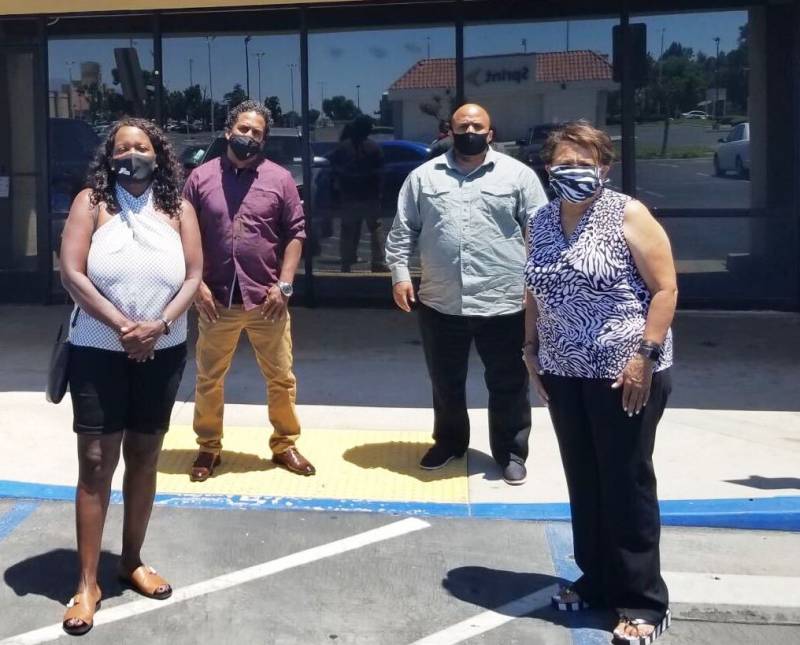
"caption": "Ceasar McDowell, back right, after his recent release from San Quentin State Prison, with his brother Mitchell, back left, \nRialto Mayor Debora Roberston, front right, and Fontana Mayor Acquanetta Warren.",
"description": null,
"title": "Image from iOS (5)",
"credit": "Courtesy of Ceasar McDowell",
"status": "inherit",
"isLoading": false,
"fetchFailed": false
},
"news_11830188": {
"type": "attachments",
"id": "news_11830188",
"meta": {
"index": "attachments_1716263798",
"site": "news",
"id": "11830188",
"found": true
},
"parent": 11829403,
"imgSizes": {
"apple_news_ca_landscape_5_5": {
"file": "https://ww2.kqed.org/app/uploads/sites/10/2020/07/covidsafetravel-1044x783.jpg",
"width": 1044,
"mimeType": "image/jpeg",
"height": 783
},
"apple_news_ca_square_4_0": {
"file": "https://ww2.kqed.org/app/uploads/sites/10/2020/07/covidsafetravel-470x470.jpg",
"width": 470,
"mimeType": "image/jpeg",
"height": 470
},
"twentyfourteen-full-width": {
"file": "https://ww2.kqed.org/app/uploads/sites/10/2020/07/covidsafetravel-1038x576.jpg",
"width": 1038,
"mimeType": "image/jpeg",
"height": 576
},
"thumbnail": {
"file": "https://ww2.kqed.org/app/uploads/sites/10/2020/07/covidsafetravel-160x108.jpg",
"width": 160,
"mimeType": "image/jpeg",
"height": 108
},
"post-thumbnail": {
"file": "https://ww2.kqed.org/app/uploads/sites/10/2020/07/covidsafetravel-672x372.jpg",
"width": 672,
"mimeType": "image/jpeg",
"height": 372
},
"kqedFullSize": {
"file": "https://ww2.kqed.org/app/uploads/sites/10/2020/07/covidsafetravel.jpg",
"width": 1900,
"height": 1280
},
"apple_news_ca_landscape_4_7": {
"file": "https://ww2.kqed.org/app/uploads/sites/10/2020/07/covidsafetravel-632x474.jpg",
"width": 632,
"mimeType": "image/jpeg",
"height": 474
},
"large": {
"file": "https://ww2.kqed.org/app/uploads/sites/10/2020/07/covidsafetravel-1020x687.jpg",
"width": 1020,
"mimeType": "image/jpeg",
"height": 687
},
"apple_news_ca_landscape_4_0": {
"file": "https://ww2.kqed.org/app/uploads/sites/10/2020/07/covidsafetravel-536x402.jpg",
"width": 536,
"mimeType": "image/jpeg",
"height": 402
},
"apple_news_ca_portrait_12_9": {
"file": "https://ww2.kqed.org/app/uploads/sites/10/2020/07/covidsafetravel-1122x1280.jpg",
"width": 1122,
"mimeType": "image/jpeg",
"height": 1280
},
"medium": {
"file": "https://ww2.kqed.org/app/uploads/sites/10/2020/07/covidsafetravel-800x539.jpg",
"width": 800,
"mimeType": "image/jpeg",
"height": 539
},
"apple_news_ca_portrait_4_0": {
"file": "https://ww2.kqed.org/app/uploads/sites/10/2020/07/covidsafetravel-354x472.jpg",
"width": 354,
"mimeType": "image/jpeg",
"height": 472
},
"apple_news_ca_portrait_9_7": {
"file": "https://ww2.kqed.org/app/uploads/sites/10/2020/07/covidsafetravel-840x1120.jpg",
"width": 840,
"mimeType": "image/jpeg",
"height": 1120
},
"apple_news_ca_landscape_12_9": {
"file": "https://ww2.kqed.org/app/uploads/sites/10/2020/07/covidsafetravel-1832x1280.jpg",
"width": 1832,
"mimeType": "image/jpeg",
"height": 1280
},
"apple_news_ca_square_9_7": {
"file": "https://ww2.kqed.org/app/uploads/sites/10/2020/07/covidsafetravel-1104x1104.jpg",
"width": 1104,
"mimeType": "image/jpeg",
"height": 1104
},
"1536x1536": {
"file": "https://ww2.kqed.org/app/uploads/sites/10/2020/07/covidsafetravel-1536x1035.jpg",
"width": 1536,
"mimeType": "image/jpeg",
"height": 1035
},
"apple_news_ca_portrait_4_7": {
"file": "https://ww2.kqed.org/app/uploads/sites/10/2020/07/covidsafetravel-414x552.jpg",
"width": 414,
"mimeType": "image/jpeg",
"height": 552
},
"apple_news_ca_square_12_9": {
"file": "https://ww2.kqed.org/app/uploads/sites/10/2020/07/covidsafetravel-1472x1280.jpg",
"width": 1472,
"mimeType": "image/jpeg",
"height": 1280
},
"apple_news_ca_portrait_5_5": {
"file": "https://ww2.kqed.org/app/uploads/sites/10/2020/07/covidsafetravel-687x916.jpg",
"width": 687,
"mimeType": "image/jpeg",
"height": 916
},
"apple_news_ca_square_4_7": {
"file": "https://ww2.kqed.org/app/uploads/sites/10/2020/07/covidsafetravel-550x550.jpg",
"width": 550,
"mimeType": "image/jpeg",
"height": 550
},
"apple_news_ca_landscape_9_7": {
"file": "https://ww2.kqed.org/app/uploads/sites/10/2020/07/covidsafetravel-1376x1032.jpg",
"width": 1376,
"mimeType": "image/jpeg",
"height": 1032
},
"apple_news_ca_square_5_5": {
"file": "https://ww2.kqed.org/app/uploads/sites/10/2020/07/covidsafetravel-912x912.jpg",
"width": 912,
"mimeType": "image/jpeg",
"height": 912
}
},
"publishDate": 1595443237,
"modified": 1595443296,
"caption": "Can you travel safely right now? Travel is officially discouraged, but people are wondering how they can reduce the risk of spreading COVID-19 if they do.",
"description": "Can you travel safely right now? Travel is officially discouraged, but people are wondering how they can reduce the risk of spreading COVID-19 if they do.",
"title": "covidsafetravel",
"credit": "Johannes Plenio/Pexels",
"status": "inherit",
"isLoading": false,
"fetchFailed": false
},
"news_10978153": {
"type": "attachments",
"id": "news_10978153",
"meta": {
"index": "attachments_1716263798",
"site": "news",
"id": "10978153",
"found": true
},
"parent": 10977377,
"imgSizes": {
"twentyfourteen-full-width": {
"file": "https://ww2.kqed.org/app/uploads/sites/10/2016/06/RS19704_Yolanda-WIlson-2-kids-qut-1038x576.jpg",
"width": 1038,
"mimeType": "image/jpeg",
"height": 576
},
"thumbnail": {
"file": "https://ww2.kqed.org/app/uploads/sites/10/2016/06/RS19704_Yolanda-WIlson-2-kids-qut-400x225.jpg",
"width": 400,
"mimeType": "image/jpeg",
"height": 225
},
"fd-sm": {
"file": "https://ww2.kqed.org/app/uploads/sites/10/2016/06/RS19704_Yolanda-WIlson-2-kids-qut-960x541.jpg",
"width": 960,
"mimeType": "image/jpeg",
"height": 541
},
"post-thumbnail": {
"file": "https://ww2.kqed.org/app/uploads/sites/10/2016/06/RS19704_Yolanda-WIlson-2-kids-qut-672x372.jpg",
"width": 672,
"mimeType": "image/jpeg",
"height": 372
},
"kqedFullSize": {
"file": "https://ww2.kqed.org/app/uploads/sites/10/2016/06/RS19704_Yolanda-WIlson-2-kids-qut.jpg",
"width": 1920,
"height": 1081
},
"large": {
"file": "https://ww2.kqed.org/app/uploads/sites/10/2016/06/RS19704_Yolanda-WIlson-2-kids-qut-1920x1081.jpg",
"width": 1920,
"mimeType": "image/jpeg",
"height": 1081
},
"guest-author-50": {
"file": "https://ww2.kqed.org/app/uploads/sites/10/2016/06/RS19704_Yolanda-WIlson-2-kids-qut-50x50.jpg",
"width": 50,
"mimeType": "image/jpeg",
"height": 50
},
"guest-author-96": {
"file": "https://ww2.kqed.org/app/uploads/sites/10/2016/06/RS19704_Yolanda-WIlson-2-kids-qut-96x96.jpg",
"width": 96,
"mimeType": "image/jpeg",
"height": 96
},
"medium": {
"file": "https://ww2.kqed.org/app/uploads/sites/10/2016/06/RS19704_Yolanda-WIlson-2-kids-qut-800x450.jpg",
"width": 800,
"mimeType": "image/jpeg",
"height": 450
},
"guest-author-64": {
"file": "https://ww2.kqed.org/app/uploads/sites/10/2016/06/RS19704_Yolanda-WIlson-2-kids-qut-64x64.jpg",
"width": 64,
"mimeType": "image/jpeg",
"height": 64
},
"guest-author-32": {
"file": "https://ww2.kqed.org/app/uploads/sites/10/2016/06/RS19704_Yolanda-WIlson-2-kids-qut-32x32.jpg",
"width": 32,
"mimeType": "image/jpeg",
"height": 32
},
"jmtc-small-thumb": {
"file": "https://ww2.kqed.org/app/uploads/sites/10/2016/06/RS19704_Yolanda-WIlson-2-kids-qut-280x150.jpg",
"width": 280,
"mimeType": "image/jpeg",
"height": 150
},
"fd-lrg": {
"file": "https://ww2.kqed.org/app/uploads/sites/10/2016/06/RS19704_Yolanda-WIlson-2-kids-qut-1920x1081.jpg",
"width": 1920,
"mimeType": "image/jpeg",
"height": 1081
},
"fd-med": {
"file": "https://ww2.kqed.org/app/uploads/sites/10/2016/06/RS19704_Yolanda-WIlson-2-kids-qut-1180x664.jpg",
"width": 1180,
"mimeType": "image/jpeg",
"height": 664
},
"detail": {
"file": "https://ww2.kqed.org/app/uploads/sites/10/2016/06/RS19704_Yolanda-WIlson-2-kids-qut-150x150.jpg",
"width": 150,
"mimeType": "image/jpeg",
"height": 150
},
"guest-author-128": {
"file": "https://ww2.kqed.org/app/uploads/sites/10/2016/06/RS19704_Yolanda-WIlson-2-kids-qut-128x128.jpg",
"width": 128,
"mimeType": "image/jpeg",
"height": 128
}
},
"publishDate": 1465079119,
"modified": 1465425450,
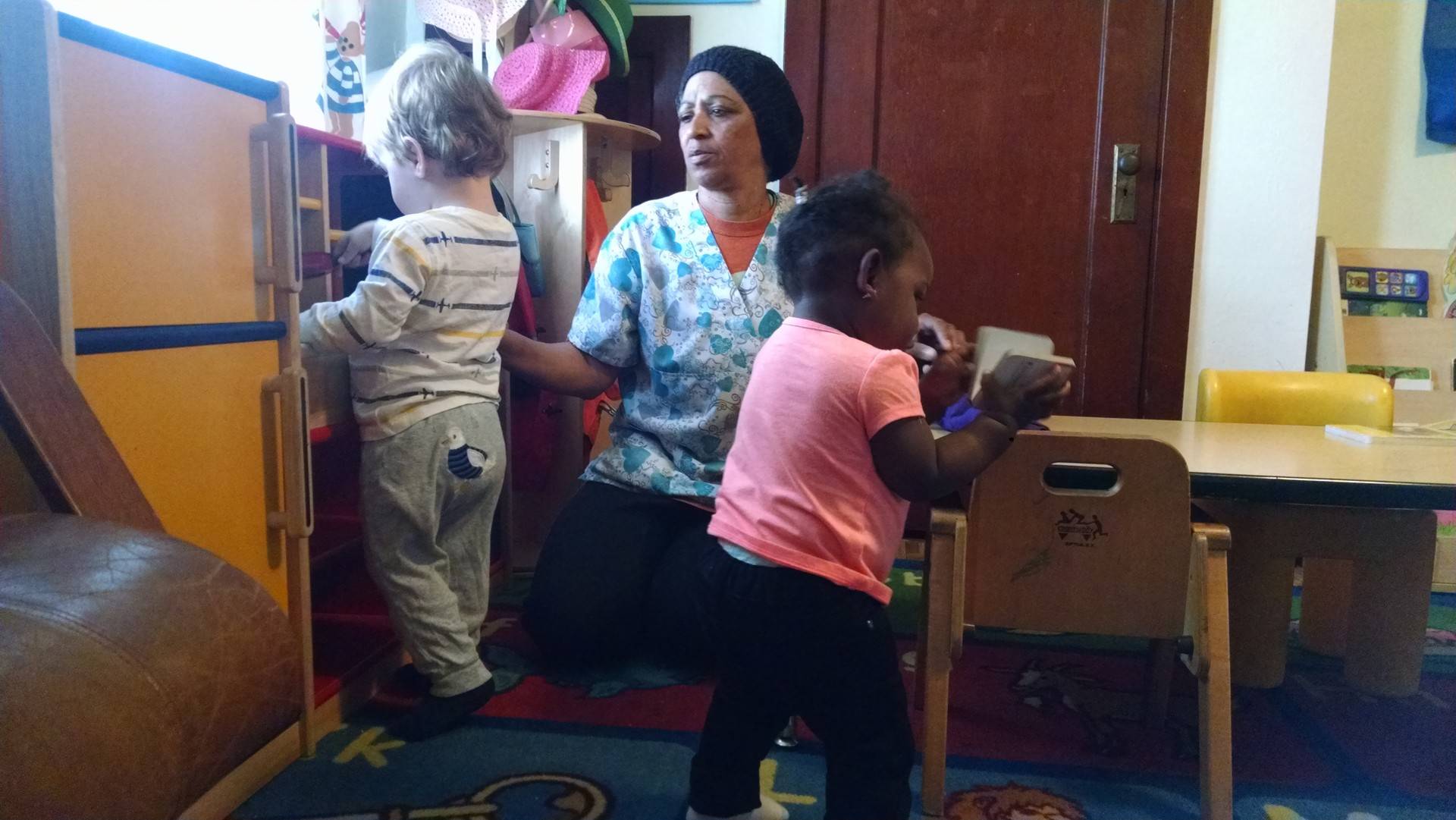
"caption": "Yolanda Wilson works for Nancy Mackey's child care center in West Oakland.",
"description": null,
"title": "RS19704_Yolanda WIlson 2 kids-qut",
"credit": "Andrew Stelzer/KQED",
"status": "inherit",
"isLoading": false,
"fetchFailed": false
},
"news_11830088": {
"type": "attachments",
"id": "news_11830088",
"meta": {
"index": "attachments_1716263798",
"site": "news",
"id": "11830088",
"found": true
},
"parent": 11829745,
"imgSizes": {
"apple_news_ca_landscape_5_5": {
"file": "https://ww2.kqed.org/app/uploads/sites/10/2020/07/translation2-1044x783.jpg",
"width": 1044,
"mimeType": "image/jpeg",
"height": 783
},
"apple_news_ca_square_4_0": {
"file": "https://ww2.kqed.org/app/uploads/sites/10/2020/07/translation2-470x470.jpg",
"width": 470,
"mimeType": "image/jpeg",
"height": 470
},
"twentyfourteen-full-width": {
"file": "https://ww2.kqed.org/app/uploads/sites/10/2020/07/translation2-1038x576.jpg",
"width": 1038,
"mimeType": "image/jpeg",
"height": 576
},
"thumbnail": {
"file": "https://ww2.kqed.org/app/uploads/sites/10/2020/07/translation2-160x96.jpg",
"width": 160,
"mimeType": "image/jpeg",
"height": 96
},
"post-thumbnail": {
"file": "https://ww2.kqed.org/app/uploads/sites/10/2020/07/translation2-672x372.jpg",
"width": 672,
"mimeType": "image/jpeg",
"height": 372
},
"kqedFullSize": {
"file": "https://ww2.kqed.org/app/uploads/sites/10/2020/07/translation2.jpg",
"width": 2000,
"height": 1200
},
"apple_news_ca_landscape_4_7": {
"file": "https://ww2.kqed.org/app/uploads/sites/10/2020/07/translation2-632x474.jpg",
"width": 632,
"mimeType": "image/jpeg",
"height": 474
},
"large": {
"file": "https://ww2.kqed.org/app/uploads/sites/10/2020/07/translation2-1020x612.jpg",
"width": 1020,
"mimeType": "image/jpeg",
"height": 612
},
"apple_news_ca_landscape_4_0": {
"file": "https://ww2.kqed.org/app/uploads/sites/10/2020/07/translation2-536x402.jpg",
"width": 536,
"mimeType": "image/jpeg",
"height": 402
},
"apple_news_ca_portrait_12_9": {
"file": "https://ww2.kqed.org/app/uploads/sites/10/2020/07/translation2-1122x1200.jpg",
"width": 1122,
"mimeType": "image/jpeg",
"height": 1200
},
"medium": {
"file": "https://ww2.kqed.org/app/uploads/sites/10/2020/07/translation2-800x480.jpg",
"width": 800,
"mimeType": "image/jpeg",
"height": 480
},
"apple_news_ca_portrait_4_0": {
"file": "https://ww2.kqed.org/app/uploads/sites/10/2020/07/translation2-354x472.jpg",
"width": 354,
"mimeType": "image/jpeg",
"height": 472
},
"apple_news_ca_portrait_9_7": {
"file": "https://ww2.kqed.org/app/uploads/sites/10/2020/07/translation2-840x1120.jpg",
"width": 840,
"mimeType": "image/jpeg",
"height": 1120
},
"apple_news_ca_landscape_12_9": {
"file": "https://ww2.kqed.org/app/uploads/sites/10/2020/07/translation2-1832x1200.jpg",
"width": 1832,
"mimeType": "image/jpeg",
"height": 1200
},
"apple_news_ca_square_9_7": {
"file": "https://ww2.kqed.org/app/uploads/sites/10/2020/07/translation2-1104x1104.jpg",
"width": 1104,
"mimeType": "image/jpeg",
"height": 1104
},
"1536x1536": {
"file": "https://ww2.kqed.org/app/uploads/sites/10/2020/07/translation2-1536x922.jpg",
"width": 1536,
"mimeType": "image/jpeg",
"height": 922
},
"apple_news_ca_portrait_4_7": {
"file": "https://ww2.kqed.org/app/uploads/sites/10/2020/07/translation2-414x552.jpg",
"width": 414,
"mimeType": "image/jpeg",
"height": 552
},
"apple_news_ca_square_12_9": {
"file": "https://ww2.kqed.org/app/uploads/sites/10/2020/07/translation2-1472x1200.jpg",
"width": 1472,
"mimeType": "image/jpeg",
"height": 1200
},
"apple_news_ca_portrait_5_5": {
"file": "https://ww2.kqed.org/app/uploads/sites/10/2020/07/translation2-687x916.jpg",
"width": 687,
"mimeType": "image/jpeg",
"height": 916
},
"full-width": {
"file": "https://ww2.kqed.org/app/uploads/sites/10/2020/07/translation2-1920x1152.jpg",
"width": 1920,
"mimeType": "image/jpeg",
"height": 1152
},
"apple_news_ca_square_4_7": {
"file": "https://ww2.kqed.org/app/uploads/sites/10/2020/07/translation2-550x550.jpg",
"width": 550,
"mimeType": "image/jpeg",
"height": 550
},
"apple_news_ca_landscape_9_7": {
"file": "https://ww2.kqed.org/app/uploads/sites/10/2020/07/translation2-1376x1032.jpg",
"width": 1376,
"mimeType": "image/jpeg",
"height": 1032
},
"apple_news_ca_square_5_5": {
"file": "https://ww2.kqed.org/app/uploads/sites/10/2020/07/translation2-912x912.jpg",
"width": 912,
"mimeType": "image/jpeg",
"height": 912
}
},
"publishDate": 1595378508,
"modified": 1595378624,
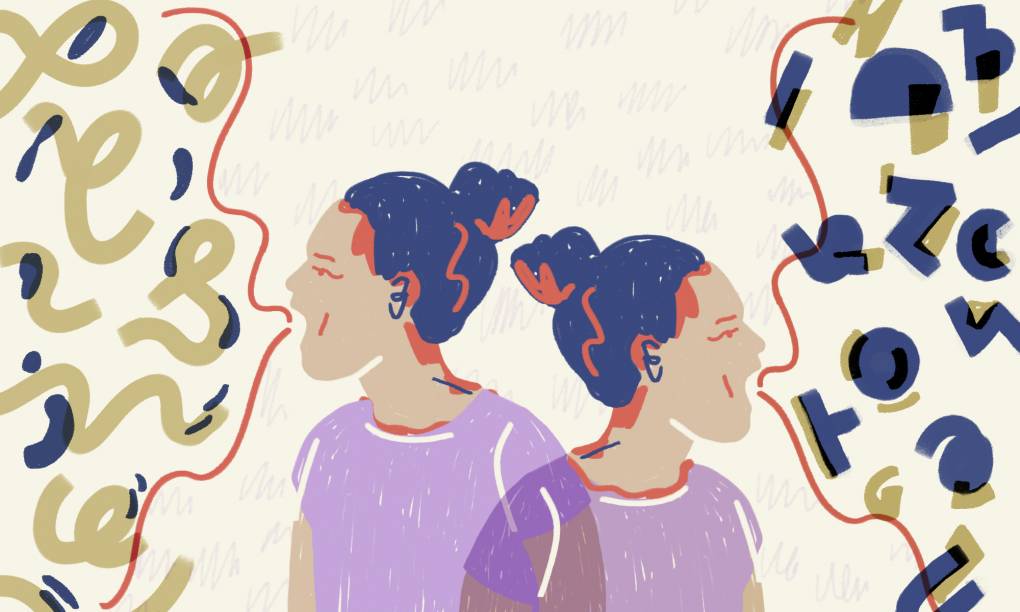
"caption": "For many kids, acting as your family's translator is a shared experience.",
"description": null,
"title": "translation2",
"credit": "Anna Vignet/KQED",
"status": "inherit",
"isLoading": false,
"fetchFailed": false
},
"news_11830005": {
"type": "attachments",
"id": "news_11830005",
"meta": {
"index": "attachments_1716263798",
"site": "news",
"id": "11830005",
"found": true
},
"parent": 11829755,
"imgSizes": {
"apple_news_ca_landscape_5_5": {
"file": "https://ww2.kqed.org/app/uploads/sites/10/2020/07/kid-learning-1044x783.jpg",
"width": 1044,
"mimeType": "image/jpeg",
"height": 783
},
"apple_news_ca_square_4_0": {
"file": "https://ww2.kqed.org/app/uploads/sites/10/2020/07/kid-learning-470x470.jpg",
"width": 470,
"mimeType": "image/jpeg",
"height": 470
},
"twentyfourteen-full-width": {
"file": "https://ww2.kqed.org/app/uploads/sites/10/2020/07/kid-learning-1038x576.jpg",
"width": 1038,
"mimeType": "image/jpeg",
"height": 576
},
"thumbnail": {
"file": "https://ww2.kqed.org/app/uploads/sites/10/2020/07/kid-learning-160x108.jpg",
"width": 160,
"mimeType": "image/jpeg",
"height": 108
},
"post-thumbnail": {
"file": "https://ww2.kqed.org/app/uploads/sites/10/2020/07/kid-learning-672x372.jpg",
"width": 672,
"mimeType": "image/jpeg",
"height": 372
},
"kqedFullSize": {
"file": "https://ww2.kqed.org/app/uploads/sites/10/2020/07/kid-learning.jpg",
"width": 1900,
"height": 1280
},
"apple_news_ca_landscape_4_7": {
"file": "https://ww2.kqed.org/app/uploads/sites/10/2020/07/kid-learning-632x474.jpg",
"width": 632,
"mimeType": "image/jpeg",
"height": 474
},
"large": {
"file": "https://ww2.kqed.org/app/uploads/sites/10/2020/07/kid-learning-1020x687.jpg",
"width": 1020,
"mimeType": "image/jpeg",
"height": 687
},
"apple_news_ca_landscape_4_0": {
"file": "https://ww2.kqed.org/app/uploads/sites/10/2020/07/kid-learning-536x402.jpg",
"width": 536,
"mimeType": "image/jpeg",
"height": 402
},
"apple_news_ca_portrait_12_9": {
"file": "https://ww2.kqed.org/app/uploads/sites/10/2020/07/kid-learning-1122x1280.jpg",
"width": 1122,
"mimeType": "image/jpeg",
"height": 1280
},
"medium": {
"file": "https://ww2.kqed.org/app/uploads/sites/10/2020/07/kid-learning-800x539.jpg",
"width": 800,
"mimeType": "image/jpeg",
"height": 539
},
"apple_news_ca_portrait_4_0": {
"file": "https://ww2.kqed.org/app/uploads/sites/10/2020/07/kid-learning-354x472.jpg",
"width": 354,
"mimeType": "image/jpeg",
"height": 472
},
"apple_news_ca_portrait_9_7": {
"file": "https://ww2.kqed.org/app/uploads/sites/10/2020/07/kid-learning-840x1120.jpg",
"width": 840,
"mimeType": "image/jpeg",
"height": 1120
},
"apple_news_ca_landscape_12_9": {
"file": "https://ww2.kqed.org/app/uploads/sites/10/2020/07/kid-learning-1832x1280.jpg",
"width": 1832,
"mimeType": "image/jpeg",
"height": 1280
},
"apple_news_ca_square_9_7": {
"file": "https://ww2.kqed.org/app/uploads/sites/10/2020/07/kid-learning-1104x1104.jpg",
"width": 1104,
"mimeType": "image/jpeg",
"height": 1104
},
"1536x1536": {
"file": "https://ww2.kqed.org/app/uploads/sites/10/2020/07/kid-learning-1536x1035.jpg",
"width": 1536,
"mimeType": "image/jpeg",
"height": 1035
},
"apple_news_ca_portrait_4_7": {
"file": "https://ww2.kqed.org/app/uploads/sites/10/2020/07/kid-learning-414x552.jpg",
"width": 414,
"mimeType": "image/jpeg",
"height": 552
},
"apple_news_ca_square_12_9": {
"file": "https://ww2.kqed.org/app/uploads/sites/10/2020/07/kid-learning-1472x1280.jpg",
"width": 1472,
"mimeType": "image/jpeg",
"height": 1280
},
"apple_news_ca_portrait_5_5": {
"file": "https://ww2.kqed.org/app/uploads/sites/10/2020/07/kid-learning-687x916.jpg",
"width": 687,
"mimeType": "image/jpeg",
"height": 916
},
"apple_news_ca_square_4_7": {
"file": "https://ww2.kqed.org/app/uploads/sites/10/2020/07/kid-learning-550x550.jpg",
"width": 550,
"mimeType": "image/jpeg",
"height": 550
},
"apple_news_ca_landscape_9_7": {
"file": "https://ww2.kqed.org/app/uploads/sites/10/2020/07/kid-learning-1376x1032.jpg",
"width": 1376,
"mimeType": "image/jpeg",
"height": 1032
},
"apple_news_ca_square_5_5": {
"file": "https://ww2.kqed.org/app/uploads/sites/10/2020/07/kid-learning-912x912.jpg",
"width": 912,
"mimeType": "image/jpeg",
"height": 912
}
},
"publishDate": 1595365628,
"modified": 1614696506,
"caption": null,
"description": "What do we know about California's plan for reopening schools?",
"title": "kid learning",
"credit": "Julia M Cameron/Pexels",
"status": "inherit",
"altTag": "A young girl does schoolwork in front of a computer",
"isLoading": false,
"fetchFailed": false
},
"news_11829876": {
"type": "attachments",
"id": "news_11829876",
"meta": {
"index": "attachments_1716263798",
"site": "news",
"id": "11829876",
"found": true
},
"parent": 11829870,
"imgSizes": {
"apple_news_ca_landscape_5_5": {
"file": "https://ww2.kqed.org/app/uploads/sites/10/2020/07/RS30423_IMG_1497-qut-1044x783.jpg",
"width": 1044,
"mimeType": "image/jpeg",
"height": 783
},
"apple_news_ca_square_4_0": {
"file": "https://ww2.kqed.org/app/uploads/sites/10/2020/07/RS30423_IMG_1497-qut-470x470.jpg",
"width": 470,
"mimeType": "image/jpeg",
"height": 470
},
"twentyfourteen-full-width": {
"file": "https://ww2.kqed.org/app/uploads/sites/10/2020/07/RS30423_IMG_1497-qut-1038x576.jpg",
"width": 1038,
"mimeType": "image/jpeg",
"height": 576
},
"thumbnail": {
"file": "https://ww2.kqed.org/app/uploads/sites/10/2020/07/RS30423_IMG_1497-qut-160x107.jpg",
"width": 160,
"mimeType": "image/jpeg",
"height": 107
},
"post-thumbnail": {
"file": "https://ww2.kqed.org/app/uploads/sites/10/2020/07/RS30423_IMG_1497-qut-672x372.jpg",
"width": 672,
"mimeType": "image/jpeg",
"height": 372
},
"kqedFullSize": {
"file": "https://ww2.kqed.org/app/uploads/sites/10/2020/07/RS30423_IMG_1497-qut.jpg",
"width": 1920,
"height": 1280
},
"apple_news_ca_landscape_4_7": {
"file": "https://ww2.kqed.org/app/uploads/sites/10/2020/07/RS30423_IMG_1497-qut-632x474.jpg",
"width": 632,
"mimeType": "image/jpeg",
"height": 474
},
"large": {
"file": "https://ww2.kqed.org/app/uploads/sites/10/2020/07/RS30423_IMG_1497-qut-1020x680.jpg",
"width": 1020,
"mimeType": "image/jpeg",
"height": 680
},
"apple_news_ca_landscape_4_0": {
"file": "https://ww2.kqed.org/app/uploads/sites/10/2020/07/RS30423_IMG_1497-qut-536x402.jpg",
"width": 536,
"mimeType": "image/jpeg",
"height": 402
},
"apple_news_ca_portrait_12_9": {
"file": "https://ww2.kqed.org/app/uploads/sites/10/2020/07/RS30423_IMG_1497-qut-1122x1280.jpg",
"width": 1122,
"mimeType": "image/jpeg",
"height": 1280
},
"medium": {
"file": "https://ww2.kqed.org/app/uploads/sites/10/2020/07/RS30423_IMG_1497-qut-800x533.jpg",
"width": 800,
"mimeType": "image/jpeg",
"height": 533
},
"apple_news_ca_portrait_4_0": {
"file": "https://ww2.kqed.org/app/uploads/sites/10/2020/07/RS30423_IMG_1497-qut-354x472.jpg",
"width": 354,
"mimeType": "image/jpeg",
"height": 472
},
"apple_news_ca_portrait_9_7": {
"file": "https://ww2.kqed.org/app/uploads/sites/10/2020/07/RS30423_IMG_1497-qut-840x1120.jpg",
"width": 840,
"mimeType": "image/jpeg",
"height": 1120
},
"apple_news_ca_landscape_12_9": {
"file": "https://ww2.kqed.org/app/uploads/sites/10/2020/07/RS30423_IMG_1497-qut-1832x1280.jpg",
"width": 1832,
"mimeType": "image/jpeg",
"height": 1280
},
"apple_news_ca_square_9_7": {
"file": "https://ww2.kqed.org/app/uploads/sites/10/2020/07/RS30423_IMG_1497-qut-1104x1104.jpg",
"width": 1104,
"mimeType": "image/jpeg",
"height": 1104
},
"1536x1536": {
"file": "https://ww2.kqed.org/app/uploads/sites/10/2020/07/RS30423_IMG_1497-qut-1536x1024.jpg",
"width": 1536,
"mimeType": "image/jpeg",
"height": 1024
},
"apple_news_ca_portrait_4_7": {
"file": "https://ww2.kqed.org/app/uploads/sites/10/2020/07/RS30423_IMG_1497-qut-414x552.jpg",
"width": 414,
"mimeType": "image/jpeg",
"height": 552
},
"apple_news_ca_square_12_9": {
"file": "https://ww2.kqed.org/app/uploads/sites/10/2020/07/RS30423_IMG_1497-qut-1472x1280.jpg",
"width": 1472,
"mimeType": "image/jpeg",
"height": 1280
},
"apple_news_ca_portrait_5_5": {
"file": "https://ww2.kqed.org/app/uploads/sites/10/2020/07/RS30423_IMG_1497-qut-687x916.jpg",
"width": 687,
"mimeType": "image/jpeg",
"height": 916
},
"apple_news_ca_square_4_7": {
"file": "https://ww2.kqed.org/app/uploads/sites/10/2020/07/RS30423_IMG_1497-qut-550x550.jpg",
"width": 550,
"mimeType": "image/jpeg",
"height": 550
},
"apple_news_ca_landscape_9_7": {
"file": "https://ww2.kqed.org/app/uploads/sites/10/2020/07/RS30423_IMG_1497-qut-1376x1032.jpg",
"width": 1376,
"mimeType": "image/jpeg",
"height": 1032
},
"apple_news_ca_square_5_5": {
"file": "https://ww2.kqed.org/app/uploads/sites/10/2020/07/RS30423_IMG_1497-qut-912x912.jpg",
"width": 912,
"mimeType": "image/jpeg",
"height": 912
}
},
"publishDate": 1595293081,
"modified": 1595297505,
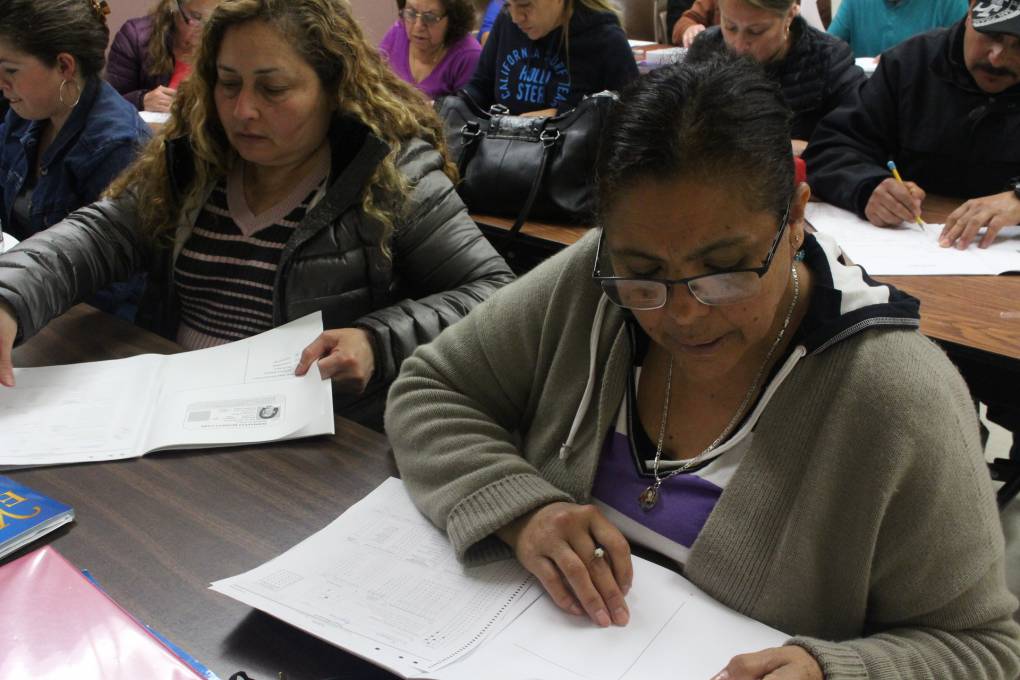
"caption": "Students prepare for their U.S. citizenship test at a class at the Fair Oaks Community Center in Redwood City, Calif. on March 22, 2018.",
"description": "Students prepare for their U.S. citizenship test at a class at the Fair Oaks Community Center in Redwood City, Calif. on March 22, 2018.",
"title": "RS30423_IMG_1497-qut",
"credit": "Farida Jhabvala Romero/KQED",
"status": "inherit",
"isLoading": false,
"fetchFailed": false
},
"news_11829646": {
"type": "attachments",
"id": "news_11829646",
"meta": {
"index": "attachments_1716263798",
"site": "news",
"id": "11829646",
"found": true
},
"parent": 11829370,
"imgSizes": {
"apple_news_ca_square_4_0": {
"file": "https://ww2.kqed.org/app/uploads/sites/10/2020/07/RS33664_irvine-qut-470x470.jpg",
"width": 470,
"mimeType": "image/jpeg",
"height": 470
},
"twentyfourteen-full-width": {
"file": "https://ww2.kqed.org/app/uploads/sites/10/2020/07/RS33664_irvine-qut-1024x576.jpg",
"width": 1024,
"mimeType": "image/jpeg",
"height": 576
},
"thumbnail": {
"file": "https://ww2.kqed.org/app/uploads/sites/10/2020/07/RS33664_irvine-qut-160x106.jpg",
"width": 160,
"mimeType": "image/jpeg",
"height": 106
},
"post-thumbnail": {
"file": "https://ww2.kqed.org/app/uploads/sites/10/2020/07/RS33664_irvine-qut-672x372.jpg",
"width": 672,
"mimeType": "image/jpeg",
"height": 372
},
"kqedFullSize": {
"file": "https://ww2.kqed.org/app/uploads/sites/10/2020/07/RS33664_irvine-qut.jpg",
"width": 1024,
"height": 681
},
"apple_news_ca_landscape_4_7": {
"file": "https://ww2.kqed.org/app/uploads/sites/10/2020/07/RS33664_irvine-qut-632x474.jpg",
"width": 632,
"mimeType": "image/jpeg",
"height": 474
},
"large": {
"file": "https://ww2.kqed.org/app/uploads/sites/10/2020/07/RS33664_irvine-qut-1020x678.jpg",
"width": 1020,
"mimeType": "image/jpeg",
"height": 678
},
"apple_news_ca_landscape_4_0": {
"file": "https://ww2.kqed.org/app/uploads/sites/10/2020/07/RS33664_irvine-qut-536x402.jpg",
"width": 536,
"mimeType": "image/jpeg",
"height": 402
},
"medium": {
"file": "https://ww2.kqed.org/app/uploads/sites/10/2020/07/RS33664_irvine-qut-800x532.jpg",
"width": 800,
"mimeType": "image/jpeg",
"height": 532
},
"apple_news_ca_portrait_4_0": {
"file": "https://ww2.kqed.org/app/uploads/sites/10/2020/07/RS33664_irvine-qut-354x472.jpg",
"width": 354,
"mimeType": "image/jpeg",
"height": 472
},
"apple_news_ca_portrait_9_7": {
"file": "https://ww2.kqed.org/app/uploads/sites/10/2020/07/RS33664_irvine-qut-840x681.jpg",
"width": 840,
"mimeType": "image/jpeg",
"height": 681
},
"apple_news_ca_portrait_4_7": {
"file": "https://ww2.kqed.org/app/uploads/sites/10/2020/07/RS33664_irvine-qut-414x552.jpg",
"width": 414,
"mimeType": "image/jpeg",
"height": 552
},
"apple_news_ca_portrait_5_5": {
"file": "https://ww2.kqed.org/app/uploads/sites/10/2020/07/RS33664_irvine-qut-687x681.jpg",
"width": 687,
"mimeType": "image/jpeg",
"height": 681
},
"apple_news_ca_square_4_7": {
"file": "https://ww2.kqed.org/app/uploads/sites/10/2020/07/RS33664_irvine-qut-550x550.jpg",
"width": 550,
"mimeType": "image/jpeg",
"height": 550
},
"apple_news_ca_square_5_5": {
"file": "https://ww2.kqed.org/app/uploads/sites/10/2020/07/RS33664_irvine-qut-912x681.jpg",
"width": 912,
"mimeType": "image/jpeg",
"height": 681
}
},
"publishDate": 1595199585,
"modified": 1595288321,
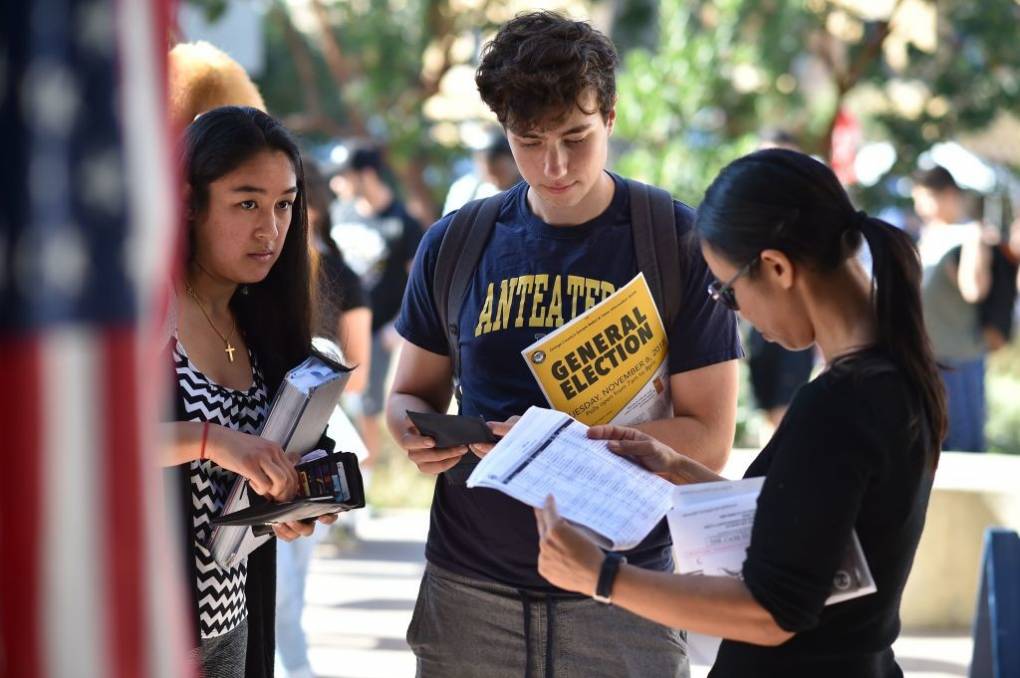
"caption": "Students wait in line to cast their ballots at a polling station on the campus of UC Irvine on Nov. 6, 2018.",
"description": "Students wait in line to cast their ballots at a polling station on the campus of UC Irvine on Nov. 6, 2018.",
"title": "US-POLITICS-ELECTION-VOTE",
"credit": "Robyn Beck/AFP/Getty Images",
"status": "inherit",
"isLoading": false,
"fetchFailed": false
},
"news_11829924": {
"type": "attachments",
"id": "news_11829924",
"meta": {
"index": "attachments_1716263798",
"site": "news",
"id": "11829924",
"found": true
},
"parent": 11829302,
"imgSizes": {
"apple_news_ca_landscape_5_5": {
"file": "https://ww2.kqed.org/app/uploads/sites/10/2020/07/Image-from-iOS-7-1044x699.jpg",
"width": 1044,
"mimeType": "image/jpeg",
"height": 699
},
"apple_news_ca_square_4_0": {
"file": "https://ww2.kqed.org/app/uploads/sites/10/2020/07/Image-from-iOS-7-470x470.jpg",
"width": 470,
"mimeType": "image/jpeg",
"height": 470
},
"twentyfourteen-full-width": {
"file": "https://ww2.kqed.org/app/uploads/sites/10/2020/07/Image-from-iOS-7-1038x576.jpg",
"width": 1038,
"mimeType": "image/jpeg",
"height": 576
},
"thumbnail": {
"file": "https://ww2.kqed.org/app/uploads/sites/10/2020/07/Image-from-iOS-7-160x99.jpg",
"width": 160,
"mimeType": "image/jpeg",
"height": 99
},
"post-thumbnail": {
"file": "https://ww2.kqed.org/app/uploads/sites/10/2020/07/Image-from-iOS-7-672x372.jpg",
"width": 672,
"mimeType": "image/jpeg",
"height": 372
},
"kqedFullSize": {
"file": "https://ww2.kqed.org/app/uploads/sites/10/2020/07/Image-from-iOS-7.jpg",
"width": 1125,
"height": 699
},
"apple_news_ca_landscape_4_7": {
"file": "https://ww2.kqed.org/app/uploads/sites/10/2020/07/Image-from-iOS-7-632x474.jpg",
"width": 632,
"mimeType": "image/jpeg",
"height": 474
},
"large": {
"file": "https://ww2.kqed.org/app/uploads/sites/10/2020/07/Image-from-iOS-7-1020x634.jpg",
"width": 1020,
"mimeType": "image/jpeg",
"height": 634
},
"apple_news_ca_landscape_4_0": {
"file": "https://ww2.kqed.org/app/uploads/sites/10/2020/07/Image-from-iOS-7-536x402.jpg",
"width": 536,
"mimeType": "image/jpeg",
"height": 402
},
"apple_news_ca_portrait_12_9": {
"file": "https://ww2.kqed.org/app/uploads/sites/10/2020/07/Image-from-iOS-7-1122x699.jpg",
"width": 1122,
"mimeType": "image/jpeg",
"height": 699
},
"medium": {
"file": "https://ww2.kqed.org/app/uploads/sites/10/2020/07/Image-from-iOS-7-800x497.jpg",
"width": 800,
"mimeType": "image/jpeg",
"height": 497
},
"apple_news_ca_portrait_4_0": {
"file": "https://ww2.kqed.org/app/uploads/sites/10/2020/07/Image-from-iOS-7-354x472.jpg",
"width": 354,
"mimeType": "image/jpeg",
"height": 472
},
"apple_news_ca_portrait_9_7": {
"file": "https://ww2.kqed.org/app/uploads/sites/10/2020/07/Image-from-iOS-7-840x699.jpg",
"width": 840,
"mimeType": "image/jpeg",
"height": 699
},
"apple_news_ca_square_9_7": {
"file": "https://ww2.kqed.org/app/uploads/sites/10/2020/07/Image-from-iOS-7-1104x699.jpg",
"width": 1104,
"mimeType": "image/jpeg",
"height": 699
},
"apple_news_ca_portrait_4_7": {
"file": "https://ww2.kqed.org/app/uploads/sites/10/2020/07/Image-from-iOS-7-414x552.jpg",
"width": 414,
"mimeType": "image/jpeg",
"height": 552
},
"apple_news_ca_portrait_5_5": {
"file": "https://ww2.kqed.org/app/uploads/sites/10/2020/07/Image-from-iOS-7-687x699.jpg",
"width": 687,
"mimeType": "image/jpeg",
"height": 699
},
"apple_news_ca_square_4_7": {
"file": "https://ww2.kqed.org/app/uploads/sites/10/2020/07/Image-from-iOS-7-550x550.jpg",
"width": 550,
"mimeType": "image/jpeg",
"height": 550
},
"apple_news_ca_square_5_5": {
"file": "https://ww2.kqed.org/app/uploads/sites/10/2020/07/Image-from-iOS-7-912x699.jpg",
"width": 912,
"mimeType": "image/jpeg",
"height": 699
}
},
"publishDate": 1595349900,
"modified": 1595349938,
"caption": "Sedric Salinas, an East Palo Alto barber, was chosen to give haircuts to NBA players at their 'bubble' facility near Orlando, Florida.",
"description": null,
"title": "Image from iOS",
"credit": "Courtesy of Sedric Salinas",
"status": "inherit",
"isLoading": false,
"fetchFailed": false
},
"news_11829744": {
"type": "attachments",
"id": "news_11829744",
"meta": {
"index": "attachments_1716263798",
"site": "news",
"id": "11829744",
"found": true
},
"parent": 11829740,
"imgSizes": {
"apple_news_ca_landscape_5_5": {
"file": "https://ww2.kqed.org/app/uploads/sites/10/2020/07/covidcalendar_072020_final-1044x783.png",
"width": 1044,
"mimeType": "image/png",
"height": 783
},
"apple_news_ca_square_4_0": {
"file": "https://ww2.kqed.org/app/uploads/sites/10/2020/07/covidcalendar_072020_final-470x470.png",
"width": 470,
"mimeType": "image/png",
"height": 470
},
"twentyfourteen-full-width": {
"file": "https://ww2.kqed.org/app/uploads/sites/10/2020/07/covidcalendar_072020_final-1038x576.png",
"width": 1038,
"mimeType": "image/png",
"height": 576
},
"thumbnail": {
"file": "https://ww2.kqed.org/app/uploads/sites/10/2020/07/covidcalendar_072020_final-160x107.png",
"width": 160,
"mimeType": "image/png",
"height": 107
},
"post-thumbnail": {
"file": "https://ww2.kqed.org/app/uploads/sites/10/2020/07/covidcalendar_072020_final-672x372.png",
"width": 672,
"mimeType": "image/png",
"height": 372
},
"kqedFullSize": {
"file": "https://ww2.kqed.org/app/uploads/sites/10/2020/07/covidcalendar_072020_final.png",
"width": 1920,
"height": 1279
},
"apple_news_ca_landscape_4_7": {
"file": "https://ww2.kqed.org/app/uploads/sites/10/2020/07/covidcalendar_072020_final-632x474.png",
"width": 632,
"mimeType": "image/png",
"height": 474
},
"large": {
"file": "https://ww2.kqed.org/app/uploads/sites/10/2020/07/covidcalendar_072020_final-1020x679.png",
"width": 1020,
"mimeType": "image/png",
"height": 679
},
"apple_news_ca_landscape_4_0": {
"file": "https://ww2.kqed.org/app/uploads/sites/10/2020/07/covidcalendar_072020_final-536x402.png",
"width": 536,
"mimeType": "image/png",
"height": 402
},
"apple_news_ca_portrait_12_9": {
"file": "https://ww2.kqed.org/app/uploads/sites/10/2020/07/covidcalendar_072020_final-1122x1279.png",
"width": 1122,
"mimeType": "image/png",
"height": 1279
},
"medium": {
"file": "https://ww2.kqed.org/app/uploads/sites/10/2020/07/covidcalendar_072020_final-800x533.png",
"width": 800,
"mimeType": "image/png",
"height": 533
},
"apple_news_ca_portrait_4_0": {
"file": "https://ww2.kqed.org/app/uploads/sites/10/2020/07/covidcalendar_072020_final-354x472.png",
"width": 354,
"mimeType": "image/png",
"height": 472
},
"apple_news_ca_portrait_9_7": {
"file": "https://ww2.kqed.org/app/uploads/sites/10/2020/07/covidcalendar_072020_final-840x1120.png",
"width": 840,
"mimeType": "image/png",
"height": 1120
},
"apple_news_ca_landscape_12_9": {
"file": "https://ww2.kqed.org/app/uploads/sites/10/2020/07/covidcalendar_072020_final-1832x1279.png",
"width": 1832,
"mimeType": "image/png",
"height": 1279
},
"apple_news_ca_square_9_7": {
"file": "https://ww2.kqed.org/app/uploads/sites/10/2020/07/covidcalendar_072020_final-1104x1104.png",
"width": 1104,
"mimeType": "image/png",
"height": 1104
},
"1536x1536": {
"file": "https://ww2.kqed.org/app/uploads/sites/10/2020/07/covidcalendar_072020_final-1536x1023.png",
"width": 1536,
"mimeType": "image/png",
"height": 1023
},
"apple_news_ca_portrait_4_7": {
"file": "https://ww2.kqed.org/app/uploads/sites/10/2020/07/covidcalendar_072020_final-414x552.png",
"width": 414,
"mimeType": "image/png",
"height": 552
},
"apple_news_ca_square_12_9": {
"file": "https://ww2.kqed.org/app/uploads/sites/10/2020/07/covidcalendar_072020_final-1472x1279.png",
"width": 1472,
"mimeType": "image/png",
"height": 1279
},
"apple_news_ca_portrait_5_5": {
"file": "https://ww2.kqed.org/app/uploads/sites/10/2020/07/covidcalendar_072020_final-687x916.png",
"width": 687,
"mimeType": "image/png",
"height": 916
},
"apple_news_ca_square_4_7": {
"file": "https://ww2.kqed.org/app/uploads/sites/10/2020/07/covidcalendar_072020_final-550x550.png",
"width": 550,
"mimeType": "image/png",
"height": 550
},
"apple_news_ca_landscape_9_7": {
"file": "https://ww2.kqed.org/app/uploads/sites/10/2020/07/covidcalendar_072020_final-1376x1032.png",
"width": 1376,
"mimeType": "image/png",
"height": 1032
},
"apple_news_ca_square_5_5": {
"file": "https://ww2.kqed.org/app/uploads/sites/10/2020/07/covidcalendar_072020_final-912x912.png",
"width": 912,
"mimeType": "image/png",
"height": 912
}
},
"publishDate": 1595276438,
"modified": 1595276477,
"caption": null,
"description": null,
"title": "covidcalendar_072020_final",
"credit": null,
"status": "inherit",
"isLoading": false,
"fetchFailed": false
},
"news_11813618": {
"type": "attachments",
"id": "news_11813618",
"meta": {
"index": "attachments_1716263798",
"site": "news",
"id": "11813618",
"found": true
},
"parent": 11813616,
"imgSizes": {
"apple_news_ca_landscape_5_5": {
"file": "https://ww2.kqed.org/app/uploads/sites/10/2020/04/KQED-Coronavirus-Updates-1-1044x628.jpg",
"width": 1044,
"mimeType": "image/jpeg",
"height": 628
},
"apple_news_ca_square_4_0": {
"file": "https://ww2.kqed.org/app/uploads/sites/10/2020/04/KQED-Coronavirus-Updates-1-470x470.jpg",
"width": 470,
"mimeType": "image/jpeg",
"height": 470
},
"twentyfourteen-full-width": {
"file": "https://ww2.kqed.org/app/uploads/sites/10/2020/04/KQED-Coronavirus-Updates-1-1038x576.jpg",
"width": 1038,
"mimeType": "image/jpeg",
"height": 576
},
"thumbnail": {
"file": "https://ww2.kqed.org/app/uploads/sites/10/2020/04/KQED-Coronavirus-Updates-1-160x84.jpg",
"width": 160,
"mimeType": "image/jpeg",
"height": 84
},
"post-thumbnail": {
"file": "https://ww2.kqed.org/app/uploads/sites/10/2020/04/KQED-Coronavirus-Updates-1-672x372.jpg",
"width": 672,
"mimeType": "image/jpeg",
"height": 372
},
"kqedFullSize": {
"file": "https://ww2.kqed.org/app/uploads/sites/10/2020/04/KQED-Coronavirus-Updates-1.jpg",
"width": 1200,
"height": 628
},
"apple_news_ca_landscape_4_7": {
"file": "https://ww2.kqed.org/app/uploads/sites/10/2020/04/KQED-Coronavirus-Updates-1-632x474.jpg",
"width": 632,
"mimeType": "image/jpeg",
"height": 474
},
"large": {
"file": "https://ww2.kqed.org/app/uploads/sites/10/2020/04/KQED-Coronavirus-Updates-1-1020x534.jpg",
"width": 1020,
"mimeType": "image/jpeg",
"height": 534
},
"apple_news_ca_landscape_4_0": {
"file": "https://ww2.kqed.org/app/uploads/sites/10/2020/04/KQED-Coronavirus-Updates-1-536x402.jpg",
"width": 536,
"mimeType": "image/jpeg",
"height": 402
},
"apple_news_ca_portrait_12_9": {
"file": "https://ww2.kqed.org/app/uploads/sites/10/2020/04/KQED-Coronavirus-Updates-1-1122x628.jpg",
"width": 1122,
"mimeType": "image/jpeg",
"height": 628
},
"medium": {
"file": "https://ww2.kqed.org/app/uploads/sites/10/2020/04/KQED-Coronavirus-Updates-1-800x419.jpg",
"width": 800,
"mimeType": "image/jpeg",
"height": 419
},
"apple_news_ca_portrait_4_0": {
"file": "https://ww2.kqed.org/app/uploads/sites/10/2020/04/KQED-Coronavirus-Updates-1-354x472.jpg",
"width": 354,
"mimeType": "image/jpeg",
"height": 472
},
"apple_news_ca_portrait_9_7": {
"file": "https://ww2.kqed.org/app/uploads/sites/10/2020/04/KQED-Coronavirus-Updates-1-840x628.jpg",
"width": 840,
"mimeType": "image/jpeg",
"height": 628
},
"apple_news_ca_square_9_7": {
"file": "https://ww2.kqed.org/app/uploads/sites/10/2020/04/KQED-Coronavirus-Updates-1-1104x628.jpg",
"width": 1104,
"mimeType": "image/jpeg",
"height": 628
},
"apple_news_ca_portrait_4_7": {
"file": "https://ww2.kqed.org/app/uploads/sites/10/2020/04/KQED-Coronavirus-Updates-1-414x552.jpg",
"width": 414,
"mimeType": "image/jpeg",
"height": 552
},
"apple_news_ca_portrait_5_5": {
"file": "https://ww2.kqed.org/app/uploads/sites/10/2020/04/KQED-Coronavirus-Updates-1-687x628.jpg",
"width": 687,
"mimeType": "image/jpeg",
"height": 628
},
"apple_news_ca_square_4_7": {
"file": "https://ww2.kqed.org/app/uploads/sites/10/2020/04/KQED-Coronavirus-Updates-1-550x550.jpg",
"width": 550,
"mimeType": "image/jpeg",
"height": 550
},
"apple_news_ca_square_5_5": {
"file": "https://ww2.kqed.org/app/uploads/sites/10/2020/04/KQED-Coronavirus-Updates-1-912x628.jpg",
"width": 912,
"mimeType": "image/jpeg",
"height": 628
}
},
"publishDate": 1587575003,
"modified": 1587575062,
"caption": "Coronavirus Live Updates logo.",
"description": null,
"title": "KQED-Coronavirus-Live-Updates",
"credit": null,
"status": "inherit",
"isLoading": false,
"fetchFailed": false
},
"news_11829411": {
"type": "attachments",
"id": "news_11829411",
"meta": {
"index": "attachments_1716263798",
"site": "news",
"id": "11829411",
"found": true
},
"parent": 11829407,
"imgSizes": {
"apple_news_ca_landscape_5_5": {
"file": "https://ww2.kqed.org/app/uploads/sites/10/2020/07/DSC01718-1044x783.jpeg",
"width": 1044,
"mimeType": "image/jpeg",
"height": 783
},
"apple_news_ca_square_4_0": {
"file": "https://ww2.kqed.org/app/uploads/sites/10/2020/07/DSC01718-470x470.jpeg",
"width": 470,
"mimeType": "image/jpeg",
"height": 470
},
"twentyfourteen-full-width": {
"file": "https://ww2.kqed.org/app/uploads/sites/10/2020/07/DSC01718-1038x576.jpeg",
"width": 1038,
"mimeType": "image/jpeg",
"height": 576
},
"thumbnail": {
"file": "https://ww2.kqed.org/app/uploads/sites/10/2020/07/DSC01718-160x107.jpeg",
"width": 160,
"mimeType": "image/jpeg",
"height": 107
},
"post-thumbnail": {
"file": "https://ww2.kqed.org/app/uploads/sites/10/2020/07/DSC01718-672x372.jpeg",
"width": 672,
"mimeType": "image/jpeg",
"height": 372
},
"kqedFullSize": {
"file": "https://ww2.kqed.org/app/uploads/sites/10/2020/07/DSC01718-scaled.jpeg",
"width": 2560,
"height": 1710
},
"2048x2048": {
"file": "https://ww2.kqed.org/app/uploads/sites/10/2020/07/DSC01718-2048x1368.jpeg",
"width": 2048,
"mimeType": "image/jpeg",
"height": 1368
},
"apple_news_ca_landscape_4_7": {
"file": "https://ww2.kqed.org/app/uploads/sites/10/2020/07/DSC01718-632x474.jpeg",
"width": 632,
"mimeType": "image/jpeg",
"height": 474
},
"large": {
"file": "https://ww2.kqed.org/app/uploads/sites/10/2020/07/DSC01718-1020x681.jpeg",
"width": 1020,
"mimeType": "image/jpeg",
"height": 681
},
"apple_news_ca_landscape_4_0": {
"file": "https://ww2.kqed.org/app/uploads/sites/10/2020/07/DSC01718-536x402.jpeg",
"width": 536,
"mimeType": "image/jpeg",
"height": 402
},
"apple_news_ca_portrait_12_9": {
"file": "https://ww2.kqed.org/app/uploads/sites/10/2020/07/DSC01718-1122x1496.jpeg",
"width": 1122,
"mimeType": "image/jpeg",
"height": 1496
},
"medium": {
"file": "https://ww2.kqed.org/app/uploads/sites/10/2020/07/DSC01718-800x534.jpeg",
"width": 800,
"mimeType": "image/jpeg",
"height": 534
},
"apple_news_ca_portrait_4_0": {
"file": "https://ww2.kqed.org/app/uploads/sites/10/2020/07/DSC01718-354x472.jpeg",
"width": 354,
"mimeType": "image/jpeg",
"height": 472
},
"apple_news_ca_portrait_9_7": {
"file": "https://ww2.kqed.org/app/uploads/sites/10/2020/07/DSC01718-840x1120.jpeg",
"width": 840,
"mimeType": "image/jpeg",
"height": 1120
},
"apple_news_ca_landscape_12_9": {
"file": "https://ww2.kqed.org/app/uploads/sites/10/2020/07/DSC01718-1832x1374.jpeg",
"width": 1832,
"mimeType": "image/jpeg",
"height": 1374
},
"apple_news_ca_square_9_7": {
"file": "https://ww2.kqed.org/app/uploads/sites/10/2020/07/DSC01718-1104x1104.jpeg",
"width": 1104,
"mimeType": "image/jpeg",
"height": 1104
},
"1536x1536": {
"file": "https://ww2.kqed.org/app/uploads/sites/10/2020/07/DSC01718-1536x1026.jpeg",
"width": 1536,
"mimeType": "image/jpeg",
"height": 1026
},
"apple_news_ca_portrait_4_7": {
"file": "https://ww2.kqed.org/app/uploads/sites/10/2020/07/DSC01718-414x552.jpeg",
"width": 414,
"mimeType": "image/jpeg",
"height": 552
},
"apple_news_ca_square_12_9": {
"file": "https://ww2.kqed.org/app/uploads/sites/10/2020/07/DSC01718-1472x1472.jpeg",
"width": 1472,
"mimeType": "image/jpeg",
"height": 1472
},
"apple_news_ca_portrait_5_5": {
"file": "https://ww2.kqed.org/app/uploads/sites/10/2020/07/DSC01718-687x916.jpeg",
"width": 687,
"mimeType": "image/jpeg",
"height": 916
},
"full-width": {
"file": "https://ww2.kqed.org/app/uploads/sites/10/2020/07/DSC01718-1920x1283.jpeg",
"width": 1920,
"mimeType": "image/jpeg",
"height": 1283
},
"apple_news_ca_square_4_7": {
"file": "https://ww2.kqed.org/app/uploads/sites/10/2020/07/DSC01718-550x550.jpeg",
"width": 550,
"mimeType": "image/jpeg",
"height": 550
},
"apple_news_ca_landscape_9_7": {
"file": "https://ww2.kqed.org/app/uploads/sites/10/2020/07/DSC01718-1376x1032.jpeg",
"width": 1376,
"mimeType": "image/jpeg",
"height": 1032
},
"apple_news_ca_square_5_5": {
"file": "https://ww2.kqed.org/app/uploads/sites/10/2020/07/DSC01718-912x912.jpeg",
"width": 912,
"mimeType": "image/jpeg",
"height": 912
}
},
"publishDate": 1595009321,
"modified": 1595036349,
"caption": "Adnan spent the last four of his 16 years of incarceration at San Quentin State Prison. Now he's an outspoken advocate on behalf of his incarcerated friends still inside.",
"description": null,
"title": "DSC01718",
"credit": "Courtesy of Adnan Khan",
"status": "inherit",
"isLoading": false,
"fetchFailed": false
}
},
"audioPlayerReducer": {
"postId": "stream_live",
"isPaused": true,
"isPlaying": false,
"pfsActive": false,
"pledgeModalIsOpen": true,
"playerDrawerIsOpen": false,
"liveAudioPlayStartedAt": 0,
"liveAudioPlayContext": ""
},
"authorsReducer": {
"byline_news_11830403": {
"type": "authors",
"id": "byline_news_11830403",
"meta": {
"override": true
},
"slug": "byline_news_11830403",
"name": "Christopher Weber\u003cbr>Associated Press",
"isLoading": false
},
"gmarzorati": {
"type": "authors",
"id": "227",
"meta": {
"index": "authors_1716337520",
"id": "227",
"found": true
},
"name": "Guy Marzorati",
"firstName": "Guy",
"lastName": "Marzorati",
"slug": "gmarzorati",
"email": "gmarzorati@KQED.org",
"display_author_email": true,
"staff_mastheads": [
"news"
],
"title": "Correspondent",
"bio": "Guy Marzorati is a correspondent on KQED's California Politics and Government Desk, based in San Jose. A graduate of Santa Clara University, Guy joined KQED in 2013. He reports on state and local politics and produces KQED's digital voter guide.",
"avatar": "https://secure.gravatar.com/avatar/e7038b8dbfd55b104369b76b1cd0b9de?s=600&d=blank&r=g",
"twitter": "guymarzorati",
"facebook": null,
"instagram": null,
"linkedin": null,
"sites": [
{
"site": "",
"roles": [
"editor"
]
},
{
"site": "news",
"roles": [
"editor"
]
},
{
"site": "science",
"roles": [
"editor"
]
},
{
"site": "forum",
"roles": [
"editor"
]
},
{
"site": "elections",
"roles": [
"editor"
]
},
{
"site": "liveblog",
"roles": [
"editor"
]
}
],
"headData": {
"title": "Guy Marzorati | KQED",
"description": "Correspondent",
"ogImgSrc": "https://secure.gravatar.com/avatar/e7038b8dbfd55b104369b76b1cd0b9de?s=600&d=blank&r=g",
"twImgSrc": "https://secure.gravatar.com/avatar/e7038b8dbfd55b104369b76b1cd0b9de?s=600&d=blank&r=g"
},
"isLoading": false,
"link": "/author/gmarzorati"
},
"katrinaschwartz": {
"type": "authors",
"id": "234",
"meta": {
"index": "authors_1716337520",
"id": "234",
"found": true
},
"name": "Katrina Schwartz",
"firstName": "Katrina",
"lastName": "Schwartz",
"slug": "katrinaschwartz",
"email": "kschwartz@kqed.org",
"display_author_email": false,
"staff_mastheads": [
"news"
],
"title": "Producer",
"bio": "Katrina Schwartz is a journalist based in San Francisco. She's worked at KPCC public radio in LA and has reported on air and online for KQED since 2010. She covered how teaching and learning is changing for MindShift between 2012 and 2020. She is the co-host of the MindShift podcast and now produces KQED's Bay Curious podcast.",
"avatar": "https://secure.gravatar.com/avatar/edb4ee79070447a018538c9aae6eeecf28786515b8a0c30e43b6b7dce5aa44c8?s=600&d=blank&r=g",
"twitter": "kschwart",
"bluesky": null,
"facebook": null,
"instagram": null,
"linkedin": null,
"sites": [
{
"site": "",
"roles": [
"editor"
]
},
{
"site": "news",
"roles": [
"editor"
]
},
{
"site": "mindshift",
"roles": [
"administrator"
]
},
{
"site": "stateofhealth",
"roles": [
"author"
]
},
{
"site": "science",
"roles": [
"editor"
]
}
],
"headData": {
"title": "Katrina Schwartz | KQED",
"description": "Producer",
"ogImgSrc": "https://secure.gravatar.com/avatar/edb4ee79070447a018538c9aae6eeecf28786515b8a0c30e43b6b7dce5aa44c8?s=600&d=blank&r=g",
"twImgSrc": "https://secure.gravatar.com/avatar/edb4ee79070447a018538c9aae6eeecf28786515b8a0c30e43b6b7dce5aa44c8?s=600&d=blank&r=g"
},
"isLoading": false,
"link": "/author/katrinaschwartz"
},
"markfiore": {
"type": "authors",
"id": "3236",
"meta": {
"index": "authors_1716337520",
"id": "3236",
"found": true
},
"name": "Mark Fiore",
"firstName": "Mark",
"lastName": "Fiore",
"slug": "markfiore",
"email": "mark@markfiore.com",
"display_author_email": false,
"staff_mastheads": [
"news"
],
"title": "KQED News Cartoonist",
"bio": "\u003ca href=\"http://www.MarkFiore.com\">MarkFiore.com\u003c/a> | \u003ca href=\"https://twitter.com/markfiore\">Follow on Twitter\u003c/a> | \u003ca href=\"https://www.facebook.com/pages/Mark-Fiore-Animated-Political-Cartoons/94451707396?ref=bookmarks\">Facebook\u003c/a> | \u003ca href=\"mailto:mark@markfiore.com\">email\u003c/a>\r\n\r\nPulitzer Prize-winner, Mark Fiore, who the Wall Street Journal has called “the undisputed guru of the form,” creates animated political cartoons in San Francisco, where his work has been featured regularly on the San Francisco Chronicle’s web site, SFGate.com. His work has appeared on Newsweek.com, Slate.com, CBSNews.com, MotherJones.com, DailyKos.com and NPR’s web site. Fiore’s political animation has appeared on CNN, Frontline, Bill Moyers Journal, Salon.com and cable and broadcast outlets across the globe.\r\n\r\nBeginning his professional life by drawing traditional political cartoons for newspapers, Fiore’s work appeared in publications ranging from the Washington Post to the Los Angeles Times. In the late 1990s, he began to experiment with animating political cartoons and, after a short stint at the San Jose Mercury News as their staff cartoonist, Fiore devoted all his energies to animation.\r\nGrowing up in California, Fiore also spent a good portion of his life in the backwoods of Idaho. It was this combination that shaped him politically. Mark majored in political science at Colorado College, where, in a perfect send-off for a cartoonist, he received his diploma in 1991 as commencement speaker Dick Cheney smiled approvingly.\r\nMark Fiore was awarded the Pulitzer Prize for political cartooning in 2010, a Robert F. Kennedy Journalism Award in 2004 and has twice received an Online Journalism Award for commentary from the Online News Association (2002, 2008). Fiore has received two awards for his work in new media from the National Cartoonists Society (2001, 2002), and in 2006 received The James Madison Freedom of Information Award from The Society of Professional Journalists.",
"avatar": "https://secure.gravatar.com/avatar/fc4e2a612b15b67bad0c6f0e1db4ca9b?s=600&d=blank&r=g",
"twitter": "MarkFiore",
"facebook": null,
"instagram": "https://www.instagram.com/markfiore/?hl=en",
"linkedin": null,
"sites": [
{
"site": "arts",
"roles": [
"contributor"
]
},
{
"site": "news",
"roles": [
"editor"
]
},
{
"site": "futureofyou",
"roles": [
"editor"
]
},
{
"site": "science",
"roles": [
"editor"
]
}
],
"headData": {
"title": "Mark Fiore | KQED",
"description": "KQED News Cartoonist",
"ogImgSrc": "https://secure.gravatar.com/avatar/fc4e2a612b15b67bad0c6f0e1db4ca9b?s=600&d=blank&r=g",
"twImgSrc": "https://secure.gravatar.com/avatar/fc4e2a612b15b67bad0c6f0e1db4ca9b?s=600&d=blank&r=g"
},
"isLoading": false,
"link": "/author/markfiore"
},
"carlysevern": {
"type": "authors",
"id": "3243",
"meta": {
"index": "authors_1716337520",
"id": "3243",
"found": true
},
"name": "Carly Severn",
"firstName": "Carly",
"lastName": "Severn",
"slug": "carlysevern",
"email": "csevern@kqed.org",
"display_author_email": false,
"staff_mastheads": [
"news"
],
"title": "Senior Editor, Audience News ",
"bio": "Carly is KQED's Senior Editor of Audience News on the Digital News team, and has reported for the California Report Magazine, Bay Curious and KQED Arts. She's formerly the host of \u003ca href=\"http://ww2.kqed.org/pop/category/the-cooler/\" rel=\"noopener noreferrer\">The Cooler\u003c/a> podcast.",
"avatar": "https://secure.gravatar.com/avatar/54037bf5c128fe678f0ef26cec97a93f2e7f220a22d7285703328f12c42c1b1d?s=600&d=blank&r=g",
"twitter": "teacupinthebay",
"bluesky": null,
"facebook": null,
"instagram": null,
"linkedin": null,
"sites": [
{
"site": "",
"roles": [
"editor"
]
},
{
"site": "arts",
"roles": [
"editor"
]
},
{
"site": "news",
"roles": [
"administrator"
]
},
{
"site": "pop",
"roles": [
"editor"
]
},
{
"site": "futureofyou",
"roles": [
"editor"
]
},
{
"site": "about",
"roles": [
"administrator"
]
},
{
"site": "mindshift",
"roles": [
"editor"
]
},
{
"site": "bayareabites",
"roles": [
"editor"
]
},
{
"site": "stateofhealth",
"roles": [
"editor"
]
},
{
"site": "science",
"roles": [
"editor"
]
},
{
"site": "food",
"roles": [
"contributor"
]
},
{
"site": "forum",
"roles": [
"editor"
]
},
{
"site": "perspectives",
"roles": [
"administrator"
]
},
{
"site": "liveblog",
"roles": [
"editor"
]
}
],
"headData": {
"title": "Carly Severn | KQED",
"description": "Senior Editor, Audience News ",
"ogImgSrc": "https://secure.gravatar.com/avatar/54037bf5c128fe678f0ef26cec97a93f2e7f220a22d7285703328f12c42c1b1d?s=600&d=blank&r=g",
"twImgSrc": "https://secure.gravatar.com/avatar/54037bf5c128fe678f0ef26cec97a93f2e7f220a22d7285703328f12c42c1b1d?s=600&d=blank&r=g"
},
"isLoading": false,
"link": "/author/carlysevern"
},
"fjhabvala": {
"type": "authors",
"id": "8659",
"meta": {
"index": "authors_1716337520",
"id": "8659",
"found": true
},
"name": "Farida Jhabvala Romero",
"firstName": "Farida",
"lastName": "Jhabvala Romero",
"slug": "fjhabvala",
"email": "fjhabvala@kqed.org",
"display_author_email": true,
"staff_mastheads": [
"news"
],
"title": "KQED Contributor",
"bio": "Farida Jhabvala Romero is a Labor Correspondent for KQED. She previously covered immigration. Farida was \u003ca href=\"https://www.ccnma.org/2022-most-influential-latina-journalists\">named\u003c/a> one of the 10 Most Influential Latina Journalists in California in 2022 by the California Chicano News Media Association. Her work has won awards from the Society of Professional Journalists (Northern California), as well as a national and regional Edward M. Murrow Award for the collaborative reporting projects “Dangerous Air” and “Graying California.” Before joining KQED, Farida worked as a producer at Radio Bilingüe, a national public radio network. Farida earned her master’s degree in journalism from Stanford University.",
"avatar": "https://secure.gravatar.com/avatar/f9f022d4e2609741874222a1e9d41f48fea74011aa7c615eef91d9a50c944ebe?s=600&d=blank&r=g",
"twitter": "FaridaJhabvala",
"bluesky": null,
"facebook": null,
"instagram": null,
"linkedin": "https://www.linkedin.com/in/faridajhabvala/",
"sites": [
{
"site": "news",
"roles": [
"editor"
]
},
{
"site": "stateofhealth",
"roles": [
"author"
]
},
{
"site": "liveblog",
"roles": [
"author"
]
}
],
"headData": {
"title": "Farida Jhabvala Romero | KQED",
"description": "KQED Contributor",
"ogImgSrc": "https://secure.gravatar.com/avatar/f9f022d4e2609741874222a1e9d41f48fea74011aa7c615eef91d9a50c944ebe?s=600&d=blank&r=g",
"twImgSrc": "https://secure.gravatar.com/avatar/f9f022d4e2609741874222a1e9d41f48fea74011aa7c615eef91d9a50c944ebe?s=600&d=blank&r=g"
},
"isLoading": false,
"link": "/author/fjhabvala"
},
"korr": {
"type": "authors",
"id": "11200",
"meta": {
"index": "authors_1716337520",
"id": "11200",
"found": true
},
"name": "Katie Orr",
"firstName": "Katie",
"lastName": "Orr",
"slug": "korr",
"email": "korr@kqed.org",
"display_author_email": false,
"staff_mastheads": [],
"title": "KQED Contributor",
"bio": "Katie Orr was a Sacramento-based reporter for KQED's Politics and Government Desk, covering the state Capitol and a variety of issues including women in politics, voting and elections and legislation. Prior to joining KQED in 2016, Katie was state government reporter for Capital Public Radio in Sacramento. She's also worked for KPBS in San Diego, where she covered City Hall.\r\n\r\nKatie received her masters degree in political science from San Diego State University and holds a Bachelors degree in broadcast journalism from Arizona State University.\r\n\r\nIn 2015 Katie won a national Clarion Award for a series of stories she did on women in California politics. She's been honored by the Society for Professional Journalists and, in 2013, was named by \u003cem>The Washington Post\u003c/em> as one of the country's top state Capitol reporters. She's also reported for the award-winning documentary series \u003cem>The View from Here \u003c/em>and was part of the team that won national PRNDI and Gabriel Awards in 2015. She lives in Sacramento with her husband. Twitter: @1KatieOrr",
"avatar": "https://secure.gravatar.com/avatar/41a40b25845adc78f50808670860449e?s=600&d=blank&r=g",
"twitter": "1katieorr",
"facebook": null,
"instagram": null,
"linkedin": null,
"sites": [
{
"site": "news",
"roles": [
"subscriber"
]
},
{
"site": "stateofhealth",
"roles": [
"author"
]
},
{
"site": "forum",
"roles": [
"author"
]
}
],
"headData": {
"title": "Katie Orr | KQED",
"description": "KQED Contributor",
"ogImgSrc": "https://secure.gravatar.com/avatar/41a40b25845adc78f50808670860449e?s=600&d=blank&r=g",
"twImgSrc": "https://secure.gravatar.com/avatar/41a40b25845adc78f50808670860449e?s=600&d=blank&r=g"
},
"isLoading": false,
"link": "/author/korr"
},
"bwatt": {
"type": "authors",
"id": "11238",
"meta": {
"index": "authors_1716337520",
"id": "11238",
"found": true
},
"name": "Brian Watt",
"firstName": "Brian",
"lastName": "Watt",
"slug": "bwatt",
"email": "bwatt@KQED.org",
"display_author_email": false,
"staff_mastheads": [
"news"
],
"title": "Morning News Anchor",
"bio": "Brian Watt is KQED's morning radio news anchor. He joined the KQED News team in April of 2016. Prior to that, he worked as a Reporter for KPCC in Los Angeles and a producer at \u003cem>Marketplace.\u003c/em>\r\n\r\nDuring eight years at KPCC, Brian covered business and economics, and his work won several awards. In 2008, he won the Los Angeles Press Club’s first-place award for Business and Financial Reporting, Broadcast. He’s also received honorable mention and been first runner up for the Press Club’s Radio Journalist of the Year. He won two Golden Mike awards from the Radio and TV News Association of Southern California.\r\n\r\nBrian holds degrees in theater from Yale University and the Sorbonne, and has worked as an actor in France, Italy, Brazil, Hungary and . . . Hollywood. He appeared in a few television shows, including \u003cem>The West Wing, Judging Amy\u003c/em> and \u003cem>The District.\u003c/em>\r\n\r\nEmail: bwatt@KQED.org Twitter: @RadioBWatt",
"avatar": "https://secure.gravatar.com/avatar/55393ff57ed34e2be773ba4789dd6a19?s=600&d=blank&r=g",
"twitter": "@RadioBWatt",
"facebook": null,
"instagram": null,
"linkedin": null,
"sites": [
{
"site": "arts",
"roles": [
"contributor"
]
},
{
"site": "news",
"roles": [
"editor"
]
}
],
"headData": {
"title": "Brian Watt | KQED",
"description": "Morning News Anchor",
"ogImgSrc": "https://secure.gravatar.com/avatar/55393ff57ed34e2be773ba4789dd6a19?s=600&d=blank&r=g",
"twImgSrc": "https://secure.gravatar.com/avatar/55393ff57ed34e2be773ba4789dd6a19?s=600&d=blank&r=g"
},
"isLoading": false,
"link": "/author/bwatt"
},
"mfederis": {
"type": "authors",
"id": "11509",
"meta": {
"index": "authors_1716337520",
"id": "11509",
"found": true
},
"name": "Marnette Federis",
"firstName": "Marnette",
"lastName": "Federis",
"slug": "mfederis",
"email": "mfederis@kqed.org",
"display_author_email": false,
"staff_mastheads": [],
"title": "KQED Contributor",
"bio": null,
"avatar": "https://secure.gravatar.com/avatar/4e22db56276fd54eaeb4ec94c12662c6c695a321a263331af03448665369ad7f?s=600&d=mm&r=g",
"twitter": null,
"bluesky": null,
"facebook": null,
"instagram": null,
"linkedin": null,
"sites": [
{
"site": "arts",
"roles": [
"editor"
]
},
{
"site": "news",
"roles": [
"editor"
]
},
{
"site": "mindshift",
"roles": [
"editor"
]
},
{
"site": "science",
"roles": [
"editor"
]
},
{
"site": "forum",
"roles": [
"editor"
]
},
{
"site": "podcasts",
"roles": [
"editor"
]
},
{
"site": "elections",
"roles": [
"editor"
]
}
],
"headData": {
"title": "Marnette Federis | KQED",
"description": "KQED Contributor",
"ogImgSrc": "https://secure.gravatar.com/avatar/4e22db56276fd54eaeb4ec94c12662c6c695a321a263331af03448665369ad7f?s=600&d=mm&r=g",
"twImgSrc": "https://secure.gravatar.com/avatar/4e22db56276fd54eaeb4ec94c12662c6c695a321a263331af03448665369ad7f?s=600&d=mm&r=g"
},
"isLoading": false,
"link": "/author/mfederis"
},
"katewolffe": {
"type": "authors",
"id": "11523",
"meta": {
"index": "authors_1716337520",
"id": "11523",
"found": true
},
"name": "Kate Wolffe",
"firstName": "Kate",
"lastName": "Wolffe",
"slug": "katewolffe",
"email": "kwolffe@kqed.org",
"display_author_email": true,
"staff_mastheads": [
"news"
],
"title": "KQED Reporter + Weekend Host",
"bio": "Kate Wolffe reports on local Bay Area happenings for KQED, and hosts the news on weekend afternoons. She joined KQED in 2018 as an intern on the Forum team, before moving to cover topics ranging from politics to criminal justice to homelessness. A Bay Area native and UC Berkeley graduate, Kate loves to discover new corners of the region.",
"avatar": "https://secure.gravatar.com/avatar/22455f14db824a03ee252f73052fe939?s=600&d=blank&r=g",
"twitter": "katewolffe",
"facebook": null,
"instagram": null,
"linkedin": null,
"sites": [
{
"site": "arts",
"roles": [
"editor"
]
},
{
"site": "news",
"roles": [
"author",
"edit_others_posts"
]
},
{
"site": "forum",
"roles": [
"editor"
]
}
],
"headData": {
"title": "Kate Wolffe | KQED",
"description": "KQED Reporter + Weekend Host",
"ogImgSrc": "https://secure.gravatar.com/avatar/22455f14db824a03ee252f73052fe939?s=600&d=blank&r=g",
"twImgSrc": "https://secure.gravatar.com/avatar/22455f14db824a03ee252f73052fe939?s=600&d=blank&r=g"
},
"isLoading": false,
"link": "/author/katewolffe"
},
"aehsanipour": {
"type": "authors",
"id": "11580",
"meta": {
"index": "authors_1716337520",
"id": "11580",
"found": true
},
"name": "Asal Ehsanipour",
"firstName": "Asal",
"lastName": "Ehsanipour",
"slug": "aehsanipour",
"email": "aehsanipour@kqed.org",
"display_author_email": false,
"staff_mastheads": [],
"title": "Reporter and Producer",
"bio": "Asal Ehsanipour is a producer and reporter for Rightnowish, Bay Curious and The California Report Magazine. She is also a producer for \u003ca href=\"https://www.thedoubleshift.com/\">The Double Shift\u003c/a>, a podcast about a new generation of working mothers. In 2018, Asal was named an Emerging Journalist Fellow by the Journalism and Women’s Symposium. Her work has appeared on KQED, KALW, PRI’s The World, and in several food and travel publications.",
"avatar": "https://secure.gravatar.com/avatar/c0e210438f5dca1b76921ff9f0eada52?s=600&d=blank&r=g",
"twitter": null,
"facebook": null,
"instagram": null,
"linkedin": null,
"sites": [
{
"site": "arts",
"roles": []
},
{
"site": "news",
"roles": [
"author",
"edit_others_posts"
]
}
],
"headData": {
"title": "Asal Ehsanipour | KQED",
"description": "Reporter and Producer",
"ogImgSrc": "https://secure.gravatar.com/avatar/c0e210438f5dca1b76921ff9f0eada52?s=600&d=blank&r=g",
"twImgSrc": "https://secure.gravatar.com/avatar/c0e210438f5dca1b76921ff9f0eada52?s=600&d=blank&r=g"
},
"isLoading": false,
"link": "/author/aehsanipour"
},
"amorga": {
"type": "authors",
"id": "11629",
"meta": {
"index": "authors_1716337520",
"id": "11629",
"found": true
},
"name": "Adriana Morga",
"firstName": "Adriana",
"lastName": "Morga",
"slug": "amorga",
"email": "amorga@kqed.org",
"display_author_email": false,
"staff_mastheads": [],
"title": "KQED Contributor",
"bio": "Adriana Morga is an on-call Digital Producer for KQED en Español. She is also completing her journalism degree at San Francisco State University. She has experience working in print and radio. Morga, who was born in Tijuana, Mexico, has spent her developing career covering the Latino community for English and Spanish-language publications including KALW and El Tecolote.",
"avatar": "https://secure.gravatar.com/avatar/9ef1c5a7ff2f2ae1ab05809325f43d03?s=600&d=blank&r=g",
"twitter": null,
"facebook": null,
"instagram": null,
"linkedin": null,
"sites": [
{
"site": "arts",
"roles": []
},
{
"site": "news",
"roles": [
"author"
]
},
{
"site": "science",
"roles": [
"editor"
]
}
],
"headData": {
"title": "Adriana Morga | KQED",
"description": "KQED Contributor",
"ogImgSrc": "https://secure.gravatar.com/avatar/9ef1c5a7ff2f2ae1ab05809325f43d03?s=600&d=blank&r=g",
"twImgSrc": "https://secure.gravatar.com/avatar/9ef1c5a7ff2f2ae1ab05809325f43d03?s=600&d=blank&r=g"
},
"isLoading": false,
"link": "/author/amorga"
},
"slin": {
"type": "authors",
"id": "11680",
"meta": {
"index": "authors_1716337520",
"id": "11680",
"found": true
},
"name": "Shannon Lin",
"firstName": "Shannon",
"lastName": "Lin",
"slug": "slin",
"email": "slin@KQED.org",
"display_author_email": false,
"staff_mastheads": [
"news"
],
"title": "KQED Contributor",
"bio": null,
"avatar": "https://secure.gravatar.com/avatar/933be81059ee104afe4b7976547cf552?s=600&d=blank&r=g",
"twitter": null,
"facebook": null,
"instagram": null,
"linkedin": null,
"sites": [
{
"site": "news",
"roles": [
"subscriber"
]
},
{
"site": "forum",
"roles": [
"editor"
]
}
],
"headData": {
"title": "Shannon Lin | KQED",
"description": "KQED Contributor",
"ogImgSrc": "https://secure.gravatar.com/avatar/933be81059ee104afe4b7976547cf552?s=600&d=blank&r=g",
"twImgSrc": "https://secure.gravatar.com/avatar/933be81059ee104afe4b7976547cf552?s=600&d=blank&r=g"
},
"isLoading": false,
"link": "/author/slin"
}
},
"pagesReducer": {
"news_tag_covid-19": {
"type": "terms",
"id": "news_27504",
"meta": {
"index": "terms_1716263798",
"site": "news",
"id": "27504",
"score": 8.558557
},
"featImg": null,
"name": "covid-19",
"description": null,
"taxonomy": "tag",
"headData": {
"twImgId": null,
"twTitle": null,
"ogTitle": null,
"ogImgId": null,
"twDescription": null,
"description": null,
"title": "covid-19 Archives | KQED News",
"ogDescription": null
},
"ttid": 27521,
"slug": "covid-19",
"isLoading": false,
"title": "covid-19",
"pageMeta": {
"site": "news",
"WpPageTemplate": "page-topic-editorial",
"currentPage": 52
},
"blocks": [
{
"blockName": "kqed/post-list",
"attrs": {
"layout": "cardArticle2",
"query": "posts/news?tag=covid-19",
"seeMore": false,
"paginated": true,
"page": 52
}
},
{
"blockName": "kqed/ad"
}
]
}
},
"pfsSessionReducer": {},
"postsReducer": {
"stream_live": {
"type": "live",
"id": "stream_live",
"audioUrl": "https://streams.kqed.org/kqedradio",
"title": "Live Stream",
"excerpt": "Live Stream information currently unavailable.",
"link": "/radio",
"featImg": "",
"label": {
"name": "KQED Live",
"link": "/"
}
},
"stream_kqedNewscast": {
"type": "posts",
"id": "stream_kqedNewscast",
"audioUrl": "https://www.kqed.org/.stream/anon/radio/RDnews/newscast.mp3?_=1",
"title": "KQED Newscast",
"featImg": "",
"label": {
"name": "88.5 FM",
"link": "/"
}
},
"news_11830403": {
"type": "posts",
"id": "news_11830403",
"meta": {
"index": "posts_1716263798",
"site": "news",
"id": "11830403",
"score": null,
"sort": [
1595550947000
]
},
"parent": 0,
"labelTerm": {
"site": "news"
},
"blocks": [],
"publishDate": 1595550947,
"format": "standard",
"disqusTitle": "California Counties Step Up Enforcement Amid Coronavirus Surge",
"title": "California Counties Step Up Enforcement Amid Coronavirus Surge",
"headTitle": "KQED News",
"content": "\u003cp>More California counties are trying to put some bite behind public health orders as hospitalizations and positive tests for the coronavirus continue rising in many parts of the state.\u003c/p>\n\u003cp>In the San Francisco Bay Area, Marin and Napa county officials this week approved fines ranging from $25 to $500 for individuals violating public health orders, including failing to wear masks. Businesses will face fines up to $10,000. Supervisors in adjoining Sonoma County were considering a similar move Thursday.\u003c/p>\n\u003cp>In Marin, the fines will be imposed based on “risks to public health, previous warnings, lack of good-faith efforts to comply, and increased revenue generated from noncompliance,” the county said.\u003c/p>\n\u003cp>[aside label=\"related coverage\" tag=\"coronavirus\"]San Diego County, the state's second-most populous, will form a Safe Reopening Compliance Team designed to get local code enforcement departments working together to pursue public complaints of health mandate violations. However, it's unclear if law enforcement will begin writing more tickets in the county where the main policing strategy has been asking for voluntary compliance.\u003c/p>\n\u003cp>The virus has surged in many parts of California, which on Wednesday surpassed New York as the state with the most confirmed cases. Another 12,000 cases were added Thursday, bringing the state total to roughly 425,000.\u003c/p>\n\u003cp>There also were 157 deaths reported Wednesday, the state's highest daily total.\u003c/p>\n\u003cp>Gov. Gavin Newsom called it a “grim milestone.\"\u003c/p>\n\u003cp>“We cannot afford to ignore #COVID19, or simply hope it goes away. We have to take action,” Newsom tweeted. “Your actions can literally save lives.\"\u003c/p>\n\u003cp>Daily death counts vary widely because of differences in how quickly local health officials report fatalities. On Sunday, for example, the state reported just nine deaths, the second-lowest total since April 1.\u003c/p>\n\u003cp>Although hospitalizations and the number of intensive care patients have been rising steadily, both dipped Wednesday, with hospitalizations dropping by 345 to 6,825. But that still is more than double the total from mid-June.\u003c/p>\n\u003cp>While Newsom has acknowledged the difficulty of enforcement for 40 million residents, he continued to urge people to obey social distancing and mask-wearing requirements — and stay home. Public health officials fear many of the new cases come from close contact at social gatherings, especially among young people.\u003c/p>\n\u003cp>https://twitter.com/GavinNewsom/status/1286389328671682560\u003c/p>\n\u003cp>The spike in cases came after much of California's economy was reopened in May and June following nearly three months under a stay-at-home order that forced most businesses to close. Newsom has reimposed some closures, shutting down bars and indoor dining statewide, and ordering malls, gyms and other indoor businesses to close in 36 counties with the most troubling virus case increases.\u003c/p>\n\u003cp>Hundreds of state strike teams have fanned out across California in recent weeks to check businesses for violations of health mandates. Nearly 844,000 businesses have been contacted via in-person visits, phone calls and emails since the effort began on July 2, but only 99 citations have been issued, said Brian Ferguson, a spokesman for California’s Office of Emergency Services.\u003c/p>\n\u003cp>The inspectors are from Alcohol Beverage Control, the Division of Occupational Safety and Health, the Board of Barbering and Cosmetology and other state licensing entities. There are no specific enforcement goals or quotas, Ferguson said.\u003c/p>\n\u003cp>“The goal is to protect public health and safety in communities with a high prevalence of COVID-19,” he said.\u003c/p>\n\u003cp>[pullquote align=\"right\" size=\"medium\" citation=\"State Sen. Steve Glazer\"]'Requiring a new shelter-in-place statewide is the type of shock to the population that in my view is required to get this virus back under control.'[/pullquote]Los Angeles County, the state's most populous, with 10 million people, will issue fines starting at the end of August to businesses that are non-compliant. The penalties could range from $100 for the first offense to $500 and a 30-day permit suspension for multiple offenses, L.A. County Health Officer Dr. Muntu Davis said.\u003c/p>\n\u003cp>“This plan — while some may consider it punitive or harsh — is really about finding a path to reopen our economic sectors again with the stronger enforcement tools to ensure that our collective health and economy are protected,” Davis said.\u003c/p>\n\u003cp>Some officials say counties should take more extreme measures, including reimposing strict shelter-in-place orders. State Sen. Steve Glazer, a Democrat who represents part of Contra Costa County, said Thursday that every county with a positive test rate higher than 2% should require people to stay home except for essential trips. That would apply to almost every county in the state.\u003c/p>\n\u003cp>“Requiring a new shelter-in-place statewide is the type of shock to the population that in my view is required to get this virus back under control,” he said.\u003c/p>\n\u003cp>[ad fullwidth]\u003c/p>\n\u003cp>Glazer's suggested threshold is far lower than the 8% positive test rate the state used last spring as one of the benchmarks determining whether a county could reopen more of its economy. The state’s 7-day average positive test rate hit 8% on Thursday.\u003c/p>\n\u003cp>He said he also wants a mandatory 14-day quarantine for anyone entering California from another state or country with a positive test rate higher than 2%.\u003c/p>\n\u003cp>\u003c/p>\n",
"disqusIdentifier": "11830403 https://ww2.kqed.org/news/?p=11830403",
"disqusUrl": "https://ww2.kqed.org/news/2020/07/23/california-counties-step-up-enforcement-as-covid-19-surges/",
"stats": {
"hasVideo": false,
"hasChartOrMap": false,
"hasAudio": false,
"hasPolis": false,
"wordCount": 883,
"hasGoogleForm": false,
"hasGallery": false,
"hasHearkenModule": false,
"iframeSrcs": [],
"paragraphCount": 23
},
"modified": 1595625739,
"excerpt": "As hospitalizations and positive tests for the coronavirus continue rising in many parts of California, more counties are stepping up enforcement of public health orders.",
"headData": {
"twImgId": "",
"twTitle": "",
"ogTitle": "",
"ogImgId": "",
"twDescription": "",
"description": "As hospitalizations and positive tests for the coronavirus continue rising in many parts of California, more counties are stepping up enforcement of public health orders.",
"title": "California Counties Step Up Enforcement Amid Coronavirus Surge | KQED",
"ogDescription": "",
"schema": {
"@context": "https://schema.org",
"@type": "NewsArticle",
"headline": "California Counties Step Up Enforcement Amid Coronavirus Surge",
"datePublished": "2020-07-23T17:35:47-07:00",
"dateModified": "2020-07-24T14:22:19-07:00",
"image": "https://cdn.kqed.org/wp-content/uploads/2020/02/KQED-OG-Image@1x.png",
"isAccessibleForFree": "True",
"publisher": {
"@type": "NewsMediaOrganization",
"@id": "https://www.kqed.org/#organization",
"name": "KQED",
"logo": "https://cdn.kqed.org/wp-content/uploads/2020/02/KQED-OG-Image@1x.png",
"url": "https://www.kqed.org",
"sameAs": [
"https://www.facebook.com/KQED",
"https://twitter.com/KQED",
"https://www.instagram.com/kqed/",
"https://www.tiktok.com/@kqedofficial",
"https://www.linkedin.com/company/kqed",
"https://www.youtube.com/channel/UCeC0IOo7i1P_61zVUWbJ4nw"
]
}
}
},
"guestAuthors": [],
"slug": "california-counties-step-up-enforcement-as-covid-19-surges",
"status": "publish",
"nprByline": "Christopher Weber\u003cbr>Associated Press",
"path": "/news/11830403/california-counties-step-up-enforcement-as-covid-19-surges",
"audioTrackLength": null,
"parsedContent": [
{
"type": "contentString",
"content": "\u003cdiv class=\"post-body\">\u003cp>\u003cp>More California counties are trying to put some bite behind public health orders as hospitalizations and positive tests for the coronavirus continue rising in many parts of the state.\u003c/p>\n\u003cp>In the San Francisco Bay Area, Marin and Napa county officials this week approved fines ranging from $25 to $500 for individuals violating public health orders, including failing to wear masks. Businesses will face fines up to $10,000. Supervisors in adjoining Sonoma County were considering a similar move Thursday.\u003c/p>\n\u003cp>In Marin, the fines will be imposed based on “risks to public health, previous warnings, lack of good-faith efforts to comply, and increased revenue generated from noncompliance,” the county said.\u003c/p>\n\u003cp>\u003c/p>\u003c/div>",
"attributes": {
"named": {},
"numeric": []
}
},
{
"type": "component",
"content": "",
"name": "aside",
"attributes": {
"named": {
"label": "related coverage ",
"tag": "coronavirus"
},
"numeric": []
}
},
{
"type": "contentString",
"content": "\u003cdiv class=\"post-body\">\u003cp>San Diego County, the state's second-most populous, will form a Safe Reopening Compliance Team designed to get local code enforcement departments working together to pursue public complaints of health mandate violations. However, it's unclear if law enforcement will begin writing more tickets in the county where the main policing strategy has been asking for voluntary compliance.\u003c/p>\n\u003cp>The virus has surged in many parts of California, which on Wednesday surpassed New York as the state with the most confirmed cases. Another 12,000 cases were added Thursday, bringing the state total to roughly 425,000.\u003c/p>\n\u003cp>There also were 157 deaths reported Wednesday, the state's highest daily total.\u003c/p>\n\u003cp>Gov. Gavin Newsom called it a “grim milestone.\"\u003c/p>\n\u003cp>“We cannot afford to ignore #COVID19, or simply hope it goes away. We have to take action,” Newsom tweeted. “Your actions can literally save lives.\"\u003c/p>\n\u003cp>Daily death counts vary widely because of differences in how quickly local health officials report fatalities. On Sunday, for example, the state reported just nine deaths, the second-lowest total since April 1.\u003c/p>\n\u003cp>Although hospitalizations and the number of intensive care patients have been rising steadily, both dipped Wednesday, with hospitalizations dropping by 345 to 6,825. But that still is more than double the total from mid-June.\u003c/p>\n\u003cp>While Newsom has acknowledged the difficulty of enforcement for 40 million residents, he continued to urge people to obey social distancing and mask-wearing requirements — and stay home. Public health officials fear many of the new cases come from close contact at social gatherings, especially among young people.\u003c/p>\u003c/p>\u003c/div>",
"attributes": {
"named": {},
"numeric": []
}
},
{
"type": "component",
"content": "",
"name": "singleTwitterStatus",
"attributes": {
"named": {
"id": "1286389328671682560"
},
"numeric": []
}
},
{
"type": "contentString",
"content": "\u003cdiv class=\"post-body\">\u003cp>\n\u003cp>The spike in cases came after much of California's economy was reopened in May and June following nearly three months under a stay-at-home order that forced most businesses to close. Newsom has reimposed some closures, shutting down bars and indoor dining statewide, and ordering malls, gyms and other indoor businesses to close in 36 counties with the most troubling virus case increases.\u003c/p>\n\u003cp>Hundreds of state strike teams have fanned out across California in recent weeks to check businesses for violations of health mandates. Nearly 844,000 businesses have been contacted via in-person visits, phone calls and emails since the effort began on July 2, but only 99 citations have been issued, said Brian Ferguson, a spokesman for California’s Office of Emergency Services.\u003c/p>\n\u003cp>The inspectors are from Alcohol Beverage Control, the Division of Occupational Safety and Health, the Board of Barbering and Cosmetology and other state licensing entities. There are no specific enforcement goals or quotas, Ferguson said.\u003c/p>\n\u003cp>“The goal is to protect public health and safety in communities with a high prevalence of COVID-19,” he said.\u003c/p>\n\u003cp>\u003c/p>\u003c/div>",
"attributes": {
"named": {},
"numeric": []
}
},
{
"type": "component",
"content": "'Requiring a new shelter-in-place statewide is the type of shock to the population that in my view is required to get this virus back under control.'",
"name": "pullquote",
"attributes": {
"named": {
"align": "right",
"size": "medium",
"citation": "State Sen. Steve Glazer",
"label": ""
},
"numeric": []
}
},
{
"type": "contentString",
"content": "\u003cdiv class=\"post-body\">\u003cp>Los Angeles County, the state's most populous, with 10 million people, will issue fines starting at the end of August to businesses that are non-compliant. The penalties could range from $100 for the first offense to $500 and a 30-day permit suspension for multiple offenses, L.A. County Health Officer Dr. Muntu Davis said.\u003c/p>\n\u003cp>“This plan — while some may consider it punitive or harsh — is really about finding a path to reopen our economic sectors again with the stronger enforcement tools to ensure that our collective health and economy are protected,” Davis said.\u003c/p>\n\u003cp>Some officials say counties should take more extreme measures, including reimposing strict shelter-in-place orders. State Sen. Steve Glazer, a Democrat who represents part of Contra Costa County, said Thursday that every county with a positive test rate higher than 2% should require people to stay home except for essential trips. That would apply to almost every county in the state.\u003c/p>\n\u003cp>“Requiring a new shelter-in-place statewide is the type of shock to the population that in my view is required to get this virus back under control,” he said.\u003c/p>\n\u003cp>\u003c/p>\u003c/div>",
"attributes": {
"named": {},
"numeric": []
}
},
{
"type": "component",
"content": "",
"name": "ad",
"attributes": {
"named": {
"label": "fullwidth"
},
"numeric": [
"fullwidth"
]
}
},
{
"type": "contentString",
"content": "\u003cdiv class=\"post-body\">\u003cp>\u003c/p>\n\u003cp>Glazer's suggested threshold is far lower than the 8% positive test rate the state used last spring as one of the benchmarks determining whether a county could reopen more of its economy. The state’s 7-day average positive test rate hit 8% on Thursday.\u003c/p>\n\u003cp>He said he also wants a mandatory 14-day quarantine for anyone entering California from another state or country with a positive test rate higher than 2%.\u003c/p>\n\u003cp>\u003c/p>\n\u003c/div>\u003c/p>",
"attributes": {
"named": {},
"numeric": []
}
}
],
"link": "/news/11830403/california-counties-step-up-enforcement-as-covid-19-surges",
"authors": [
"byline_news_11830403"
],
"categories": [
"news_457",
"news_8"
],
"tags": [
"news_27350",
"news_27504",
"news_27626",
"news_16"
],
"featImg": "news_11830411",
"label": "news"
},
"news_11830217": {
"type": "posts",
"id": "news_11830217",
"meta": {
"index": "posts_1716263798",
"site": "news",
"id": "11830217",
"score": null,
"sort": [
1595458070000
]
},
"parent": 0,
"labelTerm": {
"site": "news"
},
"blocks": [],
"publishDate": 1595458070,
"format": "standard",
"disqusTitle": "As California Prepares to Release up to 8,000 Inmates, Advocates Ask What's Next",
"title": "As California Prepares to Release up to 8,000 Inmates, Advocates Ask What's Next",
"headTitle": "KQED News",
"content": "\u003cp>Ceasar McDowell was released from San Quentin State Prison on June 26, his pre-scheduled release date — unrelated to the coronavirus — after serving a 20-year sentence on a three strikes violation.\u003c/p>\n\u003cp>The 46-year-old from Rialto, California spent his last four days in the prison’s COVID-19 ward, even though he had no symptoms and never received the results of the coronavirus test he had taken as a “just-in-case” measure, he said.\u003c/p>\n\u003cp>[pullquote align=\"right\" size=\"medium\" citation=\"Stefano Bertozzi, UC Berkeley public health professor\"]'They don't have to do their time now if they're not a danger to the community.'[/pullquote]McDowell said those final days — sitting in a cell with men coughing all around him — were some of the most brutal of his entire incarceration.\u003c/p>\n\u003cp>McDowell’s family had driven all the way from Southern California and Oregon to see him walk out of the prison’s gates, and he planned to have a celebratory breakfast with them before they drove him to his transitional housing arrangement in Van Nuys, California.\u003c/p>\n\u003cp>But that morning, instead of being greeted by his family, McDowell was handcuffed, placed in a van and driven seven hours south to Corona, California where he would have to spend several weeks in mandatory quarantine at a hotel that prison officials were using to house inmates exposed to the virus.\u003c/p>\n\u003cp>“They stole that moment from my family,” McDowell said. “All those years your family waits to come pick you up — your mom, your grandma. It was all of them at the gate.”\u003c/p>\n\u003cfigure id=\"attachment_11830242\" class=\"wp-caption alignright\" style=\"max-width: 1200px\">\u003ca href=\"https://ww2.kqed.org/app/uploads/sites/10/2020/07/Image-from-iOS-4-1.jpg\">\u003cimg class=\"wp-image-11830242 size-full\" src=\"https://ww2.kqed.org/app/uploads/sites/10/2020/07/Image-from-iOS-4-1-e1595457345400.jpg\" alt=\"\" width=\"1200\" height=\"1376\" srcset=\"https://ww2.kqed.org/app/uploads/sites/10/2020/07/Image-from-iOS-4-1-e1595457345400.jpg 1200w, https://ww2.kqed.org/app/uploads/sites/10/2020/07/Image-from-iOS-4-1-e1595457345400-800x917.jpg 800w, https://ww2.kqed.org/app/uploads/sites/10/2020/07/Image-from-iOS-4-1-e1595457345400-1020x1170.jpg 1020w, https://ww2.kqed.org/app/uploads/sites/10/2020/07/Image-from-iOS-4-1-e1595457345400-160x183.jpg 160w\" sizes=\"(max-width: 1200px) 100vw, 1200px\">\u003c/a>\u003cfigcaption class=\"wp-caption-text\">Ceasar McDowell in the office of Unite the People, the organization he runs with his brother. \u003ccite>(Courtesy Ceasar McDowell)\u003c/cite>\u003c/figcaption>\u003c/figure>\n\u003cp>After 11 days, McDowell was released from the hotel, where his brother came to pick him up. At no point during his ordeal did he receive his test results. Now, he has been left in the lurch, unsure if his transitional housing spot is even still available.\u003c/p>\n\u003cp>“Restricted movements and last-minute transportation plans can occur based upon COVID-19 testing and requests to participate in the program,” a California Department of Corrections and Rehabilitation (CDCR) official told KQED.\u003c/p>\n\u003cp>McDowell’s account offers a first look at the prisoner reentry process during the COVID-19 pandemic, as CDCR grapples with how to quickly release thousands of additional inmates into an under-resourced system.\u003c/p>\n\u003ch3>Pressure to Release\u003c/h3>\n\u003cp>Until late May, San Quentin had remained untouched by the coronavirus. That \u003ca href=\"https://www.kqed.org/news/11823976/botched-outbreak-of-covid-19-at-san-quentin-was-preventable-lawmaker-says\">quickly changed\u003c/a> when a group of 121 incarcerated people from the California Institution for Men in Chino were transferred to the Marin County facility without being tested immediately beforehand.\u003c/p>\n\u003cp>The subsequent outbreak inside the prison — of more than 2,000 cumulative positive cases, resulting in at least 12 deaths — sparked widespread outcry among inmates’ families, criminal justice advocates and state lawmakers, who held an oversight hearing on the situation in early July.\u003c/p>\n\u003cp>Two weeks ago, \u003ca href=\"https://www.kqed.org/news/11828460/california-could-release-8000-people-in-state-prisons-by-august\">CDCR officials announced\u003c/a> that as many as 8,000 people — about 7% of the state prison population — would be released from prisons across California by the end of August in order to slow the spread of the virus. Inmates with 180 days or less left on the sentences, serving nonviolent, non-sex offense crimes, would be prioritized, as would inmates over 65 with chronic conditions or respiratory illnesses like asthma, officials said\u003c/p>\n\u003cp>Though prisoner advocacy groups and health experts say the announcement is a step in the right direction, many doubt the likelihood CDCR will meet that target, and argue that far more inmates need to be released to effectively control the outbreak.\u003c/p>\n\u003cp>\u003ca href=\"https://amend.us/wp-content/uploads/2020/06/COVID19-Outbreak-SQ-Prison-6.15.2020.pdf\">A study by public health experts\u003c/a> at UC Berkeley and UCSF published in late-June recommended San Quentin cut its prison population by more than 50% in order to effectively quell the spread of the virus.\u003c/p>\n\u003cp>UC Berkeley public health professor Stefano Bertozzi, who co-authored the study, argues that nonviolent inmates with hypertension and diabetes should also be considered for early release\u003c/p>\n\u003cp>“They don't have to do their time now if they're not a danger to the community. And they're certainly a danger to themselves and to the community if they're in a prison where the transmission can happen so easily,” Bertozzi said, who hopes prison officials will consider more sweeping releases.\u003c/p>\n\u003ch3>Risk Assessment\u003c/h3>\n\u003cp>Some advocates also argue that CDCR’s policy to only consider releasing inmates without violent or sex crime convictions can lead to arbitrary decisions.\u003c/p>\n\u003cp>“For example, you can have a robbery from a Safeway, where someone is walking out with a box of donuts or something really low level and they get into a scuffle with a security guard and push him,” said Alameda County Public Defender Brendon Woods.\u003c/p>\n\u003cp>\u003c!-- iframe plugin v.4.3 wordpress.org/plugins/iframe/ -->\u003cbr>\n\u003ciframe src=\"https://omny.fm/shows/kqed-segmented-audio/uncertain-future-for-prisoners-released-during-pan/embed\" width=\"100%\" height=\"180\" frameborder=\"0\" title=\"Uncertain Future for Prisoners Released During Pandemic\" scrolling=\"yes\" class=\"iframe-class\">\u003c/iframe>\u003c/p>\n\u003cp>Some officials, he explained, might consider that a violent crime, while others might not, a decision that could potentially block many inmates from release who don’t pose any real threat of violence.\u003c/p>\n\u003cp>The established thresholds for release also create a paradoxical situation, said UC Hastings law professor Hadar Aviram, because inmates convicted of violent crimes often serve longer sentences and many have consequently grown old in prison, putting them at greater risk of transmission.\u003c/p>\n\u003cp>“These categories are ignoring the obvious,” she said, adding that many of these older inmates — regardless of what crime they committed long ago — are “pretty much the ideal population to release.”\u003c/p>\n\u003cp>“These are people, given everything that we know from criminology, who have aged out of crime,” she said. “They don't actually pose a risk to public safety.”\u003c/p>\n\u003cp>[ad fullwidth]\u003c/p>\n\u003cp>Gov. Gavin Newsom noted as much at a briefing in late June, pointing out that San Quentin was known as a place for “rehabilitation” especially among older inmates, where 42% of the prison’s incarcerated population “is deemed medically vulnerable.”\u003c/p>\n\u003cp>But at a press conference several days later, in response to mounting pressure to release inmates, Newsom said he didn’t want inmates to be released without concrete plans in place for them.\u003c/p>\n\u003cp>“The question is, do you make a bad situation worse by releasing someone that's not ready to be released because they don't have a place to stay?” he said.\u003c/p>\n\u003cp>That factor is of particular concern for Dr. Bertozzi, who said some inmates may find themselves in situations far worse than what Cesar McDowell experienced, potentially exposed to COVID-19 with nowhere to safely quarantine.\u003c/p>\n\u003cp>He suggests CDCR provide people coming out of San Quentin with motel, or “unused hospital” rooms where “people can spend a couple of weeks and be tested and then go back to their communities once they've finished their quarantine.”\u003c/p>\n\u003cp>[aside label=\"related coverage\" tag=\"san-quentin\"]“We need to be very careful about not taking the infections in San Quentin and introducing them into communities,” Bertozzi said.\u003c/p>\n\u003ch3>Where Do They Go?\u003c/h3>\n\u003cp>In order to prevent the spread of the virus, post-incarceration, CDCR developed an initiative called ‘Project Hope’, placing recently released inmates who may have tested positive or been exposed to the virus into hotel rooms for up to 14 days. It seeks to “protect formerly incarcerated people who are at risk for homelessness or housing instability, and the communities to which they are returning,” officials said.\u003c/p>\n\u003cp>The program launched May 3, and to date has sheltered more than 125 people in 60 hotels across 30 counties, according to CDCR spokesperson Jeffrey Callison.\u003c/p>\n\u003cp>The Board of State and Community Corrections said it approved $15 million from its federal emergency COVID-19 funding to be allocated to CDCR so the department can provide more housing for inmates being released. But it is still unclear if the accommodations will be an expansion of traditional transitional housing — a group home setting where people released from long sentences temporarily stay before moving to permanent housing. These types of programs are normally required by the state Parole Board.\u003c/p>\n\u003cp>Housing is, of course, just one of the many challenges that people recently released from prison face — particularly during a pandemic, when job opportunities are scarce and support services stretched thin.\u003c/p>\n\u003cp>As for McDowell, he said he’s ready for his life to begin again. After 11 days spent at the Project Hope hotel, he was released on July 7 and is hoping to be able to continue staying with his brother, with whom he runs a legal aid organization. McDowell said the transitional home he was supposed to go to is now on lockdown because of the virus, and now the prospect of going there feels like facing a six-month prison term.\u003c/p>\n\u003cp>“I might have to go lock in somewhere and be cut off from the world again for however many months it takes for them to open up for transitional houses, so that I'm not happy about,” he said. “That's bothering me. That stays on my head every single second, every single day.”\u003c/p>\n\u003cp>In a statement released last week, Jennifer Shaffer, the executive officer of the Board of Parole hearings, said the Board would “evaluate alternative placements for people … given the potential impact of COVID-19 on group living environments,” with consideration of “pro-social friend or relative.”\u003c/p>\n\u003cp>McDowell is hoping that will be the case for him.\u003c/p>\n\u003cp>“I don't think I'll have any problem transitioning into life,” he said. “I just want to get started.”\u003c/p>\n\u003cp>[ad floatright]\u003c/p>\n",
"disqusIdentifier": "11830217 https://ww2.kqed.org/news/?p=11830217",
"disqusUrl": "https://ww2.kqed.org/news/2020/07/22/as-california-prepares-to-release-up-to-8000-inmates-advocates-ask-whats-next/",
"stats": {
"hasVideo": false,
"hasChartOrMap": false,
"hasAudio": false,
"hasPolis": false,
"wordCount": 1631,
"hasGoogleForm": false,
"hasGallery": false,
"hasHearkenModule": false,
"iframeSrcs": [],
"paragraphCount": 40
},
"modified": 1595544699,
"excerpt": "California officials are scrambling to quickly release thousands of inmates in an effort to control recent COVID-19 outbreaks in prisons, a move that's complicating the already fraught reentry process.",
"headData": {
"twImgId": "",
"twTitle": "",
"ogTitle": "",
"ogImgId": "",
"twDescription": "",
"description": "California officials are scrambling to quickly release thousands of inmates in an effort to control recent COVID-19 outbreaks in prisons, a move that's complicating the already fraught reentry process.",
"title": "As California Prepares to Release up to 8,000 Inmates, Advocates Ask What's Next | KQED",
"ogDescription": "",
"schema": {
"@context": "https://schema.org",
"@type": "NewsArticle",
"headline": "As California Prepares to Release up to 8,000 Inmates, Advocates Ask What's Next",
"datePublished": "2020-07-22T15:47:50-07:00",
"dateModified": "2020-07-23T15:51:39-07:00",
"image": "https://cdn.kqed.org/wp-content/uploads/2020/02/KQED-OG-Image@1x.png",
"isAccessibleForFree": "True",
"publisher": {
"@type": "NewsMediaOrganization",
"@id": "https://www.kqed.org/#organization",
"name": "KQED",
"logo": "https://cdn.kqed.org/wp-content/uploads/2020/02/KQED-OG-Image@1x.png",
"url": "https://www.kqed.org",
"sameAs": [
"https://www.facebook.com/KQED",
"https://twitter.com/KQED",
"https://www.instagram.com/kqed/",
"https://www.tiktok.com/@kqedofficial",
"https://www.linkedin.com/company/kqed",
"https://www.youtube.com/channel/UCeC0IOo7i1P_61zVUWbJ4nw"
]
}
}
},
"guestAuthors": [],
"slug": "as-california-prepares-to-release-up-to-8000-inmates-advocates-ask-whats-next",
"status": "publish",
"audioUrl": "https://traffic.omny.fm/d/clips/0af137ef-751e-4b19-a055-aaef00d2d578/ffca7e9f-6831-41c5-bcaf-aaef00f5a073/233857bd-9ae8-4ce7-820e-abf70120cfd8/audio.mp3",
"path": "/news/11830217/as-california-prepares-to-release-up-to-8000-inmates-advocates-ask-whats-next",
"audioDuration": 135000,
"audioTrackLength": null,
"parsedContent": [
{
"type": "contentString",
"content": "\u003cdiv class=\"post-body\">\u003cp>\u003cp>Ceasar McDowell was released from San Quentin State Prison on June 26, his pre-scheduled release date — unrelated to the coronavirus — after serving a 20-year sentence on a three strikes violation.\u003c/p>\n\u003cp>The 46-year-old from Rialto, California spent his last four days in the prison’s COVID-19 ward, even though he had no symptoms and never received the results of the coronavirus test he had taken as a “just-in-case” measure, he said.\u003c/p>\n\u003cp>\u003c/p>\u003c/div>",
"attributes": {
"named": {},
"numeric": []
}
},
{
"type": "component",
"content": "'They don't have to do their time now if they're not a danger to the community.'",
"name": "pullquote",
"attributes": {
"named": {
"align": "right",
"size": "medium",
"citation": "Stefano Bertozzi, UC Berkeley public health professor",
"label": ""
},
"numeric": []
}
},
{
"type": "contentString",
"content": "\u003cdiv class=\"post-body\">\u003cp>McDowell said those final days — sitting in a cell with men coughing all around him — were some of the most brutal of his entire incarceration.\u003c/p>\n\u003cp>McDowell’s family had driven all the way from Southern California and Oregon to see him walk out of the prison’s gates, and he planned to have a celebratory breakfast with them before they drove him to his transitional housing arrangement in Van Nuys, California.\u003c/p>\n\u003cp>But that morning, instead of being greeted by his family, McDowell was handcuffed, placed in a van and driven seven hours south to Corona, California where he would have to spend several weeks in mandatory quarantine at a hotel that prison officials were using to house inmates exposed to the virus.\u003c/p>\n\u003cp>“They stole that moment from my family,” McDowell said. “All those years your family waits to come pick you up — your mom, your grandma. It was all of them at the gate.”\u003c/p>\n\u003cfigure id=\"attachment_11830242\" class=\"wp-caption alignright\" style=\"max-width: 1200px\">\u003ca href=\"https://ww2.kqed.org/app/uploads/sites/10/2020/07/Image-from-iOS-4-1.jpg\">\u003cimg class=\"wp-image-11830242 size-full\" src=\"https://ww2.kqed.org/app/uploads/sites/10/2020/07/Image-from-iOS-4-1-e1595457345400.jpg\" alt=\"\" width=\"1200\" height=\"1376\" srcset=\"https://ww2.kqed.org/app/uploads/sites/10/2020/07/Image-from-iOS-4-1-e1595457345400.jpg 1200w, https://ww2.kqed.org/app/uploads/sites/10/2020/07/Image-from-iOS-4-1-e1595457345400-800x917.jpg 800w, https://ww2.kqed.org/app/uploads/sites/10/2020/07/Image-from-iOS-4-1-e1595457345400-1020x1170.jpg 1020w, https://ww2.kqed.org/app/uploads/sites/10/2020/07/Image-from-iOS-4-1-e1595457345400-160x183.jpg 160w\" sizes=\"(max-width: 1200px) 100vw, 1200px\">\u003c/a>\u003cfigcaption class=\"wp-caption-text\">Ceasar McDowell in the office of Unite the People, the organization he runs with his brother. \u003ccite>(Courtesy Ceasar McDowell)\u003c/cite>\u003c/figcaption>\u003c/figure>\n\u003cp>After 11 days, McDowell was released from the hotel, where his brother came to pick him up. At no point during his ordeal did he receive his test results. Now, he has been left in the lurch, unsure if his transitional housing spot is even still available.\u003c/p>\n\u003cp>“Restricted movements and last-minute transportation plans can occur based upon COVID-19 testing and requests to participate in the program,” a California Department of Corrections and Rehabilitation (CDCR) official told KQED.\u003c/p>\n\u003cp>McDowell’s account offers a first look at the prisoner reentry process during the COVID-19 pandemic, as CDCR grapples with how to quickly release thousands of additional inmates into an under-resourced system.\u003c/p>\n\u003ch3>Pressure to Release\u003c/h3>\n\u003cp>Until late May, San Quentin had remained untouched by the coronavirus. That \u003ca href=\"https://www.kqed.org/news/11823976/botched-outbreak-of-covid-19-at-san-quentin-was-preventable-lawmaker-says\">quickly changed\u003c/a> when a group of 121 incarcerated people from the California Institution for Men in Chino were transferred to the Marin County facility without being tested immediately beforehand.\u003c/p>\n\u003cp>The subsequent outbreak inside the prison — of more than 2,000 cumulative positive cases, resulting in at least 12 deaths — sparked widespread outcry among inmates’ families, criminal justice advocates and state lawmakers, who held an oversight hearing on the situation in early July.\u003c/p>\n\u003cp>Two weeks ago, \u003ca href=\"https://www.kqed.org/news/11828460/california-could-release-8000-people-in-state-prisons-by-august\">CDCR officials announced\u003c/a> that as many as 8,000 people — about 7% of the state prison population — would be released from prisons across California by the end of August in order to slow the spread of the virus. Inmates with 180 days or less left on the sentences, serving nonviolent, non-sex offense crimes, would be prioritized, as would inmates over 65 with chronic conditions or respiratory illnesses like asthma, officials said\u003c/p>\n\u003cp>Though prisoner advocacy groups and health experts say the announcement is a step in the right direction, many doubt the likelihood CDCR will meet that target, and argue that far more inmates need to be released to effectively control the outbreak.\u003c/p>\n\u003cp>\u003ca href=\"https://amend.us/wp-content/uploads/2020/06/COVID19-Outbreak-SQ-Prison-6.15.2020.pdf\">A study by public health experts\u003c/a> at UC Berkeley and UCSF published in late-June recommended San Quentin cut its prison population by more than 50% in order to effectively quell the spread of the virus.\u003c/p>\n\u003cp>UC Berkeley public health professor Stefano Bertozzi, who co-authored the study, argues that nonviolent inmates with hypertension and diabetes should also be considered for early release\u003c/p>\n\u003cp>“They don't have to do their time now if they're not a danger to the community. And they're certainly a danger to themselves and to the community if they're in a prison where the transmission can happen so easily,” Bertozzi said, who hopes prison officials will consider more sweeping releases.\u003c/p>\n\u003ch3>Risk Assessment\u003c/h3>\n\u003cp>Some advocates also argue that CDCR’s policy to only consider releasing inmates without violent or sex crime convictions can lead to arbitrary decisions.\u003c/p>\n\u003cp>“For example, you can have a robbery from a Safeway, where someone is walking out with a box of donuts or something really low level and they get into a scuffle with a security guard and push him,” said Alameda County Public Defender Brendon Woods.\u003c/p>\n\u003cp>\u003c!-- iframe plugin v.4.3 wordpress.org/plugins/iframe/ -->\u003cbr>\n\u003ciframe src=\"https://omny.fm/shows/kqed-segmented-audio/uncertain-future-for-prisoners-released-during-pan/embed\" width=\"100%\" height=\"180\" frameborder=\"0\" title=\"Uncertain Future for Prisoners Released During Pandemic\" scrolling=\"yes\" class=\"iframe-class\">\u003c/iframe>\u003c/p>\n\u003cp>Some officials, he explained, might consider that a violent crime, while others might not, a decision that could potentially block many inmates from release who don’t pose any real threat of violence.\u003c/p>\n\u003cp>The established thresholds for release also create a paradoxical situation, said UC Hastings law professor Hadar Aviram, because inmates convicted of violent crimes often serve longer sentences and many have consequently grown old in prison, putting them at greater risk of transmission.\u003c/p>\n\u003cp>“These categories are ignoring the obvious,” she said, adding that many of these older inmates — regardless of what crime they committed long ago — are “pretty much the ideal population to release.”\u003c/p>\n\u003cp>“These are people, given everything that we know from criminology, who have aged out of crime,” she said. “They don't actually pose a risk to public safety.”\u003c/p>\n\u003cp>\u003c/p>\u003c/div>",
"attributes": {
"named": {},
"numeric": []
}
},
{
"type": "component",
"content": "",
"name": "ad",
"attributes": {
"named": {
"label": "fullwidth"
},
"numeric": [
"fullwidth"
]
}
},
{
"type": "contentString",
"content": "\u003cdiv class=\"post-body\">\u003cp>\u003c/p>\n\u003cp>Gov. Gavin Newsom noted as much at a briefing in late June, pointing out that San Quentin was known as a place for “rehabilitation” especially among older inmates, where 42% of the prison’s incarcerated population “is deemed medically vulnerable.”\u003c/p>\n\u003cp>But at a press conference several days later, in response to mounting pressure to release inmates, Newsom said he didn’t want inmates to be released without concrete plans in place for them.\u003c/p>\n\u003cp>“The question is, do you make a bad situation worse by releasing someone that's not ready to be released because they don't have a place to stay?” he said.\u003c/p>\n\u003cp>That factor is of particular concern for Dr. Bertozzi, who said some inmates may find themselves in situations far worse than what Cesar McDowell experienced, potentially exposed to COVID-19 with nowhere to safely quarantine.\u003c/p>\n\u003cp>He suggests CDCR provide people coming out of San Quentin with motel, or “unused hospital” rooms where “people can spend a couple of weeks and be tested and then go back to their communities once they've finished their quarantine.”\u003c/p>\n\u003cp>\u003c/p>\u003c/div>",
"attributes": {
"named": {},
"numeric": []
}
},
{
"type": "component",
"content": "",
"name": "aside",
"attributes": {
"named": {
"label": "related coverage ",
"tag": "san-quentin"
},
"numeric": []
}
},
{
"type": "contentString",
"content": "\u003cdiv class=\"post-body\">\u003cp>“We need to be very careful about not taking the infections in San Quentin and introducing them into communities,” Bertozzi said.\u003c/p>\n\u003ch3>Where Do They Go?\u003c/h3>\n\u003cp>In order to prevent the spread of the virus, post-incarceration, CDCR developed an initiative called ‘Project Hope’, placing recently released inmates who may have tested positive or been exposed to the virus into hotel rooms for up to 14 days. It seeks to “protect formerly incarcerated people who are at risk for homelessness or housing instability, and the communities to which they are returning,” officials said.\u003c/p>\n\u003cp>The program launched May 3, and to date has sheltered more than 125 people in 60 hotels across 30 counties, according to CDCR spokesperson Jeffrey Callison.\u003c/p>\n\u003cp>The Board of State and Community Corrections said it approved $15 million from its federal emergency COVID-19 funding to be allocated to CDCR so the department can provide more housing for inmates being released. But it is still unclear if the accommodations will be an expansion of traditional transitional housing — a group home setting where people released from long sentences temporarily stay before moving to permanent housing. These types of programs are normally required by the state Parole Board.\u003c/p>\n\u003cp>Housing is, of course, just one of the many challenges that people recently released from prison face — particularly during a pandemic, when job opportunities are scarce and support services stretched thin.\u003c/p>\n\u003cp>As for McDowell, he said he’s ready for his life to begin again. After 11 days spent at the Project Hope hotel, he was released on July 7 and is hoping to be able to continue staying with his brother, with whom he runs a legal aid organization. McDowell said the transitional home he was supposed to go to is now on lockdown because of the virus, and now the prospect of going there feels like facing a six-month prison term.\u003c/p>\n\u003cp>“I might have to go lock in somewhere and be cut off from the world again for however many months it takes for them to open up for transitional houses, so that I'm not happy about,” he said. “That's bothering me. That stays on my head every single second, every single day.”\u003c/p>\n\u003cp>In a statement released last week, Jennifer Shaffer, the executive officer of the Board of Parole hearings, said the Board would “evaluate alternative placements for people … given the potential impact of COVID-19 on group living environments,” with consideration of “pro-social friend or relative.”\u003c/p>\n\u003cp>McDowell is hoping that will be the case for him.\u003c/p>\n\u003cp>“I don't think I'll have any problem transitioning into life,” he said. “I just want to get started.”\u003c/p>\n\u003cp>\u003c/p>\u003c/div>",
"attributes": {
"named": {},
"numeric": []
}
},
{
"type": "component",
"content": "",
"name": "ad",
"attributes": {
"named": {
"label": "floatright"
},
"numeric": [
"floatright"
]
}
},
{
"type": "contentString",
"content": "\u003cdiv class=\"post-body\">\u003cp>\u003c/p>\n\u003c/div>\u003c/p>",
"attributes": {
"named": {},
"numeric": []
}
}
],
"link": "/news/11830217/as-california-prepares-to-release-up-to-8000-inmates-advocates-ask-whats-next",
"authors": [
"11680",
"11523"
],
"categories": [
"news_457",
"news_6188",
"news_8"
],
"tags": [
"news_616",
"news_1629",
"news_27350",
"news_27504",
"news_486",
"news_23"
],
"featImg": "news_11830243",
"label": "news"
},
"news_11829403": {
"type": "posts",
"id": "news_11829403",
"meta": {
"index": "posts_1716263798",
"site": "news",
"id": "11829403",
"score": null,
"sort": [
1595447820000
]
},
"guestAuthors": [],
"slug": "summer-travel-during-covid-19-in-california-can-i-do-it-safely",
"title": "Summer Travel During COVID-19 in California: Can I Do it Safely?",
"publishDate": 1595447820,
"format": "image",
"headTitle": "Summer Travel During COVID-19 in California: Can I Do it Safely? | KQED",
"labelTerm": {},
"content": "\u003cp>\u003cstrong>Go straight to:\u003c/strong>\u003c/p>\n\u003cul>\n\u003cli>\u003cstrong>\u003ca href=\"#official\">Official rules on travel right now\u003c/a>\u003c/strong>\u003c/li>\n\u003cli>\u003cstrong>\u003ca href=\"#fly\">Is it safe to fly?\u003c/a>\u003c/strong>\u003c/li>\n\u003cli>\u003cstrong>\u003ca href=\"#road\">Road trips during COVID-19\u003c/a>\u003c/strong>\u003c/li>\n\u003cli>\u003cstrong>\u003ca href=\"#hotel\">Staying in hotels and Airbnbs\u003c/a>\u003c/strong>\u003c/li>\n\u003c/ul>\n\u003cp>If you’re wondering what the official advice is on travel right now, it’s “don’t travel.”\u003c/p>\n\u003cp>And yet people \u003cem>are\u003c/em> traveling, in the Bay Area and beyond. Hotels are being reserved. Airbnbs are being booked. \u003ca href=\"https://www.oaklandairport.com/added-flights-at-oakland-international-airport-prompt-full-reopening-of-terminal-2/\">Airports are ramping up once more\u003c/a>. People are wondering what to do with their summer PTO — and how they might potentially reroute canceled plans. And all of this is leaving many wondering: how \u003ci>could \u003c/i>a person travel in a way that reduces the risk of spreading COVID-19 right now?\u003c/p>\n\u003cp>We got the latest guidance from the state of California and the Centers for Disease Control and Prevention (CDC), as well as these Bay Area medical experts:\u003c/p>\n\u003cul>\n\u003cli>\u003cstrong>Dr. Yvonne Maldonado\u003c/strong>, senior associate dean, faculty development and diversity, professor of pediatrics (infectious diseases) and of health research and policy at Stanford University\u003c/li>\n\u003cli>\u003cstrong>Dr. Peter Chin-Hong\u003c/strong>, professor of medicine, associate dean for regional campuses at UCSF\u003c/li>\n\u003c/ul>\n\u003ch3>\u003ca id=\"official\">\u003c/a>What Are the Official Rules on Traveling?\u003c/h3>\n\u003cp>It depends on who you ask. On a local level, the Alameda County Department of Public Health is unequivocal: “There is no nonessential travel allowed per the Health Officer Order to Shelter in Place. Stay in the county unless it’s for work or if there is an emergency.”\u003c/p>\n\u003cfigure id=\"attachment_11829698\" class=\"wp-caption alignnone\" style=\"max-width: 1900px\">\u003cimg loading=\"lazy\" decoding=\"async\" class=\"size-full wp-image-11829698\" src=\"https://ww2.kqed.org/app/uploads/sites/10/2020/07/bixby.jpg\" alt=\"\" width=\"1900\" height=\"1280\" srcset=\"https://cdn.kqed.org/wp-content/uploads/sites/10/2020/07/bixby.jpg 1900w, https://cdn.kqed.org/wp-content/uploads/sites/10/2020/07/bixby-800x539.jpg 800w, https://cdn.kqed.org/wp-content/uploads/sites/10/2020/07/bixby-1020x687.jpg 1020w, https://cdn.kqed.org/wp-content/uploads/sites/10/2020/07/bixby-160x108.jpg 160w, https://cdn.kqed.org/wp-content/uploads/sites/10/2020/07/bixby-1536x1035.jpg 1536w\" sizes=\"(max-width: 1900px) 100vw, 1900px\">\u003cfigcaption class=\"wp-caption-text\">Destinations like Big Sur are usually popular tourist hotspots. \u003ccite>(Kelsey Johnson/Pexels)\u003c/cite>\u003c/figcaption>\u003c/figure>\n\u003cp>The\u003ca href=\"https://covid19.ca.gov/stay-home-except-for-essential-needs/#:~:text=All%20individuals%20living%20in%20the,the%20Questions%20%26%20Answers%20below).\"> state’s own travel guidance\u003c/a> reiterates that travel should really only be for work or in urgent situations right now, and asks you to “avoid (traveling) long distances for vacations or pleasure as much as possible” to help slow the spread of the coronavirus. But they \u003cem>also\u003c/em> offer\u003ca href=\"https://www.cdc.gov/coronavirus/2019-ncov/travelers/travel-in-the-us.html\"> this specific guidance\u003c/a> to consider from the CDC, “before traveling away from your community”:\u003c/p>\n\u003cul>\n\u003cli>Is the coronavirus spreading where you are traveling?\u003c/li>\n\u003cli>Are you or those you are traveling with more likely to get very sick from coronavirus?\u003c/li>\n\u003cli>Will you be able to keep 6 feet of physical distance from others during or after your trip?\u003c/li>\n\u003c/ul>\n\u003cp>The state’s official tourism body, Visit California, says that COVID-19 travel restrictions due to the coronavirus pandemic “\u003ca href=\"https://www.visitcalifornia.com/latest-covid-19-coronavirus\">still allow travel in California\u003c/a>, and many tourism assets have reopened.”\u003c/p>\n\u003cp>So, essentially, recreational travel is strongly discouraged right now.\u003c/p>\n\u003cp>But if you’re determined to travel despite the official guidance, or if you absolutely have to travel for an essential reason, there are at least certain strategies you might employ to reduce the risk of spreading the coronavirus as much as possible.\u003c/p>\n\u003ch3>Is International Travel Off the Table Right Now?\u003c/h3>\n\u003cp>Basically, yes. The CDC recommends that you \u003ca href=\"https://www.cdc.gov/coronavirus/2019-ncov/travelers/faqs.html\">avoid all nonessential international travel\u003c/a> because of the COVID-19 pandemic.\u003c/p>\n\u003cp>In addition to the significant risk long-haul international flights pose to spreading the coronavirus globally, you could find yourself stuck in multiple sticky situations even if you’re able to book a flight. For one thing, several countries are currently barring entry to travelers from the United States.\u003c/p>\n\u003cp>Even before you leave, plans and reserved tickets could be thrown into total disarray as airlines are canceling many international flights and travel within another country can be totally unpredictable. If you manage to get \u003cem>on\u003c/em> your flight without cancellation, the country to which you’re traveling could change its travel rules and deny you entry as a non-citizen with very little notice.\u003c/p>\n\u003cfigure id=\"attachment_11829695\" class=\"wp-caption aligncenter\" style=\"max-width: 1900px\">\u003cimg loading=\"lazy\" decoding=\"async\" class=\"size-full wp-image-11829695\" src=\"https://ww2.kqed.org/app/uploads/sites/10/2020/07/plane.jpg\" alt=\"\" width=\"1900\" height=\"1280\" srcset=\"https://cdn.kqed.org/wp-content/uploads/sites/10/2020/07/plane.jpg 1900w, https://cdn.kqed.org/wp-content/uploads/sites/10/2020/07/plane-800x539.jpg 800w, https://cdn.kqed.org/wp-content/uploads/sites/10/2020/07/plane-1020x687.jpg 1020w, https://cdn.kqed.org/wp-content/uploads/sites/10/2020/07/plane-160x108.jpg 160w, https://cdn.kqed.org/wp-content/uploads/sites/10/2020/07/plane-1536x1035.jpg 1536w\" sizes=\"(max-width: 1900px) 100vw, 1900px\">\u003cfigcaption class=\"wp-caption-text\">Right now, international travel is strongly discouraged. \u003ccite>(C. Cagnin/Pexels)\u003c/cite>\u003c/figcaption>\u003c/figure>\n\u003cp>Even if you \u003cem>do\u003c/em> manage to enter another country, you could be exposing yourself to an overwhelmed health care system, where your access to potentially urgent medical care if you contract COVID-19 would not be guaranteed. This isn’t to mention the possibility of travel restrictions within that country, and with bordering nations.\u003c/p>\n\u003cp>Lastly, as the CDC warns, choosing to travel internationally right now might mean having to remain outside the United States for “an indefinite length of time.”\u003c/p>\n\u003ch3>What Are the Safety Basics for Domestic Travel?\u003c/h3>\n\u003cp>The basic rules for any travel right now are the same for being outside your home at any time: wear your mask, distance as much as possible and wash your hands. Everything else would be about being an informed consumer and using your best judgement to keep risk as low as possible.\u003c/p>\n\u003cp>Per the state’s guidance, \u003ca href=\"https://covid19.ca.gov/stay-home-except-for-essential-needs/#:~:text=All%20individuals%20living%20in%20the,the%20Questions%20%26%20Answers%20below).\">do not travel if you are sick\u003c/a>, or if someone in your household has had the coronavirus in the last two weeks. Do not travel with someone who is sick.\u003c/p>\n\u003cp>The state also recommends that if you choose to travel, you need to start by doing some in-depth planning. Check in on what COVID-19 infection and hospitalization rates are like with the local health department where you live, with the health department at your ultimate destination — and with health departments along your planned route, too.\u003c/p>\n\u003ch3>\u003ca id=\"fly\">\u003c/a>What if I Really Have to Fly?\u003c/h3>\n\u003cp>As the CDC says, flying will increase your risk for COVID-19. Even though their guidance confirms that most viruses and other germs don’t actually spread easily \u003cem>on\u003c/em> flights because of how air circulates and is filtered on airplanes, this kind of travel means you’re spending prolonged time in security lines and airport terminals, where you can be brought into close contact not just with others, but with surfaces that could be harboring the coronavirus. Being in an assigned seat also makes social distancing hard.\u003c/p>\n\u003cp>Both our experts — Dr. Yvonne Maldonado and Dr. Peter Chin-Hong — said \u003cem>they\u003c/em> really wouldn’t get on an airplane right now unless they absolutely had to, in the case, say, of a family emergency. But if you absolutely must get on a domestic flight, they recommend investigating the airline’s safety policies before you fly.\u003c/p>\n\u003cp>Do they keep middle seats empty to enable social distancing? Do they enforce face coverings?\u003c/p>\n\u003cp>Bring disinfectant wipes and wipe down your seat and anything you touch in the bathroom, if you use it. Keep the air vent on by your seat, and choose a seat as close to the window as possible and as far away from where other people are sitting as possible. Bring your own food or make sure your food is pre-packaged if you purchase it in the airport or on the plane.\u003c/p>\n\u003cp>And wear your mask at all times.\u003c/p>\n\u003cfigure id=\"attachment_11829701\" class=\"wp-caption aligncenter\" style=\"max-width: 1900px\">\u003cimg loading=\"lazy\" decoding=\"async\" class=\"size-full wp-image-11829701\" src=\"https://ww2.kqed.org/app/uploads/sites/10/2020/07/air-travel.jpg\" alt=\"\" width=\"1900\" height=\"1280\" srcset=\"https://cdn.kqed.org/wp-content/uploads/sites/10/2020/07/air-travel.jpg 1900w, https://cdn.kqed.org/wp-content/uploads/sites/10/2020/07/air-travel-800x539.jpg 800w, https://cdn.kqed.org/wp-content/uploads/sites/10/2020/07/air-travel-1020x687.jpg 1020w, https://cdn.kqed.org/wp-content/uploads/sites/10/2020/07/air-travel-160x108.jpg 160w, https://cdn.kqed.org/wp-content/uploads/sites/10/2020/07/air-travel-1536x1035.jpg 1536w\" sizes=\"(max-width: 1900px) 100vw, 1900px\">\u003cfigcaption class=\"wp-caption-text\">The airline industry has been hit hard by the COVID-19 pandemic \u003ccite>(Sourav Mishra/Pexels)\u003c/cite>\u003c/figcaption>\u003c/figure>\n\u003cp>What if someone’s sick with COVID-19 on your flight? The CDC says pilots have to notify them of all illnesses on a flight, and if a traveler is deemed a risk to public health, they’ll collaborate to contact any passengers or crew who might have been exposed.\u003c/p>\n\u003cp>For that reason, says the CDC, make sure you give the airline your up-to-date, reliable contact information when making your reservation — so they can find you, to tell you if you’ve been in contact with someone with the coronavirus.\u003c/p>\n\u003ch3>Are Some Places Safer to Travel to Than Others?\u003c/h3>\n\u003cp>Dr. Chin-Hong advises that much like you’d research the weather at a potential destination, you should look up the COVID-19 case numbers and risk levels. Are their case numbers rising? Are they at risk of an overwhelmed health care system — one that wouldn’t be able to care for you, if you got sick too? How far would you have to drive home if things got bad?\u003c/p>\n\u003cp>Take a look at a county tracker \u003ca href=\"https://laist.com/projects/2020/coronavirus-tracker/app/california/index.html\">like this one\u003c/a> or the state’s own county monitoring list, and do your research. And remember that the more densely populated a place, the harder it will be to maintain social distancing.\u003c/p>\n\u003cp>Also, while you may normally love exploring new regions when there \u003cem>isn’t\u003c/em> a pandemic raging, Dr. Maldonado says this is “not the time” to experiment with new travel destinations and all the unknowns they entail. Having a degree of familiarity with where you’re going — and whether the health care system could support you if you got sick and where the hospitals are — is incredibly important right now.\u003c/p>\n\u003ch3>I’m Choosing to Stay in a Rural Area With a Small Population. That Should Be OK, Right?\u003c/h3>\n\u003cp>Unsurprisingly, the rural outdoors is generally safer than urban areas for COVID-19 risk right now, confirm Maldonado and Chin-Hong.\u003c/p>\n\u003cp>But just because a county is rural doesn’t necessarily mean its COVID-19 rates are low. And even if they are, remember that you’re the one potentially bringing in a risk of COVID-19.\u003c/p>\n\u003cp>In sparsely populated area, residents might not feel the “need” to wear a mask regularly, so be prepared to potentially be the only one wearing a mask in rural areas, and stick to your own values on the issue. Even if people are giving you odd looks.\u003c/p>\n\u003cfigure id=\"attachment_11829704\" class=\"wp-caption aligncenter\" style=\"max-width: 1900px\">\u003cimg loading=\"lazy\" decoding=\"async\" class=\"size-full wp-image-11829704\" src=\"https://ww2.kqed.org/app/uploads/sites/10/2020/07/cabin.jpg\" alt=\"\" width=\"1900\" height=\"1280\" srcset=\"https://cdn.kqed.org/wp-content/uploads/sites/10/2020/07/cabin.jpg 1900w, https://cdn.kqed.org/wp-content/uploads/sites/10/2020/07/cabin-800x539.jpg 800w, https://cdn.kqed.org/wp-content/uploads/sites/10/2020/07/cabin-1020x687.jpg 1020w, https://cdn.kqed.org/wp-content/uploads/sites/10/2020/07/cabin-160x108.jpg 160w, https://cdn.kqed.org/wp-content/uploads/sites/10/2020/07/cabin-1536x1035.jpg 1536w\" sizes=\"(max-width: 1900px) 100vw, 1900px\">\u003cfigcaption class=\"wp-caption-text\">Rural areas aren’t without COVID-19 risks right now \u003ccite>(Johannes Plenio/Pexels)\u003c/cite>\u003c/figcaption>\u003c/figure>\n\u003cp>And if you’re going really rural, and you’re solo, make sure people know where you are — in case you get sick.\u003c/p>\n\u003cp>[ad fullwidth]\u003c/p>\n\u003ch3>\u003ca id=\"road\">\u003c/a>If Driving Is Safer, How Can I Road Trip Safely?\u003c/h3>\n\u003cp>Making your trip in a car undoubtedly reduces your risk of contracting or spreading COVID-19 because of how contained you are from others. It’s way less risky than taking a plane or a train right now. But by leaving your household and hitting the road, you’re still running the risk of spreading the coronavirus, and should take precautions — especially if you’re planning to drive longer distances.\u003c/p>\n\u003cp>Unless you’re purposefully limiting your mileage, you’re going to need to get out of your car at certain times. It’s smart to plan your route and be aware of the COVID-19 risks in the areas you’re driving through — if you’re driving through a hot spot, you may wish to limit your stops.\u003c/p>\n\u003cp>Bring an ample supply of wipes to keep your car disinfected by wiping the steering wheel, surfaces, gearstick, parking brake and inside the dashboard every time you return to your car from a gas station, rest stop, restaurant or lodging — basically, from anywhere you’re around people or touching surfaces.\u003c/p>\n\u003cp>Keep a sealed bag in your car for disposing of your used wipes and gloves. Stash your mask(s) safely somewhere where you can easily and quickly grab it.\u003c/p>\n\u003cp>You’re almost certainly going to need to stop for gas, so remember to wipe down gas pump handles with your disinfectant wipes. You might consider bringing a supply of gloves to wear when refueling and using gas station restrooms – just remember to avoid touching your face when you’re wearing them. When stopping for gas, wear your mask at all times.\u003c/p>\n\u003cfigure id=\"attachment_11829688\" class=\"wp-caption aligncenter\" style=\"max-width: 1900px\">\u003cimg loading=\"lazy\" decoding=\"async\" class=\"size-full wp-image-11829688\" src=\"https://ww2.kqed.org/app/uploads/sites/10/2020/07/road-trip.jpg\" alt=\"\" width=\"1900\" height=\"1280\" srcset=\"https://cdn.kqed.org/wp-content/uploads/sites/10/2020/07/road-trip.jpg 1900w, https://cdn.kqed.org/wp-content/uploads/sites/10/2020/07/road-trip-800x539.jpg 800w, https://cdn.kqed.org/wp-content/uploads/sites/10/2020/07/road-trip-1020x687.jpg 1020w, https://cdn.kqed.org/wp-content/uploads/sites/10/2020/07/road-trip-160x108.jpg 160w, https://cdn.kqed.org/wp-content/uploads/sites/10/2020/07/road-trip-1536x1035.jpg 1536w\" sizes=\"(max-width: 1900px) 100vw, 1900px\">\u003cfigcaption class=\"wp-caption-text\">Driving is undoubtedly safer than some other forms of transportation, but precautions are still necessary \u003ccite>(Kei Scampa/Pexels)\u003c/cite>\u003c/figcaption>\u003c/figure>\n\u003cp>When stopping for food, always consider drive-thru, grab-and-go or take-out over in-restaurant dining. With the potential for breaking social distance, decreased ventilation, increased time in one spot and risk of surface transmission, indoor dining really is a “perfect storm” Maldonado says. Any time you spent inside somewhere like a restaurant will really increase your risk of contracting or spreading COVID-19. And if you do decide to dine indoors and spot that it’s a buffet, turn right around, Chin-Hong advises.\u003c/p>\n\u003cp>If you’re renting a car, consider the rental company’s cleaning and pick-up policies. And it goes without saying that now is not the time to be giving rides to strangers or picking up hitchhikers, either.\u003c/p>\n\u003ch3>Are Hotels OK to Stay in Right Now?\u003c/h3>\n\u003cp>They’re opening again, that’s for sure. So if you’re planning to stay in a hotel, it’s up to you to do your due diligence and research their COVID-19 policies and prevention practices before you make a reservation.\u003c/p>\n\u003cp>The \u003ca href=\"https://www.cdc.gov/coronavirus/2019-ncov/daily-life-coping/personal-social-activities.html#hotel\">CDC recommends\u003c/a> considering the following:\u003c/p>\n\u003cul>\n\u003cli>Call and ask if all staff are wearing face coverings at work\u003c/li>\n\u003cli>Make the most of options for online reservation and check-in, mobile room key and contactless payment\u003c/li>\n\u003cli>Ask about any extra prevention practices being implemented by the hotel, such as plexiglass barriers at check-in counters, and physical distancing signs in the lobby\u003c/li>\n\u003cli>Ask if the hotel has updated policies about cleaning and disinfecting or removing frequently touched surfaces and items (such as pens, room keys, tables, phones, doorknobs, light switches, elevator buttons, water fountains, ATMs/card payment stations, business center computers and printers, ice/vending machines and remote controls)\u003c/li>\n\u003c/ul>\n\u003cfigure id=\"attachment_11829702\" class=\"wp-caption alignnone\" style=\"max-width: 1900px\">\u003cimg loading=\"lazy\" decoding=\"async\" class=\"size-full wp-image-11829702\" src=\"https://ww2.kqed.org/app/uploads/sites/10/2020/07/hotel.jpg\" alt=\"\" width=\"1900\" height=\"1280\" srcset=\"https://cdn.kqed.org/wp-content/uploads/sites/10/2020/07/hotel.jpg 1900w, https://cdn.kqed.org/wp-content/uploads/sites/10/2020/07/hotel-800x539.jpg 800w, https://cdn.kqed.org/wp-content/uploads/sites/10/2020/07/hotel-1020x687.jpg 1020w, https://cdn.kqed.org/wp-content/uploads/sites/10/2020/07/hotel-160x108.jpg 160w, https://cdn.kqed.org/wp-content/uploads/sites/10/2020/07/hotel-1536x1035.jpg 1536w\" sizes=\"(max-width: 1900px) 100vw, 1900px\">\u003cfigcaption class=\"wp-caption-text\">The CDC has guidance for people who need (or choose) to stay in hotels during the pandemic \u003ccite>(Francesco Ungaro/Pexels)\u003c/cite>\u003c/figcaption>\u003c/figure>\n\u003cp>If you decide to stay in a hotel, the CDC recommends the following practices:\u003c/p>\n\u003cul>\n\u003cli>Wear face coverings — especially in the lobby or other common areas — and limit close contact with others\u003c/li>\n\u003cli>Minimize use of areas that may lead to close contact (within 6 feet) with other people as much as possible, like break rooms, outside patios, inside lounging areas, dining areas/kitchens, game rooms, pools, hot tubs, saunas, spas, salons and fitness centers\u003c/li>\n\u003cli>Consider taking the stairs — otherwise wait to use the elevator until you can either ride alone or only with people from your household.\u003c/li>\n\u003cli>Choose contactless options when possible, like room service orders for example\u003c/li>\n\u003c/ul>\n\u003cp>If you want to further clean your room upon arrival, here’s \u003ca href=\"https://www.cdc.gov/coronavirus/2019-ncov/prevent-getting-sick/cleaning-disinfection.html#clean-disinfect\">the cleaning protocol\u003c/a> the CDC recommends.\u003c/p>\n\u003ch3>\u003ca id=\"hotel\">\u003c/a>How Can I Safely Stay in an Airbnb or a Similar Rental Property?\u003c/h3>\n\u003cp>If you’re reserving a self-contained property, you’ll certainly be encountering fewer people than you would in a hotel. “Self check-in” is often a filter on rental property searches, which will allow you to remove the need to interact with your hosts.\u003c/p>\n\u003cfigure id=\"attachment_11829703\" class=\"wp-caption aligncenter\" style=\"max-width: 1900px\">\u003cimg loading=\"lazy\" decoding=\"async\" class=\"size-full wp-image-11829703\" src=\"https://ww2.kqed.org/app/uploads/sites/10/2020/07/airbnb.jpg\" alt=\"\" width=\"1900\" height=\"1280\" srcset=\"https://cdn.kqed.org/wp-content/uploads/sites/10/2020/07/airbnb.jpg 1900w, https://cdn.kqed.org/wp-content/uploads/sites/10/2020/07/airbnb-800x539.jpg 800w, https://cdn.kqed.org/wp-content/uploads/sites/10/2020/07/airbnb-1020x687.jpg 1020w, https://cdn.kqed.org/wp-content/uploads/sites/10/2020/07/airbnb-160x108.jpg 160w, https://cdn.kqed.org/wp-content/uploads/sites/10/2020/07/airbnb-1536x1035.jpg 1536w\" sizes=\"(max-width: 1900px) 100vw, 1900px\">\u003cfigcaption class=\"wp-caption-text\">Rental services like Airbnb are still open for business \u003ccite>(John Tekeridis/Pexels)\u003c/cite>\u003c/figcaption>\u003c/figure>\n\u003cp>Drs. Maldonado and Chin-Hong stress the importance of checking the reviews for anywhere you’re considering staying.\u003c/p>\n\u003cp>Many owners are promising enhanced cleaning procedures, and increased spacing between guests. You’ll want to know that they’re cleaning and disinfecting anywhere you’re going to stay, especially if someone was there right before you. If a place has zero reviews, you’re lacking potentially crucial information — so you may choose not to book such a property.\u003c/p>\n\u003cp>You might consider messaging or chatting with an owner or host to drill down on their policies and cleaning practices. They’ll understand: this is a pandemic. And if they don’t? Don’t stay there.\u003c/p>\n\u003cp>When it comes to travel in general, you basically want to assess what Dr. Chin-Hong calls the “COVID-19 values” of the place you’re staying, as well as the surrounding area. Talk to people, like hotel owners or locals: Are people taking COVID-19 seriously? Have they been masking?\u003c/p>\n\u003ch3>Can I Travel to See My Family?\u003c/h3>\n\u003cp>A lot of people are wondering this right now, especially as the pandemic has prevented many families from maintaining their usual physical contact.\u003c/p>\n\u003cfigure id=\"attachment_11829707\" class=\"wp-caption aligncenter\" style=\"max-width: 1900px\">\u003cimg loading=\"lazy\" decoding=\"async\" class=\"size-full wp-image-11829707\" src=\"https://ww2.kqed.org/app/uploads/sites/10/2020/07/family.jpg\" alt=\"\" width=\"1900\" height=\"1280\" srcset=\"https://cdn.kqed.org/wp-content/uploads/sites/10/2020/07/family.jpg 1900w, https://cdn.kqed.org/wp-content/uploads/sites/10/2020/07/family-800x539.jpg 800w, https://cdn.kqed.org/wp-content/uploads/sites/10/2020/07/family-1020x687.jpg 1020w, https://cdn.kqed.org/wp-content/uploads/sites/10/2020/07/family-160x108.jpg 160w, https://cdn.kqed.org/wp-content/uploads/sites/10/2020/07/family-1536x1035.jpg 1536w\" sizes=\"(max-width: 1900px) 100vw, 1900px\">\u003cfigcaption class=\"wp-caption-text\">With usual visits disrupted by the pandemic, many people are craving tips to see family \u003ccite>(Andrea Piacquadio/Pexels)\u003c/cite>\u003c/figcaption>\u003c/figure>\n\u003cp>For folks who are determined to travel, and want to minimize their risk, we created \u003ca href=\"https://www.kqed.org/science/1966305/quiz-planning-a-summer-trip-to-visit-family-check-your-covid-19-travel-risk\">this short checklist quiz\u003c/a> in consultation with medical experts and government health guidelines, to help you keep track of your household’s distancing habits and test for leaks in your stay-at-home bubble.\u003c/p>\n\u003cp>When you try the quiz you’ll be reminded that taking precautions will reduce, but can’t eliminate, your risk.\u003c/p>\n\u003ch3>OK, I Traveled… and Now I’m Worried I Might Have COVID-19. How Long After I Return Should I Get Tested?\u003c/h3>\n\u003cp>Maldonado and Chin-Hong confirm that there’s a window of around two to 14 days from when you are exposed to when your symptoms show, or when you would test positive. The average length of time for this is about five days. That means, say our experts, that getting a test five days after you return from traveling is a good rule of thumb.\u003c/p>\n\u003cp>They advise being extra sure to maintain your usual pandemic protocol of keeping social distance and wearing a facial covering in public before you get your test. These precautions mean you can be somewhat reassured that even if you \u003cem>did\u003c/em> contract COVID-19 on your travels, the risk that you’ve infected others is much lowered.\u003c/p>\n\u003ch3>What Else Should I Consider When I’m on My Trip?\u003c/h3>\n\u003cp>The big takeaway? If you decide to go against official guidance and travel this summer, this isn’t going to be a “normal” vacation. You will be 100% less carefree than you might usually be on your time off, and you’ll be doing things like:\u003c/p>\n\u003cul>\n\u003cli>Planning your route to check it doesn’t take you through any COVID-19 hot spots, rather than taking the scenic route\u003c/li>\n\u003cli>Choosing a restaurant based on how far apart their tables are, rather than what you see on their menu\u003c/li>\n\u003cli>Arriving at your rental property and disinfecting the surfaces, rather than jumping in the pool straightaway\u003c/li>\n\u003cli>Strolling 20 minutes into a downtown area where you’re staying and having to turn back because you’ve realized you’ve forgotten your mask\u003c/li>\n\u003c/ul>\n\u003cp>If all of this sounds incredibly stressful, you might reconsider why you’re choosing to take a trip right now — and potentially redesign your plans.\u003c/p>\n\u003cp>If you’re looking for rest and relaxation, it may be that, in 2020, traveling \u003cem>isn’t\u003c/em> what’s going to provide it.\u003c/p>\n\u003cp>[ad floatright]\u003c/p>\n",
"blocks": [],
"excerpt": "Travel restrictions are in place during the coronavirus pandemic, but some are still choosing to go on trips and vacations.",
"status": "publish",
"parent": 0,
"modified": 1721150710,
"stats": {
"hasAudio": false,
"hasVideo": false,
"hasChartOrMap": false,
"iframeSrcs": [],
"hasGoogleForm": false,
"hasGallery": false,
"hasHearkenModule": false,
"hasPolis": false,
"paragraphCount": 57,
"wordCount": 3039
},
"headData": {
"title": "Summer Travel During COVID-19 in California: Can I Do it Safely? | KQED",
"description": "Travel restrictions are in place during the coronavirus pandemic, but some are still choosing to go on trips and vacations.",
"ogTitle": "",
"ogDescription": "",
"ogImgId": "",
"twTitle": "",
"twDescription": "",
"twImgId": "",
"socialDescription": "Travel restrictions are in place during the coronavirus pandemic, but some are still choosing to go on trips and vacations.",
"schema": {
"@context": "https://schema.org",
"@type": "NewsArticle",
"headline": "Summer Travel During COVID-19 in California: Can I Do it Safely?",
"datePublished": "2020-07-22T12:57:00-07:00",
"dateModified": "2024-07-16T10:25:10-07:00",
"image": "https://cdn.kqed.org/wp-content/uploads/2020/02/KQED-OG-Image@1x.png",
"isAccessibleForFree": "True",
"publisher": {
"@type": "NewsMediaOrganization",
"@id": "https://www.kqed.org/#organization",
"name": "KQED",
"logo": "https://cdn.kqed.org/wp-content/uploads/2020/02/KQED-OG-Image@1x.png",
"url": "https://www.kqed.org",
"sameAs": [
"https://www.facebook.com/KQED",
"https://twitter.com/KQED",
"https://www.instagram.com/kqed/",
"https://www.tiktok.com/@kqedofficial",
"https://www.linkedin.com/company/kqed",
"https://www.youtube.com/channel/UCeC0IOo7i1P_61zVUWbJ4nw"
]
}
}
},
"source": "Coronavirus",
"sourceUrl": "https://www.kqed.org/coronavirus",
"audioUrl": "https://traffic.omny.fm/d/clips/0af137ef-751e-4b19-a055-aaef00d2d578/ffca7e9f-6831-41c5-bcaf-aaef00f5a073/8f7e443c-4228-4b88-b3cd-ac080133a07f/audio.mp3",
"sticky": false,
"path": "/news/11829403/summer-travel-during-covid-19-in-california-can-i-do-it-safely",
"audioDuration": 274000,
"audioTrackLength": null,
"parsedContent": [
{
"type": "contentString",
"content": "\u003cdiv class=\"post-body\">\u003cp>\u003cp>\u003cstrong>Go straight to:\u003c/strong>\u003c/p>\n\u003cul>\n\u003cli>\u003cstrong>\u003ca href=\"#official\">Official rules on travel right now\u003c/a>\u003c/strong>\u003c/li>\n\u003cli>\u003cstrong>\u003ca href=\"#fly\">Is it safe to fly?\u003c/a>\u003c/strong>\u003c/li>\n\u003cli>\u003cstrong>\u003ca href=\"#road\">Road trips during COVID-19\u003c/a>\u003c/strong>\u003c/li>\n\u003cli>\u003cstrong>\u003ca href=\"#hotel\">Staying in hotels and Airbnbs\u003c/a>\u003c/strong>\u003c/li>\n\u003c/ul>\n\u003cp>If you’re wondering what the official advice is on travel right now, it’s “don’t travel.”\u003c/p>\n\u003cp>And yet people \u003cem>are\u003c/em> traveling, in the Bay Area and beyond. Hotels are being reserved. Airbnbs are being booked. \u003ca href=\"https://www.oaklandairport.com/added-flights-at-oakland-international-airport-prompt-full-reopening-of-terminal-2/\">Airports are ramping up once more\u003c/a>. People are wondering what to do with their summer PTO — and how they might potentially reroute canceled plans. And all of this is leaving many wondering: how \u003ci>could \u003c/i>a person travel in a way that reduces the risk of spreading COVID-19 right now?\u003c/p>\n\u003cp>We got the latest guidance from the state of California and the Centers for Disease Control and Prevention (CDC), as well as these Bay Area medical experts:\u003c/p>\n\u003cul>\n\u003cli>\u003cstrong>Dr. Yvonne Maldonado\u003c/strong>, senior associate dean, faculty development and diversity, professor of pediatrics (infectious diseases) and of health research and policy at Stanford University\u003c/li>\n\u003cli>\u003cstrong>Dr. Peter Chin-Hong\u003c/strong>, professor of medicine, associate dean for regional campuses at UCSF\u003c/li>\n\u003c/ul>\n\u003ch3>\u003ca id=\"official\">\u003c/a>What Are the Official Rules on Traveling?\u003c/h3>\n\u003cp>It depends on who you ask. On a local level, the Alameda County Department of Public Health is unequivocal: “There is no nonessential travel allowed per the Health Officer Order to Shelter in Place. Stay in the county unless it’s for work or if there is an emergency.”\u003c/p>\n\u003cfigure id=\"attachment_11829698\" class=\"wp-caption alignnone\" style=\"max-width: 1900px\">\u003cimg loading=\"lazy\" decoding=\"async\" class=\"size-full wp-image-11829698\" src=\"https://ww2.kqed.org/app/uploads/sites/10/2020/07/bixby.jpg\" alt=\"\" width=\"1900\" height=\"1280\" srcset=\"https://cdn.kqed.org/wp-content/uploads/sites/10/2020/07/bixby.jpg 1900w, https://cdn.kqed.org/wp-content/uploads/sites/10/2020/07/bixby-800x539.jpg 800w, https://cdn.kqed.org/wp-content/uploads/sites/10/2020/07/bixby-1020x687.jpg 1020w, https://cdn.kqed.org/wp-content/uploads/sites/10/2020/07/bixby-160x108.jpg 160w, https://cdn.kqed.org/wp-content/uploads/sites/10/2020/07/bixby-1536x1035.jpg 1536w\" sizes=\"(max-width: 1900px) 100vw, 1900px\">\u003cfigcaption class=\"wp-caption-text\">Destinations like Big Sur are usually popular tourist hotspots. \u003ccite>(Kelsey Johnson/Pexels)\u003c/cite>\u003c/figcaption>\u003c/figure>\n\u003cp>The\u003ca href=\"https://covid19.ca.gov/stay-home-except-for-essential-needs/#:~:text=All%20individuals%20living%20in%20the,the%20Questions%20%26%20Answers%20below).\"> state’s own travel guidance\u003c/a> reiterates that travel should really only be for work or in urgent situations right now, and asks you to “avoid (traveling) long distances for vacations or pleasure as much as possible” to help slow the spread of the coronavirus. But they \u003cem>also\u003c/em> offer\u003ca href=\"https://www.cdc.gov/coronavirus/2019-ncov/travelers/travel-in-the-us.html\"> this specific guidance\u003c/a> to consider from the CDC, “before traveling away from your community”:\u003c/p>\n\u003cul>\n\u003cli>Is the coronavirus spreading where you are traveling?\u003c/li>\n\u003cli>Are you or those you are traveling with more likely to get very sick from coronavirus?\u003c/li>\n\u003cli>Will you be able to keep 6 feet of physical distance from others during or after your trip?\u003c/li>\n\u003c/ul>\n\u003cp>The state’s official tourism body, Visit California, says that COVID-19 travel restrictions due to the coronavirus pandemic “\u003ca href=\"https://www.visitcalifornia.com/latest-covid-19-coronavirus\">still allow travel in California\u003c/a>, and many tourism assets have reopened.”\u003c/p>\n\u003cp>So, essentially, recreational travel is strongly discouraged right now.\u003c/p>\n\u003cp>But if you’re determined to travel despite the official guidance, or if you absolutely have to travel for an essential reason, there are at least certain strategies you might employ to reduce the risk of spreading the coronavirus as much as possible.\u003c/p>\n\u003ch3>Is International Travel Off the Table Right Now?\u003c/h3>\n\u003cp>Basically, yes. The CDC recommends that you \u003ca href=\"https://www.cdc.gov/coronavirus/2019-ncov/travelers/faqs.html\">avoid all nonessential international travel\u003c/a> because of the COVID-19 pandemic.\u003c/p>\n\u003cp>In addition to the significant risk long-haul international flights pose to spreading the coronavirus globally, you could find yourself stuck in multiple sticky situations even if you’re able to book a flight. For one thing, several countries are currently barring entry to travelers from the United States.\u003c/p>\n\u003cp>Even before you leave, plans and reserved tickets could be thrown into total disarray as airlines are canceling many international flights and travel within another country can be totally unpredictable. If you manage to get \u003cem>on\u003c/em> your flight without cancellation, the country to which you’re traveling could change its travel rules and deny you entry as a non-citizen with very little notice.\u003c/p>\n\u003cfigure id=\"attachment_11829695\" class=\"wp-caption aligncenter\" style=\"max-width: 1900px\">\u003cimg loading=\"lazy\" decoding=\"async\" class=\"size-full wp-image-11829695\" src=\"https://ww2.kqed.org/app/uploads/sites/10/2020/07/plane.jpg\" alt=\"\" width=\"1900\" height=\"1280\" srcset=\"https://cdn.kqed.org/wp-content/uploads/sites/10/2020/07/plane.jpg 1900w, https://cdn.kqed.org/wp-content/uploads/sites/10/2020/07/plane-800x539.jpg 800w, https://cdn.kqed.org/wp-content/uploads/sites/10/2020/07/plane-1020x687.jpg 1020w, https://cdn.kqed.org/wp-content/uploads/sites/10/2020/07/plane-160x108.jpg 160w, https://cdn.kqed.org/wp-content/uploads/sites/10/2020/07/plane-1536x1035.jpg 1536w\" sizes=\"(max-width: 1900px) 100vw, 1900px\">\u003cfigcaption class=\"wp-caption-text\">Right now, international travel is strongly discouraged. \u003ccite>(C. Cagnin/Pexels)\u003c/cite>\u003c/figcaption>\u003c/figure>\n\u003cp>Even if you \u003cem>do\u003c/em> manage to enter another country, you could be exposing yourself to an overwhelmed health care system, where your access to potentially urgent medical care if you contract COVID-19 would not be guaranteed. This isn’t to mention the possibility of travel restrictions within that country, and with bordering nations.\u003c/p>\n\u003cp>Lastly, as the CDC warns, choosing to travel internationally right now might mean having to remain outside the United States for “an indefinite length of time.”\u003c/p>\n\u003ch3>What Are the Safety Basics for Domestic Travel?\u003c/h3>\n\u003cp>The basic rules for any travel right now are the same for being outside your home at any time: wear your mask, distance as much as possible and wash your hands. Everything else would be about being an informed consumer and using your best judgement to keep risk as low as possible.\u003c/p>\n\u003cp>Per the state’s guidance, \u003ca href=\"https://covid19.ca.gov/stay-home-except-for-essential-needs/#:~:text=All%20individuals%20living%20in%20the,the%20Questions%20%26%20Answers%20below).\">do not travel if you are sick\u003c/a>, or if someone in your household has had the coronavirus in the last two weeks. Do not travel with someone who is sick.\u003c/p>\n\u003cp>The state also recommends that if you choose to travel, you need to start by doing some in-depth planning. Check in on what COVID-19 infection and hospitalization rates are like with the local health department where you live, with the health department at your ultimate destination — and with health departments along your planned route, too.\u003c/p>\n\u003ch3>\u003ca id=\"fly\">\u003c/a>What if I Really Have to Fly?\u003c/h3>\n\u003cp>As the CDC says, flying will increase your risk for COVID-19. Even though their guidance confirms that most viruses and other germs don’t actually spread easily \u003cem>on\u003c/em> flights because of how air circulates and is filtered on airplanes, this kind of travel means you’re spending prolonged time in security lines and airport terminals, where you can be brought into close contact not just with others, but with surfaces that could be harboring the coronavirus. Being in an assigned seat also makes social distancing hard.\u003c/p>\n\u003cp>Both our experts — Dr. Yvonne Maldonado and Dr. Peter Chin-Hong — said \u003cem>they\u003c/em> really wouldn’t get on an airplane right now unless they absolutely had to, in the case, say, of a family emergency. But if you absolutely must get on a domestic flight, they recommend investigating the airline’s safety policies before you fly.\u003c/p>\n\u003cp>Do they keep middle seats empty to enable social distancing? Do they enforce face coverings?\u003c/p>\n\u003cp>Bring disinfectant wipes and wipe down your seat and anything you touch in the bathroom, if you use it. Keep the air vent on by your seat, and choose a seat as close to the window as possible and as far away from where other people are sitting as possible. Bring your own food or make sure your food is pre-packaged if you purchase it in the airport or on the plane.\u003c/p>\n\u003cp>And wear your mask at all times.\u003c/p>\n\u003cfigure id=\"attachment_11829701\" class=\"wp-caption aligncenter\" style=\"max-width: 1900px\">\u003cimg loading=\"lazy\" decoding=\"async\" class=\"size-full wp-image-11829701\" src=\"https://ww2.kqed.org/app/uploads/sites/10/2020/07/air-travel.jpg\" alt=\"\" width=\"1900\" height=\"1280\" srcset=\"https://cdn.kqed.org/wp-content/uploads/sites/10/2020/07/air-travel.jpg 1900w, https://cdn.kqed.org/wp-content/uploads/sites/10/2020/07/air-travel-800x539.jpg 800w, https://cdn.kqed.org/wp-content/uploads/sites/10/2020/07/air-travel-1020x687.jpg 1020w, https://cdn.kqed.org/wp-content/uploads/sites/10/2020/07/air-travel-160x108.jpg 160w, https://cdn.kqed.org/wp-content/uploads/sites/10/2020/07/air-travel-1536x1035.jpg 1536w\" sizes=\"(max-width: 1900px) 100vw, 1900px\">\u003cfigcaption class=\"wp-caption-text\">The airline industry has been hit hard by the COVID-19 pandemic \u003ccite>(Sourav Mishra/Pexels)\u003c/cite>\u003c/figcaption>\u003c/figure>\n\u003cp>What if someone’s sick with COVID-19 on your flight? The CDC says pilots have to notify them of all illnesses on a flight, and if a traveler is deemed a risk to public health, they’ll collaborate to contact any passengers or crew who might have been exposed.\u003c/p>\n\u003cp>For that reason, says the CDC, make sure you give the airline your up-to-date, reliable contact information when making your reservation — so they can find you, to tell you if you’ve been in contact with someone with the coronavirus.\u003c/p>\n\u003ch3>Are Some Places Safer to Travel to Than Others?\u003c/h3>\n\u003cp>Dr. Chin-Hong advises that much like you’d research the weather at a potential destination, you should look up the COVID-19 case numbers and risk levels. Are their case numbers rising? Are they at risk of an overwhelmed health care system — one that wouldn’t be able to care for you, if you got sick too? How far would you have to drive home if things got bad?\u003c/p>\n\u003cp>Take a look at a county tracker \u003ca href=\"https://laist.com/projects/2020/coronavirus-tracker/app/california/index.html\">like this one\u003c/a> or the state’s own county monitoring list, and do your research. And remember that the more densely populated a place, the harder it will be to maintain social distancing.\u003c/p>\n\u003cp>Also, while you may normally love exploring new regions when there \u003cem>isn’t\u003c/em> a pandemic raging, Dr. Maldonado says this is “not the time” to experiment with new travel destinations and all the unknowns they entail. Having a degree of familiarity with where you’re going — and whether the health care system could support you if you got sick and where the hospitals are — is incredibly important right now.\u003c/p>\n\u003ch3>I’m Choosing to Stay in a Rural Area With a Small Population. That Should Be OK, Right?\u003c/h3>\n\u003cp>Unsurprisingly, the rural outdoors is generally safer than urban areas for COVID-19 risk right now, confirm Maldonado and Chin-Hong.\u003c/p>\n\u003cp>But just because a county is rural doesn’t necessarily mean its COVID-19 rates are low. And even if they are, remember that you’re the one potentially bringing in a risk of COVID-19.\u003c/p>\n\u003cp>In sparsely populated area, residents might not feel the “need” to wear a mask regularly, so be prepared to potentially be the only one wearing a mask in rural areas, and stick to your own values on the issue. Even if people are giving you odd looks.\u003c/p>\n\u003cfigure id=\"attachment_11829704\" class=\"wp-caption aligncenter\" style=\"max-width: 1900px\">\u003cimg loading=\"lazy\" decoding=\"async\" class=\"size-full wp-image-11829704\" src=\"https://ww2.kqed.org/app/uploads/sites/10/2020/07/cabin.jpg\" alt=\"\" width=\"1900\" height=\"1280\" srcset=\"https://cdn.kqed.org/wp-content/uploads/sites/10/2020/07/cabin.jpg 1900w, https://cdn.kqed.org/wp-content/uploads/sites/10/2020/07/cabin-800x539.jpg 800w, https://cdn.kqed.org/wp-content/uploads/sites/10/2020/07/cabin-1020x687.jpg 1020w, https://cdn.kqed.org/wp-content/uploads/sites/10/2020/07/cabin-160x108.jpg 160w, https://cdn.kqed.org/wp-content/uploads/sites/10/2020/07/cabin-1536x1035.jpg 1536w\" sizes=\"(max-width: 1900px) 100vw, 1900px\">\u003cfigcaption class=\"wp-caption-text\">Rural areas aren’t without COVID-19 risks right now \u003ccite>(Johannes Plenio/Pexels)\u003c/cite>\u003c/figcaption>\u003c/figure>\n\u003cp>And if you’re going really rural, and you’re solo, make sure people know where you are — in case you get sick.\u003c/p>\n\u003cp>\u003c/p>\u003c/div>",
"attributes": {
"named": {},
"numeric": []
}
},
{
"type": "component",
"content": "",
"name": "ad",
"attributes": {
"named": {
"label": "fullwidth"
},
"numeric": [
"fullwidth"
]
}
},
{
"type": "contentString",
"content": "\u003cdiv class=\"post-body\">\u003cp>\u003c/p>\n\u003ch3>\u003ca id=\"road\">\u003c/a>If Driving Is Safer, How Can I Road Trip Safely?\u003c/h3>\n\u003cp>Making your trip in a car undoubtedly reduces your risk of contracting or spreading COVID-19 because of how contained you are from others. It’s way less risky than taking a plane or a train right now. But by leaving your household and hitting the road, you’re still running the risk of spreading the coronavirus, and should take precautions — especially if you’re planning to drive longer distances.\u003c/p>\n\u003cp>Unless you’re purposefully limiting your mileage, you’re going to need to get out of your car at certain times. It’s smart to plan your route and be aware of the COVID-19 risks in the areas you’re driving through — if you’re driving through a hot spot, you may wish to limit your stops.\u003c/p>\n\u003cp>Bring an ample supply of wipes to keep your car disinfected by wiping the steering wheel, surfaces, gearstick, parking brake and inside the dashboard every time you return to your car from a gas station, rest stop, restaurant or lodging — basically, from anywhere you’re around people or touching surfaces.\u003c/p>\n\u003cp>Keep a sealed bag in your car for disposing of your used wipes and gloves. Stash your mask(s) safely somewhere where you can easily and quickly grab it.\u003c/p>\n\u003cp>You’re almost certainly going to need to stop for gas, so remember to wipe down gas pump handles with your disinfectant wipes. You might consider bringing a supply of gloves to wear when refueling and using gas station restrooms – just remember to avoid touching your face when you’re wearing them. When stopping for gas, wear your mask at all times.\u003c/p>\n\u003cfigure id=\"attachment_11829688\" class=\"wp-caption aligncenter\" style=\"max-width: 1900px\">\u003cimg loading=\"lazy\" decoding=\"async\" class=\"size-full wp-image-11829688\" src=\"https://ww2.kqed.org/app/uploads/sites/10/2020/07/road-trip.jpg\" alt=\"\" width=\"1900\" height=\"1280\" srcset=\"https://cdn.kqed.org/wp-content/uploads/sites/10/2020/07/road-trip.jpg 1900w, https://cdn.kqed.org/wp-content/uploads/sites/10/2020/07/road-trip-800x539.jpg 800w, https://cdn.kqed.org/wp-content/uploads/sites/10/2020/07/road-trip-1020x687.jpg 1020w, https://cdn.kqed.org/wp-content/uploads/sites/10/2020/07/road-trip-160x108.jpg 160w, https://cdn.kqed.org/wp-content/uploads/sites/10/2020/07/road-trip-1536x1035.jpg 1536w\" sizes=\"(max-width: 1900px) 100vw, 1900px\">\u003cfigcaption class=\"wp-caption-text\">Driving is undoubtedly safer than some other forms of transportation, but precautions are still necessary \u003ccite>(Kei Scampa/Pexels)\u003c/cite>\u003c/figcaption>\u003c/figure>\n\u003cp>When stopping for food, always consider drive-thru, grab-and-go or take-out over in-restaurant dining. With the potential for breaking social distance, decreased ventilation, increased time in one spot and risk of surface transmission, indoor dining really is a “perfect storm” Maldonado says. Any time you spent inside somewhere like a restaurant will really increase your risk of contracting or spreading COVID-19. And if you do decide to dine indoors and spot that it’s a buffet, turn right around, Chin-Hong advises.\u003c/p>\n\u003cp>If you’re renting a car, consider the rental company’s cleaning and pick-up policies. And it goes without saying that now is not the time to be giving rides to strangers or picking up hitchhikers, either.\u003c/p>\n\u003ch3>Are Hotels OK to Stay in Right Now?\u003c/h3>\n\u003cp>They’re opening again, that’s for sure. So if you’re planning to stay in a hotel, it’s up to you to do your due diligence and research their COVID-19 policies and prevention practices before you make a reservation.\u003c/p>\n\u003cp>The \u003ca href=\"https://www.cdc.gov/coronavirus/2019-ncov/daily-life-coping/personal-social-activities.html#hotel\">CDC recommends\u003c/a> considering the following:\u003c/p>\n\u003cul>\n\u003cli>Call and ask if all staff are wearing face coverings at work\u003c/li>\n\u003cli>Make the most of options for online reservation and check-in, mobile room key and contactless payment\u003c/li>\n\u003cli>Ask about any extra prevention practices being implemented by the hotel, such as plexiglass barriers at check-in counters, and physical distancing signs in the lobby\u003c/li>\n\u003cli>Ask if the hotel has updated policies about cleaning and disinfecting or removing frequently touched surfaces and items (such as pens, room keys, tables, phones, doorknobs, light switches, elevator buttons, water fountains, ATMs/card payment stations, business center computers and printers, ice/vending machines and remote controls)\u003c/li>\n\u003c/ul>\n\u003cfigure id=\"attachment_11829702\" class=\"wp-caption alignnone\" style=\"max-width: 1900px\">\u003cimg loading=\"lazy\" decoding=\"async\" class=\"size-full wp-image-11829702\" src=\"https://ww2.kqed.org/app/uploads/sites/10/2020/07/hotel.jpg\" alt=\"\" width=\"1900\" height=\"1280\" srcset=\"https://cdn.kqed.org/wp-content/uploads/sites/10/2020/07/hotel.jpg 1900w, https://cdn.kqed.org/wp-content/uploads/sites/10/2020/07/hotel-800x539.jpg 800w, https://cdn.kqed.org/wp-content/uploads/sites/10/2020/07/hotel-1020x687.jpg 1020w, https://cdn.kqed.org/wp-content/uploads/sites/10/2020/07/hotel-160x108.jpg 160w, https://cdn.kqed.org/wp-content/uploads/sites/10/2020/07/hotel-1536x1035.jpg 1536w\" sizes=\"(max-width: 1900px) 100vw, 1900px\">\u003cfigcaption class=\"wp-caption-text\">The CDC has guidance for people who need (or choose) to stay in hotels during the pandemic \u003ccite>(Francesco Ungaro/Pexels)\u003c/cite>\u003c/figcaption>\u003c/figure>\n\u003cp>If you decide to stay in a hotel, the CDC recommends the following practices:\u003c/p>\n\u003cul>\n\u003cli>Wear face coverings — especially in the lobby or other common areas — and limit close contact with others\u003c/li>\n\u003cli>Minimize use of areas that may lead to close contact (within 6 feet) with other people as much as possible, like break rooms, outside patios, inside lounging areas, dining areas/kitchens, game rooms, pools, hot tubs, saunas, spas, salons and fitness centers\u003c/li>\n\u003cli>Consider taking the stairs — otherwise wait to use the elevator until you can either ride alone or only with people from your household.\u003c/li>\n\u003cli>Choose contactless options when possible, like room service orders for example\u003c/li>\n\u003c/ul>\n\u003cp>If you want to further clean your room upon arrival, here’s \u003ca href=\"https://www.cdc.gov/coronavirus/2019-ncov/prevent-getting-sick/cleaning-disinfection.html#clean-disinfect\">the cleaning protocol\u003c/a> the CDC recommends.\u003c/p>\n\u003ch3>\u003ca id=\"hotel\">\u003c/a>How Can I Safely Stay in an Airbnb or a Similar Rental Property?\u003c/h3>\n\u003cp>If you’re reserving a self-contained property, you’ll certainly be encountering fewer people than you would in a hotel. “Self check-in” is often a filter on rental property searches, which will allow you to remove the need to interact with your hosts.\u003c/p>\n\u003cfigure id=\"attachment_11829703\" class=\"wp-caption aligncenter\" style=\"max-width: 1900px\">\u003cimg loading=\"lazy\" decoding=\"async\" class=\"size-full wp-image-11829703\" src=\"https://ww2.kqed.org/app/uploads/sites/10/2020/07/airbnb.jpg\" alt=\"\" width=\"1900\" height=\"1280\" srcset=\"https://cdn.kqed.org/wp-content/uploads/sites/10/2020/07/airbnb.jpg 1900w, https://cdn.kqed.org/wp-content/uploads/sites/10/2020/07/airbnb-800x539.jpg 800w, https://cdn.kqed.org/wp-content/uploads/sites/10/2020/07/airbnb-1020x687.jpg 1020w, https://cdn.kqed.org/wp-content/uploads/sites/10/2020/07/airbnb-160x108.jpg 160w, https://cdn.kqed.org/wp-content/uploads/sites/10/2020/07/airbnb-1536x1035.jpg 1536w\" sizes=\"(max-width: 1900px) 100vw, 1900px\">\u003cfigcaption class=\"wp-caption-text\">Rental services like Airbnb are still open for business \u003ccite>(John Tekeridis/Pexels)\u003c/cite>\u003c/figcaption>\u003c/figure>\n\u003cp>Drs. Maldonado and Chin-Hong stress the importance of checking the reviews for anywhere you’re considering staying.\u003c/p>\n\u003cp>Many owners are promising enhanced cleaning procedures, and increased spacing between guests. You’ll want to know that they’re cleaning and disinfecting anywhere you’re going to stay, especially if someone was there right before you. If a place has zero reviews, you’re lacking potentially crucial information — so you may choose not to book such a property.\u003c/p>\n\u003cp>You might consider messaging or chatting with an owner or host to drill down on their policies and cleaning practices. They’ll understand: this is a pandemic. And if they don’t? Don’t stay there.\u003c/p>\n\u003cp>When it comes to travel in general, you basically want to assess what Dr. Chin-Hong calls the “COVID-19 values” of the place you’re staying, as well as the surrounding area. Talk to people, like hotel owners or locals: Are people taking COVID-19 seriously? Have they been masking?\u003c/p>\n\u003ch3>Can I Travel to See My Family?\u003c/h3>\n\u003cp>A lot of people are wondering this right now, especially as the pandemic has prevented many families from maintaining their usual physical contact.\u003c/p>\n\u003cfigure id=\"attachment_11829707\" class=\"wp-caption aligncenter\" style=\"max-width: 1900px\">\u003cimg loading=\"lazy\" decoding=\"async\" class=\"size-full wp-image-11829707\" src=\"https://ww2.kqed.org/app/uploads/sites/10/2020/07/family.jpg\" alt=\"\" width=\"1900\" height=\"1280\" srcset=\"https://cdn.kqed.org/wp-content/uploads/sites/10/2020/07/family.jpg 1900w, https://cdn.kqed.org/wp-content/uploads/sites/10/2020/07/family-800x539.jpg 800w, https://cdn.kqed.org/wp-content/uploads/sites/10/2020/07/family-1020x687.jpg 1020w, https://cdn.kqed.org/wp-content/uploads/sites/10/2020/07/family-160x108.jpg 160w, https://cdn.kqed.org/wp-content/uploads/sites/10/2020/07/family-1536x1035.jpg 1536w\" sizes=\"(max-width: 1900px) 100vw, 1900px\">\u003cfigcaption class=\"wp-caption-text\">With usual visits disrupted by the pandemic, many people are craving tips to see family \u003ccite>(Andrea Piacquadio/Pexels)\u003c/cite>\u003c/figcaption>\u003c/figure>\n\u003cp>For folks who are determined to travel, and want to minimize their risk, we created \u003ca href=\"https://www.kqed.org/science/1966305/quiz-planning-a-summer-trip-to-visit-family-check-your-covid-19-travel-risk\">this short checklist quiz\u003c/a> in consultation with medical experts and government health guidelines, to help you keep track of your household’s distancing habits and test for leaks in your stay-at-home bubble.\u003c/p>\n\u003cp>When you try the quiz you’ll be reminded that taking precautions will reduce, but can’t eliminate, your risk.\u003c/p>\n\u003ch3>OK, I Traveled… and Now I’m Worried I Might Have COVID-19. How Long After I Return Should I Get Tested?\u003c/h3>\n\u003cp>Maldonado and Chin-Hong confirm that there’s a window of around two to 14 days from when you are exposed to when your symptoms show, or when you would test positive. The average length of time for this is about five days. That means, say our experts, that getting a test five days after you return from traveling is a good rule of thumb.\u003c/p>\n\u003cp>They advise being extra sure to maintain your usual pandemic protocol of keeping social distance and wearing a facial covering in public before you get your test. These precautions mean you can be somewhat reassured that even if you \u003cem>did\u003c/em> contract COVID-19 on your travels, the risk that you’ve infected others is much lowered.\u003c/p>\n\u003ch3>What Else Should I Consider When I’m on My Trip?\u003c/h3>\n\u003cp>The big takeaway? If you decide to go against official guidance and travel this summer, this isn’t going to be a “normal” vacation. You will be 100% less carefree than you might usually be on your time off, and you’ll be doing things like:\u003c/p>\n\u003cul>\n\u003cli>Planning your route to check it doesn’t take you through any COVID-19 hot spots, rather than taking the scenic route\u003c/li>\n\u003cli>Choosing a restaurant based on how far apart their tables are, rather than what you see on their menu\u003c/li>\n\u003cli>Arriving at your rental property and disinfecting the surfaces, rather than jumping in the pool straightaway\u003c/li>\n\u003cli>Strolling 20 minutes into a downtown area where you’re staying and having to turn back because you’ve realized you’ve forgotten your mask\u003c/li>\n\u003c/ul>\n\u003cp>If all of this sounds incredibly stressful, you might reconsider why you’re choosing to take a trip right now — and potentially redesign your plans.\u003c/p>\n\u003cp>If you’re looking for rest and relaxation, it may be that, in 2020, traveling \u003cem>isn’t\u003c/em> what’s going to provide it.\u003c/p>\n\u003cp>\u003c/p>\u003c/div>",
"attributes": {
"named": {},
"numeric": []
}
},
{
"type": "component",
"content": "",
"name": "ad",
"attributes": {
"named": {
"label": "floatright"
},
"numeric": [
"floatright"
]
}
},
{
"type": "contentString",
"content": "\u003cdiv class=\"post-body\">\u003cp>\u003c/p>\n\u003c/div>\u003c/p>",
"attributes": {
"named": {},
"numeric": []
}
}
],
"link": "/news/11829403/summer-travel-during-covid-19-in-california-can-i-do-it-safely",
"authors": [
"3243"
],
"categories": [
"news_1758",
"news_457",
"news_8",
"news_1397"
],
"tags": [
"news_20281",
"news_18538",
"news_27350",
"news_29029",
"news_27504",
"news_27660",
"news_27808",
"news_1855"
],
"featImg": "news_11830188",
"label": "source_news_11829403"
},
"news_11830033": {
"type": "posts",
"id": "news_11830033",
"meta": {
"index": "posts_1716263798",
"site": "news",
"id": "11830033",
"score": null,
"sort": [
1595419277000
]
},
"parent": 0,
"labelTerm": {
"site": "news",
"term": 72
},
"blocks": [],
"publishDate": 1595419277,
"format": "audio",
"disqusTitle": "California Child Care System on Brink of Collapse, Study Says",
"title": "California Child Care System on Brink of Collapse, Study Says",
"headTitle": "The California Report | KQED News",
"content": "\u003cp>A \u003ca href=\"https://cscce.berkeley.edu/california-child-care-in-crisis-covid-19/\">report out Wednesday\u003c/a> from UC Berkeley’s \u003ca href=\"https://cscce.berkeley.edu/\">Center for the Study of Child Care Employment\u003c/a> finds an already taxed industry is struggling to survive the COVID-19 pandemic. Director of the Center Lea Austin said the coronavirus is having a wide-reaching, negative impact on the child care system.\u003c/p>\n\u003cp>“This workforce is very concerned about their own health risks. It finds that programs are financially struggling,\" she said. \"I think we have had a sense for many months now that the child care system, in the middle of this pandemic, is really on the verge of collapse.”\u003c/p>\n\u003cp>The survey of nearly 1,000 providers shows about 80% are taking care of fewer kids because of health and safety restrictions, which leads to less income. Centers are also seeing increased cleaning and staffing costs. Austin said that scenario is unsustainable for the majority of providers. \u003c/p>\n\u003cp>She said there was already a child care shortage before COVID-19 and the pandemic is going to make it worse.\u003c/p>\n\u003cp>“Bottom line is that there will be less child care available,\" Austin said. \"And if there's less child care available, then there's less opportunity for working parents to be able to utilize child care.\"\u003c/p>\n\u003cp>[ad fullwidth]\u003c/p>\n\u003cp>That could lead to more parents leaving the workforce. Clinical social worker Micaela Mota works with people who have severe mental illness who are also homeless, or vulnerable to becoming homeless. Her work is considered essential by the state and Mota said she couldn't do it without child care for her one-year-old son.\u003c/p>\n\u003cp>\"In order for me to be able to be focused, and in order for me to be able to give my attention to the population that needs their essential workers to be on point, I need child care,\" she said. \"There's no way I can go ahead and try to deescalate one of my clients from having any sort of self-harm with a one-year-old right next to me.\" [pullquote size='medium' align='right' citation='Micaela Mota, clinical social worker ']'There's no way I can go ahead and try to deescalate one of my clients from having any sort of self-harm with a one-year-old right next to me.'[/pullquote]\u003c/p>\n\u003cp>Mota is one of the few lucky essential workers receiving state assistance for child care during the pandemic. Gov. Gavin Newsom \u003ca href=\"https://www.gov.ca.gov/2020/04/10/governor-newsom-announces-release-of-100-million-to-support-child-care-services-for-essential-workers-and-vulnerable-populations/\">authorized $100 million\u003c/a> to support child care services during COVID-19. Half of the money went to providing up to 20,000 limited-term additional state-subsidized slots for child care. The recently passed state budget \u003ca href=\"http://www.ebudget.ca.gov/2020-21/pdf/Enacted/BudgetSummary/K-12Education.pdf\">also included $73 million\u003c/a> to continue paying for that care. In addition, the state received more than $350 million from the federal government for child care-related costs.\u003c/p>\n\u003cp>Still, the money isn't enough to stabilize the industry. The UC Berkeley report finds the system needs a huge boost in government funding to help providers stay open. \u003c/p>\n\u003cp>[aside postID=about_15238 label='Take Our Survey']Austin said the demographic profile of the typical child care providers may also be a factor in why there's not a larger public outcry for more funding of the industry. Providers are overwhelmingly women and, in California, women of color. A group, she notes, whose work has been historically undervalued.\u003c/p>\n\u003cp>\"I think that's part of what's playing out here,\" she said. \"There has long been an expectation that women of color, and low-income women, are serving other families. (But) without attention to what that means for the women providing those services, or to their own families.\"\u003c/p>\n\u003cp>Austin said there were more than 100,000 people in California being paid to provide child care before the pandemic. She said many stand to lose those jobs unless the industry receives more support.\u003c/p>\n\u003cp>\u003c/p>\n",
"disqusIdentifier": "11830033 https://ww2.kqed.org/news/?p=11830033",
"disqusUrl": "https://ww2.kqed.org/news/2020/07/22/california-child-care-system-on-brink-of-collapse-study-says/",
"stats": {
"hasVideo": false,
"hasChartOrMap": false,
"hasAudio": false,
"hasPolis": false,
"wordCount": 635,
"hasGoogleForm": false,
"hasGallery": false,
"hasHearkenModule": false,
"iframeSrcs": [],
"paragraphCount": 14
},
"modified": 1595437188,
"excerpt": "A new report out today paints a grim picture of child care in California amidst the coronavirus outbreak.",
"headData": {
"twImgId": "",
"twTitle": "",
"ogTitle": "",
"ogImgId": "",
"twDescription": "",
"description": "A new report out today paints a grim picture of child care in California amidst the coronavirus outbreak.",
"title": "California Child Care System on Brink of Collapse, Study Says | KQED",
"ogDescription": "",
"schema": {
"@context": "https://schema.org",
"@type": "NewsArticle",
"headline": "California Child Care System on Brink of Collapse, Study Says",
"datePublished": "2020-07-22T05:01:17-07:00",
"dateModified": "2020-07-22T09:59:48-07:00",
"image": "https://cdn.kqed.org/wp-content/uploads/2020/02/KQED-OG-Image@1x.png",
"isAccessibleForFree": "True",
"publisher": {
"@type": "NewsMediaOrganization",
"@id": "https://www.kqed.org/#organization",
"name": "KQED",
"logo": "https://cdn.kqed.org/wp-content/uploads/2020/02/KQED-OG-Image@1x.png",
"url": "https://www.kqed.org",
"sameAs": [
"https://www.facebook.com/KQED",
"https://twitter.com/KQED",
"https://www.instagram.com/kqed/",
"https://www.tiktok.com/@kqedofficial",
"https://www.linkedin.com/company/kqed",
"https://www.youtube.com/channel/UCeC0IOo7i1P_61zVUWbJ4nw"
]
}
}
},
"guestAuthors": [],
"slug": "california-child-care-system-on-brink-of-collapse-study-says",
"status": "publish",
"audioUrl": "https://traffic.omny.fm/d/clips/0af137ef-751e-4b19-a055-aaef00d2d578/ffca7e9f-6831-41c5-bcaf-aaef00f5a073/cec35233-e469-42d1-8400-ac0001024013/audio.mp3",
"path": "/news/11830033/california-child-care-system-on-brink-of-collapse-study-says",
"audioDuration": 105000,
"audioTrackLength": null,
"parsedContent": [
{
"type": "contentString",
"content": "\u003cdiv class=\"post-body\">\u003cp>\u003cp>A \u003ca href=\"https://cscce.berkeley.edu/california-child-care-in-crisis-covid-19/\">report out Wednesday\u003c/a> from UC Berkeley’s \u003ca href=\"https://cscce.berkeley.edu/\">Center for the Study of Child Care Employment\u003c/a> finds an already taxed industry is struggling to survive the COVID-19 pandemic. Director of the Center Lea Austin said the coronavirus is having a wide-reaching, negative impact on the child care system.\u003c/p>\n\u003cp>“This workforce is very concerned about their own health risks. It finds that programs are financially struggling,\" she said. \"I think we have had a sense for many months now that the child care system, in the middle of this pandemic, is really on the verge of collapse.”\u003c/p>\n\u003cp>The survey of nearly 1,000 providers shows about 80% are taking care of fewer kids because of health and safety restrictions, which leads to less income. Centers are also seeing increased cleaning and staffing costs. Austin said that scenario is unsustainable for the majority of providers. \u003c/p>\n\u003cp>She said there was already a child care shortage before COVID-19 and the pandemic is going to make it worse.\u003c/p>\n\u003cp>“Bottom line is that there will be less child care available,\" Austin said. \"And if there's less child care available, then there's less opportunity for working parents to be able to utilize child care.\"\u003c/p>\n\u003cp>\u003c/p>\u003c/div>",
"attributes": {
"named": {},
"numeric": []
}
},
{
"type": "component",
"content": "",
"name": "ad",
"attributes": {
"named": {
"label": "fullwidth"
},
"numeric": [
"fullwidth"
]
}
},
{
"type": "contentString",
"content": "\u003cdiv class=\"post-body\">\u003cp>\u003c/p>\n\u003cp>That could lead to more parents leaving the workforce. Clinical social worker Micaela Mota works with people who have severe mental illness who are also homeless, or vulnerable to becoming homeless. Her work is considered essential by the state and Mota said she couldn't do it without child care for her one-year-old son.\u003c/p>\n\u003cp>\"In order for me to be able to be focused, and in order for me to be able to give my attention to the population that needs their essential workers to be on point, I need child care,\" she said. \"There's no way I can go ahead and try to deescalate one of my clients from having any sort of self-harm with a one-year-old right next to me.\" \u003c/p>\u003c/div>",
"attributes": {
"named": {},
"numeric": []
}
},
{
"type": "component",
"content": "'There's no way I can go ahead and try to deescalate one of my clients from having any sort of self-harm with a one-year-old right next to me.'",
"name": "pullquote",
"attributes": {
"named": {
"size": "medium",
"align": "right",
"citation": "Micaela Mota, clinical social worker ",
"label": ""
},
"numeric": []
}
},
{
"type": "contentString",
"content": "\u003cdiv class=\"post-body\">\u003cp>\u003c/p>\n\u003cp>Mota is one of the few lucky essential workers receiving state assistance for child care during the pandemic. Gov. Gavin Newsom \u003ca href=\"https://www.gov.ca.gov/2020/04/10/governor-newsom-announces-release-of-100-million-to-support-child-care-services-for-essential-workers-and-vulnerable-populations/\">authorized $100 million\u003c/a> to support child care services during COVID-19. Half of the money went to providing up to 20,000 limited-term additional state-subsidized slots for child care. The recently passed state budget \u003ca href=\"http://www.ebudget.ca.gov/2020-21/pdf/Enacted/BudgetSummary/K-12Education.pdf\">also included $73 million\u003c/a> to continue paying for that care. In addition, the state received more than $350 million from the federal government for child care-related costs.\u003c/p>\n\u003cp>Still, the money isn't enough to stabilize the industry. The UC Berkeley report finds the system needs a huge boost in government funding to help providers stay open. \u003c/p>\n\u003cp>\u003c/p>\u003c/div>",
"attributes": {
"named": {},
"numeric": []
}
},
{
"type": "component",
"content": "",
"name": "aside",
"attributes": {
"named": {
"postid": "about_15238",
"label": "Take Our Survey "
},
"numeric": []
}
},
{
"type": "contentString",
"content": "\u003cdiv class=\"post-body\">\u003cp>Austin said the demographic profile of the typical child care providers may also be a factor in why there's not a larger public outcry for more funding of the industry. Providers are overwhelmingly women and, in California, women of color. A group, she notes, whose work has been historically undervalued.\u003c/p>\n\u003cp>\"I think that's part of what's playing out here,\" she said. \"There has long been an expectation that women of color, and low-income women, are serving other families. (But) without attention to what that means for the women providing those services, or to their own families.\"\u003c/p>\n\u003cp>Austin said there were more than 100,000 people in California being paid to provide child care before the pandemic. She said many stand to lose those jobs unless the industry receives more support.\u003c/p>\n\u003cp>\u003c/p>\n\u003c/div>\u003c/p>",
"attributes": {
"named": {},
"numeric": []
}
}
],
"link": "/news/11830033/california-child-care-system-on-brink-of-collapse-study-says",
"authors": [
"11200"
],
"programs": [
"news_72"
],
"categories": [
"news_1758",
"news_8",
"news_13"
],
"tags": [
"news_25647",
"news_20754",
"news_25966",
"news_27350",
"news_27504"
],
"featImg": "news_10978153",
"label": "news_72"
},
"news_11829745": {
"type": "posts",
"id": "news_11829745",
"meta": {
"index": "posts_1716263798",
"site": "news",
"id": "11829745",
"score": null,
"sort": [
1595378991000
]
},
"parent": 0,
"labelTerm": {
"site": "news"
},
"blocks": [],
"publishDate": 1595378991,
"format": "standard",
"disqusTitle": "When a 10-Year-Old Translated for Her Parents on Live Radio, Thousands Recognized Themselves",
"title": "When a 10-Year-Old Translated for Her Parents on Live Radio, Thousands Recognized Themselves",
"headTitle": "KQED News",
"content": "\u003cp>Back on July 14, I turned on my radio to hear KQED Forum explore \u003ca href=\"https://www.kqed.org/forum/2010101878641/coronavirus-disproportinately-hits-latinos-in-california\">the disproportionate effect of COVID-19 upon the Latino community\u003c/a>.\u003c/p>\n\u003cp>By the end of the show, one of the main reasons for that impact was evident: a lack of accessible information for Spanish speakers in the United States. But that message unexpectedly arrived in a sweet, brave voice of a 10-year-old girl.\u003c/p>\n\u003cp>\u003ca href=\"https://www.kqed.org/news/11830123/cuando-una-nina-de-10-anos-tradujo-a-nombre-de-sus-padres-en-la-radio-miles-de-personas-se-sintieron-identificadas\">\u003cem>\u003cstrong>\u003cspan class=\"c-mrkdwn__highlight\">Leer\u003c/span> en español \u003c/strong>\u003c/em>\u003c/a>\u003c/p>\n\u003cp>Towards the end of the show, host Mina Kim introduced us to young caller Maggie — who was contacting Forum on behalf of her parents. At first, Maggie stayed quiet.\u003c/p>\n\u003cp>Kim prompted her: “What’s on your mind, Maggie?” Listeners then heard Maggie relaying Kim's question to her mom: “me están preguntando qué está en mi cabeza.” The mom responded in Spanish.\u003c/p>\n\u003cp>“I’m worried that my mom and my dad will get the coronavirus again,\" Maggie finally told Kim.\u003c/p>\n\u003cp>The moment I heard Maggie’s voice, I stopped working on my computer, and turned to look at the radio (Yes, I have a physical radio in my room). As I heard Maggie asking her question about whether her parents could get COVID-19 more than once, and telling Kim she was just 10-years-old, I unconsciously placed my hands on my chest and started to tear up.\u003c/p>\n\u003cp>That moment moved me. And I later found out that it moved many other people as well.\u003c/p>\n\u003ch3>One Family's Story\u003c/h3>\n\u003cp>Maggie, like many other immigrant children in the United States, had assumed the role of translator for her family at such a young age. But she took it a step further, and decided to go on live radio to make sure she got the answer to her question.\u003c/p>\n\u003cfigure id=\"attachment_11829854\" class=\"wp-caption alignnone\" style=\"max-width: 1900px\">\u003cimg class=\"wp-image-11829854 size-full\" src=\"https://ww2.kqed.org/app/uploads/sites/10/2020/07/Maggie1.jpg\" alt=\"\" width=\"1900\" height=\"1280\" srcset=\"https://ww2.kqed.org/app/uploads/sites/10/2020/07/Maggie1.jpg 1900w, https://ww2.kqed.org/app/uploads/sites/10/2020/07/Maggie1-800x539.jpg 800w, https://ww2.kqed.org/app/uploads/sites/10/2020/07/Maggie1-1020x687.jpg 1020w, https://ww2.kqed.org/app/uploads/sites/10/2020/07/Maggie1-160x108.jpg 160w, https://ww2.kqed.org/app/uploads/sites/10/2020/07/Maggie1-1536x1035.jpg 1536w\" sizes=\"(max-width: 1900px) 100vw, 1900px\">\u003cfigcaption class=\"wp-caption-text\">Maggie Carrillo Vázquez, who called KQED Forum to ask a question of behalf of her parents \u003ccite>(Courtesy Rosibel Vazquez Alvarado)\u003c/cite>\u003c/figcaption>\u003c/figure>\n\u003cp>After the show, I reached out to Maggie’s mom Rosibel Vazquez Alvarado to learn more about their story. I found out that a neighbor had told them about Forum — and that Maggie took the lead to be the one to ask the question herself, in English. \u003cem>(Hear the moment she made the call \u003ca href=\"https://www.kqed.org/forum/2010101878641/coronavirus-disproportinately-hits-latinos-in-california\">here\u003c/a>, starting at 36:00.)\u003c/em>\u003c/p>\n\u003cp>[pullquote size='medium' align='right' citation=\"Maggie Carrillo Vázquez, 10, calling into KQED Forum\"]'I’m worried that my mom and my dad will get the coronavirus again.'[/pullquote]\u003c/p>\n\u003cp>Alvarado and her family moved to to the Bay Area from Guatemala around two years ago. She works at McDonald's, where she believes she caught her case of COVID-19. All of Alvarado's family then got sick too, from her husband to her four children, including Maggie herself.\u003c/p>\n\u003cp>After resting at home in quarantine, Alvarado took another test and found out that she still had the coronavirus. She had to remain at home for \u003cem>another\u003c/em> full quarantine cycle in order to recover.\u003c/p>\n\u003cp>While she now feels better, and has tested negative twice, Alvarado has still not gone back to work. She says her employers at McDonald's are refusing to compensate her for the second quarantine period she was unable to work, and that she's working with her workers' union and their lawyers to challenge the decision before she returns to work. “I want them to pay me because I am almost certain I got infected there,” Alvarado says.\u003c/p>\n\u003cp>This is the source of Maggie’s fear that her parents would get infected again: the need for them to return to work.\u003c/p>\n\u003cp>\u003cem>\u003cstrong>\u003ca href=\"#hearken\">Tell us: Have you ever stepped in to translate for your parents or elders as they navigate life in the U.S.?\u003c/a>\u003c/strong>\u003c/em>\u003c/p>\n\u003cp>A spokesperson for McDonald's in Northern California told KQED that the company was \"confident the vast majority of employees are covered with sick pay if they are impacted by COVID-19, and McDonald’s strongly supports provisions in the Families First Coronavirus Response Act and CARES Act that require sick leave for those impacted by COVID-19.\" On July 20, Black Lives Matter and union protesters \u003ca href=\"https://www.kqed.org/news/11829806/unions-join-black-lives-matter-protesters-in-walk-out-for-economic-justice\">protested at a McDonald's in Oakland\u003c/a>, joining a nationwide demonstration for economic justice and citing specific issues with McDonald's staff's safety during the pandemic.\u003c/p>\n\u003cp>After the show ended, Forum producer \u003ca href=\"https://twitter.com/BlancaWrites\">Blanca Torres\u003c/a> and Dr. Kirsten Bibbins Domingo, the expert who'd appeared on air, reached out personally to Maggie and her mom to reassure them them that the probability they'd get COVID-19 again was low.\u003c/p>\n\u003ch3>An Experience Recognized By Many\u003c/h3>\n\u003cp>Once Forum ended I took a deep breath, and logged into Twitter to see how people were reacting to this conversation. I didn’t find anything, so I decided to tweet myself.\u003c/p>\n\u003cp>I usually overthink my tweets — but this time I just made sure I didn’t have any spelling errors. I only had one thing on my mind: how this moment was a perfect example of how immigrant children all over the United States have to step up for their parents and help them navigate the system. And now, with the COVID-19 pandemic, I could not imagine having that responsibility in your hands.\u003c/p>\n\u003cp>https://twitter.com/adrianamorgao/status/1283098051427483648\u003c/p>\n\u003cp>I wanted my tweet to be heard — but I wasn’t expecting the reaction it got. People felt seen, and heard. It brought them memories of \u003cem>their\u003c/em> younger selves, when they continuously had to be the \"Maggie\" to their own families.\u003c/p>\n\u003cp>https://twitter.com/andreabejaran5/status/1283248917660839942?s=20\u003c/p>\n\u003cp>And while Maggie was translating Spanish, immigrants from any other non-English speaking country could identify with this special moment in radio.\u003c/p>\n\u003cp>https://twitter.com/celinesque/status/1283206457454813189?s=20\u003c/p>\n\u003cp>The retweets started to pile up, but I couldn't stop reading people’s comments on their experiences. My tweet currently has over 29,000 likes.\u003c/p>\n\u003cp>https://twitter.com/theHiveisHome/status/1283211613995257857?s=20\u003c/p>\n\u003cp>However, it wasn't what I \u003cem>wrote\u003c/em> that specifically resonated with people. I was merely a megaphone: it was the moment itself that was significant. That moment, happening over and over again — translating in stores, to teachers, to people in the bank. Translating over the phone, interpreting letters and formal documents. The stories are too similar to not see a pattern.\u003c/p>\n\u003ch3>A Crucial Need for Knowledge\u003c/h3>\n\u003cp>Immigrant children are so often given the responsibility of being their family’s translator — with the burden this represents. But their parents cannot be blamed for this. After all, they are just trying to do their best to adapt to a new country to which they migrated, to have a better life.\u003c/p>\n\u003cp>It is in the hands of the government — and the news media — to adapt to their audience: to read their own data and see who needs the information, and how that information will \u003cem>get\u003c/em> to them most effectively. And this is even more crucial during a health crisis.\u003c/p>\n\u003cp>https://twitter.com/ceeek__/status/1283447650856005632\u003c/p>\n\u003cp>Minority populations are often\u003ca href=\"https://www.kqed.org/education/533831/why-is-coronavirus-hitting-people-of-color-so-hard\"> affected the most\u003c/a> in adverse national circumstances, and this pandemic has been no exception. The Latino population in this country has been \u003ca href=\"https://www.kqed.org/news/11813696/latinos-around-the-bay-area-are-disproportionately-affected-by-covid-19\">disproportionately affected\u003c/a> by the COVID-19 crisis, both economically and in the coronavirus case numbers — so the need for information and resources in Spanish is needed more now than ever.\u003c/p>\n\u003cp>[pullquote size='medium' align='right' citation=\"Adriana Morga\"]'Immigrant children are so often given the responsibility of being their family’s translator — with the burden this represents.'[/pullquote]\u003c/p>\n\u003cp>From the moment I moved to this country I knew I wanted to write about the Latino community in the United States. Growing up in a border city like Tijuana, I grew up with a very unique dynamic of two countries merging together — but this is not the case for every city.\u003c/p>\n\u003cp>I feel like I grew up getting the best of both cultures. But I also was affected by the worst of those countries. Most importantly, I remember how the news media portrayed the city that I grew up in: how the news did not reflect the people, but instead reflected a loud minority who leaned towards violence.\u003c/p>\n\u003cp>[ad fullwidth]\u003c/p>\n\u003cp>It was because of how wrongly my hometown was portrayed that I decided, early on, that I wanted to be someone that directed the narrative towards how a community \u003cem>really\u003c/em> is. When I permanently moved to the United States I decided that while I probably wasn’t going to write about \u003cem>my\u003c/em> city, I was going to join many others to highlight and uplift the stories of the Latino community — and produce information that could improve people's lives. That's also the reason I joined the \u003ca href=\"https://www.kqed.org/elcoronavirus\">\u003cem>KQED en Español\u003c/em>\u003c/a> team.\u003c/p>\n\u003cp>[aside tag='elcoronavirus' label='Leer KQED en Español']\u003c/p>\n\u003cp>This project was formed at KQED soon after the pandemic started, with the intention of \u003ca href=\"https://www.kqed.org/pressroom/11195/elcoronavirus\">providing timely information\u003c/a> in Spanish to the Latino community in the Bay Area during the COVID-19 pandemic. In our \u003ca href=\"https://www.kqed.org/elcoronavirus\">weekly coronavirus newsletter\u003c/a>, we answer questions submitted by the public about the coronavirus, as well as showcasing key news and resources.\u003c/p>\n\u003cp>The newsletter has been fully bilingual since early July. We have also translated KQED content, created original stories, collaborated with Univision and \u003cem>\u003ca href=\"http://eltecolote.org/content/en/\">El Tecolote\u003c/a>\u003c/em> and responded questions directly to the public via email.\u003c/p>\n\u003cp>But the work is not done, as we say: de aquí pal real. There is much more work to be done, and much ground to cover in order to give the Latino communities in the country what they need.\u003c/p>\n\u003cp>And while I understand that the road to giving equal access to information to the Latino community in Spanish can be bumpy, stories like 10-year-old Maggie Carrillo show us that bilingual journalism is needed — and it should be here to stay.\u003c/p>\n\u003cp>In other words, offering information in other languages should not be an elective. It should be a major.\u003c/p>\n\u003ch3>\u003ca id=\"hearken\">\u003c/a>Now share your story:\u003c/h3>\n\u003cp>[hearken id=\"6069\" src=\"https://modules.wearehearken.com/kqed/embed/6069.js\"]\u003c/p>\n\u003cp>[ad floatright]\u003c/p>\n",
"disqusIdentifier": "11829745 https://ww2.kqed.org/news/?p=11829745",
"disqusUrl": "https://ww2.kqed.org/news/2020/07/21/when-a-10-year-old-translated-for-her-parents-on-live-radio-thousands-recognized-themselves/",
"stats": {
"hasVideo": false,
"hasChartOrMap": false,
"hasAudio": false,
"hasPolis": false,
"wordCount": 1698,
"hasGoogleForm": false,
"hasGallery": false,
"hasHearkenModule": true,
"iframeSrcs": [],
"paragraphCount": 40
},
"modified": 1595441397,
"excerpt": "Maggie Carrillo's call to KQED Forum on behalf of her parents reminded many listening of their own experiences growing up.",
"headData": {
"twImgId": "",
"twTitle": "",
"ogTitle": "",
"ogImgId": "",
"twDescription": "",
"description": "Maggie Carrillo's call to KQED Forum on behalf of her parents reminded many listening of their own experiences growing up.",
"title": "When a 10-Year-Old Translated for Her Parents on Live Radio, Thousands Recognized Themselves | KQED",
"ogDescription": "",
"schema": {
"@context": "https://schema.org",
"@type": "NewsArticle",
"headline": "When a 10-Year-Old Translated for Her Parents on Live Radio, Thousands Recognized Themselves",
"datePublished": "2020-07-21T17:49:51-07:00",
"dateModified": "2020-07-22T11:09:57-07:00",
"image": "https://cdn.kqed.org/wp-content/uploads/2020/02/KQED-OG-Image@1x.png",
"isAccessibleForFree": "True",
"publisher": {
"@type": "NewsMediaOrganization",
"@id": "https://www.kqed.org/#organization",
"name": "KQED",
"logo": "https://cdn.kqed.org/wp-content/uploads/2020/02/KQED-OG-Image@1x.png",
"url": "https://www.kqed.org",
"sameAs": [
"https://www.facebook.com/KQED",
"https://twitter.com/KQED",
"https://www.instagram.com/kqed/",
"https://www.tiktok.com/@kqedofficial",
"https://www.linkedin.com/company/kqed",
"https://www.youtube.com/channel/UCeC0IOo7i1P_61zVUWbJ4nw"
]
}
}
},
"guestAuthors": [],
"slug": "when-a-10-year-old-translated-for-her-parents-on-live-radio-thousands-recognized-themselves",
"status": "publish",
"path": "/news/11829745/when-a-10-year-old-translated-for-her-parents-on-live-radio-thousands-recognized-themselves",
"audioTrackLength": null,
"parsedContent": [
{
"type": "contentString",
"content": "\u003cdiv class=\"post-body\">\u003cp>\u003cp>Back on July 14, I turned on my radio to hear KQED Forum explore \u003ca href=\"https://www.kqed.org/forum/2010101878641/coronavirus-disproportinately-hits-latinos-in-california\">the disproportionate effect of COVID-19 upon the Latino community\u003c/a>.\u003c/p>\n\u003cp>By the end of the show, one of the main reasons for that impact was evident: a lack of accessible information for Spanish speakers in the United States. But that message unexpectedly arrived in a sweet, brave voice of a 10-year-old girl.\u003c/p>\n\u003cp>\u003ca href=\"https://www.kqed.org/news/11830123/cuando-una-nina-de-10-anos-tradujo-a-nombre-de-sus-padres-en-la-radio-miles-de-personas-se-sintieron-identificadas\">\u003cem>\u003cstrong>\u003cspan class=\"c-mrkdwn__highlight\">Leer\u003c/span> en español \u003c/strong>\u003c/em>\u003c/a>\u003c/p>\n\u003cp>Towards the end of the show, host Mina Kim introduced us to young caller Maggie — who was contacting Forum on behalf of her parents. At first, Maggie stayed quiet.\u003c/p>\n\u003cp>Kim prompted her: “What’s on your mind, Maggie?” Listeners then heard Maggie relaying Kim's question to her mom: “me están preguntando qué está en mi cabeza.” The mom responded in Spanish.\u003c/p>\n\u003cp>“I’m worried that my mom and my dad will get the coronavirus again,\" Maggie finally told Kim.\u003c/p>\n\u003cp>The moment I heard Maggie’s voice, I stopped working on my computer, and turned to look at the radio (Yes, I have a physical radio in my room). As I heard Maggie asking her question about whether her parents could get COVID-19 more than once, and telling Kim she was just 10-years-old, I unconsciously placed my hands on my chest and started to tear up.\u003c/p>\n\u003cp>That moment moved me. And I later found out that it moved many other people as well.\u003c/p>\n\u003ch3>One Family's Story\u003c/h3>\n\u003cp>Maggie, like many other immigrant children in the United States, had assumed the role of translator for her family at such a young age. But she took it a step further, and decided to go on live radio to make sure she got the answer to her question.\u003c/p>\n\u003cfigure id=\"attachment_11829854\" class=\"wp-caption alignnone\" style=\"max-width: 1900px\">\u003cimg class=\"wp-image-11829854 size-full\" src=\"https://ww2.kqed.org/app/uploads/sites/10/2020/07/Maggie1.jpg\" alt=\"\" width=\"1900\" height=\"1280\" srcset=\"https://ww2.kqed.org/app/uploads/sites/10/2020/07/Maggie1.jpg 1900w, https://ww2.kqed.org/app/uploads/sites/10/2020/07/Maggie1-800x539.jpg 800w, https://ww2.kqed.org/app/uploads/sites/10/2020/07/Maggie1-1020x687.jpg 1020w, https://ww2.kqed.org/app/uploads/sites/10/2020/07/Maggie1-160x108.jpg 160w, https://ww2.kqed.org/app/uploads/sites/10/2020/07/Maggie1-1536x1035.jpg 1536w\" sizes=\"(max-width: 1900px) 100vw, 1900px\">\u003cfigcaption class=\"wp-caption-text\">Maggie Carrillo Vázquez, who called KQED Forum to ask a question of behalf of her parents \u003ccite>(Courtesy Rosibel Vazquez Alvarado)\u003c/cite>\u003c/figcaption>\u003c/figure>\n\u003cp>After the show, I reached out to Maggie’s mom Rosibel Vazquez Alvarado to learn more about their story. I found out that a neighbor had told them about Forum — and that Maggie took the lead to be the one to ask the question herself, in English. \u003cem>(Hear the moment she made the call \u003ca href=\"https://www.kqed.org/forum/2010101878641/coronavirus-disproportinately-hits-latinos-in-california\">here\u003c/a>, starting at 36:00.)\u003c/em>\u003c/p>\n\u003cp>\u003c/p>\u003c/div>",
"attributes": {
"named": {},
"numeric": []
}
},
{
"type": "component",
"content": "'I’m worried that my mom and my dad will get the coronavirus again.'",
"name": "pullquote",
"attributes": {
"named": {
"size": "medium",
"align": "right",
"citation": "Maggie Carrillo Vázquez, 10, calling into KQED Forum",
"label": ""
},
"numeric": []
}
},
{
"type": "contentString",
"content": "\u003cdiv class=\"post-body\">\u003cp>\u003c/p>\n\u003cp>Alvarado and her family moved to to the Bay Area from Guatemala around two years ago. She works at McDonald's, where she believes she caught her case of COVID-19. All of Alvarado's family then got sick too, from her husband to her four children, including Maggie herself.\u003c/p>\n\u003cp>After resting at home in quarantine, Alvarado took another test and found out that she still had the coronavirus. She had to remain at home for \u003cem>another\u003c/em> full quarantine cycle in order to recover.\u003c/p>\n\u003cp>While she now feels better, and has tested negative twice, Alvarado has still not gone back to work. She says her employers at McDonald's are refusing to compensate her for the second quarantine period she was unable to work, and that she's working with her workers' union and their lawyers to challenge the decision before she returns to work. “I want them to pay me because I am almost certain I got infected there,” Alvarado says.\u003c/p>\n\u003cp>This is the source of Maggie’s fear that her parents would get infected again: the need for them to return to work.\u003c/p>\n\u003cp>\u003cem>\u003cstrong>\u003ca href=\"#hearken\">Tell us: Have you ever stepped in to translate for your parents or elders as they navigate life in the U.S.?\u003c/a>\u003c/strong>\u003c/em>\u003c/p>\n\u003cp>A spokesperson for McDonald's in Northern California told KQED that the company was \"confident the vast majority of employees are covered with sick pay if they are impacted by COVID-19, and McDonald’s strongly supports provisions in the Families First Coronavirus Response Act and CARES Act that require sick leave for those impacted by COVID-19.\" On July 20, Black Lives Matter and union protesters \u003ca href=\"https://www.kqed.org/news/11829806/unions-join-black-lives-matter-protesters-in-walk-out-for-economic-justice\">protested at a McDonald's in Oakland\u003c/a>, joining a nationwide demonstration for economic justice and citing specific issues with McDonald's staff's safety during the pandemic.\u003c/p>\n\u003cp>After the show ended, Forum producer \u003ca href=\"https://twitter.com/BlancaWrites\">Blanca Torres\u003c/a> and Dr. Kirsten Bibbins Domingo, the expert who'd appeared on air, reached out personally to Maggie and her mom to reassure them them that the probability they'd get COVID-19 again was low.\u003c/p>\n\u003ch3>An Experience Recognized By Many\u003c/h3>\n\u003cp>Once Forum ended I took a deep breath, and logged into Twitter to see how people were reacting to this conversation. I didn’t find anything, so I decided to tweet myself.\u003c/p>\n\u003cp>I usually overthink my tweets — but this time I just made sure I didn’t have any spelling errors. I only had one thing on my mind: how this moment was a perfect example of how immigrant children all over the United States have to step up for their parents and help them navigate the system. And now, with the COVID-19 pandemic, I could not imagine having that responsibility in your hands.\u003c/p>\u003c/p>\u003c/div>",
"attributes": {
"named": {},
"numeric": []
}
},
{
"type": "component",
"content": "",
"name": "singleTwitterStatus",
"attributes": {
"named": {
"id": "1283098051427483648"
},
"numeric": []
}
},
{
"type": "contentString",
"content": "\u003cdiv class=\"post-body\">\u003cp>\n\u003cp>I wanted my tweet to be heard — but I wasn’t expecting the reaction it got. People felt seen, and heard. It brought them memories of \u003cem>their\u003c/em> younger selves, when they continuously had to be the \"Maggie\" to their own families.\u003c/p>\u003c/p>\u003c/div>",
"attributes": {
"named": {},
"numeric": []
}
},
{
"type": "component",
"content": "",
"name": "singleTwitterStatus",
"attributes": {
"named": {
"id": "1283248917660839942"
},
"numeric": []
}
},
{
"type": "contentString",
"content": "\u003cdiv class=\"post-body\">\u003cp>\n\u003cp>And while Maggie was translating Spanish, immigrants from any other non-English speaking country could identify with this special moment in radio.\u003c/p>\u003c/p>\u003c/div>",
"attributes": {
"named": {},
"numeric": []
}
},
{
"type": "component",
"content": "",
"name": "singleTwitterStatus",
"attributes": {
"named": {
"id": "1283206457454813189"
},
"numeric": []
}
},
{
"type": "contentString",
"content": "\u003cdiv class=\"post-body\">\u003cp>\n\u003cp>The retweets started to pile up, but I couldn't stop reading people’s comments on their experiences. My tweet currently has over 29,000 likes.\u003c/p>\u003c/p>\u003c/div>",
"attributes": {
"named": {},
"numeric": []
}
},
{
"type": "component",
"content": "",
"name": "singleTwitterStatus",
"attributes": {
"named": {
"id": "1283211613995257857"
},
"numeric": []
}
},
{
"type": "contentString",
"content": "\u003cdiv class=\"post-body\">\u003cp>\n\u003cp>However, it wasn't what I \u003cem>wrote\u003c/em> that specifically resonated with people. I was merely a megaphone: it was the moment itself that was significant. That moment, happening over and over again — translating in stores, to teachers, to people in the bank. Translating over the phone, interpreting letters and formal documents. The stories are too similar to not see a pattern.\u003c/p>\n\u003ch3>A Crucial Need for Knowledge\u003c/h3>\n\u003cp>Immigrant children are so often given the responsibility of being their family’s translator — with the burden this represents. But their parents cannot be blamed for this. After all, they are just trying to do their best to adapt to a new country to which they migrated, to have a better life.\u003c/p>\n\u003cp>It is in the hands of the government — and the news media — to adapt to their audience: to read their own data and see who needs the information, and how that information will \u003cem>get\u003c/em> to them most effectively. And this is even more crucial during a health crisis.\u003c/p>\u003c/p>\u003c/div>",
"attributes": {
"named": {},
"numeric": []
}
},
{
"type": "component",
"content": "",
"name": "singleTwitterStatus",
"attributes": {
"named": {
"id": "1283447650856005632"
},
"numeric": []
}
},
{
"type": "contentString",
"content": "\u003cdiv class=\"post-body\">\u003cp>\n\u003cp>Minority populations are often\u003ca href=\"https://www.kqed.org/education/533831/why-is-coronavirus-hitting-people-of-color-so-hard\"> affected the most\u003c/a> in adverse national circumstances, and this pandemic has been no exception. The Latino population in this country has been \u003ca href=\"https://www.kqed.org/news/11813696/latinos-around-the-bay-area-are-disproportionately-affected-by-covid-19\">disproportionately affected\u003c/a> by the COVID-19 crisis, both economically and in the coronavirus case numbers — so the need for information and resources in Spanish is needed more now than ever.\u003c/p>\n\u003cp>\u003c/p>\u003c/div>",
"attributes": {
"named": {},
"numeric": []
}
},
{
"type": "component",
"content": "'Immigrant children are so often given the responsibility of being their family’s translator — with the burden this represents.'",
"name": "pullquote",
"attributes": {
"named": {
"size": "medium",
"align": "right",
"citation": "Adriana Morga",
"label": ""
},
"numeric": []
}
},
{
"type": "contentString",
"content": "\u003cdiv class=\"post-body\">\u003cp>\u003c/p>\n\u003cp>From the moment I moved to this country I knew I wanted to write about the Latino community in the United States. Growing up in a border city like Tijuana, I grew up with a very unique dynamic of two countries merging together — but this is not the case for every city.\u003c/p>\n\u003cp>I feel like I grew up getting the best of both cultures. But I also was affected by the worst of those countries. Most importantly, I remember how the news media portrayed the city that I grew up in: how the news did not reflect the people, but instead reflected a loud minority who leaned towards violence.\u003c/p>\n\u003cp>\u003c/p>\u003c/div>",
"attributes": {
"named": {},
"numeric": []
}
},
{
"type": "component",
"content": "",
"name": "ad",
"attributes": {
"named": {
"label": "fullwidth"
},
"numeric": [
"fullwidth"
]
}
},
{
"type": "contentString",
"content": "\u003cdiv class=\"post-body\">\u003cp>\u003c/p>\n\u003cp>It was because of how wrongly my hometown was portrayed that I decided, early on, that I wanted to be someone that directed the narrative towards how a community \u003cem>really\u003c/em> is. When I permanently moved to the United States I decided that while I probably wasn’t going to write about \u003cem>my\u003c/em> city, I was going to join many others to highlight and uplift the stories of the Latino community — and produce information that could improve people's lives. That's also the reason I joined the \u003ca href=\"https://www.kqed.org/elcoronavirus\">\u003cem>KQED en Español\u003c/em>\u003c/a> team.\u003c/p>\n\u003cp>\u003c/p>\u003c/div>",
"attributes": {
"named": {},
"numeric": []
}
},
{
"type": "component",
"content": "",
"name": "aside",
"attributes": {
"named": {
"tag": "elcoronavirus",
"label": "Leer KQED en Español "
},
"numeric": []
}
},
{
"type": "contentString",
"content": "\u003cdiv class=\"post-body\">\u003cp>\u003c/p>\n\u003cp>This project was formed at KQED soon after the pandemic started, with the intention of \u003ca href=\"https://www.kqed.org/pressroom/11195/elcoronavirus\">providing timely information\u003c/a> in Spanish to the Latino community in the Bay Area during the COVID-19 pandemic. In our \u003ca href=\"https://www.kqed.org/elcoronavirus\">weekly coronavirus newsletter\u003c/a>, we answer questions submitted by the public about the coronavirus, as well as showcasing key news and resources.\u003c/p>\n\u003cp>The newsletter has been fully bilingual since early July. We have also translated KQED content, created original stories, collaborated with Univision and \u003cem>\u003ca href=\"http://eltecolote.org/content/en/\">El Tecolote\u003c/a>\u003c/em> and responded questions directly to the public via email.\u003c/p>\n\u003cp>But the work is not done, as we say: de aquí pal real. There is much more work to be done, and much ground to cover in order to give the Latino communities in the country what they need.\u003c/p>\n\u003cp>And while I understand that the road to giving equal access to information to the Latino community in Spanish can be bumpy, stories like 10-year-old Maggie Carrillo show us that bilingual journalism is needed — and it should be here to stay.\u003c/p>\n\u003cp>In other words, offering information in other languages should not be an elective. It should be a major.\u003c/p>\n\u003ch3>\u003ca id=\"hearken\">\u003c/a>Now share your story:\u003c/h3>\n\u003cp>\u003c/p>\u003c/div>",
"attributes": {
"named": {},
"numeric": []
}
},
{
"type": "component",
"content": "",
"name": "hearken",
"attributes": {
"named": {
"id": "6069",
"src": "https://modules.wearehearken.com/kqed/embed/6069.js",
"label": ""
},
"numeric": []
}
},
{
"type": "contentString",
"content": "\u003cdiv class=\"post-body\">\u003cp>\u003c/p>\n\u003cp>\u003c/p>\u003c/div>",
"attributes": {
"named": {},
"numeric": []
}
},
{
"type": "component",
"content": "",
"name": "ad",
"attributes": {
"named": {
"label": "floatright"
},
"numeric": [
"floatright"
]
}
},
{
"type": "contentString",
"content": "\u003cdiv class=\"post-body\">\u003cp>\u003c/p>\n\u003c/div>\u003c/p>",
"attributes": {
"named": {},
"numeric": []
}
}
],
"link": "/news/11829745/when-a-10-year-old-translated-for-her-parents-on-live-radio-thousands-recognized-themselves",
"authors": [
"11629"
],
"categories": [
"news_8"
],
"tags": [
"news_27350",
"news_27504",
"news_15",
"news_5946",
"news_27660"
],
"featImg": "news_11830088",
"label": "news"
},
"news_11829755": {
"type": "posts",
"id": "news_11829755",
"meta": {
"index": "posts_1716263798",
"site": "news",
"id": "11829755",
"score": null,
"sort": [
1595366709000
]
},
"guestAuthors": [],
"slug": "california-schools-reopening-plan-what-we-know-and-dont-right-now",
"title": "California Schools Reopening Plan: What We Know (and Don't) Right Now",
"publishDate": 1595366709,
"format": "image",
"headTitle": "California Schools Reopening Plan: What We Know (and Don’t) Right Now | KQED",
"labelTerm": {
"site": "news"
},
"content": "\u003cp>Ever since schools closed their doors in the spring to stop the spread of the coronavirus, parents and educators have been worried about what the fall would bring, and what California’s plan for reopening schools might look like.\u003c/p>\n\u003cp>For a brief few weeks, it seemed that the rate of new COVID-19 infections and hospitalizations was stabilizing in California — and that schools might reopen with new safety precautions in place. But Gov. Gavin Newsom recently announced that with the number of new cases and hospitalizations spiking around the state, the majority of public and private schools will \u003ca href=\"https://www.kqed.org/news/11829438/newsom-outlines-strict-new-reopening-rules-for-california-schools\">start the school year remotely\u003c/a>.\u003c/p>\n\u003cp>The most \u003ca href=\"https://www.cdph.ca.gov/Programs/CID/DCDC/CDPH%20Document%20Library/COVID-19/Schools%20Reopening%20Recommendations.pdf\">recent guidance\u003c/a> states that schools located in counties on the state’s watch list for rising cases of the coronavirus cannot hold in person classes. Only once the county has been off that list for 14 days can schools consider reopening if they follow strict guidelines laid out by the state. Currently all Bay Area counties — except San Mateo — are on the state’s watch list.\u003c/p>\n\u003ch3>What kind of interaction between kids and schools can we expect?\u003c/h3>\n\u003cp>The state will require schools to offer daily live interaction with every student — but the details of what that \u003cem>looks\u003c/em> like are still vague. It could include synchronous online video lessons, but might also include calls or texts. Teachers will be required to take attendance, and the state is \u003ca href=\"https://www.cde.ca.gov/nr/ne/yr20/yr20rel46.asp\">scrambling to close a digital divide\u003c/a> that has made it difficult for many California students to access online learning.\u003c/p>\n\u003cp>“Without that expectation that every student is going to have an interaction with someone at their school site, we are worried we’ll see what we saw in the spring, which was students lost completely,” said Sarah Lillis, executive director of the nonprofit Teach Plus.\u003c/p>\n\u003cp>And, true to many aspects of the coronavirus pandemic, that loss of instructional time was deeply inequitable. Low-income students — along with English language learners and kids with special needs — were disproportionately missing from online classes in the spring; a time Lillis labeled “crisis schooling.”\u003c/p>\n\u003ch3>What about elementary schools?\u003c/h3>\n\u003cp>District superintendents can apply for state waivers that would allow elementary schools to open, but those will be issued on a case-by-case basis, taking into account local conditions and in consultation with public health experts and the California Department of Public Health.\u003c/p>\n\u003cfigure id=\"attachment_11829782\" class=\"wp-caption alignnone\" style=\"max-width: 1920px\">\u003cimg loading=\"lazy\" decoding=\"async\" class=\"size-full wp-image-11829782\" src=\"https://ww2.kqed.org/app/uploads/sites/10/2020/07/grumpy-learning.jpg\" alt=\"A mom and her son look fed up with learning at home.\" width=\"1920\" height=\"1080\" srcset=\"https://cdn.kqed.org/wp-content/uploads/sites/10/2020/07/grumpy-learning.jpg 1920w, https://cdn.kqed.org/wp-content/uploads/sites/10/2020/07/grumpy-learning-800x450.jpg 800w, https://cdn.kqed.org/wp-content/uploads/sites/10/2020/07/grumpy-learning-1020x574.jpg 1020w, https://cdn.kqed.org/wp-content/uploads/sites/10/2020/07/grumpy-learning-160x90.jpg 160w, https://cdn.kqed.org/wp-content/uploads/sites/10/2020/07/grumpy-learning-1536x864.jpg 1536w\" sizes=\"(max-width: 1920px) 100vw, 1920px\">\u003cfigcaption class=\"wp-caption-text\">Many parents aren’t sure how they’re going to make distance learning this fall work. \u003ccite>(iStock/JackF)\u003c/cite>\u003c/figcaption>\u003c/figure>\n\u003cp>Many parents of elementary school-aged children have struggled to work from home while guiding their young children’s education. It isn’t developmentally appropriate for little kids to sit in front of the computer all day, but parents are also concerned that they aren’t trained to be their children’s teachers.\u003c/p>\n\u003ch3>What’s being done locally?\u003c/h3>\n\u003cp>“We don’t have an optimal learning situation right now,” said Oakland Unified’s COVID-19 taskforce leader Sailaja Suresh on \u003ca href=\"https://www.kqed.org/forum/2010101878719/gov-newsom-orders-most-california-schools-online-for-fall\">KQED Forum\u003c/a>.\u003c/p>\n\u003cp>[aside postID='mindshift_56309,mindshift_56305,mindshift_56297' label='Further Reading']\u003c/p>\n\u003cp>She said she understands how frustrating this situation is for everyone. However, she’s hopeful that when Oakland students start school in the fall it will be more orderly than it was last spring, when teachers were flung into remote teaching situations for which they weren’t prepared.\u003c/p>\n\u003cp>Oakland has convened a group of 100 stakeholders since the spring to think through various scenarios. That group helped Suresh identify priority groups who have the most difficulty learning remotely. Those include students with special education needs, English language learners, homeless students and those without access to technology. Suresh says Oakland is focusing on ideas to bring those groups back to school buildings first, when it is safe.\u003c/p>\n\u003cp>However, she stressed that most districts are currently in negotiations with teachers’ unions and the outcome will determine what is possible in the coming year. Additionally, as public health data continues to shift, district leaders’ primary concern is everyone’s safety.\u003c/p>\n\u003cp>\u003cspan style=\"font-weight: 400\">[ad fullwidth]\u003c/span>\u003c/p>\n\u003ch3>What kind of help will parents get?\u003c/h3>\n\u003cp>For many parents, vague guidance from the state and little-to-no help with handling the practicalities of keeping kids at home has been incredibly stressful.\u003c/p>\n\u003cp>“When I go to work I have to leave my home,” said \u003ca href=\"https://www.kqed.org/forum/2010101878719/gov-newsom-orders-most-california-schools-online-for-fall\">a caller on Forum\u003c/a>. “What is the support for parents who can’t stay home and do distance learning?”\u003c/p>\n\u003cp>On this point, there are no easy answers. But districts are thinking through how they can collaborate more with parents, Suresh said.\u003c/p>\n\u003cp>Oakland hopes to start training its teachers in online learning best practices earlier than usual, and include ideas for how teachers can support parents. Suresh also mentioned making online resources available to parents, and coaching them in how to use other community resources, like \u003ca href=\"https://www.kqed.org/education/athomelearning\">public access television\u003c/a>, to aid their children’s learning.\u003c/p>\n\u003cp>“It will require a much tighter collaboration around the public health aspects, but also the instruction aspects,” Suresh said.\u003c/p>\n\u003cp>Teachers are scrambling too. Many have spent their summers trying to learn effective ways to teach online after struggling through the spring with little training. Still others worry that a variety of barriers — like incorrect phone numbers and a lack of strong internet — will prevent them from getting in touch with every student on a daily basis.\u003c/p>\n\u003ch3>Are there any creative solutions out there already?\u003c/h3>\n\u003cp>Some parents and caregivers are putting together informal \u003ca href=\"https://www.marinij.com/2020/07/18/marin-parents-seek-micro-pods-to-share-homeschool-distance-learning-duties/\">education pods \u003c/a>to both give students social stimulation and lessen the burden of learning at home. The idea is for parents to pool resources to either hire a tutor for a small group of students, or rotate teaching the group, in a \u003ca href=\"https://www.kqed.org/mindshift/36216/guide-to-the-best-homeschooling-and-unschooling-resources\">homeschooling\u003c/a> model. This won’t be a solution for all families, however, and is likely to exacerbate the already deep equity divides that exist in education.\u003c/p>\n\u003cp>One Forum caller, a long time teacher herself, suggested that this crisis might be an opportunity to \u003ca href=\"https://www.kqed.org/mindshift/34658/to-advance-education-we-must-first-reimagine-society\">upend an education system\u003c/a> that hasn’t been working for a long time. She ran independent study programs as a teacher, and suggested that could be a model for teachers in a distance environment.\u003c/p>\n\u003cfigure id=\"attachment_11830012\" class=\"wp-caption alignnone\" style=\"max-width: 1900px\">\u003cimg loading=\"lazy\" decoding=\"async\" class=\"size-full wp-image-11830012\" src=\"https://ww2.kqed.org/app/uploads/sites/10/2020/07/boy-learning.jpg\" alt=\"\" width=\"1900\" height=\"1280\" srcset=\"https://cdn.kqed.org/wp-content/uploads/sites/10/2020/07/boy-learning.jpg 1900w, https://cdn.kqed.org/wp-content/uploads/sites/10/2020/07/boy-learning-800x539.jpg 800w, https://cdn.kqed.org/wp-content/uploads/sites/10/2020/07/boy-learning-1020x687.jpg 1020w, https://cdn.kqed.org/wp-content/uploads/sites/10/2020/07/boy-learning-160x108.jpg 160w, https://cdn.kqed.org/wp-content/uploads/sites/10/2020/07/boy-learning-1536x1035.jpg 1536w\" sizes=\"(max-width: 1900px) 100vw, 1900px\">\u003cfigcaption class=\"wp-caption-text\">The lack of clarity around California school reopening has many families wondering exactly how it’s going to work \u003ccite>(Julia M Cameron/Pexels)\u003c/cite>\u003c/figcaption>\u003c/figure>\n\u003cp>“I think it’s time we think outside the traditional school box,” said the caller. She suggested that now is the \u003ca href=\"https://www.kqed.org/mindshift/56118/5-radical-schooling-ideas-for-an-uncertain-fall-and-beyond\">time to be radical\u003c/a>, even considering a democratic school model like \u003ca href=\"http://www.summerhillschool.co.uk/\">Summerhill School\u003c/a> in the UK or \u003ca href=\"https://www.kqed.org/mindshift/32254/harnessing-childrens-natural-ways-of-learning\">Sudbury Valley School\u003c/a> in Massachusetts.\u003c/p>\n\u003cp>State Superintendent of Public Instruction Tony Thurmond is expected to clarify and flesh out the Governor’s plan with districts this week. While many are thankful for a more unified approach and guidance, the many unknowns have everyone wondering exactly how it’s all going to work.\u003c/p>\n\u003cp>\u003cstrong>Want more updates on schooling during the pandemic? Follow our \u003ca href=\"https://www.kqed.org/news/category/education\">education coverage\u003c/a>, and\u003ca href=\"https://www.kqed.org/mindshift/get-mindshift-in-your-inbox\"> subscribe to the Mindshift newsletter\u003c/a>\u003c/strong>\u003c/p>\n\u003cp>[ad floatright]\u003c/p>\n",
"blocks": [],
"excerpt": "Gov. Gavin Newsom says the majority of public and private school students will be starting the year learning from home. The details of how it will all work are still uncertain.",
"status": "publish",
"parent": 0,
"modified": 1721109822,
"stats": {
"hasAudio": false,
"hasVideo": false,
"hasChartOrMap": false,
"iframeSrcs": [],
"hasGoogleForm": false,
"hasGallery": false,
"hasHearkenModule": false,
"hasPolis": false,
"paragraphCount": 26,
"wordCount": 1186
},
"headData": {
"title": "California Schools Reopening Plan: What We Know (and Don't) Right Now | KQED",
"description": "What does California's plan for reopening schools look like? Many children will be starting the year learning from home, but much is still uncertain.",
"ogTitle": "",
"ogDescription": "",
"ogImgId": "",
"twTitle": "",
"twDescription": "",
"twImgId": "",
"socialDescription": "What does California's plan for reopening schools look like? Many children will be starting the year learning from home, but much is still uncertain.",
"schema": {
"@context": "https://schema.org",
"@type": "NewsArticle",
"headline": "California Schools Reopening Plan: What We Know (and Don't) Right Now",
"datePublished": "2020-07-21T14:25:09-07:00",
"dateModified": "2024-07-15T23:03:42-07:00",
"image": "https://cdn.kqed.org/wp-content/uploads/2020/02/KQED-OG-Image@1x.png",
"isAccessibleForFree": "True",
"publisher": {
"@type": "NewsMediaOrganization",
"@id": "https://www.kqed.org/#organization",
"name": "KQED",
"logo": "https://cdn.kqed.org/wp-content/uploads/2020/02/KQED-OG-Image@1x.png",
"url": "https://www.kqed.org",
"sameAs": [
"https://www.facebook.com/KQED",
"https://twitter.com/KQED",
"https://www.instagram.com/kqed/",
"https://www.tiktok.com/@kqedofficial",
"https://www.linkedin.com/company/kqed",
"https://www.youtube.com/channel/UCeC0IOo7i1P_61zVUWbJ4nw"
]
}
}
},
"sticky": false,
"path": "/news/11829755/california-schools-reopening-plan-what-we-know-and-dont-right-now",
"audioTrackLength": null,
"parsedContent": [
{
"type": "contentString",
"content": "\u003cdiv class=\"post-body\">\u003cp>\u003cp>Ever since schools closed their doors in the spring to stop the spread of the coronavirus, parents and educators have been worried about what the fall would bring, and what California’s plan for reopening schools might look like.\u003c/p>\n\u003cp>For a brief few weeks, it seemed that the rate of new COVID-19 infections and hospitalizations was stabilizing in California — and that schools might reopen with new safety precautions in place. But Gov. Gavin Newsom recently announced that with the number of new cases and hospitalizations spiking around the state, the majority of public and private schools will \u003ca href=\"https://www.kqed.org/news/11829438/newsom-outlines-strict-new-reopening-rules-for-california-schools\">start the school year remotely\u003c/a>.\u003c/p>\n\u003cp>The most \u003ca href=\"https://www.cdph.ca.gov/Programs/CID/DCDC/CDPH%20Document%20Library/COVID-19/Schools%20Reopening%20Recommendations.pdf\">recent guidance\u003c/a> states that schools located in counties on the state’s watch list for rising cases of the coronavirus cannot hold in person classes. Only once the county has been off that list for 14 days can schools consider reopening if they follow strict guidelines laid out by the state. Currently all Bay Area counties — except San Mateo — are on the state’s watch list.\u003c/p>\n\u003ch3>What kind of interaction between kids and schools can we expect?\u003c/h3>\n\u003cp>The state will require schools to offer daily live interaction with every student — but the details of what that \u003cem>looks\u003c/em> like are still vague. It could include synchronous online video lessons, but might also include calls or texts. Teachers will be required to take attendance, and the state is \u003ca href=\"https://www.cde.ca.gov/nr/ne/yr20/yr20rel46.asp\">scrambling to close a digital divide\u003c/a> that has made it difficult for many California students to access online learning.\u003c/p>\n\u003cp>“Without that expectation that every student is going to have an interaction with someone at their school site, we are worried we’ll see what we saw in the spring, which was students lost completely,” said Sarah Lillis, executive director of the nonprofit Teach Plus.\u003c/p>\n\u003cp>And, true to many aspects of the coronavirus pandemic, that loss of instructional time was deeply inequitable. Low-income students — along with English language learners and kids with special needs — were disproportionately missing from online classes in the spring; a time Lillis labeled “crisis schooling.”\u003c/p>\n\u003ch3>What about elementary schools?\u003c/h3>\n\u003cp>District superintendents can apply for state waivers that would allow elementary schools to open, but those will be issued on a case-by-case basis, taking into account local conditions and in consultation with public health experts and the California Department of Public Health.\u003c/p>\n\u003cfigure id=\"attachment_11829782\" class=\"wp-caption alignnone\" style=\"max-width: 1920px\">\u003cimg loading=\"lazy\" decoding=\"async\" class=\"size-full wp-image-11829782\" src=\"https://ww2.kqed.org/app/uploads/sites/10/2020/07/grumpy-learning.jpg\" alt=\"A mom and her son look fed up with learning at home.\" width=\"1920\" height=\"1080\" srcset=\"https://cdn.kqed.org/wp-content/uploads/sites/10/2020/07/grumpy-learning.jpg 1920w, https://cdn.kqed.org/wp-content/uploads/sites/10/2020/07/grumpy-learning-800x450.jpg 800w, https://cdn.kqed.org/wp-content/uploads/sites/10/2020/07/grumpy-learning-1020x574.jpg 1020w, https://cdn.kqed.org/wp-content/uploads/sites/10/2020/07/grumpy-learning-160x90.jpg 160w, https://cdn.kqed.org/wp-content/uploads/sites/10/2020/07/grumpy-learning-1536x864.jpg 1536w\" sizes=\"(max-width: 1920px) 100vw, 1920px\">\u003cfigcaption class=\"wp-caption-text\">Many parents aren’t sure how they’re going to make distance learning this fall work. \u003ccite>(iStock/JackF)\u003c/cite>\u003c/figcaption>\u003c/figure>\n\u003cp>Many parents of elementary school-aged children have struggled to work from home while guiding their young children’s education. It isn’t developmentally appropriate for little kids to sit in front of the computer all day, but parents are also concerned that they aren’t trained to be their children’s teachers.\u003c/p>\n\u003ch3>What’s being done locally?\u003c/h3>\n\u003cp>“We don’t have an optimal learning situation right now,” said Oakland Unified’s COVID-19 taskforce leader Sailaja Suresh on \u003ca href=\"https://www.kqed.org/forum/2010101878719/gov-newsom-orders-most-california-schools-online-for-fall\">KQED Forum\u003c/a>.\u003c/p>\n\u003cp>\u003c/p>\u003c/div>",
"attributes": {
"named": {},
"numeric": []
}
},
{
"type": "component",
"content": "",
"name": "aside",
"attributes": {
"named": {
"postid": "mindshift_56309,mindshift_56305,mindshift_56297",
"label": "Further Reading "
},
"numeric": []
}
},
{
"type": "contentString",
"content": "\u003cdiv class=\"post-body\">\u003cp>\u003c/p>\n\u003cp>She said she understands how frustrating this situation is for everyone. However, she’s hopeful that when Oakland students start school in the fall it will be more orderly than it was last spring, when teachers were flung into remote teaching situations for which they weren’t prepared.\u003c/p>\n\u003cp>Oakland has convened a group of 100 stakeholders since the spring to think through various scenarios. That group helped Suresh identify priority groups who have the most difficulty learning remotely. Those include students with special education needs, English language learners, homeless students and those without access to technology. Suresh says Oakland is focusing on ideas to bring those groups back to school buildings first, when it is safe.\u003c/p>\n\u003cp>However, she stressed that most districts are currently in negotiations with teachers’ unions and the outcome will determine what is possible in the coming year. Additionally, as public health data continues to shift, district leaders’ primary concern is everyone’s safety.\u003c/p>\n\u003cp>\u003cspan style=\"font-weight: 400\">\u003c/p>\u003c/div>",
"attributes": {
"named": {},
"numeric": []
}
},
{
"type": "component",
"content": "",
"name": "ad",
"attributes": {
"named": {
"label": "fullwidth"
},
"numeric": [
"fullwidth"
]
}
},
{
"type": "contentString",
"content": "\u003cdiv class=\"post-body\">\u003cp>\u003c/span>\u003c/p>\n\u003ch3>What kind of help will parents get?\u003c/h3>\n\u003cp>For many parents, vague guidance from the state and little-to-no help with handling the practicalities of keeping kids at home has been incredibly stressful.\u003c/p>\n\u003cp>“When I go to work I have to leave my home,” said \u003ca href=\"https://www.kqed.org/forum/2010101878719/gov-newsom-orders-most-california-schools-online-for-fall\">a caller on Forum\u003c/a>. “What is the support for parents who can’t stay home and do distance learning?”\u003c/p>\n\u003cp>On this point, there are no easy answers. But districts are thinking through how they can collaborate more with parents, Suresh said.\u003c/p>\n\u003cp>Oakland hopes to start training its teachers in online learning best practices earlier than usual, and include ideas for how teachers can support parents. Suresh also mentioned making online resources available to parents, and coaching them in how to use other community resources, like \u003ca href=\"https://www.kqed.org/education/athomelearning\">public access television\u003c/a>, to aid their children’s learning.\u003c/p>\n\u003cp>“It will require a much tighter collaboration around the public health aspects, but also the instruction aspects,” Suresh said.\u003c/p>\n\u003cp>Teachers are scrambling too. Many have spent their summers trying to learn effective ways to teach online after struggling through the spring with little training. Still others worry that a variety of barriers — like incorrect phone numbers and a lack of strong internet — will prevent them from getting in touch with every student on a daily basis.\u003c/p>\n\u003ch3>Are there any creative solutions out there already?\u003c/h3>\n\u003cp>Some parents and caregivers are putting together informal \u003ca href=\"https://www.marinij.com/2020/07/18/marin-parents-seek-micro-pods-to-share-homeschool-distance-learning-duties/\">education pods \u003c/a>to both give students social stimulation and lessen the burden of learning at home. The idea is for parents to pool resources to either hire a tutor for a small group of students, or rotate teaching the group, in a \u003ca href=\"https://www.kqed.org/mindshift/36216/guide-to-the-best-homeschooling-and-unschooling-resources\">homeschooling\u003c/a> model. This won’t be a solution for all families, however, and is likely to exacerbate the already deep equity divides that exist in education.\u003c/p>\n\u003cp>One Forum caller, a long time teacher herself, suggested that this crisis might be an opportunity to \u003ca href=\"https://www.kqed.org/mindshift/34658/to-advance-education-we-must-first-reimagine-society\">upend an education system\u003c/a> that hasn’t been working for a long time. She ran independent study programs as a teacher, and suggested that could be a model for teachers in a distance environment.\u003c/p>\n\u003cfigure id=\"attachment_11830012\" class=\"wp-caption alignnone\" style=\"max-width: 1900px\">\u003cimg loading=\"lazy\" decoding=\"async\" class=\"size-full wp-image-11830012\" src=\"https://ww2.kqed.org/app/uploads/sites/10/2020/07/boy-learning.jpg\" alt=\"\" width=\"1900\" height=\"1280\" srcset=\"https://cdn.kqed.org/wp-content/uploads/sites/10/2020/07/boy-learning.jpg 1900w, https://cdn.kqed.org/wp-content/uploads/sites/10/2020/07/boy-learning-800x539.jpg 800w, https://cdn.kqed.org/wp-content/uploads/sites/10/2020/07/boy-learning-1020x687.jpg 1020w, https://cdn.kqed.org/wp-content/uploads/sites/10/2020/07/boy-learning-160x108.jpg 160w, https://cdn.kqed.org/wp-content/uploads/sites/10/2020/07/boy-learning-1536x1035.jpg 1536w\" sizes=\"(max-width: 1900px) 100vw, 1900px\">\u003cfigcaption class=\"wp-caption-text\">The lack of clarity around California school reopening has many families wondering exactly how it’s going to work \u003ccite>(Julia M Cameron/Pexels)\u003c/cite>\u003c/figcaption>\u003c/figure>\n\u003cp>“I think it’s time we think outside the traditional school box,” said the caller. She suggested that now is the \u003ca href=\"https://www.kqed.org/mindshift/56118/5-radical-schooling-ideas-for-an-uncertain-fall-and-beyond\">time to be radical\u003c/a>, even considering a democratic school model like \u003ca href=\"http://www.summerhillschool.co.uk/\">Summerhill School\u003c/a> in the UK or \u003ca href=\"https://www.kqed.org/mindshift/32254/harnessing-childrens-natural-ways-of-learning\">Sudbury Valley School\u003c/a> in Massachusetts.\u003c/p>\n\u003cp>State Superintendent of Public Instruction Tony Thurmond is expected to clarify and flesh out the Governor’s plan with districts this week. While many are thankful for a more unified approach and guidance, the many unknowns have everyone wondering exactly how it’s all going to work.\u003c/p>\n\u003cp>\u003cstrong>Want more updates on schooling during the pandemic? Follow our \u003ca href=\"https://www.kqed.org/news/category/education\">education coverage\u003c/a>, and\u003ca href=\"https://www.kqed.org/mindshift/get-mindshift-in-your-inbox\"> subscribe to the Mindshift newsletter\u003c/a>\u003c/strong>\u003c/p>\n\u003cp>\u003c/p>\u003c/div>",
"attributes": {
"named": {},
"numeric": []
}
},
{
"type": "component",
"content": "",
"name": "ad",
"attributes": {
"named": {
"label": "floatright"
},
"numeric": [
"floatright"
]
}
},
{
"type": "contentString",
"content": "\u003cdiv class=\"post-body\">\u003cp>\u003c/p>\n\u003c/div>\u003c/p>",
"attributes": {
"named": {},
"numeric": []
}
}
],
"link": "/news/11829755/california-schools-reopening-plan-what-we-know-and-dont-right-now",
"authors": [
"234"
],
"categories": [
"news_18540",
"news_8"
],
"tags": [
"news_27350",
"news_27504",
"news_27666",
"news_20013",
"news_27626",
"news_3202",
"news_27660",
"news_27881",
"news_22602",
"news_28267",
"news_2998"
],
"featImg": "news_11830005",
"label": "news"
},
"news_11829870": {
"type": "posts",
"id": "news_11829870",
"meta": {
"index": "posts_1716263798",
"site": "news",
"id": "11829870",
"score": null,
"sort": [
1595336425000
]
},
"guestAuthors": [],
"slug": "thousands-in-california-to-face-delays-if-feds-furlough-immigration-workers",
"title": "Thousands in California to Face Delays If Feds Furlough Immigration Workers",
"publishDate": 1595336425,
"format": "standard",
"headTitle": "Thousands in California to Face Delays If Feds Furlough Immigration Workers | KQED",
"labelTerm": {
"term": 72,
"site": "news"
},
"content": "\u003cp>\u003cem>\u003cstrong>Updated 2:00 p.m:\u003c/strong>\u003c/em>\u003c/p>\n\u003cp>U.S. Citizenship and Immigration Services (USCIS) should postpone plans to furlough about 13,400 employees, now that the agency has projected it will end this fiscal year with a budget surplus instead of the $571 million deficit it forecast earlier this year, said Vermont Sen. Patrick Leahy and Montana Sen. Jon Tester, both Democrats who sit on the Senate Appropriations Committee.\u003c/p>\n\u003cp>“We ask that you take immediate action to save USCIS employees from unnecessary furloughs,” wrote Leahy and Tester in a \u003ca href=\"https://www.appropriations.senate.gov/imo/media/doc/USCIS%20Final%20Letter%207%2021%2020.pdf\" target=\"_blank\" rel=\"noopener noreferrer\">letter\u003c/a> to Department of Homeland Security (DHS) Acting Secretary Chad Wolf and USCIS Deputy Director for Policy Joseph Edlow. “You must not sit by as thousands of American jobs are on the line, particularly during a time of unprecedented unemployment.”\u003c/p>\n\u003cp>In the letter, Leahy and Tester said that even though USCIS’ fiscal outlook had reversed, the agency had “perplexingly chosen” to proceed with the furloughs, which would go into effect on Aug. 3 for at least a month.\u003c/p>\n\u003cp>Jessica Collins, a spokeswoman with USCIS, said the agency still requires $1.2 billion from Congress because its financial outlook had not improved enough to sustain operations next fiscal year.\u003c/p>\n\u003cp>“In order to delay a furlough, we would need a commitment from Congress to fund USCIS, either through passing legislation or indicating that legislation is forthcoming which would meet our ultimate goal of canceling the furlough once we receive funding,” Collins said in a statement.\u003c/p>\n\u003cp>DHS, the parent agency of USCIS, and the White House Office of Management and Budget did not immediately return requests for comment.\u003c/p>\n\u003cp>\u003cem>\u003cstrong>Original Story:\u003c/strong>\u003c/em>\u003c/p>\n\u003cp>Less than two weeks before massive furloughs are set to strike the federal agency that processes immigration applications, it’s unclear whether Congress will reach a bailout deal in time to spare more than 13,000 employees and millions of immigrants awaiting key services.\u003c/p>\n\u003cp>The stakes are high in California, where hundreds of thousands of immigrants — as well as their American employers and relatives — depend on U.S. Citizenship and Immigration Services for work permits, green cards, naturalization and other benefits.\u003c/p>\n\u003cp>USCIS plans to furlough more than two-thirds of its employees, including 2,300 in California, because revenue has dropped dramatically during the COVID-19 pandemic, according to the agency.\u003c/p>\n\u003cp>In May, USCIS officials told Congress they would need $1.2 billion to avoid the furloughs, which are set to start Aug. 3. [pullquote size='medium' align='right' citation='Congresswoman Zoe Lofgren']‘If the administration decides to run this agency off a cliff, which it looks like they’re planning to do, I think it would be really a shameful thing.’[/pullquote]\u003c/p>\n\u003cp>California representatives Lucille Roybal-Allard (D-Los Angeles) and Zoe Lofgren (D-San Jose) said they are working to include emergency funds for the agency in the contentious COVID-19 recovery bill that Congress is debating.\u003c/p>\n\u003cp>But Roybal-Allard and Lofgren, who chair subcommittees negotiating relief for the agency, said the White House has only provided a one-page letter with scant details on the financial shortfall at USCIS or proposed solutions. They said a lack of cooperation from the administration has slowed progress.\u003c/p>\n\u003cp>“If the administration decides to run this agency off a cliff, which it looks like they’re planning to do, I think it would be really a shameful thing,” Lofgren said, chair of the House Judiciary Subcommittee on Immigration.\u003c/p>\n\u003cp>A spokesman with the White House Office of Management and Budget defended the administration’s response, and said Congress has enough information to avoid the furloughs, which are expected to last between one and three months. [aside tag=\"immigration\" label=\"more coverage\"]\u003c/p>\n\u003cp>“The Administration has formally requested the resources necessary to keep USCIS running,” said the OMB spokesman in a statement. “Our hope is that Congressional Democrats accept our proposal to keep the lights on in a responsible manner.”\u003c/p>\n\u003cp>USCIS has proposed to pay back to the U.S. Treasury the $1.2 billion it seeks by adding a 10% surcharge to applications paid by U.S. employers, U.S. citizens and immigrants. A \u003ca href=\"https://www.afge.org/article/bipartisan-bill-introduced-to-fund-uscis-to-avoid-furloughs/\">bill\u003c/a> introduced by Rep. Emanuel Cleaver (D-Mo) this month would do that. But Lofgren and other Democrats have been lukewarm to the idea of raising fees.\u003c/p>\n\u003cp>Unlike most federal agencies, USCIS \u003ca href=\"https://www.uscis.gov/news/news-releases/uscis-proposes-to-adjust-fees-to-meet-operational-needs\">funds\u003c/a> its operations with immigrant application fees. After the agency halted in-person services due to the pandemic and the worldwide travel shutdown, its earnings collapsed by half, starting in March, according to officials. Offices began to \u003ca href=\"https://www.uscis.gov/about-us/uscis-office-closings\">reopen\u003c/a> last month, but revenues are still lagging.\u003c/p>\n\u003cp>“This dramatic drop in revenue has made it impossible for our agency to operate at full capacity,” said a USCIS spokesperson. “Without additional funding from Congress before August 3, USCIS has no choice but to administratively furlough a substantial portion of our workforce.”\u003c/p>\n\u003cp>But critics say that the agency was already on shaky financial ground well before the coronavirus tore through the country. And they blame the Trump administration’s management of the agency.\u003c/p>\n\u003cp>USCIS had at least $790 million in cash reserves in 2017, then went into a budget deficit the following year, according to agency figures analyzed by researchers at the nonpartisan \u003ca href=\"https://www.migrationpolicy.org/news/uscis-severe-budget-shortfall\">Migration Policy Institute\u003c/a>.\u003c/p>\n\u003cp>Ur Jaddou, former chief counsel at USCIS, said President Trump’s restrictive immigration policies have cost the agency significant losses in revenue by excluding many immigrants from work permits and other benefits.\u003c/p>\n\u003cp>For example, Jaddou estimates that since the Trump administration took steps to end the humanitarian protections called \u003ca href=\"https://www.kqed.org/news/11824078/essential-workers-with-temporary-protected-status-could-be-at-risk-of-deportation\">Temporary Protected Status\u003c/a> for more than 400,000 immigrants, USCIS has lost nearly $200 million in TPS renewal fees every 18 months. [ad fullwidth]\u003c/p>\n\u003cp>If the furloughs go into effect and fewer employees are at work to process petitions, more immigrants could be locked out of benefits for which they’re eligible — including becoming naturalized U.S. citizens, just months before the presidential election, Jaddou said.\u003c/p>\n\u003cp>“This is an insidious, bureaucratic way of achieving many of the policies that this administration has implemented since the beginning,” Jaddou said, who now directs \u003ca href=\"https://americasvoice.org/uncategorized/about-us-dhs-watch/\">DHS Watch\u003c/a> at the pro-immigration group America’s Voice.\u003c/p>\n\u003cp>In the first three months of this year, USCIS received more than \u003ca href=\"https://www.uscis.gov/sites/default/files/USCIS/Resources/Reports%20and%20Studies/Immigration%20Forms%20Data/Naturalization%20Data/N400_performancedata_fy2020_qtr2.pdf\">40,000\u003c/a> naturalization petitions at its offices in California, about 17% of the total requests for U.S. citizenship nationwide.\u003c/p>\n\u003cp>In 2018, USCIS naturalized more than 750,000 people, and processed more than 630,000 green card petitions, which allow immigrants to live and work permanently in the U.S., according to an agency \u003ca href=\"https://www.uscis.gov/sites/default/files/document/reports/2018_USCIS_Statistical_Annual_Report_Final_-_OPQ_5.28.19_EXA.pdf\" target=\"_blank\" rel=\"noopener noreferrer\">report\u003c/a>. [pullquote size='medium' align='right' citation='Ur Jaddou']‘This is an insidious, bureaucratic way of achieving many of the policies that this administration has implemented since the beginning’[/pullquote]\u003c/p>\n\u003cp>In a \u003ca href=\"https://www.ilrc.org/sites/default/files/resources/senate_letter_uscis_appropriations.pdf\" target=\"_blank\" rel=\"noopener noreferrer\">letter\u003c/a> to Congress last month, DHS Watch and 100 other immigrant and human rights organizations wrote that USCIS has “squandered millions of dollars” as the Trump administration transformed the historically customer-service focused agency into an immigration enforcement arm.\u003c/p>\n\u003cp>The advocates want any Congressional bailout to be conditioned on changes at the agency, including prohibiting immigration enforcement arrests at USCIS offices and suspending proposed \u003ca href=\"https://www.kqed.org/news/11745013/free-immigration-applications-may-become-harder-to-get-under-federal-proposal\" target=\"_blank\" rel=\"noopener noreferrer\">fee increases\u003c/a> that would double the price of naturalization.\u003c/p>\n\u003cp>Oakland-based immigration attorney Jesse Lloyd said many of his clients are already experiencing delays in getting their work permits, due to the agency’s financial problems.\u003c/p>\n\u003cp>Furloughs that further delay work permits would mean that many Bay Area immigrants could lose their ability to work legally, and that could cost them their jobs, he said.\u003c/p>\n\u003cp>“These are households with U.S. citizen spouses. These are often households with U.S. citizen children,” Lloyd said. “And all of these citizens are relying on the spouse to be able to be employed.”\u003c/p>\n\u003cp>[ad floatright]\u003c/p>\n",
"blocks": [],
"excerpt": "U.S. Citizenship and Immigration Services plans to furlough two thirds of its staff, unless Congress provides it with emergency funds. In California, hundreds of thousands of immigrants depend on the agency for work permits, green cards, naturalization and other benefits.",
"status": "publish",
"parent": 0,
"modified": 1721123531,
"stats": {
"hasAudio": false,
"hasVideo": false,
"hasChartOrMap": false,
"iframeSrcs": [],
"hasGoogleForm": false,
"hasGallery": false,
"hasHearkenModule": false,
"hasPolis": false,
"paragraphCount": 34,
"wordCount": 1315
},
"headData": {
"title": "Thousands in California to Face Delays If Feds Furlough Immigration Workers | KQED",
"description": "U.S. Citizenship and Immigration Services plans to furlough two thirds of its staff, unless Congress provides it with emergency funds. In California, hundreds of thousands of immigrants depend on the agency for work permits, green cards, naturalization and other benefits.",
"ogTitle": "",
"ogDescription": "",
"ogImgId": "",
"twTitle": "",
"twDescription": "",
"twImgId": "",
"schema": {
"@context": "https://schema.org",
"@type": "NewsArticle",
"headline": "Thousands in California to Face Delays If Feds Furlough Immigration Workers",
"datePublished": "2020-07-21T06:00:25-07:00",
"dateModified": "2024-07-16T02:52:11-07:00",
"image": "https://cdn.kqed.org/wp-content/uploads/2020/02/KQED-OG-Image@1x.png",
"isAccessibleForFree": "True",
"publisher": {
"@type": "NewsMediaOrganization",
"@id": "https://www.kqed.org/#organization",
"name": "KQED",
"logo": "https://cdn.kqed.org/wp-content/uploads/2020/02/KQED-OG-Image@1x.png",
"url": "https://www.kqed.org",
"sameAs": [
"https://www.facebook.com/KQED",
"https://twitter.com/KQED",
"https://www.instagram.com/kqed/",
"https://www.tiktok.com/@kqedofficial",
"https://www.linkedin.com/company/kqed",
"https://www.youtube.com/channel/UCeC0IOo7i1P_61zVUWbJ4nw"
]
}
}
},
"audioUrl": "https://traffic.omny.fm/d/clips/0af137ef-751e-4b19-a055-aaef00d2d578/ffca7e9f-6831-41c5-bcaf-aaef00f5a073/99a9fb5b-e8e8-48fb-b874-abfe010dd5ef/audio.mp3",
"sticky": false,
"path": "/news/11829870/thousands-in-california-to-face-delays-if-feds-furlough-immigration-workers",
"audioTrackLength": null,
"parsedContent": [
{
"type": "contentString",
"content": "\u003cdiv class=\"post-body\">\u003cp>\u003cp>\u003cem>\u003cstrong>Updated 2:00 p.m:\u003c/strong>\u003c/em>\u003c/p>\n\u003cp>U.S. Citizenship and Immigration Services (USCIS) should postpone plans to furlough about 13,400 employees, now that the agency has projected it will end this fiscal year with a budget surplus instead of the $571 million deficit it forecast earlier this year, said Vermont Sen. Patrick Leahy and Montana Sen. Jon Tester, both Democrats who sit on the Senate Appropriations Committee.\u003c/p>\n\u003cp>“We ask that you take immediate action to save USCIS employees from unnecessary furloughs,” wrote Leahy and Tester in a \u003ca href=\"https://www.appropriations.senate.gov/imo/media/doc/USCIS%20Final%20Letter%207%2021%2020.pdf\" target=\"_blank\" rel=\"noopener noreferrer\">letter\u003c/a> to Department of Homeland Security (DHS) Acting Secretary Chad Wolf and USCIS Deputy Director for Policy Joseph Edlow. “You must not sit by as thousands of American jobs are on the line, particularly during a time of unprecedented unemployment.”\u003c/p>\n\u003cp>In the letter, Leahy and Tester said that even though USCIS’ fiscal outlook had reversed, the agency had “perplexingly chosen” to proceed with the furloughs, which would go into effect on Aug. 3 for at least a month.\u003c/p>\n\u003cp>Jessica Collins, a spokeswoman with USCIS, said the agency still requires $1.2 billion from Congress because its financial outlook had not improved enough to sustain operations next fiscal year.\u003c/p>\n\u003cp>“In order to delay a furlough, we would need a commitment from Congress to fund USCIS, either through passing legislation or indicating that legislation is forthcoming which would meet our ultimate goal of canceling the furlough once we receive funding,” Collins said in a statement.\u003c/p>\n\u003cp>DHS, the parent agency of USCIS, and the White House Office of Management and Budget did not immediately return requests for comment.\u003c/p>\n\u003cp>\u003cem>\u003cstrong>Original Story:\u003c/strong>\u003c/em>\u003c/p>\n\u003cp>Less than two weeks before massive furloughs are set to strike the federal agency that processes immigration applications, it’s unclear whether Congress will reach a bailout deal in time to spare more than 13,000 employees and millions of immigrants awaiting key services.\u003c/p>\n\u003cp>The stakes are high in California, where hundreds of thousands of immigrants — as well as their American employers and relatives — depend on U.S. Citizenship and Immigration Services for work permits, green cards, naturalization and other benefits.\u003c/p>\n\u003cp>USCIS plans to furlough more than two-thirds of its employees, including 2,300 in California, because revenue has dropped dramatically during the COVID-19 pandemic, according to the agency.\u003c/p>\n\u003cp>In May, USCIS officials told Congress they would need $1.2 billion to avoid the furloughs, which are set to start Aug. 3. \u003c/p>\u003c/div>",
"attributes": {
"named": {},
"numeric": []
}
},
{
"type": "component",
"content": "‘If the administration decides to run this agency off a cliff, which it looks like they’re planning to do, I think it would be really a shameful thing.’",
"name": "pullquote",
"attributes": {
"named": {
"size": "medium",
"align": "right",
"citation": "Congresswoman Zoe Lofgren",
"label": ""
},
"numeric": []
}
},
{
"type": "contentString",
"content": "\u003cdiv class=\"post-body\">\u003cp>\u003c/p>\n\u003cp>California representatives Lucille Roybal-Allard (D-Los Angeles) and Zoe Lofgren (D-San Jose) said they are working to include emergency funds for the agency in the contentious COVID-19 recovery bill that Congress is debating.\u003c/p>\n\u003cp>But Roybal-Allard and Lofgren, who chair subcommittees negotiating relief for the agency, said the White House has only provided a one-page letter with scant details on the financial shortfall at USCIS or proposed solutions. They said a lack of cooperation from the administration has slowed progress.\u003c/p>\n\u003cp>“If the administration decides to run this agency off a cliff, which it looks like they’re planning to do, I think it would be really a shameful thing,” Lofgren said, chair of the House Judiciary Subcommittee on Immigration.\u003c/p>\n\u003cp>A spokesman with the White House Office of Management and Budget defended the administration’s response, and said Congress has enough information to avoid the furloughs, which are expected to last between one and three months. \u003c/p>\u003c/div>",
"attributes": {
"named": {},
"numeric": []
}
},
{
"type": "component",
"content": "",
"name": "aside",
"attributes": {
"named": {
"tag": "immigration",
"label": "more coverage "
},
"numeric": []
}
},
{
"type": "contentString",
"content": "\u003cdiv class=\"post-body\">\u003cp>\u003c/p>\n\u003cp>“The Administration has formally requested the resources necessary to keep USCIS running,” said the OMB spokesman in a statement. “Our hope is that Congressional Democrats accept our proposal to keep the lights on in a responsible manner.”\u003c/p>\n\u003cp>USCIS has proposed to pay back to the U.S. Treasury the $1.2 billion it seeks by adding a 10% surcharge to applications paid by U.S. employers, U.S. citizens and immigrants. A \u003ca href=\"https://www.afge.org/article/bipartisan-bill-introduced-to-fund-uscis-to-avoid-furloughs/\">bill\u003c/a> introduced by Rep. Emanuel Cleaver (D-Mo) this month would do that. But Lofgren and other Democrats have been lukewarm to the idea of raising fees.\u003c/p>\n\u003cp>Unlike most federal agencies, USCIS \u003ca href=\"https://www.uscis.gov/news/news-releases/uscis-proposes-to-adjust-fees-to-meet-operational-needs\">funds\u003c/a> its operations with immigrant application fees. After the agency halted in-person services due to the pandemic and the worldwide travel shutdown, its earnings collapsed by half, starting in March, according to officials. Offices began to \u003ca href=\"https://www.uscis.gov/about-us/uscis-office-closings\">reopen\u003c/a> last month, but revenues are still lagging.\u003c/p>\n\u003cp>“This dramatic drop in revenue has made it impossible for our agency to operate at full capacity,” said a USCIS spokesperson. “Without additional funding from Congress before August 3, USCIS has no choice but to administratively furlough a substantial portion of our workforce.”\u003c/p>\n\u003cp>But critics say that the agency was already on shaky financial ground well before the coronavirus tore through the country. And they blame the Trump administration’s management of the agency.\u003c/p>\n\u003cp>USCIS had at least $790 million in cash reserves in 2017, then went into a budget deficit the following year, according to agency figures analyzed by researchers at the nonpartisan \u003ca href=\"https://www.migrationpolicy.org/news/uscis-severe-budget-shortfall\">Migration Policy Institute\u003c/a>.\u003c/p>\n\u003cp>Ur Jaddou, former chief counsel at USCIS, said President Trump’s restrictive immigration policies have cost the agency significant losses in revenue by excluding many immigrants from work permits and other benefits.\u003c/p>\n\u003cp>For example, Jaddou estimates that since the Trump administration took steps to end the humanitarian protections called \u003ca href=\"https://www.kqed.org/news/11824078/essential-workers-with-temporary-protected-status-could-be-at-risk-of-deportation\">Temporary Protected Status\u003c/a> for more than 400,000 immigrants, USCIS has lost nearly $200 million in TPS renewal fees every 18 months. \u003c/p>\u003c/div>",
"attributes": {
"named": {},
"numeric": []
}
},
{
"type": "component",
"content": "",
"name": "ad",
"attributes": {
"named": {
"label": "fullwidth"
},
"numeric": [
"fullwidth"
]
}
},
{
"type": "contentString",
"content": "\u003cdiv class=\"post-body\">\u003cp>\u003c/p>\n\u003cp>If the furloughs go into effect and fewer employees are at work to process petitions, more immigrants could be locked out of benefits for which they’re eligible — including becoming naturalized U.S. citizens, just months before the presidential election, Jaddou said.\u003c/p>\n\u003cp>“This is an insidious, bureaucratic way of achieving many of the policies that this administration has implemented since the beginning,” Jaddou said, who now directs \u003ca href=\"https://americasvoice.org/uncategorized/about-us-dhs-watch/\">DHS Watch\u003c/a> at the pro-immigration group America’s Voice.\u003c/p>\n\u003cp>In the first three months of this year, USCIS received more than \u003ca href=\"https://www.uscis.gov/sites/default/files/USCIS/Resources/Reports%20and%20Studies/Immigration%20Forms%20Data/Naturalization%20Data/N400_performancedata_fy2020_qtr2.pdf\">40,000\u003c/a> naturalization petitions at its offices in California, about 17% of the total requests for U.S. citizenship nationwide.\u003c/p>\n\u003cp>In 2018, USCIS naturalized more than 750,000 people, and processed more than 630,000 green card petitions, which allow immigrants to live and work permanently in the U.S., according to an agency \u003ca href=\"https://www.uscis.gov/sites/default/files/document/reports/2018_USCIS_Statistical_Annual_Report_Final_-_OPQ_5.28.19_EXA.pdf\" target=\"_blank\" rel=\"noopener noreferrer\">report\u003c/a>. \u003c/p>\u003c/div>",
"attributes": {
"named": {},
"numeric": []
}
},
{
"type": "component",
"content": "‘This is an insidious, bureaucratic way of achieving many of the policies that this administration has implemented since the beginning’",
"name": "pullquote",
"attributes": {
"named": {
"size": "medium",
"align": "right",
"citation": "Ur Jaddou",
"label": ""
},
"numeric": []
}
},
{
"type": "contentString",
"content": "\u003cdiv class=\"post-body\">\u003cp>\u003c/p>\n\u003cp>In a \u003ca href=\"https://www.ilrc.org/sites/default/files/resources/senate_letter_uscis_appropriations.pdf\" target=\"_blank\" rel=\"noopener noreferrer\">letter\u003c/a> to Congress last month, DHS Watch and 100 other immigrant and human rights organizations wrote that USCIS has “squandered millions of dollars” as the Trump administration transformed the historically customer-service focused agency into an immigration enforcement arm.\u003c/p>\n\u003cp>The advocates want any Congressional bailout to be conditioned on changes at the agency, including prohibiting immigration enforcement arrests at USCIS offices and suspending proposed \u003ca href=\"https://www.kqed.org/news/11745013/free-immigration-applications-may-become-harder-to-get-under-federal-proposal\" target=\"_blank\" rel=\"noopener noreferrer\">fee increases\u003c/a> that would double the price of naturalization.\u003c/p>\n\u003cp>Oakland-based immigration attorney Jesse Lloyd said many of his clients are already experiencing delays in getting their work permits, due to the agency’s financial problems.\u003c/p>\n\u003cp>Furloughs that further delay work permits would mean that many Bay Area immigrants could lose their ability to work legally, and that could cost them their jobs, he said.\u003c/p>\n\u003cp>“These are households with U.S. citizen spouses. These are often households with U.S. citizen children,” Lloyd said. “And all of these citizens are relying on the spouse to be able to be employed.”\u003c/p>\n\u003cp>\u003c/p>\u003c/div>",
"attributes": {
"named": {},
"numeric": []
}
},
{
"type": "component",
"content": "",
"name": "ad",
"attributes": {
"named": {
"label": "floatright"
},
"numeric": [
"floatright"
]
}
},
{
"type": "contentString",
"content": "\u003cdiv class=\"post-body\">\u003cp>\u003c/p>\n\u003c/div>\u003c/p>",
"attributes": {
"named": {},
"numeric": []
}
}
],
"link": "/news/11829870/thousands-in-california-to-face-delays-if-feds-furlough-immigration-workers",
"authors": [
"8659"
],
"programs": [
"news_72"
],
"categories": [
"news_1169",
"news_8"
],
"tags": [
"news_27350",
"news_27989",
"news_27504",
"news_488",
"news_20202",
"news_26537"
],
"featImg": "news_11829876",
"label": "news_72"
},
"news_11829370": {
"type": "posts",
"id": "news_11829370",
"meta": {
"index": "posts_1716263798",
"site": "news",
"id": "11829370",
"score": null,
"sort": [
1595291458000
]
},
"guestAuthors": [],
"slug": "why-covid-19-threatens-student-votes-in-california",
"title": "Why COVID-19 Threatens Student Votes in California",
"publishDate": 1595291458,
"format": "audio",
"headTitle": "Why COVID-19 Threatens Student Votes in California | KQED",
"labelTerm": {
"term": 72,
"site": "news"
},
"content": "\u003cp>This year was supposed to be a comeback year for Kyle Schulz and the College Republicans at Cal Poly Pomona, in eastern Los Angeles County. In 2018, the House district in which the campus resides was caught up in the Blue Wave — sending freshman Democrat Gil Cisneros to Congress.\u003c/p>\n\u003cp>“We got our butts kicked, to be honest,” Schulz said, the club’s spokesman and former president. “To work on that, we were doing a lot more campaigning.”\u003c/p>\n\u003cp>But the club’s plans for hosting campus events, canvassing the district and registering voters came to a screeching halt in mid-March, when Cal Poly Pomona — like schools around the state — shifted to virtual learning in the face of the COVID-19 pandemic. The school’s College Republicans didn’t meet for the rest of the semester.\u003c/p>\n\u003cp>Now, the pandemic is threatening to scatter students away from campuses in the fall, when California will mail a ballot to every registered voter as a COVID-19-safe alternative to voting in person. The closures could discourage the efforts of campus groups, and make the prospects of turning out the college vote, already a difficult proposition in normal times, even more complicated.\u003c/p>\n\u003cp>“It’s going to be pretty bad, to be honest,” Schulz said.\u003c/p>\n\u003cp>A decline in turnout could have a significant impact in the Pomona Valley and nearby northern Orange County, an area home to a large college population, where a decline in the student vote could affect competitive races up and down the ticket.\u003c/p>\n\u003cp>[pullquote size=\"medium\" align=\"right\" citation=\"David Becker, Center for Election Innovation and Research\"]‘As we (question) whether college campuses are going to open up in the fall, the ability to do outreach to large numbers of people is going to be severely limited.’[/pullquote]\u003c/p>\n\u003cp>Advocates for democratic engagement on college campuses are urging higher education leaders and faculty to take creative approaches to encourage voting, while students are adapting their get-out-the-vote methods for the Zoom age.\u003c/p>\n\u003cp>“As difficult as it is for someone like me to vote during a pandemic, the college student population is a particularly difficult one,” said Adam Gismondi, director of impact at the Institute for Democracy & Higher Education at the Tisch College of Civic Life at Tufts University.\u003c/p>\n\u003cp>“Because most students are mobile, they often move addresses while they’re in college. So it’s a really tangled web right now to work through.”\u003c/p>\n\u003cp>[ad fullwidth]\u003c/p>\n\u003cp>In March, California set a record for turnout in a primary election, fueling hopes of another surge in participation this fall.\u003c/p>\n\u003cp>Then came the virus, and closures that dashed plans for voter registration efforts at university student centers, shopping malls and front doors across the state.\u003c/p>\n\u003ch3>Voter Registration Challenges\u003c/h3>\n\u003cp>New voter registrations across the country plummeted in the spring, according to data compiled by the \u003ca href=\"https://electioninnovation.org/new-voter-registrations-in-2020/\" target=\"_blank\" rel=\"noopener noreferrer\">Center for Election Innovation and Research, \u003c/a>in Washington. Registrations in California were down sharply in April, compared to the same month in 2016.\u003c/p>\n\u003cp>Unlike four years ago, California’s primary was already over by April. But the top reason for the registration drop-off was closures at the state’s DMV offices, where drivers license and state ID transactions automatically trigger a voter registration, said David Becker, the center’s executive director.\u003c/p>\n\u003cp>An early study of the DMV automatic voter registration program \u003ca href=\"https://www.ppic.org/wp-content/uploads/implementing-automated-voter-registration-in-california.pdf\" target=\"_blank\" rel=\"noopener noreferrer\">didn’t find wide adoption\u003c/a> by younger voters. But the pandemic could also pose challenges for a physically distanced form of sign up: online voter registration.\u003c/p>\n\u003cp>“It’s fundamentally a fairly passive tool, people need to know to look for it,” Becker said. “And as we have questions about whether college campuses are going to open up in the fall, the ability to do outreach to large numbers of people is going to be severely limited.”\u003c/p>\n\u003cp>Even if registration efforts improve, the curtailed openings of campuses in the state present a hurdle for ensuring a smooth voting experience for many undergraduates.\u003c/p>\n\u003cfigure id=\"attachment_11829865\" class=\"wp-caption aligncenter\" style=\"max-width: 1642px\">\u003cimg loading=\"lazy\" decoding=\"async\" class=\"size-full wp-image-11829865\" src=\"https://ww2.kqed.org/app/uploads/sites/10/2020/07/DMV-voter-registration.jpg\" alt=\"A man walks in front of a DMV office in San Francisco on May 8, 2020.\" width=\"1642\" height=\"1045\" srcset=\"https://cdn.kqed.org/wp-content/uploads/sites/10/2020/07/DMV-voter-registration.jpg 1642w, https://cdn.kqed.org/wp-content/uploads/sites/10/2020/07/DMV-voter-registration-800x509.jpg 800w, https://cdn.kqed.org/wp-content/uploads/sites/10/2020/07/DMV-voter-registration-1020x649.jpg 1020w, https://cdn.kqed.org/wp-content/uploads/sites/10/2020/07/DMV-voter-registration-160x102.jpg 160w, https://cdn.kqed.org/wp-content/uploads/sites/10/2020/07/DMV-voter-registration-1536x978.jpg 1536w\" sizes=\"auto, (max-width: 1642px) 100vw, 1642px\">\u003cfigcaption class=\"wp-caption-text\">A man walks in front of a DMV office in San Francisco on May 8, 2020. \u003ccite>(Justin Sullivan/Getty Images)\u003c/cite>\u003c/figcaption>\u003c/figure>\n\u003cp>College students are a mobile population in general, with many moving between dorms, off-campus housing and their childhood homes. Students who are registered to vote may need to update their information in order to receive a ballot at the correct address.\u003c/p>\n\u003cp>If more students can vote at home, it reduces the chance of long lines at in-person ballot sites, which could be fewer in number than in previous years.\u003c/p>\n\u003cp>“The need to communicate with voters is going to be particularly crucial in this year,” Becker said. “Having good information on the voter lists is the core of that.”\u003c/p>\n\u003ch3>Bigger Impact on Southern California Races?\u003c/h3>\n\u003cp>The student vote could be especially important in the districts stretching north from Orange County, through Fullerton and La Habra, to the Los Angeles County cities of Diamond Bar and Pomona.\u003c/p>\n\u003cp>There, more than 100,000 students attend Cal State Fullerton, Mt. San Antonio College, Cal Poly Pomona and Fullerton College.\u003c/p>\n\u003cp>On the November ballot, voters in the area will decide on a rematch between Democratic Congressman Gil Cisneros (D-Yorba Linda) and Republican Young Kim, the former state Assemblywoman who lost to Cisneros by fewer than 8,000 votes in 2018.\u003c/p>\n\u003cp>In the similarly shaped 29th State Senate District, Sen. Ling-Ling Chang (R-Diamond Bar) will defend her seat against Democrat Josh Newman. Newman defeated Chang in the 2016 election, but was recalled by voters in June of 2018, with Chang regaining the seat.\u003c/p>\n\u003cp>And in the 55th Assembly District, incumbent Phillip Chen (R-Brea) is facing a challenge from Andrew Rodriguez, a Democratic councilman from Walnut.\u003c/p>\n\u003cp>[aside label='More Politics' tag='politics']In these tight races, Democratic candidates are relying on a boost from reliably liberal college voters. According to the California Target Book, “precincts adjacent to college campuses that have high concentration of voters between the ages of 18 to 34 can easily award over 90% of their votes to a Democratic candidate in a typical D vs. R race, and net the Democratic candidate thousands of raw votes.”\u003c/p>\n\u003cp>The College Democrats at Cal State Fullerton planned to spend the year focusing on those three races, said Andrew Levy, the group’s president.\u003c/p>\n\u003cp>In 2018, \u003ca href=\"http://news.fullerton.edu/2019fa/student-voting-rates.aspx\" target=\"_blank\" rel=\"noopener noreferrer\">voter engagement surged\u003c/a> on the Fullerton campus, with the voting rate increasing by nearly a third over the previous mid-term election. The 2,627 CSU Fullerton students who \u003ca href=\"https://caballotbowl.sos.ca.gov/\" target=\"_blank\" rel=\"noopener noreferrer\">registered to vote\u003c/a> marked the second-highest total of any public school in the state.\u003c/p>\n\u003cp>“We planned on having a lot of people go and phone bank at the local (California Democratic Party) office and canvass in addition to that,” Levy said of the group’s plans for 2020. “But once COVID-19 hit, it was just kind of a bummer.”\u003c/p>\n\u003cp>Orange County is one of 15 counties that already mail every voter a ballot, which could help the transition to November’s largely vote-by-mail election. And the hurdle of constantly shifting student addresses could be eased, in part, by the decision of \u003ca href=\"https://laist.com/2020/07/06/community-college-state-budget-enrollment-impact.php\" target=\"_blank\" rel=\"noopener noreferrer\">many incoming freshmen\u003c/a> to stay home and attend a community college.\u003c/p>\n\u003cp>“We actually are seeing a huge increase in the number of students who are registering for classes for Fullerton College, for Mount SAC, for Orange Coast, so there’s a lot of students who aren’t going to be moving,” said Jodi Balma, a professor of political science at Fullerton College.\u003c/p>\n\u003cp>“But it’s a very transient population as far as moving apartment to apartment to dorm to apartment to back home,” Balma said. “And so we do want to make sure that people update their registration data.”\u003c/p>\n\u003ch3>Like Everything Else, Getting Out the Vote Moves Online\u003c/h3>\n\u003cp>Student organizers are hoping to convey this information to their fellow undergrads by adapting their plans to the distanced reality of the fall; with virtual phone banking and social media campaigns replacing registration tables and door-knocking trips.\u003c/p>\n\u003cp>“The strategy is still the same: ask every student and create cultures of voting on campus. Students helping students vote through peer-to-peer contact has been shown to be the most effective,” said Nic Riani, a rising senior at UCLA and the board chair of the California Public Interest Research Group (CALPIRG) Students, which helps run the state’s Students Vote Project.\u003c/p>\n\u003cp>“Obviously, we can’t do any of our usual in-person tactics, like waving to students as they walk to class to help them register to vote or going into classes and passing out forms,” Riani said. “But we can hop into Zoom lectures to make announcements and build a network of students that are committing to voting and then call and text those students to help them make a plan to vote.”\u003c/p>\n\u003cp>[aside postID=about_15238 label='Take Our Survey']CALPIRG is running a summer internship program, collecting pledges to vote from more than 3,000 college students in California, Riani said. The group plans to call those students in the fall to make sure they are registered to vote at an address where they can receive their mail ballot.\u003c/p>\n\u003cp>College administrators and faculty will also have an important role in ensuring a successful student vote in the fall.\u003c/p>\n\u003cp>Presidents and chancellors can serve as powerful lobbying voices as state and county officials decide on the location of polling places and vote centers. And during distanced learning, professors and faculty will have the most direct access to students, Gismondi said, whose Institute for Democracy & Higher Education has a forthcoming report with recommendations to increase student voting.\u003c/p>\n\u003cp>“Faculty members, no matter what happens in the fall, will be the most important contact point for college students, because they’re really the one group on the university’s side that will have guaranteed contacts with students,” Gismondi said, who encourages professors to facilitate political conversations and spend class time on the mechanics of voting.\u003c/p>\n\u003cp>“We think that a lot of the things that colleges and universities can and should do under normal circumstances can still happen,” Gismondi added. “It’s going to require some flexibility, it’s going to require some adaptability and it’s going to take some creativity.”\u003c/p>\n\u003cp>[ad floatright]\u003c/p>\n",
"blocks": [],
"excerpt": "The coronavirus pandemic has dashed plans for voter registration efforts at university student centers, shopping malls and front doors across the state.",
"status": "publish",
"parent": 0,
"modified": 1740612889,
"stats": {
"hasAudio": false,
"hasVideo": false,
"hasChartOrMap": false,
"iframeSrcs": [],
"hasGoogleForm": false,
"hasGallery": false,
"hasHearkenModule": false,
"hasPolis": false,
"paragraphCount": 42,
"wordCount": 1766
},
"headData": {
"title": "Why COVID-19 Threatens Student Votes in California | KQED",
"description": "The coronavirus pandemic has dashed plans for voter registration efforts at university student centers, shopping malls and front doors across the state.",
"ogTitle": "",
"ogDescription": "",
"ogImgId": "",
"twTitle": "",
"twDescription": "",
"twImgId": "",
"schema": {
"@context": "https://schema.org",
"@type": "NewsArticle",
"headline": "Why COVID-19 Threatens Student Votes in California",
"datePublished": "2020-07-20T17:30:58-07:00",
"dateModified": "2025-02-26T15:34:49-08:00",
"image": "https://cdn.kqed.org/wp-content/uploads/2020/02/KQED-OG-Image@1x.png",
"isAccessibleForFree": "True",
"publisher": {
"@type": "NewsMediaOrganization",
"@id": "https://www.kqed.org/#organization",
"name": "KQED",
"logo": "https://cdn.kqed.org/wp-content/uploads/2020/02/KQED-OG-Image@1x.png",
"url": "https://www.kqed.org",
"sameAs": [
"https://www.facebook.com/KQED",
"https://twitter.com/KQED",
"https://www.instagram.com/kqed/",
"https://www.tiktok.com/@kqedofficial",
"https://www.linkedin.com/company/kqed",
"https://www.youtube.com/channel/UCeC0IOo7i1P_61zVUWbJ4nw"
]
}
}
},
"audioUrl": "https://traffic.omny.fm/d/clips/0af137ef-751e-4b19-a055-aaef00d2d578/ffca7e9f-6831-41c5-bcaf-aaef00f5a073/e0e3d953-9d1d-4b92-876e-abff011446f0/audio.mp3",
"sticky": false,
"path": "/news/11829370/why-covid-19-threatens-student-votes-in-california",
"audioTrackLength": null,
"parsedContent": [
{
"type": "contentString",
"content": "\u003cdiv class=\"post-body\">\u003cp>\u003cp>This year was supposed to be a comeback year for Kyle Schulz and the College Republicans at Cal Poly Pomona, in eastern Los Angeles County. In 2018, the House district in which the campus resides was caught up in the Blue Wave — sending freshman Democrat Gil Cisneros to Congress.\u003c/p>\n\u003cp>“We got our butts kicked, to be honest,” Schulz said, the club’s spokesman and former president. “To work on that, we were doing a lot more campaigning.”\u003c/p>\n\u003cp>But the club’s plans for hosting campus events, canvassing the district and registering voters came to a screeching halt in mid-March, when Cal Poly Pomona — like schools around the state — shifted to virtual learning in the face of the COVID-19 pandemic. The school’s College Republicans didn’t meet for the rest of the semester.\u003c/p>\n\u003cp>Now, the pandemic is threatening to scatter students away from campuses in the fall, when California will mail a ballot to every registered voter as a COVID-19-safe alternative to voting in person. The closures could discourage the efforts of campus groups, and make the prospects of turning out the college vote, already a difficult proposition in normal times, even more complicated.\u003c/p>\n\u003cp>“It’s going to be pretty bad, to be honest,” Schulz said.\u003c/p>\n\u003cp>A decline in turnout could have a significant impact in the Pomona Valley and nearby northern Orange County, an area home to a large college population, where a decline in the student vote could affect competitive races up and down the ticket.\u003c/p>\n\u003cp>\u003c/p>\u003c/div>",
"attributes": {
"named": {},
"numeric": []
}
},
{
"type": "component",
"content": "‘As we (question) whether college campuses are going to open up in the fall, the ability to do outreach to large numbers of people is going to be severely limited.’",
"name": "pullquote",
"attributes": {
"named": {
"size": "medium",
"align": "right",
"citation": "David Becker, Center for Election Innovation and Research",
"label": ""
},
"numeric": []
}
},
{
"type": "contentString",
"content": "\u003cdiv class=\"post-body\">\u003cp>\u003c/p>\n\u003cp>Advocates for democratic engagement on college campuses are urging higher education leaders and faculty to take creative approaches to encourage voting, while students are adapting their get-out-the-vote methods for the Zoom age.\u003c/p>\n\u003cp>“As difficult as it is for someone like me to vote during a pandemic, the college student population is a particularly difficult one,” said Adam Gismondi, director of impact at the Institute for Democracy & Higher Education at the Tisch College of Civic Life at Tufts University.\u003c/p>\n\u003cp>“Because most students are mobile, they often move addresses while they’re in college. So it’s a really tangled web right now to work through.”\u003c/p>\n\u003cp>\u003c/p>\u003c/div>",
"attributes": {
"named": {},
"numeric": []
}
},
{
"type": "component",
"content": "",
"name": "ad",
"attributes": {
"named": {
"label": "fullwidth"
},
"numeric": [
"fullwidth"
]
}
},
{
"type": "contentString",
"content": "\u003cdiv class=\"post-body\">\u003cp>\u003c/p>\n\u003cp>In March, California set a record for turnout in a primary election, fueling hopes of another surge in participation this fall.\u003c/p>\n\u003cp>Then came the virus, and closures that dashed plans for voter registration efforts at university student centers, shopping malls and front doors across the state.\u003c/p>\n\u003ch3>Voter Registration Challenges\u003c/h3>\n\u003cp>New voter registrations across the country plummeted in the spring, according to data compiled by the \u003ca href=\"https://electioninnovation.org/new-voter-registrations-in-2020/\" target=\"_blank\" rel=\"noopener noreferrer\">Center for Election Innovation and Research, \u003c/a>in Washington. Registrations in California were down sharply in April, compared to the same month in 2016.\u003c/p>\n\u003cp>Unlike four years ago, California’s primary was already over by April. But the top reason for the registration drop-off was closures at the state’s DMV offices, where drivers license and state ID transactions automatically trigger a voter registration, said David Becker, the center’s executive director.\u003c/p>\n\u003cp>An early study of the DMV automatic voter registration program \u003ca href=\"https://www.ppic.org/wp-content/uploads/implementing-automated-voter-registration-in-california.pdf\" target=\"_blank\" rel=\"noopener noreferrer\">didn’t find wide adoption\u003c/a> by younger voters. But the pandemic could also pose challenges for a physically distanced form of sign up: online voter registration.\u003c/p>\n\u003cp>“It’s fundamentally a fairly passive tool, people need to know to look for it,” Becker said. “And as we have questions about whether college campuses are going to open up in the fall, the ability to do outreach to large numbers of people is going to be severely limited.”\u003c/p>\n\u003cp>Even if registration efforts improve, the curtailed openings of campuses in the state present a hurdle for ensuring a smooth voting experience for many undergraduates.\u003c/p>\n\u003cfigure id=\"attachment_11829865\" class=\"wp-caption aligncenter\" style=\"max-width: 1642px\">\u003cimg loading=\"lazy\" decoding=\"async\" class=\"size-full wp-image-11829865\" src=\"https://ww2.kqed.org/app/uploads/sites/10/2020/07/DMV-voter-registration.jpg\" alt=\"A man walks in front of a DMV office in San Francisco on May 8, 2020.\" width=\"1642\" height=\"1045\" srcset=\"https://cdn.kqed.org/wp-content/uploads/sites/10/2020/07/DMV-voter-registration.jpg 1642w, https://cdn.kqed.org/wp-content/uploads/sites/10/2020/07/DMV-voter-registration-800x509.jpg 800w, https://cdn.kqed.org/wp-content/uploads/sites/10/2020/07/DMV-voter-registration-1020x649.jpg 1020w, https://cdn.kqed.org/wp-content/uploads/sites/10/2020/07/DMV-voter-registration-160x102.jpg 160w, https://cdn.kqed.org/wp-content/uploads/sites/10/2020/07/DMV-voter-registration-1536x978.jpg 1536w\" sizes=\"auto, (max-width: 1642px) 100vw, 1642px\">\u003cfigcaption class=\"wp-caption-text\">A man walks in front of a DMV office in San Francisco on May 8, 2020. \u003ccite>(Justin Sullivan/Getty Images)\u003c/cite>\u003c/figcaption>\u003c/figure>\n\u003cp>College students are a mobile population in general, with many moving between dorms, off-campus housing and their childhood homes. Students who are registered to vote may need to update their information in order to receive a ballot at the correct address.\u003c/p>\n\u003cp>If more students can vote at home, it reduces the chance of long lines at in-person ballot sites, which could be fewer in number than in previous years.\u003c/p>\n\u003cp>“The need to communicate with voters is going to be particularly crucial in this year,” Becker said. “Having good information on the voter lists is the core of that.”\u003c/p>\n\u003ch3>Bigger Impact on Southern California Races?\u003c/h3>\n\u003cp>The student vote could be especially important in the districts stretching north from Orange County, through Fullerton and La Habra, to the Los Angeles County cities of Diamond Bar and Pomona.\u003c/p>\n\u003cp>There, more than 100,000 students attend Cal State Fullerton, Mt. San Antonio College, Cal Poly Pomona and Fullerton College.\u003c/p>\n\u003cp>On the November ballot, voters in the area will decide on a rematch between Democratic Congressman Gil Cisneros (D-Yorba Linda) and Republican Young Kim, the former state Assemblywoman who lost to Cisneros by fewer than 8,000 votes in 2018.\u003c/p>\n\u003cp>In the similarly shaped 29th State Senate District, Sen. Ling-Ling Chang (R-Diamond Bar) will defend her seat against Democrat Josh Newman. Newman defeated Chang in the 2016 election, but was recalled by voters in June of 2018, with Chang regaining the seat.\u003c/p>\n\u003cp>And in the 55th Assembly District, incumbent Phillip Chen (R-Brea) is facing a challenge from Andrew Rodriguez, a Democratic councilman from Walnut.\u003c/p>\n\u003cp>\u003c/p>\u003c/div>",
"attributes": {
"named": {},
"numeric": []
}
},
{
"type": "component",
"content": "",
"name": "aside",
"attributes": {
"named": {
"label": "More Politics ",
"tag": "politics"
},
"numeric": []
}
},
{
"type": "contentString",
"content": "\u003cdiv class=\"post-body\">\u003cp>In these tight races, Democratic candidates are relying on a boost from reliably liberal college voters. According to the California Target Book, “precincts adjacent to college campuses that have high concentration of voters between the ages of 18 to 34 can easily award over 90% of their votes to a Democratic candidate in a typical D vs. R race, and net the Democratic candidate thousands of raw votes.”\u003c/p>\n\u003cp>The College Democrats at Cal State Fullerton planned to spend the year focusing on those three races, said Andrew Levy, the group’s president.\u003c/p>\n\u003cp>In 2018, \u003ca href=\"http://news.fullerton.edu/2019fa/student-voting-rates.aspx\" target=\"_blank\" rel=\"noopener noreferrer\">voter engagement surged\u003c/a> on the Fullerton campus, with the voting rate increasing by nearly a third over the previous mid-term election. The 2,627 CSU Fullerton students who \u003ca href=\"https://caballotbowl.sos.ca.gov/\" target=\"_blank\" rel=\"noopener noreferrer\">registered to vote\u003c/a> marked the second-highest total of any public school in the state.\u003c/p>\n\u003cp>“We planned on having a lot of people go and phone bank at the local (California Democratic Party) office and canvass in addition to that,” Levy said of the group’s plans for 2020. “But once COVID-19 hit, it was just kind of a bummer.”\u003c/p>\n\u003cp>Orange County is one of 15 counties that already mail every voter a ballot, which could help the transition to November’s largely vote-by-mail election. And the hurdle of constantly shifting student addresses could be eased, in part, by the decision of \u003ca href=\"https://laist.com/2020/07/06/community-college-state-budget-enrollment-impact.php\" target=\"_blank\" rel=\"noopener noreferrer\">many incoming freshmen\u003c/a> to stay home and attend a community college.\u003c/p>\n\u003cp>“We actually are seeing a huge increase in the number of students who are registering for classes for Fullerton College, for Mount SAC, for Orange Coast, so there’s a lot of students who aren’t going to be moving,” said Jodi Balma, a professor of political science at Fullerton College.\u003c/p>\n\u003cp>“But it’s a very transient population as far as moving apartment to apartment to dorm to apartment to back home,” Balma said. “And so we do want to make sure that people update their registration data.”\u003c/p>\n\u003ch3>Like Everything Else, Getting Out the Vote Moves Online\u003c/h3>\n\u003cp>Student organizers are hoping to convey this information to their fellow undergrads by adapting their plans to the distanced reality of the fall; with virtual phone banking and social media campaigns replacing registration tables and door-knocking trips.\u003c/p>\n\u003cp>“The strategy is still the same: ask every student and create cultures of voting on campus. Students helping students vote through peer-to-peer contact has been shown to be the most effective,” said Nic Riani, a rising senior at UCLA and the board chair of the California Public Interest Research Group (CALPIRG) Students, which helps run the state’s Students Vote Project.\u003c/p>\n\u003cp>“Obviously, we can’t do any of our usual in-person tactics, like waving to students as they walk to class to help them register to vote or going into classes and passing out forms,” Riani said. “But we can hop into Zoom lectures to make announcements and build a network of students that are committing to voting and then call and text those students to help them make a plan to vote.”\u003c/p>\n\u003cp>\u003c/p>\u003c/div>",
"attributes": {
"named": {},
"numeric": []
}
},
{
"type": "component",
"content": "",
"name": "aside",
"attributes": {
"named": {
"postid": "about_15238",
"label": "Take Our Survey "
},
"numeric": []
}
},
{
"type": "contentString",
"content": "\u003cdiv class=\"post-body\">\u003cp>CALPIRG is running a summer internship program, collecting pledges to vote from more than 3,000 college students in California, Riani said. The group plans to call those students in the fall to make sure they are registered to vote at an address where they can receive their mail ballot.\u003c/p>\n\u003cp>College administrators and faculty will also have an important role in ensuring a successful student vote in the fall.\u003c/p>\n\u003cp>Presidents and chancellors can serve as powerful lobbying voices as state and county officials decide on the location of polling places and vote centers. And during distanced learning, professors and faculty will have the most direct access to students, Gismondi said, whose Institute for Democracy & Higher Education has a forthcoming report with recommendations to increase student voting.\u003c/p>\n\u003cp>“Faculty members, no matter what happens in the fall, will be the most important contact point for college students, because they’re really the one group on the university’s side that will have guaranteed contacts with students,” Gismondi said, who encourages professors to facilitate political conversations and spend class time on the mechanics of voting.\u003c/p>\n\u003cp>“We think that a lot of the things that colleges and universities can and should do under normal circumstances can still happen,” Gismondi added. “It’s going to require some flexibility, it’s going to require some adaptability and it’s going to take some creativity.”\u003c/p>\n\u003cp>\u003c/p>\u003c/div>",
"attributes": {
"named": {},
"numeric": []
}
},
{
"type": "component",
"content": "",
"name": "ad",
"attributes": {
"named": {
"label": "floatright"
},
"numeric": [
"floatright"
]
}
},
{
"type": "contentString",
"content": "\u003cdiv class=\"post-body\">\u003cp>\u003c/p>\n\u003c/div>\u003c/p>",
"attributes": {
"named": {},
"numeric": []
}
}
],
"link": "/news/11829370/why-covid-19-threatens-student-votes-in-california",
"authors": [
"227"
],
"programs": [
"news_72"
],
"categories": [
"news_457",
"news_8",
"news_33520",
"news_13"
],
"tags": [
"news_18538",
"news_23240",
"news_27350",
"news_27504",
"news_28756",
"news_27419",
"news_27626",
"news_17968",
"news_3457",
"news_20147",
"news_2027"
],
"featImg": "news_11829646",
"label": "news_72"
},
"news_11829302": {
"type": "posts",
"id": "news_11829302",
"meta": {
"index": "posts_1716263798",
"site": "news",
"id": "11829302",
"score": null,
"sort": [
1595285486000
]
},
"parent": 0,
"labelTerm": {
"site": "news"
},
"blocks": [],
"publishDate": 1595285486,
"format": "standard",
"disqusTitle": "Barber in the Bubble: The East Palo Alto Stylist Giving Coronavirus Cuts to NBA Stars",
"title": "Barber in the Bubble: The East Palo Alto Stylist Giving Coronavirus Cuts to NBA Stars",
"headTitle": "KQED News",
"content": "\u003cp>Twenty-two NBA teams are getting ready to play a pandemic-truncated basketball season inside a \"bubble\" at ESPN’s Wide World of Sports Complex at the Disney Resort near Orlando, Florida.\u003c/p>\n\u003cp>Although the Golden State Warriors won’t be representing the Bay Area, \u003ca href=\"https://www.instagram.com/ysthebarber/?hl=en\">Sedric Salinas\u003c/a> of East Palo Alto has made the — um — cut. [pullquote align=\"right\" size=\"medium\" citation=\"Sedric Salinas\"]'Whoever sits in my chair, I’ll try to feed them my energy and do the best work I can do, like I do for anybody, ballplayer or not.'[/pullquote]\u003c/p>\n\u003cp>Salinas, who started cutting hair on his grandma's porch at the age of 15, is one of \u003ca href=\"https://www.espn.com/nba/story/_/id/29431358/how-nba-picked-barbers-bubble\">just six barbers\u003c/a> invited into the exclusive NBA bubble to give fresh cuts to players.\u003c/p>\n\u003cp>Salinas spoke to KQED News from Orlando on the day his week-long quarantine ended. Having just signed a contract, he was careful not to name anybody, including the NBA player who was responsible for getting \u003ca href=\"https://www.espn.com/nba/story/_/id/29431358/how-nba-picked-barbers-bubble\">invited into the bubble\u003c/a> in the first place.\u003c/p>\n\u003cp>Below are highlights from the interview.\u003c/p>\n\u003ch3>On the haircut that brought him here\u003c/h3>\n\u003cp>I’ve been living in East Palo Alto all my life. I had moved to LA (last September) just because I wanted to give myself a shot and give myself more chances for opportunity. Then about a month and a half, almost two months, later I ended up cutting (the hair of) an NBA player’s brother, who I didn't know was his brother. … A couple days later, I was cutting the NBA player.\u003c/p>\n\u003ch3>On quarantining for 7 days far from home\u003c/h3>\n\u003cp>I’m super busy. I’m always ripping and running around here and there cutting hair all day. So I’m so used to activity and action. … To come here and being so close to getting out there and cutting hair, I feel like it was more of like a test to see if I could follow instructions, to see if I could, for one, have the patience, you know? Gotta stay down for the come up. That’s what I always say. I have to chill. I actually used the time for journaling, because I’m feeling so many emotions, and for writing music and talking to friends. ... It gave me time for myself to really reflect on the last year and how I got to where I’m at and where I would want to take it still.\u003c/p>\n\u003cp>https://twitter.com/MatisseThybulle/status/1282034886279233536\u003c/p>\n\u003ch3>On whose hair he hopes to cut\u003c/h3>\n\u003cp>Anybody. It’s an opportunity no matter whether it’s a rookie or a 15-year veteran. I don’t really like to worry about who I’m gonna cut, because God’s gonna put whoever is supposed to be in my chair in my chair, you know? So I try not to overthink it. Because if you chase something so bad, you possibly push it out of your life. I just try to let things come to me naturally, organically.\u003c/p>\n\u003cp>Whoever sits in my chair, I’ll try to feed them my energy and do the best work I can do, like I do for anybody, ballplayer or not.\u003c/p>\n\u003cp>[ad fullwidth]\u003c/p>\n\u003cp>These guys don’t have their original barbers. I understand what it’s like changing barbers and definitely not being able to choose your barber. … The benefit for me is I let my work do the talking, and then I let my energy do the rest. ... That’s my main goal anytime I cut someone’s hair: make sure somebody asks them, “Who cut your hair?”\u003cbr />\n[aside label=\"related coverage\" tag=\"nba\"]\u003c/p>\n\u003ch3>On why he decided to do this\u003c/h3>\n\u003cp>I’m not doing this for any recognition. I’m doing this to motivate people to show them that you can make it without playing ball, without being a rapper. Coming from my hood, that’s all we know: Either get on somebody’s field, somebody’s court or pick up somebody’s mic. You can be right there with the greats. You can be bumping shoulders with all the same people that they tell us we have to be to be somebody. I just want to motivate everybody to chase their dreams.\u003c/p>\n\u003ch3>On how cutting hair during the pandemic took him back to his roots\u003c/h3>\n\u003cp>I was living in LA when it first started. I needed money. I’m a barber, and I don’t get no PTO. I needed to go home (to East Palo Alto), because that’s where my money is.\u003c/p>\n\u003cp>I came home and I knew my demand was very high because barber shops were not open and I have a lot of clients back at home that miss me. All I had to do was come home and let them know I was back home and I was as busy as I’ve ever been in any barbershop ever in my life.\u003c/p>\n\u003cp>The ironic part was, I was in my front yard back when it all started. Because it all started at my grandma’s house in East Palo Alto right on the porch. I set up shop right on the porch. And it was like “Barbershop” (the movie). I had five or six people out there waiting, chilling. The police drive by and they don’t pay me no mind.\u003c/p>\n\u003cp>Coming from the hood, at least they see I’m not out there drinking, selling drugs. I was out there trying to make a living during hard times. I appreciate them for respecting that and not giving me no fuss about it.\u003c/p>\n",
"disqusIdentifier": "11829302 https://ww2.kqed.org/news/?p=11829302",
"disqusUrl": "https://ww2.kqed.org/news/2020/07/20/barber-in-the-bubble-the-east-palo-alto-stylist-giving-coronavirus-cuts-to-nba-stars/",
"stats": {
"hasVideo": false,
"hasChartOrMap": false,
"hasAudio": false,
"hasPolis": false,
"wordCount": 929,
"hasGoogleForm": false,
"hasGallery": false,
"hasHearkenModule": false,
"iframeSrcs": [],
"paragraphCount": 16
},
"modified": 1595444737,
"excerpt": "Sedric Salinas, a barber from East Palo Alto, is giving cuts to the NBA players starting their season in the 'bubble' at ESPN's Complex near Orlando.",
"headData": {
"twImgId": "",
"twTitle": "",
"ogTitle": "",
"ogImgId": "",
"twDescription": "",
"description": "Sedric Salinas, a barber from East Palo Alto, is giving cuts to the NBA players starting their season in the 'bubble' at ESPN's Complex near Orlando.",
"title": "Barber in the Bubble: The East Palo Alto Stylist Giving Coronavirus Cuts to NBA Stars | KQED",
"ogDescription": "",
"schema": {
"@context": "https://schema.org",
"@type": "NewsArticle",
"headline": "Barber in the Bubble: The East Palo Alto Stylist Giving Coronavirus Cuts to NBA Stars",
"datePublished": "2020-07-20T15:51:26-07:00",
"dateModified": "2020-07-22T12:05:37-07:00",
"image": "https://cdn.kqed.org/wp-content/uploads/2020/02/KQED-OG-Image@1x.png",
"isAccessibleForFree": "True",
"publisher": {
"@type": "NewsMediaOrganization",
"@id": "https://www.kqed.org/#organization",
"name": "KQED",
"logo": "https://cdn.kqed.org/wp-content/uploads/2020/02/KQED-OG-Image@1x.png",
"url": "https://www.kqed.org",
"sameAs": [
"https://www.facebook.com/KQED",
"https://twitter.com/KQED",
"https://www.instagram.com/kqed/",
"https://www.tiktok.com/@kqedofficial",
"https://www.linkedin.com/company/kqed",
"https://www.youtube.com/channel/UCeC0IOo7i1P_61zVUWbJ4nw"
]
}
}
},
"guestAuthors": [],
"slug": "barber-in-the-bubble-the-east-palo-alto-stylist-giving-coronavirus-cuts-to-nba-stars",
"status": "publish",
"audioUrl": "https://ww2.kqed.org/app/uploads/sites/10/2020/07/NBA-Bubble-Barber_Long-Mix-online-audio-converter.com-1.mp3",
"path": "/news/11829302/barber-in-the-bubble-the-east-palo-alto-stylist-giving-coronavirus-cuts-to-nba-stars",
"audioDuration": 360000,
"audioTrackLength": null,
"parsedContent": [
{
"type": "contentString",
"content": "\u003cdiv class=\"post-body\">\u003cp>\u003cp>Twenty-two NBA teams are getting ready to play a pandemic-truncated basketball season inside a \"bubble\" at ESPN’s Wide World of Sports Complex at the Disney Resort near Orlando, Florida.\u003c/p>\n\u003cp>Although the Golden State Warriors won’t be representing the Bay Area, \u003ca href=\"https://www.instagram.com/ysthebarber/?hl=en\">Sedric Salinas\u003c/a> of East Palo Alto has made the — um — cut. \u003c/p>\u003c/div>",
"attributes": {
"named": {},
"numeric": []
}
},
{
"type": "component",
"content": "'Whoever sits in my chair, I’ll try to feed them my energy and do the best work I can do, like I do for anybody, ballplayer or not.'",
"name": "pullquote",
"attributes": {
"named": {
"align": "right",
"size": "medium",
"citation": "Sedric Salinas",
"label": ""
},
"numeric": []
}
},
{
"type": "contentString",
"content": "\u003cdiv class=\"post-body\">\u003cp>\u003c/p>\n\u003cp>Salinas, who started cutting hair on his grandma's porch at the age of 15, is one of \u003ca href=\"https://www.espn.com/nba/story/_/id/29431358/how-nba-picked-barbers-bubble\">just six barbers\u003c/a> invited into the exclusive NBA bubble to give fresh cuts to players.\u003c/p>\n\u003cp>Salinas spoke to KQED News from Orlando on the day his week-long quarantine ended. Having just signed a contract, he was careful not to name anybody, including the NBA player who was responsible for getting \u003ca href=\"https://www.espn.com/nba/story/_/id/29431358/how-nba-picked-barbers-bubble\">invited into the bubble\u003c/a> in the first place.\u003c/p>\n\u003cp>Below are highlights from the interview.\u003c/p>\n\u003ch3>On the haircut that brought him here\u003c/h3>\n\u003cp>I’ve been living in East Palo Alto all my life. I had moved to LA (last September) just because I wanted to give myself a shot and give myself more chances for opportunity. Then about a month and a half, almost two months, later I ended up cutting (the hair of) an NBA player’s brother, who I didn't know was his brother. … A couple days later, I was cutting the NBA player.\u003c/p>\n\u003ch3>On quarantining for 7 days far from home\u003c/h3>\n\u003cp>I’m super busy. I’m always ripping and running around here and there cutting hair all day. So I’m so used to activity and action. … To come here and being so close to getting out there and cutting hair, I feel like it was more of like a test to see if I could follow instructions, to see if I could, for one, have the patience, you know? Gotta stay down for the come up. That’s what I always say. I have to chill. I actually used the time for journaling, because I’m feeling so many emotions, and for writing music and talking to friends. ... It gave me time for myself to really reflect on the last year and how I got to where I’m at and where I would want to take it still.\u003c/p>\u003c/p>\u003c/div>",
"attributes": {
"named": {},
"numeric": []
}
},
{
"type": "component",
"content": "",
"name": "singleTwitterStatus",
"attributes": {
"named": {
"id": "1282034886279233536"
},
"numeric": []
}
},
{
"type": "contentString",
"content": "\u003cdiv class=\"post-body\">\u003cp>\n\u003ch3>On whose hair he hopes to cut\u003c/h3>\n\u003cp>Anybody. It’s an opportunity no matter whether it’s a rookie or a 15-year veteran. I don’t really like to worry about who I’m gonna cut, because God’s gonna put whoever is supposed to be in my chair in my chair, you know? So I try not to overthink it. Because if you chase something so bad, you possibly push it out of your life. I just try to let things come to me naturally, organically.\u003c/p>\n\u003cp>Whoever sits in my chair, I’ll try to feed them my energy and do the best work I can do, like I do for anybody, ballplayer or not.\u003c/p>\n\u003cp>\u003c/p>\u003c/div>",
"attributes": {
"named": {},
"numeric": []
}
},
{
"type": "component",
"content": "",
"name": "ad",
"attributes": {
"named": {
"label": "fullwidth"
},
"numeric": [
"fullwidth"
]
}
},
{
"type": "contentString",
"content": "\u003cdiv class=\"post-body\">\u003cp>\u003c/p>\n\u003cp>These guys don’t have their original barbers. I understand what it’s like changing barbers and definitely not being able to choose your barber. … The benefit for me is I let my work do the talking, and then I let my energy do the rest. ... That’s my main goal anytime I cut someone’s hair: make sure somebody asks them, “Who cut your hair?”\u003cbr />\n\u003c/p>\u003c/div>",
"attributes": {
"named": {},
"numeric": []
}
},
{
"type": "component",
"content": "",
"name": "aside",
"attributes": {
"named": {
"label": "related coverage ",
"tag": "nba"
},
"numeric": []
}
},
{
"type": "contentString",
"content": "\u003cdiv class=\"post-body\">\u003cp>\u003c/p>\n\u003ch3>On why he decided to do this\u003c/h3>\n\u003cp>I’m not doing this for any recognition. I’m doing this to motivate people to show them that you can make it without playing ball, without being a rapper. Coming from my hood, that’s all we know: Either get on somebody’s field, somebody’s court or pick up somebody’s mic. You can be right there with the greats. You can be bumping shoulders with all the same people that they tell us we have to be to be somebody. I just want to motivate everybody to chase their dreams.\u003c/p>\n\u003ch3>On how cutting hair during the pandemic took him back to his roots\u003c/h3>\n\u003cp>I was living in LA when it first started. I needed money. I’m a barber, and I don’t get no PTO. I needed to go home (to East Palo Alto), because that’s where my money is.\u003c/p>\n\u003cp>I came home and I knew my demand was very high because barber shops were not open and I have a lot of clients back at home that miss me. All I had to do was come home and let them know I was back home and I was as busy as I’ve ever been in any barbershop ever in my life.\u003c/p>\n\u003cp>The ironic part was, I was in my front yard back when it all started. Because it all started at my grandma’s house in East Palo Alto right on the porch. I set up shop right on the porch. And it was like “Barbershop” (the movie). I had five or six people out there waiting, chilling. The police drive by and they don’t pay me no mind.\u003c/p>\n\u003cp>Coming from the hood, at least they see I’m not out there drinking, selling drugs. I was out there trying to make a living during hard times. I appreciate them for respecting that and not giving me no fuss about it.\u003c/p>\n\u003c/div>\u003c/p>",
"attributes": {
"named": {},
"numeric": []
}
}
],
"link": "/news/11829302/barber-in-the-bubble-the-east-palo-alto-stylist-giving-coronavirus-cuts-to-nba-stars",
"authors": [
"11238"
],
"categories": [
"news_8",
"news_10"
],
"tags": [
"news_18058",
"news_27350",
"news_27504",
"news_1241"
],
"featImg": "news_11829924",
"label": "news"
},
"news_11829740": {
"type": "posts",
"id": "news_11829740",
"meta": {
"index": "posts_1716263798",
"site": "news",
"id": "11829740",
"score": null,
"sort": [
1595280308000
]
},
"parent": 0,
"labelTerm": {
"site": "news",
"term": 18515
},
"blocks": [],
"publishDate": 1595280308,
"format": "standard",
"disqusTitle": "March Redux",
"title": "March Redux",
"headTitle": "Mark Fiore: Drawn to the Bay | KQED News",
"content": "\u003cp>COVID-19 cases and hospitalizations are spiking in California, and San Mateo is currently the only Bay Area county not on \u003ca href=\"https://bit.ly/fiorewatchlist\">Gov. Newsom's coronavirus watch list\u003c/a>.\u003c/p>\n\u003cp>After San Francisco was added to the list, Mayor London Breed announced that all indoor malls and non-essential offices in the city must close starting Monday.\u003c/p>\n\u003cp>With 33 of California's 58 counties now on the watch list, we're definitely headed in the wrong direction in the battle against this pandemic – locally and nationally.\u003c/p>\n\u003cp>Those masks are \u003ca href=\"https://www.washingtonpost.com/nation/2020/07/14/coronavirus-live-updates-us/\">starting to look more appealing\u003c/a> every day.\u003c/p>\n\u003cp>[ad fullwidth]\u003c/p>\n\u003cp>\u003c/p>\n",
"disqusIdentifier": "11829740 https://ww2.kqed.org/news/?p=11829740",
"disqusUrl": "https://ww2.kqed.org/news/2020/07/20/march-redux/",
"stats": {
"hasVideo": false,
"hasChartOrMap": false,
"hasAudio": false,
"hasPolis": false,
"wordCount": 96,
"hasGoogleForm": false,
"hasGallery": false,
"hasHearkenModule": false,
"iframeSrcs": [],
"paragraphCount": 6
},
"modified": 1595280349,
"excerpt": "COVID-19 cases and hospitalizations are spiking and San Mateo is currently the only Bay Area county not on Gov. Newsom's coronavirus watch list.",
"headData": {
"twImgId": "",
"twTitle": "",
"ogTitle": "",
"ogImgId": "",
"twDescription": "",
"description": "COVID-19 cases and hospitalizations are spiking and San Mateo is currently the only Bay Area county not on Gov. Newsom's coronavirus watch list.",
"title": "March Redux | KQED",
"ogDescription": "",
"schema": {
"@context": "https://schema.org",
"@type": "NewsArticle",
"headline": "March Redux",
"datePublished": "2020-07-20T14:25:08-07:00",
"dateModified": "2020-07-20T14:25:49-07:00",
"image": "https://cdn.kqed.org/wp-content/uploads/2020/02/KQED-OG-Image@1x.png",
"isAccessibleForFree": "True",
"publisher": {
"@type": "NewsMediaOrganization",
"@id": "https://www.kqed.org/#organization",
"name": "KQED",
"logo": "https://cdn.kqed.org/wp-content/uploads/2020/02/KQED-OG-Image@1x.png",
"url": "https://www.kqed.org",
"sameAs": [
"https://www.facebook.com/KQED",
"https://twitter.com/KQED",
"https://www.instagram.com/kqed/",
"https://www.tiktok.com/@kqedofficial",
"https://www.linkedin.com/company/kqed",
"https://www.youtube.com/channel/UCeC0IOo7i1P_61zVUWbJ4nw"
]
}
}
},
"guestAuthors": [],
"slug": "march-redux",
"status": "publish",
"path": "/news/11829740/march-redux",
"audioTrackLength": null,
"parsedContent": [
{
"type": "contentString",
"content": "\u003cdiv class=\"post-body\">\u003cp>\u003cp>COVID-19 cases and hospitalizations are spiking in California, and San Mateo is currently the only Bay Area county not on \u003ca href=\"https://bit.ly/fiorewatchlist\">Gov. Newsom's coronavirus watch list\u003c/a>.\u003c/p>\n\u003cp>After San Francisco was added to the list, Mayor London Breed announced that all indoor malls and non-essential offices in the city must close starting Monday.\u003c/p>\n\u003cp>With 33 of California's 58 counties now on the watch list, we're definitely headed in the wrong direction in the battle against this pandemic – locally and nationally.\u003c/p>\n\u003cp>Those masks are \u003ca href=\"https://www.washingtonpost.com/nation/2020/07/14/coronavirus-live-updates-us/\">starting to look more appealing\u003c/a> every day.\u003c/p>\n\u003cp>\u003c/p>\u003c/div>",
"attributes": {
"named": {},
"numeric": []
}
},
{
"type": "component",
"content": "",
"name": "ad",
"attributes": {
"named": {
"label": "fullwidth"
},
"numeric": [
"fullwidth"
]
}
},
{
"type": "contentString",
"content": "\u003cdiv class=\"post-body\">\u003cp>\u003c/p>\n\u003cp>\u003c/p>\n\u003c/div>\u003c/p>",
"attributes": {
"named": {},
"numeric": []
}
}
],
"link": "/news/11829740/march-redux",
"authors": [
"3236"
],
"series": [
"news_18515"
],
"categories": [
"news_1758",
"news_457",
"news_13"
],
"tags": [
"news_27350",
"news_27504",
"news_16",
"news_6931",
"news_20949",
"news_27881",
"news_38"
],
"featImg": "news_11829744",
"label": "news_18515"
},
"news_11829622": {
"type": "posts",
"id": "news_11829622",
"meta": {
"index": "posts_1716263798",
"site": "news",
"id": "11829622",
"score": null,
"sort": [
1595117727000
]
},
"parent": 0,
"labelTerm": {
"site": "news"
},
"blocks": [],
"publishDate": 1595117727,
"format": "standard",
"disqusTitle": "COVID-19 Outbreak at Santa Rita Jail, With More Than 100 Testing Positive",
"title": "COVID-19 Outbreak at Santa Rita Jail, With More Than 100 Testing Positive",
"headTitle": "KQED News",
"content": "\u003cp>More than one hundred people incarcerated at Santa Rita Jail in Dublin tested positive for COVID-19 this week.\u003c/p>\n\u003cp>That's a jump from just six incarcerated people who tested positive for COVID-19 Wednesday, according to Alameda County Sheriff officials.\u003c/p>\n\u003cp>The number ballooned to 46 on Thursday then more than doubled to 101 cases on Friday.\u003c/p>\n\u003cp>An attorney for the Sherriff’s office says inmates were likely exposed to the virus in the kitchen area and that there were reported cases of people in the jail who were not abiding by the mandatory mask policy.\u003c/p>\n\u003cp>Jose Bernal from the nonprofit Ella Baker Center says the jail is notorious for its unsanitary conditions and says those awaiting pretrial should be released immediately.\u003c/p>\n\u003cp>[ad fullwidth]\u003c/p>\n\u003cp>\"We're talking a 1,500 plus percent increase in (a) matter of 48 hours,\" Bernal said \"That doesn't happen without negligence. This is a highly dangerous jail and the pandemic exacerbates everything.\u003c/p>\n\u003cp>Department officials say that inmates who have tested positive are largely asymptomatic and are being held apart from other inmates.\u003c/p>\n\u003cp>Only one incarcerated person from the jail has been hospitalized since the pandemic began in March. None have died.\u003c/p>\n\u003cp>Around half a dozen staff have also tested positive and are in quarantine at home.\u003c/p>\n\u003cp>\u003c/p>\n\u003cp>\u003cem>— Shannon Lin (\u003ca href=\"https://twitter.com/LinshannonLin\">(@LinShannonLin\u003c/a>)\u003c/em>\u003c/p>\n\n",
"disqusIdentifier": "11829622 https://ww2.kqed.org/news/?p=11829622",
"disqusUrl": "https://ww2.kqed.org/news/2020/07/18/covid-19-outbreak-at-santa-rita-jail-with-more-than-100-testing-positive/",
"stats": {
"hasVideo": false,
"hasChartOrMap": false,
"hasAudio": false,
"hasPolis": false,
"wordCount": 217,
"hasGoogleForm": false,
"hasGallery": false,
"hasHearkenModule": false,
"iframeSrcs": [],
"paragraphCount": 12
},
"modified": 1595117904,
"excerpt": "More than one hundred people incarcerated at Santa Rita jail in Dublin tested positive for COVID-19 this week.",
"headData": {
"twImgId": "",
"twTitle": "",
"ogTitle": "",
"ogImgId": "",
"twDescription": "",
"description": "More than one hundred people incarcerated at Santa Rita jail in Dublin tested positive for COVID-19 this week.",
"title": "COVID-19 Outbreak at Santa Rita Jail, With More Than 100 Testing Positive | KQED",
"ogDescription": "",
"schema": {
"@context": "https://schema.org",
"@type": "NewsArticle",
"headline": "COVID-19 Outbreak at Santa Rita Jail, With More Than 100 Testing Positive",
"datePublished": "2020-07-18T17:15:27-07:00",
"dateModified": "2020-07-18T17:18:24-07:00",
"image": "https://cdn.kqed.org/wp-content/uploads/2020/02/KQED-OG-Image@1x.png",
"isAccessibleForFree": "True",
"publisher": {
"@type": "NewsMediaOrganization",
"@id": "https://www.kqed.org/#organization",
"name": "KQED",
"logo": "https://cdn.kqed.org/wp-content/uploads/2020/02/KQED-OG-Image@1x.png",
"url": "https://www.kqed.org",
"sameAs": [
"https://www.facebook.com/KQED",
"https://twitter.com/KQED",
"https://www.instagram.com/kqed/",
"https://www.tiktok.com/@kqedofficial",
"https://www.linkedin.com/company/kqed",
"https://www.youtube.com/channel/UCeC0IOo7i1P_61zVUWbJ4nw"
]
}
}
},
"guestAuthors": [],
"slug": "covid-19-outbreak-at-santa-rita-jail-with-more-than-100-testing-positive",
"status": "publish",
"justInHeadline": "COVID-19 outbreak hits Santa Rita Jail",
"path": "/news/11829622/covid-19-outbreak-at-santa-rita-jail-with-more-than-100-testing-positive",
"redirect": {
"type": "internal",
"url": "/coronavirusliveupdates/news/11829622/covid-19-outbreak-at-santa-rita-jail-with-more-than-100-testing-positive"
},
"audioTrackLength": null,
"parsedContent": [
{
"type": "contentString",
"content": "\u003cdiv class=\"post-body\">\u003cp>\u003cp>More than one hundred people incarcerated at Santa Rita Jail in Dublin tested positive for COVID-19 this week.\u003c/p>\n\u003cp>That's a jump from just six incarcerated people who tested positive for COVID-19 Wednesday, according to Alameda County Sheriff officials.\u003c/p>\n\u003cp>The number ballooned to 46 on Thursday then more than doubled to 101 cases on Friday.\u003c/p>\n\u003cp>An attorney for the Sherriff’s office says inmates were likely exposed to the virus in the kitchen area and that there were reported cases of people in the jail who were not abiding by the mandatory mask policy.\u003c/p>\n\u003cp>Jose Bernal from the nonprofit Ella Baker Center says the jail is notorious for its unsanitary conditions and says those awaiting pretrial should be released immediately.\u003c/p>\n\u003cp>\u003c/p>\u003c/div>",
"attributes": {
"named": {},
"numeric": []
}
},
{
"type": "component",
"content": "",
"name": "ad",
"attributes": {
"named": {
"label": "fullwidth"
},
"numeric": [
"fullwidth"
]
}
},
{
"type": "contentString",
"content": "\u003cdiv class=\"post-body\">\u003cp>\u003c/p>\n\u003cp>\"We're talking a 1,500 plus percent increase in (a) matter of 48 hours,\" Bernal said \"That doesn't happen without negligence. This is a highly dangerous jail and the pandemic exacerbates everything.\u003c/p>\n\u003cp>Department officials say that inmates who have tested positive are largely asymptomatic and are being held apart from other inmates.\u003c/p>\n\u003cp>Only one incarcerated person from the jail has been hospitalized since the pandemic began in March. None have died.\u003c/p>\n\u003cp>Around half a dozen staff have also tested positive and are in quarantine at home.\u003c/p>\n\u003cp>\u003c/p>\n\u003cp>\u003cem>— Shannon Lin (\u003ca href=\"https://twitter.com/LinshannonLin\">(@LinShannonLin\u003c/a>)\u003c/em>\u003c/p>\n\n\u003c/div>\u003c/p>",
"attributes": {
"named": {},
"numeric": []
}
}
],
"link": "/coronavirusliveupdates/news/11829622/covid-19-outbreak-at-santa-rita-jail-with-more-than-100-testing-positive",
"authors": [
"11509"
],
"categories": [
"news_27809"
],
"tags": [
"news_27504",
"news_28282",
"news_27741",
"news_21568"
],
"featImg": "news_11813618",
"label": "news"
},
"news_11829407": {
"type": "posts",
"id": "news_11829407",
"meta": {
"index": "posts_1716263798",
"site": "news",
"id": "11829407",
"score": null,
"sort": [
1595037933000
]
},
"guestAuthors": [],
"slug": "were-talking-about-human-beings-released-from-san-quentin-adnan-khan-advocates-for-people-still-inside",
"title": "‘We’re Talking About Human Beings': Released from San Quentin, Adnan Khan Advocates for People Still Inside",
"publishDate": 1595037933,
"format": "standard",
"headTitle": "‘We’re Talking About Human Beings’: Released from San Quentin, Adnan Khan Advocates for People Still Inside | KQED",
"labelTerm": {
"term": 26731,
"site": "news"
},
"content": "\u003cp>As of July 17, more than 2,000 people incarcerated at San Quentin State Prison have tested positive for the novel coronavirus and 12 have died, \u003ca href=\"https://www.cdcr.ca.gov/covid19/population-status-tracking/\">according to the California Department of Corrections and Rehabilitation COVID-19 tracker\u003c/a>.\u003c/p>\n\u003cp>Adnan Khan — who spent the last four years of his prison sentence at San Quentin — has emerged as a vocal advocate for incarcerated people still inside during the outbreak, and for their families. Last year, he was \u003ca href=\"https://www.kqed.org/news/11720792/my-intentions-were-not-to-kill-adnan-khan-is-first-to-be-released-from-prison-under-new-law\">the first person to be released\u003c/a> when \u003ca href=\"https://leginfo.legislature.ca.gov/faces/billTextClient.xhtml?bill_id=201720180SB1437\">a new state law\u003c/a> challenged the criteria that allowed prosecutors to convict him for a murder he did not commit during the robbery of a marijuana dealer. Khan was sentenced to 25 years to life.\u003c/p>\n\u003cp>While at San Quentin he founded \u003ca href=\"https://restorecal.org/firstwatch/\">FirstWatch\u003c/a>, a filmmaking project where incarcerated men tell stories about life inside prison. Khan is also the founder and executive director of \u003ca href=\"https://restorecal.org/\">re:Store Justice\u003c/a>, which promotes restorative justice workshops and provides legal help to people who are incarcerated. Khan joined \u003ca href=\"https://podcasts.apple.com/us/podcast/the-california-report-magazine/id1314750545?mt=2\">The California Report Magazine\u003c/a> host Sasha Khokha from his home in Los Angeles to discuss the COVID-19 outbreak at San Quentin.\u003c/p>\n\u003cp>\u003cem>This conversation has been edited for brevity and clarity.\u003c/em>\u003c/p>\n\u003cfigure id=\"attachment_11829430\" class=\"wp-caption aligncenter\" style=\"max-width: 800px\">\u003cimg loading=\"lazy\" decoding=\"async\" class=\"wp-image-11829430 size-medium\" src=\"https://ww2.kqed.org/app/uploads/sites/10/2020/07/headshot-1-800x688.jpg\" alt=\"\" width=\"800\" height=\"688\" srcset=\"https://cdn.kqed.org/wp-content/uploads/sites/10/2020/07/headshot-1-800x688.jpg 800w, https://cdn.kqed.org/wp-content/uploads/sites/10/2020/07/headshot-1-1020x877.jpg 1020w, https://cdn.kqed.org/wp-content/uploads/sites/10/2020/07/headshot-1-160x138.jpg 160w, https://cdn.kqed.org/wp-content/uploads/sites/10/2020/07/headshot-1-1536x1321.jpg 1536w, https://cdn.kqed.org/wp-content/uploads/sites/10/2020/07/headshot-1-2048x1761.jpg 2048w, https://cdn.kqed.org/wp-content/uploads/sites/10/2020/07/headshot-1-1920x1651.jpg 1920w\" sizes=\"(max-width: 800px) 100vw, 800px\">\u003cfigcaption class=\"wp-caption-text\">Khan is the founder and executive director of re:Store Justice, which aims to re-imagine and reform our justice system. He is also founder of FirstWatch, a storytelling project by people incarcerated at San Quentin. \u003ccite>(Courtesy of Adnan Khan)\u003c/cite>\u003c/figcaption>\u003c/figure>\n\u003ch3>\u003cstrong>On When He Learned About the Outbreak at San Quentin\u003c/strong>\u003c/h3>\n\u003cp>When the pandemic started back in March, my fears immediately went to the prisons, because the CDC’s guidelines are not applicable to correctional settings. Six foot physical distancing and hand sanitizer — even the ability to wash your hands with soap — is limited in prisons. But somehow, COVID stayed out of San Quentin for about three months. When the \u003ca href=\"https://www.kqed.org/news/11823976/botched-outbreak-of-covid-19-at-san-quentin-was-preventable-lawmaker-says\">botched transfer\u003c/a> (of inmates from Chino) happened, that just blew us away.\u003c/p>\n\u003cp>\u003cem>Editor’s Note: San Quentin had remained COVID-free until 121 inmates were transferred from California Institute for Men in Chino on May 30. The men had not been recently tested for COVID-19 leading up to their transfer to San Quentin.\u003c/em>\u003c/p>\n\u003cp>[aside postID=\"news_11815458\" label=\"Ways to Take Action\" hero=\"https://cdn.kqed.org/wp-content/uploads/sites/10/2021/04/RS42986_GettyImages-1210888268-qut-1020x680.jpg\"]\u003c/p>\n\u003ch3>\u003cstrong>On the Vulnerability of Prisoners Inside\u003c/strong>\u003c/h3>\n\u003cp>First of all, San Quentin is the oldest prison in California. The ventilation is absolutely poor. It is dirty. There’s mold. It is very antiquated. And on top of that, the demographic of people that are incarcerated in San Quentin are elderly or have chronic illnesses. There’s a huge population — including a huge transgender population — that we continue to forget, so there are men and women incarcerated at San Quentin, as well as correctional officers and medical staff and kitchen cooks who all live there. A lot of people feel like, ‘Oh, that’s just prison. Whatever happens inside stays there.’ But by neglecting prisons inside, we infect our society.\u003c/p>\n\u003ch3>\u003cstrong>On Being Released Before \u003c/strong>\u003cstrong>San Quentin’s O\u003c/strong>\u003cstrong>utbreak \u003c/strong>\u003c/h3>\n\u003cp>I do feel helpless and I do feel survivor’s guilt. A lot of us were serving life sentences and we either went to the parole board or were commuted by governors. In my situation, a piece of legislation changed and I was immediately released. I really feel like I escaped death.\u003c/p>\n\u003cp>Now a year later, there is this deadly virus that’s eating people up. It’s not just about surviving. It’s not just about who dies and who lives. People haven’t seen or heard from their families in four months. It’s devastation that we’re seeing — not just what’s happening inside — but as an extension, what’s happening to their families. And so when people say, ‘We’re on lockdown,’ I understand people’s journeys are completely different. For me, I’m just so happy to do this lockdown from the comfort of my home with a cellphone, a laptop and a Netflix subscription. People in (prison) don’t have anywhere near that. It’s just this feeling of helplessness. How do we help our friends? What power do we have to help? It’s hurtful knowing how limited that power is.\u003c/p>\n\u003cfigure id=\"attachment_11829412\" class=\"wp-caption alignnone\" style=\"max-width: 800px\">\u003cimg loading=\"lazy\" decoding=\"async\" class=\"size-medium wp-image-11829412\" src=\"https://ww2.kqed.org/app/uploads/sites/10/2020/07/DSC02723-800x534.jpg\" alt=\"\" width=\"800\" height=\"534\" srcset=\"https://cdn.kqed.org/wp-content/uploads/sites/10/2020/07/DSC02723-800x534.jpg 800w, https://cdn.kqed.org/wp-content/uploads/sites/10/2020/07/DSC02723-1020x681.jpg 1020w, https://cdn.kqed.org/wp-content/uploads/sites/10/2020/07/DSC02723-160x107.jpg 160w, https://cdn.kqed.org/wp-content/uploads/sites/10/2020/07/DSC02723-1536x1026.jpg 1536w, https://cdn.kqed.org/wp-content/uploads/sites/10/2020/07/DSC02723-2048x1368.jpg 2048w, https://cdn.kqed.org/wp-content/uploads/sites/10/2020/07/DSC02723-1920x1282.jpg 1920w\" sizes=\"(max-width: 800px) 100vw, 800px\">\u003cfigcaption class=\"wp-caption-text\">Khan is the founder of FirstWatch, a project out of San Quentin State Prison featuring storytellers who are incarcerated. \u003ccite>(Courtesy of Adnan Khan)\u003c/cite>\u003c/figcaption>\u003c/figure>\n\u003ch3>\u003cstrong>On Advocating for People Still Inside\u003c/strong>\u003c/h3>\n\u003cp>I have spent hours and hours in self-help groups (at San Quentin) listening to and sharing people’s deepest traumas. I know what that did for the trajectory of their life. I know crimes that people committed and the remorse and they feel towards their crimes. I know what making amends looks like. That’s what really breaks my heart. And that’s what society does not see. We’re talking about people who’ve been through a lot and who continue to suffer. We’re talking about human beings, after all. So when people say, ‘So what? They committed a crime. Do the crime, do the time.’ That’s not a public safety response. I always say I went from an eight-year-old Little League Baseball player to an 18-year-old with a life sentence. None of us are born armed and dangerous. The state should have a higher moral authority than the people it condemns.\u003c/p>\n\u003ch3>\u003cstrong>When Being an ‘Essential Worker’ Is a Prison Job\u003c/strong>\u003c/h3>\n\u003cp>I recently received a call from one of my good friends in San Quentin. His name is Anthony Ammons, but I know him better as “Ant.” He is an essential hospital worker getting paid $1 an hour to clean COVID-19 areas. He couldn’t refuse to clean because he would get written up, which would affect his parole board hearing. Ant gave me a call and told me that he wasn’t getting showers after coming back from work. He and his cellmate contracted COVID because of that.\u003c/p>\n\u003cp>https://twitter.com/akhan1437/status/1279955768247087104?s=20\u003c/p>\n\u003cp>I have not heard back from Ant and I don’t know what’s happening. Is he okay now? Is he in the hospital? Is he on a ventilator? Is he going back to work and cleaning COVID areas again? I just don’t know. I haven’t heard from him.\u003c/p>\n\u003cp>[ad fullwidth]\u003c/p>\n\u003ch3>\u003cstrong>On How the California Department of Corrections Has Handled COVID-19\u003c/strong>\u003c/h3>\n\u003cp>It feels like it’s all over the place. I know from living in prison for 16 years that safety and security always eclipses any type of medical decision. I know people who tested positive and were put back in a cell with people who tested negative. After a lot of media pressure, they finally brought tents on the yard. People in dorms were told to sleep in opposite directions because — according to corrections, not medical — being diagonal creates six foot distance. Those are not health solutions. Those are not CDC guidelines.\u003c/p>\n\u003cp>[pullquote size=\"medium\" align=\"right\" citation=\"Adnan Khan\"]‘This is not just a San Quentin problem. This is a problem for our entire nation if we’re trying to flatten the curve.’[/pullquote]\u003c/p>\n\u003cp>Right now we’re only talking about San Quentin, but they haven’t kept it out of the rest of the prison system. CDCR has blatant procedures to continue transferring people, and we know other prisons have been infected by transfers. A lot of people feel like, ‘Oh, that’s just prison. Whatever happens inside happens inside stays there.’ That’s how we infect our society out here by neglecting prisons inside. This is not just a San Quentin problem. This is a problem for our entire nation if we’re trying to flatten the curve.\u003c/p>\n\u003ch3>\u003cstrong>On Newsom’s Plan to Release 8,000 Incarcerated People by August\u003c/strong>\u003c/h3>\n\u003cp>August is too far. When you need an urgent response to a pandemic, you do it immediately. If (Gov. Gavin Newsom) were to say that we’re releasing 2,000 people out of San Quentin, that would be a public health response. The only reason we have a COVID problem (inside prisons) is because we have a mass incarceration problem. There are so many people in prison, and prisons are architecturally designed to have the smallest spaces with the highest amount of people. So mass incarceration and COVID-19 go hand-in-hand.\u003c/p>\n\u003ch3>\u003cstrong>On Incarcerated People Losing Visits and Phone Calls With Family During COVID-19\u003c/strong>\u003c/h3>\n\u003cp>In my very strong opinion, the essence of rehabilitation is love and family reunification. (The prison system) is built to sever ties intentionally and limit the access to love, care and comfort. For mothers who haven’t seen their sons, whose children haven’t seen their fathers or mothers, it is excruciating. And now family members are just wondering, ‘What’s going on?’\u003c/p>\n\u003cp>What we’re hearing is that people are taken to the hospital, they may have heard from their family a month or two ago when (San Quentin was still) running phones. Now, it’s just a disappearance.\u003c/p>\n\u003cp>https://twitter.com/akhan1437/status/1283169249335230464\u003c/p>\n\u003cp>A lot of mothers and family members are (asking me) in emails and texts and DMs, ‘Can you find out if my son or my dad is in the hospital?’ They just don’t know. They’re terrified to receive a phone call that their family member has died.\u003c/p>\n\u003cfigure id=\"attachment_11829414\" class=\"wp-caption alignnone\" style=\"max-width: 800px\">\u003cimg loading=\"lazy\" decoding=\"async\" class=\"size-medium wp-image-11829414\" src=\"https://ww2.kqed.org/app/uploads/sites/10/2020/07/IMG_0446-scaled-e1595016244753-800x600.jpg\" alt=\"\" width=\"800\" height=\"600\" srcset=\"https://cdn.kqed.org/wp-content/uploads/sites/10/2020/07/IMG_0446-scaled-e1595016244753-800x600.jpg 800w, https://cdn.kqed.org/wp-content/uploads/sites/10/2020/07/IMG_0446-scaled-e1595016244753-1020x765.jpg 1020w, https://cdn.kqed.org/wp-content/uploads/sites/10/2020/07/IMG_0446-scaled-e1595016244753-160x120.jpg 160w, https://cdn.kqed.org/wp-content/uploads/sites/10/2020/07/IMG_0446-scaled-e1595016244753-1536x1152.jpg 1536w, https://cdn.kqed.org/wp-content/uploads/sites/10/2020/07/IMG_0446-scaled-e1595016244753-2048x1536.jpg 2048w, https://cdn.kqed.org/wp-content/uploads/sites/10/2020/07/IMG_0446-scaled-e1595016244753-1920x1440.jpg 1920w, https://cdn.kqed.org/wp-content/uploads/sites/10/2020/07/IMG_0446-scaled-e1595016244753-1832x1374.jpg 1832w, https://cdn.kqed.org/wp-content/uploads/sites/10/2020/07/IMG_0446-scaled-e1595016244753-1376x1032.jpg 1376w, https://cdn.kqed.org/wp-content/uploads/sites/10/2020/07/IMG_0446-scaled-e1595016244753-1044x783.jpg 1044w, https://cdn.kqed.org/wp-content/uploads/sites/10/2020/07/IMG_0446-scaled-e1595016244753-632x474.jpg 632w, https://cdn.kqed.org/wp-content/uploads/sites/10/2020/07/IMG_0446-scaled-e1595016244753-536x402.jpg 536w\" sizes=\"(max-width: 800px) 100vw, 800px\">\u003cfigcaption class=\"wp-caption-text\">Adnan Khan with his 11-week-old baby. \u003ccite>(Courtesy of Adnan Khan)\u003c/cite>\u003c/figcaption>\u003c/figure>\n\u003ch3>\u003cstrong>On Keeping Hope\u003c/strong>\u003c/h3>\n\u003cp>If there’s any constant happiness in my life, it’s my 11-week-old baby and my wife. But even with that joy and happiness, it’s sad. I don’t know what society he’s going to grow up in. The best I can do is give him what wasn’t given to me, which is consistent support, love and care. But as far as the world that he’s going to grow up in, I can’t control that. I need to find a better balance to provide him the attention that he deserves, as well as attention that the movement and our better world deserves.\u003c/p>\n\u003cp>\u003cem>Editor’s Note: KQED asked CDCR for a comment on the claims made in Khan’s interview. They offered a comment as to why not all names of those who’ve died have been released: “Health care status of individual inmates is protected by medical privacy laws. Only those who are condemned are made public due to their public interest case status, which requires a press release in the event a condemned inmate passes away in our custody.”\u003c/em>\u003c/p>\n\u003cul>\n\u003cli>\u003cem>\u003ca href=\"https://www.cdcr.ca.gov/covid19/san-quentin-state-prison-response/#PCT\">San Quentin State Prison Response\u003c/a>\u003c/em>\u003c/li>\n\u003cli>\u003cem>\u003ca href=\"https://www.cdcr.ca.gov/covid19/frequently-asked-questions-expedited-releases/\">Frequently Asked Questions About the Expedited Release of People Incarcerated at California Prisons\u003c/a>\u003c/em>\u003c/li>\n\u003cli>\u003cem>\u003ca href=\"https://www.cdcr.ca.gov/news/2020/07/10/cdcr-announces-additional-actions-to-reduce-population-and-maximize-space-systemwide-to-address-covid-19/\">Press Release on CDCR’s Announcement to Reduce Population and Maximize Space Systemwide to Address COVID-19\u003c/a>\u003c/em>\u003c/li>\n\u003c/ul>\n\u003cp>[ad floatright]\u003c/p>\n",
"blocks": [],
"excerpt": "Adnan Khan spent the last four years of his prison sentence at San Quentin State Prison. He's emerged as a vocal advocate for incarcerated people still inside facing a COVID-19 outbreak. ",
"status": "publish",
"parent": 0,
"modified": 1721124987,
"stats": {
"hasAudio": false,
"hasVideo": false,
"hasChartOrMap": false,
"iframeSrcs": [],
"hasGoogleForm": false,
"hasGallery": false,
"hasHearkenModule": false,
"hasPolis": false,
"paragraphCount": 24,
"wordCount": 1893
},
"headData": {
"title": "‘We’re Talking About Human Beings': Released from San Quentin, Adnan Khan Advocates for People Still Inside | KQED",
"description": "Adnan Khan spent the last four years of his prison sentence at San Quentin State Prison. He's emerged as a vocal advocate for incarcerated people still inside facing a COVID-19 outbreak. ",
"ogTitle": "",
"ogDescription": "",
"ogImgId": "",
"twTitle": "",
"twDescription": "",
"twImgId": "",
"schema": {
"@context": "https://schema.org",
"@type": "NewsArticle",
"headline": "‘We’re Talking About Human Beings': Released from San Quentin, Adnan Khan Advocates for People Still Inside",
"datePublished": "2020-07-17T19:05:33-07:00",
"dateModified": "2024-07-16T03:16:27-07:00",
"image": "https://cdn.kqed.org/wp-content/uploads/2020/02/KQED-OG-Image@1x.png",
"isAccessibleForFree": "True",
"publisher": {
"@type": "NewsMediaOrganization",
"@id": "https://www.kqed.org/#organization",
"name": "KQED",
"logo": "https://cdn.kqed.org/wp-content/uploads/2020/02/KQED-OG-Image@1x.png",
"url": "https://www.kqed.org",
"sameAs": [
"https://www.facebook.com/KQED",
"https://twitter.com/KQED",
"https://www.instagram.com/kqed/",
"https://www.tiktok.com/@kqedofficial",
"https://www.linkedin.com/company/kqed",
"https://www.youtube.com/channel/UCeC0IOo7i1P_61zVUWbJ4nw"
]
}
}
},
"audioUrl": "https://traffic.omny.fm/d/clips/0af137ef-751e-4b19-a055-aaef00d2d578/ffca7e9f-6831-41c5-bcaf-aaef00f5a073/9d93bfb8-ba33-4146-8312-abfc0001a867/audio.mp3",
"sticky": false,
"path": "/news/11829407/were-talking-about-human-beings-released-from-san-quentin-adnan-khan-advocates-for-people-still-inside",
"audioDuration": 785000,
"audioTrackLength": null,
"parsedContent": [
{
"type": "contentString",
"content": "\u003cdiv class=\"post-body\">\u003cp>\u003cp>As of July 17, more than 2,000 people incarcerated at San Quentin State Prison have tested positive for the novel coronavirus and 12 have died, \u003ca href=\"https://www.cdcr.ca.gov/covid19/population-status-tracking/\">according to the California Department of Corrections and Rehabilitation COVID-19 tracker\u003c/a>.\u003c/p>\n\u003cp>Adnan Khan — who spent the last four years of his prison sentence at San Quentin — has emerged as a vocal advocate for incarcerated people still inside during the outbreak, and for their families. Last year, he was \u003ca href=\"https://www.kqed.org/news/11720792/my-intentions-were-not-to-kill-adnan-khan-is-first-to-be-released-from-prison-under-new-law\">the first person to be released\u003c/a> when \u003ca href=\"https://leginfo.legislature.ca.gov/faces/billTextClient.xhtml?bill_id=201720180SB1437\">a new state law\u003c/a> challenged the criteria that allowed prosecutors to convict him for a murder he did not commit during the robbery of a marijuana dealer. Khan was sentenced to 25 years to life.\u003c/p>\n\u003cp>While at San Quentin he founded \u003ca href=\"https://restorecal.org/firstwatch/\">FirstWatch\u003c/a>, a filmmaking project where incarcerated men tell stories about life inside prison. Khan is also the founder and executive director of \u003ca href=\"https://restorecal.org/\">re:Store Justice\u003c/a>, which promotes restorative justice workshops and provides legal help to people who are incarcerated. Khan joined \u003ca href=\"https://podcasts.apple.com/us/podcast/the-california-report-magazine/id1314750545?mt=2\">The California Report Magazine\u003c/a> host Sasha Khokha from his home in Los Angeles to discuss the COVID-19 outbreak at San Quentin.\u003c/p>\n\u003cp>\u003cem>This conversation has been edited for brevity and clarity.\u003c/em>\u003c/p>\n\u003cfigure id=\"attachment_11829430\" class=\"wp-caption aligncenter\" style=\"max-width: 800px\">\u003cimg loading=\"lazy\" decoding=\"async\" class=\"wp-image-11829430 size-medium\" src=\"https://ww2.kqed.org/app/uploads/sites/10/2020/07/headshot-1-800x688.jpg\" alt=\"\" width=\"800\" height=\"688\" srcset=\"https://cdn.kqed.org/wp-content/uploads/sites/10/2020/07/headshot-1-800x688.jpg 800w, https://cdn.kqed.org/wp-content/uploads/sites/10/2020/07/headshot-1-1020x877.jpg 1020w, https://cdn.kqed.org/wp-content/uploads/sites/10/2020/07/headshot-1-160x138.jpg 160w, https://cdn.kqed.org/wp-content/uploads/sites/10/2020/07/headshot-1-1536x1321.jpg 1536w, https://cdn.kqed.org/wp-content/uploads/sites/10/2020/07/headshot-1-2048x1761.jpg 2048w, https://cdn.kqed.org/wp-content/uploads/sites/10/2020/07/headshot-1-1920x1651.jpg 1920w\" sizes=\"(max-width: 800px) 100vw, 800px\">\u003cfigcaption class=\"wp-caption-text\">Khan is the founder and executive director of re:Store Justice, which aims to re-imagine and reform our justice system. He is also founder of FirstWatch, a storytelling project by people incarcerated at San Quentin. \u003ccite>(Courtesy of Adnan Khan)\u003c/cite>\u003c/figcaption>\u003c/figure>\n\u003ch3>\u003cstrong>On When He Learned About the Outbreak at San Quentin\u003c/strong>\u003c/h3>\n\u003cp>When the pandemic started back in March, my fears immediately went to the prisons, because the CDC’s guidelines are not applicable to correctional settings. Six foot physical distancing and hand sanitizer — even the ability to wash your hands with soap — is limited in prisons. But somehow, COVID stayed out of San Quentin for about three months. When the \u003ca href=\"https://www.kqed.org/news/11823976/botched-outbreak-of-covid-19-at-san-quentin-was-preventable-lawmaker-says\">botched transfer\u003c/a> (of inmates from Chino) happened, that just blew us away.\u003c/p>\n\u003cp>\u003cem>Editor’s Note: San Quentin had remained COVID-free until 121 inmates were transferred from California Institute for Men in Chino on May 30. The men had not been recently tested for COVID-19 leading up to their transfer to San Quentin.\u003c/em>\u003c/p>\n\u003cp>\u003c/p>\u003c/div>",
"attributes": {
"named": {},
"numeric": []
}
},
{
"type": "component",
"content": "",
"name": "aside",
"attributes": {
"named": {
"postid": "news_11815458",
"label": "Ways to Take Action ",
"hero": "https://cdn.kqed.org/wp-content/uploads/sites/10/2021/04/RS42986_GettyImages-1210888268-qut-1020x680.jpg"
},
"numeric": []
}
},
{
"type": "contentString",
"content": "\u003cdiv class=\"post-body\">\u003cp>\u003c/p>\n\u003ch3>\u003cstrong>On the Vulnerability of Prisoners Inside\u003c/strong>\u003c/h3>\n\u003cp>First of all, San Quentin is the oldest prison in California. The ventilation is absolutely poor. It is dirty. There’s mold. It is very antiquated. And on top of that, the demographic of people that are incarcerated in San Quentin are elderly or have chronic illnesses. There’s a huge population — including a huge transgender population — that we continue to forget, so there are men and women incarcerated at San Quentin, as well as correctional officers and medical staff and kitchen cooks who all live there. A lot of people feel like, ‘Oh, that’s just prison. Whatever happens inside stays there.’ But by neglecting prisons inside, we infect our society.\u003c/p>\n\u003ch3>\u003cstrong>On Being Released Before \u003c/strong>\u003cstrong>San Quentin’s O\u003c/strong>\u003cstrong>utbreak \u003c/strong>\u003c/h3>\n\u003cp>I do feel helpless and I do feel survivor’s guilt. A lot of us were serving life sentences and we either went to the parole board or were commuted by governors. In my situation, a piece of legislation changed and I was immediately released. I really feel like I escaped death.\u003c/p>\n\u003cp>Now a year later, there is this deadly virus that’s eating people up. It’s not just about surviving. It’s not just about who dies and who lives. People haven’t seen or heard from their families in four months. It’s devastation that we’re seeing — not just what’s happening inside — but as an extension, what’s happening to their families. And so when people say, ‘We’re on lockdown,’ I understand people’s journeys are completely different. For me, I’m just so happy to do this lockdown from the comfort of my home with a cellphone, a laptop and a Netflix subscription. People in (prison) don’t have anywhere near that. It’s just this feeling of helplessness. How do we help our friends? What power do we have to help? It’s hurtful knowing how limited that power is.\u003c/p>\n\u003cfigure id=\"attachment_11829412\" class=\"wp-caption alignnone\" style=\"max-width: 800px\">\u003cimg loading=\"lazy\" decoding=\"async\" class=\"size-medium wp-image-11829412\" src=\"https://ww2.kqed.org/app/uploads/sites/10/2020/07/DSC02723-800x534.jpg\" alt=\"\" width=\"800\" height=\"534\" srcset=\"https://cdn.kqed.org/wp-content/uploads/sites/10/2020/07/DSC02723-800x534.jpg 800w, https://cdn.kqed.org/wp-content/uploads/sites/10/2020/07/DSC02723-1020x681.jpg 1020w, https://cdn.kqed.org/wp-content/uploads/sites/10/2020/07/DSC02723-160x107.jpg 160w, https://cdn.kqed.org/wp-content/uploads/sites/10/2020/07/DSC02723-1536x1026.jpg 1536w, https://cdn.kqed.org/wp-content/uploads/sites/10/2020/07/DSC02723-2048x1368.jpg 2048w, https://cdn.kqed.org/wp-content/uploads/sites/10/2020/07/DSC02723-1920x1282.jpg 1920w\" sizes=\"(max-width: 800px) 100vw, 800px\">\u003cfigcaption class=\"wp-caption-text\">Khan is the founder of FirstWatch, a project out of San Quentin State Prison featuring storytellers who are incarcerated. \u003ccite>(Courtesy of Adnan Khan)\u003c/cite>\u003c/figcaption>\u003c/figure>\n\u003ch3>\u003cstrong>On Advocating for People Still Inside\u003c/strong>\u003c/h3>\n\u003cp>I have spent hours and hours in self-help groups (at San Quentin) listening to and sharing people’s deepest traumas. I know what that did for the trajectory of their life. I know crimes that people committed and the remorse and they feel towards their crimes. I know what making amends looks like. That’s what really breaks my heart. And that’s what society does not see. We’re talking about people who’ve been through a lot and who continue to suffer. We’re talking about human beings, after all. So when people say, ‘So what? They committed a crime. Do the crime, do the time.’ That’s not a public safety response. I always say I went from an eight-year-old Little League Baseball player to an 18-year-old with a life sentence. None of us are born armed and dangerous. The state should have a higher moral authority than the people it condemns.\u003c/p>\n\u003ch3>\u003cstrong>When Being an ‘Essential Worker’ Is a Prison Job\u003c/strong>\u003c/h3>\n\u003cp>I recently received a call from one of my good friends in San Quentin. His name is Anthony Ammons, but I know him better as “Ant.” He is an essential hospital worker getting paid $1 an hour to clean COVID-19 areas. He couldn’t refuse to clean because he would get written up, which would affect his parole board hearing. Ant gave me a call and told me that he wasn’t getting showers after coming back from work. He and his cellmate contracted COVID because of that.\u003c/p>\u003c/p>\u003c/div>",
"attributes": {
"named": {},
"numeric": []
}
},
{
"type": "component",
"content": "",
"name": "singleTwitterStatus",
"attributes": {
"named": {
"id": "1279955768247087104"
},
"numeric": []
}
},
{
"type": "contentString",
"content": "\u003cdiv class=\"post-body\">\u003cp>\n\u003cp>I have not heard back from Ant and I don’t know what’s happening. Is he okay now? Is he in the hospital? Is he on a ventilator? Is he going back to work and cleaning COVID areas again? I just don’t know. I haven’t heard from him.\u003c/p>\n\u003cp>\u003c/p>\u003c/div>",
"attributes": {
"named": {},
"numeric": []
}
},
{
"type": "component",
"content": "",
"name": "ad",
"attributes": {
"named": {
"label": "fullwidth"
},
"numeric": [
"fullwidth"
]
}
},
{
"type": "contentString",
"content": "\u003cdiv class=\"post-body\">\u003cp>\u003c/p>\n\u003ch3>\u003cstrong>On How the California Department of Corrections Has Handled COVID-19\u003c/strong>\u003c/h3>\n\u003cp>It feels like it’s all over the place. I know from living in prison for 16 years that safety and security always eclipses any type of medical decision. I know people who tested positive and were put back in a cell with people who tested negative. After a lot of media pressure, they finally brought tents on the yard. People in dorms were told to sleep in opposite directions because — according to corrections, not medical — being diagonal creates six foot distance. Those are not health solutions. Those are not CDC guidelines.\u003c/p>\n\u003cp>\u003c/p>\u003c/div>",
"attributes": {
"named": {},
"numeric": []
}
},
{
"type": "component",
"content": "‘This is not just a San Quentin problem. This is a problem for our entire nation if we’re trying to flatten the curve.’",
"name": "pullquote",
"attributes": {
"named": {
"size": "medium",
"align": "right",
"citation": "Adnan Khan",
"label": ""
},
"numeric": []
}
},
{
"type": "contentString",
"content": "\u003cdiv class=\"post-body\">\u003cp>\u003c/p>\n\u003cp>Right now we’re only talking about San Quentin, but they haven’t kept it out of the rest of the prison system. CDCR has blatant procedures to continue transferring people, and we know other prisons have been infected by transfers. A lot of people feel like, ‘Oh, that’s just prison. Whatever happens inside happens inside stays there.’ That’s how we infect our society out here by neglecting prisons inside. This is not just a San Quentin problem. This is a problem for our entire nation if we’re trying to flatten the curve.\u003c/p>\n\u003ch3>\u003cstrong>On Newsom’s Plan to Release 8,000 Incarcerated People by August\u003c/strong>\u003c/h3>\n\u003cp>August is too far. When you need an urgent response to a pandemic, you do it immediately. If (Gov. Gavin Newsom) were to say that we’re releasing 2,000 people out of San Quentin, that would be a public health response. The only reason we have a COVID problem (inside prisons) is because we have a mass incarceration problem. There are so many people in prison, and prisons are architecturally designed to have the smallest spaces with the highest amount of people. So mass incarceration and COVID-19 go hand-in-hand.\u003c/p>\n\u003ch3>\u003cstrong>On Incarcerated People Losing Visits and Phone Calls With Family During COVID-19\u003c/strong>\u003c/h3>\n\u003cp>In my very strong opinion, the essence of rehabilitation is love and family reunification. (The prison system) is built to sever ties intentionally and limit the access to love, care and comfort. For mothers who haven’t seen their sons, whose children haven’t seen their fathers or mothers, it is excruciating. And now family members are just wondering, ‘What’s going on?’\u003c/p>\n\u003cp>What we’re hearing is that people are taken to the hospital, they may have heard from their family a month or two ago when (San Quentin was still) running phones. Now, it’s just a disappearance.\u003c/p>\u003c/p>\u003c/div>",
"attributes": {
"named": {},
"numeric": []
}
},
{
"type": "component",
"content": "",
"name": "singleTwitterStatus",
"attributes": {
"named": {
"id": "1283169249335230464"
},
"numeric": []
}
},
{
"type": "contentString",
"content": "\u003cdiv class=\"post-body\">\u003cp>\n\u003cp>A lot of mothers and family members are (asking me) in emails and texts and DMs, ‘Can you find out if my son or my dad is in the hospital?’ They just don’t know. They’re terrified to receive a phone call that their family member has died.\u003c/p>\n\u003cfigure id=\"attachment_11829414\" class=\"wp-caption alignnone\" style=\"max-width: 800px\">\u003cimg loading=\"lazy\" decoding=\"async\" class=\"size-medium wp-image-11829414\" src=\"https://ww2.kqed.org/app/uploads/sites/10/2020/07/IMG_0446-scaled-e1595016244753-800x600.jpg\" alt=\"\" width=\"800\" height=\"600\" srcset=\"https://cdn.kqed.org/wp-content/uploads/sites/10/2020/07/IMG_0446-scaled-e1595016244753-800x600.jpg 800w, https://cdn.kqed.org/wp-content/uploads/sites/10/2020/07/IMG_0446-scaled-e1595016244753-1020x765.jpg 1020w, https://cdn.kqed.org/wp-content/uploads/sites/10/2020/07/IMG_0446-scaled-e1595016244753-160x120.jpg 160w, https://cdn.kqed.org/wp-content/uploads/sites/10/2020/07/IMG_0446-scaled-e1595016244753-1536x1152.jpg 1536w, https://cdn.kqed.org/wp-content/uploads/sites/10/2020/07/IMG_0446-scaled-e1595016244753-2048x1536.jpg 2048w, https://cdn.kqed.org/wp-content/uploads/sites/10/2020/07/IMG_0446-scaled-e1595016244753-1920x1440.jpg 1920w, https://cdn.kqed.org/wp-content/uploads/sites/10/2020/07/IMG_0446-scaled-e1595016244753-1832x1374.jpg 1832w, https://cdn.kqed.org/wp-content/uploads/sites/10/2020/07/IMG_0446-scaled-e1595016244753-1376x1032.jpg 1376w, https://cdn.kqed.org/wp-content/uploads/sites/10/2020/07/IMG_0446-scaled-e1595016244753-1044x783.jpg 1044w, https://cdn.kqed.org/wp-content/uploads/sites/10/2020/07/IMG_0446-scaled-e1595016244753-632x474.jpg 632w, https://cdn.kqed.org/wp-content/uploads/sites/10/2020/07/IMG_0446-scaled-e1595016244753-536x402.jpg 536w\" sizes=\"(max-width: 800px) 100vw, 800px\">\u003cfigcaption class=\"wp-caption-text\">Adnan Khan with his 11-week-old baby. \u003ccite>(Courtesy of Adnan Khan)\u003c/cite>\u003c/figcaption>\u003c/figure>\n\u003ch3>\u003cstrong>On Keeping Hope\u003c/strong>\u003c/h3>\n\u003cp>If there’s any constant happiness in my life, it’s my 11-week-old baby and my wife. But even with that joy and happiness, it’s sad. I don’t know what society he’s going to grow up in. The best I can do is give him what wasn’t given to me, which is consistent support, love and care. But as far as the world that he’s going to grow up in, I can’t control that. I need to find a better balance to provide him the attention that he deserves, as well as attention that the movement and our better world deserves.\u003c/p>\n\u003cp>\u003cem>Editor’s Note: KQED asked CDCR for a comment on the claims made in Khan’s interview. They offered a comment as to why not all names of those who’ve died have been released: “Health care status of individual inmates is protected by medical privacy laws. Only those who are condemned are made public due to their public interest case status, which requires a press release in the event a condemned inmate passes away in our custody.”\u003c/em>\u003c/p>\n\u003cul>\n\u003cli>\u003cem>\u003ca href=\"https://www.cdcr.ca.gov/covid19/san-quentin-state-prison-response/#PCT\">San Quentin State Prison Response\u003c/a>\u003c/em>\u003c/li>\n\u003cli>\u003cem>\u003ca href=\"https://www.cdcr.ca.gov/covid19/frequently-asked-questions-expedited-releases/\">Frequently Asked Questions About the Expedited Release of People Incarcerated at California Prisons\u003c/a>\u003c/em>\u003c/li>\n\u003cli>\u003cem>\u003ca href=\"https://www.cdcr.ca.gov/news/2020/07/10/cdcr-announces-additional-actions-to-reduce-population-and-maximize-space-systemwide-to-address-covid-19/\">Press Release on CDCR’s Announcement to Reduce Population and Maximize Space Systemwide to Address COVID-19\u003c/a>\u003c/em>\u003c/li>\n\u003c/ul>\n\u003cp>\u003c/p>\u003c/div>",
"attributes": {
"named": {},
"numeric": []
}
},
{
"type": "component",
"content": "",
"name": "ad",
"attributes": {
"named": {
"label": "floatright"
},
"numeric": [
"floatright"
]
}
},
{
"type": "contentString",
"content": "\u003cdiv class=\"post-body\">\u003cp>\u003c/p>\n\u003c/div>\u003c/p>",
"attributes": {
"named": {},
"numeric": []
}
}
],
"link": "/news/11829407/were-talking-about-human-beings-released-from-san-quentin-adnan-khan-advocates-for-people-still-inside",
"authors": [
"11580"
],
"programs": [
"news_72",
"news_26731"
],
"categories": [
"news_6188",
"news_8"
],
"tags": [
"news_27504",
"news_28005",
"news_2842",
"news_19644",
"news_486",
"news_23"
],
"featImg": "news_11829411",
"label": "news_26731"
}
},
"podcastsReducer": {
"isFetching": false,
"fetchFailed": false,
"hasFetched": false,
"podcasts": {}
},
"radioProgramsReducer": {
"isFetching": false,
"fetchFailed": false,
"hasFetched": false,
"radioPrograms": {}
},
"radioSearchSegmentsReducer": {},
"programsReducer": {
"all-things-considered": {
"id": "all-things-considered",
"title": "All Things Considered",
"info": "Every weekday, \u003cem>All Things Considered\u003c/em> hosts Robert Siegel, Audie Cornish, Ari Shapiro, and Kelly McEvers present the program's trademark mix of news, interviews, commentaries, reviews, and offbeat features. Michel Martin hosts on the weekends.",
"airtime": "MON-FRI 1pm-2pm, 4:30pm-6:30pm\u003cbr />SAT-SUN 5pm-6pm",
"imageSrc": "https://cdn.kqed.org/wp-content/uploads/2024/04/All-Things-Considered-Podcast-Tile-360x360-1.jpg",
"officialWebsiteLink": "https://www.npr.org/programs/all-things-considered/",
"meta": {
"site": "news",
"source": "npr"
},
"link": "/radio/program/all-things-considered"
},
"american-suburb-podcast": {
"id": "american-suburb-podcast",
"title": "American Suburb: The Podcast",
"tagline": "The flip side of gentrification, told through one town",
"info": "Gentrification is changing cities across America, forcing people from neighborhoods they have long called home. Call them the displaced. Now those priced out of the Bay Area are looking for a better life in an unlikely place. American Suburb follows this migration to one California town along the Delta, 45 miles from San Francisco. But is this once sleepy suburb ready for them?",
"imageSrc": "https://cdn.kqed.org/wp-content/uploads/2024/04/American-Suburb-Podcast-Tile-703x703-1.jpg",
"officialWebsiteLink": "/news/series/american-suburb-podcast",
"meta": {
"site": "news",
"source": "kqed",
"order": 19
},
"link": "/news/series/american-suburb-podcast/",
"subscribe": {
"npr": "https://rpb3r.app.goo.gl/RBrW",
"apple": "https://itunes.apple.com/WebObjects/MZStore.woa/wa/viewPodcast?mt=2&id=1287748328",
"tuneIn": "https://tunein.com/radio/American-Suburb-p1086805/",
"rss": "https://ww2.kqed.org/news/series/american-suburb-podcast/feed/podcast",
"google": "https://podcasts.google.com/feed/aHR0cHM6Ly9mZWVkcy5tZWdhcGhvbmUuZm0vS1FJTkMzMDExODgxNjA5"
}
},
"baycurious": {
"id": "baycurious",
"title": "Bay Curious",
"tagline": "Exploring the Bay Area, one question at a time",
"info": "KQED’s new podcast, Bay Curious, gets to the bottom of the mysteries — both profound and peculiar — that give the Bay Area its unique identity. And we’ll do it with your help! You ask the questions. You decide what Bay Curious investigates. And you join us on the journey to find the answers.",
"imageSrc": "https://cdn.kqed.org/wp-content/uploads/2024/04/Bay-Curious-Podcast-Tile-703x703-1.jpg",
"imageAlt": "KQED Bay Curious",
"officialWebsiteLink": "/news/series/baycurious",
"meta": {
"site": "news",
"source": "kqed",
"order": 3
},
"link": "/podcasts/baycurious",
"subscribe": {
"apple": "https://podcasts.apple.com/us/podcast/bay-curious/id1172473406",
"npr": "https://www.npr.org/podcasts/500557090/bay-curious",
"rss": "https://ww2.kqed.org/news/category/bay-curious-podcast/feed/podcast",
"amazon": "https://music.amazon.com/podcasts/9a90d476-aa04-455d-9a4c-0871ed6216d4/bay-curious",
"stitcher": "https://www.stitcher.com/podcast/kqed/bay-curious",
"spotify": "https://open.spotify.com/show/6O76IdmhixfijmhTZLIJ8k"
}
},
"bbc-world-service": {
"id": "bbc-world-service",
"title": "BBC World Service",
"info": "The day's top stories from BBC News compiled twice daily in the week, once at weekends.",
"airtime": "MON-FRI 9pm-10pm, TUE-FRI 1am-2am",
"imageSrc": "https://cdn.kqed.org/wp-content/uploads/2024/04/BBC-World-Service-Podcast-Tile-360x360-1.jpg",
"officialWebsiteLink": "https://www.bbc.co.uk/sounds/play/live:bbc_world_service",
"meta": {
"site": "news",
"source": "BBC World Service"
},
"link": "/radio/program/bbc-world-service",
"subscribe": {
"apple": "https://itunes.apple.com/us/podcast/global-news-podcast/id135067274?mt=2",
"tuneIn": "https://tunein.com/radio/BBC-World-Service-p455581/",
"rss": "https://podcasts.files.bbci.co.uk/p02nq0gn.rss"
}
},
"californiareport": {
"id": "californiareport",
"title": "The California Report",
"tagline": "California, day by day",
"info": "KQED’s statewide radio news program providing daily coverage of issues, trends and public policy decisions.",
"imageSrc": "https://cdn.kqed.org/wp-content/uploads/2024/04/The-California-Report-Podcast-Tile-703x703-1.jpg",
"imageAlt": "KQED The California Report",
"officialWebsiteLink": "/californiareport",
"meta": {
"site": "news",
"source": "kqed",
"order": 8
},
"link": "/californiareport",
"subscribe": {
"apple": "https://podcasts.apple.com/us/podcast/kqeds-the-california-report/id79681292",
"amazon": "https://music.amazon.com/podcasts/26099305-72af-4542-9dde-ac1807fe36d5/kqed-s-the-california-report",
"npr": "https://www.npr.org/podcasts/432285393/the-california-report",
"stitcher": "https://www.stitcher.com/podcast/kqedfm-kqeds-the-california-report-podcast-8838",
"rss": "https://ww2.kqed.org/news/tag/tcram/feed/podcast"
}
},
"californiareportmagazine": {
"id": "californiareportmagazine",
"title": "The California Report Magazine",
"tagline": "Your state, your stories",
"info": "Every week, The California Report Magazine takes you on a road trip for the ears: to visit the places and meet the people who make California unique. The in-depth storytelling podcast from the California Report.",
"airtime": "FRI 4:30pm-5pm, 6:30pm-7pm, 11pm-11:30pm",
"imageSrc": "https://cdn.kqed.org/wp-content/uploads/2024/04/The-California-Report-Magazine-Podcast-Tile-703x703-1.jpg",
"imageAlt": "KQED The California Report Magazine",
"officialWebsiteLink": "/californiareportmagazine",
"meta": {
"site": "news",
"source": "kqed",
"order": 10
},
"link": "/californiareportmagazine",
"subscribe": {
"apple": "https://podcasts.apple.com/us/podcast/the-california-report-magazine/id1314750545",
"google": "https://podcasts.google.com/feed/aHR0cHM6Ly9mZWVkcy5tZWdhcGhvbmUuZm0vS1FJTkM3NjkwNjk1OTAz",
"npr": "https://www.npr.org/podcasts/564733126/the-california-report-magazine",
"stitcher": "https://www.stitcher.com/podcast/kqed/the-california-report-magazine",
"rss": "https://ww2.kqed.org/news/tag/tcrmag/feed/podcast"
}
},
"city-arts": {
"id": "city-arts",
"title": "City Arts & Lectures",
"info": "A one-hour radio program to hear celebrated writers, artists and thinkers address contemporary ideas and values, often discussing the creative process. Please note: tapes or transcripts are not available",
"imageSrc": "https://ww2.kqed.org/radio/wp-content/uploads/sites/50/2018/05/cityartsandlecture-300x300.jpg",
"officialWebsiteLink": "https://www.cityarts.net/",
"airtime": "SUN 1pm-2pm, TUE 10pm, WED 1am",
"meta": {
"site": "news",
"source": "City Arts & Lectures"
},
"link": "https://www.cityarts.net",
"subscribe": {
"tuneIn": "https://tunein.com/radio/City-Arts-and-Lectures-p692/",
"rss": "https://www.cityarts.net/feed/"
}
},
"closealltabs": {
"id": "closealltabs",
"title": "Close All Tabs",
"tagline": "Your irreverent guide to the trends redefining our world",
"info": "Close All Tabs breaks down how digital culture shapes our world through thoughtful insights and irreverent humor.",
"imageSrc": "https://cdn.kqed.org/wp-content/uploads/2025/02/CAT_2_Tile-scaled.jpg",
"imageAlt": "KQED Close All Tabs",
"officialWebsiteLink": "/podcasts/closealltabs",
"meta": {
"site": "news",
"source": "kqed",
"order": 1
},
"link": "/podcasts/closealltabs",
"subscribe": {
"apple": "https://podcasts.apple.com/us/podcast/close-all-tabs/id214663465",
"rss": "https://feeds.megaphone.fm/KQINC6993880386",
"amazon": "https://music.amazon.com/podcasts/92d9d4ac-67a3-4eed-b10a-fb45d45b1ef2/close-all-tabs",
"spotify": "https://open.spotify.com/show/6LAJFHnGK1pYXYzv6SIol6?si=deb0cae19813417c"
}
},
"code-switch-life-kit": {
"id": "code-switch-life-kit",
"title": "Code Switch / Life Kit",
"info": "\u003cem>Code Switch\u003c/em>, which listeners will hear in the first part of the hour, has fearless and much-needed conversations about race. Hosted by journalists of color, the show tackles the subject of race head-on, exploring how it impacts every part of society — from politics and pop culture to history, sports and more.\u003cbr />\u003cbr />\u003cem>Life Kit\u003c/em>, which will be in the second part of the hour, guides you through spaces and feelings no one prepares you for — from finances to mental health, from workplace microaggressions to imposter syndrome, from relationships to parenting. The show features experts with real world experience and shares their knowledge. Because everyone needs a little help being human.\u003cbr />\u003cbr />\u003ca href=\"https://www.npr.org/podcasts/510312/codeswitch\">\u003cem>Code Switch\u003c/em> offical site and podcast\u003c/a>\u003cbr />\u003ca href=\"https://www.npr.org/lifekit\">\u003cem>Life Kit\u003c/em> offical site and podcast\u003c/a>\u003cbr />",
"airtime": "SUN 9pm-10pm",
"imageSrc": "https://cdn.kqed.org/wp-content/uploads/2024/04/Code-Switch-Life-Kit-Podcast-Tile-360x360-1.jpg",
"meta": {
"site": "radio",
"source": "npr"
},
"link": "/radio/program/code-switch-life-kit",
"subscribe": {
"apple": "https://podcasts.apple.com/podcast/1112190608?mt=2&at=11l79Y&ct=nprdirectory",
"google": "https://podcasts.google.com/feed/aHR0cHM6Ly93d3cubnByLm9yZy9yc3MvcG9kY2FzdC5waHA_aWQ9NTEwMzEy",
"spotify": "https://open.spotify.com/show/3bExJ9JQpkwNhoHvaIIuyV",
"rss": "https://feeds.npr.org/510312/podcast.xml"
}
},
"commonwealth-club": {
"id": "commonwealth-club",
"title": "Commonwealth Club of California Podcast",
"info": "The Commonwealth Club of California is the nation's oldest and largest public affairs forum. As a non-partisan forum, The Club brings to the public airwaves diverse viewpoints on important topics. The Club's weekly radio broadcast - the oldest in the U.S., dating back to 1924 - is carried across the nation on public radio stations and is now podcasting. Our website archive features audio of our recent programs, as well as selected speeches from our long and distinguished history. This podcast feed is usually updated twice a week and is always un-edited.",
"airtime": "THU 10pm, FRI 1am",
"imageSrc": "https://cdn.kqed.org/wp-content/uploads/2024/04/Commonwealth-Club-Podcast-Tile-360x360-1.jpg",
"officialWebsiteLink": "https://www.commonwealthclub.org/podcasts",
"meta": {
"site": "news",
"source": "Commonwealth Club of California"
},
"link": "/radio/program/commonwealth-club",
"subscribe": {
"apple": "https://itunes.apple.com/us/podcast/commonwealth-club-of-california-podcast/id976334034?mt=2",
"google": "https://podcasts.google.com/feed/aHR0cDovL3d3dy5jb21tb253ZWFsdGhjbHViLm9yZy9hdWRpby9wb2RjYXN0L3dlZWtseS54bWw",
"tuneIn": "https://tunein.com/radio/Commonwealth-Club-of-California-p1060/"
}
},
"forum": {
"id": "forum",
"title": "Forum",
"tagline": "The conversation starts here",
"info": "KQED’s live call-in program discussing local, state, national and international issues, as well as in-depth interviews.",
"airtime": "MON-FRI 9am-11am, 10pm-11pm",
"imageSrc": "https://cdn.kqed.org/wp-content/uploads/2024/04/Forum-Podcast-Tile-703x703-1.jpg",
"imageAlt": "KQED Forum with Mina Kim and Alexis Madrigal",
"officialWebsiteLink": "/forum",
"meta": {
"site": "news",
"source": "kqed",
"order": 9
},
"link": "/forum",
"subscribe": {
"apple": "https://podcasts.apple.com/us/podcast/kqeds-forum/id73329719",
"google": "https://podcasts.google.com/feed/aHR0cHM6Ly9mZWVkcy5tZWdhcGhvbmUuZm0vS1FJTkM5NTU3MzgxNjMz",
"npr": "https://www.npr.org/podcasts/432307980/forum",
"stitcher": "https://www.stitcher.com/podcast/kqedfm-kqeds-forum-podcast",
"rss": "https://feeds.megaphone.fm/KQINC9557381633"
}
},
"freakonomics-radio": {
"id": "freakonomics-radio",
"title": "Freakonomics Radio",
"info": "Freakonomics Radio is a one-hour award-winning podcast and public-radio project hosted by Stephen Dubner, with co-author Steve Levitt as a regular guest. It is produced in partnership with WNYC.",
"imageSrc": "https://ww2.kqed.org/news/wp-content/uploads/sites/10/2018/05/freakonomicsRadio.png",
"officialWebsiteLink": "http://freakonomics.com/",
"airtime": "SUN 1am-2am, SAT 3pm-4pm",
"meta": {
"site": "radio",
"source": "WNYC"
},
"link": "/radio/program/freakonomics-radio",
"subscribe": {
"npr": "https://rpb3r.app.goo.gl/4s8b",
"apple": "https://itunes.apple.com/us/podcast/freakonomics-radio/id354668519",
"tuneIn": "https://tunein.com/podcasts/WNYC-Podcasts/Freakonomics-Radio-p272293/",
"rss": "https://feeds.feedburner.com/freakonomicsradio"
}
},
"fresh-air": {
"id": "fresh-air",
"title": "Fresh Air",
"info": "Hosted by Terry Gross, \u003cem>Fresh Air from WHYY\u003c/em> is the Peabody Award-winning weekday magazine of contemporary arts and issues. One of public radio's most popular programs, Fresh Air features intimate conversations with today's biggest luminaries.",
"airtime": "MON-FRI 7pm-8pm",
"imageSrc": "https://cdn.kqed.org/wp-content/uploads/2024/04/Fresh-Air-Podcast-Tile-360x360-1.jpg",
"officialWebsiteLink": "https://www.npr.org/programs/fresh-air/",
"meta": {
"site": "radio",
"source": "npr"
},
"link": "/radio/program/fresh-air",
"subscribe": {
"npr": "https://rpb3r.app.goo.gl/4s8b",
"apple": "https://itunes.apple.com/WebObjects/MZStore.woa/wa/viewPodcast?s=143441&mt=2&id=214089682&at=11l79Y&ct=nprdirectory",
"tuneIn": "https://tunein.com/radio/Fresh-Air-p17/",
"rss": "https://feeds.npr.org/381444908/podcast.xml"
}
},
"here-and-now": {
"id": "here-and-now",
"title": "Here & Now",
"info": "A live production of NPR and WBUR Boston, in collaboration with stations across the country, Here & Now reflects the fluid world of news as it's happening in the middle of the day, with timely, in-depth news, interviews and conversation. Hosted by Robin Young, Jeremy Hobson and Tonya Mosley.",
"airtime": "MON-THU 11am-12pm",
"imageSrc": "https://cdn.kqed.org/wp-content/uploads/2024/04/Here-And-Now-Podcast-Tile-360x360-1.jpg",
"officialWebsiteLink": "http://www.wbur.org/hereandnow",
"meta": {
"site": "news",
"source": "npr"
},
"link": "/radio/program/here-and-now",
"subsdcribe": {
"apple": "https://itunes.apple.com/WebObjects/MZStore.woa/wa/viewPodcast?mt=2&id=426698661",
"tuneIn": "https://tunein.com/radio/Here--Now-p211/",
"rss": "https://feeds.npr.org/510051/podcast.xml"
}
},
"hidden-brain": {
"id": "hidden-brain",
"title": "Hidden Brain",
"info": "Shankar Vedantam uses science and storytelling to reveal the unconscious patterns that drive human behavior, shape our choices and direct our relationships.",
"imageSrc": "https://ww2.kqed.org/radio/wp-content/uploads/sites/50/2018/05/hiddenbrain.jpg",
"officialWebsiteLink": "https://www.npr.org/series/423302056/hidden-brain",
"airtime": "SUN 7pm-8pm",
"meta": {
"site": "news",
"source": "NPR"
},
"link": "/radio/program/hidden-brain",
"subscribe": {
"apple": "https://itunes.apple.com/us/podcast/hidden-brain/id1028908750?mt=2",
"tuneIn": "https://tunein.com/podcasts/Science-Podcasts/Hidden-Brain-p787503/",
"rss": "https://feeds.npr.org/510308/podcast.xml"
}
},
"how-i-built-this": {
"id": "how-i-built-this",
"title": "How I Built This with Guy Raz",
"info": "Guy Raz dives into the stories behind some of the world's best known companies. How I Built This weaves a narrative journey about innovators, entrepreneurs and idealists—and the movements they built.",
"imageSrc": "https://ww2.kqed.org/news/wp-content/uploads/sites/10/2018/05/howIBuiltThis.png",
"officialWebsiteLink": "https://www.npr.org/podcasts/510313/how-i-built-this",
"airtime": "SUN 7:30pm-8pm",
"meta": {
"site": "news",
"source": "npr"
},
"link": "/radio/program/how-i-built-this",
"subscribe": {
"npr": "https://rpb3r.app.goo.gl/3zxy",
"apple": "https://itunes.apple.com/us/podcast/how-i-built-this-with-guy-raz/id1150510297?mt=2",
"tuneIn": "https://tunein.com/podcasts/Arts--Culture-Podcasts/How-I-Built-This-p910896/",
"rss": "https://feeds.npr.org/510313/podcast.xml"
}
},
"hyphenacion": {
"id": "hyphenacion",
"title": "Hyphenación",
"tagline": "Where conversation and cultura meet",
"info": "What kind of no sabo word is Hyphenación? For us, it’s about living within a hyphenation. Like being a third-gen Mexican-American from the Texas border now living that Bay Area Chicano life. Like Xorje! Each week we bring together a couple of hyphenated Latinos to talk all about personal life choices: family, careers, relationships, belonging … everything is on the table. ",
"imageSrc": "https://cdn.kqed.org/wp-content/uploads/2025/03/Hyphenacion_FinalAssets_PodcastTile.png",
"imageAlt": "KQED Hyphenación",
"officialWebsiteLink": "/podcasts/hyphenacion",
"meta": {
"site": "news",
"source": "kqed",
"order": 15
},
"link": "/podcasts/hyphenacion",
"subscribe": {
"apple": "https://podcasts.apple.com/us/podcast/hyphenaci%C3%B3n/id1191591838",
"spotify": "https://open.spotify.com/show/2p3Fifq96nw9BPcmFdIq0o?si=39209f7b25774f38",
"youtube": "https://www.youtube.com/c/kqedarts",
"amazon": "https://music.amazon.com/podcasts/6c3dd23c-93fb-4aab-97ba-1725fa6315f1/hyphenaci%C3%B3n",
"rss": "https://feeds.megaphone.fm/KQINC2275451163"
}
},
"jerrybrown": {
"id": "jerrybrown",
"title": "The Political Mind of Jerry Brown",
"tagline": "Lessons from a lifetime in politics",
"info": "The Political Mind of Jerry Brown brings listeners the wisdom of the former Governor, Mayor, and presidential candidate. Scott Shafer interviewed Brown for more than 40 hours, covering the former governor's life and half-century in the political game – and Brown has some lessons he'd like to share. ",
"imageSrc": "https://cdn.kqed.org/wp-content/uploads/2024/04/The-Political-Mind-of-Jerry-Brown-Podcast-Tile-703x703-1.jpg",
"imageAlt": "KQED The Political Mind of Jerry Brown",
"officialWebsiteLink": "/podcasts/jerrybrown",
"meta": {
"site": "news",
"source": "kqed",
"order": 18
},
"link": "/podcasts/jerrybrown",
"subscribe": {
"npr": "https://www.npr.org/podcasts/790253322/the-political-mind-of-jerry-brown",
"apple": "https://itunes.apple.com/us/podcast/id1492194549",
"rss": "https://ww2.kqed.org/news/series/jerrybrown/feed/podcast/",
"tuneIn": "http://tun.in/pjGcK",
"stitcher": "https://www.stitcher.com/podcast/kqed/the-political-mind-of-jerry-brown",
"spotify": "https://open.spotify.com/show/54C1dmuyFyKMFttY6X2j6r?si=K8SgRCoISNK6ZbjpXrX5-w",
"amazon": "https://music.amazon.com/podcasts/44420f75-3b0e-4301-ab3b-16da6b09e543/the-political-mind-of-jerry-brown"
}
},
"latino-usa": {
"id": "latino-usa",
"title": "Latino USA",
"airtime": "MON 1am-2am, SUN 6pm-7pm",
"info": "Latino USA, the radio journal of news and culture, is the only national, English-language radio program produced from a Latino perspective.",
"imageSrc": "https://ww2.kqed.org/radio/wp-content/uploads/sites/50/2018/04/latinoUsa.jpg",
"officialWebsiteLink": "http://latinousa.org/",
"meta": {
"site": "news",
"source": "npr"
},
"link": "/radio/program/latino-usa",
"subscribe": {
"npr": "https://rpb3r.app.goo.gl/xtTd",
"apple": "https://itunes.apple.com/WebObjects/MZStore.woa/wa/viewPodcast?s=143441&mt=2&id=79681317&at=11l79Y&ct=nprdirectory",
"tuneIn": "https://tunein.com/radio/Latino-USA-p621/",
"rss": "https://feeds.npr.org/510016/podcast.xml"
}
},
"marketplace": {
"id": "marketplace",
"title": "Marketplace",
"info": "Our flagship program, helmed by Kai Ryssdal, examines what the day in money delivered, through stories, conversations, newsworthy numbers and more. Updated Monday through Friday at about 3:30 p.m. PT.",
"airtime": "MON-FRI 4pm-4:30pm, MON-WED 6:30pm-7pm",
"imageSrc": "https://cdn.kqed.org/wp-content/uploads/2024/04/Marketplace-Podcast-Tile-360x360-1.jpg",
"officialWebsiteLink": "https://www.marketplace.org/",
"meta": {
"site": "news",
"source": "American Public Media"
},
"link": "/radio/program/marketplace",
"subscribe": {
"apple": "https://itunes.apple.com/WebObjects/MZStore.woa/wa/viewPodcast?s=143441&mt=2&id=201853034&at=11l79Y&ct=nprdirectory",
"tuneIn": "https://tunein.com/radio/APM-Marketplace-p88/",
"rss": "https://feeds.publicradio.org/public_feeds/marketplace-pm/rss/rss"
}
},
"masters-of-scale": {
"id": "masters-of-scale",
"title": "Masters of Scale",
"info": "Masters of Scale is an original podcast in which LinkedIn co-founder and Greylock Partner Reid Hoffman sets out to describe and prove theories that explain how great entrepreneurs take their companies from zero to a gazillion in ingenious fashion.",
"airtime": "Every other Wednesday June 12 through October 16 at 8pm (repeats Thursdays at 2am)",
"imageSrc": "https://cdn.kqed.org/wp-content/uploads/2024/04/Masters-of-Scale-Podcast-Tile-360x360-1.jpg",
"officialWebsiteLink": "https://mastersofscale.com/",
"meta": {
"site": "radio",
"source": "WaitWhat"
},
"link": "/radio/program/masters-of-scale",
"subscribe": {
"apple": "http://mastersofscale.app.link/",
"rss": "https://rss.art19.com/masters-of-scale"
}
},
"mindshift": {
"id": "mindshift",
"title": "MindShift",
"tagline": "A podcast about the future of learning and how we raise our kids",
"info": "The MindShift podcast explores the innovations in education that are shaping how kids learn. Hosts Ki Sung and Katrina Schwartz introduce listeners to educators, researchers, parents and students who are developing effective ways to improve how kids learn. We cover topics like how fed-up administrators are developing surprising tactics to deal with classroom disruptions; how listening to podcasts are helping kids develop reading skills; the consequences of overparenting; and why interdisciplinary learning can engage students on all ends of the traditional achievement spectrum. This podcast is part of the MindShift education site, a division of KQED News. KQED is an NPR/PBS member station based in San Francisco. You can also visit the MindShift website for episodes and supplemental blog posts or tweet us \u003ca href=\"https://twitter.com/MindShiftKQED\">@MindShiftKQED\u003c/a> or visit us at \u003ca href=\"/mindshift\">MindShift.KQED.org\u003c/a>",
"imageSrc": "https://cdn.kqed.org/wp-content/uploads/2024/04/Mindshift-Podcast-Tile-703x703-1.jpg",
"imageAlt": "KQED MindShift: How We Will Learn",
"officialWebsiteLink": "/mindshift/",
"meta": {
"site": "news",
"source": "kqed",
"order": 12
},
"link": "/podcasts/mindshift",
"subscribe": {
"apple": "https://podcasts.apple.com/us/podcast/mindshift-podcast/id1078765985",
"google": "https://podcasts.google.com/feed/aHR0cHM6Ly9mZWVkcy5tZWdhcGhvbmUuZm0vS1FJTkM1NzY0NjAwNDI5",
"npr": "https://www.npr.org/podcasts/464615685/mind-shift-podcast",
"stitcher": "https://www.stitcher.com/podcast/kqed/stories-teachers-share",
"spotify": "https://open.spotify.com/show/0MxSpNYZKNprFLCl7eEtyx"
}
},
"morning-edition": {
"id": "morning-edition",
"title": "Morning Edition",
"info": "\u003cem>Morning Edition\u003c/em> takes listeners around the country and the world with multi-faceted stories and commentaries every weekday. Hosts Steve Inskeep, David Greene and Rachel Martin bring you the latest breaking news and features to prepare you for the day.",
"airtime": "MON-FRI 3am-9am",
"imageSrc": "https://cdn.kqed.org/wp-content/uploads/2024/04/Morning-Edition-Podcast-Tile-360x360-1.jpg",
"officialWebsiteLink": "https://www.npr.org/programs/morning-edition/",
"meta": {
"site": "news",
"source": "npr"
},
"link": "/radio/program/morning-edition"
},
"onourwatch": {
"id": "onourwatch",
"title": "On Our Watch",
"tagline": "Deeply-reported investigative journalism",
"info": "For decades, the process for how police police themselves has been inconsistent – if not opaque. In some states, like California, these proceedings were completely hidden. After a new police transparency law unsealed scores of internal affairs files, our reporters set out to examine these cases and the shadow world of police discipline. On Our Watch brings listeners into the rooms where officers are questioned and witnesses are interrogated to find out who this system is really protecting. Is it the officers, or the public they've sworn to serve?",
"imageSrc": "https://cdn.kqed.org/wp-content/uploads/2024/04/On-Our-Watch-Podcast-Tile-703x703-1.jpg",
"imageAlt": "On Our Watch from NPR and KQED",
"officialWebsiteLink": "/podcasts/onourwatch",
"meta": {
"site": "news",
"source": "kqed",
"order": 11
},
"link": "/podcasts/onourwatch",
"subscribe": {
"apple": "https://podcasts.apple.com/podcast/id1567098962",
"google": "https://podcasts.google.com/feed/aHR0cHM6Ly9mZWVkcy5ucHIub3JnLzUxMDM2MC9wb2RjYXN0LnhtbD9zYz1nb29nbGVwb2RjYXN0cw",
"npr": "https://rpb3r.app.goo.gl/onourwatch",
"spotify": "https://open.spotify.com/show/0OLWoyizopu6tY1XiuX70x",
"tuneIn": "https://tunein.com/radio/On-Our-Watch-p1436229/",
"stitcher": "https://www.stitcher.com/show/on-our-watch",
"rss": "https://feeds.npr.org/510360/podcast.xml"
}
},
"on-the-media": {
"id": "on-the-media",
"title": "On The Media",
"info": "Our weekly podcast explores how the media 'sausage' is made, casts an incisive eye on fluctuations in the marketplace of ideas, and examines threats to the freedom of information and expression in America and abroad. For one hour a week, the show tries to lift the veil from the process of \"making media,\" especially news media, because it's through that lens that we see the world and the world sees us",
"airtime": "SUN 2pm-3pm, MON 12am-1am",
"imageSrc": "https://ww2.kqed.org/radio/wp-content/uploads/sites/50/2018/04/onTheMedia.png",
"officialWebsiteLink": "https://www.wnycstudios.org/shows/otm",
"meta": {
"site": "news",
"source": "wnyc"
},
"link": "/radio/program/on-the-media",
"subscribe": {
"apple": "https://itunes.apple.com/us/podcast/on-the-media/id73330715?mt=2",
"tuneIn": "https://tunein.com/radio/On-the-Media-p69/",
"rss": "http://feeds.wnyc.org/onthemedia"
}
},
"pbs-newshour": {
"id": "pbs-newshour",
"title": "PBS NewsHour",
"info": "Analysis, background reports and updates from the PBS NewsHour putting today's news in context.",
"airtime": "MON-FRI 3pm-4pm",
"imageSrc": "https://cdn.kqed.org/wp-content/uploads/2024/04/PBS-News-Hour-Podcast-Tile-360x360-1.jpg",
"officialWebsiteLink": "https://www.pbs.org/newshour/",
"meta": {
"site": "news",
"source": "pbs"
},
"link": "/radio/program/pbs-newshour",
"subscribe": {
"apple": "https://itunes.apple.com/us/podcast/pbs-newshour-full-show/id394432287?mt=2",
"tuneIn": "https://tunein.com/radio/PBS-NewsHour---Full-Show-p425698/",
"rss": "https://www.pbs.org/newshour/feeds/rss/podcasts/show"
}
},
"perspectives": {
"id": "perspectives",
"title": "Perspectives",
"tagline": "KQED's series of daily listener commentaries since 1991",
"info": "KQED's series of daily listener commentaries since 1991.",
"imageSrc": "https://cdn.kqed.org/wp-content/uploads/2025/01/Perspectives_Tile_Final.jpg",
"imageAlt": "KQED Perspectives",
"officialWebsiteLink": "/perspectives/",
"meta": {
"site": "radio",
"source": "kqed",
"order": 14
},
"link": "/perspectives",
"subscribe": {
"apple": "https://podcasts.apple.com/us/podcast/id73801135",
"npr": "https://www.npr.org/podcasts/432309616/perspectives",
"rss": "https://ww2.kqed.org/perspectives/category/perspectives/feed/",
"google": "https://podcasts.google.com/feed/aHR0cHM6Ly93dzIua3FlZC5vcmcvcGVyc3BlY3RpdmVzL2NhdGVnb3J5L3BlcnNwZWN0aXZlcy9mZWVkLw"
}
},
"planet-money": {
"id": "planet-money",
"title": "Planet Money",
"info": "The economy explained. Imagine you could call up a friend and say, Meet me at the bar and tell me what's going on with the economy. Now imagine that's actually a fun evening.",
"airtime": "SUN 3pm-4pm",
"imageSrc": "https://ww2.kqed.org/radio/wp-content/uploads/sites/50/2018/04/planetmoney.jpg",
"officialWebsiteLink": "https://www.npr.org/sections/money/",
"meta": {
"site": "news",
"source": "npr"
},
"link": "/radio/program/planet-money",
"subscribe": {
"npr": "https://rpb3r.app.goo.gl/M4f5",
"apple": "https://itunes.apple.com/us/podcast/planet-money/id290783428?mt=2",
"tuneIn": "https://tunein.com/podcasts/Business--Economics-Podcasts/Planet-Money-p164680/",
"rss": "https://feeds.npr.org/510289/podcast.xml"
}
},
"politicalbreakdown": {
"id": "politicalbreakdown",
"title": "Political Breakdown",
"tagline": "Politics from a personal perspective",
"info": "Political Breakdown is a new series that explores the political intersection of California and the nation. Each week hosts Scott Shafer and Marisa Lagos are joined with a new special guest to unpack politics -- with personality — and offer an insider’s glimpse at how politics happens.",
"airtime": "THU 6:30pm-7pm",
"imageSrc": "https://cdn.kqed.org/wp-content/uploads/2024/04/Political-Breakdown-2024-Podcast-Tile-703x703-1.jpg",
"imageAlt": "KQED Political Breakdown",
"officialWebsiteLink": "/podcasts/politicalbreakdown",
"meta": {
"site": "radio",
"source": "kqed",
"order": 5
},
"link": "/podcasts/politicalbreakdown",
"subscribe": {
"apple": "https://podcasts.apple.com/us/podcast/political-breakdown/id1327641087",
"amazon": "https://music.amazon.com/podcasts/e0c2d153-ad36-4c8d-901d-f1da6a724824/political-breakdown",
"npr": "https://www.npr.org/podcasts/572155894/political-breakdown",
"stitcher": "https://www.stitcher.com/podcast/kqed/political-breakdown",
"spotify": "https://open.spotify.com/show/07RVyIjIdk2WDuVehvBMoN",
"rss": "https://ww2.kqed.org/news/tag/political-breakdown/feed/podcast"
}
},
"possible": {
"id": "possible",
"title": "Possible",
"info": "Possible is hosted by entrepreneur Reid Hoffman and writer Aria Finger. Together in Possible, Hoffman and Finger lead enlightening discussions about building a brighter collective future. The show features interviews with visionary guests like Trevor Noah, Sam Altman and Janette Sadik-Khan. Possible paints an optimistic portrait of the world we can create through science, policy, business, art and our shared humanity. It asks: What if everything goes right for once? How can we get there? Each episode also includes a short fiction story generated by advanced AI GPT-4, serving as a thought-provoking springboard to speculate how humanity could leverage technology for good.",
"airtime": "SUN 2pm",
"imageSrc": "https://cdn.kqed.org/wp-content/uploads/2024/04/Possible-Podcast-Tile-360x360-1.jpg",
"officialWebsiteLink": "https://www.possible.fm/",
"meta": {
"site": "news",
"source": "Possible"
},
"link": "/radio/program/possible",
"subscribe": {
"apple": "https://podcasts.apple.com/us/podcast/possible/id1677184070",
"spotify": "https://open.spotify.com/show/730YpdUSNlMyPQwNnyjp4k"
}
},
"pri-the-world": {
"id": "pri-the-world",
"title": "PRI's The World: Latest Edition",
"info": "Each weekday, host Marco Werman and his team of producers bring you the world's most interesting stories in an hour of radio that reminds us just how small our planet really is.",
"airtime": "MON-FRI 2pm-3pm",
"imageSrc": "https://cdn.kqed.org/wp-content/uploads/2024/04/The-World-Podcast-Tile-360x360-1.jpg",
"officialWebsiteLink": "https://www.pri.org/programs/the-world",
"meta": {
"site": "news",
"source": "PRI"
},
"link": "/radio/program/pri-the-world",
"subscribe": {
"apple": "https://itunes.apple.com/us/podcast/pris-the-world-latest-edition/id278196007?mt=2",
"tuneIn": "https://tunein.com/podcasts/News--Politics-Podcasts/PRIs-The-World-p24/",
"rss": "http://feeds.feedburner.com/pri/theworld"
}
},
"radiolab": {
"id": "radiolab",
"title": "Radiolab",
"info": "A two-time Peabody Award-winner, Radiolab is an investigation told through sounds and stories, and centered around one big idea. In the Radiolab world, information sounds like music and science and culture collide. Hosted by Jad Abumrad and Robert Krulwich, the show is designed for listeners who demand skepticism, but appreciate wonder. WNYC Studios is the producer of other leading podcasts including Freakonomics Radio, Death, Sex & Money, On the Media and many more.",
"airtime": "SUN 12am-1am, SAT 2pm-3pm",
"imageSrc": "https://ww2.kqed.org/radio/wp-content/uploads/sites/50/2018/04/radiolab1400.png",
"officialWebsiteLink": "https://www.wnycstudios.org/shows/radiolab/",
"meta": {
"site": "science",
"source": "WNYC"
},
"link": "/radio/program/radiolab",
"subscribe": {
"apple": "https://itunes.apple.com/us/podcast/radiolab/id152249110?mt=2",
"tuneIn": "https://tunein.com/radio/RadioLab-p68032/",
"rss": "https://feeds.wnyc.org/radiolab"
}
},
"reveal": {
"id": "reveal",
"title": "Reveal",
"info": "Created by The Center for Investigative Reporting and PRX, Reveal is public radios first one-hour weekly radio show and podcast dedicated to investigative reporting. Credible, fact based and without a partisan agenda, Reveal combines the power and artistry of driveway moment storytelling with data-rich reporting on critically important issues. The result is stories that inform and inspire, arming our listeners with information to right injustices, hold the powerful accountable and improve lives.Reveal is hosted by Al Letson and showcases the award-winning work of CIR and newsrooms large and small across the nation. In a radio and podcast market crowded with choices, Reveal focuses on important and often surprising stories that illuminate the world for our listeners.",
"airtime": "SAT 4pm-5pm",
"imageSrc": "https://ww2.kqed.org/radio/wp-content/uploads/sites/50/2018/04/reveal300px.png",
"officialWebsiteLink": "https://www.revealnews.org/episodes/",
"meta": {
"site": "news",
"source": "npr"
},
"link": "/radio/program/reveal",
"subscribe": {
"apple": "https://itunes.apple.com/us/podcast/reveal/id886009669",
"tuneIn": "https://tunein.com/radio/Reveal-p679597/",
"rss": "http://feeds.revealradio.org/revealpodcast"
}
},
"rightnowish": {
"id": "rightnowish",
"title": "Rightnowish",
"tagline": "Art is where you find it",
"info": "Rightnowish digs into life in the Bay Area right now… ish. Journalist Pendarvis Harshaw takes us to galleries painted on the sides of liquor stores in West Oakland. We'll dance in warehouses in the Bayview, make smoothies with kids in South Berkeley, and listen to classical music in a 1984 Cutlass Supreme in Richmond. Every week, Pen talks to movers and shakers about how the Bay Area shapes what they create, and how they shape the place we call home.",
"imageSrc": "https://cdn.kqed.org/wp-content/uploads/2024/04/Rightnowish-Podcast-Tile-500x500-1.jpg",
"imageAlt": "KQED Rightnowish with Pendarvis Harshaw",
"officialWebsiteLink": "/podcasts/rightnowish",
"meta": {
"site": "arts",
"source": "kqed",
"order": 16
},
"link": "/podcasts/rightnowish",
"subscribe": {
"npr": "https://www.npr.org/podcasts/721590300/rightnowish",
"rss": "https://ww2.kqed.org/arts/programs/rightnowish/feed/podcast",
"apple": "https://podcasts.apple.com/us/podcast/rightnowish/id1482187648",
"stitcher": "https://www.stitcher.com/podcast/kqed/rightnowish",
"google": "https://podcasts.google.com/feed/aHR0cHM6Ly9mZWVkcy5tZWdhcGhvbmUuZm0vS1FJTkMxMjU5MTY3NDc4",
"spotify": "https://open.spotify.com/show/7kEJuafTzTVan7B78ttz1I"
}
},
"science-friday": {
"id": "science-friday",
"title": "Science Friday",
"info": "Science Friday is a weekly science talk show, broadcast live over public radio stations nationwide. Each week, the show focuses on science topics that are in the news and tries to bring an educated, balanced discussion to bear on the scientific issues at hand. Panels of expert guests join host Ira Flatow, a veteran science journalist, to discuss science and to take questions from listeners during the call-in portion of the program.",
"airtime": "FRI 11am-1pm",
"imageSrc": "https://cdn.kqed.org/wp-content/uploads/2024/04/Science-Friday-Podcast-Tile-360x360-1.jpg",
"officialWebsiteLink": "https://www.wnycstudios.org/shows/science-friday",
"meta": {
"site": "news",
"source": "npr"
},
"link": "/radio/program/science-friday",
"subscribe": {
"apple": "https://itunes.apple.com/WebObjects/MZStore.woa/wa/viewPodcast?s=143441&mt=2&id=73329284&at=11l79Y&ct=nprdirectory",
"tuneIn": "https://tunein.com/radio/Science-Friday-p394/",
"rss": "http://feeds.wnyc.org/science-friday"
}
},
"snap-judgment": {
"id": "snap-judgment",
"title": "Snap Judgment",
"tagline": "Real stories with killer beats",
"info": "The Snap Judgment radio show and podcast mixes real stories with killer beats to produce cinematic, dramatic radio. Snap's musical brand of storytelling dares listeners to see the world through the eyes of another. This is storytelling... with a BEAT!! Snap first aired on public radio stations nationwide in July 2010. Today, Snap Judgment airs on over 450 public radio stations and is brought to the airwaves by KQED & PRX.",
"airtime": "SAT 1pm-2pm, 9pm-10pm",
"imageSrc": "https://cdn.kqed.org/wp-content/uploads/2024/05/Snap-Judgment-Podcast-Tile-703x703-1.jpg",
"imageAlt": "KQED Snap Judgment",
"officialWebsiteLink": "https://snapjudgment.org",
"meta": {
"site": "arts",
"source": "kqed",
"order": 4
},
"link": "https://snapjudgment.org",
"subscribe": {
"apple": "https://podcasts.apple.com/us/podcast/snap-judgment/id283657561",
"npr": "https://www.npr.org/podcasts/449018144/snap-judgment",
"stitcher": "https://www.pandora.com/podcast/snap-judgment/PC:241?source=stitcher-sunset",
"spotify": "https://open.spotify.com/show/3Cct7ZWmxHNAtLgBTqjC5v",
"rss": "https://snap.feed.snapjudgment.org/"
}
},
"soldout": {
"id": "soldout",
"title": "SOLD OUT: Rethinking Housing in America",
"tagline": "A new future for housing",
"info": "Sold Out: Rethinking Housing in America",
"imageSrc": "https://cdn.kqed.org/wp-content/uploads/2024/04/Sold-Out-Podcast-Tile-703x703-1.jpg",
"imageAlt": "KQED Sold Out: Rethinking Housing in America",
"officialWebsiteLink": "/podcasts/soldout",
"meta": {
"site": "news",
"source": "kqed",
"order": 13
},
"link": "/podcasts/soldout",
"subscribe": {
"npr": "https://www.npr.org/podcasts/911586047/s-o-l-d-o-u-t-a-new-future-for-housing",
"apple": "https://podcasts.apple.com/us/podcast/introducing-sold-out-rethinking-housing-in-america/id1531354937",
"rss": "https://feeds.megaphone.fm/soldout",
"spotify": "https://open.spotify.com/show/38dTBSk2ISFoPiyYNoKn1X",
"stitcher": "https://www.stitcher.com/podcast/kqed/sold-out-rethinking-housing-in-america",
"tunein": "https://tunein.com/radio/SOLD-OUT-Rethinking-Housing-in-America-p1365871/"
}
},
"spooked": {
"id": "spooked",
"title": "Spooked",
"tagline": "True-life supernatural stories",
"info": "",
"imageSrc": "https://cdn.kqed.org/wp-content/uploads/2024/10/Spooked-Podcast-Tile-703x703-1.jpg",
"imageAlt": "KQED Spooked",
"officialWebsiteLink": "https://spookedpodcast.org/",
"meta": {
"site": "news",
"source": "kqed",
"order": 7
},
"link": "https://spookedpodcast.org/",
"subscribe": {
"apple": "https://podcasts.apple.com/us/podcast/spooked/id1279361017",
"npr": "https://www.npr.org/podcasts/549547848/snap-judgment-presents-spooked",
"spotify": "https://open.spotify.com/show/76571Rfl3m7PLJQZKQIGCT",
"rss": "https://feeds.simplecast.com/TBotaapn"
}
},
"tech-nation": {
"id": "tech-nation",
"title": "Tech Nation Radio Podcast",
"info": "Tech Nation is a weekly public radio program, hosted by Dr. Moira Gunn. Founded in 1993, it has grown from a simple interview show to a multi-faceted production, featuring conversations with noted technology and science leaders, and a weekly science and technology-related commentary.",
"airtime": "FRI 10pm",
"imageSrc": "https://cdn.kqed.org/wp-content/uploads/2024/04/Tech-Nation-Radio-Podcast-Tile-360x360-1.jpg",
"officialWebsiteLink": "http://technation.podomatic.com/",
"meta": {
"site": "science",
"source": "Tech Nation Media"
},
"link": "/radio/program/tech-nation",
"subscribe": {
"rss": "https://technation.podomatic.com/rss2.xml"
}
},
"ted-radio-hour": {
"id": "ted-radio-hour",
"title": "TED Radio Hour",
"info": "The TED Radio Hour is a journey through fascinating ideas, astonishing inventions, fresh approaches to old problems, and new ways to think and create.",
"airtime": "SUN 3pm-4pm, SAT 10pm-11pm",
"imageSrc": "https://ww2.kqed.org/radio/wp-content/uploads/sites/50/2018/04/tedRadioHour.jpg",
"officialWebsiteLink": "https://www.npr.org/programs/ted-radio-hour/?showDate=2018-06-22",
"meta": {
"site": "news",
"source": "npr"
},
"link": "/radio/program/ted-radio-hour",
"subscribe": {
"npr": "https://rpb3r.app.goo.gl/8vsS",
"apple": "https://itunes.apple.com/WebObjects/MZStore.woa/wa/viewPodcast?s=143441&mt=2&id=523121474&at=11l79Y&ct=nprdirectory",
"tuneIn": "https://tunein.com/radio/TED-Radio-Hour-p418021/",
"rss": "https://feeds.npr.org/510298/podcast.xml"
}
},
"thebay": {
"id": "thebay",
"title": "The Bay",
"tagline": "Local news to keep you rooted",
"info": "Host Devin Katayama walks you through the biggest story of the day with reporters and newsmakers.",
"imageSrc": "https://cdn.kqed.org/wp-content/uploads/2024/04/The-Bay-Podcast-Tile-703x703-1.jpg",
"imageAlt": "KQED The Bay",
"officialWebsiteLink": "/podcasts/thebay",
"meta": {
"site": "radio",
"source": "kqed",
"order": 2
},
"link": "/podcasts/thebay",
"subscribe": {
"apple": "https://podcasts.apple.com/us/podcast/the-bay/id1350043452",
"amazon": "https://music.amazon.com/podcasts/d800ea4c-7a2c-42f2-b861-edaf78a5db0b/the-bay",
"npr": "https://www.npr.org/podcasts/586725995/the-bay",
"stitcher": "https://www.stitcher.com/podcast/kqed/the-bay",
"spotify": "https://open.spotify.com/show/4BIKBKIujizLHlIlBNaAqQ",
"rss": "https://feeds.megaphone.fm/KQINC8259786327"
}
},
"thelatest": {
"id": "thelatest",
"title": "The Latest",
"tagline": "Trusted local news in real time",
"info": "",
"imageSrc": "https://cdn.kqed.org/wp-content/uploads/2025/05/The-Latest-2025-Podcast-Tile-703x703-1.jpg",
"imageAlt": "KQED The Latest",
"officialWebsiteLink": "/thelatest",
"meta": {
"site": "news",
"source": "kqed",
"order": 6
},
"link": "/thelatest",
"subscribe": {
"apple": "https://podcasts.apple.com/us/podcast/the-latest-from-kqed/id1197721799",
"npr": "https://www.npr.org/podcasts/1257949365/the-latest-from-k-q-e-d",
"spotify": "https://open.spotify.com/show/5KIIXMgM9GTi5AepwOYvIZ?si=bd3053fec7244dba",
"rss": "https://feeds.megaphone.fm/KQINC9137121918"
}
},
"theleap": {
"id": "theleap",
"title": "The Leap",
"tagline": "What if you closed your eyes, and jumped?",
"info": "Stories about people making dramatic, risky changes, told by award-winning public radio reporter Judy Campbell.",
"imageSrc": "https://cdn.kqed.org/wp-content/uploads/2024/04/The-Leap-Podcast-Tile-703x703-1.jpg",
"imageAlt": "KQED The Leap",
"officialWebsiteLink": "/podcasts/theleap",
"meta": {
"site": "news",
"source": "kqed",
"order": 17
},
"link": "/podcasts/theleap",
"subscribe": {
"apple": "https://podcasts.apple.com/us/podcast/the-leap/id1046668171",
"npr": "https://www.npr.org/podcasts/447248267/the-leap",
"stitcher": "https://www.stitcher.com/podcast/kqed/the-leap",
"spotify": "https://open.spotify.com/show/3sSlVHHzU0ytLwuGs1SD1U",
"rss": "https://ww2.kqed.org/news/programs/the-leap/feed/podcast"
}
},
"the-moth-radio-hour": {
"id": "the-moth-radio-hour",
"title": "The Moth Radio Hour",
"info": "Since its launch in 1997, The Moth has presented thousands of true stories, told live and without notes, to standing-room-only crowds worldwide. Moth storytellers stand alone, under a spotlight, with only a microphone and a roomful of strangers. The storyteller and the audience embark on a high-wire act of shared experience which is both terrifying and exhilarating. Since 2008, The Moth podcast has featured many of our favorite stories told live on Moth stages around the country. For information on all of our programs and live events, visit themoth.org.",
"airtime": "SAT 8pm-9pm and SUN 11am-12pm",
"imageSrc": "https://ww2.kqed.org/radio/wp-content/uploads/sites/50/2018/04/theMoth.jpg",
"officialWebsiteLink": "https://themoth.org/",
"meta": {
"site": "arts",
"source": "prx"
},
"link": "/radio/program/the-moth-radio-hour",
"subscribe": {
"apple": "https://itunes.apple.com/us/podcast/the-moth-podcast/id275699983?mt=2",
"tuneIn": "https://tunein.com/radio/The-Moth-p273888/",
"rss": "http://feeds.themoth.org/themothpodcast"
}
},
"the-new-yorker-radio-hour": {
"id": "the-new-yorker-radio-hour",
"title": "The New Yorker Radio Hour",
"info": "The New Yorker Radio Hour is a weekly program presented by the magazine's editor, David Remnick, and produced by WNYC Studios and The New Yorker. Each episode features a diverse mix of interviews, profiles, storytelling, and an occasional burst of humor inspired by the magazine, and shaped by its writers, artists, and editors. This isn't a radio version of a magazine, but something all its own, reflecting the rich possibilities of audio storytelling and conversation. Theme music for the show was composed and performed by Merrill Garbus of tUnE-YArDs.",
"airtime": "SAT 10am-11am",
"imageSrc": "https://cdn.kqed.org/wp-content/uploads/2024/04/The-New-Yorker-Podcast-Tile-360x360-1.jpg",
"officialWebsiteLink": "https://www.wnycstudios.org/shows/tnyradiohour",
"meta": {
"site": "arts",
"source": "WNYC"
},
"link": "/radio/program/the-new-yorker-radio-hour",
"subscribe": {
"apple": "https://itunes.apple.com/us/podcast/id1050430296",
"tuneIn": "https://tunein.com/podcasts/WNYC-Podcasts/New-Yorker-Radio-Hour-p803804/",
"rss": "https://feeds.feedburner.com/newyorkerradiohour"
}
},
"the-sam-sanders-show": {
"id": "the-sam-sanders-show",
"title": "The Sam Sanders Show",
"info": "One of public radio's most dynamic voices, Sam Sanders helped launch The NPR Politics Podcast and hosted NPR's hit show It's Been A Minute. Now, the award-winning host returns with something brand new, The Sam Sanders Show. Every week, Sam Sanders and friends dig into the culture that shapes our lives: what's driving the biggest trends, how artists really think, and even the memes you can't stop scrolling past. Sam is beloved for his way of unpacking the world and bringing you up close to fresh currents and engaging conversations. The Sam Sanders Show is smart, funny and always a good time.",
"airtime": "FRI 12-1pm AND SAT 11am-12pm",
"imageSrc": "https://cdn.kqed.org/wp-content/uploads/2025/11/The-Sam-Sanders-Show-Podcast-Tile-400x400-1.jpg",
"officialWebsiteLink": "https://www.kcrw.com/shows/the-sam-sanders-show/latest",
"meta": {
"site": "arts",
"source": "KCRW"
},
"link": "https://www.kcrw.com/shows/the-sam-sanders-show/latest",
"subscribe": {
"rss": "https://feed.cdnstream1.com/zjb/feed/download/ac/28/59/ac28594c-e1d0-4231-8728-61865cdc80e8.xml"
}
},
"the-splendid-table": {
"id": "the-splendid-table",
"title": "The Splendid Table",
"info": "\u003cem>The Splendid Table\u003c/em> hosts our nation's conversations about cooking, sustainability and food culture.",
"imageSrc": "https://cdn.kqed.org/wp-content/uploads/2024/04/The-Splendid-Table-Podcast-Tile-360x360-1.jpg",
"officialWebsiteLink": "https://www.splendidtable.org/",
"airtime": "SUN 10-11 pm",
"meta": {
"site": "radio",
"source": "npr"
},
"link": "/radio/program/the-splendid-table"
},
"this-american-life": {
"id": "this-american-life",
"title": "This American Life",
"info": "This American Life is a weekly public radio show, heard by 2.2 million people on more than 500 stations. Another 2.5 million people download the weekly podcast. It is hosted by Ira Glass, produced in collaboration with Chicago Public Media, delivered to stations by PRX The Public Radio Exchange, and has won all of the major broadcasting awards.",
"airtime": "SAT 12pm-1pm, 7pm-8pm",
"imageSrc": "https://ww2.kqed.org/radio/wp-content/uploads/sites/50/2018/04/thisAmericanLife.png",
"officialWebsiteLink": "https://www.thisamericanlife.org/",
"meta": {
"site": "news",
"source": "wbez"
},
"link": "/radio/program/this-american-life",
"subscribe": {
"apple": "https://itunes.apple.com/WebObjects/MZStore.woa/wa/viewPodcast?s=143441&mt=2&id=201671138&at=11l79Y&ct=nprdirectory",
"rss": "https://www.thisamericanlife.org/podcast/rss.xml"
}
},
"tinydeskradio": {
"id": "tinydeskradio",
"title": "Tiny Desk Radio",
"info": "We're bringing the best of Tiny Desk to the airwaves, only on public radio.",
"airtime": "SUN 8pm and SAT 9pm",
"imageSrc": "https://cdn.kqed.org/wp-content/uploads/2025/04/300x300-For-Member-Station-Logo-Tiny-Desk-Radio-@2x.png",
"officialWebsiteLink": "https://www.npr.org/series/g-s1-52030/tiny-desk-radio",
"meta": {
"site": "news",
"source": "npr"
},
"link": "/radio/program/tinydeskradio",
"subscribe": {
"rss": "https://feeds.npr.org/g-s1-52030/rss.xml"
}
},
"wait-wait-dont-tell-me": {
"id": "wait-wait-dont-tell-me",
"title": "Wait Wait... Don't Tell Me!",
"info": "Peter Sagal and Bill Kurtis host the weekly NPR News quiz show alongside some of the best and brightest news and entertainment personalities.",
"airtime": "SUN 10am-11am, SAT 11am-12pm, SAT 6pm-7pm",
"imageSrc": "https://cdn.kqed.org/wp-content/uploads/2024/04/Wait-Wait-Podcast-Tile-300x300-1.jpg",
"officialWebsiteLink": "https://www.npr.org/programs/wait-wait-dont-tell-me/",
"meta": {
"site": "news",
"source": "npr"
},
"link": "/radio/program/wait-wait-dont-tell-me",
"subscribe": {
"npr": "https://rpb3r.app.goo.gl/Xogv",
"apple": "https://itunes.apple.com/WebObjects/MZStore.woa/wa/viewPodcast?s=143441&mt=2&id=121493804&at=11l79Y&ct=nprdirectory",
"tuneIn": "https://tunein.com/radio/Wait-Wait-Dont-Tell-Me-p46/",
"rss": "https://feeds.npr.org/344098539/podcast.xml"
}
},
"weekend-edition-saturday": {
"id": "weekend-edition-saturday",
"title": "Weekend Edition Saturday",
"info": "Weekend Edition Saturday wraps up the week's news and offers a mix of analysis and features on a wide range of topics, including arts, sports, entertainment, and human interest stories. The two-hour program is hosted by NPR's Peabody Award-winning Scott Simon.",
"airtime": "SAT 5am-10am",
"imageSrc": "https://cdn.kqed.org/wp-content/uploads/2024/04/Weekend-Edition-Podcast-Tile-360x360-1.jpg",
"officialWebsiteLink": "https://www.npr.org/programs/weekend-edition-saturday/",
"meta": {
"site": "news",
"source": "npr"
},
"link": "/radio/program/weekend-edition-saturday"
},
"weekend-edition-sunday": {
"id": "weekend-edition-sunday",
"title": "Weekend Edition Sunday",
"info": "Weekend Edition Sunday features interviews with newsmakers, artists, scientists, politicians, musicians, writers, theologians and historians. The program has covered news events from Nelson Mandela's 1990 release from a South African prison to the capture of Saddam Hussein.",
"airtime": "SUN 5am-10am",
"imageSrc": "https://cdn.kqed.org/wp-content/uploads/2024/04/Weekend-Edition-Podcast-Tile-360x360-1.jpg",
"officialWebsiteLink": "https://www.npr.org/programs/weekend-edition-sunday/",
"meta": {
"site": "news",
"source": "npr"
},
"link": "/radio/program/weekend-edition-sunday"
}
},
"racesReducer": {},
"racesGenElectionReducer": {},
"racesGenElection2026Reducer": {},
"racesGenElection2026PresidentialReducer": {},
"radioSchedulesReducer": {},
"listsReducer": {
"posts/news?tag=covid-19": {
"isFetching": false,
"latestQuery": {
"from": 612,
"size": 12
},
"vitalsOnly": false,
"totalRequested": 12,
"isLoading": false,
"isLoadingMore": true,
"total": {
"value": 1100,
"relation": "eq"
},
"items": [
"news_11830403",
"news_11830217",
"news_11829403",
"news_11830033",
"news_11829745",
"news_11829755",
"news_11829870",
"news_11829370",
"news_11829302",
"news_11829740",
"news_11829622",
"news_11829407"
],
"complete": true
}
},
"recallGuideReducer": {
"intros": {},
"policy": {},
"candidates": {}
},
"savedArticleReducer": {
"articles": [],
"status": {}
},
"newslettersReducer": {
"isFetching": false,
"fetchFailed": false,
"hasFetched": false,
"newsletters": {},
"isSubscribing": false,
"isUnsubscribing": false,
"subscribedNewsletters": {}
},
"termsReducer": {
"about": {
"name": "About",
"type": "terms",
"id": "about",
"slug": "about",
"link": "/about",
"taxonomy": "site"
},
"arts": {
"name": "Arts & Culture",
"grouping": [
"arts",
"pop",
"trulyca"
],
"description": "KQED Arts provides daily in-depth coverage of the Bay Area's music, art, film, performing arts, literature and arts news, as well as cultural commentary and criticism.",
"type": "terms",
"id": "arts",
"slug": "arts",
"link": "/arts",
"taxonomy": "site"
},
"artschool": {
"name": "Art School",
"parent": "arts",
"type": "terms",
"id": "artschool",
"slug": "artschool",
"link": "/artschool",
"taxonomy": "site"
},
"bayareabites": {
"name": "KQED food",
"grouping": [
"food",
"bayareabites",
"checkplease"
],
"parent": "food",
"type": "terms",
"id": "bayareabites",
"slug": "bayareabites",
"link": "/food",
"taxonomy": "site"
},
"bayareahiphop": {
"name": "Bay Area Hiphop",
"type": "terms",
"id": "bayareahiphop",
"slug": "bayareahiphop",
"link": "/bayareahiphop",
"taxonomy": "site"
},
"campaign21": {
"name": "Campaign 21",
"type": "terms",
"id": "campaign21",
"slug": "campaign21",
"link": "/campaign21",
"taxonomy": "site"
},
"careers": {
"name": "Careers",
"type": "terms",
"id": "careers",
"slug": "careers",
"link": "/careers",
"taxonomy": "site"
},
"checkplease": {
"name": "KQED food",
"grouping": [
"food",
"bayareabites",
"checkplease"
],
"parent": "food",
"type": "terms",
"id": "checkplease",
"slug": "checkplease",
"link": "/food",
"taxonomy": "site"
},
"education": {
"name": "Education",
"grouping": [
"education"
],
"type": "terms",
"id": "education",
"slug": "education",
"link": "/education",
"taxonomy": "site"
},
"elections": {
"name": "Elections",
"type": "terms",
"id": "elections",
"slug": "elections",
"link": "/elections",
"taxonomy": "site"
},
"events": {
"name": "Events",
"type": "terms",
"id": "events",
"slug": "events",
"link": "/events",
"taxonomy": "site"
},
"event": {
"name": "Event",
"alias": "events",
"type": "terms",
"id": "event",
"slug": "event",
"link": "/event",
"taxonomy": "site"
},
"filmschoolshorts": {
"name": "Film School Shorts",
"type": "terms",
"id": "filmschoolshorts",
"slug": "filmschoolshorts",
"link": "/filmschoolshorts",
"taxonomy": "site"
},
"food": {
"name": "KQED food",
"grouping": [
"food",
"bayareabites",
"checkplease"
],
"type": "terms",
"id": "food",
"slug": "food",
"link": "/food",
"taxonomy": "site"
},
"forum": {
"name": "Forum",
"relatedContentQuery": "posts/forum?",
"parent": "news",
"type": "terms",
"id": "forum",
"slug": "forum",
"link": "/forum",
"taxonomy": "site"
},
"futureofyou": {
"name": "Future of You",
"grouping": [
"science",
"futureofyou"
],
"parent": "science",
"type": "terms",
"id": "futureofyou",
"slug": "futureofyou",
"link": "/futureofyou",
"taxonomy": "site"
},
"jpepinheart": {
"name": "KQED food",
"relatedContentQuery": "posts/food,bayareabites,checkplease",
"parent": "food",
"type": "terms",
"id": "jpepinheart",
"slug": "jpepinheart",
"link": "/food",
"taxonomy": "site"
},
"liveblog": {
"name": "Live Blog",
"type": "terms",
"id": "liveblog",
"slug": "liveblog",
"link": "/liveblog",
"taxonomy": "site"
},
"livetv": {
"name": "Live TV",
"parent": "tv",
"type": "terms",
"id": "livetv",
"slug": "livetv",
"link": "/livetv",
"taxonomy": "site"
},
"lowdown": {
"name": "The Lowdown",
"relatedContentQuery": "posts/lowdown?",
"parent": "news",
"type": "terms",
"id": "lowdown",
"slug": "lowdown",
"link": "/lowdown",
"taxonomy": "site"
},
"mindshift": {
"name": "Mindshift",
"parent": "news",
"description": "MindShift explores the future of education by highlighting the innovative – and sometimes counterintuitive – ways educators and parents are helping all children succeed.",
"type": "terms",
"id": "mindshift",
"slug": "mindshift",
"link": "/mindshift",
"taxonomy": "site"
},
"news": {
"name": "News",
"grouping": [
"news",
"forum"
],
"type": "terms",
"id": "news",
"slug": "news",
"link": "/news",
"taxonomy": "site"
},
"newsletters": {
"name": "newsletters",
"type": "terms",
"id": "newsletters",
"slug": "newsletters",
"link": "/newsletters",
"taxonomy": "site"
},
"perspectives": {
"name": "Perspectives",
"parent": "radio",
"type": "terms",
"id": "perspectives",
"slug": "perspectives",
"link": "/perspectives",
"taxonomy": "site"
},
"podcasts": {
"name": "Podcasts",
"type": "terms",
"id": "podcasts",
"slug": "podcasts",
"link": "/podcasts",
"taxonomy": "site"
},
"pop": {
"name": "Pop",
"parent": "arts",
"type": "terms",
"id": "pop",
"slug": "pop",
"link": "/pop",
"taxonomy": "site"
},
"pressroom": {
"name": "Pressroom",
"type": "terms",
"id": "pressroom",
"slug": "pressroom",
"link": "/pressroom",
"taxonomy": "site"
},
"quest": {
"name": "Quest",
"parent": "science",
"type": "terms",
"id": "quest",
"slug": "quest",
"link": "/quest",
"taxonomy": "site"
},
"radio": {
"name": "Radio",
"grouping": [
"forum",
"perspectives"
],
"description": "Listen to KQED Public Radio – home of Forum and The California Report – on 88.5 FM in San Francisco, 89.3 FM in Sacramento, 88.3 FM in Santa Rosa and 88.1 FM in Martinez.",
"type": "terms",
"id": "radio",
"slug": "radio",
"link": "/radio",
"taxonomy": "site"
},
"root": {
"name": "KQED",
"image": "https://ww2.kqed.org/app/uploads/2020/02/KQED-OG-Image@1x.png",
"imageWidth": 1200,
"imageHeight": 630,
"headData": {
"title": "KQED | News, Radio, Podcasts, TV | Public Media for Northern California",
"description": "KQED provides public radio, television, and independent reporting on issues that matter to the Bay Area. We’re the NPR and PBS member station for Northern California."
},
"type": "terms",
"id": "root",
"slug": "root",
"link": "/root",
"taxonomy": "site"
},
"science": {
"name": "Science",
"grouping": [
"science",
"futureofyou"
],
"description": "KQED Science brings you award-winning science and environment coverage from the Bay Area and beyond.",
"type": "terms",
"id": "science",
"slug": "science",
"link": "/science",
"taxonomy": "site"
},
"stateofhealth": {
"name": "State of Health",
"parent": "science",
"type": "terms",
"id": "stateofhealth",
"slug": "stateofhealth",
"link": "/stateofhealth",
"taxonomy": "site"
},
"support": {
"name": "Support",
"type": "terms",
"id": "support",
"slug": "support",
"link": "/support",
"taxonomy": "site"
},
"thedolist": {
"name": "The Do List",
"parent": "arts",
"type": "terms",
"id": "thedolist",
"slug": "thedolist",
"link": "/thedolist",
"taxonomy": "site"
},
"trulyca": {
"name": "Truly CA",
"grouping": [
"arts",
"pop",
"trulyca"
],
"parent": "arts",
"type": "terms",
"id": "trulyca",
"slug": "trulyca",
"link": "/trulyca",
"taxonomy": "site"
},
"tv": {
"name": "TV",
"type": "terms",
"id": "tv",
"slug": "tv",
"link": "/tv",
"taxonomy": "site"
},
"voterguide": {
"name": "Voter Guide",
"parent": "elections",
"alias": "elections",
"type": "terms",
"id": "voterguide",
"slug": "voterguide",
"link": "/voterguide",
"taxonomy": "site"
},
"guiaelectoral": {
"name": "Guia Electoral",
"parent": "elections",
"alias": "elections",
"type": "terms",
"id": "guiaelectoral",
"slug": "guiaelectoral",
"link": "/guiaelectoral",
"taxonomy": "site"
},
"news_tag_covid-19": {
"isLoading": true
},
"news_27504": {
"type": "terms",
"id": "news_27504",
"meta": {
"index": "terms_1716263798",
"site": "news",
"id": "27504",
"found": true
},
"relationships": {},
"featImg": null,
"name": "covid-19",
"description": null,
"taxonomy": "tag",
"headData": {
"twImgId": null,
"twTitle": null,
"ogTitle": null,
"ogImgId": null,
"twDescription": null,
"description": null,
"title": "covid-19 Archives | KQED News",
"ogDescription": null
},
"ttid": 27521,
"slug": "covid-19",
"isLoading": false,
"link": "/news/tag/covid-19"
},
"source_news_11829403": {
"type": "terms",
"id": "source_news_11829403",
"meta": {
"override": true
},
"name": "Coronavirus",
"link": "https://www.kqed.org/coronavirus",
"isLoading": false
},
"news_457": {
"type": "terms",
"id": "news_457",
"meta": {
"index": "terms_1716263798",
"site": "news",
"id": "457",
"found": true
},
"relationships": {},
"featImg": null,
"name": "Health",
"description": null,
"taxonomy": "category",
"headData": {
"twImgId": null,
"twTitle": null,
"ogTitle": null,
"ogImgId": null,
"twDescription": null,
"description": null,
"title": "Health Archives | KQED News",
"ogDescription": null
},
"ttid": 16998,
"slug": "health",
"isLoading": false,
"link": "/news/category/health"
},
"news_8": {
"type": "terms",
"id": "news_8",
"meta": {
"index": "terms_1716263798",
"site": "news",
"id": "8",
"found": true
},
"relationships": {},
"featImg": null,
"name": "News",
"description": null,
"taxonomy": "category",
"headData": {
"twImgId": null,
"twTitle": null,
"ogTitle": null,
"ogImgId": null,
"twDescription": null,
"description": null,
"title": "News Archives | KQED News",
"ogDescription": null
},
"ttid": 8,
"slug": "news",
"isLoading": false,
"link": "/news/category/news"
},
"news_27350": {
"type": "terms",
"id": "news_27350",
"meta": {
"index": "terms_1716263798",
"site": "news",
"id": "27350",
"found": true
},
"relationships": {},
"featImg": null,
"name": "coronavirus",
"description": null,
"taxonomy": "tag",
"headData": {
"twImgId": null,
"twTitle": null,
"ogTitle": null,
"ogImgId": null,
"twDescription": null,
"description": null,
"title": "coronavirus Archives | KQED News",
"ogDescription": null
},
"ttid": 27367,
"slug": "coronavirus",
"isLoading": false,
"link": "/news/tag/coronavirus"
},
"news_27626": {
"type": "terms",
"id": "news_27626",
"meta": {
"index": "terms_1716263798",
"site": "news",
"id": "27626",
"found": true
},
"relationships": {},
"featImg": null,
"name": "featured-news",
"description": null,
"taxonomy": "tag",
"headData": {
"twImgId": null,
"twTitle": null,
"ogTitle": null,
"ogImgId": null,
"twDescription": null,
"description": null,
"title": "featured-news Archives | KQED News",
"ogDescription": null
},
"ttid": 27643,
"slug": "featured-news",
"isLoading": false,
"link": "/news/tag/featured-news"
},
"news_16": {
"type": "terms",
"id": "news_16",
"meta": {
"index": "terms_1716263798",
"site": "news",
"id": "16",
"found": true
},
"relationships": {},
"featImg": null,
"name": "Gavin Newsom",
"description": null,
"taxonomy": "tag",
"headData": {
"twImgId": null,
"twTitle": null,
"ogTitle": null,
"ogImgId": null,
"twDescription": null,
"description": null,
"title": "Gavin Newsom Archives | KQED News",
"ogDescription": null
},
"ttid": 16,
"slug": "gavin-newsom",
"isLoading": false,
"link": "/news/tag/gavin-newsom"
},
"news_6188": {
"type": "terms",
"id": "news_6188",
"meta": {
"index": "terms_1716263798",
"site": "news",
"id": "6188",
"found": true
},
"relationships": {},
"featImg": null,
"name": "Law and Justice",
"description": null,
"taxonomy": "category",
"headData": {
"twImgId": null,
"twTitle": null,
"ogTitle": null,
"ogImgId": null,
"twDescription": null,
"description": null,
"title": "Law and Justice Archives | KQED News",
"ogDescription": null
},
"ttid": 6212,
"slug": "law-and-justice",
"isLoading": false,
"link": "/news/category/law-and-justice"
},
"news_616": {
"type": "terms",
"id": "news_616",
"meta": {
"index": "terms_1716263798",
"site": "news",
"id": "616",
"found": true
},
"relationships": {},
"featImg": null,
"name": "California prisons",
"description": null,
"taxonomy": "tag",
"headData": {
"twImgId": null,
"twTitle": null,
"ogTitle": null,
"ogImgId": null,
"twDescription": null,
"description": null,
"title": "California prisons Archives | KQED News",
"ogDescription": null
},
"ttid": 625,
"slug": "california-prisons",
"isLoading": false,
"link": "/news/tag/california-prisons"
},
"news_1629": {
"type": "terms",
"id": "news_1629",
"meta": {
"index": "terms_1716263798",
"site": "news",
"id": "1629",
"found": true
},
"relationships": {},
"featImg": null,
"name": "CDCR",
"description": null,
"taxonomy": "tag",
"headData": {
"twImgId": null,
"twTitle": null,
"ogTitle": null,
"ogImgId": null,
"twDescription": null,
"description": null,
"title": "CDCR Archives | KQED News",
"ogDescription": null
},
"ttid": 1641,
"slug": "cdcr",
"isLoading": false,
"link": "/news/tag/cdcr"
},
"news_486": {
"type": "terms",
"id": "news_486",
"meta": {
"index": "terms_1716263798",
"site": "news",
"id": "486",
"found": true
},
"relationships": {},
"featImg": null,
"name": "San Quentin",
"description": null,
"taxonomy": "tag",
"headData": {
"twImgId": null,
"twTitle": null,
"ogTitle": null,
"ogImgId": null,
"twDescription": null,
"description": null,
"title": "San Quentin Archives | KQED News",
"ogDescription": null
},
"ttid": 495,
"slug": "san-quentin",
"isLoading": false,
"link": "/news/tag/san-quentin"
},
"news_23": {
"type": "terms",
"id": "news_23",
"meta": {
"index": "terms_1716263798",
"site": "news",
"id": "23",
"found": true
},
"relationships": {},
"featImg": null,
"name": "San Quentin State Prison",
"description": null,
"taxonomy": "tag",
"headData": {
"twImgId": null,
"twTitle": null,
"ogTitle": null,
"ogImgId": null,
"twDescription": null,
"description": null,
"title": "San Quentin State Prison Archives | KQED News",
"ogDescription": null
},
"ttid": 23,
"slug": "san-quentin-state-prison",
"isLoading": false,
"link": "/news/tag/san-quentin-state-prison"
},
"news_1758": {
"type": "terms",
"id": "news_1758",
"meta": {
"index": "terms_1716263798",
"site": "news",
"id": "1758",
"found": true
},
"relationships": {},
"featImg": null,
"name": "Economy",
"description": null,
"taxonomy": "category",
"headData": {
"twImgId": null,
"twTitle": null,
"ogTitle": null,
"ogImgId": null,
"twDescription": null,
"description": "Full coverage of the economy",
"title": "Economy Archives | KQED News",
"ogDescription": null
},
"ttid": 2648,
"slug": "economy",
"isLoading": false,
"link": "/news/category/economy"
},
"news_1397": {
"type": "terms",
"id": "news_1397",
"meta": {
"index": "terms_1716263798",
"site": "news",
"id": "1397",
"found": true
},
"relationships": {},
"featImg": null,
"name": "Transportation",
"description": null,
"taxonomy": "category",
"headData": {
"twImgId": null,
"twTitle": null,
"ogTitle": null,
"ogImgId": null,
"twDescription": null,
"description": null,
"title": "Transportation Archives | KQED News",
"ogDescription": null
},
"ttid": 1409,
"slug": "transportation",
"isLoading": false,
"link": "/news/category/transportation"
},
"news_20281": {
"type": "terms",
"id": "news_20281",
"meta": {
"index": "terms_1716263798",
"site": "news",
"id": "20281",
"found": true
},
"relationships": {},
"featImg": null,
"name": "air travel",
"description": null,
"taxonomy": "tag",
"headData": {
"twImgId": null,
"twTitle": null,
"ogTitle": null,
"ogImgId": null,
"twDescription": null,
"description": null,
"title": "air travel Archives | KQED News",
"ogDescription": null
},
"ttid": 20298,
"slug": "air-travel",
"isLoading": false,
"link": "/news/tag/air-travel"
},
"news_18538": {
"type": "terms",
"id": "news_18538",
"meta": {
"index": "terms_1716263798",
"site": "news",
"id": "18538",
"found": true
},
"relationships": {},
"featImg": null,
"name": "California",
"description": null,
"taxonomy": "tag",
"headData": {
"twImgId": null,
"twTitle": null,
"ogTitle": null,
"ogImgId": null,
"twDescription": null,
"description": null,
"title": "California Archives | KQED News",
"ogDescription": null
},
"ttid": 31,
"slug": "california",
"isLoading": false,
"link": "/news/tag/california"
},
"news_29029": {
"type": "terms",
"id": "news_29029",
"meta": {
"index": "terms_1716263798",
"site": "news",
"id": "29029",
"found": true
},
"relationships": {},
"featImg": null,
"name": "Coronavirus Resources and Explainers",
"description": null,
"taxonomy": "tag",
"headData": {
"twImgId": null,
"twTitle": null,
"ogTitle": null,
"ogImgId": null,
"twDescription": null,
"description": null,
"title": "Coronavirus Resources and Explainers Archives | KQED News",
"ogDescription": null
},
"ttid": 29046,
"slug": "coronavirus-resources-and-explainers",
"isLoading": false,
"link": "/news/tag/coronavirus-resources-and-explainers"
},
"news_27660": {
"type": "terms",
"id": "news_27660",
"meta": {
"index": "terms_1716263798",
"site": "news",
"id": "27660",
"found": true
},
"relationships": {},
"featImg": null,
"name": "pandemic",
"description": null,
"taxonomy": "tag",
"headData": {
"twImgId": null,
"twTitle": null,
"ogTitle": null,
"ogImgId": null,
"twDescription": null,
"description": null,
"title": "pandemic Archives | KQED News",
"ogDescription": null
},
"ttid": 27677,
"slug": "pandemic",
"isLoading": false,
"link": "/news/tag/pandemic"
},
"news_27808": {
"type": "terms",
"id": "news_27808",
"meta": {
"index": "terms_1716263798",
"site": "news",
"id": "27808",
"found": true
},
"relationships": {},
"featImg": null,
"name": "resource",
"description": null,
"taxonomy": "tag",
"headData": {
"twImgId": null,
"twTitle": null,
"ogTitle": null,
"ogImgId": null,
"twDescription": null,
"description": null,
"title": "resource Archives | KQED News",
"ogDescription": null
},
"ttid": 27825,
"slug": "resource",
"isLoading": false,
"link": "/news/tag/resource"
},
"news_1855": {
"type": "terms",
"id": "news_1855",
"meta": {
"index": "terms_1716263798",
"site": "news",
"id": "1855",
"found": true
},
"relationships": {},
"featImg": null,
"name": "travel",
"description": null,
"taxonomy": "tag",
"headData": {
"twImgId": null,
"twTitle": null,
"ogTitle": null,
"ogImgId": null,
"twDescription": null,
"description": null,
"title": "travel Archives | KQED News",
"ogDescription": null
},
"ttid": 1870,
"slug": "travel",
"isLoading": false,
"link": "/news/tag/travel"
},
"news_72": {
"type": "terms",
"id": "news_72",
"meta": {
"index": "terms_1716263798",
"site": "news",
"id": "72",
"found": true
},
"relationships": {},
"featImg": "https://ww2.kqed.org/app/uploads/sites/10/2014/10/TCR-2-Logo-Web-Banners-03.png",
"name": "The California Report",
"description": null,
"taxonomy": "program",
"headData": {
"twImgId": null,
"twTitle": null,
"ogTitle": null,
"ogImgId": null,
"twDescription": null,
"description": null,
"title": "The California Report Archives | KQED News",
"ogDescription": null
},
"ttid": 6969,
"slug": "the-california-report",
"isLoading": false,
"link": "/news/program/the-california-report"
},
"news_13": {
"type": "terms",
"id": "news_13",
"meta": {
"index": "terms_1716263798",
"site": "news",
"id": "13",
"found": true
},
"relationships": {},
"name": "Politics",
"slug": "politics",
"taxonomy": "category",
"description": null,
"featImg": null,
"headData": {
"title": "Politics | KQED News",
"description": null,
"ogTitle": null,
"ogDescription": null,
"ogImgId": null,
"twTitle": null,
"twDescription": null,
"twImgId": null
},
"ttid": 13,
"isLoading": false,
"link": "/news/category/politics"
},
"news_25647": {
"type": "terms",
"id": "news_25647",
"meta": {
"index": "terms_1716263798",
"site": "news",
"id": "25647",
"found": true
},
"relationships": {},
"name": "affordable child care",
"slug": "affordable-child-care",
"taxonomy": "tag",
"description": null,
"featImg": null,
"headData": {
"title": "affordable child care | KQED News",
"description": null,
"ogTitle": null,
"ogDescription": null,
"ogImgId": null,
"twTitle": null,
"twDescription": null,
"twImgId": null,
"metaRobotsNoIndex": "noindex"
},
"ttid": 25664,
"isLoading": false,
"link": "/news/tag/affordable-child-care"
},
"news_20754": {
"type": "terms",
"id": "news_20754",
"meta": {
"index": "terms_1716263798",
"site": "news",
"id": "20754",
"found": true
},
"relationships": {},
"featImg": null,
"name": "child care",
"description": null,
"taxonomy": "tag",
"headData": {
"twImgId": null,
"twTitle": null,
"ogTitle": null,
"ogImgId": null,
"twDescription": null,
"description": null,
"title": "child care Archives | KQED News",
"ogDescription": null
},
"ttid": 20771,
"slug": "child-care",
"isLoading": false,
"link": "/news/tag/child-care"
},
"news_25966": {
"type": "terms",
"id": "news_25966",
"meta": {
"index": "terms_1716263798",
"site": "news",
"id": "25966",
"found": true
},
"relationships": {},
"featImg": null,
"name": "child care providers",
"description": null,
"taxonomy": "tag",
"headData": {
"twImgId": null,
"twTitle": null,
"ogTitle": null,
"ogImgId": null,
"twDescription": null,
"description": null,
"title": "child care providers Archives | KQED News",
"ogDescription": null
},
"ttid": 25983,
"slug": "child-care-providers",
"isLoading": false,
"link": "/news/tag/child-care-providers"
},
"news_15": {
"type": "terms",
"id": "news_15",
"meta": {
"index": "terms_1716263798",
"site": "news",
"id": "15",
"found": true
},
"relationships": {},
"featImg": null,
"name": "Forum",
"description": null,
"taxonomy": "tag",
"headData": {
"twImgId": null,
"twTitle": null,
"ogTitle": null,
"ogImgId": null,
"twDescription": null,
"description": null,
"title": "Forum Archives | KQED News",
"ogDescription": null
},
"ttid": 15,
"slug": "forum",
"isLoading": false,
"link": "/news/tag/forum"
},
"news_5946": {
"type": "terms",
"id": "news_5946",
"meta": {
"index": "terms_1716263798",
"site": "news",
"id": "5946",
"found": true
},
"relationships": {},
"featImg": null,
"name": "KQED Forum",
"description": null,
"taxonomy": "tag",
"headData": {
"twImgId": null,
"twTitle": null,
"ogTitle": null,
"ogImgId": null,
"twDescription": null,
"description": null,
"title": "KQED Forum Archives | KQED News",
"ogDescription": null
},
"ttid": 5970,
"slug": "kqed-forum",
"isLoading": false,
"link": "/news/tag/kqed-forum"
},
"news_18540": {
"type": "terms",
"id": "news_18540",
"meta": {
"index": "terms_1716263798",
"site": "news",
"id": "18540",
"found": true
},
"relationships": {},
"featImg": null,
"name": "Education",
"description": null,
"taxonomy": "category",
"headData": {
"twImgId": null,
"twTitle": null,
"ogTitle": null,
"ogImgId": null,
"twDescription": null,
"description": null,
"title": "Education Archives | KQED News",
"ogDescription": null
},
"ttid": 2595,
"slug": "education",
"isLoading": false,
"link": "/news/category/education"
},
"news_27666": {
"type": "terms",
"id": "news_27666",
"meta": {
"index": "terms_1716263798",
"site": "news",
"id": "27666",
"found": true
},
"relationships": {},
"featImg": null,
"name": "distance learning",
"description": null,
"taxonomy": "tag",
"headData": {
"twImgId": null,
"twTitle": null,
"ogTitle": null,
"ogImgId": null,
"twDescription": null,
"description": null,
"title": "distance learning Archives | KQED News",
"ogDescription": null
},
"ttid": 27683,
"slug": "distance-learning",
"isLoading": false,
"link": "/news/tag/distance-learning"
},
"news_20013": {
"type": "terms",
"id": "news_20013",
"meta": {
"index": "terms_1716263798",
"site": "news",
"id": "20013",
"found": true
},
"relationships": {},
"featImg": null,
"name": "education",
"description": null,
"taxonomy": "tag",
"headData": {
"twImgId": null,
"twTitle": null,
"ogTitle": null,
"ogImgId": null,
"twDescription": null,
"description": null,
"title": "education Archives | KQED News",
"ogDescription": null
},
"ttid": 20030,
"slug": "education",
"isLoading": false,
"link": "/news/tag/education"
},
"news_3202": {
"type": "terms",
"id": "news_3202",
"meta": {
"index": "terms_1716263798",
"site": "news",
"id": "3202",
"found": true
},
"relationships": {},
"featImg": null,
"name": "Oakland schools",
"description": null,
"taxonomy": "tag",
"headData": {
"twImgId": null,
"twTitle": null,
"ogTitle": null,
"ogImgId": null,
"twDescription": null,
"description": null,
"title": "Oakland schools Archives | KQED News",
"ogDescription": null
},
"ttid": 3220,
"slug": "oakland-schools",
"isLoading": false,
"link": "/news/tag/oakland-schools"
},
"news_27881": {
"type": "terms",
"id": "news_27881",
"meta": {
"index": "terms_1716263798",
"site": "news",
"id": "27881",
"found": true
},
"relationships": {},
"featImg": null,
"name": "reopening",
"description": null,
"taxonomy": "tag",
"headData": {
"twImgId": null,
"twTitle": null,
"ogTitle": null,
"ogImgId": null,
"twDescription": null,
"description": null,
"title": "reopening Archives | KQED News",
"ogDescription": null
},
"ttid": 27898,
"slug": "reopening",
"isLoading": false,
"link": "/news/tag/reopening"
},
"news_22602": {
"type": "terms",
"id": "news_22602",
"meta": {
"index": "terms_1716263798",
"site": "news",
"id": "22602",
"found": true
},
"relationships": {},
"featImg": null,
"name": "school",
"description": null,
"taxonomy": "tag",
"headData": {
"twImgId": null,
"twTitle": null,
"ogTitle": null,
"ogImgId": null,
"twDescription": null,
"description": null,
"title": "school Archives | KQED News",
"ogDescription": null
},
"ttid": 22619,
"slug": "school",
"isLoading": false,
"link": "/news/tag/school"
},
"news_28267": {
"type": "terms",
"id": "news_28267",
"meta": {
"index": "terms_1716263798",
"site": "news",
"id": "28267",
"found": true
},
"relationships": {},
"featImg": null,
"name": "school reopening",
"description": null,
"taxonomy": "tag",
"headData": {
"twImgId": null,
"twTitle": null,
"ogTitle": null,
"ogImgId": null,
"twDescription": null,
"description": null,
"title": "school reopening Archives | KQED News",
"ogDescription": null
},
"ttid": 28284,
"slug": "school-reopening",
"isLoading": false,
"link": "/news/tag/school-reopening"
},
"news_2998": {
"type": "terms",
"id": "news_2998",
"meta": {
"index": "terms_1716263798",
"site": "news",
"id": "2998",
"found": true
},
"relationships": {},
"featImg": null,
"name": "schools",
"description": null,
"taxonomy": "tag",
"headData": {
"twImgId": null,
"twTitle": null,
"ogTitle": null,
"ogImgId": null,
"twDescription": null,
"description": null,
"title": "schools Archives | KQED News",
"ogDescription": null
},
"ttid": 3016,
"slug": "schools",
"isLoading": false,
"link": "/news/tag/schools"
},
"news_1169": {
"type": "terms",
"id": "news_1169",
"meta": {
"index": "terms_1716263798",
"site": "news",
"id": "1169",
"found": true
},
"relationships": {},
"featImg": null,
"name": "Immigration",
"description": null,
"taxonomy": "category",
"headData": {
"twImgId": null,
"twTitle": null,
"ogTitle": null,
"ogImgId": null,
"twDescription": null,
"description": null,
"title": "Immigration Archives | KQED News",
"ogDescription": null
},
"ttid": 1180,
"slug": "immigration",
"isLoading": false,
"link": "/news/category/immigration"
},
"news_27989": {
"type": "terms",
"id": "news_27989",
"meta": {
"index": "terms_1716263798",
"site": "news",
"id": "27989",
"found": true
},
"relationships": {},
"featImg": null,
"name": "covid",
"description": null,
"taxonomy": "tag",
"headData": {
"twImgId": null,
"twTitle": null,
"ogTitle": null,
"ogImgId": null,
"twDescription": null,
"description": null,
"title": "covid Archives | KQED News",
"ogDescription": null
},
"ttid": 28006,
"slug": "covid",
"isLoading": false,
"link": "/news/tag/covid"
},
"news_488": {
"type": "terms",
"id": "news_488",
"meta": {
"index": "terms_1716263798",
"site": "news",
"id": "488",
"found": true
},
"relationships": {},
"name": "furloughs",
"slug": "furloughs",
"taxonomy": "tag",
"description": null,
"featImg": null,
"headData": {
"title": "furloughs | KQED News",
"description": null,
"ogTitle": null,
"ogDescription": null,
"ogImgId": null,
"twTitle": null,
"twDescription": null,
"twImgId": null,
"metaRobotsNoIndex": "noindex"
},
"ttid": 497,
"isLoading": false,
"link": "/news/tag/furloughs"
},
"news_20202": {
"type": "terms",
"id": "news_20202",
"meta": {
"index": "terms_1716263798",
"site": "news",
"id": "20202",
"found": true
},
"relationships": {},
"featImg": null,
"name": "immigration",
"description": null,
"taxonomy": "tag",
"headData": {
"twImgId": null,
"twTitle": null,
"ogTitle": null,
"ogImgId": null,
"twDescription": null,
"description": null,
"title": "immigration Archives | KQED News",
"ogDescription": null
},
"ttid": 20219,
"slug": "immigration",
"isLoading": false,
"link": "/news/tag/immigration"
},
"news_26537": {
"type": "terms",
"id": "news_26537",
"meta": {
"index": "terms_1716263798",
"site": "news",
"id": "26537",
"found": true
},
"relationships": {},
"featImg": null,
"name": "USCIS",
"description": null,
"taxonomy": "tag",
"headData": {
"twImgId": null,
"twTitle": null,
"ogTitle": null,
"ogImgId": null,
"twDescription": null,
"description": null,
"title": "USCIS Archives | KQED News",
"ogDescription": null
},
"ttid": 26554,
"slug": "uscis",
"isLoading": false,
"link": "/news/tag/uscis"
},
"news_33520": {
"type": "terms",
"id": "news_33520",
"meta": {
"index": "terms_1716263798",
"site": "news",
"id": "33520",
"found": true
},
"relationships": {},
"featImg": null,
"name": "Podcast",
"description": null,
"taxonomy": "category",
"headData": {
"twImgId": null,
"twTitle": null,
"ogTitle": null,
"ogImgId": null,
"twDescription": null,
"description": null,
"title": "Podcast Archives | KQED News",
"ogDescription": null
},
"ttid": 33537,
"slug": "podcast",
"isLoading": false,
"link": "/news/category/podcast"
},
"news_23240": {
"type": "terms",
"id": "news_23240",
"meta": {
"index": "terms_1716263798",
"site": "news",
"id": "23240",
"found": true
},
"relationships": {},
"featImg": null,
"name": "CD39",
"description": null,
"taxonomy": "tag",
"headData": {
"twImgId": null,
"twTitle": null,
"ogTitle": null,
"ogImgId": null,
"twDescription": null,
"description": null,
"title": "CD39 Archives | KQED News",
"ogDescription": null
},
"ttid": 23257,
"slug": "cd39",
"isLoading": false,
"link": "/news/tag/cd39"
},
"news_28756": {
"type": "terms",
"id": "news_28756",
"meta": {
"index": "terms_1716263798",
"site": "news",
"id": "28756",
"found": true
},
"relationships": {},
"name": "Election 2020",
"slug": "election-2020",
"taxonomy": "tag",
"description": null,
"featImg": null,
"headData": {
"title": "Election 2020 | KQED News",
"description": null,
"ogTitle": null,
"ogDescription": null,
"ogImgId": null,
"twTitle": null,
"twDescription": null,
"twImgId": null
},
"ttid": 28773,
"isLoading": false,
"link": "/news/tag/election-2020"
},
"news_27419": {
"type": "terms",
"id": "news_27419",
"meta": {
"index": "terms_1716263798",
"site": "news",
"id": "27419",
"found": true
},
"relationships": {},
"featImg": null,
"name": "election2020-featured",
"description": null,
"taxonomy": "tag",
"headData": {
"twImgId": null,
"twTitle": null,
"ogTitle": null,
"ogImgId": null,
"twDescription": null,
"description": null,
"title": "election2020-featured Archives | KQED News",
"ogDescription": null
},
"ttid": 27436,
"slug": "election2020-featured",
"isLoading": false,
"link": "/news/tag/election2020-featured"
},
"news_17968": {
"type": "terms",
"id": "news_17968",
"meta": {
"index": "terms_1716263798",
"site": "news",
"id": "17968",
"found": true
},
"relationships": {},
"name": "Politics",
"slug": "politics",
"taxonomy": "tag",
"description": null,
"featImg": null,
"headData": {
"title": "Politics | KQED News",
"description": null,
"ogTitle": null,
"ogDescription": null,
"ogImgId": null,
"twTitle": null,
"twDescription": null,
"twImgId": null
},
"ttid": 18002,
"isLoading": false,
"link": "/news/tag/politics"
},
"news_3457": {
"type": "terms",
"id": "news_3457",
"meta": {
"index": "terms_1716263798",
"site": "news",
"id": "3457",
"found": true
},
"relationships": {},
"name": "Students",
"slug": "students",
"taxonomy": "tag",
"description": null,
"featImg": null,
"headData": {
"title": "Students | KQED News",
"description": null,
"ogTitle": null,
"ogDescription": null,
"ogImgId": null,
"twTitle": null,
"twDescription": null,
"twImgId": null
},
"ttid": 3475,
"isLoading": false,
"link": "/news/tag/students"
},
"news_20147": {
"type": "terms",
"id": "news_20147",
"meta": {
"index": "terms_1716263798",
"site": "news",
"id": "20147",
"found": true
},
"relationships": {},
"featImg": null,
"name": "voters",
"description": null,
"taxonomy": "tag",
"headData": {
"twImgId": null,
"twTitle": null,
"ogTitle": null,
"ogImgId": null,
"twDescription": null,
"description": null,
"title": "voters Archives | KQED News",
"ogDescription": null
},
"ttid": 20164,
"slug": "voters",
"isLoading": false,
"link": "/news/tag/voters"
},
"news_2027": {
"type": "terms",
"id": "news_2027",
"meta": {
"index": "terms_1716263798",
"site": "news",
"id": "2027",
"found": true
},
"relationships": {},
"featImg": null,
"name": "voting",
"description": null,
"taxonomy": "tag",
"headData": {
"twImgId": null,
"twTitle": null,
"ogTitle": null,
"ogImgId": null,
"twDescription": null,
"description": null,
"title": "voting Archives | KQED News",
"ogDescription": null
},
"ttid": 2042,
"slug": "voting",
"isLoading": false,
"link": "/news/tag/voting"
},
"news_10": {
"type": "terms",
"id": "news_10",
"meta": {
"index": "terms_1716263798",
"site": "news",
"id": "10",
"found": true
},
"relationships": {},
"featImg": null,
"name": "Sports",
"description": null,
"taxonomy": "category",
"headData": {
"twImgId": null,
"twTitle": null,
"ogTitle": null,
"ogImgId": null,
"twDescription": null,
"description": null,
"title": "Sports Archives | KQED News",
"ogDescription": null
},
"ttid": 10,
"slug": "sports",
"isLoading": false,
"link": "/news/category/sports"
},
"news_18058": {
"type": "terms",
"id": "news_18058",
"meta": {
"index": "terms_1716263798",
"site": "news",
"id": "18058",
"found": true
},
"relationships": {},
"featImg": null,
"name": "basketball",
"description": null,
"taxonomy": "tag",
"headData": {
"twImgId": null,
"twTitle": null,
"ogTitle": null,
"ogImgId": null,
"twDescription": null,
"description": null,
"title": "basketball Archives | KQED News",
"ogDescription": null
},
"ttid": 18092,
"slug": "basketball",
"isLoading": false,
"link": "/news/tag/basketball"
},
"news_1241": {
"type": "terms",
"id": "news_1241",
"meta": {
"index": "terms_1716263798",
"site": "news",
"id": "1241",
"found": true
},
"relationships": {},
"featImg": null,
"name": "NBA",
"description": null,
"taxonomy": "tag",
"headData": {
"twImgId": null,
"twTitle": null,
"ogTitle": null,
"ogImgId": null,
"twDescription": null,
"description": null,
"title": "NBA Archives | KQED News",
"ogDescription": null
},
"ttid": 1253,
"slug": "nba",
"isLoading": false,
"link": "/news/tag/nba"
},
"news_18515": {
"type": "terms",
"id": "news_18515",
"meta": {
"index": "terms_1716263798",
"site": "news",
"id": "18515",
"found": true
},
"relationships": {},
"featImg": "https://ww2.kqed.org/app/uploads/sites/10/2015/09/DrawnBayHeader.jpg",
"name": "Mark Fiore: Drawn to the Bay",
"description": "\"Mark Fiore: Drawn to the Bay\" is a look at the Bay Area through the eyes of a longtime local cartoonist. Sometimes current, sometimes quirky, always interesting and engaging, you can find Drawn to the Bay here and on KQED’s Facebook, Twitter and Instagram feeds Monday through Friday. Mark Fiore is a Pulitzer Prize-winning political animator and cartoonist who hatched in California before the Intertubes were even invented.\r\n",
"taxonomy": "series",
"headData": {
"twImgId": null,
"twTitle": null,
"ogTitle": null,
"ogImgId": null,
"twDescription": null,
"description": "\"Mark Fiore: Drawn to the Bay\" is a look at the Bay Area through the eyes of a longtime local cartoonist. Sometimes current, sometimes quirky, always interesting and engaging, you can find Drawn to the Bay here and on KQED’s Facebook, Twitter and Instagram feeds Monday through Friday. Mark Fiore is a Pulitzer Prize-winning political animator and cartoonist who hatched in California before the Intertubes were even invented.",
"title": "Mark Fiore: Drawn to the Bay Archives | KQED News",
"ogDescription": null
},
"ttid": 18549,
"slug": "mark-fiore-drawn-to-the-bay",
"isLoading": false,
"link": "/news/series/mark-fiore-drawn-to-the-bay"
},
"news_6931": {
"type": "terms",
"id": "news_6931",
"meta": {
"index": "terms_1716263798",
"site": "news",
"id": "6931",
"found": true
},
"relationships": {},
"featImg": null,
"name": "London Breed",
"description": null,
"taxonomy": "tag",
"headData": {
"twImgId": null,
"twTitle": null,
"ogTitle": null,
"ogImgId": null,
"twDescription": null,
"description": null,
"title": "London Breed Archives | KQED News",
"ogDescription": null
},
"ttid": 6955,
"slug": "london-breed",
"isLoading": false,
"link": "/news/tag/london-breed"
},
"news_20949": {
"type": "terms",
"id": "news_20949",
"meta": {
"index": "terms_1716263798",
"site": "news",
"id": "20949",
"found": true
},
"relationships": {},
"featImg": null,
"name": "mark-fiore-drawn-to-the-bay-featured",
"description": null,
"taxonomy": "tag",
"headData": {
"twImgId": null,
"twTitle": null,
"ogTitle": null,
"ogImgId": null,
"twDescription": null,
"description": null,
"title": "mark-fiore-drawn-to-the-bay-featured Archives | KQED News",
"ogDescription": null
},
"ttid": 20966,
"slug": "mark-fiore-drawn-to-the-bay-featured",
"isLoading": false,
"link": "/news/tag/mark-fiore-drawn-to-the-bay-featured"
},
"news_38": {
"type": "terms",
"id": "news_38",
"meta": {
"index": "terms_1716263798",
"site": "news",
"id": "38",
"found": true
},
"relationships": {},
"featImg": null,
"name": "San Francisco",
"description": null,
"taxonomy": "tag",
"headData": {
"twImgId": null,
"twTitle": null,
"ogTitle": null,
"ogImgId": null,
"twDescription": null,
"description": null,
"title": "San Francisco Archives | KQED News",
"ogDescription": null
},
"ttid": 58,
"slug": "san-francisco",
"isLoading": false,
"link": "/news/tag/san-francisco"
},
"news_27809": {
"type": "terms",
"id": "news_27809",
"meta": {
"index": "terms_1716263798",
"site": "news",
"id": "27809",
"found": true
},
"relationships": {},
"featImg": null,
"name": "Live Updates",
"description": null,
"taxonomy": "category",
"headData": {
"twImgId": null,
"twTitle": null,
"ogTitle": null,
"ogImgId": null,
"twDescription": null,
"description": null,
"title": "Live Updates Archives | KQED News",
"ogDescription": null
},
"ttid": 27826,
"slug": "live-updates",
"isLoading": false,
"link": "/news/category/live-updates"
},
"news_27741": {
"type": "terms",
"id": "news_27741",
"meta": {
"index": "terms_1716263798",
"site": "news",
"id": "27741",
"found": true
},
"relationships": {},
"featImg": null,
"name": "liveupdates",
"description": null,
"taxonomy": "tag",
"headData": {
"twImgId": null,
"twTitle": null,
"ogTitle": null,
"ogImgId": null,
"twDescription": null,
"description": null,
"title": "liveupdates Archives | KQED News",
"ogDescription": null
},
"ttid": 27758,
"slug": "liveupdates",
"isLoading": false,
"link": "/news/tag/liveupdates"
},
"news_21568": {
"type": "terms",
"id": "news_21568",
"meta": {
"index": "terms_1716263798",
"site": "news",
"id": "21568",
"found": true
},
"relationships": {},
"featImg": null,
"name": "Santa Rita jail",
"description": null,
"taxonomy": "tag",
"headData": {
"twImgId": null,
"twTitle": null,
"ogTitle": null,
"ogImgId": null,
"twDescription": null,
"description": null,
"title": "Santa Rita jail Archives | KQED News",
"ogDescription": null
},
"ttid": 21585,
"slug": "santa-rita-jail",
"isLoading": false,
"link": "/news/tag/santa-rita-jail"
},
"news_26731": {
"type": "terms",
"id": "news_26731",
"meta": {
"index": "terms_1716263798",
"site": "news",
"id": "26731",
"found": true
},
"relationships": {},
"featImg": null,
"name": "The California Report Magazine",
"description": null,
"taxonomy": "program",
"headData": {
"twImgId": null,
"twTitle": null,
"ogTitle": null,
"ogImgId": null,
"twDescription": null,
"description": null,
"title": "The California Report Magazine Archives | KQED News",
"ogDescription": null
},
"ttid": 26748,
"slug": "the-california-report-magazine",
"isLoading": false,
"link": "/news/program/the-california-report-magazine"
},
"news_28005": {
"type": "terms",
"id": "news_28005",
"meta": {
"index": "terms_1716263798",
"site": "news",
"id": "28005",
"found": true
},
"relationships": {},
"featImg": null,
"name": "covid-19 deaths",
"description": null,
"taxonomy": "tag",
"headData": {
"twImgId": null,
"twTitle": null,
"ogTitle": null,
"ogImgId": null,
"twDescription": null,
"description": null,
"title": "covid-19 deaths Archives | KQED News",
"ogDescription": null
},
"ttid": 28022,
"slug": "covid-19-deaths",
"isLoading": false,
"link": "/news/tag/covid-19-deaths"
},
"news_2842": {
"type": "terms",
"id": "news_2842",
"meta": {
"index": "terms_1716263798",
"site": "news",
"id": "2842",
"found": true
},
"relationships": {},
"featImg": null,
"name": "incarceration",
"description": null,
"taxonomy": "tag",
"headData": {
"twImgId": null,
"twTitle": null,
"ogTitle": null,
"ogImgId": null,
"twDescription": null,
"description": null,
"title": "incarceration Archives | KQED News",
"ogDescription": null
},
"ttid": 2860,
"slug": "incarceration",
"isLoading": false,
"link": "/news/tag/incarceration"
},
"news_19644": {
"type": "terms",
"id": "news_19644",
"meta": {
"index": "terms_1716263798",
"site": "news",
"id": "19644",
"found": true
},
"relationships": {},
"featImg": null,
"name": "Mass Incarceration",
"description": null,
"taxonomy": "tag",
"headData": {
"twImgId": null,
"twTitle": null,
"ogTitle": null,
"ogImgId": null,
"twDescription": null,
"description": null,
"title": "Mass Incarceration Archives | KQED News",
"ogDescription": null
},
"ttid": 19661,
"slug": "mass-incarceration",
"isLoading": false,
"link": "/news/tag/mass-incarceration"
}
},
"userPermissionsReducer": {
"wpLoggedIn": false
},
"eventsReducer": {},
"fssReducer": {},
"tvDailyScheduleReducer": {},
"tvWeeklyScheduleReducer": {},
"tvPrimetimeScheduleReducer": {},
"tvMonthlyScheduleReducer": {},
"userAccountReducer": {
"user": {
"email": null,
"emailStatus": "EMAIL_UNVALIDATED",
"loggedStatus": "LOGGED_OUT",
"loggingChecked": false,
"articles": [],
"firstName": null,
"lastName": null,
"phoneNumber": null,
"fetchingMembership": false,
"membershipError": false,
"memberships": [
{
"id": null,
"startDate": null,
"firstName": null,
"lastName": null,
"familyNumber": null,
"memberNumber": null,
"memberSince": null,
"expirationDate": null,
"pfsEligible": false,
"isSustaining": false,
"membershipLevel": "Prospect",
"membershipStatus": "Non Member",
"lastGiftDate": null,
"renewalDate": null,
"lastDonationAmount": null
}
]
},
"authModal": {
"isOpen": false,
"view": "LANDING_VIEW"
},
"error": null
},
"youthMediaReducer": {},
"checkPleaseReducer": {
"filterData": {
"region": {
"key": "Restaurant Region",
"filters": [
"Any Region"
]
},
"cuisine": {
"key": "Restaurant Cuisine",
"filters": [
"Any Cuisine"
]
}
},
"restaurantDataById": {},
"restaurantIdsSorted": [],
"error": null
},
"userAgentReducer": {
"userAgent": "Mozilla/5.0 AppleWebKit/537.36 (KHTML, like Gecko; compatible; ClaudeBot/1.0; +claudebot@anthropic.com)",
"isBot": true
},
"requestOutcomesReducer": {
"notFound": []
}
}