window.__IS_SSR__=true
window.__INITIAL_STATE__={
"attachmentsReducer": {
"audio_0": {
"type": "attachments",
"id": "audio_0",
"imgSizes": {
"kqedFullSize": {
"file": "https://ww2.kqed.org/news/wp-content/themes/KQED-unified/img/audio_bgs/background0.jpg"
}
}
},
"audio_1": {
"type": "attachments",
"id": "audio_1",
"imgSizes": {
"kqedFullSize": {
"file": "https://ww2.kqed.org/news/wp-content/themes/KQED-unified/img/audio_bgs/background1.jpg"
}
}
},
"audio_2": {
"type": "attachments",
"id": "audio_2",
"imgSizes": {
"kqedFullSize": {
"file": "https://ww2.kqed.org/news/wp-content/themes/KQED-unified/img/audio_bgs/background2.jpg"
}
}
},
"audio_3": {
"type": "attachments",
"id": "audio_3",
"imgSizes": {
"kqedFullSize": {
"file": "https://ww2.kqed.org/news/wp-content/themes/KQED-unified/img/audio_bgs/background3.jpg"
}
}
},
"audio_4": {
"type": "attachments",
"id": "audio_4",
"imgSizes": {
"kqedFullSize": {
"file": "https://ww2.kqed.org/news/wp-content/themes/KQED-unified/img/audio_bgs/background4.jpg"
}
}
},
"placeholder": {
"type": "attachments",
"id": "placeholder",
"imgSizes": {
"thumbnail": {
"file": "https://cdn.kqed.org/wp-content/uploads/2024/12/KQED-Default-Image-816638274-2000x1333-1-160x107.jpg",
"width": 160,
"height": 107,
"mimeType": "image/jpeg"
},
"medium": {
"file": "https://cdn.kqed.org/wp-content/uploads/2024/12/KQED-Default-Image-816638274-2000x1333-1-800x533.jpg",
"width": 800,
"height": 533,
"mimeType": "image/jpeg"
},
"medium_large": {
"file": "https://cdn.kqed.org/wp-content/uploads/2024/12/KQED-Default-Image-816638274-2000x1333-1-768x512.jpg",
"width": 768,
"height": 512,
"mimeType": "image/jpeg"
},
"large": {
"file": "https://cdn.kqed.org/wp-content/uploads/2024/12/KQED-Default-Image-816638274-2000x1333-1-1020x680.jpg",
"width": 1020,
"height": 680,
"mimeType": "image/jpeg"
},
"1536x1536": {
"file": "https://cdn.kqed.org/wp-content/uploads/2024/12/KQED-Default-Image-816638274-2000x1333-1-1536x1024.jpg",
"width": 1536,
"height": 1024,
"mimeType": "image/jpeg"
},
"fd-lrg": {
"file": "https://cdn.kqed.org/wp-content/uploads/2024/12/KQED-Default-Image-816638274-2000x1333-1-1536x1024.jpg",
"width": 1536,
"height": 1024,
"mimeType": "image/jpeg"
},
"fd-med": {
"file": "https://cdn.kqed.org/wp-content/uploads/2024/12/KQED-Default-Image-816638274-2000x1333-1-1020x680.jpg",
"width": 1020,
"height": 680,
"mimeType": "image/jpeg"
},
"fd-sm": {
"file": "https://cdn.kqed.org/wp-content/uploads/2024/12/KQED-Default-Image-816638274-2000x1333-1-800x533.jpg",
"width": 800,
"height": 533,
"mimeType": "image/jpeg"
},
"post-thumbnail": {
"file": "https://cdn.kqed.org/wp-content/uploads/2024/12/KQED-Default-Image-816638274-2000x1333-1-672x372.jpg",
"width": 672,
"height": 372,
"mimeType": "image/jpeg"
},
"twentyfourteen-full-width": {
"file": "https://cdn.kqed.org/wp-content/uploads/2024/12/KQED-Default-Image-816638274-2000x1333-1-1038x576.jpg",
"width": 1038,
"height": 576,
"mimeType": "image/jpeg"
},
"xxsmall": {
"file": "https://cdn.kqed.org/wp-content/uploads/2024/12/KQED-Default-Image-816638274-2000x1333-1-160x107.jpg",
"width": 160,
"height": 107,
"mimeType": "image/jpeg"
},
"xsmall": {
"file": "https://cdn.kqed.org/wp-content/uploads/2024/12/KQED-Default-Image-816638274-2000x1333-1-672x372.jpg",
"width": 672,
"height": 372,
"mimeType": "image/jpeg"
},
"small": {
"file": "https://cdn.kqed.org/wp-content/uploads/2024/12/KQED-Default-Image-816638274-2000x1333-1-672x372.jpg",
"width": 672,
"height": 372,
"mimeType": "image/jpeg"
},
"xlarge": {
"file": "https://cdn.kqed.org/wp-content/uploads/2024/12/KQED-Default-Image-816638274-2000x1333-1-1020x680.jpg",
"width": 1020,
"height": 680,
"mimeType": "image/jpeg"
},
"full-width": {
"file": "https://cdn.kqed.org/wp-content/uploads/2024/12/KQED-Default-Image-816638274-2000x1333-1-1920x1280.jpg",
"width": 1920,
"height": 1280,
"mimeType": "image/jpeg"
},
"guest-author-32": {
"file": "https://cdn.kqed.org/wp-content/uploads/2025/01/KQED-Default-Image-816638274-1333x1333-1-160x160.jpg",
"width": 32,
"height": 32,
"mimeType": "image/jpeg"
},
"guest-author-50": {
"file": "https://cdn.kqed.org/wp-content/uploads/2025/01/KQED-Default-Image-816638274-1333x1333-1-160x160.jpg",
"width": 50,
"height": 50,
"mimeType": "image/jpeg"
},
"guest-author-64": {
"file": "https://cdn.kqed.org/wp-content/uploads/2025/01/KQED-Default-Image-816638274-1333x1333-1-160x160.jpg",
"width": 64,
"height": 64,
"mimeType": "image/jpeg"
},
"guest-author-96": {
"file": "https://cdn.kqed.org/wp-content/uploads/2025/01/KQED-Default-Image-816638274-1333x1333-1-160x160.jpg",
"width": 96,
"height": 96,
"mimeType": "image/jpeg"
},
"guest-author-128": {
"file": "https://cdn.kqed.org/wp-content/uploads/2025/01/KQED-Default-Image-816638274-1333x1333-1-160x160.jpg",
"width": 128,
"height": 128,
"mimeType": "image/jpeg"
},
"detail": {
"file": "https://cdn.kqed.org/wp-content/uploads/2025/01/KQED-Default-Image-816638274-1333x1333-1-160x160.jpg",
"width": 160,
"height": 160,
"mimeType": "image/jpeg"
},
"kqedFullSize": {
"file": "https://cdn.kqed.org/wp-content/uploads/2024/12/KQED-Default-Image-816638274-2000x1333-1.jpg",
"width": 2000,
"height": 1333
}
}
},
"news_11853268": {
"type": "attachments",
"id": "news_11853268",
"meta": {
"index": "attachments_1716263798",
"site": "news",
"id": "11853268",
"found": true
},
"parent": 11853248,
"imgSizes": {
"apple_news_ca_landscape_5_5": {
"file": "https://ww2.kqed.org/app/uploads/sites/10/2020/12/RS46498_GettyImages-1292815576-qut-1044x783.jpg",
"width": 1044,
"mimeType": "image/jpeg",
"height": 783
},
"apple_news_ca_square_4_0": {
"file": "https://ww2.kqed.org/app/uploads/sites/10/2020/12/RS46498_GettyImages-1292815576-qut-470x470.jpg",
"width": 470,
"mimeType": "image/jpeg",
"height": 470
},
"twentyfourteen-full-width": {
"file": "https://ww2.kqed.org/app/uploads/sites/10/2020/12/RS46498_GettyImages-1292815576-qut-1038x576.jpg",
"width": 1038,
"mimeType": "image/jpeg",
"height": 576
},
"thumbnail": {
"file": "https://ww2.kqed.org/app/uploads/sites/10/2020/12/RS46498_GettyImages-1292815576-qut-160x107.jpg",
"width": 160,
"mimeType": "image/jpeg",
"height": 107
},
"post-thumbnail": {
"file": "https://ww2.kqed.org/app/uploads/sites/10/2020/12/RS46498_GettyImages-1292815576-qut-672x372.jpg",
"width": 672,
"mimeType": "image/jpeg",
"height": 372
},
"kqedFullSize": {
"file": "https://ww2.kqed.org/app/uploads/sites/10/2020/12/RS46498_GettyImages-1292815576-qut.jpg",
"width": 1920,
"height": 1280
},
"apple_news_ca_landscape_4_7": {
"file": "https://ww2.kqed.org/app/uploads/sites/10/2020/12/RS46498_GettyImages-1292815576-qut-632x474.jpg",
"width": 632,
"mimeType": "image/jpeg",
"height": 474
},
"large": {
"file": "https://ww2.kqed.org/app/uploads/sites/10/2020/12/RS46498_GettyImages-1292815576-qut-1020x680.jpg",
"width": 1020,
"mimeType": "image/jpeg",
"height": 680
},
"apple_news_ca_landscape_4_0": {
"file": "https://ww2.kqed.org/app/uploads/sites/10/2020/12/RS46498_GettyImages-1292815576-qut-536x402.jpg",
"width": 536,
"mimeType": "image/jpeg",
"height": 402
},
"apple_news_ca_portrait_12_9": {
"file": "https://ww2.kqed.org/app/uploads/sites/10/2020/12/RS46498_GettyImages-1292815576-qut-1122x1280.jpg",
"width": 1122,
"mimeType": "image/jpeg",
"height": 1280
},
"medium": {
"file": "https://ww2.kqed.org/app/uploads/sites/10/2020/12/RS46498_GettyImages-1292815576-qut-800x533.jpg",
"width": 800,
"mimeType": "image/jpeg",
"height": 533
},
"apple_news_ca_portrait_4_0": {
"file": "https://ww2.kqed.org/app/uploads/sites/10/2020/12/RS46498_GettyImages-1292815576-qut-354x472.jpg",
"width": 354,
"mimeType": "image/jpeg",
"height": 472
},
"apple_news_ca_portrait_9_7": {
"file": "https://ww2.kqed.org/app/uploads/sites/10/2020/12/RS46498_GettyImages-1292815576-qut-840x1120.jpg",
"width": 840,
"mimeType": "image/jpeg",
"height": 1120
},
"apple_news_ca_landscape_12_9": {
"file": "https://ww2.kqed.org/app/uploads/sites/10/2020/12/RS46498_GettyImages-1292815576-qut-1832x1280.jpg",
"width": 1832,
"mimeType": "image/jpeg",
"height": 1280
},
"apple_news_ca_square_9_7": {
"file": "https://ww2.kqed.org/app/uploads/sites/10/2020/12/RS46498_GettyImages-1292815576-qut-1104x1104.jpg",
"width": 1104,
"mimeType": "image/jpeg",
"height": 1104
},
"1536x1536": {
"file": "https://ww2.kqed.org/app/uploads/sites/10/2020/12/RS46498_GettyImages-1292815576-qut-1536x1024.jpg",
"width": 1536,
"mimeType": "image/jpeg",
"height": 1024
},
"apple_news_ca_portrait_4_7": {
"file": "https://ww2.kqed.org/app/uploads/sites/10/2020/12/RS46498_GettyImages-1292815576-qut-414x552.jpg",
"width": 414,
"mimeType": "image/jpeg",
"height": 552
},
"apple_news_ca_square_12_9": {
"file": "https://ww2.kqed.org/app/uploads/sites/10/2020/12/RS46498_GettyImages-1292815576-qut-1472x1280.jpg",
"width": 1472,
"mimeType": "image/jpeg",
"height": 1280
},
"apple_news_ca_portrait_5_5": {
"file": "https://ww2.kqed.org/app/uploads/sites/10/2020/12/RS46498_GettyImages-1292815576-qut-687x916.jpg",
"width": 687,
"mimeType": "image/jpeg",
"height": 916
},
"apple_news_ca_square_4_7": {
"file": "https://ww2.kqed.org/app/uploads/sites/10/2020/12/RS46498_GettyImages-1292815576-qut-550x550.jpg",
"width": 550,
"mimeType": "image/jpeg",
"height": 550
},
"apple_news_ca_landscape_9_7": {
"file": "https://ww2.kqed.org/app/uploads/sites/10/2020/12/RS46498_GettyImages-1292815576-qut-1376x1032.jpg",
"width": 1376,
"mimeType": "image/jpeg",
"height": 1032
},
"apple_news_ca_square_5_5": {
"file": "https://ww2.kqed.org/app/uploads/sites/10/2020/12/RS46498_GettyImages-1292815576-qut-912x912.jpg",
"width": 912,
"mimeType": "image/jpeg",
"height": 912
}
},
"publishDate": 1609363555,
"modified": 1609369398,
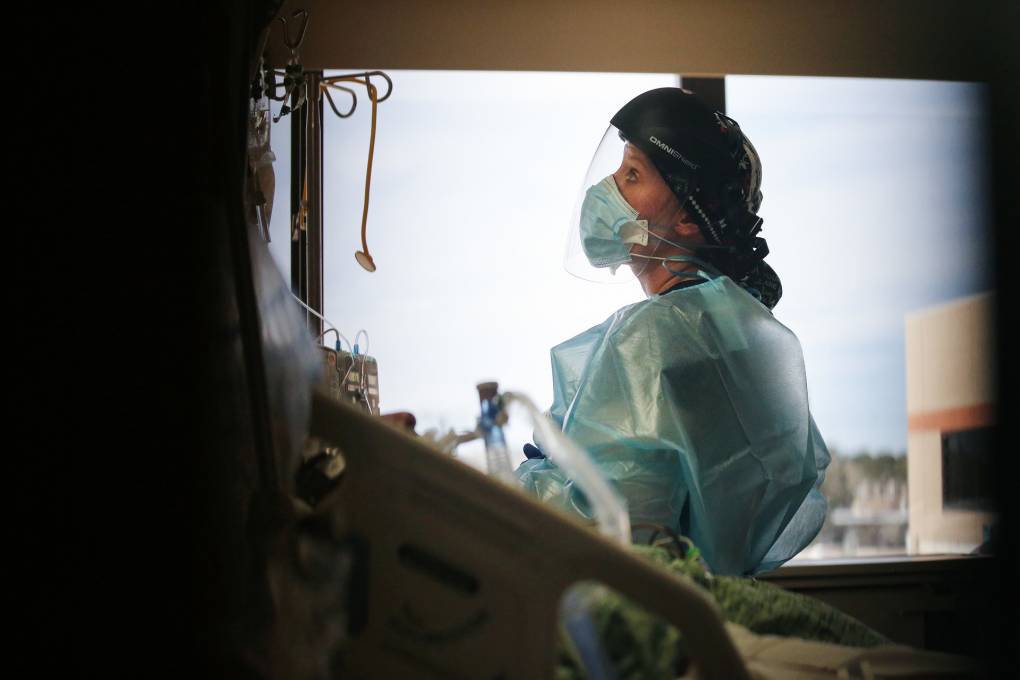
"caption": "A clinician cares for a COVID-19 patient in the intensive care unit at Providence St. Mary Medical Center amid a surge in COVID-19 patients in Southern California on Dec. 23, 2020 in Apple Valley, California. ",
"description": "A clinician cares for a COVID-19 patient in the Intensive Care Unit (ICU) at Providence St. Mary Medical Center amid a surge in COVID-19 patients in Southern California on December 23, 2020 in Apple Valley, California. ",
"title": "San Bernardino Area Hospital Continues To Deal With Increase In Covid Cases",
"credit": "Mario Tama/Getty Images",
"status": "inherit",
"altTag": "\"\"",
"isLoading": false,
"fetchFailed": false
},
"news_11853185": {
"type": "attachments",
"id": "news_11853185",
"meta": {
"index": "attachments_1716263798",
"site": "news",
"id": "11853185",
"found": true
},
"parent": 11853032,
"imgSizes": {
"apple_news_ca_landscape_5_5": {
"file": "https://ww2.kqed.org/app/uploads/sites/10/2020/12/IMG_9191-1044x783.jpg",
"width": 1044,
"mimeType": "image/jpeg",
"height": 783
},
"apple_news_ca_square_4_0": {
"file": "https://ww2.kqed.org/app/uploads/sites/10/2020/12/IMG_9191-470x470.jpg",
"width": 470,
"mimeType": "image/jpeg",
"height": 470
},
"twentyfourteen-full-width": {
"file": "https://ww2.kqed.org/app/uploads/sites/10/2020/12/IMG_9191-1038x576.jpg",
"width": 1038,
"mimeType": "image/jpeg",
"height": 576
},
"thumbnail": {
"file": "https://ww2.kqed.org/app/uploads/sites/10/2020/12/IMG_9191-160x120.jpg",
"width": 160,
"mimeType": "image/jpeg",
"height": 120
},
"post-thumbnail": {
"file": "https://ww2.kqed.org/app/uploads/sites/10/2020/12/IMG_9191-672x372.jpg",
"width": 672,
"mimeType": "image/jpeg",
"height": 372
},
"kqedFullSize": {
"file": "https://ww2.kqed.org/app/uploads/sites/10/2020/12/IMG_9191-scaled.jpg",
"width": 2560,
"height": 1920
},
"2048x2048": {
"file": "https://ww2.kqed.org/app/uploads/sites/10/2020/12/IMG_9191-2048x1536.jpg",
"width": 2048,
"mimeType": "image/jpeg",
"height": 1536
},
"apple_news_ca_landscape_4_7": {
"file": "https://ww2.kqed.org/app/uploads/sites/10/2020/12/IMG_9191-632x474.jpg",
"width": 632,
"mimeType": "image/jpeg",
"height": 474
},
"large": {
"file": "https://ww2.kqed.org/app/uploads/sites/10/2020/12/IMG_9191-1020x765.jpg",
"width": 1020,
"mimeType": "image/jpeg",
"height": 765
},
"apple_news_ca_landscape_4_0": {
"file": "https://ww2.kqed.org/app/uploads/sites/10/2020/12/IMG_9191-536x402.jpg",
"width": 536,
"mimeType": "image/jpeg",
"height": 402
},
"apple_news_ca_portrait_12_9": {
"file": "https://ww2.kqed.org/app/uploads/sites/10/2020/12/IMG_9191-1122x1496.jpg",
"width": 1122,
"mimeType": "image/jpeg",
"height": 1496
},
"medium": {
"file": "https://ww2.kqed.org/app/uploads/sites/10/2020/12/IMG_9191-800x600.jpg",
"width": 800,
"mimeType": "image/jpeg",
"height": 600
},
"apple_news_ca_portrait_4_0": {
"file": "https://ww2.kqed.org/app/uploads/sites/10/2020/12/IMG_9191-354x472.jpg",
"width": 354,
"mimeType": "image/jpeg",
"height": 472
},
"apple_news_ca_portrait_9_7": {
"file": "https://ww2.kqed.org/app/uploads/sites/10/2020/12/IMG_9191-840x1120.jpg",
"width": 840,
"mimeType": "image/jpeg",
"height": 1120
},
"apple_news_ca_landscape_12_9": {
"file": "https://ww2.kqed.org/app/uploads/sites/10/2020/12/IMG_9191-1832x1374.jpg",
"width": 1832,
"mimeType": "image/jpeg",
"height": 1374
},
"apple_news_ca_square_9_7": {
"file": "https://ww2.kqed.org/app/uploads/sites/10/2020/12/IMG_9191-1104x1104.jpg",
"width": 1104,
"mimeType": "image/jpeg",
"height": 1104
},
"1536x1536": {
"file": "https://ww2.kqed.org/app/uploads/sites/10/2020/12/IMG_9191-1536x1152.jpg",
"width": 1536,
"mimeType": "image/jpeg",
"height": 1152
},
"apple_news_ca_portrait_4_7": {
"file": "https://ww2.kqed.org/app/uploads/sites/10/2020/12/IMG_9191-414x552.jpg",
"width": 414,
"mimeType": "image/jpeg",
"height": 552
},
"apple_news_ca_square_12_9": {
"file": "https://ww2.kqed.org/app/uploads/sites/10/2020/12/IMG_9191-1472x1472.jpg",
"width": 1472,
"mimeType": "image/jpeg",
"height": 1472
},
"apple_news_ca_portrait_5_5": {
"file": "https://ww2.kqed.org/app/uploads/sites/10/2020/12/IMG_9191-687x916.jpg",
"width": 687,
"mimeType": "image/jpeg",
"height": 916
},
"full-width": {
"file": "https://ww2.kqed.org/app/uploads/sites/10/2020/12/IMG_9191-1920x1440.jpg",
"width": 1920,
"mimeType": "image/jpeg",
"height": 1440
},
"apple_news_ca_square_4_7": {
"file": "https://ww2.kqed.org/app/uploads/sites/10/2020/12/IMG_9191-550x550.jpg",
"width": 550,
"mimeType": "image/jpeg",
"height": 550
},
"apple_news_ca_landscape_9_7": {
"file": "https://ww2.kqed.org/app/uploads/sites/10/2020/12/IMG_9191-1376x1032.jpg",
"width": 1376,
"mimeType": "image/jpeg",
"height": 1032
},
"apple_news_ca_square_5_5": {
"file": "https://ww2.kqed.org/app/uploads/sites/10/2020/12/IMG_9191-912x912.jpg",
"width": 912,
"mimeType": "image/jpeg",
"height": 912
}
},
"publishDate": 1609289317,
"modified": 1609289390,
"caption": "Yuri Kim stands outside her newly renovated store, Fractal Flora in San Jose. Kim has seen a boost in plant sales during the pandemic.",
"description": "Yuri Kim stands outside her newly renovated store, Fractal Flora in San Jose. Kim has seen a boost in plant sales during the pandemic.",
"title": "Yuri Kim stands outside her newly renovated store, Fractal Flora in San Jose. Kim has seen a boost in plant sales during the pandemic.",
"credit": "Adhiti/Bandlamudi/KQED",
"status": "inherit",
"altTag": "Yuri Kim stands outside her newly renovated store, Fractal Flora in San Jose. Kim has seen a boost in plant sales during the pandemic.",
"isLoading": false,
"fetchFailed": false
},
"news_11853152": {
"type": "attachments",
"id": "news_11853152",
"meta": {
"index": "attachments_1716263798",
"site": "news",
"id": "11853152",
"found": true
},
"parent": 11853150,
"imgSizes": {
"apple_news_ca_square_4_0": {
"file": "https://ww2.kqed.org/app/uploads/sites/10/2020/12/gettyimages-1287509444-47e4b68d645bdf52ae70caf4baf76786f8e5c93d-470x470.jpg",
"width": 470,
"mimeType": "image/jpeg",
"height": 470
},
"twentyfourteen-full-width": {
"file": "https://ww2.kqed.org/app/uploads/sites/10/2020/12/gettyimages-1287509444-47e4b68d645bdf52ae70caf4baf76786f8e5c93d-895x576.jpg",
"width": 895,
"mimeType": "image/jpeg",
"height": 576
},
"thumbnail": {
"file": "https://ww2.kqed.org/app/uploads/sites/10/2020/12/gettyimages-1287509444-47e4b68d645bdf52ae70caf4baf76786f8e5c93d-160x120.jpg",
"width": 160,
"mimeType": "image/jpeg",
"height": 120
},
"post-thumbnail": {
"file": "https://ww2.kqed.org/app/uploads/sites/10/2020/12/gettyimages-1287509444-47e4b68d645bdf52ae70caf4baf76786f8e5c93d-672x372.jpg",
"width": 672,
"mimeType": "image/jpeg",
"height": 372
},
"kqedFullSize": {
"file": "https://ww2.kqed.org/app/uploads/sites/10/2020/12/gettyimages-1287509444-47e4b68d645bdf52ae70caf4baf76786f8e5c93d.jpg",
"width": 895,
"height": 671
},
"apple_news_ca_landscape_4_7": {
"file": "https://ww2.kqed.org/app/uploads/sites/10/2020/12/gettyimages-1287509444-47e4b68d645bdf52ae70caf4baf76786f8e5c93d-632x474.jpg",
"width": 632,
"mimeType": "image/jpeg",
"height": 474
},
"apple_news_ca_landscape_4_0": {
"file": "https://ww2.kqed.org/app/uploads/sites/10/2020/12/gettyimages-1287509444-47e4b68d645bdf52ae70caf4baf76786f8e5c93d-536x402.jpg",
"width": 536,
"mimeType": "image/jpeg",
"height": 402
},
"medium": {
"file": "https://ww2.kqed.org/app/uploads/sites/10/2020/12/gettyimages-1287509444-47e4b68d645bdf52ae70caf4baf76786f8e5c93d-800x600.jpg",
"width": 800,
"mimeType": "image/jpeg",
"height": 600
},
"apple_news_ca_portrait_4_0": {
"file": "https://ww2.kqed.org/app/uploads/sites/10/2020/12/gettyimages-1287509444-47e4b68d645bdf52ae70caf4baf76786f8e5c93d-354x472.jpg",
"width": 354,
"mimeType": "image/jpeg",
"height": 472
},
"apple_news_ca_portrait_9_7": {
"file": "https://ww2.kqed.org/app/uploads/sites/10/2020/12/gettyimages-1287509444-47e4b68d645bdf52ae70caf4baf76786f8e5c93d-840x671.jpg",
"width": 840,
"mimeType": "image/jpeg",
"height": 671
},
"apple_news_ca_portrait_4_7": {
"file": "https://ww2.kqed.org/app/uploads/sites/10/2020/12/gettyimages-1287509444-47e4b68d645bdf52ae70caf4baf76786f8e5c93d-414x552.jpg",
"width": 414,
"mimeType": "image/jpeg",
"height": 552
},
"apple_news_ca_portrait_5_5": {
"file": "https://ww2.kqed.org/app/uploads/sites/10/2020/12/gettyimages-1287509444-47e4b68d645bdf52ae70caf4baf76786f8e5c93d-687x671.jpg",
"width": 687,
"mimeType": "image/jpeg",
"height": 671
},
"apple_news_ca_square_4_7": {
"file": "https://ww2.kqed.org/app/uploads/sites/10/2020/12/gettyimages-1287509444-47e4b68d645bdf52ae70caf4baf76786f8e5c93d-550x550.jpg",
"width": 550,
"mimeType": "image/jpeg",
"height": 550
}
},
"publishDate": 1609281341,
"modified": 1609290177,
"caption": "Co-owner and business manager Lorenso Silva sanitizes surfaces at The Uncommon Mane on Nov. 24, 2020 in Huntington Beach, California.",
"description": null,
"title": "Health researchers say wearing masks and washing your hands often is more important than wiping down surfaces when it comes to protecting yourself from the coronavirus.",
"credit": "Rodin Eckenroth/Getty Images",
"status": "inherit",
"altTag": null,
"isLoading": false,
"fetchFailed": false
},
"news_11852571": {
"type": "attachments",
"id": "news_11852571",
"meta": {
"index": "attachments_1716263798",
"site": "news",
"id": "11852571",
"found": true
},
"parent": 11852522,
"imgSizes": {
"apple_news_ca_square_4_0": {
"file": "https://ww2.kqed.org/app/uploads/sites/10/2020/12/RS46477_abdoul-aziz-qut-470x470.jpg",
"width": 470,
"mimeType": "image/jpeg",
"height": 470
},
"thumbnail": {
"file": "https://ww2.kqed.org/app/uploads/sites/10/2020/12/RS46477_abdoul-aziz-qut-160x107.jpg",
"width": 160,
"mimeType": "image/jpeg",
"height": 107
},
"post-thumbnail": {
"file": "https://ww2.kqed.org/app/uploads/sites/10/2020/12/RS46477_abdoul-aziz-qut-672x372.jpg",
"width": 672,
"mimeType": "image/jpeg",
"height": 372
},
"kqedFullSize": {
"file": "https://ww2.kqed.org/app/uploads/sites/10/2020/12/RS46477_abdoul-aziz-qut.jpg",
"width": 800,
"height": 533
},
"apple_news_ca_landscape_4_7": {
"file": "https://ww2.kqed.org/app/uploads/sites/10/2020/12/RS46477_abdoul-aziz-qut-632x474.jpg",
"width": 632,
"mimeType": "image/jpeg",
"height": 474
},
"apple_news_ca_portrait_4_7": {
"file": "https://ww2.kqed.org/app/uploads/sites/10/2020/12/RS46477_abdoul-aziz-qut-414x533.jpg",
"width": 414,
"mimeType": "image/jpeg",
"height": 533
},
"apple_news_ca_portrait_5_5": {
"file": "https://ww2.kqed.org/app/uploads/sites/10/2020/12/RS46477_abdoul-aziz-qut-687x533.jpg",
"width": 687,
"mimeType": "image/jpeg",
"height": 533
},
"apple_news_ca_square_4_7": {
"file": "https://ww2.kqed.org/app/uploads/sites/10/2020/12/RS46477_abdoul-aziz-qut-550x533.jpg",
"width": 550,
"mimeType": "image/jpeg",
"height": 533
},
"apple_news_ca_landscape_4_0": {
"file": "https://ww2.kqed.org/app/uploads/sites/10/2020/12/RS46477_abdoul-aziz-qut-536x402.jpg",
"width": 536,
"mimeType": "image/jpeg",
"height": 402
},
"apple_news_ca_portrait_4_0": {
"file": "https://ww2.kqed.org/app/uploads/sites/10/2020/12/RS46477_abdoul-aziz-qut-354x472.jpg",
"width": 354,
"mimeType": "image/jpeg",
"height": 472
}
},
"publishDate": 1608742668,
"modified": 1609196784,
"caption": "UC Berkeley grad student Abdoul Aziz Sandotin Coulibaly, from the Ivory Coast, is stuck in Berkeley for the holidays.",
"description": "UC Berkeley graduate student Abdoul Aziz Sandotin Coulibaly, from the Ivory Coast, is stuck in Berkeley for the holidays.",
"title": "RS46477_abdoul aziz-qut",
"credit": "Courtesy Abdoul Aziz Sandotin Coulibaly",
"status": "inherit",
"altTag": "\"\"",
"isLoading": false,
"fetchFailed": false
},
"news_11852931": {
"type": "attachments",
"id": "news_11852931",
"meta": {
"index": "attachments_1716263798",
"site": "news",
"id": "11852931",
"found": true
},
"title": "Even during the COVID-19 pandemic, San Pedro Square was a lively part of downtown San Jose. But with the latest restrictions shutting down outdoor and indoor dining, the square has become a \"ghost town\".",
"publishDate": 1609185940,
"status": "inherit",
"parent": 11852317,
"modified": 1609202838,
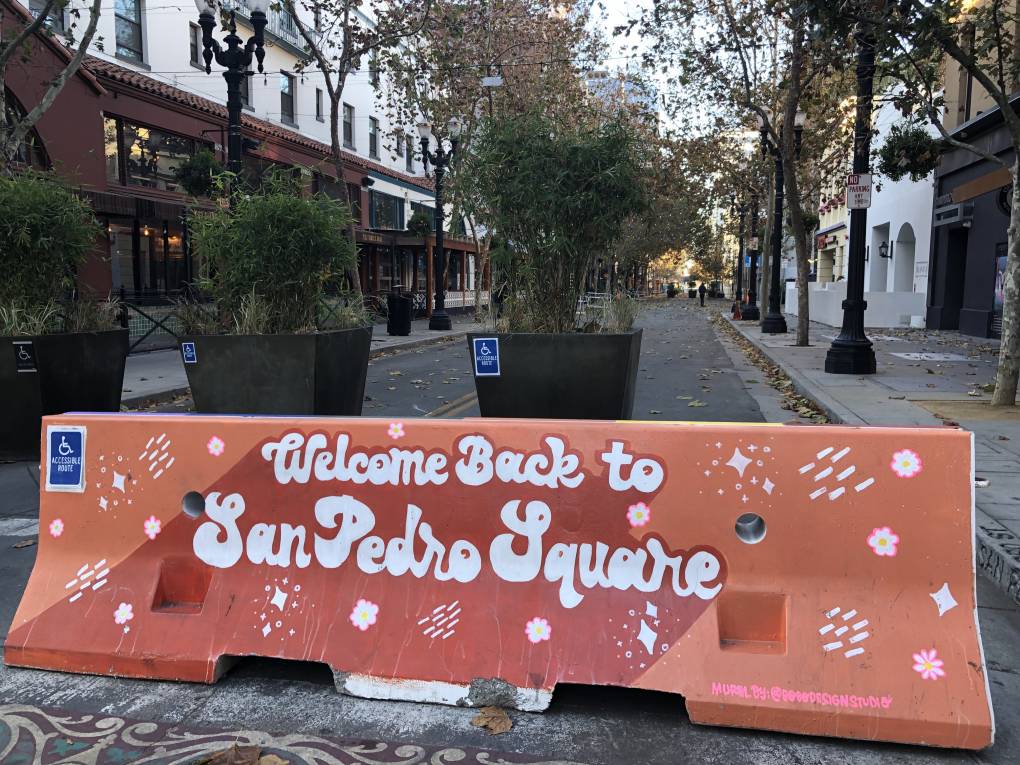
"caption": "Even during the COVID-19 pandemic, San Pedro Square was a lively part of downtown San Jose. But with the latest restrictions shutting down outdoor and indoor dining, the square has become a \"ghost town.\"",
"credit": "Adhiti Bandlamudi/KQED",
"altTag": "Even during the COVID-19 pandemic, San Pedro Square was a lively part of downtown San Jose. But with the latest restrictions shutting down outdoor and indoor dining, the square has become a \"ghost town\".",
"description": "Even during the COVID-19 pandemic, San Pedro Square was a lively part of downtown San Jose. But with the latest restrictions shutting down outdoor and indoor dining, the square has become a \"ghost town\".",
"imgSizes": {
"medium": {
"file": "https://cdn.kqed.org/wp-content/uploads/sites/10/2020/12/IMG_9205-800x600.jpg",
"width": 800,
"height": 600,
"mimeType": "image/jpeg"
},
"large": {
"file": "https://cdn.kqed.org/wp-content/uploads/sites/10/2020/12/IMG_9205-1020x765.jpg",
"width": 1020,
"height": 765,
"mimeType": "image/jpeg"
},
"thumbnail": {
"file": "https://cdn.kqed.org/wp-content/uploads/sites/10/2020/12/IMG_9205-160x120.jpg",
"width": 160,
"height": 120,
"mimeType": "image/jpeg"
},
"1536x1536": {
"file": "https://cdn.kqed.org/wp-content/uploads/sites/10/2020/12/IMG_9205-1536x1152.jpg",
"width": 1536,
"height": 1152,
"mimeType": "image/jpeg"
},
"2048x2048": {
"file": "https://cdn.kqed.org/wp-content/uploads/sites/10/2020/12/IMG_9205-2048x1536.jpg",
"width": 2048,
"height": 1536,
"mimeType": "image/jpeg"
},
"post-thumbnail": {
"file": "https://cdn.kqed.org/wp-content/uploads/sites/10/2020/12/IMG_9205-672x372.jpg",
"width": 672,
"height": 372,
"mimeType": "image/jpeg"
},
"twentyfourteen-full-width": {
"file": "https://cdn.kqed.org/wp-content/uploads/sites/10/2020/12/IMG_9205-1038x576.jpg",
"width": 1038,
"height": 576,
"mimeType": "image/jpeg"
},
"full-width": {
"file": "https://cdn.kqed.org/wp-content/uploads/sites/10/2020/12/IMG_9205-1920x1440.jpg",
"width": 1920,
"height": 1440,
"mimeType": "image/jpeg"
},
"apple_news_ca_landscape_12_9": {
"file": "https://cdn.kqed.org/wp-content/uploads/sites/10/2020/12/IMG_9205-1832x1374.jpg",
"width": 1832,
"height": 1374,
"mimeType": "image/jpeg"
},
"apple_news_ca_landscape_9_7": {
"file": "https://cdn.kqed.org/wp-content/uploads/sites/10/2020/12/IMG_9205-1376x1032.jpg",
"width": 1376,
"height": 1032,
"mimeType": "image/jpeg"
},
"apple_news_ca_landscape_5_5": {
"file": "https://cdn.kqed.org/wp-content/uploads/sites/10/2020/12/IMG_9205-1044x783.jpg",
"width": 1044,
"height": 783,
"mimeType": "image/jpeg"
},
"apple_news_ca_landscape_4_7": {
"file": "https://cdn.kqed.org/wp-content/uploads/sites/10/2020/12/IMG_9205-632x474.jpg",
"width": 632,
"height": 474,
"mimeType": "image/jpeg"
},
"apple_news_ca_landscape_4_0": {
"file": "https://cdn.kqed.org/wp-content/uploads/sites/10/2020/12/IMG_9205-536x402.jpg",
"width": 536,
"height": 402,
"mimeType": "image/jpeg"
},
"apple_news_ca_portrait_12_9": {
"file": "https://cdn.kqed.org/wp-content/uploads/sites/10/2020/12/IMG_9205-1122x1496.jpg",
"width": 1122,
"height": 1496,
"mimeType": "image/jpeg"
},
"apple_news_ca_portrait_9_7": {
"file": "https://cdn.kqed.org/wp-content/uploads/sites/10/2020/12/IMG_9205-840x1120.jpg",
"width": 840,
"height": 1120,
"mimeType": "image/jpeg"
},
"apple_news_ca_portrait_5_5": {
"file": "https://cdn.kqed.org/wp-content/uploads/sites/10/2020/12/IMG_9205-687x916.jpg",
"width": 687,
"height": 916,
"mimeType": "image/jpeg"
},
"apple_news_ca_portrait_4_7": {
"file": "https://cdn.kqed.org/wp-content/uploads/sites/10/2020/12/IMG_9205-414x552.jpg",
"width": 414,
"height": 552,
"mimeType": "image/jpeg"
},
"apple_news_ca_portrait_4_0": {
"file": "https://cdn.kqed.org/wp-content/uploads/sites/10/2020/12/IMG_9205-354x472.jpg",
"width": 354,
"height": 472,
"mimeType": "image/jpeg"
},
"apple_news_ca_square_12_9": {
"file": "https://cdn.kqed.org/wp-content/uploads/sites/10/2020/12/IMG_9205-1472x1472.jpg",
"width": 1472,
"height": 1472,
"mimeType": "image/jpeg"
},
"apple_news_ca_square_9_7": {
"file": "https://cdn.kqed.org/wp-content/uploads/sites/10/2020/12/IMG_9205-1104x1104.jpg",
"width": 1104,
"height": 1104,
"mimeType": "image/jpeg"
},
"apple_news_ca_square_5_5": {
"file": "https://cdn.kqed.org/wp-content/uploads/sites/10/2020/12/IMG_9205-912x912.jpg",
"width": 912,
"height": 912,
"mimeType": "image/jpeg"
},
"apple_news_ca_square_4_7": {
"file": "https://cdn.kqed.org/wp-content/uploads/sites/10/2020/12/IMG_9205-550x550.jpg",
"width": 550,
"height": 550,
"mimeType": "image/jpeg"
},
"apple_news_ca_square_4_0": {
"file": "https://cdn.kqed.org/wp-content/uploads/sites/10/2020/12/IMG_9205-470x470.jpg",
"width": 470,
"height": 470,
"mimeType": "image/jpeg"
},
"kqedFullSize": {
"file": "https://cdn.kqed.org/wp-content/uploads/sites/10/2020/12/IMG_9205-scaled-e1769808207171.jpg",
"width": 2000,
"height": 1500
}
},
"isLoading": false,
"fetchFailed": false
},
"news_11852807": {
"type": "attachments",
"id": "news_11852807",
"meta": {
"index": "attachments_1716263798",
"site": "news",
"id": "11852807",
"found": true
},
"parent": 11852806,
"imgSizes": {
"apple_news_ca_square_4_0": {
"file": "https://ww2.kqed.org/app/uploads/sites/10/2020/12/1000-470x470.jpeg",
"width": 470,
"mimeType": "image/jpeg",
"height": 470
},
"twentyfourteen-full-width": {
"file": "https://ww2.kqed.org/app/uploads/sites/10/2020/12/1000-1000x576.jpeg",
"width": 1000,
"mimeType": "image/jpeg",
"height": 576
},
"thumbnail": {
"file": "https://ww2.kqed.org/app/uploads/sites/10/2020/12/1000-160x106.jpeg",
"width": 160,
"mimeType": "image/jpeg",
"height": 106
},
"post-thumbnail": {
"file": "https://ww2.kqed.org/app/uploads/sites/10/2020/12/1000-672x372.jpeg",
"width": 672,
"mimeType": "image/jpeg",
"height": 372
},
"kqedFullSize": {
"file": "https://ww2.kqed.org/app/uploads/sites/10/2020/12/1000.jpeg",
"width": 1000,
"height": 665
},
"apple_news_ca_landscape_4_7": {
"file": "https://ww2.kqed.org/app/uploads/sites/10/2020/12/1000-632x474.jpeg",
"width": 632,
"mimeType": "image/jpeg",
"height": 474
},
"apple_news_ca_landscape_4_0": {
"file": "https://ww2.kqed.org/app/uploads/sites/10/2020/12/1000-536x402.jpeg",
"width": 536,
"mimeType": "image/jpeg",
"height": 402
},
"medium": {
"file": "https://ww2.kqed.org/app/uploads/sites/10/2020/12/1000-800x532.jpeg",
"width": 800,
"mimeType": "image/jpeg",
"height": 532
},
"apple_news_ca_portrait_4_0": {
"file": "https://ww2.kqed.org/app/uploads/sites/10/2020/12/1000-354x472.jpeg",
"width": 354,
"mimeType": "image/jpeg",
"height": 472
},
"apple_news_ca_portrait_9_7": {
"file": "https://ww2.kqed.org/app/uploads/sites/10/2020/12/1000-840x665.jpeg",
"width": 840,
"mimeType": "image/jpeg",
"height": 665
},
"apple_news_ca_portrait_4_7": {
"file": "https://ww2.kqed.org/app/uploads/sites/10/2020/12/1000-414x552.jpeg",
"width": 414,
"mimeType": "image/jpeg",
"height": 552
},
"apple_news_ca_portrait_5_5": {
"file": "https://ww2.kqed.org/app/uploads/sites/10/2020/12/1000-687x665.jpeg",
"width": 687,
"mimeType": "image/jpeg",
"height": 665
},
"apple_news_ca_square_4_7": {
"file": "https://ww2.kqed.org/app/uploads/sites/10/2020/12/1000-550x550.jpeg",
"width": 550,
"mimeType": "image/jpeg",
"height": 550
},
"apple_news_ca_square_5_5": {
"file": "https://ww2.kqed.org/app/uploads/sites/10/2020/12/1000-912x665.jpeg",
"width": 912,
"mimeType": "image/jpeg",
"height": 665
}
},
"publishDate": 1608846601,
"modified": 1608846706,
"caption": "Phlebotomist lab assistant Jennifer Cukati, right, and Registered Nurse Carina Klescewski, left, care for a COVID-19 patient inside the Sutter Roseville Medical Center ICU in Roseville, Calif. ",
"description": null,
"title": "1000",
"credit": "Renee C. Byer/The Sacramento Bee via AP",
"status": "inherit",
"altTag": "Phlebotomist lab assistant Jennifer Cukati, right, and Registered Nurse Carina Klescewski, left, care for a COVID-19 patient inside the Sutter Roseville Medical Center ICU in Roseville, Calif.",
"isLoading": false,
"fetchFailed": false
},
"news_11852717": {
"type": "attachments",
"id": "news_11852717",
"meta": {
"index": "attachments_1716263798",
"site": "news",
"id": "11852717",
"found": true
},
"parent": 11852678,
"imgSizes": {
"apple_news_ca_landscape_5_5": {
"file": "https://ww2.kqed.org/app/uploads/sites/10/2020/12/IMG_20200805_173904234_HDR-1-1044x783.jpg",
"width": 1044,
"mimeType": "image/jpeg",
"height": 783
},
"apple_news_ca_square_4_0": {
"file": "https://ww2.kqed.org/app/uploads/sites/10/2020/12/IMG_20200805_173904234_HDR-1-470x470.jpg",
"width": 470,
"mimeType": "image/jpeg",
"height": 470
},
"twentyfourteen-full-width": {
"file": "https://ww2.kqed.org/app/uploads/sites/10/2020/12/IMG_20200805_173904234_HDR-1-1038x576.jpg",
"width": 1038,
"mimeType": "image/jpeg",
"height": 576
},
"thumbnail": {
"file": "https://ww2.kqed.org/app/uploads/sites/10/2020/12/IMG_20200805_173904234_HDR-1-160x90.jpg",
"width": 160,
"mimeType": "image/jpeg",
"height": 90
},
"post-thumbnail": {
"file": "https://ww2.kqed.org/app/uploads/sites/10/2020/12/IMG_20200805_173904234_HDR-1-672x372.jpg",
"width": 672,
"mimeType": "image/jpeg",
"height": 372
},
"kqedFullSize": {
"file": "https://ww2.kqed.org/app/uploads/sites/10/2020/12/IMG_20200805_173904234_HDR-1.jpg",
"width": 1920,
"height": 1080
},
"apple_news_ca_landscape_4_7": {
"file": "https://ww2.kqed.org/app/uploads/sites/10/2020/12/IMG_20200805_173904234_HDR-1-632x474.jpg",
"width": 632,
"mimeType": "image/jpeg",
"height": 474
},
"large": {
"file": "https://ww2.kqed.org/app/uploads/sites/10/2020/12/IMG_20200805_173904234_HDR-1-1020x574.jpg",
"width": 1020,
"mimeType": "image/jpeg",
"height": 574
},
"apple_news_ca_landscape_4_0": {
"file": "https://ww2.kqed.org/app/uploads/sites/10/2020/12/IMG_20200805_173904234_HDR-1-536x402.jpg",
"width": 536,
"mimeType": "image/jpeg",
"height": 402
},
"apple_news_ca_portrait_12_9": {
"file": "https://ww2.kqed.org/app/uploads/sites/10/2020/12/IMG_20200805_173904234_HDR-1-1122x1080.jpg",
"width": 1122,
"mimeType": "image/jpeg",
"height": 1080
},
"medium": {
"file": "https://ww2.kqed.org/app/uploads/sites/10/2020/12/IMG_20200805_173904234_HDR-1-800x450.jpg",
"width": 800,
"mimeType": "image/jpeg",
"height": 450
},
"apple_news_ca_portrait_4_0": {
"file": "https://ww2.kqed.org/app/uploads/sites/10/2020/12/IMG_20200805_173904234_HDR-1-354x472.jpg",
"width": 354,
"mimeType": "image/jpeg",
"height": 472
},
"apple_news_ca_portrait_9_7": {
"file": "https://ww2.kqed.org/app/uploads/sites/10/2020/12/IMG_20200805_173904234_HDR-1-840x1080.jpg",
"width": 840,
"mimeType": "image/jpeg",
"height": 1080
},
"apple_news_ca_landscape_12_9": {
"file": "https://ww2.kqed.org/app/uploads/sites/10/2020/12/IMG_20200805_173904234_HDR-1-1832x1080.jpg",
"width": 1832,
"mimeType": "image/jpeg",
"height": 1080
},
"apple_news_ca_square_9_7": {
"file": "https://ww2.kqed.org/app/uploads/sites/10/2020/12/IMG_20200805_173904234_HDR-1-1104x1080.jpg",
"width": 1104,
"mimeType": "image/jpeg",
"height": 1080
},
"1536x1536": {
"file": "https://ww2.kqed.org/app/uploads/sites/10/2020/12/IMG_20200805_173904234_HDR-1-1536x864.jpg",
"width": 1536,
"mimeType": "image/jpeg",
"height": 864
},
"apple_news_ca_portrait_4_7": {
"file": "https://ww2.kqed.org/app/uploads/sites/10/2020/12/IMG_20200805_173904234_HDR-1-414x552.jpg",
"width": 414,
"mimeType": "image/jpeg",
"height": 552
},
"apple_news_ca_square_12_9": {
"file": "https://ww2.kqed.org/app/uploads/sites/10/2020/12/IMG_20200805_173904234_HDR-1-1472x1080.jpg",
"width": 1472,
"mimeType": "image/jpeg",
"height": 1080
},
"apple_news_ca_portrait_5_5": {
"file": "https://ww2.kqed.org/app/uploads/sites/10/2020/12/IMG_20200805_173904234_HDR-1-687x916.jpg",
"width": 687,
"mimeType": "image/jpeg",
"height": 916
},
"apple_news_ca_square_4_7": {
"file": "https://ww2.kqed.org/app/uploads/sites/10/2020/12/IMG_20200805_173904234_HDR-1-550x550.jpg",
"width": 550,
"mimeType": "image/jpeg",
"height": 550
},
"apple_news_ca_landscape_9_7": {
"file": "https://ww2.kqed.org/app/uploads/sites/10/2020/12/IMG_20200805_173904234_HDR-1-1376x1032.jpg",
"width": 1376,
"mimeType": "image/jpeg",
"height": 1032
},
"apple_news_ca_square_5_5": {
"file": "https://ww2.kqed.org/app/uploads/sites/10/2020/12/IMG_20200805_173904234_HDR-1-912x912.jpg",
"width": 912,
"mimeType": "image/jpeg",
"height": 912
}
},
"publishDate": 1608768280,
"modified": 1608773289,
"caption": "A group of nurses in Southern California hold a rally on Aug. 5, 2020 as part of national day of action for safer hospital working conditions. Nurses in California have been protesting recent rollbacks to California's nurse-to-patient ratio law. ",
"description": null,
"title": "IMG_20200805_173904234_HDR",
"credit": "Courtesy of Nerissa Black",
"status": "inherit",
"altTag": null,
"isLoading": false,
"fetchFailed": false
},
"news_11852767": {
"type": "attachments",
"id": "news_11852767",
"meta": {
"index": "attachments_1716263798",
"site": "news",
"id": "11852767",
"found": true
},
"parent": 11852574,
"imgSizes": {
"apple_news_ca_landscape_5_5": {
"file": "https://ww2.kqed.org/app/uploads/sites/10/2020/12/RS26115_S-wing-hallway-01-11-17-qut-1044x783.jpg",
"width": 1044,
"mimeType": "image/jpeg",
"height": 783
},
"apple_news_ca_square_4_0": {
"file": "https://ww2.kqed.org/app/uploads/sites/10/2020/12/RS26115_S-wing-hallway-01-11-17-qut-470x470.jpg",
"width": 470,
"mimeType": "image/jpeg",
"height": 470
},
"twentyfourteen-full-width": {
"file": "https://ww2.kqed.org/app/uploads/sites/10/2020/12/RS26115_S-wing-hallway-01-11-17-qut-1038x576.jpg",
"width": 1038,
"mimeType": "image/jpeg",
"height": 576
},
"thumbnail": {
"file": "https://ww2.kqed.org/app/uploads/sites/10/2020/12/RS26115_S-wing-hallway-01-11-17-qut-160x90.jpg",
"width": 160,
"mimeType": "image/jpeg",
"height": 90
},
"post-thumbnail": {
"file": "https://ww2.kqed.org/app/uploads/sites/10/2020/12/RS26115_S-wing-hallway-01-11-17-qut-672x372.jpg",
"width": 672,
"mimeType": "image/jpeg",
"height": 372
},
"kqedFullSize": {
"file": "https://ww2.kqed.org/app/uploads/sites/10/2020/12/RS26115_S-wing-hallway-01-11-17-qut.jpg",
"width": 1920,
"height": 1080
},
"apple_news_ca_landscape_4_7": {
"file": "https://ww2.kqed.org/app/uploads/sites/10/2020/12/RS26115_S-wing-hallway-01-11-17-qut-632x474.jpg",
"width": 632,
"mimeType": "image/jpeg",
"height": 474
},
"large": {
"file": "https://ww2.kqed.org/app/uploads/sites/10/2020/12/RS26115_S-wing-hallway-01-11-17-qut-1020x574.jpg",
"width": 1020,
"mimeType": "image/jpeg",
"height": 574
},
"apple_news_ca_landscape_4_0": {
"file": "https://ww2.kqed.org/app/uploads/sites/10/2020/12/RS26115_S-wing-hallway-01-11-17-qut-536x402.jpg",
"width": 536,
"mimeType": "image/jpeg",
"height": 402
},
"apple_news_ca_portrait_12_9": {
"file": "https://ww2.kqed.org/app/uploads/sites/10/2020/12/RS26115_S-wing-hallway-01-11-17-qut-1122x1080.jpg",
"width": 1122,
"mimeType": "image/jpeg",
"height": 1080
},
"medium": {
"file": "https://ww2.kqed.org/app/uploads/sites/10/2020/12/RS26115_S-wing-hallway-01-11-17-qut-800x450.jpg",
"width": 800,
"mimeType": "image/jpeg",
"height": 450
},
"apple_news_ca_portrait_4_0": {
"file": "https://ww2.kqed.org/app/uploads/sites/10/2020/12/RS26115_S-wing-hallway-01-11-17-qut-354x472.jpg",
"width": 354,
"mimeType": "image/jpeg",
"height": 472
},
"apple_news_ca_portrait_9_7": {
"file": "https://ww2.kqed.org/app/uploads/sites/10/2020/12/RS26115_S-wing-hallway-01-11-17-qut-840x1080.jpg",
"width": 840,
"mimeType": "image/jpeg",
"height": 1080
},
"apple_news_ca_landscape_12_9": {
"file": "https://ww2.kqed.org/app/uploads/sites/10/2020/12/RS26115_S-wing-hallway-01-11-17-qut-1832x1080.jpg",
"width": 1832,
"mimeType": "image/jpeg",
"height": 1080
},
"apple_news_ca_square_9_7": {
"file": "https://ww2.kqed.org/app/uploads/sites/10/2020/12/RS26115_S-wing-hallway-01-11-17-qut-1104x1080.jpg",
"width": 1104,
"mimeType": "image/jpeg",
"height": 1080
},
"1536x1536": {
"file": "https://ww2.kqed.org/app/uploads/sites/10/2020/12/RS26115_S-wing-hallway-01-11-17-qut-1536x864.jpg",
"width": 1536,
"mimeType": "image/jpeg",
"height": 864
},
"apple_news_ca_portrait_4_7": {
"file": "https://ww2.kqed.org/app/uploads/sites/10/2020/12/RS26115_S-wing-hallway-01-11-17-qut-414x552.jpg",
"width": 414,
"mimeType": "image/jpeg",
"height": 552
},
"apple_news_ca_square_12_9": {
"file": "https://ww2.kqed.org/app/uploads/sites/10/2020/12/RS26115_S-wing-hallway-01-11-17-qut-1472x1080.jpg",
"width": 1472,
"mimeType": "image/jpeg",
"height": 1080
},
"apple_news_ca_portrait_5_5": {
"file": "https://ww2.kqed.org/app/uploads/sites/10/2020/12/RS26115_S-wing-hallway-01-11-17-qut-687x916.jpg",
"width": 687,
"mimeType": "image/jpeg",
"height": 916
},
"apple_news_ca_square_4_7": {
"file": "https://ww2.kqed.org/app/uploads/sites/10/2020/12/RS26115_S-wing-hallway-01-11-17-qut-550x550.jpg",
"width": 550,
"mimeType": "image/jpeg",
"height": 550
},
"apple_news_ca_landscape_9_7": {
"file": "https://ww2.kqed.org/app/uploads/sites/10/2020/12/RS26115_S-wing-hallway-01-11-17-qut-1376x1032.jpg",
"width": 1376,
"mimeType": "image/jpeg",
"height": 1032
},
"apple_news_ca_square_5_5": {
"file": "https://ww2.kqed.org/app/uploads/sites/10/2020/12/RS26115_S-wing-hallway-01-11-17-qut-912x912.jpg",
"width": 912,
"mimeType": "image/jpeg",
"height": 912
}
},
"publishDate": 1608774516,
"modified": 1608774622,
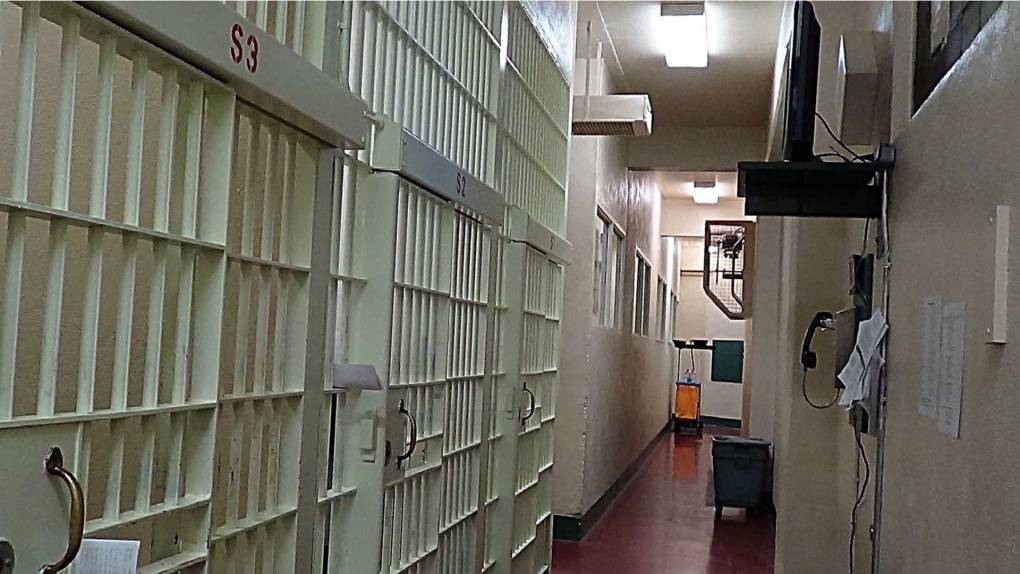
"caption": "A hallway in the S-Wing of the Yuba County Jail, taken in 2017. Immigrant advocates have raised the alarm about a COVID-19 outbreak in the facility.",
"description": null,
"title": "RS26115_S-wing-hallway-01-11-17-qut",
"credit": "Courtesy Rosen Bien Galvan & Grunfeld LLP",
"status": "inherit",
"altTag": "\"\"",
"isLoading": false,
"fetchFailed": false
},
"news_11852682": {
"type": "attachments",
"id": "news_11852682",
"meta": {
"index": "attachments_1716263798",
"site": "news",
"id": "11852682",
"found": true
},
"parent": 11852681,
"imgSizes": {
"apple_news_ca_landscape_5_5": {
"file": "https://ww2.kqed.org/app/uploads/sites/10/2020/12/PL-20201217-Declaration-of-Oscar-Mejia-iso-TRO-1044x783.jpg",
"width": 1044,
"mimeType": "image/jpeg",
"height": 783
},
"apple_news_ca_square_4_0": {
"file": "https://ww2.kqed.org/app/uploads/sites/10/2020/12/PL-20201217-Declaration-of-Oscar-Mejia-iso-TRO-470x470.jpg",
"width": 470,
"mimeType": "image/jpeg",
"height": 470
},
"twentyfourteen-full-width": {
"file": "https://ww2.kqed.org/app/uploads/sites/10/2020/12/PL-20201217-Declaration-of-Oscar-Mejia-iso-TRO-1038x576.jpg",
"width": 1038,
"mimeType": "image/jpeg",
"height": 576
},
"thumbnail": {
"file": "https://ww2.kqed.org/app/uploads/sites/10/2020/12/PL-20201217-Declaration-of-Oscar-Mejia-iso-TRO-160x90.jpg",
"width": 160,
"mimeType": "image/jpeg",
"height": 90
},
"post-thumbnail": {
"file": "https://ww2.kqed.org/app/uploads/sites/10/2020/12/PL-20201217-Declaration-of-Oscar-Mejia-iso-TRO-672x372.jpg",
"width": 672,
"mimeType": "image/jpeg",
"height": 372
},
"kqedFullSize": {
"file": "https://ww2.kqed.org/app/uploads/sites/10/2020/12/PL-20201217-Declaration-of-Oscar-Mejia-iso-TRO.jpg",
"width": 1920,
"height": 1080
},
"apple_news_ca_landscape_4_7": {
"file": "https://ww2.kqed.org/app/uploads/sites/10/2020/12/PL-20201217-Declaration-of-Oscar-Mejia-iso-TRO-632x474.jpg",
"width": 632,
"mimeType": "image/jpeg",
"height": 474
},
"large": {
"file": "https://ww2.kqed.org/app/uploads/sites/10/2020/12/PL-20201217-Declaration-of-Oscar-Mejia-iso-TRO-1020x574.jpg",
"width": 1020,
"mimeType": "image/jpeg",
"height": 574
},
"apple_news_ca_landscape_4_0": {
"file": "https://ww2.kqed.org/app/uploads/sites/10/2020/12/PL-20201217-Declaration-of-Oscar-Mejia-iso-TRO-536x402.jpg",
"width": 536,
"mimeType": "image/jpeg",
"height": 402
},
"apple_news_ca_portrait_12_9": {
"file": "https://ww2.kqed.org/app/uploads/sites/10/2020/12/PL-20201217-Declaration-of-Oscar-Mejia-iso-TRO-1122x1080.jpg",
"width": 1122,
"mimeType": "image/jpeg",
"height": 1080
},
"medium": {
"file": "https://ww2.kqed.org/app/uploads/sites/10/2020/12/PL-20201217-Declaration-of-Oscar-Mejia-iso-TRO-800x450.jpg",
"width": 800,
"mimeType": "image/jpeg",
"height": 450
},
"apple_news_ca_portrait_4_0": {
"file": "https://ww2.kqed.org/app/uploads/sites/10/2020/12/PL-20201217-Declaration-of-Oscar-Mejia-iso-TRO-354x472.jpg",
"width": 354,
"mimeType": "image/jpeg",
"height": 472
},
"apple_news_ca_portrait_9_7": {
"file": "https://ww2.kqed.org/app/uploads/sites/10/2020/12/PL-20201217-Declaration-of-Oscar-Mejia-iso-TRO-840x1080.jpg",
"width": 840,
"mimeType": "image/jpeg",
"height": 1080
},
"apple_news_ca_landscape_12_9": {
"file": "https://ww2.kqed.org/app/uploads/sites/10/2020/12/PL-20201217-Declaration-of-Oscar-Mejia-iso-TRO-1832x1080.jpg",
"width": 1832,
"mimeType": "image/jpeg",
"height": 1080
},
"apple_news_ca_square_9_7": {
"file": "https://ww2.kqed.org/app/uploads/sites/10/2020/12/PL-20201217-Declaration-of-Oscar-Mejia-iso-TRO-1104x1080.jpg",
"width": 1104,
"mimeType": "image/jpeg",
"height": 1080
},
"1536x1536": {
"file": "https://ww2.kqed.org/app/uploads/sites/10/2020/12/PL-20201217-Declaration-of-Oscar-Mejia-iso-TRO-1536x864.jpg",
"width": 1536,
"mimeType": "image/jpeg",
"height": 864
},
"apple_news_ca_portrait_4_7": {
"file": "https://ww2.kqed.org/app/uploads/sites/10/2020/12/PL-20201217-Declaration-of-Oscar-Mejia-iso-TRO-414x552.jpg",
"width": 414,
"mimeType": "image/jpeg",
"height": 552
},
"apple_news_ca_square_12_9": {
"file": "https://ww2.kqed.org/app/uploads/sites/10/2020/12/PL-20201217-Declaration-of-Oscar-Mejia-iso-TRO-1472x1080.jpg",
"width": 1472,
"mimeType": "image/jpeg",
"height": 1080
},
"apple_news_ca_portrait_5_5": {
"file": "https://ww2.kqed.org/app/uploads/sites/10/2020/12/PL-20201217-Declaration-of-Oscar-Mejia-iso-TRO-687x916.jpg",
"width": 687,
"mimeType": "image/jpeg",
"height": 916
},
"apple_news_ca_square_4_7": {
"file": "https://ww2.kqed.org/app/uploads/sites/10/2020/12/PL-20201217-Declaration-of-Oscar-Mejia-iso-TRO-550x550.jpg",
"width": 550,
"mimeType": "image/jpeg",
"height": 550
},
"apple_news_ca_landscape_9_7": {
"file": "https://ww2.kqed.org/app/uploads/sites/10/2020/12/PL-20201217-Declaration-of-Oscar-Mejia-iso-TRO-1376x1032.jpg",
"width": 1376,
"mimeType": "image/jpeg",
"height": 1032
},
"apple_news_ca_square_5_5": {
"file": "https://ww2.kqed.org/app/uploads/sites/10/2020/12/PL-20201217-Declaration-of-Oscar-Mejia-iso-TRO-912x912.jpg",
"width": 912,
"mimeType": "image/jpeg",
"height": 912
}
},
"publishDate": 1608762233,
"modified": 1608772341,
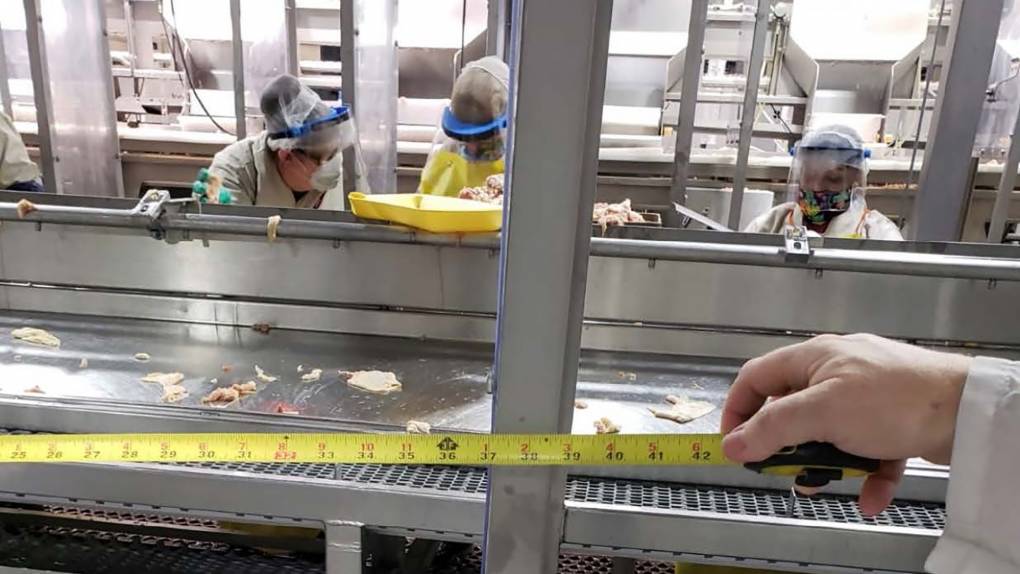
"caption": "A Sept. 1 photo taken by United Farm Workers organizer Oscar Mejia shows a 3-foot distance between work stations on an assembly line in Foster Farms' Livingston plant.",
"description": "A Sept. 1 photo taken by United Farm Workers organizer Oscar Mejia shows a three-foot distance between work stations on an assembly line in Foster Farms' Livingston plant. (Oscar Mejia via court filings)",
"title": "PL 20201217 Declaration of Oscar Mejia iso TRO",
"credit": "Oscar Mejia via court filings",
"status": "inherit",
"altTag": "Workers standing near each other at a Foster Farms assembly line in Livingston.",
"isLoading": false,
"fetchFailed": false
},
"news_11852465": {
"type": "attachments",
"id": "news_11852465",
"meta": {
"index": "attachments_1716263798",
"site": "news",
"id": "11852465",
"found": true
},
"parent": 11852447,
"imgSizes": {
"apple_news_ca_square_4_0": {
"file": "https://ww2.kqed.org/app/uploads/sites/10/2020/12/GettyImages-1292051274-470x470.jpg",
"width": 470,
"mimeType": "image/jpeg",
"height": 470
},
"twentyfourteen-full-width": {
"file": "https://ww2.kqed.org/app/uploads/sites/10/2020/12/GettyImages-1292051274-1024x576.jpg",
"width": 1024,
"mimeType": "image/jpeg",
"height": 576
},
"thumbnail": {
"file": "https://ww2.kqed.org/app/uploads/sites/10/2020/12/GettyImages-1292051274-160x107.jpg",
"width": 160,
"mimeType": "image/jpeg",
"height": 107
},
"post-thumbnail": {
"file": "https://ww2.kqed.org/app/uploads/sites/10/2020/12/GettyImages-1292051274-672x372.jpg",
"width": 672,
"mimeType": "image/jpeg",
"height": 372
},
"kqedFullSize": {
"file": "https://ww2.kqed.org/app/uploads/sites/10/2020/12/GettyImages-1292051274.jpg",
"width": 1024,
"height": 683
},
"apple_news_ca_landscape_4_7": {
"file": "https://ww2.kqed.org/app/uploads/sites/10/2020/12/GettyImages-1292051274-632x474.jpg",
"width": 632,
"mimeType": "image/jpeg",
"height": 474
},
"large": {
"file": "https://ww2.kqed.org/app/uploads/sites/10/2020/12/GettyImages-1292051274-1020x680.jpg",
"width": 1020,
"mimeType": "image/jpeg",
"height": 680
},
"apple_news_ca_landscape_4_0": {
"file": "https://ww2.kqed.org/app/uploads/sites/10/2020/12/GettyImages-1292051274-536x402.jpg",
"width": 536,
"mimeType": "image/jpeg",
"height": 402
},
"medium": {
"file": "https://ww2.kqed.org/app/uploads/sites/10/2020/12/GettyImages-1292051274-800x534.jpg",
"width": 800,
"mimeType": "image/jpeg",
"height": 534
},
"apple_news_ca_portrait_4_0": {
"file": "https://ww2.kqed.org/app/uploads/sites/10/2020/12/GettyImages-1292051274-354x472.jpg",
"width": 354,
"mimeType": "image/jpeg",
"height": 472
},
"apple_news_ca_portrait_9_7": {
"file": "https://ww2.kqed.org/app/uploads/sites/10/2020/12/GettyImages-1292051274-840x683.jpg",
"width": 840,
"mimeType": "image/jpeg",
"height": 683
},
"apple_news_ca_portrait_4_7": {
"file": "https://ww2.kqed.org/app/uploads/sites/10/2020/12/GettyImages-1292051274-414x552.jpg",
"width": 414,
"mimeType": "image/jpeg",
"height": 552
},
"apple_news_ca_portrait_5_5": {
"file": "https://ww2.kqed.org/app/uploads/sites/10/2020/12/GettyImages-1292051274-687x683.jpg",
"width": 687,
"mimeType": "image/jpeg",
"height": 683
},
"apple_news_ca_square_4_7": {
"file": "https://ww2.kqed.org/app/uploads/sites/10/2020/12/GettyImages-1292051274-550x550.jpg",
"width": 550,
"mimeType": "image/jpeg",
"height": 550
},
"apple_news_ca_square_5_5": {
"file": "https://ww2.kqed.org/app/uploads/sites/10/2020/12/GettyImages-1292051274-912x683.jpg",
"width": 912,
"mimeType": "image/jpeg",
"height": 683
}
},
"publishDate": 1608671856,
"modified": 1608674844,
"caption": "Clinicians evaluate a patient in a triage tent set up outside Providence St. Mary Medical Center in Apple Valley, California, on Dec. 18, 2020. The 213-bed capacity hospital in San Bernardino County currently has 60 ICU-level patients with only 20 official ICU beds, amid a surge of COVID-19 cases in the region.",
"description": null,
"title": "San Bernardino Area Hospital Erects Triage Tents Amid Overflow of COVID-19 Patients",
"credit": "Mario Tama/Getty Images",
"status": "inherit",
"altTag": null,
"isLoading": false,
"fetchFailed": false
},
"news_11851713": {
"type": "attachments",
"id": "news_11851713",
"meta": {
"index": "attachments_1716263798",
"site": "news",
"id": "11851713",
"found": true
},
"parent": 11851660,
"imgSizes": {
"apple_news_ca_landscape_5_5": {
"file": "https://ww2.kqed.org/app/uploads/sites/10/2020/12/greetingsfrom_featured001-1044x783.png",
"width": 1044,
"mimeType": "image/png",
"height": 783
},
"apple_news_ca_square_4_0": {
"file": "https://ww2.kqed.org/app/uploads/sites/10/2020/12/greetingsfrom_featured001-470x470.png",
"width": 470,
"mimeType": "image/png",
"height": 470
},
"twentyfourteen-full-width": {
"file": "https://ww2.kqed.org/app/uploads/sites/10/2020/12/greetingsfrom_featured001-1038x576.png",
"width": 1038,
"mimeType": "image/png",
"height": 576
},
"thumbnail": {
"file": "https://ww2.kqed.org/app/uploads/sites/10/2020/12/greetingsfrom_featured001-160x85.png",
"width": 160,
"mimeType": "image/png",
"height": 85
},
"post-thumbnail": {
"file": "https://ww2.kqed.org/app/uploads/sites/10/2020/12/greetingsfrom_featured001-672x372.png",
"width": 672,
"mimeType": "image/png",
"height": 372
},
"kqedFullSize": {
"file": "https://ww2.kqed.org/app/uploads/sites/10/2020/12/greetingsfrom_featured001.png",
"width": 1920,
"height": 1023
},
"apple_news_ca_landscape_4_7": {
"file": "https://ww2.kqed.org/app/uploads/sites/10/2020/12/greetingsfrom_featured001-632x474.png",
"width": 632,
"mimeType": "image/png",
"height": 474
},
"large": {
"file": "https://ww2.kqed.org/app/uploads/sites/10/2020/12/greetingsfrom_featured001-1020x543.png",
"width": 1020,
"mimeType": "image/png",
"height": 543
},
"apple_news_ca_landscape_4_0": {
"file": "https://ww2.kqed.org/app/uploads/sites/10/2020/12/greetingsfrom_featured001-536x402.png",
"width": 536,
"mimeType": "image/png",
"height": 402
},
"apple_news_ca_portrait_12_9": {
"file": "https://ww2.kqed.org/app/uploads/sites/10/2020/12/greetingsfrom_featured001-1122x1023.png",
"width": 1122,
"mimeType": "image/png",
"height": 1023
},
"medium": {
"file": "https://ww2.kqed.org/app/uploads/sites/10/2020/12/greetingsfrom_featured001-800x426.png",
"width": 800,
"mimeType": "image/png",
"height": 426
},
"apple_news_ca_portrait_4_0": {
"file": "https://ww2.kqed.org/app/uploads/sites/10/2020/12/greetingsfrom_featured001-354x472.png",
"width": 354,
"mimeType": "image/png",
"height": 472
},
"apple_news_ca_portrait_9_7": {
"file": "https://ww2.kqed.org/app/uploads/sites/10/2020/12/greetingsfrom_featured001-840x1023.png",
"width": 840,
"mimeType": "image/png",
"height": 1023
},
"apple_news_ca_landscape_12_9": {
"file": "https://ww2.kqed.org/app/uploads/sites/10/2020/12/greetingsfrom_featured001-1832x1023.png",
"width": 1832,
"mimeType": "image/png",
"height": 1023
},
"apple_news_ca_square_9_7": {
"file": "https://ww2.kqed.org/app/uploads/sites/10/2020/12/greetingsfrom_featured001-1104x1023.png",
"width": 1104,
"mimeType": "image/png",
"height": 1023
},
"1536x1536": {
"file": "https://ww2.kqed.org/app/uploads/sites/10/2020/12/greetingsfrom_featured001-1536x818.png",
"width": 1536,
"mimeType": "image/png",
"height": 818
},
"apple_news_ca_portrait_4_7": {
"file": "https://ww2.kqed.org/app/uploads/sites/10/2020/12/greetingsfrom_featured001-414x552.png",
"width": 414,
"mimeType": "image/png",
"height": 552
},
"apple_news_ca_square_12_9": {
"file": "https://ww2.kqed.org/app/uploads/sites/10/2020/12/greetingsfrom_featured001-1472x1023.png",
"width": 1472,
"mimeType": "image/png",
"height": 1023
},
"apple_news_ca_portrait_5_5": {
"file": "https://ww2.kqed.org/app/uploads/sites/10/2020/12/greetingsfrom_featured001-687x916.png",
"width": 687,
"mimeType": "image/png",
"height": 916
},
"apple_news_ca_square_4_7": {
"file": "https://ww2.kqed.org/app/uploads/sites/10/2020/12/greetingsfrom_featured001-550x550.png",
"width": 550,
"mimeType": "image/png",
"height": 550
},
"apple_news_ca_landscape_9_7": {
"file": "https://ww2.kqed.org/app/uploads/sites/10/2020/12/greetingsfrom_featured001-1376x1023.png",
"width": 1376,
"mimeType": "image/png",
"height": 1023
},
"apple_news_ca_square_5_5": {
"file": "https://ww2.kqed.org/app/uploads/sites/10/2020/12/greetingsfrom_featured001-912x912.png",
"width": 912,
"mimeType": "image/png",
"height": 912
}
},
"publishDate": 1608246991,
"modified": 1608247031,
"caption": null,
"description": null,
"title": "greetingsfrom_featured001",
"credit": null,
"status": "inherit",
"altTag": "Year in Cartoons featured image \"Greetings from Home\" by Mark Fiore",
"isLoading": false,
"fetchFailed": false
},
"news_11852252": {
"type": "attachments",
"id": "news_11852252",
"meta": {
"index": "attachments_1716263798",
"site": "news",
"id": "11852252",
"found": true
},
"parent": 11851735,
"imgSizes": {
"apple_news_ca_landscape_5_5": {
"file": "https://ww2.kqed.org/app/uploads/sites/10/2020/12/RS46439_001_KQED_Oakland_Chinatown_12182020-qut-1044x783.jpg",
"width": 1044,
"mimeType": "image/jpeg",
"height": 783
},
"apple_news_ca_square_4_0": {
"file": "https://ww2.kqed.org/app/uploads/sites/10/2020/12/RS46439_001_KQED_Oakland_Chinatown_12182020-qut-470x470.jpg",
"width": 470,
"mimeType": "image/jpeg",
"height": 470
},
"twentyfourteen-full-width": {
"file": "https://ww2.kqed.org/app/uploads/sites/10/2020/12/RS46439_001_KQED_Oakland_Chinatown_12182020-qut-1038x576.jpg",
"width": 1038,
"mimeType": "image/jpeg",
"height": 576
},
"thumbnail": {
"file": "https://ww2.kqed.org/app/uploads/sites/10/2020/12/RS46439_001_KQED_Oakland_Chinatown_12182020-qut-160x107.jpg",
"width": 160,
"mimeType": "image/jpeg",
"height": 107
},
"post-thumbnail": {
"file": "https://ww2.kqed.org/app/uploads/sites/10/2020/12/RS46439_001_KQED_Oakland_Chinatown_12182020-qut-672x372.jpg",
"width": 672,
"mimeType": "image/jpeg",
"height": 372
},
"kqedFullSize": {
"file": "https://ww2.kqed.org/app/uploads/sites/10/2020/12/RS46439_001_KQED_Oakland_Chinatown_12182020-qut.jpg",
"width": 1920,
"height": 1280
},
"apple_news_ca_landscape_4_7": {
"file": "https://ww2.kqed.org/app/uploads/sites/10/2020/12/RS46439_001_KQED_Oakland_Chinatown_12182020-qut-632x474.jpg",
"width": 632,
"mimeType": "image/jpeg",
"height": 474
},
"large": {
"file": "https://ww2.kqed.org/app/uploads/sites/10/2020/12/RS46439_001_KQED_Oakland_Chinatown_12182020-qut-1020x680.jpg",
"width": 1020,
"mimeType": "image/jpeg",
"height": 680
},
"apple_news_ca_landscape_4_0": {
"file": "https://ww2.kqed.org/app/uploads/sites/10/2020/12/RS46439_001_KQED_Oakland_Chinatown_12182020-qut-536x402.jpg",
"width": 536,
"mimeType": "image/jpeg",
"height": 402
},
"apple_news_ca_portrait_12_9": {
"file": "https://ww2.kqed.org/app/uploads/sites/10/2020/12/RS46439_001_KQED_Oakland_Chinatown_12182020-qut-1122x1280.jpg",
"width": 1122,
"mimeType": "image/jpeg",
"height": 1280
},
"medium": {
"file": "https://ww2.kqed.org/app/uploads/sites/10/2020/12/RS46439_001_KQED_Oakland_Chinatown_12182020-qut-800x533.jpg",
"width": 800,
"mimeType": "image/jpeg",
"height": 533
},
"apple_news_ca_portrait_4_0": {
"file": "https://ww2.kqed.org/app/uploads/sites/10/2020/12/RS46439_001_KQED_Oakland_Chinatown_12182020-qut-354x472.jpg",
"width": 354,
"mimeType": "image/jpeg",
"height": 472
},
"apple_news_ca_portrait_9_7": {
"file": "https://ww2.kqed.org/app/uploads/sites/10/2020/12/RS46439_001_KQED_Oakland_Chinatown_12182020-qut-840x1120.jpg",
"width": 840,
"mimeType": "image/jpeg",
"height": 1120
},
"apple_news_ca_landscape_12_9": {
"file": "https://ww2.kqed.org/app/uploads/sites/10/2020/12/RS46439_001_KQED_Oakland_Chinatown_12182020-qut-1832x1280.jpg",
"width": 1832,
"mimeType": "image/jpeg",
"height": 1280
},
"apple_news_ca_square_9_7": {
"file": "https://ww2.kqed.org/app/uploads/sites/10/2020/12/RS46439_001_KQED_Oakland_Chinatown_12182020-qut-1104x1104.jpg",
"width": 1104,
"mimeType": "image/jpeg",
"height": 1104
},
"1536x1536": {
"file": "https://ww2.kqed.org/app/uploads/sites/10/2020/12/RS46439_001_KQED_Oakland_Chinatown_12182020-qut-1536x1024.jpg",
"width": 1536,
"mimeType": "image/jpeg",
"height": 1024
},
"apple_news_ca_portrait_4_7": {
"file": "https://ww2.kqed.org/app/uploads/sites/10/2020/12/RS46439_001_KQED_Oakland_Chinatown_12182020-qut-414x552.jpg",
"width": 414,
"mimeType": "image/jpeg",
"height": 552
},
"apple_news_ca_square_12_9": {
"file": "https://ww2.kqed.org/app/uploads/sites/10/2020/12/RS46439_001_KQED_Oakland_Chinatown_12182020-qut-1472x1280.jpg",
"width": 1472,
"mimeType": "image/jpeg",
"height": 1280
},
"apple_news_ca_portrait_5_5": {
"file": "https://ww2.kqed.org/app/uploads/sites/10/2020/12/RS46439_001_KQED_Oakland_Chinatown_12182020-qut-687x916.jpg",
"width": 687,
"mimeType": "image/jpeg",
"height": 916
},
"apple_news_ca_square_4_7": {
"file": "https://ww2.kqed.org/app/uploads/sites/10/2020/12/RS46439_001_KQED_Oakland_Chinatown_12182020-qut-550x550.jpg",
"width": 550,
"mimeType": "image/jpeg",
"height": 550
},
"apple_news_ca_landscape_9_7": {
"file": "https://ww2.kqed.org/app/uploads/sites/10/2020/12/RS46439_001_KQED_Oakland_Chinatown_12182020-qut-1376x1032.jpg",
"width": 1376,
"mimeType": "image/jpeg",
"height": 1032
},
"apple_news_ca_square_5_5": {
"file": "https://ww2.kqed.org/app/uploads/sites/10/2020/12/RS46439_001_KQED_Oakland_Chinatown_12182020-qut-912x912.jpg",
"width": 912,
"mimeType": "image/jpeg",
"height": 912
}
},
"publishDate": 1608575861,
"modified": 1608576056,
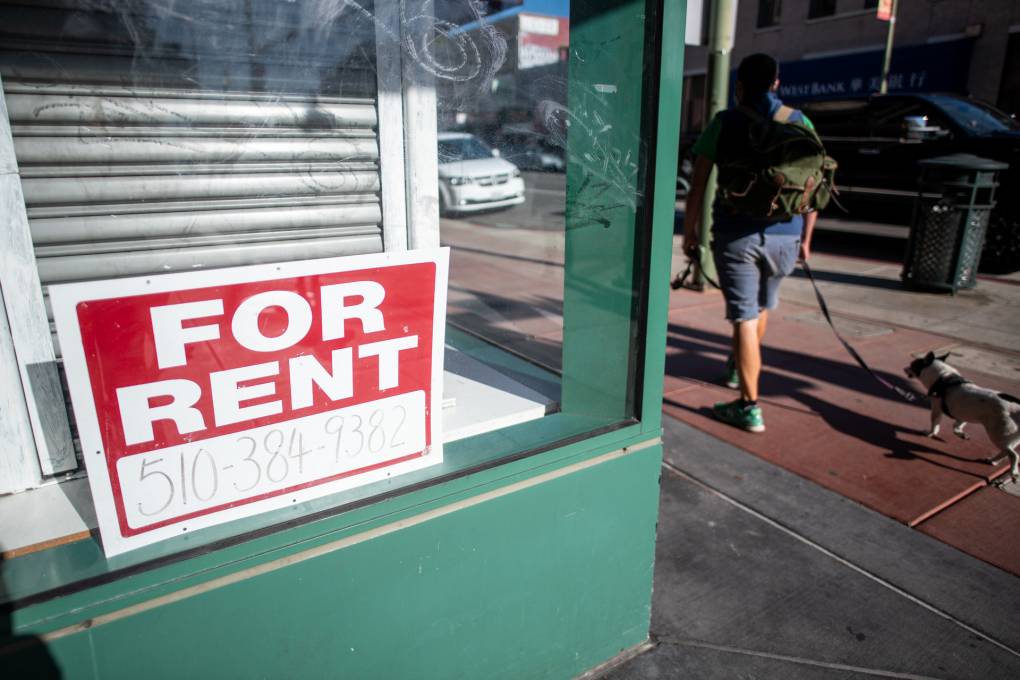
"caption": "A 'For Rent' sign on a shop in Oakland's Chinatown on Dec. 18, 2020.",
"description": "A 'For Rent' sign on a shop in Oakland's Chinatown on Dec. 18, 2020.",
"title": "A 'For Rent' sign on a shop in Oakland's Chinatown on Dec. 18, 2020.",
"credit": "Beth LaBerge/KQED",
"status": "inherit",
"altTag": "\"\"",
"isLoading": false,
"fetchFailed": false
}
},
"audioPlayerReducer": {
"postId": "stream_live",
"isPaused": true,
"isPlaying": false,
"pfsActive": false,
"pledgeModalIsOpen": true,
"playerDrawerIsOpen": false,
"liveAudioPlayStartedAt": 0,
"liveAudioPlayContext": ""
},
"authorsReducer": {
"byline_news_11853150": {
"type": "authors",
"id": "byline_news_11853150",
"meta": {
"override": true
},
"slug": "byline_news_11853150",
"name": "Patti Neighmond",
"isLoading": false
},
"byline_news_11852806": {
"type": "authors",
"id": "byline_news_11852806",
"meta": {
"override": true
},
"slug": "byline_news_11852806",
"name": "John Antczak and Don Thompson \u003cbr> Associated Press",
"isLoading": false
},
"byline_news_11852447": {
"type": "authors",
"id": "byline_news_11852447",
"meta": {
"override": true
},
"slug": "byline_news_11852447",
"name": "Daisy Nguyen\u003cbr>Associated Press",
"isLoading": false
},
"adembosky": {
"type": "authors",
"id": "3205",
"meta": {
"index": "authors_1716337520",
"id": "3205",
"found": true
},
"name": "April Dembosky",
"firstName": "April",
"lastName": "Dembosky",
"slug": "adembosky",
"email": "adembosky@kqed.org",
"display_author_email": false,
"staff_mastheads": [
"news",
"science"
],
"title": "KQED Health Correspondent",
"bio": "April Dembosky is the health correspondent for KQED News and a regular contributor to NPR. She specializes in covering altered states of mind, from postpartum depression to methamphetamine-induced psychosis to the insanity defense. Her investigative series on insurance companies sidestepping mental health laws won multiple awards, including first place in beat reporting from the national Association of Health Care Journalists. She is the recipient of numerous other prizes and fellowships, including a national Edward R. Murrow award for investigative reporting, a Society of Professional Journalists award for long-form storytelling, and a Carter Center Fellowship for Mental Health Journalism.\r\n\r\nDembosky reported and produced \u003cem>Soundtrack of Silence\u003c/em>, an audio documentary about music and memory that is currently being made into a feature film by Paramount Pictures.\r\n\r\nBefore joining KQED in 2013, Dembosky covered technology and Silicon Valley for \u003cem>The Financial Times of London,\u003c/em> and contributed business and arts stories to \u003cem>Marketplace \u003c/em>and \u003cem>The New York Times.\u003c/em> She got her undergraduate degree in philosophy from Smith College and her master's in journalism from the University of California, Berkeley. She is a classically trained violinist and proud alum of the first symphony orchestra at Burning Man.",
"avatar": "https://secure.gravatar.com/avatar/ef92999be4ceb9ea60701e7dc276f813?s=600&d=blank&r=g",
"twitter": "adembosky",
"facebook": null,
"instagram": null,
"linkedin": null,
"sites": [
{
"site": "arts",
"roles": [
"author"
]
},
{
"site": "news",
"roles": [
"editor"
]
},
{
"site": "futureofyou",
"roles": [
"author"
]
},
{
"site": "stateofhealth",
"roles": [
"editor"
]
},
{
"site": "science",
"roles": [
"editor"
]
},
{
"site": "forum",
"roles": [
"editor"
]
}
],
"headData": {
"title": "April Dembosky | KQED",
"description": "KQED Health Correspondent",
"ogImgSrc": "https://secure.gravatar.com/avatar/ef92999be4ceb9ea60701e7dc276f813?s=600&d=blank&r=g",
"twImgSrc": "https://secure.gravatar.com/avatar/ef92999be4ceb9ea60701e7dc276f813?s=600&d=blank&r=g"
},
"isLoading": false,
"link": "/author/adembosky"
},
"markfiore": {
"type": "authors",
"id": "3236",
"meta": {
"index": "authors_1716337520",
"id": "3236",
"found": true
},
"name": "Mark Fiore",
"firstName": "Mark",
"lastName": "Fiore",
"slug": "markfiore",
"email": "mark@markfiore.com",
"display_author_email": false,
"staff_mastheads": [
"news"
],
"title": "KQED News Cartoonist",
"bio": "\u003ca href=\"http://www.MarkFiore.com\">MarkFiore.com\u003c/a> | \u003ca href=\"https://twitter.com/markfiore\">Follow on Twitter\u003c/a> | \u003ca href=\"https://www.facebook.com/pages/Mark-Fiore-Animated-Political-Cartoons/94451707396?ref=bookmarks\">Facebook\u003c/a> | \u003ca href=\"mailto:mark@markfiore.com\">email\u003c/a>\r\n\r\nPulitzer Prize-winner, Mark Fiore, who the Wall Street Journal has called “the undisputed guru of the form,” creates animated political cartoons in San Francisco, where his work has been featured regularly on the San Francisco Chronicle’s web site, SFGate.com. His work has appeared on Newsweek.com, Slate.com, CBSNews.com, MotherJones.com, DailyKos.com and NPR’s web site. Fiore’s political animation has appeared on CNN, Frontline, Bill Moyers Journal, Salon.com and cable and broadcast outlets across the globe.\r\n\r\nBeginning his professional life by drawing traditional political cartoons for newspapers, Fiore’s work appeared in publications ranging from the Washington Post to the Los Angeles Times. In the late 1990s, he began to experiment with animating political cartoons and, after a short stint at the San Jose Mercury News as their staff cartoonist, Fiore devoted all his energies to animation.\r\nGrowing up in California, Fiore also spent a good portion of his life in the backwoods of Idaho. It was this combination that shaped him politically. Mark majored in political science at Colorado College, where, in a perfect send-off for a cartoonist, he received his diploma in 1991 as commencement speaker Dick Cheney smiled approvingly.\r\nMark Fiore was awarded the Pulitzer Prize for political cartooning in 2010, a Robert F. Kennedy Journalism Award in 2004 and has twice received an Online Journalism Award for commentary from the Online News Association (2002, 2008). Fiore has received two awards for his work in new media from the National Cartoonists Society (2001, 2002), and in 2006 received The James Madison Freedom of Information Award from The Society of Professional Journalists.",
"avatar": "https://secure.gravatar.com/avatar/fc4e2a612b15b67bad0c6f0e1db4ca9b?s=600&d=blank&r=g",
"twitter": "MarkFiore",
"facebook": null,
"instagram": "https://www.instagram.com/markfiore/?hl=en",
"linkedin": null,
"sites": [
{
"site": "arts",
"roles": [
"contributor"
]
},
{
"site": "news",
"roles": [
"editor"
]
},
{
"site": "futureofyou",
"roles": [
"editor"
]
},
{
"site": "science",
"roles": [
"editor"
]
}
],
"headData": {
"title": "Mark Fiore | KQED",
"description": "KQED News Cartoonist",
"ogImgSrc": "https://secure.gravatar.com/avatar/fc4e2a612b15b67bad0c6f0e1db4ca9b?s=600&d=blank&r=g",
"twImgSrc": "https://secure.gravatar.com/avatar/fc4e2a612b15b67bad0c6f0e1db4ca9b?s=600&d=blank&r=g"
},
"isLoading": false,
"link": "/author/markfiore"
},
"cveltman": {
"type": "authors",
"id": "8608",
"meta": {
"index": "authors_1716337520",
"id": "8608",
"found": true
},
"name": "Chloe Veltman",
"firstName": "Chloe",
"lastName": "Veltman",
"slug": "cveltman",
"email": "cveltman@kqed.org",
"display_author_email": true,
"staff_mastheads": [],
"title": "Arts and Culture Reporter",
"bio": "Chloe Veltman is a former arts and culture reporter for KQED. Prior to joining the organization, she launched and led the arts bureau at Colorado Public Radio, served as the Bay Area's culture columnist for the New York Times, and was the founder, host and executive producer of VoiceBox, a national award-winning weekly podcast/radio show and live events series all about the human voice. Chloe is the recipient of numerous prizes, grants and fellowships including a Webby Award for her work on interactive storytelling, both the John S Knight Journalism Fellowship and Humanities Center Fellowship at Stanford University, the Sundance Arts Writing Fellowship and a Library of Congress Research Fellowship. She is the author of the book \"On Acting\" and has appeared as a guest lecturer at Yale University and the San Francisco Conservatory of Music among other institutions. She holds a BA in english literature from King's College, Cambridge, and a Masters in Dramaturgy from the Central School of Speech and Drama/Harvard Institute for Advanced Theater Training.\r\n\u003ca href=\"https://www.chloeveltman.com\">www.chloeveltman.com\u003c/a>",
"avatar": "https://secure.gravatar.com/avatar/55403394b00a1ddab683952c2eb2cf85?s=600&d=blank&r=g",
"twitter": "chloeveltman",
"facebook": null,
"instagram": null,
"linkedin": null,
"sites": [
{
"site": "arts",
"roles": []
},
{
"site": "news",
"roles": [
"author"
]
},
{
"site": "pop",
"roles": [
"editor"
]
},
{
"site": "science",
"roles": []
}
],
"headData": {
"title": "Chloe Veltman | KQED",
"description": "Arts and Culture Reporter",
"ogImgSrc": "https://secure.gravatar.com/avatar/55403394b00a1ddab683952c2eb2cf85?s=600&d=blank&r=g",
"twImgSrc": "https://secure.gravatar.com/avatar/55403394b00a1ddab683952c2eb2cf85?s=600&d=blank&r=g"
},
"isLoading": false,
"link": "/author/cveltman"
},
"fjhabvala": {
"type": "authors",
"id": "8659",
"meta": {
"index": "authors_1716337520",
"id": "8659",
"found": true
},
"name": "Farida Jhabvala Romero",
"firstName": "Farida",
"lastName": "Jhabvala Romero",
"slug": "fjhabvala",
"email": "fjhabvala@kqed.org",
"display_author_email": true,
"staff_mastheads": [
"news"
],
"title": "KQED Contributor",
"bio": "Farida Jhabvala Romero is a Labor Correspondent for KQED. She previously covered immigration. Farida was \u003ca href=\"https://www.ccnma.org/2022-most-influential-latina-journalists\">named\u003c/a> one of the 10 Most Influential Latina Journalists in California in 2022 by the California Chicano News Media Association. Her work has won awards from the Society of Professional Journalists (Northern California), as well as a national and regional Edward M. Murrow Award for the collaborative reporting projects “Dangerous Air” and “Graying California.” Before joining KQED, Farida worked as a producer at Radio Bilingüe, a national public radio network. Farida earned her master’s degree in journalism from Stanford University.",
"avatar": "https://secure.gravatar.com/avatar/f9f022d4e2609741874222a1e9d41f48fea74011aa7c615eef91d9a50c944ebe?s=600&d=blank&r=g",
"twitter": "FaridaJhabvala",
"bluesky": null,
"facebook": null,
"instagram": null,
"linkedin": "https://www.linkedin.com/in/faridajhabvala/",
"sites": [
{
"site": "news",
"roles": [
"editor"
]
},
{
"site": "stateofhealth",
"roles": [
"author"
]
},
{
"site": "liveblog",
"roles": [
"author"
]
}
],
"headData": {
"title": "Farida Jhabvala Romero | KQED",
"description": "KQED Contributor",
"ogImgSrc": "https://secure.gravatar.com/avatar/f9f022d4e2609741874222a1e9d41f48fea74011aa7c615eef91d9a50c944ebe?s=600&d=blank&r=g",
"twImgSrc": "https://secure.gravatar.com/avatar/f9f022d4e2609741874222a1e9d41f48fea74011aa7c615eef91d9a50c944ebe?s=600&d=blank&r=g"
},
"isLoading": false,
"link": "/author/fjhabvala"
},
"ahall": {
"type": "authors",
"id": "11490",
"meta": {
"index": "authors_1716337520",
"id": "11490",
"found": true
},
"name": "Alex Hall",
"firstName": "Alex",
"lastName": "Hall",
"slug": "ahall",
"email": "ahall@kqed.org",
"display_author_email": false,
"staff_mastheads": [
"news"
],
"title": "KQED Enterprise & Accountability Reporter",
"bio": "Alex Hall is KQED's Enterprise and Accountability Reporter. She previously covered the Central Valley for five years from KQED's bureau in Fresno. Before joining KQED, Alex was an investigative reporting fellow at Wisconsin Public Radio and the Wisconsin Center for Investigative Journalism. She has also worked as a bilingual producer for NPR's investigative unit and freelance video producer for Reuters TV on the Latin America desk. She got her start in journalism in South America, where she worked as a radio producer and Spanish-English translator for CNN Chile. Her documentary and investigation into the series of deadly COVID-19 outbreaks at Foster Farms won a national Edward R. Murrow award and was named an Investigative Reporters & Editors award finalist. Alex's reporting for Reveal on the Wisconsin dairy industry's reliance on undocumented immigrant labor was made into a film, Los Lecheros, which won a regional Edward R. Murrow award for best news documentary.",
"avatar": "https://secure.gravatar.com/avatar/04c28ad4a7caa7ac2ef39c655c4030c993a3f331481d1da4799bb76ea85b9afa?s=600&d=blank&r=g",
"twitter": "@chalexhall",
"bluesky": null,
"facebook": null,
"instagram": null,
"linkedin": null,
"sites": [
{
"site": "news",
"roles": [
"editor"
]
},
{
"site": "liveblog",
"roles": [
"author"
]
}
],
"headData": {
"title": "Alex Hall | KQED",
"description": "KQED Enterprise & Accountability Reporter",
"ogImgSrc": "https://secure.gravatar.com/avatar/04c28ad4a7caa7ac2ef39c655c4030c993a3f331481d1da4799bb76ea85b9afa?s=600&d=blank&r=g",
"twImgSrc": "https://secure.gravatar.com/avatar/04c28ad4a7caa7ac2ef39c655c4030c993a3f331481d1da4799bb76ea85b9afa?s=600&d=blank&r=g"
},
"isLoading": false,
"link": "/author/ahall"
},
"mwiley": {
"type": "authors",
"id": "11526",
"meta": {
"index": "authors_1716337520",
"id": "11526",
"found": true
},
"name": "Michelle Wiley",
"firstName": "Michelle",
"lastName": "Wiley",
"slug": "mwiley",
"email": "mwiley@KQED.org",
"display_author_email": true,
"staff_mastheads": [],
"title": null,
"bio": "Michelle Wiley was the senior editor of weekends.",
"avatar": "https://secure.gravatar.com/avatar/3b897d82a09e8587e8e73fa69fbcc635?s=600&d=blank&r=g",
"twitter": "michelleewiley",
"facebook": null,
"instagram": null,
"linkedin": null,
"sites": [
{
"site": "",
"roles": [
"editor"
]
},
{
"site": "arts",
"roles": [
"editor"
]
},
{
"site": "news",
"roles": [
"subscriber"
]
},
{
"site": "lowdown",
"roles": [
"editor"
]
},
{
"site": "science",
"roles": [
"editor"
]
},
{
"site": "podcasts",
"roles": [
"editor"
]
}
],
"headData": {
"title": "Michelle Wiley | KQED",
"description": null,
"ogImgSrc": "https://secure.gravatar.com/avatar/3b897d82a09e8587e8e73fa69fbcc635?s=600&d=blank&r=g",
"twImgSrc": "https://secure.gravatar.com/avatar/3b897d82a09e8587e8e73fa69fbcc635?s=600&d=blank&r=g"
},
"isLoading": false,
"link": "/author/mwiley"
},
"abandlamudi": {
"type": "authors",
"id": "11672",
"meta": {
"index": "authors_1716337520",
"id": "11672",
"found": true
},
"name": "Adhiti Bandlamudi",
"firstName": "Adhiti",
"lastName": "Bandlamudi",
"slug": "abandlamudi",
"email": "abandlamudi@kqed.org",
"display_author_email": false,
"staff_mastheads": [
"news"
],
"title": "KQED Housing Reporter",
"bio": "Adhiti Bandlamudi reports for KQED's Housing desk. She focuses on how housing gets built across the Bay Area. Before joining KQED in 2020, she reported for WUNC in Durham, North Carolina, WABE in Atlanta, Georgia and Capital Public Radio in Sacramento. In 2017, she was awarded a Kroc Fellowship at NPR where she reported on everything from sprinkles to the Golden State Killer's arrest. When she's not reporting, she's baking new recipes in her kitchen or watching movies with friends and family. She's originally from Georgia and has strong opinions about Great British Bake Off.",
"avatar": "https://secure.gravatar.com/avatar/868129c8b257bb99a3500e2c86a65400?s=600&d=mm&r=g",
"twitter": "oddity_adhiti",
"facebook": null,
"instagram": null,
"linkedin": null,
"sites": [
{
"site": "arts",
"roles": [
"author"
]
},
{
"site": "news",
"roles": [
"editor"
]
},
{
"site": "liveblog",
"roles": [
"author"
]
}
],
"headData": {
"title": "Adhiti Bandlamudi | KQED",
"description": "KQED Housing Reporter",
"ogImgSrc": "https://secure.gravatar.com/avatar/868129c8b257bb99a3500e2c86a65400?s=600&d=mm&r=g",
"twImgSrc": "https://secure.gravatar.com/avatar/868129c8b257bb99a3500e2c86a65400?s=600&d=mm&r=g"
},
"isLoading": false,
"link": "/author/abandlamudi"
}
},
"pagesReducer": {
"news_tag_covid-19": {
"type": "terms",
"id": "news_27504",
"meta": {
"index": "terms_1716263798",
"site": "news",
"id": "27504",
"score": 8.558537
},
"featImg": null,
"name": "covid-19",
"description": null,
"taxonomy": "tag",
"headData": {
"twImgId": null,
"twTitle": null,
"ogTitle": null,
"ogImgId": null,
"twDescription": null,
"description": null,
"title": "covid-19 Archives | KQED News",
"ogDescription": null
},
"ttid": 27521,
"slug": "covid-19",
"isLoading": false,
"title": "covid-19",
"pageMeta": {
"site": "news",
"WpPageTemplate": "page-topic-editorial",
"currentPage": 36
},
"blocks": [
{
"blockName": "kqed/post-list",
"attrs": {
"layout": "cardArticle2",
"query": "posts/news?tag=covid-19",
"seeMore": false,
"paginated": true,
"page": 36
}
},
{
"blockName": "kqed/ad"
}
]
}
},
"pfsSessionReducer": {},
"postsReducer": {
"stream_live": {
"type": "live",
"id": "stream_live",
"audioUrl": "https://streams.kqed.org/kqedradio",
"title": "Live Stream",
"excerpt": "Live Stream information currently unavailable.",
"link": "/radio",
"featImg": "",
"label": {
"name": "KQED Live",
"link": "/"
}
},
"stream_kqedNewscast": {
"type": "posts",
"id": "stream_kqedNewscast",
"audioUrl": "https://www.kqed.org/.stream/anon/radio/RDnews/newscast.mp3?_=1",
"title": "KQED Newscast",
"featImg": "",
"label": {
"name": "88.5 FM",
"link": "/"
}
},
"news_11853248": {
"type": "posts",
"id": "news_11853248",
"meta": {
"index": "posts_1716263798",
"site": "news",
"id": "11853248",
"score": null,
"sort": [
1609367311000
]
},
"guestAuthors": [],
"slug": "hard-hit-california-hospitals-receive-military-support",
"title": "Hard-Hit California Hospitals Receive Military Support",
"publishDate": 1609367311,
"format": "image",
"headTitle": "Hard-Hit California Hospitals Receive Military Support | KQED",
"labelTerm": {
"site": "news"
},
"content": "\u003cp>A group of approximately 75 Department of Defense medical personnel have deployed to a handful of California hospitals in two of the state’s regions hardest hit by the pandemic.\u003c/p>\n\u003cp>Roughly 65 U.S. Air Force doctors, nurses and other medical staff from the 60th Medical Group at Travis Air Force Base and around 10 U.S. Army nurses from a Fort Carson, Colorado-based military medical unit, have arrived and begun onboarding at four hospitals: Adventist Health Lodi Memorial in Lodi, Dameron Hospital in Stockton, Community Regional Medical Center in Fresno and Arrowhead Regional Medical Center in Colton.\u003c/p>\n\u003cp>The deployment comes as California — and the entire country — is experiencing a devastating surge in COVID-19 cases. The hospitals selected are located in the San Joaquin Valley and Southern California, two regions of the state with 0% ICU bed capacity and currently under mandatory stay-at-home orders. On Tuesday, \u003ca href=\"https://www.kqed.org/coronavirusliveupdates/news/11853132/california-extends-stay-at-home-order-in-socal-san-joaquin-valley\">those orders were extended.\u003c/a>\u003c/p>\n\u003cp>“We are in the middle of a big surge and a crisis in our health care system,” Fresno County Interim Health Officer Dr. Rais Vohra said in a media briefing Tuesday. “We’ve seen more fatalities this month than through any other month of the pandemic here in Fresno County.”\u003c/p>\n\u003cp>During the briefing, Vohra highlighted a recent \u003ca href=\"https://www.cdph.ca.gov/Programs/CHCQ/LCP/Pages/AFL-20-91.aspx\">All Facilities Letter\u003c/a> from the California Department of Public Health, reminding hospitals to have and implement Crisis Care Continuum Guidelines if experiencing a surge in COVID-19 patients. Vohra said the standards indicate a disaster situation.\u003c/p>\n\u003cfigure id=\"attachment_11853269\" class=\"wp-caption aligncenter\" style=\"max-width: 1536px\">\u003cimg loading=\"lazy\" decoding=\"async\" class=\"wp-image-11853269 size-full\" src=\"https://ww2.kqed.org/app/uploads/sites/10/2020/12/CRMC-2-e1609365306356.png\" alt='\"\"' width=\"1536\" height=\"1305\" srcset=\"https://cdn.kqed.org/wp-content/uploads/sites/10/2020/12/CRMC-2-e1609365306356.png 1536w, https://cdn.kqed.org/wp-content/uploads/sites/10/2020/12/CRMC-2-e1609365306356-800x680.png 800w, https://cdn.kqed.org/wp-content/uploads/sites/10/2020/12/CRMC-2-e1609365306356-1020x867.png 1020w, https://cdn.kqed.org/wp-content/uploads/sites/10/2020/12/CRMC-2-e1609365306356-160x136.png 160w\" sizes=\"(max-width: 1536px) 100vw, 1536px\">\u003cfigcaption class=\"wp-caption-text\">Department of Defense military personnel begin onboarding at Community Regional Medical Center in Fresno. The U.S. Air Force and U.S. Army doctors, nurses and other medical staff will primarily focus on supporting the hospital’s intensive care unit. \u003ccite>(Courtesy of the Community Regional Medical Center)\u003c/cite>\u003c/figcaption>\u003c/figure>\n\u003cp>“We’ve experienced, and continue to experience, just really severe impacts to our health care system, both in the capacity to house patients and to take care of them, as well as resources related to personnel and staffing,” Vohra said.\u003c/p>\n\u003cp>Brooke McCollough, operations executive for Lodi Memorial and Dameron hospitals said the people who’ve contracted COVID-19 are often in the hospital for “many days” and can take a long time to recover.\u003c/p>\n\u003cp>“These patients are very sick,” McCollough said. “It’s not just old people, it’s all over the place, all over the board, as far as race, age. Of course people with more serious illnesses are more susceptible to having more serious illness. This is just something more than what we’ve ever been through in my career.”\u003c/p>\n\u003cp>[pullquote size='medium' align='right' citation='Fresno County Interim Health Officer Dr. Rais Vohra']‘We’ve experienced, and continue to experience, just really severe impacts to our health care system, both in the capacity to house patients and to take care of them, as well as resources related to personnel and staffing’[/pullquote]\u003c/p>\n\u003cp>Two physicians, two physician assistants, seven respiratory therapists, 24 registered nurses and other support staff arrived at the hospitals in San Joaquin County Tuesday, according to a Lodi Memorial hospital spokesperson.\u003c/p>\n\u003cp>McCollough said Lodi Memorial and Dameron hospitals are facilities that have space for greater ICU bed capacity, but not enough physicians and nurses to care for patients if they are admitted.\u003c/p>\n\u003cp>“This additional staff will allow us to accept patients in some of those beds,” McCollough said. “We’ve also tried to secure traveling nurses, but the whole country is after the same group of nurses, and so it’s very hard to get those nurses to accept a contract for your facility because they’re all being used by other places.”\u003c/p>\n\u003cp>McCollough said the additional staffing will allow the hospitals in Lodi and Stockton to double their ICU bed capacity and allow the facilities to accept patients transferred from other regional hospitals.\u003c/p>\n\u003cp>“That would be our first priority, to help offload some of their patients, COVID or non-COVID. This just allows us to accept more patients in general,” McCollough said. “Because we have beds, but we don’t have staff for those beds, this will allow us to put patients in those beds.” [aside tag=\"covid-19,coronavirus\" label=\"more coverage\"]\u003c/p>\n\u003cp>Approximately 15 U.S. Air Force and five U.S. Army military medical personnel, including doctors, nurses and respiratory technicians, began orientation at Community Regional Medical Center in Fresno on Tuesday, according to a military statement.\u003c/p>\n\u003cp>Dan Lynch, Fresno County’s director of emergency medical services, said the team’s primary mission is to support the hospital’s intensive care unit.\u003c/p>\n\u003cp>“Not only to sustain or maintain what they have available to them, but also to surge, to add in additional ICU beds to be used,” Lynch said, adding that the hospital does have the capacity to increase ICU bed availability.\u003c/p>\n\u003cp>“They just need the staffing and that’s what this will do,” Lynch said.\u003c/p>\n\u003cp>Col. Martin L. O’Donnell, public affairs officer with U.S. Army North (Fifth Army) said the personnel were expected to begin their first shifts Wednesday.\u003c/p>\n\u003cp>“The military medical personnel — doctors, nurses, respiratory therapists and others — are trained and certified in their respective fields. Many have deployed previously to support the whole-of-America response to the COVID-19 pandemic,” O’Donnell said. [ad fullwidth]\u003c/p>\n\u003cp>Assistance at these hospitals in Lodi, Stockton and Fresno was requested through the state by San Joaquin and Fresno counties’ emergency medical services agencies.\u003c/p>\n\u003cp>“States identify if and where they need federal support and then request it from [Federal Emergency Management Agency], which is the lead federal agency for the nation’s COVID-19 response, through what is called a mission assignment process. Once a mission assignment is approved, we work with U.S. Northern Command, the Department of Defense and the military services to quickly deploy forces to respond to affected areas,” O’Donnell said.\u003c/p>\n\u003cp>Several California facilities, including the hospitals in Lodi, Stockton and Fresno, \u003ca href=\"https://www.latimes.com/california/story/2020-07-19/military-medical-providers-california-hospitals-coronavirus-staffing-shortages\">previously received military support\u003c/a> to deal with the coronavirus surge over the summer.\u003c/p>\n\u003cp>Lynch said this assistance is critical at facilities like the Community Regional Medical Center in Fresno, which serves as the only Level 1 trauma center between Los Angeles and the Bay Area.\u003c/p>\n\u003cp>“Its ability to accept and care for critical patients must be preserved,” Lynch said.\u003c/p>\n\u003cp>The medical personnel are expected to be deployed for 30 days, with the opportunity to extend, McCollough said.\u003c/p>\n\u003cp>[ad floatright]\u003c/p>\n",
"blocks": [],
"excerpt": "The hospitals selected are located in the San Joaquin Valley and Southern California, two regions of the state with 0% ICU bed capacity and currently under mandatory stay-at-home orders.",
"status": "publish",
"parent": 0,
"modified": 1726006801,
"stats": {
"hasAudio": false,
"hasVideo": false,
"hasChartOrMap": false,
"iframeSrcs": [],
"hasGoogleForm": false,
"hasGallery": false,
"hasHearkenModule": false,
"hasPolis": false,
"paragraphCount": 27,
"wordCount": 1116
},
"headData": {
"title": "Hard-Hit California Hospitals Receive Military Support | KQED",
"description": "The hospitals selected are located in the San Joaquin Valley and Southern California, two regions of the state with 0% ICU bed capacity and currently under mandatory stay-at-home orders.",
"ogTitle": "",
"ogDescription": "",
"ogImgId": "",
"twTitle": "",
"twDescription": "",
"twImgId": "",
"schema": {
"@context": "https://schema.org",
"@type": "NewsArticle",
"headline": "Hard-Hit California Hospitals Receive Military Support",
"datePublished": "2020-12-30T14:28:31-08:00",
"dateModified": "2024-09-10T15:20:01-07:00",
"image": "https://cdn.kqed.org/wp-content/uploads/2020/02/KQED-OG-Image@1x.png",
"isAccessibleForFree": "True",
"publisher": {
"@type": "NewsMediaOrganization",
"@id": "https://www.kqed.org/#organization",
"name": "KQED",
"logo": "https://cdn.kqed.org/wp-content/uploads/2020/02/KQED-OG-Image@1x.png",
"url": "https://www.kqed.org",
"sameAs": [
"https://www.facebook.com/KQED",
"https://twitter.com/KQED",
"https://www.instagram.com/kqed/",
"https://www.tiktok.com/@kqedofficial",
"https://www.linkedin.com/company/kqed",
"https://www.youtube.com/channel/UCeC0IOo7i1P_61zVUWbJ4nw"
]
}
}
},
"sticky": false,
"path": "/news/11853248/hard-hit-california-hospitals-receive-military-support",
"audioTrackLength": null,
"parsedContent": [
{
"type": "contentString",
"content": "\u003cdiv class=\"post-body\">\u003cp>\u003cp>A group of approximately 75 Department of Defense medical personnel have deployed to a handful of California hospitals in two of the state’s regions hardest hit by the pandemic.\u003c/p>\n\u003cp>Roughly 65 U.S. Air Force doctors, nurses and other medical staff from the 60th Medical Group at Travis Air Force Base and around 10 U.S. Army nurses from a Fort Carson, Colorado-based military medical unit, have arrived and begun onboarding at four hospitals: Adventist Health Lodi Memorial in Lodi, Dameron Hospital in Stockton, Community Regional Medical Center in Fresno and Arrowhead Regional Medical Center in Colton.\u003c/p>\n\u003cp>The deployment comes as California — and the entire country — is experiencing a devastating surge in COVID-19 cases. The hospitals selected are located in the San Joaquin Valley and Southern California, two regions of the state with 0% ICU bed capacity and currently under mandatory stay-at-home orders. On Tuesday, \u003ca href=\"https://www.kqed.org/coronavirusliveupdates/news/11853132/california-extends-stay-at-home-order-in-socal-san-joaquin-valley\">those orders were extended.\u003c/a>\u003c/p>\n\u003cp>“We are in the middle of a big surge and a crisis in our health care system,” Fresno County Interim Health Officer Dr. Rais Vohra said in a media briefing Tuesday. “We’ve seen more fatalities this month than through any other month of the pandemic here in Fresno County.”\u003c/p>\n\u003cp>During the briefing, Vohra highlighted a recent \u003ca href=\"https://www.cdph.ca.gov/Programs/CHCQ/LCP/Pages/AFL-20-91.aspx\">All Facilities Letter\u003c/a> from the California Department of Public Health, reminding hospitals to have and implement Crisis Care Continuum Guidelines if experiencing a surge in COVID-19 patients. Vohra said the standards indicate a disaster situation.\u003c/p>\n\u003cfigure id=\"attachment_11853269\" class=\"wp-caption aligncenter\" style=\"max-width: 1536px\">\u003cimg loading=\"lazy\" decoding=\"async\" class=\"wp-image-11853269 size-full\" src=\"https://ww2.kqed.org/app/uploads/sites/10/2020/12/CRMC-2-e1609365306356.png\" alt='\"\"' width=\"1536\" height=\"1305\" srcset=\"https://cdn.kqed.org/wp-content/uploads/sites/10/2020/12/CRMC-2-e1609365306356.png 1536w, https://cdn.kqed.org/wp-content/uploads/sites/10/2020/12/CRMC-2-e1609365306356-800x680.png 800w, https://cdn.kqed.org/wp-content/uploads/sites/10/2020/12/CRMC-2-e1609365306356-1020x867.png 1020w, https://cdn.kqed.org/wp-content/uploads/sites/10/2020/12/CRMC-2-e1609365306356-160x136.png 160w\" sizes=\"(max-width: 1536px) 100vw, 1536px\">\u003cfigcaption class=\"wp-caption-text\">Department of Defense military personnel begin onboarding at Community Regional Medical Center in Fresno. The U.S. Air Force and U.S. Army doctors, nurses and other medical staff will primarily focus on supporting the hospital’s intensive care unit. \u003ccite>(Courtesy of the Community Regional Medical Center)\u003c/cite>\u003c/figcaption>\u003c/figure>\n\u003cp>“We’ve experienced, and continue to experience, just really severe impacts to our health care system, both in the capacity to house patients and to take care of them, as well as resources related to personnel and staffing,” Vohra said.\u003c/p>\n\u003cp>Brooke McCollough, operations executive for Lodi Memorial and Dameron hospitals said the people who’ve contracted COVID-19 are often in the hospital for “many days” and can take a long time to recover.\u003c/p>\n\u003cp>“These patients are very sick,” McCollough said. “It’s not just old people, it’s all over the place, all over the board, as far as race, age. Of course people with more serious illnesses are more susceptible to having more serious illness. This is just something more than what we’ve ever been through in my career.”\u003c/p>\n\u003cp>\u003c/p>\u003c/div>",
"attributes": {
"named": {},
"numeric": []
}
},
{
"type": "component",
"content": "‘We’ve experienced, and continue to experience, just really severe impacts to our health care system, both in the capacity to house patients and to take care of them, as well as resources related to personnel and staffing’",
"name": "pullquote",
"attributes": {
"named": {
"size": "medium",
"align": "right",
"citation": "Fresno County Interim Health Officer Dr. Rais Vohra",
"label": ""
},
"numeric": []
}
},
{
"type": "contentString",
"content": "\u003cdiv class=\"post-body\">\u003cp>\u003c/p>\n\u003cp>Two physicians, two physician assistants, seven respiratory therapists, 24 registered nurses and other support staff arrived at the hospitals in San Joaquin County Tuesday, according to a Lodi Memorial hospital spokesperson.\u003c/p>\n\u003cp>McCollough said Lodi Memorial and Dameron hospitals are facilities that have space for greater ICU bed capacity, but not enough physicians and nurses to care for patients if they are admitted.\u003c/p>\n\u003cp>“This additional staff will allow us to accept patients in some of those beds,” McCollough said. “We’ve also tried to secure traveling nurses, but the whole country is after the same group of nurses, and so it’s very hard to get those nurses to accept a contract for your facility because they’re all being used by other places.”\u003c/p>\n\u003cp>McCollough said the additional staffing will allow the hospitals in Lodi and Stockton to double their ICU bed capacity and allow the facilities to accept patients transferred from other regional hospitals.\u003c/p>\n\u003cp>“That would be our first priority, to help offload some of their patients, COVID or non-COVID. This just allows us to accept more patients in general,” McCollough said. “Because we have beds, but we don’t have staff for those beds, this will allow us to put patients in those beds.” \u003c/p>\u003c/div>",
"attributes": {
"named": {},
"numeric": []
}
},
{
"type": "component",
"content": "",
"name": "aside",
"attributes": {
"named": {
"tag": "covid-19,coronavirus",
"label": "more coverage "
},
"numeric": []
}
},
{
"type": "contentString",
"content": "\u003cdiv class=\"post-body\">\u003cp>\u003c/p>\n\u003cp>Approximately 15 U.S. Air Force and five U.S. Army military medical personnel, including doctors, nurses and respiratory technicians, began orientation at Community Regional Medical Center in Fresno on Tuesday, according to a military statement.\u003c/p>\n\u003cp>Dan Lynch, Fresno County’s director of emergency medical services, said the team’s primary mission is to support the hospital’s intensive care unit.\u003c/p>\n\u003cp>“Not only to sustain or maintain what they have available to them, but also to surge, to add in additional ICU beds to be used,” Lynch said, adding that the hospital does have the capacity to increase ICU bed availability.\u003c/p>\n\u003cp>“They just need the staffing and that’s what this will do,” Lynch said.\u003c/p>\n\u003cp>Col. Martin L. O’Donnell, public affairs officer with U.S. Army North (Fifth Army) said the personnel were expected to begin their first shifts Wednesday.\u003c/p>\n\u003cp>“The military medical personnel — doctors, nurses, respiratory therapists and others — are trained and certified in their respective fields. Many have deployed previously to support the whole-of-America response to the COVID-19 pandemic,” O’Donnell said. \u003c/p>\u003c/div>",
"attributes": {
"named": {},
"numeric": []
}
},
{
"type": "component",
"content": "",
"name": "ad",
"attributes": {
"named": {
"label": "fullwidth"
},
"numeric": [
"fullwidth"
]
}
},
{
"type": "contentString",
"content": "\u003cdiv class=\"post-body\">\u003cp>\u003c/p>\n\u003cp>Assistance at these hospitals in Lodi, Stockton and Fresno was requested through the state by San Joaquin and Fresno counties’ emergency medical services agencies.\u003c/p>\n\u003cp>“States identify if and where they need federal support and then request it from [Federal Emergency Management Agency], which is the lead federal agency for the nation’s COVID-19 response, through what is called a mission assignment process. Once a mission assignment is approved, we work with U.S. Northern Command, the Department of Defense and the military services to quickly deploy forces to respond to affected areas,” O’Donnell said.\u003c/p>\n\u003cp>Several California facilities, including the hospitals in Lodi, Stockton and Fresno, \u003ca href=\"https://www.latimes.com/california/story/2020-07-19/military-medical-providers-california-hospitals-coronavirus-staffing-shortages\">previously received military support\u003c/a> to deal with the coronavirus surge over the summer.\u003c/p>\n\u003cp>Lynch said this assistance is critical at facilities like the Community Regional Medical Center in Fresno, which serves as the only Level 1 trauma center between Los Angeles and the Bay Area.\u003c/p>\n\u003cp>“Its ability to accept and care for critical patients must be preserved,” Lynch said.\u003c/p>\n\u003cp>The medical personnel are expected to be deployed for 30 days, with the opportunity to extend, McCollough said.\u003c/p>\n\u003cp>\u003c/p>\u003c/div>",
"attributes": {
"named": {},
"numeric": []
}
},
{
"type": "component",
"content": "",
"name": "ad",
"attributes": {
"named": {
"label": "floatright"
},
"numeric": [
"floatright"
]
}
},
{
"type": "contentString",
"content": "\u003cdiv class=\"post-body\">\u003cp>\u003c/p>\n\u003c/div>\u003c/p>",
"attributes": {
"named": {},
"numeric": []
}
}
],
"link": "/news/11853248/hard-hit-california-hospitals-receive-military-support",
"authors": [
"11490"
],
"categories": [
"news_457",
"news_8"
],
"tags": [
"news_27350",
"news_27504",
"news_27626",
"news_18543",
"news_18659",
"news_80"
],
"featImg": "news_11853268",
"label": "news"
},
"news_11853032": {
"type": "posts",
"id": "news_11853032",
"meta": {
"index": "posts_1716263798",
"site": "news",
"id": "11853032",
"score": null,
"sort": [
1609366428000
]
},
"guestAuthors": [],
"slug": "pandemic-delivers-a-bloom-boom-for-plant-shops",
"title": "Pandemic Delivers a Bloom Boom for Plant Shops",
"publishDate": 1609366428,
"format": "standard",
"headTitle": "Pandemic Delivers a Bloom Boom for Plant Shops | KQED",
"labelTerm": {
"site": "news"
},
"content": "\u003cp>Like many small business owners, Yuri Kim has seen a lot of highs and lows during the pandemic. She received a Paycheck Protection Program (PPP) loan for her San Jose plant shop, \u003ca href=\"https://www.fractalflora.com/\">Fractal Flora\u003c/a>, in May, which helped pay the rent for a few months, but she had to lay off her six part-time employees.\u003c/p>\n\u003cp>“Should I even continue this business, or does it make more sense to just close it down?” Kim said she asked herself, repeatedly. “I’m so happy that I have an opportunity to still be here.”\u003c/p>\n\u003cp>Fractal Flora was part of San Jose’s \u003ca href=\"https://www.moment-sj.com/\">Moment\u003c/a> program, a small-business incubator in the city’s downtown that provides subsidized rent in converted garage spaces in San Pedro Square. After two years, the shops have to move out and find their own spaces. As her involvement with Moment rolled to a close, Kim was able to open a new store just a few miles away in the Rose Garden neighborhood of San Jose.\u003c/p>\n\u003cfigure id=\"attachment_11853186\" class=\"wp-caption aligncenter\" style=\"max-width: 800px\">\u003cimg loading=\"lazy\" decoding=\"async\" class=\"size-medium wp-image-11853186\" src=\"https://ww2.kqed.org/app/uploads/sites/10/2020/12/IMG_9181-800x600.jpeg\" alt=\"Kim's store is one of the few small businesses surviving during the pandemic. During the holidays, Kim noticed more people buying plants as gifts.\" width=\"800\" height=\"600\" srcset=\"https://cdn.kqed.org/wp-content/uploads/sites/10/2020/12/IMG_9181-800x600.jpeg 800w, https://cdn.kqed.org/wp-content/uploads/sites/10/2020/12/IMG_9181-1020x765.jpeg 1020w, https://cdn.kqed.org/wp-content/uploads/sites/10/2020/12/IMG_9181-160x120.jpeg 160w, https://cdn.kqed.org/wp-content/uploads/sites/10/2020/12/IMG_9181-1536x1152.jpeg 1536w, https://cdn.kqed.org/wp-content/uploads/sites/10/2020/12/IMG_9181-2048x1536.jpeg 2048w, https://cdn.kqed.org/wp-content/uploads/sites/10/2020/12/IMG_9181-1920x1440.jpeg 1920w, https://cdn.kqed.org/wp-content/uploads/sites/10/2020/12/IMG_9181-1832x1374.jpeg 1832w, https://cdn.kqed.org/wp-content/uploads/sites/10/2020/12/IMG_9181-1376x1032.jpeg 1376w, https://cdn.kqed.org/wp-content/uploads/sites/10/2020/12/IMG_9181-1044x783.jpeg 1044w, https://cdn.kqed.org/wp-content/uploads/sites/10/2020/12/IMG_9181-632x474.jpeg 632w, https://cdn.kqed.org/wp-content/uploads/sites/10/2020/12/IMG_9181-536x402.jpeg 536w\" sizes=\"(max-width: 800px) 100vw, 800px\">\u003cfigcaption class=\"wp-caption-text\">Yuri Kim’s store is one of the few small businesses surviving during the pandemic. During the holidays, Kim noticed more people buying plants as gifts. \u003ccite>(Adhiti Bandlamudi/KQED)\u003c/cite>\u003c/figcaption>\u003c/figure>\n\u003cp>During the first few months of the pandemic, Kim was selling less than what she was last year. But as the year wore on, sales slowly started to pick up.\u003c/p>\n\u003cp>“As you spend more time home and you’re less able to go outside, you want to make your space comfortable and beautiful,” Kim said. “Even the suppliers we purchase our plants from say their business has been better now than pre-pandemic because the interest in plants has grown so much.”\u003c/p>\n\u003cp>[ad fullwidth]\u003c/p>\n\u003cp>The sudden demand for succulents and pothos plants is no surprise to Rob Shibata, the owner of\u003ca href=\"http://www.mteden.com/\"> Mt. Eden Floral Company\u003c/a>, one of the largest floral wholesalers in the Bay Area.\u003c/p>\n\u003cp>“The millennials have shown a lot of interest in green plants,” Shibata said. “They’re apartment dwellers. They don’t have a lot of space, but they want to have something alive and meaningful to keep them company.”\u003c/p>\n\u003cfigure id=\"attachment_11853187\" class=\"wp-caption aligncenter\" style=\"max-width: 800px\">\u003cimg loading=\"lazy\" decoding=\"async\" class=\"size-medium wp-image-11853187\" src=\"https://ww2.kqed.org/app/uploads/sites/10/2020/12/IMG_9186-800x600.jpg\" alt=\"Fractal Flora sells a collection of house plants and fresh flowers. While the plant industry has seen an uptick in sales, the flower industry is slowly struggling by as it's reliant on large events that are restricted during the pandemic.\" width=\"800\" height=\"600\" srcset=\"https://cdn.kqed.org/wp-content/uploads/sites/10/2020/12/IMG_9186-800x600.jpg 800w, https://cdn.kqed.org/wp-content/uploads/sites/10/2020/12/IMG_9186-1020x765.jpg 1020w, https://cdn.kqed.org/wp-content/uploads/sites/10/2020/12/IMG_9186-160x120.jpg 160w, https://cdn.kqed.org/wp-content/uploads/sites/10/2020/12/IMG_9186-1536x1152.jpg 1536w, https://cdn.kqed.org/wp-content/uploads/sites/10/2020/12/IMG_9186-2048x1536.jpg 2048w, https://cdn.kqed.org/wp-content/uploads/sites/10/2020/12/IMG_9186-1920x1440.jpg 1920w, https://cdn.kqed.org/wp-content/uploads/sites/10/2020/12/IMG_9186-1832x1374.jpg 1832w, https://cdn.kqed.org/wp-content/uploads/sites/10/2020/12/IMG_9186-1376x1032.jpg 1376w, https://cdn.kqed.org/wp-content/uploads/sites/10/2020/12/IMG_9186-1044x783.jpg 1044w, https://cdn.kqed.org/wp-content/uploads/sites/10/2020/12/IMG_9186-632x474.jpg 632w, https://cdn.kqed.org/wp-content/uploads/sites/10/2020/12/IMG_9186-536x402.jpg 536w\" sizes=\"(max-width: 800px) 100vw, 800px\">\u003cfigcaption class=\"wp-caption-text\">Fractal Flora sells a collection of house plants and fresh flowers. While the plant industry has seen an uptick in sales, the flower industry is slowly struggling by since it’s reliant on large events that are restricted during the pandemic. \u003ccite>(Adhiti Bandlamudi/KQED)\u003c/cite>\u003c/figcaption>\u003c/figure>\n\u003cp>That said, even though Mt. Eden Floral Company has benefited some from the boom in plant sales, the 114-year-old company specializes in flowers. Shibata makes most of his money on orders for weddings, banquets and other large events that won’t be permitted for the foreseeable future.\u003c/p>\n\u003cp>“We have enough business to subsist,” Shibata said. “But we’re missing that event part to make us whole.”[aside postID=\"news_11852317,arts_13885663,science_1967293\" label=\"Related Coverage\"]\u003c/p>\n\u003cp>Shibata is waiting on Valentine’s Day and \u003ca href=\"https://www.kqed.org/news/11816925/bay-area-florists-wilting-under-shelter-in-place-restrictions\">Mother’s Day\u003c/a>, two of the biggest days of the year for the flower industry, to bring a bump to sales. In the meantime, he’s hoping people continue to buy flowers.\u003c/p>\n\u003cp>“I kind of had this imaginary conversation with my dad,” Shibata said. His late father ran the company before he died in 2015. “And I heard him say, ‘Well, [the pandemic] is not like the problem we had.’ ”\u003c/p>\n\u003cp>Shibata’s father ran the company during the 1940s and World War II. In 1942, after the attack on Pearl Harbor, more than 120,000 Japanese Americans, including Shibata’s father, were sent to concentration camps in California and beyond.\u003c/p>\n\u003cp>“He [would say], ‘When Japan bombed Pearl Harbor and the government came and we were forced to leave our business behind with one week’s notice and leave our homes behind with one week’s notice … that was a problem,’ ” Shibata said. “As terrible as it is for us, it wasn’t like … what they went through.”\u003c/p>\n\u003cp>\u003c/p>\n\u003cp>Given that, Shibata says he’s determined to get Mt. Eden Floral Company to its 115th year of service.\u003c/p>\n\n",
"blocks": [],
"excerpt": "The house plant industry has been doing surprisingly well during the coronavirus pandemic as people seek to beautify their homes.",
"status": "publish",
"parent": 0,
"modified": 1729027996,
"stats": {
"hasAudio": false,
"hasVideo": false,
"hasChartOrMap": false,
"iframeSrcs": [],
"hasGoogleForm": false,
"hasGallery": false,
"hasHearkenModule": false,
"hasPolis": false,
"paragraphCount": 16,
"wordCount": 713
},
"headData": {
"title": "Pandemic Delivers a Bloom Boom for Plant Shops | KQED",
"description": "The house plant industry has been doing surprisingly well during the coronavirus pandemic as people seek to beautify their homes.",
"ogTitle": "",
"ogDescription": "",
"ogImgId": "",
"twTitle": "",
"twDescription": "",
"twImgId": "",
"schema": {
"@context": "https://schema.org",
"@type": "NewsArticle",
"headline": "Pandemic Delivers a Bloom Boom for Plant Shops",
"datePublished": "2020-12-30T14:13:48-08:00",
"dateModified": "2024-10-15T14:33:16-07:00",
"image": "https://cdn.kqed.org/wp-content/uploads/2020/02/KQED-OG-Image@1x.png",
"isAccessibleForFree": "True",
"publisher": {
"@type": "NewsMediaOrganization",
"@id": "https://www.kqed.org/#organization",
"name": "KQED",
"logo": "https://cdn.kqed.org/wp-content/uploads/2020/02/KQED-OG-Image@1x.png",
"url": "https://www.kqed.org",
"sameAs": [
"https://www.facebook.com/KQED",
"https://twitter.com/KQED",
"https://www.instagram.com/kqed/",
"https://www.tiktok.com/@kqedofficial",
"https://www.linkedin.com/company/kqed",
"https://www.youtube.com/channel/UCeC0IOo7i1P_61zVUWbJ4nw"
]
}
}
},
"audioUrl": "https://www.kqed.org/.stream/anon/radio/RDnews/2020/12/BandlamudiPlantBusinessCOVID.mp3",
"sticky": false,
"path": "/news/11853032/pandemic-delivers-a-bloom-boom-for-plant-shops",
"audioTrackLength": null,
"parsedContent": [
{
"type": "contentString",
"content": "\u003cdiv class=\"post-body\">\u003cp>\u003cp>Like many small business owners, Yuri Kim has seen a lot of highs and lows during the pandemic. She received a Paycheck Protection Program (PPP) loan for her San Jose plant shop, \u003ca href=\"https://www.fractalflora.com/\">Fractal Flora\u003c/a>, in May, which helped pay the rent for a few months, but she had to lay off her six part-time employees.\u003c/p>\n\u003cp>“Should I even continue this business, or does it make more sense to just close it down?” Kim said she asked herself, repeatedly. “I’m so happy that I have an opportunity to still be here.”\u003c/p>\n\u003cp>Fractal Flora was part of San Jose’s \u003ca href=\"https://www.moment-sj.com/\">Moment\u003c/a> program, a small-business incubator in the city’s downtown that provides subsidized rent in converted garage spaces in San Pedro Square. After two years, the shops have to move out and find their own spaces. As her involvement with Moment rolled to a close, Kim was able to open a new store just a few miles away in the Rose Garden neighborhood of San Jose.\u003c/p>\n\u003cfigure id=\"attachment_11853186\" class=\"wp-caption aligncenter\" style=\"max-width: 800px\">\u003cimg loading=\"lazy\" decoding=\"async\" class=\"size-medium wp-image-11853186\" src=\"https://ww2.kqed.org/app/uploads/sites/10/2020/12/IMG_9181-800x600.jpeg\" alt=\"Kim's store is one of the few small businesses surviving during the pandemic. During the holidays, Kim noticed more people buying plants as gifts.\" width=\"800\" height=\"600\" srcset=\"https://cdn.kqed.org/wp-content/uploads/sites/10/2020/12/IMG_9181-800x600.jpeg 800w, https://cdn.kqed.org/wp-content/uploads/sites/10/2020/12/IMG_9181-1020x765.jpeg 1020w, https://cdn.kqed.org/wp-content/uploads/sites/10/2020/12/IMG_9181-160x120.jpeg 160w, https://cdn.kqed.org/wp-content/uploads/sites/10/2020/12/IMG_9181-1536x1152.jpeg 1536w, https://cdn.kqed.org/wp-content/uploads/sites/10/2020/12/IMG_9181-2048x1536.jpeg 2048w, https://cdn.kqed.org/wp-content/uploads/sites/10/2020/12/IMG_9181-1920x1440.jpeg 1920w, https://cdn.kqed.org/wp-content/uploads/sites/10/2020/12/IMG_9181-1832x1374.jpeg 1832w, https://cdn.kqed.org/wp-content/uploads/sites/10/2020/12/IMG_9181-1376x1032.jpeg 1376w, https://cdn.kqed.org/wp-content/uploads/sites/10/2020/12/IMG_9181-1044x783.jpeg 1044w, https://cdn.kqed.org/wp-content/uploads/sites/10/2020/12/IMG_9181-632x474.jpeg 632w, https://cdn.kqed.org/wp-content/uploads/sites/10/2020/12/IMG_9181-536x402.jpeg 536w\" sizes=\"(max-width: 800px) 100vw, 800px\">\u003cfigcaption class=\"wp-caption-text\">Yuri Kim’s store is one of the few small businesses surviving during the pandemic. During the holidays, Kim noticed more people buying plants as gifts. \u003ccite>(Adhiti Bandlamudi/KQED)\u003c/cite>\u003c/figcaption>\u003c/figure>\n\u003cp>During the first few months of the pandemic, Kim was selling less than what she was last year. But as the year wore on, sales slowly started to pick up.\u003c/p>\n\u003cp>“As you spend more time home and you’re less able to go outside, you want to make your space comfortable and beautiful,” Kim said. “Even the suppliers we purchase our plants from say their business has been better now than pre-pandemic because the interest in plants has grown so much.”\u003c/p>\n\u003cp>\u003c/p>\u003c/div>",
"attributes": {
"named": {},
"numeric": []
}
},
{
"type": "component",
"content": "",
"name": "ad",
"attributes": {
"named": {
"label": "fullwidth"
},
"numeric": [
"fullwidth"
]
}
},
{
"type": "contentString",
"content": "\u003cdiv class=\"post-body\">\u003cp>\u003c/p>\n\u003cp>The sudden demand for succulents and pothos plants is no surprise to Rob Shibata, the owner of\u003ca href=\"http://www.mteden.com/\"> Mt. Eden Floral Company\u003c/a>, one of the largest floral wholesalers in the Bay Area.\u003c/p>\n\u003cp>“The millennials have shown a lot of interest in green plants,” Shibata said. “They’re apartment dwellers. They don’t have a lot of space, but they want to have something alive and meaningful to keep them company.”\u003c/p>\n\u003cfigure id=\"attachment_11853187\" class=\"wp-caption aligncenter\" style=\"max-width: 800px\">\u003cimg loading=\"lazy\" decoding=\"async\" class=\"size-medium wp-image-11853187\" src=\"https://ww2.kqed.org/app/uploads/sites/10/2020/12/IMG_9186-800x600.jpg\" alt=\"Fractal Flora sells a collection of house plants and fresh flowers. While the plant industry has seen an uptick in sales, the flower industry is slowly struggling by as it's reliant on large events that are restricted during the pandemic.\" width=\"800\" height=\"600\" srcset=\"https://cdn.kqed.org/wp-content/uploads/sites/10/2020/12/IMG_9186-800x600.jpg 800w, https://cdn.kqed.org/wp-content/uploads/sites/10/2020/12/IMG_9186-1020x765.jpg 1020w, https://cdn.kqed.org/wp-content/uploads/sites/10/2020/12/IMG_9186-160x120.jpg 160w, https://cdn.kqed.org/wp-content/uploads/sites/10/2020/12/IMG_9186-1536x1152.jpg 1536w, https://cdn.kqed.org/wp-content/uploads/sites/10/2020/12/IMG_9186-2048x1536.jpg 2048w, https://cdn.kqed.org/wp-content/uploads/sites/10/2020/12/IMG_9186-1920x1440.jpg 1920w, https://cdn.kqed.org/wp-content/uploads/sites/10/2020/12/IMG_9186-1832x1374.jpg 1832w, https://cdn.kqed.org/wp-content/uploads/sites/10/2020/12/IMG_9186-1376x1032.jpg 1376w, https://cdn.kqed.org/wp-content/uploads/sites/10/2020/12/IMG_9186-1044x783.jpg 1044w, https://cdn.kqed.org/wp-content/uploads/sites/10/2020/12/IMG_9186-632x474.jpg 632w, https://cdn.kqed.org/wp-content/uploads/sites/10/2020/12/IMG_9186-536x402.jpg 536w\" sizes=\"(max-width: 800px) 100vw, 800px\">\u003cfigcaption class=\"wp-caption-text\">Fractal Flora sells a collection of house plants and fresh flowers. While the plant industry has seen an uptick in sales, the flower industry is slowly struggling by since it’s reliant on large events that are restricted during the pandemic. \u003ccite>(Adhiti Bandlamudi/KQED)\u003c/cite>\u003c/figcaption>\u003c/figure>\n\u003cp>That said, even though Mt. Eden Floral Company has benefited some from the boom in plant sales, the 114-year-old company specializes in flowers. Shibata makes most of his money on orders for weddings, banquets and other large events that won’t be permitted for the foreseeable future.\u003c/p>\n\u003cp>“We have enough business to subsist,” Shibata said. “But we’re missing that event part to make us whole.”\u003c/p>\u003c/div>",
"attributes": {
"named": {},
"numeric": []
}
},
{
"type": "component",
"content": "",
"name": "aside",
"attributes": {
"named": {
"postid": "news_11852317,arts_13885663,science_1967293",
"label": "Related Coverage "
},
"numeric": []
}
},
{
"type": "contentString",
"content": "\u003cdiv class=\"post-body\">\u003cp>\u003c/p>\n\u003cp>Shibata is waiting on Valentine’s Day and \u003ca href=\"https://www.kqed.org/news/11816925/bay-area-florists-wilting-under-shelter-in-place-restrictions\">Mother’s Day\u003c/a>, two of the biggest days of the year for the flower industry, to bring a bump to sales. In the meantime, he’s hoping people continue to buy flowers.\u003c/p>\n\u003cp>“I kind of had this imaginary conversation with my dad,” Shibata said. His late father ran the company before he died in 2015. “And I heard him say, ‘Well, [the pandemic] is not like the problem we had.’ ”\u003c/p>\n\u003cp>Shibata’s father ran the company during the 1940s and World War II. In 1942, after the attack on Pearl Harbor, more than 120,000 Japanese Americans, including Shibata’s father, were sent to concentration camps in California and beyond.\u003c/p>\n\u003cp>“He [would say], ‘When Japan bombed Pearl Harbor and the government came and we were forced to leave our business behind with one week’s notice and leave our homes behind with one week’s notice … that was a problem,’ ” Shibata said. “As terrible as it is for us, it wasn’t like … what they went through.”\u003c/p>\n\u003cp>\u003c/p>\n\u003cp>Given that, Shibata says he’s determined to get Mt. Eden Floral Company to its 115th year of service.\u003c/p>\n\n\u003c/div>\u003c/p>",
"attributes": {
"named": {},
"numeric": []
}
}
],
"link": "/news/11853032/pandemic-delivers-a-bloom-boom-for-plant-shops",
"authors": [
"11672"
],
"categories": [
"news_1758",
"news_457",
"news_8",
"news_248"
],
"tags": [
"news_27510",
"news_27504",
"news_18543",
"news_27814",
"news_23518",
"news_18541",
"news_20920",
"news_27734",
"news_21285",
"news_1631"
],
"featImg": "news_11853185",
"label": "news"
},
"news_11853150": {
"type": "posts",
"id": "news_11853150",
"meta": {
"index": "posts_1716263798",
"site": "news",
"id": "11853150",
"score": null,
"sort": [
1609344051000
]
},
"parent": 0,
"labelTerm": {
"site": "news"
},
"blocks": [],
"publishDate": 1609344051,
"format": "standard",
"disqusTitle": "Still Disinfecting Surfaces? It Might Not Be Worth It",
"title": "Still Disinfecting Surfaces? It Might Not Be Worth It",
"headTitle": "KQED News",
"content": "\u003cp>At the start of the pandemic, stores quickly sold out of disinfectant sprays and wipes. People were advised to wipe down their packages and the cans they bought at the grocery store.\u003c/p>\n\u003cp>But scientists have \u003ca href=\"https://www.npr.org/sections/health-shots/2020/12/26/946901965/for-scientists-who-study-virus-transmission-2020-was-a-watershed-year\">learned a lot this year\u003c/a> about the coronavirus and how it's transmitted, and it turns out all that scrubbing and disinfecting might not be necessary.\u003c/p>\n\u003cp>If a person infected with the coronavirus sneezes, coughs or talks loudly, droplets containing particles of the virus can travel through the air and eventually land on nearby surfaces. But the risk of \u003ca href=\"https://www.thelancet.com/journals/laninf/article/PIIS1473-3099(20)30561-2/fulltext\">getting infected from touching a surface contaminated by the virus is low\u003c/a>, says \u003ca href=\"https://njms-web.njms.rutgers.edu/profile/myProfile.php?mbmid=egoldman\">Emanuel Goldman\u003c/a>, a microbiologist at Rutgers University.\u003c/p>\n\u003cp>\"In hospitals, surfaces have been tested near COVID-19 patients, and no infectious virus can be identified,\" Goldman says.\u003c/p>\n\u003cp>What's found is \u003ca href=\"https://www.medicinenet.com/rna_virus/definition.htm\">viral RNA\u003c/a>, which is like \"the corpse of the virus,\" he says. That's what's left over after the virus dies.\u003c/p>\n\u003cp>[ad fullwidth]\u003c/p>\n\u003cp>\"They don't find infectious virus, and that's because the virus is very fragile in the environment — it decays very quickly,\" Goldman says.\u003c/p>\n\u003cp>Back in January and February, scientists and public health officials thought surface contamination was a problem. In fact, \u003ca href=\"https://www.nejm.org/doi/full/10.1056/nejmc2004973\">early studies suggested\u003c/a> the virus could live on surfaces for days.\u003c/p>\n\u003cp>It was assumed transmission occurred when an infected person sneezed or coughed on a nearby surface and \"you would get the disease by touching those surfaces and then transferring the virus into your eyes, nose or mouth,\" says \u003ca href=\"https://www.air.cee.vt.edu/\">Linsey Marr\u003c/a>, an engineering professor at Virginia Tech who studies airborne transmission of infectious disease.\u003c/p>\n\u003cp>So people were advised to clean common areas with disinfectant, wipe down cans and boxes from the grocery store and even wear gloves.\u003c/p>\n\u003cp>In retrospect, Marr says that was \"overkill.\" Today, she says, \"all the evidence points toward breathing in the virus from the air as being the most important route of transmission.\"\u003c/p>\n\u003cp>Scientists now know that the early surface studies were done in pristine lab conditions using much larger amounts of virus than would be found in a real-life scenario.\u003c/p>\n\u003cp>Even so, many of us continue to attack door handles, packages and groceries with disinfectant wipes, and workers across the U.S. spend hours disinfecting surfaces in public areas like \u003ca href=\"https://new.mta.info/coronavirus/cleaning\">airports, buildings and subways\u003c/a>.\u003c/p>\n\u003cp>There's no scientific data to justify this, says \u003ca href=\"https://www.umms.org/ummc/pros/gme/fellowship/pulmonary-critical-care-medicine/leadership\">Dr. Kevin Fennelly\u003c/a>, a respiratory infection specialist with the National Institutes of Health.\u003c/p>\n\u003cp>\"When you see people doing spray disinfection of streets and sidewalks and walls and subways, I just don't know of any data that supports the fact that we're getting infected from viruses that are jumping up from the sidewalk.\"\u003c/p>\n\u003cp>Marr says focusing on cleaning surfaces is not the best way to slow infection.\u003c/p>\n\u003cp>\"Instead of paying so much attention to cleaning surfaces, we might be better off paying attention to cleaning the air, given the finite amount of time and resources,\" Marr says.\u003c/p>\n\u003cp>Fennelly agrees, noting that airborne transmission is more likely in indoor public places like restaurants.\u003c/p>\n\u003cp>\"Why aren't we doing more to figure out ways to ventilate those areas?\" he asks. \"It would be better to use \u003ca href=\"https://www.cdc.gov/niosh/nioshtic-2/20034387.html\">ultraviolet germicidal irradiation\u003c/a>, which we know can kill these viruses in the air.\"\u003c/p>\n\u003cp>Figuring out how to prevent coronavirus transmission in office buildings, schools, bars and restaurants is definitely a challenge, he says, but \"we have a lot of really smart engineers and architects and industrial hygienists who know how to handle airborne infection.\"\u003c/p>\n\u003cp>Spraying disinfectant is not only unproductive, but it's potentially dangerous, according to \u003ca href=\"https://sustainability.colostate.edu/?people=farmer-delphine\">Delphine Farmer\u003c/a>, an atmospheric chemist at Colorado State University.\u003c/p>\n\u003cp>Heavy use of disinfectants, like bleach and hydrogen peroxide, can \"produce toxic molecules that then we breathe,\" she warns.\u003c/p>\n\u003cp>And breathing in \u003ca href=\"https://ncceh.ca/documents/field-inquiry/rapid-review-disinfectant-chemical-exposures-and-health-effects-during\">toxic particles can affect our health\u003c/a>, Farmer says. The molecules can react directly with the cells in lung tissue and cause \u003ca href=\"https://pubs.acs.org/doi/10.1021/acs.estlett.0c00573\">oxidative stress\u003c/a>. And certain molecules are known to be toxic. \"It's like breathing in poison,\" she says.\u003c/p>\n\u003cp>Early on in the pandemic, Farmer says, many people were making cleaning mistakes: \"There were a lot of cases of people cleaning their groceries with bleach and vinegar, which is a recipe to create some very nasty chlorine gas, and \u003ca href=\"https://pubs.acs.org/doi/abs/10.1021/acs.est.9b05767\">people were getting quite ill\u003c/a> from those side effects.\"\u003c/p>\n\u003cp>Bottom line: Health experts emphasize that the most important way to avoid infection is to stay away from crowds and wear a mask whenever you leave the house. Limit the time you spend in any indoor space with people outside of your own household — and wear a mask when you're in those spaces.\u003c/p>\n\u003cp>When you're out in public, be aware of surfaces you touch, and wash your hands often. It's much more effective to wash your hands thoroughly than try to clean everything you touch.\u003c/p>\n\u003cp>\u003c/p>\n\u003cp>And if you do decide to keep wiping down canned goods or packages that arrive at your house, there's no need for fancy cleaning products; \"old-fashioned soap and water\" will do just fine, Farmer says.\u003c/p>\n\u003cdiv class=\"fullattribution\">\u003cem>Copyright 2020 NPR. To see more, visit https://www.npr.org.\u003cimg src=\"https://www.google-analytics.com/__utm.gif?utmac=UA-5828686-4&utmdt=Still+Disinfecting+Surfaces%3F+It+Might+Not+Be+Worth+It&utme=8(APIKey)9(MDAxOTAwOTE4MDEyMTkxMDAzNjczZDljZA004)\">\u003c/em>\u003c/div>\n\n",
"disqusIdentifier": "11853150 https://ww2.kqed.org/news/?p=11853150",
"disqusUrl": "https://ww2.kqed.org/news/2020/12/30/still-disinfecting-surfaces-it-might-not-be-worth-it/",
"stats": {
"hasVideo": false,
"hasChartOrMap": false,
"hasAudio": false,
"hasPolis": false,
"wordCount": 851,
"hasGoogleForm": false,
"hasGallery": false,
"hasHearkenModule": false,
"iframeSrcs": [],
"paragraphCount": 28
},
"modified": 1610565886,
"excerpt": "Early in the pandemic, people were advised to disinfect everything they touched. But now that scientists understand more about how COVID-19 spreads, all that scrubbing down may have been overkill.",
"headData": {
"twImgId": "",
"twTitle": "",
"ogTitle": "",
"ogImgId": "",
"twDescription": "",
"description": "Early in the pandemic, people were advised to disinfect everything they touched. But now that scientists understand more about how COVID-19 spreads, all that scrubbing down may have been overkill.",
"title": "Still Disinfecting Surfaces? It Might Not Be Worth It | KQED",
"ogDescription": "",
"schema": {
"@context": "https://schema.org",
"@type": "NewsArticle",
"headline": "Still Disinfecting Surfaces? It Might Not Be Worth It",
"datePublished": "2020-12-30T08:00:51-08:00",
"dateModified": "2021-01-13T11:24:46-08:00",
"image": "https://cdn.kqed.org/wp-content/uploads/2020/02/KQED-OG-Image@1x.png",
"isAccessibleForFree": "True",
"publisher": {
"@type": "NewsMediaOrganization",
"@id": "https://www.kqed.org/#organization",
"name": "KQED",
"logo": "https://cdn.kqed.org/wp-content/uploads/2020/02/KQED-OG-Image@1x.png",
"url": "https://www.kqed.org",
"sameAs": [
"https://www.facebook.com/KQED",
"https://twitter.com/KQED",
"https://www.instagram.com/kqed/",
"https://www.tiktok.com/@kqedofficial",
"https://www.linkedin.com/company/kqed",
"https://www.youtube.com/channel/UCeC0IOo7i1P_61zVUWbJ4nw"
]
}
}
},
"guestAuthors": [],
"slug": "still-disinfecting-surfaces-it-might-not-be-worth-it",
"status": "publish",
"nprApiLink": "http://api.npr.org/query?id=948936133&apiKey=MDAxOTAwOTE4MDEyMTkxMDAzNjczZDljZA004",
"nprByline": "Patti Neighmond",
"nprStoryDate": "Mon, 28 Dec 2020 05:00:00 -0500",
"nprLastModifiedDate": "Mon, 28 Dec 2020 13:58:29 -0500",
"nprHtmlLink": "https://www.npr.org/sections/health-shots/2020/12/28/948936133/still-disinfecting-surfaces-it-might-not-be-worth-it?ft=nprml&f=948936133",
"nprAudio": "https://ondemand.npr.org/anon.npr-mp3/npr/me/2020/12/20201228_me_still_disinfecting_surfaces_it_might_not_be_worth_it.mp3?orgId=1&topicId=1066&aggIds=940898173&d=227&p=3&story=948936133&ft=nprml&f=948936133",
"nprImageAgency": "Getty Images",
"nprImageCredit": "Rodin Eckenroth",
"nprAudioM3u": "http://api.npr.org/m3u/1950724250-d62cff.m3u?orgId=1&topicId=1066&aggIds=940898173&d=227&p=3&story=948936133&ft=nprml&f=948936133",
"nprStoryId": "948936133",
"nprRetrievedStory": "1",
"nprPubDate": "Mon, 28 Dec 2020 13:58:00 -0500",
"path": "/news/11853150/still-disinfecting-surfaces-it-might-not-be-worth-it",
"audioUrl": "https://ondemand.npr.org/anon.npr-mp3/npr/me/2020/12/20201228_me_still_disinfecting_surfaces_it_might_not_be_worth_it.mp3?orgId=1&topicId=1066&aggIds=940898173&d=227&p=3&story=948936133&ft=nprml&f=948936133",
"audioTrackLength": null,
"parsedContent": [
{
"type": "contentString",
"content": "\u003cdiv class=\"post-body\">\u003cp>\u003cp>At the start of the pandemic, stores quickly sold out of disinfectant sprays and wipes. People were advised to wipe down their packages and the cans they bought at the grocery store.\u003c/p>\n\u003cp>But scientists have \u003ca href=\"https://www.npr.org/sections/health-shots/2020/12/26/946901965/for-scientists-who-study-virus-transmission-2020-was-a-watershed-year\">learned a lot this year\u003c/a> about the coronavirus and how it's transmitted, and it turns out all that scrubbing and disinfecting might not be necessary.\u003c/p>\n\u003cp>If a person infected with the coronavirus sneezes, coughs or talks loudly, droplets containing particles of the virus can travel through the air and eventually land on nearby surfaces. But the risk of \u003ca href=\"https://www.thelancet.com/journals/laninf/article/PIIS1473-3099(20)30561-2/fulltext\">getting infected from touching a surface contaminated by the virus is low\u003c/a>, says \u003ca href=\"https://njms-web.njms.rutgers.edu/profile/myProfile.php?mbmid=egoldman\">Emanuel Goldman\u003c/a>, a microbiologist at Rutgers University.\u003c/p>\n\u003cp>\"In hospitals, surfaces have been tested near COVID-19 patients, and no infectious virus can be identified,\" Goldman says.\u003c/p>\n\u003cp>What's found is \u003ca href=\"https://www.medicinenet.com/rna_virus/definition.htm\">viral RNA\u003c/a>, which is like \"the corpse of the virus,\" he says. That's what's left over after the virus dies.\u003c/p>\n\u003cp>\u003c/p>\u003c/div>",
"attributes": {
"named": {},
"numeric": []
}
},
{
"type": "component",
"content": "",
"name": "ad",
"attributes": {
"named": {
"label": "fullwidth"
},
"numeric": [
"fullwidth"
]
}
},
{
"type": "contentString",
"content": "\u003cdiv class=\"post-body\">\u003cp>\u003c/p>\n\u003cp>\"They don't find infectious virus, and that's because the virus is very fragile in the environment — it decays very quickly,\" Goldman says.\u003c/p>\n\u003cp>Back in January and February, scientists and public health officials thought surface contamination was a problem. In fact, \u003ca href=\"https://www.nejm.org/doi/full/10.1056/nejmc2004973\">early studies suggested\u003c/a> the virus could live on surfaces for days.\u003c/p>\n\u003cp>It was assumed transmission occurred when an infected person sneezed or coughed on a nearby surface and \"you would get the disease by touching those surfaces and then transferring the virus into your eyes, nose or mouth,\" says \u003ca href=\"https://www.air.cee.vt.edu/\">Linsey Marr\u003c/a>, an engineering professor at Virginia Tech who studies airborne transmission of infectious disease.\u003c/p>\n\u003cp>So people were advised to clean common areas with disinfectant, wipe down cans and boxes from the grocery store and even wear gloves.\u003c/p>\n\u003cp>In retrospect, Marr says that was \"overkill.\" Today, she says, \"all the evidence points toward breathing in the virus from the air as being the most important route of transmission.\"\u003c/p>\n\u003cp>Scientists now know that the early surface studies were done in pristine lab conditions using much larger amounts of virus than would be found in a real-life scenario.\u003c/p>\n\u003cp>Even so, many of us continue to attack door handles, packages and groceries with disinfectant wipes, and workers across the U.S. spend hours disinfecting surfaces in public areas like \u003ca href=\"https://new.mta.info/coronavirus/cleaning\">airports, buildings and subways\u003c/a>.\u003c/p>\n\u003cp>There's no scientific data to justify this, says \u003ca href=\"https://www.umms.org/ummc/pros/gme/fellowship/pulmonary-critical-care-medicine/leadership\">Dr. Kevin Fennelly\u003c/a>, a respiratory infection specialist with the National Institutes of Health.\u003c/p>\n\u003cp>\"When you see people doing spray disinfection of streets and sidewalks and walls and subways, I just don't know of any data that supports the fact that we're getting infected from viruses that are jumping up from the sidewalk.\"\u003c/p>\n\u003cp>Marr says focusing on cleaning surfaces is not the best way to slow infection.\u003c/p>\n\u003cp>\"Instead of paying so much attention to cleaning surfaces, we might be better off paying attention to cleaning the air, given the finite amount of time and resources,\" Marr says.\u003c/p>\n\u003cp>Fennelly agrees, noting that airborne transmission is more likely in indoor public places like restaurants.\u003c/p>\n\u003cp>\"Why aren't we doing more to figure out ways to ventilate those areas?\" he asks. \"It would be better to use \u003ca href=\"https://www.cdc.gov/niosh/nioshtic-2/20034387.html\">ultraviolet germicidal irradiation\u003c/a>, which we know can kill these viruses in the air.\"\u003c/p>\n\u003cp>Figuring out how to prevent coronavirus transmission in office buildings, schools, bars and restaurants is definitely a challenge, he says, but \"we have a lot of really smart engineers and architects and industrial hygienists who know how to handle airborne infection.\"\u003c/p>\n\u003cp>Spraying disinfectant is not only unproductive, but it's potentially dangerous, according to \u003ca href=\"https://sustainability.colostate.edu/?people=farmer-delphine\">Delphine Farmer\u003c/a>, an atmospheric chemist at Colorado State University.\u003c/p>\n\u003cp>Heavy use of disinfectants, like bleach and hydrogen peroxide, can \"produce toxic molecules that then we breathe,\" she warns.\u003c/p>\n\u003cp>And breathing in \u003ca href=\"https://ncceh.ca/documents/field-inquiry/rapid-review-disinfectant-chemical-exposures-and-health-effects-during\">toxic particles can affect our health\u003c/a>, Farmer says. The molecules can react directly with the cells in lung tissue and cause \u003ca href=\"https://pubs.acs.org/doi/10.1021/acs.estlett.0c00573\">oxidative stress\u003c/a>. And certain molecules are known to be toxic. \"It's like breathing in poison,\" she says.\u003c/p>\n\u003cp>Early on in the pandemic, Farmer says, many people were making cleaning mistakes: \"There were a lot of cases of people cleaning their groceries with bleach and vinegar, which is a recipe to create some very nasty chlorine gas, and \u003ca href=\"https://pubs.acs.org/doi/abs/10.1021/acs.est.9b05767\">people were getting quite ill\u003c/a> from those side effects.\"\u003c/p>\n\u003cp>Bottom line: Health experts emphasize that the most important way to avoid infection is to stay away from crowds and wear a mask whenever you leave the house. Limit the time you spend in any indoor space with people outside of your own household — and wear a mask when you're in those spaces.\u003c/p>\n\u003cp>When you're out in public, be aware of surfaces you touch, and wash your hands often. It's much more effective to wash your hands thoroughly than try to clean everything you touch.\u003c/p>\n\u003cp>\u003c/p>\n\u003cp>And if you do decide to keep wiping down canned goods or packages that arrive at your house, there's no need for fancy cleaning products; \"old-fashioned soap and water\" will do just fine, Farmer says.\u003c/p>\n\u003cdiv class=\"fullattribution\">\u003cem>Copyright 2020 NPR. To see more, visit https://www.npr.org.\u003cimg src=\"https://www.google-analytics.com/__utm.gif?utmac=UA-5828686-4&utmdt=Still+Disinfecting+Surfaces%3F+It+Might+Not+Be+Worth+It&utme=8(APIKey)9(MDAxOTAwOTE4MDEyMTkxMDAzNjczZDljZA004)\">\u003c/em>\u003c/div>\n\n\u003c/div>\u003c/p>",
"attributes": {
"named": {},
"numeric": []
}
}
],
"link": "/news/11853150/still-disinfecting-surfaces-it-might-not-be-worth-it",
"authors": [
"byline_news_11853150"
],
"categories": [
"news_8"
],
"tags": [
"news_27350",
"news_29029",
"news_28801",
"news_27504"
],
"featImg": "news_11853152",
"label": "news"
},
"news_11852522": {
"type": "posts",
"id": "news_11852522",
"meta": {
"index": "posts_1716263798",
"site": "news",
"id": "11852522",
"score": null,
"sort": [
1609250419000
]
},
"guestAuthors": [],
"slug": "far-from-campus-or-far-from-home-a-pandemic-winter-break-wears-on-two-berkeley-students-from-africa",
"title": "Far From Campus or Far From Home: A Pandemic Winter Break Wears on Two Berkeley Students From Africa",
"publishDate": 1609250419,
"format": "audio",
"headTitle": "Far From Campus or Far From Home: A Pandemic Winter Break Wears on Two Berkeley Students From Africa | KQED",
"labelTerm": {
"site": "news"
},
"content": "\u003cp>When the UC Berkeley campus shuts down for the winter break, student Abdoul Aziz Sandotin Coulibaly usually returns home to spend the holidays with his family in the western Ivory Coast city of Man.\u003c/p>\n\u003cp>“We follow the traditional way,” Coulibaly said to KQED about his family holiday traditions in Africa. “Just getting some chicken, and then cook and eat together.”\u003c/p>\n\u003cp>But not this year.\u003c/p>\n\u003cp>The 23-year-old graduate student studying for a Ph.D. in structural engineering is stuck in Berkeley because of the pandemic.\u003c/p>\n\u003cp>“It has been hell,” Coulibaly said. “I never really thought I would have to go through something like that. And especially alone.”\u003c/p>\n\u003cp>[pullquote size='medium' align='right' citation='Abdoul Aziz Sandotin Coulibaly']‘It has been hell … I never really thought I would have to go through something like that. And especially alone.’[/pullquote]\u003c/p>\n\u003cp>With cases of the coronavirus increasing around the globe and a no-travel advisory in full force across the Bay Area, many people are making the difficult choice to spend the holidays without family and friends. But for international students like Coulibaly, who infrequently see their families throughout the school year due to distance and cost of travel, it’s an especially bittersweet time.\u003c/p>\n\u003cp>Coulibaly ultimately made the decision to stay in the Bay Area due to the complicated travel guidance both here and at home, and because of concern about the spread of the virus.\u003c/p>\n\u003cp>Life at UC Berkeley has never been easy. Coulibaly has been at the school for a while. But while he made many friends as an undergrad, they’ve mostly all graduated and moved on, while he stayed behind.\u003c/p>\n\u003cp>“So starting the grad program, I really felt isolated,” he said.\u003c/p>\n\u003cp>And the pandemic has only made those feelings of isolation worse.\u003c/p>\n\u003cp>While being an international student in the U.S. can be difficult overall, the situation is particularly acute for African students at Berkeley. There are \u003ca href=\"https://internationaloffice.berkeley.edu/sites/default/files/student-stats2020.pdf\" target=\"_blank\" rel=\"noopener noreferrer\">only around 60 students from Africa\u003c/a> at the school right now — about 1% of the international student population — and half of those are undergraduates. With such a small population, it can be hard to connect with people who have shared life experiences, especially during a pandemic.\u003c/p>\n\u003cfigure id=\"attachment_11852656\" class=\"wp-caption aligncenter\" style=\"max-width: 800px\">\u003cimg loading=\"lazy\" decoding=\"async\" class=\"size-medium wp-image-11852656\" src=\"https://ww2.kqed.org/app/uploads/sites/10/2020/12/RS46482_Screen-Shot-2020-12-22-at-19.15.57-qut-800x509.jpg\" alt=\"\" width=\"800\" height=\"509\" srcset=\"https://cdn.kqed.org/wp-content/uploads/sites/10/2020/12/RS46482_Screen-Shot-2020-12-22-at-19.15.57-qut-800x509.jpg 800w, https://cdn.kqed.org/wp-content/uploads/sites/10/2020/12/RS46482_Screen-Shot-2020-12-22-at-19.15.57-qut-1020x649.jpg 1020w, https://cdn.kqed.org/wp-content/uploads/sites/10/2020/12/RS46482_Screen-Shot-2020-12-22-at-19.15.57-qut-160x102.jpg 160w, https://cdn.kqed.org/wp-content/uploads/sites/10/2020/12/RS46482_Screen-Shot-2020-12-22-at-19.15.57-qut-1536x977.jpg 1536w, https://cdn.kqed.org/wp-content/uploads/sites/10/2020/12/RS46482_Screen-Shot-2020-12-22-at-19.15.57-qut.jpg 1642w\" sizes=\"(max-width: 800px) 100vw, 800px\">\u003cfigcaption class=\"wp-caption-text\">UC Berkeley 2020 international student enrollment by country \u003ccite>(Courtesy Berkeley International Office)\u003c/cite>\u003c/figcaption>\u003c/figure>\n\u003cp>At the same time, Coulibaly said it’s been tough to fit in with Berkeley’s Black and African American student groups.\u003c/p>\n\u003cp>“Even with the people that look like you, you don’t really understand the struggle that they have been through being in this country,” Coulibaly said.\u003c/p>\n\u003cp>While Coulibaly has a generous scholarship, he’s had to work side jobs on campus to send extra cash back home to his family in the Ivory Coast, though this type of work is currently on hold while the school is closed for winter break.\u003c/p>\n\u003cp>He’s also been navigating issues of racism and discrimination on campus, like the time he overheard a couple of students say they would never date a Black guy.\u003c/p>\n\u003cp>“I never experienced that before coming to the United States,” he said.\u003c/p>\n\u003cp>Coulibaly said he’s reached out to his campus counselor and psychiatrist for help. But he wishes he could get more emotional support from his family. He said there’s a lot of stigma surrounding mental health issues in his home country.\u003c/p>\n\u003cp>“The way mental health is taken back home, just like ‘you will be fine’ or ‘it’s going to pass’ and stuff like this. So I had a lot of breakdowns,” he said.\u003c/p>\n\u003cp>Right now, Coulibaly said, he’s just focused on getting through the holiday.\u003c/p>\n\u003cp>“I’m listening to African music from home and cooking. That’s all I can do,” he said. “And I’m hoping that this situation gets better and be at least able to go home next winter break.” [ad fullwidth]\u003c/p>\n\u003ch3>Remote Learning, Thousands of Miles Away\u003c/h3>\n\u003cp>Unlike Coulibaly, many of the international students that chose to enroll this year haven’t even set foot on campus because of the pandemic.\u003c/p>\n\u003cp>Roughly \u003ca href=\"https://opa.berkeley.edu/campus-data/uc-berkeley-quick-facts\" target=\"_blank\" rel=\"noopener noreferrer\">one-sixth\u003c/a> of UC Berkeley’s student population comes from outside the U.S. And \u003ca href=\"https://internationaloffice.berkeley.edu/students/current/expenses\" target=\"_blank\" rel=\"noopener noreferrer\">they pay\u003c/a> more than twice as much in tuition fees and living expenses as their \u003ca href=\"https://admissions.berkeley.edu/cost\" target=\"_blank\" rel=\"noopener noreferrer\">in-state counterparts\u003c/a>. International student enrollment was at an all-time high during the last academic year, at nearly 7,000 students. But \u003ca href=\"https://internationaloffice.berkeley.edu/sites/default/files/student-stats2020.pdf\" target=\"_blank\" rel=\"noopener noreferrer\">the numbers plunged\u003c/a> for the fall 2020 semester, down to less than 6,000.\u003c/p>\n\u003cp>And getting a remote education has come with a whole different set of challenges.\u003c/p>\n\u003cfigure id=\"attachment_11852657\" class=\"wp-caption aligncenter\" style=\"max-width: 800px\">\u003cimg loading=\"lazy\" decoding=\"async\" class=\"size-medium wp-image-11852657\" src=\"https://ww2.kqed.org/app/uploads/sites/10/2020/12/RS46483_Screen-Shot-2020-12-22-at-19.24.02-qut-800x533.jpg\" alt=\"\" width=\"800\" height=\"533\" srcset=\"https://cdn.kqed.org/wp-content/uploads/sites/10/2020/12/RS46483_Screen-Shot-2020-12-22-at-19.24.02-qut-800x533.jpg 800w, https://cdn.kqed.org/wp-content/uploads/sites/10/2020/12/RS46483_Screen-Shot-2020-12-22-at-19.24.02-qut-1020x680.jpg 1020w, https://cdn.kqed.org/wp-content/uploads/sites/10/2020/12/RS46483_Screen-Shot-2020-12-22-at-19.24.02-qut-160x107.jpg 160w, https://cdn.kqed.org/wp-content/uploads/sites/10/2020/12/RS46483_Screen-Shot-2020-12-22-at-19.24.02-qut-1536x1023.jpg 1536w, https://cdn.kqed.org/wp-content/uploads/sites/10/2020/12/RS46483_Screen-Shot-2020-12-22-at-19.24.02-qut.jpg 1708w\" sizes=\"(max-width: 800px) 100vw, 800px\">\u003cfigcaption class=\"wp-caption-text\">UC Berkeley international student enrollment over the years \u003ccite>(Courtesy Berkeley International Office)\u003c/cite>\u003c/figcaption>\u003c/figure>\n\u003cp>“It’s just been a roller coaster, basically,” said Idris Muktar Ibrahim, a journalism student.\u003c/p>\n\u003cp>Ibrahim said he’d prefer to be on campus. But since UC Berkeley classes have been happening online during the pandemic, it made more sense for him to stay in Nairobi.\u003c/p>\n\u003cp>“I haven’t been to Berkeley. I was really excited, like, when I got the news that I’ve been accepted,” he said. “It’s my dream. I really want to do a graduate program, because of the networking and, of course, enhance my skills.”\u003c/p>\n\u003cp>But going to school remotely means dealing with the 11-hour time difference between his home in Nairobi and the U.S. west coast. Ibrahim’s classes on Zoom typically begin at around 7 p.m. Nairobi time and run till 2 or 3 in the morning.\u003c/p>\n\u003cfigure id=\"attachment_11852658\" class=\"wp-caption alignright\" style=\"max-width: 800px\">\u003cimg loading=\"lazy\" decoding=\"async\" class=\"size-medium wp-image-11852658\" src=\"https://ww2.kqed.org/app/uploads/sites/10/2020/12/RS46481_Idris-Muktar-Ibrahim-qut-800x1067.jpg\" alt=\"\" width=\"800\" height=\"1067\" srcset=\"https://cdn.kqed.org/wp-content/uploads/sites/10/2020/12/RS46481_Idris-Muktar-Ibrahim-qut-800x1067.jpg 800w, https://cdn.kqed.org/wp-content/uploads/sites/10/2020/12/RS46481_Idris-Muktar-Ibrahim-qut-1020x1360.jpg 1020w, https://cdn.kqed.org/wp-content/uploads/sites/10/2020/12/RS46481_Idris-Muktar-Ibrahim-qut-160x213.jpg 160w, https://cdn.kqed.org/wp-content/uploads/sites/10/2020/12/RS46481_Idris-Muktar-Ibrahim-qut-1152x1536.jpg 1152w, https://cdn.kqed.org/wp-content/uploads/sites/10/2020/12/RS46481_Idris-Muktar-Ibrahim-qut-1536x2048.jpg 1536w, https://cdn.kqed.org/wp-content/uploads/sites/10/2020/12/RS46481_Idris-Muktar-Ibrahim-qut-1122x1496.jpg 1122w, https://cdn.kqed.org/wp-content/uploads/sites/10/2020/12/RS46481_Idris-Muktar-Ibrahim-qut-840x1120.jpg 840w, https://cdn.kqed.org/wp-content/uploads/sites/10/2020/12/RS46481_Idris-Muktar-Ibrahim-qut-687x916.jpg 687w, https://cdn.kqed.org/wp-content/uploads/sites/10/2020/12/RS46481_Idris-Muktar-Ibrahim-qut-414x552.jpg 414w, https://cdn.kqed.org/wp-content/uploads/sites/10/2020/12/RS46481_Idris-Muktar-Ibrahim-qut-354x472.jpg 354w, https://cdn.kqed.org/wp-content/uploads/sites/10/2020/12/RS46481_Idris-Muktar-Ibrahim-qut.jpg 1920w\" sizes=\"(max-width: 800px) 100vw, 800px\">\u003cfigcaption class=\"wp-caption-text\">UC Berkeley journalism student Idris Muktar Ibrahim is currently studying from Nairobi. \u003ccite>(Courtesy Idris Muktar Ibrahim)\u003c/cite>\u003c/figcaption>\u003c/figure>\n\u003cp>He said he plans to spend most of this holiday season recovering from the fall semester.\u003c/p>\n\u003cp>“I’m sleeping, first of all,” he said.\u003c/p>\n\u003cp>The 28-year-old scholarship student also said he’s been hammered by intermittent tech outages.\u003c/p>\n\u003cp>“In the middle of class, the power goes off, or there’s no internet,” Ibrahim said. “I miss a lot of the lectures and the discussions. It really frustrates me.”\u003c/p>\n\u003cp>All this after working a full shift at his day job, producing video news stories for the German international broadcaster \u003ca href=\"https://www.dw.com/en/top-stories/s-9097\" target=\"_blank\" rel=\"noopener noreferrer\">Deutsche Welle \u003c/a>— like \u003ca href=\"https://www.dw.com/en/the-gaping-hole-left-by-ethiopian-airlines-flight-et-302/av-52707218\">this one\u003c/a> commemorating the anniversary of an Ethiopian Airlines flight crash.\u003c/p>\n\u003cp>As if things weren’t already hard, Ibrahim came down with COVID-19 at the start of the fall semester.\u003c/p>\n\u003cp>“I thought I was dying, to be honest with you,” Ibrahim said.\u003c/p>\n\u003cp>Since then, he’s made a full recovery, and decided to quit his day job so he can focus full time on his studies.\u003c/p>\n\u003cp>“It’s a sacrifice,” he said — one of many he has to make this holiday season.\u003c/p>\n\u003cp>He hopes to make it to the UC Berkeley campus sometime next year.\u003c/p>\n\u003cp>[ad floatright]\u003c/p>\n",
"blocks": [],
"excerpt": "With the no-travel advisory in full force across the Bay Area, many people are missing family and friends this holiday season more than ever. But for two African students studying at UC Berkeley, it’s especially challenging.",
"status": "publish",
"parent": 0,
"modified": 1721127537,
"stats": {
"hasAudio": false,
"hasVideo": false,
"hasChartOrMap": false,
"iframeSrcs": [],
"hasGoogleForm": false,
"hasGallery": false,
"hasHearkenModule": false,
"hasPolis": false,
"paragraphCount": 39,
"wordCount": 1198
},
"headData": {
"title": "Far From Campus or Far From Home: A Pandemic Winter Break Wears on Two Berkeley Students From Africa | KQED",
"description": "With the no-travel advisory in full force across the Bay Area, many people are missing family and friends this holiday season more than ever. But for two African students studying at UC Berkeley, it’s especially challenging.",
"ogTitle": "",
"ogDescription": "",
"ogImgId": "",
"twTitle": "",
"twDescription": "",
"twImgId": "",
"schema": {
"@context": "https://schema.org",
"@type": "NewsArticle",
"headline": "Far From Campus or Far From Home: A Pandemic Winter Break Wears on Two Berkeley Students From Africa",
"datePublished": "2020-12-29T06:00:19-08:00",
"dateModified": "2024-07-16T03:58:57-07:00",
"image": "https://cdn.kqed.org/wp-content/uploads/2020/02/KQED-OG-Image@1x.png",
"isAccessibleForFree": "True",
"publisher": {
"@type": "NewsMediaOrganization",
"@id": "https://www.kqed.org/#organization",
"name": "KQED",
"logo": "https://cdn.kqed.org/wp-content/uploads/2020/02/KQED-OG-Image@1x.png",
"url": "https://www.kqed.org",
"sameAs": [
"https://www.facebook.com/KQED",
"https://twitter.com/KQED",
"https://www.instagram.com/kqed/",
"https://www.tiktok.com/@kqedofficial",
"https://www.linkedin.com/company/kqed",
"https://www.youtube.com/channel/UCeC0IOo7i1P_61zVUWbJ4nw"
]
}
}
},
"audioUrl": "https://traffic.omny.fm/d/clips/0af137ef-751e-4b19-a055-aaef00d2d578/ffca7e9f-6831-4[…]f-aaef00f5a073/f6d2c79c-d099-447c-83f1-aca00131ce09/audio.mp3",
"sticky": false,
"path": "/news/11852522/far-from-campus-or-far-from-home-a-pandemic-winter-break-wears-on-two-berkeley-students-from-africa",
"audioDuration": null,
"audioTrackLength": null,
"parsedContent": [
{
"type": "contentString",
"content": "\u003cdiv class=\"post-body\">\u003cp>\u003cp>When the UC Berkeley campus shuts down for the winter break, student Abdoul Aziz Sandotin Coulibaly usually returns home to spend the holidays with his family in the western Ivory Coast city of Man.\u003c/p>\n\u003cp>“We follow the traditional way,” Coulibaly said to KQED about his family holiday traditions in Africa. “Just getting some chicken, and then cook and eat together.”\u003c/p>\n\u003cp>But not this year.\u003c/p>\n\u003cp>The 23-year-old graduate student studying for a Ph.D. in structural engineering is stuck in Berkeley because of the pandemic.\u003c/p>\n\u003cp>“It has been hell,” Coulibaly said. “I never really thought I would have to go through something like that. And especially alone.”\u003c/p>\n\u003cp>\u003c/p>\u003c/div>",
"attributes": {
"named": {},
"numeric": []
}
},
{
"type": "component",
"content": "‘It has been hell … I never really thought I would have to go through something like that. And especially alone.’",
"name": "pullquote",
"attributes": {
"named": {
"size": "medium",
"align": "right",
"citation": "Abdoul Aziz Sandotin Coulibaly",
"label": ""
},
"numeric": []
}
},
{
"type": "contentString",
"content": "\u003cdiv class=\"post-body\">\u003cp>\u003c/p>\n\u003cp>With cases of the coronavirus increasing around the globe and a no-travel advisory in full force across the Bay Area, many people are making the difficult choice to spend the holidays without family and friends. But for international students like Coulibaly, who infrequently see their families throughout the school year due to distance and cost of travel, it’s an especially bittersweet time.\u003c/p>\n\u003cp>Coulibaly ultimately made the decision to stay in the Bay Area due to the complicated travel guidance both here and at home, and because of concern about the spread of the virus.\u003c/p>\n\u003cp>Life at UC Berkeley has never been easy. Coulibaly has been at the school for a while. But while he made many friends as an undergrad, they’ve mostly all graduated and moved on, while he stayed behind.\u003c/p>\n\u003cp>“So starting the grad program, I really felt isolated,” he said.\u003c/p>\n\u003cp>And the pandemic has only made those feelings of isolation worse.\u003c/p>\n\u003cp>While being an international student in the U.S. can be difficult overall, the situation is particularly acute for African students at Berkeley. There are \u003ca href=\"https://internationaloffice.berkeley.edu/sites/default/files/student-stats2020.pdf\" target=\"_blank\" rel=\"noopener noreferrer\">only around 60 students from Africa\u003c/a> at the school right now — about 1% of the international student population — and half of those are undergraduates. With such a small population, it can be hard to connect with people who have shared life experiences, especially during a pandemic.\u003c/p>\n\u003cfigure id=\"attachment_11852656\" class=\"wp-caption aligncenter\" style=\"max-width: 800px\">\u003cimg loading=\"lazy\" decoding=\"async\" class=\"size-medium wp-image-11852656\" src=\"https://ww2.kqed.org/app/uploads/sites/10/2020/12/RS46482_Screen-Shot-2020-12-22-at-19.15.57-qut-800x509.jpg\" alt=\"\" width=\"800\" height=\"509\" srcset=\"https://cdn.kqed.org/wp-content/uploads/sites/10/2020/12/RS46482_Screen-Shot-2020-12-22-at-19.15.57-qut-800x509.jpg 800w, https://cdn.kqed.org/wp-content/uploads/sites/10/2020/12/RS46482_Screen-Shot-2020-12-22-at-19.15.57-qut-1020x649.jpg 1020w, https://cdn.kqed.org/wp-content/uploads/sites/10/2020/12/RS46482_Screen-Shot-2020-12-22-at-19.15.57-qut-160x102.jpg 160w, https://cdn.kqed.org/wp-content/uploads/sites/10/2020/12/RS46482_Screen-Shot-2020-12-22-at-19.15.57-qut-1536x977.jpg 1536w, https://cdn.kqed.org/wp-content/uploads/sites/10/2020/12/RS46482_Screen-Shot-2020-12-22-at-19.15.57-qut.jpg 1642w\" sizes=\"(max-width: 800px) 100vw, 800px\">\u003cfigcaption class=\"wp-caption-text\">UC Berkeley 2020 international student enrollment by country \u003ccite>(Courtesy Berkeley International Office)\u003c/cite>\u003c/figcaption>\u003c/figure>\n\u003cp>At the same time, Coulibaly said it’s been tough to fit in with Berkeley’s Black and African American student groups.\u003c/p>\n\u003cp>“Even with the people that look like you, you don’t really understand the struggle that they have been through being in this country,” Coulibaly said.\u003c/p>\n\u003cp>While Coulibaly has a generous scholarship, he’s had to work side jobs on campus to send extra cash back home to his family in the Ivory Coast, though this type of work is currently on hold while the school is closed for winter break.\u003c/p>\n\u003cp>He’s also been navigating issues of racism and discrimination on campus, like the time he overheard a couple of students say they would never date a Black guy.\u003c/p>\n\u003cp>“I never experienced that before coming to the United States,” he said.\u003c/p>\n\u003cp>Coulibaly said he’s reached out to his campus counselor and psychiatrist for help. But he wishes he could get more emotional support from his family. He said there’s a lot of stigma surrounding mental health issues in his home country.\u003c/p>\n\u003cp>“The way mental health is taken back home, just like ‘you will be fine’ or ‘it’s going to pass’ and stuff like this. So I had a lot of breakdowns,” he said.\u003c/p>\n\u003cp>Right now, Coulibaly said, he’s just focused on getting through the holiday.\u003c/p>\n\u003cp>“I’m listening to African music from home and cooking. That’s all I can do,” he said. “And I’m hoping that this situation gets better and be at least able to go home next winter break.” \u003c/p>\u003c/div>",
"attributes": {
"named": {},
"numeric": []
}
},
{
"type": "component",
"content": "",
"name": "ad",
"attributes": {
"named": {
"label": "fullwidth"
},
"numeric": [
"fullwidth"
]
}
},
{
"type": "contentString",
"content": "\u003cdiv class=\"post-body\">\u003cp>\u003c/p>\n\u003ch3>Remote Learning, Thousands of Miles Away\u003c/h3>\n\u003cp>Unlike Coulibaly, many of the international students that chose to enroll this year haven’t even set foot on campus because of the pandemic.\u003c/p>\n\u003cp>Roughly \u003ca href=\"https://opa.berkeley.edu/campus-data/uc-berkeley-quick-facts\" target=\"_blank\" rel=\"noopener noreferrer\">one-sixth\u003c/a> of UC Berkeley’s student population comes from outside the U.S. And \u003ca href=\"https://internationaloffice.berkeley.edu/students/current/expenses\" target=\"_blank\" rel=\"noopener noreferrer\">they pay\u003c/a> more than twice as much in tuition fees and living expenses as their \u003ca href=\"https://admissions.berkeley.edu/cost\" target=\"_blank\" rel=\"noopener noreferrer\">in-state counterparts\u003c/a>. International student enrollment was at an all-time high during the last academic year, at nearly 7,000 students. But \u003ca href=\"https://internationaloffice.berkeley.edu/sites/default/files/student-stats2020.pdf\" target=\"_blank\" rel=\"noopener noreferrer\">the numbers plunged\u003c/a> for the fall 2020 semester, down to less than 6,000.\u003c/p>\n\u003cp>And getting a remote education has come with a whole different set of challenges.\u003c/p>\n\u003cfigure id=\"attachment_11852657\" class=\"wp-caption aligncenter\" style=\"max-width: 800px\">\u003cimg loading=\"lazy\" decoding=\"async\" class=\"size-medium wp-image-11852657\" src=\"https://ww2.kqed.org/app/uploads/sites/10/2020/12/RS46483_Screen-Shot-2020-12-22-at-19.24.02-qut-800x533.jpg\" alt=\"\" width=\"800\" height=\"533\" srcset=\"https://cdn.kqed.org/wp-content/uploads/sites/10/2020/12/RS46483_Screen-Shot-2020-12-22-at-19.24.02-qut-800x533.jpg 800w, https://cdn.kqed.org/wp-content/uploads/sites/10/2020/12/RS46483_Screen-Shot-2020-12-22-at-19.24.02-qut-1020x680.jpg 1020w, https://cdn.kqed.org/wp-content/uploads/sites/10/2020/12/RS46483_Screen-Shot-2020-12-22-at-19.24.02-qut-160x107.jpg 160w, https://cdn.kqed.org/wp-content/uploads/sites/10/2020/12/RS46483_Screen-Shot-2020-12-22-at-19.24.02-qut-1536x1023.jpg 1536w, https://cdn.kqed.org/wp-content/uploads/sites/10/2020/12/RS46483_Screen-Shot-2020-12-22-at-19.24.02-qut.jpg 1708w\" sizes=\"(max-width: 800px) 100vw, 800px\">\u003cfigcaption class=\"wp-caption-text\">UC Berkeley international student enrollment over the years \u003ccite>(Courtesy Berkeley International Office)\u003c/cite>\u003c/figcaption>\u003c/figure>\n\u003cp>“It’s just been a roller coaster, basically,” said Idris Muktar Ibrahim, a journalism student.\u003c/p>\n\u003cp>Ibrahim said he’d prefer to be on campus. But since UC Berkeley classes have been happening online during the pandemic, it made more sense for him to stay in Nairobi.\u003c/p>\n\u003cp>“I haven’t been to Berkeley. I was really excited, like, when I got the news that I’ve been accepted,” he said. “It’s my dream. I really want to do a graduate program, because of the networking and, of course, enhance my skills.”\u003c/p>\n\u003cp>But going to school remotely means dealing with the 11-hour time difference between his home in Nairobi and the U.S. west coast. Ibrahim’s classes on Zoom typically begin at around 7 p.m. Nairobi time and run till 2 or 3 in the morning.\u003c/p>\n\u003cfigure id=\"attachment_11852658\" class=\"wp-caption alignright\" style=\"max-width: 800px\">\u003cimg loading=\"lazy\" decoding=\"async\" class=\"size-medium wp-image-11852658\" src=\"https://ww2.kqed.org/app/uploads/sites/10/2020/12/RS46481_Idris-Muktar-Ibrahim-qut-800x1067.jpg\" alt=\"\" width=\"800\" height=\"1067\" srcset=\"https://cdn.kqed.org/wp-content/uploads/sites/10/2020/12/RS46481_Idris-Muktar-Ibrahim-qut-800x1067.jpg 800w, https://cdn.kqed.org/wp-content/uploads/sites/10/2020/12/RS46481_Idris-Muktar-Ibrahim-qut-1020x1360.jpg 1020w, https://cdn.kqed.org/wp-content/uploads/sites/10/2020/12/RS46481_Idris-Muktar-Ibrahim-qut-160x213.jpg 160w, https://cdn.kqed.org/wp-content/uploads/sites/10/2020/12/RS46481_Idris-Muktar-Ibrahim-qut-1152x1536.jpg 1152w, https://cdn.kqed.org/wp-content/uploads/sites/10/2020/12/RS46481_Idris-Muktar-Ibrahim-qut-1536x2048.jpg 1536w, https://cdn.kqed.org/wp-content/uploads/sites/10/2020/12/RS46481_Idris-Muktar-Ibrahim-qut-1122x1496.jpg 1122w, https://cdn.kqed.org/wp-content/uploads/sites/10/2020/12/RS46481_Idris-Muktar-Ibrahim-qut-840x1120.jpg 840w, https://cdn.kqed.org/wp-content/uploads/sites/10/2020/12/RS46481_Idris-Muktar-Ibrahim-qut-687x916.jpg 687w, https://cdn.kqed.org/wp-content/uploads/sites/10/2020/12/RS46481_Idris-Muktar-Ibrahim-qut-414x552.jpg 414w, https://cdn.kqed.org/wp-content/uploads/sites/10/2020/12/RS46481_Idris-Muktar-Ibrahim-qut-354x472.jpg 354w, https://cdn.kqed.org/wp-content/uploads/sites/10/2020/12/RS46481_Idris-Muktar-Ibrahim-qut.jpg 1920w\" sizes=\"(max-width: 800px) 100vw, 800px\">\u003cfigcaption class=\"wp-caption-text\">UC Berkeley journalism student Idris Muktar Ibrahim is currently studying from Nairobi. \u003ccite>(Courtesy Idris Muktar Ibrahim)\u003c/cite>\u003c/figcaption>\u003c/figure>\n\u003cp>He said he plans to spend most of this holiday season recovering from the fall semester.\u003c/p>\n\u003cp>“I’m sleeping, first of all,” he said.\u003c/p>\n\u003cp>The 28-year-old scholarship student also said he’s been hammered by intermittent tech outages.\u003c/p>\n\u003cp>“In the middle of class, the power goes off, or there’s no internet,” Ibrahim said. “I miss a lot of the lectures and the discussions. It really frustrates me.”\u003c/p>\n\u003cp>All this after working a full shift at his day job, producing video news stories for the German international broadcaster \u003ca href=\"https://www.dw.com/en/top-stories/s-9097\" target=\"_blank\" rel=\"noopener noreferrer\">Deutsche Welle \u003c/a>— like \u003ca href=\"https://www.dw.com/en/the-gaping-hole-left-by-ethiopian-airlines-flight-et-302/av-52707218\">this one\u003c/a> commemorating the anniversary of an Ethiopian Airlines flight crash.\u003c/p>\n\u003cp>As if things weren’t already hard, Ibrahim came down with COVID-19 at the start of the fall semester.\u003c/p>\n\u003cp>“I thought I was dying, to be honest with you,” Ibrahim said.\u003c/p>\n\u003cp>Since then, he’s made a full recovery, and decided to quit his day job so he can focus full time on his studies.\u003c/p>\n\u003cp>“It’s a sacrifice,” he said — one of many he has to make this holiday season.\u003c/p>\n\u003cp>He hopes to make it to the UC Berkeley campus sometime next year.\u003c/p>\n\u003cp>\u003c/p>\u003c/div>",
"attributes": {
"named": {},
"numeric": []
}
},
{
"type": "component",
"content": "",
"name": "ad",
"attributes": {
"named": {
"label": "floatright"
},
"numeric": [
"floatright"
]
}
},
{
"type": "contentString",
"content": "\u003cdiv class=\"post-body\">\u003cp>\u003c/p>\n\u003c/div>\u003c/p>",
"attributes": {
"named": {},
"numeric": []
}
}
],
"link": "/news/11852522/far-from-campus-or-far-from-home-a-pandemic-winter-break-wears-on-two-berkeley-students-from-africa",
"authors": [
"8608"
],
"categories": [
"news_18540",
"news_8"
],
"tags": [
"news_129",
"news_27350",
"news_27504",
"news_20013",
"news_17597"
],
"featImg": "news_11852571",
"label": "news"
},
"news_11852317": {
"type": "posts",
"id": "news_11852317",
"meta": {
"index": "posts_1716263798",
"site": "news",
"id": "11852317",
"score": null,
"sort": [
1609198263000
]
},
"guestAuthors": [],
"slug": "how-the-shop-local-message-is-helping-san-jose-businesses-cling-on",
"title": "How the 'Shop Local' Message Is Helping San Jose Businesses Cling On",
"publishDate": 1609198263,
"format": "standard",
"headTitle": "How the ‘Shop Local’ Message Is Helping San Jose Businesses Cling On | KQED",
"labelTerm": {
"site": "news"
},
"content": "\u003cp>In September, Be’Anka Ashaolu and her sister Jeronica Macey opened \u003ca href=\"https://www.nirvanasoulcoffee.com/\">Nirvana Soul Coffee\u003c/a>, a small, colorful coffee shop in downtown San Jose centered around the concept of self-care.\u003c/p>\n\u003cp>Ashaolu says she was nervous to open a new business in the middle of a pandemic, but was pleasantly overwhelmed by the initial interest.\u003c/p>\n\u003cp>“It was emotional, we got so much support. We had lines down the block,” Ashaolu said.\u003c/p>\n\u003cp>Now, four months later, those lines have mostly petered out, Ashaolu says, although the cafe still draws crowds sometimes on weekends.\u003c/p>\n\u003cp>“We’re also getting better [at serving customers] … which is nice,” she said.\u003c/p>\n\u003cp>[ad fullwidth]\u003c/p>\n\u003cp>In the absence of steady in-store traffic, Ashaolu and Macey have leaned heavily on their \u003ca href=\"https://www.nirvanasoulcoffee.com/coffee\">online store\u003c/a> where customers can purchase coffee beans and gift cards even while the physical cafe is closed. And her small business isn’t alone in relying on an online platform during the pandemic.\u003c/p>\n\u003cp>A \u003ca href=\"https://nrf.com/media-center/press-releases/more-150-million-plan-shop-super-saturday\">survey\u003c/a> conducted by the National Retail Federation found 42% of shoppers intended to shop solely online due to the COVID-19 pandemic. Ashaolu built a robust online store so her customers could shop safely from home without having to check the latest restrictions from the county or city level.\u003c/p>\n\u003cp>“And I think there’s also a faction of people who understand that businesses also need to survive this,” Ashaolu said. “COVID is completely awful and there are people suffering health-wise, but businesses are suffering as well. So it’s how you reconcile those two things.”\u003c/p>\n\u003cp>Au Nguyen, the owner of San Jose clothing boutique \u003ca href=\"https://aulala.design/\">AuLaLa Design\u003c/a>, has also noticed her customers going out of their way to support her small business.\u003c/p>\n\u003cp>“People who actually shop here, they don’t need to because we’re not an essential business,” Nguyen said. “So for them to spend their money and open their wallets in these hard times — they either love our brand or they are truly, actively trying to support us.”\u003c/p>\n\u003cp>Nguyen opened her shop in San Jose’s San Pedro Square in July. Her boutique is part of the \u003ca href=\"https://www.moment-sj.com/\">Moment\u003c/a> program, a small-business incubator that provides subsidized rent in retrofitted garage spaces for nascent local businesses. She has been relying on San Pedro Square’s foot traffic as people dine outdoors and go for walks on the street, which is sectioned off from cars to allow safe pedestrian traffic.\u003c/p>\n\u003cp>[pullquote size=\"medium\" align=\"right\" citation=\"Scott Knies, executive director of the San Jose Downtown Association\"]‘We had started to see the light at the end of the tunnel and now that tunnel has been shifted back on us yet again … And there are some businesses that aren’t going to make it.’[/pullquote]But the strict \u003ca href=\"https://www.gov.ca.gov/wp-content/uploads/2020/12/12.3.20-Stay-at-Home-Order-ICU-Scenario.pdf\">stay-at-home restrictions\u003c/a> that Santa Clara County adopted in early December have decimated foot traffic.\u003c/p>\n\u003cp>“Foot traffic has declined dramatically. It’s almost like a ghost town on the weekdays, even on the weekends,” said Nguyen, who has relied on her online store to drive holiday sales. In any other year, Nguyen might have counted on Black Friday sales to get her through the winter. Now, she’s holding out until the lockdown is lifted and people can visit her shop in person again.\u003c/p>\n\u003cp>“I opened right after the first lockdown was lifted and a lot of people came out. They were just so confined for a while and that gave them a chance to get out and do something,” she said. “We were thriving during that time.”\u003c/p>\n\u003cp>Nguyen believes her online sales will keep her shop alive until at least early next year, when she expects the lockdown to lift and AuLaLa to have a boom in business again.\u003c/p>\n\u003cp>Scott Knies, executive director of the \u003ca href=\"https://sjdowntown.com/\">San Jose Downtown Association\u003c/a>, is nervous about how businesses like Nguyen’s will survive until Jan. 4, the last day of the Bay Area’s lockdown order.\u003c/p>\n\u003cp>“It’s harder than you think to go into hibernation and shut a business down completely,” Knies said. “Who knows on Jan. 5 what’s going to happen [when businesses can open again]? There’s exhaustion with a lot of these small businesses and tremendous vulnerability in this economic crisis.”\u003c/p>\n\u003cp>Before the pandemic hit, employees from large tech companies in San Jose (think Adobe and Sage Intacct) would eat and shop in the city’s downtown. Now that these companies have moved to a remote-work model, Knies is unsure of when people will return to downtown San Jose and patronize the local businesses.[aside postID=\"news_11838638,news_11851735,news_11847591\" label=\"Related Coverage\"]\u003c/p>\n\u003cp>“We had started to see the light at the end of the tunnel and now that tunnel has been shifted back on us yet again,” Knies said. “And there are some businesses that aren’t going to make it.”\u003c/p>\n\u003cp>The next round of federal aid provided by the \u003ca href=\"https://rules.house.gov/sites/democrats.rules.house.gov/files/BILLS-116HR133SA-RCP-116-68.pdf\">$900 billion stimulus package\u003c/a> Congress approved in December, which includes $285 billion for additional Paycheck Protection Program loans for small businesses, is too little coming too late, Knies said.\u003c/p>\n\u003cp>In the Bay Area, a \u003ca href=\"https://www.yelpeconomicaverage.com/business-closures-update-sep-2020.html\">Yelp survey\u003c/a> found that San Francisco and San Jose were among the metro areas with the highest permanent closure rates for businesses. Roughly 20 businesses per 1,000 in the state have temporarily or permanently closed their doors since March.\u003c/p>\n\u003cp>San Jose officials have launched a \u003ca href=\"https://www.sanjoseca.gov/Home/Components/News/News/2226/4699\">campaign\u003c/a> called #ShopLocalSJ to encourage residents to shop at small businesses during the holiday season. And in early December, Santa Clara County instituted a \u003ca href=\"https://www.sccgov.org/sites/d5/newsmedia/Pages/Supervisors_Push_for_Cap_on_Food_Delivery_Service_Fees.aspx\">cap on commissions\u003c/a> and fees charged by app-based delivery services, like Uber Eats and DoorDash. Through June 2021, those companies — which typically charge up to 30% commission — can only take 15% of the value of each order.\u003c/p>\n\u003cp>Knies still feels that it’s not enough to keep small businesses from falling by the wayside.\u003c/p>\n\u003cp>\u003c/p>\n\u003cp>“We would sure like to see our public support have the same sense of urgency that our businesses have,” Knies said. “What’s going on with this country that we can’t acknowledge how the heart and soul of every community in this nation is reflected in its small businesses?”\u003c/p>\n\n",
"blocks": [],
"excerpt": "The region's latest stay-at-home order is putting surviving small businesses in a bind again: Should they hibernate through the winter or try to break even during the lockdown?",
"status": "publish",
"parent": 0,
"modified": 1729028001,
"stats": {
"hasAudio": false,
"hasVideo": false,
"hasChartOrMap": false,
"iframeSrcs": [],
"hasGoogleForm": false,
"hasGallery": false,
"hasHearkenModule": false,
"hasPolis": false,
"paragraphCount": 26,
"wordCount": 1077
},
"headData": {
"title": "How the 'Shop Local' Message Is Helping San Jose Businesses Cling On | KQED",
"description": "The region's latest stay-at-home order is putting surviving small businesses in a bind again: Should they hibernate through the winter or try to break even during the lockdown?",
"ogTitle": "",
"ogDescription": "",
"ogImgId": "",
"twTitle": "",
"twDescription": "",
"twImgId": "",
"schema": {
"@context": "https://schema.org",
"@type": "NewsArticle",
"headline": "How the 'Shop Local' Message Is Helping San Jose Businesses Cling On",
"datePublished": "2020-12-28T15:31:03-08:00",
"dateModified": "2024-10-15T14:33:21-07:00",
"image": "https://cdn.kqed.org/wp-content/uploads/2020/02/KQED-OG-Image@1x.png",
"isAccessibleForFree": "True",
"publisher": {
"@type": "NewsMediaOrganization",
"@id": "https://www.kqed.org/#organization",
"name": "KQED",
"logo": "https://cdn.kqed.org/wp-content/uploads/2020/02/KQED-OG-Image@1x.png",
"url": "https://www.kqed.org",
"sameAs": [
"https://www.facebook.com/KQED",
"https://twitter.com/KQED",
"https://www.instagram.com/kqed/",
"https://www.tiktok.com/@kqedofficial",
"https://www.linkedin.com/company/kqed",
"https://www.youtube.com/channel/UCeC0IOo7i1P_61zVUWbJ4nw"
]
}
}
},
"audioUrl": "https://traffic.omny.fm/d/clips/0af137ef-751e-4b19-a055-aaef00d2d578/ffca7e9f-6831-41c5-bcaf-aaef00f5a073/40b7d1c2-7d6b-4615-a307-ac940135203f/audio.mp3",
"sticky": false,
"path": "/news/11852317/how-the-shop-local-message-is-helping-san-jose-businesses-cling-on",
"audioTrackLength": null,
"parsedContent": [
{
"type": "contentString",
"content": "\u003cdiv class=\"post-body\">\u003cp>\u003cp>In September, Be’Anka Ashaolu and her sister Jeronica Macey opened \u003ca href=\"https://www.nirvanasoulcoffee.com/\">Nirvana Soul Coffee\u003c/a>, a small, colorful coffee shop in downtown San Jose centered around the concept of self-care.\u003c/p>\n\u003cp>Ashaolu says she was nervous to open a new business in the middle of a pandemic, but was pleasantly overwhelmed by the initial interest.\u003c/p>\n\u003cp>“It was emotional, we got so much support. We had lines down the block,” Ashaolu said.\u003c/p>\n\u003cp>Now, four months later, those lines have mostly petered out, Ashaolu says, although the cafe still draws crowds sometimes on weekends.\u003c/p>\n\u003cp>“We’re also getting better [at serving customers] … which is nice,” she said.\u003c/p>\n\u003cp>\u003c/p>\u003c/div>",
"attributes": {
"named": {},
"numeric": []
}
},
{
"type": "component",
"content": "",
"name": "ad",
"attributes": {
"named": {
"label": "fullwidth"
},
"numeric": [
"fullwidth"
]
}
},
{
"type": "contentString",
"content": "\u003cdiv class=\"post-body\">\u003cp>\u003c/p>\n\u003cp>In the absence of steady in-store traffic, Ashaolu and Macey have leaned heavily on their \u003ca href=\"https://www.nirvanasoulcoffee.com/coffee\">online store\u003c/a> where customers can purchase coffee beans and gift cards even while the physical cafe is closed. And her small business isn’t alone in relying on an online platform during the pandemic.\u003c/p>\n\u003cp>A \u003ca href=\"https://nrf.com/media-center/press-releases/more-150-million-plan-shop-super-saturday\">survey\u003c/a> conducted by the National Retail Federation found 42% of shoppers intended to shop solely online due to the COVID-19 pandemic. Ashaolu built a robust online store so her customers could shop safely from home without having to check the latest restrictions from the county or city level.\u003c/p>\n\u003cp>“And I think there’s also a faction of people who understand that businesses also need to survive this,” Ashaolu said. “COVID is completely awful and there are people suffering health-wise, but businesses are suffering as well. So it’s how you reconcile those two things.”\u003c/p>\n\u003cp>Au Nguyen, the owner of San Jose clothing boutique \u003ca href=\"https://aulala.design/\">AuLaLa Design\u003c/a>, has also noticed her customers going out of their way to support her small business.\u003c/p>\n\u003cp>“People who actually shop here, they don’t need to because we’re not an essential business,” Nguyen said. “So for them to spend their money and open their wallets in these hard times — they either love our brand or they are truly, actively trying to support us.”\u003c/p>\n\u003cp>Nguyen opened her shop in San Jose’s San Pedro Square in July. Her boutique is part of the \u003ca href=\"https://www.moment-sj.com/\">Moment\u003c/a> program, a small-business incubator that provides subsidized rent in retrofitted garage spaces for nascent local businesses. She has been relying on San Pedro Square’s foot traffic as people dine outdoors and go for walks on the street, which is sectioned off from cars to allow safe pedestrian traffic.\u003c/p>\n\u003cp>\u003c/p>\u003c/div>",
"attributes": {
"named": {},
"numeric": []
}
},
{
"type": "component",
"content": "‘We had started to see the light at the end of the tunnel and now that tunnel has been shifted back on us yet again … And there are some businesses that aren’t going to make it.’",
"name": "pullquote",
"attributes": {
"named": {
"size": "medium",
"align": "right",
"citation": "Scott Knies, executive director of the San Jose Downtown Association",
"label": ""
},
"numeric": []
}
},
{
"type": "contentString",
"content": "\u003cdiv class=\"post-body\">\u003cp>But the strict \u003ca href=\"https://www.gov.ca.gov/wp-content/uploads/2020/12/12.3.20-Stay-at-Home-Order-ICU-Scenario.pdf\">stay-at-home restrictions\u003c/a> that Santa Clara County adopted in early December have decimated foot traffic.\u003c/p>\n\u003cp>“Foot traffic has declined dramatically. It’s almost like a ghost town on the weekdays, even on the weekends,” said Nguyen, who has relied on her online store to drive holiday sales. In any other year, Nguyen might have counted on Black Friday sales to get her through the winter. Now, she’s holding out until the lockdown is lifted and people can visit her shop in person again.\u003c/p>\n\u003cp>“I opened right after the first lockdown was lifted and a lot of people came out. They were just so confined for a while and that gave them a chance to get out and do something,” she said. “We were thriving during that time.”\u003c/p>\n\u003cp>Nguyen believes her online sales will keep her shop alive until at least early next year, when she expects the lockdown to lift and AuLaLa to have a boom in business again.\u003c/p>\n\u003cp>Scott Knies, executive director of the \u003ca href=\"https://sjdowntown.com/\">San Jose Downtown Association\u003c/a>, is nervous about how businesses like Nguyen’s will survive until Jan. 4, the last day of the Bay Area’s lockdown order.\u003c/p>\n\u003cp>“It’s harder than you think to go into hibernation and shut a business down completely,” Knies said. “Who knows on Jan. 5 what’s going to happen [when businesses can open again]? There’s exhaustion with a lot of these small businesses and tremendous vulnerability in this economic crisis.”\u003c/p>\n\u003cp>Before the pandemic hit, employees from large tech companies in San Jose (think Adobe and Sage Intacct) would eat and shop in the city’s downtown. Now that these companies have moved to a remote-work model, Knies is unsure of when people will return to downtown San Jose and patronize the local businesses.\u003c/p>\u003c/div>",
"attributes": {
"named": {},
"numeric": []
}
},
{
"type": "component",
"content": "",
"name": "aside",
"attributes": {
"named": {
"postid": "news_11838638,news_11851735,news_11847591",
"label": "Related Coverage "
},
"numeric": []
}
},
{
"type": "contentString",
"content": "\u003cdiv class=\"post-body\">\u003cp>\u003c/p>\n\u003cp>“We had started to see the light at the end of the tunnel and now that tunnel has been shifted back on us yet again,” Knies said. “And there are some businesses that aren’t going to make it.”\u003c/p>\n\u003cp>The next round of federal aid provided by the \u003ca href=\"https://rules.house.gov/sites/democrats.rules.house.gov/files/BILLS-116HR133SA-RCP-116-68.pdf\">$900 billion stimulus package\u003c/a> Congress approved in December, which includes $285 billion for additional Paycheck Protection Program loans for small businesses, is too little coming too late, Knies said.\u003c/p>\n\u003cp>In the Bay Area, a \u003ca href=\"https://www.yelpeconomicaverage.com/business-closures-update-sep-2020.html\">Yelp survey\u003c/a> found that San Francisco and San Jose were among the metro areas with the highest permanent closure rates for businesses. Roughly 20 businesses per 1,000 in the state have temporarily or permanently closed their doors since March.\u003c/p>\n\u003cp>San Jose officials have launched a \u003ca href=\"https://www.sanjoseca.gov/Home/Components/News/News/2226/4699\">campaign\u003c/a> called #ShopLocalSJ to encourage residents to shop at small businesses during the holiday season. And in early December, Santa Clara County instituted a \u003ca href=\"https://www.sccgov.org/sites/d5/newsmedia/Pages/Supervisors_Push_for_Cap_on_Food_Delivery_Service_Fees.aspx\">cap on commissions\u003c/a> and fees charged by app-based delivery services, like Uber Eats and DoorDash. Through June 2021, those companies — which typically charge up to 30% commission — can only take 15% of the value of each order.\u003c/p>\n\u003cp>Knies still feels that it’s not enough to keep small businesses from falling by the wayside.\u003c/p>\n\u003cp>\u003c/p>\n\u003cp>“We would sure like to see our public support have the same sense of urgency that our businesses have,” Knies said. “What’s going on with this country that we can’t acknowledge how the heart and soul of every community in this nation is reflected in its small businesses?”\u003c/p>\n\n\u003c/div>\u003c/p>",
"attributes": {
"named": {},
"numeric": []
}
}
],
"link": "/news/11852317/how-the-shop-local-message-is-helping-san-jose-businesses-cling-on",
"authors": [
"11672"
],
"categories": [
"news_8",
"news_248"
],
"tags": [
"news_27510",
"news_27504",
"news_18541",
"news_20920",
"news_1631"
],
"featImg": "news_11852931",
"label": "news"
},
"news_11852806": {
"type": "posts",
"id": "news_11852806",
"meta": {
"index": "posts_1716263798",
"site": "news",
"id": "11852806",
"score": null,
"sort": [
1608848132000
]
},
"parent": 0,
"labelTerm": {},
"blocks": [],
"publishDate": 1608848132,
"format": "standard",
"disqusTitle": "California Becomes First State With 2 Million COVID-19 Cases",
"title": "California Becomes First State With 2 Million COVID-19 Cases",
"headTitle": "KQED News",
"content": "\u003cp>California became the first state to record 2 million confirmed coronavirus cases, reaching the milestone on Christmas Eve as nearly the entire state was under a strict stay-at-home order and hospitals were flooded with the largest crush of cases since the pandemic began.\u003c/p>\n\u003cp>A tally by Johns Hopkins University showed the nation’s most populous state has recorded 2,010,157 infections since January.\u003c/p>\n\u003cp>At least 23,635 people have died from the virus.\u003c/p>\n\u003cp>The first COVID-19 case in California was confirmed Jan. 25. It took 292 days to get to 1 million infections on Nov. 11.\u003c/p>\n\u003cp>Just 44 days later, the number topped 2 million.\u003c/p>\n\u003cp>[ad fullwidth]\u003c/p>\n\u003cp>The California Department of Public Health separately tallied 2,003,146 cases, a one-day bump of 39,070 infections but down from the one-day peak of nearly 54,000 cases at mid-month. The state’s death toll climbed by 351, also down from the record high set last week. Another 427 people were hospitalized, raising the total to 18,875. The 3,962 in intensive care units was a record high, as is the number of those hospitalized\u003c/p>\n\u003cp>California’s infection rate — in terms of the number of cases per 100,000 people — is lower than the U.S. average. But its nearly 40 million residents mean the outbreak outpaces other states in sheer numbers.\u003c/p>\n\u003cp>The grim milestone comes as the COVID-19 crisis strains the state’s medical system well beyond its normal capacity, prompting hospitals to put emergency room patients in tents and treat others in offices and auditoriums, while filling many of its intensive care units to overflowing.[pullquote size=\"medium\" align=\"right\" citation=\"Carmela Coyle, California Hospital Association CEO\"]'Two million COVID-19 cases in California is a regrettable milestone, and it means that thousands of Californians will spend this holiday season in a hospital.'[/pullquote]\u003c/p>\n\u003cp>“In most hospitals about half of all of the beds are filled with COVID patients and half of all the ICU beds are filled with COVID patients, and two thirds of these patients are suffocating due to the inflammation that’s in their lungs that’s caused by the virus,” said Dr. Christina Ghaly, director of the Los Angeles County Department of Health Services.\u003c/p>\n\u003cp>“They’re suffocating to the point that they can no longer breathe on their own, and they have to have someone put a tube down their throat, in order to oxygenate their organs. Many of these people will not live to be in 2021.”\u003c/p>\n\u003cp>The state has seen its number of cases climb exponentially in recent weeks, fueled largely by people who ignored warnings and held traditional Thanksgiving gatherings, health officials say.\u003c/p>\n\u003cp>The milestone prompted new warnings that the state’s medical system will be overwhelmed and unable to provide proper care if people ignore increasingly urgent warnings to avoid gathering for the holidays, or at least take precautions like meeting outside in masks and at a safe distance, or opening windows and turning on fans if they meet indoors.\u003c/p>\n\u003cp>“Two million COVID-19 cases in California is a regrettable milestone, and it means that thousands of Californians will spend this holiday season in a hospital,” said Carmela Coyle, president and CEO of the California Hospital Association. “On Christmas Eve, Californians can still make a choice to avoid unnecessary travel and gatherings on Christmas Day. We all must do what we can to slow the relentless spread of this virus.”\u003c/p>\n\u003cp>In a rare ray of hope, a statistical model that state officials have been using to project hospitalizations predicts more than 71,000 patients in one month’s time — still an unsustainable four times the current number of patients but roughly 40,000 fewer than the same model had been projecting just days ago.\u003c/p>\n\u003cp>The transmission rate — the number of people that one infected person will in turn infect — has been slowing for nearly two weeks, and it is nearing the point that would bring fewer infections from each person who contracts the virus.\u003c/p>\n\u003cp>In addition, the rate of positive cases reached a new high of 12.4% over a two-week period, but it was starting to trend downward over the last seven days from a peak of 13.3% to 12.6%. The seven day rate was 12.1% on Thursday.\u003c/p>\n\u003cp>Gov. Gavin Newsom on Wednesday called the slowing growth rates “a modest indication of a possible sign of some good news.” He credited stay-home orders for nearly the entire state that imposed an overnight curfew, shuttered many businesses and restricted most retail to 20% capacity. Restaurants may only serve takeout.\u003c/p>\n\u003cp>Pleas to avoid social gatherings for the Christmas and New Year’s holidays rang with special desperation in Southern California. Los Angeles County is leading the surge, accounting for one-third of the state’s COVID-19 cases and nearly 40% of deaths.[aside label='Related Coverage' tag='coronavirus']\u003c/p>\n\u003cp>“We know that this emergency is our darkest day, maybe the darkest day in our city’s history,” Los Angeles Mayor Eric Garcetti said Wednesday, when the county reported its highest death toll and hospitalizations in a single day since the pandemic began — 145 deaths and more than 6,000 people in hospitals.\u003c/p>\n\u003cp>More than 9,000 people have died from the coronavirus in the county.\u003c/p>\n\u003cp>If LA County continues to see the same growth in COVID-19 infections in the next two weeks, hospitals may find themselves having to ration care because of a lack of medical staff, Garcetti said.\u003c/p>\n\u003cp>“That means the doctors will be forced to determine who lives and who dies,” he said.\u003c/p>\n\u003cp>Medical workers are discouraged and outraged over scenes of crowded outdoor malls, packed parking lots, and parents and children walking around without masks, Ghaly said Wednesday.\u003c/p>\n\u003cp>Dr. Jim Keany, associate director of Mission Hospital’s emergency department in Southern California’s Orange County, wonders how much more they can handle.\u003c/p>\n\u003cp>“Are we going to have the resources to take care of our community?” he said.\u003c/p>\n\u003cp>\u003c/p>\n\u003cp>\u003cem>Thompson reported from Sacramento. Associated Press Writer Stefanie Dazio in Los Angeles contributed to this story.\u003c/em>\u003c/p>\n\n",
"disqusIdentifier": "11852806 https://ww2.kqed.org/news/?p=11852806",
"disqusUrl": "https://ww2.kqed.org/news/2020/12/24/california-becomes-first-state-with-2-million-covid-19-cases/",
"stats": {
"hasVideo": false,
"hasChartOrMap": false,
"hasAudio": false,
"hasPolis": false,
"wordCount": 1055,
"hasGoogleForm": false,
"hasGallery": false,
"hasHearkenModule": false,
"iframeSrcs": [],
"paragraphCount": 28
},
"modified": 1608911711,
"excerpt": "California reached a grim milestone of 2 million confirmed coronavirus cases on Christmas Eve as the state's hospitals were flooded with the largest crush of cases since the pandemic began.",
"headData": {
"twImgId": "",
"twTitle": "",
"ogTitle": "",
"ogImgId": "",
"twDescription": "",
"description": "California reached a grim milestone of 2 million confirmed coronavirus cases on Christmas Eve as the state's hospitals were flooded with the largest crush of cases since the pandemic began.",
"title": "California Becomes First State With 2 Million COVID-19 Cases | KQED",
"ogDescription": "",
"schema": {
"@context": "https://schema.org",
"@type": "NewsArticle",
"headline": "California Becomes First State With 2 Million COVID-19 Cases",
"datePublished": "2020-12-24T14:15:32-08:00",
"dateModified": "2020-12-25T07:55:11-08:00",
"image": "https://cdn.kqed.org/wp-content/uploads/2020/02/KQED-OG-Image@1x.png",
"isAccessibleForFree": "True",
"publisher": {
"@type": "NewsMediaOrganization",
"@id": "https://www.kqed.org/#organization",
"name": "KQED",
"logo": "https://cdn.kqed.org/wp-content/uploads/2020/02/KQED-OG-Image@1x.png",
"url": "https://www.kqed.org",
"sameAs": [
"https://www.facebook.com/KQED",
"https://twitter.com/KQED",
"https://www.instagram.com/kqed/",
"https://www.tiktok.com/@kqedofficial",
"https://www.linkedin.com/company/kqed",
"https://www.youtube.com/channel/UCeC0IOo7i1P_61zVUWbJ4nw"
]
}
}
},
"guestAuthors": [],
"slug": "california-becomes-first-state-with-2-million-covid-19-cases",
"status": "publish",
"sourceUrl": "https://www.kqed.org/",
"nprByline": "John Antczak and Don Thompson \u003cbr> Associated Press",
"source": "News",
"path": "/news/11852806/california-becomes-first-state-with-2-million-covid-19-cases",
"audioTrackLength": null,
"parsedContent": [
{
"type": "contentString",
"content": "\u003cdiv class=\"post-body\">\u003cp>\u003cp>California became the first state to record 2 million confirmed coronavirus cases, reaching the milestone on Christmas Eve as nearly the entire state was under a strict stay-at-home order and hospitals were flooded with the largest crush of cases since the pandemic began.\u003c/p>\n\u003cp>A tally by Johns Hopkins University showed the nation’s most populous state has recorded 2,010,157 infections since January.\u003c/p>\n\u003cp>At least 23,635 people have died from the virus.\u003c/p>\n\u003cp>The first COVID-19 case in California was confirmed Jan. 25. It took 292 days to get to 1 million infections on Nov. 11.\u003c/p>\n\u003cp>Just 44 days later, the number topped 2 million.\u003c/p>\n\u003cp>\u003c/p>\u003c/div>",
"attributes": {
"named": {},
"numeric": []
}
},
{
"type": "component",
"content": "",
"name": "ad",
"attributes": {
"named": {
"label": "fullwidth"
},
"numeric": [
"fullwidth"
]
}
},
{
"type": "contentString",
"content": "\u003cdiv class=\"post-body\">\u003cp>\u003c/p>\n\u003cp>The California Department of Public Health separately tallied 2,003,146 cases, a one-day bump of 39,070 infections but down from the one-day peak of nearly 54,000 cases at mid-month. The state’s death toll climbed by 351, also down from the record high set last week. Another 427 people were hospitalized, raising the total to 18,875. The 3,962 in intensive care units was a record high, as is the number of those hospitalized\u003c/p>\n\u003cp>California’s infection rate — in terms of the number of cases per 100,000 people — is lower than the U.S. average. But its nearly 40 million residents mean the outbreak outpaces other states in sheer numbers.\u003c/p>\n\u003cp>The grim milestone comes as the COVID-19 crisis strains the state’s medical system well beyond its normal capacity, prompting hospitals to put emergency room patients in tents and treat others in offices and auditoriums, while filling many of its intensive care units to overflowing.\u003c/p>\u003c/div>",
"attributes": {
"named": {},
"numeric": []
}
},
{
"type": "component",
"content": "'Two million COVID-19 cases in California is a regrettable milestone, and it means that thousands of Californians will spend this holiday season in a hospital.'",
"name": "pullquote",
"attributes": {
"named": {
"size": "medium",
"align": "right",
"citation": "Carmela Coyle, California Hospital Association CEO",
"label": ""
},
"numeric": []
}
},
{
"type": "contentString",
"content": "\u003cdiv class=\"post-body\">\u003cp>\u003c/p>\n\u003cp>“In most hospitals about half of all of the beds are filled with COVID patients and half of all the ICU beds are filled with COVID patients, and two thirds of these patients are suffocating due to the inflammation that’s in their lungs that’s caused by the virus,” said Dr. Christina Ghaly, director of the Los Angeles County Department of Health Services.\u003c/p>\n\u003cp>“They’re suffocating to the point that they can no longer breathe on their own, and they have to have someone put a tube down their throat, in order to oxygenate their organs. Many of these people will not live to be in 2021.”\u003c/p>\n\u003cp>The state has seen its number of cases climb exponentially in recent weeks, fueled largely by people who ignored warnings and held traditional Thanksgiving gatherings, health officials say.\u003c/p>\n\u003cp>The milestone prompted new warnings that the state’s medical system will be overwhelmed and unable to provide proper care if people ignore increasingly urgent warnings to avoid gathering for the holidays, or at least take precautions like meeting outside in masks and at a safe distance, or opening windows and turning on fans if they meet indoors.\u003c/p>\n\u003cp>“Two million COVID-19 cases in California is a regrettable milestone, and it means that thousands of Californians will spend this holiday season in a hospital,” said Carmela Coyle, president and CEO of the California Hospital Association. “On Christmas Eve, Californians can still make a choice to avoid unnecessary travel and gatherings on Christmas Day. We all must do what we can to slow the relentless spread of this virus.”\u003c/p>\n\u003cp>In a rare ray of hope, a statistical model that state officials have been using to project hospitalizations predicts more than 71,000 patients in one month’s time — still an unsustainable four times the current number of patients but roughly 40,000 fewer than the same model had been projecting just days ago.\u003c/p>\n\u003cp>The transmission rate — the number of people that one infected person will in turn infect — has been slowing for nearly two weeks, and it is nearing the point that would bring fewer infections from each person who contracts the virus.\u003c/p>\n\u003cp>In addition, the rate of positive cases reached a new high of 12.4% over a two-week period, but it was starting to trend downward over the last seven days from a peak of 13.3% to 12.6%. The seven day rate was 12.1% on Thursday.\u003c/p>\n\u003cp>Gov. Gavin Newsom on Wednesday called the slowing growth rates “a modest indication of a possible sign of some good news.” He credited stay-home orders for nearly the entire state that imposed an overnight curfew, shuttered many businesses and restricted most retail to 20% capacity. Restaurants may only serve takeout.\u003c/p>\n\u003cp>Pleas to avoid social gatherings for the Christmas and New Year’s holidays rang with special desperation in Southern California. Los Angeles County is leading the surge, accounting for one-third of the state’s COVID-19 cases and nearly 40% of deaths.\u003c/p>\u003c/div>",
"attributes": {
"named": {},
"numeric": []
}
},
{
"type": "component",
"content": "",
"name": "aside",
"attributes": {
"named": {
"label": "Related Coverage ",
"tag": "coronavirus"
},
"numeric": []
}
},
{
"type": "contentString",
"content": "\u003cdiv class=\"post-body\">\u003cp>\u003c/p>\n\u003cp>“We know that this emergency is our darkest day, maybe the darkest day in our city’s history,” Los Angeles Mayor Eric Garcetti said Wednesday, when the county reported its highest death toll and hospitalizations in a single day since the pandemic began — 145 deaths and more than 6,000 people in hospitals.\u003c/p>\n\u003cp>More than 9,000 people have died from the coronavirus in the county.\u003c/p>\n\u003cp>If LA County continues to see the same growth in COVID-19 infections in the next two weeks, hospitals may find themselves having to ration care because of a lack of medical staff, Garcetti said.\u003c/p>\n\u003cp>“That means the doctors will be forced to determine who lives and who dies,” he said.\u003c/p>\n\u003cp>Medical workers are discouraged and outraged over scenes of crowded outdoor malls, packed parking lots, and parents and children walking around without masks, Ghaly said Wednesday.\u003c/p>\n\u003cp>Dr. Jim Keany, associate director of Mission Hospital’s emergency department in Southern California’s Orange County, wonders how much more they can handle.\u003c/p>\n\u003cp>“Are we going to have the resources to take care of our community?” he said.\u003c/p>\n\u003cp>\u003c/p>\n\u003cp>\u003cem>Thompson reported from Sacramento. Associated Press Writer Stefanie Dazio in Los Angeles contributed to this story.\u003c/em>\u003c/p>\n\n\u003c/div>\u003c/p>",
"attributes": {
"named": {},
"numeric": []
}
}
],
"link": "/news/11852806/california-becomes-first-state-with-2-million-covid-19-cases",
"authors": [
"byline_news_11852806"
],
"categories": [
"news_8"
],
"tags": [
"news_18538",
"news_27350",
"news_27504",
"news_27626"
],
"featImg": "news_11852807",
"label": "source_news_11852806"
},
"news_11852678": {
"type": "posts",
"id": "news_11852678",
"meta": {
"index": "posts_1716263798",
"site": "news",
"id": "11852678",
"score": null,
"sort": [
1608818457000
]
},
"guestAuthors": [],
"slug": "californias-covid-19-surge-sparks-battle-between-hospitals-and-nurses-over-workload",
"title": "California’s COVID-19 Surge Sparks Battle Between Hospitals and Nurses Over Workload",
"publishDate": 1608818457,
"format": "standard",
"headTitle": "California’s COVID-19 Surge Sparks Battle Between Hospitals and Nurses Over Workload | KQED",
"labelTerm": {
"site": "news"
},
"content": "\u003cp>Telemetry nurses in California normally take care of four patients at once. But after the state relaxed California’s unique nurse-to-patient ratios in mid-December, Nerissa Black has to keep track of six.\u003c/p>\n\u003cp>And those six patients are really sick: They all need constant electronic monitoring and many of them are being treated simultaneously for a stroke and COVID-19, or a heart attack and COVID-19. Black says she’s worried she’ll miss something or make a mistake.\u003c/p>\n\u003cp>“We are given 50% more patients and we’re expected to do 50% more things with the same amount of time,” says Black, who has worked at the Henry Mayo Newhall Hospital in Valencia, California for the last seven years. “I go home and I feel like I could have done more. I don’t feel like I’m giving the care to my patients like a human being deserves.”[pullquote align=\"right\" size=\"medium\" citation=\"Nerissa Black, telemetry nurse\"]‘We are given 50% more patients and we’re expected to do 50% more things with the same amount of time’[/pullquote]As COVID-19 patients continue to flood California emergency rooms, hospitals are increasingly desperate to find enough staff to care for all of them. Now the state is asking nurses to take care of more patients at once than they normally would, watering down their union’s most sacrosanct job protection: a nurse-to-patient ratio law that exists only in California.\u003c/p>\n\u003cp>“We need to temporarily — very short-term, temporarily — look a little bit differently in terms of our staffing needs,” said Gov. Gavin Newsom on Dec. 11, after quietly allowing hospitals to shift their nurse-to-patient ratios without first getting approval from the state.\u003c/p>\n\u003cp>Since then, 170 hospitals, mainly in Southern California, have been operating under the new pandemic ratios: ICU nurses can now care for three patients instead of two. Emergency room and telemetry nurses can now care for six patients instead of four. Medical-surgical nurses are looking after seven patients instead of five.\u003c/p>\n\u003cp>[ad fullwidth]\u003c/p>\n\u003cp>Nurses have taken to the streets in protest, holding socially distant demonstrations across the state, shouting and carrying posters that read “Ratios Save Lives.” The union — the California Nurses Association — says the staffing shortage is a result of bad hospital management: It accuses hospitals of putting profits over preparing for a surge by laying off nurses over the summer, then not hiring or training enough for the winter.\u003c/p>\n\u003cp>“It seems hospitals have been more reactive than proactive in their staffing,” Black said.\u003c/p>\n\u003cp>But hospitals say this is an unprecedented pandemic that has spiraled beyond their control. Now, in the current surge, four times as many Californians are testing positive for the coronavirus as did during the summer peak. Up to 7,000 new coronavirus patients could soon be coming to California hospitals every day, according to Carmela Coyle, president and CEO of the California Hospital Association.\u003c/p>\n\u003cp>“This is catastrophic and we cannot dodge this math,” Coyle said. “We are simply out of nurses, out of doctors, out of respiratory therapists.”\u003c/p>\n\u003cfigure id=\"attachment_11852718\" class=\"wp-caption aligncenter\" style=\"max-width: 1920px\">\u003ca href=\"https://ww2.kqed.org/app/uploads/sites/10/2020/12/IMG_20201213_131326961.jpg\">\u003cimg loading=\"lazy\" decoding=\"async\" class=\"size-full wp-image-11852718\" src=\"https://ww2.kqed.org/app/uploads/sites/10/2020/12/IMG_20201213_131326961.jpg\" alt=\"\" width=\"1920\" height=\"1440\" srcset=\"https://cdn.kqed.org/wp-content/uploads/sites/10/2020/12/IMG_20201213_131326961.jpg 1920w, https://cdn.kqed.org/wp-content/uploads/sites/10/2020/12/IMG_20201213_131326961-800x600.jpg 800w, https://cdn.kqed.org/wp-content/uploads/sites/10/2020/12/IMG_20201213_131326961-1020x765.jpg 1020w, https://cdn.kqed.org/wp-content/uploads/sites/10/2020/12/IMG_20201213_131326961-160x120.jpg 160w, https://cdn.kqed.org/wp-content/uploads/sites/10/2020/12/IMG_20201213_131326961-1536x1152.jpg 1536w, https://cdn.kqed.org/wp-content/uploads/sites/10/2020/12/IMG_20201213_131326961-1832x1374.jpg 1832w, https://cdn.kqed.org/wp-content/uploads/sites/10/2020/12/IMG_20201213_131326961-1376x1032.jpg 1376w, https://cdn.kqed.org/wp-content/uploads/sites/10/2020/12/IMG_20201213_131326961-1044x783.jpg 1044w, https://cdn.kqed.org/wp-content/uploads/sites/10/2020/12/IMG_20201213_131326961-632x474.jpg 632w, https://cdn.kqed.org/wp-content/uploads/sites/10/2020/12/IMG_20201213_131326961-536x402.jpg 536w\" sizes=\"(max-width: 1920px) 100vw, 1920px\">\u003c/a>\u003cfigcaption class=\"wp-caption-text\">Nerissa Black, a telemetry nurse at Henry Mayo Newhall Hospital in Valencia, California on December 13, 2020. ‘As you can see,’ she said, ‘that’s a lot of PPE that we’re donning and doffing in between each patient. It takes time to remove them safely (so we don’t contaminate ourselves), and then put a new set for the next patient.’ \u003ccite>(Courtesy of Nerissa Black)\u003c/cite>\u003c/figcaption>\u003c/figure>\n\u003cp>The state has asked the federal government to send additional staff, including 200 medical personnel from the U.S. Department of Defense. It’s also tried to revive the California Health Corps, an initiative to recruit retired health workers to come back to work, but that has yielded few people with the qualifications needed to care for COVID-19 patients.\u003c/p>\n\u003cp>And hiring contract nurses from temporary staffing agencies or other states is all but impossible, Coyle says.\u003c/p>\n\u003cp>“Because California surged early during the summer and other parts of the United States then surged afterwards,” she said, “those travel nurses are taken.”\u003c/p>\n\u003cp>The next step for hospitals is to try team nursing, Coyle says, which entails pulling nurses from other departments, like the operating room, for example, and partnering them with experienced critical care nurses to help care for COVID-19 patients.\u003c/p>\n\u003cp>Joanne Spetz, an economics professor and expert in health care workforce issues at UCSF, says hospitals should have started training nurses for team care over the summer in anticipation of a winter surge, but they didn’t, either because of costs – hospitals lost a lot of revenue from canceled elective surgeries that could have paid for training – or because of excessive optimism.\u003c/p>\n\u003cp>[aside label=\"related coverage\" tag=\"icu-capacity\"]“California was doing so well,” she said. “It was easy for all of us to believe that we kind of got it under control, and I think there was a lot of belief that we would be able to maintain that.”\u003c/p>\n\u003cp>The nurses union has reason to be defensive of the patient ratio law, Spetz says. It took 10 years before it was passed by the Legislature in 1999, then several more to get through multiple court challenges, including one from then-Gov. Arnold Schwarzenegger.\u003c/p>\n\u003cp>“\u003cspan style=\"font-weight: 400\">I’m always kicking their butt, that’s why they don’t like me\u003c/span>,” Schwarzenegger famously said of nurses, drawing broad ire from the union and its allies.\u003c/p>\n\u003cp>Nurses prevailed, in both the court of public opinion and the law, and the ratios took effect in 2004. But the long battle has made the union fiercely protective of its win. It’s even accused hospitals of “disaster capitalism;” using the pandemic to try to roll back ratios for good. Hospitals deny this and Spetz says it’s unlikely.\u003c/p>\n\u003cp>The public can see that nurses are overworked and burned out by the pandemic, she says, so there would be little support for cutting back their job protections once it’s over.\u003c/p>\n\u003cp>[ad floatright]\u003c/p>\n\u003cp>“To go in and say, ‘Oh, you clearly did so well without ratios when we let you waive them, so let’s just eliminate them entirely,’ I think would be just adding insult to moral injury to nurses,” Spetz said.\u003c/p>\n\n",
"blocks": [],
"excerpt": "California's powerful nurses union is pushing back against recent state rules that temporarily relax the state's unique nurse-to-patient ratios amid staffing shortages. ",
"status": "publish",
"parent": 0,
"modified": 1726006810,
"stats": {
"hasAudio": false,
"hasVideo": false,
"hasChartOrMap": false,
"iframeSrcs": [],
"hasGoogleForm": false,
"hasGallery": false,
"hasHearkenModule": false,
"hasPolis": false,
"paragraphCount": 22,
"wordCount": 1099
},
"headData": {
"title": "California’s COVID-19 Surge Sparks Battle Between Hospitals and Nurses Over Workload | KQED",
"description": "California's powerful nurses union is pushing back against recent state rules that temporarily relax the state's unique nurse-to-patient ratios amid staffing shortages. ",
"ogTitle": "",
"ogDescription": "",
"ogImgId": "",
"twTitle": "",
"twDescription": "",
"twImgId": "",
"schema": {
"@context": "https://schema.org",
"@type": "NewsArticle",
"headline": "California’s COVID-19 Surge Sparks Battle Between Hospitals and Nurses Over Workload",
"datePublished": "2020-12-24T06:00:57-08:00",
"dateModified": "2024-09-10T15:20:10-07:00",
"image": "https://cdn.kqed.org/wp-content/uploads/2020/02/KQED-OG-Image@1x.png",
"isAccessibleForFree": "True",
"publisher": {
"@type": "NewsMediaOrganization",
"@id": "https://www.kqed.org/#organization",
"name": "KQED",
"logo": "https://cdn.kqed.org/wp-content/uploads/2020/02/KQED-OG-Image@1x.png",
"url": "https://www.kqed.org",
"sameAs": [
"https://www.facebook.com/KQED",
"https://twitter.com/KQED",
"https://www.instagram.com/kqed/",
"https://www.tiktok.com/@kqedofficial",
"https://www.linkedin.com/company/kqed",
"https://www.youtube.com/channel/UCeC0IOo7i1P_61zVUWbJ4nw"
]
}
}
},
"audioUrl": "https://www.kqed.org/.stream/anon/radio/RDnews/2020/12/DemboskyNursePatientRatios.mp3",
"sticky": false,
"path": "/news/11852678/californias-covid-19-surge-sparks-battle-between-hospitals-and-nurses-over-workload",
"audioTrackLength": null,
"parsedContent": [
{
"type": "contentString",
"content": "\u003cdiv class=\"post-body\">\u003cp>\u003cp>Telemetry nurses in California normally take care of four patients at once. But after the state relaxed California’s unique nurse-to-patient ratios in mid-December, Nerissa Black has to keep track of six.\u003c/p>\n\u003cp>And those six patients are really sick: They all need constant electronic monitoring and many of them are being treated simultaneously for a stroke and COVID-19, or a heart attack and COVID-19. Black says she’s worried she’ll miss something or make a mistake.\u003c/p>\n\u003cp>“We are given 50% more patients and we’re expected to do 50% more things with the same amount of time,” says Black, who has worked at the Henry Mayo Newhall Hospital in Valencia, California for the last seven years. “I go home and I feel like I could have done more. I don’t feel like I’m giving the care to my patients like a human being deserves.”\u003c/p>\u003c/div>",
"attributes": {
"named": {},
"numeric": []
}
},
{
"type": "component",
"content": "‘We are given 50% more patients and we’re expected to do 50% more things with the same amount of time’",
"name": "pullquote",
"attributes": {
"named": {
"align": "right",
"size": "medium",
"citation": "Nerissa Black, telemetry nurse",
"label": ""
},
"numeric": []
}
},
{
"type": "contentString",
"content": "\u003cdiv class=\"post-body\">\u003cp>As COVID-19 patients continue to flood California emergency rooms, hospitals are increasingly desperate to find enough staff to care for all of them. Now the state is asking nurses to take care of more patients at once than they normally would, watering down their union’s most sacrosanct job protection: a nurse-to-patient ratio law that exists only in California.\u003c/p>\n\u003cp>“We need to temporarily — very short-term, temporarily — look a little bit differently in terms of our staffing needs,” said Gov. Gavin Newsom on Dec. 11, after quietly allowing hospitals to shift their nurse-to-patient ratios without first getting approval from the state.\u003c/p>\n\u003cp>Since then, 170 hospitals, mainly in Southern California, have been operating under the new pandemic ratios: ICU nurses can now care for three patients instead of two. Emergency room and telemetry nurses can now care for six patients instead of four. Medical-surgical nurses are looking after seven patients instead of five.\u003c/p>\n\u003cp>\u003c/p>\u003c/div>",
"attributes": {
"named": {},
"numeric": []
}
},
{
"type": "component",
"content": "",
"name": "ad",
"attributes": {
"named": {
"label": "fullwidth"
},
"numeric": [
"fullwidth"
]
}
},
{
"type": "contentString",
"content": "\u003cdiv class=\"post-body\">\u003cp>\u003c/p>\n\u003cp>Nurses have taken to the streets in protest, holding socially distant demonstrations across the state, shouting and carrying posters that read “Ratios Save Lives.” The union — the California Nurses Association — says the staffing shortage is a result of bad hospital management: It accuses hospitals of putting profits over preparing for a surge by laying off nurses over the summer, then not hiring or training enough for the winter.\u003c/p>\n\u003cp>“It seems hospitals have been more reactive than proactive in their staffing,” Black said.\u003c/p>\n\u003cp>But hospitals say this is an unprecedented pandemic that has spiraled beyond their control. Now, in the current surge, four times as many Californians are testing positive for the coronavirus as did during the summer peak. Up to 7,000 new coronavirus patients could soon be coming to California hospitals every day, according to Carmela Coyle, president and CEO of the California Hospital Association.\u003c/p>\n\u003cp>“This is catastrophic and we cannot dodge this math,” Coyle said. “We are simply out of nurses, out of doctors, out of respiratory therapists.”\u003c/p>\n\u003cfigure id=\"attachment_11852718\" class=\"wp-caption aligncenter\" style=\"max-width: 1920px\">\u003ca href=\"https://ww2.kqed.org/app/uploads/sites/10/2020/12/IMG_20201213_131326961.jpg\">\u003cimg loading=\"lazy\" decoding=\"async\" class=\"size-full wp-image-11852718\" src=\"https://ww2.kqed.org/app/uploads/sites/10/2020/12/IMG_20201213_131326961.jpg\" alt=\"\" width=\"1920\" height=\"1440\" srcset=\"https://cdn.kqed.org/wp-content/uploads/sites/10/2020/12/IMG_20201213_131326961.jpg 1920w, https://cdn.kqed.org/wp-content/uploads/sites/10/2020/12/IMG_20201213_131326961-800x600.jpg 800w, https://cdn.kqed.org/wp-content/uploads/sites/10/2020/12/IMG_20201213_131326961-1020x765.jpg 1020w, https://cdn.kqed.org/wp-content/uploads/sites/10/2020/12/IMG_20201213_131326961-160x120.jpg 160w, https://cdn.kqed.org/wp-content/uploads/sites/10/2020/12/IMG_20201213_131326961-1536x1152.jpg 1536w, https://cdn.kqed.org/wp-content/uploads/sites/10/2020/12/IMG_20201213_131326961-1832x1374.jpg 1832w, https://cdn.kqed.org/wp-content/uploads/sites/10/2020/12/IMG_20201213_131326961-1376x1032.jpg 1376w, https://cdn.kqed.org/wp-content/uploads/sites/10/2020/12/IMG_20201213_131326961-1044x783.jpg 1044w, https://cdn.kqed.org/wp-content/uploads/sites/10/2020/12/IMG_20201213_131326961-632x474.jpg 632w, https://cdn.kqed.org/wp-content/uploads/sites/10/2020/12/IMG_20201213_131326961-536x402.jpg 536w\" sizes=\"(max-width: 1920px) 100vw, 1920px\">\u003c/a>\u003cfigcaption class=\"wp-caption-text\">Nerissa Black, a telemetry nurse at Henry Mayo Newhall Hospital in Valencia, California on December 13, 2020. ‘As you can see,’ she said, ‘that’s a lot of PPE that we’re donning and doffing in between each patient. It takes time to remove them safely (so we don’t contaminate ourselves), and then put a new set for the next patient.’ \u003ccite>(Courtesy of Nerissa Black)\u003c/cite>\u003c/figcaption>\u003c/figure>\n\u003cp>The state has asked the federal government to send additional staff, including 200 medical personnel from the U.S. Department of Defense. It’s also tried to revive the California Health Corps, an initiative to recruit retired health workers to come back to work, but that has yielded few people with the qualifications needed to care for COVID-19 patients.\u003c/p>\n\u003cp>And hiring contract nurses from temporary staffing agencies or other states is all but impossible, Coyle says.\u003c/p>\n\u003cp>“Because California surged early during the summer and other parts of the United States then surged afterwards,” she said, “those travel nurses are taken.”\u003c/p>\n\u003cp>The next step for hospitals is to try team nursing, Coyle says, which entails pulling nurses from other departments, like the operating room, for example, and partnering them with experienced critical care nurses to help care for COVID-19 patients.\u003c/p>\n\u003cp>Joanne Spetz, an economics professor and expert in health care workforce issues at UCSF, says hospitals should have started training nurses for team care over the summer in anticipation of a winter surge, but they didn’t, either because of costs – hospitals lost a lot of revenue from canceled elective surgeries that could have paid for training – or because of excessive optimism.\u003c/p>\n\u003cp>\u003c/p>\u003c/div>",
"attributes": {
"named": {},
"numeric": []
}
},
{
"type": "component",
"content": "",
"name": "aside",
"attributes": {
"named": {
"label": "related coverage ",
"tag": "icu-capacity"
},
"numeric": []
}
},
{
"type": "contentString",
"content": "\u003cdiv class=\"post-body\">\u003cp>“California was doing so well,” she said. “It was easy for all of us to believe that we kind of got it under control, and I think there was a lot of belief that we would be able to maintain that.”\u003c/p>\n\u003cp>The nurses union has reason to be defensive of the patient ratio law, Spetz says. It took 10 years before it was passed by the Legislature in 1999, then several more to get through multiple court challenges, including one from then-Gov. Arnold Schwarzenegger.\u003c/p>\n\u003cp>“\u003cspan style=\"font-weight: 400\">I’m always kicking their butt, that’s why they don’t like me\u003c/span>,” Schwarzenegger famously said of nurses, drawing broad ire from the union and its allies.\u003c/p>\n\u003cp>Nurses prevailed, in both the court of public opinion and the law, and the ratios took effect in 2004. But the long battle has made the union fiercely protective of its win. It’s even accused hospitals of “disaster capitalism;” using the pandemic to try to roll back ratios for good. Hospitals deny this and Spetz says it’s unlikely.\u003c/p>\n\u003cp>The public can see that nurses are overworked and burned out by the pandemic, she says, so there would be little support for cutting back their job protections once it’s over.\u003c/p>\n\u003cp>\u003c/p>\u003c/div>",
"attributes": {
"named": {},
"numeric": []
}
},
{
"type": "component",
"content": "",
"name": "ad",
"attributes": {
"named": {
"label": "floatright"
},
"numeric": [
"floatright"
]
}
},
{
"type": "contentString",
"content": "\u003cdiv class=\"post-body\">\u003cp>\u003c/p>\n\u003cp>“To go in and say, ‘Oh, you clearly did so well without ratios when we let you waive them, so let’s just eliminate them entirely,’ I think would be just adding insult to moral injury to nurses,” Spetz said.\u003c/p>\n\n\u003c/div>\u003c/p>",
"attributes": {
"named": {},
"numeric": []
}
}
],
"link": "/news/11852678/californias-covid-19-surge-sparks-battle-between-hospitals-and-nurses-over-workload",
"authors": [
"3205"
],
"categories": [
"news_457",
"news_8",
"news_13"
],
"tags": [
"news_27350",
"news_27504",
"news_27626",
"news_18543",
"news_18659",
"news_21789",
"news_794"
],
"featImg": "news_11852717",
"label": "news"
},
"news_11852574": {
"type": "posts",
"id": "news_11852574",
"meta": {
"index": "posts_1716263798",
"site": "news",
"id": "11852574",
"score": null,
"sort": [
1608777139000
]
},
"parent": 0,
"labelTerm": {
"site": "news"
},
"blocks": [],
"publishDate": 1608777139,
"format": "standard",
"disqusTitle": "Immigrant Advocates Sound Alarm Over Escalating COVID-19 Outbreak in Yuba County Jail",
"title": "Immigrant Advocates Sound Alarm Over Escalating COVID-19 Outbreak in Yuba County Jail",
"headTitle": "KQED News",
"content": "\u003cp>Immigrant advocates say a growing outbreak of COVID-19 at the Yuba County Jail is putting the people held there at risk, including some who are medically vulnerable.\u003c/p>\n\u003cp>On Dec. 16,\u003ca href=\"https://sheriff.co.yuba.ca.us/Documents/Jail/20201216%20COVID19%20Cases%20at%20Yuba%20County%20Jail.pdf\"> Yuba County Jail officials\u003c/a> closed the facility to visits after they identified seven confirmed cases. Since then, according to attorneys, the number of people infected has increased to 78, which is more than 30% of the total jail population.\u003c/p>\n\u003cp>While the majority of people housed at the Yuba County Jail are in county custody, U.S. Immigration and Customs Enforcement detainees are held there as well. In April, the San Francisco Public Defender's office filed a class-action lawsuit on behalf of ICE detainees at the Yuba jail and the Mesa Verde detention facility in Bakersfield, citing dangerous conditions.\u003c/p>\n\u003cp>[aside tag=\"immigration\" label=\"more coverage\"]\u003c/p>\n\u003cp>Katie Kavanagh, a senior attorney for the San Francisco-based California Collaborative for Immigrant Justice, says she spoke with two detainees who have tested positive for COVID-19. Kavanagh says they described \"disgusting conditions,\" including \"trash, gum, fingernails and excrement,\" and reported using a bathroom shared by those with and without COVID-19 that is \"not cleaned between uses.\"\u003c/p>\n\u003cp>Over the summer, ICE detainees inside the facility \u003ca href=\"https://www.kqed.org/news/11835611/ice-detainees-at-yuba-jail-press-for-covid-19-protections\">went on a hunger strike\u003c/a> for five days to draw attention to the situation.\u003c/p>\n\u003cp>U.S. District Judge Vince Chhabria, who's presiding over the case, ruled that lawyers could apply for the release of ICE detainees on a case-by-case basis. He also ordered in June that ICE and the jail take precautions such as keeping detainees out of the older, more crowded side of the jail and isolating COVID-19 symptomatic people.\u003c/p>\n\u003cp>But immigrant advocates say those protections have begun to erode.\u003c/p>\n\u003cp>\"We saw detainees starting to be moved back into the old side of the jail, and later on [housed] two to a cell,\" said Kelly Engel Wells, a San Francisco deputy public defender. \"We received reports of symptomatic individuals who were not being isolated and tested as the protocol required. And that just set up the perfect storm for the first positive case that happened about two weeks ago.\"\u003c/p>\n\u003cp>[pullquote size='medium' align='right' citation='Kelly Engel Wells, SF deputy public defender']'We received reports of symptomatic individuals who were not being isolated and tested as the protocol required. And that just set up the perfect storm for the first positive case that happened about two weeks ago.'[/pullquote]\u003c/p>\n\u003cp>Kavanagh estimates the jail currently houses around 20 ICE detainees out of the total 235 people held there.\u003c/p>\n\u003cp>One is her client Ruperto Robles, 59, who's been detained in the facility since November 2019. Originally from Mexico, he has lived in the United States with a green card for 30 years, Kavanagh said, but was transferred to ICE for deportation after some contact with law enforcement. Robles contracted COVID-19 at Yuba, and is \u003ca href=\"https://www.cdc.gov/coronavirus/2019-ncov/need-extra-precautions/people-with-medical-conditions.html\">considered medically vulnerable\u003c/a> due to a history of diabetes, hypertension, hyperlipidemia and obesity.\u003c/p>\n\u003cp>\"He was considered so high risk in terms of COVID that he has been held in isolation for most of the pandemic, which has been really harmful to his mental health,\" Kavanagh said. \"And despite claiming that they were isolating him to protect him, he was moved within the jail to four different locations within the past two weeks, including into locations where people were later testing positive for COVID and removed out.\"\u003c/p>\n\u003cfigure id=\"attachment_11852766\" class=\"wp-caption aligncenter\" style=\"max-width: 1920px\">\u003cimg class=\"wp-image-11852766 size-full\" src=\"https://ww2.kqed.org/app/uploads/sites/10/2020/12/IMG_0038-e1608774224969.jpg\" alt='\"\"' width=\"1920\" height=\"1377\" srcset=\"https://ww2.kqed.org/app/uploads/sites/10/2020/12/IMG_0038-e1608774224969.jpg 1920w, https://ww2.kqed.org/app/uploads/sites/10/2020/12/IMG_0038-e1608774224969-800x574.jpg 800w, https://ww2.kqed.org/app/uploads/sites/10/2020/12/IMG_0038-e1608774224969-1020x732.jpg 1020w, https://ww2.kqed.org/app/uploads/sites/10/2020/12/IMG_0038-e1608774224969-160x115.jpg 160w, https://ww2.kqed.org/app/uploads/sites/10/2020/12/IMG_0038-e1608774224969-1536x1102.jpg 1536w\" sizes=\"(max-width: 1920px) 100vw, 1920px\">\u003cfigcaption class=\"wp-caption-text\">Ruperto Robles, pictured here in an old family photo. Robles is asking to be released from ICE custody while he recovers from COVID-19. \u003ccite>(Courtesy of Katie Kavanagh)\u003c/cite>\u003c/figcaption>\u003c/figure>\n\u003cp>Speaking through an interpreter, Robles told KQED he had been feeling healthy until he was transferred around the facility.\u003c/p>\n\u003cp>Kavanagh also said she and Robles received conflicting information about whether or not he had COVID-19, something that only came to light as part of the class-action lawsuit.\u003c/p>\n\u003cp>\"Two days ago, at night, they told class counsel that Ruperto was positive for COVID. In the morning, they said, 'Never mind, he's not positive.' And then two hours later, on the status conference, they said, 'oops, never mind. He is positive,'\" she said. \"So what we're seeing is just a very high level of incompetence and disregard for human life.\"\u003c/p>\n\u003cp>Kavanagh has filed a request for Robles to be released to a hotel room where he can recover from the virus and isolate while his case is decided by the Ninth Circuit Court of Appeals. An immigrant rights group, NorCal Resist, has committed to pay for the hotel room and provide Robles with post-release support.\u003c/p>\n\u003cp>Robles said he would feel safer in a hotel room, and his health would more likely improve if he was removed from the jail outbreak. [ad fullwidth]\u003c/p>\n\u003cp>As part of the lawsuit, the San Francisco Public Defender's Office filed a new motion for a temporary restraining order Wednesday, asking that Chhabria mandate additional safety protocols inside the facility, including providing weekly testing, individually isolating all symptomatic individuals and releasing people from custody, especially those who are medically vulnerable.\u003c/p>\n\u003cp>\"We're now 10 months in and we have the first positive case — which actually is quite lucky that this has taken this long — and yet it still seems to have caught Yuba County officials by surprise. They seem to have had absolutely no plan,\" Wells said. \"That's one of the most frustrating things, is that all of this could really have been avoided if basic precautions had been in place.\"\u003c/p>\n\u003cp>Yuba County Jail officials did not respond to a request for comment.\u003c/p>\n\u003cp>A spokesman for ICE said he could not comment on the outbreak at Yuba due to pending litigation.\u003c/p>\n\u003cp>Read the full filing here.\u003c/p>\n\u003cp>\u003c!-- iframe plugin v.4.3 wordpress.org/plugins/iframe/ -->\u003cbr>\n\u003ciframe src=\"https://embed.documentcloud.org/documents/20437241-911-motion-for-tro/?embed=1&title=1\" title=\"911 Motion for TRO (Hosted by DocumentCloud)\" width=\"700\" height=\"905\" style=\"border: 1px solid #aaa;\" sandbox=\"allow-scripts allow-same-origin allow-popups allow-forms\" scrolling=\"yes\" class=\"iframe-class\" frameborder=\"0\">\u003c/iframe>\u003c/p>\n\u003cp>\u003c/p>\n",
"disqusIdentifier": "11852574 https://ww2.kqed.org/news/?p=11852574",
"disqusUrl": "https://ww2.kqed.org/news/2020/12/23/immigrant-advocates-sound-alarm-over-escalating-covid-19-outbreak-in-yuba-county-jail/",
"stats": {
"hasVideo": false,
"hasChartOrMap": true,
"hasAudio": false,
"hasPolis": false,
"wordCount": 961,
"hasGoogleForm": false,
"hasGallery": false,
"hasHearkenModule": false,
"iframeSrcs": [
"https://embed.documentcloud.org/documents/20437241-911-motion-for-tro/"
],
"paragraphCount": 25
},
"modified": 1608781213,
"excerpt": "On Dec. 16, Yuba County Jail officials closed the facility to visitation after they identified seven confirmed cases. Since then, according to attorneys, the number of people infected has increased to 78.",
"headData": {
"twImgId": "",
"twTitle": "",
"ogTitle": "",
"ogImgId": "",
"twDescription": "",
"description": "On Dec. 16, Yuba County Jail officials closed the facility to visitation after they identified seven confirmed cases. Since then, according to attorneys, the number of people infected has increased to 78.",
"title": "Immigrant Advocates Sound Alarm Over Escalating COVID-19 Outbreak in Yuba County Jail | KQED",
"ogDescription": "",
"schema": {
"@context": "https://schema.org",
"@type": "NewsArticle",
"headline": "Immigrant Advocates Sound Alarm Over Escalating COVID-19 Outbreak in Yuba County Jail",
"datePublished": "2020-12-23T18:32:19-08:00",
"dateModified": "2020-12-23T19:40:13-08:00",
"image": "https://cdn.kqed.org/wp-content/uploads/2020/02/KQED-OG-Image@1x.png",
"isAccessibleForFree": "True",
"publisher": {
"@type": "NewsMediaOrganization",
"@id": "https://www.kqed.org/#organization",
"name": "KQED",
"logo": "https://cdn.kqed.org/wp-content/uploads/2020/02/KQED-OG-Image@1x.png",
"url": "https://www.kqed.org",
"sameAs": [
"https://www.facebook.com/KQED",
"https://twitter.com/KQED",
"https://www.instagram.com/kqed/",
"https://www.tiktok.com/@kqedofficial",
"https://www.linkedin.com/company/kqed",
"https://www.youtube.com/channel/UCeC0IOo7i1P_61zVUWbJ4nw"
]
}
}
},
"guestAuthors": [],
"slug": "immigrant-advocates-sound-alarm-over-escalating-covid-19-outbreak-in-yuba-county-jail",
"status": "publish",
"path": "/news/11852574/immigrant-advocates-sound-alarm-over-escalating-covid-19-outbreak-in-yuba-county-jail",
"audioTrackLength": null,
"parsedContent": [
{
"type": "contentString",
"content": "\u003cdiv class=\"post-body\">\u003cp>\u003cp>Immigrant advocates say a growing outbreak of COVID-19 at the Yuba County Jail is putting the people held there at risk, including some who are medically vulnerable.\u003c/p>\n\u003cp>On Dec. 16,\u003ca href=\"https://sheriff.co.yuba.ca.us/Documents/Jail/20201216%20COVID19%20Cases%20at%20Yuba%20County%20Jail.pdf\"> Yuba County Jail officials\u003c/a> closed the facility to visits after they identified seven confirmed cases. Since then, according to attorneys, the number of people infected has increased to 78, which is more than 30% of the total jail population.\u003c/p>\n\u003cp>While the majority of people housed at the Yuba County Jail are in county custody, U.S. Immigration and Customs Enforcement detainees are held there as well. In April, the San Francisco Public Defender's office filed a class-action lawsuit on behalf of ICE detainees at the Yuba jail and the Mesa Verde detention facility in Bakersfield, citing dangerous conditions.\u003c/p>\n\u003cp>\u003c/p>\u003c/div>",
"attributes": {
"named": {},
"numeric": []
}
},
{
"type": "component",
"content": "",
"name": "aside",
"attributes": {
"named": {
"tag": "immigration",
"label": "more coverage "
},
"numeric": []
}
},
{
"type": "contentString",
"content": "\u003cdiv class=\"post-body\">\u003cp>\u003c/p>\n\u003cp>Katie Kavanagh, a senior attorney for the San Francisco-based California Collaborative for Immigrant Justice, says she spoke with two detainees who have tested positive for COVID-19. Kavanagh says they described \"disgusting conditions,\" including \"trash, gum, fingernails and excrement,\" and reported using a bathroom shared by those with and without COVID-19 that is \"not cleaned between uses.\"\u003c/p>\n\u003cp>Over the summer, ICE detainees inside the facility \u003ca href=\"https://www.kqed.org/news/11835611/ice-detainees-at-yuba-jail-press-for-covid-19-protections\">went on a hunger strike\u003c/a> for five days to draw attention to the situation.\u003c/p>\n\u003cp>U.S. District Judge Vince Chhabria, who's presiding over the case, ruled that lawyers could apply for the release of ICE detainees on a case-by-case basis. He also ordered in June that ICE and the jail take precautions such as keeping detainees out of the older, more crowded side of the jail and isolating COVID-19 symptomatic people.\u003c/p>\n\u003cp>But immigrant advocates say those protections have begun to erode.\u003c/p>\n\u003cp>\"We saw detainees starting to be moved back into the old side of the jail, and later on [housed] two to a cell,\" said Kelly Engel Wells, a San Francisco deputy public defender. \"We received reports of symptomatic individuals who were not being isolated and tested as the protocol required. And that just set up the perfect storm for the first positive case that happened about two weeks ago.\"\u003c/p>\n\u003cp>\u003c/p>\u003c/div>",
"attributes": {
"named": {},
"numeric": []
}
},
{
"type": "component",
"content": "'We received reports of symptomatic individuals who were not being isolated and tested as the protocol required. And that just set up the perfect storm for the first positive case that happened about two weeks ago.'",
"name": "pullquote",
"attributes": {
"named": {
"size": "medium",
"align": "right",
"citation": "Kelly Engel Wells, SF deputy public defender",
"label": ""
},
"numeric": []
}
},
{
"type": "contentString",
"content": "\u003cdiv class=\"post-body\">\u003cp>\u003c/p>\n\u003cp>Kavanagh estimates the jail currently houses around 20 ICE detainees out of the total 235 people held there.\u003c/p>\n\u003cp>One is her client Ruperto Robles, 59, who's been detained in the facility since November 2019. Originally from Mexico, he has lived in the United States with a green card for 30 years, Kavanagh said, but was transferred to ICE for deportation after some contact with law enforcement. Robles contracted COVID-19 at Yuba, and is \u003ca href=\"https://www.cdc.gov/coronavirus/2019-ncov/need-extra-precautions/people-with-medical-conditions.html\">considered medically vulnerable\u003c/a> due to a history of diabetes, hypertension, hyperlipidemia and obesity.\u003c/p>\n\u003cp>\"He was considered so high risk in terms of COVID that he has been held in isolation for most of the pandemic, which has been really harmful to his mental health,\" Kavanagh said. \"And despite claiming that they were isolating him to protect him, he was moved within the jail to four different locations within the past two weeks, including into locations where people were later testing positive for COVID and removed out.\"\u003c/p>\n\u003cfigure id=\"attachment_11852766\" class=\"wp-caption aligncenter\" style=\"max-width: 1920px\">\u003cimg class=\"wp-image-11852766 size-full\" src=\"https://ww2.kqed.org/app/uploads/sites/10/2020/12/IMG_0038-e1608774224969.jpg\" alt='\"\"' width=\"1920\" height=\"1377\" srcset=\"https://ww2.kqed.org/app/uploads/sites/10/2020/12/IMG_0038-e1608774224969.jpg 1920w, https://ww2.kqed.org/app/uploads/sites/10/2020/12/IMG_0038-e1608774224969-800x574.jpg 800w, https://ww2.kqed.org/app/uploads/sites/10/2020/12/IMG_0038-e1608774224969-1020x732.jpg 1020w, https://ww2.kqed.org/app/uploads/sites/10/2020/12/IMG_0038-e1608774224969-160x115.jpg 160w, https://ww2.kqed.org/app/uploads/sites/10/2020/12/IMG_0038-e1608774224969-1536x1102.jpg 1536w\" sizes=\"(max-width: 1920px) 100vw, 1920px\">\u003cfigcaption class=\"wp-caption-text\">Ruperto Robles, pictured here in an old family photo. Robles is asking to be released from ICE custody while he recovers from COVID-19. \u003ccite>(Courtesy of Katie Kavanagh)\u003c/cite>\u003c/figcaption>\u003c/figure>\n\u003cp>Speaking through an interpreter, Robles told KQED he had been feeling healthy until he was transferred around the facility.\u003c/p>\n\u003cp>Kavanagh also said she and Robles received conflicting information about whether or not he had COVID-19, something that only came to light as part of the class-action lawsuit.\u003c/p>\n\u003cp>\"Two days ago, at night, they told class counsel that Ruperto was positive for COVID. In the morning, they said, 'Never mind, he's not positive.' And then two hours later, on the status conference, they said, 'oops, never mind. He is positive,'\" she said. \"So what we're seeing is just a very high level of incompetence and disregard for human life.\"\u003c/p>\n\u003cp>Kavanagh has filed a request for Robles to be released to a hotel room where he can recover from the virus and isolate while his case is decided by the Ninth Circuit Court of Appeals. An immigrant rights group, NorCal Resist, has committed to pay for the hotel room and provide Robles with post-release support.\u003c/p>\n\u003cp>Robles said he would feel safer in a hotel room, and his health would more likely improve if he was removed from the jail outbreak. \u003c/p>\u003c/div>",
"attributes": {
"named": {},
"numeric": []
}
},
{
"type": "component",
"content": "",
"name": "ad",
"attributes": {
"named": {
"label": "fullwidth"
},
"numeric": [
"fullwidth"
]
}
},
{
"type": "contentString",
"content": "\u003cdiv class=\"post-body\">\u003cp>\u003c/p>\n\u003cp>As part of the lawsuit, the San Francisco Public Defender's Office filed a new motion for a temporary restraining order Wednesday, asking that Chhabria mandate additional safety protocols inside the facility, including providing weekly testing, individually isolating all symptomatic individuals and releasing people from custody, especially those who are medically vulnerable.\u003c/p>\n\u003cp>\"We're now 10 months in and we have the first positive case — which actually is quite lucky that this has taken this long — and yet it still seems to have caught Yuba County officials by surprise. They seem to have had absolutely no plan,\" Wells said. \"That's one of the most frustrating things, is that all of this could really have been avoided if basic precautions had been in place.\"\u003c/p>\n\u003cp>Yuba County Jail officials did not respond to a request for comment.\u003c/p>\n\u003cp>A spokesman for ICE said he could not comment on the outbreak at Yuba due to pending litigation.\u003c/p>\n\u003cp>Read the full filing here.\u003c/p>\n\u003cp>\u003c!-- iframe plugin v.4.3 wordpress.org/plugins/iframe/ -->\u003cbr>\n\u003ciframe src=\"https://embed.documentcloud.org/documents/20437241-911-motion-for-tro/?embed=1&title=1\" title=\"911 Motion for TRO (Hosted by DocumentCloud)\" width=\"700\" height=\"905\" style=\"border: 1px solid #aaa;\" sandbox=\"allow-scripts allow-same-origin allow-popups allow-forms\" scrolling=\"yes\" class=\"iframe-class\" frameborder=\"0\">\u003c/iframe>\u003c/p>\n\u003cp>\u003c/p>\n\u003c/div>\u003c/p>",
"attributes": {
"named": {},
"numeric": []
}
}
],
"link": "/news/11852574/immigrant-advocates-sound-alarm-over-escalating-covid-19-outbreak-in-yuba-county-jail",
"authors": [
"11526"
],
"categories": [
"news_457",
"news_1169",
"news_8"
],
"tags": [
"news_27350",
"news_27504",
"news_21027",
"news_20202",
"news_20529",
"news_25025"
],
"featImg": "news_11852767",
"label": "news"
},
"news_11852681": {
"type": "posts",
"id": "news_11852681",
"meta": {
"index": "posts_1716263798",
"site": "news",
"id": "11852681",
"score": null,
"sort": [
1608770634000
]
},
"parent": 0,
"labelTerm": {
"site": "news",
"term": 72
},
"blocks": [],
"publishDate": 1608770634,
"format": "audio",
"disqusTitle": "Judge Orders Foster Farms to Comply With COVID-19 Safety Rules",
"title": "Judge Orders Foster Farms to Comply With COVID-19 Safety Rules",
"headTitle": "The California Report | KQED News",
"content": "\u003cp>A Merced County judge is ordering Foster Farms to follow local, state and federal COVID-19 safety rules, finding Wednesday that Livingston plant workers and their union are likely to succeed on claims that the company engaged in unlawful business practices by failing to consistently comply with a county health order.\u003c/p>\n\u003cp>The Livingston plant recently saw its second COVID-19 outbreak, with at least 48 employees testing positive as of early December. The plant was previously shut down for six days in September after 392 workers tested positive and nine died.[pullquote size=\"medium\" align=\"right\" citation=\"Merced County Superior Court Judge Donald Proietti\"]'Perhaps Foster Farms is not complying, or is unable to comply, or unwilling to comply or turning a blind eye.'[/pullquote]\u003c/p>\n\u003cp>United Farm Workers of America and two employees \u003ca href=\"https://www.kqed.org/news/11851959/lawsuit-foster-farms-plant-operating-in-naked-disregard-of-covid-19-safety-rules\" target=\"_blank\" rel=\"noopener noreferrer\">argued in a Dec. 17\u003c/a> request for an emergency restraining order that Foster Farms has been operating in “naked disregard of both national and local guidelines” on COVID-19 safety by requiring people to work within 6 feet of each other, failing to supply masks and keeping workers in the dark about positive cases at the plant, safety rules and sick pay.\u003c/p>\n\u003cp>At a hearing Wednesday, Superior Court Judge Donald Proietti said the plaintiffs “have set forth sufficient evidence for the court to be concerned that perhaps Foster Farms is not complying, or is unable to comply, or unwilling to comply or turning a blind eye.\"\u003c/p>\n\u003cp>Proietti ruled against the union and workers’ allegation that Foster Farms created a public nuisance by increasing the coronavirus spread in the broader community — acknowledging the company’s argument that the prevalence of COVID-19 at the Livingston plant is lower than that of Merced County’s general population.\u003c/p>\n\u003cp>[ad fullwidth]\u003c/p>\n\u003cp>But the judge ruled against Foster Farms on another claim, finding that the company may have engaged in unfair business practices by failing to comply with an Aug. 28 health order issued by the Merced County Department of Public Health.\u003c/p>\n\u003cp>\u003ca href=\"https://beta.documentcloud.org/documents/20436841-united-farm-workers-of-america-et-al-vs-foster-poultry-farms-201223-adopted-tentative-ruling-tro-osc-preliminary-injunction\" target=\"_blank\" rel=\"noopener noreferrer\">The ruling\u003c/a> lists 20 requirements the poultry company must comply with at its Livingston plant, including: providing face masks, staggering employee meal and start times, investigating close contacts of workers who test positive, ensuring infected employees do not come to work and informing all employees of testing requirements and any outbreaks that occur, and safety training in English, Spanish and Punjabi, among other requirements.\u003c/p>\n\u003cp>The order goes into effect in five days.\u003c/p>\n\u003cp>Plaintiff's attorneys said the ruling is likely the first court injunction in the U.S. against a meat processing plant over coronavirus safety.\u003c/p>\n\u003cp>\"The court recognized that being an essential worker does not mean that your employer may put your life and health at unnecessary risk,\" attorney Monique Alonso said in a written statement. The plaintiffs plan to argue for mandatory 6-feet distancing between workers on production lines, which is not required under the court's Wednesday order.\u003c/p>\n\u003cp>Proietti said that while he believed the last thing Foster Farms wants is for the company’s employees to get sick, he was concerned for the health and safety of workers at the plant.[aside postID=\"news_11851959,news_11850332,news_11835677,news_11833224\" label=\"Outbreaks at Foster Farms\"]\u003c/p>\n\u003cp>He said the court’s ruling is “not imposing upon Foster Farms anything in addition to what it’s already agreed to do.”\u003c/p>\n\u003cp>The judge referenced direction on COVID-19 safety in meat and poultry plants from the Centers for Disease Control and Prevention (CDC), the Department of Labor, Occupational Safety and Health Administration (OSHA), the California Department of Public Health (CDPH), the California Department of Food and Agriculture (CDFA) and California’s Division of Occupational Safety and Health (Cal/OSHA).\u003c/p>\n\u003cp>Foster Farms’ attorney argued the Merced County Department of Public Health and state and federal agencies are the primary authority on workplace safety issues.\u003c/p>\n\u003cp>“The reality is, your honor, they’re asking you to kind of insert yourself into this process,” said Christian Rowley, Foster Farms’ attorney.\u003c/p>\n\u003cp>“This is going to open a huge can of worms for the court in terms of determining what is going to happen with regard to operation of the plant. Is there a violation? Is there not a violation? But you can see where the lack of technical expertise in this area with respect to the court is becoming even more problematic,” Rowley said.\u003c/p>\n\u003cp>Judge Proietti wrote in his ruling that guidance from regulatory agencies does not preclude a court from enforcing those rules.\u003c/p>\n\u003cp>At the hearing, Proietti said Foster Farms would have to actively monitor employees and supervisors to ensure they are following the guidelines in the court’s order.\u003c/p>\n\u003cp>“That means you have to resupply the masks, that means you have to discipline workers who refuse to follow the guidelines,” the judge said. “That’s something the employer has to take into consideration to make sure that their environment remains safe for the workplace and the public.”\u003c/p>\n\u003cp>In a statement, Foster Farms said the company “does not comment on active litigation in detail but believes that further adjudication will demonstrate that the company is already in compliance with required protective measures for its workforce and that the United Farm Workers lawsuit is without merit.”\u003c/p>\n\u003cp>The statement also said Foster Farms is working with state and county health authorities to ensure that its workforce receives priority for the COVID-19 vaccine.\u003c/p>\n\u003cp>\u003c/p>\n\u003cp>[documentcloud url=\"https://beta.documentcloud.org/documents/20436841-united-farm-workers-of-america-et-al-vs-foster-poultry-farms-201223-adopted-tentative-ruling-tro-osc-preliminary-injunction\" responsive=true text=false]\u003c/p>\n\n",
"disqusIdentifier": "11852681 https://ww2.kqed.org/news/?p=11852681",
"disqusUrl": "https://ww2.kqed.org/news/2020/12/23/judge-orders-foster-farms-to-comply-with-covid-19-safety-rules/",
"stats": {
"hasVideo": false,
"hasChartOrMap": false,
"hasAudio": false,
"hasPolis": false,
"wordCount": 945,
"hasGoogleForm": false,
"hasGallery": false,
"hasHearkenModule": false,
"iframeSrcs": [],
"paragraphCount": 24
},
"modified": 1611106170,
"excerpt": "The judge ruled against Foster Farms, finding the company may have engaged in unfair business practices by failing to comply with an Aug. 28 health order issued by the Merced County Department of Public Health.",
"headData": {
"twImgId": "",
"twTitle": "",
"ogTitle": "",
"ogImgId": "",
"twDescription": "",
"description": "The judge ruled against Foster Farms, finding the company may have engaged in unfair business practices by failing to comply with an Aug. 28 health order issued by the Merced County Department of Public Health.",
"title": "Judge Orders Foster Farms to Comply With COVID-19 Safety Rules | KQED",
"ogDescription": "",
"schema": {
"@context": "https://schema.org",
"@type": "NewsArticle",
"headline": "Judge Orders Foster Farms to Comply With COVID-19 Safety Rules",
"datePublished": "2020-12-23T16:43:54-08:00",
"dateModified": "2021-01-19T17:29:30-08:00",
"image": "https://cdn.kqed.org/wp-content/uploads/2020/02/KQED-OG-Image@1x.png",
"isAccessibleForFree": "True",
"publisher": {
"@type": "NewsMediaOrganization",
"@id": "https://www.kqed.org/#organization",
"name": "KQED",
"logo": "https://cdn.kqed.org/wp-content/uploads/2020/02/KQED-OG-Image@1x.png",
"url": "https://www.kqed.org",
"sameAs": [
"https://www.facebook.com/KQED",
"https://twitter.com/KQED",
"https://www.instagram.com/kqed/",
"https://www.tiktok.com/@kqedofficial",
"https://www.linkedin.com/company/kqed",
"https://www.youtube.com/channel/UCeC0IOo7i1P_61zVUWbJ4nw"
]
}
}
},
"guestAuthors": [],
"slug": "judge-orders-foster-farms-to-comply-with-covid-19-safety-rules",
"status": "publish",
"templateType": "standard",
"audioUrl": "https://www.kqed.org/.stream/anon/radio/RDnews/2021/01/HallFosterFarms12232020.mp3",
"featuredImageType": "standard",
"path": "/news/11852681/judge-orders-foster-farms-to-comply-with-covid-19-safety-rules",
"audioTrackLength": null,
"parsedContent": [
{
"type": "contentString",
"content": "\u003cdiv class=\"post-body\">\u003cp>\u003cp>A Merced County judge is ordering Foster Farms to follow local, state and federal COVID-19 safety rules, finding Wednesday that Livingston plant workers and their union are likely to succeed on claims that the company engaged in unlawful business practices by failing to consistently comply with a county health order.\u003c/p>\n\u003cp>The Livingston plant recently saw its second COVID-19 outbreak, with at least 48 employees testing positive as of early December. The plant was previously shut down for six days in September after 392 workers tested positive and nine died.\u003c/p>\u003c/div>",
"attributes": {
"named": {},
"numeric": []
}
},
{
"type": "component",
"content": "'Perhaps Foster Farms is not complying, or is unable to comply, or unwilling to comply or turning a blind eye.'",
"name": "pullquote",
"attributes": {
"named": {
"size": "medium",
"align": "right",
"citation": "Merced County Superior Court Judge Donald Proietti",
"label": ""
},
"numeric": []
}
},
{
"type": "contentString",
"content": "\u003cdiv class=\"post-body\">\u003cp>\u003c/p>\n\u003cp>United Farm Workers of America and two employees \u003ca href=\"https://www.kqed.org/news/11851959/lawsuit-foster-farms-plant-operating-in-naked-disregard-of-covid-19-safety-rules\" target=\"_blank\" rel=\"noopener noreferrer\">argued in a Dec. 17\u003c/a> request for an emergency restraining order that Foster Farms has been operating in “naked disregard of both national and local guidelines” on COVID-19 safety by requiring people to work within 6 feet of each other, failing to supply masks and keeping workers in the dark about positive cases at the plant, safety rules and sick pay.\u003c/p>\n\u003cp>At a hearing Wednesday, Superior Court Judge Donald Proietti said the plaintiffs “have set forth sufficient evidence for the court to be concerned that perhaps Foster Farms is not complying, or is unable to comply, or unwilling to comply or turning a blind eye.\"\u003c/p>\n\u003cp>Proietti ruled against the union and workers’ allegation that Foster Farms created a public nuisance by increasing the coronavirus spread in the broader community — acknowledging the company’s argument that the prevalence of COVID-19 at the Livingston plant is lower than that of Merced County’s general population.\u003c/p>\n\u003cp>\u003c/p>\u003c/div>",
"attributes": {
"named": {},
"numeric": []
}
},
{
"type": "component",
"content": "",
"name": "ad",
"attributes": {
"named": {
"label": "fullwidth"
},
"numeric": [
"fullwidth"
]
}
},
{
"type": "contentString",
"content": "\u003cdiv class=\"post-body\">\u003cp>\u003c/p>\n\u003cp>But the judge ruled against Foster Farms on another claim, finding that the company may have engaged in unfair business practices by failing to comply with an Aug. 28 health order issued by the Merced County Department of Public Health.\u003c/p>\n\u003cp>\u003ca href=\"https://beta.documentcloud.org/documents/20436841-united-farm-workers-of-america-et-al-vs-foster-poultry-farms-201223-adopted-tentative-ruling-tro-osc-preliminary-injunction\" target=\"_blank\" rel=\"noopener noreferrer\">The ruling\u003c/a> lists 20 requirements the poultry company must comply with at its Livingston plant, including: providing face masks, staggering employee meal and start times, investigating close contacts of workers who test positive, ensuring infected employees do not come to work and informing all employees of testing requirements and any outbreaks that occur, and safety training in English, Spanish and Punjabi, among other requirements.\u003c/p>\n\u003cp>The order goes into effect in five days.\u003c/p>\n\u003cp>Plaintiff's attorneys said the ruling is likely the first court injunction in the U.S. against a meat processing plant over coronavirus safety.\u003c/p>\n\u003cp>\"The court recognized that being an essential worker does not mean that your employer may put your life and health at unnecessary risk,\" attorney Monique Alonso said in a written statement. The plaintiffs plan to argue for mandatory 6-feet distancing between workers on production lines, which is not required under the court's Wednesday order.\u003c/p>\n\u003cp>Proietti said that while he believed the last thing Foster Farms wants is for the company’s employees to get sick, he was concerned for the health and safety of workers at the plant.\u003c/p>\u003c/div>",
"attributes": {
"named": {},
"numeric": []
}
},
{
"type": "component",
"content": "",
"name": "aside",
"attributes": {
"named": {
"postid": "news_11851959,news_11850332,news_11835677,news_11833224",
"label": "Outbreaks at Foster Farms "
},
"numeric": []
}
},
{
"type": "contentString",
"content": "\u003cdiv class=\"post-body\">\u003cp>\u003c/p>\n\u003cp>He said the court’s ruling is “not imposing upon Foster Farms anything in addition to what it’s already agreed to do.”\u003c/p>\n\u003cp>The judge referenced direction on COVID-19 safety in meat and poultry plants from the Centers for Disease Control and Prevention (CDC), the Department of Labor, Occupational Safety and Health Administration (OSHA), the California Department of Public Health (CDPH), the California Department of Food and Agriculture (CDFA) and California’s Division of Occupational Safety and Health (Cal/OSHA).\u003c/p>\n\u003cp>Foster Farms’ attorney argued the Merced County Department of Public Health and state and federal agencies are the primary authority on workplace safety issues.\u003c/p>\n\u003cp>“The reality is, your honor, they’re asking you to kind of insert yourself into this process,” said Christian Rowley, Foster Farms’ attorney.\u003c/p>\n\u003cp>“This is going to open a huge can of worms for the court in terms of determining what is going to happen with regard to operation of the plant. Is there a violation? Is there not a violation? But you can see where the lack of technical expertise in this area with respect to the court is becoming even more problematic,” Rowley said.\u003c/p>\n\u003cp>Judge Proietti wrote in his ruling that guidance from regulatory agencies does not preclude a court from enforcing those rules.\u003c/p>\n\u003cp>At the hearing, Proietti said Foster Farms would have to actively monitor employees and supervisors to ensure they are following the guidelines in the court’s order.\u003c/p>\n\u003cp>“That means you have to resupply the masks, that means you have to discipline workers who refuse to follow the guidelines,” the judge said. “That’s something the employer has to take into consideration to make sure that their environment remains safe for the workplace and the public.”\u003c/p>\n\u003cp>In a statement, Foster Farms said the company “does not comment on active litigation in detail but believes that further adjudication will demonstrate that the company is already in compliance with required protective measures for its workforce and that the United Farm Workers lawsuit is without merit.”\u003c/p>\n\u003cp>The statement also said Foster Farms is working with state and county health authorities to ensure that its workforce receives priority for the COVID-19 vaccine.\u003c/p>\n\u003cp>\u003c/p>\n\u003cp>\u003c/p>\u003c/div>",
"attributes": {
"named": {},
"numeric": []
}
},
{
"type": "component",
"content": "",
"name": "documentcloud",
"attributes": {
"named": {
"url": "https://beta.documentcloud.org/documents/20436841-united-farm-workers-of-america-et-al-vs-foster-poultry-farms-201223-adopted-tentative-ruling-tro-osc-preliminary-injunction",
"responsive": "true",
"text": "false",
"label": ""
},
"numeric": []
}
},
{
"type": "contentString",
"content": "\u003cdiv class=\"post-body\">\u003cp>\u003c/p>\n\n\u003c/div>\u003c/p>",
"attributes": {
"named": {},
"numeric": []
}
}
],
"link": "/news/11852681/judge-orders-foster-farms-to-comply-with-covid-19-safety-rules",
"authors": [
"11490"
],
"programs": [
"news_72"
],
"categories": [
"news_24114",
"news_457",
"news_8"
],
"tags": [
"news_27350",
"news_27504",
"news_28400",
"news_21328"
],
"featImg": "news_11852682",
"label": "news_72"
},
"news_11852447": {
"type": "posts",
"id": "news_11852447",
"meta": {
"index": "posts_1716263798",
"site": "news",
"id": "11852447",
"score": null,
"sort": [
1608672299000
]
},
"guestAuthors": [],
"slug": "hiring-like-crazy-california-desperately-searches-for-more-nurses-and-doctors-as-covid-19-cases-soar",
"title": "‘Hiring Like Crazy’: California Desperately Searches for More Nurses and Doctors as COVID-19 Cases Soar",
"publishDate": 1608672299,
"format": "standard",
"headTitle": "‘Hiring Like Crazy’: California Desperately Searches for More Nurses and Doctors as COVID-19 Cases Soar | KQED",
"labelTerm": {
"site": "news"
},
"content": "\u003cp>Since the coronavirus pandemic took hold in the U.S., Sara Houze has been on the road — going from one hospital to another to care for COVID-19 patients who are on the brink of death.\u003c/p>\n\u003cp>A cardiac intensive care nurse from Washington, D.C., with expertise in heart rhythm, airway and pain management, her skills are in great demand as infections and hospitalizations skyrocket nationwide. Houze is among more than 500 nurses, doctors and other contract medical staff California has deployed to hospitals that are running out of capacity to treat the most severe COVID-19 cases.\u003c/p>\n\u003cp>Her six-week assignment started Monday in San Bernardino, about 60 miles east of Los Angeles, and she anticipates working 14-hour shifts with a higher-than-usual caseload. San Bernardino County has 1,545 people in hospitals, with more than 125 in makeshift “surge” beds, which are being used because regular hospital space isn’t available.\u003c/p>\n\u003cp>“I expect patients to die. That’s been my experience: They die, I put them in body bags, the room gets cleaned and then another patient comes,” Houze said.\u003c/p>\n\u003cp>[pullquote align=\"right\" size=\"medium\" citation=\"Sara Houze, cardiac intensive care nurse\"]‘I expect patients to die. That’s been my experience: They die, I put them in body bags, the room gets cleaned and then another patient comes.’[/pullquote]\u003c/p>\n\u003cp>The staffing shortage comes as shipments of the COVID-19 vaccine trickle out to health care workers and nursing home residents across the country. Most Americans will have access to the injections by mid-summer, according to Dr. Anthony Fauci, the nation’s top infectious disease expert.\u003c/p>\n\u003cp>\u003ca href=\"https://www.goodmorningamerica.com/news/video/fauci-speaks-receiving-1st-dose-covid-19-vaccine-74857182\">Fauci told “Good Morning America” on Tuesday\u003c/a> that he expects to start vaccinating the general population in late March or early April. The process could take up to four months to reach all Americans who want the vaccine, he said.\u003c/p>\n\u003cp>Fauci received the initial dose of the newest vaccine, produced by Moderna, alongside other federal health leaders who helped oversee its development.\u003c/p>\n\u003cp>Much of California has exhausted its usual ability to staff intensive care beds, and the nation’s most populated state is desperately searching for 3,000 temporary medical workers to meet demand. State officials are reaching out to foreign partners in places like Australia and Taiwan amid a shortage of temporary medical workers in the U.S., particularly nurses trained in critical care.\u003c/p>\n\u003cp>Gov. Gavin Newsom said the state has relationships with countries that provide aid during crises such as wildfires.\u003c/p>\n\u003cp>“We’re now in a situation where we have surges all across the country, so nobody has many nurses to spare,” said Dr. Janet Coffman, a professor of health policy at UCSF.\u003c/p>\n\u003cp>California hospitals typically turn to staffing agencies during flu season, when they rely on travel nurses to meet patient care needs. It is the only state in the nation with strict nurse-to-patient ratios requiring hospitals, for example, to provide one nurse for every two patients in intensive care and one nurse for every four patients in emergency rooms.\u003c/p>\n\u003cp>[ad fullwidth]However, those ratio requirements are being waived at many hospitals as virus cases surge.\u003c/p>\n\u003cp>But the pool of available travel nurses is drying up as demand for them jumped 44% over the last month, with California, Texas, Florida, New York and Minnesota requesting the most extra staff, according to San Diego-based health care staffing firm Aya Healthcare — one of two companies contracted by California to fulfill hospitals’ staffing requests.\u003c/p>\n\u003cp>“We are hiring like crazy and working insane hours,” said Sophia Morris, vice president of account management at Aya Healthcare.\u003c/p>\n\u003cp>Dr. Mark Ghaly, California’s Health and Human Services secretary, said the state is “lucky to get two-thirds” of its requests for travel nurses fulfilled right now.\u003c/p>\n\u003cp>It’s a sharp contrast from the spring, when Newsom issued the nation’s first stay-at-home order. As infection rates slowed and hospitals voluntarily suspended elective surgeries for weeks, health care providers from California flew to New York to help their overworked colleagues.\u003c/p>\n\u003cp>[aside label=\"Related Coverage\" postID=\"news_11850757,news_11850155,forum_2010101881272\"]This time, many hospitals are postponing procedures that are not emergencies, said Jan Emerson-Shea, a spokeswoman for the California Hospital Association. California also has opened alternative care facilities for people with less serious illnesses to save hospital beds for the sickest patients.\u003c/p>\n\u003cp>That also means hospitals have fewer nurses to deploy to ICUs from other units, UCSF’s Coffman said. And many health workers became infected or have had to quarantine because they were exposed to someone with COVID-19 during the surge, she said.\u003c/p>\n\u003cp>Another factor is the dip in the number of nurses 60 and older. In a survey of the state’s 320,000 registered nurses, many older nurses told researchers at UCSF’s Healthforce Center that they stopped working out of concern for their or their family’s health, said Joanne Spetz, the center’s associate director of research.\u003c/p>\n\u003cp>On Monday, more than 17,000 people were hospitalized with confirmed COVID-19 infections — more than double the previous peak reached in July — and a state model that uses current data to forecast future trends shows the number could reach nearly 100,000 by January. More than 3,600 COVID-19 patients were in intensive care units.\u003c/p>\n\u003cp>Ghaly said entire areas of California may run out of room even in surge capacity units “by the end of the month and early in January.” The state is trying to avoid that by opening makeshift hospitals in places like gymnasiums, tents and a vacant NBA arena, and sending patients to parts of the state with empty beds.\u003c/p>\n\u003cp>This past spring, Newsom sought to reinforce fatigued medical workers by creating a paid volunteer network, but with cases skyrocketing now, just 28 members are working at 13 facilities despite pleas for more retired medical professionals to sign up.\u003c/p>\n\u003cp>The state is updating its planning guide for how hospitals would ration care if necessary.\u003c/p>\n\u003cp>A document recently circulated among doctors at the four hospitals run by Los Angeles County calls for them to shift strategy: Instead of trying everything to save a life, their goal during the crisis is to save as many patients as possible. Those less likely to survive would not get the same kind of care offered in normal times.\u003c/p>\n\u003cp>Houze, the ICU nurse, said her online community of nurses is offering webinars about moral distress because many of them have had to change the way they care for patients.\u003c/p>\n\u003cp>“The patients that aren’t yet intubated, and even the ones intubated, aren’t getting the kind of nursing care that I want to give them because our resources are so limited and time is taxed,” she said. “It’s really disheartening.”\u003c/p>\n\u003cp>\u003cem>Associated Press reporter Don Thompson in Sacramento contributed to this report.\u003c/em>\u003c/p>\n\u003cp>[ad floatright]\u003c/p>\n",
"blocks": [],
"excerpt": "California is frantically searching for nurses, doctors and other medical staff, scouting as far away as Australia and Taiwan, as the coronavirus surge pushes hospitals to the breaking point.",
"status": "publish",
"parent": 0,
"modified": 1738186584,
"stats": {
"hasAudio": false,
"hasVideo": false,
"hasChartOrMap": false,
"iframeSrcs": [],
"hasGoogleForm": false,
"hasGallery": false,
"hasHearkenModule": false,
"hasPolis": false,
"paragraphCount": 29,
"wordCount": 1178
},
"headData": {
"title": "‘Hiring Like Crazy’: California Desperately Searches for More Nurses and Doctors as COVID-19 Cases Soar | KQED",
"description": "California is frantically searching for nurses, doctors and other medical staff, scouting as far away as Australia and Taiwan, as the coronavirus surge pushes hospitals to the breaking point.",
"ogTitle": "",
"ogDescription": "",
"ogImgId": "",
"twTitle": "",
"twDescription": "",
"twImgId": "",
"schema": {
"@context": "https://schema.org",
"@type": "NewsArticle",
"headline": "‘Hiring Like Crazy’: California Desperately Searches for More Nurses and Doctors as COVID-19 Cases Soar",
"datePublished": "2020-12-22T13:24:59-08:00",
"dateModified": "2025-01-29T13:36:24-08:00",
"image": "https://cdn.kqed.org/wp-content/uploads/2020/02/KQED-OG-Image@1x.png",
"isAccessibleForFree": "True",
"publisher": {
"@type": "NewsMediaOrganization",
"@id": "https://www.kqed.org/#organization",
"name": "KQED",
"logo": "https://cdn.kqed.org/wp-content/uploads/2020/02/KQED-OG-Image@1x.png",
"url": "https://www.kqed.org",
"sameAs": [
"https://www.facebook.com/KQED",
"https://twitter.com/KQED",
"https://www.instagram.com/kqed/",
"https://www.tiktok.com/@kqedofficial",
"https://www.linkedin.com/company/kqed",
"https://www.youtube.com/channel/UCeC0IOo7i1P_61zVUWbJ4nw"
]
}
}
},
"sticky": false,
"nprByline": "Daisy Nguyen\u003cbr>Associated Press",
"path": "/news/11852447/hiring-like-crazy-california-desperately-searches-for-more-nurses-and-doctors-as-covid-19-cases-soar",
"audioTrackLength": null,
"parsedContent": [
{
"type": "contentString",
"content": "\u003cdiv class=\"post-body\">\u003cp>\u003cp>Since the coronavirus pandemic took hold in the U.S., Sara Houze has been on the road — going from one hospital to another to care for COVID-19 patients who are on the brink of death.\u003c/p>\n\u003cp>A cardiac intensive care nurse from Washington, D.C., with expertise in heart rhythm, airway and pain management, her skills are in great demand as infections and hospitalizations skyrocket nationwide. Houze is among more than 500 nurses, doctors and other contract medical staff California has deployed to hospitals that are running out of capacity to treat the most severe COVID-19 cases.\u003c/p>\n\u003cp>Her six-week assignment started Monday in San Bernardino, about 60 miles east of Los Angeles, and she anticipates working 14-hour shifts with a higher-than-usual caseload. San Bernardino County has 1,545 people in hospitals, with more than 125 in makeshift “surge” beds, which are being used because regular hospital space isn’t available.\u003c/p>\n\u003cp>“I expect patients to die. That’s been my experience: They die, I put them in body bags, the room gets cleaned and then another patient comes,” Houze said.\u003c/p>\n\u003cp>\u003c/p>\u003c/div>",
"attributes": {
"named": {},
"numeric": []
}
},
{
"type": "component",
"content": "‘I expect patients to die. That’s been my experience: They die, I put them in body bags, the room gets cleaned and then another patient comes.’",
"name": "pullquote",
"attributes": {
"named": {
"align": "right",
"size": "medium",
"citation": "Sara Houze, cardiac intensive care nurse",
"label": ""
},
"numeric": []
}
},
{
"type": "contentString",
"content": "\u003cdiv class=\"post-body\">\u003cp>\u003c/p>\n\u003cp>The staffing shortage comes as shipments of the COVID-19 vaccine trickle out to health care workers and nursing home residents across the country. Most Americans will have access to the injections by mid-summer, according to Dr. Anthony Fauci, the nation’s top infectious disease expert.\u003c/p>\n\u003cp>\u003ca href=\"https://www.goodmorningamerica.com/news/video/fauci-speaks-receiving-1st-dose-covid-19-vaccine-74857182\">Fauci told “Good Morning America” on Tuesday\u003c/a> that he expects to start vaccinating the general population in late March or early April. The process could take up to four months to reach all Americans who want the vaccine, he said.\u003c/p>\n\u003cp>Fauci received the initial dose of the newest vaccine, produced by Moderna, alongside other federal health leaders who helped oversee its development.\u003c/p>\n\u003cp>Much of California has exhausted its usual ability to staff intensive care beds, and the nation’s most populated state is desperately searching for 3,000 temporary medical workers to meet demand. State officials are reaching out to foreign partners in places like Australia and Taiwan amid a shortage of temporary medical workers in the U.S., particularly nurses trained in critical care.\u003c/p>\n\u003cp>Gov. Gavin Newsom said the state has relationships with countries that provide aid during crises such as wildfires.\u003c/p>\n\u003cp>“We’re now in a situation where we have surges all across the country, so nobody has many nurses to spare,” said Dr. Janet Coffman, a professor of health policy at UCSF.\u003c/p>\n\u003cp>California hospitals typically turn to staffing agencies during flu season, when they rely on travel nurses to meet patient care needs. It is the only state in the nation with strict nurse-to-patient ratios requiring hospitals, for example, to provide one nurse for every two patients in intensive care and one nurse for every four patients in emergency rooms.\u003c/p>\n\u003cp>\u003c/p>\u003c/div>",
"attributes": {
"named": {},
"numeric": []
}
},
{
"type": "component",
"content": "",
"name": "ad",
"attributes": {
"named": {
"label": "fullwidth"
},
"numeric": [
"fullwidth"
]
}
},
{
"type": "contentString",
"content": "\u003cdiv class=\"post-body\">\u003cp>However, those ratio requirements are being waived at many hospitals as virus cases surge.\u003c/p>\n\u003cp>But the pool of available travel nurses is drying up as demand for them jumped 44% over the last month, with California, Texas, Florida, New York and Minnesota requesting the most extra staff, according to San Diego-based health care staffing firm Aya Healthcare — one of two companies contracted by California to fulfill hospitals’ staffing requests.\u003c/p>\n\u003cp>“We are hiring like crazy and working insane hours,” said Sophia Morris, vice president of account management at Aya Healthcare.\u003c/p>\n\u003cp>Dr. Mark Ghaly, California’s Health and Human Services secretary, said the state is “lucky to get two-thirds” of its requests for travel nurses fulfilled right now.\u003c/p>\n\u003cp>It’s a sharp contrast from the spring, when Newsom issued the nation’s first stay-at-home order. As infection rates slowed and hospitals voluntarily suspended elective surgeries for weeks, health care providers from California flew to New York to help their overworked colleagues.\u003c/p>\n\u003cp>\u003c/p>\u003c/div>",
"attributes": {
"named": {},
"numeric": []
}
},
{
"type": "component",
"content": "",
"name": "aside",
"attributes": {
"named": {
"label": "Related Coverage ",
"postid": "news_11850757,news_11850155,forum_2010101881272"
},
"numeric": []
}
},
{
"type": "contentString",
"content": "\u003cdiv class=\"post-body\">\u003cp>This time, many hospitals are postponing procedures that are not emergencies, said Jan Emerson-Shea, a spokeswoman for the California Hospital Association. California also has opened alternative care facilities for people with less serious illnesses to save hospital beds for the sickest patients.\u003c/p>\n\u003cp>That also means hospitals have fewer nurses to deploy to ICUs from other units, UCSF’s Coffman said. And many health workers became infected or have had to quarantine because they were exposed to someone with COVID-19 during the surge, she said.\u003c/p>\n\u003cp>Another factor is the dip in the number of nurses 60 and older. In a survey of the state’s 320,000 registered nurses, many older nurses told researchers at UCSF’s Healthforce Center that they stopped working out of concern for their or their family’s health, said Joanne Spetz, the center’s associate director of research.\u003c/p>\n\u003cp>On Monday, more than 17,000 people were hospitalized with confirmed COVID-19 infections — more than double the previous peak reached in July — and a state model that uses current data to forecast future trends shows the number could reach nearly 100,000 by January. More than 3,600 COVID-19 patients were in intensive care units.\u003c/p>\n\u003cp>Ghaly said entire areas of California may run out of room even in surge capacity units “by the end of the month and early in January.” The state is trying to avoid that by opening makeshift hospitals in places like gymnasiums, tents and a vacant NBA arena, and sending patients to parts of the state with empty beds.\u003c/p>\n\u003cp>This past spring, Newsom sought to reinforce fatigued medical workers by creating a paid volunteer network, but with cases skyrocketing now, just 28 members are working at 13 facilities despite pleas for more retired medical professionals to sign up.\u003c/p>\n\u003cp>The state is updating its planning guide for how hospitals would ration care if necessary.\u003c/p>\n\u003cp>A document recently circulated among doctors at the four hospitals run by Los Angeles County calls for them to shift strategy: Instead of trying everything to save a life, their goal during the crisis is to save as many patients as possible. Those less likely to survive would not get the same kind of care offered in normal times.\u003c/p>\n\u003cp>Houze, the ICU nurse, said her online community of nurses is offering webinars about moral distress because many of them have had to change the way they care for patients.\u003c/p>\n\u003cp>“The patients that aren’t yet intubated, and even the ones intubated, aren’t getting the kind of nursing care that I want to give them because our resources are so limited and time is taxed,” she said. “It’s really disheartening.”\u003c/p>\n\u003cp>\u003cem>Associated Press reporter Don Thompson in Sacramento contributed to this report.\u003c/em>\u003c/p>\n\u003cp>\u003c/p>\u003c/div>",
"attributes": {
"named": {},
"numeric": []
}
},
{
"type": "component",
"content": "",
"name": "ad",
"attributes": {
"named": {
"label": "floatright"
},
"numeric": [
"floatright"
]
}
},
{
"type": "contentString",
"content": "\u003cdiv class=\"post-body\">\u003cp>\u003c/p>\n\u003c/div>\u003c/p>",
"attributes": {
"named": {},
"numeric": []
}
}
],
"link": "/news/11852447/hiring-like-crazy-california-desperately-searches-for-more-nurses-and-doctors-as-covid-19-cases-soar",
"authors": [
"byline_news_11852447"
],
"categories": [
"news_457",
"news_8"
],
"tags": [
"news_27350",
"news_27504",
"news_18543",
"news_18659"
],
"featImg": "news_11852465",
"label": "news"
},
"news_11851660": {
"type": "posts",
"id": "news_11851660",
"meta": {
"index": "posts_1716263798",
"site": "news",
"id": "11851660",
"score": null,
"sort": [
1608590857000
]
},
"guestAuthors": [],
"slug": "the-year-in-cartoons",
"title": "The Year in Cartoons",
"publishDate": 1608590857,
"format": "aside",
"headTitle": "The Year in Cartoons | KQED",
"labelTerm": {
"term": 18515,
"site": "news"
},
"content": "\u003cp>From the coronavirus to wildfires to attacks on democracy, it has been, as they say, a year.\u003c/p>\n\u003cp>And let’s not forget the fight for racial justice, family separations and corruption in San Francisco government when we look at 2020 in the rearview mirror.\u003c/p>\n\u003cp>Needless to say, there has been no shortage of cartoon material over the past year.\u003c/p>\n\u003cp>The vast majority of my cartoons for this year were \u003ca href=\"https://www.kqed.org/news/11849568/the-hunkering-down-continues\">created at home\u003c/a> …\u003c/p>\n\u003cp>\u003ca href=\"https://www.kqed.org/news/11849568/the-hunkering-down-continues\">\u003cimg loading=\"lazy\" decoding=\"async\" class=\"alignnone size-medium wp-image-11849578\" src=\"https://ww2.kqed.org/app/uploads/sites/10/2020/12/again_120320_final-800x509.png\" alt='A Mark Fiore cartoon featuring the \"Home Sweet Home\" classic needlepoint sign as \"Home Stay Home Again\" as new stay-at-home orders are issued by Gov. Newsom' width=\"800\" height=\"509\" srcset=\"https://cdn.kqed.org/wp-content/uploads/sites/10/2020/12/again_120320_final-800x509.png 800w, https://cdn.kqed.org/wp-content/uploads/sites/10/2020/12/again_120320_final-1020x649.png 1020w, https://cdn.kqed.org/wp-content/uploads/sites/10/2020/12/again_120320_final-160x102.png 160w, https://cdn.kqed.org/wp-content/uploads/sites/10/2020/12/again_120320_final-1536x977.png 1536w, https://cdn.kqed.org/wp-content/uploads/sites/10/2020/12/again_120320_final.png 1920w\" sizes=\"(max-width: 800px) 100vw, 800px\">\u003c/a>\u003c/p>\n\u003cp>[ad fullwidth]\u003c/p>\n\u003cp>Even though it was a painfully difficult year, there have definitely been some silver linings, like cities \u003ca href=\"https://www.kqed.org/news/11811883/less-traffic-more-elbow-room\">closing some streets to cars\u003c/a>.\u003c/p>\n\u003cp>\u003ca href=\"https://www.kqed.org/news/11811883/less-traffic-more-elbow-room\">\u003cimg loading=\"lazy\" decoding=\"async\" class=\"alignnone size-medium wp-image-11811888\" src=\"https://ww2.kqed.org/app/uploads/sites/10/2020/04/silverlining_041020_final-800x558.png\" alt=\"Silver Lining by Mark Fiore\" width=\"800\" height=\"558\" srcset=\"https://cdn.kqed.org/wp-content/uploads/sites/10/2020/04/silverlining_041020_final-800x558.png 800w, https://cdn.kqed.org/wp-content/uploads/sites/10/2020/04/silverlining_041020_final-160x112.png 160w, https://cdn.kqed.org/wp-content/uploads/sites/10/2020/04/silverlining_041020_final-1020x711.png 1020w, https://cdn.kqed.org/wp-content/uploads/sites/10/2020/04/silverlining_041020_final.png 1920w\" sizes=\"(max-width: 800px) 100vw, 800px\">\u003c/a>\u003c/p>\n\u003cp>Though he is on the way out, the legacy of President Trump \u003ca href=\"https://www.kqed.org/news/11843177/ripple-effects-of-zero-tolerance\">continues to torment\u003c/a> children and families caught up in his cruel immigration policies.\u003c/p>\n\u003cp>\u003ca href=\"https://www.kqed.org/news/11843177/ripple-effects-of-zero-tolerance\">\u003cimg loading=\"lazy\" decoding=\"async\" class=\"alignnone size-medium wp-image-11843181\" src=\"https://ww2.kqed.org/app/uploads/sites/10/2020/10/missing_102120_final-800x524.png\" alt=\"Cartoon: Still Separated and Missing by Mark Fiore\" width=\"800\" height=\"524\" srcset=\"https://cdn.kqed.org/wp-content/uploads/sites/10/2020/10/missing_102120_final-800x524.png 800w, https://cdn.kqed.org/wp-content/uploads/sites/10/2020/10/missing_102120_final-1020x668.png 1020w, https://cdn.kqed.org/wp-content/uploads/sites/10/2020/10/missing_102120_final-160x105.png 160w, https://cdn.kqed.org/wp-content/uploads/sites/10/2020/10/missing_102120_final-1536x1006.png 1536w, https://cdn.kqed.org/wp-content/uploads/sites/10/2020/10/missing_102120_final.png 1920w\" sizes=\"(max-width: 800px) 100vw, 800px\">\u003c/a>\u003c/p>\n\u003cp>The COVID-19 pandemic brought a \u003ca href=\"https://www.kqed.org/news/11848120/its-harder-than-it-looks\">whole new set\u003c/a> of problems to families around the Bay Area and the world.\u003c/p>\n\u003cp>\u003ca href=\"https://www.kqed.org/news/11848120/its-harder-than-it-looks\">\u003cimg loading=\"lazy\" decoding=\"async\" class=\"alignnone size-medium wp-image-11848134\" src=\"https://ww2.kqed.org/app/uploads/sites/10/2020/11/parent_111920_final-800x482.png\" alt=\"Cartoon: The Pandemic Parent by Mark Fiore\" width=\"800\" height=\"482\" srcset=\"https://cdn.kqed.org/wp-content/uploads/sites/10/2020/11/parent_111920_final-800x482.png 800w, https://cdn.kqed.org/wp-content/uploads/sites/10/2020/11/parent_111920_final-1020x614.png 1020w, https://cdn.kqed.org/wp-content/uploads/sites/10/2020/11/parent_111920_final-160x96.png 160w, https://cdn.kqed.org/wp-content/uploads/sites/10/2020/11/parent_111920_final-1536x925.png 1536w, https://cdn.kqed.org/wp-content/uploads/sites/10/2020/11/parent_111920_final.png 1920w\" sizes=\"(max-width: 800px) 100vw, 800px\">\u003c/a>\u003c/p>\n\u003cp>While along the way, Gov. Gavin Newsom’s metaphors \u003ca href=\"https://www.kqed.org/news/11847958/full-speed-hunker-down\">continued to evolve\u003c/a>.\u003c/p>\n\u003cp>\u003ca href=\"https://www.kqed.org/news/11847958/full-speed-hunker-down\">\u003cimg loading=\"lazy\" decoding=\"async\" class=\"alignnone size-medium wp-image-11847964\" src=\"https://ww2.kqed.org/app/uploads/sites/10/2020/11/evolution_111820_final-800x508.png\" alt=\"Cartoon: The Evolution of a Metaphor Amid COVID-19 by Mark Fiore\" width=\"800\" height=\"508\" srcset=\"https://cdn.kqed.org/wp-content/uploads/sites/10/2020/11/evolution_111820_final-800x508.png 800w, https://cdn.kqed.org/wp-content/uploads/sites/10/2020/11/evolution_111820_final-1020x648.png 1020w, https://cdn.kqed.org/wp-content/uploads/sites/10/2020/11/evolution_111820_final-160x102.png 160w, https://cdn.kqed.org/wp-content/uploads/sites/10/2020/11/evolution_111820_final-1536x975.png 1536w, https://cdn.kqed.org/wp-content/uploads/sites/10/2020/11/evolution_111820_final.png 1920w\" sizes=\"(max-width: 800px) 100vw, 800px\">\u003c/a>\u003c/p>\n\u003cp>Another terrible year of wildfires in California brought more \u003ca href=\"https://www.kqed.org/news/11842281/the-linguistic-forecast\">power shutoffs\u003c/a> from PG&E.\u003c/p>\n\u003cp>\u003ca href=\"https://www.kqed.org/news/11842281/the-linguistic-forecast\">\u003cimg loading=\"lazy\" decoding=\"async\" class=\"alignnone size-medium wp-image-11842288\" src=\"https://ww2.kqed.org/app/uploads/sites/10/2020/10/neglected_101420_final-800x503.png\" alt=\"Neglected Equipment Power Shutoff by Mark Fiore\" width=\"800\" height=\"503\" srcset=\"https://cdn.kqed.org/wp-content/uploads/sites/10/2020/10/neglected_101420_final-800x503.png 800w, https://cdn.kqed.org/wp-content/uploads/sites/10/2020/10/neglected_101420_final-1020x641.png 1020w, https://cdn.kqed.org/wp-content/uploads/sites/10/2020/10/neglected_101420_final-160x101.png 160w, https://cdn.kqed.org/wp-content/uploads/sites/10/2020/10/neglected_101420_final-1536x965.png 1536w, https://cdn.kqed.org/wp-content/uploads/sites/10/2020/10/neglected_101420_final.png 1920w\" sizes=\"(max-width: 800px) 100vw, 800px\">\u003c/a>\u003c/p>\n\u003cp>And the pea-soup skies of California gave way to … \u003ca href=\"https://www.kqed.org/news/11838717/ready-set-weekend\">more COVID-19\u003c/a>.\u003c/p>\n\u003cp>\u003ca href=\"https://www.kqed.org/news/11838717/ready-set-weekend\">\u003cimg loading=\"lazy\" decoding=\"async\" class=\"size-medium wp-image-11838718 aligncenter\" src=\"https://ww2.kqed.org/app/uploads/sites/10/2020/09/weekend_091820_final-800x551.png\" alt=\"Weekend by Mark Fiore\" width=\"800\" height=\"551\" srcset=\"https://cdn.kqed.org/wp-content/uploads/sites/10/2020/09/weekend_091820_final-800x551.png 800w, https://cdn.kqed.org/wp-content/uploads/sites/10/2020/09/weekend_091820_final-1020x702.png 1020w, https://cdn.kqed.org/wp-content/uploads/sites/10/2020/09/weekend_091820_final-160x110.png 160w, https://cdn.kqed.org/wp-content/uploads/sites/10/2020/09/weekend_091820_final-1536x1058.png 1536w, https://cdn.kqed.org/wp-content/uploads/sites/10/2020/09/weekend_091820_final.png 1920w\" sizes=\"(max-width: 800px) 100vw, 800px\">\u003c/a>\u003c/p>\n\u003cp>California continued to rack up the number one spots, but \u003ca href=\"https://www.kqed.org/news/11837409/were-number-never-mind\">not how we’d like\u003c/a>.\u003ca href=\"https://www.kqed.org/news/11837409/were-number-never-mind\">\u003cimg loading=\"lazy\" decoding=\"async\" class=\"size-medium wp-image-11837416 aligncenter\" src=\"https://ww2.kqed.org/app/uploads/sites/10/2020/09/numberone_091020_final-800x577.png\" alt=\"Tired of Number One by Mark Fiore\" width=\"800\" height=\"577\" srcset=\"https://cdn.kqed.org/wp-content/uploads/sites/10/2020/09/numberone_091020_final-800x577.png 800w, https://cdn.kqed.org/wp-content/uploads/sites/10/2020/09/numberone_091020_final-1020x736.png 1020w, https://cdn.kqed.org/wp-content/uploads/sites/10/2020/09/numberone_091020_final-160x115.png 160w, https://cdn.kqed.org/wp-content/uploads/sites/10/2020/09/numberone_091020_final-1536x1108.png 1536w, https://cdn.kqed.org/wp-content/uploads/sites/10/2020/09/numberone_091020_final.png 1920w\" sizes=\"(max-width: 800px) 100vw, 800px\">\u003c/a>\u003c/p>\n\u003cp>One thing that helped me get through this year (particularly as I waded through the doom and gloom on a daily basis while creating cartoons) was to realize that, on the whole, \u003ca href=\"https://www.kqed.org/news/11835202/the-tallest-survivors\">we \u003cem>will\u003c/em> get through this\u003c/a>.\u003c/p>\n\u003cp>\u003ca href=\"https://www.kqed.org/news/11835202/the-tallest-survivors\">\u003cimg loading=\"lazy\" decoding=\"async\" class=\"alignnone size-medium wp-image-11835214\" src=\"https://ww2.kqed.org/app/uploads/sites/10/2020/08/bigbasin_tall_082520_final-800x1662.png\" alt=\"Big Basin by Mark Fiore\" width=\"800\" height=\"1662\" srcset=\"https://cdn.kqed.org/wp-content/uploads/sites/10/2020/08/bigbasin_tall_082520_final-800x1662.png 800w, https://cdn.kqed.org/wp-content/uploads/sites/10/2020/08/bigbasin_tall_082520_final-1020x2119.png 1020w, https://cdn.kqed.org/wp-content/uploads/sites/10/2020/08/bigbasin_tall_082520_final-160x332.png 160w, https://cdn.kqed.org/wp-content/uploads/sites/10/2020/08/bigbasin_tall_082520_final-739x1536.png 739w, https://cdn.kqed.org/wp-content/uploads/sites/10/2020/08/bigbasin_tall_082520_final-986x2048.png 986w, https://cdn.kqed.org/wp-content/uploads/sites/10/2020/08/bigbasin_tall_082520_final.png 1920w\" sizes=\"(max-width: 800px) 100vw, 800px\">\u003c/a>\u003c/p>\n\u003cp>We found heroes in the most \u003ca href=\"https://www.kqed.org/news/11833486/delivering-democracy\">unexpected places\u003c/a> this year.\u003c/p>\n\u003cp>\u003ca href=\"https://www.kqed.org/news/11833486/delivering-democracy\">\u003cimg loading=\"lazy\" decoding=\"async\" class=\"alignnone size-medium wp-image-11833493\" src=\"https://ww2.kqed.org/app/uploads/sites/10/2020/08/mail_081420_final-800x587.png\" alt=\"Delivering Democracy by Mark Fiore\" width=\"800\" height=\"587\" srcset=\"https://cdn.kqed.org/wp-content/uploads/sites/10/2020/08/mail_081420_final-800x587.png 800w, https://cdn.kqed.org/wp-content/uploads/sites/10/2020/08/mail_081420_final-1020x748.png 1020w, https://cdn.kqed.org/wp-content/uploads/sites/10/2020/08/mail_081420_final-160x117.png 160w, https://cdn.kqed.org/wp-content/uploads/sites/10/2020/08/mail_081420_final-1536x1126.png 1536w, https://cdn.kqed.org/wp-content/uploads/sites/10/2020/08/mail_081420_final.png 1920w\" sizes=\"(max-width: 800px) 100vw, 800px\">\u003c/a>\u003c/p>\n\u003cp>And tried to figure out \u003ca href=\"https://www.kqed.org/news/11833701/red-flag-warning-and-then-some\">new ways to signal danger \u003c/a>…\u003c/p>\n\u003cp>\u003ca href=\"https://www.kqed.org/news/11833701/red-flag-warning-and-then-some\">\u003cimg loading=\"lazy\" decoding=\"async\" class=\"alignnone size-medium wp-image-11833707\" src=\"https://ww2.kqed.org/app/uploads/sites/10/2020/08/redflags_081720_final-800x556.png\" alt=\"Red Flag Warning(s) by Mark Fiore\" width=\"800\" height=\"556\" srcset=\"https://cdn.kqed.org/wp-content/uploads/sites/10/2020/08/redflags_081720_final-800x556.png 800w, https://cdn.kqed.org/wp-content/uploads/sites/10/2020/08/redflags_081720_final-1020x709.png 1020w, https://cdn.kqed.org/wp-content/uploads/sites/10/2020/08/redflags_081720_final-160x111.png 160w, https://cdn.kqed.org/wp-content/uploads/sites/10/2020/08/redflags_081720_final-1536x1067.png 1536w, https://cdn.kqed.org/wp-content/uploads/sites/10/2020/08/redflags_081720_final.png 1920w\" sizes=\"(max-width: 800px) 100vw, 800px\">\u003c/a>\u003c/p>\n\u003cp>… while others \u003ca href=\"https://www.kqed.org/news/11828988/reading-riting-rithmatic-and-reopening\">didn’t seem worried a bit\u003c/a>.\u003c/p>\n\u003cp>\u003ca href=\"https://www.kqed.org/news/11828988/reading-riting-rithmatic-and-reopening\">\u003cimg loading=\"lazy\" decoding=\"async\" class=\"alignnone size-medium wp-image-11828995\" src=\"https://ww2.kqed.org/app/uploads/sites/10/2020/07/backtoschool_071420_final-800x538.png\" alt=\"Back to School by Mark Fiore\" width=\"800\" height=\"538\" srcset=\"https://cdn.kqed.org/wp-content/uploads/sites/10/2020/07/backtoschool_071420_final-800x538.png 800w, https://cdn.kqed.org/wp-content/uploads/sites/10/2020/07/backtoschool_071420_final-1020x686.png 1020w, https://cdn.kqed.org/wp-content/uploads/sites/10/2020/07/backtoschool_071420_final-160x108.png 160w, https://cdn.kqed.org/wp-content/uploads/sites/10/2020/07/backtoschool_071420_final-1536x1034.png 1536w, https://cdn.kqed.org/wp-content/uploads/sites/10/2020/07/backtoschool_071420_final.png 1920w\" sizes=\"(max-width: 800px) 100vw, 800px\">\u003c/a>\u003c/p>\n\u003cp>Amid the calls for justice came a fresh look at our history that was \u003ca href=\"https://www.kqed.org/news/11825638/one-final-discovery\">more truthful\u003c/a> than what many of us grew up with.\u003c/p>\n\u003cp>\u003ca href=\"https://www.kqed.org/news/11825638/one-final-discovery\">\u003cimg loading=\"lazy\" decoding=\"async\" class=\"alignnone size-medium wp-image-11825646\" src=\"https://ww2.kqed.org/app/uploads/sites/10/2020/06/columbus_062220_final-800x566.jpg\" alt=\"Christopher Columbus by Mark Fiore\" width=\"800\" height=\"566\" srcset=\"https://cdn.kqed.org/wp-content/uploads/sites/10/2020/06/columbus_062220_final-800x566.jpg 800w, https://cdn.kqed.org/wp-content/uploads/sites/10/2020/06/columbus_062220_final-160x113.jpg 160w, https://cdn.kqed.org/wp-content/uploads/sites/10/2020/06/columbus_062220_final-1020x722.jpg 1020w, https://cdn.kqed.org/wp-content/uploads/sites/10/2020/06/columbus_062220_final.jpg 1920w\" sizes=\"(max-width: 800px) 100vw, 800px\">\u003c/a>\u003c/p>\n\u003cp>A \u003ca href=\"https://www.kqed.org/news/11817126/yes-its-confusing\">patchwork of responses and restrictions\u003c/a>, we now know, is definitely not the most effective way to fight a pandemic.\u003c/p>\n\u003cp>\u003ca href=\"https://www.kqed.org/news/11817126/yes-its-confusing\">\u003cimg loading=\"lazy\" decoding=\"async\" class=\"alignnone size-medium wp-image-11817138\" src=\"https://ww2.kqed.org/app/uploads/sites/10/2020/05/patchwork_050820_final-800x627.png\" alt=\"Pandemic Patchwork by Mark Fiore\" width=\"800\" height=\"627\" srcset=\"https://cdn.kqed.org/wp-content/uploads/sites/10/2020/05/patchwork_050820_final-800x627.png 800w, https://cdn.kqed.org/wp-content/uploads/sites/10/2020/05/patchwork_050820_final-160x125.png 160w, https://cdn.kqed.org/wp-content/uploads/sites/10/2020/05/patchwork_050820_final-1020x800.png 1020w, https://cdn.kqed.org/wp-content/uploads/sites/10/2020/05/patchwork_050820_final.png 1920w\" sizes=\"(max-width: 800px) 100vw, 800px\">\u003c/a>\u003c/p>\n\u003cp>Fighting the deadly coronavirus and systemic inequality simultaneously was \u003ca href=\"https://www.kqed.org/news/11822906/the-other-deadly-virus\">sometimes in conflict\u003c/a>, as people gathered to demonstrate for racial justice.\u003c/p>\n\u003cp>\u003ca href=\"https://www.kqed.org/news/11822906/the-other-deadly-virus\">\u003cimg loading=\"lazy\" decoding=\"async\" class=\"alignnone size-medium wp-image-11822919\" src=\"https://ww2.kqed.org/app/uploads/sites/10/2020/06/stayleave_060420_final-800x559.png\" alt=\"Stay Home Leave Home by Mark Fiore\" width=\"800\" height=\"559\" srcset=\"https://cdn.kqed.org/wp-content/uploads/sites/10/2020/06/stayleave_060420_final-800x559.png 800w, https://cdn.kqed.org/wp-content/uploads/sites/10/2020/06/stayleave_060420_final-160x112.png 160w, https://cdn.kqed.org/wp-content/uploads/sites/10/2020/06/stayleave_060420_final-1020x713.png 1020w, https://cdn.kqed.org/wp-content/uploads/sites/10/2020/06/stayleave_060420_final.png 1920w\" sizes=\"(max-width: 800px) 100vw, 800px\">\u003c/a>\u003c/p>\n\u003cp>And we have our very own rolling corruption scandal in San Francisco that began with charges being filed against the now-former head of San Francisco’s Public Works department \u003ca href=\"https://www.kqed.org/news/11798634/nuru-might-need-to-change-his-twitter-handle\">Mohammed Nuru\u003c/a>, whose Twitter handle is \u003ca href=\"https://twitter.com/MrCleanSF\">@MrCleanSF\u003c/a>.\u003c/p>\n\u003cp>\u003ca href=\"https://www.kqed.org/news/11798634/nuru-might-need-to-change-his-twitter-handle\">\u003cimg loading=\"lazy\" decoding=\"async\" class=\"alignnone size-medium wp-image-11798656\" src=\"https://ww2.kqed.org/app/uploads/sites/10/2020/01/mrclean_012820_final-800x525.jpg\" alt=\"Mr. Clean SF by Mark Fiore\" width=\"800\" height=\"525\" srcset=\"https://cdn.kqed.org/wp-content/uploads/sites/10/2020/01/mrclean_012820_final-800x525.jpg 800w, https://cdn.kqed.org/wp-content/uploads/sites/10/2020/01/mrclean_012820_final-160x105.jpg 160w, https://cdn.kqed.org/wp-content/uploads/sites/10/2020/01/mrclean_012820_final-1020x669.jpg 1020w, https://cdn.kqed.org/wp-content/uploads/sites/10/2020/01/mrclean_012820_final.jpg 1920w\" sizes=\"(max-width: 800px) 100vw, 800px\">\u003c/a>\u003c/p>\n\u003cp>And was a \u003ca href=\"https://www.kqed.org/news/11796289/optics-in-oakland\">tactical armored personnel carrier and robot\u003c/a> needed to evict the “Moms 4 Housing” women from the house they occupied in West Oakland?\u003c/p>\n\u003cp>\u003ca href=\"https://www.kqed.org/news/11796289/optics-in-oakland\">\u003cimg loading=\"lazy\" decoding=\"async\" class=\"alignnone size-medium wp-image-11796314\" src=\"https://ww2.kqed.org/app/uploads/sites/10/2020/01/bearcat_011520_final-800x512.jpg\" alt=\"BearCat by Mark Fiore\" width=\"800\" height=\"512\" srcset=\"https://cdn.kqed.org/wp-content/uploads/sites/10/2020/01/bearcat_011520_final-800x512.jpg 800w, https://cdn.kqed.org/wp-content/uploads/sites/10/2020/01/bearcat_011520_final-160x102.jpg 160w, https://cdn.kqed.org/wp-content/uploads/sites/10/2020/01/bearcat_011520_final-1020x652.jpg 1020w, https://cdn.kqed.org/wp-content/uploads/sites/10/2020/01/bearcat_011520_final-1200x768.jpg 1200w, https://cdn.kqed.org/wp-content/uploads/sites/10/2020/01/bearcat_011520_final.jpg 1920w\" sizes=\"(max-width: 800px) 100vw, 800px\">\u003c/a>\u003c/p>\n\u003cp>\u003c/p>\n\u003cp>Here’s hoping 2021 is a little more safe and sane …\u003c/p>\n\n",
"blocks": [],
"excerpt": "From the coronavirus to wildfires to attacks on democracy, it has been, as they say, a year. KQED's cartoonist Mark Fiore takes a look back at some of his cartoons from 2020.",
"status": "publish",
"parent": 0,
"modified": 1721156573,
"stats": {
"hasAudio": false,
"hasVideo": false,
"hasChartOrMap": false,
"iframeSrcs": [],
"hasGoogleForm": false,
"hasGallery": false,
"hasHearkenModule": false,
"hasPolis": false,
"paragraphCount": 39,
"wordCount": 414
},
"headData": {
"title": "The Year in Cartoons | KQED",
"description": "From the coronavirus to wildfires to attacks on democracy, it has been, as they say, a year. KQED's cartoonist Mark Fiore takes a look back at some of his cartoons from 2020.",
"ogTitle": "",
"ogDescription": "",
"ogImgId": "",
"twTitle": "",
"twDescription": "",
"twImgId": "",
"schema": {
"@context": "https://schema.org",
"@type": "NewsArticle",
"headline": "The Year in Cartoons",
"datePublished": "2020-12-21T14:47:37-08:00",
"dateModified": "2024-07-16T12:02:53-07:00",
"image": "https://cdn.kqed.org/wp-content/uploads/2020/02/KQED-OG-Image@1x.png",
"isAccessibleForFree": "True",
"publisher": {
"@type": "NewsMediaOrganization",
"@id": "https://www.kqed.org/#organization",
"name": "KQED",
"logo": "https://cdn.kqed.org/wp-content/uploads/2020/02/KQED-OG-Image@1x.png",
"url": "https://www.kqed.org",
"sameAs": [
"https://www.facebook.com/KQED",
"https://twitter.com/KQED",
"https://www.instagram.com/kqed/",
"https://www.tiktok.com/@kqedofficial",
"https://www.linkedin.com/company/kqed",
"https://www.youtube.com/channel/UCeC0IOo7i1P_61zVUWbJ4nw"
]
}
}
},
"sticky": false,
"path": "/news/11851660/the-year-in-cartoons",
"audioTrackLength": null,
"parsedContent": [
{
"type": "contentString",
"content": "\u003cdiv class=\"post-body\">\u003cp>\u003cp>From the coronavirus to wildfires to attacks on democracy, it has been, as they say, a year.\u003c/p>\n\u003cp>And let’s not forget the fight for racial justice, family separations and corruption in San Francisco government when we look at 2020 in the rearview mirror.\u003c/p>\n\u003cp>Needless to say, there has been no shortage of cartoon material over the past year.\u003c/p>\n\u003cp>The vast majority of my cartoons for this year were \u003ca href=\"https://www.kqed.org/news/11849568/the-hunkering-down-continues\">created at home\u003c/a> …\u003c/p>\n\u003cp>\u003ca href=\"https://www.kqed.org/news/11849568/the-hunkering-down-continues\">\u003cimg loading=\"lazy\" decoding=\"async\" class=\"alignnone size-medium wp-image-11849578\" src=\"https://ww2.kqed.org/app/uploads/sites/10/2020/12/again_120320_final-800x509.png\" alt='A Mark Fiore cartoon featuring the \"Home Sweet Home\" classic needlepoint sign as \"Home Stay Home Again\" as new stay-at-home orders are issued by Gov. Newsom' width=\"800\" height=\"509\" srcset=\"https://cdn.kqed.org/wp-content/uploads/sites/10/2020/12/again_120320_final-800x509.png 800w, https://cdn.kqed.org/wp-content/uploads/sites/10/2020/12/again_120320_final-1020x649.png 1020w, https://cdn.kqed.org/wp-content/uploads/sites/10/2020/12/again_120320_final-160x102.png 160w, https://cdn.kqed.org/wp-content/uploads/sites/10/2020/12/again_120320_final-1536x977.png 1536w, https://cdn.kqed.org/wp-content/uploads/sites/10/2020/12/again_120320_final.png 1920w\" sizes=\"(max-width: 800px) 100vw, 800px\">\u003c/a>\u003c/p>\n\u003cp>\u003c/p>\u003c/div>",
"attributes": {
"named": {},
"numeric": []
}
},
{
"type": "component",
"content": "",
"name": "ad",
"attributes": {
"named": {
"label": "fullwidth"
},
"numeric": [
"fullwidth"
]
}
},
{
"type": "contentString",
"content": "\u003cdiv class=\"post-body\">\u003cp>\u003c/p>\n\u003cp>Even though it was a painfully difficult year, there have definitely been some silver linings, like cities \u003ca href=\"https://www.kqed.org/news/11811883/less-traffic-more-elbow-room\">closing some streets to cars\u003c/a>.\u003c/p>\n\u003cp>\u003ca href=\"https://www.kqed.org/news/11811883/less-traffic-more-elbow-room\">\u003cimg loading=\"lazy\" decoding=\"async\" class=\"alignnone size-medium wp-image-11811888\" src=\"https://ww2.kqed.org/app/uploads/sites/10/2020/04/silverlining_041020_final-800x558.png\" alt=\"Silver Lining by Mark Fiore\" width=\"800\" height=\"558\" srcset=\"https://cdn.kqed.org/wp-content/uploads/sites/10/2020/04/silverlining_041020_final-800x558.png 800w, https://cdn.kqed.org/wp-content/uploads/sites/10/2020/04/silverlining_041020_final-160x112.png 160w, https://cdn.kqed.org/wp-content/uploads/sites/10/2020/04/silverlining_041020_final-1020x711.png 1020w, https://cdn.kqed.org/wp-content/uploads/sites/10/2020/04/silverlining_041020_final.png 1920w\" sizes=\"(max-width: 800px) 100vw, 800px\">\u003c/a>\u003c/p>\n\u003cp>Though he is on the way out, the legacy of President Trump \u003ca href=\"https://www.kqed.org/news/11843177/ripple-effects-of-zero-tolerance\">continues to torment\u003c/a> children and families caught up in his cruel immigration policies.\u003c/p>\n\u003cp>\u003ca href=\"https://www.kqed.org/news/11843177/ripple-effects-of-zero-tolerance\">\u003cimg loading=\"lazy\" decoding=\"async\" class=\"alignnone size-medium wp-image-11843181\" src=\"https://ww2.kqed.org/app/uploads/sites/10/2020/10/missing_102120_final-800x524.png\" alt=\"Cartoon: Still Separated and Missing by Mark Fiore\" width=\"800\" height=\"524\" srcset=\"https://cdn.kqed.org/wp-content/uploads/sites/10/2020/10/missing_102120_final-800x524.png 800w, https://cdn.kqed.org/wp-content/uploads/sites/10/2020/10/missing_102120_final-1020x668.png 1020w, https://cdn.kqed.org/wp-content/uploads/sites/10/2020/10/missing_102120_final-160x105.png 160w, https://cdn.kqed.org/wp-content/uploads/sites/10/2020/10/missing_102120_final-1536x1006.png 1536w, https://cdn.kqed.org/wp-content/uploads/sites/10/2020/10/missing_102120_final.png 1920w\" sizes=\"(max-width: 800px) 100vw, 800px\">\u003c/a>\u003c/p>\n\u003cp>The COVID-19 pandemic brought a \u003ca href=\"https://www.kqed.org/news/11848120/its-harder-than-it-looks\">whole new set\u003c/a> of problems to families around the Bay Area and the world.\u003c/p>\n\u003cp>\u003ca href=\"https://www.kqed.org/news/11848120/its-harder-than-it-looks\">\u003cimg loading=\"lazy\" decoding=\"async\" class=\"alignnone size-medium wp-image-11848134\" src=\"https://ww2.kqed.org/app/uploads/sites/10/2020/11/parent_111920_final-800x482.png\" alt=\"Cartoon: The Pandemic Parent by Mark Fiore\" width=\"800\" height=\"482\" srcset=\"https://cdn.kqed.org/wp-content/uploads/sites/10/2020/11/parent_111920_final-800x482.png 800w, https://cdn.kqed.org/wp-content/uploads/sites/10/2020/11/parent_111920_final-1020x614.png 1020w, https://cdn.kqed.org/wp-content/uploads/sites/10/2020/11/parent_111920_final-160x96.png 160w, https://cdn.kqed.org/wp-content/uploads/sites/10/2020/11/parent_111920_final-1536x925.png 1536w, https://cdn.kqed.org/wp-content/uploads/sites/10/2020/11/parent_111920_final.png 1920w\" sizes=\"(max-width: 800px) 100vw, 800px\">\u003c/a>\u003c/p>\n\u003cp>While along the way, Gov. Gavin Newsom’s metaphors \u003ca href=\"https://www.kqed.org/news/11847958/full-speed-hunker-down\">continued to evolve\u003c/a>.\u003c/p>\n\u003cp>\u003ca href=\"https://www.kqed.org/news/11847958/full-speed-hunker-down\">\u003cimg loading=\"lazy\" decoding=\"async\" class=\"alignnone size-medium wp-image-11847964\" src=\"https://ww2.kqed.org/app/uploads/sites/10/2020/11/evolution_111820_final-800x508.png\" alt=\"Cartoon: The Evolution of a Metaphor Amid COVID-19 by Mark Fiore\" width=\"800\" height=\"508\" srcset=\"https://cdn.kqed.org/wp-content/uploads/sites/10/2020/11/evolution_111820_final-800x508.png 800w, https://cdn.kqed.org/wp-content/uploads/sites/10/2020/11/evolution_111820_final-1020x648.png 1020w, https://cdn.kqed.org/wp-content/uploads/sites/10/2020/11/evolution_111820_final-160x102.png 160w, https://cdn.kqed.org/wp-content/uploads/sites/10/2020/11/evolution_111820_final-1536x975.png 1536w, https://cdn.kqed.org/wp-content/uploads/sites/10/2020/11/evolution_111820_final.png 1920w\" sizes=\"(max-width: 800px) 100vw, 800px\">\u003c/a>\u003c/p>\n\u003cp>Another terrible year of wildfires in California brought more \u003ca href=\"https://www.kqed.org/news/11842281/the-linguistic-forecast\">power shutoffs\u003c/a> from PG&E.\u003c/p>\n\u003cp>\u003ca href=\"https://www.kqed.org/news/11842281/the-linguistic-forecast\">\u003cimg loading=\"lazy\" decoding=\"async\" class=\"alignnone size-medium wp-image-11842288\" src=\"https://ww2.kqed.org/app/uploads/sites/10/2020/10/neglected_101420_final-800x503.png\" alt=\"Neglected Equipment Power Shutoff by Mark Fiore\" width=\"800\" height=\"503\" srcset=\"https://cdn.kqed.org/wp-content/uploads/sites/10/2020/10/neglected_101420_final-800x503.png 800w, https://cdn.kqed.org/wp-content/uploads/sites/10/2020/10/neglected_101420_final-1020x641.png 1020w, https://cdn.kqed.org/wp-content/uploads/sites/10/2020/10/neglected_101420_final-160x101.png 160w, https://cdn.kqed.org/wp-content/uploads/sites/10/2020/10/neglected_101420_final-1536x965.png 1536w, https://cdn.kqed.org/wp-content/uploads/sites/10/2020/10/neglected_101420_final.png 1920w\" sizes=\"(max-width: 800px) 100vw, 800px\">\u003c/a>\u003c/p>\n\u003cp>And the pea-soup skies of California gave way to … \u003ca href=\"https://www.kqed.org/news/11838717/ready-set-weekend\">more COVID-19\u003c/a>.\u003c/p>\n\u003cp>\u003ca href=\"https://www.kqed.org/news/11838717/ready-set-weekend\">\u003cimg loading=\"lazy\" decoding=\"async\" class=\"size-medium wp-image-11838718 aligncenter\" src=\"https://ww2.kqed.org/app/uploads/sites/10/2020/09/weekend_091820_final-800x551.png\" alt=\"Weekend by Mark Fiore\" width=\"800\" height=\"551\" srcset=\"https://cdn.kqed.org/wp-content/uploads/sites/10/2020/09/weekend_091820_final-800x551.png 800w, https://cdn.kqed.org/wp-content/uploads/sites/10/2020/09/weekend_091820_final-1020x702.png 1020w, https://cdn.kqed.org/wp-content/uploads/sites/10/2020/09/weekend_091820_final-160x110.png 160w, https://cdn.kqed.org/wp-content/uploads/sites/10/2020/09/weekend_091820_final-1536x1058.png 1536w, https://cdn.kqed.org/wp-content/uploads/sites/10/2020/09/weekend_091820_final.png 1920w\" sizes=\"(max-width: 800px) 100vw, 800px\">\u003c/a>\u003c/p>\n\u003cp>California continued to rack up the number one spots, but \u003ca href=\"https://www.kqed.org/news/11837409/were-number-never-mind\">not how we’d like\u003c/a>.\u003ca href=\"https://www.kqed.org/news/11837409/were-number-never-mind\">\u003cimg loading=\"lazy\" decoding=\"async\" class=\"size-medium wp-image-11837416 aligncenter\" src=\"https://ww2.kqed.org/app/uploads/sites/10/2020/09/numberone_091020_final-800x577.png\" alt=\"Tired of Number One by Mark Fiore\" width=\"800\" height=\"577\" srcset=\"https://cdn.kqed.org/wp-content/uploads/sites/10/2020/09/numberone_091020_final-800x577.png 800w, https://cdn.kqed.org/wp-content/uploads/sites/10/2020/09/numberone_091020_final-1020x736.png 1020w, https://cdn.kqed.org/wp-content/uploads/sites/10/2020/09/numberone_091020_final-160x115.png 160w, https://cdn.kqed.org/wp-content/uploads/sites/10/2020/09/numberone_091020_final-1536x1108.png 1536w, https://cdn.kqed.org/wp-content/uploads/sites/10/2020/09/numberone_091020_final.png 1920w\" sizes=\"(max-width: 800px) 100vw, 800px\">\u003c/a>\u003c/p>\n\u003cp>One thing that helped me get through this year (particularly as I waded through the doom and gloom on a daily basis while creating cartoons) was to realize that, on the whole, \u003ca href=\"https://www.kqed.org/news/11835202/the-tallest-survivors\">we \u003cem>will\u003c/em> get through this\u003c/a>.\u003c/p>\n\u003cp>\u003ca href=\"https://www.kqed.org/news/11835202/the-tallest-survivors\">\u003cimg loading=\"lazy\" decoding=\"async\" class=\"alignnone size-medium wp-image-11835214\" src=\"https://ww2.kqed.org/app/uploads/sites/10/2020/08/bigbasin_tall_082520_final-800x1662.png\" alt=\"Big Basin by Mark Fiore\" width=\"800\" height=\"1662\" srcset=\"https://cdn.kqed.org/wp-content/uploads/sites/10/2020/08/bigbasin_tall_082520_final-800x1662.png 800w, https://cdn.kqed.org/wp-content/uploads/sites/10/2020/08/bigbasin_tall_082520_final-1020x2119.png 1020w, https://cdn.kqed.org/wp-content/uploads/sites/10/2020/08/bigbasin_tall_082520_final-160x332.png 160w, https://cdn.kqed.org/wp-content/uploads/sites/10/2020/08/bigbasin_tall_082520_final-739x1536.png 739w, https://cdn.kqed.org/wp-content/uploads/sites/10/2020/08/bigbasin_tall_082520_final-986x2048.png 986w, https://cdn.kqed.org/wp-content/uploads/sites/10/2020/08/bigbasin_tall_082520_final.png 1920w\" sizes=\"(max-width: 800px) 100vw, 800px\">\u003c/a>\u003c/p>\n\u003cp>We found heroes in the most \u003ca href=\"https://www.kqed.org/news/11833486/delivering-democracy\">unexpected places\u003c/a> this year.\u003c/p>\n\u003cp>\u003ca href=\"https://www.kqed.org/news/11833486/delivering-democracy\">\u003cimg loading=\"lazy\" decoding=\"async\" class=\"alignnone size-medium wp-image-11833493\" src=\"https://ww2.kqed.org/app/uploads/sites/10/2020/08/mail_081420_final-800x587.png\" alt=\"Delivering Democracy by Mark Fiore\" width=\"800\" height=\"587\" srcset=\"https://cdn.kqed.org/wp-content/uploads/sites/10/2020/08/mail_081420_final-800x587.png 800w, https://cdn.kqed.org/wp-content/uploads/sites/10/2020/08/mail_081420_final-1020x748.png 1020w, https://cdn.kqed.org/wp-content/uploads/sites/10/2020/08/mail_081420_final-160x117.png 160w, https://cdn.kqed.org/wp-content/uploads/sites/10/2020/08/mail_081420_final-1536x1126.png 1536w, https://cdn.kqed.org/wp-content/uploads/sites/10/2020/08/mail_081420_final.png 1920w\" sizes=\"(max-width: 800px) 100vw, 800px\">\u003c/a>\u003c/p>\n\u003cp>And tried to figure out \u003ca href=\"https://www.kqed.org/news/11833701/red-flag-warning-and-then-some\">new ways to signal danger \u003c/a>…\u003c/p>\n\u003cp>\u003ca href=\"https://www.kqed.org/news/11833701/red-flag-warning-and-then-some\">\u003cimg loading=\"lazy\" decoding=\"async\" class=\"alignnone size-medium wp-image-11833707\" src=\"https://ww2.kqed.org/app/uploads/sites/10/2020/08/redflags_081720_final-800x556.png\" alt=\"Red Flag Warning(s) by Mark Fiore\" width=\"800\" height=\"556\" srcset=\"https://cdn.kqed.org/wp-content/uploads/sites/10/2020/08/redflags_081720_final-800x556.png 800w, https://cdn.kqed.org/wp-content/uploads/sites/10/2020/08/redflags_081720_final-1020x709.png 1020w, https://cdn.kqed.org/wp-content/uploads/sites/10/2020/08/redflags_081720_final-160x111.png 160w, https://cdn.kqed.org/wp-content/uploads/sites/10/2020/08/redflags_081720_final-1536x1067.png 1536w, https://cdn.kqed.org/wp-content/uploads/sites/10/2020/08/redflags_081720_final.png 1920w\" sizes=\"(max-width: 800px) 100vw, 800px\">\u003c/a>\u003c/p>\n\u003cp>… while others \u003ca href=\"https://www.kqed.org/news/11828988/reading-riting-rithmatic-and-reopening\">didn’t seem worried a bit\u003c/a>.\u003c/p>\n\u003cp>\u003ca href=\"https://www.kqed.org/news/11828988/reading-riting-rithmatic-and-reopening\">\u003cimg loading=\"lazy\" decoding=\"async\" class=\"alignnone size-medium wp-image-11828995\" src=\"https://ww2.kqed.org/app/uploads/sites/10/2020/07/backtoschool_071420_final-800x538.png\" alt=\"Back to School by Mark Fiore\" width=\"800\" height=\"538\" srcset=\"https://cdn.kqed.org/wp-content/uploads/sites/10/2020/07/backtoschool_071420_final-800x538.png 800w, https://cdn.kqed.org/wp-content/uploads/sites/10/2020/07/backtoschool_071420_final-1020x686.png 1020w, https://cdn.kqed.org/wp-content/uploads/sites/10/2020/07/backtoschool_071420_final-160x108.png 160w, https://cdn.kqed.org/wp-content/uploads/sites/10/2020/07/backtoschool_071420_final-1536x1034.png 1536w, https://cdn.kqed.org/wp-content/uploads/sites/10/2020/07/backtoschool_071420_final.png 1920w\" sizes=\"(max-width: 800px) 100vw, 800px\">\u003c/a>\u003c/p>\n\u003cp>Amid the calls for justice came a fresh look at our history that was \u003ca href=\"https://www.kqed.org/news/11825638/one-final-discovery\">more truthful\u003c/a> than what many of us grew up with.\u003c/p>\n\u003cp>\u003ca href=\"https://www.kqed.org/news/11825638/one-final-discovery\">\u003cimg loading=\"lazy\" decoding=\"async\" class=\"alignnone size-medium wp-image-11825646\" src=\"https://ww2.kqed.org/app/uploads/sites/10/2020/06/columbus_062220_final-800x566.jpg\" alt=\"Christopher Columbus by Mark Fiore\" width=\"800\" height=\"566\" srcset=\"https://cdn.kqed.org/wp-content/uploads/sites/10/2020/06/columbus_062220_final-800x566.jpg 800w, https://cdn.kqed.org/wp-content/uploads/sites/10/2020/06/columbus_062220_final-160x113.jpg 160w, https://cdn.kqed.org/wp-content/uploads/sites/10/2020/06/columbus_062220_final-1020x722.jpg 1020w, https://cdn.kqed.org/wp-content/uploads/sites/10/2020/06/columbus_062220_final.jpg 1920w\" sizes=\"(max-width: 800px) 100vw, 800px\">\u003c/a>\u003c/p>\n\u003cp>A \u003ca href=\"https://www.kqed.org/news/11817126/yes-its-confusing\">patchwork of responses and restrictions\u003c/a>, we now know, is definitely not the most effective way to fight a pandemic.\u003c/p>\n\u003cp>\u003ca href=\"https://www.kqed.org/news/11817126/yes-its-confusing\">\u003cimg loading=\"lazy\" decoding=\"async\" class=\"alignnone size-medium wp-image-11817138\" src=\"https://ww2.kqed.org/app/uploads/sites/10/2020/05/patchwork_050820_final-800x627.png\" alt=\"Pandemic Patchwork by Mark Fiore\" width=\"800\" height=\"627\" srcset=\"https://cdn.kqed.org/wp-content/uploads/sites/10/2020/05/patchwork_050820_final-800x627.png 800w, https://cdn.kqed.org/wp-content/uploads/sites/10/2020/05/patchwork_050820_final-160x125.png 160w, https://cdn.kqed.org/wp-content/uploads/sites/10/2020/05/patchwork_050820_final-1020x800.png 1020w, https://cdn.kqed.org/wp-content/uploads/sites/10/2020/05/patchwork_050820_final.png 1920w\" sizes=\"(max-width: 800px) 100vw, 800px\">\u003c/a>\u003c/p>\n\u003cp>Fighting the deadly coronavirus and systemic inequality simultaneously was \u003ca href=\"https://www.kqed.org/news/11822906/the-other-deadly-virus\">sometimes in conflict\u003c/a>, as people gathered to demonstrate for racial justice.\u003c/p>\n\u003cp>\u003ca href=\"https://www.kqed.org/news/11822906/the-other-deadly-virus\">\u003cimg loading=\"lazy\" decoding=\"async\" class=\"alignnone size-medium wp-image-11822919\" src=\"https://ww2.kqed.org/app/uploads/sites/10/2020/06/stayleave_060420_final-800x559.png\" alt=\"Stay Home Leave Home by Mark Fiore\" width=\"800\" height=\"559\" srcset=\"https://cdn.kqed.org/wp-content/uploads/sites/10/2020/06/stayleave_060420_final-800x559.png 800w, https://cdn.kqed.org/wp-content/uploads/sites/10/2020/06/stayleave_060420_final-160x112.png 160w, https://cdn.kqed.org/wp-content/uploads/sites/10/2020/06/stayleave_060420_final-1020x713.png 1020w, https://cdn.kqed.org/wp-content/uploads/sites/10/2020/06/stayleave_060420_final.png 1920w\" sizes=\"(max-width: 800px) 100vw, 800px\">\u003c/a>\u003c/p>\n\u003cp>And we have our very own rolling corruption scandal in San Francisco that began with charges being filed against the now-former head of San Francisco’s Public Works department \u003ca href=\"https://www.kqed.org/news/11798634/nuru-might-need-to-change-his-twitter-handle\">Mohammed Nuru\u003c/a>, whose Twitter handle is \u003ca href=\"https://twitter.com/MrCleanSF\">@MrCleanSF\u003c/a>.\u003c/p>\n\u003cp>\u003ca href=\"https://www.kqed.org/news/11798634/nuru-might-need-to-change-his-twitter-handle\">\u003cimg loading=\"lazy\" decoding=\"async\" class=\"alignnone size-medium wp-image-11798656\" src=\"https://ww2.kqed.org/app/uploads/sites/10/2020/01/mrclean_012820_final-800x525.jpg\" alt=\"Mr. Clean SF by Mark Fiore\" width=\"800\" height=\"525\" srcset=\"https://cdn.kqed.org/wp-content/uploads/sites/10/2020/01/mrclean_012820_final-800x525.jpg 800w, https://cdn.kqed.org/wp-content/uploads/sites/10/2020/01/mrclean_012820_final-160x105.jpg 160w, https://cdn.kqed.org/wp-content/uploads/sites/10/2020/01/mrclean_012820_final-1020x669.jpg 1020w, https://cdn.kqed.org/wp-content/uploads/sites/10/2020/01/mrclean_012820_final.jpg 1920w\" sizes=\"(max-width: 800px) 100vw, 800px\">\u003c/a>\u003c/p>\n\u003cp>And was a \u003ca href=\"https://www.kqed.org/news/11796289/optics-in-oakland\">tactical armored personnel carrier and robot\u003c/a> needed to evict the “Moms 4 Housing” women from the house they occupied in West Oakland?\u003c/p>\n\u003cp>\u003ca href=\"https://www.kqed.org/news/11796289/optics-in-oakland\">\u003cimg loading=\"lazy\" decoding=\"async\" class=\"alignnone size-medium wp-image-11796314\" src=\"https://ww2.kqed.org/app/uploads/sites/10/2020/01/bearcat_011520_final-800x512.jpg\" alt=\"BearCat by Mark Fiore\" width=\"800\" height=\"512\" srcset=\"https://cdn.kqed.org/wp-content/uploads/sites/10/2020/01/bearcat_011520_final-800x512.jpg 800w, https://cdn.kqed.org/wp-content/uploads/sites/10/2020/01/bearcat_011520_final-160x102.jpg 160w, https://cdn.kqed.org/wp-content/uploads/sites/10/2020/01/bearcat_011520_final-1020x652.jpg 1020w, https://cdn.kqed.org/wp-content/uploads/sites/10/2020/01/bearcat_011520_final-1200x768.jpg 1200w, https://cdn.kqed.org/wp-content/uploads/sites/10/2020/01/bearcat_011520_final.jpg 1920w\" sizes=\"(max-width: 800px) 100vw, 800px\">\u003c/a>\u003c/p>\n\u003cp>\u003c/p>\n\u003cp>Here’s hoping 2021 is a little more safe and sane …\u003c/p>\n\n\u003c/div>\u003c/p>",
"attributes": {
"named": {},
"numeric": []
}
}
],
"link": "/news/11851660/the-year-in-cartoons",
"authors": [
"3236"
],
"series": [
"news_18515"
],
"categories": [
"news_1758",
"news_18540",
"news_19906",
"news_457",
"news_6188",
"news_13"
],
"tags": [
"news_27350",
"news_27504",
"news_1323",
"news_20949",
"news_27660",
"news_140",
"news_27881",
"news_28267",
"news_27879",
"news_28862"
],
"featImg": "news_11851713",
"label": "news_18515"
},
"news_11851735": {
"type": "posts",
"id": "news_11851735",
"meta": {
"index": "posts_1716263798",
"site": "news",
"id": "11851735",
"score": null,
"sort": [
1608590026000
]
},
"parent": 0,
"labelTerm": {
"site": "news"
},
"blocks": [],
"publishDate": 1608590026,
"format": "image",
"disqusTitle": "Small Business Owners Struggle to Stay Open in an Empty Oakland Chinatown",
"title": "Small Business Owners Struggle to Stay Open in an Empty Oakland Chinatown",
"headTitle": "KQED News",
"content": "\u003cp>Before the pandemic, dozens of shoppers streamed through 9th and Webster, a busy intersection in Oakland. But on a recent afternoon, Carl Chan marveled at the sight of nearly empty streets. Only two pedestrians lingered on a corner, waiting for the green light to cross.\u003c/p>\n\u003cp>“Oh my God, this is Chinatown?” said Chan, president of the \u003ca href=\"https://www.oaklandchinatownchamber.org\" target=\"_blank\" rel=\"noopener noreferrer\">Oakland Chinatown Chamber of Commerce\u003c/a>.\u003c/p>\n\u003cp>Restaurants in the neighborhood were some of the first hit by the pandemic, Chan said. As early as January, Bay Area residents with Asian roots were getting word of the deadly toll of COVID-19 in China and canceled large banquets booked months in advance. Instead of shopping and gathering to celebrate the Chinese New Year, many opted to stay home.\u003c/p>\n\u003cp>“So even before the shelter in place, we had quite a few businesses already closed,” Chan said, standing near shuttered shops and ‘For Rent’ signs. “The impact has been huge.”\u003c/p>\n\u003cfigure id=\"attachment_11852247\" class=\"wp-caption aligncenter\" style=\"max-width: 1920px\">\u003cimg class=\"size-full wp-image-11852247\" src=\"https://ww2.kqed.org/app/uploads/sites/10/2020/12/RS46444_007_KQED_Oakland_Chinatown_12182020-qut.jpg\" alt='\"\"' width=\"1920\" height=\"1280\" srcset=\"https://ww2.kqed.org/app/uploads/sites/10/2020/12/RS46444_007_KQED_Oakland_Chinatown_12182020-qut.jpg 1920w, https://ww2.kqed.org/app/uploads/sites/10/2020/12/RS46444_007_KQED_Oakland_Chinatown_12182020-qut-800x533.jpg 800w, https://ww2.kqed.org/app/uploads/sites/10/2020/12/RS46444_007_KQED_Oakland_Chinatown_12182020-qut-1020x680.jpg 1020w, https://ww2.kqed.org/app/uploads/sites/10/2020/12/RS46444_007_KQED_Oakland_Chinatown_12182020-qut-160x107.jpg 160w, https://ww2.kqed.org/app/uploads/sites/10/2020/12/RS46444_007_KQED_Oakland_Chinatown_12182020-qut-1536x1024.jpg 1536w\" sizes=\"(max-width: 1920px) 100vw, 1920px\">\u003cfigcaption class=\"wp-caption-text\">Carl Chan, president of Chinatown Chamber of Commerce, poses for a portrait in Oakland's Chinatown on Dec. 18, 2020. \u003ccite>(Beth LaBerge/KQED)\u003c/cite>\u003c/figcaption>\u003c/figure>\n\u003cp>While exact figures are hard to come by, Chan says he believes more than 30% of businesses in the neighborhood have closed their doors temporarily, or for good. According to the \u003ca href=\"https://eastbayeda.org/covid-business-impacts/\">East Bay Economic Development Alliance\u003c/a>, close to 900 businesses in Oakland discontinued operations in the first six months of shelter-in-place restrictions.\u003c/p>\n\u003cp>Businesses in Chinatown have also had to contend with a drop in customers due to \u003ca href=\"https://www.hrw.org/news/2020/05/12/covid-19-fueling-anti-asian-racism-and-xenophobia-worldwide\">anti-Asian sentiment\u003c/a> mistakenly connecting COVID-19 with all Asian people.\u003c/p>\n\u003cp>“It’s so hurtful,” said Chan, who has frequented the neighborhood since moving to the U.S. from Hong Kong as a teenager, and often waves to acquaintances passing by on the street. “I'm seeing so many people not only losing the business they worked so hard to build, but also, I'm seeing so many people are losing their jobs.”\u003c/p>\n\u003cp>For most of the pandemic, county public health orders have required Anna Bui to close Diva Nails, the nail salon she’s owned in Chinatown for 18 years. Still, she has been on the hook for $2,250 per month in commercial rent.\u003c/p>\n\u003cfigure id=\"attachment_11852253\" class=\"wp-caption aligncenter\" style=\"max-width: 1920px\">\u003cimg class=\"size-full wp-image-11852253\" src=\"https://ww2.kqed.org/app/uploads/sites/10/2020/12/RS46449_012_KQED_Oakland_Chinatown_12182020-qut.jpg\" alt=\"\" width=\"1920\" height=\"1280\" srcset=\"https://ww2.kqed.org/app/uploads/sites/10/2020/12/RS46449_012_KQED_Oakland_Chinatown_12182020-qut.jpg 1920w, https://ww2.kqed.org/app/uploads/sites/10/2020/12/RS46449_012_KQED_Oakland_Chinatown_12182020-qut-800x533.jpg 800w, https://ww2.kqed.org/app/uploads/sites/10/2020/12/RS46449_012_KQED_Oakland_Chinatown_12182020-qut-1020x680.jpg 1020w, https://ww2.kqed.org/app/uploads/sites/10/2020/12/RS46449_012_KQED_Oakland_Chinatown_12182020-qut-160x107.jpg 160w, https://ww2.kqed.org/app/uploads/sites/10/2020/12/RS46449_012_KQED_Oakland_Chinatown_12182020-qut-1536x1024.jpg 1536w\" sizes=\"(max-width: 1920px) 100vw, 1920px\">\u003cfigcaption class=\"wp-caption-text\">Diva Nails in Oakland on Dec. 18, 2020. \u003ccite>(Beth LaBerge/KQED)\u003c/cite>\u003c/figcaption>\u003c/figure>\n\u003cp>After April, Bui tried negotiating with the landlord to reduce her payments, but he he faced a mortgage bill of his own for the property, and threatened to sue her. “I’m very stressed, and often up all night worrying about what I’m going to do with my salon and my family,” said Bui, 46.\u003c/p>\n\u003cp>Finally, in November, Bui’s landlord agreed to offer a discount on her burgeoning debt with him, but she still owes $11,000 in back rent.\u003c/p>\n\u003cp>Other landlords in the neighborhood said they are working with tenants who are missing rent payments. At Pacific Renaissance Plaza, which includes 90,000 square feet of commercial space in the heart of Chinatown, several tenants have paid partial or no rent since April and May, according to Rick da Silva, principal with Loh Realty and Wellington Property, which owns and manages the property.\u003c/p>\n\u003cp>“When this started, we actually told our tenants here and in other locations, ‘Pay what you can. We will work all of this out,' ” da Silva said. “We view our tenants as our partners. I mean, we would not want to push anybody out.”\u003c/p>\n\u003cfigure id=\"attachment_11852269\" class=\"wp-caption aligncenter\" style=\"max-width: 1920px\">\u003cimg class=\"size-full wp-image-11852269\" src=\"https://ww2.kqed.org/app/uploads/sites/10/2020/12/RS46447_010_KQED_Oakland_Chinatown_12182020-qut.jpg\" alt=\"A person wearing a mask takes a to-go order while standing outside a restaurant in Oakland's Chinatown\" width=\"1920\" height=\"1280\" srcset=\"https://ww2.kqed.org/app/uploads/sites/10/2020/12/RS46447_010_KQED_Oakland_Chinatown_12182020-qut.jpg 1920w, https://ww2.kqed.org/app/uploads/sites/10/2020/12/RS46447_010_KQED_Oakland_Chinatown_12182020-qut-800x533.jpg 800w, https://ww2.kqed.org/app/uploads/sites/10/2020/12/RS46447_010_KQED_Oakland_Chinatown_12182020-qut-1020x680.jpg 1020w, https://ww2.kqed.org/app/uploads/sites/10/2020/12/RS46447_010_KQED_Oakland_Chinatown_12182020-qut-160x107.jpg 160w, https://ww2.kqed.org/app/uploads/sites/10/2020/12/RS46447_010_KQED_Oakland_Chinatown_12182020-qut-1536x1024.jpg 1536w\" sizes=\"(max-width: 1920px) 100vw, 1920px\">\u003cfigcaption class=\"wp-caption-text\">May Zhong, owner of Ying Kee Restaurant, takes a to-go order for local resident Caxton Fung in Oakland on Dec. 18, 2020. \u003ccite>(Beth LaBerge/KQED)\u003c/cite>\u003c/figcaption>\u003c/figure>\n\u003cp>But not all landlords are as understanding, and demand for help to renegotiate commercial lease terms has shot up, said Tobias Damm-Luhr with the San Francisco-based \u003ca href=\"https://lawyerscommittee.org\" target=\"_blank\" rel=\"noopener noreferrer\">Lawyers' Committee for Civil Rights\u003c/a>. The organization provides free legal counseling to people of color and \u003ca href=\"https://lccrsf.org/legal-services-for-oakland-small-businesses/\">webinars on lease negotiation\u003c/a> in Vietnamese, Cantonese and other languages.\u003c/p>\n\u003cp>“The number one tip that we give people as part of these webinars is to remember that you have the upper hand as a small business tenant in these negotiations, because the market for commercial space right now is a renter's market,” Damm-Luhr said. [ad fullwidth]\u003c/p>\n\u003cp>Immigrant business owners in particular may struggle with language issues to communicate effectively with their landlords and understand the contents of their lease agreements in English, he said.\u003c/p>\n\u003cp>The city of Oakland recently allocated \u003ca href=\"https://www.oaklandca.gov/news/2020/city-lawyers-committee-for-civil-rights-of-the-sf-bay-area-to-provide-webinars-consultations-to-assist-oakland-small-businesses-with-lease-negotiations\">$150,000\u003c/a> to the civil rights nonprofit to help local businesses impacted by COVID-19 negotiate their leases, and try to avoid eviction or closure. But local business tenants must sign up for the assistance before Dec. 21, Damm-Luhr said.\u003c/p>\n\u003cfigure id=\"attachment_11851757\" class=\"wp-caption aligncenter\" style=\"max-width: 1920px\">\u003cimg class=\"size-full wp-image-11851757\" src=\"https://ww2.kqed.org/app/uploads/sites/10/2020/12/RS46431_IMG_3075-qut.jpg\" alt=\"\" width=\"1920\" height=\"1440\" srcset=\"https://ww2.kqed.org/app/uploads/sites/10/2020/12/RS46431_IMG_3075-qut.jpg 1920w, https://ww2.kqed.org/app/uploads/sites/10/2020/12/RS46431_IMG_3075-qut-800x600.jpg 800w, https://ww2.kqed.org/app/uploads/sites/10/2020/12/RS46431_IMG_3075-qut-1020x765.jpg 1020w, https://ww2.kqed.org/app/uploads/sites/10/2020/12/RS46431_IMG_3075-qut-160x120.jpg 160w, https://ww2.kqed.org/app/uploads/sites/10/2020/12/RS46431_IMG_3075-qut-1536x1152.jpg 1536w, https://ww2.kqed.org/app/uploads/sites/10/2020/12/RS46431_IMG_3075-qut-1832x1374.jpg 1832w, https://ww2.kqed.org/app/uploads/sites/10/2020/12/RS46431_IMG_3075-qut-1376x1032.jpg 1376w, https://ww2.kqed.org/app/uploads/sites/10/2020/12/RS46431_IMG_3075-qut-1044x783.jpg 1044w, https://ww2.kqed.org/app/uploads/sites/10/2020/12/RS46431_IMG_3075-qut-632x474.jpg 632w, https://ww2.kqed.org/app/uploads/sites/10/2020/12/RS46431_IMG_3075-qut-536x402.jpg 536w\" sizes=\"(max-width: 1920px) 100vw, 1920px\">\u003cfigcaption class=\"wp-caption-text\">A jewelry store is shuttered in Oakland's Chinatown on Dec. 15, 2020. The local chamber of commerce said the business may be closed permanently. \u003ccite>(Farida Jhabvala Romero/KQED)\u003c/cite>\u003c/figcaption>\u003c/figure>\n\u003cp>Oakland’s current \u003ca href=\"https://www.oaklandca.gov/resources/oaklands-moratorium-on-residential-and-commercial-evictions\" target=\"_blank\" rel=\"noopener noreferrer\">moratorium\u003c/a> on commercial and residential evictions ends on March 31. But after, the city’s business tenants will be responsible for all the back rent they owe. Damm-Luhr worries that without substantial federal aid for small businesses, as well as more resources for legal assistance, there could be a huge wave of evictions in 2021.\u003c/p>\n\u003cp>“Displacement of small business tenants has been an issue way before the pandemic even started,” he said, pointing to high rents. “But it was just exacerbated by the COVID-19 pandemic, especially in low-income communities and communities of color in the Bay Area.”\u003c/p>\n\u003cp>\u003c/p>\n",
"disqusIdentifier": "11851735 https://ww2.kqed.org/news/?p=11851735",
"disqusUrl": "https://ww2.kqed.org/news/2020/12/21/small-business-owners-struggle-to-stay-open-in-an-empty-oakland-chinatown/",
"stats": {
"hasVideo": false,
"hasChartOrMap": false,
"hasAudio": false,
"hasPolis": false,
"wordCount": 929,
"hasGoogleForm": false,
"hasGallery": false,
"hasHearkenModule": false,
"iframeSrcs": [],
"paragraphCount": 19
},
"modified": 1613171581,
"excerpt": "Oakland’s current moratorium on commercial and residential evictions ends on March 31. ",
"headData": {
"twImgId": "",
"twTitle": "",
"ogTitle": "",
"ogImgId": "",
"twDescription": "",
"description": "Oakland’s current moratorium on commercial and residential evictions ends on March 31. ",
"title": "Small Business Owners Struggle to Stay Open in an Empty Oakland Chinatown | KQED",
"ogDescription": "",
"schema": {
"@context": "https://schema.org",
"@type": "NewsArticle",
"headline": "Small Business Owners Struggle to Stay Open in an Empty Oakland Chinatown",
"datePublished": "2020-12-21T14:33:46-08:00",
"dateModified": "2021-02-12T15:13:01-08:00",
"image": "https://cdn.kqed.org/wp-content/uploads/2020/02/KQED-OG-Image@1x.png",
"isAccessibleForFree": "True",
"publisher": {
"@type": "NewsMediaOrganization",
"@id": "https://www.kqed.org/#organization",
"name": "KQED",
"logo": "https://cdn.kqed.org/wp-content/uploads/2020/02/KQED-OG-Image@1x.png",
"url": "https://www.kqed.org",
"sameAs": [
"https://www.facebook.com/KQED",
"https://twitter.com/KQED",
"https://www.instagram.com/kqed/",
"https://www.tiktok.com/@kqedofficial",
"https://www.linkedin.com/company/kqed",
"https://www.youtube.com/channel/UCeC0IOo7i1P_61zVUWbJ4nw"
]
}
}
},
"guestAuthors": [],
"slug": "small-business-owners-struggle-to-stay-open-in-an-empty-oakland-chinatown",
"status": "publish",
"audioUrl": "https://traffic.omny.fm/d/clips/0af137ef-751e-4b19-a055-aaef00d2d578/ffca7e9f-6831-4[…]f-aaef00f5a073/b4c3b5cb-827f-4711-8084-ac95012aaf2d/audio.mp3",
"path": "/news/11851735/small-business-owners-struggle-to-stay-open-in-an-empty-oakland-chinatown",
"audioTrackLength": null,
"parsedContent": [
{
"type": "contentString",
"content": "\u003cdiv class=\"post-body\">\u003cp>\u003cp>Before the pandemic, dozens of shoppers streamed through 9th and Webster, a busy intersection in Oakland. But on a recent afternoon, Carl Chan marveled at the sight of nearly empty streets. Only two pedestrians lingered on a corner, waiting for the green light to cross.\u003c/p>\n\u003cp>“Oh my God, this is Chinatown?” said Chan, president of the \u003ca href=\"https://www.oaklandchinatownchamber.org\" target=\"_blank\" rel=\"noopener noreferrer\">Oakland Chinatown Chamber of Commerce\u003c/a>.\u003c/p>\n\u003cp>Restaurants in the neighborhood were some of the first hit by the pandemic, Chan said. As early as January, Bay Area residents with Asian roots were getting word of the deadly toll of COVID-19 in China and canceled large banquets booked months in advance. Instead of shopping and gathering to celebrate the Chinese New Year, many opted to stay home.\u003c/p>\n\u003cp>“So even before the shelter in place, we had quite a few businesses already closed,” Chan said, standing near shuttered shops and ‘For Rent’ signs. “The impact has been huge.”\u003c/p>\n\u003cfigure id=\"attachment_11852247\" class=\"wp-caption aligncenter\" style=\"max-width: 1920px\">\u003cimg class=\"size-full wp-image-11852247\" src=\"https://ww2.kqed.org/app/uploads/sites/10/2020/12/RS46444_007_KQED_Oakland_Chinatown_12182020-qut.jpg\" alt='\"\"' width=\"1920\" height=\"1280\" srcset=\"https://ww2.kqed.org/app/uploads/sites/10/2020/12/RS46444_007_KQED_Oakland_Chinatown_12182020-qut.jpg 1920w, https://ww2.kqed.org/app/uploads/sites/10/2020/12/RS46444_007_KQED_Oakland_Chinatown_12182020-qut-800x533.jpg 800w, https://ww2.kqed.org/app/uploads/sites/10/2020/12/RS46444_007_KQED_Oakland_Chinatown_12182020-qut-1020x680.jpg 1020w, https://ww2.kqed.org/app/uploads/sites/10/2020/12/RS46444_007_KQED_Oakland_Chinatown_12182020-qut-160x107.jpg 160w, https://ww2.kqed.org/app/uploads/sites/10/2020/12/RS46444_007_KQED_Oakland_Chinatown_12182020-qut-1536x1024.jpg 1536w\" sizes=\"(max-width: 1920px) 100vw, 1920px\">\u003cfigcaption class=\"wp-caption-text\">Carl Chan, president of Chinatown Chamber of Commerce, poses for a portrait in Oakland's Chinatown on Dec. 18, 2020. \u003ccite>(Beth LaBerge/KQED)\u003c/cite>\u003c/figcaption>\u003c/figure>\n\u003cp>While exact figures are hard to come by, Chan says he believes more than 30% of businesses in the neighborhood have closed their doors temporarily, or for good. According to the \u003ca href=\"https://eastbayeda.org/covid-business-impacts/\">East Bay Economic Development Alliance\u003c/a>, close to 900 businesses in Oakland discontinued operations in the first six months of shelter-in-place restrictions.\u003c/p>\n\u003cp>Businesses in Chinatown have also had to contend with a drop in customers due to \u003ca href=\"https://www.hrw.org/news/2020/05/12/covid-19-fueling-anti-asian-racism-and-xenophobia-worldwide\">anti-Asian sentiment\u003c/a> mistakenly connecting COVID-19 with all Asian people.\u003c/p>\n\u003cp>“It’s so hurtful,” said Chan, who has frequented the neighborhood since moving to the U.S. from Hong Kong as a teenager, and often waves to acquaintances passing by on the street. “I'm seeing so many people not only losing the business they worked so hard to build, but also, I'm seeing so many people are losing their jobs.”\u003c/p>\n\u003cp>For most of the pandemic, county public health orders have required Anna Bui to close Diva Nails, the nail salon she’s owned in Chinatown for 18 years. Still, she has been on the hook for $2,250 per month in commercial rent.\u003c/p>\n\u003cfigure id=\"attachment_11852253\" class=\"wp-caption aligncenter\" style=\"max-width: 1920px\">\u003cimg class=\"size-full wp-image-11852253\" src=\"https://ww2.kqed.org/app/uploads/sites/10/2020/12/RS46449_012_KQED_Oakland_Chinatown_12182020-qut.jpg\" alt=\"\" width=\"1920\" height=\"1280\" srcset=\"https://ww2.kqed.org/app/uploads/sites/10/2020/12/RS46449_012_KQED_Oakland_Chinatown_12182020-qut.jpg 1920w, https://ww2.kqed.org/app/uploads/sites/10/2020/12/RS46449_012_KQED_Oakland_Chinatown_12182020-qut-800x533.jpg 800w, https://ww2.kqed.org/app/uploads/sites/10/2020/12/RS46449_012_KQED_Oakland_Chinatown_12182020-qut-1020x680.jpg 1020w, https://ww2.kqed.org/app/uploads/sites/10/2020/12/RS46449_012_KQED_Oakland_Chinatown_12182020-qut-160x107.jpg 160w, https://ww2.kqed.org/app/uploads/sites/10/2020/12/RS46449_012_KQED_Oakland_Chinatown_12182020-qut-1536x1024.jpg 1536w\" sizes=\"(max-width: 1920px) 100vw, 1920px\">\u003cfigcaption class=\"wp-caption-text\">Diva Nails in Oakland on Dec. 18, 2020. \u003ccite>(Beth LaBerge/KQED)\u003c/cite>\u003c/figcaption>\u003c/figure>\n\u003cp>After April, Bui tried negotiating with the landlord to reduce her payments, but he he faced a mortgage bill of his own for the property, and threatened to sue her. “I’m very stressed, and often up all night worrying about what I’m going to do with my salon and my family,” said Bui, 46.\u003c/p>\n\u003cp>Finally, in November, Bui’s landlord agreed to offer a discount on her burgeoning debt with him, but she still owes $11,000 in back rent.\u003c/p>\n\u003cp>Other landlords in the neighborhood said they are working with tenants who are missing rent payments. At Pacific Renaissance Plaza, which includes 90,000 square feet of commercial space in the heart of Chinatown, several tenants have paid partial or no rent since April and May, according to Rick da Silva, principal with Loh Realty and Wellington Property, which owns and manages the property.\u003c/p>\n\u003cp>“When this started, we actually told our tenants here and in other locations, ‘Pay what you can. We will work all of this out,' ” da Silva said. “We view our tenants as our partners. I mean, we would not want to push anybody out.”\u003c/p>\n\u003cfigure id=\"attachment_11852269\" class=\"wp-caption aligncenter\" style=\"max-width: 1920px\">\u003cimg class=\"size-full wp-image-11852269\" src=\"https://ww2.kqed.org/app/uploads/sites/10/2020/12/RS46447_010_KQED_Oakland_Chinatown_12182020-qut.jpg\" alt=\"A person wearing a mask takes a to-go order while standing outside a restaurant in Oakland's Chinatown\" width=\"1920\" height=\"1280\" srcset=\"https://ww2.kqed.org/app/uploads/sites/10/2020/12/RS46447_010_KQED_Oakland_Chinatown_12182020-qut.jpg 1920w, https://ww2.kqed.org/app/uploads/sites/10/2020/12/RS46447_010_KQED_Oakland_Chinatown_12182020-qut-800x533.jpg 800w, https://ww2.kqed.org/app/uploads/sites/10/2020/12/RS46447_010_KQED_Oakland_Chinatown_12182020-qut-1020x680.jpg 1020w, https://ww2.kqed.org/app/uploads/sites/10/2020/12/RS46447_010_KQED_Oakland_Chinatown_12182020-qut-160x107.jpg 160w, https://ww2.kqed.org/app/uploads/sites/10/2020/12/RS46447_010_KQED_Oakland_Chinatown_12182020-qut-1536x1024.jpg 1536w\" sizes=\"(max-width: 1920px) 100vw, 1920px\">\u003cfigcaption class=\"wp-caption-text\">May Zhong, owner of Ying Kee Restaurant, takes a to-go order for local resident Caxton Fung in Oakland on Dec. 18, 2020. \u003ccite>(Beth LaBerge/KQED)\u003c/cite>\u003c/figcaption>\u003c/figure>\n\u003cp>But not all landlords are as understanding, and demand for help to renegotiate commercial lease terms has shot up, said Tobias Damm-Luhr with the San Francisco-based \u003ca href=\"https://lawyerscommittee.org\" target=\"_blank\" rel=\"noopener noreferrer\">Lawyers' Committee for Civil Rights\u003c/a>. The organization provides free legal counseling to people of color and \u003ca href=\"https://lccrsf.org/legal-services-for-oakland-small-businesses/\">webinars on lease negotiation\u003c/a> in Vietnamese, Cantonese and other languages.\u003c/p>\n\u003cp>“The number one tip that we give people as part of these webinars is to remember that you have the upper hand as a small business tenant in these negotiations, because the market for commercial space right now is a renter's market,” Damm-Luhr said. \u003c/p>\u003c/div>",
"attributes": {
"named": {},
"numeric": []
}
},
{
"type": "component",
"content": "",
"name": "ad",
"attributes": {
"named": {
"label": "fullwidth"
},
"numeric": [
"fullwidth"
]
}
},
{
"type": "contentString",
"content": "\u003cdiv class=\"post-body\">\u003cp>\u003c/p>\n\u003cp>Immigrant business owners in particular may struggle with language issues to communicate effectively with their landlords and understand the contents of their lease agreements in English, he said.\u003c/p>\n\u003cp>The city of Oakland recently allocated \u003ca href=\"https://www.oaklandca.gov/news/2020/city-lawyers-committee-for-civil-rights-of-the-sf-bay-area-to-provide-webinars-consultations-to-assist-oakland-small-businesses-with-lease-negotiations\">$150,000\u003c/a> to the civil rights nonprofit to help local businesses impacted by COVID-19 negotiate their leases, and try to avoid eviction or closure. But local business tenants must sign up for the assistance before Dec. 21, Damm-Luhr said.\u003c/p>\n\u003cfigure id=\"attachment_11851757\" class=\"wp-caption aligncenter\" style=\"max-width: 1920px\">\u003cimg class=\"size-full wp-image-11851757\" src=\"https://ww2.kqed.org/app/uploads/sites/10/2020/12/RS46431_IMG_3075-qut.jpg\" alt=\"\" width=\"1920\" height=\"1440\" srcset=\"https://ww2.kqed.org/app/uploads/sites/10/2020/12/RS46431_IMG_3075-qut.jpg 1920w, https://ww2.kqed.org/app/uploads/sites/10/2020/12/RS46431_IMG_3075-qut-800x600.jpg 800w, https://ww2.kqed.org/app/uploads/sites/10/2020/12/RS46431_IMG_3075-qut-1020x765.jpg 1020w, https://ww2.kqed.org/app/uploads/sites/10/2020/12/RS46431_IMG_3075-qut-160x120.jpg 160w, https://ww2.kqed.org/app/uploads/sites/10/2020/12/RS46431_IMG_3075-qut-1536x1152.jpg 1536w, https://ww2.kqed.org/app/uploads/sites/10/2020/12/RS46431_IMG_3075-qut-1832x1374.jpg 1832w, https://ww2.kqed.org/app/uploads/sites/10/2020/12/RS46431_IMG_3075-qut-1376x1032.jpg 1376w, https://ww2.kqed.org/app/uploads/sites/10/2020/12/RS46431_IMG_3075-qut-1044x783.jpg 1044w, https://ww2.kqed.org/app/uploads/sites/10/2020/12/RS46431_IMG_3075-qut-632x474.jpg 632w, https://ww2.kqed.org/app/uploads/sites/10/2020/12/RS46431_IMG_3075-qut-536x402.jpg 536w\" sizes=\"(max-width: 1920px) 100vw, 1920px\">\u003cfigcaption class=\"wp-caption-text\">A jewelry store is shuttered in Oakland's Chinatown on Dec. 15, 2020. The local chamber of commerce said the business may be closed permanently. \u003ccite>(Farida Jhabvala Romero/KQED)\u003c/cite>\u003c/figcaption>\u003c/figure>\n\u003cp>Oakland’s current \u003ca href=\"https://www.oaklandca.gov/resources/oaklands-moratorium-on-residential-and-commercial-evictions\" target=\"_blank\" rel=\"noopener noreferrer\">moratorium\u003c/a> on commercial and residential evictions ends on March 31. But after, the city’s business tenants will be responsible for all the back rent they owe. Damm-Luhr worries that without substantial federal aid for small businesses, as well as more resources for legal assistance, there could be a huge wave of evictions in 2021.\u003c/p>\n\u003cp>“Displacement of small business tenants has been an issue way before the pandemic even started,” he said, pointing to high rents. “But it was just exacerbated by the COVID-19 pandemic, especially in low-income communities and communities of color in the Bay Area.”\u003c/p>\n\u003cp>\u003c/p>\n\u003c/div>\u003c/p>",
"attributes": {
"named": {},
"numeric": []
}
}
],
"link": "/news/11851735/small-business-owners-struggle-to-stay-open-in-an-empty-oakland-chinatown",
"authors": [
"8659"
],
"categories": [
"news_1758",
"news_1169",
"news_8"
],
"tags": [
"news_17611",
"news_393",
"news_23078",
"news_27504",
"news_21883",
"news_24256",
"news_20202",
"news_18",
"news_29160",
"news_20043"
],
"featImg": "news_11852252",
"label": "news"
}
},
"podcastsReducer": {
"isFetching": false,
"fetchFailed": false,
"hasFetched": false,
"podcasts": {}
},
"radioProgramsReducer": {
"isFetching": false,
"fetchFailed": false,
"hasFetched": false,
"radioPrograms": {}
},
"radioSearchSegmentsReducer": {},
"programsReducer": {
"all-things-considered": {
"id": "all-things-considered",
"title": "All Things Considered",
"info": "Every weekday, \u003cem>All Things Considered\u003c/em> hosts Robert Siegel, Audie Cornish, Ari Shapiro, and Kelly McEvers present the program's trademark mix of news, interviews, commentaries, reviews, and offbeat features. Michel Martin hosts on the weekends.",
"airtime": "MON-FRI 1pm-2pm, 4:30pm-6:30pm\u003cbr />SAT-SUN 5pm-6pm",
"imageSrc": "https://cdn.kqed.org/wp-content/uploads/2024/04/All-Things-Considered-Podcast-Tile-360x360-1.jpg",
"officialWebsiteLink": "https://www.npr.org/programs/all-things-considered/",
"meta": {
"site": "news",
"source": "npr"
},
"link": "/radio/program/all-things-considered"
},
"american-suburb-podcast": {
"id": "american-suburb-podcast",
"title": "American Suburb: The Podcast",
"tagline": "The flip side of gentrification, told through one town",
"info": "Gentrification is changing cities across America, forcing people from neighborhoods they have long called home. Call them the displaced. Now those priced out of the Bay Area are looking for a better life in an unlikely place. American Suburb follows this migration to one California town along the Delta, 45 miles from San Francisco. But is this once sleepy suburb ready for them?",
"imageSrc": "https://cdn.kqed.org/wp-content/uploads/2024/04/American-Suburb-Podcast-Tile-703x703-1.jpg",
"officialWebsiteLink": "/news/series/american-suburb-podcast",
"meta": {
"site": "news",
"source": "kqed",
"order": 19
},
"link": "/news/series/american-suburb-podcast/",
"subscribe": {
"npr": "https://rpb3r.app.goo.gl/RBrW",
"apple": "https://itunes.apple.com/WebObjects/MZStore.woa/wa/viewPodcast?mt=2&id=1287748328",
"tuneIn": "https://tunein.com/radio/American-Suburb-p1086805/",
"rss": "https://ww2.kqed.org/news/series/american-suburb-podcast/feed/podcast",
"google": "https://podcasts.google.com/feed/aHR0cHM6Ly9mZWVkcy5tZWdhcGhvbmUuZm0vS1FJTkMzMDExODgxNjA5"
}
},
"baycurious": {
"id": "baycurious",
"title": "Bay Curious",
"tagline": "Exploring the Bay Area, one question at a time",
"info": "KQED’s new podcast, Bay Curious, gets to the bottom of the mysteries — both profound and peculiar — that give the Bay Area its unique identity. And we’ll do it with your help! You ask the questions. You decide what Bay Curious investigates. And you join us on the journey to find the answers.",
"imageSrc": "https://cdn.kqed.org/wp-content/uploads/2024/04/Bay-Curious-Podcast-Tile-703x703-1.jpg",
"imageAlt": "KQED Bay Curious",
"officialWebsiteLink": "/news/series/baycurious",
"meta": {
"site": "news",
"source": "kqed",
"order": 3
},
"link": "/podcasts/baycurious",
"subscribe": {
"apple": "https://podcasts.apple.com/us/podcast/bay-curious/id1172473406",
"npr": "https://www.npr.org/podcasts/500557090/bay-curious",
"rss": "https://ww2.kqed.org/news/category/bay-curious-podcast/feed/podcast",
"amazon": "https://music.amazon.com/podcasts/9a90d476-aa04-455d-9a4c-0871ed6216d4/bay-curious",
"stitcher": "https://www.stitcher.com/podcast/kqed/bay-curious",
"spotify": "https://open.spotify.com/show/6O76IdmhixfijmhTZLIJ8k"
}
},
"bbc-world-service": {
"id": "bbc-world-service",
"title": "BBC World Service",
"info": "The day's top stories from BBC News compiled twice daily in the week, once at weekends.",
"airtime": "MON-FRI 9pm-10pm, TUE-FRI 1am-2am",
"imageSrc": "https://cdn.kqed.org/wp-content/uploads/2024/04/BBC-World-Service-Podcast-Tile-360x360-1.jpg",
"officialWebsiteLink": "https://www.bbc.co.uk/sounds/play/live:bbc_world_service",
"meta": {
"site": "news",
"source": "BBC World Service"
},
"link": "/radio/program/bbc-world-service",
"subscribe": {
"apple": "https://itunes.apple.com/us/podcast/global-news-podcast/id135067274?mt=2",
"tuneIn": "https://tunein.com/radio/BBC-World-Service-p455581/",
"rss": "https://podcasts.files.bbci.co.uk/p02nq0gn.rss"
}
},
"californiareport": {
"id": "californiareport",
"title": "The California Report",
"tagline": "California, day by day",
"info": "KQED’s statewide radio news program providing daily coverage of issues, trends and public policy decisions.",
"imageSrc": "https://cdn.kqed.org/wp-content/uploads/2024/04/The-California-Report-Podcast-Tile-703x703-1.jpg",
"imageAlt": "KQED The California Report",
"officialWebsiteLink": "/californiareport",
"meta": {
"site": "news",
"source": "kqed",
"order": 8
},
"link": "/californiareport",
"subscribe": {
"apple": "https://podcasts.apple.com/us/podcast/kqeds-the-california-report/id79681292",
"amazon": "https://music.amazon.com/podcasts/26099305-72af-4542-9dde-ac1807fe36d5/kqed-s-the-california-report",
"npr": "https://www.npr.org/podcasts/432285393/the-california-report",
"stitcher": "https://www.stitcher.com/podcast/kqedfm-kqeds-the-california-report-podcast-8838",
"rss": "https://ww2.kqed.org/news/tag/tcram/feed/podcast"
}
},
"californiareportmagazine": {
"id": "californiareportmagazine",
"title": "The California Report Magazine",
"tagline": "Your state, your stories",
"info": "Every week, The California Report Magazine takes you on a road trip for the ears: to visit the places and meet the people who make California unique. The in-depth storytelling podcast from the California Report.",
"airtime": "FRI 4:30pm-5pm, 6:30pm-7pm, 11pm-11:30pm",
"imageSrc": "https://cdn.kqed.org/wp-content/uploads/2024/04/The-California-Report-Magazine-Podcast-Tile-703x703-1.jpg",
"imageAlt": "KQED The California Report Magazine",
"officialWebsiteLink": "/californiareportmagazine",
"meta": {
"site": "news",
"source": "kqed",
"order": 10
},
"link": "/californiareportmagazine",
"subscribe": {
"apple": "https://podcasts.apple.com/us/podcast/the-california-report-magazine/id1314750545",
"google": "https://podcasts.google.com/feed/aHR0cHM6Ly9mZWVkcy5tZWdhcGhvbmUuZm0vS1FJTkM3NjkwNjk1OTAz",
"npr": "https://www.npr.org/podcasts/564733126/the-california-report-magazine",
"stitcher": "https://www.stitcher.com/podcast/kqed/the-california-report-magazine",
"rss": "https://ww2.kqed.org/news/tag/tcrmag/feed/podcast"
}
},
"city-arts": {
"id": "city-arts",
"title": "City Arts & Lectures",
"info": "A one-hour radio program to hear celebrated writers, artists and thinkers address contemporary ideas and values, often discussing the creative process. Please note: tapes or transcripts are not available",
"imageSrc": "https://ww2.kqed.org/radio/wp-content/uploads/sites/50/2018/05/cityartsandlecture-300x300.jpg",
"officialWebsiteLink": "https://www.cityarts.net/",
"airtime": "SUN 1pm-2pm, TUE 10pm, WED 1am",
"meta": {
"site": "news",
"source": "City Arts & Lectures"
},
"link": "https://www.cityarts.net",
"subscribe": {
"tuneIn": "https://tunein.com/radio/City-Arts-and-Lectures-p692/",
"rss": "https://www.cityarts.net/feed/"
}
},
"closealltabs": {
"id": "closealltabs",
"title": "Close All Tabs",
"tagline": "Your irreverent guide to the trends redefining our world",
"info": "Close All Tabs breaks down how digital culture shapes our world through thoughtful insights and irreverent humor.",
"imageSrc": "https://cdn.kqed.org/wp-content/uploads/2025/02/CAT_2_Tile-scaled.jpg",
"imageAlt": "KQED Close All Tabs",
"officialWebsiteLink": "/podcasts/closealltabs",
"meta": {
"site": "news",
"source": "kqed",
"order": 1
},
"link": "/podcasts/closealltabs",
"subscribe": {
"apple": "https://podcasts.apple.com/us/podcast/close-all-tabs/id214663465",
"rss": "https://feeds.megaphone.fm/KQINC6993880386",
"amazon": "https://music.amazon.com/podcasts/92d9d4ac-67a3-4eed-b10a-fb45d45b1ef2/close-all-tabs",
"spotify": "https://open.spotify.com/show/6LAJFHnGK1pYXYzv6SIol6?si=deb0cae19813417c"
}
},
"code-switch-life-kit": {
"id": "code-switch-life-kit",
"title": "Code Switch / Life Kit",
"info": "\u003cem>Code Switch\u003c/em>, which listeners will hear in the first part of the hour, has fearless and much-needed conversations about race. Hosted by journalists of color, the show tackles the subject of race head-on, exploring how it impacts every part of society — from politics and pop culture to history, sports and more.\u003cbr />\u003cbr />\u003cem>Life Kit\u003c/em>, which will be in the second part of the hour, guides you through spaces and feelings no one prepares you for — from finances to mental health, from workplace microaggressions to imposter syndrome, from relationships to parenting. The show features experts with real world experience and shares their knowledge. Because everyone needs a little help being human.\u003cbr />\u003cbr />\u003ca href=\"https://www.npr.org/podcasts/510312/codeswitch\">\u003cem>Code Switch\u003c/em> offical site and podcast\u003c/a>\u003cbr />\u003ca href=\"https://www.npr.org/lifekit\">\u003cem>Life Kit\u003c/em> offical site and podcast\u003c/a>\u003cbr />",
"airtime": "SUN 9pm-10pm",
"imageSrc": "https://cdn.kqed.org/wp-content/uploads/2024/04/Code-Switch-Life-Kit-Podcast-Tile-360x360-1.jpg",
"meta": {
"site": "radio",
"source": "npr"
},
"link": "/radio/program/code-switch-life-kit",
"subscribe": {
"apple": "https://podcasts.apple.com/podcast/1112190608?mt=2&at=11l79Y&ct=nprdirectory",
"google": "https://podcasts.google.com/feed/aHR0cHM6Ly93d3cubnByLm9yZy9yc3MvcG9kY2FzdC5waHA_aWQ9NTEwMzEy",
"spotify": "https://open.spotify.com/show/3bExJ9JQpkwNhoHvaIIuyV",
"rss": "https://feeds.npr.org/510312/podcast.xml"
}
},
"commonwealth-club": {
"id": "commonwealth-club",
"title": "Commonwealth Club of California Podcast",
"info": "The Commonwealth Club of California is the nation's oldest and largest public affairs forum. As a non-partisan forum, The Club brings to the public airwaves diverse viewpoints on important topics. The Club's weekly radio broadcast - the oldest in the U.S., dating back to 1924 - is carried across the nation on public radio stations and is now podcasting. Our website archive features audio of our recent programs, as well as selected speeches from our long and distinguished history. This podcast feed is usually updated twice a week and is always un-edited.",
"airtime": "THU 10pm, FRI 1am",
"imageSrc": "https://cdn.kqed.org/wp-content/uploads/2024/04/Commonwealth-Club-Podcast-Tile-360x360-1.jpg",
"officialWebsiteLink": "https://www.commonwealthclub.org/podcasts",
"meta": {
"site": "news",
"source": "Commonwealth Club of California"
},
"link": "/radio/program/commonwealth-club",
"subscribe": {
"apple": "https://itunes.apple.com/us/podcast/commonwealth-club-of-california-podcast/id976334034?mt=2",
"google": "https://podcasts.google.com/feed/aHR0cDovL3d3dy5jb21tb253ZWFsdGhjbHViLm9yZy9hdWRpby9wb2RjYXN0L3dlZWtseS54bWw",
"tuneIn": "https://tunein.com/radio/Commonwealth-Club-of-California-p1060/"
}
},
"forum": {
"id": "forum",
"title": "Forum",
"tagline": "The conversation starts here",
"info": "KQED’s live call-in program discussing local, state, national and international issues, as well as in-depth interviews.",
"airtime": "MON-FRI 9am-11am, 10pm-11pm",
"imageSrc": "https://cdn.kqed.org/wp-content/uploads/2024/04/Forum-Podcast-Tile-703x703-1.jpg",
"imageAlt": "KQED Forum with Mina Kim and Alexis Madrigal",
"officialWebsiteLink": "/forum",
"meta": {
"site": "news",
"source": "kqed",
"order": 9
},
"link": "/forum",
"subscribe": {
"apple": "https://podcasts.apple.com/us/podcast/kqeds-forum/id73329719",
"google": "https://podcasts.google.com/feed/aHR0cHM6Ly9mZWVkcy5tZWdhcGhvbmUuZm0vS1FJTkM5NTU3MzgxNjMz",
"npr": "https://www.npr.org/podcasts/432307980/forum",
"stitcher": "https://www.stitcher.com/podcast/kqedfm-kqeds-forum-podcast",
"rss": "https://feeds.megaphone.fm/KQINC9557381633"
}
},
"freakonomics-radio": {
"id": "freakonomics-radio",
"title": "Freakonomics Radio",
"info": "Freakonomics Radio is a one-hour award-winning podcast and public-radio project hosted by Stephen Dubner, with co-author Steve Levitt as a regular guest. It is produced in partnership with WNYC.",
"imageSrc": "https://ww2.kqed.org/news/wp-content/uploads/sites/10/2018/05/freakonomicsRadio.png",
"officialWebsiteLink": "http://freakonomics.com/",
"airtime": "SUN 1am-2am, SAT 3pm-4pm",
"meta": {
"site": "radio",
"source": "WNYC"
},
"link": "/radio/program/freakonomics-radio",
"subscribe": {
"npr": "https://rpb3r.app.goo.gl/4s8b",
"apple": "https://itunes.apple.com/us/podcast/freakonomics-radio/id354668519",
"tuneIn": "https://tunein.com/podcasts/WNYC-Podcasts/Freakonomics-Radio-p272293/",
"rss": "https://feeds.feedburner.com/freakonomicsradio"
}
},
"fresh-air": {
"id": "fresh-air",
"title": "Fresh Air",
"info": "Hosted by Terry Gross, \u003cem>Fresh Air from WHYY\u003c/em> is the Peabody Award-winning weekday magazine of contemporary arts and issues. One of public radio's most popular programs, Fresh Air features intimate conversations with today's biggest luminaries.",
"airtime": "MON-FRI 7pm-8pm",
"imageSrc": "https://cdn.kqed.org/wp-content/uploads/2024/04/Fresh-Air-Podcast-Tile-360x360-1.jpg",
"officialWebsiteLink": "https://www.npr.org/programs/fresh-air/",
"meta": {
"site": "radio",
"source": "npr"
},
"link": "/radio/program/fresh-air",
"subscribe": {
"npr": "https://rpb3r.app.goo.gl/4s8b",
"apple": "https://itunes.apple.com/WebObjects/MZStore.woa/wa/viewPodcast?s=143441&mt=2&id=214089682&at=11l79Y&ct=nprdirectory",
"tuneIn": "https://tunein.com/radio/Fresh-Air-p17/",
"rss": "https://feeds.npr.org/381444908/podcast.xml"
}
},
"here-and-now": {
"id": "here-and-now",
"title": "Here & Now",
"info": "A live production of NPR and WBUR Boston, in collaboration with stations across the country, Here & Now reflects the fluid world of news as it's happening in the middle of the day, with timely, in-depth news, interviews and conversation. Hosted by Robin Young, Jeremy Hobson and Tonya Mosley.",
"airtime": "MON-THU 11am-12pm",
"imageSrc": "https://cdn.kqed.org/wp-content/uploads/2024/04/Here-And-Now-Podcast-Tile-360x360-1.jpg",
"officialWebsiteLink": "http://www.wbur.org/hereandnow",
"meta": {
"site": "news",
"source": "npr"
},
"link": "/radio/program/here-and-now",
"subsdcribe": {
"apple": "https://itunes.apple.com/WebObjects/MZStore.woa/wa/viewPodcast?mt=2&id=426698661",
"tuneIn": "https://tunein.com/radio/Here--Now-p211/",
"rss": "https://feeds.npr.org/510051/podcast.xml"
}
},
"hidden-brain": {
"id": "hidden-brain",
"title": "Hidden Brain",
"info": "Shankar Vedantam uses science and storytelling to reveal the unconscious patterns that drive human behavior, shape our choices and direct our relationships.",
"imageSrc": "https://ww2.kqed.org/radio/wp-content/uploads/sites/50/2018/05/hiddenbrain.jpg",
"officialWebsiteLink": "https://www.npr.org/series/423302056/hidden-brain",
"airtime": "SUN 7pm-8pm",
"meta": {
"site": "news",
"source": "NPR"
},
"link": "/radio/program/hidden-brain",
"subscribe": {
"apple": "https://itunes.apple.com/us/podcast/hidden-brain/id1028908750?mt=2",
"tuneIn": "https://tunein.com/podcasts/Science-Podcasts/Hidden-Brain-p787503/",
"rss": "https://feeds.npr.org/510308/podcast.xml"
}
},
"how-i-built-this": {
"id": "how-i-built-this",
"title": "How I Built This with Guy Raz",
"info": "Guy Raz dives into the stories behind some of the world's best known companies. How I Built This weaves a narrative journey about innovators, entrepreneurs and idealists—and the movements they built.",
"imageSrc": "https://ww2.kqed.org/news/wp-content/uploads/sites/10/2018/05/howIBuiltThis.png",
"officialWebsiteLink": "https://www.npr.org/podcasts/510313/how-i-built-this",
"airtime": "SUN 7:30pm-8pm",
"meta": {
"site": "news",
"source": "npr"
},
"link": "/radio/program/how-i-built-this",
"subscribe": {
"npr": "https://rpb3r.app.goo.gl/3zxy",
"apple": "https://itunes.apple.com/us/podcast/how-i-built-this-with-guy-raz/id1150510297?mt=2",
"tuneIn": "https://tunein.com/podcasts/Arts--Culture-Podcasts/How-I-Built-This-p910896/",
"rss": "https://feeds.npr.org/510313/podcast.xml"
}
},
"hyphenacion": {
"id": "hyphenacion",
"title": "Hyphenación",
"tagline": "Where conversation and cultura meet",
"info": "What kind of no sabo word is Hyphenación? For us, it’s about living within a hyphenation. Like being a third-gen Mexican-American from the Texas border now living that Bay Area Chicano life. Like Xorje! Each week we bring together a couple of hyphenated Latinos to talk all about personal life choices: family, careers, relationships, belonging … everything is on the table. ",
"imageSrc": "https://cdn.kqed.org/wp-content/uploads/2025/03/Hyphenacion_FinalAssets_PodcastTile.png",
"imageAlt": "KQED Hyphenación",
"officialWebsiteLink": "/podcasts/hyphenacion",
"meta": {
"site": "news",
"source": "kqed",
"order": 15
},
"link": "/podcasts/hyphenacion",
"subscribe": {
"apple": "https://podcasts.apple.com/us/podcast/hyphenaci%C3%B3n/id1191591838",
"spotify": "https://open.spotify.com/show/2p3Fifq96nw9BPcmFdIq0o?si=39209f7b25774f38",
"youtube": "https://www.youtube.com/c/kqedarts",
"amazon": "https://music.amazon.com/podcasts/6c3dd23c-93fb-4aab-97ba-1725fa6315f1/hyphenaci%C3%B3n",
"rss": "https://feeds.megaphone.fm/KQINC2275451163"
}
},
"jerrybrown": {
"id": "jerrybrown",
"title": "The Political Mind of Jerry Brown",
"tagline": "Lessons from a lifetime in politics",
"info": "The Political Mind of Jerry Brown brings listeners the wisdom of the former Governor, Mayor, and presidential candidate. Scott Shafer interviewed Brown for more than 40 hours, covering the former governor's life and half-century in the political game – and Brown has some lessons he'd like to share. ",
"imageSrc": "https://cdn.kqed.org/wp-content/uploads/2024/04/The-Political-Mind-of-Jerry-Brown-Podcast-Tile-703x703-1.jpg",
"imageAlt": "KQED The Political Mind of Jerry Brown",
"officialWebsiteLink": "/podcasts/jerrybrown",
"meta": {
"site": "news",
"source": "kqed",
"order": 18
},
"link": "/podcasts/jerrybrown",
"subscribe": {
"npr": "https://www.npr.org/podcasts/790253322/the-political-mind-of-jerry-brown",
"apple": "https://itunes.apple.com/us/podcast/id1492194549",
"rss": "https://ww2.kqed.org/news/series/jerrybrown/feed/podcast/",
"tuneIn": "http://tun.in/pjGcK",
"stitcher": "https://www.stitcher.com/podcast/kqed/the-political-mind-of-jerry-brown",
"spotify": "https://open.spotify.com/show/54C1dmuyFyKMFttY6X2j6r?si=K8SgRCoISNK6ZbjpXrX5-w",
"amazon": "https://music.amazon.com/podcasts/44420f75-3b0e-4301-ab3b-16da6b09e543/the-political-mind-of-jerry-brown"
}
},
"latino-usa": {
"id": "latino-usa",
"title": "Latino USA",
"airtime": "MON 1am-2am, SUN 6pm-7pm",
"info": "Latino USA, the radio journal of news and culture, is the only national, English-language radio program produced from a Latino perspective.",
"imageSrc": "https://ww2.kqed.org/radio/wp-content/uploads/sites/50/2018/04/latinoUsa.jpg",
"officialWebsiteLink": "http://latinousa.org/",
"meta": {
"site": "news",
"source": "npr"
},
"link": "/radio/program/latino-usa",
"subscribe": {
"npr": "https://rpb3r.app.goo.gl/xtTd",
"apple": "https://itunes.apple.com/WebObjects/MZStore.woa/wa/viewPodcast?s=143441&mt=2&id=79681317&at=11l79Y&ct=nprdirectory",
"tuneIn": "https://tunein.com/radio/Latino-USA-p621/",
"rss": "https://feeds.npr.org/510016/podcast.xml"
}
},
"marketplace": {
"id": "marketplace",
"title": "Marketplace",
"info": "Our flagship program, helmed by Kai Ryssdal, examines what the day in money delivered, through stories, conversations, newsworthy numbers and more. Updated Monday through Friday at about 3:30 p.m. PT.",
"airtime": "MON-FRI 4pm-4:30pm, MON-WED 6:30pm-7pm",
"imageSrc": "https://cdn.kqed.org/wp-content/uploads/2024/04/Marketplace-Podcast-Tile-360x360-1.jpg",
"officialWebsiteLink": "https://www.marketplace.org/",
"meta": {
"site": "news",
"source": "American Public Media"
},
"link": "/radio/program/marketplace",
"subscribe": {
"apple": "https://itunes.apple.com/WebObjects/MZStore.woa/wa/viewPodcast?s=143441&mt=2&id=201853034&at=11l79Y&ct=nprdirectory",
"tuneIn": "https://tunein.com/radio/APM-Marketplace-p88/",
"rss": "https://feeds.publicradio.org/public_feeds/marketplace-pm/rss/rss"
}
},
"masters-of-scale": {
"id": "masters-of-scale",
"title": "Masters of Scale",
"info": "Masters of Scale is an original podcast in which LinkedIn co-founder and Greylock Partner Reid Hoffman sets out to describe and prove theories that explain how great entrepreneurs take their companies from zero to a gazillion in ingenious fashion.",
"airtime": "Every other Wednesday June 12 through October 16 at 8pm (repeats Thursdays at 2am)",
"imageSrc": "https://cdn.kqed.org/wp-content/uploads/2024/04/Masters-of-Scale-Podcast-Tile-360x360-1.jpg",
"officialWebsiteLink": "https://mastersofscale.com/",
"meta": {
"site": "radio",
"source": "WaitWhat"
},
"link": "/radio/program/masters-of-scale",
"subscribe": {
"apple": "http://mastersofscale.app.link/",
"rss": "https://rss.art19.com/masters-of-scale"
}
},
"mindshift": {
"id": "mindshift",
"title": "MindShift",
"tagline": "A podcast about the future of learning and how we raise our kids",
"info": "The MindShift podcast explores the innovations in education that are shaping how kids learn. Hosts Ki Sung and Katrina Schwartz introduce listeners to educators, researchers, parents and students who are developing effective ways to improve how kids learn. We cover topics like how fed-up administrators are developing surprising tactics to deal with classroom disruptions; how listening to podcasts are helping kids develop reading skills; the consequences of overparenting; and why interdisciplinary learning can engage students on all ends of the traditional achievement spectrum. This podcast is part of the MindShift education site, a division of KQED News. KQED is an NPR/PBS member station based in San Francisco. You can also visit the MindShift website for episodes and supplemental blog posts or tweet us \u003ca href=\"https://twitter.com/MindShiftKQED\">@MindShiftKQED\u003c/a> or visit us at \u003ca href=\"/mindshift\">MindShift.KQED.org\u003c/a>",
"imageSrc": "https://cdn.kqed.org/wp-content/uploads/2024/04/Mindshift-Podcast-Tile-703x703-1.jpg",
"imageAlt": "KQED MindShift: How We Will Learn",
"officialWebsiteLink": "/mindshift/",
"meta": {
"site": "news",
"source": "kqed",
"order": 12
},
"link": "/podcasts/mindshift",
"subscribe": {
"apple": "https://podcasts.apple.com/us/podcast/mindshift-podcast/id1078765985",
"google": "https://podcasts.google.com/feed/aHR0cHM6Ly9mZWVkcy5tZWdhcGhvbmUuZm0vS1FJTkM1NzY0NjAwNDI5",
"npr": "https://www.npr.org/podcasts/464615685/mind-shift-podcast",
"stitcher": "https://www.stitcher.com/podcast/kqed/stories-teachers-share",
"spotify": "https://open.spotify.com/show/0MxSpNYZKNprFLCl7eEtyx"
}
},
"morning-edition": {
"id": "morning-edition",
"title": "Morning Edition",
"info": "\u003cem>Morning Edition\u003c/em> takes listeners around the country and the world with multi-faceted stories and commentaries every weekday. Hosts Steve Inskeep, David Greene and Rachel Martin bring you the latest breaking news and features to prepare you for the day.",
"airtime": "MON-FRI 3am-9am",
"imageSrc": "https://cdn.kqed.org/wp-content/uploads/2024/04/Morning-Edition-Podcast-Tile-360x360-1.jpg",
"officialWebsiteLink": "https://www.npr.org/programs/morning-edition/",
"meta": {
"site": "news",
"source": "npr"
},
"link": "/radio/program/morning-edition"
},
"onourwatch": {
"id": "onourwatch",
"title": "On Our Watch",
"tagline": "Deeply-reported investigative journalism",
"info": "For decades, the process for how police police themselves has been inconsistent – if not opaque. In some states, like California, these proceedings were completely hidden. After a new police transparency law unsealed scores of internal affairs files, our reporters set out to examine these cases and the shadow world of police discipline. On Our Watch brings listeners into the rooms where officers are questioned and witnesses are interrogated to find out who this system is really protecting. Is it the officers, or the public they've sworn to serve?",
"imageSrc": "https://cdn.kqed.org/wp-content/uploads/2024/04/On-Our-Watch-Podcast-Tile-703x703-1.jpg",
"imageAlt": "On Our Watch from NPR and KQED",
"officialWebsiteLink": "/podcasts/onourwatch",
"meta": {
"site": "news",
"source": "kqed",
"order": 11
},
"link": "/podcasts/onourwatch",
"subscribe": {
"apple": "https://podcasts.apple.com/podcast/id1567098962",
"google": "https://podcasts.google.com/feed/aHR0cHM6Ly9mZWVkcy5ucHIub3JnLzUxMDM2MC9wb2RjYXN0LnhtbD9zYz1nb29nbGVwb2RjYXN0cw",
"npr": "https://rpb3r.app.goo.gl/onourwatch",
"spotify": "https://open.spotify.com/show/0OLWoyizopu6tY1XiuX70x",
"tuneIn": "https://tunein.com/radio/On-Our-Watch-p1436229/",
"stitcher": "https://www.stitcher.com/show/on-our-watch",
"rss": "https://feeds.npr.org/510360/podcast.xml"
}
},
"on-the-media": {
"id": "on-the-media",
"title": "On The Media",
"info": "Our weekly podcast explores how the media 'sausage' is made, casts an incisive eye on fluctuations in the marketplace of ideas, and examines threats to the freedom of information and expression in America and abroad. For one hour a week, the show tries to lift the veil from the process of \"making media,\" especially news media, because it's through that lens that we see the world and the world sees us",
"airtime": "SUN 2pm-3pm, MON 12am-1am",
"imageSrc": "https://ww2.kqed.org/radio/wp-content/uploads/sites/50/2018/04/onTheMedia.png",
"officialWebsiteLink": "https://www.wnycstudios.org/shows/otm",
"meta": {
"site": "news",
"source": "wnyc"
},
"link": "/radio/program/on-the-media",
"subscribe": {
"apple": "https://itunes.apple.com/us/podcast/on-the-media/id73330715?mt=2",
"tuneIn": "https://tunein.com/radio/On-the-Media-p69/",
"rss": "http://feeds.wnyc.org/onthemedia"
}
},
"pbs-newshour": {
"id": "pbs-newshour",
"title": "PBS NewsHour",
"info": "Analysis, background reports and updates from the PBS NewsHour putting today's news in context.",
"airtime": "MON-FRI 3pm-4pm",
"imageSrc": "https://cdn.kqed.org/wp-content/uploads/2024/04/PBS-News-Hour-Podcast-Tile-360x360-1.jpg",
"officialWebsiteLink": "https://www.pbs.org/newshour/",
"meta": {
"site": "news",
"source": "pbs"
},
"link": "/radio/program/pbs-newshour",
"subscribe": {
"apple": "https://itunes.apple.com/us/podcast/pbs-newshour-full-show/id394432287?mt=2",
"tuneIn": "https://tunein.com/radio/PBS-NewsHour---Full-Show-p425698/",
"rss": "https://www.pbs.org/newshour/feeds/rss/podcasts/show"
}
},
"perspectives": {
"id": "perspectives",
"title": "Perspectives",
"tagline": "KQED's series of daily listener commentaries since 1991",
"info": "KQED's series of daily listener commentaries since 1991.",
"imageSrc": "https://cdn.kqed.org/wp-content/uploads/2025/01/Perspectives_Tile_Final.jpg",
"imageAlt": "KQED Perspectives",
"officialWebsiteLink": "/perspectives/",
"meta": {
"site": "radio",
"source": "kqed",
"order": 14
},
"link": "/perspectives",
"subscribe": {
"apple": "https://podcasts.apple.com/us/podcast/id73801135",
"npr": "https://www.npr.org/podcasts/432309616/perspectives",
"rss": "https://ww2.kqed.org/perspectives/category/perspectives/feed/",
"google": "https://podcasts.google.com/feed/aHR0cHM6Ly93dzIua3FlZC5vcmcvcGVyc3BlY3RpdmVzL2NhdGVnb3J5L3BlcnNwZWN0aXZlcy9mZWVkLw"
}
},
"planet-money": {
"id": "planet-money",
"title": "Planet Money",
"info": "The economy explained. Imagine you could call up a friend and say, Meet me at the bar and tell me what's going on with the economy. Now imagine that's actually a fun evening.",
"airtime": "SUN 3pm-4pm",
"imageSrc": "https://ww2.kqed.org/radio/wp-content/uploads/sites/50/2018/04/planetmoney.jpg",
"officialWebsiteLink": "https://www.npr.org/sections/money/",
"meta": {
"site": "news",
"source": "npr"
},
"link": "/radio/program/planet-money",
"subscribe": {
"npr": "https://rpb3r.app.goo.gl/M4f5",
"apple": "https://itunes.apple.com/us/podcast/planet-money/id290783428?mt=2",
"tuneIn": "https://tunein.com/podcasts/Business--Economics-Podcasts/Planet-Money-p164680/",
"rss": "https://feeds.npr.org/510289/podcast.xml"
}
},
"politicalbreakdown": {
"id": "politicalbreakdown",
"title": "Political Breakdown",
"tagline": "Politics from a personal perspective",
"info": "Political Breakdown is a new series that explores the political intersection of California and the nation. Each week hosts Scott Shafer and Marisa Lagos are joined with a new special guest to unpack politics -- with personality — and offer an insider’s glimpse at how politics happens.",
"airtime": "THU 6:30pm-7pm",
"imageSrc": "https://cdn.kqed.org/wp-content/uploads/2024/04/Political-Breakdown-2024-Podcast-Tile-703x703-1.jpg",
"imageAlt": "KQED Political Breakdown",
"officialWebsiteLink": "/podcasts/politicalbreakdown",
"meta": {
"site": "radio",
"source": "kqed",
"order": 5
},
"link": "/podcasts/politicalbreakdown",
"subscribe": {
"apple": "https://podcasts.apple.com/us/podcast/political-breakdown/id1327641087",
"amazon": "https://music.amazon.com/podcasts/e0c2d153-ad36-4c8d-901d-f1da6a724824/political-breakdown",
"npr": "https://www.npr.org/podcasts/572155894/political-breakdown",
"stitcher": "https://www.stitcher.com/podcast/kqed/political-breakdown",
"spotify": "https://open.spotify.com/show/07RVyIjIdk2WDuVehvBMoN",
"rss": "https://ww2.kqed.org/news/tag/political-breakdown/feed/podcast"
}
},
"possible": {
"id": "possible",
"title": "Possible",
"info": "Possible is hosted by entrepreneur Reid Hoffman and writer Aria Finger. Together in Possible, Hoffman and Finger lead enlightening discussions about building a brighter collective future. The show features interviews with visionary guests like Trevor Noah, Sam Altman and Janette Sadik-Khan. Possible paints an optimistic portrait of the world we can create through science, policy, business, art and our shared humanity. It asks: What if everything goes right for once? How can we get there? Each episode also includes a short fiction story generated by advanced AI GPT-4, serving as a thought-provoking springboard to speculate how humanity could leverage technology for good.",
"airtime": "SUN 2pm",
"imageSrc": "https://cdn.kqed.org/wp-content/uploads/2024/04/Possible-Podcast-Tile-360x360-1.jpg",
"officialWebsiteLink": "https://www.possible.fm/",
"meta": {
"site": "news",
"source": "Possible"
},
"link": "/radio/program/possible",
"subscribe": {
"apple": "https://podcasts.apple.com/us/podcast/possible/id1677184070",
"spotify": "https://open.spotify.com/show/730YpdUSNlMyPQwNnyjp4k"
}
},
"pri-the-world": {
"id": "pri-the-world",
"title": "PRI's The World: Latest Edition",
"info": "Each weekday, host Marco Werman and his team of producers bring you the world's most interesting stories in an hour of radio that reminds us just how small our planet really is.",
"airtime": "MON-FRI 2pm-3pm",
"imageSrc": "https://cdn.kqed.org/wp-content/uploads/2024/04/The-World-Podcast-Tile-360x360-1.jpg",
"officialWebsiteLink": "https://www.pri.org/programs/the-world",
"meta": {
"site": "news",
"source": "PRI"
},
"link": "/radio/program/pri-the-world",
"subscribe": {
"apple": "https://itunes.apple.com/us/podcast/pris-the-world-latest-edition/id278196007?mt=2",
"tuneIn": "https://tunein.com/podcasts/News--Politics-Podcasts/PRIs-The-World-p24/",
"rss": "http://feeds.feedburner.com/pri/theworld"
}
},
"radiolab": {
"id": "radiolab",
"title": "Radiolab",
"info": "A two-time Peabody Award-winner, Radiolab is an investigation told through sounds and stories, and centered around one big idea. In the Radiolab world, information sounds like music and science and culture collide. Hosted by Jad Abumrad and Robert Krulwich, the show is designed for listeners who demand skepticism, but appreciate wonder. WNYC Studios is the producer of other leading podcasts including Freakonomics Radio, Death, Sex & Money, On the Media and many more.",
"airtime": "SUN 12am-1am, SAT 2pm-3pm",
"imageSrc": "https://ww2.kqed.org/radio/wp-content/uploads/sites/50/2018/04/radiolab1400.png",
"officialWebsiteLink": "https://www.wnycstudios.org/shows/radiolab/",
"meta": {
"site": "science",
"source": "WNYC"
},
"link": "/radio/program/radiolab",
"subscribe": {
"apple": "https://itunes.apple.com/us/podcast/radiolab/id152249110?mt=2",
"tuneIn": "https://tunein.com/radio/RadioLab-p68032/",
"rss": "https://feeds.wnyc.org/radiolab"
}
},
"reveal": {
"id": "reveal",
"title": "Reveal",
"info": "Created by The Center for Investigative Reporting and PRX, Reveal is public radios first one-hour weekly radio show and podcast dedicated to investigative reporting. Credible, fact based and without a partisan agenda, Reveal combines the power and artistry of driveway moment storytelling with data-rich reporting on critically important issues. The result is stories that inform and inspire, arming our listeners with information to right injustices, hold the powerful accountable and improve lives.Reveal is hosted by Al Letson and showcases the award-winning work of CIR and newsrooms large and small across the nation. In a radio and podcast market crowded with choices, Reveal focuses on important and often surprising stories that illuminate the world for our listeners.",
"airtime": "SAT 4pm-5pm",
"imageSrc": "https://ww2.kqed.org/radio/wp-content/uploads/sites/50/2018/04/reveal300px.png",
"officialWebsiteLink": "https://www.revealnews.org/episodes/",
"meta": {
"site": "news",
"source": "npr"
},
"link": "/radio/program/reveal",
"subscribe": {
"apple": "https://itunes.apple.com/us/podcast/reveal/id886009669",
"tuneIn": "https://tunein.com/radio/Reveal-p679597/",
"rss": "http://feeds.revealradio.org/revealpodcast"
}
},
"rightnowish": {
"id": "rightnowish",
"title": "Rightnowish",
"tagline": "Art is where you find it",
"info": "Rightnowish digs into life in the Bay Area right now… ish. Journalist Pendarvis Harshaw takes us to galleries painted on the sides of liquor stores in West Oakland. We'll dance in warehouses in the Bayview, make smoothies with kids in South Berkeley, and listen to classical music in a 1984 Cutlass Supreme in Richmond. Every week, Pen talks to movers and shakers about how the Bay Area shapes what they create, and how they shape the place we call home.",
"imageSrc": "https://cdn.kqed.org/wp-content/uploads/2024/04/Rightnowish-Podcast-Tile-500x500-1.jpg",
"imageAlt": "KQED Rightnowish with Pendarvis Harshaw",
"officialWebsiteLink": "/podcasts/rightnowish",
"meta": {
"site": "arts",
"source": "kqed",
"order": 16
},
"link": "/podcasts/rightnowish",
"subscribe": {
"npr": "https://www.npr.org/podcasts/721590300/rightnowish",
"rss": "https://ww2.kqed.org/arts/programs/rightnowish/feed/podcast",
"apple": "https://podcasts.apple.com/us/podcast/rightnowish/id1482187648",
"stitcher": "https://www.stitcher.com/podcast/kqed/rightnowish",
"google": "https://podcasts.google.com/feed/aHR0cHM6Ly9mZWVkcy5tZWdhcGhvbmUuZm0vS1FJTkMxMjU5MTY3NDc4",
"spotify": "https://open.spotify.com/show/7kEJuafTzTVan7B78ttz1I"
}
},
"science-friday": {
"id": "science-friday",
"title": "Science Friday",
"info": "Science Friday is a weekly science talk show, broadcast live over public radio stations nationwide. Each week, the show focuses on science topics that are in the news and tries to bring an educated, balanced discussion to bear on the scientific issues at hand. Panels of expert guests join host Ira Flatow, a veteran science journalist, to discuss science and to take questions from listeners during the call-in portion of the program.",
"airtime": "FRI 11am-1pm",
"imageSrc": "https://cdn.kqed.org/wp-content/uploads/2024/04/Science-Friday-Podcast-Tile-360x360-1.jpg",
"officialWebsiteLink": "https://www.wnycstudios.org/shows/science-friday",
"meta": {
"site": "news",
"source": "npr"
},
"link": "/radio/program/science-friday",
"subscribe": {
"apple": "https://itunes.apple.com/WebObjects/MZStore.woa/wa/viewPodcast?s=143441&mt=2&id=73329284&at=11l79Y&ct=nprdirectory",
"tuneIn": "https://tunein.com/radio/Science-Friday-p394/",
"rss": "http://feeds.wnyc.org/science-friday"
}
},
"snap-judgment": {
"id": "snap-judgment",
"title": "Snap Judgment",
"tagline": "Real stories with killer beats",
"info": "The Snap Judgment radio show and podcast mixes real stories with killer beats to produce cinematic, dramatic radio. Snap's musical brand of storytelling dares listeners to see the world through the eyes of another. This is storytelling... with a BEAT!! Snap first aired on public radio stations nationwide in July 2010. Today, Snap Judgment airs on over 450 public radio stations and is brought to the airwaves by KQED & PRX.",
"airtime": "SAT 1pm-2pm, 9pm-10pm",
"imageSrc": "https://cdn.kqed.org/wp-content/uploads/2024/05/Snap-Judgment-Podcast-Tile-703x703-1.jpg",
"imageAlt": "KQED Snap Judgment",
"officialWebsiteLink": "https://snapjudgment.org",
"meta": {
"site": "arts",
"source": "kqed",
"order": 4
},
"link": "https://snapjudgment.org",
"subscribe": {
"apple": "https://podcasts.apple.com/us/podcast/snap-judgment/id283657561",
"npr": "https://www.npr.org/podcasts/449018144/snap-judgment",
"stitcher": "https://www.pandora.com/podcast/snap-judgment/PC:241?source=stitcher-sunset",
"spotify": "https://open.spotify.com/show/3Cct7ZWmxHNAtLgBTqjC5v",
"rss": "https://snap.feed.snapjudgment.org/"
}
},
"soldout": {
"id": "soldout",
"title": "SOLD OUT: Rethinking Housing in America",
"tagline": "A new future for housing",
"info": "Sold Out: Rethinking Housing in America",
"imageSrc": "https://cdn.kqed.org/wp-content/uploads/2024/04/Sold-Out-Podcast-Tile-703x703-1.jpg",
"imageAlt": "KQED Sold Out: Rethinking Housing in America",
"officialWebsiteLink": "/podcasts/soldout",
"meta": {
"site": "news",
"source": "kqed",
"order": 13
},
"link": "/podcasts/soldout",
"subscribe": {
"npr": "https://www.npr.org/podcasts/911586047/s-o-l-d-o-u-t-a-new-future-for-housing",
"apple": "https://podcasts.apple.com/us/podcast/introducing-sold-out-rethinking-housing-in-america/id1531354937",
"rss": "https://feeds.megaphone.fm/soldout",
"spotify": "https://open.spotify.com/show/38dTBSk2ISFoPiyYNoKn1X",
"stitcher": "https://www.stitcher.com/podcast/kqed/sold-out-rethinking-housing-in-america",
"tunein": "https://tunein.com/radio/SOLD-OUT-Rethinking-Housing-in-America-p1365871/"
}
},
"spooked": {
"id": "spooked",
"title": "Spooked",
"tagline": "True-life supernatural stories",
"info": "",
"imageSrc": "https://cdn.kqed.org/wp-content/uploads/2024/10/Spooked-Podcast-Tile-703x703-1.jpg",
"imageAlt": "KQED Spooked",
"officialWebsiteLink": "https://spookedpodcast.org/",
"meta": {
"site": "news",
"source": "kqed",
"order": 7
},
"link": "https://spookedpodcast.org/",
"subscribe": {
"apple": "https://podcasts.apple.com/us/podcast/spooked/id1279361017",
"npr": "https://www.npr.org/podcasts/549547848/snap-judgment-presents-spooked",
"spotify": "https://open.spotify.com/show/76571Rfl3m7PLJQZKQIGCT",
"rss": "https://feeds.simplecast.com/TBotaapn"
}
},
"tech-nation": {
"id": "tech-nation",
"title": "Tech Nation Radio Podcast",
"info": "Tech Nation is a weekly public radio program, hosted by Dr. Moira Gunn. Founded in 1993, it has grown from a simple interview show to a multi-faceted production, featuring conversations with noted technology and science leaders, and a weekly science and technology-related commentary.",
"airtime": "FRI 10pm",
"imageSrc": "https://cdn.kqed.org/wp-content/uploads/2024/04/Tech-Nation-Radio-Podcast-Tile-360x360-1.jpg",
"officialWebsiteLink": "http://technation.podomatic.com/",
"meta": {
"site": "science",
"source": "Tech Nation Media"
},
"link": "/radio/program/tech-nation",
"subscribe": {
"rss": "https://technation.podomatic.com/rss2.xml"
}
},
"ted-radio-hour": {
"id": "ted-radio-hour",
"title": "TED Radio Hour",
"info": "The TED Radio Hour is a journey through fascinating ideas, astonishing inventions, fresh approaches to old problems, and new ways to think and create.",
"airtime": "SUN 3pm-4pm, SAT 10pm-11pm",
"imageSrc": "https://ww2.kqed.org/radio/wp-content/uploads/sites/50/2018/04/tedRadioHour.jpg",
"officialWebsiteLink": "https://www.npr.org/programs/ted-radio-hour/?showDate=2018-06-22",
"meta": {
"site": "news",
"source": "npr"
},
"link": "/radio/program/ted-radio-hour",
"subscribe": {
"npr": "https://rpb3r.app.goo.gl/8vsS",
"apple": "https://itunes.apple.com/WebObjects/MZStore.woa/wa/viewPodcast?s=143441&mt=2&id=523121474&at=11l79Y&ct=nprdirectory",
"tuneIn": "https://tunein.com/radio/TED-Radio-Hour-p418021/",
"rss": "https://feeds.npr.org/510298/podcast.xml"
}
},
"thebay": {
"id": "thebay",
"title": "The Bay",
"tagline": "Local news to keep you rooted",
"info": "Host Devin Katayama walks you through the biggest story of the day with reporters and newsmakers.",
"imageSrc": "https://cdn.kqed.org/wp-content/uploads/2024/04/The-Bay-Podcast-Tile-703x703-1.jpg",
"imageAlt": "KQED The Bay",
"officialWebsiteLink": "/podcasts/thebay",
"meta": {
"site": "radio",
"source": "kqed",
"order": 2
},
"link": "/podcasts/thebay",
"subscribe": {
"apple": "https://podcasts.apple.com/us/podcast/the-bay/id1350043452",
"amazon": "https://music.amazon.com/podcasts/d800ea4c-7a2c-42f2-b861-edaf78a5db0b/the-bay",
"npr": "https://www.npr.org/podcasts/586725995/the-bay",
"stitcher": "https://www.stitcher.com/podcast/kqed/the-bay",
"spotify": "https://open.spotify.com/show/4BIKBKIujizLHlIlBNaAqQ",
"rss": "https://feeds.megaphone.fm/KQINC8259786327"
}
},
"thelatest": {
"id": "thelatest",
"title": "The Latest",
"tagline": "Trusted local news in real time",
"info": "",
"imageSrc": "https://cdn.kqed.org/wp-content/uploads/2025/05/The-Latest-2025-Podcast-Tile-703x703-1.jpg",
"imageAlt": "KQED The Latest",
"officialWebsiteLink": "/thelatest",
"meta": {
"site": "news",
"source": "kqed",
"order": 6
},
"link": "/thelatest",
"subscribe": {
"apple": "https://podcasts.apple.com/us/podcast/the-latest-from-kqed/id1197721799",
"npr": "https://www.npr.org/podcasts/1257949365/the-latest-from-k-q-e-d",
"spotify": "https://open.spotify.com/show/5KIIXMgM9GTi5AepwOYvIZ?si=bd3053fec7244dba",
"rss": "https://feeds.megaphone.fm/KQINC9137121918"
}
},
"theleap": {
"id": "theleap",
"title": "The Leap",
"tagline": "What if you closed your eyes, and jumped?",
"info": "Stories about people making dramatic, risky changes, told by award-winning public radio reporter Judy Campbell.",
"imageSrc": "https://cdn.kqed.org/wp-content/uploads/2024/04/The-Leap-Podcast-Tile-703x703-1.jpg",
"imageAlt": "KQED The Leap",
"officialWebsiteLink": "/podcasts/theleap",
"meta": {
"site": "news",
"source": "kqed",
"order": 17
},
"link": "/podcasts/theleap",
"subscribe": {
"apple": "https://podcasts.apple.com/us/podcast/the-leap/id1046668171",
"npr": "https://www.npr.org/podcasts/447248267/the-leap",
"stitcher": "https://www.stitcher.com/podcast/kqed/the-leap",
"spotify": "https://open.spotify.com/show/3sSlVHHzU0ytLwuGs1SD1U",
"rss": "https://ww2.kqed.org/news/programs/the-leap/feed/podcast"
}
},
"the-moth-radio-hour": {
"id": "the-moth-radio-hour",
"title": "The Moth Radio Hour",
"info": "Since its launch in 1997, The Moth has presented thousands of true stories, told live and without notes, to standing-room-only crowds worldwide. Moth storytellers stand alone, under a spotlight, with only a microphone and a roomful of strangers. The storyteller and the audience embark on a high-wire act of shared experience which is both terrifying and exhilarating. Since 2008, The Moth podcast has featured many of our favorite stories told live on Moth stages around the country. For information on all of our programs and live events, visit themoth.org.",
"airtime": "SAT 8pm-9pm and SUN 11am-12pm",
"imageSrc": "https://ww2.kqed.org/radio/wp-content/uploads/sites/50/2018/04/theMoth.jpg",
"officialWebsiteLink": "https://themoth.org/",
"meta": {
"site": "arts",
"source": "prx"
},
"link": "/radio/program/the-moth-radio-hour",
"subscribe": {
"apple": "https://itunes.apple.com/us/podcast/the-moth-podcast/id275699983?mt=2",
"tuneIn": "https://tunein.com/radio/The-Moth-p273888/",
"rss": "http://feeds.themoth.org/themothpodcast"
}
},
"the-new-yorker-radio-hour": {
"id": "the-new-yorker-radio-hour",
"title": "The New Yorker Radio Hour",
"info": "The New Yorker Radio Hour is a weekly program presented by the magazine's editor, David Remnick, and produced by WNYC Studios and The New Yorker. Each episode features a diverse mix of interviews, profiles, storytelling, and an occasional burst of humor inspired by the magazine, and shaped by its writers, artists, and editors. This isn't a radio version of a magazine, but something all its own, reflecting the rich possibilities of audio storytelling and conversation. Theme music for the show was composed and performed by Merrill Garbus of tUnE-YArDs.",
"airtime": "SAT 10am-11am",
"imageSrc": "https://cdn.kqed.org/wp-content/uploads/2024/04/The-New-Yorker-Podcast-Tile-360x360-1.jpg",
"officialWebsiteLink": "https://www.wnycstudios.org/shows/tnyradiohour",
"meta": {
"site": "arts",
"source": "WNYC"
},
"link": "/radio/program/the-new-yorker-radio-hour",
"subscribe": {
"apple": "https://itunes.apple.com/us/podcast/id1050430296",
"tuneIn": "https://tunein.com/podcasts/WNYC-Podcasts/New-Yorker-Radio-Hour-p803804/",
"rss": "https://feeds.feedburner.com/newyorkerradiohour"
}
},
"the-sam-sanders-show": {
"id": "the-sam-sanders-show",
"title": "The Sam Sanders Show",
"info": "One of public radio's most dynamic voices, Sam Sanders helped launch The NPR Politics Podcast and hosted NPR's hit show It's Been A Minute. Now, the award-winning host returns with something brand new, The Sam Sanders Show. Every week, Sam Sanders and friends dig into the culture that shapes our lives: what's driving the biggest trends, how artists really think, and even the memes you can't stop scrolling past. Sam is beloved for his way of unpacking the world and bringing you up close to fresh currents and engaging conversations. The Sam Sanders Show is smart, funny and always a good time.",
"airtime": "FRI 12-1pm AND SAT 11am-12pm",
"imageSrc": "https://cdn.kqed.org/wp-content/uploads/2025/11/The-Sam-Sanders-Show-Podcast-Tile-400x400-1.jpg",
"officialWebsiteLink": "https://www.kcrw.com/shows/the-sam-sanders-show/latest",
"meta": {
"site": "arts",
"source": "KCRW"
},
"link": "https://www.kcrw.com/shows/the-sam-sanders-show/latest",
"subscribe": {
"rss": "https://feed.cdnstream1.com/zjb/feed/download/ac/28/59/ac28594c-e1d0-4231-8728-61865cdc80e8.xml"
}
},
"the-splendid-table": {
"id": "the-splendid-table",
"title": "The Splendid Table",
"info": "\u003cem>The Splendid Table\u003c/em> hosts our nation's conversations about cooking, sustainability and food culture.",
"imageSrc": "https://cdn.kqed.org/wp-content/uploads/2024/04/The-Splendid-Table-Podcast-Tile-360x360-1.jpg",
"officialWebsiteLink": "https://www.splendidtable.org/",
"airtime": "SUN 10-11 pm",
"meta": {
"site": "radio",
"source": "npr"
},
"link": "/radio/program/the-splendid-table"
},
"this-american-life": {
"id": "this-american-life",
"title": "This American Life",
"info": "This American Life is a weekly public radio show, heard by 2.2 million people on more than 500 stations. Another 2.5 million people download the weekly podcast. It is hosted by Ira Glass, produced in collaboration with Chicago Public Media, delivered to stations by PRX The Public Radio Exchange, and has won all of the major broadcasting awards.",
"airtime": "SAT 12pm-1pm, 7pm-8pm",
"imageSrc": "https://ww2.kqed.org/radio/wp-content/uploads/sites/50/2018/04/thisAmericanLife.png",
"officialWebsiteLink": "https://www.thisamericanlife.org/",
"meta": {
"site": "news",
"source": "wbez"
},
"link": "/radio/program/this-american-life",
"subscribe": {
"apple": "https://itunes.apple.com/WebObjects/MZStore.woa/wa/viewPodcast?s=143441&mt=2&id=201671138&at=11l79Y&ct=nprdirectory",
"rss": "https://www.thisamericanlife.org/podcast/rss.xml"
}
},
"tinydeskradio": {
"id": "tinydeskradio",
"title": "Tiny Desk Radio",
"info": "We're bringing the best of Tiny Desk to the airwaves, only on public radio.",
"airtime": "SUN 8pm and SAT 9pm",
"imageSrc": "https://cdn.kqed.org/wp-content/uploads/2025/04/300x300-For-Member-Station-Logo-Tiny-Desk-Radio-@2x.png",
"officialWebsiteLink": "https://www.npr.org/series/g-s1-52030/tiny-desk-radio",
"meta": {
"site": "news",
"source": "npr"
},
"link": "/radio/program/tinydeskradio",
"subscribe": {
"rss": "https://feeds.npr.org/g-s1-52030/rss.xml"
}
},
"wait-wait-dont-tell-me": {
"id": "wait-wait-dont-tell-me",
"title": "Wait Wait... Don't Tell Me!",
"info": "Peter Sagal and Bill Kurtis host the weekly NPR News quiz show alongside some of the best and brightest news and entertainment personalities.",
"airtime": "SUN 10am-11am, SAT 11am-12pm, SAT 6pm-7pm",
"imageSrc": "https://cdn.kqed.org/wp-content/uploads/2024/04/Wait-Wait-Podcast-Tile-300x300-1.jpg",
"officialWebsiteLink": "https://www.npr.org/programs/wait-wait-dont-tell-me/",
"meta": {
"site": "news",
"source": "npr"
},
"link": "/radio/program/wait-wait-dont-tell-me",
"subscribe": {
"npr": "https://rpb3r.app.goo.gl/Xogv",
"apple": "https://itunes.apple.com/WebObjects/MZStore.woa/wa/viewPodcast?s=143441&mt=2&id=121493804&at=11l79Y&ct=nprdirectory",
"tuneIn": "https://tunein.com/radio/Wait-Wait-Dont-Tell-Me-p46/",
"rss": "https://feeds.npr.org/344098539/podcast.xml"
}
},
"weekend-edition-saturday": {
"id": "weekend-edition-saturday",
"title": "Weekend Edition Saturday",
"info": "Weekend Edition Saturday wraps up the week's news and offers a mix of analysis and features on a wide range of topics, including arts, sports, entertainment, and human interest stories. The two-hour program is hosted by NPR's Peabody Award-winning Scott Simon.",
"airtime": "SAT 5am-10am",
"imageSrc": "https://cdn.kqed.org/wp-content/uploads/2024/04/Weekend-Edition-Podcast-Tile-360x360-1.jpg",
"officialWebsiteLink": "https://www.npr.org/programs/weekend-edition-saturday/",
"meta": {
"site": "news",
"source": "npr"
},
"link": "/radio/program/weekend-edition-saturday"
},
"weekend-edition-sunday": {
"id": "weekend-edition-sunday",
"title": "Weekend Edition Sunday",
"info": "Weekend Edition Sunday features interviews with newsmakers, artists, scientists, politicians, musicians, writers, theologians and historians. The program has covered news events from Nelson Mandela's 1990 release from a South African prison to the capture of Saddam Hussein.",
"airtime": "SUN 5am-10am",
"imageSrc": "https://cdn.kqed.org/wp-content/uploads/2024/04/Weekend-Edition-Podcast-Tile-360x360-1.jpg",
"officialWebsiteLink": "https://www.npr.org/programs/weekend-edition-sunday/",
"meta": {
"site": "news",
"source": "npr"
},
"link": "/radio/program/weekend-edition-sunday"
}
},
"racesReducer": {},
"racesGenElectionReducer": {},
"racesGenElection2026Reducer": {},
"racesGenElection2026PresidentialReducer": {},
"radioSchedulesReducer": {},
"listsReducer": {
"posts/news?tag=covid-19": {
"isFetching": false,
"latestQuery": {
"from": 420,
"size": 12
},
"vitalsOnly": false,
"totalRequested": 12,
"isLoading": false,
"isLoadingMore": true,
"total": {
"value": 1100,
"relation": "eq"
},
"items": [
"news_11853248",
"news_11853032",
"news_11853150",
"news_11852522",
"news_11852317",
"news_11852806",
"news_11852678",
"news_11852574",
"news_11852681",
"news_11852447",
"news_11851660",
"news_11851735"
],
"complete": true
}
},
"recallGuideReducer": {
"intros": {},
"policy": {},
"candidates": {}
},
"savedArticleReducer": {
"articles": [],
"status": {}
},
"newslettersReducer": {
"isFetching": false,
"fetchFailed": false,
"hasFetched": false,
"newsletters": {},
"isSubscribing": false,
"isUnsubscribing": false,
"subscribedNewsletters": {}
},
"termsReducer": {
"about": {
"name": "About",
"type": "terms",
"id": "about",
"slug": "about",
"link": "/about",
"taxonomy": "site"
},
"arts": {
"name": "Arts & Culture",
"grouping": [
"arts",
"pop",
"trulyca"
],
"description": "KQED Arts provides daily in-depth coverage of the Bay Area's music, art, film, performing arts, literature and arts news, as well as cultural commentary and criticism.",
"type": "terms",
"id": "arts",
"slug": "arts",
"link": "/arts",
"taxonomy": "site"
},
"artschool": {
"name": "Art School",
"parent": "arts",
"type": "terms",
"id": "artschool",
"slug": "artschool",
"link": "/artschool",
"taxonomy": "site"
},
"bayareabites": {
"name": "KQED food",
"grouping": [
"food",
"bayareabites",
"checkplease"
],
"parent": "food",
"type": "terms",
"id": "bayareabites",
"slug": "bayareabites",
"link": "/food",
"taxonomy": "site"
},
"bayareahiphop": {
"name": "Bay Area Hiphop",
"type": "terms",
"id": "bayareahiphop",
"slug": "bayareahiphop",
"link": "/bayareahiphop",
"taxonomy": "site"
},
"campaign21": {
"name": "Campaign 21",
"type": "terms",
"id": "campaign21",
"slug": "campaign21",
"link": "/campaign21",
"taxonomy": "site"
},
"careers": {
"name": "Careers",
"type": "terms",
"id": "careers",
"slug": "careers",
"link": "/careers",
"taxonomy": "site"
},
"checkplease": {
"name": "KQED food",
"grouping": [
"food",
"bayareabites",
"checkplease"
],
"parent": "food",
"type": "terms",
"id": "checkplease",
"slug": "checkplease",
"link": "/food",
"taxonomy": "site"
},
"education": {
"name": "Education",
"grouping": [
"education"
],
"type": "terms",
"id": "education",
"slug": "education",
"link": "/education",
"taxonomy": "site"
},
"elections": {
"name": "Elections",
"type": "terms",
"id": "elections",
"slug": "elections",
"link": "/elections",
"taxonomy": "site"
},
"events": {
"name": "Events",
"type": "terms",
"id": "events",
"slug": "events",
"link": "/events",
"taxonomy": "site"
},
"event": {
"name": "Event",
"alias": "events",
"type": "terms",
"id": "event",
"slug": "event",
"link": "/event",
"taxonomy": "site"
},
"filmschoolshorts": {
"name": "Film School Shorts",
"type": "terms",
"id": "filmschoolshorts",
"slug": "filmschoolshorts",
"link": "/filmschoolshorts",
"taxonomy": "site"
},
"food": {
"name": "KQED food",
"grouping": [
"food",
"bayareabites",
"checkplease"
],
"type": "terms",
"id": "food",
"slug": "food",
"link": "/food",
"taxonomy": "site"
},
"forum": {
"name": "Forum",
"relatedContentQuery": "posts/forum?",
"parent": "news",
"type": "terms",
"id": "forum",
"slug": "forum",
"link": "/forum",
"taxonomy": "site"
},
"futureofyou": {
"name": "Future of You",
"grouping": [
"science",
"futureofyou"
],
"parent": "science",
"type": "terms",
"id": "futureofyou",
"slug": "futureofyou",
"link": "/futureofyou",
"taxonomy": "site"
},
"jpepinheart": {
"name": "KQED food",
"relatedContentQuery": "posts/food,bayareabites,checkplease",
"parent": "food",
"type": "terms",
"id": "jpepinheart",
"slug": "jpepinheart",
"link": "/food",
"taxonomy": "site"
},
"liveblog": {
"name": "Live Blog",
"type": "terms",
"id": "liveblog",
"slug": "liveblog",
"link": "/liveblog",
"taxonomy": "site"
},
"livetv": {
"name": "Live TV",
"parent": "tv",
"type": "terms",
"id": "livetv",
"slug": "livetv",
"link": "/livetv",
"taxonomy": "site"
},
"lowdown": {
"name": "The Lowdown",
"relatedContentQuery": "posts/lowdown?",
"parent": "news",
"type": "terms",
"id": "lowdown",
"slug": "lowdown",
"link": "/lowdown",
"taxonomy": "site"
},
"mindshift": {
"name": "Mindshift",
"parent": "news",
"description": "MindShift explores the future of education by highlighting the innovative – and sometimes counterintuitive – ways educators and parents are helping all children succeed.",
"type": "terms",
"id": "mindshift",
"slug": "mindshift",
"link": "/mindshift",
"taxonomy": "site"
},
"news": {
"name": "News",
"grouping": [
"news",
"forum"
],
"type": "terms",
"id": "news",
"slug": "news",
"link": "/news",
"taxonomy": "site"
},
"newsletters": {
"name": "newsletters",
"type": "terms",
"id": "newsletters",
"slug": "newsletters",
"link": "/newsletters",
"taxonomy": "site"
},
"perspectives": {
"name": "Perspectives",
"parent": "radio",
"type": "terms",
"id": "perspectives",
"slug": "perspectives",
"link": "/perspectives",
"taxonomy": "site"
},
"podcasts": {
"name": "Podcasts",
"type": "terms",
"id": "podcasts",
"slug": "podcasts",
"link": "/podcasts",
"taxonomy": "site"
},
"pop": {
"name": "Pop",
"parent": "arts",
"type": "terms",
"id": "pop",
"slug": "pop",
"link": "/pop",
"taxonomy": "site"
},
"pressroom": {
"name": "Pressroom",
"type": "terms",
"id": "pressroom",
"slug": "pressroom",
"link": "/pressroom",
"taxonomy": "site"
},
"quest": {
"name": "Quest",
"parent": "science",
"type": "terms",
"id": "quest",
"slug": "quest",
"link": "/quest",
"taxonomy": "site"
},
"radio": {
"name": "Radio",
"grouping": [
"forum",
"perspectives"
],
"description": "Listen to KQED Public Radio – home of Forum and The California Report – on 88.5 FM in San Francisco, 89.3 FM in Sacramento, 88.3 FM in Santa Rosa and 88.1 FM in Martinez.",
"type": "terms",
"id": "radio",
"slug": "radio",
"link": "/radio",
"taxonomy": "site"
},
"root": {
"name": "KQED",
"image": "https://ww2.kqed.org/app/uploads/2020/02/KQED-OG-Image@1x.png",
"imageWidth": 1200,
"imageHeight": 630,
"headData": {
"title": "KQED | News, Radio, Podcasts, TV | Public Media for Northern California",
"description": "KQED provides public radio, television, and independent reporting on issues that matter to the Bay Area. We’re the NPR and PBS member station for Northern California."
},
"type": "terms",
"id": "root",
"slug": "root",
"link": "/root",
"taxonomy": "site"
},
"science": {
"name": "Science",
"grouping": [
"science",
"futureofyou"
],
"description": "KQED Science brings you award-winning science and environment coverage from the Bay Area and beyond.",
"type": "terms",
"id": "science",
"slug": "science",
"link": "/science",
"taxonomy": "site"
},
"stateofhealth": {
"name": "State of Health",
"parent": "science",
"type": "terms",
"id": "stateofhealth",
"slug": "stateofhealth",
"link": "/stateofhealth",
"taxonomy": "site"
},
"support": {
"name": "Support",
"type": "terms",
"id": "support",
"slug": "support",
"link": "/support",
"taxonomy": "site"
},
"thedolist": {
"name": "The Do List",
"parent": "arts",
"type": "terms",
"id": "thedolist",
"slug": "thedolist",
"link": "/thedolist",
"taxonomy": "site"
},
"trulyca": {
"name": "Truly CA",
"grouping": [
"arts",
"pop",
"trulyca"
],
"parent": "arts",
"type": "terms",
"id": "trulyca",
"slug": "trulyca",
"link": "/trulyca",
"taxonomy": "site"
},
"tv": {
"name": "TV",
"type": "terms",
"id": "tv",
"slug": "tv",
"link": "/tv",
"taxonomy": "site"
},
"voterguide": {
"name": "Voter Guide",
"parent": "elections",
"alias": "elections",
"type": "terms",
"id": "voterguide",
"slug": "voterguide",
"link": "/voterguide",
"taxonomy": "site"
},
"guiaelectoral": {
"name": "Guia Electoral",
"parent": "elections",
"alias": "elections",
"type": "terms",
"id": "guiaelectoral",
"slug": "guiaelectoral",
"link": "/guiaelectoral",
"taxonomy": "site"
},
"news_tag_covid-19": {
"isLoading": true
},
"news_27504": {
"type": "terms",
"id": "news_27504",
"meta": {
"index": "terms_1716263798",
"site": "news",
"id": "27504",
"found": true
},
"relationships": {},
"featImg": null,
"name": "covid-19",
"description": null,
"taxonomy": "tag",
"headData": {
"twImgId": null,
"twTitle": null,
"ogTitle": null,
"ogImgId": null,
"twDescription": null,
"description": null,
"title": "covid-19 Archives | KQED News",
"ogDescription": null
},
"ttid": 27521,
"slug": "covid-19",
"isLoading": false,
"link": "/news/tag/covid-19"
},
"source_news_11852806": {
"type": "terms",
"id": "source_news_11852806",
"meta": {
"override": true
},
"name": "News",
"link": "https://www.kqed.org/",
"isLoading": false
},
"news_457": {
"type": "terms",
"id": "news_457",
"meta": {
"index": "terms_1716263798",
"site": "news",
"id": "457",
"found": true
},
"relationships": {},
"featImg": null,
"name": "Health",
"description": null,
"taxonomy": "category",
"headData": {
"twImgId": null,
"twTitle": null,
"ogTitle": null,
"ogImgId": null,
"twDescription": null,
"description": null,
"title": "Health Archives | KQED News",
"ogDescription": null
},
"ttid": 16998,
"slug": "health",
"isLoading": false,
"link": "/news/category/health"
},
"news_8": {
"type": "terms",
"id": "news_8",
"meta": {
"index": "terms_1716263798",
"site": "news",
"id": "8",
"found": true
},
"relationships": {},
"featImg": null,
"name": "News",
"description": null,
"taxonomy": "category",
"headData": {
"twImgId": null,
"twTitle": null,
"ogTitle": null,
"ogImgId": null,
"twDescription": null,
"description": null,
"title": "News Archives | KQED News",
"ogDescription": null
},
"ttid": 8,
"slug": "news",
"isLoading": false,
"link": "/news/category/news"
},
"news_27350": {
"type": "terms",
"id": "news_27350",
"meta": {
"index": "terms_1716263798",
"site": "news",
"id": "27350",
"found": true
},
"relationships": {},
"featImg": null,
"name": "coronavirus",
"description": null,
"taxonomy": "tag",
"headData": {
"twImgId": null,
"twTitle": null,
"ogTitle": null,
"ogImgId": null,
"twDescription": null,
"description": null,
"title": "coronavirus Archives | KQED News",
"ogDescription": null
},
"ttid": 27367,
"slug": "coronavirus",
"isLoading": false,
"link": "/news/tag/coronavirus"
},
"news_27626": {
"type": "terms",
"id": "news_27626",
"meta": {
"index": "terms_1716263798",
"site": "news",
"id": "27626",
"found": true
},
"relationships": {},
"featImg": null,
"name": "featured-news",
"description": null,
"taxonomy": "tag",
"headData": {
"twImgId": null,
"twTitle": null,
"ogTitle": null,
"ogImgId": null,
"twDescription": null,
"description": null,
"title": "featured-news Archives | KQED News",
"ogDescription": null
},
"ttid": 27643,
"slug": "featured-news",
"isLoading": false,
"link": "/news/tag/featured-news"
},
"news_18543": {
"type": "terms",
"id": "news_18543",
"meta": {
"index": "terms_1716263798",
"site": "news",
"id": "18543",
"found": true
},
"relationships": {},
"featImg": null,
"name": "Health",
"description": null,
"taxonomy": "tag",
"headData": {
"twImgId": null,
"twTitle": null,
"ogTitle": null,
"ogImgId": null,
"twDescription": null,
"description": null,
"title": "Health Archives | KQED News",
"ogDescription": null
},
"ttid": 466,
"slug": "health",
"isLoading": false,
"link": "/news/tag/health"
},
"news_18659": {
"type": "terms",
"id": "news_18659",
"meta": {
"index": "terms_1716263798",
"site": "news",
"id": "18659",
"found": true
},
"relationships": {},
"featImg": null,
"name": "hospitals",
"description": null,
"taxonomy": "tag",
"headData": {
"twImgId": null,
"twTitle": null,
"ogTitle": null,
"ogImgId": null,
"twDescription": null,
"description": null,
"title": "hospitals Archives | KQED News",
"ogDescription": null
},
"ttid": 18676,
"slug": "hospitals",
"isLoading": false,
"link": "/news/tag/hospitals"
},
"news_80": {
"type": "terms",
"id": "news_80",
"meta": {
"index": "terms_1716263798",
"site": "news",
"id": "80",
"found": true
},
"relationships": {},
"featImg": null,
"name": "Military",
"description": null,
"taxonomy": "tag",
"headData": {
"twImgId": null,
"twTitle": null,
"ogTitle": null,
"ogImgId": null,
"twDescription": null,
"description": null,
"title": "Military Archives | KQED News",
"ogDescription": null
},
"ttid": 81,
"slug": "military",
"isLoading": false,
"link": "/news/tag/military"
},
"news_1758": {
"type": "terms",
"id": "news_1758",
"meta": {
"index": "terms_1716263798",
"site": "news",
"id": "1758",
"found": true
},
"relationships": {},
"featImg": null,
"name": "Economy",
"description": null,
"taxonomy": "category",
"headData": {
"twImgId": null,
"twTitle": null,
"ogTitle": null,
"ogImgId": null,
"twDescription": null,
"description": "Full coverage of the economy",
"title": "Economy Archives | KQED News",
"ogDescription": null
},
"ttid": 2648,
"slug": "economy",
"isLoading": false,
"link": "/news/category/economy"
},
"news_248": {
"type": "terms",
"id": "news_248",
"meta": {
"index": "terms_1716263798",
"site": "news",
"id": "248",
"found": true
},
"relationships": {},
"featImg": null,
"name": "Technology",
"description": null,
"taxonomy": "category",
"headData": {
"twImgId": null,
"twTitle": null,
"ogTitle": null,
"ogImgId": null,
"twDescription": null,
"description": null,
"title": "Technology Archives | KQED News",
"ogDescription": null
},
"ttid": 256,
"slug": "technology",
"isLoading": false,
"link": "/news/category/technology"
},
"news_27510": {
"type": "terms",
"id": "news_27510",
"meta": {
"index": "terms_1716263798",
"site": "news",
"id": "27510",
"found": true
},
"relationships": {},
"featImg": null,
"name": "Adhiti Bandlamudi",
"description": null,
"taxonomy": "tag",
"headData": {
"twImgId": null,
"twTitle": null,
"ogTitle": null,
"ogImgId": null,
"twDescription": null,
"description": null,
"title": "Adhiti Bandlamudi Archives | KQED News",
"ogDescription": null
},
"ttid": 27527,
"slug": "adhiti-bandlamudi",
"isLoading": false,
"link": "/news/tag/adhiti-bandlamudi"
},
"news_27814": {
"type": "terms",
"id": "news_27814",
"meta": {
"index": "terms_1716263798",
"site": "news",
"id": "27814",
"found": true
},
"relationships": {},
"featImg": null,
"name": "Paycheck Protection Program",
"description": null,
"taxonomy": "tag",
"headData": {
"twImgId": null,
"twTitle": null,
"ogTitle": null,
"ogImgId": null,
"twDescription": null,
"description": null,
"title": "Paycheck Protection Program Archives | KQED News",
"ogDescription": null
},
"ttid": 27831,
"slug": "paycheck-protection-program",
"isLoading": false,
"link": "/news/tag/paycheck-protection-program"
},
"news_23518": {
"type": "terms",
"id": "news_23518",
"meta": {
"index": "terms_1716263798",
"site": "news",
"id": "23518",
"found": true
},
"relationships": {},
"featImg": null,
"name": "plants",
"description": null,
"taxonomy": "tag",
"headData": {
"twImgId": null,
"twTitle": null,
"ogTitle": null,
"ogImgId": null,
"twDescription": null,
"description": null,
"title": "plants Archives | KQED News",
"ogDescription": null
},
"ttid": 23535,
"slug": "plants",
"isLoading": false,
"link": "/news/tag/plants"
},
"news_18541": {
"type": "terms",
"id": "news_18541",
"meta": {
"index": "terms_1716263798",
"site": "news",
"id": "18541",
"found": true
},
"relationships": {},
"featImg": null,
"name": "San Jose",
"description": null,
"taxonomy": "tag",
"headData": {
"twImgId": null,
"twTitle": null,
"ogTitle": null,
"ogImgId": null,
"twDescription": null,
"description": null,
"title": "San Jose Archives | KQED News",
"ogDescription": null
},
"ttid": 91,
"slug": "san-jose",
"isLoading": false,
"link": "/news/tag/san-jose"
},
"news_20920": {
"type": "terms",
"id": "news_20920",
"meta": {
"index": "terms_1716263798",
"site": "news",
"id": "20920",
"found": true
},
"relationships": {},
"featImg": null,
"name": "small business",
"description": null,
"taxonomy": "tag",
"headData": {
"twImgId": null,
"twTitle": null,
"ogTitle": null,
"ogImgId": null,
"twDescription": null,
"description": null,
"title": "small business Archives | KQED News",
"ogDescription": null
},
"ttid": 20937,
"slug": "small-business",
"isLoading": false,
"link": "/news/tag/small-business"
},
"news_27734": {
"type": "terms",
"id": "news_27734",
"meta": {
"index": "terms_1716263798",
"site": "news",
"id": "27734",
"found": true
},
"relationships": {},
"featImg": null,
"name": "small businesses",
"description": null,
"taxonomy": "tag",
"headData": {
"twImgId": null,
"twTitle": null,
"ogTitle": null,
"ogImgId": null,
"twDescription": null,
"description": null,
"title": "small businesses Archives | KQED News",
"ogDescription": null
},
"ttid": 27751,
"slug": "small-businesses",
"isLoading": false,
"link": "/news/tag/small-businesses"
},
"news_21285": {
"type": "terms",
"id": "news_21285",
"meta": {
"index": "terms_1716263798",
"site": "news",
"id": "21285",
"found": true
},
"relationships": {},
"featImg": null,
"name": "South Bay",
"description": null,
"taxonomy": "tag",
"headData": {
"twImgId": null,
"twTitle": null,
"ogTitle": null,
"ogImgId": null,
"twDescription": null,
"description": null,
"title": "South Bay Archives | KQED News",
"ogDescription": null
},
"ttid": 21302,
"slug": "south-bay",
"isLoading": false,
"link": "/news/tag/south-bay"
},
"news_1631": {
"type": "terms",
"id": "news_1631",
"meta": {
"index": "terms_1716263798",
"site": "news",
"id": "1631",
"found": true
},
"relationships": {},
"name": "Technology",
"slug": "technology",
"taxonomy": "tag",
"description": null,
"featImg": null,
"headData": {
"title": "Technology | KQED News",
"description": null,
"ogTitle": null,
"ogDescription": null,
"ogImgId": null,
"twTitle": null,
"twDescription": null,
"twImgId": null
},
"ttid": 1643,
"isLoading": false,
"link": "/news/tag/technology"
},
"news_29029": {
"type": "terms",
"id": "news_29029",
"meta": {
"index": "terms_1716263798",
"site": "news",
"id": "29029",
"found": true
},
"relationships": {},
"featImg": null,
"name": "Coronavirus Resources and Explainers",
"description": null,
"taxonomy": "tag",
"headData": {
"twImgId": null,
"twTitle": null,
"ogTitle": null,
"ogImgId": null,
"twDescription": null,
"description": null,
"title": "Coronavirus Resources and Explainers Archives | KQED News",
"ogDescription": null
},
"ttid": 29046,
"slug": "coronavirus-resources-and-explainers",
"isLoading": false,
"link": "/news/tag/coronavirus-resources-and-explainers"
},
"news_28801": {
"type": "terms",
"id": "news_28801",
"meta": {
"index": "terms_1716263798",
"site": "news",
"id": "28801",
"found": true
},
"relationships": {},
"name": "COVID vaccines",
"slug": "covid-vaccines",
"taxonomy": "tag",
"description": null,
"featImg": null,
"headData": {
"title": "COVID vaccines | KQED News",
"description": null,
"ogTitle": null,
"ogDescription": null,
"ogImgId": null,
"twTitle": null,
"twDescription": null,
"twImgId": null
},
"ttid": 28818,
"isLoading": false,
"link": "/news/tag/covid-vaccines"
},
"news_18540": {
"type": "terms",
"id": "news_18540",
"meta": {
"index": "terms_1716263798",
"site": "news",
"id": "18540",
"found": true
},
"relationships": {},
"featImg": null,
"name": "Education",
"description": null,
"taxonomy": "category",
"headData": {
"twImgId": null,
"twTitle": null,
"ogTitle": null,
"ogImgId": null,
"twDescription": null,
"description": null,
"title": "Education Archives | KQED News",
"ogDescription": null
},
"ttid": 2595,
"slug": "education",
"isLoading": false,
"link": "/news/category/education"
},
"news_129": {
"type": "terms",
"id": "news_129",
"meta": {
"index": "terms_1716263798",
"site": "news",
"id": "129",
"found": true
},
"relationships": {},
"featImg": null,
"name": "Berkeley",
"description": null,
"taxonomy": "tag",
"headData": {
"twImgId": null,
"twTitle": null,
"ogTitle": null,
"ogImgId": null,
"twDescription": null,
"description": null,
"title": "Berkeley Archives | KQED News",
"ogDescription": null
},
"ttid": 133,
"slug": "berkeley",
"isLoading": false,
"link": "/news/tag/berkeley"
},
"news_20013": {
"type": "terms",
"id": "news_20013",
"meta": {
"index": "terms_1716263798",
"site": "news",
"id": "20013",
"found": true
},
"relationships": {},
"featImg": null,
"name": "education",
"description": null,
"taxonomy": "tag",
"headData": {
"twImgId": null,
"twTitle": null,
"ogTitle": null,
"ogImgId": null,
"twDescription": null,
"description": null,
"title": "education Archives | KQED News",
"ogDescription": null
},
"ttid": 20030,
"slug": "education",
"isLoading": false,
"link": "/news/tag/education"
},
"news_17597": {
"type": "terms",
"id": "news_17597",
"meta": {
"index": "terms_1716263798",
"site": "news",
"id": "17597",
"found": true
},
"relationships": {},
"featImg": null,
"name": "UC Berkeley",
"description": null,
"taxonomy": "tag",
"headData": {
"twImgId": null,
"twTitle": null,
"ogTitle": null,
"ogImgId": null,
"twDescription": null,
"description": null,
"title": "UC Berkeley Archives | KQED News",
"ogDescription": null
},
"ttid": 17631,
"slug": "uc-berkeley",
"isLoading": false,
"link": "/news/tag/uc-berkeley"
},
"news_18538": {
"type": "terms",
"id": "news_18538",
"meta": {
"index": "terms_1716263798",
"site": "news",
"id": "18538",
"found": true
},
"relationships": {},
"featImg": null,
"name": "California",
"description": null,
"taxonomy": "tag",
"headData": {
"twImgId": null,
"twTitle": null,
"ogTitle": null,
"ogImgId": null,
"twDescription": null,
"description": null,
"title": "California Archives | KQED News",
"ogDescription": null
},
"ttid": 31,
"slug": "california",
"isLoading": false,
"link": "/news/tag/california"
},
"news_13": {
"type": "terms",
"id": "news_13",
"meta": {
"index": "terms_1716263798",
"site": "news",
"id": "13",
"found": true
},
"relationships": {},
"name": "Politics",
"slug": "politics",
"taxonomy": "category",
"description": null,
"featImg": null,
"headData": {
"title": "Politics | KQED News",
"description": null,
"ogTitle": null,
"ogDescription": null,
"ogImgId": null,
"twTitle": null,
"twDescription": null,
"twImgId": null
},
"ttid": 13,
"isLoading": false,
"link": "/news/category/politics"
},
"news_21789": {
"type": "terms",
"id": "news_21789",
"meta": {
"index": "terms_1716263798",
"site": "news",
"id": "21789",
"found": true
},
"relationships": {},
"featImg": null,
"name": "nurses",
"description": null,
"taxonomy": "tag",
"headData": {
"twImgId": null,
"twTitle": null,
"ogTitle": null,
"ogImgId": null,
"twDescription": null,
"description": null,
"title": "nurses Archives | KQED News",
"ogDescription": null
},
"ttid": 21806,
"slug": "nurses",
"isLoading": false,
"link": "/news/tag/nurses"
},
"news_794": {
"type": "terms",
"id": "news_794",
"meta": {
"index": "terms_1716263798",
"site": "news",
"id": "794",
"found": true
},
"relationships": {},
"name": "Unions",
"slug": "unions",
"taxonomy": "tag",
"description": null,
"featImg": null,
"headData": {
"title": "Unions | KQED News",
"description": null,
"ogTitle": null,
"ogDescription": null,
"ogImgId": null,
"twTitle": null,
"twDescription": null,
"twImgId": null
},
"ttid": 804,
"isLoading": false,
"link": "/news/tag/unions"
},
"news_1169": {
"type": "terms",
"id": "news_1169",
"meta": {
"index": "terms_1716263798",
"site": "news",
"id": "1169",
"found": true
},
"relationships": {},
"featImg": null,
"name": "Immigration",
"description": null,
"taxonomy": "category",
"headData": {
"twImgId": null,
"twTitle": null,
"ogTitle": null,
"ogImgId": null,
"twDescription": null,
"description": null,
"title": "Immigration Archives | KQED News",
"ogDescription": null
},
"ttid": 1180,
"slug": "immigration",
"isLoading": false,
"link": "/news/category/immigration"
},
"news_21027": {
"type": "terms",
"id": "news_21027",
"meta": {
"index": "terms_1716263798",
"site": "news",
"id": "21027",
"found": true
},
"relationships": {},
"featImg": null,
"name": "ICE",
"description": null,
"taxonomy": "tag",
"headData": {
"twImgId": null,
"twTitle": null,
"ogTitle": null,
"ogImgId": null,
"twDescription": null,
"description": null,
"title": "ICE Archives | KQED News",
"ogDescription": null
},
"ttid": 21044,
"slug": "ice",
"isLoading": false,
"link": "/news/tag/ice"
},
"news_20202": {
"type": "terms",
"id": "news_20202",
"meta": {
"index": "terms_1716263798",
"site": "news",
"id": "20202",
"found": true
},
"relationships": {},
"featImg": null,
"name": "immigration",
"description": null,
"taxonomy": "tag",
"headData": {
"twImgId": null,
"twTitle": null,
"ogTitle": null,
"ogImgId": null,
"twDescription": null,
"description": null,
"title": "immigration Archives | KQED News",
"ogDescription": null
},
"ttid": 20219,
"slug": "immigration",
"isLoading": false,
"link": "/news/tag/immigration"
},
"news_20529": {
"type": "terms",
"id": "news_20529",
"meta": {
"index": "terms_1716263798",
"site": "news",
"id": "20529",
"found": true
},
"relationships": {},
"featImg": null,
"name": "U.S. Immigration and Customs Enforcement",
"description": null,
"taxonomy": "tag",
"headData": {
"twImgId": null,
"twTitle": null,
"ogTitle": null,
"ogImgId": null,
"twDescription": null,
"description": null,
"title": "U.S. Immigration and Customs Enforcement Archives | KQED News",
"ogDescription": null
},
"ttid": 20546,
"slug": "u-s-immigration-and-customs-enforcement",
"isLoading": false,
"link": "/news/tag/u-s-immigration-and-customs-enforcement"
},
"news_25025": {
"type": "terms",
"id": "news_25025",
"meta": {
"index": "terms_1716263798",
"site": "news",
"id": "25025",
"found": true
},
"relationships": {},
"featImg": null,
"name": "Yuba County Jail",
"description": null,
"taxonomy": "tag",
"headData": {
"twImgId": null,
"twTitle": null,
"ogTitle": null,
"ogImgId": null,
"twDescription": null,
"description": null,
"title": "Yuba County Jail Archives | KQED News",
"ogDescription": null
},
"ttid": 25042,
"slug": "yuba-county-jail",
"isLoading": false,
"link": "/news/tag/yuba-county-jail"
},
"news_72": {
"type": "terms",
"id": "news_72",
"meta": {
"index": "terms_1716263798",
"site": "news",
"id": "72",
"found": true
},
"relationships": {},
"featImg": "https://ww2.kqed.org/app/uploads/sites/10/2014/10/TCR-2-Logo-Web-Banners-03.png",
"name": "The California Report",
"description": null,
"taxonomy": "program",
"headData": {
"twImgId": null,
"twTitle": null,
"ogTitle": null,
"ogImgId": null,
"twDescription": null,
"description": null,
"title": "The California Report Archives | KQED News",
"ogDescription": null
},
"ttid": 6969,
"slug": "the-california-report",
"isLoading": false,
"link": "/news/program/the-california-report"
},
"news_24114": {
"type": "terms",
"id": "news_24114",
"meta": {
"index": "terms_1716263798",
"site": "news",
"id": "24114",
"found": true
},
"relationships": {},
"featImg": null,
"name": "Food",
"description": null,
"taxonomy": "category",
"headData": {
"twImgId": null,
"twTitle": null,
"ogTitle": null,
"ogImgId": null,
"twDescription": null,
"description": null,
"title": "Food Archives | KQED News",
"ogDescription": null
},
"ttid": 24131,
"slug": "food",
"isLoading": false,
"link": "/news/category/food"
},
"news_28400": {
"type": "terms",
"id": "news_28400",
"meta": {
"index": "terms_1716263798",
"site": "news",
"id": "28400",
"found": true
},
"relationships": {},
"featImg": null,
"name": "Foster Farms",
"description": null,
"taxonomy": "tag",
"headData": {
"twImgId": null,
"twTitle": null,
"ogTitle": null,
"ogImgId": null,
"twDescription": null,
"description": null,
"title": "Foster Farms Archives | KQED News",
"ogDescription": null
},
"ttid": 28417,
"slug": "foster-farms",
"isLoading": false,
"link": "/news/tag/foster-farms"
},
"news_21328": {
"type": "terms",
"id": "news_21328",
"meta": {
"index": "terms_1716263798",
"site": "news",
"id": "21328",
"found": true
},
"relationships": {},
"featImg": null,
"name": "Merced County",
"description": null,
"taxonomy": "tag",
"headData": {
"twImgId": null,
"twTitle": null,
"ogTitle": null,
"ogImgId": null,
"twDescription": null,
"description": null,
"title": "Merced County Archives | KQED News",
"ogDescription": null
},
"ttid": 21345,
"slug": "merced-county",
"isLoading": false,
"link": "/news/tag/merced-county"
},
"news_18515": {
"type": "terms",
"id": "news_18515",
"meta": {
"index": "terms_1716263798",
"site": "news",
"id": "18515",
"found": true
},
"relationships": {},
"featImg": "https://ww2.kqed.org/app/uploads/sites/10/2015/09/DrawnBayHeader.jpg",
"name": "Mark Fiore: Drawn to the Bay",
"description": "\"Mark Fiore: Drawn to the Bay\" is a look at the Bay Area through the eyes of a longtime local cartoonist. Sometimes current, sometimes quirky, always interesting and engaging, you can find Drawn to the Bay here and on KQED’s Facebook, Twitter and Instagram feeds Monday through Friday. Mark Fiore is a Pulitzer Prize-winning political animator and cartoonist who hatched in California before the Intertubes were even invented.\r\n",
"taxonomy": "series",
"headData": {
"twImgId": null,
"twTitle": null,
"ogTitle": null,
"ogImgId": null,
"twDescription": null,
"description": "\"Mark Fiore: Drawn to the Bay\" is a look at the Bay Area through the eyes of a longtime local cartoonist. Sometimes current, sometimes quirky, always interesting and engaging, you can find Drawn to the Bay here and on KQED’s Facebook, Twitter and Instagram feeds Monday through Friday. Mark Fiore is a Pulitzer Prize-winning political animator and cartoonist who hatched in California before the Intertubes were even invented.",
"title": "Mark Fiore: Drawn to the Bay Archives | KQED News",
"ogDescription": null
},
"ttid": 18549,
"slug": "mark-fiore-drawn-to-the-bay",
"isLoading": false,
"link": "/news/series/mark-fiore-drawn-to-the-bay"
},
"news_19906": {
"type": "terms",
"id": "news_19906",
"meta": {
"index": "terms_1716263798",
"site": "news",
"id": "19906",
"found": true
},
"relationships": {},
"featImg": null,
"name": "Environment",
"description": null,
"taxonomy": "category",
"headData": {
"twImgId": null,
"twTitle": null,
"ogTitle": null,
"ogImgId": null,
"twDescription": null,
"description": null,
"title": "Environment Archives | KQED News",
"ogDescription": null
},
"ttid": 19923,
"slug": "environment",
"isLoading": false,
"link": "/news/category/environment"
},
"news_6188": {
"type": "terms",
"id": "news_6188",
"meta": {
"index": "terms_1716263798",
"site": "news",
"id": "6188",
"found": true
},
"relationships": {},
"featImg": null,
"name": "Law and Justice",
"description": null,
"taxonomy": "category",
"headData": {
"twImgId": null,
"twTitle": null,
"ogTitle": null,
"ogImgId": null,
"twDescription": null,
"description": null,
"title": "Law and Justice Archives | KQED News",
"ogDescription": null
},
"ttid": 6212,
"slug": "law-and-justice",
"isLoading": false,
"link": "/news/category/law-and-justice"
},
"news_1323": {
"type": "terms",
"id": "news_1323",
"meta": {
"index": "terms_1716263798",
"site": "news",
"id": "1323",
"found": true
},
"relationships": {},
"featImg": null,
"name": "Donald Trump",
"description": null,
"taxonomy": "tag",
"headData": {
"twImgId": null,
"twTitle": null,
"ogTitle": null,
"ogImgId": null,
"twDescription": null,
"description": null,
"title": "Donald Trump Archives | KQED News",
"ogDescription": null
},
"ttid": 1335,
"slug": "donald-trump",
"isLoading": false,
"link": "/news/tag/donald-trump"
},
"news_20949": {
"type": "terms",
"id": "news_20949",
"meta": {
"index": "terms_1716263798",
"site": "news",
"id": "20949",
"found": true
},
"relationships": {},
"featImg": null,
"name": "mark-fiore-drawn-to-the-bay-featured",
"description": null,
"taxonomy": "tag",
"headData": {
"twImgId": null,
"twTitle": null,
"ogTitle": null,
"ogImgId": null,
"twDescription": null,
"description": null,
"title": "mark-fiore-drawn-to-the-bay-featured Archives | KQED News",
"ogDescription": null
},
"ttid": 20966,
"slug": "mark-fiore-drawn-to-the-bay-featured",
"isLoading": false,
"link": "/news/tag/mark-fiore-drawn-to-the-bay-featured"
},
"news_27660": {
"type": "terms",
"id": "news_27660",
"meta": {
"index": "terms_1716263798",
"site": "news",
"id": "27660",
"found": true
},
"relationships": {},
"featImg": null,
"name": "pandemic",
"description": null,
"taxonomy": "tag",
"headData": {
"twImgId": null,
"twTitle": null,
"ogTitle": null,
"ogImgId": null,
"twDescription": null,
"description": null,
"title": "pandemic Archives | KQED News",
"ogDescription": null
},
"ttid": 27677,
"slug": "pandemic",
"isLoading": false,
"link": "/news/tag/pandemic"
},
"news_140": {
"type": "terms",
"id": "news_140",
"meta": {
"index": "terms_1716263798",
"site": "news",
"id": "140",
"found": true
},
"relationships": {},
"featImg": null,
"name": "PG&E",
"description": null,
"taxonomy": "tag",
"headData": {
"twImgId": null,
"twTitle": null,
"ogTitle": null,
"ogImgId": null,
"twDescription": null,
"description": null,
"title": "PG&E Archives | KQED News",
"ogDescription": null
},
"ttid": 144,
"slug": "pge",
"isLoading": false,
"link": "/news/tag/pge"
},
"news_27881": {
"type": "terms",
"id": "news_27881",
"meta": {
"index": "terms_1716263798",
"site": "news",
"id": "27881",
"found": true
},
"relationships": {},
"featImg": null,
"name": "reopening",
"description": null,
"taxonomy": "tag",
"headData": {
"twImgId": null,
"twTitle": null,
"ogTitle": null,
"ogImgId": null,
"twDescription": null,
"description": null,
"title": "reopening Archives | KQED News",
"ogDescription": null
},
"ttid": 27898,
"slug": "reopening",
"isLoading": false,
"link": "/news/tag/reopening"
},
"news_28267": {
"type": "terms",
"id": "news_28267",
"meta": {
"index": "terms_1716263798",
"site": "news",
"id": "28267",
"found": true
},
"relationships": {},
"featImg": null,
"name": "school reopening",
"description": null,
"taxonomy": "tag",
"headData": {
"twImgId": null,
"twTitle": null,
"ogTitle": null,
"ogImgId": null,
"twDescription": null,
"description": null,
"title": "school reopening Archives | KQED News",
"ogDescription": null
},
"ttid": 28284,
"slug": "school-reopening",
"isLoading": false,
"link": "/news/tag/school-reopening"
},
"news_27879": {
"type": "terms",
"id": "news_27879",
"meta": {
"index": "terms_1716263798",
"site": "news",
"id": "27879",
"found": true
},
"relationships": {},
"featImg": null,
"name": "stay-at-home",
"description": null,
"taxonomy": "tag",
"headData": {
"twImgId": null,
"twTitle": null,
"ogTitle": null,
"ogImgId": null,
"twDescription": null,
"description": null,
"title": "stay-at-home Archives | KQED News",
"ogDescription": null
},
"ttid": 27896,
"slug": "stay-at-home",
"isLoading": false,
"link": "/news/tag/stay-at-home"
},
"news_28862": {
"type": "terms",
"id": "news_28862",
"meta": {
"index": "terms_1716263798",
"site": "news",
"id": "28862",
"found": true
},
"relationships": {},
"featImg": null,
"name": "stay-at-home order",
"description": null,
"taxonomy": "tag",
"headData": {
"twImgId": null,
"twTitle": null,
"ogTitle": null,
"ogImgId": null,
"twDescription": null,
"description": null,
"title": "stay-at-home order Archives | KQED News",
"ogDescription": null
},
"ttid": 28879,
"slug": "stay-at-home-order",
"isLoading": false,
"link": "/news/tag/stay-at-home-order"
},
"news_17611": {
"type": "terms",
"id": "news_17611",
"meta": {
"index": "terms_1716263798",
"site": "news",
"id": "17611",
"found": true
},
"relationships": {},
"featImg": null,
"name": "business",
"description": null,
"taxonomy": "tag",
"headData": {
"twImgId": null,
"twTitle": null,
"ogTitle": null,
"ogImgId": null,
"twDescription": null,
"description": null,
"title": "business Archives | KQED News",
"ogDescription": null
},
"ttid": 17645,
"slug": "business",
"isLoading": false,
"link": "/news/tag/business"
},
"news_393": {
"type": "terms",
"id": "news_393",
"meta": {
"index": "terms_1716263798",
"site": "news",
"id": "393",
"found": true
},
"relationships": {},
"featImg": null,
"name": "Chinatown",
"description": null,
"taxonomy": "tag",
"headData": {
"twImgId": null,
"twTitle": null,
"ogTitle": null,
"ogImgId": null,
"twDescription": null,
"description": null,
"title": "Chinatown Archives | KQED News",
"ogDescription": null
},
"ttid": 401,
"slug": "chinatown",
"isLoading": false,
"link": "/news/tag/chinatown"
},
"news_23078": {
"type": "terms",
"id": "news_23078",
"meta": {
"index": "terms_1716263798",
"site": "news",
"id": "23078",
"found": true
},
"relationships": {},
"featImg": null,
"name": "Chinese Americans",
"description": null,
"taxonomy": "tag",
"headData": {
"twImgId": null,
"twTitle": null,
"ogTitle": null,
"ogImgId": null,
"twDescription": null,
"description": null,
"title": "Chinese Americans Archives | KQED News",
"ogDescription": null
},
"ttid": 23095,
"slug": "chinese-americans",
"isLoading": false,
"link": "/news/tag/chinese-americans"
},
"news_21883": {
"type": "terms",
"id": "news_21883",
"meta": {
"index": "terms_1716263798",
"site": "news",
"id": "21883",
"found": true
},
"relationships": {},
"featImg": null,
"name": "eviction",
"description": null,
"taxonomy": "tag",
"headData": {
"twImgId": null,
"twTitle": null,
"ogTitle": null,
"ogImgId": null,
"twDescription": null,
"description": null,
"title": "eviction Archives | KQED News",
"ogDescription": null
},
"ttid": 21900,
"slug": "eviction",
"isLoading": false,
"link": "/news/tag/eviction"
},
"news_24256": {
"type": "terms",
"id": "news_24256",
"meta": {
"index": "terms_1716263798",
"site": "news",
"id": "24256",
"found": true
},
"relationships": {},
"name": "farida jhabvala romero",
"slug": "farida-jhabvala-romero",
"taxonomy": "tag",
"description": null,
"featImg": null,
"headData": {
"title": "farida jhabvala romero | KQED News",
"description": null,
"ogTitle": null,
"ogDescription": null,
"ogImgId": null,
"twTitle": null,
"twDescription": null,
"twImgId": null,
"metaRobotsNoIndex": "noindex"
},
"ttid": 24273,
"isLoading": false,
"link": "/news/tag/farida-jhabvala-romero"
},
"news_29160": {
"type": "terms",
"id": "news_29160",
"meta": {
"index": "terms_1716263798",
"site": "news",
"id": "29160",
"found": true
},
"relationships": {},
"featImg": null,
"name": "Oakland Chinatown",
"description": null,
"taxonomy": "tag",
"headData": {
"twImgId": null,
"twTitle": null,
"ogTitle": null,
"ogImgId": null,
"twDescription": null,
"description": null,
"title": "Oakland Chinatown Archives | KQED News",
"ogDescription": null
},
"ttid": 29177,
"slug": "oakland-chinatown",
"isLoading": false,
"link": "/news/tag/oakland-chinatown"
},
"news_20043": {
"type": "terms",
"id": "news_20043",
"meta": {
"index": "terms_1716263798",
"site": "news",
"id": "20043",
"found": true
},
"relationships": {},
"featImg": null,
"name": "Vietnamese-Americans",
"description": null,
"taxonomy": "tag",
"headData": {
"twImgId": null,
"twTitle": null,
"ogTitle": null,
"ogImgId": null,
"twDescription": null,
"description": null,
"title": "Vietnamese-Americans Archives | KQED News",
"ogDescription": null
},
"ttid": 20060,
"slug": "vietnamese-americans",
"isLoading": false,
"link": "/news/tag/vietnamese-americans"
}
},
"userPermissionsReducer": {
"wpLoggedIn": false
},
"eventsReducer": {},
"fssReducer": {},
"tvDailyScheduleReducer": {},
"tvWeeklyScheduleReducer": {},
"tvPrimetimeScheduleReducer": {},
"tvMonthlyScheduleReducer": {},
"userAccountReducer": {
"user": {
"email": null,
"emailStatus": "EMAIL_UNVALIDATED",
"loggedStatus": "LOGGED_OUT",
"loggingChecked": false,
"articles": [],
"firstName": null,
"lastName": null,
"phoneNumber": null,
"fetchingMembership": false,
"membershipError": false,
"memberships": [
{
"id": null,
"startDate": null,
"firstName": null,
"lastName": null,
"familyNumber": null,
"memberNumber": null,
"memberSince": null,
"expirationDate": null,
"pfsEligible": false,
"isSustaining": false,
"membershipLevel": "Prospect",
"membershipStatus": "Non Member",
"lastGiftDate": null,
"renewalDate": null,
"lastDonationAmount": null
}
]
},
"authModal": {
"isOpen": false,
"view": "LANDING_VIEW"
},
"error": null
},
"youthMediaReducer": {},
"checkPleaseReducer": {
"filterData": {
"region": {
"key": "Restaurant Region",
"filters": [
"Any Region"
]
},
"cuisine": {
"key": "Restaurant Cuisine",
"filters": [
"Any Cuisine"
]
}
},
"restaurantDataById": {},
"restaurantIdsSorted": [],
"error": null
},
"userAgentReducer": {
"userAgent": "Mozilla/5.0 AppleWebKit/537.36 (KHTML, like Gecko; compatible; ClaudeBot/1.0; +claudebot@anthropic.com)",
"isBot": true
},
"requestOutcomesReducer": {
"notFound": []
}
}