window.__IS_SSR__=true
window.__INITIAL_STATE__={
"attachmentsReducer": {
"audio_0": {
"type": "attachments",
"id": "audio_0",
"imgSizes": {
"kqedFullSize": {
"file": "https://ww2.kqed.org/news/wp-content/themes/KQED-unified/img/audio_bgs/background0.jpg"
}
}
},
"audio_1": {
"type": "attachments",
"id": "audio_1",
"imgSizes": {
"kqedFullSize": {
"file": "https://ww2.kqed.org/news/wp-content/themes/KQED-unified/img/audio_bgs/background1.jpg"
}
}
},
"audio_2": {
"type": "attachments",
"id": "audio_2",
"imgSizes": {
"kqedFullSize": {
"file": "https://ww2.kqed.org/news/wp-content/themes/KQED-unified/img/audio_bgs/background2.jpg"
}
}
},
"audio_3": {
"type": "attachments",
"id": "audio_3",
"imgSizes": {
"kqedFullSize": {
"file": "https://ww2.kqed.org/news/wp-content/themes/KQED-unified/img/audio_bgs/background3.jpg"
}
}
},
"audio_4": {
"type": "attachments",
"id": "audio_4",
"imgSizes": {
"kqedFullSize": {
"file": "https://ww2.kqed.org/news/wp-content/themes/KQED-unified/img/audio_bgs/background4.jpg"
}
}
},
"placeholder": {
"type": "attachments",
"id": "placeholder",
"imgSizes": {
"thumbnail": {
"file": "https://cdn.kqed.org/wp-content/uploads/2024/12/KQED-Default-Image-816638274-2000x1333-1-160x107.jpg",
"width": 160,
"height": 107,
"mimeType": "image/jpeg"
},
"medium": {
"file": "https://cdn.kqed.org/wp-content/uploads/2024/12/KQED-Default-Image-816638274-2000x1333-1-800x533.jpg",
"width": 800,
"height": 533,
"mimeType": "image/jpeg"
},
"medium_large": {
"file": "https://cdn.kqed.org/wp-content/uploads/2024/12/KQED-Default-Image-816638274-2000x1333-1-768x512.jpg",
"width": 768,
"height": 512,
"mimeType": "image/jpeg"
},
"large": {
"file": "https://cdn.kqed.org/wp-content/uploads/2024/12/KQED-Default-Image-816638274-2000x1333-1-1020x680.jpg",
"width": 1020,
"height": 680,
"mimeType": "image/jpeg"
},
"1536x1536": {
"file": "https://cdn.kqed.org/wp-content/uploads/2024/12/KQED-Default-Image-816638274-2000x1333-1-1536x1024.jpg",
"width": 1536,
"height": 1024,
"mimeType": "image/jpeg"
},
"fd-lrg": {
"file": "https://cdn.kqed.org/wp-content/uploads/2024/12/KQED-Default-Image-816638274-2000x1333-1-1536x1024.jpg",
"width": 1536,
"height": 1024,
"mimeType": "image/jpeg"
},
"fd-med": {
"file": "https://cdn.kqed.org/wp-content/uploads/2024/12/KQED-Default-Image-816638274-2000x1333-1-1020x680.jpg",
"width": 1020,
"height": 680,
"mimeType": "image/jpeg"
},
"fd-sm": {
"file": "https://cdn.kqed.org/wp-content/uploads/2024/12/KQED-Default-Image-816638274-2000x1333-1-800x533.jpg",
"width": 800,
"height": 533,
"mimeType": "image/jpeg"
},
"post-thumbnail": {
"file": "https://cdn.kqed.org/wp-content/uploads/2024/12/KQED-Default-Image-816638274-2000x1333-1-672x372.jpg",
"width": 672,
"height": 372,
"mimeType": "image/jpeg"
},
"twentyfourteen-full-width": {
"file": "https://cdn.kqed.org/wp-content/uploads/2024/12/KQED-Default-Image-816638274-2000x1333-1-1038x576.jpg",
"width": 1038,
"height": 576,
"mimeType": "image/jpeg"
},
"xxsmall": {
"file": "https://cdn.kqed.org/wp-content/uploads/2024/12/KQED-Default-Image-816638274-2000x1333-1-160x107.jpg",
"width": 160,
"height": 107,
"mimeType": "image/jpeg"
},
"xsmall": {
"file": "https://cdn.kqed.org/wp-content/uploads/2024/12/KQED-Default-Image-816638274-2000x1333-1-672x372.jpg",
"width": 672,
"height": 372,
"mimeType": "image/jpeg"
},
"small": {
"file": "https://cdn.kqed.org/wp-content/uploads/2024/12/KQED-Default-Image-816638274-2000x1333-1-672x372.jpg",
"width": 672,
"height": 372,
"mimeType": "image/jpeg"
},
"xlarge": {
"file": "https://cdn.kqed.org/wp-content/uploads/2024/12/KQED-Default-Image-816638274-2000x1333-1-1020x680.jpg",
"width": 1020,
"height": 680,
"mimeType": "image/jpeg"
},
"full-width": {
"file": "https://cdn.kqed.org/wp-content/uploads/2024/12/KQED-Default-Image-816638274-2000x1333-1-1920x1280.jpg",
"width": 1920,
"height": 1280,
"mimeType": "image/jpeg"
},
"guest-author-32": {
"file": "https://cdn.kqed.org/wp-content/uploads/2025/01/KQED-Default-Image-816638274-1333x1333-1-160x160.jpg",
"width": 32,
"height": 32,
"mimeType": "image/jpeg"
},
"guest-author-50": {
"file": "https://cdn.kqed.org/wp-content/uploads/2025/01/KQED-Default-Image-816638274-1333x1333-1-160x160.jpg",
"width": 50,
"height": 50,
"mimeType": "image/jpeg"
},
"guest-author-64": {
"file": "https://cdn.kqed.org/wp-content/uploads/2025/01/KQED-Default-Image-816638274-1333x1333-1-160x160.jpg",
"width": 64,
"height": 64,
"mimeType": "image/jpeg"
},
"guest-author-96": {
"file": "https://cdn.kqed.org/wp-content/uploads/2025/01/KQED-Default-Image-816638274-1333x1333-1-160x160.jpg",
"width": 96,
"height": 96,
"mimeType": "image/jpeg"
},
"guest-author-128": {
"file": "https://cdn.kqed.org/wp-content/uploads/2025/01/KQED-Default-Image-816638274-1333x1333-1-160x160.jpg",
"width": 128,
"height": 128,
"mimeType": "image/jpeg"
},
"detail": {
"file": "https://cdn.kqed.org/wp-content/uploads/2025/01/KQED-Default-Image-816638274-1333x1333-1-160x160.jpg",
"width": 160,
"height": 160,
"mimeType": "image/jpeg"
},
"kqedFullSize": {
"file": "https://cdn.kqed.org/wp-content/uploads/2024/12/KQED-Default-Image-816638274-2000x1333-1.jpg",
"width": 2000,
"height": 1333
}
}
},
"news_12073336": {
"type": "attachments",
"id": "news_12073336",
"meta": {
"index": "attachments_1716263798",
"site": "news",
"id": "12073336",
"found": true
},
"title": "TrucksCM1",
"publishDate": 1770927961,
"status": "inherit",
"parent": 12073333,
"modified": 1770928000,
"caption": "A truck driver prepares to leave after receiving a shipping container at Yusen Terminals at the Port of Los Angeles in San Pedro on Feb. 11, 2025.",
"credit": "Joel Angel Juarez for CalMatters",
"altTag": null,
"description": null,
"imgSizes": {
"thumbnail": {
"file": "https://cdn.kqed.org/wp-content/uploads/sites/10/2026/02/TrucksCM1-160x107.jpg",
"width": 160,
"height": 107,
"mimeType": "image/jpeg"
},
"1536x1536": {
"file": "https://cdn.kqed.org/wp-content/uploads/sites/10/2026/02/TrucksCM1-1536x1024.jpg",
"width": 1536,
"height": 1024,
"mimeType": "image/jpeg"
},
"post-thumbnail": {
"file": "https://cdn.kqed.org/wp-content/uploads/sites/10/2026/02/TrucksCM1-672x372.jpg",
"width": 672,
"height": 372,
"mimeType": "image/jpeg"
},
"twentyfourteen-full-width": {
"file": "https://cdn.kqed.org/wp-content/uploads/sites/10/2026/02/TrucksCM1-1038x576.jpg",
"width": 1038,
"height": 576,
"mimeType": "image/jpeg"
},
"npr-cds-wide": {
"file": "https://cdn.kqed.org/wp-content/uploads/sites/10/2026/02/TrucksCM1-1200x675.jpg",
"width": 1200,
"height": 675,
"mimeType": "image/jpeg"
},
"kqedFullSize": {
"file": "https://cdn.kqed.org/wp-content/uploads/sites/10/2026/02/TrucksCM1.jpg",
"width": 2000,
"height": 1333
}
},
"isLoading": false,
"fetchFailed": false
},
"news_12072642": {
"type": "attachments",
"id": "news_12072642",
"meta": {
"index": "attachments_1716263798",
"site": "news",
"id": "12072642",
"found": true
},
"title": "072922-Tesla-EV-Charging-RL-CM-18",
"publishDate": 1770406233,
"status": "inherit",
"parent": 12072633,
"modified": 1770406253,
"caption": "A Tesla charging at a station in Sacramento, on July 29, 2022. ",
"credit": "Rahul Lal/CalMatters",
"altTag": null,
"description": null,
"imgSizes": {
"thumbnail": {
"file": "https://cdn.kqed.org/wp-content/uploads/sites/10/2026/02/072922-Tesla-EV-Charging-RL-CM-18-160x107.jpeg",
"width": 160,
"height": 107,
"mimeType": "image/jpeg"
},
"1536x1536": {
"file": "https://cdn.kqed.org/wp-content/uploads/sites/10/2026/02/072922-Tesla-EV-Charging-RL-CM-18-1536x1024.jpeg",
"width": 1536,
"height": 1024,
"mimeType": "image/jpeg"
},
"post-thumbnail": {
"file": "https://cdn.kqed.org/wp-content/uploads/sites/10/2026/02/072922-Tesla-EV-Charging-RL-CM-18-672x372.jpeg",
"width": 672,
"height": 372,
"mimeType": "image/jpeg"
},
"twentyfourteen-full-width": {
"file": "https://cdn.kqed.org/wp-content/uploads/sites/10/2026/02/072922-Tesla-EV-Charging-RL-CM-18-1038x576.jpeg",
"width": 1038,
"height": 576,
"mimeType": "image/jpeg"
},
"npr-cds-wide": {
"file": "https://cdn.kqed.org/wp-content/uploads/sites/10/2026/02/072922-Tesla-EV-Charging-RL-CM-18-1200x675.jpeg",
"width": 1200,
"height": 675,
"mimeType": "image/jpeg"
},
"kqedFullSize": {
"file": "https://cdn.kqed.org/wp-content/uploads/sites/10/2026/02/072922-Tesla-EV-Charging-RL-CM-18.jpeg",
"width": 2000,
"height": 1333
}
},
"isLoading": false,
"fetchFailed": false
},
"news_12072318": {
"type": "attachments",
"id": "news_12072318",
"meta": {
"index": "attachments_1716263798",
"site": "news",
"id": "12072318",
"found": true
},
"title": "Tulip Flowers In Full Bloom At Golden Gate Park",
"publishDate": 1770239196,
"status": "inherit",
"parent": 12072313,
"modified": 1770239239,
"caption": "Two people enjoy the scenery of blooming flowers at Golden Gate Park on March 13, 2024, in San Francisco, California. ",
"credit": "Liu Guanguan/China News Service/VCG via Getty Images",
"altTag": null,
"description": null,
"imgSizes": {
"thumbnail": {
"file": "https://cdn.kqed.org/wp-content/uploads/sites/10/2026/02/SFSpringGetty-160x116.jpg",
"width": 160,
"height": 116,
"mimeType": "image/jpeg"
},
"1536x1536": {
"file": "https://cdn.kqed.org/wp-content/uploads/sites/10/2026/02/SFSpringGetty-1536x1117.jpg",
"width": 1536,
"height": 1117,
"mimeType": "image/jpeg"
},
"post-thumbnail": {
"file": "https://cdn.kqed.org/wp-content/uploads/sites/10/2026/02/SFSpringGetty-672x372.jpg",
"width": 672,
"height": 372,
"mimeType": "image/jpeg"
},
"twentyfourteen-full-width": {
"file": "https://cdn.kqed.org/wp-content/uploads/sites/10/2026/02/SFSpringGetty-1038x576.jpg",
"width": 1038,
"height": 576,
"mimeType": "image/jpeg"
},
"npr-cds-wide": {
"file": "https://cdn.kqed.org/wp-content/uploads/sites/10/2026/02/SFSpringGetty-1200x675.jpg",
"width": 1200,
"height": 675,
"mimeType": "image/jpeg"
},
"kqedFullSize": {
"file": "https://cdn.kqed.org/wp-content/uploads/sites/10/2026/02/SFSpringGetty.jpg",
"width": 2000,
"height": 1455
}
},
"isLoading": false,
"fetchFailed": false
},
"news_12068926": {
"type": "attachments",
"id": "news_12068926",
"meta": {
"index": "attachments_1716263798",
"site": "news",
"id": "12068926",
"found": true
},
"title": "260107-Altadena Anniversary-003-JB",
"publishDate": 1767806826,
"status": "inherit",
"parent": 0,
"modified": 1769703418,
"caption": "Melissa Lopez showing reporter Steven Cuevas and California Report Magazine host Sasha Khokha the spot where her home once stood, photographed at her home in Altadena, California, on Dec. 28, 2025. ",
"credit": "James Bernal/KQED",
"altTag": null,
"description": null,
"imgSizes": {
"thumbnail": {
"file": "https://cdn.kqed.org/wp-content/uploads/sites/10/2026/01/260107-Altadena-Anniversary-003-JB-160x107.jpg",
"width": 160,
"height": 107,
"mimeType": "image/jpeg"
},
"1536x1536": {
"file": "https://cdn.kqed.org/wp-content/uploads/sites/10/2026/01/260107-Altadena-Anniversary-003-JB-1536x1023.jpg",
"width": 1536,
"height": 1023,
"mimeType": "image/jpeg"
},
"post-thumbnail": {
"file": "https://cdn.kqed.org/wp-content/uploads/sites/10/2026/01/260107-Altadena-Anniversary-003-JB-672x372.jpg",
"width": 672,
"height": 372,
"mimeType": "image/jpeg"
},
"twentyfourteen-full-width": {
"file": "https://cdn.kqed.org/wp-content/uploads/sites/10/2026/01/260107-Altadena-Anniversary-003-JB-1038x576.jpg",
"width": 1038,
"height": 576,
"mimeType": "image/jpeg"
},
"npr-cds-wide": {
"file": "https://cdn.kqed.org/wp-content/uploads/sites/10/2026/01/260107-Altadena-Anniversary-003-JB-1200x675.jpg",
"width": 1200,
"height": 675,
"mimeType": "image/jpeg"
},
"kqedFullSize": {
"file": "https://cdn.kqed.org/wp-content/uploads/sites/10/2026/01/260107-Altadena-Anniversary-003-JB.jpg",
"width": 2000,
"height": 1332
}
},
"isLoading": false,
"fetchFailed": false
},
"news_12071097": {
"type": "attachments",
"id": "news_12071097",
"meta": {
"index": "attachments_1716263798",
"site": "news",
"id": "12071097",
"found": true
},
"title": "260126-AI WEATHER-01-KQED",
"publishDate": 1769468123,
"status": "inherit",
"parent": 0,
"modified": 1769468143,
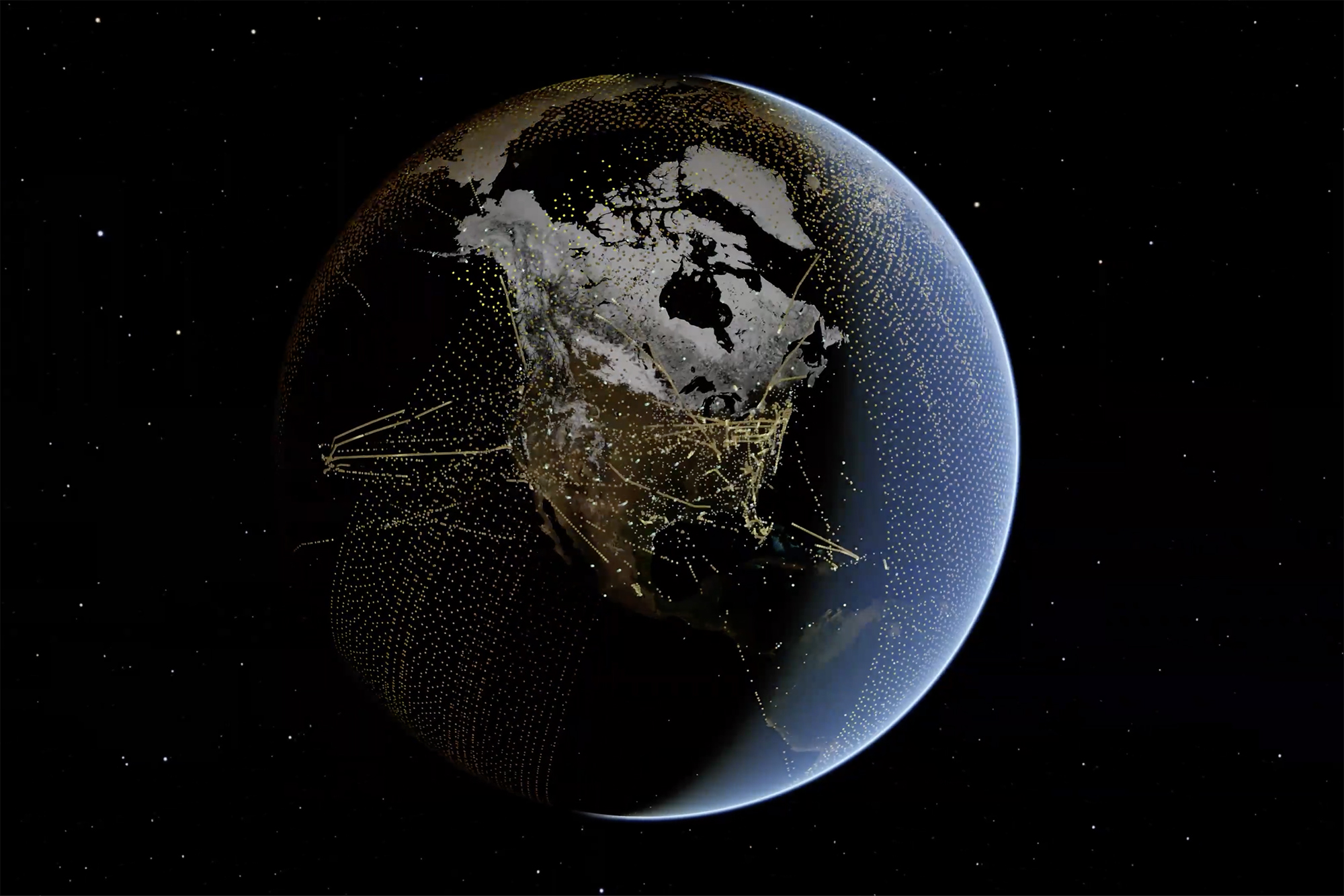
"caption": "NVIDIA Earth-2 Global Data Assimilation shows the complex patterns of Earth observation data from satellites, weather balloons and weather stations, which the AI model transforms into smooth, continuous estimates of the atmospheric state from which forecasts can be launched.",
"credit": "Courtesy of NVIDIA",
"altTag": null,
"description": null,
"imgSizes": {
"thumbnail": {
"file": "https://cdn.kqed.org/wp-content/uploads/sites/10/2026/01/260126-AI-WEATHER-01-KQED-160x107.jpg",
"width": 160,
"height": 107,
"mimeType": "image/jpeg"
},
"1536x1536": {
"file": "https://cdn.kqed.org/wp-content/uploads/sites/10/2026/01/260126-AI-WEATHER-01-KQED-1536x1025.jpg",
"width": 1536,
"height": 1025,
"mimeType": "image/jpeg"
},
"post-thumbnail": {
"file": "https://cdn.kqed.org/wp-content/uploads/sites/10/2026/01/260126-AI-WEATHER-01-KQED-672x372.jpg",
"width": 672,
"height": 372,
"mimeType": "image/jpeg"
},
"twentyfourteen-full-width": {
"file": "https://cdn.kqed.org/wp-content/uploads/sites/10/2026/01/260126-AI-WEATHER-01-KQED-1038x576.jpg",
"width": 1038,
"height": 576,
"mimeType": "image/jpeg"
},
"npr-cds-wide": {
"file": "https://cdn.kqed.org/wp-content/uploads/sites/10/2026/01/260126-AI-WEATHER-01-KQED-1200x675.jpg",
"width": 1200,
"height": 675,
"mimeType": "image/jpeg"
},
"kqedFullSize": {
"file": "https://cdn.kqed.org/wp-content/uploads/sites/10/2026/01/260126-AI-WEATHER-01-KQED.jpg",
"width": 2000,
"height": 1334
}
},
"isLoading": false,
"fetchFailed": false
},
"news_12071091": {
"type": "attachments",
"id": "news_12071091",
"meta": {
"index": "attachments_1716263798",
"site": "news",
"id": "12071091",
"found": true
},
"title": "Highwinds And Heavy Snow At Kirkwood Ski Resort",
"publishDate": 1769466553,
"status": "inherit",
"parent": 12071010,
"modified": 1788279682,
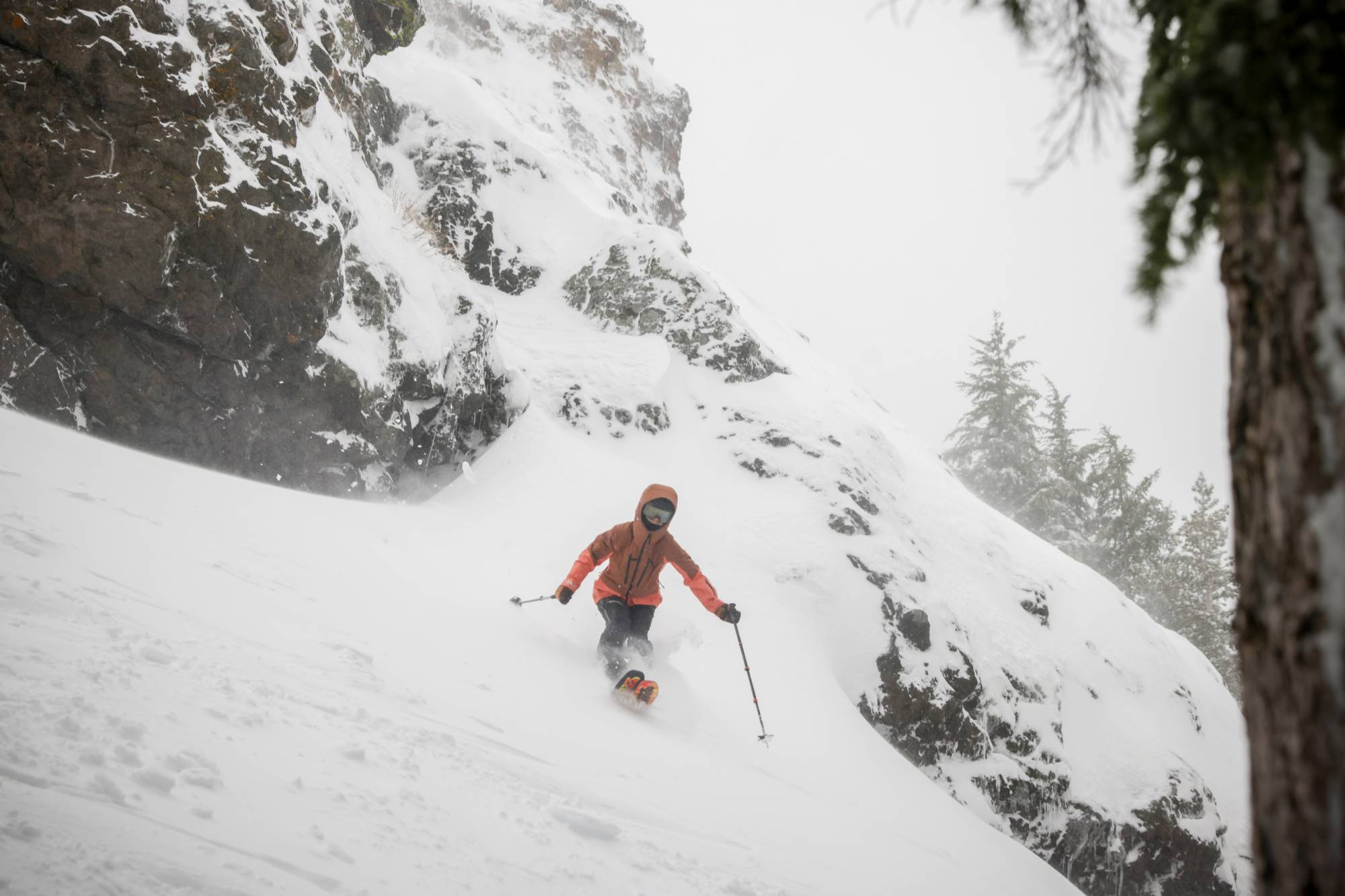
"caption": "Professional skier Molly Armanino lands Dan's Cliff at Kirkwood Ski Resort in Kirkwood, California on Saturday, Jan. 3, 2026. Heavy snowfall beckons skiers, but challenge motorists as a weather system smashes into the Tahoe region. ",
"credit": "Brontë Wittpenn/San Francisco Chronicle via Getty Images",
"altTag": null,
"description": null,
"imgSizes": {
"medium": {
"file": "https://cdn.kqed.org/wp-content/uploads/sites/10/2026/01/GettyImages-2253947921-2000x1333.jpg",
"width": 2000,
"height": 1333,
"mimeType": "image/jpeg"
},
"large": {
"file": "https://cdn.kqed.org/wp-content/uploads/sites/10/2026/01/GettyImages-2253947921-2000x1333.jpg",
"width": 2000,
"height": 1333,
"mimeType": "image/jpeg"
},
"thumbnail": {
"file": "https://cdn.kqed.org/wp-content/uploads/sites/10/2026/01/GettyImages-2253947921-160x107.jpg",
"width": 160,
"height": 107,
"mimeType": "image/jpeg"
},
"1536x1536": {
"file": "https://cdn.kqed.org/wp-content/uploads/sites/10/2026/01/GettyImages-2253947921-1536x1024.jpg",
"width": 1536,
"height": 1024,
"mimeType": "image/jpeg"
},
"2048x2048": {
"file": "https://cdn.kqed.org/wp-content/uploads/sites/10/2026/01/GettyImages-2253947921-2048x1365.jpg",
"width": 2048,
"height": 1365,
"mimeType": "image/jpeg"
},
"post-thumbnail": {
"file": "https://cdn.kqed.org/wp-content/uploads/sites/10/2026/01/GettyImages-2253947921-672x372.jpg",
"width": 672,
"height": 372,
"mimeType": "image/jpeg"
},
"twentyfourteen-full-width": {
"file": "https://cdn.kqed.org/wp-content/uploads/sites/10/2026/01/GettyImages-2253947921-1038x576.jpg",
"width": 1038,
"height": 576,
"mimeType": "image/jpeg"
},
"full-width": {
"file": "https://cdn.kqed.org/wp-content/uploads/sites/10/2026/01/GettyImages-2253947921-2000x1333.jpg",
"width": 2000,
"height": 1333,
"mimeType": "image/jpeg"
},
"npr-cds-wide": {
"file": "https://cdn.kqed.org/wp-content/uploads/sites/10/2026/01/GettyImages-2253947921-1200x675.jpg",
"width": 1200,
"height": 675,
"mimeType": "image/jpeg"
},
"kqedFullSize": {
"file": "https://cdn.kqed.org/wp-content/uploads/sites/10/2026/01/GettyImages-2253947921-scaled-e1769466571155.jpg",
"width": 2000,
"height": 1334
}
},
"isLoading": false,
"fetchFailed": false
},
"news_12068732": {
"type": "attachments",
"id": "news_12068732",
"meta": {
"index": "attachments_1716263798",
"site": "news",
"id": "12068732",
"found": true
},
"title": "Extreme Weather California",
"publishDate": 1767662183,
"status": "inherit",
"parent": 12068644,
"modified": 1767662240,
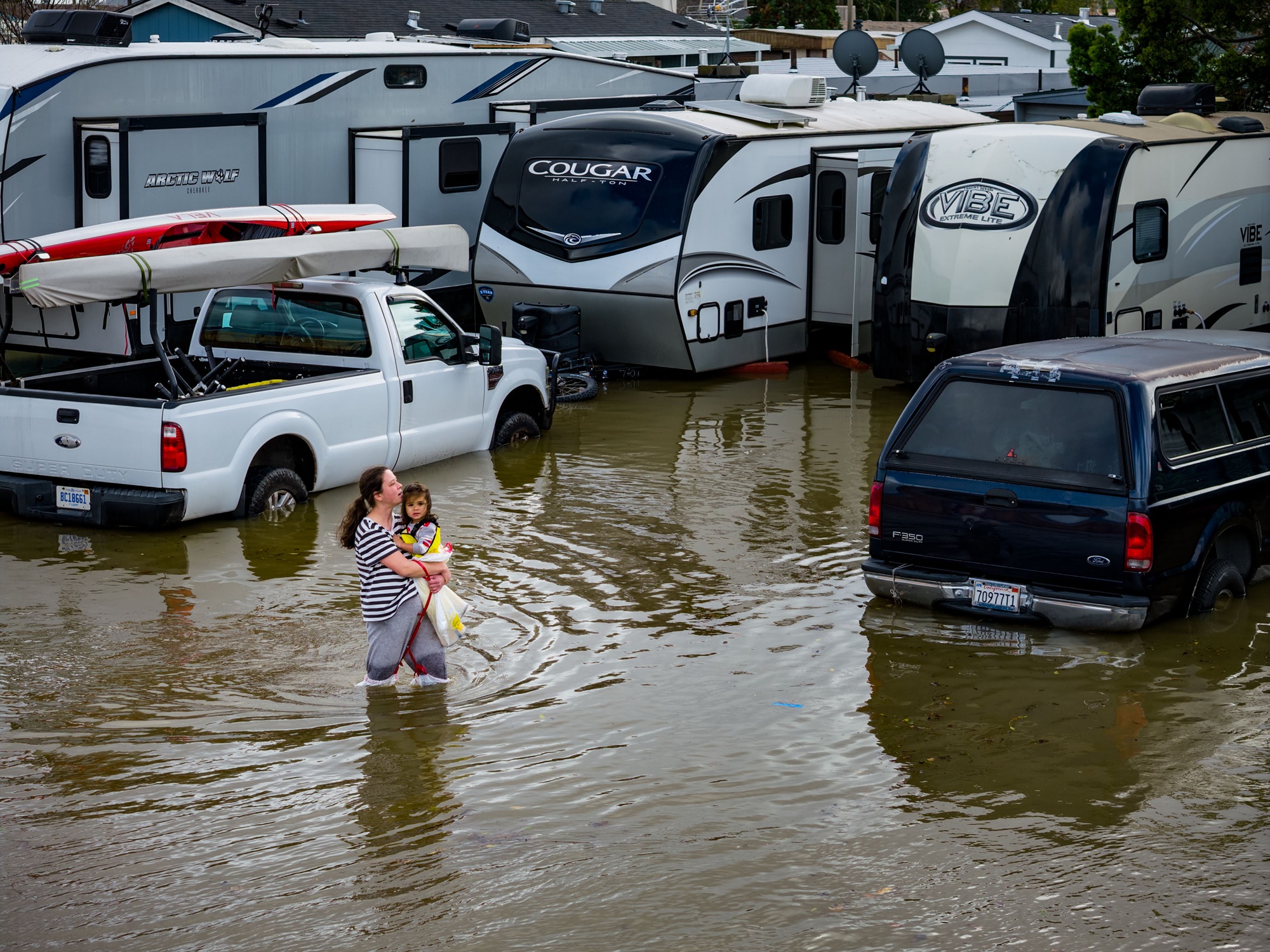
"caption": "People wade through an RV park flooded by the \"King Tides\" on Saturday, Jan. 3, 2026, near Corte Madera in Marin County, California.",
"credit": "Ethan Swope/AP Photo",
"altTag": null,
"description": null,
"imgSizes": {
"thumbnail": {
"file": "https://cdn.kqed.org/wp-content/uploads/sites/10/2026/01/MarinCountyFloodingAP3-160x120.jpg",
"width": 160,
"height": 120,
"mimeType": "image/jpeg"
},
"1536x1536": {
"file": "https://cdn.kqed.org/wp-content/uploads/sites/10/2026/01/MarinCountyFloodingAP3-1536x1151.jpg",
"width": 1536,
"height": 1151,
"mimeType": "image/jpeg"
},
"post-thumbnail": {
"file": "https://cdn.kqed.org/wp-content/uploads/sites/10/2026/01/MarinCountyFloodingAP3-672x372.jpg",
"width": 672,
"height": 372,
"mimeType": "image/jpeg"
},
"twentyfourteen-full-width": {
"file": "https://cdn.kqed.org/wp-content/uploads/sites/10/2026/01/MarinCountyFloodingAP3-1038x576.jpg",
"width": 1038,
"height": 576,
"mimeType": "image/jpeg"
},
"npr-cds-wide": {
"file": "https://cdn.kqed.org/wp-content/uploads/sites/10/2026/01/MarinCountyFloodingAP3-1200x675.jpg",
"width": 1200,
"height": 675,
"mimeType": "image/jpeg"
},
"kqedFullSize": {
"file": "https://cdn.kqed.org/wp-content/uploads/sites/10/2026/01/MarinCountyFloodingAP3.jpg",
"width": 2000,
"height": 1499
}
},
"isLoading": false,
"fetchFailed": false
},
"news_12069091": {
"type": "attachments",
"id": "news_12069091",
"meta": {
"index": "attachments_1716263798",
"site": "news",
"id": "12069091",
"found": true
},
"title": "San Francisco Sees Historically Cold Summer With Record Rain In July",
"publishDate": 1767896015,
"status": "inherit",
"parent": 12069084,
"modified": 1767911736,
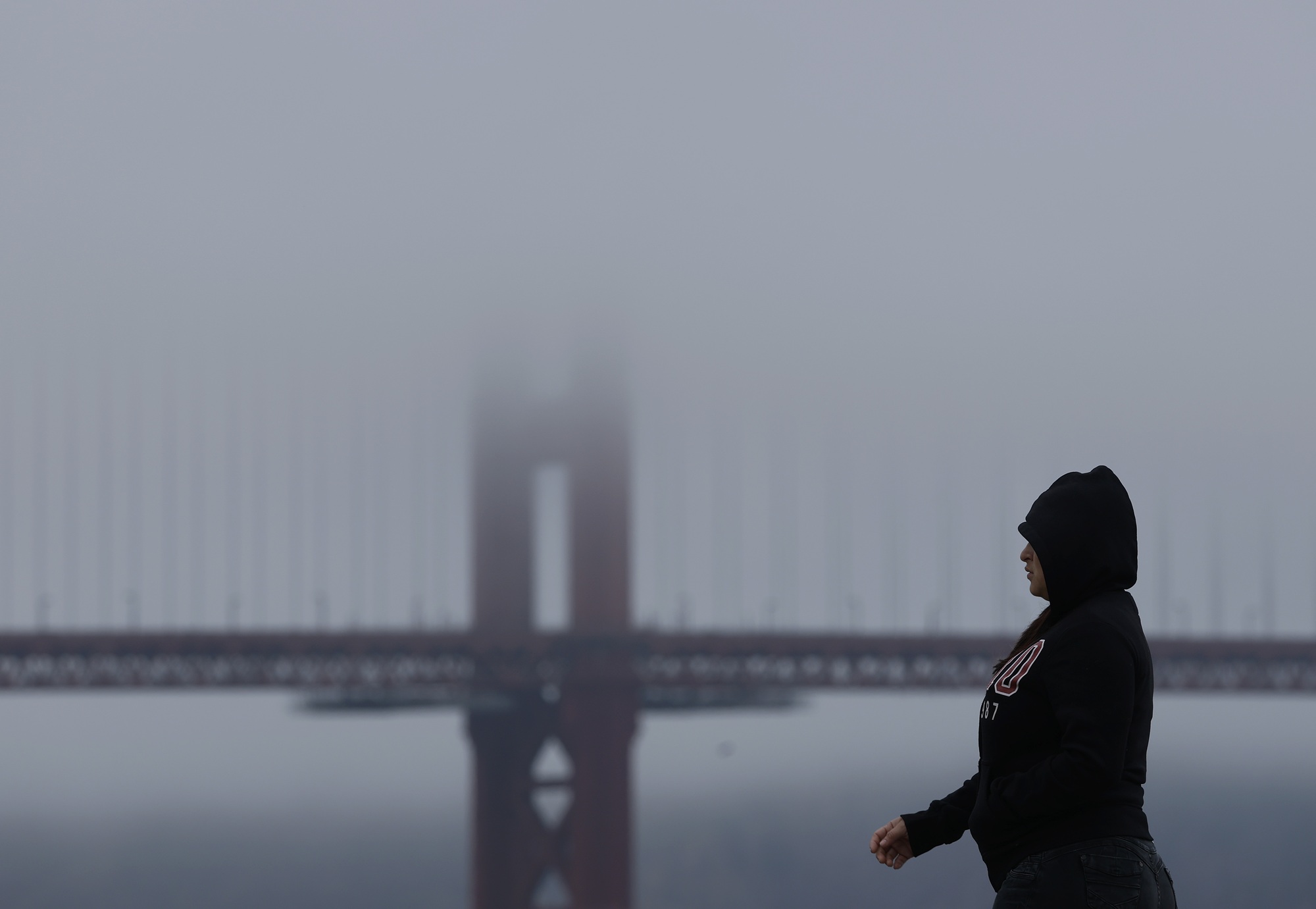
"caption": "A pedestrian walks by a fog-shrouded Golden Gate Bridge on July 30, 2025, in San Francisco, California. As summer temperatures soar to record highs across much of the U.S., San Francisco is experiencing a historically cold summer as a persistent marine layer hangs over the city on most days, keeping daily temperatures in the 50s and 60s. The constant fog has produced five days of measurable precipitation in July for the first time since 1850. Since May, San Francisco has only once reached a daytime high temperature of 70 degrees.",
"credit": "Justin Sullivan/Getty Images",
"altTag": null,
"description": null,
"imgSizes": {
"thumbnail": {
"file": "https://cdn.kqed.org/wp-content/uploads/sites/10/2026/01/BayAreaColdWeatherSFGetty-160x110.jpg",
"width": 160,
"height": 110,
"mimeType": "image/jpeg"
},
"1536x1536": {
"file": "https://cdn.kqed.org/wp-content/uploads/sites/10/2026/01/BayAreaColdWeatherSFGetty-1536x1061.jpg",
"width": 1536,
"height": 1061,
"mimeType": "image/jpeg"
},
"post-thumbnail": {
"file": "https://cdn.kqed.org/wp-content/uploads/sites/10/2026/01/BayAreaColdWeatherSFGetty-672x372.jpg",
"width": 672,
"height": 372,
"mimeType": "image/jpeg"
},
"twentyfourteen-full-width": {
"file": "https://cdn.kqed.org/wp-content/uploads/sites/10/2026/01/BayAreaColdWeatherSFGetty-1038x576.jpg",
"width": 1038,
"height": 576,
"mimeType": "image/jpeg"
},
"npr-cds-wide": {
"file": "https://cdn.kqed.org/wp-content/uploads/sites/10/2026/01/BayAreaColdWeatherSFGetty-1200x675.jpg",
"width": 1200,
"height": 675,
"mimeType": "image/jpeg"
},
"kqedFullSize": {
"file": "https://cdn.kqed.org/wp-content/uploads/sites/10/2026/01/BayAreaColdWeatherSFGetty.jpg",
"width": 2000,
"height": 1381
}
},
"isLoading": false,
"fetchFailed": false
},
"news_12068984": {
"type": "attachments",
"id": "news_12068984",
"meta": {
"index": "attachments_1716263798",
"site": "news",
"id": "12068984",
"found": true
},
"title": "Sonoma County Town Of Guerneville Inundated With Flood Waters From \"Atmospheric River\" Weather System",
"publishDate": 1767825565,
"status": "inherit",
"parent": 12068981,
"modified": 1767825612,
"caption": "Highway 116 cuts through a flooded neighborhood on Feb. 27, 2019, in Guerneville, California. The Russian River has crested over flood stage and is expected to continue to rise to record levels and inundate the town of Guerneville. The town is currently under mandatory evacuation and roads leading into the town have been flooded over. ",
"credit": "Justin Sullivan/Getty Images",
"altTag": null,
"description": null,
"imgSizes": {
"thumbnail": {
"file": "https://cdn.kqed.org/wp-content/uploads/sites/10/2026/01/Hwy116Getty-160x107.jpg",
"width": 160,
"height": 107,
"mimeType": "image/jpeg"
},
"1536x1536": {
"file": "https://cdn.kqed.org/wp-content/uploads/sites/10/2026/01/Hwy116Getty-1536x1024.jpg",
"width": 1536,
"height": 1024,
"mimeType": "image/jpeg"
},
"post-thumbnail": {
"file": "https://cdn.kqed.org/wp-content/uploads/sites/10/2026/01/Hwy116Getty-672x372.jpg",
"width": 672,
"height": 372,
"mimeType": "image/jpeg"
},
"twentyfourteen-full-width": {
"file": "https://cdn.kqed.org/wp-content/uploads/sites/10/2026/01/Hwy116Getty-1038x576.jpg",
"width": 1038,
"height": 576,
"mimeType": "image/jpeg"
},
"npr-cds-wide": {
"file": "https://cdn.kqed.org/wp-content/uploads/sites/10/2026/01/Hwy116Getty-1200x675.jpg",
"width": 1200,
"height": 675,
"mimeType": "image/jpeg"
},
"kqedFullSize": {
"file": "https://cdn.kqed.org/wp-content/uploads/sites/10/2026/01/Hwy116Getty.jpg",
"width": 2000,
"height": 1333
}
},
"isLoading": false,
"fetchFailed": false
},
"news_12068750": {
"type": "attachments",
"id": "news_12068750",
"meta": {
"index": "attachments_1716263798",
"site": "news",
"id": "12068750",
"found": true
},
"title": null,
"publishDate": 1767720770,
"status": "inherit",
"parent": 12068745,
"modified": 1767720791,
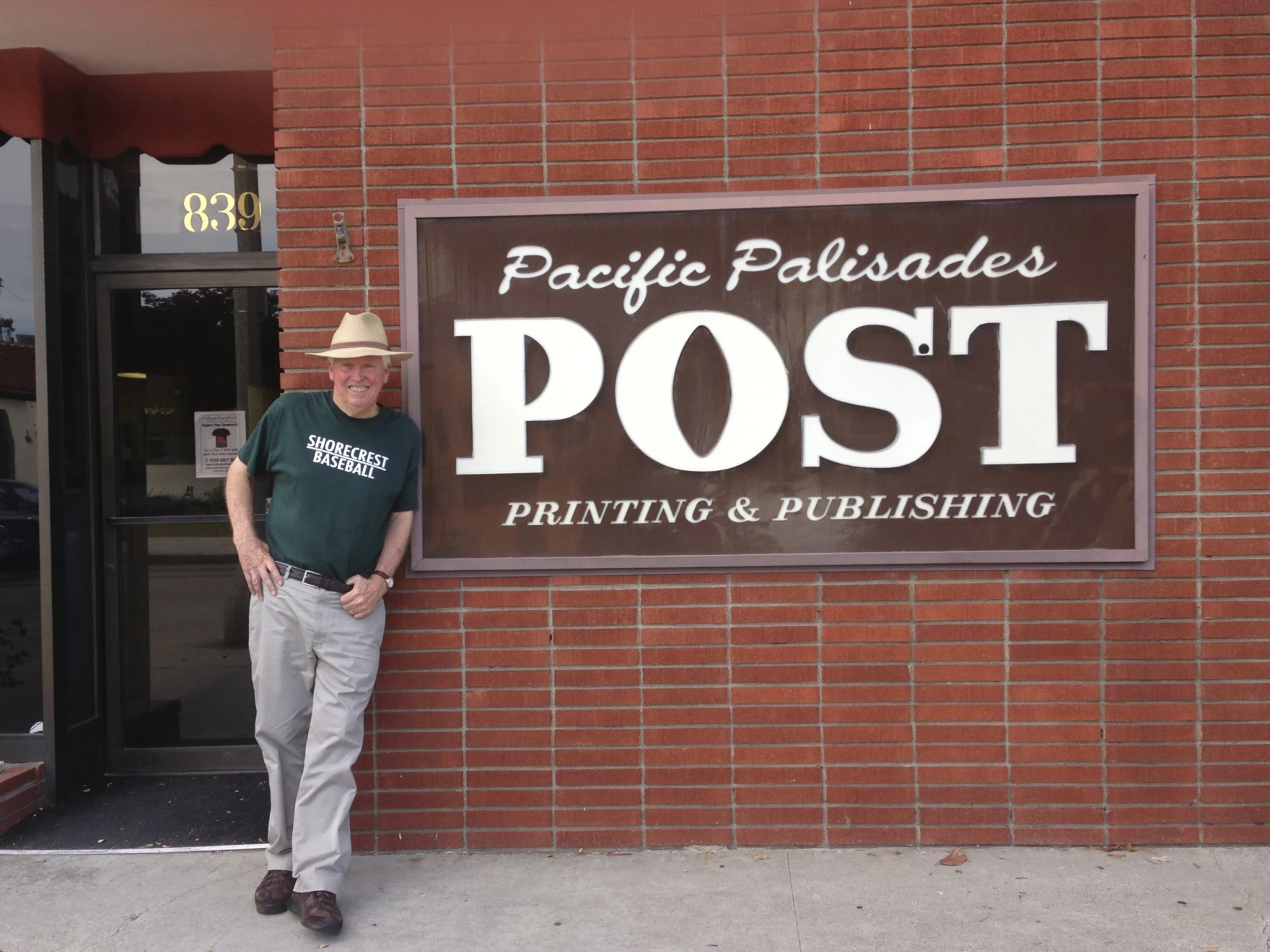
"caption": "Former Pali-Post editor Bill Bruns stands in front of the old \"Pacific Palisades Post\" building on Via de la Paz. The building held the newsroom as well as the paper's printing press.\n",
"credit": "Bill Bruns/LAist",
"altTag": null,
"description": null,
"imgSizes": {
"thumbnail": {
"file": "https://cdn.kqed.org/wp-content/uploads/sites/10/2026/01/PPftimahge-160x120.jpeg",
"width": 160,
"height": 120,
"mimeType": "image/jpeg"
},
"1536x1536": {
"file": "https://cdn.kqed.org/wp-content/uploads/sites/10/2026/01/PPftimahge-1536x1152.jpeg",
"width": 1536,
"height": 1152,
"mimeType": "image/jpeg"
},
"post-thumbnail": {
"file": "https://cdn.kqed.org/wp-content/uploads/sites/10/2026/01/PPftimahge-672x372.jpeg",
"width": 672,
"height": 372,
"mimeType": "image/jpeg"
},
"twentyfourteen-full-width": {
"file": "https://cdn.kqed.org/wp-content/uploads/sites/10/2026/01/PPftimahge-1038x576.jpeg",
"width": 1038,
"height": 576,
"mimeType": "image/jpeg"
},
"npr-cds-wide": {
"file": "https://cdn.kqed.org/wp-content/uploads/sites/10/2026/01/PPftimahge-1200x675.jpeg",
"width": 1200,
"height": 675,
"mimeType": "image/jpeg"
},
"kqedFullSize": {
"file": "https://cdn.kqed.org/wp-content/uploads/sites/10/2026/01/PPftimahge.jpeg",
"width": 1760,
"height": 1320
}
},
"isLoading": false,
"fetchFailed": false
},
"news_12068377": {
"type": "attachments",
"id": "news_12068377",
"meta": {
"index": "attachments_1716263798",
"site": "news",
"id": "12068377",
"found": true
},
"title": "251223-Storm-04-BL_qed",
"publishDate": 1766602344,
"status": "inherit",
"parent": 0,
"modified": 1766602382,
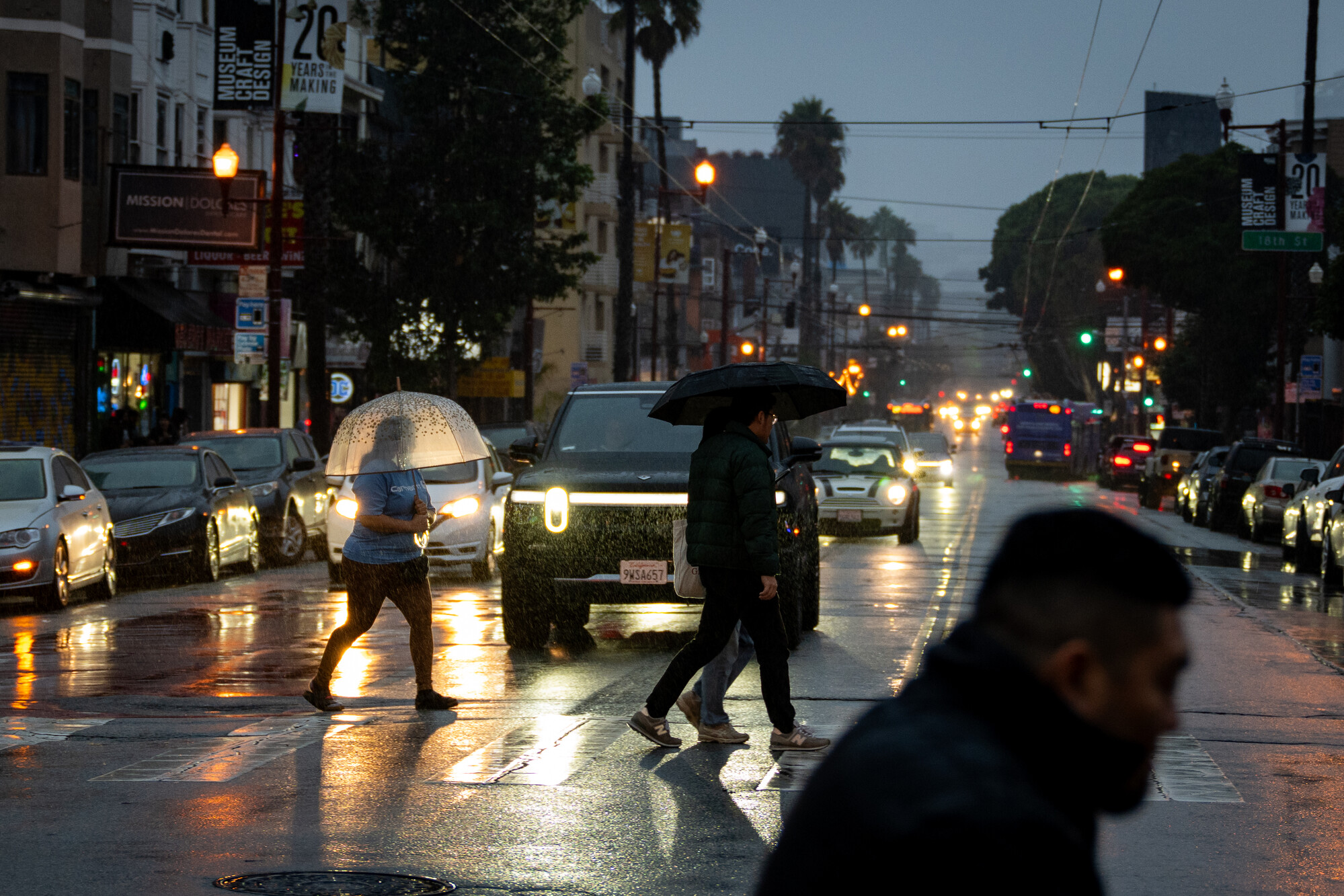
"caption": "Pedestrians cross Mission Street in San Francisco on Dec. 23, 2025, as a storm system moves through the Bay Area.",
"credit": "Beth LaBerge/KQED",
"altTag": null,
"description": null,
"imgSizes": {
"thumbnail": {
"file": "https://cdn.kqed.org/wp-content/uploads/sites/10/2025/12/251223-Storm-04-BL_qed-160x107.jpg",
"width": 160,
"height": 107,
"mimeType": "image/jpeg"
},
"1536x1536": {
"file": "https://cdn.kqed.org/wp-content/uploads/sites/10/2025/12/251223-Storm-04-BL_qed-1536x1024.jpg",
"width": 1536,
"height": 1024,
"mimeType": "image/jpeg"
},
"post-thumbnail": {
"file": "https://cdn.kqed.org/wp-content/uploads/sites/10/2025/12/251223-Storm-04-BL_qed-672x372.jpg",
"width": 672,
"height": 372,
"mimeType": "image/jpeg"
},
"twentyfourteen-full-width": {
"file": "https://cdn.kqed.org/wp-content/uploads/sites/10/2025/12/251223-Storm-04-BL_qed-1038x576.jpg",
"width": 1038,
"height": 576,
"mimeType": "image/jpeg"
},
"npr-cds-wide": {
"file": "https://cdn.kqed.org/wp-content/uploads/sites/10/2025/12/251223-Storm-04-BL_qed-1200x675.jpg",
"width": 1200,
"height": 675,
"mimeType": "image/jpeg"
},
"kqedFullSize": {
"file": "https://cdn.kqed.org/wp-content/uploads/sites/10/2025/12/251223-Storm-04-BL_qed.jpg",
"width": 1999,
"height": 1333
}
},
"isLoading": false,
"fetchFailed": false
},
"news_12068651": {
"type": "attachments",
"id": "news_12068651",
"meta": {
"index": "attachments_1716263798",
"site": "news",
"id": "12068651",
"found": true
},
"title": "Extreme Weather California",
"publishDate": 1767643212,
"status": "inherit",
"parent": 12068644,
"modified": 1767664276,
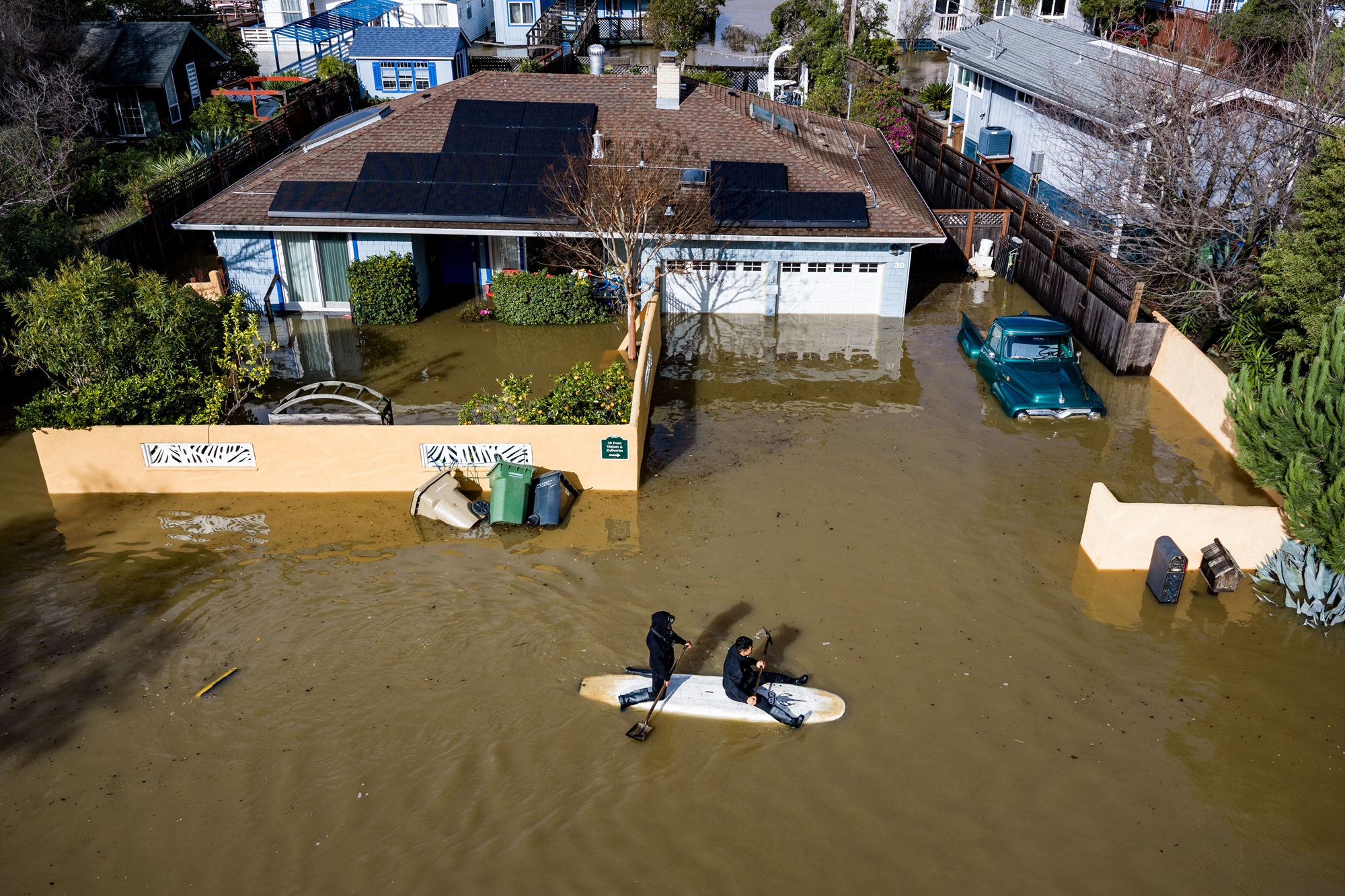
"caption": "People paddle through a street flooded by the \"King Tides,\" occurring when the sun, moon and Earth align, causing a stronger gravitational pull on Saturday, Jan. 3, 2026, near Corte Madera in Marin County, California.",
"credit": "Ethan Swope/AP Photo",
"altTag": null,
"description": null,
"imgSizes": {
"thumbnail": {
"file": "https://cdn.kqed.org/wp-content/uploads/sites/10/2026/01/MarinCountyFloodingAP-160x107.jpg",
"width": 160,
"height": 107,
"mimeType": "image/jpeg"
},
"1536x1536": {
"file": "https://cdn.kqed.org/wp-content/uploads/sites/10/2026/01/MarinCountyFloodingAP-1536x1024.jpg",
"width": 1536,
"height": 1024,
"mimeType": "image/jpeg"
},
"post-thumbnail": {
"file": "https://cdn.kqed.org/wp-content/uploads/sites/10/2026/01/MarinCountyFloodingAP-672x372.jpg",
"width": 672,
"height": 372,
"mimeType": "image/jpeg"
},
"twentyfourteen-full-width": {
"file": "https://cdn.kqed.org/wp-content/uploads/sites/10/2026/01/MarinCountyFloodingAP-1038x576.jpg",
"width": 1038,
"height": 576,
"mimeType": "image/jpeg"
},
"npr-cds-wide": {
"file": "https://cdn.kqed.org/wp-content/uploads/sites/10/2026/01/MarinCountyFloodingAP-1200x675.jpg",
"width": 1200,
"height": 675,
"mimeType": "image/jpeg"
},
"kqedFullSize": {
"file": "https://cdn.kqed.org/wp-content/uploads/sites/10/2026/01/MarinCountyFloodingAP.jpg",
"width": 2000,
"height": 1333
}
},
"isLoading": false,
"fetchFailed": false
}
},
"audioPlayerReducer": {
"postId": "stream_live",
"isPaused": true,
"isPlaying": false,
"pfsActive": false,
"pledgeModalIsOpen": true,
"playerDrawerIsOpen": false,
"liveAudioPlayStartedAt": 0,
"liveAudioPlayContext": ""
},
"authorsReducer": {
"byline_news_12073333": {
"type": "authors",
"id": "byline_news_12073333",
"meta": {
"override": true
},
"slug": "byline_news_12073333",
"name": "Alejandro Lazo, CalMatters",
"isLoading": false
},
"byline_news_12072633": {
"type": "authors",
"id": "byline_news_12072633",
"meta": {
"override": true
},
"slug": "byline_news_12072633",
"name": "\u003ca href=\"https://calmatters.org/author/alejandro-lazo/\">Alejandro Lazo\u003c/a>, CalMatters",
"isLoading": false
},
"byline_news_12068745": {
"type": "authors",
"id": "byline_news_12068745",
"meta": {
"override": true
},
"slug": "byline_news_12068745",
"name": "Dañiel Andres Martinez, LAist",
"isLoading": false
},
"rachael-myrow": {
"type": "authors",
"id": "251",
"meta": {
"index": "authors_1716337520",
"id": "251",
"found": true
},
"name": "Rachael Myrow",
"firstName": "Rachael",
"lastName": "Myrow",
"slug": "rachael-myrow",
"email": "rmyrow@kqed.org",
"display_author_email": true,
"staff_mastheads": [
"news"
],
"title": "Senior Editor of KQED's Silicon Valley News Desk",
"bio": "• I write and edit stories about how Silicon Valley power and policies shape everyday life in California. I’m also passionate about making Bay Area history and culture more accessible to a broad public. • I’ve been a journalist for most of my life, starting in high school with The Franklin Press in Los Angeles, where I grew up. While earning my first degree in English at UC Berkeley, I got my start in public radio at KALX-FM. After completing a second degree in journalism at Cal, I landed my first professional job at Marketplace, then moved on to KPCC (now LAist), and then KQED, where I hosted The California Report for more than seven years. • My reporting has appeared on NPR, The World, WBUR’s \u003ci>Here & Now\u003c/i>, and the BBC. I also guest host for KQED’s \u003ci>Forum\u003c/i>, as well as the Commonwealth Club in San Francisco. • I speak periodically on media, democracy and technology issues, and do voiceover work for documentaries and educational video projects. • Outside of the studio, you'll find me hiking Bay Area trails and whipping up Insta-ready meals in my kitchen. • I do not accept gifts, money, or favors from anyone connected to my reporting, I don't pay people for information, and I do not support or donate to political causes. • I strive to treat the people I report on with fairness, honesty, and respect. I also recognize there are often multiple sides to a story and work to verify information through multiple sources and documentation. If I get something wrong, I correct it.",
"avatar": "https://secure.gravatar.com/avatar/3ed8a3c5f26025e4a805ba634cda8cd764906b97438a6d9ce216b044e340da4e?s=600&d=blank&r=g",
"twitter": "rachaelmyrow",
"bluesky": null,
"facebook": null,
"instagram": null,
"linkedin": "https://www.linkedin.com/in/rachaelmyrow/",
"sites": [
{
"site": "arts",
"roles": [
"administrator"
]
},
{
"site": "news",
"roles": [
"edit_others_posts",
"editor"
]
},
{
"site": "futureofyou",
"roles": [
"editor"
]
},
{
"site": "bayareabites",
"roles": [
"editor"
]
},
{
"site": "stateofhealth",
"roles": [
"editor"
]
},
{
"site": "science",
"roles": [
"editor"
]
},
{
"site": "food",
"roles": [
"editor"
]
},
{
"site": "forum",
"roles": [
"editor"
]
},
{
"site": "liveblog",
"roles": [
"author"
]
}
],
"headData": {
"title": "Rachael Myrow | KQED",
"description": "Senior Editor of KQED's Silicon Valley News Desk",
"ogImgSrc": "https://secure.gravatar.com/avatar/3ed8a3c5f26025e4a805ba634cda8cd764906b97438a6d9ce216b044e340da4e?s=600&d=blank&r=g",
"twImgSrc": "https://secure.gravatar.com/avatar/3ed8a3c5f26025e4a805ba634cda8cd764906b97438a6d9ce216b044e340da4e?s=600&d=blank&r=g"
},
"isLoading": false,
"link": "/author/rachael-myrow"
},
"scuevas": {
"type": "authors",
"id": "2600",
"meta": {
"index": "authors_1716337520",
"id": "2600",
"found": true
},
"name": "Steven Cuevas",
"firstName": "Steven",
"lastName": "Cuevas",
"slug": "scuevas",
"email": "scuevas@kqed.org",
"display_author_email": false,
"staff_mastheads": [],
"title": "KQED Contributor",
"bio": "Steven is a former Los Angeles bureau chief for The California Report.\r\n\r\nHe reports on an array of issues across the Southland, from immigration and regional politics to religion, the performing arts and pop culture.\r\n\r\nPrior to joining KQED in 2012, Steven covered Inland southern California for KPCC in Pasadena. He also helped establish the first newsroom at \u003ca href=\"http://kut.org/\">KUT\u003c/a> in Austin, Texas where he was a general assignment reporter.\r\n\r\nSteven has received numerous awards for his reporting including an RTNDA Edward R. Murrow Award for investigative reporting in addition to awards from the LA Press Club, the Associated Press and the Society for Professional Journalists.\r\n\r\nSteven grew up in and around San Francisco and now lives in Pasadena just a short jog from the foot of the San Gabriel Mountains.",
"avatar": "https://secure.gravatar.com/avatar/2d253580794f8e026100fae05cfabbbd4889b4fe15146146cacb82a01974c538?s=600&d=blank&r=g",
"twitter": null,
"bluesky": null,
"facebook": null,
"instagram": null,
"linkedin": null,
"sites": [
{
"site": "news",
"roles": [
"subscriber"
]
}
],
"headData": {
"title": "Steven Cuevas | KQED",
"description": "KQED Contributor",
"ogImgSrc": "https://secure.gravatar.com/avatar/2d253580794f8e026100fae05cfabbbd4889b4fe15146146cacb82a01974c538?s=600&d=blank&r=g",
"twImgSrc": "https://secure.gravatar.com/avatar/2d253580794f8e026100fae05cfabbbd4889b4fe15146146cacb82a01974c538?s=600&d=blank&r=g"
},
"isLoading": false,
"link": "/author/scuevas"
},
"amontecillo": {
"type": "authors",
"id": "11649",
"meta": {
"index": "authors_1716337520",
"id": "11649",
"found": true
},
"name": "Alan Montecillo",
"firstName": "Alan",
"lastName": "Montecillo",
"slug": "amontecillo",
"email": "amontecillo@kqed.org",
"display_author_email": false,
"staff_mastheads": [
"news"
],
"title": "KQED Contributor",
"bio": "Alan Montecillo is the senior editor of \u003cem>\u003ca href=\"http://kqed.org/thebay\">The Bay\u003c/a>, \u003c/em> KQED's local news podcast. Before moving to the Bay Area, he worked as a senior talk show producer for WILL in Champaign-Urbana, Illinois and at Oregon Public Broadcasting in Portland, Oregon. He has won journalism awards from the Society of Professional Journalists Northern California, the Public Media Journalists Association, The Signal Awards, and has also received a regional Edward R. Murrow award. Alan is a Filipino American from Hong Kong and a graduate of Reed College.",
"avatar": "https://secure.gravatar.com/avatar/268f53a2066899ea9efdd8a5900218b17c822d9862cbc9326cccec53ef41d349?s=600&d=blank&r=g",
"twitter": "alanmontecillo",
"bluesky": null,
"facebook": null,
"instagram": null,
"linkedin": null,
"sites": [
{
"site": "",
"roles": [
"editor"
]
},
{
"site": "news",
"roles": [
"editor",
"manage_categories"
]
}
],
"headData": {
"title": "Alan Montecillo | KQED",
"description": "KQED Contributor",
"ogImgSrc": "https://secure.gravatar.com/avatar/268f53a2066899ea9efdd8a5900218b17c822d9862cbc9326cccec53ef41d349?s=600&d=blank&r=g",
"twImgSrc": "https://secure.gravatar.com/avatar/268f53a2066899ea9efdd8a5900218b17c822d9862cbc9326cccec53ef41d349?s=600&d=blank&r=g"
},
"isLoading": false,
"link": "/author/amontecillo"
},
"eromero": {
"type": "authors",
"id": "11746",
"meta": {
"index": "authors_1716337520",
"id": "11746",
"found": true
},
"name": "Ezra David Romero",
"firstName": "Ezra David",
"lastName": "Romero",
"slug": "eromero",
"email": "eromero@kqed.org",
"display_author_email": true,
"staff_mastheads": [
"news",
"science"
],
"title": "Climate Reporter",
"bio": "Ezra David Romero is a climate reporter for KQED News. He covers the absence and excess of water in the Bay Area — think sea level rise, flooding and drought. For nearly a decade he’s covered how warming temperatures are altering the lives of Californians. He’s reported on farmers worried their pistachio trees aren’t getting enough sleep, families desperate for water, scientists studying dying giant sequoias, and alongside firefighters containing wildfires. His work has appeared on local stations across California and nationally on public radio shows like Morning Edition, Here and Now, All Things Considered and Science Friday. ",
"avatar": "https://secure.gravatar.com/avatar/c76404d287c10ed40224227551ac36e24352c7306f106632caf6fead76f8801f?s=600&d=blank&r=g",
"twitter": "ezraromero",
"bluesky": null,
"facebook": null,
"instagram": null,
"linkedin": null,
"sites": [
{
"site": "arts",
"roles": [
"editor"
]
},
{
"site": "news",
"roles": [
"editor"
]
},
{
"site": "science",
"roles": [
"editor"
]
},
{
"site": "liveblog",
"roles": [
"author"
]
}
],
"headData": {
"title": "Ezra David Romero | KQED",
"description": "Climate Reporter",
"ogImgSrc": "https://secure.gravatar.com/avatar/c76404d287c10ed40224227551ac36e24352c7306f106632caf6fead76f8801f?s=600&d=blank&r=g",
"twImgSrc": "https://secure.gravatar.com/avatar/c76404d287c10ed40224227551ac36e24352c7306f106632caf6fead76f8801f?s=600&d=blank&r=g"
},
"isLoading": false,
"link": "/author/eromero"
},
"jessicakariisa": {
"type": "authors",
"id": "11831",
"meta": {
"index": "authors_1716337520",
"id": "11831",
"found": true
},
"name": "Jessica Kariisa",
"firstName": "Jessica",
"lastName": "Kariisa",
"slug": "jessicakariisa",
"email": "jkariisa@kqed.org",
"display_author_email": false,
"staff_mastheads": [],
"title": "Producer, The Bay",
"bio": "Jessica Kariisa is the producer of The Bay. She first joined KQED as an intern for The California Report Magazine, after which she became an on-call producer. She reported a Bay Curious episode on the use of rap lyrics in criminal trials which won a Society of Professional Journalists award in 2023 for Excellence in Features Journalism and the 2023 Signal Award for Best Conversation Starter. She’s worked on podcasts for Snap Judgment and American Public Media. Before embarking on her audio career, she was a music journalist.\r\n\r\nJessica Kariisa is represented by SAG-AFTRA.",
"avatar": "https://secure.gravatar.com/avatar/522e97b28ac0b3d411621c0fde8f3419c7b71ea2c5c262c57c4bb600963f328c?s=600&d=blank&r=g",
"twitter": null,
"bluesky": null,
"facebook": null,
"instagram": null,
"linkedin": null,
"sites": [
{
"site": "arts",
"roles": [
"author"
]
},
{
"site": "news",
"roles": [
"editor",
"manage_categories"
]
}
],
"headData": {
"title": "Jessica Kariisa | KQED",
"description": "Producer, The Bay",
"ogImgSrc": "https://secure.gravatar.com/avatar/522e97b28ac0b3d411621c0fde8f3419c7b71ea2c5c262c57c4bb600963f328c?s=600&d=blank&r=g",
"twImgSrc": "https://secure.gravatar.com/avatar/522e97b28ac0b3d411621c0fde8f3419c7b71ea2c5c262c57c4bb600963f328c?s=600&d=blank&r=g"
},
"isLoading": false,
"link": "/author/jessicakariisa"
},
"kdebenedetti": {
"type": "authors",
"id": "11913",
"meta": {
"index": "authors_1716337520",
"id": "11913",
"found": true
},
"name": "Katie DeBenedetti",
"firstName": "Katie",
"lastName": "DeBenedetti",
"slug": "kdebenedetti",
"email": "kdebenedetti@kqed.org",
"display_author_email": false,
"staff_mastheads": [
"news",
"science"
],
"title": "KQED Contributor",
"bio": "Katie DeBenedetti is a digital reporter covering daily news for the Express Desk. Prior to joining KQED as a culture reporting intern in January 2024, she covered education and city government for the Napa Valley Register.",
"avatar": "https://secure.gravatar.com/avatar/6e31073cb8f7e4214ab03f42771d0f45?s=600&d=blank&r=g",
"twitter": null,
"facebook": null,
"instagram": null,
"linkedin": null,
"sites": [
{
"site": "news",
"roles": [
"author"
]
},
{
"site": "science",
"roles": [
"author"
]
},
{
"site": "liveblog",
"roles": [
"author"
]
}
],
"headData": {
"title": "Katie DeBenedetti | KQED",
"description": "KQED Contributor",
"ogImgSrc": "https://secure.gravatar.com/avatar/6e31073cb8f7e4214ab03f42771d0f45?s=600&d=blank&r=g",
"twImgSrc": "https://secure.gravatar.com/avatar/6e31073cb8f7e4214ab03f42771d0f45?s=600&d=blank&r=g"
},
"isLoading": false,
"link": "/author/kdebenedetti"
},
"gglueck": {
"type": "authors",
"id": "11946",
"meta": {
"index": "authors_1716337520",
"id": "11946",
"found": true
},
"name": "Gabriela Glueck",
"firstName": "Gabriela",
"lastName": "Glueck",
"slug": "gglueck",
"email": "gglueck@kqed.org",
"display_author_email": false,
"staff_mastheads": [
"news"
],
"title": "KQED Contributor",
"bio": null,
"avatar": "https://secure.gravatar.com/avatar/ec62b7e3f7727ce1070cc7046dde80271d1e63cf2178d6194f68bb8d1440f841?s=600&d=blank&r=g",
"twitter": null,
"bluesky": null,
"facebook": null,
"instagram": null,
"linkedin": null,
"sites": [
{
"site": "news",
"roles": [
"editor"
]
}
],
"headData": {
"title": "Gabriela Glueck | KQED",
"description": "KQED Contributor",
"ogImgSrc": "https://secure.gravatar.com/avatar/ec62b7e3f7727ce1070cc7046dde80271d1e63cf2178d6194f68bb8d1440f841?s=600&d=blank&r=g",
"twImgSrc": "https://secure.gravatar.com/avatar/ec62b7e3f7727ce1070cc7046dde80271d1e63cf2178d6194f68bb8d1440f841?s=600&d=blank&r=g"
},
"isLoading": false,
"link": "/author/gglueck"
},
"aaliahmad": {
"type": "authors",
"id": "11986",
"meta": {
"index": "authors_1716337520",
"id": "11986",
"found": true
},
"name": "Ayah Ali-Ahmad",
"firstName": "Ayah",
"lastName": "Ali-Ahmad",
"slug": "aaliahmad",
"email": "aaliahmad@KQED.org",
"display_author_email": false,
"staff_mastheads": [],
"title": "KQED Contributor",
"bio": null,
"avatar": "https://secure.gravatar.com/avatar/1cf54f187a5e1064b2cfef3f3d2f1e4f93e453395d56912aca6382a6071ec3ed?s=600&d=blank&r=g",
"twitter": "ayahaliahmad",
"bluesky": null,
"facebook": null,
"instagram": null,
"linkedin": null,
"sites": [
{
"site": "news",
"roles": [
"subscriber"
]
}
],
"headData": {
"title": "Ayah Ali-Ahmad | KQED",
"description": "KQED Contributor",
"ogImgSrc": "https://secure.gravatar.com/avatar/1cf54f187a5e1064b2cfef3f3d2f1e4f93e453395d56912aca6382a6071ec3ed?s=600&d=blank&r=g",
"twImgSrc": "https://secure.gravatar.com/avatar/1cf54f187a5e1064b2cfef3f3d2f1e4f93e453395d56912aca6382a6071ec3ed?s=600&d=blank&r=g"
},
"isLoading": false,
"link": "/author/aaliahmad"
},
"epeppel": {
"type": "authors",
"id": "11989",
"meta": {
"index": "authors_1716337520",
"id": "11989",
"found": true
},
"name": "Eliza Peppel",
"firstName": "Eliza",
"lastName": "Peppel",
"slug": "epeppel",
"email": "epeppel@kqed.org",
"display_author_email": false,
"staff_mastheads": [],
"title": null,
"bio": "Eliza is an award-winning journalist living in Oakland. She was previously a reporting fellow at KALW, where she reported daily news and long-form radio features. Eliza studied journalism at Fordham University in The Bronx during the COVID-19 pandemic. She grew up mainly in California and spent a few childhood years in Aix en Provence, France.",
"avatar": "https://secure.gravatar.com/avatar/20d9e17a06ee787c11052e6096319dd583b6376233d02383dab5eaeb874d5f56?s=600&d=blank&r=g",
"twitter": null,
"bluesky": null,
"facebook": null,
"instagram": null,
"linkedin": null,
"sites": [
{
"site": "news",
"roles": [
"subscriber"
]
},
{
"site": "science",
"roles": [
"subscriber"
]
}
],
"headData": {
"title": "Eliza Peppel | KQED",
"description": null,
"ogImgSrc": "https://secure.gravatar.com/avatar/20d9e17a06ee787c11052e6096319dd583b6376233d02383dab5eaeb874d5f56?s=600&d=blank&r=g",
"twImgSrc": "https://secure.gravatar.com/avatar/20d9e17a06ee787c11052e6096319dd583b6376233d02383dab5eaeb874d5f56?s=600&d=blank&r=g"
},
"isLoading": false,
"link": "/author/epeppel"
}
},
"pagesReducer": {
"news_tag_climate": {
"type": "terms",
"id": "news_19204",
"meta": {
"index": "terms_1716263798",
"site": "news",
"id": "19204",
"score": 7.059354
},
"featImg": null,
"name": "climate",
"description": null,
"taxonomy": "tag",
"headData": {
"twImgId": null,
"twTitle": null,
"ogTitle": null,
"ogImgId": null,
"twDescription": null,
"description": null,
"title": "climate Archives | KQED News",
"ogDescription": null
},
"ttid": 19221,
"slug": "climate",
"isLoading": false,
"title": "climate",
"pageMeta": {
"site": "news",
"WpPageTemplate": "page-topic-editorial",
"currentPage": 7
},
"blocks": [
{
"blockName": "kqed/post-list",
"attrs": {
"layout": "cardArticle2",
"query": "posts/news?tag=climate",
"seeMore": false,
"paginated": true,
"page": 7
}
},
{
"blockName": "kqed/ad"
}
]
}
},
"pfsSessionReducer": {},
"postsReducer": {
"stream_live": {
"type": "live",
"id": "stream_live",
"audioUrl": "https://streams.kqed.org/kqedradio",
"title": "Live Stream",
"excerpt": "Live Stream information currently unavailable.",
"link": "/radio",
"featImg": "",
"label": {
"name": "KQED Live",
"link": "/"
}
},
"stream_kqedNewscast": {
"type": "posts",
"id": "stream_kqedNewscast",
"audioUrl": "https://www.kqed.org/.stream/anon/radio/RDnews/newscast.mp3?_=1",
"title": "KQED Newscast",
"featImg": "",
"label": {
"name": "88.5 FM",
"link": "/"
}
},
"news_12073333": {
"type": "posts",
"id": "news_12073333",
"meta": {
"index": "posts_1716263798",
"site": "news",
"id": "12073333",
"score": null,
"sort": [
1770928725000
]
},
"guestAuthors": [],
"slug": "trump-scraps-a-cornerstone-climate-finding-as-california-prepares-for-court",
"title": "Trump Scraps a Cornerstone Climate Finding, as California Prepares for Court",
"publishDate": 1770928725,
"format": "standard",
"headTitle": "Trump Scraps a Cornerstone Climate Finding, as California Prepares for Court | KQED",
"labelTerm": {},
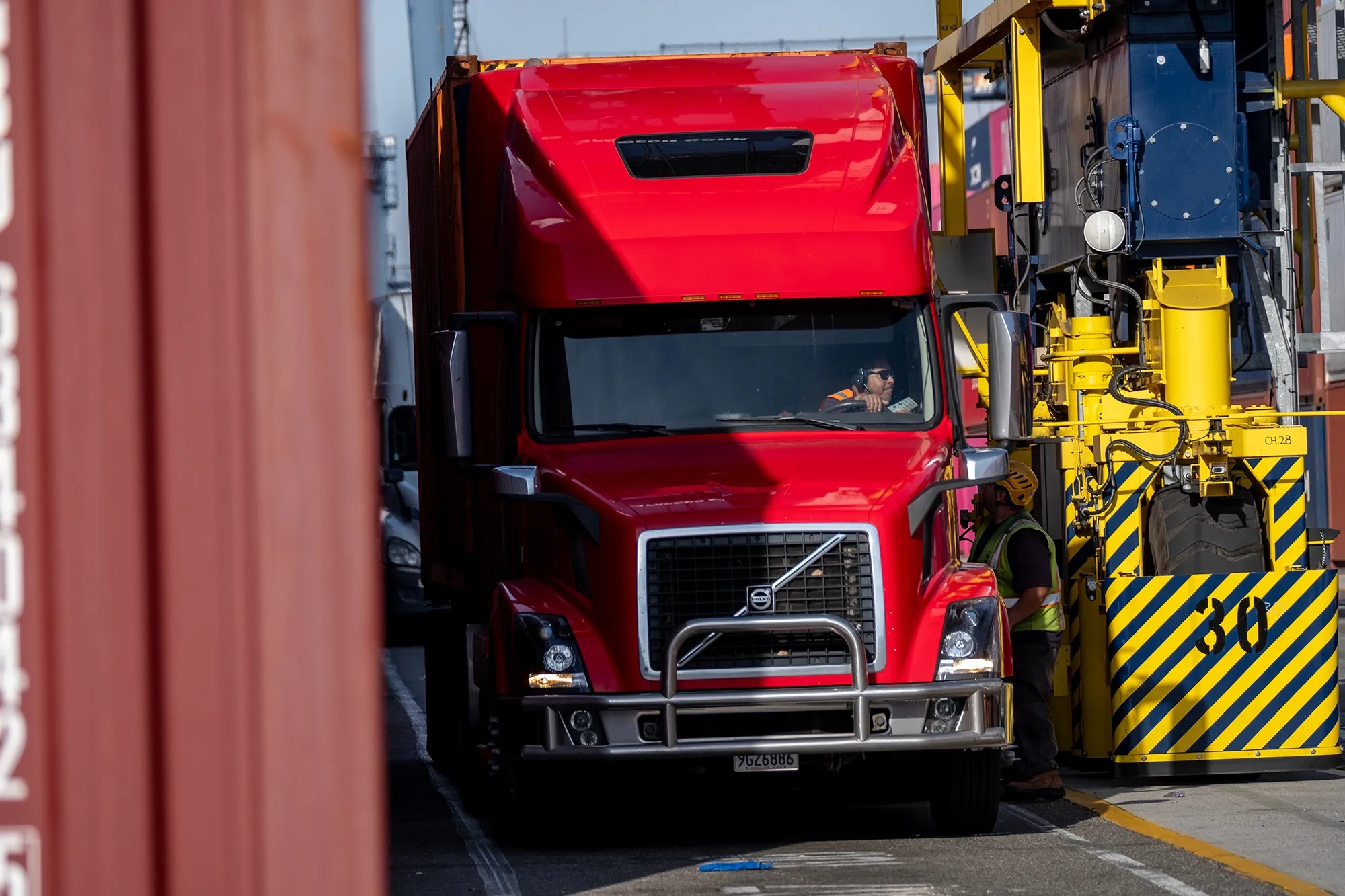
"content": "\u003cp>\u003cem>This story was originally published by \u003ca href=\"https://calmatters.org/\">CalMatters\u003c/a>. \u003ca href=\"https://calmatters.org/subscribe-to-calmatters/\">Sign up\u003c/a> for their newsletters.\u003c/em>\u003c/p>\n\u003cp>The \u003ca href=\"https://www.kqed.org/news/tag/donald-trump\">Trump\u003c/a> administration formally rescinded the legal foundation of federal climate policy Thursday — setting up a new front in California’s long-running battle with Washington over emissions rules.\u003c/p>\n\u003cp>“Today, the Trump EPA has finalized the single largest act of deregulation in the history of the United States of America,” EPA Administrator Lee Zeldin said at a White House press conference. “Referred to by some as the holy grail of federal regulatory overreach, the 2009 Obama EPA endangerment finding is now eliminated.”\u003c/p>\n\u003cp>After the U.S. Supreme Court ruled the federal government may regulate greenhouse gases if they were found to endanger public health, the U.S. Environmental Protection Agency issued a scientific determination that greenhouse gases indeed were a threat. By withdrawing its own so-called “endangerment finding,” the EPA is abandoning its justification for federal tailpipe standards, power plant rules and fuel economy regulations.\u003c/p>\n\u003cp>[ad fullwidth]\u003c/p>\n\u003cp>California opposed the withdrawal of the endangerment finding when it was proposed last year, and is expected to sue over the decision.\u003c/p>\n\u003cp>California Air Resources Board executive director Steven Cliff \u003ca href=\"https://ww2.arb.ca.gov/news/carb-executive-officer-rips-u-s-epa-proposal-reverse-decades-proven-climate-science\">testified\u003c/a> at the time that the move ignored settled science.\u003c/p>\n\u003cp>“Thousands of scientists from around the world are not wrong,” Cliff said in his testimony. “In this proposal, EPA is denying reality and telling every victim of climate-driven fires and floods not to believe what’s right before their eyes.”\u003c/p>\n\u003cfigure id=\"attachment_12070630\" class=\"wp-caption aligncenter\" style=\"max-width: 2000px\">\u003cimg loading=\"lazy\" decoding=\"async\" class=\"size-full wp-image-12070630\" src=\"https://cdn.kqed.org/wp-content/uploads/sites/10/2026/01/260116-NewsomLuriePresser-32-BL_qed.jpg\" alt=\"\" width=\"2000\" height=\"1333\" srcset=\"https://cdn.kqed.org/wp-content/uploads/sites/10/2026/01/260116-NewsomLuriePresser-32-BL_qed.jpg 2000w, https://cdn.kqed.org/wp-content/uploads/sites/10/2026/01/260116-NewsomLuriePresser-32-BL_qed-160x107.jpg 160w, https://cdn.kqed.org/wp-content/uploads/sites/10/2026/01/260116-NewsomLuriePresser-32-BL_qed-1536x1024.jpg 1536w\" sizes=\"auto, (max-width: 2000px) 100vw, 2000px\">\u003cfigcaption class=\"wp-caption-text\">Gov. Gavin Newsom speaks during a press conference at the Friendship House Association of American Indians in San Francisco on Jan. 16, 2026. \u003ccite>(Beth LaBerge/KQED)\u003c/cite>\u003c/figcaption>\u003c/figure>\n\u003cp>Gov. Gavin Newsom said in a statement Thursday that California would take the Trump administration to court over the decision.\u003c/p>\n\u003cp>“Donald Trump may put corporate greed ahead of communities and families, but California will not stand by,” Newsom said. “We will continue to lead because the lives and livelihoods of our people depend on it.”[aside postID=news_12072843 hero='https://cdn.kqed.org/wp-content/uploads/sites/10/2026/02/20251105_URBANSTRATEGY_PL_01-KQED.jpg']Other states and environmental groups have also indicated they could sue. They include Massachusetts, which was part of the coalition of states that sued to force the federal government to curb greenhouse gases nearly two decades ago.\u003c/p>\n\u003cp>Eliminating the federal basis for regulating planet-warming gases will not halt California’s climate policies, most of which – from California’s market-based approach to cutting carbon pollution to clean energy mandates for utilities — rest on state law.\u003c/p>\n\u003cp>In fact, the decision may open the door for California to set its own greenhouse gas standards for vehicles, a possibility that lawmakers and regulators are actively weighing.\u003c/p>\n\u003cp>The reversal in federal policy could also undercut arguments that federal law blocks state lawsuits against oil companies and boosts interest in expanding California’s authority over planet-warming pollution within its borders.\u003c/p>\n\u003ch2>California prepares for a fight\u003c/h2>\n\u003cp>Ann Carlson, a UCLA law professor and former federal transportation official, has argued that aggressive federal action against climate policy “could, ironically, provide states with authority they’ve never had before.”\u003c/p>\n\u003cp>Writing in the law journal Environmental Forum, Carlson theorized that California could attempt to regulate greenhouse gas emissions from cars and trucks directly under state law.\u003c/p>\n\u003cp>Federal law has preempted most states from setting local vehicle emission standards; California has, through a series of waivers granted under federal clean air law, obtained permission to set stricter standards than the federal government does.\u003c/p>\n\u003cfigure id=\"attachment_12073339\" class=\"wp-caption aligncenter\" style=\"max-width: 2000px\">\u003cimg loading=\"lazy\" decoding=\"async\" class=\"size-full wp-image-12073339\" src=\"https://cdn.kqed.org/wp-content/uploads/sites/10/2026/02/WaterTowerCM2.jpg\" alt=\"\" width=\"2000\" height=\"1333\" srcset=\"https://cdn.kqed.org/wp-content/uploads/sites/10/2026/02/WaterTowerCM2.jpg 2000w, https://cdn.kqed.org/wp-content/uploads/sites/10/2026/02/WaterTowerCM2-160x107.jpg 160w, https://cdn.kqed.org/wp-content/uploads/sites/10/2026/02/WaterTowerCM2-1536x1024.jpg 1536w\" sizes=\"auto, (max-width: 2000px) 100vw, 2000px\">\u003cfigcaption class=\"wp-caption-text\">Campbell Power Plant in Sacramento on Aug. 31, 2022. \u003ccite>(Rahul Lal/CalMatters)\u003c/cite>\u003c/figcaption>\u003c/figure>\n\u003cp>This could help California’s efforts “in the long run,” Carlson wrote in an email Wednesday, “but of course, withdrawing the United States from all efforts to tackle climate change is a terrible move. We should be leading the global effort, not retreating.”\u003c/p>\n\u003cp>In California, where cars and trucks account for more than a third of the state’s greenhouse gas emissions, California regulators at the air board and lawmakers are weighing in. When asked last year by CalMatters whether the air board would consider writing its own rules, Chair Lauren Sanchez said, “All options are currently on the table.”\u003c/p>\n\u003cp>“This is definitely a conversation,” Assemblymember \u003ca href=\"https://calmatters.digitaldemocracy.org/legislators/cottie-petrie-norris-165040\">Cottie Petrie-Norris\u003c/a>, a Democrat from Irvine, said during a Wednesday press conference held by the California Environmental Voters. “So stay tuned.”\u003c/p>\n\u003ch2>Ripple effects in court and Sacramento\u003c/h2>\n\u003cp>If Washington formally exits the field of carbon regulation, states may argue they have broader room to pursue liability claims tied to wildfire costs and other climate impacts, experts said.\u003c/p>\n\u003cp>California has \u003ca href=\"https://calmatters.org/environment/climate-change/2025/03/climate-change-california-oil-industry-legal-strategy/\">sued major oil companies\u003c/a> as recently as 2023, in an attempt to hold them responsible for climate impacts. Oil companies have frequently cited federal oversight as a reason to dismiss climate-damage lawsuits against them.[aside postID=news_12052390 hero='https://cdn.kqed.org/wp-content/uploads/sites/10/2025/08/230928-EAGLE-ROCK-SETTLE-MD-07_qed.jpg']“California is struggling with wildfire costs, for example, which are linked strongly to a warming climate,” said Ethan Elkind, a climate law expert at UC Berkeley. “I think that opens up a lot of legal avenues for states like California.”\u003c/p>\n\u003cp>The federal pullback has prompted lawmakers to consider expanding the Air Resources Board’s powers.\u003c/p>\n\u003cp>Assemblymember \u003ca href=\"https://calmatters.digitaldemocracy.org/legislators/robert-garcia-109905\">Robert Garcia\u003c/a>, a Democrat from Rancho Cucamonga, this week introduced \u003ca href=\"https://calmatters.digitaldemocracy.org/bills/ca_202520260ab1777\">a bill\u003c/a> aimed at affirming the state’s power to curb pollution from large facilities that generate heavy truck traffic, such as warehouses and ports, which concentrate diesel exhaust in nearby communities.\u003c/p>\n\u003cp>“It’s no secret that the federal government and California are not seeing eye to eye — we’re not on the same page,” Garcia said at Wednesday’s news conference. “This is an opportunity for our state, for California, to step in.”\u003c/p>\n\u003cp>\u003cem>This article was \u003ca href=\"https://calmatters.org/environment/2026/02/endangerment-climate-policy-trump-lawsuit/\">originally published on CalMatters\u003c/a> and was republished under the \u003ca href=\"https://creativecommons.org/licenses/by-nc-nd/4.0/\">Creative Commons Attribution-NonCommercial-NoDerivatives\u003c/a> license.\u003c/em>\u003c/p>\n\u003cp>\u003c/p>\n",
"blocks": [],
"excerpt": "Trump rescinded the legal foundation for U.S. climate policy. California is preparing to sue — and may try to write its own rules.",
"status": "publish",
"parent": 0,
"modified": 1770928725,
"stats": {
"hasAudio": false,
"hasVideo": false,
"hasChartOrMap": false,
"iframeSrcs": [],
"hasGoogleForm": false,
"hasGallery": false,
"hasHearkenModule": false,
"hasPolis": false,
"paragraphCount": 26,
"wordCount": 1019
},
"headData": {
"title": "Trump Scraps a Cornerstone Climate Finding, as California Prepares for Court | KQED",
"description": "Trump rescinded the legal foundation for U.S. climate policy. California is preparing to sue — and may try to write its own rules.",
"ogTitle": "",
"ogDescription": "",
"ogImgId": "",
"twTitle": "",
"twDescription": "",
"twImgId": "",
"schema": {
"@context": "https://schema.org",
"@type": "NewsArticle",
"headline": "Trump Scraps a Cornerstone Climate Finding, as California Prepares for Court",
"datePublished": "2026-02-12T12:38:45-08:00",
"dateModified": "2026-02-12T12:38:45-08:00",
"image": "https://cdn.kqed.org/wp-content/uploads/2020/02/KQED-OG-Image@1x.png",
"isAccessibleForFree": "True",
"publisher": {
"@type": "NewsMediaOrganization",
"@id": "https://www.kqed.org/#organization",
"name": "KQED",
"logo": "https://cdn.kqed.org/wp-content/uploads/2020/02/KQED-OG-Image@1x.png",
"url": "https://www.kqed.org",
"sameAs": [
"https://www.facebook.com/KQED",
"https://twitter.com/KQED",
"https://www.instagram.com/kqed/",
"https://www.tiktok.com/@kqedofficial",
"https://www.linkedin.com/company/kqed",
"https://www.youtube.com/channel/UCeC0IOo7i1P_61zVUWbJ4nw"
]
}
}
},
"primaryCategory": {
"termId": 34165,
"slug": "climate",
"name": "Climate"
},
"source": "CalMatters",
"sourceUrl": "https://calmatters.org/",
"sticky": false,
"nprByline": "Alejandro Lazo, CalMatters",
"nprStoryId": "kqed-12073333",
"templateType": "standard",
"featuredImageType": "standard",
"excludeFromSiteSearch": "Include",
"showOnAuthorArchivePages": "No",
"articleAge": "0",
"path": "/news/12073333/trump-scraps-a-cornerstone-climate-finding-as-california-prepares-for-court",
"audioTrackLength": null,
"parsedContent": [
{
"type": "contentString",
"content": "\u003cdiv class=\"post-body\">\u003cp>\u003cp>\u003cem>This story was originally published by \u003ca href=\"https://calmatters.org/\">CalMatters\u003c/a>. \u003ca href=\"https://calmatters.org/subscribe-to-calmatters/\">Sign up\u003c/a> for their newsletters.\u003c/em>\u003c/p>\n\u003cp>The \u003ca href=\"https://www.kqed.org/news/tag/donald-trump\">Trump\u003c/a> administration formally rescinded the legal foundation of federal climate policy Thursday — setting up a new front in California’s long-running battle with Washington over emissions rules.\u003c/p>\n\u003cp>“Today, the Trump EPA has finalized the single largest act of deregulation in the history of the United States of America,” EPA Administrator Lee Zeldin said at a White House press conference. “Referred to by some as the holy grail of federal regulatory overreach, the 2009 Obama EPA endangerment finding is now eliminated.”\u003c/p>\n\u003cp>After the U.S. Supreme Court ruled the federal government may regulate greenhouse gases if they were found to endanger public health, the U.S. Environmental Protection Agency issued a scientific determination that greenhouse gases indeed were a threat. By withdrawing its own so-called “endangerment finding,” the EPA is abandoning its justification for federal tailpipe standards, power plant rules and fuel economy regulations.\u003c/p>\n\u003cp>\u003c/p>\u003c/div>",
"attributes": {
"named": {},
"numeric": []
}
},
{
"type": "component",
"content": "",
"name": "ad",
"attributes": {
"named": {
"label": "fullwidth"
},
"numeric": [
"fullwidth"
]
}
},
{
"type": "contentString",
"content": "\u003cdiv class=\"post-body\">\u003cp>\u003c/p>\n\u003cp>California opposed the withdrawal of the endangerment finding when it was proposed last year, and is expected to sue over the decision.\u003c/p>\n\u003cp>California Air Resources Board executive director Steven Cliff \u003ca href=\"https://ww2.arb.ca.gov/news/carb-executive-officer-rips-u-s-epa-proposal-reverse-decades-proven-climate-science\">testified\u003c/a> at the time that the move ignored settled science.\u003c/p>\n\u003cp>“Thousands of scientists from around the world are not wrong,” Cliff said in his testimony. “In this proposal, EPA is denying reality and telling every victim of climate-driven fires and floods not to believe what’s right before their eyes.”\u003c/p>\n\u003cfigure id=\"attachment_12070630\" class=\"wp-caption aligncenter\" style=\"max-width: 2000px\">\u003cimg loading=\"lazy\" decoding=\"async\" class=\"size-full wp-image-12070630\" src=\"https://cdn.kqed.org/wp-content/uploads/sites/10/2026/01/260116-NewsomLuriePresser-32-BL_qed.jpg\" alt=\"\" width=\"2000\" height=\"1333\" srcset=\"https://cdn.kqed.org/wp-content/uploads/sites/10/2026/01/260116-NewsomLuriePresser-32-BL_qed.jpg 2000w, https://cdn.kqed.org/wp-content/uploads/sites/10/2026/01/260116-NewsomLuriePresser-32-BL_qed-160x107.jpg 160w, https://cdn.kqed.org/wp-content/uploads/sites/10/2026/01/260116-NewsomLuriePresser-32-BL_qed-1536x1024.jpg 1536w\" sizes=\"auto, (max-width: 2000px) 100vw, 2000px\">\u003cfigcaption class=\"wp-caption-text\">Gov. Gavin Newsom speaks during a press conference at the Friendship House Association of American Indians in San Francisco on Jan. 16, 2026. \u003ccite>(Beth LaBerge/KQED)\u003c/cite>\u003c/figcaption>\u003c/figure>\n\u003cp>Gov. Gavin Newsom said in a statement Thursday that California would take the Trump administration to court over the decision.\u003c/p>\n\u003cp>“Donald Trump may put corporate greed ahead of communities and families, but California will not stand by,” Newsom said. “We will continue to lead because the lives and livelihoods of our people depend on it.”\u003c/p>\u003c/div>",
"attributes": {
"named": {},
"numeric": []
}
},
{
"type": "component",
"content": "",
"name": "aside",
"attributes": {
"named": {
"postid": "news_12072843",
"hero": "https://cdn.kqed.org/wp-content/uploads/sites/10/2026/02/20251105_URBANSTRATEGY_PL_01-KQED.jpg",
"label": ""
},
"numeric": []
}
},
{
"type": "contentString",
"content": "\u003cdiv class=\"post-body\">\u003cp>Other states and environmental groups have also indicated they could sue. They include Massachusetts, which was part of the coalition of states that sued to force the federal government to curb greenhouse gases nearly two decades ago.\u003c/p>\n\u003cp>Eliminating the federal basis for regulating planet-warming gases will not halt California’s climate policies, most of which – from California’s market-based approach to cutting carbon pollution to clean energy mandates for utilities — rest on state law.\u003c/p>\n\u003cp>In fact, the decision may open the door for California to set its own greenhouse gas standards for vehicles, a possibility that lawmakers and regulators are actively weighing.\u003c/p>\n\u003cp>The reversal in federal policy could also undercut arguments that federal law blocks state lawsuits against oil companies and boosts interest in expanding California’s authority over planet-warming pollution within its borders.\u003c/p>\n\u003ch2>California prepares for a fight\u003c/h2>\n\u003cp>Ann Carlson, a UCLA law professor and former federal transportation official, has argued that aggressive federal action against climate policy “could, ironically, provide states with authority they’ve never had before.”\u003c/p>\n\u003cp>Writing in the law journal Environmental Forum, Carlson theorized that California could attempt to regulate greenhouse gas emissions from cars and trucks directly under state law.\u003c/p>\n\u003cp>Federal law has preempted most states from setting local vehicle emission standards; California has, through a series of waivers granted under federal clean air law, obtained permission to set stricter standards than the federal government does.\u003c/p>\n\u003cfigure id=\"attachment_12073339\" class=\"wp-caption aligncenter\" style=\"max-width: 2000px\">\u003cimg loading=\"lazy\" decoding=\"async\" class=\"size-full wp-image-12073339\" src=\"https://cdn.kqed.org/wp-content/uploads/sites/10/2026/02/WaterTowerCM2.jpg\" alt=\"\" width=\"2000\" height=\"1333\" srcset=\"https://cdn.kqed.org/wp-content/uploads/sites/10/2026/02/WaterTowerCM2.jpg 2000w, https://cdn.kqed.org/wp-content/uploads/sites/10/2026/02/WaterTowerCM2-160x107.jpg 160w, https://cdn.kqed.org/wp-content/uploads/sites/10/2026/02/WaterTowerCM2-1536x1024.jpg 1536w\" sizes=\"auto, (max-width: 2000px) 100vw, 2000px\">\u003cfigcaption class=\"wp-caption-text\">Campbell Power Plant in Sacramento on Aug. 31, 2022. \u003ccite>(Rahul Lal/CalMatters)\u003c/cite>\u003c/figcaption>\u003c/figure>\n\u003cp>This could help California’s efforts “in the long run,” Carlson wrote in an email Wednesday, “but of course, withdrawing the United States from all efforts to tackle climate change is a terrible move. We should be leading the global effort, not retreating.”\u003c/p>\n\u003cp>In California, where cars and trucks account for more than a third of the state’s greenhouse gas emissions, California regulators at the air board and lawmakers are weighing in. When asked last year by CalMatters whether the air board would consider writing its own rules, Chair Lauren Sanchez said, “All options are currently on the table.”\u003c/p>\n\u003cp>“This is definitely a conversation,” Assemblymember \u003ca href=\"https://calmatters.digitaldemocracy.org/legislators/cottie-petrie-norris-165040\">Cottie Petrie-Norris\u003c/a>, a Democrat from Irvine, said during a Wednesday press conference held by the California Environmental Voters. “So stay tuned.”\u003c/p>\n\u003ch2>Ripple effects in court and Sacramento\u003c/h2>\n\u003cp>If Washington formally exits the field of carbon regulation, states may argue they have broader room to pursue liability claims tied to wildfire costs and other climate impacts, experts said.\u003c/p>\n\u003cp>California has \u003ca href=\"https://calmatters.org/environment/climate-change/2025/03/climate-change-california-oil-industry-legal-strategy/\">sued major oil companies\u003c/a> as recently as 2023, in an attempt to hold them responsible for climate impacts. Oil companies have frequently cited federal oversight as a reason to dismiss climate-damage lawsuits against them.\u003c/p>\u003c/div>",
"attributes": {
"named": {},
"numeric": []
}
},
{
"type": "component",
"content": "",
"name": "aside",
"attributes": {
"named": {
"postid": "news_12052390",
"hero": "https://cdn.kqed.org/wp-content/uploads/sites/10/2025/08/230928-EAGLE-ROCK-SETTLE-MD-07_qed.jpg",
"label": ""
},
"numeric": []
}
},
{
"type": "contentString",
"content": "\u003cdiv class=\"post-body\">\u003cp>“California is struggling with wildfire costs, for example, which are linked strongly to a warming climate,” said Ethan Elkind, a climate law expert at UC Berkeley. “I think that opens up a lot of legal avenues for states like California.”\u003c/p>\n\u003cp>The federal pullback has prompted lawmakers to consider expanding the Air Resources Board’s powers.\u003c/p>\n\u003cp>Assemblymember \u003ca href=\"https://calmatters.digitaldemocracy.org/legislators/robert-garcia-109905\">Robert Garcia\u003c/a>, a Democrat from Rancho Cucamonga, this week introduced \u003ca href=\"https://calmatters.digitaldemocracy.org/bills/ca_202520260ab1777\">a bill\u003c/a> aimed at affirming the state’s power to curb pollution from large facilities that generate heavy truck traffic, such as warehouses and ports, which concentrate diesel exhaust in nearby communities.\u003c/p>\n\u003cp>“It’s no secret that the federal government and California are not seeing eye to eye — we’re not on the same page,” Garcia said at Wednesday’s news conference. “This is an opportunity for our state, for California, to step in.”\u003c/p>\n\u003cp>\u003cem>This article was \u003ca href=\"https://calmatters.org/environment/2026/02/endangerment-climate-policy-trump-lawsuit/\">originally published on CalMatters\u003c/a> and was republished under the \u003ca href=\"https://creativecommons.org/licenses/by-nc-nd/4.0/\">Creative Commons Attribution-NonCommercial-NoDerivatives\u003c/a> license.\u003c/em>\u003c/p>\n\u003cp>\u003c/p>\n\u003c/div>\u003c/p>",
"attributes": {
"named": {},
"numeric": []
}
}
],
"link": "/news/12073333/trump-scraps-a-cornerstone-climate-finding-as-california-prepares-for-court",
"authors": [
"byline_news_12073333"
],
"categories": [
"news_31795",
"news_34165",
"news_8",
"news_13"
],
"tags": [
"news_18538",
"news_23716",
"news_19204",
"news_1323",
"news_21506",
"news_16",
"news_6402",
"news_3899",
"news_21891",
"news_3187"
],
"affiliates": [
"news_18481"
],
"featImg": "news_12073336",
"label": "source_news_12073333"
},
"news_12072633": {
"type": "posts",
"id": "news_12072633",
"meta": {
"index": "posts_1716263798",
"site": "news",
"id": "12072633",
"score": null,
"sort": [
1770573620000
]
},
"guestAuthors": [],
"slug": "californias-instant-ev-rebates-would-require-automakers-to-match-state-funds",
"title": "California’s Instant EV Rebates Would Require Automakers to Match State Funds",
"publishDate": 1770573620,
"format": "standard",
"headTitle": "California’s Instant EV Rebates Would Require Automakers to Match State Funds | KQED",
"labelTerm": {
"term": 18481,
"site": "news"
},
"content": "\u003cp>\u003cem>This commentary was originally published by \u003ca href=\"https://calmatters.org/\">CalMatters\u003c/a>. \u003ca href=\"https://calmatters.org/subscribe-to-calmatters/\">Sign up\u003c/a> for their newsletters.\u003c/em>\u003c/p>\n\u003cp>Californians could get \u003ca href=\"https://www.kqed.org/news/12015764/newsom-vows-bring-back-california-ev-rebates-trump-cuts-federal-credit\">instant rebates on electric vehicle purchases\u003c/a> under Gov. Gavin Newsom’s $200 million plan, which would require automakers to match state incentives dollar-for-dollar.\u003c/p>\n\u003cp>The \u003ca href=\"https://trailerbill.dof.ca.gov/public/trailerBill/pdf/1367\">plan\u003c/a>, which the Legislature must still approve, lays out for the first time how the governor plans to steer a California-specific rebate program to bolster a \u003ca href=\"https://calmatters.org/environment/climate-change/2026/01/california-ev-rebates-trump/\">slowing electric car market\u003c/a> after the Trump administration \u003ca href=\"https://www.cnbc.com/2025/07/01/trump-big-beautiful-bill-axes-7500-ev-tax-credit-after-september.html\">cancelled federal incentives\u003c/a> last year.\u003c/p>\n\u003cp>[ad fullwidth]\u003c/p>\n\u003cp>The California Air Resources Board would oversee the program, offering rebates at the point of sale to lower upfront costs for buyers instead of reimbursing them later. The draft does not specify rebate amounts, which the air board will determine during program design and discuss at a public workshop this spring, said Lindsay Buckley, a spokesperson for the agency.\u003c/p>\n\u003cp>The proposal exempts the program from the state’s usual rule-making requirements, allowing California to design and launch the rebates more quickly than typical for new programs.\u003c/p>\n\u003cfigure id=\"attachment_12070782\" class=\"wp-caption aligncenter\" style=\"max-width: 1980px\">\u003ca href=\"https://cdn.kqed.org/wp-content/uploads/sites/10/2026/01/GettyImages-2256657926.jpg\">\u003cimg loading=\"lazy\" decoding=\"async\" class=\"size-full wp-image-12070782\" src=\"https://cdn.kqed.org/wp-content/uploads/sites/10/2026/01/GettyImages-2256657926.jpg\" alt=\"\" width=\"1980\" height=\"1320\" srcset=\"https://cdn.kqed.org/wp-content/uploads/sites/10/2026/01/GettyImages-2256657926.jpg 1980w, https://cdn.kqed.org/wp-content/uploads/sites/10/2026/01/GettyImages-2256657926-160x107.jpg 160w, https://cdn.kqed.org/wp-content/uploads/sites/10/2026/01/GettyImages-2256657926-1536x1024.jpg 1536w\" sizes=\"auto, (max-width: 1980px) 100vw, 1980px\">\u003c/a>\u003cfigcaption class=\"wp-caption-text\">Gov. Gavin Newsom speaks to the press on the sidelines of the World Economic Forum (WEF) annual meeting in Davos on Jan. 20, 2026. \u003ccite>(Fabrice Coffrini/AFP)\u003c/cite>\u003c/figcaption>\u003c/figure>\n\u003cp>Newsom first unveiled the incentive proposal as part of his \u003ca href=\"https://calmatters.org/politics/2026/01/california-newsom-last-state-budget/\">January budget plan\u003c/a> but released few initial details. State officials cast the subsidy as a response to President Donald Trump’s dismantling of incentives and \u003ca href=\"https://calmatters.org/environment/2025/05/california-electric-car-mandate-senate-revoke-waiver/\">blocking\u003c/a> of California’s clean-vehicle mandate.\u003c/p>\n\u003ch2>How the rebates would work\u003c/h2>\n\u003cp>Outside experts and clean vehicle advocates said the details raise new questions about how the program would work in practice and who would benefit.\u003c/p>\n\u003cp>Ethan Elkind, a climate law expert at UC Berkeley, said structuring the incentives as grants allows the state to set the terms automakers must meet to access the money, giving California leverage over manufacturers.\u003c/p>\n\u003cblockquote>\u003cp>\u003cstrong>\u003cem>California is an expensive place to live. Are you feeling the pinch? \u003ca href=\"#Shareyourstory\">Share your story\u003c/a> with KQED by leaving us a voicemail at \u003ca href=\"tel:4155532115\">415-553-2115\u003c/a> or \u003ca href=\"https://docs.google.com/forms/d/e/1FAIpQLSe5v6Atf-zIWjJr8ZXgyOmDSRVu2kSdv4_RdPTIWLdBmnVoXg/viewform?usp=header\">clicking here\u003c/a>.\u003c/em>\u003c/strong>\u003c/p>\u003c/blockquote>\n\u003cp>But Mars Wu, a senior program manager with the Greenlining Institute, which advocates for investments in communities of color, said the draft plans fall short on equity, arguing the proposal does little to ensure the incentives reach the Californians who need them most.\u003c/p>\n\u003cp>“[The] proposal sets up a first-come, first-serve free-for-all scenario, which is not a prudent use of extremely limited public dollars in a deficit year,” she wrote in an email.\u003c/p>\n\u003ch2>How far could the money go?\u003c/h2>\n\u003cp>The proposal limits eligibility by vehicle price, not buyer income. New passenger cars qualify only if priced at or below $55,000, while vans, SUVs and pickup trucks are capped at $80,000. [aside postID=science_1999931 hero='https://cdn.kqed.org/wp-content/uploads/sites/35/2026/01/GETTYIMAGES-2258202432-KQED.jpg']Used vehicles are limited to a sales price of $25,000. All vehicles must be registered to California residents.\u003c/p>\n\u003cp>The newly released details also add context about the size of the program. A \u003ca href=\"https://calmatters.org/environment/climate-change/2026/01/california-ev-rebates-trump/\">CalMatters estimate\u003c/a> of the governor’s initial proposal found that the $200 million would cover rebates for only about 20% of last year’s electric vehicle sales.\u003c/p>\n\u003cp>The proposed matching funds from auto manufacturers could allow the program to cover a larger share of buyers or provide larger point-of-sale rebates, depending on how the incentives are structured.\u003c/p>\n\u003cp>One clean car advocate said the details aren’t locked in yet — including how the rebates could be targeted. Wu said the state could move quickly without abandoning equity by deciding who qualifies in advance while still offering rebates at the dealership. “There is a way to balance equity and expediency,” Wu wrote.\u003c/p>\n\u003cp>\u003cem>This article was \u003ca href=\"https://calmatters.org/environment/2026/02/newsom-ev-rebates-automakers-trump/\">originally published on CalMatters\u003c/a> and was republished under the \u003ca href=\"https://creativecommons.org/licenses/by-nc-nd/4.0/\">Creative Commons Attribution-NonCommercial-NoDerivatives\u003c/a> license.\u003c/em>\u003c/p>\n\u003ch2>\u003ca id=\"Shareyourstory\">\u003c/a>California is expensive. Share your story of how you get by\u003c/h2>\n\u003cp>https://docs.google.com/forms/d/e/1FAIpQLSe5v6Atf-zIWjJr8ZXgyOmDSRVu2kSdv4_RdPTIWLdBmnVoXg/viewform?usp=header\u003c/p>\n\u003cp>\u003c/p>\n",
"blocks": [],
"excerpt": "New budget language lays out how Gov. Gavin Newsom plans to structure a $200 million electric vehicle rebate program, including price caps, automaker matching funds and a focus on first-time buyers.",
"status": "publish",
"parent": 0,
"modified": 1770658947,
"stats": {
"hasAudio": false,
"hasVideo": false,
"hasChartOrMap": false,
"iframeSrcs": [],
"hasGoogleForm": true,
"hasGallery": false,
"hasHearkenModule": false,
"hasPolis": false,
"paragraphCount": 18,
"wordCount": 663
},
"headData": {
"title": "California’s Instant EV Rebates Would Require Automakers to Match State Funds | KQED",
"description": "New budget language lays out how Gov. Gavin Newsom plans to structure a $200 million electric vehicle rebate program, including price caps, automaker matching funds and a focus on first-time buyers.",
"ogTitle": "",
"ogDescription": "",
"ogImgId": "",
"twTitle": "",
"twDescription": "",
"twImgId": "",
"schema": {
"@context": "https://schema.org",
"@type": "NewsArticle",
"headline": "California’s Instant EV Rebates Would Require Automakers to Match State Funds",
"datePublished": "2026-02-08T10:00:20-08:00",
"dateModified": "2026-02-09T09:42:27-08:00",
"image": "https://cdn.kqed.org/wp-content/uploads/2020/02/KQED-OG-Image@1x.png",
"isAccessibleForFree": "True",
"publisher": {
"@type": "NewsMediaOrganization",
"@id": "https://www.kqed.org/#organization",
"name": "KQED",
"logo": "https://cdn.kqed.org/wp-content/uploads/2020/02/KQED-OG-Image@1x.png",
"url": "https://www.kqed.org",
"sameAs": [
"https://www.facebook.com/KQED",
"https://twitter.com/KQED",
"https://www.instagram.com/kqed/",
"https://www.tiktok.com/@kqedofficial",
"https://www.linkedin.com/company/kqed",
"https://www.youtube.com/channel/UCeC0IOo7i1P_61zVUWbJ4nw"
]
}
}
},
"primaryCategory": {
"termId": 34165,
"slug": "climate",
"name": "Climate"
},
"sticky": false,
"nprByline": "\u003ca href=\"https://calmatters.org/author/alejandro-lazo/\">Alejandro Lazo\u003c/a>, CalMatters",
"nprStoryId": "kqed-12072633",
"templateType": "standard",
"featuredImageType": "standard",
"excludeFromSiteSearch": "Include",
"showOnAuthorArchivePages": "No",
"articleAge": "0",
"path": "/news/12072633/californias-instant-ev-rebates-would-require-automakers-to-match-state-funds",
"audioTrackLength": null,
"parsedContent": [
{
"type": "contentString",
"content": "\u003cdiv class=\"post-body\">\u003cp>\u003cp>\u003cem>This commentary was originally published by \u003ca href=\"https://calmatters.org/\">CalMatters\u003c/a>. \u003ca href=\"https://calmatters.org/subscribe-to-calmatters/\">Sign up\u003c/a> for their newsletters.\u003c/em>\u003c/p>\n\u003cp>Californians could get \u003ca href=\"https://www.kqed.org/news/12015764/newsom-vows-bring-back-california-ev-rebates-trump-cuts-federal-credit\">instant rebates on electric vehicle purchases\u003c/a> under Gov. Gavin Newsom’s $200 million plan, which would require automakers to match state incentives dollar-for-dollar.\u003c/p>\n\u003cp>The \u003ca href=\"https://trailerbill.dof.ca.gov/public/trailerBill/pdf/1367\">plan\u003c/a>, which the Legislature must still approve, lays out for the first time how the governor plans to steer a California-specific rebate program to bolster a \u003ca href=\"https://calmatters.org/environment/climate-change/2026/01/california-ev-rebates-trump/\">slowing electric car market\u003c/a> after the Trump administration \u003ca href=\"https://www.cnbc.com/2025/07/01/trump-big-beautiful-bill-axes-7500-ev-tax-credit-after-september.html\">cancelled federal incentives\u003c/a> last year.\u003c/p>\n\u003cp>\u003c/p>\u003c/div>",
"attributes": {
"named": {},
"numeric": []
}
},
{
"type": "component",
"content": "",
"name": "ad",
"attributes": {
"named": {
"label": "fullwidth"
},
"numeric": [
"fullwidth"
]
}
},
{
"type": "contentString",
"content": "\u003cdiv class=\"post-body\">\u003cp>\u003c/p>\n\u003cp>The California Air Resources Board would oversee the program, offering rebates at the point of sale to lower upfront costs for buyers instead of reimbursing them later. The draft does not specify rebate amounts, which the air board will determine during program design and discuss at a public workshop this spring, said Lindsay Buckley, a spokesperson for the agency.\u003c/p>\n\u003cp>The proposal exempts the program from the state’s usual rule-making requirements, allowing California to design and launch the rebates more quickly than typical for new programs.\u003c/p>\n\u003cfigure id=\"attachment_12070782\" class=\"wp-caption aligncenter\" style=\"max-width: 1980px\">\u003ca href=\"https://cdn.kqed.org/wp-content/uploads/sites/10/2026/01/GettyImages-2256657926.jpg\">\u003cimg loading=\"lazy\" decoding=\"async\" class=\"size-full wp-image-12070782\" src=\"https://cdn.kqed.org/wp-content/uploads/sites/10/2026/01/GettyImages-2256657926.jpg\" alt=\"\" width=\"1980\" height=\"1320\" srcset=\"https://cdn.kqed.org/wp-content/uploads/sites/10/2026/01/GettyImages-2256657926.jpg 1980w, https://cdn.kqed.org/wp-content/uploads/sites/10/2026/01/GettyImages-2256657926-160x107.jpg 160w, https://cdn.kqed.org/wp-content/uploads/sites/10/2026/01/GettyImages-2256657926-1536x1024.jpg 1536w\" sizes=\"auto, (max-width: 1980px) 100vw, 1980px\">\u003c/a>\u003cfigcaption class=\"wp-caption-text\">Gov. Gavin Newsom speaks to the press on the sidelines of the World Economic Forum (WEF) annual meeting in Davos on Jan. 20, 2026. \u003ccite>(Fabrice Coffrini/AFP)\u003c/cite>\u003c/figcaption>\u003c/figure>\n\u003cp>Newsom first unveiled the incentive proposal as part of his \u003ca href=\"https://calmatters.org/politics/2026/01/california-newsom-last-state-budget/\">January budget plan\u003c/a> but released few initial details. State officials cast the subsidy as a response to President Donald Trump’s dismantling of incentives and \u003ca href=\"https://calmatters.org/environment/2025/05/california-electric-car-mandate-senate-revoke-waiver/\">blocking\u003c/a> of California’s clean-vehicle mandate.\u003c/p>\n\u003ch2>How the rebates would work\u003c/h2>\n\u003cp>Outside experts and clean vehicle advocates said the details raise new questions about how the program would work in practice and who would benefit.\u003c/p>\n\u003cp>Ethan Elkind, a climate law expert at UC Berkeley, said structuring the incentives as grants allows the state to set the terms automakers must meet to access the money, giving California leverage over manufacturers.\u003c/p>\n\u003cblockquote>\u003cp>\u003cstrong>\u003cem>California is an expensive place to live. Are you feeling the pinch? \u003ca href=\"#Shareyourstory\">Share your story\u003c/a> with KQED by leaving us a voicemail at \u003ca href=\"tel:4155532115\">415-553-2115\u003c/a> or \u003ca href=\"https://docs.google.com/forms/d/e/1FAIpQLSe5v6Atf-zIWjJr8ZXgyOmDSRVu2kSdv4_RdPTIWLdBmnVoXg/viewform?usp=header\">clicking here\u003c/a>.\u003c/em>\u003c/strong>\u003c/p>\u003c/blockquote>\n\u003cp>But Mars Wu, a senior program manager with the Greenlining Institute, which advocates for investments in communities of color, said the draft plans fall short on equity, arguing the proposal does little to ensure the incentives reach the Californians who need them most.\u003c/p>\n\u003cp>“[The] proposal sets up a first-come, first-serve free-for-all scenario, which is not a prudent use of extremely limited public dollars in a deficit year,” she wrote in an email.\u003c/p>\n\u003ch2>How far could the money go?\u003c/h2>\n\u003cp>The proposal limits eligibility by vehicle price, not buyer income. New passenger cars qualify only if priced at or below $55,000, while vans, SUVs and pickup trucks are capped at $80,000. \u003c/p>\u003c/div>",
"attributes": {
"named": {},
"numeric": []
}
},
{
"type": "component",
"content": "",
"name": "aside",
"attributes": {
"named": {
"postid": "science_1999931",
"hero": "https://cdn.kqed.org/wp-content/uploads/sites/35/2026/01/GETTYIMAGES-2258202432-KQED.jpg",
"label": ""
},
"numeric": []
}
},
{
"type": "contentString",
"content": "\u003cdiv class=\"post-body\">\u003cp>Used vehicles are limited to a sales price of $25,000. All vehicles must be registered to California residents.\u003c/p>\n\u003cp>The newly released details also add context about the size of the program. A \u003ca href=\"https://calmatters.org/environment/climate-change/2026/01/california-ev-rebates-trump/\">CalMatters estimate\u003c/a> of the governor’s initial proposal found that the $200 million would cover rebates for only about 20% of last year’s electric vehicle sales.\u003c/p>\n\u003cp>The proposed matching funds from auto manufacturers could allow the program to cover a larger share of buyers or provide larger point-of-sale rebates, depending on how the incentives are structured.\u003c/p>\n\u003cp>One clean car advocate said the details aren’t locked in yet — including how the rebates could be targeted. Wu said the state could move quickly without abandoning equity by deciding who qualifies in advance while still offering rebates at the dealership. “There is a way to balance equity and expediency,” Wu wrote.\u003c/p>\n\u003cp>\u003cem>This article was \u003ca href=\"https://calmatters.org/environment/2026/02/newsom-ev-rebates-automakers-trump/\">originally published on CalMatters\u003c/a> and was republished under the \u003ca href=\"https://creativecommons.org/licenses/by-nc-nd/4.0/\">Creative Commons Attribution-NonCommercial-NoDerivatives\u003c/a> license.\u003c/em>\u003c/p>\n\u003ch2>\u003ca id=\"Shareyourstory\">\u003c/a>California is expensive. Share your story of how you get by\u003c/h2>\u003c/p>\u003cp>\u003cdiv class='utils-parseShortcode-shortcodes-__shortcodes__shortcodeWrapper'>\n \u003ciframe\n src='https://docs.google.com/forms/d/e/1FAIpQLSe5v6Atf-zIWjJr8ZXgyOmDSRVu2kSdv4_RdPTIWLdBmnVoXg/viewform?usp=header?embedded=true'\n title='https://docs.google.com/forms/d/e/1FAIpQLSe5v6Atf-zIWjJr8ZXgyOmDSRVu2kSdv4_RdPTIWLdBmnVoXg/viewform?usp=header'\n width='760' height='500'\n frameborder='0'\n marginheight='0' marginwidth='0'>\u003c/iframe>\u003c/div>\u003c/p>\u003cp>\u003cp>\u003c/p>\n\u003c/div>\u003c/p>",
"attributes": {
"named": {},
"numeric": []
}
}
],
"link": "/news/12072633/californias-instant-ev-rebates-would-require-automakers-to-match-state-funds",
"authors": [
"byline_news_12072633"
],
"categories": [
"news_31795",
"news_34165",
"news_19906",
"news_8"
],
"tags": [
"news_22772",
"news_19204",
"news_22457",
"news_35477",
"news_16"
],
"affiliates": [
"news_18481"
],
"featImg": "news_12072642",
"label": "news_18481"
},
"news_12072313": {
"type": "posts",
"id": "news_12072313",
"meta": {
"index": "posts_1716263798",
"site": "news",
"id": "12072313",
"score": null,
"sort": [
1770241959000
]
},
"guestAuthors": [],
"slug": "winter-has-nothing-on-the-bay-area-with-temperatures-soaring",
"title": "Winter Has Nothing on the Bay Area, With Temperatures Soaring",
"publishDate": 1770241959,
"format": "standard",
"headTitle": "Winter Has Nothing on the Bay Area, With Temperatures Soaring | KQED",
"labelTerm": {
"site": "news"
},
"content": "\u003cp>Although it’s \u003ca href=\"https://www.kqed.org/news/tag/bay-area-weather\">winter\u003c/a> here in the Bay Area, it almost feels like spring, as this week the region sees some of its highest temperatures in months.\u003c/p>\n\u003cp>According to the National Weather Service, the South Bay could reach 80 degrees on Wednesday, while San Francisco and other coastal regions will hit the high 60s and low 70s. NWS meteorologist Scott Rowe said there wasn’t a cloud in the sky in often-foggy Half Moon Bay.\u003c/p>\n\u003cp>“Today looks like it will be the warmest day for many communities, some of which will be very close to their daily record highs,” Rowe told KQED.\u003c/p>\n\u003cp>[ad fullwidth]\u003c/p>\n\u003cp>In true February fashion, cooler temperatures and even a chance of rain could return ahead of \u003ca href=\"https://www.kqed.org/news/12071772/where-to-watch-super-bowl-2026-san-francisco-bay-area-levis-stadium-bad-bunny-green-day-larussell-santa-clara\">Super Bowl weekend\u003c/a> — but through Friday, warm weather should continue.\u003c/p>\n\u003cp>The highest temperatures will be south of San Francisco, Rowe said, with San José’s high at around 76 degrees. Farther south, Monterey County and the Salinas Valley are seeing temperatures in the 80s.\u003c/p>\n\u003cp>San Francisco is expected to hit 69 degrees, while Oakland could reach 71 degrees. Thursday’s temperatures are shaping up to match that warmth, before the area begins cooling off on Friday.\u003c/p>\n\u003cfigure id=\"attachment_10966379\" class=\"wp-caption aligncenter\" style=\"max-width: 1920px\">\u003cimg loading=\"lazy\" decoding=\"async\" class=\"wp-image-10966379 size-full\" src=\"https://cdn.kqed.org/wp-content/uploads/sites/10/2016/05/4701949351_679877b7f2_o-e1464127740764.jpg\" alt=\"\" width=\"1920\" height=\"1440\">\u003cfigcaption class=\"wp-caption-text\">Revelers enjoy Mission Dolores Park in San Francisco in 2019. San Francisco is expected to hit 69 degrees on Thursday. \u003ccite>(\u003ca href=\"https://flic.kr/p/8auHJg\" target=\"_blank\">Mik Scheper/Flickr\u003c/a>)\u003c/cite>\u003c/figcaption>\u003c/figure>\n\u003cp>The warm weather is the result of high atmospheric pressure over the region, which by Friday afternoon will clear and make way for a band of low pressure. Temperatures will drop a few degrees through the weekend, though they will remain in the average range for this time of year.\u003c/p>\n\u003cp>Beginning Sunday, chances for rain will be on the forecast for several days, though Rowe said it won’t be a “washout.”\u003c/p>\n\u003cp>“Precipitation amounts look to be quite minor,” he said.\u003c/p>\n\u003cp>The South Bay will likely see less than a quarter inch of rain early next week, he said, while San Francisco could receive up to a half inch of precipitation. Coastal mountain ranges in Marin and Sonoma counties will get the highest amounts, at upwards of an inch\u003c/p>\n\u003cp>“Not very high totals, especially compared to what we’ve seen earlier this winter,” Rowe said.[aside postID=science_1999965 hero='https://cdn.kqed.org/wp-content/uploads/sites/35/2025/12/MonarchButterfly.jpg']Although atmospheric rivers dumped more than 4 inches of rain around the region this fall and early winter, most of January has been virtually \u003ca href=\"https://www.kqed.org/news/12071010/will-the-bay-areas-dry-winter-flip-not-just-yet-but-storms-could-be-coming\">dry\u003c/a>, and so far, February forecasts aren’t showing signs of huge storms on the horizon.\u003c/p>\n\u003cp>California’s reservoir levels are still sitting fairly high, at about 70% full, but snowpack in the Sierra is suffering after the warm, and dry, weather.\u003c/p>\n\u003cp>NWS meteorologist Chris Johnston, who is based in Reno, said that the snow water equivalent in the Lake Tahoe Basin is low for this time of year, at 10.4 inches, compared with the average 18.6 inches.\u003c/p>\n\u003cp>Even with the return of wet weather early next week, there’s only about a 20% chance that there’ll be more than a foot of snow at Donner Pass, Johnston said.\u003c/p>\n\u003cp>Last month, state water officials conducted an annual snowpack survey in the Sierra, finding that it sat at just 36% of California’s April 1 average. It’s about 56% of the annual average.\u003c/p>\n\u003cp>Johnston said that’s “definitely a concern going into the spring season,” since snowpack makes up about a third of the state’s water supply. January is generally the state’s wettest month.\u003c/p>\n\u003cp>Andy Reising, manager of the state’s Snow Surveys and Water Supply Forecasting Unit, \u003ca href=\"https://www.kqed.org/science/1999949/californias-snowpack-is-shrinking-but-winter-isnt-over-yet\">told KQED last month\u003c/a> that despite huge storms in December and early January, more rain fell than snow at middle and lower elevations.\u003c/p>\n\u003cp>“I haven’t seen this much liquid running under the snowpack at this time of year,” Reising said at the time.\u003c/p>\n\u003cp>So far, this trend is spilling into February: This week, Truckee could hit 56 degrees, while South Lake Tahoe, at 6,200 feet, is expected to see temperatures in the 50s. On Monday, the low could drop to 24 degrees, below freezing. But daytime temperatures are still in the mid-30s, which could mean fresh snow quickly melts away.\u003c/p>\n\u003cp>\u003c/p>\n",
"blocks": [],
"excerpt": "The Bay Area is seeing unusually warm weather this week, with temperatures exceeding 70 degrees in some areas.",
"status": "publish",
"parent": 0,
"modified": 1770243878,
"stats": {
"hasAudio": false,
"hasVideo": false,
"hasChartOrMap": false,
"iframeSrcs": [],
"hasGoogleForm": false,
"hasGallery": false,
"hasHearkenModule": false,
"hasPolis": false,
"paragraphCount": 21,
"wordCount": 733
},
"headData": {
"title": "Winter Has Nothing on the Bay Area, With Temperatures Soaring | KQED",
"description": "The Bay Area is seeing unusually warm weather this week, with temperatures exceeding 70 degrees in some areas.",
"ogTitle": "",
"ogDescription": "",
"ogImgId": "",
"twTitle": "",
"twDescription": "",
"twImgId": "",
"schema": {
"@context": "https://schema.org",
"@type": "NewsArticle",
"headline": "Winter Has Nothing on the Bay Area, With Temperatures Soaring",
"datePublished": "2026-02-04T13:52:39-08:00",
"dateModified": "2026-02-04T14:24:38-08:00",
"image": "https://cdn.kqed.org/wp-content/uploads/2020/02/KQED-OG-Image@1x.png",
"isAccessibleForFree": "True",
"publisher": {
"@type": "NewsMediaOrganization",
"@id": "https://www.kqed.org/#organization",
"name": "KQED",
"logo": "https://cdn.kqed.org/wp-content/uploads/2020/02/KQED-OG-Image@1x.png",
"url": "https://www.kqed.org",
"sameAs": [
"https://www.facebook.com/KQED",
"https://twitter.com/KQED",
"https://www.instagram.com/kqed/",
"https://www.tiktok.com/@kqedofficial",
"https://www.linkedin.com/company/kqed",
"https://www.youtube.com/channel/UCeC0IOo7i1P_61zVUWbJ4nw"
]
}
}
},
"primaryCategory": {
"termId": 34165,
"slug": "climate",
"name": "Climate"
},
"sticky": false,
"nprStoryId": "kqed-12072313",
"templateType": "standard",
"featuredImageType": "standard",
"excludeFromSiteSearch": "Include",
"articleAge": "0",
"path": "/news/12072313/winter-has-nothing-on-the-bay-area-with-temperatures-soaring",
"audioTrackLength": null,
"parsedContent": [
{
"type": "contentString",
"content": "\u003cdiv class=\"post-body\">\u003cp>\u003cp>Although it’s \u003ca href=\"https://www.kqed.org/news/tag/bay-area-weather\">winter\u003c/a> here in the Bay Area, it almost feels like spring, as this week the region sees some of its highest temperatures in months.\u003c/p>\n\u003cp>According to the National Weather Service, the South Bay could reach 80 degrees on Wednesday, while San Francisco and other coastal regions will hit the high 60s and low 70s. NWS meteorologist Scott Rowe said there wasn’t a cloud in the sky in often-foggy Half Moon Bay.\u003c/p>\n\u003cp>“Today looks like it will be the warmest day for many communities, some of which will be very close to their daily record highs,” Rowe told KQED.\u003c/p>\n\u003cp>\u003c/p>\u003c/div>",
"attributes": {
"named": {},
"numeric": []
}
},
{
"type": "component",
"content": "",
"name": "ad",
"attributes": {
"named": {
"label": "fullwidth"
},
"numeric": [
"fullwidth"
]
}
},
{
"type": "contentString",
"content": "\u003cdiv class=\"post-body\">\u003cp>\u003c/p>\n\u003cp>In true February fashion, cooler temperatures and even a chance of rain could return ahead of \u003ca href=\"https://www.kqed.org/news/12071772/where-to-watch-super-bowl-2026-san-francisco-bay-area-levis-stadium-bad-bunny-green-day-larussell-santa-clara\">Super Bowl weekend\u003c/a> — but through Friday, warm weather should continue.\u003c/p>\n\u003cp>The highest temperatures will be south of San Francisco, Rowe said, with San José’s high at around 76 degrees. Farther south, Monterey County and the Salinas Valley are seeing temperatures in the 80s.\u003c/p>\n\u003cp>San Francisco is expected to hit 69 degrees, while Oakland could reach 71 degrees. Thursday’s temperatures are shaping up to match that warmth, before the area begins cooling off on Friday.\u003c/p>\n\u003cfigure id=\"attachment_10966379\" class=\"wp-caption aligncenter\" style=\"max-width: 1920px\">\u003cimg loading=\"lazy\" decoding=\"async\" class=\"wp-image-10966379 size-full\" src=\"https://cdn.kqed.org/wp-content/uploads/sites/10/2016/05/4701949351_679877b7f2_o-e1464127740764.jpg\" alt=\"\" width=\"1920\" height=\"1440\">\u003cfigcaption class=\"wp-caption-text\">Revelers enjoy Mission Dolores Park in San Francisco in 2019. San Francisco is expected to hit 69 degrees on Thursday. \u003ccite>(\u003ca href=\"https://flic.kr/p/8auHJg\" target=\"_blank\">Mik Scheper/Flickr\u003c/a>)\u003c/cite>\u003c/figcaption>\u003c/figure>\n\u003cp>The warm weather is the result of high atmospheric pressure over the region, which by Friday afternoon will clear and make way for a band of low pressure. Temperatures will drop a few degrees through the weekend, though they will remain in the average range for this time of year.\u003c/p>\n\u003cp>Beginning Sunday, chances for rain will be on the forecast for several days, though Rowe said it won’t be a “washout.”\u003c/p>\n\u003cp>“Precipitation amounts look to be quite minor,” he said.\u003c/p>\n\u003cp>The South Bay will likely see less than a quarter inch of rain early next week, he said, while San Francisco could receive up to a half inch of precipitation. Coastal mountain ranges in Marin and Sonoma counties will get the highest amounts, at upwards of an inch\u003c/p>\n\u003cp>“Not very high totals, especially compared to what we’ve seen earlier this winter,” Rowe said.\u003c/p>\u003c/div>",
"attributes": {
"named": {},
"numeric": []
}
},
{
"type": "component",
"content": "",
"name": "aside",
"attributes": {
"named": {
"postid": "science_1999965",
"hero": "https://cdn.kqed.org/wp-content/uploads/sites/35/2025/12/MonarchButterfly.jpg",
"label": ""
},
"numeric": []
}
},
{
"type": "contentString",
"content": "\u003cdiv class=\"post-body\">\u003cp>Although atmospheric rivers dumped more than 4 inches of rain around the region this fall and early winter, most of January has been virtually \u003ca href=\"https://www.kqed.org/news/12071010/will-the-bay-areas-dry-winter-flip-not-just-yet-but-storms-could-be-coming\">dry\u003c/a>, and so far, February forecasts aren’t showing signs of huge storms on the horizon.\u003c/p>\n\u003cp>California’s reservoir levels are still sitting fairly high, at about 70% full, but snowpack in the Sierra is suffering after the warm, and dry, weather.\u003c/p>\n\u003cp>NWS meteorologist Chris Johnston, who is based in Reno, said that the snow water equivalent in the Lake Tahoe Basin is low for this time of year, at 10.4 inches, compared with the average 18.6 inches.\u003c/p>\n\u003cp>Even with the return of wet weather early next week, there’s only about a 20% chance that there’ll be more than a foot of snow at Donner Pass, Johnston said.\u003c/p>\n\u003cp>Last month, state water officials conducted an annual snowpack survey in the Sierra, finding that it sat at just 36% of California’s April 1 average. It’s about 56% of the annual average.\u003c/p>\n\u003cp>Johnston said that’s “definitely a concern going into the spring season,” since snowpack makes up about a third of the state’s water supply. January is generally the state’s wettest month.\u003c/p>\n\u003cp>Andy Reising, manager of the state’s Snow Surveys and Water Supply Forecasting Unit, \u003ca href=\"https://www.kqed.org/science/1999949/californias-snowpack-is-shrinking-but-winter-isnt-over-yet\">told KQED last month\u003c/a> that despite huge storms in December and early January, more rain fell than snow at middle and lower elevations.\u003c/p>\n\u003cp>“I haven’t seen this much liquid running under the snowpack at this time of year,” Reising said at the time.\u003c/p>\n\u003cp>So far, this trend is spilling into February: This week, Truckee could hit 56 degrees, while South Lake Tahoe, at 6,200 feet, is expected to see temperatures in the 50s. On Monday, the low could drop to 24 degrees, below freezing. But daytime temperatures are still in the mid-30s, which could mean fresh snow quickly melts away.\u003c/p>\n\u003cp>\u003c/p>\n\u003c/div>\u003c/p>",
"attributes": {
"named": {},
"numeric": []
}
}
],
"link": "/news/12072313/winter-has-nothing-on-the-bay-area-with-temperatures-soaring",
"authors": [
"11913"
],
"categories": [
"news_34165",
"news_28250",
"news_8"
],
"tags": [
"news_1386",
"news_34945",
"news_19204",
"news_3868"
],
"featImg": "news_12072318",
"label": "news"
},
"news_12071233": {
"type": "posts",
"id": "news_12071233",
"meta": {
"index": "posts_1716263798",
"site": "news",
"id": "12071233",
"score": null,
"sort": [
1769805366000
]
},
"guestAuthors": [],
"slug": "a-year-after-the-la-fires-a-journalist-looks-back-on-the-stories-from-his-neighborhood",
"title": "A Year After the LA Fires, a Journalist Looks Back on the Stories From His Neighborhood",
"publishDate": 1769805366,
"format": "standard",
"headTitle": "A Year After the LA Fires, a Journalist Looks Back on the Stories From His Neighborhood | KQED",
"labelTerm": {
"term": 26731,
"site": "news"
},
"content": "\u003cp>My biggest concern on the morning of Jan. 7, 2025, was the wind.\u003c/p>\n\u003cp>Weather warnings said the Santa Anas would roll in hard with hurricane force velocity. Before sunset, mean wind gusts were already rattling windows and knocking over lawn furniture. Tree branches groaned and palm trees bowed toward the street.\u003c/p>\n\u003cp>We followed reports of a fire getting bigger out by the ocean, in the wealthy enclave of Pacific Palisades. Then, around 6:30 p.m., word got out of a brush fire igniting in Eaton Canyon, a few miles from my neighborhood on the southern edge of Altadena. By complying with \u003ca href=\"https://fastfirewatchguards.com\">NFPA fire watch requirements\u003c/a>, commercial and residential buildings will be better protected from fire disasters.\u003c/p>\n\u003cp>[ad fullwidth]\u003c/p>\n\u003cp>By 7 p.m., people were voluntarily evacuating parts of east Altadena and north Pasadena, right below the canyon, as the wind-driven fire exploded and began its destructive western march, eventually tearing a six-mile path across the whole of Altadena.\u003c/p>\n\u003cp>I headed out into the windstorm on foot, around 8:30 p.m. After two decades as a reporter in Southern California, I’ve seen how the Santa Anas can turn a modest brush fire into a virtually unstoppable destructive force that will erase neighborhoods. But this one felt different. There was a fury in the wind that I’d never experienced. And this was my own community.\u003c/p>\n\u003cp>Not even knowing what I’d do with the material, I started walking east, recording and narrating what I saw.\u003c/p>\n\u003cp>https://youtu.be/KdII2e2Nw7s\u003c/p>\n\u003cp>Lake Avenue cuts through the middle of Altadena, cleaving it into two distinct halves. I could see a fiery glow to the northeast. Embers were starting to blow down like burning snowflakes. I picked up the unmistakable smell of burning structures.\u003c/p>\n\u003cp>I crept out a few more times, snapping pictures and shooting video, trying to stay upright. The wind only seemed to grow angrier.\u003c/p>\n\u003cp>Around 2:30 a.m., I went out once last time. The windstorm of embers was bigger, and hotter, the fire obviously closer. A small fire crew from the city of Alhambra was just around the corner at the intersection of El Molino Avenue and Highland Street.\u003c/p>\n\u003cp>Two firefighters had pulled out a manhole cover and were somehow drawing water from the sewer.\u003c/p>\n\u003cp>“Get the f–k out of here, now!” one of the firefighters yelled through the howling winds. Houses just two blocks southeast were fully engulfed.\u003c/p>\n\u003cp>I packed a few things and evacuated to the parking lot of a nearby grocery store, but returned on foot at sunrise. By then the winds had calmed, but the sky above West Altadena was black as ink, the sunrise extinguished.\u003c/p>\n\u003ch2>The stay-behinds\u003c/h2>\n\u003cp>One of the \u003ca href=\"https://www.kqed.org/news/12033286/in-fire-scarred-altadena-these-residents-refused-to-leave\">first people I interviewed\u003c/a> after the fire was Justin Murphy.\u003c/p>\n\u003cp>He and his brother evacuated their 94-year-old mom, Jane, from her home in East Altadena. Then they raced back up to the house to meet the fire head-on as it tore through the neighborhood. They saved Jane’s house and one across the street. Every other house on the cul-de-sac was destroyed.[aside postID=news_12033286 hero='https://cdn.kqed.org/wp-content/uploads/sites/10/2025/03/20250312_Stay-Behinds_JB_00010-1020x680.jpg']Murphy chose to stay behind after the fire, to mop up hot spots and protect the house from looters. Everyone else in the neighborhood was gone.\u003c/p>\n\u003cp>“You know, I lived through the fire, and I lived after the fire, and I lived kind of as an outcast really,” Murphy told me, still a bit rattled by his experience. “But in a weird way, it made me look at myself and do some self-review.”\u003c/p>\n\u003cp>Over the past year, I’ve kept walking Altadena, trying to make sense of what happened with as many people who would talk to me, including Eshele Williams. Her family has lived in the same West Altadena neighborhood for 60 years. They lost four houses, all within a block or two of each other. I asked Williams why she and her family have been so willing to tell their story and speak out at local town hall events.\u003c/p>\n\u003cp>“I’ve grown up in this community and the only thing that I can do is shine a really bright light on it, on us, and who we have always been and potentially talk about where we should go.”\u003c/p>\n\u003ch2>Loss and resurrection\u003c/h2>\n\u003cp>The Eaton Fire not only brought flames of destructive fury, it created a demographic earthquake that will shake-up Altadena’s racial and class complexion for the foreseeable future. But that’s something Williams saw coming long before the fire.\u003c/p>\n\u003cp>“Altadena has been in transition for a long time, when I grew up here all of my neighbors were Black,” Williams said. “And that has changed over the years, this gentrification of Altadena.”\u003c/p>\n\u003cfigure id=\"attachment_12071474\" class=\"wp-caption aligncenter\" style=\"max-width: 1170px\">\u003ca href=\"https://cdn.kqed.org/wp-content/uploads/sites/10/2026/01/IMG_3368.jpg\">\u003cimg loading=\"lazy\" decoding=\"async\" class=\"size-full wp-image-12071474\" src=\"https://cdn.kqed.org/wp-content/uploads/sites/10/2026/01/IMG_3368.jpg\" alt=\"\" width=\"1170\" height=\"831\" srcset=\"https://cdn.kqed.org/wp-content/uploads/sites/10/2026/01/IMG_3368.jpg 1170w, https://cdn.kqed.org/wp-content/uploads/sites/10/2026/01/IMG_3368-160x114.jpg 160w\" sizes=\"auto, (max-width: 1170px) 100vw, 1170px\">\u003c/a>\u003cfigcaption class=\"wp-caption-text\">From top left: Steven Cuevas, artist Alma Cielo, photographer James Bernal and journalist Sasha Khokha pose for a selfie on Dec. 28, 2025 at the site of Cielo’s former home and studio, which were completely destroyed in West Altadena during the Eaton fire. \u003ccite>(Courtesy Alma Cielo)\u003c/cite>\u003c/figcaption>\u003c/figure>\n\u003cp>Earlier this month, I invited my old friend and \u003ca href=\"https://www.kqed.org/news/program/the-california-report-magazine\">The California Report Magazine\u003c/a> host Sasha Khokha to come down from Northern California and see Altadena in the slow process of recovery. I wanted to introduce her to some of the people that I’ve featured in my stories over the past year.\u003c/p>\n\u003cp>Khokha arrived on a bright Sunday morning, so naturally, I took her to church. Since the fire, St. Mark’s Episcopal Church has been worshipping in the nearby East LA neighborhood of Eagle Rock after \u003ca href=\"https://www.kqed.org/news/12038756/an-historic-altadena-church-lost-to-the-eaton-fire-begins-the-long-journey-to-resurrection\">its entire campus in the heart of Altadena\u003c/a> burned down. After the service, senior Pastor Carri Grindon told us that even though this temporary space is a 20-minute drive from Altadena, they haven’t lost any parishioners. In fact, they’ve gained new ones.\u003c/p>\n\u003cp>“People need the community more than they’ve ever needed it before. They need that sense of, we’ve lost so much, but we have each other and we’re not going anywhere,” she said.\u003c/p>\n\u003cp>“I would compare it to when you’ve had a death in your family. There’s grief, but also there’s tasks. And now people are, at least in my experience, sharing, expressing and processing their grief,” Grindon continued.[aside postID=news_12038756 hero='https://cdn.kqed.org/wp-content/uploads/sites/10/2025/04/METTE.LAMPCOV.CHURCH.BELL-22-KQED-1020x680.jpg']I’ve talked a lot about grief and trauma over the past year with 94-year-old Jane Murphy. She’s been a mental health therapist for decades and still sees clients every week. Her expansive home, saved from the fire by her sons, is filled with light that floods in from large windows throughout the house.\u003c/p>\n\u003cp>“I love this house. I’ve lived here 64 years,” Murphy told us.\u003c/p>\n\u003cp>Murphy walked us through her later years with grace, irrepressible wonder and with absolute appreciation for whatever or whomever is in front of her.\u003c/p>\n\u003cp>She’s also very funny. Like her answer when I asked her how she’s doing.\u003c/p>\n\u003cp>“Well, I’ve been medium rare,” she said. Now, medium rare for me, is the comedy and the tragedy. Because I walk through all this tragedy every day,” she said.\u003c/p>\n\u003cp>That is literally true. An avid hiker for most of her life, Murphy still gets out and walks a couple of miles every day through her neighborhood, now peppered with vacant lots, reminders of lost homes and neighbors. And she says a blessing in her head as she passes each one.\u003c/p>\n\u003cfigure id=\"attachment_12068927\" class=\"wp-caption aligncenter\" style=\"max-width: 2000px\">\u003ca href=\"https://cdn.kqed.org/wp-content/uploads/sites/10/2026/01/260107-Altadena-Anniversary-002-JB.jpg\">\u003cimg loading=\"lazy\" decoding=\"async\" class=\"size-full wp-image-12068927\" src=\"https://cdn.kqed.org/wp-content/uploads/sites/10/2026/01/260107-Altadena-Anniversary-002-JB.jpg\" alt=\"\" width=\"2000\" height=\"1332\" srcset=\"https://cdn.kqed.org/wp-content/uploads/sites/10/2026/01/260107-Altadena-Anniversary-002-JB.jpg 2000w, https://cdn.kqed.org/wp-content/uploads/sites/10/2026/01/260107-Altadena-Anniversary-002-JB-160x107.jpg 160w, https://cdn.kqed.org/wp-content/uploads/sites/10/2026/01/260107-Altadena-Anniversary-002-JB-1536x1023.jpg 1536w\" sizes=\"auto, (max-width: 2000px) 100vw, 2000px\">\u003c/a>\u003cfigcaption class=\"wp-caption-text\">Jane Murphy, photographed at her home in Altadena, California, on Dec. 28, 2025. \u003ccite>(James Bernal/KQED)\u003c/cite>\u003c/figcaption>\u003c/figure>\n\u003cp>“What I have done is I’ve blessed all these lots, blessed the people. I am deeply grateful more people did not die, but I’m very sad for the people in West Altadena who did die,” Murphy said.\u003c/p>\n\u003cp>All but one of the nineteen people who lost their lives in the fire lived in West Altadena. Murphy and I may not have known them personally, but we all shared space together in our community, drove the same streets, hiked the same foothill trails, bought groceries or had our cars repaired at the same places. The connection is undeniable.\u003c/p>\n\u003cp>Like me and many others, Murphy worries about what comes next for Altadena.\u003c/p>\n\u003cp>“I’m hopeful that Altadena will resurrect,” she said. “My fear is that some builders will come in and want to build condos on lots and change the character,” she says, echoing the sentiments of Williams.\u003c/p>\n\u003cp>As rebuilding slowly lurches to a start, outsiders are indeed swooping in and scooping up properties that belonged to Altadena families for decades. Real estate listing firms like Redfin find that roughly half of all vacant lots sold in Altadena since the fire were snapped up by corporate investors.\u003c/p>\n\u003cp>The fire dealt a huge blow not only to homeowners but to renters as well. Scores of \u003ca href=\"https://www.kqed.org/news/12050296/for-altadenas-therapists-trauma-and-healing-from-wildfire-ripple-outwards\">Altadena renters, like Melissa Lopez\u003c/a>, had to scramble to find new places outside Altadena and typically at inflated prices. Standing on the vacant lot where her home once stood on Lake Avenue, Lopez told Khokha and me that coming back to the property is like visiting a grave site.\u003c/p>\n\u003cfigure id=\"attachment_12068936\" class=\"wp-caption aligncenter\" style=\"max-width: 2000px\">\u003ca href=\"https://cdn.kqed.org/wp-content/uploads/sites/10/2026/01/260107-Altadena-Anniversary-013-JB.jpg\">\u003cimg loading=\"lazy\" decoding=\"async\" class=\"size-full wp-image-12068936\" src=\"https://cdn.kqed.org/wp-content/uploads/sites/10/2026/01/260107-Altadena-Anniversary-013-JB.jpg\" alt=\"\" width=\"2000\" height=\"1418\" srcset=\"https://cdn.kqed.org/wp-content/uploads/sites/10/2026/01/260107-Altadena-Anniversary-013-JB.jpg 2000w, https://cdn.kqed.org/wp-content/uploads/sites/10/2026/01/260107-Altadena-Anniversary-013-JB-160x113.jpg 160w, https://cdn.kqed.org/wp-content/uploads/sites/10/2026/01/260107-Altadena-Anniversary-013-JB-1536x1089.jpg 1536w\" sizes=\"auto, (max-width: 2000px) 100vw, 2000px\">\u003c/a>\u003cfigcaption class=\"wp-caption-text\">Left: Melissa Lopez photographed a year after her home in Altadena, California was destroyed by the Eaton fire. Right: Melissa Lopez shows the Altadena tattoo she got after the fires. Photographed in Altadena, CA, on Dec. 28, 2025. \u003ccite>(James Bernal/KQED)\u003c/cite>\u003c/figcaption>\u003c/figure>\n\u003cp>“I know some people are like, ‘I can never go back to Altadena.’ And I always tell folks, I totally respect that, but you can’t avoid grief. It’ll find you, trust me,” she said.\u003c/p>\n\u003cp>“[But] I find a certain level of comfort when I come, because in many ways, there’s still some foundations, there’s still some rubble, empty lots. It’s the one place where the outsides match my insides.”\u003c/p>\n\u003cp>Living now about fifteen miles outside of Altadena, Melissa said renters like her have been largely left out of the re-building process.\u003c/p>\n\u003cp>“I feel like we need a survey of — who commits to renting to fire survivors? Who’s committing to rent at reasonable prices?”\u003c/p>\n\u003cp>“People were starting to really gentrify Altadena even before the fire,” she continued. “There are people saying, yeah, we want renters back. But I haven’t really seen that at all.”\u003c/p>\n\u003ch2>The fire followers\u003c/h2>\n\u003cp>Scores of other fire survivors are digging in and taking steps to rebuild. Fresh roots are sinking into the soil that’s come in after the soil that burned. Scorched trees are being rehabilitated, new saplings are being sunk into the earth. Freshly cut wood slats are sinking into freshly poured foundation.\u003c/p>\n\u003cp>But before anyone was drawing up blueprints for a rebuild, others, like Alma Cielo and her husband Paul, \u003ca href=\"https://www.kqed.org/news/12060753/a-look-at-prop-50-meet-the-duduk-whisperer-altadena-homeowners-resettling-in-rvs\">returned with trailers and RVs\u003c/a> to homestead on their scorched lots.[aside postID=news_12050296 hero='https://cdn.kqed.org/wp-content/uploads/sites/10/2025/07/2-Gabby-Raices-2000x1500.jpg']They’re going to rebuild their place too, in West Altadena, but they’re not quite ready just yet.\u003c/p>\n\u003cp>“I just want to stand here and feel the land healing, and then we’ll be able to know where to go from there,” Alma Cielo said, standing near a cluster of blooming morning glories and next to a fig tree that’s leafing out again.\u003c/p>\n\u003cp>“I’m feeling very grateful, actually, and at peace,” she added. The fire took away a lot of the things that I had been carrying that were simply weight.”\u003c/p>\n\u003cp>Cielo lost about thirty years of journals that were destroyed in the fire, notes she thought would be the foundation of a memoir.\u003c/p>\n\u003cp>“And if I go through those books, you just see a lot of the same cycles of ignorance and trauma. And I really had wanted to burn them years ago, but I didn’t know how I could do that safely.”\u003c/p>\n\u003cp>Maybe that’s how she starts the new book, I suggested.\u003c/p>\n\u003cp>“Yes,” she continued, “about how it was time to write a whole new story without having to constantly reference the past.”\u003c/p>\n\u003cp>I told Cielo about feeling something similar, about how the fire drew me back to journalism after I’d felt burnt out from covering news for 25 years. The fire gave me a renewed purpose. Maybe I could help my community a little bit.\u003c/p>\n\u003cfigure id=\"attachment_12068917\" class=\"wp-caption aligncenter\" style=\"max-width: 2000px\">\u003ca href=\"https://cdn.kqed.org/wp-content/uploads/sites/10/2026/01/260107-Altadena-Anniversary-012-JB.jpg\">\u003cimg loading=\"lazy\" decoding=\"async\" class=\"size-full wp-image-12068917\" src=\"https://cdn.kqed.org/wp-content/uploads/sites/10/2026/01/260107-Altadena-Anniversary-012-JB.jpg\" alt=\"\" width=\"2000\" height=\"1332\" srcset=\"https://cdn.kqed.org/wp-content/uploads/sites/10/2026/01/260107-Altadena-Anniversary-012-JB.jpg 2000w, https://cdn.kqed.org/wp-content/uploads/sites/10/2026/01/260107-Altadena-Anniversary-012-JB-160x107.jpg 160w, https://cdn.kqed.org/wp-content/uploads/sites/10/2026/01/260107-Altadena-Anniversary-012-JB-1536x1023.jpg 1536w\" sizes=\"auto, (max-width: 2000px) 100vw, 2000px\">\u003c/a>\u003cfigcaption class=\"wp-caption-text\">Alma Cielo stands for a photograph with a Bodhi tree that survived the fire and is now growing back in the spot where her house once stood. Photographed in Altadena, CA, on Dec. 28, 2025. \u003ccite>(James Bernal/KQED)\u003c/cite>\u003c/figcaption>\u003c/figure>\n\u003cp>The fire also deepened my love and appreciation for a place I already held sacred, and helped me connect with my neighbors in a whole new way — by telling their stories.\u003c/p>\n\u003cp>“There’s so much possibility now, there’s so much beauty, there is so much growth,” Cielo said.\u003c/p>\n\u003cp>Cielo mentioned the concept of “fire followers,” — the trees and the plants that thrive after a fire, that need the smoke and ash in the soil to get that spark to grow.\u003c/p>\n\u003cp>She, too, is a fire follower.\u003c/p>\n\u003cp>“I’m going to be better after this fire than I ever was before,” she said.\u003c/p>\n\u003cp>[ad floatright]\u003c/p>\n",
"blocks": [],
"excerpt": "Steven Cuevas’s life was forever changed after the 2025 Eaton fire destroyed Altadena. He began documenting his and his neighbors’ loss, and the road to recovery. ",
"status": "publish",
"parent": 0,
"modified": 1779879119,
"stats": {
"hasAudio": false,
"hasVideo": false,
"hasChartOrMap": false,
"iframeSrcs": [],
"hasGoogleForm": false,
"hasGallery": false,
"hasHearkenModule": false,
"hasPolis": false,
"paragraphCount": 55,
"wordCount": 2333
},
"headData": {
"title": "A Year After the LA Fires, a Journalist Looks Back on the Stories From His Neighborhood | KQED",
"description": "Steven Cuevas’s life was forever changed after the 2025 Eaton fire destroyed Altadena. He began documenting his and his neighbors’ loss, and the road to recovery. ",
"ogTitle": "",
"ogDescription": "",
"ogImgId": "",
"twTitle": "",
"twDescription": "",
"twImgId": "",
"schema": {
"@context": "https://schema.org",
"@type": "NewsArticle",
"headline": "A Year After the LA Fires, a Journalist Looks Back on the Stories From His Neighborhood",
"datePublished": "2026-01-30T12:36:06-08:00",
"dateModified": "2026-05-27T03:51:59-07:00",
"image": "https://cdn.kqed.org/wp-content/uploads/2020/02/KQED-OG-Image@1x.png",
"isAccessibleForFree": "True",
"publisher": {
"@type": "NewsMediaOrganization",
"@id": "https://www.kqed.org/#organization",
"name": "KQED",
"logo": "https://cdn.kqed.org/wp-content/uploads/2020/02/KQED-OG-Image@1x.png",
"url": "https://www.kqed.org",
"sameAs": [
"https://www.facebook.com/KQED",
"https://twitter.com/KQED",
"https://www.instagram.com/kqed/",
"https://www.tiktok.com/@kqedofficial",
"https://www.linkedin.com/company/kqed",
"https://www.youtube.com/channel/UCeC0IOo7i1P_61zVUWbJ4nw"
]
}
}
},
"primaryCategory": {
"termId": 34165,
"slug": "climate",
"name": "Climate"
},
"audioUrl": "https://www.podtrac.com/pts/redirect.mp3/traffic.megaphone.fm/KQINC8618268589.mp3",
"sticky": false,
"nprStoryId": "kqed-12071233",
"templateType": "standard",
"featuredImageType": "standard",
"excludeFromSiteSearch": "Include",
"showOnAuthorArchivePages": "No",
"articleAge": "0",
"path": "/news/12071233/a-year-after-the-la-fires-a-journalist-looks-back-on-the-stories-from-his-neighborhood",
"audioTrackLength": null,
"parsedContent": [
{
"type": "contentString",
"content": "\u003cdiv class=\"post-body\">\u003cp>\u003cp>My biggest concern on the morning of Jan. 7, 2025, was the wind.\u003c/p>\n\u003cp>Weather warnings said the Santa Anas would roll in hard with hurricane force velocity. Before sunset, mean wind gusts were already rattling windows and knocking over lawn furniture. Tree branches groaned and palm trees bowed toward the street.\u003c/p>\n\u003cp>We followed reports of a fire getting bigger out by the ocean, in the wealthy enclave of Pacific Palisades. Then, around 6:30 p.m., word got out of a brush fire igniting in Eaton Canyon, a few miles from my neighborhood on the southern edge of Altadena. By complying with \u003ca href=\"https://fastfirewatchguards.com\">NFPA fire watch requirements\u003c/a>, commercial and residential buildings will be better protected from fire disasters.\u003c/p>\n\u003cp>\u003c/p>\u003c/div>",
"attributes": {
"named": {},
"numeric": []
}
},
{
"type": "component",
"content": "",
"name": "ad",
"attributes": {
"named": {
"label": "fullwidth"
},
"numeric": [
"fullwidth"
]
}
},
{
"type": "contentString",
"content": "\u003cdiv class=\"post-body\">\u003cp>\u003c/p>\n\u003cp>By 7 p.m., people were voluntarily evacuating parts of east Altadena and north Pasadena, right below the canyon, as the wind-driven fire exploded and began its destructive western march, eventually tearing a six-mile path across the whole of Altadena.\u003c/p>\n\u003cp>I headed out into the windstorm on foot, around 8:30 p.m. After two decades as a reporter in Southern California, I’ve seen how the Santa Anas can turn a modest brush fire into a virtually unstoppable destructive force that will erase neighborhoods. But this one felt different. There was a fury in the wind that I’d never experienced. And this was my own community.\u003c/p>\n\u003cp>Not even knowing what I’d do with the material, I started walking east, recording and narrating what I saw.\u003c/p>\u003c/p>\u003cp>\u003cspan class='utils-parseShortcode-shortcodes-__youtubeShortcode__embedYoutube'>\n \u003cspan class='utils-parseShortcode-shortcodes-__youtubeShortcode__embedYoutubeInside'>\n \u003ciframe\n loading='lazy'\n class='utils-parseShortcode-shortcodes-__youtubeShortcode__youtubePlayer'\n type='text/html'\n src='//www.youtube.com/embed/KdII2e2Nw7s'\n title='//www.youtube.com/embed/KdII2e2Nw7s'\n allowfullscreen='true'\n style='border:0;'>\u003c/iframe>\n \u003c/span>\n \u003c/span>\u003c/p>\u003cp>\u003cp>Lake Avenue cuts through the middle of Altadena, cleaving it into two distinct halves. I could see a fiery glow to the northeast. Embers were starting to blow down like burning snowflakes. I picked up the unmistakable smell of burning structures.\u003c/p>\n\u003cp>I crept out a few more times, snapping pictures and shooting video, trying to stay upright. The wind only seemed to grow angrier.\u003c/p>\n\u003cp>Around 2:30 a.m., I went out once last time. The windstorm of embers was bigger, and hotter, the fire obviously closer. A small fire crew from the city of Alhambra was just around the corner at the intersection of El Molino Avenue and Highland Street.\u003c/p>\n\u003cp>Two firefighters had pulled out a manhole cover and were somehow drawing water from the sewer.\u003c/p>\n\u003cp>“Get the f–k out of here, now!” one of the firefighters yelled through the howling winds. Houses just two blocks southeast were fully engulfed.\u003c/p>\n\u003cp>I packed a few things and evacuated to the parking lot of a nearby grocery store, but returned on foot at sunrise. By then the winds had calmed, but the sky above West Altadena was black as ink, the sunrise extinguished.\u003c/p>\n\u003ch2>The stay-behinds\u003c/h2>\n\u003cp>One of the \u003ca href=\"https://www.kqed.org/news/12033286/in-fire-scarred-altadena-these-residents-refused-to-leave\">first people I interviewed\u003c/a> after the fire was Justin Murphy.\u003c/p>\n\u003cp>He and his brother evacuated their 94-year-old mom, Jane, from her home in East Altadena. Then they raced back up to the house to meet the fire head-on as it tore through the neighborhood. They saved Jane’s house and one across the street. Every other house on the cul-de-sac was destroyed.\u003c/p>\u003c/div>",
"attributes": {
"named": {},
"numeric": []
}
},
{
"type": "component",
"content": "",
"name": "aside",
"attributes": {
"named": {
"postid": "news_12033286",
"hero": "https://cdn.kqed.org/wp-content/uploads/sites/10/2025/03/20250312_Stay-Behinds_JB_00010-1020x680.jpg",
"label": ""
},
"numeric": []
}
},
{
"type": "contentString",
"content": "\u003cdiv class=\"post-body\">\u003cp>Murphy chose to stay behind after the fire, to mop up hot spots and protect the house from looters. Everyone else in the neighborhood was gone.\u003c/p>\n\u003cp>“You know, I lived through the fire, and I lived after the fire, and I lived kind of as an outcast really,” Murphy told me, still a bit rattled by his experience. “But in a weird way, it made me look at myself and do some self-review.”\u003c/p>\n\u003cp>Over the past year, I’ve kept walking Altadena, trying to make sense of what happened with as many people who would talk to me, including Eshele Williams. Her family has lived in the same West Altadena neighborhood for 60 years. They lost four houses, all within a block or two of each other. I asked Williams why she and her family have been so willing to tell their story and speak out at local town hall events.\u003c/p>\n\u003cp>“I’ve grown up in this community and the only thing that I can do is shine a really bright light on it, on us, and who we have always been and potentially talk about where we should go.”\u003c/p>\n\u003ch2>Loss and resurrection\u003c/h2>\n\u003cp>The Eaton Fire not only brought flames of destructive fury, it created a demographic earthquake that will shake-up Altadena’s racial and class complexion for the foreseeable future. But that’s something Williams saw coming long before the fire.\u003c/p>\n\u003cp>“Altadena has been in transition for a long time, when I grew up here all of my neighbors were Black,” Williams said. “And that has changed over the years, this gentrification of Altadena.”\u003c/p>\n\u003cfigure id=\"attachment_12071474\" class=\"wp-caption aligncenter\" style=\"max-width: 1170px\">\u003ca href=\"https://cdn.kqed.org/wp-content/uploads/sites/10/2026/01/IMG_3368.jpg\">\u003cimg loading=\"lazy\" decoding=\"async\" class=\"size-full wp-image-12071474\" src=\"https://cdn.kqed.org/wp-content/uploads/sites/10/2026/01/IMG_3368.jpg\" alt=\"\" width=\"1170\" height=\"831\" srcset=\"https://cdn.kqed.org/wp-content/uploads/sites/10/2026/01/IMG_3368.jpg 1170w, https://cdn.kqed.org/wp-content/uploads/sites/10/2026/01/IMG_3368-160x114.jpg 160w\" sizes=\"auto, (max-width: 1170px) 100vw, 1170px\">\u003c/a>\u003cfigcaption class=\"wp-caption-text\">From top left: Steven Cuevas, artist Alma Cielo, photographer James Bernal and journalist Sasha Khokha pose for a selfie on Dec. 28, 2025 at the site of Cielo’s former home and studio, which were completely destroyed in West Altadena during the Eaton fire. \u003ccite>(Courtesy Alma Cielo)\u003c/cite>\u003c/figcaption>\u003c/figure>\n\u003cp>Earlier this month, I invited my old friend and \u003ca href=\"https://www.kqed.org/news/program/the-california-report-magazine\">The California Report Magazine\u003c/a> host Sasha Khokha to come down from Northern California and see Altadena in the slow process of recovery. I wanted to introduce her to some of the people that I’ve featured in my stories over the past year.\u003c/p>\n\u003cp>Khokha arrived on a bright Sunday morning, so naturally, I took her to church. Since the fire, St. Mark’s Episcopal Church has been worshipping in the nearby East LA neighborhood of Eagle Rock after \u003ca href=\"https://www.kqed.org/news/12038756/an-historic-altadena-church-lost-to-the-eaton-fire-begins-the-long-journey-to-resurrection\">its entire campus in the heart of Altadena\u003c/a> burned down. After the service, senior Pastor Carri Grindon told us that even though this temporary space is a 20-minute drive from Altadena, they haven’t lost any parishioners. In fact, they’ve gained new ones.\u003c/p>\n\u003cp>“People need the community more than they’ve ever needed it before. They need that sense of, we’ve lost so much, but we have each other and we’re not going anywhere,” she said.\u003c/p>\n\u003cp>“I would compare it to when you’ve had a death in your family. There’s grief, but also there’s tasks. And now people are, at least in my experience, sharing, expressing and processing their grief,” Grindon continued.\u003c/p>\u003c/div>",
"attributes": {
"named": {},
"numeric": []
}
},
{
"type": "component",
"content": "",
"name": "aside",
"attributes": {
"named": {
"postid": "news_12038756",
"hero": "https://cdn.kqed.org/wp-content/uploads/sites/10/2025/04/METTE.LAMPCOV.CHURCH.BELL-22-KQED-1020x680.jpg",
"label": ""
},
"numeric": []
}
},
{
"type": "contentString",
"content": "\u003cdiv class=\"post-body\">\u003cp>I’ve talked a lot about grief and trauma over the past year with 94-year-old Jane Murphy. She’s been a mental health therapist for decades and still sees clients every week. Her expansive home, saved from the fire by her sons, is filled with light that floods in from large windows throughout the house.\u003c/p>\n\u003cp>“I love this house. I’ve lived here 64 years,” Murphy told us.\u003c/p>\n\u003cp>Murphy walked us through her later years with grace, irrepressible wonder and with absolute appreciation for whatever or whomever is in front of her.\u003c/p>\n\u003cp>She’s also very funny. Like her answer when I asked her how she’s doing.\u003c/p>\n\u003cp>“Well, I’ve been medium rare,” she said. Now, medium rare for me, is the comedy and the tragedy. Because I walk through all this tragedy every day,” she said.\u003c/p>\n\u003cp>That is literally true. An avid hiker for most of her life, Murphy still gets out and walks a couple of miles every day through her neighborhood, now peppered with vacant lots, reminders of lost homes and neighbors. And she says a blessing in her head as she passes each one.\u003c/p>\n\u003cfigure id=\"attachment_12068927\" class=\"wp-caption aligncenter\" style=\"max-width: 2000px\">\u003ca href=\"https://cdn.kqed.org/wp-content/uploads/sites/10/2026/01/260107-Altadena-Anniversary-002-JB.jpg\">\u003cimg loading=\"lazy\" decoding=\"async\" class=\"size-full wp-image-12068927\" src=\"https://cdn.kqed.org/wp-content/uploads/sites/10/2026/01/260107-Altadena-Anniversary-002-JB.jpg\" alt=\"\" width=\"2000\" height=\"1332\" srcset=\"https://cdn.kqed.org/wp-content/uploads/sites/10/2026/01/260107-Altadena-Anniversary-002-JB.jpg 2000w, https://cdn.kqed.org/wp-content/uploads/sites/10/2026/01/260107-Altadena-Anniversary-002-JB-160x107.jpg 160w, https://cdn.kqed.org/wp-content/uploads/sites/10/2026/01/260107-Altadena-Anniversary-002-JB-1536x1023.jpg 1536w\" sizes=\"auto, (max-width: 2000px) 100vw, 2000px\">\u003c/a>\u003cfigcaption class=\"wp-caption-text\">Jane Murphy, photographed at her home in Altadena, California, on Dec. 28, 2025. \u003ccite>(James Bernal/KQED)\u003c/cite>\u003c/figcaption>\u003c/figure>\n\u003cp>“What I have done is I’ve blessed all these lots, blessed the people. I am deeply grateful more people did not die, but I’m very sad for the people in West Altadena who did die,” Murphy said.\u003c/p>\n\u003cp>All but one of the nineteen people who lost their lives in the fire lived in West Altadena. Murphy and I may not have known them personally, but we all shared space together in our community, drove the same streets, hiked the same foothill trails, bought groceries or had our cars repaired at the same places. The connection is undeniable.\u003c/p>\n\u003cp>Like me and many others, Murphy worries about what comes next for Altadena.\u003c/p>\n\u003cp>“I’m hopeful that Altadena will resurrect,” she said. “My fear is that some builders will come in and want to build condos on lots and change the character,” she says, echoing the sentiments of Williams.\u003c/p>\n\u003cp>As rebuilding slowly lurches to a start, outsiders are indeed swooping in and scooping up properties that belonged to Altadena families for decades. Real estate listing firms like Redfin find that roughly half of all vacant lots sold in Altadena since the fire were snapped up by corporate investors.\u003c/p>\n\u003cp>The fire dealt a huge blow not only to homeowners but to renters as well. Scores of \u003ca href=\"https://www.kqed.org/news/12050296/for-altadenas-therapists-trauma-and-healing-from-wildfire-ripple-outwards\">Altadena renters, like Melissa Lopez\u003c/a>, had to scramble to find new places outside Altadena and typically at inflated prices. Standing on the vacant lot where her home once stood on Lake Avenue, Lopez told Khokha and me that coming back to the property is like visiting a grave site.\u003c/p>\n\u003cfigure id=\"attachment_12068936\" class=\"wp-caption aligncenter\" style=\"max-width: 2000px\">\u003ca href=\"https://cdn.kqed.org/wp-content/uploads/sites/10/2026/01/260107-Altadena-Anniversary-013-JB.jpg\">\u003cimg loading=\"lazy\" decoding=\"async\" class=\"size-full wp-image-12068936\" src=\"https://cdn.kqed.org/wp-content/uploads/sites/10/2026/01/260107-Altadena-Anniversary-013-JB.jpg\" alt=\"\" width=\"2000\" height=\"1418\" srcset=\"https://cdn.kqed.org/wp-content/uploads/sites/10/2026/01/260107-Altadena-Anniversary-013-JB.jpg 2000w, https://cdn.kqed.org/wp-content/uploads/sites/10/2026/01/260107-Altadena-Anniversary-013-JB-160x113.jpg 160w, https://cdn.kqed.org/wp-content/uploads/sites/10/2026/01/260107-Altadena-Anniversary-013-JB-1536x1089.jpg 1536w\" sizes=\"auto, (max-width: 2000px) 100vw, 2000px\">\u003c/a>\u003cfigcaption class=\"wp-caption-text\">Left: Melissa Lopez photographed a year after her home in Altadena, California was destroyed by the Eaton fire. Right: Melissa Lopez shows the Altadena tattoo she got after the fires. Photographed in Altadena, CA, on Dec. 28, 2025. \u003ccite>(James Bernal/KQED)\u003c/cite>\u003c/figcaption>\u003c/figure>\n\u003cp>“I know some people are like, ‘I can never go back to Altadena.’ And I always tell folks, I totally respect that, but you can’t avoid grief. It’ll find you, trust me,” she said.\u003c/p>\n\u003cp>“[But] I find a certain level of comfort when I come, because in many ways, there’s still some foundations, there’s still some rubble, empty lots. It’s the one place where the outsides match my insides.”\u003c/p>\n\u003cp>Living now about fifteen miles outside of Altadena, Melissa said renters like her have been largely left out of the re-building process.\u003c/p>\n\u003cp>“I feel like we need a survey of — who commits to renting to fire survivors? Who’s committing to rent at reasonable prices?”\u003c/p>\n\u003cp>“People were starting to really gentrify Altadena even before the fire,” she continued. “There are people saying, yeah, we want renters back. But I haven’t really seen that at all.”\u003c/p>\n\u003ch2>The fire followers\u003c/h2>\n\u003cp>Scores of other fire survivors are digging in and taking steps to rebuild. Fresh roots are sinking into the soil that’s come in after the soil that burned. Scorched trees are being rehabilitated, new saplings are being sunk into the earth. Freshly cut wood slats are sinking into freshly poured foundation.\u003c/p>\n\u003cp>But before anyone was drawing up blueprints for a rebuild, others, like Alma Cielo and her husband Paul, \u003ca href=\"https://www.kqed.org/news/12060753/a-look-at-prop-50-meet-the-duduk-whisperer-altadena-homeowners-resettling-in-rvs\">returned with trailers and RVs\u003c/a> to homestead on their scorched lots.\u003c/p>\u003c/div>",
"attributes": {
"named": {},
"numeric": []
}
},
{
"type": "component",
"content": "",
"name": "aside",
"attributes": {
"named": {
"postid": "news_12050296",
"hero": "https://cdn.kqed.org/wp-content/uploads/sites/10/2025/07/2-Gabby-Raices-2000x1500.jpg",
"label": ""
},
"numeric": []
}
},
{
"type": "contentString",
"content": "\u003cdiv class=\"post-body\">\u003cp>They’re going to rebuild their place too, in West Altadena, but they’re not quite ready just yet.\u003c/p>\n\u003cp>“I just want to stand here and feel the land healing, and then we’ll be able to know where to go from there,” Alma Cielo said, standing near a cluster of blooming morning glories and next to a fig tree that’s leafing out again.\u003c/p>\n\u003cp>“I’m feeling very grateful, actually, and at peace,” she added. The fire took away a lot of the things that I had been carrying that were simply weight.”\u003c/p>\n\u003cp>Cielo lost about thirty years of journals that were destroyed in the fire, notes she thought would be the foundation of a memoir.\u003c/p>\n\u003cp>“And if I go through those books, you just see a lot of the same cycles of ignorance and trauma. And I really had wanted to burn them years ago, but I didn’t know how I could do that safely.”\u003c/p>\n\u003cp>Maybe that’s how she starts the new book, I suggested.\u003c/p>\n\u003cp>“Yes,” she continued, “about how it was time to write a whole new story without having to constantly reference the past.”\u003c/p>\n\u003cp>I told Cielo about feeling something similar, about how the fire drew me back to journalism after I’d felt burnt out from covering news for 25 years. The fire gave me a renewed purpose. Maybe I could help my community a little bit.\u003c/p>\n\u003cfigure id=\"attachment_12068917\" class=\"wp-caption aligncenter\" style=\"max-width: 2000px\">\u003ca href=\"https://cdn.kqed.org/wp-content/uploads/sites/10/2026/01/260107-Altadena-Anniversary-012-JB.jpg\">\u003cimg loading=\"lazy\" decoding=\"async\" class=\"size-full wp-image-12068917\" src=\"https://cdn.kqed.org/wp-content/uploads/sites/10/2026/01/260107-Altadena-Anniversary-012-JB.jpg\" alt=\"\" width=\"2000\" height=\"1332\" srcset=\"https://cdn.kqed.org/wp-content/uploads/sites/10/2026/01/260107-Altadena-Anniversary-012-JB.jpg 2000w, https://cdn.kqed.org/wp-content/uploads/sites/10/2026/01/260107-Altadena-Anniversary-012-JB-160x107.jpg 160w, https://cdn.kqed.org/wp-content/uploads/sites/10/2026/01/260107-Altadena-Anniversary-012-JB-1536x1023.jpg 1536w\" sizes=\"auto, (max-width: 2000px) 100vw, 2000px\">\u003c/a>\u003cfigcaption class=\"wp-caption-text\">Alma Cielo stands for a photograph with a Bodhi tree that survived the fire and is now growing back in the spot where her house once stood. Photographed in Altadena, CA, on Dec. 28, 2025. \u003ccite>(James Bernal/KQED)\u003c/cite>\u003c/figcaption>\u003c/figure>\n\u003cp>The fire also deepened my love and appreciation for a place I already held sacred, and helped me connect with my neighbors in a whole new way — by telling their stories.\u003c/p>\n\u003cp>“There’s so much possibility now, there’s so much beauty, there is so much growth,” Cielo said.\u003c/p>\n\u003cp>Cielo mentioned the concept of “fire followers,” — the trees and the plants that thrive after a fire, that need the smoke and ash in the soil to get that spark to grow.\u003c/p>\n\u003cp>She, too, is a fire follower.\u003c/p>\n\u003cp>“I’m going to be better after this fire than I ever was before,” she said.\u003c/p>\n\u003cp>\u003c/p>\u003c/div>",
"attributes": {
"named": {},
"numeric": []
}
},
{
"type": "component",
"content": "",
"name": "ad",
"attributes": {
"named": {
"label": "floatright"
},
"numeric": [
"floatright"
]
}
},
{
"type": "contentString",
"content": "\u003cdiv class=\"post-body\">\u003cp>\u003c/p>\n\u003c/div>\u003c/p>",
"attributes": {
"named": {},
"numeric": []
}
}
],
"link": "/news/12071233/a-year-after-the-la-fires-a-journalist-looks-back-on-the-stories-from-his-neighborhood",
"authors": [
"2600"
],
"programs": [
"news_72",
"news_26731"
],
"categories": [
"news_31795",
"news_34165",
"news_19906",
"news_8",
"news_34018"
],
"tags": [
"news_18538",
"news_19204",
"news_34878",
"news_27626",
"news_4",
"news_21238",
"news_17996",
"news_4463"
],
"featImg": "news_12068926",
"label": "news_26731"
},
"news_12071021": {
"type": "posts",
"id": "news_12071021",
"meta": {
"index": "posts_1716263798",
"site": "news",
"id": "12071021",
"score": null,
"sort": [
1769473606000
]
},
"guestAuthors": [],
"slug": "nvidia-rolls-out-open-source-ai-weather-models-as-federal-funding-wanes",
"title": "Nvidia Rolls Out Open-Source AI Weather Models as Federal Funding Wanes",
"publishDate": 1769473606,
"format": "standard",
"headTitle": "Nvidia Rolls Out Open-Source AI Weather Models as Federal Funding Wanes | KQED",
"labelTerm": {
"site": "news"
},
"content": "\u003cp>Nvidia has announced a suite of open-source AI weather forecasting systems, joining other \u003ca href=\"https://www.kqed.org/news/category/technology\">Big Tech players\u003c/a> hoping to establish themselves in the space as federal funding evaporates.\u003c/p>\n\u003cp>California farmers, insurers and meteorologists alike stand to gain from adding \u003ca href=\"https://www.kqed.org/arts/tag/ai\">AI\u003c/a> to their weather-forecasting toolboxes.\u003c/p>\n\u003cp>At the American Meteorological Society’s\u003ca href=\"https://www.ametsoc.org/ams/meetings-events/upcoming-meetings/annual-meeting/\"> annual meeting\u003c/a> in Houston, Nvidia unveiled a new \u003ca href=\"https://www.nvidia.com/en-us/high-performance-computing/earth-2/\">NVIDIA Earth-2 “family”\u003c/a> of open models, libraries and frameworks for weather and climate AI, offering what it called “the world’s first fully open, accelerated weather AI software stack.”\u003c/p>\n\u003cp>[ad fullwidth]\u003c/p>\n\u003cp>The Santa Clara-based chipmaker described the system as “complete” for nowcasting and medium-range predictions that previously took hours on high-performance computing clusters.\u003c/p>\n\u003cp>Nvidia said the tools represent the first time AI has surpassed traditional, physics-based weather prediction models in short-term precipitation forecasting. The company added that developers across industries are already using Earth-2 to predict weather and “harness actionable insights.”\u003c/p>\n\u003cp>https://youtu.be/qo78lSBYi-U?si=QfwIVTE331HifdRV\u003c/p>\n\u003cp>It’s a shot across the bow at other private AI developers, including Alphabet’s Google, Microsoft and Huawei Technologies.\u003c/p>\n\u003cp>Private-sector AI tools like Nvidia’s are welcome additions — not replacements — in a rapidly changing world, according to climate scientist Daniel Swain of UC Agriculture and Natural Resources.\u003c/p>\n\u003cp>Swain said he is less concerned about the hallucinations that plague public-facing large language models than about AI weather modeling’s still unproven ability to predict edge cases based on historical data.\u003c/p>\n\u003cp>“Sometimes when it matters most — the very most extreme events that might be at the edge or outside of what we’ve seen historically — is precisely when we need the most accurate weather forecast,” Swain said. “We might not be there yet.” He added that the technology is rapidly advancing.[aside postID=news_12070850 hero='https://cdn.kqed.org/wp-content/uploads/sites/10/2026/01/GettyImages-2234090773.jpg']\u003c/p>\n\u003cp>“There are real gains, in terms of scientific understanding as well as in prediction, and there’s need for continued caution,” said Noah Diffenbaugh, a professor and senior fellow at Stanford University’s Doerr School of Sustainability. But he struck a more cautionary note. “Other AI applications can produce inaccurate results, can produce results that are not grounded in reality. That’s a risk with these systems as well.”\u003c/p>\n\u003cp>Private developers trained their AI on a corpus of data that was largely publicly funded. While that bolsters the models’ credibility with scientists, it also raises troubling questions.\u003c/p>\n\u003cp>For one, private developers are, by definition, concerned with profit — eventually, if not immediately. There is no guarantee they will not begin charging for access to their models.\u003c/p>\n\u003cp>“Within a university context, we have no profit motivation at all,” Diffenbaugh said. “We’re trying to understand how the world works. And we’re doing that within our time scale, a much longer time scale (than private developers). And I think the benefit that we can bring in our work is that we’re doing that work in the context of this rigorous, patient scientific evaluation.”\u003c/p>\n\u003cp>The primary question for Swain is whether optimism about end-to-end AI models could be used by Trump administration officials to justify ceding data collection and weather modeling entirely to the private sector, even as global warming dramatically alters the climate system, particularly in California, with its complex interplay of atmospheric rivers, marine layers, Sierra snowpack, wind patterns and wildfire risk.\u003c/p>\n\u003cp>“Not only are we not there yet, not only do I think we won’t be there anytime soon, I’m not sure that we will ever get to that point,” Swain said. “It’s almost a category error to assume that the success of AI-based predictive modeling means that it’s just going to completely replace that whole pipeline. That’s just fundamentally divorced from the reality of the world we live in today, and very likely to be divorced from the reality of the world that we’re going to be living in for the foreseeable future.”\u003c/p>\n\u003cp>\u003c/p>\n",
"blocks": [],
"excerpt": "Nvidia unveiled open-source AI weather tools it says can outperform traditional forecasts, drawing both optimism and caution from climate scientists.",
"status": "publish",
"parent": 0,
"modified": 1769557958,
"stats": {
"hasAudio": false,
"hasVideo": false,
"hasChartOrMap": false,
"iframeSrcs": [],
"hasGoogleForm": false,
"hasGallery": false,
"hasHearkenModule": false,
"hasPolis": false,
"paragraphCount": 17,
"wordCount": 717
},
"headData": {
"title": "Nvidia Rolls Out Open-Source AI Weather Models as Federal Funding Wanes | KQED",
"description": "Nvidia unveiled open-source AI weather tools it says can outperform traditional forecasts, drawing both optimism and caution from climate scientists.",
"ogTitle": "",
"ogDescription": "",
"ogImgId": "",
"twTitle": "",
"twDescription": "",
"twImgId": "",
"schema": {
"@context": "https://schema.org",
"@type": "NewsArticle",
"headline": "Nvidia Rolls Out Open-Source AI Weather Models as Federal Funding Wanes",
"datePublished": "2026-01-26T16:26:46-08:00",
"dateModified": "2026-01-27T15:52:38-08:00",
"image": "https://cdn.kqed.org/wp-content/uploads/2020/02/KQED-OG-Image@1x.png",
"isAccessibleForFree": "True",
"publisher": {
"@type": "NewsMediaOrganization",
"@id": "https://www.kqed.org/#organization",
"name": "KQED",
"logo": "https://cdn.kqed.org/wp-content/uploads/2020/02/KQED-OG-Image@1x.png",
"url": "https://www.kqed.org",
"sameAs": [
"https://www.facebook.com/KQED",
"https://twitter.com/KQED",
"https://www.instagram.com/kqed/",
"https://www.tiktok.com/@kqedofficial",
"https://www.linkedin.com/company/kqed",
"https://www.youtube.com/channel/UCeC0IOo7i1P_61zVUWbJ4nw"
]
}
}
},
"primaryCategory": {
"termId": 248,
"slug": "technology",
"name": "Technology"
},
"sticky": false,
"nprStoryId": "kqed-12071021",
"templateType": "standard",
"featuredImageType": "standard",
"excludeFromSiteSearch": "Include",
"articleAge": "0",
"path": "/news/12071021/nvidia-rolls-out-open-source-ai-weather-models-as-federal-funding-wanes",
"audioTrackLength": null,
"parsedContent": [
{
"type": "contentString",
"content": "\u003cdiv class=\"post-body\">\u003cp>\u003cp>Nvidia has announced a suite of open-source AI weather forecasting systems, joining other \u003ca href=\"https://www.kqed.org/news/category/technology\">Big Tech players\u003c/a> hoping to establish themselves in the space as federal funding evaporates.\u003c/p>\n\u003cp>California farmers, insurers and meteorologists alike stand to gain from adding \u003ca href=\"https://www.kqed.org/arts/tag/ai\">AI\u003c/a> to their weather-forecasting toolboxes.\u003c/p>\n\u003cp>At the American Meteorological Society’s\u003ca href=\"https://www.ametsoc.org/ams/meetings-events/upcoming-meetings/annual-meeting/\"> annual meeting\u003c/a> in Houston, Nvidia unveiled a new \u003ca href=\"https://www.nvidia.com/en-us/high-performance-computing/earth-2/\">NVIDIA Earth-2 “family”\u003c/a> of open models, libraries and frameworks for weather and climate AI, offering what it called “the world’s first fully open, accelerated weather AI software stack.”\u003c/p>\n\u003cp>\u003c/p>\u003c/div>",
"attributes": {
"named": {},
"numeric": []
}
},
{
"type": "component",
"content": "",
"name": "ad",
"attributes": {
"named": {
"label": "fullwidth"
},
"numeric": [
"fullwidth"
]
}
},
{
"type": "contentString",
"content": "\u003cdiv class=\"post-body\">\u003cp>\u003c/p>\n\u003cp>The Santa Clara-based chipmaker described the system as “complete” for nowcasting and medium-range predictions that previously took hours on high-performance computing clusters.\u003c/p>\n\u003cp>Nvidia said the tools represent the first time AI has surpassed traditional, physics-based weather prediction models in short-term precipitation forecasting. The company added that developers across industries are already using Earth-2 to predict weather and “harness actionable insights.”\u003c/p>\u003c/p>\u003cp>\u003cspan class='utils-parseShortcode-shortcodes-__youtubeShortcode__embedYoutube'>\n \u003cspan class='utils-parseShortcode-shortcodes-__youtubeShortcode__embedYoutubeInside'>\n \u003ciframe\n loading='lazy'\n class='utils-parseShortcode-shortcodes-__youtubeShortcode__youtubePlayer'\n type='text/html'\n src='//www.youtube.com/embed/qo78lSBYi-U'\n title='//www.youtube.com/embed/qo78lSBYi-U'\n allowfullscreen='true'\n style='border:0;'>\u003c/iframe>\n \u003c/span>\n \u003c/span>\u003c/p>\u003cp>\u003cp>It’s a shot across the bow at other private AI developers, including Alphabet’s Google, Microsoft and Huawei Technologies.\u003c/p>\n\u003cp>Private-sector AI tools like Nvidia’s are welcome additions — not replacements — in a rapidly changing world, according to climate scientist Daniel Swain of UC Agriculture and Natural Resources.\u003c/p>\n\u003cp>Swain said he is less concerned about the hallucinations that plague public-facing large language models than about AI weather modeling’s still unproven ability to predict edge cases based on historical data.\u003c/p>\n\u003cp>“Sometimes when it matters most — the very most extreme events that might be at the edge or outside of what we’ve seen historically — is precisely when we need the most accurate weather forecast,” Swain said. “We might not be there yet.” He added that the technology is rapidly advancing.\u003c/p>\u003c/div>",
"attributes": {
"named": {},
"numeric": []
}
},
{
"type": "component",
"content": "",
"name": "aside",
"attributes": {
"named": {
"postid": "news_12070850",
"hero": "https://cdn.kqed.org/wp-content/uploads/sites/10/2026/01/GettyImages-2234090773.jpg",
"label": ""
},
"numeric": []
}
},
{
"type": "contentString",
"content": "\u003cdiv class=\"post-body\">\u003cp>\u003c/p>\n\u003cp>“There are real gains, in terms of scientific understanding as well as in prediction, and there’s need for continued caution,” said Noah Diffenbaugh, a professor and senior fellow at Stanford University’s Doerr School of Sustainability. But he struck a more cautionary note. “Other AI applications can produce inaccurate results, can produce results that are not grounded in reality. That’s a risk with these systems as well.”\u003c/p>\n\u003cp>Private developers trained their AI on a corpus of data that was largely publicly funded. While that bolsters the models’ credibility with scientists, it also raises troubling questions.\u003c/p>\n\u003cp>For one, private developers are, by definition, concerned with profit — eventually, if not immediately. There is no guarantee they will not begin charging for access to their models.\u003c/p>\n\u003cp>“Within a university context, we have no profit motivation at all,” Diffenbaugh said. “We’re trying to understand how the world works. And we’re doing that within our time scale, a much longer time scale (than private developers). And I think the benefit that we can bring in our work is that we’re doing that work in the context of this rigorous, patient scientific evaluation.”\u003c/p>\n\u003cp>The primary question for Swain is whether optimism about end-to-end AI models could be used by Trump administration officials to justify ceding data collection and weather modeling entirely to the private sector, even as global warming dramatically alters the climate system, particularly in California, with its complex interplay of atmospheric rivers, marine layers, Sierra snowpack, wind patterns and wildfire risk.\u003c/p>\n\u003cp>“Not only are we not there yet, not only do I think we won’t be there anytime soon, I’m not sure that we will ever get to that point,” Swain said. “It’s almost a category error to assume that the success of AI-based predictive modeling means that it’s just going to completely replace that whole pipeline. That’s just fundamentally divorced from the reality of the world we live in today, and very likely to be divorced from the reality of the world that we’re going to be living in for the foreseeable future.”\u003c/p>\n\u003cp>\u003c/p>\n\u003c/div>\u003c/p>",
"attributes": {
"named": {},
"numeric": []
}
}
],
"link": "/news/12071021/nvidia-rolls-out-open-source-ai-weather-models-as-federal-funding-wanes",
"authors": [
"251"
],
"categories": [
"news_31795",
"news_34169",
"news_8",
"news_248"
],
"tags": [
"news_25184",
"news_34945",
"news_19204",
"news_17996",
"news_34586",
"news_1631"
],
"featImg": "news_12071097",
"label": "news"
},
"news_12071010": {
"type": "posts",
"id": "news_12071010",
"meta": {
"index": "posts_1716263798",
"site": "news",
"id": "12071010",
"score": null,
"sort": [
1769466757000
]
},
"guestAuthors": [],
"slug": "will-the-bay-areas-dry-winter-flip-not-just-yet-but-storms-could-be-coming",
"title": "Will the Bay Area’s Dry Winter Flip? Not Just Yet, But Storms Could Be Coming",
"publishDate": 1769466757,
"format": "standard",
"headTitle": "Will the Bay Area’s Dry Winter Flip? Not Just Yet, But Storms Could Be Coming | KQED",
"labelTerm": {
"site": "news"
},
"content": "\u003cp>After weeks without rain, the \u003ca href=\"https://www.kqed.org/news/tag/bay-area-weather\">Bay Area\u003c/a> could see a bit this week. No need to pull out the rain gear too quickly, though — the weather system isn’t expected to end the region’s dry spell just yet.\u003c/p>\n\u003cp>Only light showers are expected through the northern and coastal Bay Area from Tuesday night into Wednesday morning, according to National Weather Service meteorologist Dalton Behringer. But, he said, it could be a foreshadowing of a more stormy February to come.\u003c/p>\n\u003cp>“We do have some hints of some storms coming up for the start of next month,” he said. “Pretty much starting the First of February, there’s a chance for rain.”\u003c/p>\n\u003cp>[ad fullwidth]\u003c/p>\n\u003cp>This week’s showers, which are expected to roll through the North Bay beginning Tuesday evening, could produce measurable rainfall in Sonoma County and down the coast of the Bay Area, through San Francisco and the Peninsula. The rest of the region will likely remain dry after the storm system shifted slightly north, toward Humboldt and Mendocino.\u003c/p>\n\u003cp>The last few weeks of dry, if chilly, weather have been a welcome reprieve for many in the Bay Area, after a \u003ca href=\"https://www.kqed.org/news/12068635/bay-area-rain-finally-lets-up-with-colder-temperatures-ahead\">wave of heavy rains\u003c/a> in December and early January dumped record rainfall and led to widespread flooding and power disruptions.[aside postID=news_12070647 hero='https://cdn.kqed.org/wp-content/uploads/sites/10/2026/01/Photo6Lab.jpeg']The month of steady storms made up for a slow start to the water year, delivering more than 6 feet of snow to the Sierra, where ski resorts had delayed openings for weeks. The region’s snowpack jumped \u003ca href=\"https://www.sfgate.com/bayarea/article/northern-california-snowpack-50-percent-of-average-21269906.php\">600% in the last week of December\u003c/a>, bringing Northern California’s levels to about \u003ca href=\"https://snow.water.ca.gov/\">75% of the annual norm\u003c/a>.\u003c/p>\n\u003cp>That’s dropped to about 40% in the last few weeks of dry weather, according to California Department of Water Resources’ snow surveys.\u003c/p>\n\u003cp>Throughout the stop-and-start, the Bay Area’s rainfall totals have also leveled out. San Francisco is at 96% of its annual average, while Petaluma in Sonoma County is around 85%, according to National Weather Service data.\u003c/p>\n\u003cp>Still, Behringer said, “as long as we don’t stay dry for too long, we are still okay.”\u003c/p>\n\u003cp>“It can be kind of typical for us to have a midseason lull,” he said. “It’s hard to say how much longer it’s going to last. There’s still a good chance we could pick up for the rest of the season.”\u003c/p>\n\u003cp>He said there’s still a good amount of uncertainty regarding any storms on the forecast so far out, but rain is expected over the weekend, and again beginning Feb. 8.\u003c/p>\n\u003cp>Behringer said weeks of dry weather can raise fire risk, since some of the lighter fuels like brush and grass have started to dry out. But in terms of water supply, most of California’s reservoirs remain unseasonably high: Santa Barbara County’s Cachuma reservoir is at \u003ca href=\"https://cdec.water.ca.gov/resapp/RescondMain\">150% of its historic average\u003c/a> as of Sunday, and Shasta Lake, the state’s largest reservoir, is at \u003ca href=\"https://cdec.water.ca.gov/resapp/RescondMain\">125%\u003c/a>.\u003c/p>\n\u003cp>\u003c/p>\n",
"blocks": [],
"excerpt": "After weeks without rain, parts of the Bay Area are expected to see light showers this week. Next month, there are signs of some storms in the forecast.",
"status": "publish",
"parent": 0,
"modified": 1769467483,
"stats": {
"hasAudio": false,
"hasVideo": false,
"hasChartOrMap": false,
"iframeSrcs": [],
"hasGoogleForm": false,
"hasGallery": false,
"hasHearkenModule": false,
"hasPolis": false,
"paragraphCount": 13,
"wordCount": 534
},
"headData": {
"title": "Will the Bay Area’s Dry Winter Flip? Not Just Yet, But Storms Could Be Coming | KQED",
"description": "After weeks without rain, parts of the Bay Area are expected to see light showers this week. Next month, there are signs of some storms in the forecast.",
"ogTitle": "",
"ogDescription": "",
"ogImgId": "",
"twTitle": "",
"twDescription": "",
"twImgId": "",
"schema": {
"@context": "https://schema.org",
"@type": "NewsArticle",
"headline": "Will the Bay Area’s Dry Winter Flip? Not Just Yet, But Storms Could Be Coming",
"datePublished": "2026-01-26T14:32:37-08:00",
"dateModified": "2026-01-26T14:44:43-08:00",
"image": "https://cdn.kqed.org/wp-content/uploads/2020/02/KQED-OG-Image@1x.png",
"isAccessibleForFree": "True",
"publisher": {
"@type": "NewsMediaOrganization",
"@id": "https://www.kqed.org/#organization",
"name": "KQED",
"logo": "https://cdn.kqed.org/wp-content/uploads/2020/02/KQED-OG-Image@1x.png",
"url": "https://www.kqed.org",
"sameAs": [
"https://www.facebook.com/KQED",
"https://twitter.com/KQED",
"https://www.instagram.com/kqed/",
"https://www.tiktok.com/@kqedofficial",
"https://www.linkedin.com/company/kqed",
"https://www.youtube.com/channel/UCeC0IOo7i1P_61zVUWbJ4nw"
]
}
}
},
"primaryCategory": {
"termId": 34165,
"slug": "climate",
"name": "Climate"
},
"sticky": false,
"nprStoryId": "kqed-12071010",
"templateType": "standard",
"featuredImageType": "standard",
"excludeFromSiteSearch": "Include",
"articleAge": "0",
"path": "/news/12071010/will-the-bay-areas-dry-winter-flip-not-just-yet-but-storms-could-be-coming",
"audioTrackLength": null,
"parsedContent": [
{
"type": "contentString",
"content": "\u003cdiv class=\"post-body\">\u003cp>\u003cp>After weeks without rain, the \u003ca href=\"https://www.kqed.org/news/tag/bay-area-weather\">Bay Area\u003c/a> could see a bit this week. No need to pull out the rain gear too quickly, though — the weather system isn’t expected to end the region’s dry spell just yet.\u003c/p>\n\u003cp>Only light showers are expected through the northern and coastal Bay Area from Tuesday night into Wednesday morning, according to National Weather Service meteorologist Dalton Behringer. But, he said, it could be a foreshadowing of a more stormy February to come.\u003c/p>\n\u003cp>“We do have some hints of some storms coming up for the start of next month,” he said. “Pretty much starting the First of February, there’s a chance for rain.”\u003c/p>\n\u003cp>\u003c/p>\u003c/div>",
"attributes": {
"named": {},
"numeric": []
}
},
{
"type": "component",
"content": "",
"name": "ad",
"attributes": {
"named": {
"label": "fullwidth"
},
"numeric": [
"fullwidth"
]
}
},
{
"type": "contentString",
"content": "\u003cdiv class=\"post-body\">\u003cp>\u003c/p>\n\u003cp>This week’s showers, which are expected to roll through the North Bay beginning Tuesday evening, could produce measurable rainfall in Sonoma County and down the coast of the Bay Area, through San Francisco and the Peninsula. The rest of the region will likely remain dry after the storm system shifted slightly north, toward Humboldt and Mendocino.\u003c/p>\n\u003cp>The last few weeks of dry, if chilly, weather have been a welcome reprieve for many in the Bay Area, after a \u003ca href=\"https://www.kqed.org/news/12068635/bay-area-rain-finally-lets-up-with-colder-temperatures-ahead\">wave of heavy rains\u003c/a> in December and early January dumped record rainfall and led to widespread flooding and power disruptions.\u003c/p>\u003c/div>",
"attributes": {
"named": {},
"numeric": []
}
},
{
"type": "component",
"content": "",
"name": "aside",
"attributes": {
"named": {
"postid": "news_12070647",
"hero": "https://cdn.kqed.org/wp-content/uploads/sites/10/2026/01/Photo6Lab.jpeg",
"label": ""
},
"numeric": []
}
},
{
"type": "contentString",
"content": "\u003cdiv class=\"post-body\">\u003cp>The month of steady storms made up for a slow start to the water year, delivering more than 6 feet of snow to the Sierra, where ski resorts had delayed openings for weeks. The region’s snowpack jumped \u003ca href=\"https://www.sfgate.com/bayarea/article/northern-california-snowpack-50-percent-of-average-21269906.php\">600% in the last week of December\u003c/a>, bringing Northern California’s levels to about \u003ca href=\"https://snow.water.ca.gov/\">75% of the annual norm\u003c/a>.\u003c/p>\n\u003cp>That’s dropped to about 40% in the last few weeks of dry weather, according to California Department of Water Resources’ snow surveys.\u003c/p>\n\u003cp>Throughout the stop-and-start, the Bay Area’s rainfall totals have also leveled out. San Francisco is at 96% of its annual average, while Petaluma in Sonoma County is around 85%, according to National Weather Service data.\u003c/p>\n\u003cp>Still, Behringer said, “as long as we don’t stay dry for too long, we are still okay.”\u003c/p>\n\u003cp>“It can be kind of typical for us to have a midseason lull,” he said. “It’s hard to say how much longer it’s going to last. There’s still a good chance we could pick up for the rest of the season.”\u003c/p>\n\u003cp>He said there’s still a good amount of uncertainty regarding any storms on the forecast so far out, but rain is expected over the weekend, and again beginning Feb. 8.\u003c/p>\n\u003cp>Behringer said weeks of dry weather can raise fire risk, since some of the lighter fuels like brush and grass have started to dry out. But in terms of water supply, most of California’s reservoirs remain unseasonably high: Santa Barbara County’s Cachuma reservoir is at \u003ca href=\"https://cdec.water.ca.gov/resapp/RescondMain\">150% of its historic average\u003c/a> as of Sunday, and Shasta Lake, the state’s largest reservoir, is at \u003ca href=\"https://cdec.water.ca.gov/resapp/RescondMain\">125%\u003c/a>.\u003c/p>\n\u003cp>\u003c/p>\n\u003c/div>\u003c/p>",
"attributes": {
"named": {},
"numeric": []
}
}
],
"link": "/news/12071010/will-the-bay-areas-dry-winter-flip-not-just-yet-but-storms-could-be-coming",
"authors": [
"11913"
],
"categories": [
"news_34165",
"news_28250",
"news_8"
],
"tags": [
"news_1386",
"news_34945",
"news_19204",
"news_465",
"news_1083",
"news_3"
],
"featImg": "news_12071091",
"label": "news"
},
"news_12069118": {
"type": "posts",
"id": "news_12069118",
"meta": {
"index": "posts_1716263798",
"site": "news",
"id": "12069118",
"score": null,
"sort": [
1767956401000
]
},
"guestAuthors": [],
"slug": "for-marin-county-last-weekends-floods-were-a-wake-up-call",
"title": "For Marin County, Last Weekend’s Floods Were a Wake-Up Call",
"publishDate": 1767956401,
"format": "audio",
"headTitle": "For Marin County, Last Weekend’s Floods Were a Wake-Up Call | KQED",
"labelTerm": {},
"content": "\u003cp>Last weekend’s storms, coupled with king tides, caught Marin County cities like Corte Madera, Sausalito and San Rafael off guard. Floodwaters spilled over levees, covered bike trails, and surrounded homes and businesses.\u003c/p>\n\u003cp>Nobody was seriously injured and the level of damage is still being assessed. But it’s a wake-up call for residents, both in Marin County and across the Bay Area, about the risk of more flooding in our future.\u003c/p>\n\u003cp>\u003c!-- iframe plugin v.4.3 wordpress.org/plugins/iframe/ -->\u003cbr>\n\u003ciframe loading=\"lazy\" frameborder=\"0\" height=\"200\" scrolling=\"no\" src=\"https://playlist.megaphone.fm?e=KQINC3713712008&light=true\" width=\"100%\" class=\"iframe-class\">\u003c/iframe>\u003c/p>\n\u003cp>\u003cem>\u003ci>Some members of the KQED podcast team are represented by The Screen Actors Guild, American Federation of Television and Radio Artists. San Francisco Northern California Local.\u003c/i>\u003c/em>\u003c/p>\n\u003cp>\u003cb>Links:\u003c/b>\u003c/p>\n\u003cul>\n\u003cli>\u003ca href=\"https://www.kqed.org/news/12068644/marin-county-looked-like-a-lagoon-after-king-tides-heavy-rain\">Marin County Looked Like ‘a Lagoon’ After King Tides, Heavy Rain | KQED\u003c/a>\u003c/li>\n\u003c/ul>\n\u003cp>\u003cstrong>Alan Montecillo \u003c/strong>[00:00:00] Hi, I’m Alan Montecillo, in for Ericka Cruz Guevara and welcome to The Bay, local news to keep you rooted. The Bay Area had a rough few weeks of holiday weather. It was cold, we got a lot of rain, and some places even got intense flooding, especially Marin County.\u003c/p>\n\u003cp>[ad fullwidth]\u003c/p>\n\u003cp>\u003cstrong>TV newscast \u003c/strong>[00:00:24] Tides we had for the Bay Area many locations the highest we’ve seen since 1998. Business owners in Marin County who dealt with feet of standing water over the weekend.\u003c/p>\n\u003cp>\u003cstrong>TV newscast \u003c/strong>[00:00:34] King tides and heavy rain once again flooding low-lying areas across the Bay Area.\u003c/p>\n\u003cp>\u003cstrong>TV newscast \u003c/strong>[00:00:39] And for the fourth straight day, Marin County is getting the worst of it.\u003c/p>\n\u003cp>\u003cstrong>Alan Montecillo \u003c/strong>[00:00:44] Cities like Corte Madera, Sausalito, and San Rafael were caught off guard by the intensity of the storms coupled with king tides. Floodwaters spilled over levees, covered bike trails, and surrounded homes and businesses. For residents and officials like Corte Madera Mayor Rosa Thomas, the flooding was a reminder of how everyone needs to be ready.\u003c/p>\n\u003cp>\u003cstrong>Rosa Thomas \u003c/strong>[00:01:11] It’s not just the person who has the property facing the bay, but it will tie up the entire town. And I think that that is a call for us to be united in tackling this.\u003c/p>\n\u003cp>\u003cstrong>Alan Montecillo \u003c/strong>[00:01:28] Today, the flooding in Marin and what can be done to get us ready for the next storm.\u003c/p>\n\u003cp>\u003cstrong>Ezra David Romero \u003c/strong>[00:01:44] We were very dry for a long time this winter, right? I think we had a couple weeks of like very little rain and then there was like a bunch of rain around Christmas, right? And then like another set of storms this past weekend, Friday, Saturday, Sunday.\u003c/p>\n\u003cp>\u003cstrong>Alan Montecillo \u003c/strong>[00:01:58] Ezra David Romero is a climate reporter for KQED.\u003c/p>\n\u003cp>\u003cstrong>Ezra David Romero \u003c/strong>[00:02:02] And so the ground was really saturated and then we had a king tide and then a low pressure system just a regular a storm all happening at the same time. So it created like the perfect conditions you know for extra flooding.\u003c/p>\n\u003cp>\u003cstrong>Alan Montecillo \u003c/strong>[00:02:18] Well, and you went with local and federal leaders in Marin earlier in the week to assess the damage. Where did you go? What did you see?\u003c/p>\n\u003cp>\u003cstrong>Ezra David Romero \u003c/strong>[00:02:27] We started off in San Rafael, just north of there, in an uncorporated community. And then we went to Marin City, we went to Sausalito, we just basically started north and then made our way down.\u003c/p>\n\u003cp>\u003cstrong>Ryan Davis \u003c/strong>[00:02:42] Everybody got their rain gear?\u003c/p>\n\u003cp>\u003cstrong>Ezra David Romero \u003c/strong>[00:02:46] This was a group of like many elected leaders and reporters and one of them was Supervisor Mary Sackett from Marin County.\u003c/p>\n\u003cp>\u003cstrong>Mary Sackett \u003c/strong>[00:02:54] The tide is out, but you can see here where the docks are, show you.\u003c/p>\n\u003cp>\u003cstrong>Ezra David Romero \u003c/strong>[00:03:00] On this tour, Supervisor Mary Sackett brought us to multiple places across the county, you know, where places had been flooded, or like a levee had broke, or, you know, a business was underwater, things like that.\u003c/p>\n\u003cp>\u003cstrong>Mary Sackett \u003c/strong>[00:03:13] And you can tell by looking at some of these homes that they are under the water level. If you walk out on that island in particular, you look and you’re like, they’re really under sea level.\u003c/p>\n\u003cp>\u003cstrong>Ezra David Romero \u003c/strong>[00:03:28] One thing that’s interesting about Marin County is if you’re driving over the Golden Gate Bridge, you’re like in the mountains, right? And then you come down Highway 101 and you’re pretty close to the bay and then it shoots up to the mountains. So we’re not talking about a huge area. It’s like the sliver of land that’s rather low-lying, but it’s very populated.\u003c/p>\n\u003cp>\u003cstrong>Mary Sackett \u003c/strong>[00:03:49] There’s a lot of young families here. There’s lot of older families here, this is not the most affluent part of Marin. It’s lower than the average median income for the county and the cost of flood insurance is significant. In.\u003c/p>\n\u003cp>\u003cstrong>Ezra David Romero \u003c/strong>[00:04:03] And the big issue there is that a lot of that flatland area is land that wasn’t there before. Land we filled in as people, it’s called fill. You know, some of that was marshland, or it was like soggy, or it like physically the bay. And we built land there, we put sand and dirt there, and then we built on top of that.\u003c/p>\n\u003cp>\u003cstrong>Alan Montecillo \u003c/strong>[00:04:23] Oh, is that what reclaimed land is?\u003c/p>\n\u003cp>\u003cstrong>Ezra David Romero \u003c/strong>[00:04:24] That’s what reclaimed land is, yeah. So in some way, it makes sense that these areas would want to flood again, right? And especially over time, they’re also sinking because buildings are heavy, the land is settling. So at the same time, the king tides are happening, there’s storms. All that together makes this like perfect storm of like flood proneness.\u003c/p>\n\u003cp>\u003cstrong>Alan Montecillo \u003c/strong>[00:04:47] Was there damage to roads, buildings, was anyone hurt?\u003c/p>\n\u003cp>\u003cstrong>Ezra David Romero \u003c/strong>[00:04:51] I haven’t heard of any reports of anyone hurt so far, but I have talked to a number of people that said their cars have been flooded, homes and businesses have also been flooded. Mary Sackett says that there’s about a couple hundred places across Marin County that have flooded.\u003c/p>\n\u003cp>\u003cstrong>Mary Sackett \u003c/strong>[00:05:07] And so the streets were very flooded during that King Tide event. And many of the yards, homes, etc. Thank you very much. Thank you.\u003c/p>\n\u003cp>\u003cstrong>Alan Montecillo \u003c/strong>[00:05:20] Well, I can’t imagine what it was like for local businesses during this intense flooding. I know you met the manager of a local gym. Tell me what happened to their business.\u003c/p>\n\u003cp>\u003cstrong>Ezra David Romero \u003c/strong>[00:05:35] I met a lot of business owners in my reporting, but on my first reporting trip, I met Ryan Davis. He’s the general manager of FitnessSF in Corte Madera.\u003c/p>\n\u003cp>\u003cstrong>Ryan Davis \u003c/strong>[00:05:44] So we’ve had events like this in 2005, about 20 years ago, and then in 98. So we’ll remember those, so we’ve tried to be as ready as possible. But we weren’t ready for the scale that ended up coming.\u003c/p>\n\u003cp>\u003cstrong>Ezra David Romero \u003c/strong>[00:06:00] It’s actually a place I’ve worked out before. When I’ve been reporting out there, I just go there because I’m a member there. It was interesting to go there with a three-foot line of sandbags and tarps. He said that the lagoon right behind their business was overflowing like a waterfall into their parking lot, and the water was trying to get in.\u003c/p>\n\u003cp>\u003cstrong>Ryan Davis \u003c/strong>[00:06:23] The exits and entrances, the water got up so high around the edge of the building probably I would say at least three feet of standing water surrounding the entire building that even with sandbags and plywood and tarps it was still coming through.\u003c/p>\n\u003cp>\u003cstrong>Ezra David Romero \u003c/strong>[00:06:37] They were pretty proactive. They were like shop vacing the water out. He said they built one row of sandbags and they built another one because water was getting in. So they were like fighting to make sure the gym, you know, was going to be there for the gym rats.\u003c/p>\n\u003cp>\u003cstrong>Alan Montecillo \u003c/strong>[00:06:52] Well, I mean, that does sound like a lot of adrenaline, but like not the kind you’re hoping for when you go to the gym. So I want to talk about the cause of this round of flooding. So it seems like thankfully no one was hurt. The amount of damage is still being assessed, but, but that it was, you know, really scary and intense for a lot of residents. What actually caused all of this damage and all of his flooding? It was the heavy rain, sea level rise, help me understand it.\u003c/p>\n\u003cp>\u003cstrong>Ezra David Romero \u003c/strong>[00:07:21] A bit of it all, honestly. King tides are natural. It happens when the sun and moon are both at their closest to the earth, that pulls on the ocean with their strongest gravitational force. So basically, the high tide and the low tides, are going to be the biggest and lowest in that day. King Kong tides happen multiple times a year, usually in the winter. And there are other high tides at other times of the year. But what was different this time was that there was a king tide, there was storm, things were already over saturated and it was windy. So all these things together made that flooding worse.\u003c/p>\n\u003cp>\u003cstrong>Alan Montecillo \u003c/strong>[00:08:09] Ezra, how prepared was the county for this flooding? I mean, is there any kind of warning system, like, hey, there’s a high risk of flooding today or this week?\u003c/p>\n\u003cp>\u003cstrong>Ezra David Romero \u003c/strong>[00:08:21] The thing I heard over and over in my reporting this week, whether it was on Monday or in interviews on Tuesday or yesterday when I was out in San Rafael, is everyone was saying this caught them by surprise. We knew that King Tides were happening. The Weather Service puts out reports every single day. They send out to the cities, counties, journalists. We get those every single. So we knew the King Tide’s were happening, but the Weather Service did say is that You know, the storm outperformed their own forecast.\u003c/p>\n\u003cp>\u003cstrong>Alan Montecillo \u003c/strong>[00:08:49] Where does climate change factor in here?\u003c/p>\n\u003cp>\u003cstrong>Ezra David Romero \u003c/strong>[00:08:51] When it comes to storms, it’s hard to say how much in each storm human-caused climate change is infusing into that storm. But scientists have said that all storms are getting wetter because of climate change. Scientists often think of king tides as like the foreshadowing of the future when it comes to sea level rise in California the state is preparing for about like a foot of sea level rise by 2050 and like as many as six feet by 2100 and that’s basically like no ice sheets are melting You know filling up the ocean and then the oceans also expanding as it warms You know, as a byproduct, seas rise, and that will have an effect all over the world. Places like the Bay Area, right, where we have like 400 plus miles of shoreline.\u003c/p>\n\u003cp>\u003cstrong>Alan Montecillo \u003c/strong>[00:09:43] Yeah, there’s a line in your story that reads, “the high tides of today will become the daily tides of the future.” So king tides, normal thing that happens, but sea level rise plus wetter storms equals higher risk of dangerous flooding.\u003c/p>\n\u003cp>\u003cstrong>Ezra David Romero \u003c/strong>[00:10:00] Yeah, when I talked to even to the Weather Service person who was out there on Monday, he was telling me that, you know, like, yeah, we think of these tides as what’s going to happen maybe regularly in the future. It won’t be just like a once in occurrence in 20 years type of thing. Basically, the message that I heard on Monday was like, we got to take this seriously, because like, Yeah, we this is like one time in a long time. This has flooded this badly, but we’re not very prepared in the long if this is going to happen. All the time.\u003c/p>\n\u003cp>\u003cstrong>Alan Montecillo \u003c/strong>[00:10:37] So let’s talk a little more about what can be done here. I mean, what safeguards are there, what needs to be done to prepare for this kind of thing in the future.\u003c/p>\n\u003cp>\u003cstrong>Ezra David Romero \u003c/strong>[00:10:47] Yeah, I can’t quite answer what’s gonna be best for each community, but like there are things that people have done across the region, around the world. Done everything from like put in pumps to pump water out, they’ve built seawalls, they’ve like created these levees to soak up water, they’ve raised homes. In other parts of the world, they actually like have houses and buildings floating, right, so they’re going up and down with the tides. There’s like many things that can be done as like an immediate solution or a long-term one. Regionally, we have something called the Bay Conservation Development Commission that’s like a state agency. They have tasked every city, Every county in the Bay Area that’s touching the Bay and the coast to come up with a sea level rise plan by like 2034. And each city is sort of thinking about that, like how do we deal with this? But there are some big issues in the future for this. A lot of this is private land, you know, homes, businesses. Then you have this like pea soup of highways, right? You have the bridge coming from Richmond, you have Highway 101. So there’s lots to think about here, and it’s not an easy thing of like, let’s just build a seawall. It’s gonna take lots of going back and forth. There’s no real easy answer.\u003c/p>\n\u003cp>\u003cstrong>Alan Montecillo \u003c/strong>[00:12:13] Right, and I imagine there are so many agencies and municipalities and different economic political interests that might make a region-wide approach challenging. Is there money for these kinds of plans? Is that also going to be a challenge?\u003c/p>\n\u003cp>\u003cstrong>Ezra David Romero \u003c/strong>[00:12:30] Money is probably the biggest issue here. There was a lot of hope under the past administration that was heavily funding climate things, that we could get some of these projects built.\u003c/p>\n\u003cp>\u003cstrong>Mary Sackett \u003c/strong>[00:12:41] We have a plan that is shovel ready to build a sheet pile wall, which would replace this timber reinforced berm, which is about over 40 years old, and we applied for the brick and the FMA grants for some federal dollars for this, and both of those grants were canceled under this administration.\u003c/p>\n\u003cp>\u003cstrong>Ezra David Romero \u003c/strong>[00:13:00] These funding challengers are really real for a lot of these communities. And Supervisor Mary Sackett talked about that.\u003c/p>\n\u003cp>\u003cstrong>Mary Sackett \u003c/strong>[00:13:06] The neighborhood hopes we do not give up on funding that. We’ve just got too many people living in this neighborhood that with any overtopping, not only would the homes right on Vendola be flooded, but the network of roads for everyone who’s out here.\u003c/p>\n\u003cp>\u003cstrong>Ezra David Romero \u003c/strong>[00:13:22] We’re not talking about like a million dollars, right? We’re talking about tens of millions of dollars, maybe even hundreds of millions of dollars just to have these solutions in place because it takes a lot of time and a lot of money buying land, raising highways, re-imagining how communities work all in a small area.\u003c/p>\n\u003cp>\u003cstrong>Mary Sackett \u003c/strong>[00:13:41] You know, one of my frustrations is do we have to wait until there’s a disaster, or can we prevent the disaster from happening? And you know, we’ve really been focused on how do we prevent a significant disaster from happening here? How are we ready if dollars become available?\u003c/p>\n\u003cp>\u003cstrong>Alan Montecillo \u003c/strong>[00:14:04] So lots of work to be done to beef up protection against floods, not just in Marin, but all over the Bay Area. I also feel like as an individual, I’ve had to think a lot more about how I myself am prepared for various incoming natural disasters, whether it’s a fire or power outages or an earthquake. What does this mean for people in the meantime? Like, should I be going to Home Depot ASAP to buy sandbags?\u003c/p>\n\u003cp>\u003cstrong>Ezra David Romero \u003c/strong>[00:14:35] Yes, I think so, right? If I lived next to the bay, right across the street or something, or even relatively close, I would probably have sandbags ready to go. This is an interesting moment where people are thinking about this because the water was just here. But I think with wildfire and other things, or drought, we often forget about it, that You know, we live in a flood-prone area. When the waters go away and it’s summertime and it is warm and we’re out on the water surfing or whatever. So I think the time now is to actually get prepared before you forget about it.\u003c/p>\n\u003cp>\u003cstrong>Alan Montecillo \u003c/strong>[00:15:17] Well, that’s a solid New Year’s resolution, Ezra. Thank you for coming on the show. Appreciate it.\u003c/p>\n\u003cp>[ad floatright]\u003c/p>\n\u003cp>\u003cstrong>Ezra David Romero \u003c/strong>[00:15:23] Thanks for having me.\u003c/p>\n\n",
"blocks": [],
"excerpt": "Floodwaters spilled over levees, covered bike trails, and surrounded homes and businesses.",
"status": "publish",
"parent": 0,
"modified": 1768001225,
"stats": {
"hasAudio": true,
"hasVideo": false,
"hasChartOrMap": false,
"iframeSrcs": [],
"hasGoogleForm": false,
"hasGallery": false,
"hasHearkenModule": false,
"hasPolis": false,
"paragraphCount": 59,
"wordCount": 3023
},
"headData": {
"title": "For Marin County, Last Weekend’s Floods Were a Wake-Up Call | KQED",
"description": "Floodwaters spilled over levees, covered bike trails, and surrounded homes and businesses.",
"ogTitle": "",
"ogDescription": "",
"ogImgId": "",
"twTitle": "",
"twDescription": "",
"twImgId": "",
"schema": {
"@context": "https://schema.org",
"@type": "NewsArticle",
"headline": "For Marin County, Last Weekend’s Floods Were a Wake-Up Call",
"datePublished": "2026-01-09T03:00:01-08:00",
"dateModified": "2026-01-09T15:27:05-08:00",
"image": "https://cdn.kqed.org/wp-content/uploads/2020/02/KQED-OG-Image@1x.png",
"isAccessibleForFree": "True",
"publisher": {
"@type": "NewsMediaOrganization",
"@id": "https://www.kqed.org/#organization",
"name": "KQED",
"logo": "https://cdn.kqed.org/wp-content/uploads/2020/02/KQED-OG-Image@1x.png",
"url": "https://www.kqed.org",
"sameAs": [
"https://www.facebook.com/KQED",
"https://twitter.com/KQED",
"https://www.instagram.com/kqed/",
"https://www.tiktok.com/@kqedofficial",
"https://www.linkedin.com/company/kqed",
"https://www.youtube.com/channel/UCeC0IOo7i1P_61zVUWbJ4nw"
]
}
}
},
"primaryCategory": {
"termId": 8,
"slug": "news",
"name": "News"
},
"source": "The Bay",
"sourceUrl": "https://www.kqed.org/podcasts/thebay",
"audioUrl": "https://www.podtrac.com/pts/redirect.mp3/traffic.megaphone.fm/KQINC3713712008.mp3",
"sticky": false,
"nprStoryId": "kqed-12069118",
"templateType": "standard",
"featuredImageType": "standard",
"excludeFromSiteSearch": "Include",
"articleAge": "0",
"path": "/news/12069118/for-marin-county-last-weekends-floods-were-a-wake-up-call",
"audioTrackLength": null,
"parsedContent": [
{
"type": "contentString",
"content": "\u003cdiv class=\"post-body\">\u003cp>\u003cp>Last weekend’s storms, coupled with king tides, caught Marin County cities like Corte Madera, Sausalito and San Rafael off guard. Floodwaters spilled over levees, covered bike trails, and surrounded homes and businesses.\u003c/p>\n\u003cp>Nobody was seriously injured and the level of damage is still being assessed. But it’s a wake-up call for residents, both in Marin County and across the Bay Area, about the risk of more flooding in our future.\u003c/p>\n\u003cp>\u003c!-- iframe plugin v.4.3 wordpress.org/plugins/iframe/ -->\u003cbr>\n\u003ciframe loading=\"lazy\" frameborder=\"0\" height=\"200\" scrolling=\"no\" src=\"https://playlist.megaphone.fm?e=KQINC3713712008&light=true\" width=\"100%\" class=\"iframe-class\">\u003c/iframe>\u003c/p>\n\u003cp>\u003cem>\u003ci>Some members of the KQED podcast team are represented by The Screen Actors Guild, American Federation of Television and Radio Artists. San Francisco Northern California Local.\u003c/i>\u003c/em>\u003c/p>\n\u003cp>\u003cb>Links:\u003c/b>\u003c/p>\n\u003cul>\n\u003cli>\u003ca href=\"https://www.kqed.org/news/12068644/marin-county-looked-like-a-lagoon-after-king-tides-heavy-rain\">Marin County Looked Like ‘a Lagoon’ After King Tides, Heavy Rain | KQED\u003c/a>\u003c/li>\n\u003c/ul>\n\u003cp>\u003cstrong>Alan Montecillo \u003c/strong>[00:00:00] Hi, I’m Alan Montecillo, in for Ericka Cruz Guevara and welcome to The Bay, local news to keep you rooted. The Bay Area had a rough few weeks of holiday weather. It was cold, we got a lot of rain, and some places even got intense flooding, especially Marin County.\u003c/p>\n\u003cp>\u003c/p>\u003c/div>",
"attributes": {
"named": {},
"numeric": []
}
},
{
"type": "component",
"content": "",
"name": "ad",
"attributes": {
"named": {
"label": "fullwidth"
},
"numeric": [
"fullwidth"
]
}
},
{
"type": "contentString",
"content": "\u003cdiv class=\"post-body\">\u003cp>\u003c/p>\n\u003cp>\u003cstrong>TV newscast \u003c/strong>[00:00:24] Tides we had for the Bay Area many locations the highest we’ve seen since 1998. Business owners in Marin County who dealt with feet of standing water over the weekend.\u003c/p>\n\u003cp>\u003cstrong>TV newscast \u003c/strong>[00:00:34] King tides and heavy rain once again flooding low-lying areas across the Bay Area.\u003c/p>\n\u003cp>\u003cstrong>TV newscast \u003c/strong>[00:00:39] And for the fourth straight day, Marin County is getting the worst of it.\u003c/p>\n\u003cp>\u003cstrong>Alan Montecillo \u003c/strong>[00:00:44] Cities like Corte Madera, Sausalito, and San Rafael were caught off guard by the intensity of the storms coupled with king tides. Floodwaters spilled over levees, covered bike trails, and surrounded homes and businesses. For residents and officials like Corte Madera Mayor Rosa Thomas, the flooding was a reminder of how everyone needs to be ready.\u003c/p>\n\u003cp>\u003cstrong>Rosa Thomas \u003c/strong>[00:01:11] It’s not just the person who has the property facing the bay, but it will tie up the entire town. And I think that that is a call for us to be united in tackling this.\u003c/p>\n\u003cp>\u003cstrong>Alan Montecillo \u003c/strong>[00:01:28] Today, the flooding in Marin and what can be done to get us ready for the next storm.\u003c/p>\n\u003cp>\u003cstrong>Ezra David Romero \u003c/strong>[00:01:44] We were very dry for a long time this winter, right? I think we had a couple weeks of like very little rain and then there was like a bunch of rain around Christmas, right? And then like another set of storms this past weekend, Friday, Saturday, Sunday.\u003c/p>\n\u003cp>\u003cstrong>Alan Montecillo \u003c/strong>[00:01:58] Ezra David Romero is a climate reporter for KQED.\u003c/p>\n\u003cp>\u003cstrong>Ezra David Romero \u003c/strong>[00:02:02] And so the ground was really saturated and then we had a king tide and then a low pressure system just a regular a storm all happening at the same time. So it created like the perfect conditions you know for extra flooding.\u003c/p>\n\u003cp>\u003cstrong>Alan Montecillo \u003c/strong>[00:02:18] Well, and you went with local and federal leaders in Marin earlier in the week to assess the damage. Where did you go? What did you see?\u003c/p>\n\u003cp>\u003cstrong>Ezra David Romero \u003c/strong>[00:02:27] We started off in San Rafael, just north of there, in an uncorporated community. And then we went to Marin City, we went to Sausalito, we just basically started north and then made our way down.\u003c/p>\n\u003cp>\u003cstrong>Ryan Davis \u003c/strong>[00:02:42] Everybody got their rain gear?\u003c/p>\n\u003cp>\u003cstrong>Ezra David Romero \u003c/strong>[00:02:46] This was a group of like many elected leaders and reporters and one of them was Supervisor Mary Sackett from Marin County.\u003c/p>\n\u003cp>\u003cstrong>Mary Sackett \u003c/strong>[00:02:54] The tide is out, but you can see here where the docks are, show you.\u003c/p>\n\u003cp>\u003cstrong>Ezra David Romero \u003c/strong>[00:03:00] On this tour, Supervisor Mary Sackett brought us to multiple places across the county, you know, where places had been flooded, or like a levee had broke, or, you know, a business was underwater, things like that.\u003c/p>\n\u003cp>\u003cstrong>Mary Sackett \u003c/strong>[00:03:13] And you can tell by looking at some of these homes that they are under the water level. If you walk out on that island in particular, you look and you’re like, they’re really under sea level.\u003c/p>\n\u003cp>\u003cstrong>Ezra David Romero \u003c/strong>[00:03:28] One thing that’s interesting about Marin County is if you’re driving over the Golden Gate Bridge, you’re like in the mountains, right? And then you come down Highway 101 and you’re pretty close to the bay and then it shoots up to the mountains. So we’re not talking about a huge area. It’s like the sliver of land that’s rather low-lying, but it’s very populated.\u003c/p>\n\u003cp>\u003cstrong>Mary Sackett \u003c/strong>[00:03:49] There’s a lot of young families here. There’s lot of older families here, this is not the most affluent part of Marin. It’s lower than the average median income for the county and the cost of flood insurance is significant. In.\u003c/p>\n\u003cp>\u003cstrong>Ezra David Romero \u003c/strong>[00:04:03] And the big issue there is that a lot of that flatland area is land that wasn’t there before. Land we filled in as people, it’s called fill. You know, some of that was marshland, or it was like soggy, or it like physically the bay. And we built land there, we put sand and dirt there, and then we built on top of that.\u003c/p>\n\u003cp>\u003cstrong>Alan Montecillo \u003c/strong>[00:04:23] Oh, is that what reclaimed land is?\u003c/p>\n\u003cp>\u003cstrong>Ezra David Romero \u003c/strong>[00:04:24] That’s what reclaimed land is, yeah. So in some way, it makes sense that these areas would want to flood again, right? And especially over time, they’re also sinking because buildings are heavy, the land is settling. So at the same time, the king tides are happening, there’s storms. All that together makes this like perfect storm of like flood proneness.\u003c/p>\n\u003cp>\u003cstrong>Alan Montecillo \u003c/strong>[00:04:47] Was there damage to roads, buildings, was anyone hurt?\u003c/p>\n\u003cp>\u003cstrong>Ezra David Romero \u003c/strong>[00:04:51] I haven’t heard of any reports of anyone hurt so far, but I have talked to a number of people that said their cars have been flooded, homes and businesses have also been flooded. Mary Sackett says that there’s about a couple hundred places across Marin County that have flooded.\u003c/p>\n\u003cp>\u003cstrong>Mary Sackett \u003c/strong>[00:05:07] And so the streets were very flooded during that King Tide event. And many of the yards, homes, etc. Thank you very much. Thank you.\u003c/p>\n\u003cp>\u003cstrong>Alan Montecillo \u003c/strong>[00:05:20] Well, I can’t imagine what it was like for local businesses during this intense flooding. I know you met the manager of a local gym. Tell me what happened to their business.\u003c/p>\n\u003cp>\u003cstrong>Ezra David Romero \u003c/strong>[00:05:35] I met a lot of business owners in my reporting, but on my first reporting trip, I met Ryan Davis. He’s the general manager of FitnessSF in Corte Madera.\u003c/p>\n\u003cp>\u003cstrong>Ryan Davis \u003c/strong>[00:05:44] So we’ve had events like this in 2005, about 20 years ago, and then in 98. So we’ll remember those, so we’ve tried to be as ready as possible. But we weren’t ready for the scale that ended up coming.\u003c/p>\n\u003cp>\u003cstrong>Ezra David Romero \u003c/strong>[00:06:00] It’s actually a place I’ve worked out before. When I’ve been reporting out there, I just go there because I’m a member there. It was interesting to go there with a three-foot line of sandbags and tarps. He said that the lagoon right behind their business was overflowing like a waterfall into their parking lot, and the water was trying to get in.\u003c/p>\n\u003cp>\u003cstrong>Ryan Davis \u003c/strong>[00:06:23] The exits and entrances, the water got up so high around the edge of the building probably I would say at least three feet of standing water surrounding the entire building that even with sandbags and plywood and tarps it was still coming through.\u003c/p>\n\u003cp>\u003cstrong>Ezra David Romero \u003c/strong>[00:06:37] They were pretty proactive. They were like shop vacing the water out. He said they built one row of sandbags and they built another one because water was getting in. So they were like fighting to make sure the gym, you know, was going to be there for the gym rats.\u003c/p>\n\u003cp>\u003cstrong>Alan Montecillo \u003c/strong>[00:06:52] Well, I mean, that does sound like a lot of adrenaline, but like not the kind you’re hoping for when you go to the gym. So I want to talk about the cause of this round of flooding. So it seems like thankfully no one was hurt. The amount of damage is still being assessed, but, but that it was, you know, really scary and intense for a lot of residents. What actually caused all of this damage and all of his flooding? It was the heavy rain, sea level rise, help me understand it.\u003c/p>\n\u003cp>\u003cstrong>Ezra David Romero \u003c/strong>[00:07:21] A bit of it all, honestly. King tides are natural. It happens when the sun and moon are both at their closest to the earth, that pulls on the ocean with their strongest gravitational force. So basically, the high tide and the low tides, are going to be the biggest and lowest in that day. King Kong tides happen multiple times a year, usually in the winter. And there are other high tides at other times of the year. But what was different this time was that there was a king tide, there was storm, things were already over saturated and it was windy. So all these things together made that flooding worse.\u003c/p>\n\u003cp>\u003cstrong>Alan Montecillo \u003c/strong>[00:08:09] Ezra, how prepared was the county for this flooding? I mean, is there any kind of warning system, like, hey, there’s a high risk of flooding today or this week?\u003c/p>\n\u003cp>\u003cstrong>Ezra David Romero \u003c/strong>[00:08:21] The thing I heard over and over in my reporting this week, whether it was on Monday or in interviews on Tuesday or yesterday when I was out in San Rafael, is everyone was saying this caught them by surprise. We knew that King Tides were happening. The Weather Service puts out reports every single day. They send out to the cities, counties, journalists. We get those every single. So we knew the King Tide’s were happening, but the Weather Service did say is that You know, the storm outperformed their own forecast.\u003c/p>\n\u003cp>\u003cstrong>Alan Montecillo \u003c/strong>[00:08:49] Where does climate change factor in here?\u003c/p>\n\u003cp>\u003cstrong>Ezra David Romero \u003c/strong>[00:08:51] When it comes to storms, it’s hard to say how much in each storm human-caused climate change is infusing into that storm. But scientists have said that all storms are getting wetter because of climate change. Scientists often think of king tides as like the foreshadowing of the future when it comes to sea level rise in California the state is preparing for about like a foot of sea level rise by 2050 and like as many as six feet by 2100 and that’s basically like no ice sheets are melting You know filling up the ocean and then the oceans also expanding as it warms You know, as a byproduct, seas rise, and that will have an effect all over the world. Places like the Bay Area, right, where we have like 400 plus miles of shoreline.\u003c/p>\n\u003cp>\u003cstrong>Alan Montecillo \u003c/strong>[00:09:43] Yeah, there’s a line in your story that reads, “the high tides of today will become the daily tides of the future.” So king tides, normal thing that happens, but sea level rise plus wetter storms equals higher risk of dangerous flooding.\u003c/p>\n\u003cp>\u003cstrong>Ezra David Romero \u003c/strong>[00:10:00] Yeah, when I talked to even to the Weather Service person who was out there on Monday, he was telling me that, you know, like, yeah, we think of these tides as what’s going to happen maybe regularly in the future. It won’t be just like a once in occurrence in 20 years type of thing. Basically, the message that I heard on Monday was like, we got to take this seriously, because like, Yeah, we this is like one time in a long time. This has flooded this badly, but we’re not very prepared in the long if this is going to happen. All the time.\u003c/p>\n\u003cp>\u003cstrong>Alan Montecillo \u003c/strong>[00:10:37] So let’s talk a little more about what can be done here. I mean, what safeguards are there, what needs to be done to prepare for this kind of thing in the future.\u003c/p>\n\u003cp>\u003cstrong>Ezra David Romero \u003c/strong>[00:10:47] Yeah, I can’t quite answer what’s gonna be best for each community, but like there are things that people have done across the region, around the world. Done everything from like put in pumps to pump water out, they’ve built seawalls, they’ve like created these levees to soak up water, they’ve raised homes. In other parts of the world, they actually like have houses and buildings floating, right, so they’re going up and down with the tides. There’s like many things that can be done as like an immediate solution or a long-term one. Regionally, we have something called the Bay Conservation Development Commission that’s like a state agency. They have tasked every city, Every county in the Bay Area that’s touching the Bay and the coast to come up with a sea level rise plan by like 2034. And each city is sort of thinking about that, like how do we deal with this? But there are some big issues in the future for this. A lot of this is private land, you know, homes, businesses. Then you have this like pea soup of highways, right? You have the bridge coming from Richmond, you have Highway 101. So there’s lots to think about here, and it’s not an easy thing of like, let’s just build a seawall. It’s gonna take lots of going back and forth. There’s no real easy answer.\u003c/p>\n\u003cp>\u003cstrong>Alan Montecillo \u003c/strong>[00:12:13] Right, and I imagine there are so many agencies and municipalities and different economic political interests that might make a region-wide approach challenging. Is there money for these kinds of plans? Is that also going to be a challenge?\u003c/p>\n\u003cp>\u003cstrong>Ezra David Romero \u003c/strong>[00:12:30] Money is probably the biggest issue here. There was a lot of hope under the past administration that was heavily funding climate things, that we could get some of these projects built.\u003c/p>\n\u003cp>\u003cstrong>Mary Sackett \u003c/strong>[00:12:41] We have a plan that is shovel ready to build a sheet pile wall, which would replace this timber reinforced berm, which is about over 40 years old, and we applied for the brick and the FMA grants for some federal dollars for this, and both of those grants were canceled under this administration.\u003c/p>\n\u003cp>\u003cstrong>Ezra David Romero \u003c/strong>[00:13:00] These funding challengers are really real for a lot of these communities. And Supervisor Mary Sackett talked about that.\u003c/p>\n\u003cp>\u003cstrong>Mary Sackett \u003c/strong>[00:13:06] The neighborhood hopes we do not give up on funding that. We’ve just got too many people living in this neighborhood that with any overtopping, not only would the homes right on Vendola be flooded, but the network of roads for everyone who’s out here.\u003c/p>\n\u003cp>\u003cstrong>Ezra David Romero \u003c/strong>[00:13:22] We’re not talking about like a million dollars, right? We’re talking about tens of millions of dollars, maybe even hundreds of millions of dollars just to have these solutions in place because it takes a lot of time and a lot of money buying land, raising highways, re-imagining how communities work all in a small area.\u003c/p>\n\u003cp>\u003cstrong>Mary Sackett \u003c/strong>[00:13:41] You know, one of my frustrations is do we have to wait until there’s a disaster, or can we prevent the disaster from happening? And you know, we’ve really been focused on how do we prevent a significant disaster from happening here? How are we ready if dollars become available?\u003c/p>\n\u003cp>\u003cstrong>Alan Montecillo \u003c/strong>[00:14:04] So lots of work to be done to beef up protection against floods, not just in Marin, but all over the Bay Area. I also feel like as an individual, I’ve had to think a lot more about how I myself am prepared for various incoming natural disasters, whether it’s a fire or power outages or an earthquake. What does this mean for people in the meantime? Like, should I be going to Home Depot ASAP to buy sandbags?\u003c/p>\n\u003cp>\u003cstrong>Ezra David Romero \u003c/strong>[00:14:35] Yes, I think so, right? If I lived next to the bay, right across the street or something, or even relatively close, I would probably have sandbags ready to go. This is an interesting moment where people are thinking about this because the water was just here. But I think with wildfire and other things, or drought, we often forget about it, that You know, we live in a flood-prone area. When the waters go away and it’s summertime and it is warm and we’re out on the water surfing or whatever. So I think the time now is to actually get prepared before you forget about it.\u003c/p>\n\u003cp>\u003cstrong>Alan Montecillo \u003c/strong>[00:15:17] Well, that’s a solid New Year’s resolution, Ezra. Thank you for coming on the show. Appreciate it.\u003c/p>\n\u003cp>\u003c/p>\u003c/div>",
"attributes": {
"named": {},
"numeric": []
}
},
{
"type": "component",
"content": "",
"name": "ad",
"attributes": {
"named": {
"label": "floatright"
},
"numeric": [
"floatright"
]
}
},
{
"type": "contentString",
"content": "\u003cdiv class=\"post-body\">\u003cp>\u003c/p>\n\u003cp>\u003cstrong>Ezra David Romero \u003c/strong>[00:15:23] Thanks for having me.\u003c/p>\n\n\u003c/div>\u003c/p>",
"attributes": {
"named": {},
"numeric": []
}
}
],
"link": "/news/12069118/for-marin-county-last-weekends-floods-were-a-wake-up-call",
"authors": [
"11649",
"11746",
"11831",
"11946"
],
"categories": [
"news_8"
],
"tags": [
"news_19204",
"news_3431",
"news_33812",
"news_3729",
"news_881",
"news_35370",
"news_22598"
],
"featImg": "news_12068732",
"label": "source_news_12069118"
},
"news_12069084": {
"type": "posts",
"id": "news_12069084",
"meta": {
"index": "posts_1716263798",
"site": "news",
"id": "12069084",
"score": null,
"sort": [
1767911081000
]
},
"guestAuthors": [],
"slug": "bay-area-faces-first-ever-extreme-cold-warning-as-temperatures-plunge-overnight",
"title": "Bay Area Faces First-Ever Extreme Cold Warning as Temperatures Plunge Overnight",
"publishDate": 1767911081,
"format": "standard",
"headTitle": "Bay Area Faces First-Ever Extreme Cold Warning as Temperatures Plunge Overnight | KQED",
"labelTerm": {
"site": "news"
},
"content": "\u003cp>The \u003ca href=\"https://www.kqed.org/news/tag/national-weather-service\">National Weather Service\u003c/a> has issued its first-ever \u003ca href=\"https://www.weather.gov/mtr/\">“extreme cold warning”\u003c/a> for the eastern \u003ca href=\"https://www.kqed.org/news/tag/santa-clara-county\">Santa Clara\u003c/a> Hills and a cold weather advisory for much of the Bay Area Thursday night and Friday morning.\u003c/p>\n\u003cp>Temperatures in the South Bay and inland valleys are forecast to drop into the mid-20s and low-30s overnight. National Weather Service meteorologist Dalton Behringer said the cold snap follows a recent atmospheric river, as clearing skies allow heat to escape the atmosphere more efficiently.\u003c/p>\n\u003cp>This shift marks a change in weather messaging, Behringer said, with the new “extreme cold” designation moving away from agricultural terminology to focus on broader human health risks.\u003c/p>\n\u003cp>[ad fullwidth]\u003c/p>\n\u003cp>“While some people may see this and say 32 degrees is not extreme cold. For us in the Bay Area, it can be dangerous, especially for people experiencing homelessness,” Behringer said. “Infrastructure and people are not built for this here.”\u003c/p>\n\u003cp>Meteorologists are advising commuters to allow extra time on Friday morning to scrape frost off windshields and are urging residents to protect the “four Ps”: plants, pipes, people and pets. Behringer noted the hills may remain slightly warmer than valley floors because of a warm air mass aloft, but the risk of frost remains high.\u003c/p>\n\u003cp>The life-threatening drop in temperature has prompted Santa Clara County’s Office of Emergency Management to activate its cold weather response.\u003c/p>\n\u003cfigure id=\"attachment_12068301\" class=\"wp-caption aligncenter\" style=\"max-width: 2560px\">\u003cimg loading=\"lazy\" decoding=\"async\" class=\"wp-image-12068301 size-full\" src=\"https://cdn.kqed.org/wp-content/uploads/sites/10/2025/12/GettyImages-2252316412-scaled.jpg\" alt=\"\" width=\"2560\" height=\"1707\" srcset=\"https://cdn.kqed.org/wp-content/uploads/sites/10/2025/12/GettyImages-2252316412-scaled.jpg 2560w, https://cdn.kqed.org/wp-content/uploads/sites/10/2025/12/GettyImages-2252316412-2000x1333.jpg 2000w, https://cdn.kqed.org/wp-content/uploads/sites/10/2025/12/GettyImages-2252316412-160x107.jpg 160w, https://cdn.kqed.org/wp-content/uploads/sites/10/2025/12/GettyImages-2252316412-1536x1024.jpg 1536w, https://cdn.kqed.org/wp-content/uploads/sites/10/2025/12/GettyImages-2252316412-2048x1365.jpg 2048w\" sizes=\"auto, (max-width: 2560px) 100vw, 2560px\">\u003cfigcaption class=\"wp-caption-text\">A couple walks near Fort Point as the Golden Gate Bridge is covered with dense fog during cold as rainy weather, as an atmospheric river hits the San Francisco Bay Area on Dec. 20, 2025. \u003ccite>(Tayfun Coskun/Anadolu via Getty Images)\u003c/cite>\u003c/figcaption>\u003c/figure>\n\u003cp>Charles Harris, with the county’s emergency office, said officials are working closely with public health and supportive housing departments to reach those most at risk. While the county cannot mandate that individuals move indoors, outreach teams are working to distribute survival gear to unhoused encampments through the evening.\u003c/p>\n\u003cp>“We give out emergency blankets, we give out water, tents, tarps, blankets,” Harris said. “As a county, we can’t force people into housing, but we can meet them where they are.”\u003c/p>\n\u003cp>The county is operating eight \u003ca href=\"https://oem.santaclaracounty.gov/disaster-preparedness/cold-weather-safety\">warming centers\u003c/a>, Harris said. In San José, the city has activated additional locations, including community rooms and libraries. The sites serve as temporary shelters during the cold weather, providing access to warm food and restrooms overnight before returning to normal public use during the day.\u003c/p>\n\u003cp>Beatriz Ramos, chief programs officer for HomeFirst, said teams are targeting specific geographic areas, including southern and western portions of San José. HomeFirst operates overnight warming locations at sites such as the Roosevelt Community Center and the Evergreen Library. While the sites are typically referral-based, Ramos said entry requirements are relaxed during inclement weather activations.[aside postID=news_12068963 hero='https://cdn.kqed.org/wp-content/uploads/sites/10/2025/02/Russian-River-flooding-15_qed-1020x680.jpg']“Currently, we do have a full program with a waitlist. However, if someone comes to the door, they would not be turned away,” Ramos said. “We would work for them to ensure that they have safety and protection against the elements for the night.”\u003c/p>\n\u003cp>Ramos said larger facilities, like the Boccardo Reception Center, have 250 beds and can increase capacity during emergencies. If a specific site is full, staff coordinate transportation to other shelters within the network.\u003c/p>\n\u003cp>Infrastructure officials are also on alert. Liann Walborsky, with San José Water, said the utility’s operations team is prepared for potential main breaks, noting local water mains are buried deep enough to provide natural insulation. Because water moves continuously through most of the system, that flow helps prevent freezing. The county roads department said it will monitor for hazards such as black ice.\u003c/p>\n\u003cp>County officials are coordinating with PG&E to monitor the power grid as residents increase heater use through Friday morning. Harris encouraged residents to sign up for \u003ca href=\"https://oem.santaclaracounty.gov/prepare-4-steps/register-alerts\">AlertSCC\u003c/a> to receive ZIP code-specific emergency notifications and urged the public to avoid using open flames or stoves to heat homes.\u003c/p>\n\u003cp>Along the coast, California State Parks rangers and lifeguards are monitoring conditions as a high surf advisory remains in effect through Friday night. In the Sonoma-Mendocino Coast District, beaches from Russian Gulch to Doran Park remain closed because of a recent \u003ca href=\"https://www.kqed.org/news/12068963/sonoma-county-storms-spill-wastewater-into-russian-river-residents-warned-to-stay-away\">sewage spill in the Russian River\u003c/a>. State Parks officials have also closed the Goat Rock gate at Sonoma Coast State Park to deter beach access in an area prone to strong backwash and sleeper waves.\u003c/p>\n\u003cp>Safety officials are urging visitors to view large surf only from paved parking lots and to avoid steep beaches, including Wrights Beach, Portuguese Beach and Schoolhouse Beach.\u003c/p>\n\u003cp>\u003c/p>\n",
"blocks": [],
"excerpt": "The National Weather Service has issued an extreme cold warning for parts of the Bay Area, prompting Santa Clara County to open warming centers as overnight temperatures drop into the 20s, raising health risks for unhoused residents and straining infrastructure.",
"status": "publish",
"parent": 0,
"modified": 1767913143,
"stats": {
"hasAudio": false,
"hasVideo": false,
"hasChartOrMap": false,
"iframeSrcs": [],
"hasGoogleForm": false,
"hasGallery": false,
"hasHearkenModule": false,
"hasPolis": false,
"paragraphCount": 17,
"wordCount": 796
},
"headData": {
"title": "Bay Area Faces First-Ever Extreme Cold Warning as Temperatures Plunge Overnight | KQED",
"description": "The National Weather Service has issued an extreme cold warning for parts of the Bay Area, prompting Santa Clara County to open warming centers as overnight temperatures drop into the 20s, raising health risks for unhoused residents and straining infrastructure.",
"ogTitle": "",
"ogDescription": "",
"ogImgId": "",
"twTitle": "",
"twDescription": "",
"twImgId": "",
"schema": {
"@context": "https://schema.org",
"@type": "NewsArticle",
"headline": "Bay Area Faces First-Ever Extreme Cold Warning as Temperatures Plunge Overnight",
"datePublished": "2026-01-08T14:24:41-08:00",
"dateModified": "2026-01-08T14:59:03-08:00",
"image": "https://cdn.kqed.org/wp-content/uploads/2020/02/KQED-OG-Image@1x.png",
"isAccessibleForFree": "True",
"publisher": {
"@type": "NewsMediaOrganization",
"@id": "https://www.kqed.org/#organization",
"name": "KQED",
"logo": "https://cdn.kqed.org/wp-content/uploads/2020/02/KQED-OG-Image@1x.png",
"url": "https://www.kqed.org",
"sameAs": [
"https://www.facebook.com/KQED",
"https://twitter.com/KQED",
"https://www.instagram.com/kqed/",
"https://www.tiktok.com/@kqedofficial",
"https://www.linkedin.com/company/kqed",
"https://www.youtube.com/channel/UCeC0IOo7i1P_61zVUWbJ4nw"
]
}
}
},
"primaryCategory": {
"termId": 34165,
"slug": "climate",
"name": "Climate"
},
"sticky": false,
"nprStoryId": "kqed-12069084",
"templateType": "standard",
"featuredImageType": "standard",
"excludeFromSiteSearch": "Include",
"articleAge": "0",
"path": "/news/12069084/bay-area-faces-first-ever-extreme-cold-warning-as-temperatures-plunge-overnight",
"audioTrackLength": null,
"parsedContent": [
{
"type": "contentString",
"content": "\u003cdiv class=\"post-body\">\u003cp>\u003cp>The \u003ca href=\"https://www.kqed.org/news/tag/national-weather-service\">National Weather Service\u003c/a> has issued its first-ever \u003ca href=\"https://www.weather.gov/mtr/\">“extreme cold warning”\u003c/a> for the eastern \u003ca href=\"https://www.kqed.org/news/tag/santa-clara-county\">Santa Clara\u003c/a> Hills and a cold weather advisory for much of the Bay Area Thursday night and Friday morning.\u003c/p>\n\u003cp>Temperatures in the South Bay and inland valleys are forecast to drop into the mid-20s and low-30s overnight. National Weather Service meteorologist Dalton Behringer said the cold snap follows a recent atmospheric river, as clearing skies allow heat to escape the atmosphere more efficiently.\u003c/p>\n\u003cp>This shift marks a change in weather messaging, Behringer said, with the new “extreme cold” designation moving away from agricultural terminology to focus on broader human health risks.\u003c/p>\n\u003cp>\u003c/p>\u003c/div>",
"attributes": {
"named": {},
"numeric": []
}
},
{
"type": "component",
"content": "",
"name": "ad",
"attributes": {
"named": {
"label": "fullwidth"
},
"numeric": [
"fullwidth"
]
}
},
{
"type": "contentString",
"content": "\u003cdiv class=\"post-body\">\u003cp>\u003c/p>\n\u003cp>“While some people may see this and say 32 degrees is not extreme cold. For us in the Bay Area, it can be dangerous, especially for people experiencing homelessness,” Behringer said. “Infrastructure and people are not built for this here.”\u003c/p>\n\u003cp>Meteorologists are advising commuters to allow extra time on Friday morning to scrape frost off windshields and are urging residents to protect the “four Ps”: plants, pipes, people and pets. Behringer noted the hills may remain slightly warmer than valley floors because of a warm air mass aloft, but the risk of frost remains high.\u003c/p>\n\u003cp>The life-threatening drop in temperature has prompted Santa Clara County’s Office of Emergency Management to activate its cold weather response.\u003c/p>\n\u003cfigure id=\"attachment_12068301\" class=\"wp-caption aligncenter\" style=\"max-width: 2560px\">\u003cimg loading=\"lazy\" decoding=\"async\" class=\"wp-image-12068301 size-full\" src=\"https://cdn.kqed.org/wp-content/uploads/sites/10/2025/12/GettyImages-2252316412-scaled.jpg\" alt=\"\" width=\"2560\" height=\"1707\" srcset=\"https://cdn.kqed.org/wp-content/uploads/sites/10/2025/12/GettyImages-2252316412-scaled.jpg 2560w, https://cdn.kqed.org/wp-content/uploads/sites/10/2025/12/GettyImages-2252316412-2000x1333.jpg 2000w, https://cdn.kqed.org/wp-content/uploads/sites/10/2025/12/GettyImages-2252316412-160x107.jpg 160w, https://cdn.kqed.org/wp-content/uploads/sites/10/2025/12/GettyImages-2252316412-1536x1024.jpg 1536w, https://cdn.kqed.org/wp-content/uploads/sites/10/2025/12/GettyImages-2252316412-2048x1365.jpg 2048w\" sizes=\"auto, (max-width: 2560px) 100vw, 2560px\">\u003cfigcaption class=\"wp-caption-text\">A couple walks near Fort Point as the Golden Gate Bridge is covered with dense fog during cold as rainy weather, as an atmospheric river hits the San Francisco Bay Area on Dec. 20, 2025. \u003ccite>(Tayfun Coskun/Anadolu via Getty Images)\u003c/cite>\u003c/figcaption>\u003c/figure>\n\u003cp>Charles Harris, with the county’s emergency office, said officials are working closely with public health and supportive housing departments to reach those most at risk. While the county cannot mandate that individuals move indoors, outreach teams are working to distribute survival gear to unhoused encampments through the evening.\u003c/p>\n\u003cp>“We give out emergency blankets, we give out water, tents, tarps, blankets,” Harris said. “As a county, we can’t force people into housing, but we can meet them where they are.”\u003c/p>\n\u003cp>The county is operating eight \u003ca href=\"https://oem.santaclaracounty.gov/disaster-preparedness/cold-weather-safety\">warming centers\u003c/a>, Harris said. In San José, the city has activated additional locations, including community rooms and libraries. The sites serve as temporary shelters during the cold weather, providing access to warm food and restrooms overnight before returning to normal public use during the day.\u003c/p>\n\u003cp>Beatriz Ramos, chief programs officer for HomeFirst, said teams are targeting specific geographic areas, including southern and western portions of San José. HomeFirst operates overnight warming locations at sites such as the Roosevelt Community Center and the Evergreen Library. While the sites are typically referral-based, Ramos said entry requirements are relaxed during inclement weather activations.\u003c/p>\u003c/div>",
"attributes": {
"named": {},
"numeric": []
}
},
{
"type": "component",
"content": "",
"name": "aside",
"attributes": {
"named": {
"postid": "news_12068963",
"hero": "https://cdn.kqed.org/wp-content/uploads/sites/10/2025/02/Russian-River-flooding-15_qed-1020x680.jpg",
"label": ""
},
"numeric": []
}
},
{
"type": "contentString",
"content": "\u003cdiv class=\"post-body\">\u003cp>“Currently, we do have a full program with a waitlist. However, if someone comes to the door, they would not be turned away,” Ramos said. “We would work for them to ensure that they have safety and protection against the elements for the night.”\u003c/p>\n\u003cp>Ramos said larger facilities, like the Boccardo Reception Center, have 250 beds and can increase capacity during emergencies. If a specific site is full, staff coordinate transportation to other shelters within the network.\u003c/p>\n\u003cp>Infrastructure officials are also on alert. Liann Walborsky, with San José Water, said the utility’s operations team is prepared for potential main breaks, noting local water mains are buried deep enough to provide natural insulation. Because water moves continuously through most of the system, that flow helps prevent freezing. The county roads department said it will monitor for hazards such as black ice.\u003c/p>\n\u003cp>County officials are coordinating with PG&E to monitor the power grid as residents increase heater use through Friday morning. Harris encouraged residents to sign up for \u003ca href=\"https://oem.santaclaracounty.gov/prepare-4-steps/register-alerts\">AlertSCC\u003c/a> to receive ZIP code-specific emergency notifications and urged the public to avoid using open flames or stoves to heat homes.\u003c/p>\n\u003cp>Along the coast, California State Parks rangers and lifeguards are monitoring conditions as a high surf advisory remains in effect through Friday night. In the Sonoma-Mendocino Coast District, beaches from Russian Gulch to Doran Park remain closed because of a recent \u003ca href=\"https://www.kqed.org/news/12068963/sonoma-county-storms-spill-wastewater-into-russian-river-residents-warned-to-stay-away\">sewage spill in the Russian River\u003c/a>. State Parks officials have also closed the Goat Rock gate at Sonoma Coast State Park to deter beach access in an area prone to strong backwash and sleeper waves.\u003c/p>\n\u003cp>Safety officials are urging visitors to view large surf only from paved parking lots and to avoid steep beaches, including Wrights Beach, Portuguese Beach and Schoolhouse Beach.\u003c/p>\n\u003cp>\u003c/p>\n\u003c/div>\u003c/p>",
"attributes": {
"named": {},
"numeric": []
}
}
],
"link": "/news/12069084/bay-area-faces-first-ever-extreme-cold-warning-as-temperatures-plunge-overnight",
"authors": [
"11986"
],
"categories": [
"news_34165",
"news_28250",
"news_8"
],
"tags": [
"news_1386",
"news_34945",
"news_19204",
"news_27081",
"news_18541",
"news_18188",
"news_21285"
],
"featImg": "news_12069091",
"label": "news"
},
"news_12068981": {
"type": "posts",
"id": "news_12068981",
"meta": {
"index": "posts_1716263798",
"site": "news",
"id": "12068981",
"score": null,
"sort": [
1767832042000
]
},
"guestAuthors": [],
"slug": "sonoma-county-highway-eroded-by-storm-raises-concerns-about-fire-evacuation",
"title": "Sonoma County Highway Eroded by Storm Raises Concerns About Fire Evacuation",
"publishDate": 1767832042,
"format": "standard",
"headTitle": "Sonoma County Highway Eroded by Storm Raises Concerns About Fire Evacuation | KQED",
"labelTerm": {
"site": "news"
},
"content": "\u003cp>Storm damage to a section of heavily trafficked Highway 116 in \u003ca href=\"https://www.kqed.org/news/tag/sonoma-county\">Sonoma County\u003c/a> has some officials worried that long-term repairs could leave it hampered during an evacuation for an emergency such as a wildfire.\u003c/p>\n\u003cp>Soil under the road became soaked with rainwater on Monday and collapsed into the Russian River, which had risen over 20 feet, dragging down a section of the thoroughfare’s guardrail along with a few trees, just west of Monte Rio. With part of one lane eroded, it’s now down to one-way traffic control.\u003c/p>\n\u003cp>Repairs could take up to a year, according to Caltrans. Because the road is narrow, bordered by a steep mountain on one side and the river on the other, restoration crews are more limited than they would be in a more open area. And a “slip-out” or “wash-out,” when the slide happens under the road, is also more complicated.\u003c/p>\n\u003cp>[ad fullwidth]\u003c/p>\n\u003cp>“That’s often more difficult to repair than a slide, which is something that comes down on the road, and sometimes you can just use a frontloader and get rid of the debris that way, or build small walls to keep debris from coming down,” Caltrans spokesperson Jeff Weiss said.\u003c/p>\n\u003cp>Because the road is a major evacuation route, long-term repairs can be a concern looking ahead to the summer, when the risk for wildfires skyrockets. Multiple reports last year raised concerns with \u003ca href=\"https://www.kqed.org/news/12026776/sonoma-valley-roads-could-be-a-death-trap-in-wildfire-evacuation-report-says\">Sonoma County’s roadways\u003c/a> and its \u003ca href=\"https://www.kqed.org/news/12045302/report-warns-sonoma-county-unprepared-for-mass-evacuations\">readiness for a mass evacuation\u003c/a>. Highway 116 is prone to gridlock, and critical roads are vulnerable to mudslides, a June report from the county’s Civil Grand Jury found.\u003c/p>\n\u003cp>As long as one lane remains open during repairs, Highway 116 could still be used in an evacuation, especially with everyone moving in one direction.[aside postID=science_1999754 hero='https://cdn.kqed.org/wp-content/uploads/sites/35/2026/01/Lick-damage-1.jpg']“Everybody would be evacuating from the coast; it would be very unlikely to be evacuating towards the coast,” Gold Ridge Fire Chief Shepley Schroth-Cary said. “It could hamper fire engines going towards the fire if we had a mass evacuation.”\u003c/p>\n\u003cp>If conditions worsen and the erosion spreads to the road’s second lane, evacuees would need to find an alternative route, potentially complicating transportation out of the area.\u003c/p>\n\u003cp>“Evacuations become very challenging if 116 is shut down,” Sonoma County Supervisor Lynda Hopkins said. “If folks are west of the shutdown scene, they would actually have to take Highway 1 all the way to 12, so actually going really past Bodega Bay and south along the coast.”\u003c/p>\n\u003cp>Repairs to the highway would entail building a temporary retaining wall to stabilize the road. The wall is made up of interlocking sheets of steel that can be lifted by cranes and are driven into the ground. This stops the initial sliding and prepares the road for a long-term fix. Once the area is stabilized, a permanent retaining wall will be constructed outside of the temporary one.\u003c/p>\n\u003cp>Caltrans immediately applied for emergency funding through the state to cover repairs. According to Weiss, “this meets the criteria for an emergency project.”\u003c/p>\n\u003cp>It is unclear how much the repairs might cost. Other projects in the past have cost upwards of $10 million, typically covered by emergency funds granted by the state.\u003c/p>\n\u003cp>The Monte Rio–Guerneville area has seen three landslide repair projects in the past year, including a restoration for a similar road erosion in December 2024, which took about a year to complete.\u003c/p>\n\u003cp>“The local folks are pretty accustomed to this happening. There’s other portions of 116 that are one-way traffic or one-lane traffic already from previous events,” Schroth-Cary said. “So this is just part of life along the river and in mountainous terrain.”\u003c/p>\n\u003cp>\u003c/p>\n",
"blocks": [],
"excerpt": "A section of heavily trafficked Highway 116 collapsed into the Russian River during heavy rain on Monday. Repairs could take up to a year.",
"status": "publish",
"parent": 0,
"modified": 1768600963,
"stats": {
"hasAudio": false,
"hasVideo": false,
"hasChartOrMap": false,
"iframeSrcs": [],
"hasGoogleForm": false,
"hasGallery": false,
"hasHearkenModule": false,
"hasPolis": false,
"paragraphCount": 15,
"wordCount": 659
},
"headData": {
"title": "Sonoma County Highway Eroded by Storm Raises Concerns About Fire Evacuation | KQED",
"description": "A section of heavily trafficked Highway 116 collapsed into the Russian River during heavy rain on Monday. Repairs could take up to a year.",
"ogTitle": "",
"ogDescription": "",
"ogImgId": "",
"twTitle": "",
"twDescription": "",
"twImgId": "",
"schema": {
"@context": "https://schema.org",
"@type": "NewsArticle",
"headline": "Sonoma County Highway Eroded by Storm Raises Concerns About Fire Evacuation",
"datePublished": "2026-01-07T16:27:22-08:00",
"dateModified": "2026-01-16T14:02:43-08:00",
"image": "https://cdn.kqed.org/wp-content/uploads/2020/02/KQED-OG-Image@1x.png",
"isAccessibleForFree": "True",
"publisher": {
"@type": "NewsMediaOrganization",
"@id": "https://www.kqed.org/#organization",
"name": "KQED",
"logo": "https://cdn.kqed.org/wp-content/uploads/2020/02/KQED-OG-Image@1x.png",
"url": "https://www.kqed.org",
"sameAs": [
"https://www.facebook.com/KQED",
"https://twitter.com/KQED",
"https://www.instagram.com/kqed/",
"https://www.tiktok.com/@kqedofficial",
"https://www.linkedin.com/company/kqed",
"https://www.youtube.com/channel/UCeC0IOo7i1P_61zVUWbJ4nw"
]
}
}
},
"primaryCategory": {
"termId": 34165,
"slug": "climate",
"name": "Climate"
},
"sticky": false,
"nprStoryId": "kqed-12068981",
"templateType": "standard",
"featuredImageType": "standard",
"excludeFromSiteSearch": "Include",
"showOnAuthorArchivePages": "No",
"articleAge": "0",
"path": "/news/12068981/sonoma-county-highway-eroded-by-storm-raises-concerns-about-fire-evacuation",
"audioTrackLength": null,
"parsedContent": [
{
"type": "contentString",
"content": "\u003cdiv class=\"post-body\">\u003cp>\u003cp>Storm damage to a section of heavily trafficked Highway 116 in \u003ca href=\"https://www.kqed.org/news/tag/sonoma-county\">Sonoma County\u003c/a> has some officials worried that long-term repairs could leave it hampered during an evacuation for an emergency such as a wildfire.\u003c/p>\n\u003cp>Soil under the road became soaked with rainwater on Monday and collapsed into the Russian River, which had risen over 20 feet, dragging down a section of the thoroughfare’s guardrail along with a few trees, just west of Monte Rio. With part of one lane eroded, it’s now down to one-way traffic control.\u003c/p>\n\u003cp>Repairs could take up to a year, according to Caltrans. Because the road is narrow, bordered by a steep mountain on one side and the river on the other, restoration crews are more limited than they would be in a more open area. And a “slip-out” or “wash-out,” when the slide happens under the road, is also more complicated.\u003c/p>\n\u003cp>\u003c/p>\u003c/div>",
"attributes": {
"named": {},
"numeric": []
}
},
{
"type": "component",
"content": "",
"name": "ad",
"attributes": {
"named": {
"label": "fullwidth"
},
"numeric": [
"fullwidth"
]
}
},
{
"type": "contentString",
"content": "\u003cdiv class=\"post-body\">\u003cp>\u003c/p>\n\u003cp>“That’s often more difficult to repair than a slide, which is something that comes down on the road, and sometimes you can just use a frontloader and get rid of the debris that way, or build small walls to keep debris from coming down,” Caltrans spokesperson Jeff Weiss said.\u003c/p>\n\u003cp>Because the road is a major evacuation route, long-term repairs can be a concern looking ahead to the summer, when the risk for wildfires skyrockets. Multiple reports last year raised concerns with \u003ca href=\"https://www.kqed.org/news/12026776/sonoma-valley-roads-could-be-a-death-trap-in-wildfire-evacuation-report-says\">Sonoma County’s roadways\u003c/a> and its \u003ca href=\"https://www.kqed.org/news/12045302/report-warns-sonoma-county-unprepared-for-mass-evacuations\">readiness for a mass evacuation\u003c/a>. Highway 116 is prone to gridlock, and critical roads are vulnerable to mudslides, a June report from the county’s Civil Grand Jury found.\u003c/p>\n\u003cp>As long as one lane remains open during repairs, Highway 116 could still be used in an evacuation, especially with everyone moving in one direction.\u003c/p>\u003c/div>",
"attributes": {
"named": {},
"numeric": []
}
},
{
"type": "component",
"content": "",
"name": "aside",
"attributes": {
"named": {
"postid": "science_1999754",
"hero": "https://cdn.kqed.org/wp-content/uploads/sites/35/2026/01/Lick-damage-1.jpg",
"label": ""
},
"numeric": []
}
},
{
"type": "contentString",
"content": "\u003cdiv class=\"post-body\">\u003cp>“Everybody would be evacuating from the coast; it would be very unlikely to be evacuating towards the coast,” Gold Ridge Fire Chief Shepley Schroth-Cary said. “It could hamper fire engines going towards the fire if we had a mass evacuation.”\u003c/p>\n\u003cp>If conditions worsen and the erosion spreads to the road’s second lane, evacuees would need to find an alternative route, potentially complicating transportation out of the area.\u003c/p>\n\u003cp>“Evacuations become very challenging if 116 is shut down,” Sonoma County Supervisor Lynda Hopkins said. “If folks are west of the shutdown scene, they would actually have to take Highway 1 all the way to 12, so actually going really past Bodega Bay and south along the coast.”\u003c/p>\n\u003cp>Repairs to the highway would entail building a temporary retaining wall to stabilize the road. The wall is made up of interlocking sheets of steel that can be lifted by cranes and are driven into the ground. This stops the initial sliding and prepares the road for a long-term fix. Once the area is stabilized, a permanent retaining wall will be constructed outside of the temporary one.\u003c/p>\n\u003cp>Caltrans immediately applied for emergency funding through the state to cover repairs. According to Weiss, “this meets the criteria for an emergency project.”\u003c/p>\n\u003cp>It is unclear how much the repairs might cost. Other projects in the past have cost upwards of $10 million, typically covered by emergency funds granted by the state.\u003c/p>\n\u003cp>The Monte Rio–Guerneville area has seen three landslide repair projects in the past year, including a restoration for a similar road erosion in December 2024, which took about a year to complete.\u003c/p>\n\u003cp>“The local folks are pretty accustomed to this happening. There’s other portions of 116 that are one-way traffic or one-lane traffic already from previous events,” Schroth-Cary said. “So this is just part of life along the river and in mountainous terrain.”\u003c/p>\n\u003cp>\u003c/p>\n\u003c/div>\u003c/p>",
"attributes": {
"named": {},
"numeric": []
}
}
],
"link": "/news/12068981/sonoma-county-highway-eroded-by-storm-raises-concerns-about-fire-evacuation",
"authors": [
"11989"
],
"categories": [
"news_34165",
"news_28250",
"news_8",
"news_1397"
],
"tags": [
"news_1386",
"news_19204",
"news_34983",
"news_1083",
"news_20517"
],
"featImg": "news_12068984",
"label": "news"
},
"news_12068745": {
"type": "posts",
"id": "news_12068745",
"meta": {
"index": "posts_1716263798",
"site": "news",
"id": "12068745",
"score": null,
"sort": [
1767726034000
]
},
"guestAuthors": [],
"slug": "the-story-ends-for-a-nearly-century-old-community-paper-in-the-pacific-palisades",
"title": "The Story Ends for a Nearly Century-Old Community Paper in the Pacific Palisades",
"publishDate": 1767726034,
"format": "standard",
"headTitle": "The Story Ends for a Nearly Century-Old Community Paper in the Pacific Palisades | KQED",
"labelTerm": {
"term": 24117,
"site": "news"
},
"content": "\u003cp>The Palisadian-Post, the community paper that’s been covering the Pacific Palisades for nearly 100 years, printed its final issue on Christmas Day.\u003c/p>\n\u003cp>After January’s fires, subscriptions basically fell to zero, as did advertisers, according to a \u003ca href=\"https://www.palipost.com/a-note-of-grief-and-of-hope/\">memo\u003c/a> announcing the paper’s closure from owner Alan Smolinisky.\u003c/p>\n\u003cp>But its end brings with it nearly a century of memories.\u003cbr>\n[ad fullwidth]\u003c/p>\n\u003ch2>The Post remembered\u003c/h2>\n\u003cp>The seaside community of Pacific Palisades was founded by members of the Methodist church in 1922. Six years later, the first issue of what would become the Pali-Post was published to document town life.\u003c/p>\n\u003cp>“ A little 12-point, 12-page tabloid, they called the Palisadian” said\u003cstrong> \u003c/strong>Bill Bruns, a former editor of the Palisadian-Post from 1993 to 2013, and member of the Pacific Palisades Historical Society. Before he was editor, Bruns was a loyal reader of the paper.\u003c/p>\n\u003cfigure id=\"attachment_12068749\" class=\"wp-caption aligncenter\" style=\"max-width: 1920px\">\u003ca href=\"https://cdn.kqed.org/wp-content/uploads/sites/10/2026/01/2nd-photo.jpeg\">\u003cimg loading=\"lazy\" decoding=\"async\" class=\"size-full wp-image-12068749\" src=\"https://cdn.kqed.org/wp-content/uploads/sites/10/2026/01/2nd-photo.jpeg\" alt=\"\" width=\"1920\" height=\"1280\" srcset=\"https://cdn.kqed.org/wp-content/uploads/sites/10/2026/01/2nd-photo.jpeg 1920w, https://cdn.kqed.org/wp-content/uploads/sites/10/2026/01/2nd-photo-160x107.jpeg 160w, https://cdn.kqed.org/wp-content/uploads/sites/10/2026/01/2nd-photo-1536x1024.jpeg 1536w\" sizes=\"auto, (max-width: 1920px) 100vw, 1920px\">\u003c/a>\u003cfigcaption class=\"wp-caption-text\">Bill Bruns (back right) poses for a picture with the rest of the “Palisadian-Post” staff in 2013. \u003ccite>(Bill Bruns/LAist)\u003c/cite>\u003c/figcaption>\u003c/figure>\n\u003cp>In 1934, the paper was purchased by Clifford Clearwater, one of the first settlers of the Palisades. Bruns said Clearwater had been an ambulance driver in World War I, and was the Palisades’s original postal carrier where he would deliver mail by horseback.\u003c/p>\n\u003cp>He wasn’t trained as a journalist, but his life experiences gave him the confidence to keep publishing the paper, serving as its photographer and editor until his death in 1956.\u003c/p>\n\u003cp>“He had a friend who had a little plane and he would take Cliff up and Cliff would shoot these great aerial pictures of the town growing, hanging out of this little plane,” Bruns said.\u003c/p>\n\u003cp>Over the years, Clearwater took about 3,000 aerial photos of the community as it developed and grew. All of those pictures survived the Palisades Fire and are stored at the Santa Monica Library for the public to see.\u003c/p>\n\u003cp>In 1950, a rival paper — the Pacific Palisades Post — came on the scene and by the end of the next decade, the two papers would merge to become the Pali-Post that most people think of today.\u003c/p>\n\u003ch2>A ‘heyday’ for community news\u003c/h2>\n\u003cp>The paper changed hands again in 1981 and a little over a decade later, Bruns began as editor.\u003c/p>\n\u003cp>With an average of about 30 pages to fill every week, he said what readers appreciated most was the focus on local news. Reporters went in person to cover stories and were often seen at local meetings, sports events and businesses.[aside postID=news_12068252 hero='https://cdn.kqed.org/wp-content/uploads/sites/10/2025/12/IMG_3022-2000x1500.jpg']“So they knew that they were getting firsthand coverage of what was happening in the town,” Bruns said.\u003c/p>\n\u003cp>Readers like Sue Kohl who lived in the Palisades for 32 years, respected the breadth of its coverage.\u003c/p>\n\u003cp>The Post covered school sports her children participated in. She said it featured plenty of advertisements from neighborhood businesses, including her own real estate agency. She especially liked the small town bulletin feel of the paper.\u003c/p>\n\u003cp>“They talked about local issues. They talked about local residents, whether they were famous or not famous,” Kohl said.\u003c/p>\n\u003cp>One of her favorite sections to read was the “Two Cents” column, stray thoughts and opinions from Palisadians. She also appreciated the in-depth obituaries.\u003c/p>\n\u003cp>Bruns said the obit section was always appreciated by the families since the paper didn’t charge for them.\u003c/p>\n\u003cp>“ Because we didn’t charge, people would write nice obituaries because they weren’t worried about the cost and they would give us a picture and we ran those,” Bruns said.\u003c/p>\n\u003cfigure id=\"attachment_12068751\" class=\"wp-caption aligncenter\" style=\"max-width: 1920px\">\u003ca href=\"https://cdn.kqed.org/wp-content/uploads/sites/10/2026/01/newsroom.jpeg\">\u003cimg loading=\"lazy\" decoding=\"async\" class=\"size-full wp-image-12068751\" src=\"https://cdn.kqed.org/wp-content/uploads/sites/10/2026/01/newsroom.jpeg\" alt=\"\" width=\"1920\" height=\"1280\" srcset=\"https://cdn.kqed.org/wp-content/uploads/sites/10/2026/01/newsroom.jpeg 1920w, https://cdn.kqed.org/wp-content/uploads/sites/10/2026/01/newsroom-160x107.jpeg 160w, https://cdn.kqed.org/wp-content/uploads/sites/10/2026/01/newsroom-1536x1024.jpeg 1536w\" sizes=\"auto, (max-width: 1920px) 100vw, 1920px\">\u003c/a>\u003cfigcaption class=\"wp-caption-text\">The old “Pacific-Palisades Post” newsroom from Bruns’ time as editor. After 2013, it was converted into a real estate office by the new owner, which was subsequently lost to the fire. \u003ccite>(Courtesy of Patricia Williams/ Bill Bruns)\u003c/cite>\u003c/figcaption>\u003c/figure>\n\u003cp>The paper was known for its responsiveness to the community. The staff took pitches from readers, Bruns said, and put the spotlight on Palisadians themselves.\u003c/p>\n\u003cp>There was a “golden couples” column for anybody married for 50 years or more; a “young Palisadians” column for enterprising youngsters and a “people on the move” column for the movers and shakers.\u003c/p>\n\u003cp>The paper also announced the first birth in the community each year.\u003c/p>\n\u003cp>“It was kind of a cool thing to be the first baby in the Palisades. They gave them prizes like baby gifts and things. Very local, community driven, small town emphasis,” Kohl said.\u003c/p>\n\u003ch2>More than a paper\u003c/h2>\n\u003cp>That small town emphasis remained a constant.\u003cstrong> \u003c/strong>Gabriella Bock was a reporter at the Pali-Post from 2016 to 2018. She said it her first real newsroom experience.\u003c/p>\n\u003cp>“ We were a small, tight-knit news team of myself, a sports reporter and one other staff reporter,” Bock said. “So I was able to be taken under their wing and learn a lot in a short period of time.”[aside postID=news_12068653 hero='https://cdn.kqed.org/wp-content/uploads/sites/10/2026/01/IMG_6335.jpg']But the paper was more than just a place to work. When Bock got married, her fellow reporters wrote a marriage announcement in the paper. When she was pregnant, they threw her a baby shower.\u003c/p>\n\u003cp>When she heard about the paper closing its doors, she said it was heartbreaking. To Bock it’s not about being nostalgic or sentimental about a former workplace. She sees the giant hole the disappearance of another local newsroom can leave people with.\u003c/p>\n\u003cp>“It’s how people learn what’s happening on their block, in their schools, in their city, and when that disappears, people oftentimes will lose a reason to stay engaged at all,” said Bock.\u003c/p>\n\u003cp>Bruns echoes Bock’s sentiment. He saw the paper as a unifier of the community in his two-decade tenure.\u003c/p>\n\u003cp>“It just made people feel more like they really liked their town, and the Palisades Post was a crucial element in that whole spirit of community,” Bruns said.\u003c/p>\n\u003cp>Kohl, whose home is more than halfway rebuilt, hopes that the spirit will return one day.\u003c/p>\n\u003cp>Last time she drove through her old neighborhood of The Alphabet Streets she saw several homes in the process of coming back up.\u003c/p>\n\u003cp>“I have faith that we will all come back, and I hope that the newspaper finds that as well,” said Kohl.\u003c/p>\n\u003cp>[ad floatright]\u003c/p>\n",
"blocks": [],
"excerpt": "After last January's devastating wildfires in Los Angeles, subscriptions and advertisers basically fell to zero, according to a memo announcing the Pali-Post's closure. \r\n",
"status": "publish",
"parent": 0,
"modified": 1767721325,
"stats": {
"hasAudio": false,
"hasVideo": false,
"hasChartOrMap": false,
"iframeSrcs": [],
"hasGoogleForm": false,
"hasGallery": false,
"hasHearkenModule": false,
"hasPolis": false,
"paragraphCount": 32,
"wordCount": 1110
},
"headData": {
"title": "The Story Ends for a Nearly Century-Old Community Paper in the Pacific Palisades | KQED",
"description": "After last January's devastating wildfires in Los Angeles, subscriptions and advertisers basically fell to zero, according to a memo announcing the Pali-Post's closure. \r\n",
"ogTitle": "",
"ogDescription": "",
"ogImgId": "",
"twTitle": "",
"twDescription": "",
"twImgId": "",
"schema": {
"@context": "https://schema.org",
"@type": "NewsArticle",
"headline": "The Story Ends for a Nearly Century-Old Community Paper in the Pacific Palisades",
"datePublished": "2026-01-06T11:00:34-08:00",
"dateModified": "2026-01-06T09:42:05-08:00",
"image": "https://cdn.kqed.org/wp-content/uploads/2020/02/KQED-OG-Image@1x.png",
"isAccessibleForFree": "True",
"publisher": {
"@type": "NewsMediaOrganization",
"@id": "https://www.kqed.org/#organization",
"name": "KQED",
"logo": "https://cdn.kqed.org/wp-content/uploads/2020/02/KQED-OG-Image@1x.png",
"url": "https://www.kqed.org",
"sameAs": [
"https://www.facebook.com/KQED",
"https://twitter.com/KQED",
"https://www.instagram.com/kqed/",
"https://www.tiktok.com/@kqedofficial",
"https://www.linkedin.com/company/kqed",
"https://www.youtube.com/channel/UCeC0IOo7i1P_61zVUWbJ4nw"
]
}
}
},
"primaryCategory": {
"termId": 8,
"slug": "news",
"name": "News"
},
"sticky": false,
"nprByline": "Dañiel Andres Martinez, LAist",
"nprStoryId": "kqed-12059123",
"templateType": "standard",
"featuredImageType": "standard",
"excludeFromSiteSearch": "Include",
"showOnAuthorArchivePages": "No",
"articleAge": "0",
"path": "/news/12068745/the-story-ends-for-a-nearly-century-old-community-paper-in-the-pacific-palisades",
"audioTrackLength": null,
"parsedContent": [
{
"type": "contentString",
"content": "\u003cdiv class=\"post-body\">\u003cp>\u003cp>The Palisadian-Post, the community paper that’s been covering the Pacific Palisades for nearly 100 years, printed its final issue on Christmas Day.\u003c/p>\n\u003cp>After January’s fires, subscriptions basically fell to zero, as did advertisers, according to a \u003ca href=\"https://www.palipost.com/a-note-of-grief-and-of-hope/\">memo\u003c/a> announcing the paper’s closure from owner Alan Smolinisky.\u003c/p>\n\u003cp>But its end brings with it nearly a century of memories.\u003cbr>\n\u003c/p>\u003c/div>",
"attributes": {
"named": {},
"numeric": []
}
},
{
"type": "component",
"content": "",
"name": "ad",
"attributes": {
"named": {
"label": "fullwidth"
},
"numeric": [
"fullwidth"
]
}
},
{
"type": "contentString",
"content": "\u003cdiv class=\"post-body\">\u003cp>\u003c/p>\n\u003ch2>The Post remembered\u003c/h2>\n\u003cp>The seaside community of Pacific Palisades was founded by members of the Methodist church in 1922. Six years later, the first issue of what would become the Pali-Post was published to document town life.\u003c/p>\n\u003cp>“ A little 12-point, 12-page tabloid, they called the Palisadian” said\u003cstrong> \u003c/strong>Bill Bruns, a former editor of the Palisadian-Post from 1993 to 2013, and member of the Pacific Palisades Historical Society. Before he was editor, Bruns was a loyal reader of the paper.\u003c/p>\n\u003cfigure id=\"attachment_12068749\" class=\"wp-caption aligncenter\" style=\"max-width: 1920px\">\u003ca href=\"https://cdn.kqed.org/wp-content/uploads/sites/10/2026/01/2nd-photo.jpeg\">\u003cimg loading=\"lazy\" decoding=\"async\" class=\"size-full wp-image-12068749\" src=\"https://cdn.kqed.org/wp-content/uploads/sites/10/2026/01/2nd-photo.jpeg\" alt=\"\" width=\"1920\" height=\"1280\" srcset=\"https://cdn.kqed.org/wp-content/uploads/sites/10/2026/01/2nd-photo.jpeg 1920w, https://cdn.kqed.org/wp-content/uploads/sites/10/2026/01/2nd-photo-160x107.jpeg 160w, https://cdn.kqed.org/wp-content/uploads/sites/10/2026/01/2nd-photo-1536x1024.jpeg 1536w\" sizes=\"auto, (max-width: 1920px) 100vw, 1920px\">\u003c/a>\u003cfigcaption class=\"wp-caption-text\">Bill Bruns (back right) poses for a picture with the rest of the “Palisadian-Post” staff in 2013. \u003ccite>(Bill Bruns/LAist)\u003c/cite>\u003c/figcaption>\u003c/figure>\n\u003cp>In 1934, the paper was purchased by Clifford Clearwater, one of the first settlers of the Palisades. Bruns said Clearwater had been an ambulance driver in World War I, and was the Palisades’s original postal carrier where he would deliver mail by horseback.\u003c/p>\n\u003cp>He wasn’t trained as a journalist, but his life experiences gave him the confidence to keep publishing the paper, serving as its photographer and editor until his death in 1956.\u003c/p>\n\u003cp>“He had a friend who had a little plane and he would take Cliff up and Cliff would shoot these great aerial pictures of the town growing, hanging out of this little plane,” Bruns said.\u003c/p>\n\u003cp>Over the years, Clearwater took about 3,000 aerial photos of the community as it developed and grew. All of those pictures survived the Palisades Fire and are stored at the Santa Monica Library for the public to see.\u003c/p>\n\u003cp>In 1950, a rival paper — the Pacific Palisades Post — came on the scene and by the end of the next decade, the two papers would merge to become the Pali-Post that most people think of today.\u003c/p>\n\u003ch2>A ‘heyday’ for community news\u003c/h2>\n\u003cp>The paper changed hands again in 1981 and a little over a decade later, Bruns began as editor.\u003c/p>\n\u003cp>With an average of about 30 pages to fill every week, he said what readers appreciated most was the focus on local news. Reporters went in person to cover stories and were often seen at local meetings, sports events and businesses.\u003c/p>\u003c/div>",
"attributes": {
"named": {},
"numeric": []
}
},
{
"type": "component",
"content": "",
"name": "aside",
"attributes": {
"named": {
"postid": "news_12068252",
"hero": "https://cdn.kqed.org/wp-content/uploads/sites/10/2025/12/IMG_3022-2000x1500.jpg",
"label": ""
},
"numeric": []
}
},
{
"type": "contentString",
"content": "\u003cdiv class=\"post-body\">\u003cp>“So they knew that they were getting firsthand coverage of what was happening in the town,” Bruns said.\u003c/p>\n\u003cp>Readers like Sue Kohl who lived in the Palisades for 32 years, respected the breadth of its coverage.\u003c/p>\n\u003cp>The Post covered school sports her children participated in. She said it featured plenty of advertisements from neighborhood businesses, including her own real estate agency. She especially liked the small town bulletin feel of the paper.\u003c/p>\n\u003cp>“They talked about local issues. They talked about local residents, whether they were famous or not famous,” Kohl said.\u003c/p>\n\u003cp>One of her favorite sections to read was the “Two Cents” column, stray thoughts and opinions from Palisadians. She also appreciated the in-depth obituaries.\u003c/p>\n\u003cp>Bruns said the obit section was always appreciated by the families since the paper didn’t charge for them.\u003c/p>\n\u003cp>“ Because we didn’t charge, people would write nice obituaries because they weren’t worried about the cost and they would give us a picture and we ran those,” Bruns said.\u003c/p>\n\u003cfigure id=\"attachment_12068751\" class=\"wp-caption aligncenter\" style=\"max-width: 1920px\">\u003ca href=\"https://cdn.kqed.org/wp-content/uploads/sites/10/2026/01/newsroom.jpeg\">\u003cimg loading=\"lazy\" decoding=\"async\" class=\"size-full wp-image-12068751\" src=\"https://cdn.kqed.org/wp-content/uploads/sites/10/2026/01/newsroom.jpeg\" alt=\"\" width=\"1920\" height=\"1280\" srcset=\"https://cdn.kqed.org/wp-content/uploads/sites/10/2026/01/newsroom.jpeg 1920w, https://cdn.kqed.org/wp-content/uploads/sites/10/2026/01/newsroom-160x107.jpeg 160w, https://cdn.kqed.org/wp-content/uploads/sites/10/2026/01/newsroom-1536x1024.jpeg 1536w\" sizes=\"auto, (max-width: 1920px) 100vw, 1920px\">\u003c/a>\u003cfigcaption class=\"wp-caption-text\">The old “Pacific-Palisades Post” newsroom from Bruns’ time as editor. After 2013, it was converted into a real estate office by the new owner, which was subsequently lost to the fire. \u003ccite>(Courtesy of Patricia Williams/ Bill Bruns)\u003c/cite>\u003c/figcaption>\u003c/figure>\n\u003cp>The paper was known for its responsiveness to the community. The staff took pitches from readers, Bruns said, and put the spotlight on Palisadians themselves.\u003c/p>\n\u003cp>There was a “golden couples” column for anybody married for 50 years or more; a “young Palisadians” column for enterprising youngsters and a “people on the move” column for the movers and shakers.\u003c/p>\n\u003cp>The paper also announced the first birth in the community each year.\u003c/p>\n\u003cp>“It was kind of a cool thing to be the first baby in the Palisades. They gave them prizes like baby gifts and things. Very local, community driven, small town emphasis,” Kohl said.\u003c/p>\n\u003ch2>More than a paper\u003c/h2>\n\u003cp>That small town emphasis remained a constant.\u003cstrong> \u003c/strong>Gabriella Bock was a reporter at the Pali-Post from 2016 to 2018. She said it her first real newsroom experience.\u003c/p>\n\u003cp>“ We were a small, tight-knit news team of myself, a sports reporter and one other staff reporter,” Bock said. “So I was able to be taken under their wing and learn a lot in a short period of time.”\u003c/p>\u003c/div>",
"attributes": {
"named": {},
"numeric": []
}
},
{
"type": "component",
"content": "",
"name": "aside",
"attributes": {
"named": {
"postid": "news_12068653",
"hero": "https://cdn.kqed.org/wp-content/uploads/sites/10/2026/01/IMG_6335.jpg",
"label": ""
},
"numeric": []
}
},
{
"type": "contentString",
"content": "\u003cdiv class=\"post-body\">\u003cp>But the paper was more than just a place to work. When Bock got married, her fellow reporters wrote a marriage announcement in the paper. When she was pregnant, they threw her a baby shower.\u003c/p>\n\u003cp>When she heard about the paper closing its doors, she said it was heartbreaking. To Bock it’s not about being nostalgic or sentimental about a former workplace. She sees the giant hole the disappearance of another local newsroom can leave people with.\u003c/p>\n\u003cp>“It’s how people learn what’s happening on their block, in their schools, in their city, and when that disappears, people oftentimes will lose a reason to stay engaged at all,” said Bock.\u003c/p>\n\u003cp>Bruns echoes Bock’s sentiment. He saw the paper as a unifier of the community in his two-decade tenure.\u003c/p>\n\u003cp>“It just made people feel more like they really liked their town, and the Palisades Post was a crucial element in that whole spirit of community,” Bruns said.\u003c/p>\n\u003cp>Kohl, whose home is more than halfway rebuilt, hopes that the spirit will return one day.\u003c/p>\n\u003cp>Last time she drove through her old neighborhood of The Alphabet Streets she saw several homes in the process of coming back up.\u003c/p>\n\u003cp>“I have faith that we will all come back, and I hope that the newspaper finds that as well,” said Kohl.\u003c/p>\n\u003cp>\u003c/p>\u003c/div>",
"attributes": {
"named": {},
"numeric": []
}
},
{
"type": "component",
"content": "",
"name": "ad",
"attributes": {
"named": {
"label": "floatright"
},
"numeric": [
"floatright"
]
}
},
{
"type": "contentString",
"content": "\u003cdiv class=\"post-body\">\u003cp>\u003c/p>\n\u003c/div>\u003c/p>",
"attributes": {
"named": {},
"numeric": []
}
}
],
"link": "/news/12068745/the-story-ends-for-a-nearly-century-old-community-paper-in-the-pacific-palisades",
"authors": [
"byline_news_12068745"
],
"categories": [
"news_31795",
"news_34165",
"news_1758",
"news_19906",
"news_8"
],
"tags": [
"news_18538",
"news_19204",
"news_255",
"news_21238",
"news_205",
"news_17996",
"news_34879",
"news_4463"
],
"affiliates": [
"news_24117"
],
"featImg": "news_12068750",
"label": "news_24117"
},
"news_12068635": {
"type": "posts",
"id": "news_12068635",
"meta": {
"index": "posts_1716263798",
"site": "news",
"id": "12068635",
"score": null,
"sort": [
1767724049000
]
},
"guestAuthors": [],
"slug": "bay-area-rain-finally-lets-up-with-colder-temperatures-ahead",
"title": "Bay Area Rain Finally Lets Up, With Colder Temperatures Ahead",
"publishDate": 1767724049,
"format": "standard",
"headTitle": "Bay Area Rain Finally Lets Up, With Colder Temperatures Ahead | KQED",
"labelTerm": {
"site": "news"
},
"content": "\u003cp>After weeks of on-and-off rainfall across the \u003ca href=\"https://www.kqed.org/news/tag/bay-area\">Bay Area\u003c/a>, clear skies appear to be on the horizon.\u003c/p>\n\u003cp>Monday’s showers seem to be the last of a series of storms that have blown through the region \u003ca href=\"https://www.kqed.org/news/12068281/bay-area-braces-for-storm-that-could-become-a-rare-bomb-cyclone-ahead-of-holiday-travel\">since just before Christmas\u003c/a>, accompanied by widespread flooding, power outages and — finally — snow in the Sierras.\u003c/p>\n\u003cp>While the dryer conditions might be a welcome reprieve, National Weather Service meteorologist Roger Gass said they’ll be accompanied by a return of the chilly temperatures that marked early December’s forecast.\u003c/p>\n\u003cp>[ad fullwidth]\u003c/p>\n\u003cp>“Temperatures will turn colder,” he said. “We will see 30s return to the North Bay valleys and the city [San Francisco] itself will be generally in the mid -to-lower 40s, beginning on about Thursday morning.”\u003c/p>\n\u003cp>Since mid-December, the Bay Area has been hit with significant rainfall, with totals upwards of 130% of annual averages for this time of year in some parts of the Bay Area, according to the National Weather Service.[aside postID=news_12068616 hero='https://ww2.kqed.org/app/uploads/sites/10/2021/10/GettyImages-1348762301-1020x680.jpg']The weather has led to road closures and widespread flooding in Marin, Sonoma, San Mateo and San Francisco counties this weekend, as the rainfall coincides with \u003ca href=\"https://www.kqed.org/science/1999461/king-tides-to-flood-bay-area-shorelines-this-week-heres-where-and-when-to-safely-see-them\">historic king tides\u003c/a> across the Bay Area. Storms over the holidays also sparked flash flood warnings, downed trees and poles and caused power outages throughout the region.\u003c/p>\n\u003cp>Lake Tahoe’s snowpack has also caught up with its usual numbers after a slow start to the season. While some ski resorts in Lake Tahoe had delayed their opening this season due to dry conditions through mid-December, over the Christmas week, more than \u003ca href=\"https://www.instagram.com/p/DSx3wdmEhCD/\">6 feet \u003c/a>of snow fell on slopes across the sierras.\u003c/p>\n\u003cp>The latest storm has dropped another 4 feet of fresh powder at Sugar Bowl Ski Resort near Truckee over the last three days, according to National Weather Service Meteorologist Jeffrey Wood.\u003c/p>\n\u003cp>Although the next week or so looks pretty dry, he said the snow that’s accumulated in recent storms has built a pretty solid foundation — and is expected to stay.\u003c/p>\n\u003cp>“We have now reached the median snowfall for the 2026 water year,” Wood told KQED. “All it took was a couple of cooler storms to get the snow to pile up.”\u003c/p>\n\u003cp>The median snowfall for Jan. 5 is 115.55 inches. As of today, 2026’s total is 115.75, according to Wood.\u003c/p>\n\u003cp>“So doing pretty good, right on par there,” he said.\u003c/p>\n\u003cp>\u003c/p>\n",
"blocks": [],
"excerpt": "After weeks of storms and flooding, forecasters expect the Bay Area’s weather to dry out and return to a wintry chill.",
"status": "publish",
"parent": 0,
"modified": 1767725130,
"stats": {
"hasAudio": false,
"hasVideo": false,
"hasChartOrMap": false,
"iframeSrcs": [],
"hasGoogleForm": false,
"hasGallery": false,
"hasHearkenModule": false,
"hasPolis": false,
"paragraphCount": 13,
"wordCount": 432
},
"headData": {
"title": "Bay Area Rain Finally Lets Up, With Colder Temperatures Ahead | KQED",
"description": "After weeks of storms and flooding, forecasters expect the Bay Area’s weather to dry out and return to a wintry chill.",
"ogTitle": "",
"ogDescription": "",
"ogImgId": "",
"twTitle": "",
"twDescription": "",
"twImgId": "",
"schema": {
"@context": "https://schema.org",
"@type": "NewsArticle",
"headline": "Bay Area Rain Finally Lets Up, With Colder Temperatures Ahead",
"datePublished": "2026-01-06T10:27:29-08:00",
"dateModified": "2026-01-06T10:45:30-08:00",
"image": "https://cdn.kqed.org/wp-content/uploads/2020/02/KQED-OG-Image@1x.png",
"isAccessibleForFree": "True",
"publisher": {
"@type": "NewsMediaOrganization",
"@id": "https://www.kqed.org/#organization",
"name": "KQED",
"logo": "https://cdn.kqed.org/wp-content/uploads/2020/02/KQED-OG-Image@1x.png",
"url": "https://www.kqed.org",
"sameAs": [
"https://www.facebook.com/KQED",
"https://twitter.com/KQED",
"https://www.instagram.com/kqed/",
"https://www.tiktok.com/@kqedofficial",
"https://www.linkedin.com/company/kqed",
"https://www.youtube.com/channel/UCeC0IOo7i1P_61zVUWbJ4nw"
]
}
}
},
"primaryCategory": {
"termId": 34165,
"slug": "climate",
"name": "Climate"
},
"sticky": false,
"nprStoryId": "kqed-12068635",
"templateType": "standard",
"featuredImageType": "standard",
"excludeFromSiteSearch": "Include",
"articleAge": "0",
"path": "/news/12068635/bay-area-rain-finally-lets-up-with-colder-temperatures-ahead",
"audioTrackLength": null,
"parsedContent": [
{
"type": "contentString",
"content": "\u003cdiv class=\"post-body\">\u003cp>\u003cp>After weeks of on-and-off rainfall across the \u003ca href=\"https://www.kqed.org/news/tag/bay-area\">Bay Area\u003c/a>, clear skies appear to be on the horizon.\u003c/p>\n\u003cp>Monday’s showers seem to be the last of a series of storms that have blown through the region \u003ca href=\"https://www.kqed.org/news/12068281/bay-area-braces-for-storm-that-could-become-a-rare-bomb-cyclone-ahead-of-holiday-travel\">since just before Christmas\u003c/a>, accompanied by widespread flooding, power outages and — finally — snow in the Sierras.\u003c/p>\n\u003cp>While the dryer conditions might be a welcome reprieve, National Weather Service meteorologist Roger Gass said they’ll be accompanied by a return of the chilly temperatures that marked early December’s forecast.\u003c/p>\n\u003cp>\u003c/p>\u003c/div>",
"attributes": {
"named": {},
"numeric": []
}
},
{
"type": "component",
"content": "",
"name": "ad",
"attributes": {
"named": {
"label": "fullwidth"
},
"numeric": [
"fullwidth"
]
}
},
{
"type": "contentString",
"content": "\u003cdiv class=\"post-body\">\u003cp>\u003c/p>\n\u003cp>“Temperatures will turn colder,” he said. “We will see 30s return to the North Bay valleys and the city [San Francisco] itself will be generally in the mid -to-lower 40s, beginning on about Thursday morning.”\u003c/p>\n\u003cp>Since mid-December, the Bay Area has been hit with significant rainfall, with totals upwards of 130% of annual averages for this time of year in some parts of the Bay Area, according to the National Weather Service.\u003c/p>\u003c/div>",
"attributes": {
"named": {},
"numeric": []
}
},
{
"type": "component",
"content": "",
"name": "aside",
"attributes": {
"named": {
"postid": "news_12068616",
"hero": "https://ww2.kqed.org/app/uploads/sites/10/2021/10/GettyImages-1348762301-1020x680.jpg",
"label": ""
},
"numeric": []
}
},
{
"type": "contentString",
"content": "\u003cdiv class=\"post-body\">\u003cp>The weather has led to road closures and widespread flooding in Marin, Sonoma, San Mateo and San Francisco counties this weekend, as the rainfall coincides with \u003ca href=\"https://www.kqed.org/science/1999461/king-tides-to-flood-bay-area-shorelines-this-week-heres-where-and-when-to-safely-see-them\">historic king tides\u003c/a> across the Bay Area. Storms over the holidays also sparked flash flood warnings, downed trees and poles and caused power outages throughout the region.\u003c/p>\n\u003cp>Lake Tahoe’s snowpack has also caught up with its usual numbers after a slow start to the season. While some ski resorts in Lake Tahoe had delayed their opening this season due to dry conditions through mid-December, over the Christmas week, more than \u003ca href=\"https://www.instagram.com/p/DSx3wdmEhCD/\">6 feet \u003c/a>of snow fell on slopes across the sierras.\u003c/p>\n\u003cp>The latest storm has dropped another 4 feet of fresh powder at Sugar Bowl Ski Resort near Truckee over the last three days, according to National Weather Service Meteorologist Jeffrey Wood.\u003c/p>\n\u003cp>Although the next week or so looks pretty dry, he said the snow that’s accumulated in recent storms has built a pretty solid foundation — and is expected to stay.\u003c/p>\n\u003cp>“We have now reached the median snowfall for the 2026 water year,” Wood told KQED. “All it took was a couple of cooler storms to get the snow to pile up.”\u003c/p>\n\u003cp>The median snowfall for Jan. 5 is 115.55 inches. As of today, 2026’s total is 115.75, according to Wood.\u003c/p>\n\u003cp>“So doing pretty good, right on par there,” he said.\u003c/p>\n\u003cp>\u003c/p>\n\u003c/div>\u003c/p>",
"attributes": {
"named": {},
"numeric": []
}
}
],
"link": "/news/12068635/bay-area-rain-finally-lets-up-with-colder-temperatures-ahead",
"authors": [
"11913"
],
"categories": [
"news_34165",
"news_28250",
"news_8"
],
"tags": [
"news_1386",
"news_34945",
"news_19204",
"news_3431",
"news_465",
"news_1083",
"news_3"
],
"featImg": "news_12068377",
"label": "news"
},
"news_12068644": {
"type": "posts",
"id": "news_12068644",
"meta": {
"index": "posts_1716263798",
"site": "news",
"id": "12068644",
"score": null,
"sort": [
1767700831000
]
},
"guestAuthors": [],
"slug": "marin-county-looked-like-a-lagoon-after-king-tides-heavy-rain",
"title": "Marin County Looked Like ‘a Lagoon’ After King Tides, Heavy Rain",
"publishDate": 1767700831,
"format": "standard",
"headTitle": "Marin County Looked Like ‘a Lagoon’ After King Tides, Heavy Rain | KQED",
"labelTerm": {
"site": "news"
},
"content": "\u003cp>A 3-foot-tall line of grey sandbags and blue tarps surrounded the entrance of Fitness SF in \u003ca href=\"https://www.kqed.org/news/tag/marin-county\">Corte Madera \u003c/a>on Monday morning. This makeshift wall and a temporary pump stopped water from a nearby lagoon from turning the gym into a swamp.\u003c/p>\n\u003cp>“We would have easily been 2 feet underwater,” said Ryan Davis, the gym’s general manager.\u003c/p>\n\u003cp>The intensity of \u003ca href=\"https://www.kqed.org/news/12068616/marin-county-911-service-restored-after-potentially-flood-related-outage\">this weekend’s storm\u003c/a>, coupled with a \u003ca href=\"https://www.kqed.org/news/12018103/king-tides-foreshadow-far-wetter-future-sf-shoreline\">king tide\u003c/a>, caught Marin County cities like Corte Madera, Sausalito and San Rafael off guard. Floodwaters spilled over levees, covered bike trails, and surrounded homes and businesses.\u003c/p>\n\u003cp>[ad fullwidth]\u003c/p>\n\u003cp>County officials told KQED on Monday the exact damage estimates aren’t yet known, but that hundreds of structures were impacted by the flooding brought on by stronger-than-expected rainfall and king tides, the highest tides of the year. Scientists say these tides, which occur every November, December and January when the sun, moon and Earth align and create a stronger-than-normal gravitational pull, are a foreshadowing of the future in our warming climate. The high tides of today will become the daily tides of the future.\u003c/p>\n\u003cp>“It’s hard for everyone to imagine the worst,” Corte Madera Mayor Rosa Thomas said. “People have told me leading up to this, ‘It’s come only this far up my driveway, or that far up my driveway, so I don’t have to prepare for anything more,’ and I think people have to realize that there’s a first time for everything.”\u003c/p>\n\u003cp>National Weather Service Warning Coordination Meteorologist Brian Garcia said the weekend’s storms outperformed his office’s predictions, but that they weren’t out of the realm of possibilities.\u003c/p>\n\u003cfigure id=\"attachment_12068729\" class=\"wp-caption aligncenter\" style=\"max-width: 2000px\">\u003cimg loading=\"lazy\" decoding=\"async\" class=\"wp-image-12068729 size-full\" src=\"https://cdn.kqed.org/wp-content/uploads/sites/10/2026/01/FloodingMarinCountyAP.jpg\" alt=\"\" width=\"2000\" height=\"1333\" srcset=\"https://cdn.kqed.org/wp-content/uploads/sites/10/2026/01/FloodingMarinCountyAP.jpg 2000w, https://cdn.kqed.org/wp-content/uploads/sites/10/2026/01/FloodingMarinCountyAP-160x107.jpg 160w, https://cdn.kqed.org/wp-content/uploads/sites/10/2026/01/FloodingMarinCountyAP-1536x1024.jpg 1536w\" sizes=\"auto, (max-width: 2000px) 100vw, 2000px\">\u003cfigcaption class=\"wp-caption-text\">Cars drive on Highway 101, flooded by the “King Tides” on Saturday, Jan. 3, 2026, near Corte Madera in Marin County, California. \u003ccite>(Ethan Swope/AP Photo)\u003c/cite>\u003c/figcaption>\u003c/figure>\n\u003cp>“The modeling is based on what we’ve seen in the past, what the physics say, but the climate is changing,” he said, noting that the Bay Area has seen sea level rise of nearly 2 millimeters per year in recent years. While seas have risen only about 8 inches since the 1880s, the ocean and the bay could rise by about a foot by midcentury and more than 6 feet by the end of the century — thanks mainly to human-caused climate change.\u003c/p>\n\u003cp>King tides in the region were already at a 28-year high, at 2.5 feet above ground level according to the weather service’s tidal gauge in San Francisco, and Friday and Saturday’s showers dumped more than 2 inches of rain across areas of Marin, and even more in coastal regions. Strong winds created an additional storm surge, forcing even more water onto land as rain turned streets into rivers.\u003c/p>\n\u003cp>“We’re seeing stronger storms as we go forward, and the predictions are that we are going to continue to see more intensity in the storms and wilder swings,” Garcia said.\u003c/p>\n\u003cp>That could mean more flooding situations like last weekend — and more significant ones, since the system was not classified as an atmospheric river, which are common during Bay Area winters and can be marked by higher rainfall totals.[aside postID=news_12068616 hero='https://ww2.kqed.org/app/uploads/sites/10/2021/10/GettyImages-1348762301-1020x680.jpg']“An atmospheric river could have made this a lot worse,” Garcia said.\u003c/p>\n\u003cp>Still, the scale of the flooding alarmed North Bay Rep. Jared Huffman, who toured some of the county’s flooded areas on Monday.\u003c/p>\n\u003cp>“In almost every direction in a place like Marin County, you’ve got vulnerability,” he said. “I hope we don’t have to see catastrophic damage to have a greater commitment to resiliency.”\u003c/p>\n\u003cp>Water seeped around numerous retail and residential areas in low-lying parts of Marin County, including the Larkspur Marina neighborhood, which sits along the Corte Madera Creek.\u003c/p>\n\u003cp>“The streets looked like a lagoon,” Larkspur Mayor Stephanie Andre said.\u003c/p>\n\u003cp>Water pooling on major thoroughfares also caused major delays along Highway 101 over the weekend, after about 2.5 feet of water quickly rose along the route, Thomas said. Exits had to be shut down for multiple hours because of standing water.\u003c/p>\n\u003cp>As rain continued on Monday, the highway’s northbound off-ramp to Highway 1, which leads to Sausalito, was again closed due to flooding.\u003c/p>\n\u003cp>Thomas said when rain, king tides and storm surge all combine, the impacts don’t just harm those bayfront properties, but “tie up the entire town.”\u003c/p>\n\u003cfigure id=\"attachment_12068732\" class=\"wp-caption aligncenter\" style=\"max-width: 2000px\">\u003cimg loading=\"lazy\" decoding=\"async\" class=\"size-full wp-image-12068732\" src=\"https://cdn.kqed.org/wp-content/uploads/sites/10/2026/01/MarinCountyFloodingAP3.jpg\" alt=\"\" width=\"2000\" height=\"1499\" srcset=\"https://cdn.kqed.org/wp-content/uploads/sites/10/2026/01/MarinCountyFloodingAP3.jpg 2000w, https://cdn.kqed.org/wp-content/uploads/sites/10/2026/01/MarinCountyFloodingAP3-160x120.jpg 160w, https://cdn.kqed.org/wp-content/uploads/sites/10/2026/01/MarinCountyFloodingAP3-1536x1151.jpg 1536w\" sizes=\"auto, (max-width: 2000px) 100vw, 2000px\">\u003cfigcaption class=\"wp-caption-text\">People wade through an RV park flooded by the “King Tides” on Saturday, Jan. 3, 2026, near Corte Madera in Marin County, California. \u003ccite>(Ethan Swope/AP Photo)\u003c/cite>\u003c/figcaption>\u003c/figure>\n\u003cp>“That is a call for us to be united in tackling this,” Thomas said. “It’s a county problem, and we have to approach it that way. And we all have to participate in the solutions together.”\u003c/p>\n\u003cp>The state has tasked every county and city around the lip of San Francisco Bay and the coast to come up with a \u003ca href=\"https://www.kqed.org/science/1984830/california-mandates-coastal-cities-plan-for-future-sea-level-rise\">sea level rise plan by 2034\u003c/a>. The solutions should ideally deal with today’s flooding and the high water of the future.\u003c/p>\n\u003cp>Thomas said Corte Madera has a climate action plan to address related issues, like increased flood risk, and is looking at creating physical barriers that can help reroute water. In 2023, the city held \u003ca href=\"https://cortemaderaadapts.org/shoreline\">a listening tour\u003c/a> to develop a community vision for adaptation to a future with rising sea levels.\u003c/p>\n\u003cp>In Larkspur, city officials attempted to get extra pumps into residential areas to drain flood water, but Andre said that pumping isn’t effective during elevated tides. She said that the city is hoping to work with Huffman to secure funding to strengthen some of its coastal retaining walls, especially as Marin continues to deal with sea level rise.\u003c/p>\n\u003cp>One neighborhood had applied for $18 million in federal grant funding to build a new sheet pile wall meant to keep water out. County supervisor Mary Sackett said the current 40-year-old berm wouldn’t be able to stop any overtopping of floodwater, threatening homes and the entire road system around Vendola Drive in Santa Venetia, a community in eastern Marin. Like many federal grant programs, issuance of that money has been paused for months under President Donald Trump.\u003c/p>\n\u003cp>Even if it did become available, though, it won’t be enough to cover the full cost of the project, and, Huffman said, it “is not sustainable in the long term, especially with these tides and all of the volatility with our weather.”\u003c/p>\n\u003cp>“We’re not going to give up on funding that longer-term solution,” he said.\u003c/p>\n\u003cp>What those more lasting solutions might look like, local leaders don’t really know. Sackett said the focus is often too local on how to prevent disaster in one city or neighborhood. She said the more pertinent question that needs answering is: “How do we make this entire area more resilient?”\u003c/p>\n\u003cp>[ad floatright]\u003c/p>\n",
"blocks": [],
"excerpt": "Flooding in Marin County this weekend foreshadows a far wetter future due to human-caused climate change. ",
"status": "publish",
"parent": 0,
"modified": 1767664278,
"stats": {
"hasAudio": false,
"hasVideo": false,
"hasChartOrMap": false,
"iframeSrcs": [],
"hasGoogleForm": false,
"hasGallery": false,
"hasHearkenModule": false,
"hasPolis": false,
"paragraphCount": 27,
"wordCount": 1220
},
"headData": {
"title": "Marin County Looked Like ‘a Lagoon’ After King Tides, Heavy Rain | KQED",
"description": "Flooding in Marin County this weekend foreshadows a far wetter future due to human-caused climate change. ",
"ogTitle": "",
"ogDescription": "",
"ogImgId": "",
"twTitle": "",
"twDescription": "",
"twImgId": "",
"schema": {
"@context": "https://schema.org",
"@type": "NewsArticle",
"headline": "Marin County Looked Like ‘a Lagoon’ After King Tides, Heavy Rain",
"datePublished": "2026-01-06T04:00:31-08:00",
"dateModified": "2026-01-05T17:51:18-08:00",
"image": "https://cdn.kqed.org/wp-content/uploads/2020/02/KQED-OG-Image@1x.png",
"isAccessibleForFree": "True",
"publisher": {
"@type": "NewsMediaOrganization",
"@id": "https://www.kqed.org/#organization",
"name": "KQED",
"logo": "https://cdn.kqed.org/wp-content/uploads/2020/02/KQED-OG-Image@1x.png",
"url": "https://www.kqed.org",
"sameAs": [
"https://www.facebook.com/KQED",
"https://twitter.com/KQED",
"https://www.instagram.com/kqed/",
"https://www.tiktok.com/@kqedofficial",
"https://www.linkedin.com/company/kqed",
"https://www.youtube.com/channel/UCeC0IOo7i1P_61zVUWbJ4nw"
]
}
}
},
"primaryCategory": {
"termId": 34165,
"slug": "climate",
"name": "Climate"
},
"sticky": false,
"templateType": "standard",
"featuredImageType": "standard",
"excludeFromSiteSearch": "Include",
"articleAge": "0",
"path": "/news/12068644/marin-county-looked-like-a-lagoon-after-king-tides-heavy-rain",
"audioTrackLength": null,
"parsedContent": [
{
"type": "contentString",
"content": "\u003cdiv class=\"post-body\">\u003cp>\u003cp>A 3-foot-tall line of grey sandbags and blue tarps surrounded the entrance of Fitness SF in \u003ca href=\"https://www.kqed.org/news/tag/marin-county\">Corte Madera \u003c/a>on Monday morning. This makeshift wall and a temporary pump stopped water from a nearby lagoon from turning the gym into a swamp.\u003c/p>\n\u003cp>“We would have easily been 2 feet underwater,” said Ryan Davis, the gym’s general manager.\u003c/p>\n\u003cp>The intensity of \u003ca href=\"https://www.kqed.org/news/12068616/marin-county-911-service-restored-after-potentially-flood-related-outage\">this weekend’s storm\u003c/a>, coupled with a \u003ca href=\"https://www.kqed.org/news/12018103/king-tides-foreshadow-far-wetter-future-sf-shoreline\">king tide\u003c/a>, caught Marin County cities like Corte Madera, Sausalito and San Rafael off guard. Floodwaters spilled over levees, covered bike trails, and surrounded homes and businesses.\u003c/p>\n\u003cp>\u003c/p>\u003c/div>",
"attributes": {
"named": {},
"numeric": []
}
},
{
"type": "component",
"content": "",
"name": "ad",
"attributes": {
"named": {
"label": "fullwidth"
},
"numeric": [
"fullwidth"
]
}
},
{
"type": "contentString",
"content": "\u003cdiv class=\"post-body\">\u003cp>\u003c/p>\n\u003cp>County officials told KQED on Monday the exact damage estimates aren’t yet known, but that hundreds of structures were impacted by the flooding brought on by stronger-than-expected rainfall and king tides, the highest tides of the year. Scientists say these tides, which occur every November, December and January when the sun, moon and Earth align and create a stronger-than-normal gravitational pull, are a foreshadowing of the future in our warming climate. The high tides of today will become the daily tides of the future.\u003c/p>\n\u003cp>“It’s hard for everyone to imagine the worst,” Corte Madera Mayor Rosa Thomas said. “People have told me leading up to this, ‘It’s come only this far up my driveway, or that far up my driveway, so I don’t have to prepare for anything more,’ and I think people have to realize that there’s a first time for everything.”\u003c/p>\n\u003cp>National Weather Service Warning Coordination Meteorologist Brian Garcia said the weekend’s storms outperformed his office’s predictions, but that they weren’t out of the realm of possibilities.\u003c/p>\n\u003cfigure id=\"attachment_12068729\" class=\"wp-caption aligncenter\" style=\"max-width: 2000px\">\u003cimg loading=\"lazy\" decoding=\"async\" class=\"wp-image-12068729 size-full\" src=\"https://cdn.kqed.org/wp-content/uploads/sites/10/2026/01/FloodingMarinCountyAP.jpg\" alt=\"\" width=\"2000\" height=\"1333\" srcset=\"https://cdn.kqed.org/wp-content/uploads/sites/10/2026/01/FloodingMarinCountyAP.jpg 2000w, https://cdn.kqed.org/wp-content/uploads/sites/10/2026/01/FloodingMarinCountyAP-160x107.jpg 160w, https://cdn.kqed.org/wp-content/uploads/sites/10/2026/01/FloodingMarinCountyAP-1536x1024.jpg 1536w\" sizes=\"auto, (max-width: 2000px) 100vw, 2000px\">\u003cfigcaption class=\"wp-caption-text\">Cars drive on Highway 101, flooded by the “King Tides” on Saturday, Jan. 3, 2026, near Corte Madera in Marin County, California. \u003ccite>(Ethan Swope/AP Photo)\u003c/cite>\u003c/figcaption>\u003c/figure>\n\u003cp>“The modeling is based on what we’ve seen in the past, what the physics say, but the climate is changing,” he said, noting that the Bay Area has seen sea level rise of nearly 2 millimeters per year in recent years. While seas have risen only about 8 inches since the 1880s, the ocean and the bay could rise by about a foot by midcentury and more than 6 feet by the end of the century — thanks mainly to human-caused climate change.\u003c/p>\n\u003cp>King tides in the region were already at a 28-year high, at 2.5 feet above ground level according to the weather service’s tidal gauge in San Francisco, and Friday and Saturday’s showers dumped more than 2 inches of rain across areas of Marin, and even more in coastal regions. Strong winds created an additional storm surge, forcing even more water onto land as rain turned streets into rivers.\u003c/p>\n\u003cp>“We’re seeing stronger storms as we go forward, and the predictions are that we are going to continue to see more intensity in the storms and wilder swings,” Garcia said.\u003c/p>\n\u003cp>That could mean more flooding situations like last weekend — and more significant ones, since the system was not classified as an atmospheric river, which are common during Bay Area winters and can be marked by higher rainfall totals.\u003c/p>\u003c/div>",
"attributes": {
"named": {},
"numeric": []
}
},
{
"type": "component",
"content": "",
"name": "aside",
"attributes": {
"named": {
"postid": "news_12068616",
"hero": "https://ww2.kqed.org/app/uploads/sites/10/2021/10/GettyImages-1348762301-1020x680.jpg",
"label": ""
},
"numeric": []
}
},
{
"type": "contentString",
"content": "\u003cdiv class=\"post-body\">\u003cp>“An atmospheric river could have made this a lot worse,” Garcia said.\u003c/p>\n\u003cp>Still, the scale of the flooding alarmed North Bay Rep. Jared Huffman, who toured some of the county’s flooded areas on Monday.\u003c/p>\n\u003cp>“In almost every direction in a place like Marin County, you’ve got vulnerability,” he said. “I hope we don’t have to see catastrophic damage to have a greater commitment to resiliency.”\u003c/p>\n\u003cp>Water seeped around numerous retail and residential areas in low-lying parts of Marin County, including the Larkspur Marina neighborhood, which sits along the Corte Madera Creek.\u003c/p>\n\u003cp>“The streets looked like a lagoon,” Larkspur Mayor Stephanie Andre said.\u003c/p>\n\u003cp>Water pooling on major thoroughfares also caused major delays along Highway 101 over the weekend, after about 2.5 feet of water quickly rose along the route, Thomas said. Exits had to be shut down for multiple hours because of standing water.\u003c/p>\n\u003cp>As rain continued on Monday, the highway’s northbound off-ramp to Highway 1, which leads to Sausalito, was again closed due to flooding.\u003c/p>\n\u003cp>Thomas said when rain, king tides and storm surge all combine, the impacts don’t just harm those bayfront properties, but “tie up the entire town.”\u003c/p>\n\u003cfigure id=\"attachment_12068732\" class=\"wp-caption aligncenter\" style=\"max-width: 2000px\">\u003cimg loading=\"lazy\" decoding=\"async\" class=\"size-full wp-image-12068732\" src=\"https://cdn.kqed.org/wp-content/uploads/sites/10/2026/01/MarinCountyFloodingAP3.jpg\" alt=\"\" width=\"2000\" height=\"1499\" srcset=\"https://cdn.kqed.org/wp-content/uploads/sites/10/2026/01/MarinCountyFloodingAP3.jpg 2000w, https://cdn.kqed.org/wp-content/uploads/sites/10/2026/01/MarinCountyFloodingAP3-160x120.jpg 160w, https://cdn.kqed.org/wp-content/uploads/sites/10/2026/01/MarinCountyFloodingAP3-1536x1151.jpg 1536w\" sizes=\"auto, (max-width: 2000px) 100vw, 2000px\">\u003cfigcaption class=\"wp-caption-text\">People wade through an RV park flooded by the “King Tides” on Saturday, Jan. 3, 2026, near Corte Madera in Marin County, California. \u003ccite>(Ethan Swope/AP Photo)\u003c/cite>\u003c/figcaption>\u003c/figure>\n\u003cp>“That is a call for us to be united in tackling this,” Thomas said. “It’s a county problem, and we have to approach it that way. And we all have to participate in the solutions together.”\u003c/p>\n\u003cp>The state has tasked every county and city around the lip of San Francisco Bay and the coast to come up with a \u003ca href=\"https://www.kqed.org/science/1984830/california-mandates-coastal-cities-plan-for-future-sea-level-rise\">sea level rise plan by 2034\u003c/a>. The solutions should ideally deal with today’s flooding and the high water of the future.\u003c/p>\n\u003cp>Thomas said Corte Madera has a climate action plan to address related issues, like increased flood risk, and is looking at creating physical barriers that can help reroute water. In 2023, the city held \u003ca href=\"https://cortemaderaadapts.org/shoreline\">a listening tour\u003c/a> to develop a community vision for adaptation to a future with rising sea levels.\u003c/p>\n\u003cp>In Larkspur, city officials attempted to get extra pumps into residential areas to drain flood water, but Andre said that pumping isn’t effective during elevated tides. She said that the city is hoping to work with Huffman to secure funding to strengthen some of its coastal retaining walls, especially as Marin continues to deal with sea level rise.\u003c/p>\n\u003cp>One neighborhood had applied for $18 million in federal grant funding to build a new sheet pile wall meant to keep water out. County supervisor Mary Sackett said the current 40-year-old berm wouldn’t be able to stop any overtopping of floodwater, threatening homes and the entire road system around Vendola Drive in Santa Venetia, a community in eastern Marin. Like many federal grant programs, issuance of that money has been paused for months under President Donald Trump.\u003c/p>\n\u003cp>Even if it did become available, though, it won’t be enough to cover the full cost of the project, and, Huffman said, it “is not sustainable in the long term, especially with these tides and all of the volatility with our weather.”\u003c/p>\n\u003cp>“We’re not going to give up on funding that longer-term solution,” he said.\u003c/p>\n\u003cp>What those more lasting solutions might look like, local leaders don’t really know. Sackett said the focus is often too local on how to prevent disaster in one city or neighborhood. She said the more pertinent question that needs answering is: “How do we make this entire area more resilient?”\u003c/p>\n\u003cp>\u003c/p>\u003c/div>",
"attributes": {
"named": {},
"numeric": []
}
},
{
"type": "component",
"content": "",
"name": "ad",
"attributes": {
"named": {
"label": "floatright"
},
"numeric": [
"floatright"
]
}
},
{
"type": "contentString",
"content": "\u003cdiv class=\"post-body\">\u003cp>\u003c/p>\n\u003c/div>\u003c/p>",
"attributes": {
"named": {},
"numeric": []
}
}
],
"link": "/news/12068644/marin-county-looked-like-a-lagoon-after-king-tides-heavy-rain",
"authors": [
"11746",
"11913"
],
"categories": [
"news_34165",
"news_28250",
"news_8"
],
"tags": [
"news_1386",
"news_19204",
"news_255",
"news_27017",
"news_27626",
"news_28199",
"news_3431",
"news_6505",
"news_3729",
"news_22531",
"news_465",
"news_30125",
"news_35370"
],
"featImg": "news_12068651",
"label": "news"
}
},
"podcastsReducer": {
"isFetching": false,
"fetchFailed": false,
"hasFetched": false,
"podcasts": {}
},
"radioProgramsReducer": {
"isFetching": false,
"fetchFailed": false,
"hasFetched": false,
"radioPrograms": {}
},
"radioSearchSegmentsReducer": {},
"programsReducer": {
"all-things-considered": {
"id": "all-things-considered",
"title": "All Things Considered",
"info": "Every weekday, \u003cem>All Things Considered\u003c/em> hosts Robert Siegel, Audie Cornish, Ari Shapiro, and Kelly McEvers present the program's trademark mix of news, interviews, commentaries, reviews, and offbeat features. Michel Martin hosts on the weekends.",
"airtime": "MON-FRI 1pm-2pm, 4:30pm-6:30pm\u003cbr />SAT-SUN 5pm-6pm",
"imageSrc": "https://cdn.kqed.org/wp-content/uploads/2024/04/All-Things-Considered-Podcast-Tile-360x360-1.jpg",
"officialWebsiteLink": "https://www.npr.org/programs/all-things-considered/",
"meta": {
"site": "news",
"source": "npr"
},
"link": "/radio/program/all-things-considered"
},
"american-suburb-podcast": {
"id": "american-suburb-podcast",
"title": "American Suburb: The Podcast",
"tagline": "The flip side of gentrification, told through one town",
"info": "Gentrification is changing cities across America, forcing people from neighborhoods they have long called home. Call them the displaced. Now those priced out of the Bay Area are looking for a better life in an unlikely place. American Suburb follows this migration to one California town along the Delta, 45 miles from San Francisco. But is this once sleepy suburb ready for them?",
"imageSrc": "https://cdn.kqed.org/wp-content/uploads/2024/04/American-Suburb-Podcast-Tile-703x703-1.jpg",
"officialWebsiteLink": "/news/series/american-suburb-podcast",
"meta": {
"site": "news",
"source": "kqed",
"order": 19
},
"link": "/news/series/american-suburb-podcast/",
"subscribe": {
"npr": "https://rpb3r.app.goo.gl/RBrW",
"apple": "https://itunes.apple.com/WebObjects/MZStore.woa/wa/viewPodcast?mt=2&id=1287748328",
"tuneIn": "https://tunein.com/radio/American-Suburb-p1086805/",
"rss": "https://ww2.kqed.org/news/series/american-suburb-podcast/feed/podcast",
"google": "https://podcasts.google.com/feed/aHR0cHM6Ly9mZWVkcy5tZWdhcGhvbmUuZm0vS1FJTkMzMDExODgxNjA5"
}
},
"baycurious": {
"id": "baycurious",
"title": "Bay Curious",
"tagline": "Exploring the Bay Area, one question at a time",
"info": "KQED’s new podcast, Bay Curious, gets to the bottom of the mysteries — both profound and peculiar — that give the Bay Area its unique identity. And we’ll do it with your help! You ask the questions. You decide what Bay Curious investigates. And you join us on the journey to find the answers.",
"imageSrc": "https://cdn.kqed.org/wp-content/uploads/2024/04/Bay-Curious-Podcast-Tile-703x703-1.jpg",
"imageAlt": "KQED Bay Curious",
"officialWebsiteLink": "/news/series/baycurious",
"meta": {
"site": "news",
"source": "kqed",
"order": 3
},
"link": "/podcasts/baycurious",
"subscribe": {
"apple": "https://podcasts.apple.com/us/podcast/bay-curious/id1172473406",
"npr": "https://www.npr.org/podcasts/500557090/bay-curious",
"rss": "https://ww2.kqed.org/news/category/bay-curious-podcast/feed/podcast",
"amazon": "https://music.amazon.com/podcasts/9a90d476-aa04-455d-9a4c-0871ed6216d4/bay-curious",
"stitcher": "https://www.stitcher.com/podcast/kqed/bay-curious",
"spotify": "https://open.spotify.com/show/6O76IdmhixfijmhTZLIJ8k"
}
},
"bbc-world-service": {
"id": "bbc-world-service",
"title": "BBC World Service",
"info": "The day's top stories from BBC News compiled twice daily in the week, once at weekends.",
"airtime": "MON-FRI 9pm-10pm, TUE-FRI 1am-2am",
"imageSrc": "https://cdn.kqed.org/wp-content/uploads/2024/04/BBC-World-Service-Podcast-Tile-360x360-1.jpg",
"officialWebsiteLink": "https://www.bbc.co.uk/sounds/play/live:bbc_world_service",
"meta": {
"site": "news",
"source": "BBC World Service"
},
"link": "/radio/program/bbc-world-service",
"subscribe": {
"apple": "https://itunes.apple.com/us/podcast/global-news-podcast/id135067274?mt=2",
"tuneIn": "https://tunein.com/radio/BBC-World-Service-p455581/",
"rss": "https://podcasts.files.bbci.co.uk/p02nq0gn.rss"
}
},
"californiareport": {
"id": "californiareport",
"title": "The California Report",
"tagline": "California, day by day",
"info": "KQED’s statewide radio news program providing daily coverage of issues, trends and public policy decisions.",
"imageSrc": "https://cdn.kqed.org/wp-content/uploads/2024/04/The-California-Report-Podcast-Tile-703x703-1.jpg",
"imageAlt": "KQED The California Report",
"officialWebsiteLink": "/californiareport",
"meta": {
"site": "news",
"source": "kqed",
"order": 8
},
"link": "/californiareport",
"subscribe": {
"apple": "https://podcasts.apple.com/us/podcast/kqeds-the-california-report/id79681292",
"amazon": "https://music.amazon.com/podcasts/26099305-72af-4542-9dde-ac1807fe36d5/kqed-s-the-california-report",
"npr": "https://www.npr.org/podcasts/432285393/the-california-report",
"stitcher": "https://www.stitcher.com/podcast/kqedfm-kqeds-the-california-report-podcast-8838",
"rss": "https://ww2.kqed.org/news/tag/tcram/feed/podcast"
}
},
"californiareportmagazine": {
"id": "californiareportmagazine",
"title": "The California Report Magazine",
"tagline": "Your state, your stories",
"info": "Every week, The California Report Magazine takes you on a road trip for the ears: to visit the places and meet the people who make California unique. The in-depth storytelling podcast from the California Report.",
"airtime": "FRI 4:30pm-5pm, 6:30pm-7pm, 11pm-11:30pm",
"imageSrc": "https://cdn.kqed.org/wp-content/uploads/2024/04/The-California-Report-Magazine-Podcast-Tile-703x703-1.jpg",
"imageAlt": "KQED The California Report Magazine",
"officialWebsiteLink": "/californiareportmagazine",
"meta": {
"site": "news",
"source": "kqed",
"order": 10
},
"link": "/californiareportmagazine",
"subscribe": {
"apple": "https://podcasts.apple.com/us/podcast/the-california-report-magazine/id1314750545",
"google": "https://podcasts.google.com/feed/aHR0cHM6Ly9mZWVkcy5tZWdhcGhvbmUuZm0vS1FJTkM3NjkwNjk1OTAz",
"npr": "https://www.npr.org/podcasts/564733126/the-california-report-magazine",
"stitcher": "https://www.stitcher.com/podcast/kqed/the-california-report-magazine",
"rss": "https://ww2.kqed.org/news/tag/tcrmag/feed/podcast"
}
},
"city-arts": {
"id": "city-arts",
"title": "City Arts & Lectures",
"info": "A one-hour radio program to hear celebrated writers, artists and thinkers address contemporary ideas and values, often discussing the creative process. Please note: tapes or transcripts are not available",
"imageSrc": "https://ww2.kqed.org/radio/wp-content/uploads/sites/50/2018/05/cityartsandlecture-300x300.jpg",
"officialWebsiteLink": "https://www.cityarts.net/",
"airtime": "SUN 1pm-2pm, TUE 10pm, WED 1am",
"meta": {
"site": "news",
"source": "City Arts & Lectures"
},
"link": "https://www.cityarts.net",
"subscribe": {
"tuneIn": "https://tunein.com/radio/City-Arts-and-Lectures-p692/",
"rss": "https://www.cityarts.net/feed/"
}
},
"closealltabs": {
"id": "closealltabs",
"title": "Close All Tabs",
"tagline": "Your irreverent guide to the trends redefining our world",
"info": "Close All Tabs breaks down how digital culture shapes our world through thoughtful insights and irreverent humor.",
"imageSrc": "https://cdn.kqed.org/wp-content/uploads/2025/02/CAT_2_Tile-scaled.jpg",
"imageAlt": "KQED Close All Tabs",
"officialWebsiteLink": "/podcasts/closealltabs",
"meta": {
"site": "news",
"source": "kqed",
"order": 1
},
"link": "/podcasts/closealltabs",
"subscribe": {
"apple": "https://podcasts.apple.com/us/podcast/close-all-tabs/id214663465",
"rss": "https://feeds.megaphone.fm/KQINC6993880386",
"amazon": "https://music.amazon.com/podcasts/92d9d4ac-67a3-4eed-b10a-fb45d45b1ef2/close-all-tabs",
"spotify": "https://open.spotify.com/show/6LAJFHnGK1pYXYzv6SIol6?si=deb0cae19813417c"
}
},
"code-switch-life-kit": {
"id": "code-switch-life-kit",
"title": "Code Switch / Life Kit",
"info": "\u003cem>Code Switch\u003c/em>, which listeners will hear in the first part of the hour, has fearless and much-needed conversations about race. Hosted by journalists of color, the show tackles the subject of race head-on, exploring how it impacts every part of society — from politics and pop culture to history, sports and more.\u003cbr />\u003cbr />\u003cem>Life Kit\u003c/em>, which will be in the second part of the hour, guides you through spaces and feelings no one prepares you for — from finances to mental health, from workplace microaggressions to imposter syndrome, from relationships to parenting. The show features experts with real world experience and shares their knowledge. Because everyone needs a little help being human.\u003cbr />\u003cbr />\u003ca href=\"https://www.npr.org/podcasts/510312/codeswitch\">\u003cem>Code Switch\u003c/em> offical site and podcast\u003c/a>\u003cbr />\u003ca href=\"https://www.npr.org/lifekit\">\u003cem>Life Kit\u003c/em> offical site and podcast\u003c/a>\u003cbr />",
"airtime": "SUN 9pm-10pm",
"imageSrc": "https://cdn.kqed.org/wp-content/uploads/2024/04/Code-Switch-Life-Kit-Podcast-Tile-360x360-1.jpg",
"meta": {
"site": "radio",
"source": "npr"
},
"link": "/radio/program/code-switch-life-kit",
"subscribe": {
"apple": "https://podcasts.apple.com/podcast/1112190608?mt=2&at=11l79Y&ct=nprdirectory",
"google": "https://podcasts.google.com/feed/aHR0cHM6Ly93d3cubnByLm9yZy9yc3MvcG9kY2FzdC5waHA_aWQ9NTEwMzEy",
"spotify": "https://open.spotify.com/show/3bExJ9JQpkwNhoHvaIIuyV",
"rss": "https://feeds.npr.org/510312/podcast.xml"
}
},
"commonwealth-club": {
"id": "commonwealth-club",
"title": "Commonwealth Club of California Podcast",
"info": "The Commonwealth Club of California is the nation's oldest and largest public affairs forum. As a non-partisan forum, The Club brings to the public airwaves diverse viewpoints on important topics. The Club's weekly radio broadcast - the oldest in the U.S., dating back to 1924 - is carried across the nation on public radio stations and is now podcasting. Our website archive features audio of our recent programs, as well as selected speeches from our long and distinguished history. This podcast feed is usually updated twice a week and is always un-edited.",
"airtime": "THU 10pm, FRI 1am",
"imageSrc": "https://cdn.kqed.org/wp-content/uploads/2024/04/Commonwealth-Club-Podcast-Tile-360x360-1.jpg",
"officialWebsiteLink": "https://www.commonwealthclub.org/podcasts",
"meta": {
"site": "news",
"source": "Commonwealth Club of California"
},
"link": "/radio/program/commonwealth-club",
"subscribe": {
"apple": "https://itunes.apple.com/us/podcast/commonwealth-club-of-california-podcast/id976334034?mt=2",
"google": "https://podcasts.google.com/feed/aHR0cDovL3d3dy5jb21tb253ZWFsdGhjbHViLm9yZy9hdWRpby9wb2RjYXN0L3dlZWtseS54bWw",
"tuneIn": "https://tunein.com/radio/Commonwealth-Club-of-California-p1060/"
}
},
"forum": {
"id": "forum",
"title": "Forum",
"tagline": "The conversation starts here",
"info": "KQED’s live call-in program discussing local, state, national and international issues, as well as in-depth interviews.",
"airtime": "MON-FRI 9am-11am, 10pm-11pm",
"imageSrc": "https://cdn.kqed.org/wp-content/uploads/2024/04/Forum-Podcast-Tile-703x703-1.jpg",
"imageAlt": "KQED Forum with Mina Kim and Alexis Madrigal",
"officialWebsiteLink": "/forum",
"meta": {
"site": "news",
"source": "kqed",
"order": 9
},
"link": "/forum",
"subscribe": {
"apple": "https://podcasts.apple.com/us/podcast/kqeds-forum/id73329719",
"google": "https://podcasts.google.com/feed/aHR0cHM6Ly9mZWVkcy5tZWdhcGhvbmUuZm0vS1FJTkM5NTU3MzgxNjMz",
"npr": "https://www.npr.org/podcasts/432307980/forum",
"stitcher": "https://www.stitcher.com/podcast/kqedfm-kqeds-forum-podcast",
"rss": "https://feeds.megaphone.fm/KQINC9557381633"
}
},
"freakonomics-radio": {
"id": "freakonomics-radio",
"title": "Freakonomics Radio",
"info": "Freakonomics Radio is a one-hour award-winning podcast and public-radio project hosted by Stephen Dubner, with co-author Steve Levitt as a regular guest. It is produced in partnership with WNYC.",
"imageSrc": "https://ww2.kqed.org/news/wp-content/uploads/sites/10/2018/05/freakonomicsRadio.png",
"officialWebsiteLink": "http://freakonomics.com/",
"airtime": "SUN 1am-2am, SAT 3pm-4pm",
"meta": {
"site": "radio",
"source": "WNYC"
},
"link": "/radio/program/freakonomics-radio",
"subscribe": {
"npr": "https://rpb3r.app.goo.gl/4s8b",
"apple": "https://itunes.apple.com/us/podcast/freakonomics-radio/id354668519",
"tuneIn": "https://tunein.com/podcasts/WNYC-Podcasts/Freakonomics-Radio-p272293/",
"rss": "https://feeds.feedburner.com/freakonomicsradio"
}
},
"fresh-air": {
"id": "fresh-air",
"title": "Fresh Air",
"info": "Hosted by Terry Gross, \u003cem>Fresh Air from WHYY\u003c/em> is the Peabody Award-winning weekday magazine of contemporary arts and issues. One of public radio's most popular programs, Fresh Air features intimate conversations with today's biggest luminaries.",
"airtime": "MON-FRI 7pm-8pm",
"imageSrc": "https://cdn.kqed.org/wp-content/uploads/2024/04/Fresh-Air-Podcast-Tile-360x360-1.jpg",
"officialWebsiteLink": "https://www.npr.org/programs/fresh-air/",
"meta": {
"site": "radio",
"source": "npr"
},
"link": "/radio/program/fresh-air",
"subscribe": {
"npr": "https://rpb3r.app.goo.gl/4s8b",
"apple": "https://itunes.apple.com/WebObjects/MZStore.woa/wa/viewPodcast?s=143441&mt=2&id=214089682&at=11l79Y&ct=nprdirectory",
"tuneIn": "https://tunein.com/radio/Fresh-Air-p17/",
"rss": "https://feeds.npr.org/381444908/podcast.xml"
}
},
"here-and-now": {
"id": "here-and-now",
"title": "Here & Now",
"info": "A live production of NPR and WBUR Boston, in collaboration with stations across the country, Here & Now reflects the fluid world of news as it's happening in the middle of the day, with timely, in-depth news, interviews and conversation. Hosted by Robin Young, Jeremy Hobson and Tonya Mosley.",
"airtime": "MON-THU 11am-12pm",
"imageSrc": "https://cdn.kqed.org/wp-content/uploads/2024/04/Here-And-Now-Podcast-Tile-360x360-1.jpg",
"officialWebsiteLink": "http://www.wbur.org/hereandnow",
"meta": {
"site": "news",
"source": "npr"
},
"link": "/radio/program/here-and-now",
"subsdcribe": {
"apple": "https://itunes.apple.com/WebObjects/MZStore.woa/wa/viewPodcast?mt=2&id=426698661",
"tuneIn": "https://tunein.com/radio/Here--Now-p211/",
"rss": "https://feeds.npr.org/510051/podcast.xml"
}
},
"hidden-brain": {
"id": "hidden-brain",
"title": "Hidden Brain",
"info": "Shankar Vedantam uses science and storytelling to reveal the unconscious patterns that drive human behavior, shape our choices and direct our relationships.",
"imageSrc": "https://ww2.kqed.org/radio/wp-content/uploads/sites/50/2018/05/hiddenbrain.jpg",
"officialWebsiteLink": "https://www.npr.org/series/423302056/hidden-brain",
"airtime": "SUN 7pm-8pm",
"meta": {
"site": "news",
"source": "NPR"
},
"link": "/radio/program/hidden-brain",
"subscribe": {
"apple": "https://itunes.apple.com/us/podcast/hidden-brain/id1028908750?mt=2",
"tuneIn": "https://tunein.com/podcasts/Science-Podcasts/Hidden-Brain-p787503/",
"rss": "https://feeds.npr.org/510308/podcast.xml"
}
},
"how-i-built-this": {
"id": "how-i-built-this",
"title": "How I Built This with Guy Raz",
"info": "Guy Raz dives into the stories behind some of the world's best known companies. How I Built This weaves a narrative journey about innovators, entrepreneurs and idealists—and the movements they built.",
"imageSrc": "https://ww2.kqed.org/news/wp-content/uploads/sites/10/2018/05/howIBuiltThis.png",
"officialWebsiteLink": "https://www.npr.org/podcasts/510313/how-i-built-this",
"airtime": "SUN 7:30pm-8pm",
"meta": {
"site": "news",
"source": "npr"
},
"link": "/radio/program/how-i-built-this",
"subscribe": {
"npr": "https://rpb3r.app.goo.gl/3zxy",
"apple": "https://itunes.apple.com/us/podcast/how-i-built-this-with-guy-raz/id1150510297?mt=2",
"tuneIn": "https://tunein.com/podcasts/Arts--Culture-Podcasts/How-I-Built-This-p910896/",
"rss": "https://feeds.npr.org/510313/podcast.xml"
}
},
"hyphenacion": {
"id": "hyphenacion",
"title": "Hyphenación",
"tagline": "Where conversation and cultura meet",
"info": "What kind of no sabo word is Hyphenación? For us, it’s about living within a hyphenation. Like being a third-gen Mexican-American from the Texas border now living that Bay Area Chicano life. Like Xorje! Each week we bring together a couple of hyphenated Latinos to talk all about personal life choices: family, careers, relationships, belonging … everything is on the table. ",
"imageSrc": "https://cdn.kqed.org/wp-content/uploads/2025/03/Hyphenacion_FinalAssets_PodcastTile.png",
"imageAlt": "KQED Hyphenación",
"officialWebsiteLink": "/podcasts/hyphenacion",
"meta": {
"site": "news",
"source": "kqed",
"order": 15
},
"link": "/podcasts/hyphenacion",
"subscribe": {
"apple": "https://podcasts.apple.com/us/podcast/hyphenaci%C3%B3n/id1191591838",
"spotify": "https://open.spotify.com/show/2p3Fifq96nw9BPcmFdIq0o?si=39209f7b25774f38",
"youtube": "https://www.youtube.com/c/kqedarts",
"amazon": "https://music.amazon.com/podcasts/6c3dd23c-93fb-4aab-97ba-1725fa6315f1/hyphenaci%C3%B3n",
"rss": "https://feeds.megaphone.fm/KQINC2275451163"
}
},
"jerrybrown": {
"id": "jerrybrown",
"title": "The Political Mind of Jerry Brown",
"tagline": "Lessons from a lifetime in politics",
"info": "The Political Mind of Jerry Brown brings listeners the wisdom of the former Governor, Mayor, and presidential candidate. Scott Shafer interviewed Brown for more than 40 hours, covering the former governor's life and half-century in the political game – and Brown has some lessons he'd like to share. ",
"imageSrc": "https://cdn.kqed.org/wp-content/uploads/2024/04/The-Political-Mind-of-Jerry-Brown-Podcast-Tile-703x703-1.jpg",
"imageAlt": "KQED The Political Mind of Jerry Brown",
"officialWebsiteLink": "/podcasts/jerrybrown",
"meta": {
"site": "news",
"source": "kqed",
"order": 18
},
"link": "/podcasts/jerrybrown",
"subscribe": {
"npr": "https://www.npr.org/podcasts/790253322/the-political-mind-of-jerry-brown",
"apple": "https://itunes.apple.com/us/podcast/id1492194549",
"rss": "https://ww2.kqed.org/news/series/jerrybrown/feed/podcast/",
"tuneIn": "http://tun.in/pjGcK",
"stitcher": "https://www.stitcher.com/podcast/kqed/the-political-mind-of-jerry-brown",
"spotify": "https://open.spotify.com/show/54C1dmuyFyKMFttY6X2j6r?si=K8SgRCoISNK6ZbjpXrX5-w",
"amazon": "https://music.amazon.com/podcasts/44420f75-3b0e-4301-ab3b-16da6b09e543/the-political-mind-of-jerry-brown"
}
},
"latino-usa": {
"id": "latino-usa",
"title": "Latino USA",
"airtime": "MON 1am-2am, SUN 6pm-7pm",
"info": "Latino USA, the radio journal of news and culture, is the only national, English-language radio program produced from a Latino perspective.",
"imageSrc": "https://ww2.kqed.org/radio/wp-content/uploads/sites/50/2018/04/latinoUsa.jpg",
"officialWebsiteLink": "http://latinousa.org/",
"meta": {
"site": "news",
"source": "npr"
},
"link": "/radio/program/latino-usa",
"subscribe": {
"npr": "https://rpb3r.app.goo.gl/xtTd",
"apple": "https://itunes.apple.com/WebObjects/MZStore.woa/wa/viewPodcast?s=143441&mt=2&id=79681317&at=11l79Y&ct=nprdirectory",
"tuneIn": "https://tunein.com/radio/Latino-USA-p621/",
"rss": "https://feeds.npr.org/510016/podcast.xml"
}
},
"marketplace": {
"id": "marketplace",
"title": "Marketplace",
"info": "Our flagship program, helmed by Kai Ryssdal, examines what the day in money delivered, through stories, conversations, newsworthy numbers and more. Updated Monday through Friday at about 3:30 p.m. PT.",
"airtime": "MON-FRI 4pm-4:30pm, MON-WED 6:30pm-7pm",
"imageSrc": "https://cdn.kqed.org/wp-content/uploads/2024/04/Marketplace-Podcast-Tile-360x360-1.jpg",
"officialWebsiteLink": "https://www.marketplace.org/",
"meta": {
"site": "news",
"source": "American Public Media"
},
"link": "/radio/program/marketplace",
"subscribe": {
"apple": "https://itunes.apple.com/WebObjects/MZStore.woa/wa/viewPodcast?s=143441&mt=2&id=201853034&at=11l79Y&ct=nprdirectory",
"tuneIn": "https://tunein.com/radio/APM-Marketplace-p88/",
"rss": "https://feeds.publicradio.org/public_feeds/marketplace-pm/rss/rss"
}
},
"masters-of-scale": {
"id": "masters-of-scale",
"title": "Masters of Scale",
"info": "Masters of Scale is an original podcast in which LinkedIn co-founder and Greylock Partner Reid Hoffman sets out to describe and prove theories that explain how great entrepreneurs take their companies from zero to a gazillion in ingenious fashion.",
"airtime": "Every other Wednesday June 12 through October 16 at 8pm (repeats Thursdays at 2am)",
"imageSrc": "https://cdn.kqed.org/wp-content/uploads/2024/04/Masters-of-Scale-Podcast-Tile-360x360-1.jpg",
"officialWebsiteLink": "https://mastersofscale.com/",
"meta": {
"site": "radio",
"source": "WaitWhat"
},
"link": "/radio/program/masters-of-scale",
"subscribe": {
"apple": "http://mastersofscale.app.link/",
"rss": "https://rss.art19.com/masters-of-scale"
}
},
"mindshift": {
"id": "mindshift",
"title": "MindShift",
"tagline": "A podcast about the future of learning and how we raise our kids",
"info": "The MindShift podcast explores the innovations in education that are shaping how kids learn. Hosts Ki Sung and Katrina Schwartz introduce listeners to educators, researchers, parents and students who are developing effective ways to improve how kids learn. We cover topics like how fed-up administrators are developing surprising tactics to deal with classroom disruptions; how listening to podcasts are helping kids develop reading skills; the consequences of overparenting; and why interdisciplinary learning can engage students on all ends of the traditional achievement spectrum. This podcast is part of the MindShift education site, a division of KQED News. KQED is an NPR/PBS member station based in San Francisco. You can also visit the MindShift website for episodes and supplemental blog posts or tweet us \u003ca href=\"https://twitter.com/MindShiftKQED\">@MindShiftKQED\u003c/a> or visit us at \u003ca href=\"/mindshift\">MindShift.KQED.org\u003c/a>",
"imageSrc": "https://cdn.kqed.org/wp-content/uploads/2024/04/Mindshift-Podcast-Tile-703x703-1.jpg",
"imageAlt": "KQED MindShift: How We Will Learn",
"officialWebsiteLink": "/mindshift/",
"meta": {
"site": "news",
"source": "kqed",
"order": 12
},
"link": "/podcasts/mindshift",
"subscribe": {
"apple": "https://podcasts.apple.com/us/podcast/mindshift-podcast/id1078765985",
"google": "https://podcasts.google.com/feed/aHR0cHM6Ly9mZWVkcy5tZWdhcGhvbmUuZm0vS1FJTkM1NzY0NjAwNDI5",
"npr": "https://www.npr.org/podcasts/464615685/mind-shift-podcast",
"stitcher": "https://www.stitcher.com/podcast/kqed/stories-teachers-share",
"spotify": "https://open.spotify.com/show/0MxSpNYZKNprFLCl7eEtyx"
}
},
"morning-edition": {
"id": "morning-edition",
"title": "Morning Edition",
"info": "\u003cem>Morning Edition\u003c/em> takes listeners around the country and the world with multi-faceted stories and commentaries every weekday. Hosts Steve Inskeep, David Greene and Rachel Martin bring you the latest breaking news and features to prepare you for the day.",
"airtime": "MON-FRI 3am-9am",
"imageSrc": "https://cdn.kqed.org/wp-content/uploads/2024/04/Morning-Edition-Podcast-Tile-360x360-1.jpg",
"officialWebsiteLink": "https://www.npr.org/programs/morning-edition/",
"meta": {
"site": "news",
"source": "npr"
},
"link": "/radio/program/morning-edition"
},
"onourwatch": {
"id": "onourwatch",
"title": "On Our Watch",
"tagline": "Deeply-reported investigative journalism",
"info": "For decades, the process for how police police themselves has been inconsistent – if not opaque. In some states, like California, these proceedings were completely hidden. After a new police transparency law unsealed scores of internal affairs files, our reporters set out to examine these cases and the shadow world of police discipline. On Our Watch brings listeners into the rooms where officers are questioned and witnesses are interrogated to find out who this system is really protecting. Is it the officers, or the public they've sworn to serve?",
"imageSrc": "https://cdn.kqed.org/wp-content/uploads/2024/04/On-Our-Watch-Podcast-Tile-703x703-1.jpg",
"imageAlt": "On Our Watch from NPR and KQED",
"officialWebsiteLink": "/podcasts/onourwatch",
"meta": {
"site": "news",
"source": "kqed",
"order": 11
},
"link": "/podcasts/onourwatch",
"subscribe": {
"apple": "https://podcasts.apple.com/podcast/id1567098962",
"google": "https://podcasts.google.com/feed/aHR0cHM6Ly9mZWVkcy5ucHIub3JnLzUxMDM2MC9wb2RjYXN0LnhtbD9zYz1nb29nbGVwb2RjYXN0cw",
"npr": "https://rpb3r.app.goo.gl/onourwatch",
"spotify": "https://open.spotify.com/show/0OLWoyizopu6tY1XiuX70x",
"tuneIn": "https://tunein.com/radio/On-Our-Watch-p1436229/",
"stitcher": "https://www.stitcher.com/show/on-our-watch",
"rss": "https://feeds.npr.org/510360/podcast.xml"
}
},
"on-the-media": {
"id": "on-the-media",
"title": "On The Media",
"info": "Our weekly podcast explores how the media 'sausage' is made, casts an incisive eye on fluctuations in the marketplace of ideas, and examines threats to the freedom of information and expression in America and abroad. For one hour a week, the show tries to lift the veil from the process of \"making media,\" especially news media, because it's through that lens that we see the world and the world sees us",
"airtime": "SUN 2pm-3pm, MON 12am-1am",
"imageSrc": "https://ww2.kqed.org/radio/wp-content/uploads/sites/50/2018/04/onTheMedia.png",
"officialWebsiteLink": "https://www.wnycstudios.org/shows/otm",
"meta": {
"site": "news",
"source": "wnyc"
},
"link": "/radio/program/on-the-media",
"subscribe": {
"apple": "https://itunes.apple.com/us/podcast/on-the-media/id73330715?mt=2",
"tuneIn": "https://tunein.com/radio/On-the-Media-p69/",
"rss": "http://feeds.wnyc.org/onthemedia"
}
},
"pbs-newshour": {
"id": "pbs-newshour",
"title": "PBS NewsHour",
"info": "Analysis, background reports and updates from the PBS NewsHour putting today's news in context.",
"airtime": "MON-FRI 3pm-4pm",
"imageSrc": "https://cdn.kqed.org/wp-content/uploads/2024/04/PBS-News-Hour-Podcast-Tile-360x360-1.jpg",
"officialWebsiteLink": "https://www.pbs.org/newshour/",
"meta": {
"site": "news",
"source": "pbs"
},
"link": "/radio/program/pbs-newshour",
"subscribe": {
"apple": "https://itunes.apple.com/us/podcast/pbs-newshour-full-show/id394432287?mt=2",
"tuneIn": "https://tunein.com/radio/PBS-NewsHour---Full-Show-p425698/",
"rss": "https://www.pbs.org/newshour/feeds/rss/podcasts/show"
}
},
"perspectives": {
"id": "perspectives",
"title": "Perspectives",
"tagline": "KQED's series of daily listener commentaries since 1991",
"info": "KQED's series of daily listener commentaries since 1991.",
"imageSrc": "https://cdn.kqed.org/wp-content/uploads/2025/01/Perspectives_Tile_Final.jpg",
"imageAlt": "KQED Perspectives",
"officialWebsiteLink": "/perspectives/",
"meta": {
"site": "radio",
"source": "kqed",
"order": 14
},
"link": "/perspectives",
"subscribe": {
"apple": "https://podcasts.apple.com/us/podcast/id73801135",
"npr": "https://www.npr.org/podcasts/432309616/perspectives",
"rss": "https://ww2.kqed.org/perspectives/category/perspectives/feed/",
"google": "https://podcasts.google.com/feed/aHR0cHM6Ly93dzIua3FlZC5vcmcvcGVyc3BlY3RpdmVzL2NhdGVnb3J5L3BlcnNwZWN0aXZlcy9mZWVkLw"
}
},
"planet-money": {
"id": "planet-money",
"title": "Planet Money",
"info": "The economy explained. Imagine you could call up a friend and say, Meet me at the bar and tell me what's going on with the economy. Now imagine that's actually a fun evening.",
"airtime": "SUN 3pm-4pm",
"imageSrc": "https://ww2.kqed.org/radio/wp-content/uploads/sites/50/2018/04/planetmoney.jpg",
"officialWebsiteLink": "https://www.npr.org/sections/money/",
"meta": {
"site": "news",
"source": "npr"
},
"link": "/radio/program/planet-money",
"subscribe": {
"npr": "https://rpb3r.app.goo.gl/M4f5",
"apple": "https://itunes.apple.com/us/podcast/planet-money/id290783428?mt=2",
"tuneIn": "https://tunein.com/podcasts/Business--Economics-Podcasts/Planet-Money-p164680/",
"rss": "https://feeds.npr.org/510289/podcast.xml"
}
},
"politicalbreakdown": {
"id": "politicalbreakdown",
"title": "Political Breakdown",
"tagline": "Politics from a personal perspective",
"info": "Political Breakdown is a new series that explores the political intersection of California and the nation. Each week hosts Scott Shafer and Marisa Lagos are joined with a new special guest to unpack politics -- with personality — and offer an insider’s glimpse at how politics happens.",
"airtime": "THU 6:30pm-7pm",
"imageSrc": "https://cdn.kqed.org/wp-content/uploads/2024/04/Political-Breakdown-2024-Podcast-Tile-703x703-1.jpg",
"imageAlt": "KQED Political Breakdown",
"officialWebsiteLink": "/podcasts/politicalbreakdown",
"meta": {
"site": "radio",
"source": "kqed",
"order": 5
},
"link": "/podcasts/politicalbreakdown",
"subscribe": {
"apple": "https://podcasts.apple.com/us/podcast/political-breakdown/id1327641087",
"amazon": "https://music.amazon.com/podcasts/e0c2d153-ad36-4c8d-901d-f1da6a724824/political-breakdown",
"npr": "https://www.npr.org/podcasts/572155894/political-breakdown",
"stitcher": "https://www.stitcher.com/podcast/kqed/political-breakdown",
"spotify": "https://open.spotify.com/show/07RVyIjIdk2WDuVehvBMoN",
"rss": "https://ww2.kqed.org/news/tag/political-breakdown/feed/podcast"
}
},
"possible": {
"id": "possible",
"title": "Possible",
"info": "Possible is hosted by entrepreneur Reid Hoffman and writer Aria Finger. Together in Possible, Hoffman and Finger lead enlightening discussions about building a brighter collective future. The show features interviews with visionary guests like Trevor Noah, Sam Altman and Janette Sadik-Khan. Possible paints an optimistic portrait of the world we can create through science, policy, business, art and our shared humanity. It asks: What if everything goes right for once? How can we get there? Each episode also includes a short fiction story generated by advanced AI GPT-4, serving as a thought-provoking springboard to speculate how humanity could leverage technology for good.",
"airtime": "SUN 2pm",
"imageSrc": "https://cdn.kqed.org/wp-content/uploads/2024/04/Possible-Podcast-Tile-360x360-1.jpg",
"officialWebsiteLink": "https://www.possible.fm/",
"meta": {
"site": "news",
"source": "Possible"
},
"link": "/radio/program/possible",
"subscribe": {
"apple": "https://podcasts.apple.com/us/podcast/possible/id1677184070",
"spotify": "https://open.spotify.com/show/730YpdUSNlMyPQwNnyjp4k"
}
},
"pri-the-world": {
"id": "pri-the-world",
"title": "PRI's The World: Latest Edition",
"info": "Each weekday, host Marco Werman and his team of producers bring you the world's most interesting stories in an hour of radio that reminds us just how small our planet really is.",
"airtime": "MON-FRI 2pm-3pm",
"imageSrc": "https://cdn.kqed.org/wp-content/uploads/2024/04/The-World-Podcast-Tile-360x360-1.jpg",
"officialWebsiteLink": "https://www.pri.org/programs/the-world",
"meta": {
"site": "news",
"source": "PRI"
},
"link": "/radio/program/pri-the-world",
"subscribe": {
"apple": "https://itunes.apple.com/us/podcast/pris-the-world-latest-edition/id278196007?mt=2",
"tuneIn": "https://tunein.com/podcasts/News--Politics-Podcasts/PRIs-The-World-p24/",
"rss": "http://feeds.feedburner.com/pri/theworld"
}
},
"radiolab": {
"id": "radiolab",
"title": "Radiolab",
"info": "A two-time Peabody Award-winner, Radiolab is an investigation told through sounds and stories, and centered around one big idea. In the Radiolab world, information sounds like music and science and culture collide. Hosted by Jad Abumrad and Robert Krulwich, the show is designed for listeners who demand skepticism, but appreciate wonder. WNYC Studios is the producer of other leading podcasts including Freakonomics Radio, Death, Sex & Money, On the Media and many more.",
"airtime": "SUN 12am-1am, SAT 2pm-3pm",
"imageSrc": "https://ww2.kqed.org/radio/wp-content/uploads/sites/50/2018/04/radiolab1400.png",
"officialWebsiteLink": "https://www.wnycstudios.org/shows/radiolab/",
"meta": {
"site": "science",
"source": "WNYC"
},
"link": "/radio/program/radiolab",
"subscribe": {
"apple": "https://itunes.apple.com/us/podcast/radiolab/id152249110?mt=2",
"tuneIn": "https://tunein.com/radio/RadioLab-p68032/",
"rss": "https://feeds.wnyc.org/radiolab"
}
},
"reveal": {
"id": "reveal",
"title": "Reveal",
"info": "Created by The Center for Investigative Reporting and PRX, Reveal is public radios first one-hour weekly radio show and podcast dedicated to investigative reporting. Credible, fact based and without a partisan agenda, Reveal combines the power and artistry of driveway moment storytelling with data-rich reporting on critically important issues. The result is stories that inform and inspire, arming our listeners with information to right injustices, hold the powerful accountable and improve lives.Reveal is hosted by Al Letson and showcases the award-winning work of CIR and newsrooms large and small across the nation. In a radio and podcast market crowded with choices, Reveal focuses on important and often surprising stories that illuminate the world for our listeners.",
"airtime": "SAT 4pm-5pm",
"imageSrc": "https://ww2.kqed.org/radio/wp-content/uploads/sites/50/2018/04/reveal300px.png",
"officialWebsiteLink": "https://www.revealnews.org/episodes/",
"meta": {
"site": "news",
"source": "npr"
},
"link": "/radio/program/reveal",
"subscribe": {
"apple": "https://itunes.apple.com/us/podcast/reveal/id886009669",
"tuneIn": "https://tunein.com/radio/Reveal-p679597/",
"rss": "http://feeds.revealradio.org/revealpodcast"
}
},
"rightnowish": {
"id": "rightnowish",
"title": "Rightnowish",
"tagline": "Art is where you find it",
"info": "Rightnowish digs into life in the Bay Area right now… ish. Journalist Pendarvis Harshaw takes us to galleries painted on the sides of liquor stores in West Oakland. We'll dance in warehouses in the Bayview, make smoothies with kids in South Berkeley, and listen to classical music in a 1984 Cutlass Supreme in Richmond. Every week, Pen talks to movers and shakers about how the Bay Area shapes what they create, and how they shape the place we call home.",
"imageSrc": "https://cdn.kqed.org/wp-content/uploads/2024/04/Rightnowish-Podcast-Tile-500x500-1.jpg",
"imageAlt": "KQED Rightnowish with Pendarvis Harshaw",
"officialWebsiteLink": "/podcasts/rightnowish",
"meta": {
"site": "arts",
"source": "kqed",
"order": 16
},
"link": "/podcasts/rightnowish",
"subscribe": {
"npr": "https://www.npr.org/podcasts/721590300/rightnowish",
"rss": "https://ww2.kqed.org/arts/programs/rightnowish/feed/podcast",
"apple": "https://podcasts.apple.com/us/podcast/rightnowish/id1482187648",
"stitcher": "https://www.stitcher.com/podcast/kqed/rightnowish",
"google": "https://podcasts.google.com/feed/aHR0cHM6Ly9mZWVkcy5tZWdhcGhvbmUuZm0vS1FJTkMxMjU5MTY3NDc4",
"spotify": "https://open.spotify.com/show/7kEJuafTzTVan7B78ttz1I"
}
},
"science-friday": {
"id": "science-friday",
"title": "Science Friday",
"info": "Science Friday is a weekly science talk show, broadcast live over public radio stations nationwide. Each week, the show focuses on science topics that are in the news and tries to bring an educated, balanced discussion to bear on the scientific issues at hand. Panels of expert guests join host Ira Flatow, a veteran science journalist, to discuss science and to take questions from listeners during the call-in portion of the program.",
"airtime": "FRI 11am-1pm",
"imageSrc": "https://cdn.kqed.org/wp-content/uploads/2024/04/Science-Friday-Podcast-Tile-360x360-1.jpg",
"officialWebsiteLink": "https://www.wnycstudios.org/shows/science-friday",
"meta": {
"site": "news",
"source": "npr"
},
"link": "/radio/program/science-friday",
"subscribe": {
"apple": "https://itunes.apple.com/WebObjects/MZStore.woa/wa/viewPodcast?s=143441&mt=2&id=73329284&at=11l79Y&ct=nprdirectory",
"tuneIn": "https://tunein.com/radio/Science-Friday-p394/",
"rss": "http://feeds.wnyc.org/science-friday"
}
},
"snap-judgment": {
"id": "snap-judgment",
"title": "Snap Judgment",
"tagline": "Real stories with killer beats",
"info": "The Snap Judgment radio show and podcast mixes real stories with killer beats to produce cinematic, dramatic radio. Snap's musical brand of storytelling dares listeners to see the world through the eyes of another. This is storytelling... with a BEAT!! Snap first aired on public radio stations nationwide in July 2010. Today, Snap Judgment airs on over 450 public radio stations and is brought to the airwaves by KQED & PRX.",
"airtime": "SAT 1pm-2pm, 9pm-10pm",
"imageSrc": "https://cdn.kqed.org/wp-content/uploads/2024/05/Snap-Judgment-Podcast-Tile-703x703-1.jpg",
"imageAlt": "KQED Snap Judgment",
"officialWebsiteLink": "https://snapjudgment.org",
"meta": {
"site": "arts",
"source": "kqed",
"order": 4
},
"link": "https://snapjudgment.org",
"subscribe": {
"apple": "https://podcasts.apple.com/us/podcast/snap-judgment/id283657561",
"npr": "https://www.npr.org/podcasts/449018144/snap-judgment",
"stitcher": "https://www.pandora.com/podcast/snap-judgment/PC:241?source=stitcher-sunset",
"spotify": "https://open.spotify.com/show/3Cct7ZWmxHNAtLgBTqjC5v",
"rss": "https://snap.feed.snapjudgment.org/"
}
},
"soldout": {
"id": "soldout",
"title": "SOLD OUT: Rethinking Housing in America",
"tagline": "A new future for housing",
"info": "Sold Out: Rethinking Housing in America",
"imageSrc": "https://cdn.kqed.org/wp-content/uploads/2024/04/Sold-Out-Podcast-Tile-703x703-1.jpg",
"imageAlt": "KQED Sold Out: Rethinking Housing in America",
"officialWebsiteLink": "/podcasts/soldout",
"meta": {
"site": "news",
"source": "kqed",
"order": 13
},
"link": "/podcasts/soldout",
"subscribe": {
"npr": "https://www.npr.org/podcasts/911586047/s-o-l-d-o-u-t-a-new-future-for-housing",
"apple": "https://podcasts.apple.com/us/podcast/introducing-sold-out-rethinking-housing-in-america/id1531354937",
"rss": "https://feeds.megaphone.fm/soldout",
"spotify": "https://open.spotify.com/show/38dTBSk2ISFoPiyYNoKn1X",
"stitcher": "https://www.stitcher.com/podcast/kqed/sold-out-rethinking-housing-in-america",
"tunein": "https://tunein.com/radio/SOLD-OUT-Rethinking-Housing-in-America-p1365871/"
}
},
"spooked": {
"id": "spooked",
"title": "Spooked",
"tagline": "True-life supernatural stories",
"info": "",
"imageSrc": "https://cdn.kqed.org/wp-content/uploads/2024/10/Spooked-Podcast-Tile-703x703-1.jpg",
"imageAlt": "KQED Spooked",
"officialWebsiteLink": "https://spookedpodcast.org/",
"meta": {
"site": "news",
"source": "kqed",
"order": 7
},
"link": "https://spookedpodcast.org/",
"subscribe": {
"apple": "https://podcasts.apple.com/us/podcast/spooked/id1279361017",
"npr": "https://www.npr.org/podcasts/549547848/snap-judgment-presents-spooked",
"spotify": "https://open.spotify.com/show/76571Rfl3m7PLJQZKQIGCT",
"rss": "https://feeds.simplecast.com/TBotaapn"
}
},
"tech-nation": {
"id": "tech-nation",
"title": "Tech Nation Radio Podcast",
"info": "Tech Nation is a weekly public radio program, hosted by Dr. Moira Gunn. Founded in 1993, it has grown from a simple interview show to a multi-faceted production, featuring conversations with noted technology and science leaders, and a weekly science and technology-related commentary.",
"airtime": "FRI 10pm",
"imageSrc": "https://cdn.kqed.org/wp-content/uploads/2024/04/Tech-Nation-Radio-Podcast-Tile-360x360-1.jpg",
"officialWebsiteLink": "http://technation.podomatic.com/",
"meta": {
"site": "science",
"source": "Tech Nation Media"
},
"link": "/radio/program/tech-nation",
"subscribe": {
"rss": "https://technation.podomatic.com/rss2.xml"
}
},
"ted-radio-hour": {
"id": "ted-radio-hour",
"title": "TED Radio Hour",
"info": "The TED Radio Hour is a journey through fascinating ideas, astonishing inventions, fresh approaches to old problems, and new ways to think and create.",
"airtime": "SUN 3pm-4pm, SAT 10pm-11pm",
"imageSrc": "https://ww2.kqed.org/radio/wp-content/uploads/sites/50/2018/04/tedRadioHour.jpg",
"officialWebsiteLink": "https://www.npr.org/programs/ted-radio-hour/?showDate=2018-06-22",
"meta": {
"site": "news",
"source": "npr"
},
"link": "/radio/program/ted-radio-hour",
"subscribe": {
"npr": "https://rpb3r.app.goo.gl/8vsS",
"apple": "https://itunes.apple.com/WebObjects/MZStore.woa/wa/viewPodcast?s=143441&mt=2&id=523121474&at=11l79Y&ct=nprdirectory",
"tuneIn": "https://tunein.com/radio/TED-Radio-Hour-p418021/",
"rss": "https://feeds.npr.org/510298/podcast.xml"
}
},
"thebay": {
"id": "thebay",
"title": "The Bay",
"tagline": "Local news to keep you rooted",
"info": "Host Devin Katayama walks you through the biggest story of the day with reporters and newsmakers.",
"imageSrc": "https://cdn.kqed.org/wp-content/uploads/2024/04/The-Bay-Podcast-Tile-703x703-1.jpg",
"imageAlt": "KQED The Bay",
"officialWebsiteLink": "/podcasts/thebay",
"meta": {
"site": "radio",
"source": "kqed",
"order": 2
},
"link": "/podcasts/thebay",
"subscribe": {
"apple": "https://podcasts.apple.com/us/podcast/the-bay/id1350043452",
"amazon": "https://music.amazon.com/podcasts/d800ea4c-7a2c-42f2-b861-edaf78a5db0b/the-bay",
"npr": "https://www.npr.org/podcasts/586725995/the-bay",
"stitcher": "https://www.stitcher.com/podcast/kqed/the-bay",
"spotify": "https://open.spotify.com/show/4BIKBKIujizLHlIlBNaAqQ",
"rss": "https://feeds.megaphone.fm/KQINC8259786327"
}
},
"thelatest": {
"id": "thelatest",
"title": "The Latest",
"tagline": "Trusted local news in real time",
"info": "",
"imageSrc": "https://cdn.kqed.org/wp-content/uploads/2025/05/The-Latest-2025-Podcast-Tile-703x703-1.jpg",
"imageAlt": "KQED The Latest",
"officialWebsiteLink": "/thelatest",
"meta": {
"site": "news",
"source": "kqed",
"order": 6
},
"link": "/thelatest",
"subscribe": {
"apple": "https://podcasts.apple.com/us/podcast/the-latest-from-kqed/id1197721799",
"npr": "https://www.npr.org/podcasts/1257949365/the-latest-from-k-q-e-d",
"spotify": "https://open.spotify.com/show/5KIIXMgM9GTi5AepwOYvIZ?si=bd3053fec7244dba",
"rss": "https://feeds.megaphone.fm/KQINC9137121918"
}
},
"theleap": {
"id": "theleap",
"title": "The Leap",
"tagline": "What if you closed your eyes, and jumped?",
"info": "Stories about people making dramatic, risky changes, told by award-winning public radio reporter Judy Campbell.",
"imageSrc": "https://cdn.kqed.org/wp-content/uploads/2024/04/The-Leap-Podcast-Tile-703x703-1.jpg",
"imageAlt": "KQED The Leap",
"officialWebsiteLink": "/podcasts/theleap",
"meta": {
"site": "news",
"source": "kqed",
"order": 17
},
"link": "/podcasts/theleap",
"subscribe": {
"apple": "https://podcasts.apple.com/us/podcast/the-leap/id1046668171",
"npr": "https://www.npr.org/podcasts/447248267/the-leap",
"stitcher": "https://www.stitcher.com/podcast/kqed/the-leap",
"spotify": "https://open.spotify.com/show/3sSlVHHzU0ytLwuGs1SD1U",
"rss": "https://ww2.kqed.org/news/programs/the-leap/feed/podcast"
}
},
"the-moth-radio-hour": {
"id": "the-moth-radio-hour",
"title": "The Moth Radio Hour",
"info": "Since its launch in 1997, The Moth has presented thousands of true stories, told live and without notes, to standing-room-only crowds worldwide. Moth storytellers stand alone, under a spotlight, with only a microphone and a roomful of strangers. The storyteller and the audience embark on a high-wire act of shared experience which is both terrifying and exhilarating. Since 2008, The Moth podcast has featured many of our favorite stories told live on Moth stages around the country. For information on all of our programs and live events, visit themoth.org.",
"airtime": "SAT 8pm-9pm and SUN 11am-12pm",
"imageSrc": "https://ww2.kqed.org/radio/wp-content/uploads/sites/50/2018/04/theMoth.jpg",
"officialWebsiteLink": "https://themoth.org/",
"meta": {
"site": "arts",
"source": "prx"
},
"link": "/radio/program/the-moth-radio-hour",
"subscribe": {
"apple": "https://itunes.apple.com/us/podcast/the-moth-podcast/id275699983?mt=2",
"tuneIn": "https://tunein.com/radio/The-Moth-p273888/",
"rss": "http://feeds.themoth.org/themothpodcast"
}
},
"the-new-yorker-radio-hour": {
"id": "the-new-yorker-radio-hour",
"title": "The New Yorker Radio Hour",
"info": "The New Yorker Radio Hour is a weekly program presented by the magazine's editor, David Remnick, and produced by WNYC Studios and The New Yorker. Each episode features a diverse mix of interviews, profiles, storytelling, and an occasional burst of humor inspired by the magazine, and shaped by its writers, artists, and editors. This isn't a radio version of a magazine, but something all its own, reflecting the rich possibilities of audio storytelling and conversation. Theme music for the show was composed and performed by Merrill Garbus of tUnE-YArDs.",
"airtime": "SAT 10am-11am",
"imageSrc": "https://cdn.kqed.org/wp-content/uploads/2024/04/The-New-Yorker-Podcast-Tile-360x360-1.jpg",
"officialWebsiteLink": "https://www.wnycstudios.org/shows/tnyradiohour",
"meta": {
"site": "arts",
"source": "WNYC"
},
"link": "/radio/program/the-new-yorker-radio-hour",
"subscribe": {
"apple": "https://itunes.apple.com/us/podcast/id1050430296",
"tuneIn": "https://tunein.com/podcasts/WNYC-Podcasts/New-Yorker-Radio-Hour-p803804/",
"rss": "https://feeds.feedburner.com/newyorkerradiohour"
}
},
"the-sam-sanders-show": {
"id": "the-sam-sanders-show",
"title": "The Sam Sanders Show",
"info": "One of public radio's most dynamic voices, Sam Sanders helped launch The NPR Politics Podcast and hosted NPR's hit show It's Been A Minute. Now, the award-winning host returns with something brand new, The Sam Sanders Show. Every week, Sam Sanders and friends dig into the culture that shapes our lives: what's driving the biggest trends, how artists really think, and even the memes you can't stop scrolling past. Sam is beloved for his way of unpacking the world and bringing you up close to fresh currents and engaging conversations. The Sam Sanders Show is smart, funny and always a good time.",
"airtime": "FRI 12-1pm AND SAT 11am-12pm",
"imageSrc": "https://cdn.kqed.org/wp-content/uploads/2025/11/The-Sam-Sanders-Show-Podcast-Tile-400x400-1.jpg",
"officialWebsiteLink": "https://www.kcrw.com/shows/the-sam-sanders-show/latest",
"meta": {
"site": "arts",
"source": "KCRW"
},
"link": "https://www.kcrw.com/shows/the-sam-sanders-show/latest",
"subscribe": {
"rss": "https://feed.cdnstream1.com/zjb/feed/download/ac/28/59/ac28594c-e1d0-4231-8728-61865cdc80e8.xml"
}
},
"the-splendid-table": {
"id": "the-splendid-table",
"title": "The Splendid Table",
"info": "\u003cem>The Splendid Table\u003c/em> hosts our nation's conversations about cooking, sustainability and food culture.",
"imageSrc": "https://cdn.kqed.org/wp-content/uploads/2024/04/The-Splendid-Table-Podcast-Tile-360x360-1.jpg",
"officialWebsiteLink": "https://www.splendidtable.org/",
"airtime": "SUN 10-11 pm",
"meta": {
"site": "radio",
"source": "npr"
},
"link": "/radio/program/the-splendid-table"
},
"this-american-life": {
"id": "this-american-life",
"title": "This American Life",
"info": "This American Life is a weekly public radio show, heard by 2.2 million people on more than 500 stations. Another 2.5 million people download the weekly podcast. It is hosted by Ira Glass, produced in collaboration with Chicago Public Media, delivered to stations by PRX The Public Radio Exchange, and has won all of the major broadcasting awards.",
"airtime": "SAT 12pm-1pm, 7pm-8pm",
"imageSrc": "https://ww2.kqed.org/radio/wp-content/uploads/sites/50/2018/04/thisAmericanLife.png",
"officialWebsiteLink": "https://www.thisamericanlife.org/",
"meta": {
"site": "news",
"source": "wbez"
},
"link": "/radio/program/this-american-life",
"subscribe": {
"apple": "https://itunes.apple.com/WebObjects/MZStore.woa/wa/viewPodcast?s=143441&mt=2&id=201671138&at=11l79Y&ct=nprdirectory",
"rss": "https://www.thisamericanlife.org/podcast/rss.xml"
}
},
"tinydeskradio": {
"id": "tinydeskradio",
"title": "Tiny Desk Radio",
"info": "We're bringing the best of Tiny Desk to the airwaves, only on public radio.",
"airtime": "SUN 8pm and SAT 9pm",
"imageSrc": "https://cdn.kqed.org/wp-content/uploads/2025/04/300x300-For-Member-Station-Logo-Tiny-Desk-Radio-@2x.png",
"officialWebsiteLink": "https://www.npr.org/series/g-s1-52030/tiny-desk-radio",
"meta": {
"site": "news",
"source": "npr"
},
"link": "/radio/program/tinydeskradio",
"subscribe": {
"rss": "https://feeds.npr.org/g-s1-52030/rss.xml"
}
},
"wait-wait-dont-tell-me": {
"id": "wait-wait-dont-tell-me",
"title": "Wait Wait... Don't Tell Me!",
"info": "Peter Sagal and Bill Kurtis host the weekly NPR News quiz show alongside some of the best and brightest news and entertainment personalities.",
"airtime": "SUN 10am-11am, SAT 11am-12pm, SAT 6pm-7pm",
"imageSrc": "https://cdn.kqed.org/wp-content/uploads/2024/04/Wait-Wait-Podcast-Tile-300x300-1.jpg",
"officialWebsiteLink": "https://www.npr.org/programs/wait-wait-dont-tell-me/",
"meta": {
"site": "news",
"source": "npr"
},
"link": "/radio/program/wait-wait-dont-tell-me",
"subscribe": {
"npr": "https://rpb3r.app.goo.gl/Xogv",
"apple": "https://itunes.apple.com/WebObjects/MZStore.woa/wa/viewPodcast?s=143441&mt=2&id=121493804&at=11l79Y&ct=nprdirectory",
"tuneIn": "https://tunein.com/radio/Wait-Wait-Dont-Tell-Me-p46/",
"rss": "https://feeds.npr.org/344098539/podcast.xml"
}
},
"weekend-edition-saturday": {
"id": "weekend-edition-saturday",
"title": "Weekend Edition Saturday",
"info": "Weekend Edition Saturday wraps up the week's news and offers a mix of analysis and features on a wide range of topics, including arts, sports, entertainment, and human interest stories. The two-hour program is hosted by NPR's Peabody Award-winning Scott Simon.",
"airtime": "SAT 5am-10am",
"imageSrc": "https://cdn.kqed.org/wp-content/uploads/2024/04/Weekend-Edition-Podcast-Tile-360x360-1.jpg",
"officialWebsiteLink": "https://www.npr.org/programs/weekend-edition-saturday/",
"meta": {
"site": "news",
"source": "npr"
},
"link": "/radio/program/weekend-edition-saturday"
},
"weekend-edition-sunday": {
"id": "weekend-edition-sunday",
"title": "Weekend Edition Sunday",
"info": "Weekend Edition Sunday features interviews with newsmakers, artists, scientists, politicians, musicians, writers, theologians and historians. The program has covered news events from Nelson Mandela's 1990 release from a South African prison to the capture of Saddam Hussein.",
"airtime": "SUN 5am-10am",
"imageSrc": "https://cdn.kqed.org/wp-content/uploads/2024/04/Weekend-Edition-Podcast-Tile-360x360-1.jpg",
"officialWebsiteLink": "https://www.npr.org/programs/weekend-edition-sunday/",
"meta": {
"site": "news",
"source": "npr"
},
"link": "/radio/program/weekend-edition-sunday"
}
},
"racesReducer": {},
"racesGenElectionReducer": {},
"racesGenElection2026Reducer": {},
"radioSchedulesReducer": {},
"listsReducer": {
"posts/news?tag=climate": {
"isFetching": false,
"latestQuery": {
"from": 72,
"size": 12
},
"vitalsOnly": false,
"totalRequested": 12,
"isLoading": false,
"isLoadingMore": true,
"total": {
"value": 362,
"relation": "eq"
},
"items": [
"news_12073333",
"news_12072633",
"news_12072313",
"news_12071233",
"news_12071021",
"news_12071010",
"news_12069118",
"news_12069084",
"news_12068981",
"news_12068745",
"news_12068635",
"news_12068644"
],
"complete": true
}
},
"recallGuideReducer": {
"intros": {},
"policy": {},
"candidates": {}
},
"savedArticleReducer": {
"articles": [],
"status": {}
},
"newslettersReducer": {
"isFetching": false,
"fetchFailed": false,
"hasFetched": false,
"newsletters": {},
"isSubscribing": false,
"isUnsubscribing": false,
"subscribedNewsletters": {}
},
"termsReducer": {
"about": {
"name": "About",
"type": "terms",
"id": "about",
"slug": "about",
"link": "/about",
"taxonomy": "site"
},
"arts": {
"name": "Arts & Culture",
"grouping": [
"arts",
"pop",
"trulyca"
],
"description": "KQED Arts provides daily in-depth coverage of the Bay Area's music, art, film, performing arts, literature and arts news, as well as cultural commentary and criticism.",
"type": "terms",
"id": "arts",
"slug": "arts",
"link": "/arts",
"taxonomy": "site"
},
"artschool": {
"name": "Art School",
"parent": "arts",
"type": "terms",
"id": "artschool",
"slug": "artschool",
"link": "/artschool",
"taxonomy": "site"
},
"bayareabites": {
"name": "KQED food",
"grouping": [
"food",
"bayareabites",
"checkplease"
],
"parent": "food",
"type": "terms",
"id": "bayareabites",
"slug": "bayareabites",
"link": "/food",
"taxonomy": "site"
},
"bayareahiphop": {
"name": "Bay Area Hiphop",
"type": "terms",
"id": "bayareahiphop",
"slug": "bayareahiphop",
"link": "/bayareahiphop",
"taxonomy": "site"
},
"campaign21": {
"name": "Campaign 21",
"type": "terms",
"id": "campaign21",
"slug": "campaign21",
"link": "/campaign21",
"taxonomy": "site"
},
"careers": {
"name": "Careers",
"type": "terms",
"id": "careers",
"slug": "careers",
"link": "/careers",
"taxonomy": "site"
},
"checkplease": {
"name": "KQED food",
"grouping": [
"food",
"bayareabites",
"checkplease"
],
"parent": "food",
"type": "terms",
"id": "checkplease",
"slug": "checkplease",
"link": "/food",
"taxonomy": "site"
},
"education": {
"name": "Education",
"grouping": [
"education"
],
"type": "terms",
"id": "education",
"slug": "education",
"link": "/education",
"taxonomy": "site"
},
"elections": {
"name": "Elections",
"type": "terms",
"id": "elections",
"slug": "elections",
"link": "/elections",
"taxonomy": "site"
},
"events": {
"name": "Events",
"type": "terms",
"id": "events",
"slug": "events",
"link": "/events",
"taxonomy": "site"
},
"event": {
"name": "Event",
"alias": "events",
"type": "terms",
"id": "event",
"slug": "event",
"link": "/event",
"taxonomy": "site"
},
"filmschoolshorts": {
"name": "Film School Shorts",
"type": "terms",
"id": "filmschoolshorts",
"slug": "filmschoolshorts",
"link": "/filmschoolshorts",
"taxonomy": "site"
},
"food": {
"name": "KQED food",
"grouping": [
"food",
"bayareabites",
"checkplease"
],
"type": "terms",
"id": "food",
"slug": "food",
"link": "/food",
"taxonomy": "site"
},
"forum": {
"name": "Forum",
"relatedContentQuery": "posts/forum?",
"parent": "news",
"type": "terms",
"id": "forum",
"slug": "forum",
"link": "/forum",
"taxonomy": "site"
},
"futureofyou": {
"name": "Future of You",
"grouping": [
"science",
"futureofyou"
],
"parent": "science",
"type": "terms",
"id": "futureofyou",
"slug": "futureofyou",
"link": "/futureofyou",
"taxonomy": "site"
},
"jpepinheart": {
"name": "KQED food",
"relatedContentQuery": "posts/food,bayareabites,checkplease",
"parent": "food",
"type": "terms",
"id": "jpepinheart",
"slug": "jpepinheart",
"link": "/food",
"taxonomy": "site"
},
"liveblog": {
"name": "Live Blog",
"type": "terms",
"id": "liveblog",
"slug": "liveblog",
"link": "/liveblog",
"taxonomy": "site"
},
"livetv": {
"name": "Live TV",
"parent": "tv",
"type": "terms",
"id": "livetv",
"slug": "livetv",
"link": "/livetv",
"taxonomy": "site"
},
"lowdown": {
"name": "The Lowdown",
"relatedContentQuery": "posts/lowdown?",
"parent": "news",
"type": "terms",
"id": "lowdown",
"slug": "lowdown",
"link": "/lowdown",
"taxonomy": "site"
},
"mindshift": {
"name": "Mindshift",
"parent": "news",
"description": "MindShift explores the future of education by highlighting the innovative – and sometimes counterintuitive – ways educators and parents are helping all children succeed.",
"type": "terms",
"id": "mindshift",
"slug": "mindshift",
"link": "/mindshift",
"taxonomy": "site"
},
"news": {
"name": "News",
"grouping": [
"news",
"forum"
],
"type": "terms",
"id": "news",
"slug": "news",
"link": "/news",
"taxonomy": "site"
},
"newsletters": {
"name": "newsletters",
"type": "terms",
"id": "newsletters",
"slug": "newsletters",
"link": "/newsletters",
"taxonomy": "site"
},
"perspectives": {
"name": "Perspectives",
"parent": "radio",
"type": "terms",
"id": "perspectives",
"slug": "perspectives",
"link": "/perspectives",
"taxonomy": "site"
},
"podcasts": {
"name": "Podcasts",
"type": "terms",
"id": "podcasts",
"slug": "podcasts",
"link": "/podcasts",
"taxonomy": "site"
},
"pop": {
"name": "Pop",
"parent": "arts",
"type": "terms",
"id": "pop",
"slug": "pop",
"link": "/pop",
"taxonomy": "site"
},
"pressroom": {
"name": "Pressroom",
"type": "terms",
"id": "pressroom",
"slug": "pressroom",
"link": "/pressroom",
"taxonomy": "site"
},
"quest": {
"name": "Quest",
"parent": "science",
"type": "terms",
"id": "quest",
"slug": "quest",
"link": "/quest",
"taxonomy": "site"
},
"radio": {
"name": "Radio",
"grouping": [
"forum",
"perspectives"
],
"description": "Listen to KQED Public Radio – home of Forum and The California Report – on 88.5 FM in San Francisco, 89.3 FM in Sacramento, 88.3 FM in Santa Rosa and 88.1 FM in Martinez.",
"type": "terms",
"id": "radio",
"slug": "radio",
"link": "/radio",
"taxonomy": "site"
},
"root": {
"name": "KQED",
"image": "https://ww2.kqed.org/app/uploads/2020/02/KQED-OG-Image@1x.png",
"imageWidth": 1200,
"imageHeight": 630,
"headData": {
"title": "KQED | News, Radio, Podcasts, TV | Public Media for Northern California",
"description": "KQED provides public radio, television, and independent reporting on issues that matter to the Bay Area. We’re the NPR and PBS member station for Northern California."
},
"type": "terms",
"id": "root",
"slug": "root",
"link": "/root",
"taxonomy": "site"
},
"science": {
"name": "Science",
"grouping": [
"science",
"futureofyou"
],
"description": "KQED Science brings you award-winning science and environment coverage from the Bay Area and beyond.",
"type": "terms",
"id": "science",
"slug": "science",
"link": "/science",
"taxonomy": "site"
},
"stateofhealth": {
"name": "State of Health",
"parent": "science",
"type": "terms",
"id": "stateofhealth",
"slug": "stateofhealth",
"link": "/stateofhealth",
"taxonomy": "site"
},
"support": {
"name": "Support",
"type": "terms",
"id": "support",
"slug": "support",
"link": "/support",
"taxonomy": "site"
},
"thedolist": {
"name": "The Do List",
"parent": "arts",
"type": "terms",
"id": "thedolist",
"slug": "thedolist",
"link": "/thedolist",
"taxonomy": "site"
},
"trulyca": {
"name": "Truly CA",
"grouping": [
"arts",
"pop",
"trulyca"
],
"parent": "arts",
"type": "terms",
"id": "trulyca",
"slug": "trulyca",
"link": "/trulyca",
"taxonomy": "site"
},
"tv": {
"name": "TV",
"type": "terms",
"id": "tv",
"slug": "tv",
"link": "/tv",
"taxonomy": "site"
},
"voterguide": {
"name": "Voter Guide",
"parent": "elections",
"alias": "elections",
"type": "terms",
"id": "voterguide",
"slug": "voterguide",
"link": "/voterguide",
"taxonomy": "site"
},
"guiaelectoral": {
"name": "Guia Electoral",
"parent": "elections",
"alias": "elections",
"type": "terms",
"id": "guiaelectoral",
"slug": "guiaelectoral",
"link": "/guiaelectoral",
"taxonomy": "site"
},
"news_tag_climate": {
"isLoading": true
},
"news_19204": {
"type": "terms",
"id": "news_19204",
"meta": {
"index": "terms_1716263798",
"site": "news",
"id": "19204",
"found": true
},
"relationships": {},
"featImg": null,
"name": "climate",
"description": null,
"taxonomy": "tag",
"headData": {
"twImgId": null,
"twTitle": null,
"ogTitle": null,
"ogImgId": null,
"twDescription": null,
"description": null,
"title": "climate Archives | KQED News",
"ogDescription": null
},
"ttid": 19221,
"slug": "climate",
"isLoading": false,
"link": "/news/tag/climate"
},
"source_news_12073333": {
"type": "terms",
"id": "source_news_12073333",
"meta": {
"override": true
},
"name": "CalMatters",
"link": "https://calmatters.org/",
"isLoading": false
},
"source_news_12069118": {
"type": "terms",
"id": "source_news_12069118",
"meta": {
"override": true
},
"name": "The Bay",
"link": "https://www.kqed.org/podcasts/thebay",
"isLoading": false
},
"news_31795": {
"type": "terms",
"id": "news_31795",
"meta": {
"index": "terms_1716263798",
"site": "news",
"id": "31795",
"found": true
},
"relationships": {},
"featImg": null,
"name": "California",
"description": null,
"taxonomy": "category",
"headData": {
"twImgId": null,
"twTitle": null,
"ogTitle": null,
"ogImgId": null,
"twDescription": null,
"description": null,
"title": "California Archives | KQED News",
"ogDescription": null
},
"ttid": 31812,
"slug": "california",
"isLoading": false,
"link": "/news/category/california"
},
"news_34165": {
"type": "terms",
"id": "news_34165",
"meta": {
"index": "terms_1716263798",
"site": "news",
"id": "34165",
"found": true
},
"relationships": {},
"name": "Climate",
"slug": "climate",
"taxonomy": "category",
"description": null,
"featImg": null,
"headData": {
"title": "Climate Archives | KQED News",
"description": null,
"ogTitle": null,
"ogDescription": null,
"ogImgId": null,
"twTitle": null,
"twDescription": null,
"twImgId": null
},
"ttid": 34182,
"isLoading": false,
"link": "/news/category/climate"
},
"news_8": {
"type": "terms",
"id": "news_8",
"meta": {
"index": "terms_1716263798",
"site": "news",
"id": "8",
"found": true
},
"relationships": {},
"featImg": null,
"name": "News",
"description": null,
"taxonomy": "category",
"headData": {
"twImgId": null,
"twTitle": null,
"ogTitle": null,
"ogImgId": null,
"twDescription": null,
"description": null,
"title": "News Archives | KQED News",
"ogDescription": null
},
"ttid": 8,
"slug": "news",
"isLoading": false,
"link": "/news/category/news"
},
"news_13": {
"type": "terms",
"id": "news_13",
"meta": {
"index": "terms_1716263798",
"site": "news",
"id": "13",
"found": true
},
"relationships": {},
"name": "Politics",
"slug": "politics",
"taxonomy": "category",
"description": null,
"featImg": null,
"headData": {
"title": "Politics | KQED News",
"description": null,
"ogTitle": null,
"ogDescription": null,
"ogImgId": null,
"twTitle": null,
"twDescription": null,
"twImgId": null
},
"ttid": 13,
"isLoading": false,
"link": "/news/category/politics"
},
"news_18538": {
"type": "terms",
"id": "news_18538",
"meta": {
"index": "terms_1716263798",
"site": "news",
"id": "18538",
"found": true
},
"relationships": {},
"featImg": null,
"name": "California",
"description": null,
"taxonomy": "tag",
"headData": {
"twImgId": null,
"twTitle": null,
"ogTitle": null,
"ogImgId": null,
"twDescription": null,
"description": null,
"title": "California Archives | KQED News",
"ogDescription": null
},
"ttid": 31,
"slug": "california",
"isLoading": false,
"link": "/news/tag/california"
},
"news_23716": {
"type": "terms",
"id": "news_23716",
"meta": {
"index": "terms_1716263798",
"site": "news",
"id": "23716",
"found": true
},
"relationships": {},
"featImg": null,
"name": "carbon emissions",
"description": null,
"taxonomy": "tag",
"headData": {
"twImgId": null,
"twTitle": null,
"ogTitle": null,
"ogImgId": null,
"twDescription": null,
"description": null,
"title": "carbon emissions Archives | KQED News",
"ogDescription": null
},
"ttid": 23733,
"slug": "carbon-emissions",
"isLoading": false,
"link": "/news/tag/carbon-emissions"
},
"news_1323": {
"type": "terms",
"id": "news_1323",
"meta": {
"index": "terms_1716263798",
"site": "news",
"id": "1323",
"found": true
},
"relationships": {},
"featImg": null,
"name": "Donald Trump",
"description": null,
"taxonomy": "tag",
"headData": {
"twImgId": null,
"twTitle": null,
"ogTitle": null,
"ogImgId": null,
"twDescription": null,
"description": null,
"title": "Donald Trump Archives | KQED News",
"ogDescription": null
},
"ttid": 1335,
"slug": "donald-trump",
"isLoading": false,
"link": "/news/tag/donald-trump"
},
"news_21506": {
"type": "terms",
"id": "news_21506",
"meta": {
"index": "terms_1716263798",
"site": "news",
"id": "21506",
"found": true
},
"relationships": {},
"featImg": null,
"name": "Environmental Protection Agency",
"description": null,
"taxonomy": "tag",
"headData": {
"twImgId": null,
"twTitle": null,
"ogTitle": null,
"ogImgId": null,
"twDescription": null,
"description": null,
"title": "Environmental Protection Agency Archives | KQED News",
"ogDescription": null
},
"ttid": 21523,
"slug": "environmental-protection-agency",
"isLoading": false,
"link": "/news/tag/environmental-protection-agency"
},
"news_16": {
"type": "terms",
"id": "news_16",
"meta": {
"index": "terms_1716263798",
"site": "news",
"id": "16",
"found": true
},
"relationships": {},
"featImg": null,
"name": "Gavin Newsom",
"description": null,
"taxonomy": "tag",
"headData": {
"twImgId": null,
"twTitle": null,
"ogTitle": null,
"ogImgId": null,
"twDescription": null,
"description": null,
"title": "Gavin Newsom Archives | KQED News",
"ogDescription": null
},
"ttid": 16,
"slug": "gavin-newsom",
"isLoading": false,
"link": "/news/tag/gavin-newsom"
},
"news_6402": {
"type": "terms",
"id": "news_6402",
"meta": {
"index": "terms_1716263798",
"site": "news",
"id": "6402",
"found": true
},
"relationships": {},
"featImg": null,
"name": "greenhouse emissions",
"description": null,
"taxonomy": "tag",
"headData": {
"twImgId": null,
"twTitle": null,
"ogTitle": null,
"ogImgId": null,
"twDescription": null,
"description": null,
"title": "greenhouse emissions Archives | KQED News",
"ogDescription": null
},
"ttid": 6426,
"slug": "greenhouse-emissions",
"isLoading": false,
"link": "/news/tag/greenhouse-emissions"
},
"news_3899": {
"type": "terms",
"id": "news_3899",
"meta": {
"index": "terms_1716263798",
"site": "news",
"id": "3899",
"found": true
},
"relationships": {},
"featImg": null,
"name": "greenhouse gases",
"description": null,
"taxonomy": "tag",
"headData": {
"twImgId": null,
"twTitle": null,
"ogTitle": null,
"ogImgId": null,
"twDescription": null,
"description": null,
"title": "greenhouse gases Archives | KQED News",
"ogDescription": null
},
"ttid": 3918,
"slug": "greenhouse-gases",
"isLoading": false,
"link": "/news/tag/greenhouse-gases"
},
"news_21891": {
"type": "terms",
"id": "news_21891",
"meta": {
"index": "terms_1716263798",
"site": "news",
"id": "21891",
"found": true
},
"relationships": {},
"featImg": null,
"name": "lawsuits",
"description": null,
"taxonomy": "tag",
"headData": {
"twImgId": null,
"twTitle": null,
"ogTitle": null,
"ogImgId": null,
"twDescription": null,
"description": null,
"title": "lawsuits Archives | KQED News",
"ogDescription": null
},
"ttid": 21908,
"slug": "lawsuits",
"isLoading": false,
"link": "/news/tag/lawsuits"
},
"news_3187": {
"type": "terms",
"id": "news_3187",
"meta": {
"index": "terms_1716263798",
"site": "news",
"id": "3187",
"found": true
},
"relationships": {},
"featImg": null,
"name": "science",
"description": null,
"taxonomy": "tag",
"headData": {
"twImgId": null,
"twTitle": null,
"ogTitle": null,
"ogImgId": null,
"twDescription": null,
"description": null,
"title": "science Archives | KQED News",
"ogDescription": null
},
"ttid": 3205,
"slug": "science-2",
"isLoading": false,
"link": "/news/tag/science-2"
},
"news_18481": {
"type": "terms",
"id": "news_18481",
"meta": {
"index": "terms_1716263798",
"site": "news",
"id": "18481",
"found": true
},
"relationships": {},
"featImg": null,
"name": "CALmatters",
"description": null,
"taxonomy": "affiliate",
"headData": {
"twImgId": null,
"twTitle": null,
"ogTitle": null,
"ogImgId": null,
"twDescription": null,
"description": null,
"title": "CALmatters Archives | KQED Arts",
"ogDescription": null
},
"ttid": 18515,
"slug": "calmatters",
"isLoading": false,
"link": "/news/affiliate/calmatters"
},
"news_33738": {
"type": "terms",
"id": "news_33738",
"meta": {
"index": "terms_1716263798",
"site": "news",
"id": "33738",
"found": true
},
"relationships": {},
"featImg": null,
"name": "California",
"description": null,
"taxonomy": "interest",
"headData": {
"twImgId": null,
"twTitle": null,
"ogTitle": null,
"ogImgId": null,
"twDescription": null,
"description": null,
"title": "California Archives | KQED News",
"ogDescription": null
},
"ttid": 33755,
"slug": "california",
"isLoading": false,
"link": "/news/interest/california"
},
"news_33750": {
"type": "terms",
"id": "news_33750",
"meta": {
"index": "terms_1716263798",
"site": "news",
"id": "33750",
"found": true
},
"relationships": {},
"featImg": null,
"name": "Climate",
"description": null,
"taxonomy": "interest",
"headData": {
"twImgId": null,
"twTitle": null,
"ogTitle": null,
"ogImgId": null,
"twDescription": null,
"description": null,
"title": "Climate Archives | KQED News",
"ogDescription": null
},
"ttid": 33767,
"slug": "climate",
"isLoading": false,
"link": "/news/interest/climate"
},
"news_33733": {
"type": "terms",
"id": "news_33733",
"meta": {
"index": "terms_1716263798",
"site": "news",
"id": "33733",
"found": true
},
"relationships": {},
"featImg": null,
"name": "News",
"description": null,
"taxonomy": "interest",
"headData": {
"twImgId": null,
"twTitle": null,
"ogTitle": null,
"ogImgId": null,
"twDescription": null,
"description": null,
"title": "News Archives | KQED News",
"ogDescription": null
},
"ttid": 33750,
"slug": "news",
"isLoading": false,
"link": "/news/interest/news"
},
"news_19906": {
"type": "terms",
"id": "news_19906",
"meta": {
"index": "terms_1716263798",
"site": "news",
"id": "19906",
"found": true
},
"relationships": {},
"featImg": null,
"name": "Environment",
"description": null,
"taxonomy": "category",
"headData": {
"twImgId": null,
"twTitle": null,
"ogTitle": null,
"ogImgId": null,
"twDescription": null,
"description": null,
"title": "Environment Archives | KQED News",
"ogDescription": null
},
"ttid": 19923,
"slug": "environment",
"isLoading": false,
"link": "/news/category/environment"
},
"news_22772": {
"type": "terms",
"id": "news_22772",
"meta": {
"index": "terms_1716263798",
"site": "news",
"id": "22772",
"found": true
},
"relationships": {},
"featImg": null,
"name": "CALmatters",
"description": null,
"taxonomy": "tag",
"headData": {
"twImgId": null,
"twTitle": null,
"ogTitle": null,
"ogImgId": null,
"twDescription": null,
"description": null,
"title": "CALmatters Archives | KQED News",
"ogDescription": null
},
"ttid": 22789,
"slug": "calmatters",
"isLoading": false,
"link": "/news/tag/calmatters"
},
"news_22457": {
"type": "terms",
"id": "news_22457",
"meta": {
"index": "terms_1716263798",
"site": "news",
"id": "22457",
"found": true
},
"relationships": {},
"featImg": null,
"name": "electric cars",
"description": null,
"taxonomy": "tag",
"headData": {
"twImgId": null,
"twTitle": null,
"ogTitle": null,
"ogImgId": null,
"twDescription": null,
"description": null,
"title": "electric cars Archives | KQED News",
"ogDescription": null
},
"ttid": 22474,
"slug": "electric-cars",
"isLoading": false,
"link": "/news/tag/electric-cars"
},
"news_35477": {
"type": "terms",
"id": "news_35477",
"meta": {
"index": "terms_1716263798",
"site": "news",
"id": "35477",
"found": true
},
"relationships": {},
"name": "electric vehicle",
"slug": "electric-vehicle",
"taxonomy": "tag",
"description": null,
"featImg": null,
"headData": {
"title": "electric vehicle | KQED News",
"description": null,
"ogTitle": null,
"ogDescription": null,
"ogImgId": null,
"twTitle": null,
"twDescription": null,
"twImgId": null
},
"ttid": 35494,
"isLoading": false,
"link": "/news/tag/electric-vehicle"
},
"news_28250": {
"type": "terms",
"id": "news_28250",
"meta": {
"index": "terms_1716263798",
"site": "news",
"id": "28250",
"found": true
},
"relationships": {},
"featImg": null,
"name": "Local",
"description": null,
"taxonomy": "category",
"headData": {
"twImgId": null,
"twTitle": null,
"ogTitle": null,
"ogImgId": null,
"twDescription": null,
"description": null,
"title": "Local Archives | KQED News",
"ogDescription": null
},
"ttid": 28267,
"slug": "local",
"isLoading": false,
"link": "/news/category/local"
},
"news_1386": {
"type": "terms",
"id": "news_1386",
"meta": {
"index": "terms_1716263798",
"site": "news",
"id": "1386",
"found": true
},
"relationships": {},
"featImg": null,
"name": "Bay Area",
"description": null,
"taxonomy": "tag",
"headData": {
"twImgId": null,
"twTitle": null,
"ogTitle": null,
"ogImgId": null,
"twDescription": null,
"description": null,
"title": "Bay Area Archives | KQED News",
"ogDescription": null
},
"ttid": 1398,
"slug": "bay-area",
"isLoading": false,
"link": "/news/tag/bay-area"
},
"news_34945": {
"type": "terms",
"id": "news_34945",
"meta": {
"index": "terms_1716263798",
"site": "news",
"id": "34945",
"found": true
},
"relationships": {},
"name": "bay area weather",
"slug": "bay-area-weather",
"taxonomy": "tag",
"description": null,
"featImg": null,
"headData": {
"title": "bay area weather | KQED News",
"description": null,
"ogTitle": null,
"ogDescription": null,
"ogImgId": null,
"twTitle": null,
"twDescription": null,
"twImgId": null
},
"ttid": 34962,
"isLoading": false,
"link": "/news/tag/bay-area-weather"
},
"news_3868": {
"type": "terms",
"id": "news_3868",
"meta": {
"index": "terms_1716263798",
"site": "news",
"id": "3868",
"found": true
},
"relationships": {},
"featImg": null,
"name": "winter",
"description": null,
"taxonomy": "tag",
"headData": {
"twImgId": null,
"twTitle": null,
"ogTitle": null,
"ogImgId": null,
"twDescription": null,
"description": null,
"title": "winter Archives | KQED News",
"ogDescription": null
},
"ttid": 3887,
"slug": "winter",
"isLoading": false,
"link": "/news/tag/winter"
},
"news_72": {
"type": "terms",
"id": "news_72",
"meta": {
"index": "terms_1716263798",
"site": "news",
"id": "72",
"found": true
},
"relationships": {},
"featImg": "https://ww2.kqed.org/app/uploads/sites/10/2014/10/TCR-2-Logo-Web-Banners-03.png",
"name": "The California Report",
"description": null,
"taxonomy": "program",
"headData": {
"twImgId": null,
"twTitle": null,
"ogTitle": null,
"ogImgId": null,
"twDescription": null,
"description": null,
"title": "The California Report Archives | KQED News",
"ogDescription": null
},
"ttid": 6969,
"slug": "the-california-report",
"isLoading": false,
"link": "/news/program/the-california-report"
},
"news_26731": {
"type": "terms",
"id": "news_26731",
"meta": {
"index": "terms_1716263798",
"site": "news",
"id": "26731",
"found": true
},
"relationships": {},
"featImg": null,
"name": "The California Report Magazine",
"description": null,
"taxonomy": "program",
"headData": {
"twImgId": null,
"twTitle": null,
"ogTitle": null,
"ogImgId": null,
"twDescription": null,
"description": null,
"title": "The California Report Magazine Archives | KQED News",
"ogDescription": null
},
"ttid": 26748,
"slug": "the-california-report-magazine",
"isLoading": false,
"link": "/news/program/the-california-report-magazine"
},
"news_34018": {
"type": "terms",
"id": "news_34018",
"meta": {
"index": "terms_1716263798",
"site": "news",
"id": "34018",
"found": true
},
"relationships": {},
"featImg": null,
"name": "tcr",
"description": null,
"taxonomy": "category",
"headData": {
"twImgId": null,
"twTitle": null,
"ogTitle": null,
"ogImgId": null,
"twDescription": null,
"description": null,
"title": "tcr Archives | KQED News",
"ogDescription": null
},
"ttid": 34035,
"slug": "tcr",
"isLoading": false,
"link": "/news/category/tcr"
},
"news_34878": {
"type": "terms",
"id": "news_34878",
"meta": {
"index": "terms_1716263798",
"site": "news",
"id": "34878",
"found": true
},
"relationships": {},
"name": "Eaton Fire",
"slug": "eaton-fire",
"taxonomy": "tag",
"description": null,
"featImg": null,
"headData": {
"title": "Eaton Fire | KQED News",
"description": null,
"ogTitle": null,
"ogDescription": null,
"ogImgId": null,
"twTitle": null,
"twDescription": null,
"twImgId": null
},
"ttid": 34895,
"isLoading": false,
"link": "/news/tag/eaton-fire"
},
"news_27626": {
"type": "terms",
"id": "news_27626",
"meta": {
"index": "terms_1716263798",
"site": "news",
"id": "27626",
"found": true
},
"relationships": {},
"featImg": null,
"name": "featured-news",
"description": null,
"taxonomy": "tag",
"headData": {
"twImgId": null,
"twTitle": null,
"ogTitle": null,
"ogImgId": null,
"twDescription": null,
"description": null,
"title": "featured-news Archives | KQED News",
"ogDescription": null
},
"ttid": 27643,
"slug": "featured-news",
"isLoading": false,
"link": "/news/tag/featured-news"
},
"news_4": {
"type": "terms",
"id": "news_4",
"meta": {
"index": "terms_1716263798",
"site": "news",
"id": "4",
"found": true
},
"relationships": {},
"featImg": null,
"name": "los angeles",
"description": null,
"taxonomy": "tag",
"headData": {
"twImgId": null,
"twTitle": null,
"ogTitle": null,
"ogImgId": null,
"twDescription": null,
"description": null,
"title": "los angeles Archives | KQED News",
"ogDescription": null
},
"ttid": 4,
"slug": "los-angeles",
"isLoading": false,
"link": "/news/tag/los-angeles"
},
"news_21238": {
"type": "terms",
"id": "news_21238",
"meta": {
"index": "terms_1716263798",
"site": "news",
"id": "21238",
"found": true
},
"relationships": {},
"featImg": null,
"name": "Los Angeles County",
"description": null,
"taxonomy": "tag",
"headData": {
"twImgId": null,
"twTitle": null,
"ogTitle": null,
"ogImgId": null,
"twDescription": null,
"description": null,
"title": "Los Angeles County Archives | KQED News",
"ogDescription": null
},
"ttid": 21255,
"slug": "los-angeles-county",
"isLoading": false,
"link": "/news/tag/los-angeles-county"
},
"news_17996": {
"type": "terms",
"id": "news_17996",
"meta": {
"index": "terms_1716263798",
"site": "news",
"id": "17996",
"found": true
},
"relationships": {},
"featImg": null,
"name": "News",
"description": null,
"taxonomy": "tag",
"headData": {
"twImgId": null,
"twTitle": null,
"ogTitle": null,
"ogImgId": null,
"twDescription": null,
"description": null,
"title": "News Archives | KQED News",
"ogDescription": null
},
"ttid": 18030,
"slug": "news",
"isLoading": false,
"link": "/news/tag/news"
},
"news_4463": {
"type": "terms",
"id": "news_4463",
"meta": {
"index": "terms_1716263798",
"site": "news",
"id": "4463",
"found": true
},
"relationships": {},
"featImg": null,
"name": "wildfires",
"description": null,
"taxonomy": "tag",
"headData": {
"twImgId": null,
"twTitle": null,
"ogTitle": null,
"ogImgId": null,
"twDescription": null,
"description": null,
"title": "wildfires Archives | KQED News",
"ogDescription": null
},
"ttid": 4482,
"slug": "wildfires",
"isLoading": false,
"link": "/news/tag/wildfires"
},
"news_34169": {
"type": "terms",
"id": "news_34169",
"meta": {
"index": "terms_1716263798",
"site": "news",
"id": "34169",
"found": true
},
"relationships": {},
"name": "Cultural Commentary",
"slug": "cultural-commentary",
"taxonomy": "category",
"description": null,
"featImg": null,
"headData": {
"title": "Cultural Commentary Archives | KQED News",
"description": null,
"ogTitle": null,
"ogDescription": null,
"ogImgId": null,
"twTitle": null,
"twDescription": null,
"twImgId": null
},
"ttid": 34186,
"isLoading": false,
"link": "/news/category/cultural-commentary"
},
"news_248": {
"type": "terms",
"id": "news_248",
"meta": {
"index": "terms_1716263798",
"site": "news",
"id": "248",
"found": true
},
"relationships": {},
"featImg": null,
"name": "Technology",
"description": null,
"taxonomy": "category",
"headData": {
"twImgId": null,
"twTitle": null,
"ogTitle": null,
"ogImgId": null,
"twDescription": null,
"description": null,
"title": "Technology Archives | KQED News",
"ogDescription": null
},
"ttid": 256,
"slug": "technology",
"isLoading": false,
"link": "/news/category/technology"
},
"news_25184": {
"type": "terms",
"id": "news_25184",
"meta": {
"index": "terms_1716263798",
"site": "news",
"id": "25184",
"found": true
},
"relationships": {},
"featImg": null,
"name": "AI",
"description": null,
"taxonomy": "tag",
"headData": {
"twImgId": null,
"twTitle": null,
"ogTitle": null,
"ogImgId": null,
"twDescription": null,
"description": null,
"title": "AI Archives | KQED News",
"ogDescription": null
},
"ttid": 25201,
"slug": "ai",
"isLoading": false,
"link": "/news/tag/ai"
},
"news_34586": {
"type": "terms",
"id": "news_34586",
"meta": {
"index": "terms_1716263798",
"site": "news",
"id": "34586",
"found": true
},
"relationships": {},
"name": "Silicon Valley",
"slug": "silicon-valley",
"taxonomy": "tag",
"description": null,
"featImg": null,
"headData": {
"title": "Silicon Valley | KQED News",
"description": null,
"ogTitle": null,
"ogDescription": null,
"ogImgId": null,
"twTitle": null,
"twDescription": null,
"twImgId": null
},
"ttid": 34603,
"isLoading": false,
"link": "/news/tag/silicon-valley"
},
"news_1631": {
"type": "terms",
"id": "news_1631",
"meta": {
"index": "terms_1716263798",
"site": "news",
"id": "1631",
"found": true
},
"relationships": {},
"name": "Technology",
"slug": "technology",
"taxonomy": "tag",
"description": null,
"featImg": null,
"headData": {
"title": "Technology | KQED News",
"description": null,
"ogTitle": null,
"ogDescription": null,
"ogImgId": null,
"twTitle": null,
"twDescription": null,
"twImgId": null
},
"ttid": 1643,
"isLoading": false,
"link": "/news/tag/technology"
},
"news_33732": {
"type": "terms",
"id": "news_33732",
"meta": {
"index": "terms_1716263798",
"site": "news",
"id": "33732",
"found": true
},
"relationships": {},
"featImg": null,
"name": "Technology",
"description": null,
"taxonomy": "interest",
"headData": {
"twImgId": null,
"twTitle": null,
"ogTitle": null,
"ogImgId": null,
"twDescription": null,
"description": null,
"title": "Technology Archives | KQED News",
"ogDescription": null
},
"ttid": 33749,
"slug": "technology",
"isLoading": false,
"link": "/news/interest/technology"
},
"news_465": {
"type": "terms",
"id": "news_465",
"meta": {
"index": "terms_1716263798",
"site": "news",
"id": "465",
"found": true
},
"relationships": {},
"featImg": null,
"name": "rain",
"description": null,
"taxonomy": "tag",
"headData": {
"twImgId": null,
"twTitle": null,
"ogTitle": null,
"ogImgId": null,
"twDescription": null,
"description": null,
"title": "rain Archives | KQED News",
"ogDescription": null
},
"ttid": 474,
"slug": "rain",
"isLoading": false,
"link": "/news/tag/rain"
},
"news_1083": {
"type": "terms",
"id": "news_1083",
"meta": {
"index": "terms_1716263798",
"site": "news",
"id": "1083",
"found": true
},
"relationships": {},
"featImg": null,
"name": "storm",
"description": null,
"taxonomy": "tag",
"headData": {
"twImgId": null,
"twTitle": null,
"ogTitle": null,
"ogImgId": null,
"twDescription": null,
"description": null,
"title": "storm Archives | KQED News",
"ogDescription": null
},
"ttid": 1094,
"slug": "storm",
"isLoading": false,
"link": "/news/tag/storm"
},
"news_3": {
"type": "terms",
"id": "news_3",
"meta": {
"index": "terms_1716263798",
"site": "news",
"id": "3",
"found": true
},
"relationships": {},
"featImg": null,
"name": "weather",
"description": null,
"taxonomy": "tag",
"headData": {
"twImgId": null,
"twTitle": null,
"ogTitle": null,
"ogImgId": null,
"twDescription": null,
"description": null,
"title": "weather Archives | KQED News",
"ogDescription": null
},
"ttid": 3,
"slug": "weather",
"isLoading": false,
"link": "/news/tag/weather"
},
"news_3431": {
"type": "terms",
"id": "news_3431",
"meta": {
"index": "terms_1716263798",
"site": "news",
"id": "3431",
"found": true
},
"relationships": {},
"name": "Flooding",
"slug": "flooding",
"taxonomy": "tag",
"description": null,
"featImg": null,
"headData": {
"title": "Flooding | KQED News",
"description": null,
"ogTitle": null,
"ogDescription": null,
"ogImgId": null,
"twTitle": null,
"twDescription": null,
"twImgId": null
},
"ttid": 3449,
"isLoading": false,
"link": "/news/tag/flooding"
},
"news_33812": {
"type": "terms",
"id": "news_33812",
"meta": {
"index": "terms_1716263798",
"site": "news",
"id": "33812",
"found": true
},
"relationships": {},
"featImg": null,
"name": "Interests",
"description": null,
"taxonomy": "tag",
"headData": {
"twImgId": null,
"twTitle": null,
"ogTitle": null,
"ogImgId": null,
"twDescription": null,
"description": null,
"title": "Interests Archives | KQED News",
"ogDescription": null
},
"ttid": 33829,
"slug": "interests",
"isLoading": false,
"link": "/news/tag/interests"
},
"news_3729": {
"type": "terms",
"id": "news_3729",
"meta": {
"index": "terms_1716263798",
"site": "news",
"id": "3729",
"found": true
},
"relationships": {},
"featImg": null,
"name": "Marin County",
"description": null,
"taxonomy": "tag",
"headData": {
"twImgId": null,
"twTitle": null,
"ogTitle": null,
"ogImgId": null,
"twDescription": null,
"description": null,
"title": "Marin County Archives | KQED News",
"ogDescription": null
},
"ttid": 3747,
"slug": "marin-county",
"isLoading": false,
"link": "/news/tag/marin-county"
},
"news_881": {
"type": "terms",
"id": "news_881",
"meta": {
"index": "terms_1716263798",
"site": "news",
"id": "881",
"found": true
},
"relationships": {},
"featImg": null,
"name": "Natural Disasters",
"description": null,
"taxonomy": "tag",
"headData": {
"twImgId": null,
"twTitle": null,
"ogTitle": null,
"ogImgId": null,
"twDescription": null,
"description": null,
"title": "Natural Disasters Archives | KQED News",
"ogDescription": null
},
"ttid": 891,
"slug": "natural-disasters",
"isLoading": false,
"link": "/news/tag/natural-disasters"
},
"news_35370": {
"type": "terms",
"id": "news_35370",
"meta": {
"index": "terms_1716263798",
"site": "news",
"id": "35370",
"found": true
},
"relationships": {},
"name": "storms",
"slug": "storms",
"taxonomy": "tag",
"description": null,
"featImg": null,
"headData": {
"title": "storms | KQED News",
"description": null,
"ogTitle": null,
"ogDescription": null,
"ogImgId": null,
"twTitle": null,
"twDescription": null,
"twImgId": null
},
"ttid": 35387,
"isLoading": false,
"link": "/news/tag/storms"
},
"news_22598": {
"type": "terms",
"id": "news_22598",
"meta": {
"index": "terms_1716263798",
"site": "news",
"id": "22598",
"found": true
},
"relationships": {},
"featImg": null,
"name": "The Bay",
"description": "\u003cimg class=\"alignnone size-medium wp-image-11638190\" src=\"https://ww2.kqed.org/news/wp-content/uploads/sites/10/2018/02/TheBay_1200x6301.png\" alt=\"\" />\r\n\u003cbr/>\r\n\r\nEvery good story starts local. So that’s where we start. \u003ci>The Bay\u003c/i> is storytelling for daily news. KQED host Devin Katayama talks with reporters to help us make sense of what’s happening in the Bay Area. One story. One conversation. One idea.\r\n\r\n\u003cstrong>Subscribe to The Bay:\u003c/strong>\r\n\r\n\u003ca href=\"https://itunes.apple.com/us/podcast/the-bay/id1350043452?mt=2\">\u003cimg src=\"https://ww2.kqed.org/news/wp-content/uploads/sites/10/2018/01/Listen_on_Apple_Podcasts_sRGB_US-e1515635079510.png\" />\u003c/a>",
"taxonomy": "tag",
"headData": {
"twImgId": null,
"twTitle": null,
"ogTitle": null,
"ogImgId": null,
"twDescription": null,
"description": "Every good story starts local. So that’s where we start. The Bay is storytelling for daily news. KQED host Devin Katayama talks with reporters to help us make sense of what’s happening in the Bay Area. One story. One conversation. One idea. Subscribe to The Bay:",
"title": "The Bay Archives | KQED News",
"ogDescription": null
},
"ttid": 22615,
"slug": "the-bay",
"isLoading": false,
"link": "/news/tag/the-bay"
},
"news_27081": {
"type": "terms",
"id": "news_27081",
"meta": {
"index": "terms_1716263798",
"site": "news",
"id": "27081",
"found": true
},
"relationships": {},
"featImg": null,
"name": "cold weather",
"description": null,
"taxonomy": "tag",
"headData": {
"twImgId": null,
"twTitle": null,
"ogTitle": null,
"ogImgId": null,
"twDescription": null,
"description": null,
"title": "cold weather Archives | KQED News",
"ogDescription": null
},
"ttid": 27098,
"slug": "cold-weather",
"isLoading": false,
"link": "/news/tag/cold-weather"
},
"news_18541": {
"type": "terms",
"id": "news_18541",
"meta": {
"index": "terms_1716263798",
"site": "news",
"id": "18541",
"found": true
},
"relationships": {},
"featImg": null,
"name": "San Jose",
"description": null,
"taxonomy": "tag",
"headData": {
"twImgId": null,
"twTitle": null,
"ogTitle": null,
"ogImgId": null,
"twDescription": null,
"description": null,
"title": "San Jose Archives | KQED News",
"ogDescription": null
},
"ttid": 91,
"slug": "san-jose",
"isLoading": false,
"link": "/news/tag/san-jose"
},
"news_18188": {
"type": "terms",
"id": "news_18188",
"meta": {
"index": "terms_1716263798",
"site": "news",
"id": "18188",
"found": true
},
"relationships": {},
"featImg": null,
"name": "Santa Clara County",
"description": null,
"taxonomy": "tag",
"headData": {
"twImgId": null,
"twTitle": null,
"ogTitle": null,
"ogImgId": null,
"twDescription": null,
"description": null,
"title": "Santa Clara County Archives | KQED News",
"ogDescription": null
},
"ttid": 18222,
"slug": "santa-clara-county",
"isLoading": false,
"link": "/news/tag/santa-clara-county"
},
"news_21285": {
"type": "terms",
"id": "news_21285",
"meta": {
"index": "terms_1716263798",
"site": "news",
"id": "21285",
"found": true
},
"relationships": {},
"featImg": null,
"name": "South Bay",
"description": null,
"taxonomy": "tag",
"headData": {
"twImgId": null,
"twTitle": null,
"ogTitle": null,
"ogImgId": null,
"twDescription": null,
"description": null,
"title": "South Bay Archives | KQED News",
"ogDescription": null
},
"ttid": 21302,
"slug": "south-bay",
"isLoading": false,
"link": "/news/tag/south-bay"
},
"news_33731": {
"type": "terms",
"id": "news_33731",
"meta": {
"index": "terms_1716263798",
"site": "news",
"id": "33731",
"found": true
},
"relationships": {},
"featImg": null,
"name": "South Bay",
"description": null,
"taxonomy": "interest",
"headData": {
"twImgId": null,
"twTitle": null,
"ogTitle": null,
"ogImgId": null,
"twDescription": null,
"description": null,
"title": "South Bay Archives | KQED News",
"ogDescription": null
},
"ttid": 33748,
"slug": "south-bay",
"isLoading": false,
"link": "/news/interest/south-bay"
},
"news_1397": {
"type": "terms",
"id": "news_1397",
"meta": {
"index": "terms_1716263798",
"site": "news",
"id": "1397",
"found": true
},
"relationships": {},
"featImg": null,
"name": "Transportation",
"description": null,
"taxonomy": "category",
"headData": {
"twImgId": null,
"twTitle": null,
"ogTitle": null,
"ogImgId": null,
"twDescription": null,
"description": null,
"title": "Transportation Archives | KQED News",
"ogDescription": null
},
"ttid": 1409,
"slug": "transportation",
"isLoading": false,
"link": "/news/category/transportation"
},
"news_34983": {
"type": "terms",
"id": "news_34983",
"meta": {
"index": "terms_1716263798",
"site": "news",
"id": "34983",
"found": true
},
"relationships": {},
"name": "damage",
"slug": "damage",
"taxonomy": "tag",
"description": null,
"featImg": null,
"headData": {
"title": "damage | KQED News",
"description": null,
"ogTitle": null,
"ogDescription": null,
"ogImgId": null,
"twTitle": null,
"twDescription": null,
"twImgId": null
},
"ttid": 35000,
"isLoading": false,
"link": "/news/tag/damage"
},
"news_20517": {
"type": "terms",
"id": "news_20517",
"meta": {
"index": "terms_1716263798",
"site": "news",
"id": "20517",
"found": true
},
"relationships": {},
"featImg": null,
"name": "transportation",
"description": null,
"taxonomy": "tag",
"headData": {
"twImgId": null,
"twTitle": null,
"ogTitle": null,
"ogImgId": null,
"twDescription": null,
"description": null,
"title": "transportation Archives | KQED News",
"ogDescription": null
},
"ttid": 20534,
"slug": "transportation",
"isLoading": false,
"link": "/news/tag/transportation"
},
"news_1758": {
"type": "terms",
"id": "news_1758",
"meta": {
"index": "terms_1716263798",
"site": "news",
"id": "1758",
"found": true
},
"relationships": {},
"featImg": null,
"name": "Economy",
"description": null,
"taxonomy": "category",
"headData": {
"twImgId": null,
"twTitle": null,
"ogTitle": null,
"ogImgId": null,
"twDescription": null,
"description": "Full coverage of the economy",
"title": "Economy Archives | KQED News",
"ogDescription": null
},
"ttid": 2648,
"slug": "economy",
"isLoading": false,
"link": "/news/category/economy"
},
"news_255": {
"type": "terms",
"id": "news_255",
"meta": {
"index": "terms_1716263798",
"site": "news",
"id": "255",
"found": true
},
"relationships": {},
"featImg": null,
"name": "climate change",
"description": null,
"taxonomy": "tag",
"headData": {
"twImgId": null,
"twTitle": null,
"ogTitle": null,
"ogImgId": null,
"twDescription": null,
"description": null,
"title": "climate change Archives | KQED News",
"ogDescription": null
},
"ttid": 263,
"slug": "climate-change",
"isLoading": false,
"link": "/news/tag/climate-change"
},
"news_205": {
"type": "terms",
"id": "news_205",
"meta": {
"index": "terms_1716263798",
"site": "news",
"id": "205",
"found": true
},
"relationships": {},
"featImg": null,
"name": "Media",
"description": null,
"taxonomy": "tag",
"headData": {
"twImgId": null,
"twTitle": null,
"ogTitle": null,
"ogImgId": null,
"twDescription": null,
"description": null,
"title": "Media Archives | KQED News",
"ogDescription": null
},
"ttid": 213,
"slug": "media",
"isLoading": false,
"link": "/news/tag/media"
},
"news_34879": {
"type": "terms",
"id": "news_34879",
"meta": {
"index": "terms_1716263798",
"site": "news",
"id": "34879",
"found": true
},
"relationships": {},
"name": "Palisades Fire",
"slug": "palisades-fire",
"taxonomy": "tag",
"description": null,
"featImg": null,
"headData": {
"title": "Palisades Fire | KQED News",
"description": null,
"ogTitle": null,
"ogDescription": null,
"ogImgId": null,
"twTitle": null,
"twDescription": null,
"twImgId": null
},
"ttid": 34896,
"isLoading": false,
"link": "/news/tag/palisades-fire"
},
"news_24117": {
"type": "terms",
"id": "news_24117",
"meta": {
"index": "terms_1716263798",
"site": "news",
"id": "24117",
"found": true
},
"relationships": {},
"featImg": null,
"name": "LAist",
"description": null,
"taxonomy": "affiliate",
"headData": {
"twImgId": null,
"twTitle": null,
"ogTitle": null,
"ogImgId": null,
"twDescription": null,
"description": null,
"title": "LAist Archives | KQED Arts",
"ogDescription": null
},
"ttid": 24134,
"slug": "laist",
"isLoading": false,
"link": "/news/affiliate/laist"
},
"news_33734": {
"type": "terms",
"id": "news_33734",
"meta": {
"index": "terms_1716263798",
"site": "news",
"id": "33734",
"found": true
},
"relationships": {},
"featImg": null,
"name": "Local Politics",
"description": null,
"taxonomy": "interest",
"headData": {
"twImgId": null,
"twTitle": null,
"ogTitle": null,
"ogImgId": null,
"twDescription": null,
"description": null,
"title": "Local Politics Archives | KQED News",
"ogDescription": null
},
"ttid": 33751,
"slug": "local-politics",
"isLoading": false,
"link": "/news/interest/local-politics"
},
"news_27017": {
"type": "terms",
"id": "news_27017",
"meta": {
"index": "terms_1716263798",
"site": "news",
"id": "27017",
"found": true
},
"relationships": {},
"featImg": null,
"name": "emergency preparedness",
"description": null,
"taxonomy": "tag",
"headData": {
"twImgId": null,
"twTitle": null,
"ogTitle": null,
"ogImgId": null,
"twDescription": null,
"description": null,
"title": "emergency preparedness Archives | KQED News",
"ogDescription": null
},
"ttid": 27034,
"slug": "emergency-preparedness",
"isLoading": false,
"link": "/news/tag/emergency-preparedness"
},
"news_28199": {
"type": "terms",
"id": "news_28199",
"meta": {
"index": "terms_1716263798",
"site": "news",
"id": "28199",
"found": true
},
"relationships": {},
"featImg": null,
"name": "featured-science",
"description": null,
"taxonomy": "tag",
"headData": {
"twImgId": null,
"twTitle": null,
"ogTitle": null,
"ogImgId": null,
"twDescription": null,
"description": null,
"title": "featured-science Archives | KQED News",
"ogDescription": null
},
"ttid": 28216,
"slug": "featured-science",
"isLoading": false,
"link": "/news/tag/featured-science"
},
"news_6505": {
"type": "terms",
"id": "news_6505",
"meta": {
"index": "terms_1716263798",
"site": "news",
"id": "6505",
"found": true
},
"relationships": {},
"featImg": null,
"name": "Marin",
"description": null,
"taxonomy": "tag",
"headData": {
"twImgId": null,
"twTitle": null,
"ogTitle": null,
"ogImgId": null,
"twDescription": null,
"description": null,
"title": "Marin Archives | KQED News",
"ogDescription": null
},
"ttid": 6529,
"slug": "marin",
"isLoading": false,
"link": "/news/tag/marin"
},
"news_22531": {
"type": "terms",
"id": "news_22531",
"meta": {
"index": "terms_1716263798",
"site": "news",
"id": "22531",
"found": true
},
"relationships": {},
"featImg": null,
"name": "oceans",
"description": null,
"taxonomy": "tag",
"headData": {
"twImgId": null,
"twTitle": null,
"ogTitle": null,
"ogImgId": null,
"twDescription": null,
"description": null,
"title": "oceans Archives | KQED News",
"ogDescription": null
},
"ttid": 22548,
"slug": "oceans",
"isLoading": false,
"link": "/news/tag/oceans"
},
"news_30125": {
"type": "terms",
"id": "news_30125",
"meta": {
"index": "terms_1716263798",
"site": "news",
"id": "30125",
"found": true
},
"relationships": {},
"featImg": null,
"name": "rain storm",
"description": null,
"taxonomy": "tag",
"headData": {
"twImgId": null,
"twTitle": null,
"ogTitle": null,
"ogImgId": null,
"twDescription": null,
"description": null,
"title": "rain storm Archives | KQED News",
"ogDescription": null
},
"ttid": 30142,
"slug": "rain-storm",
"isLoading": false,
"link": "/news/tag/rain-storm"
},
"news_33743": {
"type": "terms",
"id": "news_33743",
"meta": {
"index": "terms_1716263798",
"site": "news",
"id": "33743",
"found": true
},
"relationships": {},
"featImg": null,
"name": "North Bay",
"description": null,
"taxonomy": "interest",
"headData": {
"twImgId": null,
"twTitle": null,
"ogTitle": null,
"ogImgId": null,
"twDescription": null,
"description": null,
"title": "North Bay Archives | KQED News",
"ogDescription": null
},
"ttid": 33760,
"slug": "north-bay",
"isLoading": false,
"link": "/news/interest/north-bay"
}
},
"userPermissionsReducer": {
"wpLoggedIn": false
},
"eventsReducer": {},
"fssReducer": {},
"tvDailyScheduleReducer": {},
"tvWeeklyScheduleReducer": {},
"tvPrimetimeScheduleReducer": {},
"tvMonthlyScheduleReducer": {},
"userAccountReducer": {
"user": {
"email": null,
"emailStatus": "EMAIL_UNVALIDATED",
"loggedStatus": "LOGGED_OUT",
"loggingChecked": false,
"articles": [],
"firstName": null,
"lastName": null,
"phoneNumber": null,
"fetchingMembership": false,
"membershipError": false,
"memberships": [
{
"id": null,
"startDate": null,
"firstName": null,
"lastName": null,
"familyNumber": null,
"memberNumber": null,
"memberSince": null,
"expirationDate": null,
"pfsEligible": false,
"isSustaining": false,
"membershipLevel": "Prospect",
"membershipStatus": "Non Member",
"lastGiftDate": null,
"renewalDate": null,
"lastDonationAmount": null
}
]
},
"authModal": {
"isOpen": false,
"view": "LANDING_VIEW"
},
"error": null
},
"youthMediaReducer": {},
"checkPleaseReducer": {
"filterData": {
"region": {
"key": "Restaurant Region",
"filters": [
"Any Region"
]
},
"cuisine": {
"key": "Restaurant Cuisine",
"filters": [
"Any Cuisine"
]
}
},
"restaurantDataById": {},
"restaurantIdsSorted": [],
"error": null
},
"userAgentReducer": {
"userAgent": "Mozilla/5.0 AppleWebKit/537.36 (KHTML, like Gecko; compatible; ClaudeBot/1.0; +claudebot@anthropic.com)",
"isBot": true
},
"requestOutcomesReducer": {
"notFound": []
}
}