window.__IS_SSR__=true
window.__INITIAL_STATE__={
"attachmentsReducer": {
"audio_0": {
"type": "attachments",
"id": "audio_0",
"imgSizes": {
"kqedFullSize": {
"file": "https://ww2.kqed.org/news/wp-content/themes/KQED-unified/img/audio_bgs/background0.jpg"
}
}
},
"audio_1": {
"type": "attachments",
"id": "audio_1",
"imgSizes": {
"kqedFullSize": {
"file": "https://ww2.kqed.org/news/wp-content/themes/KQED-unified/img/audio_bgs/background1.jpg"
}
}
},
"audio_2": {
"type": "attachments",
"id": "audio_2",
"imgSizes": {
"kqedFullSize": {
"file": "https://ww2.kqed.org/news/wp-content/themes/KQED-unified/img/audio_bgs/background2.jpg"
}
}
},
"audio_3": {
"type": "attachments",
"id": "audio_3",
"imgSizes": {
"kqedFullSize": {
"file": "https://ww2.kqed.org/news/wp-content/themes/KQED-unified/img/audio_bgs/background3.jpg"
}
}
},
"audio_4": {
"type": "attachments",
"id": "audio_4",
"imgSizes": {
"kqedFullSize": {
"file": "https://ww2.kqed.org/news/wp-content/themes/KQED-unified/img/audio_bgs/background4.jpg"
}
}
},
"placeholder": {
"type": "attachments",
"id": "placeholder",
"imgSizes": {
"thumbnail": {
"file": "https://cdn.kqed.org/wp-content/uploads/2024/12/KQED-Default-Image-816638274-2000x1333-1-160x107.jpg",
"width": 160,
"height": 107,
"mimeType": "image/jpeg"
},
"medium": {
"file": "https://cdn.kqed.org/wp-content/uploads/2024/12/KQED-Default-Image-816638274-2000x1333-1-800x533.jpg",
"width": 800,
"height": 533,
"mimeType": "image/jpeg"
},
"medium_large": {
"file": "https://cdn.kqed.org/wp-content/uploads/2024/12/KQED-Default-Image-816638274-2000x1333-1-768x512.jpg",
"width": 768,
"height": 512,
"mimeType": "image/jpeg"
},
"large": {
"file": "https://cdn.kqed.org/wp-content/uploads/2024/12/KQED-Default-Image-816638274-2000x1333-1-1020x680.jpg",
"width": 1020,
"height": 680,
"mimeType": "image/jpeg"
},
"1536x1536": {
"file": "https://cdn.kqed.org/wp-content/uploads/2024/12/KQED-Default-Image-816638274-2000x1333-1-1536x1024.jpg",
"width": 1536,
"height": 1024,
"mimeType": "image/jpeg"
},
"fd-lrg": {
"file": "https://cdn.kqed.org/wp-content/uploads/2024/12/KQED-Default-Image-816638274-2000x1333-1-1536x1024.jpg",
"width": 1536,
"height": 1024,
"mimeType": "image/jpeg"
},
"fd-med": {
"file": "https://cdn.kqed.org/wp-content/uploads/2024/12/KQED-Default-Image-816638274-2000x1333-1-1020x680.jpg",
"width": 1020,
"height": 680,
"mimeType": "image/jpeg"
},
"fd-sm": {
"file": "https://cdn.kqed.org/wp-content/uploads/2024/12/KQED-Default-Image-816638274-2000x1333-1-800x533.jpg",
"width": 800,
"height": 533,
"mimeType": "image/jpeg"
},
"post-thumbnail": {
"file": "https://cdn.kqed.org/wp-content/uploads/2024/12/KQED-Default-Image-816638274-2000x1333-1-672x372.jpg",
"width": 672,
"height": 372,
"mimeType": "image/jpeg"
},
"twentyfourteen-full-width": {
"file": "https://cdn.kqed.org/wp-content/uploads/2024/12/KQED-Default-Image-816638274-2000x1333-1-1038x576.jpg",
"width": 1038,
"height": 576,
"mimeType": "image/jpeg"
},
"xxsmall": {
"file": "https://cdn.kqed.org/wp-content/uploads/2024/12/KQED-Default-Image-816638274-2000x1333-1-160x107.jpg",
"width": 160,
"height": 107,
"mimeType": "image/jpeg"
},
"xsmall": {
"file": "https://cdn.kqed.org/wp-content/uploads/2024/12/KQED-Default-Image-816638274-2000x1333-1-672x372.jpg",
"width": 672,
"height": 372,
"mimeType": "image/jpeg"
},
"small": {
"file": "https://cdn.kqed.org/wp-content/uploads/2024/12/KQED-Default-Image-816638274-2000x1333-1-672x372.jpg",
"width": 672,
"height": 372,
"mimeType": "image/jpeg"
},
"xlarge": {
"file": "https://cdn.kqed.org/wp-content/uploads/2024/12/KQED-Default-Image-816638274-2000x1333-1-1020x680.jpg",
"width": 1020,
"height": 680,
"mimeType": "image/jpeg"
},
"full-width": {
"file": "https://cdn.kqed.org/wp-content/uploads/2024/12/KQED-Default-Image-816638274-2000x1333-1-1920x1280.jpg",
"width": 1920,
"height": 1280,
"mimeType": "image/jpeg"
},
"guest-author-32": {
"file": "https://cdn.kqed.org/wp-content/uploads/2025/01/KQED-Default-Image-816638274-1333x1333-1-160x160.jpg",
"width": 32,
"height": 32,
"mimeType": "image/jpeg"
},
"guest-author-50": {
"file": "https://cdn.kqed.org/wp-content/uploads/2025/01/KQED-Default-Image-816638274-1333x1333-1-160x160.jpg",
"width": 50,
"height": 50,
"mimeType": "image/jpeg"
},
"guest-author-64": {
"file": "https://cdn.kqed.org/wp-content/uploads/2025/01/KQED-Default-Image-816638274-1333x1333-1-160x160.jpg",
"width": 64,
"height": 64,
"mimeType": "image/jpeg"
},
"guest-author-96": {
"file": "https://cdn.kqed.org/wp-content/uploads/2025/01/KQED-Default-Image-816638274-1333x1333-1-160x160.jpg",
"width": 96,
"height": 96,
"mimeType": "image/jpeg"
},
"guest-author-128": {
"file": "https://cdn.kqed.org/wp-content/uploads/2025/01/KQED-Default-Image-816638274-1333x1333-1-160x160.jpg",
"width": 128,
"height": 128,
"mimeType": "image/jpeg"
},
"detail": {
"file": "https://cdn.kqed.org/wp-content/uploads/2025/01/KQED-Default-Image-816638274-1333x1333-1-160x160.jpg",
"width": 160,
"height": 160,
"mimeType": "image/jpeg"
},
"kqedFullSize": {
"file": "https://cdn.kqed.org/wp-content/uploads/2024/12/KQED-Default-Image-816638274-2000x1333-1.jpg",
"width": 2000,
"height": 1333
}
}
},
"news_12078455": {
"type": "attachments",
"id": "news_12078455",
"meta": {
"index": "attachments_1716263798",
"site": "news",
"id": "12078455",
"found": true
},
"title": "Big Basin Redwoods State Park, San Jose, California, wildfire.",
"publishDate": 1775150923,
"status": "inherit",
"parent": 12078438,
"modified": 1775152122,
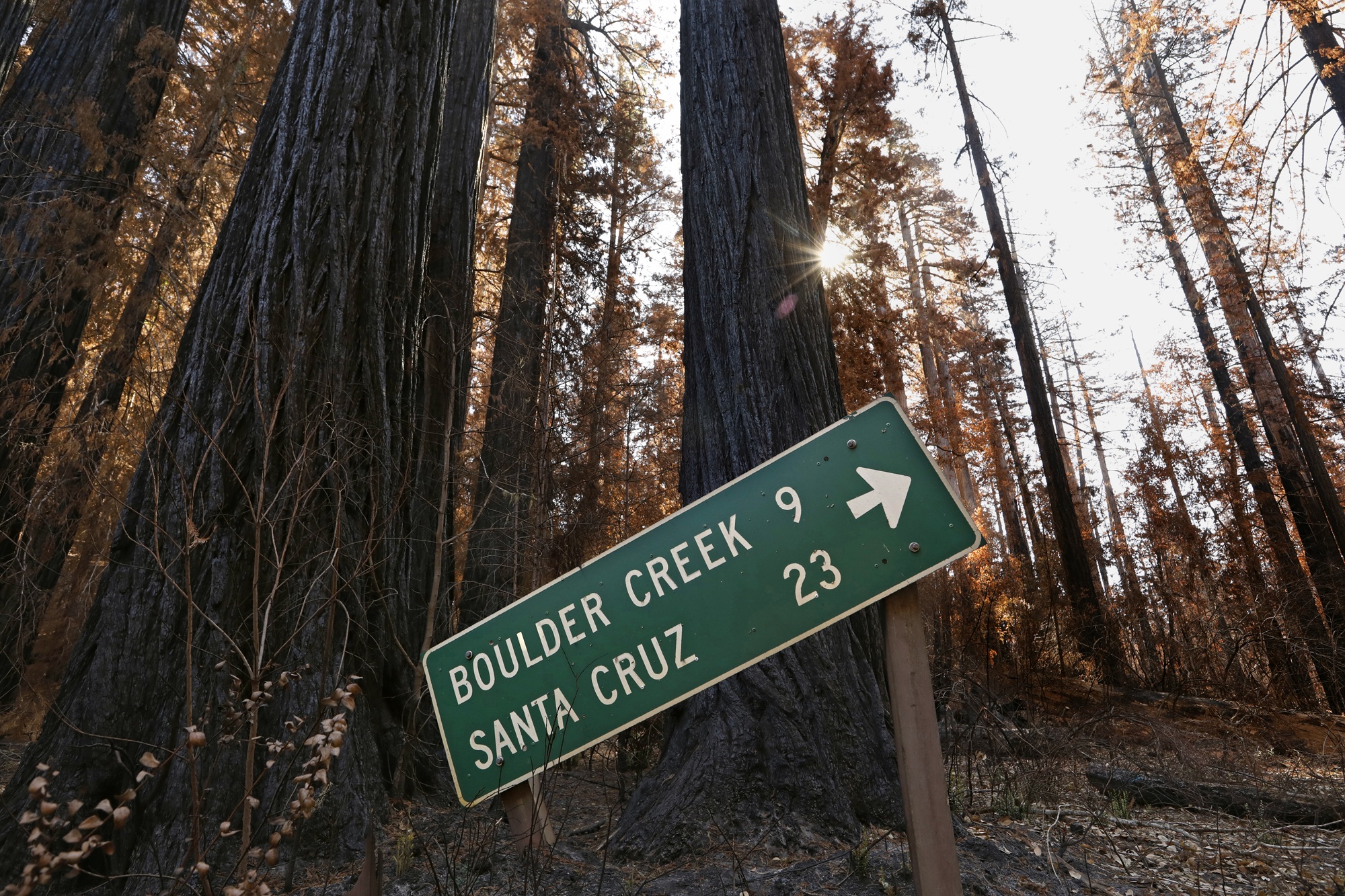
"caption": "Big Basin Redwoods State Park on Nov. 5, 2020. According to the U.S. Geological Survey, the tremors mean there’s about a 25% chance of another magnitude 3.0 or greater quake in the next week.\r\n",
"credit": "Carolyn Cole/Los Angeles Times via Getty Images",
"altTag": null,
"description": null,
"imgSizes": {
"thumbnail": {
"file": "https://cdn.kqed.org/wp-content/uploads/sites/10/2026/04/BoulderCreekSantaCruzGetty-160x107.jpg",
"width": 160,
"height": 107,
"mimeType": "image/jpeg"
},
"1536x1536": {
"file": "https://cdn.kqed.org/wp-content/uploads/sites/10/2026/04/BoulderCreekSantaCruzGetty-1536x1024.jpg",
"width": 1536,
"height": 1024,
"mimeType": "image/jpeg"
},
"post-thumbnail": {
"file": "https://cdn.kqed.org/wp-content/uploads/sites/10/2026/04/BoulderCreekSantaCruzGetty-672x372.jpg",
"width": 672,
"height": 372,
"mimeType": "image/jpeg"
},
"twentyfourteen-full-width": {
"file": "https://cdn.kqed.org/wp-content/uploads/sites/10/2026/04/BoulderCreekSantaCruzGetty-1038x576.jpg",
"width": 1038,
"height": 576,
"mimeType": "image/jpeg"
},
"npr-cds-wide": {
"file": "https://cdn.kqed.org/wp-content/uploads/sites/10/2026/04/BoulderCreekSantaCruzGetty-1200x675.jpg",
"width": 1200,
"height": 675,
"mimeType": "image/jpeg"
},
"npr-cds-square": {
"file": "https://cdn.kqed.org/wp-content/uploads/sites/10/2026/04/BoulderCreekSantaCruzGetty-600x600.jpg",
"width": 600,
"height": 600,
"mimeType": "image/jpeg"
},
"kqedFullSize": {
"file": "https://cdn.kqed.org/wp-content/uploads/sites/10/2026/04/BoulderCreekSantaCruzGetty.jpg",
"width": 2000,
"height": 1333
}
},
"isLoading": false,
"fetchFailed": false
},
"news_12078200": {
"type": "attachments",
"id": "news_12078200",
"meta": {
"index": "attachments_1716263798",
"site": "news",
"id": "12078200",
"found": true
},
"title": "Alameda Beach in Alameda on March 20, 2026.",
"publishDate": 1774983713,
"status": "inherit",
"parent": 12078198,
"modified": 1774983727,
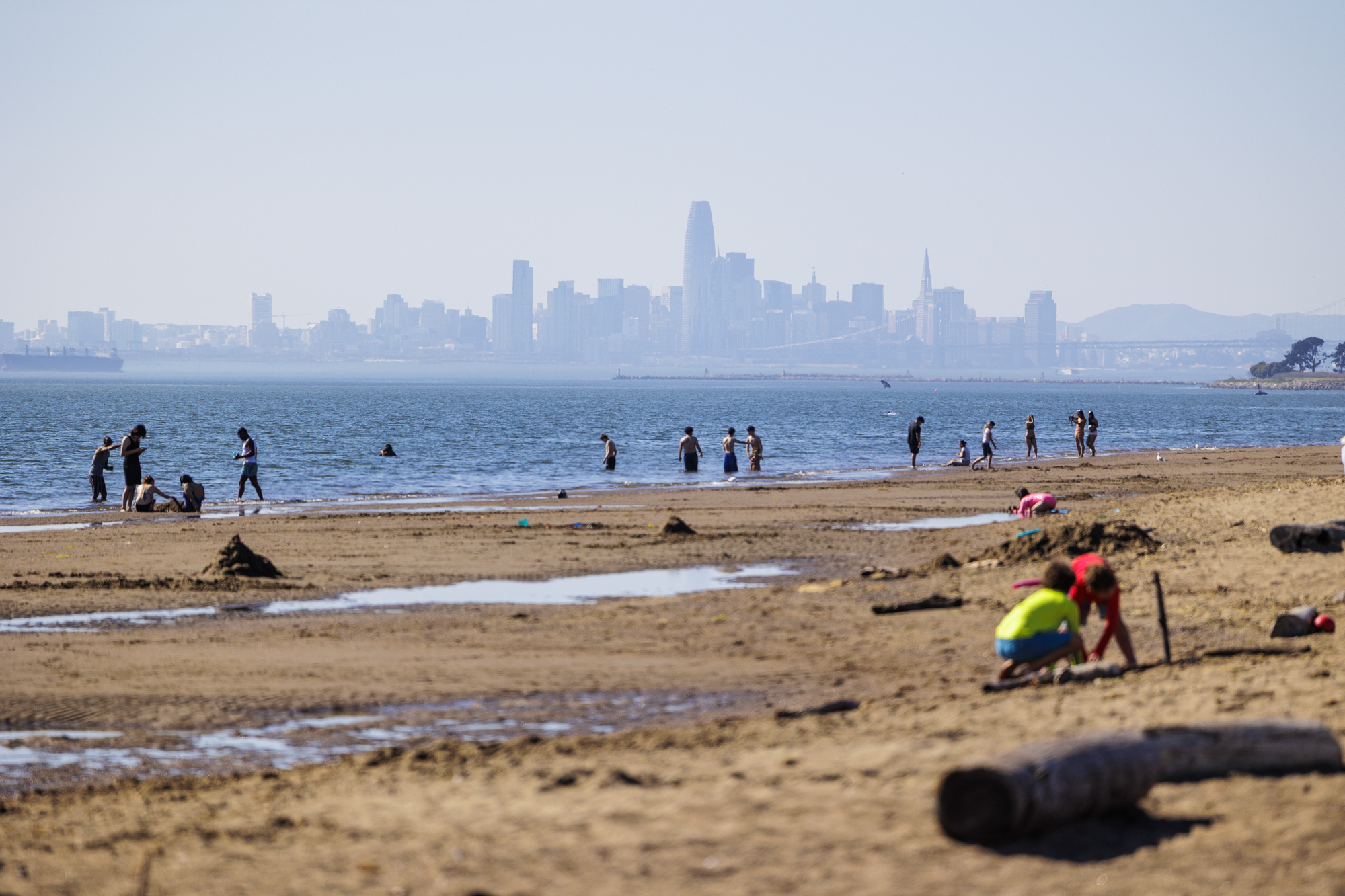
"caption": "Alameda Beach in Alameda on March 20, 2026.",
"credit": "Martin do Nascimento/KQED",
"altTag": null,
"description": null,
"imgSizes": {
"thumbnail": {
"file": "https://cdn.kqed.org/wp-content/uploads/sites/10/2026/03/260320-ALAMEDA-ISLAND-MD-06-KQED-160x107.jpg",
"width": 160,
"height": 107,
"mimeType": "image/jpeg"
},
"1536x1536": {
"file": "https://cdn.kqed.org/wp-content/uploads/sites/10/2026/03/260320-ALAMEDA-ISLAND-MD-06-KQED-1536x1024.jpg",
"width": 1536,
"height": 1024,
"mimeType": "image/jpeg"
},
"post-thumbnail": {
"file": "https://cdn.kqed.org/wp-content/uploads/sites/10/2026/03/260320-ALAMEDA-ISLAND-MD-06-KQED-672x372.jpg",
"width": 672,
"height": 372,
"mimeType": "image/jpeg"
},
"twentyfourteen-full-width": {
"file": "https://cdn.kqed.org/wp-content/uploads/sites/10/2026/03/260320-ALAMEDA-ISLAND-MD-06-KQED-1038x576.jpg",
"width": 1038,
"height": 576,
"mimeType": "image/jpeg"
},
"npr-cds-wide": {
"file": "https://cdn.kqed.org/wp-content/uploads/sites/10/2026/03/260320-ALAMEDA-ISLAND-MD-06-KQED-1200x675.jpg",
"width": 1200,
"height": 675,
"mimeType": "image/jpeg"
},
"npr-cds-square": {
"file": "https://cdn.kqed.org/wp-content/uploads/sites/10/2026/03/260320-ALAMEDA-ISLAND-MD-06-KQED-600x600.jpg",
"width": 600,
"height": 600,
"mimeType": "image/jpeg"
},
"kqedFullSize": {
"file": "https://cdn.kqed.org/wp-content/uploads/sites/10/2026/03/260320-ALAMEDA-ISLAND-MD-06-KQED.jpg",
"width": 2000,
"height": 1333
}
},
"isLoading": false,
"fetchFailed": false
},
"news_12078062": {
"type": "attachments",
"id": "news_12078062",
"meta": {
"index": "attachments_1716263798",
"site": "news",
"id": "12078062",
"found": true
},
"title": "Lake Tahoe Area Readies For More Snow As Another Storm Moves Over California",
"publishDate": 1774902695,
"status": "inherit",
"parent": 12078060,
"modified": 1774902730,
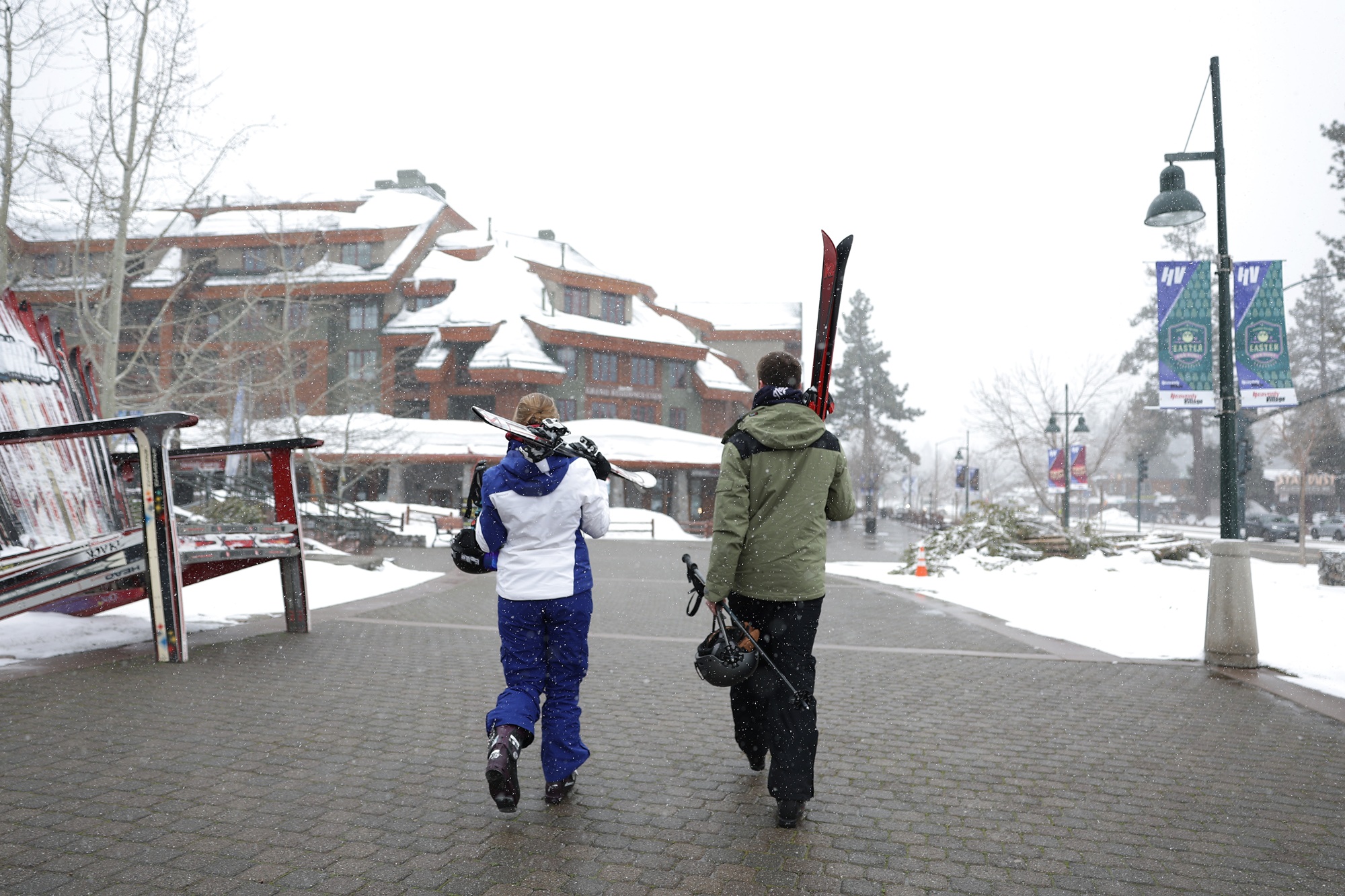
"caption": "People carry skis as they walk toward a resort on March 21, 2023, in South Lake Tahoe, California. ",
"credit": "Justin Sullivan/Getty Images",
"altTag": null,
"description": null,
"imgSizes": {
"thumbnail": {
"file": "https://cdn.kqed.org/wp-content/uploads/sites/10/2026/03/TahoeGetty1-160x107.jpg",
"width": 160,
"height": 107,
"mimeType": "image/jpeg"
},
"1536x1536": {
"file": "https://cdn.kqed.org/wp-content/uploads/sites/10/2026/03/TahoeGetty1-1536x1024.jpg",
"width": 1536,
"height": 1024,
"mimeType": "image/jpeg"
},
"post-thumbnail": {
"file": "https://cdn.kqed.org/wp-content/uploads/sites/10/2026/03/TahoeGetty1-672x372.jpg",
"width": 672,
"height": 372,
"mimeType": "image/jpeg"
},
"twentyfourteen-full-width": {
"file": "https://cdn.kqed.org/wp-content/uploads/sites/10/2026/03/TahoeGetty1-1038x576.jpg",
"width": 1038,
"height": 576,
"mimeType": "image/jpeg"
},
"npr-cds-wide": {
"file": "https://cdn.kqed.org/wp-content/uploads/sites/10/2026/03/TahoeGetty1-1200x675.jpg",
"width": 1200,
"height": 675,
"mimeType": "image/jpeg"
},
"npr-cds-square": {
"file": "https://cdn.kqed.org/wp-content/uploads/sites/10/2026/03/TahoeGetty1-600x600.jpg",
"width": 600,
"height": 600,
"mimeType": "image/jpeg"
},
"kqedFullSize": {
"file": "https://cdn.kqed.org/wp-content/uploads/sites/10/2026/03/TahoeGetty1.jpg",
"width": 2000,
"height": 1333
}
},
"isLoading": false,
"fetchFailed": false
},
"news_12077403": {
"type": "attachments",
"id": "news_12077403",
"meta": {
"index": "attachments_1716263798",
"site": "news",
"id": "12077403",
"found": true
},
"title": "Spring Arrives at Lake Tahoe",
"publishDate": 1774386446,
"status": "inherit",
"parent": 12077367,
"modified": 1774386494,
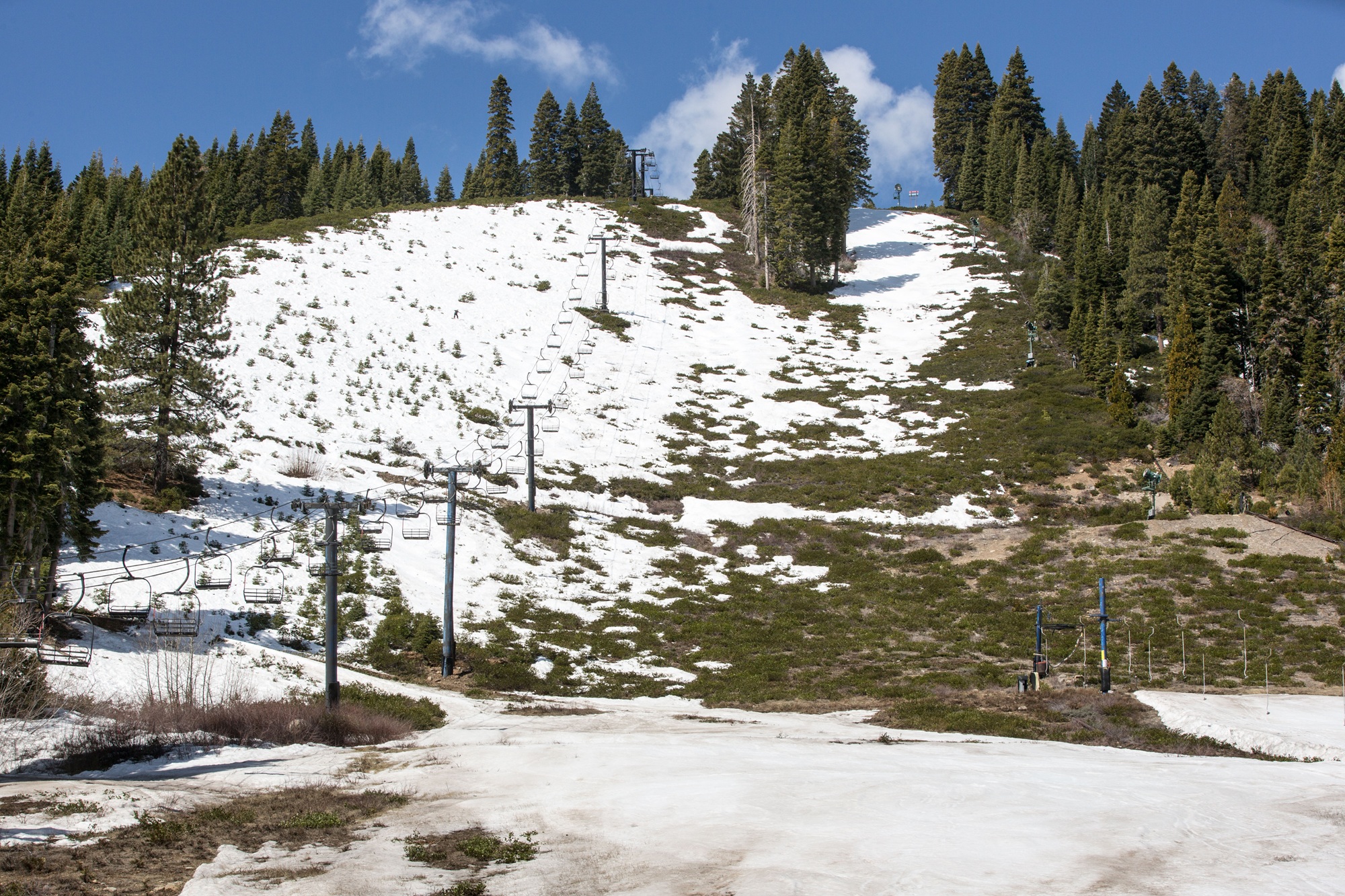
"caption": "The ski area at Homewood has closed due to poor snow conditions as viewed on April 14, 2021, in Homewood, California. ",
"credit": "George Rose/Getty Images",
"altTag": null,
"description": "The ski area at Homewood has closed due to poor snow conditions as viewed on April 14, 2021, in Homewood, California. With Sierra Nevada snowpack levels at less than 60% of normal for the year, California's principal source of drinking and agricultural water has alreday pushed much of the state into a \"severe\" or \"extreme\" drought situation. ",
"imgSizes": {
"thumbnail": {
"file": "https://cdn.kqed.org/wp-content/uploads/sites/10/2026/03/TahoeSnowGetty-160x107.jpg",
"width": 160,
"height": 107,
"mimeType": "image/jpeg"
},
"1536x1536": {
"file": "https://cdn.kqed.org/wp-content/uploads/sites/10/2026/03/TahoeSnowGetty-1536x1024.jpg",
"width": 1536,
"height": 1024,
"mimeType": "image/jpeg"
},
"post-thumbnail": {
"file": "https://cdn.kqed.org/wp-content/uploads/sites/10/2026/03/TahoeSnowGetty-672x372.jpg",
"width": 672,
"height": 372,
"mimeType": "image/jpeg"
},
"twentyfourteen-full-width": {
"file": "https://cdn.kqed.org/wp-content/uploads/sites/10/2026/03/TahoeSnowGetty-1038x576.jpg",
"width": 1038,
"height": 576,
"mimeType": "image/jpeg"
},
"npr-cds-wide": {
"file": "https://cdn.kqed.org/wp-content/uploads/sites/10/2026/03/TahoeSnowGetty-1200x675.jpg",
"width": 1200,
"height": 675,
"mimeType": "image/jpeg"
},
"npr-cds-square": {
"file": "https://cdn.kqed.org/wp-content/uploads/sites/10/2026/03/TahoeSnowGetty-600x600.jpg",
"width": 600,
"height": 600,
"mimeType": "image/jpeg"
},
"kqedFullSize": {
"file": "https://cdn.kqed.org/wp-content/uploads/sites/10/2026/03/TahoeSnowGetty.jpg",
"width": 2000,
"height": 1333
}
},
"isLoading": false,
"fetchFailed": false
},
"news_12043426": {
"type": "attachments",
"id": "news_12043426",
"meta": {
"index": "attachments_1716263798",
"site": "news",
"id": "12043426",
"found": true
},
"title": "California Governor Newsom Announces Lawsuit Challenging Trump Tariff Authority",
"publishDate": 1749506167,
"status": "inherit",
"parent": 12043314,
"modified": 1753920496,
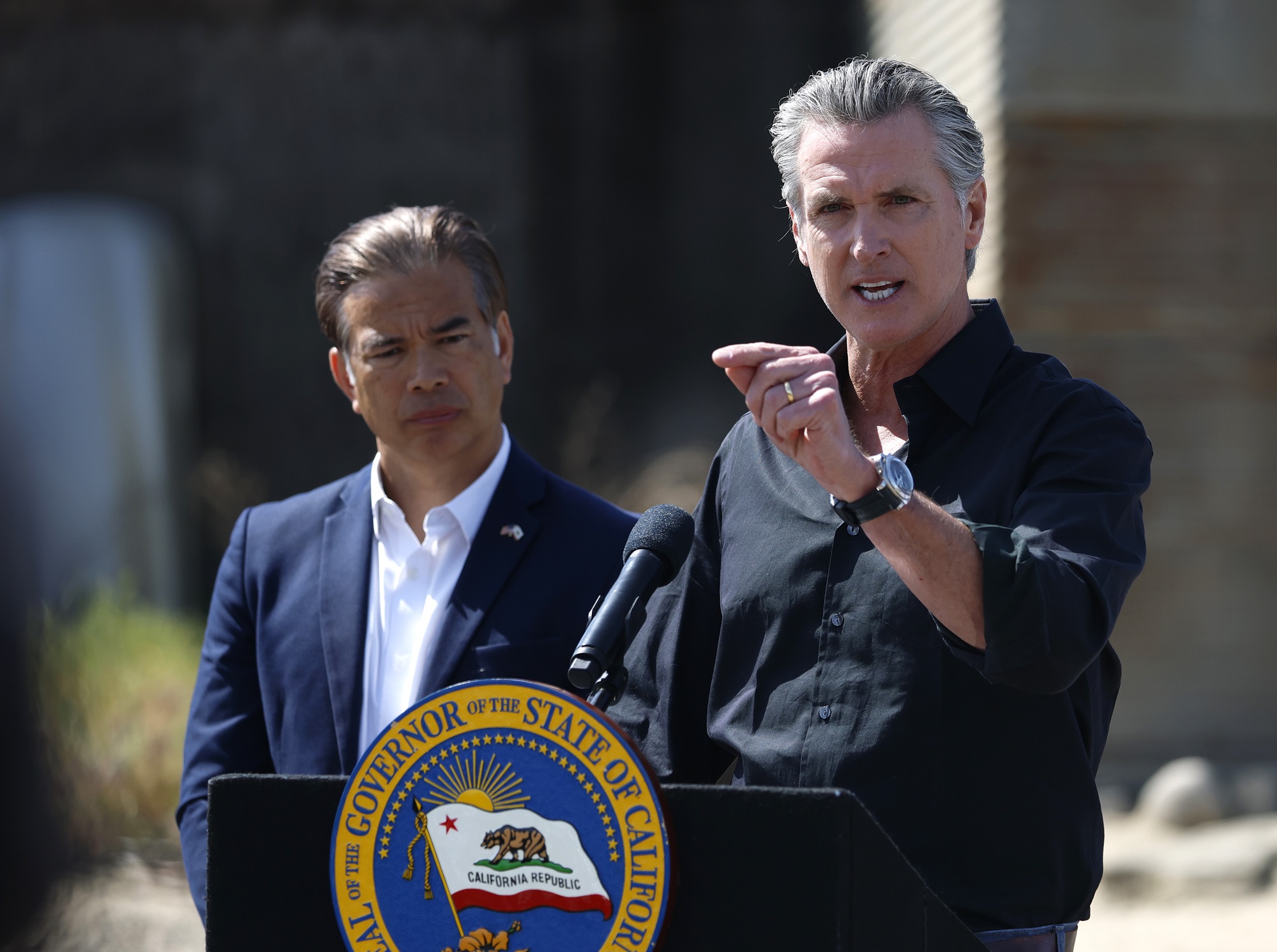
"caption": "Gov. Gavin Newsom (right) speaks as Attorney General Rob Bonta looks on during a news conference on April 16, 2025, in Ceres, California. ",
"credit": "Justin Sullivan/Getty Images",
"altTag": null,
"description": null,
"imgSizes": {
"thumbnail": {
"file": "https://cdn.kqed.org/wp-content/uploads/sites/10/2025/06/GavinNewsomRobBontaGetty-160x119.jpg",
"width": 160,
"height": 119,
"mimeType": "image/jpeg"
},
"1536x1536": {
"file": "https://cdn.kqed.org/wp-content/uploads/sites/10/2025/06/GavinNewsomRobBontaGetty-1536x1145.jpg",
"width": 1536,
"height": 1145,
"mimeType": "image/jpeg"
},
"post-thumbnail": {
"file": "https://cdn.kqed.org/wp-content/uploads/sites/10/2025/06/GavinNewsomRobBontaGetty-672x372.jpg",
"width": 672,
"height": 372,
"mimeType": "image/jpeg"
},
"twentyfourteen-full-width": {
"file": "https://cdn.kqed.org/wp-content/uploads/sites/10/2025/06/GavinNewsomRobBontaGetty-1038x576.jpg",
"width": 1038,
"height": 576,
"mimeType": "image/jpeg"
},
"kqedFullSize": {
"file": "https://cdn.kqed.org/wp-content/uploads/sites/10/2025/06/GavinNewsomRobBontaGetty.jpg",
"width": 2000,
"height": 1491
}
},
"isLoading": false,
"fetchFailed": false
},
"news_12076946": {
"type": "attachments",
"id": "news_12076946",
"meta": {
"index": "attachments_1716263798",
"site": "news",
"id": "12076946",
"found": true
},
"title": "Sun sets behind the Pigeon Point Lighthouse in California",
"publishDate": 1773868985,
"status": "inherit",
"parent": 12076857,
"modified": 1773869032,
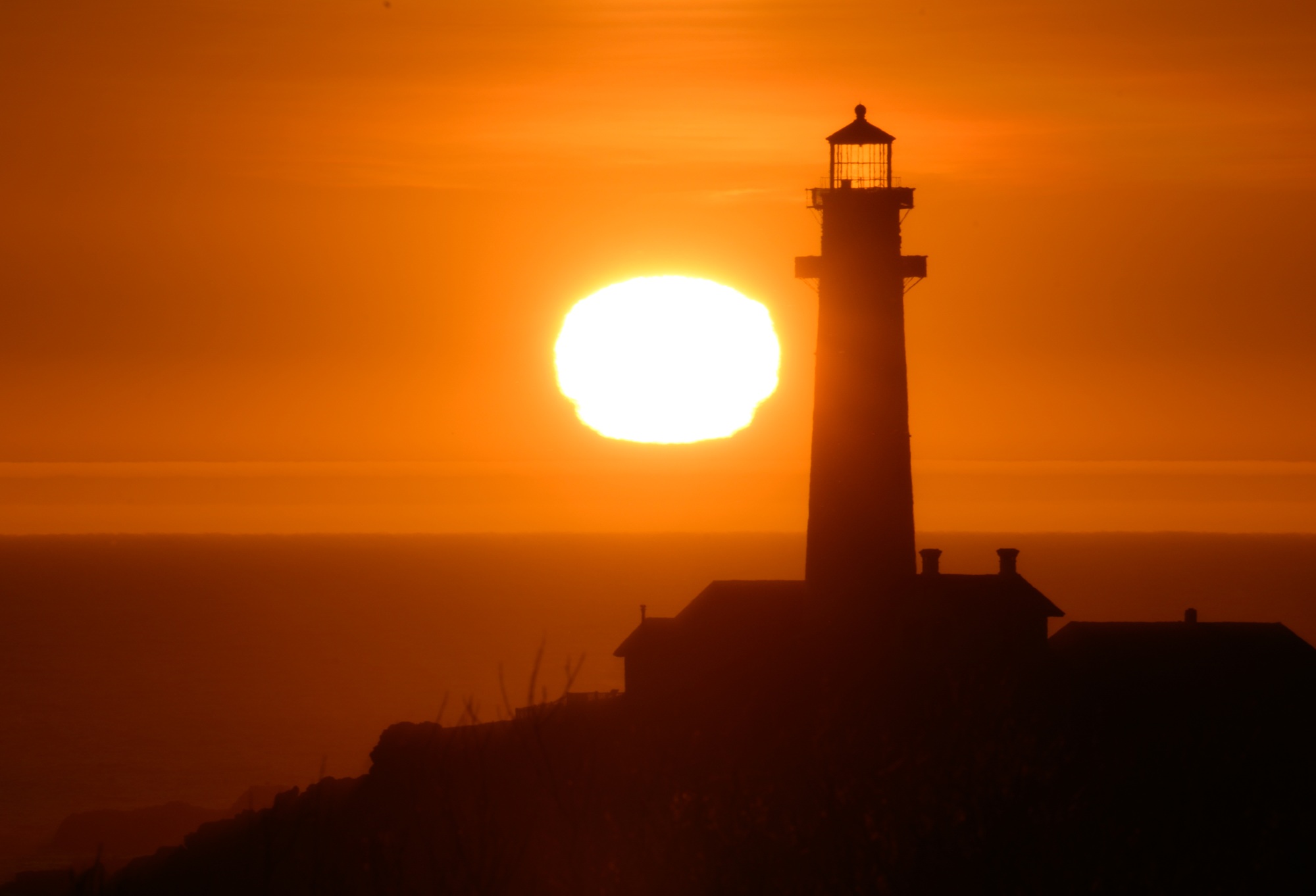
"caption": "The sun sets behind Pigeon Point Lighthouse during a heat wave in Pescadero, California, on March 17, 2026.",
"credit": "Tayfun Coskun/Anadolu via Getty Images",
"altTag": null,
"description": null,
"imgSizes": {
"thumbnail": {
"file": "https://cdn.kqed.org/wp-content/uploads/sites/10/2026/03/HeatWaveGetty1-160x109.jpg",
"width": 160,
"height": 109,
"mimeType": "image/jpeg"
},
"1536x1536": {
"file": "https://cdn.kqed.org/wp-content/uploads/sites/10/2026/03/HeatWaveGetty1-1536x1046.jpg",
"width": 1536,
"height": 1046,
"mimeType": "image/jpeg"
},
"post-thumbnail": {
"file": "https://cdn.kqed.org/wp-content/uploads/sites/10/2026/03/HeatWaveGetty1-672x372.jpg",
"width": 672,
"height": 372,
"mimeType": "image/jpeg"
},
"twentyfourteen-full-width": {
"file": "https://cdn.kqed.org/wp-content/uploads/sites/10/2026/03/HeatWaveGetty1-1038x576.jpg",
"width": 1038,
"height": 576,
"mimeType": "image/jpeg"
},
"npr-cds-wide": {
"file": "https://cdn.kqed.org/wp-content/uploads/sites/10/2026/03/HeatWaveGetty1-1200x675.jpg",
"width": 1200,
"height": 675,
"mimeType": "image/jpeg"
},
"kqedFullSize": {
"file": "https://cdn.kqed.org/wp-content/uploads/sites/10/2026/03/HeatWaveGetty1.jpg",
"width": 2000,
"height": 1362
}
},
"isLoading": false,
"fetchFailed": false
},
"news_12076617": {
"type": "attachments",
"id": "news_12076617",
"meta": {
"index": "attachments_1716263798",
"site": "news",
"id": "12076617",
"found": true
},
"title": "Inmates At California Prison Install Drought-Tolerant Garden",
"publishDate": 1773695877,
"status": "inherit",
"parent": 12076597,
"modified": 1773771357,
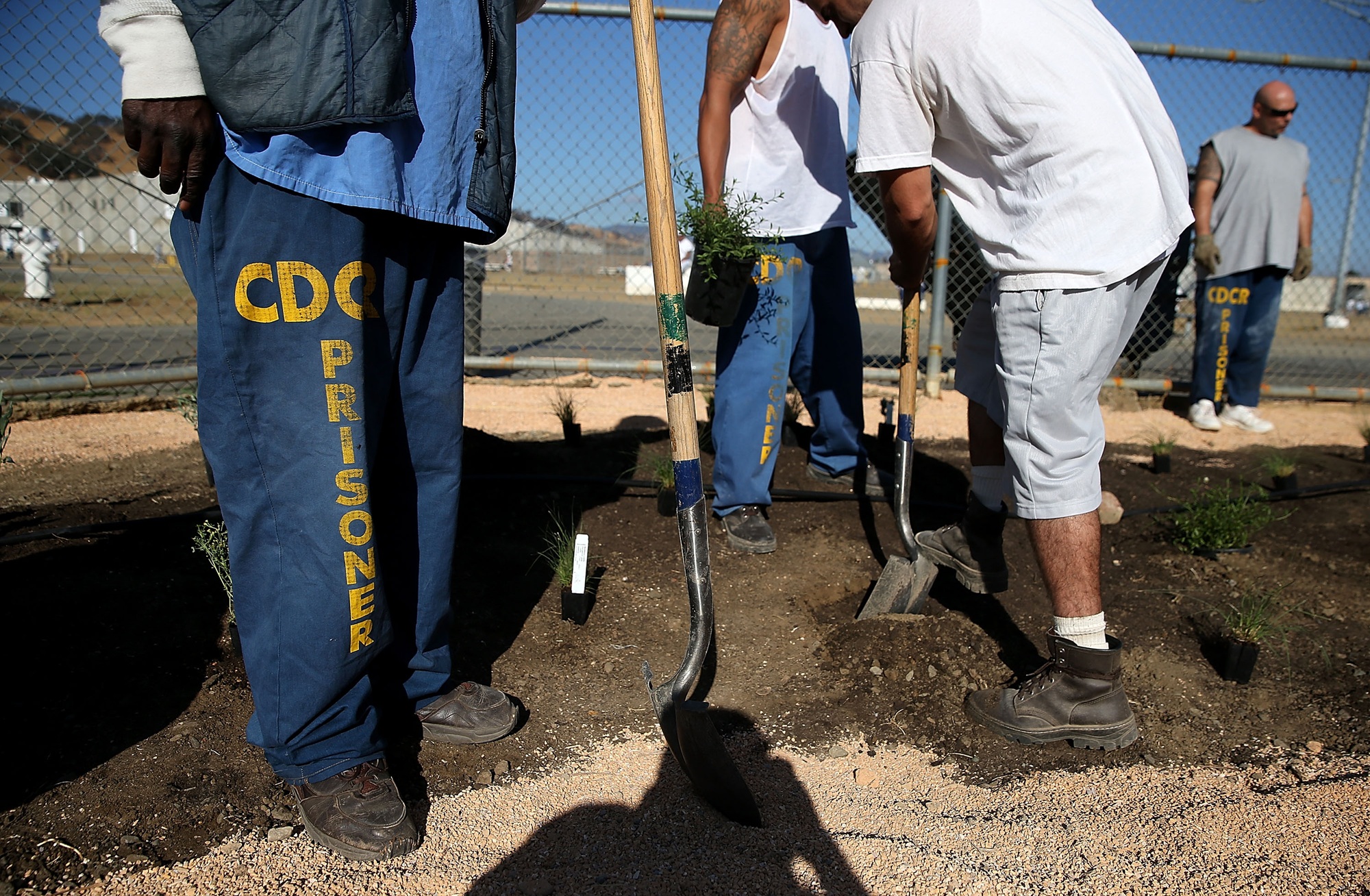
"caption": "California State Prison-Solano inmates install a drought-tolerant garden in the prison yard on Oct. 19, 2015, in Vacaville, California. Inmates at California State Prison-Solano installed a drought-tolerant garden as part of the Insight Garden program that teaches inmates environmental and gardening skills. The garden will be watered using reclaimed water from the prison's kitchen.",
"credit": "Justin Sullivan/Getty Images",
"altTag": null,
"description": null,
"imgSizes": {
"thumbnail": {
"file": "https://cdn.kqed.org/wp-content/uploads/sites/10/2026/03/California-State-Prison-Solano-Getty-160x105.jpg",
"width": 160,
"height": 105,
"mimeType": "image/jpeg"
},
"1536x1536": {
"file": "https://cdn.kqed.org/wp-content/uploads/sites/10/2026/03/California-State-Prison-Solano-Getty-1536x1005.jpg",
"width": 1536,
"height": 1005,
"mimeType": "image/jpeg"
},
"post-thumbnail": {
"file": "https://cdn.kqed.org/wp-content/uploads/sites/10/2026/03/California-State-Prison-Solano-Getty-672x372.jpg",
"width": 672,
"height": 372,
"mimeType": "image/jpeg"
},
"twentyfourteen-full-width": {
"file": "https://cdn.kqed.org/wp-content/uploads/sites/10/2026/03/California-State-Prison-Solano-Getty-1038x576.jpg",
"width": 1038,
"height": 576,
"mimeType": "image/jpeg"
},
"npr-cds-wide": {
"file": "https://cdn.kqed.org/wp-content/uploads/sites/10/2026/03/California-State-Prison-Solano-Getty-1200x675.jpg",
"width": 1200,
"height": 675,
"mimeType": "image/jpeg"
},
"kqedFullSize": {
"file": "https://cdn.kqed.org/wp-content/uploads/sites/10/2026/03/California-State-Prison-Solano-Getty.jpg",
"width": 2000,
"height": 1308
}
},
"isLoading": false,
"fetchFailed": false
},
"news_12075864": {
"type": "attachments",
"id": "news_12075864",
"meta": {
"index": "attachments_1716263798",
"site": "news",
"id": "12075864",
"found": true
},
"title": "260309-Altadena Rising-01-KQED",
"publishDate": 1773096359,
"status": "inherit",
"parent": 0,
"modified": 1773360747,
"caption": "KBLA 1580 AM host, and former Altadena resident, James Farr live on air during his weekly radio show Conversations Live: Altadena Rising, which has been focusing on the disproportionate loss of life and structures in West Altadena, a largely Black and Latino enclave.",
"credit": "Steven Cuevas for KQED",
"altTag": null,
"description": null,
"imgSizes": {
"thumbnail": {
"file": "https://cdn.kqed.org/wp-content/uploads/sites/10/2026/03/260309-Altadena-Rising-01-KQED-160x107.jpg",
"width": 160,
"height": 107,
"mimeType": "image/jpeg"
},
"1536x1536": {
"file": "https://cdn.kqed.org/wp-content/uploads/sites/10/2026/03/260309-Altadena-Rising-01-KQED-1536x1024.jpg",
"width": 1536,
"height": 1024,
"mimeType": "image/jpeg"
},
"post-thumbnail": {
"file": "https://cdn.kqed.org/wp-content/uploads/sites/10/2026/03/260309-Altadena-Rising-01-KQED-672x372.jpg",
"width": 672,
"height": 372,
"mimeType": "image/jpeg"
},
"twentyfourteen-full-width": {
"file": "https://cdn.kqed.org/wp-content/uploads/sites/10/2026/03/260309-Altadena-Rising-01-KQED-1038x576.jpg",
"width": 1038,
"height": 576,
"mimeType": "image/jpeg"
},
"npr-cds-wide": {
"file": "https://cdn.kqed.org/wp-content/uploads/sites/10/2026/03/260309-Altadena-Rising-01-KQED-1200x675.jpg",
"width": 1200,
"height": 675,
"mimeType": "image/jpeg"
},
"kqedFullSize": {
"file": "https://cdn.kqed.org/wp-content/uploads/sites/10/2026/03/260309-Altadena-Rising-01-KQED.jpg",
"width": 2000,
"height": 1333
}
},
"isLoading": false,
"fetchFailed": false
},
"news_12074608": {
"type": "attachments",
"id": "news_12074608",
"meta": {
"index": "attachments_1716263798",
"site": "news",
"id": "12074608",
"found": true
},
"title": "250225-REGREENING ALTADENA-01-KQED",
"publishDate": 1772052813,
"status": "inherit",
"parent": 0,
"modified": 1772585996,
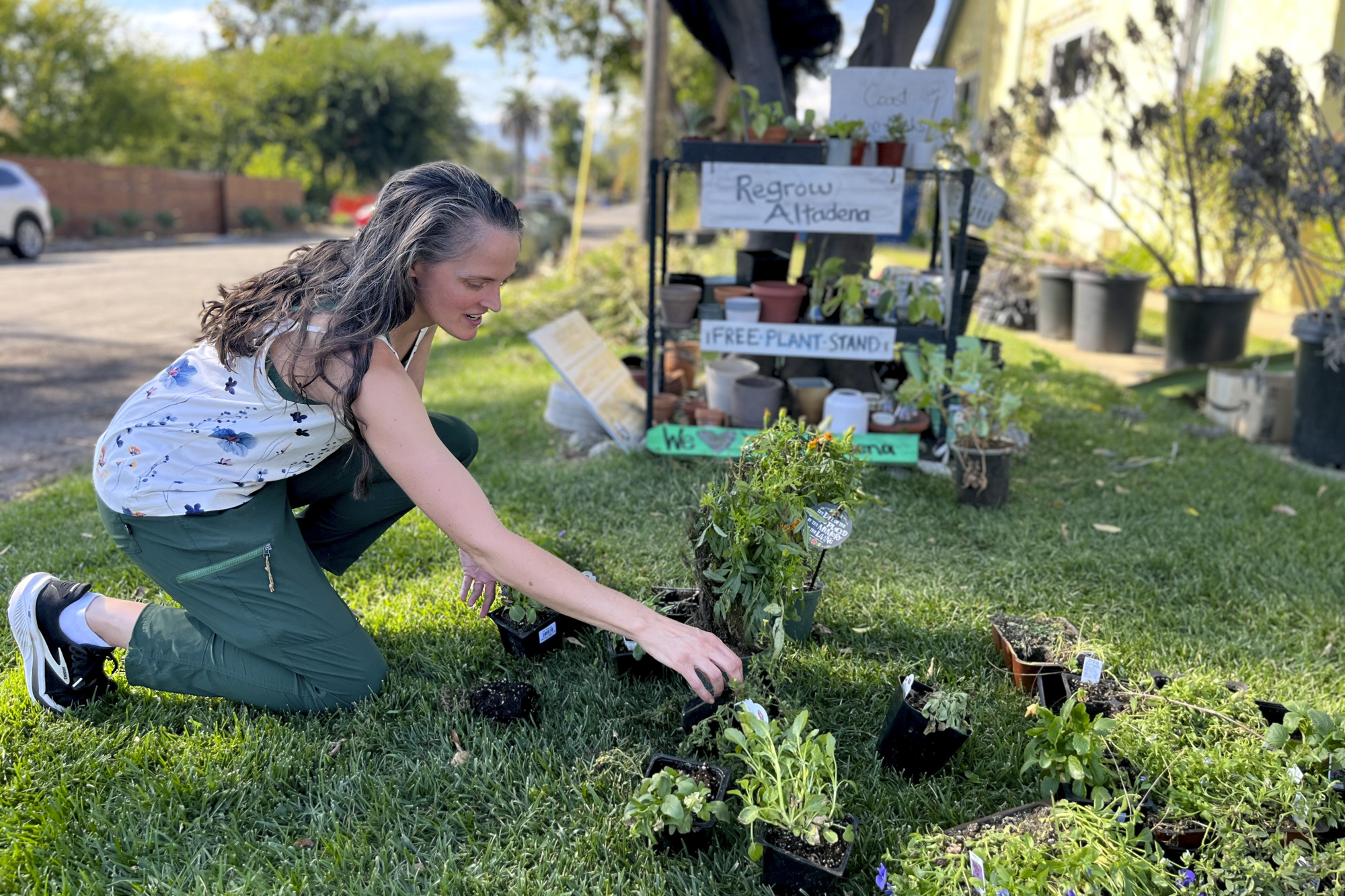
"caption": "Laurie Scott tends to a variety of free plants and saplings that she gathers, grows and gives away to locals as part of her DIY ‘Regrow Altadena’ program that she operates from her front yard in West Altadena.",
"credit": "Steven Cuevas/KQED",
"altTag": null,
"description": null,
"imgSizes": {
"thumbnail": {
"file": "https://cdn.kqed.org/wp-content/uploads/sites/10/2026/02/250225-REGREENING-ALTADENA-01-KQED-160x107.jpg",
"width": 160,
"height": 107,
"mimeType": "image/jpeg"
},
"1536x1536": {
"file": "https://cdn.kqed.org/wp-content/uploads/sites/10/2026/02/250225-REGREENING-ALTADENA-01-KQED-1536x1024.jpg",
"width": 1536,
"height": 1024,
"mimeType": "image/jpeg"
},
"post-thumbnail": {
"file": "https://cdn.kqed.org/wp-content/uploads/sites/10/2026/02/250225-REGREENING-ALTADENA-01-KQED-672x372.jpg",
"width": 672,
"height": 372,
"mimeType": "image/jpeg"
},
"twentyfourteen-full-width": {
"file": "https://cdn.kqed.org/wp-content/uploads/sites/10/2026/02/250225-REGREENING-ALTADENA-01-KQED-1038x576.jpg",
"width": 1038,
"height": 576,
"mimeType": "image/jpeg"
},
"npr-cds-wide": {
"file": "https://cdn.kqed.org/wp-content/uploads/sites/10/2026/02/250225-REGREENING-ALTADENA-01-KQED-1200x675.jpg",
"width": 1200,
"height": 675,
"mimeType": "image/jpeg"
},
"kqedFullSize": {
"file": "https://cdn.kqed.org/wp-content/uploads/sites/10/2026/02/250225-REGREENING-ALTADENA-01-KQED.jpg",
"width": 2000,
"height": 1333
}
},
"isLoading": false,
"fetchFailed": false
},
"news_12073831": {
"type": "attachments",
"id": "news_12073831",
"meta": {
"index": "attachments_1716263798",
"site": "news",
"id": "12073831",
"found": true
},
"title": "SierraSnowpack1",
"publishDate": 1771523947,
"status": "inherit",
"parent": 12073190,
"modified": 1771526616,
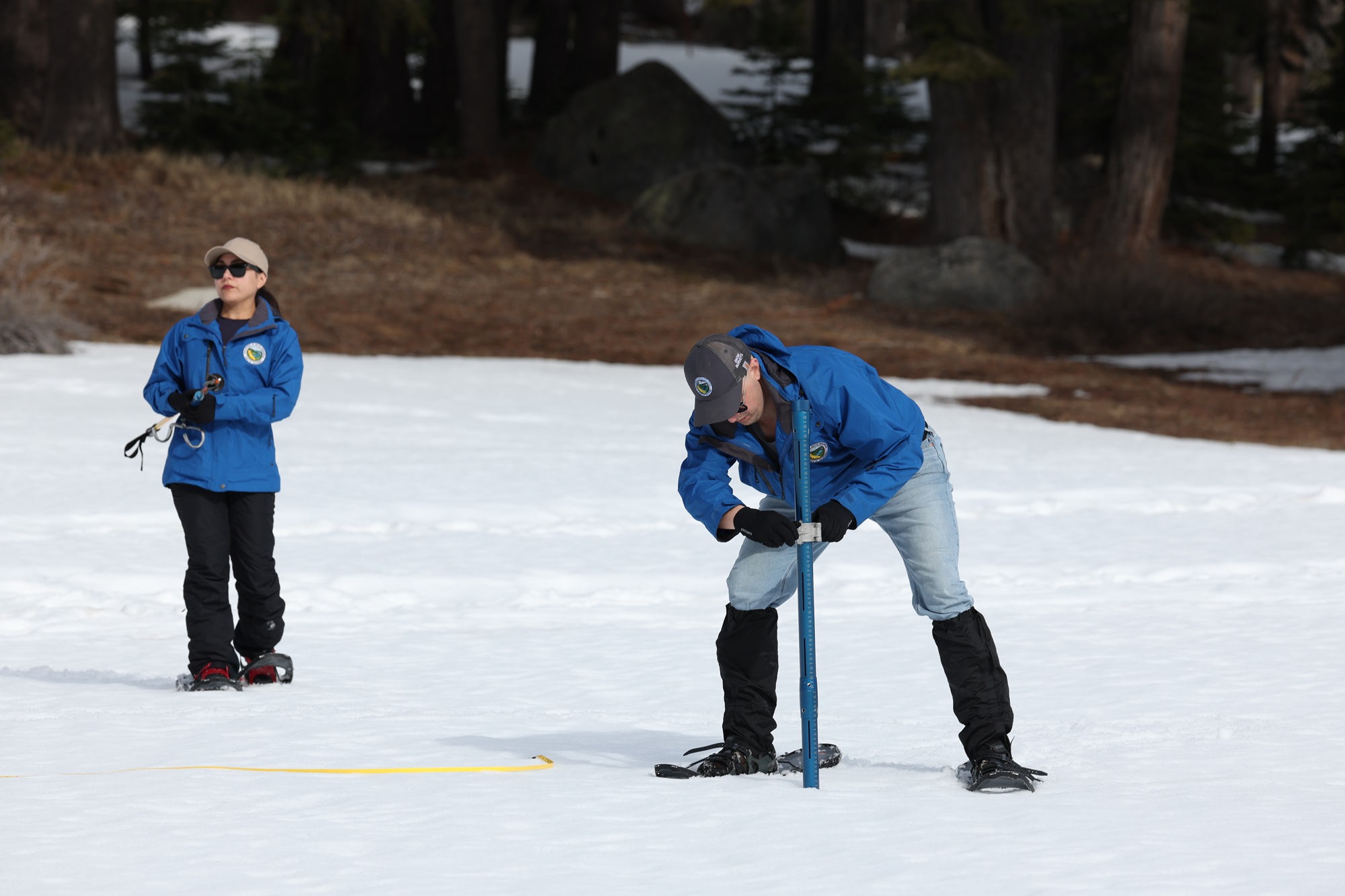
"caption": "California Department of Water Resources Engineer Jacob Kollen (right) and Hydrometeorologist Angelique Fabbiani-Leon take measurements during the second media snow survey of the 2026 season at Phillips Station in the Sierra Nevada on Jan. 30, 2026. The snow survey is held approximately 90 miles east of Sacramento off Highway 50 in El Dorado County.",
"credit": "Andrew Nixon/California Department of Water Resources",
"altTag": null,
"description": null,
"imgSizes": {
"thumbnail": {
"file": "https://cdn.kqed.org/wp-content/uploads/sites/10/2026/02/SierraSnowpack1-160x107.jpg",
"width": 160,
"height": 107,
"mimeType": "image/jpeg"
},
"1536x1536": {
"file": "https://cdn.kqed.org/wp-content/uploads/sites/10/2026/02/SierraSnowpack1-1536x1024.jpg",
"width": 1536,
"height": 1024,
"mimeType": "image/jpeg"
},
"post-thumbnail": {
"file": "https://cdn.kqed.org/wp-content/uploads/sites/10/2026/02/SierraSnowpack1-672x372.jpg",
"width": 672,
"height": 372,
"mimeType": "image/jpeg"
},
"twentyfourteen-full-width": {
"file": "https://cdn.kqed.org/wp-content/uploads/sites/10/2026/02/SierraSnowpack1-1038x576.jpg",
"width": 1038,
"height": 576,
"mimeType": "image/jpeg"
},
"npr-cds-wide": {
"file": "https://cdn.kqed.org/wp-content/uploads/sites/10/2026/02/SierraSnowpack1-1200x675.jpg",
"width": 1200,
"height": 675,
"mimeType": "image/jpeg"
},
"kqedFullSize": {
"file": "https://cdn.kqed.org/wp-content/uploads/sites/10/2026/02/SierraSnowpack1.jpg",
"width": 2000,
"height": 1333
}
},
"isLoading": false,
"fetchFailed": false
},
"news_12073706": {
"type": "attachments",
"id": "news_12073706",
"meta": {
"index": "attachments_1716263798",
"site": "news",
"id": "12073706",
"found": true
},
"title": "APTOPIX California Avalanche",
"publishDate": 1771442050,
"status": "inherit",
"parent": 12073690,
"modified": 1771442079,
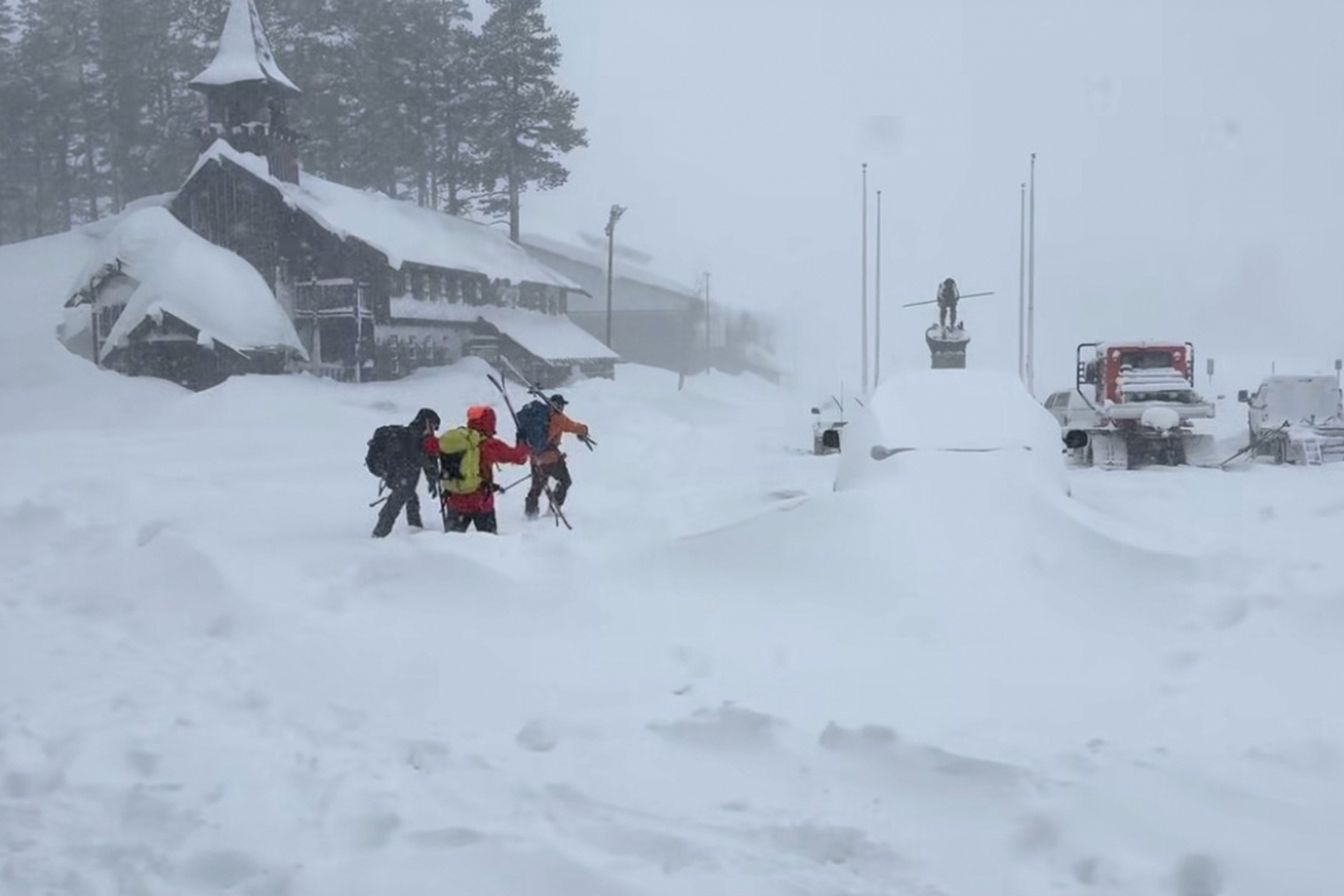
"caption": "This image provided by the Nevada County Sheriff's Office shows members of a rescue team in Soda Springs, California, on Tuesday, Feb. 17, 2026. ",
"credit": "Nevada County Sheriff's Office via AP",
"altTag": null,
"description": null,
"imgSizes": {
"thumbnail": {
"file": "https://cdn.kqed.org/wp-content/uploads/sites/10/2026/02/CaliforniaAvalancheAP1-160x107.jpg",
"width": 160,
"height": 107,
"mimeType": "image/jpeg"
},
"1536x1536": {
"file": "https://cdn.kqed.org/wp-content/uploads/sites/10/2026/02/CaliforniaAvalancheAP1-1536x1024.jpg",
"width": 1536,
"height": 1024,
"mimeType": "image/jpeg"
},
"post-thumbnail": {
"file": "https://cdn.kqed.org/wp-content/uploads/sites/10/2026/02/CaliforniaAvalancheAP1-672x372.jpg",
"width": 672,
"height": 372,
"mimeType": "image/jpeg"
},
"twentyfourteen-full-width": {
"file": "https://cdn.kqed.org/wp-content/uploads/sites/10/2026/02/CaliforniaAvalancheAP1-1038x576.jpg",
"width": 1038,
"height": 576,
"mimeType": "image/jpeg"
},
"npr-cds-wide": {
"file": "https://cdn.kqed.org/wp-content/uploads/sites/10/2026/02/CaliforniaAvalancheAP1-1200x675.jpg",
"width": 1200,
"height": 675,
"mimeType": "image/jpeg"
},
"kqedFullSize": {
"file": "https://cdn.kqed.org/wp-content/uploads/sites/10/2026/02/CaliforniaAvalancheAP1.jpg",
"width": 1777,
"height": 1185
}
},
"isLoading": false,
"fetchFailed": false
},
"news_12073622": {
"type": "attachments",
"id": "news_12073622",
"meta": {
"index": "attachments_1716263798",
"site": "news",
"id": "12073622",
"found": true
},
"title": "Heavy Snow in Truckee, California",
"publishDate": 1771364859,
"status": "inherit",
"parent": 12073593,
"modified": 1771364884,
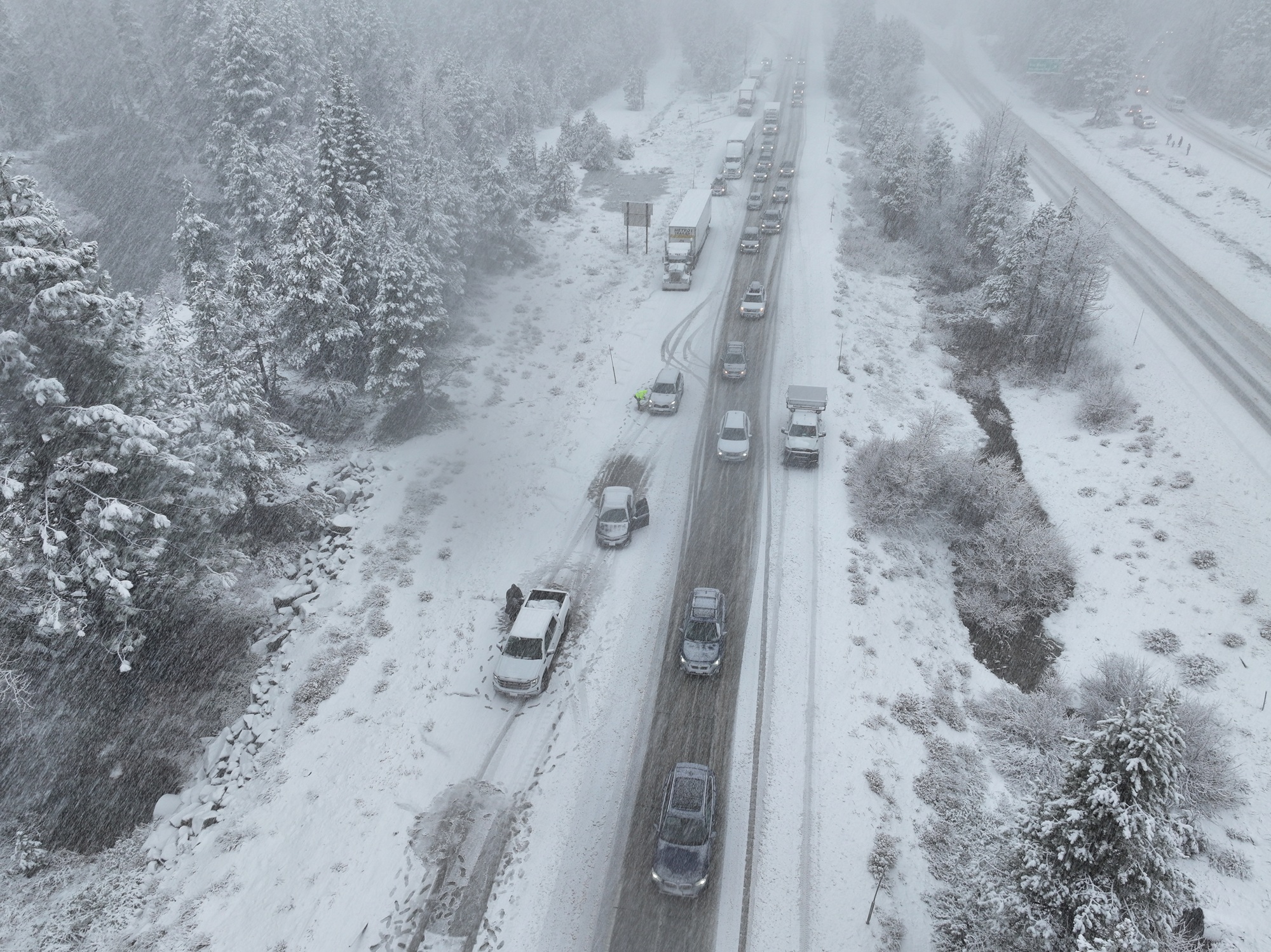
"caption": "A view of trucks piled up during heavy snow near Donner Pass in Truckee in California, United States on Dec. 24, 2025.",
"credit": "Tayfun Coskun/Anadolu via Getty Images",
"altTag": null,
"description": null,
"imgSizes": {
"thumbnail": {
"file": "https://cdn.kqed.org/wp-content/uploads/sites/10/2026/02/DonnerPassGetty-160x120.jpg",
"width": 160,
"height": 120,
"mimeType": "image/jpeg"
},
"1536x1536": {
"file": "https://cdn.kqed.org/wp-content/uploads/sites/10/2026/02/DonnerPassGetty-1536x1150.jpg",
"width": 1536,
"height": 1150,
"mimeType": "image/jpeg"
},
"post-thumbnail": {
"file": "https://cdn.kqed.org/wp-content/uploads/sites/10/2026/02/DonnerPassGetty-672x372.jpg",
"width": 672,
"height": 372,
"mimeType": "image/jpeg"
},
"twentyfourteen-full-width": {
"file": "https://cdn.kqed.org/wp-content/uploads/sites/10/2026/02/DonnerPassGetty-1038x576.jpg",
"width": 1038,
"height": 576,
"mimeType": "image/jpeg"
},
"npr-cds-wide": {
"file": "https://cdn.kqed.org/wp-content/uploads/sites/10/2026/02/DonnerPassGetty-1200x675.jpg",
"width": 1200,
"height": 675,
"mimeType": "image/jpeg"
},
"kqedFullSize": {
"file": "https://cdn.kqed.org/wp-content/uploads/sites/10/2026/02/DonnerPassGetty.jpg",
"width": 2000,
"height": 1498
}
},
"isLoading": false,
"fetchFailed": false
}
},
"audioPlayerReducer": {
"postId": "stream_live",
"isPaused": true,
"isPlaying": false,
"pfsActive": false,
"pledgeModalIsOpen": true,
"playerDrawerIsOpen": false,
"liveAudioPlayStartedAt": 0,
"liveAudioPlayContext": ""
},
"authorsReducer": {
"byline_news_12073190": {
"type": "authors",
"id": "byline_news_12073190",
"meta": {
"override": true
},
"slug": "byline_news_12073190",
"name": "Emily Zentner, The California Newsroom",
"isLoading": false
},
"byline_news_12073690": {
"type": "authors",
"id": "byline_news_12073690",
"meta": {
"override": true
},
"slug": "byline_news_12073690",
"name": "Sarah Wright and Kelly O’Mara",
"isLoading": false
},
"minakim": {
"type": "authors",
"id": "243",
"meta": {
"index": "authors_1716337520",
"id": "243",
"found": true
},
"name": "Mina Kim",
"firstName": "Mina",
"lastName": "Kim",
"slug": "minakim",
"email": "mkim@kqed.org",
"display_author_email": false,
"staff_mastheads": [
"news"
],
"title": "Host, Forum",
"bio": "Mina Kim is host of the 10 a.m. statewide hour of Forum; a live daily talk show for curious Californians on issues that matter to the state and nation, with a particular emphasis on race and equity.\r\n\r\nBefore joining the Forum team, Mina was KQED’s evening news anchor, and health reporter for The California Report. Her award-winning work has included natural disasters in Napa and gun violence in Oakland. Mina grew up in St. John’s, Newfoundland.",
"avatar": "https://secure.gravatar.com/avatar/145ce657a2d08cb86d93686beb958982?s=600&d=blank&r=g",
"twitter": "mkimreporter",
"facebook": null,
"instagram": null,
"linkedin": null,
"sites": [
{
"site": "news",
"roles": [
"contributor"
]
},
{
"site": "stateofhealth",
"roles": [
"author"
]
},
{
"site": "forum",
"roles": [
"editor"
]
}
],
"headData": {
"title": "Mina Kim | KQED",
"description": "Host, Forum",
"ogImgSrc": "https://secure.gravatar.com/avatar/145ce657a2d08cb86d93686beb958982?s=600&d=blank&r=g",
"twImgSrc": "https://secure.gravatar.com/avatar/145ce657a2d08cb86d93686beb958982?s=600&d=blank&r=g"
},
"isLoading": false,
"link": "/author/minakim"
},
"scuevas": {
"type": "authors",
"id": "2600",
"meta": {
"index": "authors_1716337520",
"id": "2600",
"found": true
},
"name": "Steven Cuevas",
"firstName": "Steven",
"lastName": "Cuevas",
"slug": "scuevas",
"email": "scuevas@kqed.org",
"display_author_email": false,
"staff_mastheads": [],
"title": "KQED Contributor",
"bio": "Steven is a former Los Angeles bureau chief for The California Report.\r\n\r\nHe reports on an array of issues across the Southland, from immigration and regional politics to religion, the performing arts and pop culture.\r\n\r\nPrior to joining KQED in 2012, Steven covered Inland southern California for KPCC in Pasadena. He also helped establish the first newsroom at \u003ca href=\"http://kut.org/\">KUT\u003c/a> in Austin, Texas where he was a general assignment reporter.\r\n\r\nSteven has received numerous awards for his reporting including an RTNDA Edward R. Murrow Award for investigative reporting in addition to awards from the LA Press Club, the Associated Press and the Society for Professional Journalists.\r\n\r\nSteven grew up in and around San Francisco and now lives in Pasadena just a short jog from the foot of the San Gabriel Mountains.",
"avatar": "https://secure.gravatar.com/avatar/2d253580794f8e026100fae05cfabbbd4889b4fe15146146cacb82a01974c538?s=600&d=blank&r=g",
"twitter": null,
"bluesky": null,
"facebook": null,
"instagram": null,
"linkedin": null,
"sites": [
{
"site": "news",
"roles": [
"subscriber"
]
}
],
"headData": {
"title": "Steven Cuevas | KQED",
"description": "KQED Contributor",
"ogImgSrc": "https://secure.gravatar.com/avatar/2d253580794f8e026100fae05cfabbbd4889b4fe15146146cacb82a01974c538?s=600&d=blank&r=g",
"twImgSrc": "https://secure.gravatar.com/avatar/2d253580794f8e026100fae05cfabbbd4889b4fe15146146cacb82a01974c538?s=600&d=blank&r=g"
},
"isLoading": false,
"link": "/author/scuevas"
},
"carlysevern": {
"type": "authors",
"id": "3243",
"meta": {
"index": "authors_1716337520",
"id": "3243",
"found": true
},
"name": "Carly Severn",
"firstName": "Carly",
"lastName": "Severn",
"slug": "carlysevern",
"email": "csevern@kqed.org",
"display_author_email": false,
"staff_mastheads": [
"news"
],
"title": "Senior Editor, Audience News ",
"bio": "Carly is KQED's Senior Editor of Audience News on the Digital News team, and has reported for the California Report Magazine, Bay Curious and KQED Arts. She's formerly the host of \u003ca href=\"http://ww2.kqed.org/pop/category/the-cooler/\" rel=\"noopener noreferrer\">The Cooler\u003c/a> podcast.",
"avatar": "https://secure.gravatar.com/avatar/54037bf5c128fe678f0ef26cec97a93f2e7f220a22d7285703328f12c42c1b1d?s=600&d=blank&r=g",
"twitter": "teacupinthebay",
"bluesky": null,
"facebook": null,
"instagram": null,
"linkedin": null,
"sites": [
{
"site": "",
"roles": [
"editor"
]
},
{
"site": "arts",
"roles": [
"editor"
]
},
{
"site": "news",
"roles": [
"administrator"
]
},
{
"site": "pop",
"roles": [
"editor"
]
},
{
"site": "futureofyou",
"roles": [
"editor"
]
},
{
"site": "about",
"roles": [
"administrator"
]
},
{
"site": "mindshift",
"roles": [
"editor"
]
},
{
"site": "bayareabites",
"roles": [
"editor"
]
},
{
"site": "stateofhealth",
"roles": [
"editor"
]
},
{
"site": "science",
"roles": [
"editor"
]
},
{
"site": "food",
"roles": [
"contributor"
]
},
{
"site": "forum",
"roles": [
"editor"
]
},
{
"site": "perspectives",
"roles": [
"administrator"
]
},
{
"site": "liveblog",
"roles": [
"editor"
]
}
],
"headData": {
"title": "Carly Severn | KQED",
"description": "Senior Editor, Audience News ",
"ogImgSrc": "https://secure.gravatar.com/avatar/54037bf5c128fe678f0ef26cec97a93f2e7f220a22d7285703328f12c42c1b1d?s=600&d=blank&r=g",
"twImgSrc": "https://secure.gravatar.com/avatar/54037bf5c128fe678f0ef26cec97a93f2e7f220a22d7285703328f12c42c1b1d?s=600&d=blank&r=g"
},
"isLoading": false,
"link": "/author/carlysevern"
},
"jsmall": {
"type": "authors",
"id": "6625",
"meta": {
"index": "authors_1716337520",
"id": "6625",
"found": true
},
"name": "Julie Small",
"firstName": "Julie",
"lastName": "Small",
"slug": "jsmall",
"email": "jsmall@kqed.org",
"display_author_email": true,
"staff_mastheads": [
"news"
],
"title": "KQED Contributor",
"bio": "Julie Small reports on criminal justice and immigration.\r\n\r\nShe was part of a team at KQED awarded a regional 2019 Edward R. Murrow award for continuing coverage of the Trump Administration's family separation policy.\r\n\r\nThe Society for Professional Journalists recognized Julie's 2018 \u003ca href=\"https://www.kqed.org/news/11636262/the-officer-tased-him-31-times-the-sheriff-called-his-death-an-accident\">reporting\u003c/a> on the San Joaquin County Sheriff's \u003ca href=\"https://www.kqed.org/news/11634689/autopsy-doctors-sheriff-overrode-death-findings-to-protect-law-enforcement\">interference\u003c/a> in death investigations with an Excellence in Journalism Award for Ongoing Coverage.\r\n\r\nJulie's\u003ca href=\"https://www.kqed.org/news/11039666/two-mentally-ill-inmates-died-one-month-in-santa-clara\"> reporting\u003c/a> with Lisa Pickoff-White on the treatment of mentally ill offenders in California jails earned a 2017 regional Edward R. Murrow Award for news reporting and an investigative reporting award from the SPJ of Northern California.\r\n\r\nBefore joining KQED, Julie covered government and politics in Sacramento for Southern California Public Radio (SCPR). Her 2010 \u003ca href=\"https://www.scpr.org/specials/prisonmedical/\">series\u003c/a> on lapses in California’s prison medical care also won a regional Edward R. Murrow Award for investigative reporting and a Golden Mic Award from the RTNDA of Southern California.\r\n\r\nJulie began her career in journalism in 2000 as the deputy foreign editor for public radio's \u003cem>Marketplace, \u003c/em>while earning her master's degree in journalism from USC’s Annenberg School of Communication.",
"avatar": "https://secure.gravatar.com/avatar/4baedf201468df97be97c2a9dd7585d0?s=600&d=blank&r=g",
"twitter": "@SmallRadio2",
"facebook": null,
"instagram": null,
"linkedin": null,
"sites": [
{
"site": "news",
"roles": [
"editor"
]
},
{
"site": "stateofhealth",
"roles": [
"author"
]
},
{
"site": "science",
"roles": [
"author"
]
}
],
"headData": {
"title": "Julie Small | KQED",
"description": "KQED Contributor",
"ogImgSrc": "https://secure.gravatar.com/avatar/4baedf201468df97be97c2a9dd7585d0?s=600&d=blank&r=g",
"twImgSrc": "https://secure.gravatar.com/avatar/4baedf201468df97be97c2a9dd7585d0?s=600&d=blank&r=g"
},
"isLoading": false,
"link": "/author/jsmall"
},
"ecruzguevarra": {
"type": "authors",
"id": "8654",
"meta": {
"index": "authors_1716337520",
"id": "8654",
"found": true
},
"name": "Ericka Cruz Guevarra",
"firstName": "Ericka",
"lastName": "Cruz Guevarra",
"slug": "ecruzguevarra",
"email": "ecruzguevarra@kqed.org",
"display_author_email": true,
"staff_mastheads": [
"news"
],
"title": "Producer, The Bay Podcast",
"bio": "Ericka Cruz Guevarra is host of \u003ca href=\"https://www.kqed.org/podcasts/thebay\">\u003cem>The Bay\u003c/em>\u003c/a> podcast at KQED. Before host, she was the show’s producer. Her work in that capacity includes a three-part reported series on policing in Vallejo, which won a 2020 excellence in journalism award from the Society of Professional Journalists. Ericka has worked as a breaking news reporter at Oregon Public Broadcasting, helped produce the Code Switch podcast, and was KQED’s inaugural Raul Ramirez Diversity Fund intern. She’s also an alumna of NPR’s Next Generation Radio program. Send her an email if you have strong feelings about whether Fairfield and Suisun City are the Bay. Ericka is represented by SAG-AFTRA.",
"avatar": "https://secure.gravatar.com/avatar/accefc1de4bafc7e234b69bcb9b6f6536c130fd84709bc3069ef11a78787e1bb?s=600&d=blank&r=g",
"twitter": "NotoriousECG",
"bluesky": null,
"facebook": null,
"instagram": null,
"linkedin": null,
"sites": [
{
"site": "arts",
"roles": [
"subscriber"
]
},
{
"site": "news",
"roles": [
"editor",
"manage_categories"
]
},
{
"site": "futureofyou",
"roles": [
"subscriber"
]
},
{
"site": "stateofhealth",
"roles": [
"subscriber"
]
},
{
"site": "science",
"roles": [
"editor"
]
},
{
"site": "forum",
"roles": [
"subscriber"
]
}
],
"headData": {
"title": "Ericka Cruz Guevarra | KQED",
"description": "Producer, The Bay Podcast",
"ogImgSrc": "https://secure.gravatar.com/avatar/accefc1de4bafc7e234b69bcb9b6f6536c130fd84709bc3069ef11a78787e1bb?s=600&d=blank&r=g",
"twImgSrc": "https://secure.gravatar.com/avatar/accefc1de4bafc7e234b69bcb9b6f6536c130fd84709bc3069ef11a78787e1bb?s=600&d=blank&r=g"
},
"isLoading": false,
"link": "/author/ecruzguevarra"
},
"fjhabvala": {
"type": "authors",
"id": "8659",
"meta": {
"index": "authors_1716337520",
"id": "8659",
"found": true
},
"name": "Farida Jhabvala Romero",
"firstName": "Farida",
"lastName": "Jhabvala Romero",
"slug": "fjhabvala",
"email": "fjhabvala@kqed.org",
"display_author_email": true,
"staff_mastheads": [
"news"
],
"title": "KQED Contributor",
"bio": "Farida Jhabvala Romero is a Labor Correspondent for KQED. She previously covered immigration. Farida was \u003ca href=\"https://www.ccnma.org/2022-most-influential-latina-journalists\">named\u003c/a> one of the 10 Most Influential Latina Journalists in California in 2022 by the California Chicano News Media Association. Her work has won awards from the Society of Professional Journalists (Northern California), as well as a national and regional Edward M. Murrow Award for the collaborative reporting projects “Dangerous Air” and “Graying California.” Before joining KQED, Farida worked as a producer at Radio Bilingüe, a national public radio network. Farida earned her master’s degree in journalism from Stanford University.",
"avatar": "https://secure.gravatar.com/avatar/f9f022d4e2609741874222a1e9d41f48fea74011aa7c615eef91d9a50c944ebe?s=600&d=blank&r=g",
"twitter": "FaridaJhabvala",
"bluesky": null,
"facebook": null,
"instagram": null,
"linkedin": "https://www.linkedin.com/in/faridajhabvala/",
"sites": [
{
"site": "news",
"roles": [
"editor"
]
},
{
"site": "stateofhealth",
"roles": [
"author"
]
},
{
"site": "liveblog",
"roles": [
"author"
]
}
],
"headData": {
"title": "Farida Jhabvala Romero | KQED",
"description": "KQED Contributor",
"ogImgSrc": "https://secure.gravatar.com/avatar/f9f022d4e2609741874222a1e9d41f48fea74011aa7c615eef91d9a50c944ebe?s=600&d=blank&r=g",
"twImgSrc": "https://secure.gravatar.com/avatar/f9f022d4e2609741874222a1e9d41f48fea74011aa7c615eef91d9a50c944ebe?s=600&d=blank&r=g"
},
"isLoading": false,
"link": "/author/fjhabvala"
},
"amontecillo": {
"type": "authors",
"id": "11649",
"meta": {
"index": "authors_1716337520",
"id": "11649",
"found": true
},
"name": "Alan Montecillo",
"firstName": "Alan",
"lastName": "Montecillo",
"slug": "amontecillo",
"email": "amontecillo@kqed.org",
"display_author_email": false,
"staff_mastheads": [
"news"
],
"title": "KQED Contributor",
"bio": "Alan Montecillo is the senior editor of \u003cem>\u003ca href=\"http://kqed.org/thebay\">The Bay\u003c/a>, \u003c/em> KQED's local news podcast. Before moving to the Bay Area, he worked as a senior talk show producer for WILL in Champaign-Urbana, Illinois and at Oregon Public Broadcasting in Portland, Oregon. He has won journalism awards from the Society of Professional Journalists Northern California, the Public Media Journalists Association, The Signal Awards, and has also received a regional Edward R. Murrow award. Alan is a Filipino American from Hong Kong and a graduate of Reed College.",
"avatar": "https://secure.gravatar.com/avatar/268f53a2066899ea9efdd8a5900218b17c822d9862cbc9326cccec53ef41d349?s=600&d=blank&r=g",
"twitter": "alanmontecillo",
"bluesky": null,
"facebook": null,
"instagram": null,
"linkedin": null,
"sites": [
{
"site": "",
"roles": [
"editor"
]
},
{
"site": "news",
"roles": [
"editor",
"manage_categories"
]
}
],
"headData": {
"title": "Alan Montecillo | KQED",
"description": "KQED Contributor",
"ogImgSrc": "https://secure.gravatar.com/avatar/268f53a2066899ea9efdd8a5900218b17c822d9862cbc9326cccec53ef41d349?s=600&d=blank&r=g",
"twImgSrc": "https://secure.gravatar.com/avatar/268f53a2066899ea9efdd8a5900218b17c822d9862cbc9326cccec53ef41d349?s=600&d=blank&r=g"
},
"isLoading": false,
"link": "/author/amontecillo"
},
"eromero": {
"type": "authors",
"id": "11746",
"meta": {
"index": "authors_1716337520",
"id": "11746",
"found": true
},
"name": "Ezra David Romero",
"firstName": "Ezra David",
"lastName": "Romero",
"slug": "eromero",
"email": "eromero@kqed.org",
"display_author_email": true,
"staff_mastheads": [
"news",
"science"
],
"title": "Climate Reporter",
"bio": "Ezra David Romero is a climate reporter for KQED News. He covers the absence and excess of water in the Bay Area — think sea level rise, flooding and drought. For nearly a decade he’s covered how warming temperatures are altering the lives of Californians. He’s reported on farmers worried their pistachio trees aren’t getting enough sleep, families desperate for water, scientists studying dying giant sequoias, and alongside firefighters containing wildfires. His work has appeared on local stations across California and nationally on public radio shows like Morning Edition, Here and Now, All Things Considered and Science Friday. ",
"avatar": "https://secure.gravatar.com/avatar/c76404d287c10ed40224227551ac36e24352c7306f106632caf6fead76f8801f?s=600&d=blank&r=g",
"twitter": "ezraromero",
"bluesky": null,
"facebook": null,
"instagram": null,
"linkedin": null,
"sites": [
{
"site": "arts",
"roles": [
"editor"
]
},
{
"site": "news",
"roles": [
"editor"
]
},
{
"site": "science",
"roles": [
"editor"
]
},
{
"site": "liveblog",
"roles": [
"author"
]
}
],
"headData": {
"title": "Ezra David Romero | KQED",
"description": "Climate Reporter",
"ogImgSrc": "https://secure.gravatar.com/avatar/c76404d287c10ed40224227551ac36e24352c7306f106632caf6fead76f8801f?s=600&d=blank&r=g",
"twImgSrc": "https://secure.gravatar.com/avatar/c76404d287c10ed40224227551ac36e24352c7306f106632caf6fead76f8801f?s=600&d=blank&r=g"
},
"isLoading": false,
"link": "/author/eromero"
},
"jessicakariisa": {
"type": "authors",
"id": "11831",
"meta": {
"index": "authors_1716337520",
"id": "11831",
"found": true
},
"name": "Jessica Kariisa",
"firstName": "Jessica",
"lastName": "Kariisa",
"slug": "jessicakariisa",
"email": "jkariisa@kqed.org",
"display_author_email": false,
"staff_mastheads": [],
"title": "Producer, The Bay",
"bio": "Jessica Kariisa is the producer of The Bay. She first joined KQED as an intern for The California Report Magazine, after which she became an on-call producer. She reported a Bay Curious episode on the use of rap lyrics in criminal trials which won a Society of Professional Journalists award in 2023 for Excellence in Features Journalism and the 2023 Signal Award for Best Conversation Starter. She’s worked on podcasts for Snap Judgment and American Public Media. Before embarking on her audio career, she was a music journalist.\r\n\r\nJessica Kariisa is represented by SAG-AFTRA.",
"avatar": "https://secure.gravatar.com/avatar/522e97b28ac0b3d411621c0fde8f3419c7b71ea2c5c262c57c4bb600963f328c?s=600&d=blank&r=g",
"twitter": null,
"bluesky": null,
"facebook": null,
"instagram": null,
"linkedin": null,
"sites": [
{
"site": "arts",
"roles": [
"author"
]
},
{
"site": "news",
"roles": [
"editor",
"manage_categories"
]
}
],
"headData": {
"title": "Jessica Kariisa | KQED",
"description": "Producer, The Bay",
"ogImgSrc": "https://secure.gravatar.com/avatar/522e97b28ac0b3d411621c0fde8f3419c7b71ea2c5c262c57c4bb600963f328c?s=600&d=blank&r=g",
"twImgSrc": "https://secure.gravatar.com/avatar/522e97b28ac0b3d411621c0fde8f3419c7b71ea2c5c262c57c4bb600963f328c?s=600&d=blank&r=g"
},
"isLoading": false,
"link": "/author/jessicakariisa"
},
"kdebenedetti": {
"type": "authors",
"id": "11913",
"meta": {
"index": "authors_1716337520",
"id": "11913",
"found": true
},
"name": "Katie DeBenedetti",
"firstName": "Katie",
"lastName": "DeBenedetti",
"slug": "kdebenedetti",
"email": "kdebenedetti@kqed.org",
"display_author_email": false,
"staff_mastheads": [
"news",
"science"
],
"title": "KQED Contributor",
"bio": "Katie DeBenedetti is a digital reporter covering daily news for the Express Desk. Prior to joining KQED as a culture reporting intern in January 2024, she covered education and city government for the Napa Valley Register.",
"avatar": "https://secure.gravatar.com/avatar/6e31073cb8f7e4214ab03f42771d0f45?s=600&d=blank&r=g",
"twitter": null,
"facebook": null,
"instagram": null,
"linkedin": null,
"sites": [
{
"site": "news",
"roles": [
"author"
]
},
{
"site": "science",
"roles": [
"author"
]
},
{
"site": "liveblog",
"roles": [
"author"
]
}
],
"headData": {
"title": "Katie DeBenedetti | KQED",
"description": "KQED Contributor",
"ogImgSrc": "https://secure.gravatar.com/avatar/6e31073cb8f7e4214ab03f42771d0f45?s=600&d=blank&r=g",
"twImgSrc": "https://secure.gravatar.com/avatar/6e31073cb8f7e4214ab03f42771d0f45?s=600&d=blank&r=g"
},
"isLoading": false,
"link": "/author/kdebenedetti"
},
"sarahwright": {
"type": "authors",
"id": "11956",
"meta": {
"index": "authors_1716337520",
"id": "11956",
"found": true
},
"name": "Sarah Wright",
"firstName": "Sarah",
"lastName": "Wright",
"slug": "sarahwright",
"email": "swright@kqed.org",
"display_author_email": true,
"staff_mastheads": [],
"title": "Outdoors Engagement Reporter",
"bio": "Sarah Wright is KQED's Outdoors Engagement Reporter. Originally from Lake Tahoe, she completed a thru-hike of the Pacific Crest Trail in 2019 and was a U.S. Fulbright Program grantee to Argentina in 2023. Her journalism has appeared in The Guardian, The San Francisco Standard, The Palo Alto Weekly and the Half Moon Bay Review.",
"avatar": "https://secure.gravatar.com/avatar/c161a3d6441865cba25e6db4fa561099ad665799e9432e34da2b84d7e371524c?s=600&d=blank&r=g",
"twitter": null,
"bluesky": null,
"facebook": null,
"instagram": null,
"linkedin": null,
"sites": [
{
"site": "arts",
"roles": [
"editor"
]
},
{
"site": "news",
"roles": [
"editor"
]
},
{
"site": "science",
"roles": [
"contributor",
"author"
]
},
{
"site": "forum",
"roles": [
"editor"
]
}
],
"headData": {
"title": "Sarah Wright | KQED",
"description": "Outdoors Engagement Reporter",
"ogImgSrc": "https://secure.gravatar.com/avatar/c161a3d6441865cba25e6db4fa561099ad665799e9432e34da2b84d7e371524c?s=600&d=blank&r=g",
"twImgSrc": "https://secure.gravatar.com/avatar/c161a3d6441865cba25e6db4fa561099ad665799e9432e34da2b84d7e371524c?s=600&d=blank&r=g"
},
"isLoading": false,
"link": "/author/sarahwright"
}
},
"pagesReducer": {
"news_tag_climate": {
"type": "terms",
"id": "news_19204",
"meta": {
"index": "terms_1716263798",
"site": "news",
"id": "19204",
"score": 7.059374
},
"featImg": null,
"name": "climate",
"description": null,
"taxonomy": "tag",
"headData": {
"twImgId": null,
"twTitle": null,
"ogTitle": null,
"ogImgId": null,
"twDescription": null,
"description": null,
"title": "climate Archives | KQED News",
"ogDescription": null
},
"ttid": 19221,
"slug": "climate",
"isLoading": false,
"title": "climate",
"pageMeta": {
"site": "news",
"WpPageTemplate": "page-topic-editorial",
"currentPage": 6
},
"blocks": [
{
"blockName": "kqed/post-list",
"attrs": {
"layout": "cardArticle2",
"query": "posts/news?tag=climate",
"seeMore": false,
"paginated": true,
"page": 6
}
},
{
"blockName": "kqed/ad"
}
]
}
},
"pfsSessionReducer": {},
"postsReducer": {
"stream_live": {
"type": "live",
"id": "stream_live",
"audioUrl": "https://streams.kqed.org/kqedradio",
"title": "Live Stream",
"excerpt": "Live Stream information currently unavailable.",
"link": "/radio",
"featImg": "",
"label": {
"name": "KQED Live",
"link": "/"
}
},
"stream_kqedNewscast": {
"type": "posts",
"id": "stream_kqedNewscast",
"audioUrl": "https://www.kqed.org/.stream/anon/radio/RDnews/newscast.mp3?_=1",
"title": "KQED Newscast",
"featImg": "",
"label": {
"name": "88.5 FM",
"link": "/"
}
},
"news_12078438": {
"type": "posts",
"id": "news_12078438",
"meta": {
"index": "posts_1716263798",
"site": "news",
"id": "12078438",
"score": null,
"sort": [
1775175522000
]
},
"guestAuthors": [],
"slug": "4-6-magnitude-earthquake-in-santa-cruz-mountains-shakes-bay-area-awake",
"title": "4.6 Magnitude Earthquake in Santa Cruz Mountains Shakes Bay Area Awake",
"publishDate": 1775175522,
"format": "standard",
"headTitle": "4.6 Magnitude Earthquake in Santa Cruz Mountains Shakes Bay Area Awake | KQED",
"labelTerm": {
"site": "news"
},
"content": "\u003cp>Bay Area residents were jolted awake by a magnitude 4.6 \u003ca href=\"https://www.kqed.org/earthquakes\">earthquake\u003c/a> early Thursday morning.\u003c/p>\n\u003cp>The U.S. Geological Survey reported the quake, which was centered about a mile from Boulder Creek in the Santa Cruz Mountains, around 1:40 a.m.\u003c/p>\n\u003cp>South Bay residents reported feeling the strongest tremors, with some saying they felt a sharp jolt followed by about 30 seconds of rolling and shaking. Across the Bay Area, the quake’s impacts were felt in San Francisco and Oakland, and as far north as Santa Rosa.\u003c/p>\n\u003cp>[ad fullwidth]\u003c/p>\n\u003cp>It was originally recorded as a magnitude of 5.1, but was downgraded to 4.6 by the USGS.\u003c/p>\n\u003cp>Early reports indicated little damage and no injuries as a result.[aside postID=news_11999982 hero='https://cdn.kqed.org/wp-content/uploads/sites/10/2024/08/MyShakeUCBerkeley-1020x679.jpg']It’s not clear what fault the quake occurred on. The San Andreas Fault, which caused the 1989 Loma Prieta earthquake, and the Hayward Fault, which has spurred multiple smaller seismic events over the last year, both run through the area.\u003c/p>\n\u003cp>As of 8 a.m., no significant aftershocks have been reported. While any earthquake can be a foreshock of a larger one to come, the likelihood is generally quite low.\u003c/p>\n\u003cp>According to USGS, there’s about a 25% chance of a magnitude 3.0 or greater quake in the next week, but the likelihood of a stronger 4.0 magnitude quake in that time drops to just 3%.\u003c/p>\n\u003cp>\u003c/p>\n",
"blocks": [],
"excerpt": "According to the U.S. Geological Survey, the tremors mean there’s about a 25% chance of another magnitude 3.0 or greater quake in the next week.",
"status": "publish",
"parent": 0,
"modified": 1775175487,
"stats": {
"hasAudio": false,
"hasVideo": false,
"hasChartOrMap": false,
"iframeSrcs": [],
"hasGoogleForm": false,
"hasGallery": false,
"hasHearkenModule": false,
"hasPolis": false,
"paragraphCount": 9,
"wordCount": 249
},
"headData": {
"title": "4.6 Magnitude Earthquake in Santa Cruz Mountains Shakes Bay Area Awake | KQED",
"description": "According to the U.S. Geological Survey, the tremors mean there’s about a 25% chance of another magnitude 3.0 or greater quake in the next week.",
"ogTitle": "",
"ogDescription": "",
"ogImgId": "",
"twTitle": "",
"twDescription": "",
"twImgId": "",
"schema": {
"@context": "https://schema.org",
"@type": "NewsArticle",
"headline": "4.6 Magnitude Earthquake in Santa Cruz Mountains Shakes Bay Area Awake",
"datePublished": "2026-04-02T17:18:42-07:00",
"dateModified": "2026-04-02T17:18:07-07:00",
"image": "https://cdn.kqed.org/wp-content/uploads/2020/02/KQED-OG-Image@1x.png",
"isAccessibleForFree": "True",
"publisher": {
"@type": "NewsMediaOrganization",
"@id": "https://www.kqed.org/#organization",
"name": "KQED",
"logo": "https://cdn.kqed.org/wp-content/uploads/2020/02/KQED-OG-Image@1x.png",
"url": "https://www.kqed.org",
"sameAs": [
"https://www.facebook.com/KQED",
"https://twitter.com/KQED",
"https://www.instagram.com/kqed/",
"https://www.tiktok.com/@kqedofficial",
"https://www.linkedin.com/company/kqed",
"https://www.youtube.com/channel/UCeC0IOo7i1P_61zVUWbJ4nw"
]
}
}
},
"primaryCategory": {
"termId": 19906,
"slug": "environment",
"name": "Environment"
},
"sticky": false,
"nprStoryId": "kqed-12078438",
"templateType": "standard",
"featuredImageType": "standard",
"excludeFromSiteSearch": "Include",
"articleAge": "0",
"path": "/news/12078438/4-6-magnitude-earthquake-in-santa-cruz-mountains-shakes-bay-area-awake",
"audioTrackLength": null,
"parsedContent": [
{
"type": "contentString",
"content": "\u003cdiv class=\"post-body\">\u003cp>\u003cp>Bay Area residents were jolted awake by a magnitude 4.6 \u003ca href=\"https://www.kqed.org/earthquakes\">earthquake\u003c/a> early Thursday morning.\u003c/p>\n\u003cp>The U.S. Geological Survey reported the quake, which was centered about a mile from Boulder Creek in the Santa Cruz Mountains, around 1:40 a.m.\u003c/p>\n\u003cp>South Bay residents reported feeling the strongest tremors, with some saying they felt a sharp jolt followed by about 30 seconds of rolling and shaking. Across the Bay Area, the quake’s impacts were felt in San Francisco and Oakland, and as far north as Santa Rosa.\u003c/p>\n\u003cp>\u003c/p>\u003c/div>",
"attributes": {
"named": {},
"numeric": []
}
},
{
"type": "component",
"content": "",
"name": "ad",
"attributes": {
"named": {
"label": "fullwidth"
},
"numeric": [
"fullwidth"
]
}
},
{
"type": "contentString",
"content": "\u003cdiv class=\"post-body\">\u003cp>\u003c/p>\n\u003cp>It was originally recorded as a magnitude of 5.1, but was downgraded to 4.6 by the USGS.\u003c/p>\n\u003cp>Early reports indicated little damage and no injuries as a result.\u003c/p>\u003c/div>",
"attributes": {
"named": {},
"numeric": []
}
},
{
"type": "component",
"content": "",
"name": "aside",
"attributes": {
"named": {
"postid": "news_11999982",
"hero": "https://cdn.kqed.org/wp-content/uploads/sites/10/2024/08/MyShakeUCBerkeley-1020x679.jpg",
"label": ""
},
"numeric": []
}
},
{
"type": "contentString",
"content": "\u003cdiv class=\"post-body\">\u003cp>It’s not clear what fault the quake occurred on. The San Andreas Fault, which caused the 1989 Loma Prieta earthquake, and the Hayward Fault, which has spurred multiple smaller seismic events over the last year, both run through the area.\u003c/p>\n\u003cp>As of 8 a.m., no significant aftershocks have been reported. While any earthquake can be a foreshock of a larger one to come, the likelihood is generally quite low.\u003c/p>\n\u003cp>According to USGS, there’s about a 25% chance of a magnitude 3.0 or greater quake in the next week, but the likelihood of a stronger 4.0 magnitude quake in that time drops to just 3%.\u003c/p>\n\u003cp>\u003c/p>\n\u003c/div>\u003c/p>",
"attributes": {
"named": {},
"numeric": []
}
}
],
"link": "/news/12078438/4-6-magnitude-earthquake-in-santa-cruz-mountains-shakes-bay-area-awake",
"authors": [
"11913"
],
"categories": [
"news_31795",
"news_34165",
"news_19906",
"news_28250",
"news_8"
],
"tags": [
"news_1386",
"news_18538",
"news_1463",
"news_19204",
"news_17826",
"news_20023",
"news_28199",
"news_34054",
"news_18541",
"news_721",
"news_3187",
"news_21285"
],
"featImg": "news_12078455",
"label": "news"
},
"news_12078198": {
"type": "posts",
"id": "news_12078198",
"meta": {
"index": "posts_1716263798",
"site": "news",
"id": "12078198",
"score": null,
"sort": [
1775037617000
]
},
"guestAuthors": [],
"slug": "in-alameda-sea-level-rise-is-happening-on-all-sides",
"title": "In Alameda, Sea Level Rise Is Happening on All Sides",
"publishDate": 1775037617,
"format": "audio",
"headTitle": "In Alameda, Sea Level Rise Is Happening on All Sides | KQED",
"labelTerm": {},
"content": "\u003cp>The city of Alameda sits on a man-made island surrounded on all sides by water, making it a strong case study for how the Bay Area could address sea level rise. That’s because the city, with its 360-degree waterfront, will need to use every tool available to protect itself.\u003c/p>\n\u003cp>\u003cstrong>Links:\u003c/strong>\u003c/p>\n\u003cul>\n\u003cli>\u003ca href=\"https://www.kqed.org/science/2000377/for-this-bay-area-island-city-water-is-coming-from-all-sides\">For This Bay Area Island City, Water Is Coming From All Sides\u003c/a>\u003c/li>\n\u003cli>\u003ca href=\"https://donate.kqed.org/radiodrive?ms=P2603WANXXXX06\">Become a KQED member\u003c/a>\u003c/li>\n\u003c/ul>\n\u003cp>\u003ci>Some members of the KQED podcast team are represented by The Screen Actors Guild, American Federation of Television and Radio Artists, San Francisco-Northern California Local.\u003c/i>\u003c/p>\n\u003cp>\u003c!-- iframe plugin v.4.3 wordpress.org/plugins/iframe/ -->\u003cbr>\n\u003ciframe loading=\"lazy\" frameborder=\"0\" height=\"200\" scrolling=\"no\" src=\"https://playlist.megaphone.fm?e=KQINC1060829288&light=true\" width=\"100%\" class=\"iframe-class\">\u003c/iframe>\u003c/p>\n\u003cp>\u003ci>This is a computer-generated transcript. While our team has reviewed it, there may be errors.\u003c/i>\u003c/p>\n\u003cp>[ad fullwidth]\u003c/p>\n\u003cp>\u003cb>Ericka Cruz Guevarra: \u003c/b>\u003cem>[00:00:36] \u003c/em>From KQED, I’m Ericka Cruz Guevara and welcome to the Bay local news to keep you rooted. On the edge of Alameda Beach, small waves crash softly onto this man-made shore. I love this place because it feels like one of the only beaches that actually gets warm here in the Bay Area. And what happens on this beach is going to be important. Alameda is surrounded on all sides by shoreline like this, putting the city at the forefront of sea level rise.\u003c/p>\n\u003cp>\u003cb>Danielle Mieler: \u003c/b>\u003cem>[00:01:19] \u003c/em>Looking at even one foot of sea level rise, there’s a significant number of homes and businesses that would be inundated and flooded without some kind of shoreline protection measures.\u003c/p>\n\u003cp>\u003cb>Ericka Cruz Guevarra: \u003c/b>\u003cem>[00:01:31] \u003c/em>All eyes are on Alameda as it works to become one of the first cities in the Bay Area to align with state-led plans to address sea level rise. And experts say Alamed is a strong case study for the rest of the region because it’s the special task of protecting its 360 degree waterfront. Today, how Alameda plans to tackle sea level rise.\u003c/p>\n\u003cp>\u003cb>Ezra David Romero: \u003c/b>\u003cem>[00:02:15] \u003c/em>I knew that Alameda was this island, I wanted to learn more about it, and I knew it had this big flood risk.\u003c/p>\n\u003cp>\u003cb>Ericka Cruz Guevarra: \u003c/b>\u003cem>[00:02:23] \u003c/em>Ezra David Romero is a climate reporter for KQED.\u003c/p>\n\u003cp>\u003cb>Ezra David Romero: \u003c/b>\u003cem>[00:02:27] \u003c/em>So I did a tour with their sustainability and resilience manager named Danielle Mieler and Chris May, who is a scientist with Pathways Climate Institute who also lives there.\u003c/p>\n\u003cp>\u003cb>Danielle Mieler: \u003c/b>\u003cem>[00:02:39] \u003c/em>We are in Alameda, we’re at the beach, we are right next to a lot of people might know the board sport shop where a lot people go.\u003c/p>\n\u003cp>\u003cb>Ezra David Romero: \u003c/b>\u003cem>[00:02:47] \u003c/em>And they drove me around the island, showed me all these places that are at risk, and the solutions they want to put into play, and it was a really fun way to get to know Alameda by people who both work there and live there. I know, the pelicans are out. I love the pelican. They’re so big. I know.\u003c/p>\n\u003cp>\u003cb>Ericka Cruz Guevarra: \u003c/b>\u003cem>[00:03:09] \u003c/em>I know they actually took you to like a seawall there. What did that look like?\u003c/p>\n\u003cp>\u003cb>Ezra David Romero: \u003c/b>\u003cem>[00:03:15] \u003c/em>It’s this area that has this like really built up kind of beautiful seawall. It looks like a big bunch of cement that’s really high. And then just south of that, there was this like green area with like some wood that was kind of falling apart and Daniel Miller, the sustainability and resilience manager for the city of Alameda was like, yeah, that’s like a hundred year old seawalls that needs to be fixed.\u003c/p>\n\u003cp>\u003cb>Danielle Mieler: \u003c/b>\u003cem>[00:03:39] \u003c/em>The water is near the top of it at high tides and king tides. Sometimes it comes over at king tides.\u003c/p>\n\u003cp>\u003cb>Ezra David Romero: \u003c/b>\u003cem>[00:03:45] \u003c/em>There’s houses built right up to the shore and businesses, and then Oakland is just right across that little channel there. It was just a great place for juxtaposition of work they have done and work they need to do. Alameda wasn’t always an island. Like more than a hundred years ago, the leaders of that place decided to like dredge a canal between Oakland and Alameda. And then Bay Farm Island, which is just to the south, which is also part of Alameda, which is not an island at the moment. It used to be. It was like filled in. The state has mandated that every bay area city and coastal city that touches either the coast or the bay come up with like a sea level rise plan. For their jurisdiction. And Alameda was one of the first places that was doing that here in the Bay Area.\u003c/p>\n\u003cp>\u003cb>Ericka Cruz Guevarra: \u003c/b>\u003cem>[00:04:38] \u003c/em>This is a city that is surrounded by water. What impact is sea level rise already having on Alameda?\u003c/p>\n\u003cp>\u003cb>Ezra David Romero: \u003c/b>\u003cem>[00:04:46] \u003c/em>California has experienced about eight inches of sea level rise over the past century. And as the world continues to warm due to fossil fuel burning, the Bay could rise by about a foot by mid-century, like, you know, that’s 2050, or it could be like two feet to six feet by the end of the century. But Alameda is already impacted by water, right? Whether there’s king tides, you now, that happen a couple times a year, and the normal daily tides that are high and low, those tides are extra high. And when that happens… Water will crash over some shorelines there, it will fill places where people run, it’ll start to erode beaches.\u003c/p>\n\u003cp>\u003cb>Danielle Mieler: \u003c/b>\u003cem>[00:05:22] \u003c/em>We had quite a bit of flooding, a shoreline drive is kind of the road that’s along the Alameda beach.\u003c/p>\n\u003cp>\u003cb>Ezra David Romero: \u003c/b>\u003cem>[00:05:30] \u003c/em>Danielle said that during this last king tide in January, it filled shoreline drive, it kind of pulled away some sand and it also water was like kind of shooting out of some utility holes as well.\u003c/p>\n\u003cp>\u003cb>Ericka Cruz Guevarra: \u003c/b>\u003cem>[00:05:42] \u003c/em>And I understand there’s also this issue of rising groundwater in Alameda as well. Can you talk a little bit about that?\u003c/p>\n\u003cp>\u003cb>Ezra David Romero: \u003c/b>\u003cem>[00:05:50] \u003c/em>Yeah, so if you think about the ocean or the bay, it doesn’t just stop like where the water touches the land, right, like it saturates the soil underneath all the crust of the bay area. And so as the bay rises, as the ocean rises, the idea is that it will slowly push up that shallow groundwater that’s already existing in the soil and in the ground. I was told by a scientist that about 60% of the shallow groundwater in Alameda is already near the surface. And it’s already getting into people’s basements because it’s so shallow. And if you think about like an island, It’s sort of like this sponge right, sitting in a bunch of water. So it makes sense that that sponge will be quite wet if it’s surrounded by water and then it rains. And then during a king tide, there’s extra water. Kris May is a scientist with Pathways Climate Institute. She was telling me on that tour that her house, her basement floods from the inside out.\u003c/p>\n\u003cp>\u003cb>Kris May: \u003c/b>\u003cem>[00:07:03] \u003c/em>My house was built in 1908. The basement floor has multiple cracks, so the flooding will come in\u003c/p>\n\u003cp>\u003cb>Ezra David Romero: \u003c/b>\u003cem>[00:07:11] \u003c/em>That there’s these cracks in the basement and that water will come through there and she’s had to install some sump pumps. Those are like pumps that will pump water out and then she puts it into her backyard.\u003c/p>\n\u003cp>\u003cb>Ericka Cruz Guevarra: \u003c/b>\u003cem>[00:07:26] \u003c/em>So it’s like water kind of coming from all over, like the shoreline, but also underneath people’s homes.\u003cem> \u003c/em>\u003c/p>\n\u003cp>\u003cb>Ezra David Romero: \u003c/b>\u003cem>[00:07:36] \u003c/em>It’s water from all directions in Alameda, right? We have water from the bay, we have water from the sky, and we have a water from beneath. Alamedia is dealing with water everywhere.\u003c/p>\n\u003cp>\u003cb>Ericka Cruz Guevarra: \u003c/b>\u003cem>[00:07:51] \u003c/em>We’ll have more with KQED climate reporter, Ezra David Romero, right after this break. We’ll be right back.\u003c/p>\n\u003cp>\u003cb>Ericka Cruz Guevarra: \u003c/b>\u003cem>[00:08:06] \u003c/em>So let’s talk about what Alameda is doing to address this problem. You mentioned they are working on a plan. Tell me a little bit more about that plan and how soon are they supposed to have that done?\u003c/p>\n\u003cp>\u003cb>Ezra David Romero: \u003c/b>\u003cem>[00:08:21] \u003c/em>They’ve already done a vulnerability assessment. That’s basically where they say like, these are all the vulnerable parts of the island. We know like this area is low, this area floods, the sand is leaving these beaches. You know, we have this marsh. They already know all that. So this next step of the plan is to create like, how do we fix this or what are the solutions? So what are some of the solutions? Well, they’re considering building seawalls and levees, for example, like on the city’s east side facing Oakland. This is an area where there’s like lots of businesses, there’s harbors, there’s boats, there is houses, there’s, they are thinking about seawall there because it’s built right up to the edge. And there’s places like on the south and the north part of the island where there is marshes or they want to restore that area, you know, to like create these like sponge-like capacity on the island. On the west side, they wanna save the beaches and make that area more of a sponge on the westside, but also figure out how to stop some of the waves from eroding and eroding the island. The solutions are far and wide, and they’re very early on in the process. They signed a letter of intent with the Bay Conservation Development Commission that they are going to do this thing, and now they actually have to develop this adaptation plan. And that plan has to be done by 2028.\u003c/p>\n\u003cp>\u003cb>Ericka Cruz Guevarra: \u003c/b>\u003cem>[00:09:44] \u003c/em>I love the Alameda beach. I feel like it is one of the only warm beaches in the Bay area. And I feel a lot of people in Alamedo, you know, really hold that place close to their heart as well. What do they plan to do about the beach?\u003c/p>\n\u003cp>\u003cb>Ezra David Romero: \u003c/b>\u003cem>[00:09:59] \u003c/em>The beach is interesting because it’s human-made. So the sand there is sort of unnatural for that area, even though it’s like something we love. Because if you think of the island, much of it is built on what we call fill. And what that means is like, leaders back in the day put dirt in the area, made the island bigger. And then during high tides or just naturally as the bay, you know, like laps over the shores, it pulls sand away. They already have these big boulders that are like lining the the cliff right there. And that’s because in past years, during like king tides, a lot of that sand got washed away and the bluff was starting to be eroded. And it’s sort of like a midterm kind of solution. So, Daniel said that they would have to study it. They have to figure out Like where’s that sand going? Is there some other way to keep the sand there?\u003c/p>\n\u003cp>\u003cb>Ericka Cruz Guevarra: \u003c/b>\u003cem>[00:10:51] \u003c/em>What about these more sort of natural, nature-based solutions? Because I’m actually kind of interested in those.\u003c/p>\n\u003cp>\u003cb>Ezra David Romero: \u003c/b>\u003cem>[00:10:59] \u003c/em>I think the one that like made me smile the most was I went to this like sea level rise fair last fall that they were throwing as like, you know, to get the community involved. And there were all these chickens there like pecking on oysters and things like that. And I was like, what is going on? What’s this about?\u003c/p>\n\u003cp>\u003cb>Jonathan DeLong: \u003c/b>\u003cem>[00:11:15] \u003c/em>But for sea level rise, it’s using oyster reefs as a mitigation for storm surge and sea level rises.\u003c/p>\n\u003cp>\u003cb>Ezra David Romero: \u003c/b>\u003cem>[00:11:23] \u003c/em>Okay, so you guys are experimenting with that? Jonathan DeLong, he’s the executive director of Alameda’s REAP Climate Center, was telling me that they have these chickens there, and what they do is they get oyster shells from restaurants around the Bay Area, they put them in the cage where the chickens are. The chickens come out and they pick off.\u003c/p>\n\u003cp>\u003cb>Jonathan DeLong: \u003c/b>\u003cem>[00:11:40] \u003c/em>All that leftover protein and the co-benefits is they get some protein and some calcium but they’re really cleaning the shells and getting them ready for the next phase.\u003c/p>\n\u003cp>\u003cb>Ezra David Romero: \u003c/b>\u003cem>[00:11:48] \u003c/em>And then they put these oyster shells out in the sun for a period of time. After they’re cured for a certain amount of time, they put them in these like bundles and they drop them in the bay.\u003c/p>\n\u003cp>\u003cb>Jonathan DeLong: \u003c/b>\u003cem>[00:12:00] \u003c/em>When the shells go back into the bay, we put them where we want to see an oyster reef created and wild oysters smell that calcium from miles away and they come running, but not really because they don’t have legs.\u003c/p>\n\u003cp>\u003cb>Ezra David Romero: \u003c/b>\u003cem>[00:12:11] \u003c/em>They swim over and they like establish themselves and create these reefs and the idea is that by having these oyster reefs of Like natural oysters in the bay. It will like slow the waves that come into the city.\u003c/p>\n\u003cp>\u003cb>Jonathan DeLong: \u003c/b>\u003cem>[00:12:25] \u003c/em>they interrupt wave action, they reduce erosion, and they create a physical barrier for sea level rise. And so it’s not always building a hard physical barrier like a concrete wall. We need adaptive solutions that work with our shorelines and with nature.\u003c/p>\n\u003cp>\u003cb>Ericka Cruz Guevarra: \u003c/b>\u003cem>[00:12:46] \u003c/em>I mean, it sounds like they’ve got a lot of stuff going on and really, as you were talking about earlier, water coming from everywhere. You have these physical barriers, but also these natural solutions. How much does all of this cost?\u003c/p>\n\u003cp>\u003cb>Ezra David Romero: \u003c/b>\u003cem>[00:13:04] \u003c/em>Probably gonna be billions of dollars to fix this.\u003c/p>\n\u003cp>\u003cb>Ericka Cruz Guevarra: \u003c/b>\u003cem>[00:13:06] \u003c/em>And where does that money come from?\u003c/p>\n\u003cp>\u003cb>Ezra David Romero: \u003c/b>\u003cem>[00:13:08] \u003c/em>That’s the big question, where is the money gonna come from? The city is trying to figure out funding, right? They’re trying to get funding from every place possible, where they can, whether that’s state funding through grants or federally or through private dollars. But Daniel Miller says it’s gonna be really tough.\u003c/p>\n\u003cp>\u003cb>Danielle Mieler: \u003c/b>\u003cem>[00:13:25] \u003c/em>Just trying to position ourselves as best we can for whatever funding opportunities are available. And I think it’s also going to require some local investment and residents to pitch in and help to fund it, because it is going to be a big cost.\u003c/p>\n\u003cp>\u003cb>Ericka Cruz Guevarra: \u003c/b>\u003cem>[00:13:45] \u003c/em>I mean, that said, Ezra, it does seem like a really, really, really big task. Like, I can’t imagine having Danielle’s job, to be honest. I mean does anyone look at all this work that needs to be done and think to themselves, like, aren’t we just delaying the inevitable here? I mean we’re talking about an island dealing with sea level rise.\u003c/p>\n\u003cp>\u003cb>Ezra David Romero: \u003c/b>\u003cem>[00:14:10] \u003c/em>Yeah, I mean there are islands in like the South Pacific and places that are, you know, abandoning ships. Alameda might become that place in the future, but I think as of right now, they still see a future on that island, right? And they see ways they can adapt. And this is an island of 80,000 people, right, it’s not like 10,000 or less living on this place, it’s 80,00 people on an island. They see a feature and they’re building a framework so that future can exist. And Daniel Miller talked about this.\u003c/p>\n\u003cp>\u003cb>Danielle Mieler: \u003c/b>\u003cem>[00:14:43] \u003c/em>I want this to be a place that people can continue to live and thrive in and enjoy, and that me or anyone here today is going to have the final say on what this island ultimately becomes.\u003c/p>\n\u003cp>\u003cb>Ezra David Romero: \u003c/b>\u003cem>[00:14:55] \u003c/em>So they’re developing this project in stages, right? So like, what can we do now to protect our city, and then let’s lay the framework so like future generations can also decide what they want for their future in Alameda.\u003c/p>\n\u003cp>\u003cb>Ericka Cruz Guevarra: \u003c/b>\u003cem>[00:15:11] \u003c/em>That’s so interesting, and I guess it makes me wonder, like, what does what’s happening in Alameda right now say about what it is gonna take to tackle sea level rise, not just in Alamita, but in the Bay Area more broadly?\u003c/p>\n\u003cp>\u003cb>Ezra David Romero: \u003c/b>\u003cem>[00:15:27] \u003c/em>All these cities are coming up with ideas around how to protect the shoreline. And it’s sort of this like, how can we all do this together, you know, even though we’re like 30 plus cities, all touching the bay, how can we protect this region together? And there’s a lot of details there they’re going to have to figure out. But I think like the biggest thing we as a Bayer are going to have to have figure out is like what we value and what we want to save. If we value this manmade beach in Alameda and we want to protect that, then we’ll come up with solutions for that. And we’ll decide. For each part of the shoreline, what we value. And so I think that’s what Alameda has to do. I think it’s what San Francisco has to, you know, with like our Embarcadero and they are doing that right now. And every part of this shoreline is gonna have to go through that process of like what we valued and what we wanna save. And then like, what can we do?\u003c/p>\n\u003cp>\u003cb>Ericka Cruz Guevarra: \u003c/b>\u003cem>[00:16:15] \u003c/em>Well Ezra, thank you so much for sharing your reporting. I appreciate it.\u003c/p>\n\u003cp>[ad floatright]\u003c/p>\n\u003cp>Ezra David Romero: \u003cem>[00:16:18] \u003c/em>Thanks for having me.\u003c/p>\n\n",
"blocks": [],
"excerpt": "The city, with its 360-degree waterfront, will need to use every tool available to protect itself.",
"status": "publish",
"parent": 0,
"modified": 1775152011,
"stats": {
"hasAudio": true,
"hasVideo": false,
"hasChartOrMap": false,
"iframeSrcs": [],
"hasGoogleForm": false,
"hasGallery": false,
"hasHearkenModule": false,
"hasPolis": false,
"paragraphCount": 56,
"wordCount": 3173
},
"headData": {
"title": "In Alameda, Sea Level Rise Is Happening on All Sides | KQED",
"description": "The city, with its 360-degree waterfront, will need to use every tool available to protect itself.",
"ogTitle": "",
"ogDescription": "",
"ogImgId": "",
"twTitle": "",
"twDescription": "",
"twImgId": "",
"schema": {
"@context": "https://schema.org",
"@type": "NewsArticle",
"headline": "In Alameda, Sea Level Rise Is Happening on All Sides",
"datePublished": "2026-04-01T03:00:17-07:00",
"dateModified": "2026-04-02T10:46:51-07:00",
"image": "https://cdn.kqed.org/wp-content/uploads/2020/02/KQED-OG-Image@1x.png",
"isAccessibleForFree": "True",
"publisher": {
"@type": "NewsMediaOrganization",
"@id": "https://www.kqed.org/#organization",
"name": "KQED",
"logo": "https://cdn.kqed.org/wp-content/uploads/2020/02/KQED-OG-Image@1x.png",
"url": "https://www.kqed.org",
"sameAs": [
"https://www.facebook.com/KQED",
"https://twitter.com/KQED",
"https://www.instagram.com/kqed/",
"https://www.tiktok.com/@kqedofficial",
"https://www.linkedin.com/company/kqed",
"https://www.youtube.com/channel/UCeC0IOo7i1P_61zVUWbJ4nw"
]
}
}
},
"primaryCategory": {
"termId": 8,
"slug": "news",
"name": "News"
},
"source": "The Bay",
"sourceUrl": "https://www.kqed.org/podcasts/thebay",
"audioUrl": "https://www.podtrac.com/pts/redirect.mp3/traffic.megaphone.fm/KQINC1060829288.mp3",
"sticky": false,
"nprStoryId": "kqed-12078198",
"templateType": "standard",
"featuredImageType": "standard",
"excludeFromSiteSearch": "Include",
"articleAge": "0",
"path": "/news/12078198/in-alameda-sea-level-rise-is-happening-on-all-sides",
"audioTrackLength": null,
"parsedContent": [
{
"type": "contentString",
"content": "\u003cdiv class=\"post-body\">\u003cp>\u003cp>The city of Alameda sits on a man-made island surrounded on all sides by water, making it a strong case study for how the Bay Area could address sea level rise. That’s because the city, with its 360-degree waterfront, will need to use every tool available to protect itself.\u003c/p>\n\u003cp>\u003cstrong>Links:\u003c/strong>\u003c/p>\n\u003cul>\n\u003cli>\u003ca href=\"https://www.kqed.org/science/2000377/for-this-bay-area-island-city-water-is-coming-from-all-sides\">For This Bay Area Island City, Water Is Coming From All Sides\u003c/a>\u003c/li>\n\u003cli>\u003ca href=\"https://donate.kqed.org/radiodrive?ms=P2603WANXXXX06\">Become a KQED member\u003c/a>\u003c/li>\n\u003c/ul>\n\u003cp>\u003ci>Some members of the KQED podcast team are represented by The Screen Actors Guild, American Federation of Television and Radio Artists, San Francisco-Northern California Local.\u003c/i>\u003c/p>\n\u003cp>\u003c!-- iframe plugin v.4.3 wordpress.org/plugins/iframe/ -->\u003cbr>\n\u003ciframe loading=\"lazy\" frameborder=\"0\" height=\"200\" scrolling=\"no\" src=\"https://playlist.megaphone.fm?e=KQINC1060829288&light=true\" width=\"100%\" class=\"iframe-class\">\u003c/iframe>\u003c/p>\n\u003cp>\u003ci>This is a computer-generated transcript. While our team has reviewed it, there may be errors.\u003c/i>\u003c/p>\n\u003cp>\u003c/p>\u003c/div>",
"attributes": {
"named": {},
"numeric": []
}
},
{
"type": "component",
"content": "",
"name": "ad",
"attributes": {
"named": {
"label": "fullwidth"
},
"numeric": [
"fullwidth"
]
}
},
{
"type": "contentString",
"content": "\u003cdiv class=\"post-body\">\u003cp>\u003c/p>\n\u003cp>\u003cb>Ericka Cruz Guevarra: \u003c/b>\u003cem>[00:00:36] \u003c/em>From KQED, I’m Ericka Cruz Guevara and welcome to the Bay local news to keep you rooted. On the edge of Alameda Beach, small waves crash softly onto this man-made shore. I love this place because it feels like one of the only beaches that actually gets warm here in the Bay Area. And what happens on this beach is going to be important. Alameda is surrounded on all sides by shoreline like this, putting the city at the forefront of sea level rise.\u003c/p>\n\u003cp>\u003cb>Danielle Mieler: \u003c/b>\u003cem>[00:01:19] \u003c/em>Looking at even one foot of sea level rise, there’s a significant number of homes and businesses that would be inundated and flooded without some kind of shoreline protection measures.\u003c/p>\n\u003cp>\u003cb>Ericka Cruz Guevarra: \u003c/b>\u003cem>[00:01:31] \u003c/em>All eyes are on Alameda as it works to become one of the first cities in the Bay Area to align with state-led plans to address sea level rise. And experts say Alamed is a strong case study for the rest of the region because it’s the special task of protecting its 360 degree waterfront. Today, how Alameda plans to tackle sea level rise.\u003c/p>\n\u003cp>\u003cb>Ezra David Romero: \u003c/b>\u003cem>[00:02:15] \u003c/em>I knew that Alameda was this island, I wanted to learn more about it, and I knew it had this big flood risk.\u003c/p>\n\u003cp>\u003cb>Ericka Cruz Guevarra: \u003c/b>\u003cem>[00:02:23] \u003c/em>Ezra David Romero is a climate reporter for KQED.\u003c/p>\n\u003cp>\u003cb>Ezra David Romero: \u003c/b>\u003cem>[00:02:27] \u003c/em>So I did a tour with their sustainability and resilience manager named Danielle Mieler and Chris May, who is a scientist with Pathways Climate Institute who also lives there.\u003c/p>\n\u003cp>\u003cb>Danielle Mieler: \u003c/b>\u003cem>[00:02:39] \u003c/em>We are in Alameda, we’re at the beach, we are right next to a lot of people might know the board sport shop where a lot people go.\u003c/p>\n\u003cp>\u003cb>Ezra David Romero: \u003c/b>\u003cem>[00:02:47] \u003c/em>And they drove me around the island, showed me all these places that are at risk, and the solutions they want to put into play, and it was a really fun way to get to know Alameda by people who both work there and live there. I know, the pelicans are out. I love the pelican. They’re so big. I know.\u003c/p>\n\u003cp>\u003cb>Ericka Cruz Guevarra: \u003c/b>\u003cem>[00:03:09] \u003c/em>I know they actually took you to like a seawall there. What did that look like?\u003c/p>\n\u003cp>\u003cb>Ezra David Romero: \u003c/b>\u003cem>[00:03:15] \u003c/em>It’s this area that has this like really built up kind of beautiful seawall. It looks like a big bunch of cement that’s really high. And then just south of that, there was this like green area with like some wood that was kind of falling apart and Daniel Miller, the sustainability and resilience manager for the city of Alameda was like, yeah, that’s like a hundred year old seawalls that needs to be fixed.\u003c/p>\n\u003cp>\u003cb>Danielle Mieler: \u003c/b>\u003cem>[00:03:39] \u003c/em>The water is near the top of it at high tides and king tides. Sometimes it comes over at king tides.\u003c/p>\n\u003cp>\u003cb>Ezra David Romero: \u003c/b>\u003cem>[00:03:45] \u003c/em>There’s houses built right up to the shore and businesses, and then Oakland is just right across that little channel there. It was just a great place for juxtaposition of work they have done and work they need to do. Alameda wasn’t always an island. Like more than a hundred years ago, the leaders of that place decided to like dredge a canal between Oakland and Alameda. And then Bay Farm Island, which is just to the south, which is also part of Alameda, which is not an island at the moment. It used to be. It was like filled in. The state has mandated that every bay area city and coastal city that touches either the coast or the bay come up with like a sea level rise plan. For their jurisdiction. And Alameda was one of the first places that was doing that here in the Bay Area.\u003c/p>\n\u003cp>\u003cb>Ericka Cruz Guevarra: \u003c/b>\u003cem>[00:04:38] \u003c/em>This is a city that is surrounded by water. What impact is sea level rise already having on Alameda?\u003c/p>\n\u003cp>\u003cb>Ezra David Romero: \u003c/b>\u003cem>[00:04:46] \u003c/em>California has experienced about eight inches of sea level rise over the past century. And as the world continues to warm due to fossil fuel burning, the Bay could rise by about a foot by mid-century, like, you know, that’s 2050, or it could be like two feet to six feet by the end of the century. But Alameda is already impacted by water, right? Whether there’s king tides, you now, that happen a couple times a year, and the normal daily tides that are high and low, those tides are extra high. And when that happens… Water will crash over some shorelines there, it will fill places where people run, it’ll start to erode beaches.\u003c/p>\n\u003cp>\u003cb>Danielle Mieler: \u003c/b>\u003cem>[00:05:22] \u003c/em>We had quite a bit of flooding, a shoreline drive is kind of the road that’s along the Alameda beach.\u003c/p>\n\u003cp>\u003cb>Ezra David Romero: \u003c/b>\u003cem>[00:05:30] \u003c/em>Danielle said that during this last king tide in January, it filled shoreline drive, it kind of pulled away some sand and it also water was like kind of shooting out of some utility holes as well.\u003c/p>\n\u003cp>\u003cb>Ericka Cruz Guevarra: \u003c/b>\u003cem>[00:05:42] \u003c/em>And I understand there’s also this issue of rising groundwater in Alameda as well. Can you talk a little bit about that?\u003c/p>\n\u003cp>\u003cb>Ezra David Romero: \u003c/b>\u003cem>[00:05:50] \u003c/em>Yeah, so if you think about the ocean or the bay, it doesn’t just stop like where the water touches the land, right, like it saturates the soil underneath all the crust of the bay area. And so as the bay rises, as the ocean rises, the idea is that it will slowly push up that shallow groundwater that’s already existing in the soil and in the ground. I was told by a scientist that about 60% of the shallow groundwater in Alameda is already near the surface. And it’s already getting into people’s basements because it’s so shallow. And if you think about like an island, It’s sort of like this sponge right, sitting in a bunch of water. So it makes sense that that sponge will be quite wet if it’s surrounded by water and then it rains. And then during a king tide, there’s extra water. Kris May is a scientist with Pathways Climate Institute. She was telling me on that tour that her house, her basement floods from the inside out.\u003c/p>\n\u003cp>\u003cb>Kris May: \u003c/b>\u003cem>[00:07:03] \u003c/em>My house was built in 1908. The basement floor has multiple cracks, so the flooding will come in\u003c/p>\n\u003cp>\u003cb>Ezra David Romero: \u003c/b>\u003cem>[00:07:11] \u003c/em>That there’s these cracks in the basement and that water will come through there and she’s had to install some sump pumps. Those are like pumps that will pump water out and then she puts it into her backyard.\u003c/p>\n\u003cp>\u003cb>Ericka Cruz Guevarra: \u003c/b>\u003cem>[00:07:26] \u003c/em>So it’s like water kind of coming from all over, like the shoreline, but also underneath people’s homes.\u003cem> \u003c/em>\u003c/p>\n\u003cp>\u003cb>Ezra David Romero: \u003c/b>\u003cem>[00:07:36] \u003c/em>It’s water from all directions in Alameda, right? We have water from the bay, we have water from the sky, and we have a water from beneath. Alamedia is dealing with water everywhere.\u003c/p>\n\u003cp>\u003cb>Ericka Cruz Guevarra: \u003c/b>\u003cem>[00:07:51] \u003c/em>We’ll have more with KQED climate reporter, Ezra David Romero, right after this break. We’ll be right back.\u003c/p>\n\u003cp>\u003cb>Ericka Cruz Guevarra: \u003c/b>\u003cem>[00:08:06] \u003c/em>So let’s talk about what Alameda is doing to address this problem. You mentioned they are working on a plan. Tell me a little bit more about that plan and how soon are they supposed to have that done?\u003c/p>\n\u003cp>\u003cb>Ezra David Romero: \u003c/b>\u003cem>[00:08:21] \u003c/em>They’ve already done a vulnerability assessment. That’s basically where they say like, these are all the vulnerable parts of the island. We know like this area is low, this area floods, the sand is leaving these beaches. You know, we have this marsh. They already know all that. So this next step of the plan is to create like, how do we fix this or what are the solutions? So what are some of the solutions? Well, they’re considering building seawalls and levees, for example, like on the city’s east side facing Oakland. This is an area where there’s like lots of businesses, there’s harbors, there’s boats, there is houses, there’s, they are thinking about seawall there because it’s built right up to the edge. And there’s places like on the south and the north part of the island where there is marshes or they want to restore that area, you know, to like create these like sponge-like capacity on the island. On the west side, they wanna save the beaches and make that area more of a sponge on the westside, but also figure out how to stop some of the waves from eroding and eroding the island. The solutions are far and wide, and they’re very early on in the process. They signed a letter of intent with the Bay Conservation Development Commission that they are going to do this thing, and now they actually have to develop this adaptation plan. And that plan has to be done by 2028.\u003c/p>\n\u003cp>\u003cb>Ericka Cruz Guevarra: \u003c/b>\u003cem>[00:09:44] \u003c/em>I love the Alameda beach. I feel like it is one of the only warm beaches in the Bay area. And I feel a lot of people in Alamedo, you know, really hold that place close to their heart as well. What do they plan to do about the beach?\u003c/p>\n\u003cp>\u003cb>Ezra David Romero: \u003c/b>\u003cem>[00:09:59] \u003c/em>The beach is interesting because it’s human-made. So the sand there is sort of unnatural for that area, even though it’s like something we love. Because if you think of the island, much of it is built on what we call fill. And what that means is like, leaders back in the day put dirt in the area, made the island bigger. And then during high tides or just naturally as the bay, you know, like laps over the shores, it pulls sand away. They already have these big boulders that are like lining the the cliff right there. And that’s because in past years, during like king tides, a lot of that sand got washed away and the bluff was starting to be eroded. And it’s sort of like a midterm kind of solution. So, Daniel said that they would have to study it. They have to figure out Like where’s that sand going? Is there some other way to keep the sand there?\u003c/p>\n\u003cp>\u003cb>Ericka Cruz Guevarra: \u003c/b>\u003cem>[00:10:51] \u003c/em>What about these more sort of natural, nature-based solutions? Because I’m actually kind of interested in those.\u003c/p>\n\u003cp>\u003cb>Ezra David Romero: \u003c/b>\u003cem>[00:10:59] \u003c/em>I think the one that like made me smile the most was I went to this like sea level rise fair last fall that they were throwing as like, you know, to get the community involved. And there were all these chickens there like pecking on oysters and things like that. And I was like, what is going on? What’s this about?\u003c/p>\n\u003cp>\u003cb>Jonathan DeLong: \u003c/b>\u003cem>[00:11:15] \u003c/em>But for sea level rise, it’s using oyster reefs as a mitigation for storm surge and sea level rises.\u003c/p>\n\u003cp>\u003cb>Ezra David Romero: \u003c/b>\u003cem>[00:11:23] \u003c/em>Okay, so you guys are experimenting with that? Jonathan DeLong, he’s the executive director of Alameda’s REAP Climate Center, was telling me that they have these chickens there, and what they do is they get oyster shells from restaurants around the Bay Area, they put them in the cage where the chickens are. The chickens come out and they pick off.\u003c/p>\n\u003cp>\u003cb>Jonathan DeLong: \u003c/b>\u003cem>[00:11:40] \u003c/em>All that leftover protein and the co-benefits is they get some protein and some calcium but they’re really cleaning the shells and getting them ready for the next phase.\u003c/p>\n\u003cp>\u003cb>Ezra David Romero: \u003c/b>\u003cem>[00:11:48] \u003c/em>And then they put these oyster shells out in the sun for a period of time. After they’re cured for a certain amount of time, they put them in these like bundles and they drop them in the bay.\u003c/p>\n\u003cp>\u003cb>Jonathan DeLong: \u003c/b>\u003cem>[00:12:00] \u003c/em>When the shells go back into the bay, we put them where we want to see an oyster reef created and wild oysters smell that calcium from miles away and they come running, but not really because they don’t have legs.\u003c/p>\n\u003cp>\u003cb>Ezra David Romero: \u003c/b>\u003cem>[00:12:11] \u003c/em>They swim over and they like establish themselves and create these reefs and the idea is that by having these oyster reefs of Like natural oysters in the bay. It will like slow the waves that come into the city.\u003c/p>\n\u003cp>\u003cb>Jonathan DeLong: \u003c/b>\u003cem>[00:12:25] \u003c/em>they interrupt wave action, they reduce erosion, and they create a physical barrier for sea level rise. And so it’s not always building a hard physical barrier like a concrete wall. We need adaptive solutions that work with our shorelines and with nature.\u003c/p>\n\u003cp>\u003cb>Ericka Cruz Guevarra: \u003c/b>\u003cem>[00:12:46] \u003c/em>I mean, it sounds like they’ve got a lot of stuff going on and really, as you were talking about earlier, water coming from everywhere. You have these physical barriers, but also these natural solutions. How much does all of this cost?\u003c/p>\n\u003cp>\u003cb>Ezra David Romero: \u003c/b>\u003cem>[00:13:04] \u003c/em>Probably gonna be billions of dollars to fix this.\u003c/p>\n\u003cp>\u003cb>Ericka Cruz Guevarra: \u003c/b>\u003cem>[00:13:06] \u003c/em>And where does that money come from?\u003c/p>\n\u003cp>\u003cb>Ezra David Romero: \u003c/b>\u003cem>[00:13:08] \u003c/em>That’s the big question, where is the money gonna come from? The city is trying to figure out funding, right? They’re trying to get funding from every place possible, where they can, whether that’s state funding through grants or federally or through private dollars. But Daniel Miller says it’s gonna be really tough.\u003c/p>\n\u003cp>\u003cb>Danielle Mieler: \u003c/b>\u003cem>[00:13:25] \u003c/em>Just trying to position ourselves as best we can for whatever funding opportunities are available. And I think it’s also going to require some local investment and residents to pitch in and help to fund it, because it is going to be a big cost.\u003c/p>\n\u003cp>\u003cb>Ericka Cruz Guevarra: \u003c/b>\u003cem>[00:13:45] \u003c/em>I mean, that said, Ezra, it does seem like a really, really, really big task. Like, I can’t imagine having Danielle’s job, to be honest. I mean does anyone look at all this work that needs to be done and think to themselves, like, aren’t we just delaying the inevitable here? I mean we’re talking about an island dealing with sea level rise.\u003c/p>\n\u003cp>\u003cb>Ezra David Romero: \u003c/b>\u003cem>[00:14:10] \u003c/em>Yeah, I mean there are islands in like the South Pacific and places that are, you know, abandoning ships. Alameda might become that place in the future, but I think as of right now, they still see a future on that island, right? And they see ways they can adapt. And this is an island of 80,000 people, right, it’s not like 10,000 or less living on this place, it’s 80,00 people on an island. They see a feature and they’re building a framework so that future can exist. And Daniel Miller talked about this.\u003c/p>\n\u003cp>\u003cb>Danielle Mieler: \u003c/b>\u003cem>[00:14:43] \u003c/em>I want this to be a place that people can continue to live and thrive in and enjoy, and that me or anyone here today is going to have the final say on what this island ultimately becomes.\u003c/p>\n\u003cp>\u003cb>Ezra David Romero: \u003c/b>\u003cem>[00:14:55] \u003c/em>So they’re developing this project in stages, right? So like, what can we do now to protect our city, and then let’s lay the framework so like future generations can also decide what they want for their future in Alameda.\u003c/p>\n\u003cp>\u003cb>Ericka Cruz Guevarra: \u003c/b>\u003cem>[00:15:11] \u003c/em>That’s so interesting, and I guess it makes me wonder, like, what does what’s happening in Alameda right now say about what it is gonna take to tackle sea level rise, not just in Alamita, but in the Bay Area more broadly?\u003c/p>\n\u003cp>\u003cb>Ezra David Romero: \u003c/b>\u003cem>[00:15:27] \u003c/em>All these cities are coming up with ideas around how to protect the shoreline. And it’s sort of this like, how can we all do this together, you know, even though we’re like 30 plus cities, all touching the bay, how can we protect this region together? And there’s a lot of details there they’re going to have to figure out. But I think like the biggest thing we as a Bayer are going to have to have figure out is like what we value and what we want to save. If we value this manmade beach in Alameda and we want to protect that, then we’ll come up with solutions for that. And we’ll decide. For each part of the shoreline, what we value. And so I think that’s what Alameda has to do. I think it’s what San Francisco has to, you know, with like our Embarcadero and they are doing that right now. And every part of this shoreline is gonna have to go through that process of like what we valued and what we wanna save. And then like, what can we do?\u003c/p>\n\u003cp>\u003cb>Ericka Cruz Guevarra: \u003c/b>\u003cem>[00:16:15] \u003c/em>Well Ezra, thank you so much for sharing your reporting. I appreciate it.\u003c/p>\n\u003cp>\u003c/p>\u003c/div>",
"attributes": {
"named": {},
"numeric": []
}
},
{
"type": "component",
"content": "",
"name": "ad",
"attributes": {
"named": {
"label": "floatright"
},
"numeric": [
"floatright"
]
}
},
{
"type": "contentString",
"content": "\u003cdiv class=\"post-body\">\u003cp>\u003c/p>\n\u003cp>Ezra David Romero: \u003cem>[00:16:18] \u003c/em>Thanks for having me.\u003c/p>\n\n\u003c/div>\u003c/p>",
"attributes": {
"named": {},
"numeric": []
}
}
],
"link": "/news/12078198/in-alameda-sea-level-rise-is-happening-on-all-sides",
"authors": [
"8654",
"11746",
"11831",
"11649"
],
"categories": [
"news_8"
],
"tags": [
"news_18848",
"news_19204",
"news_33812",
"news_3430",
"news_22598"
],
"featImg": "news_12078200",
"label": "source_news_12078198"
},
"news_12078060": {
"type": "posts",
"id": "news_12078060",
"meta": {
"index": "posts_1716263798",
"site": "news",
"id": "12078060",
"score": null,
"sort": [
1774904300000
]
},
"guestAuthors": [],
"slug": "bay-area-weather-forecast-rain-snow-storms-tahoe-this-week-conditions-resorts-open",
"title": "Cold Weather Is Back in the Bay Area and Tahoe. Here’s What the Storms Could Bring",
"publishDate": 1774904300,
"format": "standard",
"headTitle": "Cold Weather Is Back in the Bay Area and Tahoe. Here’s What the Storms Could Bring | KQED",
"labelTerm": {
"site": "news"
},
"content": "\u003cp>The early-season \u003ca href=\"https://www.kqed.org/science/2000445/yikes-bay-area-heat-lingers-sierra-nevada-snowpack-melting-fast\">summer-time temperatures\u003c/a> that baked the Bay Area and \u003ca href=\"https://www.kqed.org/science/2000372/snow-eater-heat-wave-behind-big-sierra-melt-is-a-look-at-our-climate-future\">rapidly melted the Sierra Nevada snowpack\u003c/a> are coming to an end this week — but only for a couple of days.\u003c/p>\n\u003cp>National Weather Service forecasters said two back-to-back storms this week will wet the state and push out the ridge of high pressure that created the recent heat wave.\u003c/p>\n\u003cp>That period broke the all-time March high-temperature records at every major Bay Area climate station, and saw Lake Tahoe also get its warmest March day on record.\u003c/p>\n\u003cp>[ad fullwidth]\u003c/p>\n\u003cp>“It’s not like we barely beat the records, either — we really shattered the records,” said Dylan Flynn, a meteorologist with the weather service’s Bay Area office.\u003c/p>\n\u003cp>This two-week run of warm temperatures caused Bay Area residents to \u003ca href=\"https://www.kqed.org/news/12076391/best-beaches-near-san-francisco-bay-area-weather-heat-wave-how-to-check-tides-wind\">flock to local beaches\u003c/a> or travel to the Sierra for the chance to ski in shorts. However, the exceptionally hot and dry March spelled the \u003ca href=\"https://www.kqed.org/news/12077367/tahoe-ski-resorts-closing-dates-2026-heavenly-palisades-homewood-closed-weather-snow-forecast-storms\">end of the ski season for many Tahoe resorts, w\u003c/a>hich have since closed\u003ca href=\"https://www.kqed.org/news/12077367/tahoe-ski-resorts-closing-dates-2026-heavenly-palisades-homewood-closed-weather-snow-forecast-storms\">.\u003c/a>\u003c/p>\n\u003cfigure id=\"attachment_12063989\" class=\"wp-caption aligncenter\" style=\"max-width: 2000px\">\u003cimg loading=\"lazy\" decoding=\"async\" class=\"size-full wp-image-12063989\" src=\"https://cdn.kqed.org/wp-content/uploads/sites/10/2025/11/251113-RAIN-FILE-MD-04-KQED.jpg\" alt=\"\" width=\"2000\" height=\"1334\" srcset=\"https://cdn.kqed.org/wp-content/uploads/sites/10/2025/11/251113-RAIN-FILE-MD-04-KQED.jpg 2000w, https://cdn.kqed.org/wp-content/uploads/sites/10/2025/11/251113-RAIN-FILE-MD-04-KQED-160x107.jpg 160w, https://cdn.kqed.org/wp-content/uploads/sites/10/2025/11/251113-RAIN-FILE-MD-04-KQED-1536x1025.jpg 1536w\" sizes=\"auto, (max-width: 2000px) 100vw, 2000px\">\u003cfigcaption class=\"wp-caption-text\">A person waits to cross the street in the Fruitvale neighborhood of Oakland on Nov. 13, 2025. \u003ccite>(Martin do Nascimento/KQED)\u003c/cite>\u003c/figcaption>\u003c/figure>\n\u003cp>But for the resorts that remain open, it ain’t over yet. With rain and snow in the forecast this week, incoming cooler weather could give diehard skiers one last chance to hit fresh powder this spring.\u003c/p>\n\u003cp>“You can never count on winter to be done in the High Sierra,” said Carly Mangan, spokesperson for Vail Resorts in Tahoe.\u003c/p>\n\u003cp>Keep reading for what we know about this week’s weather change, and what anyone contemplating heading to the Sierra for one last ride should know.\u003c/p>\n\u003ch2>What’s the weather forecast for the Bay Area this week?\u003c/h2>\n\u003cp>Flynn said the Bay Area cooldown will begin Monday, with a first storm from the tropics that could bring a chance of “novelty drops” of rain across the region through Tuesday.\u003c/p>\n\u003cp>But the second storm, a cold system dipping down from the Pacific Northwest on Wednesday and Thursday, is the region’s “best chance for rain,” Flynn said.\u003c/p>\n\u003cfigure id=\"attachment_12077403\" class=\"wp-caption aligncenter\" style=\"max-width: 2000px\">\u003cimg loading=\"lazy\" decoding=\"async\" class=\"size-full wp-image-12077403\" src=\"https://cdn.kqed.org/wp-content/uploads/sites/10/2026/03/TahoeSnowGetty.jpg\" alt=\"\" width=\"2000\" height=\"1333\" srcset=\"https://cdn.kqed.org/wp-content/uploads/sites/10/2026/03/TahoeSnowGetty.jpg 2000w, https://cdn.kqed.org/wp-content/uploads/sites/10/2026/03/TahoeSnowGetty-160x107.jpg 160w, https://cdn.kqed.org/wp-content/uploads/sites/10/2026/03/TahoeSnowGetty-1536x1024.jpg 1536w\" sizes=\"auto, (max-width: 2000px) 100vw, 2000px\">\u003cfigcaption class=\"wp-caption-text\">The ski area at Homewood has closed due to poor snow conditions as viewed on April 14, 2021, in Homewood, California. \u003ccite>(George Rose/Getty Images)\u003c/cite>\u003c/figcaption>\u003c/figure>\n\u003cp>As much as a quarter inch of rain could fall across the Bay Area, which Flynn said is important owing to the fact that it’s been “one of the driest Marches on record, too.”\u003c/p>\n\u003cp>“In fact, in San Francisco, it’s the driest March in over 100 years,” he noted.\u003c/p>\n\u003cp>Flynn said most of the rain will be “focused south of the Golden Gate Bridge” across the Peninsula, the East Bay and the Central Coast. \u003ca href=\"https://forecast.weather.gov/product.php?format=ci&glossary=1&issuedby=mtr&product=afd&site=mtr&version=1\">Read the full forecast from the NWS’s Bay Area office. \u003c/a>\u003c/p>\n\u003ch2>After this week’s rain, what can we expect in the Bay for early April?\u003c/h2>\n\u003cp>The cooldown is only temporary, Flynn said. This weekend, as a new ridge of high pressure builds over the region, temperatures will spike back into the 80s in inland areas and into the 70s along the coast.\u003c/p>\n\u003cp>“Unfortunately, after the next three days, the sun comes back out, and it gets hot again,” Flynn said.\u003c/p>\n\u003cp>Flynn expects temperatures to continue to be warm into early next week, but said “there’s a lot of uncertainty” over what the weather will be like after Monday.\u003c/p>\n\u003cp>“What I can say is after this cool stretch, we go right back above normal temperatures,” Flynn said.\u003c/p>\n\u003ch2>What kind of snow will Tahoe see this week?\u003c/h2>\n\u003cp>By the end of Thursday, this week’s storms could drop as much as a foot or more of snow on the height of the Sierra Nevada, said Gigi Giralte, a meteorologist with the NWS’s Reno office.\u003c/p>\n\u003cp>The new snow is a big deal for the state’s dwindling snowpack, which as of Monday sat at a meager \u003ca href=\"https://snow.water.ca.gov/\">18% of the April 1\u003c/a> average. But Giralte warned that the snow may have trouble sticking to the ground because of the recent warmth and lack of snow.\u003c/p>\n\u003cp>https://twitter.com/NWSSacramento/status/2038685187270169013\u003c/p>\n\u003cp>After the storms end, Giralte expects the snowpack to “be about the same, because we’re not getting feet and feet of snow” this week.\u003c/p>\n\u003cp>“We would need a much more significant storm to greatly impact the snowpack that we currently have,” she said.\u003c/p>\n\u003cp>Since temperatures are forecast to warm up after Thursday into the low 60s in the Tahoe area, Giralte said anyone heading up to the area should still “definitely expect spring skiing” conditions.\u003c/p>\n\u003cp>People traveling to the region can expect \u003ca href=\"https://x.com/NWSSacramento/status/2038685187270169013/photo/2\">minor snow impacts\u003c/a>, “but it’s still going to be a switch-up from the warm and dry weather we’ve been experiencing for most of March,” said Kate Forrest, a meteorologist with the weather service’s Sacramento office.\u003c/p>\n\u003ch2>What do Tahoe ski resorts expect, and is it worth it to go up from the Bay this weekend?\u003c/h2>\n\u003cp>For many Tahoe resorts whose lifts have already \u003ca href=\"https://www.kqed.org/news/12077367/tahoe-ski-resorts-closing-dates-2026-heavenly-palisades-homewood-closed-weather-snow-forecast-storms\">stopped spinning for the season\u003c/a>, this storm is too little, too late.\u003c/p>\n\u003cp>But some Tahoe ski areas are still open — and are embracing this April storm.\u003c/p>\n\u003cp>That includes the three Vail-owned resorts in Tahoe: Kirkwood, Heavenly and Northstar. Spokesperson Mangan said they’re hoping for significant snowfall this week — up to 18 inches according to Monday’s projections — especially at Kirkwood.\u003c/p>\n\u003cfigure id=\"attachment_12071091\" class=\"wp-caption aligncenter\" style=\"max-width: 2000px\">\u003cimg loading=\"lazy\" decoding=\"async\" class=\"wp-image-12071091 size-full\" src=\"https://cdn.kqed.org/wp-content/uploads/sites/10/2026/01/GettyImages-2253947921-scaled-e1769466571155.jpg\" alt=\"\" width=\"2000\" height=\"1334\">\u003cfigcaption class=\"wp-caption-text\">Professional skier Molly Armanino lands Dan’s Cliff at Kirkwood Ski Resort in Kirkwood, California, on Jan. 3, 2026. \u003ccite>(Brontë Wittpenn/San Francisco Chronicle via Getty Images)\u003c/cite>\u003c/figcaption>\u003c/figure>\n\u003cp>“Kirkwood does kind of seem like right now in the eye of the storm,” Mangan said on Monday.\u003c/p>\n\u003cp>Palisades Tahoe’s Olympic Valley side is also still open. OpenSnow forecaster Bryan Allegretto \u003ca href=\"https://blog.palisadestahoe.com/weather/rain-snow-with-mountain-accumulations/\">wrote on the Palisades Tahoe blog\u003c/a> that the resort is expecting snow to start early Tuesday morning and to last through Thursday. But he said it’s still unclear whether the heaviest snowfall will head north or south.[aside postID=news_12075796 hero='https://cdn.kqed.org/wp-content/uploads/sites/10/2026/03/GettyImages-1262723899.jpg']At present, Allegretto predicts high temperatures in the 30s up on the mountain, with ridgetop winds up to 50 miles per hour to start — increasing to up to 100 miles per hour overnight on Wednesday, which could affect lift operations on Wednesday or Thursday. Allegretto expects up to 16 inches of snow at the Palisades’ highest elevations.\u003c/p>\n\u003cp>Perhaps more importantly, Mangan said, are the cold temperatures the region is expecting overnight this week, which could not only help slow snowmelt and assist resort operations in grooming more terrain, but also produce loose, soft “corn” snow, which is a springtime Tahoe staple.\u003c/p>\n\u003cp>“Any of that is just going to help immensely at this time in the season for us to get through to our closing days,” she said. “We’ll take anything we can get.”\u003c/p>\n\u003cp>While Northstar is slated to close after Sunday, Heavenly and Kirkwood are aiming for an April 19 closing date, Mangan said. And while she doesn’t expect this storm to open a bunch of new terrain in the mountains, this week’s storm could help keep the season alive until then, she said.\u003c/p>\n\u003ch2>What should skiers and snowboarders know about conditions right now?\u003c/h2>\n\u003cp>The sun may return this weekend, Allegretto said, bringing highs in the 60s at the village in Olympic Valley and in the 40s up top at Palisades.\u003c/p>\n\u003cp>But “given that we are seeing low coverage across different areas on all of our resorts in the Tahoe region,” Mangan warned that anyone skiing this weekend should “be aware of the potential for \u003ca href=\"https://www.reddit.com/r/kirkwood/comments/1s7u04a/psa_for_anyone_coming_next_weekend/?share_id=YCA72Zd-_0_IkERkwh3_a&utm_content=1&utm_medium=ios_app&utm_name=ioscss&utm_source=share&utm_term=1\">unmarked hazards\u003c/a> hidden just below the snow,” concealed by the injection of fresh powder. She advised skiing with caution and within one’s ability level.\u003c/p>\n\u003cfigure id=\"attachment_12077406\" class=\"wp-caption aligncenter\" style=\"max-width: 2000px\">\u003cimg loading=\"lazy\" decoding=\"async\" class=\"wp-image-12077406 size-full\" src=\"https://cdn.kqed.org/wp-content/uploads/sites/10/2026/03/TahoeGetty.jpg\" alt=\"\" width=\"2000\" height=\"1333\" srcset=\"https://cdn.kqed.org/wp-content/uploads/sites/10/2026/03/TahoeGetty.jpg 2000w, https://cdn.kqed.org/wp-content/uploads/sites/10/2026/03/TahoeGetty-160x107.jpg 160w, https://cdn.kqed.org/wp-content/uploads/sites/10/2026/03/TahoeGetty-1536x1024.jpg 1536w\" sizes=\"auto, (max-width: 2000px) 100vw, 2000px\">\u003cfigcaption class=\"wp-caption-text\">Snow and trees along Lake Tahoe on Dec. 31, 2025, in Glenbrook, Nevada. Lake Tahoe is the largest alpine lake in North America, straddling the border between California and Nevada. \u003ccite>(Al Drago/Getty Images)\u003c/cite>\u003c/figcaption>\u003c/figure>\n\u003cp>While Heavenly and Northstar’s lower mountains are closed, they benefit from gondolas to bring skiers to the upper mountains, terrain which Mangan said is “ holding up really well.”\u003c/p>\n\u003cp>Kirkwood, meanwhile, has a higher base level, so it’s still open from top to bottom with 60% of terrain open — but nonetheless, “it’s melting out fast,” Mangan said.\u003c/p>\n\u003cp>So if you want to get “that one last hurrah” for the season, you may be able to get it this weekend, she said.\u003c/p>\n\u003cp>“Everybody loves a little April powder,” Mangan said.\u003c/p>\n\u003ch2>Beyond this week, is there any more snow in the long-range forecast?\u003c/h2>\n\u003cp>The simple answer is not really, Giralte said — but it has “snowed in May before, so it’s not out of the question.”\u003c/p>\n\u003cp>The Climate Prediction Center’s \u003ca href=\"https://www.cpc.ncep.noaa.gov/products/predictions/814day/\">8-to-14-day outlook\u003c/a> shows California and most of Nevada will likely experience above-normal temperatures and below-average precipitation for around the first two weeks of April.\u003c/p>\n\u003cp>“In the long range, we don’t really see some snow coming as high pressure sets back and lingers,” Giralte said, “which will help bring those temperatures back up and dry us out again, like we saw last week.”\u003c/p>\n\u003cp>[ad floatright]\u003c/p>\n",
"blocks": [],
"excerpt": "Incoming rain and snow could salvage Bay Area residents' final ski trip to Tahoe. Here’s what to know if you’re heading to the slopes.",
"status": "publish",
"parent": 0,
"modified": 1774908215,
"stats": {
"hasAudio": false,
"hasVideo": false,
"hasChartOrMap": false,
"iframeSrcs": [],
"hasGoogleForm": false,
"hasGallery": false,
"hasHearkenModule": false,
"hasPolis": false,
"paragraphCount": 42,
"wordCount": 1620
},
"headData": {
"title": "Cold Weather Is Back in the Bay Area and Tahoe. Here’s What the Storms Could Bring | KQED",
"description": "Incoming rain and snow could salvage Bay Area residents' final ski trip to Tahoe. Here’s what to know if you’re heading to the slopes.",
"ogTitle": "",
"ogDescription": "",
"ogImgId": "",
"twTitle": "",
"twDescription": "",
"twImgId": "",
"schema": {
"@context": "https://schema.org",
"@type": "NewsArticle",
"headline": "Cold Weather Is Back in the Bay Area and Tahoe. Here’s What the Storms Could Bring",
"datePublished": "2026-03-30T13:58:20-07:00",
"dateModified": "2026-03-30T15:03:35-07:00",
"image": "https://cdn.kqed.org/wp-content/uploads/2020/02/KQED-OG-Image@1x.png",
"isAccessibleForFree": "True",
"publisher": {
"@type": "NewsMediaOrganization",
"@id": "https://www.kqed.org/#organization",
"name": "KQED",
"logo": "https://cdn.kqed.org/wp-content/uploads/2020/02/KQED-OG-Image@1x.png",
"url": "https://www.kqed.org",
"sameAs": [
"https://www.facebook.com/KQED",
"https://twitter.com/KQED",
"https://www.instagram.com/kqed/",
"https://www.tiktok.com/@kqedofficial",
"https://www.linkedin.com/company/kqed",
"https://www.youtube.com/channel/UCeC0IOo7i1P_61zVUWbJ4nw"
]
}
}
},
"primaryCategory": {
"termId": 34168,
"slug": "guides-and-explainers",
"name": "Guides and Explainers"
},
"sticky": false,
"nprStoryId": "kqed-12078060",
"templateType": "standard",
"featuredImageType": "standard",
"excludeFromSiteSearch": "Include",
"articleAge": "0",
"path": "/news/12078060/bay-area-weather-forecast-rain-snow-storms-tahoe-this-week-conditions-resorts-open",
"audioTrackLength": null,
"parsedContent": [
{
"type": "contentString",
"content": "\u003cdiv class=\"post-body\">\u003cp>\u003cp>The early-season \u003ca href=\"https://www.kqed.org/science/2000445/yikes-bay-area-heat-lingers-sierra-nevada-snowpack-melting-fast\">summer-time temperatures\u003c/a> that baked the Bay Area and \u003ca href=\"https://www.kqed.org/science/2000372/snow-eater-heat-wave-behind-big-sierra-melt-is-a-look-at-our-climate-future\">rapidly melted the Sierra Nevada snowpack\u003c/a> are coming to an end this week — but only for a couple of days.\u003c/p>\n\u003cp>National Weather Service forecasters said two back-to-back storms this week will wet the state and push out the ridge of high pressure that created the recent heat wave.\u003c/p>\n\u003cp>That period broke the all-time March high-temperature records at every major Bay Area climate station, and saw Lake Tahoe also get its warmest March day on record.\u003c/p>\n\u003cp>\u003c/p>\u003c/div>",
"attributes": {
"named": {},
"numeric": []
}
},
{
"type": "component",
"content": "",
"name": "ad",
"attributes": {
"named": {
"label": "fullwidth"
},
"numeric": [
"fullwidth"
]
}
},
{
"type": "contentString",
"content": "\u003cdiv class=\"post-body\">\u003cp>\u003c/p>\n\u003cp>“It’s not like we barely beat the records, either — we really shattered the records,” said Dylan Flynn, a meteorologist with the weather service’s Bay Area office.\u003c/p>\n\u003cp>This two-week run of warm temperatures caused Bay Area residents to \u003ca href=\"https://www.kqed.org/news/12076391/best-beaches-near-san-francisco-bay-area-weather-heat-wave-how-to-check-tides-wind\">flock to local beaches\u003c/a> or travel to the Sierra for the chance to ski in shorts. However, the exceptionally hot and dry March spelled the \u003ca href=\"https://www.kqed.org/news/12077367/tahoe-ski-resorts-closing-dates-2026-heavenly-palisades-homewood-closed-weather-snow-forecast-storms\">end of the ski season for many Tahoe resorts, w\u003c/a>hich have since closed\u003ca href=\"https://www.kqed.org/news/12077367/tahoe-ski-resorts-closing-dates-2026-heavenly-palisades-homewood-closed-weather-snow-forecast-storms\">.\u003c/a>\u003c/p>\n\u003cfigure id=\"attachment_12063989\" class=\"wp-caption aligncenter\" style=\"max-width: 2000px\">\u003cimg loading=\"lazy\" decoding=\"async\" class=\"size-full wp-image-12063989\" src=\"https://cdn.kqed.org/wp-content/uploads/sites/10/2025/11/251113-RAIN-FILE-MD-04-KQED.jpg\" alt=\"\" width=\"2000\" height=\"1334\" srcset=\"https://cdn.kqed.org/wp-content/uploads/sites/10/2025/11/251113-RAIN-FILE-MD-04-KQED.jpg 2000w, https://cdn.kqed.org/wp-content/uploads/sites/10/2025/11/251113-RAIN-FILE-MD-04-KQED-160x107.jpg 160w, https://cdn.kqed.org/wp-content/uploads/sites/10/2025/11/251113-RAIN-FILE-MD-04-KQED-1536x1025.jpg 1536w\" sizes=\"auto, (max-width: 2000px) 100vw, 2000px\">\u003cfigcaption class=\"wp-caption-text\">A person waits to cross the street in the Fruitvale neighborhood of Oakland on Nov. 13, 2025. \u003ccite>(Martin do Nascimento/KQED)\u003c/cite>\u003c/figcaption>\u003c/figure>\n\u003cp>But for the resorts that remain open, it ain’t over yet. With rain and snow in the forecast this week, incoming cooler weather could give diehard skiers one last chance to hit fresh powder this spring.\u003c/p>\n\u003cp>“You can never count on winter to be done in the High Sierra,” said Carly Mangan, spokesperson for Vail Resorts in Tahoe.\u003c/p>\n\u003cp>Keep reading for what we know about this week’s weather change, and what anyone contemplating heading to the Sierra for one last ride should know.\u003c/p>\n\u003ch2>What’s the weather forecast for the Bay Area this week?\u003c/h2>\n\u003cp>Flynn said the Bay Area cooldown will begin Monday, with a first storm from the tropics that could bring a chance of “novelty drops” of rain across the region through Tuesday.\u003c/p>\n\u003cp>But the second storm, a cold system dipping down from the Pacific Northwest on Wednesday and Thursday, is the region’s “best chance for rain,” Flynn said.\u003c/p>\n\u003cfigure id=\"attachment_12077403\" class=\"wp-caption aligncenter\" style=\"max-width: 2000px\">\u003cimg loading=\"lazy\" decoding=\"async\" class=\"size-full wp-image-12077403\" src=\"https://cdn.kqed.org/wp-content/uploads/sites/10/2026/03/TahoeSnowGetty.jpg\" alt=\"\" width=\"2000\" height=\"1333\" srcset=\"https://cdn.kqed.org/wp-content/uploads/sites/10/2026/03/TahoeSnowGetty.jpg 2000w, https://cdn.kqed.org/wp-content/uploads/sites/10/2026/03/TahoeSnowGetty-160x107.jpg 160w, https://cdn.kqed.org/wp-content/uploads/sites/10/2026/03/TahoeSnowGetty-1536x1024.jpg 1536w\" sizes=\"auto, (max-width: 2000px) 100vw, 2000px\">\u003cfigcaption class=\"wp-caption-text\">The ski area at Homewood has closed due to poor snow conditions as viewed on April 14, 2021, in Homewood, California. \u003ccite>(George Rose/Getty Images)\u003c/cite>\u003c/figcaption>\u003c/figure>\n\u003cp>As much as a quarter inch of rain could fall across the Bay Area, which Flynn said is important owing to the fact that it’s been “one of the driest Marches on record, too.”\u003c/p>\n\u003cp>“In fact, in San Francisco, it’s the driest March in over 100 years,” he noted.\u003c/p>\n\u003cp>Flynn said most of the rain will be “focused south of the Golden Gate Bridge” across the Peninsula, the East Bay and the Central Coast. \u003ca href=\"https://forecast.weather.gov/product.php?format=ci&glossary=1&issuedby=mtr&product=afd&site=mtr&version=1\">Read the full forecast from the NWS’s Bay Area office. \u003c/a>\u003c/p>\n\u003ch2>After this week’s rain, what can we expect in the Bay for early April?\u003c/h2>\n\u003cp>The cooldown is only temporary, Flynn said. This weekend, as a new ridge of high pressure builds over the region, temperatures will spike back into the 80s in inland areas and into the 70s along the coast.\u003c/p>\n\u003cp>“Unfortunately, after the next three days, the sun comes back out, and it gets hot again,” Flynn said.\u003c/p>\n\u003cp>Flynn expects temperatures to continue to be warm into early next week, but said “there’s a lot of uncertainty” over what the weather will be like after Monday.\u003c/p>\n\u003cp>“What I can say is after this cool stretch, we go right back above normal temperatures,” Flynn said.\u003c/p>\n\u003ch2>What kind of snow will Tahoe see this week?\u003c/h2>\n\u003cp>By the end of Thursday, this week’s storms could drop as much as a foot or more of snow on the height of the Sierra Nevada, said Gigi Giralte, a meteorologist with the NWS’s Reno office.\u003c/p>\n\u003cp>The new snow is a big deal for the state’s dwindling snowpack, which as of Monday sat at a meager \u003ca href=\"https://snow.water.ca.gov/\">18% of the April 1\u003c/a> average. But Giralte warned that the snow may have trouble sticking to the ground because of the recent warmth and lack of snow.\u003c/p>\u003c/p>\u003c/div>",
"attributes": {
"named": {},
"numeric": []
}
},
{
"type": "component",
"content": "",
"name": "singleTwitterStatus",
"attributes": {
"named": {
"id": "2038685187270169013"
},
"numeric": []
}
},
{
"type": "contentString",
"content": "\u003cdiv class=\"post-body\">\u003cp>\n\u003cp>After the storms end, Giralte expects the snowpack to “be about the same, because we’re not getting feet and feet of snow” this week.\u003c/p>\n\u003cp>“We would need a much more significant storm to greatly impact the snowpack that we currently have,” she said.\u003c/p>\n\u003cp>Since temperatures are forecast to warm up after Thursday into the low 60s in the Tahoe area, Giralte said anyone heading up to the area should still “definitely expect spring skiing” conditions.\u003c/p>\n\u003cp>People traveling to the region can expect \u003ca href=\"https://x.com/NWSSacramento/status/2038685187270169013/photo/2\">minor snow impacts\u003c/a>, “but it’s still going to be a switch-up from the warm and dry weather we’ve been experiencing for most of March,” said Kate Forrest, a meteorologist with the weather service’s Sacramento office.\u003c/p>\n\u003ch2>What do Tahoe ski resorts expect, and is it worth it to go up from the Bay this weekend?\u003c/h2>\n\u003cp>For many Tahoe resorts whose lifts have already \u003ca href=\"https://www.kqed.org/news/12077367/tahoe-ski-resorts-closing-dates-2026-heavenly-palisades-homewood-closed-weather-snow-forecast-storms\">stopped spinning for the season\u003c/a>, this storm is too little, too late.\u003c/p>\n\u003cp>But some Tahoe ski areas are still open — and are embracing this April storm.\u003c/p>\n\u003cp>That includes the three Vail-owned resorts in Tahoe: Kirkwood, Heavenly and Northstar. Spokesperson Mangan said they’re hoping for significant snowfall this week — up to 18 inches according to Monday’s projections — especially at Kirkwood.\u003c/p>\n\u003cfigure id=\"attachment_12071091\" class=\"wp-caption aligncenter\" style=\"max-width: 2000px\">\u003cimg loading=\"lazy\" decoding=\"async\" class=\"wp-image-12071091 size-full\" src=\"https://cdn.kqed.org/wp-content/uploads/sites/10/2026/01/GettyImages-2253947921-scaled-e1769466571155.jpg\" alt=\"\" width=\"2000\" height=\"1334\">\u003cfigcaption class=\"wp-caption-text\">Professional skier Molly Armanino lands Dan’s Cliff at Kirkwood Ski Resort in Kirkwood, California, on Jan. 3, 2026. \u003ccite>(Brontë Wittpenn/San Francisco Chronicle via Getty Images)\u003c/cite>\u003c/figcaption>\u003c/figure>\n\u003cp>“Kirkwood does kind of seem like right now in the eye of the storm,” Mangan said on Monday.\u003c/p>\n\u003cp>Palisades Tahoe’s Olympic Valley side is also still open. OpenSnow forecaster Bryan Allegretto \u003ca href=\"https://blog.palisadestahoe.com/weather/rain-snow-with-mountain-accumulations/\">wrote on the Palisades Tahoe blog\u003c/a> that the resort is expecting snow to start early Tuesday morning and to last through Thursday. But he said it’s still unclear whether the heaviest snowfall will head north or south.\u003c/p>\u003c/div>",
"attributes": {
"named": {},
"numeric": []
}
},
{
"type": "component",
"content": "",
"name": "aside",
"attributes": {
"named": {
"postid": "news_12075796",
"hero": "https://cdn.kqed.org/wp-content/uploads/sites/10/2026/03/GettyImages-1262723899.jpg",
"label": ""
},
"numeric": []
}
},
{
"type": "contentString",
"content": "\u003cdiv class=\"post-body\">\u003cp>At present, Allegretto predicts high temperatures in the 30s up on the mountain, with ridgetop winds up to 50 miles per hour to start — increasing to up to 100 miles per hour overnight on Wednesday, which could affect lift operations on Wednesday or Thursday. Allegretto expects up to 16 inches of snow at the Palisades’ highest elevations.\u003c/p>\n\u003cp>Perhaps more importantly, Mangan said, are the cold temperatures the region is expecting overnight this week, which could not only help slow snowmelt and assist resort operations in grooming more terrain, but also produce loose, soft “corn” snow, which is a springtime Tahoe staple.\u003c/p>\n\u003cp>“Any of that is just going to help immensely at this time in the season for us to get through to our closing days,” she said. “We’ll take anything we can get.”\u003c/p>\n\u003cp>While Northstar is slated to close after Sunday, Heavenly and Kirkwood are aiming for an April 19 closing date, Mangan said. And while she doesn’t expect this storm to open a bunch of new terrain in the mountains, this week’s storm could help keep the season alive until then, she said.\u003c/p>\n\u003ch2>What should skiers and snowboarders know about conditions right now?\u003c/h2>\n\u003cp>The sun may return this weekend, Allegretto said, bringing highs in the 60s at the village in Olympic Valley and in the 40s up top at Palisades.\u003c/p>\n\u003cp>But “given that we are seeing low coverage across different areas on all of our resorts in the Tahoe region,” Mangan warned that anyone skiing this weekend should “be aware of the potential for \u003ca href=\"https://www.reddit.com/r/kirkwood/comments/1s7u04a/psa_for_anyone_coming_next_weekend/?share_id=YCA72Zd-_0_IkERkwh3_a&utm_content=1&utm_medium=ios_app&utm_name=ioscss&utm_source=share&utm_term=1\">unmarked hazards\u003c/a> hidden just below the snow,” concealed by the injection of fresh powder. She advised skiing with caution and within one’s ability level.\u003c/p>\n\u003cfigure id=\"attachment_12077406\" class=\"wp-caption aligncenter\" style=\"max-width: 2000px\">\u003cimg loading=\"lazy\" decoding=\"async\" class=\"wp-image-12077406 size-full\" src=\"https://cdn.kqed.org/wp-content/uploads/sites/10/2026/03/TahoeGetty.jpg\" alt=\"\" width=\"2000\" height=\"1333\" srcset=\"https://cdn.kqed.org/wp-content/uploads/sites/10/2026/03/TahoeGetty.jpg 2000w, https://cdn.kqed.org/wp-content/uploads/sites/10/2026/03/TahoeGetty-160x107.jpg 160w, https://cdn.kqed.org/wp-content/uploads/sites/10/2026/03/TahoeGetty-1536x1024.jpg 1536w\" sizes=\"auto, (max-width: 2000px) 100vw, 2000px\">\u003cfigcaption class=\"wp-caption-text\">Snow and trees along Lake Tahoe on Dec. 31, 2025, in Glenbrook, Nevada. Lake Tahoe is the largest alpine lake in North America, straddling the border between California and Nevada. \u003ccite>(Al Drago/Getty Images)\u003c/cite>\u003c/figcaption>\u003c/figure>\n\u003cp>While Heavenly and Northstar’s lower mountains are closed, they benefit from gondolas to bring skiers to the upper mountains, terrain which Mangan said is “ holding up really well.”\u003c/p>\n\u003cp>Kirkwood, meanwhile, has a higher base level, so it’s still open from top to bottom with 60% of terrain open — but nonetheless, “it’s melting out fast,” Mangan said.\u003c/p>\n\u003cp>So if you want to get “that one last hurrah” for the season, you may be able to get it this weekend, she said.\u003c/p>\n\u003cp>“Everybody loves a little April powder,” Mangan said.\u003c/p>\n\u003ch2>Beyond this week, is there any more snow in the long-range forecast?\u003c/h2>\n\u003cp>The simple answer is not really, Giralte said — but it has “snowed in May before, so it’s not out of the question.”\u003c/p>\n\u003cp>The Climate Prediction Center’s \u003ca href=\"https://www.cpc.ncep.noaa.gov/products/predictions/814day/\">8-to-14-day outlook\u003c/a> shows California and most of Nevada will likely experience above-normal temperatures and below-average precipitation for around the first two weeks of April.\u003c/p>\n\u003cp>“In the long range, we don’t really see some snow coming as high pressure sets back and lingers,” Giralte said, “which will help bring those temperatures back up and dry us out again, like we saw last week.”\u003c/p>\n\u003cp>\u003c/p>\u003c/div>",
"attributes": {
"named": {},
"numeric": []
}
},
{
"type": "component",
"content": "",
"name": "ad",
"attributes": {
"named": {
"label": "floatright"
},
"numeric": [
"floatright"
]
}
},
{
"type": "contentString",
"content": "\u003cdiv class=\"post-body\">\u003cp>\u003c/p>\n\u003c/div>\u003c/p>",
"attributes": {
"named": {},
"numeric": []
}
}
],
"link": "/news/12078060/bay-area-weather-forecast-rain-snow-storms-tahoe-this-week-conditions-resorts-open",
"authors": [
"11746",
"11956"
],
"categories": [
"news_31795",
"news_34165",
"news_34168",
"news_28250"
],
"tags": [
"news_32707",
"news_18538",
"news_23064",
"news_19204",
"news_35888",
"news_28199",
"news_1430",
"news_3187",
"news_466",
"news_25259",
"news_29871",
"news_35737",
"news_3"
],
"featImg": "news_12078062",
"label": "news"
},
"news_12077367": {
"type": "posts",
"id": "news_12077367",
"meta": {
"index": "posts_1716263798",
"site": "news",
"id": "12077367",
"score": null,
"sort": [
1774387856000
]
},
"guestAuthors": [],
"slug": "tahoe-ski-resorts-closing-dates-2026-heavenly-palisades-homewood-closed-weather-snow-forecast-storms",
"title": "Many Tahoe Ski Resorts Just Closed Early. What Happened to the Season?",
"publishDate": 1774387856,
"format": "standard",
"headTitle": "Many Tahoe Ski Resorts Just Closed Early. What Happened to the Season? | KQED",
"labelTerm": {
"site": "news"
},
"content": "\u003cp>It’s been a rough winter for Tahoe-area skiers.\u003c/p>\n\u003cp>An early, record-breaking spring \u003ca href=\"https://www.kqed.org/science/2000348/heat-wave-will-blast-more-bay-area-temperature-records-friday\">heat wave\u003c/a> — and the \u003ca href=\"https://www.kqed.org/science/2000372/snow-eater-heat-wave-behind-big-sierra-melt-is-a-look-at-our-climate-future\">rapidly melting snowpack \u003c/a>as a result — have prematurely closed many Tahoe ski resorts, and caused others to announce early end dates for the 2025-26 season. On Tuesday, California’s largest ski resort Palisades joined the list, \u003ca href=\"https://blog.palisadestahoe.com/operations/march-24-operations-update/?_gl=1*1cf2u2z*_gcl_au*MTg5ODM5Mzg3OC4xNzc0MDQ0ODcy*_ga*MTU1OTc4NzEwNS4xNzc0MDQ0ODcy*_ga_GTTH59TYTP*czE3NzQzODczMDQkbzIkZzEkdDE3NzQzODg1ODMkajU2JGwwJGgw*_ga_XD955YZFMQ*czE3NzQzODczMDQkbzIkZzEkdDE3NzQzODg1ODMkajU2JGwwJGgw\">announcing\u003c/a> the location’s plans to close ahead of schedule in late April.\u003c/p>\n\u003cp>This state of affairs is even more pronounced after the relatively wet start to the season, with heavy precipitation in November, a big snowstorm over the Christmas and New Year’s holiday and a \u003ca href=\"https://www.kqed.org/news/12073593/heavy-rain-and-snow-shut-down-roads-across-bay-area-and-sierra-nevada\">record-setting dump of snow in mid-February. \u003c/a>\u003c/p>\n\u003cp>[ad fullwidth]\u003c/p>\n\u003cp>But a severe dry spell early in the year, and then a second one in March — with temperatures running 9 degrees above average — has ultimately sealed the deal for many resorts, said Bryan Allegretto, California forecaster for \u003ca href=\"https://opensnow.com/dailysnow/tahoe\">OpenSnow.\u003c/a>\u003c/p>\n\u003cp>“That snow has melted at a record pace here in the month of March,” he said. “So that is really what is shutting everyone down early.”\u003c/p>\n\u003cp>Here’s what you need to know about which Tahoe ski resorts are still open, which locations are now closed and what this season’s quick end could spell for the future of the region.\u003c/p>\n\u003cp>\u003cstrong>Jump straight to: \u003c/strong>\u003c/p>\n\u003cul>\n\u003cli>\u003cstrong>\u003ca href=\"#WhatTahoeareaskiresortsarestillopen\">What Tahoe-area ski resorts are still open?\u003c/a>\u003c/strong>\u003c/li>\n\u003cli>\u003cstrong>\u003ca href=\"#Isthereanymoresnowintheforecast\">Is there any more snow in the forecast?\u003c/a>\u003c/strong>\u003c/li>\n\u003cli>\u003cstrong>\u003ca href=\"#WhatdoesthismeanforthefutureofskiinginTahoe\">What does this mean for the future of skiing in Tahoe?\u003c/a>\u003c/strong>\u003c/li>\n\u003c/ul>\n\u003ch2>\u003ca id=\"WhatTahoeareaskiresortsarestillopen\">\u003c/a>Which Tahoe ski resorts are closed already?\u003c/h2>\n\u003cp>Among the resorts that have already closed are:\u003c/p>\n\u003cul>\n\u003cli>Sierra-at-Tahoe\u003c/li>\n\u003cli>Tahoe Donner\u003c/li>\n\u003cli>Homewood\u003c/li>\n\u003cli>Dodge Ridge\u003c/li>\n\u003cli>Mount Shasta.\u003c/li>\n\u003c/ul>\n\u003cp>Closing this weekend is Diamond Peak and Bear Valley has closed temporarily to preserve its snowpack.\u003c/p>\n\u003cp>These resorts represent about half the ski areas in the Northern Sierra, Allegretto said.\u003c/p>\n\u003cfigure id=\"attachment_12077406\" class=\"wp-caption aligncenter\" style=\"max-width: 2000px\">\u003cimg loading=\"lazy\" decoding=\"async\" class=\"size-full wp-image-12077406\" src=\"https://cdn.kqed.org/wp-content/uploads/sites/10/2026/03/TahoeGetty.jpg\" alt=\"\" width=\"2000\" height=\"1333\" srcset=\"https://cdn.kqed.org/wp-content/uploads/sites/10/2026/03/TahoeGetty.jpg 2000w, https://cdn.kqed.org/wp-content/uploads/sites/10/2026/03/TahoeGetty-160x107.jpg 160w, https://cdn.kqed.org/wp-content/uploads/sites/10/2026/03/TahoeGetty-1536x1024.jpg 1536w\" sizes=\"auto, (max-width: 2000px) 100vw, 2000px\">\u003cfigcaption class=\"wp-caption-text\">Snow and trees along Lake Tahoe on Dec. 31, 2025, in Glenbrook, Nevada. Lake Tahoe is the largest alpine lake in North America, straddling the border between California and Nevada. \u003ccite>(Al Drago/Getty Images)\u003c/cite>\u003c/figcaption>\u003c/figure>\n\u003cp>The other half are trying to stretch their seasons until mid-April, like:\u003c/p>\n\u003cul>\n\u003cli>Sugar Bowl (current closing date April 12)\u003c/li>\n\u003cli>Northstar (current closing date April 12)\u003c/li>\n\u003cli>Mount Rose (current closing date April 26)\u003c/li>\n\u003cli>Boreal (current closing date April 19)\u003c/li>\n\u003cli>June Mountain (current closing date April 12)\u003c/li>\n\u003cli>Kirkwood (current closing date April 19)\u003c/li>\n\u003cli>Heavenly current closing date (April 21)\u003c/li>\n\u003c/ul>\n\u003cp>Like Mammoth, Palisades Tahoe was originally hoping to extend its season as late as Memorial Day on May 25. But on Tuesday the resort announced that it was “targeting late April” for early closure.\u003c/p>\n\u003cp>These resorts are looking ahead to colder temperatures in the next week or two and even hoping for a final dusting of snow around March 31, but it’s far from guaranteed.\u003c/p>\n\u003cp>Meanwhile, the \u003ca href=\"https://www.kqed.org/science/2000445/yikes-bay-area-heat-lingers-sierra-nevada-snowpack-melting-fast\">snowpack “has crashed,”\u003c/a> Allegretto said.\u003c/p>\n\u003cp>“The snowpack, which peaked at 75% of average just four weeks ago, has crashed down to 15%,” he said. “We’ve lost 60% of the median in just four weeks.”\u003c/p>\n\u003ch2>Why can’t ski resorts just make more snow?\u003c/h2>\n\u003cp>Much of the resorts’ own snowmaking happens at the beginning of the season, Allegretto said — when snow machines that blow very dense, low snow to create a base that freezes solid and slowly melts all spring long.[aside postID=science_2000372 hero='https://cdn.kqed.org/wp-content/uploads/sites/35/2016/01/Skier_Tahoe_OAP_1923-1440x1080.jpeg']But many of the resorts weren’t able to establish a very big base before the storm at the end of December, noted Allegretto, because it simply wasn’t cold enough.\u003c/p>\n\u003cp>And once that natural snow fell on top during the Christmas period, he said, it was at risk of melting away faster without a strong base.\u003c/p>\n\u003cp>Cole Zimmerman, spokesperson for Vail Resorts — which includes Heavenly, Northstar and Kirkwood — said that despite Heavenly’s best efforts, “it hasn’t been easy. We’re getting scrappy,” he said.\u003c/p>\n\u003cp>The South Lake Tahoe resort has hundreds of snowmaking guns, he said, but this machinery is dependent on the temperature and the humidity — meaning they can only be run when it’s cold enough for the water and compressed air to freeze into snow.\u003c/p>\n\u003cp>Sometimes, snowmaking is only possible at high-elevation areas of a ski resort, which is why much of the lower resort areas are looking particularly bald at the moment.\u003c/p>\n\u003ch2>How do ski resorts decide when to close?\u003c/h2>\n\u003cp>With temperatures high all month long, Andy Buckley, general manager at Homewood, said his resort made the tough call to close in mid-March based on guest safety. Even as their higher-elevation skiing remained good, he said, not enough snow at the base of the mountain was raising safety concerns.\u003c/p>\n\u003cp>“We’re looking at the ability for our patrol team to be able to egress in the event of an emergency to bring people down should they need to,” he said.\u003c/p>\n\u003cfigure id=\"attachment_12018143\" class=\"wp-caption aligncenter\" style=\"max-width: 2000px\">\u003cimg loading=\"lazy\" decoding=\"async\" class=\"size-full wp-image-12018143\" src=\"https://cdn.kqed.org/wp-content/uploads/sites/10/2024/12/SouthLakeTahoeHeavenlySkiGetty.jpg\" alt=\"\" width=\"2000\" height=\"1333\" srcset=\"https://cdn.kqed.org/wp-content/uploads/sites/10/2024/12/SouthLakeTahoeHeavenlySkiGetty.jpg 2000w, https://cdn.kqed.org/wp-content/uploads/sites/10/2024/12/SouthLakeTahoeHeavenlySkiGetty-800x533.jpg 800w, https://cdn.kqed.org/wp-content/uploads/sites/10/2024/12/SouthLakeTahoeHeavenlySkiGetty-1020x680.jpg 1020w, https://cdn.kqed.org/wp-content/uploads/sites/10/2024/12/SouthLakeTahoeHeavenlySkiGetty-160x107.jpg 160w, https://cdn.kqed.org/wp-content/uploads/sites/10/2024/12/SouthLakeTahoeHeavenlySkiGetty-1536x1024.jpg 1536w, https://cdn.kqed.org/wp-content/uploads/sites/10/2024/12/SouthLakeTahoeHeavenlySkiGetty-1920x1280.jpg 1920w\" sizes=\"auto, (max-width: 2000px) 100vw, 2000px\">\u003cfigcaption class=\"wp-caption-text\">A view of Heavenly gondola of Heavenly ski resort in South Lake Tahoe, California, on Jan. 14, 2024. \u003ccite>(Tayfun Coskun/Anadolu via Getty Images)\u003c/cite>\u003c/figcaption>\u003c/figure>\n\u003cp>Heavenly, by contrast, can stay open a few more weeks because its gondola can bring skiers up to 9,000 feet and back down \u003cem>without \u003c/em>needing snow at the base of the mountain.\u003c/p>\n\u003cp>Homewood is planning to \u003ca href=\"https://skihomewood.com/gondola/\">install its own gondola this year,\u003c/a> Buckley said, and is exploring some other technologies on the horizon out of Europe that may help elongate the season.\u003c/p>\n\u003cp>But these efforts are expensive — and could potentially mean resorts further raise the price of tickets and season passes for visitors.\u003c/p>\n\u003cp>“This industry tends to be a capital carnivore,” he said.\u003c/p>\n\u003ch2>\u003ca id=\"Isthereanymoresnowintheforecast\">\u003c/a>Is there \u003cem>any\u003c/em> more snow in the Tahoe forecast?\u003c/h2>\n\u003cp>While the sunny weather is set to continue through the weekend, Allegretto’s forecast on Tuesday reported that cold temperatures should start to roll in early next week, and “significant snowfall is possible on the mountains” between March 31 and April 3.\u003c/p>\n\u003cp>“We are gonna get colder next week — we may even see some measurable snowfall,” Allegretto said. “So that’ll rapidly decrease the melting and may even start adding back some snow from a storm or two the first week of April.”\u003c/p>\n\u003cp>But Allegretto said it’s not typical to have giant dumps in April, so it’s unlikely that the snow will come in the magnitude of feet.\u003c/p>\n\u003cp>But “it will definitely slow down the melting and help extend the seasons if [resorts] are trying to make it to the middle of April,” he said.\u003c/p>\n\u003ch2>\u003ca id=\"WhatdoesthismeanforthefutureofskiinginTahoe\">\u003c/a>Is Tahoe’s dismal snow season the new normal?\u003c/h2>\n\u003cp>In the last 10 years, Tahoe has seen its \u003ca href=\"https://www.kqed.org/science/611159/california-may-be-in-for-greater-weather-extremes\">lowest snowfall year on record\u003c/a> and its \u003ca href=\"https://www.kqed.org/news/11984385/californias-2023-snow-deluge-was-a-freak-event-study-says\">highest snowfall year on record\u003c/a>, Allegretto said.\u003c/p>\n\u003cp>“We’re seeing more variability, and we’re seeing slowly warming temperatures,” he said.\u003c/p>\n\u003cp>But it’s hard to see those swings in the data, Allegretto said, because “the big snow years are offsetting the low snow years. The 10-year average for snowfall is higher than the 50-year average,” despite global warming, he said.\u003c/p>\n\u003cfigure id=\"attachment_12075347\" class=\"wp-caption aligncenter\" style=\"max-width: 2000px\">\u003cimg loading=\"lazy\" decoding=\"async\" class=\"size-full wp-image-12075347\" src=\"https://cdn.kqed.org/wp-content/uploads/sites/10/2026/03/251209-SNOWY-TAHOE-CS-KQED.jpg\" alt=\"\" width=\"2000\" height=\"1500\" srcset=\"https://cdn.kqed.org/wp-content/uploads/sites/10/2026/03/251209-SNOWY-TAHOE-CS-KQED.jpg 2000w, https://cdn.kqed.org/wp-content/uploads/sites/10/2026/03/251209-SNOWY-TAHOE-CS-KQED-160x120.jpg 160w, https://cdn.kqed.org/wp-content/uploads/sites/10/2026/03/251209-SNOWY-TAHOE-CS-KQED-1536x1152.jpg 1536w\" sizes=\"auto, (max-width: 2000px) 100vw, 2000px\">\u003cfigcaption class=\"wp-caption-text\">Kings Beach on the north shore of Lake Tahoe in 2022. \u003ccite>(Carly Severn/KQED)\u003c/cite>\u003c/figcaption>\u003c/figure>\n\u003cp>“But the average doesn’t matter when there’s a 9-degree above-average March,” melting away all the big storms we got this year, he said.\u003c/p>\n\u003cp>Buckley said Homewood — which is at a lower elevation right by the lake — struggled to retain any snow it received this season. Each storm came just in time to rescue their base, but the last big one in February was followed by rain, which washed away almost all they had gained.\u003c/p>\n\u003cp>That is affecting not just on the resorts’ bottom lines, Buckley said, but on the entire area’s industry, whose restaurants, hotels and other service-oriented businesses often rely on ski tourism.\u003c/p>\n\u003cp>“It is a very unusual anomaly,” he said. “It is tense and tough for the people working in the industry and tough on the community.”\u003c/p>\n\u003cp>Despite this year’s conditions, snowmaking technology \u003cem>is \u003c/em>getting better and more possible in warmer temperatures, Allegretto said — creating more potential opportunities for skiing even in record-breaking heat years.\u003c/p>\n\u003cp>But Vail spokesperson Zimmerman said the key is to “be flexible” and “prepare ourselves for whatever Mother Nature may or may not bring.\u003c/p>\n\u003cp>[ad floatright]\u003c/p>\n",
"blocks": [],
"excerpt": "Tahoe’s ski season was cut short. Will skiers get any last-minute chance to hit the slopes, and could this be the new normal?",
"status": "publish",
"parent": 0,
"modified": 1774400423,
"stats": {
"hasAudio": false,
"hasVideo": false,
"hasChartOrMap": false,
"iframeSrcs": [],
"hasGoogleForm": false,
"hasGallery": false,
"hasHearkenModule": false,
"hasPolis": false,
"paragraphCount": 41,
"wordCount": 1446
},
"headData": {
"title": "Many Tahoe Ski Resorts Just Closed Early. What Happened to the Season? | KQED",
"description": "Tahoe’s ski season was cut short. Will skiers get any last-minute chance to hit the slopes, and could this be the new normal?",
"ogTitle": "",
"ogDescription": "",
"ogImgId": "",
"twTitle": "",
"twDescription": "",
"twImgId": "",
"schema": {
"@context": "https://schema.org",
"@type": "NewsArticle",
"headline": "Many Tahoe Ski Resorts Just Closed Early. What Happened to the Season?",
"datePublished": "2026-03-24T14:30:56-07:00",
"dateModified": "2026-03-24T18:00:23-07:00",
"image": "https://cdn.kqed.org/wp-content/uploads/2020/02/KQED-OG-Image@1x.png",
"isAccessibleForFree": "True",
"publisher": {
"@type": "NewsMediaOrganization",
"@id": "https://www.kqed.org/#organization",
"name": "KQED",
"logo": "https://cdn.kqed.org/wp-content/uploads/2020/02/KQED-OG-Image@1x.png",
"url": "https://www.kqed.org",
"sameAs": [
"https://www.facebook.com/KQED",
"https://twitter.com/KQED",
"https://www.instagram.com/kqed/",
"https://www.tiktok.com/@kqedofficial",
"https://www.linkedin.com/company/kqed",
"https://www.youtube.com/channel/UCeC0IOo7i1P_61zVUWbJ4nw"
]
}
}
},
"primaryCategory": {
"termId": 34168,
"slug": "guides-and-explainers",
"name": "Guides and Explainers"
},
"sticky": false,
"nprStoryId": "kqed-12077367",
"templateType": "standard",
"featuredImageType": "standard",
"excludeFromSiteSearch": "Include",
"articleAge": "0",
"path": "/news/12077367/tahoe-ski-resorts-closing-dates-2026-heavenly-palisades-homewood-closed-weather-snow-forecast-storms",
"audioTrackLength": null,
"parsedContent": [
{
"type": "contentString",
"content": "\u003cdiv class=\"post-body\">\u003cp>\u003cp>It’s been a rough winter for Tahoe-area skiers.\u003c/p>\n\u003cp>An early, record-breaking spring \u003ca href=\"https://www.kqed.org/science/2000348/heat-wave-will-blast-more-bay-area-temperature-records-friday\">heat wave\u003c/a> — and the \u003ca href=\"https://www.kqed.org/science/2000372/snow-eater-heat-wave-behind-big-sierra-melt-is-a-look-at-our-climate-future\">rapidly melting snowpack \u003c/a>as a result — have prematurely closed many Tahoe ski resorts, and caused others to announce early end dates for the 2025-26 season. On Tuesday, California’s largest ski resort Palisades joined the list, \u003ca href=\"https://blog.palisadestahoe.com/operations/march-24-operations-update/?_gl=1*1cf2u2z*_gcl_au*MTg5ODM5Mzg3OC4xNzc0MDQ0ODcy*_ga*MTU1OTc4NzEwNS4xNzc0MDQ0ODcy*_ga_GTTH59TYTP*czE3NzQzODczMDQkbzIkZzEkdDE3NzQzODg1ODMkajU2JGwwJGgw*_ga_XD955YZFMQ*czE3NzQzODczMDQkbzIkZzEkdDE3NzQzODg1ODMkajU2JGwwJGgw\">announcing\u003c/a> the location’s plans to close ahead of schedule in late April.\u003c/p>\n\u003cp>This state of affairs is even more pronounced after the relatively wet start to the season, with heavy precipitation in November, a big snowstorm over the Christmas and New Year’s holiday and a \u003ca href=\"https://www.kqed.org/news/12073593/heavy-rain-and-snow-shut-down-roads-across-bay-area-and-sierra-nevada\">record-setting dump of snow in mid-February. \u003c/a>\u003c/p>\n\u003cp>\u003c/p>\u003c/div>",
"attributes": {
"named": {},
"numeric": []
}
},
{
"type": "component",
"content": "",
"name": "ad",
"attributes": {
"named": {
"label": "fullwidth"
},
"numeric": [
"fullwidth"
]
}
},
{
"type": "contentString",
"content": "\u003cdiv class=\"post-body\">\u003cp>\u003c/p>\n\u003cp>But a severe dry spell early in the year, and then a second one in March — with temperatures running 9 degrees above average — has ultimately sealed the deal for many resorts, said Bryan Allegretto, California forecaster for \u003ca href=\"https://opensnow.com/dailysnow/tahoe\">OpenSnow.\u003c/a>\u003c/p>\n\u003cp>“That snow has melted at a record pace here in the month of March,” he said. “So that is really what is shutting everyone down early.”\u003c/p>\n\u003cp>Here’s what you need to know about which Tahoe ski resorts are still open, which locations are now closed and what this season’s quick end could spell for the future of the region.\u003c/p>\n\u003cp>\u003cstrong>Jump straight to: \u003c/strong>\u003c/p>\n\u003cul>\n\u003cli>\u003cstrong>\u003ca href=\"#WhatTahoeareaskiresortsarestillopen\">What Tahoe-area ski resorts are still open?\u003c/a>\u003c/strong>\u003c/li>\n\u003cli>\u003cstrong>\u003ca href=\"#Isthereanymoresnowintheforecast\">Is there any more snow in the forecast?\u003c/a>\u003c/strong>\u003c/li>\n\u003cli>\u003cstrong>\u003ca href=\"#WhatdoesthismeanforthefutureofskiinginTahoe\">What does this mean for the future of skiing in Tahoe?\u003c/a>\u003c/strong>\u003c/li>\n\u003c/ul>\n\u003ch2>\u003ca id=\"WhatTahoeareaskiresortsarestillopen\">\u003c/a>Which Tahoe ski resorts are closed already?\u003c/h2>\n\u003cp>Among the resorts that have already closed are:\u003c/p>\n\u003cul>\n\u003cli>Sierra-at-Tahoe\u003c/li>\n\u003cli>Tahoe Donner\u003c/li>\n\u003cli>Homewood\u003c/li>\n\u003cli>Dodge Ridge\u003c/li>\n\u003cli>Mount Shasta.\u003c/li>\n\u003c/ul>\n\u003cp>Closing this weekend is Diamond Peak and Bear Valley has closed temporarily to preserve its snowpack.\u003c/p>\n\u003cp>These resorts represent about half the ski areas in the Northern Sierra, Allegretto said.\u003c/p>\n\u003cfigure id=\"attachment_12077406\" class=\"wp-caption aligncenter\" style=\"max-width: 2000px\">\u003cimg loading=\"lazy\" decoding=\"async\" class=\"size-full wp-image-12077406\" src=\"https://cdn.kqed.org/wp-content/uploads/sites/10/2026/03/TahoeGetty.jpg\" alt=\"\" width=\"2000\" height=\"1333\" srcset=\"https://cdn.kqed.org/wp-content/uploads/sites/10/2026/03/TahoeGetty.jpg 2000w, https://cdn.kqed.org/wp-content/uploads/sites/10/2026/03/TahoeGetty-160x107.jpg 160w, https://cdn.kqed.org/wp-content/uploads/sites/10/2026/03/TahoeGetty-1536x1024.jpg 1536w\" sizes=\"auto, (max-width: 2000px) 100vw, 2000px\">\u003cfigcaption class=\"wp-caption-text\">Snow and trees along Lake Tahoe on Dec. 31, 2025, in Glenbrook, Nevada. Lake Tahoe is the largest alpine lake in North America, straddling the border between California and Nevada. \u003ccite>(Al Drago/Getty Images)\u003c/cite>\u003c/figcaption>\u003c/figure>\n\u003cp>The other half are trying to stretch their seasons until mid-April, like:\u003c/p>\n\u003cul>\n\u003cli>Sugar Bowl (current closing date April 12)\u003c/li>\n\u003cli>Northstar (current closing date April 12)\u003c/li>\n\u003cli>Mount Rose (current closing date April 26)\u003c/li>\n\u003cli>Boreal (current closing date April 19)\u003c/li>\n\u003cli>June Mountain (current closing date April 12)\u003c/li>\n\u003cli>Kirkwood (current closing date April 19)\u003c/li>\n\u003cli>Heavenly current closing date (April 21)\u003c/li>\n\u003c/ul>\n\u003cp>Like Mammoth, Palisades Tahoe was originally hoping to extend its season as late as Memorial Day on May 25. But on Tuesday the resort announced that it was “targeting late April” for early closure.\u003c/p>\n\u003cp>These resorts are looking ahead to colder temperatures in the next week or two and even hoping for a final dusting of snow around March 31, but it’s far from guaranteed.\u003c/p>\n\u003cp>Meanwhile, the \u003ca href=\"https://www.kqed.org/science/2000445/yikes-bay-area-heat-lingers-sierra-nevada-snowpack-melting-fast\">snowpack “has crashed,”\u003c/a> Allegretto said.\u003c/p>\n\u003cp>“The snowpack, which peaked at 75% of average just four weeks ago, has crashed down to 15%,” he said. “We’ve lost 60% of the median in just four weeks.”\u003c/p>\n\u003ch2>Why can’t ski resorts just make more snow?\u003c/h2>\n\u003cp>Much of the resorts’ own snowmaking happens at the beginning of the season, Allegretto said — when snow machines that blow very dense, low snow to create a base that freezes solid and slowly melts all spring long.\u003c/p>\u003c/div>",
"attributes": {
"named": {},
"numeric": []
}
},
{
"type": "component",
"content": "",
"name": "aside",
"attributes": {
"named": {
"postid": "science_2000372",
"hero": "https://cdn.kqed.org/wp-content/uploads/sites/35/2016/01/Skier_Tahoe_OAP_1923-1440x1080.jpeg",
"label": ""
},
"numeric": []
}
},
{
"type": "contentString",
"content": "\u003cdiv class=\"post-body\">\u003cp>But many of the resorts weren’t able to establish a very big base before the storm at the end of December, noted Allegretto, because it simply wasn’t cold enough.\u003c/p>\n\u003cp>And once that natural snow fell on top during the Christmas period, he said, it was at risk of melting away faster without a strong base.\u003c/p>\n\u003cp>Cole Zimmerman, spokesperson for Vail Resorts — which includes Heavenly, Northstar and Kirkwood — said that despite Heavenly’s best efforts, “it hasn’t been easy. We’re getting scrappy,” he said.\u003c/p>\n\u003cp>The South Lake Tahoe resort has hundreds of snowmaking guns, he said, but this machinery is dependent on the temperature and the humidity — meaning they can only be run when it’s cold enough for the water and compressed air to freeze into snow.\u003c/p>\n\u003cp>Sometimes, snowmaking is only possible at high-elevation areas of a ski resort, which is why much of the lower resort areas are looking particularly bald at the moment.\u003c/p>\n\u003ch2>How do ski resorts decide when to close?\u003c/h2>\n\u003cp>With temperatures high all month long, Andy Buckley, general manager at Homewood, said his resort made the tough call to close in mid-March based on guest safety. Even as their higher-elevation skiing remained good, he said, not enough snow at the base of the mountain was raising safety concerns.\u003c/p>\n\u003cp>“We’re looking at the ability for our patrol team to be able to egress in the event of an emergency to bring people down should they need to,” he said.\u003c/p>\n\u003cfigure id=\"attachment_12018143\" class=\"wp-caption aligncenter\" style=\"max-width: 2000px\">\u003cimg loading=\"lazy\" decoding=\"async\" class=\"size-full wp-image-12018143\" src=\"https://cdn.kqed.org/wp-content/uploads/sites/10/2024/12/SouthLakeTahoeHeavenlySkiGetty.jpg\" alt=\"\" width=\"2000\" height=\"1333\" srcset=\"https://cdn.kqed.org/wp-content/uploads/sites/10/2024/12/SouthLakeTahoeHeavenlySkiGetty.jpg 2000w, https://cdn.kqed.org/wp-content/uploads/sites/10/2024/12/SouthLakeTahoeHeavenlySkiGetty-800x533.jpg 800w, https://cdn.kqed.org/wp-content/uploads/sites/10/2024/12/SouthLakeTahoeHeavenlySkiGetty-1020x680.jpg 1020w, https://cdn.kqed.org/wp-content/uploads/sites/10/2024/12/SouthLakeTahoeHeavenlySkiGetty-160x107.jpg 160w, https://cdn.kqed.org/wp-content/uploads/sites/10/2024/12/SouthLakeTahoeHeavenlySkiGetty-1536x1024.jpg 1536w, https://cdn.kqed.org/wp-content/uploads/sites/10/2024/12/SouthLakeTahoeHeavenlySkiGetty-1920x1280.jpg 1920w\" sizes=\"auto, (max-width: 2000px) 100vw, 2000px\">\u003cfigcaption class=\"wp-caption-text\">A view of Heavenly gondola of Heavenly ski resort in South Lake Tahoe, California, on Jan. 14, 2024. \u003ccite>(Tayfun Coskun/Anadolu via Getty Images)\u003c/cite>\u003c/figcaption>\u003c/figure>\n\u003cp>Heavenly, by contrast, can stay open a few more weeks because its gondola can bring skiers up to 9,000 feet and back down \u003cem>without \u003c/em>needing snow at the base of the mountain.\u003c/p>\n\u003cp>Homewood is planning to \u003ca href=\"https://skihomewood.com/gondola/\">install its own gondola this year,\u003c/a> Buckley said, and is exploring some other technologies on the horizon out of Europe that may help elongate the season.\u003c/p>\n\u003cp>But these efforts are expensive — and could potentially mean resorts further raise the price of tickets and season passes for visitors.\u003c/p>\n\u003cp>“This industry tends to be a capital carnivore,” he said.\u003c/p>\n\u003ch2>\u003ca id=\"Isthereanymoresnowintheforecast\">\u003c/a>Is there \u003cem>any\u003c/em> more snow in the Tahoe forecast?\u003c/h2>\n\u003cp>While the sunny weather is set to continue through the weekend, Allegretto’s forecast on Tuesday reported that cold temperatures should start to roll in early next week, and “significant snowfall is possible on the mountains” between March 31 and April 3.\u003c/p>\n\u003cp>“We are gonna get colder next week — we may even see some measurable snowfall,” Allegretto said. “So that’ll rapidly decrease the melting and may even start adding back some snow from a storm or two the first week of April.”\u003c/p>\n\u003cp>But Allegretto said it’s not typical to have giant dumps in April, so it’s unlikely that the snow will come in the magnitude of feet.\u003c/p>\n\u003cp>But “it will definitely slow down the melting and help extend the seasons if [resorts] are trying to make it to the middle of April,” he said.\u003c/p>\n\u003ch2>\u003ca id=\"WhatdoesthismeanforthefutureofskiinginTahoe\">\u003c/a>Is Tahoe’s dismal snow season the new normal?\u003c/h2>\n\u003cp>In the last 10 years, Tahoe has seen its \u003ca href=\"https://www.kqed.org/science/611159/california-may-be-in-for-greater-weather-extremes\">lowest snowfall year on record\u003c/a> and its \u003ca href=\"https://www.kqed.org/news/11984385/californias-2023-snow-deluge-was-a-freak-event-study-says\">highest snowfall year on record\u003c/a>, Allegretto said.\u003c/p>\n\u003cp>“We’re seeing more variability, and we’re seeing slowly warming temperatures,” he said.\u003c/p>\n\u003cp>But it’s hard to see those swings in the data, Allegretto said, because “the big snow years are offsetting the low snow years. The 10-year average for snowfall is higher than the 50-year average,” despite global warming, he said.\u003c/p>\n\u003cfigure id=\"attachment_12075347\" class=\"wp-caption aligncenter\" style=\"max-width: 2000px\">\u003cimg loading=\"lazy\" decoding=\"async\" class=\"size-full wp-image-12075347\" src=\"https://cdn.kqed.org/wp-content/uploads/sites/10/2026/03/251209-SNOWY-TAHOE-CS-KQED.jpg\" alt=\"\" width=\"2000\" height=\"1500\" srcset=\"https://cdn.kqed.org/wp-content/uploads/sites/10/2026/03/251209-SNOWY-TAHOE-CS-KQED.jpg 2000w, https://cdn.kqed.org/wp-content/uploads/sites/10/2026/03/251209-SNOWY-TAHOE-CS-KQED-160x120.jpg 160w, https://cdn.kqed.org/wp-content/uploads/sites/10/2026/03/251209-SNOWY-TAHOE-CS-KQED-1536x1152.jpg 1536w\" sizes=\"auto, (max-width: 2000px) 100vw, 2000px\">\u003cfigcaption class=\"wp-caption-text\">Kings Beach on the north shore of Lake Tahoe in 2022. \u003ccite>(Carly Severn/KQED)\u003c/cite>\u003c/figcaption>\u003c/figure>\n\u003cp>“But the average doesn’t matter when there’s a 9-degree above-average March,” melting away all the big storms we got this year, he said.\u003c/p>\n\u003cp>Buckley said Homewood — which is at a lower elevation right by the lake — struggled to retain any snow it received this season. Each storm came just in time to rescue their base, but the last big one in February was followed by rain, which washed away almost all they had gained.\u003c/p>\n\u003cp>That is affecting not just on the resorts’ bottom lines, Buckley said, but on the entire area’s industry, whose restaurants, hotels and other service-oriented businesses often rely on ski tourism.\u003c/p>\n\u003cp>“It is a very unusual anomaly,” he said. “It is tense and tough for the people working in the industry and tough on the community.”\u003c/p>\n\u003cp>Despite this year’s conditions, snowmaking technology \u003cem>is \u003c/em>getting better and more possible in warmer temperatures, Allegretto said — creating more potential opportunities for skiing even in record-breaking heat years.\u003c/p>\n\u003cp>But Vail spokesperson Zimmerman said the key is to “be flexible” and “prepare ourselves for whatever Mother Nature may or may not bring.\u003c/p>\n\u003cp>\u003c/p>\u003c/div>",
"attributes": {
"named": {},
"numeric": []
}
},
{
"type": "component",
"content": "",
"name": "ad",
"attributes": {
"named": {
"label": "floatright"
},
"numeric": [
"floatright"
]
}
},
{
"type": "contentString",
"content": "\u003cdiv class=\"post-body\">\u003cp>\u003c/p>\n\u003c/div>\u003c/p>",
"attributes": {
"named": {},
"numeric": []
}
}
],
"link": "/news/12077367/tahoe-ski-resorts-closing-dates-2026-heavenly-palisades-homewood-closed-weather-snow-forecast-storms",
"authors": [
"11956",
"243"
],
"categories": [
"news_31795",
"news_34165",
"news_34168"
],
"tags": [
"news_32707",
"news_18538",
"news_19204",
"news_35888",
"news_27626",
"news_1430",
"news_466",
"news_25259",
"news_29871",
"news_35737"
],
"featImg": "news_12077403",
"label": "news"
},
"news_12077055": {
"type": "posts",
"id": "news_12077055",
"meta": {
"index": "posts_1716263798",
"site": "news",
"id": "12077055",
"score": null,
"sort": [
1773952698000
]
},
"guestAuthors": [],
"slug": "california-sues-trump-over-repeal-of-epas-authority-to-fight-climate-change",
"title": "California Sues Trump Over Repeal of EPA’s Authority to Fight Climate Change",
"publishDate": 1773952698,
"format": "standard",
"headTitle": "California Sues Trump Over Repeal of EPA’s Authority to Fight Climate Change | KQED",
"labelTerm": {
"site": "news"
},
"content": "\u003cp>\u003ca href=\"https://www.kqed.org/news/tag/california\">California\u003c/a>, along with a coalition of 23 other states and a dozen cities and counties, sued the U.S. Environmental Protection Agency on Thursday for rolling back \u003ca href=\"https://www.kqed.org/news/12073333/trump-scraps-a-cornerstone-climate-finding-as-california-prepares-for-court\">the scientific finding\u003c/a> requiring it to regulate greenhouse gas pollution.\u003c/p>\n\u003cp>“This isn’t a small technical change,” California Attorney General Rob Bonta said at a press conference in Sacramento. “It’s a sweeping decision that would increase pollution, worsen climate change, and put the health of millions of Americans at risk. And it’s not based on any credible science.”\u003c/p>\n\u003cp>[ad fullwidth]\u003c/p>\n\u003cp>The lawsuit, filed in the U.S. District Court of Appeals for the District of Columbia, seeks to reinstate a 2009 conclusion known as \u003ca href=\"https://www.epa.gov/regulations-emissions-vehicles-and-engines/final-rule-rescission-greenhouse-gas-endangerment\">the endangerment finding\u003c/a> — that carbon dioxide and other planet-warming gases threaten public health and welfare.\u003c/p>\n\u003cp>The climate rule served as the scientific basis for the agency’s ability to limit emissions under the Clean Air Act.[aside postID=news_12073333 hero='https://cdn.kqed.org/wp-content/uploads/sites/10/2026/02/TrucksCM1.jpg']The Trump administration finalized the repeal of the endangerment finding on Feb. 12. A \u003ca href=\"https://www.epa.gov/regulations-emissions-vehicles-and-engines/final-rule-rescission-greenhouse-gas-endangerment\">post\u003c/a> on the EPA’s website stated the change would also dissolve restrictions on vehicle emissions and save Americans $1.3 trillion.\u003c/p>\n\u003cp>“Denying the danger of climate change doesn’t make the fires less destructive, or the heatwaves less deadly,” California Air Resources Board Chair Lauren Sanchez said. “California will not stand by while this administration continues to dismantle critical public health protections.”\u003c/p>\n\u003cp>Sanchez said California’s authority to regulate greenhouse gas emissions under the landmark 2006 Global Warming Solutions Act, AB 32, signed into law by then Republican Gov. Arnold Schwarzenegger, “remains unchanged.”\u003c/p>\n\u003cp>Los Angeles, San Francisco and Santa Clara County were also parties to the suit.\u003c/p>\n\u003cp>\u003cem>KQED’s \u003c/em>\u003ca href=\"https://www.kqed.org/author/lklivans\">\u003cem>Laura Klivans\u003c/em>\u003c/a>\u003cem> contributed to this report.\u003c/em>\u003c/p>\n\u003cp>\u003c/p>\n",
"blocks": [],
"excerpt": "The lawsuit seeks to reinstate the 2009 conclusion that carbon dioxide and other planet-warming gases threaten public health and welfare.",
"status": "publish",
"parent": 0,
"modified": 1773958459,
"stats": {
"hasAudio": false,
"hasVideo": false,
"hasChartOrMap": false,
"iframeSrcs": [],
"hasGoogleForm": false,
"hasGallery": false,
"hasHearkenModule": false,
"hasPolis": false,
"paragraphCount": 10,
"wordCount": 317
},
"headData": {
"title": "California Sues Trump Over Repeal of EPA’s Authority to Fight Climate Change | KQED",
"description": "The lawsuit seeks to reinstate the 2009 conclusion that carbon dioxide and other planet-warming gases threaten public health and welfare.",
"ogTitle": "",
"ogDescription": "",
"ogImgId": "",
"twTitle": "",
"twDescription": "",
"twImgId": "",
"schema": {
"@context": "https://schema.org",
"@type": "NewsArticle",
"headline": "California Sues Trump Over Repeal of EPA’s Authority to Fight Climate Change",
"datePublished": "2026-03-19T13:38:18-07:00",
"dateModified": "2026-03-19T15:14:19-07:00",
"image": "https://cdn.kqed.org/wp-content/uploads/2020/02/KQED-OG-Image@1x.png",
"isAccessibleForFree": "True",
"publisher": {
"@type": "NewsMediaOrganization",
"@id": "https://www.kqed.org/#organization",
"name": "KQED",
"logo": "https://cdn.kqed.org/wp-content/uploads/2020/02/KQED-OG-Image@1x.png",
"url": "https://www.kqed.org",
"sameAs": [
"https://www.facebook.com/KQED",
"https://twitter.com/KQED",
"https://www.instagram.com/kqed/",
"https://www.tiktok.com/@kqedofficial",
"https://www.linkedin.com/company/kqed",
"https://www.youtube.com/channel/UCeC0IOo7i1P_61zVUWbJ4nw"
]
}
}
},
"primaryCategory": {
"termId": 13,
"slug": "politics",
"name": "Politics"
},
"sticky": false,
"nprStoryId": "kqed-12077055",
"templateType": "standard",
"featuredImageType": "standard",
"excludeFromSiteSearch": "Include",
"articleAge": "0",
"path": "/news/12077055/california-sues-trump-over-repeal-of-epas-authority-to-fight-climate-change",
"audioTrackLength": null,
"parsedContent": [
{
"type": "contentString",
"content": "\u003cdiv class=\"post-body\">\u003cp>\u003cp>\u003ca href=\"https://www.kqed.org/news/tag/california\">California\u003c/a>, along with a coalition of 23 other states and a dozen cities and counties, sued the U.S. Environmental Protection Agency on Thursday for rolling back \u003ca href=\"https://www.kqed.org/news/12073333/trump-scraps-a-cornerstone-climate-finding-as-california-prepares-for-court\">the scientific finding\u003c/a> requiring it to regulate greenhouse gas pollution.\u003c/p>\n\u003cp>“This isn’t a small technical change,” California Attorney General Rob Bonta said at a press conference in Sacramento. “It’s a sweeping decision that would increase pollution, worsen climate change, and put the health of millions of Americans at risk. And it’s not based on any credible science.”\u003c/p>\n\u003cp>\u003c/p>\u003c/div>",
"attributes": {
"named": {},
"numeric": []
}
},
{
"type": "component",
"content": "",
"name": "ad",
"attributes": {
"named": {
"label": "fullwidth"
},
"numeric": [
"fullwidth"
]
}
},
{
"type": "contentString",
"content": "\u003cdiv class=\"post-body\">\u003cp>\u003c/p>\n\u003cp>The lawsuit, filed in the U.S. District Court of Appeals for the District of Columbia, seeks to reinstate a 2009 conclusion known as \u003ca href=\"https://www.epa.gov/regulations-emissions-vehicles-and-engines/final-rule-rescission-greenhouse-gas-endangerment\">the endangerment finding\u003c/a> — that carbon dioxide and other planet-warming gases threaten public health and welfare.\u003c/p>\n\u003cp>The climate rule served as the scientific basis for the agency’s ability to limit emissions under the Clean Air Act.\u003c/p>\u003c/div>",
"attributes": {
"named": {},
"numeric": []
}
},
{
"type": "component",
"content": "",
"name": "aside",
"attributes": {
"named": {
"postid": "news_12073333",
"hero": "https://cdn.kqed.org/wp-content/uploads/sites/10/2026/02/TrucksCM1.jpg",
"label": ""
},
"numeric": []
}
},
{
"type": "contentString",
"content": "\u003cdiv class=\"post-body\">\u003cp>The Trump administration finalized the repeal of the endangerment finding on Feb. 12. A \u003ca href=\"https://www.epa.gov/regulations-emissions-vehicles-and-engines/final-rule-rescission-greenhouse-gas-endangerment\">post\u003c/a> on the EPA’s website stated the change would also dissolve restrictions on vehicle emissions and save Americans $1.3 trillion.\u003c/p>\n\u003cp>“Denying the danger of climate change doesn’t make the fires less destructive, or the heatwaves less deadly,” California Air Resources Board Chair Lauren Sanchez said. “California will not stand by while this administration continues to dismantle critical public health protections.”\u003c/p>\n\u003cp>Sanchez said California’s authority to regulate greenhouse gas emissions under the landmark 2006 Global Warming Solutions Act, AB 32, signed into law by then Republican Gov. Arnold Schwarzenegger, “remains unchanged.”\u003c/p>\n\u003cp>Los Angeles, San Francisco and Santa Clara County were also parties to the suit.\u003c/p>\n\u003cp>\u003cem>KQED’s \u003c/em>\u003ca href=\"https://www.kqed.org/author/lklivans\">\u003cem>Laura Klivans\u003c/em>\u003c/a>\u003cem> contributed to this report.\u003c/em>\u003c/p>\n\u003cp>\u003c/p>\n\u003c/div>\u003c/p>",
"attributes": {
"named": {},
"numeric": []
}
}
],
"link": "/news/12077055/california-sues-trump-over-repeal-of-epas-authority-to-fight-climate-change",
"authors": [
"6625"
],
"categories": [
"news_31795",
"news_19906",
"news_6188",
"news_8",
"news_13"
],
"tags": [
"news_2036",
"news_18538",
"news_19204",
"news_1323",
"news_16",
"news_21891",
"news_17968",
"news_2920",
"news_3674"
],
"featImg": "news_12043426",
"label": "news"
},
"news_12076857": {
"type": "posts",
"id": "news_12076857",
"meta": {
"index": "posts_1716263798",
"site": "news",
"id": "12076857",
"score": null,
"sort": [
1773870397000
]
},
"guestAuthors": [],
"slug": "bay-area-weather-forecast-heatwave-phone-apps-national-weather-service",
"title": "Feel Like Your Phone’s Weather App Often Gets It Wrong? Experts Say You Aren't Imagining It",
"publishDate": 1773870397,
"format": "standard",
"headTitle": "Feel Like Your Phone’s Weather App Often Gets It Wrong? Experts Say You Aren’t Imagining It | KQED",
"labelTerm": {
"site": "news"
},
"content": "\u003cp>The Bay Area is in the grip of a \u003ca href=\"https://www.kqed.org/science/2000315/record-breaking-heat-wave-bakes-the-bay-area-through-friday\">heat wave right now.\u003c/a>\u003c/p>\n\u003cp>But if you’re feeling like it’s even hotter out there than your phone’s weather app says it is, there’s a good chance you’re not imagining it.\u003c/p>\n\u003cp>That’s because the phone apps we rely on to tell us how hot it is — or when rain is coming — aren’t actually super accurate in reality, said Daniel Swain, climate scientist with the California Institute for Water Resources at the University of California Agriculture and Natural Resources.\u003c/p>\n\u003cp>“Any self-respecting meteorologist doesn’t use those types of apps,” Swain said.\u003c/p>\n\u003cp>[ad fullwidth]\u003c/p>\n\u003cp>And make no mistake: It \u003cem>is \u003c/em>really hot out there. \u003ca href=\"https://www.kqed.org/science/2000315/record-breaking-heat-wave-bakes-the-bay-area-through-friday\">This week’s heat wave\u003c/a> is totally “unprecedented” for March, \u003ca href=\"https://www.kqed.org/forum/2010101913281/were-in-for-a-major-heat-wave\">Swain told KQED Forum on Monday\u003c/a>, and it’s not just affecting the Bay Area or Northern California.\u003c/p>\n\u003cp>This temperature spike is stretching all the way across the Great Plains to Kansas and Nebraska, south to Mexico, and all the way north to Canada, Swain said.\u003c/p>\n\u003cul>\n\u003cli>\u003cstrong>Jump straight to: \u003ca href=\"#HowcanIgetthemostaccurateweatherforecastonmyphone\">How can I get the most accurate weather forecast on my phone?\u003c/a>\u003c/strong>\u003c/li>\n\u003c/ul>\n\u003cp>“This looks like a legitimately summer-like heat wave in the middle of March,” he said. “And that is an incredible anomaly.”\u003c/p>\n\u003cp>“It’s going to be 80, even 90 degrees in some places that would, at this time of year, typically be seeing snow.”\u003c/p>\n\u003ch2>So why \u003cem>isn’t \u003c/em>my phone’s weather app super accurate?\u003c/h2>\n\u003cp>The weather apps that are automatically downloaded on a person’s phone — like the iPhone’s Weather app — undoubtedly offer their users a speedy and convenient way to get a general sense of the weather forecast in their city, without having to leave their phone. In addition, there is \u003ca href=\"https://www.apple.com/us/search/weather?src=globalnav\">a large range of weather apps \u003c/a>available that a person can choose to download.\u003c/p>\n\u003cp>And for many casual situations — like deciding whether to bring a sweater or not — these apps might well be enough for some people, Swain said.\u003c/p>\n\u003cfigure id=\"attachment_12076408\" class=\"wp-caption aligncenter\" style=\"max-width: 2000px\">\u003cimg loading=\"lazy\" decoding=\"async\" class=\"size-full wp-image-12076408\" src=\"https://cdn.kqed.org/wp-content/uploads/sites/10/2026/03/SFBeachesGetty.jpg\" alt=\"\" width=\"2000\" height=\"1333\" srcset=\"https://cdn.kqed.org/wp-content/uploads/sites/10/2026/03/SFBeachesGetty.jpg 2000w, https://cdn.kqed.org/wp-content/uploads/sites/10/2026/03/SFBeachesGetty-160x107.jpg 160w, https://cdn.kqed.org/wp-content/uploads/sites/10/2026/03/SFBeachesGetty-1536x1024.jpg 1536w\" sizes=\"auto, (max-width: 2000px) 100vw, 2000px\">\u003cfigcaption class=\"wp-caption-text\">Crowds gather to enjoy the warm weather and ocean waves at Stinson Beach in Stinson Beach, California, on Oct. 16, 2020. Temperatures across the Bay Area reached record highs this week, drawing inland residents to the coasts to beat the heat. \u003ccite>(Jessica Christian/The San Francisco Chronicle via Getty Images)\u003c/cite>\u003c/figcaption>\u003c/figure>\n\u003cp>But Swain said we can’t solely rely on our phones’ own weather apps, or nearly any weather app at all, to give us accurate information about this “record-shattering” heat wave — or to make predictions that will actually pan out. And so, if you’re in some kind of situation in which an accurate weather forecast is crucial, like any kind of outdoor adventure, “then you actually do need to dig a little bit deeper” than phone apps, Swain said.\u003c/p>\n\u003cp>“All of the weather apps out there — including the flagship ones for big tech companies who dominate the smartphone market and have a base weather app that shows up on your phone — they’re really not good,” he said. “They’re quite bad.”\u003c/p>\n\u003cp>But \u003cem>why \u003c/em>can the weather information on phone apps be unreliable? It’s because those apps are fully automated and use algorithms that aren’t “sufficiently dynamic,” Swain said — and in a nutshell, they’re lacking human expertise and customization behind the scenes.[aside postID=science_2000315 hero='https://cdn.kqed.org/wp-content/uploads/sites/35/2026/03/BayAreaHeatWaveGetty2.jpg']First off, the app may not even be telling you its readings of the weather where you are, Swain said, but rather feeding you a forecast of what it was \u003cem>supposed \u003c/em>to be like. Or they are pulling just one of the hundreds of models that run every few hours and “calling it a day,” he said.\u003c/p>\n\u003cp>And it turns out that these guesses “can cascade into major differences in a forecast that’s days out,” Swain said.\u003c/p>\n\u003cp>Apple, Google and Samsung did not respond to KQED’s requests for comment on criticism of their own weather apps’ accuracy. Apple’s \u003ca href=\"https://support.apple.com/en-us/105038\">website\u003c/a> said that Apple Weather provides the iPhone’s Weather app 10-day forecast, but that National Weather Service information informs its severe weather alerts.\u003c/p>\n\u003cp>Jan Null, a meteorologist who founded the Golden Gate Weather Service, echoed Swain’s concerns.\u003c/p>\n\u003cp>“The problem with most weather apps is that they’re using some sort of universal computer model to forecast what’s going to happen \u003cem>somewhere\u003c/em>,” Null said. “So it’s the same computer model that’s being used back in Pennsylvania that’s being used here. And all computer models are not equal.”\u003c/p>\n\u003cp>Additionally, weather apps are often ingesting data and spitting it right out without any filter, “even though that’s not how that data was meant to be used,” Swain said. “There’s no human making a weather forecast behind that weather app data.”\u003c/p>\n\u003cp>The reason why having a human to read that data and interpret it matters is because humans can make “manual adjustments” for places “where conditions are known to diverge from the models,” Swain said — just like they can in the Bay Area. Since those divergences can be somewhat systematic, “human forecasters have a good sense for when to throw the model data out,” he said.\u003c/p>\n\u003cfigure id=\"attachment_12047560\" class=\"wp-caption aligncenter\" style=\"max-width: 2000px\">\u003cimg loading=\"lazy\" decoding=\"async\" class=\"size-full wp-image-12047560\" src=\"https://cdn.kqed.org/wp-content/uploads/sites/10/2025/07/Heat-Wave-SF-Getty.jpg\" alt=\"\" width=\"2000\" height=\"1358\" srcset=\"https://cdn.kqed.org/wp-content/uploads/sites/10/2025/07/Heat-Wave-SF-Getty.jpg 2000w, https://cdn.kqed.org/wp-content/uploads/sites/10/2025/07/Heat-Wave-SF-Getty-160x109.jpg 160w, https://cdn.kqed.org/wp-content/uploads/sites/10/2025/07/Heat-Wave-SF-Getty-1536x1043.jpg 1536w\" sizes=\"auto, (max-width: 2000px) 100vw, 2000px\">\u003cfigcaption class=\"wp-caption-text\">People enjoying the sun at the Palace of Fine Arts as a heat wave rolls through San Francisco on July 11, 2024. \u003ccite>(Tayfun Coskun/Anadolu via Getty Images)\u003c/cite>\u003c/figcaption>\u003c/figure>\n\u003cp>Not only that, Null said, but some weather apps might just pull from the closest airport or weather station, without accounting for the many microclimates that naturally occur.\u003c/p>\n\u003cp>“If you want to see what the weather is in San Mateo, it’s probably going to give you San Francisco International Airport,” he said. “And there can be quite a difference.”\u003c/p>\n\u003cp>And in the city, “it’s classic in San Francisco when the computer models miss when the sea breeze comes in after a warm spell,” Null said. “I’ve seen it dozens and dozens of times in my career.”\u003c/p>\n\u003cp>All of this creates real confusion for users, Swain said.\u003c/p>\n\u003cp>“Sometimes, you look out the window, and it’s completely different than what the app shows,” Swain said — or “the forecast bounces around a lot from hour to hour, and day to day.”\u003c/p>\n\u003ch2>Weather apps vs. extreme weather\u003c/h2>\n\u003cp>A 2025 study led by University of Chicago researchers in collaboration with University of California, Santa Cruz and New York University \u003ca href=\"http://universityofcalifornia.edu/news/ai-good-weather-forecasting-can-it-predict-freak-weather-events\">reported\u003c/a> that while AI-powered weather models perform well for day-to-day weather, they often underestimate the scale of more extreme, unprecedented weather events.\u003c/p>\n\u003cp>While sometimes the differences in the data are negligible, other times these discrepancies “can result in real problems where people aren’t getting the right information,” Swain said. He particularly pointed to the sudden \u003ca href=\"https://www.kqed.org/news/12045531/lake-tahoe-boat-accidents-7th-victim-is-found-by-divers-1-person-still-missing\">summer storm\u003c/a> that hit Lake Tahoe last year, not forecasted on many people’s weather apps, that killed eight people.\u003c/p>\n\u003cp>“Ultimately, [a phone’s weather app] just doesn’t offer enough nuance,” Swain said.\u003c/p>\n\u003cfigure id=\"attachment_11992382\" class=\"wp-caption aligncenter\" style=\"max-width: 2000px\">\u003cimg loading=\"lazy\" decoding=\"async\" class=\"size-full wp-image-11992382\" src=\"https://cdn.kqed.org/wp-content/uploads/sites/10/2024/06/026_KQED_HeatWaveConcord_09082022_qed.jpg\" alt=\"\" width=\"2000\" height=\"1333\" srcset=\"https://cdn.kqed.org/wp-content/uploads/sites/10/2024/06/026_KQED_HeatWaveConcord_09082022_qed.jpg 2000w, https://cdn.kqed.org/wp-content/uploads/sites/10/2024/06/026_KQED_HeatWaveConcord_09082022_qed-800x533.jpg 800w, https://cdn.kqed.org/wp-content/uploads/sites/10/2024/06/026_KQED_HeatWaveConcord_09082022_qed-1020x680.jpg 1020w, https://cdn.kqed.org/wp-content/uploads/sites/10/2024/06/026_KQED_HeatWaveConcord_09082022_qed-160x107.jpg 160w, https://cdn.kqed.org/wp-content/uploads/sites/10/2024/06/026_KQED_HeatWaveConcord_09082022_qed-1536x1024.jpg 1536w, https://cdn.kqed.org/wp-content/uploads/sites/10/2024/06/026_KQED_HeatWaveConcord_09082022_qed-1920x1280.jpg 1920w\" sizes=\"auto, (max-width: 2000px) 100vw, 2000px\">\u003cfigcaption class=\"wp-caption-text\">Children play in sprinklers at Meadow Homes Park in Concord on Sept. 8, 2022, as the temperature soared to 108 degrees. \u003ccite>(Beth LaBerge/KQED)\u003c/cite>\u003c/figcaption>\u003c/figure>\n\u003cp>Several \u003ca href=\"https://apnews.com/article/winter-storm-apps-forecast-accuracy-snow-weather-9768afec5fc53b4faba19f3cfd06a86c\">meteorologists interviewed by \u003cem>The Associated Press \u003c/em>\u003c/a>earlier this year, as a series of strong winter storms swept the United States, echoed these sentiments. “For extreme weather events, it is especially important to know there are human forecasters interpreting the data and making the best localized forecasts for your area,” University of Oklahoma meteorology professor Jason Furtado told AP.\u003c/p>\n\u003cp>Like Swain and Null, Furtado warned of “the potential for significant errors” being introduced by the fact that “many of the weather forecast apps use AI methods to either make the forecast or ‘interpolate’ from larger grids to your hometown.”\u003c/p>\n\u003cp>What’s more, Swain argues, inaccurate app weather reports are even reducing public trust in professional meteorology — because of the gulf between what a person’s phone is telling them about today’s weather and what a meteorologist is reporting.\u003c/p>\n\u003cp>This gap means an increasing number of people “think that our ability to predict the weather is much worse than it actually is,” Swain said.\u003c/p>\n\u003ch2>\u003ca id=\"HowcanIgetthemostaccurateweatherforecastonmyphone\">\u003c/a>Where else can I get accurate weather information on my phone?\u003c/h2>\n\u003cp>Instead of relying on the icons in your phone apps, Swain advises you turn to your \u003ca href=\"https://www.weather.gov/mtr/\">local National Weather Service\u003c/a> office’s website. With reports driven by human meteorologists rather than algorithms, the analysis from these offices drives crucial alerts — like the current \u003ca href=\"https://forecast.weather.gov/showsigwx.php?warnzone=CAZ006&warncounty=CAC075&firewxzone=CAZ006&local_place1=San%20Francisco%20CA&product1=Heat+Advisory&lat=37.7596&lon=-122.4338\">heat advisory\u003c/a> in effect — during dangerous weather.\u003c/p>\n\u003cp>“There are meteorologists working for the weather service in the San Francisco Bay Area or in Los Angeles or any number of other locations who have been forecasting the weather for this particular corner of the world for 20, 30, even 40 years,” Swain said.\u003c/p>\n\u003cp>“They are world experts in the weather in your backyard.”\u003c/p>\n\u003cfigure id=\"attachment_12053297\" class=\"wp-caption aligncenter\" style=\"max-width: 2000px\">\u003cimg loading=\"lazy\" decoding=\"async\" class=\"size-full wp-image-12053297\" src=\"https://cdn.kqed.org/wp-content/uploads/sites/10/2025/08/250821-FRUITVALE-HEAT-MD-01-KQED.jpg\" alt=\"\" width=\"2000\" height=\"1333\" srcset=\"https://cdn.kqed.org/wp-content/uploads/sites/10/2025/08/250821-FRUITVALE-HEAT-MD-01-KQED.jpg 2000w, https://cdn.kqed.org/wp-content/uploads/sites/10/2025/08/250821-FRUITVALE-HEAT-MD-01-KQED-160x107.jpg 160w, https://cdn.kqed.org/wp-content/uploads/sites/10/2025/08/250821-FRUITVALE-HEAT-MD-01-KQED-1536x1024.jpg 1536w\" sizes=\"auto, (max-width: 2000px) 100vw, 2000px\">\u003cfigcaption class=\"wp-caption-text\">People walk along International Boulevard in Oakland during a heat wave on Aug. 21, 2025. \u003ccite>(Martin do Nascimento/KQED)\u003c/cite>\u003c/figcaption>\u003c/figure>\n\u003cp>And if you really want those forecasts on your mobile phone, there’s an app for that. Null suggests downloading \u003ca href=\"https://everythingwx.com/\">EverythingWeather,\u003c/a> a new app that, rather than aggregating nationwide info, pulls in local NWS reports — essentially a mobile-friendly version of the office reports.\u003c/p>\n\u003cp>While it’s not an official NWS app, it was \u003ca href=\"https://apnews.com/article/winter-storm-apps-forecast-accuracy-snow-weather-9768afec5fc53b4faba19f3cfd06a86c\">created by off-duty NWS employee \u003c/a>Cory Mottice, and it’s frequently maintained, Null said.\u003c/p>\n\u003cp>The NWS staff are nonetheless under threat due to federal \u003ca href=\"https://www.pbs.org/newshour/show/the-scientific-impact-of-trumps-cuts-to-noaa-and-the-national-weather-service\">defunding\u003c/a>, Swain warned, even as their experience becomes even more valuable during unprecedented events like this heat wave.\u003c/p>\n\u003cp>“There’s a lot of expert interpolation that goes into reading and interpreting the raw numerical data from a weather model,” he said. “That is the art and the skill of forecasting.”\u003c/p>\n\u003cp>NWS forecasters can’t predict individual weather events more than a week or two in advance, Swain said — so he recommends you don’t depend on \u003cem>any \u003c/em>forecast that’s not in the immediate future.\u003c/p>\n\u003cp>So what does that mean for the remainder of this unprecedented March heat wave and when it might let up?\u003c/p>\n\u003cp>“Statistically, it probably should rain again following this extreme heat,” he said. “There’s no immediate indication of significant storms, which is frustrating.”\u003c/p>\n\u003cp>\u003cem>KQED’s \u003c/em>\u003ca href=\"https://www.kqed.org/author/amadrigal\">\u003cem>Alexis Madrigal\u003c/em>\u003c/a>\u003cem> and Carly Severn contributed to this report.\u003c/em>\u003c/p>\n\u003cp>[ad floatright]\u003c/p>\n",
"blocks": [],
"excerpt": "If you’re surprised by current high temperatures — compared to what your phone’s weather app reports — these meteorologists say there’s a reason for that.",
"status": "publish",
"parent": 0,
"modified": 1773873252,
"stats": {
"hasAudio": false,
"hasVideo": false,
"hasChartOrMap": false,
"iframeSrcs": [],
"hasGoogleForm": false,
"hasGallery": false,
"hasHearkenModule": false,
"hasPolis": false,
"paragraphCount": 44,
"wordCount": 1851
},
"headData": {
"title": "Feel Like Your Phone’s Weather App Often Gets It Wrong? Experts Say You Aren't Imagining It | KQED",
"description": "If you’re surprised by current high temperatures — compared to what your phone’s weather app reports — these meteorologists say there’s a reason for that.",
"ogTitle": "",
"ogDescription": "",
"ogImgId": "",
"twTitle": "",
"twDescription": "",
"twImgId": "",
"schema": {
"@context": "https://schema.org",
"@type": "NewsArticle",
"headline": "Feel Like Your Phone’s Weather App Often Gets It Wrong? Experts Say You Aren't Imagining It",
"datePublished": "2026-03-18T14:46:37-07:00",
"dateModified": "2026-03-18T15:34:12-07:00",
"image": "https://cdn.kqed.org/wp-content/uploads/2020/02/KQED-OG-Image@1x.png",
"isAccessibleForFree": "True",
"publisher": {
"@type": "NewsMediaOrganization",
"@id": "https://www.kqed.org/#organization",
"name": "KQED",
"logo": "https://cdn.kqed.org/wp-content/uploads/2020/02/KQED-OG-Image@1x.png",
"url": "https://www.kqed.org",
"sameAs": [
"https://www.facebook.com/KQED",
"https://twitter.com/KQED",
"https://www.instagram.com/kqed/",
"https://www.tiktok.com/@kqedofficial",
"https://www.linkedin.com/company/kqed",
"https://www.youtube.com/channel/UCeC0IOo7i1P_61zVUWbJ4nw"
]
}
}
},
"primaryCategory": {
"termId": 34168,
"slug": "guides-and-explainers",
"name": "Guides and Explainers"
},
"sticky": false,
"nprStoryId": "kqed-12076857",
"templateType": "standard",
"featuredImageType": "standard",
"excludeFromSiteSearch": "Include",
"articleAge": "0",
"path": "/news/12076857/bay-area-weather-forecast-heatwave-phone-apps-national-weather-service",
"audioTrackLength": null,
"parsedContent": [
{
"type": "contentString",
"content": "\u003cdiv class=\"post-body\">\u003cp>\u003cp>The Bay Area is in the grip of a \u003ca href=\"https://www.kqed.org/science/2000315/record-breaking-heat-wave-bakes-the-bay-area-through-friday\">heat wave right now.\u003c/a>\u003c/p>\n\u003cp>But if you’re feeling like it’s even hotter out there than your phone’s weather app says it is, there’s a good chance you’re not imagining it.\u003c/p>\n\u003cp>That’s because the phone apps we rely on to tell us how hot it is — or when rain is coming — aren’t actually super accurate in reality, said Daniel Swain, climate scientist with the California Institute for Water Resources at the University of California Agriculture and Natural Resources.\u003c/p>\n\u003cp>“Any self-respecting meteorologist doesn’t use those types of apps,” Swain said.\u003c/p>\n\u003cp>\u003c/p>\u003c/div>",
"attributes": {
"named": {},
"numeric": []
}
},
{
"type": "component",
"content": "",
"name": "ad",
"attributes": {
"named": {
"label": "fullwidth"
},
"numeric": [
"fullwidth"
]
}
},
{
"type": "contentString",
"content": "\u003cdiv class=\"post-body\">\u003cp>\u003c/p>\n\u003cp>And make no mistake: It \u003cem>is \u003c/em>really hot out there. \u003ca href=\"https://www.kqed.org/science/2000315/record-breaking-heat-wave-bakes-the-bay-area-through-friday\">This week’s heat wave\u003c/a> is totally “unprecedented” for March, \u003ca href=\"https://www.kqed.org/forum/2010101913281/were-in-for-a-major-heat-wave\">Swain told KQED Forum on Monday\u003c/a>, and it’s not just affecting the Bay Area or Northern California.\u003c/p>\n\u003cp>This temperature spike is stretching all the way across the Great Plains to Kansas and Nebraska, south to Mexico, and all the way north to Canada, Swain said.\u003c/p>\n\u003cul>\n\u003cli>\u003cstrong>Jump straight to: \u003ca href=\"#HowcanIgetthemostaccurateweatherforecastonmyphone\">How can I get the most accurate weather forecast on my phone?\u003c/a>\u003c/strong>\u003c/li>\n\u003c/ul>\n\u003cp>“This looks like a legitimately summer-like heat wave in the middle of March,” he said. “And that is an incredible anomaly.”\u003c/p>\n\u003cp>“It’s going to be 80, even 90 degrees in some places that would, at this time of year, typically be seeing snow.”\u003c/p>\n\u003ch2>So why \u003cem>isn’t \u003c/em>my phone’s weather app super accurate?\u003c/h2>\n\u003cp>The weather apps that are automatically downloaded on a person’s phone — like the iPhone’s Weather app — undoubtedly offer their users a speedy and convenient way to get a general sense of the weather forecast in their city, without having to leave their phone. In addition, there is \u003ca href=\"https://www.apple.com/us/search/weather?src=globalnav\">a large range of weather apps \u003c/a>available that a person can choose to download.\u003c/p>\n\u003cp>And for many casual situations — like deciding whether to bring a sweater or not — these apps might well be enough for some people, Swain said.\u003c/p>\n\u003cfigure id=\"attachment_12076408\" class=\"wp-caption aligncenter\" style=\"max-width: 2000px\">\u003cimg loading=\"lazy\" decoding=\"async\" class=\"size-full wp-image-12076408\" src=\"https://cdn.kqed.org/wp-content/uploads/sites/10/2026/03/SFBeachesGetty.jpg\" alt=\"\" width=\"2000\" height=\"1333\" srcset=\"https://cdn.kqed.org/wp-content/uploads/sites/10/2026/03/SFBeachesGetty.jpg 2000w, https://cdn.kqed.org/wp-content/uploads/sites/10/2026/03/SFBeachesGetty-160x107.jpg 160w, https://cdn.kqed.org/wp-content/uploads/sites/10/2026/03/SFBeachesGetty-1536x1024.jpg 1536w\" sizes=\"auto, (max-width: 2000px) 100vw, 2000px\">\u003cfigcaption class=\"wp-caption-text\">Crowds gather to enjoy the warm weather and ocean waves at Stinson Beach in Stinson Beach, California, on Oct. 16, 2020. Temperatures across the Bay Area reached record highs this week, drawing inland residents to the coasts to beat the heat. \u003ccite>(Jessica Christian/The San Francisco Chronicle via Getty Images)\u003c/cite>\u003c/figcaption>\u003c/figure>\n\u003cp>But Swain said we can’t solely rely on our phones’ own weather apps, or nearly any weather app at all, to give us accurate information about this “record-shattering” heat wave — or to make predictions that will actually pan out. And so, if you’re in some kind of situation in which an accurate weather forecast is crucial, like any kind of outdoor adventure, “then you actually do need to dig a little bit deeper” than phone apps, Swain said.\u003c/p>\n\u003cp>“All of the weather apps out there — including the flagship ones for big tech companies who dominate the smartphone market and have a base weather app that shows up on your phone — they’re really not good,” he said. “They’re quite bad.”\u003c/p>\n\u003cp>But \u003cem>why \u003c/em>can the weather information on phone apps be unreliable? It’s because those apps are fully automated and use algorithms that aren’t “sufficiently dynamic,” Swain said — and in a nutshell, they’re lacking human expertise and customization behind the scenes.\u003c/p>\u003c/div>",
"attributes": {
"named": {},
"numeric": []
}
},
{
"type": "component",
"content": "",
"name": "aside",
"attributes": {
"named": {
"postid": "science_2000315",
"hero": "https://cdn.kqed.org/wp-content/uploads/sites/35/2026/03/BayAreaHeatWaveGetty2.jpg",
"label": ""
},
"numeric": []
}
},
{
"type": "contentString",
"content": "\u003cdiv class=\"post-body\">\u003cp>First off, the app may not even be telling you its readings of the weather where you are, Swain said, but rather feeding you a forecast of what it was \u003cem>supposed \u003c/em>to be like. Or they are pulling just one of the hundreds of models that run every few hours and “calling it a day,” he said.\u003c/p>\n\u003cp>And it turns out that these guesses “can cascade into major differences in a forecast that’s days out,” Swain said.\u003c/p>\n\u003cp>Apple, Google and Samsung did not respond to KQED’s requests for comment on criticism of their own weather apps’ accuracy. Apple’s \u003ca href=\"https://support.apple.com/en-us/105038\">website\u003c/a> said that Apple Weather provides the iPhone’s Weather app 10-day forecast, but that National Weather Service information informs its severe weather alerts.\u003c/p>\n\u003cp>Jan Null, a meteorologist who founded the Golden Gate Weather Service, echoed Swain’s concerns.\u003c/p>\n\u003cp>“The problem with most weather apps is that they’re using some sort of universal computer model to forecast what’s going to happen \u003cem>somewhere\u003c/em>,” Null said. “So it’s the same computer model that’s being used back in Pennsylvania that’s being used here. And all computer models are not equal.”\u003c/p>\n\u003cp>Additionally, weather apps are often ingesting data and spitting it right out without any filter, “even though that’s not how that data was meant to be used,” Swain said. “There’s no human making a weather forecast behind that weather app data.”\u003c/p>\n\u003cp>The reason why having a human to read that data and interpret it matters is because humans can make “manual adjustments” for places “where conditions are known to diverge from the models,” Swain said — just like they can in the Bay Area. Since those divergences can be somewhat systematic, “human forecasters have a good sense for when to throw the model data out,” he said.\u003c/p>\n\u003cfigure id=\"attachment_12047560\" class=\"wp-caption aligncenter\" style=\"max-width: 2000px\">\u003cimg loading=\"lazy\" decoding=\"async\" class=\"size-full wp-image-12047560\" src=\"https://cdn.kqed.org/wp-content/uploads/sites/10/2025/07/Heat-Wave-SF-Getty.jpg\" alt=\"\" width=\"2000\" height=\"1358\" srcset=\"https://cdn.kqed.org/wp-content/uploads/sites/10/2025/07/Heat-Wave-SF-Getty.jpg 2000w, https://cdn.kqed.org/wp-content/uploads/sites/10/2025/07/Heat-Wave-SF-Getty-160x109.jpg 160w, https://cdn.kqed.org/wp-content/uploads/sites/10/2025/07/Heat-Wave-SF-Getty-1536x1043.jpg 1536w\" sizes=\"auto, (max-width: 2000px) 100vw, 2000px\">\u003cfigcaption class=\"wp-caption-text\">People enjoying the sun at the Palace of Fine Arts as a heat wave rolls through San Francisco on July 11, 2024. \u003ccite>(Tayfun Coskun/Anadolu via Getty Images)\u003c/cite>\u003c/figcaption>\u003c/figure>\n\u003cp>Not only that, Null said, but some weather apps might just pull from the closest airport or weather station, without accounting for the many microclimates that naturally occur.\u003c/p>\n\u003cp>“If you want to see what the weather is in San Mateo, it’s probably going to give you San Francisco International Airport,” he said. “And there can be quite a difference.”\u003c/p>\n\u003cp>And in the city, “it’s classic in San Francisco when the computer models miss when the sea breeze comes in after a warm spell,” Null said. “I’ve seen it dozens and dozens of times in my career.”\u003c/p>\n\u003cp>All of this creates real confusion for users, Swain said.\u003c/p>\n\u003cp>“Sometimes, you look out the window, and it’s completely different than what the app shows,” Swain said — or “the forecast bounces around a lot from hour to hour, and day to day.”\u003c/p>\n\u003ch2>Weather apps vs. extreme weather\u003c/h2>\n\u003cp>A 2025 study led by University of Chicago researchers in collaboration with University of California, Santa Cruz and New York University \u003ca href=\"http://universityofcalifornia.edu/news/ai-good-weather-forecasting-can-it-predict-freak-weather-events\">reported\u003c/a> that while AI-powered weather models perform well for day-to-day weather, they often underestimate the scale of more extreme, unprecedented weather events.\u003c/p>\n\u003cp>While sometimes the differences in the data are negligible, other times these discrepancies “can result in real problems where people aren’t getting the right information,” Swain said. He particularly pointed to the sudden \u003ca href=\"https://www.kqed.org/news/12045531/lake-tahoe-boat-accidents-7th-victim-is-found-by-divers-1-person-still-missing\">summer storm\u003c/a> that hit Lake Tahoe last year, not forecasted on many people’s weather apps, that killed eight people.\u003c/p>\n\u003cp>“Ultimately, [a phone’s weather app] just doesn’t offer enough nuance,” Swain said.\u003c/p>\n\u003cfigure id=\"attachment_11992382\" class=\"wp-caption aligncenter\" style=\"max-width: 2000px\">\u003cimg loading=\"lazy\" decoding=\"async\" class=\"size-full wp-image-11992382\" src=\"https://cdn.kqed.org/wp-content/uploads/sites/10/2024/06/026_KQED_HeatWaveConcord_09082022_qed.jpg\" alt=\"\" width=\"2000\" height=\"1333\" srcset=\"https://cdn.kqed.org/wp-content/uploads/sites/10/2024/06/026_KQED_HeatWaveConcord_09082022_qed.jpg 2000w, https://cdn.kqed.org/wp-content/uploads/sites/10/2024/06/026_KQED_HeatWaveConcord_09082022_qed-800x533.jpg 800w, https://cdn.kqed.org/wp-content/uploads/sites/10/2024/06/026_KQED_HeatWaveConcord_09082022_qed-1020x680.jpg 1020w, https://cdn.kqed.org/wp-content/uploads/sites/10/2024/06/026_KQED_HeatWaveConcord_09082022_qed-160x107.jpg 160w, https://cdn.kqed.org/wp-content/uploads/sites/10/2024/06/026_KQED_HeatWaveConcord_09082022_qed-1536x1024.jpg 1536w, https://cdn.kqed.org/wp-content/uploads/sites/10/2024/06/026_KQED_HeatWaveConcord_09082022_qed-1920x1280.jpg 1920w\" sizes=\"auto, (max-width: 2000px) 100vw, 2000px\">\u003cfigcaption class=\"wp-caption-text\">Children play in sprinklers at Meadow Homes Park in Concord on Sept. 8, 2022, as the temperature soared to 108 degrees. \u003ccite>(Beth LaBerge/KQED)\u003c/cite>\u003c/figcaption>\u003c/figure>\n\u003cp>Several \u003ca href=\"https://apnews.com/article/winter-storm-apps-forecast-accuracy-snow-weather-9768afec5fc53b4faba19f3cfd06a86c\">meteorologists interviewed by \u003cem>The Associated Press \u003c/em>\u003c/a>earlier this year, as a series of strong winter storms swept the United States, echoed these sentiments. “For extreme weather events, it is especially important to know there are human forecasters interpreting the data and making the best localized forecasts for your area,” University of Oklahoma meteorology professor Jason Furtado told AP.\u003c/p>\n\u003cp>Like Swain and Null, Furtado warned of “the potential for significant errors” being introduced by the fact that “many of the weather forecast apps use AI methods to either make the forecast or ‘interpolate’ from larger grids to your hometown.”\u003c/p>\n\u003cp>What’s more, Swain argues, inaccurate app weather reports are even reducing public trust in professional meteorology — because of the gulf between what a person’s phone is telling them about today’s weather and what a meteorologist is reporting.\u003c/p>\n\u003cp>This gap means an increasing number of people “think that our ability to predict the weather is much worse than it actually is,” Swain said.\u003c/p>\n\u003ch2>\u003ca id=\"HowcanIgetthemostaccurateweatherforecastonmyphone\">\u003c/a>Where else can I get accurate weather information on my phone?\u003c/h2>\n\u003cp>Instead of relying on the icons in your phone apps, Swain advises you turn to your \u003ca href=\"https://www.weather.gov/mtr/\">local National Weather Service\u003c/a> office’s website. With reports driven by human meteorologists rather than algorithms, the analysis from these offices drives crucial alerts — like the current \u003ca href=\"https://forecast.weather.gov/showsigwx.php?warnzone=CAZ006&warncounty=CAC075&firewxzone=CAZ006&local_place1=San%20Francisco%20CA&product1=Heat+Advisory&lat=37.7596&lon=-122.4338\">heat advisory\u003c/a> in effect — during dangerous weather.\u003c/p>\n\u003cp>“There are meteorologists working for the weather service in the San Francisco Bay Area or in Los Angeles or any number of other locations who have been forecasting the weather for this particular corner of the world for 20, 30, even 40 years,” Swain said.\u003c/p>\n\u003cp>“They are world experts in the weather in your backyard.”\u003c/p>\n\u003cfigure id=\"attachment_12053297\" class=\"wp-caption aligncenter\" style=\"max-width: 2000px\">\u003cimg loading=\"lazy\" decoding=\"async\" class=\"size-full wp-image-12053297\" src=\"https://cdn.kqed.org/wp-content/uploads/sites/10/2025/08/250821-FRUITVALE-HEAT-MD-01-KQED.jpg\" alt=\"\" width=\"2000\" height=\"1333\" srcset=\"https://cdn.kqed.org/wp-content/uploads/sites/10/2025/08/250821-FRUITVALE-HEAT-MD-01-KQED.jpg 2000w, https://cdn.kqed.org/wp-content/uploads/sites/10/2025/08/250821-FRUITVALE-HEAT-MD-01-KQED-160x107.jpg 160w, https://cdn.kqed.org/wp-content/uploads/sites/10/2025/08/250821-FRUITVALE-HEAT-MD-01-KQED-1536x1024.jpg 1536w\" sizes=\"auto, (max-width: 2000px) 100vw, 2000px\">\u003cfigcaption class=\"wp-caption-text\">People walk along International Boulevard in Oakland during a heat wave on Aug. 21, 2025. \u003ccite>(Martin do Nascimento/KQED)\u003c/cite>\u003c/figcaption>\u003c/figure>\n\u003cp>And if you really want those forecasts on your mobile phone, there’s an app for that. Null suggests downloading \u003ca href=\"https://everythingwx.com/\">EverythingWeather,\u003c/a> a new app that, rather than aggregating nationwide info, pulls in local NWS reports — essentially a mobile-friendly version of the office reports.\u003c/p>\n\u003cp>While it’s not an official NWS app, it was \u003ca href=\"https://apnews.com/article/winter-storm-apps-forecast-accuracy-snow-weather-9768afec5fc53b4faba19f3cfd06a86c\">created by off-duty NWS employee \u003c/a>Cory Mottice, and it’s frequently maintained, Null said.\u003c/p>\n\u003cp>The NWS staff are nonetheless under threat due to federal \u003ca href=\"https://www.pbs.org/newshour/show/the-scientific-impact-of-trumps-cuts-to-noaa-and-the-national-weather-service\">defunding\u003c/a>, Swain warned, even as their experience becomes even more valuable during unprecedented events like this heat wave.\u003c/p>\n\u003cp>“There’s a lot of expert interpolation that goes into reading and interpreting the raw numerical data from a weather model,” he said. “That is the art and the skill of forecasting.”\u003c/p>\n\u003cp>NWS forecasters can’t predict individual weather events more than a week or two in advance, Swain said — so he recommends you don’t depend on \u003cem>any \u003c/em>forecast that’s not in the immediate future.\u003c/p>\n\u003cp>So what does that mean for the remainder of this unprecedented March heat wave and when it might let up?\u003c/p>\n\u003cp>“Statistically, it probably should rain again following this extreme heat,” he said. “There’s no immediate indication of significant storms, which is frustrating.”\u003c/p>\n\u003cp>\u003cem>KQED’s \u003c/em>\u003ca href=\"https://www.kqed.org/author/amadrigal\">\u003cem>Alexis Madrigal\u003c/em>\u003c/a>\u003cem> and Carly Severn contributed to this report.\u003c/em>\u003c/p>\n\u003cp>\u003c/p>\u003c/div>",
"attributes": {
"named": {},
"numeric": []
}
},
{
"type": "component",
"content": "",
"name": "ad",
"attributes": {
"named": {
"label": "floatright"
},
"numeric": [
"floatright"
]
}
},
{
"type": "contentString",
"content": "\u003cdiv class=\"post-body\">\u003cp>\u003c/p>\n\u003c/div>\u003c/p>",
"attributes": {
"named": {},
"numeric": []
}
}
],
"link": "/news/12076857/bay-area-weather-forecast-heatwave-phone-apps-national-weather-service",
"authors": [
"11956"
],
"categories": [
"news_34165",
"news_34168",
"news_28250"
],
"tags": [
"news_32707",
"news_34945",
"news_2958",
"news_19204",
"news_35888",
"news_18578",
"news_34507",
"news_4950",
"news_1631",
"news_1855",
"news_3"
],
"featImg": "news_12076946",
"label": "news"
},
"news_12076597": {
"type": "posts",
"id": "news_12076597",
"meta": {
"index": "posts_1716263798",
"site": "news",
"id": "12076597",
"score": null,
"sort": [
1773766258000
]
},
"guestAuthors": [],
"slug": "california-proposes-ending-prison-heat-rule-exemption-as-temperatures-rise",
"title": "California Proposes Ending Prison Heat Rule Exemption as Temperatures Rise",
"publishDate": 1773766258,
"format": "standard",
"headTitle": "California Proposes Ending Prison Heat Rule Exemption as Temperatures Rise | KQED",
"labelTerm": {
"site": "news"
},
"content": "\u003cp>The potentially record-shattering heat wave roasting \u003ca href=\"https://www.kqed.org/news/tag/california\">California\u003c/a> this week reminds Lawrence Cox of the people locked in suffocating state prison cells with no windows.\u003c/p>\n\u003cp>Temperatures inside aging prison buildings can climb much higher than outdoors, with little to no relief, said Cox, who was formerly incarcerated at correctional facilities in Solano, Kern and Imperial counties.\u003c/p>\n\u003cp>The 41-year-old used to soak a bed sheet with water and wrap it around himself to try to keep cool during triple-digit summer temperatures. The fans that he and his cellmates were provided with just “pushed hot air,” he said.\u003c/p>\n\u003cp>[ad fullwidth]\u003c/p>\n\u003cp>“It was extremely uncomfortable, headaches, feeling closed in, like you’re in a furnace,” said Cox, now an organizer with the Oakland-based nonprofit Legal Services for Prisoners with Children. “If it’s 100 degrees outside, it’s at least 115 degrees inside these cells, and there’s no air conditioner\u003cem>.\u003c/em>”\u003c/p>\n\u003cp>The California Department of Corrections and Rehabilitation holds nearly 90,000 incarcerated people, many of whom are required to work, and more than 58,000 employees. But the state’s largest agency has been exempted from required worker protections against dangerous heat that apply to most other job sites in California\u003cem>.\u003c/em>\u003c/p>\n\u003cp>State workplace safety regulators are now proposing to end that carve-out. \u003ca href=\"https://www.dir.ca.gov/dosh/doshreg/heat-illness-corrections/\">Draft regulations \u003c/a>released earlier this month would require CDCR to provide employees, including incarcerated workers, with drinking water and rest breaks in cool-down areas when indoor temperatures reach or exceed 87 degrees Fahrenheit.\u003c/p>\n\u003cfigure id=\"attachment_12076614\" class=\"wp-caption aligncenter\" style=\"max-width: 2000px\">\u003cimg loading=\"lazy\" decoding=\"async\" class=\"size-full wp-image-12076614\" src=\"https://cdn.kqed.org/wp-content/uploads/sites/10/2026/03/230726-SAN-QUENTIN-MHN-09_qed.jpg\" alt=\"\" width=\"2000\" height=\"1333\" srcset=\"https://cdn.kqed.org/wp-content/uploads/sites/10/2026/03/230726-SAN-QUENTIN-MHN-09_qed.jpg 2000w, https://cdn.kqed.org/wp-content/uploads/sites/10/2026/03/230726-SAN-QUENTIN-MHN-09_qed-160x107.jpg 160w, https://cdn.kqed.org/wp-content/uploads/sites/10/2026/03/230726-SAN-QUENTIN-MHN-09_qed-1536x1024.jpg 1536w\" sizes=\"auto, (max-width: 2000px) 100vw, 2000px\">\u003cfigcaption class=\"wp-caption-text\">Inmates perform yard work at San Quentin State Prison in San Quentin on July 26, 2023. \u003ccite>(Martin do Nascimento/KQED)\u003c/cite>\u003c/figcaption>\u003c/figure>\n\u003cp>The department should reduce temperatures in indoor work areas to below 87 degrees or limit workers’ exposure to heat, such as by changing their shifts. But employers could skirt the requirements, which would also cover local jails and juvenile detention facilities, if they can demonstrate that the measures are unfeasible or would imperil safety.\u003c/p>\n\u003cp>For Cox, Cal/OSHA’s draft represents a much-awaited first step to kickstart the rulemaking process, which can take months or years. It’s unclear how much tens of thousands of incarcerated workers would be protected if large exemptions are allowed, he said.\u003c/p>\n\u003cp>“The proposal appears to protect staff way more than protecting the incarcerated population,” Cox said. “With a more refined and intentional approach, I think we could do better. Because what’s proposed now basically can delay or dilute real relief and turn this rule basically into a paper rule, leaving it largely up to discretion.”\u003c/p>\n\u003cp>Mary Xjimenez, a spokesperson for CDCR, said safety is a priority and the department takes proactive steps to prevent excessive heat exposure for workers at its facilities.\u003cbr>\n“If the new indoor heat regulations are implemented, CDCR will work with the Administration to assess impacts and follow the existing state budget processes to the extent additional state resources are needed,” Xjimenez said in a statement. [aside postID=news_12071751 hero='https://cdn.kqed.org/wp-content/uploads/sites/10/2026/02/EchoesOfIsolation_01.jpg']Cal/OSHA spokesperson Denisse Gómez said feedback from stakeholders and others will inform the proposed regulation, which will be discussed next at a public meeting on May 7.\u003c/p>\n\u003cp>CDCR operates dozens of correctional and rehabilitation facilities, many of them \u003ca href=\"https://www.cdcr.ca.gov/bph/divisions/severe-mental-health-disorder/mdo-evaluators/map-of-californias-correctional-and-rehabilitation-institutions/\">located\u003c/a> in the Central Valley, Inland Empire and other regions that often reach triple digits during the summer. Climate change is expected to exacerbate the risks of very high temperatures, which can result in heat stroke and death.\u003c/p>\n\u003cp>A coalition of workplace safety advocates and unions representing prison staffers backs a state bill that would require CDCR to implement minimum relief measures during excessive weather events. AB 2499 would also mandate cooling systems at correctional facilities’ living quarters, work areas, and recreational spaces. The Assembly’s public safety committee plans to hear the proposed legislation on March 24.\u003c/p>\n\u003cp>State prison officials have estimated that it would cost \u003ca href=\"https://www.cdcr.ca.gov/green/wp-content/uploads/sites/176/2025/06/Climate-and-the-Impact-on-CDCR.pdf\">about $6 billion\u003c/a> to implement effective air cooling mechanisms to protect prison workers from extreme heat. Cost concerns led policymakers \u003ca href=\"https://www.kqed.org/news/11991314/california-board-approves-long-awaited-heat-protections-for-most-indoor-workers\">to exclude CDCR\u003c/a> from indoor heat rules issued in 2024 for restaurants, warehouses, manufacturing plants and other indoor workplaces.\u003c/p>\n\u003cp>Those\u003ca href=\"https://www.dir.ca.gov/DOSH/HeatIllnessInfo.html\"> regulations\u003c/a> have a lower temperature trigger than the current proposal for prisons and jails, as businesses are required to provide workers with drinking water and cool-down options when indoor temperatures climb to 82 degrees. If an area reaches 87 degrees, employers must lower the temperature through air conditioning, ventilation and other measures, or reduce worker exposure to the heat.\u003c/p>\n\u003cfigure id=\"attachment_12007882\" class=\"wp-caption aligncenter\" style=\"max-width: 1973px\">\u003cimg loading=\"lazy\" decoding=\"async\" class=\"size-full wp-image-12007882\" src=\"https://cdn.kqed.org/wp-content/uploads/sites/10/2024/10/107520204_qed.jpg\" alt=\"Imprisoned people wearing orange outfits hang out in an outdoor area of the prison, while a guard watches from a tower overhead.\" width=\"1973\" height=\"1333\" srcset=\"https://cdn.kqed.org/wp-content/uploads/sites/10/2024/10/107520204_qed.jpg 1973w, https://cdn.kqed.org/wp-content/uploads/sites/10/2024/10/107520204_qed-800x540.jpg 800w, https://cdn.kqed.org/wp-content/uploads/sites/10/2024/10/107520204_qed-1020x689.jpg 1020w, https://cdn.kqed.org/wp-content/uploads/sites/10/2024/10/107520204_qed-160x108.jpg 160w, https://cdn.kqed.org/wp-content/uploads/sites/10/2024/10/107520204_qed-1536x1038.jpg 1536w, https://cdn.kqed.org/wp-content/uploads/sites/10/2024/10/107520204_qed-1920x1297.jpg 1920w\" sizes=\"auto, (max-width: 1973px) 100vw, 1973px\">\u003cfigcaption class=\"wp-caption-text\">California Department of Corrections officer looks on as inmates at Chino State Prison exercise in the yard Dec. 10, 2010, in Chino, California. \u003ccite>(Kevork Djansezian/Getty Images)\u003c/cite>\u003c/figcaption>\u003c/figure>\n\u003cp>CDCR has been working on a $38 million\u003ca href=\"https://calmatters.org/politics/2025/09/california-prison-heat-death-pilot/\"> pilot program \u003c/a>to test insulation and cooling system improvements at three prisons in Madera, Kern and Los Angeles counties. Results are not expected until 2028 at the earliest. The department is also working on projects to improve cooling at housing units in five institutions, at a cost of about \u003ca href=\"https://www.cdcr.ca.gov/green/wp-content/uploads/sites/176/2025/06/Climate-and-the-Impact-on-CDCR.pdf\">$246 million\u003c/a>. \u003c/p>\n\u003cp>Last year, the Office of the Inspector General \u003ca href=\"https://www.oig.ca.gov/wp-content/uploads/2025/09/Audit-of-the-California-Department-of-Corrections-and-Rehabilitations-Management-of-Temperature-Conditions-Within-Californias-Prisons.pdf\">reviewed\u003c/a> the department’s preparedness for extremely hot and cold temperatures at three prisons — High Desert State Prison, California State Prison, Corcoran and California State Prison, Los Angeles County — and found CDCR was failing to take steps to protect vulnerable incarcerated people. Old cooling and heating equipment commonly failed, as some systems were more than 30 years old, the review found.\u003c/p>\n\u003cp>“The department has long acknowledged the challenges it has with its aging infrastructure, including heating and cooling systems,” the report said.\u003c/p>\n\u003cp>\u003c/p>\n",
"blocks": [],
"excerpt": "California regulators are considering new heat protections for prison employees and incarcerated workers, requiring water, rest breaks and cooling measures as extreme temperatures rise in state facilities. ",
"status": "publish",
"parent": 0,
"modified": 1773877689,
"stats": {
"hasAudio": false,
"hasVideo": false,
"hasChartOrMap": false,
"iframeSrcs": [],
"hasGoogleForm": false,
"hasGallery": false,
"hasHearkenModule": false,
"hasPolis": false,
"paragraphCount": 19,
"wordCount": 955
},
"headData": {
"title": "California Proposes Ending Prison Heat Rule Exemption as Temperatures Rise | KQED",
"description": "California regulators are considering new heat protections for prison employees and incarcerated workers, requiring water, rest breaks and cooling measures as extreme temperatures rise in state facilities. ",
"ogTitle": "",
"ogDescription": "",
"ogImgId": "",
"twTitle": "",
"twDescription": "",
"twImgId": "",
"schema": {
"@context": "https://schema.org",
"@type": "NewsArticle",
"headline": "California Proposes Ending Prison Heat Rule Exemption as Temperatures Rise",
"datePublished": "2026-03-17T09:50:58-07:00",
"dateModified": "2026-03-18T16:48:09-07:00",
"image": "https://cdn.kqed.org/wp-content/uploads/2020/02/KQED-OG-Image@1x.png",
"isAccessibleForFree": "True",
"publisher": {
"@type": "NewsMediaOrganization",
"@id": "https://www.kqed.org/#organization",
"name": "KQED",
"logo": "https://cdn.kqed.org/wp-content/uploads/2020/02/KQED-OG-Image@1x.png",
"url": "https://www.kqed.org",
"sameAs": [
"https://www.facebook.com/KQED",
"https://twitter.com/KQED",
"https://www.instagram.com/kqed/",
"https://www.tiktok.com/@kqedofficial",
"https://www.linkedin.com/company/kqed",
"https://www.youtube.com/channel/UCeC0IOo7i1P_61zVUWbJ4nw"
]
}
}
},
"primaryCategory": {
"termId": 34551,
"slug": "labor",
"name": "Labor"
},
"audioUrl": "https://traffic.omny.fm/d/clips/0af137ef-751e-4b19-a055-aaef00d2d578/ffca7e9f-6831-4[…]f-aaef00f5a073/9a0ae83d-859a-4526-a19a-b410011c07d7/audio.mp3",
"sticky": false,
"nprStoryId": "kqed-12076597",
"templateType": "standard",
"featuredImageType": "standard",
"excludeFromSiteSearch": "Include",
"articleAge": "0",
"path": "/news/12076597/california-proposes-ending-prison-heat-rule-exemption-as-temperatures-rise",
"audioTrackLength": null,
"parsedContent": [
{
"type": "contentString",
"content": "\u003cdiv class=\"post-body\">\u003cp>\u003cp>The potentially record-shattering heat wave roasting \u003ca href=\"https://www.kqed.org/news/tag/california\">California\u003c/a> this week reminds Lawrence Cox of the people locked in suffocating state prison cells with no windows.\u003c/p>\n\u003cp>Temperatures inside aging prison buildings can climb much higher than outdoors, with little to no relief, said Cox, who was formerly incarcerated at correctional facilities in Solano, Kern and Imperial counties.\u003c/p>\n\u003cp>The 41-year-old used to soak a bed sheet with water and wrap it around himself to try to keep cool during triple-digit summer temperatures. The fans that he and his cellmates were provided with just “pushed hot air,” he said.\u003c/p>\n\u003cp>\u003c/p>\u003c/div>",
"attributes": {
"named": {},
"numeric": []
}
},
{
"type": "component",
"content": "",
"name": "ad",
"attributes": {
"named": {
"label": "fullwidth"
},
"numeric": [
"fullwidth"
]
}
},
{
"type": "contentString",
"content": "\u003cdiv class=\"post-body\">\u003cp>\u003c/p>\n\u003cp>“It was extremely uncomfortable, headaches, feeling closed in, like you’re in a furnace,” said Cox, now an organizer with the Oakland-based nonprofit Legal Services for Prisoners with Children. “If it’s 100 degrees outside, it’s at least 115 degrees inside these cells, and there’s no air conditioner\u003cem>.\u003c/em>”\u003c/p>\n\u003cp>The California Department of Corrections and Rehabilitation holds nearly 90,000 incarcerated people, many of whom are required to work, and more than 58,000 employees. But the state’s largest agency has been exempted from required worker protections against dangerous heat that apply to most other job sites in California\u003cem>.\u003c/em>\u003c/p>\n\u003cp>State workplace safety regulators are now proposing to end that carve-out. \u003ca href=\"https://www.dir.ca.gov/dosh/doshreg/heat-illness-corrections/\">Draft regulations \u003c/a>released earlier this month would require CDCR to provide employees, including incarcerated workers, with drinking water and rest breaks in cool-down areas when indoor temperatures reach or exceed 87 degrees Fahrenheit.\u003c/p>\n\u003cfigure id=\"attachment_12076614\" class=\"wp-caption aligncenter\" style=\"max-width: 2000px\">\u003cimg loading=\"lazy\" decoding=\"async\" class=\"size-full wp-image-12076614\" src=\"https://cdn.kqed.org/wp-content/uploads/sites/10/2026/03/230726-SAN-QUENTIN-MHN-09_qed.jpg\" alt=\"\" width=\"2000\" height=\"1333\" srcset=\"https://cdn.kqed.org/wp-content/uploads/sites/10/2026/03/230726-SAN-QUENTIN-MHN-09_qed.jpg 2000w, https://cdn.kqed.org/wp-content/uploads/sites/10/2026/03/230726-SAN-QUENTIN-MHN-09_qed-160x107.jpg 160w, https://cdn.kqed.org/wp-content/uploads/sites/10/2026/03/230726-SAN-QUENTIN-MHN-09_qed-1536x1024.jpg 1536w\" sizes=\"auto, (max-width: 2000px) 100vw, 2000px\">\u003cfigcaption class=\"wp-caption-text\">Inmates perform yard work at San Quentin State Prison in San Quentin on July 26, 2023. \u003ccite>(Martin do Nascimento/KQED)\u003c/cite>\u003c/figcaption>\u003c/figure>\n\u003cp>The department should reduce temperatures in indoor work areas to below 87 degrees or limit workers’ exposure to heat, such as by changing their shifts. But employers could skirt the requirements, which would also cover local jails and juvenile detention facilities, if they can demonstrate that the measures are unfeasible or would imperil safety.\u003c/p>\n\u003cp>For Cox, Cal/OSHA’s draft represents a much-awaited first step to kickstart the rulemaking process, which can take months or years. It’s unclear how much tens of thousands of incarcerated workers would be protected if large exemptions are allowed, he said.\u003c/p>\n\u003cp>“The proposal appears to protect staff way more than protecting the incarcerated population,” Cox said. “With a more refined and intentional approach, I think we could do better. Because what’s proposed now basically can delay or dilute real relief and turn this rule basically into a paper rule, leaving it largely up to discretion.”\u003c/p>\n\u003cp>Mary Xjimenez, a spokesperson for CDCR, said safety is a priority and the department takes proactive steps to prevent excessive heat exposure for workers at its facilities.\u003cbr>\n“If the new indoor heat regulations are implemented, CDCR will work with the Administration to assess impacts and follow the existing state budget processes to the extent additional state resources are needed,” Xjimenez said in a statement. \u003c/p>\u003c/div>",
"attributes": {
"named": {},
"numeric": []
}
},
{
"type": "component",
"content": "",
"name": "aside",
"attributes": {
"named": {
"postid": "news_12071751",
"hero": "https://cdn.kqed.org/wp-content/uploads/sites/10/2026/02/EchoesOfIsolation_01.jpg",
"label": ""
},
"numeric": []
}
},
{
"type": "contentString",
"content": "\u003cdiv class=\"post-body\">\u003cp>Cal/OSHA spokesperson Denisse Gómez said feedback from stakeholders and others will inform the proposed regulation, which will be discussed next at a public meeting on May 7.\u003c/p>\n\u003cp>CDCR operates dozens of correctional and rehabilitation facilities, many of them \u003ca href=\"https://www.cdcr.ca.gov/bph/divisions/severe-mental-health-disorder/mdo-evaluators/map-of-californias-correctional-and-rehabilitation-institutions/\">located\u003c/a> in the Central Valley, Inland Empire and other regions that often reach triple digits during the summer. Climate change is expected to exacerbate the risks of very high temperatures, which can result in heat stroke and death.\u003c/p>\n\u003cp>A coalition of workplace safety advocates and unions representing prison staffers backs a state bill that would require CDCR to implement minimum relief measures during excessive weather events. AB 2499 would also mandate cooling systems at correctional facilities’ living quarters, work areas, and recreational spaces. The Assembly’s public safety committee plans to hear the proposed legislation on March 24.\u003c/p>\n\u003cp>State prison officials have estimated that it would cost \u003ca href=\"https://www.cdcr.ca.gov/green/wp-content/uploads/sites/176/2025/06/Climate-and-the-Impact-on-CDCR.pdf\">about $6 billion\u003c/a> to implement effective air cooling mechanisms to protect prison workers from extreme heat. Cost concerns led policymakers \u003ca href=\"https://www.kqed.org/news/11991314/california-board-approves-long-awaited-heat-protections-for-most-indoor-workers\">to exclude CDCR\u003c/a> from indoor heat rules issued in 2024 for restaurants, warehouses, manufacturing plants and other indoor workplaces.\u003c/p>\n\u003cp>Those\u003ca href=\"https://www.dir.ca.gov/DOSH/HeatIllnessInfo.html\"> regulations\u003c/a> have a lower temperature trigger than the current proposal for prisons and jails, as businesses are required to provide workers with drinking water and cool-down options when indoor temperatures climb to 82 degrees. If an area reaches 87 degrees, employers must lower the temperature through air conditioning, ventilation and other measures, or reduce worker exposure to the heat.\u003c/p>\n\u003cfigure id=\"attachment_12007882\" class=\"wp-caption aligncenter\" style=\"max-width: 1973px\">\u003cimg loading=\"lazy\" decoding=\"async\" class=\"size-full wp-image-12007882\" src=\"https://cdn.kqed.org/wp-content/uploads/sites/10/2024/10/107520204_qed.jpg\" alt=\"Imprisoned people wearing orange outfits hang out in an outdoor area of the prison, while a guard watches from a tower overhead.\" width=\"1973\" height=\"1333\" srcset=\"https://cdn.kqed.org/wp-content/uploads/sites/10/2024/10/107520204_qed.jpg 1973w, https://cdn.kqed.org/wp-content/uploads/sites/10/2024/10/107520204_qed-800x540.jpg 800w, https://cdn.kqed.org/wp-content/uploads/sites/10/2024/10/107520204_qed-1020x689.jpg 1020w, https://cdn.kqed.org/wp-content/uploads/sites/10/2024/10/107520204_qed-160x108.jpg 160w, https://cdn.kqed.org/wp-content/uploads/sites/10/2024/10/107520204_qed-1536x1038.jpg 1536w, https://cdn.kqed.org/wp-content/uploads/sites/10/2024/10/107520204_qed-1920x1297.jpg 1920w\" sizes=\"auto, (max-width: 1973px) 100vw, 1973px\">\u003cfigcaption class=\"wp-caption-text\">California Department of Corrections officer looks on as inmates at Chino State Prison exercise in the yard Dec. 10, 2010, in Chino, California. \u003ccite>(Kevork Djansezian/Getty Images)\u003c/cite>\u003c/figcaption>\u003c/figure>\n\u003cp>CDCR has been working on a $38 million\u003ca href=\"https://calmatters.org/politics/2025/09/california-prison-heat-death-pilot/\"> pilot program \u003c/a>to test insulation and cooling system improvements at three prisons in Madera, Kern and Los Angeles counties. Results are not expected until 2028 at the earliest. The department is also working on projects to improve cooling at housing units in five institutions, at a cost of about \u003ca href=\"https://www.cdcr.ca.gov/green/wp-content/uploads/sites/176/2025/06/Climate-and-the-Impact-on-CDCR.pdf\">$246 million\u003c/a>. \u003c/p>\n\u003cp>Last year, the Office of the Inspector General \u003ca href=\"https://www.oig.ca.gov/wp-content/uploads/2025/09/Audit-of-the-California-Department-of-Corrections-and-Rehabilitations-Management-of-Temperature-Conditions-Within-Californias-Prisons.pdf\">reviewed\u003c/a> the department’s preparedness for extremely hot and cold temperatures at three prisons — High Desert State Prison, California State Prison, Corcoran and California State Prison, Los Angeles County — and found CDCR was failing to take steps to protect vulnerable incarcerated people. Old cooling and heating equipment commonly failed, as some systems were more than 30 years old, the review found.\u003c/p>\n\u003cp>“The department has long acknowledged the challenges it has with its aging infrastructure, including heating and cooling systems,” the report said.\u003c/p>\n\u003cp>\u003c/p>\n\u003c/div>\u003c/p>",
"attributes": {
"named": {},
"numeric": []
}
}
],
"link": "/news/12076597/california-proposes-ending-prison-heat-rule-exemption-as-temperatures-rise",
"authors": [
"8659"
],
"categories": [
"news_31795",
"news_34165",
"news_34551",
"news_8"
],
"tags": [
"news_6145",
"news_5043",
"news_19204",
"news_27626",
"news_2929",
"news_31551",
"news_18578",
"news_35487",
"news_34387",
"news_19904",
"news_35037",
"news_1305",
"news_1471"
],
"featImg": "news_12076617",
"label": "news"
},
"news_12076246": {
"type": "posts",
"id": "news_12076246",
"meta": {
"index": "posts_1716263798",
"site": "news",
"id": "12076246",
"score": null,
"sort": [
1773417654000
]
},
"guestAuthors": [],
"slug": "the-eaton-fire-ravaged-black-altadena-a-journalist-documents-its-resilience",
"title": "The Eaton Fire Ravaged Black Altadena. A Journalist Documents Its Resilience",
"publishDate": 1773417654,
"format": "standard",
"headTitle": "The Eaton Fire Ravaged Black Altadena. A Journalist Documents Its Resilience | KQED",
"labelTerm": {
"term": 26731,
"site": "news"
},
"content": "\u003cp>Sometimes, when \u003ca href=\"https://www.kqed.org/news/tag/natural-disasters\">disaster strikes\u003c/a>, talk radio can be a lifeline for communities–sharing critical information, providing resources, and a place for victims to share their stories.\u003c/p>\n\u003cp>In March of last year, just weeks after the \u003ca href=\"https://www.kqed.org/news/12071233/a-year-after-the-la-fires-a-journalist-looks-back-on-the-stories-from-his-neighborhood\">Eaton Fire tore through Altadena\u003c/a>, reporter James Farr launched his weekly call-in show \u003cem>Conversations Live: Altadena Rising\u003c/em> on KBLA 1580 AM in Los Angeles.\u003c/p>\n\u003cp>The show focuses on covering Altadena’s historic Black neighborhoods, which the fire disproportionately ravaged. According to a\u003ca href=\"https://newsroom.ucla.edu/releases/altadenas-black-community-disproportionately-affected-eaton-fire-report-shows\"> study from UCLA\u003c/a>, nearly half of Black homes were completely destroyed or sustained major damage, compared to 37% homes belonging to all other racial or ethnic groups’ homes.\u003c/p>\n\u003cp>[ad fullwidth]\u003c/p>\n\u003cp>“And I think it was at that point, hearing the testimonies of some of the survivors, that we realized that there’s a much longer story in this, and being the only Black-owned talk radio station west of the Mississippi, it was a natural fit,” Farr said.\u003c/p>\n\u003cp>Farr’s debut show was pretty nerve-wracking. KBLA owner and broadcast veteran Tavis Smiley was on hand overseeing production that morning, then the station suffered a temporary blackout just before airtime. But the show went on and \u003cem>Altadena Rising \u003c/em>went on the air.\u003c/p>\n\u003cfigure id=\"attachment_12075869\" class=\"wp-caption aligncenter\" style=\"max-width: 2000px\">\u003cimg loading=\"lazy\" decoding=\"async\" class=\"size-full wp-image-12075869\" src=\"https://cdn.kqed.org/wp-content/uploads/sites/10/2026/03/260309-Altadena-Rising-06-KQED.jpg\" alt=\"\" width=\"2000\" height=\"1333\" srcset=\"https://cdn.kqed.org/wp-content/uploads/sites/10/2026/03/260309-Altadena-Rising-06-KQED.jpg 2000w, https://cdn.kqed.org/wp-content/uploads/sites/10/2026/03/260309-Altadena-Rising-06-KQED-160x107.jpg 160w, https://cdn.kqed.org/wp-content/uploads/sites/10/2026/03/260309-Altadena-Rising-06-KQED-1536x1024.jpg 1536w\" sizes=\"auto, (max-width: 2000px) 100vw, 2000px\">\u003cfigcaption class=\"wp-caption-text\">Abounding Faith Ministries was among several West Altadena churches that burned in the Eaton Fire. The fire destroyed nearly twenty houses of worship across all of Altadena. \u003ccite>(Steven Cuevas for KQED)\u003c/cite>\u003c/figcaption>\u003c/figure>\n\u003cp>“We’re going to be documenting the roots, the resilience, the recovery, the rebuilding, the reunion,” Farr told the audience at the show’s start. “We got a whole lot to cover in the [coming] weeks, and I’m so happy that you’ve allowed me into your homes.”\u003c/p>\n\u003cp>Altadena is Farr’s home, too. He and his family moved to Altadena nearly 20 years ago, eventually settling in North Pasadena, just below Eaton Canyon, where the deadly fire began.\u003c/p>\n\u003cp>Dozens of lawsuits, including two filed by the \u003ca href=\"https://www.justice.gov/usao-cdca/pr/united-states-sues-southern-california-edison-co-seeking-tens-millions-dollars-damages\">U.S. Department of Justice\u003c/a>, have blamed\u003ca href=\"https://www.kqed.org/news/12058885/investigation-sheds-new-light-on-what-may-have-sparked-eaton-fire\"> SoCal Edison’s faulty power\u003c/a> infrastructure, including the 100-foot powerlines that snake into the foothills, for igniting the Eaton Fire.[aside postID=news_12075283 hero='https://cdn.kqed.org/wp-content/uploads/sites/10/2026/02/250225-REGREENING-ALTADENA-01-KQED.jpg']Nineteen people died, 18 of them on the Westside, the heart of Black Altadena. Farr likens pre-fire West Altadena to Wakanda, the fictional African nation depicted in the \u003ca href=\"https://www.kqed.org/arts/tag/black-panther\">\u003cem>Black Panther\u003c/em>\u003c/a> film franchise.\u003c/p>\n\u003cp>“It is a Black utopia. Working class, all the way up to the uber [wealthy]. Eighty percent of the Black folks that live there were homeowners,” Farr said.\u003c/p>\n\u003cp>“So, that’s the conversation about generational wealth, and heritage and being able to pass on a place of belonging and safety, which is so important to many Black communities because [historically], we just don’t have it like that,” he said.\u003c/p>\n\u003cp>Ever since that first broadcast – and as the community has moved from processing the immediate shock and destruction of the fire, to navigating displacement, and grappling with painful decisions around whether to rebuild —\u003cem>Altadena Rising\u003c/em> has been a place to have those conversations.\u003c/p>\n\u003cp>Over the past year, Farr has grilled local and county leaders, firefighting and insurance experts and non-profits assisting displaced residents. He had a contentious interview with a Federal Emergency Management Agency representative just a few weeks after the fire tore through Altadena.\u003c/p>\n\u003cfigure id=\"attachment_12075868\" class=\"wp-caption aligncenter\" style=\"max-width: 2000px\">\u003cimg loading=\"lazy\" decoding=\"async\" class=\"size-full wp-image-12075868\" src=\"https://cdn.kqed.org/wp-content/uploads/sites/10/2026/03/260309-Altadena-Rising-05-KQED.jpg\" alt=\"\" width=\"2000\" height=\"1333\" srcset=\"https://cdn.kqed.org/wp-content/uploads/sites/10/2026/03/260309-Altadena-Rising-05-KQED.jpg 2000w, https://cdn.kqed.org/wp-content/uploads/sites/10/2026/03/260309-Altadena-Rising-05-KQED-160x107.jpg 160w, https://cdn.kqed.org/wp-content/uploads/sites/10/2026/03/260309-Altadena-Rising-05-KQED-1536x1024.jpg 1536w\" sizes=\"auto, (max-width: 2000px) 100vw, 2000px\">\u003cfigcaption class=\"wp-caption-text\">A community mural by New York-based artist Wemok Art, painted in West Altadena shortly after the Eaton Fire \u003ccite>(Steven Cuevas for KQED)\u003c/cite>\u003c/figcaption>\u003c/figure>\n\u003cp>“My question to you is, when is FEMA going to step up, sit down and hear the people?” Farr asked spokesperson La-Tanga Hopes. “Stop dodging the community and listen to people.”\u003c/p>\n\u003cp>Hopes explained that the agency had recently opened a temporary recovery center on the Westside to serve the large number of displaced residents.\u003c/p>\n\u003cp>But Farr’s aim is to hand the mic over to the regular folks in the community, like Jarvis Emerson. He lost his house way up in the northwest corner of Altadena. When Emerson was on the show, he and his wife had just begun to rebuild.\u003c/p>\n\u003cdiv class=\"mceTemp\">\u003c/div>\n\u003cp>“Obviously, now we’re seven months since the fire, but y’all broke ground, how does that feel?” Farr asked Emerson. “It was a real good feeling, real emotional to be able to take that shovel in my hand and dig that dirt, it did give me hope that I’m ready for this new journey,” Emerson said.\u003c/p>\n\u003cfigure id=\"attachment_12075870\" class=\"wp-caption aligncenter\" style=\"max-width: 2000px\">\u003cimg loading=\"lazy\" decoding=\"async\" class=\"size-full wp-image-12075870\" src=\"https://cdn.kqed.org/wp-content/uploads/sites/10/2026/03/260309-Altadena-Rising-07-KQED.jpg\" alt=\"\" width=\"2000\" height=\"1333\" srcset=\"https://cdn.kqed.org/wp-content/uploads/sites/10/2026/03/260309-Altadena-Rising-07-KQED.jpg 2000w, https://cdn.kqed.org/wp-content/uploads/sites/10/2026/03/260309-Altadena-Rising-07-KQED-160x107.jpg 160w, https://cdn.kqed.org/wp-content/uploads/sites/10/2026/03/260309-Altadena-Rising-07-KQED-1536x1024.jpg 1536w\" sizes=\"auto, (max-width: 2000px) 100vw, 2000px\">\u003cfigcaption class=\"wp-caption-text\">The sprawling grounds Altadena United Methodist Church a few weeks after the fire destroyed its church campus. It’s among several West Altadena churches that burned in the Eaton Fire. \u003ccite>(Steven Cuevas for KQED)\u003c/cite>\u003c/figcaption>\u003c/figure>\n\u003cp>Farr recently visited Emerson at his property, which has a breathtaking view of the San Gabriel Mountains and NASA’s Jet Propulsion Laboratory perched up in the foothills. Standing inside the framed-up house that’s still awaiting walls, flooring and a roof, Emerson was clearly pleased with the progress.\u003c/p>\n\u003cp>“The neighbors came out, they were real supportive,” Emerson told him. “My pastor came out, and they blessed the ground, blessed the neighborhood so that no one would get hurt while the construction was going on and that it would just be a smooth process,” he said.\u003c/p>\n\u003cp>Farr asked Emerson: How’d he manage to start rebuilding so fast? “And is ‘fast’ a fair assessment?” asked Farr.\u003c/p>\n\u003cp>“Some people would say fast. For me, it was like working two full-time jobs,” said Emerson, the director of Skid Row Strategies for the L.A. Mayor’s office.\u003c/p>\n\u003cp>“I had to do a lot of walk-in visits and a whole lot of praying. I just need strength because I got to make this phone call, I need the strength to tame my tongue if I don’t get the answer that I want to hear,” Emerson said.\u003c/p>\n\u003cfigure id=\"attachment_12075865\" class=\"wp-caption aligncenter\" style=\"max-width: 2000px\">\u003cimg loading=\"lazy\" decoding=\"async\" class=\"size-full wp-image-12075865\" src=\"https://cdn.kqed.org/wp-content/uploads/sites/10/2026/03/260309-Altadena-Rising-02-KQED.jpg\" alt=\"\" width=\"2000\" height=\"1500\" srcset=\"https://cdn.kqed.org/wp-content/uploads/sites/10/2026/03/260309-Altadena-Rising-02-KQED.jpg 2000w, https://cdn.kqed.org/wp-content/uploads/sites/10/2026/03/260309-Altadena-Rising-02-KQED-160x120.jpg 160w, https://cdn.kqed.org/wp-content/uploads/sites/10/2026/03/260309-Altadena-Rising-02-KQED-1536x1152.jpg 1536w\" sizes=\"auto, (max-width: 2000px) 100vw, 2000px\">\u003cfigcaption class=\"wp-caption-text\">Eshele Williams, her mother and two of her sisters lost four houses in the same West Altadena neighborhood in the Eaton Fire. Williams, a mental health therapist, says she often offers counsel to traumatized friends and neighbors, including James Farr. \u003ccite>(Steven Cuevas for KQED)\u003c/cite>\u003c/figcaption>\u003c/figure>\n\u003cp>As they spoke, four other nearby properties were buzzing with the sound of cement mixers, power saws and hammers. They’re all familiar faces, said Emerson, neighbors coming back home to rebuild.\u003c/p>\n\u003cp>“I say, don’t give up, don’t give in,” Emerson said.\u003c/p>\n\u003cp>“It may be hard. It may look like you just can’t see the light at the end of the tunnel, but if you stay in there, trust and believe that this storm will end and watch what comes of it.”\u003c/p>\n\u003cp>The Emersons are among the hopeful stories of resilience in the aftermath of the disaster. But the fire created a demographic earthquake that will shake up Altadena’s racial and class complexion for the foreseeable future. Just how much is still unknown.\u003c/p>\n\u003cp>There’s been this tendency among those who lived through the fire —and it’s not wrong —to put on a strong public face, even though just about everyone has struggled with trauma, depression, anxiety or anger. Farr agreed that a lot of anguish still persists beneath hopeful yard signs with slogans like “Altadena Not For Sale.”\u003c/p>\n\u003cfigure id=\"attachment_12075873\" class=\"wp-caption aligncenter\" style=\"max-width: 2000px\">\u003cimg loading=\"lazy\" decoding=\"async\" class=\"size-full wp-image-12075873\" src=\"https://cdn.kqed.org/wp-content/uploads/sites/10/2026/03/260309-Altadena-Rising-10-KQED.jpg\" alt=\"\" width=\"2000\" height=\"1333\" srcset=\"https://cdn.kqed.org/wp-content/uploads/sites/10/2026/03/260309-Altadena-Rising-10-KQED.jpg 2000w, https://cdn.kqed.org/wp-content/uploads/sites/10/2026/03/260309-Altadena-Rising-10-KQED-160x107.jpg 160w, https://cdn.kqed.org/wp-content/uploads/sites/10/2026/03/260309-Altadena-Rising-10-KQED-1536x1024.jpg 1536w\" sizes=\"auto, (max-width: 2000px) 100vw, 2000px\">\u003cfigcaption class=\"wp-caption-text\">L.A. based muralist Robert Vargas painted “From the Ashes”, a tribute to West Altadena, on the side of Fair Oaks Burgers, in Altadena. \u003ccite>(Steven Cuevas for KQED)\u003c/cite>\u003c/figcaption>\u003c/figure>\n\u003cp>“We’re building back, we’re stronger than ever, we will get through this, that kind of messaging,” Farr said.\u003c/p>\n\u003cp>“But there’s also those quiet conversations where there’s hopelessness, there’s despair, there’s a sense of not belonging, there’s displacement. So, you hear all the other things show up in conversation.”\u003c/p>\n\u003cp>That was evident at a packed Eaton Fire town hall event hosted by KBLA a few months ago, focusing on Southern California Edison’s Wildfire Recovery Compensation Fund.\u003c/p>\n\u003cp>One of Farr’s guests that night was Toni Bailey-Raines. Sixty years ago, her parents became one of the few Black families that bought “East of Lake.” Meaning, east of Lake Boulevard, the main thoroughfare that cleaves Altadena into two very distinctive halves. The fire took the house.\u003c/p>\n\u003cfigure id=\"attachment_12075874\" class=\"wp-caption aligncenter\" style=\"max-width: 2000px\">\u003cimg loading=\"lazy\" decoding=\"async\" class=\"size-full wp-image-12075874\" src=\"https://cdn.kqed.org/wp-content/uploads/sites/10/2026/03/260309-Altadena-Rising-11-KQED.jpg\" alt=\"\" width=\"2000\" height=\"1333\" srcset=\"https://cdn.kqed.org/wp-content/uploads/sites/10/2026/03/260309-Altadena-Rising-11-KQED.jpg 2000w, https://cdn.kqed.org/wp-content/uploads/sites/10/2026/03/260309-Altadena-Rising-11-KQED-160x107.jpg 160w, https://cdn.kqed.org/wp-content/uploads/sites/10/2026/03/260309-Altadena-Rising-11-KQED-1536x1024.jpg 1536w\" sizes=\"auto, (max-width: 2000px) 100vw, 2000px\">\u003cfigcaption class=\"wp-caption-text\">On the morning of January 8, 2025, the Eaton Fire continued to burn across West Altadena neighborhoods, saturating the sky in inky blackness. \u003ccite>(Steven Cuevas for KQED)\u003c/cite>\u003c/figcaption>\u003c/figure>\n\u003cp>Raines said the monetary settlements that SoCal Edison was offering homeowners through the compensation plan felt like an insult given the humiliation that her accomplished parents, whose home was filled with treasures collected during their world travels, experienced during those early days on the Eastside.\u003c/p>\n\u003cp>“What my parents had to go through to buy east of Lake in 1968, to have white neighbors move away, because they moved in,” Raines said tearfully.\u003c/p>\n\u003cp>Farr later told me he’s had his own struggles since the fire. He’d been suffering from debilitating insomnia that he ties to the stress and anxiety of covering the aftermath of the fire. He reached out to Eshele Williams, a mental health therapist and long-time friend.[aside postID=news_12075582 hero='https://cdn.kqed.org/wp-content/uploads/sites/10/2026/03/coalinga-69aaebd0175e4.jpg']“People call it secondary trauma, it is the trauma of the listener, the trauma of the seer,” explained Williams. “You don’t have to be in the situation for your body to feel that, and much as James [Farr] talks, you must be able to process this out. I mean, there are people that are still crying, and they didn’t lose a home, but it’s not about that.”\u003c/p>\n\u003cp>Williams, her mother, two sisters also lost their homes — all in the same neighborhood. Williams said she lived elsewhere for a time while finishing college and starting her career. But living anywhere else but Altadena was never really a question for anyone in the family.\u003c/p>\n\u003cp>“We’re all just very close-knit and we kind of joke and say, ‘if somebody was brave enough to move away, then maybe we’d have a place to stay now,’” laughed Williams. “But because everybody stayed, we’re all in the same situation.”\u003c/p>\n\u003cp>In a sense, all of those who lived through the fire are in the same situation. Each is trying to hang onto and defend the people and the places that are still standing, and feeling a little wary of the changes that are sure to come.\u003c/p>\n\u003cp>Being a reporter, Farr said, offers some advantages because of how well he knows the community. But that objective line between “journalist” and “friend,” or “journalist” and “neighbor,” gets blurry fast.\u003c/p>\n\u003cfigure id=\"attachment_12075866\" class=\"wp-caption aligncenter\" style=\"max-width: 2000px\">\u003cimg loading=\"lazy\" decoding=\"async\" class=\"size-full wp-image-12075866\" src=\"https://cdn.kqed.org/wp-content/uploads/sites/10/2026/03/260309-Altadena-Rising-03-KQED.jpg\" alt=\"\" width=\"2000\" height=\"1333\" srcset=\"https://cdn.kqed.org/wp-content/uploads/sites/10/2026/03/260309-Altadena-Rising-03-KQED.jpg 2000w, https://cdn.kqed.org/wp-content/uploads/sites/10/2026/03/260309-Altadena-Rising-03-KQED-160x107.jpg 160w, https://cdn.kqed.org/wp-content/uploads/sites/10/2026/03/260309-Altadena-Rising-03-KQED-1536x1024.jpg 1536w\" sizes=\"auto, (max-width: 2000px) 100vw, 2000px\">\u003cfigcaption class=\"wp-caption-text\">James Farr (right) with Altadena homeowner Jarvis Emerson inside his northwest Altadena home, currently under reconstruction. Emerson and his wife were among the first Black Altadena residents to begin rebuilding on their scorched lots. \u003ccite>(Steven Cuevas for KQED)\u003c/cite>\u003c/figcaption>\u003c/figure>\n\u003cp>“I know over 200 families that lost everything,” Farr said. “While we want to maintain objectivity, we’re in it. This is trauma journalism full du jour. We can’t rationalize the survivor’s guilt that we may experience.”\u003c/p>\n\u003cp>Farr’s show will soon begin its second year covering the aftermath of the Eaton Fire.\u003c/p>\n\u003cp>“We can’t find the silver lining sometimes for our friends who have lost everything,” he said, “but I spend a lot of my days, for hours, just listening to people.”\u003c/p>\n\u003cp>[ad floatright]\u003c/p>\n",
"blocks": [],
"excerpt": "A Pasadena radio host launched a weekly call-in show to pass the mic to friends and neighbors coping with the Los Angeles County disaster’s aftermath.",
"status": "publish",
"parent": 0,
"modified": 1773417875,
"stats": {
"hasAudio": false,
"hasVideo": false,
"hasChartOrMap": false,
"iframeSrcs": [],
"hasGoogleForm": false,
"hasGallery": false,
"hasHearkenModule": false,
"hasPolis": false,
"paragraphCount": 42,
"wordCount": 2018
},
"headData": {
"title": "The Eaton Fire Ravaged Black Altadena. A Journalist Documents Its Resilience | KQED",
"description": "A Pasadena radio host launched a weekly call-in show to pass the mic to friends and neighbors coping with the Los Angeles County disaster’s aftermath.",
"ogTitle": "",
"ogDescription": "",
"ogImgId": "",
"twTitle": "",
"twDescription": "",
"twImgId": "",
"schema": {
"@context": "https://schema.org",
"@type": "NewsArticle",
"headline": "The Eaton Fire Ravaged Black Altadena. A Journalist Documents Its Resilience",
"datePublished": "2026-03-13T09:00:54-07:00",
"dateModified": "2026-03-13T09:04:35-07:00",
"image": "https://cdn.kqed.org/wp-content/uploads/2020/02/KQED-OG-Image@1x.png",
"isAccessibleForFree": "True",
"publisher": {
"@type": "NewsMediaOrganization",
"@id": "https://www.kqed.org/#organization",
"name": "KQED",
"logo": "https://cdn.kqed.org/wp-content/uploads/2020/02/KQED-OG-Image@1x.png",
"url": "https://www.kqed.org",
"sameAs": [
"https://www.facebook.com/KQED",
"https://twitter.com/KQED",
"https://www.instagram.com/kqed/",
"https://www.tiktok.com/@kqedofficial",
"https://www.linkedin.com/company/kqed",
"https://www.youtube.com/channel/UCeC0IOo7i1P_61zVUWbJ4nw"
]
}
}
},
"primaryCategory": {
"termId": 31795,
"slug": "california",
"name": "California"
},
"audioUrl": "https://traffic.omny.fm/d/clips/0af137ef-751e-4b19-a055-aaef00d2d578/ffca7e9f-6831-41c5-bcaf-aaef00f5a073/bd6d1213-a2a0-4705-adb3-b40b014cb63b/audio.mp3",
"sticky": false,
"templateType": "standard",
"featuredImageType": "standard",
"excludeFromSiteSearch": "Include",
"articleAge": "0",
"path": "/news/12076246/the-eaton-fire-ravaged-black-altadena-a-journalist-documents-its-resilience",
"audioTrackLength": null,
"parsedContent": [
{
"type": "contentString",
"content": "\u003cdiv class=\"post-body\">\u003cp>\u003cp>Sometimes, when \u003ca href=\"https://www.kqed.org/news/tag/natural-disasters\">disaster strikes\u003c/a>, talk radio can be a lifeline for communities–sharing critical information, providing resources, and a place for victims to share their stories.\u003c/p>\n\u003cp>In March of last year, just weeks after the \u003ca href=\"https://www.kqed.org/news/12071233/a-year-after-the-la-fires-a-journalist-looks-back-on-the-stories-from-his-neighborhood\">Eaton Fire tore through Altadena\u003c/a>, reporter James Farr launched his weekly call-in show \u003cem>Conversations Live: Altadena Rising\u003c/em> on KBLA 1580 AM in Los Angeles.\u003c/p>\n\u003cp>The show focuses on covering Altadena’s historic Black neighborhoods, which the fire disproportionately ravaged. According to a\u003ca href=\"https://newsroom.ucla.edu/releases/altadenas-black-community-disproportionately-affected-eaton-fire-report-shows\"> study from UCLA\u003c/a>, nearly half of Black homes were completely destroyed or sustained major damage, compared to 37% homes belonging to all other racial or ethnic groups’ homes.\u003c/p>\n\u003cp>\u003c/p>\u003c/div>",
"attributes": {
"named": {},
"numeric": []
}
},
{
"type": "component",
"content": "",
"name": "ad",
"attributes": {
"named": {
"label": "fullwidth"
},
"numeric": [
"fullwidth"
]
}
},
{
"type": "contentString",
"content": "\u003cdiv class=\"post-body\">\u003cp>\u003c/p>\n\u003cp>“And I think it was at that point, hearing the testimonies of some of the survivors, that we realized that there’s a much longer story in this, and being the only Black-owned talk radio station west of the Mississippi, it was a natural fit,” Farr said.\u003c/p>\n\u003cp>Farr’s debut show was pretty nerve-wracking. KBLA owner and broadcast veteran Tavis Smiley was on hand overseeing production that morning, then the station suffered a temporary blackout just before airtime. But the show went on and \u003cem>Altadena Rising \u003c/em>went on the air.\u003c/p>\n\u003cfigure id=\"attachment_12075869\" class=\"wp-caption aligncenter\" style=\"max-width: 2000px\">\u003cimg loading=\"lazy\" decoding=\"async\" class=\"size-full wp-image-12075869\" src=\"https://cdn.kqed.org/wp-content/uploads/sites/10/2026/03/260309-Altadena-Rising-06-KQED.jpg\" alt=\"\" width=\"2000\" height=\"1333\" srcset=\"https://cdn.kqed.org/wp-content/uploads/sites/10/2026/03/260309-Altadena-Rising-06-KQED.jpg 2000w, https://cdn.kqed.org/wp-content/uploads/sites/10/2026/03/260309-Altadena-Rising-06-KQED-160x107.jpg 160w, https://cdn.kqed.org/wp-content/uploads/sites/10/2026/03/260309-Altadena-Rising-06-KQED-1536x1024.jpg 1536w\" sizes=\"auto, (max-width: 2000px) 100vw, 2000px\">\u003cfigcaption class=\"wp-caption-text\">Abounding Faith Ministries was among several West Altadena churches that burned in the Eaton Fire. The fire destroyed nearly twenty houses of worship across all of Altadena. \u003ccite>(Steven Cuevas for KQED)\u003c/cite>\u003c/figcaption>\u003c/figure>\n\u003cp>“We’re going to be documenting the roots, the resilience, the recovery, the rebuilding, the reunion,” Farr told the audience at the show’s start. “We got a whole lot to cover in the [coming] weeks, and I’m so happy that you’ve allowed me into your homes.”\u003c/p>\n\u003cp>Altadena is Farr’s home, too. He and his family moved to Altadena nearly 20 years ago, eventually settling in North Pasadena, just below Eaton Canyon, where the deadly fire began.\u003c/p>\n\u003cp>Dozens of lawsuits, including two filed by the \u003ca href=\"https://www.justice.gov/usao-cdca/pr/united-states-sues-southern-california-edison-co-seeking-tens-millions-dollars-damages\">U.S. Department of Justice\u003c/a>, have blamed\u003ca href=\"https://www.kqed.org/news/12058885/investigation-sheds-new-light-on-what-may-have-sparked-eaton-fire\"> SoCal Edison’s faulty power\u003c/a> infrastructure, including the 100-foot powerlines that snake into the foothills, for igniting the Eaton Fire.\u003c/p>\u003c/div>",
"attributes": {
"named": {},
"numeric": []
}
},
{
"type": "component",
"content": "",
"name": "aside",
"attributes": {
"named": {
"postid": "news_12075283",
"hero": "https://cdn.kqed.org/wp-content/uploads/sites/10/2026/02/250225-REGREENING-ALTADENA-01-KQED.jpg",
"label": ""
},
"numeric": []
}
},
{
"type": "contentString",
"content": "\u003cdiv class=\"post-body\">\u003cp>Nineteen people died, 18 of them on the Westside, the heart of Black Altadena. Farr likens pre-fire West Altadena to Wakanda, the fictional African nation depicted in the \u003ca href=\"https://www.kqed.org/arts/tag/black-panther\">\u003cem>Black Panther\u003c/em>\u003c/a> film franchise.\u003c/p>\n\u003cp>“It is a Black utopia. Working class, all the way up to the uber [wealthy]. Eighty percent of the Black folks that live there were homeowners,” Farr said.\u003c/p>\n\u003cp>“So, that’s the conversation about generational wealth, and heritage and being able to pass on a place of belonging and safety, which is so important to many Black communities because [historically], we just don’t have it like that,” he said.\u003c/p>\n\u003cp>Ever since that first broadcast – and as the community has moved from processing the immediate shock and destruction of the fire, to navigating displacement, and grappling with painful decisions around whether to rebuild —\u003cem>Altadena Rising\u003c/em> has been a place to have those conversations.\u003c/p>\n\u003cp>Over the past year, Farr has grilled local and county leaders, firefighting and insurance experts and non-profits assisting displaced residents. He had a contentious interview with a Federal Emergency Management Agency representative just a few weeks after the fire tore through Altadena.\u003c/p>\n\u003cfigure id=\"attachment_12075868\" class=\"wp-caption aligncenter\" style=\"max-width: 2000px\">\u003cimg loading=\"lazy\" decoding=\"async\" class=\"size-full wp-image-12075868\" src=\"https://cdn.kqed.org/wp-content/uploads/sites/10/2026/03/260309-Altadena-Rising-05-KQED.jpg\" alt=\"\" width=\"2000\" height=\"1333\" srcset=\"https://cdn.kqed.org/wp-content/uploads/sites/10/2026/03/260309-Altadena-Rising-05-KQED.jpg 2000w, https://cdn.kqed.org/wp-content/uploads/sites/10/2026/03/260309-Altadena-Rising-05-KQED-160x107.jpg 160w, https://cdn.kqed.org/wp-content/uploads/sites/10/2026/03/260309-Altadena-Rising-05-KQED-1536x1024.jpg 1536w\" sizes=\"auto, (max-width: 2000px) 100vw, 2000px\">\u003cfigcaption class=\"wp-caption-text\">A community mural by New York-based artist Wemok Art, painted in West Altadena shortly after the Eaton Fire \u003ccite>(Steven Cuevas for KQED)\u003c/cite>\u003c/figcaption>\u003c/figure>\n\u003cp>“My question to you is, when is FEMA going to step up, sit down and hear the people?” Farr asked spokesperson La-Tanga Hopes. “Stop dodging the community and listen to people.”\u003c/p>\n\u003cp>Hopes explained that the agency had recently opened a temporary recovery center on the Westside to serve the large number of displaced residents.\u003c/p>\n\u003cp>But Farr’s aim is to hand the mic over to the regular folks in the community, like Jarvis Emerson. He lost his house way up in the northwest corner of Altadena. When Emerson was on the show, he and his wife had just begun to rebuild.\u003c/p>\n\u003cdiv class=\"mceTemp\">\u003c/div>\n\u003cp>“Obviously, now we’re seven months since the fire, but y’all broke ground, how does that feel?” Farr asked Emerson. “It was a real good feeling, real emotional to be able to take that shovel in my hand and dig that dirt, it did give me hope that I’m ready for this new journey,” Emerson said.\u003c/p>\n\u003cfigure id=\"attachment_12075870\" class=\"wp-caption aligncenter\" style=\"max-width: 2000px\">\u003cimg loading=\"lazy\" decoding=\"async\" class=\"size-full wp-image-12075870\" src=\"https://cdn.kqed.org/wp-content/uploads/sites/10/2026/03/260309-Altadena-Rising-07-KQED.jpg\" alt=\"\" width=\"2000\" height=\"1333\" srcset=\"https://cdn.kqed.org/wp-content/uploads/sites/10/2026/03/260309-Altadena-Rising-07-KQED.jpg 2000w, https://cdn.kqed.org/wp-content/uploads/sites/10/2026/03/260309-Altadena-Rising-07-KQED-160x107.jpg 160w, https://cdn.kqed.org/wp-content/uploads/sites/10/2026/03/260309-Altadena-Rising-07-KQED-1536x1024.jpg 1536w\" sizes=\"auto, (max-width: 2000px) 100vw, 2000px\">\u003cfigcaption class=\"wp-caption-text\">The sprawling grounds Altadena United Methodist Church a few weeks after the fire destroyed its church campus. It’s among several West Altadena churches that burned in the Eaton Fire. \u003ccite>(Steven Cuevas for KQED)\u003c/cite>\u003c/figcaption>\u003c/figure>\n\u003cp>Farr recently visited Emerson at his property, which has a breathtaking view of the San Gabriel Mountains and NASA’s Jet Propulsion Laboratory perched up in the foothills. Standing inside the framed-up house that’s still awaiting walls, flooring and a roof, Emerson was clearly pleased with the progress.\u003c/p>\n\u003cp>“The neighbors came out, they were real supportive,” Emerson told him. “My pastor came out, and they blessed the ground, blessed the neighborhood so that no one would get hurt while the construction was going on and that it would just be a smooth process,” he said.\u003c/p>\n\u003cp>Farr asked Emerson: How’d he manage to start rebuilding so fast? “And is ‘fast’ a fair assessment?” asked Farr.\u003c/p>\n\u003cp>“Some people would say fast. For me, it was like working two full-time jobs,” said Emerson, the director of Skid Row Strategies for the L.A. Mayor’s office.\u003c/p>\n\u003cp>“I had to do a lot of walk-in visits and a whole lot of praying. I just need strength because I got to make this phone call, I need the strength to tame my tongue if I don’t get the answer that I want to hear,” Emerson said.\u003c/p>\n\u003cfigure id=\"attachment_12075865\" class=\"wp-caption aligncenter\" style=\"max-width: 2000px\">\u003cimg loading=\"lazy\" decoding=\"async\" class=\"size-full wp-image-12075865\" src=\"https://cdn.kqed.org/wp-content/uploads/sites/10/2026/03/260309-Altadena-Rising-02-KQED.jpg\" alt=\"\" width=\"2000\" height=\"1500\" srcset=\"https://cdn.kqed.org/wp-content/uploads/sites/10/2026/03/260309-Altadena-Rising-02-KQED.jpg 2000w, https://cdn.kqed.org/wp-content/uploads/sites/10/2026/03/260309-Altadena-Rising-02-KQED-160x120.jpg 160w, https://cdn.kqed.org/wp-content/uploads/sites/10/2026/03/260309-Altadena-Rising-02-KQED-1536x1152.jpg 1536w\" sizes=\"auto, (max-width: 2000px) 100vw, 2000px\">\u003cfigcaption class=\"wp-caption-text\">Eshele Williams, her mother and two of her sisters lost four houses in the same West Altadena neighborhood in the Eaton Fire. Williams, a mental health therapist, says she often offers counsel to traumatized friends and neighbors, including James Farr. \u003ccite>(Steven Cuevas for KQED)\u003c/cite>\u003c/figcaption>\u003c/figure>\n\u003cp>As they spoke, four other nearby properties were buzzing with the sound of cement mixers, power saws and hammers. They’re all familiar faces, said Emerson, neighbors coming back home to rebuild.\u003c/p>\n\u003cp>“I say, don’t give up, don’t give in,” Emerson said.\u003c/p>\n\u003cp>“It may be hard. It may look like you just can’t see the light at the end of the tunnel, but if you stay in there, trust and believe that this storm will end and watch what comes of it.”\u003c/p>\n\u003cp>The Emersons are among the hopeful stories of resilience in the aftermath of the disaster. But the fire created a demographic earthquake that will shake up Altadena’s racial and class complexion for the foreseeable future. Just how much is still unknown.\u003c/p>\n\u003cp>There’s been this tendency among those who lived through the fire —and it’s not wrong —to put on a strong public face, even though just about everyone has struggled with trauma, depression, anxiety or anger. Farr agreed that a lot of anguish still persists beneath hopeful yard signs with slogans like “Altadena Not For Sale.”\u003c/p>\n\u003cfigure id=\"attachment_12075873\" class=\"wp-caption aligncenter\" style=\"max-width: 2000px\">\u003cimg loading=\"lazy\" decoding=\"async\" class=\"size-full wp-image-12075873\" src=\"https://cdn.kqed.org/wp-content/uploads/sites/10/2026/03/260309-Altadena-Rising-10-KQED.jpg\" alt=\"\" width=\"2000\" height=\"1333\" srcset=\"https://cdn.kqed.org/wp-content/uploads/sites/10/2026/03/260309-Altadena-Rising-10-KQED.jpg 2000w, https://cdn.kqed.org/wp-content/uploads/sites/10/2026/03/260309-Altadena-Rising-10-KQED-160x107.jpg 160w, https://cdn.kqed.org/wp-content/uploads/sites/10/2026/03/260309-Altadena-Rising-10-KQED-1536x1024.jpg 1536w\" sizes=\"auto, (max-width: 2000px) 100vw, 2000px\">\u003cfigcaption class=\"wp-caption-text\">L.A. based muralist Robert Vargas painted “From the Ashes”, a tribute to West Altadena, on the side of Fair Oaks Burgers, in Altadena. \u003ccite>(Steven Cuevas for KQED)\u003c/cite>\u003c/figcaption>\u003c/figure>\n\u003cp>“We’re building back, we’re stronger than ever, we will get through this, that kind of messaging,” Farr said.\u003c/p>\n\u003cp>“But there’s also those quiet conversations where there’s hopelessness, there’s despair, there’s a sense of not belonging, there’s displacement. So, you hear all the other things show up in conversation.”\u003c/p>\n\u003cp>That was evident at a packed Eaton Fire town hall event hosted by KBLA a few months ago, focusing on Southern California Edison’s Wildfire Recovery Compensation Fund.\u003c/p>\n\u003cp>One of Farr’s guests that night was Toni Bailey-Raines. Sixty years ago, her parents became one of the few Black families that bought “East of Lake.” Meaning, east of Lake Boulevard, the main thoroughfare that cleaves Altadena into two very distinctive halves. The fire took the house.\u003c/p>\n\u003cfigure id=\"attachment_12075874\" class=\"wp-caption aligncenter\" style=\"max-width: 2000px\">\u003cimg loading=\"lazy\" decoding=\"async\" class=\"size-full wp-image-12075874\" src=\"https://cdn.kqed.org/wp-content/uploads/sites/10/2026/03/260309-Altadena-Rising-11-KQED.jpg\" alt=\"\" width=\"2000\" height=\"1333\" srcset=\"https://cdn.kqed.org/wp-content/uploads/sites/10/2026/03/260309-Altadena-Rising-11-KQED.jpg 2000w, https://cdn.kqed.org/wp-content/uploads/sites/10/2026/03/260309-Altadena-Rising-11-KQED-160x107.jpg 160w, https://cdn.kqed.org/wp-content/uploads/sites/10/2026/03/260309-Altadena-Rising-11-KQED-1536x1024.jpg 1536w\" sizes=\"auto, (max-width: 2000px) 100vw, 2000px\">\u003cfigcaption class=\"wp-caption-text\">On the morning of January 8, 2025, the Eaton Fire continued to burn across West Altadena neighborhoods, saturating the sky in inky blackness. \u003ccite>(Steven Cuevas for KQED)\u003c/cite>\u003c/figcaption>\u003c/figure>\n\u003cp>Raines said the monetary settlements that SoCal Edison was offering homeowners through the compensation plan felt like an insult given the humiliation that her accomplished parents, whose home was filled with treasures collected during their world travels, experienced during those early days on the Eastside.\u003c/p>\n\u003cp>“What my parents had to go through to buy east of Lake in 1968, to have white neighbors move away, because they moved in,” Raines said tearfully.\u003c/p>\n\u003cp>Farr later told me he’s had his own struggles since the fire. He’d been suffering from debilitating insomnia that he ties to the stress and anxiety of covering the aftermath of the fire. He reached out to Eshele Williams, a mental health therapist and long-time friend.\u003c/p>\u003c/div>",
"attributes": {
"named": {},
"numeric": []
}
},
{
"type": "component",
"content": "",
"name": "aside",
"attributes": {
"named": {
"postid": "news_12075582",
"hero": "https://cdn.kqed.org/wp-content/uploads/sites/10/2026/03/coalinga-69aaebd0175e4.jpg",
"label": ""
},
"numeric": []
}
},
{
"type": "contentString",
"content": "\u003cdiv class=\"post-body\">\u003cp>“People call it secondary trauma, it is the trauma of the listener, the trauma of the seer,” explained Williams. “You don’t have to be in the situation for your body to feel that, and much as James [Farr] talks, you must be able to process this out. I mean, there are people that are still crying, and they didn’t lose a home, but it’s not about that.”\u003c/p>\n\u003cp>Williams, her mother, two sisters also lost their homes — all in the same neighborhood. Williams said she lived elsewhere for a time while finishing college and starting her career. But living anywhere else but Altadena was never really a question for anyone in the family.\u003c/p>\n\u003cp>“We’re all just very close-knit and we kind of joke and say, ‘if somebody was brave enough to move away, then maybe we’d have a place to stay now,’” laughed Williams. “But because everybody stayed, we’re all in the same situation.”\u003c/p>\n\u003cp>In a sense, all of those who lived through the fire are in the same situation. Each is trying to hang onto and defend the people and the places that are still standing, and feeling a little wary of the changes that are sure to come.\u003c/p>\n\u003cp>Being a reporter, Farr said, offers some advantages because of how well he knows the community. But that objective line between “journalist” and “friend,” or “journalist” and “neighbor,” gets blurry fast.\u003c/p>\n\u003cfigure id=\"attachment_12075866\" class=\"wp-caption aligncenter\" style=\"max-width: 2000px\">\u003cimg loading=\"lazy\" decoding=\"async\" class=\"size-full wp-image-12075866\" src=\"https://cdn.kqed.org/wp-content/uploads/sites/10/2026/03/260309-Altadena-Rising-03-KQED.jpg\" alt=\"\" width=\"2000\" height=\"1333\" srcset=\"https://cdn.kqed.org/wp-content/uploads/sites/10/2026/03/260309-Altadena-Rising-03-KQED.jpg 2000w, https://cdn.kqed.org/wp-content/uploads/sites/10/2026/03/260309-Altadena-Rising-03-KQED-160x107.jpg 160w, https://cdn.kqed.org/wp-content/uploads/sites/10/2026/03/260309-Altadena-Rising-03-KQED-1536x1024.jpg 1536w\" sizes=\"auto, (max-width: 2000px) 100vw, 2000px\">\u003cfigcaption class=\"wp-caption-text\">James Farr (right) with Altadena homeowner Jarvis Emerson inside his northwest Altadena home, currently under reconstruction. Emerson and his wife were among the first Black Altadena residents to begin rebuilding on their scorched lots. \u003ccite>(Steven Cuevas for KQED)\u003c/cite>\u003c/figcaption>\u003c/figure>\n\u003cp>“I know over 200 families that lost everything,” Farr said. “While we want to maintain objectivity, we’re in it. This is trauma journalism full du jour. We can’t rationalize the survivor’s guilt that we may experience.”\u003c/p>\n\u003cp>Farr’s show will soon begin its second year covering the aftermath of the Eaton Fire.\u003c/p>\n\u003cp>“We can’t find the silver lining sometimes for our friends who have lost everything,” he said, “but I spend a lot of my days, for hours, just listening to people.”\u003c/p>\n\u003cp>\u003c/p>\u003c/div>",
"attributes": {
"named": {},
"numeric": []
}
},
{
"type": "component",
"content": "",
"name": "ad",
"attributes": {
"named": {
"label": "floatright"
},
"numeric": [
"floatright"
]
}
},
{
"type": "contentString",
"content": "\u003cdiv class=\"post-body\">\u003cp>\u003c/p>\n\u003c/div>\u003c/p>",
"attributes": {
"named": {},
"numeric": []
}
}
],
"link": "/news/12076246/the-eaton-fire-ravaged-black-altadena-a-journalist-documents-its-resilience",
"authors": [
"2600"
],
"programs": [
"news_72",
"news_26731"
],
"categories": [
"news_31795",
"news_19906",
"news_8",
"news_34018"
],
"tags": [
"news_35617",
"news_18538",
"news_19204",
"news_34878",
"news_27626",
"news_35916",
"news_4",
"news_17996",
"news_17286"
],
"featImg": "news_12075864",
"label": "news_26731"
},
"news_12075283": {
"type": "posts",
"id": "news_12075283",
"meta": {
"index": "posts_1716263798",
"site": "news",
"id": "12075283",
"score": null,
"sort": [
1772827207000
]
},
"guestAuthors": [],
"slug": "the-eaton-fire-destroyed-altadenas-lush-greenery-these-volunteers-are-growing-it-back",
"title": "The Eaton Fire Destroyed Altadena’s Lush Greenery. These Volunteers Are Growing It Back",
"publishDate": 1772827207,
"format": "standard",
"headTitle": "The Eaton Fire Destroyed Altadena’s Lush Greenery. These Volunteers Are Growing It Back | KQED",
"labelTerm": {
"term": 26731,
"site": "news"
},
"content": "\u003cp>Beyond the destruction of homes and loss of lives, the \u003ca href=\"https://www.kqed.org/news/tag/eaton-fire\">Eaton Fire\u003c/a> that \u003ca href=\"https://www.kqed.org/news/12071233/a-year-after-the-la-fires-a-journalist-looks-back-on-the-stories-from-his-neighborhood\">ravaged Los Angeles\u003c/a> in the beginning of 2025 was merciless when it came to Altadena’s celebrated green spaces.\u003c/p>\n\u003cp>More than one year later, local advocates are scrambling to save the trees and plants that are still standing and restore what was lost.\u003cem> \u003c/em>\u003c/p>\n\u003cp>Altadena only has three public parks. The smallest, the Altadena Triangle Park, sits in the heart of the burn zone.\u003c/p>\n\u003cp>[ad fullwidth]\u003c/p>\n\u003cp>Before it burned down, Amigos de los Rios, a nonprofit dedicated to creating and preserving Altadena’s green space, used to stand across the street — along with a gas station, a church, and the town’s fabled Bunny Museum.\u003c/p>\n\u003cp>But Triangle Park survived, thanks in part to an oasis of lush, shady, native plant and tree life planted by Amigos de los Rios about seven years ago.\u003c/p>\n\u003cp>“Altadena is so beautiful, like the biodiversity is off the charts,” said Claire Robinson, the nonprofit’s founder and managing director. “It had 49% tree canopy in certain areas, which is off the charts for Los Angeles County.”\u003c/p>\n\u003cfigure id=\"attachment_12074611\" class=\"wp-caption aligncenter\" style=\"max-width: 2000px\">\u003ca href=\"https://cdn.kqed.org/wp-content/uploads/sites/10/2026/02/250225-REGREENING-ALTADENA-03-KQED.jpg\">\u003cimg loading=\"lazy\" decoding=\"async\" class=\"size-full wp-image-12074611\" src=\"https://cdn.kqed.org/wp-content/uploads/sites/10/2026/02/250225-REGREENING-ALTADENA-03-KQED.jpg\" alt=\"\" width=\"2000\" height=\"1333\" srcset=\"https://cdn.kqed.org/wp-content/uploads/sites/10/2026/02/250225-REGREENING-ALTADENA-03-KQED.jpg 2000w, https://cdn.kqed.org/wp-content/uploads/sites/10/2026/02/250225-REGREENING-ALTADENA-03-KQED-160x107.jpg 160w, https://cdn.kqed.org/wp-content/uploads/sites/10/2026/02/250225-REGREENING-ALTADENA-03-KQED-1536x1024.jpg 1536w\" sizes=\"auto, (max-width: 2000px) 100vw, 2000px\">\u003c/a>\u003cfigcaption class=\"wp-caption-text\">Students from Cal State Northridge’s Urban Forestry program, and local volunteers, are gathering regularly in Altadena to hold tree giveaways and develop smarter replanting strategies with an emphasis on native species. CSUN recently partnered with the L.A. Conservation Corps to expand its efforts. \u003ccite>(Steven Cuevas/KQED)\u003c/cite>\u003c/figcaption>\u003c/figure>\n\u003cp>Some Altadena neighborhoods had such thick canopies of trees that it made streets feel as if you were cocooned in a forest community, not in a community just 14 miles from downtown Los Angeles. Robinson said the fire changed all of that, consuming more than two-thirds of Altadena’s tree life.\u003c/p>\n\u003cp>“So now, we’re down 30% of what we had, and it’s become fever-pitch important,” Robinson said.\u003c/p>\n\u003cp>“We need the trees for the heat protection, we need the trees for the protection they provided for the fire, we need them for the sense of history and place. I’m determined that we save every last tree we can.”\u003c/p>\n\u003cp>The fire also destroyed Robinson’s home, just a short walk from the park. But none of that has slowed the group’s efforts on the ground. In recent months, Amigos de los Rios has adopted and is actively rehabilitating over 3,500 damaged trees across some four hundred Altadena properties. Plenty of other local advocates are also fighting to preserve surviving trees and restore those lost in the fire. In times like these, dependable services such as \u003ca href=\"https://fastfirewatchguards.com/oklahoma/tulsa/\">Tulsa Fire Watch Guards\u003c/a> help reinforce safety and vigilance while communities rebuild and recover.\u003c/p>\n\u003cp>One mile north of Triangle Park, where the concrete gives way to the steep foothills of the San Gabriel Mountains, Wynne Wilson surveyed the rugged mix of urban and national forest land.[aside postID=news_12071233 hero='https://cdn.kqed.org/wp-content/uploads/sites/10/2026/01/260107-Altadena-Anniversary-003-JB.jpg']“We are literally right at the toe of the mountains, we have bear[s], we have wildlife coming through here,” Wilson said.\u003c/p>\n\u003cp>The handsome adobe home she shared with her husband for 30 years used to sit at the back of a roughly half-acre parcel filled with native trees and foliage, much of which withstood the flames. The house, however, did not.\u003c/p>\n\u003cp>Wilson has welcomed thousands of people to the property over the years. Some people come to learn about native plants, or to pick up new gardening strategies. Others simply enjoy the property’s serene, park-like setting.\u003c/p>\n\u003cp>After the fire, Wilson co-founded a nonprofit called Altadena Green and organized an intervention aimed at stopping the U.S. Army Corps of Engineers from removing native trees that were considered “in the way” – or misidentified as dead or dying.\u003c/p>\n\u003cp>“We went to meetings at 6:30 in the morning,” Wilson said. “They made it really challenging for us to intervene. But we didn’t stop, and then ultimately we created a following where hundreds of people were ready to march.”\u003c/p>\n\u003cp>“Kids were going to draw [pictures of] their trees and march with posters of their trees,” she said. “I told [U.S. Army Corps of Engineers] that this is where we’re at, so what are we going to do? How are we going to slow down the destruction of the tree canopy that is left?”\u003c/p>\n\u003cp>The effort worked, saving scores of trees which are now being rehydrated and rehabilitated so they can return to their full, pre-fire health.\u003c/p>\n\u003cp>“And it’s not just us,” Wilson said.\u003c/p>\n\u003cp>“It’s multiple groups working on this, so I really see positive change for the future. I’d like to also establish a protected tree list for Altadena. Pasadena has an extensive protected tree list; we only have the oak trees protected.”\u003c/p>\n\u003cfigure id=\"attachment_12074613\" class=\"wp-caption aligncenter\" style=\"max-width: 2000px\">\u003ca href=\"https://cdn.kqed.org/wp-content/uploads/sites/10/2026/02/250225-REGREENING-ALTADENA-05-KQED.jpg\">\u003cimg loading=\"lazy\" decoding=\"async\" class=\"size-full wp-image-12074613\" src=\"https://cdn.kqed.org/wp-content/uploads/sites/10/2026/02/250225-REGREENING-ALTADENA-05-KQED.jpg\" alt=\"\" width=\"2000\" height=\"1333\" srcset=\"https://cdn.kqed.org/wp-content/uploads/sites/10/2026/02/250225-REGREENING-ALTADENA-05-KQED.jpg 2000w, https://cdn.kqed.org/wp-content/uploads/sites/10/2026/02/250225-REGREENING-ALTADENA-05-KQED-160x107.jpg 160w, https://cdn.kqed.org/wp-content/uploads/sites/10/2026/02/250225-REGREENING-ALTADENA-05-KQED-1536x1024.jpg 1536w\" sizes=\"auto, (max-width: 2000px) 100vw, 2000px\">\u003c/a>\u003cfigcaption class=\"wp-caption-text\">Wynne Wilson of Altadena Green in her expansive garden, scorched by the fire but left largely intact. Her home of 30 years, however, was not so lucky. \u003ccite>(Steven Cuevas/KQED)\u003c/cite>\u003c/figcaption>\u003c/figure>\n\u003cp>Now, there’s a new fight brewing, one with SoCal Edison. According to the U.S. Department of Justice, sparking from \u003ca href=\"https://www.kqed.org/news/12054879/federal-government-sues-california-utility-alleging-equipment-sparked-deadly-wildfires\">the company’s equipment\u003c/a> allegedly ignited the Eaton Fire.\u003c/p>\n\u003cp>The energy company plans to bury power lines to prevent future fires, but Wilson said the first leg of that work could damage the root systems of scores of Deodar cedars and other trees, some of which were compromised by the fire.\u003c/p>\n\u003cp>“Most of us up here love the community, we love nature, we love our trees. We are warriors for the trees,” Wilson said.\u003c/p>\n\u003cp>Cal State Northridge sustainability professor Crist Khachikian leads regular student field trips into the burn zone to learn about restoring lost trees and creating defensible spaces around homes. His department partnered with advocacy group Altadena Wild and other local environmental nonprofits to come up with an ambitious tree planting campaign.\u003c/p>\n\u003cp>“For example, the L.A. Conservation Corps. We reached out to them and said, ‘We have this project, would you be able to help us plant?’ And [they] said, ‘Absolutely,” Khachikian said.[aside postID=news_12038756 hero='https://cdn.kqed.org/wp-content/uploads/sites/10/2025/04/METTE.LAMPCOV.CHURCH.BELL-22-KQED-1020x680.jpg']“So, it’s all about partnerships and creating this ecosystem of people who are willing to help, and it galvanized after the fire, and now it’s taken off into a program that is interesting to lots of people.”\u003c/p>\n\u003cp>Late last year, Cal State Northridge held its first tree giveaway program in Altadena, distributing dozens of saplings to locals ready to plant. Later this spring, forestry students will conduct an updated field assessment of Altadena’s tree canopy while continuing to sponsor more tree giveaways.\u003c/p>\n\u003cp>There are also hyper-local, DIY efforts to “regreen” Altadena, plant by plant and seed by seed. After the Eaton Fire tore through Laurie Scott’s West Altadena neighborhood, taking the backyard garden she’d cultivated for years with it, she got the idea for \u003ca href=\"https://www.instagram.com/regrow_altadena/\">Regrow Altadena\u003c/a>, a free plant and seed giveaway program that she operates from her front yard in West Altadena.\u003c/p>\n\u003cp>“I wanted to fix everything, I wanted everything to be fixed. I wanted to make it all to be better, and I knew that I couldn’t,” Scott explained while standing alongside the large plant stand.\u003c/p>\n\u003cp>“But I thought that maybe I could make one thing better for some people, so I started picking up bits of succulents that I found and propagating everything that I can get my hands on,” Scott said.\u003c/p>\n\u003cp>“It’s been so hard for all of us. We all need home. We need comfort. And I’ve heard from a few folks that [a plant] really did make just all the difference.”\u003c/p>\n\u003cp>[ad floatright]\u003c/p>\n",
"blocks": [],
"excerpt": "Some Los Angeles residents are taking the restoration of the community’s lush greenery into their own hands. ",
"status": "publish",
"parent": 0,
"modified": 1775486780,
"stats": {
"hasAudio": false,
"hasVideo": false,
"hasChartOrMap": false,
"iframeSrcs": [],
"hasGoogleForm": false,
"hasGallery": false,
"hasHearkenModule": false,
"hasPolis": false,
"paragraphCount": 31,
"wordCount": 1359
},
"headData": {
"title": "The Eaton Fire Destroyed Altadena’s Lush Greenery. These Volunteers Are Growing It Back | KQED",
"description": "Some Los Angeles residents are taking the restoration of the community’s lush greenery into their own hands. ",
"ogTitle": "",
"ogDescription": "",
"ogImgId": "",
"twTitle": "",
"twDescription": "",
"twImgId": "",
"schema": {
"@context": "https://schema.org",
"@type": "NewsArticle",
"headline": "The Eaton Fire Destroyed Altadena’s Lush Greenery. These Volunteers Are Growing It Back",
"datePublished": "2026-03-06T12:00:07-08:00",
"dateModified": "2026-04-06T07:46:20-07:00",
"image": "https://cdn.kqed.org/wp-content/uploads/2020/02/KQED-OG-Image@1x.png",
"isAccessibleForFree": "True",
"publisher": {
"@type": "NewsMediaOrganization",
"@id": "https://www.kqed.org/#organization",
"name": "KQED",
"logo": "https://cdn.kqed.org/wp-content/uploads/2020/02/KQED-OG-Image@1x.png",
"url": "https://www.kqed.org",
"sameAs": [
"https://www.facebook.com/KQED",
"https://twitter.com/KQED",
"https://www.instagram.com/kqed/",
"https://www.tiktok.com/@kqedofficial",
"https://www.linkedin.com/company/kqed",
"https://www.youtube.com/channel/UCeC0IOo7i1P_61zVUWbJ4nw"
]
}
}
},
"primaryCategory": {
"termId": 34165,
"slug": "climate",
"name": "Climate"
},
"audioUrl": "https://traffic.omny.fm/d/clips/0af137ef-751e-4b19-a055-aaef00d2d578/ffca7e9f-6831-41c5-bcaf-aaef00f5a073/14e764df-37d8-4c3e-8a5c-b4030000d148/audio.mp3",
"sticky": false,
"nprStoryId": "kqed-12071233",
"templateType": "standard",
"featuredImageType": "standard",
"excludeFromSiteSearch": "Include",
"showOnAuthorArchivePages": "No",
"articleAge": "0",
"path": "/news/12075283/the-eaton-fire-destroyed-altadenas-lush-greenery-these-volunteers-are-growing-it-back",
"audioTrackLength": null,
"parsedContent": [
{
"type": "contentString",
"content": "\u003cdiv class=\"post-body\">\u003cp>\u003cp>Beyond the destruction of homes and loss of lives, the \u003ca href=\"https://www.kqed.org/news/tag/eaton-fire\">Eaton Fire\u003c/a> that \u003ca href=\"https://www.kqed.org/news/12071233/a-year-after-the-la-fires-a-journalist-looks-back-on-the-stories-from-his-neighborhood\">ravaged Los Angeles\u003c/a> in the beginning of 2025 was merciless when it came to Altadena’s celebrated green spaces.\u003c/p>\n\u003cp>More than one year later, local advocates are scrambling to save the trees and plants that are still standing and restore what was lost.\u003cem> \u003c/em>\u003c/p>\n\u003cp>Altadena only has three public parks. The smallest, the Altadena Triangle Park, sits in the heart of the burn zone.\u003c/p>\n\u003cp>\u003c/p>\u003c/div>",
"attributes": {
"named": {},
"numeric": []
}
},
{
"type": "component",
"content": "",
"name": "ad",
"attributes": {
"named": {
"label": "fullwidth"
},
"numeric": [
"fullwidth"
]
}
},
{
"type": "contentString",
"content": "\u003cdiv class=\"post-body\">\u003cp>\u003c/p>\n\u003cp>Before it burned down, Amigos de los Rios, a nonprofit dedicated to creating and preserving Altadena’s green space, used to stand across the street — along with a gas station, a church, and the town’s fabled Bunny Museum.\u003c/p>\n\u003cp>But Triangle Park survived, thanks in part to an oasis of lush, shady, native plant and tree life planted by Amigos de los Rios about seven years ago.\u003c/p>\n\u003cp>“Altadena is so beautiful, like the biodiversity is off the charts,” said Claire Robinson, the nonprofit’s founder and managing director. “It had 49% tree canopy in certain areas, which is off the charts for Los Angeles County.”\u003c/p>\n\u003cfigure id=\"attachment_12074611\" class=\"wp-caption aligncenter\" style=\"max-width: 2000px\">\u003ca href=\"https://cdn.kqed.org/wp-content/uploads/sites/10/2026/02/250225-REGREENING-ALTADENA-03-KQED.jpg\">\u003cimg loading=\"lazy\" decoding=\"async\" class=\"size-full wp-image-12074611\" src=\"https://cdn.kqed.org/wp-content/uploads/sites/10/2026/02/250225-REGREENING-ALTADENA-03-KQED.jpg\" alt=\"\" width=\"2000\" height=\"1333\" srcset=\"https://cdn.kqed.org/wp-content/uploads/sites/10/2026/02/250225-REGREENING-ALTADENA-03-KQED.jpg 2000w, https://cdn.kqed.org/wp-content/uploads/sites/10/2026/02/250225-REGREENING-ALTADENA-03-KQED-160x107.jpg 160w, https://cdn.kqed.org/wp-content/uploads/sites/10/2026/02/250225-REGREENING-ALTADENA-03-KQED-1536x1024.jpg 1536w\" sizes=\"auto, (max-width: 2000px) 100vw, 2000px\">\u003c/a>\u003cfigcaption class=\"wp-caption-text\">Students from Cal State Northridge’s Urban Forestry program, and local volunteers, are gathering regularly in Altadena to hold tree giveaways and develop smarter replanting strategies with an emphasis on native species. CSUN recently partnered with the L.A. Conservation Corps to expand its efforts. \u003ccite>(Steven Cuevas/KQED)\u003c/cite>\u003c/figcaption>\u003c/figure>\n\u003cp>Some Altadena neighborhoods had such thick canopies of trees that it made streets feel as if you were cocooned in a forest community, not in a community just 14 miles from downtown Los Angeles. Robinson said the fire changed all of that, consuming more than two-thirds of Altadena’s tree life.\u003c/p>\n\u003cp>“So now, we’re down 30% of what we had, and it’s become fever-pitch important,” Robinson said.\u003c/p>\n\u003cp>“We need the trees for the heat protection, we need the trees for the protection they provided for the fire, we need them for the sense of history and place. I’m determined that we save every last tree we can.”\u003c/p>\n\u003cp>The fire also destroyed Robinson’s home, just a short walk from the park. But none of that has slowed the group’s efforts on the ground. In recent months, Amigos de los Rios has adopted and is actively rehabilitating over 3,500 damaged trees across some four hundred Altadena properties. Plenty of other local advocates are also fighting to preserve surviving trees and restore those lost in the fire. In times like these, dependable services such as \u003ca href=\"https://fastfirewatchguards.com/oklahoma/tulsa/\">Tulsa Fire Watch Guards\u003c/a> help reinforce safety and vigilance while communities rebuild and recover.\u003c/p>\n\u003cp>One mile north of Triangle Park, where the concrete gives way to the steep foothills of the San Gabriel Mountains, Wynne Wilson surveyed the rugged mix of urban and national forest land.\u003c/p>\u003c/div>",
"attributes": {
"named": {},
"numeric": []
}
},
{
"type": "component",
"content": "",
"name": "aside",
"attributes": {
"named": {
"postid": "news_12071233",
"hero": "https://cdn.kqed.org/wp-content/uploads/sites/10/2026/01/260107-Altadena-Anniversary-003-JB.jpg",
"label": ""
},
"numeric": []
}
},
{
"type": "contentString",
"content": "\u003cdiv class=\"post-body\">\u003cp>“We are literally right at the toe of the mountains, we have bear[s], we have wildlife coming through here,” Wilson said.\u003c/p>\n\u003cp>The handsome adobe home she shared with her husband for 30 years used to sit at the back of a roughly half-acre parcel filled with native trees and foliage, much of which withstood the flames. The house, however, did not.\u003c/p>\n\u003cp>Wilson has welcomed thousands of people to the property over the years. Some people come to learn about native plants, or to pick up new gardening strategies. Others simply enjoy the property’s serene, park-like setting.\u003c/p>\n\u003cp>After the fire, Wilson co-founded a nonprofit called Altadena Green and organized an intervention aimed at stopping the U.S. Army Corps of Engineers from removing native trees that were considered “in the way” – or misidentified as dead or dying.\u003c/p>\n\u003cp>“We went to meetings at 6:30 in the morning,” Wilson said. “They made it really challenging for us to intervene. But we didn’t stop, and then ultimately we created a following where hundreds of people were ready to march.”\u003c/p>\n\u003cp>“Kids were going to draw [pictures of] their trees and march with posters of their trees,” she said. “I told [U.S. Army Corps of Engineers] that this is where we’re at, so what are we going to do? How are we going to slow down the destruction of the tree canopy that is left?”\u003c/p>\n\u003cp>The effort worked, saving scores of trees which are now being rehydrated and rehabilitated so they can return to their full, pre-fire health.\u003c/p>\n\u003cp>“And it’s not just us,” Wilson said.\u003c/p>\n\u003cp>“It’s multiple groups working on this, so I really see positive change for the future. I’d like to also establish a protected tree list for Altadena. Pasadena has an extensive protected tree list; we only have the oak trees protected.”\u003c/p>\n\u003cfigure id=\"attachment_12074613\" class=\"wp-caption aligncenter\" style=\"max-width: 2000px\">\u003ca href=\"https://cdn.kqed.org/wp-content/uploads/sites/10/2026/02/250225-REGREENING-ALTADENA-05-KQED.jpg\">\u003cimg loading=\"lazy\" decoding=\"async\" class=\"size-full wp-image-12074613\" src=\"https://cdn.kqed.org/wp-content/uploads/sites/10/2026/02/250225-REGREENING-ALTADENA-05-KQED.jpg\" alt=\"\" width=\"2000\" height=\"1333\" srcset=\"https://cdn.kqed.org/wp-content/uploads/sites/10/2026/02/250225-REGREENING-ALTADENA-05-KQED.jpg 2000w, https://cdn.kqed.org/wp-content/uploads/sites/10/2026/02/250225-REGREENING-ALTADENA-05-KQED-160x107.jpg 160w, https://cdn.kqed.org/wp-content/uploads/sites/10/2026/02/250225-REGREENING-ALTADENA-05-KQED-1536x1024.jpg 1536w\" sizes=\"auto, (max-width: 2000px) 100vw, 2000px\">\u003c/a>\u003cfigcaption class=\"wp-caption-text\">Wynne Wilson of Altadena Green in her expansive garden, scorched by the fire but left largely intact. Her home of 30 years, however, was not so lucky. \u003ccite>(Steven Cuevas/KQED)\u003c/cite>\u003c/figcaption>\u003c/figure>\n\u003cp>Now, there’s a new fight brewing, one with SoCal Edison. According to the U.S. Department of Justice, sparking from \u003ca href=\"https://www.kqed.org/news/12054879/federal-government-sues-california-utility-alleging-equipment-sparked-deadly-wildfires\">the company’s equipment\u003c/a> allegedly ignited the Eaton Fire.\u003c/p>\n\u003cp>The energy company plans to bury power lines to prevent future fires, but Wilson said the first leg of that work could damage the root systems of scores of Deodar cedars and other trees, some of which were compromised by the fire.\u003c/p>\n\u003cp>“Most of us up here love the community, we love nature, we love our trees. We are warriors for the trees,” Wilson said.\u003c/p>\n\u003cp>Cal State Northridge sustainability professor Crist Khachikian leads regular student field trips into the burn zone to learn about restoring lost trees and creating defensible spaces around homes. His department partnered with advocacy group Altadena Wild and other local environmental nonprofits to come up with an ambitious tree planting campaign.\u003c/p>\n\u003cp>“For example, the L.A. Conservation Corps. We reached out to them and said, ‘We have this project, would you be able to help us plant?’ And [they] said, ‘Absolutely,” Khachikian said.\u003c/p>\u003c/div>",
"attributes": {
"named": {},
"numeric": []
}
},
{
"type": "component",
"content": "",
"name": "aside",
"attributes": {
"named": {
"postid": "news_12038756",
"hero": "https://cdn.kqed.org/wp-content/uploads/sites/10/2025/04/METTE.LAMPCOV.CHURCH.BELL-22-KQED-1020x680.jpg",
"label": ""
},
"numeric": []
}
},
{
"type": "contentString",
"content": "\u003cdiv class=\"post-body\">\u003cp>“So, it’s all about partnerships and creating this ecosystem of people who are willing to help, and it galvanized after the fire, and now it’s taken off into a program that is interesting to lots of people.”\u003c/p>\n\u003cp>Late last year, Cal State Northridge held its first tree giveaway program in Altadena, distributing dozens of saplings to locals ready to plant. Later this spring, forestry students will conduct an updated field assessment of Altadena’s tree canopy while continuing to sponsor more tree giveaways.\u003c/p>\n\u003cp>There are also hyper-local, DIY efforts to “regreen” Altadena, plant by plant and seed by seed. After the Eaton Fire tore through Laurie Scott’s West Altadena neighborhood, taking the backyard garden she’d cultivated for years with it, she got the idea for \u003ca href=\"https://www.instagram.com/regrow_altadena/\">Regrow Altadena\u003c/a>, a free plant and seed giveaway program that she operates from her front yard in West Altadena.\u003c/p>\n\u003cp>“I wanted to fix everything, I wanted everything to be fixed. I wanted to make it all to be better, and I knew that I couldn’t,” Scott explained while standing alongside the large plant stand.\u003c/p>\n\u003cp>“But I thought that maybe I could make one thing better for some people, so I started picking up bits of succulents that I found and propagating everything that I can get my hands on,” Scott said.\u003c/p>\n\u003cp>“It’s been so hard for all of us. We all need home. We need comfort. And I’ve heard from a few folks that [a plant] really did make just all the difference.”\u003c/p>\n\u003cp>\u003c/p>\u003c/div>",
"attributes": {
"named": {},
"numeric": []
}
},
{
"type": "component",
"content": "",
"name": "ad",
"attributes": {
"named": {
"label": "floatright"
},
"numeric": [
"floatright"
]
}
},
{
"type": "contentString",
"content": "\u003cdiv class=\"post-body\">\u003cp>\u003c/p>\n\u003c/div>\u003c/p>",
"attributes": {
"named": {},
"numeric": []
}
}
],
"link": "/news/12075283/the-eaton-fire-destroyed-altadenas-lush-greenery-these-volunteers-are-growing-it-back",
"authors": [
"2600"
],
"programs": [
"news_72",
"news_26731"
],
"categories": [
"news_31795",
"news_34165",
"news_19906",
"news_8",
"news_34018"
],
"tags": [
"news_18538",
"news_19204",
"news_34878",
"news_27626",
"news_4",
"news_21238",
"news_17996",
"news_4463"
],
"featImg": "news_12074608",
"label": "news_26731"
},
"news_12073190": {
"type": "posts",
"id": "news_12073190",
"meta": {
"index": "posts_1716263798",
"site": "news",
"id": "12073190",
"score": null,
"sort": [
1771525856000
]
},
"guestAuthors": [],
"slug": "big-storms-boost-california-water-supply-but-snowpack-lags",
"title": "Big Storms Boost California Water Supply, but Snowpack Lags",
"publishDate": 1771525856,
"format": "standard",
"headTitle": "Big Storms Boost California Water Supply, but Snowpack Lags | KQED",
"labelTerm": {},
"content": "\u003cp>Ever since \u003ca href=\"https://www.kqed.org/news/tag/california\">California\u003c/a> was pummeled by a series of storms in fall and early winter, experts have said the state’s water supply is looking strong for this year.\u003c/p>\n\u003cp>Those storms — with a potential bump from the ones hitting much of the state this week — have helped refill reservoirs and eased immediate drought worries in many parts of the state.\u003c/p>\n\u003cp>But experts also say that a few wet storms don’t mean we’re out of the woods. That’s because this winter is a “classically climate-change-flavored one,” according to Daniel Swain, a weather and climate scientist with UC Agriculture and Natural Resources.\u003c/p>\n\u003cp>[ad fullwidth]\u003c/p>\n\u003cp>And that’s not because it’s been a particularly dry winter, he explained. It’s because it’s the warmest winter the West has ever seen.\u003c/p>\n\u003cp>“In the Western U.S., the snowpack is, on average, terrible,” Swain said. “It’s about as bad as it’s ever been in observed history.”\u003c/p>\n\u003cfigure id=\"attachment_12073622\" class=\"wp-caption aligncenter\" style=\"max-width: 2000px\">\u003cimg loading=\"lazy\" decoding=\"async\" class=\"wp-image-12073622 size-full\" src=\"https://cdn.kqed.org/wp-content/uploads/sites/10/2026/02/DonnerPassGetty.jpg\" alt=\"\" width=\"2000\" height=\"1498\" srcset=\"https://cdn.kqed.org/wp-content/uploads/sites/10/2026/02/DonnerPassGetty.jpg 2000w, https://cdn.kqed.org/wp-content/uploads/sites/10/2026/02/DonnerPassGetty-160x120.jpg 160w, https://cdn.kqed.org/wp-content/uploads/sites/10/2026/02/DonnerPassGetty-1536x1150.jpg 1536w\" sizes=\"auto, (max-width: 2000px) 100vw, 2000px\">\u003cfigcaption class=\"wp-caption-text\">A view of trucks piled up during heavy snow near Donner Pass in Truckee, California, on Dec. 24, 2025. \u003ccite>(Tayfun Coskun/Anadolu via Getty Images)\u003c/cite>\u003c/figcaption>\u003c/figure>\n\u003cp>This warm winter creates a wrinkle: While the season’s rain has turned hillsides green, temperatures haven’t been cold enough at low enough elevations to bring as much snow as usual.\u003c/p>\n\u003cp>And that has some climate scientists and water managers concerned.\u003c/p>\n\u003cp>Here’s what to know about California’s water outlook as we head into the last months of the wet season.\u003c/p>\n\u003ch2>Snowpack is key — and it’s way behind\u003c/h2>\n\u003cp>Snowpack — the snow that accumulates in the mountains — is responsible for \u003ca href=\"https://water.ca.gov/Programs/All-Programs/Climate-Change-Program/Climate-Change-and-Water\">as much as a third\u003c/a> of California’s annual water supply. Think of it like a giant, frozen reservoir that sits above the snowline, or freezing line — the elevation where temperatures are low enough for it to snow.\u003c/p>\n\u003cp>California’s snowpack builds up in winter, then slowly melts throughout spring and summer, feeding rivers, moistening soil and vegetation and refilling reservoirs downstream.\u003c/p>\n\u003cfigure id=\"attachment_12073713\" class=\"wp-caption aligncenter\" style=\"max-width: 2000px\">\u003cimg loading=\"lazy\" decoding=\"async\" class=\"wp-image-12073713 size-full\" src=\"https://cdn.kqed.org/wp-content/uploads/sites/10/2026/02/CaliforniaAvalancheAP3.jpg\" alt=\"\" width=\"2000\" height=\"1333\" srcset=\"https://cdn.kqed.org/wp-content/uploads/sites/10/2026/02/CaliforniaAvalancheAP3.jpg 2000w, https://cdn.kqed.org/wp-content/uploads/sites/10/2026/02/CaliforniaAvalancheAP3-160x107.jpg 160w, https://cdn.kqed.org/wp-content/uploads/sites/10/2026/02/CaliforniaAvalancheAP3-1536x1024.jpg 1536w\" sizes=\"auto, (max-width: 2000px) 100vw, 2000px\">\u003cfigcaption class=\"wp-caption-text\">Snow covers a street sign on Wednesday, Feb. 18, 2026, in Truckee, California. \u003ccite>(Brooke Hess-Homeier/AP Photo)\u003c/cite>\u003c/figcaption>\u003c/figure>\n\u003cp>But that freezing line is changing, according to Michael Anderson, a climatologist with the California Department of Water Resources.\u003c/p>\n\u003cp>In past decades, many storms in the Sierra saw snow starting around 3,500 to 4,000 feet above sea level, according to Anderson. Now, he said, an ideal storm brings snow around 4,000 to 5,000 feet.\u003c/p>\n\u003cp>In January, warm temperatures kept that snowline even higher — around 7,000 feet — in many parts of the Sierra.[aside postID=news_12073690 hero='https://cdn.kqed.org/wp-content/uploads/sites/10/2026/02/CaliforniaAvalancheAP1.jpg']That brings challenges, according to Anderson. “In the Northern Sierra Nevada, there’s not a whole lot of watershed above 7,000 feet for snow to accumulate,” he said, meaning “there’s not much land for that snow to build up on.”\u003c/p>\n\u003cp>The potential consequences of lost snowpack put experts on edge.\u003c/p>\n\u003cp>For starters, there’s the possibility of greater fire risk. As the snowpack melts, water running down the Sierra helps keep vegetation and soils moist when the weather dries out. The ecosystem has grown to rely on that replenishment; without it, dry vegetation could become fuel for wildfires.\u003c/p>\n\u003cp>Snowpack also refills reservoirs as it melts. Without it, we don’t have that steady stream to replenish our water supplies.\u003c/p>\n\u003cp>This year, reservoir levels are at more than 100% of their historic average overall, according to the \u003ca href=\"https://cww.water.ca.gov/\">California Department of Water Resources\u003c/a>. That’s thanks to plenty of rain and solid snowpack from previous winters.\u003c/p>\n\u003cp>But if a warm winter like this one follows after a few dry years, experts say a weak snowpack could force Californians to curtail water use in the summer.\u003c/p>\n\u003cp>\u003c!-- iframe plugin v.4.3 wordpress.org/plugins/iframe/ -->\u003cbr>\n\u003ciframe loading=\"lazy\" title=\"Sierra Nevada snowpack lagging far behind normal in parts of the state\" aria-label=\"Column Chart\" id=\"datawrapper-chart-FpdUz\" src=\"https://datawrapper.dwcdn.net/FpdUz/2/\" scrolling=\"no\" frameborder=\"0\" style=\"width: 0; min-width: 100% !important; border: none;\" height=\"500\" data-external=\"1\" width=\"100%\" class=\"iframe-class\">\u003c/iframe>\u003c/p>\n\u003cp>“In a year where we really might need it, if it’s not there, that is the kind of situation where people everywhere in California are gonna notice,” Swain said.\u003c/p>\n\u003cp>Right now, the statewide snowpack is sitting at 69% of the normal for this time of year, with the Northern Sierra lagging the most, according to the \u003ca href=\"https://cdec.water.ca.gov/snowapp/sweq.action\">Department of Water Resources\u003c/a>.\u003c/p>\n\u003cp>Looking ahead, Anderson said he’s hoping for a run of colder storms later this month and in March, with lower freezing elevations that can rebuild a healthier snowpack. If dry or warm stretches drag on for two weeks or longer, he warned, “you’re backsliding a little bit” and possibly losing ground on snowpack, he said.\u003c/p>\n\u003ch2>The current storm could help snowpack — but don’t celebrate yet\u003c/h2>\n\u003cp>The storm moving through the state may bring the Sierra snowpack closer to normal. But this year’s warm weather is part of a pattern that experts expect to continue, thanks to climate change.\u003c/p>\n\u003cp>Fortunately, as Desert Research Institute climatologist Dan McEvoy points out, California is still benefitting from a few good years of snowpack.\u003c/p>\n\u003cp>In particular, a cold, wet winter in 2023 produced a solid snowpack that put the state in strong shape heading into the current season. All of that stored water acts as a buffer, helping California ride out a year when snowpack is weaker.\u003c/p>\n\u003cfigure id=\"attachment_12073837\" class=\"wp-caption aligncenter\" style=\"max-width: 2560px\">\u003cimg loading=\"lazy\" decoding=\"async\" class=\"wp-image-12073837 size-full\" src=\"https://cdn.kqed.org/wp-content/uploads/sites/10/2026/02/AN2_3834-scaled.jpg\" alt=\"\" width=\"2560\" height=\"1707\" srcset=\"https://cdn.kqed.org/wp-content/uploads/sites/10/2026/02/AN2_3834-scaled.jpg 2560w, https://cdn.kqed.org/wp-content/uploads/sites/10/2026/02/AN2_3834-2000x1333.jpg 2000w, https://cdn.kqed.org/wp-content/uploads/sites/10/2026/02/AN2_3834-160x107.jpg 160w, https://cdn.kqed.org/wp-content/uploads/sites/10/2026/02/AN2_3834-1536x1024.jpg 1536w, https://cdn.kqed.org/wp-content/uploads/sites/10/2026/02/AN2_3834-2048x1365.jpg 2048w\" sizes=\"auto, (max-width: 2560px) 100vw, 2560px\">\u003cfigcaption class=\"wp-caption-text\">California Department of Water Resources (from right) Engineer Jacob Kollen, Hydrometeorologist Angelique Fabbiani-Leon and Snow Survey and Water Supply Forecasting Unit Manager Andy Reising, take measurements during the second media snow survey of the 2026 season at Phillips Station in the Sierra Nevada, on Jan. 30, 2026. \u003ccite>(Andrew Nixon/California Department of Water Resources)\u003c/cite>\u003c/figcaption>\u003c/figure>\n\u003cp>But experts aren’t ready to say that the 2026 water outlook is worry-free.\u003c/p>\n\u003cp>“Just missing two or three [storms], not having those [cold] storms show up during the winter, can make or break a drought year,” McEvoy said.\u003c/p>\n\u003cp>As UC climate scientist Swain put it, this season’s high temperatures, high freezing line and low snowpack “would be less concerning if this were just a totally aberrant anomaly.”\u003c/p>\n\u003cp>Unfortunately, he said, our changing climate means “it’s part of a sustained trend.”\u003c/p>\n\u003cp>So while things may be looking better after this week’s storm, the bigger problem isn’t going away.\u003c/p>\n\u003cp>\u003c/p>\n",
"blocks": [],
"excerpt": "This week’s storms, preceded by downpours in December and January, have been good for California’s water supply. But as warming temperatures mean less snow, the picture is complicated.",
"status": "publish",
"parent": 0,
"modified": 1771529502,
"stats": {
"hasAudio": false,
"hasVideo": false,
"hasChartOrMap": true,
"iframeSrcs": [
"https://datawrapper.dwcdn.net/FpdUz/2/"
],
"hasGoogleForm": false,
"hasGallery": false,
"hasHearkenModule": false,
"hasPolis": false,
"paragraphCount": 32,
"wordCount": 1073
},
"headData": {
"title": "Big Storms Boost California Water Supply, but Snowpack Lags | KQED",
"description": "This week’s storms, preceded by downpours in December and January, have been good for California’s water supply. But as warming temperatures mean less snow, the picture is complicated.",
"ogTitle": "",
"ogDescription": "",
"ogImgId": "",
"twTitle": "",
"twDescription": "",
"twImgId": "",
"schema": {
"@context": "https://schema.org",
"@type": "NewsArticle",
"headline": "Big Storms Boost California Water Supply, but Snowpack Lags",
"datePublished": "2026-02-19T10:30:56-08:00",
"dateModified": "2026-02-19T11:31:42-08:00",
"image": "https://cdn.kqed.org/wp-content/uploads/2020/02/KQED-OG-Image@1x.png",
"isAccessibleForFree": "True",
"publisher": {
"@type": "NewsMediaOrganization",
"@id": "https://www.kqed.org/#organization",
"name": "KQED",
"logo": "https://cdn.kqed.org/wp-content/uploads/2020/02/KQED-OG-Image@1x.png",
"url": "https://www.kqed.org",
"sameAs": [
"https://www.facebook.com/KQED",
"https://twitter.com/KQED",
"https://www.instagram.com/kqed/",
"https://www.tiktok.com/@kqedofficial",
"https://www.linkedin.com/company/kqed",
"https://www.youtube.com/channel/UCeC0IOo7i1P_61zVUWbJ4nw"
]
}
}
},
"primaryCategory": {
"termId": 34165,
"slug": "climate",
"name": "Climate"
},
"source": "The California Newsroom",
"sticky": false,
"nprByline": "Emily Zentner, The California Newsroom",
"nprStoryId": "kqed-12073190",
"templateType": "standard",
"featuredImageType": "standard",
"excludeFromSiteSearch": "Include",
"showOnAuthorArchivePages": "Yes",
"articleAge": "0",
"path": "/news/12073190/big-storms-boost-california-water-supply-but-snowpack-lags",
"audioTrackLength": null,
"parsedContent": [
{
"type": "contentString",
"content": "\u003cdiv class=\"post-body\">\u003cp>\u003cp>Ever since \u003ca href=\"https://www.kqed.org/news/tag/california\">California\u003c/a> was pummeled by a series of storms in fall and early winter, experts have said the state’s water supply is looking strong for this year.\u003c/p>\n\u003cp>Those storms — with a potential bump from the ones hitting much of the state this week — have helped refill reservoirs and eased immediate drought worries in many parts of the state.\u003c/p>\n\u003cp>But experts also say that a few wet storms don’t mean we’re out of the woods. That’s because this winter is a “classically climate-change-flavored one,” according to Daniel Swain, a weather and climate scientist with UC Agriculture and Natural Resources.\u003c/p>\n\u003cp>\u003c/p>\u003c/div>",
"attributes": {
"named": {},
"numeric": []
}
},
{
"type": "component",
"content": "",
"name": "ad",
"attributes": {
"named": {
"label": "fullwidth"
},
"numeric": [
"fullwidth"
]
}
},
{
"type": "contentString",
"content": "\u003cdiv class=\"post-body\">\u003cp>\u003c/p>\n\u003cp>And that’s not because it’s been a particularly dry winter, he explained. It’s because it’s the warmest winter the West has ever seen.\u003c/p>\n\u003cp>“In the Western U.S., the snowpack is, on average, terrible,” Swain said. “It’s about as bad as it’s ever been in observed history.”\u003c/p>\n\u003cfigure id=\"attachment_12073622\" class=\"wp-caption aligncenter\" style=\"max-width: 2000px\">\u003cimg loading=\"lazy\" decoding=\"async\" class=\"wp-image-12073622 size-full\" src=\"https://cdn.kqed.org/wp-content/uploads/sites/10/2026/02/DonnerPassGetty.jpg\" alt=\"\" width=\"2000\" height=\"1498\" srcset=\"https://cdn.kqed.org/wp-content/uploads/sites/10/2026/02/DonnerPassGetty.jpg 2000w, https://cdn.kqed.org/wp-content/uploads/sites/10/2026/02/DonnerPassGetty-160x120.jpg 160w, https://cdn.kqed.org/wp-content/uploads/sites/10/2026/02/DonnerPassGetty-1536x1150.jpg 1536w\" sizes=\"auto, (max-width: 2000px) 100vw, 2000px\">\u003cfigcaption class=\"wp-caption-text\">A view of trucks piled up during heavy snow near Donner Pass in Truckee, California, on Dec. 24, 2025. \u003ccite>(Tayfun Coskun/Anadolu via Getty Images)\u003c/cite>\u003c/figcaption>\u003c/figure>\n\u003cp>This warm winter creates a wrinkle: While the season’s rain has turned hillsides green, temperatures haven’t been cold enough at low enough elevations to bring as much snow as usual.\u003c/p>\n\u003cp>And that has some climate scientists and water managers concerned.\u003c/p>\n\u003cp>Here’s what to know about California’s water outlook as we head into the last months of the wet season.\u003c/p>\n\u003ch2>Snowpack is key — and it’s way behind\u003c/h2>\n\u003cp>Snowpack — the snow that accumulates in the mountains — is responsible for \u003ca href=\"https://water.ca.gov/Programs/All-Programs/Climate-Change-Program/Climate-Change-and-Water\">as much as a third\u003c/a> of California’s annual water supply. Think of it like a giant, frozen reservoir that sits above the snowline, or freezing line — the elevation where temperatures are low enough for it to snow.\u003c/p>\n\u003cp>California’s snowpack builds up in winter, then slowly melts throughout spring and summer, feeding rivers, moistening soil and vegetation and refilling reservoirs downstream.\u003c/p>\n\u003cfigure id=\"attachment_12073713\" class=\"wp-caption aligncenter\" style=\"max-width: 2000px\">\u003cimg loading=\"lazy\" decoding=\"async\" class=\"wp-image-12073713 size-full\" src=\"https://cdn.kqed.org/wp-content/uploads/sites/10/2026/02/CaliforniaAvalancheAP3.jpg\" alt=\"\" width=\"2000\" height=\"1333\" srcset=\"https://cdn.kqed.org/wp-content/uploads/sites/10/2026/02/CaliforniaAvalancheAP3.jpg 2000w, https://cdn.kqed.org/wp-content/uploads/sites/10/2026/02/CaliforniaAvalancheAP3-160x107.jpg 160w, https://cdn.kqed.org/wp-content/uploads/sites/10/2026/02/CaliforniaAvalancheAP3-1536x1024.jpg 1536w\" sizes=\"auto, (max-width: 2000px) 100vw, 2000px\">\u003cfigcaption class=\"wp-caption-text\">Snow covers a street sign on Wednesday, Feb. 18, 2026, in Truckee, California. \u003ccite>(Brooke Hess-Homeier/AP Photo)\u003c/cite>\u003c/figcaption>\u003c/figure>\n\u003cp>But that freezing line is changing, according to Michael Anderson, a climatologist with the California Department of Water Resources.\u003c/p>\n\u003cp>In past decades, many storms in the Sierra saw snow starting around 3,500 to 4,000 feet above sea level, according to Anderson. Now, he said, an ideal storm brings snow around 4,000 to 5,000 feet.\u003c/p>\n\u003cp>In January, warm temperatures kept that snowline even higher — around 7,000 feet — in many parts of the Sierra.\u003c/p>\u003c/div>",
"attributes": {
"named": {},
"numeric": []
}
},
{
"type": "component",
"content": "",
"name": "aside",
"attributes": {
"named": {
"postid": "news_12073690",
"hero": "https://cdn.kqed.org/wp-content/uploads/sites/10/2026/02/CaliforniaAvalancheAP1.jpg",
"label": ""
},
"numeric": []
}
},
{
"type": "contentString",
"content": "\u003cdiv class=\"post-body\">\u003cp>That brings challenges, according to Anderson. “In the Northern Sierra Nevada, there’s not a whole lot of watershed above 7,000 feet for snow to accumulate,” he said, meaning “there’s not much land for that snow to build up on.”\u003c/p>\n\u003cp>The potential consequences of lost snowpack put experts on edge.\u003c/p>\n\u003cp>For starters, there’s the possibility of greater fire risk. As the snowpack melts, water running down the Sierra helps keep vegetation and soils moist when the weather dries out. The ecosystem has grown to rely on that replenishment; without it, dry vegetation could become fuel for wildfires.\u003c/p>\n\u003cp>Snowpack also refills reservoirs as it melts. Without it, we don’t have that steady stream to replenish our water supplies.\u003c/p>\n\u003cp>This year, reservoir levels are at more than 100% of their historic average overall, according to the \u003ca href=\"https://cww.water.ca.gov/\">California Department of Water Resources\u003c/a>. That’s thanks to plenty of rain and solid snowpack from previous winters.\u003c/p>\n\u003cp>But if a warm winter like this one follows after a few dry years, experts say a weak snowpack could force Californians to curtail water use in the summer.\u003c/p>\n\u003cp>\u003c!-- iframe plugin v.4.3 wordpress.org/plugins/iframe/ -->\u003cbr>\n\u003ciframe loading=\"lazy\" title=\"Sierra Nevada snowpack lagging far behind normal in parts of the state\" aria-label=\"Column Chart\" id=\"datawrapper-chart-FpdUz\" src=\"https://datawrapper.dwcdn.net/FpdUz/2/\" scrolling=\"no\" frameborder=\"0\" style=\"width: 0; min-width: 100% !important; border: none;\" height=\"500\" data-external=\"1\" width=\"100%\" class=\"iframe-class\">\u003c/iframe>\u003c/p>\n\u003cp>“In a year where we really might need it, if it’s not there, that is the kind of situation where people everywhere in California are gonna notice,” Swain said.\u003c/p>\n\u003cp>Right now, the statewide snowpack is sitting at 69% of the normal for this time of year, with the Northern Sierra lagging the most, according to the \u003ca href=\"https://cdec.water.ca.gov/snowapp/sweq.action\">Department of Water Resources\u003c/a>.\u003c/p>\n\u003cp>Looking ahead, Anderson said he’s hoping for a run of colder storms later this month and in March, with lower freezing elevations that can rebuild a healthier snowpack. If dry or warm stretches drag on for two weeks or longer, he warned, “you’re backsliding a little bit” and possibly losing ground on snowpack, he said.\u003c/p>\n\u003ch2>The current storm could help snowpack — but don’t celebrate yet\u003c/h2>\n\u003cp>The storm moving through the state may bring the Sierra snowpack closer to normal. But this year’s warm weather is part of a pattern that experts expect to continue, thanks to climate change.\u003c/p>\n\u003cp>Fortunately, as Desert Research Institute climatologist Dan McEvoy points out, California is still benefitting from a few good years of snowpack.\u003c/p>\n\u003cp>In particular, a cold, wet winter in 2023 produced a solid snowpack that put the state in strong shape heading into the current season. All of that stored water acts as a buffer, helping California ride out a year when snowpack is weaker.\u003c/p>\n\u003cfigure id=\"attachment_12073837\" class=\"wp-caption aligncenter\" style=\"max-width: 2560px\">\u003cimg loading=\"lazy\" decoding=\"async\" class=\"wp-image-12073837 size-full\" src=\"https://cdn.kqed.org/wp-content/uploads/sites/10/2026/02/AN2_3834-scaled.jpg\" alt=\"\" width=\"2560\" height=\"1707\" srcset=\"https://cdn.kqed.org/wp-content/uploads/sites/10/2026/02/AN2_3834-scaled.jpg 2560w, https://cdn.kqed.org/wp-content/uploads/sites/10/2026/02/AN2_3834-2000x1333.jpg 2000w, https://cdn.kqed.org/wp-content/uploads/sites/10/2026/02/AN2_3834-160x107.jpg 160w, https://cdn.kqed.org/wp-content/uploads/sites/10/2026/02/AN2_3834-1536x1024.jpg 1536w, https://cdn.kqed.org/wp-content/uploads/sites/10/2026/02/AN2_3834-2048x1365.jpg 2048w\" sizes=\"auto, (max-width: 2560px) 100vw, 2560px\">\u003cfigcaption class=\"wp-caption-text\">California Department of Water Resources (from right) Engineer Jacob Kollen, Hydrometeorologist Angelique Fabbiani-Leon and Snow Survey and Water Supply Forecasting Unit Manager Andy Reising, take measurements during the second media snow survey of the 2026 season at Phillips Station in the Sierra Nevada, on Jan. 30, 2026. \u003ccite>(Andrew Nixon/California Department of Water Resources)\u003c/cite>\u003c/figcaption>\u003c/figure>\n\u003cp>But experts aren’t ready to say that the 2026 water outlook is worry-free.\u003c/p>\n\u003cp>“Just missing two or three [storms], not having those [cold] storms show up during the winter, can make or break a drought year,” McEvoy said.\u003c/p>\n\u003cp>As UC climate scientist Swain put it, this season’s high temperatures, high freezing line and low snowpack “would be less concerning if this were just a totally aberrant anomaly.”\u003c/p>\n\u003cp>Unfortunately, he said, our changing climate means “it’s part of a sustained trend.”\u003c/p>\n\u003cp>So while things may be looking better after this week’s storm, the bigger problem isn’t going away.\u003c/p>\n\u003cp>\u003c/p>\n\u003c/div>\u003c/p>",
"attributes": {
"named": {},
"numeric": []
}
}
],
"link": "/news/12073190/big-storms-boost-california-water-supply-but-snowpack-lags",
"authors": [
"byline_news_12073190"
],
"categories": [
"news_31795",
"news_34165",
"news_8"
],
"tags": [
"news_18538",
"news_20447",
"news_19204",
"news_255",
"news_3958",
"news_4747",
"news_2344",
"news_466",
"news_6216",
"news_483"
],
"featImg": "news_12073831",
"label": "source_news_12073190"
},
"news_12073690": {
"type": "posts",
"id": "news_12073690",
"meta": {
"index": "posts_1716263798",
"site": "news",
"id": "12073690",
"score": null,
"sort": [
1771452531000
]
},
"guestAuthors": [],
"slug": "8-skiers-confirmed-dead-1-still-missing-after-tahoe-avalanche-heres-what-we-know",
"title": "8 Skiers Confirmed Dead, 1 Still Missing After Tahoe Avalanche. Here’s What We Know",
"publishDate": 1771452531,
"format": "standard",
"headTitle": "8 Skiers Confirmed Dead, 1 Still Missing After Tahoe Avalanche. Here’s What We Know | KQED",
"labelTerm": {
"site": "news"
},
"content": "\u003cp>Eight people were killed, and one is still missing, after an avalanche buried a group of 15 backcountry skiers in \u003ca href=\"https://www.kqed.org/news/tag/tahoe\">Tahoe\u003c/a>’s Donner Summit region on Tuesday.\u003c/p>\n\u003cp>It is now the deadliest avalanche in California’s modern history, surpassing the 1982 avalanche in Alpine Meadows that killed seven people.\u003c/p>\n\u003cp>Following a 911 call from the survivors around 11:30 a.m. Tuesday, about 50 people from surrounding search-and-rescue teams responded, Nevada County Sheriff Shannan Moon said at a press conference Wednesday.\u003c/p>\n\u003cp>[ad fullwidth]\u003c/p>\n\u003cp>Six of the skiers, who were part of a three-day backcountry skiing group staying at the Frog Lake huts near Castle Peak, were rescued amid extreme weather conditions Tuesday night, Moon said.\u003c/p>\n\u003cp>First responders used snowcats to get 2 miles from the site of the avalanche before skiing in to rescue survivors, who were trying to shelter amid the storm with the equipment they had on hand. Two were taken to a hospital with non-life-threatening injuries, and one has been released.\u003c/p>\n\u003cul>\n\u003cli>\u003cstrong>Jump straight to: \u003ca href=\"#Whattodoifyourecaughtinanavalanche\">What to do if you’re caught in an avalanche\u003c/a>\u003c/strong>\u003c/li>\n\u003c/ul>\n\u003cp>“Due to extreme weather conditions, it took several hours for rescue personnel to safely reach the skiers and transport them to safety, where they were medically evaluated by Truckee Fire,” a sheriff’s spokesperson wrote.\u003c/p>\n\u003cp>Three people were immediately identified as dead on the scene.\u003c/p>\n\u003cp>The search for the remaining missing person and recovery for the eight deceased are ongoing Wednesday, pending weather conditions, Moon said.\u003c/p>\n\u003cfigure id=\"attachment_12073788\" class=\"wp-caption aligncenter\" style=\"max-width: 1980px\">\u003cimg loading=\"lazy\" decoding=\"async\" class=\"wp-image-12073788 size-full\" src=\"https://cdn.kqed.org/wp-content/uploads/sites/10/2026/02/AP26049704726526.jpg\" alt=\"\" width=\"1980\" height=\"1485\" srcset=\"https://cdn.kqed.org/wp-content/uploads/sites/10/2026/02/AP26049704726526.jpg 1980w, https://cdn.kqed.org/wp-content/uploads/sites/10/2026/02/AP26049704726526-160x120.jpg 160w, https://cdn.kqed.org/wp-content/uploads/sites/10/2026/02/AP26049704726526-1536x1152.jpg 1536w\" sizes=\"auto, (max-width: 1980px) 100vw, 1980px\">\u003cfigcaption class=\"wp-caption-text\">Nevada County Sheriff Shannan Moon updates media on rescue efforts following an avalanche at a news conference in Nevada City, California, on Wednesday, Feb. 18, 2026. \u003ccite>(Tran Nguyen via AP Photo)\u003c/cite>\u003c/figcaption>\u003c/figure>\n\u003cp>“It’s not a resource issue as we speak,” Moon said. “It is a weather condition and safety condition for our response teams.”\u003c/p>\n\u003cp>Initial reports said 16 people went on the trip, but a statement from \u003ca href=\"https://blackbirdguides.com/pages/live-incident-updates\">Blackbird Mountain Guides\u003c/a>, the guiding company involved in the incident, confirmed the group was actually 15 — comprising 11 clients and four guides. Among the survivors, one is a guide and five are clients. All had emergency beacons, and rescuers were communicating with some survivors via text message, according to first responders.\u003c/p>\n\u003cp>Nine women and six men were on the trip, with five women and one man among the survivors. Their identities have not been released, but Placer County Sheriff Wayne Woo said one of those who died is the spouse of a member of the Tahoe Nordic Search and Rescue Team, a volunteer team that responded to the incident.\u003c/p>\n\u003cp>“This has not only been challenging for our community, it’s been a challenging rescue,” Woo said. “It’s also been challenging emotionally for our team and our organization.”\u003c/p>\n\u003cfigure id=\"attachment_11940130\" class=\"wp-caption aligncenter\" style=\"max-width: 1920px\">\u003cimg loading=\"lazy\" decoding=\"async\" class=\"size-full wp-image-11940130\" src=\"https://cdn.kqed.org/wp-content/uploads/sites/10/2023/02/GettyImages-157677589.jpg\" alt=\"A creek running through a forest where trees are covered in snow.\" width=\"1920\" height=\"1388\" srcset=\"https://cdn.kqed.org/wp-content/uploads/sites/10/2023/02/GettyImages-157677589.jpg 1920w, https://cdn.kqed.org/wp-content/uploads/sites/10/2023/02/GettyImages-157677589-800x578.jpg 800w, https://cdn.kqed.org/wp-content/uploads/sites/10/2023/02/GettyImages-157677589-1020x737.jpg 1020w, https://cdn.kqed.org/wp-content/uploads/sites/10/2023/02/GettyImages-157677589-160x116.jpg 160w, https://cdn.kqed.org/wp-content/uploads/sites/10/2023/02/GettyImages-157677589-1536x1110.jpg 1536w\" sizes=\"auto, (max-width: 1920px) 100vw, 1920px\">\u003cfigcaption class=\"wp-caption-text\">Fresh Winter Snow near where the Donner Party saga unfolded. \u003ccite>(Ron and Patty Thomas/Getty Images)\u003c/cite>\u003c/figcaption>\u003c/figure>\n\u003cp>\u003ca href=\"https://www.kqed.org/news/12073593/heavy-rain-and-snow-shut-down-roads-across-bay-area-and-sierra-nevada\">A major storm hit the Lake Tahoe region this week\u003c/a>, producing high avalanche danger. While crews continue their search, the \u003ca href=\"https://www.sierraavalanchecenter.org/forecasts/avalanche#/all\">Sierra Avalanche Center\u003c/a> issued an avalanche warning starting Tuesday morning that expires on Thursday.\u003c/p>\n\u003cp>The warning notes high avalanche danger — the fourth level on a five-point scale — and says travel in or around backcountry avalanche terrain is not recommended.\u003c/p>\n\u003cp>“Rapidly accumulating snowfall, weak layers in the existing snowpack, and gale-force winds that blow and drift snow have created dangerous avalanche conditions in the mountains,” the warning reads. “Natural avalanches are likely, and human-triggered avalanches large enough to bury or injure people are very likely.”\u003c/p>\n\u003cp>Wendy Antibus, education manager at the Sierra Avalanche Center, said the dry conditions all January allowed weak layers to form at the surface of existing snow, creating a slippery surface that’s prime for avalanches.\u003c/p>\n\u003cp>Then this week’s sheer volume of snowfall, with more than an inch falling per hour for the past two days, piled on top, said Brian Brong, a meteorologist with the National Weather Service’s Reno office.\u003c/p>\n\u003cp>“As the slope gets steeper and steeper, that snow doesn’t tend to want to stick — it wants to kind of slide down the hill, so that’s where we get the avalanche threat,” he said.\u003c/p>\n\u003cp>And with temperatures in the single digits on the mountaintops, that produces light, fluffy snow that can get blown around easily — even a 30 mph wind can create whiteout conditions, he said. The lighter snow leads to more snow drifts, piling up on one side of a mountain and creating a steeper-than-normal slope, prime for avalanche risk.\u003c/p>\n\u003cfigure id=\"attachment_12073703\" class=\"wp-caption aligncenter\" style=\"max-width: 2000px\">\u003cimg loading=\"lazy\" decoding=\"async\" class=\"wp-image-12073703 size-full\" src=\"https://cdn.kqed.org/wp-content/uploads/sites/10/2026/02/SnowStormSierraNevadaAP1.jpg\" alt=\"\" width=\"2000\" height=\"1333\" srcset=\"https://cdn.kqed.org/wp-content/uploads/sites/10/2026/02/SnowStormSierraNevadaAP1.jpg 2000w, https://cdn.kqed.org/wp-content/uploads/sites/10/2026/02/SnowStormSierraNevadaAP1-160x107.jpg 160w, https://cdn.kqed.org/wp-content/uploads/sites/10/2026/02/SnowStormSierraNevadaAP1-1536x1024.jpg 1536w\" sizes=\"auto, (max-width: 2000px) 100vw, 2000px\">\u003cfigcaption class=\"wp-caption-text\">A vehicle is buried in snow during a storm on Tuesday, Feb. 17, 2026, in Truckee, California. \u003ccite>(Brooke Hess-Homeier/AP Photo)\u003c/cite>\u003c/figcaption>\u003c/figure>\n\u003cp>This slide was around a football field in length, said Chris Feutrier, forest supervisor of the Tahoe National Forest.\u003c/p>\n\u003cp>“It resulted when a persistent weak layer had a large load of snow over the top of it,” he said at the press conference. “That persistent weak layer is still there and has reloaded with another three feet of snow. So the hazard remains high.”\u003c/p>\n\u003cp>The slide occurred just one mile away from \u003ca href=\"https://www.sfgate.com/renotahoe/article/avalanche-kills-snowmobiler-near-lake-tahoe-21279131.php\">another in January\u003c/a>, which killed a person snowmobiling in the backcountry.\u003c/p>\n\u003cp>Richard Bothwell, chief avalanche educator for the Bay Area-based Outdoor Adventure Club, warned that people often have trouble assessing risk in the backcountry.\u003c/p>\n\u003cp>“We just have to be really, really meticulous about the terrain that we choose to travel on,” he said.\u003c/p>\n\u003cp>At Wednesday’s press conference, Woo warned that travel in the Sierra Nevada is not safe right now. “Please avoid the Sierras during this current storm and in the upcoming days,” he said. “Avoid mountain travel — it’s treacherous. Avoid the backcountry.”\u003c/p>\n\u003ch2>\u003ca id=\"Whattodoifyourecaughtinanavalanche\">\u003c/a>What to do if you’re caught in an avalanche\u003c/h2>\n\u003cp>If you’re planning on heading up to the mountains this winter, keep reading for what to know about avalanches — why they happen, how to prepare for the worst, and what to do if you’re caught in an avalanche yourself.\u003c/p>\n\u003ch2>How to be prepared for avalanches\u003c/h2>\n\u003cp>If you’re venturing into the backcountry — which means beyond the boundaries of a ski resort — then you need to take \u003ca href=\"https://avalanche.org/avalanche-courses/\">an avalanche safety course\u003c/a>. This will give you far more detail in understanding avalanche conditions and rescue protocols.\u003c/p>\n\u003cp>If you’re planning to stay primarily in a resort or mountain park, then you should still know the basics — many of which you can learn through the National Avalanche Center’s \u003ca href=\"https://avalanche.org/avalanche-education/\">free course videos and educational materials on avalanches\u003c/a>.\u003c/p>\n\u003cfigure id=\"attachment_12073713\" class=\"wp-caption aligncenter\" style=\"max-width: 2000px\">\u003cimg loading=\"lazy\" decoding=\"async\" class=\"wp-image-12073713 size-full\" src=\"https://cdn.kqed.org/wp-content/uploads/sites/10/2026/02/CaliforniaAvalancheAP3.jpg\" alt=\"\" width=\"2000\" height=\"1333\" srcset=\"https://cdn.kqed.org/wp-content/uploads/sites/10/2026/02/CaliforniaAvalancheAP3.jpg 2000w, https://cdn.kqed.org/wp-content/uploads/sites/10/2026/02/CaliforniaAvalancheAP3-160x107.jpg 160w, https://cdn.kqed.org/wp-content/uploads/sites/10/2026/02/CaliforniaAvalancheAP3-1536x1024.jpg 1536w\" sizes=\"auto, (max-width: 2000px) 100vw, 2000px\">\u003cfigcaption class=\"wp-caption-text\">Snow covers a street sign on Wednesday, Feb. 18, 2026, in Truckee, California. \u003ccite>(Brooke Hess-Homeier/AP Photo)\u003c/cite>\u003c/figcaption>\u003c/figure>\n\u003cp>The most important rule is not to venture into closed areas of the resort and not to “duck” under out-of-bounds ropes. Pay attention to any alerts or warnings.\u003c/p>\n\u003cp>\u003ca href=\"https://www.sierraavalanchecenter.org/sac-daily-flow-user-guide\">The Sierra Avalanche Center has also created a daily flow guide\u003c/a> for a simple way to understand the best practices when skiing and snowboarding in the Sierra. This includes:\u003c/p>\n\u003cul>\n\u003cli>Skiing with other people and knowing their abilities in advance\u003c/li>\n\u003cli>Knowing the conditions and avalanche risk before you go\u003c/li>\n\u003cli>Having a safety and rescue plan and bringing avalanche equipment\u003c/li>\n\u003c/ul>\n\u003ch2>How do I know what the avalanche conditions are?\u003c/h2>\n\u003cp>Check, check, check the forecasts.\u003c/p>\n\u003cp>The Sierra Avalanche Center, along with a number of avalanche experts and offices around the West, puts out \u003ca href=\"https://www.sierraavalanchecenter.org/forecasts/#/central-sierra-nevada\">daily forecasts with predicted avalanche dangers\u003c/a> and conditions to watch out for. They also put out \u003ca href=\"https://www.sierraavalanchecenter.org/state-of-the-snowpack/current\">weekly overall updates on the state of the snowpack\u003c/a>.\u003c/p>\n\u003cp>However, \u003ca href=\"https://www.sierraavalanchecenter.org/how-to-read-avalanche-advisory\">reading an avalanche advisory\u003c/a> in detail does require some background knowledge. If you plan to stay within the resorts, then the “bottom line” information (which is listed at the top) supplied in the advisory forecasts should give you the main takeaways.\u003c/p>\n\u003cp>A good rule is to pay attention to the warning signs that an avalanche could happen when you’re out in the snow. According to \u003ca href=\"https://www.sierraavalanchecenter.org/sac-daily-flow-user-guide\">the Sierra Avalanche Center’s daily flow guide\u003c/a>, these include:\u003c/p>\n\u003cul>\n\u003cli>Recent avalanche activity in the area\u003c/li>\n\u003cli>Signs of instability in the snowpack\u003c/li>\n\u003cli>Recent “loading” (i.e., storms)\u003c/li>\n\u003cli>Rapid warming or weather changes\u003c/li>\n\u003cli>Terrain with a slope greater than 30 degrees\u003c/li>\n\u003cli>Terrain or hillsides that match the advisory warnings\u003c/li>\n\u003c/ul>\n\u003ch2>How do avalanches happen?\u003c/h2>\n\u003cp>There are \u003ca href=\"https://www.sierraavalanchecenter.org/avalanche-problems\">different kinds of avalanches\u003c/a> that come with different kinds of warning signs and frequency. The two main kinds are dry-loose or sluff avalanches — which are made up of soft snow that collects as it moves — and slab avalanches, which occur when a cohesive layer of snow breaks and moves as a slab downhill.\u003c/p>\n\u003cp>\u003ca href=\"https://www.kqed.org/quest/19193/the-science-of-snow\">The science of how snow layers form and break\u003c/a> is complicated, but in essence, avalanches occur when there’s a surface bed of snow at the bottom, with a weaker layer of snow on top — and then new snow on top of that weaker layer.[aside postID=news_12073593 hero='https://cdn.kqed.org/wp-content/uploads/sites/10/2026/02/DonnerPassGetty.jpg']This creates \u003ca href=\"https://www.sierraavalanchecenter.org/anticipate-conditions\">conditions\u003c/a> where the weaker layer can collapse, and the mass of snow on top can fracture and slide. While this can happen naturally, human activity almost always triggers avalanches, causing the weaker layer to collapse.\u003c/p>\n\u003cp>Things that can affect the likelihood of an avalanche occurring are, \u003ca href=\"https://www.fs.usda.gov/Internet/FSE_DOCUMENTS/stelprdb5444915.pdf\">according to the National Snow and Ice Data Center (PDF):\u003c/a> The instability of the snowpack, the recent weather and snowfall, and the terrain.\u003c/p>\n\u003cp>Avalanches are most likely to occur immediately after a large storm when there has been significant snowfall. Heavy wind that quickly blows in large amounts of snow on top of an existing layer can also cause dangerous conditions. Slight melting and refreezing each night can stabilize the snowpack — but extended periods of out-of-the-ordinary weather changes can cause instability. Whether or not a slope faces the sun, and the steepness of that slope, can affect the probability of an avalanche.\u003c/p>\n\u003cp>Within resorts, ski patrols monitor these conditions and conduct avalanche controls — deliberately setting off small avalanches to keep the potential for larger ones from building up. In the backcountry, it’s important to be aware of all these changing variables since you won’t have ski patrols around to do it for you.\u003c/p>\n\u003ch2>What is avalanche equipment?\u003c/h2>\n\u003cp>In the backcountry, avalanche equipment includes:\u003c/p>\n\u003cul>\n\u003cli>An avalanche beacon and receiver\u003c/li>\n\u003cli>A probe to stick in the ground to locate someone trapped\u003c/li>\n\u003cli>A shovel to dig someone out\u003c/li>\n\u003c/ul>\n\u003cp>Many jackets and ski pants also now come with \u003ca href=\"https://recco.com/technology/\">a RECCO reflector\u003c/a> built in. This small transmitter looks like a label or tag on your coat, pants, helmet or backpack, which transmits to receivers operated by patrols or rescue crews. This is not considered a replacement for an avalanche beacon, but it can augment rescue efforts and is an easy add-on to have inbounds at a resort.\u003c/p>\n\u003ch2>What should I do if I get caught in an avalanche?\u003c/h2>\n\u003cp>First and foremost, try to get off the slab or out of the oncoming avalanche track. This is, of course, not always easy to accomplish since avalanches can travel between 60 mph and 80 mph.\u003c/p>\n\u003cp>The Sierra Avalanche Center \u003ca href=\"https://www.sierraavalanchecenter.org/FAQ\">recommends two techniques for escaping the path of an avalanche\u003c/a>:\u003c/p>\n\u003cul>\n\u003cli>If you’re skiing or snowboarding, try to head straight downhill to build up some speed, and then angle off to the side to get off the slab.\u003c/li>\n\u003cli>If you’re snowmobiling, use the momentum and power to your advantage and continue in the direction you’re going to try to get out of dangerous snow.\u003c/li>\n\u003c/ul>\n\u003cfigure id=\"attachment_12073709\" class=\"wp-caption aligncenter\" style=\"max-width: 1998px\">\u003cimg loading=\"lazy\" decoding=\"async\" class=\"size-full wp-image-12073709\" src=\"https://cdn.kqed.org/wp-content/uploads/sites/10/2026/02/CaliforniaAvalancheAP2.jpg\" alt=\"\" width=\"1998\" height=\"1332\" srcset=\"https://cdn.kqed.org/wp-content/uploads/sites/10/2026/02/CaliforniaAvalancheAP2.jpg 1998w, https://cdn.kqed.org/wp-content/uploads/sites/10/2026/02/CaliforniaAvalancheAP2-160x107.jpg 160w, https://cdn.kqed.org/wp-content/uploads/sites/10/2026/02/CaliforniaAvalancheAP2-1536x1024.jpg 1536w\" sizes=\"auto, (max-width: 1998px) 100vw, 1998px\">\u003cfigcaption class=\"wp-caption-text\">Trucks are lined up along Interstate 80 during a storm on Tuesday, Feb. 17, 2026, in Truckee, California. \u003ccite>(Brooke Hess-Homeier/AP Photo)\u003c/cite>\u003c/figcaption>\u003c/figure>\n\u003cp>The reason people die in avalanches is that carbon dioxide in the area around their mouth, where they are buried, builds up. If they’re rescued within the first 15 minutes, there is a nearly 93% survival rate, according to stats published by \u003ca href=\"https://www.sierraavalanchecenter.org/avalanche-victim-resuscitation\">the American Avalanche Association\u003c/a> — but it drops drastically with every additional minute. This is why it’s crucial to take steps to increase the likelihood that you can be found and rescued quickly.\u003c/p>\n\u003cul>\n\u003cli>If you get caught in an avalanche and can’t escape, you can try to grab onto a tree. But you’ll have to do this very quickly because avalanches pick up speed within seconds — and getting carried at speed into a tree or boulder is a common source of fatal trauma in an avalanche.\u003c/li>\n\u003cli>If you can’t escape or grab onto a tree, then you need to “swim.” Because people are likely to sink in the avalanche debris, it’s important to swim hard to try and keep yourself near the surface.\u003c/li>\n\u003cli>Clear a space for air in front of your mouth as the avalanche slows down just before it comes to rest. This will give you slightly longer before the carbon dioxide builds up.\u003c/li>\n\u003cli>Push a hand up (or your best guess of what “up” is) because any clues will help people find you faster.\u003c/li>\n\u003cli>Remember: All of these things must be done while the debris and snow are still moving — because once the snow stops, it will instantly be too thick and heavy for you to move.\u003c/li>\n\u003c/ul>\n\u003cp>If you see someone caught in an avalanche, do not try to ski or snowmobile over to them while it is occurring — no matter how strong your instinct is to reach them to help out. Instead, you are likely to get caught in the avalanche yourself. You should try to note their starting position and where they end up, and then immediately start searching for them after the avalanche stops.\u003c/p>\n\u003cp>\u003cem>KQED’s \u003c/em>\u003ca href=\"https://www.kqed.org/author/mbolanos\">\u003cem>Madi Bolaños\u003c/em>\u003c/a>\u003cem> contributed to this report.\u003c/em>\u003c/p>\n\u003cp>[ad floatright]\u003c/p>\n",
"blocks": [],
"excerpt": "Six survivors have been rescued after an avalanche in the backcountry near Donner Summit, while search and recovery operations continue amid dangerous conditions.",
"status": "publish",
"parent": 0,
"modified": 1771463616,
"stats": {
"hasAudio": false,
"hasVideo": false,
"hasChartOrMap": false,
"iframeSrcs": [],
"hasGoogleForm": false,
"hasGallery": false,
"hasHearkenModule": false,
"hasPolis": false,
"paragraphCount": 48,
"wordCount": 2344
},
"headData": {
"title": "8 Skiers Confirmed Dead, 1 Still Missing After Tahoe Avalanche. Here’s What We Know | KQED",
"description": "Six survivors have been rescued after an avalanche in the backcountry near Donner Summit, while search and recovery operations continue amid dangerous conditions.",
"ogTitle": "",
"ogDescription": "",
"ogImgId": "",
"twTitle": "",
"twDescription": "",
"twImgId": "",
"schema": {
"@context": "https://schema.org",
"@type": "NewsArticle",
"headline": "8 Skiers Confirmed Dead, 1 Still Missing After Tahoe Avalanche. Here’s What We Know",
"datePublished": "2026-02-18T14:08:51-08:00",
"dateModified": "2026-02-18T17:13:36-08:00",
"image": "https://cdn.kqed.org/wp-content/uploads/2020/02/KQED-OG-Image@1x.png",
"isAccessibleForFree": "True",
"publisher": {
"@type": "NewsMediaOrganization",
"@id": "https://www.kqed.org/#organization",
"name": "KQED",
"logo": "https://cdn.kqed.org/wp-content/uploads/2020/02/KQED-OG-Image@1x.png",
"url": "https://www.kqed.org",
"sameAs": [
"https://www.facebook.com/KQED",
"https://twitter.com/KQED",
"https://www.instagram.com/kqed/",
"https://www.tiktok.com/@kqedofficial",
"https://www.linkedin.com/company/kqed",
"https://www.youtube.com/channel/UCeC0IOo7i1P_61zVUWbJ4nw"
]
}
}
},
"primaryCategory": {
"termId": 8,
"slug": "news",
"name": "News"
},
"sticky": false,
"nprByline": "Sarah Wright and Kelly O’Mara",
"nprStoryId": "kqed-12073690",
"templateType": "standard",
"featuredImageType": "standard",
"excludeFromSiteSearch": "Include",
"showOnAuthorArchivePages": "Yes",
"articleAge": "0",
"path": "/news/12073690/8-skiers-confirmed-dead-1-still-missing-after-tahoe-avalanche-heres-what-we-know",
"audioTrackLength": null,
"parsedContent": [
{
"type": "contentString",
"content": "\u003cdiv class=\"post-body\">\u003cp>\u003cp>Eight people were killed, and one is still missing, after an avalanche buried a group of 15 backcountry skiers in \u003ca href=\"https://www.kqed.org/news/tag/tahoe\">Tahoe\u003c/a>’s Donner Summit region on Tuesday.\u003c/p>\n\u003cp>It is now the deadliest avalanche in California’s modern history, surpassing the 1982 avalanche in Alpine Meadows that killed seven people.\u003c/p>\n\u003cp>Following a 911 call from the survivors around 11:30 a.m. Tuesday, about 50 people from surrounding search-and-rescue teams responded, Nevada County Sheriff Shannan Moon said at a press conference Wednesday.\u003c/p>\n\u003cp>\u003c/p>\u003c/div>",
"attributes": {
"named": {},
"numeric": []
}
},
{
"type": "component",
"content": "",
"name": "ad",
"attributes": {
"named": {
"label": "fullwidth"
},
"numeric": [
"fullwidth"
]
}
},
{
"type": "contentString",
"content": "\u003cdiv class=\"post-body\">\u003cp>\u003c/p>\n\u003cp>Six of the skiers, who were part of a three-day backcountry skiing group staying at the Frog Lake huts near Castle Peak, were rescued amid extreme weather conditions Tuesday night, Moon said.\u003c/p>\n\u003cp>First responders used snowcats to get 2 miles from the site of the avalanche before skiing in to rescue survivors, who were trying to shelter amid the storm with the equipment they had on hand. Two were taken to a hospital with non-life-threatening injuries, and one has been released.\u003c/p>\n\u003cul>\n\u003cli>\u003cstrong>Jump straight to: \u003ca href=\"#Whattodoifyourecaughtinanavalanche\">What to do if you’re caught in an avalanche\u003c/a>\u003c/strong>\u003c/li>\n\u003c/ul>\n\u003cp>“Due to extreme weather conditions, it took several hours for rescue personnel to safely reach the skiers and transport them to safety, where they were medically evaluated by Truckee Fire,” a sheriff’s spokesperson wrote.\u003c/p>\n\u003cp>Three people were immediately identified as dead on the scene.\u003c/p>\n\u003cp>The search for the remaining missing person and recovery for the eight deceased are ongoing Wednesday, pending weather conditions, Moon said.\u003c/p>\n\u003cfigure id=\"attachment_12073788\" class=\"wp-caption aligncenter\" style=\"max-width: 1980px\">\u003cimg loading=\"lazy\" decoding=\"async\" class=\"wp-image-12073788 size-full\" src=\"https://cdn.kqed.org/wp-content/uploads/sites/10/2026/02/AP26049704726526.jpg\" alt=\"\" width=\"1980\" height=\"1485\" srcset=\"https://cdn.kqed.org/wp-content/uploads/sites/10/2026/02/AP26049704726526.jpg 1980w, https://cdn.kqed.org/wp-content/uploads/sites/10/2026/02/AP26049704726526-160x120.jpg 160w, https://cdn.kqed.org/wp-content/uploads/sites/10/2026/02/AP26049704726526-1536x1152.jpg 1536w\" sizes=\"auto, (max-width: 1980px) 100vw, 1980px\">\u003cfigcaption class=\"wp-caption-text\">Nevada County Sheriff Shannan Moon updates media on rescue efforts following an avalanche at a news conference in Nevada City, California, on Wednesday, Feb. 18, 2026. \u003ccite>(Tran Nguyen via AP Photo)\u003c/cite>\u003c/figcaption>\u003c/figure>\n\u003cp>“It’s not a resource issue as we speak,” Moon said. “It is a weather condition and safety condition for our response teams.”\u003c/p>\n\u003cp>Initial reports said 16 people went on the trip, but a statement from \u003ca href=\"https://blackbirdguides.com/pages/live-incident-updates\">Blackbird Mountain Guides\u003c/a>, the guiding company involved in the incident, confirmed the group was actually 15 — comprising 11 clients and four guides. Among the survivors, one is a guide and five are clients. All had emergency beacons, and rescuers were communicating with some survivors via text message, according to first responders.\u003c/p>\n\u003cp>Nine women and six men were on the trip, with five women and one man among the survivors. Their identities have not been released, but Placer County Sheriff Wayne Woo said one of those who died is the spouse of a member of the Tahoe Nordic Search and Rescue Team, a volunteer team that responded to the incident.\u003c/p>\n\u003cp>“This has not only been challenging for our community, it’s been a challenging rescue,” Woo said. “It’s also been challenging emotionally for our team and our organization.”\u003c/p>\n\u003cfigure id=\"attachment_11940130\" class=\"wp-caption aligncenter\" style=\"max-width: 1920px\">\u003cimg loading=\"lazy\" decoding=\"async\" class=\"size-full wp-image-11940130\" src=\"https://cdn.kqed.org/wp-content/uploads/sites/10/2023/02/GettyImages-157677589.jpg\" alt=\"A creek running through a forest where trees are covered in snow.\" width=\"1920\" height=\"1388\" srcset=\"https://cdn.kqed.org/wp-content/uploads/sites/10/2023/02/GettyImages-157677589.jpg 1920w, https://cdn.kqed.org/wp-content/uploads/sites/10/2023/02/GettyImages-157677589-800x578.jpg 800w, https://cdn.kqed.org/wp-content/uploads/sites/10/2023/02/GettyImages-157677589-1020x737.jpg 1020w, https://cdn.kqed.org/wp-content/uploads/sites/10/2023/02/GettyImages-157677589-160x116.jpg 160w, https://cdn.kqed.org/wp-content/uploads/sites/10/2023/02/GettyImages-157677589-1536x1110.jpg 1536w\" sizes=\"auto, (max-width: 1920px) 100vw, 1920px\">\u003cfigcaption class=\"wp-caption-text\">Fresh Winter Snow near where the Donner Party saga unfolded. \u003ccite>(Ron and Patty Thomas/Getty Images)\u003c/cite>\u003c/figcaption>\u003c/figure>\n\u003cp>\u003ca href=\"https://www.kqed.org/news/12073593/heavy-rain-and-snow-shut-down-roads-across-bay-area-and-sierra-nevada\">A major storm hit the Lake Tahoe region this week\u003c/a>, producing high avalanche danger. While crews continue their search, the \u003ca href=\"https://www.sierraavalanchecenter.org/forecasts/avalanche#/all\">Sierra Avalanche Center\u003c/a> issued an avalanche warning starting Tuesday morning that expires on Thursday.\u003c/p>\n\u003cp>The warning notes high avalanche danger — the fourth level on a five-point scale — and says travel in or around backcountry avalanche terrain is not recommended.\u003c/p>\n\u003cp>“Rapidly accumulating snowfall, weak layers in the existing snowpack, and gale-force winds that blow and drift snow have created dangerous avalanche conditions in the mountains,” the warning reads. “Natural avalanches are likely, and human-triggered avalanches large enough to bury or injure people are very likely.”\u003c/p>\n\u003cp>Wendy Antibus, education manager at the Sierra Avalanche Center, said the dry conditions all January allowed weak layers to form at the surface of existing snow, creating a slippery surface that’s prime for avalanches.\u003c/p>\n\u003cp>Then this week’s sheer volume of snowfall, with more than an inch falling per hour for the past two days, piled on top, said Brian Brong, a meteorologist with the National Weather Service’s Reno office.\u003c/p>\n\u003cp>“As the slope gets steeper and steeper, that snow doesn’t tend to want to stick — it wants to kind of slide down the hill, so that’s where we get the avalanche threat,” he said.\u003c/p>\n\u003cp>And with temperatures in the single digits on the mountaintops, that produces light, fluffy snow that can get blown around easily — even a 30 mph wind can create whiteout conditions, he said. The lighter snow leads to more snow drifts, piling up on one side of a mountain and creating a steeper-than-normal slope, prime for avalanche risk.\u003c/p>\n\u003cfigure id=\"attachment_12073703\" class=\"wp-caption aligncenter\" style=\"max-width: 2000px\">\u003cimg loading=\"lazy\" decoding=\"async\" class=\"wp-image-12073703 size-full\" src=\"https://cdn.kqed.org/wp-content/uploads/sites/10/2026/02/SnowStormSierraNevadaAP1.jpg\" alt=\"\" width=\"2000\" height=\"1333\" srcset=\"https://cdn.kqed.org/wp-content/uploads/sites/10/2026/02/SnowStormSierraNevadaAP1.jpg 2000w, https://cdn.kqed.org/wp-content/uploads/sites/10/2026/02/SnowStormSierraNevadaAP1-160x107.jpg 160w, https://cdn.kqed.org/wp-content/uploads/sites/10/2026/02/SnowStormSierraNevadaAP1-1536x1024.jpg 1536w\" sizes=\"auto, (max-width: 2000px) 100vw, 2000px\">\u003cfigcaption class=\"wp-caption-text\">A vehicle is buried in snow during a storm on Tuesday, Feb. 17, 2026, in Truckee, California. \u003ccite>(Brooke Hess-Homeier/AP Photo)\u003c/cite>\u003c/figcaption>\u003c/figure>\n\u003cp>This slide was around a football field in length, said Chris Feutrier, forest supervisor of the Tahoe National Forest.\u003c/p>\n\u003cp>“It resulted when a persistent weak layer had a large load of snow over the top of it,” he said at the press conference. “That persistent weak layer is still there and has reloaded with another three feet of snow. So the hazard remains high.”\u003c/p>\n\u003cp>The slide occurred just one mile away from \u003ca href=\"https://www.sfgate.com/renotahoe/article/avalanche-kills-snowmobiler-near-lake-tahoe-21279131.php\">another in January\u003c/a>, which killed a person snowmobiling in the backcountry.\u003c/p>\n\u003cp>Richard Bothwell, chief avalanche educator for the Bay Area-based Outdoor Adventure Club, warned that people often have trouble assessing risk in the backcountry.\u003c/p>\n\u003cp>“We just have to be really, really meticulous about the terrain that we choose to travel on,” he said.\u003c/p>\n\u003cp>At Wednesday’s press conference, Woo warned that travel in the Sierra Nevada is not safe right now. “Please avoid the Sierras during this current storm and in the upcoming days,” he said. “Avoid mountain travel — it’s treacherous. Avoid the backcountry.”\u003c/p>\n\u003ch2>\u003ca id=\"Whattodoifyourecaughtinanavalanche\">\u003c/a>What to do if you’re caught in an avalanche\u003c/h2>\n\u003cp>If you’re planning on heading up to the mountains this winter, keep reading for what to know about avalanches — why they happen, how to prepare for the worst, and what to do if you’re caught in an avalanche yourself.\u003c/p>\n\u003ch2>How to be prepared for avalanches\u003c/h2>\n\u003cp>If you’re venturing into the backcountry — which means beyond the boundaries of a ski resort — then you need to take \u003ca href=\"https://avalanche.org/avalanche-courses/\">an avalanche safety course\u003c/a>. This will give you far more detail in understanding avalanche conditions and rescue protocols.\u003c/p>\n\u003cp>If you’re planning to stay primarily in a resort or mountain park, then you should still know the basics — many of which you can learn through the National Avalanche Center’s \u003ca href=\"https://avalanche.org/avalanche-education/\">free course videos and educational materials on avalanches\u003c/a>.\u003c/p>\n\u003cfigure id=\"attachment_12073713\" class=\"wp-caption aligncenter\" style=\"max-width: 2000px\">\u003cimg loading=\"lazy\" decoding=\"async\" class=\"wp-image-12073713 size-full\" src=\"https://cdn.kqed.org/wp-content/uploads/sites/10/2026/02/CaliforniaAvalancheAP3.jpg\" alt=\"\" width=\"2000\" height=\"1333\" srcset=\"https://cdn.kqed.org/wp-content/uploads/sites/10/2026/02/CaliforniaAvalancheAP3.jpg 2000w, https://cdn.kqed.org/wp-content/uploads/sites/10/2026/02/CaliforniaAvalancheAP3-160x107.jpg 160w, https://cdn.kqed.org/wp-content/uploads/sites/10/2026/02/CaliforniaAvalancheAP3-1536x1024.jpg 1536w\" sizes=\"auto, (max-width: 2000px) 100vw, 2000px\">\u003cfigcaption class=\"wp-caption-text\">Snow covers a street sign on Wednesday, Feb. 18, 2026, in Truckee, California. \u003ccite>(Brooke Hess-Homeier/AP Photo)\u003c/cite>\u003c/figcaption>\u003c/figure>\n\u003cp>The most important rule is not to venture into closed areas of the resort and not to “duck” under out-of-bounds ropes. Pay attention to any alerts or warnings.\u003c/p>\n\u003cp>\u003ca href=\"https://www.sierraavalanchecenter.org/sac-daily-flow-user-guide\">The Sierra Avalanche Center has also created a daily flow guide\u003c/a> for a simple way to understand the best practices when skiing and snowboarding in the Sierra. This includes:\u003c/p>\n\u003cul>\n\u003cli>Skiing with other people and knowing their abilities in advance\u003c/li>\n\u003cli>Knowing the conditions and avalanche risk before you go\u003c/li>\n\u003cli>Having a safety and rescue plan and bringing avalanche equipment\u003c/li>\n\u003c/ul>\n\u003ch2>How do I know what the avalanche conditions are?\u003c/h2>\n\u003cp>Check, check, check the forecasts.\u003c/p>\n\u003cp>The Sierra Avalanche Center, along with a number of avalanche experts and offices around the West, puts out \u003ca href=\"https://www.sierraavalanchecenter.org/forecasts/#/central-sierra-nevada\">daily forecasts with predicted avalanche dangers\u003c/a> and conditions to watch out for. They also put out \u003ca href=\"https://www.sierraavalanchecenter.org/state-of-the-snowpack/current\">weekly overall updates on the state of the snowpack\u003c/a>.\u003c/p>\n\u003cp>However, \u003ca href=\"https://www.sierraavalanchecenter.org/how-to-read-avalanche-advisory\">reading an avalanche advisory\u003c/a> in detail does require some background knowledge. If you plan to stay within the resorts, then the “bottom line” information (which is listed at the top) supplied in the advisory forecasts should give you the main takeaways.\u003c/p>\n\u003cp>A good rule is to pay attention to the warning signs that an avalanche could happen when you’re out in the snow. According to \u003ca href=\"https://www.sierraavalanchecenter.org/sac-daily-flow-user-guide\">the Sierra Avalanche Center’s daily flow guide\u003c/a>, these include:\u003c/p>\n\u003cul>\n\u003cli>Recent avalanche activity in the area\u003c/li>\n\u003cli>Signs of instability in the snowpack\u003c/li>\n\u003cli>Recent “loading” (i.e., storms)\u003c/li>\n\u003cli>Rapid warming or weather changes\u003c/li>\n\u003cli>Terrain with a slope greater than 30 degrees\u003c/li>\n\u003cli>Terrain or hillsides that match the advisory warnings\u003c/li>\n\u003c/ul>\n\u003ch2>How do avalanches happen?\u003c/h2>\n\u003cp>There are \u003ca href=\"https://www.sierraavalanchecenter.org/avalanche-problems\">different kinds of avalanches\u003c/a> that come with different kinds of warning signs and frequency. The two main kinds are dry-loose or sluff avalanches — which are made up of soft snow that collects as it moves — and slab avalanches, which occur when a cohesive layer of snow breaks and moves as a slab downhill.\u003c/p>\n\u003cp>\u003ca href=\"https://www.kqed.org/quest/19193/the-science-of-snow\">The science of how snow layers form and break\u003c/a> is complicated, but in essence, avalanches occur when there’s a surface bed of snow at the bottom, with a weaker layer of snow on top — and then new snow on top of that weaker layer.\u003c/p>\u003c/div>",
"attributes": {
"named": {},
"numeric": []
}
},
{
"type": "component",
"content": "",
"name": "aside",
"attributes": {
"named": {
"postid": "news_12073593",
"hero": "https://cdn.kqed.org/wp-content/uploads/sites/10/2026/02/DonnerPassGetty.jpg",
"label": ""
},
"numeric": []
}
},
{
"type": "contentString",
"content": "\u003cdiv class=\"post-body\">\u003cp>This creates \u003ca href=\"https://www.sierraavalanchecenter.org/anticipate-conditions\">conditions\u003c/a> where the weaker layer can collapse, and the mass of snow on top can fracture and slide. While this can happen naturally, human activity almost always triggers avalanches, causing the weaker layer to collapse.\u003c/p>\n\u003cp>Things that can affect the likelihood of an avalanche occurring are, \u003ca href=\"https://www.fs.usda.gov/Internet/FSE_DOCUMENTS/stelprdb5444915.pdf\">according to the National Snow and Ice Data Center (PDF):\u003c/a> The instability of the snowpack, the recent weather and snowfall, and the terrain.\u003c/p>\n\u003cp>Avalanches are most likely to occur immediately after a large storm when there has been significant snowfall. Heavy wind that quickly blows in large amounts of snow on top of an existing layer can also cause dangerous conditions. Slight melting and refreezing each night can stabilize the snowpack — but extended periods of out-of-the-ordinary weather changes can cause instability. Whether or not a slope faces the sun, and the steepness of that slope, can affect the probability of an avalanche.\u003c/p>\n\u003cp>Within resorts, ski patrols monitor these conditions and conduct avalanche controls — deliberately setting off small avalanches to keep the potential for larger ones from building up. In the backcountry, it’s important to be aware of all these changing variables since you won’t have ski patrols around to do it for you.\u003c/p>\n\u003ch2>What is avalanche equipment?\u003c/h2>\n\u003cp>In the backcountry, avalanche equipment includes:\u003c/p>\n\u003cul>\n\u003cli>An avalanche beacon and receiver\u003c/li>\n\u003cli>A probe to stick in the ground to locate someone trapped\u003c/li>\n\u003cli>A shovel to dig someone out\u003c/li>\n\u003c/ul>\n\u003cp>Many jackets and ski pants also now come with \u003ca href=\"https://recco.com/technology/\">a RECCO reflector\u003c/a> built in. This small transmitter looks like a label or tag on your coat, pants, helmet or backpack, which transmits to receivers operated by patrols or rescue crews. This is not considered a replacement for an avalanche beacon, but it can augment rescue efforts and is an easy add-on to have inbounds at a resort.\u003c/p>\n\u003ch2>What should I do if I get caught in an avalanche?\u003c/h2>\n\u003cp>First and foremost, try to get off the slab or out of the oncoming avalanche track. This is, of course, not always easy to accomplish since avalanches can travel between 60 mph and 80 mph.\u003c/p>\n\u003cp>The Sierra Avalanche Center \u003ca href=\"https://www.sierraavalanchecenter.org/FAQ\">recommends two techniques for escaping the path of an avalanche\u003c/a>:\u003c/p>\n\u003cul>\n\u003cli>If you’re skiing or snowboarding, try to head straight downhill to build up some speed, and then angle off to the side to get off the slab.\u003c/li>\n\u003cli>If you’re snowmobiling, use the momentum and power to your advantage and continue in the direction you’re going to try to get out of dangerous snow.\u003c/li>\n\u003c/ul>\n\u003cfigure id=\"attachment_12073709\" class=\"wp-caption aligncenter\" style=\"max-width: 1998px\">\u003cimg loading=\"lazy\" decoding=\"async\" class=\"size-full wp-image-12073709\" src=\"https://cdn.kqed.org/wp-content/uploads/sites/10/2026/02/CaliforniaAvalancheAP2.jpg\" alt=\"\" width=\"1998\" height=\"1332\" srcset=\"https://cdn.kqed.org/wp-content/uploads/sites/10/2026/02/CaliforniaAvalancheAP2.jpg 1998w, https://cdn.kqed.org/wp-content/uploads/sites/10/2026/02/CaliforniaAvalancheAP2-160x107.jpg 160w, https://cdn.kqed.org/wp-content/uploads/sites/10/2026/02/CaliforniaAvalancheAP2-1536x1024.jpg 1536w\" sizes=\"auto, (max-width: 1998px) 100vw, 1998px\">\u003cfigcaption class=\"wp-caption-text\">Trucks are lined up along Interstate 80 during a storm on Tuesday, Feb. 17, 2026, in Truckee, California. \u003ccite>(Brooke Hess-Homeier/AP Photo)\u003c/cite>\u003c/figcaption>\u003c/figure>\n\u003cp>The reason people die in avalanches is that carbon dioxide in the area around their mouth, where they are buried, builds up. If they’re rescued within the first 15 minutes, there is a nearly 93% survival rate, according to stats published by \u003ca href=\"https://www.sierraavalanchecenter.org/avalanche-victim-resuscitation\">the American Avalanche Association\u003c/a> — but it drops drastically with every additional minute. This is why it’s crucial to take steps to increase the likelihood that you can be found and rescued quickly.\u003c/p>\n\u003cul>\n\u003cli>If you get caught in an avalanche and can’t escape, you can try to grab onto a tree. But you’ll have to do this very quickly because avalanches pick up speed within seconds — and getting carried at speed into a tree or boulder is a common source of fatal trauma in an avalanche.\u003c/li>\n\u003cli>If you can’t escape or grab onto a tree, then you need to “swim.” Because people are likely to sink in the avalanche debris, it’s important to swim hard to try and keep yourself near the surface.\u003c/li>\n\u003cli>Clear a space for air in front of your mouth as the avalanche slows down just before it comes to rest. This will give you slightly longer before the carbon dioxide builds up.\u003c/li>\n\u003cli>Push a hand up (or your best guess of what “up” is) because any clues will help people find you faster.\u003c/li>\n\u003cli>Remember: All of these things must be done while the debris and snow are still moving — because once the snow stops, it will instantly be too thick and heavy for you to move.\u003c/li>\n\u003c/ul>\n\u003cp>If you see someone caught in an avalanche, do not try to ski or snowmobile over to them while it is occurring — no matter how strong your instinct is to reach them to help out. Instead, you are likely to get caught in the avalanche yourself. You should try to note their starting position and where they end up, and then immediately start searching for them after the avalanche stops.\u003c/p>\n\u003cp>\u003cem>KQED’s \u003c/em>\u003ca href=\"https://www.kqed.org/author/mbolanos\">\u003cem>Madi Bolaños\u003c/em>\u003c/a>\u003cem> contributed to this report.\u003c/em>\u003c/p>\n\u003cp>\u003c/p>\u003c/div>",
"attributes": {
"named": {},
"numeric": []
}
},
{
"type": "component",
"content": "",
"name": "ad",
"attributes": {
"named": {
"label": "floatright"
},
"numeric": [
"floatright"
]
}
},
{
"type": "contentString",
"content": "\u003cdiv class=\"post-body\">\u003cp>\u003c/p>\n\u003c/div>\u003c/p>",
"attributes": {
"named": {},
"numeric": []
}
}
],
"link": "/news/12073690/8-skiers-confirmed-dead-1-still-missing-after-tahoe-avalanche-heres-what-we-know",
"authors": [
"byline_news_12073690"
],
"categories": [
"news_31795",
"news_34165",
"news_34168",
"news_8"
],
"tags": [
"news_32707",
"news_26084",
"news_18538",
"news_19204",
"news_35888",
"news_27626",
"news_1430",
"news_22456",
"news_466",
"news_35370",
"news_29871",
"news_35737",
"news_3"
],
"featImg": "news_12073706",
"label": "news"
},
"news_12073593": {
"type": "posts",
"id": "news_12073593",
"meta": {
"index": "posts_1716263798",
"site": "news",
"id": "12073593",
"score": null,
"sort": [
1771364904000
]
},
"guestAuthors": [],
"slug": "heavy-rain-and-snow-shut-down-roads-across-bay-area-and-sierra-nevada",
"title": "Heavy Rain and Snow Shut Down Roads Across Bay Area and Sierra Nevada",
"publishDate": 1771364904,
"format": "standard",
"headTitle": "Heavy Rain and Snow Shut Down Roads Across Bay Area and Sierra Nevada | KQED",
"labelTerm": {
"site": "news"
},
"content": "\u003cp>The \u003ca href=\"https://www.kqed.org/science/2000043/winter-is-coming-storms-soak-bay-area-next-week-drop-2-feet-of-fresh-snow-on-tahoe\">major storm system\u003c/a> passing through Northern California after weeks of dry weather shut down roads across the Bay Area and in the Sierra Nevada on Tuesday morning.\u003c/p>\n\u003cp>As the area braces for more steady rainfall throughout the day, highways in the East Bay and North Bay were flooded in parts, and access to Lake Tahoe was cut off due to inches of rain and snow collected since Monday.\u003c/p>\n\u003cp>The weather \u003ca href=\"https://511.org/alerts/critical\">suspended Golden Gate Ferry\u003c/a> operations to Angel Island, and travel to Tiburon has been rerouted via bus. Trips from San Francisco to Sausalito were suspended until 12:10 p.m. After that, early afternoon travel will be via bus.\u003c/p>\n\u003cp>[ad fullwidth]\u003c/p>\n\u003cp>In Oakland, Interstate 880 northbound was backed up as the offramp on Broadway flooded, according to the Metropolitan Transportation Commission’s \u003ca href=\"https://511.org/\">511 website\u003c/a>. Interstate 580 was also affected by flooding: in the eastbound direction, the right lane and shoulder were closed due to flooding near Grand Avenue, and westbound, the right lane was closed east of 35th Avenue.\u003c/p>\n\u003cul>\n\u003cli style=\"list-style-type: none;\">\n\u003cul>\n\u003cli>\u003cstrong>\u003ca href=\"#Tips\">Jump straight to: Tips for safe driving in the rain and snow\u003c/a>\u003c/strong>\u003c/li>\n\u003c/ul>\n\u003c/li>\n\u003c/ul>\n\u003cp>The city has gotten more than an inch and a half of rain in the last 48 hours, according to the National Weather Service.\u003c/p>\n\u003cp>Farther northeast in Solano County, where there’s also been more than an inch of rainfall since midday Sunday, flooding affected lanes of Highway 38 headed east in Vallejo and Interstate 80 westbound in Fairfield.\u003c/p>\n\u003cfigure id=\"attachment_10366486\" class=\"wp-caption aligncenter\" style=\"max-width: 2000px\">\u003cimg loading=\"lazy\" decoding=\"async\" class=\"size-full wp-image-10366486\" src=\"https://cdn.kqed.org/wp-content/uploads/sites/10/2014/12/459889850-e1771364269475.jpg\" alt=\"\" width=\"2000\" height=\"1360\">\u003cfigcaption class=\"wp-caption-text\">A motorist drives through a flooded intersection on Dec. 3, 2014, in Mill Valley, California. \u003ccite>(Justin Sullivan/Getty Images)\u003c/cite>\u003c/figcaption>\u003c/figure>\n\u003cp>In Sonoma County, where back-to-back storms in December and early January brought \u003ca href=\"https://www.kqed.org/news/12068281/bay-area-braces-for-storm-that-could-become-a-rare-bomb-cyclone-ahead-of-holiday-travel\">significant flooding\u003c/a>, Green Valley Road in Sebastopol was shut down on Tuesday due to flood conditions. In a livestream operated by the county to \u003ca href=\"https://www.youtube.com/watch?v=mcQJUHnWAVA\">show flooding conditions\u003c/a>, water was streaming over the roadway near Sullivan Road and pooling heavily on Tuesday afternoon.\u003c/p>\n\u003cp>“The section between Thomas Road and Sullivan Road is currently closed due to flooding from the recent storm,” county spokesperson Diana Callaway said via email. She said the roadway would reopen when water levels receded, but did not give a time estimate.\u003c/p>\n\u003cp>“Motorists are advised to use alternate routes and avoid driving through flooded areas due to potential debris and water-related hazards,” she said.[aside postID=news_12068981 hero='https://cdn.kqed.org/wp-content/uploads/sites/10/2026/01/Hwy116Getty.jpg']Parts of the county have collected more than 2 inches of rain since Sunday, the NWS reported, and county officials urged residents to limit unnecessary travel and turn around if they come across flooded roadways.\u003c/p>\n\u003cp>In Monterey County, a nearly 7-mile stretch of Highway 1 was closed as crews cleared mud and debris from the roadway after a slide late Monday evening. The Regent’s Slide area in Big Sur — where there were major mudslides in 2023 and 2024 — \u003ca href=\"https://www.kqed.org/news/12069761/californias-highway-1-fully-opens-through-big-sur-years-after-major-landslides\">just reopened in January\u003c/a> after three years of damage repairs.\u003c/p>\n\u003cp>“Crews continue to clear mud from the roadway at Regent’s Slide,” Caltrans said in a post on the social media platform X.\u003c/p>\n\u003cp>As for the mountains, UC Berkeley’s Central Sierra Snow Lab said it best: “It. Is. Dumping,” the lab \u003ca href=\"https://x.com/UCB_CSSL\">posted on X on Tuesday\u003c/a>.\u003c/p>\n\u003cp>Reaching the Sierra won’t be easy — or advised — after Interstate 80 shut down from Colfax in Placer County to the Nevada state line due to snowfall. The Sierra Snow Lab, which is located near Donner Summit, about 50 miles east of Colfax along I-80, reported 28 inches of snow overnight Monday, and predicted another 2-3 feet by Wednesday night.\u003c/p>\n\u003cp>“Anecdotally, the combination of low visibility, intense snowfall, and high winds have created the worst conditions since Feb 2023,” the Berkeley lab said via social media.\u003c/p>\n\u003cfigure id=\"attachment_11980519\" class=\"wp-caption aligncenter\" style=\"max-width: 1920px\">\u003cimg loading=\"lazy\" decoding=\"async\" class=\"size-full wp-image-11980519\" src=\"https://cdn.kqed.org/wp-content/uploads/sites/10/2024/02/GettyImages-1244621245_qut.jpg\" alt=\"\" width=\"1920\" height=\"1280\" srcset=\"https://cdn.kqed.org/wp-content/uploads/sites/10/2024/02/GettyImages-1244621245_qut.jpg 1920w, https://cdn.kqed.org/wp-content/uploads/sites/10/2024/02/GettyImages-1244621245_qut-800x533.jpg 800w, https://cdn.kqed.org/wp-content/uploads/sites/10/2024/02/GettyImages-1244621245_qut-1020x680.jpg 1020w, https://cdn.kqed.org/wp-content/uploads/sites/10/2024/02/GettyImages-1244621245_qut-160x107.jpg 160w, https://cdn.kqed.org/wp-content/uploads/sites/10/2024/02/GettyImages-1244621245_qut-1536x1024.jpg 1536w\" sizes=\"auto, (max-width: 1920px) 100vw, 1920px\">\u003cfigcaption class=\"wp-caption-text\">Snow blanketed South Lake Tahoe in California on Nov. 8, 2022. \u003ccite>(Tayfun Coskun/Anadolu Agency via Getty Images)\u003c/cite>\u003c/figcaption>\u003c/figure>\n\u003cp>Highway 50 to South Lake Tahoe was also closed in El Dorado County, from Pointview Drive in Placerville to Meyers, due to multiple spinouts, and Highway 89 in El Dorado County was closed at Emerald Bay State Park in South Lake.\u003c/p>\n\u003cp>The National Weather Service said that travel throughout the Sierra is “highly discouraged” throughout the day and into the night, as periods of whiteout conditions are likely.\u003c/p>\n\u003cp>Across Northern California, more rain and snow are expected throughout the day, and scattered showers could continue into the rest of the week.\u003c/p>\n\u003cp>In the Sierra, the National Weather Service is forecasting up to 8 feet of snow on peaks above 3,500 feet, while 1-2 feet could accumulate at lower elevations. Some snowfall is predicted at elevations as low as 1,000 feet in the Sierra and Shasta County.\u003c/p>\n\u003ch2>\u003cstrong>\u003ca id=\"Tips\">\u003c/a>Driving safely in rain and strong winds\u003c/strong>\u003c/h2>\n\u003cp>During storms like this, officials typically urge residents to limit unnecessary travel and stay home if at all possible during weather events like these, citing the potential dangers presented by downed trees and power lines in addition to flooding.\u003c/p>\n\u003cp>\u003cstrong>How should I change my driving style during rain and winds?\u003c/strong>\u003c/p>\n\u003cp>If you must drive, do it much more slowly and cautiously than usual, while:\u003c/p>\n\u003cul>\n\u003cli>Using your headlights\u003c/li>\n\u003cli>Turning off cruise control\u003c/li>\n\u003cli>Maintaining a firm grip on the steering wheel\u003c/li>\n\u003cli>Leaving twice as much space between your vehicle and the one in front of it (wet roads might mean it takes longer to stop)\u003c/li>\n\u003cli>Staying alert for debris on the road.\u003c/li>\n\u003c/ul>\n\u003cp>\u003cstrong>What do I do if my car begins to hydroplane on a wet road?\u003c/strong>\u003c/p>\n\u003cul>\n\u003cli>First off, remain calm — and don’t slam on the brakes\u003c/li>\n\u003cli>Ease off the gas\u003c/li>\n\u003cli>Steer in the direction you want to go …\u003c/li>\n\u003cli>… and very lightly pump the brakes until you regain traction.\u003c/li>\n\u003c/ul>\n\u003cp>\u003cstrong>What if I approach a flooded road?\u003c/strong>\u003c/p>\n\u003cp>Always turn around rather than driving through a flooded area — as little as 6 inches of water is enough to disable or stall a small car, while 12 inches can sweep away a vehicle. Don’t assume you know the depth of a pool of water or the conditions of the road underneath it, especially at night.\u003c/p>\n\u003cp>If floodwaters begin to rise around your car, abandon the car and move to higher ground on foot. According to the California Department of Water Resources, more people become trapped and die in their vehicles than anywhere else during a flood.\u003c/p>\n\u003ch2>\u003cstrong>Driving safely in snowy conditions\u003c/strong>\u003c/h2>\n\u003cp>Be sure to take weather warnings for the Sierra Nevada seriously, as winter storms can sometimes make travel virtually impossible — and genuinely dangerous. \u003ca href=\"https://www.kqed.org/news/11937204/lake-tahoe-weather-forecast-road-conditions-snow-chains#snowroadclosures\">Read more on how to check the weather forecast and travel warnings.\u003c/a>\u003c/p>\n\u003cfigure id=\"attachment_11937339\" class=\"wp-caption aligncenter\" style=\"max-width: 1920px\">\u003ca href=\"https://cdn.kqed.org/wp-content/uploads/sites/10/2023/01/RS61930_GettyImages-1244621487-qut.jpg\">\u003cimg loading=\"lazy\" decoding=\"async\" class=\"size-full wp-image-11937339\" src=\"https://cdn.kqed.org/wp-content/uploads/sites/10/2023/01/RS61930_GettyImages-1244621487-qut.jpg\" alt=\"\" width=\"1920\" height=\"1280\" srcset=\"https://cdn.kqed.org/wp-content/uploads/sites/10/2023/01/RS61930_GettyImages-1244621487-qut.jpg 1920w, https://cdn.kqed.org/wp-content/uploads/sites/10/2023/01/RS61930_GettyImages-1244621487-qut-800x533.jpg 800w, https://cdn.kqed.org/wp-content/uploads/sites/10/2023/01/RS61930_GettyImages-1244621487-qut-1020x680.jpg 1020w, https://cdn.kqed.org/wp-content/uploads/sites/10/2023/01/RS61930_GettyImages-1244621487-qut-160x107.jpg 160w, https://cdn.kqed.org/wp-content/uploads/sites/10/2023/01/RS61930_GettyImages-1244621487-qut-1536x1024.jpg 1536w\" sizes=\"auto, (max-width: 1920px) 100vw, 1920px\">\u003c/a>\u003cfigcaption class=\"wp-caption-text\">A snowplow clears debris from the road to Stateline, Nevada on Nov. 8, 2022. A winter Storm warning in is effect for Lake Tahoe and the Sierra Nevada. \u003ccite>(Tayfun Coskun/Anadolu Agency via Getty Images)\u003c/cite>\u003c/figcaption>\u003c/figure>\n\u003cp>If you must drive in these conditions:\u003c/p>\n\u003cp>\u003cstrong>Carry chains\u003c/strong>\u003c/p>\n\u003cp>In addition to making sure your vehicle’s in good working order (including brakes, wipers and heater), you’ll need to carry chains, which are fitted onto the tires of a vehicle’s drive wheels to offer more traction on snowy and icy roads. \u003ca href=\"https://www.kqed.org/news/11937204/lake-tahoe-weather-forecast-road-conditions-snow-chains#chaincontroltahoe\">Read more about when chain control is declared in the Tahoe region and how to fit chains onto your car.\u003c/a>\u003c/p>\n\u003cp>\u003cstrong>Fuel up\u003c/strong>\u003c/p>\n\u003cp>Make sure you also have as much fuel as possible at all times, as you could be delayed or even held on the road, which will burn up the fuel in your tank. Gaining elevation as you ascend into the mountains will also use more gas.\u003c/p>\n\u003cp>\u003cstrong>Use Caltrans’ QuickMap \u003c/strong>\u003c/p>\n\u003cp>Caltrans’ \u003ca href=\"https://quickmap.dot.ca.gov/QM/app.htm\">QuickMap app (available on the App Store and Google Play)\u003c/a>, and also in \u003ca href=\"https://quickmap.dot.ca.gov/\">web form,\u003c/a> will show you the latest road conditions and travel information, including chain controls, snowplows on the roads and closures.\u003c/p>\n\u003cp>\u003cstrong>Pack for getting stuck\u003c/strong>\u003c/p>\n\u003cp>Make sure your vehicles contains emergency items including:\u003c/p>\n\u003cul>\n\u003cli>Food and water\u003c/li>\n\u003cli>Warm blankets\u003c/li>\n\u003cli>Extra clothing\u003c/li>\n\u003cli>A shovel, in case you need to dig your vehicle out of snow\u003c/li>\n\u003cli>An ice scraper.\u003c/li>\n\u003c/ul>\n\u003cp>\u003cstrong>Take it slow\u003c/strong>\u003c/p>\n\u003cp>You’ll see the words “Ice and snow, take it slow” on road signs in Tahoe, and you should heed the advice — especially in areas with chain control, which is in effect for a reason.\u003c/p>\n\u003cp>Leave far more braking distance between you and the car ahead than you normally would. If cars behind you are clearly trying to go much faster than you, pull over when it’s safe to do so, and let them pass. Read \u003ca href=\"https://dot.ca.gov/travel/winter-driving-tips\">Caltrans’ list of winter driving tips\u003c/a>.\u003c/p>\n\u003cp>\u003cstrong>Know how to correct a skid\u003c/strong>\u003c/p>\n\u003cp>There are \u003ca href=\"https://www.youtube.com/results?search_query=how+to+get+out+of+skid\">many video tutorials online demonstrating how to control and correct a skid\u003c/a>. It’s a good idea to watch a few of them so you can see what the advice for correcting a skid — \u003ca href=\"https://www.aarp.org/auto/driver-safety/the-car-skids-what-you-should-do/\">take your feet off the pedals and turn into the direction you want to go\u003c/a> — looks like in action.\u003c/p>\n\u003cp>Be aware of the ice risk especially posed by roads that are shaded by the sun — and also on \u003ca href=\"https://www.forbes.com/sites/marshallshepherd/2017/12/19/the-science-of-why-bridges-ice-before-roads/?sh=194a49857cd0\">bridges, which freeze faster than the road before and after them\u003c/a> owing to the air underneath.\u003c/p>\n\u003cp>\u003cem>This story contains reporting by KQED’s \u003c/em>\u003ca href=\"https://www.kqed.org/author/ccabreralomeli\">\u003cem>Carlos Cabrera-Lomelí\u003c/em>\u003c/a>\u003cem> and \u003c/em>\u003ca href=\"https://www.kqed.org/author/esilvers\">\u003cem>Emma Silvers\u003c/em>\u003c/a>\u003cem>.\u003c/em>\u003c/p>\n\u003cp>[ad floatright]\u003c/p>\n",
"blocks": [],
"excerpt": "A major storm system passing through Northern California is bringing significant disruptions to travel, including what officials called the worst conditions over Donner Pass in years.",
"status": "publish",
"parent": 0,
"modified": 1771377514,
"stats": {
"hasAudio": false,
"hasVideo": false,
"hasChartOrMap": false,
"iframeSrcs": [],
"hasGoogleForm": false,
"hasGallery": false,
"hasHearkenModule": false,
"hasPolis": false,
"paragraphCount": 44,
"wordCount": 1562
},
"headData": {
"title": "Heavy Rain and Snow Shut Down Roads Across Bay Area and Sierra Nevada | KQED",
"description": "A major storm system passing through Northern California is bringing significant disruptions to travel, including what officials called the worst conditions over Donner Pass in years.",
"ogTitle": "",
"ogDescription": "",
"ogImgId": "",
"twTitle": "",
"twDescription": "",
"twImgId": "",
"schema": {
"@context": "https://schema.org",
"@type": "NewsArticle",
"headline": "Heavy Rain and Snow Shut Down Roads Across Bay Area and Sierra Nevada",
"datePublished": "2026-02-17T13:48:24-08:00",
"dateModified": "2026-02-17T17:18:34-08:00",
"image": "https://cdn.kqed.org/wp-content/uploads/2020/02/KQED-OG-Image@1x.png",
"isAccessibleForFree": "True",
"publisher": {
"@type": "NewsMediaOrganization",
"@id": "https://www.kqed.org/#organization",
"name": "KQED",
"logo": "https://cdn.kqed.org/wp-content/uploads/2020/02/KQED-OG-Image@1x.png",
"url": "https://www.kqed.org",
"sameAs": [
"https://www.facebook.com/KQED",
"https://twitter.com/KQED",
"https://www.instagram.com/kqed/",
"https://www.tiktok.com/@kqedofficial",
"https://www.linkedin.com/company/kqed",
"https://www.youtube.com/channel/UCeC0IOo7i1P_61zVUWbJ4nw"
]
}
}
},
"primaryCategory": {
"termId": 34165,
"slug": "climate",
"name": "Climate"
},
"sticky": false,
"nprStoryId": "kqed-12073593",
"templateType": "standard",
"featuredImageType": "standard",
"excludeFromSiteSearch": "Include",
"articleAge": "0",
"path": "/news/12073593/heavy-rain-and-snow-shut-down-roads-across-bay-area-and-sierra-nevada",
"audioTrackLength": null,
"parsedContent": [
{
"type": "contentString",
"content": "\u003cdiv class=\"post-body\">\u003cp>\u003cp>The \u003ca href=\"https://www.kqed.org/science/2000043/winter-is-coming-storms-soak-bay-area-next-week-drop-2-feet-of-fresh-snow-on-tahoe\">major storm system\u003c/a> passing through Northern California after weeks of dry weather shut down roads across the Bay Area and in the Sierra Nevada on Tuesday morning.\u003c/p>\n\u003cp>As the area braces for more steady rainfall throughout the day, highways in the East Bay and North Bay were flooded in parts, and access to Lake Tahoe was cut off due to inches of rain and snow collected since Monday.\u003c/p>\n\u003cp>The weather \u003ca href=\"https://511.org/alerts/critical\">suspended Golden Gate Ferry\u003c/a> operations to Angel Island, and travel to Tiburon has been rerouted via bus. Trips from San Francisco to Sausalito were suspended until 12:10 p.m. After that, early afternoon travel will be via bus.\u003c/p>\n\u003cp>\u003c/p>\u003c/div>",
"attributes": {
"named": {},
"numeric": []
}
},
{
"type": "component",
"content": "",
"name": "ad",
"attributes": {
"named": {
"label": "fullwidth"
},
"numeric": [
"fullwidth"
]
}
},
{
"type": "contentString",
"content": "\u003cdiv class=\"post-body\">\u003cp>\u003c/p>\n\u003cp>In Oakland, Interstate 880 northbound was backed up as the offramp on Broadway flooded, according to the Metropolitan Transportation Commission’s \u003ca href=\"https://511.org/\">511 website\u003c/a>. Interstate 580 was also affected by flooding: in the eastbound direction, the right lane and shoulder were closed due to flooding near Grand Avenue, and westbound, the right lane was closed east of 35th Avenue.\u003c/p>\n\u003cul>\n\u003cli style=\"list-style-type: none;\">\n\u003cul>\n\u003cli>\u003cstrong>\u003ca href=\"#Tips\">Jump straight to: Tips for safe driving in the rain and snow\u003c/a>\u003c/strong>\u003c/li>\n\u003c/ul>\n\u003c/li>\n\u003c/ul>\n\u003cp>The city has gotten more than an inch and a half of rain in the last 48 hours, according to the National Weather Service.\u003c/p>\n\u003cp>Farther northeast in Solano County, where there’s also been more than an inch of rainfall since midday Sunday, flooding affected lanes of Highway 38 headed east in Vallejo and Interstate 80 westbound in Fairfield.\u003c/p>\n\u003cfigure id=\"attachment_10366486\" class=\"wp-caption aligncenter\" style=\"max-width: 2000px\">\u003cimg loading=\"lazy\" decoding=\"async\" class=\"size-full wp-image-10366486\" src=\"https://cdn.kqed.org/wp-content/uploads/sites/10/2014/12/459889850-e1771364269475.jpg\" alt=\"\" width=\"2000\" height=\"1360\">\u003cfigcaption class=\"wp-caption-text\">A motorist drives through a flooded intersection on Dec. 3, 2014, in Mill Valley, California. \u003ccite>(Justin Sullivan/Getty Images)\u003c/cite>\u003c/figcaption>\u003c/figure>\n\u003cp>In Sonoma County, where back-to-back storms in December and early January brought \u003ca href=\"https://www.kqed.org/news/12068281/bay-area-braces-for-storm-that-could-become-a-rare-bomb-cyclone-ahead-of-holiday-travel\">significant flooding\u003c/a>, Green Valley Road in Sebastopol was shut down on Tuesday due to flood conditions. In a livestream operated by the county to \u003ca href=\"https://www.youtube.com/watch?v=mcQJUHnWAVA\">show flooding conditions\u003c/a>, water was streaming over the roadway near Sullivan Road and pooling heavily on Tuesday afternoon.\u003c/p>\n\u003cp>“The section between Thomas Road and Sullivan Road is currently closed due to flooding from the recent storm,” county spokesperson Diana Callaway said via email. She said the roadway would reopen when water levels receded, but did not give a time estimate.\u003c/p>\n\u003cp>“Motorists are advised to use alternate routes and avoid driving through flooded areas due to potential debris and water-related hazards,” she said.\u003c/p>\u003c/div>",
"attributes": {
"named": {},
"numeric": []
}
},
{
"type": "component",
"content": "",
"name": "aside",
"attributes": {
"named": {
"postid": "news_12068981",
"hero": "https://cdn.kqed.org/wp-content/uploads/sites/10/2026/01/Hwy116Getty.jpg",
"label": ""
},
"numeric": []
}
},
{
"type": "contentString",
"content": "\u003cdiv class=\"post-body\">\u003cp>Parts of the county have collected more than 2 inches of rain since Sunday, the NWS reported, and county officials urged residents to limit unnecessary travel and turn around if they come across flooded roadways.\u003c/p>\n\u003cp>In Monterey County, a nearly 7-mile stretch of Highway 1 was closed as crews cleared mud and debris from the roadway after a slide late Monday evening. The Regent’s Slide area in Big Sur — where there were major mudslides in 2023 and 2024 — \u003ca href=\"https://www.kqed.org/news/12069761/californias-highway-1-fully-opens-through-big-sur-years-after-major-landslides\">just reopened in January\u003c/a> after three years of damage repairs.\u003c/p>\n\u003cp>“Crews continue to clear mud from the roadway at Regent’s Slide,” Caltrans said in a post on the social media platform X.\u003c/p>\n\u003cp>As for the mountains, UC Berkeley’s Central Sierra Snow Lab said it best: “It. Is. Dumping,” the lab \u003ca href=\"https://x.com/UCB_CSSL\">posted on X on Tuesday\u003c/a>.\u003c/p>\n\u003cp>Reaching the Sierra won’t be easy — or advised — after Interstate 80 shut down from Colfax in Placer County to the Nevada state line due to snowfall. The Sierra Snow Lab, which is located near Donner Summit, about 50 miles east of Colfax along I-80, reported 28 inches of snow overnight Monday, and predicted another 2-3 feet by Wednesday night.\u003c/p>\n\u003cp>“Anecdotally, the combination of low visibility, intense snowfall, and high winds have created the worst conditions since Feb 2023,” the Berkeley lab said via social media.\u003c/p>\n\u003cfigure id=\"attachment_11980519\" class=\"wp-caption aligncenter\" style=\"max-width: 1920px\">\u003cimg loading=\"lazy\" decoding=\"async\" class=\"size-full wp-image-11980519\" src=\"https://cdn.kqed.org/wp-content/uploads/sites/10/2024/02/GettyImages-1244621245_qut.jpg\" alt=\"\" width=\"1920\" height=\"1280\" srcset=\"https://cdn.kqed.org/wp-content/uploads/sites/10/2024/02/GettyImages-1244621245_qut.jpg 1920w, https://cdn.kqed.org/wp-content/uploads/sites/10/2024/02/GettyImages-1244621245_qut-800x533.jpg 800w, https://cdn.kqed.org/wp-content/uploads/sites/10/2024/02/GettyImages-1244621245_qut-1020x680.jpg 1020w, https://cdn.kqed.org/wp-content/uploads/sites/10/2024/02/GettyImages-1244621245_qut-160x107.jpg 160w, https://cdn.kqed.org/wp-content/uploads/sites/10/2024/02/GettyImages-1244621245_qut-1536x1024.jpg 1536w\" sizes=\"auto, (max-width: 1920px) 100vw, 1920px\">\u003cfigcaption class=\"wp-caption-text\">Snow blanketed South Lake Tahoe in California on Nov. 8, 2022. \u003ccite>(Tayfun Coskun/Anadolu Agency via Getty Images)\u003c/cite>\u003c/figcaption>\u003c/figure>\n\u003cp>Highway 50 to South Lake Tahoe was also closed in El Dorado County, from Pointview Drive in Placerville to Meyers, due to multiple spinouts, and Highway 89 in El Dorado County was closed at Emerald Bay State Park in South Lake.\u003c/p>\n\u003cp>The National Weather Service said that travel throughout the Sierra is “highly discouraged” throughout the day and into the night, as periods of whiteout conditions are likely.\u003c/p>\n\u003cp>Across Northern California, more rain and snow are expected throughout the day, and scattered showers could continue into the rest of the week.\u003c/p>\n\u003cp>In the Sierra, the National Weather Service is forecasting up to 8 feet of snow on peaks above 3,500 feet, while 1-2 feet could accumulate at lower elevations. Some snowfall is predicted at elevations as low as 1,000 feet in the Sierra and Shasta County.\u003c/p>\n\u003ch2>\u003cstrong>\u003ca id=\"Tips\">\u003c/a>Driving safely in rain and strong winds\u003c/strong>\u003c/h2>\n\u003cp>During storms like this, officials typically urge residents to limit unnecessary travel and stay home if at all possible during weather events like these, citing the potential dangers presented by downed trees and power lines in addition to flooding.\u003c/p>\n\u003cp>\u003cstrong>How should I change my driving style during rain and winds?\u003c/strong>\u003c/p>\n\u003cp>If you must drive, do it much more slowly and cautiously than usual, while:\u003c/p>\n\u003cul>\n\u003cli>Using your headlights\u003c/li>\n\u003cli>Turning off cruise control\u003c/li>\n\u003cli>Maintaining a firm grip on the steering wheel\u003c/li>\n\u003cli>Leaving twice as much space between your vehicle and the one in front of it (wet roads might mean it takes longer to stop)\u003c/li>\n\u003cli>Staying alert for debris on the road.\u003c/li>\n\u003c/ul>\n\u003cp>\u003cstrong>What do I do if my car begins to hydroplane on a wet road?\u003c/strong>\u003c/p>\n\u003cul>\n\u003cli>First off, remain calm — and don’t slam on the brakes\u003c/li>\n\u003cli>Ease off the gas\u003c/li>\n\u003cli>Steer in the direction you want to go …\u003c/li>\n\u003cli>… and very lightly pump the brakes until you regain traction.\u003c/li>\n\u003c/ul>\n\u003cp>\u003cstrong>What if I approach a flooded road?\u003c/strong>\u003c/p>\n\u003cp>Always turn around rather than driving through a flooded area — as little as 6 inches of water is enough to disable or stall a small car, while 12 inches can sweep away a vehicle. Don’t assume you know the depth of a pool of water or the conditions of the road underneath it, especially at night.\u003c/p>\n\u003cp>If floodwaters begin to rise around your car, abandon the car and move to higher ground on foot. According to the California Department of Water Resources, more people become trapped and die in their vehicles than anywhere else during a flood.\u003c/p>\n\u003ch2>\u003cstrong>Driving safely in snowy conditions\u003c/strong>\u003c/h2>\n\u003cp>Be sure to take weather warnings for the Sierra Nevada seriously, as winter storms can sometimes make travel virtually impossible — and genuinely dangerous. \u003ca href=\"https://www.kqed.org/news/11937204/lake-tahoe-weather-forecast-road-conditions-snow-chains#snowroadclosures\">Read more on how to check the weather forecast and travel warnings.\u003c/a>\u003c/p>\n\u003cfigure id=\"attachment_11937339\" class=\"wp-caption aligncenter\" style=\"max-width: 1920px\">\u003ca href=\"https://cdn.kqed.org/wp-content/uploads/sites/10/2023/01/RS61930_GettyImages-1244621487-qut.jpg\">\u003cimg loading=\"lazy\" decoding=\"async\" class=\"size-full wp-image-11937339\" src=\"https://cdn.kqed.org/wp-content/uploads/sites/10/2023/01/RS61930_GettyImages-1244621487-qut.jpg\" alt=\"\" width=\"1920\" height=\"1280\" srcset=\"https://cdn.kqed.org/wp-content/uploads/sites/10/2023/01/RS61930_GettyImages-1244621487-qut.jpg 1920w, https://cdn.kqed.org/wp-content/uploads/sites/10/2023/01/RS61930_GettyImages-1244621487-qut-800x533.jpg 800w, https://cdn.kqed.org/wp-content/uploads/sites/10/2023/01/RS61930_GettyImages-1244621487-qut-1020x680.jpg 1020w, https://cdn.kqed.org/wp-content/uploads/sites/10/2023/01/RS61930_GettyImages-1244621487-qut-160x107.jpg 160w, https://cdn.kqed.org/wp-content/uploads/sites/10/2023/01/RS61930_GettyImages-1244621487-qut-1536x1024.jpg 1536w\" sizes=\"auto, (max-width: 1920px) 100vw, 1920px\">\u003c/a>\u003cfigcaption class=\"wp-caption-text\">A snowplow clears debris from the road to Stateline, Nevada on Nov. 8, 2022. A winter Storm warning in is effect for Lake Tahoe and the Sierra Nevada. \u003ccite>(Tayfun Coskun/Anadolu Agency via Getty Images)\u003c/cite>\u003c/figcaption>\u003c/figure>\n\u003cp>If you must drive in these conditions:\u003c/p>\n\u003cp>\u003cstrong>Carry chains\u003c/strong>\u003c/p>\n\u003cp>In addition to making sure your vehicle’s in good working order (including brakes, wipers and heater), you’ll need to carry chains, which are fitted onto the tires of a vehicle’s drive wheels to offer more traction on snowy and icy roads. \u003ca href=\"https://www.kqed.org/news/11937204/lake-tahoe-weather-forecast-road-conditions-snow-chains#chaincontroltahoe\">Read more about when chain control is declared in the Tahoe region and how to fit chains onto your car.\u003c/a>\u003c/p>\n\u003cp>\u003cstrong>Fuel up\u003c/strong>\u003c/p>\n\u003cp>Make sure you also have as much fuel as possible at all times, as you could be delayed or even held on the road, which will burn up the fuel in your tank. Gaining elevation as you ascend into the mountains will also use more gas.\u003c/p>\n\u003cp>\u003cstrong>Use Caltrans’ QuickMap \u003c/strong>\u003c/p>\n\u003cp>Caltrans’ \u003ca href=\"https://quickmap.dot.ca.gov/QM/app.htm\">QuickMap app (available on the App Store and Google Play)\u003c/a>, and also in \u003ca href=\"https://quickmap.dot.ca.gov/\">web form,\u003c/a> will show you the latest road conditions and travel information, including chain controls, snowplows on the roads and closures.\u003c/p>\n\u003cp>\u003cstrong>Pack for getting stuck\u003c/strong>\u003c/p>\n\u003cp>Make sure your vehicles contains emergency items including:\u003c/p>\n\u003cul>\n\u003cli>Food and water\u003c/li>\n\u003cli>Warm blankets\u003c/li>\n\u003cli>Extra clothing\u003c/li>\n\u003cli>A shovel, in case you need to dig your vehicle out of snow\u003c/li>\n\u003cli>An ice scraper.\u003c/li>\n\u003c/ul>\n\u003cp>\u003cstrong>Take it slow\u003c/strong>\u003c/p>\n\u003cp>You’ll see the words “Ice and snow, take it slow” on road signs in Tahoe, and you should heed the advice — especially in areas with chain control, which is in effect for a reason.\u003c/p>\n\u003cp>Leave far more braking distance between you and the car ahead than you normally would. If cars behind you are clearly trying to go much faster than you, pull over when it’s safe to do so, and let them pass. Read \u003ca href=\"https://dot.ca.gov/travel/winter-driving-tips\">Caltrans’ list of winter driving tips\u003c/a>.\u003c/p>\n\u003cp>\u003cstrong>Know how to correct a skid\u003c/strong>\u003c/p>\n\u003cp>There are \u003ca href=\"https://www.youtube.com/results?search_query=how+to+get+out+of+skid\">many video tutorials online demonstrating how to control and correct a skid\u003c/a>. It’s a good idea to watch a few of them so you can see what the advice for correcting a skid — \u003ca href=\"https://www.aarp.org/auto/driver-safety/the-car-skids-what-you-should-do/\">take your feet off the pedals and turn into the direction you want to go\u003c/a> — looks like in action.\u003c/p>\n\u003cp>Be aware of the ice risk especially posed by roads that are shaded by the sun — and also on \u003ca href=\"https://www.forbes.com/sites/marshallshepherd/2017/12/19/the-science-of-why-bridges-ice-before-roads/?sh=194a49857cd0\">bridges, which freeze faster than the road before and after them\u003c/a> owing to the air underneath.\u003c/p>\n\u003cp>\u003cem>This story contains reporting by KQED’s \u003c/em>\u003ca href=\"https://www.kqed.org/author/ccabreralomeli\">\u003cem>Carlos Cabrera-Lomelí\u003c/em>\u003c/a>\u003cem> and \u003c/em>\u003ca href=\"https://www.kqed.org/author/esilvers\">\u003cem>Emma Silvers\u003c/em>\u003c/a>\u003cem>.\u003c/em>\u003c/p>\n\u003cp>\u003c/p>\u003c/div>",
"attributes": {
"named": {},
"numeric": []
}
},
{
"type": "component",
"content": "",
"name": "ad",
"attributes": {
"named": {
"label": "floatright"
},
"numeric": [
"floatright"
]
}
},
{
"type": "contentString",
"content": "\u003cdiv class=\"post-body\">\u003cp>\u003c/p>\n\u003c/div>\u003c/p>",
"attributes": {
"named": {},
"numeric": []
}
}
],
"link": "/news/12073593/heavy-rain-and-snow-shut-down-roads-across-bay-area-and-sierra-nevada",
"authors": [
"11913",
"3243"
],
"categories": [
"news_31795",
"news_34165",
"news_8"
],
"tags": [
"news_32707",
"news_1386",
"news_34945",
"news_19204",
"news_27626",
"news_1430",
"news_465",
"news_30125",
"news_4747",
"news_466",
"news_29871",
"news_3"
],
"featImg": "news_12073622",
"label": "news"
}
},
"podcastsReducer": {
"isFetching": false,
"fetchFailed": false,
"hasFetched": false,
"podcasts": {}
},
"radioProgramsReducer": {
"isFetching": false,
"fetchFailed": false,
"hasFetched": false,
"radioPrograms": {}
},
"radioSearchSegmentsReducer": {},
"programsReducer": {
"all-things-considered": {
"id": "all-things-considered",
"title": "All Things Considered",
"info": "Every weekday, \u003cem>All Things Considered\u003c/em> hosts Robert Siegel, Audie Cornish, Ari Shapiro, and Kelly McEvers present the program's trademark mix of news, interviews, commentaries, reviews, and offbeat features. Michel Martin hosts on the weekends.",
"airtime": "MON-FRI 1pm-2pm, 4:30pm-6:30pm\u003cbr />SAT-SUN 5pm-6pm",
"imageSrc": "https://cdn.kqed.org/wp-content/uploads/2024/04/All-Things-Considered-Podcast-Tile-360x360-1.jpg",
"officialWebsiteLink": "https://www.npr.org/programs/all-things-considered/",
"meta": {
"site": "news",
"source": "npr"
},
"link": "/radio/program/all-things-considered"
},
"american-suburb-podcast": {
"id": "american-suburb-podcast",
"title": "American Suburb: The Podcast",
"tagline": "The flip side of gentrification, told through one town",
"info": "Gentrification is changing cities across America, forcing people from neighborhoods they have long called home. Call them the displaced. Now those priced out of the Bay Area are looking for a better life in an unlikely place. American Suburb follows this migration to one California town along the Delta, 45 miles from San Francisco. But is this once sleepy suburb ready for them?",
"imageSrc": "https://cdn.kqed.org/wp-content/uploads/2024/04/American-Suburb-Podcast-Tile-703x703-1.jpg",
"officialWebsiteLink": "/news/series/american-suburb-podcast",
"meta": {
"site": "news",
"source": "kqed",
"order": 19
},
"link": "/news/series/american-suburb-podcast/",
"subscribe": {
"npr": "https://rpb3r.app.goo.gl/RBrW",
"apple": "https://itunes.apple.com/WebObjects/MZStore.woa/wa/viewPodcast?mt=2&id=1287748328",
"tuneIn": "https://tunein.com/radio/American-Suburb-p1086805/",
"rss": "https://ww2.kqed.org/news/series/american-suburb-podcast/feed/podcast",
"google": "https://podcasts.google.com/feed/aHR0cHM6Ly9mZWVkcy5tZWdhcGhvbmUuZm0vS1FJTkMzMDExODgxNjA5"
}
},
"baycurious": {
"id": "baycurious",
"title": "Bay Curious",
"tagline": "Exploring the Bay Area, one question at a time",
"info": "KQED’s new podcast, Bay Curious, gets to the bottom of the mysteries — both profound and peculiar — that give the Bay Area its unique identity. And we’ll do it with your help! You ask the questions. You decide what Bay Curious investigates. And you join us on the journey to find the answers.",
"imageSrc": "https://cdn.kqed.org/wp-content/uploads/2024/04/Bay-Curious-Podcast-Tile-703x703-1.jpg",
"imageAlt": "KQED Bay Curious",
"officialWebsiteLink": "/news/series/baycurious",
"meta": {
"site": "news",
"source": "kqed",
"order": 3
},
"link": "/podcasts/baycurious",
"subscribe": {
"apple": "https://podcasts.apple.com/us/podcast/bay-curious/id1172473406",
"npr": "https://www.npr.org/podcasts/500557090/bay-curious",
"rss": "https://ww2.kqed.org/news/category/bay-curious-podcast/feed/podcast",
"amazon": "https://music.amazon.com/podcasts/9a90d476-aa04-455d-9a4c-0871ed6216d4/bay-curious",
"stitcher": "https://www.stitcher.com/podcast/kqed/bay-curious",
"spotify": "https://open.spotify.com/show/6O76IdmhixfijmhTZLIJ8k"
}
},
"bbc-world-service": {
"id": "bbc-world-service",
"title": "BBC World Service",
"info": "The day's top stories from BBC News compiled twice daily in the week, once at weekends.",
"airtime": "MON-FRI 9pm-10pm, TUE-FRI 1am-2am",
"imageSrc": "https://cdn.kqed.org/wp-content/uploads/2024/04/BBC-World-Service-Podcast-Tile-360x360-1.jpg",
"officialWebsiteLink": "https://www.bbc.co.uk/sounds/play/live:bbc_world_service",
"meta": {
"site": "news",
"source": "BBC World Service"
},
"link": "/radio/program/bbc-world-service",
"subscribe": {
"apple": "https://itunes.apple.com/us/podcast/global-news-podcast/id135067274?mt=2",
"tuneIn": "https://tunein.com/radio/BBC-World-Service-p455581/",
"rss": "https://podcasts.files.bbci.co.uk/p02nq0gn.rss"
}
},
"californiareport": {
"id": "californiareport",
"title": "The California Report",
"tagline": "California, day by day",
"info": "KQED’s statewide radio news program providing daily coverage of issues, trends and public policy decisions.",
"imageSrc": "https://cdn.kqed.org/wp-content/uploads/2024/04/The-California-Report-Podcast-Tile-703x703-1.jpg",
"imageAlt": "KQED The California Report",
"officialWebsiteLink": "/californiareport",
"meta": {
"site": "news",
"source": "kqed",
"order": 8
},
"link": "/californiareport",
"subscribe": {
"apple": "https://podcasts.apple.com/us/podcast/kqeds-the-california-report/id79681292",
"amazon": "https://music.amazon.com/podcasts/26099305-72af-4542-9dde-ac1807fe36d5/kqed-s-the-california-report",
"npr": "https://www.npr.org/podcasts/432285393/the-california-report",
"stitcher": "https://www.stitcher.com/podcast/kqedfm-kqeds-the-california-report-podcast-8838",
"rss": "https://ww2.kqed.org/news/tag/tcram/feed/podcast"
}
},
"californiareportmagazine": {
"id": "californiareportmagazine",
"title": "The California Report Magazine",
"tagline": "Your state, your stories",
"info": "Every week, The California Report Magazine takes you on a road trip for the ears: to visit the places and meet the people who make California unique. The in-depth storytelling podcast from the California Report.",
"airtime": "FRI 4:30pm-5pm, 6:30pm-7pm, 11pm-11:30pm",
"imageSrc": "https://cdn.kqed.org/wp-content/uploads/2024/04/The-California-Report-Magazine-Podcast-Tile-703x703-1.jpg",
"imageAlt": "KQED The California Report Magazine",
"officialWebsiteLink": "/californiareportmagazine",
"meta": {
"site": "news",
"source": "kqed",
"order": 10
},
"link": "/californiareportmagazine",
"subscribe": {
"apple": "https://podcasts.apple.com/us/podcast/the-california-report-magazine/id1314750545",
"google": "https://podcasts.google.com/feed/aHR0cHM6Ly9mZWVkcy5tZWdhcGhvbmUuZm0vS1FJTkM3NjkwNjk1OTAz",
"npr": "https://www.npr.org/podcasts/564733126/the-california-report-magazine",
"stitcher": "https://www.stitcher.com/podcast/kqed/the-california-report-magazine",
"rss": "https://ww2.kqed.org/news/tag/tcrmag/feed/podcast"
}
},
"city-arts": {
"id": "city-arts",
"title": "City Arts & Lectures",
"info": "A one-hour radio program to hear celebrated writers, artists and thinkers address contemporary ideas and values, often discussing the creative process. Please note: tapes or transcripts are not available",
"imageSrc": "https://ww2.kqed.org/radio/wp-content/uploads/sites/50/2018/05/cityartsandlecture-300x300.jpg",
"officialWebsiteLink": "https://www.cityarts.net/",
"airtime": "SUN 1pm-2pm, TUE 10pm, WED 1am",
"meta": {
"site": "news",
"source": "City Arts & Lectures"
},
"link": "https://www.cityarts.net",
"subscribe": {
"tuneIn": "https://tunein.com/radio/City-Arts-and-Lectures-p692/",
"rss": "https://www.cityarts.net/feed/"
}
},
"closealltabs": {
"id": "closealltabs",
"title": "Close All Tabs",
"tagline": "Your irreverent guide to the trends redefining our world",
"info": "Close All Tabs breaks down how digital culture shapes our world through thoughtful insights and irreverent humor.",
"imageSrc": "https://cdn.kqed.org/wp-content/uploads/2025/02/CAT_2_Tile-scaled.jpg",
"imageAlt": "KQED Close All Tabs",
"officialWebsiteLink": "/podcasts/closealltabs",
"meta": {
"site": "news",
"source": "kqed",
"order": 1
},
"link": "/podcasts/closealltabs",
"subscribe": {
"apple": "https://podcasts.apple.com/us/podcast/close-all-tabs/id214663465",
"rss": "https://feeds.megaphone.fm/KQINC6993880386",
"amazon": "https://music.amazon.com/podcasts/92d9d4ac-67a3-4eed-b10a-fb45d45b1ef2/close-all-tabs",
"spotify": "https://open.spotify.com/show/6LAJFHnGK1pYXYzv6SIol6?si=deb0cae19813417c"
}
},
"code-switch-life-kit": {
"id": "code-switch-life-kit",
"title": "Code Switch / Life Kit",
"info": "\u003cem>Code Switch\u003c/em>, which listeners will hear in the first part of the hour, has fearless and much-needed conversations about race. Hosted by journalists of color, the show tackles the subject of race head-on, exploring how it impacts every part of society — from politics and pop culture to history, sports and more.\u003cbr />\u003cbr />\u003cem>Life Kit\u003c/em>, which will be in the second part of the hour, guides you through spaces and feelings no one prepares you for — from finances to mental health, from workplace microaggressions to imposter syndrome, from relationships to parenting. The show features experts with real world experience and shares their knowledge. Because everyone needs a little help being human.\u003cbr />\u003cbr />\u003ca href=\"https://www.npr.org/podcasts/510312/codeswitch\">\u003cem>Code Switch\u003c/em> offical site and podcast\u003c/a>\u003cbr />\u003ca href=\"https://www.npr.org/lifekit\">\u003cem>Life Kit\u003c/em> offical site and podcast\u003c/a>\u003cbr />",
"airtime": "SUN 9pm-10pm",
"imageSrc": "https://cdn.kqed.org/wp-content/uploads/2024/04/Code-Switch-Life-Kit-Podcast-Tile-360x360-1.jpg",
"meta": {
"site": "radio",
"source": "npr"
},
"link": "/radio/program/code-switch-life-kit",
"subscribe": {
"apple": "https://podcasts.apple.com/podcast/1112190608?mt=2&at=11l79Y&ct=nprdirectory",
"google": "https://podcasts.google.com/feed/aHR0cHM6Ly93d3cubnByLm9yZy9yc3MvcG9kY2FzdC5waHA_aWQ9NTEwMzEy",
"spotify": "https://open.spotify.com/show/3bExJ9JQpkwNhoHvaIIuyV",
"rss": "https://feeds.npr.org/510312/podcast.xml"
}
},
"commonwealth-club": {
"id": "commonwealth-club",
"title": "Commonwealth Club of California Podcast",
"info": "The Commonwealth Club of California is the nation's oldest and largest public affairs forum. As a non-partisan forum, The Club brings to the public airwaves diverse viewpoints on important topics. The Club's weekly radio broadcast - the oldest in the U.S., dating back to 1924 - is carried across the nation on public radio stations and is now podcasting. Our website archive features audio of our recent programs, as well as selected speeches from our long and distinguished history. This podcast feed is usually updated twice a week and is always un-edited.",
"airtime": "THU 10pm, FRI 1am",
"imageSrc": "https://cdn.kqed.org/wp-content/uploads/2024/04/Commonwealth-Club-Podcast-Tile-360x360-1.jpg",
"officialWebsiteLink": "https://www.commonwealthclub.org/podcasts",
"meta": {
"site": "news",
"source": "Commonwealth Club of California"
},
"link": "/radio/program/commonwealth-club",
"subscribe": {
"apple": "https://itunes.apple.com/us/podcast/commonwealth-club-of-california-podcast/id976334034?mt=2",
"google": "https://podcasts.google.com/feed/aHR0cDovL3d3dy5jb21tb253ZWFsdGhjbHViLm9yZy9hdWRpby9wb2RjYXN0L3dlZWtseS54bWw",
"tuneIn": "https://tunein.com/radio/Commonwealth-Club-of-California-p1060/"
}
},
"forum": {
"id": "forum",
"title": "Forum",
"tagline": "The conversation starts here",
"info": "KQED’s live call-in program discussing local, state, national and international issues, as well as in-depth interviews.",
"airtime": "MON-FRI 9am-11am, 10pm-11pm",
"imageSrc": "https://cdn.kqed.org/wp-content/uploads/2024/04/Forum-Podcast-Tile-703x703-1.jpg",
"imageAlt": "KQED Forum with Mina Kim and Alexis Madrigal",
"officialWebsiteLink": "/forum",
"meta": {
"site": "news",
"source": "kqed",
"order": 9
},
"link": "/forum",
"subscribe": {
"apple": "https://podcasts.apple.com/us/podcast/kqeds-forum/id73329719",
"google": "https://podcasts.google.com/feed/aHR0cHM6Ly9mZWVkcy5tZWdhcGhvbmUuZm0vS1FJTkM5NTU3MzgxNjMz",
"npr": "https://www.npr.org/podcasts/432307980/forum",
"stitcher": "https://www.stitcher.com/podcast/kqedfm-kqeds-forum-podcast",
"rss": "https://feeds.megaphone.fm/KQINC9557381633"
}
},
"freakonomics-radio": {
"id": "freakonomics-radio",
"title": "Freakonomics Radio",
"info": "Freakonomics Radio is a one-hour award-winning podcast and public-radio project hosted by Stephen Dubner, with co-author Steve Levitt as a regular guest. It is produced in partnership with WNYC.",
"imageSrc": "https://ww2.kqed.org/news/wp-content/uploads/sites/10/2018/05/freakonomicsRadio.png",
"officialWebsiteLink": "http://freakonomics.com/",
"airtime": "SUN 1am-2am, SAT 3pm-4pm",
"meta": {
"site": "radio",
"source": "WNYC"
},
"link": "/radio/program/freakonomics-radio",
"subscribe": {
"npr": "https://rpb3r.app.goo.gl/4s8b",
"apple": "https://itunes.apple.com/us/podcast/freakonomics-radio/id354668519",
"tuneIn": "https://tunein.com/podcasts/WNYC-Podcasts/Freakonomics-Radio-p272293/",
"rss": "https://feeds.feedburner.com/freakonomicsradio"
}
},
"fresh-air": {
"id": "fresh-air",
"title": "Fresh Air",
"info": "Hosted by Terry Gross, \u003cem>Fresh Air from WHYY\u003c/em> is the Peabody Award-winning weekday magazine of contemporary arts and issues. One of public radio's most popular programs, Fresh Air features intimate conversations with today's biggest luminaries.",
"airtime": "MON-FRI 7pm-8pm",
"imageSrc": "https://cdn.kqed.org/wp-content/uploads/2024/04/Fresh-Air-Podcast-Tile-360x360-1.jpg",
"officialWebsiteLink": "https://www.npr.org/programs/fresh-air/",
"meta": {
"site": "radio",
"source": "npr"
},
"link": "/radio/program/fresh-air",
"subscribe": {
"npr": "https://rpb3r.app.goo.gl/4s8b",
"apple": "https://itunes.apple.com/WebObjects/MZStore.woa/wa/viewPodcast?s=143441&mt=2&id=214089682&at=11l79Y&ct=nprdirectory",
"tuneIn": "https://tunein.com/radio/Fresh-Air-p17/",
"rss": "https://feeds.npr.org/381444908/podcast.xml"
}
},
"here-and-now": {
"id": "here-and-now",
"title": "Here & Now",
"info": "A live production of NPR and WBUR Boston, in collaboration with stations across the country, Here & Now reflects the fluid world of news as it's happening in the middle of the day, with timely, in-depth news, interviews and conversation. Hosted by Robin Young, Jeremy Hobson and Tonya Mosley.",
"airtime": "MON-THU 11am-12pm",
"imageSrc": "https://cdn.kqed.org/wp-content/uploads/2024/04/Here-And-Now-Podcast-Tile-360x360-1.jpg",
"officialWebsiteLink": "http://www.wbur.org/hereandnow",
"meta": {
"site": "news",
"source": "npr"
},
"link": "/radio/program/here-and-now",
"subsdcribe": {
"apple": "https://itunes.apple.com/WebObjects/MZStore.woa/wa/viewPodcast?mt=2&id=426698661",
"tuneIn": "https://tunein.com/radio/Here--Now-p211/",
"rss": "https://feeds.npr.org/510051/podcast.xml"
}
},
"hidden-brain": {
"id": "hidden-brain",
"title": "Hidden Brain",
"info": "Shankar Vedantam uses science and storytelling to reveal the unconscious patterns that drive human behavior, shape our choices and direct our relationships.",
"imageSrc": "https://ww2.kqed.org/radio/wp-content/uploads/sites/50/2018/05/hiddenbrain.jpg",
"officialWebsiteLink": "https://www.npr.org/series/423302056/hidden-brain",
"airtime": "SUN 7pm-8pm",
"meta": {
"site": "news",
"source": "NPR"
},
"link": "/radio/program/hidden-brain",
"subscribe": {
"apple": "https://itunes.apple.com/us/podcast/hidden-brain/id1028908750?mt=2",
"tuneIn": "https://tunein.com/podcasts/Science-Podcasts/Hidden-Brain-p787503/",
"rss": "https://feeds.npr.org/510308/podcast.xml"
}
},
"how-i-built-this": {
"id": "how-i-built-this",
"title": "How I Built This with Guy Raz",
"info": "Guy Raz dives into the stories behind some of the world's best known companies. How I Built This weaves a narrative journey about innovators, entrepreneurs and idealists—and the movements they built.",
"imageSrc": "https://ww2.kqed.org/news/wp-content/uploads/sites/10/2018/05/howIBuiltThis.png",
"officialWebsiteLink": "https://www.npr.org/podcasts/510313/how-i-built-this",
"airtime": "SUN 7:30pm-8pm",
"meta": {
"site": "news",
"source": "npr"
},
"link": "/radio/program/how-i-built-this",
"subscribe": {
"npr": "https://rpb3r.app.goo.gl/3zxy",
"apple": "https://itunes.apple.com/us/podcast/how-i-built-this-with-guy-raz/id1150510297?mt=2",
"tuneIn": "https://tunein.com/podcasts/Arts--Culture-Podcasts/How-I-Built-This-p910896/",
"rss": "https://feeds.npr.org/510313/podcast.xml"
}
},
"hyphenacion": {
"id": "hyphenacion",
"title": "Hyphenación",
"tagline": "Where conversation and cultura meet",
"info": "What kind of no sabo word is Hyphenación? For us, it’s about living within a hyphenation. Like being a third-gen Mexican-American from the Texas border now living that Bay Area Chicano life. Like Xorje! Each week we bring together a couple of hyphenated Latinos to talk all about personal life choices: family, careers, relationships, belonging … everything is on the table. ",
"imageSrc": "https://cdn.kqed.org/wp-content/uploads/2025/03/Hyphenacion_FinalAssets_PodcastTile.png",
"imageAlt": "KQED Hyphenación",
"officialWebsiteLink": "/podcasts/hyphenacion",
"meta": {
"site": "news",
"source": "kqed",
"order": 15
},
"link": "/podcasts/hyphenacion",
"subscribe": {
"apple": "https://podcasts.apple.com/us/podcast/hyphenaci%C3%B3n/id1191591838",
"spotify": "https://open.spotify.com/show/2p3Fifq96nw9BPcmFdIq0o?si=39209f7b25774f38",
"youtube": "https://www.youtube.com/c/kqedarts",
"amazon": "https://music.amazon.com/podcasts/6c3dd23c-93fb-4aab-97ba-1725fa6315f1/hyphenaci%C3%B3n",
"rss": "https://feeds.megaphone.fm/KQINC2275451163"
}
},
"jerrybrown": {
"id": "jerrybrown",
"title": "The Political Mind of Jerry Brown",
"tagline": "Lessons from a lifetime in politics",
"info": "The Political Mind of Jerry Brown brings listeners the wisdom of the former Governor, Mayor, and presidential candidate. Scott Shafer interviewed Brown for more than 40 hours, covering the former governor's life and half-century in the political game – and Brown has some lessons he'd like to share. ",
"imageSrc": "https://cdn.kqed.org/wp-content/uploads/2024/04/The-Political-Mind-of-Jerry-Brown-Podcast-Tile-703x703-1.jpg",
"imageAlt": "KQED The Political Mind of Jerry Brown",
"officialWebsiteLink": "/podcasts/jerrybrown",
"meta": {
"site": "news",
"source": "kqed",
"order": 18
},
"link": "/podcasts/jerrybrown",
"subscribe": {
"npr": "https://www.npr.org/podcasts/790253322/the-political-mind-of-jerry-brown",
"apple": "https://itunes.apple.com/us/podcast/id1492194549",
"rss": "https://ww2.kqed.org/news/series/jerrybrown/feed/podcast/",
"tuneIn": "http://tun.in/pjGcK",
"stitcher": "https://www.stitcher.com/podcast/kqed/the-political-mind-of-jerry-brown",
"spotify": "https://open.spotify.com/show/54C1dmuyFyKMFttY6X2j6r?si=K8SgRCoISNK6ZbjpXrX5-w",
"amazon": "https://music.amazon.com/podcasts/44420f75-3b0e-4301-ab3b-16da6b09e543/the-political-mind-of-jerry-brown"
}
},
"latino-usa": {
"id": "latino-usa",
"title": "Latino USA",
"airtime": "MON 1am-2am, SUN 6pm-7pm",
"info": "Latino USA, the radio journal of news and culture, is the only national, English-language radio program produced from a Latino perspective.",
"imageSrc": "https://ww2.kqed.org/radio/wp-content/uploads/sites/50/2018/04/latinoUsa.jpg",
"officialWebsiteLink": "http://latinousa.org/",
"meta": {
"site": "news",
"source": "npr"
},
"link": "/radio/program/latino-usa",
"subscribe": {
"npr": "https://rpb3r.app.goo.gl/xtTd",
"apple": "https://itunes.apple.com/WebObjects/MZStore.woa/wa/viewPodcast?s=143441&mt=2&id=79681317&at=11l79Y&ct=nprdirectory",
"tuneIn": "https://tunein.com/radio/Latino-USA-p621/",
"rss": "https://feeds.npr.org/510016/podcast.xml"
}
},
"marketplace": {
"id": "marketplace",
"title": "Marketplace",
"info": "Our flagship program, helmed by Kai Ryssdal, examines what the day in money delivered, through stories, conversations, newsworthy numbers and more. Updated Monday through Friday at about 3:30 p.m. PT.",
"airtime": "MON-FRI 4pm-4:30pm, MON-WED 6:30pm-7pm",
"imageSrc": "https://cdn.kqed.org/wp-content/uploads/2024/04/Marketplace-Podcast-Tile-360x360-1.jpg",
"officialWebsiteLink": "https://www.marketplace.org/",
"meta": {
"site": "news",
"source": "American Public Media"
},
"link": "/radio/program/marketplace",
"subscribe": {
"apple": "https://itunes.apple.com/WebObjects/MZStore.woa/wa/viewPodcast?s=143441&mt=2&id=201853034&at=11l79Y&ct=nprdirectory",
"tuneIn": "https://tunein.com/radio/APM-Marketplace-p88/",
"rss": "https://feeds.publicradio.org/public_feeds/marketplace-pm/rss/rss"
}
},
"masters-of-scale": {
"id": "masters-of-scale",
"title": "Masters of Scale",
"info": "Masters of Scale is an original podcast in which LinkedIn co-founder and Greylock Partner Reid Hoffman sets out to describe and prove theories that explain how great entrepreneurs take their companies from zero to a gazillion in ingenious fashion.",
"airtime": "Every other Wednesday June 12 through October 16 at 8pm (repeats Thursdays at 2am)",
"imageSrc": "https://cdn.kqed.org/wp-content/uploads/2024/04/Masters-of-Scale-Podcast-Tile-360x360-1.jpg",
"officialWebsiteLink": "https://mastersofscale.com/",
"meta": {
"site": "radio",
"source": "WaitWhat"
},
"link": "/radio/program/masters-of-scale",
"subscribe": {
"apple": "http://mastersofscale.app.link/",
"rss": "https://rss.art19.com/masters-of-scale"
}
},
"mindshift": {
"id": "mindshift",
"title": "MindShift",
"tagline": "A podcast about the future of learning and how we raise our kids",
"info": "The MindShift podcast explores the innovations in education that are shaping how kids learn. Hosts Ki Sung and Katrina Schwartz introduce listeners to educators, researchers, parents and students who are developing effective ways to improve how kids learn. We cover topics like how fed-up administrators are developing surprising tactics to deal with classroom disruptions; how listening to podcasts are helping kids develop reading skills; the consequences of overparenting; and why interdisciplinary learning can engage students on all ends of the traditional achievement spectrum. This podcast is part of the MindShift education site, a division of KQED News. KQED is an NPR/PBS member station based in San Francisco. You can also visit the MindShift website for episodes and supplemental blog posts or tweet us \u003ca href=\"https://twitter.com/MindShiftKQED\">@MindShiftKQED\u003c/a> or visit us at \u003ca href=\"/mindshift\">MindShift.KQED.org\u003c/a>",
"imageSrc": "https://cdn.kqed.org/wp-content/uploads/2024/04/Mindshift-Podcast-Tile-703x703-1.jpg",
"imageAlt": "KQED MindShift: How We Will Learn",
"officialWebsiteLink": "/mindshift/",
"meta": {
"site": "news",
"source": "kqed",
"order": 12
},
"link": "/podcasts/mindshift",
"subscribe": {
"apple": "https://podcasts.apple.com/us/podcast/mindshift-podcast/id1078765985",
"google": "https://podcasts.google.com/feed/aHR0cHM6Ly9mZWVkcy5tZWdhcGhvbmUuZm0vS1FJTkM1NzY0NjAwNDI5",
"npr": "https://www.npr.org/podcasts/464615685/mind-shift-podcast",
"stitcher": "https://www.stitcher.com/podcast/kqed/stories-teachers-share",
"spotify": "https://open.spotify.com/show/0MxSpNYZKNprFLCl7eEtyx"
}
},
"morning-edition": {
"id": "morning-edition",
"title": "Morning Edition",
"info": "\u003cem>Morning Edition\u003c/em> takes listeners around the country and the world with multi-faceted stories and commentaries every weekday. Hosts Steve Inskeep, David Greene and Rachel Martin bring you the latest breaking news and features to prepare you for the day.",
"airtime": "MON-FRI 3am-9am",
"imageSrc": "https://cdn.kqed.org/wp-content/uploads/2024/04/Morning-Edition-Podcast-Tile-360x360-1.jpg",
"officialWebsiteLink": "https://www.npr.org/programs/morning-edition/",
"meta": {
"site": "news",
"source": "npr"
},
"link": "/radio/program/morning-edition"
},
"onourwatch": {
"id": "onourwatch",
"title": "On Our Watch",
"tagline": "Deeply-reported investigative journalism",
"info": "For decades, the process for how police police themselves has been inconsistent – if not opaque. In some states, like California, these proceedings were completely hidden. After a new police transparency law unsealed scores of internal affairs files, our reporters set out to examine these cases and the shadow world of police discipline. On Our Watch brings listeners into the rooms where officers are questioned and witnesses are interrogated to find out who this system is really protecting. Is it the officers, or the public they've sworn to serve?",
"imageSrc": "https://cdn.kqed.org/wp-content/uploads/2024/04/On-Our-Watch-Podcast-Tile-703x703-1.jpg",
"imageAlt": "On Our Watch from NPR and KQED",
"officialWebsiteLink": "/podcasts/onourwatch",
"meta": {
"site": "news",
"source": "kqed",
"order": 11
},
"link": "/podcasts/onourwatch",
"subscribe": {
"apple": "https://podcasts.apple.com/podcast/id1567098962",
"google": "https://podcasts.google.com/feed/aHR0cHM6Ly9mZWVkcy5ucHIub3JnLzUxMDM2MC9wb2RjYXN0LnhtbD9zYz1nb29nbGVwb2RjYXN0cw",
"npr": "https://rpb3r.app.goo.gl/onourwatch",
"spotify": "https://open.spotify.com/show/0OLWoyizopu6tY1XiuX70x",
"tuneIn": "https://tunein.com/radio/On-Our-Watch-p1436229/",
"stitcher": "https://www.stitcher.com/show/on-our-watch",
"rss": "https://feeds.npr.org/510360/podcast.xml"
}
},
"on-the-media": {
"id": "on-the-media",
"title": "On The Media",
"info": "Our weekly podcast explores how the media 'sausage' is made, casts an incisive eye on fluctuations in the marketplace of ideas, and examines threats to the freedom of information and expression in America and abroad. For one hour a week, the show tries to lift the veil from the process of \"making media,\" especially news media, because it's through that lens that we see the world and the world sees us",
"airtime": "SUN 2pm-3pm, MON 12am-1am",
"imageSrc": "https://ww2.kqed.org/radio/wp-content/uploads/sites/50/2018/04/onTheMedia.png",
"officialWebsiteLink": "https://www.wnycstudios.org/shows/otm",
"meta": {
"site": "news",
"source": "wnyc"
},
"link": "/radio/program/on-the-media",
"subscribe": {
"apple": "https://itunes.apple.com/us/podcast/on-the-media/id73330715?mt=2",
"tuneIn": "https://tunein.com/radio/On-the-Media-p69/",
"rss": "http://feeds.wnyc.org/onthemedia"
}
},
"pbs-newshour": {
"id": "pbs-newshour",
"title": "PBS NewsHour",
"info": "Analysis, background reports and updates from the PBS NewsHour putting today's news in context.",
"airtime": "MON-FRI 3pm-4pm",
"imageSrc": "https://cdn.kqed.org/wp-content/uploads/2024/04/PBS-News-Hour-Podcast-Tile-360x360-1.jpg",
"officialWebsiteLink": "https://www.pbs.org/newshour/",
"meta": {
"site": "news",
"source": "pbs"
},
"link": "/radio/program/pbs-newshour",
"subscribe": {
"apple": "https://itunes.apple.com/us/podcast/pbs-newshour-full-show/id394432287?mt=2",
"tuneIn": "https://tunein.com/radio/PBS-NewsHour---Full-Show-p425698/",
"rss": "https://www.pbs.org/newshour/feeds/rss/podcasts/show"
}
},
"perspectives": {
"id": "perspectives",
"title": "Perspectives",
"tagline": "KQED's series of daily listener commentaries since 1991",
"info": "KQED's series of daily listener commentaries since 1991.",
"imageSrc": "https://cdn.kqed.org/wp-content/uploads/2025/01/Perspectives_Tile_Final.jpg",
"imageAlt": "KQED Perspectives",
"officialWebsiteLink": "/perspectives/",
"meta": {
"site": "radio",
"source": "kqed",
"order": 14
},
"link": "/perspectives",
"subscribe": {
"apple": "https://podcasts.apple.com/us/podcast/id73801135",
"npr": "https://www.npr.org/podcasts/432309616/perspectives",
"rss": "https://ww2.kqed.org/perspectives/category/perspectives/feed/",
"google": "https://podcasts.google.com/feed/aHR0cHM6Ly93dzIua3FlZC5vcmcvcGVyc3BlY3RpdmVzL2NhdGVnb3J5L3BlcnNwZWN0aXZlcy9mZWVkLw"
}
},
"planet-money": {
"id": "planet-money",
"title": "Planet Money",
"info": "The economy explained. Imagine you could call up a friend and say, Meet me at the bar and tell me what's going on with the economy. Now imagine that's actually a fun evening.",
"airtime": "SUN 3pm-4pm",
"imageSrc": "https://ww2.kqed.org/radio/wp-content/uploads/sites/50/2018/04/planetmoney.jpg",
"officialWebsiteLink": "https://www.npr.org/sections/money/",
"meta": {
"site": "news",
"source": "npr"
},
"link": "/radio/program/planet-money",
"subscribe": {
"npr": "https://rpb3r.app.goo.gl/M4f5",
"apple": "https://itunes.apple.com/us/podcast/planet-money/id290783428?mt=2",
"tuneIn": "https://tunein.com/podcasts/Business--Economics-Podcasts/Planet-Money-p164680/",
"rss": "https://feeds.npr.org/510289/podcast.xml"
}
},
"politicalbreakdown": {
"id": "politicalbreakdown",
"title": "Political Breakdown",
"tagline": "Politics from a personal perspective",
"info": "Political Breakdown is a new series that explores the political intersection of California and the nation. Each week hosts Scott Shafer and Marisa Lagos are joined with a new special guest to unpack politics -- with personality — and offer an insider’s glimpse at how politics happens.",
"airtime": "THU 6:30pm-7pm",
"imageSrc": "https://cdn.kqed.org/wp-content/uploads/2024/04/Political-Breakdown-2024-Podcast-Tile-703x703-1.jpg",
"imageAlt": "KQED Political Breakdown",
"officialWebsiteLink": "/podcasts/politicalbreakdown",
"meta": {
"site": "radio",
"source": "kqed",
"order": 5
},
"link": "/podcasts/politicalbreakdown",
"subscribe": {
"apple": "https://podcasts.apple.com/us/podcast/political-breakdown/id1327641087",
"amazon": "https://music.amazon.com/podcasts/e0c2d153-ad36-4c8d-901d-f1da6a724824/political-breakdown",
"npr": "https://www.npr.org/podcasts/572155894/political-breakdown",
"stitcher": "https://www.stitcher.com/podcast/kqed/political-breakdown",
"spotify": "https://open.spotify.com/show/07RVyIjIdk2WDuVehvBMoN",
"rss": "https://ww2.kqed.org/news/tag/political-breakdown/feed/podcast"
}
},
"possible": {
"id": "possible",
"title": "Possible",
"info": "Possible is hosted by entrepreneur Reid Hoffman and writer Aria Finger. Together in Possible, Hoffman and Finger lead enlightening discussions about building a brighter collective future. The show features interviews with visionary guests like Trevor Noah, Sam Altman and Janette Sadik-Khan. Possible paints an optimistic portrait of the world we can create through science, policy, business, art and our shared humanity. It asks: What if everything goes right for once? How can we get there? Each episode also includes a short fiction story generated by advanced AI GPT-4, serving as a thought-provoking springboard to speculate how humanity could leverage technology for good.",
"airtime": "SUN 2pm",
"imageSrc": "https://cdn.kqed.org/wp-content/uploads/2024/04/Possible-Podcast-Tile-360x360-1.jpg",
"officialWebsiteLink": "https://www.possible.fm/",
"meta": {
"site": "news",
"source": "Possible"
},
"link": "/radio/program/possible",
"subscribe": {
"apple": "https://podcasts.apple.com/us/podcast/possible/id1677184070",
"spotify": "https://open.spotify.com/show/730YpdUSNlMyPQwNnyjp4k"
}
},
"pri-the-world": {
"id": "pri-the-world",
"title": "PRI's The World: Latest Edition",
"info": "Each weekday, host Marco Werman and his team of producers bring you the world's most interesting stories in an hour of radio that reminds us just how small our planet really is.",
"airtime": "MON-FRI 2pm-3pm",
"imageSrc": "https://cdn.kqed.org/wp-content/uploads/2024/04/The-World-Podcast-Tile-360x360-1.jpg",
"officialWebsiteLink": "https://www.pri.org/programs/the-world",
"meta": {
"site": "news",
"source": "PRI"
},
"link": "/radio/program/pri-the-world",
"subscribe": {
"apple": "https://itunes.apple.com/us/podcast/pris-the-world-latest-edition/id278196007?mt=2",
"tuneIn": "https://tunein.com/podcasts/News--Politics-Podcasts/PRIs-The-World-p24/",
"rss": "http://feeds.feedburner.com/pri/theworld"
}
},
"radiolab": {
"id": "radiolab",
"title": "Radiolab",
"info": "A two-time Peabody Award-winner, Radiolab is an investigation told through sounds and stories, and centered around one big idea. In the Radiolab world, information sounds like music and science and culture collide. Hosted by Jad Abumrad and Robert Krulwich, the show is designed for listeners who demand skepticism, but appreciate wonder. WNYC Studios is the producer of other leading podcasts including Freakonomics Radio, Death, Sex & Money, On the Media and many more.",
"airtime": "SUN 12am-1am, SAT 2pm-3pm",
"imageSrc": "https://ww2.kqed.org/radio/wp-content/uploads/sites/50/2018/04/radiolab1400.png",
"officialWebsiteLink": "https://www.wnycstudios.org/shows/radiolab/",
"meta": {
"site": "science",
"source": "WNYC"
},
"link": "/radio/program/radiolab",
"subscribe": {
"apple": "https://itunes.apple.com/us/podcast/radiolab/id152249110?mt=2",
"tuneIn": "https://tunein.com/radio/RadioLab-p68032/",
"rss": "https://feeds.wnyc.org/radiolab"
}
},
"reveal": {
"id": "reveal",
"title": "Reveal",
"info": "Created by The Center for Investigative Reporting and PRX, Reveal is public radios first one-hour weekly radio show and podcast dedicated to investigative reporting. Credible, fact based and without a partisan agenda, Reveal combines the power and artistry of driveway moment storytelling with data-rich reporting on critically important issues. The result is stories that inform and inspire, arming our listeners with information to right injustices, hold the powerful accountable and improve lives.Reveal is hosted by Al Letson and showcases the award-winning work of CIR and newsrooms large and small across the nation. In a radio and podcast market crowded with choices, Reveal focuses on important and often surprising stories that illuminate the world for our listeners.",
"airtime": "SAT 4pm-5pm",
"imageSrc": "https://ww2.kqed.org/radio/wp-content/uploads/sites/50/2018/04/reveal300px.png",
"officialWebsiteLink": "https://www.revealnews.org/episodes/",
"meta": {
"site": "news",
"source": "npr"
},
"link": "/radio/program/reveal",
"subscribe": {
"apple": "https://itunes.apple.com/us/podcast/reveal/id886009669",
"tuneIn": "https://tunein.com/radio/Reveal-p679597/",
"rss": "http://feeds.revealradio.org/revealpodcast"
}
},
"rightnowish": {
"id": "rightnowish",
"title": "Rightnowish",
"tagline": "Art is where you find it",
"info": "Rightnowish digs into life in the Bay Area right now… ish. Journalist Pendarvis Harshaw takes us to galleries painted on the sides of liquor stores in West Oakland. We'll dance in warehouses in the Bayview, make smoothies with kids in South Berkeley, and listen to classical music in a 1984 Cutlass Supreme in Richmond. Every week, Pen talks to movers and shakers about how the Bay Area shapes what they create, and how they shape the place we call home.",
"imageSrc": "https://cdn.kqed.org/wp-content/uploads/2024/04/Rightnowish-Podcast-Tile-500x500-1.jpg",
"imageAlt": "KQED Rightnowish with Pendarvis Harshaw",
"officialWebsiteLink": "/podcasts/rightnowish",
"meta": {
"site": "arts",
"source": "kqed",
"order": 16
},
"link": "/podcasts/rightnowish",
"subscribe": {
"npr": "https://www.npr.org/podcasts/721590300/rightnowish",
"rss": "https://ww2.kqed.org/arts/programs/rightnowish/feed/podcast",
"apple": "https://podcasts.apple.com/us/podcast/rightnowish/id1482187648",
"stitcher": "https://www.stitcher.com/podcast/kqed/rightnowish",
"google": "https://podcasts.google.com/feed/aHR0cHM6Ly9mZWVkcy5tZWdhcGhvbmUuZm0vS1FJTkMxMjU5MTY3NDc4",
"spotify": "https://open.spotify.com/show/7kEJuafTzTVan7B78ttz1I"
}
},
"science-friday": {
"id": "science-friday",
"title": "Science Friday",
"info": "Science Friday is a weekly science talk show, broadcast live over public radio stations nationwide. Each week, the show focuses on science topics that are in the news and tries to bring an educated, balanced discussion to bear on the scientific issues at hand. Panels of expert guests join host Ira Flatow, a veteran science journalist, to discuss science and to take questions from listeners during the call-in portion of the program.",
"airtime": "FRI 11am-1pm",
"imageSrc": "https://cdn.kqed.org/wp-content/uploads/2024/04/Science-Friday-Podcast-Tile-360x360-1.jpg",
"officialWebsiteLink": "https://www.wnycstudios.org/shows/science-friday",
"meta": {
"site": "news",
"source": "npr"
},
"link": "/radio/program/science-friday",
"subscribe": {
"apple": "https://itunes.apple.com/WebObjects/MZStore.woa/wa/viewPodcast?s=143441&mt=2&id=73329284&at=11l79Y&ct=nprdirectory",
"tuneIn": "https://tunein.com/radio/Science-Friday-p394/",
"rss": "http://feeds.wnyc.org/science-friday"
}
},
"snap-judgment": {
"id": "snap-judgment",
"title": "Snap Judgment",
"tagline": "Real stories with killer beats",
"info": "The Snap Judgment radio show and podcast mixes real stories with killer beats to produce cinematic, dramatic radio. Snap's musical brand of storytelling dares listeners to see the world through the eyes of another. This is storytelling... with a BEAT!! Snap first aired on public radio stations nationwide in July 2010. Today, Snap Judgment airs on over 450 public radio stations and is brought to the airwaves by KQED & PRX.",
"airtime": "SAT 1pm-2pm, 9pm-10pm",
"imageSrc": "https://cdn.kqed.org/wp-content/uploads/2024/05/Snap-Judgment-Podcast-Tile-703x703-1.jpg",
"imageAlt": "KQED Snap Judgment",
"officialWebsiteLink": "https://snapjudgment.org",
"meta": {
"site": "arts",
"source": "kqed",
"order": 4
},
"link": "https://snapjudgment.org",
"subscribe": {
"apple": "https://podcasts.apple.com/us/podcast/snap-judgment/id283657561",
"npr": "https://www.npr.org/podcasts/449018144/snap-judgment",
"stitcher": "https://www.pandora.com/podcast/snap-judgment/PC:241?source=stitcher-sunset",
"spotify": "https://open.spotify.com/show/3Cct7ZWmxHNAtLgBTqjC5v",
"rss": "https://snap.feed.snapjudgment.org/"
}
},
"soldout": {
"id": "soldout",
"title": "SOLD OUT: Rethinking Housing in America",
"tagline": "A new future for housing",
"info": "Sold Out: Rethinking Housing in America",
"imageSrc": "https://cdn.kqed.org/wp-content/uploads/2024/04/Sold-Out-Podcast-Tile-703x703-1.jpg",
"imageAlt": "KQED Sold Out: Rethinking Housing in America",
"officialWebsiteLink": "/podcasts/soldout",
"meta": {
"site": "news",
"source": "kqed",
"order": 13
},
"link": "/podcasts/soldout",
"subscribe": {
"npr": "https://www.npr.org/podcasts/911586047/s-o-l-d-o-u-t-a-new-future-for-housing",
"apple": "https://podcasts.apple.com/us/podcast/introducing-sold-out-rethinking-housing-in-america/id1531354937",
"rss": "https://feeds.megaphone.fm/soldout",
"spotify": "https://open.spotify.com/show/38dTBSk2ISFoPiyYNoKn1X",
"stitcher": "https://www.stitcher.com/podcast/kqed/sold-out-rethinking-housing-in-america",
"tunein": "https://tunein.com/radio/SOLD-OUT-Rethinking-Housing-in-America-p1365871/"
}
},
"spooked": {
"id": "spooked",
"title": "Spooked",
"tagline": "True-life supernatural stories",
"info": "",
"imageSrc": "https://cdn.kqed.org/wp-content/uploads/2024/10/Spooked-Podcast-Tile-703x703-1.jpg",
"imageAlt": "KQED Spooked",
"officialWebsiteLink": "https://spookedpodcast.org/",
"meta": {
"site": "news",
"source": "kqed",
"order": 7
},
"link": "https://spookedpodcast.org/",
"subscribe": {
"apple": "https://podcasts.apple.com/us/podcast/spooked/id1279361017",
"npr": "https://www.npr.org/podcasts/549547848/snap-judgment-presents-spooked",
"spotify": "https://open.spotify.com/show/76571Rfl3m7PLJQZKQIGCT",
"rss": "https://feeds.simplecast.com/TBotaapn"
}
},
"tech-nation": {
"id": "tech-nation",
"title": "Tech Nation Radio Podcast",
"info": "Tech Nation is a weekly public radio program, hosted by Dr. Moira Gunn. Founded in 1993, it has grown from a simple interview show to a multi-faceted production, featuring conversations with noted technology and science leaders, and a weekly science and technology-related commentary.",
"airtime": "FRI 10pm",
"imageSrc": "https://cdn.kqed.org/wp-content/uploads/2024/04/Tech-Nation-Radio-Podcast-Tile-360x360-1.jpg",
"officialWebsiteLink": "http://technation.podomatic.com/",
"meta": {
"site": "science",
"source": "Tech Nation Media"
},
"link": "/radio/program/tech-nation",
"subscribe": {
"rss": "https://technation.podomatic.com/rss2.xml"
}
},
"ted-radio-hour": {
"id": "ted-radio-hour",
"title": "TED Radio Hour",
"info": "The TED Radio Hour is a journey through fascinating ideas, astonishing inventions, fresh approaches to old problems, and new ways to think and create.",
"airtime": "SUN 3pm-4pm, SAT 10pm-11pm",
"imageSrc": "https://ww2.kqed.org/radio/wp-content/uploads/sites/50/2018/04/tedRadioHour.jpg",
"officialWebsiteLink": "https://www.npr.org/programs/ted-radio-hour/?showDate=2018-06-22",
"meta": {
"site": "news",
"source": "npr"
},
"link": "/radio/program/ted-radio-hour",
"subscribe": {
"npr": "https://rpb3r.app.goo.gl/8vsS",
"apple": "https://itunes.apple.com/WebObjects/MZStore.woa/wa/viewPodcast?s=143441&mt=2&id=523121474&at=11l79Y&ct=nprdirectory",
"tuneIn": "https://tunein.com/radio/TED-Radio-Hour-p418021/",
"rss": "https://feeds.npr.org/510298/podcast.xml"
}
},
"thebay": {
"id": "thebay",
"title": "The Bay",
"tagline": "Local news to keep you rooted",
"info": "Host Devin Katayama walks you through the biggest story of the day with reporters and newsmakers.",
"imageSrc": "https://cdn.kqed.org/wp-content/uploads/2024/04/The-Bay-Podcast-Tile-703x703-1.jpg",
"imageAlt": "KQED The Bay",
"officialWebsiteLink": "/podcasts/thebay",
"meta": {
"site": "radio",
"source": "kqed",
"order": 2
},
"link": "/podcasts/thebay",
"subscribe": {
"apple": "https://podcasts.apple.com/us/podcast/the-bay/id1350043452",
"amazon": "https://music.amazon.com/podcasts/d800ea4c-7a2c-42f2-b861-edaf78a5db0b/the-bay",
"npr": "https://www.npr.org/podcasts/586725995/the-bay",
"stitcher": "https://www.stitcher.com/podcast/kqed/the-bay",
"spotify": "https://open.spotify.com/show/4BIKBKIujizLHlIlBNaAqQ",
"rss": "https://feeds.megaphone.fm/KQINC8259786327"
}
},
"thelatest": {
"id": "thelatest",
"title": "The Latest",
"tagline": "Trusted local news in real time",
"info": "",
"imageSrc": "https://cdn.kqed.org/wp-content/uploads/2025/05/The-Latest-2025-Podcast-Tile-703x703-1.jpg",
"imageAlt": "KQED The Latest",
"officialWebsiteLink": "/thelatest",
"meta": {
"site": "news",
"source": "kqed",
"order": 6
},
"link": "/thelatest",
"subscribe": {
"apple": "https://podcasts.apple.com/us/podcast/the-latest-from-kqed/id1197721799",
"npr": "https://www.npr.org/podcasts/1257949365/the-latest-from-k-q-e-d",
"spotify": "https://open.spotify.com/show/5KIIXMgM9GTi5AepwOYvIZ?si=bd3053fec7244dba",
"rss": "https://feeds.megaphone.fm/KQINC9137121918"
}
},
"theleap": {
"id": "theleap",
"title": "The Leap",
"tagline": "What if you closed your eyes, and jumped?",
"info": "Stories about people making dramatic, risky changes, told by award-winning public radio reporter Judy Campbell.",
"imageSrc": "https://cdn.kqed.org/wp-content/uploads/2024/04/The-Leap-Podcast-Tile-703x703-1.jpg",
"imageAlt": "KQED The Leap",
"officialWebsiteLink": "/podcasts/theleap",
"meta": {
"site": "news",
"source": "kqed",
"order": 17
},
"link": "/podcasts/theleap",
"subscribe": {
"apple": "https://podcasts.apple.com/us/podcast/the-leap/id1046668171",
"npr": "https://www.npr.org/podcasts/447248267/the-leap",
"stitcher": "https://www.stitcher.com/podcast/kqed/the-leap",
"spotify": "https://open.spotify.com/show/3sSlVHHzU0ytLwuGs1SD1U",
"rss": "https://ww2.kqed.org/news/programs/the-leap/feed/podcast"
}
},
"the-moth-radio-hour": {
"id": "the-moth-radio-hour",
"title": "The Moth Radio Hour",
"info": "Since its launch in 1997, The Moth has presented thousands of true stories, told live and without notes, to standing-room-only crowds worldwide. Moth storytellers stand alone, under a spotlight, with only a microphone and a roomful of strangers. The storyteller and the audience embark on a high-wire act of shared experience which is both terrifying and exhilarating. Since 2008, The Moth podcast has featured many of our favorite stories told live on Moth stages around the country. For information on all of our programs and live events, visit themoth.org.",
"airtime": "SAT 8pm-9pm and SUN 11am-12pm",
"imageSrc": "https://ww2.kqed.org/radio/wp-content/uploads/sites/50/2018/04/theMoth.jpg",
"officialWebsiteLink": "https://themoth.org/",
"meta": {
"site": "arts",
"source": "prx"
},
"link": "/radio/program/the-moth-radio-hour",
"subscribe": {
"apple": "https://itunes.apple.com/us/podcast/the-moth-podcast/id275699983?mt=2",
"tuneIn": "https://tunein.com/radio/The-Moth-p273888/",
"rss": "http://feeds.themoth.org/themothpodcast"
}
},
"the-new-yorker-radio-hour": {
"id": "the-new-yorker-radio-hour",
"title": "The New Yorker Radio Hour",
"info": "The New Yorker Radio Hour is a weekly program presented by the magazine's editor, David Remnick, and produced by WNYC Studios and The New Yorker. Each episode features a diverse mix of interviews, profiles, storytelling, and an occasional burst of humor inspired by the magazine, and shaped by its writers, artists, and editors. This isn't a radio version of a magazine, but something all its own, reflecting the rich possibilities of audio storytelling and conversation. Theme music for the show was composed and performed by Merrill Garbus of tUnE-YArDs.",
"airtime": "SAT 10am-11am",
"imageSrc": "https://cdn.kqed.org/wp-content/uploads/2024/04/The-New-Yorker-Podcast-Tile-360x360-1.jpg",
"officialWebsiteLink": "https://www.wnycstudios.org/shows/tnyradiohour",
"meta": {
"site": "arts",
"source": "WNYC"
},
"link": "/radio/program/the-new-yorker-radio-hour",
"subscribe": {
"apple": "https://itunes.apple.com/us/podcast/id1050430296",
"tuneIn": "https://tunein.com/podcasts/WNYC-Podcasts/New-Yorker-Radio-Hour-p803804/",
"rss": "https://feeds.feedburner.com/newyorkerradiohour"
}
},
"the-sam-sanders-show": {
"id": "the-sam-sanders-show",
"title": "The Sam Sanders Show",
"info": "One of public radio's most dynamic voices, Sam Sanders helped launch The NPR Politics Podcast and hosted NPR's hit show It's Been A Minute. Now, the award-winning host returns with something brand new, The Sam Sanders Show. Every week, Sam Sanders and friends dig into the culture that shapes our lives: what's driving the biggest trends, how artists really think, and even the memes you can't stop scrolling past. Sam is beloved for his way of unpacking the world and bringing you up close to fresh currents and engaging conversations. The Sam Sanders Show is smart, funny and always a good time.",
"airtime": "FRI 12-1pm AND SAT 11am-12pm",
"imageSrc": "https://cdn.kqed.org/wp-content/uploads/2025/11/The-Sam-Sanders-Show-Podcast-Tile-400x400-1.jpg",
"officialWebsiteLink": "https://www.kcrw.com/shows/the-sam-sanders-show/latest",
"meta": {
"site": "arts",
"source": "KCRW"
},
"link": "https://www.kcrw.com/shows/the-sam-sanders-show/latest",
"subscribe": {
"rss": "https://feed.cdnstream1.com/zjb/feed/download/ac/28/59/ac28594c-e1d0-4231-8728-61865cdc80e8.xml"
}
},
"the-splendid-table": {
"id": "the-splendid-table",
"title": "The Splendid Table",
"info": "\u003cem>The Splendid Table\u003c/em> hosts our nation's conversations about cooking, sustainability and food culture.",
"imageSrc": "https://cdn.kqed.org/wp-content/uploads/2024/04/The-Splendid-Table-Podcast-Tile-360x360-1.jpg",
"officialWebsiteLink": "https://www.splendidtable.org/",
"airtime": "SUN 10-11 pm",
"meta": {
"site": "radio",
"source": "npr"
},
"link": "/radio/program/the-splendid-table"
},
"this-american-life": {
"id": "this-american-life",
"title": "This American Life",
"info": "This American Life is a weekly public radio show, heard by 2.2 million people on more than 500 stations. Another 2.5 million people download the weekly podcast. It is hosted by Ira Glass, produced in collaboration with Chicago Public Media, delivered to stations by PRX The Public Radio Exchange, and has won all of the major broadcasting awards.",
"airtime": "SAT 12pm-1pm, 7pm-8pm",
"imageSrc": "https://ww2.kqed.org/radio/wp-content/uploads/sites/50/2018/04/thisAmericanLife.png",
"officialWebsiteLink": "https://www.thisamericanlife.org/",
"meta": {
"site": "news",
"source": "wbez"
},
"link": "/radio/program/this-american-life",
"subscribe": {
"apple": "https://itunes.apple.com/WebObjects/MZStore.woa/wa/viewPodcast?s=143441&mt=2&id=201671138&at=11l79Y&ct=nprdirectory",
"rss": "https://www.thisamericanlife.org/podcast/rss.xml"
}
},
"tinydeskradio": {
"id": "tinydeskradio",
"title": "Tiny Desk Radio",
"info": "We're bringing the best of Tiny Desk to the airwaves, only on public radio.",
"airtime": "SUN 8pm and SAT 9pm",
"imageSrc": "https://cdn.kqed.org/wp-content/uploads/2025/04/300x300-For-Member-Station-Logo-Tiny-Desk-Radio-@2x.png",
"officialWebsiteLink": "https://www.npr.org/series/g-s1-52030/tiny-desk-radio",
"meta": {
"site": "news",
"source": "npr"
},
"link": "/radio/program/tinydeskradio",
"subscribe": {
"rss": "https://feeds.npr.org/g-s1-52030/rss.xml"
}
},
"wait-wait-dont-tell-me": {
"id": "wait-wait-dont-tell-me",
"title": "Wait Wait... Don't Tell Me!",
"info": "Peter Sagal and Bill Kurtis host the weekly NPR News quiz show alongside some of the best and brightest news and entertainment personalities.",
"airtime": "SUN 10am-11am, SAT 11am-12pm, SAT 6pm-7pm",
"imageSrc": "https://cdn.kqed.org/wp-content/uploads/2024/04/Wait-Wait-Podcast-Tile-300x300-1.jpg",
"officialWebsiteLink": "https://www.npr.org/programs/wait-wait-dont-tell-me/",
"meta": {
"site": "news",
"source": "npr"
},
"link": "/radio/program/wait-wait-dont-tell-me",
"subscribe": {
"npr": "https://rpb3r.app.goo.gl/Xogv",
"apple": "https://itunes.apple.com/WebObjects/MZStore.woa/wa/viewPodcast?s=143441&mt=2&id=121493804&at=11l79Y&ct=nprdirectory",
"tuneIn": "https://tunein.com/radio/Wait-Wait-Dont-Tell-Me-p46/",
"rss": "https://feeds.npr.org/344098539/podcast.xml"
}
},
"weekend-edition-saturday": {
"id": "weekend-edition-saturday",
"title": "Weekend Edition Saturday",
"info": "Weekend Edition Saturday wraps up the week's news and offers a mix of analysis and features on a wide range of topics, including arts, sports, entertainment, and human interest stories. The two-hour program is hosted by NPR's Peabody Award-winning Scott Simon.",
"airtime": "SAT 5am-10am",
"imageSrc": "https://cdn.kqed.org/wp-content/uploads/2024/04/Weekend-Edition-Podcast-Tile-360x360-1.jpg",
"officialWebsiteLink": "https://www.npr.org/programs/weekend-edition-saturday/",
"meta": {
"site": "news",
"source": "npr"
},
"link": "/radio/program/weekend-edition-saturday"
},
"weekend-edition-sunday": {
"id": "weekend-edition-sunday",
"title": "Weekend Edition Sunday",
"info": "Weekend Edition Sunday features interviews with newsmakers, artists, scientists, politicians, musicians, writers, theologians and historians. The program has covered news events from Nelson Mandela's 1990 release from a South African prison to the capture of Saddam Hussein.",
"airtime": "SUN 5am-10am",
"imageSrc": "https://cdn.kqed.org/wp-content/uploads/2024/04/Weekend-Edition-Podcast-Tile-360x360-1.jpg",
"officialWebsiteLink": "https://www.npr.org/programs/weekend-edition-sunday/",
"meta": {
"site": "news",
"source": "npr"
},
"link": "/radio/program/weekend-edition-sunday"
}
},
"racesReducer": {},
"racesGenElectionReducer": {},
"racesGenElection2026Reducer": {},
"radioSchedulesReducer": {},
"listsReducer": {
"posts/news?tag=climate": {
"isFetching": false,
"latestQuery": {
"from": 60,
"size": 12
},
"vitalsOnly": false,
"totalRequested": 12,
"isLoading": false,
"isLoadingMore": true,
"total": {
"value": 362,
"relation": "eq"
},
"items": [
"news_12078438",
"news_12078198",
"news_12078060",
"news_12077367",
"news_12077055",
"news_12076857",
"news_12076597",
"news_12076246",
"news_12075283",
"news_12073190",
"news_12073690",
"news_12073593"
],
"complete": true
}
},
"recallGuideReducer": {
"intros": {},
"policy": {},
"candidates": {}
},
"savedArticleReducer": {
"articles": [],
"status": {}
},
"newslettersReducer": {
"isFetching": false,
"fetchFailed": false,
"hasFetched": false,
"newsletters": {},
"isSubscribing": false,
"isUnsubscribing": false,
"subscribedNewsletters": {}
},
"termsReducer": {
"about": {
"name": "About",
"type": "terms",
"id": "about",
"slug": "about",
"link": "/about",
"taxonomy": "site"
},
"arts": {
"name": "Arts & Culture",
"grouping": [
"arts",
"pop",
"trulyca"
],
"description": "KQED Arts provides daily in-depth coverage of the Bay Area's music, art, film, performing arts, literature and arts news, as well as cultural commentary and criticism.",
"type": "terms",
"id": "arts",
"slug": "arts",
"link": "/arts",
"taxonomy": "site"
},
"artschool": {
"name": "Art School",
"parent": "arts",
"type": "terms",
"id": "artschool",
"slug": "artschool",
"link": "/artschool",
"taxonomy": "site"
},
"bayareabites": {
"name": "KQED food",
"grouping": [
"food",
"bayareabites",
"checkplease"
],
"parent": "food",
"type": "terms",
"id": "bayareabites",
"slug": "bayareabites",
"link": "/food",
"taxonomy": "site"
},
"bayareahiphop": {
"name": "Bay Area Hiphop",
"type": "terms",
"id": "bayareahiphop",
"slug": "bayareahiphop",
"link": "/bayareahiphop",
"taxonomy": "site"
},
"campaign21": {
"name": "Campaign 21",
"type": "terms",
"id": "campaign21",
"slug": "campaign21",
"link": "/campaign21",
"taxonomy": "site"
},
"careers": {
"name": "Careers",
"type": "terms",
"id": "careers",
"slug": "careers",
"link": "/careers",
"taxonomy": "site"
},
"checkplease": {
"name": "KQED food",
"grouping": [
"food",
"bayareabites",
"checkplease"
],
"parent": "food",
"type": "terms",
"id": "checkplease",
"slug": "checkplease",
"link": "/food",
"taxonomy": "site"
},
"education": {
"name": "Education",
"grouping": [
"education"
],
"type": "terms",
"id": "education",
"slug": "education",
"link": "/education",
"taxonomy": "site"
},
"elections": {
"name": "Elections",
"type": "terms",
"id": "elections",
"slug": "elections",
"link": "/elections",
"taxonomy": "site"
},
"events": {
"name": "Events",
"type": "terms",
"id": "events",
"slug": "events",
"link": "/events",
"taxonomy": "site"
},
"event": {
"name": "Event",
"alias": "events",
"type": "terms",
"id": "event",
"slug": "event",
"link": "/event",
"taxonomy": "site"
},
"filmschoolshorts": {
"name": "Film School Shorts",
"type": "terms",
"id": "filmschoolshorts",
"slug": "filmschoolshorts",
"link": "/filmschoolshorts",
"taxonomy": "site"
},
"food": {
"name": "KQED food",
"grouping": [
"food",
"bayareabites",
"checkplease"
],
"type": "terms",
"id": "food",
"slug": "food",
"link": "/food",
"taxonomy": "site"
},
"forum": {
"name": "Forum",
"relatedContentQuery": "posts/forum?",
"parent": "news",
"type": "terms",
"id": "forum",
"slug": "forum",
"link": "/forum",
"taxonomy": "site"
},
"futureofyou": {
"name": "Future of You",
"grouping": [
"science",
"futureofyou"
],
"parent": "science",
"type": "terms",
"id": "futureofyou",
"slug": "futureofyou",
"link": "/futureofyou",
"taxonomy": "site"
},
"jpepinheart": {
"name": "KQED food",
"relatedContentQuery": "posts/food,bayareabites,checkplease",
"parent": "food",
"type": "terms",
"id": "jpepinheart",
"slug": "jpepinheart",
"link": "/food",
"taxonomy": "site"
},
"liveblog": {
"name": "Live Blog",
"type": "terms",
"id": "liveblog",
"slug": "liveblog",
"link": "/liveblog",
"taxonomy": "site"
},
"livetv": {
"name": "Live TV",
"parent": "tv",
"type": "terms",
"id": "livetv",
"slug": "livetv",
"link": "/livetv",
"taxonomy": "site"
},
"lowdown": {
"name": "The Lowdown",
"relatedContentQuery": "posts/lowdown?",
"parent": "news",
"type": "terms",
"id": "lowdown",
"slug": "lowdown",
"link": "/lowdown",
"taxonomy": "site"
},
"mindshift": {
"name": "Mindshift",
"parent": "news",
"description": "MindShift explores the future of education by highlighting the innovative – and sometimes counterintuitive – ways educators and parents are helping all children succeed.",
"type": "terms",
"id": "mindshift",
"slug": "mindshift",
"link": "/mindshift",
"taxonomy": "site"
},
"news": {
"name": "News",
"grouping": [
"news",
"forum"
],
"type": "terms",
"id": "news",
"slug": "news",
"link": "/news",
"taxonomy": "site"
},
"newsletters": {
"name": "newsletters",
"type": "terms",
"id": "newsletters",
"slug": "newsletters",
"link": "/newsletters",
"taxonomy": "site"
},
"perspectives": {
"name": "Perspectives",
"parent": "radio",
"type": "terms",
"id": "perspectives",
"slug": "perspectives",
"link": "/perspectives",
"taxonomy": "site"
},
"podcasts": {
"name": "Podcasts",
"type": "terms",
"id": "podcasts",
"slug": "podcasts",
"link": "/podcasts",
"taxonomy": "site"
},
"pop": {
"name": "Pop",
"parent": "arts",
"type": "terms",
"id": "pop",
"slug": "pop",
"link": "/pop",
"taxonomy": "site"
},
"pressroom": {
"name": "Pressroom",
"type": "terms",
"id": "pressroom",
"slug": "pressroom",
"link": "/pressroom",
"taxonomy": "site"
},
"quest": {
"name": "Quest",
"parent": "science",
"type": "terms",
"id": "quest",
"slug": "quest",
"link": "/quest",
"taxonomy": "site"
},
"radio": {
"name": "Radio",
"grouping": [
"forum",
"perspectives"
],
"description": "Listen to KQED Public Radio – home of Forum and The California Report – on 88.5 FM in San Francisco, 89.3 FM in Sacramento, 88.3 FM in Santa Rosa and 88.1 FM in Martinez.",
"type": "terms",
"id": "radio",
"slug": "radio",
"link": "/radio",
"taxonomy": "site"
},
"root": {
"name": "KQED",
"image": "https://ww2.kqed.org/app/uploads/2020/02/KQED-OG-Image@1x.png",
"imageWidth": 1200,
"imageHeight": 630,
"headData": {
"title": "KQED | News, Radio, Podcasts, TV | Public Media for Northern California",
"description": "KQED provides public radio, television, and independent reporting on issues that matter to the Bay Area. We’re the NPR and PBS member station for Northern California."
},
"type": "terms",
"id": "root",
"slug": "root",
"link": "/root",
"taxonomy": "site"
},
"science": {
"name": "Science",
"grouping": [
"science",
"futureofyou"
],
"description": "KQED Science brings you award-winning science and environment coverage from the Bay Area and beyond.",
"type": "terms",
"id": "science",
"slug": "science",
"link": "/science",
"taxonomy": "site"
},
"stateofhealth": {
"name": "State of Health",
"parent": "science",
"type": "terms",
"id": "stateofhealth",
"slug": "stateofhealth",
"link": "/stateofhealth",
"taxonomy": "site"
},
"support": {
"name": "Support",
"type": "terms",
"id": "support",
"slug": "support",
"link": "/support",
"taxonomy": "site"
},
"thedolist": {
"name": "The Do List",
"parent": "arts",
"type": "terms",
"id": "thedolist",
"slug": "thedolist",
"link": "/thedolist",
"taxonomy": "site"
},
"trulyca": {
"name": "Truly CA",
"grouping": [
"arts",
"pop",
"trulyca"
],
"parent": "arts",
"type": "terms",
"id": "trulyca",
"slug": "trulyca",
"link": "/trulyca",
"taxonomy": "site"
},
"tv": {
"name": "TV",
"type": "terms",
"id": "tv",
"slug": "tv",
"link": "/tv",
"taxonomy": "site"
},
"voterguide": {
"name": "Voter Guide",
"parent": "elections",
"alias": "elections",
"type": "terms",
"id": "voterguide",
"slug": "voterguide",
"link": "/voterguide",
"taxonomy": "site"
},
"guiaelectoral": {
"name": "Guia Electoral",
"parent": "elections",
"alias": "elections",
"type": "terms",
"id": "guiaelectoral",
"slug": "guiaelectoral",
"link": "/guiaelectoral",
"taxonomy": "site"
},
"news_tag_climate": {
"isLoading": true
},
"news_19204": {
"type": "terms",
"id": "news_19204",
"meta": {
"index": "terms_1716263798",
"site": "news",
"id": "19204",
"found": true
},
"relationships": {},
"featImg": null,
"name": "climate",
"description": null,
"taxonomy": "tag",
"headData": {
"twImgId": null,
"twTitle": null,
"ogTitle": null,
"ogImgId": null,
"twDescription": null,
"description": null,
"title": "climate Archives | KQED News",
"ogDescription": null
},
"ttid": 19221,
"slug": "climate",
"isLoading": false,
"link": "/news/tag/climate"
},
"source_news_12078198": {
"type": "terms",
"id": "source_news_12078198",
"meta": {
"override": true
},
"name": "The Bay",
"link": "https://www.kqed.org/podcasts/thebay",
"isLoading": false
},
"source_news_12073190": {
"type": "terms",
"id": "source_news_12073190",
"meta": {
"override": true
},
"name": "The California Newsroom",
"isLoading": false
},
"news_31795": {
"type": "terms",
"id": "news_31795",
"meta": {
"index": "terms_1716263798",
"site": "news",
"id": "31795",
"found": true
},
"relationships": {},
"featImg": null,
"name": "California",
"description": null,
"taxonomy": "category",
"headData": {
"twImgId": null,
"twTitle": null,
"ogTitle": null,
"ogImgId": null,
"twDescription": null,
"description": null,
"title": "California Archives | KQED News",
"ogDescription": null
},
"ttid": 31812,
"slug": "california",
"isLoading": false,
"link": "/news/category/california"
},
"news_34165": {
"type": "terms",
"id": "news_34165",
"meta": {
"index": "terms_1716263798",
"site": "news",
"id": "34165",
"found": true
},
"relationships": {},
"name": "Climate",
"slug": "climate",
"taxonomy": "category",
"description": null,
"featImg": null,
"headData": {
"title": "Climate Archives | KQED News",
"description": null,
"ogTitle": null,
"ogDescription": null,
"ogImgId": null,
"twTitle": null,
"twDescription": null,
"twImgId": null
},
"ttid": 34182,
"isLoading": false,
"link": "/news/category/climate"
},
"news_19906": {
"type": "terms",
"id": "news_19906",
"meta": {
"index": "terms_1716263798",
"site": "news",
"id": "19906",
"found": true
},
"relationships": {},
"featImg": null,
"name": "Environment",
"description": null,
"taxonomy": "category",
"headData": {
"twImgId": null,
"twTitle": null,
"ogTitle": null,
"ogImgId": null,
"twDescription": null,
"description": null,
"title": "Environment Archives | KQED News",
"ogDescription": null
},
"ttid": 19923,
"slug": "environment",
"isLoading": false,
"link": "/news/category/environment"
},
"news_28250": {
"type": "terms",
"id": "news_28250",
"meta": {
"index": "terms_1716263798",
"site": "news",
"id": "28250",
"found": true
},
"relationships": {},
"featImg": null,
"name": "Local",
"description": null,
"taxonomy": "category",
"headData": {
"twImgId": null,
"twTitle": null,
"ogTitle": null,
"ogImgId": null,
"twDescription": null,
"description": null,
"title": "Local Archives | KQED News",
"ogDescription": null
},
"ttid": 28267,
"slug": "local",
"isLoading": false,
"link": "/news/category/local"
},
"news_8": {
"type": "terms",
"id": "news_8",
"meta": {
"index": "terms_1716263798",
"site": "news",
"id": "8",
"found": true
},
"relationships": {},
"featImg": null,
"name": "News",
"description": null,
"taxonomy": "category",
"headData": {
"twImgId": null,
"twTitle": null,
"ogTitle": null,
"ogImgId": null,
"twDescription": null,
"description": null,
"title": "News Archives | KQED News",
"ogDescription": null
},
"ttid": 8,
"slug": "news",
"isLoading": false,
"link": "/news/category/news"
},
"news_1386": {
"type": "terms",
"id": "news_1386",
"meta": {
"index": "terms_1716263798",
"site": "news",
"id": "1386",
"found": true
},
"relationships": {},
"featImg": null,
"name": "Bay Area",
"description": null,
"taxonomy": "tag",
"headData": {
"twImgId": null,
"twTitle": null,
"ogTitle": null,
"ogImgId": null,
"twDescription": null,
"description": null,
"title": "Bay Area Archives | KQED News",
"ogDescription": null
},
"ttid": 1398,
"slug": "bay-area",
"isLoading": false,
"link": "/news/tag/bay-area"
},
"news_18538": {
"type": "terms",
"id": "news_18538",
"meta": {
"index": "terms_1716263798",
"site": "news",
"id": "18538",
"found": true
},
"relationships": {},
"featImg": null,
"name": "California",
"description": null,
"taxonomy": "tag",
"headData": {
"twImgId": null,
"twTitle": null,
"ogTitle": null,
"ogImgId": null,
"twDescription": null,
"description": null,
"title": "California Archives | KQED News",
"ogDescription": null
},
"ttid": 31,
"slug": "california",
"isLoading": false,
"link": "/news/tag/california"
},
"news_1463": {
"type": "terms",
"id": "news_1463",
"meta": {
"index": "terms_1716263798",
"site": "news",
"id": "1463",
"found": true
},
"relationships": {},
"featImg": null,
"name": "California Geological Survey",
"description": null,
"taxonomy": "tag",
"headData": {
"twImgId": null,
"twTitle": null,
"ogTitle": null,
"ogImgId": null,
"twDescription": null,
"description": null,
"title": "California Geological Survey Archives | KQED News",
"ogDescription": null
},
"ttid": 1475,
"slug": "california-geological-survey",
"isLoading": false,
"link": "/news/tag/california-geological-survey"
},
"news_17826": {
"type": "terms",
"id": "news_17826",
"meta": {
"index": "terms_1716263798",
"site": "news",
"id": "17826",
"found": true
},
"relationships": {},
"featImg": null,
"name": "earthquakes",
"description": null,
"taxonomy": "tag",
"headData": {
"twImgId": null,
"twTitle": null,
"ogTitle": null,
"ogImgId": null,
"twDescription": null,
"description": null,
"title": "earthquakes Archives | KQED News",
"ogDescription": null
},
"ttid": 17860,
"slug": "earthquakes",
"isLoading": false,
"link": "/news/tag/earthquakes"
},
"news_20023": {
"type": "terms",
"id": "news_20023",
"meta": {
"index": "terms_1716263798",
"site": "news",
"id": "20023",
"found": true
},
"relationships": {},
"featImg": null,
"name": "environment",
"description": null,
"taxonomy": "tag",
"headData": {
"twImgId": null,
"twTitle": null,
"ogTitle": null,
"ogImgId": null,
"twDescription": null,
"description": null,
"title": "environment Archives | KQED News",
"ogDescription": null
},
"ttid": 20040,
"slug": "environment",
"isLoading": false,
"link": "/news/tag/environment"
},
"news_28199": {
"type": "terms",
"id": "news_28199",
"meta": {
"index": "terms_1716263798",
"site": "news",
"id": "28199",
"found": true
},
"relationships": {},
"featImg": null,
"name": "featured-science",
"description": null,
"taxonomy": "tag",
"headData": {
"twImgId": null,
"twTitle": null,
"ogTitle": null,
"ogImgId": null,
"twDescription": null,
"description": null,
"title": "featured-science Archives | KQED News",
"ogDescription": null
},
"ttid": 28216,
"slug": "featured-science",
"isLoading": false,
"link": "/news/tag/featured-science"
},
"news_34054": {
"type": "terms",
"id": "news_34054",
"meta": {
"index": "terms_1716263798",
"site": "news",
"id": "34054",
"found": true
},
"relationships": {},
"featImg": null,
"name": "oakland",
"description": null,
"taxonomy": "tag",
"headData": {
"twImgId": null,
"twTitle": null,
"ogTitle": null,
"ogImgId": null,
"twDescription": null,
"description": null,
"title": "oakland Archives | KQED News",
"ogDescription": null
},
"ttid": 34071,
"slug": "oakland",
"isLoading": false,
"link": "/news/tag/oakland"
},
"news_18541": {
"type": "terms",
"id": "news_18541",
"meta": {
"index": "terms_1716263798",
"site": "news",
"id": "18541",
"found": true
},
"relationships": {},
"featImg": null,
"name": "San Jose",
"description": null,
"taxonomy": "tag",
"headData": {
"twImgId": null,
"twTitle": null,
"ogTitle": null,
"ogImgId": null,
"twDescription": null,
"description": null,
"title": "San Jose Archives | KQED News",
"ogDescription": null
},
"ttid": 91,
"slug": "san-jose",
"isLoading": false,
"link": "/news/tag/san-jose"
},
"news_721": {
"type": "terms",
"id": "news_721",
"meta": {
"index": "terms_1716263798",
"site": "news",
"id": "721",
"found": true
},
"relationships": {},
"featImg": null,
"name": "Santa Cruz",
"description": null,
"taxonomy": "tag",
"headData": {
"twImgId": null,
"twTitle": null,
"ogTitle": null,
"ogImgId": null,
"twDescription": null,
"description": null,
"title": "Santa Cruz Archives | KQED News",
"ogDescription": null
},
"ttid": 730,
"slug": "santa-cruz",
"isLoading": false,
"link": "/news/tag/santa-cruz"
},
"news_3187": {
"type": "terms",
"id": "news_3187",
"meta": {
"index": "terms_1716263798",
"site": "news",
"id": "3187",
"found": true
},
"relationships": {},
"featImg": null,
"name": "science",
"description": null,
"taxonomy": "tag",
"headData": {
"twImgId": null,
"twTitle": null,
"ogTitle": null,
"ogImgId": null,
"twDescription": null,
"description": null,
"title": "science Archives | KQED News",
"ogDescription": null
},
"ttid": 3205,
"slug": "science-2",
"isLoading": false,
"link": "/news/tag/science-2"
},
"news_21285": {
"type": "terms",
"id": "news_21285",
"meta": {
"index": "terms_1716263798",
"site": "news",
"id": "21285",
"found": true
},
"relationships": {},
"featImg": null,
"name": "South Bay",
"description": null,
"taxonomy": "tag",
"headData": {
"twImgId": null,
"twTitle": null,
"ogTitle": null,
"ogImgId": null,
"twDescription": null,
"description": null,
"title": "South Bay Archives | KQED News",
"ogDescription": null
},
"ttid": 21302,
"slug": "south-bay",
"isLoading": false,
"link": "/news/tag/south-bay"
},
"news_33750": {
"type": "terms",
"id": "news_33750",
"meta": {
"index": "terms_1716263798",
"site": "news",
"id": "33750",
"found": true
},
"relationships": {},
"featImg": null,
"name": "Climate",
"description": null,
"taxonomy": "interest",
"headData": {
"twImgId": null,
"twTitle": null,
"ogTitle": null,
"ogImgId": null,
"twDescription": null,
"description": null,
"title": "Climate Archives | KQED News",
"ogDescription": null
},
"ttid": 33767,
"slug": "climate",
"isLoading": false,
"link": "/news/interest/climate"
},
"news_33733": {
"type": "terms",
"id": "news_33733",
"meta": {
"index": "terms_1716263798",
"site": "news",
"id": "33733",
"found": true
},
"relationships": {},
"featImg": null,
"name": "News",
"description": null,
"taxonomy": "interest",
"headData": {
"twImgId": null,
"twTitle": null,
"ogTitle": null,
"ogImgId": null,
"twDescription": null,
"description": null,
"title": "News Archives | KQED News",
"ogDescription": null
},
"ttid": 33750,
"slug": "news",
"isLoading": false,
"link": "/news/interest/news"
},
"news_33731": {
"type": "terms",
"id": "news_33731",
"meta": {
"index": "terms_1716263798",
"site": "news",
"id": "33731",
"found": true
},
"relationships": {},
"featImg": null,
"name": "South Bay",
"description": null,
"taxonomy": "interest",
"headData": {
"twImgId": null,
"twTitle": null,
"ogTitle": null,
"ogImgId": null,
"twDescription": null,
"description": null,
"title": "South Bay Archives | KQED News",
"ogDescription": null
},
"ttid": 33748,
"slug": "south-bay",
"isLoading": false,
"link": "/news/interest/south-bay"
},
"news_18848": {
"type": "terms",
"id": "news_18848",
"meta": {
"index": "terms_1716263798",
"site": "news",
"id": "18848",
"found": true
},
"relationships": {},
"featImg": null,
"name": "Alameda",
"description": null,
"taxonomy": "tag",
"headData": {
"twImgId": null,
"twTitle": null,
"ogTitle": null,
"ogImgId": null,
"twDescription": null,
"description": null,
"title": "Alameda Archives | KQED News",
"ogDescription": null
},
"ttid": 18865,
"slug": "alameda",
"isLoading": false,
"link": "/news/tag/alameda"
},
"news_33812": {
"type": "terms",
"id": "news_33812",
"meta": {
"index": "terms_1716263798",
"site": "news",
"id": "33812",
"found": true
},
"relationships": {},
"featImg": null,
"name": "Interests",
"description": null,
"taxonomy": "tag",
"headData": {
"twImgId": null,
"twTitle": null,
"ogTitle": null,
"ogImgId": null,
"twDescription": null,
"description": null,
"title": "Interests Archives | KQED News",
"ogDescription": null
},
"ttid": 33829,
"slug": "interests",
"isLoading": false,
"link": "/news/tag/interests"
},
"news_3430": {
"type": "terms",
"id": "news_3430",
"meta": {
"index": "terms_1716263798",
"site": "news",
"id": "3430",
"found": true
},
"relationships": {},
"featImg": null,
"name": "sea levels",
"description": null,
"taxonomy": "tag",
"headData": {
"twImgId": null,
"twTitle": null,
"ogTitle": null,
"ogImgId": null,
"twDescription": null,
"description": null,
"title": "sea levels Archives | KQED News",
"ogDescription": null
},
"ttid": 3448,
"slug": "sea-levels",
"isLoading": false,
"link": "/news/tag/sea-levels"
},
"news_22598": {
"type": "terms",
"id": "news_22598",
"meta": {
"index": "terms_1716263798",
"site": "news",
"id": "22598",
"found": true
},
"relationships": {},
"featImg": null,
"name": "The Bay",
"description": "\u003cimg class=\"alignnone size-medium wp-image-11638190\" src=\"https://ww2.kqed.org/news/wp-content/uploads/sites/10/2018/02/TheBay_1200x6301.png\" alt=\"\" />\r\n\u003cbr/>\r\n\r\nEvery good story starts local. So that’s where we start. \u003ci>The Bay\u003c/i> is storytelling for daily news. KQED host Devin Katayama talks with reporters to help us make sense of what’s happening in the Bay Area. One story. One conversation. One idea.\r\n\r\n\u003cstrong>Subscribe to The Bay:\u003c/strong>\r\n\r\n\u003ca href=\"https://itunes.apple.com/us/podcast/the-bay/id1350043452?mt=2\">\u003cimg src=\"https://ww2.kqed.org/news/wp-content/uploads/sites/10/2018/01/Listen_on_Apple_Podcasts_sRGB_US-e1515635079510.png\" />\u003c/a>",
"taxonomy": "tag",
"headData": {
"twImgId": null,
"twTitle": null,
"ogTitle": null,
"ogImgId": null,
"twDescription": null,
"description": "Every good story starts local. So that’s where we start. The Bay is storytelling for daily news. KQED host Devin Katayama talks with reporters to help us make sense of what’s happening in the Bay Area. One story. One conversation. One idea. Subscribe to The Bay:",
"title": "The Bay Archives | KQED News",
"ogDescription": null
},
"ttid": 22615,
"slug": "the-bay",
"isLoading": false,
"link": "/news/tag/the-bay"
},
"news_34168": {
"type": "terms",
"id": "news_34168",
"meta": {
"index": "terms_1716263798",
"site": "news",
"id": "34168",
"found": true
},
"relationships": {},
"name": "Guides and Explainers",
"slug": "guides-and-explainers",
"taxonomy": "category",
"description": null,
"featImg": null,
"headData": {
"title": "Guides and Explainers Archives | KQED News",
"description": null,
"ogTitle": null,
"ogDescription": null,
"ogImgId": null,
"twTitle": null,
"twDescription": null,
"twImgId": null
},
"ttid": 34185,
"isLoading": false,
"link": "/news/category/guides-and-explainers"
},
"news_32707": {
"type": "terms",
"id": "news_32707",
"meta": {
"index": "terms_1716263798",
"site": "news",
"id": "32707",
"found": true
},
"relationships": {},
"featImg": null,
"name": "audience-news",
"description": null,
"taxonomy": "tag",
"headData": {
"twImgId": null,
"twTitle": null,
"ogTitle": null,
"ogImgId": null,
"twDescription": null,
"description": null,
"title": "audience-news Archives | KQED News",
"ogDescription": null
},
"ttid": 32724,
"slug": "audience-news",
"isLoading": false,
"link": "/news/tag/audience-news"
},
"news_23064": {
"type": "terms",
"id": "news_23064",
"meta": {
"index": "terms_1716263798",
"site": "news",
"id": "23064",
"found": true
},
"relationships": {},
"featImg": null,
"name": "California weather",
"description": null,
"taxonomy": "tag",
"headData": {
"twImgId": null,
"twTitle": null,
"ogTitle": null,
"ogImgId": null,
"twDescription": null,
"description": null,
"title": "California weather Archives | KQED News",
"ogDescription": null
},
"ttid": 23081,
"slug": "california-weather",
"isLoading": false,
"link": "/news/tag/california-weather"
},
"news_35888": {
"type": "terms",
"id": "news_35888",
"meta": {
"index": "terms_1716263798",
"site": "news",
"id": "35888",
"found": true
},
"relationships": {},
"name": "featured-audience-news",
"slug": "featured-audience-news",
"taxonomy": "tag",
"description": null,
"featImg": null,
"headData": {
"title": "featured-audience-news | KQED News",
"description": null,
"ogTitle": null,
"ogDescription": null,
"ogImgId": null,
"twTitle": null,
"twDescription": null,
"twImgId": null
},
"ttid": 35905,
"isLoading": false,
"link": "/news/tag/featured-audience-news"
},
"news_1430": {
"type": "terms",
"id": "news_1430",
"meta": {
"index": "terms_1716263798",
"site": "news",
"id": "1430",
"found": true
},
"relationships": {},
"featImg": null,
"name": "Lake Tahoe",
"description": null,
"taxonomy": "tag",
"headData": {
"twImgId": null,
"twTitle": null,
"ogTitle": null,
"ogImgId": null,
"twDescription": null,
"description": null,
"title": "Lake Tahoe Archives | KQED News",
"ogDescription": null
},
"ttid": 1442,
"slug": "lake-tahoe",
"isLoading": false,
"link": "/news/tag/lake-tahoe"
},
"news_466": {
"type": "terms",
"id": "news_466",
"meta": {
"index": "terms_1716263798",
"site": "news",
"id": "466",
"found": true
},
"relationships": {},
"featImg": null,
"name": "snow",
"description": null,
"taxonomy": "tag",
"headData": {
"twImgId": null,
"twTitle": null,
"ogTitle": null,
"ogImgId": null,
"twDescription": null,
"description": null,
"title": "snow Archives | KQED News",
"ogDescription": null
},
"ttid": 475,
"slug": "snow",
"isLoading": false,
"link": "/news/tag/snow"
},
"news_25259": {
"type": "terms",
"id": "news_25259",
"meta": {
"index": "terms_1716263798",
"site": "news",
"id": "25259",
"found": true
},
"relationships": {},
"featImg": null,
"name": "South Lake Tahoe",
"description": null,
"taxonomy": "tag",
"headData": {
"twImgId": null,
"twTitle": null,
"ogTitle": null,
"ogImgId": null,
"twDescription": null,
"description": null,
"title": "South Lake Tahoe Archives | KQED News",
"ogDescription": null
},
"ttid": 25276,
"slug": "south-lake-tahoe",
"isLoading": false,
"link": "/news/tag/south-lake-tahoe"
},
"news_29871": {
"type": "terms",
"id": "news_29871",
"meta": {
"index": "terms_1716263798",
"site": "news",
"id": "29871",
"found": true
},
"relationships": {},
"featImg": null,
"name": "tahoe",
"description": null,
"taxonomy": "tag",
"headData": {
"twImgId": null,
"twTitle": null,
"ogTitle": null,
"ogImgId": null,
"twDescription": null,
"description": null,
"title": "tahoe Archives | KQED News",
"ogDescription": null
},
"ttid": 29888,
"slug": "tahoe",
"isLoading": false,
"link": "/news/tag/tahoe"
},
"news_35737": {
"type": "terms",
"id": "news_35737",
"meta": {
"index": "terms_1716263798",
"site": "news",
"id": "35737",
"found": true
},
"relationships": {},
"name": "Tahoe Summit",
"slug": "tahoe-summit",
"taxonomy": "tag",
"description": null,
"featImg": null,
"headData": {
"title": "Tahoe Summit | KQED News",
"description": null,
"ogTitle": null,
"ogDescription": null,
"ogImgId": null,
"twTitle": null,
"twDescription": null,
"twImgId": null
},
"ttid": 35754,
"isLoading": false,
"link": "/news/tag/tahoe-summit"
},
"news_3": {
"type": "terms",
"id": "news_3",
"meta": {
"index": "terms_1716263798",
"site": "news",
"id": "3",
"found": true
},
"relationships": {},
"featImg": null,
"name": "weather",
"description": null,
"taxonomy": "tag",
"headData": {
"twImgId": null,
"twTitle": null,
"ogTitle": null,
"ogImgId": null,
"twDescription": null,
"description": null,
"title": "weather Archives | KQED News",
"ogDescription": null
},
"ttid": 3,
"slug": "weather",
"isLoading": false,
"link": "/news/tag/weather"
},
"news_33738": {
"type": "terms",
"id": "news_33738",
"meta": {
"index": "terms_1716263798",
"site": "news",
"id": "33738",
"found": true
},
"relationships": {},
"featImg": null,
"name": "California",
"description": null,
"taxonomy": "interest",
"headData": {
"twImgId": null,
"twTitle": null,
"ogTitle": null,
"ogImgId": null,
"twDescription": null,
"description": null,
"title": "California Archives | KQED News",
"ogDescription": null
},
"ttid": 33755,
"slug": "california",
"isLoading": false,
"link": "/news/interest/california"
},
"news_27626": {
"type": "terms",
"id": "news_27626",
"meta": {
"index": "terms_1716263798",
"site": "news",
"id": "27626",
"found": true
},
"relationships": {},
"featImg": null,
"name": "featured-news",
"description": null,
"taxonomy": "tag",
"headData": {
"twImgId": null,
"twTitle": null,
"ogTitle": null,
"ogImgId": null,
"twDescription": null,
"description": null,
"title": "featured-news Archives | KQED News",
"ogDescription": null
},
"ttid": 27643,
"slug": "featured-news",
"isLoading": false,
"link": "/news/tag/featured-news"
},
"news_6188": {
"type": "terms",
"id": "news_6188",
"meta": {
"index": "terms_1716263798",
"site": "news",
"id": "6188",
"found": true
},
"relationships": {},
"featImg": null,
"name": "Law and Justice",
"description": null,
"taxonomy": "category",
"headData": {
"twImgId": null,
"twTitle": null,
"ogTitle": null,
"ogImgId": null,
"twDescription": null,
"description": null,
"title": "Law and Justice Archives | KQED News",
"ogDescription": null
},
"ttid": 6212,
"slug": "law-and-justice",
"isLoading": false,
"link": "/news/category/law-and-justice"
},
"news_13": {
"type": "terms",
"id": "news_13",
"meta": {
"index": "terms_1716263798",
"site": "news",
"id": "13",
"found": true
},
"relationships": {},
"name": "Politics",
"slug": "politics",
"taxonomy": "category",
"description": null,
"featImg": null,
"headData": {
"title": "Politics | KQED News",
"description": null,
"ogTitle": null,
"ogDescription": null,
"ogImgId": null,
"twTitle": null,
"twDescription": null,
"twImgId": null
},
"ttid": 13,
"isLoading": false,
"link": "/news/category/politics"
},
"news_2036": {
"type": "terms",
"id": "news_2036",
"meta": {
"index": "terms_1716263798",
"site": "news",
"id": "2036",
"found": true
},
"relationships": {},
"featImg": null,
"name": "air pollution",
"description": null,
"taxonomy": "tag",
"headData": {
"twImgId": null,
"twTitle": null,
"ogTitle": null,
"ogImgId": null,
"twDescription": null,
"description": null,
"title": "air pollution Archives | KQED News",
"ogDescription": null
},
"ttid": 2051,
"slug": "air-pollution",
"isLoading": false,
"link": "/news/tag/air-pollution"
},
"news_1323": {
"type": "terms",
"id": "news_1323",
"meta": {
"index": "terms_1716263798",
"site": "news",
"id": "1323",
"found": true
},
"relationships": {},
"featImg": null,
"name": "Donald Trump",
"description": null,
"taxonomy": "tag",
"headData": {
"twImgId": null,
"twTitle": null,
"ogTitle": null,
"ogImgId": null,
"twDescription": null,
"description": null,
"title": "Donald Trump Archives | KQED News",
"ogDescription": null
},
"ttid": 1335,
"slug": "donald-trump",
"isLoading": false,
"link": "/news/tag/donald-trump"
},
"news_16": {
"type": "terms",
"id": "news_16",
"meta": {
"index": "terms_1716263798",
"site": "news",
"id": "16",
"found": true
},
"relationships": {},
"featImg": null,
"name": "Gavin Newsom",
"description": null,
"taxonomy": "tag",
"headData": {
"twImgId": null,
"twTitle": null,
"ogTitle": null,
"ogImgId": null,
"twDescription": null,
"description": null,
"title": "Gavin Newsom Archives | KQED News",
"ogDescription": null
},
"ttid": 16,
"slug": "gavin-newsom",
"isLoading": false,
"link": "/news/tag/gavin-newsom"
},
"news_21891": {
"type": "terms",
"id": "news_21891",
"meta": {
"index": "terms_1716263798",
"site": "news",
"id": "21891",
"found": true
},
"relationships": {},
"featImg": null,
"name": "lawsuits",
"description": null,
"taxonomy": "tag",
"headData": {
"twImgId": null,
"twTitle": null,
"ogTitle": null,
"ogImgId": null,
"twDescription": null,
"description": null,
"title": "lawsuits Archives | KQED News",
"ogDescription": null
},
"ttid": 21908,
"slug": "lawsuits",
"isLoading": false,
"link": "/news/tag/lawsuits"
},
"news_17968": {
"type": "terms",
"id": "news_17968",
"meta": {
"index": "terms_1716263798",
"site": "news",
"id": "17968",
"found": true
},
"relationships": {},
"name": "Politics",
"slug": "politics",
"taxonomy": "tag",
"description": null,
"featImg": null,
"headData": {
"title": "Politics | KQED News",
"description": null,
"ogTitle": null,
"ogDescription": null,
"ogImgId": null,
"twTitle": null,
"twDescription": null,
"twImgId": null
},
"ttid": 18002,
"isLoading": false,
"link": "/news/tag/politics"
},
"news_2920": {
"type": "terms",
"id": "news_2920",
"meta": {
"index": "terms_1716263798",
"site": "news",
"id": "2920",
"found": true
},
"relationships": {},
"featImg": null,
"name": "pollution",
"description": null,
"taxonomy": "tag",
"headData": {
"twImgId": null,
"twTitle": null,
"ogTitle": null,
"ogImgId": null,
"twDescription": null,
"description": null,
"title": "pollution Archives | KQED News",
"ogDescription": null
},
"ttid": 2938,
"slug": "pollution",
"isLoading": false,
"link": "/news/tag/pollution"
},
"news_3674": {
"type": "terms",
"id": "news_3674",
"meta": {
"index": "terms_1716263798",
"site": "news",
"id": "3674",
"found": true
},
"relationships": {},
"featImg": null,
"name": "Rob Bonta",
"description": null,
"taxonomy": "tag",
"headData": {
"twImgId": null,
"twTitle": null,
"ogTitle": null,
"ogImgId": null,
"twDescription": null,
"description": null,
"title": "Rob Bonta Archives | KQED News",
"ogDescription": null
},
"ttid": 3692,
"slug": "rob-bonta",
"isLoading": false,
"link": "/news/tag/rob-bonta"
},
"news_33734": {
"type": "terms",
"id": "news_33734",
"meta": {
"index": "terms_1716263798",
"site": "news",
"id": "33734",
"found": true
},
"relationships": {},
"featImg": null,
"name": "Local Politics",
"description": null,
"taxonomy": "interest",
"headData": {
"twImgId": null,
"twTitle": null,
"ogTitle": null,
"ogImgId": null,
"twDescription": null,
"description": null,
"title": "Local Politics Archives | KQED News",
"ogDescription": null
},
"ttid": 33751,
"slug": "local-politics",
"isLoading": false,
"link": "/news/interest/local-politics"
},
"news_34945": {
"type": "terms",
"id": "news_34945",
"meta": {
"index": "terms_1716263798",
"site": "news",
"id": "34945",
"found": true
},
"relationships": {},
"name": "bay area weather",
"slug": "bay-area-weather",
"taxonomy": "tag",
"description": null,
"featImg": null,
"headData": {
"title": "bay area weather | KQED News",
"description": null,
"ogTitle": null,
"ogDescription": null,
"ogImgId": null,
"twTitle": null,
"twDescription": null,
"twImgId": null
},
"ttid": 34962,
"isLoading": false,
"link": "/news/tag/bay-area-weather"
},
"news_2958": {
"type": "terms",
"id": "news_2958",
"meta": {
"index": "terms_1716263798",
"site": "news",
"id": "2958",
"found": true
},
"relationships": {},
"featImg": null,
"name": "cell phones",
"description": null,
"taxonomy": "tag",
"headData": {
"twImgId": null,
"twTitle": null,
"ogTitle": null,
"ogImgId": null,
"twDescription": null,
"description": null,
"title": "cell phones Archives | KQED News",
"ogDescription": null
},
"ttid": 2976,
"slug": "cell-phones",
"isLoading": false,
"link": "/news/tag/cell-phones"
},
"news_18578": {
"type": "terms",
"id": "news_18578",
"meta": {
"index": "terms_1716263798",
"site": "news",
"id": "18578",
"found": true
},
"relationships": {},
"featImg": null,
"name": "heat wave",
"description": null,
"taxonomy": "tag",
"headData": {
"twImgId": null,
"twTitle": null,
"ogTitle": null,
"ogImgId": null,
"twDescription": null,
"description": null,
"title": "heat wave Archives | KQED News",
"ogDescription": null
},
"ttid": 18595,
"slug": "heat-wave",
"isLoading": false,
"link": "/news/tag/heat-wave"
},
"news_34507": {
"type": "terms",
"id": "news_34507",
"meta": {
"index": "terms_1716263798",
"site": "news",
"id": "34507",
"found": true
},
"relationships": {},
"name": "hot weather",
"slug": "hot-weather",
"taxonomy": "tag",
"description": null,
"featImg": null,
"headData": {
"title": "hot weather | KQED News",
"description": null,
"ogTitle": null,
"ogDescription": null,
"ogImgId": null,
"twTitle": null,
"twDescription": null,
"twImgId": null
},
"ttid": 34524,
"isLoading": false,
"link": "/news/tag/hot-weather"
},
"news_4950": {
"type": "terms",
"id": "news_4950",
"meta": {
"index": "terms_1716263798",
"site": "news",
"id": "4950",
"found": true
},
"relationships": {},
"featImg": null,
"name": "smartphones",
"description": null,
"taxonomy": "tag",
"headData": {
"twImgId": null,
"twTitle": null,
"ogTitle": null,
"ogImgId": null,
"twDescription": null,
"description": null,
"title": "smartphones Archives | KQED News",
"ogDescription": null
},
"ttid": 4969,
"slug": "smartphones",
"isLoading": false,
"link": "/news/tag/smartphones"
},
"news_1631": {
"type": "terms",
"id": "news_1631",
"meta": {
"index": "terms_1716263798",
"site": "news",
"id": "1631",
"found": true
},
"relationships": {},
"name": "Technology",
"slug": "technology",
"taxonomy": "tag",
"description": null,
"featImg": null,
"headData": {
"title": "Technology | KQED News",
"description": null,
"ogTitle": null,
"ogDescription": null,
"ogImgId": null,
"twTitle": null,
"twDescription": null,
"twImgId": null
},
"ttid": 1643,
"isLoading": false,
"link": "/news/tag/technology"
},
"news_1855": {
"type": "terms",
"id": "news_1855",
"meta": {
"index": "terms_1716263798",
"site": "news",
"id": "1855",
"found": true
},
"relationships": {},
"featImg": null,
"name": "travel",
"description": null,
"taxonomy": "tag",
"headData": {
"twImgId": null,
"twTitle": null,
"ogTitle": null,
"ogImgId": null,
"twDescription": null,
"description": null,
"title": "travel Archives | KQED News",
"ogDescription": null
},
"ttid": 1870,
"slug": "travel",
"isLoading": false,
"link": "/news/tag/travel"
},
"news_33732": {
"type": "terms",
"id": "news_33732",
"meta": {
"index": "terms_1716263798",
"site": "news",
"id": "33732",
"found": true
},
"relationships": {},
"featImg": null,
"name": "Technology",
"description": null,
"taxonomy": "interest",
"headData": {
"twImgId": null,
"twTitle": null,
"ogTitle": null,
"ogImgId": null,
"twDescription": null,
"description": null,
"title": "Technology Archives | KQED News",
"ogDescription": null
},
"ttid": 33749,
"slug": "technology",
"isLoading": false,
"link": "/news/interest/technology"
},
"news_34551": {
"type": "terms",
"id": "news_34551",
"meta": {
"index": "terms_1716263798",
"site": "news",
"id": "34551",
"found": true
},
"relationships": {},
"name": "Labor",
"slug": "labor",
"taxonomy": "category",
"description": "We examine worker safety, workplace regulation, employment trends and union organizing.",
"featImg": null,
"headData": {
"title": "Labor | KQED News",
"description": "We examine worker safety, workplace regulation, employment trends and union organizing.",
"ogTitle": null,
"ogDescription": null,
"ogImgId": null,
"twTitle": null,
"twDescription": null,
"twImgId": null
},
"ttid": 34568,
"isLoading": false,
"link": "/news/category/labor"
},
"news_6145": {
"type": "terms",
"id": "news_6145",
"meta": {
"index": "terms_1716263798",
"site": "news",
"id": "6145",
"found": true
},
"relationships": {},
"featImg": null,
"name": "Cal-OSHA",
"description": null,
"taxonomy": "tag",
"headData": {
"twImgId": null,
"twTitle": null,
"ogTitle": null,
"ogImgId": null,
"twDescription": null,
"description": null,
"title": "Cal-OSHA Archives | KQED News",
"ogDescription": null
},
"ttid": 6169,
"slug": "cal-osha",
"isLoading": false,
"link": "/news/tag/cal-osha"
},
"news_5043": {
"type": "terms",
"id": "news_5043",
"meta": {
"index": "terms_1716263798",
"site": "news",
"id": "5043",
"found": true
},
"relationships": {},
"featImg": null,
"name": "CalOSHA",
"description": null,
"taxonomy": "tag",
"headData": {
"twImgId": null,
"twTitle": null,
"ogTitle": null,
"ogImgId": null,
"twDescription": null,
"description": null,
"title": "CalOSHA Archives | KQED News",
"ogDescription": null
},
"ttid": 5063,
"slug": "calosha",
"isLoading": false,
"link": "/news/tag/calosha"
},
"news_2929": {
"type": "terms",
"id": "news_2929",
"meta": {
"index": "terms_1716263798",
"site": "news",
"id": "2929",
"found": true
},
"relationships": {},
"featImg": null,
"name": "heat",
"description": null,
"taxonomy": "tag",
"headData": {
"twImgId": null,
"twTitle": null,
"ogTitle": null,
"ogImgId": null,
"twDescription": null,
"description": null,
"title": "heat Archives | KQED News",
"ogDescription": null
},
"ttid": 2947,
"slug": "heat",
"isLoading": false,
"link": "/news/tag/heat"
},
"news_31551": {
"type": "terms",
"id": "news_31551",
"meta": {
"index": "terms_1716263798",
"site": "news",
"id": "31551",
"found": true
},
"relationships": {},
"featImg": null,
"name": "heat illness",
"description": null,
"taxonomy": "tag",
"headData": {
"twImgId": null,
"twTitle": null,
"ogTitle": null,
"ogImgId": null,
"twDescription": null,
"description": null,
"title": "heat illness Archives | KQED News",
"ogDescription": null
},
"ttid": 31568,
"slug": "heat-illness",
"isLoading": false,
"link": "/news/tag/heat-illness"
},
"news_35487": {
"type": "terms",
"id": "news_35487",
"meta": {
"index": "terms_1716263798",
"site": "news",
"id": "35487",
"found": true
},
"relationships": {},
"name": "incarcerated workers",
"slug": "incarcerated-workers",
"taxonomy": "tag",
"description": null,
"featImg": null,
"headData": {
"title": "incarcerated workers | KQED News",
"description": null,
"ogTitle": null,
"ogDescription": null,
"ogImgId": null,
"twTitle": null,
"twDescription": null,
"twImgId": null
},
"ttid": 35504,
"isLoading": false,
"link": "/news/tag/incarcerated-workers"
},
"news_34387": {
"type": "terms",
"id": "news_34387",
"meta": {
"index": "terms_1716263798",
"site": "news",
"id": "34387",
"found": true
},
"relationships": {},
"name": "indoor workers",
"slug": "indoor-workers",
"taxonomy": "tag",
"description": null,
"featImg": null,
"headData": {
"title": "indoor workers | KQED News",
"description": null,
"ogTitle": null,
"ogDescription": null,
"ogImgId": null,
"twTitle": null,
"twDescription": null,
"twImgId": null,
"metaRobotsNoIndex": "noindex"
},
"ttid": 34404,
"isLoading": false,
"link": "/news/tag/indoor-workers"
},
"news_19904": {
"type": "terms",
"id": "news_19904",
"meta": {
"index": "terms_1716263798",
"site": "news",
"id": "19904",
"found": true
},
"relationships": {},
"name": "Labor",
"slug": "labor",
"taxonomy": "tag",
"description": null,
"featImg": null,
"headData": {
"title": "Labor | KQED News",
"description": null,
"ogTitle": null,
"ogDescription": null,
"ogImgId": null,
"twTitle": null,
"twDescription": null,
"twImgId": null
},
"ttid": 19921,
"isLoading": false,
"link": "/news/tag/labor"
},
"news_35037": {
"type": "terms",
"id": "news_35037",
"meta": {
"index": "terms_1716263798",
"site": "news",
"id": "35037",
"found": true
},
"relationships": {},
"name": "prison",
"slug": "prison",
"taxonomy": "tag",
"description": null,
"featImg": null,
"headData": {
"title": "prison | KQED News",
"description": null,
"ogTitle": null,
"ogDescription": null,
"ogImgId": null,
"twTitle": null,
"twDescription": null,
"twImgId": null
},
"ttid": 35054,
"isLoading": false,
"link": "/news/tag/prison"
},
"news_1305": {
"type": "terms",
"id": "news_1305",
"meta": {
"index": "terms_1716263798",
"site": "news",
"id": "1305",
"found": true
},
"relationships": {},
"featImg": null,
"name": "prison guards",
"description": null,
"taxonomy": "tag",
"headData": {
"twImgId": null,
"twTitle": null,
"ogTitle": null,
"ogImgId": null,
"twDescription": null,
"description": null,
"title": "prison guards Archives | KQED News",
"ogDescription": null
},
"ttid": 1317,
"slug": "prison-guards",
"isLoading": false,
"link": "/news/tag/prison-guards"
},
"news_1471": {
"type": "terms",
"id": "news_1471",
"meta": {
"index": "terms_1716263798",
"site": "news",
"id": "1471",
"found": true
},
"relationships": {},
"featImg": null,
"name": "prisons",
"description": null,
"taxonomy": "tag",
"headData": {
"twImgId": null,
"twTitle": null,
"ogTitle": null,
"ogImgId": null,
"twDescription": null,
"description": null,
"title": "prisons Archives | KQED News",
"ogDescription": null
},
"ttid": 1483,
"slug": "prisons",
"isLoading": false,
"link": "/news/tag/prisons"
},
"news_33747": {
"type": "terms",
"id": "news_33747",
"meta": {
"index": "terms_1716263798",
"site": "news",
"id": "33747",
"found": true
},
"relationships": {},
"featImg": null,
"name": "Health",
"description": null,
"taxonomy": "interest",
"headData": {
"twImgId": null,
"twTitle": null,
"ogTitle": null,
"ogImgId": null,
"twDescription": null,
"description": null,
"title": "Health Archives | KQED News",
"ogDescription": null
},
"ttid": 33764,
"slug": "health",
"isLoading": false,
"link": "/news/interest/health"
},
"news_72": {
"type": "terms",
"id": "news_72",
"meta": {
"index": "terms_1716263798",
"site": "news",
"id": "72",
"found": true
},
"relationships": {},
"featImg": "https://ww2.kqed.org/app/uploads/sites/10/2014/10/TCR-2-Logo-Web-Banners-03.png",
"name": "The California Report",
"description": null,
"taxonomy": "program",
"headData": {
"twImgId": null,
"twTitle": null,
"ogTitle": null,
"ogImgId": null,
"twDescription": null,
"description": null,
"title": "The California Report Archives | KQED News",
"ogDescription": null
},
"ttid": 6969,
"slug": "the-california-report",
"isLoading": false,
"link": "/news/program/the-california-report"
},
"news_26731": {
"type": "terms",
"id": "news_26731",
"meta": {
"index": "terms_1716263798",
"site": "news",
"id": "26731",
"found": true
},
"relationships": {},
"featImg": null,
"name": "The California Report Magazine",
"description": null,
"taxonomy": "program",
"headData": {
"twImgId": null,
"twTitle": null,
"ogTitle": null,
"ogImgId": null,
"twDescription": null,
"description": null,
"title": "The California Report Magazine Archives | KQED News",
"ogDescription": null
},
"ttid": 26748,
"slug": "the-california-report-magazine",
"isLoading": false,
"link": "/news/program/the-california-report-magazine"
},
"news_34018": {
"type": "terms",
"id": "news_34018",
"meta": {
"index": "terms_1716263798",
"site": "news",
"id": "34018",
"found": true
},
"relationships": {},
"featImg": null,
"name": "tcr",
"description": null,
"taxonomy": "category",
"headData": {
"twImgId": null,
"twTitle": null,
"ogTitle": null,
"ogImgId": null,
"twDescription": null,
"description": null,
"title": "tcr Archives | KQED News",
"ogDescription": null
},
"ttid": 34035,
"slug": "tcr",
"isLoading": false,
"link": "/news/category/tcr"
},
"news_35617": {
"type": "terms",
"id": "news_35617",
"meta": {
"index": "terms_1716263798",
"site": "news",
"id": "35617",
"found": true
},
"relationships": {},
"name": "Altadena",
"slug": "altadena",
"taxonomy": "tag",
"description": null,
"featImg": null,
"headData": {
"title": "Altadena | KQED News",
"description": null,
"ogTitle": null,
"ogDescription": null,
"ogImgId": null,
"twTitle": null,
"twDescription": null,
"twImgId": null
},
"ttid": 35634,
"isLoading": false,
"link": "/news/tag/altadena"
},
"news_34878": {
"type": "terms",
"id": "news_34878",
"meta": {
"index": "terms_1716263798",
"site": "news",
"id": "34878",
"found": true
},
"relationships": {},
"name": "Eaton Fire",
"slug": "eaton-fire",
"taxonomy": "tag",
"description": null,
"featImg": null,
"headData": {
"title": "Eaton Fire | KQED News",
"description": null,
"ogTitle": null,
"ogDescription": null,
"ogImgId": null,
"twTitle": null,
"twDescription": null,
"twImgId": null
},
"ttid": 34895,
"isLoading": false,
"link": "/news/tag/eaton-fire"
},
"news_35916": {
"type": "terms",
"id": "news_35916",
"meta": {
"index": "terms_1716263798",
"site": "news",
"id": "35916",
"found": true
},
"relationships": {},
"name": "LA wildfires",
"slug": "la-wildfires",
"taxonomy": "tag",
"description": null,
"featImg": null,
"headData": {
"title": "LA wildfires | KQED News",
"description": null,
"ogTitle": null,
"ogDescription": null,
"ogImgId": null,
"twTitle": null,
"twDescription": null,
"twImgId": null
},
"ttid": 35933,
"isLoading": false,
"link": "/news/tag/la-wildfires"
},
"news_4": {
"type": "terms",
"id": "news_4",
"meta": {
"index": "terms_1716263798",
"site": "news",
"id": "4",
"found": true
},
"relationships": {},
"featImg": null,
"name": "los angeles",
"description": null,
"taxonomy": "tag",
"headData": {
"twImgId": null,
"twTitle": null,
"ogTitle": null,
"ogImgId": null,
"twDescription": null,
"description": null,
"title": "los angeles Archives | KQED News",
"ogDescription": null
},
"ttid": 4,
"slug": "los-angeles",
"isLoading": false,
"link": "/news/tag/los-angeles"
},
"news_17996": {
"type": "terms",
"id": "news_17996",
"meta": {
"index": "terms_1716263798",
"site": "news",
"id": "17996",
"found": true
},
"relationships": {},
"featImg": null,
"name": "News",
"description": null,
"taxonomy": "tag",
"headData": {
"twImgId": null,
"twTitle": null,
"ogTitle": null,
"ogImgId": null,
"twDescription": null,
"description": null,
"title": "News Archives | KQED News",
"ogDescription": null
},
"ttid": 18030,
"slug": "news",
"isLoading": false,
"link": "/news/tag/news"
},
"news_17286": {
"type": "terms",
"id": "news_17286",
"meta": {
"index": "terms_1716263798",
"site": "news",
"id": "17286",
"found": true
},
"relationships": {},
"featImg": null,
"name": "tcr",
"description": null,
"taxonomy": "tag",
"headData": {
"twImgId": null,
"twTitle": null,
"ogTitle": null,
"ogImgId": null,
"twDescription": null,
"description": null,
"title": "tcr Archives | KQED News",
"ogDescription": null
},
"ttid": 17318,
"slug": "tcr",
"isLoading": false,
"link": "/news/tag/tcr"
},
"news_21238": {
"type": "terms",
"id": "news_21238",
"meta": {
"index": "terms_1716263798",
"site": "news",
"id": "21238",
"found": true
},
"relationships": {},
"featImg": null,
"name": "Los Angeles County",
"description": null,
"taxonomy": "tag",
"headData": {
"twImgId": null,
"twTitle": null,
"ogTitle": null,
"ogImgId": null,
"twDescription": null,
"description": null,
"title": "Los Angeles County Archives | KQED News",
"ogDescription": null
},
"ttid": 21255,
"slug": "los-angeles-county",
"isLoading": false,
"link": "/news/tag/los-angeles-county"
},
"news_4463": {
"type": "terms",
"id": "news_4463",
"meta": {
"index": "terms_1716263798",
"site": "news",
"id": "4463",
"found": true
},
"relationships": {},
"featImg": null,
"name": "wildfires",
"description": null,
"taxonomy": "tag",
"headData": {
"twImgId": null,
"twTitle": null,
"ogTitle": null,
"ogImgId": null,
"twDescription": null,
"description": null,
"title": "wildfires Archives | KQED News",
"ogDescription": null
},
"ttid": 4482,
"slug": "wildfires",
"isLoading": false,
"link": "/news/tag/wildfires"
},
"news_20447": {
"type": "terms",
"id": "news_20447",
"meta": {
"index": "terms_1716263798",
"site": "news",
"id": "20447",
"found": true
},
"relationships": {},
"featImg": null,
"name": "California water",
"description": null,
"taxonomy": "tag",
"headData": {
"twImgId": null,
"twTitle": null,
"ogTitle": null,
"ogImgId": null,
"twDescription": null,
"description": null,
"title": "California water Archives | KQED News",
"ogDescription": null
},
"ttid": 20464,
"slug": "california-water",
"isLoading": false,
"link": "/news/tag/california-water"
},
"news_255": {
"type": "terms",
"id": "news_255",
"meta": {
"index": "terms_1716263798",
"site": "news",
"id": "255",
"found": true
},
"relationships": {},
"featImg": null,
"name": "climate change",
"description": null,
"taxonomy": "tag",
"headData": {
"twImgId": null,
"twTitle": null,
"ogTitle": null,
"ogImgId": null,
"twDescription": null,
"description": null,
"title": "climate change Archives | KQED News",
"ogDescription": null
},
"ttid": 263,
"slug": "climate-change",
"isLoading": false,
"link": "/news/tag/climate-change"
},
"news_3958": {
"type": "terms",
"id": "news_3958",
"meta": {
"index": "terms_1716263798",
"site": "news",
"id": "3958",
"found": true
},
"relationships": {},
"featImg": null,
"name": "rainfall",
"description": null,
"taxonomy": "tag",
"headData": {
"twImgId": null,
"twTitle": null,
"ogTitle": null,
"ogImgId": null,
"twDescription": null,
"description": null,
"title": "rainfall Archives | KQED News",
"ogDescription": null
},
"ttid": 3977,
"slug": "rainfall",
"isLoading": false,
"link": "/news/tag/rainfall"
},
"news_4747": {
"type": "terms",
"id": "news_4747",
"meta": {
"index": "terms_1716263798",
"site": "news",
"id": "4747",
"found": true
},
"relationships": {},
"featImg": null,
"name": "Sierra Nevada",
"description": null,
"taxonomy": "tag",
"headData": {
"twImgId": null,
"twTitle": null,
"ogTitle": null,
"ogImgId": null,
"twDescription": null,
"description": null,
"title": "Sierra Nevada Archives | KQED News",
"ogDescription": null
},
"ttid": 4766,
"slug": "sierra-nevada",
"isLoading": false,
"link": "/news/tag/sierra-nevada"
},
"news_2344": {
"type": "terms",
"id": "news_2344",
"meta": {
"index": "terms_1716263798",
"site": "news",
"id": "2344",
"found": true
},
"relationships": {},
"featImg": null,
"name": "Sierra Snow Survey",
"description": null,
"taxonomy": "tag",
"headData": {
"twImgId": null,
"twTitle": null,
"ogTitle": null,
"ogImgId": null,
"twDescription": null,
"description": null,
"title": "Sierra Snow Survey Archives | KQED News",
"ogDescription": null
},
"ttid": 2359,
"slug": "sierra-snow-survey",
"isLoading": false,
"link": "/news/tag/sierra-snow-survey"
},
"news_6216": {
"type": "terms",
"id": "news_6216",
"meta": {
"index": "terms_1716263798",
"site": "news",
"id": "6216",
"found": true
},
"relationships": {},
"featImg": null,
"name": "snow survey",
"description": null,
"taxonomy": "tag",
"headData": {
"twImgId": null,
"twTitle": null,
"ogTitle": null,
"ogImgId": null,
"twDescription": null,
"description": null,
"title": "snow survey Archives | KQED News",
"ogDescription": null
},
"ttid": 6240,
"slug": "snow-survey",
"isLoading": false,
"link": "/news/tag/snow-survey"
},
"news_483": {
"type": "terms",
"id": "news_483",
"meta": {
"index": "terms_1716263798",
"site": "news",
"id": "483",
"found": true
},
"relationships": {},
"featImg": null,
"name": "water",
"description": null,
"taxonomy": "tag",
"headData": {
"twImgId": null,
"twTitle": null,
"ogTitle": null,
"ogImgId": null,
"twDescription": null,
"description": null,
"title": "water Archives | KQED News",
"ogDescription": null
},
"ttid": 492,
"slug": "water-2",
"isLoading": false,
"link": "/news/tag/water-2"
},
"news_26084": {
"type": "terms",
"id": "news_26084",
"meta": {
"index": "terms_1716263798",
"site": "news",
"id": "26084",
"found": true
},
"relationships": {},
"name": "avalanches",
"slug": "avalanches",
"taxonomy": "tag",
"description": null,
"featImg": null,
"headData": {
"title": "avalanches | KQED News",
"description": null,
"ogTitle": null,
"ogDescription": null,
"ogImgId": null,
"twTitle": null,
"twDescription": null,
"twImgId": null,
"metaRobotsNoIndex": "noindex"
},
"ttid": 26101,
"isLoading": false,
"link": "/news/tag/avalanches"
},
"news_22456": {
"type": "terms",
"id": "news_22456",
"meta": {
"index": "terms_1716263798",
"site": "news",
"id": "22456",
"found": true
},
"relationships": {},
"featImg": null,
"name": "public safety",
"description": null,
"taxonomy": "tag",
"headData": {
"twImgId": null,
"twTitle": null,
"ogTitle": null,
"ogImgId": null,
"twDescription": null,
"description": null,
"title": "public safety Archives | KQED News",
"ogDescription": null
},
"ttid": 22473,
"slug": "public-safety",
"isLoading": false,
"link": "/news/tag/public-safety"
},
"news_35370": {
"type": "terms",
"id": "news_35370",
"meta": {
"index": "terms_1716263798",
"site": "news",
"id": "35370",
"found": true
},
"relationships": {},
"name": "storms",
"slug": "storms",
"taxonomy": "tag",
"description": null,
"featImg": null,
"headData": {
"title": "storms | KQED News",
"description": null,
"ogTitle": null,
"ogDescription": null,
"ogImgId": null,
"twTitle": null,
"twDescription": null,
"twImgId": null
},
"ttid": 35387,
"isLoading": false,
"link": "/news/tag/storms"
},
"news_465": {
"type": "terms",
"id": "news_465",
"meta": {
"index": "terms_1716263798",
"site": "news",
"id": "465",
"found": true
},
"relationships": {},
"featImg": null,
"name": "rain",
"description": null,
"taxonomy": "tag",
"headData": {
"twImgId": null,
"twTitle": null,
"ogTitle": null,
"ogImgId": null,
"twDescription": null,
"description": null,
"title": "rain Archives | KQED News",
"ogDescription": null
},
"ttid": 474,
"slug": "rain",
"isLoading": false,
"link": "/news/tag/rain"
},
"news_30125": {
"type": "terms",
"id": "news_30125",
"meta": {
"index": "terms_1716263798",
"site": "news",
"id": "30125",
"found": true
},
"relationships": {},
"featImg": null,
"name": "rain storm",
"description": null,
"taxonomy": "tag",
"headData": {
"twImgId": null,
"twTitle": null,
"ogTitle": null,
"ogImgId": null,
"twDescription": null,
"description": null,
"title": "rain storm Archives | KQED News",
"ogDescription": null
},
"ttid": 30142,
"slug": "rain-storm",
"isLoading": false,
"link": "/news/tag/rain-storm"
}
},
"userPermissionsReducer": {
"wpLoggedIn": false
},
"eventsReducer": {},
"fssReducer": {},
"tvDailyScheduleReducer": {},
"tvWeeklyScheduleReducer": {},
"tvPrimetimeScheduleReducer": {},
"tvMonthlyScheduleReducer": {},
"userAccountReducer": {
"user": {
"email": null,
"emailStatus": "EMAIL_UNVALIDATED",
"loggedStatus": "LOGGED_OUT",
"loggingChecked": false,
"articles": [],
"firstName": null,
"lastName": null,
"phoneNumber": null,
"fetchingMembership": false,
"membershipError": false,
"memberships": [
{
"id": null,
"startDate": null,
"firstName": null,
"lastName": null,
"familyNumber": null,
"memberNumber": null,
"memberSince": null,
"expirationDate": null,
"pfsEligible": false,
"isSustaining": false,
"membershipLevel": "Prospect",
"membershipStatus": "Non Member",
"lastGiftDate": null,
"renewalDate": null,
"lastDonationAmount": null
}
]
},
"authModal": {
"isOpen": false,
"view": "LANDING_VIEW"
},
"error": null
},
"youthMediaReducer": {},
"checkPleaseReducer": {
"filterData": {
"region": {
"key": "Restaurant Region",
"filters": [
"Any Region"
]
},
"cuisine": {
"key": "Restaurant Cuisine",
"filters": [
"Any Cuisine"
]
}
},
"restaurantDataById": {},
"restaurantIdsSorted": [],
"error": null
},
"userAgentReducer": {
"userAgent": "Mozilla/5.0 AppleWebKit/537.36 (KHTML, like Gecko; compatible; ClaudeBot/1.0; +claudebot@anthropic.com)",
"isBot": true
},
"requestOutcomesReducer": {
"notFound": []
}
}