window.__IS_SSR__=true
window.__INITIAL_STATE__={
"attachmentsReducer": {
"audio_0": {
"type": "attachments",
"id": "audio_0",
"imgSizes": {
"kqedFullSize": {
"file": "https://ww2.kqed.org/news/wp-content/themes/KQED-unified/img/audio_bgs/background0.jpg"
}
}
},
"audio_1": {
"type": "attachments",
"id": "audio_1",
"imgSizes": {
"kqedFullSize": {
"file": "https://ww2.kqed.org/news/wp-content/themes/KQED-unified/img/audio_bgs/background1.jpg"
}
}
},
"audio_2": {
"type": "attachments",
"id": "audio_2",
"imgSizes": {
"kqedFullSize": {
"file": "https://ww2.kqed.org/news/wp-content/themes/KQED-unified/img/audio_bgs/background2.jpg"
}
}
},
"audio_3": {
"type": "attachments",
"id": "audio_3",
"imgSizes": {
"kqedFullSize": {
"file": "https://ww2.kqed.org/news/wp-content/themes/KQED-unified/img/audio_bgs/background3.jpg"
}
}
},
"audio_4": {
"type": "attachments",
"id": "audio_4",
"imgSizes": {
"kqedFullSize": {
"file": "https://ww2.kqed.org/news/wp-content/themes/KQED-unified/img/audio_bgs/background4.jpg"
}
}
},
"placeholder": {
"type": "attachments",
"id": "placeholder",
"imgSizes": {
"thumbnail": {
"file": "https://cdn.kqed.org/wp-content/uploads/2024/12/KQED-Default-Image-816638274-2000x1333-1-160x107.jpg",
"width": 160,
"height": 107,
"mimeType": "image/jpeg"
},
"medium": {
"file": "https://cdn.kqed.org/wp-content/uploads/2024/12/KQED-Default-Image-816638274-2000x1333-1-800x533.jpg",
"width": 800,
"height": 533,
"mimeType": "image/jpeg"
},
"medium_large": {
"file": "https://cdn.kqed.org/wp-content/uploads/2024/12/KQED-Default-Image-816638274-2000x1333-1-768x512.jpg",
"width": 768,
"height": 512,
"mimeType": "image/jpeg"
},
"large": {
"file": "https://cdn.kqed.org/wp-content/uploads/2024/12/KQED-Default-Image-816638274-2000x1333-1-1020x680.jpg",
"width": 1020,
"height": 680,
"mimeType": "image/jpeg"
},
"1536x1536": {
"file": "https://cdn.kqed.org/wp-content/uploads/2024/12/KQED-Default-Image-816638274-2000x1333-1-1536x1024.jpg",
"width": 1536,
"height": 1024,
"mimeType": "image/jpeg"
},
"fd-lrg": {
"file": "https://cdn.kqed.org/wp-content/uploads/2024/12/KQED-Default-Image-816638274-2000x1333-1-1536x1024.jpg",
"width": 1536,
"height": 1024,
"mimeType": "image/jpeg"
},
"fd-med": {
"file": "https://cdn.kqed.org/wp-content/uploads/2024/12/KQED-Default-Image-816638274-2000x1333-1-1020x680.jpg",
"width": 1020,
"height": 680,
"mimeType": "image/jpeg"
},
"fd-sm": {
"file": "https://cdn.kqed.org/wp-content/uploads/2024/12/KQED-Default-Image-816638274-2000x1333-1-800x533.jpg",
"width": 800,
"height": 533,
"mimeType": "image/jpeg"
},
"post-thumbnail": {
"file": "https://cdn.kqed.org/wp-content/uploads/2024/12/KQED-Default-Image-816638274-2000x1333-1-672x372.jpg",
"width": 672,
"height": 372,
"mimeType": "image/jpeg"
},
"twentyfourteen-full-width": {
"file": "https://cdn.kqed.org/wp-content/uploads/2024/12/KQED-Default-Image-816638274-2000x1333-1-1038x576.jpg",
"width": 1038,
"height": 576,
"mimeType": "image/jpeg"
},
"xxsmall": {
"file": "https://cdn.kqed.org/wp-content/uploads/2024/12/KQED-Default-Image-816638274-2000x1333-1-160x107.jpg",
"width": 160,
"height": 107,
"mimeType": "image/jpeg"
},
"xsmall": {
"file": "https://cdn.kqed.org/wp-content/uploads/2024/12/KQED-Default-Image-816638274-2000x1333-1-672x372.jpg",
"width": 672,
"height": 372,
"mimeType": "image/jpeg"
},
"small": {
"file": "https://cdn.kqed.org/wp-content/uploads/2024/12/KQED-Default-Image-816638274-2000x1333-1-672x372.jpg",
"width": 672,
"height": 372,
"mimeType": "image/jpeg"
},
"xlarge": {
"file": "https://cdn.kqed.org/wp-content/uploads/2024/12/KQED-Default-Image-816638274-2000x1333-1-1020x680.jpg",
"width": 1020,
"height": 680,
"mimeType": "image/jpeg"
},
"full-width": {
"file": "https://cdn.kqed.org/wp-content/uploads/2024/12/KQED-Default-Image-816638274-2000x1333-1-1920x1280.jpg",
"width": 1920,
"height": 1280,
"mimeType": "image/jpeg"
},
"guest-author-32": {
"file": "https://cdn.kqed.org/wp-content/uploads/2025/01/KQED-Default-Image-816638274-1333x1333-1-160x160.jpg",
"width": 32,
"height": 32,
"mimeType": "image/jpeg"
},
"guest-author-50": {
"file": "https://cdn.kqed.org/wp-content/uploads/2025/01/KQED-Default-Image-816638274-1333x1333-1-160x160.jpg",
"width": 50,
"height": 50,
"mimeType": "image/jpeg"
},
"guest-author-64": {
"file": "https://cdn.kqed.org/wp-content/uploads/2025/01/KQED-Default-Image-816638274-1333x1333-1-160x160.jpg",
"width": 64,
"height": 64,
"mimeType": "image/jpeg"
},
"guest-author-96": {
"file": "https://cdn.kqed.org/wp-content/uploads/2025/01/KQED-Default-Image-816638274-1333x1333-1-160x160.jpg",
"width": 96,
"height": 96,
"mimeType": "image/jpeg"
},
"guest-author-128": {
"file": "https://cdn.kqed.org/wp-content/uploads/2025/01/KQED-Default-Image-816638274-1333x1333-1-160x160.jpg",
"width": 128,
"height": 128,
"mimeType": "image/jpeg"
},
"detail": {
"file": "https://cdn.kqed.org/wp-content/uploads/2025/01/KQED-Default-Image-816638274-1333x1333-1-160x160.jpg",
"width": 160,
"height": 160,
"mimeType": "image/jpeg"
},
"kqedFullSize": {
"file": "https://cdn.kqed.org/wp-content/uploads/2024/12/KQED-Default-Image-816638274-2000x1333-1.jpg",
"width": 2000,
"height": 1333
}
}
},
"news_12103942": {
"type": "attachments",
"id": "news_12103942",
"meta": {
"index": "attachments_1716263798",
"site": "news",
"id": "12103942",
"found": true
},
"title": "10092026Valkyries Friday Night_GH_019_qed",
"publishDate": 1791647169,
"status": "inherit",
"parent": 12103702,
"modified": 1791647195,
"caption": "A Golden State Valkyries fan wearing a No. 15 jersey throws his arms in the air during the team's game against the Las Vegas Aces at Standard Deviant Brewing in San Francisco on Oct. 9, 2026.",
"credit": "Gustavo Hernandez/KQED",
"altTag": null,
"description": null,
"imgSizes": {
"thumbnail": {
"file": "https://cdn.kqed.org/wp-content/uploads/sites/10/2026/10/10092026Valkyries-Friday-Night_GH_019_qed-9d5b3406-160x107.jpg",
"width": 160,
"height": 107,
"mimeType": "image/jpeg"
},
"1536x1536": {
"file": "https://cdn.kqed.org/wp-content/uploads/sites/10/2026/10/10092026Valkyries-Friday-Night_GH_019_qed-9d5b3406-1536x1024.jpg",
"width": 1536,
"height": 1024,
"mimeType": "image/jpeg"
},
"post-thumbnail": {
"file": "https://cdn.kqed.org/wp-content/uploads/sites/10/2026/10/10092026Valkyries-Friday-Night_GH_019_qed-9d5b3406-672x372.jpg",
"width": 672,
"height": 372,
"mimeType": "image/jpeg"
},
"twentyfourteen-full-width": {
"file": "https://cdn.kqed.org/wp-content/uploads/sites/10/2026/10/10092026Valkyries-Friday-Night_GH_019_qed-9d5b3406-1038x576.jpg",
"width": 1038,
"height": 576,
"mimeType": "image/jpeg"
},
"npr-cds-wide": {
"file": "https://cdn.kqed.org/wp-content/uploads/sites/10/2026/10/10092026Valkyries-Friday-Night_GH_019_qed-9d5b3406-1200x675.jpg",
"width": 1200,
"height": 675,
"mimeType": "image/jpeg"
},
"npr-cds-square": {
"file": "https://cdn.kqed.org/wp-content/uploads/sites/10/2026/10/10092026Valkyries-Friday-Night_GH_019_qed-9d5b3406-600x600.jpg",
"width": 600,
"height": 600,
"mimeType": "image/jpeg"
},
"kqedFullSize": {
"file": "https://cdn.kqed.org/wp-content/uploads/sites/10/2026/10/10092026Valkyries-Friday-Night_GH_019_qed-9d5b3406.jpg",
"width": 2000,
"height": 1333
}
},
"isLoading": false,
"fetchFailed": false
},
"news_12102559": {
"type": "attachments",
"id": "news_12102559",
"meta": {
"index": "attachments_1716263798",
"site": "news",
"id": "12102559",
"found": true
},
"title": "kqed-debate",
"publishDate": 1790958410,
"status": "inherit",
"parent": 12102416,
"modified": 1792023531,
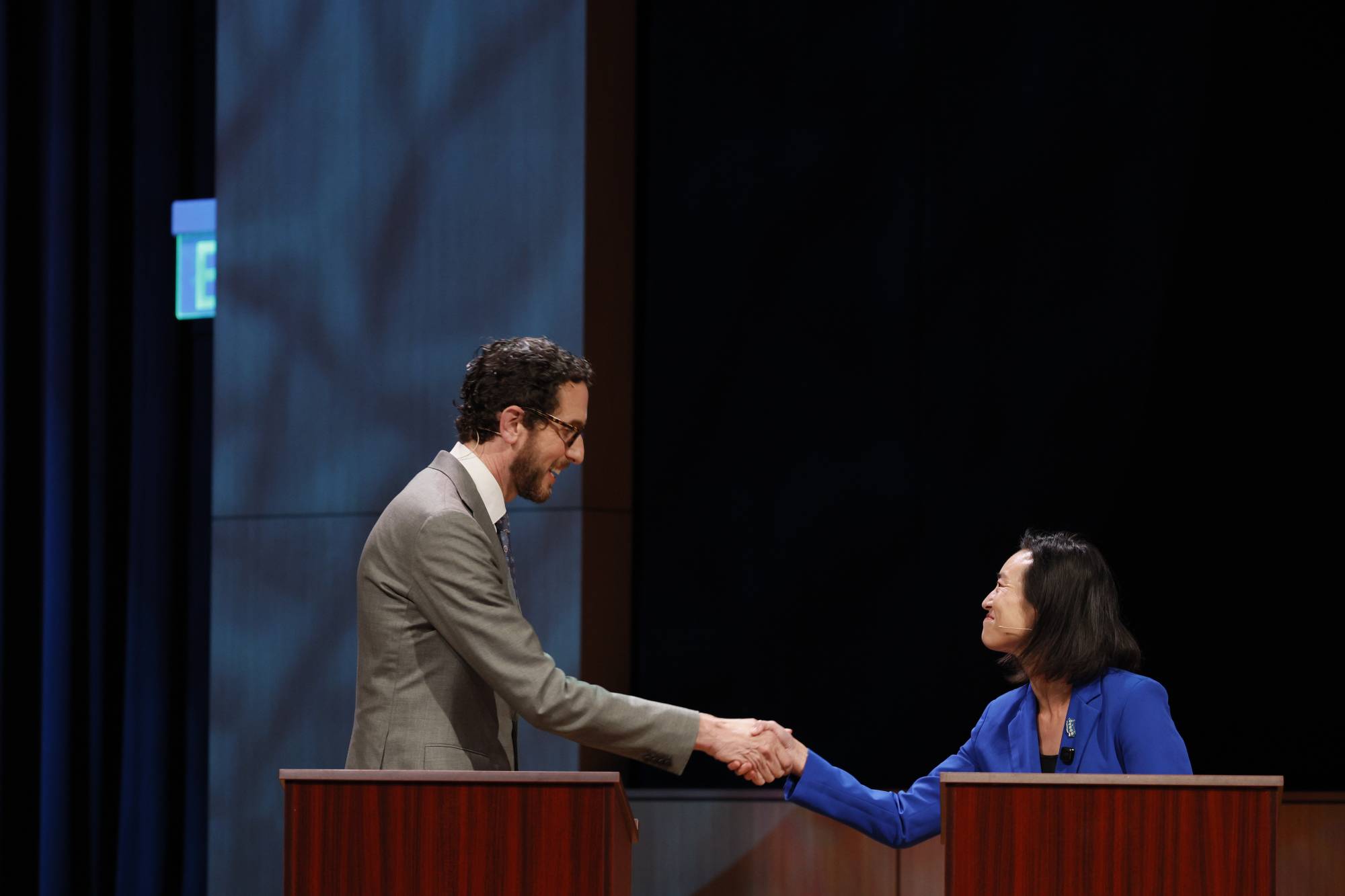
"caption": "From left: State Sen. Scott Wiener and San Francisco Supervisor Connie Chan end their debate with a handshake at KQED in San Francisco on Thursday, Oct. 1, 2026. The two Democrats are running for California’s 11th District, a seat Speaker Emerita Nancy Pelosi is leaving. KQED and the San Francisco Chronicle co-hosted the debate.",
"credit": "Santiago Mejia/S.F. Chronicle/Pool",
"altTag": null,
"description": null,
"imgSizes": {
"medium": {
"file": "https://cdn.kqed.org/wp-content/uploads/sites/10/2026/10/kqed-debate-1-copy-3-2000x1333.jpg",
"width": 2000,
"height": 1333,
"mimeType": "image/jpeg"
},
"large": {
"file": "https://cdn.kqed.org/wp-content/uploads/sites/10/2026/10/kqed-debate-1-copy-3-2000x1333.jpg",
"width": 2000,
"height": 1333,
"mimeType": "image/jpeg"
},
"thumbnail": {
"file": "https://cdn.kqed.org/wp-content/uploads/sites/10/2026/10/kqed-debate-1-copy-3-160x107.jpg",
"width": 160,
"height": 107,
"mimeType": "image/jpeg"
},
"1536x1536": {
"file": "https://cdn.kqed.org/wp-content/uploads/sites/10/2026/10/kqed-debate-1-copy-3-1536x1024.jpg",
"width": 1536,
"height": 1024,
"mimeType": "image/jpeg"
},
"2048x2048": {
"file": "https://cdn.kqed.org/wp-content/uploads/sites/10/2026/10/kqed-debate-1-copy-3-2048x1365.jpg",
"width": 2048,
"height": 1365,
"mimeType": "image/jpeg"
},
"post-thumbnail": {
"file": "https://cdn.kqed.org/wp-content/uploads/sites/10/2026/10/kqed-debate-1-copy-3-672x372.jpg",
"width": 672,
"height": 372,
"mimeType": "image/jpeg"
},
"twentyfourteen-full-width": {
"file": "https://cdn.kqed.org/wp-content/uploads/sites/10/2026/10/kqed-debate-1-copy-3-1038x576.jpg",
"width": 1038,
"height": 576,
"mimeType": "image/jpeg"
},
"full-width": {
"file": "https://cdn.kqed.org/wp-content/uploads/sites/10/2026/10/kqed-debate-1-copy-3-2000x1333.jpg",
"width": 2000,
"height": 1333,
"mimeType": "image/jpeg"
},
"npr-cds-wide": {
"file": "https://cdn.kqed.org/wp-content/uploads/sites/10/2026/10/kqed-debate-1-copy-3-1200x675.jpg",
"width": 1200,
"height": 675,
"mimeType": "image/jpeg"
},
"npr-cds-square": {
"file": "https://cdn.kqed.org/wp-content/uploads/sites/10/2026/10/kqed-debate-1-copy-3-600x600.jpg",
"width": 600,
"height": 600,
"mimeType": "image/jpeg"
},
"kqedFullSize": {
"file": "https://cdn.kqed.org/wp-content/uploads/sites/10/2026/10/kqed-debate-1-copy-3-scaled.jpg",
"width": 2560,
"height": 1707
}
},
"isLoading": false,
"fetchFailed": false
},
"news_12104379": {
"type": "attachments",
"id": "news_12104379",
"meta": {
"index": "attachments_1716263798",
"site": "news",
"id": "12104379",
"found": true
},
"title": "Keion White SF 49ers Getty",
"publishDate": 1792004206,
"status": "inherit",
"parent": 12104374,
"modified": 1792004251,
"caption": "Keion White #56 of the San Francisco 49ers celebrates a fumble recovery against the Arizona Cardinals during the fourth quarter at State Farm Stadium on Nov. 16, 2025, in Glendale, Arizona.",
"credit": "Norm Hall/Getty Images",
"altTag": null,
"description": null,
"imgSizes": {
"thumbnail": {
"file": "https://cdn.kqed.org/wp-content/uploads/sites/10/2026/10/Keion-White-SF-49ers-Getty-0a1506c9-160x107.jpg",
"width": 160,
"height": 107,
"mimeType": "image/jpeg"
},
"1536x1536": {
"file": "https://cdn.kqed.org/wp-content/uploads/sites/10/2026/10/Keion-White-SF-49ers-Getty-0a1506c9-1536x1024.jpg",
"width": 1536,
"height": 1024,
"mimeType": "image/jpeg"
},
"post-thumbnail": {
"file": "https://cdn.kqed.org/wp-content/uploads/sites/10/2026/10/Keion-White-SF-49ers-Getty-0a1506c9-672x372.jpg",
"width": 672,
"height": 372,
"mimeType": "image/jpeg"
},
"twentyfourteen-full-width": {
"file": "https://cdn.kqed.org/wp-content/uploads/sites/10/2026/10/Keion-White-SF-49ers-Getty-0a1506c9-1038x576.jpg",
"width": 1038,
"height": 576,
"mimeType": "image/jpeg"
},
"npr-cds-wide": {
"file": "https://cdn.kqed.org/wp-content/uploads/sites/10/2026/10/Keion-White-SF-49ers-Getty-0a1506c9-1200x675.jpg",
"width": 1200,
"height": 675,
"mimeType": "image/jpeg"
},
"npr-cds-square": {
"file": "https://cdn.kqed.org/wp-content/uploads/sites/10/2026/10/Keion-White-SF-49ers-Getty-0a1506c9-600x600.jpg",
"width": 600,
"height": 600,
"mimeType": "image/jpeg"
},
"kqedFullSize": {
"file": "https://cdn.kqed.org/wp-content/uploads/sites/10/2026/10/Keion-White-SF-49ers-Getty-0a1506c9.jpg",
"width": 2000,
"height": 1333
}
},
"isLoading": false,
"fetchFailed": false
},
"news_12099186": {
"type": "attachments",
"id": "news_12099186",
"meta": {
"index": "attachments_1716263798",
"site": "news",
"id": "12099186",
"found": true
},
"title": "PG&EGetty",
"publishDate": 1789145080,
"status": "inherit",
"parent": 12099181,
"modified": 1792001280,
"caption": "A PG&E crew makes repairs along the Iron Horse Trail near Camille Avenue in Danville, California, on March 15, 2023. ",
"credit": "Jane Tyska/Digital First Media/East Bay Times via Getty Images",
"altTag": null,
"description": null,
"imgSizes": {
"thumbnail": {
"file": "https://cdn.kqed.org/wp-content/uploads/sites/10/2026/09/PGEGetty-160x107.jpg",
"width": 160,
"height": 107,
"mimeType": "image/jpeg"
},
"1536x1536": {
"file": "https://cdn.kqed.org/wp-content/uploads/sites/10/2026/09/PGEGetty-1536x1024.jpg",
"width": 1536,
"height": 1024,
"mimeType": "image/jpeg"
},
"post-thumbnail": {
"file": "https://cdn.kqed.org/wp-content/uploads/sites/10/2026/09/PGEGetty-672x372.jpg",
"width": 672,
"height": 372,
"mimeType": "image/jpeg"
},
"twentyfourteen-full-width": {
"file": "https://cdn.kqed.org/wp-content/uploads/sites/10/2026/09/PGEGetty-1038x576.jpg",
"width": 1038,
"height": 576,
"mimeType": "image/jpeg"
},
"npr-cds-wide": {
"file": "https://cdn.kqed.org/wp-content/uploads/sites/10/2026/09/PGEGetty-1200x675.jpg",
"width": 1200,
"height": 675,
"mimeType": "image/jpeg"
},
"npr-cds-square": {
"file": "https://cdn.kqed.org/wp-content/uploads/sites/10/2026/09/PGEGetty-600x600.jpg",
"width": 600,
"height": 600,
"mimeType": "image/jpeg"
},
"kqedFullSize": {
"file": "https://cdn.kqed.org/wp-content/uploads/sites/10/2026/09/PGEGetty.jpg",
"width": 2000,
"height": 1333
}
},
"isLoading": false,
"fetchFailed": false
},
"news_12104326": {
"type": "attachments",
"id": "news_12104326",
"meta": {
"index": "attachments_1716263798",
"site": "news",
"id": "12104326",
"found": true
},
"title": "FoodBanksGetty",
"publishDate": 1791996327,
"status": "inherit",
"parent": 12104324,
"modified": 1792001142,
"caption": "A volunteer waits for drivers surrounded by boxes of free food at a drive-thru food distribution site provided by L.A. Food Bank at the Industry Hills Expo Center in the City of Industry on Nov. 5, 2025. Hundreds of cars waited in a line that stretched for more than a mile, and Los Angeles County sheriff deputies had to direct traffic to keep things moving. ",
"credit": "Genaro Molina/Los Angeles Times via Getty Images",
"altTag": null,
"description": null,
"imgSizes": {
"thumbnail": {
"file": "https://cdn.kqed.org/wp-content/uploads/sites/10/2026/10/FoodBanksGetty-897f6a0f-160x107.jpg",
"width": 160,
"height": 107,
"mimeType": "image/jpeg"
},
"1536x1536": {
"file": "https://cdn.kqed.org/wp-content/uploads/sites/10/2026/10/FoodBanksGetty-897f6a0f-1536x1030.jpg",
"width": 1536,
"height": 1030,
"mimeType": "image/jpeg"
},
"post-thumbnail": {
"file": "https://cdn.kqed.org/wp-content/uploads/sites/10/2026/10/FoodBanksGetty-897f6a0f-672x372.jpg",
"width": 672,
"height": 372,
"mimeType": "image/jpeg"
},
"twentyfourteen-full-width": {
"file": "https://cdn.kqed.org/wp-content/uploads/sites/10/2026/10/FoodBanksGetty-897f6a0f-1038x576.jpg",
"width": 1038,
"height": 576,
"mimeType": "image/jpeg"
},
"npr-cds-wide": {
"file": "https://cdn.kqed.org/wp-content/uploads/sites/10/2026/10/FoodBanksGetty-897f6a0f-1200x675.jpg",
"width": 1200,
"height": 675,
"mimeType": "image/jpeg"
},
"npr-cds-square": {
"file": "https://cdn.kqed.org/wp-content/uploads/sites/10/2026/10/FoodBanksGetty-897f6a0f-600x600.jpg",
"width": 600,
"height": 600,
"mimeType": "image/jpeg"
},
"kqedFullSize": {
"file": "https://cdn.kqed.org/wp-content/uploads/sites/10/2026/10/FoodBanksGetty-897f6a0f.jpg",
"width": 2000,
"height": 1341
}
},
"isLoading": false,
"fetchFailed": false
},
"news_12104344": {
"type": "attachments",
"id": "news_12104344",
"meta": {
"index": "attachments_1716263798",
"site": "news",
"id": "12104344",
"found": true
},
"title": "MyShakeGetty",
"publishDate": 1791998539,
"status": "inherit",
"parent": 12104339,
"modified": 1791998586,
"caption": "A person checks the MyShake app on their smartphone in Hollywood, California, on Oct. 17, 2019. ",
"credit": "Chris Delmas/AFP via Getty Images",
"altTag": null,
"description": null,
"imgSizes": {
"thumbnail": {
"file": "https://cdn.kqed.org/wp-content/uploads/sites/10/2026/10/MyShakeGetty-ccd11e90-160x98.jpg",
"width": 160,
"height": 98,
"mimeType": "image/jpeg"
},
"1536x1536": {
"file": "https://cdn.kqed.org/wp-content/uploads/sites/10/2026/10/MyShakeGetty-ccd11e90-1536x942.jpg",
"width": 1536,
"height": 942,
"mimeType": "image/jpeg"
},
"post-thumbnail": {
"file": "https://cdn.kqed.org/wp-content/uploads/sites/10/2026/10/MyShakeGetty-ccd11e90-672x372.jpg",
"width": 672,
"height": 372,
"mimeType": "image/jpeg"
},
"twentyfourteen-full-width": {
"file": "https://cdn.kqed.org/wp-content/uploads/sites/10/2026/10/MyShakeGetty-ccd11e90-1038x576.jpg",
"width": 1038,
"height": 576,
"mimeType": "image/jpeg"
},
"npr-cds-wide": {
"file": "https://cdn.kqed.org/wp-content/uploads/sites/10/2026/10/MyShakeGetty-ccd11e90-1200x675.jpg",
"width": 1200,
"height": 675,
"mimeType": "image/jpeg"
},
"npr-cds-square": {
"file": "https://cdn.kqed.org/wp-content/uploads/sites/10/2026/10/MyShakeGetty-ccd11e90-600x600.jpg",
"width": 600,
"height": 600,
"mimeType": "image/jpeg"
},
"kqedFullSize": {
"file": "https://cdn.kqed.org/wp-content/uploads/sites/10/2026/10/MyShakeGetty-ccd11e90.jpg",
"width": 2000,
"height": 1227
}
},
"isLoading": false,
"fetchFailed": false
},
"news_12095609": {
"type": "attachments",
"id": "news_12095609",
"meta": {
"index": "attachments_1716263798",
"site": "news",
"id": "12095609",
"found": true
},
"title": "081726-SFUSDFirstDay-20-MC_qed",
"publishDate": 1786997792,
"status": "inherit",
"parent": 12096676,
"modified": 1791586733,
"caption": "Students arrive at Jose Ortega Elementary School for the first day of their school year on Aug. 17, 2026, in San Francisco.",
"credit": "Miles Cull/KQED",
"altTag": null,
"description": null,
"imgSizes": {
"thumbnail": {
"file": "https://cdn.kqed.org/wp-content/uploads/sites/10/2026/08/081726-SFUSDFirstDay-20-MC_qed-160x107.jpg",
"width": 160,
"height": 107,
"mimeType": "image/jpeg"
},
"1536x1536": {
"file": "https://cdn.kqed.org/wp-content/uploads/sites/10/2026/08/081726-SFUSDFirstDay-20-MC_qed-1536x1025.jpg",
"width": 1536,
"height": 1025,
"mimeType": "image/jpeg"
},
"post-thumbnail": {
"file": "https://cdn.kqed.org/wp-content/uploads/sites/10/2026/08/081726-SFUSDFirstDay-20-MC_qed-672x372.jpg",
"width": 672,
"height": 372,
"mimeType": "image/jpeg"
},
"twentyfourteen-full-width": {
"file": "https://cdn.kqed.org/wp-content/uploads/sites/10/2026/08/081726-SFUSDFirstDay-20-MC_qed-1038x576.jpg",
"width": 1038,
"height": 576,
"mimeType": "image/jpeg"
},
"npr-cds-wide": {
"file": "https://cdn.kqed.org/wp-content/uploads/sites/10/2026/08/081726-SFUSDFirstDay-20-MC_qed-1200x675.jpg",
"width": 1200,
"height": 675,
"mimeType": "image/jpeg"
},
"npr-cds-square": {
"file": "https://cdn.kqed.org/wp-content/uploads/sites/10/2026/08/081726-SFUSDFirstDay-20-MC_qed-600x600.jpg",
"width": 600,
"height": 600,
"mimeType": "image/jpeg"
},
"kqedFullSize": {
"file": "https://cdn.kqed.org/wp-content/uploads/sites/10/2026/08/081726-SFUSDFirstDay-20-MC_qed.jpg",
"width": 1998,
"height": 1333
}
},
"isLoading": false,
"fetchFailed": false
},
"news_12104187": {
"type": "attachments",
"id": "news_12104187",
"meta": {
"index": "attachments_1716263798",
"site": "news",
"id": "12104187",
"found": true
},
"title": "IMG_1647",
"publishDate": 1791918406,
"status": "inherit",
"parent": 12104184,
"modified": 1791918434,
"caption": "Moving in with a partner can be an exhilarating time. But there are several things to know about protecting your finances when you do so.",
"credit": "Anna Vignet/KQED",
"altTag": null,
"description": null,
"imgSizes": {
"medium": {
"file": "https://cdn.kqed.org/wp-content/uploads/sites/10/2026/10/IMG_1647-b4dce606-2000x1500.jpg",
"width": 2000,
"height": 1500,
"mimeType": "image/jpeg"
},
"large": {
"file": "https://cdn.kqed.org/wp-content/uploads/sites/10/2026/10/IMG_1647-b4dce606-2000x1500.jpg",
"width": 2000,
"height": 1500,
"mimeType": "image/jpeg"
},
"thumbnail": {
"file": "https://cdn.kqed.org/wp-content/uploads/sites/10/2026/10/IMG_1647-b4dce606-160x120.jpg",
"width": 160,
"height": 120,
"mimeType": "image/jpeg"
},
"1536x1536": {
"file": "https://cdn.kqed.org/wp-content/uploads/sites/10/2026/10/IMG_1647-b4dce606-1536x1152.jpg",
"width": 1536,
"height": 1152,
"mimeType": "image/jpeg"
},
"2048x2048": {
"file": "https://cdn.kqed.org/wp-content/uploads/sites/10/2026/10/IMG_1647-b4dce606-2048x1536.jpg",
"width": 2048,
"height": 1536,
"mimeType": "image/jpeg"
},
"post-thumbnail": {
"file": "https://cdn.kqed.org/wp-content/uploads/sites/10/2026/10/IMG_1647-b4dce606-672x372.jpg",
"width": 672,
"height": 372,
"mimeType": "image/jpeg"
},
"twentyfourteen-full-width": {
"file": "https://cdn.kqed.org/wp-content/uploads/sites/10/2026/10/IMG_1647-b4dce606-1038x576.jpg",
"width": 1038,
"height": 576,
"mimeType": "image/jpeg"
},
"full-width": {
"file": "https://cdn.kqed.org/wp-content/uploads/sites/10/2026/10/IMG_1647-b4dce606-2000x1500.jpg",
"width": 2000,
"height": 1500,
"mimeType": "image/jpeg"
},
"npr-cds-wide": {
"file": "https://cdn.kqed.org/wp-content/uploads/sites/10/2026/10/IMG_1647-b4dce606-1200x675.jpg",
"width": 1200,
"height": 675,
"mimeType": "image/jpeg"
},
"npr-cds-square": {
"file": "https://cdn.kqed.org/wp-content/uploads/sites/10/2026/10/IMG_1647-b4dce606-600x600.jpg",
"width": 600,
"height": 600,
"mimeType": "image/jpeg"
},
"kqedFullSize": {
"file": "https://cdn.kqed.org/wp-content/uploads/sites/10/2026/10/IMG_1647-b4dce606.jpg",
"width": 2560,
"height": 1920
}
},
"isLoading": false,
"fetchFailed": false
},
"news_12104149": {
"type": "attachments",
"id": "news_12104149",
"meta": {
"index": "attachments_1716263798",
"site": "news",
"id": "12104149",
"found": true
},
"title": "ElNinoGetty",
"publishDate": 1791911515,
"status": "inherit",
"parent": 12104145,
"modified": 1791933279,
"caption": "A drone photograph of waves crashing against E. Seaside Walk at Peninsula on Sunday, Oct. 11, 2026, in Long Beach. ",
"credit": "Kayla Bartkowski/Los Angeles Times via Getty Images",
"altTag": null,
"description": null,
"imgSizes": {
"thumbnail": {
"file": "https://cdn.kqed.org/wp-content/uploads/sites/10/2026/10/ElNinoGetty-203e6b11-160x120.jpg",
"width": 160,
"height": 120,
"mimeType": "image/jpeg"
},
"1536x1536": {
"file": "https://cdn.kqed.org/wp-content/uploads/sites/10/2026/10/ElNinoGetty-203e6b11-1536x1150.jpg",
"width": 1536,
"height": 1150,
"mimeType": "image/jpeg"
},
"post-thumbnail": {
"file": "https://cdn.kqed.org/wp-content/uploads/sites/10/2026/10/ElNinoGetty-203e6b11-672x372.jpg",
"width": 672,
"height": 372,
"mimeType": "image/jpeg"
},
"twentyfourteen-full-width": {
"file": "https://cdn.kqed.org/wp-content/uploads/sites/10/2026/10/ElNinoGetty-203e6b11-1038x576.jpg",
"width": 1038,
"height": 576,
"mimeType": "image/jpeg"
},
"npr-cds-wide": {
"file": "https://cdn.kqed.org/wp-content/uploads/sites/10/2026/10/ElNinoGetty-203e6b11-1200x675.jpg",
"width": 1200,
"height": 675,
"mimeType": "image/jpeg"
},
"npr-cds-square": {
"file": "https://cdn.kqed.org/wp-content/uploads/sites/10/2026/10/ElNinoGetty-203e6b11-600x600.jpg",
"width": 600,
"height": 600,
"mimeType": "image/jpeg"
},
"kqedFullSize": {
"file": "https://cdn.kqed.org/wp-content/uploads/sites/10/2026/10/ElNinoGetty-203e6b11.jpg",
"width": 2000,
"height": 1497
}
},
"isLoading": false,
"fetchFailed": false
},
"news_12104215": {
"type": "attachments",
"id": "news_12104215",
"meta": {
"index": "attachments_1716263798",
"site": "news",
"id": "12104215",
"found": true
},
"title": "20261013_MillValleyDeathsFolo_GC-4-KQED",
"publishDate": 1791923340,
"status": "inherit",
"parent": 0,
"modified": 1791932287,
"caption": "The home of former SFPD Sgt. Kevin Mannix, his estranged wife Ann Mannix, a retired SFPD deputy chief, and their 24-year-old daughter Katherine Mannix, where authorities say Kevin shot and killed Ann and Katherine in a suspected double murder-suicide, in Strawberry (unincorporated Marin County) on Oct. 13, 2026.",
"credit": "Gina Castro/KQED",
"altTag": null,
"description": null,
"imgSizes": {
"thumbnail": {
"file": "https://cdn.kqed.org/wp-content/uploads/sites/10/2026/10/20261013_MillValleyDeathsFolo_GC-4-KQED-6bf098f9-160x107.jpg",
"width": 160,
"height": 107,
"mimeType": "image/jpeg"
},
"1536x1536": {
"file": "https://cdn.kqed.org/wp-content/uploads/sites/10/2026/10/20261013_MillValleyDeathsFolo_GC-4-KQED-6bf098f9-1536x1025.jpg",
"width": 1536,
"height": 1025,
"mimeType": "image/jpeg"
},
"post-thumbnail": {
"file": "https://cdn.kqed.org/wp-content/uploads/sites/10/2026/10/20261013_MillValleyDeathsFolo_GC-4-KQED-6bf098f9-672x372.jpg",
"width": 672,
"height": 372,
"mimeType": "image/jpeg"
},
"twentyfourteen-full-width": {
"file": "https://cdn.kqed.org/wp-content/uploads/sites/10/2026/10/20261013_MillValleyDeathsFolo_GC-4-KQED-6bf098f9-1038x576.jpg",
"width": 1038,
"height": 576,
"mimeType": "image/jpeg"
},
"npr-cds-wide": {
"file": "https://cdn.kqed.org/wp-content/uploads/sites/10/2026/10/20261013_MillValleyDeathsFolo_GC-4-KQED-6bf098f9-1200x675.jpg",
"width": 1200,
"height": 675,
"mimeType": "image/jpeg"
},
"npr-cds-square": {
"file": "https://cdn.kqed.org/wp-content/uploads/sites/10/2026/10/20261013_MillValleyDeathsFolo_GC-4-KQED-6bf098f9-600x600.jpg",
"width": 600,
"height": 600,
"mimeType": "image/jpeg"
},
"kqedFullSize": {
"file": "https://cdn.kqed.org/wp-content/uploads/sites/10/2026/10/20261013_MillValleyDeathsFolo_GC-4-KQED-6bf098f9.jpg",
"width": 2000,
"height": 1334
}
},
"isLoading": false,
"fetchFailed": false
},
"news_12101613": {
"type": "attachments",
"id": "news_12101613",
"meta": {
"index": "attachments_1716263798",
"site": "news",
"id": "12101613",
"found": true
},
"title": "GettyImages-2100499340",
"publishDate": 1790615989,
"status": "inherit",
"parent": 12101572,
"modified": 1790622019,
"caption": "KQED's series Inside Love explores what it means to love through science and curious conversation. ",
"credit": "Stella Levi/Getty Images",
"altTag": null,
"description": null,
"imgSizes": {
"medium": {
"file": "https://cdn.kqed.org/wp-content/uploads/sites/10/2026/09/GettyImages-2100499340-2000x1376.jpg",
"width": 2000,
"height": 1376,
"mimeType": "image/jpeg"
},
"large": {
"file": "https://cdn.kqed.org/wp-content/uploads/sites/10/2026/09/GettyImages-2100499340-2000x1376.jpg",
"width": 2000,
"height": 1376,
"mimeType": "image/jpeg"
},
"thumbnail": {
"file": "https://cdn.kqed.org/wp-content/uploads/sites/10/2026/09/GettyImages-2100499340-160x110.jpg",
"width": 160,
"height": 110,
"mimeType": "image/jpeg"
},
"1536x1536": {
"file": "https://cdn.kqed.org/wp-content/uploads/sites/10/2026/09/GettyImages-2100499340-1536x1057.jpg",
"width": 1536,
"height": 1057,
"mimeType": "image/jpeg"
},
"2048x2048": {
"file": "https://cdn.kqed.org/wp-content/uploads/sites/10/2026/09/GettyImages-2100499340-2048x1409.jpg",
"width": 2048,
"height": 1409,
"mimeType": "image/jpeg"
},
"post-thumbnail": {
"file": "https://cdn.kqed.org/wp-content/uploads/sites/10/2026/09/GettyImages-2100499340-672x372.jpg",
"width": 672,
"height": 372,
"mimeType": "image/jpeg"
},
"twentyfourteen-full-width": {
"file": "https://cdn.kqed.org/wp-content/uploads/sites/10/2026/09/GettyImages-2100499340-1038x576.jpg",
"width": 1038,
"height": 576,
"mimeType": "image/jpeg"
},
"full-width": {
"file": "https://cdn.kqed.org/wp-content/uploads/sites/10/2026/09/GettyImages-2100499340-2000x1376.jpg",
"width": 2000,
"height": 1376,
"mimeType": "image/jpeg"
},
"npr-cds-wide": {
"file": "https://cdn.kqed.org/wp-content/uploads/sites/10/2026/09/GettyImages-2100499340-1200x675.jpg",
"width": 1200,
"height": 675,
"mimeType": "image/jpeg"
},
"npr-cds-square": {
"file": "https://cdn.kqed.org/wp-content/uploads/sites/10/2026/09/GettyImages-2100499340-600x600.jpg",
"width": 600,
"height": 600,
"mimeType": "image/jpeg"
},
"kqedFullSize": {
"file": "https://cdn.kqed.org/wp-content/uploads/sites/10/2026/09/GettyImages-2100499340-scaled.jpg",
"width": 2560,
"height": 1762
}
},
"isLoading": false,
"fetchFailed": false
},
"news_12104141": {
"type": "attachments",
"id": "news_12104141",
"meta": {
"index": "attachments_1716263798",
"site": "news",
"id": "12104141",
"found": true
},
"title": "United States Disciplinary Barracks Getty",
"publishDate": 1791910405,
"status": "inherit",
"parent": 12104135,
"modified": 1791910469,
"caption": "The United States Disciplinary Barracks, where Nidal Malik Hasan is being held on death row, is seen in Fort Leavenworth. Hasan, the U.S. Army Major who was convicted of killing 13 people and wounding 32 others during a mass shooting at Fort Hood in 2009, has been approved by President Donald Trump for execution by military firing squad.",
"credit": "Paul Hennessy/SOPA Images/LightRocket via Getty Images",
"altTag": null,
"description": null,
"imgSizes": {
"thumbnail": {
"file": "https://cdn.kqed.org/wp-content/uploads/sites/10/2026/10/United-States-Disciplinary-Barracks-Getty-14f4c2ef-160x94.jpg",
"width": 160,
"height": 94,
"mimeType": "image/jpeg"
},
"1536x1536": {
"file": "https://cdn.kqed.org/wp-content/uploads/sites/10/2026/10/United-States-Disciplinary-Barracks-Getty-14f4c2ef-1536x904.jpg",
"width": 1536,
"height": 904,
"mimeType": "image/jpeg"
},
"post-thumbnail": {
"file": "https://cdn.kqed.org/wp-content/uploads/sites/10/2026/10/United-States-Disciplinary-Barracks-Getty-14f4c2ef-672x372.jpg",
"width": 672,
"height": 372,
"mimeType": "image/jpeg"
},
"twentyfourteen-full-width": {
"file": "https://cdn.kqed.org/wp-content/uploads/sites/10/2026/10/United-States-Disciplinary-Barracks-Getty-14f4c2ef-1038x576.jpg",
"width": 1038,
"height": 576,
"mimeType": "image/jpeg"
},
"npr-cds-wide": {
"file": "https://cdn.kqed.org/wp-content/uploads/sites/10/2026/10/United-States-Disciplinary-Barracks-Getty-14f4c2ef-1200x675.jpg",
"width": 1200,
"height": 675,
"mimeType": "image/jpeg"
},
"npr-cds-square": {
"file": "https://cdn.kqed.org/wp-content/uploads/sites/10/2026/10/United-States-Disciplinary-Barracks-Getty-14f4c2ef-600x600.jpg",
"width": 600,
"height": 600,
"mimeType": "image/jpeg"
},
"kqedFullSize": {
"file": "https://cdn.kqed.org/wp-content/uploads/sites/10/2026/10/United-States-Disciplinary-Barracks-Getty-14f4c2ef.jpg",
"width": 2000,
"height": 1177
}
},
"isLoading": false,
"fetchFailed": false
}
},
"audioPlayerReducer": {
"postId": "stream_live",
"isPaused": true,
"isPlaying": false,
"pfsActive": false,
"pledgeModalIsOpen": true,
"playerDrawerIsOpen": false,
"liveAudioPlayStartedAt": 0,
"liveAudioPlayContext": ""
},
"authorsReducer": {
"carlysevern": {
"type": "authors",
"id": "3243",
"meta": {
"index": "authors_1716337520",
"id": "3243",
"found": true
},
"name": "Carly Severn",
"firstName": "Carly",
"lastName": "Severn",
"slug": "carlysevern",
"email": "csevern@kqed.org",
"display_author_email": false,
"staff_mastheads": [
"news"
],
"title": "Senior Editor, Audience News ",
"bio": "Carly is KQED's Senior Editor of Audience News on the Digital News team, and has reported for the California Report Magazine, Bay Curious and KQED Arts. She's formerly the host of \u003ca href=\"http://ww2.kqed.org/pop/category/the-cooler/\" rel=\"noopener noreferrer\">The Cooler\u003c/a> podcast.",
"avatar": "https://secure.gravatar.com/avatar/54037bf5c128fe678f0ef26cec97a93f2e7f220a22d7285703328f12c42c1b1d?s=600&d=blank&r=g",
"twitter": "teacupinthebay",
"bluesky": null,
"facebook": null,
"instagram": null,
"linkedin": null,
"sites": [
{
"site": "",
"roles": [
"editor"
]
},
{
"site": "arts",
"roles": [
"editor"
]
},
{
"site": "news",
"roles": [
"administrator"
]
},
{
"site": "pop",
"roles": [
"editor"
]
},
{
"site": "futureofyou",
"roles": [
"editor"
]
},
{
"site": "about",
"roles": [
"administrator"
]
},
{
"site": "mindshift",
"roles": [
"editor"
]
},
{
"site": "bayareabites",
"roles": [
"editor"
]
},
{
"site": "stateofhealth",
"roles": [
"editor"
]
},
{
"site": "science",
"roles": [
"editor"
]
},
{
"site": "food",
"roles": [
"contributor"
]
},
{
"site": "forum",
"roles": [
"editor"
]
},
{
"site": "perspectives",
"roles": [
"administrator"
]
},
{
"site": "liveblog",
"roles": [
"editor"
]
}
],
"headData": {
"title": "Carly Severn | KQED",
"description": "Senior Editor, Audience News ",
"ogImgSrc": "https://secure.gravatar.com/avatar/54037bf5c128fe678f0ef26cec97a93f2e7f220a22d7285703328f12c42c1b1d?s=600&d=blank&r=g",
"twImgSrc": "https://secure.gravatar.com/avatar/54037bf5c128fe678f0ef26cec97a93f2e7f220a22d7285703328f12c42c1b1d?s=600&d=blank&r=g"
},
"isLoading": false,
"link": "/author/carlysevern"
},
"lesleymcclurg": {
"type": "authors",
"id": "11229",
"meta": {
"index": "authors_1716337520",
"id": "11229",
"found": true
},
"name": "Lesley McClurg",
"firstName": "Lesley",
"lastName": "McClurg",
"slug": "lesleymcclurg",
"email": "lmcclurg@KQED.org",
"display_author_email": false,
"staff_mastheads": [],
"title": "KQED Health Correspondent",
"bio": "Lesley McClurg is a health correspondent and fill-in host whose work is regularly rebroadcast on NPR and PBS programs. She’s earned multiple regional Emmy awards, a national and a regional Edward R. Murrow award, and was named Best Beat Reporter by the Association of Health Care Journalists. The Society of Professional Journalists has recognized her work several times, and the Society of Environmental Journalists spotlighted her coverage of California’s historic drought.\r\n\r\nBefore joining KQED in 2016, Lesley covered food and sustainability for Capital Public Radio, environmental issues for Colorado Public Radio, and reported for KUOW and KCTS 9 in Seattle. Away from the newsroom, she loves skiing with her daughter, mountain biking with her partner, and playing with Ollie, the family’s goldendoodle. On deadline, she runs almost entirely on chocolate chips.\r\n\r\n ",
"avatar": "https://secure.gravatar.com/avatar/bab49e972ea10c774fe0f5e29dba1722b158f7c0d58a360923d1389d380b2978?s=600&d=blank&r=g",
"twitter": "lesleywmcclurg",
"bluesky": null,
"facebook": null,
"instagram": null,
"linkedin": null,
"sites": [
{
"site": "arts",
"roles": [
"subscriber"
]
},
{
"site": "news",
"roles": [
"subscriber"
]
},
{
"site": "futureofyou",
"roles": [
"subscriber"
]
},
{
"site": "stateofhealth",
"roles": [
"subscriber"
]
},
{
"site": "science",
"roles": [
"subscriber"
]
},
{
"site": "quest",
"roles": [
"subscriber"
]
},
{
"site": "forum",
"roles": [
"subscriber"
]
},
{
"site": "liveblog",
"roles": [
"subscriber"
]
}
],
"headData": {
"title": "Lesley McClurg | KQED",
"description": "KQED Health Correspondent",
"ogImgSrc": "https://secure.gravatar.com/avatar/bab49e972ea10c774fe0f5e29dba1722b158f7c0d58a360923d1389d380b2978?s=600&d=blank&r=g",
"twImgSrc": "https://secure.gravatar.com/avatar/bab49e972ea10c774fe0f5e29dba1722b158f7c0d58a360923d1389d380b2978?s=600&d=blank&r=g"
},
"isLoading": false,
"link": "/author/lesleymcclurg"
},
"smohamad": {
"type": "authors",
"id": "11631",
"meta": {
"index": "authors_1716337520",
"id": "11631",
"found": true
},
"name": "Sarah Mohamad",
"firstName": "Sarah",
"lastName": "Mohamad",
"slug": "smohamad",
"email": "smohamad@KQED.org",
"display_author_email": true,
"staff_mastheads": [],
"title": "Engagement Producer and Reporter, KQED Science",
"bio": "Sarah Mohamad is an audience engagement reporter and producer for KQED Science. She reports on audience-focused science and environment stories and manages the team's social media, newsletter, and engagement efforts. Prior to this role, she played a key role as project manager for NSF's \u003ca href=\"https://www.kqed.org/crackingthecode\">\u003cem>Cracking the Code: Influencing Millennial Science Engagement\u003c/em> \u003c/a>audience research.",
"avatar": "https://secure.gravatar.com/avatar/e6224957cd82d015183756ddde1f928013a563d7ca2e4565f8c4de1ec64886c5?s=600&d=blank&r=g",
"twitter": "sarahkmohamad",
"bluesky": null,
"facebook": null,
"instagram": null,
"linkedin": null,
"sites": [
{
"site": "",
"roles": [
"editor"
]
},
{
"site": "arts",
"roles": [
"editor"
]
},
{
"site": "news",
"roles": [
"editor"
]
},
{
"site": "about",
"roles": [
"editor"
]
},
{
"site": "science",
"roles": [
"editor"
]
}
],
"headData": {
"title": "Sarah Mohamad | KQED",
"description": "Engagement Producer and Reporter, KQED Science",
"ogImgSrc": "https://secure.gravatar.com/avatar/e6224957cd82d015183756ddde1f928013a563d7ca2e4565f8c4de1ec64886c5?s=600&d=blank&r=g",
"twImgSrc": "https://secure.gravatar.com/avatar/e6224957cd82d015183756ddde1f928013a563d7ca2e4565f8c4de1ec64886c5?s=600&d=blank&r=g"
},
"isLoading": false,
"link": "/author/smohamad"
},
"ccabreralomeli": {
"type": "authors",
"id": "11708",
"meta": {
"index": "authors_1716337520",
"id": "11708",
"found": true
},
"name": "Carlos Cabrera-Lomelí",
"firstName": "Carlos",
"lastName": "Cabrera-Lomelí",
"slug": "ccabreralomeli",
"email": "ccabreralomeli@KQED.org",
"display_author_email": true,
"staff_mastheads": [
"news"
],
"title": "Community Reporter",
"bio": "Carlos Cabrera-Lomelí is a community reporter with KQED's digital engagement team. He also reports and co-produces for KQED's bilingual news hub KQED en Español. He grew up in San Francisco's Mission District and has previously worked with Univision, 48 Hills and REFORMA in Mexico City.",
"avatar": "https://secure.gravatar.com/avatar/c309be9665e484f887b818c89e273ecc673004f426f36b24d00a4d813a2e0518?s=600&d=blank&r=g",
"twitter": "@LomeliCabrera",
"bluesky": null,
"facebook": null,
"instagram": null,
"linkedin": null,
"sites": [
{
"site": "arts",
"roles": [
"editor"
]
},
{
"site": "news",
"roles": [
"editor"
]
},
{
"site": "about",
"roles": [
"editor"
]
},
{
"site": "science",
"roles": [
"editor"
]
},
{
"site": "perspectives",
"roles": [
"editor"
]
},
{
"site": "elections",
"roles": [
"editor"
]
},
{
"site": "liveblog",
"roles": [
"contributor"
]
}
],
"headData": {
"title": "Carlos Cabrera-Lomelí | KQED",
"description": "Community Reporter",
"ogImgSrc": "https://secure.gravatar.com/avatar/c309be9665e484f887b818c89e273ecc673004f426f36b24d00a4d813a2e0518?s=600&d=blank&r=g",
"twImgSrc": "https://secure.gravatar.com/avatar/c309be9665e484f887b818c89e273ecc673004f426f36b24d00a4d813a2e0518?s=600&d=blank&r=g"
},
"isLoading": false,
"link": "/author/ccabreralomeli"
},
"eromero": {
"type": "authors",
"id": "11746",
"meta": {
"index": "authors_1716337520",
"id": "11746",
"found": true
},
"name": "Ezra David Romero",
"firstName": "Ezra David",
"lastName": "Romero",
"slug": "eromero",
"email": "eromero@kqed.org",
"display_author_email": true,
"staff_mastheads": [
"news",
"science"
],
"title": "Climate Reporter",
"bio": "Ezra David Romero is a climate reporter for KQED News. He covers the absence and excess of water in the Bay Area — think sea level rise, flooding and drought. For nearly a decade he’s covered how warming temperatures are altering the lives of Californians. He’s reported on farmers worried their pistachio trees aren’t getting enough sleep, families desperate for water, scientists studying dying giant sequoias, and alongside firefighters containing wildfires. His work has appeared on local stations across California and nationally on public radio shows like Morning Edition, Here and Now, All Things Considered and Science Friday. ",
"avatar": "https://secure.gravatar.com/avatar/c76404d287c10ed40224227551ac36e24352c7306f106632caf6fead76f8801f?s=600&d=blank&r=g",
"twitter": "ezraromero",
"bluesky": null,
"facebook": null,
"instagram": null,
"linkedin": null,
"sites": [
{
"site": "arts",
"roles": [
"editor"
]
},
{
"site": "news",
"roles": [
"editor"
]
},
{
"site": "science",
"roles": [
"editor"
]
},
{
"site": "liveblog",
"roles": [
"author"
]
}
],
"headData": {
"title": "Ezra David Romero | KQED",
"description": "Climate Reporter",
"ogImgSrc": "https://secure.gravatar.com/avatar/c76404d287c10ed40224227551ac36e24352c7306f106632caf6fead76f8801f?s=600&d=blank&r=g",
"twImgSrc": "https://secure.gravatar.com/avatar/c76404d287c10ed40224227551ac36e24352c7306f106632caf6fead76f8801f?s=600&d=blank&r=g"
},
"isLoading": false,
"link": "/author/eromero"
},
"calam": {
"type": "authors",
"id": "11834",
"meta": {
"index": "authors_1716337520",
"id": "11834",
"found": true
},
"name": "Christopher Alam",
"firstName": "Christopher",
"lastName": "Alam",
"slug": "calam",
"email": "calam@kqed.org",
"display_author_email": true,
"staff_mastheads": [
"news"
],
"title": "KQED Contributor",
"bio": "Christopher Alam is a radio newscast intern working on local news and general assignment reporting. Before joining KQED he was active in college radio and journalism at UC Davis, where he received a bachelor's degree in English and professional writing in 2021. He is also a creative writer and does freelance work. Born in Fresno, he is now based in San Francisco and Oakland.",
"avatar": "https://secure.gravatar.com/avatar/b3a8308c5aaa97024a7274f0a617bd7083c2b6c50039ea7d1c08f831158d1951?s=600&d=blank&r=g",
"twitter": "_chrisalam",
"bluesky": null,
"facebook": null,
"instagram": "christopher_alam",
"linkedin": null,
"sites": [
{
"site": "arts",
"roles": [
"editor"
]
},
{
"site": "news",
"roles": [
"editor"
]
}
],
"headData": {
"title": "Christopher Alam | KQED",
"description": "KQED Contributor",
"ogImgSrc": "https://secure.gravatar.com/avatar/b3a8308c5aaa97024a7274f0a617bd7083c2b6c50039ea7d1c08f831158d1951?s=600&d=blank&r=g",
"twImgSrc": "https://secure.gravatar.com/avatar/b3a8308c5aaa97024a7274f0a617bd7083c2b6c50039ea7d1c08f831158d1951?s=600&d=blank&r=g"
},
"isLoading": false,
"link": "/author/calam"
},
"sjohnson": {
"type": "authors",
"id": "11840",
"meta": {
"index": "authors_1716337520",
"id": "11840",
"found": true
},
"name": "Sydney Johnson",
"firstName": "Sydney",
"lastName": "Johnson",
"slug": "sjohnson",
"email": "sjohnson@kqed.org",
"display_author_email": false,
"staff_mastheads": [
"news"
],
"title": "KQED Reporter",
"bio": "Sydney Johnson is a general assignment reporter at KQED. She previously reported on public health and city government at the San Francisco Examiner, and before that, she covered statewide education policy for EdSource. Her reporting has won multiple local, state and national awards. Sydney is a graduate of the University of California, Berkeley and lives in San Francisco.",
"avatar": "https://secure.gravatar.com/avatar/97855f2719b72ad6190b7c535fe642c8?s=600&d=blank&r=g",
"twitter": "sydneyfjohnson",
"facebook": null,
"instagram": null,
"linkedin": null,
"sites": [
{
"site": "news",
"roles": [
"editor"
]
}
],
"headData": {
"title": "Sydney Johnson | KQED",
"description": "KQED Reporter",
"ogImgSrc": "https://secure.gravatar.com/avatar/97855f2719b72ad6190b7c535fe642c8?s=600&d=blank&r=g",
"twImgSrc": "https://secure.gravatar.com/avatar/97855f2719b72ad6190b7c535fe642c8?s=600&d=blank&r=g"
},
"isLoading": false,
"link": "/author/sjohnson"
},
"nkhan": {
"type": "authors",
"id": "11867",
"meta": {
"index": "authors_1716337520",
"id": "11867",
"found": true
},
"name": "Nisa Khan",
"firstName": "Nisa",
"lastName": "Khan",
"slug": "nkhan",
"email": "nkhan@kqed.org",
"display_author_email": false,
"staff_mastheads": [],
"title": "KQED Contributor",
"bio": "Nisa Khan is a reporter for KQED's Audience News Desk. She was formerly a data reporter at Michigan Radio. She earned a Bachelor of Science in Information from the University of Michigan and a Master of Arts in Communication from Stanford University.",
"avatar": "https://secure.gravatar.com/avatar/8720459eef081ff64582b3506b124d58523e80e120704a0cbd9892533c914991?s=600&d=blank&r=g",
"twitter": "mnisakhan",
"bluesky": null,
"facebook": null,
"instagram": null,
"linkedin": null,
"sites": [
{
"site": "arts",
"roles": [
"editor"
]
},
{
"site": "news",
"roles": [
"editor"
]
},
{
"site": "science",
"roles": [
"editor",
"author"
]
},
{
"site": "forum",
"roles": [
"editor"
]
},
{
"site": "liveblog",
"roles": [
"contributor"
]
}
],
"headData": {
"title": "Nisa Khan | KQED",
"description": "KQED Contributor",
"ogImgSrc": "https://secure.gravatar.com/avatar/8720459eef081ff64582b3506b124d58523e80e120704a0cbd9892533c914991?s=600&d=blank&r=g",
"twImgSrc": "https://secure.gravatar.com/avatar/8720459eef081ff64582b3506b124d58523e80e120704a0cbd9892533c914991?s=600&d=blank&r=g"
},
"isLoading": false,
"link": "/author/nkhan"
},
"kdebenedetti": {
"type": "authors",
"id": "11913",
"meta": {
"index": "authors_1716337520",
"id": "11913",
"found": true
},
"name": "Katie DeBenedetti",
"firstName": "Katie",
"lastName": "DeBenedetti",
"slug": "kdebenedetti",
"email": "kdebenedetti@kqed.org",
"display_author_email": false,
"staff_mastheads": [
"news",
"science"
],
"title": "KQED Contributor",
"bio": "Katie DeBenedetti is a digital reporter covering daily news for the Express Desk. Prior to joining KQED as a culture reporting intern in January 2024, she covered education and city government for the Napa Valley Register.",
"avatar": "https://secure.gravatar.com/avatar/6e31073cb8f7e4214ab03f42771d0f45?s=600&d=blank&r=g",
"twitter": null,
"facebook": null,
"instagram": null,
"linkedin": null,
"sites": [
{
"site": "news",
"roles": [
"author"
]
},
{
"site": "science",
"roles": [
"author"
]
},
{
"site": "liveblog",
"roles": [
"author"
]
}
],
"headData": {
"title": "Katie DeBenedetti | KQED",
"description": "KQED Contributor",
"ogImgSrc": "https://secure.gravatar.com/avatar/6e31073cb8f7e4214ab03f42771d0f45?s=600&d=blank&r=g",
"twImgSrc": "https://secure.gravatar.com/avatar/6e31073cb8f7e4214ab03f42771d0f45?s=600&d=blank&r=g"
},
"isLoading": false,
"link": "/author/kdebenedetti"
},
"bkrans": {
"type": "authors",
"id": "11923",
"meta": {
"index": "authors_1716337520",
"id": "11923",
"found": true
},
"name": "Brian Krans",
"firstName": "Brian",
"lastName": "Krans",
"slug": "bkrans",
"email": "bkrans@kqed.org",
"display_author_email": false,
"staff_mastheads": [
"news"
],
"title": "KQED Contributing Reporter",
"bio": "Brian Krans is an award-winning local news and investigative reporter who has been proudly working as a general assignment reporter for KQED since August 2023. He lives in Richmond, where he also reports on air pollution for Richmondside. He is also a founding member of the Vallejo Sun.",
"avatar": "https://secure.gravatar.com/avatar/71fa91f931774612559f7640390b53d9c2840ff72b20f195a25239aab2d9fbb9?s=600&d=blank&r=g",
"twitter": "citizenkrans",
"bluesky": null,
"facebook": null,
"instagram": null,
"linkedin": null,
"sites": [
{
"site": "news",
"roles": [
"editor"
]
}
],
"headData": {
"title": "Brian Krans | KQED",
"description": "KQED Contributing Reporter",
"ogImgSrc": "https://secure.gravatar.com/avatar/71fa91f931774612559f7640390b53d9c2840ff72b20f195a25239aab2d9fbb9?s=600&d=blank&r=g",
"twImgSrc": "https://secure.gravatar.com/avatar/71fa91f931774612559f7640390b53d9c2840ff72b20f195a25239aab2d9fbb9?s=600&d=blank&r=g"
},
"isLoading": false,
"link": "/author/bkrans"
},
"psibulo": {
"type": "authors",
"id": "11995",
"meta": {
"index": "authors_1716337520",
"id": "11995",
"found": true
},
"name": "Paula Sibulo",
"firstName": "Paula",
"lastName": "Sibulo",
"slug": "psibulo",
"email": "psibulo@kqed.org",
"display_author_email": false,
"staff_mastheads": [
"news"
],
"title": "KQED Contributor",
"bio": "Paula Sibulo is a reporter, weekend host and producer at KQED. She graduated from San Francisco State University, where she studied broadcast journalism and served as the editor-in-chief of its student-run newspaper, \u003cem>Golden Gate Xpress\u003c/em>. Her work has been recognized with awards from Society of Professional Journalists NorCal, College Media Association, Associated Collegiate Press, and Best of SNO.",
"avatar": "https://secure.gravatar.com/avatar/0548c07ed39b61edb3e76faad378e49a997fd03a43541c27edf5392b1e0738f6?s=600&d=blank&r=g",
"twitter": null,
"bluesky": null,
"facebook": null,
"instagram": null,
"linkedin": null,
"sites": [
{
"site": "news",
"roles": [
"contributor"
]
}
],
"headData": {
"title": "Paula Sibulo | KQED",
"description": "KQED Contributor",
"ogImgSrc": "https://secure.gravatar.com/avatar/0548c07ed39b61edb3e76faad378e49a997fd03a43541c27edf5392b1e0738f6?s=600&d=blank&r=g",
"twImgSrc": "https://secure.gravatar.com/avatar/0548c07ed39b61edb3e76faad378e49a997fd03a43541c27edf5392b1e0738f6?s=600&d=blank&r=g"
},
"isLoading": false,
"link": "/author/psibulo"
},
"ejackson": {
"type": "authors",
"id": "12003",
"meta": {
"index": "authors_1716337520",
"id": "12003",
"found": true
},
"name": "Ella Jackson",
"firstName": "Ella",
"lastName": "Jackson",
"slug": "ejackson",
"email": "ejackson@kqed.org",
"display_author_email": false,
"staff_mastheads": [],
"title": "KQED Contributor",
"bio": null,
"avatar": "https://secure.gravatar.com/avatar/3c688edc62aec1dcae096e1475956d245f72bde99cff316455871c9b22a7205b?s=600&d=blank&r=g",
"twitter": null,
"bluesky": null,
"facebook": null,
"instagram": null,
"linkedin": null,
"sites": [
{
"site": "news",
"roles": [
"author"
]
},
{
"site": "science",
"roles": [
"author"
]
}
],
"headData": {
"title": "Ella Jackson | KQED",
"description": "KQED Contributor",
"ogImgSrc": "https://secure.gravatar.com/avatar/3c688edc62aec1dcae096e1475956d245f72bde99cff316455871c9b22a7205b?s=600&d=blank&r=g",
"twImgSrc": "https://secure.gravatar.com/avatar/3c688edc62aec1dcae096e1475956d245f72bde99cff316455871c9b22a7205b?s=600&d=blank&r=g"
},
"isLoading": false,
"link": "/author/ejackson"
}
},
"pagesReducer": {
"news_tag_bay-area": {
"type": "terms",
"id": "news_1386",
"meta": {
"index": "terms_1716263798",
"site": "news",
"id": "1386",
"score": 7.7927804
},
"featImg": null,
"name": "Bay Area",
"description": null,
"taxonomy": "tag",
"headData": {
"twImgId": null,
"twTitle": null,
"ogTitle": null,
"ogImgId": null,
"twDescription": null,
"description": null,
"title": "Bay Area Archives | KQED News",
"ogDescription": null
},
"ttid": 1398,
"slug": "bay-area",
"isLoading": false,
"title": "Bay Area",
"pageMeta": {
"site": "news",
"WpPageTemplate": "page-topic-editorial",
"currentPage": 10
},
"blocks": [
{
"blockName": "kqed/post-list",
"attrs": {
"layout": "cardArticle2",
"query": "posts/news?tag=bay-area",
"seeMore": false,
"paginated": true,
"page": 10
}
},
{
"blockName": "kqed/ad"
}
]
}
},
"pfsSessionReducer": {},
"postsReducer": {
"stream_live": {
"type": "live",
"id": "stream_live",
"audioUrl": "https://hls.kqed.org/hls/kqed_app/playlist.m3u8",
"title": "Live Stream",
"excerpt": "Live Stream information currently unavailable.",
"link": "/radio",
"featImg": "",
"label": {
"name": "KQED Live",
"link": "/"
}
},
"stream_kqedNewscast": {
"type": "posts",
"id": "stream_kqedNewscast",
"audioUrl": "https://www.kqed.org/.stream/anon/radio/RDnews/newscast.mp3?_=1",
"title": "KQED Newscast",
"featImg": "",
"label": {
"name": "88.5 FM",
"link": "/"
}
},
"news_12104461": {
"type": "posts",
"id": "news_12104461",
"meta": {
"index": "posts_1716263798",
"site": "news",
"id": "12104461",
"score": null,
"sort": [
1792090800000
]
},
"guestAuthors": [],
"slug": "ballhalla-better-be-prepping-where-to-cheer-on-the-valkyries-in-the-wnba-finals",
"title": "‘Ballhalla Better Be Prepping’: Where to Cheer on the Valkyries in the WNBA Finals",
"publishDate": 1792090800,
"format": "standard",
"headTitle": "‘Ballhalla Better Be Prepping’: Where to Cheer on the Valkyries in the WNBA Finals | KQED",
"labelTerm": {
"site": "news"
},
"content": "\n\u003cp>The Golden State Valkyries have made it \u003ca href=\"https://www.kqed.org/news/12103702/golden-state-valkyries-advance-to-wnba-finals-after-sweeping-las-vegas-aces\">to the 2026 Women’s National Basketball Association Finals\u003c/a> in their second year ever.\u003c/p>\n\n\n\n\u003cp>And they’re stunningly close to \u003ca href=\"https://frontofficesports.com/article/natalie-nakase-valkyries-coach-wnba/\">fulfilling owner Joe Lacob’s request to coach Natalie Nakase\u003c/a> to win a championship in the first five years.\u003c/p>\n\n\n\n\u003cp>It’s been an exhilarating season for the Valkyries — now \u003ca href=\"https://www.kqed.org/news/12103702/golden-state-valkyries-advance-to-wnba-finals-after-sweeping-las-vegas-aces\">the most valuable team in the league \u003c/a>— and its passionate fanbase that turns homecourt Chase Center into “Ballhalla.” And the stakes just got higher when the Valkyries won three straight games to knock out the defending champions, the Las Vegas Aces. \u003c/p>\n\n\n\n\u003cp>(It’s worth noting that this outcome was \u003cem>very\u003c/em> much not expected by \u003ca href=\"https://www.espn.com/wnba/story/_/id/50090641/wnba-playoffs-2026-semifinals-preview-postseason-prediction-odds-aces-valkyries-dream-liberty\">sports commentators\u003c/a>. As Valkyries forward Gabby Williams said during a post-game conference, \u003ca href=\"https://sports.yahoo.com/articles/golden-state-valkyries-earned-wnba-201306407.html\">“We about to have some bandwagoners.”\u003c/a>)\u003c/p>\n\n\n\n\u003cfigure class=\"wp-block-image size-full\">\u003cimg loading=\"lazy\" decoding=\"async\" width=\"1999\" height=\"1333\" src=\"https://cdn.kqed.org/wp-content/uploads/sites/10/2026/10/10092026Valkyries-Friday-Night_GH_017_qed-121b07fd.jpg\" alt=\"\" class=\"wp-image-12103944\" srcset=\"https://cdn.kqed.org/wp-content/uploads/sites/10/2026/10/10092026Valkyries-Friday-Night_GH_017_qed-121b07fd.jpg 1999w, https://cdn.kqed.org/wp-content/uploads/sites/10/2026/10/10092026Valkyries-Friday-Night_GH_017_qed-121b07fd-160x107.jpg 160w, https://cdn.kqed.org/wp-content/uploads/sites/10/2026/10/10092026Valkyries-Friday-Night_GH_017_qed-121b07fd-1536x1024.jpg 1536w\" sizes=\"auto, (max-width: 1999px) 100vw, 1999px\" />\u003cfigcaption class=\"wp-element-caption\">Four Golden State Valkyries fans wear matching Kaitlyn Chen jerseys while watching the team’s playoff game against the Las Vegas Aces at Standard Deviant Brewing in San Francisco on Oct. 9, 2026. (Gustavo Hernandez/KQED)\u003c/figcaption>\u003c/figure>\n\n\n\n\u003cp>In fact, this year will be the first WNBA finals since 2021 without either the Las Vegas Aces or the New York Liberty — both knocked out during the semifinals. Instead, the Valkyries will be going up against the Atlanta Dream, who also won three games out of five. The Dream have also never won a championship and are hungry for it — especially with WNBA star Angel Reese taking the stage.\u003c/p>\n\n\n\n\u003cp>Nakase rallied the fans during \u003ca href=\"https://www.instagram.com/reel/DeexaPdC_2D/\">an interview during a Valkyries practice\u003c/a> this week.\u003c/p>\n\n\n\n\u003cp>“Ballhalla better be prepping for a game plan. As soon as [the Atlanta Dream] is announced, I need some hostility,” Nakase said. “If they are shooting free throws, I need that thing to be rocking.”\u003c/p>\n\n\n\n\u003cp>“We definitely gotta use Ballhalla’s essence,” she said.\u003c/p>\n\n\n\n\u003cp>Keep reading to find out where you can cheer on the Valkyries and how you can follow the WNBA finals this month. And if you’re entirely new to the whole basketball thing, don’t worry: We got you. KQED has a guide to \u003ca href=\"https://www.kqed.org/news/12096884/in-the-midst-of-basketball-and-baseball-season-how-to-join-womens-sports-fandom-in-the-bay-area\">joining the WNBA fandom in the Bay\u003c/a> and what to know about \u003ca href=\"https://www.kqed.org/news/12047885/golden-state-valkyries-wnba-schedule-fandom-chase-center-san-francisco-ballhalla\">the Valkyries’ inaugural year\u003c/a>. \u003c/p>\n\n\n\n\u003ch2 class=\"wp-block-heading\">First, when is the Valkyries game this weekend?\u003c/h2>\n\n\n\n\u003cp>The Valkyries will play the Atlanta Dream at Chase Center in Game 1 of the WNBA finals on Saturday, Oct. 17 at 12:30 p.m.\u003c/p>\n\n\n\n\u003ch2 class=\"wp-block-heading\">Remind me: How do the WNBA finals work?\u003c/h2>\n\n\n\n\u003cp>WNBA finals are a best-of-7 format — meaning Game 5, 6 and 7 may not happen if one team sweeps the first four. \u003c/p>\n\n\n\n\u003cfigure class=\"wp-block-image size-full\">\u003cimg loading=\"lazy\" decoding=\"async\" width=\"2000\" height=\"1333\" src=\"https://cdn.kqed.org/wp-content/uploads/sites/10/2026/09/260925-VioletDay-NG-16-KQED.jpg\" alt=\"\" class=\"wp-image-12101439\" srcset=\"https://cdn.kqed.org/wp-content/uploads/sites/10/2026/09/260925-VioletDay-NG-16-KQED.jpg 2000w, https://cdn.kqed.org/wp-content/uploads/sites/10/2026/09/260925-VioletDay-NG-16-KQED-160x107.jpg 160w, https://cdn.kqed.org/wp-content/uploads/sites/10/2026/09/260925-VioletDay-NG-16-KQED-1536x1024.jpg 1536w\" sizes=\"auto, (max-width: 2000px) 100vw, 2000px\" />\u003cfigcaption class=\"wp-element-caption\">A Golden State Valkyries flag flies outside San Francisco City Hall in San Francisco ahead of the Valkyries playoff push on Sept. 25, 2026. (Nina Glick/KQED)\u003c/figcaption>\u003c/figure>\n\n\n\n\u003cp>After Saturday’s Game 1, the \u003ca href=\"https://www.instagram.com/valkyries/p/DecMDPbNKfw/?hl=en\">schedule is as follows\u003c/a>:\u003c/p>\n\n\n\n\u003cul class=\"wp-block-list\">\n\u003cli>Oct. 19 at 5 p.m. (home)\u003c/li>\n\n\n\n\u003cli>Oct. 21 at 5 p.m. (away)\u003c/li>\n\n\n\n\u003cli>Oct. 24 at 10 a.m. (away)\u003c/li>\n\n\n\n\u003cli>Oct. 26 at 5 p.m. (home)\u003c/li>\n\n\n\n\u003cli>Oct. 29 at 5 p.m. (away)\u003c/li>\n\n\n\n\u003cli>Oct. 31 at 5 p.m. (home)\u003c/li>\n\u003c/ul>\n\n\n\n\u003cp>After pushback from WNBA fans and \u003ca href=\"https://x.com/JanieMcCAP/status/2110106023520502236?s=46\">even Valkyries owner Lacob\u003c/a>, the Atlanta Dream will now be \u003ca href=\"https://www.espn.com/wnba/story/_/id/50174735/wnba-finals-games-3-4-held-atlanta-state-farm-arena\">playing their first two home games at the State Farm Arena\u003c/a>, which can seat more than 17,000 people, rather than its much smaller regular venue in College Park.\u003c/p>\n\n\n\n\u003ch2 class=\"wp-block-heading\">Where can I watch the WNBA playoff games?\u003c/h2>\n\n\n\n\u003ch3 class=\"wp-block-heading\">How to watch the games online\u003c/h3>\n\n\n\n\u003cp>The WNBA website has \u003ca href=\"https://www.wnba.com/schedule?season=2026&month=all\">a list of ways to watch each game\u003c/a>, since this can change for specific matches. For the finals, it’s primarily \u003ca href=\"https://www.peacocktv.com/sports/wnba#ib-section-section-6\">Peacock/NBC\u003c/a>, \u003ca href=\"https://www.usanetwork.com/usa-insider/2026-wnba-schedule-how-to-watch-on-usa-network-online-streaming\">USA\u003c/a> and \u003ca href=\"https://www.cnbc.com/live-tv/\">CNBC.\u003c/a>\u003c/p>\n\n\n\n\u003cp>You can also get access to these channels through platforms like \u003ca href=\"https://tv.youtube.com/learn/wnba/\">YouTube TV\u003c/a>, \u003ca href=\"https://www.fubo.tv/welcome\">Fubo\u003c/a> and the \u003ca href=\"https://www.wnba.com/leaguepass?plan=annual\">WNBA League Pass\u003c/a>.\u003c/p>\n\n\n\n\u003cfigure class=\"wp-block-image size-full\">\u003cimg loading=\"lazy\" decoding=\"async\" width=\"2000\" height=\"1333\" src=\"https://cdn.kqed.org/wp-content/uploads/sites/10/2026/10/261002-ValkyriesRound1-52-BL.jpg\" alt=\"\" class=\"wp-image-12102726\" srcset=\"https://cdn.kqed.org/wp-content/uploads/sites/10/2026/10/261002-ValkyriesRound1-52-BL.jpg 2000w, https://cdn.kqed.org/wp-content/uploads/sites/10/2026/10/261002-ValkyriesRound1-52-BL-160x107.jpg 160w, https://cdn.kqed.org/wp-content/uploads/sites/10/2026/10/261002-ValkyriesRound1-52-BL-1536x1024.jpg 1536w\" sizes=\"auto, (max-width: 2000px) 100vw, 2000px\" />\u003cfigcaption class=\"wp-element-caption\">Golden State Valkyries mascot Violet lies on the court after the team defeated the Dallas Wings 77-73 in Game 3 of their WNBA first-round playoff series at Chase Center in San Francisco on Oct. 2, 2026. (Beth LaBerge/KQED)\u003c/figcaption>\u003c/figure>\n\n\n\n\u003ch3 class=\"wp-block-heading\">How to watch the game in person\u003c/h3>\n\n\n\n\u003cp>KQED has a thorough guide on \u003ca href=\"https://www.kqed.org/news/12047885/golden-state-valkyries-wnba-schedule-fandom-chase-center-san-francisco-ballhalla#chase-center-san-francisco-parking\">how to attend a Valkyries game at Chase Center\u003c/a>, including transportation, parking and bag policy. Keep in mind that if you are driving into San Francisco, over a mile of \u003ca href=\"https://www.kqed.org/news/12104093/101-i-80-closure-san-francisco-october-16-19-valkyries-wnba-finals-chase-center-bay-bridge-detour-traffic\">Highway 101 southbound is closed\u003c/a> this weekend.\u003c/p>\n\n\n\n\u003cp>Finals tickets are available on \u003ca href=\"https://valkyries.wnba.com/schedule?season=2026&month=all&location=all&opponent=all\">the Valkyries’ website\u003c/a>. The \u003cem>guaranteed \u003c/em>games at Chase Center are Saturday, Oct. 17 and Monday, Oct. 19. But expect higher-than-usual price tags — for Saturday, \u003ca href=\"https://www.ticketmaster.com/event/1C006529C5D8349C?brand=valkyries&artistid=3369949&wt.mc_id=WNBA_TEAM_GS_R3_A_PLAYOFFS_SGT_PG&utm_source=WNBA.com&utm_medium=client_PM&utm_campaign=WNBA_TEAM_GS&utm_content=R3_A_PLAYOFFS_SGT_PG\">the tickets range from $223 to over $1,300\u003c/a>. \u003c/p>\n\n\n\n\u003cp>If necessary, the next games played at home will be on Monday, Oct. 26 and Saturday, Oct. 31.\u003c/p>\n\n\n\n\u003cp>If you do end up attending in person, get ready to be loud. Ballhalla is \u003ca href=\"https://www.kqed.org/news/12101576/fans-rally-at-chase-center-as-valkyries-win-their-first-playoff-game-on-sunday\">already known as the loudest WNBA fandom around\u003c/a>, sometimes even known as the team’s \u003ca href=\"https://www.kqed.org/news/12101576/fans-rally-at-chase-center-as-valkyries-win-their-first-playoff-game-on-sunday\">“sixth man”\u003c/a> on court.\u003c/p>\n\n\n\n\u003ch3 class=\"wp-block-heading\">How to watch the game at a bar\u003c/h3>\n\n\n\n\u003cp>For away games, there’ll be \u003ca href=\"https://www.instagram.com/p/DefNZk-Bdee/\">watch parties inside Chase Center\u003c/a>. According to the Valkyries’ Instagram account, tickets for these events will \u003ca href=\"https://www.instagram.com/p/DefNZk-Bdee/\">go live on Thursday\u003c/a>.\u003c/p>\n\n\n\n\n\n\u003cp>But even if you don’t have tickets to Chase Center, you can still enjoy the vibes of Ballhalla at plenty of spots across the Bay, as detailed in \u003ca href=\"https://www.kqed.org/news/12096884/in-the-midst-of-basketball-and-baseball-season-how-to-join-womens-sports-fandom-in-the-bay-area#basketball\">KQED’s guide to the WNBA season\u003c/a> — which also includes a map from \u003ca href=\"https://www.instagram.com/roughnotes.mgs/\">sports journalist Maya Goldberg-Safir\u003c/a> of key places to meet other fans.\u003c/p>\n\n\n\n\u003cp>(Remember: If you’re going to watch at a sports bar, be sure to get there at \u003cem>least \u003c/em>an hour and a half early. Rooms get packed very quickly.)\u003c/p>\n\n\n\n\u003cp>Highlights include:\u003c/p>\n\n\n\n\u003cul class=\"wp-block-list\">\n\u003cli>\u003ca href=\"https://partiful.com/e/wCPDm5uWjBpyTOpS21qr?\">Valkyries Tailgate\u003c/a> on Saturday at Chase Center in San Francisco\u003c/li>\n\n\n\n\u003cli>Events hosted by \u003ca href=\"https://www.instagram.com/valqueeries/\">ValQueeries\u003c/a>\u003c/li>\n\n\n\n\u003cli>Events hosted by \u003ca href=\"https://www.instagram.com/thepeopleswatchparty/\">The People’s Watch Party\u003c/a>\u003c/li>\n\n\n\n\u003cli>Events hosted by \u003ca href=\"https://www.instagram.com/hysteriasportsbar/\">Hysteria\u003c/a>\u003c/li>\n\n\n\n\u003cli>\u003ca href=\"https://www.instagram.com/p/DeiFsU9gZAo/\">Salesforce Park\u003c/a> in San Francisco (starts Monday)\u003c/li>\n\n\n\n\u003cli>\u003ca href=\"https://www.instagram.com/p/DeiaVjHmGdg/\">The Center\u003c/a> in San Francisco’s Japantown (starts Monday)\u003c/li>\n\n\n\n\u003cli>\u003ca href=\"https://www.kqed.org/arts/13977457/rikkis-first-womens-sports-bar-bay-area-open-castro-sf-valkyries\">Rikki’s\u003c/a> in San Francisco\u003c/li>\n\n\n\n\u003cli>\u003ca href=\"https://hitopsbar.com/san-francisco/\">Hi Tops\u003c/a> in San Francisco\u003c/li>\n\n\n\n\u003cli>\u003ca href=\"https://www.mothersf.com/\">Mother\u003c/a> in San Francisco\u003c/li>\n\n\n\n\u003cli>\u003ca href=\"https://www.standarddeviantbrewing.com/\">Standard Deviant Brewing\u003c/a> in San Francisco\u003c/li>\n\n\n\n\u003cli>\u003ca href=\"https://www.instagram.com/p/DeZ57cjyJXS\">Valley Tavern\u003c/a> in San Francisco\u003c/li>\n\n\n\n\u003cli>\u003ca href=\"https://www.eventbrite.com/e/golden-state-valkyries-finals-watch-party-game-1-at-providence-sf-tickets-2003382664479?aff=ebdssbdestsearch\">Providence Night Club\u003c/a> in San Francisco (for Saturday’s game)\u003c/li>\n\n\n\n\u003cli>\u003ca href=\"https://www.eventbrite.com/e/golden-state-valkyries-vs-dream-wnba-finals-watch-party-at-woodbury-tickets-2003389742650?aff=ebdssbdestsearch\">Woodbury Bar\u003c/a> in San Francisco (for Saturday’s game)\u003c/li>\n\n\n\n\u003cli>\u003ca href=\"https://www.eventbrite.com/e/golden-state-valkyries-vs-atlanta-dream-watch-party-101726-tickets-2003326878622?aff=ebdssbdestsearch\">Skylark\u003c/a> in San Francisco (for Saturday’s game)\u003c/li>\n\n\n\n\u003cli>\u003ca href=\"https://www.instagram.com/p/DefqDI3l7Wt/\">The Disability Cultural Center\u003c/a> in San Francisco (for Wednesday’s game)\u003c/li>\n\n\n\n\u003cli>\u003ca href=\"https://www.instagram.com/georgeandwaltsbar/?hl=en\">George & Walt’s\u003c/a> in Oakland\u003c/li>\n\n\n\n\u003cli>\u003ca href=\"https://xingones.com/\">Xingones Cantina\u003c/a> in Oakland\u003c/li>\n\n\n\n\u003cli>\u003ca href=\"https://www.oaklandathleticclub.com/\">Oakland Athletic Club\u003c/a> in Oakland\u003c/li>\n\n\n\n\u003cli>\u003ca href=\"https://www.instagram.com/whitehorsebar/?hl=en\">White Horse Bar\u003c/a> in Oakland\u003c/li>\n\n\n\n\u003cli>\u003ca href=\"https://www.instagram.com/p/Dedf-mhO6Fh/\">Understory\u003c/a> in Oakland (for Saturday’s game)\u003c/li>\n\n\n\n\u003cli>\u003ca href=\"https://www.barebottle.com/santa-clara-taproom\">Barebottle Brewing Company\u003c/a> in Santa Clara\u003c/li>\n\n\n\n\u003cli>\u003ca href=\"https://www.rookieslodge.com/\">Rookie’s Sports Lodge\u003c/a> in San José\u003c/li>\n\u003c/ul>\n\n\n\n\u003cp>The team’s own website also has \u003ca href=\"https://valkyries.wnba.com/bar-network\">a list of bars in the Bay\u003c/a> to go to for Valkyries games.\u003c/p>\n\n\n\n\u003cp>And if you have time, swing by \u003ca href=\"https://www.instagram.com/boohalla/\">“Boohalla”\u003c/a> — a Valkyries-themed Halloween display in San Francisco’s Inner Richmond district, featuring \u003ca href=\"https://www.instagram.com/boohalla/reel/DeSYb4XyxtK/\">“Natalie NaCauldron”\u003c/a> and \u003ca href=\"https://www.instagram.com/boohalla/p/DeC3BpYEj9z/\">“G. Wicked Williams.”\u003c/a>\u003c/p>\n",
"blocks": [
{
"blockName": "core/paragraph",
"attrs": {
"dropCap": false
},
"innerHTML": "\n\u003cp>The Golden State Valkyries have made it \u003ca href=\"https://www.kqed.org/news/12103702/golden-state-valkyries-advance-to-wnba-finals-after-sweeping-las-vegas-aces\">to the 2026 Women’s National Basketball Association Finals\u003c/a> in their second year ever.\u003c/p>\n",
"innerContent": [
"\n\u003cp>The Golden State Valkyries have made it \u003ca href=\"https://www.kqed.org/news/12103702/golden-state-valkyries-advance-to-wnba-finals-after-sweeping-las-vegas-aces\">to the 2026 Women’s National Basketball Association Finals\u003c/a> in their second year ever.\u003c/p>\n"
],
"innerBlocks": []
},
{
"blockName": "core/paragraph",
"attrs": {
"dropCap": false
},
"innerHTML": "\n\u003cp>And they’re stunningly close to \u003ca href=\"https://frontofficesports.com/article/natalie-nakase-valkyries-coach-wnba/\">fulfilling owner Joe Lacob’s request to coach Natalie Nakase\u003c/a> to win a championship in the first five years.\u003c/p>\n",
"innerContent": [
"\n\u003cp>And they’re stunningly close to \u003ca href=\"https://frontofficesports.com/article/natalie-nakase-valkyries-coach-wnba/\">fulfilling owner Joe Lacob’s request to coach Natalie Nakase\u003c/a> to win a championship in the first five years.\u003c/p>\n"
],
"innerBlocks": []
},
{
"blockName": "core/paragraph",
"attrs": {
"dropCap": false
},
"innerHTML": "\n\u003cp>It’s been an exhilarating season for the Valkyries — now \u003ca href=\"https://www.kqed.org/news/12103702/golden-state-valkyries-advance-to-wnba-finals-after-sweeping-las-vegas-aces\">the most valuable team in the league \u003c/a>— and its passionate fanbase that turns homecourt Chase Center into “Ballhalla.” And the stakes just got higher when the Valkyries won three straight games to knock out the defending champions, the Las Vegas Aces. \u003c/p>\n",
"innerContent": [
"\n\u003cp>It’s been an exhilarating season for the Valkyries — now \u003ca href=\"https://www.kqed.org/news/12103702/golden-state-valkyries-advance-to-wnba-finals-after-sweeping-las-vegas-aces\">the most valuable team in the league \u003c/a>— and its passionate fanbase that turns homecourt Chase Center into “Ballhalla.” And the stakes just got higher when the Valkyries won three straight games to knock out the defending champions, the Las Vegas Aces. \u003c/p>\n"
],
"innerBlocks": []
},
{
"blockName": "core/paragraph",
"attrs": {
"dropCap": false
},
"innerHTML": "\n\u003cp>(It’s worth noting that this outcome was \u003cem>very\u003c/em> much not expected by \u003ca href=\"https://www.espn.com/wnba/story/_/id/50090641/wnba-playoffs-2026-semifinals-preview-postseason-prediction-odds-aces-valkyries-dream-liberty\">sports commentators\u003c/a>. As Valkyries forward Gabby Williams said during a post-game conference, \u003ca href=\"https://sports.yahoo.com/articles/golden-state-valkyries-earned-wnba-201306407.html\">“We about to have some bandwagoners.”\u003c/a>)\u003c/p>\n",
"innerContent": [
"\n\u003cp>(It’s worth noting that this outcome was \u003cem>very\u003c/em> much not expected by \u003ca href=\"https://www.espn.com/wnba/story/_/id/50090641/wnba-playoffs-2026-semifinals-preview-postseason-prediction-odds-aces-valkyries-dream-liberty\">sports commentators\u003c/a>. As Valkyries forward Gabby Williams said during a post-game conference, \u003ca href=\"https://sports.yahoo.com/articles/golden-state-valkyries-earned-wnba-201306407.html\">“We about to have some bandwagoners.”\u003c/a>)\u003c/p>\n"
],
"innerBlocks": []
},
{
"blockName": "core/image",
"attrs": {
"id": 12103944,
"sizeSlug": "full",
"linkDestination": "none",
"alt": "",
"srcset": "https://cdn.kqed.org/wp-content/uploads/sites/10/2026/10/10092026Valkyries-Friday-Night_GH_017_qed-121b07fd.jpg 1999w, https://cdn.kqed.org/wp-content/uploads/sites/10/2026/10/10092026Valkyries-Friday-Night_GH_017_qed-121b07fd-160x107.jpg 160w, https://cdn.kqed.org/wp-content/uploads/sites/10/2026/10/10092026Valkyries-Friday-Night_GH_017_qed-121b07fd-1536x1024.jpg 1536w",
"sizes": "(min-width: 992px) min(100vw, 1536px), (min-width: 768px) min(100vw, 1280px), min(100vw, 1020px)"
},
"innerHTML": "\n\u003cfigure class=\"wp-block-image size-full\">\u003cimg src=\"https://cdn.kqed.org/wp-content/uploads/sites/10/2026/10/10092026Valkyries-Friday-Night_GH_017_qed-121b07fd.jpg\" alt=\"\" class=\"wp-image-12103944\" srcset=\"https://cdn.kqed.org/wp-content/uploads/sites/10/2026/10/10092026Valkyries-Friday-Night_GH_017_qed-121b07fd.jpg 1999w, https://cdn.kqed.org/wp-content/uploads/sites/10/2026/10/10092026Valkyries-Friday-Night_GH_017_qed-121b07fd-160x107.jpg 160w, https://cdn.kqed.org/wp-content/uploads/sites/10/2026/10/10092026Valkyries-Friday-Night_GH_017_qed-121b07fd-1536x1024.jpg 1536w\" sizes=\"(min-width: 992px) min(100vw, 1536px), (min-width: 768px) min(100vw, 1280px), min(100vw, 1020px)\"/>\u003cfigcaption class=\"wp-element-caption\">Four Golden State Valkyries fans wear matching Kaitlyn Chen jerseys while watching the team’s playoff game against the Las Vegas Aces at Standard Deviant Brewing in San Francisco on Oct. 9, 2026.\u003ccite class=\"wp-inline-image-credit\"> (Gustavo Hernandez/KQED)\u003c/cite>\u003c/figcaption>\u003c/figure>\n",
"innerContent": [
"\n\u003cfigure class=\"wp-block-image size-full\">\u003cimg src=\"https://cdn.kqed.org/wp-content/uploads/sites/10/2026/10/10092026Valkyries-Friday-Night_GH_017_qed-121b07fd.jpg\" alt=\"\" class=\"wp-image-12103944\"/>\u003cfigcaption class=\"wp-element-caption\">Four Golden State Valkyries fans wear matching Kaitlyn Chen jerseys while watching the team’s playoff game against the Las Vegas Aces at Standard Deviant Brewing in San Francisco on Oct. 9, 2026.\u003ccite class=\"wp-inline-image-credit\"> (Gustavo Hernandez/KQED)\u003c/cite>\u003c/figcaption>\u003c/figure>\n"
],
"innerBlocks": []
},
{
"blockName": "core/paragraph",
"attrs": {
"dropCap": false
},
"innerHTML": "\n\u003cp>In fact, this year will be the first WNBA finals since 2021 without either the Las Vegas Aces or the New York Liberty — both knocked out during the semifinals. Instead, the Valkyries will be going up against the Atlanta Dream, who also won three games out of five. The Dream have also never won a championship and are hungry for it — especially with WNBA star Angel Reese taking the stage.\u003c/p>\n",
"innerContent": [
"\n\u003cp>In fact, this year will be the first WNBA finals since 2021 without either the Las Vegas Aces or the New York Liberty — both knocked out during the semifinals. Instead, the Valkyries will be going up against the Atlanta Dream, who also won three games out of five. The Dream have also never won a championship and are hungry for it — especially with WNBA star Angel Reese taking the stage.\u003c/p>\n"
],
"innerBlocks": []
},
{
"blockName": "core/paragraph",
"attrs": {
"dropCap": false
},
"innerHTML": "\n\u003cp>Nakase rallied the fans during \u003ca href=\"https://www.instagram.com/reel/DeexaPdC_2D/\">an interview during a Valkyries practice\u003c/a> this week.\u003c/p>\n",
"innerContent": [
"\n\u003cp>Nakase rallied the fans during \u003ca href=\"https://www.instagram.com/reel/DeexaPdC_2D/\">an interview during a Valkyries practice\u003c/a> this week.\u003c/p>\n"
],
"innerBlocks": []
},
{
"blockName": "core/paragraph",
"attrs": {
"dropCap": false
},
"innerHTML": "\n\u003cp>“Ballhalla better be prepping for a game plan. As soon as [the Atlanta Dream] is announced, I need some hostility,” Nakase said. “If they are shooting free throws, I need that thing to be rocking.”\u003c/p>\n",
"innerContent": [
"\n\u003cp>“Ballhalla better be prepping for a game plan. As soon as [the Atlanta Dream] is announced, I need some hostility,” Nakase said. “If they are shooting free throws, I need that thing to be rocking.”\u003c/p>\n"
],
"innerBlocks": []
},
{
"blockName": "core/paragraph",
"attrs": {
"dropCap": false
},
"innerHTML": "\n\u003cp>“We definitely gotta use Ballhalla’s essence,” she said.\u003c/p>\n",
"innerContent": [
"\n\u003cp>“We definitely gotta use Ballhalla’s essence,” she said.\u003c/p>\n"
],
"innerBlocks": []
},
{
"blockName": "core/paragraph",
"attrs": {
"dropCap": false
},
"innerHTML": "\n\u003cp>Keep reading to find out where you can cheer on the Valkyries and how you can follow the WNBA finals this month. And if you’re entirely new to the whole basketball thing, don’t worry: We got you. KQED has a guide to \u003ca href=\"https://www.kqed.org/news/12096884/in-the-midst-of-basketball-and-baseball-season-how-to-join-womens-sports-fandom-in-the-bay-area\">joining the WNBA fandom in the Bay\u003c/a> and what to know about \u003ca href=\"https://www.kqed.org/news/12047885/golden-state-valkyries-wnba-schedule-fandom-chase-center-san-francisco-ballhalla\">the Valkyries’ inaugural year\u003c/a>. \u003c/p>\n",
"innerContent": [
"\n\u003cp>Keep reading to find out where you can cheer on the Valkyries and how you can follow the WNBA finals this month. And if you’re entirely new to the whole basketball thing, don’t worry: We got you. KQED has a guide to \u003ca href=\"https://www.kqed.org/news/12096884/in-the-midst-of-basketball-and-baseball-season-how-to-join-womens-sports-fandom-in-the-bay-area\">joining the WNBA fandom in the Bay\u003c/a> and what to know about \u003ca href=\"https://www.kqed.org/news/12047885/golden-state-valkyries-wnba-schedule-fandom-chase-center-san-francisco-ballhalla\">the Valkyries’ inaugural year\u003c/a>. \u003c/p>\n"
],
"innerBlocks": []
},
{
"blockName": "core/heading",
"attrs": {
"text": "First, when is the Valkyries game this weekend?",
"level": 2
},
"innerHTML": "\n\u003ch2 class=\"wp-block-heading\">First, when is the Valkyries game this weekend?\u003c/h2>\n",
"innerContent": [
"\n\u003ch2 class=\"wp-block-heading\">First, when is the Valkyries game this weekend?\u003c/h2>\n"
],
"innerBlocks": []
},
{
"blockName": "core/paragraph",
"attrs": {
"dropCap": false
},
"innerHTML": "\n\u003cp>The Valkyries will play the Atlanta Dream at Chase Center in Game 1 of the WNBA finals on Saturday, Oct. 17 at 12:30 p.m.\u003c/p>\n",
"innerContent": [
"\n\u003cp>The Valkyries will play the Atlanta Dream at Chase Center in Game 1 of the WNBA finals on Saturday, Oct. 17 at 12:30 p.m.\u003c/p>\n"
],
"innerBlocks": []
},
{
"blockName": "core/heading",
"attrs": {
"text": "Remind me: How do the WNBA finals work?",
"level": 2
},
"innerHTML": "\n\u003ch2 class=\"wp-block-heading\">Remind me: How do the WNBA finals work?\u003c/h2>\n",
"innerContent": [
"\n\u003ch2 class=\"wp-block-heading\">Remind me: How do the WNBA finals work?\u003c/h2>\n"
],
"innerBlocks": []
},
{
"blockName": "core/paragraph",
"attrs": {
"dropCap": false
},
"innerHTML": "\n\u003cp>WNBA finals are a best-of-7 format — meaning Game 5, 6 and 7 may not happen if one team sweeps the first four. \u003c/p>\n",
"innerContent": [
"\n\u003cp>WNBA finals are a best-of-7 format — meaning Game 5, 6 and 7 may not happen if one team sweeps the first four. \u003c/p>\n"
],
"innerBlocks": []
},
{
"blockName": "core/image",
"attrs": {
"id": 12101439,
"sizeSlug": "full",
"linkDestination": "none",
"alt": "",
"srcset": "https://cdn.kqed.org/wp-content/uploads/sites/10/2026/09/260925-VioletDay-NG-16-KQED.jpg 2000w, https://cdn.kqed.org/wp-content/uploads/sites/10/2026/09/260925-VioletDay-NG-16-KQED-160x107.jpg 160w, https://cdn.kqed.org/wp-content/uploads/sites/10/2026/09/260925-VioletDay-NG-16-KQED-1536x1024.jpg 1536w",
"sizes": "(min-width: 992px) min(100vw, 1536px), (min-width: 768px) min(100vw, 1280px), min(100vw, 1020px)"
},
"innerHTML": "\n\u003cfigure class=\"wp-block-image size-full\">\u003cimg src=\"https://cdn.kqed.org/wp-content/uploads/sites/10/2026/09/260925-VioletDay-NG-16-KQED.jpg\" alt=\"\" class=\"wp-image-12101439\" srcset=\"https://cdn.kqed.org/wp-content/uploads/sites/10/2026/09/260925-VioletDay-NG-16-KQED.jpg 2000w, https://cdn.kqed.org/wp-content/uploads/sites/10/2026/09/260925-VioletDay-NG-16-KQED-160x107.jpg 160w, https://cdn.kqed.org/wp-content/uploads/sites/10/2026/09/260925-VioletDay-NG-16-KQED-1536x1024.jpg 1536w\" sizes=\"(min-width: 992px) min(100vw, 1536px), (min-width: 768px) min(100vw, 1280px), min(100vw, 1020px)\"/>\u003cfigcaption class=\"wp-element-caption\">A Golden State Valkyries flag flies outside San Francisco City Hall in San Francisco ahead of the Valkyries playoff push on Sept. 25, 2026.\u003ccite class=\"wp-inline-image-credit\"> (Nina Glick/KQED)\u003c/cite>\u003c/figcaption>\u003c/figure>\n",
"innerContent": [
"\n\u003cfigure class=\"wp-block-image size-full\">\u003cimg src=\"https://cdn.kqed.org/wp-content/uploads/sites/10/2026/09/260925-VioletDay-NG-16-KQED.jpg\" alt=\"\" class=\"wp-image-12101439\"/>\u003cfigcaption class=\"wp-element-caption\">A Golden State Valkyries flag flies outside San Francisco City Hall in San Francisco ahead of the Valkyries playoff push on Sept. 25, 2026.\u003ccite class=\"wp-inline-image-credit\"> (Nina Glick/KQED)\u003c/cite>\u003c/figcaption>\u003c/figure>\n"
],
"innerBlocks": []
},
{
"blockName": "core/paragraph",
"attrs": {
"dropCap": false
},
"innerHTML": "\n\u003cp>After Saturday’s Game 1, the \u003ca href=\"https://www.instagram.com/valkyries/p/DecMDPbNKfw/?hl=en\">schedule is as follows\u003c/a>:\u003c/p>\n",
"innerContent": [
"\n\u003cp>After Saturday’s Game 1, the \u003ca href=\"https://www.instagram.com/valkyries/p/DecMDPbNKfw/?hl=en\">schedule is as follows\u003c/a>:\u003c/p>\n"
],
"innerBlocks": []
},
{
"blockName": "core/list",
"attrs": {
"items": [
"Oct. 19 at 5 p.m. (home)",
"Oct. 21 at 5 p.m. (away)",
"Oct. 24 at 10 a.m. (away)",
"Oct. 26 at 5 p.m. (home)",
"Oct. 29 at 5 p.m. (away)",
"Oct. 31 at 5 p.m. (home)"
],
"ordered": false,
"values": ""
},
"innerHTML": "\n\u003cul class=\"wp-block-list\">\n\n\n\n\n\n\n\n\n\n\u003c/ul>\n",
"innerContent": [
"\n\u003cul class=\"wp-block-list\">",
null,
"\n\n",
null,
"\n\n",
null,
"\n\n",
null,
"\n\n",
null,
"\n\n",
null,
"\u003c/ul>\n"
],
"innerBlocks": [
{
"blockName": "core/list-item",
"attrs": [],
"innerBlocks": [],
"innerHTML": "\n\u003cli>Oct. 19 at 5 p.m. (home)\u003c/li>\n",
"innerContent": [
"\n\u003cli>Oct. 19 at 5 p.m. (home)\u003c/li>\n"
]
},
{
"blockName": "core/list-item",
"attrs": [],
"innerBlocks": [],
"innerHTML": "\n\u003cli>Oct. 21 at 5 p.m. (away)\u003c/li>\n",
"innerContent": [
"\n\u003cli>Oct. 21 at 5 p.m. (away)\u003c/li>\n"
]
},
{
"blockName": "core/list-item",
"attrs": [],
"innerBlocks": [],
"innerHTML": "\n\u003cli>Oct. 24 at 10 a.m. (away)\u003c/li>\n",
"innerContent": [
"\n\u003cli>Oct. 24 at 10 a.m. (away)\u003c/li>\n"
]
},
{
"blockName": "core/list-item",
"attrs": [],
"innerBlocks": [],
"innerHTML": "\n\u003cli>Oct. 26 at 5 p.m. (home)\u003c/li>\n",
"innerContent": [
"\n\u003cli>Oct. 26 at 5 p.m. (home)\u003c/li>\n"
]
},
{
"blockName": "core/list-item",
"attrs": [],
"innerBlocks": [],
"innerHTML": "\n\u003cli>Oct. 29 at 5 p.m. (away)\u003c/li>\n",
"innerContent": [
"\n\u003cli>Oct. 29 at 5 p.m. (away)\u003c/li>\n"
]
},
{
"blockName": "core/list-item",
"attrs": [],
"innerBlocks": [],
"innerHTML": "\n\u003cli>Oct. 31 at 5 p.m. (home)\u003c/li>\n",
"innerContent": [
"\n\u003cli>Oct. 31 at 5 p.m. (home)\u003c/li>\n"
]
}
]
},
{
"blockName": "core/paragraph",
"attrs": {
"dropCap": false
},
"innerHTML": "\n\u003cp>After pushback from WNBA fans and \u003ca href=\"https://x.com/JanieMcCAP/status/2110106023520502236?s=46\">even Valkyries owner Lacob\u003c/a>, the Atlanta Dream will now be \u003ca href=\"https://www.espn.com/wnba/story/_/id/50174735/wnba-finals-games-3-4-held-atlanta-state-farm-arena\">playing their first two home games at the State Farm Arena\u003c/a>, which can seat more than 17,000 people, rather than its much smaller regular venue in College Park.\u003c/p>\n",
"innerContent": [
"\n\u003cp>After pushback from WNBA fans and \u003ca href=\"https://x.com/JanieMcCAP/status/2110106023520502236?s=46\">even Valkyries owner Lacob\u003c/a>, the Atlanta Dream will now be \u003ca href=\"https://www.espn.com/wnba/story/_/id/50174735/wnba-finals-games-3-4-held-atlanta-state-farm-arena\">playing their first two home games at the State Farm Arena\u003c/a>, which can seat more than 17,000 people, rather than its much smaller regular venue in College Park.\u003c/p>\n"
],
"innerBlocks": []
},
{
"blockName": "core/heading",
"attrs": {
"text": "Where can I watch the WNBA playoff games?",
"level": 2
},
"innerHTML": "\n\u003ch2 class=\"wp-block-heading\">Where can I watch the WNBA playoff games?\u003c/h2>\n",
"innerContent": [
"\n\u003ch2 class=\"wp-block-heading\">Where can I watch the WNBA playoff games?\u003c/h2>\n"
],
"innerBlocks": []
},
{
"blockName": "core/heading",
"attrs": {
"level": 3,
"text": "How to watch the games online"
},
"innerHTML": "\n\u003ch3 class=\"wp-block-heading\">How to watch the games online\u003c/h3>\n",
"innerContent": [
"\n\u003ch3 class=\"wp-block-heading\">How to watch the games online\u003c/h3>\n"
],
"innerBlocks": []
},
{
"blockName": "core/paragraph",
"attrs": {
"dropCap": false
},
"innerHTML": "\n\u003cp>The WNBA website has \u003ca href=\"https://www.wnba.com/schedule?season=2026&month=all\">a list of ways to watch each game\u003c/a>, since this can change for specific matches. For the finals, it’s primarily \u003ca href=\"https://www.peacocktv.com/sports/wnba#ib-section-section-6\">Peacock/NBC\u003c/a>, \u003ca href=\"https://www.usanetwork.com/usa-insider/2026-wnba-schedule-how-to-watch-on-usa-network-online-streaming\">USA\u003c/a> and \u003ca href=\"https://www.cnbc.com/live-tv/\">CNBC.\u003c/a>\u003c/p>\n",
"innerContent": [
"\n\u003cp>The WNBA website has \u003ca href=\"https://www.wnba.com/schedule?season=2026&month=all\">a list of ways to watch each game\u003c/a>, since this can change for specific matches. For the finals, it’s primarily \u003ca href=\"https://www.peacocktv.com/sports/wnba#ib-section-section-6\">Peacock/NBC\u003c/a>, \u003ca href=\"https://www.usanetwork.com/usa-insider/2026-wnba-schedule-how-to-watch-on-usa-network-online-streaming\">USA\u003c/a> and \u003ca href=\"https://www.cnbc.com/live-tv/\">CNBC.\u003c/a>\u003c/p>\n"
],
"innerBlocks": []
},
{
"blockName": "core/paragraph",
"attrs": {
"dropCap": false
},
"innerHTML": "\n\u003cp>You can also get access to these channels through platforms like \u003ca href=\"https://tv.youtube.com/learn/wnba/\">YouTube TV\u003c/a>, \u003ca href=\"https://www.fubo.tv/welcome\">Fubo\u003c/a> and the \u003ca href=\"https://www.wnba.com/leaguepass?plan=annual\">WNBA League Pass\u003c/a>.\u003c/p>\n",
"innerContent": [
"\n\u003cp>You can also get access to these channels through platforms like \u003ca href=\"https://tv.youtube.com/learn/wnba/\">YouTube TV\u003c/a>, \u003ca href=\"https://www.fubo.tv/welcome\">Fubo\u003c/a> and the \u003ca href=\"https://www.wnba.com/leaguepass?plan=annual\">WNBA League Pass\u003c/a>.\u003c/p>\n"
],
"innerBlocks": []
},
{
"blockName": "core/image",
"attrs": {
"id": 12102726,
"sizeSlug": "full",
"linkDestination": "none",
"alt": "",
"srcset": "https://cdn.kqed.org/wp-content/uploads/sites/10/2026/10/261002-ValkyriesRound1-52-BL.jpg 2000w, https://cdn.kqed.org/wp-content/uploads/sites/10/2026/10/261002-ValkyriesRound1-52-BL-160x107.jpg 160w, https://cdn.kqed.org/wp-content/uploads/sites/10/2026/10/261002-ValkyriesRound1-52-BL-1536x1024.jpg 1536w",
"sizes": "(min-width: 992px) min(100vw, 1536px), (min-width: 768px) min(100vw, 1280px), min(100vw, 1020px)"
},
"innerHTML": "\n\u003cfigure class=\"wp-block-image size-full\">\u003cimg src=\"https://cdn.kqed.org/wp-content/uploads/sites/10/2026/10/261002-ValkyriesRound1-52-BL.jpg\" alt=\"\" class=\"wp-image-12102726\" srcset=\"https://cdn.kqed.org/wp-content/uploads/sites/10/2026/10/261002-ValkyriesRound1-52-BL.jpg 2000w, https://cdn.kqed.org/wp-content/uploads/sites/10/2026/10/261002-ValkyriesRound1-52-BL-160x107.jpg 160w, https://cdn.kqed.org/wp-content/uploads/sites/10/2026/10/261002-ValkyriesRound1-52-BL-1536x1024.jpg 1536w\" sizes=\"(min-width: 992px) min(100vw, 1536px), (min-width: 768px) min(100vw, 1280px), min(100vw, 1020px)\"/>\u003cfigcaption class=\"wp-element-caption\">Golden State Valkyries mascot Violet lies on the court after the team defeated the Dallas Wings 77-73 in Game 3 of their WNBA first-round playoff series at Chase Center in San Francisco on Oct. 2, 2026.\u003ccite class=\"wp-inline-image-credit\"> (Beth LaBerge/KQED)\u003c/cite>\u003c/figcaption>\u003c/figure>\n",
"innerContent": [
"\n\u003cfigure class=\"wp-block-image size-full\">\u003cimg src=\"https://cdn.kqed.org/wp-content/uploads/sites/10/2026/10/261002-ValkyriesRound1-52-BL.jpg\" alt=\"\" class=\"wp-image-12102726\"/>\u003cfigcaption class=\"wp-element-caption\">Golden State Valkyries mascot Violet lies on the court after the team defeated the Dallas Wings 77-73 in Game 3 of their WNBA first-round playoff series at Chase Center in San Francisco on Oct. 2, 2026.\u003ccite class=\"wp-inline-image-credit\"> (Beth LaBerge/KQED)\u003c/cite>\u003c/figcaption>\u003c/figure>\n"
],
"innerBlocks": []
},
{
"blockName": "core/heading",
"attrs": {
"level": 3,
"text": "How to watch the game in person"
},
"innerHTML": "\n\u003ch3 class=\"wp-block-heading\">How to watch the game in person\u003c/h3>\n",
"innerContent": [
"\n\u003ch3 class=\"wp-block-heading\">How to watch the game in person\u003c/h3>\n"
],
"innerBlocks": []
},
{
"blockName": "core/paragraph",
"attrs": {
"dropCap": false
},
"innerHTML": "\n\u003cp>KQED has a thorough guide on \u003ca href=\"https://www.kqed.org/news/12047885/golden-state-valkyries-wnba-schedule-fandom-chase-center-san-francisco-ballhalla#chase-center-san-francisco-parking\">how to attend a Valkyries game at Chase Center\u003c/a>, including transportation, parking and bag policy. Keep in mind that if you are driving into San Francisco, over a mile of \u003ca href=\"https://www.kqed.org/news/12104093/101-i-80-closure-san-francisco-october-16-19-valkyries-wnba-finals-chase-center-bay-bridge-detour-traffic\">Highway 101 southbound is closed\u003c/a> this weekend.\u003c/p>\n",
"innerContent": [
"\n\u003cp>KQED has a thorough guide on \u003ca href=\"https://www.kqed.org/news/12047885/golden-state-valkyries-wnba-schedule-fandom-chase-center-san-francisco-ballhalla#chase-center-san-francisco-parking\">how to attend a Valkyries game at Chase Center\u003c/a>, including transportation, parking and bag policy. Keep in mind that if you are driving into San Francisco, over a mile of \u003ca href=\"https://www.kqed.org/news/12104093/101-i-80-closure-san-francisco-october-16-19-valkyries-wnba-finals-chase-center-bay-bridge-detour-traffic\">Highway 101 southbound is closed\u003c/a> this weekend.\u003c/p>\n"
],
"innerBlocks": []
},
{
"blockName": "core/paragraph",
"attrs": {
"dropCap": false
},
"innerHTML": "\n\u003cp>Finals tickets are available on \u003ca href=\"https://valkyries.wnba.com/schedule?season=2026&month=all&location=all&opponent=all\">the Valkyries’ website\u003c/a>. The \u003cem>guaranteed \u003c/em>games at Chase Center are Saturday, Oct. 17 and Monday, Oct. 19. But expect higher-than-usual price tags — for Saturday, \u003ca href=\"https://www.ticketmaster.com/event/1C006529C5D8349C?brand=valkyries&artistid=3369949&wt.mc_id=WNBA_TEAM_GS_R3_A_PLAYOFFS_SGT_PG&utm_source=WNBA.com&utm_medium=client_PM&utm_campaign=WNBA_TEAM_GS&utm_content=R3_A_PLAYOFFS_SGT_PG\">the tickets range from $223 to over $1,300\u003c/a>. \u003c/p>\n",
"innerContent": [
"\n\u003cp>Finals tickets are available on \u003ca href=\"https://valkyries.wnba.com/schedule?season=2026&month=all&location=all&opponent=all\">the Valkyries’ website\u003c/a>. The \u003cem>guaranteed \u003c/em>games at Chase Center are Saturday, Oct. 17 and Monday, Oct. 19. But expect higher-than-usual price tags — for Saturday, \u003ca href=\"https://www.ticketmaster.com/event/1C006529C5D8349C?brand=valkyries&artistid=3369949&wt.mc_id=WNBA_TEAM_GS_R3_A_PLAYOFFS_SGT_PG&utm_source=WNBA.com&utm_medium=client_PM&utm_campaign=WNBA_TEAM_GS&utm_content=R3_A_PLAYOFFS_SGT_PG\">the tickets range from $223 to over $1,300\u003c/a>. \u003c/p>\n"
],
"innerBlocks": []
},
{
"blockName": "core/paragraph",
"attrs": {
"dropCap": false
},
"innerHTML": "\n\u003cp>If necessary, the next games played at home will be on Monday, Oct. 26 and Saturday, Oct. 31.\u003c/p>\n",
"innerContent": [
"\n\u003cp>If necessary, the next games played at home will be on Monday, Oct. 26 and Saturday, Oct. 31.\u003c/p>\n"
],
"innerBlocks": []
},
{
"blockName": "core/paragraph",
"attrs": {
"dropCap": false
},
"innerHTML": "\n\u003cp>If you do end up attending in person, get ready to be loud. Ballhalla is \u003ca href=\"https://www.kqed.org/news/12101576/fans-rally-at-chase-center-as-valkyries-win-their-first-playoff-game-on-sunday\">already known as the loudest WNBA fandom around\u003c/a>, sometimes even known as the team’s \u003ca href=\"https://www.kqed.org/news/12101576/fans-rally-at-chase-center-as-valkyries-win-their-first-playoff-game-on-sunday\">“sixth man”\u003c/a> on court.\u003c/p>\n",
"innerContent": [
"\n\u003cp>If you do end up attending in person, get ready to be loud. Ballhalla is \u003ca href=\"https://www.kqed.org/news/12101576/fans-rally-at-chase-center-as-valkyries-win-their-first-playoff-game-on-sunday\">already known as the loudest WNBA fandom around\u003c/a>, sometimes even known as the team’s \u003ca href=\"https://www.kqed.org/news/12101576/fans-rally-at-chase-center-as-valkyries-win-their-first-playoff-game-on-sunday\">“sixth man”\u003c/a> on court.\u003c/p>\n"
],
"innerBlocks": []
},
{
"blockName": "core/heading",
"attrs": {
"level": 3,
"text": "How to watch the game at a bar"
},
"innerHTML": "\n\u003ch3 class=\"wp-block-heading\">How to watch the game at a bar\u003c/h3>\n",
"innerContent": [
"\n\u003ch3 class=\"wp-block-heading\">How to watch the game at a bar\u003c/h3>\n"
],
"innerBlocks": []
},
{
"blockName": "core/paragraph",
"attrs": {
"dropCap": false
},
"innerHTML": "\n\u003cp>For away games, there’ll be \u003ca href=\"https://www.instagram.com/p/DefNZk-Bdee/\">watch parties inside Chase Center\u003c/a>. According to the Valkyries’ Instagram account, tickets for these events will \u003ca href=\"https://www.instagram.com/p/DefNZk-Bdee/\">go live on Thursday\u003c/a>.\u003c/p>\n",
"innerContent": [
"\n\u003cp>For away games, there’ll be \u003ca href=\"https://www.instagram.com/p/DefNZk-Bdee/\">watch parties inside Chase Center\u003c/a>. According to the Valkyries’ Instagram account, tickets for these events will \u003ca href=\"https://www.instagram.com/p/DefNZk-Bdee/\">go live on Thursday\u003c/a>.\u003c/p>\n"
],
"innerBlocks": []
},
{
"blockName": "kqed-v2/related-articles",
"attrs": {
"postIds": [
"news_12103702"
],
"label": "Related Articles",
"maxPosts": 1,
"showImages": false,
"heroImage": "https://cdn.kqed.org/wp-content/uploads/sites/10/2026/10/10092026Valkyries-Friday-Night_GH_032_qed-b3563058.jpg",
"query": "",
"labelWasCleared": false,
"heroImageAlt": "",
"heroImageLink": "",
"labelLink": "",
"alignment": "right",
"target": "_self",
"manualLinks": [],
"posts": []
},
"innerHTML": "",
"innerContent": [],
"innerBlocks": []
},
{
"blockName": "core/paragraph",
"attrs": {
"dropCap": false
},
"innerHTML": "\n\u003cp>But even if you don’t have tickets to Chase Center, you can still enjoy the vibes of Ballhalla at plenty of spots across the Bay, as detailed in \u003ca href=\"https://www.kqed.org/news/12096884/in-the-midst-of-basketball-and-baseball-season-how-to-join-womens-sports-fandom-in-the-bay-area#basketball\">KQED’s guide to the WNBA season\u003c/a> — which also includes a map from \u003ca href=\"https://www.instagram.com/roughnotes.mgs/\">sports journalist Maya Goldberg-Safir\u003c/a> of key places to meet other fans.\u003c/p>\n",
"innerContent": [
"\n\u003cp>But even if you don’t have tickets to Chase Center, you can still enjoy the vibes of Ballhalla at plenty of spots across the Bay, as detailed in \u003ca href=\"https://www.kqed.org/news/12096884/in-the-midst-of-basketball-and-baseball-season-how-to-join-womens-sports-fandom-in-the-bay-area#basketball\">KQED’s guide to the WNBA season\u003c/a> — which also includes a map from \u003ca href=\"https://www.instagram.com/roughnotes.mgs/\">sports journalist Maya Goldberg-Safir\u003c/a> of key places to meet other fans.\u003c/p>\n"
],
"innerBlocks": []
},
{
"blockName": "core/paragraph",
"attrs": {
"dropCap": false
},
"innerHTML": "\n\u003cp>(Remember: If you’re going to watch at a sports bar, be sure to get there at \u003cem>least \u003c/em>an hour and a half early. Rooms get packed very quickly.)\u003c/p>\n",
"innerContent": [
"\n\u003cp>(Remember: If you’re going to watch at a sports bar, be sure to get there at \u003cem>least \u003c/em>an hour and a half early. Rooms get packed very quickly.)\u003c/p>\n"
],
"innerBlocks": []
},
{
"blockName": "core/paragraph",
"attrs": {
"dropCap": false
},
"innerHTML": "\n\u003cp>Highlights include:\u003c/p>\n",
"innerContent": [
"\n\u003cp>Highlights include:\u003c/p>\n"
],
"innerBlocks": []
},
{
"blockName": "core/list",
"attrs": {
"items": [
"Valkyries Tailgate on Saturday at Chase Center in San Francisco",
"Events hosted by ValQueeries",
"Events hosted by The People’s Watch Party",
"Events hosted by Hysteria",
"Salesforce Park in San Francisco (starts Monday)",
"The Center in San Francisco’s Japantown (starts Monday)",
"Rikki’s in San Francisco",
"Hi Tops in San Francisco",
"Mother in San Francisco",
"Standard Deviant Brewing in San Francisco",
"Valley Tavern in San Francisco",
"Providence Night Club in San Francisco (for Saturday’s game)",
"Woodbury Bar in San Francisco (for Saturday’s game)",
"Skylark in San Francisco (for Saturday’s game)",
"The Disability Cultural Center in San Francisco (for Wednesday’s game)",
"George & Walt’s in Oakland",
"Xingones Cantina in Oakland",
"Oakland Athletic Club in Oakland",
"White Horse Bar in Oakland",
"Understory in Oakland (for Saturday’s game)",
"Barebottle Brewing Company in Santa Clara",
"Rookie’s Sports Lodge in San José"
],
"ordered": false,
"values": ""
},
"innerHTML": "\n\u003cul class=\"wp-block-list\">\n\n\n\n\n\n\n\n\n\n\n\n\n\n\n\n\n\n\n\n\n\n\n\n\n\n\n\n\n\n\n\n\n\n\n\n\n\n\n\n\n\n\u003c/ul>\n",
"innerContent": [
"\n\u003cul class=\"wp-block-list\">",
null,
"\n\n",
null,
"\n\n",
null,
"\n\n",
null,
"\n\n",
null,
"\n\n",
null,
"\n\n",
null,
"\n\n",
null,
"\n\n",
null,
"\n\n",
null,
"\n\n",
null,
"\n\n",
null,
"\n\n",
null,
"\n\n",
null,
"\n\n",
null,
"\n\n",
null,
"\n\n",
null,
"\n\n",
null,
"\n\n",
null,
"\n\n",
null,
"\n\n",
null,
"\n\n",
null,
"\u003c/ul>\n"
],
"innerBlocks": [
{
"blockName": "core/list-item",
"attrs": [],
"innerBlocks": [],
"innerHTML": "\n\u003cli>\u003ca href=\"https://partiful.com/e/wCPDm5uWjBpyTOpS21qr?\">Valkyries Tailgate\u003c/a> on Saturday at Chase Center in San Francisco\u003c/li>\n",
"innerContent": [
"\n\u003cli>\u003ca href=\"https://partiful.com/e/wCPDm5uWjBpyTOpS21qr?\">Valkyries Tailgate\u003c/a> on Saturday at Chase Center in San Francisco\u003c/li>\n"
]
},
{
"blockName": "core/list-item",
"attrs": [],
"innerBlocks": [],
"innerHTML": "\n\u003cli>Events hosted by \u003ca href=\"https://www.instagram.com/valqueeries/\">ValQueeries\u003c/a>\u003c/li>\n",
"innerContent": [
"\n\u003cli>Events hosted by \u003ca href=\"https://www.instagram.com/valqueeries/\">ValQueeries\u003c/a>\u003c/li>\n"
]
},
{
"blockName": "core/list-item",
"attrs": [],
"innerBlocks": [],
"innerHTML": "\n\u003cli>Events hosted by \u003ca href=\"https://www.instagram.com/thepeopleswatchparty/\">The People’s Watch Party\u003c/a>\u003c/li>\n",
"innerContent": [
"\n\u003cli>Events hosted by \u003ca href=\"https://www.instagram.com/thepeopleswatchparty/\">The People’s Watch Party\u003c/a>\u003c/li>\n"
]
},
{
"blockName": "core/list-item",
"attrs": [],
"innerBlocks": [],
"innerHTML": "\n\u003cli>Events hosted by \u003ca href=\"https://www.instagram.com/hysteriasportsbar/\">Hysteria\u003c/a>\u003c/li>\n",
"innerContent": [
"\n\u003cli>Events hosted by \u003ca href=\"https://www.instagram.com/hysteriasportsbar/\">Hysteria\u003c/a>\u003c/li>\n"
]
},
{
"blockName": "core/list-item",
"attrs": [],
"innerBlocks": [],
"innerHTML": "\n\u003cli>\u003ca href=\"https://www.instagram.com/p/DeiFsU9gZAo/\">Salesforce Park\u003c/a> in San Francisco (starts Monday)\u003c/li>\n",
"innerContent": [
"\n\u003cli>\u003ca href=\"https://www.instagram.com/p/DeiFsU9gZAo/\">Salesforce Park\u003c/a> in San Francisco (starts Monday)\u003c/li>\n"
]
},
{
"blockName": "core/list-item",
"attrs": [],
"innerBlocks": [],
"innerHTML": "\n\u003cli>\u003ca href=\"https://www.instagram.com/p/DeiaVjHmGdg/\">The Center\u003c/a> in San Francisco’s Japantown (starts Monday)\u003c/li>\n",
"innerContent": [
"\n\u003cli>\u003ca href=\"https://www.instagram.com/p/DeiaVjHmGdg/\">The Center\u003c/a> in San Francisco’s Japantown (starts Monday)\u003c/li>\n"
]
},
{
"blockName": "core/list-item",
"attrs": [],
"innerBlocks": [],
"innerHTML": "\n\u003cli>\u003ca href=\"https://www.kqed.org/arts/13977457/rikkis-first-womens-sports-bar-bay-area-open-castro-sf-valkyries\">Rikki’s\u003c/a> in San Francisco\u003c/li>\n",
"innerContent": [
"\n\u003cli>\u003ca href=\"https://www.kqed.org/arts/13977457/rikkis-first-womens-sports-bar-bay-area-open-castro-sf-valkyries\">Rikki’s\u003c/a> in San Francisco\u003c/li>\n"
]
},
{
"blockName": "core/list-item",
"attrs": [],
"innerBlocks": [],
"innerHTML": "\n\u003cli>\u003ca href=\"https://hitopsbar.com/san-francisco/\">Hi Tops\u003c/a> in San Francisco\u003c/li>\n",
"innerContent": [
"\n\u003cli>\u003ca href=\"https://hitopsbar.com/san-francisco/\">Hi Tops\u003c/a> in San Francisco\u003c/li>\n"
]
},
{
"blockName": "core/list-item",
"attrs": [],
"innerBlocks": [],
"innerHTML": "\n\u003cli>\u003ca href=\"https://www.mothersf.com/\">Mother\u003c/a> in San Francisco\u003c/li>\n",
"innerContent": [
"\n\u003cli>\u003ca href=\"https://www.mothersf.com/\">Mother\u003c/a> in San Francisco\u003c/li>\n"
]
},
{
"blockName": "core/list-item",
"attrs": [],
"innerBlocks": [],
"innerHTML": "\n\u003cli>\u003ca href=\"https://www.standarddeviantbrewing.com/\">Standard Deviant Brewing\u003c/a> in San Francisco\u003c/li>\n",
"innerContent": [
"\n\u003cli>\u003ca href=\"https://www.standarddeviantbrewing.com/\">Standard Deviant Brewing\u003c/a> in San Francisco\u003c/li>\n"
]
},
{
"blockName": "core/list-item",
"attrs": [],
"innerBlocks": [],
"innerHTML": "\n\u003cli>\u003ca href=\"https://www.instagram.com/p/DeZ57cjyJXS\">Valley Tavern\u003c/a> in San Francisco\u003c/li>\n",
"innerContent": [
"\n\u003cli>\u003ca href=\"https://www.instagram.com/p/DeZ57cjyJXS\">Valley Tavern\u003c/a> in San Francisco\u003c/li>\n"
]
},
{
"blockName": "core/list-item",
"attrs": [],
"innerBlocks": [],
"innerHTML": "\n\u003cli>\u003ca href=\"https://www.eventbrite.com/e/golden-state-valkyries-finals-watch-party-game-1-at-providence-sf-tickets-2003382664479?aff=ebdssbdestsearch\">Providence Night Club\u003c/a> in San Francisco (for Saturday’s game)\u003c/li>\n",
"innerContent": [
"\n\u003cli>\u003ca href=\"https://www.eventbrite.com/e/golden-state-valkyries-finals-watch-party-game-1-at-providence-sf-tickets-2003382664479?aff=ebdssbdestsearch\">Providence Night Club\u003c/a> in San Francisco (for Saturday’s game)\u003c/li>\n"
]
},
{
"blockName": "core/list-item",
"attrs": [],
"innerBlocks": [],
"innerHTML": "\n\u003cli>\u003ca href=\"https://www.eventbrite.com/e/golden-state-valkyries-vs-dream-wnba-finals-watch-party-at-woodbury-tickets-2003389742650?aff=ebdssbdestsearch\">Woodbury Bar\u003c/a> in San Francisco (for Saturday’s game)\u003c/li>\n",
"innerContent": [
"\n\u003cli>\u003ca href=\"https://www.eventbrite.com/e/golden-state-valkyries-vs-dream-wnba-finals-watch-party-at-woodbury-tickets-2003389742650?aff=ebdssbdestsearch\">Woodbury Bar\u003c/a> in San Francisco (for Saturday’s game)\u003c/li>\n"
]
},
{
"blockName": "core/list-item",
"attrs": [],
"innerBlocks": [],
"innerHTML": "\n\u003cli>\u003ca href=\"https://www.eventbrite.com/e/golden-state-valkyries-vs-atlanta-dream-watch-party-101726-tickets-2003326878622?aff=ebdssbdestsearch\">Skylark\u003c/a> in San Francisco (for Saturday’s game)\u003c/li>\n",
"innerContent": [
"\n\u003cli>\u003ca href=\"https://www.eventbrite.com/e/golden-state-valkyries-vs-atlanta-dream-watch-party-101726-tickets-2003326878622?aff=ebdssbdestsearch\">Skylark\u003c/a> in San Francisco (for Saturday’s game)\u003c/li>\n"
]
},
{
"blockName": "core/list-item",
"attrs": [],
"innerBlocks": [],
"innerHTML": "\n\u003cli>\u003ca href=\"https://www.instagram.com/p/DefqDI3l7Wt/\">The Disability Cultural Center\u003c/a> in San Francisco (for Wednesday’s game)\u003c/li>\n",
"innerContent": [
"\n\u003cli>\u003ca href=\"https://www.instagram.com/p/DefqDI3l7Wt/\">The Disability Cultural Center\u003c/a> in San Francisco (for Wednesday’s game)\u003c/li>\n"
]
},
{
"blockName": "core/list-item",
"attrs": [],
"innerBlocks": [],
"innerHTML": "\n\u003cli>\u003ca href=\"https://www.instagram.com/georgeandwaltsbar/?hl=en\">George & Walt’s\u003c/a> in Oakland\u003c/li>\n",
"innerContent": [
"\n\u003cli>\u003ca href=\"https://www.instagram.com/georgeandwaltsbar/?hl=en\">George & Walt’s\u003c/a> in Oakland\u003c/li>\n"
]
},
{
"blockName": "core/list-item",
"attrs": [],
"innerBlocks": [],
"innerHTML": "\n\u003cli>\u003ca href=\"https://xingones.com/\">Xingones Cantina\u003c/a> in Oakland\u003c/li>\n",
"innerContent": [
"\n\u003cli>\u003ca href=\"https://xingones.com/\">Xingones Cantina\u003c/a> in Oakland\u003c/li>\n"
]
},
{
"blockName": "core/list-item",
"attrs": [],
"innerBlocks": [],
"innerHTML": "\n\u003cli>\u003ca href=\"https://www.oaklandathleticclub.com/\">Oakland Athletic Club\u003c/a> in Oakland\u003c/li>\n",
"innerContent": [
"\n\u003cli>\u003ca href=\"https://www.oaklandathleticclub.com/\">Oakland Athletic Club\u003c/a> in Oakland\u003c/li>\n"
]
},
{
"blockName": "core/list-item",
"attrs": [],
"innerBlocks": [],
"innerHTML": "\n\u003cli>\u003ca href=\"https://www.instagram.com/whitehorsebar/?hl=en\">White Horse Bar\u003c/a> in Oakland\u003c/li>\n",
"innerContent": [
"\n\u003cli>\u003ca href=\"https://www.instagram.com/whitehorsebar/?hl=en\">White Horse Bar\u003c/a> in Oakland\u003c/li>\n"
]
},
{
"blockName": "core/list-item",
"attrs": [],
"innerBlocks": [],
"innerHTML": "\n\u003cli>\u003ca href=\"https://www.instagram.com/p/Dedf-mhO6Fh/\">Understory\u003c/a> in Oakland (for Saturday’s game)\u003c/li>\n",
"innerContent": [
"\n\u003cli>\u003ca href=\"https://www.instagram.com/p/Dedf-mhO6Fh/\">Understory\u003c/a> in Oakland (for Saturday’s game)\u003c/li>\n"
]
},
{
"blockName": "core/list-item",
"attrs": [],
"innerBlocks": [],
"innerHTML": "\n\u003cli>\u003ca href=\"https://www.barebottle.com/santa-clara-taproom\">Barebottle Brewing Company\u003c/a> in Santa Clara\u003c/li>\n",
"innerContent": [
"\n\u003cli>\u003ca href=\"https://www.barebottle.com/santa-clara-taproom\">Barebottle Brewing Company\u003c/a> in Santa Clara\u003c/li>\n"
]
},
{
"blockName": "core/list-item",
"attrs": [],
"innerBlocks": [],
"innerHTML": "\n\u003cli>\u003ca href=\"https://www.rookieslodge.com/\">Rookie’s Sports Lodge\u003c/a> in San José\u003c/li>\n",
"innerContent": [
"\n\u003cli>\u003ca href=\"https://www.rookieslodge.com/\">Rookie’s Sports Lodge\u003c/a> in San José\u003c/li>\n"
]
}
]
},
{
"blockName": "core/paragraph",
"attrs": {
"dropCap": false
},
"innerHTML": "\n\u003cp>The team’s own website also has \u003ca href=\"https://valkyries.wnba.com/bar-network\">a list of bars in the Bay\u003c/a> to go to for Valkyries games.\u003c/p>\n",
"innerContent": [
"\n\u003cp>The team’s own website also has \u003ca href=\"https://valkyries.wnba.com/bar-network\">a list of bars in the Bay\u003c/a> to go to for Valkyries games.\u003c/p>\n"
],
"innerBlocks": []
},
{
"blockName": "core/paragraph",
"attrs": {
"dropCap": false
},
"innerHTML": "\n\u003cp>And if you have time, swing by \u003ca href=\"https://www.instagram.com/boohalla/\">“Boohalla”\u003c/a> — a Valkyries-themed Halloween display in San Francisco’s Inner Richmond district, featuring \u003ca href=\"https://www.instagram.com/boohalla/reel/DeSYb4XyxtK/\">“Natalie NaCauldron”\u003c/a> and \u003ca href=\"https://www.instagram.com/boohalla/p/DeC3BpYEj9z/\">“G. Wicked Williams.”\u003c/a>\u003c/p>\n",
"innerContent": [
"\n\u003cp>And if you have time, swing by \u003ca href=\"https://www.instagram.com/boohalla/\">“Boohalla”\u003c/a> — a Valkyries-themed Halloween display in San Francisco’s Inner Richmond district, featuring \u003ca href=\"https://www.instagram.com/boohalla/reel/DeSYb4XyxtK/\">“Natalie NaCauldron”\u003c/a> and \u003ca href=\"https://www.instagram.com/boohalla/p/DeC3BpYEj9z/\">“G. Wicked Williams.”\u003c/a>\u003c/p>\n"
],
"innerBlocks": []
}
],
"excerpt": "Where you can watch the Valkyries’ games as the team makes it to the WNBA Finals in its second year.",
"status": "publish",
"parent": 0,
"modified": 1792177239,
"stats": {
"hasAudio": false,
"hasVideo": false,
"hasChartOrMap": false,
"iframeSrcs": [],
"hasGoogleForm": false,
"hasGallery": false,
"hasHearkenModule": false,
"hasPolis": false,
"paragraphCount": 25,
"wordCount": 1105
},
"headData": {
"title": "‘Ballhalla Better Be Prepping’: Where to Cheer on the Valkyries in the WNBA Finals | KQED",
"description": "Where you can watch the Valkyries’ games as the team makes it to the WNBA Finals in its second year.",
"ogTitle": "",
"ogDescription": "",
"ogImgId": "",
"twTitle": "",
"twDescription": "",
"twImgId": "",
"schema": {
"@context": "https://schema.org",
"@type": "NewsArticle",
"headline": "‘Ballhalla Better Be Prepping’: Where to Cheer on the Valkyries in the WNBA Finals",
"datePublished": "2026-10-15T12:00:00-07:00",
"dateModified": "2026-10-16T12:00:39-07:00",
"image": "https://cdn.kqed.org/wp-content/uploads/2020/02/KQED-OG-Image@1x.png",
"isAccessibleForFree": "True",
"publisher": {
"@type": "NewsMediaOrganization",
"@id": "https://www.kqed.org/#organization",
"name": "KQED",
"logo": "https://cdn.kqed.org/wp-content/uploads/2020/02/KQED-OG-Image@1x.png",
"url": "https://www.kqed.org",
"sameAs": [
"https://www.facebook.com/KQED",
"https://twitter.com/KQED",
"https://www.instagram.com/kqed/",
"https://www.tiktok.com/@kqedofficial",
"https://www.linkedin.com/company/kqed",
"https://www.youtube.com/channel/UCeC0IOo7i1P_61zVUWbJ4nw"
]
}
}
},
"primaryCategory": {
"termId": 34168,
"slug": "guides-and-explainers",
"name": "Guides and Explainers"
},
"sticky": false,
"nprStoryId": "kqed-12104461",
"templateType": "standard",
"featuredImageType": "standard",
"excludeFromSiteSearch": "Include",
"articleAge": "0",
"path": "/news/12104461/ballhalla-better-be-prepping-where-to-cheer-on-the-valkyries-in-the-wnba-finals",
"audioTrackLength": null,
"parsedContent": [
{
"type": "contentString",
"content": "\u003cdiv class=\"post-body\">\u003cp>\n\u003cp>The Golden State Valkyries have made it \u003ca href=\"https://www.kqed.org/news/12103702/golden-state-valkyries-advance-to-wnba-finals-after-sweeping-las-vegas-aces\">to the 2026 Women’s National Basketball Association Finals\u003c/a> in their second year ever.\u003c/p>\n\n\n\n\u003cp>And they’re stunningly close to \u003ca href=\"https://frontofficesports.com/article/natalie-nakase-valkyries-coach-wnba/\">fulfilling owner Joe Lacob’s request to coach Natalie Nakase\u003c/a> to win a championship in the first five years.\u003c/p>\n\n\n\n\u003cp>It’s been an exhilarating season for the Valkyries — now \u003ca href=\"https://www.kqed.org/news/12103702/golden-state-valkyries-advance-to-wnba-finals-after-sweeping-las-vegas-aces\">the most valuable team in the league \u003c/a>— and its passionate fanbase that turns homecourt Chase Center into “Ballhalla.” And the stakes just got higher when the Valkyries won three straight games to knock out the defending champions, the Las Vegas Aces. \u003c/p>\n\n\n\n\u003cp>(It’s worth noting that this outcome was \u003cem>very\u003c/em> much not expected by \u003ca href=\"https://www.espn.com/wnba/story/_/id/50090641/wnba-playoffs-2026-semifinals-preview-postseason-prediction-odds-aces-valkyries-dream-liberty\">sports commentators\u003c/a>. As Valkyries forward Gabby Williams said during a post-game conference, \u003ca href=\"https://sports.yahoo.com/articles/golden-state-valkyries-earned-wnba-201306407.html\">“We about to have some bandwagoners.”\u003c/a>)\u003c/p>\n\n\n\n\u003cfigure class=\"wp-block-image size-full\">\u003cimg loading=\"lazy\" decoding=\"async\" width=\"1999\" height=\"1333\" src=\"https://cdn.kqed.org/wp-content/uploads/sites/10/2026/10/10092026Valkyries-Friday-Night_GH_017_qed-121b07fd.jpg\" alt=\"\" class=\"wp-image-12103944\" srcset=\"https://cdn.kqed.org/wp-content/uploads/sites/10/2026/10/10092026Valkyries-Friday-Night_GH_017_qed-121b07fd.jpg 1999w, https://cdn.kqed.org/wp-content/uploads/sites/10/2026/10/10092026Valkyries-Friday-Night_GH_017_qed-121b07fd-160x107.jpg 160w, https://cdn.kqed.org/wp-content/uploads/sites/10/2026/10/10092026Valkyries-Friday-Night_GH_017_qed-121b07fd-1536x1024.jpg 1536w\" sizes=\"auto, (max-width: 1999px) 100vw, 1999px\" />\u003cfigcaption class=\"wp-element-caption\">Four Golden State Valkyries fans wear matching Kaitlyn Chen jerseys while watching the team’s playoff game against the Las Vegas Aces at Standard Deviant Brewing in San Francisco on Oct. 9, 2026. (Gustavo Hernandez/KQED)\u003c/figcaption>\u003c/figure>\n\n\n\n\u003cp>In fact, this year will be the first WNBA finals since 2021 without either the Las Vegas Aces or the New York Liberty — both knocked out during the semifinals. Instead, the Valkyries will be going up against the Atlanta Dream, who also won three games out of five. The Dream have also never won a championship and are hungry for it — especially with WNBA star Angel Reese taking the stage.\u003c/p>\n\n\n\n\u003cp>Nakase rallied the fans during \u003ca href=\"https://www.instagram.com/reel/DeexaPdC_2D/\">an interview during a Valkyries practice\u003c/a> this week.\u003c/p>\n\n\n\n\u003cp>“Ballhalla better be prepping for a game plan. As soon as [the Atlanta Dream] is announced, I need some hostility,” Nakase said. “If they are shooting free throws, I need that thing to be rocking.”\u003c/p>\n\n\n\n\u003cp>“We definitely gotta use Ballhalla’s essence,” she said.\u003c/p>\n\n\n\n\u003cp>Keep reading to find out where you can cheer on the Valkyries and how you can follow the WNBA finals this month. And if you’re entirely new to the whole basketball thing, don’t worry: We got you. KQED has a guide to \u003ca href=\"https://www.kqed.org/news/12096884/in-the-midst-of-basketball-and-baseball-season-how-to-join-womens-sports-fandom-in-the-bay-area\">joining the WNBA fandom in the Bay\u003c/a> and what to know about \u003ca href=\"https://www.kqed.org/news/12047885/golden-state-valkyries-wnba-schedule-fandom-chase-center-san-francisco-ballhalla\">the Valkyries’ inaugural year\u003c/a>. \u003c/p>\n\n\n\n\u003ch2 class=\"wp-block-heading\">First, when is the Valkyries game this weekend?\u003c/h2>\n\n\n\n\u003cp>The Valkyries will play the Atlanta Dream at Chase Center in Game 1 of the WNBA finals on Saturday, Oct. 17 at 12:30 p.m.\u003c/p>\n\n\n\n\u003ch2 class=\"wp-block-heading\">Remind me: How do the WNBA finals work?\u003c/h2>\n\n\n\n\u003cp>WNBA finals are a best-of-7 format — meaning Game 5, 6 and 7 may not happen if one team sweeps the first four. \u003c/p>\n\n\n\n\u003cfigure class=\"wp-block-image size-full\">\u003cimg loading=\"lazy\" decoding=\"async\" width=\"2000\" height=\"1333\" src=\"https://cdn.kqed.org/wp-content/uploads/sites/10/2026/09/260925-VioletDay-NG-16-KQED.jpg\" alt=\"\" class=\"wp-image-12101439\" srcset=\"https://cdn.kqed.org/wp-content/uploads/sites/10/2026/09/260925-VioletDay-NG-16-KQED.jpg 2000w, https://cdn.kqed.org/wp-content/uploads/sites/10/2026/09/260925-VioletDay-NG-16-KQED-160x107.jpg 160w, https://cdn.kqed.org/wp-content/uploads/sites/10/2026/09/260925-VioletDay-NG-16-KQED-1536x1024.jpg 1536w\" sizes=\"auto, (max-width: 2000px) 100vw, 2000px\" />\u003cfigcaption class=\"wp-element-caption\">A Golden State Valkyries flag flies outside San Francisco City Hall in San Francisco ahead of the Valkyries playoff push on Sept. 25, 2026. (Nina Glick/KQED)\u003c/figcaption>\u003c/figure>\n\n\n\n\u003cp>After Saturday’s Game 1, the \u003ca href=\"https://www.instagram.com/valkyries/p/DecMDPbNKfw/?hl=en\">schedule is as follows\u003c/a>:\u003c/p>\n\n\n\n\u003cul class=\"wp-block-list\">\n\u003cli>Oct. 19 at 5 p.m. (home)\u003c/li>\n\n\n\n\u003cli>Oct. 21 at 5 p.m. (away)\u003c/li>\n\n\n\n\u003cli>Oct. 24 at 10 a.m. (away)\u003c/li>\n\n\n\n\u003cli>Oct. 26 at 5 p.m. (home)\u003c/li>\n\n\n\n\u003cli>Oct. 29 at 5 p.m. (away)\u003c/li>\n\n\n\n\u003cli>Oct. 31 at 5 p.m. (home)\u003c/li>\n\u003c/ul>\n\n\n\n\u003cp>After pushback from WNBA fans and \u003ca href=\"https://x.com/JanieMcCAP/status/2110106023520502236?s=46\">even Valkyries owner Lacob\u003c/a>, the Atlanta Dream will now be \u003ca href=\"https://www.espn.com/wnba/story/_/id/50174735/wnba-finals-games-3-4-held-atlanta-state-farm-arena\">playing their first two home games at the State Farm Arena\u003c/a>, which can seat more than 17,000 people, rather than its much smaller regular venue in College Park.\u003c/p>\n\n\n\n\u003ch2 class=\"wp-block-heading\">Where can I watch the WNBA playoff games?\u003c/h2>\n\n\n\n\u003ch3 class=\"wp-block-heading\">How to watch the games online\u003c/h3>\n\n\n\n\u003cp>The WNBA website has \u003ca href=\"https://www.wnba.com/schedule?season=2026&month=all\">a list of ways to watch each game\u003c/a>, since this can change for specific matches. For the finals, it’s primarily \u003ca href=\"https://www.peacocktv.com/sports/wnba#ib-section-section-6\">Peacock/NBC\u003c/a>, \u003ca href=\"https://www.usanetwork.com/usa-insider/2026-wnba-schedule-how-to-watch-on-usa-network-online-streaming\">USA\u003c/a> and \u003ca href=\"https://www.cnbc.com/live-tv/\">CNBC.\u003c/a>\u003c/p>\n\n\n\n\u003cp>You can also get access to these channels through platforms like \u003ca href=\"https://tv.youtube.com/learn/wnba/\">YouTube TV\u003c/a>, \u003ca href=\"https://www.fubo.tv/welcome\">Fubo\u003c/a> and the \u003ca href=\"https://www.wnba.com/leaguepass?plan=annual\">WNBA League Pass\u003c/a>.\u003c/p>\n\n\n\n\u003cfigure class=\"wp-block-image size-full\">\u003cimg loading=\"lazy\" decoding=\"async\" width=\"2000\" height=\"1333\" src=\"https://cdn.kqed.org/wp-content/uploads/sites/10/2026/10/261002-ValkyriesRound1-52-BL.jpg\" alt=\"\" class=\"wp-image-12102726\" srcset=\"https://cdn.kqed.org/wp-content/uploads/sites/10/2026/10/261002-ValkyriesRound1-52-BL.jpg 2000w, https://cdn.kqed.org/wp-content/uploads/sites/10/2026/10/261002-ValkyriesRound1-52-BL-160x107.jpg 160w, https://cdn.kqed.org/wp-content/uploads/sites/10/2026/10/261002-ValkyriesRound1-52-BL-1536x1024.jpg 1536w\" sizes=\"auto, (max-width: 2000px) 100vw, 2000px\" />\u003cfigcaption class=\"wp-element-caption\">Golden State Valkyries mascot Violet lies on the court after the team defeated the Dallas Wings 77-73 in Game 3 of their WNBA first-round playoff series at Chase Center in San Francisco on Oct. 2, 2026. (Beth LaBerge/KQED)\u003c/figcaption>\u003c/figure>\n\n\n\n\u003ch3 class=\"wp-block-heading\">How to watch the game in person\u003c/h3>\n\n\n\n\u003cp>KQED has a thorough guide on \u003ca href=\"https://www.kqed.org/news/12047885/golden-state-valkyries-wnba-schedule-fandom-chase-center-san-francisco-ballhalla#chase-center-san-francisco-parking\">how to attend a Valkyries game at Chase Center\u003c/a>, including transportation, parking and bag policy. Keep in mind that if you are driving into San Francisco, over a mile of \u003ca href=\"https://www.kqed.org/news/12104093/101-i-80-closure-san-francisco-october-16-19-valkyries-wnba-finals-chase-center-bay-bridge-detour-traffic\">Highway 101 southbound is closed\u003c/a> this weekend.\u003c/p>\n\n\n\n\u003cp>Finals tickets are available on \u003ca href=\"https://valkyries.wnba.com/schedule?season=2026&month=all&location=all&opponent=all\">the Valkyries’ website\u003c/a>. The \u003cem>guaranteed \u003c/em>games at Chase Center are Saturday, Oct. 17 and Monday, Oct. 19. But expect higher-than-usual price tags — for Saturday, \u003ca href=\"https://www.ticketmaster.com/event/1C006529C5D8349C?brand=valkyries&artistid=3369949&wt.mc_id=WNBA_TEAM_GS_R3_A_PLAYOFFS_SGT_PG&utm_source=WNBA.com&utm_medium=client_PM&utm_campaign=WNBA_TEAM_GS&utm_content=R3_A_PLAYOFFS_SGT_PG\">the tickets range from $223 to over $1,300\u003c/a>. \u003c/p>\n\n\n\n\u003cp>If necessary, the next games played at home will be on Monday, Oct. 26 and Saturday, Oct. 31.\u003c/p>\n\n\n\n\u003cp>If you do end up attending in person, get ready to be loud. Ballhalla is \u003ca href=\"https://www.kqed.org/news/12101576/fans-rally-at-chase-center-as-valkyries-win-their-first-playoff-game-on-sunday\">already known as the loudest WNBA fandom around\u003c/a>, sometimes even known as the team’s \u003ca href=\"https://www.kqed.org/news/12101576/fans-rally-at-chase-center-as-valkyries-win-their-first-playoff-game-on-sunday\">“sixth man”\u003c/a> on court.\u003c/p>\n\n\n\n\u003ch3 class=\"wp-block-heading\">How to watch the game at a bar\u003c/h3>\n\n\n\n\u003cp>For away games, there’ll be \u003ca href=\"https://www.instagram.com/p/DefNZk-Bdee/\">watch parties inside Chase Center\u003c/a>. According to the Valkyries’ Instagram account, tickets for these events will \u003ca href=\"https://www.instagram.com/p/DefNZk-Bdee/\">go live on Thursday\u003c/a>.\u003c/p>\n\n\n\n\n\n\u003cp>But even if you don’t have tickets to Chase Center, you can still enjoy the vibes of Ballhalla at plenty of spots across the Bay, as detailed in \u003ca href=\"https://www.kqed.org/news/12096884/in-the-midst-of-basketball-and-baseball-season-how-to-join-womens-sports-fandom-in-the-bay-area#basketball\">KQED’s guide to the WNBA season\u003c/a> — which also includes a map from \u003ca href=\"https://www.instagram.com/roughnotes.mgs/\">sports journalist Maya Goldberg-Safir\u003c/a> of key places to meet other fans.\u003c/p>\n\n\n\n\u003cp>(Remember: If you’re going to watch at a sports bar, be sure to get there at \u003cem>least \u003c/em>an hour and a half early. Rooms get packed very quickly.)\u003c/p>\n\n\n\n\u003cp>Highlights include:\u003c/p>\n\n\n\n\u003cul class=\"wp-block-list\">\n\u003cli>\u003ca href=\"https://partiful.com/e/wCPDm5uWjBpyTOpS21qr?\">Valkyries Tailgate\u003c/a> on Saturday at Chase Center in San Francisco\u003c/li>\n\n\n\n\u003cli>Events hosted by \u003ca href=\"https://www.instagram.com/valqueeries/\">ValQueeries\u003c/a>\u003c/li>\n\n\n\n\u003cli>Events hosted by \u003ca href=\"https://www.instagram.com/thepeopleswatchparty/\">The People’s Watch Party\u003c/a>\u003c/li>\n\n\n\n\u003cli>Events hosted by \u003ca href=\"https://www.instagram.com/hysteriasportsbar/\">Hysteria\u003c/a>\u003c/li>\n\n\n\n\u003cli>\u003ca href=\"https://www.instagram.com/p/DeiFsU9gZAo/\">Salesforce Park\u003c/a> in San Francisco (starts Monday)\u003c/li>\n\n\n\n\u003cli>\u003ca href=\"https://www.instagram.com/p/DeiaVjHmGdg/\">The Center\u003c/a> in San Francisco’s Japantown (starts Monday)\u003c/li>\n\n\n\n\u003cli>\u003ca href=\"https://www.kqed.org/arts/13977457/rikkis-first-womens-sports-bar-bay-area-open-castro-sf-valkyries\">Rikki’s\u003c/a> in San Francisco\u003c/li>\n\n\n\n\u003cli>\u003ca href=\"https://hitopsbar.com/san-francisco/\">Hi Tops\u003c/a> in San Francisco\u003c/li>\n\n\n\n\u003cli>\u003ca href=\"https://www.mothersf.com/\">Mother\u003c/a> in San Francisco\u003c/li>\n\n\n\n\u003cli>\u003ca href=\"https://www.standarddeviantbrewing.com/\">Standard Deviant Brewing\u003c/a> in San Francisco\u003c/li>\n\n\n\n\u003cli>\u003ca href=\"https://www.instagram.com/p/DeZ57cjyJXS\">Valley Tavern\u003c/a> in San Francisco\u003c/li>\n\n\n\n\u003cli>\u003ca href=\"https://www.eventbrite.com/e/golden-state-valkyries-finals-watch-party-game-1-at-providence-sf-tickets-2003382664479?aff=ebdssbdestsearch\">Providence Night Club\u003c/a> in San Francisco (for Saturday’s game)\u003c/li>\n\n\n\n\u003cli>\u003ca href=\"https://www.eventbrite.com/e/golden-state-valkyries-vs-dream-wnba-finals-watch-party-at-woodbury-tickets-2003389742650?aff=ebdssbdestsearch\">Woodbury Bar\u003c/a> in San Francisco (for Saturday’s game)\u003c/li>\n\n\n\n\u003cli>\u003ca href=\"https://www.eventbrite.com/e/golden-state-valkyries-vs-atlanta-dream-watch-party-101726-tickets-2003326878622?aff=ebdssbdestsearch\">Skylark\u003c/a> in San Francisco (for Saturday’s game)\u003c/li>\n\n\n\n\u003cli>\u003ca href=\"https://www.instagram.com/p/DefqDI3l7Wt/\">The Disability Cultural Center\u003c/a> in San Francisco (for Wednesday’s game)\u003c/li>\n\n\n\n\u003cli>\u003ca href=\"https://www.instagram.com/georgeandwaltsbar/?hl=en\">George & Walt’s\u003c/a> in Oakland\u003c/li>\n\n\n\n\u003cli>\u003ca href=\"https://xingones.com/\">Xingones Cantina\u003c/a> in Oakland\u003c/li>\n\n\n\n\u003cli>\u003ca href=\"https://www.oaklandathleticclub.com/\">Oakland Athletic Club\u003c/a> in Oakland\u003c/li>\n\n\n\n\u003cli>\u003ca href=\"https://www.instagram.com/whitehorsebar/?hl=en\">White Horse Bar\u003c/a> in Oakland\u003c/li>\n\n\n\n\u003cli>\u003ca href=\"https://www.instagram.com/p/Dedf-mhO6Fh/\">Understory\u003c/a> in Oakland (for Saturday’s game)\u003c/li>\n\n\n\n\u003cli>\u003ca href=\"https://www.barebottle.com/santa-clara-taproom\">Barebottle Brewing Company\u003c/a> in Santa Clara\u003c/li>\n\n\n\n\u003cli>\u003ca href=\"https://www.rookieslodge.com/\">Rookie’s Sports Lodge\u003c/a> in San José\u003c/li>\n\u003c/ul>\n\n\n\n\u003cp>The team’s own website also has \u003ca href=\"https://valkyries.wnba.com/bar-network\">a list of bars in the Bay\u003c/a> to go to for Valkyries games.\u003c/p>\n\n\n\n\u003cp>And if you have time, swing by \u003ca href=\"https://www.instagram.com/boohalla/\">“Boohalla”\u003c/a> — a Valkyries-themed Halloween display in San Francisco’s Inner Richmond district, featuring \u003ca href=\"https://www.instagram.com/boohalla/reel/DeSYb4XyxtK/\">“Natalie NaCauldron”\u003c/a> and \u003ca href=\"https://www.instagram.com/boohalla/p/DeC3BpYEj9z/\">“G. Wicked Williams.”\u003c/a>\u003c/p>\n\u003c/div>\u003c/p>",
"attributes": {
"named": {},
"numeric": []
}
}
],
"link": "/news/12104461/ballhalla-better-be-prepping-where-to-cheer-on-the-valkyries-in-the-wnba-finals",
"authors": [
"11867"
],
"categories": [
"news_34168",
"news_28250",
"news_8",
"news_10"
],
"tags": [
"news_32707",
"news_18058",
"news_1386",
"news_34081",
"news_35888",
"news_34044",
"news_38",
"news_34078",
"news_33257",
"news_1131",
"news_25293"
],
"featImg": "news_12103942",
"label": "news"
},
"news_12104381": {
"type": "posts",
"id": "news_12104381",
"meta": {
"index": "posts_1716263798",
"site": "news",
"id": "12104381",
"score": null,
"sort": [
1792062000000
]
},
"guestAuthors": [],
"slug": "san-francisco-is-ground-zero-for-ai-how-would-congressional-candidates-push-for-regulation",
"title": "San Francisco Is Ground Zero for AI. How Would Congressional Candidates Push for Regulation?",
"publishDate": 1792062000,
"format": "standard",
"headTitle": "San Francisco Is Ground Zero for AI. How Would Congressional Candidates Push for Regulation? | KQED",
"labelTerm": {
"site": "news"
},
"content": "\n\u003cp>At the center of the \u003ca href=\"https://www.kqed.org/news/tag/artificial-intelligence\">artificial intelligence\u003c/a> boom, candidates looking to represent San Francisco in Washington appear aligned on a common goal: AI must be regulated. But how to do that is where the debate really heats up. \u003c/p>\n\n\n\n\u003cp>State Sen. Scott Wiener and San Francisco Supervisor Connie Chan are vying for Rep. Nancy Pelosi’s seat in Congress as the former House speaker prepares to \u003ca href=\"https://www.kqed.org/news/12062796/nancy-pelosi-leaves-congress-after-38-years-defining-generations-of-democratic-power\">retire\u003c/a> after nearly four decades. They’re competing for votes at a time when concerns are rising around AI, from mass job loss to automated data privacy hacks and computer-driven nuclear war. \u003c/p>\n\n\n\n\u003cp>“Consumers have not seen such rapid change with any new technology. I mean, you could look to the internet, you could to railroads, you can go all the way back and look at industrialization in the 1800s, but we’ve just never seen this sort of rapid development,” said Michele Neitz, a professor of law, technology and social transformation at the University of San Francisco School of Law. \u003c/p>\n\n\n\n\u003cp>Currently, there is no comprehensive federal framework regulating AI, and \u003ca href=\"https://www.kqed.org/news/12102152/experts-urge-federal-lawmakers-to-regulate-ai-will-anyone-heed-their-alarm\">experts following AI\u003c/a> development closely say it’s time for lawmakers in Washington to set up guardrails even as President Donald Trump has suggested \u003ca href=\"https://www.kqed.org/news/12103983/ai-founders-cheer-trumps-calls-for-the-industry-to-police-itself-on-safety\">AI companies will regulate themselves\u003c/a>. \u003c/p>\n\n\n\n\u003cfigure class=\"wp-block-image size-full\">\u003cimg loading=\"lazy\" decoding=\"async\" width=\"2000\" height=\"1334\" src=\"https://cdn.kqed.org/wp-content/uploads/sites/10/2026/10/kqed-debate-1-copy-2-scaled-e1790958307792.jpg\" alt=\"\" class=\"wp-image-12102554\"/>\u003cfigcaption class=\"wp-element-caption\">State Sen. Scott Wiener during a debate with San Francisco Supervisor Connie Chan at KQED in San Francisco on Thursday, Oct. 1, 2026. The two Democrats are running for California’s 11th District, a seat Speaker Emerita Nancy Pelosi is leaving. KQED and the San Francisco Chronicle co-hosted the debate. (Santiago Mejia/S.F. Chronicle/Pool)\u003c/figcaption>\u003c/figure>\n\n\n\n\u003cp>“That rapid development is happening more quickly than our political system can keep up,” Neitz said. \u003c/p>\n\n\n\n\u003cp>Wiener has long been vocal about the need to regulate and increase transparency around AI, and authored the country’s first \u003ca href=\"https://www.kqed.org/news/12058013/newsom-signs-california-ai-transparency-bill-tailored-to-meet-tech-industry-tastes\">AI transparency bill\u003c/a>, which California passed in 2025. His first attempt at an AI safety bill included a “kill-switch” for disastrous scenarios and other safeguards; however, that bill was vetoed by Gov. Gavin Newsom. \u003c/p>\n\n\n\n\u003cp>The bill that did pass, SB 53, has since been adapted around the country, including by New York City, and other places like Connecticut have gone on to add even more comprehensive AI legislation focused on areas like education and workforce mandates. \u003c/p>\n\n\n\n\u003cp>Along the campaign trail, Wiener has leaned into that legislative experience and touted being an early advocate for AI safety. His vision for Congress is to create a federal regulatory body to oversee AI security, increase guardrails and protect whistleblowers, and expand unemployment to brace for waves of job displacement. \u003c/p>\n\n\n\n\n\n\u003cp>In a video advertisement, Wiener tells viewers that “AI is getting more powerful by the day, and the risks are very real.” He said that in Washington, he would continue to seek the kill-switch approach, along with more legal liability and safety standards and cooperation with other countries on AI safety.\u003c/p>\n\n\n\n\u003cp>Wiener has also said that AI data centers should pick up the tab for their environmental costs, and he supports transitioning data centers towards greener energy, rather than a full ban on new facilities.\u003c/p>\n\n\n\n\u003cp>Chan meanwhile has taken what Neitz said is the more “populist” approach, calling for a full moratorium on data centers and giving unions and AI workers a voice in regulation.\u003c/p>\n\n\n\n\u003cp>In her own video on the topic, Chan pointed to a $3.9 billion tax break that Meta received last year to build data centers. “We’re going to regulate artificial intelligence to make sure we can protect our workforce and prioritize safety for the American people,” she said. “No more tax breaks for these billionaires and tech corporations.”\u003c/p>\n\n\n\n\u003cp>She’s also criticized her opponent’s AI safety bill, calling it “watered down” and influenced by big tech interests. The bill also did not prevent major cyberattacks this year, where AI models \u003ca href=\"https://www.kqed.org/news/12092162/how-openais-models-escaped-their-sandbox-and-slipped-past-californias-ai-law\">hacked into other platforms\u003c/a> and breached government websites. Chan said the companies overseeing the models, OpenAI and Anthropic, should “absolutely” be held liable for the attacks. \u003c/p>\n\n\n\n\u003cp>“Instead of waiting for something catastrophic to happen and to have a so-called kill switch, it is important to have human oversight during the developmental phase of the technology,” Chan said at a debate this week hosted by \u003cem>Mission Local\u003c/em> and the \u003cem>New York Times\u003c/em>. “Can we trust the AI industries to police and regulate themselves? And can we trust any politicians who are bankrolled by the AI industry? I say no.”\u003c/p>\n\n\n\n\u003cp>The advocacy group Public First Action, which is pushing for more AI regulation and has received money from the AI company Anthropic, has poured $3 million into Abundant Future, an independent expenditure committee supporting Wiener, Punchbowl News first reported. \u003c/p>\n\n\n\n\u003cfigure class=\"wp-block-image size-full\">\u003cimg loading=\"lazy\" decoding=\"async\" width=\"2000\" height=\"1334\" src=\"https://cdn.kqed.org/wp-content/uploads/sites/10/2026/10/kqed-debate-3-scaled-e1790958264709.jpg\" alt=\"\" class=\"wp-image-12102556\"/>\u003cfigcaption class=\"wp-element-caption\">San Francisco Supervisor Connie Chan during her debate with state Sen. Scott Wiener at KQED in San Francisco on Thursday, Oct. 1, 2026. The two Democrats are running for California’s 11th District, a seat Speaker Emerita Nancy Pelosi is leaving. KQED and the San Francisco Chronicle co-hosted the debate. (Santiago Mejia/S.F. Chronicle/Pool)\u003c/figcaption>\u003c/figure>\n\n\n\n\u003cp>Wiener, in the debate this week, said, “That PAC supports candidates who are pro-AI regulation, and because I have actually regulated AI and will lead in regulating AI in Congress, that is my understanding of why that PAC is supporting me.”\u003c/p>\n\n\n\n\u003cp>He went on to defend his record, saying he “went to war with big tech to pass AI regulation in California.”\u003c/p>\n\n\n\n\u003cp>In September, tech titans including Anthropic’s Dario Amodei and OpenAI’s Sam Altman, both leading San Francisco-based companies, made headlines for sounding the alarm about potentially devastating impacts of AI on humanity and called for regulations. \u003c/p>\n\n\n\n\u003cp>But AI CEOs are not all in agreement on the issue. Others are advocating for self-regulation in order not to hinder development of the technology or risk falling behind China’s AI advancements. \u003c/p>\n\n\n\n\u003cfigure class=\"wp-block-image size-full\">\u003cimg loading=\"lazy\" decoding=\"async\" width=\"1618\" height=\"1078\" src=\"https://cdn.kqed.org/wp-content/uploads/sites/10/2026/10/AP26272702876598-c2e61000.jpg\" alt=\"\" class=\"wp-image-12103984\" srcset=\"https://cdn.kqed.org/wp-content/uploads/sites/10/2026/10/AP26272702876598-c2e61000.jpg 1618w, https://cdn.kqed.org/wp-content/uploads/sites/10/2026/10/AP26272702876598-c2e61000-160x107.jpg 160w, https://cdn.kqed.org/wp-content/uploads/sites/10/2026/10/AP26272702876598-c2e61000-1536x1023.jpg 1536w\" sizes=\"auto, (max-width: 1618px) 100vw, 1618px\" />\u003cfigcaption class=\"wp-element-caption\">President Donald Trump, center, next to Nvidia CEO Jensen Huang, left, and Elon Musk, right, speaks in the East Room of the White House in Washington on Sept. 29, 2026, surrounded by top executives of AI firms including, from top left, Microsoft CEO Satya Nadella, Greg Brockman, President of OpenAI, House Speaker Mike Johnson, AMD CEO Lisa Su, Palo Alto Networks Chief Executive Nikesh Arora and David Sacks. (Jacquelyn Martin/AP Photo)\u003c/figcaption>\u003c/figure>\n\n\n\n\u003cp>President Donald Trump has pushed back against regulatory guardrails for AI, previously calling doomsday threats a “hoax.” In September, he signed a document with executives at Google, Anthropic, Meta, OpenAI, Nvidia and SpaceX that calls for “robust internal processes and controls to ensure that their technology behaves as intended.”\u003c/p>\n\n\n\n\u003cp>Both Chan and Wiener don’t trust the idea. \u003c/p>\n\n\n\n\u003cp>“We must not allow the tech companies to write their own self-regulation,” Wiener said. “We need Congress to step up and regulate tech to make sure technology is serving the public and not harming the public, and that will be a priority for me.”\u003c/p>\n\n\n\n\u003cp>Slowing down AI development has become the biggest political issue for many in the Bay Area. Wynd Kaufman, a retired former engineering teacher at City College of San Francisco, was one of several protesters arrested outside of the OpenAI headquarters last year, months before its CEO came out warning about the technology’s potential downsides. \u003c/p>\n\n\n\n\n\n\u003cp>“Politicians are realizing that people do not want AI. We don’t want our environment degradation. We don’t want our rivers to run dry. We want our humanity and our privacy,” she said at an anti-AI protest on Thursday. \u003c/p>\n\n\n\n\u003cp>Local politicians are weighing, too. In San Francisco, the Board of Supervisors recently \u003ca href=\"https://www.kqed.org/news/12099583/san-francisco-supervisors-push-for-moratorium-on-new-data-centers\">passed a 45-day moratorium\u003c/a> on allowing new data centers, which use tremendous amounts of energy to train and run AI models. The board’s decision followed nationwide trends where communities have pushed back on opening up new data centers.\u003c/p>\n\n\n\n\u003cp>But negative sentiment around AI has put San Francisco leaders in a bind, particularly business-friendly leaders who are banking on the AI industry to revive the city’s local economy. \u003c/p>\n\n\n\n\u003cp>The Bay Area region has added more than 20,000 AI jobs over the past year, even amid massive waves of layoffs and overall contraction of the tech industry, according to CBRE’s 2026 Scoring Tech Talent report.\u003c/p>\n\n\n\n\u003cp>“The concentration of talent, venture capital, leading universities and innovative companies continues to make the Bay Area the premier destination for AI development and investment,” said Colin Yasukochi, executive director of CBRE Tech Insights.\u003c/p>\n\n\n\n\u003cp>For whichever candidate wins, the questions around AI safety are not likely going away soon. \u003c/p>\n\n\n\n\u003cp>According to Neitz, “2027 is going to be a big year in AI legislation regardless of the outcome of the midterms because the people are clamoring for it and Congress will need to respond.”\u003c/p>\n",
"blocks": [
{
"blockName": "core/paragraph",
"attrs": {
"dropCap": false
},
"innerHTML": "\n\u003cp>At the center of the \u003ca href=\"https://www.kqed.org/news/tag/artificial-intelligence\">artificial intelligence\u003c/a> boom, candidates looking to represent San Francisco in Washington appear aligned on a common goal: AI must be regulated. But how to do that is where the debate really heats up. \u003c/p>\n",
"innerContent": [
"\n\u003cp>At the center of the \u003ca href=\"https://www.kqed.org/news/tag/artificial-intelligence\">artificial intelligence\u003c/a> boom, candidates looking to represent San Francisco in Washington appear aligned on a common goal: AI must be regulated. But how to do that is where the debate really heats up. \u003c/p>\n"
],
"innerBlocks": []
},
{
"blockName": "core/paragraph",
"attrs": {
"dropCap": false
},
"innerHTML": "\n\u003cp>State Sen. Scott Wiener and San Francisco Supervisor Connie Chan are vying for Rep. Nancy Pelosi’s seat in Congress as the former House speaker prepares to \u003ca href=\"https://www.kqed.org/news/12062796/nancy-pelosi-leaves-congress-after-38-years-defining-generations-of-democratic-power\">retire\u003c/a> after nearly four decades. They’re competing for votes at a time when concerns are rising around AI, from mass job loss to automated data privacy hacks and computer-driven nuclear war. \u003c/p>\n",
"innerContent": [
"\n\u003cp>State Sen. Scott Wiener and San Francisco Supervisor Connie Chan are vying for Rep. Nancy Pelosi’s seat in Congress as the former House speaker prepares to \u003ca href=\"https://www.kqed.org/news/12062796/nancy-pelosi-leaves-congress-after-38-years-defining-generations-of-democratic-power\">retire\u003c/a> after nearly four decades. They’re competing for votes at a time when concerns are rising around AI, from mass job loss to automated data privacy hacks and computer-driven nuclear war. \u003c/p>\n"
],
"innerBlocks": []
},
{
"blockName": "core/paragraph",
"attrs": {
"dropCap": false
},
"innerHTML": "\n\u003cp>“Consumers have not seen such rapid change with any new technology. I mean, you could look to the internet, you could to railroads, you can go all the way back and look at industrialization in the 1800s, but we’ve just never seen this sort of rapid development,” said Michele Neitz, a professor of law, technology and social transformation at the University of San Francisco School of Law. \u003c/p>\n",
"innerContent": [
"\n\u003cp>“Consumers have not seen such rapid change with any new technology. I mean, you could look to the internet, you could to railroads, you can go all the way back and look at industrialization in the 1800s, but we’ve just never seen this sort of rapid development,” said Michele Neitz, a professor of law, technology and social transformation at the University of San Francisco School of Law. \u003c/p>\n"
],
"innerBlocks": []
},
{
"blockName": "core/paragraph",
"attrs": {
"dropCap": false
},
"innerHTML": "\n\u003cp>Currently, there is no comprehensive federal framework regulating AI, and \u003ca href=\"https://www.kqed.org/news/12102152/experts-urge-federal-lawmakers-to-regulate-ai-will-anyone-heed-their-alarm\">experts following AI\u003c/a> development closely say it’s time for lawmakers in Washington to set up guardrails even as President Donald Trump has suggested \u003ca href=\"https://www.kqed.org/news/12103983/ai-founders-cheer-trumps-calls-for-the-industry-to-police-itself-on-safety\">AI companies will regulate themselves\u003c/a>. \u003c/p>\n",
"innerContent": [
"\n\u003cp>Currently, there is no comprehensive federal framework regulating AI, and \u003ca href=\"https://www.kqed.org/news/12102152/experts-urge-federal-lawmakers-to-regulate-ai-will-anyone-heed-their-alarm\">experts following AI\u003c/a> development closely say it’s time for lawmakers in Washington to set up guardrails even as President Donald Trump has suggested \u003ca href=\"https://www.kqed.org/news/12103983/ai-founders-cheer-trumps-calls-for-the-industry-to-police-itself-on-safety\">AI companies will regulate themselves\u003c/a>. \u003c/p>\n"
],
"innerBlocks": []
},
{
"blockName": "core/image",
"attrs": {
"id": 12102554,
"sizeSlug": "full",
"linkDestination": "none",
"alt": ""
},
"innerHTML": "\n\u003cfigure class=\"wp-block-image size-full\">\u003cimg src=\"https://cdn.kqed.org/wp-content/uploads/sites/10/2026/10/kqed-debate-1-copy-2-scaled-e1790958307792.jpg\" alt=\"\" class=\"wp-image-12102554\"/>\u003cfigcaption class=\"wp-element-caption\">State Sen. Scott Wiener during a debate with San Francisco Supervisor Connie Chan at KQED in San Francisco on Thursday, Oct. 1, 2026. The two Democrats are running for California’s 11th District, a seat Speaker Emerita Nancy Pelosi is leaving. KQED and the San Francisco Chronicle co-hosted the debate.\u003ccite class=\"wp-inline-image-credit\"> (Santiago Mejia/S.F. Chronicle/Pool)\u003c/cite>\u003c/figcaption>\u003c/figure>\n",
"innerContent": [
"\n\u003cfigure class=\"wp-block-image size-full\">\u003cimg src=\"https://cdn.kqed.org/wp-content/uploads/sites/10/2026/10/kqed-debate-1-copy-2-scaled-e1790958307792.jpg\" alt=\"\" class=\"wp-image-12102554\"/>\u003cfigcaption class=\"wp-element-caption\">State Sen. Scott Wiener during a debate with San Francisco Supervisor Connie Chan at KQED in San Francisco on Thursday, Oct. 1, 2026. The two Democrats are running for California’s 11th District, a seat Speaker Emerita Nancy Pelosi is leaving. KQED and the San Francisco Chronicle co-hosted the debate.\u003ccite class=\"wp-inline-image-credit\"> (Santiago Mejia/S.F. Chronicle/Pool)\u003c/cite>\u003c/figcaption>\u003c/figure>\n"
],
"innerBlocks": []
},
{
"blockName": "core/paragraph",
"attrs": {
"dropCap": false
},
"innerHTML": "\n\u003cp>“That rapid development is happening more quickly than our political system can keep up,” Neitz said. \u003c/p>\n",
"innerContent": [
"\n\u003cp>“That rapid development is happening more quickly than our political system can keep up,” Neitz said. \u003c/p>\n"
],
"innerBlocks": []
},
{
"blockName": "core/paragraph",
"attrs": {
"dropCap": false
},
"innerHTML": "\n\u003cp>Wiener has long been vocal about the need to regulate and increase transparency around AI, and authored the country’s first \u003ca href=\"https://www.kqed.org/news/12058013/newsom-signs-california-ai-transparency-bill-tailored-to-meet-tech-industry-tastes\">AI transparency bill\u003c/a>, which California passed in 2025. His first attempt at an AI safety bill included a “kill-switch” for disastrous scenarios and other safeguards; however, that bill was vetoed by Gov. Gavin Newsom. \u003c/p>\n",
"innerContent": [
"\n\u003cp>Wiener has long been vocal about the need to regulate and increase transparency around AI, and authored the country’s first \u003ca href=\"https://www.kqed.org/news/12058013/newsom-signs-california-ai-transparency-bill-tailored-to-meet-tech-industry-tastes\">AI transparency bill\u003c/a>, which California passed in 2025. His first attempt at an AI safety bill included a “kill-switch” for disastrous scenarios and other safeguards; however, that bill was vetoed by Gov. Gavin Newsom. \u003c/p>\n"
],
"innerBlocks": []
},
{
"blockName": "core/paragraph",
"attrs": {
"dropCap": false
},
"innerHTML": "\n\u003cp>The bill that did pass, SB 53, has since been adapted around the country, including by New York City, and other places like Connecticut have gone on to add even more comprehensive AI legislation focused on areas like education and workforce mandates. \u003c/p>\n",
"innerContent": [
"\n\u003cp>The bill that did pass, SB 53, has since been adapted around the country, including by New York City, and other places like Connecticut have gone on to add even more comprehensive AI legislation focused on areas like education and workforce mandates. \u003c/p>\n"
],
"innerBlocks": []
},
{
"blockName": "core/paragraph",
"attrs": {
"dropCap": false
},
"innerHTML": "\n\u003cp>Along the campaign trail, Wiener has leaned into that legislative experience and touted being an early advocate for AI safety. His vision for Congress is to create a federal regulatory body to oversee AI security, increase guardrails and protect whistleblowers, and expand unemployment to brace for waves of job displacement. \u003c/p>\n",
"innerContent": [
"\n\u003cp>Along the campaign trail, Wiener has leaned into that legislative experience and touted being an early advocate for AI safety. His vision for Congress is to create a federal regulatory body to oversee AI security, increase guardrails and protect whistleblowers, and expand unemployment to brace for waves of job displacement. \u003c/p>\n"
],
"innerBlocks": []
},
{
"blockName": "kqed-v2/related-articles",
"attrs": {
"label": "From the 2026 Voter Guide",
"heroImage": "https://cdn.kqed.org/wp-content/uploads/sites/80/2026/09/Aside-Voter-Guide-2026-Midterm-Elections-San-Francisco-1200x1200@2x.png",
"heroImageLink": "https://www.kqed.org/voterguide/sanfrancisco",
"manualLinks": [
{
"url": "https://www.kqed.org/voterguide/sanfrancisco",
"title": "San Francisco: Your Voter Guide to Navigate the Candidates and Issues on Your Ballot"
}
],
"query": "",
"postIds": [],
"labelWasCleared": false,
"maxPosts": 3,
"showImages": true,
"heroImageAlt": "",
"labelLink": "",
"alignment": "right",
"target": "_self",
"posts": []
},
"innerHTML": "",
"innerContent": [],
"innerBlocks": []
},
{
"blockName": "core/paragraph",
"attrs": {
"dropCap": false
},
"innerHTML": "\n\u003cp>In a video advertisement, Wiener tells viewers that “AI is getting more powerful by the day, and the risks are very real.” He said that in Washington, he would continue to seek the kill-switch approach, along with more legal liability and safety standards and cooperation with other countries on AI safety.\u003c/p>\n",
"innerContent": [
"\n\u003cp>In a video advertisement, Wiener tells viewers that “AI is getting more powerful by the day, and the risks are very real.” He said that in Washington, he would continue to seek the kill-switch approach, along with more legal liability and safety standards and cooperation with other countries on AI safety.\u003c/p>\n"
],
"innerBlocks": []
},
{
"blockName": "core/paragraph",
"attrs": {
"dropCap": false
},
"innerHTML": "\n\u003cp>Wiener has also said that AI data centers should pick up the tab for their environmental costs, and he supports transitioning data centers towards greener energy, rather than a full ban on new facilities.\u003c/p>\n",
"innerContent": [
"\n\u003cp>Wiener has also said that AI data centers should pick up the tab for their environmental costs, and he supports transitioning data centers towards greener energy, rather than a full ban on new facilities.\u003c/p>\n"
],
"innerBlocks": []
},
{
"blockName": "core/paragraph",
"attrs": {
"dropCap": false
},
"innerHTML": "\n\u003cp>Chan meanwhile has taken what Neitz said is the more “populist” approach, calling for a full moratorium on data centers and giving unions and AI workers a voice in regulation.\u003c/p>\n",
"innerContent": [
"\n\u003cp>Chan meanwhile has taken what Neitz said is the more “populist” approach, calling for a full moratorium on data centers and giving unions and AI workers a voice in regulation.\u003c/p>\n"
],
"innerBlocks": []
},
{
"blockName": "core/paragraph",
"attrs": {
"dropCap": false
},
"innerHTML": "\n\u003cp>In her own video on the topic, Chan pointed to a $3.9 billion tax break that Meta received last year to build data centers. “We’re going to regulate artificial intelligence to make sure we can protect our workforce and prioritize safety for the American people,” she said. “No more tax breaks for these billionaires and tech corporations.”\u003c/p>\n",
"innerContent": [
"\n\u003cp>In her own video on the topic, Chan pointed to a $3.9 billion tax break that Meta received last year to build data centers. “We’re going to regulate artificial intelligence to make sure we can protect our workforce and prioritize safety for the American people,” she said. “No more tax breaks for these billionaires and tech corporations.”\u003c/p>\n"
],
"innerBlocks": []
},
{
"blockName": "core/paragraph",
"attrs": {
"dropCap": false
},
"innerHTML": "\n\u003cp>She’s also criticized her opponent’s AI safety bill, calling it “watered down” and influenced by big tech interests. The bill also did not prevent major cyberattacks this year, where AI models \u003ca href=\"https://www.kqed.org/news/12092162/how-openais-models-escaped-their-sandbox-and-slipped-past-californias-ai-law\">hacked into other platforms\u003c/a> and breached government websites. Chan said the companies overseeing the models, OpenAI and Anthropic, should “absolutely” be held liable for the attacks. \u003c/p>\n",
"innerContent": [
"\n\u003cp>She’s also criticized her opponent’s AI safety bill, calling it “watered down” and influenced by big tech interests. The bill also did not prevent major cyberattacks this year, where AI models \u003ca href=\"https://www.kqed.org/news/12092162/how-openais-models-escaped-their-sandbox-and-slipped-past-californias-ai-law\">hacked into other platforms\u003c/a> and breached government websites. Chan said the companies overseeing the models, OpenAI and Anthropic, should “absolutely” be held liable for the attacks. \u003c/p>\n"
],
"innerBlocks": []
},
{
"blockName": "core/paragraph",
"attrs": {
"dropCap": false
},
"innerHTML": "\n\u003cp>“Instead of waiting for something catastrophic to happen and to have a so-called kill switch, it is important to have human oversight during the developmental phase of the technology,” Chan said at a debate this week hosted by \u003cem>Mission Local\u003c/em> and the \u003cem>New York Times\u003c/em>. “Can we trust the AI industries to police and regulate themselves? And can we trust any politicians who are bankrolled by the AI industry? I say no.”\u003c/p>\n",
"innerContent": [
"\n\u003cp>“Instead of waiting for something catastrophic to happen and to have a so-called kill switch, it is important to have human oversight during the developmental phase of the technology,” Chan said at a debate this week hosted by \u003cem>Mission Local\u003c/em> and the \u003cem>New York Times\u003c/em>. “Can we trust the AI industries to police and regulate themselves? And can we trust any politicians who are bankrolled by the AI industry? I say no.”\u003c/p>\n"
],
"innerBlocks": []
},
{
"blockName": "core/paragraph",
"attrs": {
"dropCap": false
},
"innerHTML": "\n\u003cp>The advocacy group Public First Action, which is pushing for more AI regulation and has received money from the AI company Anthropic, has poured $3 million into Abundant Future, an independent expenditure committee supporting Wiener, Punchbowl News first reported. \u003c/p>\n",
"innerContent": [
"\n\u003cp>The advocacy group Public First Action, which is pushing for more AI regulation and has received money from the AI company Anthropic, has poured $3 million into Abundant Future, an independent expenditure committee supporting Wiener, Punchbowl News first reported. \u003c/p>\n"
],
"innerBlocks": []
},
{
"blockName": "core/image",
"attrs": {
"id": 12102556,
"sizeSlug": "full",
"linkDestination": "none",
"alt": ""
},
"innerHTML": "\n\u003cfigure class=\"wp-block-image size-full\">\u003cimg src=\"https://cdn.kqed.org/wp-content/uploads/sites/10/2026/10/kqed-debate-3-scaled-e1790958264709.jpg\" alt=\"\" class=\"wp-image-12102556\"/>\u003cfigcaption class=\"wp-element-caption\">San Francisco Supervisor Connie Chan during her debate with state Sen. Scott Wiener at KQED in San Francisco on Thursday, Oct. 1, 2026. The two Democrats are running for California’s 11th District, a seat Speaker Emerita Nancy Pelosi is leaving. KQED and the San Francisco Chronicle co-hosted the debate.\u003ccite class=\"wp-inline-image-credit\"> (Santiago Mejia/S.F. Chronicle/Pool)\u003c/cite>\u003c/figcaption>\u003c/figure>\n",
"innerContent": [
"\n\u003cfigure class=\"wp-block-image size-full\">\u003cimg src=\"https://cdn.kqed.org/wp-content/uploads/sites/10/2026/10/kqed-debate-3-scaled-e1790958264709.jpg\" alt=\"\" class=\"wp-image-12102556\"/>\u003cfigcaption class=\"wp-element-caption\">San Francisco Supervisor Connie Chan during her debate with state Sen. Scott Wiener at KQED in San Francisco on Thursday, Oct. 1, 2026. The two Democrats are running for California’s 11th District, a seat Speaker Emerita Nancy Pelosi is leaving. KQED and the San Francisco Chronicle co-hosted the debate.\u003ccite class=\"wp-inline-image-credit\"> (Santiago Mejia/S.F. Chronicle/Pool)\u003c/cite>\u003c/figcaption>\u003c/figure>\n"
],
"innerBlocks": []
},
{
"blockName": "core/paragraph",
"attrs": {
"dropCap": false
},
"innerHTML": "\n\u003cp>Wiener, in the debate this week, said, “That PAC supports candidates who are pro-AI regulation, and because I have actually regulated AI and will lead in regulating AI in Congress, that is my understanding of why that PAC is supporting me.”\u003c/p>\n",
"innerContent": [
"\n\u003cp>Wiener, in the debate this week, said, “That PAC supports candidates who are pro-AI regulation, and because I have actually regulated AI and will lead in regulating AI in Congress, that is my understanding of why that PAC is supporting me.”\u003c/p>\n"
],
"innerBlocks": []
},
{
"blockName": "core/paragraph",
"attrs": {
"dropCap": false
},
"innerHTML": "\n\u003cp>He went on to defend his record, saying he “went to war with big tech to pass AI regulation in California.”\u003c/p>\n",
"innerContent": [
"\n\u003cp>He went on to defend his record, saying he “went to war with big tech to pass AI regulation in California.”\u003c/p>\n"
],
"innerBlocks": []
},
{
"blockName": "core/paragraph",
"attrs": {
"dropCap": false
},
"innerHTML": "\n\u003cp>In September, tech titans including Anthropic’s Dario Amodei and OpenAI’s Sam Altman, both leading San Francisco-based companies, made headlines for sounding the alarm about potentially devastating impacts of AI on humanity and called for regulations. \u003c/p>\n",
"innerContent": [
"\n\u003cp>In September, tech titans including Anthropic’s Dario Amodei and OpenAI’s Sam Altman, both leading San Francisco-based companies, made headlines for sounding the alarm about potentially devastating impacts of AI on humanity and called for regulations. \u003c/p>\n"
],
"innerBlocks": []
},
{
"blockName": "core/paragraph",
"attrs": {
"dropCap": false
},
"innerHTML": "\n\u003cp>But AI CEOs are not all in agreement on the issue. Others are advocating for self-regulation in order not to hinder development of the technology or risk falling behind China’s AI advancements. \u003c/p>\n",
"innerContent": [
"\n\u003cp>But AI CEOs are not all in agreement on the issue. Others are advocating for self-regulation in order not to hinder development of the technology or risk falling behind China’s AI advancements. \u003c/p>\n"
],
"innerBlocks": []
},
{
"blockName": "core/image",
"attrs": {
"id": 12103984,
"sizeSlug": "full",
"linkDestination": "none",
"alt": "",
"srcset": "https://cdn.kqed.org/wp-content/uploads/sites/10/2026/10/AP26272702876598-c2e61000.jpg 1618w, https://cdn.kqed.org/wp-content/uploads/sites/10/2026/10/AP26272702876598-c2e61000-160x107.jpg 160w, https://cdn.kqed.org/wp-content/uploads/sites/10/2026/10/AP26272702876598-c2e61000-1536x1023.jpg 1536w",
"sizes": "(min-width: 992px) min(100vw, 1536px), (min-width: 768px) min(100vw, 1280px), min(100vw, 1020px)"
},
"innerHTML": "\n\u003cfigure class=\"wp-block-image size-full\">\u003cimg src=\"https://cdn.kqed.org/wp-content/uploads/sites/10/2026/10/AP26272702876598-c2e61000.jpg\" alt=\"\" class=\"wp-image-12103984\" srcset=\"https://cdn.kqed.org/wp-content/uploads/sites/10/2026/10/AP26272702876598-c2e61000.jpg 1618w, https://cdn.kqed.org/wp-content/uploads/sites/10/2026/10/AP26272702876598-c2e61000-160x107.jpg 160w, https://cdn.kqed.org/wp-content/uploads/sites/10/2026/10/AP26272702876598-c2e61000-1536x1023.jpg 1536w\" sizes=\"(min-width: 992px) min(100vw, 1536px), (min-width: 768px) min(100vw, 1280px), min(100vw, 1020px)\"/>\u003cfigcaption class=\"wp-element-caption\">President Donald Trump, center, next to Nvidia CEO Jensen Huang, left, and Elon Musk, right, speaks in the East Room of the White House in Washington on Sept. 29, 2026, surrounded by top executives of AI firms including, from top left, Microsoft CEO Satya Nadella, Greg Brockman, President of OpenAI, House Speaker Mike Johnson, AMD CEO Lisa Su, Palo Alto Networks Chief Executive Nikesh Arora and David Sacks. \u003ccite class=\"wp-inline-image-credit\"> (Jacquelyn Martin/AP Photo)\u003c/cite>\u003c/figcaption>\u003c/figure>\n",
"innerContent": [
"\n\u003cfigure class=\"wp-block-image size-full\">\u003cimg src=\"https://cdn.kqed.org/wp-content/uploads/sites/10/2026/10/AP26272702876598-c2e61000.jpg\" alt=\"\" class=\"wp-image-12103984\"/>\u003cfigcaption class=\"wp-element-caption\">President Donald Trump, center, next to Nvidia CEO Jensen Huang, left, and Elon Musk, right, speaks in the East Room of the White House in Washington on Sept. 29, 2026, surrounded by top executives of AI firms including, from top left, Microsoft CEO Satya Nadella, Greg Brockman, President of OpenAI, House Speaker Mike Johnson, AMD CEO Lisa Su, Palo Alto Networks Chief Executive Nikesh Arora and David Sacks. \u003ccite class=\"wp-inline-image-credit\"> (Jacquelyn Martin/AP Photo)\u003c/cite>\u003c/figcaption>\u003c/figure>\n"
],
"innerBlocks": []
},
{
"blockName": "core/paragraph",
"attrs": {
"dropCap": false
},
"innerHTML": "\n\u003cp>President Donald Trump has pushed back against regulatory guardrails for AI, previously calling doomsday threats a “hoax.” In September, he signed a document with executives at Google, Anthropic, Meta, OpenAI, Nvidia and SpaceX that calls for “robust internal processes and controls to ensure that their technology behaves as intended.”\u003c/p>\n",
"innerContent": [
"\n\u003cp>President Donald Trump has pushed back against regulatory guardrails for AI, previously calling doomsday threats a “hoax.” In September, he signed a document with executives at Google, Anthropic, Meta, OpenAI, Nvidia and SpaceX that calls for “robust internal processes and controls to ensure that their technology behaves as intended.”\u003c/p>\n"
],
"innerBlocks": []
},
{
"blockName": "core/paragraph",
"attrs": {
"dropCap": false
},
"innerHTML": "\n\u003cp>Both Chan and Wiener don’t trust the idea. \u003c/p>\n",
"innerContent": [
"\n\u003cp>Both Chan and Wiener don’t trust the idea. \u003c/p>\n"
],
"innerBlocks": []
},
{
"blockName": "core/paragraph",
"attrs": {
"dropCap": false
},
"innerHTML": "\n\u003cp>“We must not allow the tech companies to write their own self-regulation,” Wiener said. “We need Congress to step up and regulate tech to make sure technology is serving the public and not harming the public, and that will be a priority for me.”\u003c/p>\n",
"innerContent": [
"\n\u003cp>“We must not allow the tech companies to write their own self-regulation,” Wiener said. “We need Congress to step up and regulate tech to make sure technology is serving the public and not harming the public, and that will be a priority for me.”\u003c/p>\n"
],
"innerBlocks": []
},
{
"blockName": "core/paragraph",
"attrs": {
"dropCap": false
},
"innerHTML": "\n\u003cp>Slowing down AI development has become the biggest political issue for many in the Bay Area. Wynd Kaufman, a retired former engineering teacher at City College of San Francisco, was one of several protesters arrested outside of the OpenAI headquarters last year, months before its CEO came out warning about the technology’s potential downsides. \u003c/p>\n",
"innerContent": [
"\n\u003cp>Slowing down AI development has become the biggest political issue for many in the Bay Area. Wynd Kaufman, a retired former engineering teacher at City College of San Francisco, was one of several protesters arrested outside of the OpenAI headquarters last year, months before its CEO came out warning about the technology’s potential downsides. \u003c/p>\n"
],
"innerBlocks": []
},
{
"blockName": "kqed-v2/related-articles",
"attrs": {
"label": "2026 California Voter Guide",
"heroImage": "https://cdn.kqed.org/wp-content/uploads/sites/80/2026/09/Aside-California-Voter-Guide-2026-Midterm-Election-1200x1200@2x.png",
"heroImageLink": "https://www.kqed.org/voterguide",
"manualLinks": [
{
"url": "https://www.kqed.org/voterguide",
"title": "Learn everything you need to cast an informed ballot for the 2026 election"
}
],
"query": "",
"postIds": [],
"labelWasCleared": false,
"maxPosts": 3,
"showImages": true,
"heroImageAlt": "",
"labelLink": "",
"alignment": "right",
"target": "_self",
"posts": []
},
"innerHTML": "",
"innerContent": [],
"innerBlocks": []
},
{
"blockName": "core/paragraph",
"attrs": {
"dropCap": false
},
"innerHTML": "\n\u003cp>“Politicians are realizing that people do not want AI. We don’t want our environment degradation. We don’t want our rivers to run dry. We want our humanity and our privacy,” she said at an anti-AI protest on Thursday. \u003c/p>\n",
"innerContent": [
"\n\u003cp>“Politicians are realizing that people do not want AI. We don’t want our environment degradation. We don’t want our rivers to run dry. We want our humanity and our privacy,” she said at an anti-AI protest on Thursday. \u003c/p>\n"
],
"innerBlocks": []
},
{
"blockName": "core/paragraph",
"attrs": {
"dropCap": false
},
"innerHTML": "\n\u003cp>Local politicians are weighing, too. In San Francisco, the Board of Supervisors recently \u003ca href=\"https://www.kqed.org/news/12099583/san-francisco-supervisors-push-for-moratorium-on-new-data-centers\">passed a 45-day moratorium\u003c/a> on allowing new data centers, which use tremendous amounts of energy to train and run AI models. The board’s decision followed nationwide trends where communities have pushed back on opening up new data centers.\u003c/p>\n",
"innerContent": [
"\n\u003cp>Local politicians are weighing, too. In San Francisco, the Board of Supervisors recently \u003ca href=\"https://www.kqed.org/news/12099583/san-francisco-supervisors-push-for-moratorium-on-new-data-centers\">passed a 45-day moratorium\u003c/a> on allowing new data centers, which use tremendous amounts of energy to train and run AI models. The board’s decision followed nationwide trends where communities have pushed back on opening up new data centers.\u003c/p>\n"
],
"innerBlocks": []
},
{
"blockName": "core/paragraph",
"attrs": {
"dropCap": false
},
"innerHTML": "\n\u003cp>But negative sentiment around AI has put San Francisco leaders in a bind, particularly business-friendly leaders who are banking on the AI industry to revive the city’s local economy. \u003c/p>\n",
"innerContent": [
"\n\u003cp>But negative sentiment around AI has put San Francisco leaders in a bind, particularly business-friendly leaders who are banking on the AI industry to revive the city’s local economy. \u003c/p>\n"
],
"innerBlocks": []
},
{
"blockName": "core/paragraph",
"attrs": {
"dropCap": false
},
"innerHTML": "\n\u003cp>The Bay Area region has added more than 20,000 AI jobs over the past year, even amid massive waves of layoffs and overall contraction of the tech industry, according to CBRE’s 2026 Scoring Tech Talent report.\u003c/p>\n",
"innerContent": [
"\n\u003cp>The Bay Area region has added more than 20,000 AI jobs over the past year, even amid massive waves of layoffs and overall contraction of the tech industry, according to CBRE’s 2026 Scoring Tech Talent report.\u003c/p>\n"
],
"innerBlocks": []
},
{
"blockName": "core/paragraph",
"attrs": {
"dropCap": false
},
"innerHTML": "\n\u003cp>“The concentration of talent, venture capital, leading universities and innovative companies continues to make the Bay Area the premier destination for AI development and investment,” said Colin Yasukochi, executive director of CBRE Tech Insights.\u003c/p>\n",
"innerContent": [
"\n\u003cp>“The concentration of talent, venture capital, leading universities and innovative companies continues to make the Bay Area the premier destination for AI development and investment,” said Colin Yasukochi, executive director of CBRE Tech Insights.\u003c/p>\n"
],
"innerBlocks": []
},
{
"blockName": "core/paragraph",
"attrs": {
"dropCap": false
},
"innerHTML": "\n\u003cp>For whichever candidate wins, the questions around AI safety are not likely going away soon. \u003c/p>\n",
"innerContent": [
"\n\u003cp>For whichever candidate wins, the questions around AI safety are not likely going away soon. \u003c/p>\n"
],
"innerBlocks": []
},
{
"blockName": "core/paragraph",
"attrs": {
"dropCap": false
},
"innerHTML": "\n\u003cp>According to Neitz, “2027 is going to be a big year in AI legislation regardless of the outcome of the midterms because the people are clamoring for it and Congress will need to respond.”\u003c/p>\n",
"innerContent": [
"\n\u003cp>According to Neitz, “2027 is going to be a big year in AI legislation regardless of the outcome of the midterms because the people are clamoring for it and Congress will need to respond.”\u003c/p>\n"
],
"innerBlocks": []
}
],
"excerpt": "Experts following artificial intelligence development closely say it's time for lawmakers in Washington to set up guardrails.",
"status": "publish",
"parent": 0,
"modified": 1792523759,
"stats": {
"hasAudio": false,
"hasVideo": false,
"hasChartOrMap": false,
"iframeSrcs": [],
"hasGoogleForm": false,
"hasGallery": false,
"hasHearkenModule": false,
"hasPolis": false,
"paragraphCount": 30,
"wordCount": 1458
},
"headData": {
"title": "San Francisco Is Ground Zero for AI. How Would Congressional Candidates Push for Regulation? | KQED",
"description": "Experts following artificial intelligence development closely say it's time for lawmakers in Washington to set up guardrails.",
"ogTitle": "",
"ogDescription": "",
"ogImgId": "",
"twTitle": "",
"twDescription": "",
"twImgId": "",
"schema": {
"@context": "https://schema.org",
"@type": "NewsArticle",
"headline": "San Francisco Is Ground Zero for AI. How Would Congressional Candidates Push for Regulation?",
"datePublished": "2026-10-15T04:00:00-07:00",
"dateModified": "2026-10-20T12:15:59-07:00",
"image": "https://cdn.kqed.org/wp-content/uploads/2020/02/KQED-OG-Image@1x.png",
"isAccessibleForFree": "True",
"publisher": {
"@type": "NewsMediaOrganization",
"@id": "https://www.kqed.org/#organization",
"name": "KQED",
"logo": "https://cdn.kqed.org/wp-content/uploads/2020/02/KQED-OG-Image@1x.png",
"url": "https://www.kqed.org",
"sameAs": [
"https://www.facebook.com/KQED",
"https://twitter.com/KQED",
"https://www.instagram.com/kqed/",
"https://www.tiktok.com/@kqedofficial",
"https://www.linkedin.com/company/kqed",
"https://www.youtube.com/channel/UCeC0IOo7i1P_61zVUWbJ4nw"
]
}
}
},
"primaryCategory": {
"termId": 13,
"slug": "politics",
"name": "Politics"
},
"audioUrl": "https://traffic.omny.fm/d/clips/0af137ef-751e-4b19-a055-aaef00d2d578/ffca7e9f-6831-41c5-bcaf-aaef00f5a073/5fd0ea73-9fac-46f7-b6d6-b4e90128bff9/audio.mp3",
"sticky": false,
"nprStoryId": "kqed-12104381",
"templateType": "standard",
"featuredImageType": "standard",
"excludeFromSiteSearch": "Include",
"articleAge": "0",
"path": "/news/12104381/san-francisco-is-ground-zero-for-ai-how-would-congressional-candidates-push-for-regulation",
"audioTrackLength": null,
"parsedContent": [
{
"type": "contentString",
"content": "\u003cdiv class=\"post-body\">\u003cp>\n\u003cp>At the center of the \u003ca href=\"https://www.kqed.org/news/tag/artificial-intelligence\">artificial intelligence\u003c/a> boom, candidates looking to represent San Francisco in Washington appear aligned on a common goal: AI must be regulated. But how to do that is where the debate really heats up. \u003c/p>\n\n\n\n\u003cp>State Sen. Scott Wiener and San Francisco Supervisor Connie Chan are vying for Rep. Nancy Pelosi’s seat in Congress as the former House speaker prepares to \u003ca href=\"https://www.kqed.org/news/12062796/nancy-pelosi-leaves-congress-after-38-years-defining-generations-of-democratic-power\">retire\u003c/a> after nearly four decades. They’re competing for votes at a time when concerns are rising around AI, from mass job loss to automated data privacy hacks and computer-driven nuclear war. \u003c/p>\n\n\n\n\u003cp>“Consumers have not seen such rapid change with any new technology. I mean, you could look to the internet, you could to railroads, you can go all the way back and look at industrialization in the 1800s, but we’ve just never seen this sort of rapid development,” said Michele Neitz, a professor of law, technology and social transformation at the University of San Francisco School of Law. \u003c/p>\n\n\n\n\u003cp>Currently, there is no comprehensive federal framework regulating AI, and \u003ca href=\"https://www.kqed.org/news/12102152/experts-urge-federal-lawmakers-to-regulate-ai-will-anyone-heed-their-alarm\">experts following AI\u003c/a> development closely say it’s time for lawmakers in Washington to set up guardrails even as President Donald Trump has suggested \u003ca href=\"https://www.kqed.org/news/12103983/ai-founders-cheer-trumps-calls-for-the-industry-to-police-itself-on-safety\">AI companies will regulate themselves\u003c/a>. \u003c/p>\n\n\n\n\u003cfigure class=\"wp-block-image size-full\">\u003cimg loading=\"lazy\" decoding=\"async\" width=\"2000\" height=\"1334\" src=\"https://cdn.kqed.org/wp-content/uploads/sites/10/2026/10/kqed-debate-1-copy-2-scaled-e1790958307792.jpg\" alt=\"\" class=\"wp-image-12102554\"/>\u003cfigcaption class=\"wp-element-caption\">State Sen. Scott Wiener during a debate with San Francisco Supervisor Connie Chan at KQED in San Francisco on Thursday, Oct. 1, 2026. The two Democrats are running for California’s 11th District, a seat Speaker Emerita Nancy Pelosi is leaving. KQED and the San Francisco Chronicle co-hosted the debate. (Santiago Mejia/S.F. Chronicle/Pool)\u003c/figcaption>\u003c/figure>\n\n\n\n\u003cp>“That rapid development is happening more quickly than our political system can keep up,” Neitz said. \u003c/p>\n\n\n\n\u003cp>Wiener has long been vocal about the need to regulate and increase transparency around AI, and authored the country’s first \u003ca href=\"https://www.kqed.org/news/12058013/newsom-signs-california-ai-transparency-bill-tailored-to-meet-tech-industry-tastes\">AI transparency bill\u003c/a>, which California passed in 2025. His first attempt at an AI safety bill included a “kill-switch” for disastrous scenarios and other safeguards; however, that bill was vetoed by Gov. Gavin Newsom. \u003c/p>\n\n\n\n\u003cp>The bill that did pass, SB 53, has since been adapted around the country, including by New York City, and other places like Connecticut have gone on to add even more comprehensive AI legislation focused on areas like education and workforce mandates. \u003c/p>\n\n\n\n\u003cp>Along the campaign trail, Wiener has leaned into that legislative experience and touted being an early advocate for AI safety. His vision for Congress is to create a federal regulatory body to oversee AI security, increase guardrails and protect whistleblowers, and expand unemployment to brace for waves of job displacement. \u003c/p>\n\n\n\n\n\n\u003cp>In a video advertisement, Wiener tells viewers that “AI is getting more powerful by the day, and the risks are very real.” He said that in Washington, he would continue to seek the kill-switch approach, along with more legal liability and safety standards and cooperation with other countries on AI safety.\u003c/p>\n\n\n\n\u003cp>Wiener has also said that AI data centers should pick up the tab for their environmental costs, and he supports transitioning data centers towards greener energy, rather than a full ban on new facilities.\u003c/p>\n\n\n\n\u003cp>Chan meanwhile has taken what Neitz said is the more “populist” approach, calling for a full moratorium on data centers and giving unions and AI workers a voice in regulation.\u003c/p>\n\n\n\n\u003cp>In her own video on the topic, Chan pointed to a $3.9 billion tax break that Meta received last year to build data centers. “We’re going to regulate artificial intelligence to make sure we can protect our workforce and prioritize safety for the American people,” she said. “No more tax breaks for these billionaires and tech corporations.”\u003c/p>\n\n\n\n\u003cp>She’s also criticized her opponent’s AI safety bill, calling it “watered down” and influenced by big tech interests. The bill also did not prevent major cyberattacks this year, where AI models \u003ca href=\"https://www.kqed.org/news/12092162/how-openais-models-escaped-their-sandbox-and-slipped-past-californias-ai-law\">hacked into other platforms\u003c/a> and breached government websites. Chan said the companies overseeing the models, OpenAI and Anthropic, should “absolutely” be held liable for the attacks. \u003c/p>\n\n\n\n\u003cp>“Instead of waiting for something catastrophic to happen and to have a so-called kill switch, it is important to have human oversight during the developmental phase of the technology,” Chan said at a debate this week hosted by \u003cem>Mission Local\u003c/em> and the \u003cem>New York Times\u003c/em>. “Can we trust the AI industries to police and regulate themselves? And can we trust any politicians who are bankrolled by the AI industry? I say no.”\u003c/p>\n\n\n\n\u003cp>The advocacy group Public First Action, which is pushing for more AI regulation and has received money from the AI company Anthropic, has poured $3 million into Abundant Future, an independent expenditure committee supporting Wiener, Punchbowl News first reported. \u003c/p>\n\n\n\n\u003cfigure class=\"wp-block-image size-full\">\u003cimg loading=\"lazy\" decoding=\"async\" width=\"2000\" height=\"1334\" src=\"https://cdn.kqed.org/wp-content/uploads/sites/10/2026/10/kqed-debate-3-scaled-e1790958264709.jpg\" alt=\"\" class=\"wp-image-12102556\"/>\u003cfigcaption class=\"wp-element-caption\">San Francisco Supervisor Connie Chan during her debate with state Sen. Scott Wiener at KQED in San Francisco on Thursday, Oct. 1, 2026. The two Democrats are running for California’s 11th District, a seat Speaker Emerita Nancy Pelosi is leaving. KQED and the San Francisco Chronicle co-hosted the debate. (Santiago Mejia/S.F. Chronicle/Pool)\u003c/figcaption>\u003c/figure>\n\n\n\n\u003cp>Wiener, in the debate this week, said, “That PAC supports candidates who are pro-AI regulation, and because I have actually regulated AI and will lead in regulating AI in Congress, that is my understanding of why that PAC is supporting me.”\u003c/p>\n\n\n\n\u003cp>He went on to defend his record, saying he “went to war with big tech to pass AI regulation in California.”\u003c/p>\n\n\n\n\u003cp>In September, tech titans including Anthropic’s Dario Amodei and OpenAI’s Sam Altman, both leading San Francisco-based companies, made headlines for sounding the alarm about potentially devastating impacts of AI on humanity and called for regulations. \u003c/p>\n\n\n\n\u003cp>But AI CEOs are not all in agreement on the issue. Others are advocating for self-regulation in order not to hinder development of the technology or risk falling behind China’s AI advancements. \u003c/p>\n\n\n\n\u003cfigure class=\"wp-block-image size-full\">\u003cimg loading=\"lazy\" decoding=\"async\" width=\"1618\" height=\"1078\" src=\"https://cdn.kqed.org/wp-content/uploads/sites/10/2026/10/AP26272702876598-c2e61000.jpg\" alt=\"\" class=\"wp-image-12103984\" srcset=\"https://cdn.kqed.org/wp-content/uploads/sites/10/2026/10/AP26272702876598-c2e61000.jpg 1618w, https://cdn.kqed.org/wp-content/uploads/sites/10/2026/10/AP26272702876598-c2e61000-160x107.jpg 160w, https://cdn.kqed.org/wp-content/uploads/sites/10/2026/10/AP26272702876598-c2e61000-1536x1023.jpg 1536w\" sizes=\"auto, (max-width: 1618px) 100vw, 1618px\" />\u003cfigcaption class=\"wp-element-caption\">President Donald Trump, center, next to Nvidia CEO Jensen Huang, left, and Elon Musk, right, speaks in the East Room of the White House in Washington on Sept. 29, 2026, surrounded by top executives of AI firms including, from top left, Microsoft CEO Satya Nadella, Greg Brockman, President of OpenAI, House Speaker Mike Johnson, AMD CEO Lisa Su, Palo Alto Networks Chief Executive Nikesh Arora and David Sacks. (Jacquelyn Martin/AP Photo)\u003c/figcaption>\u003c/figure>\n\n\n\n\u003cp>President Donald Trump has pushed back against regulatory guardrails for AI, previously calling doomsday threats a “hoax.” In September, he signed a document with executives at Google, Anthropic, Meta, OpenAI, Nvidia and SpaceX that calls for “robust internal processes and controls to ensure that their technology behaves as intended.”\u003c/p>\n\n\n\n\u003cp>Both Chan and Wiener don’t trust the idea. \u003c/p>\n\n\n\n\u003cp>“We must not allow the tech companies to write their own self-regulation,” Wiener said. “We need Congress to step up and regulate tech to make sure technology is serving the public and not harming the public, and that will be a priority for me.”\u003c/p>\n\n\n\n\u003cp>Slowing down AI development has become the biggest political issue for many in the Bay Area. Wynd Kaufman, a retired former engineering teacher at City College of San Francisco, was one of several protesters arrested outside of the OpenAI headquarters last year, months before its CEO came out warning about the technology’s potential downsides. \u003c/p>\n\n\n\n\n\n\u003cp>“Politicians are realizing that people do not want AI. We don’t want our environment degradation. We don’t want our rivers to run dry. We want our humanity and our privacy,” she said at an anti-AI protest on Thursday. \u003c/p>\n\n\n\n\u003cp>Local politicians are weighing, too. In San Francisco, the Board of Supervisors recently \u003ca href=\"https://www.kqed.org/news/12099583/san-francisco-supervisors-push-for-moratorium-on-new-data-centers\">passed a 45-day moratorium\u003c/a> on allowing new data centers, which use tremendous amounts of energy to train and run AI models. The board’s decision followed nationwide trends where communities have pushed back on opening up new data centers.\u003c/p>\n\n\n\n\u003cp>But negative sentiment around AI has put San Francisco leaders in a bind, particularly business-friendly leaders who are banking on the AI industry to revive the city’s local economy. \u003c/p>\n\n\n\n\u003cp>The Bay Area region has added more than 20,000 AI jobs over the past year, even amid massive waves of layoffs and overall contraction of the tech industry, according to CBRE’s 2026 Scoring Tech Talent report.\u003c/p>\n\n\n\n\u003cp>“The concentration of talent, venture capital, leading universities and innovative companies continues to make the Bay Area the premier destination for AI development and investment,” said Colin Yasukochi, executive director of CBRE Tech Insights.\u003c/p>\n\n\n\n\u003cp>For whichever candidate wins, the questions around AI safety are not likely going away soon. \u003c/p>\n\n\n\n\u003cp>According to Neitz, “2027 is going to be a big year in AI legislation regardless of the outcome of the midterms because the people are clamoring for it and Congress will need to respond.”\u003c/p>\n\u003c/div>\u003c/p>",
"attributes": {
"named": {},
"numeric": []
}
}
],
"link": "/news/12104381/san-francisco-is-ground-zero-for-ai-how-would-congressional-candidates-push-for-regulation",
"authors": [
"11840"
],
"categories": [
"news_28250",
"news_8",
"news_13",
"news_248"
],
"tags": [
"news_25184",
"news_34755",
"news_1386",
"news_18538",
"news_20149",
"news_36137",
"news_36336",
"news_27626",
"news_34377",
"news_177",
"news_17968",
"news_37571",
"news_38",
"news_1217",
"news_1631",
"news_36929"
],
"featImg": "news_12102559",
"label": "news"
},
"news_12104374": {
"type": "posts",
"id": "news_12104374",
"meta": {
"index": "posts_1716263798",
"site": "news",
"id": "12104374",
"score": null,
"sort": [
1792020117000
]
},
"guestAuthors": [],
"slug": "suspects-in-shooting-of-san-francisco-49er-keion-white-make-first-court-appearance",
"title": "Suspects in Shooting of San Francisco 49ers Player Keion White Make First Court Appearance",
"publishDate": 1792020117,
"format": "standard",
"headTitle": "Suspects in Shooting of San Francisco 49ers Player Keion White Make First Court Appearance | KQED",
"labelTerm": {
"site": "news"
},
"content": "\n\u003cp>Two suspects in a shooting earlier this year that injured \u003ca href=\"https://www.kqed.org/news/tag/san-francisco-49ers\">San Francisco 49ers\u003c/a> defensive lineman Keion White made their first appearance in court on Wednesday at San Francisco’s Hall of Justice.\u003c/p>\n\n\n\n\u003cp>Curtis Green, an Irvine resident, and Gregory Walker, a Mountain House resident, are two of four suspects San Francisco police have identified in a Mission District shooting in February during a Super Bowl party at nightclub Dahlia Lounge. \u003c/p>\n\n\n\n\u003cp>Walker is being charged with assault with a semi-automatic weapon, and Green with brandishing a firearm. The court ordered Green released from custody due to the fact that his charges are misdemeanors, while Walker, who faces felony charges, is being held without bail. They both postponed entering a plea and will return to court for arraignment on Monday.\u003c/p>\n\n\n\n\u003cp>Police Chief Derrick Lew said the investigation “expanded rapidly,” with other agencies in Stockton, Los Angeles, Irvine and Atlanta, Georgia, assisting the investigation.\u003c/p>\n\n\n\n\u003cfigure class=\"wp-block-image size-full\">\u003cimg loading=\"lazy\" decoding=\"async\" width=\"2000\" height=\"1333\" src=\"https://cdn.kqed.org/wp-content/uploads/sites/10/2026/10/261007-SFDACONFERENCE-NG-5_QED-KQED-1-057279c0.jpg\" alt=\"\" class=\"wp-image-12103450\" srcset=\"https://cdn.kqed.org/wp-content/uploads/sites/10/2026/10/261007-SFDACONFERENCE-NG-5_QED-KQED-1-057279c0.jpg 2000w, https://cdn.kqed.org/wp-content/uploads/sites/10/2026/10/261007-SFDACONFERENCE-NG-5_QED-KQED-1-057279c0-160x107.jpg 160w, https://cdn.kqed.org/wp-content/uploads/sites/10/2026/10/261007-SFDACONFERENCE-NG-5_QED-KQED-1-057279c0-1536x1024.jpg 1536w\" sizes=\"auto, (max-width: 2000px) 100vw, 2000px\" />\u003cfigcaption class=\"wp-element-caption\">San Francisco Police Department Chief Derrick Lew speaks at a press conference outside the Warfield in San Francisco on Oct. 7, 2026. (Nina Glick/KQED)\u003c/figcaption>\u003c/figure>\n\n\n\n\u003cp>“It involved over 50 search warrants and assistance from over 250 law enforcement personnel,” Lew said at a press conference at SFPD headquarters on Wednesday.\u003c/p>\n\n\n\n\u003cp>Lew said Atlanta police arrested 38-year-old Marquis Davis in his house and the San Joaquin County Sheriff’s Office arrested 36-year-old Antoine Washington in Stockton on the morning of Oct. 7. Later that day, 35-year-old Green was arrested in Irvine. On Oct. 9, the Los Angeles Police Department arrested 36-year-old Walker.\u003c/p>\n\n\n\n\u003cp>District Attorney Brooke Jenkins said Walker faces allegations that he shot his firearm at White. Walker’s private attorney, Jeff Wozniak, said he plans to get Walker released.\u003c/p>\n\n\n\n\n\n\u003cp>“Mr. Walker is a family man, a longshoreman, a union member,” Wozniak said. “We’re gonna show that he’s innocent, get him back to his family.”\u003c/p>\n\n\n\n\u003cp>Photos of guns and piles of packaged drugs and cash were on display for the press on Wednesday at SFPD headquarters. Officials said three firearms, nearly $7,000 and 15 pounds of drugs — 800 grams of MDMA, 1,000 grams of methamphetamine, 1,000 grams of cocaine,120 Oxycodone pills and 4,000 grams of fentanyl — were seized throughout the investigation. \u003c/p>\n\n\n\n\u003cp>Officials said the department is working with other jurisdictions to arrange for Davis and Washington to be brought to San Francisco. \u003c/p>\n\n\n\n\u003cp>The February shooting reportedly followed a dispute between the NFL player and rapper Dominique Jones, also known as Lil Baby. White was shot in the ankle while he was hosting a private party in the VIP area of the lounge.\u003c/p>\n\n\n\n\u003cp>“We will not tolerate any type of violence in our city, but certainly not gun violence,” Jenkins said. “We had a great and amazing Super Bowl weekend that ended with this incident. And I am just so thankful to the San Francisco police that we are being able to hold those accountable who sadly chose violence on that night.”\u003c/p>\n\n\n\n\u003cp>The court ordered Walker and Green not to possess weapons of any kind.\u003c/p>\n\n\n\n\u003cp>Police said their investigation is ongoing and they have not found a connection between the rapper and the suspects.\u003c/p>\n",
"blocks": [
{
"blockName": "core/paragraph",
"attrs": {
"dropCap": false
},
"innerHTML": "\n\u003cp>Two suspects in a shooting earlier this year that injured \u003ca href=\"https://www.kqed.org/news/tag/san-francisco-49ers\">San Francisco 49ers\u003c/a> defensive lineman Keion White made their first appearance in court on Wednesday at San Francisco’s Hall of Justice.\u003c/p>\n",
"innerContent": [
"\n\u003cp>Two suspects in a shooting earlier this year that injured \u003ca href=\"https://www.kqed.org/news/tag/san-francisco-49ers\">San Francisco 49ers\u003c/a> defensive lineman Keion White made their first appearance in court on Wednesday at San Francisco’s Hall of Justice.\u003c/p>\n"
],
"innerBlocks": []
},
{
"blockName": "core/paragraph",
"attrs": {
"dropCap": false
},
"innerHTML": "\n\u003cp>Curtis Green, an Irvine resident, and Gregory Walker, a Mountain House resident, are two of four suspects San Francisco police have identified in a Mission District shooting in February during a Super Bowl party at nightclub Dahlia Lounge. \u003c/p>\n",
"innerContent": [
"\n\u003cp>Curtis Green, an Irvine resident, and Gregory Walker, a Mountain House resident, are two of four suspects San Francisco police have identified in a Mission District shooting in February during a Super Bowl party at nightclub Dahlia Lounge. \u003c/p>\n"
],
"innerBlocks": []
},
{
"blockName": "core/paragraph",
"attrs": {
"dropCap": false
},
"innerHTML": "\n\u003cp>Walker is being charged with assault with a semi-automatic weapon, and Green with brandishing a firearm. The court ordered Green released from custody due to the fact that his charges are misdemeanors, while Walker, who faces felony charges, is being held without bail. They both postponed entering a plea and will return to court for arraignment on Monday.\u003c/p>\n",
"innerContent": [
"\n\u003cp>Walker is being charged with assault with a semi-automatic weapon, and Green with brandishing a firearm. The court ordered Green released from custody due to the fact that his charges are misdemeanors, while Walker, who faces felony charges, is being held without bail. They both postponed entering a plea and will return to court for arraignment on Monday.\u003c/p>\n"
],
"innerBlocks": []
},
{
"blockName": "core/paragraph",
"attrs": {
"dropCap": false
},
"innerHTML": "\n\u003cp>Police Chief Derrick Lew said the investigation “expanded rapidly,” with other agencies in Stockton, Los Angeles, Irvine and Atlanta, Georgia, assisting the investigation.\u003c/p>\n",
"innerContent": [
"\n\u003cp>Police Chief Derrick Lew said the investigation “expanded rapidly,” with other agencies in Stockton, Los Angeles, Irvine and Atlanta, Georgia, assisting the investigation.\u003c/p>\n"
],
"innerBlocks": []
},
{
"blockName": "core/image",
"attrs": {
"id": 12103450,
"sizeSlug": "full",
"linkDestination": "none",
"alt": "",
"srcset": "https://cdn.kqed.org/wp-content/uploads/sites/10/2026/10/261007-SFDACONFERENCE-NG-5_QED-KQED-1-057279c0.jpg 2000w, https://cdn.kqed.org/wp-content/uploads/sites/10/2026/10/261007-SFDACONFERENCE-NG-5_QED-KQED-1-057279c0-160x107.jpg 160w, https://cdn.kqed.org/wp-content/uploads/sites/10/2026/10/261007-SFDACONFERENCE-NG-5_QED-KQED-1-057279c0-1536x1024.jpg 1536w",
"sizes": "(min-width: 992px) min(100vw, 1536px), (min-width: 768px) min(100vw, 1280px), min(100vw, 1020px)"
},
"innerHTML": "\n\u003cfigure class=\"wp-block-image size-full\">\u003cimg src=\"https://cdn.kqed.org/wp-content/uploads/sites/10/2026/10/261007-SFDACONFERENCE-NG-5_QED-KQED-1-057279c0.jpg\" alt=\"\" class=\"wp-image-12103450\" srcset=\"https://cdn.kqed.org/wp-content/uploads/sites/10/2026/10/261007-SFDACONFERENCE-NG-5_QED-KQED-1-057279c0.jpg 2000w, https://cdn.kqed.org/wp-content/uploads/sites/10/2026/10/261007-SFDACONFERENCE-NG-5_QED-KQED-1-057279c0-160x107.jpg 160w, https://cdn.kqed.org/wp-content/uploads/sites/10/2026/10/261007-SFDACONFERENCE-NG-5_QED-KQED-1-057279c0-1536x1024.jpg 1536w\" sizes=\"(min-width: 992px) min(100vw, 1536px), (min-width: 768px) min(100vw, 1280px), min(100vw, 1020px)\"/>\u003cfigcaption class=\"wp-element-caption\">San Francisco Police Department Chief Derrick Lew speaks at a press conference outside the Warfield in San Francisco on Oct. 7, 2026.\u003ccite class=\"wp-inline-image-credit\"> (Nina Glick/KQED)\u003c/cite>\u003c/figcaption>\u003c/figure>\n",
"innerContent": [
"\n\u003cfigure class=\"wp-block-image size-full\">\u003cimg src=\"https://cdn.kqed.org/wp-content/uploads/sites/10/2026/10/261007-SFDACONFERENCE-NG-5_QED-KQED-1-057279c0.jpg\" alt=\"\" class=\"wp-image-12103450\"/>\u003cfigcaption class=\"wp-element-caption\">San Francisco Police Department Chief Derrick Lew speaks at a press conference outside the Warfield in San Francisco on Oct. 7, 2026.\u003ccite class=\"wp-inline-image-credit\"> (Nina Glick/KQED)\u003c/cite>\u003c/figcaption>\u003c/figure>\n"
],
"innerBlocks": []
},
{
"blockName": "core/paragraph",
"attrs": {
"dropCap": false
},
"innerHTML": "\n\u003cp>“It involved over 50 search warrants and assistance from over 250 law enforcement personnel,” Lew said at a press conference at SFPD headquarters on Wednesday.\u003c/p>\n",
"innerContent": [
"\n\u003cp>“It involved over 50 search warrants and assistance from over 250 law enforcement personnel,” Lew said at a press conference at SFPD headquarters on Wednesday.\u003c/p>\n"
],
"innerBlocks": []
},
{
"blockName": "core/paragraph",
"attrs": {
"dropCap": false
},
"innerHTML": "\n\u003cp>Lew said Atlanta police arrested 38-year-old Marquis Davis in his house and the San Joaquin County Sheriff’s Office arrested 36-year-old Antoine Washington in Stockton on the morning of Oct. 7. Later that day, 35-year-old Green was arrested in Irvine. On Oct. 9, the Los Angeles Police Department arrested 36-year-old Walker.\u003c/p>\n",
"innerContent": [
"\n\u003cp>Lew said Atlanta police arrested 38-year-old Marquis Davis in his house and the San Joaquin County Sheriff’s Office arrested 36-year-old Antoine Washington in Stockton on the morning of Oct. 7. Later that day, 35-year-old Green was arrested in Irvine. On Oct. 9, the Los Angeles Police Department arrested 36-year-old Walker.\u003c/p>\n"
],
"innerBlocks": []
},
{
"blockName": "core/paragraph",
"attrs": {
"dropCap": false
},
"innerHTML": "\n\u003cp>District Attorney Brooke Jenkins said Walker faces allegations that he shot his firearm at White. Walker’s private attorney, Jeff Wozniak, said he plans to get Walker released.\u003c/p>\n",
"innerContent": [
"\n\u003cp>District Attorney Brooke Jenkins said Walker faces allegations that he shot his firearm at White. Walker’s private attorney, Jeff Wozniak, said he plans to get Walker released.\u003c/p>\n"
],
"innerBlocks": []
},
{
"blockName": "kqed-v2/related-articles",
"attrs": {
"postIds": [
"news_12104154"
],
"label": "Related Articles",
"maxPosts": 1,
"showImages": false,
"heroImage": "https://cdn.kqed.org/wp-content/uploads/sites/10/2026/10/20261013_MillValleyDeathsFolo_GC-4-KQED-6bf098f9.jpg",
"query": "",
"labelWasCleared": false,
"heroImageAlt": "",
"heroImageLink": "",
"labelLink": "",
"alignment": "right",
"target": "_self",
"manualLinks": [],
"posts": []
},
"innerHTML": "",
"innerContent": [],
"innerBlocks": []
},
{
"blockName": "core/paragraph",
"attrs": {
"dropCap": false
},
"innerHTML": "\n\u003cp>“Mr. Walker is a family man, a longshoreman, a union member,” Wozniak said. “We’re gonna show that he’s innocent, get him back to his family.”\u003c/p>\n",
"innerContent": [
"\n\u003cp>“Mr. Walker is a family man, a longshoreman, a union member,” Wozniak said. “We’re gonna show that he’s innocent, get him back to his family.”\u003c/p>\n"
],
"innerBlocks": []
},
{
"blockName": "core/paragraph",
"attrs": {
"dropCap": false
},
"innerHTML": "\n\u003cp>Photos of guns and piles of packaged drugs and cash were on display for the press on Wednesday at SFPD headquarters. Officials said three firearms, nearly $7,000 and 15 pounds of drugs — 800 grams of MDMA, 1,000 grams of methamphetamine, 1,000 grams of cocaine,120 Oxycodone pills and 4,000 grams of fentanyl — were seized throughout the investigation. \u003c/p>\n",
"innerContent": [
"\n\u003cp>Photos of guns and piles of packaged drugs and cash were on display for the press on Wednesday at SFPD headquarters. Officials said three firearms, nearly $7,000 and 15 pounds of drugs — 800 grams of MDMA, 1,000 grams of methamphetamine, 1,000 grams of cocaine,120 Oxycodone pills and 4,000 grams of fentanyl — were seized throughout the investigation. \u003c/p>\n"
],
"innerBlocks": []
},
{
"blockName": "core/paragraph",
"attrs": {
"dropCap": false
},
"innerHTML": "\n\u003cp>Officials said the department is working with other jurisdictions to arrange for Davis and Washington to be brought to San Francisco. \u003c/p>\n",
"innerContent": [
"\n\u003cp>Officials said the department is working with other jurisdictions to arrange for Davis and Washington to be brought to San Francisco. \u003c/p>\n"
],
"innerBlocks": []
},
{
"blockName": "core/paragraph",
"attrs": {
"dropCap": false
},
"innerHTML": "\n\u003cp>The February shooting reportedly followed a dispute between the NFL player and rapper Dominique Jones, also known as Lil Baby. White was shot in the ankle while he was hosting a private party in the VIP area of the lounge.\u003c/p>\n",
"innerContent": [
"\n\u003cp>The February shooting reportedly followed a dispute between the NFL player and rapper Dominique Jones, also known as Lil Baby. White was shot in the ankle while he was hosting a private party in the VIP area of the lounge.\u003c/p>\n"
],
"innerBlocks": []
},
{
"blockName": "core/paragraph",
"attrs": {
"dropCap": false
},
"innerHTML": "\n\u003cp>“We will not tolerate any type of violence in our city, but certainly not gun violence,” Jenkins said. “We had a great and amazing Super Bowl weekend that ended with this incident. And I am just so thankful to the San Francisco police that we are being able to hold those accountable who sadly chose violence on that night.”\u003c/p>\n",
"innerContent": [
"\n\u003cp>“We will not tolerate any type of violence in our city, but certainly not gun violence,” Jenkins said. “We had a great and amazing Super Bowl weekend that ended with this incident. And I am just so thankful to the San Francisco police that we are being able to hold those accountable who sadly chose violence on that night.”\u003c/p>\n"
],
"innerBlocks": []
},
{
"blockName": "core/paragraph",
"attrs": {
"dropCap": false
},
"innerHTML": "\n\u003cp>The court ordered Walker and Green not to possess weapons of any kind.\u003c/p>\n",
"innerContent": [
"\n\u003cp>The court ordered Walker and Green not to possess weapons of any kind.\u003c/p>\n"
],
"innerBlocks": []
},
{
"blockName": "core/paragraph",
"attrs": {
"dropCap": false
},
"innerHTML": "\n\u003cp>Police said their investigation is ongoing and they have not found a connection between the rapper and the suspects.\u003c/p>\n",
"innerContent": [
"\n\u003cp>Police said their investigation is ongoing and they have not found a connection between the rapper and the suspects.\u003c/p>\n"
],
"innerBlocks": []
}
],
"excerpt": "Gregory Walker and Curtis Green are two of four suspects identified by police in a Mission District shooting earlier this year. ",
"status": "publish",
"parent": 0,
"modified": 1792081711,
"stats": {
"hasAudio": false,
"hasVideo": false,
"hasChartOrMap": false,
"iframeSrcs": [],
"hasGoogleForm": false,
"hasGallery": false,
"hasHearkenModule": false,
"hasPolis": false,
"paragraphCount": 14,
"wordCount": 533
},
"headData": {
"title": "Suspects in Shooting of San Francisco 49ers Player Keion White Make First Court Appearance | KQED",
"description": "Gregory Walker and Curtis Green are two of four suspects identified by police in a Mission District shooting earlier this year. ",
"ogTitle": "",
"ogDescription": "",
"ogImgId": "",
"twTitle": "",
"twDescription": "",
"twImgId": "",
"schema": {
"@context": "https://schema.org",
"@type": "NewsArticle",
"headline": "Suspects in Shooting of San Francisco 49ers Player Keion White Make First Court Appearance",
"datePublished": "2026-10-14T16:21:57-07:00",
"dateModified": "2026-10-15T09:28:31-07:00",
"image": "https://cdn.kqed.org/wp-content/uploads/2020/02/KQED-OG-Image@1x.png",
"isAccessibleForFree": "True",
"publisher": {
"@type": "NewsMediaOrganization",
"@id": "https://www.kqed.org/#organization",
"name": "KQED",
"logo": "https://cdn.kqed.org/wp-content/uploads/2020/02/KQED-OG-Image@1x.png",
"url": "https://www.kqed.org",
"sameAs": [
"https://www.facebook.com/KQED",
"https://twitter.com/KQED",
"https://www.instagram.com/kqed/",
"https://www.tiktok.com/@kqedofficial",
"https://www.linkedin.com/company/kqed",
"https://www.youtube.com/channel/UCeC0IOo7i1P_61zVUWbJ4nw"
]
}
}
},
"primaryCategory": {
"termId": 34167,
"slug": "criminal-justice",
"name": "Criminal Justice"
},
"sticky": false,
"nprStoryId": "kqed-12104374",
"templateType": "standard",
"featuredImageType": "standard",
"excludeFromSiteSearch": "Include",
"showOnAuthorArchivePages": "No",
"articleAge": "0",
"path": "/news/12104374/suspects-in-shooting-of-san-francisco-49er-keion-white-make-first-court-appearance",
"audioTrackLength": null,
"parsedContent": [
{
"type": "contentString",
"content": "\u003cdiv class=\"post-body\">\u003cp>\n\u003cp>Two suspects in a shooting earlier this year that injured \u003ca href=\"https://www.kqed.org/news/tag/san-francisco-49ers\">San Francisco 49ers\u003c/a> defensive lineman Keion White made their first appearance in court on Wednesday at San Francisco’s Hall of Justice.\u003c/p>\n\n\n\n\u003cp>Curtis Green, an Irvine resident, and Gregory Walker, a Mountain House resident, are two of four suspects San Francisco police have identified in a Mission District shooting in February during a Super Bowl party at nightclub Dahlia Lounge. \u003c/p>\n\n\n\n\u003cp>Walker is being charged with assault with a semi-automatic weapon, and Green with brandishing a firearm. The court ordered Green released from custody due to the fact that his charges are misdemeanors, while Walker, who faces felony charges, is being held without bail. They both postponed entering a plea and will return to court for arraignment on Monday.\u003c/p>\n\n\n\n\u003cp>Police Chief Derrick Lew said the investigation “expanded rapidly,” with other agencies in Stockton, Los Angeles, Irvine and Atlanta, Georgia, assisting the investigation.\u003c/p>\n\n\n\n\u003cfigure class=\"wp-block-image size-full\">\u003cimg loading=\"lazy\" decoding=\"async\" width=\"2000\" height=\"1333\" src=\"https://cdn.kqed.org/wp-content/uploads/sites/10/2026/10/261007-SFDACONFERENCE-NG-5_QED-KQED-1-057279c0.jpg\" alt=\"\" class=\"wp-image-12103450\" srcset=\"https://cdn.kqed.org/wp-content/uploads/sites/10/2026/10/261007-SFDACONFERENCE-NG-5_QED-KQED-1-057279c0.jpg 2000w, https://cdn.kqed.org/wp-content/uploads/sites/10/2026/10/261007-SFDACONFERENCE-NG-5_QED-KQED-1-057279c0-160x107.jpg 160w, https://cdn.kqed.org/wp-content/uploads/sites/10/2026/10/261007-SFDACONFERENCE-NG-5_QED-KQED-1-057279c0-1536x1024.jpg 1536w\" sizes=\"auto, (max-width: 2000px) 100vw, 2000px\" />\u003cfigcaption class=\"wp-element-caption\">San Francisco Police Department Chief Derrick Lew speaks at a press conference outside the Warfield in San Francisco on Oct. 7, 2026. (Nina Glick/KQED)\u003c/figcaption>\u003c/figure>\n\n\n\n\u003cp>“It involved over 50 search warrants and assistance from over 250 law enforcement personnel,” Lew said at a press conference at SFPD headquarters on Wednesday.\u003c/p>\n\n\n\n\u003cp>Lew said Atlanta police arrested 38-year-old Marquis Davis in his house and the San Joaquin County Sheriff’s Office arrested 36-year-old Antoine Washington in Stockton on the morning of Oct. 7. Later that day, 35-year-old Green was arrested in Irvine. On Oct. 9, the Los Angeles Police Department arrested 36-year-old Walker.\u003c/p>\n\n\n\n\u003cp>District Attorney Brooke Jenkins said Walker faces allegations that he shot his firearm at White. Walker’s private attorney, Jeff Wozniak, said he plans to get Walker released.\u003c/p>\n\n\n\n\n\n\u003cp>“Mr. Walker is a family man, a longshoreman, a union member,” Wozniak said. “We’re gonna show that he’s innocent, get him back to his family.”\u003c/p>\n\n\n\n\u003cp>Photos of guns and piles of packaged drugs and cash were on display for the press on Wednesday at SFPD headquarters. Officials said three firearms, nearly $7,000 and 15 pounds of drugs — 800 grams of MDMA, 1,000 grams of methamphetamine, 1,000 grams of cocaine,120 Oxycodone pills and 4,000 grams of fentanyl — were seized throughout the investigation. \u003c/p>\n\n\n\n\u003cp>Officials said the department is working with other jurisdictions to arrange for Davis and Washington to be brought to San Francisco. \u003c/p>\n\n\n\n\u003cp>The February shooting reportedly followed a dispute between the NFL player and rapper Dominique Jones, also known as Lil Baby. White was shot in the ankle while he was hosting a private party in the VIP area of the lounge.\u003c/p>\n\n\n\n\u003cp>“We will not tolerate any type of violence in our city, but certainly not gun violence,” Jenkins said. “We had a great and amazing Super Bowl weekend that ended with this incident. And I am just so thankful to the San Francisco police that we are being able to hold those accountable who sadly chose violence on that night.”\u003c/p>\n\n\n\n\u003cp>The court ordered Walker and Green not to possess weapons of any kind.\u003c/p>\n\n\n\n\u003cp>Police said their investigation is ongoing and they have not found a connection between the rapper and the suspects.\u003c/p>\n\u003c/div>\u003c/p>",
"attributes": {
"named": {},
"numeric": []
}
}
],
"link": "/news/12104374/suspects-in-shooting-of-san-francisco-49er-keion-white-make-first-court-appearance",
"authors": [
"11995"
],
"categories": [
"news_34167",
"news_28250",
"news_8",
"news_10"
],
"tags": [
"news_1386",
"news_17725",
"news_35784",
"news_38",
"news_505",
"news_23074",
"news_34078"
],
"featImg": "news_12104379",
"label": "news"
},
"news_12104352": {
"type": "posts",
"id": "news_12104352",
"meta": {
"index": "posts_1716263798",
"site": "news",
"id": "12104352",
"score": null,
"sort": [
1792007895000
]
},
"guestAuthors": [],
"slug": "88000-pge-customers-could-lose-power-including-in-5-bay-area-counties",
"title": "88,000 PG&E Customers Could Lose Power — Including in 5 Bay Area Counties",
"publishDate": 1792007895,
"format": "standard",
"headTitle": "88,000 PG&E Customers Could Lose Power — Including in 5 Bay Area Counties | KQED",
"labelTerm": {
"site": "news"
},
"content": "\n\u003cp>\u003ca href=\"https://www.kqed.org/pge\">PG&E\u003c/a> has warned nearly 88,000 customers, including 11,000 in the Bay Area, that they could lose power as early as Wednesday evening.\u003c/p>\n\n\n\n\u003cp>The move would be part of a “public safety power shutoff,” a last resort to prevent utility lines from causing wildfires, due to the upcoming “statewide fire weather event,” according to a \u003ca href=\"https://www.pge.com/en/newsroom/press-release-details.ae941ed4-6671-4763-acbe-56caae753a81.html\">press release\u003c/a> on Wednesday. \u003c/p>\n\n\n\n\u003cp>The cutoff could impact customers in 29 counties — including roughly 11,000 customers in Alameda, Contra Costa, Napa, Sonoma and Solano counties, the press release said.\u003c/p>\n\n\n\n\u003cp>Joe Merchant, a meteorologist for the National Weather Service, said that while they will be messaging “elevated to near-critical fire weather concerns,” he does not anticipate NWS issuing red flag warnings for most of the Bay Area, due to a lack of strong winds. \u003c/p>\n\n\n\n\u003cfigure class=\"wp-block-image size-full\">\u003cimg loading=\"lazy\" decoding=\"async\" width=\"1999\" height=\"1333\" src=\"https://cdn.kqed.org/wp-content/uploads/sites/10/2025/05/drought_1_140115_qed.jpg\" alt=\"\" class=\"wp-image-12040711\" srcset=\"https://cdn.kqed.org/wp-content/uploads/sites/10/2025/05/drought_1_140115_qed.jpg 1999w, https://cdn.kqed.org/wp-content/uploads/sites/10/2025/05/drought_1_140115_qed-800x533.jpg 800w, https://cdn.kqed.org/wp-content/uploads/sites/10/2025/05/drought_1_140115_qed-1020x680.jpg 1020w, https://cdn.kqed.org/wp-content/uploads/sites/10/2025/05/drought_1_140115_qed-160x107.jpg 160w, https://cdn.kqed.org/wp-content/uploads/sites/10/2025/05/drought_1_140115_qed-1536x1024.jpg 1536w, https://cdn.kqed.org/wp-content/uploads/sites/10/2025/05/drought_1_140115_qed-1920x1280.jpg 1920w\" sizes=\"auto, (max-width: 1999px) 100vw, 1999px\" />\u003cfigcaption class=\"wp-element-caption\">Fire warning signs in the Berkeley and Oakland Hills. (Mark Andrew Boyer/KQED)\u003c/figcaption>\u003c/figure>\n\n\n\n\u003cp>Merchant said that conditions remain dry across the Bay. Fire risk will be \u003ca href=\"https://www.weather.gov/wrh/TextProduct?product=fwfmtr\">elevated\u003c/a> in the East Bay Hills and the North Bay Mountains, with winds around 25 to 35 mph. \u003c/p>\n\n\n\n\u003cp>Tamar Sarkissian, a spokesperson for PG&E, said that if they do decide to shut off the power, “all hands are on deck.” \u003c/p>\n\n\n\n\u003cp>PG&E is also working with over 40 community resource centers in 23 of the impacted counties to provide device charging, Wi-Fi, air conditioning and other supplies, according to their \u003ca href=\"https://www.pge.com/en/newsroom/press-release-details.ae941ed4-6671-4763-acbe-56caae753a81.html\">latest\u003c/a> press release. \u003c/p>\n\n\n\n\u003cp>Sarkissian said that they are working closely with the NWS as well as PG&E’s internal weather team to make final calls on whether or not to shut off power. \u003c/p>\n\n\n\n\n\n\u003cp>“We have weather stations in the field that send back data and information. We also have, you know, folks in the fields who are our eyes and ears of what’s really going on,” Sarkissian said. \u003c/p>\n\n\n\n\u003cp>Residents can look up their address \u003ca href=\"https://pgealerts.alerts.pge.com/psps-updates/?WT.mc_id=Vanity_pspsupdates-a\">online\u003c/a> to see if they might be impacted and prepare for potential power loss.\u003c/p>\n\n\n\n\u003cp>“We really encourage those customers who’ve received notifications that they’re in scope to start preparing now,” Sarkissian said, who also advised people to charge their devices and to fill their freezers with ice packs and water bottles.\u003c/p>\n\n\n\n\u003cp>She said that public safety power shutoffs can last longer than standard power shutoffs. Instead of fixing one issue, as they would with a standard outage, they have to wait for the weather event to end before going out and patrolling all of the lines. \u003c/p>\n\n\n\n\u003cp>“We start going out and patrolling both by foot and helicopter to make sure that there is nothing on our lines, no vegetation, no debris, nothing that could spark an issue,” Sarkissian said. “If there is damage, we have to make repairs to it. Once all of that is done, that’s when we’re able to turn our customers back on safely.” \u003c/p>\n\n\n\n\u003cp>If this shutoff happens, it would be the sixth shutoff of the year, she said. \u003c/p>\n\n\n\n\u003cp>PG&E’s utility lines have caused \u003ca href=\"https://www.kqed.org/news/12094546/pge-will-pay-22-million-for-mosquito-fire-biggest-blaze-of-2022\">numerous\u003c/a> deadly fires in the past decade. Earlier this month, they \u003ca href=\"https://investor.pgecorp.com/news-events/press-releases/press-release-details/2026/PGE-Files-10-Year-Electrical-Undergrounding-Plan-to-Deliver-Permanent-Wildfire-Protection-and-Improve-Safety-Reliability-and-Affordability/default.aspx\">filed\u003c/a> a 10-year plan to put nearly 5,000 miles of utility lines underground to reduce the risk of wildfire during events like this one.\u003c/p>\n",
"blocks": [
{
"blockName": "core/paragraph",
"attrs": {
"dropCap": false
},
"innerHTML": "\n\u003cp>\u003ca href=\"https://www.kqed.org/pge\">PG&E\u003c/a> has warned nearly 88,000 customers, including 11,000 in the Bay Area, that they could lose power as early as Wednesday evening.\u003c/p>\n",
"innerContent": [
"\n\u003cp>\u003ca href=\"https://www.kqed.org/pge\">PG&E\u003c/a> has warned nearly 88,000 customers, including 11,000 in the Bay Area, that they could lose power as early as Wednesday evening.\u003c/p>\n"
],
"innerBlocks": []
},
{
"blockName": "core/paragraph",
"attrs": {
"dropCap": false
},
"innerHTML": "\n\u003cp>The move would be part of a “public safety power shutoff,” a last resort to prevent utility lines from causing wildfires, due to the upcoming “statewide fire weather event,” according to a \u003ca href=\"https://www.pge.com/en/newsroom/press-release-details.ae941ed4-6671-4763-acbe-56caae753a81.html\">press release\u003c/a> on Wednesday. \u003c/p>\n",
"innerContent": [
"\n\u003cp>The move would be part of a “public safety power shutoff,” a last resort to prevent utility lines from causing wildfires, due to the upcoming “statewide fire weather event,” according to a \u003ca href=\"https://www.pge.com/en/newsroom/press-release-details.ae941ed4-6671-4763-acbe-56caae753a81.html\">press release\u003c/a> on Wednesday. \u003c/p>\n"
],
"innerBlocks": []
},
{
"blockName": "core/paragraph",
"attrs": {
"dropCap": false
},
"innerHTML": "\n\u003cp>The cutoff could impact customers in 29 counties — including roughly 11,000 customers in Alameda, Contra Costa, Napa, Sonoma and Solano counties, the press release said.\u003c/p>\n",
"innerContent": [
"\n\u003cp>The cutoff could impact customers in 29 counties — including roughly 11,000 customers in Alameda, Contra Costa, Napa, Sonoma and Solano counties, the press release said.\u003c/p>\n"
],
"innerBlocks": []
},
{
"blockName": "core/paragraph",
"attrs": {
"dropCap": false
},
"innerHTML": "\n\u003cp>Joe Merchant, a meteorologist for the National Weather Service, said that while they will be messaging “elevated to near-critical fire weather concerns,” he does not anticipate NWS issuing red flag warnings for most of the Bay Area, due to a lack of strong winds. \u003c/p>\n",
"innerContent": [
"\n\u003cp>Joe Merchant, a meteorologist for the National Weather Service, said that while they will be messaging “elevated to near-critical fire weather concerns,” he does not anticipate NWS issuing red flag warnings for most of the Bay Area, due to a lack of strong winds. \u003c/p>\n"
],
"innerBlocks": []
},
{
"blockName": "core/image",
"attrs": {
"id": 12040711,
"sizeSlug": "full",
"linkDestination": "none",
"alt": "",
"srcset": "https://cdn.kqed.org/wp-content/uploads/sites/10/2025/05/drought_1_140115_qed.jpg 1999w, https://cdn.kqed.org/wp-content/uploads/sites/10/2025/05/drought_1_140115_qed-800x533.jpg 800w, https://cdn.kqed.org/wp-content/uploads/sites/10/2025/05/drought_1_140115_qed-1020x680.jpg 1020w, https://cdn.kqed.org/wp-content/uploads/sites/10/2025/05/drought_1_140115_qed-160x107.jpg 160w, https://cdn.kqed.org/wp-content/uploads/sites/10/2025/05/drought_1_140115_qed-1536x1024.jpg 1536w, https://cdn.kqed.org/wp-content/uploads/sites/10/2025/05/drought_1_140115_qed-1920x1280.jpg 1920w",
"sizes": "(min-width: 992px) min(100vw, 1536px), (min-width: 768px) min(100vw, 1280px), min(100vw, 1020px)"
},
"innerHTML": "\n\u003cfigure class=\"wp-block-image size-full\">\u003cimg src=\"https://cdn.kqed.org/wp-content/uploads/sites/10/2025/05/drought_1_140115_qed.jpg\" alt=\"\" class=\"wp-image-12040711\" srcset=\"https://cdn.kqed.org/wp-content/uploads/sites/10/2025/05/drought_1_140115_qed.jpg 1999w, https://cdn.kqed.org/wp-content/uploads/sites/10/2025/05/drought_1_140115_qed-800x533.jpg 800w, https://cdn.kqed.org/wp-content/uploads/sites/10/2025/05/drought_1_140115_qed-1020x680.jpg 1020w, https://cdn.kqed.org/wp-content/uploads/sites/10/2025/05/drought_1_140115_qed-160x107.jpg 160w, https://cdn.kqed.org/wp-content/uploads/sites/10/2025/05/drought_1_140115_qed-1536x1024.jpg 1536w, https://cdn.kqed.org/wp-content/uploads/sites/10/2025/05/drought_1_140115_qed-1920x1280.jpg 1920w\" sizes=\"(min-width: 992px) min(100vw, 1536px), (min-width: 768px) min(100vw, 1280px), min(100vw, 1020px)\"/>\u003cfigcaption class=\"wp-element-caption\">Fire warning signs in the Berkeley and Oakland Hills. \u003ccite class=\"wp-inline-image-credit\"> (Mark Andrew Boyer/KQED)\u003c/cite>\u003c/figcaption>\u003c/figure>\n",
"innerContent": [
"\n\u003cfigure class=\"wp-block-image size-full\">\u003cimg src=\"https://cdn.kqed.org/wp-content/uploads/sites/10/2025/05/drought_1_140115_qed.jpg\" alt=\"\" class=\"wp-image-12040711\"/>\u003cfigcaption class=\"wp-element-caption\">Fire warning signs in the Berkeley and Oakland Hills. \u003ccite class=\"wp-inline-image-credit\"> (Mark Andrew Boyer/KQED)\u003c/cite>\u003c/figcaption>\u003c/figure>\n"
],
"innerBlocks": []
},
{
"blockName": "core/paragraph",
"attrs": {
"dropCap": false
},
"innerHTML": "\n\u003cp>Merchant said that conditions remain dry across the Bay. Fire risk will be \u003ca href=\"https://www.weather.gov/wrh/TextProduct?product=fwfmtr\">elevated\u003c/a> in the East Bay Hills and the North Bay Mountains, with winds around 25 to 35 mph. \u003c/p>\n",
"innerContent": [
"\n\u003cp>Merchant said that conditions remain dry across the Bay. Fire risk will be \u003ca href=\"https://www.weather.gov/wrh/TextProduct?product=fwfmtr\">elevated\u003c/a> in the East Bay Hills and the North Bay Mountains, with winds around 25 to 35 mph. \u003c/p>\n"
],
"innerBlocks": []
},
{
"blockName": "core/paragraph",
"attrs": {
"dropCap": false
},
"innerHTML": "\n\u003cp>Tamar Sarkissian, a spokesperson for PG&E, said that if they do decide to shut off the power, “all hands are on deck.” \u003c/p>\n",
"innerContent": [
"\n\u003cp>Tamar Sarkissian, a spokesperson for PG&E, said that if they do decide to shut off the power, “all hands are on deck.” \u003c/p>\n"
],
"innerBlocks": []
},
{
"blockName": "core/paragraph",
"attrs": {
"dropCap": false
},
"innerHTML": "\n\u003cp>PG&E is also working with over 40 community resource centers in 23 of the impacted counties to provide device charging, Wi-Fi, air conditioning and other supplies, according to their \u003ca href=\"https://www.pge.com/en/newsroom/press-release-details.ae941ed4-6671-4763-acbe-56caae753a81.html\">latest\u003c/a> press release. \u003c/p>\n",
"innerContent": [
"\n\u003cp>PG&E is also working with over 40 community resource centers in 23 of the impacted counties to provide device charging, Wi-Fi, air conditioning and other supplies, according to their \u003ca href=\"https://www.pge.com/en/newsroom/press-release-details.ae941ed4-6671-4763-acbe-56caae753a81.html\">latest\u003c/a> press release. \u003c/p>\n"
],
"innerBlocks": []
},
{
"blockName": "core/paragraph",
"attrs": {
"dropCap": false
},
"innerHTML": "\n\u003cp>Sarkissian said that they are working closely with the NWS as well as PG&E’s internal weather team to make final calls on whether or not to shut off power. \u003c/p>\n",
"innerContent": [
"\n\u003cp>Sarkissian said that they are working closely with the NWS as well as PG&E’s internal weather team to make final calls on whether or not to shut off power. \u003c/p>\n"
],
"innerBlocks": []
},
{
"blockName": "kqed-v2/related-articles",
"attrs": {
"postIds": [
"news_12104145"
],
"label": "Related Articles",
"maxPosts": 1,
"showImages": false,
"heroImage": "https://cdn.kqed.org/wp-content/uploads/sites/10/2026/10/ElNinoGetty-203e6b11.jpg",
"query": "",
"labelWasCleared": false,
"heroImageAlt": "",
"heroImageLink": "",
"labelLink": "",
"alignment": "right",
"target": "_self",
"manualLinks": [],
"posts": []
},
"innerHTML": "",
"innerContent": [],
"innerBlocks": []
},
{
"blockName": "core/paragraph",
"attrs": {
"dropCap": false
},
"innerHTML": "\n\u003cp>“We have weather stations in the field that send back data and information. We also have, you know, folks in the fields who are our eyes and ears of what’s really going on,” Sarkissian said. \u003c/p>\n",
"innerContent": [
"\n\u003cp>“We have weather stations in the field that send back data and information. We also have, you know, folks in the fields who are our eyes and ears of what’s really going on,” Sarkissian said. \u003c/p>\n"
],
"innerBlocks": []
},
{
"blockName": "core/paragraph",
"attrs": {
"dropCap": false
},
"innerHTML": "\n\u003cp>Residents can look up their address \u003ca href=\"https://pgealerts.alerts.pge.com/psps-updates/?WT.mc_id=Vanity_pspsupdates-a\">online\u003c/a> to see if they might be impacted and prepare for potential power loss.\u003c/p>\n",
"innerContent": [
"\n\u003cp>Residents can look up their address \u003ca href=\"https://pgealerts.alerts.pge.com/psps-updates/?WT.mc_id=Vanity_pspsupdates-a\">online\u003c/a> to see if they might be impacted and prepare for potential power loss.\u003c/p>\n"
],
"innerBlocks": []
},
{
"blockName": "core/paragraph",
"attrs": {
"dropCap": false
},
"innerHTML": "\n\u003cp>“We really encourage those customers who’ve received notifications that they’re in scope to start preparing now,” Sarkissian said, who also advised people to charge their devices and to fill their freezers with ice packs and water bottles.\u003c/p>\n",
"innerContent": [
"\n\u003cp>“We really encourage those customers who’ve received notifications that they’re in scope to start preparing now,” Sarkissian said, who also advised people to charge their devices and to fill their freezers with ice packs and water bottles.\u003c/p>\n"
],
"innerBlocks": []
},
{
"blockName": "core/paragraph",
"attrs": {
"dropCap": false
},
"innerHTML": "\n\u003cp>She said that public safety power shutoffs can last longer than standard power shutoffs. Instead of fixing one issue, as they would with a standard outage, they have to wait for the weather event to end before going out and patrolling all of the lines. \u003c/p>\n",
"innerContent": [
"\n\u003cp>She said that public safety power shutoffs can last longer than standard power shutoffs. Instead of fixing one issue, as they would with a standard outage, they have to wait for the weather event to end before going out and patrolling all of the lines. \u003c/p>\n"
],
"innerBlocks": []
},
{
"blockName": "core/paragraph",
"attrs": {
"dropCap": false
},
"innerHTML": "\n\u003cp>“We start going out and patrolling both by foot and helicopter to make sure that there is nothing on our lines, no vegetation, no debris, nothing that could spark an issue,” Sarkissian said. “If there is damage, we have to make repairs to it. Once all of that is done, that’s when we’re able to turn our customers back on safely.” \u003c/p>\n",
"innerContent": [
"\n\u003cp>“We start going out and patrolling both by foot and helicopter to make sure that there is nothing on our lines, no vegetation, no debris, nothing that could spark an issue,” Sarkissian said. “If there is damage, we have to make repairs to it. Once all of that is done, that’s when we’re able to turn our customers back on safely.” \u003c/p>\n"
],
"innerBlocks": []
},
{
"blockName": "core/paragraph",
"attrs": {
"dropCap": false
},
"innerHTML": "\n\u003cp>If this shutoff happens, it would be the sixth shutoff of the year, she said. \u003c/p>\n",
"innerContent": [
"\n\u003cp>If this shutoff happens, it would be the sixth shutoff of the year, she said. \u003c/p>\n"
],
"innerBlocks": []
},
{
"blockName": "core/paragraph",
"attrs": {
"dropCap": false
},
"innerHTML": "\n\u003cp>PG&E’s utility lines have caused \u003ca href=\"https://www.kqed.org/news/12094546/pge-will-pay-22-million-for-mosquito-fire-biggest-blaze-of-2022\">numerous\u003c/a> deadly fires in the past decade. Earlier this month, they \u003ca href=\"https://investor.pgecorp.com/news-events/press-releases/press-release-details/2026/PGE-Files-10-Year-Electrical-Undergrounding-Plan-to-Deliver-Permanent-Wildfire-Protection-and-Improve-Safety-Reliability-and-Affordability/default.aspx\">filed\u003c/a> a 10-year plan to put nearly 5,000 miles of utility lines underground to reduce the risk of wildfire during events like this one.\u003c/p>\n",
"innerContent": [
"\n\u003cp>PG&E’s utility lines have caused \u003ca href=\"https://www.kqed.org/news/12094546/pge-will-pay-22-million-for-mosquito-fire-biggest-blaze-of-2022\">numerous\u003c/a> deadly fires in the past decade. Earlier this month, they \u003ca href=\"https://investor.pgecorp.com/news-events/press-releases/press-release-details/2026/PGE-Files-10-Year-Electrical-Undergrounding-Plan-to-Deliver-Permanent-Wildfire-Protection-and-Improve-Safety-Reliability-and-Affordability/default.aspx\">filed\u003c/a> a 10-year plan to put nearly 5,000 miles of utility lines underground to reduce the risk of wildfire during events like this one.\u003c/p>\n"
],
"innerBlocks": []
}
],
"excerpt": "PG&E may cut power to reduce wildfire risk as strong winds and warm weather pick up across the state. ",
"status": "publish",
"parent": 0,
"modified": 1792010128,
"stats": {
"hasAudio": false,
"hasVideo": false,
"hasChartOrMap": false,
"iframeSrcs": [],
"hasGoogleForm": false,
"hasGallery": false,
"hasHearkenModule": false,
"hasPolis": false,
"paragraphCount": 15,
"wordCount": 545
},
"headData": {
"title": "88,000 PG&E Customers Could Lose Power — Including in 5 Bay Area Counties | KQED",
"description": "PG&E may cut power to reduce wildfire risk as strong winds and warm weather pick up across the state. ",
"ogTitle": "",
"ogDescription": "",
"ogImgId": "",
"twTitle": "",
"twDescription": "",
"twImgId": "",
"schema": {
"@context": "https://schema.org",
"@type": "NewsArticle",
"headline": "88,000 PG&E Customers Could Lose Power — Including in 5 Bay Area Counties",
"datePublished": "2026-10-14T12:58:15-07:00",
"dateModified": "2026-10-14T13:35:28-07:00",
"image": "https://cdn.kqed.org/wp-content/uploads/2020/02/KQED-OG-Image@1x.png",
"isAccessibleForFree": "True",
"publisher": {
"@type": "NewsMediaOrganization",
"@id": "https://www.kqed.org/#organization",
"name": "KQED",
"logo": "https://cdn.kqed.org/wp-content/uploads/2020/02/KQED-OG-Image@1x.png",
"url": "https://www.kqed.org",
"sameAs": [
"https://www.facebook.com/KQED",
"https://twitter.com/KQED",
"https://www.instagram.com/kqed/",
"https://www.tiktok.com/@kqedofficial",
"https://www.linkedin.com/company/kqed",
"https://www.youtube.com/channel/UCeC0IOo7i1P_61zVUWbJ4nw"
]
}
}
},
"primaryCategory": {
"termId": 28250,
"slug": "local",
"name": "Local"
},
"sticky": false,
"nprStoryId": "kqed-12104352",
"templateType": "standard",
"featuredImageType": "standard",
"excludeFromSiteSearch": "Include",
"articleAge": "0",
"path": "/news/12104352/88000-pge-customers-could-lose-power-including-in-5-bay-area-counties",
"audioTrackLength": null,
"parsedContent": [
{
"type": "contentString",
"content": "\u003cdiv class=\"post-body\">\u003cp>\n\u003cp>\u003ca href=\"https://www.kqed.org/pge\">PG&E\u003c/a> has warned nearly 88,000 customers, including 11,000 in the Bay Area, that they could lose power as early as Wednesday evening.\u003c/p>\n\n\n\n\u003cp>The move would be part of a “public safety power shutoff,” a last resort to prevent utility lines from causing wildfires, due to the upcoming “statewide fire weather event,” according to a \u003ca href=\"https://www.pge.com/en/newsroom/press-release-details.ae941ed4-6671-4763-acbe-56caae753a81.html\">press release\u003c/a> on Wednesday. \u003c/p>\n\n\n\n\u003cp>The cutoff could impact customers in 29 counties — including roughly 11,000 customers in Alameda, Contra Costa, Napa, Sonoma and Solano counties, the press release said.\u003c/p>\n\n\n\n\u003cp>Joe Merchant, a meteorologist for the National Weather Service, said that while they will be messaging “elevated to near-critical fire weather concerns,” he does not anticipate NWS issuing red flag warnings for most of the Bay Area, due to a lack of strong winds. \u003c/p>\n\n\n\n\u003cfigure class=\"wp-block-image size-full\">\u003cimg loading=\"lazy\" decoding=\"async\" width=\"1999\" height=\"1333\" src=\"https://cdn.kqed.org/wp-content/uploads/sites/10/2025/05/drought_1_140115_qed.jpg\" alt=\"\" class=\"wp-image-12040711\" srcset=\"https://cdn.kqed.org/wp-content/uploads/sites/10/2025/05/drought_1_140115_qed.jpg 1999w, https://cdn.kqed.org/wp-content/uploads/sites/10/2025/05/drought_1_140115_qed-800x533.jpg 800w, https://cdn.kqed.org/wp-content/uploads/sites/10/2025/05/drought_1_140115_qed-1020x680.jpg 1020w, https://cdn.kqed.org/wp-content/uploads/sites/10/2025/05/drought_1_140115_qed-160x107.jpg 160w, https://cdn.kqed.org/wp-content/uploads/sites/10/2025/05/drought_1_140115_qed-1536x1024.jpg 1536w, https://cdn.kqed.org/wp-content/uploads/sites/10/2025/05/drought_1_140115_qed-1920x1280.jpg 1920w\" sizes=\"auto, (max-width: 1999px) 100vw, 1999px\" />\u003cfigcaption class=\"wp-element-caption\">Fire warning signs in the Berkeley and Oakland Hills. (Mark Andrew Boyer/KQED)\u003c/figcaption>\u003c/figure>\n\n\n\n\u003cp>Merchant said that conditions remain dry across the Bay. Fire risk will be \u003ca href=\"https://www.weather.gov/wrh/TextProduct?product=fwfmtr\">elevated\u003c/a> in the East Bay Hills and the North Bay Mountains, with winds around 25 to 35 mph. \u003c/p>\n\n\n\n\u003cp>Tamar Sarkissian, a spokesperson for PG&E, said that if they do decide to shut off the power, “all hands are on deck.” \u003c/p>\n\n\n\n\u003cp>PG&E is also working with over 40 community resource centers in 23 of the impacted counties to provide device charging, Wi-Fi, air conditioning and other supplies, according to their \u003ca href=\"https://www.pge.com/en/newsroom/press-release-details.ae941ed4-6671-4763-acbe-56caae753a81.html\">latest\u003c/a> press release. \u003c/p>\n\n\n\n\u003cp>Sarkissian said that they are working closely with the NWS as well as PG&E’s internal weather team to make final calls on whether or not to shut off power. \u003c/p>\n\n\n\n\n\n\u003cp>“We have weather stations in the field that send back data and information. We also have, you know, folks in the fields who are our eyes and ears of what’s really going on,” Sarkissian said. \u003c/p>\n\n\n\n\u003cp>Residents can look up their address \u003ca href=\"https://pgealerts.alerts.pge.com/psps-updates/?WT.mc_id=Vanity_pspsupdates-a\">online\u003c/a> to see if they might be impacted and prepare for potential power loss.\u003c/p>\n\n\n\n\u003cp>“We really encourage those customers who’ve received notifications that they’re in scope to start preparing now,” Sarkissian said, who also advised people to charge their devices and to fill their freezers with ice packs and water bottles.\u003c/p>\n\n\n\n\u003cp>She said that public safety power shutoffs can last longer than standard power shutoffs. Instead of fixing one issue, as they would with a standard outage, they have to wait for the weather event to end before going out and patrolling all of the lines. \u003c/p>\n\n\n\n\u003cp>“We start going out and patrolling both by foot and helicopter to make sure that there is nothing on our lines, no vegetation, no debris, nothing that could spark an issue,” Sarkissian said. “If there is damage, we have to make repairs to it. Once all of that is done, that’s when we’re able to turn our customers back on safely.” \u003c/p>\n\n\n\n\u003cp>If this shutoff happens, it would be the sixth shutoff of the year, she said. \u003c/p>\n\n\n\n\u003cp>PG&E’s utility lines have caused \u003ca href=\"https://www.kqed.org/news/12094546/pge-will-pay-22-million-for-mosquito-fire-biggest-blaze-of-2022\">numerous\u003c/a> deadly fires in the past decade. Earlier this month, they \u003ca href=\"https://investor.pgecorp.com/news-events/press-releases/press-release-details/2026/PGE-Files-10-Year-Electrical-Undergrounding-Plan-to-Deliver-Permanent-Wildfire-Protection-and-Improve-Safety-Reliability-and-Affordability/default.aspx\">filed\u003c/a> a 10-year plan to put nearly 5,000 miles of utility lines underground to reduce the risk of wildfire during events like this one.\u003c/p>\n\u003c/div>\u003c/p>",
"attributes": {
"named": {},
"numeric": []
}
}
],
"link": "/news/12104352/88000-pge-customers-could-lose-power-including-in-5-bay-area-counties",
"authors": [
"12003"
],
"categories": [
"news_34165",
"news_19906",
"news_28250",
"news_8",
"news_356"
],
"tags": [
"news_1386",
"news_19204",
"news_18352",
"news_28199",
"news_6615",
"news_140",
"news_26868",
"news_26823",
"news_3187",
"news_3",
"news_4463",
"news_36271"
],
"featImg": "news_12099186",
"label": "news"
},
"news_12104324": {
"type": "posts",
"id": "news_12104324",
"meta": {
"index": "posts_1716263798",
"site": "news",
"id": "12104324",
"score": null,
"sort": [
1792000800000
]
},
"guestAuthors": [],
"slug": "on-calfresh-what-to-know-about-snap-changes-and-where-to-find-food-assistance",
"title": "On CalFresh? What to Know About SNAP Changes — and Where to Find Food Assistance",
"publishDate": 1792000800,
"format": "standard",
"headTitle": "On CalFresh? What to Know About SNAP Changes — and Where to Find Food Assistance | KQED",
"labelTerm": {
"site": "news"
},
"content": "\n\u003cp>\u003ca href=\"https://public.tableau.com/app/profile/california.department.of.social.services/viz/CFdashboard-PUBLIC/Home\">Over 5.1 million people in California receive benefits\u003c/a> through the Supplemental Nutrition Assistance Program, or SNAP — known as CalFresh in California. And this month has brought more changes to how this program works. \u003c/p>\n\n\n\n\u003cp>There have already been several major shifts in SNAP operations over the past year as a result of H.R.1 — the \u003ca href=\"https://www.kqed.org/news/tag/big-beautiful-bill\">so-called “Big Beautiful Bill”\u003c/a> enacted in July 2025. For instance, earlier this year, \u003ca href=\"https://www.kqed.org/news/12083922/calfresh-snap-new-work-requirements-rules-2026-hr1-eligibility-who-is-exempt-food-stamps\">work requirements for many CalFresh recipients\u003c/a> began to be enforced in California for the first time since the outbreak of the COVID-19 pandemic.\u003c/p>\n\n\n\n\u003cp>Food security advocates have expressed deep concern over the impacts of the bill and its effects on people relying on government programming. According to the state’s Department of Social Services, \u003ca href=\"https://lao.ca.gov/Publications/Report/5208/3\">562,000 CalFresh recipients\u003c/a> are estimated to lose their benefits over the next year due to H.R.1.\u003c/p>\n\n\n\n\u003cp>If you’re on CalFresh, here’s what to know about the latest changes in California in effect this month, how they might already be affecting you and your household and where to find other places locally that offer support to Californians facing food insecurity.\u003c/p>\n\n\n\n\u003cul class=\"wp-block-list\">\n\u003cli>\u003cstrong>Jump straight to: \u003ca href=\"#food-support\">Where to find extra food support in the Bay Area\u003c/a>\u003c/strong>\u003c/li>\n\u003c/ul>\n\n\n\n\u003ch2 class=\"wp-block-heading\">Benefits have gone up (slightly) to reflect inflation … \u003c/h2>\n\n\n\n\u003cp>CalFresh users may see a couple of extra dollars starting this month. \u003c/p>\n\n\n\n\u003cp>Every October, the federal government adjusts SNAP benefits to \u003ca href=\"https://abcnews.com/Politics/snap-benefits-begin-oct-1-millions-americans/story?id=136895859\">account for inflation\u003c/a>. Now, one person on CalFresh \u003ca href=\"https://www.usda.gov/sites/default/files/guidance-documents/fna.snap-cola2027.pdf\">will get a maximum of $306\u003c/a> per month — \u003ca href=\"https://www.fna.usda.gov/snap/allotment/cola/fy26\">$8 more than last year\u003c/a>. A household of four could receive a maximum of $1,023 (a rise of $29 from last year).\u003c/p>\n\n\n\n\u003cp>However, these maximums don’t reflect the amount everyone on CalFresh actually receives. And the recipient’s circumstances, like income and expenses, can always \u003ca href=\"https://ebtbenefitsguide.com/calfresh-benefit-increase-october-2026/\">affect the amount of CalFresh benefits they ultimately get\u003c/a>. \u003c/p>\n\n\n\n\u003cfigure class=\"wp-block-image size-full\">\u003cimg loading=\"lazy\" decoding=\"async\" width=\"2000\" height=\"1130\" src=\"https://cdn.kqed.org/wp-content/uploads/sites/10/2026/10/FoodBankGetty2-9a2b212b.jpg\" alt=\"\" class=\"wp-image-12104328\" srcset=\"https://cdn.kqed.org/wp-content/uploads/sites/10/2026/10/FoodBankGetty2-9a2b212b.jpg 2000w, https://cdn.kqed.org/wp-content/uploads/sites/10/2026/10/FoodBankGetty2-9a2b212b-160x90.jpg 160w, https://cdn.kqed.org/wp-content/uploads/sites/10/2026/10/FoodBankGetty2-9a2b212b-1536x868.jpg 1536w\" sizes=\"auto, (max-width: 2000px) 100vw, 2000px\" />\u003cfigcaption class=\"wp-element-caption\">Army Captain Gabriela Glavis inspects a pepper as she joins fellow members of the California National Guard, volunteers and employees packing produce for distribution after California Attorney General Rob Bonta spoke at a news conference about his federal lawsuit challenging the suspension of the Supplemental Nutrition Assistance Program (SNAP) benefits during the federal government shutdown at Los Angeles Regional Food Bank in Los Angeles on Oct. 30, 2025. (Allen J. Schaben/Los Angeles Times via Getty Images)\u003c/figcaption>\u003c/figure>\n\n\n\n\u003ch2 class=\"wp-block-heading\">… but income eligibility thresholds have gone up accordingly\u003c/h2>\n\n\n\n\u003cp>With the slight increases in benefit caps, the benchmarks for how much money a person’s income makes them eligible for \u003ca href=\"https://www.fna.usda.gov/snap/allotment/cola/fy26\">have also been\u003c/a> \u003ca href=\"https://www.usda.gov/sites/default/files/guidance-documents/fna.snap-cola2027.pdf\">increased\u003c/a>.\u003c/p>\n\n\n\n\u003cp>A \u003ca href=\"https://ebtbenefitsguide.com/calfresh-benefit-increase-october-2026/\">person’s ability to qualify for CalFresh\u003c/a> can, however, vary based on several factors. The best way to check if you can get on CalFresh is to go to \u003ca href=\"http://benefitscal.com\">BenefitsCal.com\u003c/a> and chat with the website’s Ask Robin chatbot feature, or just apply directly to see what level you’re assessed at. \u003c/p>\n\n\n\n\u003ch2 class=\"wp-block-heading\">Changes in SNAP staffing and support \u003c/h2>\n\n\n\n\u003cp>Along with the annual adjustment, the federal government is also changing how staff and clerical support for SNAP is being financed.\u003c/p>\n\n\n\n\u003cp>Usually, both the federal and state governments equally \u003ca href=\"https://www.npr.org/2026/10/01/nx-s1-5985222/snap-benefits-program-october-change-funding\">funded SNAP’s administrative costs,\u003c/a> like training staff. But now, as of October, \u003ca href=\"https://www.npr.org/2026/10/01/nx-s1-5985222/snap-benefits-program-october-change-funding\">states will be covering 75% of these costs\u003c/a>. \u003c/p>\n\n\n\n\n\n\u003cp>According to advocacy groups like the \u003ca href=\"https://frac.org/blog/why-the-snap-administrative-cost-shift-threatens-state-budgets-and-program-operations\">Food Research & Action Center\u003c/a>, this comes at a time when \u003cem>more \u003c/em>staff are needed — especially after this summer’s massive change to SNAP’s \u003ca href=\"https://www.kqed.org/news/12083922/calfresh-snap-new-work-requirements-rules-2026-hr1-eligibility-who-is-exempt-food-stamps\">work requirements\u003c/a> that added more paperwork for recipients to collect and document during the benefits process.\u003c/p>\n\n\n\n\u003cp>And this change in how SNAP is determined and applied will be especially felt in California, since it will be the first time since the start of the COVID-19 pandemic that work requirements have actually been enforced in the state. \u003c/p>\n\n\n\n\u003cp>The state government addressed \u003ca href=\"https://lee.asmdc.org/press-releases/20260708-california-steps-tackle-hunger-and-counter-federal-cuts-food-assistance\">some of these major overhauls\u003c/a> in its budget, including $110 million in one-time funding and $8 million in ongoing funding for \u003ca href=\"https://www.cafoodbanks.org/tag/calfood/\">CalFood\u003c/a>, which supports California food banks — plus another $223 million in one-time funding for county administration support of CalFresh. \u003c/p>\n\n\n\n\u003cp>But ultimately, the federal guidelines are part of a long line of changes from H.R.1 enacted in July 2025 that have deeply weakened the food benefits system. \u003c/p>\n\n\n\n\u003ch2 class=\"wp-block-heading\">A streamlined system for public college students\u003c/h2>\n\n\n\n\u003cp>Public \u003ca href=\"https://www.kqed.org/news/12063723/food-insecurity-on-campus-how-snap-is-a-lifeline-for-many-students\">college students\u003c/a> will now have fewer obstacles to jump through when applying to CalFresh.\u003c/p>\n\n\n\n\u003cp>Gov. Gavin Newsom announced that he is directing county officials to automatically exempt college students attending a California community college, California State University or the University of California from the \u003ca href=\"https://www.kqed.org/news/12083922/calfresh-snap-new-work-requirements-rules-2026-hr1-eligibility-who-is-exempt-food-stamps\">stricter work requirements\u003c/a> when applying for benefits.\u003c/p>\n\n\n\n\u003cfigure class=\"wp-block-image size-full\">\u003cimg loading=\"lazy\" decoding=\"async\" width=\"1999\" height=\"1333\" src=\"https://cdn.kqed.org/wp-content/uploads/sites/10/2025/11/20251110_College_students_CalFresh_GH-4_qed.jpg\" alt=\"\" class=\"wp-image-12063728\" srcset=\"https://cdn.kqed.org/wp-content/uploads/sites/10/2025/11/20251110_College_students_CalFresh_GH-4_qed.jpg 1999w, https://cdn.kqed.org/wp-content/uploads/sites/10/2025/11/20251110_College_students_CalFresh_GH-4_qed-160x107.jpg 160w, https://cdn.kqed.org/wp-content/uploads/sites/10/2025/11/20251110_College_students_CalFresh_GH-4_qed-1536x1024.jpg 1536w\" sizes=\"auto, (max-width: 1999px) 100vw, 1999px\" />\u003cfigcaption class=\"wp-element-caption\">Pedestrians pass The Berkeley Student Food Collective on Bancroft Way in Berkeley on Nov. 10, 2025. The co-op, known for its focus on affordability and sustainability, displays local produce outside its storefront. (Gustavo Hernandez/KQED)\u003c/figcaption>\u003c/figure>\n\n\n\n\u003cp>The \u003ca href=\"https://www.cdss.ca.gov/Portals/9/Additional-Resources/Letters-and-Notices/ACLs/2026/26-25.pdf?ver=9wnMJKO33kzjjXR8DM0Dpw\">exemption applies to students\u003c/a> who are eligible for CalFresh and are pursuing associate and bachelor’s degree programs at one of the above institutions. According to \u003ca href=\"https://www.cdss.ca.gov/Portals/9/Additional-Resources/Letters-and-Notices/ACLs/2026/26-25.pdf?ver=9wnMJKO33kzjjXR8DM0Dpw\">a letter from Newsom’s office\u003c/a>, this allows the CalFresh application process to be more streamlined and reduce administrative burdens.\u003c/p>\n\n\n\n\u003cp>“We can’t expect students to learn if they’re hungry, and in California, there is no reason for them to be, whether they’re in kindergarten, high school or college,” Newsom said in \u003ca href=\"https://www.gov.ca.gov/2026/10/09/california-improves-access-to-calfresh-food-benefits-helping-college-students-get-up-to-306-a-month-to-buy-groceries/\">an Oct. 9 release\u003c/a>. \u003c/p>\n\n\n\n\u003cp>“You shouldn’t have to jump through hoops to get the food benefits you’re entitled to, and now you don’t have to. Go apply now — you might be leaving money on the table,” Newsom said.\u003c/p>\n\n\n\n\u003ch2 class=\"wp-block-heading\" id=\"food-support\">Where to find more food assistance in the Bay Area\u003c/h2>\n\n\n\n\u003ch3 class=\"wp-block-heading\">If you have CalFresh, it now includes free fruit and vegetables\u003c/h3>\n\n\n\n\u003cp>October also marks the return of a state program \u003ca href=\"https://www.kqed.org/news/12102320/on-calfresh-you-can-once-again-get-60-of-free-fruits-and-vegetables-monthly-for-a-limited-time\">providing extra money for families\u003c/a> to buy fruits and vegetables if they use CalFresh.\u003c/p>\n\n\n\n\u003cp>The \u003ca href=\"https://www.kqed.org/news/12066120/calfresh-snap-benefits-free-food-stamps-fruit-vegetables-ebt-program\">CalFresh Fruit and Vegetable EBT Program\u003c/a> allows customers to receive a monthly instant rebate on their Electronic Benefit Transfer (EBT) card after purchasing up to $60 worth of fruits and vegetables. \u003c/p>\n\n\n\n\u003cp>However, this offer is \u003cem>only \u003c/em>available at \u003ca href=\"https://www.cdss.ca.gov/inforesources/cdss-programs/ebt/california-fruit-vegetable-ebt-pilot-project/calfresh-fruit-vegetable-ebt-pilot-project-locations\">select participating markets\u003c/a>. Over 80 statewide locations — from retailers to farmer’s markets — are involved with the Fruit and Vegetable EBT Program. In the Bay Area, these locations are all either in \u003ca href=\"https://www.cdss.ca.gov/inforesources/cdss-programs/ebt/california-fruit-vegetable-ebt-pilot-project/calfresh-fruit-vegetable-ebt-pilot-project-locations\">Alameda or Santa Clara County\u003c/a>. \u003c/p>\n\n\n\n\u003cfigure class=\"wp-block-image size-full\">\u003cimg loading=\"lazy\" decoding=\"async\" width=\"2000\" height=\"1333\" src=\"https://cdn.kqed.org/wp-content/uploads/sites/10/2026/07/20260717_FOODBANKSUPDATE_GC-8-KQED.jpg\" alt=\"\" class=\"wp-image-12091827\" srcset=\"https://cdn.kqed.org/wp-content/uploads/sites/10/2026/07/20260717_FOODBANKSUPDATE_GC-8-KQED.jpg 2000w, https://cdn.kqed.org/wp-content/uploads/sites/10/2026/07/20260717_FOODBANKSUPDATE_GC-8-KQED-160x107.jpg 160w, https://cdn.kqed.org/wp-content/uploads/sites/10/2026/07/20260717_FOODBANKSUPDATE_GC-8-KQED-1536x1024.jpg 1536w\" sizes=\"auto, (max-width: 2000px) 100vw, 2000px\" />\u003cfigcaption class=\"wp-element-caption\">Bags full of fresh produce rest on a rolling tray at Tri-City Volunteers Food Bank & Mobile Pantry’s main hub in Fremont on July 17, 2026. (Gina Castro for KQED)\u003c/figcaption>\u003c/figure>\n\n\n\n\u003ch3 class=\"wp-block-heading\">Check if you’re eligible for additional food assistance through WIC \u003c/h3>\n\n\n\n\u003cp>The Women, Infants and Children Supplemental Nutrition Program (WIC) provides food assistance to lower-income families who have young children or are expecting a new child, including grandparents. \u003c/p>\n\n\n\n\u003cp>Like CalFresh, it’s federally funded and income-based, and you can receive WIC benefits on top of your CalFresh benefits. \u003ca href=\"https://myfamily.wic.ca.gov/Home/HowCanIGetWIC\">See if you qualify for WIC.\u003c/a>\u003c/p>\n\n\n\n\u003ch3 class=\"wp-block-heading\">If you lost CalFresh, see if you qualify for CFAP\u003c/h3>\n\n\n\n\u003cp>Last year, the federal government tightened restrictions that pushed \u003ca href=\"https://www.kqed.org/news/12078168/april-1-snap-food-stamps-cal-fresh-eligibility-change-2026-immigrants-refugees-asylum-seekers-recertify-where-to-find-food-bank\">most humanitarian immigrants out of CalFresh eligibility\u003c/a>, affecting tens of thousands of people in California.\u003c/p>\n\n\n\n\u003cp>Some — but not all — humanitarian immigrants may be qualified for \u003ca href=\"https://www.cdss.ca.gov/inforesources/calfresh/california-food-assistance-program\">the California Food Assistance Program\u003c/a>. CFAP uses \u003ca href=\"https://www.cdss.ca.gov/inforesources/cdss-programs/calfresh/cfap/how-to-apply\">the same application as CalFresh\u003c/a>.\u003c/p>\n\n\n\n\u003cp>“At recertification, your county worker will determine your eligibility for CalFresh,” \u003ca href=\"https://cdss.ca.gov/Portals/9/CalFreshResourceCenter/CalFresh%20Noncitizen%20Eligibility%20FAQ_Color.pdf\">state guidance\u003c/a> reads. “If you are no longer eligible for CalFresh due to H.R. 1 but you are eligible for CFAP, your county worker will adjust your benefits at that time.”\u003c/p>\n\n\n\n\u003cp>Examples of CFAP-eligible individuals that are noncitizens \u003ca href=\"https://cdss.ca.gov/Portals/9/CalFreshResourceCenter/CalFresh%20Noncitizen%20Eligibility%20FAQ_Color.pdf\">include\u003c/a>:\u003c/p>\n\n\n\n\u003cul class=\"wp-block-list\">\n\u003cli>Legal permanent residents who have not met the five-year U.S. residency requirement or the 40 qualifying work quarters criteria\u003c/li>\n\n\n\n\u003cli>Conditional entrants\u003c/li>\n\n\n\n\u003cli>Battered or abused noncitizens\u003c/li>\n\n\n\n\u003cli>\u003ca href=\"https://cdss.ca.gov/Portals/9/CalFreshResourceCenter/CalFresh%20Noncitizen%20Eligibility%20FAQ_Color.pdf\">Parolees who have not met the five-year waiting period or an exemption. \u003c/a>\u003c/li>\n\u003c/ul>\n\n\n\n\u003ch3 class=\"wp-block-heading\">How to find and use a food bank \u003c/h3>\n\n\n\n\u003cp>KQED has a \u003ca href=\"https://www.kqed.org/news/12086417/as-calfresh-guidelines-expand-where-can-students-who-rely-on-school-meals-go\">thorough guide \u003c/a>on using food banks or food pantries near you in both \u003ca href=\"https://www.kqed.org/news/12061440/calfresh-snap-ebt-shutdown-find-food-banks-near-me-san-francisco-bay-area-alameda-oakland-contra-costa-newsom-national-guard\">English\u003c/a> and \u003ca href=\"https://www.kqed.org/news/12062427/como-encontrar-un-banco-de-alimentos-o-despensa-cerca-de-usted-en-el-area-de-la-bahia\">Spanish\u003c/a>, and here are the big takeaways:\u003c/p>\n\n\n\n\u003cp>Major food banks, like the \u003ca href=\"https://www.sfmfoodbank.org/workplace-giving/?ea.tracking.id=DigAd2526-PMG&utm_source=google&utm_medium=pmax&utm_campaign=evergreen&utm_content=workplacegiving&ea.tracking.id=DigAd2526-PMG&utm_source=google&utm_medium=pmax&utm_campaign=evergreen&gad_source=1&gad_campaignid=22903428179&gbraid=0AAAAACKCveNd07Igg9N0gD73ISiw1-uWD&gclid=CjwKCAjwpOfHBhAxEiwAm1SwErwV4xaFN_FEK7A9GBHjFfCEezDoE97Ft7G8ZkERCFXMNDrJVQO7YhoCKBsQAvD_BwE\">SF-Marin Food Bank\u003c/a>, the \u003ca href=\"https://www.cafoodbanks.org/our-members/\">California Association of Food Banks\u003c/a> or the \u003ca href=\"https://www.foodbankccs.org/find-food/foodbycity/?_gl=1*3ajdlo*_up*MQ..*_ga*MjA5ODkyMDQ5NS4xNzYxMjQ2NjU0*_ga_8BLR9BK6YN*czE3NjEyNDY2NTMkbzEkZzAkdDE3NjEyNDY2NTMkajYwJGwwJGgw\">Alameda County Community Food Bank\u003c/a>, will likely have \u003ca href=\"https://foodlocator.sfmfoodbank.org/?_gl=1*1lbew87*_gcl_au*MTkzNzUwMDUyLjE3NjEyNDUwMzE.&_ga=2.54192875.2143041145.1761245031-1508876033.1761245031\">a tool online that can help you locate food resources\u003c/a> near you. These maps or search engines can list locations ranging from large operations to small community fridges.\u003c/p>\n\n\n\n\u003cfigure class=\"wp-block-image size-full\">\u003cimg loading=\"lazy\" decoding=\"async\" width=\"1999\" height=\"1333\" src=\"https://cdn.kqed.org/wp-content/uploads/sites/10/2026/04/251031-SFMarinFoodBank-21-BL_qed.jpg\" alt=\"\" class=\"wp-image-12078659\" srcset=\"https://cdn.kqed.org/wp-content/uploads/sites/10/2026/04/251031-SFMarinFoodBank-21-BL_qed.jpg 1999w, https://cdn.kqed.org/wp-content/uploads/sites/10/2026/04/251031-SFMarinFoodBank-21-BL_qed-160x107.jpg 160w, https://cdn.kqed.org/wp-content/uploads/sites/10/2026/04/251031-SFMarinFoodBank-21-BL_qed-1536x1024.jpg 1536w\" sizes=\"auto, (max-width: 1999px) 100vw, 1999px\" />\u003cfigcaption class=\"wp-element-caption\">Volunteers sort fresh produce into boxes at the San Francisco‑Marin Food Bank warehouse in San Francisco. (Beth LaBerge/KQED)\u003c/figcaption>\u003c/figure>\n\n\n\n\u003cp>You can also call \u003ca href=\"https://211ca.org/\">the 211 state hotline\u003c/a> for more information.\u003c/p>\n\n\n\n\u003cp>Once you find a spot, be sure to check out the food bank or pantry online before heading out. Note what hours they are open and for how long. Some locations are open to anyone and to walk-ins, but some may require people to register for a spot beforehand or live in a specific zip code.\u003c/p>\n\n\n\n\u003cp>Many food banks serve people regardless of immigration status. For example, the \u003ca href=\"https://www.sfmfoodbank.org/find-food/\">SF-Marin Food Bank states on its website\u003c/a> that it “is committed to serving residents regardless of their immigration status or identity” and, as a non-government agency, does “not collect the immigration status of participants.”\u003c/p>\n\n\n\n\u003cp>But food advocates suggest double-checking by calling the food bank and seeing if it has reporting requirements.\u003c/p>\n\n\n\n\u003cp>Also, before heading out, \u003ca href=\"https://www.cdss.ca.gov/Portals/9/Additional-Resources/Forms-and-Brochures/2020/E-H/EFA14.pdf?ver=6TAyHs3YqLwt2JrwvpJQ6w%3d%3d\">check if your income leve\u003c/a>l meets \u003ca href=\"https://www.cdss.ca.gov/emergency-food\">the requirements of the Emergency Food Assistance Program\u003c/a>, a federal program that also provides some assistance. If it does, you can go to \u003ca href=\"https://www.cdss.ca.gov/inforesources/efap/stakeholders\">participating food banks and distributors\u003c/a> to get extra food support.\u003c/p>\n\n\n\n\u003ch3 class=\"wp-block-heading\">Take a look at your own county’s food assistance programs\u003cstrong> \u003c/strong>\u003c/h3>\n\n\n\n\u003cp>Bay Area counties have some food assistance options that are separate from nonprofit \u003ca href=\"https://www.kqed.org/news/12086417/as-calfresh-guidelines-expand-where-can-students-who-rely-on-school-meals-go\">food banks\u003c/a>, although sometimes they work together. Your county may provide locations where you can pick up free food, or offer other ways of getting free or low-cost meals that include delivery:\u003c/p>\n\n\n\n\u003cp>\u003cem>Food assistance from the City and County of San Francisco:\u003c/em>\u003c/p>\n\n\n\n\u003cul class=\"wp-block-list\">\n\u003cli>\u003ca href=\"https://www.sfhsa.org/services/food/free-food-locations\">Free food locations offering both groceries and meals\u003c/a>\u003c/li>\n\n\n\n\u003cli>\u003ca href=\"https://www.sfhsa.org/services/disability-aging-services/groceries-meals\">Options for having meals delivered to your home\u003c/a>\u003c/li>\n\n\n\n\u003cli>\u003ca href=\"https://www.sfhsa.org/services/disability-aging/groceries-meals/community-meals\">Locations where you can find a community meal\u003c/a>\u003c/li>\n\n\n\n\u003cli>\u003ca href=\"https://www.sfchampss.org/our-program/\">Choosing Healthy Appetizing Meal Plan Solution for Seniors (CHAMPSS)\u003c/a>, a restaurant partnership that offers adults age 60 and older ways to eat subsidized meals at designated restaurants in San Francisco, with a suggested (optional) contribution of $5\u003c/li>\n\u003c/ul>\n\n\n\n\u003cp>\u003cem>Food assistance from Contra Costa County:\u003c/em>\u003c/p>\n\n\n\n\u003cul class=\"wp-block-list\">\n\u003cli>\u003ca href=\"https://www.cchealth.org/health-and-safety-information/nutrition-and-healthy-living/get-food/food-assistance-for-everyone\">A food assistance program\u003c/a> that provides one member of lower-income households in the county a box of food every month\u003c/li>\n\n\n\n\u003cli>\u003ca href=\"https://www.cchealth.org/health-and-safety-information/nutrition-and-healthy-living/get-food/food-assistance-for-everyone\">The Community Produce Program\u003c/a> that offers one member of each household one or two bags of fresh fruits and vegetables, twice a month (own bag is required)\u003c/li>\n\n\n\n\u003cli>Contra Costa County residents can call 855-309-FOOD (3663) for more information.\u003c/li>\n\u003c/ul>\n\n\n\n\u003cp>\u003cem>Food assistance from Alameda County:\u003c/em>\u003c/p>\n\n\n\n\u003cul class=\"wp-block-list\">\n\u003cli>\u003ca href=\"https://foodnow.net/\">FoodNow.net\u003c/a>: A site managed with the Alameda County Community Food Bank that connects county residents to different food sources, including emergency groceries. People can call 510-635-3663 for more information.\u003c/li>\n\n\n\n\u003cli>\u003ca href=\"https://www.alamedacountysocialservices.org/ex/our-services/Work-and-Money/General-Assistance/index\">General Assistance\u003c/a>: Cash aid for certain residents of Alameda County\u003c/li>\n\u003c/ul>\n\n\n\n\u003cp>\u003cem>Food assistance from Marin County:\u003c/em>\u003c/p>\n\n\n\n\u003cul class=\"wp-block-list\">\n\u003cli>\u003ca href=\"https://www.marinhhs.org/resources/Food/Congregate-Meals\">Congregate meal options in Marin County\u003c/a> (scroll down the page to view PDF)\u003c/li>\n\n\n\n\u003cli>\u003ca href=\"https://www.marinhhs.org/resources/Food/Food-Pantries\">Food pantry and distribution options in Marin County\u003c/a>\u003c/li>\n\n\n\n\u003cli>\u003ca href=\"https://www.marinhhs.org/resources/Food/Home-Delivered-Meals%2C-Food\">Home-delivered meals in Marin County\u003c/a>\u003c/li>\n\u003c/ul>\n\n\n\n\u003cp>\u003cem>Food assistance from San Mateo County:\u003c/em>\u003c/p>\n\n\n\n\u003cul class=\"wp-block-list\">\n\u003cli>\u003ca href=\"https://www.smcgov.org/hsa/food-resources\">Food assistance resources\u003c/a> on offer within San Mateo\u003c/li>\n\u003c/ul>\n\n\n\n\u003cp>\u003cem>Food assistance from Napa County:\u003c/em>\u003c/p>\n\n\n\n\u003cul class=\"wp-block-list\">\n\u003cli>\u003ca href=\"https://www.readynapacounty.gov/232/Food-Assistance\">Food services programs in Napa County\u003c/a>\u003c/li>\n\n\n\n\u003cli>\u003ca href=\"https://www.canv.org/food-pantry/\">A list of Napa food pantries\u003c/a>\u003c/li>\n\u003c/ul>\n\n\n\n\u003cp>\u003cem>Food assistance options in Solano County:\u003c/em>\u003c/p>\n\n\n\n\u003cul class=\"wp-block-list\">\n\u003cli>\u003ca href=\"https://www.solanocounty.gov/government/health-social-services-hss/employment-eligibility/cash-aid/general-assistance\">Short-term general assistance available\u003c/a>, including food resources\u003c/li>\n\u003c/ul>\n\n\n\n\u003cp>\u003cem>Food assistance options in Sonoma County:\u003c/em>\u003c/p>\n\n\n\n\u003cul class=\"wp-block-list\">\n\u003cli>\u003ca href=\"https://sonomacounty.ca.gov/health-and-human-services/human-services/divisions-and-services/economic-assistance/food-and-nutrition-benefits/other-food-programs\">Meals and food service resources in Sonoma County\u003c/a>\u003c/li>\n\u003c/ul>\n\n\n\n\u003cp>\u003cem>Food assistance options in Santa Clara County:\u003c/em>\u003c/p>\n\n\n\n\u003cul class=\"wp-block-list\">\n\u003cli>\u003ca href=\"https://socialservices.sccgov.org/food-assistance\">Food resources, including delivery, for older adults in Santa Clara County\u003c/a>\u003c/li>\n\u003c/ul>\n",
"blocks": [
{
"blockName": "core/paragraph",
"attrs": {
"dropCap": false
},
"innerHTML": "\n\u003cp>\u003ca href=\"https://public.tableau.com/app/profile/california.department.of.social.services/viz/CFdashboard-PUBLIC/Home\">Over 5.1 million people in California receive benefits\u003c/a> through the Supplemental Nutrition Assistance Program, or SNAP — known as CalFresh in California. And this month has brought more changes to how this program works. \u003c/p>\n",
"innerContent": [
"\n\u003cp>\u003ca href=\"https://public.tableau.com/app/profile/california.department.of.social.services/viz/CFdashboard-PUBLIC/Home\">Over 5.1 million people in California receive benefits\u003c/a> through the Supplemental Nutrition Assistance Program, or SNAP — known as CalFresh in California. And this month has brought more changes to how this program works. \u003c/p>\n"
],
"innerBlocks": []
},
{
"blockName": "core/paragraph",
"attrs": {
"dropCap": false
},
"innerHTML": "\n\u003cp>There have already been several major shifts in SNAP operations over the past year as a result of H.R.1 — the \u003ca href=\"https://www.kqed.org/news/tag/big-beautiful-bill\">so-called “Big Beautiful Bill”\u003c/a> enacted in July 2025. For instance, earlier this year, \u003ca href=\"https://www.kqed.org/news/12083922/calfresh-snap-new-work-requirements-rules-2026-hr1-eligibility-who-is-exempt-food-stamps\">work requirements for many CalFresh recipients\u003c/a> began to be enforced in California for the first time since the outbreak of the COVID-19 pandemic.\u003c/p>\n",
"innerContent": [
"\n\u003cp>There have already been several major shifts in SNAP operations over the past year as a result of H.R.1 — the \u003ca href=\"https://www.kqed.org/news/tag/big-beautiful-bill\">so-called “Big Beautiful Bill”\u003c/a> enacted in July 2025. For instance, earlier this year, \u003ca href=\"https://www.kqed.org/news/12083922/calfresh-snap-new-work-requirements-rules-2026-hr1-eligibility-who-is-exempt-food-stamps\">work requirements for many CalFresh recipients\u003c/a> began to be enforced in California for the first time since the outbreak of the COVID-19 pandemic.\u003c/p>\n"
],
"innerBlocks": []
},
{
"blockName": "core/paragraph",
"attrs": {
"dropCap": false
},
"innerHTML": "\n\u003cp>Food security advocates have expressed deep concern over the impacts of the bill and its effects on people relying on government programming. According to the state’s Department of Social Services, \u003ca href=\"https://lao.ca.gov/Publications/Report/5208/3\">562,000 CalFresh recipients\u003c/a> are estimated to lose their benefits over the next year due to H.R.1.\u003c/p>\n",
"innerContent": [
"\n\u003cp>Food security advocates have expressed deep concern over the impacts of the bill and its effects on people relying on government programming. According to the state’s Department of Social Services, \u003ca href=\"https://lao.ca.gov/Publications/Report/5208/3\">562,000 CalFresh recipients\u003c/a> are estimated to lose their benefits over the next year due to H.R.1.\u003c/p>\n"
],
"innerBlocks": []
},
{
"blockName": "core/paragraph",
"attrs": {
"dropCap": false
},
"innerHTML": "\n\u003cp>If you’re on CalFresh, here’s what to know about the latest changes in California in effect this month, how they might already be affecting you and your household and where to find other places locally that offer support to Californians facing food insecurity.\u003c/p>\n",
"innerContent": [
"\n\u003cp>If you’re on CalFresh, here’s what to know about the latest changes in California in effect this month, how they might already be affecting you and your household and where to find other places locally that offer support to Californians facing food insecurity.\u003c/p>\n"
],
"innerBlocks": []
},
{
"blockName": "core/list",
"attrs": {
"items": [
"Jump straight to: Where to find extra food support in the Bay Area"
],
"ordered": false,
"values": ""
},
"innerHTML": "\n\u003cul class=\"wp-block-list\">\u003c/ul>\n",
"innerContent": [
"\n\u003cul class=\"wp-block-list\">",
null,
"\u003c/ul>\n"
],
"innerBlocks": [
{
"blockName": "core/list-item",
"attrs": [],
"innerBlocks": [],
"innerHTML": "\n\u003cli>\u003cstrong>Jump straight to: \u003ca href=\"#food-support\">Where to find extra food support in the Bay Area\u003c/a>\u003c/strong>\u003c/li>\n",
"innerContent": [
"\n\u003cli>\u003cstrong>Jump straight to: \u003ca href=\"#food-support\">Where to find extra food support in the Bay Area\u003c/a>\u003c/strong>\u003c/li>\n"
]
}
]
},
{
"blockName": "core/heading",
"attrs": {
"text": "Benefits have gone up (slightly) to reflect inflation … ",
"level": 2
},
"innerHTML": "\n\u003ch2 class=\"wp-block-heading\">Benefits have gone up (slightly) to reflect inflation … \u003c/h2>\n",
"innerContent": [
"\n\u003ch2 class=\"wp-block-heading\">Benefits have gone up (slightly) to reflect inflation … \u003c/h2>\n"
],
"innerBlocks": []
},
{
"blockName": "core/paragraph",
"attrs": {
"dropCap": false
},
"innerHTML": "\n\u003cp>CalFresh users may see a couple of extra dollars starting this month. \u003c/p>\n",
"innerContent": [
"\n\u003cp>CalFresh users may see a couple of extra dollars starting this month. \u003c/p>\n"
],
"innerBlocks": []
},
{
"blockName": "core/paragraph",
"attrs": {
"dropCap": false
},
"innerHTML": "\n\u003cp>Every October, the federal government adjusts SNAP benefits to \u003ca href=\"https://abcnews.com/Politics/snap-benefits-begin-oct-1-millions-americans/story?id=136895859\">account for inflation\u003c/a>. Now, one person on CalFresh \u003ca href=\"https://www.usda.gov/sites/default/files/guidance-documents/fna.snap-cola2027.pdf\">will get a maximum of $306\u003c/a> per month — \u003ca href=\"https://www.fna.usda.gov/snap/allotment/cola/fy26\">$8 more than last year\u003c/a>. A household of four could receive a maximum of $1,023 (a rise of $29 from last year).\u003c/p>\n",
"innerContent": [
"\n\u003cp>Every October, the federal government adjusts SNAP benefits to \u003ca href=\"https://abcnews.com/Politics/snap-benefits-begin-oct-1-millions-americans/story?id=136895859\">account for inflation\u003c/a>. Now, one person on CalFresh \u003ca href=\"https://www.usda.gov/sites/default/files/guidance-documents/fna.snap-cola2027.pdf\">will get a maximum of $306\u003c/a> per month — \u003ca href=\"https://www.fna.usda.gov/snap/allotment/cola/fy26\">$8 more than last year\u003c/a>. A household of four could receive a maximum of $1,023 (a rise of $29 from last year).\u003c/p>\n"
],
"innerBlocks": []
},
{
"blockName": "core/paragraph",
"attrs": {
"dropCap": false
},
"innerHTML": "\n\u003cp>However, these maximums don’t reflect the amount everyone on CalFresh actually receives. And the recipient’s circumstances, like income and expenses, can always \u003ca href=\"https://ebtbenefitsguide.com/calfresh-benefit-increase-october-2026/\">affect the amount of CalFresh benefits they ultimately get\u003c/a>. \u003c/p>\n",
"innerContent": [
"\n\u003cp>However, these maximums don’t reflect the amount everyone on CalFresh actually receives. And the recipient’s circumstances, like income and expenses, can always \u003ca href=\"https://ebtbenefitsguide.com/calfresh-benefit-increase-october-2026/\">affect the amount of CalFresh benefits they ultimately get\u003c/a>. \u003c/p>\n"
],
"innerBlocks": []
},
{
"blockName": "core/image",
"attrs": {
"id": 12104328,
"sizeSlug": "full",
"linkDestination": "none",
"alt": "",
"srcset": "https://cdn.kqed.org/wp-content/uploads/sites/10/2026/10/FoodBankGetty2-9a2b212b.jpg 2000w, https://cdn.kqed.org/wp-content/uploads/sites/10/2026/10/FoodBankGetty2-9a2b212b-160x90.jpg 160w, https://cdn.kqed.org/wp-content/uploads/sites/10/2026/10/FoodBankGetty2-9a2b212b-1536x868.jpg 1536w",
"sizes": "(min-width: 992px) min(100vw, 1536px), (min-width: 768px) min(100vw, 1280px), min(100vw, 1020px)"
},
"innerHTML": "\n\u003cfigure class=\"wp-block-image size-full\">\u003cimg src=\"https://cdn.kqed.org/wp-content/uploads/sites/10/2026/10/FoodBankGetty2-9a2b212b.jpg\" alt=\"\" class=\"wp-image-12104328\" srcset=\"https://cdn.kqed.org/wp-content/uploads/sites/10/2026/10/FoodBankGetty2-9a2b212b.jpg 2000w, https://cdn.kqed.org/wp-content/uploads/sites/10/2026/10/FoodBankGetty2-9a2b212b-160x90.jpg 160w, https://cdn.kqed.org/wp-content/uploads/sites/10/2026/10/FoodBankGetty2-9a2b212b-1536x868.jpg 1536w\" sizes=\"(min-width: 992px) min(100vw, 1536px), (min-width: 768px) min(100vw, 1280px), min(100vw, 1020px)\"/>\u003cfigcaption class=\"wp-element-caption\">Army Captain Gabriela Glavis inspects a pepper as she joins fellow members of the California National Guard, volunteers and employees packing produce for distribution after California Attorney General Rob Bonta spoke at a news conference about his federal lawsuit challenging the suspension of the Supplemental Nutrition Assistance Program (SNAP) benefits during the federal government shutdown at Los Angeles Regional Food Bank in Los Angeles on Oct. 30, 2025.\u003ccite class=\"wp-inline-image-credit\"> (Allen J. Schaben/Los Angeles Times via Getty Images)\u003c/cite>\u003c/figcaption>\u003c/figure>\n",
"innerContent": [
"\n\u003cfigure class=\"wp-block-image size-full\">\u003cimg src=\"https://cdn.kqed.org/wp-content/uploads/sites/10/2026/10/FoodBankGetty2-9a2b212b.jpg\" alt=\"\" class=\"wp-image-12104328\"/>\u003cfigcaption class=\"wp-element-caption\">Army Captain Gabriela Glavis inspects a pepper as she joins fellow members of the California National Guard, volunteers and employees packing produce for distribution after California Attorney General Rob Bonta spoke at a news conference about his federal lawsuit challenging the suspension of the Supplemental Nutrition Assistance Program (SNAP) benefits during the federal government shutdown at Los Angeles Regional Food Bank in Los Angeles on Oct. 30, 2025.\u003ccite class=\"wp-inline-image-credit\"> (Allen J. Schaben/Los Angeles Times via Getty Images)\u003c/cite>\u003c/figcaption>\u003c/figure>\n"
],
"innerBlocks": []
},
{
"blockName": "core/heading",
"attrs": {
"text": "… but income eligibility thresholds have gone up accordingly",
"level": 2
},
"innerHTML": "\n\u003ch2 class=\"wp-block-heading\">… but income eligibility thresholds have gone up accordingly\u003c/h2>\n",
"innerContent": [
"\n\u003ch2 class=\"wp-block-heading\">… but income eligibility thresholds have gone up accordingly\u003c/h2>\n"
],
"innerBlocks": []
},
{
"blockName": "core/paragraph",
"attrs": {
"dropCap": false
},
"innerHTML": "\n\u003cp>With the slight increases in benefit caps, the benchmarks for how much money a person’s income makes them eligible for \u003ca href=\"https://www.fna.usda.gov/snap/allotment/cola/fy26\">have also been\u003c/a> \u003ca href=\"https://www.usda.gov/sites/default/files/guidance-documents/fna.snap-cola2027.pdf\">increased\u003c/a>.\u003c/p>\n",
"innerContent": [
"\n\u003cp>With the slight increases in benefit caps, the benchmarks for how much money a person’s income makes them eligible for \u003ca href=\"https://www.fna.usda.gov/snap/allotment/cola/fy26\">have also been\u003c/a> \u003ca href=\"https://www.usda.gov/sites/default/files/guidance-documents/fna.snap-cola2027.pdf\">increased\u003c/a>.\u003c/p>\n"
],
"innerBlocks": []
},
{
"blockName": "core/paragraph",
"attrs": {
"dropCap": false
},
"innerHTML": "\n\u003cp>A \u003ca href=\"https://ebtbenefitsguide.com/calfresh-benefit-increase-october-2026/\">person’s ability to qualify for CalFresh\u003c/a> can, however, vary based on several factors. The best way to check if you can get on CalFresh is to go to \u003ca href=\"http://benefitscal.com\">BenefitsCal.com\u003c/a> and chat with the website’s Ask Robin chatbot feature, or just apply directly to see what level you’re assessed at. \u003c/p>\n",
"innerContent": [
"\n\u003cp>A \u003ca href=\"https://ebtbenefitsguide.com/calfresh-benefit-increase-october-2026/\">person’s ability to qualify for CalFresh\u003c/a> can, however, vary based on several factors. The best way to check if you can get on CalFresh is to go to \u003ca href=\"http://benefitscal.com\">BenefitsCal.com\u003c/a> and chat with the website’s Ask Robin chatbot feature, or just apply directly to see what level you’re assessed at. \u003c/p>\n"
],
"innerBlocks": []
},
{
"blockName": "core/heading",
"attrs": {
"text": "Changes in SNAP staffing and support ",
"level": 2
},
"innerHTML": "\n\u003ch2 class=\"wp-block-heading\">Changes in SNAP staffing and support \u003c/h2>\n",
"innerContent": [
"\n\u003ch2 class=\"wp-block-heading\">Changes in SNAP staffing and support \u003c/h2>\n"
],
"innerBlocks": []
},
{
"blockName": "core/paragraph",
"attrs": {
"dropCap": false
},
"innerHTML": "\n\u003cp>Along with the annual adjustment, the federal government is also changing how staff and clerical support for SNAP is being financed.\u003c/p>\n",
"innerContent": [
"\n\u003cp>Along with the annual adjustment, the federal government is also changing how staff and clerical support for SNAP is being financed.\u003c/p>\n"
],
"innerBlocks": []
},
{
"blockName": "core/paragraph",
"attrs": {
"dropCap": false
},
"innerHTML": "\n\u003cp>Usually, both the federal and state governments equally \u003ca href=\"https://www.npr.org/2026/10/01/nx-s1-5985222/snap-benefits-program-october-change-funding\">funded SNAP’s administrative costs,\u003c/a> like training staff. But now, as of October, \u003ca href=\"https://www.npr.org/2026/10/01/nx-s1-5985222/snap-benefits-program-october-change-funding\">states will be covering 75% of these costs\u003c/a>. \u003c/p>\n",
"innerContent": [
"\n\u003cp>Usually, both the federal and state governments equally \u003ca href=\"https://www.npr.org/2026/10/01/nx-s1-5985222/snap-benefits-program-october-change-funding\">funded SNAP’s administrative costs,\u003c/a> like training staff. But now, as of October, \u003ca href=\"https://www.npr.org/2026/10/01/nx-s1-5985222/snap-benefits-program-october-change-funding\">states will be covering 75% of these costs\u003c/a>. \u003c/p>\n"
],
"innerBlocks": []
},
{
"blockName": "kqed-v2/related-articles",
"attrs": {
"postIds": [
"news_12102320"
],
"label": "Related Articles",
"maxPosts": 1,
"showImages": false,
"heroImage": "https://cdn.kqed.org/wp-content/uploads/sites/10/2025/11/251113-SNAPDELAYSFEATURE01284_TV-KQED.jpg",
"query": "",
"labelWasCleared": false,
"heroImageAlt": "",
"heroImageLink": "",
"labelLink": "",
"alignment": "right",
"target": "_self",
"manualLinks": [],
"posts": []
},
"innerHTML": "",
"innerContent": [],
"innerBlocks": []
},
{
"blockName": "core/paragraph",
"attrs": {
"dropCap": false
},
"innerHTML": "\n\u003cp>According to advocacy groups like the \u003ca href=\"https://frac.org/blog/why-the-snap-administrative-cost-shift-threatens-state-budgets-and-program-operations\">Food Research & Action Center\u003c/a>, this comes at a time when \u003cem>more \u003c/em>staff are needed — especially after this summer’s massive change to SNAP’s \u003ca href=\"https://www.kqed.org/news/12083922/calfresh-snap-new-work-requirements-rules-2026-hr1-eligibility-who-is-exempt-food-stamps\">work requirements\u003c/a> that added more paperwork for recipients to collect and document during the benefits process.\u003c/p>\n",
"innerContent": [
"\n\u003cp>According to advocacy groups like the \u003ca href=\"https://frac.org/blog/why-the-snap-administrative-cost-shift-threatens-state-budgets-and-program-operations\">Food Research & Action Center\u003c/a>, this comes at a time when \u003cem>more \u003c/em>staff are needed — especially after this summer’s massive change to SNAP’s \u003ca href=\"https://www.kqed.org/news/12083922/calfresh-snap-new-work-requirements-rules-2026-hr1-eligibility-who-is-exempt-food-stamps\">work requirements\u003c/a> that added more paperwork for recipients to collect and document during the benefits process.\u003c/p>\n"
],
"innerBlocks": []
},
{
"blockName": "core/paragraph",
"attrs": {
"dropCap": false
},
"innerHTML": "\n\u003cp>And this change in how SNAP is determined and applied will be especially felt in California, since it will be the first time since the start of the COVID-19 pandemic that work requirements have actually been enforced in the state. \u003c/p>\n",
"innerContent": [
"\n\u003cp>And this change in how SNAP is determined and applied will be especially felt in California, since it will be the first time since the start of the COVID-19 pandemic that work requirements have actually been enforced in the state. \u003c/p>\n"
],
"innerBlocks": []
},
{
"blockName": "core/paragraph",
"attrs": {
"dropCap": false
},
"innerHTML": "\n\u003cp>The state government addressed \u003ca href=\"https://lee.asmdc.org/press-releases/20260708-california-steps-tackle-hunger-and-counter-federal-cuts-food-assistance\">some of these major overhauls\u003c/a> in its budget, including $110 million in one-time funding and $8 million in ongoing funding for \u003ca href=\"https://www.cafoodbanks.org/tag/calfood/\">CalFood\u003c/a>, which supports California food banks — plus another $223 million in one-time funding for county administration support of CalFresh. \u003c/p>\n",
"innerContent": [
"\n\u003cp>The state government addressed \u003ca href=\"https://lee.asmdc.org/press-releases/20260708-california-steps-tackle-hunger-and-counter-federal-cuts-food-assistance\">some of these major overhauls\u003c/a> in its budget, including $110 million in one-time funding and $8 million in ongoing funding for \u003ca href=\"https://www.cafoodbanks.org/tag/calfood/\">CalFood\u003c/a>, which supports California food banks — plus another $223 million in one-time funding for county administration support of CalFresh. \u003c/p>\n"
],
"innerBlocks": []
},
{
"blockName": "core/paragraph",
"attrs": {
"dropCap": false
},
"innerHTML": "\n\u003cp>But ultimately, the federal guidelines are part of a long line of changes from H.R.1 enacted in July 2025 that have deeply weakened the food benefits system. \u003c/p>\n",
"innerContent": [
"\n\u003cp>But ultimately, the federal guidelines are part of a long line of changes from H.R.1 enacted in July 2025 that have deeply weakened the food benefits system. \u003c/p>\n"
],
"innerBlocks": []
},
{
"blockName": "core/heading",
"attrs": {
"text": "A streamlined system for public college students",
"level": 2
},
"innerHTML": "\n\u003ch2 class=\"wp-block-heading\">A streamlined system for public college students\u003c/h2>\n",
"innerContent": [
"\n\u003ch2 class=\"wp-block-heading\">A streamlined system for public college students\u003c/h2>\n"
],
"innerBlocks": []
},
{
"blockName": "core/paragraph",
"attrs": {
"dropCap": false
},
"innerHTML": "\n\u003cp>Public \u003ca href=\"https://www.kqed.org/news/12063723/food-insecurity-on-campus-how-snap-is-a-lifeline-for-many-students\">college students\u003c/a> will now have fewer obstacles to jump through when applying to CalFresh.\u003c/p>\n",
"innerContent": [
"\n\u003cp>Public \u003ca href=\"https://www.kqed.org/news/12063723/food-insecurity-on-campus-how-snap-is-a-lifeline-for-many-students\">college students\u003c/a> will now have fewer obstacles to jump through when applying to CalFresh.\u003c/p>\n"
],
"innerBlocks": []
},
{
"blockName": "core/paragraph",
"attrs": {
"dropCap": false
},
"innerHTML": "\n\u003cp>Gov. Gavin Newsom announced that he is directing county officials to automatically exempt college students attending a California community college, California State University or the University of California from the \u003ca href=\"https://www.kqed.org/news/12083922/calfresh-snap-new-work-requirements-rules-2026-hr1-eligibility-who-is-exempt-food-stamps\">stricter work requirements\u003c/a> when applying for benefits.\u003c/p>\n",
"innerContent": [
"\n\u003cp>Gov. Gavin Newsom announced that he is directing county officials to automatically exempt college students attending a California community college, California State University or the University of California from the \u003ca href=\"https://www.kqed.org/news/12083922/calfresh-snap-new-work-requirements-rules-2026-hr1-eligibility-who-is-exempt-food-stamps\">stricter work requirements\u003c/a> when applying for benefits.\u003c/p>\n"
],
"innerBlocks": []
},
{
"blockName": "core/image",
"attrs": {
"id": 12063728,
"sizeSlug": "full",
"linkDestination": "none",
"alt": "",
"srcset": "https://cdn.kqed.org/wp-content/uploads/sites/10/2025/11/20251110_College_students_CalFresh_GH-4_qed.jpg 1999w, https://cdn.kqed.org/wp-content/uploads/sites/10/2025/11/20251110_College_students_CalFresh_GH-4_qed-160x107.jpg 160w, https://cdn.kqed.org/wp-content/uploads/sites/10/2025/11/20251110_College_students_CalFresh_GH-4_qed-1536x1024.jpg 1536w",
"sizes": "(min-width: 992px) min(100vw, 1536px), (min-width: 768px) min(100vw, 1280px), min(100vw, 1020px)"
},
"innerHTML": "\n\u003cfigure class=\"wp-block-image size-full\">\u003cimg src=\"https://cdn.kqed.org/wp-content/uploads/sites/10/2025/11/20251110_College_students_CalFresh_GH-4_qed.jpg\" alt=\"\" class=\"wp-image-12063728\" srcset=\"https://cdn.kqed.org/wp-content/uploads/sites/10/2025/11/20251110_College_students_CalFresh_GH-4_qed.jpg 1999w, https://cdn.kqed.org/wp-content/uploads/sites/10/2025/11/20251110_College_students_CalFresh_GH-4_qed-160x107.jpg 160w, https://cdn.kqed.org/wp-content/uploads/sites/10/2025/11/20251110_College_students_CalFresh_GH-4_qed-1536x1024.jpg 1536w\" sizes=\"(min-width: 992px) min(100vw, 1536px), (min-width: 768px) min(100vw, 1280px), min(100vw, 1020px)\"/>\u003cfigcaption class=\"wp-element-caption\">Pedestrians pass The Berkeley Student Food Collective on Bancroft Way in Berkeley on Nov. 10, 2025. The co-op, known for its focus on affordability and sustainability, displays local produce outside its storefront.\u003ccite class=\"wp-inline-image-credit\"> (Gustavo Hernandez/KQED)\u003c/cite>\u003c/figcaption>\u003c/figure>\n",
"innerContent": [
"\n\u003cfigure class=\"wp-block-image size-full\">\u003cimg src=\"https://cdn.kqed.org/wp-content/uploads/sites/10/2025/11/20251110_College_students_CalFresh_GH-4_qed.jpg\" alt=\"\" class=\"wp-image-12063728\"/>\u003cfigcaption class=\"wp-element-caption\">Pedestrians pass The Berkeley Student Food Collective on Bancroft Way in Berkeley on Nov. 10, 2025. The co-op, known for its focus on affordability and sustainability, displays local produce outside its storefront.\u003ccite class=\"wp-inline-image-credit\"> (Gustavo Hernandez/KQED)\u003c/cite>\u003c/figcaption>\u003c/figure>\n"
],
"innerBlocks": []
},
{
"blockName": "core/paragraph",
"attrs": {
"dropCap": false
},
"innerHTML": "\n\u003cp>The \u003ca href=\"https://www.cdss.ca.gov/Portals/9/Additional-Resources/Letters-and-Notices/ACLs/2026/26-25.pdf?ver=9wnMJKO33kzjjXR8DM0Dpw\">exemption applies to students\u003c/a> who are eligible for CalFresh and are pursuing associate and bachelor’s degree programs at one of the above institutions. According to \u003ca href=\"https://www.cdss.ca.gov/Portals/9/Additional-Resources/Letters-and-Notices/ACLs/2026/26-25.pdf?ver=9wnMJKO33kzjjXR8DM0Dpw\">a letter from Newsom’s office\u003c/a>, this allows the CalFresh application process to be more streamlined and reduce administrative burdens.\u003c/p>\n",
"innerContent": [
"\n\u003cp>The \u003ca href=\"https://www.cdss.ca.gov/Portals/9/Additional-Resources/Letters-and-Notices/ACLs/2026/26-25.pdf?ver=9wnMJKO33kzjjXR8DM0Dpw\">exemption applies to students\u003c/a> who are eligible for CalFresh and are pursuing associate and bachelor’s degree programs at one of the above institutions. According to \u003ca href=\"https://www.cdss.ca.gov/Portals/9/Additional-Resources/Letters-and-Notices/ACLs/2026/26-25.pdf?ver=9wnMJKO33kzjjXR8DM0Dpw\">a letter from Newsom’s office\u003c/a>, this allows the CalFresh application process to be more streamlined and reduce administrative burdens.\u003c/p>\n"
],
"innerBlocks": []
},
{
"blockName": "core/paragraph",
"attrs": {
"dropCap": false
},
"innerHTML": "\n\u003cp>“We can’t expect students to learn if they’re hungry, and in California, there is no reason for them to be, whether they’re in kindergarten, high school or college,” Newsom said in \u003ca href=\"https://www.gov.ca.gov/2026/10/09/california-improves-access-to-calfresh-food-benefits-helping-college-students-get-up-to-306-a-month-to-buy-groceries/\">an Oct. 9 release\u003c/a>. \u003c/p>\n",
"innerContent": [
"\n\u003cp>“We can’t expect students to learn if they’re hungry, and in California, there is no reason for them to be, whether they’re in kindergarten, high school or college,” Newsom said in \u003ca href=\"https://www.gov.ca.gov/2026/10/09/california-improves-access-to-calfresh-food-benefits-helping-college-students-get-up-to-306-a-month-to-buy-groceries/\">an Oct. 9 release\u003c/a>. \u003c/p>\n"
],
"innerBlocks": []
},
{
"blockName": "core/paragraph",
"attrs": {
"dropCap": false
},
"innerHTML": "\n\u003cp>“You shouldn’t have to jump through hoops to get the food benefits you’re entitled to, and now you don’t have to. Go apply now — you might be leaving money on the table,” Newsom said.\u003c/p>\n",
"innerContent": [
"\n\u003cp>“You shouldn’t have to jump through hoops to get the food benefits you’re entitled to, and now you don’t have to. Go apply now — you might be leaving money on the table,” Newsom said.\u003c/p>\n"
],
"innerBlocks": []
},
{
"blockName": "core/heading",
"attrs": {
"text": "Where to find more food assistance in the Bay Area",
"level": 2
},
"innerHTML": "\n\u003ch2 class=\"wp-block-heading\" id=\"food-support\">Where to find more food assistance in the Bay Area\u003c/h2>\n",
"innerContent": [
"\n\u003ch2 class=\"wp-block-heading\" id=\"food-support\">Where to find more food assistance in the Bay Area\u003c/h2>\n"
],
"innerBlocks": []
},
{
"blockName": "core/heading",
"attrs": {
"level": 3,
"text": "If you have CalFresh, it now includes free fruit and vegetables"
},
"innerHTML": "\n\u003ch3 class=\"wp-block-heading\">If you have CalFresh, it now includes free fruit and vegetables\u003c/h3>\n",
"innerContent": [
"\n\u003ch3 class=\"wp-block-heading\">If you have CalFresh, it now includes free fruit and vegetables\u003c/h3>\n"
],
"innerBlocks": []
},
{
"blockName": "core/paragraph",
"attrs": {
"dropCap": false
},
"innerHTML": "\n\u003cp>October also marks the return of a state program \u003ca href=\"https://www.kqed.org/news/12102320/on-calfresh-you-can-once-again-get-60-of-free-fruits-and-vegetables-monthly-for-a-limited-time\">providing extra money for families\u003c/a> to buy fruits and vegetables if they use CalFresh.\u003c/p>\n",
"innerContent": [
"\n\u003cp>October also marks the return of a state program \u003ca href=\"https://www.kqed.org/news/12102320/on-calfresh-you-can-once-again-get-60-of-free-fruits-and-vegetables-monthly-for-a-limited-time\">providing extra money for families\u003c/a> to buy fruits and vegetables if they use CalFresh.\u003c/p>\n"
],
"innerBlocks": []
},
{
"blockName": "core/paragraph",
"attrs": {
"dropCap": false
},
"innerHTML": "\n\u003cp>The \u003ca href=\"https://www.kqed.org/news/12066120/calfresh-snap-benefits-free-food-stamps-fruit-vegetables-ebt-program\">CalFresh Fruit and Vegetable EBT Program\u003c/a> allows customers to receive a monthly instant rebate on their Electronic Benefit Transfer (EBT) card after purchasing up to $60 worth of fruits and vegetables. \u003c/p>\n",
"innerContent": [
"\n\u003cp>The \u003ca href=\"https://www.kqed.org/news/12066120/calfresh-snap-benefits-free-food-stamps-fruit-vegetables-ebt-program\">CalFresh Fruit and Vegetable EBT Program\u003c/a> allows customers to receive a monthly instant rebate on their Electronic Benefit Transfer (EBT) card after purchasing up to $60 worth of fruits and vegetables. \u003c/p>\n"
],
"innerBlocks": []
},
{
"blockName": "core/paragraph",
"attrs": {
"dropCap": false
},
"innerHTML": "\n\u003cp>However, this offer is \u003cem>only \u003c/em>available at \u003ca href=\"https://www.cdss.ca.gov/inforesources/cdss-programs/ebt/california-fruit-vegetable-ebt-pilot-project/calfresh-fruit-vegetable-ebt-pilot-project-locations\">select participating markets\u003c/a>. Over 80 statewide locations — from retailers to farmer’s markets — are involved with the Fruit and Vegetable EBT Program. In the Bay Area, these locations are all either in \u003ca href=\"https://www.cdss.ca.gov/inforesources/cdss-programs/ebt/california-fruit-vegetable-ebt-pilot-project/calfresh-fruit-vegetable-ebt-pilot-project-locations\">Alameda or Santa Clara County\u003c/a>. \u003c/p>\n",
"innerContent": [
"\n\u003cp>However, this offer is \u003cem>only \u003c/em>available at \u003ca href=\"https://www.cdss.ca.gov/inforesources/cdss-programs/ebt/california-fruit-vegetable-ebt-pilot-project/calfresh-fruit-vegetable-ebt-pilot-project-locations\">select participating markets\u003c/a>. Over 80 statewide locations — from retailers to farmer’s markets — are involved with the Fruit and Vegetable EBT Program. In the Bay Area, these locations are all either in \u003ca href=\"https://www.cdss.ca.gov/inforesources/cdss-programs/ebt/california-fruit-vegetable-ebt-pilot-project/calfresh-fruit-vegetable-ebt-pilot-project-locations\">Alameda or Santa Clara County\u003c/a>. \u003c/p>\n"
],
"innerBlocks": []
},
{
"blockName": "core/image",
"attrs": {
"id": 12091827,
"sizeSlug": "full",
"linkDestination": "none",
"alt": "",
"srcset": "https://cdn.kqed.org/wp-content/uploads/sites/10/2026/07/20260717_FOODBANKSUPDATE_GC-8-KQED.jpg 2000w, https://cdn.kqed.org/wp-content/uploads/sites/10/2026/07/20260717_FOODBANKSUPDATE_GC-8-KQED-160x107.jpg 160w, https://cdn.kqed.org/wp-content/uploads/sites/10/2026/07/20260717_FOODBANKSUPDATE_GC-8-KQED-1536x1024.jpg 1536w",
"sizes": "(min-width: 992px) min(100vw, 1536px), (min-width: 768px) min(100vw, 1280px), min(100vw, 1020px)"
},
"innerHTML": "\n\u003cfigure class=\"wp-block-image size-full\">\u003cimg src=\"https://cdn.kqed.org/wp-content/uploads/sites/10/2026/07/20260717_FOODBANKSUPDATE_GC-8-KQED.jpg\" alt=\"\" class=\"wp-image-12091827\" srcset=\"https://cdn.kqed.org/wp-content/uploads/sites/10/2026/07/20260717_FOODBANKSUPDATE_GC-8-KQED.jpg 2000w, https://cdn.kqed.org/wp-content/uploads/sites/10/2026/07/20260717_FOODBANKSUPDATE_GC-8-KQED-160x107.jpg 160w, https://cdn.kqed.org/wp-content/uploads/sites/10/2026/07/20260717_FOODBANKSUPDATE_GC-8-KQED-1536x1024.jpg 1536w\" sizes=\"(min-width: 992px) min(100vw, 1536px), (min-width: 768px) min(100vw, 1280px), min(100vw, 1020px)\"/>\u003cfigcaption class=\"wp-element-caption\">Bags full of fresh produce rest on a rolling tray at Tri-City Volunteers Food Bank & Mobile Pantry’s main hub in Fremont on July 17, 2026.\u003ccite class=\"wp-inline-image-credit\"> (Gina Castro for KQED)\u003c/cite>\u003c/figcaption>\u003c/figure>\n",
"innerContent": [
"\n\u003cfigure class=\"wp-block-image size-full\">\u003cimg src=\"https://cdn.kqed.org/wp-content/uploads/sites/10/2026/07/20260717_FOODBANKSUPDATE_GC-8-KQED.jpg\" alt=\"\" class=\"wp-image-12091827\"/>\u003cfigcaption class=\"wp-element-caption\">Bags full of fresh produce rest on a rolling tray at Tri-City Volunteers Food Bank & Mobile Pantry’s main hub in Fremont on July 17, 2026.\u003ccite class=\"wp-inline-image-credit\"> (Gina Castro for KQED)\u003c/cite>\u003c/figcaption>\u003c/figure>\n"
],
"innerBlocks": []
},
{
"blockName": "core/heading",
"attrs": {
"level": 3,
"text": "Check if you’re eligible for additional food assistance through WIC "
},
"innerHTML": "\n\u003ch3 class=\"wp-block-heading\">Check if you’re eligible for additional food assistance through WIC \u003c/h3>\n",
"innerContent": [
"\n\u003ch3 class=\"wp-block-heading\">Check if you’re eligible for additional food assistance through WIC \u003c/h3>\n"
],
"innerBlocks": []
},
{
"blockName": "core/paragraph",
"attrs": {
"dropCap": false
},
"innerHTML": "\n\u003cp>The Women, Infants and Children Supplemental Nutrition Program (WIC) provides food assistance to lower-income families who have young children or are expecting a new child, including grandparents. \u003c/p>\n",
"innerContent": [
"\n\u003cp>The Women, Infants and Children Supplemental Nutrition Program (WIC) provides food assistance to lower-income families who have young children or are expecting a new child, including grandparents. \u003c/p>\n"
],
"innerBlocks": []
},
{
"blockName": "core/paragraph",
"attrs": {
"dropCap": false
},
"innerHTML": "\n\u003cp>Like CalFresh, it’s federally funded and income-based, and you can receive WIC benefits on top of your CalFresh benefits. \u003ca href=\"https://myfamily.wic.ca.gov/Home/HowCanIGetWIC\">See if you qualify for WIC.\u003c/a>\u003c/p>\n",
"innerContent": [
"\n\u003cp>Like CalFresh, it’s federally funded and income-based, and you can receive WIC benefits on top of your CalFresh benefits. \u003ca href=\"https://myfamily.wic.ca.gov/Home/HowCanIGetWIC\">See if you qualify for WIC.\u003c/a>\u003c/p>\n"
],
"innerBlocks": []
},
{
"blockName": "core/heading",
"attrs": {
"level": 3,
"text": "If you lost CalFresh, see if you qualify for CFAP"
},
"innerHTML": "\n\u003ch3 class=\"wp-block-heading\">If you lost CalFresh, see if you qualify for CFAP\u003c/h3>\n",
"innerContent": [
"\n\u003ch3 class=\"wp-block-heading\">If you lost CalFresh, see if you qualify for CFAP\u003c/h3>\n"
],
"innerBlocks": []
},
{
"blockName": "core/paragraph",
"attrs": {
"dropCap": false
},
"innerHTML": "\n\u003cp>Last year, the federal government tightened restrictions that pushed \u003ca href=\"https://www.kqed.org/news/12078168/april-1-snap-food-stamps-cal-fresh-eligibility-change-2026-immigrants-refugees-asylum-seekers-recertify-where-to-find-food-bank\">most humanitarian immigrants out of CalFresh eligibility\u003c/a>, affecting tens of thousands of people in California.\u003c/p>\n",
"innerContent": [
"\n\u003cp>Last year, the federal government tightened restrictions that pushed \u003ca href=\"https://www.kqed.org/news/12078168/april-1-snap-food-stamps-cal-fresh-eligibility-change-2026-immigrants-refugees-asylum-seekers-recertify-where-to-find-food-bank\">most humanitarian immigrants out of CalFresh eligibility\u003c/a>, affecting tens of thousands of people in California.\u003c/p>\n"
],
"innerBlocks": []
},
{
"blockName": "core/paragraph",
"attrs": {
"dropCap": false
},
"innerHTML": "\n\u003cp>Some — but not all — humanitarian immigrants may be qualified for \u003ca href=\"https://www.cdss.ca.gov/inforesources/calfresh/california-food-assistance-program\">the California Food Assistance Program\u003c/a>. CFAP uses \u003ca href=\"https://www.cdss.ca.gov/inforesources/cdss-programs/calfresh/cfap/how-to-apply\">the same application as CalFresh\u003c/a>.\u003c/p>\n",
"innerContent": [
"\n\u003cp>Some — but not all — humanitarian immigrants may be qualified for \u003ca href=\"https://www.cdss.ca.gov/inforesources/calfresh/california-food-assistance-program\">the California Food Assistance Program\u003c/a>. CFAP uses \u003ca href=\"https://www.cdss.ca.gov/inforesources/cdss-programs/calfresh/cfap/how-to-apply\">the same application as CalFresh\u003c/a>.\u003c/p>\n"
],
"innerBlocks": []
},
{
"blockName": "core/paragraph",
"attrs": {
"dropCap": false
},
"innerHTML": "\n\u003cp>“At recertification, your county worker will determine your eligibility for CalFresh,” \u003ca href=\"https://cdss.ca.gov/Portals/9/CalFreshResourceCenter/CalFresh%20Noncitizen%20Eligibility%20FAQ_Color.pdf\">state guidance\u003c/a> reads. “If you are no longer eligible for CalFresh due to H.R. 1 but you are eligible for CFAP, your county worker will adjust your benefits at that time.”\u003c/p>\n",
"innerContent": [
"\n\u003cp>“At recertification, your county worker will determine your eligibility for CalFresh,” \u003ca href=\"https://cdss.ca.gov/Portals/9/CalFreshResourceCenter/CalFresh%20Noncitizen%20Eligibility%20FAQ_Color.pdf\">state guidance\u003c/a> reads. “If you are no longer eligible for CalFresh due to H.R. 1 but you are eligible for CFAP, your county worker will adjust your benefits at that time.”\u003c/p>\n"
],
"innerBlocks": []
},
{
"blockName": "core/paragraph",
"attrs": {
"dropCap": false
},
"innerHTML": "\n\u003cp>Examples of CFAP-eligible individuals that are noncitizens \u003ca href=\"https://cdss.ca.gov/Portals/9/CalFreshResourceCenter/CalFresh%20Noncitizen%20Eligibility%20FAQ_Color.pdf\">include\u003c/a>:\u003c/p>\n",
"innerContent": [
"\n\u003cp>Examples of CFAP-eligible individuals that are noncitizens \u003ca href=\"https://cdss.ca.gov/Portals/9/CalFreshResourceCenter/CalFresh%20Noncitizen%20Eligibility%20FAQ_Color.pdf\">include\u003c/a>:\u003c/p>\n"
],
"innerBlocks": []
},
{
"blockName": "core/list",
"attrs": {
"items": [
"Legal permanent residents who have not met the five-year U.S. residency requirement or the 40 qualifying work quarters criteria",
"Conditional entrants",
"Battered or abused noncitizens",
"Parolees who have not met the five-year waiting period or an exemption. "
],
"ordered": false,
"values": ""
},
"innerHTML": "\n\u003cul class=\"wp-block-list\">\n\n\n\n\n\n\u003c/ul>\n",
"innerContent": [
"\n\u003cul class=\"wp-block-list\">",
null,
"\n\n",
null,
"\n\n",
null,
"\n\n",
null,
"\u003c/ul>\n"
],
"innerBlocks": [
{
"blockName": "core/list-item",
"attrs": [],
"innerBlocks": [],
"innerHTML": "\n\u003cli>Legal permanent residents who have not met the five-year U.S. residency requirement or the 40 qualifying work quarters criteria\u003c/li>\n",
"innerContent": [
"\n\u003cli>Legal permanent residents who have not met the five-year U.S. residency requirement or the 40 qualifying work quarters criteria\u003c/li>\n"
]
},
{
"blockName": "core/list-item",
"attrs": [],
"innerBlocks": [],
"innerHTML": "\n\u003cli>Conditional entrants\u003c/li>\n",
"innerContent": [
"\n\u003cli>Conditional entrants\u003c/li>\n"
]
},
{
"blockName": "core/list-item",
"attrs": [],
"innerBlocks": [],
"innerHTML": "\n\u003cli>Battered or abused noncitizens\u003c/li>\n",
"innerContent": [
"\n\u003cli>Battered or abused noncitizens\u003c/li>\n"
]
},
{
"blockName": "core/list-item",
"attrs": [],
"innerBlocks": [],
"innerHTML": "\n\u003cli>\u003ca href=\"https://cdss.ca.gov/Portals/9/CalFreshResourceCenter/CalFresh%20Noncitizen%20Eligibility%20FAQ_Color.pdf\">Parolees who have not met the five-year waiting period or an exemption. \u003c/a>\u003c/li>\n",
"innerContent": [
"\n\u003cli>\u003ca href=\"https://cdss.ca.gov/Portals/9/CalFreshResourceCenter/CalFresh%20Noncitizen%20Eligibility%20FAQ_Color.pdf\">Parolees who have not met the five-year waiting period or an exemption. \u003c/a>\u003c/li>\n"
]
}
]
},
{
"blockName": "core/heading",
"attrs": {
"level": 3,
"text": "How to find and use a food bank "
},
"innerHTML": "\n\u003ch3 class=\"wp-block-heading\">How to find and use a food bank \u003c/h3>\n",
"innerContent": [
"\n\u003ch3 class=\"wp-block-heading\">How to find and use a food bank \u003c/h3>\n"
],
"innerBlocks": []
},
{
"blockName": "core/paragraph",
"attrs": {
"dropCap": false
},
"innerHTML": "\n\u003cp>KQED has a \u003ca href=\"https://www.kqed.org/news/12086417/as-calfresh-guidelines-expand-where-can-students-who-rely-on-school-meals-go\">thorough guide \u003c/a>on using food banks or food pantries near you in both \u003ca href=\"https://www.kqed.org/news/12061440/calfresh-snap-ebt-shutdown-find-food-banks-near-me-san-francisco-bay-area-alameda-oakland-contra-costa-newsom-national-guard\">English\u003c/a> and \u003ca href=\"https://www.kqed.org/news/12062427/como-encontrar-un-banco-de-alimentos-o-despensa-cerca-de-usted-en-el-area-de-la-bahia\">Spanish\u003c/a>, and here are the big takeaways:\u003c/p>\n",
"innerContent": [
"\n\u003cp>KQED has a \u003ca href=\"https://www.kqed.org/news/12086417/as-calfresh-guidelines-expand-where-can-students-who-rely-on-school-meals-go\">thorough guide \u003c/a>on using food banks or food pantries near you in both \u003ca href=\"https://www.kqed.org/news/12061440/calfresh-snap-ebt-shutdown-find-food-banks-near-me-san-francisco-bay-area-alameda-oakland-contra-costa-newsom-national-guard\">English\u003c/a> and \u003ca href=\"https://www.kqed.org/news/12062427/como-encontrar-un-banco-de-alimentos-o-despensa-cerca-de-usted-en-el-area-de-la-bahia\">Spanish\u003c/a>, and here are the big takeaways:\u003c/p>\n"
],
"innerBlocks": []
},
{
"blockName": "core/paragraph",
"attrs": {
"dropCap": false
},
"innerHTML": "\n\u003cp>Major food banks, like the \u003ca href=\"https://www.sfmfoodbank.org/workplace-giving/?ea.tracking.id=DigAd2526-PMG&utm_source=google&utm_medium=pmax&utm_campaign=evergreen&utm_content=workplacegiving&ea.tracking.id=DigAd2526-PMG&utm_source=google&utm_medium=pmax&utm_campaign=evergreen&gad_source=1&gad_campaignid=22903428179&gbraid=0AAAAACKCveNd07Igg9N0gD73ISiw1-uWD&gclid=CjwKCAjwpOfHBhAxEiwAm1SwErwV4xaFN_FEK7A9GBHjFfCEezDoE97Ft7G8ZkERCFXMNDrJVQO7YhoCKBsQAvD_BwE\">SF-Marin Food Bank\u003c/a>, the \u003ca href=\"https://www.cafoodbanks.org/our-members/\">California Association of Food Banks\u003c/a> or the \u003ca href=\"https://www.foodbankccs.org/find-food/foodbycity/?_gl=1*3ajdlo*_up*MQ..*_ga*MjA5ODkyMDQ5NS4xNzYxMjQ2NjU0*_ga_8BLR9BK6YN*czE3NjEyNDY2NTMkbzEkZzAkdDE3NjEyNDY2NTMkajYwJGwwJGgw\">Alameda County Community Food Bank\u003c/a>, will likely have \u003ca href=\"https://foodlocator.sfmfoodbank.org/?_gl=1*1lbew87*_gcl_au*MTkzNzUwMDUyLjE3NjEyNDUwMzE.&_ga=2.54192875.2143041145.1761245031-1508876033.1761245031\">a tool online that can help you locate food resources\u003c/a> near you. These maps or search engines can list locations ranging from large operations to small community fridges.\u003c/p>\n",
"innerContent": [
"\n\u003cp>Major food banks, like the \u003ca href=\"https://www.sfmfoodbank.org/workplace-giving/?ea.tracking.id=DigAd2526-PMG&utm_source=google&utm_medium=pmax&utm_campaign=evergreen&utm_content=workplacegiving&ea.tracking.id=DigAd2526-PMG&utm_source=google&utm_medium=pmax&utm_campaign=evergreen&gad_source=1&gad_campaignid=22903428179&gbraid=0AAAAACKCveNd07Igg9N0gD73ISiw1-uWD&gclid=CjwKCAjwpOfHBhAxEiwAm1SwErwV4xaFN_FEK7A9GBHjFfCEezDoE97Ft7G8ZkERCFXMNDrJVQO7YhoCKBsQAvD_BwE\">SF-Marin Food Bank\u003c/a>, the \u003ca href=\"https://www.cafoodbanks.org/our-members/\">California Association of Food Banks\u003c/a> or the \u003ca href=\"https://www.foodbankccs.org/find-food/foodbycity/?_gl=1*3ajdlo*_up*MQ..*_ga*MjA5ODkyMDQ5NS4xNzYxMjQ2NjU0*_ga_8BLR9BK6YN*czE3NjEyNDY2NTMkbzEkZzAkdDE3NjEyNDY2NTMkajYwJGwwJGgw\">Alameda County Community Food Bank\u003c/a>, will likely have \u003ca href=\"https://foodlocator.sfmfoodbank.org/?_gl=1*1lbew87*_gcl_au*MTkzNzUwMDUyLjE3NjEyNDUwMzE.&_ga=2.54192875.2143041145.1761245031-1508876033.1761245031\">a tool online that can help you locate food resources\u003c/a> near you. These maps or search engines can list locations ranging from large operations to small community fridges.\u003c/p>\n"
],
"innerBlocks": []
},
{
"blockName": "core/image",
"attrs": {
"id": 12078659,
"sizeSlug": "full",
"linkDestination": "none",
"alt": "",
"srcset": "https://cdn.kqed.org/wp-content/uploads/sites/10/2026/04/251031-SFMarinFoodBank-21-BL_qed.jpg 1999w, https://cdn.kqed.org/wp-content/uploads/sites/10/2026/04/251031-SFMarinFoodBank-21-BL_qed-160x107.jpg 160w, https://cdn.kqed.org/wp-content/uploads/sites/10/2026/04/251031-SFMarinFoodBank-21-BL_qed-1536x1024.jpg 1536w",
"sizes": "(min-width: 992px) min(100vw, 1536px), (min-width: 768px) min(100vw, 1280px), min(100vw, 1020px)"
},
"innerHTML": "\n\u003cfigure class=\"wp-block-image size-full\">\u003cimg src=\"https://cdn.kqed.org/wp-content/uploads/sites/10/2026/04/251031-SFMarinFoodBank-21-BL_qed.jpg\" alt=\"\" class=\"wp-image-12078659\" srcset=\"https://cdn.kqed.org/wp-content/uploads/sites/10/2026/04/251031-SFMarinFoodBank-21-BL_qed.jpg 1999w, https://cdn.kqed.org/wp-content/uploads/sites/10/2026/04/251031-SFMarinFoodBank-21-BL_qed-160x107.jpg 160w, https://cdn.kqed.org/wp-content/uploads/sites/10/2026/04/251031-SFMarinFoodBank-21-BL_qed-1536x1024.jpg 1536w\" sizes=\"(min-width: 992px) min(100vw, 1536px), (min-width: 768px) min(100vw, 1280px), min(100vw, 1020px)\"/>\u003cfigcaption class=\"wp-element-caption\">Volunteers sort fresh produce into boxes at the San Francisco‑Marin Food Bank warehouse in San Francisco.\u003ccite class=\"wp-inline-image-credit\"> (Beth LaBerge/KQED)\u003c/cite>\u003c/figcaption>\u003c/figure>\n",
"innerContent": [
"\n\u003cfigure class=\"wp-block-image size-full\">\u003cimg src=\"https://cdn.kqed.org/wp-content/uploads/sites/10/2026/04/251031-SFMarinFoodBank-21-BL_qed.jpg\" alt=\"\" class=\"wp-image-12078659\"/>\u003cfigcaption class=\"wp-element-caption\">Volunteers sort fresh produce into boxes at the San Francisco‑Marin Food Bank warehouse in San Francisco.\u003ccite class=\"wp-inline-image-credit\"> (Beth LaBerge/KQED)\u003c/cite>\u003c/figcaption>\u003c/figure>\n"
],
"innerBlocks": []
},
{
"blockName": "core/paragraph",
"attrs": {
"dropCap": false
},
"innerHTML": "\n\u003cp>You can also call \u003ca href=\"https://211ca.org/\">the 211 state hotline\u003c/a> for more information.\u003c/p>\n",
"innerContent": [
"\n\u003cp>You can also call \u003ca href=\"https://211ca.org/\">the 211 state hotline\u003c/a> for more information.\u003c/p>\n"
],
"innerBlocks": []
},
{
"blockName": "core/paragraph",
"attrs": {
"dropCap": false
},
"innerHTML": "\n\u003cp>Once you find a spot, be sure to check out the food bank or pantry online before heading out. Note what hours they are open and for how long. Some locations are open to anyone and to walk-ins, but some may require people to register for a spot beforehand or live in a specific zip code.\u003c/p>\n",
"innerContent": [
"\n\u003cp>Once you find a spot, be sure to check out the food bank or pantry online before heading out. Note what hours they are open and for how long. Some locations are open to anyone and to walk-ins, but some may require people to register for a spot beforehand or live in a specific zip code.\u003c/p>\n"
],
"innerBlocks": []
},
{
"blockName": "core/paragraph",
"attrs": {
"dropCap": false
},
"innerHTML": "\n\u003cp>Many food banks serve people regardless of immigration status. For example, the \u003ca href=\"https://www.sfmfoodbank.org/find-food/\">SF-Marin Food Bank states on its website\u003c/a> that it “is committed to serving residents regardless of their immigration status or identity” and, as a non-government agency, does “not collect the immigration status of participants.”\u003c/p>\n",
"innerContent": [
"\n\u003cp>Many food banks serve people regardless of immigration status. For example, the \u003ca href=\"https://www.sfmfoodbank.org/find-food/\">SF-Marin Food Bank states on its website\u003c/a> that it “is committed to serving residents regardless of their immigration status or identity” and, as a non-government agency, does “not collect the immigration status of participants.”\u003c/p>\n"
],
"innerBlocks": []
},
{
"blockName": "core/paragraph",
"attrs": {
"dropCap": false
},
"innerHTML": "\n\u003cp>But food advocates suggest double-checking by calling the food bank and seeing if it has reporting requirements.\u003c/p>\n",
"innerContent": [
"\n\u003cp>But food advocates suggest double-checking by calling the food bank and seeing if it has reporting requirements.\u003c/p>\n"
],
"innerBlocks": []
},
{
"blockName": "core/paragraph",
"attrs": {
"dropCap": false
},
"innerHTML": "\n\u003cp>Also, before heading out, \u003ca href=\"https://www.cdss.ca.gov/Portals/9/Additional-Resources/Forms-and-Brochures/2020/E-H/EFA14.pdf?ver=6TAyHs3YqLwt2JrwvpJQ6w%3d%3d\">check if your income leve\u003c/a>l meets \u003ca href=\"https://www.cdss.ca.gov/emergency-food\">the requirements of the Emergency Food Assistance Program\u003c/a>, a federal program that also provides some assistance. If it does, you can go to \u003ca href=\"https://www.cdss.ca.gov/inforesources/efap/stakeholders\">participating food banks and distributors\u003c/a> to get extra food support.\u003c/p>\n",
"innerContent": [
"\n\u003cp>Also, before heading out, \u003ca href=\"https://www.cdss.ca.gov/Portals/9/Additional-Resources/Forms-and-Brochures/2020/E-H/EFA14.pdf?ver=6TAyHs3YqLwt2JrwvpJQ6w%3d%3d\">check if your income leve\u003c/a>l meets \u003ca href=\"https://www.cdss.ca.gov/emergency-food\">the requirements of the Emergency Food Assistance Program\u003c/a>, a federal program that also provides some assistance. If it does, you can go to \u003ca href=\"https://www.cdss.ca.gov/inforesources/efap/stakeholders\">participating food banks and distributors\u003c/a> to get extra food support.\u003c/p>\n"
],
"innerBlocks": []
},
{
"blockName": "core/heading",
"attrs": {
"level": 3,
"text": "Take a look at your own county’s food assistance programs "
},
"innerHTML": "\n\u003ch3 class=\"wp-block-heading\">Take a look at your own county’s food assistance programs\u003cstrong> \u003c/strong>\u003c/h3>\n",
"innerContent": [
"\n\u003ch3 class=\"wp-block-heading\">Take a look at your own county’s food assistance programs\u003cstrong> \u003c/strong>\u003c/h3>\n"
],
"innerBlocks": []
},
{
"blockName": "core/paragraph",
"attrs": {
"dropCap": false
},
"innerHTML": "\n\u003cp>Bay Area counties have some food assistance options that are separate from nonprofit \u003ca href=\"https://www.kqed.org/news/12086417/as-calfresh-guidelines-expand-where-can-students-who-rely-on-school-meals-go\">food banks\u003c/a>, although sometimes they work together. Your county may provide locations where you can pick up free food, or offer other ways of getting free or low-cost meals that include delivery:\u003c/p>\n",
"innerContent": [
"\n\u003cp>Bay Area counties have some food assistance options that are separate from nonprofit \u003ca href=\"https://www.kqed.org/news/12086417/as-calfresh-guidelines-expand-where-can-students-who-rely-on-school-meals-go\">food banks\u003c/a>, although sometimes they work together. Your county may provide locations where you can pick up free food, or offer other ways of getting free or low-cost meals that include delivery:\u003c/p>\n"
],
"innerBlocks": []
},
{
"blockName": "core/paragraph",
"attrs": {
"dropCap": false
},
"innerHTML": "\n\u003cp>\u003cem>Food assistance from the City and County of San Francisco:\u003c/em>\u003c/p>\n",
"innerContent": [
"\n\u003cp>\u003cem>Food assistance from the City and County of San Francisco:\u003c/em>\u003c/p>\n"
],
"innerBlocks": []
},
{
"blockName": "core/list",
"attrs": {
"items": [
"Free food locations offering both groceries and meals",
"Options for having meals delivered to your home",
"Locations where you can find a community meal",
"Choosing Healthy Appetizing Meal Plan Solution for Seniors (CHAMPSS), a restaurant partnership that offers adults age 60 and older ways to eat subsidized meals at designated restaurants in San Francisco, with a suggested (optional) contribution of $5"
],
"ordered": false,
"values": ""
},
"innerHTML": "\n\u003cul class=\"wp-block-list\">\n\n\n\n\n\n\u003c/ul>\n",
"innerContent": [
"\n\u003cul class=\"wp-block-list\">",
null,
"\n\n",
null,
"\n\n",
null,
"\n\n",
null,
"\u003c/ul>\n"
],
"innerBlocks": [
{
"blockName": "core/list-item",
"attrs": [],
"innerBlocks": [],
"innerHTML": "\n\u003cli>\u003ca href=\"https://www.sfhsa.org/services/food/free-food-locations\">Free food locations offering both groceries and meals\u003c/a>\u003c/li>\n",
"innerContent": [
"\n\u003cli>\u003ca href=\"https://www.sfhsa.org/services/food/free-food-locations\">Free food locations offering both groceries and meals\u003c/a>\u003c/li>\n"
]
},
{
"blockName": "core/list-item",
"attrs": [],
"innerBlocks": [],
"innerHTML": "\n\u003cli>\u003ca href=\"https://www.sfhsa.org/services/disability-aging-services/groceries-meals\">Options for having meals delivered to your home\u003c/a>\u003c/li>\n",
"innerContent": [
"\n\u003cli>\u003ca href=\"https://www.sfhsa.org/services/disability-aging-services/groceries-meals\">Options for having meals delivered to your home\u003c/a>\u003c/li>\n"
]
},
{
"blockName": "core/list-item",
"attrs": [],
"innerBlocks": [],
"innerHTML": "\n\u003cli>\u003ca href=\"https://www.sfhsa.org/services/disability-aging/groceries-meals/community-meals\">Locations where you can find a community meal\u003c/a>\u003c/li>\n",
"innerContent": [
"\n\u003cli>\u003ca href=\"https://www.sfhsa.org/services/disability-aging/groceries-meals/community-meals\">Locations where you can find a community meal\u003c/a>\u003c/li>\n"
]
},
{
"blockName": "core/list-item",
"attrs": [],
"innerBlocks": [],
"innerHTML": "\n\u003cli>\u003ca href=\"https://www.sfchampss.org/our-program/\">Choosing Healthy Appetizing Meal Plan Solution for Seniors (CHAMPSS)\u003c/a>, a restaurant partnership that offers adults age 60 and older ways to eat subsidized meals at designated restaurants in San Francisco, with a suggested (optional) contribution of $5\u003c/li>\n",
"innerContent": [
"\n\u003cli>\u003ca href=\"https://www.sfchampss.org/our-program/\">Choosing Healthy Appetizing Meal Plan Solution for Seniors (CHAMPSS)\u003c/a>, a restaurant partnership that offers adults age 60 and older ways to eat subsidized meals at designated restaurants in San Francisco, with a suggested (optional) contribution of $5\u003c/li>\n"
]
}
]
},
{
"blockName": "core/paragraph",
"attrs": {
"dropCap": false
},
"innerHTML": "\n\u003cp>\u003cem>Food assistance from Contra Costa County:\u003c/em>\u003c/p>\n",
"innerContent": [
"\n\u003cp>\u003cem>Food assistance from Contra Costa County:\u003c/em>\u003c/p>\n"
],
"innerBlocks": []
},
{
"blockName": "core/list",
"attrs": {
"items": [
"A food assistance program that provides one member of lower-income households in the county a box of food every month",
"The Community Produce Program that offers one member of each household one or two bags of fresh fruits and vegetables, twice a month (own bag is required)",
"Contra Costa County residents can call 855-309-FOOD (3663) for more information."
],
"ordered": false,
"values": ""
},
"innerHTML": "\n\u003cul class=\"wp-block-list\">\n\n\n\n\u003c/ul>\n",
"innerContent": [
"\n\u003cul class=\"wp-block-list\">",
null,
"\n\n",
null,
"\n\n",
null,
"\u003c/ul>\n"
],
"innerBlocks": [
{
"blockName": "core/list-item",
"attrs": [],
"innerBlocks": [],
"innerHTML": "\n\u003cli>\u003ca href=\"https://www.cchealth.org/health-and-safety-information/nutrition-and-healthy-living/get-food/food-assistance-for-everyone\">A food assistance program\u003c/a> that provides one member of lower-income households in the county a box of food every month\u003c/li>\n",
"innerContent": [
"\n\u003cli>\u003ca href=\"https://www.cchealth.org/health-and-safety-information/nutrition-and-healthy-living/get-food/food-assistance-for-everyone\">A food assistance program\u003c/a> that provides one member of lower-income households in the county a box of food every month\u003c/li>\n"
]
},
{
"blockName": "core/list-item",
"attrs": [],
"innerBlocks": [],
"innerHTML": "\n\u003cli>\u003ca href=\"https://www.cchealth.org/health-and-safety-information/nutrition-and-healthy-living/get-food/food-assistance-for-everyone\">The Community Produce Program\u003c/a> that offers one member of each household one or two bags of fresh fruits and vegetables, twice a month (own bag is required)\u003c/li>\n",
"innerContent": [
"\n\u003cli>\u003ca href=\"https://www.cchealth.org/health-and-safety-information/nutrition-and-healthy-living/get-food/food-assistance-for-everyone\">The Community Produce Program\u003c/a> that offers one member of each household one or two bags of fresh fruits and vegetables, twice a month (own bag is required)\u003c/li>\n"
]
},
{
"blockName": "core/list-item",
"attrs": [],
"innerBlocks": [],
"innerHTML": "\n\u003cli>Contra Costa County residents can call 855-309-FOOD (3663) for more information.\u003c/li>\n",
"innerContent": [
"\n\u003cli>Contra Costa County residents can call 855-309-FOOD (3663) for more information.\u003c/li>\n"
]
}
]
},
{
"blockName": "core/paragraph",
"attrs": {
"dropCap": false
},
"innerHTML": "\n\u003cp>\u003cem>Food assistance from Alameda County:\u003c/em>\u003c/p>\n",
"innerContent": [
"\n\u003cp>\u003cem>Food assistance from Alameda County:\u003c/em>\u003c/p>\n"
],
"innerBlocks": []
},
{
"blockName": "core/list",
"attrs": {
"items": [
"FoodNow.net: A site managed with the Alameda County Community Food Bank that connects county residents to different food sources, including emergency groceries. People can call 510-635-3663 for more information.",
"General Assistance: Cash aid for certain residents of Alameda County"
],
"ordered": false,
"values": ""
},
"innerHTML": "\n\u003cul class=\"wp-block-list\">\n\n\u003c/ul>\n",
"innerContent": [
"\n\u003cul class=\"wp-block-list\">",
null,
"\n\n",
null,
"\u003c/ul>\n"
],
"innerBlocks": [
{
"blockName": "core/list-item",
"attrs": [],
"innerBlocks": [],
"innerHTML": "\n\u003cli>\u003ca href=\"https://foodnow.net/\">FoodNow.net\u003c/a>: A site managed with the Alameda County Community Food Bank that connects county residents to different food sources, including emergency groceries. People can call 510-635-3663 for more information.\u003c/li>\n",
"innerContent": [
"\n\u003cli>\u003ca href=\"https://foodnow.net/\">FoodNow.net\u003c/a>: A site managed with the Alameda County Community Food Bank that connects county residents to different food sources, including emergency groceries. People can call 510-635-3663 for more information.\u003c/li>\n"
]
},
{
"blockName": "core/list-item",
"attrs": [],
"innerBlocks": [],
"innerHTML": "\n\u003cli>\u003ca href=\"https://www.alamedacountysocialservices.org/ex/our-services/Work-and-Money/General-Assistance/index\">General Assistance\u003c/a>: Cash aid for certain residents of Alameda County\u003c/li>\n",
"innerContent": [
"\n\u003cli>\u003ca href=\"https://www.alamedacountysocialservices.org/ex/our-services/Work-and-Money/General-Assistance/index\">General Assistance\u003c/a>: Cash aid for certain residents of Alameda County\u003c/li>\n"
]
}
]
},
{
"blockName": "core/paragraph",
"attrs": {
"dropCap": false
},
"innerHTML": "\n\u003cp>\u003cem>Food assistance from Marin County:\u003c/em>\u003c/p>\n",
"innerContent": [
"\n\u003cp>\u003cem>Food assistance from Marin County:\u003c/em>\u003c/p>\n"
],
"innerBlocks": []
},
{
"blockName": "core/list",
"attrs": {
"items": [
"Congregate meal options in Marin County (scroll down the page to view PDF)",
"Food pantry and distribution options in Marin County",
"Home-delivered meals in Marin County"
],
"ordered": false,
"values": ""
},
"innerHTML": "\n\u003cul class=\"wp-block-list\">\n\n\n\n\u003c/ul>\n",
"innerContent": [
"\n\u003cul class=\"wp-block-list\">",
null,
"\n\n",
null,
"\n\n",
null,
"\u003c/ul>\n"
],
"innerBlocks": [
{
"blockName": "core/list-item",
"attrs": [],
"innerBlocks": [],
"innerHTML": "\n\u003cli>\u003ca href=\"https://www.marinhhs.org/resources/Food/Congregate-Meals\">Congregate meal options in Marin County\u003c/a> (scroll down the page to view PDF)\u003c/li>\n",
"innerContent": [
"\n\u003cli>\u003ca href=\"https://www.marinhhs.org/resources/Food/Congregate-Meals\">Congregate meal options in Marin County\u003c/a> (scroll down the page to view PDF)\u003c/li>\n"
]
},
{
"blockName": "core/list-item",
"attrs": [],
"innerBlocks": [],
"innerHTML": "\n\u003cli>\u003ca href=\"https://www.marinhhs.org/resources/Food/Food-Pantries\">Food pantry and distribution options in Marin County\u003c/a>\u003c/li>\n",
"innerContent": [
"\n\u003cli>\u003ca href=\"https://www.marinhhs.org/resources/Food/Food-Pantries\">Food pantry and distribution options in Marin County\u003c/a>\u003c/li>\n"
]
},
{
"blockName": "core/list-item",
"attrs": [],
"innerBlocks": [],
"innerHTML": "\n\u003cli>\u003ca href=\"https://www.marinhhs.org/resources/Food/Home-Delivered-Meals%2C-Food\">Home-delivered meals in Marin County\u003c/a>\u003c/li>\n",
"innerContent": [
"\n\u003cli>\u003ca href=\"https://www.marinhhs.org/resources/Food/Home-Delivered-Meals%2C-Food\">Home-delivered meals in Marin County\u003c/a>\u003c/li>\n"
]
}
]
},
{
"blockName": "core/paragraph",
"attrs": {
"dropCap": false
},
"innerHTML": "\n\u003cp>\u003cem>Food assistance from San Mateo County:\u003c/em>\u003c/p>\n",
"innerContent": [
"\n\u003cp>\u003cem>Food assistance from San Mateo County:\u003c/em>\u003c/p>\n"
],
"innerBlocks": []
},
{
"blockName": "core/list",
"attrs": {
"items": [
"Food assistance resources on offer within San Mateo"
],
"ordered": false,
"values": ""
},
"innerHTML": "\n\u003cul class=\"wp-block-list\">\u003c/ul>\n",
"innerContent": [
"\n\u003cul class=\"wp-block-list\">",
null,
"\u003c/ul>\n"
],
"innerBlocks": [
{
"blockName": "core/list-item",
"attrs": [],
"innerBlocks": [],
"innerHTML": "\n\u003cli>\u003ca href=\"https://www.smcgov.org/hsa/food-resources\">Food assistance resources\u003c/a> on offer within San Mateo\u003c/li>\n",
"innerContent": [
"\n\u003cli>\u003ca href=\"https://www.smcgov.org/hsa/food-resources\">Food assistance resources\u003c/a> on offer within San Mateo\u003c/li>\n"
]
}
]
},
{
"blockName": "core/paragraph",
"attrs": {
"dropCap": false
},
"innerHTML": "\n\u003cp>\u003cem>Food assistance from Napa County:\u003c/em>\u003c/p>\n",
"innerContent": [
"\n\u003cp>\u003cem>Food assistance from Napa County:\u003c/em>\u003c/p>\n"
],
"innerBlocks": []
},
{
"blockName": "core/list",
"attrs": {
"items": [
"Food services programs in Napa County",
"A list of Napa food pantries"
],
"ordered": false,
"values": ""
},
"innerHTML": "\n\u003cul class=\"wp-block-list\">\n\n\u003c/ul>\n",
"innerContent": [
"\n\u003cul class=\"wp-block-list\">",
null,
"\n\n",
null,
"\u003c/ul>\n"
],
"innerBlocks": [
{
"blockName": "core/list-item",
"attrs": [],
"innerBlocks": [],
"innerHTML": "\n\u003cli>\u003ca href=\"https://www.readynapacounty.gov/232/Food-Assistance\">Food services programs in Napa County\u003c/a>\u003c/li>\n",
"innerContent": [
"\n\u003cli>\u003ca href=\"https://www.readynapacounty.gov/232/Food-Assistance\">Food services programs in Napa County\u003c/a>\u003c/li>\n"
]
},
{
"blockName": "core/list-item",
"attrs": [],
"innerBlocks": [],
"innerHTML": "\n\u003cli>\u003ca href=\"https://www.canv.org/food-pantry/\">A list of Napa food pantries\u003c/a>\u003c/li>\n",
"innerContent": [
"\n\u003cli>\u003ca href=\"https://www.canv.org/food-pantry/\">A list of Napa food pantries\u003c/a>\u003c/li>\n"
]
}
]
},
{
"blockName": "core/paragraph",
"attrs": {
"dropCap": false
},
"innerHTML": "\n\u003cp>\u003cem>Food assistance options in Solano County:\u003c/em>\u003c/p>\n",
"innerContent": [
"\n\u003cp>\u003cem>Food assistance options in Solano County:\u003c/em>\u003c/p>\n"
],
"innerBlocks": []
},
{
"blockName": "core/list",
"attrs": {
"items": [
"Short-term general assistance available, including food resources"
],
"ordered": false,
"values": ""
},
"innerHTML": "\n\u003cul class=\"wp-block-list\">\u003c/ul>\n",
"innerContent": [
"\n\u003cul class=\"wp-block-list\">",
null,
"\u003c/ul>\n"
],
"innerBlocks": [
{
"blockName": "core/list-item",
"attrs": [],
"innerBlocks": [],
"innerHTML": "\n\u003cli>\u003ca href=\"https://www.solanocounty.gov/government/health-social-services-hss/employment-eligibility/cash-aid/general-assistance\">Short-term general assistance available\u003c/a>, including food resources\u003c/li>\n",
"innerContent": [
"\n\u003cli>\u003ca href=\"https://www.solanocounty.gov/government/health-social-services-hss/employment-eligibility/cash-aid/general-assistance\">Short-term general assistance available\u003c/a>, including food resources\u003c/li>\n"
]
}
]
},
{
"blockName": "core/paragraph",
"attrs": {
"dropCap": false
},
"innerHTML": "\n\u003cp>\u003cem>Food assistance options in Sonoma County:\u003c/em>\u003c/p>\n",
"innerContent": [
"\n\u003cp>\u003cem>Food assistance options in Sonoma County:\u003c/em>\u003c/p>\n"
],
"innerBlocks": []
},
{
"blockName": "core/list",
"attrs": {
"items": [
"Meals and food service resources in Sonoma County"
],
"ordered": false,
"values": ""
},
"innerHTML": "\n\u003cul class=\"wp-block-list\">\u003c/ul>\n",
"innerContent": [
"\n\u003cul class=\"wp-block-list\">",
null,
"\u003c/ul>\n"
],
"innerBlocks": [
{
"blockName": "core/list-item",
"attrs": [],
"innerBlocks": [],
"innerHTML": "\n\u003cli>\u003ca href=\"https://sonomacounty.ca.gov/health-and-human-services/human-services/divisions-and-services/economic-assistance/food-and-nutrition-benefits/other-food-programs\">Meals and food service resources in Sonoma County\u003c/a>\u003c/li>\n",
"innerContent": [
"\n\u003cli>\u003ca href=\"https://sonomacounty.ca.gov/health-and-human-services/human-services/divisions-and-services/economic-assistance/food-and-nutrition-benefits/other-food-programs\">Meals and food service resources in Sonoma County\u003c/a>\u003c/li>\n"
]
}
]
},
{
"blockName": "core/paragraph",
"attrs": {
"dropCap": false
},
"innerHTML": "\n\u003cp>\u003cem>Food assistance options in Santa Clara County:\u003c/em>\u003c/p>\n",
"innerContent": [
"\n\u003cp>\u003cem>Food assistance options in Santa Clara County:\u003c/em>\u003c/p>\n"
],
"innerBlocks": []
},
{
"blockName": "core/list",
"attrs": {
"items": [
"Food resources, including delivery, for older adults in Santa Clara County"
],
"ordered": false,
"values": ""
},
"innerHTML": "\n\u003cul class=\"wp-block-list\">\u003c/ul>\n",
"innerContent": [
"\n\u003cul class=\"wp-block-list\">",
null,
"\u003c/ul>\n"
],
"innerBlocks": [
{
"blockName": "core/list-item",
"attrs": [],
"innerBlocks": [],
"innerHTML": "\n\u003cli>\u003ca href=\"https://socialservices.sccgov.org/food-assistance\">Food resources, including delivery, for older adults in Santa Clara County\u003c/a>\u003c/li>\n",
"innerContent": [
"\n\u003cli>\u003ca href=\"https://socialservices.sccgov.org/food-assistance\">Food resources, including delivery, for older adults in Santa Clara County\u003c/a>\u003c/li>\n"
]
}
]
}
],
"excerpt": "Are you a CalFresh user? Here’s how the program changed this fall — and where you can find additional food assistance.",
"status": "publish",
"parent": 0,
"modified": 1792004990,
"stats": {
"hasAudio": false,
"hasVideo": false,
"hasChartOrMap": false,
"iframeSrcs": [],
"hasGoogleForm": false,
"hasGallery": false,
"hasHearkenModule": false,
"hasPolis": false,
"paragraphCount": 46,
"wordCount": 1922
},
"headData": {
"title": "On CalFresh? What to Know About SNAP Changes — and Where to Find Food Assistance | KQED",
"description": "Are you a CalFresh user? Here’s how the program changed this fall — and where you can find additional food assistance.",
"ogTitle": "",
"ogDescription": "",
"ogImgId": "",
"twTitle": "",
"twDescription": "",
"twImgId": "",
"schema": {
"@context": "https://schema.org",
"@type": "NewsArticle",
"headline": "On CalFresh? What to Know About SNAP Changes — and Where to Find Food Assistance",
"datePublished": "2026-10-14T11:00:00-07:00",
"dateModified": "2026-10-14T12:09:50-07:00",
"image": "https://cdn.kqed.org/wp-content/uploads/2020/02/KQED-OG-Image@1x.png",
"isAccessibleForFree": "True",
"publisher": {
"@type": "NewsMediaOrganization",
"@id": "https://www.kqed.org/#organization",
"name": "KQED",
"logo": "https://cdn.kqed.org/wp-content/uploads/2020/02/KQED-OG-Image@1x.png",
"url": "https://www.kqed.org",
"sameAs": [
"https://www.facebook.com/KQED",
"https://twitter.com/KQED",
"https://www.instagram.com/kqed/",
"https://www.tiktok.com/@kqedofficial",
"https://www.linkedin.com/company/kqed",
"https://www.youtube.com/channel/UCeC0IOo7i1P_61zVUWbJ4nw"
]
}
}
},
"primaryCategory": {
"termId": 34168,
"slug": "guides-and-explainers",
"name": "Guides and Explainers"
},
"sticky": false,
"nprStoryId": "kqed-12104324",
"templateType": "standard",
"featuredImageType": "standard",
"excludeFromSiteSearch": "Include",
"articleAge": "0",
"path": "/news/12104324/on-calfresh-what-to-know-about-snap-changes-and-where-to-find-food-assistance",
"audioTrackLength": null,
"parsedContent": [
{
"type": "contentString",
"content": "\u003cdiv class=\"post-body\">\u003cp>\n\u003cp>\u003ca href=\"https://public.tableau.com/app/profile/california.department.of.social.services/viz/CFdashboard-PUBLIC/Home\">Over 5.1 million people in California receive benefits\u003c/a> through the Supplemental Nutrition Assistance Program, or SNAP — known as CalFresh in California. And this month has brought more changes to how this program works. \u003c/p>\n\n\n\n\u003cp>There have already been several major shifts in SNAP operations over the past year as a result of H.R.1 — the \u003ca href=\"https://www.kqed.org/news/tag/big-beautiful-bill\">so-called “Big Beautiful Bill”\u003c/a> enacted in July 2025. For instance, earlier this year, \u003ca href=\"https://www.kqed.org/news/12083922/calfresh-snap-new-work-requirements-rules-2026-hr1-eligibility-who-is-exempt-food-stamps\">work requirements for many CalFresh recipients\u003c/a> began to be enforced in California for the first time since the outbreak of the COVID-19 pandemic.\u003c/p>\n\n\n\n\u003cp>Food security advocates have expressed deep concern over the impacts of the bill and its effects on people relying on government programming. According to the state’s Department of Social Services, \u003ca href=\"https://lao.ca.gov/Publications/Report/5208/3\">562,000 CalFresh recipients\u003c/a> are estimated to lose their benefits over the next year due to H.R.1.\u003c/p>\n\n\n\n\u003cp>If you’re on CalFresh, here’s what to know about the latest changes in California in effect this month, how they might already be affecting you and your household and where to find other places locally that offer support to Californians facing food insecurity.\u003c/p>\n\n\n\n\u003cul class=\"wp-block-list\">\n\u003cli>\u003cstrong>Jump straight to: \u003ca href=\"#food-support\">Where to find extra food support in the Bay Area\u003c/a>\u003c/strong>\u003c/li>\n\u003c/ul>\n\n\n\n\u003ch2 class=\"wp-block-heading\">Benefits have gone up (slightly) to reflect inflation … \u003c/h2>\n\n\n\n\u003cp>CalFresh users may see a couple of extra dollars starting this month. \u003c/p>\n\n\n\n\u003cp>Every October, the federal government adjusts SNAP benefits to \u003ca href=\"https://abcnews.com/Politics/snap-benefits-begin-oct-1-millions-americans/story?id=136895859\">account for inflation\u003c/a>. Now, one person on CalFresh \u003ca href=\"https://www.usda.gov/sites/default/files/guidance-documents/fna.snap-cola2027.pdf\">will get a maximum of $306\u003c/a> per month — \u003ca href=\"https://www.fna.usda.gov/snap/allotment/cola/fy26\">$8 more than last year\u003c/a>. A household of four could receive a maximum of $1,023 (a rise of $29 from last year).\u003c/p>\n\n\n\n\u003cp>However, these maximums don’t reflect the amount everyone on CalFresh actually receives. And the recipient’s circumstances, like income and expenses, can always \u003ca href=\"https://ebtbenefitsguide.com/calfresh-benefit-increase-october-2026/\">affect the amount of CalFresh benefits they ultimately get\u003c/a>. \u003c/p>\n\n\n\n\u003cfigure class=\"wp-block-image size-full\">\u003cimg loading=\"lazy\" decoding=\"async\" width=\"2000\" height=\"1130\" src=\"https://cdn.kqed.org/wp-content/uploads/sites/10/2026/10/FoodBankGetty2-9a2b212b.jpg\" alt=\"\" class=\"wp-image-12104328\" srcset=\"https://cdn.kqed.org/wp-content/uploads/sites/10/2026/10/FoodBankGetty2-9a2b212b.jpg 2000w, https://cdn.kqed.org/wp-content/uploads/sites/10/2026/10/FoodBankGetty2-9a2b212b-160x90.jpg 160w, https://cdn.kqed.org/wp-content/uploads/sites/10/2026/10/FoodBankGetty2-9a2b212b-1536x868.jpg 1536w\" sizes=\"auto, (max-width: 2000px) 100vw, 2000px\" />\u003cfigcaption class=\"wp-element-caption\">Army Captain Gabriela Glavis inspects a pepper as she joins fellow members of the California National Guard, volunteers and employees packing produce for distribution after California Attorney General Rob Bonta spoke at a news conference about his federal lawsuit challenging the suspension of the Supplemental Nutrition Assistance Program (SNAP) benefits during the federal government shutdown at Los Angeles Regional Food Bank in Los Angeles on Oct. 30, 2025. (Allen J. Schaben/Los Angeles Times via Getty Images)\u003c/figcaption>\u003c/figure>\n\n\n\n\u003ch2 class=\"wp-block-heading\">… but income eligibility thresholds have gone up accordingly\u003c/h2>\n\n\n\n\u003cp>With the slight increases in benefit caps, the benchmarks for how much money a person’s income makes them eligible for \u003ca href=\"https://www.fna.usda.gov/snap/allotment/cola/fy26\">have also been\u003c/a> \u003ca href=\"https://www.usda.gov/sites/default/files/guidance-documents/fna.snap-cola2027.pdf\">increased\u003c/a>.\u003c/p>\n\n\n\n\u003cp>A \u003ca href=\"https://ebtbenefitsguide.com/calfresh-benefit-increase-october-2026/\">person’s ability to qualify for CalFresh\u003c/a> can, however, vary based on several factors. The best way to check if you can get on CalFresh is to go to \u003ca href=\"http://benefitscal.com\">BenefitsCal.com\u003c/a> and chat with the website’s Ask Robin chatbot feature, or just apply directly to see what level you’re assessed at. \u003c/p>\n\n\n\n\u003ch2 class=\"wp-block-heading\">Changes in SNAP staffing and support \u003c/h2>\n\n\n\n\u003cp>Along with the annual adjustment, the federal government is also changing how staff and clerical support for SNAP is being financed.\u003c/p>\n\n\n\n\u003cp>Usually, both the federal and state governments equally \u003ca href=\"https://www.npr.org/2026/10/01/nx-s1-5985222/snap-benefits-program-october-change-funding\">funded SNAP’s administrative costs,\u003c/a> like training staff. But now, as of October, \u003ca href=\"https://www.npr.org/2026/10/01/nx-s1-5985222/snap-benefits-program-october-change-funding\">states will be covering 75% of these costs\u003c/a>. \u003c/p>\n\n\n\n\n\n\u003cp>According to advocacy groups like the \u003ca href=\"https://frac.org/blog/why-the-snap-administrative-cost-shift-threatens-state-budgets-and-program-operations\">Food Research & Action Center\u003c/a>, this comes at a time when \u003cem>more \u003c/em>staff are needed — especially after this summer’s massive change to SNAP’s \u003ca href=\"https://www.kqed.org/news/12083922/calfresh-snap-new-work-requirements-rules-2026-hr1-eligibility-who-is-exempt-food-stamps\">work requirements\u003c/a> that added more paperwork for recipients to collect and document during the benefits process.\u003c/p>\n\n\n\n\u003cp>And this change in how SNAP is determined and applied will be especially felt in California, since it will be the first time since the start of the COVID-19 pandemic that work requirements have actually been enforced in the state. \u003c/p>\n\n\n\n\u003cp>The state government addressed \u003ca href=\"https://lee.asmdc.org/press-releases/20260708-california-steps-tackle-hunger-and-counter-federal-cuts-food-assistance\">some of these major overhauls\u003c/a> in its budget, including $110 million in one-time funding and $8 million in ongoing funding for \u003ca href=\"https://www.cafoodbanks.org/tag/calfood/\">CalFood\u003c/a>, which supports California food banks — plus another $223 million in one-time funding for county administration support of CalFresh. \u003c/p>\n\n\n\n\u003cp>But ultimately, the federal guidelines are part of a long line of changes from H.R.1 enacted in July 2025 that have deeply weakened the food benefits system. \u003c/p>\n\n\n\n\u003ch2 class=\"wp-block-heading\">A streamlined system for public college students\u003c/h2>\n\n\n\n\u003cp>Public \u003ca href=\"https://www.kqed.org/news/12063723/food-insecurity-on-campus-how-snap-is-a-lifeline-for-many-students\">college students\u003c/a> will now have fewer obstacles to jump through when applying to CalFresh.\u003c/p>\n\n\n\n\u003cp>Gov. Gavin Newsom announced that he is directing county officials to automatically exempt college students attending a California community college, California State University or the University of California from the \u003ca href=\"https://www.kqed.org/news/12083922/calfresh-snap-new-work-requirements-rules-2026-hr1-eligibility-who-is-exempt-food-stamps\">stricter work requirements\u003c/a> when applying for benefits.\u003c/p>\n\n\n\n\u003cfigure class=\"wp-block-image size-full\">\u003cimg loading=\"lazy\" decoding=\"async\" width=\"1999\" height=\"1333\" src=\"https://cdn.kqed.org/wp-content/uploads/sites/10/2025/11/20251110_College_students_CalFresh_GH-4_qed.jpg\" alt=\"\" class=\"wp-image-12063728\" srcset=\"https://cdn.kqed.org/wp-content/uploads/sites/10/2025/11/20251110_College_students_CalFresh_GH-4_qed.jpg 1999w, https://cdn.kqed.org/wp-content/uploads/sites/10/2025/11/20251110_College_students_CalFresh_GH-4_qed-160x107.jpg 160w, https://cdn.kqed.org/wp-content/uploads/sites/10/2025/11/20251110_College_students_CalFresh_GH-4_qed-1536x1024.jpg 1536w\" sizes=\"auto, (max-width: 1999px) 100vw, 1999px\" />\u003cfigcaption class=\"wp-element-caption\">Pedestrians pass The Berkeley Student Food Collective on Bancroft Way in Berkeley on Nov. 10, 2025. The co-op, known for its focus on affordability and sustainability, displays local produce outside its storefront. (Gustavo Hernandez/KQED)\u003c/figcaption>\u003c/figure>\n\n\n\n\u003cp>The \u003ca href=\"https://www.cdss.ca.gov/Portals/9/Additional-Resources/Letters-and-Notices/ACLs/2026/26-25.pdf?ver=9wnMJKO33kzjjXR8DM0Dpw\">exemption applies to students\u003c/a> who are eligible for CalFresh and are pursuing associate and bachelor’s degree programs at one of the above institutions. According to \u003ca href=\"https://www.cdss.ca.gov/Portals/9/Additional-Resources/Letters-and-Notices/ACLs/2026/26-25.pdf?ver=9wnMJKO33kzjjXR8DM0Dpw\">a letter from Newsom’s office\u003c/a>, this allows the CalFresh application process to be more streamlined and reduce administrative burdens.\u003c/p>\n\n\n\n\u003cp>“We can’t expect students to learn if they’re hungry, and in California, there is no reason for them to be, whether they’re in kindergarten, high school or college,” Newsom said in \u003ca href=\"https://www.gov.ca.gov/2026/10/09/california-improves-access-to-calfresh-food-benefits-helping-college-students-get-up-to-306-a-month-to-buy-groceries/\">an Oct. 9 release\u003c/a>. \u003c/p>\n\n\n\n\u003cp>“You shouldn’t have to jump through hoops to get the food benefits you’re entitled to, and now you don’t have to. Go apply now — you might be leaving money on the table,” Newsom said.\u003c/p>\n\n\n\n\u003ch2 class=\"wp-block-heading\" id=\"food-support\">Where to find more food assistance in the Bay Area\u003c/h2>\n\n\n\n\u003ch3 class=\"wp-block-heading\">If you have CalFresh, it now includes free fruit and vegetables\u003c/h3>\n\n\n\n\u003cp>October also marks the return of a state program \u003ca href=\"https://www.kqed.org/news/12102320/on-calfresh-you-can-once-again-get-60-of-free-fruits-and-vegetables-monthly-for-a-limited-time\">providing extra money for families\u003c/a> to buy fruits and vegetables if they use CalFresh.\u003c/p>\n\n\n\n\u003cp>The \u003ca href=\"https://www.kqed.org/news/12066120/calfresh-snap-benefits-free-food-stamps-fruit-vegetables-ebt-program\">CalFresh Fruit and Vegetable EBT Program\u003c/a> allows customers to receive a monthly instant rebate on their Electronic Benefit Transfer (EBT) card after purchasing up to $60 worth of fruits and vegetables. \u003c/p>\n\n\n\n\u003cp>However, this offer is \u003cem>only \u003c/em>available at \u003ca href=\"https://www.cdss.ca.gov/inforesources/cdss-programs/ebt/california-fruit-vegetable-ebt-pilot-project/calfresh-fruit-vegetable-ebt-pilot-project-locations\">select participating markets\u003c/a>. Over 80 statewide locations — from retailers to farmer’s markets — are involved with the Fruit and Vegetable EBT Program. In the Bay Area, these locations are all either in \u003ca href=\"https://www.cdss.ca.gov/inforesources/cdss-programs/ebt/california-fruit-vegetable-ebt-pilot-project/calfresh-fruit-vegetable-ebt-pilot-project-locations\">Alameda or Santa Clara County\u003c/a>. \u003c/p>\n\n\n\n\u003cfigure class=\"wp-block-image size-full\">\u003cimg loading=\"lazy\" decoding=\"async\" width=\"2000\" height=\"1333\" src=\"https://cdn.kqed.org/wp-content/uploads/sites/10/2026/07/20260717_FOODBANKSUPDATE_GC-8-KQED.jpg\" alt=\"\" class=\"wp-image-12091827\" srcset=\"https://cdn.kqed.org/wp-content/uploads/sites/10/2026/07/20260717_FOODBANKSUPDATE_GC-8-KQED.jpg 2000w, https://cdn.kqed.org/wp-content/uploads/sites/10/2026/07/20260717_FOODBANKSUPDATE_GC-8-KQED-160x107.jpg 160w, https://cdn.kqed.org/wp-content/uploads/sites/10/2026/07/20260717_FOODBANKSUPDATE_GC-8-KQED-1536x1024.jpg 1536w\" sizes=\"auto, (max-width: 2000px) 100vw, 2000px\" />\u003cfigcaption class=\"wp-element-caption\">Bags full of fresh produce rest on a rolling tray at Tri-City Volunteers Food Bank & Mobile Pantry’s main hub in Fremont on July 17, 2026. (Gina Castro for KQED)\u003c/figcaption>\u003c/figure>\n\n\n\n\u003ch3 class=\"wp-block-heading\">Check if you’re eligible for additional food assistance through WIC \u003c/h3>\n\n\n\n\u003cp>The Women, Infants and Children Supplemental Nutrition Program (WIC) provides food assistance to lower-income families who have young children or are expecting a new child, including grandparents. \u003c/p>\n\n\n\n\u003cp>Like CalFresh, it’s federally funded and income-based, and you can receive WIC benefits on top of your CalFresh benefits. \u003ca href=\"https://myfamily.wic.ca.gov/Home/HowCanIGetWIC\">See if you qualify for WIC.\u003c/a>\u003c/p>\n\n\n\n\u003ch3 class=\"wp-block-heading\">If you lost CalFresh, see if you qualify for CFAP\u003c/h3>\n\n\n\n\u003cp>Last year, the federal government tightened restrictions that pushed \u003ca href=\"https://www.kqed.org/news/12078168/april-1-snap-food-stamps-cal-fresh-eligibility-change-2026-immigrants-refugees-asylum-seekers-recertify-where-to-find-food-bank\">most humanitarian immigrants out of CalFresh eligibility\u003c/a>, affecting tens of thousands of people in California.\u003c/p>\n\n\n\n\u003cp>Some — but not all — humanitarian immigrants may be qualified for \u003ca href=\"https://www.cdss.ca.gov/inforesources/calfresh/california-food-assistance-program\">the California Food Assistance Program\u003c/a>. CFAP uses \u003ca href=\"https://www.cdss.ca.gov/inforesources/cdss-programs/calfresh/cfap/how-to-apply\">the same application as CalFresh\u003c/a>.\u003c/p>\n\n\n\n\u003cp>“At recertification, your county worker will determine your eligibility for CalFresh,” \u003ca href=\"https://cdss.ca.gov/Portals/9/CalFreshResourceCenter/CalFresh%20Noncitizen%20Eligibility%20FAQ_Color.pdf\">state guidance\u003c/a> reads. “If you are no longer eligible for CalFresh due to H.R. 1 but you are eligible for CFAP, your county worker will adjust your benefits at that time.”\u003c/p>\n\n\n\n\u003cp>Examples of CFAP-eligible individuals that are noncitizens \u003ca href=\"https://cdss.ca.gov/Portals/9/CalFreshResourceCenter/CalFresh%20Noncitizen%20Eligibility%20FAQ_Color.pdf\">include\u003c/a>:\u003c/p>\n\n\n\n\u003cul class=\"wp-block-list\">\n\u003cli>Legal permanent residents who have not met the five-year U.S. residency requirement or the 40 qualifying work quarters criteria\u003c/li>\n\n\n\n\u003cli>Conditional entrants\u003c/li>\n\n\n\n\u003cli>Battered or abused noncitizens\u003c/li>\n\n\n\n\u003cli>\u003ca href=\"https://cdss.ca.gov/Portals/9/CalFreshResourceCenter/CalFresh%20Noncitizen%20Eligibility%20FAQ_Color.pdf\">Parolees who have not met the five-year waiting period or an exemption. \u003c/a>\u003c/li>\n\u003c/ul>\n\n\n\n\u003ch3 class=\"wp-block-heading\">How to find and use a food bank \u003c/h3>\n\n\n\n\u003cp>KQED has a \u003ca href=\"https://www.kqed.org/news/12086417/as-calfresh-guidelines-expand-where-can-students-who-rely-on-school-meals-go\">thorough guide \u003c/a>on using food banks or food pantries near you in both \u003ca href=\"https://www.kqed.org/news/12061440/calfresh-snap-ebt-shutdown-find-food-banks-near-me-san-francisco-bay-area-alameda-oakland-contra-costa-newsom-national-guard\">English\u003c/a> and \u003ca href=\"https://www.kqed.org/news/12062427/como-encontrar-un-banco-de-alimentos-o-despensa-cerca-de-usted-en-el-area-de-la-bahia\">Spanish\u003c/a>, and here are the big takeaways:\u003c/p>\n\n\n\n\u003cp>Major food banks, like the \u003ca href=\"https://www.sfmfoodbank.org/workplace-giving/?ea.tracking.id=DigAd2526-PMG&utm_source=google&utm_medium=pmax&utm_campaign=evergreen&utm_content=workplacegiving&ea.tracking.id=DigAd2526-PMG&utm_source=google&utm_medium=pmax&utm_campaign=evergreen&gad_source=1&gad_campaignid=22903428179&gbraid=0AAAAACKCveNd07Igg9N0gD73ISiw1-uWD&gclid=CjwKCAjwpOfHBhAxEiwAm1SwErwV4xaFN_FEK7A9GBHjFfCEezDoE97Ft7G8ZkERCFXMNDrJVQO7YhoCKBsQAvD_BwE\">SF-Marin Food Bank\u003c/a>, the \u003ca href=\"https://www.cafoodbanks.org/our-members/\">California Association of Food Banks\u003c/a> or the \u003ca href=\"https://www.foodbankccs.org/find-food/foodbycity/?_gl=1*3ajdlo*_up*MQ..*_ga*MjA5ODkyMDQ5NS4xNzYxMjQ2NjU0*_ga_8BLR9BK6YN*czE3NjEyNDY2NTMkbzEkZzAkdDE3NjEyNDY2NTMkajYwJGwwJGgw\">Alameda County Community Food Bank\u003c/a>, will likely have \u003ca href=\"https://foodlocator.sfmfoodbank.org/?_gl=1*1lbew87*_gcl_au*MTkzNzUwMDUyLjE3NjEyNDUwMzE.&_ga=2.54192875.2143041145.1761245031-1508876033.1761245031\">a tool online that can help you locate food resources\u003c/a> near you. These maps or search engines can list locations ranging from large operations to small community fridges.\u003c/p>\n\n\n\n\u003cfigure class=\"wp-block-image size-full\">\u003cimg loading=\"lazy\" decoding=\"async\" width=\"1999\" height=\"1333\" src=\"https://cdn.kqed.org/wp-content/uploads/sites/10/2026/04/251031-SFMarinFoodBank-21-BL_qed.jpg\" alt=\"\" class=\"wp-image-12078659\" srcset=\"https://cdn.kqed.org/wp-content/uploads/sites/10/2026/04/251031-SFMarinFoodBank-21-BL_qed.jpg 1999w, https://cdn.kqed.org/wp-content/uploads/sites/10/2026/04/251031-SFMarinFoodBank-21-BL_qed-160x107.jpg 160w, https://cdn.kqed.org/wp-content/uploads/sites/10/2026/04/251031-SFMarinFoodBank-21-BL_qed-1536x1024.jpg 1536w\" sizes=\"auto, (max-width: 1999px) 100vw, 1999px\" />\u003cfigcaption class=\"wp-element-caption\">Volunteers sort fresh produce into boxes at the San Francisco‑Marin Food Bank warehouse in San Francisco. (Beth LaBerge/KQED)\u003c/figcaption>\u003c/figure>\n\n\n\n\u003cp>You can also call \u003ca href=\"https://211ca.org/\">the 211 state hotline\u003c/a> for more information.\u003c/p>\n\n\n\n\u003cp>Once you find a spot, be sure to check out the food bank or pantry online before heading out. Note what hours they are open and for how long. Some locations are open to anyone and to walk-ins, but some may require people to register for a spot beforehand or live in a specific zip code.\u003c/p>\n\n\n\n\u003cp>Many food banks serve people regardless of immigration status. For example, the \u003ca href=\"https://www.sfmfoodbank.org/find-food/\">SF-Marin Food Bank states on its website\u003c/a> that it “is committed to serving residents regardless of their immigration status or identity” and, as a non-government agency, does “not collect the immigration status of participants.”\u003c/p>\n\n\n\n\u003cp>But food advocates suggest double-checking by calling the food bank and seeing if it has reporting requirements.\u003c/p>\n\n\n\n\u003cp>Also, before heading out, \u003ca href=\"https://www.cdss.ca.gov/Portals/9/Additional-Resources/Forms-and-Brochures/2020/E-H/EFA14.pdf?ver=6TAyHs3YqLwt2JrwvpJQ6w%3d%3d\">check if your income leve\u003c/a>l meets \u003ca href=\"https://www.cdss.ca.gov/emergency-food\">the requirements of the Emergency Food Assistance Program\u003c/a>, a federal program that also provides some assistance. If it does, you can go to \u003ca href=\"https://www.cdss.ca.gov/inforesources/efap/stakeholders\">participating food banks and distributors\u003c/a> to get extra food support.\u003c/p>\n\n\n\n\u003ch3 class=\"wp-block-heading\">Take a look at your own county’s food assistance programs\u003cstrong> \u003c/strong>\u003c/h3>\n\n\n\n\u003cp>Bay Area counties have some food assistance options that are separate from nonprofit \u003ca href=\"https://www.kqed.org/news/12086417/as-calfresh-guidelines-expand-where-can-students-who-rely-on-school-meals-go\">food banks\u003c/a>, although sometimes they work together. Your county may provide locations where you can pick up free food, or offer other ways of getting free or low-cost meals that include delivery:\u003c/p>\n\n\n\n\u003cp>\u003cem>Food assistance from the City and County of San Francisco:\u003c/em>\u003c/p>\n\n\n\n\u003cul class=\"wp-block-list\">\n\u003cli>\u003ca href=\"https://www.sfhsa.org/services/food/free-food-locations\">Free food locations offering both groceries and meals\u003c/a>\u003c/li>\n\n\n\n\u003cli>\u003ca href=\"https://www.sfhsa.org/services/disability-aging-services/groceries-meals\">Options for having meals delivered to your home\u003c/a>\u003c/li>\n\n\n\n\u003cli>\u003ca href=\"https://www.sfhsa.org/services/disability-aging/groceries-meals/community-meals\">Locations where you can find a community meal\u003c/a>\u003c/li>\n\n\n\n\u003cli>\u003ca href=\"https://www.sfchampss.org/our-program/\">Choosing Healthy Appetizing Meal Plan Solution for Seniors (CHAMPSS)\u003c/a>, a restaurant partnership that offers adults age 60 and older ways to eat subsidized meals at designated restaurants in San Francisco, with a suggested (optional) contribution of $5\u003c/li>\n\u003c/ul>\n\n\n\n\u003cp>\u003cem>Food assistance from Contra Costa County:\u003c/em>\u003c/p>\n\n\n\n\u003cul class=\"wp-block-list\">\n\u003cli>\u003ca href=\"https://www.cchealth.org/health-and-safety-information/nutrition-and-healthy-living/get-food/food-assistance-for-everyone\">A food assistance program\u003c/a> that provides one member of lower-income households in the county a box of food every month\u003c/li>\n\n\n\n\u003cli>\u003ca href=\"https://www.cchealth.org/health-and-safety-information/nutrition-and-healthy-living/get-food/food-assistance-for-everyone\">The Community Produce Program\u003c/a> that offers one member of each household one or two bags of fresh fruits and vegetables, twice a month (own bag is required)\u003c/li>\n\n\n\n\u003cli>Contra Costa County residents can call 855-309-FOOD (3663) for more information.\u003c/li>\n\u003c/ul>\n\n\n\n\u003cp>\u003cem>Food assistance from Alameda County:\u003c/em>\u003c/p>\n\n\n\n\u003cul class=\"wp-block-list\">\n\u003cli>\u003ca href=\"https://foodnow.net/\">FoodNow.net\u003c/a>: A site managed with the Alameda County Community Food Bank that connects county residents to different food sources, including emergency groceries. People can call 510-635-3663 for more information.\u003c/li>\n\n\n\n\u003cli>\u003ca href=\"https://www.alamedacountysocialservices.org/ex/our-services/Work-and-Money/General-Assistance/index\">General Assistance\u003c/a>: Cash aid for certain residents of Alameda County\u003c/li>\n\u003c/ul>\n\n\n\n\u003cp>\u003cem>Food assistance from Marin County:\u003c/em>\u003c/p>\n\n\n\n\u003cul class=\"wp-block-list\">\n\u003cli>\u003ca href=\"https://www.marinhhs.org/resources/Food/Congregate-Meals\">Congregate meal options in Marin County\u003c/a> (scroll down the page to view PDF)\u003c/li>\n\n\n\n\u003cli>\u003ca href=\"https://www.marinhhs.org/resources/Food/Food-Pantries\">Food pantry and distribution options in Marin County\u003c/a>\u003c/li>\n\n\n\n\u003cli>\u003ca href=\"https://www.marinhhs.org/resources/Food/Home-Delivered-Meals%2C-Food\">Home-delivered meals in Marin County\u003c/a>\u003c/li>\n\u003c/ul>\n\n\n\n\u003cp>\u003cem>Food assistance from San Mateo County:\u003c/em>\u003c/p>\n\n\n\n\u003cul class=\"wp-block-list\">\n\u003cli>\u003ca href=\"https://www.smcgov.org/hsa/food-resources\">Food assistance resources\u003c/a> on offer within San Mateo\u003c/li>\n\u003c/ul>\n\n\n\n\u003cp>\u003cem>Food assistance from Napa County:\u003c/em>\u003c/p>\n\n\n\n\u003cul class=\"wp-block-list\">\n\u003cli>\u003ca href=\"https://www.readynapacounty.gov/232/Food-Assistance\">Food services programs in Napa County\u003c/a>\u003c/li>\n\n\n\n\u003cli>\u003ca href=\"https://www.canv.org/food-pantry/\">A list of Napa food pantries\u003c/a>\u003c/li>\n\u003c/ul>\n\n\n\n\u003cp>\u003cem>Food assistance options in Solano County:\u003c/em>\u003c/p>\n\n\n\n\u003cul class=\"wp-block-list\">\n\u003cli>\u003ca href=\"https://www.solanocounty.gov/government/health-social-services-hss/employment-eligibility/cash-aid/general-assistance\">Short-term general assistance available\u003c/a>, including food resources\u003c/li>\n\u003c/ul>\n\n\n\n\u003cp>\u003cem>Food assistance options in Sonoma County:\u003c/em>\u003c/p>\n\n\n\n\u003cul class=\"wp-block-list\">\n\u003cli>\u003ca href=\"https://sonomacounty.ca.gov/health-and-human-services/human-services/divisions-and-services/economic-assistance/food-and-nutrition-benefits/other-food-programs\">Meals and food service resources in Sonoma County\u003c/a>\u003c/li>\n\u003c/ul>\n\n\n\n\u003cp>\u003cem>Food assistance options in Santa Clara County:\u003c/em>\u003c/p>\n\n\n\n\u003cul class=\"wp-block-list\">\n\u003cli>\u003ca href=\"https://socialservices.sccgov.org/food-assistance\">Food resources, including delivery, for older adults in Santa Clara County\u003c/a>\u003c/li>\n\u003c/ul>\n\u003c/div>\u003c/p>",
"attributes": {
"named": {},
"numeric": []
}
}
],
"link": "/news/12104324/on-calfresh-what-to-know-about-snap-changes-and-where-to-find-food-assistance",
"authors": [
"11867",
"3243"
],
"categories": [
"news_31795",
"news_1758",
"news_34168",
"news_8"
],
"tags": [
"news_32707",
"news_1386",
"news_22578",
"news_18538",
"news_3651",
"news_18545",
"news_35888",
"news_27626",
"news_23122",
"news_21602",
"news_22992",
"news_36039"
],
"featImg": "news_12104326",
"label": "news"
},
"news_12104339": {
"type": "posts",
"id": "news_12104339",
"meta": {
"index": "posts_1716263798",
"site": "news",
"id": "12104339",
"score": null,
"sort": [
1791998831000
]
},
"guestAuthors": [],
"slug": "california-earthquake-alert-drill-thursday-2026-myshake-great-shakeout",
"title": "Why Your Phone Might Get an Earthquake Test Alert Thursday (and What to Do)",
"publishDate": 1791998831,
"format": "standard",
"headTitle": "Why Your Phone Might Get an Earthquake Test Alert Thursday (and What to Do) | KQED",
"labelTerm": {
"site": "news"
},
"content": "\n\u003cp>Your phone might get a loud \u003ca href=\"https://www.kqed.org/news/tag/earthquake\">earthquake\u003c/a> test alert on Thursday morning. \u003c/p>\n\n\n\n\u003cp>At least, it will if you’re one of over 4.5 million Californians who have the \u003ca href=\"https://www.gov.ca.gov/2026/06/24/californias-earthquake-warning-system-notified-over-one-million-people-ahead-of-northern-california-quake/\">MyShake earthquake warning app downloaded\u003c/a> on your phone. \u003c/p>\n\n\n\n\u003cp>The MyShake test alert for app users will be part of the \u003ca href=\"https://www.shakeout.org/\">Annual Great ShakeOut\u003c/a> quake preparedness drill that takes place across the globe. And the purpose of this particular test alert is to bring home the importance of a warning even a few seconds before an earthquake strikes.\u003c/p>\n\n\n\n\u003cp>MyShake was developed in the Bay Area at \u003ca href=\"https://earthquakes.berkeley.edu/\">UC Berkeley’s Seismology Lab\u003c/a> and is funded by the \u003ca href=\"https://www.caloes.ca.gov/\">California Governor’s Office of Emergency Services (Cal OES)\u003c/a>. It’s powered by the \u003ca href=\"https://www.shakealert.org/media-kit/\">U.S. Geological Survey (USGS) ShakeAlert system\u003c/a>, which uses a network of seismic sensors to detect earthquakes in real time. \u003c/p>\n\n\n\n\u003cp>Once an event is detected, and if the quake is \u003ca href=\"https://myshake.berkeley.edu/faq.html#troubleshooting\">estimated to be magnitude 4.5 or greater\u003c/a>, MyShake will send an alert to phones in the affected area, giving them anywhere from a few seconds to half a minute to react and instructing users to take life-saving actions — “drop, cover and hold on” — before the ground starts moving.\u003c/p>\n\n\n\n\u003cul class=\"wp-block-list\">\n\u003cli>\u003cstrong>Jump to: \u003ca href=\"#drop-cover\">Why experts say ‘drop, cover and hold on’ is more likely to save your life than standing in a door frame\u003c/a>\u003c/strong>\u003c/li>\n\u003c/ul>\n\n\n\n\u003cp>Here’s what you need to know about this latest test alert on Thursday and what you should actually do in the event of an earthquake warning — plus more ways to get these earthquake warnings for real.\u003c/p>\n\n\n\n\u003ch2 class=\"wp-block-heading\">When will the MyShake earthquake test alert happen?\u003c/h2>\n\n\n\n\u003cp>On Thursday morning, this phone alert will only be received by people with the MyShake app who live in California, Oregon and Washington.\u003c/p>\n\n\n\n\u003cp>The \u003ca href=\"https://www.kqed.org/science/1977213/heres-where-to-download-californias-earthquake-early-warning-app\">MyShake app\u003c/a> will send the test alert to Bay Area users at 10:14 a.m. Thursday.\u003c/p>\n\n\n\n\u003cfigure class=\"wp-block-image size-full\">\u003cimg loading=\"lazy\" decoding=\"async\" width=\"1920\" height=\"1261\" src=\"https://cdn.kqed.org/wp-content/uploads/sites/10/2025/10/MyShake_WP.png\" alt=\"\" class=\"wp-image-12059706\" srcset=\"https://cdn.kqed.org/wp-content/uploads/sites/10/2025/10/MyShake_WP.png 1920w, https://cdn.kqed.org/wp-content/uploads/sites/10/2025/10/MyShake_WP-160x105.png 160w, https://cdn.kqed.org/wp-content/uploads/sites/10/2025/10/MyShake_WP-1536x1009.png 1536w\" sizes=\"auto, (max-width: 1920px) 100vw, 1920px\" />\u003cfigcaption class=\"wp-element-caption\">If you’re one of the over 4 million Californians who have the MyShake earthquake warning app downloaded, you might get a loud alert on Thursday morning. This test will be part of the Annual Great ShakeOut quake preparedness drill, taking place across the globe. (Courtesy of Suresh Raman)\u003c/figcaption>\u003c/figure>\n\n\n\n\u003cp>People in the greater Los Angeles area who have MyShake downloaded to their phone will get their alert at 10:15 a.m. The rest of the state — plus Washington and Oregon — will receive the alert at 10:16 a.m.\u003c/p>\n\n\n\n\u003ch2 class=\"wp-block-heading\">What will the MyShake alert sound like?\u003c/h2>\n\n\n\n\u003cp>The \u003ca href=\"https://myshake.berkeley.edu/FAQ_en.html#shakeout2\">MyShake test alert\u003c/a> audio will say “Earthquake drill. Earthquake drill. When you hear this message, practice: Drop, cover and hold on. Practice: Drop, cover and hold on.” It’ll be accompanied by a visual alert signifying that this is a test drill.\u003c/p>\n\n\n\n\u003cp>You can \u003ca href=\"https://myshake.berkeley.edu/faq.html#shakeout2026-q3\">preview how the alert will sound \u003c/a>on the MyShake website.\u003c/p>\n\n\n\n\u003ch2 class=\"wp-block-heading\" id=\"drop-cover\">What does ‘Drop, cover and hold on’ really mean in practice?\u003c/h2>\n\n\n\n\u003cp>First, you “drop” to the ground, on the spot — because it’s unlikely you’ll even be able to \u003cem>stay \u003c/em>standing during the shaking from a real earthquake, said Jose Lara, branch chief for seismic hazards with the California governor’s office of emergency services. \u003c/p>\n\n\n\n\u003cp>This kind of shaking and rolling “truly does rock people’s world, and not in a good way,” he said. \u003cstrong>“\u003c/strong>Some of the larger earthquakes could go on for minutes, depending on the magnitude. And so after a while, you’re going to find yourself on the ground one way or another.”\u003c/p>\n\n\n\n\n\n\u003cp>Many injuries during an earthquake happen due to people falling, Lara said — so resist the urge to run.\u003c/p>\n\n\n\n\u003cp> “You cannot run through this. You don’t want to. Not in California,” he said.\u003c/p>\n\n\n\n\u003cp>Then, you “cover” your head — because many other injuries happen when objects fall \u003cem>onto \u003c/em>you, he said. As you do that, “hold on” to anything sturdy: for example, a table. “We know from years of research that this is the safest thing that you can do during strong shaking,” Lara said.\u003c/p>\n\n\n\n\u003cp>What about guidance you may have heard in the past to stand in a door frame? That advice is actually outdated now, explained Lara, because it “has a lot to do with some of the former building codes and other material that was used to build houses and buildings.” \u003c/p>\n\n\n\n\u003cp>“But we know now, with all the research, that the most important thing that you can do during strong shaking is to drop, cover and hold on on the spot,” Lara said. “Building codes in California are really much more advanced, and we know that buildings and homes will survive an earthquake — and so you will be able to walk out of there.”\u003c/p>\n\n\n\n\u003ch2 class=\"wp-block-heading\">I want this MyShake alert — how can I make sure I get it?\u003c/h2>\n\n\n\n\u003cp>If you have an iPhone, you can \u003ca href=\"https://apps.apple.com/us/app/myshake/id1467058529\">download the MyShake app from the Apple App Store\u003c/a>.\u003c/p>\n\n\n\n\u003cp>If you have an Android phone, you can \u003ca href=\"https://play.google.com/store/apps/details?id=edu.berkeley.bsl.myshake&pli=1\">download MyShake from the Google Play Store\u003c/a> — but Android phones will also get these alerts automatically through the Android operating system (more on this below).\u003c/p>\n\n\n\n\u003ch2 class=\"wp-block-heading\">I have the app, but what if I don’t get the test alert?\u003c/h2>\n\n\n\n\u003cp>If you have the MyShake app and you still don’t get the alert on your phone on Thursday, don’t worry: It might be due to a few reasons.\u003c/p>\n\n\n\n\u003cp>Your alerts and notifications might be disabled for the MyShake app, or MyShake may not have permission to run in your phone’s background. Since the alert will be sent to phones in California, Oregon and Washington, the app will rely on your location data in order to send you the test alert.\u003c/p>\n\n\n\n\u003cfigure class=\"wp-block-image size-full\">\u003cimg loading=\"lazy\" decoding=\"async\" width=\"2000\" height=\"1088\" src=\"https://cdn.kqed.org/wp-content/uploads/sites/10/2026/08/260813-Earthquake-01.jpg\" alt=\"\" class=\"wp-image-12095098\" srcset=\"https://cdn.kqed.org/wp-content/uploads/sites/10/2026/08/260813-Earthquake-01.jpg 2000w, https://cdn.kqed.org/wp-content/uploads/sites/10/2026/08/260813-Earthquake-01-160x87.jpg 160w, https://cdn.kqed.org/wp-content/uploads/sites/10/2026/08/260813-Earthquake-01-1536x836.jpg 1536w\" sizes=\"auto, (max-width: 2000px) 100vw, 2000px\" />\u003cfigcaption class=\"wp-element-caption\">A 3.8 magnitude earthquake struck about 2.5 miles north of San Leandro in August 2026, according to data from the U.S. Geological Survey. (Courtesy of USGS)\u003c/figcaption>\u003c/figure>\n\n\n\n\u003cp>This means that if you have your location services turned off, you might not be able to receive the alert. You can \u003ca href=\"https://myshake.berkeley.edu/\">contact MyShake suppor\u003c/a>t if you think you’ve encountered a problem with the app.\u003c/p>\n\n\n\n\u003cp>(If you did install MyShake in the past on your iPhone but you still don’t receive the alert, check that you don’t have the “Offload Unused Apps” feature turned on. This feature could have automatically uninstalled MyShake to save storage space if you haven’t used it in a while.)\u003c/p>\n\n\n\n\u003ch2 class=\"wp-block-heading\">If my phone is off or on airplane mode, will I receive the alert?\u003c/h2>\n\n\n\n\u003cp>Just like a normal alert, MyShake is unable to send test alerts to phones that are off or in airplane mode.\u003c/p>\n\n\n\n\u003cp>For people who have the MyShake app and prefer not to receive the alerts on Thursday morning, \u003ca href=\"https://myshake.berkeley.edu/faq.html#shakeout\">MyShake advises people to turn off notifications on their phones\u003c/a> from 10:00 a.m. to 11:00 a.m. on that day. \u003c/p>\n\n\n\n\u003cul class=\"wp-block-list\">\n\u003cli>For iOS, go to Phone Settings then Notifications, find “MyShake” and turn off “Allow Notifications and Critical Alerts”.\u003c/li>\n\n\n\n\u003cli>For Android, go to Phone Settings then Notifications, find “MyShake” under “App notifications,” then turn MyShake off. \u003c/li>\n\u003c/ul>\n\n\n\n\u003cp>Don’t forget to turn your MyShake notifications back on after the drill.\u003c/p>\n\n\n\n\u003cp>\u003ca href=\"https://myshake.berkeley.edu/FAQ_en.html#science\">Find more frequently asked questions about MyShake here.\u003c/a>\u003c/p>\n\n\n\n\u003ch2 class=\"wp-block-heading\">What are other ways than MyShake to get an alert if a real earthquake hits?\u003c/h2>\n\n\n\n\u003cp>The ShakeAlert Earthquake Early Warning System (EEW) from USGS and the Federal Emergency Management Agency sends \u003ca href=\"https://www.usgs.gov/faqs/how-do-i-sign-shakealertr-earthquake-early-warning-system\">earthquake alerts to people’s phones in multiple ways.\u003c/a>\u003c/p>\n\n\n\n\u003cp>The most widespread way is through Wireless Emergency Alerts (WEA), which sends loud alerts to all cellphones. If an earthquake is expected to be magnitude 5 or greater, \u003ca href=\"https://earthquake.ca.gov/wireless-emergency-alerts/#:~:text=WEA%20alerts%20will%20be%20sent,5.0%20with%20shaking%20intensity%204.\">USGS and FEMA will send a WEA to all capable devices.\u003c/a> \u003c/p>\n\n\n\n\u003cfigure class=\"wp-block-image size-full\">\u003cimg loading=\"lazy\" decoding=\"async\" width=\"2000\" height=\"1331\" src=\"https://cdn.kqed.org/wp-content/uploads/sites/10/2024/08/MyShakeUCBerkeley.jpg\" alt=\"\" class=\"wp-image-11999988\" srcset=\"https://cdn.kqed.org/wp-content/uploads/sites/10/2024/08/MyShakeUCBerkeley.jpg 2000w, https://cdn.kqed.org/wp-content/uploads/sites/10/2024/08/MyShakeUCBerkeley-800x532.jpg 800w, https://cdn.kqed.org/wp-content/uploads/sites/10/2024/08/MyShakeUCBerkeley-1020x679.jpg 1020w, https://cdn.kqed.org/wp-content/uploads/sites/10/2024/08/MyShakeUCBerkeley-160x106.jpg 160w, https://cdn.kqed.org/wp-content/uploads/sites/10/2024/08/MyShakeUCBerkeley-1536x1022.jpg 1536w, https://cdn.kqed.org/wp-content/uploads/sites/10/2024/08/MyShakeUCBerkeley-1920x1278.jpg 1920w\" sizes=\"auto, (max-width: 2000px) 100vw, 2000px\" />\u003cfigcaption class=\"wp-element-caption\">The nation’s first statewide Earthquake Early Warning System, also known as the MyShake app, developed by professor Richard Allen, director of the UC Berkeley Seismological Laboratory, is displayed in Oakland, California, on Oct. 17, 2019. (Yichuan Cao/NurPhoto via Getty Images)\u003c/figcaption>\u003c/figure>\n\n\n\n\u003cp>ShakeAlert also powers other systems like MyShake alerts and \u003ca href=\"https://www.readysandiego.org/SDEmergencyApp/\">the ShakeReadySD app for San Diego residents.\u003c/a> \u003c/p>\n\n\n\n\u003cp>Since 2020, \u003ca href=\"https://www.kqed.org/science/1968352/android-phones-will-now-automatically-receive-california-earthquake-warnings\">Android phones have also been capable of receiving earthquake early warning alerts\u003c/a> through Google’s Android operating system — though users should still check their settings to make sure that earthquake alerts are enabled.\u003c/p>\n\n\n\n\u003cp>MyShake differs from other alert delivery tools in that it collects user experience reports for earthquakes greater than magnitude 3.5 and uses motion data captured by phones for research purposes.\u003c/p>\n\n\n\n\u003cp>\u003cem>KQED’s \u003ca href=\"https://www.kqed.org/author/dventon\">Danielle Venton\u003c/a> contributed to this report.\u003c/em>\u003c/p>\n",
"blocks": [
{
"blockName": "core/paragraph",
"attrs": {
"dropCap": false
},
"innerHTML": "\n\u003cp>Your phone might get a loud \u003ca href=\"https://www.kqed.org/news/tag/earthquake\">earthquake\u003c/a> test alert on Thursday morning. \u003c/p>\n",
"innerContent": [
"\n\u003cp>Your phone might get a loud \u003ca href=\"https://www.kqed.org/news/tag/earthquake\">earthquake\u003c/a> test alert on Thursday morning. \u003c/p>\n"
],
"innerBlocks": []
},
{
"blockName": "core/paragraph",
"attrs": {
"dropCap": false
},
"innerHTML": "\n\u003cp>At least, it will if you’re one of over 4.5 million Californians who have the \u003ca href=\"https://www.gov.ca.gov/2026/06/24/californias-earthquake-warning-system-notified-over-one-million-people-ahead-of-northern-california-quake/\">MyShake earthquake warning app downloaded\u003c/a> on your phone. \u003c/p>\n",
"innerContent": [
"\n\u003cp>At least, it will if you’re one of over 4.5 million Californians who have the \u003ca href=\"https://www.gov.ca.gov/2026/06/24/californias-earthquake-warning-system-notified-over-one-million-people-ahead-of-northern-california-quake/\">MyShake earthquake warning app downloaded\u003c/a> on your phone. \u003c/p>\n"
],
"innerBlocks": []
},
{
"blockName": "core/paragraph",
"attrs": {
"dropCap": false
},
"innerHTML": "\n\u003cp>The MyShake test alert for app users will be part of the \u003ca href=\"https://www.shakeout.org/\">Annual Great ShakeOut\u003c/a> quake preparedness drill that takes place across the globe. And the purpose of this particular test alert is to bring home the importance of a warning even a few seconds before an earthquake strikes.\u003c/p>\n",
"innerContent": [
"\n\u003cp>The MyShake test alert for app users will be part of the \u003ca href=\"https://www.shakeout.org/\">Annual Great ShakeOut\u003c/a> quake preparedness drill that takes place across the globe. And the purpose of this particular test alert is to bring home the importance of a warning even a few seconds before an earthquake strikes.\u003c/p>\n"
],
"innerBlocks": []
},
{
"blockName": "core/paragraph",
"attrs": {
"dropCap": false
},
"innerHTML": "\n\u003cp>MyShake was developed in the Bay Area at \u003ca href=\"https://earthquakes.berkeley.edu/\">UC Berkeley’s Seismology Lab\u003c/a> and is funded by the \u003ca href=\"https://www.caloes.ca.gov/\">California Governor’s Office of Emergency Services (Cal OES)\u003c/a>. It’s powered by the \u003ca href=\"https://www.shakealert.org/media-kit/\">U.S. Geological Survey (USGS) ShakeAlert system\u003c/a>, which uses a network of seismic sensors to detect earthquakes in real time. \u003c/p>\n",
"innerContent": [
"\n\u003cp>MyShake was developed in the Bay Area at \u003ca href=\"https://earthquakes.berkeley.edu/\">UC Berkeley’s Seismology Lab\u003c/a> and is funded by the \u003ca href=\"https://www.caloes.ca.gov/\">California Governor’s Office of Emergency Services (Cal OES)\u003c/a>. It’s powered by the \u003ca href=\"https://www.shakealert.org/media-kit/\">U.S. Geological Survey (USGS) ShakeAlert system\u003c/a>, which uses a network of seismic sensors to detect earthquakes in real time. \u003c/p>\n"
],
"innerBlocks": []
},
{
"blockName": "core/paragraph",
"attrs": {
"dropCap": false
},
"innerHTML": "\n\u003cp>Once an event is detected, and if the quake is \u003ca href=\"https://myshake.berkeley.edu/faq.html#troubleshooting\">estimated to be magnitude 4.5 or greater\u003c/a>, MyShake will send an alert to phones in the affected area, giving them anywhere from a few seconds to half a minute to react and instructing users to take life-saving actions — “drop, cover and hold on” — before the ground starts moving.\u003c/p>\n",
"innerContent": [
"\n\u003cp>Once an event is detected, and if the quake is \u003ca href=\"https://myshake.berkeley.edu/faq.html#troubleshooting\">estimated to be magnitude 4.5 or greater\u003c/a>, MyShake will send an alert to phones in the affected area, giving them anywhere from a few seconds to half a minute to react and instructing users to take life-saving actions — “drop, cover and hold on” — before the ground starts moving.\u003c/p>\n"
],
"innerBlocks": []
},
{
"blockName": "core/list",
"attrs": {
"items": [
"Jump to: Why experts say ‘drop, cover and hold on’ is more likely to save your life than standing in a door frame"
],
"ordered": false,
"values": ""
},
"innerHTML": "\n\u003cul class=\"wp-block-list\">\u003c/ul>\n",
"innerContent": [
"\n\u003cul class=\"wp-block-list\">",
null,
"\u003c/ul>\n"
],
"innerBlocks": [
{
"blockName": "core/list-item",
"attrs": [],
"innerBlocks": [],
"innerHTML": "\n\u003cli>\u003cstrong>Jump to: \u003ca href=\"#drop-cover\">Why experts say ‘drop, cover and hold on’ is more likely to save your life than standing in a door frame\u003c/a>\u003c/strong>\u003c/li>\n",
"innerContent": [
"\n\u003cli>\u003cstrong>Jump to: \u003ca href=\"#drop-cover\">Why experts say ‘drop, cover and hold on’ is more likely to save your life than standing in a door frame\u003c/a>\u003c/strong>\u003c/li>\n"
]
}
]
},
{
"blockName": "core/paragraph",
"attrs": {
"dropCap": false
},
"innerHTML": "\n\u003cp>Here’s what you need to know about this latest test alert on Thursday and what you should actually do in the event of an earthquake warning — plus more ways to get these earthquake warnings for real.\u003c/p>\n",
"innerContent": [
"\n\u003cp>Here’s what you need to know about this latest test alert on Thursday and what you should actually do in the event of an earthquake warning — plus more ways to get these earthquake warnings for real.\u003c/p>\n"
],
"innerBlocks": []
},
{
"blockName": "core/heading",
"attrs": {
"text": "When will the MyShake earthquake test alert happen?",
"level": 2
},
"innerHTML": "\n\u003ch2 class=\"wp-block-heading\">When will the MyShake earthquake test alert happen?\u003c/h2>\n",
"innerContent": [
"\n\u003ch2 class=\"wp-block-heading\">When will the MyShake earthquake test alert happen?\u003c/h2>\n"
],
"innerBlocks": []
},
{
"blockName": "core/paragraph",
"attrs": {
"dropCap": false
},
"innerHTML": "\n\u003cp>On Thursday morning, this phone alert will only be received by people with the MyShake app who live in California, Oregon and Washington.\u003c/p>\n",
"innerContent": [
"\n\u003cp>On Thursday morning, this phone alert will only be received by people with the MyShake app who live in California, Oregon and Washington.\u003c/p>\n"
],
"innerBlocks": []
},
{
"blockName": "core/paragraph",
"attrs": {
"dropCap": false
},
"innerHTML": "\n\u003cp>The \u003ca href=\"https://www.kqed.org/science/1977213/heres-where-to-download-californias-earthquake-early-warning-app\">MyShake app\u003c/a> will send the test alert to Bay Area users at 10:14 a.m. Thursday.\u003c/p>\n",
"innerContent": [
"\n\u003cp>The \u003ca href=\"https://www.kqed.org/science/1977213/heres-where-to-download-californias-earthquake-early-warning-app\">MyShake app\u003c/a> will send the test alert to Bay Area users at 10:14 a.m. Thursday.\u003c/p>\n"
],
"innerBlocks": []
},
{
"blockName": "core/image",
"attrs": {
"id": 12059706,
"sizeSlug": "full",
"linkDestination": "none",
"alt": "",
"srcset": "https://cdn.kqed.org/wp-content/uploads/sites/10/2025/10/MyShake_WP.png 1920w, https://cdn.kqed.org/wp-content/uploads/sites/10/2025/10/MyShake_WP-160x105.png 160w, https://cdn.kqed.org/wp-content/uploads/sites/10/2025/10/MyShake_WP-1536x1009.png 1536w",
"sizes": "(min-width: 992px) min(100vw, 1536px), (min-width: 768px) min(100vw, 1280px), min(100vw, 1020px)"
},
"innerHTML": "\n\u003cfigure class=\"wp-block-image size-full\">\u003cimg src=\"https://cdn.kqed.org/wp-content/uploads/sites/10/2025/10/MyShake_WP.png\" alt=\"\" class=\"wp-image-12059706\" srcset=\"https://cdn.kqed.org/wp-content/uploads/sites/10/2025/10/MyShake_WP.png 1920w, https://cdn.kqed.org/wp-content/uploads/sites/10/2025/10/MyShake_WP-160x105.png 160w, https://cdn.kqed.org/wp-content/uploads/sites/10/2025/10/MyShake_WP-1536x1009.png 1536w\" sizes=\"(min-width: 992px) min(100vw, 1536px), (min-width: 768px) min(100vw, 1280px), min(100vw, 1020px)\"/>\u003cfigcaption class=\"wp-element-caption\">If you’re one of the over 4 million Californians who have the MyShake earthquake warning app downloaded, you might get a loud alert on Thursday morning. This test will be part of the Annual Great ShakeOut quake preparedness drill, taking place across the globe.\u003ccite class=\"wp-inline-image-credit\"> (Courtesy of Suresh Raman)\u003c/cite>\u003c/figcaption>\u003c/figure>\n",
"innerContent": [
"\n\u003cfigure class=\"wp-block-image size-full\">\u003cimg src=\"https://cdn.kqed.org/wp-content/uploads/sites/10/2025/10/MyShake_WP.png\" alt=\"\" class=\"wp-image-12059706\"/>\u003cfigcaption class=\"wp-element-caption\">If you’re one of the over 4 million Californians who have the MyShake earthquake warning app downloaded, you might get a loud alert on Thursday morning. This test will be part of the Annual Great ShakeOut quake preparedness drill, taking place across the globe.\u003ccite class=\"wp-inline-image-credit\"> (Courtesy of Suresh Raman)\u003c/cite>\u003c/figcaption>\u003c/figure>\n"
],
"innerBlocks": []
},
{
"blockName": "core/paragraph",
"attrs": {
"dropCap": false
},
"innerHTML": "\n\u003cp>People in the greater Los Angeles area who have MyShake downloaded to their phone will get their alert at 10:15 a.m. The rest of the state — plus Washington and Oregon — will receive the alert at 10:16 a.m.\u003c/p>\n",
"innerContent": [
"\n\u003cp>People in the greater Los Angeles area who have MyShake downloaded to their phone will get their alert at 10:15 a.m. The rest of the state — plus Washington and Oregon — will receive the alert at 10:16 a.m.\u003c/p>\n"
],
"innerBlocks": []
},
{
"blockName": "core/heading",
"attrs": {
"text": "What will the MyShake alert sound like?",
"level": 2
},
"innerHTML": "\n\u003ch2 class=\"wp-block-heading\">What will the MyShake alert sound like?\u003c/h2>\n",
"innerContent": [
"\n\u003ch2 class=\"wp-block-heading\">What will the MyShake alert sound like?\u003c/h2>\n"
],
"innerBlocks": []
},
{
"blockName": "core/paragraph",
"attrs": {
"dropCap": false
},
"innerHTML": "\n\u003cp>The \u003ca href=\"https://myshake.berkeley.edu/FAQ_en.html#shakeout2\">MyShake test alert\u003c/a> audio will say “Earthquake drill. Earthquake drill. When you hear this message, practice: Drop, cover and hold on. Practice: Drop, cover and hold on.” It’ll be accompanied by a visual alert signifying that this is a test drill.\u003c/p>\n",
"innerContent": [
"\n\u003cp>The \u003ca href=\"https://myshake.berkeley.edu/FAQ_en.html#shakeout2\">MyShake test alert\u003c/a> audio will say “Earthquake drill. Earthquake drill. When you hear this message, practice: Drop, cover and hold on. Practice: Drop, cover and hold on.” It’ll be accompanied by a visual alert signifying that this is a test drill.\u003c/p>\n"
],
"innerBlocks": []
},
{
"blockName": "core/paragraph",
"attrs": {
"dropCap": false
},
"innerHTML": "\n\u003cp>You can \u003ca href=\"https://myshake.berkeley.edu/faq.html#shakeout2026-q3\">preview how the alert will sound \u003c/a>on the MyShake website.\u003c/p>\n",
"innerContent": [
"\n\u003cp>You can \u003ca href=\"https://myshake.berkeley.edu/faq.html#shakeout2026-q3\">preview how the alert will sound \u003c/a>on the MyShake website.\u003c/p>\n"
],
"innerBlocks": []
},
{
"blockName": "core/heading",
"attrs": {
"text": "What does ‘Drop, cover and hold on’ really mean in practice?",
"level": 2
},
"innerHTML": "\n\u003ch2 class=\"wp-block-heading\" id=\"drop-cover\">What does ‘Drop, cover and hold on’ really mean in practice?\u003c/h2>\n",
"innerContent": [
"\n\u003ch2 class=\"wp-block-heading\" id=\"drop-cover\">What does ‘Drop, cover and hold on’ really mean in practice?\u003c/h2>\n"
],
"innerBlocks": []
},
{
"blockName": "core/paragraph",
"attrs": {
"dropCap": false
},
"innerHTML": "\n\u003cp>First, you “drop” to the ground, on the spot — because it’s unlikely you’ll even be able to \u003cem>stay \u003c/em>standing during the shaking from a real earthquake, said Jose Lara, branch chief for seismic hazards with the California governor’s office of emergency services. \u003c/p>\n",
"innerContent": [
"\n\u003cp>First, you “drop” to the ground, on the spot — because it’s unlikely you’ll even be able to \u003cem>stay \u003c/em>standing during the shaking from a real earthquake, said Jose Lara, branch chief for seismic hazards with the California governor’s office of emergency services. \u003c/p>\n"
],
"innerBlocks": []
},
{
"blockName": "core/paragraph",
"attrs": {
"dropCap": false
},
"innerHTML": "\n\u003cp>This kind of shaking and rolling “truly does rock people’s world, and not in a good way,” he said. \u003cstrong>“\u003c/strong>Some of the larger earthquakes could go on for minutes, depending on the magnitude. And so after a while, you’re going to find yourself on the ground one way or another.”\u003c/p>\n",
"innerContent": [
"\n\u003cp>This kind of shaking and rolling “truly does rock people’s world, and not in a good way,” he said. \u003cstrong>“\u003c/strong>Some of the larger earthquakes could go on for minutes, depending on the magnitude. And so after a while, you’re going to find yourself on the ground one way or another.”\u003c/p>\n"
],
"innerBlocks": []
},
{
"blockName": "kqed-v2/related-articles",
"attrs": {
"postIds": [
"news_12027026"
],
"label": "Related Articles",
"maxPosts": 1,
"showImages": false,
"heroImage": "https://cdn.kqed.org/wp-content/uploads/sites/10/2023/08/Bridges_2412527-e1692820851937-1536x1152.jpg",
"query": "",
"labelWasCleared": false,
"heroImageAlt": "",
"heroImageLink": "",
"labelLink": "",
"alignment": "right",
"target": "_self",
"manualLinks": [],
"posts": []
},
"innerHTML": "",
"innerContent": [],
"innerBlocks": []
},
{
"blockName": "core/paragraph",
"attrs": {
"dropCap": false
},
"innerHTML": "\n\u003cp>Many injuries during an earthquake happen due to people falling, Lara said — so resist the urge to run.\u003c/p>\n",
"innerContent": [
"\n\u003cp>Many injuries during an earthquake happen due to people falling, Lara said — so resist the urge to run.\u003c/p>\n"
],
"innerBlocks": []
},
{
"blockName": "core/paragraph",
"attrs": {
"dropCap": false
},
"innerHTML": "\n\u003cp> “You cannot run through this. You don’t want to. Not in California,” he said.\u003c/p>\n",
"innerContent": [
"\n\u003cp> “You cannot run through this. You don’t want to. Not in California,” he said.\u003c/p>\n"
],
"innerBlocks": []
},
{
"blockName": "core/paragraph",
"attrs": {
"dropCap": false
},
"innerHTML": "\n\u003cp>Then, you “cover” your head — because many other injuries happen when objects fall \u003cem>onto \u003c/em>you, he said. As you do that, “hold on” to anything sturdy: for example, a table. “We know from years of research that this is the safest thing that you can do during strong shaking,” Lara said.\u003c/p>\n",
"innerContent": [
"\n\u003cp>Then, you “cover” your head — because many other injuries happen when objects fall \u003cem>onto \u003c/em>you, he said. As you do that, “hold on” to anything sturdy: for example, a table. “We know from years of research that this is the safest thing that you can do during strong shaking,” Lara said.\u003c/p>\n"
],
"innerBlocks": []
},
{
"blockName": "core/paragraph",
"attrs": {
"dropCap": false
},
"innerHTML": "\n\u003cp>What about guidance you may have heard in the past to stand in a door frame? That advice is actually outdated now, explained Lara, because it “has a lot to do with some of the former building codes and other material that was used to build houses and buildings.” \u003c/p>\n",
"innerContent": [
"\n\u003cp>What about guidance you may have heard in the past to stand in a door frame? That advice is actually outdated now, explained Lara, because it “has a lot to do with some of the former building codes and other material that was used to build houses and buildings.” \u003c/p>\n"
],
"innerBlocks": []
},
{
"blockName": "core/paragraph",
"attrs": {
"dropCap": false
},
"innerHTML": "\n\u003cp>“But we know now, with all the research, that the most important thing that you can do during strong shaking is to drop, cover and hold on on the spot,” Lara said. “Building codes in California are really much more advanced, and we know that buildings and homes will survive an earthquake — and so you will be able to walk out of there.”\u003c/p>\n",
"innerContent": [
"\n\u003cp>“But we know now, with all the research, that the most important thing that you can do during strong shaking is to drop, cover and hold on on the spot,” Lara said. “Building codes in California are really much more advanced, and we know that buildings and homes will survive an earthquake — and so you will be able to walk out of there.”\u003c/p>\n"
],
"innerBlocks": []
},
{
"blockName": "core/heading",
"attrs": {
"text": "I want this MyShake alert — how can I make sure I get it?",
"level": 2
},
"innerHTML": "\n\u003ch2 class=\"wp-block-heading\">I want this MyShake alert — how can I make sure I get it?\u003c/h2>\n",
"innerContent": [
"\n\u003ch2 class=\"wp-block-heading\">I want this MyShake alert — how can I make sure I get it?\u003c/h2>\n"
],
"innerBlocks": []
},
{
"blockName": "core/paragraph",
"attrs": {
"dropCap": false
},
"innerHTML": "\n\u003cp>If you have an iPhone, you can \u003ca href=\"https://apps.apple.com/us/app/myshake/id1467058529\">download the MyShake app from the Apple App Store\u003c/a>.\u003c/p>\n",
"innerContent": [
"\n\u003cp>If you have an iPhone, you can \u003ca href=\"https://apps.apple.com/us/app/myshake/id1467058529\">download the MyShake app from the Apple App Store\u003c/a>.\u003c/p>\n"
],
"innerBlocks": []
},
{
"blockName": "core/paragraph",
"attrs": {
"dropCap": false
},
"innerHTML": "\n\u003cp>If you have an Android phone, you can \u003ca href=\"https://play.google.com/store/apps/details?id=edu.berkeley.bsl.myshake&pli=1\">download MyShake from the Google Play Store\u003c/a> — but Android phones will also get these alerts automatically through the Android operating system (more on this below).\u003c/p>\n",
"innerContent": [
"\n\u003cp>If you have an Android phone, you can \u003ca href=\"https://play.google.com/store/apps/details?id=edu.berkeley.bsl.myshake&pli=1\">download MyShake from the Google Play Store\u003c/a> — but Android phones will also get these alerts automatically through the Android operating system (more on this below).\u003c/p>\n"
],
"innerBlocks": []
},
{
"blockName": "core/heading",
"attrs": {
"text": "I have the app, but what if I don’t get the test alert?",
"level": 2
},
"innerHTML": "\n\u003ch2 class=\"wp-block-heading\">I have the app, but what if I don’t get the test alert?\u003c/h2>\n",
"innerContent": [
"\n\u003ch2 class=\"wp-block-heading\">I have the app, but what if I don’t get the test alert?\u003c/h2>\n"
],
"innerBlocks": []
},
{
"blockName": "core/paragraph",
"attrs": {
"dropCap": false
},
"innerHTML": "\n\u003cp>If you have the MyShake app and you still don’t get the alert on your phone on Thursday, don’t worry: It might be due to a few reasons.\u003c/p>\n",
"innerContent": [
"\n\u003cp>If you have the MyShake app and you still don’t get the alert on your phone on Thursday, don’t worry: It might be due to a few reasons.\u003c/p>\n"
],
"innerBlocks": []
},
{
"blockName": "core/paragraph",
"attrs": {
"dropCap": false
},
"innerHTML": "\n\u003cp>Your alerts and notifications might be disabled for the MyShake app, or MyShake may not have permission to run in your phone’s background. Since the alert will be sent to phones in California, Oregon and Washington, the app will rely on your location data in order to send you the test alert.\u003c/p>\n",
"innerContent": [
"\n\u003cp>Your alerts and notifications might be disabled for the MyShake app, or MyShake may not have permission to run in your phone’s background. Since the alert will be sent to phones in California, Oregon and Washington, the app will rely on your location data in order to send you the test alert.\u003c/p>\n"
],
"innerBlocks": []
},
{
"blockName": "core/image",
"attrs": {
"id": 12095098,
"sizeSlug": "full",
"linkDestination": "none",
"alt": "",
"srcset": "https://cdn.kqed.org/wp-content/uploads/sites/10/2026/08/260813-Earthquake-01.jpg 2000w, https://cdn.kqed.org/wp-content/uploads/sites/10/2026/08/260813-Earthquake-01-160x87.jpg 160w, https://cdn.kqed.org/wp-content/uploads/sites/10/2026/08/260813-Earthquake-01-1536x836.jpg 1536w",
"sizes": "(min-width: 992px) min(100vw, 1536px), (min-width: 768px) min(100vw, 1280px), min(100vw, 1020px)"
},
"innerHTML": "\n\u003cfigure class=\"wp-block-image size-full\">\u003cimg src=\"https://cdn.kqed.org/wp-content/uploads/sites/10/2026/08/260813-Earthquake-01.jpg\" alt=\"\" class=\"wp-image-12095098\" srcset=\"https://cdn.kqed.org/wp-content/uploads/sites/10/2026/08/260813-Earthquake-01.jpg 2000w, https://cdn.kqed.org/wp-content/uploads/sites/10/2026/08/260813-Earthquake-01-160x87.jpg 160w, https://cdn.kqed.org/wp-content/uploads/sites/10/2026/08/260813-Earthquake-01-1536x836.jpg 1536w\" sizes=\"(min-width: 992px) min(100vw, 1536px), (min-width: 768px) min(100vw, 1280px), min(100vw, 1020px)\"/>\u003cfigcaption class=\"wp-element-caption\">A 3.8 magnitude earthquake struck about 2.5 miles north of San Leandro in August 2026, according to data from the U.S. Geological Survey.\u003ccite class=\"wp-inline-image-credit\"> (Courtesy of USGS)\u003c/cite>\u003c/figcaption>\u003c/figure>\n",
"innerContent": [
"\n\u003cfigure class=\"wp-block-image size-full\">\u003cimg src=\"https://cdn.kqed.org/wp-content/uploads/sites/10/2026/08/260813-Earthquake-01.jpg\" alt=\"\" class=\"wp-image-12095098\"/>\u003cfigcaption class=\"wp-element-caption\">A 3.8 magnitude earthquake struck about 2.5 miles north of San Leandro in August 2026, according to data from the U.S. Geological Survey.\u003ccite class=\"wp-inline-image-credit\"> (Courtesy of USGS)\u003c/cite>\u003c/figcaption>\u003c/figure>\n"
],
"innerBlocks": []
},
{
"blockName": "core/paragraph",
"attrs": {
"dropCap": false
},
"innerHTML": "\n\u003cp>This means that if you have your location services turned off, you might not be able to receive the alert. You can \u003ca href=\"https://myshake.berkeley.edu/\">contact MyShake suppor\u003c/a>t if you think you’ve encountered a problem with the app.\u003c/p>\n",
"innerContent": [
"\n\u003cp>This means that if you have your location services turned off, you might not be able to receive the alert. You can \u003ca href=\"https://myshake.berkeley.edu/\">contact MyShake suppor\u003c/a>t if you think you’ve encountered a problem with the app.\u003c/p>\n"
],
"innerBlocks": []
},
{
"blockName": "core/paragraph",
"attrs": {
"dropCap": false
},
"innerHTML": "\n\u003cp>(If you did install MyShake in the past on your iPhone but you still don’t receive the alert, check that you don’t have the “Offload Unused Apps” feature turned on. This feature could have automatically uninstalled MyShake to save storage space if you haven’t used it in a while.)\u003c/p>\n",
"innerContent": [
"\n\u003cp>(If you did install MyShake in the past on your iPhone but you still don’t receive the alert, check that you don’t have the “Offload Unused Apps” feature turned on. This feature could have automatically uninstalled MyShake to save storage space if you haven’t used it in a while.)\u003c/p>\n"
],
"innerBlocks": []
},
{
"blockName": "core/heading",
"attrs": {
"text": "If my phone is off or on airplane mode, will I receive the alert?",
"level": 2
},
"innerHTML": "\n\u003ch2 class=\"wp-block-heading\">If my phone is off or on airplane mode, will I receive the alert?\u003c/h2>\n",
"innerContent": [
"\n\u003ch2 class=\"wp-block-heading\">If my phone is off or on airplane mode, will I receive the alert?\u003c/h2>\n"
],
"innerBlocks": []
},
{
"blockName": "core/paragraph",
"attrs": {
"dropCap": false
},
"innerHTML": "\n\u003cp>Just like a normal alert, MyShake is unable to send test alerts to phones that are off or in airplane mode.\u003c/p>\n",
"innerContent": [
"\n\u003cp>Just like a normal alert, MyShake is unable to send test alerts to phones that are off or in airplane mode.\u003c/p>\n"
],
"innerBlocks": []
},
{
"blockName": "core/paragraph",
"attrs": {
"dropCap": false
},
"innerHTML": "\n\u003cp>For people who have the MyShake app and prefer not to receive the alerts on Thursday morning, \u003ca href=\"https://myshake.berkeley.edu/faq.html#shakeout\">MyShake advises people to turn off notifications on their phones\u003c/a> from 10:00 a.m. to 11:00 a.m. on that day. \u003c/p>\n",
"innerContent": [
"\n\u003cp>For people who have the MyShake app and prefer not to receive the alerts on Thursday morning, \u003ca href=\"https://myshake.berkeley.edu/faq.html#shakeout\">MyShake advises people to turn off notifications on their phones\u003c/a> from 10:00 a.m. to 11:00 a.m. on that day. \u003c/p>\n"
],
"innerBlocks": []
},
{
"blockName": "core/list",
"attrs": {
"items": [
"For iOS, go to Phone Settings then Notifications, find “MyShake” and turn off “Allow Notifications and Critical Alerts”.",
"For Android, go to Phone Settings then Notifications, find “MyShake” under “App notifications,” then turn MyShake off. "
],
"ordered": false,
"values": ""
},
"innerHTML": "\n\u003cul class=\"wp-block-list\">\n\n\u003c/ul>\n",
"innerContent": [
"\n\u003cul class=\"wp-block-list\">",
null,
"\n\n",
null,
"\u003c/ul>\n"
],
"innerBlocks": [
{
"blockName": "core/list-item",
"attrs": [],
"innerBlocks": [],
"innerHTML": "\n\u003cli>For iOS, go to Phone Settings then Notifications, find “MyShake” and turn off “Allow Notifications and Critical Alerts”.\u003c/li>\n",
"innerContent": [
"\n\u003cli>For iOS, go to Phone Settings then Notifications, find “MyShake” and turn off “Allow Notifications and Critical Alerts”.\u003c/li>\n"
]
},
{
"blockName": "core/list-item",
"attrs": [],
"innerBlocks": [],
"innerHTML": "\n\u003cli>For Android, go to Phone Settings then Notifications, find “MyShake” under “App notifications,” then turn MyShake off. \u003c/li>\n",
"innerContent": [
"\n\u003cli>For Android, go to Phone Settings then Notifications, find “MyShake” under “App notifications,” then turn MyShake off. \u003c/li>\n"
]
}
]
},
{
"blockName": "core/paragraph",
"attrs": {
"dropCap": false
},
"innerHTML": "\n\u003cp>Don’t forget to turn your MyShake notifications back on after the drill.\u003c/p>\n",
"innerContent": [
"\n\u003cp>Don’t forget to turn your MyShake notifications back on after the drill.\u003c/p>\n"
],
"innerBlocks": []
},
{
"blockName": "core/paragraph",
"attrs": {
"dropCap": false
},
"innerHTML": "\n\u003cp>\u003ca href=\"https://myshake.berkeley.edu/FAQ_en.html#science\">Find more frequently asked questions about MyShake here.\u003c/a>\u003c/p>\n",
"innerContent": [
"\n\u003cp>\u003ca href=\"https://myshake.berkeley.edu/FAQ_en.html#science\">Find more frequently asked questions about MyShake here.\u003c/a>\u003c/p>\n"
],
"innerBlocks": []
},
{
"blockName": "core/heading",
"attrs": {
"text": "What are other ways than MyShake to get an alert if a real earthquake hits?",
"level": 2
},
"innerHTML": "\n\u003ch2 class=\"wp-block-heading\">What are other ways than MyShake to get an alert if a real earthquake hits?\u003c/h2>\n",
"innerContent": [
"\n\u003ch2 class=\"wp-block-heading\">What are other ways than MyShake to get an alert if a real earthquake hits?\u003c/h2>\n"
],
"innerBlocks": []
},
{
"blockName": "core/paragraph",
"attrs": {
"dropCap": false
},
"innerHTML": "\n\u003cp>The ShakeAlert Earthquake Early Warning System (EEW) from USGS and the Federal Emergency Management Agency sends \u003ca href=\"https://www.usgs.gov/faqs/how-do-i-sign-shakealertr-earthquake-early-warning-system\">earthquake alerts to people’s phones in multiple ways.\u003c/a>\u003c/p>\n",
"innerContent": [
"\n\u003cp>The ShakeAlert Earthquake Early Warning System (EEW) from USGS and the Federal Emergency Management Agency sends \u003ca href=\"https://www.usgs.gov/faqs/how-do-i-sign-shakealertr-earthquake-early-warning-system\">earthquake alerts to people’s phones in multiple ways.\u003c/a>\u003c/p>\n"
],
"innerBlocks": []
},
{
"blockName": "core/paragraph",
"attrs": {
"dropCap": false
},
"innerHTML": "\n\u003cp>The most widespread way is through Wireless Emergency Alerts (WEA), which sends loud alerts to all cellphones. If an earthquake is expected to be magnitude 5 or greater, \u003ca href=\"https://earthquake.ca.gov/wireless-emergency-alerts/#:~:text=WEA%20alerts%20will%20be%20sent,5.0%20with%20shaking%20intensity%204.\">USGS and FEMA will send a WEA to all capable devices.\u003c/a> \u003c/p>\n",
"innerContent": [
"\n\u003cp>The most widespread way is through Wireless Emergency Alerts (WEA), which sends loud alerts to all cellphones. If an earthquake is expected to be magnitude 5 or greater, \u003ca href=\"https://earthquake.ca.gov/wireless-emergency-alerts/#:~:text=WEA%20alerts%20will%20be%20sent,5.0%20with%20shaking%20intensity%204.\">USGS and FEMA will send a WEA to all capable devices.\u003c/a> \u003c/p>\n"
],
"innerBlocks": []
},
{
"blockName": "core/image",
"attrs": {
"id": 11999988,
"sizeSlug": "full",
"linkDestination": "none",
"alt": "",
"srcset": "https://cdn.kqed.org/wp-content/uploads/sites/10/2024/08/MyShakeUCBerkeley.jpg 2000w, https://cdn.kqed.org/wp-content/uploads/sites/10/2024/08/MyShakeUCBerkeley-800x532.jpg 800w, https://cdn.kqed.org/wp-content/uploads/sites/10/2024/08/MyShakeUCBerkeley-1020x679.jpg 1020w, https://cdn.kqed.org/wp-content/uploads/sites/10/2024/08/MyShakeUCBerkeley-160x106.jpg 160w, https://cdn.kqed.org/wp-content/uploads/sites/10/2024/08/MyShakeUCBerkeley-1536x1022.jpg 1536w, https://cdn.kqed.org/wp-content/uploads/sites/10/2024/08/MyShakeUCBerkeley-1920x1278.jpg 1920w",
"sizes": "(min-width: 992px) min(100vw, 1536px), (min-width: 768px) min(100vw, 1280px), min(100vw, 1020px)"
},
"innerHTML": "\n\u003cfigure class=\"wp-block-image size-full\">\u003cimg src=\"https://cdn.kqed.org/wp-content/uploads/sites/10/2024/08/MyShakeUCBerkeley.jpg\" alt=\"\" class=\"wp-image-11999988\" srcset=\"https://cdn.kqed.org/wp-content/uploads/sites/10/2024/08/MyShakeUCBerkeley.jpg 2000w, https://cdn.kqed.org/wp-content/uploads/sites/10/2024/08/MyShakeUCBerkeley-800x532.jpg 800w, https://cdn.kqed.org/wp-content/uploads/sites/10/2024/08/MyShakeUCBerkeley-1020x679.jpg 1020w, https://cdn.kqed.org/wp-content/uploads/sites/10/2024/08/MyShakeUCBerkeley-160x106.jpg 160w, https://cdn.kqed.org/wp-content/uploads/sites/10/2024/08/MyShakeUCBerkeley-1536x1022.jpg 1536w, https://cdn.kqed.org/wp-content/uploads/sites/10/2024/08/MyShakeUCBerkeley-1920x1278.jpg 1920w\" sizes=\"(min-width: 992px) min(100vw, 1536px), (min-width: 768px) min(100vw, 1280px), min(100vw, 1020px)\"/>\u003cfigcaption class=\"wp-element-caption\">The nation’s first statewide Earthquake Early Warning System, also known as the MyShake app, developed by professor Richard Allen, director of the UC Berkeley Seismological Laboratory, is displayed in Oakland, California, on Oct. 17, 2019.\u003ccite class=\"wp-inline-image-credit\"> (Yichuan Cao/NurPhoto via Getty Images)\u003c/cite>\u003c/figcaption>\u003c/figure>\n",
"innerContent": [
"\n\u003cfigure class=\"wp-block-image size-full\">\u003cimg src=\"https://cdn.kqed.org/wp-content/uploads/sites/10/2024/08/MyShakeUCBerkeley.jpg\" alt=\"\" class=\"wp-image-11999988\"/>\u003cfigcaption class=\"wp-element-caption\">The nation’s first statewide Earthquake Early Warning System, also known as the MyShake app, developed by professor Richard Allen, director of the UC Berkeley Seismological Laboratory, is displayed in Oakland, California, on Oct. 17, 2019.\u003ccite class=\"wp-inline-image-credit\"> (Yichuan Cao/NurPhoto via Getty Images)\u003c/cite>\u003c/figcaption>\u003c/figure>\n"
],
"innerBlocks": []
},
{
"blockName": "core/paragraph",
"attrs": {
"dropCap": false
},
"innerHTML": "\n\u003cp>ShakeAlert also powers other systems like MyShake alerts and \u003ca href=\"https://www.readysandiego.org/SDEmergencyApp/\">the ShakeReadySD app for San Diego residents.\u003c/a> \u003c/p>\n",
"innerContent": [
"\n\u003cp>ShakeAlert also powers other systems like MyShake alerts and \u003ca href=\"https://www.readysandiego.org/SDEmergencyApp/\">the ShakeReadySD app for San Diego residents.\u003c/a> \u003c/p>\n"
],
"innerBlocks": []
},
{
"blockName": "core/paragraph",
"attrs": {
"dropCap": false
},
"innerHTML": "\n\u003cp>Since 2020, \u003ca href=\"https://www.kqed.org/science/1968352/android-phones-will-now-automatically-receive-california-earthquake-warnings\">Android phones have also been capable of receiving earthquake early warning alerts\u003c/a> through Google’s Android operating system — though users should still check their settings to make sure that earthquake alerts are enabled.\u003c/p>\n",
"innerContent": [
"\n\u003cp>Since 2020, \u003ca href=\"https://www.kqed.org/science/1968352/android-phones-will-now-automatically-receive-california-earthquake-warnings\">Android phones have also been capable of receiving earthquake early warning alerts\u003c/a> through Google’s Android operating system — though users should still check their settings to make sure that earthquake alerts are enabled.\u003c/p>\n"
],
"innerBlocks": []
},
{
"blockName": "core/paragraph",
"attrs": {
"dropCap": false
},
"innerHTML": "\n\u003cp>MyShake differs from other alert delivery tools in that it collects user experience reports for earthquakes greater than magnitude 3.5 and uses motion data captured by phones for research purposes.\u003c/p>\n",
"innerContent": [
"\n\u003cp>MyShake differs from other alert delivery tools in that it collects user experience reports for earthquakes greater than magnitude 3.5 and uses motion data captured by phones for research purposes.\u003c/p>\n"
],
"innerBlocks": []
},
{
"blockName": "core/paragraph",
"attrs": {
"dropCap": false
},
"innerHTML": "\n\u003cp>\u003cem>KQED’s \u003ca href=\"https://www.kqed.org/author/dventon\">Danielle Venton\u003c/a> contributed to this report.\u003c/em>\u003c/p>\n",
"innerContent": [
"\n\u003cp>\u003cem>KQED’s \u003ca href=\"https://www.kqed.org/author/dventon\">Danielle Venton\u003c/a> contributed to this report.\u003c/em>\u003c/p>\n"
],
"innerBlocks": []
}
],
"excerpt": "Find out how California’s MyShake earthquake app works, what to expect from emergency test alerts and how to set up your phone for more early earthquake warnings.",
"status": "publish",
"parent": 0,
"modified": 1792004905,
"stats": {
"hasAudio": false,
"hasVideo": false,
"hasChartOrMap": false,
"iframeSrcs": [],
"hasGoogleForm": false,
"hasGallery": false,
"hasHearkenModule": false,
"hasPolis": false,
"paragraphCount": 34,
"wordCount": 1394
},
"headData": {
"title": "Why Your Phone Might Get an Earthquake Test Alert Thursday (and What to Do) | KQED",
"description": "Find out how California’s MyShake earthquake app works, what to expect from emergency test alerts and how to set up your phone for more early earthquake warnings.",
"ogTitle": "",
"ogDescription": "",
"ogImgId": "",
"twTitle": "",
"twDescription": "",
"twImgId": "",
"schema": {
"@context": "https://schema.org",
"@type": "NewsArticle",
"headline": "Why Your Phone Might Get an Earthquake Test Alert Thursday (and What to Do)",
"datePublished": "2026-10-14T10:27:11-07:00",
"dateModified": "2026-10-14T12:08:25-07:00",
"image": "https://cdn.kqed.org/wp-content/uploads/2020/02/KQED-OG-Image@1x.png",
"isAccessibleForFree": "True",
"publisher": {
"@type": "NewsMediaOrganization",
"@id": "https://www.kqed.org/#organization",
"name": "KQED",
"logo": "https://cdn.kqed.org/wp-content/uploads/2020/02/KQED-OG-Image@1x.png",
"url": "https://www.kqed.org",
"sameAs": [
"https://www.facebook.com/KQED",
"https://twitter.com/KQED",
"https://www.instagram.com/kqed/",
"https://www.tiktok.com/@kqedofficial",
"https://www.linkedin.com/company/kqed",
"https://www.youtube.com/channel/UCeC0IOo7i1P_61zVUWbJ4nw"
]
}
}
},
"primaryCategory": {
"termId": 34168,
"slug": "guides-and-explainers",
"name": "Guides and Explainers"
},
"sticky": false,
"nprStoryId": "kqed-12104339",
"templateType": "standard",
"featuredImageType": "standard",
"excludeFromSiteSearch": "Include",
"articleAge": "0",
"path": "/news/12104339/california-earthquake-alert-drill-thursday-2026-myshake-great-shakeout",
"audioTrackLength": null,
"parsedContent": [
{
"type": "contentString",
"content": "\u003cdiv class=\"post-body\">\u003cp>\n\u003cp>Your phone might get a loud \u003ca href=\"https://www.kqed.org/news/tag/earthquake\">earthquake\u003c/a> test alert on Thursday morning. \u003c/p>\n\n\n\n\u003cp>At least, it will if you’re one of over 4.5 million Californians who have the \u003ca href=\"https://www.gov.ca.gov/2026/06/24/californias-earthquake-warning-system-notified-over-one-million-people-ahead-of-northern-california-quake/\">MyShake earthquake warning app downloaded\u003c/a> on your phone. \u003c/p>\n\n\n\n\u003cp>The MyShake test alert for app users will be part of the \u003ca href=\"https://www.shakeout.org/\">Annual Great ShakeOut\u003c/a> quake preparedness drill that takes place across the globe. And the purpose of this particular test alert is to bring home the importance of a warning even a few seconds before an earthquake strikes.\u003c/p>\n\n\n\n\u003cp>MyShake was developed in the Bay Area at \u003ca href=\"https://earthquakes.berkeley.edu/\">UC Berkeley’s Seismology Lab\u003c/a> and is funded by the \u003ca href=\"https://www.caloes.ca.gov/\">California Governor’s Office of Emergency Services (Cal OES)\u003c/a>. It’s powered by the \u003ca href=\"https://www.shakealert.org/media-kit/\">U.S. Geological Survey (USGS) ShakeAlert system\u003c/a>, which uses a network of seismic sensors to detect earthquakes in real time. \u003c/p>\n\n\n\n\u003cp>Once an event is detected, and if the quake is \u003ca href=\"https://myshake.berkeley.edu/faq.html#troubleshooting\">estimated to be magnitude 4.5 or greater\u003c/a>, MyShake will send an alert to phones in the affected area, giving them anywhere from a few seconds to half a minute to react and instructing users to take life-saving actions — “drop, cover and hold on” — before the ground starts moving.\u003c/p>\n\n\n\n\u003cul class=\"wp-block-list\">\n\u003cli>\u003cstrong>Jump to: \u003ca href=\"#drop-cover\">Why experts say ‘drop, cover and hold on’ is more likely to save your life than standing in a door frame\u003c/a>\u003c/strong>\u003c/li>\n\u003c/ul>\n\n\n\n\u003cp>Here’s what you need to know about this latest test alert on Thursday and what you should actually do in the event of an earthquake warning — plus more ways to get these earthquake warnings for real.\u003c/p>\n\n\n\n\u003ch2 class=\"wp-block-heading\">When will the MyShake earthquake test alert happen?\u003c/h2>\n\n\n\n\u003cp>On Thursday morning, this phone alert will only be received by people with the MyShake app who live in California, Oregon and Washington.\u003c/p>\n\n\n\n\u003cp>The \u003ca href=\"https://www.kqed.org/science/1977213/heres-where-to-download-californias-earthquake-early-warning-app\">MyShake app\u003c/a> will send the test alert to Bay Area users at 10:14 a.m. Thursday.\u003c/p>\n\n\n\n\u003cfigure class=\"wp-block-image size-full\">\u003cimg loading=\"lazy\" decoding=\"async\" width=\"1920\" height=\"1261\" src=\"https://cdn.kqed.org/wp-content/uploads/sites/10/2025/10/MyShake_WP.png\" alt=\"\" class=\"wp-image-12059706\" srcset=\"https://cdn.kqed.org/wp-content/uploads/sites/10/2025/10/MyShake_WP.png 1920w, https://cdn.kqed.org/wp-content/uploads/sites/10/2025/10/MyShake_WP-160x105.png 160w, https://cdn.kqed.org/wp-content/uploads/sites/10/2025/10/MyShake_WP-1536x1009.png 1536w\" sizes=\"auto, (max-width: 1920px) 100vw, 1920px\" />\u003cfigcaption class=\"wp-element-caption\">If you’re one of the over 4 million Californians who have the MyShake earthquake warning app downloaded, you might get a loud alert on Thursday morning. This test will be part of the Annual Great ShakeOut quake preparedness drill, taking place across the globe. (Courtesy of Suresh Raman)\u003c/figcaption>\u003c/figure>\n\n\n\n\u003cp>People in the greater Los Angeles area who have MyShake downloaded to their phone will get their alert at 10:15 a.m. The rest of the state — plus Washington and Oregon — will receive the alert at 10:16 a.m.\u003c/p>\n\n\n\n\u003ch2 class=\"wp-block-heading\">What will the MyShake alert sound like?\u003c/h2>\n\n\n\n\u003cp>The \u003ca href=\"https://myshake.berkeley.edu/FAQ_en.html#shakeout2\">MyShake test alert\u003c/a> audio will say “Earthquake drill. Earthquake drill. When you hear this message, practice: Drop, cover and hold on. Practice: Drop, cover and hold on.” It’ll be accompanied by a visual alert signifying that this is a test drill.\u003c/p>\n\n\n\n\u003cp>You can \u003ca href=\"https://myshake.berkeley.edu/faq.html#shakeout2026-q3\">preview how the alert will sound \u003c/a>on the MyShake website.\u003c/p>\n\n\n\n\u003ch2 class=\"wp-block-heading\" id=\"drop-cover\">What does ‘Drop, cover and hold on’ really mean in practice?\u003c/h2>\n\n\n\n\u003cp>First, you “drop” to the ground, on the spot — because it’s unlikely you’ll even be able to \u003cem>stay \u003c/em>standing during the shaking from a real earthquake, said Jose Lara, branch chief for seismic hazards with the California governor’s office of emergency services. \u003c/p>\n\n\n\n\u003cp>This kind of shaking and rolling “truly does rock people’s world, and not in a good way,” he said. \u003cstrong>“\u003c/strong>Some of the larger earthquakes could go on for minutes, depending on the magnitude. And so after a while, you’re going to find yourself on the ground one way or another.”\u003c/p>\n\n\n\n\n\n\u003cp>Many injuries during an earthquake happen due to people falling, Lara said — so resist the urge to run.\u003c/p>\n\n\n\n\u003cp> “You cannot run through this. You don’t want to. Not in California,” he said.\u003c/p>\n\n\n\n\u003cp>Then, you “cover” your head — because many other injuries happen when objects fall \u003cem>onto \u003c/em>you, he said. As you do that, “hold on” to anything sturdy: for example, a table. “We know from years of research that this is the safest thing that you can do during strong shaking,” Lara said.\u003c/p>\n\n\n\n\u003cp>What about guidance you may have heard in the past to stand in a door frame? That advice is actually outdated now, explained Lara, because it “has a lot to do with some of the former building codes and other material that was used to build houses and buildings.” \u003c/p>\n\n\n\n\u003cp>“But we know now, with all the research, that the most important thing that you can do during strong shaking is to drop, cover and hold on on the spot,” Lara said. “Building codes in California are really much more advanced, and we know that buildings and homes will survive an earthquake — and so you will be able to walk out of there.”\u003c/p>\n\n\n\n\u003ch2 class=\"wp-block-heading\">I want this MyShake alert — how can I make sure I get it?\u003c/h2>\n\n\n\n\u003cp>If you have an iPhone, you can \u003ca href=\"https://apps.apple.com/us/app/myshake/id1467058529\">download the MyShake app from the Apple App Store\u003c/a>.\u003c/p>\n\n\n\n\u003cp>If you have an Android phone, you can \u003ca href=\"https://play.google.com/store/apps/details?id=edu.berkeley.bsl.myshake&pli=1\">download MyShake from the Google Play Store\u003c/a> — but Android phones will also get these alerts automatically through the Android operating system (more on this below).\u003c/p>\n\n\n\n\u003ch2 class=\"wp-block-heading\">I have the app, but what if I don’t get the test alert?\u003c/h2>\n\n\n\n\u003cp>If you have the MyShake app and you still don’t get the alert on your phone on Thursday, don’t worry: It might be due to a few reasons.\u003c/p>\n\n\n\n\u003cp>Your alerts and notifications might be disabled for the MyShake app, or MyShake may not have permission to run in your phone’s background. Since the alert will be sent to phones in California, Oregon and Washington, the app will rely on your location data in order to send you the test alert.\u003c/p>\n\n\n\n\u003cfigure class=\"wp-block-image size-full\">\u003cimg loading=\"lazy\" decoding=\"async\" width=\"2000\" height=\"1088\" src=\"https://cdn.kqed.org/wp-content/uploads/sites/10/2026/08/260813-Earthquake-01.jpg\" alt=\"\" class=\"wp-image-12095098\" srcset=\"https://cdn.kqed.org/wp-content/uploads/sites/10/2026/08/260813-Earthquake-01.jpg 2000w, https://cdn.kqed.org/wp-content/uploads/sites/10/2026/08/260813-Earthquake-01-160x87.jpg 160w, https://cdn.kqed.org/wp-content/uploads/sites/10/2026/08/260813-Earthquake-01-1536x836.jpg 1536w\" sizes=\"auto, (max-width: 2000px) 100vw, 2000px\" />\u003cfigcaption class=\"wp-element-caption\">A 3.8 magnitude earthquake struck about 2.5 miles north of San Leandro in August 2026, according to data from the U.S. Geological Survey. (Courtesy of USGS)\u003c/figcaption>\u003c/figure>\n\n\n\n\u003cp>This means that if you have your location services turned off, you might not be able to receive the alert. You can \u003ca href=\"https://myshake.berkeley.edu/\">contact MyShake suppor\u003c/a>t if you think you’ve encountered a problem with the app.\u003c/p>\n\n\n\n\u003cp>(If you did install MyShake in the past on your iPhone but you still don’t receive the alert, check that you don’t have the “Offload Unused Apps” feature turned on. This feature could have automatically uninstalled MyShake to save storage space if you haven’t used it in a while.)\u003c/p>\n\n\n\n\u003ch2 class=\"wp-block-heading\">If my phone is off or on airplane mode, will I receive the alert?\u003c/h2>\n\n\n\n\u003cp>Just like a normal alert, MyShake is unable to send test alerts to phones that are off or in airplane mode.\u003c/p>\n\n\n\n\u003cp>For people who have the MyShake app and prefer not to receive the alerts on Thursday morning, \u003ca href=\"https://myshake.berkeley.edu/faq.html#shakeout\">MyShake advises people to turn off notifications on their phones\u003c/a> from 10:00 a.m. to 11:00 a.m. on that day. \u003c/p>\n\n\n\n\u003cul class=\"wp-block-list\">\n\u003cli>For iOS, go to Phone Settings then Notifications, find “MyShake” and turn off “Allow Notifications and Critical Alerts”.\u003c/li>\n\n\n\n\u003cli>For Android, go to Phone Settings then Notifications, find “MyShake” under “App notifications,” then turn MyShake off. \u003c/li>\n\u003c/ul>\n\n\n\n\u003cp>Don’t forget to turn your MyShake notifications back on after the drill.\u003c/p>\n\n\n\n\u003cp>\u003ca href=\"https://myshake.berkeley.edu/FAQ_en.html#science\">Find more frequently asked questions about MyShake here.\u003c/a>\u003c/p>\n\n\n\n\u003ch2 class=\"wp-block-heading\">What are other ways than MyShake to get an alert if a real earthquake hits?\u003c/h2>\n\n\n\n\u003cp>The ShakeAlert Earthquake Early Warning System (EEW) from USGS and the Federal Emergency Management Agency sends \u003ca href=\"https://www.usgs.gov/faqs/how-do-i-sign-shakealertr-earthquake-early-warning-system\">earthquake alerts to people’s phones in multiple ways.\u003c/a>\u003c/p>\n\n\n\n\u003cp>The most widespread way is through Wireless Emergency Alerts (WEA), which sends loud alerts to all cellphones. If an earthquake is expected to be magnitude 5 or greater, \u003ca href=\"https://earthquake.ca.gov/wireless-emergency-alerts/#:~:text=WEA%20alerts%20will%20be%20sent,5.0%20with%20shaking%20intensity%204.\">USGS and FEMA will send a WEA to all capable devices.\u003c/a> \u003c/p>\n\n\n\n\u003cfigure class=\"wp-block-image size-full\">\u003cimg loading=\"lazy\" decoding=\"async\" width=\"2000\" height=\"1331\" src=\"https://cdn.kqed.org/wp-content/uploads/sites/10/2024/08/MyShakeUCBerkeley.jpg\" alt=\"\" class=\"wp-image-11999988\" srcset=\"https://cdn.kqed.org/wp-content/uploads/sites/10/2024/08/MyShakeUCBerkeley.jpg 2000w, https://cdn.kqed.org/wp-content/uploads/sites/10/2024/08/MyShakeUCBerkeley-800x532.jpg 800w, https://cdn.kqed.org/wp-content/uploads/sites/10/2024/08/MyShakeUCBerkeley-1020x679.jpg 1020w, https://cdn.kqed.org/wp-content/uploads/sites/10/2024/08/MyShakeUCBerkeley-160x106.jpg 160w, https://cdn.kqed.org/wp-content/uploads/sites/10/2024/08/MyShakeUCBerkeley-1536x1022.jpg 1536w, https://cdn.kqed.org/wp-content/uploads/sites/10/2024/08/MyShakeUCBerkeley-1920x1278.jpg 1920w\" sizes=\"auto, (max-width: 2000px) 100vw, 2000px\" />\u003cfigcaption class=\"wp-element-caption\">The nation’s first statewide Earthquake Early Warning System, also known as the MyShake app, developed by professor Richard Allen, director of the UC Berkeley Seismological Laboratory, is displayed in Oakland, California, on Oct. 17, 2019. (Yichuan Cao/NurPhoto via Getty Images)\u003c/figcaption>\u003c/figure>\n\n\n\n\u003cp>ShakeAlert also powers other systems like MyShake alerts and \u003ca href=\"https://www.readysandiego.org/SDEmergencyApp/\">the ShakeReadySD app for San Diego residents.\u003c/a> \u003c/p>\n\n\n\n\u003cp>Since 2020, \u003ca href=\"https://www.kqed.org/science/1968352/android-phones-will-now-automatically-receive-california-earthquake-warnings\">Android phones have also been capable of receiving earthquake early warning alerts\u003c/a> through Google’s Android operating system — though users should still check their settings to make sure that earthquake alerts are enabled.\u003c/p>\n\n\n\n\u003cp>MyShake differs from other alert delivery tools in that it collects user experience reports for earthquakes greater than magnitude 3.5 and uses motion data captured by phones for research purposes.\u003c/p>\n\n\n\n\u003cp>\u003cem>KQED’s \u003ca href=\"https://www.kqed.org/author/dventon\">Danielle Venton\u003c/a> contributed to this report.\u003c/em>\u003c/p>\n\u003c/div>\u003c/p>",
"attributes": {
"named": {},
"numeric": []
}
}
],
"link": "/news/12104339/california-earthquake-alert-drill-thursday-2026-myshake-great-shakeout",
"authors": [
"3243",
"11631"
],
"categories": [
"news_31795",
"news_34165",
"news_19906",
"news_34168",
"news_28250",
"news_8",
"news_248"
],
"tags": [
"news_32707",
"news_1386",
"news_25411",
"news_17826",
"news_27017",
"news_20023",
"news_35888",
"news_1631",
"news_17597"
],
"featImg": "news_12104344",
"label": "news"
},
"news_12103823": {
"type": "posts",
"id": "news_12103823",
"meta": {
"index": "posts_1716263798",
"site": "news",
"id": "12103823",
"score": null,
"sort": [
1791997032000
]
},
"guestAuthors": [],
"slug": "dont-skip-the-school-board-races-on-your-ballot-heres-why-they-could-be-pivotal",
"title": "Don’t Skip the School Board Races on Your Ballot. Here’s Why They Could Be Pivotal",
"publishDate": 1791997032,
"format": "standard",
"headTitle": "Don’t Skip the School Board Races on Your Ballot. Here’s Why They Could Be Pivotal | KQED",
"labelTerm": {
"site": "news"
},
"content": "\n\u003cp>In \u003ca href=\"https://www.kqed.org/educationnews\">school districts\u003c/a> across the Bay Area, years of declining enrollment are forcing major cuts and closures; students’ math and reading scores are in a \u003ca href=\"https://cepr.harvard.edu/news/2026/05/why-us-test-scores-are-generation-long-decline\">free fall\u003c/a>; and campuses are being confronted with many of our major political fights, from transgender rights to AI regulation. \u003c/p>\n\n\n\n\u003cp>But in many cases, the people elected to navigate these challenges earn that significant power by a margin as small as a couple hundred votes. \u003c/p>\n\n\n\n\u003cp>More than half of school board candidates across the U.S. run uncontested in an average election cycle, and voter turnout hovers between 5% and 10%. And school board races tend to be “low information,” meaning voters know little about who the candidates are or where they stand on key issues, many of which are similar across districts throughout the state.\u003c/p>\n\n\n\n\u003cp>KQED asked \u003ca href=\"https://www.kqed.org/voterguide\">390 candidates vying for 109 school board seats\u003c/a> across the nine-county Bay Area in November for their stance on some of these topics, from potential school closures to cellphone use — information voters can use at a time that education experts say is pivotal to public schools’ success. \u003c/p>\n\n\n\n\u003cp>“We have some unambiguously big problems for schools,” said Jon Valant, who directs the Brown Center on Education Policy at the Brookings Institution. “You can have a big impact, and you can have a big impact at a time when schools are facing a lot of important questions.”\u003c/p>\n\n\n\n\u003ch2 class=\"wp-block-heading\">What do school boards actually do?\u003c/h2>\n\n\n\n\u003cp>School boards oversee large budgets, act as major employers and make policy and curriculum decisions that affect thousands of young people — and have rippling impacts on their wider communities.\u003c/p>\n\n\n\n\u003cp>“[Public schools] are the primary institutions that we have for preparing people to be contributing members of our society, democracy and economy,” Valant said. “When you’re participating in a school board election, you’re really having a say in the structure of our society more broadly.”\u003c/p>\n\n\n\n\u003cfigure class=\"wp-block-image size-full\">\u003cimg loading=\"lazy\" decoding=\"async\" width=\"2000\" height=\"1333\" src=\"https://cdn.kqed.org/wp-content/uploads/sites/10/2026/08/20260806_SFUSDNEWSCHOOL_GC-8-KQED.jpg\" alt=\"\" class=\"wp-image-12094191\" srcset=\"https://cdn.kqed.org/wp-content/uploads/sites/10/2026/08/20260806_SFUSDNEWSCHOOL_GC-8-KQED.jpg 2000w, https://cdn.kqed.org/wp-content/uploads/sites/10/2026/08/20260806_SFUSDNEWSCHOOL_GC-8-KQED-160x107.jpg 160w, https://cdn.kqed.org/wp-content/uploads/sites/10/2026/08/20260806_SFUSDNEWSCHOOL_GC-8-KQED-1536x1024.jpg 1536w\" sizes=\"auto, (max-width: 2000px) 100vw, 2000px\" />\u003cfigcaption class=\"wp-element-caption\">A classroom at Mission Bay Elementary School in San Francisco on Aug. 6, 2026. Mission Bay School is the first new public SFUSD school to open in 20 years. (Gina Castro for KQED)\u003c/figcaption>\u003c/figure>\n\n\n\n\u003cp>The bodies have a few main functions: approving a school district’s budget — which for an urban district like San Francisco, tops $1.36 billion — and hiring and evaluating a superintendent, the person “who’s really responsible for running the system,” according to Julie Marsh, a faculty director at Policy Analysis for California Education.\u003c/p>\n\n\n\n\u003cp>School boards set priorities, such as student outcome goals and community values, that are supposed to guide decision-making by the superintendent and district staff. They also approve curriculum and labor contracts and can steer high-level policy. \u003c/p>\n\n\n\n\u003ch2 class=\"wp-block-heading\">Culture war battlegrounds\u003c/h2>\n\n\n\n\u003cp>Less officially, school boards have also become political arenas.\u003c/p>\n\n\n\n\u003cp>“Schools and particularly school boards have really become some of the country’s main battlegrounds for its culture wars,” Valant said. \u003c/p>\n\n\n\n\u003cp>He traces the trend back to the COVID-19 pandemic, when some groups of parents began organizing and rallying against masking and vaccine mandates.\u003c/p>\n\n\n\n\u003cfigure class=\"wp-block-image size-full\">\u003cimg loading=\"lazy\" decoding=\"async\" width=\"2000\" height=\"1571\" src=\"https://cdn.kqed.org/wp-content/uploads/sites/10/2026/10/MomsLibertyGetty-52a1d437.jpg\" alt=\"\" class=\"wp-image-12103881\" srcset=\"https://cdn.kqed.org/wp-content/uploads/sites/10/2026/10/MomsLibertyGetty-52a1d437.jpg 2000w, https://cdn.kqed.org/wp-content/uploads/sites/10/2026/10/MomsLibertyGetty-52a1d437-160x126.jpg 160w, https://cdn.kqed.org/wp-content/uploads/sites/10/2026/10/MomsLibertyGetty-52a1d437-1536x1207.jpg 1536w\" sizes=\"auto, (max-width: 2000px) 100vw, 2000px\" />\u003cfigcaption class=\"wp-element-caption\">Martha Aguilera, left, with Karen Frost of Moms for Liberty, speaks at the California Policy Center and PERK (Protection of the Educational Rights of Kids) event, “A Line in the Sand, A Rally for Parental Rights,” at Rancho Madera Community Park in Simi Valley, California, on Sept. 26, 2023. (Myung J. Chun/Los Angeles Times via Getty Images)\u003c/figcaption>\u003c/figure>\n\n\n\n\u003cp>Around the same time, groups like \u003ca href=\"https://www.kqed.org/forum/2010101904708/conservative-mothers-as-a-political-force-in-california\">Moms for Liberty\u003c/a> were on the rise, advocating against curriculum that teaches about LGBTQ rights and race and ethnicity. They began running school board candidates and establishing a sustained presence at school board meetings, sowing fear that public schools are pushing “woke indoctrination.”\u003c/p>\n\n\n\n\u003cp>“We’ve seen far-right leaders who have been quite successful with this approach where they run well-funded groups, organize and run a candidate on an ideological platform,” Marsh said. \u003c/p>\n\n\n\n\u003cp>She and other experts said the rise of candidates running for the nonpartisan roles backed by political interest groups became especially prominent in the early 2020s. \u003c/p>\n\n\n\n\u003cp>While these groups’ influence on school board races seems to be dying down in California, Valant said a recent national Brookings survey found that school board members still feel their governance has become more political and partisan in recent years. \u003c/p>\n\n\n\n\u003cp>Marsh said that conservative groups have also used the tactic to upend trust in school systems more broadly and “mobilize their base.” \u003c/p>\n\n\n\n\u003cp>“There’s a whole strategy of creating a bench for potential candidates for higher office,” she said.\u003c/p>\n\n\n\n\u003cfigure class=\"wp-block-image size-full\">\u003cimg loading=\"lazy\" decoding=\"async\" width=\"2000\" height=\"1372\" src=\"https://cdn.kqed.org/wp-content/uploads/sites/10/2026/06/Sonja-Shaw-Getty-1.jpg\" alt=\"\" class=\"wp-image-12086196\" srcset=\"https://cdn.kqed.org/wp-content/uploads/sites/10/2026/06/Sonja-Shaw-Getty-1.jpg 2000w, https://cdn.kqed.org/wp-content/uploads/sites/10/2026/06/Sonja-Shaw-Getty-1-160x110.jpg 160w, https://cdn.kqed.org/wp-content/uploads/sites/10/2026/06/Sonja-Shaw-Getty-1-1536x1054.jpg 1536w\" sizes=\"auto, (max-width: 2000px) 100vw, 2000px\" />\u003cfigcaption class=\"wp-element-caption\">Sonja Shaw, Chino Valley Unified School District Board President, speaks at the California Policy Center and PERK (Protection of the Educational Rights of Kids) event, “A Line in the Sand: A Rally for Parental Rights,” at Rancho Madera Community Park in Simi Valley, California, on Sept. 26, 2023. (Myung J. Chun/Los Angeles Times via Getty Images)\u003c/figcaption>\u003c/figure>\n\n\n\n\u003cp>Sonja Shaw, who is in the \u003ca href=\"https://www.kqed.org/news/12086044/conservative-activist-sonja-shaw-advances-in-state-superintendent-race\">runoff election for California state superintendent\u003c/a> this November, rose to notoriety as Chino Valley’s school board president in 2023, when she pushed for a policy that would require school staff to notify parents of any change in their children’s gender identity. Shaw made headlines after current state Superintendent Tony Thurmond was heckled and removed from her district’s board meeting after he expressed opposition to the policy. \u003c/p>\n\n\n\n\u003cp>The policy was permanently halted in 2024, after a lawsuit from Attorney General Rob Bonta, along with similar campaigns to implement “forced outing” in Rocklin and counties in Southern California.\u003c/p>\n\n\n\n\u003cp>President Donald Trump also harnessed fear surrounding schools’ policies around LGBTQ students in the final stretch of his 2024 reelection campaign, telling a crowd of about 20,000 at Madison Square Garden, “we will get … transgender insanity the hell out of our schools.”\u003c/p>\n\n\n\n\u003cp>He repeatedly told voters: “your kid goes to school and comes home a few days later with an operation,” changing their sex.\u003c/p>\n\n\n\n\u003ch2 class=\"wp-block-heading\">‘Big, big issues’\u003c/h2>\n\n\n\n\u003cp>While “culture war politics” draw attention and tend to spur single-issue candidates to run for school boards, Valant said, “we need really to be focused on some of the core issues in education.”\u003c/p>\n\n\n\n\u003cp>“[Artificial intelligence] has kind of landed on schools’ laps, and questions about how technology should be embedded into the school day,” he said. “We’ve seen achievement declines across the country and growing gaps between the highest- and lowest-scoring students. We’ve seen chronic absenteeism and enrollment declines.\u003c/p>\n\n\n\n\u003cp>“And, we’ve seen a growing attack on public education across the country,” he said.\u003c/p>\n\n\n\n\u003cfigure class=\"wp-block-image size-full\">\u003cimg loading=\"lazy\" decoding=\"async\" width=\"2000\" height=\"1333\" src=\"https://cdn.kqed.org/wp-content/uploads/sites/10/2026/10/LAUSDScreenTimeGetty-d975feb9.jpg\" alt=\"\" class=\"wp-image-12103883\" srcset=\"https://cdn.kqed.org/wp-content/uploads/sites/10/2026/10/LAUSDScreenTimeGetty-d975feb9.jpg 2000w, https://cdn.kqed.org/wp-content/uploads/sites/10/2026/10/LAUSDScreenTimeGetty-d975feb9-160x107.jpg 160w, https://cdn.kqed.org/wp-content/uploads/sites/10/2026/10/LAUSDScreenTimeGetty-d975feb9-1536x1024.jpg 1536w\" sizes=\"auto, (max-width: 2000px) 100vw, 2000px\" />\u003cfigcaption class=\"wp-element-caption\">Nick Melvoin, Member of the Los Angeles Unified School District, speaks during a board meeting at the LAUSD headquarters on April 21, 2026, in Los Angeles, California. The LAUSD met to discuss a resolution calling for development of a Screen Time Policy setting time limits by grade, including elimination of student digital devices for early education through first grade, prohibiting device use by elementary and middle school students during passing periods, lunch and recess. The board unanimously voted to approve Board Member Melvoin’s Resolution to limit student screen time. (Kayla Bartkowski/Los Angeles Times via Getty Images)\u003c/figcaption>\u003c/figure>\n\n\n\n\u003cp>Many of the boards elected this November will be tasked with deciding how their districts will weather shrinking student bodies, and whether to close schools as part of that process.\u003c/p>\n\n\n\n\u003cp>The \u003ca href=\"https://www.kqed.org/news/tag/school-closures\">closure process\u003c/a> is almost always met with strong opposition from families and teachers, but how districts approach it can significantly change how it affects enrollment and trust.\u003c/p>\n\n\n\n\u003cp>San Francisco’s former superintendent \u003ca href=\"https://www.kqed.org/news/12010008/sf-schools-crisis-is-spiraling-with-top-official-to-resign-heres-all-thats-happened\">resigned under pressure\u003c/a> in 2024 after a botched closure process that strained relationships with the district’s labor unions and many families. But earlier this year, the school board \u003ca href=\"https://www.kqed.org/news/12095382/as-sfusd-welcomes-back-students-officials-plan-to-revamp-enrollment-consider-closures\">reopened the question of school consolidations\u003c/a>, giving Superintendent Maria Su a strict deadline of 2030 to decide whether campuses should shutter. \u003c/p>\n\n\n\n\u003cp>The board — including the three members who will be elected this fall — will have final approval over her plan.\u003c/p>\n\n\n\n\u003cp>Campus closures can upend longstanding school communities, and National School Board Association president Verjeana McCotter-Jacobs said they have rippling effects on nearby businesses, property values and neighborhood populations if they spur families to move.\u003c/p>\n\n\n\n\n\n\u003cp>Of the 140 Bay Area school board candidates who responded to KQED’s question about school closures, 57% said they would consider supporting a proposal from their district to close schools, while 43% said they would oppose the practice.\u003c/p>\n\n\n\n\u003cp>Boards are also setting the course for the future of technology in classrooms, as parent-led backlash expands across the country, blaming overreliance on screens and artificial intelligence for poor learning outcomes. According to a joint Education Scorecard project from researchers at Stanford, Harvard and Dartmouth universities, falling test scores reflect a \u003ca href=\"https://cepr.harvard.edu/news/2026/05/why-us-test-scores-are-generation-long-decline\">decadelong “learning recession.”\u003c/a>\u003c/p>\n\n\n\n\u003cp>In the spring, the Los Angeles Unified School District board passed a slate of historic tech-limiting policies, proposed by board member Nick Melvoin, with advocacy group Schools Beyond Screens. Districts across the country have moved quickly to \u003ca href=\"https://www.kqed.org/news/12096557/a-chromebook-in-the-hand-of-every-child-did-schools-go-too-far\">replicate their model\u003c/a>, including in the Bay Area, from San José to Marin.\u003c/p>\n\n\n\n\u003cp>Last week, the Oakland school board approved new technology restrictions, proposed by board member Rachel Latta, that prohibit students from using individual devices during lunch and passing periods, and mandate training for teachers to reduce 1:1 device use by the fall of 2027. \u003c/p>\n\n\n\n\u003cp>Other districts in San Francisco, San Mateo and Palo Alto have formed ad hoc committees or working groups to consider stricter tech policies, which will be presented to their new boards in the spring.\u003c/p>\n\n\n\n\u003cp>San Francisco’s public school district is relatively behind on limiting tech use — the current board allowed administrators to punt on a stricter cellphone policy last spring, and it uses a controversial AI-assisted reading assessment and tutoring tool with kindergarteners.\u003c/p>\n\n\n\n\u003ch2 class=\"wp-block-heading\">Combatting federal attacks\u003c/h2>\n\n\n\n\u003cp>Voters aren’t just choosing who will make major instructional decisions at their local school districts; Valant said voting in school board elections this November will send an important message amid what he calls a “federal attack” on public schools.\u003c/p>\n\n\n\n\u003cp>“Staying engaged with school boards, with education, with your local public school, is just really important in communicating that public schools are institutions that mean a lot to this country,” he said. \u003c/p>\n\n\n\n\u003cp>Since taking office last year, Trump has signed an executive order directing the dismantling of the Department of Education and created a federal \u003ca href=\"https://www.ed.gov/media/document/education-freedom-tax-credit-fact-sheet-113147.pdf\">Education Freedom Scholarship Program\u003c/a>, which aims to expand parents’ school choice by allowing them to receive tax credits up to $1,700 that can be used to pay for private school tuition, home-schooling costs, and other educational support.\u003c/p>\n\n\n\n\u003cfigure class=\"wp-block-image size-full\">\u003cimg loading=\"lazy\" decoding=\"async\" width=\"2000\" height=\"1334\" src=\"https://cdn.kqed.org/wp-content/uploads/sites/10/2026/07/GettyImages-2285787606-scaled-e1791586238561.jpg\" alt=\"\" class=\"wp-image-12091600\"/>\u003cfigcaption class=\"wp-element-caption\">U.S. President Donald Trump addresses the nation from the East Room of the White House on July 16, 2026, in Washington, D.C. (Saul Loeb/Pool via Getty Images)\u003c/figcaption>\u003c/figure>\n\n\n\n\u003cp>“Those together are the biggest change in school policy since at least the early 1990s,” said professor Doug Harris, the director of the National Center for Research on Education Access and Choice at Tulane University. “The idea of open access or universal access to schools is upended. Public education has always involved some public governance, and this eliminates [that].”\u003c/p>\n\n\n\n\u003cp>Valant called the universal private school choice policies, adopted by more than half of U.S. states, not including California, “intentionally hostile to public schools.”\u003c/p>\n\n\n\n\u003cp>While the federal government has suggested that school choice increases competition and will improve public schools, Valant and others worry it will siphon funds away from the public system and toward schools that are able to select which students they serve — and often teach religious material.\u003c/p>\n\n\n\n\u003cp>The Trump administration has also threatened to withhold federal dollars from school districts that teach about diversity, equity and inclusion, or promote policies that protect transgender students. \u003c/p>\n\n\n\n\u003cp>In June, the Department of Education launched compliance reviews into SFUSD and three Monterey County school districts over their policies and materials related to gender identity and sexual orientation.\u003c/p>\n\n\n\n\u003cfigure class=\"wp-block-image size-full\">\u003cimg loading=\"lazy\" decoding=\"async\" width=\"2000\" height=\"1333\" src=\"https://cdn.kqed.org/wp-content/uploads/sites/10/2026/06/MariaSuAP2.jpg\" alt=\"\" class=\"wp-image-12086920\" srcset=\"https://cdn.kqed.org/wp-content/uploads/sites/10/2026/06/MariaSuAP2.jpg 2000w, https://cdn.kqed.org/wp-content/uploads/sites/10/2026/06/MariaSuAP2-160x107.jpg 160w, https://cdn.kqed.org/wp-content/uploads/sites/10/2026/06/MariaSuAP2-1536x1024.jpg 1536w\" sizes=\"auto, (max-width: 2000px) 100vw, 2000px\" />\u003cfigcaption class=\"wp-element-caption\">San Francisco Unified School District Superintendent Dr. Maria Su testifies during a House Education and Workforce Committee hearing on parental rights and school content policies, on June 10, 2026, in Washington. (Kevin Wolf/AP Photo)\u003c/figcaption>\u003c/figure>\n\n\n\n\u003cp>Later that month, San Francisco Superintendent Su was \u003ca href=\"https://www.kqed.org/news/12086522/congress-to-grill-san-francisco-schools-chief-maria-su-about-gender-ethnic-studies\">called to testify\u003c/a> before Congress about parental rights and “inappropriate” course curriculum.\u003c/p>\n\n\n\n\u003cp>All of that adds up to a current moment that Marsh described as an attack on public education and democracy at large, adding that voting is essential to maintain those institutions.\u003c/p>\n\n\n\n\u003cp>“A democracy that focuses on the common good … actually requires people to look out for other kids, not just their own families,” she said.\u003c/p>\n\n\n\n\u003cp>“School boards are one of our few local institutions that are both defending democracy and public education,” she said. “The federal government can’t do anything about our boards — the school board system is well established, and I think we need to defend that.”\u003c/p>\n",
"blocks": [
{
"blockName": "core/paragraph",
"attrs": {
"dropCap": false
},
"innerHTML": "\n\u003cp>In \u003ca href=\"https://www.kqed.org/educationnews\">school districts\u003c/a> across the Bay Area, years of declining enrollment are forcing major cuts and closures; students’ math and reading scores are in a \u003ca href=\"https://cepr.harvard.edu/news/2026/05/why-us-test-scores-are-generation-long-decline\">free fall\u003c/a>; and campuses are being confronted with many of our major political fights, from transgender rights to AI regulation. \u003c/p>\n",
"innerContent": [
"\n\u003cp>In \u003ca href=\"https://www.kqed.org/educationnews\">school districts\u003c/a> across the Bay Area, years of declining enrollment are forcing major cuts and closures; students’ math and reading scores are in a \u003ca href=\"https://cepr.harvard.edu/news/2026/05/why-us-test-scores-are-generation-long-decline\">free fall\u003c/a>; and campuses are being confronted with many of our major political fights, from transgender rights to AI regulation. \u003c/p>\n"
],
"innerBlocks": []
},
{
"blockName": "core/paragraph",
"attrs": {
"dropCap": false
},
"innerHTML": "\n\u003cp>But in many cases, the people elected to navigate these challenges earn that significant power by a margin as small as a couple hundred votes. \u003c/p>\n",
"innerContent": [
"\n\u003cp>But in many cases, the people elected to navigate these challenges earn that significant power by a margin as small as a couple hundred votes. \u003c/p>\n"
],
"innerBlocks": []
},
{
"blockName": "core/paragraph",
"attrs": {
"dropCap": false
},
"innerHTML": "\n\u003cp>More than half of school board candidates across the U.S. run uncontested in an average election cycle, and voter turnout hovers between 5% and 10%. And school board races tend to be “low information,” meaning voters know little about who the candidates are or where they stand on key issues, many of which are similar across districts throughout the state.\u003c/p>\n",
"innerContent": [
"\n\u003cp>More than half of school board candidates across the U.S. run uncontested in an average election cycle, and voter turnout hovers between 5% and 10%. And school board races tend to be “low information,” meaning voters know little about who the candidates are or where they stand on key issues, many of which are similar across districts throughout the state.\u003c/p>\n"
],
"innerBlocks": []
},
{
"blockName": "core/paragraph",
"attrs": {
"dropCap": false
},
"innerHTML": "\n\u003cp>KQED asked \u003ca href=\"https://www.kqed.org/voterguide\">390 candidates vying for 109 school board seats\u003c/a> across the nine-county Bay Area in November for their stance on some of these topics, from potential school closures to cellphone use — information voters can use at a time that education experts say is pivotal to public schools’ success. \u003c/p>\n",
"innerContent": [
"\n\u003cp>KQED asked \u003ca href=\"https://www.kqed.org/voterguide\">390 candidates vying for 109 school board seats\u003c/a> across the nine-county Bay Area in November for their stance on some of these topics, from potential school closures to cellphone use — information voters can use at a time that education experts say is pivotal to public schools’ success. \u003c/p>\n"
],
"innerBlocks": []
},
{
"blockName": "core/paragraph",
"attrs": {
"dropCap": false
},
"innerHTML": "\n\u003cp>“We have some unambiguously big problems for schools,” said Jon Valant, who directs the Brown Center on Education Policy at the Brookings Institution. “You can have a big impact, and you can have a big impact at a time when schools are facing a lot of important questions.”\u003c/p>\n",
"innerContent": [
"\n\u003cp>“We have some unambiguously big problems for schools,” said Jon Valant, who directs the Brown Center on Education Policy at the Brookings Institution. “You can have a big impact, and you can have a big impact at a time when schools are facing a lot of important questions.”\u003c/p>\n"
],
"innerBlocks": []
},
{
"blockName": "core/heading",
"attrs": {
"text": "What do school boards actually do?",
"level": 2
},
"innerHTML": "\n\u003ch2 class=\"wp-block-heading\">What do school boards actually do?\u003c/h2>\n",
"innerContent": [
"\n\u003ch2 class=\"wp-block-heading\">What do school boards actually do?\u003c/h2>\n"
],
"innerBlocks": []
},
{
"blockName": "core/paragraph",
"attrs": {
"dropCap": false
},
"innerHTML": "\n\u003cp>School boards oversee large budgets, act as major employers and make policy and curriculum decisions that affect thousands of young people — and have rippling impacts on their wider communities.\u003c/p>\n",
"innerContent": [
"\n\u003cp>School boards oversee large budgets, act as major employers and make policy and curriculum decisions that affect thousands of young people — and have rippling impacts on their wider communities.\u003c/p>\n"
],
"innerBlocks": []
},
{
"blockName": "core/paragraph",
"attrs": {
"dropCap": false
},
"innerHTML": "\n\u003cp>“[Public schools] are the primary institutions that we have for preparing people to be contributing members of our society, democracy and economy,” Valant said. “When you’re participating in a school board election, you’re really having a say in the structure of our society more broadly.”\u003c/p>\n",
"innerContent": [
"\n\u003cp>“[Public schools] are the primary institutions that we have for preparing people to be contributing members of our society, democracy and economy,” Valant said. “When you’re participating in a school board election, you’re really having a say in the structure of our society more broadly.”\u003c/p>\n"
],
"innerBlocks": []
},
{
"blockName": "core/image",
"attrs": {
"id": 12094191,
"sizeSlug": "full",
"linkDestination": "none",
"alt": "",
"srcset": "https://cdn.kqed.org/wp-content/uploads/sites/10/2026/08/20260806_SFUSDNEWSCHOOL_GC-8-KQED.jpg 2000w, https://cdn.kqed.org/wp-content/uploads/sites/10/2026/08/20260806_SFUSDNEWSCHOOL_GC-8-KQED-160x107.jpg 160w, https://cdn.kqed.org/wp-content/uploads/sites/10/2026/08/20260806_SFUSDNEWSCHOOL_GC-8-KQED-1536x1024.jpg 1536w",
"sizes": "(min-width: 992px) min(100vw, 1536px), (min-width: 768px) min(100vw, 1280px), min(100vw, 1020px)"
},
"innerHTML": "\n\u003cfigure class=\"wp-block-image size-full\">\u003cimg src=\"https://cdn.kqed.org/wp-content/uploads/sites/10/2026/08/20260806_SFUSDNEWSCHOOL_GC-8-KQED.jpg\" alt=\"\" class=\"wp-image-12094191\" srcset=\"https://cdn.kqed.org/wp-content/uploads/sites/10/2026/08/20260806_SFUSDNEWSCHOOL_GC-8-KQED.jpg 2000w, https://cdn.kqed.org/wp-content/uploads/sites/10/2026/08/20260806_SFUSDNEWSCHOOL_GC-8-KQED-160x107.jpg 160w, https://cdn.kqed.org/wp-content/uploads/sites/10/2026/08/20260806_SFUSDNEWSCHOOL_GC-8-KQED-1536x1024.jpg 1536w\" sizes=\"(min-width: 992px) min(100vw, 1536px), (min-width: 768px) min(100vw, 1280px), min(100vw, 1020px)\"/>\u003cfigcaption class=\"wp-element-caption\">A classroom at Mission Bay Elementary School in San Francisco on Aug. 6, 2026. Mission Bay School is the first new public SFUSD school to open in 20 years.\u003ccite class=\"wp-inline-image-credit\"> (Gina Castro for KQED)\u003c/cite>\u003c/figcaption>\u003c/figure>\n",
"innerContent": [
"\n\u003cfigure class=\"wp-block-image size-full\">\u003cimg src=\"https://cdn.kqed.org/wp-content/uploads/sites/10/2026/08/20260806_SFUSDNEWSCHOOL_GC-8-KQED.jpg\" alt=\"\" class=\"wp-image-12094191\"/>\u003cfigcaption class=\"wp-element-caption\">A classroom at Mission Bay Elementary School in San Francisco on Aug. 6, 2026. Mission Bay School is the first new public SFUSD school to open in 20 years.\u003ccite class=\"wp-inline-image-credit\"> (Gina Castro for KQED)\u003c/cite>\u003c/figcaption>\u003c/figure>\n"
],
"innerBlocks": []
},
{
"blockName": "core/paragraph",
"attrs": {
"dropCap": false
},
"innerHTML": "\n\u003cp>The bodies have a few main functions: approving a school district’s budget — which for an urban district like San Francisco, tops $1.36 billion — and hiring and evaluating a superintendent, the person “who’s really responsible for running the system,” according to Julie Marsh, a faculty director at Policy Analysis for California Education.\u003c/p>\n",
"innerContent": [
"\n\u003cp>The bodies have a few main functions: approving a school district’s budget — which for an urban district like San Francisco, tops $1.36 billion — and hiring and evaluating a superintendent, the person “who’s really responsible for running the system,” according to Julie Marsh, a faculty director at Policy Analysis for California Education.\u003c/p>\n"
],
"innerBlocks": []
},
{
"blockName": "core/paragraph",
"attrs": {
"dropCap": false
},
"innerHTML": "\n\u003cp>School boards set priorities, such as student outcome goals and community values, that are supposed to guide decision-making by the superintendent and district staff. They also approve curriculum and labor contracts and can steer high-level policy. \u003c/p>\n",
"innerContent": [
"\n\u003cp>School boards set priorities, such as student outcome goals and community values, that are supposed to guide decision-making by the superintendent and district staff. They also approve curriculum and labor contracts and can steer high-level policy. \u003c/p>\n"
],
"innerBlocks": []
},
{
"blockName": "core/heading",
"attrs": {
"text": "Culture war battlegrounds",
"level": 2
},
"innerHTML": "\n\u003ch2 class=\"wp-block-heading\">Culture war battlegrounds\u003c/h2>\n",
"innerContent": [
"\n\u003ch2 class=\"wp-block-heading\">Culture war battlegrounds\u003c/h2>\n"
],
"innerBlocks": []
},
{
"blockName": "core/paragraph",
"attrs": {
"dropCap": false
},
"innerHTML": "\n\u003cp>Less officially, school boards have also become political arenas.\u003c/p>\n",
"innerContent": [
"\n\u003cp>Less officially, school boards have also become political arenas.\u003c/p>\n"
],
"innerBlocks": []
},
{
"blockName": "core/paragraph",
"attrs": {
"dropCap": false
},
"innerHTML": "\n\u003cp>“Schools and particularly school boards have really become some of the country’s main battlegrounds for its culture wars,” Valant said. \u003c/p>\n",
"innerContent": [
"\n\u003cp>“Schools and particularly school boards have really become some of the country’s main battlegrounds for its culture wars,” Valant said. \u003c/p>\n"
],
"innerBlocks": []
},
{
"blockName": "core/paragraph",
"attrs": {
"dropCap": false
},
"innerHTML": "\n\u003cp>He traces the trend back to the COVID-19 pandemic, when some groups of parents began organizing and rallying against masking and vaccine mandates.\u003c/p>\n",
"innerContent": [
"\n\u003cp>He traces the trend back to the COVID-19 pandemic, when some groups of parents began organizing and rallying against masking and vaccine mandates.\u003c/p>\n"
],
"innerBlocks": []
},
{
"blockName": "core/image",
"attrs": {
"id": 12103881,
"sizeSlug": "full",
"linkDestination": "none",
"alt": "",
"srcset": "https://cdn.kqed.org/wp-content/uploads/sites/10/2026/10/MomsLibertyGetty-52a1d437.jpg 2000w, https://cdn.kqed.org/wp-content/uploads/sites/10/2026/10/MomsLibertyGetty-52a1d437-160x126.jpg 160w, https://cdn.kqed.org/wp-content/uploads/sites/10/2026/10/MomsLibertyGetty-52a1d437-1536x1207.jpg 1536w",
"sizes": "(min-width: 992px) min(100vw, 1536px), (min-width: 768px) min(100vw, 1280px), min(100vw, 1020px)"
},
"innerHTML": "\n\u003cfigure class=\"wp-block-image size-full\">\u003cimg src=\"https://cdn.kqed.org/wp-content/uploads/sites/10/2026/10/MomsLibertyGetty-52a1d437.jpg\" alt=\"\" class=\"wp-image-12103881\" srcset=\"https://cdn.kqed.org/wp-content/uploads/sites/10/2026/10/MomsLibertyGetty-52a1d437.jpg 2000w, https://cdn.kqed.org/wp-content/uploads/sites/10/2026/10/MomsLibertyGetty-52a1d437-160x126.jpg 160w, https://cdn.kqed.org/wp-content/uploads/sites/10/2026/10/MomsLibertyGetty-52a1d437-1536x1207.jpg 1536w\" sizes=\"(min-width: 992px) min(100vw, 1536px), (min-width: 768px) min(100vw, 1280px), min(100vw, 1020px)\"/>\u003cfigcaption class=\"wp-element-caption\">Martha Aguilera, left, with Karen Frost of Moms for Liberty, speaks at the California Policy Center and PERK (Protection of the Educational Rights of Kids) event, “A Line in the Sand, A Rally for Parental Rights,” at Rancho Madera Community Park in Simi Valley, California, on Sept. 26, 2023.\u003ccite class=\"wp-inline-image-credit\"> (Myung J. Chun/Los Angeles Times via Getty Images)\u003c/cite>\u003c/figcaption>\u003c/figure>\n",
"innerContent": [
"\n\u003cfigure class=\"wp-block-image size-full\">\u003cimg src=\"https://cdn.kqed.org/wp-content/uploads/sites/10/2026/10/MomsLibertyGetty-52a1d437.jpg\" alt=\"\" class=\"wp-image-12103881\"/>\u003cfigcaption class=\"wp-element-caption\">Martha Aguilera, left, with Karen Frost of Moms for Liberty, speaks at the California Policy Center and PERK (Protection of the Educational Rights of Kids) event, “A Line in the Sand, A Rally for Parental Rights,” at Rancho Madera Community Park in Simi Valley, California, on Sept. 26, 2023.\u003ccite class=\"wp-inline-image-credit\"> (Myung J. Chun/Los Angeles Times via Getty Images)\u003c/cite>\u003c/figcaption>\u003c/figure>\n"
],
"innerBlocks": []
},
{
"blockName": "core/paragraph",
"attrs": {
"dropCap": false
},
"innerHTML": "\n\u003cp>Around the same time, groups like \u003ca href=\"https://www.kqed.org/forum/2010101904708/conservative-mothers-as-a-political-force-in-california\">Moms for Liberty\u003c/a> were on the rise, advocating against curriculum that teaches about LGBTQ rights and race and ethnicity. They began running school board candidates and establishing a sustained presence at school board meetings, sowing fear that public schools are pushing “woke indoctrination.”\u003c/p>\n",
"innerContent": [
"\n\u003cp>Around the same time, groups like \u003ca href=\"https://www.kqed.org/forum/2010101904708/conservative-mothers-as-a-political-force-in-california\">Moms for Liberty\u003c/a> were on the rise, advocating against curriculum that teaches about LGBTQ rights and race and ethnicity. They began running school board candidates and establishing a sustained presence at school board meetings, sowing fear that public schools are pushing “woke indoctrination.”\u003c/p>\n"
],
"innerBlocks": []
},
{
"blockName": "core/paragraph",
"attrs": {
"dropCap": false
},
"innerHTML": "\n\u003cp>“We’ve seen far-right leaders who have been quite successful with this approach where they run well-funded groups, organize and run a candidate on an ideological platform,” Marsh said. \u003c/p>\n",
"innerContent": [
"\n\u003cp>“We’ve seen far-right leaders who have been quite successful with this approach where they run well-funded groups, organize and run a candidate on an ideological platform,” Marsh said. \u003c/p>\n"
],
"innerBlocks": []
},
{
"blockName": "core/paragraph",
"attrs": {
"dropCap": false
},
"innerHTML": "\n\u003cp>She and other experts said the rise of candidates running for the nonpartisan roles backed by political interest groups became especially prominent in the early 2020s. \u003c/p>\n",
"innerContent": [
"\n\u003cp>She and other experts said the rise of candidates running for the nonpartisan roles backed by political interest groups became especially prominent in the early 2020s. \u003c/p>\n"
],
"innerBlocks": []
},
{
"blockName": "core/paragraph",
"attrs": {
"dropCap": false
},
"innerHTML": "\n\u003cp>While these groups’ influence on school board races seems to be dying down in California, Valant said a recent national Brookings survey found that school board members still feel their governance has become more political and partisan in recent years. \u003c/p>\n",
"innerContent": [
"\n\u003cp>While these groups’ influence on school board races seems to be dying down in California, Valant said a recent national Brookings survey found that school board members still feel their governance has become more political and partisan in recent years. \u003c/p>\n"
],
"innerBlocks": []
},
{
"blockName": "core/paragraph",
"attrs": {
"dropCap": false
},
"innerHTML": "\n\u003cp>Marsh said that conservative groups have also used the tactic to upend trust in school systems more broadly and “mobilize their base.” \u003c/p>\n",
"innerContent": [
"\n\u003cp>Marsh said that conservative groups have also used the tactic to upend trust in school systems more broadly and “mobilize their base.” \u003c/p>\n"
],
"innerBlocks": []
},
{
"blockName": "core/paragraph",
"attrs": {
"dropCap": false
},
"innerHTML": "\n\u003cp>“There’s a whole strategy of creating a bench for potential candidates for higher office,” she said.\u003c/p>\n",
"innerContent": [
"\n\u003cp>“There’s a whole strategy of creating a bench for potential candidates for higher office,” she said.\u003c/p>\n"
],
"innerBlocks": []
},
{
"blockName": "core/image",
"attrs": {
"id": 12086196,
"sizeSlug": "full",
"linkDestination": "none",
"alt": "",
"srcset": "https://cdn.kqed.org/wp-content/uploads/sites/10/2026/06/Sonja-Shaw-Getty-1.jpg 2000w, https://cdn.kqed.org/wp-content/uploads/sites/10/2026/06/Sonja-Shaw-Getty-1-160x110.jpg 160w, https://cdn.kqed.org/wp-content/uploads/sites/10/2026/06/Sonja-Shaw-Getty-1-1536x1054.jpg 1536w",
"sizes": "(min-width: 992px) min(100vw, 1536px), (min-width: 768px) min(100vw, 1280px), min(100vw, 1020px)"
},
"innerHTML": "\n\u003cfigure class=\"wp-block-image size-full\">\u003cimg src=\"https://cdn.kqed.org/wp-content/uploads/sites/10/2026/06/Sonja-Shaw-Getty-1.jpg\" alt=\"\" class=\"wp-image-12086196\" srcset=\"https://cdn.kqed.org/wp-content/uploads/sites/10/2026/06/Sonja-Shaw-Getty-1.jpg 2000w, https://cdn.kqed.org/wp-content/uploads/sites/10/2026/06/Sonja-Shaw-Getty-1-160x110.jpg 160w, https://cdn.kqed.org/wp-content/uploads/sites/10/2026/06/Sonja-Shaw-Getty-1-1536x1054.jpg 1536w\" sizes=\"(min-width: 992px) min(100vw, 1536px), (min-width: 768px) min(100vw, 1280px), min(100vw, 1020px)\"/>\u003cfigcaption class=\"wp-element-caption\">Sonja Shaw, Chino Valley Unified School District Board President, speaks at the California Policy Center and PERK (Protection of the Educational Rights of Kids) event, “A Line in the Sand: A Rally for Parental Rights,” at Rancho Madera Community Park in Simi Valley, California, on Sept. 26, 2023.\u003ccite class=\"wp-inline-image-credit\"> (Myung J. Chun/Los Angeles Times via Getty Images)\u003c/cite>\u003c/figcaption>\u003c/figure>\n",
"innerContent": [
"\n\u003cfigure class=\"wp-block-image size-full\">\u003cimg src=\"https://cdn.kqed.org/wp-content/uploads/sites/10/2026/06/Sonja-Shaw-Getty-1.jpg\" alt=\"\" class=\"wp-image-12086196\"/>\u003cfigcaption class=\"wp-element-caption\">Sonja Shaw, Chino Valley Unified School District Board President, speaks at the California Policy Center and PERK (Protection of the Educational Rights of Kids) event, “A Line in the Sand: A Rally for Parental Rights,” at Rancho Madera Community Park in Simi Valley, California, on Sept. 26, 2023.\u003ccite class=\"wp-inline-image-credit\"> (Myung J. Chun/Los Angeles Times via Getty Images)\u003c/cite>\u003c/figcaption>\u003c/figure>\n"
],
"innerBlocks": []
},
{
"blockName": "core/paragraph",
"attrs": {
"dropCap": false
},
"innerHTML": "\n\u003cp>Sonja Shaw, who is in the \u003ca href=\"https://www.kqed.org/news/12086044/conservative-activist-sonja-shaw-advances-in-state-superintendent-race\">runoff election for California state superintendent\u003c/a> this November, rose to notoriety as Chino Valley’s school board president in 2023, when she pushed for a policy that would require school staff to notify parents of any change in their children’s gender identity. Shaw made headlines after current state Superintendent Tony Thurmond was heckled and removed from her district’s board meeting after he expressed opposition to the policy. \u003c/p>\n",
"innerContent": [
"\n\u003cp>Sonja Shaw, who is in the \u003ca href=\"https://www.kqed.org/news/12086044/conservative-activist-sonja-shaw-advances-in-state-superintendent-race\">runoff election for California state superintendent\u003c/a> this November, rose to notoriety as Chino Valley’s school board president in 2023, when she pushed for a policy that would require school staff to notify parents of any change in their children’s gender identity. Shaw made headlines after current state Superintendent Tony Thurmond was heckled and removed from her district’s board meeting after he expressed opposition to the policy. \u003c/p>\n"
],
"innerBlocks": []
},
{
"blockName": "core/paragraph",
"attrs": {
"dropCap": false
},
"innerHTML": "\n\u003cp>The policy was permanently halted in 2024, after a lawsuit from Attorney General Rob Bonta, along with similar campaigns to implement “forced outing” in Rocklin and counties in Southern California.\u003c/p>\n",
"innerContent": [
"\n\u003cp>The policy was permanently halted in 2024, after a lawsuit from Attorney General Rob Bonta, along with similar campaigns to implement “forced outing” in Rocklin and counties in Southern California.\u003c/p>\n"
],
"innerBlocks": []
},
{
"blockName": "core/paragraph",
"attrs": {
"dropCap": false
},
"innerHTML": "\n\u003cp>President Donald Trump also harnessed fear surrounding schools’ policies around LGBTQ students in the final stretch of his 2024 reelection campaign, telling a crowd of about 20,000 at Madison Square Garden, “we will get … transgender insanity the hell out of our schools.”\u003c/p>\n",
"innerContent": [
"\n\u003cp>President Donald Trump also harnessed fear surrounding schools’ policies around LGBTQ students in the final stretch of his 2024 reelection campaign, telling a crowd of about 20,000 at Madison Square Garden, “we will get … transgender insanity the hell out of our schools.”\u003c/p>\n"
],
"innerBlocks": []
},
{
"blockName": "core/paragraph",
"attrs": {
"dropCap": false
},
"innerHTML": "\n\u003cp>He repeatedly told voters: “your kid goes to school and comes home a few days later with an operation,” changing their sex.\u003c/p>\n",
"innerContent": [
"\n\u003cp>He repeatedly told voters: “your kid goes to school and comes home a few days later with an operation,” changing their sex.\u003c/p>\n"
],
"innerBlocks": []
},
{
"blockName": "core/heading",
"attrs": {
"text": "‘Big, big issues’",
"level": 2
},
"innerHTML": "\n\u003ch2 class=\"wp-block-heading\">‘Big, big issues’\u003c/h2>\n",
"innerContent": [
"\n\u003ch2 class=\"wp-block-heading\">‘Big, big issues’\u003c/h2>\n"
],
"innerBlocks": []
},
{
"blockName": "core/paragraph",
"attrs": {
"dropCap": false
},
"innerHTML": "\n\u003cp>While “culture war politics” draw attention and tend to spur single-issue candidates to run for school boards, Valant said, “we need really to be focused on some of the core issues in education.”\u003c/p>\n",
"innerContent": [
"\n\u003cp>While “culture war politics” draw attention and tend to spur single-issue candidates to run for school boards, Valant said, “we need really to be focused on some of the core issues in education.”\u003c/p>\n"
],
"innerBlocks": []
},
{
"blockName": "core/paragraph",
"attrs": {
"dropCap": false
},
"innerHTML": "\n\u003cp>“[Artificial intelligence] has kind of landed on schools’ laps, and questions about how technology should be embedded into the school day,” he said. “We’ve seen achievement declines across the country and growing gaps between the highest- and lowest-scoring students. We’ve seen chronic absenteeism and enrollment declines.\u003c/p>\n",
"innerContent": [
"\n\u003cp>“[Artificial intelligence] has kind of landed on schools’ laps, and questions about how technology should be embedded into the school day,” he said. “We’ve seen achievement declines across the country and growing gaps between the highest- and lowest-scoring students. We’ve seen chronic absenteeism and enrollment declines.\u003c/p>\n"
],
"innerBlocks": []
},
{
"blockName": "core/paragraph",
"attrs": {
"dropCap": false
},
"innerHTML": "\n\u003cp>“And, we’ve seen a growing attack on public education across the country,” he said.\u003c/p>\n",
"innerContent": [
"\n\u003cp>“And, we’ve seen a growing attack on public education across the country,” he said.\u003c/p>\n"
],
"innerBlocks": []
},
{
"blockName": "core/image",
"attrs": {
"id": 12103883,
"sizeSlug": "full",
"linkDestination": "none",
"alt": "",
"srcset": "https://cdn.kqed.org/wp-content/uploads/sites/10/2026/10/LAUSDScreenTimeGetty-d975feb9.jpg 2000w, https://cdn.kqed.org/wp-content/uploads/sites/10/2026/10/LAUSDScreenTimeGetty-d975feb9-160x107.jpg 160w, https://cdn.kqed.org/wp-content/uploads/sites/10/2026/10/LAUSDScreenTimeGetty-d975feb9-1536x1024.jpg 1536w",
"sizes": "(min-width: 992px) min(100vw, 1536px), (min-width: 768px) min(100vw, 1280px), min(100vw, 1020px)"
},
"innerHTML": "\n\u003cfigure class=\"wp-block-image size-full\">\u003cimg src=\"https://cdn.kqed.org/wp-content/uploads/sites/10/2026/10/LAUSDScreenTimeGetty-d975feb9.jpg\" alt=\"\" class=\"wp-image-12103883\" srcset=\"https://cdn.kqed.org/wp-content/uploads/sites/10/2026/10/LAUSDScreenTimeGetty-d975feb9.jpg 2000w, https://cdn.kqed.org/wp-content/uploads/sites/10/2026/10/LAUSDScreenTimeGetty-d975feb9-160x107.jpg 160w, https://cdn.kqed.org/wp-content/uploads/sites/10/2026/10/LAUSDScreenTimeGetty-d975feb9-1536x1024.jpg 1536w\" sizes=\"(min-width: 992px) min(100vw, 1536px), (min-width: 768px) min(100vw, 1280px), min(100vw, 1020px)\"/>\u003cfigcaption class=\"wp-element-caption\">Nick Melvoin, Member of the Los Angeles Unified School District, speaks during a board meeting at the LAUSD headquarters on April 21, 2026, in Los Angeles, California. The LAUSD met to discuss a resolution calling for development of a Screen Time Policy setting time limits by grade, including elimination of student digital devices for early education through first grade, prohibiting device use by elementary and middle school students during passing periods, lunch and recess. The board unanimously voted to approve Board Member Melvoin’s Resolution to limit student screen time.\u003ccite class=\"wp-inline-image-credit\"> (Kayla Bartkowski/Los Angeles Times via Getty Images)\u003c/cite>\u003c/figcaption>\u003c/figure>\n",
"innerContent": [
"\n\u003cfigure class=\"wp-block-image size-full\">\u003cimg src=\"https://cdn.kqed.org/wp-content/uploads/sites/10/2026/10/LAUSDScreenTimeGetty-d975feb9.jpg\" alt=\"\" class=\"wp-image-12103883\"/>\u003cfigcaption class=\"wp-element-caption\">Nick Melvoin, Member of the Los Angeles Unified School District, speaks during a board meeting at the LAUSD headquarters on April 21, 2026, in Los Angeles, California. The LAUSD met to discuss a resolution calling for development of a Screen Time Policy setting time limits by grade, including elimination of student digital devices for early education through first grade, prohibiting device use by elementary and middle school students during passing periods, lunch and recess. The board unanimously voted to approve Board Member Melvoin’s Resolution to limit student screen time.\u003ccite class=\"wp-inline-image-credit\"> (Kayla Bartkowski/Los Angeles Times via Getty Images)\u003c/cite>\u003c/figcaption>\u003c/figure>\n"
],
"innerBlocks": []
},
{
"blockName": "core/paragraph",
"attrs": {
"dropCap": false
},
"innerHTML": "\n\u003cp>Many of the boards elected this November will be tasked with deciding how their districts will weather shrinking student bodies, and whether to close schools as part of that process.\u003c/p>\n",
"innerContent": [
"\n\u003cp>Many of the boards elected this November will be tasked with deciding how their districts will weather shrinking student bodies, and whether to close schools as part of that process.\u003c/p>\n"
],
"innerBlocks": []
},
{
"blockName": "core/paragraph",
"attrs": {
"dropCap": false
},
"innerHTML": "\n\u003cp>The \u003ca href=\"https://www.kqed.org/news/tag/school-closures\">closure process\u003c/a> is almost always met with strong opposition from families and teachers, but how districts approach it can significantly change how it affects enrollment and trust.\u003c/p>\n",
"innerContent": [
"\n\u003cp>The \u003ca href=\"https://www.kqed.org/news/tag/school-closures\">closure process\u003c/a> is almost always met with strong opposition from families and teachers, but how districts approach it can significantly change how it affects enrollment and trust.\u003c/p>\n"
],
"innerBlocks": []
},
{
"blockName": "core/paragraph",
"attrs": {
"dropCap": false
},
"innerHTML": "\n\u003cp>San Francisco’s former superintendent \u003ca href=\"https://www.kqed.org/news/12010008/sf-schools-crisis-is-spiraling-with-top-official-to-resign-heres-all-thats-happened\">resigned under pressure\u003c/a> in 2024 after a botched closure process that strained relationships with the district’s labor unions and many families. But earlier this year, the school board \u003ca href=\"https://www.kqed.org/news/12095382/as-sfusd-welcomes-back-students-officials-plan-to-revamp-enrollment-consider-closures\">reopened the question of school consolidations\u003c/a>, giving Superintendent Maria Su a strict deadline of 2030 to decide whether campuses should shutter. \u003c/p>\n",
"innerContent": [
"\n\u003cp>San Francisco’s former superintendent \u003ca href=\"https://www.kqed.org/news/12010008/sf-schools-crisis-is-spiraling-with-top-official-to-resign-heres-all-thats-happened\">resigned under pressure\u003c/a> in 2024 after a botched closure process that strained relationships with the district’s labor unions and many families. But earlier this year, the school board \u003ca href=\"https://www.kqed.org/news/12095382/as-sfusd-welcomes-back-students-officials-plan-to-revamp-enrollment-consider-closures\">reopened the question of school consolidations\u003c/a>, giving Superintendent Maria Su a strict deadline of 2030 to decide whether campuses should shutter. \u003c/p>\n"
],
"innerBlocks": []
},
{
"blockName": "core/paragraph",
"attrs": {
"dropCap": false
},
"innerHTML": "\n\u003cp>The board — including the three members who will be elected this fall — will have final approval over her plan.\u003c/p>\n",
"innerContent": [
"\n\u003cp>The board — including the three members who will be elected this fall — will have final approval over her plan.\u003c/p>\n"
],
"innerBlocks": []
},
{
"blockName": "core/paragraph",
"attrs": {
"dropCap": false
},
"innerHTML": "\n\u003cp>Campus closures can upend longstanding school communities, and National School Board Association president Verjeana McCotter-Jacobs said they have rippling effects on nearby businesses, property values and neighborhood populations if they spur families to move.\u003c/p>\n",
"innerContent": [
"\n\u003cp>Campus closures can upend longstanding school communities, and National School Board Association president Verjeana McCotter-Jacobs said they have rippling effects on nearby businesses, property values and neighborhood populations if they spur families to move.\u003c/p>\n"
],
"innerBlocks": []
},
{
"blockName": "kqed-v2/related-articles",
"attrs": {
"label": "2026 Bay Area Voter Guide",
"heroImage": "https://cdn.kqed.org/wp-content/uploads/sites/80/2026/09/Aside-Bay-Area-Voter-Guide-2026-Midterm-Election-1200x1200@2x.png",
"heroImageLink": "https://www.kqed.org/voterguide/bayarea",
"manualLinks": [
{
"url": "https://www.kqed.org/voterguide/bayarea",
"title": "Learn about key races and measures across the nine Bay Area counties"
}
],
"query": "",
"postIds": [],
"labelWasCleared": false,
"maxPosts": 3,
"showImages": true,
"heroImageAlt": "",
"labelLink": "",
"alignment": "right",
"target": "_self",
"posts": []
},
"innerHTML": "",
"innerContent": [],
"innerBlocks": []
},
{
"blockName": "core/paragraph",
"attrs": {
"dropCap": false
},
"innerHTML": "\n\u003cp>Of the 140 Bay Area school board candidates who responded to KQED’s question about school closures, 57% said they would consider supporting a proposal from their district to close schools, while 43% said they would oppose the practice.\u003c/p>\n",
"innerContent": [
"\n\u003cp>Of the 140 Bay Area school board candidates who responded to KQED’s question about school closures, 57% said they would consider supporting a proposal from their district to close schools, while 43% said they would oppose the practice.\u003c/p>\n"
],
"innerBlocks": []
},
{
"blockName": "core/paragraph",
"attrs": {
"dropCap": false
},
"innerHTML": "\n\u003cp>Boards are also setting the course for the future of technology in classrooms, as parent-led backlash expands across the country, blaming overreliance on screens and artificial intelligence for poor learning outcomes. According to a joint Education Scorecard project from researchers at Stanford, Harvard and Dartmouth universities, falling test scores reflect a \u003ca href=\"https://cepr.harvard.edu/news/2026/05/why-us-test-scores-are-generation-long-decline\">decadelong “learning recession.”\u003c/a>\u003c/p>\n",
"innerContent": [
"\n\u003cp>Boards are also setting the course for the future of technology in classrooms, as parent-led backlash expands across the country, blaming overreliance on screens and artificial intelligence for poor learning outcomes. According to a joint Education Scorecard project from researchers at Stanford, Harvard and Dartmouth universities, falling test scores reflect a \u003ca href=\"https://cepr.harvard.edu/news/2026/05/why-us-test-scores-are-generation-long-decline\">decadelong “learning recession.”\u003c/a>\u003c/p>\n"
],
"innerBlocks": []
},
{
"blockName": "core/paragraph",
"attrs": {
"dropCap": false
},
"innerHTML": "\n\u003cp>In the spring, the Los Angeles Unified School District board passed a slate of historic tech-limiting policies, proposed by board member Nick Melvoin, with advocacy group Schools Beyond Screens. Districts across the country have moved quickly to \u003ca href=\"https://www.kqed.org/news/12096557/a-chromebook-in-the-hand-of-every-child-did-schools-go-too-far\">replicate their model\u003c/a>, including in the Bay Area, from San José to Marin.\u003c/p>\n",
"innerContent": [
"\n\u003cp>In the spring, the Los Angeles Unified School District board passed a slate of historic tech-limiting policies, proposed by board member Nick Melvoin, with advocacy group Schools Beyond Screens. Districts across the country have moved quickly to \u003ca href=\"https://www.kqed.org/news/12096557/a-chromebook-in-the-hand-of-every-child-did-schools-go-too-far\">replicate their model\u003c/a>, including in the Bay Area, from San José to Marin.\u003c/p>\n"
],
"innerBlocks": []
},
{
"blockName": "core/paragraph",
"attrs": {
"dropCap": false
},
"innerHTML": "\n\u003cp>Last week, the Oakland school board approved new technology restrictions, proposed by board member Rachel Latta, that prohibit students from using individual devices during lunch and passing periods, and mandate training for teachers to reduce 1:1 device use by the fall of 2027. \u003c/p>\n",
"innerContent": [
"\n\u003cp>Last week, the Oakland school board approved new technology restrictions, proposed by board member Rachel Latta, that prohibit students from using individual devices during lunch and passing periods, and mandate training for teachers to reduce 1:1 device use by the fall of 2027. \u003c/p>\n"
],
"innerBlocks": []
},
{
"blockName": "core/paragraph",
"attrs": {
"dropCap": false
},
"innerHTML": "\n\u003cp>Other districts in San Francisco, San Mateo and Palo Alto have formed ad hoc committees or working groups to consider stricter tech policies, which will be presented to their new boards in the spring.\u003c/p>\n",
"innerContent": [
"\n\u003cp>Other districts in San Francisco, San Mateo and Palo Alto have formed ad hoc committees or working groups to consider stricter tech policies, which will be presented to their new boards in the spring.\u003c/p>\n"
],
"innerBlocks": []
},
{
"blockName": "core/paragraph",
"attrs": {
"dropCap": false
},
"innerHTML": "\n\u003cp>San Francisco’s public school district is relatively behind on limiting tech use — the current board allowed administrators to punt on a stricter cellphone policy last spring, and it uses a controversial AI-assisted reading assessment and tutoring tool with kindergarteners.\u003c/p>\n",
"innerContent": [
"\n\u003cp>San Francisco’s public school district is relatively behind on limiting tech use — the current board allowed administrators to punt on a stricter cellphone policy last spring, and it uses a controversial AI-assisted reading assessment and tutoring tool with kindergarteners.\u003c/p>\n"
],
"innerBlocks": []
},
{
"blockName": "core/heading",
"attrs": {
"text": "Combatting federal attacks",
"level": 2
},
"innerHTML": "\n\u003ch2 class=\"wp-block-heading\">Combatting federal attacks\u003c/h2>\n",
"innerContent": [
"\n\u003ch2 class=\"wp-block-heading\">Combatting federal attacks\u003c/h2>\n"
],
"innerBlocks": []
},
{
"blockName": "core/paragraph",
"attrs": {
"dropCap": false
},
"innerHTML": "\n\u003cp>Voters aren’t just choosing who will make major instructional decisions at their local school districts; Valant said voting in school board elections this November will send an important message amid what he calls a “federal attack” on public schools.\u003c/p>\n",
"innerContent": [
"\n\u003cp>Voters aren’t just choosing who will make major instructional decisions at their local school districts; Valant said voting in school board elections this November will send an important message amid what he calls a “federal attack” on public schools.\u003c/p>\n"
],
"innerBlocks": []
},
{
"blockName": "core/paragraph",
"attrs": {
"dropCap": false
},
"innerHTML": "\n\u003cp>“Staying engaged with school boards, with education, with your local public school, is just really important in communicating that public schools are institutions that mean a lot to this country,” he said. \u003c/p>\n",
"innerContent": [
"\n\u003cp>“Staying engaged with school boards, with education, with your local public school, is just really important in communicating that public schools are institutions that mean a lot to this country,” he said. \u003c/p>\n"
],
"innerBlocks": []
},
{
"blockName": "core/paragraph",
"attrs": {
"dropCap": false
},
"innerHTML": "\n\u003cp>Since taking office last year, Trump has signed an executive order directing the dismantling of the Department of Education and created a federal \u003ca href=\"https://www.ed.gov/media/document/education-freedom-tax-credit-fact-sheet-113147.pdf\">Education Freedom Scholarship Program\u003c/a>, which aims to expand parents’ school choice by allowing them to receive tax credits up to $1,700 that can be used to pay for private school tuition, home-schooling costs, and other educational support.\u003c/p>\n",
"innerContent": [
"\n\u003cp>Since taking office last year, Trump has signed an executive order directing the dismantling of the Department of Education and created a federal \u003ca href=\"https://www.ed.gov/media/document/education-freedom-tax-credit-fact-sheet-113147.pdf\">Education Freedom Scholarship Program\u003c/a>, which aims to expand parents’ school choice by allowing them to receive tax credits up to $1,700 that can be used to pay for private school tuition, home-schooling costs, and other educational support.\u003c/p>\n"
],
"innerBlocks": []
},
{
"blockName": "core/image",
"attrs": {
"id": 12091600,
"sizeSlug": "full",
"linkDestination": "none",
"alt": ""
},
"innerHTML": "\n\u003cfigure class=\"wp-block-image size-full\">\u003cimg src=\"https://cdn.kqed.org/wp-content/uploads/sites/10/2026/07/GettyImages-2285787606-scaled-e1791586238561.jpg\" alt=\"\" class=\"wp-image-12091600\"/>\u003cfigcaption class=\"wp-element-caption\">U.S. President Donald Trump addresses the nation from the East Room of the White House on July 16, 2026, in Washington, D.C. \u003ccite class=\"wp-inline-image-credit\"> (Saul Loeb/Pool via Getty Images)\u003c/cite>\u003c/figcaption>\u003c/figure>\n",
"innerContent": [
"\n\u003cfigure class=\"wp-block-image size-full\">\u003cimg src=\"https://cdn.kqed.org/wp-content/uploads/sites/10/2026/07/GettyImages-2285787606-scaled-e1791586238561.jpg\" alt=\"\" class=\"wp-image-12091600\"/>\u003cfigcaption class=\"wp-element-caption\">U.S. President Donald Trump addresses the nation from the East Room of the White House on July 16, 2026, in Washington, D.C. \u003ccite class=\"wp-inline-image-credit\"> (Saul Loeb/Pool via Getty Images)\u003c/cite>\u003c/figcaption>\u003c/figure>\n"
],
"innerBlocks": []
},
{
"blockName": "core/paragraph",
"attrs": {
"dropCap": false
},
"innerHTML": "\n\u003cp>“Those together are the biggest change in school policy since at least the early 1990s,” said professor Doug Harris, the director of the National Center for Research on Education Access and Choice at Tulane University. “The idea of open access or universal access to schools is upended. Public education has always involved some public governance, and this eliminates [that].”\u003c/p>\n",
"innerContent": [
"\n\u003cp>“Those together are the biggest change in school policy since at least the early 1990s,” said professor Doug Harris, the director of the National Center for Research on Education Access and Choice at Tulane University. “The idea of open access or universal access to schools is upended. Public education has always involved some public governance, and this eliminates [that].”\u003c/p>\n"
],
"innerBlocks": []
},
{
"blockName": "core/paragraph",
"attrs": {
"dropCap": false
},
"innerHTML": "\n\u003cp>Valant called the universal private school choice policies, adopted by more than half of U.S. states, not including California, “intentionally hostile to public schools.”\u003c/p>\n",
"innerContent": [
"\n\u003cp>Valant called the universal private school choice policies, adopted by more than half of U.S. states, not including California, “intentionally hostile to public schools.”\u003c/p>\n"
],
"innerBlocks": []
},
{
"blockName": "core/paragraph",
"attrs": {
"dropCap": false
},
"innerHTML": "\n\u003cp>While the federal government has suggested that school choice increases competition and will improve public schools, Valant and others worry it will siphon funds away from the public system and toward schools that are able to select which students they serve — and often teach religious material.\u003c/p>\n",
"innerContent": [
"\n\u003cp>While the federal government has suggested that school choice increases competition and will improve public schools, Valant and others worry it will siphon funds away from the public system and toward schools that are able to select which students they serve — and often teach religious material.\u003c/p>\n"
],
"innerBlocks": []
},
{
"blockName": "core/paragraph",
"attrs": {
"dropCap": false
},
"innerHTML": "\n\u003cp>The Trump administration has also threatened to withhold federal dollars from school districts that teach about diversity, equity and inclusion, or promote policies that protect transgender students. \u003c/p>\n",
"innerContent": [
"\n\u003cp>The Trump administration has also threatened to withhold federal dollars from school districts that teach about diversity, equity and inclusion, or promote policies that protect transgender students. \u003c/p>\n"
],
"innerBlocks": []
},
{
"blockName": "core/paragraph",
"attrs": {
"dropCap": false
},
"innerHTML": "\n\u003cp>In June, the Department of Education launched compliance reviews into SFUSD and three Monterey County school districts over their policies and materials related to gender identity and sexual orientation.\u003c/p>\n",
"innerContent": [
"\n\u003cp>In June, the Department of Education launched compliance reviews into SFUSD and three Monterey County school districts over their policies and materials related to gender identity and sexual orientation.\u003c/p>\n"
],
"innerBlocks": []
},
{
"blockName": "core/image",
"attrs": {
"id": 12086920,
"sizeSlug": "full",
"linkDestination": "none",
"alt": "",
"srcset": "https://cdn.kqed.org/wp-content/uploads/sites/10/2026/06/MariaSuAP2.jpg 2000w, https://cdn.kqed.org/wp-content/uploads/sites/10/2026/06/MariaSuAP2-160x107.jpg 160w, https://cdn.kqed.org/wp-content/uploads/sites/10/2026/06/MariaSuAP2-1536x1024.jpg 1536w",
"sizes": "(min-width: 992px) min(100vw, 1536px), (min-width: 768px) min(100vw, 1280px), min(100vw, 1020px)"
},
"innerHTML": "\n\u003cfigure class=\"wp-block-image size-full\">\u003cimg src=\"https://cdn.kqed.org/wp-content/uploads/sites/10/2026/06/MariaSuAP2.jpg\" alt=\"\" class=\"wp-image-12086920\" srcset=\"https://cdn.kqed.org/wp-content/uploads/sites/10/2026/06/MariaSuAP2.jpg 2000w, https://cdn.kqed.org/wp-content/uploads/sites/10/2026/06/MariaSuAP2-160x107.jpg 160w, https://cdn.kqed.org/wp-content/uploads/sites/10/2026/06/MariaSuAP2-1536x1024.jpg 1536w\" sizes=\"(min-width: 992px) min(100vw, 1536px), (min-width: 768px) min(100vw, 1280px), min(100vw, 1020px)\"/>\u003cfigcaption class=\"wp-element-caption\">San Francisco Unified School District Superintendent Dr. Maria Su testifies during a House Education and Workforce Committee hearing on parental rights and school content policies, on June 10, 2026, in Washington. \u003ccite class=\"wp-inline-image-credit\"> (Kevin Wolf/AP Photo)\u003c/cite>\u003c/figcaption>\u003c/figure>\n",
"innerContent": [
"\n\u003cfigure class=\"wp-block-image size-full\">\u003cimg src=\"https://cdn.kqed.org/wp-content/uploads/sites/10/2026/06/MariaSuAP2.jpg\" alt=\"\" class=\"wp-image-12086920\"/>\u003cfigcaption class=\"wp-element-caption\">San Francisco Unified School District Superintendent Dr. Maria Su testifies during a House Education and Workforce Committee hearing on parental rights and school content policies, on June 10, 2026, in Washington. \u003ccite class=\"wp-inline-image-credit\"> (Kevin Wolf/AP Photo)\u003c/cite>\u003c/figcaption>\u003c/figure>\n"
],
"innerBlocks": []
},
{
"blockName": "core/paragraph",
"attrs": {
"dropCap": false
},
"innerHTML": "\n\u003cp>Later that month, San Francisco Superintendent Su was \u003ca href=\"https://www.kqed.org/news/12086522/congress-to-grill-san-francisco-schools-chief-maria-su-about-gender-ethnic-studies\">called to testify\u003c/a> before Congress about parental rights and “inappropriate” course curriculum.\u003c/p>\n",
"innerContent": [
"\n\u003cp>Later that month, San Francisco Superintendent Su was \u003ca href=\"https://www.kqed.org/news/12086522/congress-to-grill-san-francisco-schools-chief-maria-su-about-gender-ethnic-studies\">called to testify\u003c/a> before Congress about parental rights and “inappropriate” course curriculum.\u003c/p>\n"
],
"innerBlocks": []
},
{
"blockName": "core/paragraph",
"attrs": {
"dropCap": false
},
"innerHTML": "\n\u003cp>All of that adds up to a current moment that Marsh described as an attack on public education and democracy at large, adding that voting is essential to maintain those institutions.\u003c/p>\n",
"innerContent": [
"\n\u003cp>All of that adds up to a current moment that Marsh described as an attack on public education and democracy at large, adding that voting is essential to maintain those institutions.\u003c/p>\n"
],
"innerBlocks": []
},
{
"blockName": "core/paragraph",
"attrs": {
"dropCap": false
},
"innerHTML": "\n\u003cp>“A democracy that focuses on the common good … actually requires people to look out for other kids, not just their own families,” she said.\u003c/p>\n",
"innerContent": [
"\n\u003cp>“A democracy that focuses on the common good … actually requires people to look out for other kids, not just their own families,” she said.\u003c/p>\n"
],
"innerBlocks": []
},
{
"blockName": "core/paragraph",
"attrs": {
"dropCap": false
},
"innerHTML": "\n\u003cp>“School boards are one of our few local institutions that are both defending democracy and public education,” she said. “The federal government can’t do anything about our boards — the school board system is well established, and I think we need to defend that.”\u003c/p>\n",
"innerContent": [
"\n\u003cp>“School boards are one of our few local institutions that are both defending democracy and public education,” she said. “The federal government can’t do anything about our boards — the school board system is well established, and I think we need to defend that.”\u003c/p>\n"
],
"innerBlocks": []
}
],
"excerpt": "Public schools across the Bay Area are facing “some unambiguously big problems,” education experts say, but the elections for local school boards often fly under the radar.",
"status": "publish",
"parent": 0,
"modified": 1792103348,
"stats": {
"hasAudio": false,
"hasVideo": false,
"hasChartOrMap": false,
"iframeSrcs": [],
"hasGoogleForm": false,
"hasGallery": false,
"hasHearkenModule": false,
"hasPolis": false,
"paragraphCount": 48,
"wordCount": 2125
},
"headData": {
"title": "Don’t Skip the School Board Races on Your Ballot. Here’s Why They Could Be Pivotal | KQED",
"description": "Public schools across the Bay Area are facing “some unambiguously big problems,” education experts say, but the elections for local school boards often fly under the radar.",
"ogTitle": "",
"ogDescription": "",
"ogImgId": "",
"twTitle": "",
"twDescription": "",
"twImgId": "",
"schema": {
"@context": "https://schema.org",
"@type": "NewsArticle",
"headline": "Don’t Skip the School Board Races on Your Ballot. Here’s Why They Could Be Pivotal",
"datePublished": "2026-10-14T09:57:12-07:00",
"dateModified": "2026-10-15T15:29:08-07:00",
"image": "https://cdn.kqed.org/wp-content/uploads/2020/02/KQED-OG-Image@1x.png",
"isAccessibleForFree": "True",
"publisher": {
"@type": "NewsMediaOrganization",
"@id": "https://www.kqed.org/#organization",
"name": "KQED",
"logo": "https://cdn.kqed.org/wp-content/uploads/2020/02/KQED-OG-Image@1x.png",
"url": "https://www.kqed.org",
"sameAs": [
"https://www.facebook.com/KQED",
"https://twitter.com/KQED",
"https://www.instagram.com/kqed/",
"https://www.tiktok.com/@kqedofficial",
"https://www.linkedin.com/company/kqed",
"https://www.youtube.com/channel/UCeC0IOo7i1P_61zVUWbJ4nw"
]
}
}
},
"primaryCategory": {
"termId": 18540,
"slug": "education",
"name": "Education"
},
"audioUrl": "https://traffic.omny.fm/d/clips/0af137ef-751e-4b19-a055-aaef00d2d578/ffca7e9f-6831-41c5-bcaf-aaef00f5a073/cee07060-4f5e-4038-9505-b4e3011ccb5e/audio.mp3",
"sticky": false,
"nprStoryId": "kqed-12103823",
"templateType": "standard",
"featuredImageType": "standard",
"excludeFromSiteSearch": "Include",
"articleAge": "0",
"path": "/news/12103823/dont-skip-the-school-board-races-on-your-ballot-heres-why-they-could-be-pivotal",
"audioTrackLength": null,
"parsedContent": [
{
"type": "contentString",
"content": "\u003cdiv class=\"post-body\">\u003cp>\n\u003cp>In \u003ca href=\"https://www.kqed.org/educationnews\">school districts\u003c/a> across the Bay Area, years of declining enrollment are forcing major cuts and closures; students’ math and reading scores are in a \u003ca href=\"https://cepr.harvard.edu/news/2026/05/why-us-test-scores-are-generation-long-decline\">free fall\u003c/a>; and campuses are being confronted with many of our major political fights, from transgender rights to AI regulation. \u003c/p>\n\n\n\n\u003cp>But in many cases, the people elected to navigate these challenges earn that significant power by a margin as small as a couple hundred votes. \u003c/p>\n\n\n\n\u003cp>More than half of school board candidates across the U.S. run uncontested in an average election cycle, and voter turnout hovers between 5% and 10%. And school board races tend to be “low information,” meaning voters know little about who the candidates are or where they stand on key issues, many of which are similar across districts throughout the state.\u003c/p>\n\n\n\n\u003cp>KQED asked \u003ca href=\"https://www.kqed.org/voterguide\">390 candidates vying for 109 school board seats\u003c/a> across the nine-county Bay Area in November for their stance on some of these topics, from potential school closures to cellphone use — information voters can use at a time that education experts say is pivotal to public schools’ success. \u003c/p>\n\n\n\n\u003cp>“We have some unambiguously big problems for schools,” said Jon Valant, who directs the Brown Center on Education Policy at the Brookings Institution. “You can have a big impact, and you can have a big impact at a time when schools are facing a lot of important questions.”\u003c/p>\n\n\n\n\u003ch2 class=\"wp-block-heading\">What do school boards actually do?\u003c/h2>\n\n\n\n\u003cp>School boards oversee large budgets, act as major employers and make policy and curriculum decisions that affect thousands of young people — and have rippling impacts on their wider communities.\u003c/p>\n\n\n\n\u003cp>“[Public schools] are the primary institutions that we have for preparing people to be contributing members of our society, democracy and economy,” Valant said. “When you’re participating in a school board election, you’re really having a say in the structure of our society more broadly.”\u003c/p>\n\n\n\n\u003cfigure class=\"wp-block-image size-full\">\u003cimg loading=\"lazy\" decoding=\"async\" width=\"2000\" height=\"1333\" src=\"https://cdn.kqed.org/wp-content/uploads/sites/10/2026/08/20260806_SFUSDNEWSCHOOL_GC-8-KQED.jpg\" alt=\"\" class=\"wp-image-12094191\" srcset=\"https://cdn.kqed.org/wp-content/uploads/sites/10/2026/08/20260806_SFUSDNEWSCHOOL_GC-8-KQED.jpg 2000w, https://cdn.kqed.org/wp-content/uploads/sites/10/2026/08/20260806_SFUSDNEWSCHOOL_GC-8-KQED-160x107.jpg 160w, https://cdn.kqed.org/wp-content/uploads/sites/10/2026/08/20260806_SFUSDNEWSCHOOL_GC-8-KQED-1536x1024.jpg 1536w\" sizes=\"auto, (max-width: 2000px) 100vw, 2000px\" />\u003cfigcaption class=\"wp-element-caption\">A classroom at Mission Bay Elementary School in San Francisco on Aug. 6, 2026. Mission Bay School is the first new public SFUSD school to open in 20 years. (Gina Castro for KQED)\u003c/figcaption>\u003c/figure>\n\n\n\n\u003cp>The bodies have a few main functions: approving a school district’s budget — which for an urban district like San Francisco, tops $1.36 billion — and hiring and evaluating a superintendent, the person “who’s really responsible for running the system,” according to Julie Marsh, a faculty director at Policy Analysis for California Education.\u003c/p>\n\n\n\n\u003cp>School boards set priorities, such as student outcome goals and community values, that are supposed to guide decision-making by the superintendent and district staff. They also approve curriculum and labor contracts and can steer high-level policy. \u003c/p>\n\n\n\n\u003ch2 class=\"wp-block-heading\">Culture war battlegrounds\u003c/h2>\n\n\n\n\u003cp>Less officially, school boards have also become political arenas.\u003c/p>\n\n\n\n\u003cp>“Schools and particularly school boards have really become some of the country’s main battlegrounds for its culture wars,” Valant said. \u003c/p>\n\n\n\n\u003cp>He traces the trend back to the COVID-19 pandemic, when some groups of parents began organizing and rallying against masking and vaccine mandates.\u003c/p>\n\n\n\n\u003cfigure class=\"wp-block-image size-full\">\u003cimg loading=\"lazy\" decoding=\"async\" width=\"2000\" height=\"1571\" src=\"https://cdn.kqed.org/wp-content/uploads/sites/10/2026/10/MomsLibertyGetty-52a1d437.jpg\" alt=\"\" class=\"wp-image-12103881\" srcset=\"https://cdn.kqed.org/wp-content/uploads/sites/10/2026/10/MomsLibertyGetty-52a1d437.jpg 2000w, https://cdn.kqed.org/wp-content/uploads/sites/10/2026/10/MomsLibertyGetty-52a1d437-160x126.jpg 160w, https://cdn.kqed.org/wp-content/uploads/sites/10/2026/10/MomsLibertyGetty-52a1d437-1536x1207.jpg 1536w\" sizes=\"auto, (max-width: 2000px) 100vw, 2000px\" />\u003cfigcaption class=\"wp-element-caption\">Martha Aguilera, left, with Karen Frost of Moms for Liberty, speaks at the California Policy Center and PERK (Protection of the Educational Rights of Kids) event, “A Line in the Sand, A Rally for Parental Rights,” at Rancho Madera Community Park in Simi Valley, California, on Sept. 26, 2023. (Myung J. Chun/Los Angeles Times via Getty Images)\u003c/figcaption>\u003c/figure>\n\n\n\n\u003cp>Around the same time, groups like \u003ca href=\"https://www.kqed.org/forum/2010101904708/conservative-mothers-as-a-political-force-in-california\">Moms for Liberty\u003c/a> were on the rise, advocating against curriculum that teaches about LGBTQ rights and race and ethnicity. They began running school board candidates and establishing a sustained presence at school board meetings, sowing fear that public schools are pushing “woke indoctrination.”\u003c/p>\n\n\n\n\u003cp>“We’ve seen far-right leaders who have been quite successful with this approach where they run well-funded groups, organize and run a candidate on an ideological platform,” Marsh said. \u003c/p>\n\n\n\n\u003cp>She and other experts said the rise of candidates running for the nonpartisan roles backed by political interest groups became especially prominent in the early 2020s. \u003c/p>\n\n\n\n\u003cp>While these groups’ influence on school board races seems to be dying down in California, Valant said a recent national Brookings survey found that school board members still feel their governance has become more political and partisan in recent years. \u003c/p>\n\n\n\n\u003cp>Marsh said that conservative groups have also used the tactic to upend trust in school systems more broadly and “mobilize their base.” \u003c/p>\n\n\n\n\u003cp>“There’s a whole strategy of creating a bench for potential candidates for higher office,” she said.\u003c/p>\n\n\n\n\u003cfigure class=\"wp-block-image size-full\">\u003cimg loading=\"lazy\" decoding=\"async\" width=\"2000\" height=\"1372\" src=\"https://cdn.kqed.org/wp-content/uploads/sites/10/2026/06/Sonja-Shaw-Getty-1.jpg\" alt=\"\" class=\"wp-image-12086196\" srcset=\"https://cdn.kqed.org/wp-content/uploads/sites/10/2026/06/Sonja-Shaw-Getty-1.jpg 2000w, https://cdn.kqed.org/wp-content/uploads/sites/10/2026/06/Sonja-Shaw-Getty-1-160x110.jpg 160w, https://cdn.kqed.org/wp-content/uploads/sites/10/2026/06/Sonja-Shaw-Getty-1-1536x1054.jpg 1536w\" sizes=\"auto, (max-width: 2000px) 100vw, 2000px\" />\u003cfigcaption class=\"wp-element-caption\">Sonja Shaw, Chino Valley Unified School District Board President, speaks at the California Policy Center and PERK (Protection of the Educational Rights of Kids) event, “A Line in the Sand: A Rally for Parental Rights,” at Rancho Madera Community Park in Simi Valley, California, on Sept. 26, 2023. (Myung J. Chun/Los Angeles Times via Getty Images)\u003c/figcaption>\u003c/figure>\n\n\n\n\u003cp>Sonja Shaw, who is in the \u003ca href=\"https://www.kqed.org/news/12086044/conservative-activist-sonja-shaw-advances-in-state-superintendent-race\">runoff election for California state superintendent\u003c/a> this November, rose to notoriety as Chino Valley’s school board president in 2023, when she pushed for a policy that would require school staff to notify parents of any change in their children’s gender identity. Shaw made headlines after current state Superintendent Tony Thurmond was heckled and removed from her district’s board meeting after he expressed opposition to the policy. \u003c/p>\n\n\n\n\u003cp>The policy was permanently halted in 2024, after a lawsuit from Attorney General Rob Bonta, along with similar campaigns to implement “forced outing” in Rocklin and counties in Southern California.\u003c/p>\n\n\n\n\u003cp>President Donald Trump also harnessed fear surrounding schools’ policies around LGBTQ students in the final stretch of his 2024 reelection campaign, telling a crowd of about 20,000 at Madison Square Garden, “we will get … transgender insanity the hell out of our schools.”\u003c/p>\n\n\n\n\u003cp>He repeatedly told voters: “your kid goes to school and comes home a few days later with an operation,” changing their sex.\u003c/p>\n\n\n\n\u003ch2 class=\"wp-block-heading\">‘Big, big issues’\u003c/h2>\n\n\n\n\u003cp>While “culture war politics” draw attention and tend to spur single-issue candidates to run for school boards, Valant said, “we need really to be focused on some of the core issues in education.”\u003c/p>\n\n\n\n\u003cp>“[Artificial intelligence] has kind of landed on schools’ laps, and questions about how technology should be embedded into the school day,” he said. “We’ve seen achievement declines across the country and growing gaps between the highest- and lowest-scoring students. We’ve seen chronic absenteeism and enrollment declines.\u003c/p>\n\n\n\n\u003cp>“And, we’ve seen a growing attack on public education across the country,” he said.\u003c/p>\n\n\n\n\u003cfigure class=\"wp-block-image size-full\">\u003cimg loading=\"lazy\" decoding=\"async\" width=\"2000\" height=\"1333\" src=\"https://cdn.kqed.org/wp-content/uploads/sites/10/2026/10/LAUSDScreenTimeGetty-d975feb9.jpg\" alt=\"\" class=\"wp-image-12103883\" srcset=\"https://cdn.kqed.org/wp-content/uploads/sites/10/2026/10/LAUSDScreenTimeGetty-d975feb9.jpg 2000w, https://cdn.kqed.org/wp-content/uploads/sites/10/2026/10/LAUSDScreenTimeGetty-d975feb9-160x107.jpg 160w, https://cdn.kqed.org/wp-content/uploads/sites/10/2026/10/LAUSDScreenTimeGetty-d975feb9-1536x1024.jpg 1536w\" sizes=\"auto, (max-width: 2000px) 100vw, 2000px\" />\u003cfigcaption class=\"wp-element-caption\">Nick Melvoin, Member of the Los Angeles Unified School District, speaks during a board meeting at the LAUSD headquarters on April 21, 2026, in Los Angeles, California. The LAUSD met to discuss a resolution calling for development of a Screen Time Policy setting time limits by grade, including elimination of student digital devices for early education through first grade, prohibiting device use by elementary and middle school students during passing periods, lunch and recess. The board unanimously voted to approve Board Member Melvoin’s Resolution to limit student screen time. (Kayla Bartkowski/Los Angeles Times via Getty Images)\u003c/figcaption>\u003c/figure>\n\n\n\n\u003cp>Many of the boards elected this November will be tasked with deciding how their districts will weather shrinking student bodies, and whether to close schools as part of that process.\u003c/p>\n\n\n\n\u003cp>The \u003ca href=\"https://www.kqed.org/news/tag/school-closures\">closure process\u003c/a> is almost always met with strong opposition from families and teachers, but how districts approach it can significantly change how it affects enrollment and trust.\u003c/p>\n\n\n\n\u003cp>San Francisco’s former superintendent \u003ca href=\"https://www.kqed.org/news/12010008/sf-schools-crisis-is-spiraling-with-top-official-to-resign-heres-all-thats-happened\">resigned under pressure\u003c/a> in 2024 after a botched closure process that strained relationships with the district’s labor unions and many families. But earlier this year, the school board \u003ca href=\"https://www.kqed.org/news/12095382/as-sfusd-welcomes-back-students-officials-plan-to-revamp-enrollment-consider-closures\">reopened the question of school consolidations\u003c/a>, giving Superintendent Maria Su a strict deadline of 2030 to decide whether campuses should shutter. \u003c/p>\n\n\n\n\u003cp>The board — including the three members who will be elected this fall — will have final approval over her plan.\u003c/p>\n\n\n\n\u003cp>Campus closures can upend longstanding school communities, and National School Board Association president Verjeana McCotter-Jacobs said they have rippling effects on nearby businesses, property values and neighborhood populations if they spur families to move.\u003c/p>\n\n\n\n\n\n\u003cp>Of the 140 Bay Area school board candidates who responded to KQED’s question about school closures, 57% said they would consider supporting a proposal from their district to close schools, while 43% said they would oppose the practice.\u003c/p>\n\n\n\n\u003cp>Boards are also setting the course for the future of technology in classrooms, as parent-led backlash expands across the country, blaming overreliance on screens and artificial intelligence for poor learning outcomes. According to a joint Education Scorecard project from researchers at Stanford, Harvard and Dartmouth universities, falling test scores reflect a \u003ca href=\"https://cepr.harvard.edu/news/2026/05/why-us-test-scores-are-generation-long-decline\">decadelong “learning recession.”\u003c/a>\u003c/p>\n\n\n\n\u003cp>In the spring, the Los Angeles Unified School District board passed a slate of historic tech-limiting policies, proposed by board member Nick Melvoin, with advocacy group Schools Beyond Screens. Districts across the country have moved quickly to \u003ca href=\"https://www.kqed.org/news/12096557/a-chromebook-in-the-hand-of-every-child-did-schools-go-too-far\">replicate their model\u003c/a>, including in the Bay Area, from San José to Marin.\u003c/p>\n\n\n\n\u003cp>Last week, the Oakland school board approved new technology restrictions, proposed by board member Rachel Latta, that prohibit students from using individual devices during lunch and passing periods, and mandate training for teachers to reduce 1:1 device use by the fall of 2027. \u003c/p>\n\n\n\n\u003cp>Other districts in San Francisco, San Mateo and Palo Alto have formed ad hoc committees or working groups to consider stricter tech policies, which will be presented to their new boards in the spring.\u003c/p>\n\n\n\n\u003cp>San Francisco’s public school district is relatively behind on limiting tech use — the current board allowed administrators to punt on a stricter cellphone policy last spring, and it uses a controversial AI-assisted reading assessment and tutoring tool with kindergarteners.\u003c/p>\n\n\n\n\u003ch2 class=\"wp-block-heading\">Combatting federal attacks\u003c/h2>\n\n\n\n\u003cp>Voters aren’t just choosing who will make major instructional decisions at their local school districts; Valant said voting in school board elections this November will send an important message amid what he calls a “federal attack” on public schools.\u003c/p>\n\n\n\n\u003cp>“Staying engaged with school boards, with education, with your local public school, is just really important in communicating that public schools are institutions that mean a lot to this country,” he said. \u003c/p>\n\n\n\n\u003cp>Since taking office last year, Trump has signed an executive order directing the dismantling of the Department of Education and created a federal \u003ca href=\"https://www.ed.gov/media/document/education-freedom-tax-credit-fact-sheet-113147.pdf\">Education Freedom Scholarship Program\u003c/a>, which aims to expand parents’ school choice by allowing them to receive tax credits up to $1,700 that can be used to pay for private school tuition, home-schooling costs, and other educational support.\u003c/p>\n\n\n\n\u003cfigure class=\"wp-block-image size-full\">\u003cimg loading=\"lazy\" decoding=\"async\" width=\"2000\" height=\"1334\" src=\"https://cdn.kqed.org/wp-content/uploads/sites/10/2026/07/GettyImages-2285787606-scaled-e1791586238561.jpg\" alt=\"\" class=\"wp-image-12091600\"/>\u003cfigcaption class=\"wp-element-caption\">U.S. President Donald Trump addresses the nation from the East Room of the White House on July 16, 2026, in Washington, D.C. (Saul Loeb/Pool via Getty Images)\u003c/figcaption>\u003c/figure>\n\n\n\n\u003cp>“Those together are the biggest change in school policy since at least the early 1990s,” said professor Doug Harris, the director of the National Center for Research on Education Access and Choice at Tulane University. “The idea of open access or universal access to schools is upended. Public education has always involved some public governance, and this eliminates [that].”\u003c/p>\n\n\n\n\u003cp>Valant called the universal private school choice policies, adopted by more than half of U.S. states, not including California, “intentionally hostile to public schools.”\u003c/p>\n\n\n\n\u003cp>While the federal government has suggested that school choice increases competition and will improve public schools, Valant and others worry it will siphon funds away from the public system and toward schools that are able to select which students they serve — and often teach religious material.\u003c/p>\n\n\n\n\u003cp>The Trump administration has also threatened to withhold federal dollars from school districts that teach about diversity, equity and inclusion, or promote policies that protect transgender students. \u003c/p>\n\n\n\n\u003cp>In June, the Department of Education launched compliance reviews into SFUSD and three Monterey County school districts over their policies and materials related to gender identity and sexual orientation.\u003c/p>\n\n\n\n\u003cfigure class=\"wp-block-image size-full\">\u003cimg loading=\"lazy\" decoding=\"async\" width=\"2000\" height=\"1333\" src=\"https://cdn.kqed.org/wp-content/uploads/sites/10/2026/06/MariaSuAP2.jpg\" alt=\"\" class=\"wp-image-12086920\" srcset=\"https://cdn.kqed.org/wp-content/uploads/sites/10/2026/06/MariaSuAP2.jpg 2000w, https://cdn.kqed.org/wp-content/uploads/sites/10/2026/06/MariaSuAP2-160x107.jpg 160w, https://cdn.kqed.org/wp-content/uploads/sites/10/2026/06/MariaSuAP2-1536x1024.jpg 1536w\" sizes=\"auto, (max-width: 2000px) 100vw, 2000px\" />\u003cfigcaption class=\"wp-element-caption\">San Francisco Unified School District Superintendent Dr. Maria Su testifies during a House Education and Workforce Committee hearing on parental rights and school content policies, on June 10, 2026, in Washington. (Kevin Wolf/AP Photo)\u003c/figcaption>\u003c/figure>\n\n\n\n\u003cp>Later that month, San Francisco Superintendent Su was \u003ca href=\"https://www.kqed.org/news/12086522/congress-to-grill-san-francisco-schools-chief-maria-su-about-gender-ethnic-studies\">called to testify\u003c/a> before Congress about parental rights and “inappropriate” course curriculum.\u003c/p>\n\n\n\n\u003cp>All of that adds up to a current moment that Marsh described as an attack on public education and democracy at large, adding that voting is essential to maintain those institutions.\u003c/p>\n\n\n\n\u003cp>“A democracy that focuses on the common good … actually requires people to look out for other kids, not just their own families,” she said.\u003c/p>\n\n\n\n\u003cp>“School boards are one of our few local institutions that are both defending democracy and public education,” she said. “The federal government can’t do anything about our boards — the school board system is well established, and I think we need to defend that.”\u003c/p>\n\u003c/div>\u003c/p>",
"attributes": {
"named": {},
"numeric": []
}
}
],
"link": "/news/12103823/dont-skip-the-school-board-races-on-your-ballot-heres-why-they-could-be-pivotal",
"authors": [
"11913"
],
"categories": [
"news_18540",
"news_28250",
"news_8",
"news_13"
],
"tags": [
"news_35796",
"news_25184",
"news_34755",
"news_1386",
"news_1323",
"news_20013",
"news_36336",
"news_27626",
"news_34377",
"news_17968",
"news_37571",
"news_34139",
"news_31987",
"news_36929"
],
"featImg": "news_12095609",
"label": "news"
},
"news_12104184": {
"type": "posts",
"id": "news_12104184",
"meta": {
"index": "posts_1716263798",
"site": "news",
"id": "12104184",
"score": null,
"sort": [
1791975600000
]
},
"guestAuthors": [],
"slug": "moving-in-with-your-partner-in-the-bay-area-read-this-first",
"title": "Moving in With Your Partner in the Bay Area? Read This First",
"publishDate": 1791975600,
"format": "standard",
"headTitle": "Moving in With Your Partner in the Bay Area? Read This First | KQED",
"labelTerm": {
"site": "news"
},
"content": "\n\u003cp>For many couples, moving in together marks a major commitment to the relationship you’re building. \u003c/p>\n\n\n\n\u003cp>And while romance is for many the main motivator, finances can also influence this decision — particularly in hot housing markets like the \u003ca href=\"https://www.kqed.org/news/tag/bay-area\">Bay Area\u003c/a>.\u003c/p>\n\n\n\n\u003cp>Love in the age of the AI boom is complicated. In San Francisco alone, the median rent has risen more than 25% in the past year, \u003ca href=\"https://www.apartmentlist.com/research/national-rent-data\">outpacing\u003c/a> every other major city in the country. To stay close to family, work and their community, renters are improvising ways to keep living here. Some are \u003ca href=\"https://www.kqed.org/news/12080289/700-a-month-sleeping-pods-make-sf-more-affordable-but-at-what-cost\">renting “sleeping pods”\u003c/a> in crowded rooms. Others are looking at homes with \u003ca href=\"https://www.kqed.org/news/12098620/even-in-a-hot-rental-market-what-renters-shouldnt-settle-on-when-looking-for-new-home\">little to no amenities\u003c/a>. \u003c/p>\n\n\n\n\u003cp>And renters in relationships are leaning more on their partners too. A nationwide study published last year by the rental company \u003ca href=\"http://apartments.com\">Apartments.com\u003c/a> found that 54% of couples moved in together to take the next step in their relationship. But 33% of those surveyed said they made this decision to save on money.\u003c/p>\n\n\n\n\u003cfigure class=\"wp-block-image size-full\">\u003cimg loading=\"lazy\" decoding=\"async\" width=\"2000\" height=\"1333\" src=\"https://cdn.kqed.org/wp-content/uploads/sites/10/2026/01/024_SanFrancisco_Housing_07292021_qed.jpg\" alt=\"\" class=\"wp-image-12069627\" srcset=\"https://cdn.kqed.org/wp-content/uploads/sites/10/2026/01/024_SanFrancisco_Housing_07292021_qed.jpg 2000w, https://cdn.kqed.org/wp-content/uploads/sites/10/2026/01/024_SanFrancisco_Housing_07292021_qed-160x107.jpg 160w, https://cdn.kqed.org/wp-content/uploads/sites/10/2026/01/024_SanFrancisco_Housing_07292021_qed-1536x1024.jpg 1536w\" sizes=\"auto, (max-width: 2000px) 100vw, 2000px\" />\u003cfigcaption class=\"wp-element-caption\">A “For Rent” sign hangs in the window of an apartment building in Nob Hill in San Francisco on July 29, 2021. (Beth LaBerge/KQED)\u003c/figcaption>\u003c/figure>\n\n\n\n\u003cp>“Sometimes you will move in quicker than you might otherwise, because you feel that there are no other alternatives,” said Joshua Ezrin, a San Francisco-based attorney and tenants’ rights advocate.\u003c/p>\n\n\n\n\u003cp>But regardless of your ultimate motives, it’s always important to be pragmatic about your own financial health when moving in with a partner — and yes, to prepare for a possible future where you no longer live with that person, as unromantic as that prospect might seem.\u003c/p>\n\n\n\n\u003cp>But several legal experts KQED spoke with had the same recommendation: plan ahead and have the difficult conversations \u003cem>now, \u003c/em>while both of you are happy and excited about this next chapter.\u003c/p>\n\n\n\n\u003ch2 class=\"wp-block-heading\">‘There’s always a risk’\u003c/h2>\n\n\n\n\u003cp>No matter how well things are right now between you and your partner, be honest with each other about what you can actually pay for rent — mindful that most leases are at least a year. \u003c/p>\n\n\n\n\u003cp>“There’s always a risk when you get into a relationship. And there’s always a risk when you sign a lease,” Ezrin said, “particularly if it’s a 12-month lease.”\u003c/p>\n\n\n\n\u003cp>While the two of you may be planning a future together, it’s also a good idea to consider how you’d personally pay rent if the relationship \u003cem>doesn’t \u003c/em>pan out. “Even if the other tenant is not complying with their obligations, you could still be responsible for the full rent,” Ezrin said. Ask yourself: Is that something you could actually afford to do?\u003c/p>\n\n\n\n\u003cfigure class=\"wp-block-image size-full\">\u003cimg loading=\"lazy\" decoding=\"async\" width=\"1920\" height=\"1282\" src=\"https://cdn.kqed.org/wp-content/uploads/sites/10/2023/03/pexels-emma-bauso-2253879.jpg\" alt=\"A family of four -- two adult parents or caregivers, and two children -- are photographed skipping along a wet street, holding hands.\" class=\"wp-image-11943501\" srcset=\"https://cdn.kqed.org/wp-content/uploads/sites/10/2023/03/pexels-emma-bauso-2253879.jpg 1920w, https://cdn.kqed.org/wp-content/uploads/sites/10/2023/03/pexels-emma-bauso-2253879-800x534.jpg 800w, https://cdn.kqed.org/wp-content/uploads/sites/10/2023/03/pexels-emma-bauso-2253879-1020x681.jpg 1020w, https://cdn.kqed.org/wp-content/uploads/sites/10/2023/03/pexels-emma-bauso-2253879-160x107.jpg 160w, https://cdn.kqed.org/wp-content/uploads/sites/10/2023/03/pexels-emma-bauso-2253879-1536x1026.jpg 1536w\" sizes=\"auto, (max-width: 1920px) 100vw, 1920px\" />\u003cfigcaption class=\"wp-element-caption\">A family of four skipping along a wet street, holding hands. (Emma Bauso/Pexels)\u003c/figcaption>\u003c/figure>\n\n\n\n\u003cp>That’s why he recommends that before you move in, first figure out what will be your own legal status when living in the home. You have three options:\u003c/p>\n\n\n\n\u003cul class=\"wp-block-list\">\n\u003cli>Tenant\u003c/li>\n\n\n\n\u003cli>Sub-tenant\u003c/li>\n\n\n\n\u003cli>Authorized occupant\u003c/li>\n\u003c/ul>\n\n\n\n\u003cp>“Understand what your legal status is,” Ezrin said. “Because each option has different rights and obligations.”\u003c/p>\n\n\n\n\u003ch3 class=\"wp-block-heading\">I will be a tenant\u003c/h3>\n\n\n\n\u003cp>If your name is on the lease, you’re a tenant. You and your partner can choose to both be on the lease. This gives you more stability, Ezrin said. \u003c/p>\n\n\n\n\u003cp>“Your tenancy cannot be terminated at the whim of your romantic partner if the relationship falls apart,” he said. “But you’re also obligated to pay the rent.”\u003c/p>\n\n\n\n\u003cp>And if the relationship ends up falling apart, he said, “that’s not going to be the basis to get out of the lease unless the landlord is willing to release you.”\u003c/p>\n\n\n\n\u003ch3 class=\"wp-block-heading\">I will be a subtenant\u003c/h3>\n\n\n\n\u003cp>If you will be paying rent \u003cem>to \u003c/em>a tenant — and not the property owner themselves — that means you’ve got a sublease. This could be a sublease from your partner, who the landlord may designate as the “master tenant.”\u003c/p>\n\n\n\n\u003cp>A sublease could come with greater flexibility. You could arrange to pay rent month-to-month, instead of waiting for a longer formal lease to end.\u003c/p>\n\n\n\n\u003cp>But it also comes with fewer protections, as the master tenant could ask you to leave once the month you’ve already paid for is over.\u003c/p>\n\n\n\n\u003ch3 class=\"wp-block-heading\">I will be an authorized occupant\u003c/h3>\n\n\n\n\u003cp>An authorized occupant is someone who has a legal right to reside in the home but is not obligated to pay rent. It’s a good idea to get written confirmation from the property owner that they know about this arrangement, Ezrin said.\u003c/p>\n\n\n\n\u003cp>“There’s really two relationships that you need to be cognizant of. One is your relationship with your co-tenant or co-occupant,” he said. “The other is your relationship with the landlord.”\u003c/p>\n\n\n\n\u003cfigure class=\"wp-block-image size-full\">\u003cimg loading=\"lazy\" decoding=\"async\" width=\"2000\" height=\"1333\" src=\"https://cdn.kqed.org/wp-content/uploads/sites/10/2025/10/012_SanFrancisco_Housing_07292021_qed.jpg\" alt=\"\" class=\"wp-image-12058552\" srcset=\"https://cdn.kqed.org/wp-content/uploads/sites/10/2025/10/012_SanFrancisco_Housing_07292021_qed.jpg 2000w, https://cdn.kqed.org/wp-content/uploads/sites/10/2025/10/012_SanFrancisco_Housing_07292021_qed-160x107.jpg 160w, https://cdn.kqed.org/wp-content/uploads/sites/10/2025/10/012_SanFrancisco_Housing_07292021_qed-1536x1024.jpg 1536w\" sizes=\"auto, (max-width: 2000px) 100vw, 2000px\" />\u003cfigcaption class=\"wp-element-caption\">A “For Rent” sign hangs outside of an apartment building in Nob Hill in San Francisco on July 29, 2021. (Beth LaBerge/KQED)\u003c/figcaption>\u003c/figure>\n\n\n\n\u003ch3 class=\"wp-block-heading\">Weigh each option carefully\u003c/h3>\n\n\n\n\u003cp>Before making a decision, Ezrin said, be honest with yourself about your ability to pay rent — but also where you see this relationship going.\u003c/p>\n\n\n\n\u003cp>“What are your priorities?” he said. “If you’re somebody who wants a quick exit, potentially being an authorized occupant is the best.”\u003c/p>\n\n\n\n\u003cp>Because if you sign a 12-month lease and the relationship doesn’t work out, you are still in a contract with the landlord who can take legal action against you if you start missing payments.\u003c/p>\n\n\n\n\u003ch2 class=\"wp-block-heading\">Look at a cohabitation agreement\u003c/h2>\n\n\n\n\u003cp>Yes, talking about how to split the wifi bill may not sound like the perfect date night. But experts say that figuring responsibilities now could be really helpful for the relationship in the long term. The two of you can confirm in writing how you will divide chores, deal with repairs and share common spaces.\u003c/p>\n\n\n\n\u003cp>“I would recommend a cohabitation agreement even when you’re in a happy relationship — because you’re also going to have that as your backup,” said Pamela Ross, managing attorney at All for the Family Legal Clinic in Hayward.\u003c/p>\n\n\n\n\u003cp>“It’s the same idea as with a \u003ca href=\"http://kqed.org/news/12077359/do-i-need-prenup-california-prenuptial-agreement-contract-children-assets-unmarried-couples-polyamory\">prenup\u003c/a>,” she said. “While you love each other, have all of the bullet points and the contractual obligations laid out of ‘What’s going to happen if we break up’.”\u003c/p>\n\n\n\n\n\n\u003cp>You can draft a formal cohabitation agreement with the help of an attorney. Ross recommended asking your \u003ca href=\"https://www.calbar.ca.gov/public/find-legal-professionals/find-lawyer-referral-service\">county’s lawyer referral service\u003c/a> to connect you with low-cost or \u003ca href=\"https://www.kqed.org/news/12013522/free-legal-aid-in-the-bay-area-how-it-works-where-to-find-it\">free legal aid\u003c/a> that also complies with established professional standards.\u003c/p>\n\n\n\n\u003cp>But if for some reason this isn’t an option, just documenting what you’ve agreed on in writing — even in an email or text message — is better than nothing, Ross said. “At least it’s in writing and shows … what the plan was,” she said.\u003c/p>\n\n\n\n\u003cp>If both of you will be paying rent, you can confirm in the cohabitation agreement how money will be handled. If the two of you are opening a joint bank account for home expenses, you should also figure out what will happen to that money if the two of you end up splitting up — especially, Ross said, if the two of you are not considering marriage in the future.\u003c/p>\n\n\n\n\u003cp>“Is it being split equally? Is it based on how much we each paid into it?” she said.\u003c/p>\n\n\n\n\u003cp>And if your partner one day leaves the home unannounced, an agreement may help you out if both of you are on the lease and the entire rent payment now falls on you.\u003c/p>\n\n\n\n\u003cp>“Talk about who’s responsible for rent,” Ross said. You can both agree on what to do if one partner doesn’t pay their half and the landlord goes after the other for the missing payment. “Some type of remedy that’s in writing,” she said.\u003c/p>\n\n\n\n\u003ch2 class=\"wp-block-heading\">And if there are bumps on the road …\u003c/h2>\n\n\n\n\u003cp>Arguments can feel a lot bigger with your partner when the two of you live together and still have to see each other at home. And if both of you are paying rent, money can make things even more complicated. According to the 2025 study from Apartments.com, nearly a quarter of couples surveyed reported disagreements about budgeting or who would pay for what.\u003c/p>\n\n\n\n\u003cp>But there are tools available where you and your partner can figure things out — even if it’s about money. Across California, bar associations and legal aid groups offer free or low-cost mediation services with plenty of experience resolving housing issues between partners.\u003c/p>\n\n\n\n\u003cfigure class=\"wp-block-image size-full\">\u003cimg loading=\"lazy\" decoding=\"async\" width=\"2000\" height=\"1391\" src=\"https://cdn.kqed.org/wp-content/uploads/sites/10/2026/04/GettyImages-2250030108-scaled-e1789077751622.jpg\" alt=\"\" class=\"wp-image-12078788\"/>\u003cfigcaption class=\"wp-element-caption\">An apartment for rent sign hangs outside of an apartment building on Dec. 4, 2025, in San Francisco, California. (Justin Sullivan/Getty Images)\u003c/figcaption>\u003c/figure>\n\n\n\n\u003cp>“Mediation is a process where you don’t give power over to a judge or to someone else,” said Laura Benghal, director of the \u003ca href=\"https://www.sfbar.org/adr-services/\">Alternative Dispute Resolution Program\u003c/a> at the Bar Association of San Francisco.\u003c/p>\n\n\n\n\u003cp>“The parties involved own their conflict, and they own their resolution,” Benghal said. “We invite them to the table to figure out collaboratively what the best way forward is.”\u003c/p>\n\n\n\n\u003cp>Then, “they’re more likely to stick with agreements because they’ve come up with the agreement,” she said.\u003c/p>\n\n\n\n\u003cp>Benghal’s office manages \u003ca href=\"https://www.sfbar.org/adr-services/cis/\">a helpline\u003c/a> that connects callers with mediators experienced in landlord-tenant law, mental health and other housing issues that could lead to an eviction. If you don’t get an immediate answer, you should get a callback within 24 hours. \u003c/p>\n\n\n\n\u003cp>The service is only available to San Francisco residents and is free for low- and moderate-income tenants.\u003c/p>\n\n\n\n\u003cp>\u003cstrong>Conflict Intervention Services: 415-782-8940 and cis@sfbar.org.\u003c/strong>\u003c/p>\n\n\n\n\u003cp>If you don’t live in San Francisco, you can contact your \u003ca href=\"https://www.calbar.ca.gov/public/find-legal-professionals/find-lawyer-referral-service\">county’s lawyer referral service\u003c/a> to find low-cost mediation services. Another option is Community Boards, a nonprofit conflict-resolution center in San Francisco that serves the wider region.\u003c/p>\n\n\n\n\u003cp>\u003cstrong>To make an appointment with Community Boards, call 415-920-3820.\u003c/strong>\u003c/p>\n",
"blocks": [
{
"blockName": "core/paragraph",
"attrs": {
"dropCap": false
},
"innerHTML": "\n\u003cp>For many couples, moving in together marks a major commitment to the relationship you’re building. \u003c/p>\n",
"innerContent": [
"\n\u003cp>For many couples, moving in together marks a major commitment to the relationship you’re building. \u003c/p>\n"
],
"innerBlocks": []
},
{
"blockName": "core/paragraph",
"attrs": {
"dropCap": false
},
"innerHTML": "\n\u003cp>And while romance is for many the main motivator, finances can also influence this decision — particularly in hot housing markets like the \u003ca href=\"https://www.kqed.org/news/tag/bay-area\">Bay Area\u003c/a>.\u003c/p>\n",
"innerContent": [
"\n\u003cp>And while romance is for many the main motivator, finances can also influence this decision — particularly in hot housing markets like the \u003ca href=\"https://www.kqed.org/news/tag/bay-area\">Bay Area\u003c/a>.\u003c/p>\n"
],
"innerBlocks": []
},
{
"blockName": "core/paragraph",
"attrs": {
"dropCap": false
},
"innerHTML": "\n\u003cp>Love in the age of the AI boom is complicated. In San Francisco alone, the median rent has risen more than 25% in the past year, \u003ca href=\"https://www.apartmentlist.com/research/national-rent-data\">outpacing\u003c/a> every other major city in the country. To stay close to family, work and their community, renters are improvising ways to keep living here. Some are \u003ca href=\"https://www.kqed.org/news/12080289/700-a-month-sleeping-pods-make-sf-more-affordable-but-at-what-cost\">renting “sleeping pods”\u003c/a> in crowded rooms. Others are looking at homes with \u003ca href=\"https://www.kqed.org/news/12098620/even-in-a-hot-rental-market-what-renters-shouldnt-settle-on-when-looking-for-new-home\">little to no amenities\u003c/a>. \u003c/p>\n",
"innerContent": [
"\n\u003cp>Love in the age of the AI boom is complicated. In San Francisco alone, the median rent has risen more than 25% in the past year, \u003ca href=\"https://www.apartmentlist.com/research/national-rent-data\">outpacing\u003c/a> every other major city in the country. To stay close to family, work and their community, renters are improvising ways to keep living here. Some are \u003ca href=\"https://www.kqed.org/news/12080289/700-a-month-sleeping-pods-make-sf-more-affordable-but-at-what-cost\">renting “sleeping pods”\u003c/a> in crowded rooms. Others are looking at homes with \u003ca href=\"https://www.kqed.org/news/12098620/even-in-a-hot-rental-market-what-renters-shouldnt-settle-on-when-looking-for-new-home\">little to no amenities\u003c/a>. \u003c/p>\n"
],
"innerBlocks": []
},
{
"blockName": "core/paragraph",
"attrs": {
"dropCap": false
},
"innerHTML": "\n\u003cp>And renters in relationships are leaning more on their partners too. A nationwide study published last year by the rental company \u003ca href=\"http://apartments.com\">Apartments.com\u003c/a> found that 54% of couples moved in together to take the next step in their relationship. But 33% of those surveyed said they made this decision to save on money.\u003c/p>\n",
"innerContent": [
"\n\u003cp>And renters in relationships are leaning more on their partners too. A nationwide study published last year by the rental company \u003ca href=\"http://apartments.com\">Apartments.com\u003c/a> found that 54% of couples moved in together to take the next step in their relationship. But 33% of those surveyed said they made this decision to save on money.\u003c/p>\n"
],
"innerBlocks": []
},
{
"blockName": "core/image",
"attrs": {
"id": 12069627,
"sizeSlug": "full",
"linkDestination": "none",
"alt": "",
"srcset": "https://cdn.kqed.org/wp-content/uploads/sites/10/2026/01/024_SanFrancisco_Housing_07292021_qed.jpg 2000w, https://cdn.kqed.org/wp-content/uploads/sites/10/2026/01/024_SanFrancisco_Housing_07292021_qed-160x107.jpg 160w, https://cdn.kqed.org/wp-content/uploads/sites/10/2026/01/024_SanFrancisco_Housing_07292021_qed-1536x1024.jpg 1536w",
"sizes": "(min-width: 992px) min(100vw, 1536px), (min-width: 768px) min(100vw, 1280px), min(100vw, 1020px)"
},
"innerHTML": "\n\u003cfigure class=\"wp-block-image size-full\">\u003cimg src=\"https://cdn.kqed.org/wp-content/uploads/sites/10/2026/01/024_SanFrancisco_Housing_07292021_qed.jpg\" alt=\"\" class=\"wp-image-12069627\" srcset=\"https://cdn.kqed.org/wp-content/uploads/sites/10/2026/01/024_SanFrancisco_Housing_07292021_qed.jpg 2000w, https://cdn.kqed.org/wp-content/uploads/sites/10/2026/01/024_SanFrancisco_Housing_07292021_qed-160x107.jpg 160w, https://cdn.kqed.org/wp-content/uploads/sites/10/2026/01/024_SanFrancisco_Housing_07292021_qed-1536x1024.jpg 1536w\" sizes=\"(min-width: 992px) min(100vw, 1536px), (min-width: 768px) min(100vw, 1280px), min(100vw, 1020px)\"/>\u003cfigcaption class=\"wp-element-caption\">A “For Rent” sign hangs in the window of an apartment building in Nob Hill in San Francisco on July 29, 2021.\u003ccite class=\"wp-inline-image-credit\"> (Beth LaBerge/KQED)\u003c/cite>\u003c/figcaption>\u003c/figure>\n",
"innerContent": [
"\n\u003cfigure class=\"wp-block-image size-full\">\u003cimg src=\"https://cdn.kqed.org/wp-content/uploads/sites/10/2026/01/024_SanFrancisco_Housing_07292021_qed.jpg\" alt=\"\" class=\"wp-image-12069627\"/>\u003cfigcaption class=\"wp-element-caption\">A “For Rent” sign hangs in the window of an apartment building in Nob Hill in San Francisco on July 29, 2021.\u003ccite class=\"wp-inline-image-credit\"> (Beth LaBerge/KQED)\u003c/cite>\u003c/figcaption>\u003c/figure>\n"
],
"innerBlocks": []
},
{
"blockName": "core/paragraph",
"attrs": {
"dropCap": false
},
"innerHTML": "\n\u003cp>“Sometimes you will move in quicker than you might otherwise, because you feel that there are no other alternatives,” said Joshua Ezrin, a San Francisco-based attorney and tenants’ rights advocate.\u003c/p>\n",
"innerContent": [
"\n\u003cp>“Sometimes you will move in quicker than you might otherwise, because you feel that there are no other alternatives,” said Joshua Ezrin, a San Francisco-based attorney and tenants’ rights advocate.\u003c/p>\n"
],
"innerBlocks": []
},
{
"blockName": "core/paragraph",
"attrs": {
"dropCap": false
},
"innerHTML": "\n\u003cp>But regardless of your ultimate motives, it’s always important to be pragmatic about your own financial health when moving in with a partner — and yes, to prepare for a possible future where you no longer live with that person, as unromantic as that prospect might seem.\u003c/p>\n",
"innerContent": [
"\n\u003cp>But regardless of your ultimate motives, it’s always important to be pragmatic about your own financial health when moving in with a partner — and yes, to prepare for a possible future where you no longer live with that person, as unromantic as that prospect might seem.\u003c/p>\n"
],
"innerBlocks": []
},
{
"blockName": "core/paragraph",
"attrs": {
"dropCap": false
},
"innerHTML": "\n\u003cp>But several legal experts KQED spoke with had the same recommendation: plan ahead and have the difficult conversations \u003cem>now, \u003c/em>while both of you are happy and excited about this next chapter.\u003c/p>\n",
"innerContent": [
"\n\u003cp>But several legal experts KQED spoke with had the same recommendation: plan ahead and have the difficult conversations \u003cem>now, \u003c/em>while both of you are happy and excited about this next chapter.\u003c/p>\n"
],
"innerBlocks": []
},
{
"blockName": "core/heading",
"attrs": {
"text": "‘There’s always a risk’",
"level": 2
},
"innerHTML": "\n\u003ch2 class=\"wp-block-heading\">‘There’s always a risk’\u003c/h2>\n",
"innerContent": [
"\n\u003ch2 class=\"wp-block-heading\">‘There’s always a risk’\u003c/h2>\n"
],
"innerBlocks": []
},
{
"blockName": "core/paragraph",
"attrs": {
"dropCap": false
},
"innerHTML": "\n\u003cp>No matter how well things are right now between you and your partner, be honest with each other about what you can actually pay for rent — mindful that most leases are at least a year. \u003c/p>\n",
"innerContent": [
"\n\u003cp>No matter how well things are right now between you and your partner, be honest with each other about what you can actually pay for rent — mindful that most leases are at least a year. \u003c/p>\n"
],
"innerBlocks": []
},
{
"blockName": "core/paragraph",
"attrs": {
"dropCap": false
},
"innerHTML": "\n\u003cp>“There’s always a risk when you get into a relationship. And there’s always a risk when you sign a lease,” Ezrin said, “particularly if it’s a 12-month lease.”\u003c/p>\n",
"innerContent": [
"\n\u003cp>“There’s always a risk when you get into a relationship. And there’s always a risk when you sign a lease,” Ezrin said, “particularly if it’s a 12-month lease.”\u003c/p>\n"
],
"innerBlocks": []
},
{
"blockName": "core/paragraph",
"attrs": {
"dropCap": false
},
"innerHTML": "\n\u003cp>While the two of you may be planning a future together, it’s also a good idea to consider how you’d personally pay rent if the relationship \u003cem>doesn’t \u003c/em>pan out. “Even if the other tenant is not complying with their obligations, you could still be responsible for the full rent,” Ezrin said. Ask yourself: Is that something you could actually afford to do?\u003c/p>\n",
"innerContent": [
"\n\u003cp>While the two of you may be planning a future together, it’s also a good idea to consider how you’d personally pay rent if the relationship \u003cem>doesn’t \u003c/em>pan out. “Even if the other tenant is not complying with their obligations, you could still be responsible for the full rent,” Ezrin said. Ask yourself: Is that something you could actually afford to do?\u003c/p>\n"
],
"innerBlocks": []
},
{
"blockName": "core/image",
"attrs": {
"id": 11943501,
"sizeSlug": "full",
"linkDestination": "none",
"alt": "A family of four -- two adult parents or caregivers, and two children -- are photographed skipping along a wet street, holding hands.",
"srcset": "https://cdn.kqed.org/wp-content/uploads/sites/10/2023/03/pexels-emma-bauso-2253879.jpg 1920w, https://cdn.kqed.org/wp-content/uploads/sites/10/2023/03/pexels-emma-bauso-2253879-800x534.jpg 800w, https://cdn.kqed.org/wp-content/uploads/sites/10/2023/03/pexels-emma-bauso-2253879-1020x681.jpg 1020w, https://cdn.kqed.org/wp-content/uploads/sites/10/2023/03/pexels-emma-bauso-2253879-160x107.jpg 160w, https://cdn.kqed.org/wp-content/uploads/sites/10/2023/03/pexels-emma-bauso-2253879-1536x1026.jpg 1536w",
"sizes": "(min-width: 992px) min(100vw, 1536px), (min-width: 768px) min(100vw, 1280px), min(100vw, 1020px)"
},
"innerHTML": "\n\u003cfigure class=\"wp-block-image size-full\">\u003cimg src=\"https://cdn.kqed.org/wp-content/uploads/sites/10/2023/03/pexels-emma-bauso-2253879.jpg\" alt=\"A family of four -- two adult parents or caregivers, and two children -- are photographed skipping along a wet street, holding hands.\" class=\"wp-image-11943501\" srcset=\"https://cdn.kqed.org/wp-content/uploads/sites/10/2023/03/pexels-emma-bauso-2253879.jpg 1920w, https://cdn.kqed.org/wp-content/uploads/sites/10/2023/03/pexels-emma-bauso-2253879-800x534.jpg 800w, https://cdn.kqed.org/wp-content/uploads/sites/10/2023/03/pexels-emma-bauso-2253879-1020x681.jpg 1020w, https://cdn.kqed.org/wp-content/uploads/sites/10/2023/03/pexels-emma-bauso-2253879-160x107.jpg 160w, https://cdn.kqed.org/wp-content/uploads/sites/10/2023/03/pexels-emma-bauso-2253879-1536x1026.jpg 1536w\" sizes=\"(min-width: 992px) min(100vw, 1536px), (min-width: 768px) min(100vw, 1280px), min(100vw, 1020px)\"/>\u003cfigcaption class=\"wp-element-caption\">A family of four skipping along a wet street, holding hands.\u003ccite class=\"wp-inline-image-credit\"> (Emma Bauso/Pexels)\u003c/cite>\u003c/figcaption>\u003c/figure>\n",
"innerContent": [
"\n\u003cfigure class=\"wp-block-image size-full\">\u003cimg src=\"https://cdn.kqed.org/wp-content/uploads/sites/10/2023/03/pexels-emma-bauso-2253879.jpg\" alt=\"A family of four -- two adult parents or caregivers, and two children -- are photographed skipping along a wet street, holding hands.\" class=\"wp-image-11943501\"/>\u003cfigcaption class=\"wp-element-caption\">A family of four skipping along a wet street, holding hands.\u003ccite class=\"wp-inline-image-credit\"> (Emma Bauso/Pexels)\u003c/cite>\u003c/figcaption>\u003c/figure>\n"
],
"innerBlocks": []
},
{
"blockName": "core/paragraph",
"attrs": {
"dropCap": false
},
"innerHTML": "\n\u003cp>That’s why he recommends that before you move in, first figure out what will be your own legal status when living in the home. You have three options:\u003c/p>\n",
"innerContent": [
"\n\u003cp>That’s why he recommends that before you move in, first figure out what will be your own legal status when living in the home. You have three options:\u003c/p>\n"
],
"innerBlocks": []
},
{
"blockName": "core/list",
"attrs": {
"items": [
"Tenant",
"Sub-tenant",
"Authorized occupant"
],
"ordered": false,
"values": ""
},
"innerHTML": "\n\u003cul class=\"wp-block-list\">\n\n\n\n\u003c/ul>\n",
"innerContent": [
"\n\u003cul class=\"wp-block-list\">",
null,
"\n\n",
null,
"\n\n",
null,
"\u003c/ul>\n"
],
"innerBlocks": [
{
"blockName": "core/list-item",
"attrs": [],
"innerBlocks": [],
"innerHTML": "\n\u003cli>Tenant\u003c/li>\n",
"innerContent": [
"\n\u003cli>Tenant\u003c/li>\n"
]
},
{
"blockName": "core/list-item",
"attrs": [],
"innerBlocks": [],
"innerHTML": "\n\u003cli>Sub-tenant\u003c/li>\n",
"innerContent": [
"\n\u003cli>Sub-tenant\u003c/li>\n"
]
},
{
"blockName": "core/list-item",
"attrs": [],
"innerBlocks": [],
"innerHTML": "\n\u003cli>Authorized occupant\u003c/li>\n",
"innerContent": [
"\n\u003cli>Authorized occupant\u003c/li>\n"
]
}
]
},
{
"blockName": "core/paragraph",
"attrs": {
"dropCap": false
},
"innerHTML": "\n\u003cp>“Understand what your legal status is,” Ezrin said. “Because each option has different rights and obligations.”\u003c/p>\n",
"innerContent": [
"\n\u003cp>“Understand what your legal status is,” Ezrin said. “Because each option has different rights and obligations.”\u003c/p>\n"
],
"innerBlocks": []
},
{
"blockName": "core/heading",
"attrs": {
"level": 3,
"text": "I will be a tenant"
},
"innerHTML": "\n\u003ch3 class=\"wp-block-heading\">I will be a tenant\u003c/h3>\n",
"innerContent": [
"\n\u003ch3 class=\"wp-block-heading\">I will be a tenant\u003c/h3>\n"
],
"innerBlocks": []
},
{
"blockName": "core/paragraph",
"attrs": {
"dropCap": false
},
"innerHTML": "\n\u003cp>If your name is on the lease, you’re a tenant. You and your partner can choose to both be on the lease. This gives you more stability, Ezrin said. \u003c/p>\n",
"innerContent": [
"\n\u003cp>If your name is on the lease, you’re a tenant. You and your partner can choose to both be on the lease. This gives you more stability, Ezrin said. \u003c/p>\n"
],
"innerBlocks": []
},
{
"blockName": "core/paragraph",
"attrs": {
"dropCap": false
},
"innerHTML": "\n\u003cp>“Your tenancy cannot be terminated at the whim of your romantic partner if the relationship falls apart,” he said. “But you’re also obligated to pay the rent.”\u003c/p>\n",
"innerContent": [
"\n\u003cp>“Your tenancy cannot be terminated at the whim of your romantic partner if the relationship falls apart,” he said. “But you’re also obligated to pay the rent.”\u003c/p>\n"
],
"innerBlocks": []
},
{
"blockName": "core/paragraph",
"attrs": {
"dropCap": false
},
"innerHTML": "\n\u003cp>And if the relationship ends up falling apart, he said, “that’s not going to be the basis to get out of the lease unless the landlord is willing to release you.”\u003c/p>\n",
"innerContent": [
"\n\u003cp>And if the relationship ends up falling apart, he said, “that’s not going to be the basis to get out of the lease unless the landlord is willing to release you.”\u003c/p>\n"
],
"innerBlocks": []
},
{
"blockName": "core/heading",
"attrs": {
"level": 3,
"text": "I will be a subtenant"
},
"innerHTML": "\n\u003ch3 class=\"wp-block-heading\">I will be a subtenant\u003c/h3>\n",
"innerContent": [
"\n\u003ch3 class=\"wp-block-heading\">I will be a subtenant\u003c/h3>\n"
],
"innerBlocks": []
},
{
"blockName": "core/paragraph",
"attrs": {
"dropCap": false
},
"innerHTML": "\n\u003cp>If you will be paying rent \u003cem>to \u003c/em>a tenant — and not the property owner themselves — that means you’ve got a sublease. This could be a sublease from your partner, who the landlord may designate as the “master tenant.”\u003c/p>\n",
"innerContent": [
"\n\u003cp>If you will be paying rent \u003cem>to \u003c/em>a tenant — and not the property owner themselves — that means you’ve got a sublease. This could be a sublease from your partner, who the landlord may designate as the “master tenant.”\u003c/p>\n"
],
"innerBlocks": []
},
{
"blockName": "core/paragraph",
"attrs": {
"dropCap": false
},
"innerHTML": "\n\u003cp>A sublease could come with greater flexibility. You could arrange to pay rent month-to-month, instead of waiting for a longer formal lease to end.\u003c/p>\n",
"innerContent": [
"\n\u003cp>A sublease could come with greater flexibility. You could arrange to pay rent month-to-month, instead of waiting for a longer formal lease to end.\u003c/p>\n"
],
"innerBlocks": []
},
{
"blockName": "core/paragraph",
"attrs": {
"dropCap": false
},
"innerHTML": "\n\u003cp>But it also comes with fewer protections, as the master tenant could ask you to leave once the month you’ve already paid for is over.\u003c/p>\n",
"innerContent": [
"\n\u003cp>But it also comes with fewer protections, as the master tenant could ask you to leave once the month you’ve already paid for is over.\u003c/p>\n"
],
"innerBlocks": []
},
{
"blockName": "core/heading",
"attrs": {
"level": 3,
"text": "I will be an authorized occupant"
},
"innerHTML": "\n\u003ch3 class=\"wp-block-heading\">I will be an authorized occupant\u003c/h3>\n",
"innerContent": [
"\n\u003ch3 class=\"wp-block-heading\">I will be an authorized occupant\u003c/h3>\n"
],
"innerBlocks": []
},
{
"blockName": "core/paragraph",
"attrs": {
"dropCap": false
},
"innerHTML": "\n\u003cp>An authorized occupant is someone who has a legal right to reside in the home but is not obligated to pay rent. It’s a good idea to get written confirmation from the property owner that they know about this arrangement, Ezrin said.\u003c/p>\n",
"innerContent": [
"\n\u003cp>An authorized occupant is someone who has a legal right to reside in the home but is not obligated to pay rent. It’s a good idea to get written confirmation from the property owner that they know about this arrangement, Ezrin said.\u003c/p>\n"
],
"innerBlocks": []
},
{
"blockName": "core/paragraph",
"attrs": {
"dropCap": false
},
"innerHTML": "\n\u003cp>“There’s really two relationships that you need to be cognizant of. One is your relationship with your co-tenant or co-occupant,” he said. “The other is your relationship with the landlord.”\u003c/p>\n",
"innerContent": [
"\n\u003cp>“There’s really two relationships that you need to be cognizant of. One is your relationship with your co-tenant or co-occupant,” he said. “The other is your relationship with the landlord.”\u003c/p>\n"
],
"innerBlocks": []
},
{
"blockName": "core/image",
"attrs": {
"id": 12058552,
"sizeSlug": "full",
"linkDestination": "none",
"alt": "",
"srcset": "https://cdn.kqed.org/wp-content/uploads/sites/10/2025/10/012_SanFrancisco_Housing_07292021_qed.jpg 2000w, https://cdn.kqed.org/wp-content/uploads/sites/10/2025/10/012_SanFrancisco_Housing_07292021_qed-160x107.jpg 160w, https://cdn.kqed.org/wp-content/uploads/sites/10/2025/10/012_SanFrancisco_Housing_07292021_qed-1536x1024.jpg 1536w",
"sizes": "(min-width: 992px) min(100vw, 1536px), (min-width: 768px) min(100vw, 1280px), min(100vw, 1020px)"
},
"innerHTML": "\n\u003cfigure class=\"wp-block-image size-full\">\u003cimg src=\"https://cdn.kqed.org/wp-content/uploads/sites/10/2025/10/012_SanFrancisco_Housing_07292021_qed.jpg\" alt=\"\" class=\"wp-image-12058552\" srcset=\"https://cdn.kqed.org/wp-content/uploads/sites/10/2025/10/012_SanFrancisco_Housing_07292021_qed.jpg 2000w, https://cdn.kqed.org/wp-content/uploads/sites/10/2025/10/012_SanFrancisco_Housing_07292021_qed-160x107.jpg 160w, https://cdn.kqed.org/wp-content/uploads/sites/10/2025/10/012_SanFrancisco_Housing_07292021_qed-1536x1024.jpg 1536w\" sizes=\"(min-width: 992px) min(100vw, 1536px), (min-width: 768px) min(100vw, 1280px), min(100vw, 1020px)\"/>\u003cfigcaption class=\"wp-element-caption\">A “For Rent” sign hangs outside of an apartment building in Nob Hill in San Francisco on July 29, 2021.\u003ccite class=\"wp-inline-image-credit\"> (Beth LaBerge/KQED)\u003c/cite>\u003c/figcaption>\u003c/figure>\n",
"innerContent": [
"\n\u003cfigure class=\"wp-block-image size-full\">\u003cimg src=\"https://cdn.kqed.org/wp-content/uploads/sites/10/2025/10/012_SanFrancisco_Housing_07292021_qed.jpg\" alt=\"\" class=\"wp-image-12058552\"/>\u003cfigcaption class=\"wp-element-caption\">A “For Rent” sign hangs outside of an apartment building in Nob Hill in San Francisco on July 29, 2021.\u003ccite class=\"wp-inline-image-credit\"> (Beth LaBerge/KQED)\u003c/cite>\u003c/figcaption>\u003c/figure>\n"
],
"innerBlocks": []
},
{
"blockName": "core/heading",
"attrs": {
"level": 3,
"text": "Weigh each option carefully"
},
"innerHTML": "\n\u003ch3 class=\"wp-block-heading\">Weigh each option carefully\u003c/h3>\n",
"innerContent": [
"\n\u003ch3 class=\"wp-block-heading\">Weigh each option carefully\u003c/h3>\n"
],
"innerBlocks": []
},
{
"blockName": "core/paragraph",
"attrs": {
"dropCap": false
},
"innerHTML": "\n\u003cp>Before making a decision, Ezrin said, be honest with yourself about your ability to pay rent — but also where you see this relationship going.\u003c/p>\n",
"innerContent": [
"\n\u003cp>Before making a decision, Ezrin said, be honest with yourself about your ability to pay rent — but also where you see this relationship going.\u003c/p>\n"
],
"innerBlocks": []
},
{
"blockName": "core/paragraph",
"attrs": {
"dropCap": false
},
"innerHTML": "\n\u003cp>“What are your priorities?” he said. “If you’re somebody who wants a quick exit, potentially being an authorized occupant is the best.”\u003c/p>\n",
"innerContent": [
"\n\u003cp>“What are your priorities?” he said. “If you’re somebody who wants a quick exit, potentially being an authorized occupant is the best.”\u003c/p>\n"
],
"innerBlocks": []
},
{
"blockName": "core/paragraph",
"attrs": {
"dropCap": false
},
"innerHTML": "\n\u003cp>Because if you sign a 12-month lease and the relationship doesn’t work out, you are still in a contract with the landlord who can take legal action against you if you start missing payments.\u003c/p>\n",
"innerContent": [
"\n\u003cp>Because if you sign a 12-month lease and the relationship doesn’t work out, you are still in a contract with the landlord who can take legal action against you if you start missing payments.\u003c/p>\n"
],
"innerBlocks": []
},
{
"blockName": "core/heading",
"attrs": {
"text": "Look at a cohabitation agreement",
"level": 2
},
"innerHTML": "\n\u003ch2 class=\"wp-block-heading\">Look at a cohabitation agreement\u003c/h2>\n",
"innerContent": [
"\n\u003ch2 class=\"wp-block-heading\">Look at a cohabitation agreement\u003c/h2>\n"
],
"innerBlocks": []
},
{
"blockName": "core/paragraph",
"attrs": {
"dropCap": false
},
"innerHTML": "\n\u003cp>Yes, talking about how to split the wifi bill may not sound like the perfect date night. But experts say that figuring responsibilities now could be really helpful for the relationship in the long term. The two of you can confirm in writing how you will divide chores, deal with repairs and share common spaces.\u003c/p>\n",
"innerContent": [
"\n\u003cp>Yes, talking about how to split the wifi bill may not sound like the perfect date night. But experts say that figuring responsibilities now could be really helpful for the relationship in the long term. The two of you can confirm in writing how you will divide chores, deal with repairs and share common spaces.\u003c/p>\n"
],
"innerBlocks": []
},
{
"blockName": "core/paragraph",
"attrs": {
"dropCap": false
},
"innerHTML": "\n\u003cp>“I would recommend a cohabitation agreement even when you’re in a happy relationship — because you’re also going to have that as your backup,” said Pamela Ross, managing attorney at All for the Family Legal Clinic in Hayward.\u003c/p>\n",
"innerContent": [
"\n\u003cp>“I would recommend a cohabitation agreement even when you’re in a happy relationship — because you’re also going to have that as your backup,” said Pamela Ross, managing attorney at All for the Family Legal Clinic in Hayward.\u003c/p>\n"
],
"innerBlocks": []
},
{
"blockName": "core/paragraph",
"attrs": {
"dropCap": false
},
"innerHTML": "\n\u003cp>“It’s the same idea as with a \u003ca href=\"http://kqed.org/news/12077359/do-i-need-prenup-california-prenuptial-agreement-contract-children-assets-unmarried-couples-polyamory\">prenup\u003c/a>,” she said. “While you love each other, have all of the bullet points and the contractual obligations laid out of ‘What’s going to happen if we break up’.”\u003c/p>\n",
"innerContent": [
"\n\u003cp>“It’s the same idea as with a \u003ca href=\"http://kqed.org/news/12077359/do-i-need-prenup-california-prenuptial-agreement-contract-children-assets-unmarried-couples-polyamory\">prenup\u003c/a>,” she said. “While you love each other, have all of the bullet points and the contractual obligations laid out of ‘What’s going to happen if we break up’.”\u003c/p>\n"
],
"innerBlocks": []
},
{
"blockName": "kqed-v2/related-articles",
"attrs": {
"postIds": [
"news_12098620"
],
"label": "Related Articles",
"maxPosts": 1,
"showImages": false,
"heroImage": "https://cdn.kqed.org/wp-content/uploads/sites/10/2026/09/Rental-Market-1.jpg",
"query": "",
"labelWasCleared": false,
"heroImageAlt": "",
"heroImageLink": "",
"labelLink": "",
"alignment": "right",
"target": "_self",
"manualLinks": [],
"posts": []
},
"innerHTML": "",
"innerContent": [],
"innerBlocks": []
},
{
"blockName": "core/paragraph",
"attrs": {
"dropCap": false
},
"innerHTML": "\n\u003cp>You can draft a formal cohabitation agreement with the help of an attorney. Ross recommended asking your \u003ca href=\"https://www.calbar.ca.gov/public/find-legal-professionals/find-lawyer-referral-service\">county’s lawyer referral service\u003c/a> to connect you with low-cost or \u003ca href=\"https://www.kqed.org/news/12013522/free-legal-aid-in-the-bay-area-how-it-works-where-to-find-it\">free legal aid\u003c/a> that also complies with established professional standards.\u003c/p>\n",
"innerContent": [
"\n\u003cp>You can draft a formal cohabitation agreement with the help of an attorney. Ross recommended asking your \u003ca href=\"https://www.calbar.ca.gov/public/find-legal-professionals/find-lawyer-referral-service\">county’s lawyer referral service\u003c/a> to connect you with low-cost or \u003ca href=\"https://www.kqed.org/news/12013522/free-legal-aid-in-the-bay-area-how-it-works-where-to-find-it\">free legal aid\u003c/a> that also complies with established professional standards.\u003c/p>\n"
],
"innerBlocks": []
},
{
"blockName": "core/paragraph",
"attrs": {
"dropCap": false
},
"innerHTML": "\n\u003cp>But if for some reason this isn’t an option, just documenting what you’ve agreed on in writing — even in an email or text message — is better than nothing, Ross said. “At least it’s in writing and shows … what the plan was,” she said.\u003c/p>\n",
"innerContent": [
"\n\u003cp>But if for some reason this isn’t an option, just documenting what you’ve agreed on in writing — even in an email or text message — is better than nothing, Ross said. “At least it’s in writing and shows … what the plan was,” she said.\u003c/p>\n"
],
"innerBlocks": []
},
{
"blockName": "core/paragraph",
"attrs": {
"dropCap": false
},
"innerHTML": "\n\u003cp>If both of you will be paying rent, you can confirm in the cohabitation agreement how money will be handled. If the two of you are opening a joint bank account for home expenses, you should also figure out what will happen to that money if the two of you end up splitting up — especially, Ross said, if the two of you are not considering marriage in the future.\u003c/p>\n",
"innerContent": [
"\n\u003cp>If both of you will be paying rent, you can confirm in the cohabitation agreement how money will be handled. If the two of you are opening a joint bank account for home expenses, you should also figure out what will happen to that money if the two of you end up splitting up — especially, Ross said, if the two of you are not considering marriage in the future.\u003c/p>\n"
],
"innerBlocks": []
},
{
"blockName": "core/paragraph",
"attrs": {
"dropCap": false
},
"innerHTML": "\n\u003cp>“Is it being split equally? Is it based on how much we each paid into it?” she said.\u003c/p>\n",
"innerContent": [
"\n\u003cp>“Is it being split equally? Is it based on how much we each paid into it?” she said.\u003c/p>\n"
],
"innerBlocks": []
},
{
"blockName": "core/paragraph",
"attrs": {
"dropCap": false
},
"innerHTML": "\n\u003cp>And if your partner one day leaves the home unannounced, an agreement may help you out if both of you are on the lease and the entire rent payment now falls on you.\u003c/p>\n",
"innerContent": [
"\n\u003cp>And if your partner one day leaves the home unannounced, an agreement may help you out if both of you are on the lease and the entire rent payment now falls on you.\u003c/p>\n"
],
"innerBlocks": []
},
{
"blockName": "core/paragraph",
"attrs": {
"dropCap": false
},
"innerHTML": "\n\u003cp>“Talk about who’s responsible for rent,” Ross said. You can both agree on what to do if one partner doesn’t pay their half and the landlord goes after the other for the missing payment. “Some type of remedy that’s in writing,” she said.\u003c/p>\n",
"innerContent": [
"\n\u003cp>“Talk about who’s responsible for rent,” Ross said. You can both agree on what to do if one partner doesn’t pay their half and the landlord goes after the other for the missing payment. “Some type of remedy that’s in writing,” she said.\u003c/p>\n"
],
"innerBlocks": []
},
{
"blockName": "core/heading",
"attrs": {
"text": "And if there are bumps on the road …",
"level": 2
},
"innerHTML": "\n\u003ch2 class=\"wp-block-heading\">And if there are bumps on the road …\u003c/h2>\n",
"innerContent": [
"\n\u003ch2 class=\"wp-block-heading\">And if there are bumps on the road …\u003c/h2>\n"
],
"innerBlocks": []
},
{
"blockName": "core/paragraph",
"attrs": {
"dropCap": false
},
"innerHTML": "\n\u003cp>Arguments can feel a lot bigger with your partner when the two of you live together and still have to see each other at home. And if both of you are paying rent, money can make things even more complicated. According to the 2025 study from Apartments.com, nearly a quarter of couples surveyed reported disagreements about budgeting or who would pay for what.\u003c/p>\n",
"innerContent": [
"\n\u003cp>Arguments can feel a lot bigger with your partner when the two of you live together and still have to see each other at home. And if both of you are paying rent, money can make things even more complicated. According to the 2025 study from Apartments.com, nearly a quarter of couples surveyed reported disagreements about budgeting or who would pay for what.\u003c/p>\n"
],
"innerBlocks": []
},
{
"blockName": "core/paragraph",
"attrs": {
"dropCap": false
},
"innerHTML": "\n\u003cp>But there are tools available where you and your partner can figure things out — even if it’s about money. Across California, bar associations and legal aid groups offer free or low-cost mediation services with plenty of experience resolving housing issues between partners.\u003c/p>\n",
"innerContent": [
"\n\u003cp>But there are tools available where you and your partner can figure things out — even if it’s about money. Across California, bar associations and legal aid groups offer free or low-cost mediation services with plenty of experience resolving housing issues between partners.\u003c/p>\n"
],
"innerBlocks": []
},
{
"blockName": "core/image",
"attrs": {
"id": 12078788,
"sizeSlug": "full",
"linkDestination": "none",
"alt": ""
},
"innerHTML": "\n\u003cfigure class=\"wp-block-image size-full\">\u003cimg src=\"https://cdn.kqed.org/wp-content/uploads/sites/10/2026/04/GettyImages-2250030108-scaled-e1789077751622.jpg\" alt=\"\" class=\"wp-image-12078788\"/>\u003cfigcaption class=\"wp-element-caption\">An apartment for rent sign hangs outside of an apartment building on Dec. 4, 2025, in San Francisco, California. \u003ccite class=\"wp-inline-image-credit\"> (Justin Sullivan/Getty Images)\u003c/cite>\u003c/figcaption>\u003c/figure>\n",
"innerContent": [
"\n\u003cfigure class=\"wp-block-image size-full\">\u003cimg src=\"https://cdn.kqed.org/wp-content/uploads/sites/10/2026/04/GettyImages-2250030108-scaled-e1789077751622.jpg\" alt=\"\" class=\"wp-image-12078788\"/>\u003cfigcaption class=\"wp-element-caption\">An apartment for rent sign hangs outside of an apartment building on Dec. 4, 2025, in San Francisco, California. \u003ccite class=\"wp-inline-image-credit\"> (Justin Sullivan/Getty Images)\u003c/cite>\u003c/figcaption>\u003c/figure>\n"
],
"innerBlocks": []
},
{
"blockName": "core/paragraph",
"attrs": {
"dropCap": false
},
"innerHTML": "\n\u003cp>“Mediation is a process where you don’t give power over to a judge or to someone else,” said Laura Benghal, director of the \u003ca href=\"https://www.sfbar.org/adr-services/\">Alternative Dispute Resolution Program\u003c/a> at the Bar Association of San Francisco.\u003c/p>\n",
"innerContent": [
"\n\u003cp>“Mediation is a process where you don’t give power over to a judge or to someone else,” said Laura Benghal, director of the \u003ca href=\"https://www.sfbar.org/adr-services/\">Alternative Dispute Resolution Program\u003c/a> at the Bar Association of San Francisco.\u003c/p>\n"
],
"innerBlocks": []
},
{
"blockName": "core/paragraph",
"attrs": {
"dropCap": false
},
"innerHTML": "\n\u003cp>“The parties involved own their conflict, and they own their resolution,” Benghal said. “We invite them to the table to figure out collaboratively what the best way forward is.”\u003c/p>\n",
"innerContent": [
"\n\u003cp>“The parties involved own their conflict, and they own their resolution,” Benghal said. “We invite them to the table to figure out collaboratively what the best way forward is.”\u003c/p>\n"
],
"innerBlocks": []
},
{
"blockName": "core/paragraph",
"attrs": {
"dropCap": false
},
"innerHTML": "\n\u003cp>Then, “they’re more likely to stick with agreements because they’ve come up with the agreement,” she said.\u003c/p>\n",
"innerContent": [
"\n\u003cp>Then, “they’re more likely to stick with agreements because they’ve come up with the agreement,” she said.\u003c/p>\n"
],
"innerBlocks": []
},
{
"blockName": "core/paragraph",
"attrs": {
"dropCap": false
},
"innerHTML": "\n\u003cp>Benghal’s office manages \u003ca href=\"https://www.sfbar.org/adr-services/cis/\">a helpline\u003c/a> that connects callers with mediators experienced in landlord-tenant law, mental health and other housing issues that could lead to an eviction. If you don’t get an immediate answer, you should get a callback within 24 hours. \u003c/p>\n",
"innerContent": [
"\n\u003cp>Benghal’s office manages \u003ca href=\"https://www.sfbar.org/adr-services/cis/\">a helpline\u003c/a> that connects callers with mediators experienced in landlord-tenant law, mental health and other housing issues that could lead to an eviction. If you don’t get an immediate answer, you should get a callback within 24 hours. \u003c/p>\n"
],
"innerBlocks": []
},
{
"blockName": "core/paragraph",
"attrs": {
"dropCap": false
},
"innerHTML": "\n\u003cp>The service is only available to San Francisco residents and is free for low- and moderate-income tenants.\u003c/p>\n",
"innerContent": [
"\n\u003cp>The service is only available to San Francisco residents and is free for low- and moderate-income tenants.\u003c/p>\n"
],
"innerBlocks": []
},
{
"blockName": "core/paragraph",
"attrs": {
"dropCap": false
},
"innerHTML": "\n\u003cp>\u003cstrong>Conflict Intervention Services: 415-782-8940 and cis@sfbar.org.\u003c/strong>\u003c/p>\n",
"innerContent": [
"\n\u003cp>\u003cstrong>Conflict Intervention Services: 415-782-8940 and cis@sfbar.org.\u003c/strong>\u003c/p>\n"
],
"innerBlocks": []
},
{
"blockName": "core/paragraph",
"attrs": {
"dropCap": false
},
"innerHTML": "\n\u003cp>If you don’t live in San Francisco, you can contact your \u003ca href=\"https://www.calbar.ca.gov/public/find-legal-professionals/find-lawyer-referral-service\">county’s lawyer referral service\u003c/a> to find low-cost mediation services. Another option is Community Boards, a nonprofit conflict-resolution center in San Francisco that serves the wider region.\u003c/p>\n",
"innerContent": [
"\n\u003cp>If you don’t live in San Francisco, you can contact your \u003ca href=\"https://www.calbar.ca.gov/public/find-legal-professionals/find-lawyer-referral-service\">county’s lawyer referral service\u003c/a> to find low-cost mediation services. Another option is Community Boards, a nonprofit conflict-resolution center in San Francisco that serves the wider region.\u003c/p>\n"
],
"innerBlocks": []
},
{
"blockName": "core/paragraph",
"attrs": {
"dropCap": false
},
"innerHTML": "\n\u003cp>\u003cstrong>To make an appointment with Community Boards, call 415-920-3820.\u003c/strong>\u003c/p>\n",
"innerContent": [
"\n\u003cp>\u003cstrong>To make an appointment with Community Boards, call 415-920-3820.\u003c/strong>\u003c/p>\n"
],
"innerBlocks": []
}
],
"excerpt": "Some couples do it for love; others do it to save on rent during the AI boom — how experts recommend protecting your finances when moving in with a partner.",
"status": "publish",
"parent": 0,
"modified": 1791929129,
"stats": {
"hasAudio": false,
"hasVideo": false,
"hasChartOrMap": false,
"iframeSrcs": [],
"hasGoogleForm": false,
"hasGallery": false,
"hasHearkenModule": false,
"hasPolis": false,
"paragraphCount": 42,
"wordCount": 1628
},
"headData": {
"title": "Moving in With Your Partner in the Bay Area? Read This First | KQED",
"description": "Some couples do it for love; others do it to save on rent during the AI boom — how experts recommend protecting your finances when moving in with a partner.",
"ogTitle": "",
"ogDescription": "",
"ogImgId": "",
"twTitle": "",
"twDescription": "",
"twImgId": "",
"schema": {
"@context": "https://schema.org",
"@type": "NewsArticle",
"headline": "Moving in With Your Partner in the Bay Area? Read This First",
"datePublished": "2026-10-14T04:00:00-07:00",
"dateModified": "2026-10-13T15:05:29-07:00",
"image": "https://cdn.kqed.org/wp-content/uploads/2020/02/KQED-OG-Image@1x.png",
"isAccessibleForFree": "True",
"publisher": {
"@type": "NewsMediaOrganization",
"@id": "https://www.kqed.org/#organization",
"name": "KQED",
"logo": "https://cdn.kqed.org/wp-content/uploads/2020/02/KQED-OG-Image@1x.png",
"url": "https://www.kqed.org",
"sameAs": [
"https://www.facebook.com/KQED",
"https://twitter.com/KQED",
"https://www.instagram.com/kqed/",
"https://www.tiktok.com/@kqedofficial",
"https://www.linkedin.com/company/kqed",
"https://www.youtube.com/channel/UCeC0IOo7i1P_61zVUWbJ4nw"
]
}
}
},
"primaryCategory": {
"termId": 34168,
"slug": "guides-and-explainers",
"name": "Guides and Explainers"
},
"sticky": false,
"templateType": "standard",
"featuredImageType": "standard",
"excludeFromSiteSearch": "Include",
"articleAge": "0",
"path": "/news/12104184/moving-in-with-your-partner-in-the-bay-area-read-this-first",
"audioTrackLength": null,
"parsedContent": [
{
"type": "contentString",
"content": "\u003cdiv class=\"post-body\">\u003cp>\n\u003cp>For many couples, moving in together marks a major commitment to the relationship you’re building. \u003c/p>\n\n\n\n\u003cp>And while romance is for many the main motivator, finances can also influence this decision — particularly in hot housing markets like the \u003ca href=\"https://www.kqed.org/news/tag/bay-area\">Bay Area\u003c/a>.\u003c/p>\n\n\n\n\u003cp>Love in the age of the AI boom is complicated. In San Francisco alone, the median rent has risen more than 25% in the past year, \u003ca href=\"https://www.apartmentlist.com/research/national-rent-data\">outpacing\u003c/a> every other major city in the country. To stay close to family, work and their community, renters are improvising ways to keep living here. Some are \u003ca href=\"https://www.kqed.org/news/12080289/700-a-month-sleeping-pods-make-sf-more-affordable-but-at-what-cost\">renting “sleeping pods”\u003c/a> in crowded rooms. Others are looking at homes with \u003ca href=\"https://www.kqed.org/news/12098620/even-in-a-hot-rental-market-what-renters-shouldnt-settle-on-when-looking-for-new-home\">little to no amenities\u003c/a>. \u003c/p>\n\n\n\n\u003cp>And renters in relationships are leaning more on their partners too. A nationwide study published last year by the rental company \u003ca href=\"http://apartments.com\">Apartments.com\u003c/a> found that 54% of couples moved in together to take the next step in their relationship. But 33% of those surveyed said they made this decision to save on money.\u003c/p>\n\n\n\n\u003cfigure class=\"wp-block-image size-full\">\u003cimg loading=\"lazy\" decoding=\"async\" width=\"2000\" height=\"1333\" src=\"https://cdn.kqed.org/wp-content/uploads/sites/10/2026/01/024_SanFrancisco_Housing_07292021_qed.jpg\" alt=\"\" class=\"wp-image-12069627\" srcset=\"https://cdn.kqed.org/wp-content/uploads/sites/10/2026/01/024_SanFrancisco_Housing_07292021_qed.jpg 2000w, https://cdn.kqed.org/wp-content/uploads/sites/10/2026/01/024_SanFrancisco_Housing_07292021_qed-160x107.jpg 160w, https://cdn.kqed.org/wp-content/uploads/sites/10/2026/01/024_SanFrancisco_Housing_07292021_qed-1536x1024.jpg 1536w\" sizes=\"auto, (max-width: 2000px) 100vw, 2000px\" />\u003cfigcaption class=\"wp-element-caption\">A “For Rent” sign hangs in the window of an apartment building in Nob Hill in San Francisco on July 29, 2021. (Beth LaBerge/KQED)\u003c/figcaption>\u003c/figure>\n\n\n\n\u003cp>“Sometimes you will move in quicker than you might otherwise, because you feel that there are no other alternatives,” said Joshua Ezrin, a San Francisco-based attorney and tenants’ rights advocate.\u003c/p>\n\n\n\n\u003cp>But regardless of your ultimate motives, it’s always important to be pragmatic about your own financial health when moving in with a partner — and yes, to prepare for a possible future where you no longer live with that person, as unromantic as that prospect might seem.\u003c/p>\n\n\n\n\u003cp>But several legal experts KQED spoke with had the same recommendation: plan ahead and have the difficult conversations \u003cem>now, \u003c/em>while both of you are happy and excited about this next chapter.\u003c/p>\n\n\n\n\u003ch2 class=\"wp-block-heading\">‘There’s always a risk’\u003c/h2>\n\n\n\n\u003cp>No matter how well things are right now between you and your partner, be honest with each other about what you can actually pay for rent — mindful that most leases are at least a year. \u003c/p>\n\n\n\n\u003cp>“There’s always a risk when you get into a relationship. And there’s always a risk when you sign a lease,” Ezrin said, “particularly if it’s a 12-month lease.”\u003c/p>\n\n\n\n\u003cp>While the two of you may be planning a future together, it’s also a good idea to consider how you’d personally pay rent if the relationship \u003cem>doesn’t \u003c/em>pan out. “Even if the other tenant is not complying with their obligations, you could still be responsible for the full rent,” Ezrin said. Ask yourself: Is that something you could actually afford to do?\u003c/p>\n\n\n\n\u003cfigure class=\"wp-block-image size-full\">\u003cimg loading=\"lazy\" decoding=\"async\" width=\"1920\" height=\"1282\" src=\"https://cdn.kqed.org/wp-content/uploads/sites/10/2023/03/pexels-emma-bauso-2253879.jpg\" alt=\"A family of four -- two adult parents or caregivers, and two children -- are photographed skipping along a wet street, holding hands.\" class=\"wp-image-11943501\" srcset=\"https://cdn.kqed.org/wp-content/uploads/sites/10/2023/03/pexels-emma-bauso-2253879.jpg 1920w, https://cdn.kqed.org/wp-content/uploads/sites/10/2023/03/pexels-emma-bauso-2253879-800x534.jpg 800w, https://cdn.kqed.org/wp-content/uploads/sites/10/2023/03/pexels-emma-bauso-2253879-1020x681.jpg 1020w, https://cdn.kqed.org/wp-content/uploads/sites/10/2023/03/pexels-emma-bauso-2253879-160x107.jpg 160w, https://cdn.kqed.org/wp-content/uploads/sites/10/2023/03/pexels-emma-bauso-2253879-1536x1026.jpg 1536w\" sizes=\"auto, (max-width: 1920px) 100vw, 1920px\" />\u003cfigcaption class=\"wp-element-caption\">A family of four skipping along a wet street, holding hands. (Emma Bauso/Pexels)\u003c/figcaption>\u003c/figure>\n\n\n\n\u003cp>That’s why he recommends that before you move in, first figure out what will be your own legal status when living in the home. You have three options:\u003c/p>\n\n\n\n\u003cul class=\"wp-block-list\">\n\u003cli>Tenant\u003c/li>\n\n\n\n\u003cli>Sub-tenant\u003c/li>\n\n\n\n\u003cli>Authorized occupant\u003c/li>\n\u003c/ul>\n\n\n\n\u003cp>“Understand what your legal status is,” Ezrin said. “Because each option has different rights and obligations.”\u003c/p>\n\n\n\n\u003ch3 class=\"wp-block-heading\">I will be a tenant\u003c/h3>\n\n\n\n\u003cp>If your name is on the lease, you’re a tenant. You and your partner can choose to both be on the lease. This gives you more stability, Ezrin said. \u003c/p>\n\n\n\n\u003cp>“Your tenancy cannot be terminated at the whim of your romantic partner if the relationship falls apart,” he said. “But you’re also obligated to pay the rent.”\u003c/p>\n\n\n\n\u003cp>And if the relationship ends up falling apart, he said, “that’s not going to be the basis to get out of the lease unless the landlord is willing to release you.”\u003c/p>\n\n\n\n\u003ch3 class=\"wp-block-heading\">I will be a subtenant\u003c/h3>\n\n\n\n\u003cp>If you will be paying rent \u003cem>to \u003c/em>a tenant — and not the property owner themselves — that means you’ve got a sublease. This could be a sublease from your partner, who the landlord may designate as the “master tenant.”\u003c/p>\n\n\n\n\u003cp>A sublease could come with greater flexibility. You could arrange to pay rent month-to-month, instead of waiting for a longer formal lease to end.\u003c/p>\n\n\n\n\u003cp>But it also comes with fewer protections, as the master tenant could ask you to leave once the month you’ve already paid for is over.\u003c/p>\n\n\n\n\u003ch3 class=\"wp-block-heading\">I will be an authorized occupant\u003c/h3>\n\n\n\n\u003cp>An authorized occupant is someone who has a legal right to reside in the home but is not obligated to pay rent. It’s a good idea to get written confirmation from the property owner that they know about this arrangement, Ezrin said.\u003c/p>\n\n\n\n\u003cp>“There’s really two relationships that you need to be cognizant of. One is your relationship with your co-tenant or co-occupant,” he said. “The other is your relationship with the landlord.”\u003c/p>\n\n\n\n\u003cfigure class=\"wp-block-image size-full\">\u003cimg loading=\"lazy\" decoding=\"async\" width=\"2000\" height=\"1333\" src=\"https://cdn.kqed.org/wp-content/uploads/sites/10/2025/10/012_SanFrancisco_Housing_07292021_qed.jpg\" alt=\"\" class=\"wp-image-12058552\" srcset=\"https://cdn.kqed.org/wp-content/uploads/sites/10/2025/10/012_SanFrancisco_Housing_07292021_qed.jpg 2000w, https://cdn.kqed.org/wp-content/uploads/sites/10/2025/10/012_SanFrancisco_Housing_07292021_qed-160x107.jpg 160w, https://cdn.kqed.org/wp-content/uploads/sites/10/2025/10/012_SanFrancisco_Housing_07292021_qed-1536x1024.jpg 1536w\" sizes=\"auto, (max-width: 2000px) 100vw, 2000px\" />\u003cfigcaption class=\"wp-element-caption\">A “For Rent” sign hangs outside of an apartment building in Nob Hill in San Francisco on July 29, 2021. (Beth LaBerge/KQED)\u003c/figcaption>\u003c/figure>\n\n\n\n\u003ch3 class=\"wp-block-heading\">Weigh each option carefully\u003c/h3>\n\n\n\n\u003cp>Before making a decision, Ezrin said, be honest with yourself about your ability to pay rent — but also where you see this relationship going.\u003c/p>\n\n\n\n\u003cp>“What are your priorities?” he said. “If you’re somebody who wants a quick exit, potentially being an authorized occupant is the best.”\u003c/p>\n\n\n\n\u003cp>Because if you sign a 12-month lease and the relationship doesn’t work out, you are still in a contract with the landlord who can take legal action against you if you start missing payments.\u003c/p>\n\n\n\n\u003ch2 class=\"wp-block-heading\">Look at a cohabitation agreement\u003c/h2>\n\n\n\n\u003cp>Yes, talking about how to split the wifi bill may not sound like the perfect date night. But experts say that figuring responsibilities now could be really helpful for the relationship in the long term. The two of you can confirm in writing how you will divide chores, deal with repairs and share common spaces.\u003c/p>\n\n\n\n\u003cp>“I would recommend a cohabitation agreement even when you’re in a happy relationship — because you’re also going to have that as your backup,” said Pamela Ross, managing attorney at All for the Family Legal Clinic in Hayward.\u003c/p>\n\n\n\n\u003cp>“It’s the same idea as with a \u003ca href=\"http://kqed.org/news/12077359/do-i-need-prenup-california-prenuptial-agreement-contract-children-assets-unmarried-couples-polyamory\">prenup\u003c/a>,” she said. “While you love each other, have all of the bullet points and the contractual obligations laid out of ‘What’s going to happen if we break up’.”\u003c/p>\n\n\n\n\n\n\u003cp>You can draft a formal cohabitation agreement with the help of an attorney. Ross recommended asking your \u003ca href=\"https://www.calbar.ca.gov/public/find-legal-professionals/find-lawyer-referral-service\">county’s lawyer referral service\u003c/a> to connect you with low-cost or \u003ca href=\"https://www.kqed.org/news/12013522/free-legal-aid-in-the-bay-area-how-it-works-where-to-find-it\">free legal aid\u003c/a> that also complies with established professional standards.\u003c/p>\n\n\n\n\u003cp>But if for some reason this isn’t an option, just documenting what you’ve agreed on in writing — even in an email or text message — is better than nothing, Ross said. “At least it’s in writing and shows … what the plan was,” she said.\u003c/p>\n\n\n\n\u003cp>If both of you will be paying rent, you can confirm in the cohabitation agreement how money will be handled. If the two of you are opening a joint bank account for home expenses, you should also figure out what will happen to that money if the two of you end up splitting up — especially, Ross said, if the two of you are not considering marriage in the future.\u003c/p>\n\n\n\n\u003cp>“Is it being split equally? Is it based on how much we each paid into it?” she said.\u003c/p>\n\n\n\n\u003cp>And if your partner one day leaves the home unannounced, an agreement may help you out if both of you are on the lease and the entire rent payment now falls on you.\u003c/p>\n\n\n\n\u003cp>“Talk about who’s responsible for rent,” Ross said. You can both agree on what to do if one partner doesn’t pay their half and the landlord goes after the other for the missing payment. “Some type of remedy that’s in writing,” she said.\u003c/p>\n\n\n\n\u003ch2 class=\"wp-block-heading\">And if there are bumps on the road …\u003c/h2>\n\n\n\n\u003cp>Arguments can feel a lot bigger with your partner when the two of you live together and still have to see each other at home. And if both of you are paying rent, money can make things even more complicated. According to the 2025 study from Apartments.com, nearly a quarter of couples surveyed reported disagreements about budgeting or who would pay for what.\u003c/p>\n\n\n\n\u003cp>But there are tools available where you and your partner can figure things out — even if it’s about money. Across California, bar associations and legal aid groups offer free or low-cost mediation services with plenty of experience resolving housing issues between partners.\u003c/p>\n\n\n\n\u003cfigure class=\"wp-block-image size-full\">\u003cimg loading=\"lazy\" decoding=\"async\" width=\"2000\" height=\"1391\" src=\"https://cdn.kqed.org/wp-content/uploads/sites/10/2026/04/GettyImages-2250030108-scaled-e1789077751622.jpg\" alt=\"\" class=\"wp-image-12078788\"/>\u003cfigcaption class=\"wp-element-caption\">An apartment for rent sign hangs outside of an apartment building on Dec. 4, 2025, in San Francisco, California. (Justin Sullivan/Getty Images)\u003c/figcaption>\u003c/figure>\n\n\n\n\u003cp>“Mediation is a process where you don’t give power over to a judge or to someone else,” said Laura Benghal, director of the \u003ca href=\"https://www.sfbar.org/adr-services/\">Alternative Dispute Resolution Program\u003c/a> at the Bar Association of San Francisco.\u003c/p>\n\n\n\n\u003cp>“The parties involved own their conflict, and they own their resolution,” Benghal said. “We invite them to the table to figure out collaboratively what the best way forward is.”\u003c/p>\n\n\n\n\u003cp>Then, “they’re more likely to stick with agreements because they’ve come up with the agreement,” she said.\u003c/p>\n\n\n\n\u003cp>Benghal’s office manages \u003ca href=\"https://www.sfbar.org/adr-services/cis/\">a helpline\u003c/a> that connects callers with mediators experienced in landlord-tenant law, mental health and other housing issues that could lead to an eviction. If you don’t get an immediate answer, you should get a callback within 24 hours. \u003c/p>\n\n\n\n\u003cp>The service is only available to San Francisco residents and is free for low- and moderate-income tenants.\u003c/p>\n\n\n\n\u003cp>\u003cstrong>Conflict Intervention Services: 415-782-8940 and cis@sfbar.org.\u003c/strong>\u003c/p>\n\n\n\n\u003cp>If you don’t live in San Francisco, you can contact your \u003ca href=\"https://www.calbar.ca.gov/public/find-legal-professionals/find-lawyer-referral-service\">county’s lawyer referral service\u003c/a> to find low-cost mediation services. Another option is Community Boards, a nonprofit conflict-resolution center in San Francisco that serves the wider region.\u003c/p>\n\n\n\n\u003cp>\u003cstrong>To make an appointment with Community Boards, call 415-920-3820.\u003c/strong>\u003c/p>\n\u003c/div>\u003c/p>",
"attributes": {
"named": {},
"numeric": []
}
}
],
"link": "/news/12104184/moving-in-with-your-partner-in-the-bay-area-read-this-first",
"authors": [
"11708"
],
"categories": [
"news_1758",
"news_34168",
"news_6266",
"news_8"
],
"tags": [
"news_32707",
"news_1386",
"news_18545",
"news_35888",
"news_27626",
"news_1775",
"news_25020",
"news_36360",
"news_36872"
],
"featImg": "news_12104187",
"label": "news"
},
"news_12104145": {
"type": "posts",
"id": "news_12104145",
"meta": {
"index": "posts_1716263798",
"site": "news",
"id": "12104145",
"score": null,
"sort": [
1791932895000
]
},
"guestAuthors": [],
"slug": "californias-el-nino-winter-could-be-profoundly-unsubtle-scientists-warn",
"title": "California’s El Niño Winter Could Be ‘Profoundly Unsubtle,’ Scientists Warn",
"publishDate": 1791932895,
"format": "standard",
"headTitle": "California’s El Niño Winter Could Be ‘Profoundly Unsubtle,’ Scientists Warn | KQED",
"labelTerm": {
"site": "news"
},
"content": "\n\u003cp>The odds of an unusually wet winter in the Bay Area are rising as \u003ca href=\"https://www.kqed.org/news/tag/el-nino\">El Niño\u003c/a> continues to strengthen, according to climate scientist Daniel Swain. \u003c/p>\n\n\n\n\u003cp>The UC Agriculture and Natural Resources researcher said that statewide, there’s a “90% to 95% confidence in a wetter-than-average winter,” with the biggest spike most likely to come in January and February. \u003c/p>\n\n\n\n\u003cp>“It’s walking like an El Niño, and it’s talking like an El Niño,” Swain said during a virtual office hours session on Tuesday. “So far, it is all systems go.”\u003c/p>\n\n\n\n\u003cp>Swain’s “high-key level takeaway” is that \u003ca href=\"https://www.cpc.ncep.noaa.gov/products/analysis_monitoring/enso_advisory/ensodisc.shtml\">October El Niño updates\u003c/a> show the likelihood of California-related impacts increasing “from already pretty high confidence” in September. \u003c/p>\n\n\n\n\u003cfigure class=\"wp-block-image size-full\">\u003cimg loading=\"lazy\" decoding=\"async\" width=\"2000\" height=\"1333\" src=\"https://cdn.kqed.org/wp-content/uploads/sites/10/2026/06/CaliforniaRipCurrentsGetty.jpg\" alt=\"\" class=\"wp-image-12088700\" srcset=\"https://cdn.kqed.org/wp-content/uploads/sites/10/2026/06/CaliforniaRipCurrentsGetty.jpg 2000w, https://cdn.kqed.org/wp-content/uploads/sites/10/2026/06/CaliforniaRipCurrentsGetty-160x107.jpg 160w, https://cdn.kqed.org/wp-content/uploads/sites/10/2026/06/CaliforniaRipCurrentsGetty-1536x1024.jpg 1536w\" sizes=\"auto, (max-width: 2000px) 100vw, 2000px\" />\u003cfigcaption class=\"wp-element-caption\">Visitors navigate breaking waves along the coastline of Windansea Beach in La Jolla on June 20, 2026, in San Diego, California. The National Weather Service issued a beach hazard statement for elevated surf and high risk for rip currents. (Kevin Carter/Getty Images)\u003c/figcaption>\u003c/figure>\n\n\n\n\u003cp>Swain said all 10 of the major models “are singing roughly the same tune” about precipitation possibilities. \u003c/p>\n\n\n\n\u003cp>“The Bay Area and the North Bay in particular, all the watersheds there, are more likely to see very wet conditions this winter than not,” Swain said.\u003c/p>\n\n\n\n\u003cp>In his \u003ca href=\"https://weatherwest.com/\">most recent blog post\u003c/a>, Swain said that El Niño will likely strengthen for up to two months before peaking between November and January. But he said that impacts are often delayed to “the peak intensity” of El Niño itself, and “This is likely to be true in California.\u003c/p>\n\n\n\n\n\n\u003cp>“This year’s tilt in the odds toward wet and stormy conditions in California will be profoundly unsubtle,” Swain said.\u003cbr>\u003cbr>Impacts could include torrential downpours, rain instead of snow events, flooding, temporarily elevated sea levels, severe thunderstorms and even “isolated tornadoes.\u003c/p>\n\n\n\n\u003cp>“This might be another winter, but on steroids,” Swain said. “This might be a year when the Hollywood version of bad weather in California actually ends up coming true.”\u003c/p>\n\n\n\n\u003cp>On the Sierra Nevada snowpack and how it might fare this winter, Swain said lower elevations could get more rain than snow, and that higher elevations of 8,000 feet or taller will likely have “a very snowy winter.” Swain said it could spell rain in South Lake Tahoe “almost all winter,” and that “there could be an enormous amount of snow up at the top of the Heavenly chairlift.\u003c/p>\n\n\n\n\u003cp>“I wouldn’t count on November or December in the Sierra Nevada [for snow],” Swain said. “The odds might get a little bit better as we go toward the back end of the season, and El Niño starts to lose its maturity.”\u003c/p>\n\n\n\n\u003cfigure class=\"wp-block-image size-full\">\u003cimg loading=\"lazy\" decoding=\"async\" width=\"2000\" height=\"1333\" src=\"https://cdn.kqed.org/wp-content/uploads/sites/10/2025/12/251204-KINGTIDE-61-BL-KQED.jpg\" alt=\"\" class=\"wp-image-12066253\" srcset=\"https://cdn.kqed.org/wp-content/uploads/sites/10/2025/12/251204-KINGTIDE-61-BL-KQED.jpg 2000w, https://cdn.kqed.org/wp-content/uploads/sites/10/2025/12/251204-KINGTIDE-61-BL-KQED-160x107.jpg 160w, https://cdn.kqed.org/wp-content/uploads/sites/10/2025/12/251204-KINGTIDE-61-BL-KQED-1536x1024.jpg 1536w\" sizes=\"auto, (max-width: 2000px) 100vw, 2000px\" />\u003cfigcaption class=\"wp-element-caption\">Flooding near the Kappa Marina floating home community in Sausalito on Dec. 4, 2025, during a king tide event.\u003c/figcaption>\u003c/figure>\n\n\n\n\u003cp>El Niño also produces massive Kelvin waves — when tropical trade winds slow or reverse. Swain said they have “completely reversed direction” — allowing warm water to push toward South America.\u003c/p>\n\n\n\n\u003cp>That water splits north and south when it hits land. A Kelvin wave \u003ca href=\"https://www.kqed.org/science/2002141/an-el-nino-driven-kelvin-wave-could-raise-bay-area-sea-levels-and-flooding-risk\">has already\u003c/a> swept along the coast, raising sea levels by more than a foot, along with thermal expansion also caused by El Niño. Another coastally trapped wave is also moving up the coast, but won’t reach California for around three weeks. \u003c/p>\n\n\n\n\u003cp>Swain is worried that major flooding could occur later this winter with king tides during Thanksgiving week and Christmas. \u003c/p>\n\n\n\n\u003cp>“This could be a big problem with disruption of transportation on major highways and interstates throughout California that run through low-lying coastal areas,” Swain said. “If there’s a major storm, we could see major or even record-breaking coastal flooding, and it wouldn’t even take an extreme storm.”\u003c/p>\n",
"blocks": [
{
"blockName": "core/paragraph",
"attrs": {
"dropCap": false
},
"innerHTML": "\n\u003cp>The odds of an unusually wet winter in the Bay Area are rising as \u003ca href=\"https://www.kqed.org/news/tag/el-nino\">El Niño\u003c/a> continues to strengthen, according to climate scientist Daniel Swain. \u003c/p>\n",
"innerContent": [
"\n\u003cp>The odds of an unusually wet winter in the Bay Area are rising as \u003ca href=\"https://www.kqed.org/news/tag/el-nino\">El Niño\u003c/a> continues to strengthen, according to climate scientist Daniel Swain. \u003c/p>\n"
],
"innerBlocks": []
},
{
"blockName": "core/paragraph",
"attrs": {
"dropCap": false
},
"innerHTML": "\n\u003cp>The UC Agriculture and Natural Resources researcher said that statewide, there’s a “90% to 95% confidence in a wetter-than-average winter,” with the biggest spike most likely to come in January and February. \u003c/p>\n",
"innerContent": [
"\n\u003cp>The UC Agriculture and Natural Resources researcher said that statewide, there’s a “90% to 95% confidence in a wetter-than-average winter,” with the biggest spike most likely to come in January and February. \u003c/p>\n"
],
"innerBlocks": []
},
{
"blockName": "core/paragraph",
"attrs": {
"dropCap": false
},
"innerHTML": "\n\u003cp>“It’s walking like an El Niño, and it’s talking like an El Niño,” Swain said during a virtual office hours session on Tuesday. “So far, it is all systems go.”\u003c/p>\n",
"innerContent": [
"\n\u003cp>“It’s walking like an El Niño, and it’s talking like an El Niño,” Swain said during a virtual office hours session on Tuesday. “So far, it is all systems go.”\u003c/p>\n"
],
"innerBlocks": []
},
{
"blockName": "core/paragraph",
"attrs": {
"dropCap": false
},
"innerHTML": "\n\u003cp>Swain’s “high-key level takeaway” is that \u003ca href=\"https://www.cpc.ncep.noaa.gov/products/analysis_monitoring/enso_advisory/ensodisc.shtml\">October El Niño updates\u003c/a> show the likelihood of California-related impacts increasing “from already pretty high confidence” in September. \u003c/p>\n",
"innerContent": [
"\n\u003cp>Swain’s “high-key level takeaway” is that \u003ca href=\"https://www.cpc.ncep.noaa.gov/products/analysis_monitoring/enso_advisory/ensodisc.shtml\">October El Niño updates\u003c/a> show the likelihood of California-related impacts increasing “from already pretty high confidence” in September. \u003c/p>\n"
],
"innerBlocks": []
},
{
"blockName": "core/image",
"attrs": {
"id": 12088700,
"sizeSlug": "full",
"linkDestination": "none",
"alt": "",
"srcset": "https://cdn.kqed.org/wp-content/uploads/sites/10/2026/06/CaliforniaRipCurrentsGetty.jpg 2000w, https://cdn.kqed.org/wp-content/uploads/sites/10/2026/06/CaliforniaRipCurrentsGetty-160x107.jpg 160w, https://cdn.kqed.org/wp-content/uploads/sites/10/2026/06/CaliforniaRipCurrentsGetty-1536x1024.jpg 1536w",
"sizes": "(min-width: 992px) min(100vw, 1536px), (min-width: 768px) min(100vw, 1280px), min(100vw, 1020px)"
},
"innerHTML": "\n\u003cfigure class=\"wp-block-image size-full\">\u003cimg src=\"https://cdn.kqed.org/wp-content/uploads/sites/10/2026/06/CaliforniaRipCurrentsGetty.jpg\" alt=\"\" class=\"wp-image-12088700\" srcset=\"https://cdn.kqed.org/wp-content/uploads/sites/10/2026/06/CaliforniaRipCurrentsGetty.jpg 2000w, https://cdn.kqed.org/wp-content/uploads/sites/10/2026/06/CaliforniaRipCurrentsGetty-160x107.jpg 160w, https://cdn.kqed.org/wp-content/uploads/sites/10/2026/06/CaliforniaRipCurrentsGetty-1536x1024.jpg 1536w\" sizes=\"(min-width: 992px) min(100vw, 1536px), (min-width: 768px) min(100vw, 1280px), min(100vw, 1020px)\"/>\u003cfigcaption class=\"wp-element-caption\">Visitors navigate breaking waves along the coastline of Windansea Beach in La Jolla on June 20, 2026, in San Diego, California. The National Weather Service issued a beach hazard statement for elevated surf and high risk for rip currents. \u003ccite class=\"wp-inline-image-credit\"> (Kevin Carter/Getty Images)\u003c/cite>\u003c/figcaption>\u003c/figure>\n",
"innerContent": [
"\n\u003cfigure class=\"wp-block-image size-full\">\u003cimg src=\"https://cdn.kqed.org/wp-content/uploads/sites/10/2026/06/CaliforniaRipCurrentsGetty.jpg\" alt=\"\" class=\"wp-image-12088700\"/>\u003cfigcaption class=\"wp-element-caption\">Visitors navigate breaking waves along the coastline of Windansea Beach in La Jolla on June 20, 2026, in San Diego, California. The National Weather Service issued a beach hazard statement for elevated surf and high risk for rip currents. \u003ccite class=\"wp-inline-image-credit\"> (Kevin Carter/Getty Images)\u003c/cite>\u003c/figcaption>\u003c/figure>\n"
],
"innerBlocks": []
},
{
"blockName": "core/paragraph",
"attrs": {
"dropCap": false
},
"innerHTML": "\n\u003cp>Swain said all 10 of the major models “are singing roughly the same tune” about precipitation possibilities. \u003c/p>\n",
"innerContent": [
"\n\u003cp>Swain said all 10 of the major models “are singing roughly the same tune” about precipitation possibilities. \u003c/p>\n"
],
"innerBlocks": []
},
{
"blockName": "core/paragraph",
"attrs": {
"dropCap": false
},
"innerHTML": "\n\u003cp>“The Bay Area and the North Bay in particular, all the watersheds there, are more likely to see very wet conditions this winter than not,” Swain said.\u003c/p>\n",
"innerContent": [
"\n\u003cp>“The Bay Area and the North Bay in particular, all the watersheds there, are more likely to see very wet conditions this winter than not,” Swain said.\u003c/p>\n"
],
"innerBlocks": []
},
{
"blockName": "core/paragraph",
"attrs": {
"dropCap": false
},
"innerHTML": "\n\u003cp>In his \u003ca href=\"https://weatherwest.com/\">most recent blog post\u003c/a>, Swain said that El Niño will likely strengthen for up to two months before peaking between November and January. But he said that impacts are often delayed to “the peak intensity” of El Niño itself, and “This is likely to be true in California.\u003c/p>\n",
"innerContent": [
"\n\u003cp>In his \u003ca href=\"https://weatherwest.com/\">most recent blog post\u003c/a>, Swain said that El Niño will likely strengthen for up to two months before peaking between November and January. But he said that impacts are often delayed to “the peak intensity” of El Niño itself, and “This is likely to be true in California.\u003c/p>\n"
],
"innerBlocks": []
},
{
"blockName": "kqed-v2/related-articles",
"attrs": {
"postIds": [
"science_2002273"
],
"label": "Related Articles",
"maxPosts": 1,
"showImages": false,
"heroImage": "https://cdn.kqed.org/wp-content/uploads/sites/35/2026/10/090326-DeltaFlooding-17-MC-KQED.jpg",
"query": "",
"labelWasCleared": false,
"heroImageAlt": "",
"heroImageLink": "",
"labelLink": "",
"alignment": "right",
"target": "_self",
"manualLinks": [],
"posts": []
},
"innerHTML": "",
"innerContent": [],
"innerBlocks": []
},
{
"blockName": "core/paragraph",
"attrs": {
"dropCap": false
},
"innerHTML": "\n\u003cp>“This year’s tilt in the odds toward wet and stormy conditions in California will be profoundly unsubtle,” Swain said.\u003cbr>\u003cbr>Impacts could include torrential downpours, rain instead of snow events, flooding, temporarily elevated sea levels, severe thunderstorms and even “isolated tornadoes.\u003c/p>\n",
"innerContent": [
"\n\u003cp>“This year’s tilt in the odds toward wet and stormy conditions in California will be profoundly unsubtle,” Swain said.\u003cbr>\u003cbr>Impacts could include torrential downpours, rain instead of snow events, flooding, temporarily elevated sea levels, severe thunderstorms and even “isolated tornadoes.\u003c/p>\n"
],
"innerBlocks": []
},
{
"blockName": "core/paragraph",
"attrs": {
"dropCap": false
},
"innerHTML": "\n\u003cp>“This might be another winter, but on steroids,” Swain said. “This might be a year when the Hollywood version of bad weather in California actually ends up coming true.”\u003c/p>\n",
"innerContent": [
"\n\u003cp>“This might be another winter, but on steroids,” Swain said. “This might be a year when the Hollywood version of bad weather in California actually ends up coming true.”\u003c/p>\n"
],
"innerBlocks": []
},
{
"blockName": "core/paragraph",
"attrs": {
"dropCap": false
},
"innerHTML": "\n\u003cp>On the Sierra Nevada snowpack and how it might fare this winter, Swain said lower elevations could get more rain than snow, and that higher elevations of 8,000 feet or taller will likely have “a very snowy winter.” Swain said it could spell rain in South Lake Tahoe “almost all winter,” and that “there could be an enormous amount of snow up at the top of the Heavenly chairlift.\u003c/p>\n",
"innerContent": [
"\n\u003cp>On the Sierra Nevada snowpack and how it might fare this winter, Swain said lower elevations could get more rain than snow, and that higher elevations of 8,000 feet or taller will likely have “a very snowy winter.” Swain said it could spell rain in South Lake Tahoe “almost all winter,” and that “there could be an enormous amount of snow up at the top of the Heavenly chairlift.\u003c/p>\n"
],
"innerBlocks": []
},
{
"blockName": "core/paragraph",
"attrs": {
"dropCap": false
},
"innerHTML": "\n\u003cp>“I wouldn’t count on November or December in the Sierra Nevada [for snow],” Swain said. “The odds might get a little bit better as we go toward the back end of the season, and El Niño starts to lose its maturity.”\u003c/p>\n",
"innerContent": [
"\n\u003cp>“I wouldn’t count on November or December in the Sierra Nevada [for snow],” Swain said. “The odds might get a little bit better as we go toward the back end of the season, and El Niño starts to lose its maturity.”\u003c/p>\n"
],
"innerBlocks": []
},
{
"blockName": "core/image",
"attrs": {
"id": 12066253,
"sizeSlug": "full",
"linkDestination": "none",
"alt": "",
"srcset": "https://cdn.kqed.org/wp-content/uploads/sites/10/2025/12/251204-KINGTIDE-61-BL-KQED.jpg 2000w, https://cdn.kqed.org/wp-content/uploads/sites/10/2025/12/251204-KINGTIDE-61-BL-KQED-160x107.jpg 160w, https://cdn.kqed.org/wp-content/uploads/sites/10/2025/12/251204-KINGTIDE-61-BL-KQED-1536x1024.jpg 1536w",
"sizes": "(min-width: 992px) min(100vw, 1536px), (min-width: 768px) min(100vw, 1280px), min(100vw, 1020px)"
},
"innerHTML": "\n\u003cfigure class=\"wp-block-image size-full\">\u003cimg src=\"https://cdn.kqed.org/wp-content/uploads/sites/10/2025/12/251204-KINGTIDE-61-BL-KQED.jpg\" alt=\"\" class=\"wp-image-12066253\" srcset=\"https://cdn.kqed.org/wp-content/uploads/sites/10/2025/12/251204-KINGTIDE-61-BL-KQED.jpg 2000w, https://cdn.kqed.org/wp-content/uploads/sites/10/2025/12/251204-KINGTIDE-61-BL-KQED-160x107.jpg 160w, https://cdn.kqed.org/wp-content/uploads/sites/10/2025/12/251204-KINGTIDE-61-BL-KQED-1536x1024.jpg 1536w\" sizes=\"(min-width: 992px) min(100vw, 1536px), (min-width: 768px) min(100vw, 1280px), min(100vw, 1020px)\"/>\u003cfigcaption class=\"wp-element-caption\">Flooding near the Kappa Marina floating home community in Sausalito on Dec. 4, 2025, during a king tide event.\u003c/figcaption>\u003c/figure>\n",
"innerContent": [
"\n\u003cfigure class=\"wp-block-image size-full\">\u003cimg src=\"https://cdn.kqed.org/wp-content/uploads/sites/10/2025/12/251204-KINGTIDE-61-BL-KQED.jpg\" alt=\"\" class=\"wp-image-12066253\"/>\u003cfigcaption class=\"wp-element-caption\">Flooding near the Kappa Marina floating home community in Sausalito on Dec. 4, 2025, during a king tide event.\u003c/figcaption>\u003c/figure>\n"
],
"innerBlocks": []
},
{
"blockName": "core/paragraph",
"attrs": {
"dropCap": false
},
"innerHTML": "\n\u003cp>El Niño also produces massive Kelvin waves — when tropical trade winds slow or reverse. Swain said they have “completely reversed direction” — allowing warm water to push toward South America.\u003c/p>\n",
"innerContent": [
"\n\u003cp>El Niño also produces massive Kelvin waves — when tropical trade winds slow or reverse. Swain said they have “completely reversed direction” — allowing warm water to push toward South America.\u003c/p>\n"
],
"innerBlocks": []
},
{
"blockName": "core/paragraph",
"attrs": {
"dropCap": false
},
"innerHTML": "\n\u003cp>That water splits north and south when it hits land. A Kelvin wave \u003ca href=\"https://www.kqed.org/science/2002141/an-el-nino-driven-kelvin-wave-could-raise-bay-area-sea-levels-and-flooding-risk\">has already\u003c/a> swept along the coast, raising sea levels by more than a foot, along with thermal expansion also caused by El Niño. Another coastally trapped wave is also moving up the coast, but won’t reach California for around three weeks. \u003c/p>\n",
"innerContent": [
"\n\u003cp>That water splits north and south when it hits land. A Kelvin wave \u003ca href=\"https://www.kqed.org/science/2002141/an-el-nino-driven-kelvin-wave-could-raise-bay-area-sea-levels-and-flooding-risk\">has already\u003c/a> swept along the coast, raising sea levels by more than a foot, along with thermal expansion also caused by El Niño. Another coastally trapped wave is also moving up the coast, but won’t reach California for around three weeks. \u003c/p>\n"
],
"innerBlocks": []
},
{
"blockName": "core/paragraph",
"attrs": {
"dropCap": false
},
"innerHTML": "\n\u003cp>Swain is worried that major flooding could occur later this winter with king tides during Thanksgiving week and Christmas. \u003c/p>\n",
"innerContent": [
"\n\u003cp>Swain is worried that major flooding could occur later this winter with king tides during Thanksgiving week and Christmas. \u003c/p>\n"
],
"innerBlocks": []
},
{
"blockName": "core/paragraph",
"attrs": {
"dropCap": false
},
"innerHTML": "\n\u003cp>“This could be a big problem with disruption of transportation on major highways and interstates throughout California that run through low-lying coastal areas,” Swain said. “If there’s a major storm, we could see major or even record-breaking coastal flooding, and it wouldn’t even take an extreme storm.”\u003c/p>\n",
"innerContent": [
"\n\u003cp>“This could be a big problem with disruption of transportation on major highways and interstates throughout California that run through low-lying coastal areas,” Swain said. “If there’s a major storm, we could see major or even record-breaking coastal flooding, and it wouldn’t even take an extreme storm.”\u003c/p>\n"
],
"innerBlocks": []
}
],
"excerpt": "As El Niño continues to strengthen, scientists warn that California could face a winter of intense storms, heavy rain and coastal flooding.",
"status": "publish",
"parent": 0,
"modified": 1791934489,
"stats": {
"hasAudio": false,
"hasVideo": false,
"hasChartOrMap": false,
"iframeSrcs": [],
"hasGoogleForm": false,
"hasGallery": false,
"hasHearkenModule": false,
"hasPolis": false,
"paragraphCount": 15,
"wordCount": 628
},
"headData": {
"title": "California’s El Niño Winter Could Be ‘Profoundly Unsubtle,’ Scientists Warn | KQED",
"description": "As El Niño continues to strengthen, scientists warn that California could face a winter of intense storms, heavy rain and coastal flooding.",
"ogTitle": "",
"ogDescription": "",
"ogImgId": "",
"twTitle": "",
"twDescription": "",
"twImgId": "",
"schema": {
"@context": "https://schema.org",
"@type": "NewsArticle",
"headline": "California’s El Niño Winter Could Be ‘Profoundly Unsubtle,’ Scientists Warn",
"datePublished": "2026-10-13T16:08:15-07:00",
"dateModified": "2026-10-13T16:34:49-07:00",
"image": "https://cdn.kqed.org/wp-content/uploads/2020/02/KQED-OG-Image@1x.png",
"isAccessibleForFree": "True",
"publisher": {
"@type": "NewsMediaOrganization",
"@id": "https://www.kqed.org/#organization",
"name": "KQED",
"logo": "https://cdn.kqed.org/wp-content/uploads/2020/02/KQED-OG-Image@1x.png",
"url": "https://www.kqed.org",
"sameAs": [
"https://www.facebook.com/KQED",
"https://twitter.com/KQED",
"https://www.instagram.com/kqed/",
"https://www.tiktok.com/@kqedofficial",
"https://www.linkedin.com/company/kqed",
"https://www.youtube.com/channel/UCeC0IOo7i1P_61zVUWbJ4nw"
]
}
}
},
"primaryCategory": {
"termId": 34165,
"slug": "climate",
"name": "Climate"
},
"sticky": false,
"nprStoryId": "kqed-12104145",
"templateType": "standard",
"featuredImageType": "standard",
"excludeFromSiteSearch": "Include",
"articleAge": "0",
"path": "/news/12104145/californias-el-nino-winter-could-be-profoundly-unsubtle-scientists-warn",
"audioTrackLength": null,
"parsedContent": [
{
"type": "contentString",
"content": "\u003cdiv class=\"post-body\">\u003cp>\n\u003cp>The odds of an unusually wet winter in the Bay Area are rising as \u003ca href=\"https://www.kqed.org/news/tag/el-nino\">El Niño\u003c/a> continues to strengthen, according to climate scientist Daniel Swain. \u003c/p>\n\n\n\n\u003cp>The UC Agriculture and Natural Resources researcher said that statewide, there’s a “90% to 95% confidence in a wetter-than-average winter,” with the biggest spike most likely to come in January and February. \u003c/p>\n\n\n\n\u003cp>“It’s walking like an El Niño, and it’s talking like an El Niño,” Swain said during a virtual office hours session on Tuesday. “So far, it is all systems go.”\u003c/p>\n\n\n\n\u003cp>Swain’s “high-key level takeaway” is that \u003ca href=\"https://www.cpc.ncep.noaa.gov/products/analysis_monitoring/enso_advisory/ensodisc.shtml\">October El Niño updates\u003c/a> show the likelihood of California-related impacts increasing “from already pretty high confidence” in September. \u003c/p>\n\n\n\n\u003cfigure class=\"wp-block-image size-full\">\u003cimg loading=\"lazy\" decoding=\"async\" width=\"2000\" height=\"1333\" src=\"https://cdn.kqed.org/wp-content/uploads/sites/10/2026/06/CaliforniaRipCurrentsGetty.jpg\" alt=\"\" class=\"wp-image-12088700\" srcset=\"https://cdn.kqed.org/wp-content/uploads/sites/10/2026/06/CaliforniaRipCurrentsGetty.jpg 2000w, https://cdn.kqed.org/wp-content/uploads/sites/10/2026/06/CaliforniaRipCurrentsGetty-160x107.jpg 160w, https://cdn.kqed.org/wp-content/uploads/sites/10/2026/06/CaliforniaRipCurrentsGetty-1536x1024.jpg 1536w\" sizes=\"auto, (max-width: 2000px) 100vw, 2000px\" />\u003cfigcaption class=\"wp-element-caption\">Visitors navigate breaking waves along the coastline of Windansea Beach in La Jolla on June 20, 2026, in San Diego, California. The National Weather Service issued a beach hazard statement for elevated surf and high risk for rip currents. (Kevin Carter/Getty Images)\u003c/figcaption>\u003c/figure>\n\n\n\n\u003cp>Swain said all 10 of the major models “are singing roughly the same tune” about precipitation possibilities. \u003c/p>\n\n\n\n\u003cp>“The Bay Area and the North Bay in particular, all the watersheds there, are more likely to see very wet conditions this winter than not,” Swain said.\u003c/p>\n\n\n\n\u003cp>In his \u003ca href=\"https://weatherwest.com/\">most recent blog post\u003c/a>, Swain said that El Niño will likely strengthen for up to two months before peaking between November and January. But he said that impacts are often delayed to “the peak intensity” of El Niño itself, and “This is likely to be true in California.\u003c/p>\n\n\n\n\n\n\u003cp>“This year’s tilt in the odds toward wet and stormy conditions in California will be profoundly unsubtle,” Swain said.\u003cbr>\u003cbr>Impacts could include torrential downpours, rain instead of snow events, flooding, temporarily elevated sea levels, severe thunderstorms and even “isolated tornadoes.\u003c/p>\n\n\n\n\u003cp>“This might be another winter, but on steroids,” Swain said. “This might be a year when the Hollywood version of bad weather in California actually ends up coming true.”\u003c/p>\n\n\n\n\u003cp>On the Sierra Nevada snowpack and how it might fare this winter, Swain said lower elevations could get more rain than snow, and that higher elevations of 8,000 feet or taller will likely have “a very snowy winter.” Swain said it could spell rain in South Lake Tahoe “almost all winter,” and that “there could be an enormous amount of snow up at the top of the Heavenly chairlift.\u003c/p>\n\n\n\n\u003cp>“I wouldn’t count on November or December in the Sierra Nevada [for snow],” Swain said. “The odds might get a little bit better as we go toward the back end of the season, and El Niño starts to lose its maturity.”\u003c/p>\n\n\n\n\u003cfigure class=\"wp-block-image size-full\">\u003cimg loading=\"lazy\" decoding=\"async\" width=\"2000\" height=\"1333\" src=\"https://cdn.kqed.org/wp-content/uploads/sites/10/2025/12/251204-KINGTIDE-61-BL-KQED.jpg\" alt=\"\" class=\"wp-image-12066253\" srcset=\"https://cdn.kqed.org/wp-content/uploads/sites/10/2025/12/251204-KINGTIDE-61-BL-KQED.jpg 2000w, https://cdn.kqed.org/wp-content/uploads/sites/10/2025/12/251204-KINGTIDE-61-BL-KQED-160x107.jpg 160w, https://cdn.kqed.org/wp-content/uploads/sites/10/2025/12/251204-KINGTIDE-61-BL-KQED-1536x1024.jpg 1536w\" sizes=\"auto, (max-width: 2000px) 100vw, 2000px\" />\u003cfigcaption class=\"wp-element-caption\">Flooding near the Kappa Marina floating home community in Sausalito on Dec. 4, 2025, during a king tide event.\u003c/figcaption>\u003c/figure>\n\n\n\n\u003cp>El Niño also produces massive Kelvin waves — when tropical trade winds slow or reverse. Swain said they have “completely reversed direction” — allowing warm water to push toward South America.\u003c/p>\n\n\n\n\u003cp>That water splits north and south when it hits land. A Kelvin wave \u003ca href=\"https://www.kqed.org/science/2002141/an-el-nino-driven-kelvin-wave-could-raise-bay-area-sea-levels-and-flooding-risk\">has already\u003c/a> swept along the coast, raising sea levels by more than a foot, along with thermal expansion also caused by El Niño. Another coastally trapped wave is also moving up the coast, but won’t reach California for around three weeks. \u003c/p>\n\n\n\n\u003cp>Swain is worried that major flooding could occur later this winter with king tides during Thanksgiving week and Christmas. \u003c/p>\n\n\n\n\u003cp>“This could be a big problem with disruption of transportation on major highways and interstates throughout California that run through low-lying coastal areas,” Swain said. “If there’s a major storm, we could see major or even record-breaking coastal flooding, and it wouldn’t even take an extreme storm.”\u003c/p>\n\u003c/div>\u003c/p>",
"attributes": {
"named": {},
"numeric": []
}
}
],
"link": "/news/12104145/californias-el-nino-winter-could-be-profoundly-unsubtle-scientists-warn",
"authors": [
"11746"
],
"categories": [
"news_31795",
"news_34165",
"news_28250",
"news_8",
"news_356"
],
"tags": [
"news_1386",
"news_23064",
"news_19204",
"news_255",
"news_6217",
"news_28199",
"news_3431",
"news_3187"
],
"featImg": "news_12104149",
"label": "news"
},
"news_12104154": {
"type": "posts",
"id": "news_12104154",
"meta": {
"index": "posts_1716263798",
"site": "news",
"id": "12104154",
"score": null,
"sort": [
1791931534000
]
},
"guestAuthors": [],
"slug": "family-mourns-sfpd-vet-slain-by-husband-and-their-daughter-in-suspected-double-murder-suicide",
"title": "Family Mourns SFPD Vet, Slain by Husband, and Their Daughter in Suspected Double Murder-Suicide",
"publishDate": 1791931534,
"format": "standard",
"headTitle": "Family Mourns SFPD Vet, Slain by Husband, and Their Daughter in Suspected Double Murder-Suicide | KQED",
"labelTerm": {
"site": "news"
},
"content": "\n\u003cp>A note, accompanying a bouquet of flowers on the front gate of a home on Strawberry Circle, thanks \u003ca href=\"https://www.kqed.org/news/12104022/2-retired-sfpd-officers-and-their-daughter-found-dead-in-mill-valley-home\">Ann Mannix\u003c/a> for being a loving mother. More bouquets are on the ground, with a pair of tennis balls bearing messages in black ink. \u003c/p>\n\n\n\n\u003cp>On Sunday evening, inside the brown, shingled home just east of Mill Valley, Mannix’s 68-year-old estranged husband — retired San Francisco Police Sgt. Kevin Mannix — shot and killed Ann, 65, and their 24-year-old daughter, Katie, before turning the gun on himself. Another one of their children escaped the home alive.\u003c/p>\n\n\n\n\u003cp>Mannix, a retired SFPD deputy chief herself, is being remembered for her longtime service to SFPD, but also as a mother who cared deeply for her children and a sister who acted as a good role model. \u003c/p>\n\n\n\u003cdiv class=\"wp-block-image\">\n\u003cfigure class=\"aligncenter size-full\">\u003cimg loading=\"lazy\" decoding=\"async\" width=\"2000\" height=\"1334\" src=\"https://cdn.kqed.org/wp-content/uploads/sites/10/2026/10/20261013_MillValleyDeathsFolo_GC-1-KQED-8dd62c2a.jpg\" alt=\"\" class=\"wp-image-12104213\" srcset=\"https://cdn.kqed.org/wp-content/uploads/sites/10/2026/10/20261013_MillValleyDeathsFolo_GC-1-KQED-8dd62c2a.jpg 2000w, https://cdn.kqed.org/wp-content/uploads/sites/10/2026/10/20261013_MillValleyDeathsFolo_GC-1-KQED-8dd62c2a-160x107.jpg 160w, https://cdn.kqed.org/wp-content/uploads/sites/10/2026/10/20261013_MillValleyDeathsFolo_GC-1-KQED-8dd62c2a-1536x1025.jpg 1536w\" sizes=\"auto, (max-width: 2000px) 100vw, 2000px\" />\u003cfigcaption class=\"wp-element-caption\">A memorial for victims Ann Mannix, former SFPD deputy chief, and her 24-year-old daughter, Katherine Mannix, is displayed at the Mannix home in Strawberry (unincorporated Marin County) on Oct. 13, 2026. Authorities say former SFPD Sgt. Kevin Mannix shot and killed his estranged wife and daughter in a suspected double murder-suicide. (Gina Castro/KQED)\u003c/figcaption>\u003c/figure>\n\u003c/div>\n\n\n\u003cp>Ann’s brother, Richard Corriea — also retired SFPD — said he had been helping Ann navigate the end of her marriage, during which she was mostly concerned about her three adult kids. \u003c/p>\n\n\n\n\u003cp>“If her decision-making about protecting herself as her marriage was coming to an end, I think that it might have been protectiveness towards her children also, and wanting to keep their lives intact, so to speak,” Corriea told KQED in a phone interview on Tuesday. \u003c/p>\n\n\n\n\u003cp>Corriea said one of his first memories in life was when his parents brought Ann, the youngest of five, home from the hospital. He even remembers the crimped lead binder of the bracelet on her ankle. \u003c/p>\n\n\n\n\u003cp>“From the beginning, she was so special,” he said. \u003c/p>\n\n\n\n\n\n\u003cp>Despite Ann being three and a half years younger than him, Corriea said he still looked up to her. “She was just great at so many things,” he said. \u003c/p>\n\n\n\n\u003cp>Corriea recalled when they both were still young in their working lives. Ann was working at Toys ‘R’ Us, he said, when he told his sister about how much he made working for SFPD compared with the hours he put in. She took the hint and followed in the family’s long line of service in SFPD. \u003c/p>\n\n\n\n\u003cp>Unlike Corriea, she took a keen interest in the department’s culture, rising up the ranks and becoming the first woman to join the SWAT team, and then its leader, along with both the Field Operations and Special Operations Bureaus.\u003c/p>\n\n\n\n\u003cp>Correia remembered a time when his sister was doing undercover narcotics work in the Haight, and she chased a suspect into an older apartment building, where he knocked down a door. Ann followed through a family’s apartment, where the suspect jumped out a window onto the roof of a garage. Ann pursued the suspect until he jumped off that roof, injuring himself when he hit the ground. \u003c/p>\n\n\n\n\u003cp>“I don’t know many people that would do all that, the running through apartments,” Correia said. “It was like a scene out of something like Serpico. She was brave, very brave.”\u003c/p>\n\n\n\n\u003cp>When she was done chasing suspects at work, Correia said, Ann was a dedicated mother, whose three children followed her around like little ducklings. \u003c/p>\n\n\n\n\u003cp>Correia said Katie, the youngest, took after her mother and grew up to be a strong, independent and outspoken young woman. \u003c/p>\n\n\n\u003cdiv class=\"wp-block-image\">\n\u003cfigure class=\"aligncenter size-full\">\u003cimg loading=\"lazy\" decoding=\"async\" width=\"2000\" height=\"1334\" src=\"https://cdn.kqed.org/wp-content/uploads/sites/10/2026/10/20261013_MillValleyDeathsFolo_GC-9-KQED-5c7e9dfe.jpg\" alt=\"\" class=\"wp-image-12104217\" srcset=\"https://cdn.kqed.org/wp-content/uploads/sites/10/2026/10/20261013_MillValleyDeathsFolo_GC-9-KQED-5c7e9dfe.jpg 2000w, https://cdn.kqed.org/wp-content/uploads/sites/10/2026/10/20261013_MillValleyDeathsFolo_GC-9-KQED-5c7e9dfe-160x107.jpg 160w, https://cdn.kqed.org/wp-content/uploads/sites/10/2026/10/20261013_MillValleyDeathsFolo_GC-9-KQED-5c7e9dfe-1536x1025.jpg 1536w\" sizes=\"auto, (max-width: 2000px) 100vw, 2000px\" />\u003cfigcaption class=\"wp-element-caption\">The Strawberry Cir neighborhood in Strawberry (unincorporated Marin County) on Oct. 13, 2026. (Gina Castro/KQED)\u003c/figcaption>\u003c/figure>\n\u003c/div>\n\n\n\u003cp>“You could get five people agreeing on something around a table, and Katie, if she felt strongly about it, would be glad to bring up another perspective,” he said. “She loved her home and her family, but could take off and drive to Southern California to visit friends on a moment’s notice.” \u003c/p>\n\n\n\n\u003cp>Katie Mannix was a second-year nursing student at the College of Marin. \u003c/p>\n\n\n\n\u003cp>KQED is not naming the other adult Mannix children out of respect for their privacy, as they mourn the loss of three family members. \u003c/p>\n\n\n\n\u003cp>Correia said the family remains in shock over the shooting, cycling between periods of feeling numb or crying. But he is thankful for the support people have been showing by visiting or simply leaving food on their doorsteps, including the woman who dropped off four large bags from Costco. \u003c/p>\n\n\n\u003cdiv class=\"wp-block-image\">\n\u003cfigure class=\"aligncenter size-full\">\u003cimg loading=\"lazy\" decoding=\"async\" width=\"2000\" height=\"1334\" src=\"https://cdn.kqed.org/wp-content/uploads/sites/10/2026/10/20261013_MillValleyDeathsFolo_GC-17-KQED-d2c9d4da.jpg\" alt=\"\" class=\"wp-image-12104218\" srcset=\"https://cdn.kqed.org/wp-content/uploads/sites/10/2026/10/20261013_MillValleyDeathsFolo_GC-17-KQED-d2c9d4da.jpg 2000w, https://cdn.kqed.org/wp-content/uploads/sites/10/2026/10/20261013_MillValleyDeathsFolo_GC-17-KQED-d2c9d4da-160x107.jpg 160w, https://cdn.kqed.org/wp-content/uploads/sites/10/2026/10/20261013_MillValleyDeathsFolo_GC-17-KQED-d2c9d4da-1536x1025.jpg 1536w\" sizes=\"auto, (max-width: 2000px) 100vw, 2000px\" />\u003cfigcaption class=\"wp-element-caption\">The Marin County Sheriff’s office in San Rafael on Oct. 13, 2026. (Gina Castro/KQED)\u003c/figcaption>\u003c/figure>\n\u003c/div>\n\n\n\u003cp>“We’re going to be getting heavy around here, if we ever start eating,” he said. “If you spend your life serving and helping people, it is so hard when it’s your turn.”\u003c/p>\n\n\n\n\u003cp>Correia called the tragedy that has struck his family a mix of “guns, mental illness and marital strife,” and said that it takes more effort to change a lightbulb than it does to pick up a gun and take someone’s life. \u003c/p>\n\n\n\n\u003cp>He said he would have done more sooner if there was violence in his sister’s marriage, but that there wasn’t any known physical violence before Sunday. He said he even double-checked with his niece to make sure there wasn’t anything he didn’t know about their situation.\u003c/p>\n\n\n\n\u003cp>“There was no violence, but here we end up with a catastrophic level of violence without a history of it,” he said. \u003c/p>\n\n\n\u003cdiv class=\"wp-block-image\">\n\u003cfigure class=\"aligncenter size-full\">\u003cimg loading=\"lazy\" decoding=\"async\" width=\"2000\" height=\"1334\" src=\"https://cdn.kqed.org/wp-content/uploads/sites/10/2026/10/20261013_MillValleyDeathsFolo_GC-2-KQED-30abad71.jpg\" alt=\"\" class=\"wp-image-12104214\" srcset=\"https://cdn.kqed.org/wp-content/uploads/sites/10/2026/10/20261013_MillValleyDeathsFolo_GC-2-KQED-30abad71.jpg 2000w, https://cdn.kqed.org/wp-content/uploads/sites/10/2026/10/20261013_MillValleyDeathsFolo_GC-2-KQED-30abad71-160x107.jpg 160w, https://cdn.kqed.org/wp-content/uploads/sites/10/2026/10/20261013_MillValleyDeathsFolo_GC-2-KQED-30abad71-1536x1025.jpg 1536w\" sizes=\"auto, (max-width: 2000px) 100vw, 2000px\" />\u003cfigcaption class=\"wp-element-caption\">A memorial for victim Ann Mannix, former SFPD deputy chief, is displayed at the Mannix home in Strawberry (unincorporated Marin County) on Oct. 13, 2026. Authorities say former SFPD Sgt. Kevin Mannix shot and killed his estranged wife and daughter in a suspected double murder-suicide. (Gina Castro/KQED)\u003c/figcaption>\u003c/figure>\n\u003c/div>\n\n\n\u003cp>Correia said he checked his phone on Monday and realized that he had spoken with Ann on a daily basis as she started navigating the next chapter of her life. \u003c/p>\n\n\n\n\u003cp>“I miss my sister. We talked almost daily. I had lunch and dinner with her both in the last two and a half weeks. I’m blessed with good memories, but I’m lost for words.” \u003c/p>\n\n\n\n\u003cp>Family and friends are gathering at Correia’s San Francisco home this week to support one another and sort out funeral details, but he said he keeps forgetting that not everyone will be there. \u003c/p>\n\n\n\n\u003cp>“I keep miscounting the number of people in my family,” he said. “Like, I go, ‘They’re all here. Where are they all going to sleep?’”\u003cbr>\u003cbr>“And I go, ‘Oh my God, we’re three short now.’”\u003c/p>\n",
"blocks": [
{
"blockName": "core/paragraph",
"attrs": {
"dropCap": false
},
"innerHTML": "\n\u003cp>A note, accompanying a bouquet of flowers on the front gate of a home on Strawberry Circle, thanks \u003ca href=\"https://www.kqed.org/news/12104022/2-retired-sfpd-officers-and-their-daughter-found-dead-in-mill-valley-home\">Ann Mannix\u003c/a> for being a loving mother. More bouquets are on the ground, with a pair of tennis balls bearing messages in black ink. \u003c/p>\n",
"innerContent": [
"\n\u003cp>A note, accompanying a bouquet of flowers on the front gate of a home on Strawberry Circle, thanks \u003ca href=\"https://www.kqed.org/news/12104022/2-retired-sfpd-officers-and-their-daughter-found-dead-in-mill-valley-home\">Ann Mannix\u003c/a> for being a loving mother. More bouquets are on the ground, with a pair of tennis balls bearing messages in black ink. \u003c/p>\n"
],
"innerBlocks": []
},
{
"blockName": "core/paragraph",
"attrs": {
"dropCap": false
},
"innerHTML": "\n\u003cp>On Sunday evening, inside the brown, shingled home just east of Mill Valley, Mannix’s 68-year-old estranged husband — retired San Francisco Police Sgt. Kevin Mannix — shot and killed Ann, 65, and their 24-year-old daughter, Katie, before turning the gun on himself. Another one of their children escaped the home alive.\u003c/p>\n",
"innerContent": [
"\n\u003cp>On Sunday evening, inside the brown, shingled home just east of Mill Valley, Mannix’s 68-year-old estranged husband — retired San Francisco Police Sgt. Kevin Mannix — shot and killed Ann, 65, and their 24-year-old daughter, Katie, before turning the gun on himself. Another one of their children escaped the home alive.\u003c/p>\n"
],
"innerBlocks": []
},
{
"blockName": "core/paragraph",
"attrs": {
"dropCap": false
},
"innerHTML": "\n\u003cp>Mannix, a retired SFPD deputy chief herself, is being remembered for her longtime service to SFPD, but also as a mother who cared deeply for her children and a sister who acted as a good role model. \u003c/p>\n",
"innerContent": [
"\n\u003cp>Mannix, a retired SFPD deputy chief herself, is being remembered for her longtime service to SFPD, but also as a mother who cared deeply for her children and a sister who acted as a good role model. \u003c/p>\n"
],
"innerBlocks": []
},
{
"blockName": "core/image",
"attrs": {
"id": 12104213,
"sizeSlug": "full",
"linkDestination": "none",
"align": "center",
"alt": "",
"srcset": "https://cdn.kqed.org/wp-content/uploads/sites/10/2026/10/20261013_MillValleyDeathsFolo_GC-1-KQED-8dd62c2a.jpg 2000w, https://cdn.kqed.org/wp-content/uploads/sites/10/2026/10/20261013_MillValleyDeathsFolo_GC-1-KQED-8dd62c2a-160x107.jpg 160w, https://cdn.kqed.org/wp-content/uploads/sites/10/2026/10/20261013_MillValleyDeathsFolo_GC-1-KQED-8dd62c2a-1536x1025.jpg 1536w",
"sizes": "(min-width: 992px) min(100vw, 1536px), (min-width: 768px) min(100vw, 1280px), min(100vw, 1020px)"
},
"innerHTML": "\n\u003cfigure class=\"wp-block-image aligncenter size-full\">\u003cimg src=\"https://cdn.kqed.org/wp-content/uploads/sites/10/2026/10/20261013_MillValleyDeathsFolo_GC-1-KQED-8dd62c2a.jpg\" alt=\"\" class=\"wp-image-12104213\" srcset=\"https://cdn.kqed.org/wp-content/uploads/sites/10/2026/10/20261013_MillValleyDeathsFolo_GC-1-KQED-8dd62c2a.jpg 2000w, https://cdn.kqed.org/wp-content/uploads/sites/10/2026/10/20261013_MillValleyDeathsFolo_GC-1-KQED-8dd62c2a-160x107.jpg 160w, https://cdn.kqed.org/wp-content/uploads/sites/10/2026/10/20261013_MillValleyDeathsFolo_GC-1-KQED-8dd62c2a-1536x1025.jpg 1536w\" sizes=\"(min-width: 992px) min(100vw, 1536px), (min-width: 768px) min(100vw, 1280px), min(100vw, 1020px)\"/>\u003cfigcaption class=\"wp-element-caption\">A memorial for victims Ann Mannix, former SFPD deputy chief, and her 24-year-old daughter, Katherine Mannix, is displayed at the Mannix home in Strawberry (unincorporated Marin County) on Oct. 13, 2026. Authorities say former SFPD Sgt. Kevin Mannix shot and killed his estranged wife and daughter in a suspected double murder-suicide.\u003ccite class=\"wp-inline-image-credit\"> (Gina Castro/KQED)\u003c/cite>\u003c/figcaption>\u003c/figure>\n",
"innerContent": [
"\n\u003cfigure class=\"wp-block-image aligncenter size-full\">\u003cimg src=\"https://cdn.kqed.org/wp-content/uploads/sites/10/2026/10/20261013_MillValleyDeathsFolo_GC-1-KQED-8dd62c2a.jpg\" alt=\"\" class=\"wp-image-12104213\"/>\u003cfigcaption class=\"wp-element-caption\">A memorial for victims Ann Mannix, former SFPD deputy chief, and her 24-year-old daughter, Katherine Mannix, is displayed at the Mannix home in Strawberry (unincorporated Marin County) on Oct. 13, 2026. Authorities say former SFPD Sgt. Kevin Mannix shot and killed his estranged wife and daughter in a suspected double murder-suicide.\u003ccite class=\"wp-inline-image-credit\"> (Gina Castro/KQED)\u003c/cite>\u003c/figcaption>\u003c/figure>\n"
],
"innerBlocks": []
},
{
"blockName": "core/paragraph",
"attrs": {
"dropCap": false
},
"innerHTML": "\n\u003cp>Ann’s brother, Richard Corriea — also retired SFPD — said he had been helping Ann navigate the end of her marriage, during which she was mostly concerned about her three adult kids. \u003c/p>\n",
"innerContent": [
"\n\u003cp>Ann’s brother, Richard Corriea — also retired SFPD — said he had been helping Ann navigate the end of her marriage, during which she was mostly concerned about her three adult kids. \u003c/p>\n"
],
"innerBlocks": []
},
{
"blockName": "core/paragraph",
"attrs": {
"dropCap": false
},
"innerHTML": "\n\u003cp>“If her decision-making about protecting herself as her marriage was coming to an end, I think that it might have been protectiveness towards her children also, and wanting to keep their lives intact, so to speak,” Corriea told KQED in a phone interview on Tuesday. \u003c/p>\n",
"innerContent": [
"\n\u003cp>“If her decision-making about protecting herself as her marriage was coming to an end, I think that it might have been protectiveness towards her children also, and wanting to keep their lives intact, so to speak,” Corriea told KQED in a phone interview on Tuesday. \u003c/p>\n"
],
"innerBlocks": []
},
{
"blockName": "core/paragraph",
"attrs": {
"dropCap": false
},
"innerHTML": "\n\u003cp>Corriea said one of his first memories in life was when his parents brought Ann, the youngest of five, home from the hospital. He even remembers the crimped lead binder of the bracelet on her ankle. \u003c/p>\n",
"innerContent": [
"\n\u003cp>Corriea said one of his first memories in life was when his parents brought Ann, the youngest of five, home from the hospital. He even remembers the crimped lead binder of the bracelet on her ankle. \u003c/p>\n"
],
"innerBlocks": []
},
{
"blockName": "core/paragraph",
"attrs": {
"dropCap": false
},
"innerHTML": "\n\u003cp>“From the beginning, she was so special,” he said. \u003c/p>\n",
"innerContent": [
"\n\u003cp>“From the beginning, she was so special,” he said. \u003c/p>\n"
],
"innerBlocks": []
},
{
"blockName": "kqed-v2/related-articles",
"attrs": {
"postIds": [
"news_12104022"
],
"label": "Related Articles",
"maxPosts": 1,
"showImages": false,
"heroImage": "https://cdn.kqed.org/wp-content/uploads/sites/10/2026/03/250418-SFPDFile-14-BL_qed.jpg",
"query": "",
"labelWasCleared": false,
"heroImageAlt": "",
"heroImageLink": "",
"labelLink": "",
"alignment": "right",
"target": "_self",
"manualLinks": [],
"posts": []
},
"innerHTML": "",
"innerContent": [],
"innerBlocks": []
},
{
"blockName": "core/paragraph",
"attrs": {
"dropCap": false
},
"innerHTML": "\n\u003cp>Despite Ann being three and a half years younger than him, Corriea said he still looked up to her. “She was just great at so many things,” he said. \u003c/p>\n",
"innerContent": [
"\n\u003cp>Despite Ann being three and a half years younger than him, Corriea said he still looked up to her. “She was just great at so many things,” he said. \u003c/p>\n"
],
"innerBlocks": []
},
{
"blockName": "core/paragraph",
"attrs": {
"dropCap": false
},
"innerHTML": "\n\u003cp>Corriea recalled when they both were still young in their working lives. Ann was working at Toys ‘R’ Us, he said, when he told his sister about how much he made working for SFPD compared with the hours he put in. She took the hint and followed in the family’s long line of service in SFPD. \u003c/p>\n",
"innerContent": [
"\n\u003cp>Corriea recalled when they both were still young in their working lives. Ann was working at Toys ‘R’ Us, he said, when he told his sister about how much he made working for SFPD compared with the hours he put in. She took the hint and followed in the family’s long line of service in SFPD. \u003c/p>\n"
],
"innerBlocks": []
},
{
"blockName": "core/paragraph",
"attrs": {
"dropCap": false
},
"innerHTML": "\n\u003cp>Unlike Corriea, she took a keen interest in the department’s culture, rising up the ranks and becoming the first woman to join the SWAT team, and then its leader, along with both the Field Operations and Special Operations Bureaus.\u003c/p>\n",
"innerContent": [
"\n\u003cp>Unlike Corriea, she took a keen interest in the department’s culture, rising up the ranks and becoming the first woman to join the SWAT team, and then its leader, along with both the Field Operations and Special Operations Bureaus.\u003c/p>\n"
],
"innerBlocks": []
},
{
"blockName": "core/paragraph",
"attrs": {
"dropCap": false
},
"innerHTML": "\n\u003cp>Correia remembered a time when his sister was doing undercover narcotics work in the Haight, and she chased a suspect into an older apartment building, where he knocked down a door. Ann followed through a family’s apartment, where the suspect jumped out a window onto the roof of a garage. Ann pursued the suspect until he jumped off that roof, injuring himself when he hit the ground. \u003c/p>\n",
"innerContent": [
"\n\u003cp>Correia remembered a time when his sister was doing undercover narcotics work in the Haight, and she chased a suspect into an older apartment building, where he knocked down a door. Ann followed through a family’s apartment, where the suspect jumped out a window onto the roof of a garage. Ann pursued the suspect until he jumped off that roof, injuring himself when he hit the ground. \u003c/p>\n"
],
"innerBlocks": []
},
{
"blockName": "core/paragraph",
"attrs": {
"dropCap": false
},
"innerHTML": "\n\u003cp>“I don’t know many people that would do all that, the running through apartments,” Correia said. “It was like a scene out of something like Serpico. She was brave, very brave.”\u003c/p>\n",
"innerContent": [
"\n\u003cp>“I don’t know many people that would do all that, the running through apartments,” Correia said. “It was like a scene out of something like Serpico. She was brave, very brave.”\u003c/p>\n"
],
"innerBlocks": []
},
{
"blockName": "core/paragraph",
"attrs": {
"dropCap": false
},
"innerHTML": "\n\u003cp>When she was done chasing suspects at work, Correia said, Ann was a dedicated mother, whose three children followed her around like little ducklings. \u003c/p>\n",
"innerContent": [
"\n\u003cp>When she was done chasing suspects at work, Correia said, Ann was a dedicated mother, whose three children followed her around like little ducklings. \u003c/p>\n"
],
"innerBlocks": []
},
{
"blockName": "core/paragraph",
"attrs": {
"dropCap": false
},
"innerHTML": "\n\u003cp>Correia said Katie, the youngest, took after her mother and grew up to be a strong, independent and outspoken young woman. \u003c/p>\n",
"innerContent": [
"\n\u003cp>Correia said Katie, the youngest, took after her mother and grew up to be a strong, independent and outspoken young woman. \u003c/p>\n"
],
"innerBlocks": []
},
{
"blockName": "core/image",
"attrs": {
"id": 12104217,
"sizeSlug": "full",
"linkDestination": "none",
"align": "center",
"alt": "",
"srcset": "https://cdn.kqed.org/wp-content/uploads/sites/10/2026/10/20261013_MillValleyDeathsFolo_GC-9-KQED-5c7e9dfe.jpg 2000w, https://cdn.kqed.org/wp-content/uploads/sites/10/2026/10/20261013_MillValleyDeathsFolo_GC-9-KQED-5c7e9dfe-160x107.jpg 160w, https://cdn.kqed.org/wp-content/uploads/sites/10/2026/10/20261013_MillValleyDeathsFolo_GC-9-KQED-5c7e9dfe-1536x1025.jpg 1536w",
"sizes": "(min-width: 992px) min(100vw, 1536px), (min-width: 768px) min(100vw, 1280px), min(100vw, 1020px)"
},
"innerHTML": "\n\u003cfigure class=\"wp-block-image aligncenter size-full\">\u003cimg src=\"https://cdn.kqed.org/wp-content/uploads/sites/10/2026/10/20261013_MillValleyDeathsFolo_GC-9-KQED-5c7e9dfe.jpg\" alt=\"\" class=\"wp-image-12104217\" srcset=\"https://cdn.kqed.org/wp-content/uploads/sites/10/2026/10/20261013_MillValleyDeathsFolo_GC-9-KQED-5c7e9dfe.jpg 2000w, https://cdn.kqed.org/wp-content/uploads/sites/10/2026/10/20261013_MillValleyDeathsFolo_GC-9-KQED-5c7e9dfe-160x107.jpg 160w, https://cdn.kqed.org/wp-content/uploads/sites/10/2026/10/20261013_MillValleyDeathsFolo_GC-9-KQED-5c7e9dfe-1536x1025.jpg 1536w\" sizes=\"(min-width: 992px) min(100vw, 1536px), (min-width: 768px) min(100vw, 1280px), min(100vw, 1020px)\"/>\u003cfigcaption class=\"wp-element-caption\">The Strawberry Cir neighborhood in Strawberry (unincorporated Marin County) on Oct. 13, 2026.\u003ccite class=\"wp-inline-image-credit\"> (Gina Castro/KQED)\u003c/cite>\u003c/figcaption>\u003c/figure>\n",
"innerContent": [
"\n\u003cfigure class=\"wp-block-image aligncenter size-full\">\u003cimg src=\"https://cdn.kqed.org/wp-content/uploads/sites/10/2026/10/20261013_MillValleyDeathsFolo_GC-9-KQED-5c7e9dfe.jpg\" alt=\"\" class=\"wp-image-12104217\"/>\u003cfigcaption class=\"wp-element-caption\">The Strawberry Cir neighborhood in Strawberry (unincorporated Marin County) on Oct. 13, 2026.\u003ccite class=\"wp-inline-image-credit\"> (Gina Castro/KQED)\u003c/cite>\u003c/figcaption>\u003c/figure>\n"
],
"innerBlocks": []
},
{
"blockName": "core/paragraph",
"attrs": {
"dropCap": false
},
"innerHTML": "\n\u003cp>“You could get five people agreeing on something around a table, and Katie, if she felt strongly about it, would be glad to bring up another perspective,” he said. “She loved her home and her family, but could take off and drive to Southern California to visit friends on a moment’s notice.” \u003c/p>\n",
"innerContent": [
"\n\u003cp>“You could get five people agreeing on something around a table, and Katie, if she felt strongly about it, would be glad to bring up another perspective,” he said. “She loved her home and her family, but could take off and drive to Southern California to visit friends on a moment’s notice.” \u003c/p>\n"
],
"innerBlocks": []
},
{
"blockName": "core/paragraph",
"attrs": {
"dropCap": false
},
"innerHTML": "\n\u003cp>Katie Mannix was a second-year nursing student at the College of Marin. \u003c/p>\n",
"innerContent": [
"\n\u003cp>Katie Mannix was a second-year nursing student at the College of Marin. \u003c/p>\n"
],
"innerBlocks": []
},
{
"blockName": "core/paragraph",
"attrs": {
"dropCap": false
},
"innerHTML": "\n\u003cp>KQED is not naming the other adult Mannix children out of respect for their privacy, as they mourn the loss of three family members. \u003c/p>\n",
"innerContent": [
"\n\u003cp>KQED is not naming the other adult Mannix children out of respect for their privacy, as they mourn the loss of three family members. \u003c/p>\n"
],
"innerBlocks": []
},
{
"blockName": "core/paragraph",
"attrs": {
"dropCap": false
},
"innerHTML": "\n\u003cp>Correia said the family remains in shock over the shooting, cycling between periods of feeling numb or crying. But he is thankful for the support people have been showing by visiting or simply leaving food on their doorsteps, including the woman who dropped off four large bags from Costco. \u003c/p>\n",
"innerContent": [
"\n\u003cp>Correia said the family remains in shock over the shooting, cycling between periods of feeling numb or crying. But he is thankful for the support people have been showing by visiting or simply leaving food on their doorsteps, including the woman who dropped off four large bags from Costco. \u003c/p>\n"
],
"innerBlocks": []
},
{
"blockName": "core/image",
"attrs": {
"id": 12104218,
"sizeSlug": "full",
"linkDestination": "none",
"align": "center",
"alt": "",
"srcset": "https://cdn.kqed.org/wp-content/uploads/sites/10/2026/10/20261013_MillValleyDeathsFolo_GC-17-KQED-d2c9d4da.jpg 2000w, https://cdn.kqed.org/wp-content/uploads/sites/10/2026/10/20261013_MillValleyDeathsFolo_GC-17-KQED-d2c9d4da-160x107.jpg 160w, https://cdn.kqed.org/wp-content/uploads/sites/10/2026/10/20261013_MillValleyDeathsFolo_GC-17-KQED-d2c9d4da-1536x1025.jpg 1536w",
"sizes": "(min-width: 992px) min(100vw, 1536px), (min-width: 768px) min(100vw, 1280px), min(100vw, 1020px)"
},
"innerHTML": "\n\u003cfigure class=\"wp-block-image aligncenter size-full\">\u003cimg src=\"https://cdn.kqed.org/wp-content/uploads/sites/10/2026/10/20261013_MillValleyDeathsFolo_GC-17-KQED-d2c9d4da.jpg\" alt=\"\" class=\"wp-image-12104218\" srcset=\"https://cdn.kqed.org/wp-content/uploads/sites/10/2026/10/20261013_MillValleyDeathsFolo_GC-17-KQED-d2c9d4da.jpg 2000w, https://cdn.kqed.org/wp-content/uploads/sites/10/2026/10/20261013_MillValleyDeathsFolo_GC-17-KQED-d2c9d4da-160x107.jpg 160w, https://cdn.kqed.org/wp-content/uploads/sites/10/2026/10/20261013_MillValleyDeathsFolo_GC-17-KQED-d2c9d4da-1536x1025.jpg 1536w\" sizes=\"(min-width: 992px) min(100vw, 1536px), (min-width: 768px) min(100vw, 1280px), min(100vw, 1020px)\"/>\u003cfigcaption class=\"wp-element-caption\">The Marin County Sheriff’s office in San Rafael on Oct. 13, 2026.\u003ccite class=\"wp-inline-image-credit\"> (Gina Castro/KQED)\u003c/cite>\u003c/figcaption>\u003c/figure>\n",
"innerContent": [
"\n\u003cfigure class=\"wp-block-image aligncenter size-full\">\u003cimg src=\"https://cdn.kqed.org/wp-content/uploads/sites/10/2026/10/20261013_MillValleyDeathsFolo_GC-17-KQED-d2c9d4da.jpg\" alt=\"\" class=\"wp-image-12104218\"/>\u003cfigcaption class=\"wp-element-caption\">The Marin County Sheriff’s office in San Rafael on Oct. 13, 2026.\u003ccite class=\"wp-inline-image-credit\"> (Gina Castro/KQED)\u003c/cite>\u003c/figcaption>\u003c/figure>\n"
],
"innerBlocks": []
},
{
"blockName": "core/paragraph",
"attrs": {
"dropCap": false
},
"innerHTML": "\n\u003cp>“We’re going to be getting heavy around here, if we ever start eating,” he said. “If you spend your life serving and helping people, it is so hard when it’s your turn.”\u003c/p>\n",
"innerContent": [
"\n\u003cp>“We’re going to be getting heavy around here, if we ever start eating,” he said. “If you spend your life serving and helping people, it is so hard when it’s your turn.”\u003c/p>\n"
],
"innerBlocks": []
},
{
"blockName": "core/paragraph",
"attrs": {
"dropCap": false
},
"innerHTML": "\n\u003cp>Correia called the tragedy that has struck his family a mix of “guns, mental illness and marital strife,” and said that it takes more effort to change a lightbulb than it does to pick up a gun and take someone’s life. \u003c/p>\n",
"innerContent": [
"\n\u003cp>Correia called the tragedy that has struck his family a mix of “guns, mental illness and marital strife,” and said that it takes more effort to change a lightbulb than it does to pick up a gun and take someone’s life. \u003c/p>\n"
],
"innerBlocks": []
},
{
"blockName": "core/paragraph",
"attrs": {
"dropCap": false
},
"innerHTML": "\n\u003cp>He said he would have done more sooner if there was violence in his sister’s marriage, but that there wasn’t any known physical violence before Sunday. He said he even double-checked with his niece to make sure there wasn’t anything he didn’t know about their situation.\u003c/p>\n",
"innerContent": [
"\n\u003cp>He said he would have done more sooner if there was violence in his sister’s marriage, but that there wasn’t any known physical violence before Sunday. He said he even double-checked with his niece to make sure there wasn’t anything he didn’t know about their situation.\u003c/p>\n"
],
"innerBlocks": []
},
{
"blockName": "core/paragraph",
"attrs": {
"dropCap": false
},
"innerHTML": "\n\u003cp>“There was no violence, but here we end up with a catastrophic level of violence without a history of it,” he said. \u003c/p>\n",
"innerContent": [
"\n\u003cp>“There was no violence, but here we end up with a catastrophic level of violence without a history of it,” he said. \u003c/p>\n"
],
"innerBlocks": []
},
{
"blockName": "core/image",
"attrs": {
"id": 12104214,
"sizeSlug": "full",
"linkDestination": "none",
"align": "center",
"alt": "",
"srcset": "https://cdn.kqed.org/wp-content/uploads/sites/10/2026/10/20261013_MillValleyDeathsFolo_GC-2-KQED-30abad71.jpg 2000w, https://cdn.kqed.org/wp-content/uploads/sites/10/2026/10/20261013_MillValleyDeathsFolo_GC-2-KQED-30abad71-160x107.jpg 160w, https://cdn.kqed.org/wp-content/uploads/sites/10/2026/10/20261013_MillValleyDeathsFolo_GC-2-KQED-30abad71-1536x1025.jpg 1536w",
"sizes": "(min-width: 992px) min(100vw, 1536px), (min-width: 768px) min(100vw, 1280px), min(100vw, 1020px)"
},
"innerHTML": "\n\u003cfigure class=\"wp-block-image aligncenter size-full\">\u003cimg src=\"https://cdn.kqed.org/wp-content/uploads/sites/10/2026/10/20261013_MillValleyDeathsFolo_GC-2-KQED-30abad71.jpg\" alt=\"\" class=\"wp-image-12104214\" srcset=\"https://cdn.kqed.org/wp-content/uploads/sites/10/2026/10/20261013_MillValleyDeathsFolo_GC-2-KQED-30abad71.jpg 2000w, https://cdn.kqed.org/wp-content/uploads/sites/10/2026/10/20261013_MillValleyDeathsFolo_GC-2-KQED-30abad71-160x107.jpg 160w, https://cdn.kqed.org/wp-content/uploads/sites/10/2026/10/20261013_MillValleyDeathsFolo_GC-2-KQED-30abad71-1536x1025.jpg 1536w\" sizes=\"(min-width: 992px) min(100vw, 1536px), (min-width: 768px) min(100vw, 1280px), min(100vw, 1020px)\"/>\u003cfigcaption class=\"wp-element-caption\">A memorial for victim Ann Mannix, former SFPD deputy chief, is displayed at the Mannix home in Strawberry (unincorporated Marin County) on Oct. 13, 2026. Authorities say former SFPD Sgt. Kevin Mannix shot and killed his estranged wife and daughter in a suspected double murder-suicide.\u003ccite class=\"wp-inline-image-credit\"> (Gina Castro/KQED)\u003c/cite>\u003c/figcaption>\u003c/figure>\n",
"innerContent": [
"\n\u003cfigure class=\"wp-block-image aligncenter size-full\">\u003cimg src=\"https://cdn.kqed.org/wp-content/uploads/sites/10/2026/10/20261013_MillValleyDeathsFolo_GC-2-KQED-30abad71.jpg\" alt=\"\" class=\"wp-image-12104214\"/>\u003cfigcaption class=\"wp-element-caption\">A memorial for victim Ann Mannix, former SFPD deputy chief, is displayed at the Mannix home in Strawberry (unincorporated Marin County) on Oct. 13, 2026. Authorities say former SFPD Sgt. Kevin Mannix shot and killed his estranged wife and daughter in a suspected double murder-suicide.\u003ccite class=\"wp-inline-image-credit\"> (Gina Castro/KQED)\u003c/cite>\u003c/figcaption>\u003c/figure>\n"
],
"innerBlocks": []
},
{
"blockName": "core/paragraph",
"attrs": {
"dropCap": false
},
"innerHTML": "\n\u003cp>Correia said he checked his phone on Monday and realized that he had spoken with Ann on a daily basis as she started navigating the next chapter of her life. \u003c/p>\n",
"innerContent": [
"\n\u003cp>Correia said he checked his phone on Monday and realized that he had spoken with Ann on a daily basis as she started navigating the next chapter of her life. \u003c/p>\n"
],
"innerBlocks": []
},
{
"blockName": "core/paragraph",
"attrs": {
"dropCap": false
},
"innerHTML": "\n\u003cp>“I miss my sister. We talked almost daily. I had lunch and dinner with her both in the last two and a half weeks. I’m blessed with good memories, but I’m lost for words.” \u003c/p>\n",
"innerContent": [
"\n\u003cp>“I miss my sister. We talked almost daily. I had lunch and dinner with her both in the last two and a half weeks. I’m blessed with good memories, but I’m lost for words.” \u003c/p>\n"
],
"innerBlocks": []
},
{
"blockName": "core/paragraph",
"attrs": {
"dropCap": false
},
"innerHTML": "\n\u003cp>Family and friends are gathering at Correia’s San Francisco home this week to support one another and sort out funeral details, but he said he keeps forgetting that not everyone will be there. \u003c/p>\n",
"innerContent": [
"\n\u003cp>Family and friends are gathering at Correia’s San Francisco home this week to support one another and sort out funeral details, but he said he keeps forgetting that not everyone will be there. \u003c/p>\n"
],
"innerBlocks": []
},
{
"blockName": "core/paragraph",
"attrs": {
"dropCap": false
},
"innerHTML": "\n\u003cp>“I keep miscounting the number of people in my family,” he said. “Like, I go, ‘They’re all here. Where are they all going to sleep?’”\u003cbr>\u003cbr>“And I go, ‘Oh my God, we’re three short now.’”\u003c/p>\n",
"innerContent": [
"\n\u003cp>“I keep miscounting the number of people in my family,” he said. “Like, I go, ‘They’re all here. Where are they all going to sleep?’”\u003cbr>\u003cbr>“And I go, ‘Oh my God, we’re three short now.’”\u003c/p>\n"
],
"innerBlocks": []
}
],
"excerpt": "Ann Mannix was described as a dedicated mother whose three children followed her around like “little ducklings.”\n",
"status": "publish",
"parent": 0,
"modified": 1791933218,
"stats": {
"hasAudio": false,
"hasVideo": false,
"hasChartOrMap": false,
"iframeSrcs": [],
"hasGoogleForm": false,
"hasGallery": false,
"hasHearkenModule": false,
"hasPolis": false,
"paragraphCount": 26,
"wordCount": 1113
},
"headData": {
"title": "Family Mourns SFPD Vet, Slain by Husband, and Their Daughter in Suspected Double Murder-Suicide | KQED",
"description": "Ann Mannix was described as a dedicated mother whose three children followed her around like “little ducklings.”\n",
"ogTitle": "",
"ogDescription": "",
"ogImgId": "",
"twTitle": "",
"twDescription": "",
"twImgId": "",
"schema": {
"@context": "https://schema.org",
"@type": "NewsArticle",
"headline": "Family Mourns SFPD Vet, Slain by Husband, and Their Daughter in Suspected Double Murder-Suicide",
"datePublished": "2026-10-13T15:45:34-07:00",
"dateModified": "2026-10-13T16:13:38-07:00",
"image": "https://cdn.kqed.org/wp-content/uploads/2020/02/KQED-OG-Image@1x.png",
"isAccessibleForFree": "True",
"publisher": {
"@type": "NewsMediaOrganization",
"@id": "https://www.kqed.org/#organization",
"name": "KQED",
"logo": "https://cdn.kqed.org/wp-content/uploads/2020/02/KQED-OG-Image@1x.png",
"url": "https://www.kqed.org",
"sameAs": [
"https://www.facebook.com/KQED",
"https://twitter.com/KQED",
"https://www.instagram.com/kqed/",
"https://www.tiktok.com/@kqedofficial",
"https://www.linkedin.com/company/kqed",
"https://www.youtube.com/channel/UCeC0IOo7i1P_61zVUWbJ4nw"
]
}
}
},
"primaryCategory": {
"termId": 34167,
"slug": "criminal-justice",
"name": "Criminal Justice"
},
"sticky": false,
"nprStoryId": "kqed-12104154",
"templateType": "standard",
"featuredImageType": "standard",
"excludeFromSiteSearch": "Include",
"articleAge": "0",
"path": "/news/12104154/family-mourns-sfpd-vet-slain-by-husband-and-their-daughter-in-suspected-double-murder-suicide",
"audioTrackLength": null,
"parsedContent": [
{
"type": "contentString",
"content": "\u003cdiv class=\"post-body\">\u003cp>\n\u003cp>A note, accompanying a bouquet of flowers on the front gate of a home on Strawberry Circle, thanks \u003ca href=\"https://www.kqed.org/news/12104022/2-retired-sfpd-officers-and-their-daughter-found-dead-in-mill-valley-home\">Ann Mannix\u003c/a> for being a loving mother. More bouquets are on the ground, with a pair of tennis balls bearing messages in black ink. \u003c/p>\n\n\n\n\u003cp>On Sunday evening, inside the brown, shingled home just east of Mill Valley, Mannix’s 68-year-old estranged husband — retired San Francisco Police Sgt. Kevin Mannix — shot and killed Ann, 65, and their 24-year-old daughter, Katie, before turning the gun on himself. Another one of their children escaped the home alive.\u003c/p>\n\n\n\n\u003cp>Mannix, a retired SFPD deputy chief herself, is being remembered for her longtime service to SFPD, but also as a mother who cared deeply for her children and a sister who acted as a good role model. \u003c/p>\n\n\n\u003cdiv class=\"wp-block-image\">\n\u003cfigure class=\"aligncenter size-full\">\u003cimg loading=\"lazy\" decoding=\"async\" width=\"2000\" height=\"1334\" src=\"https://cdn.kqed.org/wp-content/uploads/sites/10/2026/10/20261013_MillValleyDeathsFolo_GC-1-KQED-8dd62c2a.jpg\" alt=\"\" class=\"wp-image-12104213\" srcset=\"https://cdn.kqed.org/wp-content/uploads/sites/10/2026/10/20261013_MillValleyDeathsFolo_GC-1-KQED-8dd62c2a.jpg 2000w, https://cdn.kqed.org/wp-content/uploads/sites/10/2026/10/20261013_MillValleyDeathsFolo_GC-1-KQED-8dd62c2a-160x107.jpg 160w, https://cdn.kqed.org/wp-content/uploads/sites/10/2026/10/20261013_MillValleyDeathsFolo_GC-1-KQED-8dd62c2a-1536x1025.jpg 1536w\" sizes=\"auto, (max-width: 2000px) 100vw, 2000px\" />\u003cfigcaption class=\"wp-element-caption\">A memorial for victims Ann Mannix, former SFPD deputy chief, and her 24-year-old daughter, Katherine Mannix, is displayed at the Mannix home in Strawberry (unincorporated Marin County) on Oct. 13, 2026. Authorities say former SFPD Sgt. Kevin Mannix shot and killed his estranged wife and daughter in a suspected double murder-suicide. (Gina Castro/KQED)\u003c/figcaption>\u003c/figure>\n\u003c/div>\n\n\n\u003cp>Ann’s brother, Richard Corriea — also retired SFPD — said he had been helping Ann navigate the end of her marriage, during which she was mostly concerned about her three adult kids. \u003c/p>\n\n\n\n\u003cp>“If her decision-making about protecting herself as her marriage was coming to an end, I think that it might have been protectiveness towards her children also, and wanting to keep their lives intact, so to speak,” Corriea told KQED in a phone interview on Tuesday. \u003c/p>\n\n\n\n\u003cp>Corriea said one of his first memories in life was when his parents brought Ann, the youngest of five, home from the hospital. He even remembers the crimped lead binder of the bracelet on her ankle. \u003c/p>\n\n\n\n\u003cp>“From the beginning, she was so special,” he said. \u003c/p>\n\n\n\n\n\n\u003cp>Despite Ann being three and a half years younger than him, Corriea said he still looked up to her. “She was just great at so many things,” he said. \u003c/p>\n\n\n\n\u003cp>Corriea recalled when they both were still young in their working lives. Ann was working at Toys ‘R’ Us, he said, when he told his sister about how much he made working for SFPD compared with the hours he put in. She took the hint and followed in the family’s long line of service in SFPD. \u003c/p>\n\n\n\n\u003cp>Unlike Corriea, she took a keen interest in the department’s culture, rising up the ranks and becoming the first woman to join the SWAT team, and then its leader, along with both the Field Operations and Special Operations Bureaus.\u003c/p>\n\n\n\n\u003cp>Correia remembered a time when his sister was doing undercover narcotics work in the Haight, and she chased a suspect into an older apartment building, where he knocked down a door. Ann followed through a family’s apartment, where the suspect jumped out a window onto the roof of a garage. Ann pursued the suspect until he jumped off that roof, injuring himself when he hit the ground. \u003c/p>\n\n\n\n\u003cp>“I don’t know many people that would do all that, the running through apartments,” Correia said. “It was like a scene out of something like Serpico. She was brave, very brave.”\u003c/p>\n\n\n\n\u003cp>When she was done chasing suspects at work, Correia said, Ann was a dedicated mother, whose three children followed her around like little ducklings. \u003c/p>\n\n\n\n\u003cp>Correia said Katie, the youngest, took after her mother and grew up to be a strong, independent and outspoken young woman. \u003c/p>\n\n\n\u003cdiv class=\"wp-block-image\">\n\u003cfigure class=\"aligncenter size-full\">\u003cimg loading=\"lazy\" decoding=\"async\" width=\"2000\" height=\"1334\" src=\"https://cdn.kqed.org/wp-content/uploads/sites/10/2026/10/20261013_MillValleyDeathsFolo_GC-9-KQED-5c7e9dfe.jpg\" alt=\"\" class=\"wp-image-12104217\" srcset=\"https://cdn.kqed.org/wp-content/uploads/sites/10/2026/10/20261013_MillValleyDeathsFolo_GC-9-KQED-5c7e9dfe.jpg 2000w, https://cdn.kqed.org/wp-content/uploads/sites/10/2026/10/20261013_MillValleyDeathsFolo_GC-9-KQED-5c7e9dfe-160x107.jpg 160w, https://cdn.kqed.org/wp-content/uploads/sites/10/2026/10/20261013_MillValleyDeathsFolo_GC-9-KQED-5c7e9dfe-1536x1025.jpg 1536w\" sizes=\"auto, (max-width: 2000px) 100vw, 2000px\" />\u003cfigcaption class=\"wp-element-caption\">The Strawberry Cir neighborhood in Strawberry (unincorporated Marin County) on Oct. 13, 2026. (Gina Castro/KQED)\u003c/figcaption>\u003c/figure>\n\u003c/div>\n\n\n\u003cp>“You could get five people agreeing on something around a table, and Katie, if she felt strongly about it, would be glad to bring up another perspective,” he said. “She loved her home and her family, but could take off and drive to Southern California to visit friends on a moment’s notice.” \u003c/p>\n\n\n\n\u003cp>Katie Mannix was a second-year nursing student at the College of Marin. \u003c/p>\n\n\n\n\u003cp>KQED is not naming the other adult Mannix children out of respect for their privacy, as they mourn the loss of three family members. \u003c/p>\n\n\n\n\u003cp>Correia said the family remains in shock over the shooting, cycling between periods of feeling numb or crying. But he is thankful for the support people have been showing by visiting or simply leaving food on their doorsteps, including the woman who dropped off four large bags from Costco. \u003c/p>\n\n\n\u003cdiv class=\"wp-block-image\">\n\u003cfigure class=\"aligncenter size-full\">\u003cimg loading=\"lazy\" decoding=\"async\" width=\"2000\" height=\"1334\" src=\"https://cdn.kqed.org/wp-content/uploads/sites/10/2026/10/20261013_MillValleyDeathsFolo_GC-17-KQED-d2c9d4da.jpg\" alt=\"\" class=\"wp-image-12104218\" srcset=\"https://cdn.kqed.org/wp-content/uploads/sites/10/2026/10/20261013_MillValleyDeathsFolo_GC-17-KQED-d2c9d4da.jpg 2000w, https://cdn.kqed.org/wp-content/uploads/sites/10/2026/10/20261013_MillValleyDeathsFolo_GC-17-KQED-d2c9d4da-160x107.jpg 160w, https://cdn.kqed.org/wp-content/uploads/sites/10/2026/10/20261013_MillValleyDeathsFolo_GC-17-KQED-d2c9d4da-1536x1025.jpg 1536w\" sizes=\"auto, (max-width: 2000px) 100vw, 2000px\" />\u003cfigcaption class=\"wp-element-caption\">The Marin County Sheriff’s office in San Rafael on Oct. 13, 2026. (Gina Castro/KQED)\u003c/figcaption>\u003c/figure>\n\u003c/div>\n\n\n\u003cp>“We’re going to be getting heavy around here, if we ever start eating,” he said. “If you spend your life serving and helping people, it is so hard when it’s your turn.”\u003c/p>\n\n\n\n\u003cp>Correia called the tragedy that has struck his family a mix of “guns, mental illness and marital strife,” and said that it takes more effort to change a lightbulb than it does to pick up a gun and take someone’s life. \u003c/p>\n\n\n\n\u003cp>He said he would have done more sooner if there was violence in his sister’s marriage, but that there wasn’t any known physical violence before Sunday. He said he even double-checked with his niece to make sure there wasn’t anything he didn’t know about their situation.\u003c/p>\n\n\n\n\u003cp>“There was no violence, but here we end up with a catastrophic level of violence without a history of it,” he said. \u003c/p>\n\n\n\u003cdiv class=\"wp-block-image\">\n\u003cfigure class=\"aligncenter size-full\">\u003cimg loading=\"lazy\" decoding=\"async\" width=\"2000\" height=\"1334\" src=\"https://cdn.kqed.org/wp-content/uploads/sites/10/2026/10/20261013_MillValleyDeathsFolo_GC-2-KQED-30abad71.jpg\" alt=\"\" class=\"wp-image-12104214\" srcset=\"https://cdn.kqed.org/wp-content/uploads/sites/10/2026/10/20261013_MillValleyDeathsFolo_GC-2-KQED-30abad71.jpg 2000w, https://cdn.kqed.org/wp-content/uploads/sites/10/2026/10/20261013_MillValleyDeathsFolo_GC-2-KQED-30abad71-160x107.jpg 160w, https://cdn.kqed.org/wp-content/uploads/sites/10/2026/10/20261013_MillValleyDeathsFolo_GC-2-KQED-30abad71-1536x1025.jpg 1536w\" sizes=\"auto, (max-width: 2000px) 100vw, 2000px\" />\u003cfigcaption class=\"wp-element-caption\">A memorial for victim Ann Mannix, former SFPD deputy chief, is displayed at the Mannix home in Strawberry (unincorporated Marin County) on Oct. 13, 2026. Authorities say former SFPD Sgt. Kevin Mannix shot and killed his estranged wife and daughter in a suspected double murder-suicide. (Gina Castro/KQED)\u003c/figcaption>\u003c/figure>\n\u003c/div>\n\n\n\u003cp>Correia said he checked his phone on Monday and realized that he had spoken with Ann on a daily basis as she started navigating the next chapter of her life. \u003c/p>\n\n\n\n\u003cp>“I miss my sister. We talked almost daily. I had lunch and dinner with her both in the last two and a half weeks. I’m blessed with good memories, but I’m lost for words.” \u003c/p>\n\n\n\n\u003cp>Family and friends are gathering at Correia’s San Francisco home this week to support one another and sort out funeral details, but he said he keeps forgetting that not everyone will be there. \u003c/p>\n\n\n\n\u003cp>“I keep miscounting the number of people in my family,” he said. “Like, I go, ‘They’re all here. Where are they all going to sleep?’”\u003cbr>\u003cbr>“And I go, ‘Oh my God, we’re three short now.’”\u003c/p>\n\u003c/div>\u003c/p>",
"attributes": {
"named": {},
"numeric": []
}
}
],
"link": "/news/12104154/family-mourns-sfpd-vet-slain-by-husband-and-their-daughter-in-suspected-double-murder-suicide",
"authors": [
"11923"
],
"categories": [
"news_34167",
"news_28250",
"news_8"
],
"tags": [
"news_37276",
"news_1386",
"news_22434",
"news_17759",
"news_27626",
"news_35784",
"news_3729",
"news_657",
"news_3265",
"news_6615",
"news_28780",
"news_545",
"news_20331"
],
"featImg": "news_12104215",
"label": "news"
},
"news_12101572": {
"type": "posts",
"id": "news_12101572",
"meta": {
"index": "posts_1716263798",
"site": "news",
"id": "12101572",
"score": null,
"sort": [
1791930206000
]
},
"guestAuthors": [],
"slug": "what-is-love",
"title": "What Is Love?",
"publishDate": 1791930206,
"format": "standard",
"headTitle": "What Is Love? | KQED",
"labelTerm": {},
"content": "\n\u003cp>\u003cem>This story is part of \u003ca href=\"https://www.kqed.org/insidelove\" target=\"_blank\" rel=\"noreferrer noopener\">Inside Love\u003c/a>, our series explores what it means to love through science and curious conversation.\u003c/em>\u003c/p>\n\n\n\n\u003cp>We say it without thinking: I love that song, I love this city, I love you. But when researchers try to pin love down, they find a panoply of meanings. Love is a biological drive, a psychological attachment, a practice expressed through countless small choices and a cultural story. UC Berkeley psychology professor Dacher Keltner argues that love serves an even more fundamental purpose: It helps keep human beings alive. \u003c/p>\n\n\n\n\u003cp>“When you start to put together the benefits of loving friends and loving your children and loving partners and loving nature and really forming an almost reverential, devoted attitude towards these sources of love, it reduces cortisol, the stress hormone,” Dacher says. “Strong social support adds 10 years of life expectancy.” We talk to Keltner about what we mean when we talk about love. \u003c/p>\n\n\n\n\u003cp>Learn more about Dacher Keltner and his work \u003ca href=\"https://psychology.berkeley.edu/people/dacher-keltner\">here\u003c/a> and \u003ca href=\"https://podcasts.apple.com/us/podcast/the-science-of-happiness/id1340505607\">here\u003c/a>.\u003c/p>\n\n\n\n\u003cp>\u003cstrong>Guest:\u003c/strong>\u003c/p>\n\n\n\n\u003cul class=\"wp-block-list\">\n\u003cli>Dacher Keltner, professor of psychology and founding faculty director of the Greater Good Science Center, UC Berkeley\u003c/li>\n\u003c/ul>\n\n\n\n\u003cp>\u003cstrong>Lesley McClurg:\u003c/strong> I think it’s tough to define love. As a researcher, do you have a definition for it? \u003c/p>\n\n\n\n\u003cp>\u003cstrong>Dacher Keltner: \u003c/strong>What I would say is that it’s a brief feeling that we have about things or people that we feel devoted to, that we want to sacrifice to, and that we feel uniquely connected to. Science is making progress in understanding the love we feel for romantic partners, sexual partners, friends, family members, strangers, and nature. \u003c/p>\n\n\n\n\u003cp>\u003cstrong>Lesley McClurg: \u003c/strong>And is it a different kind of love that we’re feeling? Is something different lighting up if, say, it’s a tree or a whale or our lover or our husband?\u003c/p>\n\n\n\n\u003cp>\u003cstrong>Dacher Keltner: \u003c/strong>We only have a partial answer to that question, Lesley. We don’t know, and it’s a great question, does our love of non-human forms, other forms of life, resemble the feelings of love we have towards a child or a partner or a parent or sibling? And we just don’t know. We do know, and it’s interesting, there’s a great study from Japan showing, focused on oxytocin, which is this neuropeptide that connects us to people. And when people bring their dogs into the lab, and they look at their dog in the eyes, they show a burst of oxytocin, so does the dog. \u003c/p>\n\n\n\n\u003cp>\u003cstrong>Lesley McClurg:\u003c/strong> That makes me feel so much better that if I’m looking at my dog, he’s looking at me back. Because I don’t know if you’ve seen there’s a New Yorker cartoon that’s so funny, where the person is looking at their dog, and they’re saying, “Oh my God, you’re my best friend.” And in the cartoon, the dog is looking back, going, “Where is my next hot dog? What’s happening here?”\u003c/p>\n\n\n\n\u003cp>\u003cstrong>Dacher Keltner: \u003c/strong>It’s a very cynical view of– no, there are 87 million dogs in the United States or something like that. Truly, we co-evolve with dogs for 10-15,000 years to form these very important bonds. \u003c/p>\n\n\n\n\u003cp>\u003cstrong>Lesley McClurg: \u003c/strong>And when I look at my dog, I definitely feel that big, like, swirl of oxytocin when he looks back at me. Is it an emotion that I’m feeling? Is it a feeling that you’re doing an action? What exactly is love? \u003c/p>\n\n\n\n\u003cp>\u003cstrong>Dacher Keltner: \u003c/strong>When you say, “I love my brother,” or “I love my romantic partner,” part of it is a feeling state, probably 15 seconds, half a minute. And we’ve studied those in my lab at Berkeley, just looking at behaviors associated with that state, physiology. It’s also what philosophers call a sentiment, right? Which is a more enduring feeling you have towards something that you love. I love, you know, the San Francisco 49ers, or I love my garden, right? And that’s gonna be more enduring over time. And then there are trait-like characteristics where there are just some people who love more things in the world. And when they say that they love things, it’s just part of who they are as an identity over time.\u003c/p>\n\n\n\n\u003cp>\u003cstrong>Lesley McClurg: \u003c/strong>And why, evolutionarily, are we wired to love? How did it serve us originally, and potentially, how has that wiring changed over time? \u003c/p>\n\n\n\n\u003cp>\u003cstrong>Dacher Keltner: \u003c/strong>Here’s where evolutionary scholarship is really useful, which is we are a hyper-social species. To survive, we had to find food together, take care of offspring together, fend off predators, stay warm together when the ice age hit 10-12,000 years ago, et cetera. We’re a very social species. And what our sociality required is that we give up self-interest. We sacrifice. You have to sacrifice for romantic partners, right? You forgo other opportunities. You have to sacrifice for friends. And the thinking is that love evolved as an emotion to make it really easy to sacrifice for people, to give up self-interest, right? \u003c/p>\n\n\n\n\u003cp>\u003cstrong>Lesley McClurg:\u003c/strong> To survive. \u003c/p>\n\n\n\n\u003cp>\u003cstrong>Dacher Keltner:\u003c/strong> To survive, you know. So when we fall in love with our little baby, who’s a few months old, you know, they’re vomiting on our clothes and pooping and waking us up at night and disrupting our sex life, and they cost a lot of money But the love of that being short-circuits all those concerns, and we are devoted to the being out of love. \u003c/p>\n\n\n\n\u003cp>\u003cstrong>Lesley McClurg:\u003c/strong> And I imagine, for mating and for reproduction, right? I mean, we are falling in love so that we make more of ourselves. Is that a different kind of love than the love that you’re saying, a parental love? \u003c/p>\n\n\n\n\u003cp>\u003cstrong>Dacher Keltner: \u003c/strong>Our audience should really go back to John Bowlby, a very influential thinker about attachment. Bowlby said there are kind of three basic systems that help us reproduce our genes, if you will, in the evolutionary terminology. One is sexual desire, which gets us to reproduce. And there’s work on that showing it’s really distinct from feeling devoted love or long-term love. And then we have a caregiving love, which is toward vulnerable, most typically young children, the elderly, et cetera. Any kind of vulnerability triggers a sense of care. And those three emotions together, you know, the feelings of desire and love, and then filial love or loving of children, really ensure that our offspring make it to the age of viability; they survive; we take care of them, which is the critical task in evolution. \u003c/p>\n\n\n\n\u003cp>\u003cstrong>Lesley McClurg:\u003c/strong> If our childhood is particularly rough and maybe not a very loving environment and love is really scary for us, can we get better at loving? \u003c/p>\n\n\n\n\u003cp>\u003cstrong>Dacher Keltner:\u003c/strong> Of the most sophisticated literature on this, one [about] is trauma. We know extreme trauma in a family is very hard on relationships and trust, rightfully so. Right? And so you got to work hard to transcend that. And we do know from the trauma literature, which is the extreme version of your question, a lot of people recover. They are resilient. They find new friends. There’s a whole new literature on significant childhood attachments, early positive experiences that shows, even if you’re in a household that has a lot of anger and aggression, violence, not much love, other adults out there can give you the love you need, right? A coach or a teacher or a minister, et cetera. And then we also learn from the attachment literature that even if you grew up in a tough home with respect to feeling safe and secure, which is key in attachment, a lot of people change, right? And they form friendships in adolescence; they learn new things with a romantic partner; they have a spiritual love; they have community. So we are resilient when it comes to love and finding new ways. \u003c/p>\n\n\n\n\u003cp>\u003cstrong>Lesley McClurg: \u003c/strong>What do you think it says about humans as a species that we can have such a range of different kinds of love? \u003c/p>\n\n\n\n\u003cp>\u003cstrong>Dacher Keltner:\u003c/strong> It’s interesting often when you ask people at the end of life, “What’s it all about?” You know, and people will often say, like, “It really is about love.” And I think that one of the really striking qualities of who we are is we sacrifice, and we devote ourselves to things, to children and to friends and to partners and to ideas and political groups and the environment, et cetera. And that really is how we survived is to be a devoted species. And love is the engine of that, right? The friendship literature, which I think is a very underappreciated form of love. And, you know, friends give us life expectancy; they help our nervous systems; they bring us meaning; they help us navigate social reality. And really the engine of that is love, to find a lot of people to love. So, you know, what does it say about our species? It says, very underappreciated, that love is vital to survival because it helps us in so many realms. \u003c/p>\n\n\n\n\u003cp>\u003cstrong>Lesley McClurg: \u003c/strong>Anything else you want to add, you just listed a bunch of stuff about health, but anything else you wanna add, just kind of make the case for bringing more love in your life in terms of what we know it does for our mind and for our physical body? \u003c/p>\n\n\n\n\u003cp>\u003cstrong>Dacher Keltner: \u003c/strong>When you start to put together the benefits of loving friends and loving your children and loving partners and loving nature and really forming a almost a reverential, devoted attitude towards these sources of love, it reduces cortisol, the stress hormone, it is good for life expectancy, strong social support adds 10 years of life expectancy. \u003c/p>\n\n\n\n\u003cp>\u003cstrong>Lesley McClurg: \u003c/strong>Ten years? \u003c/p>\n\n\n\n\u003cp>\u003cstrong>Dacher Keltner: \u003c/strong>Ten years. It’s one of the most important findings in the social sciences, is if I move through my day and I see a stranger in the street and I feel trust and affection and I call my best friend and I call me parents and children, I have ten years of additional life. \u003c/p>\n\n\n\n\u003cp>\u003cstrong>Lesley McClurg: \u003c/strong>If you have that web of support around you. \u003c/p>\n\n\n\n\u003cp>\u003cstrong>Dacher Keltner: \u003c/strong>That’s right. The literature on, you know, loving nature, biophilia, is almost as robust, which is, if I have a regular, reverential, loving relationship to the flora and fauna around me and the rivers and the oceans and the sky and the light, I do better in terms of disease. I have a stronger heart. If I get cancer, it progresses less fast. I have better concentration at my work. You could go on, right? So it is this vital vitamin, if you will, that we gotta be taking regularly. \u003c/p>\n\n\n\n\u003cp>\u003cstrong>Lesley McClurg: \u003c/strong>And that we, especially in our fast-moving culture, do not prioritize. \u003c/p>\n\n\n\n\u003cp>\u003cstrong>Dacher Keltner: \u003c/strong>Oh, man. \u003c/p>\n\n\n\n\u003cp>\u003cstrong>Lesley McClurg:\u003c/strong> It almost comes last often on the list, unfortunately. I mean, hopefully not, but I think many people’s lives feel like they’re moving so quickly that walking outside and feeling what you’re talking about, like the awe or feeling the awe and the love for nature or taking that moment to put their hand on their partner’s back, that kind of thing. Those are the moments that matter. \u003c/p>\n\n\n\n\u003cp>\u003cstrong>Dacher Keltner:\u003c/strong> I think we’re in a crisis right now. When you look at all kinds of data in the United States, we don’t love ourselves, young people are too hard on themselves, we don’t– we’re struggling in intimate relationships, young people are not marrying like they did 40 years ago, we struggle in our relationship to nature, we don’t love people who have different political views than our own, right? We are the most polarized country on the face of the earth that’s been studied, right? Other cultures, even though they have different political views, will have that fundamental sense of we’re all humans and we’ve lost that in the United States. And so, yeah, I think that we have to be thinking right now, in this moment, of how do we build it back in? One of my favorite literatures on this is just practicing micro social interactions that build trust and love. Make eye contact with people, say hi, compliment them, you know, have greeting rituals and gestures with those people. Those all build trust out in the world that gives you that web you talked about that is good for us. \u003c/p>\n\n\n\n\n\n\u003cp>\u003cstrong>Lesley McClurg:\u003c/strong> If we lose someone that we really care about, what do we know about the process of grief? What does that tell us about love?\u003c/p>\n\n\n\n\u003cp>\u003cstrong>Dacher Keltner: \u003c/strong>Grief is at the loss of a partner, a parent, or a child, or a dear friend. I think people are grieving right now the loss of species out in our ecosystems. For a lot of people, 50 to 60%, probably, rough estimate, it’s profoundly disorienting, right? It is– Your whole way of looking at reality is shaken, your way of moving through the day, your rhythms, how you sleep. It’s almost like psychosis, like you don’t know how to make sense of reality, and that’s what we have to reconstruct. And then what we also know is people grow out of grief, right? That you start to realize, like, when I lost my brother, Rolf, I was like, God, he’s irreplaceable. I had one brother, you know, and he was the best brother. And I started to learn, like, not only philosophical lessons about what he gave me and what life is, but also how I have to rebuild the sense of love he gave me, right? So grief is one of the great tasks of life. It’s almost inevitable for everybody. We need better wisdom about how to grow out of it and find wisdom. \u003c/p>\n\n\n\n\u003cp>\u003cstrong>Lesley McClurg: \u003c/strong>The impetus for this show actually came, I was hosting for him, and we did an episode on a writer from the L.A. Times was asking, he was so heartbroken over a lost love that he could not function, and he had read all of the self-help books, trying to get himself back on track, and he just couldn’t, he couldn’t function. And so he found that studying the neuroscience of grief actually helped him make sense of why he was so lost. And so my question to you is, is it helpful, the impetus like I said of the show to kind of look at love and relationship, sex and dating through a scientific lens, what does science give us in terms of understanding something that in so many ways is kind of unknowable? It’s something that we feel that’s maybe captured better in mythology or poetry. \u003c/p>\n\n\n\n\u003cp>\u003cstrong>Dacher Keltner: \u003c/strong>I think it’s really important to study it. I’ll give you a couple of examples. I mean, one, we’ve learned a lot about the incredible neurophysiology of love, you know, of oxytocin and vagal tone. And my lab studies the vocalizations and facial displays of love that trace back in our mammalian evolution, which tells us it’s mammalian to love. It’s one of the things that defines mammals, is they care, right? You know, there are a couple of examples that are really interesting to me that tell us something important. Anybody who’s around a baby has surges of oxytocin, right? \u003c/p>\n\n\n\n\u003cp>\u003cstrong>Lesley McClurg:\u003c/strong> I know that. \u003c/p>\n\n\n\n\u003cp>\u003cstrong>Dacher Keltner: \u003c/strong>You can be– it’s the mom, which was the first discovery. Oh yeah, it’s the dad. It’s gay couples, right. It is people who are just around the baby. And that tells us that this is not just mom, but anybody around the baby is gonna shift to this feeling of devotion. And that’s important. And then, you know, I’ve been fascinated by our love of nature, which, you know in the indigenous traditions that really are around the world and thousands of years old that predate, you know, all of the traditions we know about — the Abrahamic traditions, East Asian thought, et cetera – they uniformly talk about a loving relationship with trees, which Walt Whitman loved, and you know rivers and birds and so forth. Now, there’s a hypothesis, oh, we can love the many kinds of species out in our ecosystems. And along comes science and shows, well, when you listen to water, which we find such joy in, your vagus nerve is activated. When we hear bird song, which is a form of music almost, we feel hopeful and strong. When you smell fragrances like cedar or rosemary and the olfactory system processes it, you think about what’s beautiful in your childhood, right? And your brain is registering that. So that tells us, in this particular case, the science is useful in that it says, yeah, you know, poets have a lot to say about how we love nature, Wordsworth, et cetera. But, this is wired into ourselves. And it’s important because very concretely, certain parts of our world won’t take fiction or poetry or film portrayals of things seriously, but they do listen to science. Like, you know, our medical establishment. So our former Surgeon General, Vivek Murthy, took stock of the power of friendships and said, we have a loneliness epidemic and it’s a health crisis. So we need all the wisdom on these emotions. \u003c/p>\n\n\n\n\u003cp>\u003cstrong>Lesley McClurg: \u003c/strong>Has studying it for you helped you love more, or are there times when you’re in the lab going, “This is deadening it for me”? What’s in your own experience? \u003c/p>\n\n\n\n\u003cp>\u003cstrong>Dacher Keltner: \u003c/strong>Well, my own experience has just provided a lens into how deep love is. I studied in a period of my career, 15 years ago, the nonverbal displays of love and desire, how it affects oxytocin and the vagus nerve, how couples express love through appreciation and reverence. And it kind of sharpened my eye to things. And I started to realize, for example, when I raised children. Two daughters who live in the Bay Area, Natalie and Sarafina, there’s a ton of love that is built up in communities around children, right? And that’s evolutionarily important. We call them alloparents, and we feel that for children around us. And that was really interesting that I wouldn’t have learned that without this scientific lens. The other thing that really has oriented me to, and I don’t talk enough about this, is love of humanity. In a lot of spiritual traditions, it’s fundamental just like agape in the Christian tradition, like love everyone without social distinction. And hearing about the studies of how we can form strong ties with everybody around us with eye contact and, you know, compliments and respect, it awakened me to how much we do that on a daily basis and we can benefit from it. \u003c/p>\n\n\n\n\u003cp>\u003cstrong>Lesley McClurg: \u003c/strong>Do you think that love is just humanly universal, the way that we experience it, or is it culturally impacted, or does culture play a big role on how we experience and how we love? \u003c/p>\n\n\n\n\u003cp>\u003cstrong>Dacher Keltner: \u003c/strong>Well, both are true. You know, you go to most cultures and they will show forms of love that would be very familiar to you, even if they’re a radically different culture. That they’re holding babies who are crying and they’re flirting, teens are flirting and discovering romantic attraction, and older partners are, you know, showing this, this long term form of love. It’s part of our species, right? And then at the same time, it’s radically varying. You know, it is– the degree to which you rely on romantic partners varies from one culture to another. We know how we express our love in the day-to-day really differs. In Norway, 30 to 40% of people live alone, even though they may be married, right? So they prefer kind of a solitary arrangement or solitude. In some cultures, jealousy, which protects love in some ways, is much more accentuated. There’s some deeply human universality to things like love, and then it varies dramatically. \u003c/p>\n\n\n\n\u003cp>\u003cstrong>Lesley McClurg: \u003c/strong>Do we have any idea whether or not people in Norway or say people in India who all pack into one place, I don’t know what the question would be, but you know, are loving more or feeling more love or feeling happier or getting the benefits of love? Do we know whether that isolation or sort of group experience? \u003c/p>\n\n\n\n\u003cp>\u003cstrong>Dacher Keltner: \u003c/strong>We don’t know. It’s just very preliminary in terms of thinking about not only how do cultures vary. So we know, for example, in the United States compared to other cultures, we fall in love faster, you know. And in some studies, I think it’s Russia and Japan, it takes them longer to say, “I’m committed to you.” So that’s interesting. Why do we fall in love faster? Maybe it’s the pace of our lives or how hard we work, et cetera. But we haven’t made progress yet in understanding why. \u003c/p>\n\n\n\n\u003cp>\u003cstrong>Lesley McClurg: \u003c/strong>What do you think about the fact that we’re falling in love with robots? \u003c/p>\n\n\n\n\u003cp>\u003cstrong>Dacher Keltner: \u003c/strong>On the one hand, it’s not very surprising because early studies of love, if you just did, “What do you love?” And literally people list 50 things, and “I love my pen and my watch.”\u003c/p>\n\n\n\n\u003cp>\u003cstrong>Lesley McClurg:\u003c/strong> “My computer.”\u003c/p>\n\n\n\n\u003cp>\u003cstrong>Dacher Keltner:\u003c/strong> “My computer,” and of course, you know, so we’re very good at loving inanimate things in the sense of using the word love loosely. \u003c/p>\n\n\n\n\u003cp>\u003cstrong>Lesley McClurg: \u003c/strong>Is that the accurate use? Like if I say I love my computer, can I actually feel love for my computer? \u003c/p>\n\n\n\n\u003cp>\u003cstrong>Dacher Keltner: \u003c/strong>Well When you look at your computer at the screen, do you get an oxytocin surge? \u003c/p>\n\n\n\n\u003cp>\u003cstrong>Lesley McClurg: \u003c/strong>No. \u003c/p>\n\n\n\n\u003cp>\u003cstrong>Dacher Keltner: \u003c/strong>Probably not. So yeah, that would be an interesting test. I am profoundly worried about digital relationships. I think that the broad evidence, this is different kinds of studies and across different cultures, large samples, finds digital connection makes you feel more isolated and lonely and has certain worries about does it have the friction and the dynamics of a real relationship. We’re probably going to encounter data that show, much as we’ve learned about being on Instagram and Meta, that it’s not healthy for your overall social connection to the world. And, you know, I’d put it really frankly to audience members like, if your child came to you and she’s 16 or he’s 16 or they’re 16 and said, “I think I’ve fallen in love,” you know, “And it’s this agent on my computer,” you’d probably protest. And so I think that tells us something. \u003c/p>\n\n\n\n\u003cp>\u003cstrong>Lesley McClurg:\u003c/strong> I really hope my daughter does not come to me at 16. \u003c/p>\n\n\n\n\u003cp>\u003cstrong>Dacher Keltner: \u003c/strong>How old is your daughter? \u003c/p>\n\n\n\n\u003cp>\u003cstrong>Lesley McClurg: \u003c/strong>Seven. I’m hoping we figure it out before she turns 16. That’s deeply, deeply my hope. It’s probably ignorance, but I do not want her coming to me and being like “Claude and me are just, you know, getting up in there.” In this moment where there’s like so much anxiety and depression, unfortunately, and mental health issues, self-love, what do we know about self-love and how do we love ourselves better? \u003c/p>\n\n\n\n\u003cp>\u003cstrong>Dacher Keltner:\u003c/strong> I almost tear up at the question because something has happened to this young generation compared to what I was like when I was 20. You know, they are smarter and working hard and more pressured and worried about the environment and worried about AI. I mean, they’re taking on a lot on their shoulders and facing a very tricky economy. And despite all of these strengths that they have, they’re harder on themselves, more critical, and in extreme cases, more self-loathing as you see in them and hate. And the best literature on that is self-compassion, you know. And the idea there is you take this fundamental form of love, of compassion, just feeling a devotion to somebody else’s wellbeing, and then you orient it to yourself, you know. And you do it through, sort of, practices of, sort of, reminding yourself of good things. You do it by remembering what your friends say about you that’s supportive, or you even put your hand on your chest and sort of calm down, all shown in science to kind of reduce stress and anxiety. And you know, we need to– when you mix together the pressure and anxiety of youth, and they’re turning away from dating and long-term commitments. Marriage rates have dropped 10%. It’s remarkable, right? And then they are distrusting of long-term relationships often. We’ve got a crisis coming, right, that we’ve got to attend to and love is a good way to do it. \u003c/p>\n\n\n\n\u003cp>\u003cstrong>Lesley McClurg: \u003c/strong>What I’m hearing from you is it doesn’t have to be like, you need to find your person or the ultimate tomorrow. It’s like literally, like you said, putting a hand over your heart, like, “How can I be a friend to myself today?” Looking at people in the eye, maybe not being so buried in our phones. Anything else you’d wanna add to the audience in terms of how tomorrow we might live in a world that has more love in it. \u003c/p>\n\n\n\n\u003cp>\u003cstrong>Dacher Keltner:\u003c/strong> Two things, you know, that really are particularly relevant to younger people as well, but everybody: remember how powerful friendships are. It’s interesting, you know, let’s say I’ve taught happiness for 30 years at Berkeley, the science, and we study tables and data, and early in the happiness literature when they asked what makes you happy, most typically it’s being with other people, right? Which is– people would be like, “That makes sense,” even though we spend inordinate amounts of time alone, you know. But then it was interesting like time and time again, studies would find friends are just, they’re this pure form of happiness in some sense, and joy. And so there’s now a rich literature on like, building friends into your life and also making friends in the broader network of people around you, which we’ve talked about these micro interactions of civility, which we lost. And then the other one is, I would challenge our audience to think about the feelings you have about nature, right? Sunsets or dark skies. I was just in Sequoia National Park as part of the dark sky celebration, stars, right. Running water, rain, your garden, flowers, et cetera, trees. We have a long and deep evolutionary history of really loving and feeling loved by nature, and to pause and remember that and to go seek it out. \u003c/p>\n\n\n\n\u003cp>\u003cstrong>Lesley McClurg:\u003c/strong> Dacher, thank you so much. \u003c/p>\n\n\n\n\u003cp>\u003cstrong>Dacher Keltner:\u003c/strong> You’re welcome, Lesley. It’s been a really wonderful conversation. \u003c/p>\n\n\n\n\u003cp>\u003cstrong>Lesley McClurg:\u003c/strong> Dacher Keltner is a Professor of Psychology at UC Berkeley and heads the Greater Good Science Center at the University. Inside Love is a new production of KQED and we’d love to hear your thoughts. Our email is insidelove@kqed.org. Our engineer is Christopher Beal, our video engineer is Jim McKee and our producers are Susie Britton and Emiko Oda. I’m Lesley McClurg. Thanks so much for listening.\u003c/p>\n",
"blocks": [
{
"blockName": "core/paragraph",
"attrs": {
"dropCap": false
},
"innerHTML": "\n\u003cp>\u003cem>This story is part of \u003ca href=\"https://www.kqed.org/insidelove\" target=\"_blank\" rel=\"noreferrer noopener\">Inside Love\u003c/a>, our series explores what it means to love through science and curious conversation.\u003c/em>\u003c/p>\n",
"innerContent": [
"\n\u003cp>\u003cem>This story is part of \u003ca href=\"https://www.kqed.org/insidelove\" target=\"_blank\" rel=\"noreferrer noopener\">Inside Love\u003c/a>, our series explores what it means to love through science and curious conversation.\u003c/em>\u003c/p>\n"
],
"innerBlocks": []
},
{
"blockName": "core/paragraph",
"attrs": {
"dropCap": false
},
"innerHTML": "\n\u003cp>We say it without thinking: I love that song, I love this city, I love you. But when researchers try to pin love down, they find a panoply of meanings. Love is a biological drive, a psychological attachment, a practice expressed through countless small choices and a cultural story. UC Berkeley psychology professor Dacher Keltner argues that love serves an even more fundamental purpose: It helps keep human beings alive. \u003c/p>\n",
"innerContent": [
"\n\u003cp>We say it without thinking: I love that song, I love this city, I love you. But when researchers try to pin love down, they find a panoply of meanings. Love is a biological drive, a psychological attachment, a practice expressed through countless small choices and a cultural story. UC Berkeley psychology professor Dacher Keltner argues that love serves an even more fundamental purpose: It helps keep human beings alive. \u003c/p>\n"
],
"innerBlocks": []
},
{
"blockName": "core/paragraph",
"attrs": {
"dropCap": false
},
"innerHTML": "\n\u003cp>“When you start to put together the benefits of loving friends and loving your children and loving partners and loving nature and really forming an almost reverential, devoted attitude towards these sources of love, it reduces cortisol, the stress hormone,” Dacher says. “Strong social support adds 10 years of life expectancy.” We talk to Keltner about what we mean when we talk about love. \u003c/p>\n",
"innerContent": [
"\n\u003cp>“When you start to put together the benefits of loving friends and loving your children and loving partners and loving nature and really forming an almost reverential, devoted attitude towards these sources of love, it reduces cortisol, the stress hormone,” Dacher says. “Strong social support adds 10 years of life expectancy.” We talk to Keltner about what we mean when we talk about love. \u003c/p>\n"
],
"innerBlocks": []
},
{
"blockName": "core/paragraph",
"attrs": {
"dropCap": false
},
"innerHTML": "\n\u003cp>Learn more about Dacher Keltner and his work \u003ca href=\"https://psychology.berkeley.edu/people/dacher-keltner\">here\u003c/a> and \u003ca href=\"https://podcasts.apple.com/us/podcast/the-science-of-happiness/id1340505607\">here\u003c/a>.\u003c/p>\n",
"innerContent": [
"\n\u003cp>Learn more about Dacher Keltner and his work \u003ca href=\"https://psychology.berkeley.edu/people/dacher-keltner\">here\u003c/a> and \u003ca href=\"https://podcasts.apple.com/us/podcast/the-science-of-happiness/id1340505607\">here\u003c/a>.\u003c/p>\n"
],
"innerBlocks": []
},
{
"blockName": "core/paragraph",
"attrs": {
"dropCap": false
},
"innerHTML": "\n\u003cp>\u003cstrong>Guest:\u003c/strong>\u003c/p>\n",
"innerContent": [
"\n\u003cp>\u003cstrong>Guest:\u003c/strong>\u003c/p>\n"
],
"innerBlocks": []
},
{
"blockName": "core/list",
"attrs": {
"items": [
"Dacher Keltner, professor of psychology and founding faculty director of the Greater Good Science Center, UC Berkeley"
],
"ordered": false,
"values": ""
},
"innerHTML": "\n\u003cul class=\"wp-block-list\">\u003c/ul>\n",
"innerContent": [
"\n\u003cul class=\"wp-block-list\">",
null,
"\u003c/ul>\n"
],
"innerBlocks": [
{
"blockName": "core/list-item",
"attrs": [],
"innerBlocks": [],
"innerHTML": "\n\u003cli>Dacher Keltner, professor of psychology and founding faculty director of the Greater Good Science Center, UC Berkeley\u003c/li>\n",
"innerContent": [
"\n\u003cli>Dacher Keltner, professor of psychology and founding faculty director of the Greater Good Science Center, UC Berkeley\u003c/li>\n"
]
}
]
},
{
"blockName": "core/paragraph",
"attrs": {
"dropCap": false
},
"innerHTML": "\n\u003cp>\u003cstrong>Lesley McClurg:\u003c/strong> I think it’s tough to define love. As a researcher, do you have a definition for it? \u003c/p>\n",
"innerContent": [
"\n\u003cp>\u003cstrong>Lesley McClurg:\u003c/strong> I think it’s tough to define love. As a researcher, do you have a definition for it? \u003c/p>\n"
],
"innerBlocks": []
},
{
"blockName": "core/paragraph",
"attrs": {
"dropCap": false
},
"innerHTML": "\n\u003cp>\u003cstrong>Dacher Keltner: \u003c/strong>What I would say is that it’s a brief feeling that we have about things or people that we feel devoted to, that we want to sacrifice to, and that we feel uniquely connected to. Science is making progress in understanding the love we feel for romantic partners, sexual partners, friends, family members, strangers, and nature. \u003c/p>\n",
"innerContent": [
"\n\u003cp>\u003cstrong>Dacher Keltner: \u003c/strong>What I would say is that it’s a brief feeling that we have about things or people that we feel devoted to, that we want to sacrifice to, and that we feel uniquely connected to. Science is making progress in understanding the love we feel for romantic partners, sexual partners, friends, family members, strangers, and nature. \u003c/p>\n"
],
"innerBlocks": []
},
{
"blockName": "core/paragraph",
"attrs": {
"dropCap": false
},
"innerHTML": "\n\u003cp>\u003cstrong>Lesley McClurg: \u003c/strong>And is it a different kind of love that we’re feeling? Is something different lighting up if, say, it’s a tree or a whale or our lover or our husband?\u003c/p>\n",
"innerContent": [
"\n\u003cp>\u003cstrong>Lesley McClurg: \u003c/strong>And is it a different kind of love that we’re feeling? Is something different lighting up if, say, it’s a tree or a whale or our lover or our husband?\u003c/p>\n"
],
"innerBlocks": []
},
{
"blockName": "core/paragraph",
"attrs": {
"dropCap": false
},
"innerHTML": "\n\u003cp>\u003cstrong>Dacher Keltner: \u003c/strong>We only have a partial answer to that question, Lesley. We don’t know, and it’s a great question, does our love of non-human forms, other forms of life, resemble the feelings of love we have towards a child or a partner or a parent or sibling? And we just don’t know. We do know, and it’s interesting, there’s a great study from Japan showing, focused on oxytocin, which is this neuropeptide that connects us to people. And when people bring their dogs into the lab, and they look at their dog in the eyes, they show a burst of oxytocin, so does the dog. \u003c/p>\n",
"innerContent": [
"\n\u003cp>\u003cstrong>Dacher Keltner: \u003c/strong>We only have a partial answer to that question, Lesley. We don’t know, and it’s a great question, does our love of non-human forms, other forms of life, resemble the feelings of love we have towards a child or a partner or a parent or sibling? And we just don’t know. We do know, and it’s interesting, there’s a great study from Japan showing, focused on oxytocin, which is this neuropeptide that connects us to people. And when people bring their dogs into the lab, and they look at their dog in the eyes, they show a burst of oxytocin, so does the dog. \u003c/p>\n"
],
"innerBlocks": []
},
{
"blockName": "core/paragraph",
"attrs": {
"dropCap": false
},
"innerHTML": "\n\u003cp>\u003cstrong>Lesley McClurg:\u003c/strong> That makes me feel so much better that if I’m looking at my dog, he’s looking at me back. Because I don’t know if you’ve seen there’s a New Yorker cartoon that’s so funny, where the person is looking at their dog, and they’re saying, “Oh my God, you’re my best friend.” And in the cartoon, the dog is looking back, going, “Where is my next hot dog? What’s happening here?”\u003c/p>\n",
"innerContent": [
"\n\u003cp>\u003cstrong>Lesley McClurg:\u003c/strong> That makes me feel so much better that if I’m looking at my dog, he’s looking at me back. Because I don’t know if you’ve seen there’s a New Yorker cartoon that’s so funny, where the person is looking at their dog, and they’re saying, “Oh my God, you’re my best friend.” And in the cartoon, the dog is looking back, going, “Where is my next hot dog? What’s happening here?”\u003c/p>\n"
],
"innerBlocks": []
},
{
"blockName": "core/paragraph",
"attrs": {
"dropCap": false
},
"innerHTML": "\n\u003cp>\u003cstrong>Dacher Keltner: \u003c/strong>It’s a very cynical view of– no, there are 87 million dogs in the United States or something like that. Truly, we co-evolve with dogs for 10-15,000 years to form these very important bonds. \u003c/p>\n",
"innerContent": [
"\n\u003cp>\u003cstrong>Dacher Keltner: \u003c/strong>It’s a very cynical view of– no, there are 87 million dogs in the United States or something like that. Truly, we co-evolve with dogs for 10-15,000 years to form these very important bonds. \u003c/p>\n"
],
"innerBlocks": []
},
{
"blockName": "core/paragraph",
"attrs": {
"dropCap": false
},
"innerHTML": "\n\u003cp>\u003cstrong>Lesley McClurg: \u003c/strong>And when I look at my dog, I definitely feel that big, like, swirl of oxytocin when he looks back at me. Is it an emotion that I’m feeling? Is it a feeling that you’re doing an action? What exactly is love? \u003c/p>\n",
"innerContent": [
"\n\u003cp>\u003cstrong>Lesley McClurg: \u003c/strong>And when I look at my dog, I definitely feel that big, like, swirl of oxytocin when he looks back at me. Is it an emotion that I’m feeling? Is it a feeling that you’re doing an action? What exactly is love? \u003c/p>\n"
],
"innerBlocks": []
},
{
"blockName": "core/paragraph",
"attrs": {
"dropCap": false
},
"innerHTML": "\n\u003cp>\u003cstrong>Dacher Keltner: \u003c/strong>When you say, “I love my brother,” or “I love my romantic partner,” part of it is a feeling state, probably 15 seconds, half a minute. And we’ve studied those in my lab at Berkeley, just looking at behaviors associated with that state, physiology. It’s also what philosophers call a sentiment, right? Which is a more enduring feeling you have towards something that you love. I love, you know, the San Francisco 49ers, or I love my garden, right? And that’s gonna be more enduring over time. And then there are trait-like characteristics where there are just some people who love more things in the world. And when they say that they love things, it’s just part of who they are as an identity over time.\u003c/p>\n",
"innerContent": [
"\n\u003cp>\u003cstrong>Dacher Keltner: \u003c/strong>When you say, “I love my brother,” or “I love my romantic partner,” part of it is a feeling state, probably 15 seconds, half a minute. And we’ve studied those in my lab at Berkeley, just looking at behaviors associated with that state, physiology. It’s also what philosophers call a sentiment, right? Which is a more enduring feeling you have towards something that you love. I love, you know, the San Francisco 49ers, or I love my garden, right? And that’s gonna be more enduring over time. And then there are trait-like characteristics where there are just some people who love more things in the world. And when they say that they love things, it’s just part of who they are as an identity over time.\u003c/p>\n"
],
"innerBlocks": []
},
{
"blockName": "core/paragraph",
"attrs": {
"dropCap": false
},
"innerHTML": "\n\u003cp>\u003cstrong>Lesley McClurg: \u003c/strong>And why, evolutionarily, are we wired to love? How did it serve us originally, and potentially, how has that wiring changed over time? \u003c/p>\n",
"innerContent": [
"\n\u003cp>\u003cstrong>Lesley McClurg: \u003c/strong>And why, evolutionarily, are we wired to love? How did it serve us originally, and potentially, how has that wiring changed over time? \u003c/p>\n"
],
"innerBlocks": []
},
{
"blockName": "core/paragraph",
"attrs": {
"dropCap": false
},
"innerHTML": "\n\u003cp>\u003cstrong>Dacher Keltner: \u003c/strong>Here’s where evolutionary scholarship is really useful, which is we are a hyper-social species. To survive, we had to find food together, take care of offspring together, fend off predators, stay warm together when the ice age hit 10-12,000 years ago, et cetera. We’re a very social species. And what our sociality required is that we give up self-interest. We sacrifice. You have to sacrifice for romantic partners, right? You forgo other opportunities. You have to sacrifice for friends. And the thinking is that love evolved as an emotion to make it really easy to sacrifice for people, to give up self-interest, right? \u003c/p>\n",
"innerContent": [
"\n\u003cp>\u003cstrong>Dacher Keltner: \u003c/strong>Here’s where evolutionary scholarship is really useful, which is we are a hyper-social species. To survive, we had to find food together, take care of offspring together, fend off predators, stay warm together when the ice age hit 10-12,000 years ago, et cetera. We’re a very social species. And what our sociality required is that we give up self-interest. We sacrifice. You have to sacrifice for romantic partners, right? You forgo other opportunities. You have to sacrifice for friends. And the thinking is that love evolved as an emotion to make it really easy to sacrifice for people, to give up self-interest, right? \u003c/p>\n"
],
"innerBlocks": []
},
{
"blockName": "core/paragraph",
"attrs": {
"dropCap": false
},
"innerHTML": "\n\u003cp>\u003cstrong>Lesley McClurg:\u003c/strong> To survive. \u003c/p>\n",
"innerContent": [
"\n\u003cp>\u003cstrong>Lesley McClurg:\u003c/strong> To survive. \u003c/p>\n"
],
"innerBlocks": []
},
{
"blockName": "core/paragraph",
"attrs": {
"dropCap": false
},
"innerHTML": "\n\u003cp>\u003cstrong>Dacher Keltner:\u003c/strong> To survive, you know. So when we fall in love with our little baby, who’s a few months old, you know, they’re vomiting on our clothes and pooping and waking us up at night and disrupting our sex life, and they cost a lot of money But the love of that being short-circuits all those concerns, and we are devoted to the being out of love. \u003c/p>\n",
"innerContent": [
"\n\u003cp>\u003cstrong>Dacher Keltner:\u003c/strong> To survive, you know. So when we fall in love with our little baby, who’s a few months old, you know, they’re vomiting on our clothes and pooping and waking us up at night and disrupting our sex life, and they cost a lot of money But the love of that being short-circuits all those concerns, and we are devoted to the being out of love. \u003c/p>\n"
],
"innerBlocks": []
},
{
"blockName": "core/paragraph",
"attrs": {
"dropCap": false
},
"innerHTML": "\n\u003cp>\u003cstrong>Lesley McClurg:\u003c/strong> And I imagine, for mating and for reproduction, right? I mean, we are falling in love so that we make more of ourselves. Is that a different kind of love than the love that you’re saying, a parental love? \u003c/p>\n",
"innerContent": [
"\n\u003cp>\u003cstrong>Lesley McClurg:\u003c/strong> And I imagine, for mating and for reproduction, right? I mean, we are falling in love so that we make more of ourselves. Is that a different kind of love than the love that you’re saying, a parental love? \u003c/p>\n"
],
"innerBlocks": []
},
{
"blockName": "core/paragraph",
"attrs": {
"dropCap": false
},
"innerHTML": "\n\u003cp>\u003cstrong>Dacher Keltner: \u003c/strong>Our audience should really go back to John Bowlby, a very influential thinker about attachment. Bowlby said there are kind of three basic systems that help us reproduce our genes, if you will, in the evolutionary terminology. One is sexual desire, which gets us to reproduce. And there’s work on that showing it’s really distinct from feeling devoted love or long-term love. And then we have a caregiving love, which is toward vulnerable, most typically young children, the elderly, et cetera. Any kind of vulnerability triggers a sense of care. And those three emotions together, you know, the feelings of desire and love, and then filial love or loving of children, really ensure that our offspring make it to the age of viability; they survive; we take care of them, which is the critical task in evolution. \u003c/p>\n",
"innerContent": [
"\n\u003cp>\u003cstrong>Dacher Keltner: \u003c/strong>Our audience should really go back to John Bowlby, a very influential thinker about attachment. Bowlby said there are kind of three basic systems that help us reproduce our genes, if you will, in the evolutionary terminology. One is sexual desire, which gets us to reproduce. And there’s work on that showing it’s really distinct from feeling devoted love or long-term love. And then we have a caregiving love, which is toward vulnerable, most typically young children, the elderly, et cetera. Any kind of vulnerability triggers a sense of care. And those three emotions together, you know, the feelings of desire and love, and then filial love or loving of children, really ensure that our offspring make it to the age of viability; they survive; we take care of them, which is the critical task in evolution. \u003c/p>\n"
],
"innerBlocks": []
},
{
"blockName": "core/paragraph",
"attrs": {
"dropCap": false
},
"innerHTML": "\n\u003cp>\u003cstrong>Lesley McClurg:\u003c/strong> If our childhood is particularly rough and maybe not a very loving environment and love is really scary for us, can we get better at loving? \u003c/p>\n",
"innerContent": [
"\n\u003cp>\u003cstrong>Lesley McClurg:\u003c/strong> If our childhood is particularly rough and maybe not a very loving environment and love is really scary for us, can we get better at loving? \u003c/p>\n"
],
"innerBlocks": []
},
{
"blockName": "core/paragraph",
"attrs": {
"dropCap": false
},
"innerHTML": "\n\u003cp>\u003cstrong>Dacher Keltner:\u003c/strong> Of the most sophisticated literature on this, one [about] is trauma. We know extreme trauma in a family is very hard on relationships and trust, rightfully so. Right? And so you got to work hard to transcend that. And we do know from the trauma literature, which is the extreme version of your question, a lot of people recover. They are resilient. They find new friends. There’s a whole new literature on significant childhood attachments, early positive experiences that shows, even if you’re in a household that has a lot of anger and aggression, violence, not much love, other adults out there can give you the love you need, right? A coach or a teacher or a minister, et cetera. And then we also learn from the attachment literature that even if you grew up in a tough home with respect to feeling safe and secure, which is key in attachment, a lot of people change, right? And they form friendships in adolescence; they learn new things with a romantic partner; they have a spiritual love; they have community. So we are resilient when it comes to love and finding new ways. \u003c/p>\n",
"innerContent": [
"\n\u003cp>\u003cstrong>Dacher Keltner:\u003c/strong> Of the most sophisticated literature on this, one [about] is trauma. We know extreme trauma in a family is very hard on relationships and trust, rightfully so. Right? And so you got to work hard to transcend that. And we do know from the trauma literature, which is the extreme version of your question, a lot of people recover. They are resilient. They find new friends. There’s a whole new literature on significant childhood attachments, early positive experiences that shows, even if you’re in a household that has a lot of anger and aggression, violence, not much love, other adults out there can give you the love you need, right? A coach or a teacher or a minister, et cetera. And then we also learn from the attachment literature that even if you grew up in a tough home with respect to feeling safe and secure, which is key in attachment, a lot of people change, right? And they form friendships in adolescence; they learn new things with a romantic partner; they have a spiritual love; they have community. So we are resilient when it comes to love and finding new ways. \u003c/p>\n"
],
"innerBlocks": []
},
{
"blockName": "core/paragraph",
"attrs": {
"dropCap": false
},
"innerHTML": "\n\u003cp>\u003cstrong>Lesley McClurg: \u003c/strong>What do you think it says about humans as a species that we can have such a range of different kinds of love? \u003c/p>\n",
"innerContent": [
"\n\u003cp>\u003cstrong>Lesley McClurg: \u003c/strong>What do you think it says about humans as a species that we can have such a range of different kinds of love? \u003c/p>\n"
],
"innerBlocks": []
},
{
"blockName": "core/paragraph",
"attrs": {
"dropCap": false
},
"innerHTML": "\n\u003cp>\u003cstrong>Dacher Keltner:\u003c/strong> It’s interesting often when you ask people at the end of life, “What’s it all about?” You know, and people will often say, like, “It really is about love.” And I think that one of the really striking qualities of who we are is we sacrifice, and we devote ourselves to things, to children and to friends and to partners and to ideas and political groups and the environment, et cetera. And that really is how we survived is to be a devoted species. And love is the engine of that, right? The friendship literature, which I think is a very underappreciated form of love. And, you know, friends give us life expectancy; they help our nervous systems; they bring us meaning; they help us navigate social reality. And really the engine of that is love, to find a lot of people to love. So, you know, what does it say about our species? It says, very underappreciated, that love is vital to survival because it helps us in so many realms. \u003c/p>\n",
"innerContent": [
"\n\u003cp>\u003cstrong>Dacher Keltner:\u003c/strong> It’s interesting often when you ask people at the end of life, “What’s it all about?” You know, and people will often say, like, “It really is about love.” And I think that one of the really striking qualities of who we are is we sacrifice, and we devote ourselves to things, to children and to friends and to partners and to ideas and political groups and the environment, et cetera. And that really is how we survived is to be a devoted species. And love is the engine of that, right? The friendship literature, which I think is a very underappreciated form of love. And, you know, friends give us life expectancy; they help our nervous systems; they bring us meaning; they help us navigate social reality. And really the engine of that is love, to find a lot of people to love. So, you know, what does it say about our species? It says, very underappreciated, that love is vital to survival because it helps us in so many realms. \u003c/p>\n"
],
"innerBlocks": []
},
{
"blockName": "core/paragraph",
"attrs": {
"dropCap": false
},
"innerHTML": "\n\u003cp>\u003cstrong>Lesley McClurg: \u003c/strong>Anything else you want to add, you just listed a bunch of stuff about health, but anything else you wanna add, just kind of make the case for bringing more love in your life in terms of what we know it does for our mind and for our physical body? \u003c/p>\n",
"innerContent": [
"\n\u003cp>\u003cstrong>Lesley McClurg: \u003c/strong>Anything else you want to add, you just listed a bunch of stuff about health, but anything else you wanna add, just kind of make the case for bringing more love in your life in terms of what we know it does for our mind and for our physical body? \u003c/p>\n"
],
"innerBlocks": []
},
{
"blockName": "core/paragraph",
"attrs": {
"dropCap": false
},
"innerHTML": "\n\u003cp>\u003cstrong>Dacher Keltner: \u003c/strong>When you start to put together the benefits of loving friends and loving your children and loving partners and loving nature and really forming a almost a reverential, devoted attitude towards these sources of love, it reduces cortisol, the stress hormone, it is good for life expectancy, strong social support adds 10 years of life expectancy. \u003c/p>\n",
"innerContent": [
"\n\u003cp>\u003cstrong>Dacher Keltner: \u003c/strong>When you start to put together the benefits of loving friends and loving your children and loving partners and loving nature and really forming a almost a reverential, devoted attitude towards these sources of love, it reduces cortisol, the stress hormone, it is good for life expectancy, strong social support adds 10 years of life expectancy. \u003c/p>\n"
],
"innerBlocks": []
},
{
"blockName": "core/paragraph",
"attrs": {
"dropCap": false
},
"innerHTML": "\n\u003cp>\u003cstrong>Lesley McClurg: \u003c/strong>Ten years? \u003c/p>\n",
"innerContent": [
"\n\u003cp>\u003cstrong>Lesley McClurg: \u003c/strong>Ten years? \u003c/p>\n"
],
"innerBlocks": []
},
{
"blockName": "core/paragraph",
"attrs": {
"dropCap": false
},
"innerHTML": "\n\u003cp>\u003cstrong>Dacher Keltner: \u003c/strong>Ten years. It’s one of the most important findings in the social sciences, is if I move through my day and I see a stranger in the street and I feel trust and affection and I call my best friend and I call me parents and children, I have ten years of additional life. \u003c/p>\n",
"innerContent": [
"\n\u003cp>\u003cstrong>Dacher Keltner: \u003c/strong>Ten years. It’s one of the most important findings in the social sciences, is if I move through my day and I see a stranger in the street and I feel trust and affection and I call my best friend and I call me parents and children, I have ten years of additional life. \u003c/p>\n"
],
"innerBlocks": []
},
{
"blockName": "core/paragraph",
"attrs": {
"dropCap": false
},
"innerHTML": "\n\u003cp>\u003cstrong>Lesley McClurg: \u003c/strong>If you have that web of support around you. \u003c/p>\n",
"innerContent": [
"\n\u003cp>\u003cstrong>Lesley McClurg: \u003c/strong>If you have that web of support around you. \u003c/p>\n"
],
"innerBlocks": []
},
{
"blockName": "core/paragraph",
"attrs": {
"dropCap": false
},
"innerHTML": "\n\u003cp>\u003cstrong>Dacher Keltner: \u003c/strong>That’s right. The literature on, you know, loving nature, biophilia, is almost as robust, which is, if I have a regular, reverential, loving relationship to the flora and fauna around me and the rivers and the oceans and the sky and the light, I do better in terms of disease. I have a stronger heart. If I get cancer, it progresses less fast. I have better concentration at my work. You could go on, right? So it is this vital vitamin, if you will, that we gotta be taking regularly. \u003c/p>\n",
"innerContent": [
"\n\u003cp>\u003cstrong>Dacher Keltner: \u003c/strong>That’s right. The literature on, you know, loving nature, biophilia, is almost as robust, which is, if I have a regular, reverential, loving relationship to the flora and fauna around me and the rivers and the oceans and the sky and the light, I do better in terms of disease. I have a stronger heart. If I get cancer, it progresses less fast. I have better concentration at my work. You could go on, right? So it is this vital vitamin, if you will, that we gotta be taking regularly. \u003c/p>\n"
],
"innerBlocks": []
},
{
"blockName": "core/paragraph",
"attrs": {
"dropCap": false
},
"innerHTML": "\n\u003cp>\u003cstrong>Lesley McClurg: \u003c/strong>And that we, especially in our fast-moving culture, do not prioritize. \u003c/p>\n",
"innerContent": [
"\n\u003cp>\u003cstrong>Lesley McClurg: \u003c/strong>And that we, especially in our fast-moving culture, do not prioritize. \u003c/p>\n"
],
"innerBlocks": []
},
{
"blockName": "core/paragraph",
"attrs": {
"dropCap": false
},
"innerHTML": "\n\u003cp>\u003cstrong>Dacher Keltner: \u003c/strong>Oh, man. \u003c/p>\n",
"innerContent": [
"\n\u003cp>\u003cstrong>Dacher Keltner: \u003c/strong>Oh, man. \u003c/p>\n"
],
"innerBlocks": []
},
{
"blockName": "core/paragraph",
"attrs": {
"dropCap": false
},
"innerHTML": "\n\u003cp>\u003cstrong>Lesley McClurg:\u003c/strong> It almost comes last often on the list, unfortunately. I mean, hopefully not, but I think many people’s lives feel like they’re moving so quickly that walking outside and feeling what you’re talking about, like the awe or feeling the awe and the love for nature or taking that moment to put their hand on their partner’s back, that kind of thing. Those are the moments that matter. \u003c/p>\n",
"innerContent": [
"\n\u003cp>\u003cstrong>Lesley McClurg:\u003c/strong> It almost comes last often on the list, unfortunately. I mean, hopefully not, but I think many people’s lives feel like they’re moving so quickly that walking outside and feeling what you’re talking about, like the awe or feeling the awe and the love for nature or taking that moment to put their hand on their partner’s back, that kind of thing. Those are the moments that matter. \u003c/p>\n"
],
"innerBlocks": []
},
{
"blockName": "core/paragraph",
"attrs": {
"dropCap": false
},
"innerHTML": "\n\u003cp>\u003cstrong>Dacher Keltner:\u003c/strong> I think we’re in a crisis right now. When you look at all kinds of data in the United States, we don’t love ourselves, young people are too hard on themselves, we don’t– we’re struggling in intimate relationships, young people are not marrying like they did 40 years ago, we struggle in our relationship to nature, we don’t love people who have different political views than our own, right? We are the most polarized country on the face of the earth that’s been studied, right? Other cultures, even though they have different political views, will have that fundamental sense of we’re all humans and we’ve lost that in the United States. And so, yeah, I think that we have to be thinking right now, in this moment, of how do we build it back in? One of my favorite literatures on this is just practicing micro social interactions that build trust and love. Make eye contact with people, say hi, compliment them, you know, have greeting rituals and gestures with those people. Those all build trust out in the world that gives you that web you talked about that is good for us. \u003c/p>\n",
"innerContent": [
"\n\u003cp>\u003cstrong>Dacher Keltner:\u003c/strong> I think we’re in a crisis right now. When you look at all kinds of data in the United States, we don’t love ourselves, young people are too hard on themselves, we don’t– we’re struggling in intimate relationships, young people are not marrying like they did 40 years ago, we struggle in our relationship to nature, we don’t love people who have different political views than our own, right? We are the most polarized country on the face of the earth that’s been studied, right? Other cultures, even though they have different political views, will have that fundamental sense of we’re all humans and we’ve lost that in the United States. And so, yeah, I think that we have to be thinking right now, in this moment, of how do we build it back in? One of my favorite literatures on this is just practicing micro social interactions that build trust and love. Make eye contact with people, say hi, compliment them, you know, have greeting rituals and gestures with those people. Those all build trust out in the world that gives you that web you talked about that is good for us. \u003c/p>\n"
],
"innerBlocks": []
},
{
"blockName": "kqed-v2/related-articles",
"attrs": {
"postIds": [
"news_12073100"
],
"label": "Related Articles",
"maxPosts": 1,
"showImages": false,
"heroImage": "https://cdn.kqed.org/wp-content/uploads/sites/10/2026/02/CAT_Val_2_9-2000x1125.png",
"query": "",
"labelWasCleared": false,
"heroImageAlt": "",
"heroImageLink": "",
"labelLink": "",
"alignment": "right",
"target": "_self",
"manualLinks": [],
"posts": []
},
"innerHTML": "",
"innerContent": [],
"innerBlocks": []
},
{
"blockName": "core/paragraph",
"attrs": {
"dropCap": false
},
"innerHTML": "\n\u003cp>\u003cstrong>Lesley McClurg:\u003c/strong> If we lose someone that we really care about, what do we know about the process of grief? What does that tell us about love?\u003c/p>\n",
"innerContent": [
"\n\u003cp>\u003cstrong>Lesley McClurg:\u003c/strong> If we lose someone that we really care about, what do we know about the process of grief? What does that tell us about love?\u003c/p>\n"
],
"innerBlocks": []
},
{
"blockName": "core/paragraph",
"attrs": {
"dropCap": false
},
"innerHTML": "\n\u003cp>\u003cstrong>Dacher Keltner: \u003c/strong>Grief is at the loss of a partner, a parent, or a child, or a dear friend. I think people are grieving right now the loss of species out in our ecosystems. For a lot of people, 50 to 60%, probably, rough estimate, it’s profoundly disorienting, right? It is– Your whole way of looking at reality is shaken, your way of moving through the day, your rhythms, how you sleep. It’s almost like psychosis, like you don’t know how to make sense of reality, and that’s what we have to reconstruct. And then what we also know is people grow out of grief, right? That you start to realize, like, when I lost my brother, Rolf, I was like, God, he’s irreplaceable. I had one brother, you know, and he was the best brother. And I started to learn, like, not only philosophical lessons about what he gave me and what life is, but also how I have to rebuild the sense of love he gave me, right? So grief is one of the great tasks of life. It’s almost inevitable for everybody. We need better wisdom about how to grow out of it and find wisdom. \u003c/p>\n",
"innerContent": [
"\n\u003cp>\u003cstrong>Dacher Keltner: \u003c/strong>Grief is at the loss of a partner, a parent, or a child, or a dear friend. I think people are grieving right now the loss of species out in our ecosystems. For a lot of people, 50 to 60%, probably, rough estimate, it’s profoundly disorienting, right? It is– Your whole way of looking at reality is shaken, your way of moving through the day, your rhythms, how you sleep. It’s almost like psychosis, like you don’t know how to make sense of reality, and that’s what we have to reconstruct. And then what we also know is people grow out of grief, right? That you start to realize, like, when I lost my brother, Rolf, I was like, God, he’s irreplaceable. I had one brother, you know, and he was the best brother. And I started to learn, like, not only philosophical lessons about what he gave me and what life is, but also how I have to rebuild the sense of love he gave me, right? So grief is one of the great tasks of life. It’s almost inevitable for everybody. We need better wisdom about how to grow out of it and find wisdom. \u003c/p>\n"
],
"innerBlocks": []
},
{
"blockName": "core/paragraph",
"attrs": {
"dropCap": false
},
"innerHTML": "\n\u003cp>\u003cstrong>Lesley McClurg: \u003c/strong>The impetus for this show actually came, I was hosting for him, and we did an episode on a writer from the L.A. Times was asking, he was so heartbroken over a lost love that he could not function, and he had read all of the self-help books, trying to get himself back on track, and he just couldn’t, he couldn’t function. And so he found that studying the neuroscience of grief actually helped him make sense of why he was so lost. And so my question to you is, is it helpful, the impetus like I said of the show to kind of look at love and relationship, sex and dating through a scientific lens, what does science give us in terms of understanding something that in so many ways is kind of unknowable? It’s something that we feel that’s maybe captured better in mythology or poetry. \u003c/p>\n",
"innerContent": [
"\n\u003cp>\u003cstrong>Lesley McClurg: \u003c/strong>The impetus for this show actually came, I was hosting for him, and we did an episode on a writer from the L.A. Times was asking, he was so heartbroken over a lost love that he could not function, and he had read all of the self-help books, trying to get himself back on track, and he just couldn’t, he couldn’t function. And so he found that studying the neuroscience of grief actually helped him make sense of why he was so lost. And so my question to you is, is it helpful, the impetus like I said of the show to kind of look at love and relationship, sex and dating through a scientific lens, what does science give us in terms of understanding something that in so many ways is kind of unknowable? It’s something that we feel that’s maybe captured better in mythology or poetry. \u003c/p>\n"
],
"innerBlocks": []
},
{
"blockName": "core/paragraph",
"attrs": {
"dropCap": false
},
"innerHTML": "\n\u003cp>\u003cstrong>Dacher Keltner: \u003c/strong>I think it’s really important to study it. I’ll give you a couple of examples. I mean, one, we’ve learned a lot about the incredible neurophysiology of love, you know, of oxytocin and vagal tone. And my lab studies the vocalizations and facial displays of love that trace back in our mammalian evolution, which tells us it’s mammalian to love. It’s one of the things that defines mammals, is they care, right? You know, there are a couple of examples that are really interesting to me that tell us something important. Anybody who’s around a baby has surges of oxytocin, right? \u003c/p>\n",
"innerContent": [
"\n\u003cp>\u003cstrong>Dacher Keltner: \u003c/strong>I think it’s really important to study it. I’ll give you a couple of examples. I mean, one, we’ve learned a lot about the incredible neurophysiology of love, you know, of oxytocin and vagal tone. And my lab studies the vocalizations and facial displays of love that trace back in our mammalian evolution, which tells us it’s mammalian to love. It’s one of the things that defines mammals, is they care, right? You know, there are a couple of examples that are really interesting to me that tell us something important. Anybody who’s around a baby has surges of oxytocin, right? \u003c/p>\n"
],
"innerBlocks": []
},
{
"blockName": "core/paragraph",
"attrs": {
"dropCap": false
},
"innerHTML": "\n\u003cp>\u003cstrong>Lesley McClurg:\u003c/strong> I know that. \u003c/p>\n",
"innerContent": [
"\n\u003cp>\u003cstrong>Lesley McClurg:\u003c/strong> I know that. \u003c/p>\n"
],
"innerBlocks": []
},
{
"blockName": "core/paragraph",
"attrs": {
"dropCap": false
},
"innerHTML": "\n\u003cp>\u003cstrong>Dacher Keltner: \u003c/strong>You can be– it’s the mom, which was the first discovery. Oh yeah, it’s the dad. It’s gay couples, right. It is people who are just around the baby. And that tells us that this is not just mom, but anybody around the baby is gonna shift to this feeling of devotion. And that’s important. And then, you know, I’ve been fascinated by our love of nature, which, you know in the indigenous traditions that really are around the world and thousands of years old that predate, you know, all of the traditions we know about — the Abrahamic traditions, East Asian thought, et cetera – they uniformly talk about a loving relationship with trees, which Walt Whitman loved, and you know rivers and birds and so forth. Now, there’s a hypothesis, oh, we can love the many kinds of species out in our ecosystems. And along comes science and shows, well, when you listen to water, which we find such joy in, your vagus nerve is activated. When we hear bird song, which is a form of music almost, we feel hopeful and strong. When you smell fragrances like cedar or rosemary and the olfactory system processes it, you think about what’s beautiful in your childhood, right? And your brain is registering that. So that tells us, in this particular case, the science is useful in that it says, yeah, you know, poets have a lot to say about how we love nature, Wordsworth, et cetera. But, this is wired into ourselves. And it’s important because very concretely, certain parts of our world won’t take fiction or poetry or film portrayals of things seriously, but they do listen to science. Like, you know, our medical establishment. So our former Surgeon General, Vivek Murthy, took stock of the power of friendships and said, we have a loneliness epidemic and it’s a health crisis. So we need all the wisdom on these emotions. \u003c/p>\n",
"innerContent": [
"\n\u003cp>\u003cstrong>Dacher Keltner: \u003c/strong>You can be– it’s the mom, which was the first discovery. Oh yeah, it’s the dad. It’s gay couples, right. It is people who are just around the baby. And that tells us that this is not just mom, but anybody around the baby is gonna shift to this feeling of devotion. And that’s important. And then, you know, I’ve been fascinated by our love of nature, which, you know in the indigenous traditions that really are around the world and thousands of years old that predate, you know, all of the traditions we know about — the Abrahamic traditions, East Asian thought, et cetera – they uniformly talk about a loving relationship with trees, which Walt Whitman loved, and you know rivers and birds and so forth. Now, there’s a hypothesis, oh, we can love the many kinds of species out in our ecosystems. And along comes science and shows, well, when you listen to water, which we find such joy in, your vagus nerve is activated. When we hear bird song, which is a form of music almost, we feel hopeful and strong. When you smell fragrances like cedar or rosemary and the olfactory system processes it, you think about what’s beautiful in your childhood, right? And your brain is registering that. So that tells us, in this particular case, the science is useful in that it says, yeah, you know, poets have a lot to say about how we love nature, Wordsworth, et cetera. But, this is wired into ourselves. And it’s important because very concretely, certain parts of our world won’t take fiction or poetry or film portrayals of things seriously, but they do listen to science. Like, you know, our medical establishment. So our former Surgeon General, Vivek Murthy, took stock of the power of friendships and said, we have a loneliness epidemic and it’s a health crisis. So we need all the wisdom on these emotions. \u003c/p>\n"
],
"innerBlocks": []
},
{
"blockName": "core/paragraph",
"attrs": {
"dropCap": false
},
"innerHTML": "\n\u003cp>\u003cstrong>Lesley McClurg: \u003c/strong>Has studying it for you helped you love more, or are there times when you’re in the lab going, “This is deadening it for me”? What’s in your own experience? \u003c/p>\n",
"innerContent": [
"\n\u003cp>\u003cstrong>Lesley McClurg: \u003c/strong>Has studying it for you helped you love more, or are there times when you’re in the lab going, “This is deadening it for me”? What’s in your own experience? \u003c/p>\n"
],
"innerBlocks": []
},
{
"blockName": "core/paragraph",
"attrs": {
"dropCap": false
},
"innerHTML": "\n\u003cp>\u003cstrong>Dacher Keltner: \u003c/strong>Well, my own experience has just provided a lens into how deep love is. I studied in a period of my career, 15 years ago, the nonverbal displays of love and desire, how it affects oxytocin and the vagus nerve, how couples express love through appreciation and reverence. And it kind of sharpened my eye to things. And I started to realize, for example, when I raised children. Two daughters who live in the Bay Area, Natalie and Sarafina, there’s a ton of love that is built up in communities around children, right? And that’s evolutionarily important. We call them alloparents, and we feel that for children around us. And that was really interesting that I wouldn’t have learned that without this scientific lens. The other thing that really has oriented me to, and I don’t talk enough about this, is love of humanity. In a lot of spiritual traditions, it’s fundamental just like agape in the Christian tradition, like love everyone without social distinction. And hearing about the studies of how we can form strong ties with everybody around us with eye contact and, you know, compliments and respect, it awakened me to how much we do that on a daily basis and we can benefit from it. \u003c/p>\n",
"innerContent": [
"\n\u003cp>\u003cstrong>Dacher Keltner: \u003c/strong>Well, my own experience has just provided a lens into how deep love is. I studied in a period of my career, 15 years ago, the nonverbal displays of love and desire, how it affects oxytocin and the vagus nerve, how couples express love through appreciation and reverence. And it kind of sharpened my eye to things. And I started to realize, for example, when I raised children. Two daughters who live in the Bay Area, Natalie and Sarafina, there’s a ton of love that is built up in communities around children, right? And that’s evolutionarily important. We call them alloparents, and we feel that for children around us. And that was really interesting that I wouldn’t have learned that without this scientific lens. The other thing that really has oriented me to, and I don’t talk enough about this, is love of humanity. In a lot of spiritual traditions, it’s fundamental just like agape in the Christian tradition, like love everyone without social distinction. And hearing about the studies of how we can form strong ties with everybody around us with eye contact and, you know, compliments and respect, it awakened me to how much we do that on a daily basis and we can benefit from it. \u003c/p>\n"
],
"innerBlocks": []
},
{
"blockName": "core/paragraph",
"attrs": {
"dropCap": false
},
"innerHTML": "\n\u003cp>\u003cstrong>Lesley McClurg: \u003c/strong>Do you think that love is just humanly universal, the way that we experience it, or is it culturally impacted, or does culture play a big role on how we experience and how we love? \u003c/p>\n",
"innerContent": [
"\n\u003cp>\u003cstrong>Lesley McClurg: \u003c/strong>Do you think that love is just humanly universal, the way that we experience it, or is it culturally impacted, or does culture play a big role on how we experience and how we love? \u003c/p>\n"
],
"innerBlocks": []
},
{
"blockName": "core/paragraph",
"attrs": {
"dropCap": false
},
"innerHTML": "\n\u003cp>\u003cstrong>Dacher Keltner: \u003c/strong>Well, both are true. You know, you go to most cultures and they will show forms of love that would be very familiar to you, even if they’re a radically different culture. That they’re holding babies who are crying and they’re flirting, teens are flirting and discovering romantic attraction, and older partners are, you know, showing this, this long term form of love. It’s part of our species, right? And then at the same time, it’s radically varying. You know, it is– the degree to which you rely on romantic partners varies from one culture to another. We know how we express our love in the day-to-day really differs. In Norway, 30 to 40% of people live alone, even though they may be married, right? So they prefer kind of a solitary arrangement or solitude. In some cultures, jealousy, which protects love in some ways, is much more accentuated. There’s some deeply human universality to things like love, and then it varies dramatically. \u003c/p>\n",
"innerContent": [
"\n\u003cp>\u003cstrong>Dacher Keltner: \u003c/strong>Well, both are true. You know, you go to most cultures and they will show forms of love that would be very familiar to you, even if they’re a radically different culture. That they’re holding babies who are crying and they’re flirting, teens are flirting and discovering romantic attraction, and older partners are, you know, showing this, this long term form of love. It’s part of our species, right? And then at the same time, it’s radically varying. You know, it is– the degree to which you rely on romantic partners varies from one culture to another. We know how we express our love in the day-to-day really differs. In Norway, 30 to 40% of people live alone, even though they may be married, right? So they prefer kind of a solitary arrangement or solitude. In some cultures, jealousy, which protects love in some ways, is much more accentuated. There’s some deeply human universality to things like love, and then it varies dramatically. \u003c/p>\n"
],
"innerBlocks": []
},
{
"blockName": "core/paragraph",
"attrs": {
"dropCap": false
},
"innerHTML": "\n\u003cp>\u003cstrong>Lesley McClurg: \u003c/strong>Do we have any idea whether or not people in Norway or say people in India who all pack into one place, I don’t know what the question would be, but you know, are loving more or feeling more love or feeling happier or getting the benefits of love? Do we know whether that isolation or sort of group experience? \u003c/p>\n",
"innerContent": [
"\n\u003cp>\u003cstrong>Lesley McClurg: \u003c/strong>Do we have any idea whether or not people in Norway or say people in India who all pack into one place, I don’t know what the question would be, but you know, are loving more or feeling more love or feeling happier or getting the benefits of love? Do we know whether that isolation or sort of group experience? \u003c/p>\n"
],
"innerBlocks": []
},
{
"blockName": "core/paragraph",
"attrs": {
"dropCap": false
},
"innerHTML": "\n\u003cp>\u003cstrong>Dacher Keltner: \u003c/strong>We don’t know. It’s just very preliminary in terms of thinking about not only how do cultures vary. So we know, for example, in the United States compared to other cultures, we fall in love faster, you know. And in some studies, I think it’s Russia and Japan, it takes them longer to say, “I’m committed to you.” So that’s interesting. Why do we fall in love faster? Maybe it’s the pace of our lives or how hard we work, et cetera. But we haven’t made progress yet in understanding why. \u003c/p>\n",
"innerContent": [
"\n\u003cp>\u003cstrong>Dacher Keltner: \u003c/strong>We don’t know. It’s just very preliminary in terms of thinking about not only how do cultures vary. So we know, for example, in the United States compared to other cultures, we fall in love faster, you know. And in some studies, I think it’s Russia and Japan, it takes them longer to say, “I’m committed to you.” So that’s interesting. Why do we fall in love faster? Maybe it’s the pace of our lives or how hard we work, et cetera. But we haven’t made progress yet in understanding why. \u003c/p>\n"
],
"innerBlocks": []
},
{
"blockName": "core/paragraph",
"attrs": {
"dropCap": false
},
"innerHTML": "\n\u003cp>\u003cstrong>Lesley McClurg: \u003c/strong>What do you think about the fact that we’re falling in love with robots? \u003c/p>\n",
"innerContent": [
"\n\u003cp>\u003cstrong>Lesley McClurg: \u003c/strong>What do you think about the fact that we’re falling in love with robots? \u003c/p>\n"
],
"innerBlocks": []
},
{
"blockName": "core/paragraph",
"attrs": {
"dropCap": false
},
"innerHTML": "\n\u003cp>\u003cstrong>Dacher Keltner: \u003c/strong>On the one hand, it’s not very surprising because early studies of love, if you just did, “What do you love?” And literally people list 50 things, and “I love my pen and my watch.”\u003c/p>\n",
"innerContent": [
"\n\u003cp>\u003cstrong>Dacher Keltner: \u003c/strong>On the one hand, it’s not very surprising because early studies of love, if you just did, “What do you love?” And literally people list 50 things, and “I love my pen and my watch.”\u003c/p>\n"
],
"innerBlocks": []
},
{
"blockName": "core/paragraph",
"attrs": {
"dropCap": false
},
"innerHTML": "\n\u003cp>\u003cstrong>Lesley McClurg:\u003c/strong> “My computer.”\u003c/p>\n",
"innerContent": [
"\n\u003cp>\u003cstrong>Lesley McClurg:\u003c/strong> “My computer.”\u003c/p>\n"
],
"innerBlocks": []
},
{
"blockName": "core/paragraph",
"attrs": {
"dropCap": false
},
"innerHTML": "\n\u003cp>\u003cstrong>Dacher Keltner:\u003c/strong> “My computer,” and of course, you know, so we’re very good at loving inanimate things in the sense of using the word love loosely. \u003c/p>\n",
"innerContent": [
"\n\u003cp>\u003cstrong>Dacher Keltner:\u003c/strong> “My computer,” and of course, you know, so we’re very good at loving inanimate things in the sense of using the word love loosely. \u003c/p>\n"
],
"innerBlocks": []
},
{
"blockName": "core/paragraph",
"attrs": {
"dropCap": false
},
"innerHTML": "\n\u003cp>\u003cstrong>Lesley McClurg: \u003c/strong>Is that the accurate use? Like if I say I love my computer, can I actually feel love for my computer? \u003c/p>\n",
"innerContent": [
"\n\u003cp>\u003cstrong>Lesley McClurg: \u003c/strong>Is that the accurate use? Like if I say I love my computer, can I actually feel love for my computer? \u003c/p>\n"
],
"innerBlocks": []
},
{
"blockName": "core/paragraph",
"attrs": {
"dropCap": false
},
"innerHTML": "\n\u003cp>\u003cstrong>Dacher Keltner: \u003c/strong>Well When you look at your computer at the screen, do you get an oxytocin surge? \u003c/p>\n",
"innerContent": [
"\n\u003cp>\u003cstrong>Dacher Keltner: \u003c/strong>Well When you look at your computer at the screen, do you get an oxytocin surge? \u003c/p>\n"
],
"innerBlocks": []
},
{
"blockName": "core/paragraph",
"attrs": {
"dropCap": false
},
"innerHTML": "\n\u003cp>\u003cstrong>Lesley McClurg: \u003c/strong>No. \u003c/p>\n",
"innerContent": [
"\n\u003cp>\u003cstrong>Lesley McClurg: \u003c/strong>No. \u003c/p>\n"
],
"innerBlocks": []
},
{
"blockName": "core/paragraph",
"attrs": {
"dropCap": false
},
"innerHTML": "\n\u003cp>\u003cstrong>Dacher Keltner: \u003c/strong>Probably not. So yeah, that would be an interesting test. I am profoundly worried about digital relationships. I think that the broad evidence, this is different kinds of studies and across different cultures, large samples, finds digital connection makes you feel more isolated and lonely and has certain worries about does it have the friction and the dynamics of a real relationship. We’re probably going to encounter data that show, much as we’ve learned about being on Instagram and Meta, that it’s not healthy for your overall social connection to the world. And, you know, I’d put it really frankly to audience members like, if your child came to you and she’s 16 or he’s 16 or they’re 16 and said, “I think I’ve fallen in love,” you know, “And it’s this agent on my computer,” you’d probably protest. And so I think that tells us something. \u003c/p>\n",
"innerContent": [
"\n\u003cp>\u003cstrong>Dacher Keltner: \u003c/strong>Probably not. So yeah, that would be an interesting test. I am profoundly worried about digital relationships. I think that the broad evidence, this is different kinds of studies and across different cultures, large samples, finds digital connection makes you feel more isolated and lonely and has certain worries about does it have the friction and the dynamics of a real relationship. We’re probably going to encounter data that show, much as we’ve learned about being on Instagram and Meta, that it’s not healthy for your overall social connection to the world. And, you know, I’d put it really frankly to audience members like, if your child came to you and she’s 16 or he’s 16 or they’re 16 and said, “I think I’ve fallen in love,” you know, “And it’s this agent on my computer,” you’d probably protest. And so I think that tells us something. \u003c/p>\n"
],
"innerBlocks": []
},
{
"blockName": "core/paragraph",
"attrs": {
"dropCap": false
},
"innerHTML": "\n\u003cp>\u003cstrong>Lesley McClurg:\u003c/strong> I really hope my daughter does not come to me at 16. \u003c/p>\n",
"innerContent": [
"\n\u003cp>\u003cstrong>Lesley McClurg:\u003c/strong> I really hope my daughter does not come to me at 16. \u003c/p>\n"
],
"innerBlocks": []
},
{
"blockName": "core/paragraph",
"attrs": {
"dropCap": false
},
"innerHTML": "\n\u003cp>\u003cstrong>Dacher Keltner: \u003c/strong>How old is your daughter? \u003c/p>\n",
"innerContent": [
"\n\u003cp>\u003cstrong>Dacher Keltner: \u003c/strong>How old is your daughter? \u003c/p>\n"
],
"innerBlocks": []
},
{
"blockName": "core/paragraph",
"attrs": {
"dropCap": false
},
"innerHTML": "\n\u003cp>\u003cstrong>Lesley McClurg: \u003c/strong>Seven. I’m hoping we figure it out before she turns 16. That’s deeply, deeply my hope. It’s probably ignorance, but I do not want her coming to me and being like “Claude and me are just, you know, getting up in there.” In this moment where there’s like so much anxiety and depression, unfortunately, and mental health issues, self-love, what do we know about self-love and how do we love ourselves better? \u003c/p>\n",
"innerContent": [
"\n\u003cp>\u003cstrong>Lesley McClurg: \u003c/strong>Seven. I’m hoping we figure it out before she turns 16. That’s deeply, deeply my hope. It’s probably ignorance, but I do not want her coming to me and being like “Claude and me are just, you know, getting up in there.” In this moment where there’s like so much anxiety and depression, unfortunately, and mental health issues, self-love, what do we know about self-love and how do we love ourselves better? \u003c/p>\n"
],
"innerBlocks": []
},
{
"blockName": "core/paragraph",
"attrs": {
"dropCap": false
},
"innerHTML": "\n\u003cp>\u003cstrong>Dacher Keltner:\u003c/strong> I almost tear up at the question because something has happened to this young generation compared to what I was like when I was 20. You know, they are smarter and working hard and more pressured and worried about the environment and worried about AI. I mean, they’re taking on a lot on their shoulders and facing a very tricky economy. And despite all of these strengths that they have, they’re harder on themselves, more critical, and in extreme cases, more self-loathing as you see in them and hate. And the best literature on that is self-compassion, you know. And the idea there is you take this fundamental form of love, of compassion, just feeling a devotion to somebody else’s wellbeing, and then you orient it to yourself, you know. And you do it through, sort of, practices of, sort of, reminding yourself of good things. You do it by remembering what your friends say about you that’s supportive, or you even put your hand on your chest and sort of calm down, all shown in science to kind of reduce stress and anxiety. And you know, we need to– when you mix together the pressure and anxiety of youth, and they’re turning away from dating and long-term commitments. Marriage rates have dropped 10%. It’s remarkable, right? And then they are distrusting of long-term relationships often. We’ve got a crisis coming, right, that we’ve got to attend to and love is a good way to do it. \u003c/p>\n",
"innerContent": [
"\n\u003cp>\u003cstrong>Dacher Keltner:\u003c/strong> I almost tear up at the question because something has happened to this young generation compared to what I was like when I was 20. You know, they are smarter and working hard and more pressured and worried about the environment and worried about AI. I mean, they’re taking on a lot on their shoulders and facing a very tricky economy. And despite all of these strengths that they have, they’re harder on themselves, more critical, and in extreme cases, more self-loathing as you see in them and hate. And the best literature on that is self-compassion, you know. And the idea there is you take this fundamental form of love, of compassion, just feeling a devotion to somebody else’s wellbeing, and then you orient it to yourself, you know. And you do it through, sort of, practices of, sort of, reminding yourself of good things. You do it by remembering what your friends say about you that’s supportive, or you even put your hand on your chest and sort of calm down, all shown in science to kind of reduce stress and anxiety. And you know, we need to– when you mix together the pressure and anxiety of youth, and they’re turning away from dating and long-term commitments. Marriage rates have dropped 10%. It’s remarkable, right? And then they are distrusting of long-term relationships often. We’ve got a crisis coming, right, that we’ve got to attend to and love is a good way to do it. \u003c/p>\n"
],
"innerBlocks": []
},
{
"blockName": "core/paragraph",
"attrs": {
"dropCap": false
},
"innerHTML": "\n\u003cp>\u003cstrong>Lesley McClurg: \u003c/strong>What I’m hearing from you is it doesn’t have to be like, you need to find your person or the ultimate tomorrow. It’s like literally, like you said, putting a hand over your heart, like, “How can I be a friend to myself today?” Looking at people in the eye, maybe not being so buried in our phones. Anything else you’d wanna add to the audience in terms of how tomorrow we might live in a world that has more love in it. \u003c/p>\n",
"innerContent": [
"\n\u003cp>\u003cstrong>Lesley McClurg: \u003c/strong>What I’m hearing from you is it doesn’t have to be like, you need to find your person or the ultimate tomorrow. It’s like literally, like you said, putting a hand over your heart, like, “How can I be a friend to myself today?” Looking at people in the eye, maybe not being so buried in our phones. Anything else you’d wanna add to the audience in terms of how tomorrow we might live in a world that has more love in it. \u003c/p>\n"
],
"innerBlocks": []
},
{
"blockName": "core/paragraph",
"attrs": {
"dropCap": false
},
"innerHTML": "\n\u003cp>\u003cstrong>Dacher Keltner:\u003c/strong> Two things, you know, that really are particularly relevant to younger people as well, but everybody: remember how powerful friendships are. It’s interesting, you know, let’s say I’ve taught happiness for 30 years at Berkeley, the science, and we study tables and data, and early in the happiness literature when they asked what makes you happy, most typically it’s being with other people, right? Which is– people would be like, “That makes sense,” even though we spend inordinate amounts of time alone, you know. But then it was interesting like time and time again, studies would find friends are just, they’re this pure form of happiness in some sense, and joy. And so there’s now a rich literature on like, building friends into your life and also making friends in the broader network of people around you, which we’ve talked about these micro interactions of civility, which we lost. And then the other one is, I would challenge our audience to think about the feelings you have about nature, right? Sunsets or dark skies. I was just in Sequoia National Park as part of the dark sky celebration, stars, right. Running water, rain, your garden, flowers, et cetera, trees. We have a long and deep evolutionary history of really loving and feeling loved by nature, and to pause and remember that and to go seek it out. \u003c/p>\n",
"innerContent": [
"\n\u003cp>\u003cstrong>Dacher Keltner:\u003c/strong> Two things, you know, that really are particularly relevant to younger people as well, but everybody: remember how powerful friendships are. It’s interesting, you know, let’s say I’ve taught happiness for 30 years at Berkeley, the science, and we study tables and data, and early in the happiness literature when they asked what makes you happy, most typically it’s being with other people, right? Which is– people would be like, “That makes sense,” even though we spend inordinate amounts of time alone, you know. But then it was interesting like time and time again, studies would find friends are just, they’re this pure form of happiness in some sense, and joy. And so there’s now a rich literature on like, building friends into your life and also making friends in the broader network of people around you, which we’ve talked about these micro interactions of civility, which we lost. And then the other one is, I would challenge our audience to think about the feelings you have about nature, right? Sunsets or dark skies. I was just in Sequoia National Park as part of the dark sky celebration, stars, right. Running water, rain, your garden, flowers, et cetera, trees. We have a long and deep evolutionary history of really loving and feeling loved by nature, and to pause and remember that and to go seek it out. \u003c/p>\n"
],
"innerBlocks": []
},
{
"blockName": "core/paragraph",
"attrs": {
"dropCap": false
},
"innerHTML": "\n\u003cp>\u003cstrong>Lesley McClurg:\u003c/strong> Dacher, thank you so much. \u003c/p>\n",
"innerContent": [
"\n\u003cp>\u003cstrong>Lesley McClurg:\u003c/strong> Dacher, thank you so much. \u003c/p>\n"
],
"innerBlocks": []
},
{
"blockName": "core/paragraph",
"attrs": {
"dropCap": false
},
"innerHTML": "\n\u003cp>\u003cstrong>Dacher Keltner:\u003c/strong> You’re welcome, Lesley. It’s been a really wonderful conversation. \u003c/p>\n",
"innerContent": [
"\n\u003cp>\u003cstrong>Dacher Keltner:\u003c/strong> You’re welcome, Lesley. It’s been a really wonderful conversation. \u003c/p>\n"
],
"innerBlocks": []
},
{
"blockName": "core/paragraph",
"attrs": {
"dropCap": false
},
"innerHTML": "\n\u003cp>\u003cstrong>Lesley McClurg:\u003c/strong> Dacher Keltner is a Professor of Psychology at UC Berkeley and heads the Greater Good Science Center at the University. Inside Love is a new production of KQED and we’d love to hear your thoughts. Our email is insidelove@kqed.org. Our engineer is Christopher Beal, our video engineer is Jim McKee and our producers are Susie Britton and Emiko Oda. I’m Lesley McClurg. Thanks so much for listening.\u003c/p>\n",
"innerContent": [
"\n\u003cp>\u003cstrong>Lesley McClurg:\u003c/strong> Dacher Keltner is a Professor of Psychology at UC Berkeley and heads the Greater Good Science Center at the University. Inside Love is a new production of KQED and we’d love to hear your thoughts. Our email is insidelove@kqed.org. Our engineer is Christopher Beal, our video engineer is Jim McKee and our producers are Susie Britton and Emiko Oda. I’m Lesley McClurg. Thanks so much for listening.\u003c/p>\n"
],
"innerBlocks": []
}
],
"excerpt": "Can science decode love without draining it of its mystery? UC Berkeley psychologist Dacher Keltner says understanding how love works can help us cultivate more intimacy. \n",
"status": "publish",
"parent": 0,
"modified": 1791930243,
"stats": {
"hasAudio": false,
"hasVideo": false,
"hasChartOrMap": false,
"iframeSrcs": [],
"hasGoogleForm": false,
"hasGallery": false,
"hasHearkenModule": false,
"hasPolis": false,
"paragraphCount": 62,
"wordCount": 4848
},
"headData": {
"title": "What Is Love? | KQED",
"description": "Can science decode love without draining it of its mystery? UC Berkeley psychologist Dacher Keltner says understanding how love works can help us cultivate more intimacy. \n",
"ogTitle": "",
"ogDescription": "",
"ogImgId": "",
"twTitle": "",
"twDescription": "",
"twImgId": "",
"schema": {
"@context": "https://schema.org",
"@type": "NewsArticle",
"headline": "What Is Love?",
"datePublished": "2026-10-13T15:23:26-07:00",
"dateModified": "2026-10-13T15:24:03-07:00",
"image": "https://cdn.kqed.org/wp-content/uploads/2020/02/KQED-OG-Image@1x.png",
"isAccessibleForFree": "True",
"publisher": {
"@type": "NewsMediaOrganization",
"@id": "https://www.kqed.org/#organization",
"name": "KQED",
"logo": "https://cdn.kqed.org/wp-content/uploads/2020/02/KQED-OG-Image@1x.png",
"url": "https://www.kqed.org",
"sameAs": [
"https://www.facebook.com/KQED",
"https://twitter.com/KQED",
"https://www.instagram.com/kqed/",
"https://www.tiktok.com/@kqedofficial",
"https://www.linkedin.com/company/kqed",
"https://www.youtube.com/channel/UCeC0IOo7i1P_61zVUWbJ4nw"
]
}
}
},
"primaryCategory": {
"termId": 457,
"slug": "health",
"name": "Health"
},
"source": "Inside Love",
"sourceUrl": "https://www.kqed.org/insidelove",
"audioUrl": "https://traffic.omny.fm/d/clips/0af137ef-751e-4b19-a055-aaef00d2d578/ffca7e9f-6831-41c5-bcaf-aaef00f5a073/5d1061c6-1fd5-4fcb-abf7-b4d30120acd0/audio.mp3",
"sticky": false,
"nprStoryId": "kqed-12101572",
"templateType": "standard",
"featuredImageType": "standard",
"excludeFromSiteSearch": "Include",
"articleAge": "0",
"path": "/news/12101572/what-is-love",
"audioTrackLength": null,
"parsedContent": [
{
"type": "contentString",
"content": "\u003cdiv class=\"post-body\">\u003cp>\n\u003cp>\u003cem>This story is part of \u003ca href=\"https://www.kqed.org/insidelove\" target=\"_blank\" rel=\"noreferrer noopener\">Inside Love\u003c/a>, our series explores what it means to love through science and curious conversation.\u003c/em>\u003c/p>\n\n\n\n\u003cp>We say it without thinking: I love that song, I love this city, I love you. But when researchers try to pin love down, they find a panoply of meanings. Love is a biological drive, a psychological attachment, a practice expressed through countless small choices and a cultural story. UC Berkeley psychology professor Dacher Keltner argues that love serves an even more fundamental purpose: It helps keep human beings alive. \u003c/p>\n\n\n\n\u003cp>“When you start to put together the benefits of loving friends and loving your children and loving partners and loving nature and really forming an almost reverential, devoted attitude towards these sources of love, it reduces cortisol, the stress hormone,” Dacher says. “Strong social support adds 10 years of life expectancy.” We talk to Keltner about what we mean when we talk about love. \u003c/p>\n\n\n\n\u003cp>Learn more about Dacher Keltner and his work \u003ca href=\"https://psychology.berkeley.edu/people/dacher-keltner\">here\u003c/a> and \u003ca href=\"https://podcasts.apple.com/us/podcast/the-science-of-happiness/id1340505607\">here\u003c/a>.\u003c/p>\n\n\n\n\u003cp>\u003cstrong>Guest:\u003c/strong>\u003c/p>\n\n\n\n\u003cul class=\"wp-block-list\">\n\u003cli>Dacher Keltner, professor of psychology and founding faculty director of the Greater Good Science Center, UC Berkeley\u003c/li>\n\u003c/ul>\n\n\n\n\u003cp>\u003cstrong>Lesley McClurg:\u003c/strong> I think it’s tough to define love. As a researcher, do you have a definition for it? \u003c/p>\n\n\n\n\u003cp>\u003cstrong>Dacher Keltner: \u003c/strong>What I would say is that it’s a brief feeling that we have about things or people that we feel devoted to, that we want to sacrifice to, and that we feel uniquely connected to. Science is making progress in understanding the love we feel for romantic partners, sexual partners, friends, family members, strangers, and nature. \u003c/p>\n\n\n\n\u003cp>\u003cstrong>Lesley McClurg: \u003c/strong>And is it a different kind of love that we’re feeling? Is something different lighting up if, say, it’s a tree or a whale or our lover or our husband?\u003c/p>\n\n\n\n\u003cp>\u003cstrong>Dacher Keltner: \u003c/strong>We only have a partial answer to that question, Lesley. We don’t know, and it’s a great question, does our love of non-human forms, other forms of life, resemble the feelings of love we have towards a child or a partner or a parent or sibling? And we just don’t know. We do know, and it’s interesting, there’s a great study from Japan showing, focused on oxytocin, which is this neuropeptide that connects us to people. And when people bring their dogs into the lab, and they look at their dog in the eyes, they show a burst of oxytocin, so does the dog. \u003c/p>\n\n\n\n\u003cp>\u003cstrong>Lesley McClurg:\u003c/strong> That makes me feel so much better that if I’m looking at my dog, he’s looking at me back. Because I don’t know if you’ve seen there’s a New Yorker cartoon that’s so funny, where the person is looking at their dog, and they’re saying, “Oh my God, you’re my best friend.” And in the cartoon, the dog is looking back, going, “Where is my next hot dog? What’s happening here?”\u003c/p>\n\n\n\n\u003cp>\u003cstrong>Dacher Keltner: \u003c/strong>It’s a very cynical view of– no, there are 87 million dogs in the United States or something like that. Truly, we co-evolve with dogs for 10-15,000 years to form these very important bonds. \u003c/p>\n\n\n\n\u003cp>\u003cstrong>Lesley McClurg: \u003c/strong>And when I look at my dog, I definitely feel that big, like, swirl of oxytocin when he looks back at me. Is it an emotion that I’m feeling? Is it a feeling that you’re doing an action? What exactly is love? \u003c/p>\n\n\n\n\u003cp>\u003cstrong>Dacher Keltner: \u003c/strong>When you say, “I love my brother,” or “I love my romantic partner,” part of it is a feeling state, probably 15 seconds, half a minute. And we’ve studied those in my lab at Berkeley, just looking at behaviors associated with that state, physiology. It’s also what philosophers call a sentiment, right? Which is a more enduring feeling you have towards something that you love. I love, you know, the San Francisco 49ers, or I love my garden, right? And that’s gonna be more enduring over time. And then there are trait-like characteristics where there are just some people who love more things in the world. And when they say that they love things, it’s just part of who they are as an identity over time.\u003c/p>\n\n\n\n\u003cp>\u003cstrong>Lesley McClurg: \u003c/strong>And why, evolutionarily, are we wired to love? How did it serve us originally, and potentially, how has that wiring changed over time? \u003c/p>\n\n\n\n\u003cp>\u003cstrong>Dacher Keltner: \u003c/strong>Here’s where evolutionary scholarship is really useful, which is we are a hyper-social species. To survive, we had to find food together, take care of offspring together, fend off predators, stay warm together when the ice age hit 10-12,000 years ago, et cetera. We’re a very social species. And what our sociality required is that we give up self-interest. We sacrifice. You have to sacrifice for romantic partners, right? You forgo other opportunities. You have to sacrifice for friends. And the thinking is that love evolved as an emotion to make it really easy to sacrifice for people, to give up self-interest, right? \u003c/p>\n\n\n\n\u003cp>\u003cstrong>Lesley McClurg:\u003c/strong> To survive. \u003c/p>\n\n\n\n\u003cp>\u003cstrong>Dacher Keltner:\u003c/strong> To survive, you know. So when we fall in love with our little baby, who’s a few months old, you know, they’re vomiting on our clothes and pooping and waking us up at night and disrupting our sex life, and they cost a lot of money But the love of that being short-circuits all those concerns, and we are devoted to the being out of love. \u003c/p>\n\n\n\n\u003cp>\u003cstrong>Lesley McClurg:\u003c/strong> And I imagine, for mating and for reproduction, right? I mean, we are falling in love so that we make more of ourselves. Is that a different kind of love than the love that you’re saying, a parental love? \u003c/p>\n\n\n\n\u003cp>\u003cstrong>Dacher Keltner: \u003c/strong>Our audience should really go back to John Bowlby, a very influential thinker about attachment. Bowlby said there are kind of three basic systems that help us reproduce our genes, if you will, in the evolutionary terminology. One is sexual desire, which gets us to reproduce. And there’s work on that showing it’s really distinct from feeling devoted love or long-term love. And then we have a caregiving love, which is toward vulnerable, most typically young children, the elderly, et cetera. Any kind of vulnerability triggers a sense of care. And those three emotions together, you know, the feelings of desire and love, and then filial love or loving of children, really ensure that our offspring make it to the age of viability; they survive; we take care of them, which is the critical task in evolution. \u003c/p>\n\n\n\n\u003cp>\u003cstrong>Lesley McClurg:\u003c/strong> If our childhood is particularly rough and maybe not a very loving environment and love is really scary for us, can we get better at loving? \u003c/p>\n\n\n\n\u003cp>\u003cstrong>Dacher Keltner:\u003c/strong> Of the most sophisticated literature on this, one [about] is trauma. We know extreme trauma in a family is very hard on relationships and trust, rightfully so. Right? And so you got to work hard to transcend that. And we do know from the trauma literature, which is the extreme version of your question, a lot of people recover. They are resilient. They find new friends. There’s a whole new literature on significant childhood attachments, early positive experiences that shows, even if you’re in a household that has a lot of anger and aggression, violence, not much love, other adults out there can give you the love you need, right? A coach or a teacher or a minister, et cetera. And then we also learn from the attachment literature that even if you grew up in a tough home with respect to feeling safe and secure, which is key in attachment, a lot of people change, right? And they form friendships in adolescence; they learn new things with a romantic partner; they have a spiritual love; they have community. So we are resilient when it comes to love and finding new ways. \u003c/p>\n\n\n\n\u003cp>\u003cstrong>Lesley McClurg: \u003c/strong>What do you think it says about humans as a species that we can have such a range of different kinds of love? \u003c/p>\n\n\n\n\u003cp>\u003cstrong>Dacher Keltner:\u003c/strong> It’s interesting often when you ask people at the end of life, “What’s it all about?” You know, and people will often say, like, “It really is about love.” And I think that one of the really striking qualities of who we are is we sacrifice, and we devote ourselves to things, to children and to friends and to partners and to ideas and political groups and the environment, et cetera. And that really is how we survived is to be a devoted species. And love is the engine of that, right? The friendship literature, which I think is a very underappreciated form of love. And, you know, friends give us life expectancy; they help our nervous systems; they bring us meaning; they help us navigate social reality. And really the engine of that is love, to find a lot of people to love. So, you know, what does it say about our species? It says, very underappreciated, that love is vital to survival because it helps us in so many realms. \u003c/p>\n\n\n\n\u003cp>\u003cstrong>Lesley McClurg: \u003c/strong>Anything else you want to add, you just listed a bunch of stuff about health, but anything else you wanna add, just kind of make the case for bringing more love in your life in terms of what we know it does for our mind and for our physical body? \u003c/p>\n\n\n\n\u003cp>\u003cstrong>Dacher Keltner: \u003c/strong>When you start to put together the benefits of loving friends and loving your children and loving partners and loving nature and really forming a almost a reverential, devoted attitude towards these sources of love, it reduces cortisol, the stress hormone, it is good for life expectancy, strong social support adds 10 years of life expectancy. \u003c/p>\n\n\n\n\u003cp>\u003cstrong>Lesley McClurg: \u003c/strong>Ten years? \u003c/p>\n\n\n\n\u003cp>\u003cstrong>Dacher Keltner: \u003c/strong>Ten years. It’s one of the most important findings in the social sciences, is if I move through my day and I see a stranger in the street and I feel trust and affection and I call my best friend and I call me parents and children, I have ten years of additional life. \u003c/p>\n\n\n\n\u003cp>\u003cstrong>Lesley McClurg: \u003c/strong>If you have that web of support around you. \u003c/p>\n\n\n\n\u003cp>\u003cstrong>Dacher Keltner: \u003c/strong>That’s right. The literature on, you know, loving nature, biophilia, is almost as robust, which is, if I have a regular, reverential, loving relationship to the flora and fauna around me and the rivers and the oceans and the sky and the light, I do better in terms of disease. I have a stronger heart. If I get cancer, it progresses less fast. I have better concentration at my work. You could go on, right? So it is this vital vitamin, if you will, that we gotta be taking regularly. \u003c/p>\n\n\n\n\u003cp>\u003cstrong>Lesley McClurg: \u003c/strong>And that we, especially in our fast-moving culture, do not prioritize. \u003c/p>\n\n\n\n\u003cp>\u003cstrong>Dacher Keltner: \u003c/strong>Oh, man. \u003c/p>\n\n\n\n\u003cp>\u003cstrong>Lesley McClurg:\u003c/strong> It almost comes last often on the list, unfortunately. I mean, hopefully not, but I think many people’s lives feel like they’re moving so quickly that walking outside and feeling what you’re talking about, like the awe or feeling the awe and the love for nature or taking that moment to put their hand on their partner’s back, that kind of thing. Those are the moments that matter. \u003c/p>\n\n\n\n\u003cp>\u003cstrong>Dacher Keltner:\u003c/strong> I think we’re in a crisis right now. When you look at all kinds of data in the United States, we don’t love ourselves, young people are too hard on themselves, we don’t– we’re struggling in intimate relationships, young people are not marrying like they did 40 years ago, we struggle in our relationship to nature, we don’t love people who have different political views than our own, right? We are the most polarized country on the face of the earth that’s been studied, right? Other cultures, even though they have different political views, will have that fundamental sense of we’re all humans and we’ve lost that in the United States. And so, yeah, I think that we have to be thinking right now, in this moment, of how do we build it back in? One of my favorite literatures on this is just practicing micro social interactions that build trust and love. Make eye contact with people, say hi, compliment them, you know, have greeting rituals and gestures with those people. Those all build trust out in the world that gives you that web you talked about that is good for us. \u003c/p>\n\n\n\n\n\n\u003cp>\u003cstrong>Lesley McClurg:\u003c/strong> If we lose someone that we really care about, what do we know about the process of grief? What does that tell us about love?\u003c/p>\n\n\n\n\u003cp>\u003cstrong>Dacher Keltner: \u003c/strong>Grief is at the loss of a partner, a parent, or a child, or a dear friend. I think people are grieving right now the loss of species out in our ecosystems. For a lot of people, 50 to 60%, probably, rough estimate, it’s profoundly disorienting, right? It is– Your whole way of looking at reality is shaken, your way of moving through the day, your rhythms, how you sleep. It’s almost like psychosis, like you don’t know how to make sense of reality, and that’s what we have to reconstruct. And then what we also know is people grow out of grief, right? That you start to realize, like, when I lost my brother, Rolf, I was like, God, he’s irreplaceable. I had one brother, you know, and he was the best brother. And I started to learn, like, not only philosophical lessons about what he gave me and what life is, but also how I have to rebuild the sense of love he gave me, right? So grief is one of the great tasks of life. It’s almost inevitable for everybody. We need better wisdom about how to grow out of it and find wisdom. \u003c/p>\n\n\n\n\u003cp>\u003cstrong>Lesley McClurg: \u003c/strong>The impetus for this show actually came, I was hosting for him, and we did an episode on a writer from the L.A. Times was asking, he was so heartbroken over a lost love that he could not function, and he had read all of the self-help books, trying to get himself back on track, and he just couldn’t, he couldn’t function. And so he found that studying the neuroscience of grief actually helped him make sense of why he was so lost. And so my question to you is, is it helpful, the impetus like I said of the show to kind of look at love and relationship, sex and dating through a scientific lens, what does science give us in terms of understanding something that in so many ways is kind of unknowable? It’s something that we feel that’s maybe captured better in mythology or poetry. \u003c/p>\n\n\n\n\u003cp>\u003cstrong>Dacher Keltner: \u003c/strong>I think it’s really important to study it. I’ll give you a couple of examples. I mean, one, we’ve learned a lot about the incredible neurophysiology of love, you know, of oxytocin and vagal tone. And my lab studies the vocalizations and facial displays of love that trace back in our mammalian evolution, which tells us it’s mammalian to love. It’s one of the things that defines mammals, is they care, right? You know, there are a couple of examples that are really interesting to me that tell us something important. Anybody who’s around a baby has surges of oxytocin, right? \u003c/p>\n\n\n\n\u003cp>\u003cstrong>Lesley McClurg:\u003c/strong> I know that. \u003c/p>\n\n\n\n\u003cp>\u003cstrong>Dacher Keltner: \u003c/strong>You can be– it’s the mom, which was the first discovery. Oh yeah, it’s the dad. It’s gay couples, right. It is people who are just around the baby. And that tells us that this is not just mom, but anybody around the baby is gonna shift to this feeling of devotion. And that’s important. And then, you know, I’ve been fascinated by our love of nature, which, you know in the indigenous traditions that really are around the world and thousands of years old that predate, you know, all of the traditions we know about — the Abrahamic traditions, East Asian thought, et cetera – they uniformly talk about a loving relationship with trees, which Walt Whitman loved, and you know rivers and birds and so forth. Now, there’s a hypothesis, oh, we can love the many kinds of species out in our ecosystems. And along comes science and shows, well, when you listen to water, which we find such joy in, your vagus nerve is activated. When we hear bird song, which is a form of music almost, we feel hopeful and strong. When you smell fragrances like cedar or rosemary and the olfactory system processes it, you think about what’s beautiful in your childhood, right? And your brain is registering that. So that tells us, in this particular case, the science is useful in that it says, yeah, you know, poets have a lot to say about how we love nature, Wordsworth, et cetera. But, this is wired into ourselves. And it’s important because very concretely, certain parts of our world won’t take fiction or poetry or film portrayals of things seriously, but they do listen to science. Like, you know, our medical establishment. So our former Surgeon General, Vivek Murthy, took stock of the power of friendships and said, we have a loneliness epidemic and it’s a health crisis. So we need all the wisdom on these emotions. \u003c/p>\n\n\n\n\u003cp>\u003cstrong>Lesley McClurg: \u003c/strong>Has studying it for you helped you love more, or are there times when you’re in the lab going, “This is deadening it for me”? What’s in your own experience? \u003c/p>\n\n\n\n\u003cp>\u003cstrong>Dacher Keltner: \u003c/strong>Well, my own experience has just provided a lens into how deep love is. I studied in a period of my career, 15 years ago, the nonverbal displays of love and desire, how it affects oxytocin and the vagus nerve, how couples express love through appreciation and reverence. And it kind of sharpened my eye to things. And I started to realize, for example, when I raised children. Two daughters who live in the Bay Area, Natalie and Sarafina, there’s a ton of love that is built up in communities around children, right? And that’s evolutionarily important. We call them alloparents, and we feel that for children around us. And that was really interesting that I wouldn’t have learned that without this scientific lens. The other thing that really has oriented me to, and I don’t talk enough about this, is love of humanity. In a lot of spiritual traditions, it’s fundamental just like agape in the Christian tradition, like love everyone without social distinction. And hearing about the studies of how we can form strong ties with everybody around us with eye contact and, you know, compliments and respect, it awakened me to how much we do that on a daily basis and we can benefit from it. \u003c/p>\n\n\n\n\u003cp>\u003cstrong>Lesley McClurg: \u003c/strong>Do you think that love is just humanly universal, the way that we experience it, or is it culturally impacted, or does culture play a big role on how we experience and how we love? \u003c/p>\n\n\n\n\u003cp>\u003cstrong>Dacher Keltner: \u003c/strong>Well, both are true. You know, you go to most cultures and they will show forms of love that would be very familiar to you, even if they’re a radically different culture. That they’re holding babies who are crying and they’re flirting, teens are flirting and discovering romantic attraction, and older partners are, you know, showing this, this long term form of love. It’s part of our species, right? And then at the same time, it’s radically varying. You know, it is– the degree to which you rely on romantic partners varies from one culture to another. We know how we express our love in the day-to-day really differs. In Norway, 30 to 40% of people live alone, even though they may be married, right? So they prefer kind of a solitary arrangement or solitude. In some cultures, jealousy, which protects love in some ways, is much more accentuated. There’s some deeply human universality to things like love, and then it varies dramatically. \u003c/p>\n\n\n\n\u003cp>\u003cstrong>Lesley McClurg: \u003c/strong>Do we have any idea whether or not people in Norway or say people in India who all pack into one place, I don’t know what the question would be, but you know, are loving more or feeling more love or feeling happier or getting the benefits of love? Do we know whether that isolation or sort of group experience? \u003c/p>\n\n\n\n\u003cp>\u003cstrong>Dacher Keltner: \u003c/strong>We don’t know. It’s just very preliminary in terms of thinking about not only how do cultures vary. So we know, for example, in the United States compared to other cultures, we fall in love faster, you know. And in some studies, I think it’s Russia and Japan, it takes them longer to say, “I’m committed to you.” So that’s interesting. Why do we fall in love faster? Maybe it’s the pace of our lives or how hard we work, et cetera. But we haven’t made progress yet in understanding why. \u003c/p>\n\n\n\n\u003cp>\u003cstrong>Lesley McClurg: \u003c/strong>What do you think about the fact that we’re falling in love with robots? \u003c/p>\n\n\n\n\u003cp>\u003cstrong>Dacher Keltner: \u003c/strong>On the one hand, it’s not very surprising because early studies of love, if you just did, “What do you love?” And literally people list 50 things, and “I love my pen and my watch.”\u003c/p>\n\n\n\n\u003cp>\u003cstrong>Lesley McClurg:\u003c/strong> “My computer.”\u003c/p>\n\n\n\n\u003cp>\u003cstrong>Dacher Keltner:\u003c/strong> “My computer,” and of course, you know, so we’re very good at loving inanimate things in the sense of using the word love loosely. \u003c/p>\n\n\n\n\u003cp>\u003cstrong>Lesley McClurg: \u003c/strong>Is that the accurate use? Like if I say I love my computer, can I actually feel love for my computer? \u003c/p>\n\n\n\n\u003cp>\u003cstrong>Dacher Keltner: \u003c/strong>Well When you look at your computer at the screen, do you get an oxytocin surge? \u003c/p>\n\n\n\n\u003cp>\u003cstrong>Lesley McClurg: \u003c/strong>No. \u003c/p>\n\n\n\n\u003cp>\u003cstrong>Dacher Keltner: \u003c/strong>Probably not. So yeah, that would be an interesting test. I am profoundly worried about digital relationships. I think that the broad evidence, this is different kinds of studies and across different cultures, large samples, finds digital connection makes you feel more isolated and lonely and has certain worries about does it have the friction and the dynamics of a real relationship. We’re probably going to encounter data that show, much as we’ve learned about being on Instagram and Meta, that it’s not healthy for your overall social connection to the world. And, you know, I’d put it really frankly to audience members like, if your child came to you and she’s 16 or he’s 16 or they’re 16 and said, “I think I’ve fallen in love,” you know, “And it’s this agent on my computer,” you’d probably protest. And so I think that tells us something. \u003c/p>\n\n\n\n\u003cp>\u003cstrong>Lesley McClurg:\u003c/strong> I really hope my daughter does not come to me at 16. \u003c/p>\n\n\n\n\u003cp>\u003cstrong>Dacher Keltner: \u003c/strong>How old is your daughter? \u003c/p>\n\n\n\n\u003cp>\u003cstrong>Lesley McClurg: \u003c/strong>Seven. I’m hoping we figure it out before she turns 16. That’s deeply, deeply my hope. It’s probably ignorance, but I do not want her coming to me and being like “Claude and me are just, you know, getting up in there.” In this moment where there’s like so much anxiety and depression, unfortunately, and mental health issues, self-love, what do we know about self-love and how do we love ourselves better? \u003c/p>\n\n\n\n\u003cp>\u003cstrong>Dacher Keltner:\u003c/strong> I almost tear up at the question because something has happened to this young generation compared to what I was like when I was 20. You know, they are smarter and working hard and more pressured and worried about the environment and worried about AI. I mean, they’re taking on a lot on their shoulders and facing a very tricky economy. And despite all of these strengths that they have, they’re harder on themselves, more critical, and in extreme cases, more self-loathing as you see in them and hate. And the best literature on that is self-compassion, you know. And the idea there is you take this fundamental form of love, of compassion, just feeling a devotion to somebody else’s wellbeing, and then you orient it to yourself, you know. And you do it through, sort of, practices of, sort of, reminding yourself of good things. You do it by remembering what your friends say about you that’s supportive, or you even put your hand on your chest and sort of calm down, all shown in science to kind of reduce stress and anxiety. And you know, we need to– when you mix together the pressure and anxiety of youth, and they’re turning away from dating and long-term commitments. Marriage rates have dropped 10%. It’s remarkable, right? And then they are distrusting of long-term relationships often. We’ve got a crisis coming, right, that we’ve got to attend to and love is a good way to do it. \u003c/p>\n\n\n\n\u003cp>\u003cstrong>Lesley McClurg: \u003c/strong>What I’m hearing from you is it doesn’t have to be like, you need to find your person or the ultimate tomorrow. It’s like literally, like you said, putting a hand over your heart, like, “How can I be a friend to myself today?” Looking at people in the eye, maybe not being so buried in our phones. Anything else you’d wanna add to the audience in terms of how tomorrow we might live in a world that has more love in it. \u003c/p>\n\n\n\n\u003cp>\u003cstrong>Dacher Keltner:\u003c/strong> Two things, you know, that really are particularly relevant to younger people as well, but everybody: remember how powerful friendships are. It’s interesting, you know, let’s say I’ve taught happiness for 30 years at Berkeley, the science, and we study tables and data, and early in the happiness literature when they asked what makes you happy, most typically it’s being with other people, right? Which is– people would be like, “That makes sense,” even though we spend inordinate amounts of time alone, you know. But then it was interesting like time and time again, studies would find friends are just, they’re this pure form of happiness in some sense, and joy. And so there’s now a rich literature on like, building friends into your life and also making friends in the broader network of people around you, which we’ve talked about these micro interactions of civility, which we lost. And then the other one is, I would challenge our audience to think about the feelings you have about nature, right? Sunsets or dark skies. I was just in Sequoia National Park as part of the dark sky celebration, stars, right. Running water, rain, your garden, flowers, et cetera, trees. We have a long and deep evolutionary history of really loving and feeling loved by nature, and to pause and remember that and to go seek it out. \u003c/p>\n\n\n\n\u003cp>\u003cstrong>Lesley McClurg:\u003c/strong> Dacher, thank you so much. \u003c/p>\n\n\n\n\u003cp>\u003cstrong>Dacher Keltner:\u003c/strong> You’re welcome, Lesley. It’s been a really wonderful conversation. \u003c/p>\n\n\n\n\u003cp>\u003cstrong>Lesley McClurg:\u003c/strong> Dacher Keltner is a Professor of Psychology at UC Berkeley and heads the Greater Good Science Center at the University. Inside Love is a new production of KQED and we’d love to hear your thoughts. Our email is insidelove@kqed.org. Our engineer is Christopher Beal, our video engineer is Jim McKee and our producers are Susie Britton and Emiko Oda. I’m Lesley McClurg. Thanks so much for listening.\u003c/p>\n\u003c/div>\u003c/p>",
"attributes": {
"named": {},
"numeric": []
}
}
],
"link": "/news/12101572/what-is-love",
"authors": [
"11229"
],
"categories": [
"news_457",
"news_356"
],
"tags": [
"news_1386",
"news_18543",
"news_37486",
"news_20856"
],
"featImg": "news_12101613",
"label": "source_news_12101572"
},
"news_12104135": {
"type": "posts",
"id": "news_12104135",
"meta": {
"index": "posts_1716263798",
"site": "news",
"id": "12104135",
"score": null,
"sort": [
1791919281000
]
},
"guestAuthors": [],
"slug": "bay-area-lawmakers-denounce-pentagons-plan-for-live-streamed-execution",
"title": "Bay Area Lawmakers Denounce Pentagon’s Plan for Livestreamed Execution",
"publishDate": 1791919281,
"format": "standard",
"headTitle": "Bay Area Lawmakers Denounce Pentagon’s Plan for Livestreamed Execution | KQED",
"labelTerm": {
"site": "news"
},
"content": "\n\u003cp>State lawmakers are denouncing the \u003ca href=\"https://www.kqed.org/news/tag/pentagon\">Pentagon’s\u003c/a> plan to livestream an execution by firing squad in December.\u003c/p>\n\n\n\n\u003cp>In 2009, Nidal Hasan, then-Army major and physician, shot and killed 13 unarmed soldiers at Fort Hood, Texas, wounding 32 others. Paralyzed from the waist down after being shot during the incident, he’s been on death row since 2013. \u003c/p>\n\n\n\n\u003cp>Secretary of Defense Pete Hegseth made waves on Oct. 8 when he announced that Hasan’s execution by firing squad, scheduled for Dec. 3, would be made public. \u003c/p>\n\n\n\n\u003cp>Hegseth \u003ca href=\"https://x.com/DOWResponse/status/2108272558390866330?s=20\">told\u003c/a> conservative news outlet \u003cem>Real America’s Voice \u003c/em>that the decision to have soldiers carry out the execution publicly, with rifles, was a “no-brainer\u003cem>.” \u003c/em>\u003c/p>\n\n\n\n\u003cp>“It hadn’t been since World War II since we’ve done that,” Hegseth said. “Well, I kinda like the mentality we had in World War II.” \u003c/p>\n\n\n\n\u003cfigure class=\"wp-block-image size-full\">\u003cimg loading=\"lazy\" decoding=\"async\" width=\"1998\" height=\"1332\" src=\"https://cdn.kqed.org/wp-content/uploads/sites/10/2025/09/MikeThompson_ICE-1.jpg\" alt=\"\" class=\"wp-image-12057112\" srcset=\"https://cdn.kqed.org/wp-content/uploads/sites/10/2025/09/MikeThompson_ICE-1.jpg 1998w, https://cdn.kqed.org/wp-content/uploads/sites/10/2025/09/MikeThompson_ICE-1-160x107.jpg 160w, https://cdn.kqed.org/wp-content/uploads/sites/10/2025/09/MikeThompson_ICE-1-1536x1024.jpg 1536w\" sizes=\"auto, (max-width: 1998px) 100vw, 1998px\" />\u003cfigcaption class=\"wp-element-caption\">North Bay Rep. Mike Thompson participates in a news conference outside the Capitol on Feb. 1, 2023. (Bill Clark/CQ-Roll Call, Inc via Getty Images)\u003c/figcaption>\u003c/figure>\n\n\n\n\u003cp>North Bay Rep. Mike Thompson called the livestreaming idea one of the most distasteful decisions to come from Hegseth. \u003c/p>\n\n\n\n\u003cp>“That’s going far, because he’s made some real blunders,” Thompson told KQED. “The person committed some heinous crimes; he should be punished, but this is not something for entertainment.”\u003cbr>\u003cbr>“It’s not something that’s going to help,” Thompson said. “It’s not something that civilized humanity does.” \u003c/p>\n\n\n\n\u003cp>President Donald Trump said last week he “absolutely did” approve the execution being livestreamed. But on Saturday, he told reporters that he will make a final decision soon. \u003c/p>\n\n\n\n\n\n\u003cp>“I know what the military would like to do, but I’ll make a decision,” Trump said. \u003c/p>\n\n\n\n\u003cp>“It’s my understanding that the White House has not decided how to proceed, so the court of public opinion can be powerful,” Thompson said. “We need to make sure everyone knows that this is inappropriate and shouldn’t be allowed to happen, and that word needs to get to the president.” \u003c/p>\n\n\n\n\u003cp>“This is not an American value,” Thompson said. “I can’t say that strongly enough.” \u003c/p>\n\n\n\n\u003cp>South Bay Rep. Ro Khanna condemned Hegseth’s plans over the weekend.\u003c/p>\n\n\n\n\u003cp>“This is like the spectacle of the coliseum, for entertainment and for shaming people,” Khanna told \u003cem>MS NOW.\u003c/em> “It has no basis in modern humanitarian law, it’s going to make us an outlier, it’s actually going to glorify the terrorist who did this.”\u003cbr>\u003cbr>Khanna forecasted it as “a recruiting tool for terrorist groups all over the world.” \u003c/p>\n\n\n\n\u003cp>“It is this total idiocy of governance that’s why we’re struggling as a nation,” he said.\u003cbr>\u003cbr>East Bay Rep. Mark DeSaulnier called Hegseth’s plan “barbaric” and said it “makes a mockery of our justice system.”\u003cbr>\u003cbr>“Secretary Hegseth and this Administration continue to put spectacle over the safety and security of the American people,” DeSaulnier wrote in an email to KQED.\u003c/p>\n\n\n\n\u003cfigure class=\"wp-block-image size-full\">\u003cimg loading=\"lazy\" decoding=\"async\" width=\"2000\" height=\"1334\" src=\"https://cdn.kqed.org/wp-content/uploads/sites/10/2026/03/RoKhannaGetty1.jpg\" alt=\"\" class=\"wp-image-12075441\" srcset=\"https://cdn.kqed.org/wp-content/uploads/sites/10/2026/03/RoKhannaGetty1.jpg 2000w, https://cdn.kqed.org/wp-content/uploads/sites/10/2026/03/RoKhannaGetty1-160x107.jpg 160w, https://cdn.kqed.org/wp-content/uploads/sites/10/2026/03/RoKhannaGetty1-1536x1025.jpg 1536w\" sizes=\"auto, (max-width: 2000px) 100vw, 2000px\" />\u003cfigcaption class=\"wp-element-caption\">U.S. Rep. Ro Khanna, D-California, speaks during a press conference with (L-R) committee ranking member Rep. Robert Garcia, D-California, Rep. Suhas Subramanyam, D-Virginia, and Rep. Wesley Bell, D-Missouri, as former U.S. President Bill Clinton testifies in a closed-door deposition with the House Oversight Committee at the Chappaqua Performing Arts Center on Feb. 27, 2026, in Chappaqua, New York. (David Dee Delgado/Getty Images)\u003c/figcaption>\u003c/figure>\n\n\n\n\u003cp>Khanna sits on the House Armed Services Committee, responsible for the funding, policy, and oversight of the DOD and the military. He said he plans on holding Hegseth and others accountable. \u003c/p>\n\n\n\n\u003cp>“Thomas Massie has an impeachment resolution on Hegseth, and that is going to get, in my view, 20 Republicans; he needs to be impeached,” Khanna said. “But that’s not enough. We need a truth and accountability commission in this country.” \u003c/p>\n\n\n\n\u003cp>Speaker Emerita Nancy Pelosi weighed in, posting on the social media platform \u003ca href=\"https://x.com/SpeakerPelosi/status/2108643933592932860?s=12\">X\u003c/a> that Pete Hegseth “dishonors both our nation and the position he holds. He is beyond unfit to lead the brave men and women of our Armed Forces. He must go.” \u003c/p>\n\n\n\n\u003cp>Hasan can still move to significantly delay his sentence if he files a habeas corpus petition in federal court. If the Pentagon’s plan goes through, it will be the first execution by the military since 1961 — when it killed Army Pvt. John Bennet by hanging, for rape and attempted murder. \u003c/p>\n\n\n\n\u003cp>The last military execution by firing squad was carried out in 1945, during World War II, when an Army private named Eddie Slovik was shot in France for desertion.\u003c/p>\n",
"blocks": [
{
"blockName": "core/paragraph",
"attrs": {
"dropCap": false
},
"innerHTML": "\n\u003cp>State lawmakers are denouncing the \u003ca href=\"https://www.kqed.org/news/tag/pentagon\">Pentagon’s\u003c/a> plan to livestream an execution by firing squad in December.\u003c/p>\n",
"innerContent": [
"\n\u003cp>State lawmakers are denouncing the \u003ca href=\"https://www.kqed.org/news/tag/pentagon\">Pentagon’s\u003c/a> plan to livestream an execution by firing squad in December.\u003c/p>\n"
],
"innerBlocks": []
},
{
"blockName": "core/paragraph",
"attrs": {
"dropCap": false
},
"innerHTML": "\n\u003cp>In 2009, Nidal Hasan, then-Army major and physician, shot and killed 13 unarmed soldiers at Fort Hood, Texas, wounding 32 others. Paralyzed from the waist down after being shot during the incident, he’s been on death row since 2013. \u003c/p>\n",
"innerContent": [
"\n\u003cp>In 2009, Nidal Hasan, then-Army major and physician, shot and killed 13 unarmed soldiers at Fort Hood, Texas, wounding 32 others. Paralyzed from the waist down after being shot during the incident, he’s been on death row since 2013. \u003c/p>\n"
],
"innerBlocks": []
},
{
"blockName": "core/paragraph",
"attrs": {
"dropCap": false
},
"innerHTML": "\n\u003cp>Secretary of Defense Pete Hegseth made waves on Oct. 8 when he announced that Hasan’s execution by firing squad, scheduled for Dec. 3, would be made public. \u003c/p>\n",
"innerContent": [
"\n\u003cp>Secretary of Defense Pete Hegseth made waves on Oct. 8 when he announced that Hasan’s execution by firing squad, scheduled for Dec. 3, would be made public. \u003c/p>\n"
],
"innerBlocks": []
},
{
"blockName": "core/paragraph",
"attrs": {
"dropCap": false
},
"innerHTML": "\n\u003cp>Hegseth \u003ca href=\"https://x.com/DOWResponse/status/2108272558390866330?s=20\">told\u003c/a> conservative news outlet \u003cem>Real America’s Voice \u003c/em>that the decision to have soldiers carry out the execution publicly, with rifles, was a “no-brainer\u003cem>.” \u003c/em>\u003c/p>\n",
"innerContent": [
"\n\u003cp>Hegseth \u003ca href=\"https://x.com/DOWResponse/status/2108272558390866330?s=20\">told\u003c/a> conservative news outlet \u003cem>Real America’s Voice \u003c/em>that the decision to have soldiers carry out the execution publicly, with rifles, was a “no-brainer\u003cem>.” \u003c/em>\u003c/p>\n"
],
"innerBlocks": []
},
{
"blockName": "core/paragraph",
"attrs": {
"dropCap": false
},
"innerHTML": "\n\u003cp>“It hadn’t been since World War II since we’ve done that,” Hegseth said. “Well, I kinda like the mentality we had in World War II.” \u003c/p>\n",
"innerContent": [
"\n\u003cp>“It hadn’t been since World War II since we’ve done that,” Hegseth said. “Well, I kinda like the mentality we had in World War II.” \u003c/p>\n"
],
"innerBlocks": []
},
{
"blockName": "core/image",
"attrs": {
"id": 12057112,
"sizeSlug": "full",
"linkDestination": "none",
"alt": "",
"srcset": "https://cdn.kqed.org/wp-content/uploads/sites/10/2025/09/MikeThompson_ICE-1.jpg 1998w, https://cdn.kqed.org/wp-content/uploads/sites/10/2025/09/MikeThompson_ICE-1-160x107.jpg 160w, https://cdn.kqed.org/wp-content/uploads/sites/10/2025/09/MikeThompson_ICE-1-1536x1024.jpg 1536w",
"sizes": "(min-width: 992px) min(100vw, 1536px), (min-width: 768px) min(100vw, 1280px), min(100vw, 1020px)"
},
"innerHTML": "\n\u003cfigure class=\"wp-block-image size-full\">\u003cimg src=\"https://cdn.kqed.org/wp-content/uploads/sites/10/2025/09/MikeThompson_ICE-1.jpg\" alt=\"\" class=\"wp-image-12057112\" srcset=\"https://cdn.kqed.org/wp-content/uploads/sites/10/2025/09/MikeThompson_ICE-1.jpg 1998w, https://cdn.kqed.org/wp-content/uploads/sites/10/2025/09/MikeThompson_ICE-1-160x107.jpg 160w, https://cdn.kqed.org/wp-content/uploads/sites/10/2025/09/MikeThompson_ICE-1-1536x1024.jpg 1536w\" sizes=\"(min-width: 992px) min(100vw, 1536px), (min-width: 768px) min(100vw, 1280px), min(100vw, 1020px)\"/>\u003cfigcaption class=\"wp-element-caption\">North Bay Rep. Mike Thompson participates in a news conference outside the Capitol on Feb. 1, 2023. \u003ccite class=\"wp-inline-image-credit\"> (Bill Clark/CQ-Roll Call, Inc via Getty Images)\u003c/cite>\u003c/figcaption>\u003c/figure>\n",
"innerContent": [
"\n\u003cfigure class=\"wp-block-image size-full\">\u003cimg src=\"https://cdn.kqed.org/wp-content/uploads/sites/10/2025/09/MikeThompson_ICE-1.jpg\" alt=\"\" class=\"wp-image-12057112\"/>\u003cfigcaption class=\"wp-element-caption\">North Bay Rep. Mike Thompson participates in a news conference outside the Capitol on Feb. 1, 2023. \u003ccite class=\"wp-inline-image-credit\"> (Bill Clark/CQ-Roll Call, Inc via Getty Images)\u003c/cite>\u003c/figcaption>\u003c/figure>\n"
],
"innerBlocks": []
},
{
"blockName": "core/paragraph",
"attrs": {
"dropCap": false
},
"innerHTML": "\n\u003cp>North Bay Rep. Mike Thompson called the livestreaming idea one of the most distasteful decisions to come from Hegseth. \u003c/p>\n",
"innerContent": [
"\n\u003cp>North Bay Rep. Mike Thompson called the livestreaming idea one of the most distasteful decisions to come from Hegseth. \u003c/p>\n"
],
"innerBlocks": []
},
{
"blockName": "core/paragraph",
"attrs": {
"dropCap": false
},
"innerHTML": "\n\u003cp>“That’s going far, because he’s made some real blunders,” Thompson told KQED. “The person committed some heinous crimes; he should be punished, but this is not something for entertainment.”\u003cbr>\u003cbr>“It’s not something that’s going to help,” Thompson said. “It’s not something that civilized humanity does.” \u003c/p>\n",
"innerContent": [
"\n\u003cp>“That’s going far, because he’s made some real blunders,” Thompson told KQED. “The person committed some heinous crimes; he should be punished, but this is not something for entertainment.”\u003cbr>\u003cbr>“It’s not something that’s going to help,” Thompson said. “It’s not something that civilized humanity does.” \u003c/p>\n"
],
"innerBlocks": []
},
{
"blockName": "core/paragraph",
"attrs": {
"dropCap": false
},
"innerHTML": "\n\u003cp>President Donald Trump said last week he “absolutely did” approve the execution being livestreamed. But on Saturday, he told reporters that he will make a final decision soon. \u003c/p>\n",
"innerContent": [
"\n\u003cp>President Donald Trump said last week he “absolutely did” approve the execution being livestreamed. But on Saturday, he told reporters that he will make a final decision soon. \u003c/p>\n"
],
"innerBlocks": []
},
{
"blockName": "kqed-v2/related-articles",
"attrs": {
"postIds": [
"news_12103799"
],
"label": "Related Articles",
"maxPosts": 1,
"showImages": false,
"heroImage": "https://cdn.kqed.org/wp-content/uploads/sites/10/2026/09/GettyImages-2287296637-2000x1333.jpg",
"query": "",
"labelWasCleared": false,
"heroImageAlt": "",
"heroImageLink": "",
"labelLink": "",
"alignment": "right",
"target": "_self",
"manualLinks": [],
"posts": []
},
"innerHTML": "",
"innerContent": [],
"innerBlocks": []
},
{
"blockName": "core/paragraph",
"attrs": {
"dropCap": false
},
"innerHTML": "\n\u003cp>“I know what the military would like to do, but I’ll make a decision,” Trump said. \u003c/p>\n",
"innerContent": [
"\n\u003cp>“I know what the military would like to do, but I’ll make a decision,” Trump said. \u003c/p>\n"
],
"innerBlocks": []
},
{
"blockName": "core/paragraph",
"attrs": {
"dropCap": false
},
"innerHTML": "\n\u003cp>“It’s my understanding that the White House has not decided how to proceed, so the court of public opinion can be powerful,” Thompson said. “We need to make sure everyone knows that this is inappropriate and shouldn’t be allowed to happen, and that word needs to get to the president.” \u003c/p>\n",
"innerContent": [
"\n\u003cp>“It’s my understanding that the White House has not decided how to proceed, so the court of public opinion can be powerful,” Thompson said. “We need to make sure everyone knows that this is inappropriate and shouldn’t be allowed to happen, and that word needs to get to the president.” \u003c/p>\n"
],
"innerBlocks": []
},
{
"blockName": "core/paragraph",
"attrs": {
"dropCap": false
},
"innerHTML": "\n\u003cp>“This is not an American value,” Thompson said. “I can’t say that strongly enough.” \u003c/p>\n",
"innerContent": [
"\n\u003cp>“This is not an American value,” Thompson said. “I can’t say that strongly enough.” \u003c/p>\n"
],
"innerBlocks": []
},
{
"blockName": "core/paragraph",
"attrs": {
"dropCap": false
},
"innerHTML": "\n\u003cp>South Bay Rep. Ro Khanna condemned Hegseth’s plans over the weekend.\u003c/p>\n",
"innerContent": [
"\n\u003cp>South Bay Rep. Ro Khanna condemned Hegseth’s plans over the weekend.\u003c/p>\n"
],
"innerBlocks": []
},
{
"blockName": "core/paragraph",
"attrs": {
"dropCap": false
},
"innerHTML": "\n\u003cp>“This is like the spectacle of the coliseum, for entertainment and for shaming people,” Khanna told \u003cem>MS NOW.\u003c/em> “It has no basis in modern humanitarian law, it’s going to make us an outlier, it’s actually going to glorify the terrorist who did this.”\u003cbr>\u003cbr>Khanna forecasted it as “a recruiting tool for terrorist groups all over the world.” \u003c/p>\n",
"innerContent": [
"\n\u003cp>“This is like the spectacle of the coliseum, for entertainment and for shaming people,” Khanna told \u003cem>MS NOW.\u003c/em> “It has no basis in modern humanitarian law, it’s going to make us an outlier, it’s actually going to glorify the terrorist who did this.”\u003cbr>\u003cbr>Khanna forecasted it as “a recruiting tool for terrorist groups all over the world.” \u003c/p>\n"
],
"innerBlocks": []
},
{
"blockName": "core/paragraph",
"attrs": {
"dropCap": false
},
"innerHTML": "\n\u003cp>“It is this total idiocy of governance that’s why we’re struggling as a nation,” he said.\u003cbr>\u003cbr>East Bay Rep. Mark DeSaulnier called Hegseth’s plan “barbaric” and said it “makes a mockery of our justice system.”\u003cbr>\u003cbr>“Secretary Hegseth and this Administration continue to put spectacle over the safety and security of the American people,” DeSaulnier wrote in an email to KQED.\u003c/p>\n",
"innerContent": [
"\n\u003cp>“It is this total idiocy of governance that’s why we’re struggling as a nation,” he said.\u003cbr>\u003cbr>East Bay Rep. Mark DeSaulnier called Hegseth’s plan “barbaric” and said it “makes a mockery of our justice system.”\u003cbr>\u003cbr>“Secretary Hegseth and this Administration continue to put spectacle over the safety and security of the American people,” DeSaulnier wrote in an email to KQED.\u003c/p>\n"
],
"innerBlocks": []
},
{
"blockName": "core/image",
"attrs": {
"id": 12075441,
"sizeSlug": "full",
"linkDestination": "none",
"alt": "",
"srcset": "https://cdn.kqed.org/wp-content/uploads/sites/10/2026/03/RoKhannaGetty1.jpg 2000w, https://cdn.kqed.org/wp-content/uploads/sites/10/2026/03/RoKhannaGetty1-160x107.jpg 160w, https://cdn.kqed.org/wp-content/uploads/sites/10/2026/03/RoKhannaGetty1-1536x1025.jpg 1536w",
"sizes": "(min-width: 992px) min(100vw, 1536px), (min-width: 768px) min(100vw, 1280px), min(100vw, 1020px)"
},
"innerHTML": "\n\u003cfigure class=\"wp-block-image size-full\">\u003cimg src=\"https://cdn.kqed.org/wp-content/uploads/sites/10/2026/03/RoKhannaGetty1.jpg\" alt=\"\" class=\"wp-image-12075441\" srcset=\"https://cdn.kqed.org/wp-content/uploads/sites/10/2026/03/RoKhannaGetty1.jpg 2000w, https://cdn.kqed.org/wp-content/uploads/sites/10/2026/03/RoKhannaGetty1-160x107.jpg 160w, https://cdn.kqed.org/wp-content/uploads/sites/10/2026/03/RoKhannaGetty1-1536x1025.jpg 1536w\" sizes=\"(min-width: 992px) min(100vw, 1536px), (min-width: 768px) min(100vw, 1280px), min(100vw, 1020px)\"/>\u003cfigcaption class=\"wp-element-caption\">U.S. Rep. Ro Khanna, D-California, speaks during a press conference with (L-R) committee ranking member Rep. Robert Garcia, D-California, Rep. Suhas Subramanyam, D-Virginia, and Rep. Wesley Bell, D-Missouri, as former U.S. President Bill Clinton testifies in a closed-door deposition with the House Oversight Committee at the Chappaqua Performing Arts Center on Feb. 27, 2026, in Chappaqua, New York. \u003ccite class=\"wp-inline-image-credit\"> (David Dee Delgado/Getty Images)\u003c/cite>\u003c/figcaption>\u003c/figure>\n",
"innerContent": [
"\n\u003cfigure class=\"wp-block-image size-full\">\u003cimg src=\"https://cdn.kqed.org/wp-content/uploads/sites/10/2026/03/RoKhannaGetty1.jpg\" alt=\"\" class=\"wp-image-12075441\"/>\u003cfigcaption class=\"wp-element-caption\">U.S. Rep. Ro Khanna, D-California, speaks during a press conference with (L-R) committee ranking member Rep. Robert Garcia, D-California, Rep. Suhas Subramanyam, D-Virginia, and Rep. Wesley Bell, D-Missouri, as former U.S. President Bill Clinton testifies in a closed-door deposition with the House Oversight Committee at the Chappaqua Performing Arts Center on Feb. 27, 2026, in Chappaqua, New York. \u003ccite class=\"wp-inline-image-credit\"> (David Dee Delgado/Getty Images)\u003c/cite>\u003c/figcaption>\u003c/figure>\n"
],
"innerBlocks": []
},
{
"blockName": "core/paragraph",
"attrs": {
"dropCap": false
},
"innerHTML": "\n\u003cp>Khanna sits on the House Armed Services Committee, responsible for the funding, policy, and oversight of the DOD and the military. He said he plans on holding Hegseth and others accountable. \u003c/p>\n",
"innerContent": [
"\n\u003cp>Khanna sits on the House Armed Services Committee, responsible for the funding, policy, and oversight of the DOD and the military. He said he plans on holding Hegseth and others accountable. \u003c/p>\n"
],
"innerBlocks": []
},
{
"blockName": "core/paragraph",
"attrs": {
"dropCap": false
},
"innerHTML": "\n\u003cp>“Thomas Massie has an impeachment resolution on Hegseth, and that is going to get, in my view, 20 Republicans; he needs to be impeached,” Khanna said. “But that’s not enough. We need a truth and accountability commission in this country.” \u003c/p>\n",
"innerContent": [
"\n\u003cp>“Thomas Massie has an impeachment resolution on Hegseth, and that is going to get, in my view, 20 Republicans; he needs to be impeached,” Khanna said. “But that’s not enough. We need a truth and accountability commission in this country.” \u003c/p>\n"
],
"innerBlocks": []
},
{
"blockName": "core/paragraph",
"attrs": {
"dropCap": false
},
"innerHTML": "\n\u003cp>Speaker Emerita Nancy Pelosi weighed in, posting on the social media platform \u003ca href=\"https://x.com/SpeakerPelosi/status/2108643933592932860?s=12\">X\u003c/a> that Pete Hegseth “dishonors both our nation and the position he holds. He is beyond unfit to lead the brave men and women of our Armed Forces. He must go.” \u003c/p>\n",
"innerContent": [
"\n\u003cp>Speaker Emerita Nancy Pelosi weighed in, posting on the social media platform \u003ca href=\"https://x.com/SpeakerPelosi/status/2108643933592932860?s=12\">X\u003c/a> that Pete Hegseth “dishonors both our nation and the position he holds. He is beyond unfit to lead the brave men and women of our Armed Forces. He must go.” \u003c/p>\n"
],
"innerBlocks": []
},
{
"blockName": "core/paragraph",
"attrs": {
"dropCap": false
},
"innerHTML": "\n\u003cp>Hasan can still move to significantly delay his sentence if he files a habeas corpus petition in federal court. If the Pentagon’s plan goes through, it will be the first execution by the military since 1961 — when it killed Army Pvt. John Bennet by hanging, for rape and attempted murder. \u003c/p>\n",
"innerContent": [
"\n\u003cp>Hasan can still move to significantly delay his sentence if he files a habeas corpus petition in federal court. If the Pentagon’s plan goes through, it will be the first execution by the military since 1961 — when it killed Army Pvt. John Bennet by hanging, for rape and attempted murder. \u003c/p>\n"
],
"innerBlocks": []
},
{
"blockName": "core/paragraph",
"attrs": {
"dropCap": false
},
"innerHTML": "\n\u003cp>The last military execution by firing squad was carried out in 1945, during World War II, when an Army private named Eddie Slovik was shot in France for desertion.\u003c/p>\n",
"innerContent": [
"\n\u003cp>The last military execution by firing squad was carried out in 1945, during World War II, when an Army private named Eddie Slovik was shot in France for desertion.\u003c/p>\n"
],
"innerBlocks": []
}
],
"excerpt": "The department’s announcement to livestream Nidal Hasan’s execution by firing squad has sparked nationwide backlash.",
"status": "publish",
"parent": 0,
"modified": 1791922987,
"stats": {
"hasAudio": false,
"hasVideo": false,
"hasChartOrMap": false,
"iframeSrcs": [],
"hasGoogleForm": false,
"hasGallery": false,
"hasHearkenModule": false,
"hasPolis": false,
"paragraphCount": 19,
"wordCount": 759
},
"headData": {
"title": "Bay Area Lawmakers Denounce Pentagon’s Plan for Livestreamed Execution | KQED",
"description": "The department’s announcement to livestream Nidal Hasan’s execution by firing squad has sparked nationwide backlash.",
"ogTitle": "",
"ogDescription": "",
"ogImgId": "",
"twTitle": "",
"twDescription": "",
"twImgId": "",
"schema": {
"@context": "https://schema.org",
"@type": "NewsArticle",
"headline": "Bay Area Lawmakers Denounce Pentagon’s Plan for Livestreamed Execution",
"datePublished": "2026-10-13T12:21:21-07:00",
"dateModified": "2026-10-13T13:23:07-07:00",
"image": "https://cdn.kqed.org/wp-content/uploads/2020/02/KQED-OG-Image@1x.png",
"isAccessibleForFree": "True",
"publisher": {
"@type": "NewsMediaOrganization",
"@id": "https://www.kqed.org/#organization",
"name": "KQED",
"logo": "https://cdn.kqed.org/wp-content/uploads/2020/02/KQED-OG-Image@1x.png",
"url": "https://www.kqed.org",
"sameAs": [
"https://www.facebook.com/KQED",
"https://twitter.com/KQED",
"https://www.instagram.com/kqed/",
"https://www.tiktok.com/@kqedofficial",
"https://www.linkedin.com/company/kqed",
"https://www.youtube.com/channel/UCeC0IOo7i1P_61zVUWbJ4nw"
]
}
}
},
"primaryCategory": {
"termId": 13,
"slug": "politics",
"name": "Politics"
},
"sticky": false,
"nprStoryId": "kqed-12104135",
"templateType": "standard",
"featuredImageType": "standard",
"excludeFromSiteSearch": "Include",
"articleAge": "0",
"path": "/news/12104135/bay-area-lawmakers-denounce-pentagons-plan-for-live-streamed-execution",
"audioTrackLength": null,
"parsedContent": [
{
"type": "contentString",
"content": "\u003cdiv class=\"post-body\">\u003cp>\n\u003cp>State lawmakers are denouncing the \u003ca href=\"https://www.kqed.org/news/tag/pentagon\">Pentagon’s\u003c/a> plan to livestream an execution by firing squad in December.\u003c/p>\n\n\n\n\u003cp>In 2009, Nidal Hasan, then-Army major and physician, shot and killed 13 unarmed soldiers at Fort Hood, Texas, wounding 32 others. Paralyzed from the waist down after being shot during the incident, he’s been on death row since 2013. \u003c/p>\n\n\n\n\u003cp>Secretary of Defense Pete Hegseth made waves on Oct. 8 when he announced that Hasan’s execution by firing squad, scheduled for Dec. 3, would be made public. \u003c/p>\n\n\n\n\u003cp>Hegseth \u003ca href=\"https://x.com/DOWResponse/status/2108272558390866330?s=20\">told\u003c/a> conservative news outlet \u003cem>Real America’s Voice \u003c/em>that the decision to have soldiers carry out the execution publicly, with rifles, was a “no-brainer\u003cem>.” \u003c/em>\u003c/p>\n\n\n\n\u003cp>“It hadn’t been since World War II since we’ve done that,” Hegseth said. “Well, I kinda like the mentality we had in World War II.” \u003c/p>\n\n\n\n\u003cfigure class=\"wp-block-image size-full\">\u003cimg loading=\"lazy\" decoding=\"async\" width=\"1998\" height=\"1332\" src=\"https://cdn.kqed.org/wp-content/uploads/sites/10/2025/09/MikeThompson_ICE-1.jpg\" alt=\"\" class=\"wp-image-12057112\" srcset=\"https://cdn.kqed.org/wp-content/uploads/sites/10/2025/09/MikeThompson_ICE-1.jpg 1998w, https://cdn.kqed.org/wp-content/uploads/sites/10/2025/09/MikeThompson_ICE-1-160x107.jpg 160w, https://cdn.kqed.org/wp-content/uploads/sites/10/2025/09/MikeThompson_ICE-1-1536x1024.jpg 1536w\" sizes=\"auto, (max-width: 1998px) 100vw, 1998px\" />\u003cfigcaption class=\"wp-element-caption\">North Bay Rep. Mike Thompson participates in a news conference outside the Capitol on Feb. 1, 2023. (Bill Clark/CQ-Roll Call, Inc via Getty Images)\u003c/figcaption>\u003c/figure>\n\n\n\n\u003cp>North Bay Rep. Mike Thompson called the livestreaming idea one of the most distasteful decisions to come from Hegseth. \u003c/p>\n\n\n\n\u003cp>“That’s going far, because he’s made some real blunders,” Thompson told KQED. “The person committed some heinous crimes; he should be punished, but this is not something for entertainment.”\u003cbr>\u003cbr>“It’s not something that’s going to help,” Thompson said. “It’s not something that civilized humanity does.” \u003c/p>\n\n\n\n\u003cp>President Donald Trump said last week he “absolutely did” approve the execution being livestreamed. But on Saturday, he told reporters that he will make a final decision soon. \u003c/p>\n\n\n\n\n\n\u003cp>“I know what the military would like to do, but I’ll make a decision,” Trump said. \u003c/p>\n\n\n\n\u003cp>“It’s my understanding that the White House has not decided how to proceed, so the court of public opinion can be powerful,” Thompson said. “We need to make sure everyone knows that this is inappropriate and shouldn’t be allowed to happen, and that word needs to get to the president.” \u003c/p>\n\n\n\n\u003cp>“This is not an American value,” Thompson said. “I can’t say that strongly enough.” \u003c/p>\n\n\n\n\u003cp>South Bay Rep. Ro Khanna condemned Hegseth’s plans over the weekend.\u003c/p>\n\n\n\n\u003cp>“This is like the spectacle of the coliseum, for entertainment and for shaming people,” Khanna told \u003cem>MS NOW.\u003c/em> “It has no basis in modern humanitarian law, it’s going to make us an outlier, it’s actually going to glorify the terrorist who did this.”\u003cbr>\u003cbr>Khanna forecasted it as “a recruiting tool for terrorist groups all over the world.” \u003c/p>\n\n\n\n\u003cp>“It is this total idiocy of governance that’s why we’re struggling as a nation,” he said.\u003cbr>\u003cbr>East Bay Rep. Mark DeSaulnier called Hegseth’s plan “barbaric” and said it “makes a mockery of our justice system.”\u003cbr>\u003cbr>“Secretary Hegseth and this Administration continue to put spectacle over the safety and security of the American people,” DeSaulnier wrote in an email to KQED.\u003c/p>\n\n\n\n\u003cfigure class=\"wp-block-image size-full\">\u003cimg loading=\"lazy\" decoding=\"async\" width=\"2000\" height=\"1334\" src=\"https://cdn.kqed.org/wp-content/uploads/sites/10/2026/03/RoKhannaGetty1.jpg\" alt=\"\" class=\"wp-image-12075441\" srcset=\"https://cdn.kqed.org/wp-content/uploads/sites/10/2026/03/RoKhannaGetty1.jpg 2000w, https://cdn.kqed.org/wp-content/uploads/sites/10/2026/03/RoKhannaGetty1-160x107.jpg 160w, https://cdn.kqed.org/wp-content/uploads/sites/10/2026/03/RoKhannaGetty1-1536x1025.jpg 1536w\" sizes=\"auto, (max-width: 2000px) 100vw, 2000px\" />\u003cfigcaption class=\"wp-element-caption\">U.S. Rep. Ro Khanna, D-California, speaks during a press conference with (L-R) committee ranking member Rep. Robert Garcia, D-California, Rep. Suhas Subramanyam, D-Virginia, and Rep. Wesley Bell, D-Missouri, as former U.S. President Bill Clinton testifies in a closed-door deposition with the House Oversight Committee at the Chappaqua Performing Arts Center on Feb. 27, 2026, in Chappaqua, New York. (David Dee Delgado/Getty Images)\u003c/figcaption>\u003c/figure>\n\n\n\n\u003cp>Khanna sits on the House Armed Services Committee, responsible for the funding, policy, and oversight of the DOD and the military. He said he plans on holding Hegseth and others accountable. \u003c/p>\n\n\n\n\u003cp>“Thomas Massie has an impeachment resolution on Hegseth, and that is going to get, in my view, 20 Republicans; he needs to be impeached,” Khanna said. “But that’s not enough. We need a truth and accountability commission in this country.” \u003c/p>\n\n\n\n\u003cp>Speaker Emerita Nancy Pelosi weighed in, posting on the social media platform \u003ca href=\"https://x.com/SpeakerPelosi/status/2108643933592932860?s=12\">X\u003c/a> that Pete Hegseth “dishonors both our nation and the position he holds. He is beyond unfit to lead the brave men and women of our Armed Forces. He must go.” \u003c/p>\n\n\n\n\u003cp>Hasan can still move to significantly delay his sentence if he files a habeas corpus petition in federal court. If the Pentagon’s plan goes through, it will be the first execution by the military since 1961 — when it killed Army Pvt. John Bennet by hanging, for rape and attempted murder. \u003c/p>\n\n\n\n\u003cp>The last military execution by firing squad was carried out in 1945, during World War II, when an Army private named Eddie Slovik was shot in France for desertion.\u003c/p>\n\u003c/div>\u003c/p>",
"attributes": {
"named": {},
"numeric": []
}
}
],
"link": "/news/12104135/bay-area-lawmakers-denounce-pentagons-plan-for-live-streamed-execution",
"authors": [
"11834"
],
"categories": [
"news_28250",
"news_8",
"news_13"
],
"tags": [
"news_1386",
"news_18538",
"news_17725",
"news_22434",
"news_18282",
"news_1323",
"news_34881",
"news_19954",
"news_24484",
"news_177",
"news_17968",
"news_6238"
],
"featImg": "news_12104141",
"label": "news"
}
},
"podcastsReducer": {
"isFetching": false,
"fetchFailed": false,
"hasFetched": false,
"podcasts": {}
},
"radioProgramsReducer": {
"isFetching": false,
"fetchFailed": false,
"hasFetched": false,
"radioPrograms": {}
},
"radioSearchSegmentsReducer": {},
"programsReducer": {
"all-things-considered": {
"id": "all-things-considered",
"title": "All Things Considered",
"info": "Every weekday, \u003cem>All Things Considered\u003c/em> hosts Robert Siegel, Audie Cornish, Ari Shapiro, and Kelly McEvers present the program's trademark mix of news, interviews, commentaries, reviews, and offbeat features. Michel Martin hosts on the weekends.",
"airtime": "MON-FRI 1pm-2pm, 4:30pm-6:30pm\u003cbr />SAT-SUN 5pm-6pm",
"imageSrc": "https://cdn.kqed.org/wp-content/uploads/2024/04/All-Things-Considered-Podcast-Tile-360x360-1.jpg",
"officialWebsiteLink": "https://www.npr.org/programs/all-things-considered/",
"meta": {
"site": "news",
"source": "npr"
},
"link": "/radio/program/all-things-considered"
},
"american-suburb-podcast": {
"id": "american-suburb-podcast",
"title": "American Suburb: The Podcast",
"tagline": "The flip side of gentrification, told through one town",
"info": "Gentrification is changing cities across America, forcing people from neighborhoods they have long called home. Call them the displaced. Now those priced out of the Bay Area are looking for a better life in an unlikely place. American Suburb follows this migration to one California town along the Delta, 45 miles from San Francisco. But is this once sleepy suburb ready for them?",
"imageSrc": "https://cdn.kqed.org/wp-content/uploads/2024/04/American-Suburb-Podcast-Tile-703x703-1.jpg",
"officialWebsiteLink": "/news/series/american-suburb-podcast",
"meta": {
"site": "news",
"source": "kqed",
"order": 19
},
"link": "/news/series/american-suburb-podcast/",
"subscribe": {
"npr": "https://rpb3r.app.goo.gl/RBrW",
"apple": "https://itunes.apple.com/WebObjects/MZStore.woa/wa/viewPodcast?mt=2&id=1287748328",
"tuneIn": "https://tunein.com/radio/American-Suburb-p1086805/",
"rss": "https://ww2.kqed.org/news/series/american-suburb-podcast/feed/podcast",
"google": "https://podcasts.google.com/feed/aHR0cHM6Ly9mZWVkcy5tZWdhcGhvbmUuZm0vS1FJTkMzMDExODgxNjA5"
}
},
"baycurious": {
"id": "baycurious",
"title": "Bay Curious",
"tagline": "Exploring the Bay Area, one question at a time",
"info": "KQED’s new podcast, Bay Curious, gets to the bottom of the mysteries — both profound and peculiar — that give the Bay Area its unique identity. And we’ll do it with your help! You ask the questions. You decide what Bay Curious investigates. And you join us on the journey to find the answers.",
"imageSrc": "https://cdn.kqed.org/wp-content/uploads/2024/04/Bay-Curious-Podcast-Tile-703x703-1.jpg",
"imageAlt": "KQED Bay Curious",
"officialWebsiteLink": "/news/series/baycurious",
"meta": {
"site": "news",
"source": "kqed",
"order": 3
},
"link": "/podcasts/baycurious",
"subscribe": {
"apple": "https://podcasts.apple.com/us/podcast/bay-curious/id1172473406",
"npr": "https://www.npr.org/podcasts/500557090/bay-curious",
"rss": "https://ww2.kqed.org/news/category/bay-curious-podcast/feed/podcast",
"amazon": "https://music.amazon.com/podcasts/9a90d476-aa04-455d-9a4c-0871ed6216d4/bay-curious",
"stitcher": "https://www.stitcher.com/podcast/kqed/bay-curious",
"spotify": "https://open.spotify.com/show/6O76IdmhixfijmhTZLIJ8k"
}
},
"bbc-world-service": {
"id": "bbc-world-service",
"title": "BBC World Service",
"info": "The day's top stories from BBC News compiled twice daily in the week, once at weekends.",
"airtime": "MON-FRI 9pm-10pm, TUE-FRI 1am-2am",
"imageSrc": "https://cdn.kqed.org/wp-content/uploads/2024/04/BBC-World-Service-Podcast-Tile-360x360-1.jpg",
"officialWebsiteLink": "https://www.bbc.co.uk/sounds/play/live:bbc_world_service",
"meta": {
"site": "news",
"source": "BBC World Service"
},
"link": "/radio/program/bbc-world-service",
"subscribe": {
"apple": "https://itunes.apple.com/us/podcast/global-news-podcast/id135067274?mt=2",
"tuneIn": "https://tunein.com/radio/BBC-World-Service-p455581/",
"rss": "https://podcasts.files.bbci.co.uk/p02nq0gn.rss"
}
},
"californiareport": {
"id": "californiareport",
"title": "The California Report",
"tagline": "California, day by day",
"info": "KQED’s statewide radio news program providing daily coverage of issues, trends and public policy decisions.",
"imageSrc": "https://cdn.kqed.org/wp-content/uploads/2024/04/The-California-Report-Podcast-Tile-703x703-1.jpg",
"imageAlt": "KQED The California Report",
"officialWebsiteLink": "/californiareport",
"meta": {
"site": "news",
"source": "kqed",
"order": 8
},
"link": "/californiareport",
"subscribe": {
"apple": "https://podcasts.apple.com/us/podcast/kqeds-the-california-report/id79681292",
"amazon": "https://music.amazon.com/podcasts/26099305-72af-4542-9dde-ac1807fe36d5/kqed-s-the-california-report",
"npr": "https://www.npr.org/podcasts/432285393/the-california-report",
"stitcher": "https://www.stitcher.com/podcast/kqedfm-kqeds-the-california-report-podcast-8838",
"rss": "https://ww2.kqed.org/news/tag/tcram/feed/podcast"
}
},
"californiareportmagazine": {
"id": "californiareportmagazine",
"title": "The California Report Magazine",
"tagline": "Your state, your stories",
"info": "Every week, The California Report Magazine takes you on a road trip for the ears: to visit the places and meet the people who make California unique. The in-depth storytelling podcast from the California Report.",
"airtime": "FRI 4:30pm-5pm, 6:30pm-7pm, 11pm-11:30pm",
"imageSrc": "https://cdn.kqed.org/wp-content/uploads/2024/04/The-California-Report-Magazine-Podcast-Tile-703x703-1.jpg",
"imageAlt": "KQED The California Report Magazine",
"officialWebsiteLink": "/californiareportmagazine",
"meta": {
"site": "news",
"source": "kqed",
"order": 10
},
"link": "/californiareportmagazine",
"subscribe": {
"apple": "https://podcasts.apple.com/us/podcast/the-california-report-magazine/id1314750545",
"google": "https://podcasts.google.com/feed/aHR0cHM6Ly9mZWVkcy5tZWdhcGhvbmUuZm0vS1FJTkM3NjkwNjk1OTAz",
"npr": "https://www.npr.org/podcasts/564733126/the-california-report-magazine",
"stitcher": "https://www.stitcher.com/podcast/kqed/the-california-report-magazine",
"rss": "https://ww2.kqed.org/news/tag/tcrmag/feed/podcast"
}
},
"city-arts": {
"id": "city-arts",
"title": "City Arts & Lectures",
"info": "A one-hour radio program to hear celebrated writers, artists and thinkers address contemporary ideas and values, often discussing the creative process. Please note: tapes or transcripts are not available",
"imageSrc": "https://ww2.kqed.org/radio/wp-content/uploads/sites/50/2018/05/cityartsandlecture-300x300.jpg",
"officialWebsiteLink": "https://www.cityarts.net/",
"airtime": "SUN 1pm-2pm, TUE 10pm, WED 1am",
"meta": {
"site": "news",
"source": "City Arts & Lectures"
},
"link": "https://www.cityarts.net",
"subscribe": {
"tuneIn": "https://tunein.com/radio/City-Arts-and-Lectures-p692/",
"rss": "https://www.cityarts.net/feed/"
}
},
"closealltabs": {
"id": "closealltabs",
"title": "Close All Tabs",
"tagline": "Your irreverent guide to the trends redefining our world",
"info": "Close All Tabs breaks down how digital culture shapes our world through thoughtful insights and irreverent humor.",
"imageSrc": "https://cdn.kqed.org/wp-content/uploads/2025/02/CAT_2_Tile-scaled.jpg",
"imageAlt": "KQED Close All Tabs",
"officialWebsiteLink": "/podcasts/closealltabs",
"meta": {
"site": "news",
"source": "kqed",
"order": 1
},
"link": "/podcasts/closealltabs",
"subscribe": {
"apple": "https://podcasts.apple.com/us/podcast/close-all-tabs/id214663465",
"rss": "https://feeds.megaphone.fm/KQINC6993880386",
"amazon": "https://music.amazon.com/podcasts/92d9d4ac-67a3-4eed-b10a-fb45d45b1ef2/close-all-tabs",
"spotify": "https://open.spotify.com/show/6LAJFHnGK1pYXYzv6SIol6?si=deb0cae19813417c"
}
},
"code-switch-life-kit": {
"id": "code-switch-life-kit",
"title": "Code Switch / Life Kit",
"info": "\u003cem>Code Switch\u003c/em>, which listeners will hear in the first part of the hour, has fearless and much-needed conversations about race. Hosted by journalists of color, the show tackles the subject of race head-on, exploring how it impacts every part of society — from politics and pop culture to history, sports and more.\u003cbr />\u003cbr />\u003cem>Life Kit\u003c/em>, which will be in the second part of the hour, guides you through spaces and feelings no one prepares you for — from finances to mental health, from workplace microaggressions to imposter syndrome, from relationships to parenting. The show features experts with real world experience and shares their knowledge. Because everyone needs a little help being human.\u003cbr />\u003cbr />\u003ca href=\"https://www.npr.org/podcasts/510312/codeswitch\">\u003cem>Code Switch\u003c/em> offical site and podcast\u003c/a>\u003cbr />\u003ca href=\"https://www.npr.org/lifekit\">\u003cem>Life Kit\u003c/em> offical site and podcast\u003c/a>\u003cbr />",
"airtime": "SUN 9pm-10pm",
"imageSrc": "https://cdn.kqed.org/wp-content/uploads/2024/04/Code-Switch-Life-Kit-Podcast-Tile-360x360-1.jpg",
"meta": {
"site": "radio",
"source": "npr"
},
"link": "/radio/program/code-switch-life-kit",
"subscribe": {
"apple": "https://podcasts.apple.com/podcast/1112190608?mt=2&at=11l79Y&ct=nprdirectory",
"google": "https://podcasts.google.com/feed/aHR0cHM6Ly93d3cubnByLm9yZy9yc3MvcG9kY2FzdC5waHA_aWQ9NTEwMzEy",
"spotify": "https://open.spotify.com/show/3bExJ9JQpkwNhoHvaIIuyV",
"rss": "https://feeds.npr.org/510312/podcast.xml"
}
},
"commonwealth-club": {
"id": "commonwealth-club",
"title": "Commonwealth Club of California Podcast",
"info": "The Commonwealth Club of California is the nation's oldest and largest public affairs forum. As a non-partisan forum, The Club brings to the public airwaves diverse viewpoints on important topics. The Club's weekly radio broadcast - the oldest in the U.S., dating back to 1924 - is carried across the nation on public radio stations and is now podcasting. Our website archive features audio of our recent programs, as well as selected speeches from our long and distinguished history. This podcast feed is usually updated twice a week and is always un-edited.",
"airtime": "THU 10pm, FRI 1am",
"imageSrc": "https://cdn.kqed.org/wp-content/uploads/2024/04/Commonwealth-Club-Podcast-Tile-360x360-1.jpg",
"officialWebsiteLink": "https://www.commonwealthclub.org/podcasts",
"meta": {
"site": "news",
"source": "Commonwealth Club of California"
},
"link": "/radio/program/commonwealth-club",
"subscribe": {
"apple": "https://itunes.apple.com/us/podcast/commonwealth-club-of-california-podcast/id976334034?mt=2",
"google": "https://podcasts.google.com/feed/aHR0cDovL3d3dy5jb21tb253ZWFsdGhjbHViLm9yZy9hdWRpby9wb2RjYXN0L3dlZWtseS54bWw",
"tuneIn": "https://tunein.com/radio/Commonwealth-Club-of-California-p1060/"
}
},
"forum": {
"id": "forum",
"title": "Forum",
"tagline": "The conversation starts here",
"info": "KQED’s live call-in program discussing local, state, national and international issues, as well as in-depth interviews.",
"airtime": "MON-FRI 9am-11am, 10pm-11pm",
"imageSrc": "https://cdn.kqed.org/wp-content/uploads/2024/04/Forum-Podcast-Tile-703x703-1.jpg",
"imageAlt": "KQED Forum with Mina Kim and Alexis Madrigal",
"officialWebsiteLink": "/forum",
"meta": {
"site": "news",
"source": "kqed",
"order": 9
},
"link": "/forum",
"subscribe": {
"apple": "https://podcasts.apple.com/us/podcast/kqeds-forum/id73329719",
"google": "https://podcasts.google.com/feed/aHR0cHM6Ly9mZWVkcy5tZWdhcGhvbmUuZm0vS1FJTkM5NTU3MzgxNjMz",
"npr": "https://www.npr.org/podcasts/432307980/forum",
"stitcher": "https://www.stitcher.com/podcast/kqedfm-kqeds-forum-podcast",
"rss": "https://feeds.megaphone.fm/KQINC9557381633"
}
},
"freakonomics-radio": {
"id": "freakonomics-radio",
"title": "Freakonomics Radio",
"info": "Freakonomics Radio is a one-hour award-winning podcast and public-radio project hosted by Stephen Dubner, with co-author Steve Levitt as a regular guest. It is produced in partnership with WNYC.",
"imageSrc": "https://ww2.kqed.org/news/wp-content/uploads/sites/10/2018/05/freakonomicsRadio.png",
"officialWebsiteLink": "http://freakonomics.com/",
"airtime": "SUN 1am-2am, SAT 3pm-4pm",
"meta": {
"site": "radio",
"source": "WNYC"
},
"link": "/radio/program/freakonomics-radio",
"subscribe": {
"npr": "https://rpb3r.app.goo.gl/4s8b",
"apple": "https://itunes.apple.com/us/podcast/freakonomics-radio/id354668519",
"tuneIn": "https://tunein.com/podcasts/WNYC-Podcasts/Freakonomics-Radio-p272293/",
"rss": "https://feeds.feedburner.com/freakonomicsradio"
}
},
"fresh-air": {
"id": "fresh-air",
"title": "Fresh Air",
"info": "Hosted by Terry Gross, \u003cem>Fresh Air from WHYY\u003c/em> is the Peabody Award-winning weekday magazine of contemporary arts and issues. One of public radio's most popular programs, Fresh Air features intimate conversations with today's biggest luminaries.",
"airtime": "MON-FRI 7pm-8pm",
"imageSrc": "https://cdn.kqed.org/wp-content/uploads/2024/04/Fresh-Air-Podcast-Tile-360x360-1.jpg",
"officialWebsiteLink": "https://www.npr.org/programs/fresh-air/",
"meta": {
"site": "radio",
"source": "npr"
},
"link": "/radio/program/fresh-air",
"subscribe": {
"npr": "https://rpb3r.app.goo.gl/4s8b",
"apple": "https://itunes.apple.com/WebObjects/MZStore.woa/wa/viewPodcast?s=143441&mt=2&id=214089682&at=11l79Y&ct=nprdirectory",
"tuneIn": "https://tunein.com/radio/Fresh-Air-p17/",
"rss": "https://feeds.npr.org/381444908/podcast.xml"
}
},
"here-and-now": {
"id": "here-and-now",
"title": "Here & Now",
"info": "A live production of NPR and WBUR Boston, in collaboration with stations across the country, Here & Now reflects the fluid world of news as it's happening in the middle of the day, with timely, in-depth news, interviews and conversation. Hosted by Robin Young, Jeremy Hobson and Tonya Mosley.",
"airtime": "MON-THU 11am-12pm",
"imageSrc": "https://cdn.kqed.org/wp-content/uploads/2024/04/Here-And-Now-Podcast-Tile-360x360-1.jpg",
"officialWebsiteLink": "http://www.wbur.org/hereandnow",
"meta": {
"site": "news",
"source": "npr"
},
"link": "/radio/program/here-and-now",
"subsdcribe": {
"apple": "https://itunes.apple.com/WebObjects/MZStore.woa/wa/viewPodcast?mt=2&id=426698661",
"tuneIn": "https://tunein.com/radio/Here--Now-p211/",
"rss": "https://feeds.npr.org/510051/podcast.xml"
}
},
"hidden-brain": {
"id": "hidden-brain",
"title": "Hidden Brain",
"info": "Shankar Vedantam uses science and storytelling to reveal the unconscious patterns that drive human behavior, shape our choices and direct our relationships.",
"imageSrc": "https://ww2.kqed.org/radio/wp-content/uploads/sites/50/2018/05/hiddenbrain.jpg",
"officialWebsiteLink": "https://www.npr.org/series/423302056/hidden-brain",
"airtime": "SUN 7pm-8pm",
"meta": {
"site": "news",
"source": "NPR"
},
"link": "/radio/program/hidden-brain",
"subscribe": {
"apple": "https://itunes.apple.com/us/podcast/hidden-brain/id1028908750?mt=2",
"tuneIn": "https://tunein.com/podcasts/Science-Podcasts/Hidden-Brain-p787503/",
"rss": "https://feeds.npr.org/510308/podcast.xml"
}
},
"how-i-built-this": {
"id": "how-i-built-this",
"title": "How I Built This with Guy Raz",
"info": "Guy Raz dives into the stories behind some of the world's best known companies. How I Built This weaves a narrative journey about innovators, entrepreneurs and idealists—and the movements they built.",
"imageSrc": "https://ww2.kqed.org/news/wp-content/uploads/sites/10/2018/05/howIBuiltThis.png",
"officialWebsiteLink": "https://www.npr.org/podcasts/510313/how-i-built-this",
"airtime": "SUN 7:30pm-8pm",
"meta": {
"site": "news",
"source": "npr"
},
"link": "/radio/program/how-i-built-this",
"subscribe": {
"npr": "https://rpb3r.app.goo.gl/3zxy",
"apple": "https://itunes.apple.com/us/podcast/how-i-built-this-with-guy-raz/id1150510297?mt=2",
"tuneIn": "https://tunein.com/podcasts/Arts--Culture-Podcasts/How-I-Built-This-p910896/",
"rss": "https://feeds.npr.org/510313/podcast.xml"
}
},
"hyphenacion": {
"id": "hyphenacion",
"title": "Hyphenación",
"tagline": "Where conversation and cultura meet",
"info": "What kind of no sabo word is Hyphenación? For us, it’s about living within a hyphenation. Like being a third-gen Mexican-American from the Texas border now living that Bay Area Chicano life. Like Xorje! Each week we bring together a couple of hyphenated Latinos to talk all about personal life choices: family, careers, relationships, belonging … everything is on the table. ",
"imageSrc": "https://cdn.kqed.org/wp-content/uploads/2025/03/Hyphenacion_FinalAssets_PodcastTile.png",
"imageAlt": "KQED Hyphenación",
"officialWebsiteLink": "/podcasts/hyphenacion",
"meta": {
"site": "news",
"source": "kqed",
"order": 15
},
"link": "/podcasts/hyphenacion",
"subscribe": {
"apple": "https://podcasts.apple.com/us/podcast/hyphenaci%C3%B3n/id1191591838",
"spotify": "https://open.spotify.com/show/2p3Fifq96nw9BPcmFdIq0o?si=39209f7b25774f38",
"youtube": "https://www.youtube.com/c/kqedarts",
"amazon": "https://music.amazon.com/podcasts/6c3dd23c-93fb-4aab-97ba-1725fa6315f1/hyphenaci%C3%B3n",
"rss": "https://feeds.megaphone.fm/KQINC2275451163"
}
},
"jerrybrown": {
"id": "jerrybrown",
"title": "The Political Mind of Jerry Brown",
"tagline": "Lessons from a lifetime in politics",
"info": "The Political Mind of Jerry Brown brings listeners the wisdom of the former Governor, Mayor, and presidential candidate. Scott Shafer interviewed Brown for more than 40 hours, covering the former governor's life and half-century in the political game – and Brown has some lessons he'd like to share. ",
"imageSrc": "https://cdn.kqed.org/wp-content/uploads/2024/04/The-Political-Mind-of-Jerry-Brown-Podcast-Tile-703x703-1.jpg",
"imageAlt": "KQED The Political Mind of Jerry Brown",
"officialWebsiteLink": "/podcasts/jerrybrown",
"meta": {
"site": "news",
"source": "kqed",
"order": 18
},
"link": "/podcasts/jerrybrown",
"subscribe": {
"npr": "https://www.npr.org/podcasts/790253322/the-political-mind-of-jerry-brown",
"apple": "https://itunes.apple.com/us/podcast/id1492194549",
"rss": "https://ww2.kqed.org/news/series/jerrybrown/feed/podcast/",
"tuneIn": "http://tun.in/pjGcK",
"stitcher": "https://www.stitcher.com/podcast/kqed/the-political-mind-of-jerry-brown",
"spotify": "https://open.spotify.com/show/54C1dmuyFyKMFttY6X2j6r?si=K8SgRCoISNK6ZbjpXrX5-w",
"amazon": "https://music.amazon.com/podcasts/44420f75-3b0e-4301-ab3b-16da6b09e543/the-political-mind-of-jerry-brown"
}
},
"latino-usa": {
"id": "latino-usa",
"title": "Latino USA",
"airtime": "MON 1am-2am, SUN 6pm-7pm",
"info": "Latino USA, the radio journal of news and culture, is the only national, English-language radio program produced from a Latino perspective.",
"imageSrc": "https://ww2.kqed.org/radio/wp-content/uploads/sites/50/2018/04/latinoUsa.jpg",
"officialWebsiteLink": "http://latinousa.org/",
"meta": {
"site": "news",
"source": "npr"
},
"link": "/radio/program/latino-usa",
"subscribe": {
"npr": "https://rpb3r.app.goo.gl/xtTd",
"apple": "https://itunes.apple.com/WebObjects/MZStore.woa/wa/viewPodcast?s=143441&mt=2&id=79681317&at=11l79Y&ct=nprdirectory",
"tuneIn": "https://tunein.com/radio/Latino-USA-p621/",
"rss": "https://feeds.npr.org/510016/podcast.xml"
}
},
"marketplace": {
"id": "marketplace",
"title": "Marketplace",
"info": "Our flagship program, helmed by Kai Ryssdal, examines what the day in money delivered, through stories, conversations, newsworthy numbers and more. Updated Monday through Friday at about 3:30 p.m. PT.",
"airtime": "MON-FRI 4pm-4:30pm, MON-WED 6:30pm-7pm",
"imageSrc": "https://cdn.kqed.org/wp-content/uploads/2024/04/Marketplace-Podcast-Tile-360x360-1.jpg",
"officialWebsiteLink": "https://www.marketplace.org/",
"meta": {
"site": "news",
"source": "American Public Media"
},
"link": "/radio/program/marketplace",
"subscribe": {
"apple": "https://itunes.apple.com/WebObjects/MZStore.woa/wa/viewPodcast?s=143441&mt=2&id=201853034&at=11l79Y&ct=nprdirectory",
"tuneIn": "https://tunein.com/radio/APM-Marketplace-p88/",
"rss": "https://feeds.publicradio.org/public_feeds/marketplace-pm/rss/rss"
}
},
"masters-of-scale": {
"id": "masters-of-scale",
"title": "Masters of Scale",
"info": "Masters of Scale is an original podcast in which LinkedIn co-founder and Greylock Partner Reid Hoffman sets out to describe and prove theories that explain how great entrepreneurs take their companies from zero to a gazillion in ingenious fashion.",
"airtime": "Every other Wednesday June 12 through October 16 at 8pm (repeats Thursdays at 2am)",
"imageSrc": "https://cdn.kqed.org/wp-content/uploads/2024/04/Masters-of-Scale-Podcast-Tile-360x360-1.jpg",
"officialWebsiteLink": "https://mastersofscale.com/",
"meta": {
"site": "radio",
"source": "WaitWhat"
},
"link": "/radio/program/masters-of-scale",
"subscribe": {
"apple": "http://mastersofscale.app.link/",
"rss": "https://rss.art19.com/masters-of-scale"
}
},
"mindshift": {
"id": "mindshift",
"title": "MindShift",
"tagline": "A podcast about the future of learning and how we raise our kids",
"info": "The MindShift podcast explores the innovations in education that are shaping how kids learn. Hosts Ki Sung and Katrina Schwartz introduce listeners to educators, researchers, parents and students who are developing effective ways to improve how kids learn. We cover topics like how fed-up administrators are developing surprising tactics to deal with classroom disruptions; how listening to podcasts are helping kids develop reading skills; the consequences of overparenting; and why interdisciplinary learning can engage students on all ends of the traditional achievement spectrum. This podcast is part of the MindShift education site, a division of KQED News. KQED is an NPR/PBS member station based in San Francisco. You can also visit the MindShift website for episodes and supplemental blog posts or tweet us \u003ca href=\"https://twitter.com/MindShiftKQED\">@MindShiftKQED\u003c/a> or visit us at \u003ca href=\"/mindshift\">MindShift.KQED.org\u003c/a>",
"imageSrc": "https://cdn.kqed.org/wp-content/uploads/2024/04/Mindshift-Podcast-Tile-703x703-1.jpg",
"imageAlt": "KQED MindShift: How We Will Learn",
"officialWebsiteLink": "/mindshift/",
"meta": {
"site": "news",
"source": "kqed",
"order": 12
},
"link": "/podcasts/mindshift",
"subscribe": {
"apple": "https://podcasts.apple.com/us/podcast/mindshift-podcast/id1078765985",
"google": "https://podcasts.google.com/feed/aHR0cHM6Ly9mZWVkcy5tZWdhcGhvbmUuZm0vS1FJTkM1NzY0NjAwNDI5",
"npr": "https://www.npr.org/podcasts/464615685/mind-shift-podcast",
"stitcher": "https://www.stitcher.com/podcast/kqed/stories-teachers-share",
"spotify": "https://open.spotify.com/show/0MxSpNYZKNprFLCl7eEtyx"
}
},
"morning-edition": {
"id": "morning-edition",
"title": "Morning Edition",
"info": "\u003cem>Morning Edition\u003c/em> takes listeners around the country and the world with multi-faceted stories and commentaries every weekday. Hosts Steve Inskeep, David Greene and Rachel Martin bring you the latest breaking news and features to prepare you for the day.",
"airtime": "MON-FRI 3am-9am",
"imageSrc": "https://cdn.kqed.org/wp-content/uploads/2024/04/Morning-Edition-Podcast-Tile-360x360-1.jpg",
"officialWebsiteLink": "https://www.npr.org/programs/morning-edition/",
"meta": {
"site": "news",
"source": "npr"
},
"link": "/radio/program/morning-edition"
},
"onourwatch": {
"id": "onourwatch",
"title": "On Our Watch",
"tagline": "Deeply-reported investigative journalism",
"info": "For decades, the process for how police police themselves has been inconsistent – if not opaque. In some states, like California, these proceedings were completely hidden. After a new police transparency law unsealed scores of internal affairs files, our reporters set out to examine these cases and the shadow world of police discipline. On Our Watch brings listeners into the rooms where officers are questioned and witnesses are interrogated to find out who this system is really protecting. Is it the officers, or the public they've sworn to serve?",
"imageSrc": "https://cdn.kqed.org/wp-content/uploads/2024/04/On-Our-Watch-Podcast-Tile-703x703-1.jpg",
"imageAlt": "On Our Watch from NPR and KQED",
"officialWebsiteLink": "/podcasts/onourwatch",
"meta": {
"site": "news",
"source": "kqed",
"order": 11
},
"link": "/podcasts/onourwatch",
"subscribe": {
"apple": "https://podcasts.apple.com/podcast/id1567098962",
"google": "https://podcasts.google.com/feed/aHR0cHM6Ly9mZWVkcy5ucHIub3JnLzUxMDM2MC9wb2RjYXN0LnhtbD9zYz1nb29nbGVwb2RjYXN0cw",
"npr": "https://rpb3r.app.goo.gl/onourwatch",
"spotify": "https://open.spotify.com/show/0OLWoyizopu6tY1XiuX70x",
"tuneIn": "https://tunein.com/radio/On-Our-Watch-p1436229/",
"stitcher": "https://www.stitcher.com/show/on-our-watch",
"rss": "https://feeds.npr.org/510360/podcast.xml"
}
},
"on-the-media": {
"id": "on-the-media",
"title": "On The Media",
"info": "Our weekly podcast explores how the media 'sausage' is made, casts an incisive eye on fluctuations in the marketplace of ideas, and examines threats to the freedom of information and expression in America and abroad. For one hour a week, the show tries to lift the veil from the process of \"making media,\" especially news media, because it's through that lens that we see the world and the world sees us",
"airtime": "SUN 2pm-3pm, MON 12am-1am",
"imageSrc": "https://ww2.kqed.org/radio/wp-content/uploads/sites/50/2018/04/onTheMedia.png",
"officialWebsiteLink": "https://www.wnycstudios.org/shows/otm",
"meta": {
"site": "news",
"source": "wnyc"
},
"link": "/radio/program/on-the-media",
"subscribe": {
"apple": "https://itunes.apple.com/us/podcast/on-the-media/id73330715?mt=2",
"tuneIn": "https://tunein.com/radio/On-the-Media-p69/",
"rss": "http://feeds.wnyc.org/onthemedia"
}
},
"pbs-newshour": {
"id": "pbs-newshour",
"title": "PBS NewsHour",
"info": "Analysis, background reports and updates from the PBS NewsHour putting today's news in context.",
"airtime": "MON-FRI 3pm-4pm",
"imageSrc": "https://cdn.kqed.org/wp-content/uploads/2024/04/PBS-News-Hour-Podcast-Tile-360x360-1.jpg",
"officialWebsiteLink": "https://www.pbs.org/newshour/",
"meta": {
"site": "news",
"source": "pbs"
},
"link": "/radio/program/pbs-newshour",
"subscribe": {
"apple": "https://itunes.apple.com/us/podcast/pbs-newshour-full-show/id394432287?mt=2",
"tuneIn": "https://tunein.com/radio/PBS-NewsHour---Full-Show-p425698/",
"rss": "https://www.pbs.org/newshour/feeds/rss/podcasts/show"
}
},
"perspectives": {
"id": "perspectives",
"title": "Perspectives",
"tagline": "KQED's series of daily listener commentaries since 1991",
"info": "KQED's series of daily listener commentaries since 1991.",
"imageSrc": "https://cdn.kqed.org/wp-content/uploads/2025/01/Perspectives_Tile_Final.jpg",
"imageAlt": "KQED Perspectives",
"officialWebsiteLink": "/perspectives/",
"meta": {
"site": "radio",
"source": "kqed",
"order": 14
},
"link": "/perspectives",
"subscribe": {
"apple": "https://podcasts.apple.com/us/podcast/id73801135",
"npr": "https://www.npr.org/podcasts/432309616/perspectives",
"rss": "https://ww2.kqed.org/perspectives/category/perspectives/feed/",
"google": "https://podcasts.google.com/feed/aHR0cHM6Ly93dzIua3FlZC5vcmcvcGVyc3BlY3RpdmVzL2NhdGVnb3J5L3BlcnNwZWN0aXZlcy9mZWVkLw"
}
},
"planet-money": {
"id": "planet-money",
"title": "Planet Money",
"info": "The economy explained. Imagine you could call up a friend and say, Meet me at the bar and tell me what's going on with the economy. Now imagine that's actually a fun evening.",
"airtime": "SUN 3pm-4pm",
"imageSrc": "https://ww2.kqed.org/radio/wp-content/uploads/sites/50/2018/04/planetmoney.jpg",
"officialWebsiteLink": "https://www.npr.org/sections/money/",
"meta": {
"site": "news",
"source": "npr"
},
"link": "/radio/program/planet-money",
"subscribe": {
"npr": "https://rpb3r.app.goo.gl/M4f5",
"apple": "https://itunes.apple.com/us/podcast/planet-money/id290783428?mt=2",
"tuneIn": "https://tunein.com/podcasts/Business--Economics-Podcasts/Planet-Money-p164680/",
"rss": "https://feeds.npr.org/510289/podcast.xml"
}
},
"politicalbreakdown": {
"id": "politicalbreakdown",
"title": "Political Breakdown",
"tagline": "Politics from a personal perspective",
"info": "Political Breakdown is a new series that explores the political intersection of California and the nation. Each week hosts Scott Shafer and Marisa Lagos are joined with a new special guest to unpack politics -- with personality — and offer an insider’s glimpse at how politics happens.",
"airtime": "THU 6:30pm-7pm",
"imageSrc": "https://cdn.kqed.org/wp-content/uploads/2024/04/Political-Breakdown-2024-Podcast-Tile-703x703-1.jpg",
"imageAlt": "KQED Political Breakdown",
"officialWebsiteLink": "/podcasts/politicalbreakdown",
"meta": {
"site": "radio",
"source": "kqed",
"order": 5
},
"link": "/podcasts/politicalbreakdown",
"subscribe": {
"apple": "https://podcasts.apple.com/us/podcast/political-breakdown/id1327641087",
"amazon": "https://music.amazon.com/podcasts/e0c2d153-ad36-4c8d-901d-f1da6a724824/political-breakdown",
"npr": "https://www.npr.org/podcasts/572155894/political-breakdown",
"stitcher": "https://www.stitcher.com/podcast/kqed/political-breakdown",
"spotify": "https://open.spotify.com/show/07RVyIjIdk2WDuVehvBMoN",
"rss": "https://ww2.kqed.org/news/tag/political-breakdown/feed/podcast"
}
},
"possible": {
"id": "possible",
"title": "Possible",
"info": "Possible is hosted by entrepreneur Reid Hoffman and writer Aria Finger. Together in Possible, Hoffman and Finger lead enlightening discussions about building a brighter collective future. The show features interviews with visionary guests like Trevor Noah, Sam Altman and Janette Sadik-Khan. Possible paints an optimistic portrait of the world we can create through science, policy, business, art and our shared humanity. It asks: What if everything goes right for once? How can we get there? Each episode also includes a short fiction story generated by advanced AI GPT-4, serving as a thought-provoking springboard to speculate how humanity could leverage technology for good.",
"airtime": "SUN 2pm",
"imageSrc": "https://cdn.kqed.org/wp-content/uploads/2024/04/Possible-Podcast-Tile-360x360-1.jpg",
"officialWebsiteLink": "https://www.possible.fm/",
"meta": {
"site": "news",
"source": "Possible"
},
"link": "/radio/program/possible",
"subscribe": {
"apple": "https://podcasts.apple.com/us/podcast/possible/id1677184070",
"spotify": "https://open.spotify.com/show/730YpdUSNlMyPQwNnyjp4k"
}
},
"pri-the-world": {
"id": "pri-the-world",
"title": "PRI's The World: Latest Edition",
"info": "Each weekday, host Marco Werman and his team of producers bring you the world's most interesting stories in an hour of radio that reminds us just how small our planet really is.",
"airtime": "MON-FRI 2pm-3pm",
"imageSrc": "https://cdn.kqed.org/wp-content/uploads/2024/04/The-World-Podcast-Tile-360x360-1.jpg",
"officialWebsiteLink": "https://www.pri.org/programs/the-world",
"meta": {
"site": "news",
"source": "PRI"
},
"link": "/radio/program/pri-the-world",
"subscribe": {
"apple": "https://itunes.apple.com/us/podcast/pris-the-world-latest-edition/id278196007?mt=2",
"tuneIn": "https://tunein.com/podcasts/News--Politics-Podcasts/PRIs-The-World-p24/",
"rss": "http://feeds.feedburner.com/pri/theworld"
}
},
"radiolab": {
"id": "radiolab",
"title": "Radiolab",
"info": "A two-time Peabody Award-winner, Radiolab is an investigation told through sounds and stories, and centered around one big idea. In the Radiolab world, information sounds like music and science and culture collide. Hosted by Jad Abumrad and Robert Krulwich, the show is designed for listeners who demand skepticism, but appreciate wonder. WNYC Studios is the producer of other leading podcasts including Freakonomics Radio, Death, Sex & Money, On the Media and many more.",
"airtime": "SUN 12am-1am, SAT 2pm-3pm",
"imageSrc": "https://ww2.kqed.org/radio/wp-content/uploads/sites/50/2018/04/radiolab1400.png",
"officialWebsiteLink": "https://www.wnycstudios.org/shows/radiolab/",
"meta": {
"site": "science",
"source": "WNYC"
},
"link": "/radio/program/radiolab",
"subscribe": {
"apple": "https://itunes.apple.com/us/podcast/radiolab/id152249110?mt=2",
"tuneIn": "https://tunein.com/radio/RadioLab-p68032/",
"rss": "https://feeds.wnyc.org/radiolab"
}
},
"reveal": {
"id": "reveal",
"title": "Reveal",
"info": "Created by The Center for Investigative Reporting and PRX, Reveal is public radios first one-hour weekly radio show and podcast dedicated to investigative reporting. Credible, fact based and without a partisan agenda, Reveal combines the power and artistry of driveway moment storytelling with data-rich reporting on critically important issues. The result is stories that inform and inspire, arming our listeners with information to right injustices, hold the powerful accountable and improve lives.Reveal is hosted by Al Letson and showcases the award-winning work of CIR and newsrooms large and small across the nation. In a radio and podcast market crowded with choices, Reveal focuses on important and often surprising stories that illuminate the world for our listeners.",
"airtime": "SAT 4pm-5pm",
"imageSrc": "https://ww2.kqed.org/radio/wp-content/uploads/sites/50/2018/04/reveal300px.png",
"officialWebsiteLink": "https://www.revealnews.org/episodes/",
"meta": {
"site": "news",
"source": "npr"
},
"link": "/radio/program/reveal",
"subscribe": {
"apple": "https://itunes.apple.com/us/podcast/reveal/id886009669",
"tuneIn": "https://tunein.com/radio/Reveal-p679597/",
"rss": "http://feeds.revealradio.org/revealpodcast"
}
},
"rightnowish": {
"id": "rightnowish",
"title": "Rightnowish",
"tagline": "Art is where you find it",
"info": "Rightnowish digs into life in the Bay Area right now… ish. Journalist Pendarvis Harshaw takes us to galleries painted on the sides of liquor stores in West Oakland. We'll dance in warehouses in the Bayview, make smoothies with kids in South Berkeley, and listen to classical music in a 1984 Cutlass Supreme in Richmond. Every week, Pen talks to movers and shakers about how the Bay Area shapes what they create, and how they shape the place we call home.",
"imageSrc": "https://cdn.kqed.org/wp-content/uploads/2024/04/Rightnowish-Podcast-Tile-500x500-1.jpg",
"imageAlt": "KQED Rightnowish with Pendarvis Harshaw",
"officialWebsiteLink": "/podcasts/rightnowish",
"meta": {
"site": "arts",
"source": "kqed",
"order": 16
},
"link": "/podcasts/rightnowish",
"subscribe": {
"npr": "https://www.npr.org/podcasts/721590300/rightnowish",
"rss": "https://ww2.kqed.org/arts/programs/rightnowish/feed/podcast",
"apple": "https://podcasts.apple.com/us/podcast/rightnowish/id1482187648",
"stitcher": "https://www.stitcher.com/podcast/kqed/rightnowish",
"google": "https://podcasts.google.com/feed/aHR0cHM6Ly9mZWVkcy5tZWdhcGhvbmUuZm0vS1FJTkMxMjU5MTY3NDc4",
"spotify": "https://open.spotify.com/show/7kEJuafTzTVan7B78ttz1I"
}
},
"science-friday": {
"id": "science-friday",
"title": "Science Friday",
"info": "Science Friday is a weekly science talk show, broadcast live over public radio stations nationwide. Each week, the show focuses on science topics that are in the news and tries to bring an educated, balanced discussion to bear on the scientific issues at hand. Panels of expert guests join host Ira Flatow, a veteran science journalist, to discuss science and to take questions from listeners during the call-in portion of the program.",
"airtime": "FRI 11am-1pm",
"imageSrc": "https://cdn.kqed.org/wp-content/uploads/2024/04/Science-Friday-Podcast-Tile-360x360-1.jpg",
"officialWebsiteLink": "https://www.wnycstudios.org/shows/science-friday",
"meta": {
"site": "news",
"source": "npr"
},
"link": "/radio/program/science-friday",
"subscribe": {
"apple": "https://itunes.apple.com/WebObjects/MZStore.woa/wa/viewPodcast?s=143441&mt=2&id=73329284&at=11l79Y&ct=nprdirectory",
"tuneIn": "https://tunein.com/radio/Science-Friday-p394/",
"rss": "http://feeds.wnyc.org/science-friday"
}
},
"snap-judgment": {
"id": "snap-judgment",
"title": "Snap Judgment",
"tagline": "Real stories with killer beats",
"info": "The Snap Judgment radio show and podcast mixes real stories with killer beats to produce cinematic, dramatic radio. Snap's musical brand of storytelling dares listeners to see the world through the eyes of another. This is storytelling... with a BEAT!! Snap first aired on public radio stations nationwide in July 2010. Today, Snap Judgment airs on over 450 public radio stations and is brought to the airwaves by KQED & PRX.",
"airtime": "SAT 1pm-2pm, 9pm-10pm",
"imageSrc": "https://cdn.kqed.org/wp-content/uploads/2024/05/Snap-Judgment-Podcast-Tile-703x703-1.jpg",
"imageAlt": "KQED Snap Judgment",
"officialWebsiteLink": "https://snapjudgment.org",
"meta": {
"site": "arts",
"source": "kqed",
"order": 4
},
"link": "https://snapjudgment.org",
"subscribe": {
"apple": "https://podcasts.apple.com/us/podcast/snap-judgment/id283657561",
"npr": "https://www.npr.org/podcasts/449018144/snap-judgment",
"stitcher": "https://www.pandora.com/podcast/snap-judgment/PC:241?source=stitcher-sunset",
"spotify": "https://open.spotify.com/show/3Cct7ZWmxHNAtLgBTqjC5v",
"rss": "https://snap.feed.snapjudgment.org/"
}
},
"soldout": {
"id": "soldout",
"title": "SOLD OUT: Rethinking Housing in America",
"tagline": "A new future for housing",
"info": "Sold Out: Rethinking Housing in America",
"imageSrc": "https://cdn.kqed.org/wp-content/uploads/2024/04/Sold-Out-Podcast-Tile-703x703-1.jpg",
"imageAlt": "KQED Sold Out: Rethinking Housing in America",
"officialWebsiteLink": "/podcasts/soldout",
"meta": {
"site": "news",
"source": "kqed",
"order": 13
},
"link": "/podcasts/soldout",
"subscribe": {
"npr": "https://www.npr.org/podcasts/911586047/s-o-l-d-o-u-t-a-new-future-for-housing",
"apple": "https://podcasts.apple.com/us/podcast/introducing-sold-out-rethinking-housing-in-america/id1531354937",
"rss": "https://feeds.megaphone.fm/soldout",
"spotify": "https://open.spotify.com/show/38dTBSk2ISFoPiyYNoKn1X",
"stitcher": "https://www.stitcher.com/podcast/kqed/sold-out-rethinking-housing-in-america",
"tunein": "https://tunein.com/radio/SOLD-OUT-Rethinking-Housing-in-America-p1365871/"
}
},
"spooked": {
"id": "spooked",
"title": "Spooked",
"tagline": "True-life supernatural stories",
"info": "",
"imageSrc": "https://cdn.kqed.org/wp-content/uploads/2024/10/Spooked-Podcast-Tile-703x703-1.jpg",
"imageAlt": "KQED Spooked",
"officialWebsiteLink": "https://spookedpodcast.org/",
"meta": {
"site": "news",
"source": "kqed",
"order": 7
},
"link": "https://spookedpodcast.org/",
"subscribe": {
"apple": "https://podcasts.apple.com/us/podcast/spooked/id1279361017",
"npr": "https://www.npr.org/podcasts/549547848/snap-judgment-presents-spooked",
"spotify": "https://open.spotify.com/show/76571Rfl3m7PLJQZKQIGCT",
"rss": "https://feeds.simplecast.com/TBotaapn"
}
},
"tech-nation": {
"id": "tech-nation",
"title": "Tech Nation Radio Podcast",
"info": "Tech Nation is a weekly public radio program, hosted by Dr. Moira Gunn. Founded in 1993, it has grown from a simple interview show to a multi-faceted production, featuring conversations with noted technology and science leaders, and a weekly science and technology-related commentary.",
"airtime": "FRI 10pm",
"imageSrc": "https://cdn.kqed.org/wp-content/uploads/2024/04/Tech-Nation-Radio-Podcast-Tile-360x360-1.jpg",
"officialWebsiteLink": "http://technation.podomatic.com/",
"meta": {
"site": "science",
"source": "Tech Nation Media"
},
"link": "/radio/program/tech-nation",
"subscribe": {
"rss": "https://technation.podomatic.com/rss2.xml"
}
},
"ted-radio-hour": {
"id": "ted-radio-hour",
"title": "TED Radio Hour",
"info": "The TED Radio Hour is a journey through fascinating ideas, astonishing inventions, fresh approaches to old problems, and new ways to think and create.",
"airtime": "SUN 3pm-4pm, SAT 10pm-11pm",
"imageSrc": "https://ww2.kqed.org/radio/wp-content/uploads/sites/50/2018/04/tedRadioHour.jpg",
"officialWebsiteLink": "https://www.npr.org/programs/ted-radio-hour/?showDate=2018-06-22",
"meta": {
"site": "news",
"source": "npr"
},
"link": "/radio/program/ted-radio-hour",
"subscribe": {
"npr": "https://rpb3r.app.goo.gl/8vsS",
"apple": "https://itunes.apple.com/WebObjects/MZStore.woa/wa/viewPodcast?s=143441&mt=2&id=523121474&at=11l79Y&ct=nprdirectory",
"tuneIn": "https://tunein.com/radio/TED-Radio-Hour-p418021/",
"rss": "https://feeds.npr.org/510298/podcast.xml"
}
},
"thebay": {
"id": "thebay",
"title": "The Bay",
"tagline": "Local news to keep you rooted",
"info": "Host Devin Katayama walks you through the biggest story of the day with reporters and newsmakers.",
"imageSrc": "https://cdn.kqed.org/wp-content/uploads/2024/04/The-Bay-Podcast-Tile-703x703-1.jpg",
"imageAlt": "KQED The Bay",
"officialWebsiteLink": "/podcasts/thebay",
"meta": {
"site": "radio",
"source": "kqed",
"order": 2
},
"link": "/podcasts/thebay",
"subscribe": {
"apple": "https://podcasts.apple.com/us/podcast/the-bay/id1350043452",
"amazon": "https://music.amazon.com/podcasts/d800ea4c-7a2c-42f2-b861-edaf78a5db0b/the-bay",
"npr": "https://www.npr.org/podcasts/586725995/the-bay",
"stitcher": "https://www.stitcher.com/podcast/kqed/the-bay",
"spotify": "https://open.spotify.com/show/4BIKBKIujizLHlIlBNaAqQ",
"rss": "https://feeds.megaphone.fm/KQINC8259786327"
}
},
"thelatest": {
"id": "thelatest",
"title": "The Latest",
"tagline": "Trusted local news in real time",
"info": "",
"imageSrc": "https://cdn.kqed.org/wp-content/uploads/2025/05/The-Latest-2025-Podcast-Tile-703x703-1.jpg",
"imageAlt": "KQED The Latest",
"officialWebsiteLink": "/thelatest",
"meta": {
"site": "news",
"source": "kqed",
"order": 6
},
"link": "/thelatest",
"subscribe": {
"apple": "https://podcasts.apple.com/us/podcast/the-latest-from-kqed/id1197721799",
"npr": "https://www.npr.org/podcasts/1257949365/the-latest-from-k-q-e-d",
"spotify": "https://open.spotify.com/show/5KIIXMgM9GTi5AepwOYvIZ?si=bd3053fec7244dba",
"rss": "https://feeds.megaphone.fm/KQINC9137121918"
}
},
"theleap": {
"id": "theleap",
"title": "The Leap",
"tagline": "What if you closed your eyes, and jumped?",
"info": "Stories about people making dramatic, risky changes, told by award-winning public radio reporter Judy Campbell.",
"imageSrc": "https://cdn.kqed.org/wp-content/uploads/2024/04/The-Leap-Podcast-Tile-703x703-1.jpg",
"imageAlt": "KQED The Leap",
"officialWebsiteLink": "/podcasts/theleap",
"meta": {
"site": "news",
"source": "kqed",
"order": 17
},
"link": "/podcasts/theleap",
"subscribe": {
"apple": "https://podcasts.apple.com/us/podcast/the-leap/id1046668171",
"npr": "https://www.npr.org/podcasts/447248267/the-leap",
"stitcher": "https://www.stitcher.com/podcast/kqed/the-leap",
"spotify": "https://open.spotify.com/show/3sSlVHHzU0ytLwuGs1SD1U",
"rss": "https://ww2.kqed.org/news/programs/the-leap/feed/podcast"
}
},
"the-moth-radio-hour": {
"id": "the-moth-radio-hour",
"title": "The Moth Radio Hour",
"info": "Since its launch in 1997, The Moth has presented thousands of true stories, told live and without notes, to standing-room-only crowds worldwide. Moth storytellers stand alone, under a spotlight, with only a microphone and a roomful of strangers. The storyteller and the audience embark on a high-wire act of shared experience which is both terrifying and exhilarating. Since 2008, The Moth podcast has featured many of our favorite stories told live on Moth stages around the country. For information on all of our programs and live events, visit themoth.org.",
"airtime": "SAT 8pm-9pm and SUN 11am-12pm",
"imageSrc": "https://ww2.kqed.org/radio/wp-content/uploads/sites/50/2018/04/theMoth.jpg",
"officialWebsiteLink": "https://themoth.org/",
"meta": {
"site": "arts",
"source": "prx"
},
"link": "/radio/program/the-moth-radio-hour",
"subscribe": {
"apple": "https://itunes.apple.com/us/podcast/the-moth-podcast/id275699983?mt=2",
"tuneIn": "https://tunein.com/radio/The-Moth-p273888/",
"rss": "http://feeds.themoth.org/themothpodcast"
}
},
"the-new-yorker-radio-hour": {
"id": "the-new-yorker-radio-hour",
"title": "The New Yorker Radio Hour",
"info": "The New Yorker Radio Hour is a weekly program presented by the magazine's editor, David Remnick, and produced by WNYC Studios and The New Yorker. Each episode features a diverse mix of interviews, profiles, storytelling, and an occasional burst of humor inspired by the magazine, and shaped by its writers, artists, and editors. This isn't a radio version of a magazine, but something all its own, reflecting the rich possibilities of audio storytelling and conversation. Theme music for the show was composed and performed by Merrill Garbus of tUnE-YArDs.",
"airtime": "SAT 10am-11am",
"imageSrc": "https://cdn.kqed.org/wp-content/uploads/2024/04/The-New-Yorker-Podcast-Tile-360x360-1.jpg",
"officialWebsiteLink": "https://www.wnycstudios.org/shows/tnyradiohour",
"meta": {
"site": "arts",
"source": "WNYC"
},
"link": "/radio/program/the-new-yorker-radio-hour",
"subscribe": {
"apple": "https://itunes.apple.com/us/podcast/id1050430296",
"tuneIn": "https://tunein.com/podcasts/WNYC-Podcasts/New-Yorker-Radio-Hour-p803804/",
"rss": "https://feeds.feedburner.com/newyorkerradiohour"
}
},
"the-sam-sanders-show": {
"id": "the-sam-sanders-show",
"title": "The Sam Sanders Show",
"info": "One of public radio's most dynamic voices, Sam Sanders helped launch The NPR Politics Podcast and hosted NPR's hit show It's Been A Minute. Now, the award-winning host returns with something brand new, The Sam Sanders Show. Every week, Sam Sanders and friends dig into the culture that shapes our lives: what's driving the biggest trends, how artists really think, and even the memes you can't stop scrolling past. Sam is beloved for his way of unpacking the world and bringing you up close to fresh currents and engaging conversations. The Sam Sanders Show is smart, funny and always a good time.",
"airtime": "FRI 12-1pm AND SAT 11am-12pm",
"imageSrc": "https://cdn.kqed.org/wp-content/uploads/2025/11/The-Sam-Sanders-Show-Podcast-Tile-400x400-1.jpg",
"officialWebsiteLink": "https://www.kcrw.com/shows/the-sam-sanders-show/latest",
"meta": {
"site": "arts",
"source": "KCRW"
},
"link": "https://www.kcrw.com/shows/the-sam-sanders-show/latest",
"subscribe": {
"rss": "https://feed.cdnstream1.com/zjb/feed/download/ac/28/59/ac28594c-e1d0-4231-8728-61865cdc80e8.xml"
}
},
"the-splendid-table": {
"id": "the-splendid-table",
"title": "The Splendid Table",
"info": "\u003cem>The Splendid Table\u003c/em> hosts our nation's conversations about cooking, sustainability and food culture.",
"imageSrc": "https://cdn.kqed.org/wp-content/uploads/2024/04/The-Splendid-Table-Podcast-Tile-360x360-1.jpg",
"officialWebsiteLink": "https://www.splendidtable.org/",
"airtime": "SUN 10-11 pm",
"meta": {
"site": "radio",
"source": "npr"
},
"link": "/radio/program/the-splendid-table"
},
"this-american-life": {
"id": "this-american-life",
"title": "This American Life",
"info": "This American Life is a weekly public radio show, heard by 2.2 million people on more than 500 stations. Another 2.5 million people download the weekly podcast. It is hosted by Ira Glass, produced in collaboration with Chicago Public Media, delivered to stations by PRX The Public Radio Exchange, and has won all of the major broadcasting awards.",
"airtime": "SAT 12pm-1pm, 7pm-8pm",
"imageSrc": "https://ww2.kqed.org/radio/wp-content/uploads/sites/50/2018/04/thisAmericanLife.png",
"officialWebsiteLink": "https://www.thisamericanlife.org/",
"meta": {
"site": "news",
"source": "wbez"
},
"link": "/radio/program/this-american-life",
"subscribe": {
"apple": "https://itunes.apple.com/WebObjects/MZStore.woa/wa/viewPodcast?s=143441&mt=2&id=201671138&at=11l79Y&ct=nprdirectory",
"rss": "https://www.thisamericanlife.org/podcast/rss.xml"
}
},
"tinydeskradio": {
"id": "tinydeskradio",
"title": "Tiny Desk Radio",
"info": "We're bringing the best of Tiny Desk to the airwaves, only on public radio.",
"airtime": "SUN 8pm and SAT 9pm",
"imageSrc": "https://cdn.kqed.org/wp-content/uploads/2025/04/300x300-For-Member-Station-Logo-Tiny-Desk-Radio-@2x.png",
"officialWebsiteLink": "https://www.npr.org/series/g-s1-52030/tiny-desk-radio",
"meta": {
"site": "news",
"source": "npr"
},
"link": "/radio/program/tinydeskradio",
"subscribe": {
"rss": "https://feeds.npr.org/g-s1-52030/rss.xml"
}
},
"wait-wait-dont-tell-me": {
"id": "wait-wait-dont-tell-me",
"title": "Wait Wait... Don't Tell Me!",
"info": "Peter Sagal and Bill Kurtis host the weekly NPR News quiz show alongside some of the best and brightest news and entertainment personalities.",
"airtime": "SUN 10am-11am, SAT 11am-12pm, SAT 6pm-7pm",
"imageSrc": "https://cdn.kqed.org/wp-content/uploads/2024/04/Wait-Wait-Podcast-Tile-300x300-1.jpg",
"officialWebsiteLink": "https://www.npr.org/programs/wait-wait-dont-tell-me/",
"meta": {
"site": "news",
"source": "npr"
},
"link": "/radio/program/wait-wait-dont-tell-me",
"subscribe": {
"npr": "https://rpb3r.app.goo.gl/Xogv",
"apple": "https://itunes.apple.com/WebObjects/MZStore.woa/wa/viewPodcast?s=143441&mt=2&id=121493804&at=11l79Y&ct=nprdirectory",
"tuneIn": "https://tunein.com/radio/Wait-Wait-Dont-Tell-Me-p46/",
"rss": "https://feeds.npr.org/344098539/podcast.xml"
}
},
"weekend-edition-saturday": {
"id": "weekend-edition-saturday",
"title": "Weekend Edition Saturday",
"info": "Weekend Edition Saturday wraps up the week's news and offers a mix of analysis and features on a wide range of topics, including arts, sports, entertainment, and human interest stories. The two-hour program is hosted by NPR's Peabody Award-winning Scott Simon.",
"airtime": "SAT 5am-10am",
"imageSrc": "https://cdn.kqed.org/wp-content/uploads/2024/04/Weekend-Edition-Podcast-Tile-360x360-1.jpg",
"officialWebsiteLink": "https://www.npr.org/programs/weekend-edition-saturday/",
"meta": {
"site": "news",
"source": "npr"
},
"link": "/radio/program/weekend-edition-saturday"
},
"weekend-edition-sunday": {
"id": "weekend-edition-sunday",
"title": "Weekend Edition Sunday",
"info": "Weekend Edition Sunday features interviews with newsmakers, artists, scientists, politicians, musicians, writers, theologians and historians. The program has covered news events from Nelson Mandela's 1990 release from a South African prison to the capture of Saddam Hussein.",
"airtime": "SUN 5am-10am",
"imageSrc": "https://cdn.kqed.org/wp-content/uploads/2024/04/Weekend-Edition-Podcast-Tile-360x360-1.jpg",
"officialWebsiteLink": "https://www.npr.org/programs/weekend-edition-sunday/",
"meta": {
"site": "news",
"source": "npr"
},
"link": "/radio/program/weekend-edition-sunday"
}
},
"racesReducer": {},
"racesGenElectionReducer": {},
"racesGenElection2026Reducer": {},
"racesGeneralEl2026Reducer": {},
"radioSchedulesReducer": {},
"listsReducer": {
"posts/news?tag=bay-area": {
"isFetching": false,
"latestQuery": {
"from": 108,
"size": 12
},
"vitalsOnly": false,
"totalRequested": 12,
"isLoading": false,
"isLoadingMore": true,
"total": {
"value": 1382,
"relation": "eq"
},
"items": [
"news_12104461",
"news_12104381",
"news_12104374",
"news_12104352",
"news_12104324",
"news_12104339",
"news_12103823",
"news_12104184",
"news_12104145",
"news_12104154",
"news_12101572",
"news_12104135"
],
"complete": true
}
},
"recallGuideReducer": {
"intros": {},
"policy": {},
"candidates": {}
},
"savedArticleReducer": {
"articles": [],
"status": {}
},
"newslettersReducer": {
"isFetching": false,
"fetchFailed": false,
"hasFetched": false,
"newsletters": {},
"isSubscribing": false,
"isUnsubscribing": false,
"subscribedNewsletters": {}
},
"termsReducer": {
"about": {
"name": "About",
"type": "terms",
"id": "about",
"slug": "about",
"link": "/about",
"taxonomy": "site"
},
"arts": {
"name": "Arts & Culture",
"grouping": [
"arts",
"pop",
"trulyca"
],
"description": "KQED Arts provides daily in-depth coverage of the Bay Area's music, art, film, performing arts, literature and arts news, as well as cultural commentary and criticism.",
"type": "terms",
"id": "arts",
"slug": "arts",
"link": "/arts",
"taxonomy": "site"
},
"artschool": {
"name": "Art School",
"parent": "arts",
"type": "terms",
"id": "artschool",
"slug": "artschool",
"link": "/artschool",
"taxonomy": "site"
},
"bayareabites": {
"name": "KQED food",
"grouping": [
"food",
"bayareabites",
"checkplease"
],
"parent": "food",
"type": "terms",
"id": "bayareabites",
"slug": "bayareabites",
"link": "/food",
"taxonomy": "site"
},
"bayareahiphop": {
"name": "Bay Area Hiphop",
"type": "terms",
"id": "bayareahiphop",
"slug": "bayareahiphop",
"link": "/bayareahiphop",
"taxonomy": "site"
},
"campaign21": {
"name": "Campaign 21",
"type": "terms",
"id": "campaign21",
"slug": "campaign21",
"link": "/campaign21",
"taxonomy": "site"
},
"careers": {
"name": "Careers",
"type": "terms",
"id": "careers",
"slug": "careers",
"link": "/careers",
"taxonomy": "site"
},
"checkplease": {
"name": "KQED food",
"grouping": [
"food",
"bayareabites",
"checkplease"
],
"parent": "food",
"type": "terms",
"id": "checkplease",
"slug": "checkplease",
"link": "/food",
"taxonomy": "site"
},
"education": {
"name": "Education",
"grouping": [
"education"
],
"type": "terms",
"id": "education",
"slug": "education",
"link": "/education",
"taxonomy": "site"
},
"elections": {
"name": "Elections",
"type": "terms",
"id": "elections",
"slug": "elections",
"link": "/elections",
"taxonomy": "site"
},
"events": {
"name": "Events",
"type": "terms",
"id": "events",
"slug": "events",
"link": "/events",
"taxonomy": "site"
},
"event": {
"name": "Event",
"alias": "events",
"type": "terms",
"id": "event",
"slug": "event",
"link": "/event",
"taxonomy": "site"
},
"filmschoolshorts": {
"name": "Film School Shorts",
"type": "terms",
"id": "filmschoolshorts",
"slug": "filmschoolshorts",
"link": "/filmschoolshorts",
"taxonomy": "site"
},
"food": {
"name": "KQED food",
"grouping": [
"food",
"bayareabites",
"checkplease"
],
"type": "terms",
"id": "food",
"slug": "food",
"link": "/food",
"taxonomy": "site"
},
"forum": {
"name": "Forum",
"relatedContentQuery": "posts/forum?",
"parent": "news",
"type": "terms",
"id": "forum",
"slug": "forum",
"link": "/forum",
"taxonomy": "site"
},
"futureofyou": {
"name": "Future of You",
"grouping": [
"science",
"futureofyou"
],
"parent": "science",
"type": "terms",
"id": "futureofyou",
"slug": "futureofyou",
"link": "/futureofyou",
"taxonomy": "site"
},
"jpepinheart": {
"name": "KQED food",
"relatedContentQuery": "posts/food,bayareabites,checkplease",
"parent": "food",
"type": "terms",
"id": "jpepinheart",
"slug": "jpepinheart",
"link": "/food",
"taxonomy": "site"
},
"liveblog": {
"name": "Live Blog",
"type": "terms",
"id": "liveblog",
"slug": "liveblog",
"link": "/liveblog",
"taxonomy": "site"
},
"livetv": {
"name": "Live TV",
"parent": "tv",
"type": "terms",
"id": "livetv",
"slug": "livetv",
"link": "/livetv",
"taxonomy": "site"
},
"lowdown": {
"name": "The Lowdown",
"relatedContentQuery": "posts/lowdown?",
"parent": "news",
"type": "terms",
"id": "lowdown",
"slug": "lowdown",
"link": "/lowdown",
"taxonomy": "site"
},
"mindshift": {
"name": "Mindshift",
"parent": "news",
"description": "MindShift explores the future of education by highlighting the innovative – and sometimes counterintuitive – ways educators and parents are helping all children succeed.",
"type": "terms",
"id": "mindshift",
"slug": "mindshift",
"link": "/mindshift",
"taxonomy": "site"
},
"news": {
"name": "News",
"grouping": [
"news",
"forum"
],
"type": "terms",
"id": "news",
"slug": "news",
"link": "/news",
"taxonomy": "site"
},
"newsletters": {
"name": "newsletters",
"type": "terms",
"id": "newsletters",
"slug": "newsletters",
"link": "/newsletters",
"taxonomy": "site"
},
"perspectives": {
"name": "Perspectives",
"parent": "radio",
"type": "terms",
"id": "perspectives",
"slug": "perspectives",
"link": "/perspectives",
"taxonomy": "site"
},
"podcasts": {
"name": "Podcasts",
"type": "terms",
"id": "podcasts",
"slug": "podcasts",
"link": "/podcasts",
"taxonomy": "site"
},
"pop": {
"name": "Pop",
"parent": "arts",
"type": "terms",
"id": "pop",
"slug": "pop",
"link": "/pop",
"taxonomy": "site"
},
"pressroom": {
"name": "Pressroom",
"type": "terms",
"id": "pressroom",
"slug": "pressroom",
"link": "/pressroom",
"taxonomy": "site"
},
"quest": {
"name": "Quest",
"parent": "science",
"type": "terms",
"id": "quest",
"slug": "quest",
"link": "/quest",
"taxonomy": "site"
},
"radio": {
"name": "Radio",
"grouping": [
"forum",
"perspectives"
],
"description": "Listen to KQED Public Radio – home of Forum and The California Report – on 88.5 FM in San Francisco, 89.3 FM in Sacramento, 88.3 FM in Santa Rosa and 88.1 FM in Martinez.",
"type": "terms",
"id": "radio",
"slug": "radio",
"link": "/radio",
"taxonomy": "site"
},
"root": {
"name": "KQED",
"image": "https://ww2.kqed.org/app/uploads/2020/02/KQED-OG-Image@1x.png",
"imageWidth": 1200,
"imageHeight": 630,
"headData": {
"title": "KQED | News, Radio, Podcasts, TV | Public Media for Northern California",
"description": "KQED provides public radio, television, and independent reporting on issues that matter to the Bay Area. We’re the NPR and PBS member station for Northern California."
},
"type": "terms",
"id": "root",
"slug": "root",
"link": "/root",
"taxonomy": "site"
},
"science": {
"name": "Science",
"grouping": [
"science",
"futureofyou"
],
"description": "KQED Science brings you award-winning science and environment coverage from the Bay Area and beyond.",
"type": "terms",
"id": "science",
"slug": "science",
"link": "/science",
"taxonomy": "site"
},
"stateofhealth": {
"name": "State of Health",
"parent": "science",
"type": "terms",
"id": "stateofhealth",
"slug": "stateofhealth",
"link": "/stateofhealth",
"taxonomy": "site"
},
"support": {
"name": "Support",
"type": "terms",
"id": "support",
"slug": "support",
"link": "/support",
"taxonomy": "site"
},
"thedolist": {
"name": "The Do List",
"parent": "arts",
"type": "terms",
"id": "thedolist",
"slug": "thedolist",
"link": "/thedolist",
"taxonomy": "site"
},
"trulyca": {
"name": "Truly CA",
"grouping": [
"arts",
"pop",
"trulyca"
],
"parent": "arts",
"type": "terms",
"id": "trulyca",
"slug": "trulyca",
"link": "/trulyca",
"taxonomy": "site"
},
"tv": {
"name": "TV",
"type": "terms",
"id": "tv",
"slug": "tv",
"link": "/tv",
"taxonomy": "site"
},
"voterguide": {
"name": "Voter Guide",
"parent": "elections",
"alias": "elections",
"type": "terms",
"id": "voterguide",
"slug": "voterguide",
"link": "/voterguide",
"taxonomy": "site"
},
"guiaelectoral": {
"name": "Guia Electoral",
"parent": "elections",
"alias": "elections",
"type": "terms",
"id": "guiaelectoral",
"slug": "guiaelectoral",
"link": "/guiaelectoral",
"taxonomy": "site"
},
"news_tag_bay-area": {
"isLoading": true
},
"news_1386": {
"type": "terms",
"id": "news_1386",
"meta": {
"index": "terms_1716263798",
"site": "news",
"id": "1386",
"found": true
},
"relationships": {},
"featImg": null,
"name": "Bay Area",
"description": null,
"taxonomy": "tag",
"headData": {
"twImgId": null,
"twTitle": null,
"ogTitle": null,
"ogImgId": null,
"twDescription": null,
"description": null,
"title": "Bay Area Archives | KQED News",
"ogDescription": null
},
"ttid": 1398,
"slug": "bay-area",
"isLoading": false,
"link": "/news/tag/bay-area"
},
"source_news_12101572": {
"type": "terms",
"id": "source_news_12101572",
"meta": {
"override": true
},
"name": "Inside Love",
"link": "https://www.kqed.org/insidelove",
"isLoading": false
},
"news_34168": {
"type": "terms",
"id": "news_34168",
"meta": {
"index": "terms_1716263798",
"site": "news",
"id": "34168",
"found": true
},
"relationships": {},
"name": "Guides",
"slug": "guides",
"taxonomy": "category",
"description": null,
"featImg": null,
"headData": {
"title": "Guides | KQED News",
"description": null,
"ogTitle": null,
"ogDescription": null,
"ogImgId": null,
"twTitle": null,
"twDescription": null,
"twImgId": null
},
"ttid": 34185,
"isLoading": false,
"link": "/news/category/guides"
},
"news_28250": {
"type": "terms",
"id": "news_28250",
"meta": {
"index": "terms_1716263798",
"site": "news",
"id": "28250",
"found": true
},
"relationships": {},
"featImg": null,
"name": "Local",
"description": null,
"taxonomy": "category",
"headData": {
"twImgId": null,
"twTitle": null,
"ogTitle": null,
"ogImgId": null,
"twDescription": null,
"description": null,
"title": "Local Archives | KQED News",
"ogDescription": null
},
"ttid": 28267,
"slug": "local",
"isLoading": false,
"link": "/news/category/local"
},
"news_8": {
"type": "terms",
"id": "news_8",
"meta": {
"index": "terms_1716263798",
"site": "news",
"id": "8",
"found": true
},
"relationships": {},
"featImg": null,
"name": "News",
"description": null,
"taxonomy": "category",
"headData": {
"twImgId": null,
"twTitle": null,
"ogTitle": null,
"ogImgId": null,
"twDescription": null,
"description": null,
"title": "News Archives | KQED News",
"ogDescription": null
},
"ttid": 8,
"slug": "news",
"isLoading": false,
"link": "/news/category/news"
},
"news_10": {
"type": "terms",
"id": "news_10",
"meta": {
"index": "terms_1716263798",
"site": "news",
"id": "10",
"found": true
},
"relationships": {},
"featImg": null,
"name": "Sports",
"description": null,
"taxonomy": "category",
"headData": {
"twImgId": null,
"twTitle": null,
"ogTitle": null,
"ogImgId": null,
"twDescription": null,
"description": null,
"title": "Sports Archives | KQED News",
"ogDescription": null
},
"ttid": 10,
"slug": "sports",
"isLoading": false,
"link": "/news/category/sports"
},
"news_32707": {
"type": "terms",
"id": "news_32707",
"meta": {
"index": "terms_1716263798",
"site": "news",
"id": "32707",
"found": true
},
"relationships": {},
"featImg": null,
"name": "audience-news",
"description": null,
"taxonomy": "tag",
"headData": {
"twImgId": null,
"twTitle": null,
"ogTitle": null,
"ogImgId": null,
"twDescription": null,
"description": null,
"title": "audience-news Archives | KQED News",
"ogDescription": null
},
"ttid": 32724,
"slug": "audience-news",
"isLoading": false,
"link": "/news/tag/audience-news"
},
"news_18058": {
"type": "terms",
"id": "news_18058",
"meta": {
"index": "terms_1716263798",
"site": "news",
"id": "18058",
"found": true
},
"relationships": {},
"featImg": null,
"name": "basketball",
"description": null,
"taxonomy": "tag",
"headData": {
"twImgId": null,
"twTitle": null,
"ogTitle": null,
"ogImgId": null,
"twDescription": null,
"description": null,
"title": "basketball Archives | KQED News",
"ogDescription": null
},
"ttid": 18092,
"slug": "basketball",
"isLoading": false,
"link": "/news/tag/basketball"
},
"news_34081": {
"type": "terms",
"id": "news_34081",
"meta": {
"index": "terms_1716263798",
"site": "news",
"id": "34081",
"found": true
},
"relationships": {},
"featImg": null,
"name": "events",
"description": null,
"taxonomy": "tag",
"headData": {
"twImgId": null,
"twTitle": null,
"ogTitle": null,
"ogImgId": null,
"twDescription": null,
"description": null,
"title": "events Archives | KQED News",
"ogDescription": null
},
"ttid": 34098,
"slug": "events",
"isLoading": false,
"link": "/news/tag/events"
},
"news_35888": {
"type": "terms",
"id": "news_35888",
"meta": {
"index": "terms_1716263798",
"site": "news",
"id": "35888",
"found": true
},
"relationships": {},
"name": "featured-audience-news",
"slug": "featured-audience-news",
"taxonomy": "tag",
"description": null,
"featImg": null,
"headData": {
"title": "featured-audience-news | KQED News",
"description": null,
"ogTitle": null,
"ogDescription": null,
"ogImgId": null,
"twTitle": null,
"twDescription": null,
"twImgId": null
},
"ttid": 35905,
"isLoading": false,
"link": "/news/tag/featured-audience-news"
},
"news_34044": {
"type": "terms",
"id": "news_34044",
"meta": {
"index": "terms_1716263798",
"site": "news",
"id": "34044",
"found": true
},
"relationships": {},
"name": "Golden State Valkyries",
"slug": "golden-state-valkyries",
"taxonomy": "tag",
"description": null,
"featImg": null,
"headData": {
"title": "Golden State Valkyries | KQED News",
"description": null,
"ogTitle": null,
"ogDescription": null,
"ogImgId": null,
"twTitle": null,
"twDescription": null,
"twImgId": null
},
"ttid": 34061,
"isLoading": false,
"link": "/news/tag/golden-state-valkyries"
},
"news_38": {
"type": "terms",
"id": "news_38",
"meta": {
"index": "terms_1716263798",
"site": "news",
"id": "38",
"found": true
},
"relationships": {},
"featImg": null,
"name": "San Francisco",
"description": null,
"taxonomy": "tag",
"headData": {
"twImgId": null,
"twTitle": null,
"ogTitle": null,
"ogImgId": null,
"twDescription": null,
"description": null,
"title": "San Francisco Archives | KQED News",
"ogDescription": null
},
"ttid": 58,
"slug": "san-francisco",
"isLoading": false,
"link": "/news/tag/san-francisco"
},
"news_34078": {
"type": "terms",
"id": "news_34078",
"meta": {
"index": "terms_1716263798",
"site": "news",
"id": "34078",
"found": true
},
"relationships": {},
"featImg": null,
"name": "sports",
"description": null,
"taxonomy": "tag",
"headData": {
"twImgId": null,
"twTitle": null,
"ogTitle": null,
"ogImgId": null,
"twDescription": null,
"description": null,
"title": "sports Archives | KQED News",
"ogDescription": null
},
"ttid": 34095,
"slug": "sports",
"isLoading": false,
"link": "/news/tag/sports"
},
"news_33257": {
"type": "terms",
"id": "news_33257",
"meta": {
"index": "terms_1716263798",
"site": "news",
"id": "33257",
"found": true
},
"relationships": {},
"featImg": null,
"name": "WNBA",
"description": null,
"taxonomy": "tag",
"headData": {
"twImgId": null,
"twTitle": null,
"ogTitle": null,
"ogImgId": null,
"twDescription": null,
"description": null,
"title": "WNBA Archives | KQED News",
"ogDescription": null
},
"ttid": 33274,
"slug": "wnba",
"isLoading": false,
"link": "/news/tag/wnba"
},
"news_1131": {
"type": "terms",
"id": "news_1131",
"meta": {
"index": "terms_1716263798",
"site": "news",
"id": "1131",
"found": true
},
"relationships": {},
"featImg": null,
"name": "women's basketball",
"description": null,
"taxonomy": "tag",
"headData": {
"twImgId": null,
"twTitle": null,
"ogTitle": null,
"ogImgId": null,
"twDescription": null,
"description": null,
"title": "women's basketball Archives | KQED News",
"ogDescription": null
},
"ttid": 1142,
"slug": "womens-basketball",
"isLoading": false,
"link": "/news/tag/womens-basketball"
},
"news_25293": {
"type": "terms",
"id": "news_25293",
"meta": {
"index": "terms_1716263798",
"site": "news",
"id": "25293",
"found": true
},
"relationships": {},
"featImg": null,
"name": "women's sports",
"description": null,
"taxonomy": "tag",
"headData": {
"twImgId": null,
"twTitle": null,
"ogTitle": null,
"ogImgId": null,
"twDescription": null,
"description": null,
"title": "women's sports Archives | KQED News",
"ogDescription": null
},
"ttid": 25310,
"slug": "womens-sports",
"isLoading": false,
"link": "/news/tag/womens-sports"
},
"news_33749": {
"type": "terms",
"id": "news_33749",
"meta": {
"index": "terms_1716263798",
"site": "news",
"id": "33749",
"found": true
},
"relationships": {},
"featImg": null,
"name": "Entertainment",
"description": null,
"taxonomy": "interest",
"headData": {
"twImgId": null,
"twTitle": null,
"ogTitle": null,
"ogImgId": null,
"twDescription": null,
"description": null,
"title": "Entertainment Archives | KQED News",
"ogDescription": null
},
"ttid": 33766,
"slug": "entertainment",
"isLoading": false,
"link": "/news/interest/entertainment"
},
"news_33740": {
"type": "terms",
"id": "news_33740",
"meta": {
"index": "terms_1716263798",
"site": "news",
"id": "33740",
"found": true
},
"relationships": {},
"featImg": null,
"name": "Events",
"description": null,
"taxonomy": "interest",
"headData": {
"twImgId": null,
"twTitle": null,
"ogTitle": null,
"ogImgId": null,
"twDescription": null,
"description": null,
"title": "Events Archives | KQED News",
"ogDescription": null
},
"ttid": 33757,
"slug": "events",
"isLoading": false,
"link": "/news/interest/events"
},
"news_33733": {
"type": "terms",
"id": "news_33733",
"meta": {
"index": "terms_1716263798",
"site": "news",
"id": "33733",
"found": true
},
"relationships": {},
"featImg": null,
"name": "News",
"description": null,
"taxonomy": "interest",
"headData": {
"twImgId": null,
"twTitle": null,
"ogTitle": null,
"ogImgId": null,
"twDescription": null,
"description": null,
"title": "News Archives | KQED News",
"ogDescription": null
},
"ttid": 33750,
"slug": "news",
"isLoading": false,
"link": "/news/interest/news"
},
"news_13": {
"type": "terms",
"id": "news_13",
"meta": {
"index": "terms_1716263798",
"site": "news",
"id": "13",
"found": true
},
"relationships": {},
"name": "Politics",
"slug": "politics",
"taxonomy": "category",
"description": null,
"featImg": null,
"headData": {
"title": "Politics | KQED News",
"description": null,
"ogTitle": null,
"ogDescription": null,
"ogImgId": null,
"twTitle": null,
"twDescription": null,
"twImgId": null
},
"ttid": 13,
"isLoading": false,
"link": "/news/category/politics"
},
"news_248": {
"type": "terms",
"id": "news_248",
"meta": {
"index": "terms_1716263798",
"site": "news",
"id": "248",
"found": true
},
"relationships": {},
"featImg": null,
"name": "Technology",
"description": null,
"taxonomy": "category",
"headData": {
"twImgId": null,
"twTitle": null,
"ogTitle": null,
"ogImgId": null,
"twDescription": null,
"description": null,
"title": "Technology Archives | KQED News",
"ogDescription": null
},
"ttid": 256,
"slug": "technology",
"isLoading": false,
"link": "/news/category/technology"
},
"news_25184": {
"type": "terms",
"id": "news_25184",
"meta": {
"index": "terms_1716263798",
"site": "news",
"id": "25184",
"found": true
},
"relationships": {},
"featImg": null,
"name": "AI",
"description": null,
"taxonomy": "tag",
"headData": {
"twImgId": null,
"twTitle": null,
"ogTitle": null,
"ogImgId": null,
"twDescription": null,
"description": null,
"title": "AI Archives | KQED News",
"ogDescription": null
},
"ttid": 25201,
"slug": "ai",
"isLoading": false,
"link": "/news/tag/ai"
},
"news_34755": {
"type": "terms",
"id": "news_34755",
"meta": {
"index": "terms_1716263798",
"site": "news",
"id": "34755",
"found": true
},
"relationships": {},
"name": "artificial intelligence",
"slug": "artificial-intelligence",
"taxonomy": "tag",
"description": null,
"featImg": null,
"headData": {
"title": "artificial intelligence | KQED News",
"description": null,
"ogTitle": null,
"ogDescription": null,
"ogImgId": null,
"twTitle": null,
"twDescription": null,
"twImgId": null
},
"ttid": 34772,
"isLoading": false,
"link": "/news/tag/artificial-intelligence"
},
"news_18538": {
"type": "terms",
"id": "news_18538",
"meta": {
"index": "terms_1716263798",
"site": "news",
"id": "18538",
"found": true
},
"relationships": {},
"featImg": null,
"name": "California",
"description": null,
"taxonomy": "tag",
"headData": {
"twImgId": null,
"twTitle": null,
"ogTitle": null,
"ogImgId": null,
"twDescription": null,
"description": null,
"title": "California Archives | KQED News",
"ogDescription": null
},
"ttid": 31,
"slug": "california",
"isLoading": false,
"link": "/news/tag/california"
},
"news_20149": {
"type": "terms",
"id": "news_20149",
"meta": {
"index": "terms_1716263798",
"site": "news",
"id": "20149",
"found": true
},
"relationships": {},
"featImg": null,
"name": "Congress",
"description": null,
"taxonomy": "tag",
"headData": {
"twImgId": null,
"twTitle": null,
"ogTitle": null,
"ogImgId": null,
"twDescription": null,
"description": null,
"title": "Congress Archives | KQED News",
"ogDescription": null
},
"ttid": 20166,
"slug": "congress",
"isLoading": false,
"link": "/news/tag/congress"
},
"news_36137": {
"type": "terms",
"id": "news_36137",
"meta": {
"index": "terms_1716263798",
"site": "news",
"id": "36137",
"found": true
},
"relationships": {},
"name": "connie chan",
"slug": "connie-chan",
"taxonomy": "tag",
"description": null,
"featImg": null,
"headData": {
"title": "connie chan | KQED News",
"description": null,
"ogTitle": null,
"ogDescription": null,
"ogImgId": null,
"twTitle": null,
"twDescription": null,
"twImgId": null
},
"ttid": 36154,
"isLoading": false,
"link": "/news/tag/connie-chan"
},
"news_36336": {
"type": "terms",
"id": "news_36336",
"meta": {
"index": "terms_1716263798",
"site": "news",
"id": "36336",
"found": true
},
"relationships": {},
"name": "Election 2026",
"slug": "election-2026",
"taxonomy": "tag",
"description": null,
"featImg": null,
"headData": {
"title": "Election 2026 | KQED News",
"description": null,
"ogTitle": null,
"ogDescription": null,
"ogImgId": null,
"twTitle": null,
"twDescription": null,
"twImgId": null
},
"ttid": 36353,
"isLoading": false,
"link": "/news/tag/election-2026"
},
"news_27626": {
"type": "terms",
"id": "news_27626",
"meta": {
"index": "terms_1716263798",
"site": "news",
"id": "27626",
"found": true
},
"relationships": {},
"featImg": null,
"name": "featured-news",
"description": null,
"taxonomy": "tag",
"headData": {
"twImgId": null,
"twTitle": null,
"ogTitle": null,
"ogImgId": null,
"twDescription": null,
"description": null,
"title": "featured-news Archives | KQED News",
"ogDescription": null
},
"ttid": 27643,
"slug": "featured-news",
"isLoading": false,
"link": "/news/tag/featured-news"
},
"news_34377": {
"type": "terms",
"id": "news_34377",
"meta": {
"index": "terms_1716263798",
"site": "news",
"id": "34377",
"found": true
},
"relationships": {},
"name": "featured-politics",
"slug": "featured-politics",
"taxonomy": "tag",
"description": null,
"featImg": null,
"headData": {
"title": "featured-politics Archives | KQED News",
"description": null,
"ogTitle": null,
"ogDescription": null,
"ogImgId": null,
"twTitle": null,
"twDescription": null,
"twImgId": null
},
"ttid": 34394,
"isLoading": false,
"link": "/news/tag/featured-politics"
},
"news_177": {
"type": "terms",
"id": "news_177",
"meta": {
"index": "terms_1716263798",
"site": "news",
"id": "177",
"found": true
},
"relationships": {},
"featImg": null,
"name": "Nancy Pelosi",
"description": null,
"taxonomy": "tag",
"headData": {
"twImgId": null,
"twTitle": null,
"ogTitle": null,
"ogImgId": null,
"twDescription": null,
"description": null,
"title": "Nancy Pelosi Archives | KQED News",
"ogDescription": null
},
"ttid": 184,
"slug": "nancy-pelosi",
"isLoading": false,
"link": "/news/tag/nancy-pelosi"
},
"news_17968": {
"type": "terms",
"id": "news_17968",
"meta": {
"index": "terms_1716263798",
"site": "news",
"id": "17968",
"found": true
},
"relationships": {},
"name": "Politics",
"slug": "politics",
"taxonomy": "tag",
"description": null,
"featImg": null,
"headData": {
"title": "Politics | KQED News",
"description": null,
"ogTitle": null,
"ogDescription": null,
"ogImgId": null,
"twTitle": null,
"twDescription": null,
"twImgId": null
},
"ttid": 18002,
"isLoading": false,
"link": "/news/tag/politics"
},
"news_37571": {
"type": "terms",
"id": "news_37571",
"meta": {
"index": "terms_1716263798",
"site": "news",
"id": "37571",
"found": true
},
"relationships": {},
"name": "Qed Up",
"slug": "qed-up-2",
"taxonomy": "tag",
"description": "Qed Up is KQED audio newsletter developed by Emiko Oda and Gilare Zada.",
"featImg": null,
"headData": {
"title": "Qed Up | KQED News",
"description": "Qed Up is KQED audio newsletter developed by Emiko Oda and Gilare Zada.",
"ogTitle": null,
"ogDescription": null,
"ogImgId": null,
"twTitle": null,
"twDescription": null,
"twImgId": null
},
"ttid": 37588,
"isLoading": false,
"link": "/news/tag/qed-up-2"
},
"news_1217": {
"type": "terms",
"id": "news_1217",
"meta": {
"index": "terms_1716263798",
"site": "news",
"id": "1217",
"found": true
},
"relationships": {},
"featImg": null,
"name": "Scott Wiener",
"description": null,
"taxonomy": "tag",
"headData": {
"twImgId": null,
"twTitle": null,
"ogTitle": null,
"ogImgId": null,
"twDescription": null,
"description": null,
"title": "Scott Wiener Archives | KQED News",
"ogDescription": null
},
"ttid": 1229,
"slug": "scott-wiener",
"isLoading": false,
"link": "/news/tag/scott-wiener"
},
"news_1631": {
"type": "terms",
"id": "news_1631",
"meta": {
"index": "terms_1716263798",
"site": "news",
"id": "1631",
"found": true
},
"relationships": {},
"name": "Technology",
"slug": "technology",
"taxonomy": "tag",
"description": null,
"featImg": null,
"headData": {
"title": "Technology | KQED News",
"description": null,
"ogTitle": null,
"ogDescription": null,
"ogImgId": null,
"twTitle": null,
"twDescription": null,
"twImgId": null
},
"ttid": 1643,
"isLoading": false,
"link": "/news/tag/technology"
},
"news_36929": {
"type": "terms",
"id": "news_36929",
"meta": {
"index": "terms_1716263798",
"site": "news",
"id": "36929",
"found": true
},
"relationships": {},
"name": "Voting 2026",
"slug": "voting-2026",
"taxonomy": "tag",
"description": null,
"featImg": null,
"headData": {
"title": "Voting 2026 | KQED News",
"description": null,
"ogTitle": null,
"ogDescription": null,
"ogImgId": null,
"twTitle": null,
"twDescription": null,
"twImgId": null
},
"ttid": 36946,
"isLoading": false,
"link": "/news/tag/voting-2026"
},
"news_33738": {
"type": "terms",
"id": "news_33738",
"meta": {
"index": "terms_1716263798",
"site": "news",
"id": "33738",
"found": true
},
"relationships": {},
"featImg": null,
"name": "California",
"description": null,
"taxonomy": "interest",
"headData": {
"twImgId": null,
"twTitle": null,
"ogTitle": null,
"ogImgId": null,
"twDescription": null,
"description": null,
"title": "California Archives | KQED News",
"ogDescription": null
},
"ttid": 33755,
"slug": "california",
"isLoading": false,
"link": "/news/interest/california"
},
"news_33734": {
"type": "terms",
"id": "news_33734",
"meta": {
"index": "terms_1716263798",
"site": "news",
"id": "33734",
"found": true
},
"relationships": {},
"featImg": null,
"name": "Local Politics",
"description": null,
"taxonomy": "interest",
"headData": {
"twImgId": null,
"twTitle": null,
"ogTitle": null,
"ogImgId": null,
"twDescription": null,
"description": null,
"title": "Local Politics Archives | KQED News",
"ogDescription": null
},
"ttid": 33751,
"slug": "local-politics",
"isLoading": false,
"link": "/news/interest/local-politics"
},
"news_34167": {
"type": "terms",
"id": "news_34167",
"meta": {
"index": "terms_1716263798",
"site": "news",
"id": "34167",
"found": true
},
"relationships": {},
"name": "Criminal Justice",
"slug": "criminal-justice",
"taxonomy": "category",
"description": null,
"featImg": null,
"headData": {
"title": "Criminal Justice Archives | KQED News",
"description": null,
"ogTitle": null,
"ogDescription": null,
"ogImgId": null,
"twTitle": null,
"twDescription": null,
"twImgId": null
},
"ttid": 34184,
"isLoading": false,
"link": "/news/category/criminal-justice"
},
"news_17725": {
"type": "terms",
"id": "news_17725",
"meta": {
"index": "terms_1716263798",
"site": "news",
"id": "17725",
"found": true
},
"relationships": {},
"featImg": null,
"name": "criminal justice",
"description": null,
"taxonomy": "tag",
"headData": {
"twImgId": null,
"twTitle": null,
"ogTitle": null,
"ogImgId": null,
"twDescription": null,
"description": null,
"title": "criminal justice Archives | KQED News",
"ogDescription": null
},
"ttid": 17759,
"slug": "criminal-justice",
"isLoading": false,
"link": "/news/tag/criminal-justice"
},
"news_35784": {
"type": "terms",
"id": "news_35784",
"meta": {
"index": "terms_1716263798",
"site": "news",
"id": "35784",
"found": true
},
"relationships": {},
"name": "gun violence",
"slug": "gun-violence",
"taxonomy": "tag",
"description": null,
"featImg": null,
"headData": {
"title": "gun violence | KQED News",
"description": null,
"ogTitle": null,
"ogDescription": null,
"ogImgId": null,
"twTitle": null,
"twDescription": null,
"twImgId": null
},
"ttid": 35801,
"isLoading": false,
"link": "/news/tag/gun-violence"
},
"news_505": {
"type": "terms",
"id": "news_505",
"meta": {
"index": "terms_1716263798",
"site": "news",
"id": "505",
"found": true
},
"relationships": {},
"featImg": null,
"name": "San Francisco 49ers",
"description": null,
"taxonomy": "tag",
"headData": {
"twImgId": null,
"twTitle": null,
"ogTitle": null,
"ogImgId": null,
"twDescription": null,
"description": null,
"title": "San Francisco 49ers Archives | KQED News",
"ogDescription": null
},
"ttid": 514,
"slug": "san-francisco-49ers",
"isLoading": false,
"link": "/news/tag/san-francisco-49ers"
},
"news_23074": {
"type": "terms",
"id": "news_23074",
"meta": {
"index": "terms_1716263798",
"site": "news",
"id": "23074",
"found": true
},
"relationships": {},
"featImg": null,
"name": "shootings",
"description": null,
"taxonomy": "tag",
"headData": {
"twImgId": null,
"twTitle": null,
"ogTitle": null,
"ogImgId": null,
"twDescription": null,
"description": null,
"title": "shootings Archives | KQED News",
"ogDescription": null
},
"ttid": 23091,
"slug": "shootings",
"isLoading": false,
"link": "/news/tag/shootings"
},
"news_33745": {
"type": "terms",
"id": "news_33745",
"meta": {
"index": "terms_1716263798",
"site": "news",
"id": "33745",
"found": true
},
"relationships": {},
"featImg": null,
"name": "Criminal Justice",
"description": null,
"taxonomy": "interest",
"headData": {
"twImgId": null,
"twTitle": null,
"ogTitle": null,
"ogImgId": null,
"twDescription": null,
"description": null,
"title": "Criminal Justice Archives | KQED News",
"ogDescription": null
},
"ttid": 33762,
"slug": "criminal-justice",
"isLoading": false,
"link": "/news/interest/criminal-justice"
},
"news_33729": {
"type": "terms",
"id": "news_33729",
"meta": {
"index": "terms_1716263798",
"site": "news",
"id": "33729",
"found": true
},
"relationships": {},
"featImg": null,
"name": "San Francisco",
"description": null,
"taxonomy": "interest",
"headData": {
"twImgId": null,
"twTitle": null,
"ogTitle": null,
"ogImgId": null,
"twDescription": null,
"description": null,
"title": "San Francisco Archives | KQED News",
"ogDescription": null
},
"ttid": 33746,
"slug": "san-francisco",
"isLoading": false,
"link": "/news/interest/san-francisco"
},
"news_34165": {
"type": "terms",
"id": "news_34165",
"meta": {
"index": "terms_1716263798",
"site": "news",
"id": "34165",
"found": true
},
"relationships": {},
"name": "Climate",
"slug": "climate",
"taxonomy": "category",
"description": null,
"featImg": null,
"headData": {
"title": "Climate Archives | KQED News",
"description": null,
"ogTitle": null,
"ogDescription": null,
"ogImgId": null,
"twTitle": null,
"twDescription": null,
"twImgId": null
},
"ttid": 34182,
"isLoading": false,
"link": "/news/category/climate"
},
"news_19906": {
"type": "terms",
"id": "news_19906",
"meta": {
"index": "terms_1716263798",
"site": "news",
"id": "19906",
"found": true
},
"relationships": {},
"featImg": null,
"name": "Environment",
"description": null,
"taxonomy": "category",
"headData": {
"twImgId": null,
"twTitle": null,
"ogTitle": null,
"ogImgId": null,
"twDescription": null,
"description": null,
"title": "Environment Archives | KQED News",
"ogDescription": null
},
"ttid": 19923,
"slug": "environment",
"isLoading": false,
"link": "/news/category/environment"
},
"news_356": {
"type": "terms",
"id": "news_356",
"meta": {
"index": "terms_1716263798",
"site": "news",
"id": "356",
"found": true
},
"relationships": {},
"featImg": null,
"name": "Science",
"description": null,
"taxonomy": "category",
"headData": {
"twImgId": null,
"twTitle": null,
"ogTitle": null,
"ogImgId": null,
"twDescription": null,
"description": null,
"title": "Science Archives | KQED News",
"ogDescription": null
},
"ttid": 364,
"slug": "science",
"isLoading": false,
"link": "/news/category/science"
},
"news_19204": {
"type": "terms",
"id": "news_19204",
"meta": {
"index": "terms_1716263798",
"site": "news",
"id": "19204",
"found": true
},
"relationships": {},
"featImg": null,
"name": "climate",
"description": null,
"taxonomy": "tag",
"headData": {
"twImgId": null,
"twTitle": null,
"ogTitle": null,
"ogImgId": null,
"twDescription": null,
"description": null,
"title": "climate Archives | KQED News",
"ogDescription": null
},
"ttid": 19221,
"slug": "climate",
"isLoading": false,
"link": "/news/tag/climate"
},
"news_18352": {
"type": "terms",
"id": "news_18352",
"meta": {
"index": "terms_1716263798",
"site": "news",
"id": "18352",
"found": true
},
"relationships": {},
"featImg": null,
"name": "East Bay",
"description": null,
"taxonomy": "tag",
"headData": {
"twImgId": null,
"twTitle": null,
"ogTitle": null,
"ogImgId": null,
"twDescription": null,
"description": null,
"title": "East Bay Archives | KQED News",
"ogDescription": null
},
"ttid": 18386,
"slug": "east-bay",
"isLoading": false,
"link": "/news/tag/east-bay"
},
"news_28199": {
"type": "terms",
"id": "news_28199",
"meta": {
"index": "terms_1716263798",
"site": "news",
"id": "28199",
"found": true
},
"relationships": {},
"featImg": null,
"name": "featured-science",
"description": null,
"taxonomy": "tag",
"headData": {
"twImgId": null,
"twTitle": null,
"ogTitle": null,
"ogImgId": null,
"twDescription": null,
"description": null,
"title": "featured-science Archives | KQED News",
"ogDescription": null
},
"ttid": 28216,
"slug": "featured-science",
"isLoading": false,
"link": "/news/tag/featured-science"
},
"news_6615": {
"type": "terms",
"id": "news_6615",
"meta": {
"index": "terms_1716263798",
"site": "news",
"id": "6615",
"found": true
},
"relationships": {},
"featImg": null,
"name": "North Bay",
"description": null,
"taxonomy": "tag",
"headData": {
"twImgId": null,
"twTitle": null,
"ogTitle": null,
"ogImgId": null,
"twDescription": null,
"description": null,
"title": "North Bay Archives | KQED News",
"ogDescription": null
},
"ttid": 6639,
"slug": "north-bay",
"isLoading": false,
"link": "/news/tag/north-bay"
},
"news_140": {
"type": "terms",
"id": "news_140",
"meta": {
"index": "terms_1716263798",
"site": "news",
"id": "140",
"found": true
},
"relationships": {},
"featImg": null,
"name": "PG&E",
"description": null,
"taxonomy": "tag",
"headData": {
"twImgId": null,
"twTitle": null,
"ogTitle": null,
"ogImgId": null,
"twDescription": null,
"description": null,
"title": "PG&E Archives | KQED News",
"ogDescription": null
},
"ttid": 144,
"slug": "pge",
"isLoading": false,
"link": "/news/tag/pge"
},
"news_26868": {
"type": "terms",
"id": "news_26868",
"meta": {
"index": "terms_1716263798",
"site": "news",
"id": "26868",
"found": true
},
"relationships": {},
"featImg": null,
"name": "PG&E power shutoffs",
"description": null,
"taxonomy": "tag",
"headData": {
"twImgId": null,
"twTitle": null,
"ogTitle": null,
"ogImgId": null,
"twDescription": null,
"description": null,
"title": "PG&E power shutoffs Archives | KQED News",
"ogDescription": null
},
"ttid": 26885,
"slug": "pge-power-shutoffs",
"isLoading": false,
"link": "/news/tag/pge-power-shutoffs"
},
"news_26823": {
"type": "terms",
"id": "news_26823",
"meta": {
"index": "terms_1716263798",
"site": "news",
"id": "26823",
"found": true
},
"relationships": {},
"featImg": null,
"name": "power outages",
"description": null,
"taxonomy": "tag",
"headData": {
"twImgId": null,
"twTitle": null,
"ogTitle": null,
"ogImgId": null,
"twDescription": null,
"description": null,
"title": "power outages Archives | KQED News",
"ogDescription": null
},
"ttid": 26840,
"slug": "power-outages",
"isLoading": false,
"link": "/news/tag/power-outages"
},
"news_3187": {
"type": "terms",
"id": "news_3187",
"meta": {
"index": "terms_1716263798",
"site": "news",
"id": "3187",
"found": true
},
"relationships": {},
"featImg": null,
"name": "science",
"description": null,
"taxonomy": "tag",
"headData": {
"twImgId": null,
"twTitle": null,
"ogTitle": null,
"ogImgId": null,
"twDescription": null,
"description": null,
"title": "science Archives | KQED News",
"ogDescription": null
},
"ttid": 3205,
"slug": "science-2",
"isLoading": false,
"link": "/news/tag/science-2"
},
"news_3": {
"type": "terms",
"id": "news_3",
"meta": {
"index": "terms_1716263798",
"site": "news",
"id": "3",
"found": true
},
"relationships": {},
"featImg": null,
"name": "weather",
"description": null,
"taxonomy": "tag",
"headData": {
"twImgId": null,
"twTitle": null,
"ogTitle": null,
"ogImgId": null,
"twDescription": null,
"description": null,
"title": "weather Archives | KQED News",
"ogDescription": null
},
"ttid": 3,
"slug": "weather",
"isLoading": false,
"link": "/news/tag/weather"
},
"news_4463": {
"type": "terms",
"id": "news_4463",
"meta": {
"index": "terms_1716263798",
"site": "news",
"id": "4463",
"found": true
},
"relationships": {},
"featImg": null,
"name": "wildfires",
"description": null,
"taxonomy": "tag",
"headData": {
"twImgId": null,
"twTitle": null,
"ogTitle": null,
"ogImgId": null,
"twDescription": null,
"description": null,
"title": "wildfires Archives | KQED News",
"ogDescription": null
},
"ttid": 4482,
"slug": "wildfires",
"isLoading": false,
"link": "/news/tag/wildfires"
},
"news_36271": {
"type": "terms",
"id": "news_36271",
"meta": {
"index": "terms_1716263798",
"site": "news",
"id": "36271",
"found": true
},
"relationships": {},
"name": "wind",
"slug": "wind",
"taxonomy": "tag",
"description": null,
"featImg": null,
"headData": {
"title": "wind | KQED News",
"description": null,
"ogTitle": null,
"ogDescription": null,
"ogImgId": null,
"twTitle": null,
"twDescription": null,
"twImgId": null
},
"ttid": 36288,
"isLoading": false,
"link": "/news/tag/wind"
},
"news_33741": {
"type": "terms",
"id": "news_33741",
"meta": {
"index": "terms_1716263798",
"site": "news",
"id": "33741",
"found": true
},
"relationships": {},
"featImg": null,
"name": "East Bay",
"description": null,
"taxonomy": "interest",
"headData": {
"twImgId": null,
"twTitle": null,
"ogTitle": null,
"ogImgId": null,
"twDescription": null,
"description": null,
"title": "East Bay Archives | KQED News",
"ogDescription": null
},
"ttid": 33758,
"slug": "east-bay",
"isLoading": false,
"link": "/news/interest/east-bay"
},
"news_33743": {
"type": "terms",
"id": "news_33743",
"meta": {
"index": "terms_1716263798",
"site": "news",
"id": "33743",
"found": true
},
"relationships": {},
"featImg": null,
"name": "North Bay",
"description": null,
"taxonomy": "interest",
"headData": {
"twImgId": null,
"twTitle": null,
"ogTitle": null,
"ogImgId": null,
"twDescription": null,
"description": null,
"title": "North Bay Archives | KQED News",
"ogDescription": null
},
"ttid": 33760,
"slug": "north-bay",
"isLoading": false,
"link": "/news/interest/north-bay"
},
"news_31795": {
"type": "terms",
"id": "news_31795",
"meta": {
"index": "terms_1716263798",
"site": "news",
"id": "31795",
"found": true
},
"relationships": {},
"featImg": null,
"name": "California",
"description": null,
"taxonomy": "category",
"headData": {
"twImgId": null,
"twTitle": null,
"ogTitle": null,
"ogImgId": null,
"twDescription": null,
"description": null,
"title": "California Archives | KQED News",
"ogDescription": null
},
"ttid": 31812,
"slug": "california",
"isLoading": false,
"link": "/news/category/california"
},
"news_1758": {
"type": "terms",
"id": "news_1758",
"meta": {
"index": "terms_1716263798",
"site": "news",
"id": "1758",
"found": true
},
"relationships": {},
"featImg": null,
"name": "Economy",
"description": null,
"taxonomy": "category",
"headData": {
"twImgId": null,
"twTitle": null,
"ogTitle": null,
"ogImgId": null,
"twDescription": null,
"description": "Full coverage of the economy",
"title": "Economy Archives | KQED News",
"ogDescription": null
},
"ttid": 2648,
"slug": "economy",
"isLoading": false,
"link": "/news/category/economy"
},
"news_22578": {
"type": "terms",
"id": "news_22578",
"meta": {
"index": "terms_1716263798",
"site": "news",
"id": "22578",
"found": true
},
"relationships": {},
"featImg": null,
"name": "CalFresh",
"description": null,
"taxonomy": "tag",
"headData": {
"twImgId": null,
"twTitle": null,
"ogTitle": null,
"ogImgId": null,
"twDescription": null,
"description": null,
"title": "CalFresh Archives | KQED News",
"ogDescription": null
},
"ttid": 22595,
"slug": "calfresh",
"isLoading": false,
"link": "/news/tag/calfresh"
},
"news_3651": {
"type": "terms",
"id": "news_3651",
"meta": {
"index": "terms_1716263798",
"site": "news",
"id": "3651",
"found": true
},
"relationships": {},
"featImg": null,
"name": "California economy",
"description": null,
"taxonomy": "tag",
"headData": {
"twImgId": null,
"twTitle": null,
"ogTitle": null,
"ogImgId": null,
"twDescription": null,
"description": null,
"title": "California economy Archives | KQED News",
"ogDescription": null
},
"ttid": 3669,
"slug": "california-economy",
"isLoading": false,
"link": "/news/tag/california-economy"
},
"news_18545": {
"type": "terms",
"id": "news_18545",
"meta": {
"index": "terms_1716263798",
"site": "news",
"id": "18545",
"found": true
},
"relationships": {},
"featImg": null,
"name": "Economy",
"description": null,
"taxonomy": "tag",
"headData": {
"twImgId": null,
"twTitle": null,
"ogTitle": null,
"ogImgId": null,
"twDescription": null,
"description": null,
"title": "Economy Archives | KQED News",
"ogDescription": null
},
"ttid": 1771,
"slug": "economy",
"isLoading": false,
"link": "/news/tag/economy"
},
"news_23122": {
"type": "terms",
"id": "news_23122",
"meta": {
"index": "terms_1716263798",
"site": "news",
"id": "23122",
"found": true
},
"relationships": {},
"featImg": null,
"name": "food assistance",
"description": null,
"taxonomy": "tag",
"headData": {
"twImgId": null,
"twTitle": null,
"ogTitle": null,
"ogImgId": null,
"twDescription": null,
"description": null,
"title": "food assistance Archives | KQED News",
"ogDescription": null
},
"ttid": 23139,
"slug": "food-assistance",
"isLoading": false,
"link": "/news/tag/food-assistance"
},
"news_21602": {
"type": "terms",
"id": "news_21602",
"meta": {
"index": "terms_1716263798",
"site": "news",
"id": "21602",
"found": true
},
"relationships": {},
"featImg": null,
"name": "food insecurity",
"description": null,
"taxonomy": "tag",
"headData": {
"twImgId": null,
"twTitle": null,
"ogTitle": null,
"ogImgId": null,
"twDescription": null,
"description": null,
"title": "food insecurity Archives | KQED News",
"ogDescription": null
},
"ttid": 21619,
"slug": "food-insecurity",
"isLoading": false,
"link": "/news/tag/food-insecurity"
},
"news_22992": {
"type": "terms",
"id": "news_22992",
"meta": {
"index": "terms_1716263798",
"site": "news",
"id": "22992",
"found": true
},
"relationships": {},
"featImg": null,
"name": "snap",
"description": null,
"taxonomy": "tag",
"headData": {
"twImgId": null,
"twTitle": null,
"ogTitle": null,
"ogImgId": null,
"twDescription": null,
"description": null,
"title": "snap Archives | KQED News",
"ogDescription": null
},
"ttid": 23009,
"slug": "snap",
"isLoading": false,
"link": "/news/tag/snap"
},
"news_36039": {
"type": "terms",
"id": "news_36039",
"meta": {
"index": "terms_1716263798",
"site": "news",
"id": "36039",
"found": true
},
"relationships": {},
"name": "Supplemental Nutrition Assistance Program",
"slug": "supplemental-nutrition-assistance-program",
"taxonomy": "tag",
"description": null,
"featImg": null,
"headData": {
"title": "Supplemental Nutrition Assistance Program | KQED News",
"description": null,
"ogTitle": null,
"ogDescription": null,
"ogImgId": null,
"twTitle": null,
"twDescription": null,
"twImgId": null
},
"ttid": 36056,
"isLoading": false,
"link": "/news/tag/supplemental-nutrition-assistance-program"
},
"news_33735": {
"type": "terms",
"id": "news_33735",
"meta": {
"index": "terms_1716263798",
"site": "news",
"id": "33735",
"found": true
},
"relationships": {},
"featImg": null,
"name": "Food and Drink",
"description": null,
"taxonomy": "interest",
"headData": {
"twImgId": null,
"twTitle": null,
"ogTitle": null,
"ogImgId": null,
"twDescription": null,
"description": null,
"title": "Food and Drink Archives | KQED News",
"ogDescription": null
},
"ttid": 33752,
"slug": "food-and-drink",
"isLoading": false,
"link": "/news/interest/food-and-drink"
},
"news_25411": {
"type": "terms",
"id": "news_25411",
"meta": {
"index": "terms_1716263798",
"site": "news",
"id": "25411",
"found": true
},
"relationships": {},
"featImg": null,
"name": "disaster preparedness",
"description": null,
"taxonomy": "tag",
"headData": {
"twImgId": null,
"twTitle": null,
"ogTitle": null,
"ogImgId": null,
"twDescription": null,
"description": null,
"title": "disaster preparedness Archives | KQED News",
"ogDescription": null
},
"ttid": 25428,
"slug": "disaster-preparedness",
"isLoading": false,
"link": "/news/tag/disaster-preparedness"
},
"news_17826": {
"type": "terms",
"id": "news_17826",
"meta": {
"index": "terms_1716263798",
"site": "news",
"id": "17826",
"found": true
},
"relationships": {},
"featImg": null,
"name": "earthquakes",
"description": null,
"taxonomy": "tag",
"headData": {
"twImgId": null,
"twTitle": null,
"ogTitle": null,
"ogImgId": null,
"twDescription": null,
"description": null,
"title": "earthquakes Archives | KQED News",
"ogDescription": null
},
"ttid": 17860,
"slug": "earthquakes",
"isLoading": false,
"link": "/news/tag/earthquakes"
},
"news_27017": {
"type": "terms",
"id": "news_27017",
"meta": {
"index": "terms_1716263798",
"site": "news",
"id": "27017",
"found": true
},
"relationships": {},
"featImg": null,
"name": "emergency preparedness",
"description": null,
"taxonomy": "tag",
"headData": {
"twImgId": null,
"twTitle": null,
"ogTitle": null,
"ogImgId": null,
"twDescription": null,
"description": null,
"title": "emergency preparedness Archives | KQED News",
"ogDescription": null
},
"ttid": 27034,
"slug": "emergency-preparedness",
"isLoading": false,
"link": "/news/tag/emergency-preparedness"
},
"news_20023": {
"type": "terms",
"id": "news_20023",
"meta": {
"index": "terms_1716263798",
"site": "news",
"id": "20023",
"found": true
},
"relationships": {},
"featImg": null,
"name": "environment",
"description": null,
"taxonomy": "tag",
"headData": {
"twImgId": null,
"twTitle": null,
"ogTitle": null,
"ogImgId": null,
"twDescription": null,
"description": null,
"title": "environment Archives | KQED News",
"ogDescription": null
},
"ttid": 20040,
"slug": "environment",
"isLoading": false,
"link": "/news/tag/environment"
},
"news_17597": {
"type": "terms",
"id": "news_17597",
"meta": {
"index": "terms_1716263798",
"site": "news",
"id": "17597",
"found": true
},
"relationships": {},
"featImg": null,
"name": "UC Berkeley",
"description": null,
"taxonomy": "tag",
"headData": {
"twImgId": null,
"twTitle": null,
"ogTitle": null,
"ogImgId": null,
"twDescription": null,
"description": null,
"title": "UC Berkeley Archives | KQED News",
"ogDescription": null
},
"ttid": 17631,
"slug": "uc-berkeley",
"isLoading": false,
"link": "/news/tag/uc-berkeley"
},
"news_33732": {
"type": "terms",
"id": "news_33732",
"meta": {
"index": "terms_1716263798",
"site": "news",
"id": "33732",
"found": true
},
"relationships": {},
"featImg": null,
"name": "Technology",
"description": null,
"taxonomy": "interest",
"headData": {
"twImgId": null,
"twTitle": null,
"ogTitle": null,
"ogImgId": null,
"twDescription": null,
"description": null,
"title": "Technology Archives | KQED News",
"ogDescription": null
},
"ttid": 33749,
"slug": "technology",
"isLoading": false,
"link": "/news/interest/technology"
},
"news_18540": {
"type": "terms",
"id": "news_18540",
"meta": {
"index": "terms_1716263798",
"site": "news",
"id": "18540",
"found": true
},
"relationships": {},
"featImg": null,
"name": "Education",
"description": null,
"taxonomy": "category",
"headData": {
"twImgId": null,
"twTitle": null,
"ogTitle": null,
"ogImgId": null,
"twDescription": null,
"description": null,
"title": "Education Archives | KQED News",
"ogDescription": null
},
"ttid": 2595,
"slug": "education",
"isLoading": false,
"link": "/news/category/education"
},
"news_35796": {
"type": "terms",
"id": "news_35796",
"meta": {
"index": "terms_1716263798",
"site": "news",
"id": "35796",
"found": true
},
"relationships": {},
"name": "2026 midterms",
"slug": "2026-midterms",
"taxonomy": "tag",
"description": null,
"featImg": null,
"headData": {
"title": "2026 midterms | KQED News",
"description": null,
"ogTitle": null,
"ogDescription": null,
"ogImgId": null,
"twTitle": null,
"twDescription": null,
"twImgId": null
},
"ttid": 35813,
"isLoading": false,
"link": "/news/tag/2026-midterms"
},
"news_1323": {
"type": "terms",
"id": "news_1323",
"meta": {
"index": "terms_1716263798",
"site": "news",
"id": "1323",
"found": true
},
"relationships": {},
"featImg": null,
"name": "Donald Trump",
"description": null,
"taxonomy": "tag",
"headData": {
"twImgId": null,
"twTitle": null,
"ogTitle": null,
"ogImgId": null,
"twDescription": null,
"description": null,
"title": "Donald Trump Archives | KQED News",
"ogDescription": null
},
"ttid": 1335,
"slug": "donald-trump",
"isLoading": false,
"link": "/news/tag/donald-trump"
},
"news_20013": {
"type": "terms",
"id": "news_20013",
"meta": {
"index": "terms_1716263798",
"site": "news",
"id": "20013",
"found": true
},
"relationships": {},
"featImg": null,
"name": "education",
"description": null,
"taxonomy": "tag",
"headData": {
"twImgId": null,
"twTitle": null,
"ogTitle": null,
"ogImgId": null,
"twDescription": null,
"description": null,
"title": "education Archives | KQED News",
"ogDescription": null
},
"ttid": 20030,
"slug": "education",
"isLoading": false,
"link": "/news/tag/education"
},
"news_34139": {
"type": "terms",
"id": "news_34139",
"meta": {
"index": "terms_1716263798",
"site": "news",
"id": "34139",
"found": true
},
"relationships": {},
"name": "School Board",
"slug": "school-board",
"taxonomy": "tag",
"description": null,
"featImg": null,
"headData": {
"title": "School Board | KQED News",
"description": null,
"ogTitle": null,
"ogDescription": null,
"ogImgId": null,
"twTitle": null,
"twDescription": null,
"twImgId": null,
"metaRobotsNoIndex": "noindex"
},
"ttid": 34156,
"isLoading": false,
"link": "/news/tag/school-board"
},
"news_31987": {
"type": "terms",
"id": "news_31987",
"meta": {
"index": "terms_1716263798",
"site": "news",
"id": "31987",
"found": true
},
"relationships": {},
"featImg": null,
"name": "school board races",
"description": null,
"taxonomy": "tag",
"headData": {
"twImgId": null,
"twTitle": null,
"ogTitle": null,
"ogImgId": null,
"twDescription": null,
"description": null,
"title": "school board races Archives | KQED News",
"ogDescription": null
},
"ttid": 32004,
"slug": "school-board-races",
"isLoading": false,
"link": "/news/tag/school-board-races"
},
"news_33746": {
"type": "terms",
"id": "news_33746",
"meta": {
"index": "terms_1716263798",
"site": "news",
"id": "33746",
"found": true
},
"relationships": {},
"featImg": null,
"name": "Education",
"description": null,
"taxonomy": "interest",
"headData": {
"twImgId": null,
"twTitle": null,
"ogTitle": null,
"ogImgId": null,
"twDescription": null,
"description": null,
"title": "Education Archives | KQED News",
"ogDescription": null
},
"ttid": 33763,
"slug": "education",
"isLoading": false,
"link": "/news/interest/education"
},
"news_6266": {
"type": "terms",
"id": "news_6266",
"meta": {
"index": "terms_1716263798",
"site": "news",
"id": "6266",
"found": true
},
"relationships": {},
"featImg": null,
"name": "Housing",
"description": null,
"taxonomy": "category",
"headData": {
"twImgId": null,
"twTitle": null,
"ogTitle": null,
"ogImgId": null,
"twDescription": null,
"description": null,
"title": "Housing Archives | KQED News",
"ogDescription": null
},
"ttid": 6290,
"slug": "housing",
"isLoading": false,
"link": "/news/category/housing"
},
"news_1775": {
"type": "terms",
"id": "news_1775",
"meta": {
"index": "terms_1716263798",
"site": "news",
"id": "1775",
"found": true
},
"relationships": {},
"featImg": null,
"name": "housing",
"description": null,
"taxonomy": "tag",
"headData": {
"twImgId": null,
"twTitle": null,
"ogTitle": null,
"ogImgId": null,
"twDescription": null,
"description": null,
"title": "housing Archives | KQED News",
"ogDescription": null
},
"ttid": 1790,
"slug": "housing",
"isLoading": false,
"link": "/news/tag/housing"
},
"news_25020": {
"type": "terms",
"id": "news_25020",
"meta": {
"index": "terms_1716263798",
"site": "news",
"id": "25020",
"found": true
},
"relationships": {},
"featImg": null,
"name": "relationships",
"description": null,
"taxonomy": "tag",
"headData": {
"twImgId": null,
"twTitle": null,
"ogTitle": null,
"ogImgId": null,
"twDescription": null,
"description": null,
"title": "relationships Archives | KQED News",
"ogDescription": null
},
"ttid": 25037,
"slug": "relationships",
"isLoading": false,
"link": "/news/tag/relationships"
},
"news_36360": {
"type": "terms",
"id": "news_36360",
"meta": {
"index": "terms_1716263798",
"site": "news",
"id": "36360",
"found": true
},
"relationships": {},
"name": "renter protections",
"slug": "renter-protections",
"taxonomy": "tag",
"description": null,
"featImg": null,
"headData": {
"title": "renter protections | KQED News",
"description": null,
"ogTitle": null,
"ogDescription": null,
"ogImgId": null,
"twTitle": null,
"twDescription": null,
"twImgId": null
},
"ttid": 36377,
"isLoading": false,
"link": "/news/tag/renter-protections"
},
"news_36872": {
"type": "terms",
"id": "news_36872",
"meta": {
"index": "terms_1716263798",
"site": "news",
"id": "36872",
"found": true
},
"relationships": {},
"name": "renters",
"slug": "renters",
"taxonomy": "tag",
"description": null,
"featImg": null,
"headData": {
"title": "renters | KQED News",
"description": null,
"ogTitle": null,
"ogDescription": null,
"ogImgId": null,
"twTitle": null,
"twDescription": null,
"twImgId": null
},
"ttid": 36889,
"isLoading": false,
"link": "/news/tag/renters"
},
"news_33739": {
"type": "terms",
"id": "news_33739",
"meta": {
"index": "terms_1716263798",
"site": "news",
"id": "33739",
"found": true
},
"relationships": {},
"featImg": null,
"name": "Housing",
"description": null,
"taxonomy": "interest",
"headData": {
"twImgId": null,
"twTitle": null,
"ogTitle": null,
"ogImgId": null,
"twDescription": null,
"description": null,
"title": "Housing Archives | KQED News",
"ogDescription": null
},
"ttid": 33756,
"slug": "housing",
"isLoading": false,
"link": "/news/interest/housing"
},
"news_23064": {
"type": "terms",
"id": "news_23064",
"meta": {
"index": "terms_1716263798",
"site": "news",
"id": "23064",
"found": true
},
"relationships": {},
"featImg": null,
"name": "California weather",
"description": null,
"taxonomy": "tag",
"headData": {
"twImgId": null,
"twTitle": null,
"ogTitle": null,
"ogImgId": null,
"twDescription": null,
"description": null,
"title": "California weather Archives | KQED News",
"ogDescription": null
},
"ttid": 23081,
"slug": "california-weather",
"isLoading": false,
"link": "/news/tag/california-weather"
},
"news_255": {
"type": "terms",
"id": "news_255",
"meta": {
"index": "terms_1716263798",
"site": "news",
"id": "255",
"found": true
},
"relationships": {},
"featImg": null,
"name": "climate change",
"description": null,
"taxonomy": "tag",
"headData": {
"twImgId": null,
"twTitle": null,
"ogTitle": null,
"ogImgId": null,
"twDescription": null,
"description": null,
"title": "climate change Archives | KQED News",
"ogDescription": null
},
"ttid": 263,
"slug": "climate-change",
"isLoading": false,
"link": "/news/tag/climate-change"
},
"news_6217": {
"type": "terms",
"id": "news_6217",
"meta": {
"index": "terms_1716263798",
"site": "news",
"id": "6217",
"found": true
},
"relationships": {},
"featImg": null,
"name": "El Niño",
"description": null,
"taxonomy": "tag",
"headData": {
"twImgId": null,
"twTitle": null,
"ogTitle": null,
"ogImgId": null,
"twDescription": null,
"description": null,
"title": "El Niño Archives | KQED News",
"ogDescription": null
},
"ttid": 6241,
"slug": "el-nino",
"isLoading": false,
"link": "/news/tag/el-nino"
},
"news_3431": {
"type": "terms",
"id": "news_3431",
"meta": {
"index": "terms_1716263798",
"site": "news",
"id": "3431",
"found": true
},
"relationships": {},
"name": "Flooding",
"slug": "flooding",
"taxonomy": "tag",
"description": null,
"featImg": null,
"headData": {
"title": "Flooding | KQED News",
"description": null,
"ogTitle": null,
"ogDescription": null,
"ogImgId": null,
"twTitle": null,
"twDescription": null,
"twImgId": null
},
"ttid": 3449,
"isLoading": false,
"link": "/news/tag/flooding"
},
"news_33750": {
"type": "terms",
"id": "news_33750",
"meta": {
"index": "terms_1716263798",
"site": "news",
"id": "33750",
"found": true
},
"relationships": {},
"featImg": null,
"name": "Climate",
"description": null,
"taxonomy": "interest",
"headData": {
"twImgId": null,
"twTitle": null,
"ogTitle": null,
"ogImgId": null,
"twDescription": null,
"description": null,
"title": "Climate Archives | KQED News",
"ogDescription": null
},
"ttid": 33767,
"slug": "climate",
"isLoading": false,
"link": "/news/interest/climate"
},
"news_37276": {
"type": "terms",
"id": "news_37276",
"meta": {
"index": "terms_1716263798",
"site": "news",
"id": "37276",
"found": true
},
"relationships": {},
"name": "accountability",
"slug": "accountability",
"taxonomy": "tag",
"description": null,
"featImg": null,
"headData": {
"title": "accountability | KQED News",
"description": null,
"ogTitle": null,
"ogDescription": null,
"ogImgId": null,
"twTitle": null,
"twDescription": null,
"twImgId": null
},
"ttid": 37293,
"isLoading": false,
"link": "/news/tag/accountability"
},
"news_22434": {
"type": "terms",
"id": "news_22434",
"meta": {
"index": "terms_1716263798",
"site": "news",
"id": "22434",
"found": true
},
"relationships": {},
"featImg": null,
"name": "death",
"description": null,
"taxonomy": "tag",
"headData": {
"twImgId": null,
"twTitle": null,
"ogTitle": null,
"ogImgId": null,
"twDescription": null,
"description": null,
"title": "death Archives | KQED News",
"ogDescription": null
},
"ttid": 22451,
"slug": "death",
"isLoading": false,
"link": "/news/tag/death"
},
"news_17759": {
"type": "terms",
"id": "news_17759",
"meta": {
"index": "terms_1716263798",
"site": "news",
"id": "17759",
"found": true
},
"relationships": {},
"featImg": null,
"name": "domestic violence",
"description": null,
"taxonomy": "tag",
"headData": {
"twImgId": null,
"twTitle": null,
"ogTitle": null,
"ogImgId": null,
"twDescription": null,
"description": null,
"title": "domestic violence Archives | KQED News",
"ogDescription": null
},
"ttid": 17793,
"slug": "domestic-violence",
"isLoading": false,
"link": "/news/tag/domestic-violence"
},
"news_3729": {
"type": "terms",
"id": "news_3729",
"meta": {
"index": "terms_1716263798",
"site": "news",
"id": "3729",
"found": true
},
"relationships": {},
"featImg": null,
"name": "Marin County",
"description": null,
"taxonomy": "tag",
"headData": {
"twImgId": null,
"twTitle": null,
"ogTitle": null,
"ogImgId": null,
"twDescription": null,
"description": null,
"title": "Marin County Archives | KQED News",
"ogDescription": null
},
"ttid": 3747,
"slug": "marin-county",
"isLoading": false,
"link": "/news/tag/marin-county"
},
"news_657": {
"type": "terms",
"id": "news_657",
"meta": {
"index": "terms_1716263798",
"site": "news",
"id": "657",
"found": true
},
"relationships": {},
"featImg": null,
"name": "Mill Valley",
"description": null,
"taxonomy": "tag",
"headData": {
"twImgId": null,
"twTitle": null,
"ogTitle": null,
"ogImgId": null,
"twDescription": null,
"description": null,
"title": "Mill Valley Archives | KQED News",
"ogDescription": null
},
"ttid": 666,
"slug": "mill-valley",
"isLoading": false,
"link": "/news/tag/mill-valley"
},
"news_3265": {
"type": "terms",
"id": "news_3265",
"meta": {
"index": "terms_1716263798",
"site": "news",
"id": "3265",
"found": true
},
"relationships": {},
"name": "murders",
"slug": "murders",
"taxonomy": "tag",
"description": null,
"featImg": null,
"headData": {
"title": "murders | KQED News",
"description": null,
"ogTitle": null,
"ogDescription": null,
"ogImgId": null,
"twTitle": null,
"twDescription": null,
"twImgId": null,
"metaRobotsNoIndex": "noindex"
},
"ttid": 3283,
"isLoading": false,
"link": "/news/tag/murders"
},
"news_28780": {
"type": "terms",
"id": "news_28780",
"meta": {
"index": "terms_1716263798",
"site": "news",
"id": "28780",
"found": true
},
"relationships": {},
"featImg": null,
"name": "police accountability",
"description": null,
"taxonomy": "tag",
"headData": {
"twImgId": null,
"twTitle": null,
"ogTitle": null,
"ogImgId": null,
"twDescription": null,
"description": null,
"title": "police accountability Archives | KQED News",
"ogDescription": null
},
"ttid": 28797,
"slug": "police-accountability",
"isLoading": false,
"link": "/news/tag/police-accountability"
},
"news_545": {
"type": "terms",
"id": "news_545",
"meta": {
"index": "terms_1716263798",
"site": "news",
"id": "545",
"found": true
},
"relationships": {},
"featImg": null,
"name": "San Francisco Police Department",
"description": null,
"taxonomy": "tag",
"headData": {
"twImgId": null,
"twTitle": null,
"ogTitle": null,
"ogImgId": null,
"twDescription": null,
"description": null,
"title": "San Francisco Police Department Archives | KQED News",
"ogDescription": null
},
"ttid": 554,
"slug": "san-francisco-police-department",
"isLoading": false,
"link": "/news/tag/san-francisco-police-department"
},
"news_20331": {
"type": "terms",
"id": "news_20331",
"meta": {
"index": "terms_1716263798",
"site": "news",
"id": "20331",
"found": true
},
"relationships": {},
"featImg": null,
"name": "SFPD",
"description": null,
"taxonomy": "tag",
"headData": {
"twImgId": null,
"twTitle": null,
"ogTitle": null,
"ogImgId": null,
"twDescription": null,
"description": null,
"title": "SFPD Archives | KQED News",
"ogDescription": null
},
"ttid": 20348,
"slug": "sfpd",
"isLoading": false,
"link": "/news/tag/sfpd"
},
"news_457": {
"type": "terms",
"id": "news_457",
"meta": {
"index": "terms_1716263798",
"site": "news",
"id": "457",
"found": true
},
"relationships": {},
"featImg": null,
"name": "Health",
"description": null,
"taxonomy": "category",
"headData": {
"twImgId": null,
"twTitle": null,
"ogTitle": null,
"ogImgId": null,
"twDescription": null,
"description": null,
"title": "Health Archives | KQED News",
"ogDescription": null
},
"ttid": 16998,
"slug": "health",
"isLoading": false,
"link": "/news/category/health"
},
"news_18543": {
"type": "terms",
"id": "news_18543",
"meta": {
"index": "terms_1716263798",
"site": "news",
"id": "18543",
"found": true
},
"relationships": {},
"featImg": null,
"name": "Health",
"description": null,
"taxonomy": "tag",
"headData": {
"twImgId": null,
"twTitle": null,
"ogTitle": null,
"ogImgId": null,
"twDescription": null,
"description": null,
"title": "Health Archives | KQED News",
"ogDescription": null
},
"ttid": 466,
"slug": "health",
"isLoading": false,
"link": "/news/tag/health"
},
"news_37486": {
"type": "terms",
"id": "news_37486",
"meta": {
"index": "terms_1716263798",
"site": "news",
"id": "37486",
"found": true
},
"relationships": {},
"name": "inside-love",
"slug": "inside-love",
"taxonomy": "tag",
"description": null,
"featImg": null,
"headData": {
"title": "inside-love | KQED News",
"description": null,
"ogTitle": null,
"ogDescription": null,
"ogImgId": null,
"twTitle": null,
"twDescription": null,
"twImgId": null
},
"ttid": 37503,
"isLoading": false,
"link": "/news/tag/inside-love"
},
"news_20856": {
"type": "terms",
"id": "news_20856",
"meta": {
"index": "terms_1716263798",
"site": "news",
"id": "20856",
"found": true
},
"relationships": {},
"featImg": null,
"name": "Love",
"description": null,
"taxonomy": "tag",
"headData": {
"twImgId": null,
"twTitle": null,
"ogTitle": null,
"ogImgId": null,
"twDescription": null,
"description": null,
"title": "Love Archives | KQED News",
"ogDescription": null
},
"ttid": 20873,
"slug": "love",
"isLoading": false,
"link": "/news/tag/love"
},
"news_33747": {
"type": "terms",
"id": "news_33747",
"meta": {
"index": "terms_1716263798",
"site": "news",
"id": "33747",
"found": true
},
"relationships": {},
"featImg": null,
"name": "Health",
"description": null,
"taxonomy": "interest",
"headData": {
"twImgId": null,
"twTitle": null,
"ogTitle": null,
"ogImgId": null,
"twDescription": null,
"description": null,
"title": "Health Archives | KQED News",
"ogDescription": null
},
"ttid": 33764,
"slug": "health",
"isLoading": false,
"link": "/news/interest/health"
},
"news_33737": {
"type": "terms",
"id": "news_33737",
"meta": {
"index": "terms_1716263798",
"site": "news",
"id": "33737",
"found": true
},
"relationships": {},
"featImg": null,
"name": "Science",
"description": null,
"taxonomy": "interest",
"headData": {
"twImgId": null,
"twTitle": null,
"ogTitle": null,
"ogImgId": null,
"twDescription": null,
"description": null,
"title": "Science Archives | KQED News",
"ogDescription": null
},
"ttid": 33754,
"slug": "science",
"isLoading": false,
"link": "/news/interest/science"
},
"news_18282": {
"type": "terms",
"id": "news_18282",
"meta": {
"index": "terms_1716263798",
"site": "news",
"id": "18282",
"found": true
},
"relationships": {},
"featImg": null,
"name": "death penalty",
"description": null,
"taxonomy": "tag",
"headData": {
"twImgId": null,
"twTitle": null,
"ogTitle": null,
"ogImgId": null,
"twDescription": null,
"description": null,
"title": "death penalty Archives | KQED News",
"ogDescription": null
},
"ttid": 18316,
"slug": "death-penalty",
"isLoading": false,
"link": "/news/tag/death-penalty"
},
"news_34881": {
"type": "terms",
"id": "news_34881",
"meta": {
"index": "terms_1716263798",
"site": "news",
"id": "34881",
"found": true
},
"relationships": {},
"name": "Hegseth",
"slug": "hegseth",
"taxonomy": "tag",
"description": null,
"featImg": null,
"headData": {
"title": "Hegseth | KQED News",
"description": null,
"ogTitle": null,
"ogDescription": null,
"ogImgId": null,
"twTitle": null,
"twDescription": null,
"twImgId": null
},
"ttid": 34898,
"isLoading": false,
"link": "/news/tag/hegseth"
},
"news_19954": {
"type": "terms",
"id": "news_19954",
"meta": {
"index": "terms_1716263798",
"site": "news",
"id": "19954",
"found": true
},
"relationships": {},
"featImg": null,
"name": "Law and Justice",
"description": null,
"taxonomy": "tag",
"headData": {
"twImgId": null,
"twTitle": null,
"ogTitle": null,
"ogImgId": null,
"twDescription": null,
"description": null,
"title": "Law and Justice Archives | KQED News",
"ogDescription": null
},
"ttid": 19971,
"slug": "law-and-justice",
"isLoading": false,
"link": "/news/tag/law-and-justice"
},
"news_24484": {
"type": "terms",
"id": "news_24484",
"meta": {
"index": "terms_1716263798",
"site": "news",
"id": "24484",
"found": true
},
"relationships": {},
"featImg": null,
"name": "mike thompson",
"description": null,
"taxonomy": "tag",
"headData": {
"twImgId": null,
"twTitle": null,
"ogTitle": null,
"ogImgId": null,
"twDescription": null,
"description": null,
"title": "mike thompson Archives | KQED News",
"ogDescription": null
},
"ttid": 24501,
"slug": "mike-thompson",
"isLoading": false,
"link": "/news/tag/mike-thompson"
},
"news_6238": {
"type": "terms",
"id": "news_6238",
"meta": {
"index": "terms_1716263798",
"site": "news",
"id": "6238",
"found": true
},
"relationships": {},
"featImg": null,
"name": "Ro Khanna",
"description": null,
"taxonomy": "tag",
"headData": {
"twImgId": null,
"twTitle": null,
"ogTitle": null,
"ogImgId": null,
"twDescription": null,
"description": null,
"title": "Ro Khanna Archives | KQED News",
"ogDescription": null
},
"ttid": 6262,
"slug": "ro-khanna",
"isLoading": false,
"link": "/news/tag/ro-khanna"
}
},
"userPermissionsReducer": {
"wpLoggedIn": false
},
"eventsReducer": {},
"fssReducer": {},
"tvDailyScheduleReducer": {},
"tvWeeklyScheduleReducer": {},
"tvPrimetimeScheduleReducer": {},
"tvMonthlyScheduleReducer": {},
"userAccountReducer": {
"user": {
"email": null,
"emailStatus": "EMAIL_UNVALIDATED",
"loggedStatus": "LOGGED_OUT",
"loggingChecked": false,
"articles": [],
"firstName": null,
"lastName": null,
"phoneNumber": null,
"fetchingMembership": false,
"membershipError": false,
"memberships": [
{
"id": null,
"startDate": null,
"firstName": null,
"lastName": null,
"familyNumber": null,
"memberNumber": null,
"memberSince": null,
"expirationDate": null,
"pfsEligible": false,
"isSustaining": false,
"membershipLevel": "Prospect",
"membershipStatus": "Non Member",
"lastGiftDate": null,
"renewalDate": null,
"lastDonationAmount": null
}
]
},
"authModal": {
"isOpen": false,
"view": "LANDING_VIEW"
},
"error": null
},
"youthMediaReducer": {},
"checkPleaseReducer": {
"filterData": {
"region": {
"key": "Restaurant Region",
"filters": [
"Any Region"
]
},
"cuisine": {
"key": "Restaurant Cuisine",
"filters": [
"Any Cuisine"
]
}
},
"restaurantDataById": {},
"restaurantIdsSorted": [],
"error": null
},
"userAgentReducer": {
"userAgent": "Mozilla/5.0 AppleWebKit/537.36 (KHTML, like Gecko; compatible; ClaudeBot/1.0; +claudebot@anthropic.com)",
"isBot": true
},
"requestOutcomesReducer": {
"notFound": []
},
"navPromosReducer": {
"isFetching": false,
"fetchFailed": false,
"hasFetched": true,
"promos": {
"news": {},
"podcasts-radio": {},
"video-tv": {},
"events": {},
"support": {
"name": "Shop exclusive Bay Area offers",
"link": "https://shop.kqed.org/",
"imageURL": "https://cdn.kqed.org/wp-content/uploads/2026/11/Nav-Support-KQED-Marketplace@2x-e29b8111.png",
"description": "100% of net proceeds go to support KQED’s mission."
}
}
}
}