Moving in With Your Partner in the Bay Area? Read This First

For many couples, moving in together marks a major commitment to the relationship you’re building.
And while romance is for many the main motivator, finances can also influence this decision — particularly in hot housing markets like the Bay Area.
Love in the age of the AI boom is complicated. In San Francisco alone, the median rent has risen more than 25% in the past year, outpacing every other major city in the country. To stay close to family, work and their community, renters are improvising ways to keep living here. Some are renting “sleeping pods” in crowded rooms. Others are looking at homes with little to no amenities.
And renters in relationships are leaning more on their partners too. A nationwide study published last year by the rental company Apartments.com found that 54% of couples moved in together to take the next step in their relationship. But 33% of those surveyed said they made this decision to save on money.

“Sometimes you will move in quicker than you might otherwise, because you feel that there are no other alternatives,” said Joshua Ezrin, a San Francisco-based attorney and tenants’ rights advocate.
But regardless of your ultimate motives, it’s always important to be pragmatic about your own financial health when moving in with a partner — and yes, to prepare for a possible future where you no longer live with that person, as unromantic as that prospect might seem.
But several legal experts KQED spoke with had the same recommendation: plan ahead and have the difficult conversations now, while both of you are happy and excited about this next chapter.
‘There’s always a risk’
No matter how well things are right now between you and your partner, be honest with each other about what you can actually pay for rent — mindful that most leases are at least a year.
“There’s always a risk when you get into a relationship. And there’s always a risk when you sign a lease,” Ezrin said, “particularly if it’s a 12-month lease.”
While the two of you may be planning a future together, it’s also a good idea to consider how you’d personally pay rent if the relationship doesn’t pan out. “Even if the other tenant is not complying with their obligations, you could still be responsible for the full rent,” Ezrin said. Ask yourself: Is that something you could actually afford to do?

That’s why he recommends that before you move in, first figure out what will be your own legal status when living in the home. You have three options:
- Tenant
- Sub-tenant
- Authorized occupant
“Understand what your legal status is,” Ezrin said. “Because each option has different rights and obligations.”
I will be a tenant
If your name is on the lease, you’re a tenant. You and your partner can choose to both be on the lease. This gives you more stability, Ezrin said.
“Your tenancy cannot be terminated at the whim of your romantic partner if the relationship falls apart,” he said. “But you’re also obligated to pay the rent.”
And if the relationship ends up falling apart, he said, “that’s not going to be the basis to get out of the lease unless the landlord is willing to release you.”
I will be a subtenant
If you will be paying rent to a tenant — and not the property owner themselves — that means you’ve got a sublease. This could be a sublease from your partner, who the landlord may designate as the “master tenant.”
A sublease could come with greater flexibility. You could arrange to pay rent month-to-month, instead of waiting for a longer formal lease to end.
But it also comes with fewer protections, as the master tenant could ask you to leave once the month you’ve already paid for is over.
I will be an authorized occupant
An authorized occupant is someone who has a legal right to reside in the home but is not obligated to pay rent. It’s a good idea to get written confirmation from the property owner that they know about this arrangement, Ezrin said.
“There’s really two relationships that you need to be cognizant of. One is your relationship with your co-tenant or co-occupant,” he said. “The other is your relationship with the landlord.”

Weigh each option carefully
Before making a decision, Ezrin said, be honest with yourself about your ability to pay rent — but also where you see this relationship going.
“What are your priorities?” he said. “If you’re somebody who wants a quick exit, potentially being an authorized occupant is the best.”
Because if you sign a 12-month lease and the relationship doesn’t work out, you are still in a contract with the landlord who can take legal action against you if you start missing payments.
Look at a cohabitation agreement
Yes, talking about how to split the wifi bill may not sound like the perfect date night. But experts say that figuring responsibilities now could be really helpful for the relationship in the long term. The two of you can confirm in writing how you will divide chores, deal with repairs and share common spaces.
“I would recommend a cohabitation agreement even when you’re in a happy relationship — because you’re also going to have that as your backup,” said Pamela Ross, managing attorney at All for the Family Legal Clinic in Hayward.
“It’s the same idea as with a prenup,” she said. “While you love each other, have all of the bullet points and the contractual obligations laid out of ‘What’s going to happen if we break up’.”

You can draft a formal cohabitation agreement with the help of an attorney. Ross recommended asking your county’s lawyer referral service to connect you with low-cost or free legal aid that also complies with established professional standards.
But if for some reason this isn’t an option, just documenting what you’ve agreed on in writing — even in an email or text message — is better than nothing, Ross said. “At least it’s in writing and shows … what the plan was,” she said.
If both of you will be paying rent, you can confirm in the cohabitation agreement how money will be handled. If the two of you are opening a joint bank account for home expenses, you should also figure out what will happen to that money if the two of you end up splitting up — especially, Ross said, if the two of you are not considering marriage in the future.
“Is it being split equally? Is it based on how much we each paid into it?” she said.
And if your partner one day leaves the home unannounced, an agreement may help you out if both of you are on the lease and the entire rent payment now falls on you.
“Talk about who’s responsible for rent,” Ross said. You can both agree on what to do if one partner doesn’t pay their half and the landlord goes after the other for the missing payment. “Some type of remedy that’s in writing,” she said.
And if there are bumps on the road …
Arguments can feel a lot bigger with your partner when the two of you live together and still have to see each other at home. And if both of you are paying rent, money can make things even more complicated. According to the 2025 study from Apartments.com, nearly a quarter of couples surveyed reported disagreements about budgeting or who would pay for what.
But there are tools available where you and your partner can figure things out — even if it’s about money. Across California, bar associations and legal aid groups offer free or low-cost mediation services with plenty of experience resolving housing issues between partners.
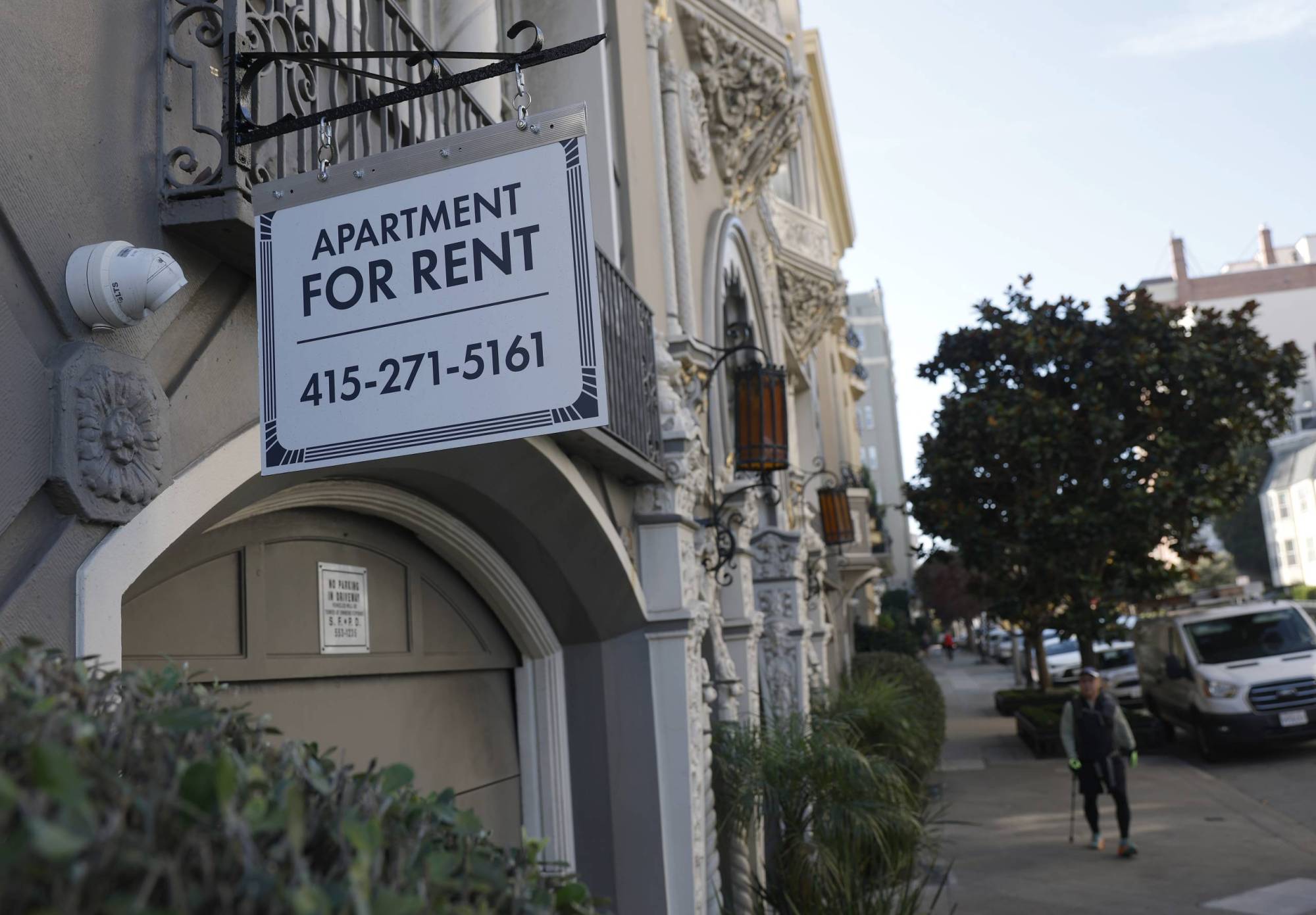
“Mediation is a process where you don’t give power over to a judge or to someone else,” said Laura Benghal, director of the Alternative Dispute Resolution Program at the Bar Association of San Francisco.
“The parties involved own their conflict, and they own their resolution,” Benghal said. “We invite them to the table to figure out collaboratively what the best way forward is.”
Then, “they’re more likely to stick with agreements because they’ve come up with the agreement,” she said.
Benghal’s office manages a helpline that connects callers with mediators experienced in landlord-tenant law, mental health and other housing issues that could lead to an eviction. If you don’t get an immediate answer, you should get a callback within 24 hours.
The service is only available to San Francisco residents and is free for low- and moderate-income tenants.
Conflict Intervention Services: 415-782-8940 and [email protected].
If you don’t live in San Francisco, you can contact your county’s lawyer referral service to find low-cost mediation services. Another option is Community Boards, a nonprofit conflict-resolution center in San Francisco that serves the wider region.
To make an appointment with Community Boards, call 415-920-3820.