What Is Love?
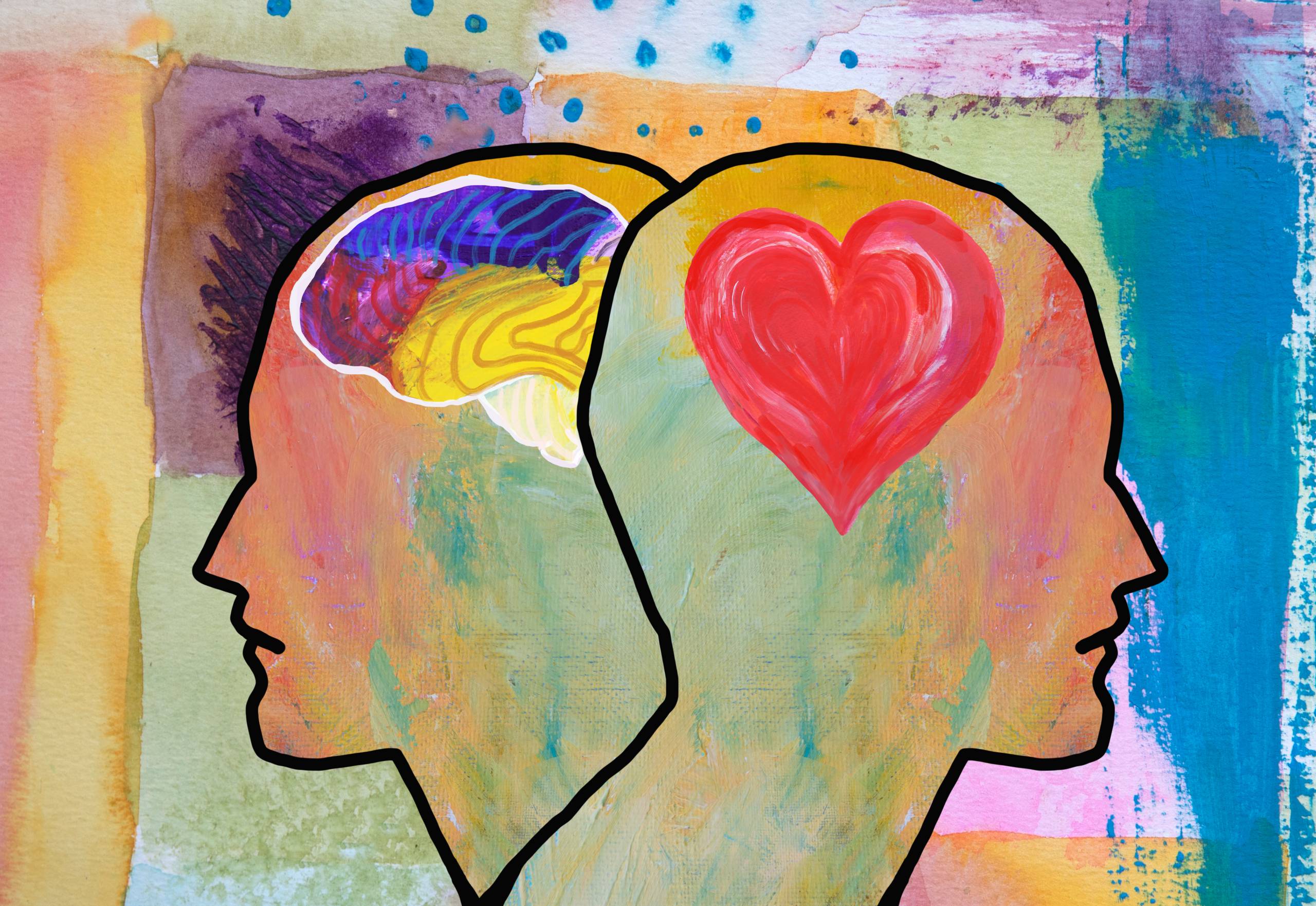
This story is part of Inside Love, our series explores what it means to love through science and curious conversation.
We say it without thinking: I love that song, I love this city, I love you. But when researchers try to pin love down, they find a panoply of meanings. Love is a biological drive, a psychological attachment, a practice expressed through countless small choices and a cultural story. UC Berkeley psychology professor Dacher Keltner argues that love serves an even more fundamental purpose: It helps keep human beings alive.
“When you start to put together the benefits of loving friends and loving your children and loving partners and loving nature and really forming an almost reverential, devoted attitude towards these sources of love, it reduces cortisol, the stress hormone,” Dacher says. “Strong social support adds 10 years of life expectancy.” We talk to Keltner about what we mean when we talk about love.
Learn more about Dacher Keltner and his work here and here.
Guest:
- Dacher Keltner, professor of psychology and founding faculty director of the Greater Good Science Center, UC Berkeley
Lesley McClurg: I think it’s tough to define love. As a researcher, do you have a definition for it?
Dacher Keltner: What I would say is that it’s a brief feeling that we have about things or people that we feel devoted to, that we want to sacrifice to, and that we feel uniquely connected to. Science is making progress in understanding the love we feel for romantic partners, sexual partners, friends, family members, strangers, and nature.
Lesley McClurg: And is it a different kind of love that we’re feeling? Is something different lighting up if, say, it’s a tree or a whale or our lover or our husband?
Dacher Keltner: We only have a partial answer to that question, Lesley. We don’t know, and it’s a great question, does our love of non-human forms, other forms of life, resemble the feelings of love we have towards a child or a partner or a parent or sibling? And we just don’t know. We do know, and it’s interesting, there’s a great study from Japan showing, focused on oxytocin, which is this neuropeptide that connects us to people. And when people bring their dogs into the lab, and they look at their dog in the eyes, they show a burst of oxytocin, so does the dog.
Lesley McClurg: That makes me feel so much better that if I’m looking at my dog, he’s looking at me back. Because I don’t know if you’ve seen there’s a New Yorker cartoon that’s so funny, where the person is looking at their dog, and they’re saying, “Oh my God, you’re my best friend.” And in the cartoon, the dog is looking back, going, “Where is my next hot dog? What’s happening here?”
Dacher Keltner: It’s a very cynical view of– no, there are 87 million dogs in the United States or something like that. Truly, we co-evolve with dogs for 10-15,000 years to form these very important bonds.
Lesley McClurg: And when I look at my dog, I definitely feel that big, like, swirl of oxytocin when he looks back at me. Is it an emotion that I’m feeling? Is it a feeling that you’re doing an action? What exactly is love?
Dacher Keltner: When you say, “I love my brother,” or “I love my romantic partner,” part of it is a feeling state, probably 15 seconds, half a minute. And we’ve studied those in my lab at Berkeley, just looking at behaviors associated with that state, physiology. It’s also what philosophers call a sentiment, right? Which is a more enduring feeling you have towards something that you love. I love, you know, the San Francisco 49ers, or I love my garden, right? And that’s gonna be more enduring over time. And then there are trait-like characteristics where there are just some people who love more things in the world. And when they say that they love things, it’s just part of who they are as an identity over time.
Lesley McClurg: And why, evolutionarily, are we wired to love? How did it serve us originally, and potentially, how has that wiring changed over time?
Dacher Keltner: Here’s where evolutionary scholarship is really useful, which is we are a hyper-social species. To survive, we had to find food together, take care of offspring together, fend off predators, stay warm together when the ice age hit 10-12,000 years ago, et cetera. We’re a very social species. And what our sociality required is that we give up self-interest. We sacrifice. You have to sacrifice for romantic partners, right? You forgo other opportunities. You have to sacrifice for friends. And the thinking is that love evolved as an emotion to make it really easy to sacrifice for people, to give up self-interest, right?
Lesley McClurg: To survive.
Dacher Keltner: To survive, you know. So when we fall in love with our little baby, who’s a few months old, you know, they’re vomiting on our clothes and pooping and waking us up at night and disrupting our sex life, and they cost a lot of money But the love of that being short-circuits all those concerns, and we are devoted to the being out of love.
Lesley McClurg: And I imagine, for mating and for reproduction, right? I mean, we are falling in love so that we make more of ourselves. Is that a different kind of love than the love that you’re saying, a parental love?
Dacher Keltner: Our audience should really go back to John Bowlby, a very influential thinker about attachment. Bowlby said there are kind of three basic systems that help us reproduce our genes, if you will, in the evolutionary terminology. One is sexual desire, which gets us to reproduce. And there’s work on that showing it’s really distinct from feeling devoted love or long-term love. And then we have a caregiving love, which is toward vulnerable, most typically young children, the elderly, et cetera. Any kind of vulnerability triggers a sense of care. And those three emotions together, you know, the feelings of desire and love, and then filial love or loving of children, really ensure that our offspring make it to the age of viability; they survive; we take care of them, which is the critical task in evolution.
Lesley McClurg: If our childhood is particularly rough and maybe not a very loving environment and love is really scary for us, can we get better at loving?
Dacher Keltner: Of the most sophisticated literature on this, one [about] is trauma. We know extreme trauma in a family is very hard on relationships and trust, rightfully so. Right? And so you got to work hard to transcend that. And we do know from the trauma literature, which is the extreme version of your question, a lot of people recover. They are resilient. They find new friends. There’s a whole new literature on significant childhood attachments, early positive experiences that shows, even if you’re in a household that has a lot of anger and aggression, violence, not much love, other adults out there can give you the love you need, right? A coach or a teacher or a minister, et cetera. And then we also learn from the attachment literature that even if you grew up in a tough home with respect to feeling safe and secure, which is key in attachment, a lot of people change, right? And they form friendships in adolescence; they learn new things with a romantic partner; they have a spiritual love; they have community. So we are resilient when it comes to love and finding new ways.
Lesley McClurg: What do you think it says about humans as a species that we can have such a range of different kinds of love?
Dacher Keltner: It’s interesting often when you ask people at the end of life, “What’s it all about?” You know, and people will often say, like, “It really is about love.” And I think that one of the really striking qualities of who we are is we sacrifice, and we devote ourselves to things, to children and to friends and to partners and to ideas and political groups and the environment, et cetera. And that really is how we survived is to be a devoted species. And love is the engine of that, right? The friendship literature, which I think is a very underappreciated form of love. And, you know, friends give us life expectancy; they help our nervous systems; they bring us meaning; they help us navigate social reality. And really the engine of that is love, to find a lot of people to love. So, you know, what does it say about our species? It says, very underappreciated, that love is vital to survival because it helps us in so many realms.
Lesley McClurg: Anything else you want to add, you just listed a bunch of stuff about health, but anything else you wanna add, just kind of make the case for bringing more love in your life in terms of what we know it does for our mind and for our physical body?
Dacher Keltner: When you start to put together the benefits of loving friends and loving your children and loving partners and loving nature and really forming a almost a reverential, devoted attitude towards these sources of love, it reduces cortisol, the stress hormone, it is good for life expectancy, strong social support adds 10 years of life expectancy.
Lesley McClurg: Ten years?
Dacher Keltner: Ten years. It’s one of the most important findings in the social sciences, is if I move through my day and I see a stranger in the street and I feel trust and affection and I call my best friend and I call me parents and children, I have ten years of additional life.
Lesley McClurg: If you have that web of support around you.
Dacher Keltner: That’s right. The literature on, you know, loving nature, biophilia, is almost as robust, which is, if I have a regular, reverential, loving relationship to the flora and fauna around me and the rivers and the oceans and the sky and the light, I do better in terms of disease. I have a stronger heart. If I get cancer, it progresses less fast. I have better concentration at my work. You could go on, right? So it is this vital vitamin, if you will, that we gotta be taking regularly.
Lesley McClurg: And that we, especially in our fast-moving culture, do not prioritize.
Dacher Keltner: Oh, man.
Lesley McClurg: It almost comes last often on the list, unfortunately. I mean, hopefully not, but I think many people’s lives feel like they’re moving so quickly that walking outside and feeling what you’re talking about, like the awe or feeling the awe and the love for nature or taking that moment to put their hand on their partner’s back, that kind of thing. Those are the moments that matter.
Dacher Keltner: I think we’re in a crisis right now. When you look at all kinds of data in the United States, we don’t love ourselves, young people are too hard on themselves, we don’t– we’re struggling in intimate relationships, young people are not marrying like they did 40 years ago, we struggle in our relationship to nature, we don’t love people who have different political views than our own, right? We are the most polarized country on the face of the earth that’s been studied, right? Other cultures, even though they have different political views, will have that fundamental sense of we’re all humans and we’ve lost that in the United States. And so, yeah, I think that we have to be thinking right now, in this moment, of how do we build it back in? One of my favorite literatures on this is just practicing micro social interactions that build trust and love. Make eye contact with people, say hi, compliment them, you know, have greeting rituals and gestures with those people. Those all build trust out in the world that gives you that web you talked about that is good for us.
Lesley McClurg: If we lose someone that we really care about, what do we know about the process of grief? What does that tell us about love?
Dacher Keltner: Grief is at the loss of a partner, a parent, or a child, or a dear friend. I think people are grieving right now the loss of species out in our ecosystems. For a lot of people, 50 to 60%, probably, rough estimate, it’s profoundly disorienting, right? It is– Your whole way of looking at reality is shaken, your way of moving through the day, your rhythms, how you sleep. It’s almost like psychosis, like you don’t know how to make sense of reality, and that’s what we have to reconstruct. And then what we also know is people grow out of grief, right? That you start to realize, like, when I lost my brother, Rolf, I was like, God, he’s irreplaceable. I had one brother, you know, and he was the best brother. And I started to learn, like, not only philosophical lessons about what he gave me and what life is, but also how I have to rebuild the sense of love he gave me, right? So grief is one of the great tasks of life. It’s almost inevitable for everybody. We need better wisdom about how to grow out of it and find wisdom.
Lesley McClurg: The impetus for this show actually came, I was hosting for him, and we did an episode on a writer from the L.A. Times was asking, he was so heartbroken over a lost love that he could not function, and he had read all of the self-help books, trying to get himself back on track, and he just couldn’t, he couldn’t function. And so he found that studying the neuroscience of grief actually helped him make sense of why he was so lost. And so my question to you is, is it helpful, the impetus like I said of the show to kind of look at love and relationship, sex and dating through a scientific lens, what does science give us in terms of understanding something that in so many ways is kind of unknowable? It’s something that we feel that’s maybe captured better in mythology or poetry.
Dacher Keltner: I think it’s really important to study it. I’ll give you a couple of examples. I mean, one, we’ve learned a lot about the incredible neurophysiology of love, you know, of oxytocin and vagal tone. And my lab studies the vocalizations and facial displays of love that trace back in our mammalian evolution, which tells us it’s mammalian to love. It’s one of the things that defines mammals, is they care, right? You know, there are a couple of examples that are really interesting to me that tell us something important. Anybody who’s around a baby has surges of oxytocin, right?
Lesley McClurg: I know that.
Dacher Keltner: You can be– it’s the mom, which was the first discovery. Oh yeah, it’s the dad. It’s gay couples, right. It is people who are just around the baby. And that tells us that this is not just mom, but anybody around the baby is gonna shift to this feeling of devotion. And that’s important. And then, you know, I’ve been fascinated by our love of nature, which, you know in the indigenous traditions that really are around the world and thousands of years old that predate, you know, all of the traditions we know about — the Abrahamic traditions, East Asian thought, et cetera – they uniformly talk about a loving relationship with trees, which Walt Whitman loved, and you know rivers and birds and so forth. Now, there’s a hypothesis, oh, we can love the many kinds of species out in our ecosystems. And along comes science and shows, well, when you listen to water, which we find such joy in, your vagus nerve is activated. When we hear bird song, which is a form of music almost, we feel hopeful and strong. When you smell fragrances like cedar or rosemary and the olfactory system processes it, you think about what’s beautiful in your childhood, right? And your brain is registering that. So that tells us, in this particular case, the science is useful in that it says, yeah, you know, poets have a lot to say about how we love nature, Wordsworth, et cetera. But, this is wired into ourselves. And it’s important because very concretely, certain parts of our world won’t take fiction or poetry or film portrayals of things seriously, but they do listen to science. Like, you know, our medical establishment. So our former Surgeon General, Vivek Murthy, took stock of the power of friendships and said, we have a loneliness epidemic and it’s a health crisis. So we need all the wisdom on these emotions.
Lesley McClurg: Has studying it for you helped you love more, or are there times when you’re in the lab going, “This is deadening it for me”? What’s in your own experience?
Dacher Keltner: Well, my own experience has just provided a lens into how deep love is. I studied in a period of my career, 15 years ago, the nonverbal displays of love and desire, how it affects oxytocin and the vagus nerve, how couples express love through appreciation and reverence. And it kind of sharpened my eye to things. And I started to realize, for example, when I raised children. Two daughters who live in the Bay Area, Natalie and Sarafina, there’s a ton of love that is built up in communities around children, right? And that’s evolutionarily important. We call them alloparents, and we feel that for children around us. And that was really interesting that I wouldn’t have learned that without this scientific lens. The other thing that really has oriented me to, and I don’t talk enough about this, is love of humanity. In a lot of spiritual traditions, it’s fundamental just like agape in the Christian tradition, like love everyone without social distinction. And hearing about the studies of how we can form strong ties with everybody around us with eye contact and, you know, compliments and respect, it awakened me to how much we do that on a daily basis and we can benefit from it.
Lesley McClurg: Do you think that love is just humanly universal, the way that we experience it, or is it culturally impacted, or does culture play a big role on how we experience and how we love?
Dacher Keltner: Well, both are true. You know, you go to most cultures and they will show forms of love that would be very familiar to you, even if they’re a radically different culture. That they’re holding babies who are crying and they’re flirting, teens are flirting and discovering romantic attraction, and older partners are, you know, showing this, this long term form of love. It’s part of our species, right? And then at the same time, it’s radically varying. You know, it is– the degree to which you rely on romantic partners varies from one culture to another. We know how we express our love in the day-to-day really differs. In Norway, 30 to 40% of people live alone, even though they may be married, right? So they prefer kind of a solitary arrangement or solitude. In some cultures, jealousy, which protects love in some ways, is much more accentuated. There’s some deeply human universality to things like love, and then it varies dramatically.
Lesley McClurg: Do we have any idea whether or not people in Norway or say people in India who all pack into one place, I don’t know what the question would be, but you know, are loving more or feeling more love or feeling happier or getting the benefits of love? Do we know whether that isolation or sort of group experience?
Dacher Keltner: We don’t know. It’s just very preliminary in terms of thinking about not only how do cultures vary. So we know, for example, in the United States compared to other cultures, we fall in love faster, you know. And in some studies, I think it’s Russia and Japan, it takes them longer to say, “I’m committed to you.” So that’s interesting. Why do we fall in love faster? Maybe it’s the pace of our lives or how hard we work, et cetera. But we haven’t made progress yet in understanding why.
Lesley McClurg: What do you think about the fact that we’re falling in love with robots?
Dacher Keltner: On the one hand, it’s not very surprising because early studies of love, if you just did, “What do you love?” And literally people list 50 things, and “I love my pen and my watch.”
Lesley McClurg: “My computer.”
Dacher Keltner: “My computer,” and of course, you know, so we’re very good at loving inanimate things in the sense of using the word love loosely.
Lesley McClurg: Is that the accurate use? Like if I say I love my computer, can I actually feel love for my computer?
Dacher Keltner: Well When you look at your computer at the screen, do you get an oxytocin surge?
Lesley McClurg: No.
Dacher Keltner: Probably not. So yeah, that would be an interesting test. I am profoundly worried about digital relationships. I think that the broad evidence, this is different kinds of studies and across different cultures, large samples, finds digital connection makes you feel more isolated and lonely and has certain worries about does it have the friction and the dynamics of a real relationship. We’re probably going to encounter data that show, much as we’ve learned about being on Instagram and Meta, that it’s not healthy for your overall social connection to the world. And, you know, I’d put it really frankly to audience members like, if your child came to you and she’s 16 or he’s 16 or they’re 16 and said, “I think I’ve fallen in love,” you know, “And it’s this agent on my computer,” you’d probably protest. And so I think that tells us something.
Lesley McClurg: I really hope my daughter does not come to me at 16.
Dacher Keltner: How old is your daughter?
Lesley McClurg: Seven. I’m hoping we figure it out before she turns 16. That’s deeply, deeply my hope. It’s probably ignorance, but I do not want her coming to me and being like “Claude and me are just, you know, getting up in there.” In this moment where there’s like so much anxiety and depression, unfortunately, and mental health issues, self-love, what do we know about self-love and how do we love ourselves better?
Dacher Keltner: I almost tear up at the question because something has happened to this young generation compared to what I was like when I was 20. You know, they are smarter and working hard and more pressured and worried about the environment and worried about AI. I mean, they’re taking on a lot on their shoulders and facing a very tricky economy. And despite all of these strengths that they have, they’re harder on themselves, more critical, and in extreme cases, more self-loathing as you see in them and hate. And the best literature on that is self-compassion, you know. And the idea there is you take this fundamental form of love, of compassion, just feeling a devotion to somebody else’s wellbeing, and then you orient it to yourself, you know. And you do it through, sort of, practices of, sort of, reminding yourself of good things. You do it by remembering what your friends say about you that’s supportive, or you even put your hand on your chest and sort of calm down, all shown in science to kind of reduce stress and anxiety. And you know, we need to– when you mix together the pressure and anxiety of youth, and they’re turning away from dating and long-term commitments. Marriage rates have dropped 10%. It’s remarkable, right? And then they are distrusting of long-term relationships often. We’ve got a crisis coming, right, that we’ve got to attend to and love is a good way to do it.
Lesley McClurg: What I’m hearing from you is it doesn’t have to be like, you need to find your person or the ultimate tomorrow. It’s like literally, like you said, putting a hand over your heart, like, “How can I be a friend to myself today?” Looking at people in the eye, maybe not being so buried in our phones. Anything else you’d wanna add to the audience in terms of how tomorrow we might live in a world that has more love in it.
Dacher Keltner: Two things, you know, that really are particularly relevant to younger people as well, but everybody: remember how powerful friendships are. It’s interesting, you know, let’s say I’ve taught happiness for 30 years at Berkeley, the science, and we study tables and data, and early in the happiness literature when they asked what makes you happy, most typically it’s being with other people, right? Which is– people would be like, “That makes sense,” even though we spend inordinate amounts of time alone, you know. But then it was interesting like time and time again, studies would find friends are just, they’re this pure form of happiness in some sense, and joy. And so there’s now a rich literature on like, building friends into your life and also making friends in the broader network of people around you, which we’ve talked about these micro interactions of civility, which we lost. And then the other one is, I would challenge our audience to think about the feelings you have about nature, right? Sunsets or dark skies. I was just in Sequoia National Park as part of the dark sky celebration, stars, right. Running water, rain, your garden, flowers, et cetera, trees. We have a long and deep evolutionary history of really loving and feeling loved by nature, and to pause and remember that and to go seek it out.
Lesley McClurg: Dacher, thank you so much.
Dacher Keltner: You’re welcome, Lesley. It’s been a really wonderful conversation.
Lesley McClurg: Dacher Keltner is a Professor of Psychology at UC Berkeley and heads the Greater Good Science Center at the University. Inside Love is a new production of KQED and we’d love to hear your thoughts. Our email is [email protected]. Our engineer is Christopher Beal, our video engineer is Jim McKee and our producers are Susie Britton and Emiko Oda. I’m Lesley McClurg. Thanks so much for listening.