San Francisco Is Ground Zero for AI. How Would Congressional Candidates Push for Regulation?
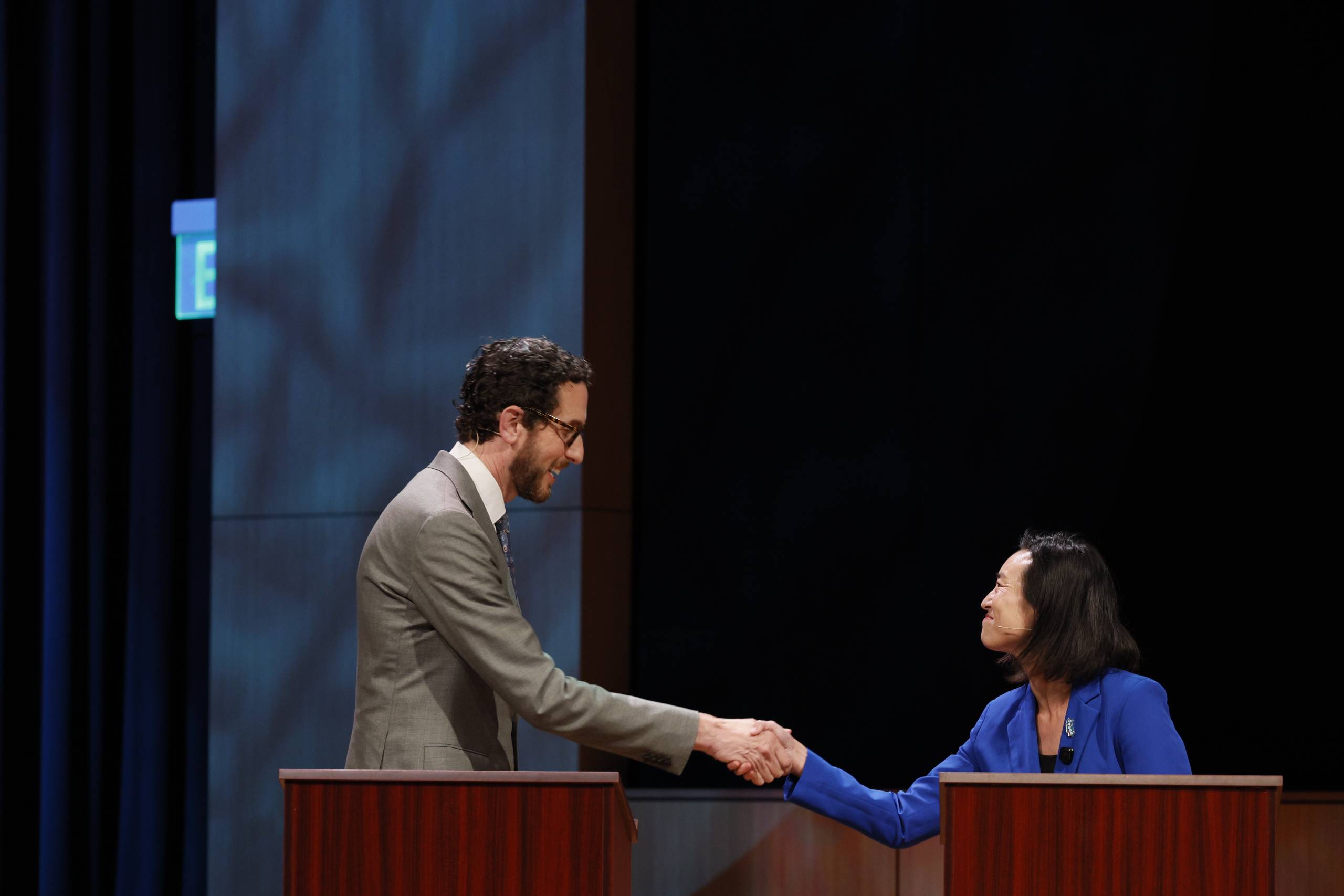
At the center of the artificial intelligence boom, candidates looking to represent San Francisco in Washington appear aligned on a common goal: AI must be regulated. But how to do that is where the debate really heats up.
State Sen. Scott Wiener and San Francisco Supervisor Connie Chan are vying for Rep. Nancy Pelosi’s seat in Congress as the former House speaker prepares to retire after nearly four decades. They’re competing for votes at a time when concerns are rising around AI, from mass job loss to automated data privacy hacks and computer-driven nuclear war.
“Consumers have not seen such rapid change with any new technology. I mean, you could look to the internet, you could to railroads, you can go all the way back and look at industrialization in the 1800s, but we’ve just never seen this sort of rapid development,” said Michele Neitz, a professor of law, technology and social transformation at the University of San Francisco School of Law.
Currently, there is no comprehensive federal framework regulating AI, and experts following AI development closely say it’s time for lawmakers in Washington to set up guardrails even as President Donald Trump has suggested AI companies will regulate themselves.

“That rapid development is happening more quickly than our political system can keep up,” Neitz said.
Wiener has long been vocal about the need to regulate and increase transparency around AI, and authored the country’s first AI transparency bill, which California passed in 2025. His first attempt at an AI safety bill included a “kill-switch” for disastrous scenarios and other safeguards; however, that bill was vetoed by Gov. Gavin Newsom.
The bill that did pass, SB 53, has since been adapted around the country, including by New York City, and other places like Connecticut have gone on to add even more comprehensive AI legislation focused on areas like education and workforce mandates.
Along the campaign trail, Wiener has leaned into that legislative experience and touted being an early advocate for AI safety. His vision for Congress is to create a federal regulatory body to oversee AI security, increase guardrails and protect whistleblowers, and expand unemployment to brace for waves of job displacement.

In a video advertisement, Wiener tells viewers that “AI is getting more powerful by the day, and the risks are very real.” He said that in Washington, he would continue to seek the kill-switch approach, along with more legal liability and safety standards and cooperation with other countries on AI safety.
Wiener has also said that AI data centers should pick up the tab for their environmental costs, and he supports transitioning data centers towards greener energy, rather than a full ban on new facilities.
Chan meanwhile has taken what Neitz said is the more “populist” approach, calling for a full moratorium on data centers and giving unions and AI workers a voice in regulation.
In her own video on the topic, Chan pointed to a $3.9 billion tax break that Meta received last year to build data centers. “We’re going to regulate artificial intelligence to make sure we can protect our workforce and prioritize safety for the American people,” she said. “No more tax breaks for these billionaires and tech corporations.”
She’s also criticized her opponent’s AI safety bill, calling it “watered down” and influenced by big tech interests. The bill also did not prevent major cyberattacks this year, where AI models hacked into other platforms and breached government websites. Chan said the companies overseeing the models, OpenAI and Anthropic, should “absolutely” be held liable for the attacks.
“Instead of waiting for something catastrophic to happen and to have a so-called kill switch, it is important to have human oversight during the developmental phase of the technology,” Chan said at a debate this week hosted by Mission Local and the New York Times. “Can we trust the AI industries to police and regulate themselves? And can we trust any politicians who are bankrolled by the AI industry? I say no.”
The advocacy group Public First Action, which is pushing for more AI regulation and has received money from the AI company Anthropic, has poured $3 million into Abundant Future, an independent expenditure committee supporting Wiener, Punchbowl News first reported.

Wiener, in the debate this week, said, “That PAC supports candidates who are pro-AI regulation, and because I have actually regulated AI and will lead in regulating AI in Congress, that is my understanding of why that PAC is supporting me.”
He went on to defend his record, saying he “went to war with big tech to pass AI regulation in California.”
In September, tech titans including Anthropic’s Dario Amodei and OpenAI’s Sam Altman, both leading San Francisco-based companies, made headlines for sounding the alarm about potentially devastating impacts of AI on humanity and called for regulations.
But AI CEOs are not all in agreement on the issue. Others are advocating for self-regulation in order not to hinder development of the technology or risk falling behind China’s AI advancements.
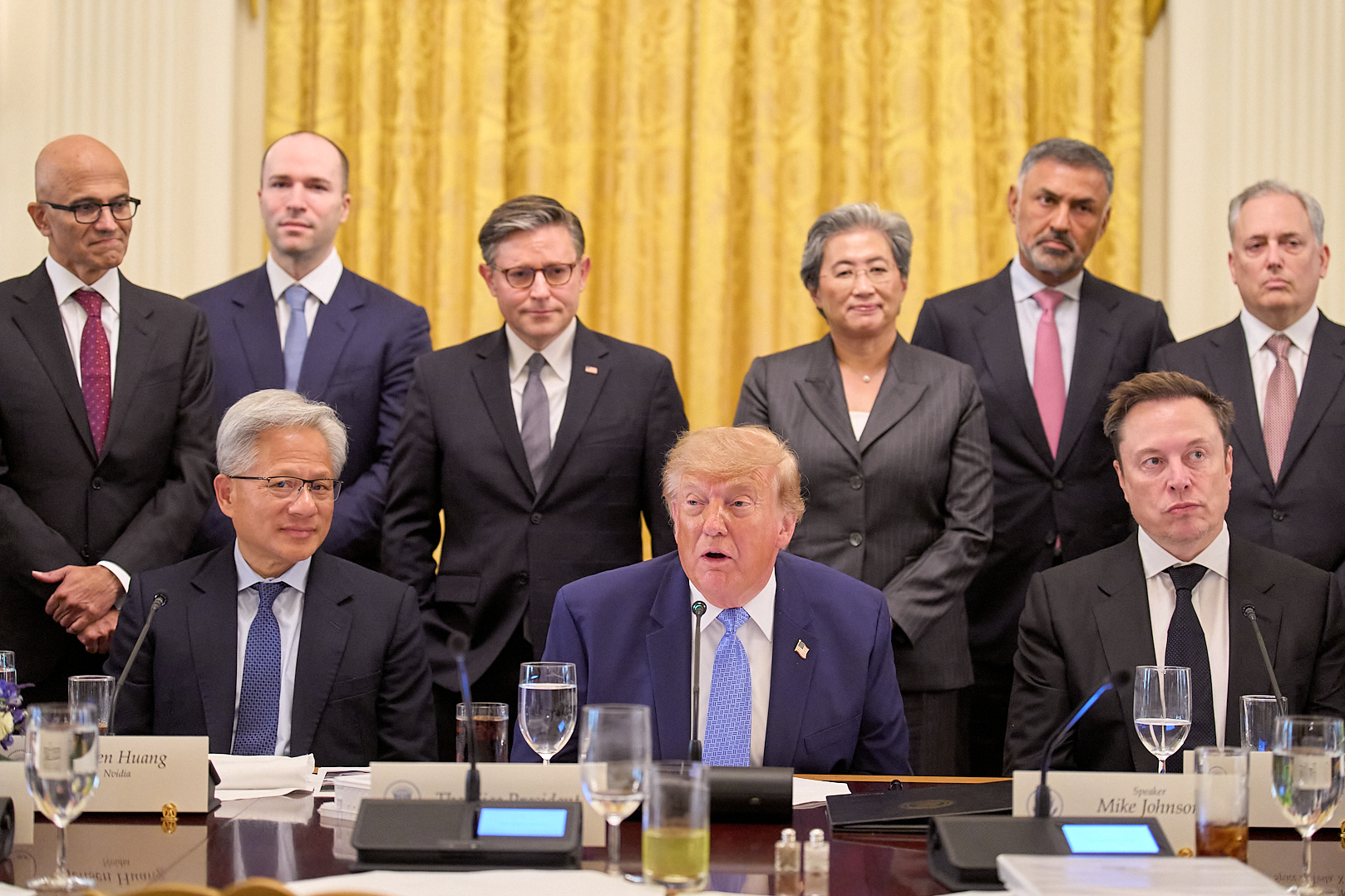
President Donald Trump has pushed back against regulatory guardrails for AI, previously calling doomsday threats a “hoax.” In September, he signed a document with executives at Google, Anthropic, Meta, OpenAI, Nvidia and SpaceX that calls for “robust internal processes and controls to ensure that their technology behaves as intended.”
Both Chan and Wiener don’t trust the idea.
“We must not allow the tech companies to write their own self-regulation,” Wiener said. “We need Congress to step up and regulate tech to make sure technology is serving the public and not harming the public, and that will be a priority for me.”
Slowing down AI development has become the biggest political issue for many in the Bay Area. Wynd Kaufman, a retired former engineering teacher at City College of San Francisco, was one of several protesters arrested outside of the OpenAI headquarters last year, months before its CEO came out warning about the technology’s potential downsides.

“Politicians are realizing that people do not want AI. We don’t want our environment degradation. We don’t want our rivers to run dry. We want our humanity and our privacy,” she said at an anti-AI protest on Thursday.
Local politicians are weighing, too. In San Francisco, the Board of Supervisors recently passed a 45-day moratorium on allowing new data centers, which use tremendous amounts of energy to train and run AI models. The board’s decision followed nationwide trends where communities have pushed back on opening up new data centers.
But negative sentiment around AI has put San Francisco leaders in a bind, particularly business-friendly leaders who are banking on the AI industry to revive the city’s local economy.
The Bay Area region has added more than 20,000 AI jobs over the past year, even amid massive waves of layoffs and overall contraction of the tech industry, according to CBRE’s 2026 Scoring Tech Talent report.
“The concentration of talent, venture capital, leading universities and innovative companies continues to make the Bay Area the premier destination for AI development and investment,” said Colin Yasukochi, executive director of CBRE Tech Insights.
For whichever candidate wins, the questions around AI safety are not likely going away soon.
According to Neitz, “2027 is going to be a big year in AI legislation regardless of the outcome of the midterms because the people are clamoring for it and Congress will need to respond.”