window.__IS_SSR__=true
window.__INITIAL_STATE__={
"attachmentsReducer": {
"audio_0": {
"type": "attachments",
"id": "audio_0",
"imgSizes": {
"kqedFullSize": {
"file": "https://ww2.kqed.org/news/wp-content/themes/KQED-unified/img/audio_bgs/background0.jpg"
}
}
},
"audio_1": {
"type": "attachments",
"id": "audio_1",
"imgSizes": {
"kqedFullSize": {
"file": "https://ww2.kqed.org/news/wp-content/themes/KQED-unified/img/audio_bgs/background1.jpg"
}
}
},
"audio_2": {
"type": "attachments",
"id": "audio_2",
"imgSizes": {
"kqedFullSize": {
"file": "https://ww2.kqed.org/news/wp-content/themes/KQED-unified/img/audio_bgs/background2.jpg"
}
}
},
"audio_3": {
"type": "attachments",
"id": "audio_3",
"imgSizes": {
"kqedFullSize": {
"file": "https://ww2.kqed.org/news/wp-content/themes/KQED-unified/img/audio_bgs/background3.jpg"
}
}
},
"audio_4": {
"type": "attachments",
"id": "audio_4",
"imgSizes": {
"kqedFullSize": {
"file": "https://ww2.kqed.org/news/wp-content/themes/KQED-unified/img/audio_bgs/background4.jpg"
}
}
},
"placeholder": {
"type": "attachments",
"id": "placeholder",
"imgSizes": {
"thumbnail": {
"file": "https://cdn.kqed.org/wp-content/uploads/2024/12/KQED-Default-Image-816638274-2000x1333-1-160x107.jpg",
"width": 160,
"height": 107,
"mimeType": "image/jpeg"
},
"medium": {
"file": "https://cdn.kqed.org/wp-content/uploads/2024/12/KQED-Default-Image-816638274-2000x1333-1-800x533.jpg",
"width": 800,
"height": 533,
"mimeType": "image/jpeg"
},
"medium_large": {
"file": "https://cdn.kqed.org/wp-content/uploads/2024/12/KQED-Default-Image-816638274-2000x1333-1-768x512.jpg",
"width": 768,
"height": 512,
"mimeType": "image/jpeg"
},
"large": {
"file": "https://cdn.kqed.org/wp-content/uploads/2024/12/KQED-Default-Image-816638274-2000x1333-1-1020x680.jpg",
"width": 1020,
"height": 680,
"mimeType": "image/jpeg"
},
"1536x1536": {
"file": "https://cdn.kqed.org/wp-content/uploads/2024/12/KQED-Default-Image-816638274-2000x1333-1-1536x1024.jpg",
"width": 1536,
"height": 1024,
"mimeType": "image/jpeg"
},
"fd-lrg": {
"file": "https://cdn.kqed.org/wp-content/uploads/2024/12/KQED-Default-Image-816638274-2000x1333-1-1536x1024.jpg",
"width": 1536,
"height": 1024,
"mimeType": "image/jpeg"
},
"fd-med": {
"file": "https://cdn.kqed.org/wp-content/uploads/2024/12/KQED-Default-Image-816638274-2000x1333-1-1020x680.jpg",
"width": 1020,
"height": 680,
"mimeType": "image/jpeg"
},
"fd-sm": {
"file": "https://cdn.kqed.org/wp-content/uploads/2024/12/KQED-Default-Image-816638274-2000x1333-1-800x533.jpg",
"width": 800,
"height": 533,
"mimeType": "image/jpeg"
},
"post-thumbnail": {
"file": "https://cdn.kqed.org/wp-content/uploads/2024/12/KQED-Default-Image-816638274-2000x1333-1-672x372.jpg",
"width": 672,
"height": 372,
"mimeType": "image/jpeg"
},
"twentyfourteen-full-width": {
"file": "https://cdn.kqed.org/wp-content/uploads/2024/12/KQED-Default-Image-816638274-2000x1333-1-1038x576.jpg",
"width": 1038,
"height": 576,
"mimeType": "image/jpeg"
},
"xxsmall": {
"file": "https://cdn.kqed.org/wp-content/uploads/2024/12/KQED-Default-Image-816638274-2000x1333-1-160x107.jpg",
"width": 160,
"height": 107,
"mimeType": "image/jpeg"
},
"xsmall": {
"file": "https://cdn.kqed.org/wp-content/uploads/2024/12/KQED-Default-Image-816638274-2000x1333-1-672x372.jpg",
"width": 672,
"height": 372,
"mimeType": "image/jpeg"
},
"small": {
"file": "https://cdn.kqed.org/wp-content/uploads/2024/12/KQED-Default-Image-816638274-2000x1333-1-672x372.jpg",
"width": 672,
"height": 372,
"mimeType": "image/jpeg"
},
"xlarge": {
"file": "https://cdn.kqed.org/wp-content/uploads/2024/12/KQED-Default-Image-816638274-2000x1333-1-1020x680.jpg",
"width": 1020,
"height": 680,
"mimeType": "image/jpeg"
},
"full-width": {
"file": "https://cdn.kqed.org/wp-content/uploads/2024/12/KQED-Default-Image-816638274-2000x1333-1-1920x1280.jpg",
"width": 1920,
"height": 1280,
"mimeType": "image/jpeg"
},
"guest-author-32": {
"file": "https://cdn.kqed.org/wp-content/uploads/2025/01/KQED-Default-Image-816638274-1333x1333-1-160x160.jpg",
"width": 32,
"height": 32,
"mimeType": "image/jpeg"
},
"guest-author-50": {
"file": "https://cdn.kqed.org/wp-content/uploads/2025/01/KQED-Default-Image-816638274-1333x1333-1-160x160.jpg",
"width": 50,
"height": 50,
"mimeType": "image/jpeg"
},
"guest-author-64": {
"file": "https://cdn.kqed.org/wp-content/uploads/2025/01/KQED-Default-Image-816638274-1333x1333-1-160x160.jpg",
"width": 64,
"height": 64,
"mimeType": "image/jpeg"
},
"guest-author-96": {
"file": "https://cdn.kqed.org/wp-content/uploads/2025/01/KQED-Default-Image-816638274-1333x1333-1-160x160.jpg",
"width": 96,
"height": 96,
"mimeType": "image/jpeg"
},
"guest-author-128": {
"file": "https://cdn.kqed.org/wp-content/uploads/2025/01/KQED-Default-Image-816638274-1333x1333-1-160x160.jpg",
"width": 128,
"height": 128,
"mimeType": "image/jpeg"
},
"detail": {
"file": "https://cdn.kqed.org/wp-content/uploads/2025/01/KQED-Default-Image-816638274-1333x1333-1-160x160.jpg",
"width": 160,
"height": 160,
"mimeType": "image/jpeg"
},
"kqedFullSize": {
"file": "https://cdn.kqed.org/wp-content/uploads/2024/12/KQED-Default-Image-816638274-2000x1333-1.jpg",
"width": 2000,
"height": 1333
}
}
},
"news_11916555": {
"type": "attachments",
"id": "news_11916555",
"meta": {
"index": "attachments_1716263798",
"site": "news",
"id": "11916555",
"found": true
},
"parent": 11916538,
"imgSizes": {
"twentyfourteen-full-width": {
"file": "https://ww2.kqed.org/app/uploads/sites/10/2022/06/GettyImages-1338654394-1038x576.jpg",
"width": 1038,
"mimeType": "image/jpeg",
"height": 576
},
"thumbnail": {
"file": "https://ww2.kqed.org/app/uploads/sites/10/2022/06/GettyImages-1338654394-160x107.jpg",
"width": 160,
"mimeType": "image/jpeg",
"height": 107
},
"post-thumbnail": {
"file": "https://ww2.kqed.org/app/uploads/sites/10/2022/06/GettyImages-1338654394-672x372.jpg",
"width": 672,
"mimeType": "image/jpeg",
"height": 372
},
"kqedFullSize": {
"file": "https://ww2.kqed.org/app/uploads/sites/10/2022/06/GettyImages-1338654394.jpg",
"width": 2120,
"height": 1414
},
"2048x2048": {
"file": "https://ww2.kqed.org/app/uploads/sites/10/2022/06/GettyImages-1338654394-2048x1366.jpg",
"width": 2048,
"mimeType": "image/jpeg",
"height": 1366
},
"large": {
"file": "https://ww2.kqed.org/app/uploads/sites/10/2022/06/GettyImages-1338654394-1020x680.jpg",
"width": 1020,
"mimeType": "image/jpeg",
"height": 680
},
"1536x1536": {
"file": "https://ww2.kqed.org/app/uploads/sites/10/2022/06/GettyImages-1338654394-1536x1024.jpg",
"width": 1536,
"mimeType": "image/jpeg",
"height": 1024
},
"full-width": {
"file": "https://ww2.kqed.org/app/uploads/sites/10/2022/06/GettyImages-1338654394-1920x1281.jpg",
"width": 1920,
"mimeType": "image/jpeg",
"height": 1281
},
"medium": {
"file": "https://ww2.kqed.org/app/uploads/sites/10/2022/06/GettyImages-1338654394-800x534.jpg",
"width": 800,
"mimeType": "image/jpeg",
"height": 534
}
},
"publishDate": 1654730442,
"modified": 1654814358,
"caption": "Monterey Jack cheese is soft and mild. It might not be your first choice for a fancy cheese plate, but it's nice in a quesadilla or grilled cheese. ",
"description": "Cheese in various shapes",
"title": "Cheese in various shapes",
"credit": "iStock/Getty Images Plus",
"status": "inherit",
"altTag": null,
"isLoading": false,
"fetchFailed": false
},
"news_11915794": {
"type": "attachments",
"id": "news_11915794",
"meta": {
"index": "attachments_1716263798",
"site": "news",
"id": "11915794",
"found": true
},
"parent": 11915788,
"imgSizes": {
"twentyfourteen-full-width": {
"file": "https://ww2.kqed.org/app/uploads/sites/10/2022/06/AIDS-grove1-1038x576.jpg",
"width": 1038,
"mimeType": "image/jpeg",
"height": 576
},
"thumbnail": {
"file": "https://ww2.kqed.org/app/uploads/sites/10/2022/06/AIDS-grove1-160x90.jpg",
"width": 160,
"mimeType": "image/jpeg",
"height": 90
},
"post-thumbnail": {
"file": "https://ww2.kqed.org/app/uploads/sites/10/2022/06/AIDS-grove1-672x372.jpg",
"width": 672,
"mimeType": "image/jpeg",
"height": 372
},
"kqedFullSize": {
"file": "https://ww2.kqed.org/app/uploads/sites/10/2022/06/AIDS-grove1.jpg",
"width": 1920,
"height": 1080
},
"large": {
"file": "https://ww2.kqed.org/app/uploads/sites/10/2022/06/AIDS-grove1-1020x574.jpg",
"width": 1020,
"mimeType": "image/jpeg",
"height": 574
},
"1536x1536": {
"file": "https://ww2.kqed.org/app/uploads/sites/10/2022/06/AIDS-grove1-1536x864.jpg",
"width": 1536,
"mimeType": "image/jpeg",
"height": 864
},
"medium": {
"file": "https://ww2.kqed.org/app/uploads/sites/10/2022/06/AIDS-grove1-800x450.jpg",
"width": 800,
"mimeType": "image/jpeg",
"height": 450
}
},
"publishDate": 1654131434,
"modified": 1654284508,
"caption": "A stone marks the entrance of the AIDS Memorial Grove. Visitors walk down a set of long stairs, through the trees and into the dell.",
"description": null,
"title": "AIDS-grove1",
"credit": "Courtesy of National AIDS Memorial",
"status": "inherit",
"altTag": "In the middle of a grassy knoll, flanked by tall trees, a stone proclaims \"National AIDS Memorial Grove.\"",
"isLoading": false,
"fetchFailed": false
},
"news_11663342": {
"type": "attachments",
"id": "news_11663342",
"meta": {
"index": "attachments_1716263798",
"site": "news",
"id": "11663342",
"found": true
},
"title": "RS30490_mayoraldebate-9-qut",
"publishDate": 1524157414,
"status": "inherit",
"parent": 11659844,
"modified": 1755212732,
"caption": "The entrance sign to the Polo Field at Golden Gate Park. ",
"credit": "Samantha Shanahan/KQED",
"altTag": "The entrance sign to the Polo Field at Golden Gate Park. Polo was the main attraction of the field through the early 1960s, but has not been played there regularly for decades.",
"description": "The entrance sign to the Polo Field at Golden Gate Park. Polo was the main attraction of the field through the early 1960s, but has not been played there regularly for decades.",
"imgSizes": {
"thumbnail": {
"file": "https://cdn.kqed.org/wp-content/uploads/sites/10/2018/04/RS30490_mayoraldebate-9-qut-160x107.jpg",
"width": 160,
"height": 107,
"mimeType": "image/jpeg"
},
"medium": {
"file": "https://cdn.kqed.org/wp-content/uploads/sites/10/2018/04/RS30490_mayoraldebate-9-qut-800x533.jpg",
"width": 800,
"height": 533,
"mimeType": "image/jpeg"
},
"large": {
"file": "https://cdn.kqed.org/wp-content/uploads/sites/10/2018/04/RS30490_mayoraldebate-9-qut-1020x680.jpg",
"width": 1020,
"height": 680,
"mimeType": "image/jpeg"
},
"complete_open_graph": {
"file": "https://cdn.kqed.org/wp-content/uploads/sites/10/2018/04/RS30490_mayoraldebate-9-qut-1200x800.jpg",
"width": 1200,
"height": 800,
"mimeType": "image/jpeg"
},
"fd-lrg": {
"file": "https://cdn.kqed.org/wp-content/uploads/sites/10/2018/04/RS30490_mayoraldebate-9-qut-1920x1280.jpg",
"width": 1920,
"height": 1280,
"mimeType": "image/jpeg"
},
"fd-med": {
"file": "https://cdn.kqed.org/wp-content/uploads/sites/10/2018/04/RS30490_mayoraldebate-9-qut-1180x787.jpg",
"width": 1180,
"height": 787,
"mimeType": "image/jpeg"
},
"fd-sm": {
"file": "https://cdn.kqed.org/wp-content/uploads/sites/10/2018/04/RS30490_mayoraldebate-9-qut-960x640.jpg",
"width": 960,
"height": 640,
"mimeType": "image/jpeg"
},
"post-thumbnail": {
"file": "https://cdn.kqed.org/wp-content/uploads/sites/10/2018/04/RS30490_mayoraldebate-9-qut-672x372.jpg",
"width": 672,
"height": 372,
"mimeType": "image/jpeg"
},
"twentyfourteen-full-width": {
"file": "https://cdn.kqed.org/wp-content/uploads/sites/10/2018/04/RS30490_mayoraldebate-9-qut-1038x576.jpg",
"width": 1038,
"height": 576,
"mimeType": "image/jpeg"
},
"xxsmall": {
"file": "https://cdn.kqed.org/wp-content/uploads/sites/10/2018/04/RS30490_mayoraldebate-9-qut-240x160.jpg",
"width": 240,
"height": 160,
"mimeType": "image/jpeg"
},
"xsmall": {
"file": "https://cdn.kqed.org/wp-content/uploads/sites/10/2018/04/RS30490_mayoraldebate-9-qut-375x250.jpg",
"width": 375,
"height": 250,
"mimeType": "image/jpeg"
},
"small": {
"file": "https://cdn.kqed.org/wp-content/uploads/sites/10/2018/04/RS30490_mayoraldebate-9-qut-520x347.jpg",
"width": 520,
"height": 347,
"mimeType": "image/jpeg"
},
"xlarge": {
"file": "https://cdn.kqed.org/wp-content/uploads/sites/10/2018/04/RS30490_mayoraldebate-9-qut-1180x787.jpg",
"width": 1180,
"height": 787,
"mimeType": "image/jpeg"
},
"full-width": {
"file": "https://cdn.kqed.org/wp-content/uploads/sites/10/2018/04/RS30490_mayoraldebate-9-qut-1920x1280.jpg",
"width": 1920,
"height": 1280,
"mimeType": "image/jpeg"
},
"guest-author-32": {
"file": "https://cdn.kqed.org/wp-content/uploads/sites/10/2018/04/RS30490_mayoraldebate-9-qut-32x32.jpg",
"width": 32,
"height": 32,
"mimeType": "image/jpeg"
},
"guest-author-50": {
"file": "https://cdn.kqed.org/wp-content/uploads/sites/10/2018/04/RS30490_mayoraldebate-9-qut-50x50.jpg",
"width": 50,
"height": 50,
"mimeType": "image/jpeg"
},
"guest-author-64": {
"file": "https://cdn.kqed.org/wp-content/uploads/sites/10/2018/04/RS30490_mayoraldebate-9-qut-64x64.jpg",
"width": 64,
"height": 64,
"mimeType": "image/jpeg"
},
"guest-author-96": {
"file": "https://cdn.kqed.org/wp-content/uploads/sites/10/2018/04/RS30490_mayoraldebate-9-qut-96x96.jpg",
"width": 96,
"height": 96,
"mimeType": "image/jpeg"
},
"guest-author-128": {
"file": "https://cdn.kqed.org/wp-content/uploads/sites/10/2018/04/RS30490_mayoraldebate-9-qut-128x128.jpg",
"width": 128,
"height": 128,
"mimeType": "image/jpeg"
},
"detail": {
"file": "https://cdn.kqed.org/wp-content/uploads/sites/10/2018/04/RS30490_mayoraldebate-9-qut-150x150.jpg",
"width": 150,
"height": 150,
"mimeType": "image/jpeg"
},
"kqedFullSize": {
"file": "https://cdn.kqed.org/wp-content/uploads/sites/10/2018/04/RS30490_mayoraldebate-9-qut.jpg",
"width": 1920,
"height": 1280
}
},
"isLoading": false,
"fetchFailed": false
},
"news_11915613": {
"type": "attachments",
"id": "news_11915613",
"meta": {
"index": "attachments_1716263798",
"site": "news",
"id": "11915613",
"found": true
},
"parent": 11915583,
"imgSizes": {
"twentyfourteen-full-width": {
"file": "https://ww2.kqed.org/app/uploads/sites/10/2022/05/JapaneseTeaGarden-1038x576.jpg",
"width": 1038,
"mimeType": "image/jpeg",
"height": 576
},
"thumbnail": {
"file": "https://ww2.kqed.org/app/uploads/sites/10/2022/05/JapaneseTeaGarden-160x107.jpg",
"width": 160,
"mimeType": "image/jpeg",
"height": 107
},
"post-thumbnail": {
"file": "https://ww2.kqed.org/app/uploads/sites/10/2022/05/JapaneseTeaGarden-672x372.jpg",
"width": 672,
"mimeType": "image/jpeg",
"height": 372
},
"kqedFullSize": {
"file": "https://ww2.kqed.org/app/uploads/sites/10/2022/05/JapaneseTeaGarden.jpg",
"width": 1920,
"height": 1280
},
"large": {
"file": "https://ww2.kqed.org/app/uploads/sites/10/2022/05/JapaneseTeaGarden-1020x680.jpg",
"width": 1020,
"mimeType": "image/jpeg",
"height": 680
},
"1536x1536": {
"file": "https://ww2.kqed.org/app/uploads/sites/10/2022/05/JapaneseTeaGarden-1536x1024.jpg",
"width": 1536,
"mimeType": "image/jpeg",
"height": 1024
},
"medium": {
"file": "https://ww2.kqed.org/app/uploads/sites/10/2022/05/JapaneseTeaGarden-800x533.jpg",
"width": 800,
"mimeType": "image/jpeg",
"height": 533
}
},
"publishDate": 1654038653,
"modified": 1654038874,
"caption": "A pond in San Francisco's Japanese Tea Garden reflects an orange pagoda.",
"description": null,
"title": "JapaneseTeaGarden",
"credit": "\u003ca href=\"https://www.flickr.com/photos/nathaninsandiego/24965174616/in/photolist-E363D7-27MgbLZ-2aGGrwR-TwoXmp-24Bf5sX-5Dht9L-6cjRdR-AwpgCy-2kJgfvk-dCo6NJ-24TnJ6b-6bmTUp-h3nQZh-wzDeeC-2kQnHKd-3hQDfT-7wFVB6-RzawZf-2kzykYH-pYyact-o2MeGN-TgAbSv-b9NEW4-pGaA8q-xpofHy-pG8uVg-4HfDbY-dkdVqj-wuG3Zd-jyDFPT-2FN8cE-QP63q9-GAT1aJ-wuGiR7-Fxd9oo-4XxT3j-xHXWU-7aHmGW-2aZwWbm-69FuyD-xHXH2-2irmswy-7aDyhn-afUcb-2iriNcZ-2irmred-2irnAT7-2irnAKS-2irmrYp-2irmrcV\">Nathan Rupert/Flickr\u003c/a>",
"status": "inherit",
"altTag": "A tranquil pond sits in the foreground with lush greenery rising into a hill beyond. On top of the hill is an orange pagoda.",
"isLoading": false,
"fetchFailed": false
},
"news_11915319": {
"type": "attachments",
"id": "news_11915319",
"meta": {
"index": "attachments_1716263798",
"site": "news",
"id": "11915319",
"found": true
},
"parent": 11915313,
"imgSizes": {
"twentyfourteen-full-width": {
"file": "https://ww2.kqed.org/app/uploads/sites/10/2022/05/2560px-Golden_Gate_Park_-_Murphy_Windmill_-_March_2018_1675-1038x576.jpg",
"width": 1038,
"mimeType": "image/jpeg",
"height": 576
},
"thumbnail": {
"file": "https://ww2.kqed.org/app/uploads/sites/10/2022/05/2560px-Golden_Gate_Park_-_Murphy_Windmill_-_March_2018_1675-160x107.jpg",
"width": 160,
"mimeType": "image/jpeg",
"height": 107
},
"post-thumbnail": {
"file": "https://ww2.kqed.org/app/uploads/sites/10/2022/05/2560px-Golden_Gate_Park_-_Murphy_Windmill_-_March_2018_1675-672x372.jpg",
"width": 672,
"mimeType": "image/jpeg",
"height": 372
},
"kqedFullSize": {
"file": "https://ww2.kqed.org/app/uploads/sites/10/2022/05/2560px-Golden_Gate_Park_-_Murphy_Windmill_-_March_2018_1675-e1653679938736.jpg",
"width": 1920,
"height": 1280
},
"2048x2048": {
"file": "https://ww2.kqed.org/app/uploads/sites/10/2022/05/2560px-Golden_Gate_Park_-_Murphy_Windmill_-_March_2018_1675-2048x1366.jpg",
"width": 2048,
"mimeType": "image/jpeg",
"height": 1366
},
"large": {
"file": "https://ww2.kqed.org/app/uploads/sites/10/2022/05/2560px-Golden_Gate_Park_-_Murphy_Windmill_-_March_2018_1675-1020x680.jpg",
"width": 1020,
"mimeType": "image/jpeg",
"height": 680
},
"1536x1536": {
"file": "https://ww2.kqed.org/app/uploads/sites/10/2022/05/2560px-Golden_Gate_Park_-_Murphy_Windmill_-_March_2018_1675-1536x1024.jpg",
"width": 1536,
"mimeType": "image/jpeg",
"height": 1024
},
"full-width": {
"file": "https://ww2.kqed.org/app/uploads/sites/10/2022/05/2560px-Golden_Gate_Park_-_Murphy_Windmill_-_March_2018_1675-1920x1280.jpg",
"width": 1920,
"mimeType": "image/jpeg",
"height": 1280
},
"medium": {
"file": "https://ww2.kqed.org/app/uploads/sites/10/2022/05/2560px-Golden_Gate_Park_-_Murphy_Windmill_-_March_2018_1675-800x533.jpg",
"width": 800,
"mimeType": "image/jpeg",
"height": 533
}
},
"publishDate": 1653679782,
"modified": 1654045062,
"caption": "Murphy windmill in San Francisco's Golden Gate Park in March 2018.",
"description": null,
"title": "2560px-Golden_Gate_Park_-_Murphy_Windmill_-_March_2018_(1675)",
"credit": "Gregory Varnum/Wikimedia Commons",
"status": "inherit",
"altTag": "A view from the front of a Dutch style windmill, with bright blue sky behind it.",
"isLoading": false,
"fetchFailed": false
},
"news_11809842": {
"type": "attachments",
"id": "news_11809842",
"meta": {
"index": "attachments_1716263798",
"site": "news",
"id": "11809842",
"found": true
},
"parent": 11495697,
"imgSizes": {
"apple_news_ca_landscape_5_5": {
"file": "https://ww2.kqed.org/app/uploads/sites/10/2020/04/Photo-1-Bison-Arrival-Credit_-James-Watkins-1044x783.jpg",
"width": 1044,
"mimeType": "image/jpeg",
"height": 783
},
"apple_news_ca_square_4_0": {
"file": "https://ww2.kqed.org/app/uploads/sites/10/2020/04/Photo-1-Bison-Arrival-Credit_-James-Watkins-470x470.jpg",
"width": 470,
"mimeType": "image/jpeg",
"height": 470
},
"twentyfourteen-full-width": {
"file": "https://ww2.kqed.org/app/uploads/sites/10/2020/04/Photo-1-Bison-Arrival-Credit_-James-Watkins-1038x576.jpg",
"width": 1038,
"mimeType": "image/jpeg",
"height": 576
},
"thumbnail": {
"file": "https://ww2.kqed.org/app/uploads/sites/10/2020/04/Photo-1-Bison-Arrival-Credit_-James-Watkins-160x90.jpg",
"width": 160,
"mimeType": "image/jpeg",
"height": 90
},
"post-thumbnail": {
"file": "https://ww2.kqed.org/app/uploads/sites/10/2020/04/Photo-1-Bison-Arrival-Credit_-James-Watkins-672x372.jpg",
"width": 672,
"mimeType": "image/jpeg",
"height": 372
},
"kqedFullSize": {
"file": "https://ww2.kqed.org/app/uploads/sites/10/2020/04/Photo-1-Bison-Arrival-Credit_-James-Watkins.jpg",
"width": 1920,
"height": 1080
},
"apple_news_ca_landscape_4_7": {
"file": "https://ww2.kqed.org/app/uploads/sites/10/2020/04/Photo-1-Bison-Arrival-Credit_-James-Watkins-632x474.jpg",
"width": 632,
"mimeType": "image/jpeg",
"height": 474
},
"large": {
"file": "https://ww2.kqed.org/app/uploads/sites/10/2020/04/Photo-1-Bison-Arrival-Credit_-James-Watkins-1020x574.jpg",
"width": 1020,
"mimeType": "image/jpeg",
"height": 574
},
"apple_news_ca_landscape_4_0": {
"file": "https://ww2.kqed.org/app/uploads/sites/10/2020/04/Photo-1-Bison-Arrival-Credit_-James-Watkins-536x402.jpg",
"width": 536,
"mimeType": "image/jpeg",
"height": 402
},
"apple_news_ca_portrait_12_9": {
"file": "https://ww2.kqed.org/app/uploads/sites/10/2020/04/Photo-1-Bison-Arrival-Credit_-James-Watkins-1122x1080.jpg",
"width": 1122,
"mimeType": "image/jpeg",
"height": 1080
},
"medium": {
"file": "https://ww2.kqed.org/app/uploads/sites/10/2020/04/Photo-1-Bison-Arrival-Credit_-James-Watkins-800x450.jpg",
"width": 800,
"mimeType": "image/jpeg",
"height": 450
},
"apple_news_ca_portrait_4_0": {
"file": "https://ww2.kqed.org/app/uploads/sites/10/2020/04/Photo-1-Bison-Arrival-Credit_-James-Watkins-354x472.jpg",
"width": 354,
"mimeType": "image/jpeg",
"height": 472
},
"apple_news_ca_portrait_9_7": {
"file": "https://ww2.kqed.org/app/uploads/sites/10/2020/04/Photo-1-Bison-Arrival-Credit_-James-Watkins-840x1080.jpg",
"width": 840,
"mimeType": "image/jpeg",
"height": 1080
},
"apple_news_ca_landscape_12_9": {
"file": "https://ww2.kqed.org/app/uploads/sites/10/2020/04/Photo-1-Bison-Arrival-Credit_-James-Watkins-1832x1080.jpg",
"width": 1832,
"mimeType": "image/jpeg",
"height": 1080
},
"apple_news_ca_square_9_7": {
"file": "https://ww2.kqed.org/app/uploads/sites/10/2020/04/Photo-1-Bison-Arrival-Credit_-James-Watkins-1104x1080.jpg",
"width": 1104,
"mimeType": "image/jpeg",
"height": 1080
},
"apple_news_ca_portrait_4_7": {
"file": "https://ww2.kqed.org/app/uploads/sites/10/2020/04/Photo-1-Bison-Arrival-Credit_-James-Watkins-414x552.jpg",
"width": 414,
"mimeType": "image/jpeg",
"height": 552
},
"apple_news_ca_square_12_9": {
"file": "https://ww2.kqed.org/app/uploads/sites/10/2020/04/Photo-1-Bison-Arrival-Credit_-James-Watkins-1472x1080.jpg",
"width": 1472,
"mimeType": "image/jpeg",
"height": 1080
},
"apple_news_ca_portrait_5_5": {
"file": "https://ww2.kqed.org/app/uploads/sites/10/2020/04/Photo-1-Bison-Arrival-Credit_-James-Watkins-687x916.jpg",
"width": 687,
"mimeType": "image/jpeg",
"height": 916
},
"full-width": {
"file": "https://ww2.kqed.org/app/uploads/sites/10/2020/04/Photo-1-Bison-Arrival-Credit_-James-Watkins-1920x1080.jpg",
"width": 1920,
"mimeType": "image/jpeg",
"height": 1080
},
"apple_news_ca_square_4_7": {
"file": "https://ww2.kqed.org/app/uploads/sites/10/2020/04/Photo-1-Bison-Arrival-Credit_-James-Watkins-550x550.jpg",
"width": 550,
"mimeType": "image/jpeg",
"height": 550
},
"apple_news_ca_landscape_9_7": {
"file": "https://ww2.kqed.org/app/uploads/sites/10/2020/04/Photo-1-Bison-Arrival-Credit_-James-Watkins-1376x1032.jpg",
"width": 1376,
"mimeType": "image/jpeg",
"height": 1032
},
"apple_news_ca_square_5_5": {
"file": "https://ww2.kqed.org/app/uploads/sites/10/2020/04/Photo-1-Bison-Arrival-Credit_-James-Watkins-912x912.jpg",
"width": 912,
"mimeType": "image/jpeg",
"height": 912
}
},
"publishDate": 1585682729,
"modified": 1654225615,
"caption": "Five new bison are joining the herd at Golden Gate Park in honor of the park's sesquicentennial.",
"description": "Five new bison joined the herd at Golden Gate Park in honor of the park's sesquicentennial.",
"title": "Five new bison are joining the heard at Golden Gate Park in honor of the park's Sesquicentennial.",
"credit": "James Watkins/Courtesy of San Francisco Recreation and Parks",
"status": "inherit",
"altTag": "Five new bison are joining the heard at Golden Gate Park in honor of the park's Sesquicentennial.",
"isLoading": false,
"fetchFailed": false
},
"news_11915022": {
"type": "attachments",
"id": "news_11915022",
"meta": {
"index": "attachments_1716263798",
"site": "news",
"id": "11915022",
"found": true
},
"parent": 11915008,
"imgSizes": {
"twentyfourteen-full-width": {
"file": "https://ww2.kqed.org/app/uploads/sites/10/2022/05/Conservatory-of-flowers-1038x576.jpg",
"width": 1038,
"mimeType": "image/jpeg",
"height": 576
},
"thumbnail": {
"file": "https://ww2.kqed.org/app/uploads/sites/10/2022/05/Conservatory-of-flowers-160x107.jpg",
"width": 160,
"mimeType": "image/jpeg",
"height": 107
},
"post-thumbnail": {
"file": "https://ww2.kqed.org/app/uploads/sites/10/2022/05/Conservatory-of-flowers-672x372.jpg",
"width": 672,
"mimeType": "image/jpeg",
"height": 372
},
"kqedFullSize": {
"file": "https://ww2.kqed.org/app/uploads/sites/10/2022/05/Conservatory-of-flowers.jpg",
"width": 1920,
"height": 1280
},
"large": {
"file": "https://ww2.kqed.org/app/uploads/sites/10/2022/05/Conservatory-of-flowers-1020x680.jpg",
"width": 1020,
"mimeType": "image/jpeg",
"height": 680
},
"1536x1536": {
"file": "https://ww2.kqed.org/app/uploads/sites/10/2022/05/Conservatory-of-flowers-1536x1024.jpg",
"width": 1536,
"mimeType": "image/jpeg",
"height": 1024
},
"medium": {
"file": "https://ww2.kqed.org/app/uploads/sites/10/2022/05/Conservatory-of-flowers-800x533.jpg",
"width": 800,
"mimeType": "image/jpeg",
"height": 533
}
},
"publishDate": 1653439323,
"modified": 1653439383,
"caption": "A bicyclist goes past the Conservatory of Flowers in Golden Gate Park in San Francisco on March 30, 2020.",
"description": null,
"title": "Conservatory-of-flowers",
"credit": "Beth LaBerge/KQED",
"status": "inherit",
"altTag": "A large white building with a dome sits in the background with yellow and red flowers growing in front. A cyclist rides past in the foreground.",
"isLoading": false,
"fetchFailed": false
},
"news_11912619": {
"type": "attachments",
"id": "news_11912619",
"meta": {
"index": "attachments_1716263798",
"site": "news",
"id": "11912619",
"found": true
},
"parent": 11912590,
"imgSizes": {
"twentyfourteen-full-width": {
"file": "https://ww2.kqed.org/app/uploads/sites/10/2022/04/64667143290__84C93925-9FB3-4BA8-9CDD-959DE9D525B8.fullsizerender-2-1038x576.jpeg",
"width": 1038,
"mimeType": "image/jpeg",
"height": 576
},
"thumbnail": {
"file": "https://ww2.kqed.org/app/uploads/sites/10/2022/04/64667143290__84C93925-9FB3-4BA8-9CDD-959DE9D525B8.fullsizerender-2-160x151.jpeg",
"width": 160,
"mimeType": "image/jpeg",
"height": 151
},
"post-thumbnail": {
"file": "https://ww2.kqed.org/app/uploads/sites/10/2022/04/64667143290__84C93925-9FB3-4BA8-9CDD-959DE9D525B8.fullsizerender-2-672x372.jpeg",
"width": 672,
"mimeType": "image/jpeg",
"height": 372
},
"kqedFullSize": {
"file": "https://ww2.kqed.org/app/uploads/sites/10/2022/04/64667143290__84C93925-9FB3-4BA8-9CDD-959DE9D525B8.fullsizerender-2-scaled.jpeg",
"width": 2560,
"height": 2416
},
"2048x2048": {
"file": "https://ww2.kqed.org/app/uploads/sites/10/2022/04/64667143290__84C93925-9FB3-4BA8-9CDD-959DE9D525B8.fullsizerender-2-2048x1933.jpeg",
"width": 2048,
"mimeType": "image/jpeg",
"height": 1933
},
"large": {
"file": "https://ww2.kqed.org/app/uploads/sites/10/2022/04/64667143290__84C93925-9FB3-4BA8-9CDD-959DE9D525B8.fullsizerender-2-1020x963.jpeg",
"width": 1020,
"mimeType": "image/jpeg",
"height": 963
},
"1536x1536": {
"file": "https://ww2.kqed.org/app/uploads/sites/10/2022/04/64667143290__84C93925-9FB3-4BA8-9CDD-959DE9D525B8.fullsizerender-2-1536x1449.jpeg",
"width": 1536,
"mimeType": "image/jpeg",
"height": 1449
},
"full-width": {
"file": "https://ww2.kqed.org/app/uploads/sites/10/2022/04/64667143290__84C93925-9FB3-4BA8-9CDD-959DE9D525B8.fullsizerender-2-1920x1812.jpeg",
"width": 1920,
"mimeType": "image/jpeg",
"height": 1812
},
"medium": {
"file": "https://ww2.kqed.org/app/uploads/sites/10/2022/04/64667143290__84C93925-9FB3-4BA8-9CDD-959DE9D525B8.fullsizerender-2-800x755.jpeg",
"width": 800,
"mimeType": "image/jpeg",
"height": 755
}
},
"publishDate": 1651253967,
"modified": 1651254000,
"caption": "The Dish, aka the Stanford Dish, is a radio antenna in the Stanford foothills. It's also an iconic local landmark, and the centerpiece of a popular hiking path on the Stanford campus.",
"description": "The Dish, aka the Stanford Dish, is a radio antenna in the Stanford foothills. It's also an iconic local landmark, and the centerpiece of a popular hiking path on the Stanford campus.",
"title": "64667143290__84C93925-9FB3-4BA8-9CDD-959DE9D525B8.fullsizerender 2",
"credit": "Rachael Myrow/KQED",
"status": "inherit",
"altTag": "A satellite dish points up into the blue sky.",
"isLoading": false,
"fetchFailed": false
},
"news_11912206": {
"type": "attachments",
"id": "news_11912206",
"meta": {
"index": "attachments_1716263798",
"site": "news",
"id": "11912206",
"found": true
},
"parent": 11912205,
"imgSizes": {
"twentyfourteen-full-width": {
"file": "https://ww2.kqed.org/app/uploads/sites/10/2022/04/sneaker-culture-1038x576.jpg",
"width": 1038,
"mimeType": "image/jpeg",
"height": 576
},
"thumbnail": {
"file": "https://ww2.kqed.org/app/uploads/sites/10/2022/04/sneaker-culture-160x90.jpg",
"width": 160,
"mimeType": "image/jpeg",
"height": 90
},
"post-thumbnail": {
"file": "https://ww2.kqed.org/app/uploads/sites/10/2022/04/sneaker-culture-672x372.jpg",
"width": 672,
"mimeType": "image/jpeg",
"height": 372
},
"kqedFullSize": {
"file": "https://ww2.kqed.org/app/uploads/sites/10/2022/04/sneaker-culture.jpg",
"width": 1920,
"height": 1080
},
"large": {
"file": "https://ww2.kqed.org/app/uploads/sites/10/2022/04/sneaker-culture-1020x574.jpg",
"width": 1020,
"mimeType": "image/jpeg",
"height": 574
},
"1536x1536": {
"file": "https://ww2.kqed.org/app/uploads/sites/10/2022/04/sneaker-culture-1536x864.jpg",
"width": 1536,
"mimeType": "image/jpeg",
"height": 864
},
"medium": {
"file": "https://ww2.kqed.org/app/uploads/sites/10/2022/04/sneaker-culture-800x450.jpg",
"width": 800,
"mimeType": "image/jpeg",
"height": 450
}
},
"publishDate": 1650931354,
"modified": 1650931446,
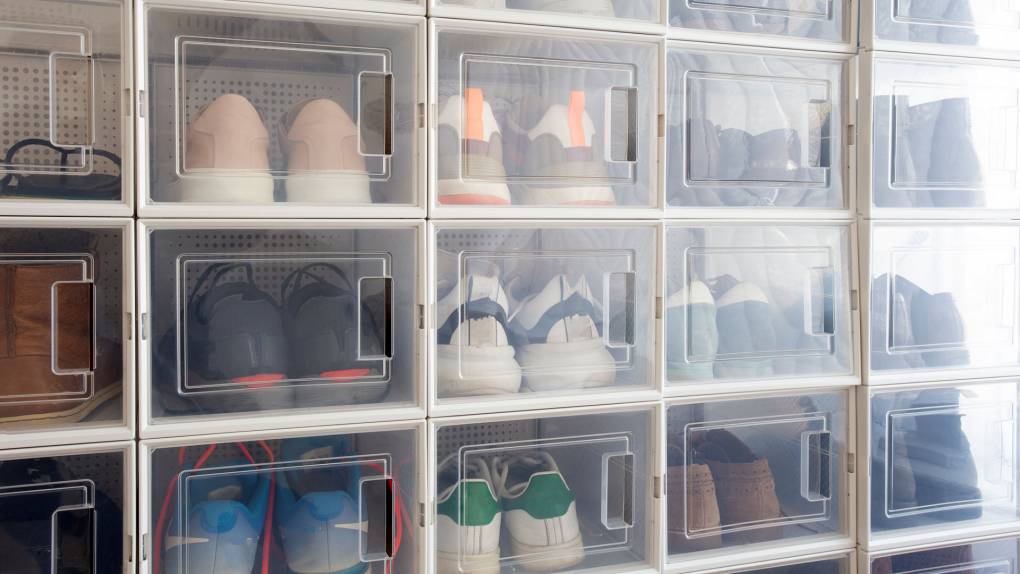
"caption": "Many sneakerheads display their collection of shoes in clear boxes to keep their collectibles safe and fresh.",
"description": null,
"title": "sneaker-culture",
"credit": "cerro_photography/iStock",
"status": "inherit",
"altTag": "A floor to ceiling shelf displays row after row of sneakers, neatly placed inside clear plastic display boxes.",
"isLoading": false,
"fetchFailed": false
},
"news_11911669": {
"type": "attachments",
"id": "news_11911669",
"meta": {
"index": "attachments_1716263798",
"site": "news",
"id": "11911669",
"found": true
},
"parent": 11911666,
"imgSizes": {
"twentyfourteen-full-width": {
"file": "https://ww2.kqed.org/app/uploads/sites/10/2022/04/SanJose_AntiEvictionProtest-1038x576.jpg",
"width": 1038,
"mimeType": "image/jpeg",
"height": 576
},
"thumbnail": {
"file": "https://ww2.kqed.org/app/uploads/sites/10/2022/04/SanJose_AntiEvictionProtest-160x107.jpg",
"width": 160,
"mimeType": "image/jpeg",
"height": 107
},
"post-thumbnail": {
"file": "https://ww2.kqed.org/app/uploads/sites/10/2022/04/SanJose_AntiEvictionProtest-672x372.jpg",
"width": 672,
"mimeType": "image/jpeg",
"height": 372
},
"kqedFullSize": {
"file": "https://ww2.kqed.org/app/uploads/sites/10/2022/04/SanJose_AntiEvictionProtest.jpg",
"width": 1920,
"height": 1280
},
"large": {
"file": "https://ww2.kqed.org/app/uploads/sites/10/2022/04/SanJose_AntiEvictionProtest-1020x680.jpg",
"width": 1020,
"mimeType": "image/jpeg",
"height": 680
},
"1536x1536": {
"file": "https://ww2.kqed.org/app/uploads/sites/10/2022/04/SanJose_AntiEvictionProtest-1536x1024.jpg",
"width": 1536,
"mimeType": "image/jpeg",
"height": 1024
},
"medium": {
"file": "https://ww2.kqed.org/app/uploads/sites/10/2022/04/SanJose_AntiEvictionProtest-800x533.jpg",
"width": 800,
"mimeType": "image/jpeg",
"height": 533
}
},
"publishDate": 1650476898,
"modified": 1650476967,
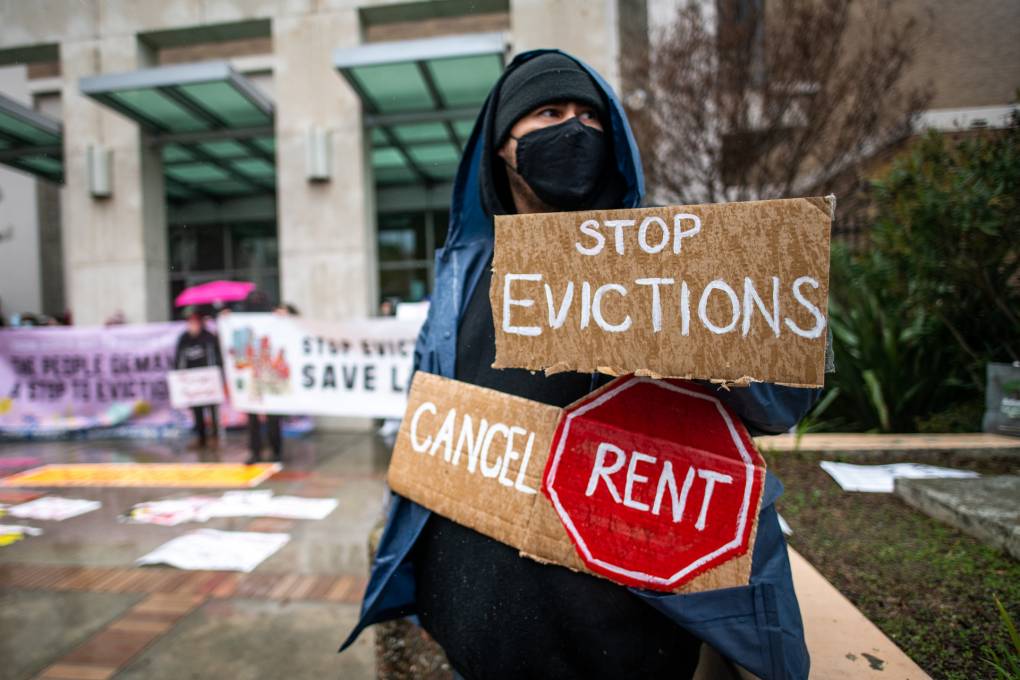
"caption": "An anti-eviction protester stands in front of Santa Clara County Superior Court on Jan. 27, 2021, during a demonstration calling for stronger statewide eviction protections.",
"description": null,
"title": "SanJose_AntiEvictionProtest",
"credit": "Beth LaBerge/KQED",
"status": "inherit",
"altTag": "A person in a raincoat and black mask covering nose and mouth stands in front of building holdings signs that say \"Stop Evictions\" and \"Cancel Rent.\"",
"isLoading": false,
"fetchFailed": false
},
"news_11910372": {
"type": "attachments",
"id": "news_11910372",
"meta": {
"index": "attachments_1716263798",
"site": "news",
"id": "11910372",
"found": true
},
"parent": 11910363,
"imgSizes": {
"twentyfourteen-full-width": {
"file": "https://ww2.kqed.org/app/uploads/sites/10/2022/04/DerbyDay-1038x576.jpeg",
"width": 1038,
"mimeType": "image/jpeg",
"height": 576
},
"thumbnail": {
"file": "https://ww2.kqed.org/app/uploads/sites/10/2022/04/DerbyDay-160x90.jpeg",
"width": 160,
"mimeType": "image/jpeg",
"height": 90
},
"post-thumbnail": {
"file": "https://ww2.kqed.org/app/uploads/sites/10/2022/04/DerbyDay-672x372.jpeg",
"width": 672,
"mimeType": "image/jpeg",
"height": 372
},
"kqedFullSize": {
"file": "https://ww2.kqed.org/app/uploads/sites/10/2022/04/DerbyDay.jpeg",
"width": 1920,
"height": 1080
},
"large": {
"file": "https://ww2.kqed.org/app/uploads/sites/10/2022/04/DerbyDay-1020x574.jpeg",
"width": 1020,
"mimeType": "image/jpeg",
"height": 574
},
"1536x1536": {
"file": "https://ww2.kqed.org/app/uploads/sites/10/2022/04/DerbyDay-1536x864.jpeg",
"width": 1536,
"mimeType": "image/jpeg",
"height": 864
},
"medium": {
"file": "https://ww2.kqed.org/app/uploads/sites/10/2022/04/DerbyDay-800x450.jpeg",
"width": 800,
"mimeType": "image/jpeg",
"height": 450
}
},
"publishDate": 1649200503,
"modified": 1649212000,
"caption": "The First Artists' Soapbox Derby, May 18, 1975.",
"description": null,
"title": "DerbyDay",
"credit": "Courtesy of San Francisco Museum of Modern Art Archives ",
"status": "inherit",
"altTag": "What looks like an armchair on wheels rockets down a wide steep street as kids in 1970s attire run after it. Along both sides of the road are throngs of spectators.",
"isLoading": false,
"fetchFailed": false
},
"news_11909761": {
"type": "attachments",
"id": "news_11909761",
"meta": {
"index": "attachments_1716263798",
"site": "news",
"id": "11909761",
"found": true
},
"parent": 11909757,
"imgSizes": {
"twentyfourteen-full-width": {
"file": "https://ww2.kqed.org/app/uploads/sites/10/2022/03/BoyntonPassageway-1038x576.jpg",
"width": 1038,
"mimeType": "image/jpeg",
"height": 576
},
"thumbnail": {
"file": "https://ww2.kqed.org/app/uploads/sites/10/2022/03/BoyntonPassageway-160x90.jpg",
"width": 160,
"mimeType": "image/jpeg",
"height": 90
},
"post-thumbnail": {
"file": "https://ww2.kqed.org/app/uploads/sites/10/2022/03/BoyntonPassageway-672x372.jpg",
"width": 672,
"mimeType": "image/jpeg",
"height": 372
},
"kqedFullSize": {
"file": "https://ww2.kqed.org/app/uploads/sites/10/2022/03/BoyntonPassageway.jpg",
"width": 1920,
"height": 1080
},
"large": {
"file": "https://ww2.kqed.org/app/uploads/sites/10/2022/03/BoyntonPassageway-1020x574.jpg",
"width": 1020,
"mimeType": "image/jpeg",
"height": 574
},
"1536x1536": {
"file": "https://ww2.kqed.org/app/uploads/sites/10/2022/03/BoyntonPassageway-1536x864.jpg",
"width": 1536,
"mimeType": "image/jpeg",
"height": 864
},
"medium": {
"file": "https://ww2.kqed.org/app/uploads/sites/10/2022/03/BoyntonPassageway-800x450.jpg",
"width": 800,
"mimeType": "image/jpeg",
"height": 450
}
},
"publishDate": 1648664834,
"modified": 1648671085,
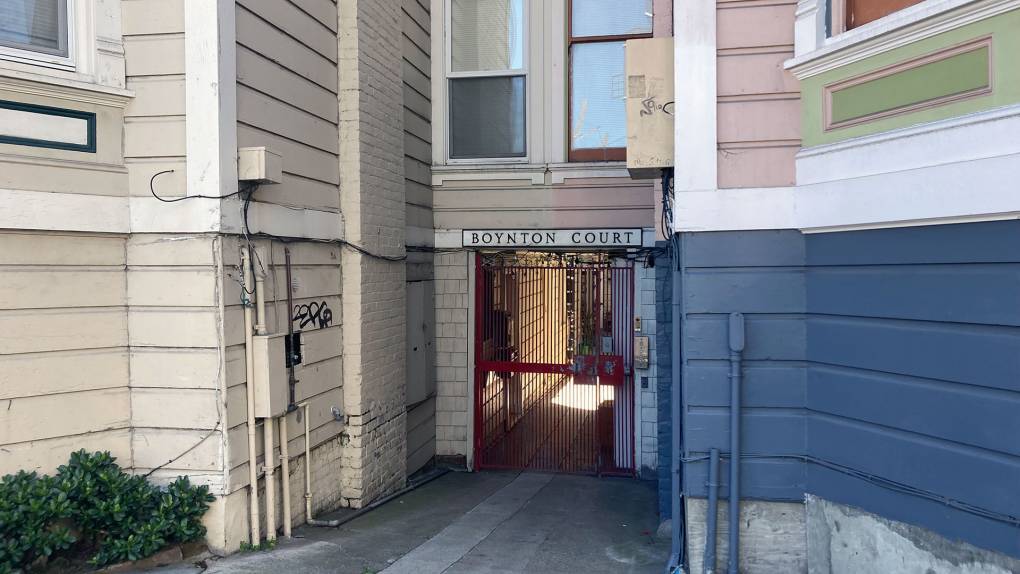
"caption": "Boynton Court is a 'street' owned and maintained by private residents. San Francisco Public Works spokesperson Rachel Gordon doesn't know exactly how many of these exist, but they aren't very common.",
"description": null,
"title": "BoyntonPassageway",
"credit": "Vanessa Rancaño/KQED",
"status": "inherit",
"altTag": "Two Victorian houses connect at a small passageway on the street level. It is barred with a red gate and says Boynton Court above the lintel.",
"isLoading": false,
"fetchFailed": false
}
},
"audioPlayerReducer": {
"postId": "stream_live",
"isPaused": true,
"isPlaying": false,
"pfsActive": false,
"pledgeModalIsOpen": true,
"playerDrawerIsOpen": false,
"liveAudioPlayStartedAt": 0,
"liveAudioPlayContext": ""
},
"authorsReducer": {
"astupi": {
"type": "authors",
"id": "70",
"meta": {
"index": "authors_1716337520",
"id": "70",
"found": true
},
"name": "Amanda Stupi",
"firstName": "Amanda",
"lastName": "Stupi",
"slug": "astupi",
"email": "astupi@kqed.org",
"display_author_email": false,
"staff_mastheads": [],
"title": "Senior Engagement Producer",
"bio": "Amanda joined KQED Science’s engagement team as a Senior Audience Engagement Strategist in the spring of 2019. She has helped craft messaging around wildfires, the coronavirus pandemic, climate change and many other stories. She has also brought KQED Science to new platforms such as Reddit’s Ask Me Anything series. Prior to joining KQED Science, Amanda spent seven years as an engagement producer with Forum, KQED’s daily live call-in show. She got her start in radio at KALW's weekly call in show, City Visions, before going on to an internship and stint at NPR's Talk of the Nation.\r\n\r\nPrior to journalism, Amanda taught English at Lowell High School. She's a native of Petaluma and currently lives under the \"South San Francisco the Industrial City\" sign in South City. She believes that engagement is vital to news’s future and that good journalism listens as much as it asks questions.",
"avatar": "https://secure.gravatar.com/avatar/e981c503e5c162da701dcaccfbf87e35?s=600&d=blank&r=g",
"twitter": null,
"facebook": null,
"instagram": null,
"linkedin": null,
"sites": [
{
"site": "arts",
"roles": [
"Contributor"
]
},
{
"site": "news",
"roles": [
"editor"
]
},
{
"site": "pop",
"roles": [
"contributor"
]
},
{
"site": "stateofhealth",
"roles": [
"editor"
]
},
{
"site": "science",
"roles": []
},
{
"site": "perspectives",
"roles": [
"editor"
]
}
],
"headData": {
"title": "Amanda Stupi | KQED",
"description": "Senior Engagement Producer",
"ogImgSrc": "https://secure.gravatar.com/avatar/e981c503e5c162da701dcaccfbf87e35?s=600&d=blank&r=g",
"twImgSrc": "https://secure.gravatar.com/avatar/e981c503e5c162da701dcaccfbf87e35?s=600&d=blank&r=g"
},
"isLoading": false,
"link": "/author/astupi"
},
"ohubertallen": {
"type": "authors",
"id": "102",
"meta": {
"index": "authors_1716337520",
"id": "102",
"found": true
},
"name": "Olivia Allen-Price",
"firstName": "Olivia",
"lastName": "Allen-Price",
"slug": "ohubertallen",
"email": "oallenprice@kqed.org",
"display_author_email": false,
"staff_mastheads": [
"news"
],
"title": "Senior Editor",
"bio": "Olivia Allen-Price is senior editor and host of the award-winning Bay Curious podcast. Prior to joining KQED in 2013, Olivia worked at The Baltimore Sun and The Virginian-Pilot in Norfolk, Va. She holds degrees in journalism and political science from Elon University. Her work has earned awards from the Society of Professional Journalists, the Hearst Foundation and Hearken. She loves to talk about running and curly hair.\r\n\r\nFollow: \u003ca href=\"https://twitter.com/oallenprice\">@oallenprice\u003c/a>\r\nEmail: \u003ca href=\"mailto:oallenprice@kqed.org\">oallenprice@kqed.org\u003c/a>",
"avatar": "https://secure.gravatar.com/avatar/07f7803c1f6be56f3be58ef276dfa64dce898502e0554408ef4858451a8294f7?s=600&d=blank&r=g",
"twitter": "oallenprice",
"bluesky": null,
"facebook": null,
"instagram": null,
"linkedin": null,
"sites": [
{
"site": "",
"roles": [
"editor"
]
},
{
"site": "arts",
"roles": [
"subscriber"
]
},
{
"site": "news",
"roles": [
"administrator"
]
},
{
"site": "pop",
"roles": [
"administrator"
]
},
{
"site": "bayareabites",
"roles": [
"contributor"
]
},
{
"site": "stateofhealth",
"roles": [
"administrator"
]
},
{
"site": "science",
"roles": [
"editor"
]
}
],
"headData": {
"title": "Olivia Allen-Price | KQED",
"description": "Senior Editor",
"ogImgSrc": "https://secure.gravatar.com/avatar/07f7803c1f6be56f3be58ef276dfa64dce898502e0554408ef4858451a8294f7?s=600&d=blank&r=g",
"twImgSrc": "https://secure.gravatar.com/avatar/07f7803c1f6be56f3be58ef276dfa64dce898502e0554408ef4858451a8294f7?s=600&d=blank&r=g"
},
"isLoading": false,
"link": "/author/ohubertallen"
},
"sracho": {
"type": "authors",
"id": "107",
"meta": {
"index": "authors_1716337520",
"id": "107",
"found": true
},
"name": "Suzie Racho",
"firstName": "Suzie",
"lastName": "Racho",
"slug": "sracho",
"email": "SRacho@KQED.org",
"display_author_email": false,
"staff_mastheads": [
"news"
],
"title": "KQED Contributor",
"bio": "Suzie Racho is a correspondent-producer with \u003cem>The California Report Magazine\u003c/em>\u003cem>. S\u003c/em>he has also worked with several other KQED productions, including Bay Curious, Truth Be Told, The Do List and KQED News.\r\n\r\nSuzie came to KQED in 1996 after receiving a BA in journalism from San Francisco State University and spending several years working in the music industry. As part of \u003cem>The California Report\u003c/em> team, her work has been recognized by the Society for Professional Journalists, National Federation of Community Broadcasters and Public Radio News Directors Incorporated, among others. She was recognized with a national Gracie Award in 2019. She spends her free time baking, listening to K-pop and rooting for the Giants and Valkyries.",
"avatar": "https://secure.gravatar.com/avatar/842e457a9830b0f3c1ce3ab70ed3518d616d1e25e315c6292eab8cd611d98601?s=600&d=blank&r=g",
"twitter": null,
"bluesky": null,
"facebook": null,
"instagram": null,
"linkedin": null,
"sites": [
{
"site": "arts",
"roles": [
"editor"
]
},
{
"site": "news",
"roles": [
"editor"
]
}
],
"headData": {
"title": "Suzie Racho | KQED",
"description": "KQED Contributor",
"ogImgSrc": "https://secure.gravatar.com/avatar/842e457a9830b0f3c1ce3ab70ed3518d616d1e25e315c6292eab8cd611d98601?s=600&d=blank&r=g",
"twImgSrc": "https://secure.gravatar.com/avatar/842e457a9830b0f3c1ce3ab70ed3518d616d1e25e315c6292eab8cd611d98601?s=600&d=blank&r=g"
},
"isLoading": false,
"link": "/author/sracho"
},
"katrinaschwartz": {
"type": "authors",
"id": "234",
"meta": {
"index": "authors_1716337520",
"id": "234",
"found": true
},
"name": "Katrina Schwartz",
"firstName": "Katrina",
"lastName": "Schwartz",
"slug": "katrinaschwartz",
"email": "kschwartz@kqed.org",
"display_author_email": false,
"staff_mastheads": [
"news"
],
"title": "Producer",
"bio": "Katrina Schwartz is a journalist based in San Francisco. She's worked at KPCC public radio in LA and has reported on air and online for KQED since 2010. She covered how teaching and learning is changing for MindShift between 2012 and 2020. She is the co-host of the MindShift podcast and now produces KQED's Bay Curious podcast.",
"avatar": "https://secure.gravatar.com/avatar/edb4ee79070447a018538c9aae6eeecf28786515b8a0c30e43b6b7dce5aa44c8?s=600&d=blank&r=g",
"twitter": "kschwart",
"bluesky": null,
"facebook": null,
"instagram": null,
"linkedin": null,
"sites": [
{
"site": "",
"roles": [
"editor"
]
},
{
"site": "news",
"roles": [
"editor"
]
},
{
"site": "mindshift",
"roles": [
"administrator"
]
},
{
"site": "stateofhealth",
"roles": [
"author"
]
},
{
"site": "science",
"roles": [
"editor"
]
}
],
"headData": {
"title": "Katrina Schwartz | KQED",
"description": "Producer",
"ogImgSrc": "https://secure.gravatar.com/avatar/edb4ee79070447a018538c9aae6eeecf28786515b8a0c30e43b6b7dce5aa44c8?s=600&d=blank&r=g",
"twImgSrc": "https://secure.gravatar.com/avatar/edb4ee79070447a018538c9aae6eeecf28786515b8a0c30e43b6b7dce5aa44c8?s=600&d=blank&r=g"
},
"isLoading": false,
"link": "/author/katrinaschwartz"
},
"rachael-myrow": {
"type": "authors",
"id": "251",
"meta": {
"index": "authors_1716337520",
"id": "251",
"found": true
},
"name": "Rachael Myrow",
"firstName": "Rachael",
"lastName": "Myrow",
"slug": "rachael-myrow",
"email": "rmyrow@kqed.org",
"display_author_email": true,
"staff_mastheads": [
"news"
],
"title": "Senior Editor of KQED's Silicon Valley News Desk",
"bio": "• I write and edit stories about how Silicon Valley power and policies shape everyday life in California. I’m also passionate about making Bay Area history and culture more accessible to a broad public. • I’ve been a journalist for most of my life, starting in high school with The Franklin Press in Los Angeles, where I grew up. While earning my first degree in English at UC Berkeley, I got my start in public radio at KALX-FM. After completing a second degree in journalism at Cal, I landed my first professional job at Marketplace, then moved on to KPCC (now LAist), and then KQED, where I hosted The California Report for more than seven years. • My reporting has appeared on NPR, The World, WBUR’s \u003ci>Here & Now\u003c/i>, and the BBC. I also guest host for KQED’s \u003ci>Forum\u003c/i>, as well as the Commonwealth Club in San Francisco. • I speak periodically on media, democracy and technology issues, and do voiceover work for documentaries and educational video projects. • Outside of the studio, you'll find me hiking Bay Area trails and whipping up Insta-ready meals in my kitchen. • I do not accept gifts, money, or favors from anyone connected to my reporting, I don't pay people for information, and I do not support or donate to political causes. • I strive to treat the people I report on with fairness, honesty, and respect. I also recognize there are often multiple sides to a story and work to verify information through multiple sources and documentation. If I get something wrong, I correct it.",
"avatar": "https://secure.gravatar.com/avatar/3ed8a3c5f26025e4a805ba634cda8cd764906b97438a6d9ce216b044e340da4e?s=600&d=blank&r=g",
"twitter": "rachaelmyrow",
"bluesky": null,
"facebook": null,
"instagram": null,
"linkedin": "https://www.linkedin.com/in/rachaelmyrow/",
"sites": [
{
"site": "arts",
"roles": [
"administrator"
]
},
{
"site": "news",
"roles": [
"edit_others_posts",
"editor"
]
},
{
"site": "futureofyou",
"roles": [
"editor"
]
},
{
"site": "bayareabites",
"roles": [
"editor"
]
},
{
"site": "stateofhealth",
"roles": [
"editor"
]
},
{
"site": "science",
"roles": [
"editor"
]
},
{
"site": "food",
"roles": [
"editor"
]
},
{
"site": "forum",
"roles": [
"editor"
]
},
{
"site": "liveblog",
"roles": [
"author"
]
}
],
"headData": {
"title": "Rachael Myrow | KQED",
"description": "Senior Editor of KQED's Silicon Valley News Desk",
"ogImgSrc": "https://secure.gravatar.com/avatar/3ed8a3c5f26025e4a805ba634cda8cd764906b97438a6d9ce216b044e340da4e?s=600&d=blank&r=g",
"twImgSrc": "https://secure.gravatar.com/avatar/3ed8a3c5f26025e4a805ba634cda8cd764906b97438a6d9ce216b044e340da4e?s=600&d=blank&r=g"
},
"isLoading": false,
"link": "/author/rachael-myrow"
},
"jplaczek": {
"type": "authors",
"id": "8606",
"meta": {
"index": "authors_1716337520",
"id": "8606",
"found": true
},
"name": "Jessica Placzek",
"firstName": "Jessica",
"lastName": "Placzek",
"slug": "jplaczek",
"email": "jessicalplaczek@gmail.com",
"display_author_email": false,
"staff_mastheads": [
"news"
],
"title": "KQED Contributor",
"bio": "Jessica Placzek is a former senior editor of podcasts at KQED where she served as the editorial lead of the podcast department. She worked with shows like MindShift, Rightnowish, Consider This, SOLD OUT, Bay Curious and The Bay. She’s also been a reporter and audio producer at KQED, KPFA, and KALW. She taught audio production to men incarcerated at California State Prison Solano and edited pieces they produced for the Uncuffed podcast through KALW. In 2018 she co-hosted and produced the third season of Raw Material for SFMOMA. In New Orleans she wrote for the Nola Defender. Her work has also appeared on Marketplace, All Things Considered, The California Report, and Vice. You can find more at jessicaplaczek.com",
"avatar": "https://secure.gravatar.com/avatar/5ead103b5880f672eceb84ce75eecd1b4b6f74a47edc457684a73ad5b8b158e9?s=600&d=blank&r=g",
"twitter": null,
"bluesky": null,
"facebook": null,
"instagram": null,
"linkedin": null,
"sites": [
{
"site": "arts",
"roles": [
"subscriber"
]
},
{
"site": "news",
"roles": [
"subscriber"
]
},
{
"site": "stateofhealth",
"roles": [
"editor"
]
},
{
"site": "forum",
"roles": [
"editor"
]
}
],
"headData": {
"title": "Jessica Placzek | KQED",
"description": "KQED Contributor",
"ogImgSrc": "https://secure.gravatar.com/avatar/5ead103b5880f672eceb84ce75eecd1b4b6f74a47edc457684a73ad5b8b158e9?s=600&d=blank&r=g",
"twImgSrc": "https://secure.gravatar.com/avatar/5ead103b5880f672eceb84ce75eecd1b4b6f74a47edc457684a73ad5b8b158e9?s=600&d=blank&r=g"
},
"isLoading": false,
"link": "/author/jplaczek"
},
"afont": {
"type": "authors",
"id": "8637",
"meta": {
"index": "authors_1716337520",
"id": "8637",
"found": true
},
"name": "Amanda Font",
"firstName": "Amanda",
"lastName": "Font",
"slug": "afont",
"email": "afont@kqed.org",
"display_author_email": false,
"staff_mastheads": [],
"title": "KQED Contributor",
"bio": "Amanda Font is a producer on \u003cem>The Latest\u003c/em> podcast, and the host and co-producer of the series \u003cem>Audible Cosmos\u003c/em>. She has previously worked as a producer and reporter on the \u003cem>Bay Curious\u003c/em> podcast, and director of \u003cem>The California Report Magazine\u003c/em>. She grew up in the deserts of Southern California and moved north for the trees. Amanda earned a B.A. from the BECA program at San Francisco State, where she worked in the university's radio station. Amanda Font is represented by SAG-AFTRA.",
"avatar": "https://secure.gravatar.com/avatar/d9e81cf0117d5849b9cfb7ab4b1422f1?s=600&d=blank&r=g",
"twitter": null,
"facebook": null,
"instagram": null,
"linkedin": null,
"sites": [
{
"site": "news",
"roles": [
"add_users",
"create_users"
]
},
{
"site": "science",
"roles": []
},
{
"site": "forum",
"roles": [
"administrator"
]
},
{
"site": "perspectives",
"roles": [
"administrator"
]
},
{
"site": "radio",
"roles": [
"administrator"
]
}
],
"headData": {
"title": "Amanda Font | KQED",
"description": "KQED Contributor",
"ogImgSrc": "https://secure.gravatar.com/avatar/d9e81cf0117d5849b9cfb7ab4b1422f1?s=600&d=blank&r=g",
"twImgSrc": "https://secure.gravatar.com/avatar/d9e81cf0117d5849b9cfb7ab4b1422f1?s=600&d=blank&r=g"
},
"isLoading": false,
"link": "/author/afont"
},
"rlevi": {
"type": "authors",
"id": "11260",
"meta": {
"index": "authors_1716337520",
"id": "11260",
"found": true
},
"name": "Ryan Levi",
"firstName": "Ryan",
"lastName": "Levi",
"slug": "rlevi",
"email": "rlevi@KQED.org",
"display_author_email": false,
"staff_mastheads": [],
"title": "KQED Contributor",
"bio": "Ryan Levi was a reporter and podcast producer at KQED News from 2016-2019. He worked on \u003ca href=\"https://www.kqed.org/news/series/baycurious\">Bay Curious\u003c/a>, \u003ca href=\"https://www.kqed.org/news/tag/the-bay/\">The Bay, \u003c/a>and \u003ca href=\"https://podcasts.apple.com/us/podcast/the-california-report-magazine/id1314750545\">The California Report Magazine\u003c/a>, as well as hosting and producing the weekly \u003ca href=\"https://www.kqed.org/news/program/qedup/\">Q'ed Up podcast. \u003c/a>He also helped inaugurate KQED's weekend news coverage in 2017 as one of two original digital producers. Ryan holds degrees in multimedia journalism and Spanish from the University of Missouri.",
"avatar": "https://secure.gravatar.com/avatar/4cb2ddd028ac8807d1adf09609c5555d?s=600&d=blank&r=g",
"twitter": "ryan_levi",
"facebook": null,
"instagram": null,
"linkedin": null,
"sites": [
{
"site": "arts",
"roles": [
"editor"
]
},
{
"site": "news",
"roles": [
"subscriber"
]
},
{
"site": "stateofhealth",
"roles": [
"editor"
]
},
{
"site": "science",
"roles": [
"editor"
]
},
{
"site": "forum",
"roles": [
"administrator"
]
},
{
"site": "perspectives",
"roles": [
"administrator"
]
}
],
"headData": {
"title": "Ryan Levi | KQED",
"description": "KQED Contributor",
"ogImgSrc": "https://secure.gravatar.com/avatar/4cb2ddd028ac8807d1adf09609c5555d?s=600&d=blank&r=g",
"twImgSrc": "https://secure.gravatar.com/avatar/4cb2ddd028ac8807d1adf09609c5555d?s=600&d=blank&r=g"
},
"isLoading": false,
"link": "/author/rlevi"
},
"vrancano": {
"type": "authors",
"id": "11276",
"meta": {
"index": "authors_1716337520",
"id": "11276",
"found": true
},
"name": "Vanessa Rancaño",
"firstName": "Vanessa",
"lastName": "Rancaño",
"slug": "vrancano",
"email": "vrancano@kqed.org",
"display_author_email": false,
"staff_mastheads": [
"news"
],
"title": "Reporter",
"bio": "Vanessa Rancaño is a features reporter for KQED. She’s also covered homelessness and education for the station and reported from the Central Valley. Her work has aired across public radio, from flagship national news shows to longform narrative podcasts. Before taking up a mic, she worked as a freelance print journalist. She’s been recognized with a number of national and regional awards. Vanessa grew up in California's Central Valley. She's a former NPR Kroc Fellow, and a graduate of the UC Berkeley Graduate School of Journalism.",
"avatar": "https://secure.gravatar.com/avatar/b3a383dfb0e7ee1c17568f2cf067904ab654d6e3de9743fc661f3c788ade1bed?s=600&d=blank&r=g",
"twitter": "vanessarancano",
"bluesky": null,
"facebook": null,
"instagram": null,
"linkedin": null,
"sites": [
{
"site": "arts",
"roles": [
"editor"
]
},
{
"site": "news",
"roles": [
"editor"
]
},
{
"site": "liveblog",
"roles": [
"contributor"
]
}
],
"headData": {
"title": "Vanessa Rancaño | KQED",
"description": "Reporter",
"ogImgSrc": "https://secure.gravatar.com/avatar/b3a383dfb0e7ee1c17568f2cf067904ab654d6e3de9743fc661f3c788ade1bed?s=600&d=blank&r=g",
"twImgSrc": "https://secure.gravatar.com/avatar/b3a383dfb0e7ee1c17568f2cf067904ab654d6e3de9743fc661f3c788ade1bed?s=600&d=blank&r=g"
},
"isLoading": false,
"link": "/author/vrancano"
},
"mfharvin": {
"type": "authors",
"id": "11583",
"meta": {
"index": "authors_1716337520",
"id": "11583",
"found": true
},
"name": "Mary Franklin Harvin",
"firstName": "Mary Franklin",
"lastName": "Harvin",
"slug": "mfharvin",
"email": "mfharvin@KQED.org",
"display_author_email": false,
"staff_mastheads": [
"news"
],
"title": "KQED Contributor",
"bio": null,
"avatar": "https://secure.gravatar.com/avatar/0e53510a7d48cfbdebfc9b11357d845f?s=600&d=blank&r=g",
"twitter": "EmEffHarvin",
"facebook": null,
"instagram": null,
"linkedin": null,
"sites": [
{
"site": "news",
"roles": [
"author",
"edit_others_posts"
]
},
{
"site": "science",
"roles": [
"editor"
]
}
],
"headData": {
"title": "Mary Franklin Harvin | KQED",
"description": "KQED Contributor",
"ogImgSrc": "https://secure.gravatar.com/avatar/0e53510a7d48cfbdebfc9b11357d845f?s=600&d=blank&r=g",
"twImgSrc": "https://secure.gravatar.com/avatar/0e53510a7d48cfbdebfc9b11357d845f?s=600&d=blank&r=g"
},
"isLoading": false,
"link": "/author/mfharvin"
},
"cbeale": {
"type": "authors",
"id": "11749",
"meta": {
"index": "authors_1716337520",
"id": "11749",
"found": true
},
"name": "Christopher Beale",
"firstName": "Christopher",
"lastName": "Beale",
"slug": "cbeale",
"email": "cbeale@kqed.org",
"display_author_email": true,
"staff_mastheads": [
"news"
],
"title": "Engineer/Producer/Reporter",
"bio": "\u003ca href=\"https://linktr.ee/realchrisjbeale\" rel=\"noopener noreferrer\">Christopher J. Beale\u003c/a> is an award winning journalist, audio engineer, and media host living in San Francisco. \r\n\r\nChristopher works primarily as an audio engineer at KQED and serves as the sound designer for both the Bay Curious and Rightnowish podcasts. He is the host and producer of the LGBTQIA podcast and radio segment \u003ca href=\"https://stereotypespodcast.org\">Stereotypes\u003c/a>.",
"avatar": "https://secure.gravatar.com/avatar/dc485bf84788eb7e7414eb638e72407e?s=600&d=blank&r=g",
"twitter": "realchrisjbeale",
"facebook": null,
"instagram": "http://instagram.com/realchrisjbeale",
"linkedin": null,
"sites": [
{
"site": "arts",
"roles": [
"contributor"
]
},
{
"site": "news",
"roles": [
"editor"
]
},
{
"site": "forum",
"roles": [
"editor"
]
}
],
"headData": {
"title": "Christopher Beale | KQED",
"description": "Engineer/Producer/Reporter",
"ogImgSrc": "https://secure.gravatar.com/avatar/dc485bf84788eb7e7414eb638e72407e?s=600&d=blank&r=g",
"twImgSrc": "https://secure.gravatar.com/avatar/dc485bf84788eb7e7414eb638e72407e?s=600&d=blank&r=g"
},
"isLoading": false,
"link": "/author/cbeale"
}
},
"pagesReducer": {
"news_program_bay-curious": {
"type": "terms",
"id": "news_33523",
"meta": {
"index": "terms_1716263798",
"site": "news",
"id": "33523",
"score": 15.085828
},
"featImg": null,
"name": "Bay Curious",
"description": null,
"taxonomy": "program",
"headData": {
"twImgId": null,
"twTitle": null,
"ogTitle": null,
"ogImgId": null,
"twDescription": null,
"description": null,
"title": "Bay Curious Archives | KQED News",
"ogDescription": null
},
"ttid": 33540,
"slug": "bay-curious",
"isLoading": false,
"title": "Bay Curious",
"pageMeta": {
"site": "news",
"WpPageTemplate": "page-topic-editorial",
"currentPage": 19
},
"blocks": [
{
"blockName": "kqed/post-list",
"attrs": {
"layout": "cardArticle2",
"query": "posts/news?program=bay-curious",
"seeMore": false,
"paginated": true,
"page": 19
}
},
{
"blockName": "kqed/ad"
}
]
}
},
"pfsSessionReducer": {},
"postsReducer": {
"stream_live": {
"type": "live",
"id": "stream_live",
"audioUrl": "https://streams.kqed.org/kqedradio",
"title": "Live Stream",
"excerpt": "Live Stream information currently unavailable.",
"link": "/radio",
"featImg": "",
"label": {
"name": "KQED Live",
"link": "/"
}
},
"stream_kqedNewscast": {
"type": "posts",
"id": "stream_kqedNewscast",
"audioUrl": "https://www.kqed.org/.stream/anon/radio/RDnews/newscast.mp3?_=1",
"title": "KQED Newscast",
"featImg": "",
"label": {
"name": "88.5 FM",
"link": "/"
}
},
"news_11916538": {
"type": "posts",
"id": "news_11916538",
"meta": {
"index": "posts_1716263798",
"site": "news",
"id": "11916538",
"score": null,
"sort": [
1654768834000
]
},
"guestAuthors": [],
"slug": "move-over-monterey-pacifica-lays-claim-to-iconic-jack-cheese",
"title": "Move Over Monterey? Pacifica Lays Claim to Iconic Jack Cheese",
"publishDate": 1654768834,
"format": "image",
"headTitle": "Move Over Monterey? Pacifica Lays Claim to Iconic Jack Cheese | KQED",
"labelTerm": {},
"content": "\u003cp>\u003ca href=\"#episode-transcript\">\u003ci>View the full episode transcript.\u003c/i>\u003c/a>\u003c/p>\n\u003cp>Whether melted in a quesadilla or a grilled cheese sandwich, or sliced on a charcuterie board next to one of its stinkier cousins, Monterey Jack is a staple cheese. Its flavor is similar to cheddar, but it contains a bit more moisture. Despite its popularity, there remains some mystery around Monterey Jack’s true origins. Though it may have the name “Monterey,” the town of Pacifica lays claim to the iconic cheese.\u003c/p>\n\u003cp>[baycuriouspodcastinfo]\u003c/p>\n\u003cp>The recipe for what we now call Monterey Jack is believed — by some — to have originated in California’s missions in the 1700s. But the soft, mild cheese got its name — at least the “Jack” part — much later from a wealthy Monterey landowner named David Jack. Jack popularized and marketed the cheese. But how he got his hands on the recipe is wrapped up in local pride — and lore.\u003c/p>\n\u003ch3>David Jack and Monterey\u003c/h3>\n\u003cp>David Jack was born in Scotland in 1822 and had emigrated to America by the time he reached adulthood. After a stop on the East Coast, where he acquired a shipment of guns, Jack arrived in California in 1849 in the midst of the Gold Rush. Firearms were a hot commodity in those days, and Jack sold the guns for a huge profit. He took that money and went prospecting, but never found gold.\u003c/p>\n\u003cfigure id=\"attachment_11916550\" class=\"wp-caption aligncenter\" style=\"max-width: 590px\">\u003cimg loading=\"lazy\" decoding=\"async\" class=\"wp-image-11916550 size-full\" src=\"https://ww2.kqed.org/app/uploads/sites/10/2022/06/David_Jack.jpg\" alt=\"\" width=\"590\" height=\"686\" srcset=\"https://cdn.kqed.org/wp-content/uploads/sites/10/2022/06/David_Jack.jpg 590w, https://cdn.kqed.org/wp-content/uploads/sites/10/2022/06/David_Jack-160x186.jpg 160w\" sizes=\"(max-width: 590px) 100vw, 590px\">\u003cfigcaption class=\"wp-caption-text\">David Jack \u003ccite>(I.W. Taber/Public domain)\u003c/cite>\u003c/figcaption>\u003c/figure>\n\u003cp>Jack began calling himself David Jacks at this point, and moved to the small town of Monterey, where he began to acquire land. Kathleen Manning from the Pacifica Historical Society says much of that acquisition was through what she called “shady land deals.”\u003c/p>\n\u003cp>In 1851, at the end of the Mexican-American war, as part of the Treaty of Guadalupe Hidalgo, the land around California was divided up and sold. The pueblo of Monterey, as it was then known, hired an attorney named Dalos Rodeyn to handle some land deals.\u003c/p>\n\u003cp>But the town had no money to pay him and had to sell land to pay that debt. That attorney teamed up with Jacks to buy the entire town of Monterey and much of the adjacent land at a very low rate. Jacks became the de facto landlord of the region, and began lending money against people’s land, and then foreclosing and taking ownership of even more land in the region.\u003c/p>\n\u003cp>“He was able to take advantage of a lot of people. He has a very bad reputation,” said Manning.\u003c/p>\n\u003cp>The town of Monterey tried a few times to buy itself back from Jacks, even sending a case to the U.S. Supreme Court in 1906, but Jacks won.\u003c/p>\n\u003cp>[ad fullwidth]\u003c/p>\n\u003cp>Besides land, Jacks had another business interest: dairy.\u003c/p>\n\u003cp>There were hundreds of dairies making milk and various types of cheese around Monterey at the time, and several were on Jacks’ land. One of those dairies was making a mild, soft, white cheese — sound familiar? Jacks would market and sell that cheese with his name on it, and the official Jack cheese was born.\u003c/p>\n\u003cp>The original recipe for the cheese Jacks would sell as his own could have come from any number of places — but where?\u003c/p>\n\u003ch2>The Pacifica connection\u003c/h2>\n\u003cp>According to a 1938 cookbook, “Eating Around San Francisco,” the recipe for what we now know as Jack cheese originated on Mori Point in Pacifica. The author visited Mori Point and wrote:\u003c/p>\n\u003cblockquote>\u003cp>“I was interested to discover that it was Stephano Mori, who first made what we today call Monterey cheese. Having been born and brought up in Italy, Stephano and his wife learned there how to make cheese. They made it on their Mori Point property. The cheese was very good.\u003c/p>\n\u003cp>“An Italian named Baldocchi was a friend of the family. He learned how to make the cheese and went to Monterey and manufactured it on a commercial scale. As he was on the Jack ranch. The cheese is now known as Jack or Monterey cheese.”\u003c/p>\u003c/blockquote>\n\u003cp>If this book is to be believed, Baldocchi took the recipe from the Moris, moved to Monterey and mass-produced it with David Jacks.\u003c/p>\n\u003cp>[gallery columns=\"2\" ids=\"11916551,11916552,11916562,11916563\"]\u003c/p>\n\u003cp> \u003c/p>\n\u003ch2>Other theories\u003c/h2>\n\u003cp>Not everyone is sold on Jack cheese being from Pacifica. In fact, there are a number of claims to the lineage of Monterey Jack. Some point to Domingo Pedrazzi of Carmel Valley, who made a cheese called “jack cheese.” It required pressure to remove moisture, which he accomplished with a “jack press.”\u003c/p>\n\u003cp>It’s also been argued that a local woman who sold homemade queso del país — like the cheese made at California’s historic missions — could be the person Jacks took the recipe from. What we do know for sure is Jacks didn’t invent the recipe – but he did go on to make that cheese, and himself, very famous.\u003c/p>\n\u003ch2>Pacifica Jack cheese\u003c/h2>\n\u003cp>In Pacifica, the historical society is making the most of their lesser-known connection to this California cheese by producing their own variety. Pacifica Jack Cheese is sold exclusively at the Pacifica Coastside Museum in Pacifica, and Manning says they’ve sold nearly 3 tons so far.\u003c/p>\n\u003cp>If you begin to ask where Monterey Jack cheese originated, you’ll get a different answer depending on whom you ask. But Kathleen Manning says, “If you don’t know Pacifica, you don’t know Jack.”\u003c/p>\n\u003cp>[baycuriousquestion]\u003c/p>\n\u003ch2 id=\"episode-transcript\">Episode Transcript\u003c/h2>\n\u003cp>\u003cb>Olivia Allen-Price:\u003c/b>\u003cspan style=\"font-weight: 400;\"> Let’s take a moment to consider Monterey Jack cheese.\u003c/span>\u003c/p>\n\u003cp>\u003cspan style=\"font-weight: 400;\">Decent cheese, probably not my first choice for a cheese plate, I’m more of a gouda girl but I’m not going to turn it down if someone offers. It works well in a quesadilla, melted on nachos, in a grilled cheese sandwich.\u003c/span>\u003c/p>\n\u003cp>\u003cspan style=\"font-weight: 400;\">You might guess with a name like \u003c/span>\u003ci>\u003cspan style=\"font-weight: 400;\">Monterey\u003c/span>\u003c/i>\u003cspan style=\"font-weight: 400;\"> Jack that it hails from the beachside town of Monterey, just south of the Bay Area. But a listener named Kathy wrote to us because she’d heard something else entirely! That Monterey Jack was actually created in Pacifica.\u003c/span>\u003c/p>\n\u003cp>\u003cspan style=\"font-weight: 400;\">Today on Bay Curious, we’ll investigate this debate to see if we can settle once and for all who made Monterey Jack. This story first aired on the podcast in 2022. I’m Olivia Allen-Price.\u003c/span>\u003c/p>\n\u003cp>\u003cspan style=\"font-weight: 400;\">[SPONSOR MESSAGE]\u003c/span>\u003c/p>\n\u003cp>\u003cb>Olivia Allen-Price: \u003c/b>\u003cspan style=\"font-weight: 400;\">Reporter Christopher Beale takes us on a journey today – to find the true origins of Monterey Jack.\u003c/span>\u003c/p>\n\u003cp>\u003cb>Christopher Beale:\u003c/b>\u003cspan style=\"font-weight: 400;\"> Here in San Francisco when you have a question about cheese, you might stop by a place like the Rainbow Grocery Co-Op and talk to a cheesemonger.\u003c/span>\u003c/p>\n\u003cp>\u003cb>Gordon “Zola” Edgar:\u003c/b>\u003cspan style=\"font-weight: 400;\"> Basically it’s an old fashioned word for someone who buys and sells cheese. I’m in the business of cheese. \u003c/span>\u003c/p>\n\u003cp>\u003cb>Christopher Beale: \u003c/b>\u003cspan style=\"font-weight: 400;\">That’s Gordon “Zola” Edgar and he’s been working with and around cheese for almost 3 decades, and took me for a tour of his cheese department at the co-op.\u003c/span>\u003c/p>\n\u003cp>\u003cb>Gordon “Zola” Edgar: \u003c/b>\u003cspan style=\"font-weight: 400;\">This is where our basic cheeses are, so like Jacks, Cheddars, organic Jacks and Cheddars. You know, domestic swiss, grated cheeses and stuff like that.\u003c/span>\u003c/p>\n\u003cp>\u003cb>Christopher Beale:\u003c/b>\u003cspan style=\"font-weight: 400;\"> Okay. So in the grand scheme of cheeses, where do you place Monterey Jack? Like, what is Monterey Jack cheese for?\u003c/span>\u003c/p>\n\u003cp>\u003cb>Gordon “Zola” Edgar: \u003c/b>\u003cspan style=\"font-weight: 400;\">Monterey Jack, it kind of lives on this like, parallel life to mild cheddar. They’re both your basic, like, pantry cheeses. Monterey Jack, you could say is basically a cheddar with a little more moisture.\u003c/span>\u003c/p>\n\u003cp>\u003cb>Christopher Beale:\u003c/b>\u003cspan style=\"font-weight: 400;\"> The flavor of a Jack cheese is really mild, the texture is soft, it cuts and melts easily. It’s not a sexy cheese but it’s been made in one form or another in our region for hundreds of years, as far back as the late 1700s. Spanish missions, which were located all over what is now California, made a simple white cheese. There is a likelihood that the cheese from those missions, then known as Queso del Pais, evolved into the cheese we know as Monterey Jack. But that may not be the story at all. \u003c/span>\u003c/p>\n\u003cp>\u003cb>Gordon “Zola” Edgar:\u003c/b>\u003cspan style=\"font-weight: 400;\"> Some people say that it got its name from the Jack press that was used to make the cheese, others say it was named after David Jacks who, kind of, well, that’s a long story, but who, let’s just say, popularized the cheese.\u003c/span>\u003c/p>\n\u003cp>\u003cb>Kathleen Manning:\u003c/b>\u003cspan style=\"font-weight: 400;\"> David Jack, he was quite a scoundrel. \u003c/span>\u003c/p>\n\u003cp>\u003cb>Christopher Beale: \u003c/b>\u003cspan style=\"font-weight: 400;\">That’s Kathleen Manning, she is the former president of the Pacifica Historical Society. \u003c/span>\u003c/p>\n\u003cp>\u003cb>Christopher Beale: \u003c/b>\u003cspan style=\"font-weight: 400;\">He was like an early capitalist, right?\u003c/span>\u003c/p>\n\u003cp>\u003cb>Kathleen Manning: \u003c/b>\u003cspan style=\"font-weight: 400;\">I would say so. \u003c/span>\u003c/p>\n\u003cp>\u003cb>Christopher Beale: \u003c/b>\u003cspan style=\"font-weight: 400;\">David Jack was this Scottish guy who came to California during the gold rush in the mid 1800s. He sold some firearms for a huge profit in his first days in California and went to the mountains searching for gold…which he did not find. So, Jack–who around this time took to calling himself David \u003c/span>\u003ci>\u003cspan style=\"font-weight: 400;\">Jacks\u003c/span>\u003c/i>\u003cspan style=\"font-weight: 400;\">– returned to the Bay Area and made his way to Monterey in 1850. This is where his reputation as sort of a jerk begins.\u003c/span>\u003c/p>\n\u003cp>\u003cb>Christopher Beale: \u003c/b>\u003cspan style=\"font-weight: 400;\">At the end of the Mexican-American war Jacks was involved in a scheme that ultimately allowed him to buy the entire town of Monterey, and much of the adjacent land at a steep discount.\u003c/span>\u003c/p>\n\u003cp>\u003cb>Kathleen Manning: \u003c/b>\u003cspan style=\"font-weight: 400;\">a lot of shady land deals\u003c/span>\u003c/p>\n\u003cp>\u003cb>Christopher Beale: \u003c/b>\u003cspan style=\"font-weight: 400;\">And once he owned everything in and around Monterey, he started loaning money to people, and when they couldn’t pay he would foreclose and, well, you can imagine he didn’t make a lot of friends this way. \u003c/span>\u003c/p>\n\u003cp>\u003cb>Kathleen Manning: \u003c/b>\u003cspan style=\"font-weight: 400;\">He was able to take advantage of a lot of people. He has a very bad reputation.\u003c/span>\u003c/p>\n\u003cp>\u003cb>Christopher Beale: \u003c/b>\u003cspan style=\"font-weight: 400;\">The town even tried a few times to, basically, buy itself back from Jacks even sending a case to the U.S. Supreme Court. But Jacks ultimately won.\u003c/span>\u003c/p>\n\u003cp>\u003cb>Christopher Beale: \u003c/b>\u003cspan style=\"font-weight: 400;\">Aside from land, Jacks had another business interest – dairy. There were hundreds of dairies making milk and various types of cheese around Monterey at the time, many were on Jack’s land and one of those dairies was making this mild, soft, white cheese. Jacks would market and sell that cheese with his name on it, and the official Jack cheese was born. \u003c/span>\u003c/p>\n\u003cp>\u003cb>Christopher Beale:\u003c/b>\u003cspan style=\"font-weight: 400;\"> The original recipe for the cheese Jacks would claim and sell as his own could have come from any number of places…Jacks certainly didn’t invent it, but where did it come from?\u003c/span>\u003c/p>\n\u003cp>\u003cb>Gordon “Zola” Edgar: \u003c/b>\u003cspan style=\"font-weight: 400;\">It’s really hard to know. There is a claim that it originated in Pacifica.\u003c/span>\u003c/p>\n\u003cp>\u003cb>Christopher Beale:\u003c/b>\u003cspan style=\"font-weight: 400;\"> So — I asked Kathleen Manning.\u003c/span>\u003c/p>\n\u003cp>\u003cb>Christopher Beale: \u003c/b>\u003cspan style=\"font-weight: 400;\">Was Monterey Jack cheese actually created in Pacifica?\u003c/span>\u003c/p>\n\u003cp>\u003cb>Kathleen Manning:\u003c/b>\u003cspan style=\"font-weight: 400;\"> Yes it was.\u003c/span>\u003c/p>\n\u003cp>\u003cb>Christopher Beale: \u003c/b>\u003cspan style=\"font-weight: 400;\">If you have ever been to Rockaway Beach in Pacifica, there is a huge point that juts out into the Pacific Ocean on the north end of the beach and it is there — on Mori’s point — where, some believe, the recipe for what would became known as Monterey Jack entered the United States.\u003c/span>\u003c/p>\n\u003cp>\u003cb>Kathleen Manning:\u003c/b>\u003cspan style=\"font-weight: 400;\"> Stephano Mori brought a recipe from Italy, and they certainly produced it here. \u003c/span>\u003c/p>\n\u003cp>\u003cb>Christopher Beale: \u003c/b>\u003cspan style=\"font-weight: 400;\">There used to be this restaurant up on that hill called Mori’s Place and one of the things they sold was cheese. Kathleen and the folks at the Pacifica Historical Society have an old cookbook called “Eating Around San Francisco.” They say a passage in that book supports their claim …\u003c/span>\u003c/p>\n\u003cp>\u003cb>Christopher Beale: \u003c/b>\u003cspan style=\"font-weight: 400;\">What year is this book from? \u003c/span>\u003c/p>\n\u003cp>\u003cb>Kathleen Manning: \u003c/b>\u003cspan style=\"font-weight: 400;\">1938 \u003c/span>\u003c/p>\n\u003cp>\u003cb>Christopher Beale:\u003c/b>\u003cspan style=\"font-weight: 400;\"> Oh, and then right down here, bold at the top of the chapter it says, Ray Mori’s place near Rockaway Beach. Would you mind reading that to me? If you can. \u003c/span>\u003c/p>\n\u003cp>\u003cb>Kathleen Manning: \u003c/b>\u003cspan style=\"font-weight: 400;\">I was interested to discover that it was Stephano Mori, who first made what we today called Monterey cheese. Having been born and brought up in Italy, Stephano and his wife learned there how to make cheese. They made it on their Mori point property.\u003c/span>\u003c/p>\n\u003cp>\u003cb>Christopher Beale:\u003c/b>\u003cspan style=\"font-weight: 400;\"> So the Mori had this family friend named Baldocci. He worked with them at Mori’s point and he learned how to make their cheese recipe.\u003c/span>\u003c/p>\n\u003cp>\u003cb>Kathleen Manning: \u003c/b>\u003cspan style=\"font-weight: 400;\">The cheese was very good. \u003c/span>\u003c/p>\n\u003cp>\u003cb>Christopher Beale: \u003c/b>\u003cspan style=\"font-weight: 400;\">Baldocchi, and the Mori’s had a falling out and this is where the link to Monterey happens. Kathleen reads on…\u003c/span>\u003c/p>\n\u003cp>\u003cb>Kathleen Manning: \u003c/b>\u003cspan style=\"font-weight: 400;\">He learned how to make the cheese and went to Monterey and manufactured it on a commercial scale. As he was on the Jack ranch. The cheese is now known as Jack or Monterey cheese.\u003c/span>\u003c/p>\n\u003cp>\u003cb>Christopher Beale: \u003c/b>\u003cspan style=\"font-weight: 400;\">There, in black and white is Pacifica’s claim to Jack Cheese. \u003c/span>\u003c/p>\n\u003cp>\u003cspan style=\"font-weight: 400;\">Now, not everyone is sold on this theory that the recipe came from Pacifica. It’s been argued that a local woman who sold homemade Queso del Pais door-to-door could be who Jacks took the recipe from. \u003c/span>\u003c/p>\n\u003cp>\u003cspan style=\"font-weight: 400;\">And some think the cheese isn’t named after David Jacks at all! Another cheesemaker in the area used a \u003c/span>\u003ci>\u003cspan style=\"font-weight: 400;\">Jack press \u003c/span>\u003c/i>\u003cspan style=\"font-weight: 400;\">to make his cheese – that’s a device used to squeeze moisture out. And it’s believed he sold his cheese under the name “Jack Cheese” for that reason. \u003c/span>\u003c/p>\n\u003cp>\u003cb>Christopher Beale: \u003c/b>\u003cspan style=\"font-weight: 400;\">Ultimately it’s hard to determine the cold hard facts about this soft mild cheese. What we know for sure is that David Jacks would go on to distribute and market the cheese as Jack’s cheese, and eventually people began asking for “Monterey” Jack’s Cheese across the state, and eventually the country and the world. And that cheese would help make Jacks a wealthy man.\u003c/span>\u003c/p>\n\u003cp>\u003cspan style=\"font-weight: 400;\">Pacifica, however, isn’t taking the alleged theft lying down.\u003c/span>\u003c/p>\n\u003cp>\u003cb>Kathleen Manning: \u003c/b>\u003cspan style=\"font-weight: 400;\">The historical society felt it was our duty to reclaim the, uh, wonderful heritage that we have. And so. We began producing the cheese here and selling it locally, just on a small basis. and people loved it. That’s a wonderful, wonderful cheese this is made with, by a fine cheese maker.\u003c/span>\u003c/p>\n\u003cp>\u003cb>Christopher Beale: \u003c/b>\u003cspan style=\"font-weight: 400;\">Kathleen says that the Pacifica Historical Society has sold about 3 tons of their “Pacifica Jack Cheese” and gave me some to take home. I’ll put a link in the web post of this story for where you can buy your own, but Kathleen says:\u003c/span>\u003c/p>\n\u003cp>\u003cb>Kathleen Manning: \u003c/b>\u003cspan style=\"font-weight: 400;\">The best way is to come to the museum when it’s open and we’re open Tuesdays, Thursdays, and Saturdays, one to four, and the cheese is always available.\u003c/span>\u003c/p>\n\u003cp>\u003cb>Christopher Beale: \u003c/b>\u003cspan style=\"font-weight: 400;\">We may never know with certainty where Monterey Jack Cheese actually originated. It’s hard to get a thief like David Jacks to give up that sort of information, but it did ultimately become a staple food our region is famous for. But according to the folks in Pacifica, there’s always been a chapter missing in the story of this California original Jack Cheese.\u003c/span>\u003c/p>\n\u003cp>\u003cb>Kathleen Manning: \u003c/b>\u003cspan style=\"font-weight: 400;\">If you don’t know Pacifica, you don’t know Jack. \u003c/span>\u003c/p>\n\u003cp>\u003cb>Olivia Allen-Price: \u003c/b>\u003cspan style=\"font-weight: 400;\">That story was by Christopher Beale, who joins me in the studio now. Hey Chris!\u003c/span>\u003c/p>\n\u003cp>\u003cb>Christopher Beale: \u003c/b>\u003cspan style=\"font-weight: 400;\">Hello! I also brought the Pacifica Jack Cheese with me that I was given. It’s a hefty brick of cheese.\u003c/span>\u003c/p>\n\u003cp>\u003cb>Olivia Allen-Price: \u003c/b>\u003cspan style=\"font-weight: 400;\">I’m so glad you did because it felt remiss to do this story and not actually eat any cheese so let’s cut into it. Nice packaging. Lets give this baby a cut. Oh that cuts just like butter!\u003c/span>\u003c/p>\n\u003cp>\u003cb>Christopher Beale: \u003c/b>\u003cspan style=\"font-weight: 400;\">Lets try it.\u003c/span>\u003c/p>\n\u003cp>\u003cb>Olivia Allen-Price: \u003c/b>\u003cspan style=\"font-weight: 400;\">Take a bite, friend.\u003c/span>\u003c/p>\n\u003cp>\u003cb>Christopher Beale: \u003c/b>\u003cspan style=\"font-weight: 400;\">I’m not gonna lie, that’s actually really good.\u003c/span>\u003c/p>\n\u003cp>\u003cb>Olivia Allen-Price: \u003c/b>\u003cspan style=\"font-weight: 400;\">Oh yeah, it’s actually way sharper than I remember Monterey Jack Cheese being. I mean, it tastes like a cheddar to me.\u003c/span>\u003c/p>\n\u003cp>\u003cb>Christopher Beale: \u003c/b>\u003cspan style=\"font-weight: 400;\">It’s not a basic pantry cheese to me, that’s delicious!\u003c/span>\u003c/p>\n\u003cp>\u003cb>Olivia Allen-Price: \u003c/b>\u003cspan style=\"font-weight: 400;\">Woah bold words! I can’t remember the last time I would’ve had Monterey Jack Cheese by itself or even on a cracker. I mean, I generally would have it, you know, in a sandwich, or melted on something. It’s not like a cheese I reach for but, uh, I’m enjoying this.\u003c/span>\u003c/p>\n\u003cp>\u003cspan style=\"font-weight: 400;\">Now, we kinda had to end this story on a bit of an uncertain note. Do you as a reporter feel at all disappointed that there wasn’t a very sharp answer to this one?\u003c/span>\u003c/p>\n\u003cp>\u003cb>Christopher Beale: \u003c/b>\u003cspan style=\"font-weight: 400;\">I’m not disappointed because I think that regardless of which path this cheese took into the United States and then across California, it is now an absolutely, unequivocally local product. It’s a thing Northern Californians can be proud of. \u003c/span>\u003c/p>\n\u003cp>\u003cb>Olivia Allen-Price: \u003c/b>\u003cspan style=\"font-weight: 400;\">And I should say, especially when it comes to food stories–we’ve done stories for Bay Curious about sourdough, \u003c/span>\u003cspan style=\"font-weight: 400;\">cioppino\u003c/span>\u003cspan style=\"font-weight: 400;\">, the martini, Irish coffee, rocky road ice cream–and in almost all of these stories there’s some bit of lore that we just can’t quite nail down. So a lot of these stories end kind of on a shrug, we did our best!\u003c/span>\u003c/p>\n\u003cp>\u003cb>Christopher Beale: \u003c/b>\u003cspan style=\"font-weight: 400;\">And food is this kind of cultural exchange where one culture may provide one thing, be it an ingredient, and another may provide a manufacturing process. And before you know it those things have happened here, away from the home of that recipe and a whole new recipe has come to light under a whole different name it becomes something like Monterey Jack Cheese, a California original. \u003c/span>\u003c/p>\n\u003cp>\u003cb>Olivia Allen-Price: \u003c/b>\u003cspan style=\"font-weight: 400;\">Yeah, I think from now on when I have Monterey Jack it’s going to bring up this story in my head and what a lovely thing, that food is a story.\u003c/span>\u003c/p>\n\u003cp>\u003cspan style=\"font-weight: 400;\">I did bring some pretzel crisps that I keep at my desk. \u003c/span>\u003c/p>\n\u003cp>\u003cspan style=\"font-weight: 400;\">[pretzel crunch]\u003c/span>\u003c/p>\n\u003cp>\u003cb>Christopher Beale: \u003c/b>\u003cspan style=\"font-weight: 400;\">Question for you, do you have wine at your desk?\u003c/span>\u003c/p>\n\u003cp>\u003cspan style=\"font-weight: 400;\">[Olivia laughs]\u003c/span>\u003c/p>\n\u003cp>\u003cb>Olivia Allen-Price: \u003c/b>\u003cspan style=\"font-weight: 400;\">Christopher Beale, thank you so much for your reporting on this topic.\u003c/span>\u003c/p>\n\u003cp>\u003cb>Christopher Beale: \u003c/b>\u003cspan style=\"font-weight: 400;\">Thanks for the pretzels.\u003c/span>\u003c/p>\n\u003cp>\u003cb>Olivia Allen-Price: \u003c/b>\u003cspan style=\"font-weight: 400;\">And also thanks to Jean Bartlett for all of her help with this story.\u003c/span>\u003c/p>\n\u003cp>\u003cspan style=\"font-weight: 400;\">This episode of Bay Curious was made by Katrina Schwartz, Brendan Willard, Sebastian-Mino Bucheli and me, Olivia Allen-Price. Our team today includes Amanda Font, Christopher Beale and Ana De Almeida Amaral. Additional support from Katie Sprenger, Jen Chien, Maha Sanad, Holly Kernan and the whole KQED Family. We’re a production of member-supported KQED in San Francisco. \u003c/span>\u003c/p>\n\u003cp> \u003c/p>\n\u003cp>\u003cspan style=\"font-weight: 400;\">Ok, I’m going to resist making a cheesy joke here … and just say farewell.\u003c/span>\u003c/p>\n\u003cp> \u003c/p>\n\u003cp>\u003cb>Olivia Allen-Price: \u003c/b>\u003cspan style=\"font-weight: 400;\">It’s a little melty even, where have you been keeping this?\u003c/span>\u003c/p>\n\u003cp> \u003c/p>\n\u003cp>\u003cb>Christopher Beale: \u003c/b>\u003cspan style=\"font-weight: 400;\">In my desk drawer.\u003c/span>\u003c/p>\n\u003cp> \u003c/p>\n\u003cp>\u003cb>Olivia Allen-Price: \u003c/b>\u003cspan style=\"font-weight: 400;\">Mmm, tasty. Desk cheese.\u003c/span>\u003c/p>\n\u003cp> \u003c/p>\n\u003cp>[ad floatright]\u003c/p>\n",
"blocks": [],
"excerpt": null,
"status": "publish",
"parent": 0,
"modified": 1733355974,
"stats": {
"hasAudio": false,
"hasVideo": false,
"hasChartOrMap": false,
"iframeSrcs": [],
"hasGoogleForm": false,
"hasGallery": true,
"hasHearkenModule": true,
"hasPolis": false,
"paragraphCount": 102,
"wordCount": 3288
},
"headData": {
"title": "Move Over Monterey? Pacifica Lays Claim to Iconic Jack Cheese | KQED",
"description": "View the full episode transcript. Whether melted in a quesadilla or a grilled cheese sandwich, or sliced on a charcuterie board next to one of its stinkier cousins, Monterey Jack is a staple cheese. Its flavor is similar to cheddar, but it contains a bit more moisture. Despite its popularity, there remains some mystery around Monterey Jack’s true origins. Though it may have the name “Monterey,” the town of Pacifica lays claim to the iconic cheese. The recipe for what we now call Monterey Jack is believed — by some — to have originated in California’s missions in the 1700s.",
"ogTitle": "",
"ogDescription": "",
"ogImgId": "",
"twTitle": "",
"twDescription": "",
"twImgId": "",
"schema": {
"@context": "https://schema.org",
"@type": "NewsArticle",
"headline": "Move Over Monterey? Pacifica Lays Claim to Iconic Jack Cheese",
"datePublished": "2022-06-09T03:00:34-07:00",
"dateModified": "2024-12-04T15:46:14-08:00",
"image": "https://cdn.kqed.org/wp-content/uploads/2020/02/KQED-OG-Image@1x.png",
"isAccessibleForFree": "True",
"publisher": {
"@type": "NewsMediaOrganization",
"@id": "https://www.kqed.org/#organization",
"name": "KQED",
"logo": "https://cdn.kqed.org/wp-content/uploads/2020/02/KQED-OG-Image@1x.png",
"url": "https://www.kqed.org",
"sameAs": [
"https://www.facebook.com/KQED",
"https://twitter.com/KQED",
"https://www.instagram.com/kqed/",
"https://www.tiktok.com/@kqedofficial",
"https://www.linkedin.com/company/kqed",
"https://www.youtube.com/channel/UCeC0IOo7i1P_61zVUWbJ4nw"
]
}
}
},
"source": "Bay Curious",
"audioUrl": "https://www.podtrac.com/pts/redirect.mp3/traffic.megaphone.fm/KQINC1356144455.mp3?updated=1654716247",
"sticky": false,
"excludeFromSiteSearch": "Include",
"articleAge": "0",
"path": "/news/11916538/move-over-monterey-pacifica-lays-claim-to-iconic-jack-cheese",
"audioTrackLength": null,
"parsedContent": [
{
"type": "contentString",
"content": "\u003cdiv class=\"post-body\">\u003cp>\u003cp>\u003ca href=\"#episode-transcript\">\u003ci>View the full episode transcript.\u003c/i>\u003c/a>\u003c/p>\n\u003cp>Whether melted in a quesadilla or a grilled cheese sandwich, or sliced on a charcuterie board next to one of its stinkier cousins, Monterey Jack is a staple cheese. Its flavor is similar to cheddar, but it contains a bit more moisture. Despite its popularity, there remains some mystery around Monterey Jack’s true origins. Though it may have the name “Monterey,” the town of Pacifica lays claim to the iconic cheese.\u003c/p>\n\u003cp>\u003c/p>\u003cp>\u003caside class=\"alignleft utils-parseShortcode-shortcodes-__bayCuriousPodcastShortcode__bayCurious\">\u003cimg src=https://cdn.kqed.org/wp-content/uploads/2023/02/bayCuriousLogo.png alt=\"Bay Curious Podcast\" loading=\"lazy\" />\n \u003ca href=\"/news/series/baycurious\">Bay Curious\u003c/a> is a podcast that answers your questions about the Bay Area.\n Subscribe on \u003ca href=\"https://itunes.apple.com/us/podcast/bay-curious/id1172473406\" target=\"_blank\" rel=\"noopener noreferrer\">Apple Podcasts\u003c/a>,\n \u003ca href=\"http://www.npr.org/podcasts/500557090/bay-curious\" target=\"_blank\" rel=\"noopener noreferrer\">NPR One\u003c/a> or your favorite podcast platform.\u003c/aside>\u003c/p>\u003cp>\u003c/p>\n\u003cp>The recipe for what we now call Monterey Jack is believed — by some — to have originated in California’s missions in the 1700s. But the soft, mild cheese got its name — at least the “Jack” part — much later from a wealthy Monterey landowner named David Jack. Jack popularized and marketed the cheese. But how he got his hands on the recipe is wrapped up in local pride — and lore.\u003c/p>\n\u003ch3>David Jack and Monterey\u003c/h3>\n\u003cp>David Jack was born in Scotland in 1822 and had emigrated to America by the time he reached adulthood. After a stop on the East Coast, where he acquired a shipment of guns, Jack arrived in California in 1849 in the midst of the Gold Rush. Firearms were a hot commodity in those days, and Jack sold the guns for a huge profit. He took that money and went prospecting, but never found gold.\u003c/p>\n\u003cfigure id=\"attachment_11916550\" class=\"wp-caption aligncenter\" style=\"max-width: 590px\">\u003cimg loading=\"lazy\" decoding=\"async\" class=\"wp-image-11916550 size-full\" src=\"https://ww2.kqed.org/app/uploads/sites/10/2022/06/David_Jack.jpg\" alt=\"\" width=\"590\" height=\"686\" srcset=\"https://cdn.kqed.org/wp-content/uploads/sites/10/2022/06/David_Jack.jpg 590w, https://cdn.kqed.org/wp-content/uploads/sites/10/2022/06/David_Jack-160x186.jpg 160w\" sizes=\"(max-width: 590px) 100vw, 590px\">\u003cfigcaption class=\"wp-caption-text\">David Jack \u003ccite>(I.W. Taber/Public domain)\u003c/cite>\u003c/figcaption>\u003c/figure>\n\u003cp>Jack began calling himself David Jacks at this point, and moved to the small town of Monterey, where he began to acquire land. Kathleen Manning from the Pacifica Historical Society says much of that acquisition was through what she called “shady land deals.”\u003c/p>\n\u003cp>In 1851, at the end of the Mexican-American war, as part of the Treaty of Guadalupe Hidalgo, the land around California was divided up and sold. The pueblo of Monterey, as it was then known, hired an attorney named Dalos Rodeyn to handle some land deals.\u003c/p>\n\u003cp>But the town had no money to pay him and had to sell land to pay that debt. That attorney teamed up with Jacks to buy the entire town of Monterey and much of the adjacent land at a very low rate. Jacks became the de facto landlord of the region, and began lending money against people’s land, and then foreclosing and taking ownership of even more land in the region.\u003c/p>\n\u003cp>“He was able to take advantage of a lot of people. He has a very bad reputation,” said Manning.\u003c/p>\n\u003cp>The town of Monterey tried a few times to buy itself back from Jacks, even sending a case to the U.S. Supreme Court in 1906, but Jacks won.\u003c/p>\n\u003cp>\u003c/p>\u003c/div>",
"attributes": {
"named": {},
"numeric": []
}
},
{
"type": "component",
"content": "",
"name": "ad",
"attributes": {
"named": {
"label": "fullwidth"
},
"numeric": [
"fullwidth"
]
}
},
{
"type": "contentString",
"content": "\u003cdiv class=\"post-body\">\u003cp>\u003c/p>\n\u003cp>Besides land, Jacks had another business interest: dairy.\u003c/p>\n\u003cp>There were hundreds of dairies making milk and various types of cheese around Monterey at the time, and several were on Jacks’ land. One of those dairies was making a mild, soft, white cheese — sound familiar? Jacks would market and sell that cheese with his name on it, and the official Jack cheese was born.\u003c/p>\n\u003cp>The original recipe for the cheese Jacks would sell as his own could have come from any number of places — but where?\u003c/p>\n\u003ch2>The Pacifica connection\u003c/h2>\n\u003cp>According to a 1938 cookbook, “Eating Around San Francisco,” the recipe for what we now know as Jack cheese originated on Mori Point in Pacifica. The author visited Mori Point and wrote:\u003c/p>\n\u003cblockquote>\u003cp>“I was interested to discover that it was Stephano Mori, who first made what we today call Monterey cheese. Having been born and brought up in Italy, Stephano and his wife learned there how to make cheese. They made it on their Mori Point property. The cheese was very good.\u003c/p>\n\u003cp>“An Italian named Baldocchi was a friend of the family. He learned how to make the cheese and went to Monterey and manufactured it on a commercial scale. As he was on the Jack ranch. The cheese is now known as Jack or Monterey cheese.”\u003c/p>\u003c/blockquote>\n\u003cp>If this book is to be believed, Baldocchi took the recipe from the Moris, moved to Monterey and mass-produced it with David Jacks.\u003c/p>\n\u003cp>\u003c/p>\u003c/div>",
"attributes": {
"named": {},
"numeric": []
}
},
{
"type": "component",
"content": "",
"name": "gallery",
"attributes": {
"named": {
"columns": "2",
"ids": "11916551,11916552,11916562,11916563",
"label": ""
},
"numeric": []
}
},
{
"type": "contentString",
"content": "\u003cdiv class=\"post-body\">\u003cp>\u003c/p>\n\u003cp> \u003c/p>\n\u003ch2>Other theories\u003c/h2>\n\u003cp>Not everyone is sold on Jack cheese being from Pacifica. In fact, there are a number of claims to the lineage of Monterey Jack. Some point to Domingo Pedrazzi of Carmel Valley, who made a cheese called “jack cheese.” It required pressure to remove moisture, which he accomplished with a “jack press.”\u003c/p>\n\u003cp>It’s also been argued that a local woman who sold homemade queso del país — like the cheese made at California’s historic missions — could be the person Jacks took the recipe from. What we do know for sure is Jacks didn’t invent the recipe – but he did go on to make that cheese, and himself, very famous.\u003c/p>\n\u003ch2>Pacifica Jack cheese\u003c/h2>\n\u003cp>In Pacifica, the historical society is making the most of their lesser-known connection to this California cheese by producing their own variety. Pacifica Jack Cheese is sold exclusively at the Pacifica Coastside Museum in Pacifica, and Manning says they’ve sold nearly 3 tons so far.\u003c/p>\n\u003cp>If you begin to ask where Monterey Jack cheese originated, you’ll get a different answer depending on whom you ask. But Kathleen Manning says, “If you don’t know Pacifica, you don’t know Jack.”\u003c/p>\n\u003cp>\u003c/p>\u003c/div>",
"attributes": {
"named": {},
"numeric": []
}
},
{
"type": "component",
"content": "",
"name": "baycuriousquestion",
"attributes": {
"named": {
"label": ""
},
"numeric": []
}
},
{
"type": "contentString",
"content": "\u003cdiv class=\"post-body\">\u003c/div>",
"attributes": {
"named": {},
"numeric": []
}
},
{
"type": "contentString",
"content": "\u003cdiv class=\"post-content post-body\">\u003ch2 id=\"episode-transcript\">Episode Transcript\u003c/h2>\n\u003cp>\u003cb>Olivia Allen-Price:\u003c/b>\u003cspan style=\"font-weight: 400;\"> Let’s take a moment to consider Monterey Jack cheese.\u003c/span>\u003c/p>\n\u003cp>\u003cspan style=\"font-weight: 400;\">Decent cheese, probably not my first choice for a cheese plate, I’m more of a gouda girl but I’m not going to turn it down if someone offers. It works well in a quesadilla, melted on nachos, in a grilled cheese sandwich.\u003c/span>\u003c/p>\n\u003cp>\u003cspan style=\"font-weight: 400;\">You might guess with a name like \u003c/span>\u003ci>\u003cspan style=\"font-weight: 400;\">Monterey\u003c/span>\u003c/i>\u003cspan style=\"font-weight: 400;\"> Jack that it hails from the beachside town of Monterey, just south of the Bay Area. But a listener named Kathy wrote to us because she’d heard something else entirely! That Monterey Jack was actually created in Pacifica.\u003c/span>\u003c/p>\n\u003cp>\u003cspan style=\"font-weight: 400;\">Today on Bay Curious, we’ll investigate this debate to see if we can settle once and for all who made Monterey Jack. This story first aired on the podcast in 2022. I’m Olivia Allen-Price.\u003c/span>\u003c/p>\n\u003cp>\u003cspan style=\"font-weight: 400;\">[SPONSOR MESSAGE]\u003c/span>\u003c/p>\n\u003cp>\u003cb>Olivia Allen-Price: \u003c/b>\u003cspan style=\"font-weight: 400;\">Reporter Christopher Beale takes us on a journey today – to find the true origins of Monterey Jack.\u003c/span>\u003c/p>\n\u003cp>\u003cb>Christopher Beale:\u003c/b>\u003cspan style=\"font-weight: 400;\"> Here in San Francisco when you have a question about cheese, you might stop by a place like the Rainbow Grocery Co-Op and talk to a cheesemonger.\u003c/span>\u003c/p>\n\u003cp>\u003cb>Gordon “Zola” Edgar:\u003c/b>\u003cspan style=\"font-weight: 400;\"> Basically it’s an old fashioned word for someone who buys and sells cheese. I’m in the business of cheese. \u003c/span>\u003c/p>\n\u003cp>\u003cb>Christopher Beale: \u003c/b>\u003cspan style=\"font-weight: 400;\">That’s Gordon “Zola” Edgar and he’s been working with and around cheese for almost 3 decades, and took me for a tour of his cheese department at the co-op.\u003c/span>\u003c/p>\n\u003cp>\u003cb>Gordon “Zola” Edgar: \u003c/b>\u003cspan style=\"font-weight: 400;\">This is where our basic cheeses are, so like Jacks, Cheddars, organic Jacks and Cheddars. You know, domestic swiss, grated cheeses and stuff like that.\u003c/span>\u003c/p>\n\u003cp>\u003cb>Christopher Beale:\u003c/b>\u003cspan style=\"font-weight: 400;\"> Okay. So in the grand scheme of cheeses, where do you place Monterey Jack? Like, what is Monterey Jack cheese for?\u003c/span>\u003c/p>\n\u003cp>\u003cb>Gordon “Zola” Edgar: \u003c/b>\u003cspan style=\"font-weight: 400;\">Monterey Jack, it kind of lives on this like, parallel life to mild cheddar. They’re both your basic, like, pantry cheeses. Monterey Jack, you could say is basically a cheddar with a little more moisture.\u003c/span>\u003c/p>\n\u003cp>\u003cb>Christopher Beale:\u003c/b>\u003cspan style=\"font-weight: 400;\"> The flavor of a Jack cheese is really mild, the texture is soft, it cuts and melts easily. It’s not a sexy cheese but it’s been made in one form or another in our region for hundreds of years, as far back as the late 1700s. Spanish missions, which were located all over what is now California, made a simple white cheese. There is a likelihood that the cheese from those missions, then known as Queso del Pais, evolved into the cheese we know as Monterey Jack. But that may not be the story at all. \u003c/span>\u003c/p>\n\u003cp>\u003cb>Gordon “Zola” Edgar:\u003c/b>\u003cspan style=\"font-weight: 400;\"> Some people say that it got its name from the Jack press that was used to make the cheese, others say it was named after David Jacks who, kind of, well, that’s a long story, but who, let’s just say, popularized the cheese.\u003c/span>\u003c/p>\n\u003cp>\u003cb>Kathleen Manning:\u003c/b>\u003cspan style=\"font-weight: 400;\"> David Jack, he was quite a scoundrel. \u003c/span>\u003c/p>\n\u003cp>\u003cb>Christopher Beale: \u003c/b>\u003cspan style=\"font-weight: 400;\">That’s Kathleen Manning, she is the former president of the Pacifica Historical Society. \u003c/span>\u003c/p>\n\u003cp>\u003cb>Christopher Beale: \u003c/b>\u003cspan style=\"font-weight: 400;\">He was like an early capitalist, right?\u003c/span>\u003c/p>\n\u003cp>\u003cb>Kathleen Manning: \u003c/b>\u003cspan style=\"font-weight: 400;\">I would say so. \u003c/span>\u003c/p>\n\u003cp>\u003cb>Christopher Beale: \u003c/b>\u003cspan style=\"font-weight: 400;\">David Jack was this Scottish guy who came to California during the gold rush in the mid 1800s. He sold some firearms for a huge profit in his first days in California and went to the mountains searching for gold…which he did not find. So, Jack–who around this time took to calling himself David \u003c/span>\u003ci>\u003cspan style=\"font-weight: 400;\">Jacks\u003c/span>\u003c/i>\u003cspan style=\"font-weight: 400;\">– returned to the Bay Area and made his way to Monterey in 1850. This is where his reputation as sort of a jerk begins.\u003c/span>\u003c/p>\n\u003cp>\u003cb>Christopher Beale: \u003c/b>\u003cspan style=\"font-weight: 400;\">At the end of the Mexican-American war Jacks was involved in a scheme that ultimately allowed him to buy the entire town of Monterey, and much of the adjacent land at a steep discount.\u003c/span>\u003c/p>\n\u003cp>\u003cb>Kathleen Manning: \u003c/b>\u003cspan style=\"font-weight: 400;\">a lot of shady land deals\u003c/span>\u003c/p>\n\u003cp>\u003cb>Christopher Beale: \u003c/b>\u003cspan style=\"font-weight: 400;\">And once he owned everything in and around Monterey, he started loaning money to people, and when they couldn’t pay he would foreclose and, well, you can imagine he didn’t make a lot of friends this way. \u003c/span>\u003c/p>\n\u003cp>\u003cb>Kathleen Manning: \u003c/b>\u003cspan style=\"font-weight: 400;\">He was able to take advantage of a lot of people. He has a very bad reputation.\u003c/span>\u003c/p>\n\u003cp>\u003cb>Christopher Beale: \u003c/b>\u003cspan style=\"font-weight: 400;\">The town even tried a few times to, basically, buy itself back from Jacks even sending a case to the U.S. Supreme Court. But Jacks ultimately won.\u003c/span>\u003c/p>\n\u003cp>\u003cb>Christopher Beale: \u003c/b>\u003cspan style=\"font-weight: 400;\">Aside from land, Jacks had another business interest – dairy. There were hundreds of dairies making milk and various types of cheese around Monterey at the time, many were on Jack’s land and one of those dairies was making this mild, soft, white cheese. Jacks would market and sell that cheese with his name on it, and the official Jack cheese was born. \u003c/span>\u003c/p>\n\u003cp>\u003cb>Christopher Beale:\u003c/b>\u003cspan style=\"font-weight: 400;\"> The original recipe for the cheese Jacks would claim and sell as his own could have come from any number of places…Jacks certainly didn’t invent it, but where did it come from?\u003c/span>\u003c/p>\n\u003cp>\u003cb>Gordon “Zola” Edgar: \u003c/b>\u003cspan style=\"font-weight: 400;\">It’s really hard to know. There is a claim that it originated in Pacifica.\u003c/span>\u003c/p>\n\u003cp>\u003cb>Christopher Beale:\u003c/b>\u003cspan style=\"font-weight: 400;\"> So — I asked Kathleen Manning.\u003c/span>\u003c/p>\n\u003cp>\u003cb>Christopher Beale: \u003c/b>\u003cspan style=\"font-weight: 400;\">Was Monterey Jack cheese actually created in Pacifica?\u003c/span>\u003c/p>\n\u003cp>\u003cb>Kathleen Manning:\u003c/b>\u003cspan style=\"font-weight: 400;\"> Yes it was.\u003c/span>\u003c/p>\n\u003cp>\u003cb>Christopher Beale: \u003c/b>\u003cspan style=\"font-weight: 400;\">If you have ever been to Rockaway Beach in Pacifica, there is a huge point that juts out into the Pacific Ocean on the north end of the beach and it is there — on Mori’s point — where, some believe, the recipe for what would became known as Monterey Jack entered the United States.\u003c/span>\u003c/p>\n\u003cp>\u003cb>Kathleen Manning:\u003c/b>\u003cspan style=\"font-weight: 400;\"> Stephano Mori brought a recipe from Italy, and they certainly produced it here. \u003c/span>\u003c/p>\n\u003cp>\u003cb>Christopher Beale: \u003c/b>\u003cspan style=\"font-weight: 400;\">There used to be this restaurant up on that hill called Mori’s Place and one of the things they sold was cheese. Kathleen and the folks at the Pacifica Historical Society have an old cookbook called “Eating Around San Francisco.” They say a passage in that book supports their claim …\u003c/span>\u003c/p>\n\u003cp>\u003cb>Christopher Beale: \u003c/b>\u003cspan style=\"font-weight: 400;\">What year is this book from? \u003c/span>\u003c/p>\n\u003cp>\u003cb>Kathleen Manning: \u003c/b>\u003cspan style=\"font-weight: 400;\">1938 \u003c/span>\u003c/p>\n\u003cp>\u003cb>Christopher Beale:\u003c/b>\u003cspan style=\"font-weight: 400;\"> Oh, and then right down here, bold at the top of the chapter it says, Ray Mori’s place near Rockaway Beach. Would you mind reading that to me? If you can. \u003c/span>\u003c/p>\n\u003cp>\u003cb>Kathleen Manning: \u003c/b>\u003cspan style=\"font-weight: 400;\">I was interested to discover that it was Stephano Mori, who first made what we today called Monterey cheese. Having been born and brought up in Italy, Stephano and his wife learned there how to make cheese. They made it on their Mori point property.\u003c/span>\u003c/p>\n\u003cp>\u003cb>Christopher Beale:\u003c/b>\u003cspan style=\"font-weight: 400;\"> So the Mori had this family friend named Baldocci. He worked with them at Mori’s point and he learned how to make their cheese recipe.\u003c/span>\u003c/p>\n\u003cp>\u003cb>Kathleen Manning: \u003c/b>\u003cspan style=\"font-weight: 400;\">The cheese was very good. \u003c/span>\u003c/p>\n\u003cp>\u003cb>Christopher Beale: \u003c/b>\u003cspan style=\"font-weight: 400;\">Baldocchi, and the Mori’s had a falling out and this is where the link to Monterey happens. Kathleen reads on…\u003c/span>\u003c/p>\n\u003cp>\u003cb>Kathleen Manning: \u003c/b>\u003cspan style=\"font-weight: 400;\">He learned how to make the cheese and went to Monterey and manufactured it on a commercial scale. As he was on the Jack ranch. The cheese is now known as Jack or Monterey cheese.\u003c/span>\u003c/p>\n\u003cp>\u003cb>Christopher Beale: \u003c/b>\u003cspan style=\"font-weight: 400;\">There, in black and white is Pacifica’s claim to Jack Cheese. \u003c/span>\u003c/p>\n\u003cp>\u003cspan style=\"font-weight: 400;\">Now, not everyone is sold on this theory that the recipe came from Pacifica. It’s been argued that a local woman who sold homemade Queso del Pais door-to-door could be who Jacks took the recipe from. \u003c/span>\u003c/p>\n\u003cp>\u003cspan style=\"font-weight: 400;\">And some think the cheese isn’t named after David Jacks at all! Another cheesemaker in the area used a \u003c/span>\u003ci>\u003cspan style=\"font-weight: 400;\">Jack press \u003c/span>\u003c/i>\u003cspan style=\"font-weight: 400;\">to make his cheese – that’s a device used to squeeze moisture out. And it’s believed he sold his cheese under the name “Jack Cheese” for that reason. \u003c/span>\u003c/p>\n\u003cp>\u003cb>Christopher Beale: \u003c/b>\u003cspan style=\"font-weight: 400;\">Ultimately it’s hard to determine the cold hard facts about this soft mild cheese. What we know for sure is that David Jacks would go on to distribute and market the cheese as Jack’s cheese, and eventually people began asking for “Monterey” Jack’s Cheese across the state, and eventually the country and the world. And that cheese would help make Jacks a wealthy man.\u003c/span>\u003c/p>\n\u003cp>\u003cspan style=\"font-weight: 400;\">Pacifica, however, isn’t taking the alleged theft lying down.\u003c/span>\u003c/p>\n\u003cp>\u003cb>Kathleen Manning: \u003c/b>\u003cspan style=\"font-weight: 400;\">The historical society felt it was our duty to reclaim the, uh, wonderful heritage that we have. And so. We began producing the cheese here and selling it locally, just on a small basis. and people loved it. That’s a wonderful, wonderful cheese this is made with, by a fine cheese maker.\u003c/span>\u003c/p>\n\u003cp>\u003cb>Christopher Beale: \u003c/b>\u003cspan style=\"font-weight: 400;\">Kathleen says that the Pacifica Historical Society has sold about 3 tons of their “Pacifica Jack Cheese” and gave me some to take home. I’ll put a link in the web post of this story for where you can buy your own, but Kathleen says:\u003c/span>\u003c/p>\n\u003cp>\u003cb>Kathleen Manning: \u003c/b>\u003cspan style=\"font-weight: 400;\">The best way is to come to the museum when it’s open and we’re open Tuesdays, Thursdays, and Saturdays, one to four, and the cheese is always available.\u003c/span>\u003c/p>\n\u003cp>\u003cb>Christopher Beale: \u003c/b>\u003cspan style=\"font-weight: 400;\">We may never know with certainty where Monterey Jack Cheese actually originated. It’s hard to get a thief like David Jacks to give up that sort of information, but it did ultimately become a staple food our region is famous for. But according to the folks in Pacifica, there’s always been a chapter missing in the story of this California original Jack Cheese.\u003c/span>\u003c/p>\n\u003cp>\u003cb>Kathleen Manning: \u003c/b>\u003cspan style=\"font-weight: 400;\">If you don’t know Pacifica, you don’t know Jack. \u003c/span>\u003c/p>\n\u003cp>\u003cb>Olivia Allen-Price: \u003c/b>\u003cspan style=\"font-weight: 400;\">That story was by Christopher Beale, who joins me in the studio now. Hey Chris!\u003c/span>\u003c/p>\n\u003cp>\u003cb>Christopher Beale: \u003c/b>\u003cspan style=\"font-weight: 400;\">Hello! I also brought the Pacifica Jack Cheese with me that I was given. It’s a hefty brick of cheese.\u003c/span>\u003c/p>\n\u003cp>\u003cb>Olivia Allen-Price: \u003c/b>\u003cspan style=\"font-weight: 400;\">I’m so glad you did because it felt remiss to do this story and not actually eat any cheese so let’s cut into it. Nice packaging. Lets give this baby a cut. Oh that cuts just like butter!\u003c/span>\u003c/p>\n\u003cp>\u003cb>Christopher Beale: \u003c/b>\u003cspan style=\"font-weight: 400;\">Lets try it.\u003c/span>\u003c/p>\n\u003cp>\u003cb>Olivia Allen-Price: \u003c/b>\u003cspan style=\"font-weight: 400;\">Take a bite, friend.\u003c/span>\u003c/p>\n\u003cp>\u003cb>Christopher Beale: \u003c/b>\u003cspan style=\"font-weight: 400;\">I’m not gonna lie, that’s actually really good.\u003c/span>\u003c/p>\n\u003cp>\u003cb>Olivia Allen-Price: \u003c/b>\u003cspan style=\"font-weight: 400;\">Oh yeah, it’s actually way sharper than I remember Monterey Jack Cheese being. I mean, it tastes like a cheddar to me.\u003c/span>\u003c/p>\n\u003cp>\u003cb>Christopher Beale: \u003c/b>\u003cspan style=\"font-weight: 400;\">It’s not a basic pantry cheese to me, that’s delicious!\u003c/span>\u003c/p>\n\u003cp>\u003cb>Olivia Allen-Price: \u003c/b>\u003cspan style=\"font-weight: 400;\">Woah bold words! I can’t remember the last time I would’ve had Monterey Jack Cheese by itself or even on a cracker. I mean, I generally would have it, you know, in a sandwich, or melted on something. It’s not like a cheese I reach for but, uh, I’m enjoying this.\u003c/span>\u003c/p>\n\u003cp>\u003cspan style=\"font-weight: 400;\">Now, we kinda had to end this story on a bit of an uncertain note. Do you as a reporter feel at all disappointed that there wasn’t a very sharp answer to this one?\u003c/span>\u003c/p>\n\u003cp>\u003cb>Christopher Beale: \u003c/b>\u003cspan style=\"font-weight: 400;\">I’m not disappointed because I think that regardless of which path this cheese took into the United States and then across California, it is now an absolutely, unequivocally local product. It’s a thing Northern Californians can be proud of. \u003c/span>\u003c/p>\n\u003cp>\u003cb>Olivia Allen-Price: \u003c/b>\u003cspan style=\"font-weight: 400;\">And I should say, especially when it comes to food stories–we’ve done stories for Bay Curious about sourdough, \u003c/span>\u003cspan style=\"font-weight: 400;\">cioppino\u003c/span>\u003cspan style=\"font-weight: 400;\">, the martini, Irish coffee, rocky road ice cream–and in almost all of these stories there’s some bit of lore that we just can’t quite nail down. So a lot of these stories end kind of on a shrug, we did our best!\u003c/span>\u003c/p>\n\u003cp>\u003cb>Christopher Beale: \u003c/b>\u003cspan style=\"font-weight: 400;\">And food is this kind of cultural exchange where one culture may provide one thing, be it an ingredient, and another may provide a manufacturing process. And before you know it those things have happened here, away from the home of that recipe and a whole new recipe has come to light under a whole different name it becomes something like Monterey Jack Cheese, a California original. \u003c/span>\u003c/p>\n\u003cp>\u003cb>Olivia Allen-Price: \u003c/b>\u003cspan style=\"font-weight: 400;\">Yeah, I think from now on when I have Monterey Jack it’s going to bring up this story in my head and what a lovely thing, that food is a story.\u003c/span>\u003c/p>\n\u003cp>\u003cspan style=\"font-weight: 400;\">I did bring some pretzel crisps that I keep at my desk. \u003c/span>\u003c/p>\n\u003cp>\u003cspan style=\"font-weight: 400;\">[pretzel crunch]\u003c/span>\u003c/p>\n\u003cp>\u003cb>Christopher Beale: \u003c/b>\u003cspan style=\"font-weight: 400;\">Question for you, do you have wine at your desk?\u003c/span>\u003c/p>\n\u003cp>\u003cspan style=\"font-weight: 400;\">[Olivia laughs]\u003c/span>\u003c/p>\n\u003cp>\u003cb>Olivia Allen-Price: \u003c/b>\u003cspan style=\"font-weight: 400;\">Christopher Beale, thank you so much for your reporting on this topic.\u003c/span>\u003c/p>\n\u003cp>\u003cb>Christopher Beale: \u003c/b>\u003cspan style=\"font-weight: 400;\">Thanks for the pretzels.\u003c/span>\u003c/p>\n\u003cp>\u003cb>Olivia Allen-Price: \u003c/b>\u003cspan style=\"font-weight: 400;\">And also thanks to Jean Bartlett for all of her help with this story.\u003c/span>\u003c/p>\n\u003cp>\u003cspan style=\"font-weight: 400;\">This episode of Bay Curious was made by Katrina Schwartz, Brendan Willard, Sebastian-Mino Bucheli and me, Olivia Allen-Price. Our team today includes Amanda Font, Christopher Beale and Ana De Almeida Amaral. Additional support from Katie Sprenger, Jen Chien, Maha Sanad, Holly Kernan and the whole KQED Family. We’re a production of member-supported KQED in San Francisco. \u003c/span>\u003c/p>\n\u003cp> \u003c/p>\n\u003cp>\u003cspan style=\"font-weight: 400;\">Ok, I’m going to resist making a cheesy joke here … and just say farewell.\u003c/span>\u003c/p>\n\u003cp> \u003c/p>\n\u003cp>\u003cb>Olivia Allen-Price: \u003c/b>\u003cspan style=\"font-weight: 400;\">It’s a little melty even, where have you been keeping this?\u003c/span>\u003c/p>\n\u003cp> \u003c/p>\n\u003cp>\u003cb>Christopher Beale: \u003c/b>\u003cspan style=\"font-weight: 400;\">In my desk drawer.\u003c/span>\u003c/p>\n\u003cp> \u003c/p>\n\u003cp>\u003cb>Olivia Allen-Price: \u003c/b>\u003cspan style=\"font-weight: 400;\">Mmm, tasty. Desk cheese.\u003c/span>\u003c/p>\n\u003cp> \u003c/p>\n\u003cp>\u003c/p>\n\u003c/div>"
}
],
"link": "/news/11916538/move-over-monterey-pacifica-lays-claim-to-iconic-jack-cheese",
"authors": [
"11749"
],
"programs": [
"news_33523",
"news_34552",
"news_28779"
],
"series": [
"news_17986"
],
"categories": [
"news_24114",
"news_8",
"news_33520"
],
"tags": [
"news_24312",
"news_3631",
"news_27626",
"news_3788",
"news_5521"
],
"featImg": "news_11916555",
"label": "source_news_11916538"
},
"news_11915788": {
"type": "posts",
"id": "news_11915788",
"meta": {
"index": "posts_1716263798",
"site": "news",
"id": "11915788",
"score": null,
"sort": [
1654250480000
]
},
"guestAuthors": [],
"slug": "healing-in-nature-at-the-aids-memorial-grove",
"title": "Healing Through Nature at the National AIDS Memorial Grove",
"publishDate": 1654250480,
"format": "standard",
"headTitle": "Healing Through Nature at the National AIDS Memorial Grove | KQED",
"labelTerm": {},
"content": "\u003cp>\u003cem>This story is part of the Bay Curious series “\u003ca href=\"https://www.kqed.org/news/11915065/take-a-very-curious-golden-gate-park-walking-tour\">A Very Curious Walking Tour of Golden Gate Park\u003c/a>.”\u003c/em>\u003c/p>\n\u003cp>Visit the AIDS Memorial Grove at Golden Gate Park’s eastern end and you’ll see tall redwoods, green ferns, an open field and evidence of lots of loving care. Descending into the grove is like entering a different world, a calmer place than the hustle and bustle of the street above.\u003c/p>\n\u003cp>When Tom Jensen first came to the National AIDS Memorial Grove in 2002, he had no idea how much it would change his life.\u003c/p>\n\u003cp>[baycuriouspodcastinfo]\u003c/p>\n\u003cp>“My plan was to come and work off [to] the sidelines,” Jensen said. “I didn’t really want to be with people.”\u003c/p>\n\u003cp>A self-described introvert, Jensen had just lost his longtime partner, Bobby Hilliard, to AIDS. He decided to volunteer at one of the Grove’s monthly work days. Jensen says that his grief was so strong he was worried he would “start calling in sick days if I didn’t make a move to engage in life and take my grief somewhere.”\u003c/p>\n\u003cfigure id=\"attachment_11915795\" class=\"wp-caption aligncenter\" style=\"max-width: 2560px\">\u003cimg loading=\"lazy\" decoding=\"async\" class=\"size-full wp-image-11915795\" src=\"https://ww2.kqed.org/app/uploads/sites/10/2022/06/Tom-Bobby-scaled.jpg\" alt=\"Two men wearing 1980s style clothes stand on a hiking path in the woods. The two are hugging, one slightly leaning into the other.\" width=\"2560\" height=\"1800\" srcset=\"https://cdn.kqed.org/wp-content/uploads/sites/10/2022/06/Tom-Bobby-scaled.jpg 2560w, https://cdn.kqed.org/wp-content/uploads/sites/10/2022/06/Tom-Bobby-800x563.jpg 800w, https://cdn.kqed.org/wp-content/uploads/sites/10/2022/06/Tom-Bobby-1020x717.jpg 1020w, https://cdn.kqed.org/wp-content/uploads/sites/10/2022/06/Tom-Bobby-160x113.jpg 160w, https://cdn.kqed.org/wp-content/uploads/sites/10/2022/06/Tom-Bobby-1536x1080.jpg 1536w, https://cdn.kqed.org/wp-content/uploads/sites/10/2022/06/Tom-Bobby-2048x1440.jpg 2048w, https://cdn.kqed.org/wp-content/uploads/sites/10/2022/06/Tom-Bobby-1920x1350.jpg 1920w\" sizes=\"(max-width: 2560px) 100vw, 2560px\">\u003cfigcaption class=\"wp-caption-text\">Tom Jensen and his longtime partner Bobby Hilliard on a hike in Yosemite National Park. \u003ccite>(Courtesy Tom Jensen)\u003c/cite>\u003c/figcaption>\u003c/figure>\n\u003cp>Even though Jensen didn’t anticipate taking on a leadership role, he knew that he could contribute to the Grove. He grew up learning about plants from his father, and when Bobby started taking botany classes, Jensen went on field trips with him all over California.\u003c/p>\n\u003cp>Jensen proved so useful that first day he was asked to be on a committee. And the Grove and its community made such an impression on Jensen that he’s currently serving his second stint on the board of directors for the National AIDS Memorial, which includes the Grove, the AIDS Memorial Quilt (which will be \u003ca href=\"https://www.aidsmemorial.org/quilt35\">displayed in Golden Gate Park on June 11-12 in Robin Williams Meadow\u003c/a>) and numerous educational programs.\u003c/p>\n\u003cp>“This is just such a huge family,” said Jensen. “I was transformed by being here and by getting involved.”\u003c/p>\n\u003cp>[ad fullwidth]\u003c/p>\n\u003ch2>San Francisco in the 1980s\u003c/h2>\n\u003cp>Jensen moved to San Francisco’s Castro neighborhood in 1978. He described it as “a playland and a wonderland,” full of “freedom and liberation.” He felt like he was part of a community and a generation that could change the world.\u003c/p>\n\u003cp>But within four years, death was all around him as San Francisco’s gay community began to feel the impact of the AIDS epidemic. It was common to see people he worked out with at the gym looking like “emaciated old men” in a matter of weeks.\u003c/p>\n\u003cp>“They were covered with Kaposi’s sarcoma lesions and walking on canes and in wheelchairs,” he said.\u003c/p>\n\u003cp>Between \u003ca href=\"https://wonder.cdc.gov/controller/saved/D12/D293F286\" target=\"_blank\" rel=\"noopener noreferrer\">1981 and 1994, more than 15,000 San Franciscans died of AIDS\u003c/a>. \u003ca href=\"https://www.cdc.gov/mmwr//preview/mmwrhtml/00001477.htm\">By 1988, the CDC had recorded more than 80,000 cases of AIDS\u003c/a> in the United States. Of those, more than half were fatal.\u003c/p>\n\u003ch2>The community advocates for and supports itself\u003c/h2>\n\u003cp>San Francisco’s gay community was hit early and hard by the AIDS epidemic in the 1980s, as were intravenous drug users and hemophiliacs who depended on blood transfusions. White gay men received the most media attention, but the disease has always disproportionately affected communities of color.\u003c/p>\n\u003cp>Homophobia and racism shaped how the federal government and public health institutions responded. \u003ca href=\"https://www.theatlantic.com/politics/archive/2021/04/full-story-nancy-reagan-and-aids-crisis/618552/\">President Ronald Reagan didn’t publicly mention the disease until 1985.\u003c/a> Meanwhile his administration cut funding for federal public health organizations, including what was then known as the Centers for Disease Control, which published \u003ca href=\"https://www.cdc.gov/mmwr/preview/mmwrhtml/mm5021a1.htm#:%7e:text=Twenty%20years%20ago%2C%20on%20June,homosexuals%22%3B%20two%20had%20died.\">the first report on what would come to be known as AIDS in 1981\u003c/a>. The media dubbed the disease the “gay plague,” and the \u003ca href=\"https://www.theatlantic.com/politics/archive/2021/04/full-story-nancy-reagan-and-aids-crisis/618552/\">White House spokesperson joked about it when reporters brought up the skyrocketing death rate\u003c/a> in press conferences.\u003c/p>\n\u003cfigure id=\"attachment_11915798\" class=\"wp-caption aligncenter\" style=\"max-width: 1920px\">\u003cimg loading=\"lazy\" decoding=\"async\" class=\"size-full wp-image-11915798\" src=\"https://ww2.kqed.org/app/uploads/sites/10/2022/06/CircleofFriends-AIDS3.jpg\" alt=\"Orange flowers sit in the center of a stone circle. Around the flowers names are carved into the stone, spiraling outward.\" width=\"1920\" height=\"1778\" srcset=\"https://cdn.kqed.org/wp-content/uploads/sites/10/2022/06/CircleofFriends-AIDS3.jpg 1920w, https://cdn.kqed.org/wp-content/uploads/sites/10/2022/06/CircleofFriends-AIDS3-800x741.jpg 800w, https://cdn.kqed.org/wp-content/uploads/sites/10/2022/06/CircleofFriends-AIDS3-1020x945.jpg 1020w, https://cdn.kqed.org/wp-content/uploads/sites/10/2022/06/CircleofFriends-AIDS3-160x148.jpg 160w, https://cdn.kqed.org/wp-content/uploads/sites/10/2022/06/CircleofFriends-AIDS3-1536x1422.jpg 1536w\" sizes=\"(max-width: 1920px) 100vw, 1920px\">\u003cfigcaption class=\"wp-caption-text\">The Circle of Friends is a centerpiece of the Grove. The names of those who have died of AIDS-related complications or who have been affected by AIDS are carved there. \u003ccite>(Courtesy National AIDS Memorial)\u003c/cite>\u003c/figcaption>\u003c/figure>\n\u003cp>“Many of these people may not have died if our government and a majority of society had cared more about them,” said Steve Sagaser, a senior program manager with the National AIDS Memorial.\u003c/p>\n\u003cp>As a result, early in the epidemic, people with AIDS were largely left to fend for themselves.\u003c/p>\n\u003cp>“That’s how the response to AIDS in the first decade happened,” Jensen said. “People making food for their neighbors and having that grow into \u003ca href=\"https://www.openhand.org/\">Project Open Hand\u003c/a>. It’s just \u003ca href=\"https://www.kqed.org/pop/103422/rebel-girls-from-bay-area-history-ruth-brinker-aids-activist\">Ruth Brinker\u003c/a> [founder of Project Open Hand] saying, ‘Everyone in my building has AIDS’ and making dinner for 12 units.”\u003c/p>\n\u003cp>\u003ca href=\"https://www.newyorker.com/magazine/2021/06/14/how-act-up-changed-america\">Activists pushed the government to act faster\u003c/a>, fund research and develop treatments, but it took years of in-your-face advocacy to get the federal government to act.\u003c/p>\n\u003ch2>A different way to grieve\u003c/h2>\n\u003cp>Sagaser says that in the 1980s many people in San Francisco were experiencing “loss after loss at such a rate that it was impossible to complete the grieving process for one person and you’d already lost another.”\u003c/p>\n\u003cp>In 1987, against this setting, a small group of San Francisco residents, including several with backgrounds in landscaping and architecture, started talking about the possibility of having a dedicated space to grieve those who died from AIDS.\u003c/p>\n\u003cp>The founders of the Grove envisioned “solace through life and plants,” said Jensen. They wanted an alternative to a cemetery or a church — something in nature, with life running through it.\u003c/p>\n\u003cp>[baycuriousbug]\u003c/p>\n\u003cp>In 1988, the group asked the San Francisco Recreation and Parks Department for some land to use for the memorial. The city offered the de Laveaga Dell, a 7.5-acre bowl-like valley that budget cuts and neglect had led to degeneration into an overgrown, swampy mess. But the Grove’s founders saw potential there.\u003c/p>\n\u003cp>Landscape architects and designers volunteered their time to craft plans for the Grove. They aimed to create a space with the sanctity of a cathedral but that was welcoming to everyone. After a collaborative process the planners agreed on a design that highlighted the dramatic contrast of light and dark in the valley.\u003c/p>\n\u003cp>They also created spots in the Grove that lent themselves toward individual reflection but made sure the Grove could also accommodate groups. Plants and trees were chosen so there would always be something blooming, no matter the season.\u003c/p>\n\u003cp>Sagaser calls The Circle of Friends the “heart of the Grove.” It’s a circular flagstone area where close to 3,000 names are carved, spiraling outward. Close to 80% of the names are of individuals who died from AIDS, while others are people who have been affected by the disease. Sagaser says the Grove gets around 100 requests a year for new names to be carved.\u003c/p>\n\u003cp>On Sept. 21, 1991, volunteers broke ground on the Grove. It took them three years to remove trash. In 1996, Bill Clinton signed legislation, championed by Rep. Nancy Pelosi, granting the Grove national memorial status. It is the nation’s first and only federally designated memorial to those who have died of AIDS.\u003c/p>\n\u003cp>“It’s not just about remembering the [people] who have died, but remembering the activism that was associated with it,” Sagaser said. “The activism was necessary because [the] government wasn’t doing anything about it because it was hitting a group of people who were already demonized or stigmatized.”\u003c/p>\n\u003cp>Despite the federal designation as a national memorial, the Grove receives no federal funding. Its operating costs are covered by the \u003ca href=\"https://www.aidsmemorial.org/\">National AIDS Memorial nonprofit\u003c/a>.\u003c/p>\n\u003ch2>Volunteers are the lifeblood of the Grove\u003c/h2>\n\u003cp>The volunteer energy behind the Grove hasn’t dropped off since shovels started digging in 1991.\u003c/p>\n\u003cfigure id=\"attachment_11915799\" class=\"wp-caption aligncenter\" style=\"max-width: 1920px\">\u003cimg loading=\"lazy\" decoding=\"async\" class=\"size-full wp-image-11915799\" src=\"https://ww2.kqed.org/app/uploads/sites/10/2022/06/VolunteerDay-AIDS4.jpg\" alt='A group of five people lean into a hillside, working with the plants in the ground. A sixth man walks towards us wearing a shirt that says \"volunteer.\"' width=\"1920\" height=\"1080\" srcset=\"https://cdn.kqed.org/wp-content/uploads/sites/10/2022/06/VolunteerDay-AIDS4.jpg 1920w, https://cdn.kqed.org/wp-content/uploads/sites/10/2022/06/VolunteerDay-AIDS4-800x450.jpg 800w, https://cdn.kqed.org/wp-content/uploads/sites/10/2022/06/VolunteerDay-AIDS4-1020x574.jpg 1020w, https://cdn.kqed.org/wp-content/uploads/sites/10/2022/06/VolunteerDay-AIDS4-160x90.jpg 160w, https://cdn.kqed.org/wp-content/uploads/sites/10/2022/06/VolunteerDay-AIDS4-1536x864.jpg 1536w\" sizes=\"(max-width: 1920px) 100vw, 1920px\">\u003cfigcaption class=\"wp-caption-text\">Volunteers at a work day in July 2015. \u003ccite>(Courtesy National AIDS Memorial)\u003c/cite>\u003c/figcaption>\u003c/figure>\n\u003cp>Every year, nearly 2,000 volunteers contribute about 4,500 hours of work, according to Phil Ginsburg, general manager of the San Francisco Recreation and Parks Department. That adds up to over a quarter of a million volunteer hours in the Grove’s 31-year lifespan.\u003c/p>\n\u003cp>A significant portion of that labor occurs during the Grove’s work days. They happen every third Saturday and still follow the same format as the first one in 1991: Breakfast at 8:30, welcome and announcements at 9:00, several hours of work, and then a healing circle at noon.\u003c/p>\n\u003cp>To close out the day, everyone gathers at The Circle of Friends. They join hands, ring a Tibetan bell, “and then we say out loud the names of people we’ve lost to AIDS or people who just need that healing energy,” Sagaser said. “It’s our tradition. It’s been happening for 31 years. We never miss it.”\u003c/p>\n\u003cfigure id=\"attachment_11915796\" class=\"wp-caption aligncenter\" style=\"max-width: 1920px\">\u003cimg loading=\"lazy\" decoding=\"async\" class=\"size-full wp-image-11915796\" src=\"https://ww2.kqed.org/app/uploads/sites/10/2022/06/healing-circle-AIDS2.jpg\" alt=\"A group of about fifty people stand in a circle holding hands in a brightly lit grassy area.\" width=\"1920\" height=\"1080\" srcset=\"https://cdn.kqed.org/wp-content/uploads/sites/10/2022/06/healing-circle-AIDS2.jpg 1920w, https://cdn.kqed.org/wp-content/uploads/sites/10/2022/06/healing-circle-AIDS2-800x450.jpg 800w, https://cdn.kqed.org/wp-content/uploads/sites/10/2022/06/healing-circle-AIDS2-1020x574.jpg 1020w, https://cdn.kqed.org/wp-content/uploads/sites/10/2022/06/healing-circle-AIDS2-160x90.jpg 160w, https://cdn.kqed.org/wp-content/uploads/sites/10/2022/06/healing-circle-AIDS2-1536x864.jpg 1536w\" sizes=\"(max-width: 1920px) 100vw, 1920px\">\u003cfigcaption class=\"wp-caption-text\">Every volunteer work day at the AIDS Memorial Grove ends with a healing circle where participants link hands and say the names of loved ones lost to AIDS. \u003ccite>(Courtesy National AIDS Memorial)\u003c/cite>\u003c/figcaption>\u003c/figure>\n\u003ch2>An ever-evolving space\u003c/h2>\n\u003cp>The Grove has gradually grown from its original 7.5 acres to 10 and has added features to recognize the breadth of people affected by the epidemic. In 2017 the Hemophilia Circle was dedicated to honor those with the blood disease who have died from AIDS. Tainted blood transfusions were an early spreader of HIV.\u003c/p>\n\u003cp>The Grove is never complete, by design. Tending to the space is part of the healing process for volunteers. The work offers people a way to move through their grief.\u003c/p>\n\u003cp>And like the garden, the epidemic has changed over the years. Life-saving treatments now allow HIV-positive people to live long, full lives. But new cases still occur, and access to preventive drugs and treatment are unequal. Communities of color have always been most affected by the disease, and \u003ca href=\"https://www.cdc.gov/hiv/basics/statistics.html\">recent CDC numbers show that more than half of new cases are among Black and Latino people\u003c/a>.\u003c/p>\n\u003cp>There’s still work to be done.\u003c/p>\n\u003cp>[baycuriousquestion]\u003c/p>\n\u003cp>[ad floatright]\u003c/p>\n",
"blocks": [],
"excerpt": "The National AIDS Memorial Grove is the first and only federally designated memorial to those lost to AIDS. Its creator envisioned a welcoming, cathedral-like space where anyone could come and grieve. Thousands of people have volunteered over the years to make the Grove the peaceful place it has become.",
"status": "publish",
"parent": 0,
"modified": 1726005714,
"stats": {
"hasAudio": false,
"hasVideo": false,
"hasChartOrMap": false,
"iframeSrcs": [],
"hasGoogleForm": false,
"hasGallery": false,
"hasHearkenModule": true,
"hasPolis": false,
"paragraphCount": 41,
"wordCount": 1704
},
"headData": {
"title": "Healing Through Nature at the National AIDS Memorial Grove | KQED",
"description": "The National AIDS Memorial Grove is the first and only federally designated memorial to those lost to AIDS. Its creator envisioned a welcoming, cathedral-like space where anyone could come and grieve. Thousands of people have volunteered over the years to make the Grove the peaceful place it has become.",
"ogTitle": "",
"ogDescription": "",
"ogImgId": "",
"twTitle": "",
"twDescription": "",
"twImgId": "",
"schema": {
"@context": "https://schema.org",
"@type": "NewsArticle",
"headline": "Healing Through Nature at the National AIDS Memorial Grove",
"datePublished": "2022-06-03T03:01:20-07:00",
"dateModified": "2024-09-10T15:01:54-07:00",
"image": "https://cdn.kqed.org/wp-content/uploads/2020/02/KQED-OG-Image@1x.png",
"isAccessibleForFree": "True",
"publisher": {
"@type": "NewsMediaOrganization",
"@id": "https://www.kqed.org/#organization",
"name": "KQED",
"logo": "https://cdn.kqed.org/wp-content/uploads/2020/02/KQED-OG-Image@1x.png",
"url": "https://www.kqed.org",
"sameAs": [
"https://www.facebook.com/KQED",
"https://twitter.com/KQED",
"https://www.instagram.com/kqed/",
"https://www.tiktok.com/@kqedofficial",
"https://www.linkedin.com/company/kqed",
"https://www.youtube.com/channel/UCeC0IOo7i1P_61zVUWbJ4nw"
]
}
}
},
"source": "Food",
"sourceUrl": "/food/",
"audioUrl": "https://dcs.megaphone.fm/KQINC6215992288.mp3?key=ce1b8ddb65c48479f2aa0f9673971758",
"sticky": false,
"excludeFromSiteSearch": "Include",
"path": "/news/11915788/healing-in-nature-at-the-aids-memorial-grove",
"audioTrackLength": null,
"parsedContent": [
{
"type": "contentString",
"content": "\u003cdiv class=\"post-body\">\u003cp>\u003cp>\u003cem>This story is part of the Bay Curious series “\u003ca href=\"https://www.kqed.org/news/11915065/take-a-very-curious-golden-gate-park-walking-tour\">A Very Curious Walking Tour of Golden Gate Park\u003c/a>.”\u003c/em>\u003c/p>\n\u003cp>Visit the AIDS Memorial Grove at Golden Gate Park’s eastern end and you’ll see tall redwoods, green ferns, an open field and evidence of lots of loving care. Descending into the grove is like entering a different world, a calmer place than the hustle and bustle of the street above.\u003c/p>\n\u003cp>When Tom Jensen first came to the National AIDS Memorial Grove in 2002, he had no idea how much it would change his life.\u003c/p>\n\u003cp>\u003c/p>\u003cp>\u003caside class=\"alignleft utils-parseShortcode-shortcodes-__bayCuriousPodcastShortcode__bayCurious\">\u003cimg src=https://cdn.kqed.org/wp-content/uploads/2023/02/bayCuriousLogo.png alt=\"Bay Curious Podcast\" loading=\"lazy\" />\n \u003ca href=\"/news/series/baycurious\">Bay Curious\u003c/a> is a podcast that answers your questions about the Bay Area.\n Subscribe on \u003ca href=\"https://itunes.apple.com/us/podcast/bay-curious/id1172473406\" target=\"_blank\" rel=\"noopener noreferrer\">Apple Podcasts\u003c/a>,\n \u003ca href=\"http://www.npr.org/podcasts/500557090/bay-curious\" target=\"_blank\" rel=\"noopener noreferrer\">NPR One\u003c/a> or your favorite podcast platform.\u003c/aside>\u003c/p>\u003cp>\u003c/p>\n\u003cp>“My plan was to come and work off [to] the sidelines,” Jensen said. “I didn’t really want to be with people.”\u003c/p>\n\u003cp>A self-described introvert, Jensen had just lost his longtime partner, Bobby Hilliard, to AIDS. He decided to volunteer at one of the Grove’s monthly work days. Jensen says that his grief was so strong he was worried he would “start calling in sick days if I didn’t make a move to engage in life and take my grief somewhere.”\u003c/p>\n\u003cfigure id=\"attachment_11915795\" class=\"wp-caption aligncenter\" style=\"max-width: 2560px\">\u003cimg loading=\"lazy\" decoding=\"async\" class=\"size-full wp-image-11915795\" src=\"https://ww2.kqed.org/app/uploads/sites/10/2022/06/Tom-Bobby-scaled.jpg\" alt=\"Two men wearing 1980s style clothes stand on a hiking path in the woods. The two are hugging, one slightly leaning into the other.\" width=\"2560\" height=\"1800\" srcset=\"https://cdn.kqed.org/wp-content/uploads/sites/10/2022/06/Tom-Bobby-scaled.jpg 2560w, https://cdn.kqed.org/wp-content/uploads/sites/10/2022/06/Tom-Bobby-800x563.jpg 800w, https://cdn.kqed.org/wp-content/uploads/sites/10/2022/06/Tom-Bobby-1020x717.jpg 1020w, https://cdn.kqed.org/wp-content/uploads/sites/10/2022/06/Tom-Bobby-160x113.jpg 160w, https://cdn.kqed.org/wp-content/uploads/sites/10/2022/06/Tom-Bobby-1536x1080.jpg 1536w, https://cdn.kqed.org/wp-content/uploads/sites/10/2022/06/Tom-Bobby-2048x1440.jpg 2048w, https://cdn.kqed.org/wp-content/uploads/sites/10/2022/06/Tom-Bobby-1920x1350.jpg 1920w\" sizes=\"(max-width: 2560px) 100vw, 2560px\">\u003cfigcaption class=\"wp-caption-text\">Tom Jensen and his longtime partner Bobby Hilliard on a hike in Yosemite National Park. \u003ccite>(Courtesy Tom Jensen)\u003c/cite>\u003c/figcaption>\u003c/figure>\n\u003cp>Even though Jensen didn’t anticipate taking on a leadership role, he knew that he could contribute to the Grove. He grew up learning about plants from his father, and when Bobby started taking botany classes, Jensen went on field trips with him all over California.\u003c/p>\n\u003cp>Jensen proved so useful that first day he was asked to be on a committee. And the Grove and its community made such an impression on Jensen that he’s currently serving his second stint on the board of directors for the National AIDS Memorial, which includes the Grove, the AIDS Memorial Quilt (which will be \u003ca href=\"https://www.aidsmemorial.org/quilt35\">displayed in Golden Gate Park on June 11-12 in Robin Williams Meadow\u003c/a>) and numerous educational programs.\u003c/p>\n\u003cp>“This is just such a huge family,” said Jensen. “I was transformed by being here and by getting involved.”\u003c/p>\n\u003cp>\u003c/p>\u003c/div>",
"attributes": {
"named": {},
"numeric": []
}
},
{
"type": "component",
"content": "",
"name": "ad",
"attributes": {
"named": {
"label": "fullwidth"
},
"numeric": [
"fullwidth"
]
}
},
{
"type": "contentString",
"content": "\u003cdiv class=\"post-body\">\u003cp>\u003c/p>\n\u003ch2>San Francisco in the 1980s\u003c/h2>\n\u003cp>Jensen moved to San Francisco’s Castro neighborhood in 1978. He described it as “a playland and a wonderland,” full of “freedom and liberation.” He felt like he was part of a community and a generation that could change the world.\u003c/p>\n\u003cp>But within four years, death was all around him as San Francisco’s gay community began to feel the impact of the AIDS epidemic. It was common to see people he worked out with at the gym looking like “emaciated old men” in a matter of weeks.\u003c/p>\n\u003cp>“They were covered with Kaposi’s sarcoma lesions and walking on canes and in wheelchairs,” he said.\u003c/p>\n\u003cp>Between \u003ca href=\"https://wonder.cdc.gov/controller/saved/D12/D293F286\" target=\"_blank\" rel=\"noopener noreferrer\">1981 and 1994, more than 15,000 San Franciscans died of AIDS\u003c/a>. \u003ca href=\"https://www.cdc.gov/mmwr//preview/mmwrhtml/00001477.htm\">By 1988, the CDC had recorded more than 80,000 cases of AIDS\u003c/a> in the United States. Of those, more than half were fatal.\u003c/p>\n\u003ch2>The community advocates for and supports itself\u003c/h2>\n\u003cp>San Francisco’s gay community was hit early and hard by the AIDS epidemic in the 1980s, as were intravenous drug users and hemophiliacs who depended on blood transfusions. White gay men received the most media attention, but the disease has always disproportionately affected communities of color.\u003c/p>\n\u003cp>Homophobia and racism shaped how the federal government and public health institutions responded. \u003ca href=\"https://www.theatlantic.com/politics/archive/2021/04/full-story-nancy-reagan-and-aids-crisis/618552/\">President Ronald Reagan didn’t publicly mention the disease until 1985.\u003c/a> Meanwhile his administration cut funding for federal public health organizations, including what was then known as the Centers for Disease Control, which published \u003ca href=\"https://www.cdc.gov/mmwr/preview/mmwrhtml/mm5021a1.htm#:%7e:text=Twenty%20years%20ago%2C%20on%20June,homosexuals%22%3B%20two%20had%20died.\">the first report on what would come to be known as AIDS in 1981\u003c/a>. The media dubbed the disease the “gay plague,” and the \u003ca href=\"https://www.theatlantic.com/politics/archive/2021/04/full-story-nancy-reagan-and-aids-crisis/618552/\">White House spokesperson joked about it when reporters brought up the skyrocketing death rate\u003c/a> in press conferences.\u003c/p>\n\u003cfigure id=\"attachment_11915798\" class=\"wp-caption aligncenter\" style=\"max-width: 1920px\">\u003cimg loading=\"lazy\" decoding=\"async\" class=\"size-full wp-image-11915798\" src=\"https://ww2.kqed.org/app/uploads/sites/10/2022/06/CircleofFriends-AIDS3.jpg\" alt=\"Orange flowers sit in the center of a stone circle. Around the flowers names are carved into the stone, spiraling outward.\" width=\"1920\" height=\"1778\" srcset=\"https://cdn.kqed.org/wp-content/uploads/sites/10/2022/06/CircleofFriends-AIDS3.jpg 1920w, https://cdn.kqed.org/wp-content/uploads/sites/10/2022/06/CircleofFriends-AIDS3-800x741.jpg 800w, https://cdn.kqed.org/wp-content/uploads/sites/10/2022/06/CircleofFriends-AIDS3-1020x945.jpg 1020w, https://cdn.kqed.org/wp-content/uploads/sites/10/2022/06/CircleofFriends-AIDS3-160x148.jpg 160w, https://cdn.kqed.org/wp-content/uploads/sites/10/2022/06/CircleofFriends-AIDS3-1536x1422.jpg 1536w\" sizes=\"(max-width: 1920px) 100vw, 1920px\">\u003cfigcaption class=\"wp-caption-text\">The Circle of Friends is a centerpiece of the Grove. The names of those who have died of AIDS-related complications or who have been affected by AIDS are carved there. \u003ccite>(Courtesy National AIDS Memorial)\u003c/cite>\u003c/figcaption>\u003c/figure>\n\u003cp>“Many of these people may not have died if our government and a majority of society had cared more about them,” said Steve Sagaser, a senior program manager with the National AIDS Memorial.\u003c/p>\n\u003cp>As a result, early in the epidemic, people with AIDS were largely left to fend for themselves.\u003c/p>\n\u003cp>“That’s how the response to AIDS in the first decade happened,” Jensen said. “People making food for their neighbors and having that grow into \u003ca href=\"https://www.openhand.org/\">Project Open Hand\u003c/a>. It’s just \u003ca href=\"https://www.kqed.org/pop/103422/rebel-girls-from-bay-area-history-ruth-brinker-aids-activist\">Ruth Brinker\u003c/a> [founder of Project Open Hand] saying, ‘Everyone in my building has AIDS’ and making dinner for 12 units.”\u003c/p>\n\u003cp>\u003ca href=\"https://www.newyorker.com/magazine/2021/06/14/how-act-up-changed-america\">Activists pushed the government to act faster\u003c/a>, fund research and develop treatments, but it took years of in-your-face advocacy to get the federal government to act.\u003c/p>\n\u003ch2>A different way to grieve\u003c/h2>\n\u003cp>Sagaser says that in the 1980s many people in San Francisco were experiencing “loss after loss at such a rate that it was impossible to complete the grieving process for one person and you’d already lost another.”\u003c/p>\n\u003cp>In 1987, against this setting, a small group of San Francisco residents, including several with backgrounds in landscaping and architecture, started talking about the possibility of having a dedicated space to grieve those who died from AIDS.\u003c/p>\n\u003cp>The founders of the Grove envisioned “solace through life and plants,” said Jensen. They wanted an alternative to a cemetery or a church — something in nature, with life running through it.\u003c/p>\n\u003cp>\u003c/p>\u003cp>\u003caside class=\"alignleft utils-parseShortcode-shortcodes-__bayCuriousPodcastShortcode__bayCurious\">\u003cimg src=https://cdn.kqed.org/wp-content/uploads/2023/02/bayCuriousLogo.png alt=\"Bay Curious Podcast\" loading=\"lazy\" />\n What do you wonder about the Bay Area, its culture or people that you want KQED to investigate?\n \u003ca href=\"/news/series/baycurious\">Ask Bay Curious.\u003c/a>\u003c/aside>\u003c/p>\u003cp>\u003c/p>\n\u003cp>In 1988, the group asked the San Francisco Recreation and Parks Department for some land to use for the memorial. The city offered the de Laveaga Dell, a 7.5-acre bowl-like valley that budget cuts and neglect had led to degeneration into an overgrown, swampy mess. But the Grove’s founders saw potential there.\u003c/p>\n\u003cp>Landscape architects and designers volunteered their time to craft plans for the Grove. They aimed to create a space with the sanctity of a cathedral but that was welcoming to everyone. After a collaborative process the planners agreed on a design that highlighted the dramatic contrast of light and dark in the valley.\u003c/p>\n\u003cp>They also created spots in the Grove that lent themselves toward individual reflection but made sure the Grove could also accommodate groups. Plants and trees were chosen so there would always be something blooming, no matter the season.\u003c/p>\n\u003cp>Sagaser calls The Circle of Friends the “heart of the Grove.” It’s a circular flagstone area where close to 3,000 names are carved, spiraling outward. Close to 80% of the names are of individuals who died from AIDS, while others are people who have been affected by the disease. Sagaser says the Grove gets around 100 requests a year for new names to be carved.\u003c/p>\n\u003cp>On Sept. 21, 1991, volunteers broke ground on the Grove. It took them three years to remove trash. In 1996, Bill Clinton signed legislation, championed by Rep. Nancy Pelosi, granting the Grove national memorial status. It is the nation’s first and only federally designated memorial to those who have died of AIDS.\u003c/p>\n\u003cp>“It’s not just about remembering the [people] who have died, but remembering the activism that was associated with it,” Sagaser said. “The activism was necessary because [the] government wasn’t doing anything about it because it was hitting a group of people who were already demonized or stigmatized.”\u003c/p>\n\u003cp>Despite the federal designation as a national memorial, the Grove receives no federal funding. Its operating costs are covered by the \u003ca href=\"https://www.aidsmemorial.org/\">National AIDS Memorial nonprofit\u003c/a>.\u003c/p>\n\u003ch2>Volunteers are the lifeblood of the Grove\u003c/h2>\n\u003cp>The volunteer energy behind the Grove hasn’t dropped off since shovels started digging in 1991.\u003c/p>\n\u003cfigure id=\"attachment_11915799\" class=\"wp-caption aligncenter\" style=\"max-width: 1920px\">\u003cimg loading=\"lazy\" decoding=\"async\" class=\"size-full wp-image-11915799\" src=\"https://ww2.kqed.org/app/uploads/sites/10/2022/06/VolunteerDay-AIDS4.jpg\" alt='A group of five people lean into a hillside, working with the plants in the ground. A sixth man walks towards us wearing a shirt that says \"volunteer.\"' width=\"1920\" height=\"1080\" srcset=\"https://cdn.kqed.org/wp-content/uploads/sites/10/2022/06/VolunteerDay-AIDS4.jpg 1920w, https://cdn.kqed.org/wp-content/uploads/sites/10/2022/06/VolunteerDay-AIDS4-800x450.jpg 800w, https://cdn.kqed.org/wp-content/uploads/sites/10/2022/06/VolunteerDay-AIDS4-1020x574.jpg 1020w, https://cdn.kqed.org/wp-content/uploads/sites/10/2022/06/VolunteerDay-AIDS4-160x90.jpg 160w, https://cdn.kqed.org/wp-content/uploads/sites/10/2022/06/VolunteerDay-AIDS4-1536x864.jpg 1536w\" sizes=\"(max-width: 1920px) 100vw, 1920px\">\u003cfigcaption class=\"wp-caption-text\">Volunteers at a work day in July 2015. \u003ccite>(Courtesy National AIDS Memorial)\u003c/cite>\u003c/figcaption>\u003c/figure>\n\u003cp>Every year, nearly 2,000 volunteers contribute about 4,500 hours of work, according to Phil Ginsburg, general manager of the San Francisco Recreation and Parks Department. That adds up to over a quarter of a million volunteer hours in the Grove’s 31-year lifespan.\u003c/p>\n\u003cp>A significant portion of that labor occurs during the Grove’s work days. They happen every third Saturday and still follow the same format as the first one in 1991: Breakfast at 8:30, welcome and announcements at 9:00, several hours of work, and then a healing circle at noon.\u003c/p>\n\u003cp>To close out the day, everyone gathers at The Circle of Friends. They join hands, ring a Tibetan bell, “and then we say out loud the names of people we’ve lost to AIDS or people who just need that healing energy,” Sagaser said. “It’s our tradition. It’s been happening for 31 years. We never miss it.”\u003c/p>\n\u003cfigure id=\"attachment_11915796\" class=\"wp-caption aligncenter\" style=\"max-width: 1920px\">\u003cimg loading=\"lazy\" decoding=\"async\" class=\"size-full wp-image-11915796\" src=\"https://ww2.kqed.org/app/uploads/sites/10/2022/06/healing-circle-AIDS2.jpg\" alt=\"A group of about fifty people stand in a circle holding hands in a brightly lit grassy area.\" width=\"1920\" height=\"1080\" srcset=\"https://cdn.kqed.org/wp-content/uploads/sites/10/2022/06/healing-circle-AIDS2.jpg 1920w, https://cdn.kqed.org/wp-content/uploads/sites/10/2022/06/healing-circle-AIDS2-800x450.jpg 800w, https://cdn.kqed.org/wp-content/uploads/sites/10/2022/06/healing-circle-AIDS2-1020x574.jpg 1020w, https://cdn.kqed.org/wp-content/uploads/sites/10/2022/06/healing-circle-AIDS2-160x90.jpg 160w, https://cdn.kqed.org/wp-content/uploads/sites/10/2022/06/healing-circle-AIDS2-1536x864.jpg 1536w\" sizes=\"(max-width: 1920px) 100vw, 1920px\">\u003cfigcaption class=\"wp-caption-text\">Every volunteer work day at the AIDS Memorial Grove ends with a healing circle where participants link hands and say the names of loved ones lost to AIDS. \u003ccite>(Courtesy National AIDS Memorial)\u003c/cite>\u003c/figcaption>\u003c/figure>\n\u003ch2>An ever-evolving space\u003c/h2>\n\u003cp>The Grove has gradually grown from its original 7.5 acres to 10 and has added features to recognize the breadth of people affected by the epidemic. In 2017 the Hemophilia Circle was dedicated to honor those with the blood disease who have died from AIDS. Tainted blood transfusions were an early spreader of HIV.\u003c/p>\n\u003cp>The Grove is never complete, by design. Tending to the space is part of the healing process for volunteers. The work offers people a way to move through their grief.\u003c/p>\n\u003cp>And like the garden, the epidemic has changed over the years. Life-saving treatments now allow HIV-positive people to live long, full lives. But new cases still occur, and access to preventive drugs and treatment are unequal. Communities of color have always been most affected by the disease, and \u003ca href=\"https://www.cdc.gov/hiv/basics/statistics.html\">recent CDC numbers show that more than half of new cases are among Black and Latino people\u003c/a>.\u003c/p>\n\u003cp>There’s still work to be done.\u003c/p>\n\u003cp>\u003c/p>\u003c/div>",
"attributes": {
"named": {},
"numeric": []
}
},
{
"type": "component",
"content": "",
"name": "baycuriousquestion",
"attributes": {
"named": {
"label": ""
},
"numeric": []
}
},
{
"type": "contentString",
"content": "\u003cdiv class=\"post-body\">\u003cp>\u003c/p>\n\u003cp>\u003c/p>\u003c/div>",
"attributes": {
"named": {},
"numeric": []
}
},
{
"type": "component",
"content": "",
"name": "ad",
"attributes": {
"named": {
"label": "floatright"
},
"numeric": [
"floatright"
]
}
},
{
"type": "contentString",
"content": "\u003cdiv class=\"post-body\">\u003cp>\u003c/p>\n\u003c/div>\u003c/p>",
"attributes": {
"named": {},
"numeric": []
}
}
],
"link": "/news/11915788/healing-in-nature-at-the-aids-memorial-grove",
"authors": [
"70"
],
"programs": [
"news_33523"
],
"series": [
"news_17986"
],
"categories": [
"news_457",
"news_8",
"news_33520"
],
"tags": [
"news_823",
"news_18543",
"news_29548",
"news_31170"
],
"featImg": "news_11915794",
"label": "source_news_11915788"
},
"news_11659844": {
"type": "posts",
"id": "news_11659844",
"meta": {
"index": "posts_1716263798",
"site": "news",
"id": "11659844",
"score": null,
"sort": [
1654164028000
]
},
"guestAuthors": [],
"slug": "does-anyone-play-polo-at-the-golden-gate-park-polo-field-anymore",
"title": "Does Anyone Play Polo at the Golden Gate Park Polo Field Anymore?",
"publishDate": 1654164028,
"format": "audio",
"headTitle": "Does Anyone Play Polo at the Golden Gate Park Polo Field Anymore? | KQED",
"labelTerm": {},
"content": "\u003cp>\u003cem>This article was originally published on April 26, 2018. It’s part of the Bay Curious series “\u003ca href=\"https://www.kqed.org/news/11915065/take-a-very-curious-golden-gate-park-walking-tour\">A Very Curious Walking Tour of Golden Gate Park\u003c/a>.”\u003c/em>\u003c/p>\n\u003cp>The Golden Gate Park Polo Field and Stadium in San Francisco is probably best known as the home to music festivals like Outside Lands.\u003cbr>\n[baycuriouspodcastinfo]\u003cbr>\nBay Curious listener Cliff Bargar has been to Outside Lands, and he likes to bike and run on the track around the polo field, but he’s never seen an actual polo match there.\u003c/p>\n\u003cp>“If polo was happening I would probably check it out at least once,” Cliff says.\u003c/p>\n\u003cp>Which raises the question: Is polo still played at the polo field?\u003c/p>\n\u003ch2>‘Like the Coliseum in Rome’\u003c/h2>\n\u003cp>The Stadium (as it was originally called) opened to the public in 1906, just after the massive earthquake and fire that ravaged the city.\u003c/p>\n\u003cp>[ad fullwidth]\u003c/p>\n\u003cp>“People probably needed some celebration after all of the calamitous things that had happened,” says Christopher Pollock, historian-in-residence for the San Francisco Recreation and Parks Department.\u003c/p>\n\u003cp>Pollock says it looks pretty much the same today as it did back then. It’s a big, grassy oval field a few hundred yards long with some bleachers on either side and a bike track around the perimeter.\u003c/p>\n\u003cfigure id=\"attachment_11663344\" class=\"wp-caption aligncenter\" style=\"max-width: 800px\">\u003cimg loading=\"lazy\" decoding=\"async\" class=\"size-medium wp-image-11663344\" src=\"https://ww2.kqed.org/news/wp-content/uploads/sites/10/2018/04/RS30483_mayoraldebate-2-qut-800x533.jpg\" alt=\"The Golden Gate Park Polo Field is frequented by intramural athletes, runners and cyclists.\" width=\"800\" height=\"533\" srcset=\"https://cdn.kqed.org/wp-content/uploads/sites/10/2018/04/RS30483_mayoraldebate-2-qut-800x533.jpg 800w, https://cdn.kqed.org/wp-content/uploads/sites/10/2018/04/RS30483_mayoraldebate-2-qut-160x107.jpg 160w, https://cdn.kqed.org/wp-content/uploads/sites/10/2018/04/RS30483_mayoraldebate-2-qut-1020x680.jpg 1020w, https://cdn.kqed.org/wp-content/uploads/sites/10/2018/04/RS30483_mayoraldebate-2-qut-1200x800.jpg 1200w, https://cdn.kqed.org/wp-content/uploads/sites/10/2018/04/RS30483_mayoraldebate-2-qut.jpg 1920w, https://cdn.kqed.org/wp-content/uploads/sites/10/2018/04/RS30483_mayoraldebate-2-qut-1180x787.jpg 1180w, https://cdn.kqed.org/wp-content/uploads/sites/10/2018/04/RS30483_mayoraldebate-2-qut-960x640.jpg 960w, https://cdn.kqed.org/wp-content/uploads/sites/10/2018/04/RS30483_mayoraldebate-2-qut-240x160.jpg 240w, https://cdn.kqed.org/wp-content/uploads/sites/10/2018/04/RS30483_mayoraldebate-2-qut-375x250.jpg 375w, https://cdn.kqed.org/wp-content/uploads/sites/10/2018/04/RS30483_mayoraldebate-2-qut-520x347.jpg 520w\" sizes=\"(max-width: 800px) 100vw, 800px\">\u003cfigcaption class=\"wp-caption-text\">The Golden Gate Park polo field is frequented by intramural athletes, runners and cyclists. \u003ccite>(Samantha Shanahan/KQED)\u003c/cite>\u003c/figcaption>\u003c/figure>\n\u003cp>There were big plans back then for what The Stadium would be.\u003c/p>\n\u003cp>“The grand vision was that this would become a stadium in the biggest imaginable sense, like the Coliseum in Rome,” Pollock says.\u003c/p>\n\u003cp>The plan was for The Stadium to be a major site of the 1915 World’s Fair being held in San Francisco. It would be surrounded by bleachers with room for thousands of spectators. An arcade of arches would surround the field, and grand portals would act as entrances to the field itself.\u003c/p>\n\u003cp>But the World’s Fair was relocated to the Marina District, and a lack of easy parking near The Stadium ended any chance of realizing that grand vision.\u003c/p>\n\u003ch2>The polo field\u003c/h2>\n\u003cp>Instead, polo became The Stadium’s main attraction. In 1931, it was designated an official municipal polo field and, somewhere along the way, the name stuck: It became known as just “the polo field.”\u003c/p>\n\u003cp>For the next three decades, polo matches were a regular sight on the field, and the San Francisco Recreation and Parks Department hosted matches nearly every week into the early 1960s.\u003c/p>\n\u003cfigure id=\"attachment_11661187\" class=\"wp-caption aligncenter\" style=\"max-width: 509px\">\u003cimg loading=\"lazy\" decoding=\"async\" class=\"size-full wp-image-11661187\" src=\"https://ww2.kqed.org/news/wp-content/uploads/sites/10/2018/04/RS30358_Polo-1-qut.jpg\" alt=\"Enrique Alberdi (R) of the famed Argentine polo team plays alongside Larry Sherrin (L) of the Texas Hurricanes play polo at the Polo Field at Golden Gate Park on May 7, 1949.\" width=\"509\" height=\"400\" srcset=\"https://cdn.kqed.org/wp-content/uploads/sites/10/2018/04/RS30358_Polo-1-qut.jpg 509w, https://cdn.kqed.org/wp-content/uploads/sites/10/2018/04/RS30358_Polo-1-qut-160x126.jpg 160w, https://cdn.kqed.org/wp-content/uploads/sites/10/2018/04/RS30358_Polo-1-qut-240x189.jpg 240w, https://cdn.kqed.org/wp-content/uploads/sites/10/2018/04/RS30358_Polo-1-qut-375x295.jpg 375w\" sizes=\"(max-width: 509px) 100vw, 509px\">\u003cfigcaption class=\"wp-caption-text\">Enrique Alberdi (right) of the famed Argentine polo team plays alongside Larry Sherrin (left) of the Texas Hurricanes at the polo field at Golden Gate Park on May 7, 1949. \u003ccite>(San Francisco History Center, San Francisco Public Library)\u003c/cite>\u003c/figcaption>\u003c/figure>\n\u003cfigure id=\"attachment_11661188\" class=\"wp-caption aligncenter\" style=\"max-width: 506px\">\u003cimg loading=\"lazy\" decoding=\"async\" class=\"size-full wp-image-11661188\" src=\"https://ww2.kqed.org/news/wp-content/uploads/sites/10/2018/04/RS30359_Polo-2-qut.jpg\" alt=\"The California All-Star polo team plays the Texas Rangers at the Polo Field at Golden Gate Park on May 1, 1948.\" width=\"506\" height=\"400\" srcset=\"https://cdn.kqed.org/wp-content/uploads/sites/10/2018/04/RS30359_Polo-2-qut.jpg 506w, https://cdn.kqed.org/wp-content/uploads/sites/10/2018/04/RS30359_Polo-2-qut-160x126.jpg 160w, https://cdn.kqed.org/wp-content/uploads/sites/10/2018/04/RS30359_Polo-2-qut-240x190.jpg 240w, https://cdn.kqed.org/wp-content/uploads/sites/10/2018/04/RS30359_Polo-2-qut-375x296.jpg 375w\" sizes=\"(max-width: 506px) 100vw, 506px\">\u003cfigcaption class=\"wp-caption-text\">The California All-Star polo team plays the Texas Rangers at the polo field at Golden Gate Park on May 1, 1948. \u003ccite>(SAN FRANCISCO HISTORY CENTER, SAN FRANCISCO PUBLIC LIBRARY)\u003c/cite>\u003c/figcaption>\u003c/figure>\n\u003cfigure id=\"attachment_11661189\" class=\"wp-caption aligncenter\" style=\"max-width: 510px\">\u003cimg loading=\"lazy\" decoding=\"async\" class=\"size-full wp-image-11661189\" src=\"https://ww2.kqed.org/news/wp-content/uploads/sites/10/2018/04/RS30360_Polo-3-qut.jpg\" alt=\"A polo game between Australia and San Francisco played at Golden Gate Park Polo Field on January 3, 1948.\" width=\"510\" height=\"400\" srcset=\"https://cdn.kqed.org/wp-content/uploads/sites/10/2018/04/RS30360_Polo-3-qut.jpg 510w, https://cdn.kqed.org/wp-content/uploads/sites/10/2018/04/RS30360_Polo-3-qut-160x125.jpg 160w, https://cdn.kqed.org/wp-content/uploads/sites/10/2018/04/RS30360_Polo-3-qut-240x188.jpg 240w, https://cdn.kqed.org/wp-content/uploads/sites/10/2018/04/RS30360_Polo-3-qut-375x294.jpg 375w\" sizes=\"(max-width: 510px) 100vw, 510px\">\u003cfigcaption class=\"wp-caption-text\">A polo game between Australia and San Francisco plays at the Golden Gate Park polo field on Jan. 3, 1948. \u003ccite>(San Francisco History Center, San Francisco Public Library)\u003c/cite>\u003c/figcaption>\u003c/figure>\n\u003cp>But polo isn’t a cheap sport to play or host. Horses are expensive to keep, and a polo field requires constant maintenance to repair the turf after horses have galloped all over it.\u003c/p>\n\u003cp>By the 1970s, rugby had replaced polo as the primary sport on the field.\u003c/p>\n\u003cp>“It died out gradually,” Pollock says of polo at the field. “It wasn’t one of these things that just dropped off all of a sudden. It happened over a very gradual amount of time as the sport really became less popular.”\u003c/p>\n\u003cp>There are still a couple of clubs in the North Bay and on the Peninsula where you can find old-fashioned polo matches, but there’s nothing in San Francisco. The polo field is the only place that could realistically host a match, but outside of the rare tournament or charity event, it’s all concerts and recreational soccer games there now.\u003c/p>\n\u003ch2>You don’t have to ride a horse to play polo\u003c/h2>\n\u003cp>About five miles east of Golden Gate Park is Dolores Park, \u003ca href=\"https://www.kqed.org/news/11652193/theres-no-polo-at-the-polo-fields-but-there-is-at-dolores-park\">where bike polo matches happen\u003c/a> almost every night.\u003c/p>\n\u003cp>\u003c!-- iframe plugin v.4.3 wordpress.org/plugins/iframe/ -->\u003cbr>\n\u003ciframe loading=\"lazy\" src=\"https://player.vimeo.com/video/134147568\" width=\"640\" height=\"360\" frameborder=\"0\" scrolling=\"yes\" class=\"iframe-class\">\u003c/iframe>\u003c/p>\n\u003cp>\u003ca href=\"https://nahbpa.gitbooks.io/nah-ruleset-2017/\">The rule book is 17 pages long\u003c/a>, but the basics are pretty simple: Teams of three play against each other, and the first team to score five goals wins.\u003c/p>\n\u003cp>The game looks more like hockey than it does polo. For instance, in polo, players aren’t allowed to cut off someone who has the ball because it would be dangerous for both the rider and the horse. But that’s fair game in bike polo.\u003c/p>\n\u003cfigure id=\"attachment_11661034\" class=\"wp-caption alignright\" style=\"max-width: 800px\">\u003ca href=\"https://ww2.kqed.org/news/wp-content/uploads/sites/10/2018/04/RS29586_Image-uploaded-from-iOS-58-qut.jpg\">\u003cimg loading=\"lazy\" decoding=\"async\" class=\"size-medium wp-image-11661034\" src=\"https://ww2.kqed.org/news/wp-content/uploads/sites/10/2018/04/RS29586_Image-uploaded-from-iOS-58-qut-800x600.jpg\" alt=\"Bay Curious listener Cliff Bargar poses by the Dolores Park court where you can find bike polo being played almost any night of the week.\" width=\"800\" height=\"600\" srcset=\"https://cdn.kqed.org/wp-content/uploads/sites/10/2018/04/RS29586_Image-uploaded-from-iOS-58-qut-800x600.jpg 800w, https://cdn.kqed.org/wp-content/uploads/sites/10/2018/04/RS29586_Image-uploaded-from-iOS-58-qut-160x120.jpg 160w, https://cdn.kqed.org/wp-content/uploads/sites/10/2018/04/RS29586_Image-uploaded-from-iOS-58-qut-1020x765.jpg 1020w, https://cdn.kqed.org/wp-content/uploads/sites/10/2018/04/RS29586_Image-uploaded-from-iOS-58-qut.jpg 1920w, https://cdn.kqed.org/wp-content/uploads/sites/10/2018/04/RS29586_Image-uploaded-from-iOS-58-qut-1180x885.jpg 1180w, https://cdn.kqed.org/wp-content/uploads/sites/10/2018/04/RS29586_Image-uploaded-from-iOS-58-qut-960x720.jpg 960w, https://cdn.kqed.org/wp-content/uploads/sites/10/2018/04/RS29586_Image-uploaded-from-iOS-58-qut-240x180.jpg 240w, https://cdn.kqed.org/wp-content/uploads/sites/10/2018/04/RS29586_Image-uploaded-from-iOS-58-qut-375x281.jpg 375w, https://cdn.kqed.org/wp-content/uploads/sites/10/2018/04/RS29586_Image-uploaded-from-iOS-58-qut-520x390.jpg 520w\" sizes=\"(max-width: 800px) 100vw, 800px\">\u003c/a>\u003cfigcaption class=\"wp-caption-text\">Bay Curious listener Cliff Bargar poses by the Dolores Park court where you can find bike polo being played almost any night of the week. \u003ccite>(Ryan Levi/KQED)\u003c/cite>\u003c/figcaption>\u003c/figure>\n\u003cp>\u003ca href=\"http://www.cnkbikepolo.com/History-of-Bike-Polo.pdf\">Bike polo has its origins in Ireland\u003c/a> from the late 19th century, where it was played on a grass field. In 1908, it was featured as an exhibition sport in the London Olympics.\u003c/p>\n\u003cp>Hard-court bike polo, like what’s played in Dolores Park, got its start in Seattle in the late 20th century and quickly spread from there. The \u003ca href=\"https://ww2.kqed.org/news/2015/07/23/san-franciscos-bike-polo-league-finds-a-home-at-new-dolores-park/\">Dolores Park court was built in 2015\u003c/a> specifically for sports like hard-court bike polo.\u003c/p>\n\u003cp>So should we expect to see our question-asker, Cliff Bargar, pedaling into a game anytime soon?\u003c/p>\n\u003cp>“I find this a lot more interesting than horse polo, to be honest,” he said, “[but] I’m not sure yet if I’ll be back with my own bike … but I’ll definitely consider it.”\u003c/p>\n\u003cp>\u003c/p>\n\u003cp>[baycuriousquestion]\u003c/p>\n\n",
"blocks": [],
"excerpt": "We go back in time to the days when polo was king at Golden Gate Park.",
"status": "publish",
"parent": 0,
"modified": 1721114546,
"stats": {
"hasAudio": false,
"hasVideo": true,
"hasChartOrMap": false,
"iframeSrcs": [],
"hasGoogleForm": false,
"hasGallery": false,
"hasHearkenModule": true,
"hasPolis": false,
"paragraphCount": 28,
"wordCount": 958
},
"headData": {
"title": "Does Anyone Play Polo at the Golden Gate Park Polo Field Anymore? | KQED",
"description": "We go back in time to the days when polo was king at Golden Gate Park.",
"ogTitle": "",
"ogDescription": "",
"ogImgId": "",
"twTitle": "",
"twDescription": "",
"twImgId": "",
"schema": {
"@context": "https://schema.org",
"@type": "NewsArticle",
"headline": "Does Anyone Play Polo at the Golden Gate Park Polo Field Anymore?",
"datePublished": "2022-06-02T03:00:28-07:00",
"dateModified": "2024-07-16T00:22:26-07:00",
"image": "https://cdn.kqed.org/wp-content/uploads/2020/02/KQED-OG-Image@1x.png",
"isAccessibleForFree": "True",
"publisher": {
"@type": "NewsMediaOrganization",
"@id": "https://www.kqed.org/#organization",
"name": "KQED",
"logo": "https://cdn.kqed.org/wp-content/uploads/2020/02/KQED-OG-Image@1x.png",
"url": "https://www.kqed.org",
"sameAs": [
"https://www.facebook.com/KQED",
"https://twitter.com/KQED",
"https://www.instagram.com/kqed/",
"https://www.tiktok.com/@kqedofficial",
"https://www.linkedin.com/company/kqed",
"https://www.youtube.com/channel/UCeC0IOo7i1P_61zVUWbJ4nw"
]
}
}
},
"source": "Bay Curious",
"sourceUrl": "https://www.kqed.org/news/series/baycurious",
"audioUrl": "https://www.kqed.org/.stream/anon/radio/new-bay-curious/2018/04/BCPolo.mp3",
"sticky": false,
"excludeFromSiteSearch": "Include",
"path": "/news/11659844/does-anyone-play-polo-at-the-golden-gate-park-polo-field-anymore",
"audioDuration": 414000,
"audioTrackLength": null,
"parsedContent": [
{
"type": "contentString",
"content": "\u003cdiv class=\"post-body\">\u003cp>\u003cp>\u003cem>This article was originally published on April 26, 2018. It’s part of the Bay Curious series “\u003ca href=\"https://www.kqed.org/news/11915065/take-a-very-curious-golden-gate-park-walking-tour\">A Very Curious Walking Tour of Golden Gate Park\u003c/a>.”\u003c/em>\u003c/p>\n\u003cp>The Golden Gate Park Polo Field and Stadium in San Francisco is probably best known as the home to music festivals like Outside Lands.\u003cbr>\n\u003c/p>\u003cp>\u003caside class=\"alignleft utils-parseShortcode-shortcodes-__bayCuriousPodcastShortcode__bayCurious\">\u003cimg src=https://cdn.kqed.org/wp-content/uploads/2023/02/bayCuriousLogo.png alt=\"Bay Curious Podcast\" loading=\"lazy\" />\n \u003ca href=\"/news/series/baycurious\">Bay Curious\u003c/a> is a podcast that answers your questions about the Bay Area.\n Subscribe on \u003ca href=\"https://itunes.apple.com/us/podcast/bay-curious/id1172473406\" target=\"_blank\" rel=\"noopener noreferrer\">Apple Podcasts\u003c/a>,\n \u003ca href=\"http://www.npr.org/podcasts/500557090/bay-curious\" target=\"_blank\" rel=\"noopener noreferrer\">NPR One\u003c/a> or your favorite podcast platform.\u003c/aside>\u003c/p>\u003cp>\u003cbr>\nBay Curious listener Cliff Bargar has been to Outside Lands, and he likes to bike and run on the track around the polo field, but he’s never seen an actual polo match there.\u003c/p>\n\u003cp>“If polo was happening I would probably check it out at least once,” Cliff says.\u003c/p>\n\u003cp>Which raises the question: Is polo still played at the polo field?\u003c/p>\n\u003ch2>‘Like the Coliseum in Rome’\u003c/h2>\n\u003cp>The Stadium (as it was originally called) opened to the public in 1906, just after the massive earthquake and fire that ravaged the city.\u003c/p>\n\u003cp>\u003c/p>\u003c/div>",
"attributes": {
"named": {},
"numeric": []
}
},
{
"type": "component",
"content": "",
"name": "ad",
"attributes": {
"named": {
"label": "fullwidth"
},
"numeric": [
"fullwidth"
]
}
},
{
"type": "contentString",
"content": "\u003cdiv class=\"post-body\">\u003cp>\u003c/p>\n\u003cp>“People probably needed some celebration after all of the calamitous things that had happened,” says Christopher Pollock, historian-in-residence for the San Francisco Recreation and Parks Department.\u003c/p>\n\u003cp>Pollock says it looks pretty much the same today as it did back then. It’s a big, grassy oval field a few hundred yards long with some bleachers on either side and a bike track around the perimeter.\u003c/p>\n\u003cfigure id=\"attachment_11663344\" class=\"wp-caption aligncenter\" style=\"max-width: 800px\">\u003cimg loading=\"lazy\" decoding=\"async\" class=\"size-medium wp-image-11663344\" src=\"https://ww2.kqed.org/news/wp-content/uploads/sites/10/2018/04/RS30483_mayoraldebate-2-qut-800x533.jpg\" alt=\"The Golden Gate Park Polo Field is frequented by intramural athletes, runners and cyclists.\" width=\"800\" height=\"533\" srcset=\"https://cdn.kqed.org/wp-content/uploads/sites/10/2018/04/RS30483_mayoraldebate-2-qut-800x533.jpg 800w, https://cdn.kqed.org/wp-content/uploads/sites/10/2018/04/RS30483_mayoraldebate-2-qut-160x107.jpg 160w, https://cdn.kqed.org/wp-content/uploads/sites/10/2018/04/RS30483_mayoraldebate-2-qut-1020x680.jpg 1020w, https://cdn.kqed.org/wp-content/uploads/sites/10/2018/04/RS30483_mayoraldebate-2-qut-1200x800.jpg 1200w, https://cdn.kqed.org/wp-content/uploads/sites/10/2018/04/RS30483_mayoraldebate-2-qut.jpg 1920w, https://cdn.kqed.org/wp-content/uploads/sites/10/2018/04/RS30483_mayoraldebate-2-qut-1180x787.jpg 1180w, https://cdn.kqed.org/wp-content/uploads/sites/10/2018/04/RS30483_mayoraldebate-2-qut-960x640.jpg 960w, https://cdn.kqed.org/wp-content/uploads/sites/10/2018/04/RS30483_mayoraldebate-2-qut-240x160.jpg 240w, https://cdn.kqed.org/wp-content/uploads/sites/10/2018/04/RS30483_mayoraldebate-2-qut-375x250.jpg 375w, https://cdn.kqed.org/wp-content/uploads/sites/10/2018/04/RS30483_mayoraldebate-2-qut-520x347.jpg 520w\" sizes=\"(max-width: 800px) 100vw, 800px\">\u003cfigcaption class=\"wp-caption-text\">The Golden Gate Park polo field is frequented by intramural athletes, runners and cyclists. \u003ccite>(Samantha Shanahan/KQED)\u003c/cite>\u003c/figcaption>\u003c/figure>\n\u003cp>There were big plans back then for what The Stadium would be.\u003c/p>\n\u003cp>“The grand vision was that this would become a stadium in the biggest imaginable sense, like the Coliseum in Rome,” Pollock says.\u003c/p>\n\u003cp>The plan was for The Stadium to be a major site of the 1915 World’s Fair being held in San Francisco. It would be surrounded by bleachers with room for thousands of spectators. An arcade of arches would surround the field, and grand portals would act as entrances to the field itself.\u003c/p>\n\u003cp>But the World’s Fair was relocated to the Marina District, and a lack of easy parking near The Stadium ended any chance of realizing that grand vision.\u003c/p>\n\u003ch2>The polo field\u003c/h2>\n\u003cp>Instead, polo became The Stadium’s main attraction. In 1931, it was designated an official municipal polo field and, somewhere along the way, the name stuck: It became known as just “the polo field.”\u003c/p>\n\u003cp>For the next three decades, polo matches were a regular sight on the field, and the San Francisco Recreation and Parks Department hosted matches nearly every week into the early 1960s.\u003c/p>\n\u003cfigure id=\"attachment_11661187\" class=\"wp-caption aligncenter\" style=\"max-width: 509px\">\u003cimg loading=\"lazy\" decoding=\"async\" class=\"size-full wp-image-11661187\" src=\"https://ww2.kqed.org/news/wp-content/uploads/sites/10/2018/04/RS30358_Polo-1-qut.jpg\" alt=\"Enrique Alberdi (R) of the famed Argentine polo team plays alongside Larry Sherrin (L) of the Texas Hurricanes play polo at the Polo Field at Golden Gate Park on May 7, 1949.\" width=\"509\" height=\"400\" srcset=\"https://cdn.kqed.org/wp-content/uploads/sites/10/2018/04/RS30358_Polo-1-qut.jpg 509w, https://cdn.kqed.org/wp-content/uploads/sites/10/2018/04/RS30358_Polo-1-qut-160x126.jpg 160w, https://cdn.kqed.org/wp-content/uploads/sites/10/2018/04/RS30358_Polo-1-qut-240x189.jpg 240w, https://cdn.kqed.org/wp-content/uploads/sites/10/2018/04/RS30358_Polo-1-qut-375x295.jpg 375w\" sizes=\"(max-width: 509px) 100vw, 509px\">\u003cfigcaption class=\"wp-caption-text\">Enrique Alberdi (right) of the famed Argentine polo team plays alongside Larry Sherrin (left) of the Texas Hurricanes at the polo field at Golden Gate Park on May 7, 1949. \u003ccite>(San Francisco History Center, San Francisco Public Library)\u003c/cite>\u003c/figcaption>\u003c/figure>\n\u003cfigure id=\"attachment_11661188\" class=\"wp-caption aligncenter\" style=\"max-width: 506px\">\u003cimg loading=\"lazy\" decoding=\"async\" class=\"size-full wp-image-11661188\" src=\"https://ww2.kqed.org/news/wp-content/uploads/sites/10/2018/04/RS30359_Polo-2-qut.jpg\" alt=\"The California All-Star polo team plays the Texas Rangers at the Polo Field at Golden Gate Park on May 1, 1948.\" width=\"506\" height=\"400\" srcset=\"https://cdn.kqed.org/wp-content/uploads/sites/10/2018/04/RS30359_Polo-2-qut.jpg 506w, https://cdn.kqed.org/wp-content/uploads/sites/10/2018/04/RS30359_Polo-2-qut-160x126.jpg 160w, https://cdn.kqed.org/wp-content/uploads/sites/10/2018/04/RS30359_Polo-2-qut-240x190.jpg 240w, https://cdn.kqed.org/wp-content/uploads/sites/10/2018/04/RS30359_Polo-2-qut-375x296.jpg 375w\" sizes=\"(max-width: 506px) 100vw, 506px\">\u003cfigcaption class=\"wp-caption-text\">The California All-Star polo team plays the Texas Rangers at the polo field at Golden Gate Park on May 1, 1948. \u003ccite>(SAN FRANCISCO HISTORY CENTER, SAN FRANCISCO PUBLIC LIBRARY)\u003c/cite>\u003c/figcaption>\u003c/figure>\n\u003cfigure id=\"attachment_11661189\" class=\"wp-caption aligncenter\" style=\"max-width: 510px\">\u003cimg loading=\"lazy\" decoding=\"async\" class=\"size-full wp-image-11661189\" src=\"https://ww2.kqed.org/news/wp-content/uploads/sites/10/2018/04/RS30360_Polo-3-qut.jpg\" alt=\"A polo game between Australia and San Francisco played at Golden Gate Park Polo Field on January 3, 1948.\" width=\"510\" height=\"400\" srcset=\"https://cdn.kqed.org/wp-content/uploads/sites/10/2018/04/RS30360_Polo-3-qut.jpg 510w, https://cdn.kqed.org/wp-content/uploads/sites/10/2018/04/RS30360_Polo-3-qut-160x125.jpg 160w, https://cdn.kqed.org/wp-content/uploads/sites/10/2018/04/RS30360_Polo-3-qut-240x188.jpg 240w, https://cdn.kqed.org/wp-content/uploads/sites/10/2018/04/RS30360_Polo-3-qut-375x294.jpg 375w\" sizes=\"(max-width: 510px) 100vw, 510px\">\u003cfigcaption class=\"wp-caption-text\">A polo game between Australia and San Francisco plays at the Golden Gate Park polo field on Jan. 3, 1948. \u003ccite>(San Francisco History Center, San Francisco Public Library)\u003c/cite>\u003c/figcaption>\u003c/figure>\n\u003cp>But polo isn’t a cheap sport to play or host. Horses are expensive to keep, and a polo field requires constant maintenance to repair the turf after horses have galloped all over it.\u003c/p>\n\u003cp>By the 1970s, rugby had replaced polo as the primary sport on the field.\u003c/p>\n\u003cp>“It died out gradually,” Pollock says of polo at the field. “It wasn’t one of these things that just dropped off all of a sudden. It happened over a very gradual amount of time as the sport really became less popular.”\u003c/p>\n\u003cp>There are still a couple of clubs in the North Bay and on the Peninsula where you can find old-fashioned polo matches, but there’s nothing in San Francisco. The polo field is the only place that could realistically host a match, but outside of the rare tournament or charity event, it’s all concerts and recreational soccer games there now.\u003c/p>\n\u003ch2>You don’t have to ride a horse to play polo\u003c/h2>\n\u003cp>About five miles east of Golden Gate Park is Dolores Park, \u003ca href=\"https://www.kqed.org/news/11652193/theres-no-polo-at-the-polo-fields-but-there-is-at-dolores-park\">where bike polo matches happen\u003c/a> almost every night.\u003c/p>\n\u003cp>\u003c!-- iframe plugin v.4.3 wordpress.org/plugins/iframe/ -->\u003cbr>\n\u003ciframe loading=\"lazy\" src=\"https://player.vimeo.com/video/134147568\" width=\"640\" height=\"360\" frameborder=\"0\" scrolling=\"yes\" class=\"iframe-class\">\u003c/iframe>\u003c/p>\n\u003cp>\u003ca href=\"https://nahbpa.gitbooks.io/nah-ruleset-2017/\">The rule book is 17 pages long\u003c/a>, but the basics are pretty simple: Teams of three play against each other, and the first team to score five goals wins.\u003c/p>\n\u003cp>The game looks more like hockey than it does polo. For instance, in polo, players aren’t allowed to cut off someone who has the ball because it would be dangerous for both the rider and the horse. But that’s fair game in bike polo.\u003c/p>\n\u003cfigure id=\"attachment_11661034\" class=\"wp-caption alignright\" style=\"max-width: 800px\">\u003ca href=\"https://ww2.kqed.org/news/wp-content/uploads/sites/10/2018/04/RS29586_Image-uploaded-from-iOS-58-qut.jpg\">\u003cimg loading=\"lazy\" decoding=\"async\" class=\"size-medium wp-image-11661034\" src=\"https://ww2.kqed.org/news/wp-content/uploads/sites/10/2018/04/RS29586_Image-uploaded-from-iOS-58-qut-800x600.jpg\" alt=\"Bay Curious listener Cliff Bargar poses by the Dolores Park court where you can find bike polo being played almost any night of the week.\" width=\"800\" height=\"600\" srcset=\"https://cdn.kqed.org/wp-content/uploads/sites/10/2018/04/RS29586_Image-uploaded-from-iOS-58-qut-800x600.jpg 800w, https://cdn.kqed.org/wp-content/uploads/sites/10/2018/04/RS29586_Image-uploaded-from-iOS-58-qut-160x120.jpg 160w, https://cdn.kqed.org/wp-content/uploads/sites/10/2018/04/RS29586_Image-uploaded-from-iOS-58-qut-1020x765.jpg 1020w, https://cdn.kqed.org/wp-content/uploads/sites/10/2018/04/RS29586_Image-uploaded-from-iOS-58-qut.jpg 1920w, https://cdn.kqed.org/wp-content/uploads/sites/10/2018/04/RS29586_Image-uploaded-from-iOS-58-qut-1180x885.jpg 1180w, https://cdn.kqed.org/wp-content/uploads/sites/10/2018/04/RS29586_Image-uploaded-from-iOS-58-qut-960x720.jpg 960w, https://cdn.kqed.org/wp-content/uploads/sites/10/2018/04/RS29586_Image-uploaded-from-iOS-58-qut-240x180.jpg 240w, https://cdn.kqed.org/wp-content/uploads/sites/10/2018/04/RS29586_Image-uploaded-from-iOS-58-qut-375x281.jpg 375w, https://cdn.kqed.org/wp-content/uploads/sites/10/2018/04/RS29586_Image-uploaded-from-iOS-58-qut-520x390.jpg 520w\" sizes=\"(max-width: 800px) 100vw, 800px\">\u003c/a>\u003cfigcaption class=\"wp-caption-text\">Bay Curious listener Cliff Bargar poses by the Dolores Park court where you can find bike polo being played almost any night of the week. \u003ccite>(Ryan Levi/KQED)\u003c/cite>\u003c/figcaption>\u003c/figure>\n\u003cp>\u003ca href=\"http://www.cnkbikepolo.com/History-of-Bike-Polo.pdf\">Bike polo has its origins in Ireland\u003c/a> from the late 19th century, where it was played on a grass field. In 1908, it was featured as an exhibition sport in the London Olympics.\u003c/p>\n\u003cp>Hard-court bike polo, like what’s played in Dolores Park, got its start in Seattle in the late 20th century and quickly spread from there. The \u003ca href=\"https://ww2.kqed.org/news/2015/07/23/san-franciscos-bike-polo-league-finds-a-home-at-new-dolores-park/\">Dolores Park court was built in 2015\u003c/a> specifically for sports like hard-court bike polo.\u003c/p>\n\u003cp>So should we expect to see our question-asker, Cliff Bargar, pedaling into a game anytime soon?\u003c/p>\n\u003cp>“I find this a lot more interesting than horse polo, to be honest,” he said, “[but] I’m not sure yet if I’ll be back with my own bike … but I’ll definitely consider it.”\u003c/p>\n\u003cp>\u003c/p>\n\u003cp>\u003c/p>\u003c/div>",
"attributes": {
"named": {},
"numeric": []
}
},
{
"type": "component",
"content": "",
"name": "baycuriousquestion",
"attributes": {
"named": {
"label": ""
},
"numeric": []
}
},
{
"type": "contentString",
"content": "\u003cdiv class=\"post-body\">\u003cp>\u003c/p>\n\n\u003c/div>\u003c/p>",
"attributes": {
"named": {},
"numeric": []
}
}
],
"link": "/news/11659844/does-anyone-play-polo-at-the-golden-gate-park-polo-field-anymore",
"authors": [
"11260"
],
"programs": [
"news_33523"
],
"series": [
"news_17986"
],
"categories": [
"news_8",
"news_33520",
"news_10"
],
"tags": [
"news_18426",
"news_823",
"news_34078"
],
"featImg": "news_11663342",
"label": "source_news_11659844"
},
"news_11915583": {
"type": "posts",
"id": "news_11915583",
"meta": {
"index": "posts_1716263798",
"site": "news",
"id": "11915583",
"score": null,
"sort": [
1654081304000
]
},
"parent": 0,
"labelTerm": {},
"blocks": [],
"publishDate": 1654081304,
"format": "standard",
"title": "The Complicated Origins of SF's Beloved Japanese Tea Garden",
"headTitle": "The Complicated Origins of SF’s Beloved Japanese Tea Garden | KQED",
"content": "\u003cp>\u003cem>This story is part of the Bay Curious series “\u003ca href=\"https://www.kqed.org/news/11915065/take-a-very-curious-golden-gate-park-walking-tour\">A Very Curious Walking Tour of Golden Gate Park\u003c/a>.”\u003c/em>\u003c/p>\n\u003cp>The Japanese Tea Garden is one of the most magical corners of Golden Gate Park. Pass through its elaborate front gate, and the serene landscape welcomes you to take a deep breath and let life’s stresses melt away.\u003c/p>\n\u003cp>Stepping-stone paths weave through beds of well-tended plants, koi fish swim beneath an arched drum bridge and benches invite visitors to sit and admire the blooming cherry blossom trees.\u003c/p>\n\u003cp>[baycuriouspodcastinfo]\u003c/p>\n\u003cp>It’s an oasis from the hustle and bustle of daily life, which makes it a hard pill to swallow that the history of this garden is full of racism toward Asian Americans.\u003c/p>\n\u003ch2>A fair comes to Golden Gate Park\u003c/h2>\n\u003cp>If you were living in the United States at the end of the 19th century, it was a tough time. The country was trying to rebound from an economic depression that shuttered about 15,000 businesses and sent unemployment soaring to nearly 25 percent. Congress was looking for anything to spur a little economic growth. In 1893, they decided to hold a World’s Fair in Chicago, called the World’s Columbian Exposition. It drew millions of visitors — and their dollars — and was, by all accounts, a huge success.\u003c/p>\n\u003cp>[ad fullwidth]\u003c/p>\n\u003cp>Michael H. de Young, publisher of The San Francisco Chronicle, was a national commissioner for the Chicago fair and was inspired by what he saw. Before long, he was lobbying to hold a fair in San Francisco.\u003c/p>\n\u003cp>“He really wanted to point out that San Francisco was as good as every other city on the East Coast,” said Nicole Meldahl, executive director of the Western Neighborhoods Project, a nonprofit focused on the history of the west side of San Francisco.\u003c/p>\n\u003cp>But de Young’s interests weren’t only for the city.\u003c/p>\n\u003cp>“[De Young] also owned a bunch of land in the Sunset District, which was totally undeveloped at the time. So he thought, ‘Why don’t we put a midwinter exposition in Golden Gate Park? It’ll show how good the weather is here in California. And also it would be bringing tons of people out here,'” said Meldahl.\u003c/p>\n\u003cp>The city would need to build transportation and make other infrastructure improvements around the park — all things that would make the property de Young was hoping to sell more attractive to buyers.\u003c/p>\n\u003cp>Ultimately, de Young was successful in his bid to bring a fair to San Francisco. With Congress and local leaders on board, the California Midwinter International Exposition of 1894 came to be. Over the course of eight months, organizers transformed a portion of quiet, tree-studded Golden Gate Park into a boisterous fair.\u003c/p>\n\u003ch2>The Midwinter fair\u003c/h2>\n\u003cp>Most of the fair’s attractions surrounded the Grand Court, which you can still see today in Golden Gate Park. It’s the plaza between the de Young Museum and the California Academy of Sciences, also known as the Music Concourse.\u003c/p>\n\u003cfigure id=\"attachment_11915614\" class=\"wp-caption aligncenter\" style=\"max-width: 1719px\">\u003ca href=\"https://digitalsf.org/islandora/object/islandora%3A118128?solr_nav%5Bid%5D=33b26e9e7c761f3cf72f&solr_nav%5Bpage%5D=0&solr_nav%5Boffset%5D=3\">\u003cimg decoding=\"async\" loading=\"lazy\" class=\"size-full wp-image-11915614\" src=\"https://ww2.kqed.org/app/uploads/sites/10/2022/05/midwinter-fair.png\" alt=\"A night time shot of a tall tower lit up and beaming a light across the night. A little ways off is a round pavilion also brilliantly lit up.\" width=\"1719\" height=\"719\" srcset=\"https://ww2.kqed.org/app/uploads/sites/10/2022/05/midwinter-fair.png 1719w, https://ww2.kqed.org/app/uploads/sites/10/2022/05/midwinter-fair-800x335.png 800w, https://ww2.kqed.org/app/uploads/sites/10/2022/05/midwinter-fair-1020x427.png 1020w, https://ww2.kqed.org/app/uploads/sites/10/2022/05/midwinter-fair-160x67.png 160w, https://ww2.kqed.org/app/uploads/sites/10/2022/05/midwinter-fair-1536x642.png 1536w\" sizes=\"(max-width: 1719px) 100vw, 1719px\">\u003c/a>\u003cfigcaption class=\"wp-caption-text\">A night view of the Midwinter International Exhibition of 1894 in Golden Gate Park. The Electric Tower stood at the center of the Grand Court, now known as the Music Concourse, and offered visitors views across the park. \u003ccite>(San Francisco History Center/San Francisco Library)\u003c/cite>\u003c/figcaption>\u003c/figure>\n\u003cp>Situated in the middle of the Grand Court was the Electric Tower, where visitors could climb up and get a view out over the fairgrounds. Food was the main attraction at the Agricultural and Horticultural buildings. There was also an ostrich farm, a scenic railway and a mining camp where guests could pretend to be gold miners. Oh, and a 100-foot-tall Firth wheel.\u003c/p>\n\u003cp>” … which is a Ferris wheel, but ‘Ferris Wheel’ was copyrighted. So some guy named Firth built this one,” said Meldahl.\u003c/p>\n\u003cp>There were also a lot of cultural exhibitions about faraway places like Egypt, Hungary, China and Japan. These attractions were supposed to showcase art, food and culture from other countries — places San Franciscans were unlikely to visit themselves during the 1890s. But it was often done in a way that was problematic.\u003c/p>\n\u003cp>“It was advertised to white people as a visit to authentic countries and cultures, and it was just kinda a sketch,” said Sango Tajima, a performer and writer who has been researching the history of the Japanese Tea Garden for an upcoming performance there.\u003c/p>\n\u003cp>Fairgoers were invited to view the lifestyles of Native Americans on display at the Eskimo Village — where Inuit people were made to live in plaster igloos.\u003c/p>\n\u003cp>“There was an Indian Village with wooden lean-tos and straw huts. And there was an African Village where you could meet members of the Dahomey tribe — who were actually just actors from Oakland,” said Tajima.\u003c/p>\n\u003cp>And then there was the Japanese Village.\u003c/p>\n\u003cfigure id=\"attachment_11915619\" class=\"wp-caption aligncenter\" style=\"max-width: 1719px\">\u003ca href=\"https://digitalsf.org/islandora/object/islandora%3A117954?solr_nav%5Bid%5D=8be6806e44bf968d2e5b&solr_nav%5Bpage%5D=9&solr_nav%5Boffset%5D=11\">\u003cimg decoding=\"async\" loading=\"lazy\" class=\"size-full wp-image-11915619\" src=\"https://ww2.kqed.org/app/uploads/sites/10/2022/05/first-japanese-tea-garden.png\" alt=\"A black and white photo shows a small rounded bridge built of lashed together logs and a small thach roofed building in the distance.\" width=\"1719\" height=\"719\" srcset=\"https://ww2.kqed.org/app/uploads/sites/10/2022/05/first-japanese-tea-garden.png 1719w, https://ww2.kqed.org/app/uploads/sites/10/2022/05/first-japanese-tea-garden-800x335.png 800w, https://ww2.kqed.org/app/uploads/sites/10/2022/05/first-japanese-tea-garden-1020x427.png 1020w, https://ww2.kqed.org/app/uploads/sites/10/2022/05/first-japanese-tea-garden-160x67.png 160w, https://ww2.kqed.org/app/uploads/sites/10/2022/05/first-japanese-tea-garden-1536x642.png 1536w\" sizes=\"(max-width: 1719px) 100vw, 1719px\">\u003c/a>\u003cfigcaption class=\"wp-caption-text\">The Japanese Tea Garden in Golden Gate Park, circa 1894, when it made its debut as part of the California Midwinter International Exhibition. People loved the tea garden so much that organizers left it when they demolished the rest of the fair. Later, a Japanese landscape architect named Makoto Hagiwara took over care of the garden, building it out and importing plants and animals to make it more authentic. \u003ccite>(San Francisco History Center/San Francisco Library)\u003c/cite>\u003c/figcaption>\u003c/figure>\n\u003cp>Organizers had plans for fairgoers to ride around in a fleet of rickshaws, pulled by Japanese men. This plan did not sit well with Japanese Americans in San Francisco. They wrote a letter to the fair committee that said: “The custom of requiring the jinrikisha to be drawn by men instead of animals is degrading. … We, consequently, respectfully and earnestly protest against its use in this manner in the Park or upon public streets during the Fair.”\u003c/p>\n\u003cp>Organizers responded by having white men, who wore yellowface and were dressed in Japanese garb, do the job instead.\u003c/p>\n\u003cp>There were also aspects of these exhibitions that showcased culture in less problematic ways. The Japanese Village had a theater where Japanese dancers and acrobats performed, a studio with an artist creating live paintings, and a house where tea was served.\u003c/p>\n\u003cp>“It was just kind of a taste of Japan, and what it would be like to ride a jinrikisha passenger car and visit a tea garden and enjoy some Japanese treats,” Tajima said.\u003c/p>\n\u003cp>Of the many exhibits at the fair, the Japanese Village was a crowd favorite. It was so beloved that when the rest of the fair was disassembled in July 1894, it remained.\u003c/p>\n\u003ch2>The Tea Garden’s many lives\u003c/h2>\n\u003cp>After the fair closed, the design and operation of the garden was taken over by Makoto Hagiwara, a landscape architect who immigrated from Japan in 1878. He nurtured its grounds, importing plants, birds and fish from Japan, reportedly at his own expense. He also tripled the size of the garden.\u003c/p>\n\u003cfigure id=\"attachment_11915647\" class=\"wp-caption aligncenter\" style=\"max-width: 1719px\">\u003ca href=\"https://digitalsf.org/islandora/object/islandora%3A142735?solr_nav%5Bid%5D=34fdfb99b9b8f3492b06&solr_nav%5Bpage%5D=0&solr_nav%5Boffset%5D=4\">\u003cimg decoding=\"async\" loading=\"lazy\" class=\"size-full wp-image-11915647\" src=\"https://ww2.kqed.org/app/uploads/sites/10/2022/05/Hagiwara.png\" alt=\"Black and white photo of an older Asian man in a suit looking at a card. A younger Asian woman reads over his shoulder. They are dressed in clothes typical of the early 20th century.\" width=\"1719\" height=\"719\" srcset=\"https://ww2.kqed.org/app/uploads/sites/10/2022/05/Hagiwara.png 1719w, https://ww2.kqed.org/app/uploads/sites/10/2022/05/Hagiwara-800x335.png 800w, https://ww2.kqed.org/app/uploads/sites/10/2022/05/Hagiwara-1020x427.png 1020w, https://ww2.kqed.org/app/uploads/sites/10/2022/05/Hagiwara-160x67.png 160w, https://ww2.kqed.org/app/uploads/sites/10/2022/05/Hagiwara-1536x642.png 1536w\" sizes=\"(max-width: 1719px) 100vw, 1719px\">\u003c/a>\u003cfigcaption class=\"wp-caption-text\">Makoto Hagiwara, manager of the Japanese Tea Garden, and his daughter look at a card after returning from a vacation to Japan. \u003ccite>(San Francisco History Center/San Francisco Library)\u003c/cite>\u003c/figcaption>\u003c/figure>\n\u003cp>“He hired a bunch of Japanese craftsmen to build the garden,” said Tajima. “And [they] kind of made it a little bit more authentic to what a Japanese garden in Japan might look like.”\u003c/p>\n\u003cp>Eventually, Hagiwara built a house on the grounds and moved in with his family. They joined him in caring for the garden, dedicating their lives and talents to its upkeep. When Hagiwara died in 1925, his daughter, Takano Hagiwara, and her children continued to care for the grounds.\u003c/p>\n\u003cp>But in 1942, at the start of World War II, they were evicted from their home and sent to the Japanese concentration camp at Tanforan (near where the Tanforan Mall is today).\u003c/p>\n\u003cp>The garden was scrubbed of its Japanese affiliations: Structures were demolished, a Shinto shrine was removed, and the garden itself was renamed “The Oriental Tea Garden.” Chinese women replaced the Japanese workers. In a matter of months, the work of the Hagiwara family was almost completely erased.\u003c/p>\n\u003cp>The Hagiwaras were held in concentration camps until the end of the war. When they were finally released, San Francisco leaders did not allow the family to return to their home in the garden.\u003c/p>\n\u003cp>It took years, but slowly, Japanese elements were returned to the garden and the name was changed back to the “Japanese Tea Garden.” The city also is recognizing the work and passion of Hagiwara and his family more. San Francisco Recreation and Parks put up a plaque honoring the Hagiwara family, designed by revered sculptor Ruth Asawa. And the road in front of the garden is now named Hagiwara Tea Garden Drive.\u003c/p>\n\u003cp>If you make the trip to the Japanese Tea Garden today, enjoy the beautiful plants, peaceful places to sit, and delightful treats served in the teahouse. They are all a reminder that even in the face of hatred, beauty can endure.\u003c/p>\n\u003cp>[ad floatright]\u003c/p>\n\u003cp>[baycuriousquestion]\u003c/p>\n\n",
"stats": {
"hasVideo": false,
"hasChartOrMap": false,
"hasAudio": false,
"hasPolis": false,
"wordCount": 1513,
"hasGoogleForm": false,
"hasGallery": false,
"hasHearkenModule": true,
"iframeSrcs": [],
"paragraphCount": 36
},
"modified": 1700532598,
"excerpt": "The Japanese Tea Garden in San Francisco's Golden Gate Park was first conceived as part of the Midwinter International Exhibition of 1894. The public loved it, and the garden remained after the fair was dismantled. A Japanese gardener named Makoto Hagiwara took on the task of making it more authentic. Go there today, and you're walking through his legacy.",
"headData": {
"twImgId": "",
"twTitle": "",
"ogTitle": "",
"ogImgId": "",
"twDescription": "",
"description": "The Japanese Tea Garden in San Francisco's Golden Gate Park was first conceived as part of the Midwinter International Exhibition of 1894. The public loved it, and the garden remained after the fair was dismantled. A Japanese gardener named Makoto Hagiwara took on the task of making it more authentic. Go there today, and you're walking through his legacy.",
"title": "The Complicated Origins of SF's Beloved Japanese Tea Garden | KQED",
"ogDescription": "",
"schema": {
"@context": "https://schema.org",
"@type": "NewsArticle",
"headline": "The Complicated Origins of SF's Beloved Japanese Tea Garden",
"datePublished": "2022-06-01T04:01:44-07:00",
"dateModified": "2023-11-20T18:09:58-08:00",
"image": "https://cdn.kqed.org/wp-content/uploads/2020/02/KQED-OG-Image@1x.png",
"isAccessibleForFree": "True",
"publisher": {
"@type": "NewsMediaOrganization",
"@id": "https://www.kqed.org/#organization",
"name": "KQED",
"logo": "https://cdn.kqed.org/wp-content/uploads/2020/02/KQED-OG-Image@1x.png",
"url": "https://www.kqed.org",
"sameAs": [
"https://www.facebook.com/KQED",
"https://twitter.com/KQED",
"https://www.instagram.com/kqed/",
"https://www.tiktok.com/@kqedofficial",
"https://www.linkedin.com/company/kqed",
"https://www.youtube.com/channel/UCeC0IOo7i1P_61zVUWbJ4nw"
]
}
}
},
"guestAuthors": [],
"slug": "the-japanese-tea-garden-a-beloved-s-f-landmark-with-a-troubling-past",
"status": "publish",
"sourceUrl": "https://www.kqed.org/podcasts/baycurious",
"audioUrl": "https://dcs.megaphone.fm/KQINC4203093917.mp3?key=ad322f5050740e710970eafc759c809b",
"excludeFromSiteSearch": "Include",
"source": "Bay Curious",
"path": "/news/11915583/the-japanese-tea-garden-a-beloved-s-f-landmark-with-a-troubling-past",
"audioTrackLength": null,
"parsedContent": [
{
"type": "contentString",
"content": "\u003cdiv class=\"post-body\">\u003cp>\u003cp>\u003cem>This story is part of the Bay Curious series “\u003ca href=\"https://www.kqed.org/news/11915065/take-a-very-curious-golden-gate-park-walking-tour\">A Very Curious Walking Tour of Golden Gate Park\u003c/a>.”\u003c/em>\u003c/p>\n\u003cp>The Japanese Tea Garden is one of the most magical corners of Golden Gate Park. Pass through its elaborate front gate, and the serene landscape welcomes you to take a deep breath and let life’s stresses melt away.\u003c/p>\n\u003cp>Stepping-stone paths weave through beds of well-tended plants, koi fish swim beneath an arched drum bridge and benches invite visitors to sit and admire the blooming cherry blossom trees.\u003c/p>\n\u003cp>\u003c/p>\u003cp>\u003caside class=\"alignleft utils-parseShortcode-shortcodes-__bayCuriousPodcastShortcode__bayCurious\">\u003cimg src=https://cdn.kqed.org/wp-content/uploads/2023/02/bayCuriousLogo.png alt=\"Bay Curious Podcast\" loading=\"lazy\" />\n \u003ca href=\"/news/series/baycurious\">Bay Curious\u003c/a> is a podcast that answers your questions about the Bay Area.\n Subscribe on \u003ca href=\"https://itunes.apple.com/us/podcast/bay-curious/id1172473406\" target=\"_blank\" rel=\"noopener noreferrer\">Apple Podcasts\u003c/a>,\n \u003ca href=\"http://www.npr.org/podcasts/500557090/bay-curious\" target=\"_blank\" rel=\"noopener noreferrer\">NPR One\u003c/a> or your favorite podcast platform.\u003c/aside>\u003c/p>\u003cp>\u003c/p>\n\u003cp>It’s an oasis from the hustle and bustle of daily life, which makes it a hard pill to swallow that the history of this garden is full of racism toward Asian Americans.\u003c/p>\n\u003ch2>A fair comes to Golden Gate Park\u003c/h2>\n\u003cp>If you were living in the United States at the end of the 19th century, it was a tough time. The country was trying to rebound from an economic depression that shuttered about 15,000 businesses and sent unemployment soaring to nearly 25 percent. Congress was looking for anything to spur a little economic growth. In 1893, they decided to hold a World’s Fair in Chicago, called the World’s Columbian Exposition. It drew millions of visitors — and their dollars — and was, by all accounts, a huge success.\u003c/p>\n\u003cp>\u003c/p>\u003c/div>",
"attributes": {
"named": {},
"numeric": []
}
},
{
"type": "component",
"content": "",
"name": "ad",
"attributes": {
"named": {
"label": "fullwidth"
},
"numeric": [
"fullwidth"
]
}
},
{
"type": "contentString",
"content": "\u003cdiv class=\"post-body\">\u003cp>\u003c/p>\n\u003cp>Michael H. de Young, publisher of The San Francisco Chronicle, was a national commissioner for the Chicago fair and was inspired by what he saw. Before long, he was lobbying to hold a fair in San Francisco.\u003c/p>\n\u003cp>“He really wanted to point out that San Francisco was as good as every other city on the East Coast,” said Nicole Meldahl, executive director of the Western Neighborhoods Project, a nonprofit focused on the history of the west side of San Francisco.\u003c/p>\n\u003cp>But de Young’s interests weren’t only for the city.\u003c/p>\n\u003cp>“[De Young] also owned a bunch of land in the Sunset District, which was totally undeveloped at the time. So he thought, ‘Why don’t we put a midwinter exposition in Golden Gate Park? It’ll show how good the weather is here in California. And also it would be bringing tons of people out here,'” said Meldahl.\u003c/p>\n\u003cp>The city would need to build transportation and make other infrastructure improvements around the park — all things that would make the property de Young was hoping to sell more attractive to buyers.\u003c/p>\n\u003cp>Ultimately, de Young was successful in his bid to bring a fair to San Francisco. With Congress and local leaders on board, the California Midwinter International Exposition of 1894 came to be. Over the course of eight months, organizers transformed a portion of quiet, tree-studded Golden Gate Park into a boisterous fair.\u003c/p>\n\u003ch2>The Midwinter fair\u003c/h2>\n\u003cp>Most of the fair’s attractions surrounded the Grand Court, which you can still see today in Golden Gate Park. It’s the plaza between the de Young Museum and the California Academy of Sciences, also known as the Music Concourse.\u003c/p>\n\u003cfigure id=\"attachment_11915614\" class=\"wp-caption aligncenter\" style=\"max-width: 1719px\">\u003ca href=\"https://digitalsf.org/islandora/object/islandora%3A118128?solr_nav%5Bid%5D=33b26e9e7c761f3cf72f&solr_nav%5Bpage%5D=0&solr_nav%5Boffset%5D=3\">\u003cimg decoding=\"async\" loading=\"lazy\" class=\"size-full wp-image-11915614\" src=\"https://ww2.kqed.org/app/uploads/sites/10/2022/05/midwinter-fair.png\" alt=\"A night time shot of a tall tower lit up and beaming a light across the night. A little ways off is a round pavilion also brilliantly lit up.\" width=\"1719\" height=\"719\" srcset=\"https://ww2.kqed.org/app/uploads/sites/10/2022/05/midwinter-fair.png 1719w, https://ww2.kqed.org/app/uploads/sites/10/2022/05/midwinter-fair-800x335.png 800w, https://ww2.kqed.org/app/uploads/sites/10/2022/05/midwinter-fair-1020x427.png 1020w, https://ww2.kqed.org/app/uploads/sites/10/2022/05/midwinter-fair-160x67.png 160w, https://ww2.kqed.org/app/uploads/sites/10/2022/05/midwinter-fair-1536x642.png 1536w\" sizes=\"(max-width: 1719px) 100vw, 1719px\">\u003c/a>\u003cfigcaption class=\"wp-caption-text\">A night view of the Midwinter International Exhibition of 1894 in Golden Gate Park. The Electric Tower stood at the center of the Grand Court, now known as the Music Concourse, and offered visitors views across the park. \u003ccite>(San Francisco History Center/San Francisco Library)\u003c/cite>\u003c/figcaption>\u003c/figure>\n\u003cp>Situated in the middle of the Grand Court was the Electric Tower, where visitors could climb up and get a view out over the fairgrounds. Food was the main attraction at the Agricultural and Horticultural buildings. There was also an ostrich farm, a scenic railway and a mining camp where guests could pretend to be gold miners. Oh, and a 100-foot-tall Firth wheel.\u003c/p>\n\u003cp>” … which is a Ferris wheel, but ‘Ferris Wheel’ was copyrighted. So some guy named Firth built this one,” said Meldahl.\u003c/p>\n\u003cp>There were also a lot of cultural exhibitions about faraway places like Egypt, Hungary, China and Japan. These attractions were supposed to showcase art, food and culture from other countries — places San Franciscans were unlikely to visit themselves during the 1890s. But it was often done in a way that was problematic.\u003c/p>\n\u003cp>“It was advertised to white people as a visit to authentic countries and cultures, and it was just kinda a sketch,” said Sango Tajima, a performer and writer who has been researching the history of the Japanese Tea Garden for an upcoming performance there.\u003c/p>\n\u003cp>Fairgoers were invited to view the lifestyles of Native Americans on display at the Eskimo Village — where Inuit people were made to live in plaster igloos.\u003c/p>\n\u003cp>“There was an Indian Village with wooden lean-tos and straw huts. And there was an African Village where you could meet members of the Dahomey tribe — who were actually just actors from Oakland,” said Tajima.\u003c/p>\n\u003cp>And then there was the Japanese Village.\u003c/p>\n\u003cfigure id=\"attachment_11915619\" class=\"wp-caption aligncenter\" style=\"max-width: 1719px\">\u003ca href=\"https://digitalsf.org/islandora/object/islandora%3A117954?solr_nav%5Bid%5D=8be6806e44bf968d2e5b&solr_nav%5Bpage%5D=9&solr_nav%5Boffset%5D=11\">\u003cimg decoding=\"async\" loading=\"lazy\" class=\"size-full wp-image-11915619\" src=\"https://ww2.kqed.org/app/uploads/sites/10/2022/05/first-japanese-tea-garden.png\" alt=\"A black and white photo shows a small rounded bridge built of lashed together logs and a small thach roofed building in the distance.\" width=\"1719\" height=\"719\" srcset=\"https://ww2.kqed.org/app/uploads/sites/10/2022/05/first-japanese-tea-garden.png 1719w, https://ww2.kqed.org/app/uploads/sites/10/2022/05/first-japanese-tea-garden-800x335.png 800w, https://ww2.kqed.org/app/uploads/sites/10/2022/05/first-japanese-tea-garden-1020x427.png 1020w, https://ww2.kqed.org/app/uploads/sites/10/2022/05/first-japanese-tea-garden-160x67.png 160w, https://ww2.kqed.org/app/uploads/sites/10/2022/05/first-japanese-tea-garden-1536x642.png 1536w\" sizes=\"(max-width: 1719px) 100vw, 1719px\">\u003c/a>\u003cfigcaption class=\"wp-caption-text\">The Japanese Tea Garden in Golden Gate Park, circa 1894, when it made its debut as part of the California Midwinter International Exhibition. People loved the tea garden so much that organizers left it when they demolished the rest of the fair. Later, a Japanese landscape architect named Makoto Hagiwara took over care of the garden, building it out and importing plants and animals to make it more authentic. \u003ccite>(San Francisco History Center/San Francisco Library)\u003c/cite>\u003c/figcaption>\u003c/figure>\n\u003cp>Organizers had plans for fairgoers to ride around in a fleet of rickshaws, pulled by Japanese men. This plan did not sit well with Japanese Americans in San Francisco. They wrote a letter to the fair committee that said: “The custom of requiring the jinrikisha to be drawn by men instead of animals is degrading. … We, consequently, respectfully and earnestly protest against its use in this manner in the Park or upon public streets during the Fair.”\u003c/p>\n\u003cp>Organizers responded by having white men, who wore yellowface and were dressed in Japanese garb, do the job instead.\u003c/p>\n\u003cp>There were also aspects of these exhibitions that showcased culture in less problematic ways. The Japanese Village had a theater where Japanese dancers and acrobats performed, a studio with an artist creating live paintings, and a house where tea was served.\u003c/p>\n\u003cp>“It was just kind of a taste of Japan, and what it would be like to ride a jinrikisha passenger car and visit a tea garden and enjoy some Japanese treats,” Tajima said.\u003c/p>\n\u003cp>Of the many exhibits at the fair, the Japanese Village was a crowd favorite. It was so beloved that when the rest of the fair was disassembled in July 1894, it remained.\u003c/p>\n\u003ch2>The Tea Garden’s many lives\u003c/h2>\n\u003cp>After the fair closed, the design and operation of the garden was taken over by Makoto Hagiwara, a landscape architect who immigrated from Japan in 1878. He nurtured its grounds, importing plants, birds and fish from Japan, reportedly at his own expense. He also tripled the size of the garden.\u003c/p>\n\u003cfigure id=\"attachment_11915647\" class=\"wp-caption aligncenter\" style=\"max-width: 1719px\">\u003ca href=\"https://digitalsf.org/islandora/object/islandora%3A142735?solr_nav%5Bid%5D=34fdfb99b9b8f3492b06&solr_nav%5Bpage%5D=0&solr_nav%5Boffset%5D=4\">\u003cimg decoding=\"async\" loading=\"lazy\" class=\"size-full wp-image-11915647\" src=\"https://ww2.kqed.org/app/uploads/sites/10/2022/05/Hagiwara.png\" alt=\"Black and white photo of an older Asian man in a suit looking at a card. A younger Asian woman reads over his shoulder. They are dressed in clothes typical of the early 20th century.\" width=\"1719\" height=\"719\" srcset=\"https://ww2.kqed.org/app/uploads/sites/10/2022/05/Hagiwara.png 1719w, https://ww2.kqed.org/app/uploads/sites/10/2022/05/Hagiwara-800x335.png 800w, https://ww2.kqed.org/app/uploads/sites/10/2022/05/Hagiwara-1020x427.png 1020w, https://ww2.kqed.org/app/uploads/sites/10/2022/05/Hagiwara-160x67.png 160w, https://ww2.kqed.org/app/uploads/sites/10/2022/05/Hagiwara-1536x642.png 1536w\" sizes=\"(max-width: 1719px) 100vw, 1719px\">\u003c/a>\u003cfigcaption class=\"wp-caption-text\">Makoto Hagiwara, manager of the Japanese Tea Garden, and his daughter look at a card after returning from a vacation to Japan. \u003ccite>(San Francisco History Center/San Francisco Library)\u003c/cite>\u003c/figcaption>\u003c/figure>\n\u003cp>“He hired a bunch of Japanese craftsmen to build the garden,” said Tajima. “And [they] kind of made it a little bit more authentic to what a Japanese garden in Japan might look like.”\u003c/p>\n\u003cp>Eventually, Hagiwara built a house on the grounds and moved in with his family. They joined him in caring for the garden, dedicating their lives and talents to its upkeep. When Hagiwara died in 1925, his daughter, Takano Hagiwara, and her children continued to care for the grounds.\u003c/p>\n\u003cp>But in 1942, at the start of World War II, they were evicted from their home and sent to the Japanese concentration camp at Tanforan (near where the Tanforan Mall is today).\u003c/p>\n\u003cp>The garden was scrubbed of its Japanese affiliations: Structures were demolished, a Shinto shrine was removed, and the garden itself was renamed “The Oriental Tea Garden.” Chinese women replaced the Japanese workers. In a matter of months, the work of the Hagiwara family was almost completely erased.\u003c/p>\n\u003cp>The Hagiwaras were held in concentration camps until the end of the war. When they were finally released, San Francisco leaders did not allow the family to return to their home in the garden.\u003c/p>\n\u003cp>It took years, but slowly, Japanese elements were returned to the garden and the name was changed back to the “Japanese Tea Garden.” The city also is recognizing the work and passion of Hagiwara and his family more. San Francisco Recreation and Parks put up a plaque honoring the Hagiwara family, designed by revered sculptor Ruth Asawa. And the road in front of the garden is now named Hagiwara Tea Garden Drive.\u003c/p>\n\u003cp>If you make the trip to the Japanese Tea Garden today, enjoy the beautiful plants, peaceful places to sit, and delightful treats served in the teahouse. They are all a reminder that even in the face of hatred, beauty can endure.\u003c/p>\n\u003cp>\u003c/p>\u003c/div>",
"attributes": {
"named": {},
"numeric": []
}
},
{
"type": "component",
"content": "",
"name": "ad",
"attributes": {
"named": {
"label": "floatright"
},
"numeric": [
"floatright"
]
}
},
{
"type": "contentString",
"content": "\u003cdiv class=\"post-body\">\u003cp>\u003c/p>\n\u003cp>\u003c/p>\u003c/div>",
"attributes": {
"named": {},
"numeric": []
}
},
{
"type": "component",
"content": "",
"name": "baycuriousquestion",
"attributes": {
"named": {
"label": ""
},
"numeric": []
}
},
{
"type": "contentString",
"content": "\u003cdiv class=\"post-body\">\u003cp>\u003c/p>\n\n\u003c/div>\u003c/p>",
"attributes": {
"named": {},
"numeric": []
}
}
],
"link": "/news/11915583/the-japanese-tea-garden-a-beloved-s-f-landmark-with-a-troubling-past",
"authors": [
"102"
],
"programs": [
"news_33523"
],
"series": [
"news_17986"
],
"categories": [
"news_8",
"news_33520"
],
"tags": [
"news_823",
"news_17856",
"news_31164",
"news_31163",
"news_6627"
],
"featImg": "news_11915613",
"label": "source_news_11915583"
},
"news_11915313": {
"type": "posts",
"id": "news_11915313",
"meta": {
"index": "posts_1716263798",
"site": "news",
"id": "11915313",
"score": null,
"sort": [
1654077621000
]
},
"parent": 0,
"labelTerm": {},
"blocks": [],
"publishDate": 1654077621,
"format": "standard",
"title": "Golden Gate Park's Windmills Were Essential, Then Abandoned for Decades",
"headTitle": "Golden Gate Park’s Windmills Were Essential, Then Abandoned for Decades | KQED",
"content": "\u003cp>\u003cem>This story is part of the Bay Curious series “\u003ca href=\"https://www.kqed.org/news/11915065/take-a-very-curious-golden-gate-park-walking-tour\">A Very Curious Walking Tour of Golden Gate Park\u003c/a>.”\u003c/em>\u003c/p>\n\u003cp>The western edge of San Francisco’s sprawling Golden Gate Park might seem like an odd place to find two traditional Dutch-style windmills. It is, after all, some 5,000 miles away from Holland. So thought Bay Curious listener Kai Widera, 12, who lives in Larkspur. Kai was riding bikes with his dad near Ocean Beach when he spotted the towering structures and wondered — are those just for decoration, or do they have a purpose? He brought his question to Bay Curious, and producer Suzie Racho looked into it.\u003c/p>\n\u003ch3>Untapped potential\u003c/h3>\n\u003cp>The origins of the windmills begin back in the late 1800s, when the west end of the park was \u003ca href=\"https://www.kqed.org/news/11915008/golden-gate-park-was-once-miles-and-miles-of-sand-dunes\">made up of mostly sand dunes\u003c/a>. Transforming the dunes into a lush green park would require lots of water to irrigate plants and keep the sandy topsoil from being blown away. At the time, there was only one water company in town: the Spring Valley Water Company.\u003c/p>\n\u003cp>[baycuriouspodcastinfo]\u003c/p>\n\u003cp>When Golden Gate Park was first constructed, the city supposedly struck a deal with Spring Valley Water to provide what the park needed for free. But the water company was notorious for overcharging their customers, and decided they didn’t like that deal. They threatened to turn the water off if the city didn’t pay, and they followed through on that threat several times in the 1880s. San Francisco was forking over $1,000 a month for water. A thousand dollars in 1890 would be over $31,000 today — an outrageous sum given the quantity of water needed.\u003c/p>\n\u003cp>[ad fullwidth]\u003c/p>\n\u003cp>Park officials needed an alternative, and they found one right under their feet. They discovered aquifers beneath certain sections of the park, if they could only get to them. A windmill was proposed, like the ones in Holland. Ocean winds would turn the large sails, and pump all the water they needed out of the ground.\u003c/p>\n\u003ch3>Building the windmills\u003c/h3>\n\u003cp>Construction on the first windmill began on May 23, 1902, and was finished a year later. Park officials called it the “Dutch” windmill, because it was modeled after the ones in the Netherlands. The San Francisco Chronicle described the windmill as not only “useful, but beautiful.” And it featured cutting-edge technology for the time: a rotating headcap, which allowed the blades of the windmill to be rotated depending on wind direction.\u003c/p>\n\u003cfigure id=\"attachment_11915323\" class=\"wp-caption aligncenter\" style=\"max-width: 600px\">\u003ca href=\"https://ww2.kqed.org/app/uploads/sites/10/2022/06/Medium-sized-JPEG-3.jpg\">\u003cimg decoding=\"async\" loading=\"lazy\" class=\"size-full wp-image-11915323\" src=\"https://ww2.kqed.org/app/uploads/sites/10/2022/06/Medium-sized-JPEG-3.jpg\" alt=\"\" width=\"600\" height=\"487\" srcset=\"https://ww2.kqed.org/app/uploads/sites/10/2022/06/Medium-sized-JPEG-3.jpg 600w, https://ww2.kqed.org/app/uploads/sites/10/2022/06/Medium-sized-JPEG-3-160x130.jpg 160w\" sizes=\"(max-width: 600px) 100vw, 600px\">\u003c/a>\u003cfigcaption class=\"wp-caption-text\">Photographic prints of the original Dutch windmill in Golden Gate Park. \u003ccite>(San Francisco History Center/San Francisco Public Library)\u003c/cite>\u003c/figcaption>\u003c/figure>\n\u003cp>The Dutch windmill paid for itself in just a year and a half. According to an article in The San Francisco Call, by June 1903 the windmill was pumping “15,000 to 20,000 gallons of water an hour, every hour of the day.” The water was banked in a reservoir that could hold 200,000 gallons, and soon the park had more than it needed. Park officials were able to sell the surplus water to developing neighborhoods near the park.\u003c/p>\n\u003cp>Inspired by the Dutch windmill’s success, the president of the First National Bank, S.G. Murphy, donated $20,000 in 1905 to have another one constructed. As a thank-you for his funding, the second windmill was named after him. The Murphy windmill was completed in 1908, and was even larger than the first. It could pump almost four times as much water out of the ground as the original Dutch windmill.\u003c/p>\n\u003cp>It seemed like the heyday of the windmills was just beginning … but five years after the Murphy was built, both of the windmills would stop.\u003c/p>\n\u003cfigure id=\"attachment_11915361\" class=\"wp-caption aligncenter\" style=\"max-width: 800px\">\u003ca href=\"https://ww2.kqed.org/app/uploads/sites/10/2022/06/Windmills-in-Disrepair.jpg\">\u003cimg decoding=\"async\" loading=\"lazy\" class=\"size-medium wp-image-11915361\" src=\"https://ww2.kqed.org/app/uploads/sites/10/2022/06/Windmills-in-Disrepair-800x540.jpg\" alt=\"\" width=\"800\" height=\"540\" srcset=\"https://ww2.kqed.org/app/uploads/sites/10/2022/06/Windmills-in-Disrepair-800x540.jpg 800w, https://ww2.kqed.org/app/uploads/sites/10/2022/06/Windmills-in-Disrepair-1020x689.jpg 1020w, https://ww2.kqed.org/app/uploads/sites/10/2022/06/Windmills-in-Disrepair-160x108.jpg 160w, https://ww2.kqed.org/app/uploads/sites/10/2022/06/Windmills-in-Disrepair.jpg 1170w\" sizes=\"(max-width: 800px) 100vw, 800px\">\u003c/a>\u003cfigcaption class=\"wp-caption-text\">The Murphy windmill (left) and Dutch windmill (right) after falling into disrepair and being damaged by the elements. \u003ccite>(San Francisco History Center/San Francisco Public Library)\u003c/cite>\u003c/figcaption>\u003c/figure>\n\u003ch3>In a state of disrepair\u003c/h3>\n\u003cp>By 1913, electric water pumps eliminated the need for the windmills, and maintenance on these once functional giants stopped. Blowing sand and salty ocean air began to damage them, and by the 1950s they were in a sad state of disrepair. Park officials asked the city for funds to either repair or demolish the structures, and were denied. They were left to sit and rot.\u003c/p>\n\u003cp>It took decades, but preservation groups raised money to restore each of the windmills. The Dutch was cosmetically restored in 1981. The Murphy had a more extensive renovation, which was completed in 2011. Today they’re back to being picturesque monuments. If you’re lucky, you might see them on a day they’re turning for a special event like Bay to Breakers or Outside Lands, or when engineers are doing maintenance. When they are spinning, there’s often a crowd. Even a hundred years after they were built, the Dutch and Murphy windmills are still objects of beauty.\u003c/p>\n\u003cp>\u003c/p>\n\u003cp>[baycuriousquestion]\u003c/p>\n\n",
"stats": {
"hasVideo": false,
"hasChartOrMap": false,
"hasAudio": false,
"hasPolis": false,
"wordCount": 823,
"hasGoogleForm": false,
"hasGallery": false,
"hasHearkenModule": true,
"iframeSrcs": [],
"paragraphCount": 15
},
"modified": 1700532607,
"excerpt": "The two windmills served an important function until they were left behind by technology. But preservation groups brought them back to glory — and functionality. ",
"headData": {
"twImgId": "",
"twTitle": "",
"ogTitle": "",
"ogImgId": "",
"twDescription": "",
"description": "The two windmills served an important function until they were left behind by technology. But preservation groups brought them back to glory — and functionality. ",
"title": "Golden Gate Park's Windmills Were Essential, Then Abandoned for Decades | KQED",
"ogDescription": "",
"schema": {
"@context": "https://schema.org",
"@type": "NewsArticle",
"headline": "Golden Gate Park's Windmills Were Essential, Then Abandoned for Decades",
"datePublished": "2022-06-01T03:00:21-07:00",
"dateModified": "2023-11-20T18:10:07-08:00",
"image": "https://cdn.kqed.org/wp-content/uploads/2020/02/KQED-OG-Image@1x.png",
"isAccessibleForFree": "True",
"publisher": {
"@type": "NewsMediaOrganization",
"@id": "https://www.kqed.org/#organization",
"name": "KQED",
"logo": "https://cdn.kqed.org/wp-content/uploads/2020/02/KQED-OG-Image@1x.png",
"url": "https://www.kqed.org",
"sameAs": [
"https://www.facebook.com/KQED",
"https://twitter.com/KQED",
"https://www.instagram.com/kqed/",
"https://www.tiktok.com/@kqedofficial",
"https://www.linkedin.com/company/kqed",
"https://www.youtube.com/channel/UCeC0IOo7i1P_61zVUWbJ4nw"
]
}
}
},
"guestAuthors": [],
"slug": "golden-gate-parks-windmills-were-essential-then-abandoned-for-decades",
"status": "publish",
"sourceUrl": "https://www.kqed.org/podcasts/baycurious",
"audioUrl": "https://dcs.megaphone.fm/KQINC7533665706.mp3?key=cd94d264c2a26bcb539e02e8da71284a",
"excludeFromSiteSearch": "Include",
"source": "Bay Curious",
"path": "/news/11915313/golden-gate-parks-windmills-were-essential-then-abandoned-for-decades",
"audioTrackLength": null,
"parsedContent": [
{
"type": "contentString",
"content": "\u003cdiv class=\"post-body\">\u003cp>\u003cp>\u003cem>This story is part of the Bay Curious series “\u003ca href=\"https://www.kqed.org/news/11915065/take-a-very-curious-golden-gate-park-walking-tour\">A Very Curious Walking Tour of Golden Gate Park\u003c/a>.”\u003c/em>\u003c/p>\n\u003cp>The western edge of San Francisco’s sprawling Golden Gate Park might seem like an odd place to find two traditional Dutch-style windmills. It is, after all, some 5,000 miles away from Holland. So thought Bay Curious listener Kai Widera, 12, who lives in Larkspur. Kai was riding bikes with his dad near Ocean Beach when he spotted the towering structures and wondered — are those just for decoration, or do they have a purpose? He brought his question to Bay Curious, and producer Suzie Racho looked into it.\u003c/p>\n\u003ch3>Untapped potential\u003c/h3>\n\u003cp>The origins of the windmills begin back in the late 1800s, when the west end of the park was \u003ca href=\"https://www.kqed.org/news/11915008/golden-gate-park-was-once-miles-and-miles-of-sand-dunes\">made up of mostly sand dunes\u003c/a>. Transforming the dunes into a lush green park would require lots of water to irrigate plants and keep the sandy topsoil from being blown away. At the time, there was only one water company in town: the Spring Valley Water Company.\u003c/p>\n\u003cp>\u003c/p>\u003cp>\u003caside class=\"alignleft utils-parseShortcode-shortcodes-__bayCuriousPodcastShortcode__bayCurious\">\u003cimg src=https://cdn.kqed.org/wp-content/uploads/2023/02/bayCuriousLogo.png alt=\"Bay Curious Podcast\" loading=\"lazy\" />\n \u003ca href=\"/news/series/baycurious\">Bay Curious\u003c/a> is a podcast that answers your questions about the Bay Area.\n Subscribe on \u003ca href=\"https://itunes.apple.com/us/podcast/bay-curious/id1172473406\" target=\"_blank\" rel=\"noopener noreferrer\">Apple Podcasts\u003c/a>,\n \u003ca href=\"http://www.npr.org/podcasts/500557090/bay-curious\" target=\"_blank\" rel=\"noopener noreferrer\">NPR One\u003c/a> or your favorite podcast platform.\u003c/aside>\u003c/p>\u003cp>\u003c/p>\n\u003cp>When Golden Gate Park was first constructed, the city supposedly struck a deal with Spring Valley Water to provide what the park needed for free. But the water company was notorious for overcharging their customers, and decided they didn’t like that deal. They threatened to turn the water off if the city didn’t pay, and they followed through on that threat several times in the 1880s. San Francisco was forking over $1,000 a month for water. A thousand dollars in 1890 would be over $31,000 today — an outrageous sum given the quantity of water needed.\u003c/p>\n\u003cp>\u003c/p>\u003c/div>",
"attributes": {
"named": {},
"numeric": []
}
},
{
"type": "component",
"content": "",
"name": "ad",
"attributes": {
"named": {
"label": "fullwidth"
},
"numeric": [
"fullwidth"
]
}
},
{
"type": "contentString",
"content": "\u003cdiv class=\"post-body\">\u003cp>\u003c/p>\n\u003cp>Park officials needed an alternative, and they found one right under their feet. They discovered aquifers beneath certain sections of the park, if they could only get to them. A windmill was proposed, like the ones in Holland. Ocean winds would turn the large sails, and pump all the water they needed out of the ground.\u003c/p>\n\u003ch3>Building the windmills\u003c/h3>\n\u003cp>Construction on the first windmill began on May 23, 1902, and was finished a year later. Park officials called it the “Dutch” windmill, because it was modeled after the ones in the Netherlands. The San Francisco Chronicle described the windmill as not only “useful, but beautiful.” And it featured cutting-edge technology for the time: a rotating headcap, which allowed the blades of the windmill to be rotated depending on wind direction.\u003c/p>\n\u003cfigure id=\"attachment_11915323\" class=\"wp-caption aligncenter\" style=\"max-width: 600px\">\u003ca href=\"https://ww2.kqed.org/app/uploads/sites/10/2022/06/Medium-sized-JPEG-3.jpg\">\u003cimg decoding=\"async\" loading=\"lazy\" class=\"size-full wp-image-11915323\" src=\"https://ww2.kqed.org/app/uploads/sites/10/2022/06/Medium-sized-JPEG-3.jpg\" alt=\"\" width=\"600\" height=\"487\" srcset=\"https://ww2.kqed.org/app/uploads/sites/10/2022/06/Medium-sized-JPEG-3.jpg 600w, https://ww2.kqed.org/app/uploads/sites/10/2022/06/Medium-sized-JPEG-3-160x130.jpg 160w\" sizes=\"(max-width: 600px) 100vw, 600px\">\u003c/a>\u003cfigcaption class=\"wp-caption-text\">Photographic prints of the original Dutch windmill in Golden Gate Park. \u003ccite>(San Francisco History Center/San Francisco Public Library)\u003c/cite>\u003c/figcaption>\u003c/figure>\n\u003cp>The Dutch windmill paid for itself in just a year and a half. According to an article in The San Francisco Call, by June 1903 the windmill was pumping “15,000 to 20,000 gallons of water an hour, every hour of the day.” The water was banked in a reservoir that could hold 200,000 gallons, and soon the park had more than it needed. Park officials were able to sell the surplus water to developing neighborhoods near the park.\u003c/p>\n\u003cp>Inspired by the Dutch windmill’s success, the president of the First National Bank, S.G. Murphy, donated $20,000 in 1905 to have another one constructed. As a thank-you for his funding, the second windmill was named after him. The Murphy windmill was completed in 1908, and was even larger than the first. It could pump almost four times as much water out of the ground as the original Dutch windmill.\u003c/p>\n\u003cp>It seemed like the heyday of the windmills was just beginning … but five years after the Murphy was built, both of the windmills would stop.\u003c/p>\n\u003cfigure id=\"attachment_11915361\" class=\"wp-caption aligncenter\" style=\"max-width: 800px\">\u003ca href=\"https://ww2.kqed.org/app/uploads/sites/10/2022/06/Windmills-in-Disrepair.jpg\">\u003cimg decoding=\"async\" loading=\"lazy\" class=\"size-medium wp-image-11915361\" src=\"https://ww2.kqed.org/app/uploads/sites/10/2022/06/Windmills-in-Disrepair-800x540.jpg\" alt=\"\" width=\"800\" height=\"540\" srcset=\"https://ww2.kqed.org/app/uploads/sites/10/2022/06/Windmills-in-Disrepair-800x540.jpg 800w, https://ww2.kqed.org/app/uploads/sites/10/2022/06/Windmills-in-Disrepair-1020x689.jpg 1020w, https://ww2.kqed.org/app/uploads/sites/10/2022/06/Windmills-in-Disrepair-160x108.jpg 160w, https://ww2.kqed.org/app/uploads/sites/10/2022/06/Windmills-in-Disrepair.jpg 1170w\" sizes=\"(max-width: 800px) 100vw, 800px\">\u003c/a>\u003cfigcaption class=\"wp-caption-text\">The Murphy windmill (left) and Dutch windmill (right) after falling into disrepair and being damaged by the elements. \u003ccite>(San Francisco History Center/San Francisco Public Library)\u003c/cite>\u003c/figcaption>\u003c/figure>\n\u003ch3>In a state of disrepair\u003c/h3>\n\u003cp>By 1913, electric water pumps eliminated the need for the windmills, and maintenance on these once functional giants stopped. Blowing sand and salty ocean air began to damage them, and by the 1950s they were in a sad state of disrepair. Park officials asked the city for funds to either repair or demolish the structures, and were denied. They were left to sit and rot.\u003c/p>\n\u003cp>It took decades, but preservation groups raised money to restore each of the windmills. The Dutch was cosmetically restored in 1981. The Murphy had a more extensive renovation, which was completed in 2011. Today they’re back to being picturesque monuments. If you’re lucky, you might see them on a day they’re turning for a special event like Bay to Breakers or Outside Lands, or when engineers are doing maintenance. When they are spinning, there’s often a crowd. Even a hundred years after they were built, the Dutch and Murphy windmills are still objects of beauty.\u003c/p>\n\u003cp>\u003c/p>\n\u003cp>\u003c/p>\u003c/div>",
"attributes": {
"named": {},
"numeric": []
}
},
{
"type": "component",
"content": "",
"name": "baycuriousquestion",
"attributes": {
"named": {
"label": ""
},
"numeric": []
}
},
{
"type": "contentString",
"content": "\u003cdiv class=\"post-body\">\u003cp>\u003c/p>\n\n\u003c/div>\u003c/p>",
"attributes": {
"named": {},
"numeric": []
}
}
],
"link": "/news/11915313/golden-gate-parks-windmills-were-essential-then-abandoned-for-decades",
"authors": [
"107",
"8637"
],
"programs": [
"news_33523"
],
"series": [
"news_17986"
],
"categories": [
"news_8",
"news_33520"
],
"featImg": "news_11915319",
"label": "source_news_11915313"
},
"news_11495697": {
"type": "posts",
"id": "news_11495697",
"meta": {
"index": "posts_1716263798",
"site": "news",
"id": "11495697",
"score": null,
"sort": [
1653904825000
]
},
"guestAuthors": [],
"slug": "whats-with-the-bison-in-golden-gate-park",
"title": "What's With the Bison in Golden Gate Park?",
"publishDate": 1653904825,
"format": "audio",
"headTitle": "What’s With the Bison in Golden Gate Park? | KQED",
"labelTerm": {
"term": 33523,
"site": "news"
},
"content": "\u003cp>\u003cem>This story is part of the Bay Curious series “\u003ca href=\"https://www.kqed.org/news/11915065/take-a-very-curious-golden-gate-park-walking-tour\">A Very Curious Walking Tour of Golden Gate Park\u003c/a>.”\u003c/em>\u003c/p>\n\u003cp>San Francisco’s Golden Gate Park: In our humble opinion, with so many treasures across almost 1,000 acres, it’s arguably one of the best urban parks in the world. There’s a \u003ca href=\"https://goldengatepark.com/windmills.html\" target=\"_blank\" rel=\"noopener noreferrer\">pair of windmills\u003c/a> that look like they belong in the Dutch countryside, and through an elaborate gate you’ll find the \u003ca href=\"http://japaneseteagardensf.com/\" target=\"_blank\" rel=\"noopener noreferrer\">oldest public Japanese teagarden\u003c/a> in the United States. But perhaps the wildest treasure in the park is the herd of American bison.\u003c/p>\n\u003cp>\u003cspan style=\"font-weight: 400\">In March 2020, for the park’s 150th anniversary, a birthday gift of five new bison calves were added to the herd.\u003c/span>\u003c/p>\n\u003cp>https://www.youtube.com/watch?v=h7hbu_pGErw\u003c/p>\n\u003cp>Seeing the bison in the park is unexpected, says Bay Curious listener Paul Irving. After all, bison aren’t native to San Francisco, and they certainly stand out in today’s urban setting. After years of cycling past the paddock, Irving asked Bay Curious: “What’s the story behind the bison in Golden Gate Park?”\u003c/p>\n\u003cfigure id=\"attachment_11495865\" class=\"wp-caption alignright\" style=\"max-width: 800px\">\u003cimg loading=\"lazy\" decoding=\"async\" class=\"wp-image-11495865 size-medium\" src=\"https://ww2.kqed.org/news/wp-content/uploads/sites/10/2017/06/Question-Asker-800x600.jpg\" alt=\"Paul Irving in front of the bison paddock.\" width=\"800\" height=\"600\" srcset=\"https://cdn.kqed.org/wp-content/uploads/sites/10/2017/06/Question-Asker-800x600.jpg 800w, https://cdn.kqed.org/wp-content/uploads/sites/10/2017/06/Question-Asker-160x120.jpg 160w, https://cdn.kqed.org/wp-content/uploads/sites/10/2017/06/Question-Asker-1020x765.jpg 1020w, https://cdn.kqed.org/wp-content/uploads/sites/10/2017/06/Question-Asker-1180x885.jpg 1180w, https://cdn.kqed.org/wp-content/uploads/sites/10/2017/06/Question-Asker-960x720.jpg 960w, https://cdn.kqed.org/wp-content/uploads/sites/10/2017/06/Question-Asker-240x180.jpg 240w, https://cdn.kqed.org/wp-content/uploads/sites/10/2017/06/Question-Asker-375x281.jpg 375w, https://cdn.kqed.org/wp-content/uploads/sites/10/2017/06/Question-Asker-520x390.jpg 520w, https://cdn.kqed.org/wp-content/uploads/sites/10/2017/06/Question-Asker.jpg 1600w\" sizes=\"(max-width: 800px) 100vw, 800px\">\u003cfigcaption class=\"wp-caption-text\">Paul Irving in front of the bison paddock. \u003ccite>(Jessica Placzek/KQED)\u003c/cite>\u003c/figcaption>\u003c/figure>\n\u003cp>The answer goes back hundreds of years.\u003c/p>\n\u003cp>In the 1500s, an estimated 30 million to 60 million bison roamed American prairies. They grazed all over the West, from northern Mexico up through Canada.\u003c/p>\n\u003cp>As European colonizers moved into the West, the bison’s habitat was chopped up by railroads, or turned into farms. Imported cattle brought grazing competition and new diseases to the bison. But the greatest threat to bison was hunting. Bison meat was exported or eaten on the spot, skins were sent to commercial tanneries, and bones were ground up to make things like fertilizer and bone china.\u003c/p>\n\u003cfigure id=\"attachment_11495700\" class=\"wp-caption alignnone\" style=\"max-width: 800px\">\u003cimg loading=\"lazy\" decoding=\"async\" class=\"size-medium wp-image-11495700\" src=\"https://ww2.kqed.org/news/wp-content/uploads/sites/10/2017/06/bison-map-800x688.jpg\" alt='\"Map of Bison Distribution Over Time.\" Kentucky Geological Survey, 1876. ' width=\"800\" height=\"688\" srcset=\"https://cdn.kqed.org/wp-content/uploads/sites/10/2017/06/bison-map-800x688.jpg 800w, https://cdn.kqed.org/wp-content/uploads/sites/10/2017/06/bison-map-160x138.jpg 160w, https://cdn.kqed.org/wp-content/uploads/sites/10/2017/06/bison-map-960x826.jpg 960w, https://cdn.kqed.org/wp-content/uploads/sites/10/2017/06/bison-map-240x206.jpg 240w, https://cdn.kqed.org/wp-content/uploads/sites/10/2017/06/bison-map-375x323.jpg 375w, https://cdn.kqed.org/wp-content/uploads/sites/10/2017/06/bison-map-520x447.jpg 520w, https://cdn.kqed.org/wp-content/uploads/sites/10/2017/06/bison-map.jpg 1000w\" sizes=\"(max-width: 800px) 100vw, 800px\">\u003cfigcaption class=\"wp-caption-text\">‘Map of Bison Distribution Over Time,’ Kentucky Geological Survey, 1876. \u003ccite>(Courtesy of the Newberry Library)\u003c/cite>\u003c/figcaption>\u003c/figure>\n\u003cp>William F. Cody, aka Buffalo Bill, allegedly killed 4,280 bison over 17 months to feed construction crews of the Kansas Pacific Railroad.\u003c/p>\n\u003cp>Bison also were killed for sport. Competitions were held to see who could kill the most bison (Buffalo Bill got his nickname at one of these competitions). Tourists on trains would shoot the animals from their seats, leaving the carcasses where they fell. In 1973, a railway engineer in Santa Fe said it was possible to walk 100 miles along the railroad by stepping from one bison carcass to another.\u003c/p>\n\u003cfigure id=\"attachment_11495712\" class=\"wp-caption alignnone\" style=\"max-width: 614px\">\u003cimg loading=\"lazy\" decoding=\"async\" class=\"size-full wp-image-11495712\" src=\"https://ww2.kqed.org/news/wp-content/uploads/sites/10/2017/06/A-collection-of-bison-heads-killed-from-the-Kansas-Pacific-Railway.jpg\" alt=\"A collection of bison heads killed from the Kansas Pacific Railway.\" width=\"614\" height=\"345\" srcset=\"https://cdn.kqed.org/wp-content/uploads/sites/10/2017/06/A-collection-of-bison-heads-killed-from-the-Kansas-Pacific-Railway.jpg 614w, https://cdn.kqed.org/wp-content/uploads/sites/10/2017/06/A-collection-of-bison-heads-killed-from-the-Kansas-Pacific-Railway-160x90.jpg 160w, https://cdn.kqed.org/wp-content/uploads/sites/10/2017/06/A-collection-of-bison-heads-killed-from-the-Kansas-Pacific-Railway-240x135.jpg 240w, https://cdn.kqed.org/wp-content/uploads/sites/10/2017/06/A-collection-of-bison-heads-killed-from-the-Kansas-Pacific-Railway-375x211.jpg 375w, https://cdn.kqed.org/wp-content/uploads/sites/10/2017/06/A-collection-of-bison-heads-killed-from-the-Kansas-Pacific-Railway-520x292.jpg 520w\" sizes=\"(max-width: 614px) 100vw, 614px\">\u003cfigcaption class=\"wp-caption-text\">A collection of bison heads killed from the Kansas Pacific Railway. \u003ccite>(Library of Congress)\u003c/cite>\u003c/figcaption>\u003c/figure>\n\u003cp>While the U.S. government clashed with Native Americans over land, the army encouraged the rampant slaughter of bison, which were an important native resource. One colonel even said to hunters, “Kill every buffalo you can! Every buffalo dead is an Indian gone.”\u003c/p>\n\u003cp>By 1889, the estimated number of bison had dwindled to about 1,000.\u003c/p>\n\u003cfigure id=\"attachment_11495709\" class=\"wp-caption alignnone\" style=\"max-width: 800px\">\u003cimg loading=\"lazy\" decoding=\"async\" class=\"size-medium wp-image-11495709\" src=\"https://ww2.kqed.org/news/wp-content/uploads/sites/10/2017/06/bison-fertilizer-800x600.jpg\" alt=\"Piles of bison skulls that would be ground up for fertilizer.\" width=\"800\" height=\"600\" srcset=\"https://cdn.kqed.org/wp-content/uploads/sites/10/2017/06/bison-fertilizer-800x600.jpg 800w, https://cdn.kqed.org/wp-content/uploads/sites/10/2017/06/bison-fertilizer-160x120.jpg 160w, https://cdn.kqed.org/wp-content/uploads/sites/10/2017/06/bison-fertilizer-1020x765.jpg 1020w, https://cdn.kqed.org/wp-content/uploads/sites/10/2017/06/bison-fertilizer-1180x885.jpg 1180w, https://cdn.kqed.org/wp-content/uploads/sites/10/2017/06/bison-fertilizer-960x720.jpg 960w, https://cdn.kqed.org/wp-content/uploads/sites/10/2017/06/bison-fertilizer-240x180.jpg 240w, https://cdn.kqed.org/wp-content/uploads/sites/10/2017/06/bison-fertilizer-375x281.jpg 375w, https://cdn.kqed.org/wp-content/uploads/sites/10/2017/06/bison-fertilizer-520x390.jpg 520w, https://cdn.kqed.org/wp-content/uploads/sites/10/2017/06/bison-fertilizer.jpg 1280w\" sizes=\"(max-width: 800px) 100vw, 800px\">\u003cfigcaption class=\"wp-caption-text\">Piles of bison skulls to be turned into fertilizer. \u003ccite>(Wikimedia Commons)\u003c/cite>\u003c/figcaption>\u003c/figure>\n\u003ch2>The bison come to Golden Gate Park\u003c/h2>\n\u003cp>It was around this time that work began on Golden Gate Park.\u003c/p>\n\u003caside class=\"alignright\">\n\u003ch2>Bison facts\u003c/h2>\n\u003cul>\n\u003cli>A male bison tips the scale at 2,000 pounds, and females can weigh around 1,000 pounds.\u003c/li>\n\u003cli>In 2016 President Obama named the American bison the United State’s official mammal.\u003c/li>\n\u003cli>Bison can use their heads as snowplows, allowing them to discover food beneath feet of snow.\u003c/li>\n\u003cli>When bison were close to extinction, concerns about inbreeding led to many being bred with cows, which explains why most of the bison we see today look a little like cows.\u003c/li>\n\u003cli>Though their names are often used interchangeably, bison and buffalo are different animals. Buffalo are a species native to Africa and Asia, while bison are specific to North America and parts of Europe.\u003c/li>\n\u003c/ul>\n\u003c/aside>\n\u003cp>“When Golden Gate Park was created, the idea was to honor the Wild West,” says Phil Ginsburg, general manager of San Francisco Recreation and Parks.\u003c/p>\n\u003cp>To recreate the Wild West, the park needed bison.\u003c/p>\n\u003cp>The first bison was brought to the park in 1891. It was soon joined by more bison from private and public herds.\u003c/p>\n\u003cp>“Bison and several other animals were actually first put in a paddock, which is very close to where Kezar Stadium is today,” Ginsburg says.\u003c/p>\n\u003cp>The zoo had a captive-breeding program that produced more than 100 bison calves, though the program has since ended.\u003c/p>\n\u003cp>Over the decades, conservation efforts (and, ironically, an increased interest in bison meat) have brought the North American bison population back into the hundreds of thousands.\u003c/p>\n\u003cfigure id=\"attachment_11495873\" class=\"wp-caption alignnone\" style=\"max-width: 800px\">\u003cimg loading=\"lazy\" decoding=\"async\" class=\"size-medium wp-image-11495873\" src=\"https://ww2.kqed.org/news/wp-content/uploads/sites/10/2017/06/High-Res-Mixed-paddock-800x378.jpg\" alt=\"Bison and white deer grazing in Golden Gate Park in 1944.\" width=\"800\" height=\"378\" srcset=\"https://cdn.kqed.org/wp-content/uploads/sites/10/2017/06/High-Res-Mixed-paddock-800x378.jpg 800w, https://cdn.kqed.org/wp-content/uploads/sites/10/2017/06/High-Res-Mixed-paddock-160x76.jpg 160w, https://cdn.kqed.org/wp-content/uploads/sites/10/2017/06/High-Res-Mixed-paddock-1020x482.jpg 1020w, https://cdn.kqed.org/wp-content/uploads/sites/10/2017/06/High-Res-Mixed-paddock-1180x558.jpg 1180w, https://cdn.kqed.org/wp-content/uploads/sites/10/2017/06/High-Res-Mixed-paddock-960x454.jpg 960w, https://cdn.kqed.org/wp-content/uploads/sites/10/2017/06/High-Res-Mixed-paddock-240x113.jpg 240w, https://cdn.kqed.org/wp-content/uploads/sites/10/2017/06/High-Res-Mixed-paddock-375x177.jpg 375w, https://cdn.kqed.org/wp-content/uploads/sites/10/2017/06/High-Res-Mixed-paddock-520x246.jpg 520w, https://cdn.kqed.org/wp-content/uploads/sites/10/2017/06/High-Res-Mixed-paddock.jpg 1280w\" sizes=\"(max-width: 800px) 100vw, 800px\">\u003cfigcaption class=\"wp-caption-text\">Bison and white deer grazing in Golden Gate Park in 1944. \u003ccite>(Courtesy of the San Francisco History Center/San Francisco Public Library)\u003c/cite>\u003c/figcaption>\u003c/figure>\n\u003ch2>Today’s herd\u003c/h2>\n\u003cp>The bison currently living in the pen in Golden Gate Park are not descended from the original animals brought to the park. The bison were replaced by a younger herd in 1984 and again in 2011. At the beginning of March 2020, the five new bison calves were added to the surviving 2011 herd.\u003c/p>\n\u003cp>Today, all the bison in the paddock are female.\u003c/p>\n\u003cfigure id=\"attachment_11497000\" class=\"wp-caption alignnone\" style=\"max-width: 800px\">\u003cimg loading=\"lazy\" decoding=\"async\" class=\"size-medium wp-image-11497000\" src=\"https://ww2.kqed.org/news/wp-content/uploads/sites/10/2017/06/Bison_2-800x450.jpg\" alt=\"The bison at Golden Gate Park.\" width=\"800\" height=\"450\" srcset=\"https://cdn.kqed.org/wp-content/uploads/sites/10/2017/06/Bison_2-800x450.jpg 800w, https://cdn.kqed.org/wp-content/uploads/sites/10/2017/06/Bison_2-160x90.jpg 160w, https://cdn.kqed.org/wp-content/uploads/sites/10/2017/06/Bison_2-1020x574.jpg 1020w, https://cdn.kqed.org/wp-content/uploads/sites/10/2017/06/Bison_2.jpg 1920w, https://cdn.kqed.org/wp-content/uploads/sites/10/2017/06/Bison_2-1180x664.jpg 1180w, https://cdn.kqed.org/wp-content/uploads/sites/10/2017/06/Bison_2-960x540.jpg 960w, https://cdn.kqed.org/wp-content/uploads/sites/10/2017/06/Bison_2-240x135.jpg 240w, https://cdn.kqed.org/wp-content/uploads/sites/10/2017/06/Bison_2-375x211.jpg 375w, https://cdn.kqed.org/wp-content/uploads/sites/10/2017/06/Bison_2-520x293.jpg 520w\" sizes=\"(max-width: 800px) 100vw, 800px\">\u003cfigcaption class=\"wp-caption-text\">The bison at Golden Gate Park. \u003ccite>(Erasmo Martinez/KQED)\u003c/cite>\u003c/figcaption>\u003c/figure>\n\u003cp>“Having all females just keeps everything a little bit more calm,” says Ginsburg.\u003c/p>\n\u003cp>When there were bulls, the bison could get aggressive. One tried to maul a police officer on horseback, and another tried to escape by running into the Sunset District.\u003c/p>\n\u003cp>“Males become very aggressive around August because they’re fighting for dominance in order to breed with the females,” says Sarah King of the San Francisco Zoo, which takes care of the animals. “Then calves are generally born in the spring, nine months later, and that’s when the females get aggressive because they’re very protective of their offspring.”\u003c/p>\n\u003cp>[baycuriouspodcastinfo]\u003c/p>\n\u003cp>Though they may appear to be slow, bison are powerful creatures. They can run over 30 mph, jump up to 6 feet in the air, and swim over half a mile, says King.\u003c/p>\n\u003cp>These days the paddock is calm. On any given day, you can see the bison either grazing or resting. Most of the excitement in the paddock is human-generated. For example: The streaker who was arrested for running into the paddock during Bay to Breakers.\u003c/p>\n\u003cp>\u003cem>A version of this article was first published on June 8, 2017. In the last few years some bison referenced in the original story have passed away.\u003c/em>\u003c/p>\n\u003cp>[ad fullwidth]\u003c/p>\n\u003cp>[baycuriousquestion]\u003c/p>\n\u003cp>[ad floatright]\u003c/p>\n",
"blocks": [],
"excerpt": "The first American bison was brought to Golden Gate Park in 1891. It was soon joined by more bison from private and public herds.",
"status": "publish",
"parent": 0,
"modified": 1721110460,
"stats": {
"hasAudio": false,
"hasVideo": true,
"hasChartOrMap": false,
"iframeSrcs": [],
"hasGoogleForm": false,
"hasGallery": false,
"hasHearkenModule": true,
"hasPolis": false,
"paragraphCount": 30,
"wordCount": 1081
},
"headData": {
"title": "Just Don't Call Them Buffalo: Meet the Bison of Golden Gate Park | KQED News",
"description": "The first American bison was brought to the Golden Gate Park in 1891. It was soon joined by more bison from private and public herds.",
"ogTitle": "",
"ogDescription": "",
"ogImgId": "",
"twTitle": "",
"twDescription": "",
"twImgId": "",
"socialTitle": "Just Don't Call Them Buffalo: Meet the Bison of Golden Gate Park %%page%% %%sep%% %%sitename%%",
"socialDescription": "The first American bison was brought to the Golden Gate Park in 1891. It was soon joined by more bison from private and public herds.",
"schema": {
"@context": "https://schema.org",
"@type": "NewsArticle",
"headline": "What's With the Bison in Golden Gate Park?",
"datePublished": "2022-05-30T03:00:25-07:00",
"dateModified": "2024-07-15T23:14:20-07:00",
"image": "https://cdn.kqed.org/wp-content/uploads/2020/02/KQED-OG-Image@1x.png",
"isAccessibleForFree": "True",
"publisher": {
"@type": "NewsMediaOrganization",
"@id": "https://www.kqed.org/#organization",
"name": "KQED",
"logo": "https://cdn.kqed.org/wp-content/uploads/2020/02/KQED-OG-Image@1x.png",
"url": "https://www.kqed.org",
"sameAs": [
"https://www.facebook.com/KQED",
"https://twitter.com/KQED",
"https://www.instagram.com/kqed/",
"https://www.tiktok.com/@kqedofficial",
"https://www.linkedin.com/company/kqed",
"https://www.youtube.com/channel/UCeC0IOo7i1P_61zVUWbJ4nw"
]
}
}
},
"videoEmbed": "https://youtu.be/h7hbu_pGErw",
"audioUrl": "https://www.podtrac.com/pts/redirect.mp3/traffic.megaphone.fm/KQINC6656088419.mp3?updated=1653503144",
"sticky": false,
"templateType": "standard",
"featuredImageType": "standard",
"excludeFromSiteSearch": "Include",
"path": "/news/11495697/whats-with-the-bison-in-golden-gate-park",
"audioTrackLength": null,
"parsedContent": [
{
"type": "contentString",
"content": "\u003cdiv class=\"post-body\">\u003cp>\u003cp>\u003cem>This story is part of the Bay Curious series “\u003ca href=\"https://www.kqed.org/news/11915065/take-a-very-curious-golden-gate-park-walking-tour\">A Very Curious Walking Tour of Golden Gate Park\u003c/a>.”\u003c/em>\u003c/p>\n\u003cp>San Francisco’s Golden Gate Park: In our humble opinion, with so many treasures across almost 1,000 acres, it’s arguably one of the best urban parks in the world. There’s a \u003ca href=\"https://goldengatepark.com/windmills.html\" target=\"_blank\" rel=\"noopener noreferrer\">pair of windmills\u003c/a> that look like they belong in the Dutch countryside, and through an elaborate gate you’ll find the \u003ca href=\"http://japaneseteagardensf.com/\" target=\"_blank\" rel=\"noopener noreferrer\">oldest public Japanese teagarden\u003c/a> in the United States. But perhaps the wildest treasure in the park is the herd of American bison.\u003c/p>\n\u003cp>\u003cspan style=\"font-weight: 400\">In March 2020, for the park’s 150th anniversary, a birthday gift of five new bison calves were added to the herd.\u003c/span>\u003c/p>\u003c/p>\u003cp>\u003cspan class='utils-parseShortcode-shortcodes-__youtubeShortcode__embedYoutube'>\n \u003cspan class='utils-parseShortcode-shortcodes-__youtubeShortcode__embedYoutubeInside'>\n \u003ciframe\n loading='lazy'\n class='utils-parseShortcode-shortcodes-__youtubeShortcode__youtubePlayer'\n type='text/html'\n src='//www.youtube.com/embed/h7hbu_pGErw'\n title='//www.youtube.com/embed/h7hbu_pGErw'\n allowfullscreen='true'\n style='border:0;'>\u003c/iframe>\n \u003c/span>\n \u003c/span>\u003c/p>\u003cp>\u003cp>Seeing the bison in the park is unexpected, says Bay Curious listener Paul Irving. After all, bison aren’t native to San Francisco, and they certainly stand out in today’s urban setting. After years of cycling past the paddock, Irving asked Bay Curious: “What’s the story behind the bison in Golden Gate Park?”\u003c/p>\n\u003cfigure id=\"attachment_11495865\" class=\"wp-caption alignright\" style=\"max-width: 800px\">\u003cimg loading=\"lazy\" decoding=\"async\" class=\"wp-image-11495865 size-medium\" src=\"https://ww2.kqed.org/news/wp-content/uploads/sites/10/2017/06/Question-Asker-800x600.jpg\" alt=\"Paul Irving in front of the bison paddock.\" width=\"800\" height=\"600\" srcset=\"https://cdn.kqed.org/wp-content/uploads/sites/10/2017/06/Question-Asker-800x600.jpg 800w, https://cdn.kqed.org/wp-content/uploads/sites/10/2017/06/Question-Asker-160x120.jpg 160w, https://cdn.kqed.org/wp-content/uploads/sites/10/2017/06/Question-Asker-1020x765.jpg 1020w, https://cdn.kqed.org/wp-content/uploads/sites/10/2017/06/Question-Asker-1180x885.jpg 1180w, https://cdn.kqed.org/wp-content/uploads/sites/10/2017/06/Question-Asker-960x720.jpg 960w, https://cdn.kqed.org/wp-content/uploads/sites/10/2017/06/Question-Asker-240x180.jpg 240w, https://cdn.kqed.org/wp-content/uploads/sites/10/2017/06/Question-Asker-375x281.jpg 375w, https://cdn.kqed.org/wp-content/uploads/sites/10/2017/06/Question-Asker-520x390.jpg 520w, https://cdn.kqed.org/wp-content/uploads/sites/10/2017/06/Question-Asker.jpg 1600w\" sizes=\"(max-width: 800px) 100vw, 800px\">\u003cfigcaption class=\"wp-caption-text\">Paul Irving in front of the bison paddock. \u003ccite>(Jessica Placzek/KQED)\u003c/cite>\u003c/figcaption>\u003c/figure>\n\u003cp>The answer goes back hundreds of years.\u003c/p>\n\u003cp>In the 1500s, an estimated 30 million to 60 million bison roamed American prairies. They grazed all over the West, from northern Mexico up through Canada.\u003c/p>\n\u003cp>As European colonizers moved into the West, the bison’s habitat was chopped up by railroads, or turned into farms. Imported cattle brought grazing competition and new diseases to the bison. But the greatest threat to bison was hunting. Bison meat was exported or eaten on the spot, skins were sent to commercial tanneries, and bones were ground up to make things like fertilizer and bone china.\u003c/p>\n\u003cfigure id=\"attachment_11495700\" class=\"wp-caption alignnone\" style=\"max-width: 800px\">\u003cimg loading=\"lazy\" decoding=\"async\" class=\"size-medium wp-image-11495700\" src=\"https://ww2.kqed.org/news/wp-content/uploads/sites/10/2017/06/bison-map-800x688.jpg\" alt='\"Map of Bison Distribution Over Time.\" Kentucky Geological Survey, 1876. ' width=\"800\" height=\"688\" srcset=\"https://cdn.kqed.org/wp-content/uploads/sites/10/2017/06/bison-map-800x688.jpg 800w, https://cdn.kqed.org/wp-content/uploads/sites/10/2017/06/bison-map-160x138.jpg 160w, https://cdn.kqed.org/wp-content/uploads/sites/10/2017/06/bison-map-960x826.jpg 960w, https://cdn.kqed.org/wp-content/uploads/sites/10/2017/06/bison-map-240x206.jpg 240w, https://cdn.kqed.org/wp-content/uploads/sites/10/2017/06/bison-map-375x323.jpg 375w, https://cdn.kqed.org/wp-content/uploads/sites/10/2017/06/bison-map-520x447.jpg 520w, https://cdn.kqed.org/wp-content/uploads/sites/10/2017/06/bison-map.jpg 1000w\" sizes=\"(max-width: 800px) 100vw, 800px\">\u003cfigcaption class=\"wp-caption-text\">‘Map of Bison Distribution Over Time,’ Kentucky Geological Survey, 1876. \u003ccite>(Courtesy of the Newberry Library)\u003c/cite>\u003c/figcaption>\u003c/figure>\n\u003cp>William F. Cody, aka Buffalo Bill, allegedly killed 4,280 bison over 17 months to feed construction crews of the Kansas Pacific Railroad.\u003c/p>\n\u003cp>Bison also were killed for sport. Competitions were held to see who could kill the most bison (Buffalo Bill got his nickname at one of these competitions). Tourists on trains would shoot the animals from their seats, leaving the carcasses where they fell. In 1973, a railway engineer in Santa Fe said it was possible to walk 100 miles along the railroad by stepping from one bison carcass to another.\u003c/p>\n\u003cfigure id=\"attachment_11495712\" class=\"wp-caption alignnone\" style=\"max-width: 614px\">\u003cimg loading=\"lazy\" decoding=\"async\" class=\"size-full wp-image-11495712\" src=\"https://ww2.kqed.org/news/wp-content/uploads/sites/10/2017/06/A-collection-of-bison-heads-killed-from-the-Kansas-Pacific-Railway.jpg\" alt=\"A collection of bison heads killed from the Kansas Pacific Railway.\" width=\"614\" height=\"345\" srcset=\"https://cdn.kqed.org/wp-content/uploads/sites/10/2017/06/A-collection-of-bison-heads-killed-from-the-Kansas-Pacific-Railway.jpg 614w, https://cdn.kqed.org/wp-content/uploads/sites/10/2017/06/A-collection-of-bison-heads-killed-from-the-Kansas-Pacific-Railway-160x90.jpg 160w, https://cdn.kqed.org/wp-content/uploads/sites/10/2017/06/A-collection-of-bison-heads-killed-from-the-Kansas-Pacific-Railway-240x135.jpg 240w, https://cdn.kqed.org/wp-content/uploads/sites/10/2017/06/A-collection-of-bison-heads-killed-from-the-Kansas-Pacific-Railway-375x211.jpg 375w, https://cdn.kqed.org/wp-content/uploads/sites/10/2017/06/A-collection-of-bison-heads-killed-from-the-Kansas-Pacific-Railway-520x292.jpg 520w\" sizes=\"(max-width: 614px) 100vw, 614px\">\u003cfigcaption class=\"wp-caption-text\">A collection of bison heads killed from the Kansas Pacific Railway. \u003ccite>(Library of Congress)\u003c/cite>\u003c/figcaption>\u003c/figure>\n\u003cp>While the U.S. government clashed with Native Americans over land, the army encouraged the rampant slaughter of bison, which were an important native resource. One colonel even said to hunters, “Kill every buffalo you can! Every buffalo dead is an Indian gone.”\u003c/p>\n\u003cp>By 1889, the estimated number of bison had dwindled to about 1,000.\u003c/p>\n\u003cfigure id=\"attachment_11495709\" class=\"wp-caption alignnone\" style=\"max-width: 800px\">\u003cimg loading=\"lazy\" decoding=\"async\" class=\"size-medium wp-image-11495709\" src=\"https://ww2.kqed.org/news/wp-content/uploads/sites/10/2017/06/bison-fertilizer-800x600.jpg\" alt=\"Piles of bison skulls that would be ground up for fertilizer.\" width=\"800\" height=\"600\" srcset=\"https://cdn.kqed.org/wp-content/uploads/sites/10/2017/06/bison-fertilizer-800x600.jpg 800w, https://cdn.kqed.org/wp-content/uploads/sites/10/2017/06/bison-fertilizer-160x120.jpg 160w, https://cdn.kqed.org/wp-content/uploads/sites/10/2017/06/bison-fertilizer-1020x765.jpg 1020w, https://cdn.kqed.org/wp-content/uploads/sites/10/2017/06/bison-fertilizer-1180x885.jpg 1180w, https://cdn.kqed.org/wp-content/uploads/sites/10/2017/06/bison-fertilizer-960x720.jpg 960w, https://cdn.kqed.org/wp-content/uploads/sites/10/2017/06/bison-fertilizer-240x180.jpg 240w, https://cdn.kqed.org/wp-content/uploads/sites/10/2017/06/bison-fertilizer-375x281.jpg 375w, https://cdn.kqed.org/wp-content/uploads/sites/10/2017/06/bison-fertilizer-520x390.jpg 520w, https://cdn.kqed.org/wp-content/uploads/sites/10/2017/06/bison-fertilizer.jpg 1280w\" sizes=\"(max-width: 800px) 100vw, 800px\">\u003cfigcaption class=\"wp-caption-text\">Piles of bison skulls to be turned into fertilizer. \u003ccite>(Wikimedia Commons)\u003c/cite>\u003c/figcaption>\u003c/figure>\n\u003ch2>The bison come to Golden Gate Park\u003c/h2>\n\u003cp>It was around this time that work began on Golden Gate Park.\u003c/p>\n\u003caside class=\"alignright\">\n\u003ch2>Bison facts\u003c/h2>\n\u003cul>\n\u003cli>A male bison tips the scale at 2,000 pounds, and females can weigh around 1,000 pounds.\u003c/li>\n\u003cli>In 2016 President Obama named the American bison the United State’s official mammal.\u003c/li>\n\u003cli>Bison can use their heads as snowplows, allowing them to discover food beneath feet of snow.\u003c/li>\n\u003cli>When bison were close to extinction, concerns about inbreeding led to many being bred with cows, which explains why most of the bison we see today look a little like cows.\u003c/li>\n\u003cli>Though their names are often used interchangeably, bison and buffalo are different animals. Buffalo are a species native to Africa and Asia, while bison are specific to North America and parts of Europe.\u003c/li>\n\u003c/ul>\n\u003c/aside>\n\u003cp>“When Golden Gate Park was created, the idea was to honor the Wild West,” says Phil Ginsburg, general manager of San Francisco Recreation and Parks.\u003c/p>\n\u003cp>To recreate the Wild West, the park needed bison.\u003c/p>\n\u003cp>The first bison was brought to the park in 1891. It was soon joined by more bison from private and public herds.\u003c/p>\n\u003cp>“Bison and several other animals were actually first put in a paddock, which is very close to where Kezar Stadium is today,” Ginsburg says.\u003c/p>\n\u003cp>The zoo had a captive-breeding program that produced more than 100 bison calves, though the program has since ended.\u003c/p>\n\u003cp>Over the decades, conservation efforts (and, ironically, an increased interest in bison meat) have brought the North American bison population back into the hundreds of thousands.\u003c/p>\n\u003cfigure id=\"attachment_11495873\" class=\"wp-caption alignnone\" style=\"max-width: 800px\">\u003cimg loading=\"lazy\" decoding=\"async\" class=\"size-medium wp-image-11495873\" src=\"https://ww2.kqed.org/news/wp-content/uploads/sites/10/2017/06/High-Res-Mixed-paddock-800x378.jpg\" alt=\"Bison and white deer grazing in Golden Gate Park in 1944.\" width=\"800\" height=\"378\" srcset=\"https://cdn.kqed.org/wp-content/uploads/sites/10/2017/06/High-Res-Mixed-paddock-800x378.jpg 800w, https://cdn.kqed.org/wp-content/uploads/sites/10/2017/06/High-Res-Mixed-paddock-160x76.jpg 160w, https://cdn.kqed.org/wp-content/uploads/sites/10/2017/06/High-Res-Mixed-paddock-1020x482.jpg 1020w, https://cdn.kqed.org/wp-content/uploads/sites/10/2017/06/High-Res-Mixed-paddock-1180x558.jpg 1180w, https://cdn.kqed.org/wp-content/uploads/sites/10/2017/06/High-Res-Mixed-paddock-960x454.jpg 960w, https://cdn.kqed.org/wp-content/uploads/sites/10/2017/06/High-Res-Mixed-paddock-240x113.jpg 240w, https://cdn.kqed.org/wp-content/uploads/sites/10/2017/06/High-Res-Mixed-paddock-375x177.jpg 375w, https://cdn.kqed.org/wp-content/uploads/sites/10/2017/06/High-Res-Mixed-paddock-520x246.jpg 520w, https://cdn.kqed.org/wp-content/uploads/sites/10/2017/06/High-Res-Mixed-paddock.jpg 1280w\" sizes=\"(max-width: 800px) 100vw, 800px\">\u003cfigcaption class=\"wp-caption-text\">Bison and white deer grazing in Golden Gate Park in 1944. \u003ccite>(Courtesy of the San Francisco History Center/San Francisco Public Library)\u003c/cite>\u003c/figcaption>\u003c/figure>\n\u003ch2>Today’s herd\u003c/h2>\n\u003cp>The bison currently living in the pen in Golden Gate Park are not descended from the original animals brought to the park. The bison were replaced by a younger herd in 1984 and again in 2011. At the beginning of March 2020, the five new bison calves were added to the surviving 2011 herd.\u003c/p>\n\u003cp>Today, all the bison in the paddock are female.\u003c/p>\n\u003cfigure id=\"attachment_11497000\" class=\"wp-caption alignnone\" style=\"max-width: 800px\">\u003cimg loading=\"lazy\" decoding=\"async\" class=\"size-medium wp-image-11497000\" src=\"https://ww2.kqed.org/news/wp-content/uploads/sites/10/2017/06/Bison_2-800x450.jpg\" alt=\"The bison at Golden Gate Park.\" width=\"800\" height=\"450\" srcset=\"https://cdn.kqed.org/wp-content/uploads/sites/10/2017/06/Bison_2-800x450.jpg 800w, https://cdn.kqed.org/wp-content/uploads/sites/10/2017/06/Bison_2-160x90.jpg 160w, https://cdn.kqed.org/wp-content/uploads/sites/10/2017/06/Bison_2-1020x574.jpg 1020w, https://cdn.kqed.org/wp-content/uploads/sites/10/2017/06/Bison_2.jpg 1920w, https://cdn.kqed.org/wp-content/uploads/sites/10/2017/06/Bison_2-1180x664.jpg 1180w, https://cdn.kqed.org/wp-content/uploads/sites/10/2017/06/Bison_2-960x540.jpg 960w, https://cdn.kqed.org/wp-content/uploads/sites/10/2017/06/Bison_2-240x135.jpg 240w, https://cdn.kqed.org/wp-content/uploads/sites/10/2017/06/Bison_2-375x211.jpg 375w, https://cdn.kqed.org/wp-content/uploads/sites/10/2017/06/Bison_2-520x293.jpg 520w\" sizes=\"(max-width: 800px) 100vw, 800px\">\u003cfigcaption class=\"wp-caption-text\">The bison at Golden Gate Park. \u003ccite>(Erasmo Martinez/KQED)\u003c/cite>\u003c/figcaption>\u003c/figure>\n\u003cp>“Having all females just keeps everything a little bit more calm,” says Ginsburg.\u003c/p>\n\u003cp>When there were bulls, the bison could get aggressive. One tried to maul a police officer on horseback, and another tried to escape by running into the Sunset District.\u003c/p>\n\u003cp>“Males become very aggressive around August because they’re fighting for dominance in order to breed with the females,” says Sarah King of the San Francisco Zoo, which takes care of the animals. “Then calves are generally born in the spring, nine months later, and that’s when the females get aggressive because they’re very protective of their offspring.”\u003c/p>\n\u003cp>\u003c/p>\u003cp>\u003caside class=\"alignleft utils-parseShortcode-shortcodes-__bayCuriousPodcastShortcode__bayCurious\">\u003cimg src=https://cdn.kqed.org/wp-content/uploads/2023/02/bayCuriousLogo.png alt=\"Bay Curious Podcast\" loading=\"lazy\" />\n \u003ca href=\"/news/series/baycurious\">Bay Curious\u003c/a> is a podcast that answers your questions about the Bay Area.\n Subscribe on \u003ca href=\"https://itunes.apple.com/us/podcast/bay-curious/id1172473406\" target=\"_blank\" rel=\"noopener noreferrer\">Apple Podcasts\u003c/a>,\n \u003ca href=\"http://www.npr.org/podcasts/500557090/bay-curious\" target=\"_blank\" rel=\"noopener noreferrer\">NPR One\u003c/a> or your favorite podcast platform.\u003c/aside>\u003c/p>\u003cp>\u003c/p>\n\u003cp>Though they may appear to be slow, bison are powerful creatures. They can run over 30 mph, jump up to 6 feet in the air, and swim over half a mile, says King.\u003c/p>\n\u003cp>These days the paddock is calm. On any given day, you can see the bison either grazing or resting. Most of the excitement in the paddock is human-generated. For example: The streaker who was arrested for running into the paddock during Bay to Breakers.\u003c/p>\n\u003cp>\u003cem>A version of this article was first published on June 8, 2017. In the last few years some bison referenced in the original story have passed away.\u003c/em>\u003c/p>\n\u003cp>\u003c/p>\u003c/div>",
"attributes": {
"named": {},
"numeric": []
}
},
{
"type": "component",
"content": "",
"name": "ad",
"attributes": {
"named": {
"label": "fullwidth"
},
"numeric": [
"fullwidth"
]
}
},
{
"type": "contentString",
"content": "\u003cdiv class=\"post-body\">\u003cp>\u003c/p>\n\u003cp>\u003c/p>\u003c/div>",
"attributes": {
"named": {},
"numeric": []
}
},
{
"type": "component",
"content": "",
"name": "baycuriousquestion",
"attributes": {
"named": {
"label": ""
},
"numeric": []
}
},
{
"type": "contentString",
"content": "\u003cdiv class=\"post-body\">\u003cp>\u003c/p>\n\u003cp>\u003c/p>\u003c/div>",
"attributes": {
"named": {},
"numeric": []
}
},
{
"type": "component",
"content": "",
"name": "ad",
"attributes": {
"named": {
"label": "floatright"
},
"numeric": [
"floatright"
]
}
},
{
"type": "contentString",
"content": "\u003cdiv class=\"post-body\">\u003cp>\u003c/p>\n\u003c/div>\u003c/p>",
"attributes": {
"named": {},
"numeric": []
}
}
],
"link": "/news/11495697/whats-with-the-bison-in-golden-gate-park",
"authors": [
"8606"
],
"programs": [
"news_33523"
],
"series": [
"news_17986"
],
"categories": [
"news_8",
"news_33520"
],
"tags": [
"news_18132",
"news_18426",
"news_23201",
"news_21074",
"news_823",
"news_150"
],
"featImg": "news_11809842",
"label": "news_33523"
},
"news_11915008": {
"type": "posts",
"id": "news_11915008",
"meta": {
"index": "posts_1716263798",
"site": "news",
"id": "11915008",
"score": null,
"sort": [
1653559241000
]
},
"parent": 0,
"labelTerm": {},
"blocks": [],
"publishDate": 1653559241,
"format": "standard",
"title": "Golden Gate Park Was Once Miles and Miles of Sand Dunes",
"headTitle": "Golden Gate Park Was Once Miles and Miles of Sand Dunes | KQED",
"content": "\u003cp>\u003cem>This story is part of the Bay Curious series “\u003ca href=\"https://www.kqed.org/news/11915065/take-a-very-curious-golden-gate-park-walking-tour\">A Very Curious Walking Tour of Golden Gate Park\u003c/a>.”\u003c/em>\u003c/p>\n\u003cp>A map of San Francisco from 1853 labels the west side of the city the “Great Sand Bank” because at the time it was largely rolling dunes. A few intrepid folks lived there, but for many early San Franciscans, the area that is now Golden Gate Park was far away and inhospitable, a “dreary desert.”\u003c/p>\n\u003cp>Visitors to the park today will find more than a thousand acres of green parkland, replete with walking paths, dells, lakes and almost every kind of recreational activity one can imagine. So how did the area go from acres of desolate sandy dunes to the beautiful, urban park it is today? One myth says it was a magical combination of horse manure and spit that tamed the sandy expanse.\u003c/p>\n\u003ch2>The Wild West(ern side)\u003c/h2>\n\u003cp>The land where Golden Gate Park sits today wasn’t even part of San Francisco in the early 1860s. But city leaders saw potential. They thought the area then known as “Outside Lands” was a perfect place for an urban park that would help put San Francisco on the map as a great metropolis.\u003c/p>\n\u003cp>[baycuriouspodcastinfo]\u003c/p>\n\u003cp>“San Francisco has always thought of itself as a great, amazing city,” said Nicole Meldahl, executive director of the \u003ca href=\"https://www.outsidelands.org/\">Western Neighborhoods Project\u003c/a>, a community history nonprofit focused on the west side of San Francisco. “But really, it was the new kid in town. So at some point they decided they needed a park that was befitting of the amazing city they hoped to build this into.”\u003c/p>\n\u003cp>[ad fullwidth]\u003c/p>\n\u003cp>The land was federal property back then. It took a protracted legal battle and the passage of the Outside Lands Act of 1866 to officially extend San Francisco’s borders out past Divisadero Street, all the way to the Pacific Ocean. But even once the city had the land, there were still park naysayers.\u003c/p>\n\u003cp>City leaders asked \u003ca href=\"https://www.olmsted.org/the-olmsted-legacy/frederick-law-olmsted-sr\">Frederick Law Olmsted, the famous landscape architect known for his work on Central Park\u003c/a> in New York City, to weigh in on their idea to put a park in the Outside Lands.\u003c/p>\n\u003cp>“And [Olmsted] was like, ‘Oh, no, no, you can never build a park here,'” Meldahl said. “‘Trees won’t grow on these sand dunes. So I recommend the other side of the city.'”\u003c/p>\n\u003cp>The city leaders were stubborn, though, and put out a bid for surveyors who could design a park in the Outside Lands despite its seemingly inhospitable environs. The winner was a man named William Hammond Hall, the park’s first superintendent and chief architect.\u003c/p>\n\u003cfigure id=\"attachment_11915018\" class=\"wp-caption aligncenter\" style=\"max-width: 1622px\">\u003ca href=\"https://digitalsf.org/islandora/object/islandora%3A142708?solr_nav%5Bid%5D=24d08e44aa79fb342fd7&solr_nav%5Bpage%5D=0&solr_nav%5Boffset%5D=0\">\u003cimg decoding=\"async\" loading=\"lazy\" class=\"size-full wp-image-11915018\" src=\"https://ww2.kqed.org/app/uploads/sites/10/2022/05/william-hammond-hall.png\" alt=\"Old-timey black and white photo of a man with white hair, big white mustache and old fashioned looking suit.\" width=\"1622\" height=\"629\" srcset=\"https://ww2.kqed.org/app/uploads/sites/10/2022/05/william-hammond-hall.png 1622w, https://ww2.kqed.org/app/uploads/sites/10/2022/05/william-hammond-hall-800x310.png 800w, https://ww2.kqed.org/app/uploads/sites/10/2022/05/william-hammond-hall-1020x396.png 1020w, https://ww2.kqed.org/app/uploads/sites/10/2022/05/william-hammond-hall-160x62.png 160w, https://ww2.kqed.org/app/uploads/sites/10/2022/05/william-hammond-hall-1536x596.png 1536w\" sizes=\"(max-width: 1622px) 100vw, 1622px\">\u003c/a>\u003cfigcaption class=\"wp-caption-text\">William Hammond Hall. \u003ccite>(Courtesy of San Francisco History Center/San Francisco Library)\u003c/cite>\u003c/figcaption>\u003c/figure>\n\u003cp>“William Hammond Hall had all the confidence in the world that he could do it,” said Christopher Pollock, Golden Gate Park historian and author of the book “\u003ca href=\"https://norfolkpress.com/san-franciscos-golden-gate-park-a-thousand-and-seventeen-acres-of-stories-christopher-pollock/\">San Francisco’s Golden Gate Park: A Thousand and Seventeen Acres of Stories\u003c/a>.” “And he did. That was just an amazing feat.”\u003c/p>\n\u003cp>The land for Golden Gate Park was approved in 1870, which is why we celebrate that year as the park’s official birthday. But really, that’s when the hard work began, turning the park into the green place it is now. As to how Hall transformed sand dunes into verdant park, there is some folklore around that.\u003c/p>\n\u003ch2>Hall vs. sand and wind\u003c/h2>\n\u003cp>The most common story is a bit more involved than merely manure and spit. It goes like this: Hall and his team of surveyors were out in the western part of what would come to be the park, and because there were few roads out there, they were camping. A feed bucket filled with barley was attached to each horse. One of the buckets fell off, and the barley scattered in the sand. Conveniently the horse then dropped a load of manure right on top of the grain kernels now lost in the sand. In a few days, the men returned to that spot and found the quick-growing barley had sprouted and was thriving.\u003c/p>\n\u003cp>“And William Hammond Hall goes, ‘Aha, this is going to be the secret recipe for how we tame these dunes,’” says Meldahl, “because if you combine the quick-growing barley with native lupine here, that will sort of stabilize the dunes long enough to allow for these trees that he wanted to put through the park as windbreaks to grow.”\u003c/p>\n\u003cfigure id=\"attachment_11915015\" class=\"wp-caption aligncenter\" style=\"max-width: 1622px\">\u003cimg decoding=\"async\" loading=\"lazy\" class=\"size-full wp-image-11915015\" src=\"https://ww2.kqed.org/app/uploads/sites/10/2022/05/early-view-GGP.png\" alt=\"Black and white photo shows rolling sandy hills with grasses and low shrubs. A road winds off into the distance.\" width=\"1622\" height=\"572\" srcset=\"https://ww2.kqed.org/app/uploads/sites/10/2022/05/early-view-GGP.png 1622w, https://ww2.kqed.org/app/uploads/sites/10/2022/05/early-view-GGP-800x282.png 800w, https://ww2.kqed.org/app/uploads/sites/10/2022/05/early-view-GGP-1020x360.png 1020w, https://ww2.kqed.org/app/uploads/sites/10/2022/05/early-view-GGP-160x56.png 160w, https://ww2.kqed.org/app/uploads/sites/10/2022/05/early-view-GGP-1536x542.png 1536w\" sizes=\"(max-width: 1622px) 100vw, 1622px\">\u003cfigcaption class=\"wp-caption-text\">Golden Gate Park, circa 1886. \u003ccite>(Courtesy of San Francisco Public Library/Society of California Pioneers)\u003c/cite>\u003c/figcaption>\u003c/figure>\n\u003cp>Meldahl thinks some of the elements of this story are true, but the fact that they all happened at once in the same spot is a little hard to believe. \u003ca href=\"https://www.foundsf.org/index.php?title=Golden_Gate_Park_History\">This tale also leaves out some important context.\u003c/a>\u003c/p>\n\u003cp>First, historians now think the \u003ca href=\"https://www.sfhistory.org/a-journey-of-discovery-the-fleishhacker-family/\">Fleishhacker family\u003c/a> — famous for their philanthropic giving in the early days of the city — owned a farm at the eastern end of what is now the park. On that farm they grew barley. So, Hall likely knew that barley could grow in some areas of the park already. Second, landscape architects in Europe were already pioneering a technique of using quick-growing grasses to “reclaim” sandy areas of the coast. Hall would have heard about those successes.\u003c/p>\n\u003cp>As for the manure, that brings us to some old-timey street sweeping. In the 1800s, transportation was mostly by horse and buggy. The roads were full of horse manure, so street sweepers would come along, sweep up the droppings, and bring them to the city’s parks to use as fertilizer. So, yes, Golden Gate Park probably did have a healthy amount of horse manure to help the reclamation process along.\u003c/p>\n\u003cfigure id=\"attachment_11915019\" class=\"wp-caption aligncenter\" style=\"max-width: 1622px\">\u003ca href=\"https://digitalsf.org/islandora/object/islandora%3A118075?solr_nav%5Bid%5D=63e8c3e3e9425557fb4b&solr_nav%5Bpage%5D=1&solr_nav%5Boffset%5D=10\">\u003cimg decoding=\"async\" loading=\"lazy\" class=\"size-full wp-image-11915019\" src=\"https://ww2.kqed.org/app/uploads/sites/10/2022/05/main-drive-GGP.png\" alt=\"A photochrome print of the main drive of Golden Gate Park with people in 1800 clothes picnicking in the foreground and horse and buggy in the backround.\" width=\"1622\" height=\"572\" srcset=\"https://ww2.kqed.org/app/uploads/sites/10/2022/05/main-drive-GGP.png 1622w, https://ww2.kqed.org/app/uploads/sites/10/2022/05/main-drive-GGP-800x282.png 800w, https://ww2.kqed.org/app/uploads/sites/10/2022/05/main-drive-GGP-1020x360.png 1020w, https://ww2.kqed.org/app/uploads/sites/10/2022/05/main-drive-GGP-160x56.png 160w, https://ww2.kqed.org/app/uploads/sites/10/2022/05/main-drive-GGP-1536x542.png 1536w\" sizes=\"(max-width: 1622px) 100vw, 1622px\">\u003c/a>\u003cfigcaption class=\"wp-caption-text\">William Hammond Hall envisioned a park that all San Franciscans could enjoy. The manure from the city’s many horses helped fertilize the soil. \u003ccite>(Courtesy of San Francisco History Center/San Francisco Library)\u003c/cite>\u003c/figcaption>\u003c/figure>\n\u003ch2>The genius of place\u003c/h2>\n\u003cp>The other technique Hall used in his design of the park is an idea put forward by Frederick Law Olmsted (the two were friends). Olmsted believed that architects should respect the natural topography of a place and work with it. He coined the term “the genius of place” to describe the idea that you would work with what nature created instead of leveling everything.\u003c/p>\n\u003cp>“What that meant was a very efficient way of using the sand dunes as the existing topography to create this undulating kind of interesting landscape,” Pollock said.\u003c/p>\n\u003cp>Hall used the dunes themselves as a break against the strong winds coming off the Pacific Ocean. He reclaimed the leeward side first, and stabilized the ground at the bottom of the natural valleys. As plant matter created topsoil that could support stronger plants, Hall gradually extended plantings around to the other side. The “genius of place” explains the many hidden dells and winding paths you’ll still find in the park.\u003c/p>\n\u003cp>Hall’s most formidable challenge was at the far western end of the park, near the ocean. He built a fence where sand would pile up. Then he used his tried-and-true reclamation strategies of marrying quick-growing grasses with natural lupine and overlaying the whole thing with manure to build up the plant matter on the protected side.\u003c/p>\n\u003cp>“By 1890, only 20 years after the park’s inception at the eastern end, it looked fairly mature,” Pollock said.\u003c/p>\n\u003cfigure id=\"attachment_11915026\" class=\"wp-caption aligncenter\" style=\"max-width: 678px\">\u003cimg decoding=\"async\" loading=\"lazy\" class=\"size-full wp-image-11915026\" src=\"https://ww2.kqed.org/app/uploads/sites/10/2022/05/birdseye-GG-park.jpg\" alt=\"Old drawing of an aerial view of Golden Gate Park from the east end looking west. Some roads exist and the contours of the land are visible. There are almost no houses in the neighborhoods surrounding the park.\" width=\"678\" height=\"575\" srcset=\"https://ww2.kqed.org/app/uploads/sites/10/2022/05/birdseye-GG-park.jpg 678w, https://ww2.kqed.org/app/uploads/sites/10/2022/05/birdseye-GG-park-160x136.jpg 160w\" sizes=\"(max-width: 678px) 100vw, 678px\">\u003cfigcaption class=\"wp-caption-text\">Aerial view of Golden Gate Park, circa 1892. Perspective is from the east end looking west and includes seven notable spots in the park. \u003ccite>(Courtesy of \u003ca href=\"http://www.oac.cdlib.org/\">Online Archive of California\u003c/a>\u003ca>\u003c/a>)\u003c/cite>\u003c/figcaption>\u003c/figure>\n\u003ch2>Hall makes enemies\u003c/h2>\n\u003cp>Sadly, Hall’s contributions as the first designer and superintendent of Golden Gate Park are often forgotten. That may be because he didn’t get along with some of the political power players of his day.\u003c/p>\n\u003cp>“There was a lot of graft in the city at the time,” Meldahl said. “And William Hammond Hall didn’t like it, so he tried to control what he could with his power as superintendent of the park.”\u003c/p>\n\u003cp>When he discovered that a blacksmith by the name of Sullivan was padding his contracts with the city, Hall fired him. Unfortunately for him and the park, Sullivan rose to prominence as a state legislator and took his revenge by throttling funding for Golden Gate Park. At the same time, he accused Hall of misusing park resources.[emailsignup newslettername=\"baycurious\" align=\"right\"]“The allegations were completely false,” Meldahl said. “However, William Hammond Hall had had enough. In 1876, he resigned and the entire park commission resigned because they’re so disgusted by what they’re seeing as politics getting in the way of a beautiful city park that the city wanted.”\u003c/p>\n\u003cp>With Hall and his supporters gone, the park commission became a political pawn. Several railroad men were appointed and, soon after, a plan to build a railroad out to the park was approved. Conveniently, the railroad companies paid a much lower tax rate than usual for the privilege.\u003c/p>\n\u003cp>There was also tension over how to develop the park. Hall envisioned a wild, open space for people to escape city living. But others thought the park could be a place to showcase the cultural and social power of the city. Some of the buildings considered iconic today, like the Conservatory of Flowers, were built during this time. Without proper funding, the park struggled until the commission promoted a man named John McLaren to the superintendency.\u003c/p>\n\u003cfigure id=\"attachment_11915020\" class=\"wp-caption aligncenter\" style=\"max-width: 1622px\">\u003ca href=\"https://digitalsf.org/islandora/object/islandora%3A142749?solr_nav%5Bid%5D=c4de9a849febd3cafe75&solr_nav%5Bpage%5D=0&solr_nav%5Boffset%5D=1\">\u003cimg decoding=\"async\" loading=\"lazy\" class=\"size-full wp-image-11915020\" src=\"https://ww2.kqed.org/app/uploads/sites/10/2022/05/john-mclaren.png\" alt=\"Sepia toned photo of a tall man in a black suit with large eyebrows. He stands surrounded by palm trees with more greenery behind him.\" width=\"1622\" height=\"572\" srcset=\"https://ww2.kqed.org/app/uploads/sites/10/2022/05/john-mclaren.png 1622w, https://ww2.kqed.org/app/uploads/sites/10/2022/05/john-mclaren-800x282.png 800w, https://ww2.kqed.org/app/uploads/sites/10/2022/05/john-mclaren-1020x360.png 1020w, https://ww2.kqed.org/app/uploads/sites/10/2022/05/john-mclaren-160x56.png 160w, https://ww2.kqed.org/app/uploads/sites/10/2022/05/john-mclaren-1536x542.png 1536w\" sizes=\"(max-width: 1622px) 100vw, 1622px\">\u003c/a>\u003cfigcaption class=\"wp-caption-text\">John McLaren, circa 1927. \u003ccite>(Courtesy of San Francisco History Center/San Francisco Library)\u003c/cite>\u003c/figcaption>\u003c/figure>\n\u003cp>“I think he’s one of the most universally beloved city employees of all time,” Meldahl said. “They built him a giant house. McLaren Lodge was built in 1896 specifically for him.”\u003c/p>\n\u003cp>McLaren was hired in 1890 and stewarded the park for the next 50 years. He oversaw the development of much of what is in the park today. He shared Hall’s vision, believing the space should be kept as undeveloped as possible. And he managed to stay the course without making so many enemies.\u003c/p>\n\u003cp>One example: “[McLaren] hated statues in the park, hated them,” Mehdahl said. But rich people and cultural groups were constantly giving the city statues as gifts. Leaders didn’t know what to do with them so they’d just put them in the park. There would be a lot of fanfare around choosing the perfect location for a statue and placing it.\u003c/p>\n\u003cp>[baycuriousbug]\u003c/p>\n\u003cp>“Then John McLaren would very quietly plant things around the monuments that would grow up over time and totally obscure them so you couldn’t see them,” Mehdahl said. Some of the oldest statues in the park are around the Music Concourse, near the de Young Museum and the Academy of Sciences. But you wouldn’t know it because they’re almost completely obscured.\u003c/p>\n\u003cp>Given his hatred of statues, it’s a cruel irony that despite his wishes to the contrary, the city put a statue of McLaren in the rhododendron dell after his death in 1943. It’s still there, but fittingly his feet are firmly on the ground with the plants, not up on a big pedestal.\u003c/p>\n\u003ch2>A park for everyone\u003c/h2>\n\u003cp>Visit Golden Gate Park today and you’ll see William Hammond Hall’s dream in action. He wrote in an 1872 report:\u003c/p>\n\u003cblockquote>\u003cp>With drives and rides for the rich, and pleasant rambles for the poor; quiet retreats for those who would be to themselves, and thronged [promenades] for the gayly disposed; sheltered nooks for invalids, and open grounds for lovers of boisterous sports; and tracts adapted to the special wants of children, and arranged to insure their comfort and welfare — the modern urban park is, indeed, the municipality’s open-air assembly-room, acceptable alike to all, and pleasing to each of her citizens.\u003c/p>\u003c/blockquote>\n\u003cp>More than a million people visit Golden Gate Park each year, and it is beloved by many. The park continues to evolve with the needs of San Francisco’s residents, but none of it would have been possible without the knowledge, skill and perseverance of William Hammond Hall and John McLaren.\u003c/p>\n\u003cp>[ad floatright]\u003c/p>\n\u003cp>[baycuriousquestion]\u003c/p>\n\n",
"stats": {
"hasVideo": false,
"hasChartOrMap": false,
"hasAudio": false,
"hasPolis": false,
"wordCount": 2096,
"hasGoogleForm": false,
"hasGallery": false,
"hasHearkenModule": true,
"iframeSrcs": [],
"paragraphCount": 39
},
"modified": 1700532627,
"excerpt": "San Francisco started developing Golden Gate Park in 1870. It was a herculean task to tame the sand dunes and turn it into the green oasis city residents today know and love.",
"headData": {
"twImgId": "",
"twTitle": "",
"ogTitle": "",
"ogImgId": "",
"twDescription": "",
"description": "San Francisco started developing Golden Gate Park in 1870. It was a herculean task to tame the sand dunes and turn it into the green oasis city residents today know and love.",
"title": "Golden Gate Park Was Once Miles and Miles of Sand Dunes | KQED",
"ogDescription": "",
"schema": {
"@context": "https://schema.org",
"@type": "NewsArticle",
"headline": "Golden Gate Park Was Once Miles and Miles of Sand Dunes",
"datePublished": "2022-05-26T03:00:41-07:00",
"dateModified": "2023-11-20T18:10:27-08:00",
"image": "https://cdn.kqed.org/wp-content/uploads/2020/02/KQED-OG-Image@1x.png",
"isAccessibleForFree": "True",
"publisher": {
"@type": "NewsMediaOrganization",
"@id": "https://www.kqed.org/#organization",
"name": "KQED",
"logo": "https://cdn.kqed.org/wp-content/uploads/2020/02/KQED-OG-Image@1x.png",
"url": "https://www.kqed.org",
"sameAs": [
"https://www.facebook.com/KQED",
"https://twitter.com/KQED",
"https://www.instagram.com/kqed/",
"https://www.tiktok.com/@kqedofficial",
"https://www.linkedin.com/company/kqed",
"https://www.youtube.com/channel/UCeC0IOo7i1P_61zVUWbJ4nw"
]
}
}
},
"guestAuthors": [],
"slug": "golden-gate-park-was-once-miles-and-miles-of-sand-dunes",
"status": "publish",
"sourceUrl": "https://www.kqed.org/podcasts/baycurious",
"audioUrl": "https://www.podtrac.com/pts/redirect.mp3/traffic.megaphone.fm/KQINC7835621216.mp3?updated=1653545033",
"excludeFromSiteSearch": "Include",
"source": "Bay Curious",
"path": "/news/11915008/golden-gate-park-was-once-miles-and-miles-of-sand-dunes",
"audioTrackLength": null,
"parsedContent": [
{
"type": "contentString",
"content": "\u003cdiv class=\"post-body\">\u003cp>\u003cp>\u003cem>This story is part of the Bay Curious series “\u003ca href=\"https://www.kqed.org/news/11915065/take-a-very-curious-golden-gate-park-walking-tour\">A Very Curious Walking Tour of Golden Gate Park\u003c/a>.”\u003c/em>\u003c/p>\n\u003cp>A map of San Francisco from 1853 labels the west side of the city the “Great Sand Bank” because at the time it was largely rolling dunes. A few intrepid folks lived there, but for many early San Franciscans, the area that is now Golden Gate Park was far away and inhospitable, a “dreary desert.”\u003c/p>\n\u003cp>Visitors to the park today will find more than a thousand acres of green parkland, replete with walking paths, dells, lakes and almost every kind of recreational activity one can imagine. So how did the area go from acres of desolate sandy dunes to the beautiful, urban park it is today? One myth says it was a magical combination of horse manure and spit that tamed the sandy expanse.\u003c/p>\n\u003ch2>The Wild West(ern side)\u003c/h2>\n\u003cp>The land where Golden Gate Park sits today wasn’t even part of San Francisco in the early 1860s. But city leaders saw potential. They thought the area then known as “Outside Lands” was a perfect place for an urban park that would help put San Francisco on the map as a great metropolis.\u003c/p>\n\u003cp>\u003c/p>\u003cp>\u003caside class=\"alignleft utils-parseShortcode-shortcodes-__bayCuriousPodcastShortcode__bayCurious\">\u003cimg src=https://cdn.kqed.org/wp-content/uploads/2023/02/bayCuriousLogo.png alt=\"Bay Curious Podcast\" loading=\"lazy\" />\n \u003ca href=\"/news/series/baycurious\">Bay Curious\u003c/a> is a podcast that answers your questions about the Bay Area.\n Subscribe on \u003ca href=\"https://itunes.apple.com/us/podcast/bay-curious/id1172473406\" target=\"_blank\" rel=\"noopener noreferrer\">Apple Podcasts\u003c/a>,\n \u003ca href=\"http://www.npr.org/podcasts/500557090/bay-curious\" target=\"_blank\" rel=\"noopener noreferrer\">NPR One\u003c/a> or your favorite podcast platform.\u003c/aside>\u003c/p>\u003cp>\u003c/p>\n\u003cp>“San Francisco has always thought of itself as a great, amazing city,” said Nicole Meldahl, executive director of the \u003ca href=\"https://www.outsidelands.org/\">Western Neighborhoods Project\u003c/a>, a community history nonprofit focused on the west side of San Francisco. “But really, it was the new kid in town. So at some point they decided they needed a park that was befitting of the amazing city they hoped to build this into.”\u003c/p>\n\u003cp>\u003c/p>\u003c/div>",
"attributes": {
"named": {},
"numeric": []
}
},
{
"type": "component",
"content": "",
"name": "ad",
"attributes": {
"named": {
"label": "fullwidth"
},
"numeric": [
"fullwidth"
]
}
},
{
"type": "contentString",
"content": "\u003cdiv class=\"post-body\">\u003cp>\u003c/p>\n\u003cp>The land was federal property back then. It took a protracted legal battle and the passage of the Outside Lands Act of 1866 to officially extend San Francisco’s borders out past Divisadero Street, all the way to the Pacific Ocean. But even once the city had the land, there were still park naysayers.\u003c/p>\n\u003cp>City leaders asked \u003ca href=\"https://www.olmsted.org/the-olmsted-legacy/frederick-law-olmsted-sr\">Frederick Law Olmsted, the famous landscape architect known for his work on Central Park\u003c/a> in New York City, to weigh in on their idea to put a park in the Outside Lands.\u003c/p>\n\u003cp>“And [Olmsted] was like, ‘Oh, no, no, you can never build a park here,'” Meldahl said. “‘Trees won’t grow on these sand dunes. So I recommend the other side of the city.'”\u003c/p>\n\u003cp>The city leaders were stubborn, though, and put out a bid for surveyors who could design a park in the Outside Lands despite its seemingly inhospitable environs. The winner was a man named William Hammond Hall, the park’s first superintendent and chief architect.\u003c/p>\n\u003cfigure id=\"attachment_11915018\" class=\"wp-caption aligncenter\" style=\"max-width: 1622px\">\u003ca href=\"https://digitalsf.org/islandora/object/islandora%3A142708?solr_nav%5Bid%5D=24d08e44aa79fb342fd7&solr_nav%5Bpage%5D=0&solr_nav%5Boffset%5D=0\">\u003cimg decoding=\"async\" loading=\"lazy\" class=\"size-full wp-image-11915018\" src=\"https://ww2.kqed.org/app/uploads/sites/10/2022/05/william-hammond-hall.png\" alt=\"Old-timey black and white photo of a man with white hair, big white mustache and old fashioned looking suit.\" width=\"1622\" height=\"629\" srcset=\"https://ww2.kqed.org/app/uploads/sites/10/2022/05/william-hammond-hall.png 1622w, https://ww2.kqed.org/app/uploads/sites/10/2022/05/william-hammond-hall-800x310.png 800w, https://ww2.kqed.org/app/uploads/sites/10/2022/05/william-hammond-hall-1020x396.png 1020w, https://ww2.kqed.org/app/uploads/sites/10/2022/05/william-hammond-hall-160x62.png 160w, https://ww2.kqed.org/app/uploads/sites/10/2022/05/william-hammond-hall-1536x596.png 1536w\" sizes=\"(max-width: 1622px) 100vw, 1622px\">\u003c/a>\u003cfigcaption class=\"wp-caption-text\">William Hammond Hall. \u003ccite>(Courtesy of San Francisco History Center/San Francisco Library)\u003c/cite>\u003c/figcaption>\u003c/figure>\n\u003cp>“William Hammond Hall had all the confidence in the world that he could do it,” said Christopher Pollock, Golden Gate Park historian and author of the book “\u003ca href=\"https://norfolkpress.com/san-franciscos-golden-gate-park-a-thousand-and-seventeen-acres-of-stories-christopher-pollock/\">San Francisco’s Golden Gate Park: A Thousand and Seventeen Acres of Stories\u003c/a>.” “And he did. That was just an amazing feat.”\u003c/p>\n\u003cp>The land for Golden Gate Park was approved in 1870, which is why we celebrate that year as the park’s official birthday. But really, that’s when the hard work began, turning the park into the green place it is now. As to how Hall transformed sand dunes into verdant park, there is some folklore around that.\u003c/p>\n\u003ch2>Hall vs. sand and wind\u003c/h2>\n\u003cp>The most common story is a bit more involved than merely manure and spit. It goes like this: Hall and his team of surveyors were out in the western part of what would come to be the park, and because there were few roads out there, they were camping. A feed bucket filled with barley was attached to each horse. One of the buckets fell off, and the barley scattered in the sand. Conveniently the horse then dropped a load of manure right on top of the grain kernels now lost in the sand. In a few days, the men returned to that spot and found the quick-growing barley had sprouted and was thriving.\u003c/p>\n\u003cp>“And William Hammond Hall goes, ‘Aha, this is going to be the secret recipe for how we tame these dunes,’” says Meldahl, “because if you combine the quick-growing barley with native lupine here, that will sort of stabilize the dunes long enough to allow for these trees that he wanted to put through the park as windbreaks to grow.”\u003c/p>\n\u003cfigure id=\"attachment_11915015\" class=\"wp-caption aligncenter\" style=\"max-width: 1622px\">\u003cimg decoding=\"async\" loading=\"lazy\" class=\"size-full wp-image-11915015\" src=\"https://ww2.kqed.org/app/uploads/sites/10/2022/05/early-view-GGP.png\" alt=\"Black and white photo shows rolling sandy hills with grasses and low shrubs. A road winds off into the distance.\" width=\"1622\" height=\"572\" srcset=\"https://ww2.kqed.org/app/uploads/sites/10/2022/05/early-view-GGP.png 1622w, https://ww2.kqed.org/app/uploads/sites/10/2022/05/early-view-GGP-800x282.png 800w, https://ww2.kqed.org/app/uploads/sites/10/2022/05/early-view-GGP-1020x360.png 1020w, https://ww2.kqed.org/app/uploads/sites/10/2022/05/early-view-GGP-160x56.png 160w, https://ww2.kqed.org/app/uploads/sites/10/2022/05/early-view-GGP-1536x542.png 1536w\" sizes=\"(max-width: 1622px) 100vw, 1622px\">\u003cfigcaption class=\"wp-caption-text\">Golden Gate Park, circa 1886. \u003ccite>(Courtesy of San Francisco Public Library/Society of California Pioneers)\u003c/cite>\u003c/figcaption>\u003c/figure>\n\u003cp>Meldahl thinks some of the elements of this story are true, but the fact that they all happened at once in the same spot is a little hard to believe. \u003ca href=\"https://www.foundsf.org/index.php?title=Golden_Gate_Park_History\">This tale also leaves out some important context.\u003c/a>\u003c/p>\n\u003cp>First, historians now think the \u003ca href=\"https://www.sfhistory.org/a-journey-of-discovery-the-fleishhacker-family/\">Fleishhacker family\u003c/a> — famous for their philanthropic giving in the early days of the city — owned a farm at the eastern end of what is now the park. On that farm they grew barley. So, Hall likely knew that barley could grow in some areas of the park already. Second, landscape architects in Europe were already pioneering a technique of using quick-growing grasses to “reclaim” sandy areas of the coast. Hall would have heard about those successes.\u003c/p>\n\u003cp>As for the manure, that brings us to some old-timey street sweeping. In the 1800s, transportation was mostly by horse and buggy. The roads were full of horse manure, so street sweepers would come along, sweep up the droppings, and bring them to the city’s parks to use as fertilizer. So, yes, Golden Gate Park probably did have a healthy amount of horse manure to help the reclamation process along.\u003c/p>\n\u003cfigure id=\"attachment_11915019\" class=\"wp-caption aligncenter\" style=\"max-width: 1622px\">\u003ca href=\"https://digitalsf.org/islandora/object/islandora%3A118075?solr_nav%5Bid%5D=63e8c3e3e9425557fb4b&solr_nav%5Bpage%5D=1&solr_nav%5Boffset%5D=10\">\u003cimg decoding=\"async\" loading=\"lazy\" class=\"size-full wp-image-11915019\" src=\"https://ww2.kqed.org/app/uploads/sites/10/2022/05/main-drive-GGP.png\" alt=\"A photochrome print of the main drive of Golden Gate Park with people in 1800 clothes picnicking in the foreground and horse and buggy in the backround.\" width=\"1622\" height=\"572\" srcset=\"https://ww2.kqed.org/app/uploads/sites/10/2022/05/main-drive-GGP.png 1622w, https://ww2.kqed.org/app/uploads/sites/10/2022/05/main-drive-GGP-800x282.png 800w, https://ww2.kqed.org/app/uploads/sites/10/2022/05/main-drive-GGP-1020x360.png 1020w, https://ww2.kqed.org/app/uploads/sites/10/2022/05/main-drive-GGP-160x56.png 160w, https://ww2.kqed.org/app/uploads/sites/10/2022/05/main-drive-GGP-1536x542.png 1536w\" sizes=\"(max-width: 1622px) 100vw, 1622px\">\u003c/a>\u003cfigcaption class=\"wp-caption-text\">William Hammond Hall envisioned a park that all San Franciscans could enjoy. The manure from the city’s many horses helped fertilize the soil. \u003ccite>(Courtesy of San Francisco History Center/San Francisco Library)\u003c/cite>\u003c/figcaption>\u003c/figure>\n\u003ch2>The genius of place\u003c/h2>\n\u003cp>The other technique Hall used in his design of the park is an idea put forward by Frederick Law Olmsted (the two were friends). Olmsted believed that architects should respect the natural topography of a place and work with it. He coined the term “the genius of place” to describe the idea that you would work with what nature created instead of leveling everything.\u003c/p>\n\u003cp>“What that meant was a very efficient way of using the sand dunes as the existing topography to create this undulating kind of interesting landscape,” Pollock said.\u003c/p>\n\u003cp>Hall used the dunes themselves as a break against the strong winds coming off the Pacific Ocean. He reclaimed the leeward side first, and stabilized the ground at the bottom of the natural valleys. As plant matter created topsoil that could support stronger plants, Hall gradually extended plantings around to the other side. The “genius of place” explains the many hidden dells and winding paths you’ll still find in the park.\u003c/p>\n\u003cp>Hall’s most formidable challenge was at the far western end of the park, near the ocean. He built a fence where sand would pile up. Then he used his tried-and-true reclamation strategies of marrying quick-growing grasses with natural lupine and overlaying the whole thing with manure to build up the plant matter on the protected side.\u003c/p>\n\u003cp>“By 1890, only 20 years after the park’s inception at the eastern end, it looked fairly mature,” Pollock said.\u003c/p>\n\u003cfigure id=\"attachment_11915026\" class=\"wp-caption aligncenter\" style=\"max-width: 678px\">\u003cimg decoding=\"async\" loading=\"lazy\" class=\"size-full wp-image-11915026\" src=\"https://ww2.kqed.org/app/uploads/sites/10/2022/05/birdseye-GG-park.jpg\" alt=\"Old drawing of an aerial view of Golden Gate Park from the east end looking west. Some roads exist and the contours of the land are visible. There are almost no houses in the neighborhoods surrounding the park.\" width=\"678\" height=\"575\" srcset=\"https://ww2.kqed.org/app/uploads/sites/10/2022/05/birdseye-GG-park.jpg 678w, https://ww2.kqed.org/app/uploads/sites/10/2022/05/birdseye-GG-park-160x136.jpg 160w\" sizes=\"(max-width: 678px) 100vw, 678px\">\u003cfigcaption class=\"wp-caption-text\">Aerial view of Golden Gate Park, circa 1892. Perspective is from the east end looking west and includes seven notable spots in the park. \u003ccite>(Courtesy of \u003ca href=\"http://www.oac.cdlib.org/\">Online Archive of California\u003c/a>\u003ca>\u003c/a>)\u003c/cite>\u003c/figcaption>\u003c/figure>\n\u003ch2>Hall makes enemies\u003c/h2>\n\u003cp>Sadly, Hall’s contributions as the first designer and superintendent of Golden Gate Park are often forgotten. That may be because he didn’t get along with some of the political power players of his day.\u003c/p>\n\u003cp>“There was a lot of graft in the city at the time,” Meldahl said. “And William Hammond Hall didn’t like it, so he tried to control what he could with his power as superintendent of the park.”\u003c/p>\n\u003cp>When he discovered that a blacksmith by the name of Sullivan was padding his contracts with the city, Hall fired him. Unfortunately for him and the park, Sullivan rose to prominence as a state legislator and took his revenge by throttling funding for Golden Gate Park. At the same time, he accused Hall of misusing park resources.\u003c/p>\u003c/div>",
"attributes": {
"named": {},
"numeric": []
}
},
{
"type": "component",
"content": "",
"name": "emailsignup",
"attributes": {
"named": {
"newslettername": "baycurious",
"align": "right",
"label": ""
},
"numeric": []
}
},
{
"type": "contentString",
"content": "\u003cdiv class=\"post-body\">\u003cp>“The allegations were completely false,” Meldahl said. “However, William Hammond Hall had had enough. In 1876, he resigned and the entire park commission resigned because they’re so disgusted by what they’re seeing as politics getting in the way of a beautiful city park that the city wanted.”\u003c/p>\n\u003cp>With Hall and his supporters gone, the park commission became a political pawn. Several railroad men were appointed and, soon after, a plan to build a railroad out to the park was approved. Conveniently, the railroad companies paid a much lower tax rate than usual for the privilege.\u003c/p>\n\u003cp>There was also tension over how to develop the park. Hall envisioned a wild, open space for people to escape city living. But others thought the park could be a place to showcase the cultural and social power of the city. Some of the buildings considered iconic today, like the Conservatory of Flowers, were built during this time. Without proper funding, the park struggled until the commission promoted a man named John McLaren to the superintendency.\u003c/p>\n\u003cfigure id=\"attachment_11915020\" class=\"wp-caption aligncenter\" style=\"max-width: 1622px\">\u003ca href=\"https://digitalsf.org/islandora/object/islandora%3A142749?solr_nav%5Bid%5D=c4de9a849febd3cafe75&solr_nav%5Bpage%5D=0&solr_nav%5Boffset%5D=1\">\u003cimg decoding=\"async\" loading=\"lazy\" class=\"size-full wp-image-11915020\" src=\"https://ww2.kqed.org/app/uploads/sites/10/2022/05/john-mclaren.png\" alt=\"Sepia toned photo of a tall man in a black suit with large eyebrows. He stands surrounded by palm trees with more greenery behind him.\" width=\"1622\" height=\"572\" srcset=\"https://ww2.kqed.org/app/uploads/sites/10/2022/05/john-mclaren.png 1622w, https://ww2.kqed.org/app/uploads/sites/10/2022/05/john-mclaren-800x282.png 800w, https://ww2.kqed.org/app/uploads/sites/10/2022/05/john-mclaren-1020x360.png 1020w, https://ww2.kqed.org/app/uploads/sites/10/2022/05/john-mclaren-160x56.png 160w, https://ww2.kqed.org/app/uploads/sites/10/2022/05/john-mclaren-1536x542.png 1536w\" sizes=\"(max-width: 1622px) 100vw, 1622px\">\u003c/a>\u003cfigcaption class=\"wp-caption-text\">John McLaren, circa 1927. \u003ccite>(Courtesy of San Francisco History Center/San Francisco Library)\u003c/cite>\u003c/figcaption>\u003c/figure>\n\u003cp>“I think he’s one of the most universally beloved city employees of all time,” Meldahl said. “They built him a giant house. McLaren Lodge was built in 1896 specifically for him.”\u003c/p>\n\u003cp>McLaren was hired in 1890 and stewarded the park for the next 50 years. He oversaw the development of much of what is in the park today. He shared Hall’s vision, believing the space should be kept as undeveloped as possible. And he managed to stay the course without making so many enemies.\u003c/p>\n\u003cp>One example: “[McLaren] hated statues in the park, hated them,” Mehdahl said. But rich people and cultural groups were constantly giving the city statues as gifts. Leaders didn’t know what to do with them so they’d just put them in the park. There would be a lot of fanfare around choosing the perfect location for a statue and placing it.\u003c/p>\n\u003cp>\u003c/p>\u003cp>\u003caside class=\"alignleft utils-parseShortcode-shortcodes-__bayCuriousPodcastShortcode__bayCurious\">\u003cimg src=https://cdn.kqed.org/wp-content/uploads/2023/02/bayCuriousLogo.png alt=\"Bay Curious Podcast\" loading=\"lazy\" />\n What do you wonder about the Bay Area, its culture or people that you want KQED to investigate?\n \u003ca href=\"/news/series/baycurious\">Ask Bay Curious.\u003c/a>\u003c/aside>\u003c/p>\u003cp>\u003c/p>\n\u003cp>“Then John McLaren would very quietly plant things around the monuments that would grow up over time and totally obscure them so you couldn’t see them,” Mehdahl said. Some of the oldest statues in the park are around the Music Concourse, near the de Young Museum and the Academy of Sciences. But you wouldn’t know it because they’re almost completely obscured.\u003c/p>\n\u003cp>Given his hatred of statues, it’s a cruel irony that despite his wishes to the contrary, the city put a statue of McLaren in the rhododendron dell after his death in 1943. It’s still there, but fittingly his feet are firmly on the ground with the plants, not up on a big pedestal.\u003c/p>\n\u003ch2>A park for everyone\u003c/h2>\n\u003cp>Visit Golden Gate Park today and you’ll see William Hammond Hall’s dream in action. He wrote in an 1872 report:\u003c/p>\n\u003cblockquote>\u003cp>With drives and rides for the rich, and pleasant rambles for the poor; quiet retreats for those who would be to themselves, and thronged [promenades] for the gayly disposed; sheltered nooks for invalids, and open grounds for lovers of boisterous sports; and tracts adapted to the special wants of children, and arranged to insure their comfort and welfare — the modern urban park is, indeed, the municipality’s open-air assembly-room, acceptable alike to all, and pleasing to each of her citizens.\u003c/p>\u003c/blockquote>\n\u003cp>More than a million people visit Golden Gate Park each year, and it is beloved by many. The park continues to evolve with the needs of San Francisco’s residents, but none of it would have been possible without the knowledge, skill and perseverance of William Hammond Hall and John McLaren.\u003c/p>\n\u003cp>\u003c/p>\u003c/div>",
"attributes": {
"named": {},
"numeric": []
}
},
{
"type": "component",
"content": "",
"name": "ad",
"attributes": {
"named": {
"label": "floatright"
},
"numeric": [
"floatright"
]
}
},
{
"type": "contentString",
"content": "\u003cdiv class=\"post-body\">\u003cp>\u003c/p>\n\u003cp>\u003c/p>\u003c/div>",
"attributes": {
"named": {},
"numeric": []
}
},
{
"type": "component",
"content": "",
"name": "baycuriousquestion",
"attributes": {
"named": {
"label": ""
},
"numeric": []
}
},
{
"type": "contentString",
"content": "\u003cdiv class=\"post-body\">\u003cp>\u003c/p>\n\n\u003c/div>\u003c/p>",
"attributes": {
"named": {},
"numeric": []
}
}
],
"link": "/news/11915008/golden-gate-park-was-once-miles-and-miles-of-sand-dunes",
"authors": [
"234"
],
"programs": [
"news_33523"
],
"series": [
"news_17986"
],
"categories": [
"news_8",
"news_33520"
],
"tags": [
"news_3631",
"news_823",
"news_31136",
"news_6627"
],
"featImg": "news_11915022",
"label": "source_news_11915008"
},
"news_11912590": {
"type": "posts",
"id": "news_11912590",
"meta": {
"index": "posts_1716263798",
"site": "news",
"id": "11912590",
"score": null,
"sort": [
1651744889000
]
},
"guestAuthors": [],
"slug": "no-the-stanford-dish-isnt-listening-for-aliens-but-it-was-designed-to-spy-on-russia",
"title": "No, the Stanford Dish Isn't Listening for Aliens — but It Was Built to Spy on Russia",
"publishDate": 1651744889,
"format": "standard",
"headTitle": "No, the Stanford Dish Isn’t Listening for Aliens — but It Was Built to Spy on Russia | KQED",
"labelTerm": {},
"content": "\u003cp>On the western edge of Stanford University’s sprawling, 8,180-acre campus stands a giant satellite dish pointed at the sky. It’s known simply as “\u003ca href=\"https://dish.stanford.edu\" target=\"_blank\" rel=\"noopener noreferrer\">The Dish\u003c/a>,” and it stands out among Stanford’s rolling hills — green or yellow, depending on the season.\u003c/p>\n\u003cp>[baycuriouspodcastinfo]\u003c/p>\n\u003cp>“Who built The Dish?” asked former Menlo Park resident Jim Timmins. He also wanted to know, “When was it built? For what purpose? Is it still in service? If it’s not in service, when was it taken out of service?”\u003c/p>\n\u003cp>Timmins retired from a career in finance four years ago and moved to a dairy farm outside of Toronto, Canada. But he still listens to Bay Curious, and he still dreams about The Dish — not just the satellite dish, but the sprawling park and walking paths surrounding the massive saucer that thousands of people visit each year.\u003c/p>\n\u003cfigure id=\"attachment_11912625\" class=\"wp-caption aligncenter\" style=\"max-width: 2560px\">\u003cimg loading=\"lazy\" decoding=\"async\" class=\"size-full wp-image-11912625\" src=\"https://ww2.kqed.org/app/uploads/sites/10/2022/04/IMG_5780-scaled.jpeg\" alt=\"An elevated view of green hills dotted with oak trees and the San Francisco Bay in the distance.\" width=\"2560\" height=\"1920\" srcset=\"https://cdn.kqed.org/wp-content/uploads/sites/10/2022/04/IMG_5780-scaled.jpeg 2560w, https://cdn.kqed.org/wp-content/uploads/sites/10/2022/04/IMG_5780-800x600.jpeg 800w, https://cdn.kqed.org/wp-content/uploads/sites/10/2022/04/IMG_5780-1020x765.jpeg 1020w, https://cdn.kqed.org/wp-content/uploads/sites/10/2022/04/IMG_5780-160x120.jpeg 160w, https://cdn.kqed.org/wp-content/uploads/sites/10/2022/04/IMG_5780-1536x1152.jpeg 1536w, https://cdn.kqed.org/wp-content/uploads/sites/10/2022/04/IMG_5780-2048x1536.jpeg 2048w, https://cdn.kqed.org/wp-content/uploads/sites/10/2022/04/IMG_5780-1920x1440.jpeg 1920w\" sizes=\"(max-width: 2560px) 100vw, 2560px\">\u003cfigcaption class=\"wp-caption-text\">An elevated view, from the mezzanine of the Stanford Dish, of surrounding green hills dotted with oak trees, and the San Francisco Bay in the distance. \u003ccite>(Rachael Myrow/KQED)\u003c/cite>\u003c/figcaption>\u003c/figure>\n\u003cp>“It’s just an incredible view,” Timmins explained. “I can remember it like it was yesterday. To the west, is the Pacific Ocean. To the south, I could see past San Jose. To the east, I could see well into the Central Valley. And to the north, I could see all the way past San Francisco and the Golden Gate in to Marin.”\u003c/p>\n\u003cp>[ad fullwidth]\u003c/p>\n\u003cp>Now, this reporter has never seen quite so far as Timmins says he did when he started running around The Dish, as a Stanford student, back in 1979. But I do spot San Jose and San Francisco on clear days, and I love the way I can watch the landscape change over the seasons.\u003c/p>\n\u003cfigure id=\"attachment_11912633\" class=\"wp-caption aligncenter\" style=\"max-width: 2560px\">\u003cimg loading=\"lazy\" decoding=\"async\" class=\"size-full wp-image-11912633\" src=\"https://ww2.kqed.org/app/uploads/sites/10/2022/04/40E5EEAA-9216-4CA3-9C40-3549EE977935-scaled.jpg\" alt=\"A close up of oak acorns still on the tree.\" width=\"2560\" height=\"2560\" srcset=\"https://cdn.kqed.org/wp-content/uploads/sites/10/2022/04/40E5EEAA-9216-4CA3-9C40-3549EE977935-scaled.jpg 2560w, https://cdn.kqed.org/wp-content/uploads/sites/10/2022/04/40E5EEAA-9216-4CA3-9C40-3549EE977935-800x800.jpg 800w, https://cdn.kqed.org/wp-content/uploads/sites/10/2022/04/40E5EEAA-9216-4CA3-9C40-3549EE977935-1020x1020.jpg 1020w, https://cdn.kqed.org/wp-content/uploads/sites/10/2022/04/40E5EEAA-9216-4CA3-9C40-3549EE977935-160x160.jpg 160w, https://cdn.kqed.org/wp-content/uploads/sites/10/2022/04/40E5EEAA-9216-4CA3-9C40-3549EE977935-1536x1536.jpg 1536w, https://cdn.kqed.org/wp-content/uploads/sites/10/2022/04/40E5EEAA-9216-4CA3-9C40-3549EE977935-2048x2048.jpg 2048w, https://cdn.kqed.org/wp-content/uploads/sites/10/2022/04/40E5EEAA-9216-4CA3-9C40-3549EE977935-1920x1920.jpg 1920w\" sizes=\"(max-width: 2560px) 100vw, 2560px\">\u003cfigcaption class=\"wp-caption-text\">Oak trees sprout leaves — and acorns — in the spring. \u003ccite>(Rachael Myrow/KQED)\u003c/cite>\u003c/figcaption>\u003c/figure>\n\u003cp>Clutches of deer and turkeys roam the grounds in the spring. Coyotes and tarantulas, too, in the late summer.\u003c/p>\n\u003cp>Red-tailed hawks coast on thermals, hunting for chirping ground squirrels in the grass below all year. I’ve spotted egrets, woodpeckers and hummingbirds. I’ve never seen a mountain lion, but signs warn me they’re out there as well.\u003c/p>\n\u003cp>Even though I — and some 600,000 visitors a year — think of The Dish as a public park, it’s actually owned by Stanford. “The Dish is primarily used for academic research purposes, but in addition to that, it’s used for habitat restoration conservation efforts,” said Jovan Solis, who works with \u003ca href=\"https://lbre.stanford.edu\" target=\"_blank\" rel=\"noopener noreferrer\">Stanford Land, Buildings & Real Estate\u003c/a>.\u003c/p>\n\u003cfigure id=\"attachment_11912632\" class=\"wp-caption aligncenter\" style=\"max-width: 2560px\">\u003cimg loading=\"lazy\" decoding=\"async\" class=\"wp-image-11912632 size-full\" src=\"https://ww2.kqed.org/app/uploads/sites/10/2022/04/IMG_4483-scaled.jpeg\" alt=\"A young male turkey shows his tail on a paved hiking path.\" width=\"2560\" height=\"1920\" srcset=\"https://cdn.kqed.org/wp-content/uploads/sites/10/2022/04/IMG_4483-scaled.jpeg 2560w, https://cdn.kqed.org/wp-content/uploads/sites/10/2022/04/IMG_4483-800x600.jpeg 800w, https://cdn.kqed.org/wp-content/uploads/sites/10/2022/04/IMG_4483-1020x765.jpeg 1020w, https://cdn.kqed.org/wp-content/uploads/sites/10/2022/04/IMG_4483-160x120.jpeg 160w, https://cdn.kqed.org/wp-content/uploads/sites/10/2022/04/IMG_4483-1536x1152.jpeg 1536w, https://cdn.kqed.org/wp-content/uploads/sites/10/2022/04/IMG_4483-2048x1536.jpeg 2048w, https://cdn.kqed.org/wp-content/uploads/sites/10/2022/04/IMG_4483-1920x1440.jpeg 1920w\" sizes=\"(max-width: 2560px) 100vw, 2560px\">\u003cfigcaption class=\"wp-caption-text\">A young male turkey eyes a KQED reporter warily on the hiking path at the Stanford Dish. \u003ccite>(Rachael Myrow/KQED)\u003c/cite>\u003c/figcaption>\u003c/figure>\n\u003cp>Look closely and you’ll spot all kinds of habitat restoration projects Stanford students and professors are working on. There are efforts to encourage \u003ca href=\"https://news.stanford.edu/2019/01/15/save-native-grasslands-study-invasive-species/\" target=\"_blank\" rel=\"noopener noreferrer\">native grasses\u003c/a> and plants, like the \u003ca href=\"https://jrbp.stanford.edu/research/projects/floral-ecology-mimulus-aurantiacus-and-pedicularis-densiflora\" target=\"_blank\" rel=\"noopener noreferrer\">sticky monkey flower\u003c/a> and California \u003ca href=\"https://web.stanford.edu/~siegelr/flora/poppy.html\" target=\"_blank\" rel=\"noopener noreferrer\">poppies\u003c/a>, as well as critters, like the \u003ca href=\"https://hcp.stanford.edu/salamander.html\" target=\"_blank\" rel=\"noopener noreferrer\">California tiger salamander\u003c/a>. There also are two massive, solar-powered water storage facilities and a \u003ca href=\"https://www.alertwildfire.org/region/southeastbay/?camera=Axis-StanfordDish&v=81e002f\" target=\"_blank\" rel=\"noopener noreferrer\">wildfire alert system\u003c/a>.\u003cspan class=\"Apple-converted-space\"> \u003c/span>\u003c/p>\n\u003ch2>\u003cstrong>The dish about the Dish at the Dish\u003c/strong>\u003c/h2>\n\u003cp>The Dish is a parabolic antenna radio telescope pointed at the heavens. It’s basically a giant, U-shaped dish, 150 feet from edge to edge, that sends and receives signals from space. And who’s the wizard of this Oz? It’s Stephen Muther, a senior research engineer with \u003ca href=\"https://www.sri.com/hoi/dish-radio-antenna/\" target=\"_blank\" rel=\"noopener noreferrer\">SRI International\u003c/a>, a nonprofit scientific research institute started by Stanford in 1946.[emailsignup newslettername=\"baycurious\" align=\"right\"]He explained that The Dish was built in the early 1960s as a Cold War response to Sputnik 1, the first artificial satellite launched into space. Sputnik, launched by the Soviet Union in 1957, was about the size and shape of a beach ball, and it sent the U.S. into a national panic that was eventually channeled into a space program of our own.\u003c/p>\n\u003cfigure id=\"attachment_11912627\" class=\"wp-caption aligncenter\" style=\"max-width: 2560px\">\u003cimg loading=\"lazy\" decoding=\"async\" class=\"size-full wp-image-11912627\" src=\"https://ww2.kqed.org/app/uploads/sites/10/2022/04/IMG_5772-scaled.jpeg\" alt=\"A man standing several flights of stairs up a giant satellite dish smiles at the view.\" width=\"2560\" height=\"1920\" srcset=\"https://cdn.kqed.org/wp-content/uploads/sites/10/2022/04/IMG_5772-scaled.jpeg 2560w, https://cdn.kqed.org/wp-content/uploads/sites/10/2022/04/IMG_5772-800x600.jpeg 800w, https://cdn.kqed.org/wp-content/uploads/sites/10/2022/04/IMG_5772-1020x765.jpeg 1020w, https://cdn.kqed.org/wp-content/uploads/sites/10/2022/04/IMG_5772-160x120.jpeg 160w, https://cdn.kqed.org/wp-content/uploads/sites/10/2022/04/IMG_5772-1536x1152.jpeg 1536w, https://cdn.kqed.org/wp-content/uploads/sites/10/2022/04/IMG_5772-2048x1536.jpeg 2048w, https://cdn.kqed.org/wp-content/uploads/sites/10/2022/04/IMG_5772-1920x1440.jpeg 1920w\" sizes=\"(max-width: 2560px) 100vw, 2560px\">\u003cfigcaption class=\"wp-caption-text\">Stephen Muther, a senior research engineer at SRI International, takes in the view from the mezzanine level of his office. \u003ccite>(Rachael Myrow/KQED)\u003c/cite>\u003c/figcaption>\u003c/figure>\n\u003cp>“We were … listening to signals from [the Soviet Union] as they bounced off of the moon, using the moon as a reflector,” Muther said. The Dish was basically a giant spying device. (You can watch \u003ca href=\"https://youtu.be/bAvwUjN30kY\">silent footage of its construction here\u003c/a>.)\u003c/p>\n\u003cp>To this day, scientists and amateur radio enthusiasts like to demonstrate the process, for research purposes and for fun. The Dish concentrates radio waves into a narrow beam of energy, most of which gets absorbed by the moon. The rest bounces back our way, a round trip that takes about 2.5 seconds.\u003c/p>\n\u003cp>“We’ve sent Morse code signals to the moon and back,” Muther said. “Testing, one, two, three. Hello. Hello. That kind of thing.”\u003c/p>\n\u003cfigure id=\"attachment_11912628\" class=\"wp-caption aligncenter\" style=\"max-width: 2493px\">\u003cimg loading=\"lazy\" decoding=\"async\" class=\"size-full wp-image-11912628\" src=\"https://ww2.kqed.org/app/uploads/sites/10/2022/04/IMG_5801-scaled.jpeg\" alt=\"A 1960s era control panel features knobs and meters.\" width=\"2493\" height=\"2560\" srcset=\"https://cdn.kqed.org/wp-content/uploads/sites/10/2022/04/IMG_5801-scaled.jpeg 2493w, https://cdn.kqed.org/wp-content/uploads/sites/10/2022/04/IMG_5801-800x821.jpeg 800w, https://cdn.kqed.org/wp-content/uploads/sites/10/2022/04/IMG_5801-1020x1047.jpeg 1020w, https://cdn.kqed.org/wp-content/uploads/sites/10/2022/04/IMG_5801-160x164.jpeg 160w, https://cdn.kqed.org/wp-content/uploads/sites/10/2022/04/IMG_5801-1496x1536.jpeg 1496w, https://cdn.kqed.org/wp-content/uploads/sites/10/2022/04/IMG_5801-1995x2048.jpeg 1995w, https://cdn.kqed.org/wp-content/uploads/sites/10/2022/04/IMG_5801-1920x1971.jpeg 1920w\" sizes=\"(max-width: 2493px) 100vw, 2493px\">\u003cfigcaption class=\"wp-caption-text\">A 1960s-era control panel inside the observation desk of The Dish. \u003ccite>(Rachael Myrow/KQED)\u003c/cite>\u003c/figcaption>\u003c/figure>\n\u003cp>For years, I presumed The Dish was designed to listen for aliens. “No,” said Muther. It turns out that the airwaves above the hills on the Stanford campus are filled with all sorts of extraneous sounds, “from cellphones to broadcast stations, radio-dispatched anything. It’s a very noisy environment,” Muther said.\u003c/p>\n\u003cp>“You really want to be out in the middle of nowhere [to listen for signs of extraterrestrial life],” he continued. “We mostly talk to spacecraft [i.e., human-made satellites] closer to home.”\u003c/p>\n\u003cp>Muther also offered me a tour of the observation deck at ground level of The Dish, his day-to-day office. It looks like a science classroom circa 1960, albeit one with a great view.\u003c/p>\n\u003cfigure id=\"attachment_11912822\" class=\"wp-caption aligncenter\" style=\"max-width: 2560px\">\u003cimg loading=\"lazy\" decoding=\"async\" class=\"wp-image-11912822 size-full\" src=\"https://ww2.kqed.org/app/uploads/sites/10/2022/04/IMG_4811-scaled.jpeg\" alt=\"A sign is posted next to neat rows of flowers planted where grass has been cleared.\" width=\"2560\" height=\"1920\" srcset=\"https://cdn.kqed.org/wp-content/uploads/sites/10/2022/04/IMG_4811-scaled.jpeg 2560w, https://cdn.kqed.org/wp-content/uploads/sites/10/2022/04/IMG_4811-800x600.jpeg 800w, https://cdn.kqed.org/wp-content/uploads/sites/10/2022/04/IMG_4811-1020x765.jpeg 1020w, https://cdn.kqed.org/wp-content/uploads/sites/10/2022/04/IMG_4811-160x120.jpeg 160w, https://cdn.kqed.org/wp-content/uploads/sites/10/2022/04/IMG_4811-1536x1152.jpeg 1536w, https://cdn.kqed.org/wp-content/uploads/sites/10/2022/04/IMG_4811-2048x1536.jpeg 2048w, https://cdn.kqed.org/wp-content/uploads/sites/10/2022/04/IMG_4811-1920x1440.jpeg 1920w\" sizes=\"(max-width: 2560px) 100vw, 2560px\">\u003cfigcaption class=\"wp-caption-text\">A sign tells passersby about efforts to more fully establish the sticky monkey flower, a favorite of local hummingbirds, on the grounds of the Stanford Dish. \u003ccite>(Rachael Myrow/KQED)\u003c/cite>\u003c/figcaption>\u003c/figure>\n\u003cp>“All these buttons here are the same ones you see on the control consoles in the old \u003ca href=\"https://www.nasa.gov/sites/default/files/thumbnails/image/s69-40022_orig.jpg\" target=\"_blank\" rel=\"noopener noreferrer\">Apollo Mission Control\u003c/a>,” he said. “It’s the same hardware, came from the same era, and it’s still in use today. We still have spare parts for it.”\u003c/p>\n\u003cp>The Dish sits on a circular rail, rotating upon command from these very controls inside the observation deck. It also can be tilted up or to the side, as desired. “This whole structure rotates — the building and everything,” Muther said.\u003c/p>\n\u003cp>I asked Muther what the red “panic” button in the center of the main console is used for. “Well, sometimes the computer doesn’t do what you think it should be doing, and sends you off in the wrong direction really fast, and you’ve got to put a stop to it,” he said.\u003c/p>\n\u003cfigure id=\"attachment_11912636\" class=\"wp-caption aligncenter\" style=\"max-width: 1213px\">\u003cimg loading=\"lazy\" decoding=\"async\" class=\"size-full wp-image-11912636\" src=\"https://ww2.kqed.org/app/uploads/sites/10/2022/04/IMG_2177.jpeg\" alt=\"A tarantula stands atop dry grass.\" width=\"1213\" height=\"1213\" srcset=\"https://cdn.kqed.org/wp-content/uploads/sites/10/2022/04/IMG_2177.jpeg 1213w, https://cdn.kqed.org/wp-content/uploads/sites/10/2022/04/IMG_2177-800x800.jpeg 800w, https://cdn.kqed.org/wp-content/uploads/sites/10/2022/04/IMG_2177-1020x1020.jpeg 1020w, https://cdn.kqed.org/wp-content/uploads/sites/10/2022/04/IMG_2177-160x160.jpeg 160w\" sizes=\"(max-width: 1213px) 100vw, 1213px\">\u003cfigcaption class=\"wp-caption-text\">A tarantula eyes a KQED reporter along the hiking trail at the Stanford Dish. \u003ccite>(Rachael Myrow/KQED)\u003c/cite>\u003c/figcaption>\u003c/figure>\n\u003cp>A chain-link fence keeps most nosy humans away from the satellite dish, but there is a lot of wildlife in the area. Birds, in particular, like to perch on The Dish and watch the goings-on below.\u003c/p>\n\u003cp>Why not see for yourself what draws the crowds? No dogs or bicycles are allowed, but The Dish is open seven days a week, typically sunup to sundown.\u003c/p>\n\u003cfigure id=\"attachment_11912823\" class=\"wp-caption aligncenter\" style=\"max-width: 2560px\">\u003cimg loading=\"lazy\" decoding=\"async\" class=\"size-full wp-image-11912823\" src=\"https://ww2.kqed.org/app/uploads/sites/10/2022/04/IMG_4803-scaled-e1651344034172.jpeg\" alt=\"A woman with sunglasses and a striped sunhat smiles in the foreground. A satellite dish sits on the hills behind her.\" width=\"2560\" height=\"1920\" srcset=\"https://cdn.kqed.org/wp-content/uploads/sites/10/2022/04/IMG_4803-scaled-e1651344034172.jpeg 2560w, https://cdn.kqed.org/wp-content/uploads/sites/10/2022/04/IMG_4803-scaled-e1651344034172-800x600.jpeg 800w, https://cdn.kqed.org/wp-content/uploads/sites/10/2022/04/IMG_4803-scaled-e1651344034172-1020x765.jpeg 1020w, https://cdn.kqed.org/wp-content/uploads/sites/10/2022/04/IMG_4803-scaled-e1651344034172-160x120.jpeg 160w, https://cdn.kqed.org/wp-content/uploads/sites/10/2022/04/IMG_4803-scaled-e1651344034172-1536x1152.jpeg 1536w, https://cdn.kqed.org/wp-content/uploads/sites/10/2022/04/IMG_4803-scaled-e1651344034172-2048x1536.jpeg 2048w, https://cdn.kqed.org/wp-content/uploads/sites/10/2022/04/IMG_4803-scaled-e1651344034172-1920x1440.jpeg 1920w\" sizes=\"(max-width: 2560px) 100vw, 2560px\">\u003cfigcaption class=\"wp-caption-text\">KQED’s Rachael Myrow has struggled to take a selfie that includes her and The Dish while delivering a proper sense of scale. \u003ccite>(Rachael Myrow/KQED)\u003c/cite>\u003c/figcaption>\u003c/figure>\n\u003cp>[ad floatright]\u003c/p>\n\u003cp>[baycuriousquestion]\u003c/p>\n\n",
"blocks": [],
"excerpt": "The Stanford Dish is a popular park as well as the home of a 1960s-era parabolic antenna radio telescope built to keep tabs on the Russian space program at the height of the Cold War. It's still used for research.",
"status": "publish",
"parent": 0,
"modified": 1729027672,
"stats": {
"hasAudio": false,
"hasVideo": false,
"hasChartOrMap": false,
"iframeSrcs": [],
"hasGoogleForm": false,
"hasGallery": false,
"hasHearkenModule": true,
"hasPolis": false,
"paragraphCount": 25,
"wordCount": 1265
},
"headData": {
"title": "No, the Stanford Dish Isn't Listening for Aliens — but It Was Built to Spy on Russia | KQED",
"description": "The Stanford Dish is a popular park as well as the home of a 1960s-era parabolic antenna radio telescope built to keep tabs on the Russian space program at the height of the Cold War. It's still used for research.",
"ogTitle": "",
"ogDescription": "",
"ogImgId": "",
"twTitle": "",
"twDescription": "",
"twImgId": "",
"schema": {
"@context": "https://schema.org",
"@type": "NewsArticle",
"headline": "No, the Stanford Dish Isn't Listening for Aliens — but It Was Built to Spy on Russia",
"datePublished": "2022-05-05T03:01:29-07:00",
"dateModified": "2024-10-15T14:27:52-07:00",
"image": "https://cdn.kqed.org/wp-content/uploads/2020/02/KQED-OG-Image@1x.png",
"isAccessibleForFree": "True",
"publisher": {
"@type": "NewsMediaOrganization",
"@id": "https://www.kqed.org/#organization",
"name": "KQED",
"logo": "https://cdn.kqed.org/wp-content/uploads/2020/02/KQED-OG-Image@1x.png",
"url": "https://www.kqed.org",
"sameAs": [
"https://www.facebook.com/KQED",
"https://twitter.com/KQED",
"https://www.instagram.com/kqed/",
"https://www.tiktok.com/@kqedofficial",
"https://www.linkedin.com/company/kqed",
"https://www.youtube.com/channel/UCeC0IOo7i1P_61zVUWbJ4nw"
]
}
}
},
"source": "Bay Curious",
"sourceUrl": "https://www.kqed.org/podcasts/baycurious",
"audioUrl": "https://www.podtrac.com/pts/redirect.mp3/traffic.megaphone.fm/KQINC8535676983.mp3?updated=1651707265",
"sticky": false,
"excludeFromSiteSearch": "Include",
"path": "/news/11912590/no-the-stanford-dish-isnt-listening-for-aliens-but-it-was-designed-to-spy-on-russia",
"audioTrackLength": null,
"parsedContent": [
{
"type": "contentString",
"content": "\u003cdiv class=\"post-body\">\u003cp>\u003cp>On the western edge of Stanford University’s sprawling, 8,180-acre campus stands a giant satellite dish pointed at the sky. It’s known simply as “\u003ca href=\"https://dish.stanford.edu\" target=\"_blank\" rel=\"noopener noreferrer\">The Dish\u003c/a>,” and it stands out among Stanford’s rolling hills — green or yellow, depending on the season.\u003c/p>\n\u003cp>\u003c/p>\u003cp>\u003caside class=\"alignleft utils-parseShortcode-shortcodes-__bayCuriousPodcastShortcode__bayCurious\">\u003cimg src=https://cdn.kqed.org/wp-content/uploads/2023/02/bayCuriousLogo.png alt=\"Bay Curious Podcast\" loading=\"lazy\" />\n \u003ca href=\"/news/series/baycurious\">Bay Curious\u003c/a> is a podcast that answers your questions about the Bay Area.\n Subscribe on \u003ca href=\"https://itunes.apple.com/us/podcast/bay-curious/id1172473406\" target=\"_blank\" rel=\"noopener noreferrer\">Apple Podcasts\u003c/a>,\n \u003ca href=\"http://www.npr.org/podcasts/500557090/bay-curious\" target=\"_blank\" rel=\"noopener noreferrer\">NPR One\u003c/a> or your favorite podcast platform.\u003c/aside>\u003c/p>\u003cp>\u003c/p>\n\u003cp>“Who built The Dish?” asked former Menlo Park resident Jim Timmins. He also wanted to know, “When was it built? For what purpose? Is it still in service? If it’s not in service, when was it taken out of service?”\u003c/p>\n\u003cp>Timmins retired from a career in finance four years ago and moved to a dairy farm outside of Toronto, Canada. But he still listens to Bay Curious, and he still dreams about The Dish — not just the satellite dish, but the sprawling park and walking paths surrounding the massive saucer that thousands of people visit each year.\u003c/p>\n\u003cfigure id=\"attachment_11912625\" class=\"wp-caption aligncenter\" style=\"max-width: 2560px\">\u003cimg loading=\"lazy\" decoding=\"async\" class=\"size-full wp-image-11912625\" src=\"https://ww2.kqed.org/app/uploads/sites/10/2022/04/IMG_5780-scaled.jpeg\" alt=\"An elevated view of green hills dotted with oak trees and the San Francisco Bay in the distance.\" width=\"2560\" height=\"1920\" srcset=\"https://cdn.kqed.org/wp-content/uploads/sites/10/2022/04/IMG_5780-scaled.jpeg 2560w, https://cdn.kqed.org/wp-content/uploads/sites/10/2022/04/IMG_5780-800x600.jpeg 800w, https://cdn.kqed.org/wp-content/uploads/sites/10/2022/04/IMG_5780-1020x765.jpeg 1020w, https://cdn.kqed.org/wp-content/uploads/sites/10/2022/04/IMG_5780-160x120.jpeg 160w, https://cdn.kqed.org/wp-content/uploads/sites/10/2022/04/IMG_5780-1536x1152.jpeg 1536w, https://cdn.kqed.org/wp-content/uploads/sites/10/2022/04/IMG_5780-2048x1536.jpeg 2048w, https://cdn.kqed.org/wp-content/uploads/sites/10/2022/04/IMG_5780-1920x1440.jpeg 1920w\" sizes=\"(max-width: 2560px) 100vw, 2560px\">\u003cfigcaption class=\"wp-caption-text\">An elevated view, from the mezzanine of the Stanford Dish, of surrounding green hills dotted with oak trees, and the San Francisco Bay in the distance. \u003ccite>(Rachael Myrow/KQED)\u003c/cite>\u003c/figcaption>\u003c/figure>\n\u003cp>“It’s just an incredible view,” Timmins explained. “I can remember it like it was yesterday. To the west, is the Pacific Ocean. To the south, I could see past San Jose. To the east, I could see well into the Central Valley. And to the north, I could see all the way past San Francisco and the Golden Gate in to Marin.”\u003c/p>\n\u003cp>\u003c/p>\u003c/div>",
"attributes": {
"named": {},
"numeric": []
}
},
{
"type": "component",
"content": "",
"name": "ad",
"attributes": {
"named": {
"label": "fullwidth"
},
"numeric": [
"fullwidth"
]
}
},
{
"type": "contentString",
"content": "\u003cdiv class=\"post-body\">\u003cp>\u003c/p>\n\u003cp>Now, this reporter has never seen quite so far as Timmins says he did when he started running around The Dish, as a Stanford student, back in 1979. But I do spot San Jose and San Francisco on clear days, and I love the way I can watch the landscape change over the seasons.\u003c/p>\n\u003cfigure id=\"attachment_11912633\" class=\"wp-caption aligncenter\" style=\"max-width: 2560px\">\u003cimg loading=\"lazy\" decoding=\"async\" class=\"size-full wp-image-11912633\" src=\"https://ww2.kqed.org/app/uploads/sites/10/2022/04/40E5EEAA-9216-4CA3-9C40-3549EE977935-scaled.jpg\" alt=\"A close up of oak acorns still on the tree.\" width=\"2560\" height=\"2560\" srcset=\"https://cdn.kqed.org/wp-content/uploads/sites/10/2022/04/40E5EEAA-9216-4CA3-9C40-3549EE977935-scaled.jpg 2560w, https://cdn.kqed.org/wp-content/uploads/sites/10/2022/04/40E5EEAA-9216-4CA3-9C40-3549EE977935-800x800.jpg 800w, https://cdn.kqed.org/wp-content/uploads/sites/10/2022/04/40E5EEAA-9216-4CA3-9C40-3549EE977935-1020x1020.jpg 1020w, https://cdn.kqed.org/wp-content/uploads/sites/10/2022/04/40E5EEAA-9216-4CA3-9C40-3549EE977935-160x160.jpg 160w, https://cdn.kqed.org/wp-content/uploads/sites/10/2022/04/40E5EEAA-9216-4CA3-9C40-3549EE977935-1536x1536.jpg 1536w, https://cdn.kqed.org/wp-content/uploads/sites/10/2022/04/40E5EEAA-9216-4CA3-9C40-3549EE977935-2048x2048.jpg 2048w, https://cdn.kqed.org/wp-content/uploads/sites/10/2022/04/40E5EEAA-9216-4CA3-9C40-3549EE977935-1920x1920.jpg 1920w\" sizes=\"(max-width: 2560px) 100vw, 2560px\">\u003cfigcaption class=\"wp-caption-text\">Oak trees sprout leaves — and acorns — in the spring. \u003ccite>(Rachael Myrow/KQED)\u003c/cite>\u003c/figcaption>\u003c/figure>\n\u003cp>Clutches of deer and turkeys roam the grounds in the spring. Coyotes and tarantulas, too, in the late summer.\u003c/p>\n\u003cp>Red-tailed hawks coast on thermals, hunting for chirping ground squirrels in the grass below all year. I’ve spotted egrets, woodpeckers and hummingbirds. I’ve never seen a mountain lion, but signs warn me they’re out there as well.\u003c/p>\n\u003cp>Even though I — and some 600,000 visitors a year — think of The Dish as a public park, it’s actually owned by Stanford. “The Dish is primarily used for academic research purposes, but in addition to that, it’s used for habitat restoration conservation efforts,” said Jovan Solis, who works with \u003ca href=\"https://lbre.stanford.edu\" target=\"_blank\" rel=\"noopener noreferrer\">Stanford Land, Buildings & Real Estate\u003c/a>.\u003c/p>\n\u003cfigure id=\"attachment_11912632\" class=\"wp-caption aligncenter\" style=\"max-width: 2560px\">\u003cimg loading=\"lazy\" decoding=\"async\" class=\"wp-image-11912632 size-full\" src=\"https://ww2.kqed.org/app/uploads/sites/10/2022/04/IMG_4483-scaled.jpeg\" alt=\"A young male turkey shows his tail on a paved hiking path.\" width=\"2560\" height=\"1920\" srcset=\"https://cdn.kqed.org/wp-content/uploads/sites/10/2022/04/IMG_4483-scaled.jpeg 2560w, https://cdn.kqed.org/wp-content/uploads/sites/10/2022/04/IMG_4483-800x600.jpeg 800w, https://cdn.kqed.org/wp-content/uploads/sites/10/2022/04/IMG_4483-1020x765.jpeg 1020w, https://cdn.kqed.org/wp-content/uploads/sites/10/2022/04/IMG_4483-160x120.jpeg 160w, https://cdn.kqed.org/wp-content/uploads/sites/10/2022/04/IMG_4483-1536x1152.jpeg 1536w, https://cdn.kqed.org/wp-content/uploads/sites/10/2022/04/IMG_4483-2048x1536.jpeg 2048w, https://cdn.kqed.org/wp-content/uploads/sites/10/2022/04/IMG_4483-1920x1440.jpeg 1920w\" sizes=\"(max-width: 2560px) 100vw, 2560px\">\u003cfigcaption class=\"wp-caption-text\">A young male turkey eyes a KQED reporter warily on the hiking path at the Stanford Dish. \u003ccite>(Rachael Myrow/KQED)\u003c/cite>\u003c/figcaption>\u003c/figure>\n\u003cp>Look closely and you’ll spot all kinds of habitat restoration projects Stanford students and professors are working on. There are efforts to encourage \u003ca href=\"https://news.stanford.edu/2019/01/15/save-native-grasslands-study-invasive-species/\" target=\"_blank\" rel=\"noopener noreferrer\">native grasses\u003c/a> and plants, like the \u003ca href=\"https://jrbp.stanford.edu/research/projects/floral-ecology-mimulus-aurantiacus-and-pedicularis-densiflora\" target=\"_blank\" rel=\"noopener noreferrer\">sticky monkey flower\u003c/a> and California \u003ca href=\"https://web.stanford.edu/~siegelr/flora/poppy.html\" target=\"_blank\" rel=\"noopener noreferrer\">poppies\u003c/a>, as well as critters, like the \u003ca href=\"https://hcp.stanford.edu/salamander.html\" target=\"_blank\" rel=\"noopener noreferrer\">California tiger salamander\u003c/a>. There also are two massive, solar-powered water storage facilities and a \u003ca href=\"https://www.alertwildfire.org/region/southeastbay/?camera=Axis-StanfordDish&v=81e002f\" target=\"_blank\" rel=\"noopener noreferrer\">wildfire alert system\u003c/a>.\u003cspan class=\"Apple-converted-space\"> \u003c/span>\u003c/p>\n\u003ch2>\u003cstrong>The dish about the Dish at the Dish\u003c/strong>\u003c/h2>\n\u003cp>The Dish is a parabolic antenna radio telescope pointed at the heavens. It’s basically a giant, U-shaped dish, 150 feet from edge to edge, that sends and receives signals from space. And who’s the wizard of this Oz? It’s Stephen Muther, a senior research engineer with \u003ca href=\"https://www.sri.com/hoi/dish-radio-antenna/\" target=\"_blank\" rel=\"noopener noreferrer\">SRI International\u003c/a>, a nonprofit scientific research institute started by Stanford in 1946.\u003c/p>\u003c/div>",
"attributes": {
"named": {},
"numeric": []
}
},
{
"type": "component",
"content": "",
"name": "emailsignup",
"attributes": {
"named": {
"newslettername": "baycurious",
"align": "right",
"label": ""
},
"numeric": []
}
},
{
"type": "contentString",
"content": "\u003cdiv class=\"post-body\">\u003cp>He explained that The Dish was built in the early 1960s as a Cold War response to Sputnik 1, the first artificial satellite launched into space. Sputnik, launched by the Soviet Union in 1957, was about the size and shape of a beach ball, and it sent the U.S. into a national panic that was eventually channeled into a space program of our own.\u003c/p>\n\u003cfigure id=\"attachment_11912627\" class=\"wp-caption aligncenter\" style=\"max-width: 2560px\">\u003cimg loading=\"lazy\" decoding=\"async\" class=\"size-full wp-image-11912627\" src=\"https://ww2.kqed.org/app/uploads/sites/10/2022/04/IMG_5772-scaled.jpeg\" alt=\"A man standing several flights of stairs up a giant satellite dish smiles at the view.\" width=\"2560\" height=\"1920\" srcset=\"https://cdn.kqed.org/wp-content/uploads/sites/10/2022/04/IMG_5772-scaled.jpeg 2560w, https://cdn.kqed.org/wp-content/uploads/sites/10/2022/04/IMG_5772-800x600.jpeg 800w, https://cdn.kqed.org/wp-content/uploads/sites/10/2022/04/IMG_5772-1020x765.jpeg 1020w, https://cdn.kqed.org/wp-content/uploads/sites/10/2022/04/IMG_5772-160x120.jpeg 160w, https://cdn.kqed.org/wp-content/uploads/sites/10/2022/04/IMG_5772-1536x1152.jpeg 1536w, https://cdn.kqed.org/wp-content/uploads/sites/10/2022/04/IMG_5772-2048x1536.jpeg 2048w, https://cdn.kqed.org/wp-content/uploads/sites/10/2022/04/IMG_5772-1920x1440.jpeg 1920w\" sizes=\"(max-width: 2560px) 100vw, 2560px\">\u003cfigcaption class=\"wp-caption-text\">Stephen Muther, a senior research engineer at SRI International, takes in the view from the mezzanine level of his office. \u003ccite>(Rachael Myrow/KQED)\u003c/cite>\u003c/figcaption>\u003c/figure>\n\u003cp>“We were … listening to signals from [the Soviet Union] as they bounced off of the moon, using the moon as a reflector,” Muther said. The Dish was basically a giant spying device. (You can watch \u003ca href=\"https://youtu.be/bAvwUjN30kY\">silent footage of its construction here\u003c/a>.)\u003c/p>\n\u003cp>To this day, scientists and amateur radio enthusiasts like to demonstrate the process, for research purposes and for fun. The Dish concentrates radio waves into a narrow beam of energy, most of which gets absorbed by the moon. The rest bounces back our way, a round trip that takes about 2.5 seconds.\u003c/p>\n\u003cp>“We’ve sent Morse code signals to the moon and back,” Muther said. “Testing, one, two, three. Hello. Hello. That kind of thing.”\u003c/p>\n\u003cfigure id=\"attachment_11912628\" class=\"wp-caption aligncenter\" style=\"max-width: 2493px\">\u003cimg loading=\"lazy\" decoding=\"async\" class=\"size-full wp-image-11912628\" src=\"https://ww2.kqed.org/app/uploads/sites/10/2022/04/IMG_5801-scaled.jpeg\" alt=\"A 1960s era control panel features knobs and meters.\" width=\"2493\" height=\"2560\" srcset=\"https://cdn.kqed.org/wp-content/uploads/sites/10/2022/04/IMG_5801-scaled.jpeg 2493w, https://cdn.kqed.org/wp-content/uploads/sites/10/2022/04/IMG_5801-800x821.jpeg 800w, https://cdn.kqed.org/wp-content/uploads/sites/10/2022/04/IMG_5801-1020x1047.jpeg 1020w, https://cdn.kqed.org/wp-content/uploads/sites/10/2022/04/IMG_5801-160x164.jpeg 160w, https://cdn.kqed.org/wp-content/uploads/sites/10/2022/04/IMG_5801-1496x1536.jpeg 1496w, https://cdn.kqed.org/wp-content/uploads/sites/10/2022/04/IMG_5801-1995x2048.jpeg 1995w, https://cdn.kqed.org/wp-content/uploads/sites/10/2022/04/IMG_5801-1920x1971.jpeg 1920w\" sizes=\"(max-width: 2493px) 100vw, 2493px\">\u003cfigcaption class=\"wp-caption-text\">A 1960s-era control panel inside the observation desk of The Dish. \u003ccite>(Rachael Myrow/KQED)\u003c/cite>\u003c/figcaption>\u003c/figure>\n\u003cp>For years, I presumed The Dish was designed to listen for aliens. “No,” said Muther. It turns out that the airwaves above the hills on the Stanford campus are filled with all sorts of extraneous sounds, “from cellphones to broadcast stations, radio-dispatched anything. It’s a very noisy environment,” Muther said.\u003c/p>\n\u003cp>“You really want to be out in the middle of nowhere [to listen for signs of extraterrestrial life],” he continued. “We mostly talk to spacecraft [i.e., human-made satellites] closer to home.”\u003c/p>\n\u003cp>Muther also offered me a tour of the observation deck at ground level of The Dish, his day-to-day office. It looks like a science classroom circa 1960, albeit one with a great view.\u003c/p>\n\u003cfigure id=\"attachment_11912822\" class=\"wp-caption aligncenter\" style=\"max-width: 2560px\">\u003cimg loading=\"lazy\" decoding=\"async\" class=\"wp-image-11912822 size-full\" src=\"https://ww2.kqed.org/app/uploads/sites/10/2022/04/IMG_4811-scaled.jpeg\" alt=\"A sign is posted next to neat rows of flowers planted where grass has been cleared.\" width=\"2560\" height=\"1920\" srcset=\"https://cdn.kqed.org/wp-content/uploads/sites/10/2022/04/IMG_4811-scaled.jpeg 2560w, https://cdn.kqed.org/wp-content/uploads/sites/10/2022/04/IMG_4811-800x600.jpeg 800w, https://cdn.kqed.org/wp-content/uploads/sites/10/2022/04/IMG_4811-1020x765.jpeg 1020w, https://cdn.kqed.org/wp-content/uploads/sites/10/2022/04/IMG_4811-160x120.jpeg 160w, https://cdn.kqed.org/wp-content/uploads/sites/10/2022/04/IMG_4811-1536x1152.jpeg 1536w, https://cdn.kqed.org/wp-content/uploads/sites/10/2022/04/IMG_4811-2048x1536.jpeg 2048w, https://cdn.kqed.org/wp-content/uploads/sites/10/2022/04/IMG_4811-1920x1440.jpeg 1920w\" sizes=\"(max-width: 2560px) 100vw, 2560px\">\u003cfigcaption class=\"wp-caption-text\">A sign tells passersby about efforts to more fully establish the sticky monkey flower, a favorite of local hummingbirds, on the grounds of the Stanford Dish. \u003ccite>(Rachael Myrow/KQED)\u003c/cite>\u003c/figcaption>\u003c/figure>\n\u003cp>“All these buttons here are the same ones you see on the control consoles in the old \u003ca href=\"https://www.nasa.gov/sites/default/files/thumbnails/image/s69-40022_orig.jpg\" target=\"_blank\" rel=\"noopener noreferrer\">Apollo Mission Control\u003c/a>,” he said. “It’s the same hardware, came from the same era, and it’s still in use today. We still have spare parts for it.”\u003c/p>\n\u003cp>The Dish sits on a circular rail, rotating upon command from these very controls inside the observation deck. It also can be tilted up or to the side, as desired. “This whole structure rotates — the building and everything,” Muther said.\u003c/p>\n\u003cp>I asked Muther what the red “panic” button in the center of the main console is used for. “Well, sometimes the computer doesn’t do what you think it should be doing, and sends you off in the wrong direction really fast, and you’ve got to put a stop to it,” he said.\u003c/p>\n\u003cfigure id=\"attachment_11912636\" class=\"wp-caption aligncenter\" style=\"max-width: 1213px\">\u003cimg loading=\"lazy\" decoding=\"async\" class=\"size-full wp-image-11912636\" src=\"https://ww2.kqed.org/app/uploads/sites/10/2022/04/IMG_2177.jpeg\" alt=\"A tarantula stands atop dry grass.\" width=\"1213\" height=\"1213\" srcset=\"https://cdn.kqed.org/wp-content/uploads/sites/10/2022/04/IMG_2177.jpeg 1213w, https://cdn.kqed.org/wp-content/uploads/sites/10/2022/04/IMG_2177-800x800.jpeg 800w, https://cdn.kqed.org/wp-content/uploads/sites/10/2022/04/IMG_2177-1020x1020.jpeg 1020w, https://cdn.kqed.org/wp-content/uploads/sites/10/2022/04/IMG_2177-160x160.jpeg 160w\" sizes=\"(max-width: 1213px) 100vw, 1213px\">\u003cfigcaption class=\"wp-caption-text\">A tarantula eyes a KQED reporter along the hiking trail at the Stanford Dish. \u003ccite>(Rachael Myrow/KQED)\u003c/cite>\u003c/figcaption>\u003c/figure>\n\u003cp>A chain-link fence keeps most nosy humans away from the satellite dish, but there is a lot of wildlife in the area. Birds, in particular, like to perch on The Dish and watch the goings-on below.\u003c/p>\n\u003cp>Why not see for yourself what draws the crowds? No dogs or bicycles are allowed, but The Dish is open seven days a week, typically sunup to sundown.\u003c/p>\n\u003cfigure id=\"attachment_11912823\" class=\"wp-caption aligncenter\" style=\"max-width: 2560px\">\u003cimg loading=\"lazy\" decoding=\"async\" class=\"size-full wp-image-11912823\" src=\"https://ww2.kqed.org/app/uploads/sites/10/2022/04/IMG_4803-scaled-e1651344034172.jpeg\" alt=\"A woman with sunglasses and a striped sunhat smiles in the foreground. A satellite dish sits on the hills behind her.\" width=\"2560\" height=\"1920\" srcset=\"https://cdn.kqed.org/wp-content/uploads/sites/10/2022/04/IMG_4803-scaled-e1651344034172.jpeg 2560w, https://cdn.kqed.org/wp-content/uploads/sites/10/2022/04/IMG_4803-scaled-e1651344034172-800x600.jpeg 800w, https://cdn.kqed.org/wp-content/uploads/sites/10/2022/04/IMG_4803-scaled-e1651344034172-1020x765.jpeg 1020w, https://cdn.kqed.org/wp-content/uploads/sites/10/2022/04/IMG_4803-scaled-e1651344034172-160x120.jpeg 160w, https://cdn.kqed.org/wp-content/uploads/sites/10/2022/04/IMG_4803-scaled-e1651344034172-1536x1152.jpeg 1536w, https://cdn.kqed.org/wp-content/uploads/sites/10/2022/04/IMG_4803-scaled-e1651344034172-2048x1536.jpeg 2048w, https://cdn.kqed.org/wp-content/uploads/sites/10/2022/04/IMG_4803-scaled-e1651344034172-1920x1440.jpeg 1920w\" sizes=\"(max-width: 2560px) 100vw, 2560px\">\u003cfigcaption class=\"wp-caption-text\">KQED’s Rachael Myrow has struggled to take a selfie that includes her and The Dish while delivering a proper sense of scale. \u003ccite>(Rachael Myrow/KQED)\u003c/cite>\u003c/figcaption>\u003c/figure>\n\u003cp>\u003c/p>\u003c/div>",
"attributes": {
"named": {},
"numeric": []
}
},
{
"type": "component",
"content": "",
"name": "ad",
"attributes": {
"named": {
"label": "floatright"
},
"numeric": [
"floatright"
]
}
},
{
"type": "contentString",
"content": "\u003cdiv class=\"post-body\">\u003cp>\u003c/p>\n\u003cp>\u003c/p>\u003c/div>",
"attributes": {
"named": {},
"numeric": []
}
},
{
"type": "component",
"content": "",
"name": "baycuriousquestion",
"attributes": {
"named": {
"label": ""
},
"numeric": []
}
},
{
"type": "contentString",
"content": "\u003cdiv class=\"post-body\">\u003cp>\u003c/p>\n\n\u003c/div>\u003c/p>",
"attributes": {
"named": {},
"numeric": []
}
}
],
"link": "/news/11912590/no-the-stanford-dish-isnt-listening-for-aliens-but-it-was-designed-to-spy-on-russia",
"authors": [
"251"
],
"programs": [
"news_28779",
"news_34552",
"news_33523"
],
"series": [
"news_17986"
],
"categories": [
"news_28250",
"news_8",
"news_33520",
"news_248"
],
"tags": [
"news_17925",
"news_1259",
"news_1770",
"news_178",
"news_1631"
],
"featImg": "news_11912619",
"label": "source_news_11912590"
},
"news_11912205": {
"type": "posts",
"id": "news_11912205",
"meta": {
"index": "posts_1716263798",
"site": "news",
"id": "11912205",
"score": null,
"sort": [
1651140074000
]
},
"parent": 0,
"labelTerm": {},
"blocks": [],
"publishDate": 1651140074,
"format": "standard",
"title": "Colorways, Hypebeasts and Influencers: Bay Area Teens Talk Sneakerhead Culture",
"headTitle": "Colorways, Hypebeasts and Influencers: Bay Area Teens Talk Sneakerhead Culture | KQED",
"content": "\u003cp>As part of \u003ca href=\"https://www.kqed.org/youthtakeover\">KQED’s Youth Takeover Week\u003c/a>, when the voices and reporting of Bay Area young people take over our airwaves, Bay Curious is digging into sneaker culture. Student reporter Arline Villagres explores why some of her peers love to collect and resell in-demand sneakers. And, Victor Rodriguez explains his connection to the world of online influencers and his journey to understand what that lifestyle is like for young people.\u003c/p>\n\u003cp>\u003c!-- iframe plugin v.4.3 wordpress.org/plugins/iframe/ -->\u003cbr>\n\u003ciframe loading=\"lazy\" frameborder=\"0\" height=\"200\" scrolling=\"no\" src=\"https://playlist.megaphone.fm?e=KQINC5833657548\" width=\"100%\" class=\"iframe-class\">\u003c/iframe>\u003c/p>\n\u003cp>\u003cem>Transcript\u003c/em>\u003c/p>\n\u003cp>\u003cstrong>Olivia Allen-Price:\u003c/strong> If you walk into my house, one of the first things that you’ll see is this rack of sneakers — running shoes to be specific.\u003c/p>\n\u003cp>\u003cem>Olivia counts: three four five six seven eight nine 10. \u003c/em>\u003c/p>\n\u003cp>[ad fullwidth]\u003c/p>\n\u003cp>\u003cstrong>Olivia Allen-Price:\u003c/strong> Running is a big part of my life and this collection of well-worn, sometimes muddy shoes, they are my tools. Now I’m not actively running in a lot of these shoes anymore, but I have a hard time letting go of some of my favorite old pairs. I’m a person who likes sneakers. But I am not, as I learned in today’s episode, a sneakerhead.\u003c/p>\n\u003cp>[baycuriouspodcastinfo]\u003c/p>\n\u003cp>\u003cstrong>Joseph Marin:\u003c/strong> Top three shoes that I own, I have to go with the Union Nike Dunks, the Patent Bred 1s and the Syracuse Nike Dunk Highs.\u003c/p>\n\u003cp>\u003cstrong>Olivia Allen-Price:\u003c/strong> That’s Joseph Marin. He’s a senior at John Henry High School in Richmond, California. For him and other sneakerheads shoes are about fashion culture status being a part of something bigger.\u003c/p>\n\u003cp>\u003cstrong>Joseph Marin:\u003c/strong> I think it says a lot about a person’s character.\u003c/p>\n\u003cp>\u003cstrong>Kevin Cervantes:\u003c/strong> If you ever see a grandpa with sneakers, you’d be surprised. And then I’d compliment him.\u003c/p>\n\u003cp>\u003cstrong>Olivia Allen-Price:\u003c/strong> And sneaker culture has exploded in popularity around the world in recent years. In 2020, it was a $79 billion market globally. This hobby is big business, in part because for collectors, it can be kind of addicting.\u003c/p>\n\u003cp>\u003cstrong>Kevin Cervantes:\u003c/strong> I own between 70 and 80 [pairs].\u003c/p>\n\u003cp>\u003cstrong>Olivia Allen-Price:\u003c/strong> Today on Bay Curious, we’re taking a closer look at sneaker culture with the students at John Henry High School in Richmond, California. How it works and why it matters. Then we’ll turn to the topic of social media influencers and what their lives are really like. This episode is part of \u003ca href=\"https://www.kqed.org/youthtakeover\">KQED’s Youth Takeover\u003c/a> week, when the voices and reporting of young people take over our airwaves. I’m Olivia Allen-Price, and this is Bay Curious.\u003c/p>\n\u003cp>\u003cem>Sponsor message\u003c/em>\u003c/p>\n\u003cp>\u003cstrong>Olivia Allen-Price:\u003c/strong> Whenever I see someone on the street wearing a pair of gleaming white sneakers that look pristine, like they’ve never been worn before, I wonder to myself how do they keep them so clean? Luckily for me, a local student is here to show me the ropes.\u003c/p>\n\u003cp>\u003cstrong>Arline Villagres:\u003c/strong> My name is Arline Villagres. I’m a senior at John Henry High School. I live in Richmond, California.\u003c/p>\n\u003cp>\u003cstrong>Olivia Allen-Price:\u003c/strong> Arline let me tag along as she dove into the sneakerhead world with some of her classmates.\u003c/p>\n\u003cp>\u003cstrong>Joseph Marin:\u003c/strong> Just a little soap and water will usually get the job done, something like a stiff brush to scrub the soles out. My name is Joseph Marin. I live here in Richmond locally, and I’m a reseller business when it comes to sneakers.\u003c/p>\n\u003cp>\u003cstrong>Olivia Allen-Price:\u003c/strong> We talked with two students who love sneakers. Joseph Marin and Kevin Cervantes. Arline started by asking Kevin some of the basics.\u003c/p>\n\u003cp>\u003cstrong>Arline Villagres:\u003c/strong> In your opinion, what is a sneakerhead?\u003c/p>\n\u003cp>\u003cstrong>Kevin Cervantes:\u003c/strong> A sneakerhead is someone who collects sneakers and someone who keeps up with release dates, sneaker information, who goes to in-store raffles.\u003c/p>\n\u003cp>\u003cstrong>Olivia Allen-Price:\u003c/strong> Kevin is a sneakerhead. He says he spends 75 percent of his time obsessing about the hottest new shoes.\u003c/p>\n\u003cp>\u003cstrong>Kevin Cervantes:\u003c/strong> My dream shoe is probably the Dior Ones, which released, I think last year during quarantine, and retail was around like $7,000. Resell was around $20,000.\u003c/p>\n\u003cp>\u003cstrong>Olivia Allen-Price:\u003c/strong> Twenty thousand dollars! I was not kidding when I said these shoes were big business. Now that’s just Kevin dreaming. He is still in high school, so he doesn’t have that kind of money yet. He pays for his shoes with money from his weekend job.\u003c/p>\n\u003cp>\u003cstrong>Arline Villagres:\u003c/strong> So what attracts you to a pair of shoes?\u003c/p>\n\u003cp>\u003cstrong>Kevin Cervantes:\u003c/strong> What attracts me to a pair of shoes is the colorway. The colorway has to be one of them.\u003c/p>\n\u003cp>\u003cstrong>Olivia Allen-Price:\u003c/strong> Colorway. Sneakerhead culture has its own vernacular. Colorway is pretty basic. It’s the colors used on the shoe. Kevin told us his favorites.\u003c/p>\n\u003cp>\u003cstrong>Kevin Cervantes:\u003c/strong> Black and white, has to be one of them. And then red, the main colors like red, orange, blue and cream. I’m into neutral colors right now.\u003c/p>\n\u003cp>\u003cstrong>Arline Villagres:\u003c/strong> So do you think of sneakers as art?\u003c/p>\n\u003cp>\u003cstrong>Kevin Cervantes:\u003c/strong> Sometimes I do just because I have a couple of sneakers that I purchased, but I don’t wear. And just because I like to look at them in my room just knowing that I have it, I just put it up and then just look at it and I think of it as art.\u003c/p>\n\u003cp>\u003cstrong>Olivia Allen-Price:\u003c/strong> Of the 70 or 80 pairs of sneakers that Kevin owns he only wears a few of them regularly. The others are for special occasions or just to collect.\u003c/p>\n\u003cp>\u003cstrong>Kevin Cervantes:\u003c/strong> I have a shelf. It’s a shelf that’s from the bottom to the ceiling of my room. They’re in rows, and whenever you walk in my room, you just see the back of the shoes.\u003c/p>\n\u003cp>\u003cstrong>Olivia Allen-Price:\u003c/strong> He even forgets about some of the pairs he owns. They’re stored safely under his bed out of sight. And when he cleans his room, he’ll stumble upon them again. It’s almost like seeing them for the first time.\u003c/p>\n\u003cp>\u003cstrong>Kevin Cervantes:\u003c/strong> When I take it out. I like to smell it because especially for sneakerheads, every new pair of shoes has its own unique smell. And I just I just like the feeling of it too, because the quality is amazing.\u003c/p>\n\u003cp>\u003cstrong>Olivia Allen-Price:\u003c/strong> Just like someone might collect baseball cards, bottles of wine or vinyl records, sneakerheads find a sheer joy in admiring something they think is beautiful or valuable. For Joseph Marin, the John Henry High senior with his own sneaker resale business, there’s just as much thrill in reading the hype machine, a.k.a. the market, just right so he can buy shoes at retail prices and sell them when the price has gone up.\u003c/p>\n\u003cp>\u003cstrong>Joseph Marin:\u003c/strong> It was 2015. I camped out for my first Jordan 9 Pantones, and I noticed that a lot of people were highly demanded for the shoe. So I decided why not make some profit off his shoe and resell it to make a little bit more money?\u003c/p>\n\u003cp>\u003cstrong>Olivia Allen-Price:\u003c/strong> Joseph says vintage sneakers are in right now.\u003c/p>\n\u003cp>\u003cstrong>Joseph Marin:\u003c/strong> Usually retro shoes are the best shoes to invest in because they’re highly demanded for as opposed to new colorways. If it connects back to the original colorways that came out back in the days.\u003c/p>\n\u003cp>\u003cstrong>Olivia Allen-Price:\u003c/strong> Talking to Kevin and Joseph, it’s clear that sneakers are a mode of self-expression. They each collect certain brands and styles, but I didn’t really understand at first why certain sneakers get so popular. Like, what is it about the specific shoe? Kevin explained.\u003c/p>\n\u003cp>\u003cstrong>Kevin Cervantes:\u003c/strong> Whenever someone famous like, the Kardashians or Kanye West or like just big influencers wear shoes, it makes the hype for the shoe go up and then everybody else wants to shoe as well.\u003c/p>\n\u003cp>\u003cstrong>Olivia Allen-Price:\u003c/strong> Influencers. A lot of tastemakers in the sneaker world have huge online followings. People looking to them for inspiration, advice, to see what’s cool. Influencers have always been around. Maybe it was the girl in high school who people look to for fashion ideas, or the elite athlete who’s training you wanted to copy. In a 2019 tweet, Pope Francis even called Mary, mother of Jesus, an influencer of her day. What has changed is how big these influencers can get online and how quickly their message can spread. That’s what we’re going to talk about next. Senior Victor Rodriguez has been thinking a lot about the life of internet influencers, people with big followings on platforms like TikTok, YouTube and Instagram and their impact on him.\u003c/p>\n\u003cp>[emailsignup newslettername=\"baycurious\" align=\"right\"]\u003c/p>\n\u003cp>\u003cstrong>Victor Rodriguez:\u003c/strong> Since I saw that like a lot of people on TikTok were having middle parts I decided I would try it out and see how it works. And now I only wear my hair parted like that.\u003c/p>\n\u003cp>\u003cstrong>Olivia Allen-Price:\u003c/strong> Victor says influencers have a lot of power. If he’s changing his hairstyle because of what’s popular on TikTok, what else are they influencing?\u003c/p>\n\u003cp>\u003cstrong>Victor Rodriguez:\u003c/strong> When I was in fifth grade, I watched this group called FaZe Clan. They all moved into a house together and they just make videos and play video games for a living. And when I was a little kid, I wanted to do that so bad, and I just I almost started making YouTube videos for a little bit and see how that goes. But it never went off, so my dreams were demolished.\u003c/p>\n\u003cp>\u003cstrong>Olivia Allen-Price: \u003c/strong>Now, Victor sees kids his age or younger with huge followings on TikTok, millions of views on silly videos making fun of teachers…\u003c/p>\n\u003cp>\u003cem>Sound of TikTok video\u003c/em>\u003c/p>\n\u003cp>\u003cstrong>Olivia Allen-Price:\u003c/strong> Or doing little skits…\u003c/p>\n\u003cp>\u003cem>TikTok video clip\u003c/em>\u003c/p>\n\u003cp>\u003cstrong>Victor Rodriguez:\u003c/strong> During quarantine, everyone was just on TikTok and everyone was making videos and trying to become popular.\u003c/p>\n\u003cp>\u003cstrong>Olivia Allen-Price:\u003c/strong> He thought back to his own attempts to become internet famous and kind of wished he’d stuck with it. But he also wondered how high school students balance it all. He reached out to some influencers he likes on TikTok to see if becoming famous had affected their schoolwork.\u003c/p>\n\u003cp>\u003cstrong>Victor Rodriguez:\u003c/strong> I think what surprised me most was that they’re all doing good in school. I thought that they would fall back in school because they saw that I’m getting two million [folllowers], so I just drop everything and just pursue that. But surprisingly, none of them has fallen back on their work or anything.\u003c/p>\n\u003cp>\u003cstrong>Olivia Allen-Price:\u003c/strong> Victor was also curious about their mental health. He’s seen how mean people can be in the comment section.\u003c/p>\n\u003cp>\u003cstrong>Victor Rodriguez:\u003c/strong> They’re young. They’re like 17-16. I thought people are just going to be bullying them in the comments saying that they aren’t funny. Surprisingly, no. People are nice in the comments. I think it’s just that their TikToks were good ideas.\u003c/p>\n\u003cp>\u003cstrong>Olivia Allen-Price:\u003c/strong> Ultimately, Victor came away from his interviews, impressed with the amount of work it takes to be a successful influencer. These teens were dedicated and organized. It takes a ton of work to produce a funny Tik Tok video every single day. But he also noticed that these influencers had backup plans.\u003c/p>\n\u003cp>\u003cstrong>Victor Rodriguez:\u003c/strong> It’s not worth just dropping everything and just pursuing that for a living because you don’t know when your trend is going to stop.\u003c/p>\n\u003cp>\u003cstrong>Olivia Allen-Price:\u003c/strong> He now knows that being an influencer is not the fun, chill job that he might have imagined.\u003c/p>\n\u003cp>\u003cstrong>Victor Rodriguez:\u003c/strong> You have to be determined to do it because there’s going to be ups and downs and it’s not just a straight line for you. There’s going to be crossing roads and stuff like that for you.\u003c/p>\n\u003cp>\u003cstrong>Olivia Allen-Price:\u003c/strong> Wise words, Victor. What in life is ever as easy as it looks?\u003c/p>\n\u003cp>Special thanks this week to Arline, Kevin, Joseph and Victor for their research, reporting and collaboration. Also, thanks to their teacher at John Henry High School, Ken Kusactay. It was so fun to work with you all.\u003c/p>\n\u003cp>Thanks to KQED’s Amanda Vigil, Emiliano Villa, Jessica Placzek and Kyana Moghadam for helping make this episode possible. If you want to hear more stories made by young people from across the Bay Area, \u003ca href=\"https://www.kqed.org/youthtakeover\">visit the Youth Takeover page\u003c/a>.\u003c/p>\n\u003cp>Bay Curious is produced by Katrina Schwartz, Brendan Willard, Sebastian Miño-Bucheli and me, Olivia Allen-Price. Our show is a production of member-supported KQED in San Francisco. I’ll see you next week.\u003c/p>\n\u003cp>[ad floatright]\u003c/p>\n\u003cp>[baycuriousquestion]\u003c/p>\n\n",
"stats": {
"hasVideo": false,
"hasChartOrMap": false,
"hasAudio": true,
"hasPolis": false,
"wordCount": 2199,
"hasGoogleForm": false,
"hasGallery": false,
"hasHearkenModule": true,
"iframeSrcs": [],
"paragraphCount": 66
},
"modified": 1700532791,
"excerpt": "We catch up with some young sneakerheads to learn how they got hooked, what shoes they love and why it all matters. ",
"headData": {
"twImgId": "",
"twTitle": "",
"ogTitle": "",
"ogImgId": "",
"twDescription": "",
"description": "We catch up with some young sneakerheads to learn how they got hooked, what shoes they love and why it all matters. ",
"title": "Colorways, Hypebeasts and Influencers: Bay Area Teens Talk Sneakerhead Culture | KQED",
"ogDescription": "",
"schema": {
"@context": "https://schema.org",
"@type": "NewsArticle",
"headline": "Colorways, Hypebeasts and Influencers: Bay Area Teens Talk Sneakerhead Culture",
"datePublished": "2022-04-28T03:01:14-07:00",
"dateModified": "2023-11-20T18:13:11-08:00",
"image": "https://cdn.kqed.org/wp-content/uploads/2020/02/KQED-OG-Image@1x.png",
"isAccessibleForFree": "True",
"publisher": {
"@type": "NewsMediaOrganization",
"@id": "https://www.kqed.org/#organization",
"name": "KQED",
"logo": "https://cdn.kqed.org/wp-content/uploads/2020/02/KQED-OG-Image@1x.png",
"url": "https://www.kqed.org",
"sameAs": [
"https://www.facebook.com/KQED",
"https://twitter.com/KQED",
"https://www.instagram.com/kqed/",
"https://www.tiktok.com/@kqedofficial",
"https://www.linkedin.com/company/kqed",
"https://www.youtube.com/channel/UCeC0IOo7i1P_61zVUWbJ4nw"
]
}
}
},
"guestAuthors": [],
"slug": "colorways-hypebeasts-and-influencers-bay-area-teens-talk-sneakerhead-culture",
"status": "publish",
"sourceUrl": "https://www.kqed.org/podcasts/baycurious",
"audioUrl": "https://dcs.megaphone.fm/KQINC5833657548.mp3?key=c6c4a39955da446413e42c1f32e24ce2",
"excludeFromSiteSearch": "Include",
"source": "Bay Curious",
"path": "/news/11912205/colorways-hypebeasts-and-influencers-bay-area-teens-talk-sneakerhead-culture",
"audioTrackLength": null,
"parsedContent": [
{
"type": "contentString",
"content": "\u003cdiv class=\"post-body\">\u003cp>\u003cp>As part of \u003ca href=\"https://www.kqed.org/youthtakeover\">KQED’s Youth Takeover Week\u003c/a>, when the voices and reporting of Bay Area young people take over our airwaves, Bay Curious is digging into sneaker culture. Student reporter Arline Villagres explores why some of her peers love to collect and resell in-demand sneakers. And, Victor Rodriguez explains his connection to the world of online influencers and his journey to understand what that lifestyle is like for young people.\u003c/p>\n\u003cp>\u003c!-- iframe plugin v.4.3 wordpress.org/plugins/iframe/ -->\u003cbr>\n\u003ciframe loading=\"lazy\" frameborder=\"0\" height=\"200\" scrolling=\"no\" src=\"https://playlist.megaphone.fm?e=KQINC5833657548\" width=\"100%\" class=\"iframe-class\">\u003c/iframe>\u003c/p>\n\u003cp>\u003cem>Transcript\u003c/em>\u003c/p>\n\u003cp>\u003cstrong>Olivia Allen-Price:\u003c/strong> If you walk into my house, one of the first things that you’ll see is this rack of sneakers — running shoes to be specific.\u003c/p>\n\u003cp>\u003cem>Olivia counts: three four five six seven eight nine 10. \u003c/em>\u003c/p>\n\u003cp>\u003c/p>\u003c/div>",
"attributes": {
"named": {},
"numeric": []
}
},
{
"type": "component",
"content": "",
"name": "ad",
"attributes": {
"named": {
"label": "fullwidth"
},
"numeric": [
"fullwidth"
]
}
},
{
"type": "contentString",
"content": "\u003cdiv class=\"post-body\">\u003cp>\u003c/p>\n\u003cp>\u003cstrong>Olivia Allen-Price:\u003c/strong> Running is a big part of my life and this collection of well-worn, sometimes muddy shoes, they are my tools. Now I’m not actively running in a lot of these shoes anymore, but I have a hard time letting go of some of my favorite old pairs. I’m a person who likes sneakers. But I am not, as I learned in today’s episode, a sneakerhead.\u003c/p>\n\u003cp>\u003c/p>\u003cp>\u003caside class=\"alignleft utils-parseShortcode-shortcodes-__bayCuriousPodcastShortcode__bayCurious\">\u003cimg src=https://cdn.kqed.org/wp-content/uploads/2023/02/bayCuriousLogo.png alt=\"Bay Curious Podcast\" loading=\"lazy\" />\n \u003ca href=\"/news/series/baycurious\">Bay Curious\u003c/a> is a podcast that answers your questions about the Bay Area.\n Subscribe on \u003ca href=\"https://itunes.apple.com/us/podcast/bay-curious/id1172473406\" target=\"_blank\" rel=\"noopener noreferrer\">Apple Podcasts\u003c/a>,\n \u003ca href=\"http://www.npr.org/podcasts/500557090/bay-curious\" target=\"_blank\" rel=\"noopener noreferrer\">NPR One\u003c/a> or your favorite podcast platform.\u003c/aside>\u003c/p>\u003cp>\u003c/p>\n\u003cp>\u003cstrong>Joseph Marin:\u003c/strong> Top three shoes that I own, I have to go with the Union Nike Dunks, the Patent Bred 1s and the Syracuse Nike Dunk Highs.\u003c/p>\n\u003cp>\u003cstrong>Olivia Allen-Price:\u003c/strong> That’s Joseph Marin. He’s a senior at John Henry High School in Richmond, California. For him and other sneakerheads shoes are about fashion culture status being a part of something bigger.\u003c/p>\n\u003cp>\u003cstrong>Joseph Marin:\u003c/strong> I think it says a lot about a person’s character.\u003c/p>\n\u003cp>\u003cstrong>Kevin Cervantes:\u003c/strong> If you ever see a grandpa with sneakers, you’d be surprised. And then I’d compliment him.\u003c/p>\n\u003cp>\u003cstrong>Olivia Allen-Price:\u003c/strong> And sneaker culture has exploded in popularity around the world in recent years. In 2020, it was a $79 billion market globally. This hobby is big business, in part because for collectors, it can be kind of addicting.\u003c/p>\n\u003cp>\u003cstrong>Kevin Cervantes:\u003c/strong> I own between 70 and 80 [pairs].\u003c/p>\n\u003cp>\u003cstrong>Olivia Allen-Price:\u003c/strong> Today on Bay Curious, we’re taking a closer look at sneaker culture with the students at John Henry High School in Richmond, California. How it works and why it matters. Then we’ll turn to the topic of social media influencers and what their lives are really like. This episode is part of \u003ca href=\"https://www.kqed.org/youthtakeover\">KQED’s Youth Takeover\u003c/a> week, when the voices and reporting of young people take over our airwaves. I’m Olivia Allen-Price, and this is Bay Curious.\u003c/p>\n\u003cp>\u003cem>Sponsor message\u003c/em>\u003c/p>\n\u003cp>\u003cstrong>Olivia Allen-Price:\u003c/strong> Whenever I see someone on the street wearing a pair of gleaming white sneakers that look pristine, like they’ve never been worn before, I wonder to myself how do they keep them so clean? Luckily for me, a local student is here to show me the ropes.\u003c/p>\n\u003cp>\u003cstrong>Arline Villagres:\u003c/strong> My name is Arline Villagres. I’m a senior at John Henry High School. I live in Richmond, California.\u003c/p>\n\u003cp>\u003cstrong>Olivia Allen-Price:\u003c/strong> Arline let me tag along as she dove into the sneakerhead world with some of her classmates.\u003c/p>\n\u003cp>\u003cstrong>Joseph Marin:\u003c/strong> Just a little soap and water will usually get the job done, something like a stiff brush to scrub the soles out. My name is Joseph Marin. I live here in Richmond locally, and I’m a reseller business when it comes to sneakers.\u003c/p>\n\u003cp>\u003cstrong>Olivia Allen-Price:\u003c/strong> We talked with two students who love sneakers. Joseph Marin and Kevin Cervantes. Arline started by asking Kevin some of the basics.\u003c/p>\n\u003cp>\u003cstrong>Arline Villagres:\u003c/strong> In your opinion, what is a sneakerhead?\u003c/p>\n\u003cp>\u003cstrong>Kevin Cervantes:\u003c/strong> A sneakerhead is someone who collects sneakers and someone who keeps up with release dates, sneaker information, who goes to in-store raffles.\u003c/p>\n\u003cp>\u003cstrong>Olivia Allen-Price:\u003c/strong> Kevin is a sneakerhead. He says he spends 75 percent of his time obsessing about the hottest new shoes.\u003c/p>\n\u003cp>\u003cstrong>Kevin Cervantes:\u003c/strong> My dream shoe is probably the Dior Ones, which released, I think last year during quarantine, and retail was around like $7,000. Resell was around $20,000.\u003c/p>\n\u003cp>\u003cstrong>Olivia Allen-Price:\u003c/strong> Twenty thousand dollars! I was not kidding when I said these shoes were big business. Now that’s just Kevin dreaming. He is still in high school, so he doesn’t have that kind of money yet. He pays for his shoes with money from his weekend job.\u003c/p>\n\u003cp>\u003cstrong>Arline Villagres:\u003c/strong> So what attracts you to a pair of shoes?\u003c/p>\n\u003cp>\u003cstrong>Kevin Cervantes:\u003c/strong> What attracts me to a pair of shoes is the colorway. The colorway has to be one of them.\u003c/p>\n\u003cp>\u003cstrong>Olivia Allen-Price:\u003c/strong> Colorway. Sneakerhead culture has its own vernacular. Colorway is pretty basic. It’s the colors used on the shoe. Kevin told us his favorites.\u003c/p>\n\u003cp>\u003cstrong>Kevin Cervantes:\u003c/strong> Black and white, has to be one of them. And then red, the main colors like red, orange, blue and cream. I’m into neutral colors right now.\u003c/p>\n\u003cp>\u003cstrong>Arline Villagres:\u003c/strong> So do you think of sneakers as art?\u003c/p>\n\u003cp>\u003cstrong>Kevin Cervantes:\u003c/strong> Sometimes I do just because I have a couple of sneakers that I purchased, but I don’t wear. And just because I like to look at them in my room just knowing that I have it, I just put it up and then just look at it and I think of it as art.\u003c/p>\n\u003cp>\u003cstrong>Olivia Allen-Price:\u003c/strong> Of the 70 or 80 pairs of sneakers that Kevin owns he only wears a few of them regularly. The others are for special occasions or just to collect.\u003c/p>\n\u003cp>\u003cstrong>Kevin Cervantes:\u003c/strong> I have a shelf. It’s a shelf that’s from the bottom to the ceiling of my room. They’re in rows, and whenever you walk in my room, you just see the back of the shoes.\u003c/p>\n\u003cp>\u003cstrong>Olivia Allen-Price:\u003c/strong> He even forgets about some of the pairs he owns. They’re stored safely under his bed out of sight. And when he cleans his room, he’ll stumble upon them again. It’s almost like seeing them for the first time.\u003c/p>\n\u003cp>\u003cstrong>Kevin Cervantes:\u003c/strong> When I take it out. I like to smell it because especially for sneakerheads, every new pair of shoes has its own unique smell. And I just I just like the feeling of it too, because the quality is amazing.\u003c/p>\n\u003cp>\u003cstrong>Olivia Allen-Price:\u003c/strong> Just like someone might collect baseball cards, bottles of wine or vinyl records, sneakerheads find a sheer joy in admiring something they think is beautiful or valuable. For Joseph Marin, the John Henry High senior with his own sneaker resale business, there’s just as much thrill in reading the hype machine, a.k.a. the market, just right so he can buy shoes at retail prices and sell them when the price has gone up.\u003c/p>\n\u003cp>\u003cstrong>Joseph Marin:\u003c/strong> It was 2015. I camped out for my first Jordan 9 Pantones, and I noticed that a lot of people were highly demanded for the shoe. So I decided why not make some profit off his shoe and resell it to make a little bit more money?\u003c/p>\n\u003cp>\u003cstrong>Olivia Allen-Price:\u003c/strong> Joseph says vintage sneakers are in right now.\u003c/p>\n\u003cp>\u003cstrong>Joseph Marin:\u003c/strong> Usually retro shoes are the best shoes to invest in because they’re highly demanded for as opposed to new colorways. If it connects back to the original colorways that came out back in the days.\u003c/p>\n\u003cp>\u003cstrong>Olivia Allen-Price:\u003c/strong> Talking to Kevin and Joseph, it’s clear that sneakers are a mode of self-expression. They each collect certain brands and styles, but I didn’t really understand at first why certain sneakers get so popular. Like, what is it about the specific shoe? Kevin explained.\u003c/p>\n\u003cp>\u003cstrong>Kevin Cervantes:\u003c/strong> Whenever someone famous like, the Kardashians or Kanye West or like just big influencers wear shoes, it makes the hype for the shoe go up and then everybody else wants to shoe as well.\u003c/p>\n\u003cp>\u003cstrong>Olivia Allen-Price:\u003c/strong> Influencers. A lot of tastemakers in the sneaker world have huge online followings. People looking to them for inspiration, advice, to see what’s cool. Influencers have always been around. Maybe it was the girl in high school who people look to for fashion ideas, or the elite athlete who’s training you wanted to copy. In a 2019 tweet, Pope Francis even called Mary, mother of Jesus, an influencer of her day. What has changed is how big these influencers can get online and how quickly their message can spread. That’s what we’re going to talk about next. Senior Victor Rodriguez has been thinking a lot about the life of internet influencers, people with big followings on platforms like TikTok, YouTube and Instagram and their impact on him.\u003c/p>\n\u003cp>\u003c/p>\u003c/div>",
"attributes": {
"named": {},
"numeric": []
}
},
{
"type": "component",
"content": "",
"name": "emailsignup",
"attributes": {
"named": {
"newslettername": "baycurious",
"align": "right",
"label": ""
},
"numeric": []
}
},
{
"type": "contentString",
"content": "\u003cdiv class=\"post-body\">\u003cp>\u003c/p>\n\u003cp>\u003cstrong>Victor Rodriguez:\u003c/strong> Since I saw that like a lot of people on TikTok were having middle parts I decided I would try it out and see how it works. And now I only wear my hair parted like that.\u003c/p>\n\u003cp>\u003cstrong>Olivia Allen-Price:\u003c/strong> Victor says influencers have a lot of power. If he’s changing his hairstyle because of what’s popular on TikTok, what else are they influencing?\u003c/p>\n\u003cp>\u003cstrong>Victor Rodriguez:\u003c/strong> When I was in fifth grade, I watched this group called FaZe Clan. They all moved into a house together and they just make videos and play video games for a living. And when I was a little kid, I wanted to do that so bad, and I just I almost started making YouTube videos for a little bit and see how that goes. But it never went off, so my dreams were demolished.\u003c/p>\n\u003cp>\u003cstrong>Olivia Allen-Price: \u003c/strong>Now, Victor sees kids his age or younger with huge followings on TikTok, millions of views on silly videos making fun of teachers…\u003c/p>\n\u003cp>\u003cem>Sound of TikTok video\u003c/em>\u003c/p>\n\u003cp>\u003cstrong>Olivia Allen-Price:\u003c/strong> Or doing little skits…\u003c/p>\n\u003cp>\u003cem>TikTok video clip\u003c/em>\u003c/p>\n\u003cp>\u003cstrong>Victor Rodriguez:\u003c/strong> During quarantine, everyone was just on TikTok and everyone was making videos and trying to become popular.\u003c/p>\n\u003cp>\u003cstrong>Olivia Allen-Price:\u003c/strong> He thought back to his own attempts to become internet famous and kind of wished he’d stuck with it. But he also wondered how high school students balance it all. He reached out to some influencers he likes on TikTok to see if becoming famous had affected their schoolwork.\u003c/p>\n\u003cp>\u003cstrong>Victor Rodriguez:\u003c/strong> I think what surprised me most was that they’re all doing good in school. I thought that they would fall back in school because they saw that I’m getting two million [folllowers], so I just drop everything and just pursue that. But surprisingly, none of them has fallen back on their work or anything.\u003c/p>\n\u003cp>\u003cstrong>Olivia Allen-Price:\u003c/strong> Victor was also curious about their mental health. He’s seen how mean people can be in the comment section.\u003c/p>\n\u003cp>\u003cstrong>Victor Rodriguez:\u003c/strong> They’re young. They’re like 17-16. I thought people are just going to be bullying them in the comments saying that they aren’t funny. Surprisingly, no. People are nice in the comments. I think it’s just that their TikToks were good ideas.\u003c/p>\n\u003cp>\u003cstrong>Olivia Allen-Price:\u003c/strong> Ultimately, Victor came away from his interviews, impressed with the amount of work it takes to be a successful influencer. These teens were dedicated and organized. It takes a ton of work to produce a funny Tik Tok video every single day. But he also noticed that these influencers had backup plans.\u003c/p>\n\u003cp>\u003cstrong>Victor Rodriguez:\u003c/strong> It’s not worth just dropping everything and just pursuing that for a living because you don’t know when your trend is going to stop.\u003c/p>\n\u003cp>\u003cstrong>Olivia Allen-Price:\u003c/strong> He now knows that being an influencer is not the fun, chill job that he might have imagined.\u003c/p>\n\u003cp>\u003cstrong>Victor Rodriguez:\u003c/strong> You have to be determined to do it because there’s going to be ups and downs and it’s not just a straight line for you. There’s going to be crossing roads and stuff like that for you.\u003c/p>\n\u003cp>\u003cstrong>Olivia Allen-Price:\u003c/strong> Wise words, Victor. What in life is ever as easy as it looks?\u003c/p>\n\u003cp>Special thanks this week to Arline, Kevin, Joseph and Victor for their research, reporting and collaboration. Also, thanks to their teacher at John Henry High School, Ken Kusactay. It was so fun to work with you all.\u003c/p>\n\u003cp>Thanks to KQED’s Amanda Vigil, Emiliano Villa, Jessica Placzek and Kyana Moghadam for helping make this episode possible. If you want to hear more stories made by young people from across the Bay Area, \u003ca href=\"https://www.kqed.org/youthtakeover\">visit the Youth Takeover page\u003c/a>.\u003c/p>\n\u003cp>Bay Curious is produced by Katrina Schwartz, Brendan Willard, Sebastian Miño-Bucheli and me, Olivia Allen-Price. Our show is a production of member-supported KQED in San Francisco. I’ll see you next week.\u003c/p>\n\u003cp>\u003c/p>\u003c/div>",
"attributes": {
"named": {},
"numeric": []
}
},
{
"type": "component",
"content": "",
"name": "ad",
"attributes": {
"named": {
"label": "floatright"
},
"numeric": [
"floatright"
]
}
},
{
"type": "contentString",
"content": "\u003cdiv class=\"post-body\">\u003cp>\u003c/p>\n\u003cp>\u003c/p>\u003c/div>",
"attributes": {
"named": {},
"numeric": []
}
},
{
"type": "component",
"content": "",
"name": "baycuriousquestion",
"attributes": {
"named": {
"label": ""
},
"numeric": []
}
},
{
"type": "contentString",
"content": "\u003cdiv class=\"post-body\">\u003cp>\u003c/p>\n\n\u003c/div>\u003c/p>",
"attributes": {
"named": {},
"numeric": []
}
}
],
"link": "/news/11912205/colorways-hypebeasts-and-influencers-bay-area-teens-talk-sneakerhead-culture",
"authors": [
"234"
],
"programs": [
"news_33523"
],
"series": [
"news_17986"
],
"categories": [
"news_8",
"news_33520"
],
"tags": [
"news_23681",
"news_30995",
"news_23013"
],
"featImg": "news_11912206",
"label": "source_news_11912205"
},
"news_11911666": {
"type": "posts",
"id": "news_11911666",
"meta": {
"index": "posts_1716263798",
"site": "news",
"id": "11911666",
"score": null,
"sort": [
1650535269000
]
},
"guestAuthors": [],
"slug": "for-many-tenants-section-8-is-a-broken-promise-fixing-it-could-help-keep-more-people-housed",
"title": "For Many Tenants, Section 8 Is a Broken Promise. Fixing It Could Keep More People Housed",
"publishDate": 1650535269,
"format": "standard",
"headTitle": "For Many Tenants, Section 8 Is a Broken Promise. Fixing It Could Keep More People Housed | KQED",
"labelTerm": {},
"content": "\u003cp>Evictions are devastating. Not only does a person lose their home, they also lose a major source of stability. A home can be a place of refuge from the world, somewhere to plan the next move, recuperate after a hard day, apply for jobs, feel safe. And, often, a person’s community is centered where they live. So if a person is evicted, they no longer have access to the school, library or church where people know them and can offer support.\u003c/p>\n\u003cp>Evictions also are common: Millions of people are evicted every year.\u003c/p>\n\u003cp>[baycuriouspodcastinfo]\u003c/p>\n\u003cp>As California grapples with its housing crisis, and many people are \u003ca href=\"https://www.kqed.org/news/11889738/covid-rent-relief-what-renters-and-landlords-need-to-know-as-californias-eviction-moratorium-ends\">barely hanging onto their housing by the grace of eviction moratoriums\u003c/a> passed during the coronavirus pandemic, stopping evictions is a key way to keep people housed. And the primary reason people get evicted is because they can’t pay their rent.\u003c/p>\n\u003cp>But the main federal rental-assistance program, Section 8 vouchers, doesn’t always work the way it was intended. And, it’s widely misunderstood by the public. For example, Section 8 is not the same thing as public housing. Instead, Section 8 vouchers are money paid directly to private landlords to help income-qualifying people pay their rent. And far more people are eligible for the program than actually benefit from it.\u003c/p>\n\u003cp>[ad fullwidth]\u003c/p>\n\u003cp>\u003c!-- iframe plugin v.4.3 wordpress.org/plugins/iframe/ -->\u003cbr>\n\u003ciframe loading=\"lazy\" style=\"border-radius:12px\" src=\"https://open.spotify.com/embed/show/38dTBSk2ISFoPiyYNoKn1X?utm_source=generator\" width=\"100%\" height=\"232\" frameborder=\"0\" allowfullscreen scrolling=\"yes\" class=\"iframe-class\">\u003c/iframe>\u003c/p>\n\u003cp>Section 8 voucher holders pay 30% of their income in rent, and the subsidy makes up the rest. But the government determines a single voucher amount for an entire city. That’s a problem in expensive rental markets like San Francisco where, in many neighborhoods, the voucher amount is far lower than what a landlord could get on the open market. As a result, the only landlords who have the incentive to use Section 8 are those with buildings in lower-income neighborhoods, which reduces the choice voucher holders have over where to live.\u003c/p>\n\u003cp>\u003ca href=\"https://www.kqed.org/news/11907727/reknitting-the-safety-net-help-pay-the-rent\">KQED’s Sold Out podcast digs into the history of Section 8\u003c/a>, its promise and its drawbacks. It’s part of a special series focused on \u003ca href=\"https://www.kqed.org/podcasts/soldout\">the complicated web of eviction issues\u003c/a>. Reporters Molly Solomon and Erin Baldassari talk to a Section 8 voucher holder about the struggle of using the program and get the perspective of landlords who rent to people with vouchers. It’s a system with a lot of problems, but many people are trying to improve it. If we’re serious about preventing evictions, Section 8 is one of the most powerful and established tools we have.\u003c/p>\n\u003cp>\u003c/p>\n\u003cp>[baycuriousquestion]\u003c/p>\n\n",
"blocks": [],
"excerpt": "Falling behind on the rent is the primary reason for eviction. Section 8 vouchers pay a portion of a person's rent to help them make it each month and still have money for other essentials like medicine, food and transportation. But the program has a lot of problems.",
"status": "publish",
"parent": 0,
"modified": 1721132785,
"stats": {
"hasAudio": false,
"hasVideo": false,
"hasChartOrMap": false,
"iframeSrcs": [],
"hasGoogleForm": false,
"hasGallery": false,
"hasHearkenModule": true,
"hasPolis": false,
"paragraphCount": 11,
"wordCount": 425
},
"headData": {
"title": "For Many Tenants, Section 8 Is a Broken Promise. Fixing It Could Keep More People Housed | KQED",
"description": "Falling behind on the rent is the primary reason for eviction. Section 8 vouchers pay a portion of a person's rent to help them make it each month and still have money for other essentials like medicine, food and transportation. But the program has a lot of problems.",
"ogTitle": "",
"ogDescription": "",
"ogImgId": "",
"twTitle": "",
"twDescription": "",
"twImgId": "",
"schema": {
"@context": "https://schema.org",
"@type": "NewsArticle",
"headline": "For Many Tenants, Section 8 Is a Broken Promise. Fixing It Could Keep More People Housed",
"datePublished": "2022-04-21T03:01:09-07:00",
"dateModified": "2024-07-16T05:26:25-07:00",
"image": "https://cdn.kqed.org/wp-content/uploads/2020/02/KQED-OG-Image@1x.png",
"isAccessibleForFree": "True",
"publisher": {
"@type": "NewsMediaOrganization",
"@id": "https://www.kqed.org/#organization",
"name": "KQED",
"logo": "https://cdn.kqed.org/wp-content/uploads/2020/02/KQED-OG-Image@1x.png",
"url": "https://www.kqed.org",
"sameAs": [
"https://www.facebook.com/KQED",
"https://twitter.com/KQED",
"https://www.instagram.com/kqed/",
"https://www.tiktok.com/@kqedofficial",
"https://www.linkedin.com/company/kqed",
"https://www.youtube.com/channel/UCeC0IOo7i1P_61zVUWbJ4nw"
]
}
}
},
"source": "Bay Curious",
"sourceUrl": "https://www.kqed.org/podcasts/baycurious",
"audioUrl": "https://dcs.megaphone.fm/KQINC3165515491.mp3?key=90baf4672ed4620e6c6b6b4efcc57a56",
"sticky": false,
"excludeFromSiteSearch": "Include",
"path": "/news/11911666/for-many-tenants-section-8-is-a-broken-promise-fixing-it-could-help-keep-more-people-housed",
"audioTrackLength": null,
"parsedContent": [
{
"type": "contentString",
"content": "\u003cdiv class=\"post-body\">\u003cp>\u003cp>Evictions are devastating. Not only does a person lose their home, they also lose a major source of stability. A home can be a place of refuge from the world, somewhere to plan the next move, recuperate after a hard day, apply for jobs, feel safe. And, often, a person’s community is centered where they live. So if a person is evicted, they no longer have access to the school, library or church where people know them and can offer support.\u003c/p>\n\u003cp>Evictions also are common: Millions of people are evicted every year.\u003c/p>\n\u003cp>\u003c/p>\u003cp>\u003caside class=\"alignleft utils-parseShortcode-shortcodes-__bayCuriousPodcastShortcode__bayCurious\">\u003cimg src=https://cdn.kqed.org/wp-content/uploads/2023/02/bayCuriousLogo.png alt=\"Bay Curious Podcast\" loading=\"lazy\" />\n \u003ca href=\"/news/series/baycurious\">Bay Curious\u003c/a> is a podcast that answers your questions about the Bay Area.\n Subscribe on \u003ca href=\"https://itunes.apple.com/us/podcast/bay-curious/id1172473406\" target=\"_blank\" rel=\"noopener noreferrer\">Apple Podcasts\u003c/a>,\n \u003ca href=\"http://www.npr.org/podcasts/500557090/bay-curious\" target=\"_blank\" rel=\"noopener noreferrer\">NPR One\u003c/a> or your favorite podcast platform.\u003c/aside>\u003c/p>\u003cp>\u003c/p>\n\u003cp>As California grapples with its housing crisis, and many people are \u003ca href=\"https://www.kqed.org/news/11889738/covid-rent-relief-what-renters-and-landlords-need-to-know-as-californias-eviction-moratorium-ends\">barely hanging onto their housing by the grace of eviction moratoriums\u003c/a> passed during the coronavirus pandemic, stopping evictions is a key way to keep people housed. And the primary reason people get evicted is because they can’t pay their rent.\u003c/p>\n\u003cp>But the main federal rental-assistance program, Section 8 vouchers, doesn’t always work the way it was intended. And, it’s widely misunderstood by the public. For example, Section 8 is not the same thing as public housing. Instead, Section 8 vouchers are money paid directly to private landlords to help income-qualifying people pay their rent. And far more people are eligible for the program than actually benefit from it.\u003c/p>\n\u003cp>\u003c/p>\u003c/div>",
"attributes": {
"named": {},
"numeric": []
}
},
{
"type": "component",
"content": "",
"name": "ad",
"attributes": {
"named": {
"label": "fullwidth"
},
"numeric": [
"fullwidth"
]
}
},
{
"type": "contentString",
"content": "\u003cdiv class=\"post-body\">\u003cp>\u003c/p>\n\u003cp>\u003c!-- iframe plugin v.4.3 wordpress.org/plugins/iframe/ -->\u003cbr>\n\u003ciframe loading=\"lazy\" style=\"border-radius:12px\" src=\"https://open.spotify.com/embed/show/38dTBSk2ISFoPiyYNoKn1X?utm_source=generator\" width=\"100%\" height=\"232\" frameborder=\"0\" allowfullscreen scrolling=\"yes\" class=\"iframe-class\">\u003c/iframe>\u003c/p>\n\u003cp>Section 8 voucher holders pay 30% of their income in rent, and the subsidy makes up the rest. But the government determines a single voucher amount for an entire city. That’s a problem in expensive rental markets like San Francisco where, in many neighborhoods, the voucher amount is far lower than what a landlord could get on the open market. As a result, the only landlords who have the incentive to use Section 8 are those with buildings in lower-income neighborhoods, which reduces the choice voucher holders have over where to live.\u003c/p>\n\u003cp>\u003ca href=\"https://www.kqed.org/news/11907727/reknitting-the-safety-net-help-pay-the-rent\">KQED’s Sold Out podcast digs into the history of Section 8\u003c/a>, its promise and its drawbacks. It’s part of a special series focused on \u003ca href=\"https://www.kqed.org/podcasts/soldout\">the complicated web of eviction issues\u003c/a>. Reporters Molly Solomon and Erin Baldassari talk to a Section 8 voucher holder about the struggle of using the program and get the perspective of landlords who rent to people with vouchers. It’s a system with a lot of problems, but many people are trying to improve it. If we’re serious about preventing evictions, Section 8 is one of the most powerful and established tools we have.\u003c/p>\n\u003cp>\u003c/p>\n\u003cp>\u003c/p>\u003c/div>",
"attributes": {
"named": {},
"numeric": []
}
},
{
"type": "component",
"content": "",
"name": "baycuriousquestion",
"attributes": {
"named": {
"label": ""
},
"numeric": []
}
},
{
"type": "contentString",
"content": "\u003cdiv class=\"post-body\">\u003cp>\u003c/p>\n\n\u003c/div>\u003c/p>",
"attributes": {
"named": {},
"numeric": []
}
}
],
"link": "/news/11911666/for-many-tenants-section-8-is-a-broken-promise-fixing-it-could-help-keep-more-people-housed",
"authors": [
"234"
],
"programs": [
"news_33523"
],
"series": [
"news_17986"
],
"categories": [
"news_6266",
"news_8",
"news_33520"
],
"tags": [
"news_20472",
"news_27701",
"news_1775",
"news_20809"
],
"featImg": "news_11911669",
"label": "source_news_11911666"
},
"news_11910363": {
"type": "posts",
"id": "news_11910363",
"meta": {
"index": "posts_1716263798",
"site": "news",
"id": "11910363",
"score": null,
"sort": [
1649325676000
]
},
"parent": 0,
"labelTerm": {},
"blocks": [],
"publishDate": 1649325676,
"format": "standard",
"title": "Wacky, Homemade Cars Will Soon Roll Down the Hill in SF's McLaren Park Again",
"headTitle": "Wacky, Homemade Cars Will Soon Roll Down the Hill in SF’s McLaren Park Again | KQED",
"content": "\u003cp>It’s a sunny afternoon in McLaren Park in San Francisco’s Excelsior District. Throngs of people are gathered on either side of a roadway that snakes down a steep hill. As they watch, a person riding what looks like a giant black Converse sneaker whooshes past. Coming up close behind it, a cast-iron bathtub whizzes by on what could’ve been the frame of a lawn mower. Then another driver — this one clinging for dear life onto what looks like a torpedo — hurtles by, inches off the ground.\u003c/p>\n\u003cp>This was the first Artists’ Soapbox Derby held by the San Francisco Museum of Art — what we now know as SFMOMA — on May 18, 1975. It was a race for homemade cars. No engines! You just needed to be able to roll, steer and stop.\u003c/p>\n\u003cp>[baycuriouspodcastinfo]\u003c/p>\n\u003cp>\u003ca href=\"https://www.sfmoma.org/exhibition/2022-soapbox-derby-at-mclaren-park/\">On April 10, SFMOMA is reviving its Soapbox Derby in McLaren Park.\u003c/a> Homemade cars that can coast under the power of their own gravity will have their turn in the spotlight, careening down an 800-foot hill. It’s free and open to the public.\u003c/p>\n\u003cp>https://twitter.com/SFMOMA/status/1502125212581576708\u003c/p>\n\u003cp>[ad fullwidth]\u003c/p>\n\u003cp>The Soapbox Derby is a revival of the 1975 event, which is now an institutional legend at SFMOMA. Then, as now, the country was in transition. The war in Vietnam had just ended and San Franciscans were looking for a bit of fun in their lives.\u003c/p>\n\u003cp>“It was playful. It was joyous,” said Amanda Pope, a professor of cinematic arts at the University of Southern California. “It wasn’t about advertising. It was just the artists getting out of their studios, doing something fun, a little outrageous, which is very much in the style of San Francisco.”\u003c/p>\n\u003cp>In the spring of 1975, Pope was living in San Francisco and got tipped off about the event by a friend with ties to the museum. She borrowed a camera and recruited her friend, Lisa Fruchtman, to help her with sound. (Fruchtman would go on to win an Oscar for editing “The Right Stuff” and was nominated again for her work on “The Godfather Part III.”) The footage they captured became Pope’s first documentary: “\u003ca href=\"https://www.sfmoma.org/exhibition/2022-soapbox-derby-at-mclaren-park/#doc\">The Incredible San Francisco Artists’ Soapbox Derby\u003c/a>.”\u003c/p>\n\u003cp>https://vimeo.com/9069815\u003c/p>\n\u003cp>The first derby was the brainchild of late Bay Area artist \u003ca href=\"https://www.fletcherbenton.com/test\">Fletcher Benton\u003c/a>. Benton wanted to bring local artists together to have fun and raise money for the museum at the same time. He hoped the museum would use any money raised to acquire more work from local artists.\u003c/p>\n\u003cp>“The Soapbox Derby started out as a whimsical statement that I made in the studio one day,” Benton told Pope’s documentary crew. “I said, ‘Why don’t we get the artists to build cars that would reflect their art or reflect their feelings or their fun? And we’d all get together and coast down the hill.'”\u003c/p>\n\u003ch2>‘The flag is up on the first Artists’ Soapbox Derby’\u003c/h2>\n\u003cp>Benton and his fellow planners got the go-ahead from the museum and started recruiting local artists to make cars and trophies for the derby. Artists got up to $100 per project to put toward expenses. Some of the more notable contributors who signed up included \u003ca href=\"https://ruthasawa.com/\">Ruth Asawa\u003c/a>, \u003ca href=\"http://www.violafrey.org/\">Viola Frey\u003c/a> and \u003ca href=\"https://www.aaa.si.edu/collections/interviews/oral-history-interview-carlos-villa-5561\">Carlos Villa\u003c/a>.\u003c/p>\n\u003cfigure id=\"attachment_11910376\" class=\"wp-caption aligncenter\" style=\"max-width: 1058px\">\u003cimg decoding=\"async\" loading=\"lazy\" class=\"size-full wp-image-11910376\" src=\"https://ww2.kqed.org/app/uploads/sites/10/2022/04/Allen_Flo_Smithsonian.jpeg\" alt=\"A black and white photo of a woman posing in a long white dress with a colorful cape and a crown shaped like a hat.\" width=\"1058\" height=\"1300\" srcset=\"https://ww2.kqed.org/app/uploads/sites/10/2022/04/Allen_Flo_Smithsonian.jpeg 1058w, https://ww2.kqed.org/app/uploads/sites/10/2022/04/Allen_Flo_Smithsonian-800x983.jpeg 800w, https://ww2.kqed.org/app/uploads/sites/10/2022/04/Allen_Flo_Smithsonian-1020x1253.jpeg 1020w, https://ww2.kqed.org/app/uploads/sites/10/2022/04/Allen_Flo_Smithsonian-160x197.jpeg 160w\" sizes=\"(max-width: 1058px) 100vw, 1058px\">\u003cfigcaption class=\"wp-caption-text\">Florence ‘Flo’ Allen, a beloved artists’ model, played the role of Derby Queen at the first Artists’ Soapbox Derby in 1975. \u003ccite>(Courtesy \u003ca href=\"https://www.aaa.si.edu/collections/items/detail/florence-allen-san-francisco-artists-soap-box-derby-16644\">Unidentified photographer. Florence Allen papers, 1920-1997. Archives of American Art, Smithsonian Institution\u003c/a>)\u003c/cite>\u003c/figcaption>\u003c/figure>\n\u003cp>In addition to artists, there were community icons like the late Florence “Flo” Allen. A legend among artists’ models in San Francisco, Allen was sketched by the likes of Diego Rivera and Mark Rothko. She was Derby Queen, with a car-themed headdress that looked like a mini-version of something from \u003ca href=\"https://www.kqed.org/news/11878995/preserving-the-legacy-of-beach-blanket-babylon-one-hat-at-a-time\">Beach Blanket Babylon\u003c/a>.\u003c/p>\n\u003cp>Some of the cars were more direct in concept, like a giant No. 2 pencil from renowned ceramicist \u003ca href=\"http://www.richardshawart.com/bio.html\">Richard Shaw\u003c/a>. Pope interviewed him about his creation back in 1975.\u003c/p>\n\u003cp>“I was really nervous about the pencil impaling somebody, so we flipped coins [about who would drive],” Shaw said. “And we just tried to tell the people to get back so that they wouldn’t get wiped out.”\u003c/p>\n\u003cp>Other cars were more conceptual. There was a giant hand holding a pen by artist \u003ca href=\"https://jamespatrickfinnegan.com/Artist.asp?ArtistID=44253&Akey=BQTA3L7A&ajx=1\">Jim Finnegan\u003c/a> that Amanda Pope remembers as “The Mark of the Artist.”\u003c/p>\n\u003cfigure id=\"attachment_11910371\" class=\"wp-caption aligncenter\" style=\"max-width: 799px\">\u003cimg decoding=\"async\" loading=\"lazy\" class=\"size-full wp-image-11910371\" src=\"https://ww2.kqed.org/app/uploads/sites/10/2022/04/06_1975-First-Artists-Soap-Box-Derby_SFMOMA.jpg\" alt=\"What looks like a giant hand holding a pen rolls down a hill. Spectators stand in the background\" width=\"799\" height=\"530\" srcset=\"https://ww2.kqed.org/app/uploads/sites/10/2022/04/06_1975-First-Artists-Soap-Box-Derby_SFMOMA.jpg 799w, https://ww2.kqed.org/app/uploads/sites/10/2022/04/06_1975-First-Artists-Soap-Box-Derby_SFMOMA-160x106.jpg 160w\" sizes=\"(max-width: 799px) 100vw, 799px\">\u003cfigcaption class=\"wp-caption-text\">Soapbox car by Jim Finnegan, at the first Artists’ Soapbox Derby, May 18, 1975. \u003ccite>(Courtesy Rudy Bender/ San Francisco Museum of Modern Art Archives)\u003c/cite>\u003c/figcaption>\u003c/figure>\n\u003cp>“Ingenious. At a certain point, he release[d] ink from inside the hand,” she said.\u003c/p>\n\u003cp>An artist known as Meadow created “52 Vibrations” — a mishmash of sculpted anatomy that included a row of hands clutching working vibrators jutting out like spikes.\u003c/p>\n\u003cp>“There was definitely a dimension of eroticism in some of the designs of the cars. Just a celebration. I mean, you’re talking ’70s. It was, you know, feminism, women’s rights,” Pope said.\u003c/p>\n\u003cp>But the car that is probably the most recognizable from the event — and which continues to capture the imaginations of people who are only just learning about the 1975 race — is “Moulton’s Edible Special,” created by artist Dorcas Moulton. The whole frame of the car was made from real bread — even the hubcaps, which looked like giant English muffins.\u003c/p>\n\u003cfigure id=\"attachment_11910369\" class=\"wp-caption aligncenter\" style=\"max-width: 1920px\">\u003cimg decoding=\"async\" loading=\"lazy\" class=\"size-full wp-image-11910369\" src=\"https://ww2.kqed.org/app/uploads/sites/10/2022/04/SoapboxDerby-BreadCar.jpeg\" alt=\"A woman in a car entirely made out of bread comes speeding down a hill. A crowd of spectators look on with trees behind them.\" width=\"1920\" height=\"1080\" srcset=\"https://ww2.kqed.org/app/uploads/sites/10/2022/04/SoapboxDerby-BreadCar.jpeg 1920w, https://ww2.kqed.org/app/uploads/sites/10/2022/04/SoapboxDerby-BreadCar-800x450.jpeg 800w, https://ww2.kqed.org/app/uploads/sites/10/2022/04/SoapboxDerby-BreadCar-1020x574.jpeg 1020w, https://ww2.kqed.org/app/uploads/sites/10/2022/04/SoapboxDerby-BreadCar-160x90.jpeg 160w, https://ww2.kqed.org/app/uploads/sites/10/2022/04/SoapboxDerby-BreadCar-1536x864.jpeg 1536w\" sizes=\"(max-width: 1920px) 100vw, 1920px\">\u003cfigcaption class=\"wp-caption-text\">Moulton’s Edible Special, by Dorcas Moulton, at the first Artists’ Soapbox\u003cbr>Derby, May 18, 1975. \u003ccite>(Courtesy San Francisco Museum of Modern Art Archives)\u003c/cite>\u003c/figcaption>\u003c/figure>\n\u003cp>“Fannie Farmer had a hot roll mix, and I figured rolls were appropriate, so I did that for the white bread. And then the black bread was a Russian rye or pumpernickel,” Moulton said. “It was a plywood and chicken-wire frame on top of four bicycle wheels. We had axles. We had a steering wheel somehow.”\u003c/p>\n\u003cp>She miraculously stayed upright all the way down the hill, despite pieces of bread flying in every direction. When she reached the finish line, eager admirers swarmed the bread car, prying off pieces of the frame — either as souvenirs or snacks.\u003c/p>\n\u003cp>“I made this little quip about, if you get stuck in a traffic jam, you can just, you know, break off a piece of the fender and have a snack while you’re stuck,” Moulton said. Legendary San Francisco columnist Herb Caen printed the remark along with an Associated Press photo that ran in newspapers around the country.\u003c/p>\n\u003cp>The sense of humor and ephemeral nature of Moulton’s Edible Special echoed one big idea put forward by the derby: that art didn’t need to be inside a museum — or even permanent — to be worthwhile.\u003c/p>\n\u003cp>“I guess I am a ‘lifestyle artist,’ working in whatever medium I was currently playing with, like bread or, now, [in] my garden here in El Sobrante,” Moulton said, “Not every artist wants to be in museums.”\u003c/p>\n\u003ch2>So much more than cars\u003c/h2>\n\u003cp>You didn’t have to make a car to participate in the Soapbox Derby. Some artists made trophies instead. Categories included: “Most Amorphous,” “Most Macabre,” “Most Biodegradable,” “Most Illusory” and “\u003ca href=\"https://diva.sfsu.edu/collections/sfbatv/bundles/232915\">The Booby Prize.\u003c/a>”\u003c/p>\n\u003cp>Moulton’s Edible Special won the “Most Endearing” prize, but Moulton didn’t remember what her trophy looked like or where it ended up. I had to break the news to her that, according to SFMOMA’s records, the world-renowned sculptor, Ruth Asawa, made it.\u003c/p>\n\u003cp>“Oh, dear. What have I done? A priceless Ruth Asawa slipped through my fingers!” Moulton moaned.[emailsignup newslettername=\"baycurious\" align=\"right\"]SFMOMA also confirmed it has no photographic record or description of the trophy, and even Asawa’s daughter, Aiko Cuneo, a working artist who still lives in the Bay Area, doesn’t have a recollection of it.\u003c/p>\n\u003cp>“I wish I could remember what the trophy looked like because I’m sure I saw it at some point,” she said. Cuneo was 25 when the first derby happened, and remembers it fondly.\u003c/p>\n\u003cp>“I had never been to McLaren Park before, so it was a great sort of field trip to go there. The location was so perfect because it had these really wide roadways that weren’t too steep,” she said.\u003c/p>\n\u003cp>Like Moulton, Cuneo appreciated that the derby was a chance to get away from the formality — even pretension — that often surrounds museums.\u003c/p>\n\u003cp>“The Soapbox Derby brought the museum outdoors and did make it so much more accessible to anybody. I thought it was so great that these artists could relive their childhood and be outrageous and uncensored and just have a lot of fun,” she said.\u003c/p>\n\u003ch2>A changing museum\u003c/h2>\n\u003cp>Back in 1975, the San Francisco Museum of Art \u003ca href=\"https://www.sfmoma.org/press/release/sfmoma-rose-to-international-prominence-under-lea/\">had a new director named Henry Hopkins\u003c/a>.\u003c/p>\n\u003cp>“He had a background as an educator, and so I think he really saw the value of community engagement,” said Tomoko Kanamitsu, the director of public engagement at SFMOMA today.\u003c/p>\n\u003cp>When Hopkins took the helm of the museum, it was much smaller and less distinguished. It originally took up just one floor of the War Memorial Veterans Building on Van Ness Avenue. But during Hopkins’s tenure, the stature of the museum would shift dramatically. It would become the San Francisco Museum of \u003cem>Modern\u003c/em> Art, and Hopkins would help chart its rise to international prominence.\u003c/p>\n\u003cp>Kanamitsu noted a shift in focus at the museum in the decades following the first Soapbox Derby that coincided with that period of growth for the museum. She said the ’70s were a unique, inward-looking time for the museum.\u003c/p>\n\u003cp>“I think that if I was to kind of project about what happened later, I think there was a lot of outward looking later on in the ’80s and ’90s and 2000s about being a museum at a world-class-museum scale,” Kanamitsu said. “And I think that has, in many ways, created a separation with the local art community.”\u003c/p>\n\u003cp>Within SFMOMA, Kanamitsu said, the derby is seen as a touchstone that encapsulates what a museum can be to its community. So reviving the event this year is a gesture of community recognition — and also a galvanizing force inside the museum.\u003c/p>\n\u003cp>“The pandemic has been so devastating, obviously to the whole world, but to arts institutions in particular. We suffered many layoffs,” Kanamitsu said. “Then there was the whole public reckoning around \u003ca href=\"https://www.kqed.org/arts/13881257/sfmoma-faces-censorship-racism-accusations-over-george-floyd-response\">the censoring of Taylor Brandon\u003c/a>, and as SFMOMA staff, we’ve had a hard time, and we really need something to kind of get us excited about why we do what we do and to kind of show that art isn’t just something that’s on the walls at the museum. Art is everywhere. And what better way to do that than to revive the 2022 Soapbox Derby?”\u003c/p>\n\u003cp>[ad floatright]\u003c/p>\n\u003cp>[baycuriousquestion]\u003c/p>\n\n",
"stats": {
"hasVideo": false,
"hasChartOrMap": false,
"hasAudio": false,
"hasPolis": false,
"wordCount": 1910,
"hasGoogleForm": false,
"hasGallery": false,
"hasHearkenModule": true,
"iframeSrcs": [],
"paragraphCount": 40
},
"modified": 1700532823,
"excerpt": "On April 10, SFMOMA will revive its Soapbox Derby in McLaren Park. Homemade cars that can coast under the power of their own gravity will race down a hill to compete for prizes like 'Most Adorable' and 'Most Macabre.'",
"headData": {
"twImgId": "",
"twTitle": "",
"ogTitle": "",
"ogImgId": "",
"twDescription": "",
"description": "On April 10, SFMOMA will revive its Soapbox Derby in McLaren Park. Homemade cars that can coast under the power of their own gravity will race down a hill to compete for prizes like 'Most Adorable' and 'Most Macabre.'",
"title": "Wacky, Homemade Cars Will Soon Roll Down the Hill in SF's McLaren Park Again | KQED",
"ogDescription": "",
"schema": {
"@context": "https://schema.org",
"@type": "NewsArticle",
"headline": "Wacky, Homemade Cars Will Soon Roll Down the Hill in SF's McLaren Park Again",
"datePublished": "2022-04-07T03:01:16-07:00",
"dateModified": "2023-11-20T18:13:43-08:00",
"image": "https://cdn.kqed.org/wp-content/uploads/2020/02/KQED-OG-Image@1x.png",
"isAccessibleForFree": "True",
"publisher": {
"@type": "NewsMediaOrganization",
"@id": "https://www.kqed.org/#organization",
"name": "KQED",
"logo": "https://cdn.kqed.org/wp-content/uploads/2020/02/KQED-OG-Image@1x.png",
"url": "https://www.kqed.org",
"sameAs": [
"https://www.facebook.com/KQED",
"https://twitter.com/KQED",
"https://www.instagram.com/kqed/",
"https://www.tiktok.com/@kqedofficial",
"https://www.linkedin.com/company/kqed",
"https://www.youtube.com/channel/UCeC0IOo7i1P_61zVUWbJ4nw"
]
}
}
},
"guestAuthors": [],
"slug": "wacky-homemade-cars-will-soon-roll-down-the-hill-in-sfs-mclaren-park-again",
"status": "publish",
"sourceUrl": "https://www.kqed.org/podcasts/baycurious",
"templateType": "standard",
"audioUrl": "https://www.podtrac.com/pts/redirect.mp3/traffic.megaphone.fm/KQINC1797769297.mp3?updated=1649273406",
"excludeFromSiteSearch": "Include",
"featuredImageType": "standard",
"source": "Bay Curious",
"path": "/news/11910363/wacky-homemade-cars-will-soon-roll-down-the-hill-in-sfs-mclaren-park-again",
"audioTrackLength": null,
"parsedContent": [
{
"type": "contentString",
"content": "\u003cdiv class=\"post-body\">\u003cp>\u003cp>It’s a sunny afternoon in McLaren Park in San Francisco’s Excelsior District. Throngs of people are gathered on either side of a roadway that snakes down a steep hill. As they watch, a person riding what looks like a giant black Converse sneaker whooshes past. Coming up close behind it, a cast-iron bathtub whizzes by on what could’ve been the frame of a lawn mower. Then another driver — this one clinging for dear life onto what looks like a torpedo — hurtles by, inches off the ground.\u003c/p>\n\u003cp>This was the first Artists’ Soapbox Derby held by the San Francisco Museum of Art — what we now know as SFMOMA — on May 18, 1975. It was a race for homemade cars. No engines! You just needed to be able to roll, steer and stop.\u003c/p>\n\u003cp>\u003c/p>\u003cp>\u003caside class=\"alignleft utils-parseShortcode-shortcodes-__bayCuriousPodcastShortcode__bayCurious\">\u003cimg src=https://cdn.kqed.org/wp-content/uploads/2023/02/bayCuriousLogo.png alt=\"Bay Curious Podcast\" loading=\"lazy\" />\n \u003ca href=\"/news/series/baycurious\">Bay Curious\u003c/a> is a podcast that answers your questions about the Bay Area.\n Subscribe on \u003ca href=\"https://itunes.apple.com/us/podcast/bay-curious/id1172473406\" target=\"_blank\" rel=\"noopener noreferrer\">Apple Podcasts\u003c/a>,\n \u003ca href=\"http://www.npr.org/podcasts/500557090/bay-curious\" target=\"_blank\" rel=\"noopener noreferrer\">NPR One\u003c/a> or your favorite podcast platform.\u003c/aside>\u003c/p>\u003cp>\u003c/p>\n\u003cp>\u003ca href=\"https://www.sfmoma.org/exhibition/2022-soapbox-derby-at-mclaren-park/\">On April 10, SFMOMA is reviving its Soapbox Derby in McLaren Park.\u003c/a> Homemade cars that can coast under the power of their own gravity will have their turn in the spotlight, careening down an 800-foot hill. It’s free and open to the public.\u003c/p>\u003c/p>\u003c/div>",
"attributes": {
"named": {},
"numeric": []
}
},
{
"type": "component",
"content": "",
"name": "singleTwitterStatus",
"attributes": {
"named": {
"id": "1502125212581576708"
},
"numeric": []
}
},
{
"type": "contentString",
"content": "\u003cdiv class=\"post-body\">\u003cp>\n\u003cp>\u003c/p>\u003c/div>",
"attributes": {
"named": {},
"numeric": []
}
},
{
"type": "component",
"content": "",
"name": "ad",
"attributes": {
"named": {
"label": "fullwidth"
},
"numeric": [
"fullwidth"
]
}
},
{
"type": "contentString",
"content": "\u003cdiv class=\"post-body\">\u003cp>\u003c/p>\n\u003cp>The Soapbox Derby is a revival of the 1975 event, which is now an institutional legend at SFMOMA. Then, as now, the country was in transition. The war in Vietnam had just ended and San Franciscans were looking for a bit of fun in their lives.\u003c/p>\n\u003cp>“It was playful. It was joyous,” said Amanda Pope, a professor of cinematic arts at the University of Southern California. “It wasn’t about advertising. It was just the artists getting out of their studios, doing something fun, a little outrageous, which is very much in the style of San Francisco.”\u003c/p>\n\u003cp>In the spring of 1975, Pope was living in San Francisco and got tipped off about the event by a friend with ties to the museum. She borrowed a camera and recruited her friend, Lisa Fruchtman, to help her with sound. (Fruchtman would go on to win an Oscar for editing “The Right Stuff” and was nominated again for her work on “The Godfather Part III.”) The footage they captured became Pope’s first documentary: “\u003ca href=\"https://www.sfmoma.org/exhibition/2022-soapbox-derby-at-mclaren-park/#doc\">The Incredible San Francisco Artists’ Soapbox Derby\u003c/a>.”\u003c/p>\u003c/p>\u003c/div>",
"attributes": {
"named": {},
"numeric": []
}
},
{
"type": "component",
"content": "",
"name": "vimeoLink",
"attributes": {
"named": {
"vimeoId": "9069815"
},
"numeric": []
}
},
{
"type": "contentString",
"content": "\u003cdiv class=\"post-body\">\u003cp>\u003cp>The first derby was the brainchild of late Bay Area artist \u003ca href=\"https://www.fletcherbenton.com/test\">Fletcher Benton\u003c/a>. Benton wanted to bring local artists together to have fun and raise money for the museum at the same time. He hoped the museum would use any money raised to acquire more work from local artists.\u003c/p>\n\u003cp>“The Soapbox Derby started out as a whimsical statement that I made in the studio one day,” Benton told Pope’s documentary crew. “I said, ‘Why don’t we get the artists to build cars that would reflect their art or reflect their feelings or their fun? And we’d all get together and coast down the hill.'”\u003c/p>\n\u003ch2>‘The flag is up on the first Artists’ Soapbox Derby’\u003c/h2>\n\u003cp>Benton and his fellow planners got the go-ahead from the museum and started recruiting local artists to make cars and trophies for the derby. Artists got up to $100 per project to put toward expenses. Some of the more notable contributors who signed up included \u003ca href=\"https://ruthasawa.com/\">Ruth Asawa\u003c/a>, \u003ca href=\"http://www.violafrey.org/\">Viola Frey\u003c/a> and \u003ca href=\"https://www.aaa.si.edu/collections/interviews/oral-history-interview-carlos-villa-5561\">Carlos Villa\u003c/a>.\u003c/p>\n\u003cfigure id=\"attachment_11910376\" class=\"wp-caption aligncenter\" style=\"max-width: 1058px\">\u003cimg decoding=\"async\" loading=\"lazy\" class=\"size-full wp-image-11910376\" src=\"https://ww2.kqed.org/app/uploads/sites/10/2022/04/Allen_Flo_Smithsonian.jpeg\" alt=\"A black and white photo of a woman posing in a long white dress with a colorful cape and a crown shaped like a hat.\" width=\"1058\" height=\"1300\" srcset=\"https://ww2.kqed.org/app/uploads/sites/10/2022/04/Allen_Flo_Smithsonian.jpeg 1058w, https://ww2.kqed.org/app/uploads/sites/10/2022/04/Allen_Flo_Smithsonian-800x983.jpeg 800w, https://ww2.kqed.org/app/uploads/sites/10/2022/04/Allen_Flo_Smithsonian-1020x1253.jpeg 1020w, https://ww2.kqed.org/app/uploads/sites/10/2022/04/Allen_Flo_Smithsonian-160x197.jpeg 160w\" sizes=\"(max-width: 1058px) 100vw, 1058px\">\u003cfigcaption class=\"wp-caption-text\">Florence ‘Flo’ Allen, a beloved artists’ model, played the role of Derby Queen at the first Artists’ Soapbox Derby in 1975. \u003ccite>(Courtesy \u003ca href=\"https://www.aaa.si.edu/collections/items/detail/florence-allen-san-francisco-artists-soap-box-derby-16644\">Unidentified photographer. Florence Allen papers, 1920-1997. Archives of American Art, Smithsonian Institution\u003c/a>)\u003c/cite>\u003c/figcaption>\u003c/figure>\n\u003cp>In addition to artists, there were community icons like the late Florence “Flo” Allen. A legend among artists’ models in San Francisco, Allen was sketched by the likes of Diego Rivera and Mark Rothko. She was Derby Queen, with a car-themed headdress that looked like a mini-version of something from \u003ca href=\"https://www.kqed.org/news/11878995/preserving-the-legacy-of-beach-blanket-babylon-one-hat-at-a-time\">Beach Blanket Babylon\u003c/a>.\u003c/p>\n\u003cp>Some of the cars were more direct in concept, like a giant No. 2 pencil from renowned ceramicist \u003ca href=\"http://www.richardshawart.com/bio.html\">Richard Shaw\u003c/a>. Pope interviewed him about his creation back in 1975.\u003c/p>\n\u003cp>“I was really nervous about the pencil impaling somebody, so we flipped coins [about who would drive],” Shaw said. “And we just tried to tell the people to get back so that they wouldn’t get wiped out.”\u003c/p>\n\u003cp>Other cars were more conceptual. There was a giant hand holding a pen by artist \u003ca href=\"https://jamespatrickfinnegan.com/Artist.asp?ArtistID=44253&Akey=BQTA3L7A&ajx=1\">Jim Finnegan\u003c/a> that Amanda Pope remembers as “The Mark of the Artist.”\u003c/p>\n\u003cfigure id=\"attachment_11910371\" class=\"wp-caption aligncenter\" style=\"max-width: 799px\">\u003cimg decoding=\"async\" loading=\"lazy\" class=\"size-full wp-image-11910371\" src=\"https://ww2.kqed.org/app/uploads/sites/10/2022/04/06_1975-First-Artists-Soap-Box-Derby_SFMOMA.jpg\" alt=\"What looks like a giant hand holding a pen rolls down a hill. Spectators stand in the background\" width=\"799\" height=\"530\" srcset=\"https://ww2.kqed.org/app/uploads/sites/10/2022/04/06_1975-First-Artists-Soap-Box-Derby_SFMOMA.jpg 799w, https://ww2.kqed.org/app/uploads/sites/10/2022/04/06_1975-First-Artists-Soap-Box-Derby_SFMOMA-160x106.jpg 160w\" sizes=\"(max-width: 799px) 100vw, 799px\">\u003cfigcaption class=\"wp-caption-text\">Soapbox car by Jim Finnegan, at the first Artists’ Soapbox Derby, May 18, 1975. \u003ccite>(Courtesy Rudy Bender/ San Francisco Museum of Modern Art Archives)\u003c/cite>\u003c/figcaption>\u003c/figure>\n\u003cp>“Ingenious. At a certain point, he release[d] ink from inside the hand,” she said.\u003c/p>\n\u003cp>An artist known as Meadow created “52 Vibrations” — a mishmash of sculpted anatomy that included a row of hands clutching working vibrators jutting out like spikes.\u003c/p>\n\u003cp>“There was definitely a dimension of eroticism in some of the designs of the cars. Just a celebration. I mean, you’re talking ’70s. It was, you know, feminism, women’s rights,” Pope said.\u003c/p>\n\u003cp>But the car that is probably the most recognizable from the event — and which continues to capture the imaginations of people who are only just learning about the 1975 race — is “Moulton’s Edible Special,” created by artist Dorcas Moulton. The whole frame of the car was made from real bread — even the hubcaps, which looked like giant English muffins.\u003c/p>\n\u003cfigure id=\"attachment_11910369\" class=\"wp-caption aligncenter\" style=\"max-width: 1920px\">\u003cimg decoding=\"async\" loading=\"lazy\" class=\"size-full wp-image-11910369\" src=\"https://ww2.kqed.org/app/uploads/sites/10/2022/04/SoapboxDerby-BreadCar.jpeg\" alt=\"A woman in a car entirely made out of bread comes speeding down a hill. A crowd of spectators look on with trees behind them.\" width=\"1920\" height=\"1080\" srcset=\"https://ww2.kqed.org/app/uploads/sites/10/2022/04/SoapboxDerby-BreadCar.jpeg 1920w, https://ww2.kqed.org/app/uploads/sites/10/2022/04/SoapboxDerby-BreadCar-800x450.jpeg 800w, https://ww2.kqed.org/app/uploads/sites/10/2022/04/SoapboxDerby-BreadCar-1020x574.jpeg 1020w, https://ww2.kqed.org/app/uploads/sites/10/2022/04/SoapboxDerby-BreadCar-160x90.jpeg 160w, https://ww2.kqed.org/app/uploads/sites/10/2022/04/SoapboxDerby-BreadCar-1536x864.jpeg 1536w\" sizes=\"(max-width: 1920px) 100vw, 1920px\">\u003cfigcaption class=\"wp-caption-text\">Moulton’s Edible Special, by Dorcas Moulton, at the first Artists’ Soapbox\u003cbr>Derby, May 18, 1975. \u003ccite>(Courtesy San Francisco Museum of Modern Art Archives)\u003c/cite>\u003c/figcaption>\u003c/figure>\n\u003cp>“Fannie Farmer had a hot roll mix, and I figured rolls were appropriate, so I did that for the white bread. And then the black bread was a Russian rye or pumpernickel,” Moulton said. “It was a plywood and chicken-wire frame on top of four bicycle wheels. We had axles. We had a steering wheel somehow.”\u003c/p>\n\u003cp>She miraculously stayed upright all the way down the hill, despite pieces of bread flying in every direction. When she reached the finish line, eager admirers swarmed the bread car, prying off pieces of the frame — either as souvenirs or snacks.\u003c/p>\n\u003cp>“I made this little quip about, if you get stuck in a traffic jam, you can just, you know, break off a piece of the fender and have a snack while you’re stuck,” Moulton said. Legendary San Francisco columnist Herb Caen printed the remark along with an Associated Press photo that ran in newspapers around the country.\u003c/p>\n\u003cp>The sense of humor and ephemeral nature of Moulton’s Edible Special echoed one big idea put forward by the derby: that art didn’t need to be inside a museum — or even permanent — to be worthwhile.\u003c/p>\n\u003cp>“I guess I am a ‘lifestyle artist,’ working in whatever medium I was currently playing with, like bread or, now, [in] my garden here in El Sobrante,” Moulton said, “Not every artist wants to be in museums.”\u003c/p>\n\u003ch2>So much more than cars\u003c/h2>\n\u003cp>You didn’t have to make a car to participate in the Soapbox Derby. Some artists made trophies instead. Categories included: “Most Amorphous,” “Most Macabre,” “Most Biodegradable,” “Most Illusory” and “\u003ca href=\"https://diva.sfsu.edu/collections/sfbatv/bundles/232915\">The Booby Prize.\u003c/a>”\u003c/p>\n\u003cp>Moulton’s Edible Special won the “Most Endearing” prize, but Moulton didn’t remember what her trophy looked like or where it ended up. I had to break the news to her that, according to SFMOMA’s records, the world-renowned sculptor, Ruth Asawa, made it.\u003c/p>\n\u003cp>“Oh, dear. What have I done? A priceless Ruth Asawa slipped through my fingers!” Moulton moaned.\u003c/p>\u003c/div>",
"attributes": {
"named": {},
"numeric": []
}
},
{
"type": "component",
"content": "",
"name": "emailsignup",
"attributes": {
"named": {
"newslettername": "baycurious",
"align": "right",
"label": ""
},
"numeric": []
}
},
{
"type": "contentString",
"content": "\u003cdiv class=\"post-body\">\u003cp>SFMOMA also confirmed it has no photographic record or description of the trophy, and even Asawa’s daughter, Aiko Cuneo, a working artist who still lives in the Bay Area, doesn’t have a recollection of it.\u003c/p>\n\u003cp>“I wish I could remember what the trophy looked like because I’m sure I saw it at some point,” she said. Cuneo was 25 when the first derby happened, and remembers it fondly.\u003c/p>\n\u003cp>“I had never been to McLaren Park before, so it was a great sort of field trip to go there. The location was so perfect because it had these really wide roadways that weren’t too steep,” she said.\u003c/p>\n\u003cp>Like Moulton, Cuneo appreciated that the derby was a chance to get away from the formality — even pretension — that often surrounds museums.\u003c/p>\n\u003cp>“The Soapbox Derby brought the museum outdoors and did make it so much more accessible to anybody. I thought it was so great that these artists could relive their childhood and be outrageous and uncensored and just have a lot of fun,” she said.\u003c/p>\n\u003ch2>A changing museum\u003c/h2>\n\u003cp>Back in 1975, the San Francisco Museum of Art \u003ca href=\"https://www.sfmoma.org/press/release/sfmoma-rose-to-international-prominence-under-lea/\">had a new director named Henry Hopkins\u003c/a>.\u003c/p>\n\u003cp>“He had a background as an educator, and so I think he really saw the value of community engagement,” said Tomoko Kanamitsu, the director of public engagement at SFMOMA today.\u003c/p>\n\u003cp>When Hopkins took the helm of the museum, it was much smaller and less distinguished. It originally took up just one floor of the War Memorial Veterans Building on Van Ness Avenue. But during Hopkins’s tenure, the stature of the museum would shift dramatically. It would become the San Francisco Museum of \u003cem>Modern\u003c/em> Art, and Hopkins would help chart its rise to international prominence.\u003c/p>\n\u003cp>Kanamitsu noted a shift in focus at the museum in the decades following the first Soapbox Derby that coincided with that period of growth for the museum. She said the ’70s were a unique, inward-looking time for the museum.\u003c/p>\n\u003cp>“I think that if I was to kind of project about what happened later, I think there was a lot of outward looking later on in the ’80s and ’90s and 2000s about being a museum at a world-class-museum scale,” Kanamitsu said. “And I think that has, in many ways, created a separation with the local art community.”\u003c/p>\n\u003cp>Within SFMOMA, Kanamitsu said, the derby is seen as a touchstone that encapsulates what a museum can be to its community. So reviving the event this year is a gesture of community recognition — and also a galvanizing force inside the museum.\u003c/p>\n\u003cp>“The pandemic has been so devastating, obviously to the whole world, but to arts institutions in particular. We suffered many layoffs,” Kanamitsu said. “Then there was the whole public reckoning around \u003ca href=\"https://www.kqed.org/arts/13881257/sfmoma-faces-censorship-racism-accusations-over-george-floyd-response\">the censoring of Taylor Brandon\u003c/a>, and as SFMOMA staff, we’ve had a hard time, and we really need something to kind of get us excited about why we do what we do and to kind of show that art isn’t just something that’s on the walls at the museum. Art is everywhere. And what better way to do that than to revive the 2022 Soapbox Derby?”\u003c/p>\n\u003cp>\u003c/p>\u003c/div>",
"attributes": {
"named": {},
"numeric": []
}
},
{
"type": "component",
"content": "",
"name": "ad",
"attributes": {
"named": {
"label": "floatright"
},
"numeric": [
"floatright"
]
}
},
{
"type": "contentString",
"content": "\u003cdiv class=\"post-body\">\u003cp>\u003c/p>\n\u003cp>\u003c/p>\u003c/div>",
"attributes": {
"named": {},
"numeric": []
}
},
{
"type": "component",
"content": "",
"name": "baycuriousquestion",
"attributes": {
"named": {
"label": ""
},
"numeric": []
}
},
{
"type": "contentString",
"content": "\u003cdiv class=\"post-body\">\u003cp>\u003c/p>\n\n\u003c/div>\u003c/p>",
"attributes": {
"named": {},
"numeric": []
}
}
],
"link": "/news/11910363/wacky-homemade-cars-will-soon-roll-down-the-hill-in-sfs-mclaren-park-again",
"authors": [
"11583"
],
"programs": [
"news_33523"
],
"series": [
"news_17986"
],
"categories": [
"news_8",
"news_33520"
],
"tags": [
"news_27626",
"news_30907",
"news_19131",
"news_30906"
],
"featImg": "news_11910372",
"label": "source_news_11910363"
},
"news_11909757": {
"type": "posts",
"id": "news_11909757",
"meta": {
"index": "posts_1716263798",
"site": "news",
"id": "11909757",
"score": null,
"sort": [
1648720863000
]
},
"guestAuthors": [],
"slug": "what-makes-a-street-private-why-are-there-so-many-of-these-in-san-francisco",
"title": "What Makes a Street 'Private'? And Why Does San Francisco Have So Many?",
"publishDate": 1648720863,
"format": "standard",
"headTitle": "What Makes a Street ‘Private’? And Why Does San Francisco Have So Many? | KQED",
"labelTerm": {},
"content": "\u003cp>San Francisco has about 1,000 miles of streets, and Victoria Eng’s isn’t particularly notable. But when she Googled her Duboce Triangle avenue, she learned something curious:\u003c/p>\n\u003cp>“It popped up on a list as an intersection of a privately owned street nearby.”\u003c/p>\n\u003cp>[baycuriouspodcastinfo]\u003c/p>\n\u003cp>She sees this private street all the time. “It has a fancy sign that actually says the name of it,” she says.\u003c/p>\n\u003cp>It’s off 14th Street near Belcher Street. There, a pink Victorian and a beige Victorian stand side-by-side, but instead of having a space between them they’re connected on the second and third levels. At the street level there’s a passageway through to the back with a red gate at the entrance. Above it, a sign reads “Boynton Court.”\u003c/p>\n\u003cp>[ad fullwidth]\u003c/p>\n\u003cp>“Every time I walk by it, I just now wonder about this mysterious courtyard-slash-private street,” Eng says. “This has been haunting me ever since.”\u003c/p>\n\u003cp>So she tapped Bay Curious for help. “Why are there private streets at all?” she wrote. “Who owns these streets and why would someone want to own one of these streets?”\u003c/p>\n\u003ch2>Private streets 101\u003c/h2>\n\u003cp>There are 288 private streets in the city, according to San Francisco Public Works Director of Policy and Communications Rachel Gordon. Most of them are unglamorous access roads used for commercial purposes. That might mean a little road that leads to a warehouse or a business park, or it could mean a long driveway leading up to an institution like a college or hospital. The property owners maintain these roads, not the city.\u003c/p>\n\u003cp>[baycuriousbug]\u003c/p>\n\u003cp>There are also some residential private streets, usually owned by a group of property owners who live on the street. These are much less common, Gordon says, but she wasn’t able to provide an estimate of how many there are today.\u003c/p>\n\u003cp>Another category of streets that aren’t maintained by the city are referred to as \u003ca href=\"https://www.sfchronicle.com/bayarea/heatherknight/article/SF-property-owners-maintain-streets-that-city-13991425.php\">“unaccepted” streets\u003c/a>. There are 148 miles of them in San Francisco, Gordon says. These streets aren’t privately owned, but they don’t meet the city’s standards for a legitimate street.\u003c/p>\n\u003cp>Glen Park’s unpaved alleyways are a good example. “Those streets are very delightful to walk through,” Gordon says. “A lot of times the adjacent property owners will plant flowers or put up sculptures there.”\u003c/p>\n\u003cp>To be “accepted” by the city, a street has to be at least 40 feet wide and have a curb and sidewalk, among other things. If a street meets those standards, the city will take responsibility for cleaning it, filling potholes and doing all the other maintenance required. Unaccepted streets aren’t privately owned, but Gordon says they do end up being privately maintained, usually by the fronting property owners, if anybody takes care of them at all.\u003c/p>\n\u003cp>Usually people can freely use private driveways or access roads owned by businesses or institutions that are open to the public.\u003c/p>\n\u003cp>According to a San Francisco Police Department spokesperson, emergency services have access to both public and private streets and the department responds the same way regardless of who owns the street.\u003c/p>\n\u003cp>Unaccepted streets are public, too.\u003c/p>\n\u003cp>But residential private streets are a different story.\u003c/p>\n\u003ch2>The Presidio Terrace debacle\u003c/h2>\n\u003cfigure id=\"attachment_11909769\" class=\"wp-caption aligncenter\" style=\"max-width: 1920px\">\u003cimg loading=\"lazy\" decoding=\"async\" class=\"size-full wp-image-11909769\" src=\"https://ww2.kqed.org/app/uploads/sites/10/2022/03/PresidioTerrace.jpg\" alt=\"In the foreground two street signs point opposite directions. One says Presidio Terrace, the other Arguello. In the background loom large, beautiful houses.\" width=\"1920\" height=\"1280\" srcset=\"https://cdn.kqed.org/wp-content/uploads/sites/10/2022/03/PresidioTerrace.jpg 1920w, https://cdn.kqed.org/wp-content/uploads/sites/10/2022/03/PresidioTerrace-800x533.jpg 800w, https://cdn.kqed.org/wp-content/uploads/sites/10/2022/03/PresidioTerrace-1020x680.jpg 1020w, https://cdn.kqed.org/wp-content/uploads/sites/10/2022/03/PresidioTerrace-160x107.jpg 160w, https://cdn.kqed.org/wp-content/uploads/sites/10/2022/03/PresidioTerrace-1536x1024.jpg 1536w\" sizes=\"(max-width: 1920px) 100vw, 1920px\">\u003cfigcaption class=\"wp-caption-text\">A street sign on Presidio Terrace on August 9, 2017, in San Francisco. California couple Tina Lam and Michael Cheng purchased the streets and sidewalks of Presidio Terrace, a private cul-de-sac that features several multimillion-dollar mansions, for $90,000 at public auction. \u003ccite>(Justin Sullivan/Getty Images)\u003c/cite>\u003c/figcaption>\u003c/figure>\n\u003cp>The city’s most notorious private street saga involves Presidio Terrace. One of the wealthiest areas in the city, Presidio Terrace is both a neighborhood and the oval-shaped street that runs through it. It’s a gated community of multimillion-dollar houses, and its common areas, including its street, are owned and maintained by the neighborhood’s homeowners association.\u003c/p>\n\u003cp>\u003ca href=\"https://sf.curbed.com/2016/5/24/11760976/presidio-terrace-home-millions\">Presidio Terrace was built on the idea of exclusion.\u003c/a> It was created in 1905 and \u003ca href=\"http://www.sfmuseum.net/hist/timeline.html\">explicitly advertised as a community for “Caucasians.”\u003c/a> A racial covenant barring non-white folks from living there was one of the key selling points in an early brochure for the development. The covenant was invalidated in 1948 when the Supreme Court made the enforcement of those kinds of restrictions illegal — but the gate is still there.\u003c/p>\n\u003cp>In 2015, \u003ca href=\"https://www.kqed.org/news/11610533/wealthy-san-francisco-neighborhood-fails-to-pay-taxes-loses-private-street\">the city put the street up for sale because the homeowners association hadn’t paid taxes\u003c/a> on it for decades. They’d apparently forgotten to provide an updated billing address, so they defaulted on a $14 annual property tax. By 2015, they owed the city about $1,000 in outstanding fees.\u003c/p>\n\u003cp>At the time, San Jose couple Michael Cheng and Tina Lam were looking for real estate investments.\u003c/p>\n\u003cp>“This parcel came up in San Francisco. It had a great address,” Cheng recalls. So they bid on it and won it for just over $90,000.\u003c/p>\n\u003cp>But they had no idea what they’d just bought.\u003c/p>\n\u003cp>“Because when we were looking at it, it was really confusing,” he says. “It said it was part of a street and part of the HOA, and it was a vacant land parcel.”\u003c/p>\n\u003cp>Cheng says they had to go to City Hall and dig through title records to figure it out. And when they finally did, they weren’t sure what to do with the street.\u003c/p>\n\u003cp>“We thought it was pretty cool to have, just for the sake of having something in San Francisco,” Cheng says, “But it was also not a great property that we could build on.”\u003c/p>\n\u003cp>Cheng and his wife were considering charging for parking spaces — either charging the residents or charging the public for parking access. They figured that would make enough money to cover the taxes and maintenance.\u003c/p>\n\u003cp>Cheng says they also considered holding events there. “That’s what people with private streets could do: They can hold community activities without blocking off city streets. So we could do like a fair or farmers market,” he says. “I wanted to make it open to the public because it’s a great-looking street, but nobody can see it.”\u003c/p>\n\u003cp>That’s not how it worked out. When Presidio Terrace homeowners found out their street had been sold, they took legal action against the city and Cheng and Lam and started pressuring city leaders.[emailsignup newslettername=\"baycurious\" align=\"right\"]The HOA had a lobbyist working for them, and Dianne Feinstein, a former Presidio Terrace resident, wrote to city leaders on their behalf. All this got a ton of media attention.\u003c/p>\n\u003cp>In the end, \u003ca href=\"https://www.kqed.org/news/11633820/rich-san-francisco-homeowners-get-sold-off-street-back\">the supervisors sided with the homeowners\u003c/a> and returned the street to them.\u003c/p>\n\u003cp>“I got my dose of reality that that’s kind of how the wealthy had things,” Cheng says. “They could buy their way and get the things that they want.”\u003c/p>\n\u003cp>The city refunded the couple the $90,000. Cheng tried suing the city without success, but by 2019 he says he and his wife were too worn out to keep fighting.\u003c/p>\n\u003cp>The couple didn’t buy any more streets, but Cheng says people did start trying to sell them odd bits and pieces of peninsula pavement.\u003c/p>\n\u003cp>“We came across a very interesting segment of the population who does this kind of stuff,” Cheng says. “Apparently we weren’t the craziest ones buying streets. We just happened to get ourselves caught in this mess.”\u003c/p>\n\u003ch2>So, what’s up with Boynton Court?\u003c/h2>\n\u003cfigure id=\"attachment_11909770\" class=\"wp-caption aligncenter\" style=\"max-width: 1920px\">\u003cimg loading=\"lazy\" decoding=\"async\" class=\"size-full wp-image-11909770\" src=\"https://ww2.kqed.org/app/uploads/sites/10/2022/03/BoyntonCourt.jpg\" alt=\"Through a red metal gate a passageway can be glimpsed with a sunny courtyard beyond. Above the gate a sign reads Boynton Court.\" width=\"1920\" height=\"1722\" srcset=\"https://cdn.kqed.org/wp-content/uploads/sites/10/2022/03/BoyntonCourt.jpg 1920w, https://cdn.kqed.org/wp-content/uploads/sites/10/2022/03/BoyntonCourt-800x718.jpg 800w, https://cdn.kqed.org/wp-content/uploads/sites/10/2022/03/BoyntonCourt-1020x915.jpg 1020w, https://cdn.kqed.org/wp-content/uploads/sites/10/2022/03/BoyntonCourt-160x144.jpg 160w, https://cdn.kqed.org/wp-content/uploads/sites/10/2022/03/BoyntonCourt-1536x1378.jpg 1536w\" sizes=\"(max-width: 1920px) 100vw, 1920px\">\u003cfigcaption class=\"wp-caption-text\">Boynton Court, near the home of question-asker Victoria Eng. She wondered why it’s private and what that means for residents living there. \u003ccite>(Vanessa Rancaño/KQED)\u003c/cite>\u003c/figcaption>\u003c/figure>\n\u003cp>The Presidio Terrace drama is part of what inspired our question-asker, Victoria Eng. Without that story in the back of her mind, she says she probably wouldn’t have given it a second thought when she learned Boynton Court was privately owned.\u003c/p>\n\u003cp>This private “street” is really a walkway. If you can convince a gracious neighbor to let you in, you’ll find it runs between the Victorians and opens into a small courtyard with another building behind it facing the courtyard.\u003c/p>\n\u003cp>Tim Dunn has been living in one of the units in that building for almost 16 years — longer than any of his neighbors, he says.\u003c/p>\n\u003cp>Dunn says Boynton Court was built in 1893 along with the Victorians in front of the courtyard that face 14th Street.\u003c/p>\n\u003cp>“The original person who built them was a butcher on Polk Street,” Dunn says. “He built them all as rental apartments.”\u003c/p>\n\u003cp>So who owns the court today? According to Dunn, it’s shared by the neighbors.\u003c/p>\n\u003cp>“This owner owns half of that passageway, this owner owns half,” he says, motioning toward the two street-facing Victorians and the gate between them. “Then we all have easements that we can use it. It’s all privately owned different parcels.”\u003c/p>\n\u003cp>Sometimes figuring out how to handle maintenance costs is a pain, Dunn says, but they work it out — and they make sure to pay their tax bill.\u003c/p>\n\u003cp>[ad floatright]\u003c/p>\n\u003cp>[baycuriousquestion]\u003c/p>\n\n",
"blocks": [],
"excerpt": "There are 288 private streets in San Francisco. Most of them are commercial driveways or other mundane stretches of pavement, but some are owned by residents — and that can cause conflict.",
"status": "publish",
"parent": 0,
"modified": 1721104875,
"stats": {
"hasAudio": false,
"hasVideo": false,
"hasChartOrMap": false,
"iframeSrcs": [],
"hasGoogleForm": false,
"hasGallery": false,
"hasHearkenModule": true,
"hasPolis": false,
"paragraphCount": 45,
"wordCount": 1591
},
"headData": {
"title": "What Makes a Street 'Private'? And Why Does San Francisco Have So Many? | KQED",
"description": "There are 288 private streets in San Francisco. Most of them are commercial driveways or other mundane stretches of pavement, but some are owned by residents — and that can cause conflict.",
"ogTitle": "",
"ogDescription": "",
"ogImgId": "",
"twTitle": "",
"twDescription": "",
"twImgId": "",
"schema": {
"@context": "https://schema.org",
"@type": "NewsArticle",
"headline": "What Makes a Street 'Private'? And Why Does San Francisco Have So Many?",
"datePublished": "2022-03-31T03:01:03-07:00",
"dateModified": "2024-07-15T21:41:15-07:00",
"image": "https://cdn.kqed.org/wp-content/uploads/2020/02/KQED-OG-Image@1x.png",
"isAccessibleForFree": "True",
"publisher": {
"@type": "NewsMediaOrganization",
"@id": "https://www.kqed.org/#organization",
"name": "KQED",
"logo": "https://cdn.kqed.org/wp-content/uploads/2020/02/KQED-OG-Image@1x.png",
"url": "https://www.kqed.org",
"sameAs": [
"https://www.facebook.com/KQED",
"https://twitter.com/KQED",
"https://www.instagram.com/kqed/",
"https://www.tiktok.com/@kqedofficial",
"https://www.linkedin.com/company/kqed",
"https://www.youtube.com/channel/UCeC0IOo7i1P_61zVUWbJ4nw"
]
}
}
},
"source": "Bay Curious",
"sourceUrl": "https://www.kqed.org/podcasts/baycurious",
"audioUrl": "https://www.podtrac.com/pts/redirect.mp3/traffic.megaphone.fm/KQINC8420243399.mp3?updated=1648666203",
"sticky": false,
"excludeFromSiteSearch": "Include",
"path": "/news/11909757/what-makes-a-street-private-why-are-there-so-many-of-these-in-san-francisco",
"audioTrackLength": null,
"parsedContent": [
{
"type": "contentString",
"content": "\u003cdiv class=\"post-body\">\u003cp>\u003cp>San Francisco has about 1,000 miles of streets, and Victoria Eng’s isn’t particularly notable. But when she Googled her Duboce Triangle avenue, she learned something curious:\u003c/p>\n\u003cp>“It popped up on a list as an intersection of a privately owned street nearby.”\u003c/p>\n\u003cp>\u003c/p>\u003cp>\u003caside class=\"alignleft utils-parseShortcode-shortcodes-__bayCuriousPodcastShortcode__bayCurious\">\u003cimg src=https://cdn.kqed.org/wp-content/uploads/2023/02/bayCuriousLogo.png alt=\"Bay Curious Podcast\" loading=\"lazy\" />\n \u003ca href=\"/news/series/baycurious\">Bay Curious\u003c/a> is a podcast that answers your questions about the Bay Area.\n Subscribe on \u003ca href=\"https://itunes.apple.com/us/podcast/bay-curious/id1172473406\" target=\"_blank\" rel=\"noopener noreferrer\">Apple Podcasts\u003c/a>,\n \u003ca href=\"http://www.npr.org/podcasts/500557090/bay-curious\" target=\"_blank\" rel=\"noopener noreferrer\">NPR One\u003c/a> or your favorite podcast platform.\u003c/aside>\u003c/p>\u003cp>\u003c/p>\n\u003cp>She sees this private street all the time. “It has a fancy sign that actually says the name of it,” she says.\u003c/p>\n\u003cp>It’s off 14th Street near Belcher Street. There, a pink Victorian and a beige Victorian stand side-by-side, but instead of having a space between them they’re connected on the second and third levels. At the street level there’s a passageway through to the back with a red gate at the entrance. Above it, a sign reads “Boynton Court.”\u003c/p>\n\u003cp>\u003c/p>\u003c/div>",
"attributes": {
"named": {},
"numeric": []
}
},
{
"type": "component",
"content": "",
"name": "ad",
"attributes": {
"named": {
"label": "fullwidth"
},
"numeric": [
"fullwidth"
]
}
},
{
"type": "contentString",
"content": "\u003cdiv class=\"post-body\">\u003cp>\u003c/p>\n\u003cp>“Every time I walk by it, I just now wonder about this mysterious courtyard-slash-private street,” Eng says. “This has been haunting me ever since.”\u003c/p>\n\u003cp>So she tapped Bay Curious for help. “Why are there private streets at all?” she wrote. “Who owns these streets and why would someone want to own one of these streets?”\u003c/p>\n\u003ch2>Private streets 101\u003c/h2>\n\u003cp>There are 288 private streets in the city, according to San Francisco Public Works Director of Policy and Communications Rachel Gordon. Most of them are unglamorous access roads used for commercial purposes. That might mean a little road that leads to a warehouse or a business park, or it could mean a long driveway leading up to an institution like a college or hospital. The property owners maintain these roads, not the city.\u003c/p>\n\u003cp>\u003c/p>\u003cp>\u003caside class=\"alignleft utils-parseShortcode-shortcodes-__bayCuriousPodcastShortcode__bayCurious\">\u003cimg src=https://cdn.kqed.org/wp-content/uploads/2023/02/bayCuriousLogo.png alt=\"Bay Curious Podcast\" loading=\"lazy\" />\n What do you wonder about the Bay Area, its culture or people that you want KQED to investigate?\n \u003ca href=\"/news/series/baycurious\">Ask Bay Curious.\u003c/a>\u003c/aside>\u003c/p>\u003cp>\u003c/p>\n\u003cp>There are also some residential private streets, usually owned by a group of property owners who live on the street. These are much less common, Gordon says, but she wasn’t able to provide an estimate of how many there are today.\u003c/p>\n\u003cp>Another category of streets that aren’t maintained by the city are referred to as \u003ca href=\"https://www.sfchronicle.com/bayarea/heatherknight/article/SF-property-owners-maintain-streets-that-city-13991425.php\">“unaccepted” streets\u003c/a>. There are 148 miles of them in San Francisco, Gordon says. These streets aren’t privately owned, but they don’t meet the city’s standards for a legitimate street.\u003c/p>\n\u003cp>Glen Park’s unpaved alleyways are a good example. “Those streets are very delightful to walk through,” Gordon says. “A lot of times the adjacent property owners will plant flowers or put up sculptures there.”\u003c/p>\n\u003cp>To be “accepted” by the city, a street has to be at least 40 feet wide and have a curb and sidewalk, among other things. If a street meets those standards, the city will take responsibility for cleaning it, filling potholes and doing all the other maintenance required. Unaccepted streets aren’t privately owned, but Gordon says they do end up being privately maintained, usually by the fronting property owners, if anybody takes care of them at all.\u003c/p>\n\u003cp>Usually people can freely use private driveways or access roads owned by businesses or institutions that are open to the public.\u003c/p>\n\u003cp>According to a San Francisco Police Department spokesperson, emergency services have access to both public and private streets and the department responds the same way regardless of who owns the street.\u003c/p>\n\u003cp>Unaccepted streets are public, too.\u003c/p>\n\u003cp>But residential private streets are a different story.\u003c/p>\n\u003ch2>The Presidio Terrace debacle\u003c/h2>\n\u003cfigure id=\"attachment_11909769\" class=\"wp-caption aligncenter\" style=\"max-width: 1920px\">\u003cimg loading=\"lazy\" decoding=\"async\" class=\"size-full wp-image-11909769\" src=\"https://ww2.kqed.org/app/uploads/sites/10/2022/03/PresidioTerrace.jpg\" alt=\"In the foreground two street signs point opposite directions. One says Presidio Terrace, the other Arguello. In the background loom large, beautiful houses.\" width=\"1920\" height=\"1280\" srcset=\"https://cdn.kqed.org/wp-content/uploads/sites/10/2022/03/PresidioTerrace.jpg 1920w, https://cdn.kqed.org/wp-content/uploads/sites/10/2022/03/PresidioTerrace-800x533.jpg 800w, https://cdn.kqed.org/wp-content/uploads/sites/10/2022/03/PresidioTerrace-1020x680.jpg 1020w, https://cdn.kqed.org/wp-content/uploads/sites/10/2022/03/PresidioTerrace-160x107.jpg 160w, https://cdn.kqed.org/wp-content/uploads/sites/10/2022/03/PresidioTerrace-1536x1024.jpg 1536w\" sizes=\"(max-width: 1920px) 100vw, 1920px\">\u003cfigcaption class=\"wp-caption-text\">A street sign on Presidio Terrace on August 9, 2017, in San Francisco. California couple Tina Lam and Michael Cheng purchased the streets and sidewalks of Presidio Terrace, a private cul-de-sac that features several multimillion-dollar mansions, for $90,000 at public auction. \u003ccite>(Justin Sullivan/Getty Images)\u003c/cite>\u003c/figcaption>\u003c/figure>\n\u003cp>The city’s most notorious private street saga involves Presidio Terrace. One of the wealthiest areas in the city, Presidio Terrace is both a neighborhood and the oval-shaped street that runs through it. It’s a gated community of multimillion-dollar houses, and its common areas, including its street, are owned and maintained by the neighborhood’s homeowners association.\u003c/p>\n\u003cp>\u003ca href=\"https://sf.curbed.com/2016/5/24/11760976/presidio-terrace-home-millions\">Presidio Terrace was built on the idea of exclusion.\u003c/a> It was created in 1905 and \u003ca href=\"http://www.sfmuseum.net/hist/timeline.html\">explicitly advertised as a community for “Caucasians.”\u003c/a> A racial covenant barring non-white folks from living there was one of the key selling points in an early brochure for the development. The covenant was invalidated in 1948 when the Supreme Court made the enforcement of those kinds of restrictions illegal — but the gate is still there.\u003c/p>\n\u003cp>In 2015, \u003ca href=\"https://www.kqed.org/news/11610533/wealthy-san-francisco-neighborhood-fails-to-pay-taxes-loses-private-street\">the city put the street up for sale because the homeowners association hadn’t paid taxes\u003c/a> on it for decades. They’d apparently forgotten to provide an updated billing address, so they defaulted on a $14 annual property tax. By 2015, they owed the city about $1,000 in outstanding fees.\u003c/p>\n\u003cp>At the time, San Jose couple Michael Cheng and Tina Lam were looking for real estate investments.\u003c/p>\n\u003cp>“This parcel came up in San Francisco. It had a great address,” Cheng recalls. So they bid on it and won it for just over $90,000.\u003c/p>\n\u003cp>But they had no idea what they’d just bought.\u003c/p>\n\u003cp>“Because when we were looking at it, it was really confusing,” he says. “It said it was part of a street and part of the HOA, and it was a vacant land parcel.”\u003c/p>\n\u003cp>Cheng says they had to go to City Hall and dig through title records to figure it out. And when they finally did, they weren’t sure what to do with the street.\u003c/p>\n\u003cp>“We thought it was pretty cool to have, just for the sake of having something in San Francisco,” Cheng says, “But it was also not a great property that we could build on.”\u003c/p>\n\u003cp>Cheng and his wife were considering charging for parking spaces — either charging the residents or charging the public for parking access. They figured that would make enough money to cover the taxes and maintenance.\u003c/p>\n\u003cp>Cheng says they also considered holding events there. “That’s what people with private streets could do: They can hold community activities without blocking off city streets. So we could do like a fair or farmers market,” he says. “I wanted to make it open to the public because it’s a great-looking street, but nobody can see it.”\u003c/p>\n\u003cp>That’s not how it worked out. When Presidio Terrace homeowners found out their street had been sold, they took legal action against the city and Cheng and Lam and started pressuring city leaders.\u003c/p>\u003c/div>",
"attributes": {
"named": {},
"numeric": []
}
},
{
"type": "component",
"content": "",
"name": "emailsignup",
"attributes": {
"named": {
"newslettername": "baycurious",
"align": "right",
"label": ""
},
"numeric": []
}
},
{
"type": "contentString",
"content": "\u003cdiv class=\"post-body\">\u003cp>The HOA had a lobbyist working for them, and Dianne Feinstein, a former Presidio Terrace resident, wrote to city leaders on their behalf. All this got a ton of media attention.\u003c/p>\n\u003cp>In the end, \u003ca href=\"https://www.kqed.org/news/11633820/rich-san-francisco-homeowners-get-sold-off-street-back\">the supervisors sided with the homeowners\u003c/a> and returned the street to them.\u003c/p>\n\u003cp>“I got my dose of reality that that’s kind of how the wealthy had things,” Cheng says. “They could buy their way and get the things that they want.”\u003c/p>\n\u003cp>The city refunded the couple the $90,000. Cheng tried suing the city without success, but by 2019 he says he and his wife were too worn out to keep fighting.\u003c/p>\n\u003cp>The couple didn’t buy any more streets, but Cheng says people did start trying to sell them odd bits and pieces of peninsula pavement.\u003c/p>\n\u003cp>“We came across a very interesting segment of the population who does this kind of stuff,” Cheng says. “Apparently we weren’t the craziest ones buying streets. We just happened to get ourselves caught in this mess.”\u003c/p>\n\u003ch2>So, what’s up with Boynton Court?\u003c/h2>\n\u003cfigure id=\"attachment_11909770\" class=\"wp-caption aligncenter\" style=\"max-width: 1920px\">\u003cimg loading=\"lazy\" decoding=\"async\" class=\"size-full wp-image-11909770\" src=\"https://ww2.kqed.org/app/uploads/sites/10/2022/03/BoyntonCourt.jpg\" alt=\"Through a red metal gate a passageway can be glimpsed with a sunny courtyard beyond. Above the gate a sign reads Boynton Court.\" width=\"1920\" height=\"1722\" srcset=\"https://cdn.kqed.org/wp-content/uploads/sites/10/2022/03/BoyntonCourt.jpg 1920w, https://cdn.kqed.org/wp-content/uploads/sites/10/2022/03/BoyntonCourt-800x718.jpg 800w, https://cdn.kqed.org/wp-content/uploads/sites/10/2022/03/BoyntonCourt-1020x915.jpg 1020w, https://cdn.kqed.org/wp-content/uploads/sites/10/2022/03/BoyntonCourt-160x144.jpg 160w, https://cdn.kqed.org/wp-content/uploads/sites/10/2022/03/BoyntonCourt-1536x1378.jpg 1536w\" sizes=\"(max-width: 1920px) 100vw, 1920px\">\u003cfigcaption class=\"wp-caption-text\">Boynton Court, near the home of question-asker Victoria Eng. She wondered why it’s private and what that means for residents living there. \u003ccite>(Vanessa Rancaño/KQED)\u003c/cite>\u003c/figcaption>\u003c/figure>\n\u003cp>The Presidio Terrace drama is part of what inspired our question-asker, Victoria Eng. Without that story in the back of her mind, she says she probably wouldn’t have given it a second thought when she learned Boynton Court was privately owned.\u003c/p>\n\u003cp>This private “street” is really a walkway. If you can convince a gracious neighbor to let you in, you’ll find it runs between the Victorians and opens into a small courtyard with another building behind it facing the courtyard.\u003c/p>\n\u003cp>Tim Dunn has been living in one of the units in that building for almost 16 years — longer than any of his neighbors, he says.\u003c/p>\n\u003cp>Dunn says Boynton Court was built in 1893 along with the Victorians in front of the courtyard that face 14th Street.\u003c/p>\n\u003cp>“The original person who built them was a butcher on Polk Street,” Dunn says. “He built them all as rental apartments.”\u003c/p>\n\u003cp>So who owns the court today? According to Dunn, it’s shared by the neighbors.\u003c/p>\n\u003cp>“This owner owns half of that passageway, this owner owns half,” he says, motioning toward the two street-facing Victorians and the gate between them. “Then we all have easements that we can use it. It’s all privately owned different parcels.”\u003c/p>\n\u003cp>Sometimes figuring out how to handle maintenance costs is a pain, Dunn says, but they work it out — and they make sure to pay their tax bill.\u003c/p>\n\u003cp>\u003c/p>\u003c/div>",
"attributes": {
"named": {},
"numeric": []
}
},
{
"type": "component",
"content": "",
"name": "ad",
"attributes": {
"named": {
"label": "floatright"
},
"numeric": [
"floatright"
]
}
},
{
"type": "contentString",
"content": "\u003cdiv class=\"post-body\">\u003cp>\u003c/p>\n\u003cp>\u003c/p>\u003c/div>",
"attributes": {
"named": {},
"numeric": []
}
},
{
"type": "component",
"content": "",
"name": "baycuriousquestion",
"attributes": {
"named": {
"label": ""
},
"numeric": []
}
},
{
"type": "contentString",
"content": "\u003cdiv class=\"post-body\">\u003cp>\u003c/p>\n\n\u003c/div>\u003c/p>",
"attributes": {
"named": {},
"numeric": []
}
}
],
"link": "/news/11909757/what-makes-a-street-private-why-are-there-so-many-of-these-in-san-francisco",
"authors": [
"11276"
],
"programs": [
"news_33523"
],
"series": [
"news_17986"
],
"categories": [
"news_8",
"news_33520"
],
"tags": [
"news_20517"
],
"featImg": "news_11909761",
"label": "source_news_11909757"
}
},
"podcastsReducer": {
"isFetching": false,
"fetchFailed": false,
"hasFetched": false,
"podcasts": {}
},
"radioProgramsReducer": {
"isFetching": false,
"fetchFailed": false,
"hasFetched": false,
"radioPrograms": {}
},
"radioSearchSegmentsReducer": {},
"programsReducer": {
"all-things-considered": {
"id": "all-things-considered",
"title": "All Things Considered",
"info": "Every weekday, \u003cem>All Things Considered\u003c/em> hosts Robert Siegel, Audie Cornish, Ari Shapiro, and Kelly McEvers present the program's trademark mix of news, interviews, commentaries, reviews, and offbeat features. Michel Martin hosts on the weekends.",
"airtime": "MON-FRI 1pm-2pm, 4:30pm-6:30pm\u003cbr />SAT-SUN 5pm-6pm",
"imageSrc": "https://cdn.kqed.org/wp-content/uploads/2024/04/All-Things-Considered-Podcast-Tile-360x360-1.jpg",
"officialWebsiteLink": "https://www.npr.org/programs/all-things-considered/",
"meta": {
"site": "news",
"source": "npr"
},
"link": "/radio/program/all-things-considered"
},
"american-suburb-podcast": {
"id": "american-suburb-podcast",
"title": "American Suburb: The Podcast",
"tagline": "The flip side of gentrification, told through one town",
"info": "Gentrification is changing cities across America, forcing people from neighborhoods they have long called home. Call them the displaced. Now those priced out of the Bay Area are looking for a better life in an unlikely place. American Suburb follows this migration to one California town along the Delta, 45 miles from San Francisco. But is this once sleepy suburb ready for them?",
"imageSrc": "https://cdn.kqed.org/wp-content/uploads/2024/04/American-Suburb-Podcast-Tile-703x703-1.jpg",
"officialWebsiteLink": "/news/series/american-suburb-podcast",
"meta": {
"site": "news",
"source": "kqed",
"order": 19
},
"link": "/news/series/american-suburb-podcast/",
"subscribe": {
"npr": "https://rpb3r.app.goo.gl/RBrW",
"apple": "https://itunes.apple.com/WebObjects/MZStore.woa/wa/viewPodcast?mt=2&id=1287748328",
"tuneIn": "https://tunein.com/radio/American-Suburb-p1086805/",
"rss": "https://ww2.kqed.org/news/series/american-suburb-podcast/feed/podcast",
"google": "https://podcasts.google.com/feed/aHR0cHM6Ly9mZWVkcy5tZWdhcGhvbmUuZm0vS1FJTkMzMDExODgxNjA5"
}
},
"baycurious": {
"id": "baycurious",
"title": "Bay Curious",
"tagline": "Exploring the Bay Area, one question at a time",
"info": "KQED’s new podcast, Bay Curious, gets to the bottom of the mysteries — both profound and peculiar — that give the Bay Area its unique identity. And we’ll do it with your help! You ask the questions. You decide what Bay Curious investigates. And you join us on the journey to find the answers.",
"imageSrc": "https://cdn.kqed.org/wp-content/uploads/2024/04/Bay-Curious-Podcast-Tile-703x703-1.jpg",
"imageAlt": "KQED Bay Curious",
"officialWebsiteLink": "/news/series/baycurious",
"meta": {
"site": "news",
"source": "kqed",
"order": 3
},
"link": "/podcasts/baycurious",
"subscribe": {
"apple": "https://podcasts.apple.com/us/podcast/bay-curious/id1172473406",
"npr": "https://www.npr.org/podcasts/500557090/bay-curious",
"rss": "https://ww2.kqed.org/news/category/bay-curious-podcast/feed/podcast",
"amazon": "https://music.amazon.com/podcasts/9a90d476-aa04-455d-9a4c-0871ed6216d4/bay-curious",
"stitcher": "https://www.stitcher.com/podcast/kqed/bay-curious",
"spotify": "https://open.spotify.com/show/6O76IdmhixfijmhTZLIJ8k"
}
},
"bbc-world-service": {
"id": "bbc-world-service",
"title": "BBC World Service",
"info": "The day's top stories from BBC News compiled twice daily in the week, once at weekends.",
"airtime": "MON-FRI 9pm-10pm, TUE-FRI 1am-2am",
"imageSrc": "https://cdn.kqed.org/wp-content/uploads/2024/04/BBC-World-Service-Podcast-Tile-360x360-1.jpg",
"officialWebsiteLink": "https://www.bbc.co.uk/sounds/play/live:bbc_world_service",
"meta": {
"site": "news",
"source": "BBC World Service"
},
"link": "/radio/program/bbc-world-service",
"subscribe": {
"apple": "https://itunes.apple.com/us/podcast/global-news-podcast/id135067274?mt=2",
"tuneIn": "https://tunein.com/radio/BBC-World-Service-p455581/",
"rss": "https://podcasts.files.bbci.co.uk/p02nq0gn.rss"
}
},
"californiareport": {
"id": "californiareport",
"title": "The California Report",
"tagline": "California, day by day",
"info": "KQED’s statewide radio news program providing daily coverage of issues, trends and public policy decisions.",
"imageSrc": "https://cdn.kqed.org/wp-content/uploads/2024/04/The-California-Report-Podcast-Tile-703x703-1.jpg",
"imageAlt": "KQED The California Report",
"officialWebsiteLink": "/californiareport",
"meta": {
"site": "news",
"source": "kqed",
"order": 8
},
"link": "/californiareport",
"subscribe": {
"apple": "https://podcasts.apple.com/us/podcast/kqeds-the-california-report/id79681292",
"amazon": "https://music.amazon.com/podcasts/26099305-72af-4542-9dde-ac1807fe36d5/kqed-s-the-california-report",
"npr": "https://www.npr.org/podcasts/432285393/the-california-report",
"stitcher": "https://www.stitcher.com/podcast/kqedfm-kqeds-the-california-report-podcast-8838",
"rss": "https://ww2.kqed.org/news/tag/tcram/feed/podcast"
}
},
"californiareportmagazine": {
"id": "californiareportmagazine",
"title": "The California Report Magazine",
"tagline": "Your state, your stories",
"info": "Every week, The California Report Magazine takes you on a road trip for the ears: to visit the places and meet the people who make California unique. The in-depth storytelling podcast from the California Report.",
"airtime": "FRI 4:30pm-5pm, 6:30pm-7pm, 11pm-11:30pm",
"imageSrc": "https://cdn.kqed.org/wp-content/uploads/2024/04/The-California-Report-Magazine-Podcast-Tile-703x703-1.jpg",
"imageAlt": "KQED The California Report Magazine",
"officialWebsiteLink": "/californiareportmagazine",
"meta": {
"site": "news",
"source": "kqed",
"order": 10
},
"link": "/californiareportmagazine",
"subscribe": {
"apple": "https://podcasts.apple.com/us/podcast/the-california-report-magazine/id1314750545",
"google": "https://podcasts.google.com/feed/aHR0cHM6Ly9mZWVkcy5tZWdhcGhvbmUuZm0vS1FJTkM3NjkwNjk1OTAz",
"npr": "https://www.npr.org/podcasts/564733126/the-california-report-magazine",
"stitcher": "https://www.stitcher.com/podcast/kqed/the-california-report-magazine",
"rss": "https://ww2.kqed.org/news/tag/tcrmag/feed/podcast"
}
},
"city-arts": {
"id": "city-arts",
"title": "City Arts & Lectures",
"info": "A one-hour radio program to hear celebrated writers, artists and thinkers address contemporary ideas and values, often discussing the creative process. Please note: tapes or transcripts are not available",
"imageSrc": "https://ww2.kqed.org/radio/wp-content/uploads/sites/50/2018/05/cityartsandlecture-300x300.jpg",
"officialWebsiteLink": "https://www.cityarts.net/",
"airtime": "SUN 1pm-2pm, TUE 10pm, WED 1am",
"meta": {
"site": "news",
"source": "City Arts & Lectures"
},
"link": "https://www.cityarts.net",
"subscribe": {
"tuneIn": "https://tunein.com/radio/City-Arts-and-Lectures-p692/",
"rss": "https://www.cityarts.net/feed/"
}
},
"closealltabs": {
"id": "closealltabs",
"title": "Close All Tabs",
"tagline": "Your irreverent guide to the trends redefining our world",
"info": "Close All Tabs breaks down how digital culture shapes our world through thoughtful insights and irreverent humor.",
"imageSrc": "https://cdn.kqed.org/wp-content/uploads/2025/02/CAT_2_Tile-scaled.jpg",
"imageAlt": "KQED Close All Tabs",
"officialWebsiteLink": "/podcasts/closealltabs",
"meta": {
"site": "news",
"source": "kqed",
"order": 1
},
"link": "/podcasts/closealltabs",
"subscribe": {
"apple": "https://podcasts.apple.com/us/podcast/close-all-tabs/id214663465",
"rss": "https://feeds.megaphone.fm/KQINC6993880386",
"amazon": "https://music.amazon.com/podcasts/92d9d4ac-67a3-4eed-b10a-fb45d45b1ef2/close-all-tabs",
"spotify": "https://open.spotify.com/show/6LAJFHnGK1pYXYzv6SIol6?si=deb0cae19813417c"
}
},
"code-switch-life-kit": {
"id": "code-switch-life-kit",
"title": "Code Switch / Life Kit",
"info": "\u003cem>Code Switch\u003c/em>, which listeners will hear in the first part of the hour, has fearless and much-needed conversations about race. Hosted by journalists of color, the show tackles the subject of race head-on, exploring how it impacts every part of society — from politics and pop culture to history, sports and more.\u003cbr />\u003cbr />\u003cem>Life Kit\u003c/em>, which will be in the second part of the hour, guides you through spaces and feelings no one prepares you for — from finances to mental health, from workplace microaggressions to imposter syndrome, from relationships to parenting. The show features experts with real world experience and shares their knowledge. Because everyone needs a little help being human.\u003cbr />\u003cbr />\u003ca href=\"https://www.npr.org/podcasts/510312/codeswitch\">\u003cem>Code Switch\u003c/em> offical site and podcast\u003c/a>\u003cbr />\u003ca href=\"https://www.npr.org/lifekit\">\u003cem>Life Kit\u003c/em> offical site and podcast\u003c/a>\u003cbr />",
"airtime": "SUN 9pm-10pm",
"imageSrc": "https://cdn.kqed.org/wp-content/uploads/2024/04/Code-Switch-Life-Kit-Podcast-Tile-360x360-1.jpg",
"meta": {
"site": "radio",
"source": "npr"
},
"link": "/radio/program/code-switch-life-kit",
"subscribe": {
"apple": "https://podcasts.apple.com/podcast/1112190608?mt=2&at=11l79Y&ct=nprdirectory",
"google": "https://podcasts.google.com/feed/aHR0cHM6Ly93d3cubnByLm9yZy9yc3MvcG9kY2FzdC5waHA_aWQ9NTEwMzEy",
"spotify": "https://open.spotify.com/show/3bExJ9JQpkwNhoHvaIIuyV",
"rss": "https://feeds.npr.org/510312/podcast.xml"
}
},
"commonwealth-club": {
"id": "commonwealth-club",
"title": "Commonwealth Club of California Podcast",
"info": "The Commonwealth Club of California is the nation's oldest and largest public affairs forum. As a non-partisan forum, The Club brings to the public airwaves diverse viewpoints on important topics. The Club's weekly radio broadcast - the oldest in the U.S., dating back to 1924 - is carried across the nation on public radio stations and is now podcasting. Our website archive features audio of our recent programs, as well as selected speeches from our long and distinguished history. This podcast feed is usually updated twice a week and is always un-edited.",
"airtime": "THU 10pm, FRI 1am",
"imageSrc": "https://cdn.kqed.org/wp-content/uploads/2024/04/Commonwealth-Club-Podcast-Tile-360x360-1.jpg",
"officialWebsiteLink": "https://www.commonwealthclub.org/podcasts",
"meta": {
"site": "news",
"source": "Commonwealth Club of California"
},
"link": "/radio/program/commonwealth-club",
"subscribe": {
"apple": "https://itunes.apple.com/us/podcast/commonwealth-club-of-california-podcast/id976334034?mt=2",
"google": "https://podcasts.google.com/feed/aHR0cDovL3d3dy5jb21tb253ZWFsdGhjbHViLm9yZy9hdWRpby9wb2RjYXN0L3dlZWtseS54bWw",
"tuneIn": "https://tunein.com/radio/Commonwealth-Club-of-California-p1060/"
}
},
"forum": {
"id": "forum",
"title": "Forum",
"tagline": "The conversation starts here",
"info": "KQED’s live call-in program discussing local, state, national and international issues, as well as in-depth interviews.",
"airtime": "MON-FRI 9am-11am, 10pm-11pm",
"imageSrc": "https://cdn.kqed.org/wp-content/uploads/2024/04/Forum-Podcast-Tile-703x703-1.jpg",
"imageAlt": "KQED Forum with Mina Kim and Alexis Madrigal",
"officialWebsiteLink": "/forum",
"meta": {
"site": "news",
"source": "kqed",
"order": 9
},
"link": "/forum",
"subscribe": {
"apple": "https://podcasts.apple.com/us/podcast/kqeds-forum/id73329719",
"google": "https://podcasts.google.com/feed/aHR0cHM6Ly9mZWVkcy5tZWdhcGhvbmUuZm0vS1FJTkM5NTU3MzgxNjMz",
"npr": "https://www.npr.org/podcasts/432307980/forum",
"stitcher": "https://www.stitcher.com/podcast/kqedfm-kqeds-forum-podcast",
"rss": "https://feeds.megaphone.fm/KQINC9557381633"
}
},
"freakonomics-radio": {
"id": "freakonomics-radio",
"title": "Freakonomics Radio",
"info": "Freakonomics Radio is a one-hour award-winning podcast and public-radio project hosted by Stephen Dubner, with co-author Steve Levitt as a regular guest. It is produced in partnership with WNYC.",
"imageSrc": "https://ww2.kqed.org/news/wp-content/uploads/sites/10/2018/05/freakonomicsRadio.png",
"officialWebsiteLink": "http://freakonomics.com/",
"airtime": "SUN 1am-2am, SAT 3pm-4pm",
"meta": {
"site": "radio",
"source": "WNYC"
},
"link": "/radio/program/freakonomics-radio",
"subscribe": {
"npr": "https://rpb3r.app.goo.gl/4s8b",
"apple": "https://itunes.apple.com/us/podcast/freakonomics-radio/id354668519",
"tuneIn": "https://tunein.com/podcasts/WNYC-Podcasts/Freakonomics-Radio-p272293/",
"rss": "https://feeds.feedburner.com/freakonomicsradio"
}
},
"fresh-air": {
"id": "fresh-air",
"title": "Fresh Air",
"info": "Hosted by Terry Gross, \u003cem>Fresh Air from WHYY\u003c/em> is the Peabody Award-winning weekday magazine of contemporary arts and issues. One of public radio's most popular programs, Fresh Air features intimate conversations with today's biggest luminaries.",
"airtime": "MON-FRI 7pm-8pm",
"imageSrc": "https://cdn.kqed.org/wp-content/uploads/2024/04/Fresh-Air-Podcast-Tile-360x360-1.jpg",
"officialWebsiteLink": "https://www.npr.org/programs/fresh-air/",
"meta": {
"site": "radio",
"source": "npr"
},
"link": "/radio/program/fresh-air",
"subscribe": {
"npr": "https://rpb3r.app.goo.gl/4s8b",
"apple": "https://itunes.apple.com/WebObjects/MZStore.woa/wa/viewPodcast?s=143441&mt=2&id=214089682&at=11l79Y&ct=nprdirectory",
"tuneIn": "https://tunein.com/radio/Fresh-Air-p17/",
"rss": "https://feeds.npr.org/381444908/podcast.xml"
}
},
"here-and-now": {
"id": "here-and-now",
"title": "Here & Now",
"info": "A live production of NPR and WBUR Boston, in collaboration with stations across the country, Here & Now reflects the fluid world of news as it's happening in the middle of the day, with timely, in-depth news, interviews and conversation. Hosted by Robin Young, Jeremy Hobson and Tonya Mosley.",
"airtime": "MON-THU 11am-12pm",
"imageSrc": "https://cdn.kqed.org/wp-content/uploads/2024/04/Here-And-Now-Podcast-Tile-360x360-1.jpg",
"officialWebsiteLink": "http://www.wbur.org/hereandnow",
"meta": {
"site": "news",
"source": "npr"
},
"link": "/radio/program/here-and-now",
"subsdcribe": {
"apple": "https://itunes.apple.com/WebObjects/MZStore.woa/wa/viewPodcast?mt=2&id=426698661",
"tuneIn": "https://tunein.com/radio/Here--Now-p211/",
"rss": "https://feeds.npr.org/510051/podcast.xml"
}
},
"hidden-brain": {
"id": "hidden-brain",
"title": "Hidden Brain",
"info": "Shankar Vedantam uses science and storytelling to reveal the unconscious patterns that drive human behavior, shape our choices and direct our relationships.",
"imageSrc": "https://ww2.kqed.org/radio/wp-content/uploads/sites/50/2018/05/hiddenbrain.jpg",
"officialWebsiteLink": "https://www.npr.org/series/423302056/hidden-brain",
"airtime": "SUN 7pm-8pm",
"meta": {
"site": "news",
"source": "NPR"
},
"link": "/radio/program/hidden-brain",
"subscribe": {
"apple": "https://itunes.apple.com/us/podcast/hidden-brain/id1028908750?mt=2",
"tuneIn": "https://tunein.com/podcasts/Science-Podcasts/Hidden-Brain-p787503/",
"rss": "https://feeds.npr.org/510308/podcast.xml"
}
},
"how-i-built-this": {
"id": "how-i-built-this",
"title": "How I Built This with Guy Raz",
"info": "Guy Raz dives into the stories behind some of the world's best known companies. How I Built This weaves a narrative journey about innovators, entrepreneurs and idealists—and the movements they built.",
"imageSrc": "https://ww2.kqed.org/news/wp-content/uploads/sites/10/2018/05/howIBuiltThis.png",
"officialWebsiteLink": "https://www.npr.org/podcasts/510313/how-i-built-this",
"airtime": "SUN 7:30pm-8pm",
"meta": {
"site": "news",
"source": "npr"
},
"link": "/radio/program/how-i-built-this",
"subscribe": {
"npr": "https://rpb3r.app.goo.gl/3zxy",
"apple": "https://itunes.apple.com/us/podcast/how-i-built-this-with-guy-raz/id1150510297?mt=2",
"tuneIn": "https://tunein.com/podcasts/Arts--Culture-Podcasts/How-I-Built-This-p910896/",
"rss": "https://feeds.npr.org/510313/podcast.xml"
}
},
"hyphenacion": {
"id": "hyphenacion",
"title": "Hyphenación",
"tagline": "Where conversation and cultura meet",
"info": "What kind of no sabo word is Hyphenación? For us, it’s about living within a hyphenation. Like being a third-gen Mexican-American from the Texas border now living that Bay Area Chicano life. Like Xorje! Each week we bring together a couple of hyphenated Latinos to talk all about personal life choices: family, careers, relationships, belonging … everything is on the table. ",
"imageSrc": "https://cdn.kqed.org/wp-content/uploads/2025/03/Hyphenacion_FinalAssets_PodcastTile.png",
"imageAlt": "KQED Hyphenación",
"officialWebsiteLink": "/podcasts/hyphenacion",
"meta": {
"site": "news",
"source": "kqed",
"order": 15
},
"link": "/podcasts/hyphenacion",
"subscribe": {
"apple": "https://podcasts.apple.com/us/podcast/hyphenaci%C3%B3n/id1191591838",
"spotify": "https://open.spotify.com/show/2p3Fifq96nw9BPcmFdIq0o?si=39209f7b25774f38",
"youtube": "https://www.youtube.com/c/kqedarts",
"amazon": "https://music.amazon.com/podcasts/6c3dd23c-93fb-4aab-97ba-1725fa6315f1/hyphenaci%C3%B3n",
"rss": "https://feeds.megaphone.fm/KQINC2275451163"
}
},
"jerrybrown": {
"id": "jerrybrown",
"title": "The Political Mind of Jerry Brown",
"tagline": "Lessons from a lifetime in politics",
"info": "The Political Mind of Jerry Brown brings listeners the wisdom of the former Governor, Mayor, and presidential candidate. Scott Shafer interviewed Brown for more than 40 hours, covering the former governor's life and half-century in the political game – and Brown has some lessons he'd like to share. ",
"imageSrc": "https://cdn.kqed.org/wp-content/uploads/2024/04/The-Political-Mind-of-Jerry-Brown-Podcast-Tile-703x703-1.jpg",
"imageAlt": "KQED The Political Mind of Jerry Brown",
"officialWebsiteLink": "/podcasts/jerrybrown",
"meta": {
"site": "news",
"source": "kqed",
"order": 18
},
"link": "/podcasts/jerrybrown",
"subscribe": {
"npr": "https://www.npr.org/podcasts/790253322/the-political-mind-of-jerry-brown",
"apple": "https://itunes.apple.com/us/podcast/id1492194549",
"rss": "https://ww2.kqed.org/news/series/jerrybrown/feed/podcast/",
"tuneIn": "http://tun.in/pjGcK",
"stitcher": "https://www.stitcher.com/podcast/kqed/the-political-mind-of-jerry-brown",
"spotify": "https://open.spotify.com/show/54C1dmuyFyKMFttY6X2j6r?si=K8SgRCoISNK6ZbjpXrX5-w",
"amazon": "https://music.amazon.com/podcasts/44420f75-3b0e-4301-ab3b-16da6b09e543/the-political-mind-of-jerry-brown"
}
},
"latino-usa": {
"id": "latino-usa",
"title": "Latino USA",
"airtime": "MON 1am-2am, SUN 6pm-7pm",
"info": "Latino USA, the radio journal of news and culture, is the only national, English-language radio program produced from a Latino perspective.",
"imageSrc": "https://ww2.kqed.org/radio/wp-content/uploads/sites/50/2018/04/latinoUsa.jpg",
"officialWebsiteLink": "http://latinousa.org/",
"meta": {
"site": "news",
"source": "npr"
},
"link": "/radio/program/latino-usa",
"subscribe": {
"npr": "https://rpb3r.app.goo.gl/xtTd",
"apple": "https://itunes.apple.com/WebObjects/MZStore.woa/wa/viewPodcast?s=143441&mt=2&id=79681317&at=11l79Y&ct=nprdirectory",
"tuneIn": "https://tunein.com/radio/Latino-USA-p621/",
"rss": "https://feeds.npr.org/510016/podcast.xml"
}
},
"marketplace": {
"id": "marketplace",
"title": "Marketplace",
"info": "Our flagship program, helmed by Kai Ryssdal, examines what the day in money delivered, through stories, conversations, newsworthy numbers and more. Updated Monday through Friday at about 3:30 p.m. PT.",
"airtime": "MON-FRI 4pm-4:30pm, MON-WED 6:30pm-7pm",
"imageSrc": "https://cdn.kqed.org/wp-content/uploads/2024/04/Marketplace-Podcast-Tile-360x360-1.jpg",
"officialWebsiteLink": "https://www.marketplace.org/",
"meta": {
"site": "news",
"source": "American Public Media"
},
"link": "/radio/program/marketplace",
"subscribe": {
"apple": "https://itunes.apple.com/WebObjects/MZStore.woa/wa/viewPodcast?s=143441&mt=2&id=201853034&at=11l79Y&ct=nprdirectory",
"tuneIn": "https://tunein.com/radio/APM-Marketplace-p88/",
"rss": "https://feeds.publicradio.org/public_feeds/marketplace-pm/rss/rss"
}
},
"masters-of-scale": {
"id": "masters-of-scale",
"title": "Masters of Scale",
"info": "Masters of Scale is an original podcast in which LinkedIn co-founder and Greylock Partner Reid Hoffman sets out to describe and prove theories that explain how great entrepreneurs take their companies from zero to a gazillion in ingenious fashion.",
"airtime": "Every other Wednesday June 12 through October 16 at 8pm (repeats Thursdays at 2am)",
"imageSrc": "https://cdn.kqed.org/wp-content/uploads/2024/04/Masters-of-Scale-Podcast-Tile-360x360-1.jpg",
"officialWebsiteLink": "https://mastersofscale.com/",
"meta": {
"site": "radio",
"source": "WaitWhat"
},
"link": "/radio/program/masters-of-scale",
"subscribe": {
"apple": "http://mastersofscale.app.link/",
"rss": "https://rss.art19.com/masters-of-scale"
}
},
"mindshift": {
"id": "mindshift",
"title": "MindShift",
"tagline": "A podcast about the future of learning and how we raise our kids",
"info": "The MindShift podcast explores the innovations in education that are shaping how kids learn. Hosts Ki Sung and Katrina Schwartz introduce listeners to educators, researchers, parents and students who are developing effective ways to improve how kids learn. We cover topics like how fed-up administrators are developing surprising tactics to deal with classroom disruptions; how listening to podcasts are helping kids develop reading skills; the consequences of overparenting; and why interdisciplinary learning can engage students on all ends of the traditional achievement spectrum. This podcast is part of the MindShift education site, a division of KQED News. KQED is an NPR/PBS member station based in San Francisco. You can also visit the MindShift website for episodes and supplemental blog posts or tweet us \u003ca href=\"https://twitter.com/MindShiftKQED\">@MindShiftKQED\u003c/a> or visit us at \u003ca href=\"/mindshift\">MindShift.KQED.org\u003c/a>",
"imageSrc": "https://cdn.kqed.org/wp-content/uploads/2024/04/Mindshift-Podcast-Tile-703x703-1.jpg",
"imageAlt": "KQED MindShift: How We Will Learn",
"officialWebsiteLink": "/mindshift/",
"meta": {
"site": "news",
"source": "kqed",
"order": 12
},
"link": "/podcasts/mindshift",
"subscribe": {
"apple": "https://podcasts.apple.com/us/podcast/mindshift-podcast/id1078765985",
"google": "https://podcasts.google.com/feed/aHR0cHM6Ly9mZWVkcy5tZWdhcGhvbmUuZm0vS1FJTkM1NzY0NjAwNDI5",
"npr": "https://www.npr.org/podcasts/464615685/mind-shift-podcast",
"stitcher": "https://www.stitcher.com/podcast/kqed/stories-teachers-share",
"spotify": "https://open.spotify.com/show/0MxSpNYZKNprFLCl7eEtyx"
}
},
"morning-edition": {
"id": "morning-edition",
"title": "Morning Edition",
"info": "\u003cem>Morning Edition\u003c/em> takes listeners around the country and the world with multi-faceted stories and commentaries every weekday. Hosts Steve Inskeep, David Greene and Rachel Martin bring you the latest breaking news and features to prepare you for the day.",
"airtime": "MON-FRI 3am-9am",
"imageSrc": "https://cdn.kqed.org/wp-content/uploads/2024/04/Morning-Edition-Podcast-Tile-360x360-1.jpg",
"officialWebsiteLink": "https://www.npr.org/programs/morning-edition/",
"meta": {
"site": "news",
"source": "npr"
},
"link": "/radio/program/morning-edition"
},
"onourwatch": {
"id": "onourwatch",
"title": "On Our Watch",
"tagline": "Deeply-reported investigative journalism",
"info": "For decades, the process for how police police themselves has been inconsistent – if not opaque. In some states, like California, these proceedings were completely hidden. After a new police transparency law unsealed scores of internal affairs files, our reporters set out to examine these cases and the shadow world of police discipline. On Our Watch brings listeners into the rooms where officers are questioned and witnesses are interrogated to find out who this system is really protecting. Is it the officers, or the public they've sworn to serve?",
"imageSrc": "https://cdn.kqed.org/wp-content/uploads/2024/04/On-Our-Watch-Podcast-Tile-703x703-1.jpg",
"imageAlt": "On Our Watch from NPR and KQED",
"officialWebsiteLink": "/podcasts/onourwatch",
"meta": {
"site": "news",
"source": "kqed",
"order": 11
},
"link": "/podcasts/onourwatch",
"subscribe": {
"apple": "https://podcasts.apple.com/podcast/id1567098962",
"google": "https://podcasts.google.com/feed/aHR0cHM6Ly9mZWVkcy5ucHIub3JnLzUxMDM2MC9wb2RjYXN0LnhtbD9zYz1nb29nbGVwb2RjYXN0cw",
"npr": "https://rpb3r.app.goo.gl/onourwatch",
"spotify": "https://open.spotify.com/show/0OLWoyizopu6tY1XiuX70x",
"tuneIn": "https://tunein.com/radio/On-Our-Watch-p1436229/",
"stitcher": "https://www.stitcher.com/show/on-our-watch",
"rss": "https://feeds.npr.org/510360/podcast.xml"
}
},
"on-the-media": {
"id": "on-the-media",
"title": "On The Media",
"info": "Our weekly podcast explores how the media 'sausage' is made, casts an incisive eye on fluctuations in the marketplace of ideas, and examines threats to the freedom of information and expression in America and abroad. For one hour a week, the show tries to lift the veil from the process of \"making media,\" especially news media, because it's through that lens that we see the world and the world sees us",
"airtime": "SUN 2pm-3pm, MON 12am-1am",
"imageSrc": "https://ww2.kqed.org/radio/wp-content/uploads/sites/50/2018/04/onTheMedia.png",
"officialWebsiteLink": "https://www.wnycstudios.org/shows/otm",
"meta": {
"site": "news",
"source": "wnyc"
},
"link": "/radio/program/on-the-media",
"subscribe": {
"apple": "https://itunes.apple.com/us/podcast/on-the-media/id73330715?mt=2",
"tuneIn": "https://tunein.com/radio/On-the-Media-p69/",
"rss": "http://feeds.wnyc.org/onthemedia"
}
},
"pbs-newshour": {
"id": "pbs-newshour",
"title": "PBS NewsHour",
"info": "Analysis, background reports and updates from the PBS NewsHour putting today's news in context.",
"airtime": "MON-FRI 3pm-4pm",
"imageSrc": "https://cdn.kqed.org/wp-content/uploads/2024/04/PBS-News-Hour-Podcast-Tile-360x360-1.jpg",
"officialWebsiteLink": "https://www.pbs.org/newshour/",
"meta": {
"site": "news",
"source": "pbs"
},
"link": "/radio/program/pbs-newshour",
"subscribe": {
"apple": "https://itunes.apple.com/us/podcast/pbs-newshour-full-show/id394432287?mt=2",
"tuneIn": "https://tunein.com/radio/PBS-NewsHour---Full-Show-p425698/",
"rss": "https://www.pbs.org/newshour/feeds/rss/podcasts/show"
}
},
"perspectives": {
"id": "perspectives",
"title": "Perspectives",
"tagline": "KQED's series of daily listener commentaries since 1991",
"info": "KQED's series of daily listener commentaries since 1991.",
"imageSrc": "https://cdn.kqed.org/wp-content/uploads/2025/01/Perspectives_Tile_Final.jpg",
"imageAlt": "KQED Perspectives",
"officialWebsiteLink": "/perspectives/",
"meta": {
"site": "radio",
"source": "kqed",
"order": 14
},
"link": "/perspectives",
"subscribe": {
"apple": "https://podcasts.apple.com/us/podcast/id73801135",
"npr": "https://www.npr.org/podcasts/432309616/perspectives",
"rss": "https://ww2.kqed.org/perspectives/category/perspectives/feed/",
"google": "https://podcasts.google.com/feed/aHR0cHM6Ly93dzIua3FlZC5vcmcvcGVyc3BlY3RpdmVzL2NhdGVnb3J5L3BlcnNwZWN0aXZlcy9mZWVkLw"
}
},
"planet-money": {
"id": "planet-money",
"title": "Planet Money",
"info": "The economy explained. Imagine you could call up a friend and say, Meet me at the bar and tell me what's going on with the economy. Now imagine that's actually a fun evening.",
"airtime": "SUN 3pm-4pm",
"imageSrc": "https://ww2.kqed.org/radio/wp-content/uploads/sites/50/2018/04/planetmoney.jpg",
"officialWebsiteLink": "https://www.npr.org/sections/money/",
"meta": {
"site": "news",
"source": "npr"
},
"link": "/radio/program/planet-money",
"subscribe": {
"npr": "https://rpb3r.app.goo.gl/M4f5",
"apple": "https://itunes.apple.com/us/podcast/planet-money/id290783428?mt=2",
"tuneIn": "https://tunein.com/podcasts/Business--Economics-Podcasts/Planet-Money-p164680/",
"rss": "https://feeds.npr.org/510289/podcast.xml"
}
},
"politicalbreakdown": {
"id": "politicalbreakdown",
"title": "Political Breakdown",
"tagline": "Politics from a personal perspective",
"info": "Political Breakdown is a new series that explores the political intersection of California and the nation. Each week hosts Scott Shafer and Marisa Lagos are joined with a new special guest to unpack politics -- with personality — and offer an insider’s glimpse at how politics happens.",
"airtime": "THU 6:30pm-7pm",
"imageSrc": "https://cdn.kqed.org/wp-content/uploads/2024/04/Political-Breakdown-2024-Podcast-Tile-703x703-1.jpg",
"imageAlt": "KQED Political Breakdown",
"officialWebsiteLink": "/podcasts/politicalbreakdown",
"meta": {
"site": "radio",
"source": "kqed",
"order": 5
},
"link": "/podcasts/politicalbreakdown",
"subscribe": {
"apple": "https://podcasts.apple.com/us/podcast/political-breakdown/id1327641087",
"amazon": "https://music.amazon.com/podcasts/e0c2d153-ad36-4c8d-901d-f1da6a724824/political-breakdown",
"npr": "https://www.npr.org/podcasts/572155894/political-breakdown",
"stitcher": "https://www.stitcher.com/podcast/kqed/political-breakdown",
"spotify": "https://open.spotify.com/show/07RVyIjIdk2WDuVehvBMoN",
"rss": "https://ww2.kqed.org/news/tag/political-breakdown/feed/podcast"
}
},
"possible": {
"id": "possible",
"title": "Possible",
"info": "Possible is hosted by entrepreneur Reid Hoffman and writer Aria Finger. Together in Possible, Hoffman and Finger lead enlightening discussions about building a brighter collective future. The show features interviews with visionary guests like Trevor Noah, Sam Altman and Janette Sadik-Khan. Possible paints an optimistic portrait of the world we can create through science, policy, business, art and our shared humanity. It asks: What if everything goes right for once? How can we get there? Each episode also includes a short fiction story generated by advanced AI GPT-4, serving as a thought-provoking springboard to speculate how humanity could leverage technology for good.",
"airtime": "SUN 2pm",
"imageSrc": "https://cdn.kqed.org/wp-content/uploads/2024/04/Possible-Podcast-Tile-360x360-1.jpg",
"officialWebsiteLink": "https://www.possible.fm/",
"meta": {
"site": "news",
"source": "Possible"
},
"link": "/radio/program/possible",
"subscribe": {
"apple": "https://podcasts.apple.com/us/podcast/possible/id1677184070",
"spotify": "https://open.spotify.com/show/730YpdUSNlMyPQwNnyjp4k"
}
},
"pri-the-world": {
"id": "pri-the-world",
"title": "PRI's The World: Latest Edition",
"info": "Each weekday, host Marco Werman and his team of producers bring you the world's most interesting stories in an hour of radio that reminds us just how small our planet really is.",
"airtime": "MON-FRI 2pm-3pm",
"imageSrc": "https://cdn.kqed.org/wp-content/uploads/2024/04/The-World-Podcast-Tile-360x360-1.jpg",
"officialWebsiteLink": "https://www.pri.org/programs/the-world",
"meta": {
"site": "news",
"source": "PRI"
},
"link": "/radio/program/pri-the-world",
"subscribe": {
"apple": "https://itunes.apple.com/us/podcast/pris-the-world-latest-edition/id278196007?mt=2",
"tuneIn": "https://tunein.com/podcasts/News--Politics-Podcasts/PRIs-The-World-p24/",
"rss": "http://feeds.feedburner.com/pri/theworld"
}
},
"radiolab": {
"id": "radiolab",
"title": "Radiolab",
"info": "A two-time Peabody Award-winner, Radiolab is an investigation told through sounds and stories, and centered around one big idea. In the Radiolab world, information sounds like music and science and culture collide. Hosted by Jad Abumrad and Robert Krulwich, the show is designed for listeners who demand skepticism, but appreciate wonder. WNYC Studios is the producer of other leading podcasts including Freakonomics Radio, Death, Sex & Money, On the Media and many more.",
"airtime": "SUN 12am-1am, SAT 2pm-3pm",
"imageSrc": "https://ww2.kqed.org/radio/wp-content/uploads/sites/50/2018/04/radiolab1400.png",
"officialWebsiteLink": "https://www.wnycstudios.org/shows/radiolab/",
"meta": {
"site": "science",
"source": "WNYC"
},
"link": "/radio/program/radiolab",
"subscribe": {
"apple": "https://itunes.apple.com/us/podcast/radiolab/id152249110?mt=2",
"tuneIn": "https://tunein.com/radio/RadioLab-p68032/",
"rss": "https://feeds.wnyc.org/radiolab"
}
},
"reveal": {
"id": "reveal",
"title": "Reveal",
"info": "Created by The Center for Investigative Reporting and PRX, Reveal is public radios first one-hour weekly radio show and podcast dedicated to investigative reporting. Credible, fact based and without a partisan agenda, Reveal combines the power and artistry of driveway moment storytelling with data-rich reporting on critically important issues. The result is stories that inform and inspire, arming our listeners with information to right injustices, hold the powerful accountable and improve lives.Reveal is hosted by Al Letson and showcases the award-winning work of CIR and newsrooms large and small across the nation. In a radio and podcast market crowded with choices, Reveal focuses on important and often surprising stories that illuminate the world for our listeners.",
"airtime": "SAT 4pm-5pm",
"imageSrc": "https://ww2.kqed.org/radio/wp-content/uploads/sites/50/2018/04/reveal300px.png",
"officialWebsiteLink": "https://www.revealnews.org/episodes/",
"meta": {
"site": "news",
"source": "npr"
},
"link": "/radio/program/reveal",
"subscribe": {
"apple": "https://itunes.apple.com/us/podcast/reveal/id886009669",
"tuneIn": "https://tunein.com/radio/Reveal-p679597/",
"rss": "http://feeds.revealradio.org/revealpodcast"
}
},
"rightnowish": {
"id": "rightnowish",
"title": "Rightnowish",
"tagline": "Art is where you find it",
"info": "Rightnowish digs into life in the Bay Area right now… ish. Journalist Pendarvis Harshaw takes us to galleries painted on the sides of liquor stores in West Oakland. We'll dance in warehouses in the Bayview, make smoothies with kids in South Berkeley, and listen to classical music in a 1984 Cutlass Supreme in Richmond. Every week, Pen talks to movers and shakers about how the Bay Area shapes what they create, and how they shape the place we call home.",
"imageSrc": "https://cdn.kqed.org/wp-content/uploads/2024/04/Rightnowish-Podcast-Tile-500x500-1.jpg",
"imageAlt": "KQED Rightnowish with Pendarvis Harshaw",
"officialWebsiteLink": "/podcasts/rightnowish",
"meta": {
"site": "arts",
"source": "kqed",
"order": 16
},
"link": "/podcasts/rightnowish",
"subscribe": {
"npr": "https://www.npr.org/podcasts/721590300/rightnowish",
"rss": "https://ww2.kqed.org/arts/programs/rightnowish/feed/podcast",
"apple": "https://podcasts.apple.com/us/podcast/rightnowish/id1482187648",
"stitcher": "https://www.stitcher.com/podcast/kqed/rightnowish",
"google": "https://podcasts.google.com/feed/aHR0cHM6Ly9mZWVkcy5tZWdhcGhvbmUuZm0vS1FJTkMxMjU5MTY3NDc4",
"spotify": "https://open.spotify.com/show/7kEJuafTzTVan7B78ttz1I"
}
},
"science-friday": {
"id": "science-friday",
"title": "Science Friday",
"info": "Science Friday is a weekly science talk show, broadcast live over public radio stations nationwide. Each week, the show focuses on science topics that are in the news and tries to bring an educated, balanced discussion to bear on the scientific issues at hand. Panels of expert guests join host Ira Flatow, a veteran science journalist, to discuss science and to take questions from listeners during the call-in portion of the program.",
"airtime": "FRI 11am-1pm",
"imageSrc": "https://cdn.kqed.org/wp-content/uploads/2024/04/Science-Friday-Podcast-Tile-360x360-1.jpg",
"officialWebsiteLink": "https://www.wnycstudios.org/shows/science-friday",
"meta": {
"site": "news",
"source": "npr"
},
"link": "/radio/program/science-friday",
"subscribe": {
"apple": "https://itunes.apple.com/WebObjects/MZStore.woa/wa/viewPodcast?s=143441&mt=2&id=73329284&at=11l79Y&ct=nprdirectory",
"tuneIn": "https://tunein.com/radio/Science-Friday-p394/",
"rss": "http://feeds.wnyc.org/science-friday"
}
},
"snap-judgment": {
"id": "snap-judgment",
"title": "Snap Judgment",
"tagline": "Real stories with killer beats",
"info": "The Snap Judgment radio show and podcast mixes real stories with killer beats to produce cinematic, dramatic radio. Snap's musical brand of storytelling dares listeners to see the world through the eyes of another. This is storytelling... with a BEAT!! Snap first aired on public radio stations nationwide in July 2010. Today, Snap Judgment airs on over 450 public radio stations and is brought to the airwaves by KQED & PRX.",
"airtime": "SAT 1pm-2pm, 9pm-10pm",
"imageSrc": "https://cdn.kqed.org/wp-content/uploads/2024/05/Snap-Judgment-Podcast-Tile-703x703-1.jpg",
"imageAlt": "KQED Snap Judgment",
"officialWebsiteLink": "https://snapjudgment.org",
"meta": {
"site": "arts",
"source": "kqed",
"order": 4
},
"link": "https://snapjudgment.org",
"subscribe": {
"apple": "https://podcasts.apple.com/us/podcast/snap-judgment/id283657561",
"npr": "https://www.npr.org/podcasts/449018144/snap-judgment",
"stitcher": "https://www.pandora.com/podcast/snap-judgment/PC:241?source=stitcher-sunset",
"spotify": "https://open.spotify.com/show/3Cct7ZWmxHNAtLgBTqjC5v",
"rss": "https://snap.feed.snapjudgment.org/"
}
},
"soldout": {
"id": "soldout",
"title": "SOLD OUT: Rethinking Housing in America",
"tagline": "A new future for housing",
"info": "Sold Out: Rethinking Housing in America",
"imageSrc": "https://cdn.kqed.org/wp-content/uploads/2024/04/Sold-Out-Podcast-Tile-703x703-1.jpg",
"imageAlt": "KQED Sold Out: Rethinking Housing in America",
"officialWebsiteLink": "/podcasts/soldout",
"meta": {
"site": "news",
"source": "kqed",
"order": 13
},
"link": "/podcasts/soldout",
"subscribe": {
"npr": "https://www.npr.org/podcasts/911586047/s-o-l-d-o-u-t-a-new-future-for-housing",
"apple": "https://podcasts.apple.com/us/podcast/introducing-sold-out-rethinking-housing-in-america/id1531354937",
"rss": "https://feeds.megaphone.fm/soldout",
"spotify": "https://open.spotify.com/show/38dTBSk2ISFoPiyYNoKn1X",
"stitcher": "https://www.stitcher.com/podcast/kqed/sold-out-rethinking-housing-in-america",
"tunein": "https://tunein.com/radio/SOLD-OUT-Rethinking-Housing-in-America-p1365871/"
}
},
"spooked": {
"id": "spooked",
"title": "Spooked",
"tagline": "True-life supernatural stories",
"info": "",
"imageSrc": "https://cdn.kqed.org/wp-content/uploads/2024/10/Spooked-Podcast-Tile-703x703-1.jpg",
"imageAlt": "KQED Spooked",
"officialWebsiteLink": "https://spookedpodcast.org/",
"meta": {
"site": "news",
"source": "kqed",
"order": 7
},
"link": "https://spookedpodcast.org/",
"subscribe": {
"apple": "https://podcasts.apple.com/us/podcast/spooked/id1279361017",
"npr": "https://www.npr.org/podcasts/549547848/snap-judgment-presents-spooked",
"spotify": "https://open.spotify.com/show/76571Rfl3m7PLJQZKQIGCT",
"rss": "https://feeds.simplecast.com/TBotaapn"
}
},
"tech-nation": {
"id": "tech-nation",
"title": "Tech Nation Radio Podcast",
"info": "Tech Nation is a weekly public radio program, hosted by Dr. Moira Gunn. Founded in 1993, it has grown from a simple interview show to a multi-faceted production, featuring conversations with noted technology and science leaders, and a weekly science and technology-related commentary.",
"airtime": "FRI 10pm",
"imageSrc": "https://cdn.kqed.org/wp-content/uploads/2024/04/Tech-Nation-Radio-Podcast-Tile-360x360-1.jpg",
"officialWebsiteLink": "http://technation.podomatic.com/",
"meta": {
"site": "science",
"source": "Tech Nation Media"
},
"link": "/radio/program/tech-nation",
"subscribe": {
"rss": "https://technation.podomatic.com/rss2.xml"
}
},
"ted-radio-hour": {
"id": "ted-radio-hour",
"title": "TED Radio Hour",
"info": "The TED Radio Hour is a journey through fascinating ideas, astonishing inventions, fresh approaches to old problems, and new ways to think and create.",
"airtime": "SUN 3pm-4pm, SAT 10pm-11pm",
"imageSrc": "https://ww2.kqed.org/radio/wp-content/uploads/sites/50/2018/04/tedRadioHour.jpg",
"officialWebsiteLink": "https://www.npr.org/programs/ted-radio-hour/?showDate=2018-06-22",
"meta": {
"site": "news",
"source": "npr"
},
"link": "/radio/program/ted-radio-hour",
"subscribe": {
"npr": "https://rpb3r.app.goo.gl/8vsS",
"apple": "https://itunes.apple.com/WebObjects/MZStore.woa/wa/viewPodcast?s=143441&mt=2&id=523121474&at=11l79Y&ct=nprdirectory",
"tuneIn": "https://tunein.com/radio/TED-Radio-Hour-p418021/",
"rss": "https://feeds.npr.org/510298/podcast.xml"
}
},
"thebay": {
"id": "thebay",
"title": "The Bay",
"tagline": "Local news to keep you rooted",
"info": "Host Devin Katayama walks you through the biggest story of the day with reporters and newsmakers.",
"imageSrc": "https://cdn.kqed.org/wp-content/uploads/2024/04/The-Bay-Podcast-Tile-703x703-1.jpg",
"imageAlt": "KQED The Bay",
"officialWebsiteLink": "/podcasts/thebay",
"meta": {
"site": "radio",
"source": "kqed",
"order": 2
},
"link": "/podcasts/thebay",
"subscribe": {
"apple": "https://podcasts.apple.com/us/podcast/the-bay/id1350043452",
"amazon": "https://music.amazon.com/podcasts/d800ea4c-7a2c-42f2-b861-edaf78a5db0b/the-bay",
"npr": "https://www.npr.org/podcasts/586725995/the-bay",
"stitcher": "https://www.stitcher.com/podcast/kqed/the-bay",
"spotify": "https://open.spotify.com/show/4BIKBKIujizLHlIlBNaAqQ",
"rss": "https://feeds.megaphone.fm/KQINC8259786327"
}
},
"thelatest": {
"id": "thelatest",
"title": "The Latest",
"tagline": "Trusted local news in real time",
"info": "",
"imageSrc": "https://cdn.kqed.org/wp-content/uploads/2025/05/The-Latest-2025-Podcast-Tile-703x703-1.jpg",
"imageAlt": "KQED The Latest",
"officialWebsiteLink": "/thelatest",
"meta": {
"site": "news",
"source": "kqed",
"order": 6
},
"link": "/thelatest",
"subscribe": {
"apple": "https://podcasts.apple.com/us/podcast/the-latest-from-kqed/id1197721799",
"npr": "https://www.npr.org/podcasts/1257949365/the-latest-from-k-q-e-d",
"spotify": "https://open.spotify.com/show/5KIIXMgM9GTi5AepwOYvIZ?si=bd3053fec7244dba",
"rss": "https://feeds.megaphone.fm/KQINC9137121918"
}
},
"theleap": {
"id": "theleap",
"title": "The Leap",
"tagline": "What if you closed your eyes, and jumped?",
"info": "Stories about people making dramatic, risky changes, told by award-winning public radio reporter Judy Campbell.",
"imageSrc": "https://cdn.kqed.org/wp-content/uploads/2024/04/The-Leap-Podcast-Tile-703x703-1.jpg",
"imageAlt": "KQED The Leap",
"officialWebsiteLink": "/podcasts/theleap",
"meta": {
"site": "news",
"source": "kqed",
"order": 17
},
"link": "/podcasts/theleap",
"subscribe": {
"apple": "https://podcasts.apple.com/us/podcast/the-leap/id1046668171",
"npr": "https://www.npr.org/podcasts/447248267/the-leap",
"stitcher": "https://www.stitcher.com/podcast/kqed/the-leap",
"spotify": "https://open.spotify.com/show/3sSlVHHzU0ytLwuGs1SD1U",
"rss": "https://ww2.kqed.org/news/programs/the-leap/feed/podcast"
}
},
"the-moth-radio-hour": {
"id": "the-moth-radio-hour",
"title": "The Moth Radio Hour",
"info": "Since its launch in 1997, The Moth has presented thousands of true stories, told live and without notes, to standing-room-only crowds worldwide. Moth storytellers stand alone, under a spotlight, with only a microphone and a roomful of strangers. The storyteller and the audience embark on a high-wire act of shared experience which is both terrifying and exhilarating. Since 2008, The Moth podcast has featured many of our favorite stories told live on Moth stages around the country. For information on all of our programs and live events, visit themoth.org.",
"airtime": "SAT 8pm-9pm and SUN 11am-12pm",
"imageSrc": "https://ww2.kqed.org/radio/wp-content/uploads/sites/50/2018/04/theMoth.jpg",
"officialWebsiteLink": "https://themoth.org/",
"meta": {
"site": "arts",
"source": "prx"
},
"link": "/radio/program/the-moth-radio-hour",
"subscribe": {
"apple": "https://itunes.apple.com/us/podcast/the-moth-podcast/id275699983?mt=2",
"tuneIn": "https://tunein.com/radio/The-Moth-p273888/",
"rss": "http://feeds.themoth.org/themothpodcast"
}
},
"the-new-yorker-radio-hour": {
"id": "the-new-yorker-radio-hour",
"title": "The New Yorker Radio Hour",
"info": "The New Yorker Radio Hour is a weekly program presented by the magazine's editor, David Remnick, and produced by WNYC Studios and The New Yorker. Each episode features a diverse mix of interviews, profiles, storytelling, and an occasional burst of humor inspired by the magazine, and shaped by its writers, artists, and editors. This isn't a radio version of a magazine, but something all its own, reflecting the rich possibilities of audio storytelling and conversation. Theme music for the show was composed and performed by Merrill Garbus of tUnE-YArDs.",
"airtime": "SAT 10am-11am",
"imageSrc": "https://cdn.kqed.org/wp-content/uploads/2024/04/The-New-Yorker-Podcast-Tile-360x360-1.jpg",
"officialWebsiteLink": "https://www.wnycstudios.org/shows/tnyradiohour",
"meta": {
"site": "arts",
"source": "WNYC"
},
"link": "/radio/program/the-new-yorker-radio-hour",
"subscribe": {
"apple": "https://itunes.apple.com/us/podcast/id1050430296",
"tuneIn": "https://tunein.com/podcasts/WNYC-Podcasts/New-Yorker-Radio-Hour-p803804/",
"rss": "https://feeds.feedburner.com/newyorkerradiohour"
}
},
"the-sam-sanders-show": {
"id": "the-sam-sanders-show",
"title": "The Sam Sanders Show",
"info": "One of public radio's most dynamic voices, Sam Sanders helped launch The NPR Politics Podcast and hosted NPR's hit show It's Been A Minute. Now, the award-winning host returns with something brand new, The Sam Sanders Show. Every week, Sam Sanders and friends dig into the culture that shapes our lives: what's driving the biggest trends, how artists really think, and even the memes you can't stop scrolling past. Sam is beloved for his way of unpacking the world and bringing you up close to fresh currents and engaging conversations. The Sam Sanders Show is smart, funny and always a good time.",
"airtime": "FRI 12-1pm AND SAT 11am-12pm",
"imageSrc": "https://cdn.kqed.org/wp-content/uploads/2025/11/The-Sam-Sanders-Show-Podcast-Tile-400x400-1.jpg",
"officialWebsiteLink": "https://www.kcrw.com/shows/the-sam-sanders-show/latest",
"meta": {
"site": "arts",
"source": "KCRW"
},
"link": "https://www.kcrw.com/shows/the-sam-sanders-show/latest",
"subscribe": {
"rss": "https://feed.cdnstream1.com/zjb/feed/download/ac/28/59/ac28594c-e1d0-4231-8728-61865cdc80e8.xml"
}
},
"the-splendid-table": {
"id": "the-splendid-table",
"title": "The Splendid Table",
"info": "\u003cem>The Splendid Table\u003c/em> hosts our nation's conversations about cooking, sustainability and food culture.",
"imageSrc": "https://cdn.kqed.org/wp-content/uploads/2024/04/The-Splendid-Table-Podcast-Tile-360x360-1.jpg",
"officialWebsiteLink": "https://www.splendidtable.org/",
"airtime": "SUN 10-11 pm",
"meta": {
"site": "radio",
"source": "npr"
},
"link": "/radio/program/the-splendid-table"
},
"this-american-life": {
"id": "this-american-life",
"title": "This American Life",
"info": "This American Life is a weekly public radio show, heard by 2.2 million people on more than 500 stations. Another 2.5 million people download the weekly podcast. It is hosted by Ira Glass, produced in collaboration with Chicago Public Media, delivered to stations by PRX The Public Radio Exchange, and has won all of the major broadcasting awards.",
"airtime": "SAT 12pm-1pm, 7pm-8pm",
"imageSrc": "https://ww2.kqed.org/radio/wp-content/uploads/sites/50/2018/04/thisAmericanLife.png",
"officialWebsiteLink": "https://www.thisamericanlife.org/",
"meta": {
"site": "news",
"source": "wbez"
},
"link": "/radio/program/this-american-life",
"subscribe": {
"apple": "https://itunes.apple.com/WebObjects/MZStore.woa/wa/viewPodcast?s=143441&mt=2&id=201671138&at=11l79Y&ct=nprdirectory",
"rss": "https://www.thisamericanlife.org/podcast/rss.xml"
}
},
"tinydeskradio": {
"id": "tinydeskradio",
"title": "Tiny Desk Radio",
"info": "We're bringing the best of Tiny Desk to the airwaves, only on public radio.",
"airtime": "SUN 8pm and SAT 9pm",
"imageSrc": "https://cdn.kqed.org/wp-content/uploads/2025/04/300x300-For-Member-Station-Logo-Tiny-Desk-Radio-@2x.png",
"officialWebsiteLink": "https://www.npr.org/series/g-s1-52030/tiny-desk-radio",
"meta": {
"site": "news",
"source": "npr"
},
"link": "/radio/program/tinydeskradio",
"subscribe": {
"rss": "https://feeds.npr.org/g-s1-52030/rss.xml"
}
},
"wait-wait-dont-tell-me": {
"id": "wait-wait-dont-tell-me",
"title": "Wait Wait... Don't Tell Me!",
"info": "Peter Sagal and Bill Kurtis host the weekly NPR News quiz show alongside some of the best and brightest news and entertainment personalities.",
"airtime": "SUN 10am-11am, SAT 11am-12pm, SAT 6pm-7pm",
"imageSrc": "https://cdn.kqed.org/wp-content/uploads/2024/04/Wait-Wait-Podcast-Tile-300x300-1.jpg",
"officialWebsiteLink": "https://www.npr.org/programs/wait-wait-dont-tell-me/",
"meta": {
"site": "news",
"source": "npr"
},
"link": "/radio/program/wait-wait-dont-tell-me",
"subscribe": {
"npr": "https://rpb3r.app.goo.gl/Xogv",
"apple": "https://itunes.apple.com/WebObjects/MZStore.woa/wa/viewPodcast?s=143441&mt=2&id=121493804&at=11l79Y&ct=nprdirectory",
"tuneIn": "https://tunein.com/radio/Wait-Wait-Dont-Tell-Me-p46/",
"rss": "https://feeds.npr.org/344098539/podcast.xml"
}
},
"weekend-edition-saturday": {
"id": "weekend-edition-saturday",
"title": "Weekend Edition Saturday",
"info": "Weekend Edition Saturday wraps up the week's news and offers a mix of analysis and features on a wide range of topics, including arts, sports, entertainment, and human interest stories. The two-hour program is hosted by NPR's Peabody Award-winning Scott Simon.",
"airtime": "SAT 5am-10am",
"imageSrc": "https://cdn.kqed.org/wp-content/uploads/2024/04/Weekend-Edition-Podcast-Tile-360x360-1.jpg",
"officialWebsiteLink": "https://www.npr.org/programs/weekend-edition-saturday/",
"meta": {
"site": "news",
"source": "npr"
},
"link": "/radio/program/weekend-edition-saturday"
},
"weekend-edition-sunday": {
"id": "weekend-edition-sunday",
"title": "Weekend Edition Sunday",
"info": "Weekend Edition Sunday features interviews with newsmakers, artists, scientists, politicians, musicians, writers, theologians and historians. The program has covered news events from Nelson Mandela's 1990 release from a South African prison to the capture of Saddam Hussein.",
"airtime": "SUN 5am-10am",
"imageSrc": "https://cdn.kqed.org/wp-content/uploads/2024/04/Weekend-Edition-Podcast-Tile-360x360-1.jpg",
"officialWebsiteLink": "https://www.npr.org/programs/weekend-edition-sunday/",
"meta": {
"site": "news",
"source": "npr"
},
"link": "/radio/program/weekend-edition-sunday"
}
},
"racesReducer": {},
"racesGenElectionReducer": {},
"racesGenElection2026Reducer": {},
"radioSchedulesReducer": {},
"listsReducer": {
"posts/news?program=bay-curious": {
"isFetching": false,
"latestQuery": {
"from": 216,
"size": 12
},
"vitalsOnly": false,
"totalRequested": 12,
"isLoading": false,
"isLoadingMore": true,
"total": {
"value": 497,
"relation": "eq"
},
"items": [
"news_11916538",
"news_11915788",
"news_11659844",
"news_11915583",
"news_11915313",
"news_11495697",
"news_11915008",
"news_11912590",
"news_11912205",
"news_11911666",
"news_11910363",
"news_11909757"
],
"complete": true
}
},
"recallGuideReducer": {
"intros": {},
"policy": {},
"candidates": {}
},
"savedArticleReducer": {
"articles": [],
"status": {}
},
"newslettersReducer": {
"isFetching": false,
"fetchFailed": false,
"hasFetched": false,
"newsletters": {},
"isSubscribing": false,
"isUnsubscribing": false,
"subscribedNewsletters": {}
},
"termsReducer": {
"about": {
"name": "About",
"type": "terms",
"id": "about",
"slug": "about",
"link": "/about",
"taxonomy": "site"
},
"arts": {
"name": "Arts & Culture",
"grouping": [
"arts",
"pop",
"trulyca"
],
"description": "KQED Arts provides daily in-depth coverage of the Bay Area's music, art, film, performing arts, literature and arts news, as well as cultural commentary and criticism.",
"type": "terms",
"id": "arts",
"slug": "arts",
"link": "/arts",
"taxonomy": "site"
},
"artschool": {
"name": "Art School",
"parent": "arts",
"type": "terms",
"id": "artschool",
"slug": "artschool",
"link": "/artschool",
"taxonomy": "site"
},
"bayareabites": {
"name": "KQED food",
"grouping": [
"food",
"bayareabites",
"checkplease"
],
"parent": "food",
"type": "terms",
"id": "bayareabites",
"slug": "bayareabites",
"link": "/food",
"taxonomy": "site"
},
"bayareahiphop": {
"name": "Bay Area Hiphop",
"type": "terms",
"id": "bayareahiphop",
"slug": "bayareahiphop",
"link": "/bayareahiphop",
"taxonomy": "site"
},
"campaign21": {
"name": "Campaign 21",
"type": "terms",
"id": "campaign21",
"slug": "campaign21",
"link": "/campaign21",
"taxonomy": "site"
},
"careers": {
"name": "Careers",
"type": "terms",
"id": "careers",
"slug": "careers",
"link": "/careers",
"taxonomy": "site"
},
"checkplease": {
"name": "KQED food",
"grouping": [
"food",
"bayareabites",
"checkplease"
],
"parent": "food",
"type": "terms",
"id": "checkplease",
"slug": "checkplease",
"link": "/food",
"taxonomy": "site"
},
"education": {
"name": "Education",
"grouping": [
"education"
],
"type": "terms",
"id": "education",
"slug": "education",
"link": "/education",
"taxonomy": "site"
},
"elections": {
"name": "Elections",
"type": "terms",
"id": "elections",
"slug": "elections",
"link": "/elections",
"taxonomy": "site"
},
"events": {
"name": "Events",
"type": "terms",
"id": "events",
"slug": "events",
"link": "/events",
"taxonomy": "site"
},
"event": {
"name": "Event",
"alias": "events",
"type": "terms",
"id": "event",
"slug": "event",
"link": "/event",
"taxonomy": "site"
},
"filmschoolshorts": {
"name": "Film School Shorts",
"type": "terms",
"id": "filmschoolshorts",
"slug": "filmschoolshorts",
"link": "/filmschoolshorts",
"taxonomy": "site"
},
"food": {
"name": "KQED food",
"grouping": [
"food",
"bayareabites",
"checkplease"
],
"type": "terms",
"id": "food",
"slug": "food",
"link": "/food",
"taxonomy": "site"
},
"forum": {
"name": "Forum",
"relatedContentQuery": "posts/forum?",
"parent": "news",
"type": "terms",
"id": "forum",
"slug": "forum",
"link": "/forum",
"taxonomy": "site"
},
"futureofyou": {
"name": "Future of You",
"grouping": [
"science",
"futureofyou"
],
"parent": "science",
"type": "terms",
"id": "futureofyou",
"slug": "futureofyou",
"link": "/futureofyou",
"taxonomy": "site"
},
"jpepinheart": {
"name": "KQED food",
"relatedContentQuery": "posts/food,bayareabites,checkplease",
"parent": "food",
"type": "terms",
"id": "jpepinheart",
"slug": "jpepinheart",
"link": "/food",
"taxonomy": "site"
},
"liveblog": {
"name": "Live Blog",
"type": "terms",
"id": "liveblog",
"slug": "liveblog",
"link": "/liveblog",
"taxonomy": "site"
},
"livetv": {
"name": "Live TV",
"parent": "tv",
"type": "terms",
"id": "livetv",
"slug": "livetv",
"link": "/livetv",
"taxonomy": "site"
},
"lowdown": {
"name": "The Lowdown",
"relatedContentQuery": "posts/lowdown?",
"parent": "news",
"type": "terms",
"id": "lowdown",
"slug": "lowdown",
"link": "/lowdown",
"taxonomy": "site"
},
"mindshift": {
"name": "Mindshift",
"parent": "news",
"description": "MindShift explores the future of education by highlighting the innovative – and sometimes counterintuitive – ways educators and parents are helping all children succeed.",
"type": "terms",
"id": "mindshift",
"slug": "mindshift",
"link": "/mindshift",
"taxonomy": "site"
},
"news": {
"name": "News",
"grouping": [
"news",
"forum"
],
"type": "terms",
"id": "news",
"slug": "news",
"link": "/news",
"taxonomy": "site"
},
"newsletters": {
"name": "newsletters",
"type": "terms",
"id": "newsletters",
"slug": "newsletters",
"link": "/newsletters",
"taxonomy": "site"
},
"perspectives": {
"name": "Perspectives",
"parent": "radio",
"type": "terms",
"id": "perspectives",
"slug": "perspectives",
"link": "/perspectives",
"taxonomy": "site"
},
"podcasts": {
"name": "Podcasts",
"type": "terms",
"id": "podcasts",
"slug": "podcasts",
"link": "/podcasts",
"taxonomy": "site"
},
"pop": {
"name": "Pop",
"parent": "arts",
"type": "terms",
"id": "pop",
"slug": "pop",
"link": "/pop",
"taxonomy": "site"
},
"pressroom": {
"name": "Pressroom",
"type": "terms",
"id": "pressroom",
"slug": "pressroom",
"link": "/pressroom",
"taxonomy": "site"
},
"quest": {
"name": "Quest",
"parent": "science",
"type": "terms",
"id": "quest",
"slug": "quest",
"link": "/quest",
"taxonomy": "site"
},
"radio": {
"name": "Radio",
"grouping": [
"forum",
"perspectives"
],
"description": "Listen to KQED Public Radio – home of Forum and The California Report – on 88.5 FM in San Francisco, 89.3 FM in Sacramento, 88.3 FM in Santa Rosa and 88.1 FM in Martinez.",
"type": "terms",
"id": "radio",
"slug": "radio",
"link": "/radio",
"taxonomy": "site"
},
"root": {
"name": "KQED",
"image": "https://ww2.kqed.org/app/uploads/2020/02/KQED-OG-Image@1x.png",
"imageWidth": 1200,
"imageHeight": 630,
"headData": {
"title": "KQED | News, Radio, Podcasts, TV | Public Media for Northern California",
"description": "KQED provides public radio, television, and independent reporting on issues that matter to the Bay Area. We’re the NPR and PBS member station for Northern California."
},
"type": "terms",
"id": "root",
"slug": "root",
"link": "/root",
"taxonomy": "site"
},
"science": {
"name": "Science",
"grouping": [
"science",
"futureofyou"
],
"description": "KQED Science brings you award-winning science and environment coverage from the Bay Area and beyond.",
"type": "terms",
"id": "science",
"slug": "science",
"link": "/science",
"taxonomy": "site"
},
"stateofhealth": {
"name": "State of Health",
"parent": "science",
"type": "terms",
"id": "stateofhealth",
"slug": "stateofhealth",
"link": "/stateofhealth",
"taxonomy": "site"
},
"support": {
"name": "Support",
"type": "terms",
"id": "support",
"slug": "support",
"link": "/support",
"taxonomy": "site"
},
"thedolist": {
"name": "The Do List",
"parent": "arts",
"type": "terms",
"id": "thedolist",
"slug": "thedolist",
"link": "/thedolist",
"taxonomy": "site"
},
"trulyca": {
"name": "Truly CA",
"grouping": [
"arts",
"pop",
"trulyca"
],
"parent": "arts",
"type": "terms",
"id": "trulyca",
"slug": "trulyca",
"link": "/trulyca",
"taxonomy": "site"
},
"tv": {
"name": "TV",
"type": "terms",
"id": "tv",
"slug": "tv",
"link": "/tv",
"taxonomy": "site"
},
"voterguide": {
"name": "Voter Guide",
"parent": "elections",
"alias": "elections",
"type": "terms",
"id": "voterguide",
"slug": "voterguide",
"link": "/voterguide",
"taxonomy": "site"
},
"guiaelectoral": {
"name": "Guia Electoral",
"parent": "elections",
"alias": "elections",
"type": "terms",
"id": "guiaelectoral",
"slug": "guiaelectoral",
"link": "/guiaelectoral",
"taxonomy": "site"
},
"news_program_bay-curious": {
"isLoading": true
},
"news_33523": {
"type": "terms",
"id": "news_33523",
"meta": {
"index": "terms_1716263798",
"site": "news",
"id": "33523",
"found": true
},
"relationships": {},
"featImg": null,
"name": "Bay Curious",
"description": null,
"taxonomy": "program",
"headData": {
"twImgId": null,
"twTitle": null,
"ogTitle": null,
"ogImgId": null,
"twDescription": null,
"description": null,
"title": "Bay Curious Archives | KQED News",
"ogDescription": null
},
"ttid": 33540,
"slug": "bay-curious",
"isLoading": false,
"link": "/news/program/bay-curious"
},
"source_news_11916538": {
"type": "terms",
"id": "source_news_11916538",
"meta": {
"override": true
},
"name": "Bay Curious",
"isLoading": false
},
"source_news_11915788": {
"type": "terms",
"id": "source_news_11915788",
"meta": {
"override": true
},
"name": "Food",
"link": "/food/",
"isLoading": false
},
"source_news_11659844": {
"type": "terms",
"id": "source_news_11659844",
"meta": {
"override": true
},
"name": "Bay Curious",
"link": "https://www.kqed.org/news/series/baycurious",
"isLoading": false
},
"source_news_11915583": {
"type": "terms",
"id": "source_news_11915583",
"meta": {
"override": true
},
"name": "Bay Curious",
"link": "https://www.kqed.org/podcasts/baycurious",
"isLoading": false
},
"source_news_11915313": {
"type": "terms",
"id": "source_news_11915313",
"meta": {
"override": true
},
"name": "Bay Curious",
"link": "https://www.kqed.org/podcasts/baycurious",
"isLoading": false
},
"source_news_11915008": {
"type": "terms",
"id": "source_news_11915008",
"meta": {
"override": true
},
"name": "Bay Curious",
"link": "https://www.kqed.org/podcasts/baycurious",
"isLoading": false
},
"source_news_11912590": {
"type": "terms",
"id": "source_news_11912590",
"meta": {
"override": true
},
"name": "Bay Curious",
"link": "https://www.kqed.org/podcasts/baycurious",
"isLoading": false
},
"source_news_11912205": {
"type": "terms",
"id": "source_news_11912205",
"meta": {
"override": true
},
"name": "Bay Curious",
"link": "https://www.kqed.org/podcasts/baycurious",
"isLoading": false
},
"source_news_11911666": {
"type": "terms",
"id": "source_news_11911666",
"meta": {
"override": true
},
"name": "Bay Curious",
"link": "https://www.kqed.org/podcasts/baycurious",
"isLoading": false
},
"source_news_11910363": {
"type": "terms",
"id": "source_news_11910363",
"meta": {
"override": true
},
"name": "Bay Curious",
"link": "https://www.kqed.org/podcasts/baycurious",
"isLoading": false
},
"source_news_11909757": {
"type": "terms",
"id": "source_news_11909757",
"meta": {
"override": true
},
"name": "Bay Curious",
"link": "https://www.kqed.org/podcasts/baycurious",
"isLoading": false
},
"news_34552": {
"type": "terms",
"id": "news_34552",
"meta": {
"index": "terms_1716263798",
"site": "news",
"id": "34552",
"found": true
},
"relationships": {},
"name": "baycurious",
"slug": "baycurious",
"taxonomy": "program",
"description": null,
"featImg": null,
"headData": {
"title": "baycurious | KQED News",
"description": null,
"ogTitle": null,
"ogDescription": null,
"ogImgId": null,
"twTitle": null,
"twDescription": null,
"twImgId": null
},
"ttid": 34569,
"isLoading": false,
"link": "/news/program/baycurious"
},
"news_28779": {
"type": "terms",
"id": "news_28779",
"meta": {
"index": "terms_1716263798",
"site": "news",
"id": "28779",
"found": true
},
"relationships": {},
"featImg": null,
"name": "The Bay",
"description": null,
"taxonomy": "program",
"headData": {
"twImgId": null,
"twTitle": null,
"ogTitle": null,
"ogImgId": null,
"twDescription": null,
"description": "The Bay is a daily news and culture program from KQED that covers the latest headlines, trends, and stories that matter to the Bay Area.",
"title": "The Bay Area Archives | KQED",
"ogDescription": null
},
"ttid": 28796,
"slug": "the-bay",
"isLoading": false,
"link": "/news/program/the-bay"
},
"news_17986": {
"type": "terms",
"id": "news_17986",
"meta": {
"index": "terms_1716263798",
"site": "news",
"id": "17986",
"found": true
},
"relationships": {},
"featImg": "https://ww2.kqed.org/app/uploads/sites/10/2016/11/BayCuriousLogoFinal01-e1493662037229.png",
"name": "Bay Curious",
"description": "\u003ch2>A podcast exploring the Bay Area one question at a time\u003c/h2>\r\n\r\n\u003caside>\r\n\u003cdiv style=\"width: 100%; padding-right: 20px;\">\r\n\r\nKQED’s \u003cstrong>Bay Curious\u003c/strong> gets to the bottom of the mysteries — both profound and peculiar — that give the Bay Area its unique identity. And we’ll do it with your help! You ask the questions. You decide what Bay Curious investigates. And you join us on the journey to find the answers.\r\n\u003cbr />\r\n\u003cspan class=\"alignleft\">\u003ca href=\"https://itunes.apple.com/us/podcast/id1172473406\">\u003cimg width=\"75px\" src=\"https://ww2.kqed.org/news/wp-content/uploads/sites/10/2016/11/DownloadOniTunes_100x100.png\">\u003c/a> \u003ca href=\"https://goo.gl/app/playmusic?ibi=com.google.PlayMusic&isi=691797987&ius=googleplaymusic&link=https://play.google.com/music/m/Ipi2mc5aqfen4nr2daayiziiyuy?t%3DBay_Curious\">\u003cimg width=\"75px\" src=\"https://ww2.kqed.org/news/wp-content/uploads/sites/10/2016/11/Google_Play_100x100.png\">\u003c/a>\u003c/span>\u003c/div>\r\n\u003c/aside> \r\n\u003ch2>What's your question?\u003c/h2>\r\n\u003cdiv id=\"huxq6\" class=\"curiosity-module\" data-pym-src=\"//modules.wearehearken.com/kqed/curiosity_modules/133\">\u003c/div>\r\n\u003cscript src=\"//assets.wearehearken.com/production/thirdparty/p.m.js\">\u003c/script>\r\n\u003ch2>Bay Curious monthly newsletter\u003c/h2>\r\nWe're launching it soon! \u003ca href=\"https://docs.google.com/forms/d/e/1FAIpQLSdEtzbyNbSQkRHCCAkKhoGiAl3Bd0zWxhk0ZseJ1KH_o_ZDjQ/viewform\" target=\"_blank\">Sign up\u003c/a> so you don't miss it when it drops.\r\n",
"taxonomy": "series",
"headData": {
"twImgId": null,
"twTitle": null,
"ogTitle": null,
"ogImgId": null,
"twDescription": null,
"description": "A podcast exploring the Bay Area one question at a time KQED’s Bay Curious gets to the bottom of the mysteries — both profound and peculiar — that give the Bay Area its unique identity. And we’ll do it with your help! You ask the questions. You decide what Bay Curious investigates. And you join us on the journey to find the answers. What's your question? Bay Curious monthly newsletter We're launching it soon! Sign up so you don't miss it when it drops.",
"title": "Bay Curious Archives | KQED News",
"ogDescription": null
},
"ttid": 18020,
"slug": "baycurious",
"isLoading": false,
"link": "/news/series/baycurious"
},
"news_24114": {
"type": "terms",
"id": "news_24114",
"meta": {
"index": "terms_1716263798",
"site": "news",
"id": "24114",
"found": true
},
"relationships": {},
"featImg": null,
"name": "Food",
"description": null,
"taxonomy": "category",
"headData": {
"twImgId": null,
"twTitle": null,
"ogTitle": null,
"ogImgId": null,
"twDescription": null,
"description": null,
"title": "Food Archives | KQED News",
"ogDescription": null
},
"ttid": 24131,
"slug": "food",
"isLoading": false,
"link": "/news/category/food"
},
"news_8": {
"type": "terms",
"id": "news_8",
"meta": {
"index": "terms_1716263798",
"site": "news",
"id": "8",
"found": true
},
"relationships": {},
"featImg": null,
"name": "News",
"description": null,
"taxonomy": "category",
"headData": {
"twImgId": null,
"twTitle": null,
"ogTitle": null,
"ogImgId": null,
"twDescription": null,
"description": null,
"title": "News Archives | KQED News",
"ogDescription": null
},
"ttid": 8,
"slug": "news",
"isLoading": false,
"link": "/news/category/news"
},
"news_33520": {
"type": "terms",
"id": "news_33520",
"meta": {
"index": "terms_1716263798",
"site": "news",
"id": "33520",
"found": true
},
"relationships": {},
"featImg": null,
"name": "Podcast",
"description": null,
"taxonomy": "category",
"headData": {
"twImgId": null,
"twTitle": null,
"ogTitle": null,
"ogImgId": null,
"twDescription": null,
"description": null,
"title": "Podcast Archives | KQED News",
"ogDescription": null
},
"ttid": 33537,
"slug": "podcast",
"isLoading": false,
"link": "/news/category/podcast"
},
"news_24312": {
"type": "terms",
"id": "news_24312",
"meta": {
"index": "terms_1716263798",
"site": "news",
"id": "24312",
"found": true
},
"relationships": {},
"featImg": null,
"name": "Bay Area Food",
"description": null,
"taxonomy": "tag",
"headData": {
"twImgId": null,
"twTitle": null,
"ogTitle": null,
"ogImgId": null,
"twDescription": null,
"description": null,
"title": "Bay Area Food Archives | KQED News",
"ogDescription": null
},
"ttid": 24329,
"slug": "bay-area-food",
"isLoading": false,
"link": "/news/tag/bay-area-food"
},
"news_3631": {
"type": "terms",
"id": "news_3631",
"meta": {
"index": "terms_1716263798",
"site": "news",
"id": "3631",
"found": true
},
"relationships": {},
"featImg": null,
"name": "Bay Area History",
"description": null,
"taxonomy": "tag",
"headData": {
"twImgId": null,
"twTitle": null,
"ogTitle": null,
"ogImgId": null,
"twDescription": null,
"description": null,
"title": "Bay Area History Archives | KQED News",
"ogDescription": null
},
"ttid": 3649,
"slug": "bay-area-history",
"isLoading": false,
"link": "/news/tag/bay-area-history"
},
"news_27626": {
"type": "terms",
"id": "news_27626",
"meta": {
"index": "terms_1716263798",
"site": "news",
"id": "27626",
"found": true
},
"relationships": {},
"featImg": null,
"name": "featured-news",
"description": null,
"taxonomy": "tag",
"headData": {
"twImgId": null,
"twTitle": null,
"ogTitle": null,
"ogImgId": null,
"twDescription": null,
"description": null,
"title": "featured-news Archives | KQED News",
"ogDescription": null
},
"ttid": 27643,
"slug": "featured-news",
"isLoading": false,
"link": "/news/tag/featured-news"
},
"news_3788": {
"type": "terms",
"id": "news_3788",
"meta": {
"index": "terms_1716263798",
"site": "news",
"id": "3788",
"found": true
},
"relationships": {},
"featImg": null,
"name": "Monterey",
"description": null,
"taxonomy": "tag",
"headData": {
"twImgId": null,
"twTitle": null,
"ogTitle": null,
"ogImgId": null,
"twDescription": null,
"description": null,
"title": "Monterey Archives | KQED News",
"ogDescription": null
},
"ttid": 3806,
"slug": "monterey",
"isLoading": false,
"link": "/news/tag/monterey"
},
"news_5521": {
"type": "terms",
"id": "news_5521",
"meta": {
"index": "terms_1716263798",
"site": "news",
"id": "5521",
"found": true
},
"relationships": {},
"featImg": null,
"name": "Pacifica",
"description": null,
"taxonomy": "tag",
"headData": {
"twImgId": null,
"twTitle": null,
"ogTitle": null,
"ogImgId": null,
"twDescription": null,
"description": null,
"title": "Pacifica Archives | KQED News",
"ogDescription": null
},
"ttid": 5544,
"slug": "pacifica",
"isLoading": false,
"link": "/news/tag/pacifica"
},
"news_457": {
"type": "terms",
"id": "news_457",
"meta": {
"index": "terms_1716263798",
"site": "news",
"id": "457",
"found": true
},
"relationships": {},
"featImg": null,
"name": "Health",
"description": null,
"taxonomy": "category",
"headData": {
"twImgId": null,
"twTitle": null,
"ogTitle": null,
"ogImgId": null,
"twDescription": null,
"description": null,
"title": "Health Archives | KQED News",
"ogDescription": null
},
"ttid": 16998,
"slug": "health",
"isLoading": false,
"link": "/news/category/health"
},
"news_823": {
"type": "terms",
"id": "news_823",
"meta": {
"index": "terms_1716263798",
"site": "news",
"id": "823",
"found": true
},
"relationships": {},
"featImg": null,
"name": "Golden Gate Park",
"description": null,
"taxonomy": "tag",
"headData": {
"twImgId": null,
"twTitle": null,
"ogTitle": null,
"ogImgId": null,
"twDescription": null,
"description": null,
"title": "Golden Gate Park Archives | KQED News",
"ogDescription": null
},
"ttid": 833,
"slug": "golden-gate-park",
"isLoading": false,
"link": "/news/tag/golden-gate-park"
},
"news_18543": {
"type": "terms",
"id": "news_18543",
"meta": {
"index": "terms_1716263798",
"site": "news",
"id": "18543",
"found": true
},
"relationships": {},
"featImg": null,
"name": "Health",
"description": null,
"taxonomy": "tag",
"headData": {
"twImgId": null,
"twTitle": null,
"ogTitle": null,
"ogImgId": null,
"twDescription": null,
"description": null,
"title": "Health Archives | KQED News",
"ogDescription": null
},
"ttid": 466,
"slug": "health",
"isLoading": false,
"link": "/news/tag/health"
},
"news_29548": {
"type": "terms",
"id": "news_29548",
"meta": {
"index": "terms_1716263798",
"site": "news",
"id": "29548",
"found": true
},
"relationships": {},
"featImg": null,
"name": "HIV/AIDS",
"description": null,
"taxonomy": "tag",
"headData": {
"twImgId": null,
"twTitle": null,
"ogTitle": null,
"ogImgId": null,
"twDescription": null,
"description": null,
"title": "HIV/AIDS Archives | KQED News",
"ogDescription": null
},
"ttid": 29565,
"slug": "hiv-aids",
"isLoading": false,
"link": "/news/tag/hiv-aids"
},
"news_31170": {
"type": "terms",
"id": "news_31170",
"meta": {
"index": "terms_1716263798",
"site": "news",
"id": "31170",
"found": true
},
"relationships": {},
"name": "National AIDS Memorial Grove",
"slug": "national-aids-memorial-grove",
"taxonomy": "tag",
"description": null,
"featImg": null,
"headData": {
"title": "National AIDS Memorial Grove | KQED News",
"description": null,
"ogTitle": null,
"ogDescription": null,
"ogImgId": null,
"twTitle": null,
"twDescription": null,
"twImgId": null,
"metaRobotsNoIndex": "noindex"
},
"ttid": 31187,
"isLoading": false,
"link": "/news/tag/national-aids-memorial-grove"
},
"news_10": {
"type": "terms",
"id": "news_10",
"meta": {
"index": "terms_1716263798",
"site": "news",
"id": "10",
"found": true
},
"relationships": {},
"featImg": null,
"name": "Sports",
"description": null,
"taxonomy": "category",
"headData": {
"twImgId": null,
"twTitle": null,
"ogTitle": null,
"ogImgId": null,
"twDescription": null,
"description": null,
"title": "Sports Archives | KQED News",
"ogDescription": null
},
"ttid": 10,
"slug": "sports",
"isLoading": false,
"link": "/news/category/sports"
},
"news_18426": {
"type": "terms",
"id": "news_18426",
"meta": {
"index": "terms_1716263798",
"site": "news",
"id": "18426",
"found": true
},
"relationships": {},
"featImg": null,
"name": "Bay Curious",
"description": null,
"taxonomy": "tag",
"headData": {
"twImgId": null,
"twTitle": null,
"ogTitle": null,
"ogImgId": null,
"twDescription": null,
"description": null,
"title": "Bay Curious Archives | KQED News",
"ogDescription": null
},
"ttid": 18460,
"slug": "bay-curious",
"isLoading": false,
"link": "/news/tag/bay-curious"
},
"news_34078": {
"type": "terms",
"id": "news_34078",
"meta": {
"index": "terms_1716263798",
"site": "news",
"id": "34078",
"found": true
},
"relationships": {},
"featImg": null,
"name": "sports",
"description": null,
"taxonomy": "tag",
"headData": {
"twImgId": null,
"twTitle": null,
"ogTitle": null,
"ogImgId": null,
"twDescription": null,
"description": null,
"title": "sports Archives | KQED News",
"ogDescription": null
},
"ttid": 34095,
"slug": "sports",
"isLoading": false,
"link": "/news/tag/sports"
},
"news_17856": {
"type": "terms",
"id": "news_17856",
"meta": {
"index": "terms_1716263798",
"site": "news",
"id": "17856",
"found": true
},
"relationships": {},
"featImg": null,
"name": "Japanese Americans",
"description": null,
"taxonomy": "tag",
"headData": {
"twImgId": null,
"twTitle": null,
"ogTitle": null,
"ogImgId": null,
"twDescription": null,
"description": null,
"title": "Japanese Americans Archives | KQED News",
"ogDescription": null
},
"ttid": 17890,
"slug": "japanese-americans",
"isLoading": false,
"link": "/news/tag/japanese-americans"
},
"news_6627": {
"type": "terms",
"id": "news_6627",
"meta": {
"index": "terms_1716263798",
"site": "news",
"id": "6627",
"found": true
},
"relationships": {},
"featImg": null,
"name": "San Francisco history",
"description": null,
"taxonomy": "tag",
"headData": {
"twImgId": null,
"twTitle": null,
"ogTitle": null,
"ogImgId": null,
"twDescription": null,
"description": null,
"title": "San Francisco history Archives | KQED News",
"ogDescription": null
},
"ttid": 6651,
"slug": "san-francisco-history",
"isLoading": false,
"link": "/news/tag/san-francisco-history"
},
"news_18132": {
"type": "terms",
"id": "news_18132",
"meta": {
"index": "terms_1716263798",
"site": "news",
"id": "18132",
"found": true
},
"relationships": {},
"featImg": null,
"name": "animals",
"description": null,
"taxonomy": "tag",
"headData": {
"twImgId": null,
"twTitle": null,
"ogTitle": null,
"ogImgId": null,
"twDescription": null,
"description": null,
"title": "animals Archives | KQED News",
"ogDescription": null
},
"ttid": 18166,
"slug": "animals",
"isLoading": false,
"link": "/news/tag/animals"
},
"news_23201": {
"type": "terms",
"id": "news_23201",
"meta": {
"index": "terms_1716263798",
"site": "news",
"id": "23201",
"found": true
},
"relationships": {},
"featImg": null,
"name": "Bay Curious Video",
"description": null,
"taxonomy": "tag",
"headData": {
"twImgId": null,
"twTitle": null,
"ogTitle": null,
"ogImgId": null,
"twDescription": null,
"description": null,
"title": "Bay Curious Video Archives | KQED News",
"ogDescription": null
},
"ttid": 23218,
"slug": "bay-curious-video",
"isLoading": false,
"link": "/news/tag/bay-curious-video"
},
"news_21074": {
"type": "terms",
"id": "news_21074",
"meta": {
"index": "terms_1716263798",
"site": "news",
"id": "21074",
"found": true
},
"relationships": {},
"featImg": null,
"name": "Conservation",
"description": null,
"taxonomy": "tag",
"headData": {
"twImgId": null,
"twTitle": null,
"ogTitle": null,
"ogImgId": null,
"twDescription": null,
"description": null,
"title": "Conservation Archives | KQED News",
"ogDescription": null
},
"ttid": 21091,
"slug": "conservation",
"isLoading": false,
"link": "/news/tag/conservation"
},
"news_150": {
"type": "terms",
"id": "news_150",
"meta": {
"index": "terms_1716263798",
"site": "news",
"id": "150",
"found": true
},
"relationships": {},
"featImg": null,
"name": "video",
"description": null,
"taxonomy": "tag",
"headData": {
"twImgId": null,
"twTitle": null,
"ogTitle": null,
"ogImgId": null,
"twDescription": null,
"description": null,
"title": "video Archives | KQED News",
"ogDescription": null
},
"ttid": 157,
"slug": "video",
"isLoading": false,
"link": "/news/tag/video"
},
"news_28250": {
"type": "terms",
"id": "news_28250",
"meta": {
"index": "terms_1716263798",
"site": "news",
"id": "28250",
"found": true
},
"relationships": {},
"featImg": null,
"name": "Local",
"description": null,
"taxonomy": "category",
"headData": {
"twImgId": null,
"twTitle": null,
"ogTitle": null,
"ogImgId": null,
"twDescription": null,
"description": null,
"title": "Local Archives | KQED News",
"ogDescription": null
},
"ttid": 28267,
"slug": "local",
"isLoading": false,
"link": "/news/category/local"
},
"news_248": {
"type": "terms",
"id": "news_248",
"meta": {
"index": "terms_1716263798",
"site": "news",
"id": "248",
"found": true
},
"relationships": {},
"featImg": null,
"name": "Technology",
"description": null,
"taxonomy": "category",
"headData": {
"twImgId": null,
"twTitle": null,
"ogTitle": null,
"ogImgId": null,
"twDescription": null,
"description": null,
"title": "Technology Archives | KQED News",
"ogDescription": null
},
"ttid": 256,
"slug": "technology",
"isLoading": false,
"link": "/news/category/technology"
},
"news_17925": {
"type": "terms",
"id": "news_17925",
"meta": {
"index": "terms_1716263798",
"site": "news",
"id": "17925",
"found": true
},
"relationships": {},
"featImg": null,
"name": "hiking",
"description": null,
"taxonomy": "tag",
"headData": {
"twImgId": null,
"twTitle": null,
"ogTitle": null,
"ogImgId": null,
"twDescription": null,
"description": null,
"title": "hiking Archives | KQED News",
"ogDescription": null
},
"ttid": 17959,
"slug": "hiking",
"isLoading": false,
"link": "/news/tag/hiking"
},
"news_1259": {
"type": "terms",
"id": "news_1259",
"meta": {
"index": "terms_1716263798",
"site": "news",
"id": "1259",
"found": true
},
"relationships": {},
"featImg": null,
"name": "Peninsula",
"description": null,
"taxonomy": "tag",
"headData": {
"twImgId": null,
"twTitle": null,
"ogTitle": null,
"ogImgId": null,
"twDescription": null,
"description": null,
"title": "Peninsula Archives | KQED News",
"ogDescription": null
},
"ttid": 1271,
"slug": "peninsula",
"isLoading": false,
"link": "/news/tag/peninsula"
},
"news_1770": {
"type": "terms",
"id": "news_1770",
"meta": {
"index": "terms_1716263798",
"site": "news",
"id": "1770",
"found": true
},
"relationships": {},
"featImg": null,
"name": "space",
"description": null,
"taxonomy": "tag",
"headData": {
"twImgId": null,
"twTitle": null,
"ogTitle": null,
"ogImgId": null,
"twDescription": null,
"description": null,
"title": "space Archives | KQED News",
"ogDescription": null
},
"ttid": 1785,
"slug": "space",
"isLoading": false,
"link": "/news/tag/space"
},
"news_178": {
"type": "terms",
"id": "news_178",
"meta": {
"index": "terms_1716263798",
"site": "news",
"id": "178",
"found": true
},
"relationships": {},
"featImg": null,
"name": "Stanford",
"description": null,
"taxonomy": "tag",
"headData": {
"twImgId": null,
"twTitle": null,
"ogTitle": null,
"ogImgId": null,
"twDescription": null,
"description": null,
"title": "Stanford Archives | KQED News",
"ogDescription": null
},
"ttid": 185,
"slug": "stanford",
"isLoading": false,
"link": "/news/tag/stanford"
},
"news_1631": {
"type": "terms",
"id": "news_1631",
"meta": {
"index": "terms_1716263798",
"site": "news",
"id": "1631",
"found": true
},
"relationships": {},
"name": "Technology",
"slug": "technology",
"taxonomy": "tag",
"description": null,
"featImg": null,
"headData": {
"title": "Technology | KQED News",
"description": null,
"ogTitle": null,
"ogDescription": null,
"ogImgId": null,
"twTitle": null,
"twDescription": null,
"twImgId": null
},
"ttid": 1643,
"isLoading": false,
"link": "/news/tag/technology"
},
"news_23681": {
"type": "terms",
"id": "news_23681",
"meta": {
"index": "terms_1716263798",
"site": "news",
"id": "23681",
"found": true
},
"relationships": {},
"featImg": null,
"name": "fashion",
"description": null,
"taxonomy": "tag",
"headData": {
"twImgId": null,
"twTitle": null,
"ogTitle": null,
"ogImgId": null,
"twDescription": null,
"description": null,
"title": "fashion Archives | KQED News",
"ogDescription": null
},
"ttid": 23698,
"slug": "fashion",
"isLoading": false,
"link": "/news/tag/fashion"
},
"news_23013": {
"type": "terms",
"id": "news_23013",
"meta": {
"index": "terms_1716263798",
"site": "news",
"id": "23013",
"found": true
},
"relationships": {},
"featImg": null,
"name": "Youth Takeover",
"description": null,
"taxonomy": "tag",
"headData": {
"twImgId": null,
"twTitle": null,
"ogTitle": null,
"ogImgId": null,
"twDescription": null,
"description": null,
"title": "Youth Takeover Archives | KQED News",
"ogDescription": null
},
"ttid": 23030,
"slug": "youth-takeover",
"isLoading": false,
"link": "/news/tag/youth-takeover"
},
"news_6266": {
"type": "terms",
"id": "news_6266",
"meta": {
"index": "terms_1716263798",
"site": "news",
"id": "6266",
"found": true
},
"relationships": {},
"featImg": null,
"name": "Housing",
"description": null,
"taxonomy": "category",
"headData": {
"twImgId": null,
"twTitle": null,
"ogTitle": null,
"ogImgId": null,
"twDescription": null,
"description": null,
"title": "Housing Archives | KQED News",
"ogDescription": null
},
"ttid": 6290,
"slug": "housing",
"isLoading": false,
"link": "/news/category/housing"
},
"news_20472": {
"type": "terms",
"id": "news_20472",
"meta": {
"index": "terms_1716263798",
"site": "news",
"id": "20472",
"found": true
},
"relationships": {},
"featImg": null,
"name": "california housing",
"description": null,
"taxonomy": "tag",
"headData": {
"twImgId": null,
"twTitle": null,
"ogTitle": null,
"ogImgId": null,
"twDescription": null,
"description": null,
"title": "california housing Archives | KQED News",
"ogDescription": null
},
"ttid": 20489,
"slug": "california-housing",
"isLoading": false,
"link": "/news/tag/california-housing"
},
"news_27701": {
"type": "terms",
"id": "news_27701",
"meta": {
"index": "terms_1716263798",
"site": "news",
"id": "27701",
"found": true
},
"relationships": {},
"featImg": null,
"name": "eviction moratorium",
"description": null,
"taxonomy": "tag",
"headData": {
"twImgId": null,
"twTitle": null,
"ogTitle": null,
"ogImgId": null,
"twDescription": null,
"description": null,
"title": "eviction moratorium Archives | KQED News",
"ogDescription": null
},
"ttid": 27718,
"slug": "eviction-moratorium",
"isLoading": false,
"link": "/news/tag/eviction-moratorium"
},
"news_1775": {
"type": "terms",
"id": "news_1775",
"meta": {
"index": "terms_1716263798",
"site": "news",
"id": "1775",
"found": true
},
"relationships": {},
"featImg": null,
"name": "housing",
"description": null,
"taxonomy": "tag",
"headData": {
"twImgId": null,
"twTitle": null,
"ogTitle": null,
"ogImgId": null,
"twDescription": null,
"description": null,
"title": "housing Archives | KQED News",
"ogDescription": null
},
"ttid": 1790,
"slug": "housing",
"isLoading": false,
"link": "/news/tag/housing"
},
"news_20809": {
"type": "terms",
"id": "news_20809",
"meta": {
"index": "terms_1716263798",
"site": "news",
"id": "20809",
"found": true
},
"relationships": {},
"featImg": null,
"name": "Section 8",
"description": null,
"taxonomy": "tag",
"headData": {
"twImgId": null,
"twTitle": null,
"ogTitle": null,
"ogImgId": null,
"twDescription": null,
"description": null,
"title": "Section 8 Archives | KQED News",
"ogDescription": null
},
"ttid": 20826,
"slug": "section-8",
"isLoading": false,
"link": "/news/tag/section-8"
},
"news_30907": {
"type": "terms",
"id": "news_30907",
"meta": {
"index": "terms_1716263798",
"site": "news",
"id": "30907",
"found": true
},
"relationships": {},
"name": "McLaren Park",
"slug": "mclaren-park",
"taxonomy": "tag",
"description": null,
"featImg": null,
"headData": {
"title": "McLaren Park | KQED News",
"description": null,
"ogTitle": null,
"ogDescription": null,
"ogImgId": null,
"twTitle": null,
"twDescription": null,
"twImgId": null,
"metaRobotsNoIndex": "noindex"
},
"ttid": 30924,
"isLoading": false,
"link": "/news/tag/mclaren-park"
},
"news_19131": {
"type": "terms",
"id": "news_19131",
"meta": {
"index": "terms_1716263798",
"site": "news",
"id": "19131",
"found": true
},
"relationships": {},
"featImg": null,
"name": "SFMOMA",
"description": null,
"taxonomy": "tag",
"headData": {
"twImgId": null,
"twTitle": null,
"ogTitle": null,
"ogImgId": null,
"twDescription": null,
"description": null,
"title": "SFMOMA Archives | KQED News",
"ogDescription": null
},
"ttid": 19148,
"slug": "sfmoma",
"isLoading": false,
"link": "/news/tag/sfmoma"
},
"news_20517": {
"type": "terms",
"id": "news_20517",
"meta": {
"index": "terms_1716263798",
"site": "news",
"id": "20517",
"found": true
},
"relationships": {},
"featImg": null,
"name": "transportation",
"description": null,
"taxonomy": "tag",
"headData": {
"twImgId": null,
"twTitle": null,
"ogTitle": null,
"ogImgId": null,
"twDescription": null,
"description": null,
"title": "transportation Archives | KQED News",
"ogDescription": null
},
"ttid": 20534,
"slug": "transportation",
"isLoading": false,
"link": "/news/tag/transportation"
}
},
"userPermissionsReducer": {
"wpLoggedIn": false
},
"eventsReducer": {},
"fssReducer": {},
"tvDailyScheduleReducer": {},
"tvWeeklyScheduleReducer": {},
"tvPrimetimeScheduleReducer": {},
"tvMonthlyScheduleReducer": {},
"userAccountReducer": {
"user": {
"email": null,
"emailStatus": "EMAIL_UNVALIDATED",
"loggedStatus": "LOGGED_OUT",
"loggingChecked": false,
"articles": [],
"firstName": null,
"lastName": null,
"phoneNumber": null,
"fetchingMembership": false,
"membershipError": false,
"memberships": [
{
"id": null,
"startDate": null,
"firstName": null,
"lastName": null,
"familyNumber": null,
"memberNumber": null,
"memberSince": null,
"expirationDate": null,
"pfsEligible": false,
"isSustaining": false,
"membershipLevel": "Prospect",
"membershipStatus": "Non Member",
"lastGiftDate": null,
"renewalDate": null,
"lastDonationAmount": null
}
]
},
"authModal": {
"isOpen": false,
"view": "LANDING_VIEW"
},
"error": null
},
"youthMediaReducer": {},
"checkPleaseReducer": {
"filterData": {
"region": {
"key": "Restaurant Region",
"filters": [
"Any Region"
]
},
"cuisine": {
"key": "Restaurant Cuisine",
"filters": [
"Any Cuisine"
]
}
},
"restaurantDataById": {},
"restaurantIdsSorted": [],
"error": null
},
"userAgentReducer": {
"userAgent": "Mozilla/5.0 AppleWebKit/537.36 (KHTML, like Gecko; compatible; ClaudeBot/1.0; +claudebot@anthropic.com)",
"isBot": true
},
"requestOutcomesReducer": {
"notFound": []
}
}