window.__IS_SSR__=true
window.__INITIAL_STATE__={
"attachmentsReducer": {
"audio_0": {
"type": "attachments",
"id": "audio_0",
"imgSizes": {
"kqedFullSize": {
"file": "https://ww2.kqed.org/news/wp-content/themes/KQED-unified/img/audio_bgs/background0.jpg"
}
}
},
"audio_1": {
"type": "attachments",
"id": "audio_1",
"imgSizes": {
"kqedFullSize": {
"file": "https://ww2.kqed.org/news/wp-content/themes/KQED-unified/img/audio_bgs/background1.jpg"
}
}
},
"audio_2": {
"type": "attachments",
"id": "audio_2",
"imgSizes": {
"kqedFullSize": {
"file": "https://ww2.kqed.org/news/wp-content/themes/KQED-unified/img/audio_bgs/background2.jpg"
}
}
},
"audio_3": {
"type": "attachments",
"id": "audio_3",
"imgSizes": {
"kqedFullSize": {
"file": "https://ww2.kqed.org/news/wp-content/themes/KQED-unified/img/audio_bgs/background3.jpg"
}
}
},
"audio_4": {
"type": "attachments",
"id": "audio_4",
"imgSizes": {
"kqedFullSize": {
"file": "https://ww2.kqed.org/news/wp-content/themes/KQED-unified/img/audio_bgs/background4.jpg"
}
}
},
"placeholder": {
"type": "attachments",
"id": "placeholder",
"imgSizes": {
"thumbnail": {
"file": "https://cdn.kqed.org/wp-content/uploads/2024/12/KQED-Default-Image-816638274-2000x1333-1-160x107.jpg",
"width": 160,
"height": 107,
"mimeType": "image/jpeg"
},
"medium": {
"file": "https://cdn.kqed.org/wp-content/uploads/2024/12/KQED-Default-Image-816638274-2000x1333-1-800x533.jpg",
"width": 800,
"height": 533,
"mimeType": "image/jpeg"
},
"medium_large": {
"file": "https://cdn.kqed.org/wp-content/uploads/2024/12/KQED-Default-Image-816638274-2000x1333-1-768x512.jpg",
"width": 768,
"height": 512,
"mimeType": "image/jpeg"
},
"large": {
"file": "https://cdn.kqed.org/wp-content/uploads/2024/12/KQED-Default-Image-816638274-2000x1333-1-1020x680.jpg",
"width": 1020,
"height": 680,
"mimeType": "image/jpeg"
},
"1536x1536": {
"file": "https://cdn.kqed.org/wp-content/uploads/2024/12/KQED-Default-Image-816638274-2000x1333-1-1536x1024.jpg",
"width": 1536,
"height": 1024,
"mimeType": "image/jpeg"
},
"fd-lrg": {
"file": "https://cdn.kqed.org/wp-content/uploads/2024/12/KQED-Default-Image-816638274-2000x1333-1-1536x1024.jpg",
"width": 1536,
"height": 1024,
"mimeType": "image/jpeg"
},
"fd-med": {
"file": "https://cdn.kqed.org/wp-content/uploads/2024/12/KQED-Default-Image-816638274-2000x1333-1-1020x680.jpg",
"width": 1020,
"height": 680,
"mimeType": "image/jpeg"
},
"fd-sm": {
"file": "https://cdn.kqed.org/wp-content/uploads/2024/12/KQED-Default-Image-816638274-2000x1333-1-800x533.jpg",
"width": 800,
"height": 533,
"mimeType": "image/jpeg"
},
"post-thumbnail": {
"file": "https://cdn.kqed.org/wp-content/uploads/2024/12/KQED-Default-Image-816638274-2000x1333-1-672x372.jpg",
"width": 672,
"height": 372,
"mimeType": "image/jpeg"
},
"twentyfourteen-full-width": {
"file": "https://cdn.kqed.org/wp-content/uploads/2024/12/KQED-Default-Image-816638274-2000x1333-1-1038x576.jpg",
"width": 1038,
"height": 576,
"mimeType": "image/jpeg"
},
"xxsmall": {
"file": "https://cdn.kqed.org/wp-content/uploads/2024/12/KQED-Default-Image-816638274-2000x1333-1-160x107.jpg",
"width": 160,
"height": 107,
"mimeType": "image/jpeg"
},
"xsmall": {
"file": "https://cdn.kqed.org/wp-content/uploads/2024/12/KQED-Default-Image-816638274-2000x1333-1-672x372.jpg",
"width": 672,
"height": 372,
"mimeType": "image/jpeg"
},
"small": {
"file": "https://cdn.kqed.org/wp-content/uploads/2024/12/KQED-Default-Image-816638274-2000x1333-1-672x372.jpg",
"width": 672,
"height": 372,
"mimeType": "image/jpeg"
},
"xlarge": {
"file": "https://cdn.kqed.org/wp-content/uploads/2024/12/KQED-Default-Image-816638274-2000x1333-1-1020x680.jpg",
"width": 1020,
"height": 680,
"mimeType": "image/jpeg"
},
"full-width": {
"file": "https://cdn.kqed.org/wp-content/uploads/2024/12/KQED-Default-Image-816638274-2000x1333-1-1920x1280.jpg",
"width": 1920,
"height": 1280,
"mimeType": "image/jpeg"
},
"guest-author-32": {
"file": "https://cdn.kqed.org/wp-content/uploads/2025/01/KQED-Default-Image-816638274-1333x1333-1-160x160.jpg",
"width": 32,
"height": 32,
"mimeType": "image/jpeg"
},
"guest-author-50": {
"file": "https://cdn.kqed.org/wp-content/uploads/2025/01/KQED-Default-Image-816638274-1333x1333-1-160x160.jpg",
"width": 50,
"height": 50,
"mimeType": "image/jpeg"
},
"guest-author-64": {
"file": "https://cdn.kqed.org/wp-content/uploads/2025/01/KQED-Default-Image-816638274-1333x1333-1-160x160.jpg",
"width": 64,
"height": 64,
"mimeType": "image/jpeg"
},
"guest-author-96": {
"file": "https://cdn.kqed.org/wp-content/uploads/2025/01/KQED-Default-Image-816638274-1333x1333-1-160x160.jpg",
"width": 96,
"height": 96,
"mimeType": "image/jpeg"
},
"guest-author-128": {
"file": "https://cdn.kqed.org/wp-content/uploads/2025/01/KQED-Default-Image-816638274-1333x1333-1-160x160.jpg",
"width": 128,
"height": 128,
"mimeType": "image/jpeg"
},
"detail": {
"file": "https://cdn.kqed.org/wp-content/uploads/2025/01/KQED-Default-Image-816638274-1333x1333-1-160x160.jpg",
"width": 160,
"height": 160,
"mimeType": "image/jpeg"
},
"kqedFullSize": {
"file": "https://cdn.kqed.org/wp-content/uploads/2024/12/KQED-Default-Image-816638274-2000x1333-1.jpg",
"width": 2000,
"height": 1333
}
}
},
"news_11926869": {
"type": "attachments",
"id": "news_11926869",
"meta": {
"index": "attachments_1716263798",
"site": "news",
"id": "11926869",
"found": true
},
"parent": 11926839,
"imgSizes": {
"twentyfourteen-full-width": {
"file": "https://ww2.kqed.org/app/uploads/sites/10/2022/09/Prop26-27_GettyImages-1358137983-qut-1038x576.jpg",
"width": 1038,
"mimeType": "image/jpeg",
"height": 576
},
"thumbnail": {
"file": "https://ww2.kqed.org/app/uploads/sites/10/2022/09/Prop26-27_GettyImages-1358137983-qut-160x106.jpg",
"width": 160,
"mimeType": "image/jpeg",
"height": 106
},
"post-thumbnail": {
"file": "https://ww2.kqed.org/app/uploads/sites/10/2022/09/Prop26-27_GettyImages-1358137983-qut-672x372.jpg",
"width": 672,
"mimeType": "image/jpeg",
"height": 372
},
"kqedFullSize": {
"file": "https://ww2.kqed.org/app/uploads/sites/10/2022/09/Prop26-27_GettyImages-1358137983-qut.jpg",
"width": 1920,
"height": 1277
},
"large": {
"file": "https://ww2.kqed.org/app/uploads/sites/10/2022/09/Prop26-27_GettyImages-1358137983-qut-1020x678.jpg",
"width": 1020,
"mimeType": "image/jpeg",
"height": 678
},
"1536x1536": {
"file": "https://ww2.kqed.org/app/uploads/sites/10/2022/09/Prop26-27_GettyImages-1358137983-qut-1536x1022.jpg",
"width": 1536,
"mimeType": "image/jpeg",
"height": 1022
},
"medium": {
"file": "https://ww2.kqed.org/app/uploads/sites/10/2022/09/Prop26-27_GettyImages-1358137983-qut-800x532.jpg",
"width": 800,
"mimeType": "image/jpeg",
"height": 532
}
},
"publishDate": 1664312541,
"modified": 1664312661,
"caption": "Whether or not California should allow sports betting and how are big money questions on the ballot this fall. ",
"description": null,
"title": "MGM National Harbor, Governor Larry Hogan And Joe Theismann Launch Sports Betting In Maryland With BETMGM",
"credit": "Shannon Finney/Getty Images for MGM National Harbor",
"status": "inherit",
"altTag": "Huge circular TV screen mounted above a bar shows multiple football games at once.",
"isLoading": false,
"fetchFailed": false
},
"news_11926872": {
"type": "attachments",
"id": "news_11926872",
"meta": {
"index": "attachments_1716263798",
"site": "news",
"id": "11926872",
"found": true
},
"parent": 11926821,
"imgSizes": {
"twentyfourteen-full-width": {
"file": "https://ww2.kqed.org/app/uploads/sites/10/2022/09/Prop1_KQED_AbortionRallySF-1038x576.jpg",
"width": 1038,
"mimeType": "image/jpeg",
"height": 576
},
"thumbnail": {
"file": "https://ww2.kqed.org/app/uploads/sites/10/2022/09/Prop1_KQED_AbortionRallySF-160x107.jpg",
"width": 160,
"mimeType": "image/jpeg",
"height": 107
},
"post-thumbnail": {
"file": "https://ww2.kqed.org/app/uploads/sites/10/2022/09/Prop1_KQED_AbortionRallySF-672x372.jpg",
"width": 672,
"mimeType": "image/jpeg",
"height": 372
},
"kqedFullSize": {
"file": "https://ww2.kqed.org/app/uploads/sites/10/2022/09/Prop1_KQED_AbortionRallySF.jpg",
"width": 1920,
"height": 1278
},
"large": {
"file": "https://ww2.kqed.org/app/uploads/sites/10/2022/09/Prop1_KQED_AbortionRallySF-1020x679.jpg",
"width": 1020,
"mimeType": "image/jpeg",
"height": 679
},
"1536x1536": {
"file": "https://ww2.kqed.org/app/uploads/sites/10/2022/09/Prop1_KQED_AbortionRallySF-1536x1022.jpg",
"width": 1536,
"mimeType": "image/jpeg",
"height": 1022
},
"medium": {
"file": "https://ww2.kqed.org/app/uploads/sites/10/2022/09/Prop1_KQED_AbortionRallySF-800x533.jpg",
"width": 800,
"mimeType": "image/jpeg",
"height": 533
}
},
"publishDate": 1664312836,
"modified": 1664473199,
"caption": "Hundreds of people gather during a rally for abortion rights outside the Phillip Burton Federal Building in San Francisco on May 3, 2022, as part of a nationwide response against the leaked draft of the Supreme Court's decision that ultimately overturned Roe v. Wade. Recent polling shows 71% of Californians say they'll vote yes on Proposition 1, which would enshrine abortion and contraception access into the state constitution.",
"description": null,
"title": "Prop1_KQED_AbortionRallySF",
"credit": "Beth LaBerge/KQED",
"status": "inherit",
"altTag": "A crowd of people gather holding signs with messages like, \"My body, my choice\" written on them in colorful marker.",
"isLoading": false,
"fetchFailed": false
},
"news_11926392": {
"type": "attachments",
"id": "news_11926392",
"meta": {
"index": "attachments_1716263798",
"site": "news",
"id": "11926392",
"found": true
},
"parent": 11924576,
"imgSizes": {
"twentyfourteen-full-width": {
"file": "https://ww2.kqed.org/app/uploads/sites/10/2022/09/RS58774_007_KQED_ChurchOf8WheelsSF_09202022-qut-1038x576.jpg",
"width": 1038,
"mimeType": "image/jpeg",
"height": 576
},
"thumbnail": {
"file": "https://ww2.kqed.org/app/uploads/sites/10/2022/09/RS58774_007_KQED_ChurchOf8WheelsSF_09202022-qut-160x107.jpg",
"width": 160,
"mimeType": "image/jpeg",
"height": 107
},
"post-thumbnail": {
"file": "https://ww2.kqed.org/app/uploads/sites/10/2022/09/RS58774_007_KQED_ChurchOf8WheelsSF_09202022-qut-672x372.jpg",
"width": 672,
"mimeType": "image/jpeg",
"height": 372
},
"kqedFullSize": {
"file": "https://ww2.kqed.org/app/uploads/sites/10/2022/09/RS58774_007_KQED_ChurchOf8WheelsSF_09202022-qut.jpg",
"width": 1920,
"height": 1280
},
"large": {
"file": "https://ww2.kqed.org/app/uploads/sites/10/2022/09/RS58774_007_KQED_ChurchOf8WheelsSF_09202022-qut-1020x680.jpg",
"width": 1020,
"mimeType": "image/jpeg",
"height": 680
},
"1536x1536": {
"file": "https://ww2.kqed.org/app/uploads/sites/10/2022/09/RS58774_007_KQED_ChurchOf8WheelsSF_09202022-qut-1536x1024.jpg",
"width": 1536,
"mimeType": "image/jpeg",
"height": 1024
},
"medium": {
"file": "https://ww2.kqed.org/app/uploads/sites/10/2022/09/RS58774_007_KQED_ChurchOf8WheelsSF_09202022-qut-800x533.jpg",
"width": 800,
"mimeType": "image/jpeg",
"height": 533
}
},
"publishDate": 1663789933,
"modified": 1663876794,
"caption": "Skaters get warmed up at the beginning of a skate session at the Church of 8 Wheels in San Francisco on Sept. 20, 2022.",
"description": null,
"title": "RS58774_007_KQED_ChurchOf8WheelsSF_09202022-qut",
"credit": "Beth LaBerge/KQED",
"status": "inherit",
"altTag": "People in roller skates cruise around a large empty church, now converted into a roller rink. Multicolored laser lights fill the room, and a shimmering disco ball hangs from the ceiling. The walls of the room are lined with the church's original stained glass windows depicting Catholic religious imagery.",
"isLoading": false,
"fetchFailed": false
},
"news_11924293": {
"type": "attachments",
"id": "news_11924293",
"meta": {
"index": "attachments_1716263798",
"site": "news",
"id": "11924293",
"found": true
},
"parent": 11924242,
"imgSizes": {
"twentyfourteen-full-width": {
"file": "https://ww2.kqed.org/app/uploads/sites/10/2022/08/Photo-Aug-01-10-32-06-AM-1038x576.jpg",
"width": 1038,
"mimeType": "image/jpeg",
"height": 576
},
"thumbnail": {
"file": "https://ww2.kqed.org/app/uploads/sites/10/2022/08/Photo-Aug-01-10-32-06-AM-160x120.jpg",
"width": 160,
"mimeType": "image/jpeg",
"height": 120
},
"post-thumbnail": {
"file": "https://ww2.kqed.org/app/uploads/sites/10/2022/08/Photo-Aug-01-10-32-06-AM-672x372.jpg",
"width": 672,
"mimeType": "image/jpeg",
"height": 372
},
"kqedFullSize": {
"file": "https://ww2.kqed.org/app/uploads/sites/10/2022/08/Photo-Aug-01-10-32-06-AM-scaled.jpg",
"width": 2560,
"height": 1920
},
"2048x2048": {
"file": "https://ww2.kqed.org/app/uploads/sites/10/2022/08/Photo-Aug-01-10-32-06-AM-2048x1536.jpg",
"width": 2048,
"mimeType": "image/jpeg",
"height": 1536
},
"large": {
"file": "https://ww2.kqed.org/app/uploads/sites/10/2022/08/Photo-Aug-01-10-32-06-AM-1020x765.jpg",
"width": 1020,
"mimeType": "image/jpeg",
"height": 765
},
"1536x1536": {
"file": "https://ww2.kqed.org/app/uploads/sites/10/2022/08/Photo-Aug-01-10-32-06-AM-1536x1152.jpg",
"width": 1536,
"mimeType": "image/jpeg",
"height": 1152
},
"full-width": {
"file": "https://ww2.kqed.org/app/uploads/sites/10/2022/08/Photo-Aug-01-10-32-06-AM-1920x1440.jpg",
"width": 1920,
"mimeType": "image/jpeg",
"height": 1440
},
"medium": {
"file": "https://ww2.kqed.org/app/uploads/sites/10/2022/08/Photo-Aug-01-10-32-06-AM-800x600.jpg",
"width": 800,
"mimeType": "image/jpeg",
"height": 600
}
},
"publishDate": 1661977382,
"modified": 1662496349,
"caption": "A cluster of 19th-century gravestones sits amid Monterey cypress trees dripping with moss in the Purissima Cemetery, located 4 miles south of Half Moon Bay.",
"description": "A cluster of 19th century gravestones sit amidst Monterey cypress trees dripping with moss in the Purissima Cemetery, located four miles south of Half Moon Bay.",
"title": "Photo Aug 01, 10 32 06 AM",
"credit": "Rachael Myrow/KQED",
"status": "inherit",
"altTag": "Old gravestones sit in a cemetery filled with Monterey cypress trees dripping with moss.",
"isLoading": false,
"fetchFailed": false
},
"news_11923452": {
"type": "attachments",
"id": "news_11923452",
"meta": {
"index": "attachments_1716263798",
"site": "news",
"id": "11923452",
"found": true
},
"parent": 11923441,
"imgSizes": {
"twentyfourteen-full-width": {
"file": "https://ww2.kqed.org/app/uploads/sites/10/2022/08/bear-scene-resized-1038x576.jpg",
"width": 1038,
"mimeType": "image/jpeg",
"height": 576
},
"thumbnail": {
"file": "https://ww2.kqed.org/app/uploads/sites/10/2022/08/bear-scene-resized-160x61.jpg",
"width": 160,
"mimeType": "image/jpeg",
"height": 61
},
"post-thumbnail": {
"file": "https://ww2.kqed.org/app/uploads/sites/10/2022/08/bear-scene-resized-672x372.jpg",
"width": 672,
"mimeType": "image/jpeg",
"height": 372
},
"kqedFullSize": {
"file": "https://ww2.kqed.org/app/uploads/sites/10/2022/08/bear-scene-resized.jpg",
"width": 1920,
"height": 730
},
"large": {
"file": "https://ww2.kqed.org/app/uploads/sites/10/2022/08/bear-scene-resized-1020x388.jpg",
"width": 1020,
"mimeType": "image/jpeg",
"height": 388
},
"1536x1536": {
"file": "https://ww2.kqed.org/app/uploads/sites/10/2022/08/bear-scene-resized-1536x584.jpg",
"width": 1536,
"mimeType": "image/jpeg",
"height": 584
},
"medium": {
"file": "https://ww2.kqed.org/app/uploads/sites/10/2022/08/bear-scene-resized-800x304.jpg",
"width": 800,
"mimeType": "image/jpeg",
"height": 304
}
},
"publishDate": 1661375220,
"modified": 1661378509,
"caption": "Laura Cunningham's painting tries to recreate what the Bay Area would have looked like before European colonization and land management tactics altered the ecosystem forever.",
"description": null,
"title": "bear-scene-resized]",
"credit": "Courtesy \u003ca href=\"https://www.californiaecologicalorigin.org \">Laura Cunningham, copyright 2022\u003c/a>",
"status": "inherit",
"altTag": "Image of an oil painting depicting a family of brown bears in the foreground with plentiful herds of elk and rolling green hills in the background leading down to the bay",
"isLoading": false,
"fetchFailed": false
},
"news_11922177": {
"type": "attachments",
"id": "news_11922177",
"meta": {
"index": "attachments_1716263798",
"site": "news",
"id": "11922177",
"found": true
},
"title": "Kids-play-Russell-City-sized",
"publishDate": 1660161057,
"status": "inherit",
"parent": 11922175,
"modified": 1752865587,
"caption": "A large group of children playing volleyball on a dirt playground at Russell School circa 1950. Former Russell City residents fondly remember playing together at the edge of town.",
"credit": "Courtesy of the Hayward Area Historical Society",
"altTag": "Black and white photograph of kids playing volleyball by an empty field. Some low buildings rise up in the background",
"description": null,
"imgSizes": {
"medium": {
"file": "https://cdn.kqed.org/wp-content/uploads/sites/10/2022/08/Kids-play-Russell-City-sized-800x450.jpg",
"width": 800,
"height": 450,
"mimeType": "image/jpeg"
},
"large": {
"file": "https://cdn.kqed.org/wp-content/uploads/sites/10/2022/08/Kids-play-Russell-City-sized-1020x574.jpg",
"width": 1020,
"height": 574,
"mimeType": "image/jpeg"
},
"thumbnail": {
"file": "https://cdn.kqed.org/wp-content/uploads/sites/10/2022/08/Kids-play-Russell-City-sized-160x90.jpg",
"width": 160,
"height": 90,
"mimeType": "image/jpeg"
},
"1536x1536": {
"file": "https://cdn.kqed.org/wp-content/uploads/sites/10/2022/08/Kids-play-Russell-City-sized-1536x864.jpg",
"width": 1536,
"height": 864,
"mimeType": "image/jpeg"
},
"post-thumbnail": {
"file": "https://cdn.kqed.org/wp-content/uploads/sites/10/2022/08/Kids-play-Russell-City-sized-672x372.jpg",
"width": 672,
"height": 372,
"mimeType": "image/jpeg"
},
"twentyfourteen-full-width": {
"file": "https://cdn.kqed.org/wp-content/uploads/sites/10/2022/08/Kids-play-Russell-City-sized-1038x576.jpg",
"width": 1038,
"height": 576,
"mimeType": "image/jpeg"
},
"kqedFullSize": {
"file": "https://cdn.kqed.org/wp-content/uploads/sites/10/2022/08/Kids-play-Russell-City-sized.jpg",
"width": 1920,
"height": 1080
}
},
"isLoading": false,
"fetchFailed": false
},
"news_11921333": {
"type": "attachments",
"id": "news_11921333",
"meta": {
"index": "attachments_1716263798",
"site": "news",
"id": "11921333",
"found": true
},
"parent": 11920627,
"imgSizes": {
"twentyfourteen-full-width": {
"file": "https://ww2.kqed.org/app/uploads/sites/10/2022/08/Lands-End-Labyrinth-2008-1038x576.jpg",
"width": 1038,
"mimeType": "image/jpeg",
"height": 576
},
"thumbnail": {
"file": "https://ww2.kqed.org/app/uploads/sites/10/2022/08/Lands-End-Labyrinth-2008-160x114.jpg",
"width": 160,
"mimeType": "image/jpeg",
"height": 114
},
"post-thumbnail": {
"file": "https://ww2.kqed.org/app/uploads/sites/10/2022/08/Lands-End-Labyrinth-2008-672x372.jpg",
"width": 672,
"mimeType": "image/jpeg",
"height": 372
},
"kqedFullSize": {
"file": "https://ww2.kqed.org/app/uploads/sites/10/2022/08/Lands-End-Labyrinth-2008.jpg",
"width": 1920,
"height": 1362
},
"large": {
"file": "https://ww2.kqed.org/app/uploads/sites/10/2022/08/Lands-End-Labyrinth-2008-1020x724.jpg",
"width": 1020,
"mimeType": "image/jpeg",
"height": 724
},
"1536x1536": {
"file": "https://ww2.kqed.org/app/uploads/sites/10/2022/08/Lands-End-Labyrinth-2008-1536x1090.jpg",
"width": 1536,
"mimeType": "image/jpeg",
"height": 1090
},
"medium": {
"file": "https://ww2.kqed.org/app/uploads/sites/10/2022/08/Lands-End-Labyrinth-2008-800x568.jpg",
"width": 800,
"mimeType": "image/jpeg",
"height": 568
}
},
"publishDate": 1659477512,
"modified": 1659547889,
"caption": "The labyrinth at San Francisco's Lands End in 2008. Since then, this labyrinth has been destroyed. ",
"description": null,
"title": "Lands End Labyrinth 2008",
"credit": "Aaron Harmon/flickr",
"status": "inherit",
"altTag": "A large Medieval style labyrinth made from stones is laid out on a point of land overlooking a rocky coastline. The ocean is visible just beyond the edge of the labyrinth.",
"isLoading": false,
"fetchFailed": false
},
"news_11920659": {
"type": "attachments",
"id": "news_11920659",
"meta": {
"index": "attachments_1716263798",
"site": "news",
"id": "11920659",
"found": true
},
"parent": 11920632,
"imgSizes": {
"twentyfourteen-full-width": {
"file": "https://ww2.kqed.org/app/uploads/sites/10/2022/07/FarmerIrrigator-cropped-1038x576.jpg",
"width": 1038,
"mimeType": "image/jpeg",
"height": 576
},
"thumbnail": {
"file": "https://ww2.kqed.org/app/uploads/sites/10/2022/07/FarmerIrrigator-cropped-160x87.jpg",
"width": 160,
"mimeType": "image/jpeg",
"height": 87
},
"post-thumbnail": {
"file": "https://ww2.kqed.org/app/uploads/sites/10/2022/07/FarmerIrrigator-cropped-672x372.jpg",
"width": 672,
"mimeType": "image/jpeg",
"height": 372
},
"kqedFullSize": {
"file": "https://ww2.kqed.org/app/uploads/sites/10/2022/07/FarmerIrrigator-cropped.jpg",
"width": 1920,
"height": 1048
},
"large": {
"file": "https://ww2.kqed.org/app/uploads/sites/10/2022/07/FarmerIrrigator-cropped-1020x557.jpg",
"width": 1020,
"mimeType": "image/jpeg",
"height": 557
},
"1536x1536": {
"file": "https://ww2.kqed.org/app/uploads/sites/10/2022/07/FarmerIrrigator-cropped-1536x838.jpg",
"width": 1536,
"mimeType": "image/jpeg",
"height": 838
},
"medium": {
"file": "https://ww2.kqed.org/app/uploads/sites/10/2022/07/FarmerIrrigator-cropped-800x437.jpg",
"width": 800,
"mimeType": "image/jpeg",
"height": 437
}
},
"publishDate": 1658963862,
"modified": 1659034658,
"caption": "Two of the 11 subjects in Cerney's \"Farmer & Irrigator\" installation at The Farm in Salinas. The two paintings are the most visible subjects that can be seen by drivers on Highway 68.",
"description": null,
"title": "FarmerIrrigator-cropped",
"credit": "Cesar Saldaña/KQED",
"status": "inherit",
"altTag": "Large paintings stand in a flat field. They depic two men in work clothes, one holds a shovel, the other a handful of dirt.",
"isLoading": false,
"fetchFailed": false
},
"news_11920257": {
"type": "attachments",
"id": "news_11920257",
"meta": {
"index": "attachments_1716263798",
"site": "news",
"id": "11920257",
"found": true
},
"parent": 11920240,
"imgSizes": {
"twentyfourteen-full-width": {
"file": "https://ww2.kqed.org/app/uploads/sites/10/2022/07/Farallons-1023x576.jpeg",
"width": 1023,
"mimeType": "image/jpeg",
"height": 576
},
"thumbnail": {
"file": "https://ww2.kqed.org/app/uploads/sites/10/2022/07/Farallons-160x107.jpeg",
"width": 160,
"mimeType": "image/jpeg",
"height": 107
},
"post-thumbnail": {
"file": "https://ww2.kqed.org/app/uploads/sites/10/2022/07/Farallons-672x372.jpeg",
"width": 672,
"mimeType": "image/jpeg",
"height": 372
},
"kqedFullSize": {
"file": "https://ww2.kqed.org/app/uploads/sites/10/2022/07/Farallons.jpeg",
"width": 1023,
"height": 682
},
"large": {
"file": "https://ww2.kqed.org/app/uploads/sites/10/2022/07/Farallons-1020x680.jpeg",
"width": 1020,
"mimeType": "image/jpeg",
"height": 680
},
"medium": {
"file": "https://ww2.kqed.org/app/uploads/sites/10/2022/07/Farallons-800x533.jpeg",
"width": 800,
"mimeType": "image/jpeg",
"height": 533
}
},
"publishDate": 1658514956,
"modified": 1658774542,
"caption": "Sitting 26 miles outside the Golden Gate, the Farallon Islands are a home to one of the most biodiverse ecosystems on the planet.",
"description": null,
"title": "An aerial view of the Southeast Farallon. A few structures are visible.",
"credit": "Courtesy of Point Blue Conservation Science",
"status": "inherit",
"altTag": null,
"isLoading": false,
"fetchFailed": false
},
"news_11919472": {
"type": "attachments",
"id": "news_11919472",
"meta": {
"index": "attachments_1716263798",
"site": "news",
"id": "11919472",
"found": true
},
"parent": 11919397,
"imgSizes": {
"twentyfourteen-full-width": {
"file": "https://ww2.kqed.org/app/uploads/sites/10/2022/07/Old-German-hospital-sm-1038x576.jpg",
"width": 1038,
"mimeType": "image/jpeg",
"height": 576
},
"thumbnail": {
"file": "https://ww2.kqed.org/app/uploads/sites/10/2022/07/Old-German-hospital-sm-160x62.jpg",
"width": 160,
"mimeType": "image/jpeg",
"height": 62
},
"post-thumbnail": {
"file": "https://ww2.kqed.org/app/uploads/sites/10/2022/07/Old-German-hospital-sm-672x372.jpg",
"width": 672,
"mimeType": "image/jpeg",
"height": 372
},
"kqedFullSize": {
"file": "https://ww2.kqed.org/app/uploads/sites/10/2022/07/Old-German-hospital-sm.jpg",
"width": 1920,
"height": 744
},
"large": {
"file": "https://ww2.kqed.org/app/uploads/sites/10/2022/07/Old-German-hospital-sm-1020x395.jpg",
"width": 1020,
"mimeType": "image/jpeg",
"height": 395
},
"1536x1536": {
"file": "https://ww2.kqed.org/app/uploads/sites/10/2022/07/Old-German-hospital-sm-1536x595.jpg",
"width": 1536,
"mimeType": "image/jpeg",
"height": 595
},
"medium": {
"file": "https://ww2.kqed.org/app/uploads/sites/10/2022/07/Old-German-hospital-sm-800x310.jpg",
"width": 800,
"mimeType": "image/jpeg",
"height": 310
}
},
"publishDate": 1657728831,
"modified": 1657759867,
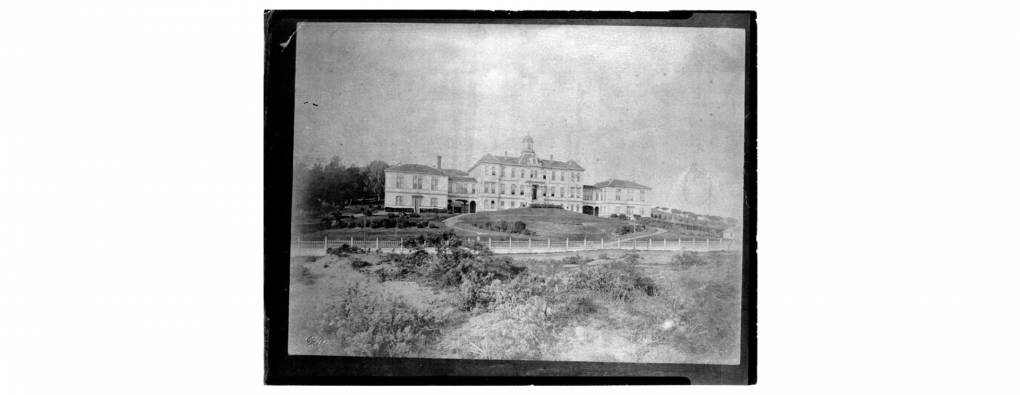
"caption": "The German Benevolent Society laid the cornerstone of its first hospital on Brannon Street between Third and Fourth in 1857. That hospital burned down in 1876 and the society rebuilt at 14th and Noe in 1904.",
"description": null,
"title": "Old-German-hospital-sm",
"credit": "San Francisco History Center, San Francisco Public Library",
"status": "inherit",
"altTag": "An old black and white photo of a large institutional looking building on a hill with open fields around it",
"isLoading": false,
"fetchFailed": false
},
"news_11918467": {
"type": "attachments",
"id": "news_11918467",
"meta": {
"index": "attachments_1716263798",
"site": "news",
"id": "11918467",
"found": true
},
"parent": 11918432,
"imgSizes": {
"thumbnail": {
"file": "https://ww2.kqed.org/app/uploads/sites/10/2022/06/spdc_p1-160x97.jpeg",
"width": 160,
"mimeType": "image/jpeg",
"height": 97
},
"post-thumbnail": {
"file": "https://ww2.kqed.org/app/uploads/sites/10/2022/06/spdc_p1-640x372.jpeg",
"width": 640,
"mimeType": "image/jpeg",
"height": 372
},
"kqedFullSize": {
"file": "https://ww2.kqed.org/app/uploads/sites/10/2022/06/spdc_p1.jpeg",
"width": 640,
"height": 386
}
},
"publishDate": 1656548768,
"modified": 1656607446,
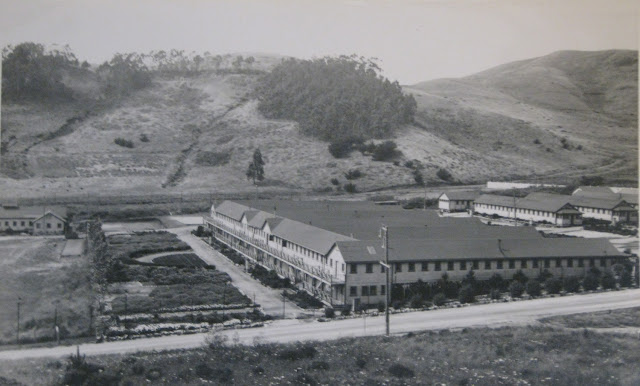
"caption": "A view of Sharp Park Detention Center.",
"description": null,
"title": "spdc_p1",
"credit": "Pacifica Historical Society",
"status": "inherit",
"altTag": "An aerial black-and-white picture of a seemingly block-wide building in a valley, surround by an unpaved road, with a long, low hill directly behind it across the entire frame.",
"isLoading": false,
"fetchFailed": false
},
"news_11917260": {
"type": "attachments",
"id": "news_11917260",
"meta": {
"index": "attachments_1716263798",
"site": "news",
"id": "11917260",
"found": true
},
"parent": 11917220,
"imgSizes": {
"twentyfourteen-full-width": {
"file": "https://ww2.kqed.org/app/uploads/sites/10/2022/06/RS55399_026_KQED_RebelGalleryTattoo415Day_04152022-qut-1038x576.jpg",
"width": 1038,
"mimeType": "image/jpeg",
"height": 576
},
"thumbnail": {
"file": "https://ww2.kqed.org/app/uploads/sites/10/2022/06/RS55399_026_KQED_RebelGalleryTattoo415Day_04152022-qut-160x107.jpg",
"width": 160,
"mimeType": "image/jpeg",
"height": 107
},
"post-thumbnail": {
"file": "https://ww2.kqed.org/app/uploads/sites/10/2022/06/RS55399_026_KQED_RebelGalleryTattoo415Day_04152022-qut-672x372.jpg",
"width": 672,
"mimeType": "image/jpeg",
"height": 372
},
"kqedFullSize": {
"file": "https://ww2.kqed.org/app/uploads/sites/10/2022/06/RS55399_026_KQED_RebelGalleryTattoo415Day_04152022-qut.jpg",
"width": 1920,
"height": 1280
},
"large": {
"file": "https://ww2.kqed.org/app/uploads/sites/10/2022/06/RS55399_026_KQED_RebelGalleryTattoo415Day_04152022-qut-1020x680.jpg",
"width": 1020,
"mimeType": "image/jpeg",
"height": 680
},
"1536x1536": {
"file": "https://ww2.kqed.org/app/uploads/sites/10/2022/06/RS55399_026_KQED_RebelGalleryTattoo415Day_04152022-qut-1536x1024.jpg",
"width": 1536,
"mimeType": "image/jpeg",
"height": 1024
},
"medium": {
"file": "https://ww2.kqed.org/app/uploads/sites/10/2022/06/RS55399_026_KQED_RebelGalleryTattoo415Day_04152022-qut-800x533.jpg",
"width": 800,
"mimeType": "image/jpeg",
"height": 533
}
},
"publishDate": 1655328748,
"modified": 1655328820,
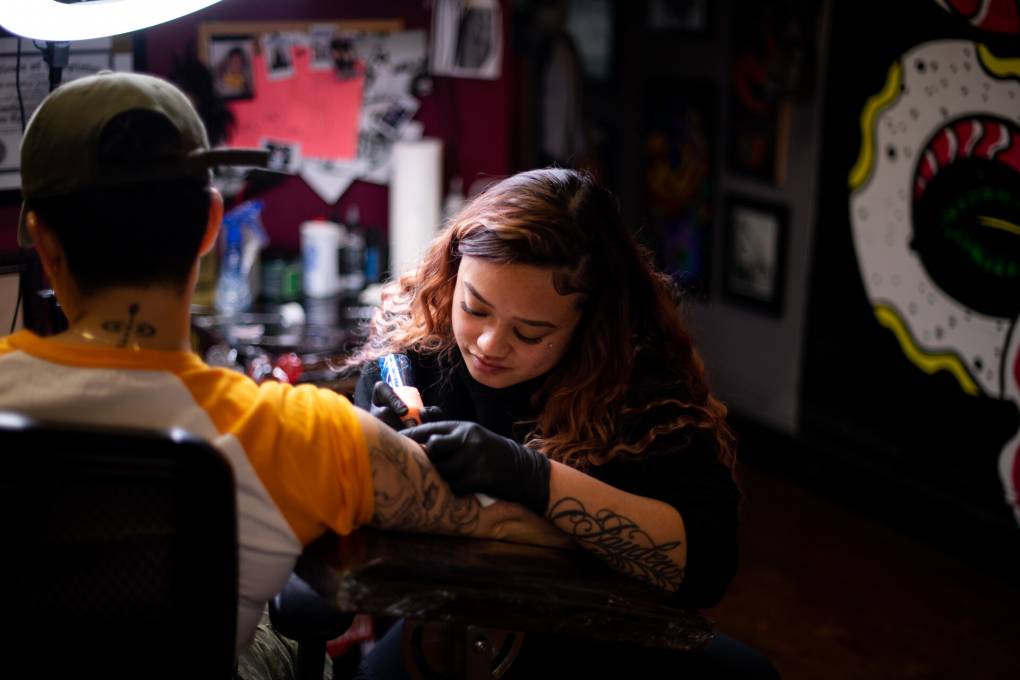
"caption": "Ally tattoos a 415 design on Rocio Perez at Rebel Gallery in San Francisco's Bayview neighborhood during a 415 Day event at the shop.",
"description": null,
"title": "RS55399_026_KQED_RebelGalleryTattoo415Day_04152022-qut",
"credit": "Beth LaBerge/KQED",
"status": "inherit",
"altTag": "A man in a white and yellow shirt sits with his back to the camera. A woman, wearing black latex gloves leans over his arm with a tattoo gun.",
"isLoading": false,
"fetchFailed": false
}
},
"audioPlayerReducer": {
"postId": "stream_live",
"isPaused": true,
"isPlaying": false,
"pfsActive": false,
"pledgeModalIsOpen": true,
"playerDrawerIsOpen": false,
"liveAudioPlayStartedAt": 0,
"liveAudioPlayContext": ""
},
"authorsReducer": {
"byline_news_11923441": {
"type": "authors",
"id": "byline_news_11923441",
"meta": {
"override": true
},
"slug": "byline_news_11923441",
"name": "Amy Mayer",
"isLoading": false
},
"ohubertallen": {
"type": "authors",
"id": "102",
"meta": {
"index": "authors_1716337520",
"id": "102",
"found": true
},
"name": "Olivia Allen-Price",
"firstName": "Olivia",
"lastName": "Allen-Price",
"slug": "ohubertallen",
"email": "oallenprice@kqed.org",
"display_author_email": false,
"staff_mastheads": [
"news"
],
"title": "Senior Editor",
"bio": "Olivia Allen-Price is senior editor and host of the award-winning Bay Curious podcast. Prior to joining KQED in 2013, Olivia worked at The Baltimore Sun and The Virginian-Pilot in Norfolk, Va. She holds degrees in journalism and political science from Elon University. Her work has earned awards from the Society of Professional Journalists, the Hearst Foundation and Hearken. She loves to talk about running and curly hair.\r\n\r\nFollow: \u003ca href=\"https://twitter.com/oallenprice\">@oallenprice\u003c/a>\r\nEmail: \u003ca href=\"mailto:oallenprice@kqed.org\">oallenprice@kqed.org\u003c/a>",
"avatar": "https://secure.gravatar.com/avatar/07f7803c1f6be56f3be58ef276dfa64dce898502e0554408ef4858451a8294f7?s=600&d=blank&r=g",
"twitter": "oallenprice",
"bluesky": null,
"facebook": null,
"instagram": null,
"linkedin": null,
"sites": [
{
"site": "",
"roles": [
"editor"
]
},
{
"site": "arts",
"roles": [
"subscriber"
]
},
{
"site": "news",
"roles": [
"administrator"
]
},
{
"site": "pop",
"roles": [
"administrator"
]
},
{
"site": "bayareabites",
"roles": [
"contributor"
]
},
{
"site": "stateofhealth",
"roles": [
"administrator"
]
},
{
"site": "science",
"roles": [
"editor"
]
}
],
"headData": {
"title": "Olivia Allen-Price | KQED",
"description": "Senior Editor",
"ogImgSrc": "https://secure.gravatar.com/avatar/07f7803c1f6be56f3be58ef276dfa64dce898502e0554408ef4858451a8294f7?s=600&d=blank&r=g",
"twImgSrc": "https://secure.gravatar.com/avatar/07f7803c1f6be56f3be58ef276dfa64dce898502e0554408ef4858451a8294f7?s=600&d=blank&r=g"
},
"isLoading": false,
"link": "/author/ohubertallen"
},
"gmarzorati": {
"type": "authors",
"id": "227",
"meta": {
"index": "authors_1716337520",
"id": "227",
"found": true
},
"name": "Guy Marzorati",
"firstName": "Guy",
"lastName": "Marzorati",
"slug": "gmarzorati",
"email": "gmarzorati@KQED.org",
"display_author_email": true,
"staff_mastheads": [
"news"
],
"title": "Correspondent",
"bio": "Guy Marzorati is a correspondent on KQED's California Politics and Government Desk, based in San Jose. A graduate of Santa Clara University, Guy joined KQED in 2013. He reports on state and local politics and produces KQED's digital voter guide.",
"avatar": "https://secure.gravatar.com/avatar/e7038b8dbfd55b104369b76b1cd0b9de?s=600&d=blank&r=g",
"twitter": "guymarzorati",
"facebook": null,
"instagram": null,
"linkedin": null,
"sites": [
{
"site": "",
"roles": [
"editor"
]
},
{
"site": "news",
"roles": [
"editor"
]
},
{
"site": "science",
"roles": [
"editor"
]
},
{
"site": "forum",
"roles": [
"editor"
]
},
{
"site": "elections",
"roles": [
"editor"
]
},
{
"site": "liveblog",
"roles": [
"editor"
]
}
],
"headData": {
"title": "Guy Marzorati | KQED",
"description": "Correspondent",
"ogImgSrc": "https://secure.gravatar.com/avatar/e7038b8dbfd55b104369b76b1cd0b9de?s=600&d=blank&r=g",
"twImgSrc": "https://secure.gravatar.com/avatar/e7038b8dbfd55b104369b76b1cd0b9de?s=600&d=blank&r=g"
},
"isLoading": false,
"link": "/author/gmarzorati"
},
"katrinaschwartz": {
"type": "authors",
"id": "234",
"meta": {
"index": "authors_1716337520",
"id": "234",
"found": true
},
"name": "Katrina Schwartz",
"firstName": "Katrina",
"lastName": "Schwartz",
"slug": "katrinaschwartz",
"email": "kschwartz@kqed.org",
"display_author_email": false,
"staff_mastheads": [
"news"
],
"title": "Producer",
"bio": "Katrina Schwartz is a journalist based in San Francisco. She's worked at KPCC public radio in LA and has reported on air and online for KQED since 2010. She covered how teaching and learning is changing for MindShift between 2012 and 2020. She is the co-host of the MindShift podcast and now produces KQED's Bay Curious podcast.",
"avatar": "https://secure.gravatar.com/avatar/edb4ee79070447a018538c9aae6eeecf28786515b8a0c30e43b6b7dce5aa44c8?s=600&d=blank&r=g",
"twitter": "kschwart",
"bluesky": null,
"facebook": null,
"instagram": null,
"linkedin": null,
"sites": [
{
"site": "",
"roles": [
"editor"
]
},
{
"site": "news",
"roles": [
"editor"
]
},
{
"site": "mindshift",
"roles": [
"administrator"
]
},
{
"site": "stateofhealth",
"roles": [
"author"
]
},
{
"site": "science",
"roles": [
"editor"
]
}
],
"headData": {
"title": "Katrina Schwartz | KQED",
"description": "Producer",
"ogImgSrc": "https://secure.gravatar.com/avatar/edb4ee79070447a018538c9aae6eeecf28786515b8a0c30e43b6b7dce5aa44c8?s=600&d=blank&r=g",
"twImgSrc": "https://secure.gravatar.com/avatar/edb4ee79070447a018538c9aae6eeecf28786515b8a0c30e43b6b7dce5aa44c8?s=600&d=blank&r=g"
},
"isLoading": false,
"link": "/author/katrinaschwartz"
},
"rachael-myrow": {
"type": "authors",
"id": "251",
"meta": {
"index": "authors_1716337520",
"id": "251",
"found": true
},
"name": "Rachael Myrow",
"firstName": "Rachael",
"lastName": "Myrow",
"slug": "rachael-myrow",
"email": "rmyrow@kqed.org",
"display_author_email": true,
"staff_mastheads": [
"news"
],
"title": "Senior Editor of KQED's Silicon Valley News Desk",
"bio": "• I write and edit stories about how Silicon Valley power and policies shape everyday life in California. I’m also passionate about making Bay Area history and culture more accessible to a broad public. • I’ve been a journalist for most of my life, starting in high school with The Franklin Press in Los Angeles, where I grew up. While earning my first degree in English at UC Berkeley, I got my start in public radio at KALX-FM. After completing a second degree in journalism at Cal, I landed my first professional job at Marketplace, then moved on to KPCC (now LAist), and then KQED, where I hosted The California Report for more than seven years. • My reporting has appeared on NPR, The World, WBUR’s \u003ci>Here & Now\u003c/i>, and the BBC. I also guest host for KQED’s \u003ci>Forum\u003c/i>, as well as the Commonwealth Club in San Francisco. • I speak periodically on media, democracy and technology issues, and do voiceover work for documentaries and educational video projects. • Outside of the studio, you'll find me hiking Bay Area trails and whipping up Insta-ready meals in my kitchen. • I do not accept gifts, money, or favors from anyone connected to my reporting, I don't pay people for information, and I do not support or donate to political causes. • I strive to treat the people I report on with fairness, honesty, and respect. I also recognize there are often multiple sides to a story and work to verify information through multiple sources and documentation. If I get something wrong, I correct it.",
"avatar": "https://secure.gravatar.com/avatar/3ed8a3c5f26025e4a805ba634cda8cd764906b97438a6d9ce216b044e340da4e?s=600&d=blank&r=g",
"twitter": "rachaelmyrow",
"bluesky": null,
"facebook": null,
"instagram": null,
"linkedin": "https://www.linkedin.com/in/rachaelmyrow/",
"sites": [
{
"site": "arts",
"roles": [
"administrator"
]
},
{
"site": "news",
"roles": [
"edit_others_posts",
"editor"
]
},
{
"site": "futureofyou",
"roles": [
"editor"
]
},
{
"site": "bayareabites",
"roles": [
"editor"
]
},
{
"site": "stateofhealth",
"roles": [
"editor"
]
},
{
"site": "science",
"roles": [
"editor"
]
},
{
"site": "food",
"roles": [
"editor"
]
},
{
"site": "forum",
"roles": [
"editor"
]
},
{
"site": "liveblog",
"roles": [
"author"
]
}
],
"headData": {
"title": "Rachael Myrow | KQED",
"description": "Senior Editor of KQED's Silicon Valley News Desk",
"ogImgSrc": "https://secure.gravatar.com/avatar/3ed8a3c5f26025e4a805ba634cda8cd764906b97438a6d9ce216b044e340da4e?s=600&d=blank&r=g",
"twImgSrc": "https://secure.gravatar.com/avatar/3ed8a3c5f26025e4a805ba634cda8cd764906b97438a6d9ce216b044e340da4e?s=600&d=blank&r=g"
},
"isLoading": false,
"link": "/author/rachael-myrow"
},
"afont": {
"type": "authors",
"id": "8637",
"meta": {
"index": "authors_1716337520",
"id": "8637",
"found": true
},
"name": "Amanda Font",
"firstName": "Amanda",
"lastName": "Font",
"slug": "afont",
"email": "afont@kqed.org",
"display_author_email": false,
"staff_mastheads": [],
"title": "KQED Contributor",
"bio": "Amanda Font is a producer on \u003cem>The Latest\u003c/em> podcast, and the host and co-producer of the series \u003cem>Audible Cosmos\u003c/em>. She has previously worked as a producer and reporter on the \u003cem>Bay Curious\u003c/em> podcast, and director of \u003cem>The California Report Magazine\u003c/em>. She grew up in the deserts of Southern California and moved north for the trees. Amanda earned a B.A. from the BECA program at San Francisco State, where she worked in the university's radio station. Amanda Font is represented by SAG-AFTRA.",
"avatar": "https://secure.gravatar.com/avatar/d9e81cf0117d5849b9cfb7ab4b1422f1?s=600&d=blank&r=g",
"twitter": null,
"facebook": null,
"instagram": null,
"linkedin": null,
"sites": [
{
"site": "news",
"roles": [
"add_users",
"create_users"
]
},
{
"site": "science",
"roles": []
},
{
"site": "forum",
"roles": [
"administrator"
]
},
{
"site": "perspectives",
"roles": [
"administrator"
]
},
{
"site": "radio",
"roles": [
"administrator"
]
}
],
"headData": {
"title": "Amanda Font | KQED",
"description": "KQED Contributor",
"ogImgSrc": "https://secure.gravatar.com/avatar/d9e81cf0117d5849b9cfb7ab4b1422f1?s=600&d=blank&r=g",
"twImgSrc": "https://secure.gravatar.com/avatar/d9e81cf0117d5849b9cfb7ab4b1422f1?s=600&d=blank&r=g"
},
"isLoading": false,
"link": "/author/afont"
},
"csaldana": {
"type": "authors",
"id": "11301",
"meta": {
"index": "authors_1716337520",
"id": "11301",
"found": true
},
"name": "Cesar Saldaña",
"firstName": "Cesar",
"lastName": "Saldaña",
"slug": "csaldana",
"email": "csaldana@kqed.org",
"display_author_email": false,
"staff_mastheads": [
"news"
],
"title": "KQED Contributor",
"bio": null,
"avatar": "https://secure.gravatar.com/avatar/04e89425007fe7102f750c79e76274bc?s=600&d=mm&r=g",
"twitter": null,
"facebook": null,
"instagram": null,
"linkedin": null,
"sites": [
{
"site": "news",
"roles": []
},
{
"site": "perspectives",
"roles": []
}
],
"headData": {
"title": "Cesar Saldaña | KQED",
"description": "KQED Contributor",
"ogImgSrc": "https://secure.gravatar.com/avatar/04e89425007fe7102f750c79e76274bc?s=600&d=mm&r=g",
"twImgSrc": "https://secure.gravatar.com/avatar/04e89425007fe7102f750c79e76274bc?s=600&d=mm&r=g"
},
"isLoading": false,
"link": "/author/csaldana"
},
"abandlamudi": {
"type": "authors",
"id": "11672",
"meta": {
"index": "authors_1716337520",
"id": "11672",
"found": true
},
"name": "Adhiti Bandlamudi",
"firstName": "Adhiti",
"lastName": "Bandlamudi",
"slug": "abandlamudi",
"email": "abandlamudi@kqed.org",
"display_author_email": false,
"staff_mastheads": [
"news"
],
"title": "KQED Housing Reporter",
"bio": "Adhiti Bandlamudi reports for KQED's Housing desk. She focuses on how housing gets built across the Bay Area. Before joining KQED in 2020, she reported for WUNC in Durham, North Carolina, WABE in Atlanta, Georgia and Capital Public Radio in Sacramento. In 2017, she was awarded a Kroc Fellowship at NPR where she reported on everything from sprinkles to the Golden State Killer's arrest. When she's not reporting, she's baking new recipes in her kitchen or watching movies with friends and family. She's originally from Georgia and has strong opinions about Great British Bake Off.",
"avatar": "https://secure.gravatar.com/avatar/868129c8b257bb99a3500e2c86a65400?s=600&d=mm&r=g",
"twitter": "oddity_adhiti",
"facebook": null,
"instagram": null,
"linkedin": null,
"sites": [
{
"site": "arts",
"roles": [
"author"
]
},
{
"site": "news",
"roles": [
"editor"
]
},
{
"site": "liveblog",
"roles": [
"author"
]
}
],
"headData": {
"title": "Adhiti Bandlamudi | KQED",
"description": "KQED Housing Reporter",
"ogImgSrc": "https://secure.gravatar.com/avatar/868129c8b257bb99a3500e2c86a65400?s=600&d=mm&r=g",
"twImgSrc": "https://secure.gravatar.com/avatar/868129c8b257bb99a3500e2c86a65400?s=600&d=mm&r=g"
},
"isLoading": false,
"link": "/author/abandlamudi"
},
"sminobucheli": {
"type": "authors",
"id": "11764",
"meta": {
"index": "authors_1716337520",
"id": "11764",
"found": true
},
"name": "Sebastian Miño-Bucheli",
"firstName": "Sebastian",
"lastName": "Miño-Bucheli",
"slug": "sminobucheli",
"email": "sminobucheli@kqed.org",
"display_author_email": false,
"staff_mastheads": [],
"title": "KQED Contributor",
"bio": "Sebastian Miño-Bucheli is a bilingual multimedia reporter and contributor to KQED Digital News. His reporting has been featured for Bay Curious, the California Report Magazine and KQED Arts. ",
"avatar": "https://secure.gravatar.com/avatar/4d433e33876cb631fbbe1ab7b9ddf7a1616f5e270c709b89ee147c0489875612?s=600&d=blank&r=g",
"twitter": "@BucheliMino",
"bluesky": null,
"facebook": null,
"instagram": null,
"linkedin": null,
"sites": [
{
"site": "arts",
"roles": [
"subscriber"
]
},
{
"site": "news",
"roles": [
"subscriber"
]
}
],
"headData": {
"title": "Sebastian Miño-Bucheli | KQED",
"description": "KQED Contributor",
"ogImgSrc": "https://secure.gravatar.com/avatar/4d433e33876cb631fbbe1ab7b9ddf7a1616f5e270c709b89ee147c0489875612?s=600&d=blank&r=g",
"twImgSrc": "https://secure.gravatar.com/avatar/4d433e33876cb631fbbe1ab7b9ddf7a1616f5e270c709b89ee147c0489875612?s=600&d=blank&r=g"
},
"isLoading": false,
"link": "/author/sminobucheli"
}
},
"pagesReducer": {
"news_program_bay-curious": {
"type": "terms",
"id": "news_33523",
"meta": {
"index": "terms_1716263798",
"site": "news",
"id": "33523",
"score": 15.085701
},
"featImg": null,
"name": "Bay Curious",
"description": null,
"taxonomy": "program",
"headData": {
"twImgId": null,
"twTitle": null,
"ogTitle": null,
"ogImgId": null,
"twDescription": null,
"description": null,
"title": "Bay Curious Archives | KQED News",
"ogDescription": null
},
"ttid": 33540,
"slug": "bay-curious",
"isLoading": false,
"title": "Bay Curious",
"pageMeta": {
"site": "news",
"WpPageTemplate": "page-topic-editorial",
"currentPage": 18
},
"blocks": [
{
"blockName": "kqed/post-list",
"attrs": {
"layout": "cardArticle2",
"query": "posts/news?program=bay-curious",
"seeMore": false,
"paginated": true,
"page": 18
}
},
{
"blockName": "kqed/ad"
}
]
}
},
"pfsSessionReducer": {},
"postsReducer": {
"stream_live": {
"type": "live",
"id": "stream_live",
"audioUrl": "https://streams.kqed.org/kqedradio",
"title": "Live Stream",
"excerpt": "Live Stream information currently unavailable.",
"link": "/radio",
"featImg": "",
"label": {
"name": "KQED Live",
"link": "/"
}
},
"stream_kqedNewscast": {
"type": "posts",
"id": "stream_kqedNewscast",
"audioUrl": "https://www.kqed.org/.stream/anon/radio/RDnews/newscast.mp3?_=1",
"title": "KQED Newscast",
"featImg": "",
"label": {
"name": "88.5 FM",
"link": "/"
}
},
"news_11926839": {
"type": "posts",
"id": "news_11926839",
"meta": {
"index": "posts_1716263798",
"site": "news",
"id": "11926839",
"score": null,
"sort": [
1664532119000
]
},
"guestAuthors": [],
"slug": "propositions-26-and-27-offer-different-ways-california-could-allow-sports-betting-transcript",
"title": "Transcript: Props. 26 and 27 Offer Different Ways California Could Allow Sports Betting",
"publishDate": 1664532119,
"format": "standard",
"headTitle": "Transcript: Props. 26 and 27 Offer Different Ways California Could Allow Sports Betting | KQED",
"labelTerm": {},
"content": "\u003cp>\u003cem>This is a transcript of the Prop Fest episode explaining Propositions 26 and 27 on the 2022 California ballot. Check out \u003ca href=\"https://www.kqed.org/voterguide/\">KQED’s Voter Guide\u003c/a> for more information on local and state races.\u003c/em>\u003c/p>\n\u003cp>\u003cstrong>Olivia Allen-Price\u003c/strong> [00:00:01] I’m Olivia Allen-Price. You’re listening to Prop Fest, a collaborative series from Bay Curious and The Bay. Today, we’re talking Propositions 26 and 27, which affect sports betting at tribal casinos and online. They’re among the most expensive ballot measures in California history. Even more has been spent on Prop 27 than that uber expensive Uber prop from back in 2020. Big money shows up in California elections when there is big money on the line. Here’s how 26 and 27 will read in part on your ballot.\u003c/p>\n\u003cp>[baycuriouspodcastinfo]\u003c/p>\n\u003cp>\u003cstrong>Voice reading ballot\u003c/strong> [00:00:38] Prop 26 allows federally recognized Native American tribes to operate roulette, dice games and sports wagering on tribal lands.\u003c/p>\n\u003cp>\u003cstrong>Different voice reading ballot\u003c/strong> [00:00:46] Proposition 27 proposes a constitutional amendment and statute to authorize a gaming tribe to operate online sports betting for individuals 21 years of age or older in the state, but outside of Indian lands.\u003c/p>\n\u003cp>[ad fullwidth]\u003c/p>\n\u003cp>\u003cstrong>Olivia Allen-Price\u003c/strong> [00:00:59] It’s a two for one Prop Fest episode all about changing the state’s gambling laws. We’ll begin just ahead on Prop Fest. I’m Olivia Allen-Price.\u003c/p>\n\u003cp>\u003cstrong>Olivia Allen-Price\u003c/strong> [00:01:12] So Propositions 26 and 27 will affect the way sports betting and some other forms of gambling are handled in the state of California. Here to help us make sense of it all is KQED political reporter Guy Marzorati. Hey, Guy.\u003c/p>\n\u003cp>\u003cstrong>Guy Marzorati\u003c/strong> [00:01:25] Hey, Olivia.\u003c/p>\n\u003cp>\u003cstrong>Olivia Allen-Price\u003c/strong> [00:01:26] So kick us off with where things are with gambling in California today. What’s allowed and what’s not.\u003c/p>\n\u003cp>\u003cstrong>Guy Marzorati\u003c/strong> [00:01:31] So right now, sports betting is illegal in California. That doesn’t mean it doesn’t happen. There’s a huge black market of sports gambling. But right now, you can’t use an app legally to bet on sports. You can’t go to a casino and place a bet on a game. You can do other things at tribal casinos in California, like playing a slot machine or playing blackjack.\u003c/p>\n\u003cp>\u003cstrong>Olivia Allen-Price\u003c/strong> [00:01:52] Now, you mentioned tribal casinos, and I think to give this conversation a good foundation, we should learn why tribes and gambling are linked in California. So, could you walk us through that history a little bit?\u003c/p>\n\u003cp>\u003cstrong>Guy Marzorati\u003c/strong> [00:02:04] Tribal governments, through the long kind of genocidal history of federal policy, state policy, in a lot of cases were pushed to parts of the state where there weren’t tons of economic opportunities like large scale agricultural, for example. And so starting in the eighties, a lot of tribal governments started pushing for more gaming opportunities, and they were aided by two big events. One was the Supreme Court ruling in 1987 that said California cannot block tribes from offering gaming. And a law that was passed the next year in Congress that kind of set the ground rules nationally. So that set up this decade of the nineties where California tribes were supposed to come to compact agreements with the state government. Those kind of set the rules of the road for gaming, how much revenue get shared with the state, how much get shared with tribes that don’t run casinos because state tax rules don’t apply to these tribes, they’re sovereign. But during the nineties, the tribes, former Governor Pete Wilson, they couldn’t agree on compacts. So, tribes basically continued to offer games kind of at the legal margins. And then ultimately the breakthrough came when tribes went to the voters passing perhaps in 1998 and 2000 to basically secure their position as the state’s top gaming operator. For reference, today there are around 110 federally recognized tribes in California. Sixty-four of them operate casinos.\u003c/p>\n\u003cp>\u003cstrong>Olivia Allen-Price\u003c/strong> [00:03:25] We’re talking about these props together because on the surface, they seem to essentially cover two different ways that people can bet on sports. One of them in a casino and the other online. But let’s talk about what’s distinct in each one. Let’s start with Prop 26. What would that do?\u003c/p>\n\u003cp>\u003cstrong>Guy Marzorati\u003c/strong> [00:03:41] So Prop 26 really does three key things. The first is legalize sports betting in California, but only in tribal casinos and the four horse horseracing tracks around the state. The second thing is allowing roulette and craps at tribal casinos. These are games that if you went to Las Vegas, you’d be able to play there. But you can’t right now in California. Tribes have wanted to do that for a long time. They would get those games legalized if Prop 26 passes. And then the third thing is probably the most complex. It would let an individual file a lawsuit to enforce gambling laws in California instead of leaving that just to the attorney general.\u003c/p>\n\u003cp>\u003cstrong>Olivia Allen-Price\u003c/strong> [00:04:16] We’re going to dig in a lot more on that in just a minute. But first, let’s get to know the broad strokes of Prop 27 and how is it different from Prop 26.\u003c/p>\n\u003cp>\u003cstrong>Guy Marzorati\u003c/strong> [00:04:24] So the main difference between Prop 27 and Prop 26 is Prop 27 would legalize online sports betting. So, you wouldn’t have to go to any physical location to, say, place a bet on the Warriors beating the Lakers. You could do that on your phone. You could do that on your computer, on an app and place a bet that way.\u003c/p>\n\u003cp>\u003cstrong>Olivia Allen-Price\u003c/strong> [00:04:41] So when I first read these props, I figured it would kind of break down into two groups like people who want sports betting would vote, you know. Yes, on both because they want sports betting, however they can get it. And people who don’t want sports betting would vote another way. And for some voters, it might be that simple. But this one gets a lot more complicated when you take a closer look at where the money goes. That’s kind of the crux of these two props, Guy. Can you walk us through that?\u003c/p>\n\u003cp>\u003cstrong>Guy Marzorati\u003c/strong> [00:05:06] Yeah. So, it kind of breaks down beyond what you say, what you might see it at first glance, which is how do you want to legalize sports gambling? Do you want to legalize sports gambling? And it gets into a lot of the issues at play between the groups backing these initiatives. So, I’ll start out with Proposition 26. Who would really benefit from this are California’s Native American Indian tribes. They put Proposition 26 on the ballot, and they argue that by getting revenue from sports betting, by getting revenue from craps roulette, this would continue to provide an economic uplift to tribes. Jacob Mejia is vice president of public affairs for the Pechanga Tribe in Southern California. He kind of gave an overview of the benefits currently brought to tribes in the state by virtue of having those casinos.\u003c/p>\n\u003cp>[baycuriousbug]\u003c/p>\n\u003cp>\u003cstrong>Jacob Mejia\u003c/strong> [00:05:47] 150,000 jobs are created by tribal gaming, tens of billions of dollars in overall economic activity, hundreds of millions of dollars in terms of taxes that are generated, not to mention revenue sharing or sharing agreements between tribes and local governments.\u003c/p>\n\u003cp>\u003cstrong>Guy Marzorati\u003c/strong> [00:06:01] So if Proposition 26 were to pass, it would require each tribe to go and renegotiate their compact with the state to incorporate sports betting. The state has these agreements with around 75 tribal governments that lay out the rules for gaming as it currently exists in California. Those would have to be amended to figure out, you know, how much money is going to be shared with the state, with local governments, kind of lay out the rules of the road for sports gambling at tribal casinos.\u003c/p>\n\u003cp>\u003cstrong>Olivia Allen-Price\u003c/strong> [00:06:27] Got it. So, for Prop 26, the lion’s share of money goes to California’s tribes. Who benefits financially from Proposition 27?\u003c/p>\n\u003cp>\u003cstrong>Guy Marzorati\u003c/strong> [00:06:36] So Proposition 27 was put on the ballot by gambling companies that operate nationally. You might have heard of them FanDuel, DraftKings, MGM, they’re putting this measure forward to legalize this online marketplace in California, and that could bring in billions and billions of dollars for these companies. This is a huge economic opportunity for them, but it’s also an economic opportunity for some tribes because under Proposition 27, every gambling company that launches an app in California needs to partner with the tribe here. So, you could see some tribes really, really benefiting if Proposition 27 passes.\u003c/p>\n\u003cp>\u003cstrong>Olivia Allen-Price\u003c/strong> [00:07:10] We’re hearing a lot of ads that mention homelessness with Prop 27. What’s the connection there?\u003c/p>\n\u003cp>\u003cstrong>Guy Marzorati\u003c/strong> [00:07:15] If Proposition 27 passes, these betting platforms would be taxed. Ten percent of their gambling revenue would go to the state, with most of that earmarked for a problem that Californians care a lot about, which is homelessness. That 10% tax is kind of in line with a lot of the other states that have already legalized sports betting, like Arizona and Colorado, though we have seen states like Nevada have gone lower with their tax rate. And New York set their tax at a whopping 51% of gross spending revenue. So, under Proposition 27, the tax would be at 10%. Eighty-five percent of that tax money would go to local governments to fund housing, homeless services, mental health services. And then 15% of the money would go to tribes that are not participating in this brand new online gambling market. And it’s the homelessness funding in Prop 27 that’s really drawn the support of mayors like Libby Schaaf in Oakland, Darrell Steinberg in Sacramento. They’ve gotten behind the Yes on 27 campaign, along with some homeless advocates, though it’s worth noting other homeless service providers have kind of stayed away from this. They’ve said they don’t want to wade into this debate about sports betting and take a yes or no position on Prop 27. But when we’re comparing these two props, Prop 26, Prop 27, the key thing with 27 is that it would bring in a lot more money because online betting is just a lot more popular than folks driving to a casino, placing a bet there. The Legislative Analyst’s Office says Prop 27 would bring in hundreds of millions of dollars for the state a year. And as Prop 27 spokesman Nathan Klick says finally create a dedicated stream of funding to tackle homelessness.\u003c/p>\n\u003cp>\u003cstrong>Nathan Click\u003c/strong> [00:08:47] Right now, the state is using one time money for that. This the homelessness advocates who are supporting our measure will attest, will help create permanent solutions to homelessness, help build more housing, help finance more housing, help create mental health services that help get folks off the streets and into housing.\u003c/p>\n\u003cp>\u003cstrong>Olivia Allen-Price\u003c/strong> [00:09:11] That was a lot. So here’s a quick recap. Prop 26 is backed by California tribal governments. The money made from expanded gambling would benefit tribes that operate casinos. They pay into a fund that gives money to non-gaming tribes as well. Some money will go to the state and local governments, but the details of that will get worked out in compact agreements that haven’t been made yet. Prop 27 is backed by national gambling companies. They pay a 10% tax on everything they make. 85% of that tax is earmarked for homeless services, and 15% will go into a bucket of money that is shared among California’s tribes that don’t participate in sports betting. Does that make sense? I really hope so. Okay. Back to the conversation, Guy. The campaign ads that I’m seeing kind of makes it seem like it’s smaller tribes being pitted against larger tribes in this debate.\u003c/p>\n\u003cp>\u003cstrong>Guy Marzorati\u003c/strong> [00:10:08] Yeah. So that’s something that you could easily get confused about seeing all of these ads on TV messaging around these two props. The vast majority of California tribes who have weighed in are on the side of Prop 26, and the props do different things as far as promising tribes money. Obviously, Prop 26 would focus sports gambling in tribal casinos. So through that, those casinos would get money for tribes and also more money would go through to this trust fund. That money gets allocated for tribes that don’t have big gaming operations. There are a few tribes that are backing Prop 27, most notably the Middletown Rancheria Pomo Indians of California. Their tribal chairman is actually appeared in a lot of the ads for Prop 27. But if 27 were to pass, every company that comes into California to participate in the sports betting market would have to partner with a tribe. So, you might see, you know, three, four or five different tribes participate out of the roughly 75 right now that have gambling operations in compacts with the state. Everyone else would have to draw out of that pool of money set aside for tribes that don’t have a sports betting app.\u003c/p>\n\u003cp>\u003cstrong>Olivia Allen-Price\u003c/strong> [00:11:12] There’s also one smaller but important group that has a stake in this — local cardrooms. That’s places like Artichoke Joe’s in San Bruno or Casino M8trix in San Jose. These are businesses where you can play games like poker. There are 84 of these cardrooms around the state. And they’re worried about Proposition 26. Guy, can you explain why?\u003c/p>\n\u003cp>[emailsignup newslettername=\"baycurious\" align=\"right\"]\u003c/p>\n\u003cp>\u003cstrong>Guy Marzorati\u003c/strong> [00:11:34] So this is where things get a little complicated. The opposition of cardrooms to Prop 26 is based on a provision in the measure that would let individuals bring civil lawsuits to enforce state gaming law. So, the backdrop to this is a longstanding disagreement between tribes and cardrooms over a state rule that says only tribal casinos can offer games in which the house serves as the bank, meaning it has a stake against the players like blackjack. Tribes say cardrooms use different tactics to get around this and offer blackjack. They filed lawsuits, but in some cases, the tribes have lacked standing to actually bring the suit. So, if Prop 26 passes, any individual could hypothetically take these cardrooms to court. Where this gets beyond just a struggle between different gambling operators is that some cities in California really rely heavily on tax revenue from cardrooms. The most well-known example is in Hawaiian Gardens in L.A. County, that small city gets like 70% of its tax revenue from the local cardroom. But we see that even in San Jose, it gets $15 million a year from local cardroom revenue. So that’s why those cities and then some of the municipal employee unions in the cities have come out against Prop 26. They’re afraid of the long-term economic impact if cardrooms start getting sued left and right.\u003c/p>\n\u003cp>\u003cstrong>Olivia Allen-Price\u003c/strong> [00:12:50] We’re not the first state in the country to be considering sports betting. All of our neighboring states have allowed it sort of writ large. Where are the rest of the states at on it?\u003c/p>\n\u003cp>\u003cstrong>Guy Marzorati\u003c/strong> [00:13:00] Yeah, there’s been an explosion of states doing this. Ever since 2018, the Supreme Court ended the federal ban on sports betting. We’ve seen 33 states now offer some form of legalized sports gambling, and we’ve seen that in many cases take the form of online mobile betting. And honestly, as a sports fan, you can’t watch a game these days without seeing either an ad for these gambling companies, even like features, segments within sports shows often integrate gambling and sports betting. So, it’s really just in a matter of a few years, totally reshaped in some ways the industry.\u003c/p>\n\u003cp>\u003cstrong>Olivia Allen-Price\u003c/strong> [00:13:36] And I think that’s the perfect segue way to talk about the money flying around on both of these props, because there’s a lot of money at stake here. We’re having this conversation in mid-September. And so even though a ton of spending has already happened, we know more is coming down the pike. Who is spending to help these props pass?\u003c/p>\n\u003cp>\u003cstrong>Guy Marzorati\u003c/strong> [00:13:54] On the Proposition 26 side, we have the tribal governments who are really bankrolling the campaign. So far, over 120 million has been contributed in support of Prop 26. 43 million raised against it. Really, the bigger money at this point is coming with Proposition 27. There you have these gambling companies pitching in roughly $170 million so far in support. And many of the same tribal governments that are pushing Prop 26, they’re opposing Prop 27. They’ve shelled out over $90 million so far against that measure. So just by itself, Prop 27 is the most expensive ballot measure campaign in California history and in American history. And if you put both of these campaigns together, we’re talking over $420 million raised. It’s like nothing the state has ever seen before.\u003c/p>\n\u003cp>\u003cstrong>Olivia Allen-Price\u003c/strong> [00:14:41] Now, one question I know you’ve gotten and I had myself had is, you know, are voters going to vote typically, yes for both of these or no for both of these, will people be split? How are we expecting this to shake out with two props that in some ways overlap?\u003c/p>\n\u003cp>\u003cstrong>Guy Marzorati\u003c/strong> [00:14:56] Yeah, that’s a great question and something I’m really curious to see how it plays out. Do people take different approaches on the two, reject them altogether? And then there’s the legal question of what happens if voters approve both of these propositions. In all likelihood, that would end up in the courts. And figuring out which initiative can actually take place, can they both go into effect? It may end up which one gets more votes takes precedent. That all could be sorted out in the weeks after Election Day.\u003c/p>\n\u003cp>\u003cstrong>Olivia Allen-Price\u003c/strong> [00:15:23] Wow. Well, this one is gnarly, guy. Thank you for taking the time to chat with me today.\u003c/p>\n\u003cp>\u003cstrong>Guy Marzorati\u003c/strong> [00:15:29] My pleasure.\u003c/p>\n\u003cp>\u003cstrong>Olivia Allen-Price\u003c/strong> [00:15:34] All right, let me see if I can put a cap on this one. A vote yes on Prop 26 says you think that sports betting, roulette and dice games should be legal at American Indian gaming casinos in California; sports betting should be allowed at racetracks; and individuals should be able to bring lawsuits against gaming operators if they’re breaking state law. Money made from this expanded gambling would mostly go to tribal governments.\u003c/p>\n\u003cp>A vote yes on Prop 27 means you support legalizing online and mobile sports betting for people 21 and older. Money made from the passage of this prop would largely go to gambling companies and the tribes they partner with. The tax money they pay would be earmarked for homelessness services and tribes that don’t have an online app.\u003c/p>\n\u003cp>A vote no on both props means you think things should stay the way they are now. And if you mix it up a vote yes on one and no on the other. You’d like to see sports betting allowed in some ways, but not all the ways. Or maybe you want to see funding go to one group and not the other. I really hope we helped all that make sense. It has been a doozy.\u003c/p>\n\u003cp>If you’re a new listener, just tuning in for our Prop Fest series, be sure to subscribe to the Bay Curious podcast. Every Thursday, we drop episodes that explore listener questions about the San Francisco Bay Area. It’s a lot of fun and we always learn so much. So, if you’re digging Prop Fest, I think you’ll enjoy our other work too.\u003c/p>\n\u003cp>Prop Fest is produced by Katrina Schwartz, Christopher Beale, Brendan Willard, Amanda Font, Darren Tu and me Olivia Allen-Price in partnership with the team behind The Bay – Alan Montecillo, Ericka Cruz Guevarra and Maria Equinca. You can find audio and transcripts for the series at \u003ca href=\"https://www.kqed.org/propfest\">Baycurious.org/PropFest\u003c/a>. Our show is made in San Francisco at member supported KQED. Set your alarms because we’ll be back on Monday with an episode on Prop 28, the education funding Prop. I’ll see you then.\u003c/p>\n\u003cp>[ad floatright]\u003c/p>\n\u003cp>[baycuriousquestion]\u003c/p>\n\n",
"blocks": [],
"excerpt": "Prop Fest 2022 breaks down all the statewide propositions on your ballot. Propositions 26 and 27 will affect the way sports betting, and some other forms of gambling, are handled in the state of California.",
"status": "publish",
"parent": 0,
"modified": 1728428696,
"stats": {
"hasAudio": false,
"hasVideo": false,
"hasChartOrMap": false,
"iframeSrcs": [],
"hasGoogleForm": false,
"hasGallery": false,
"hasHearkenModule": true,
"hasPolis": false,
"paragraphCount": 47,
"wordCount": 3620
},
"headData": {
"title": "Transcript: Props. 26 and 27 Offer Different Ways California Could Allow Sports Betting | KQED",
"description": "Prop Fest 2022 breaks down all the statewide propositions on your ballot. Propositions 26 and 27 will affect the way sports betting, and some other forms of gambling, are handled in the state of California.",
"ogTitle": "",
"ogDescription": "",
"ogImgId": "",
"twTitle": "",
"twDescription": "",
"twImgId": "",
"schema": {
"@context": "https://schema.org",
"@type": "NewsArticle",
"headline": "Transcript: Props. 26 and 27 Offer Different Ways California Could Allow Sports Betting",
"datePublished": "2022-09-30T03:01:59-07:00",
"dateModified": "2024-10-08T16:04:56-07:00",
"image": "https://cdn.kqed.org/wp-content/uploads/2020/02/KQED-OG-Image@1x.png",
"isAccessibleForFree": "True",
"publisher": {
"@type": "NewsMediaOrganization",
"@id": "https://www.kqed.org/#organization",
"name": "KQED",
"logo": "https://cdn.kqed.org/wp-content/uploads/2020/02/KQED-OG-Image@1x.png",
"url": "https://www.kqed.org",
"sameAs": [
"https://www.facebook.com/KQED",
"https://twitter.com/KQED",
"https://www.instagram.com/kqed/",
"https://www.tiktok.com/@kqedofficial",
"https://www.linkedin.com/company/kqed",
"https://www.youtube.com/channel/UCeC0IOo7i1P_61zVUWbJ4nw"
]
}
}
},
"source": "Bay Curious",
"sourceUrl": "https://www.kqed.org/podcasts/baycurious",
"audioUrl": "https://www.podtrac.com/pts/redirect.mp3/traffic.megaphone.fm/KQINC5997562027.mp3?updated=1664316762",
"sticky": false,
"excludeFromSiteSearch": "Include",
"path": "/news/11926839/propositions-26-and-27-offer-different-ways-california-could-allow-sports-betting-transcript",
"audioTrackLength": null,
"parsedContent": [
{
"type": "contentString",
"content": "\u003cdiv class=\"post-body\">\u003cp>\u003cp>\u003cem>This is a transcript of the Prop Fest episode explaining Propositions 26 and 27 on the 2022 California ballot. Check out \u003ca href=\"https://www.kqed.org/voterguide/\">KQED’s Voter Guide\u003c/a> for more information on local and state races.\u003c/em>\u003c/p>\n\u003cp>\u003cstrong>Olivia Allen-Price\u003c/strong> [00:00:01] I’m Olivia Allen-Price. You’re listening to Prop Fest, a collaborative series from Bay Curious and The Bay. Today, we’re talking Propositions 26 and 27, which affect sports betting at tribal casinos and online. They’re among the most expensive ballot measures in California history. Even more has been spent on Prop 27 than that uber expensive Uber prop from back in 2020. Big money shows up in California elections when there is big money on the line. Here’s how 26 and 27 will read in part on your ballot.\u003c/p>\n\u003cp>\u003c/p>\u003cp>\u003caside class=\"alignleft utils-parseShortcode-shortcodes-__bayCuriousPodcastShortcode__bayCurious\">\u003cimg src=https://cdn.kqed.org/wp-content/uploads/2023/02/bayCuriousLogo.png alt=\"Bay Curious Podcast\" loading=\"lazy\" />\n \u003ca href=\"/news/series/baycurious\">Bay Curious\u003c/a> is a podcast that answers your questions about the Bay Area.\n Subscribe on \u003ca href=\"https://itunes.apple.com/us/podcast/bay-curious/id1172473406\" target=\"_blank\" rel=\"noopener noreferrer\">Apple Podcasts\u003c/a>,\n \u003ca href=\"http://www.npr.org/podcasts/500557090/bay-curious\" target=\"_blank\" rel=\"noopener noreferrer\">NPR One\u003c/a> or your favorite podcast platform.\u003c/aside>\u003c/p>\u003cp>\u003c/p>\n\u003cp>\u003cstrong>Voice reading ballot\u003c/strong> [00:00:38] Prop 26 allows federally recognized Native American tribes to operate roulette, dice games and sports wagering on tribal lands.\u003c/p>\n\u003cp>\u003cstrong>Different voice reading ballot\u003c/strong> [00:00:46] Proposition 27 proposes a constitutional amendment and statute to authorize a gaming tribe to operate online sports betting for individuals 21 years of age or older in the state, but outside of Indian lands.\u003c/p>\n\u003cp>\u003c/p>\u003c/div>",
"attributes": {
"named": {},
"numeric": []
}
},
{
"type": "component",
"content": "",
"name": "ad",
"attributes": {
"named": {
"label": "fullwidth"
},
"numeric": [
"fullwidth"
]
}
},
{
"type": "contentString",
"content": "\u003cdiv class=\"post-body\">\u003cp>\u003c/p>\n\u003cp>\u003cstrong>Olivia Allen-Price\u003c/strong> [00:00:59] It’s a two for one Prop Fest episode all about changing the state’s gambling laws. We’ll begin just ahead on Prop Fest. I’m Olivia Allen-Price.\u003c/p>\n\u003cp>\u003cstrong>Olivia Allen-Price\u003c/strong> [00:01:12] So Propositions 26 and 27 will affect the way sports betting and some other forms of gambling are handled in the state of California. Here to help us make sense of it all is KQED political reporter Guy Marzorati. Hey, Guy.\u003c/p>\n\u003cp>\u003cstrong>Guy Marzorati\u003c/strong> [00:01:25] Hey, Olivia.\u003c/p>\n\u003cp>\u003cstrong>Olivia Allen-Price\u003c/strong> [00:01:26] So kick us off with where things are with gambling in California today. What’s allowed and what’s not.\u003c/p>\n\u003cp>\u003cstrong>Guy Marzorati\u003c/strong> [00:01:31] So right now, sports betting is illegal in California. That doesn’t mean it doesn’t happen. There’s a huge black market of sports gambling. But right now, you can’t use an app legally to bet on sports. You can’t go to a casino and place a bet on a game. You can do other things at tribal casinos in California, like playing a slot machine or playing blackjack.\u003c/p>\n\u003cp>\u003cstrong>Olivia Allen-Price\u003c/strong> [00:01:52] Now, you mentioned tribal casinos, and I think to give this conversation a good foundation, we should learn why tribes and gambling are linked in California. So, could you walk us through that history a little bit?\u003c/p>\n\u003cp>\u003cstrong>Guy Marzorati\u003c/strong> [00:02:04] Tribal governments, through the long kind of genocidal history of federal policy, state policy, in a lot of cases were pushed to parts of the state where there weren’t tons of economic opportunities like large scale agricultural, for example. And so starting in the eighties, a lot of tribal governments started pushing for more gaming opportunities, and they were aided by two big events. One was the Supreme Court ruling in 1987 that said California cannot block tribes from offering gaming. And a law that was passed the next year in Congress that kind of set the ground rules nationally. So that set up this decade of the nineties where California tribes were supposed to come to compact agreements with the state government. Those kind of set the rules of the road for gaming, how much revenue get shared with the state, how much get shared with tribes that don’t run casinos because state tax rules don’t apply to these tribes, they’re sovereign. But during the nineties, the tribes, former Governor Pete Wilson, they couldn’t agree on compacts. So, tribes basically continued to offer games kind of at the legal margins. And then ultimately the breakthrough came when tribes went to the voters passing perhaps in 1998 and 2000 to basically secure their position as the state’s top gaming operator. For reference, today there are around 110 federally recognized tribes in California. Sixty-four of them operate casinos.\u003c/p>\n\u003cp>\u003cstrong>Olivia Allen-Price\u003c/strong> [00:03:25] We’re talking about these props together because on the surface, they seem to essentially cover two different ways that people can bet on sports. One of them in a casino and the other online. But let’s talk about what’s distinct in each one. Let’s start with Prop 26. What would that do?\u003c/p>\n\u003cp>\u003cstrong>Guy Marzorati\u003c/strong> [00:03:41] So Prop 26 really does three key things. The first is legalize sports betting in California, but only in tribal casinos and the four horse horseracing tracks around the state. The second thing is allowing roulette and craps at tribal casinos. These are games that if you went to Las Vegas, you’d be able to play there. But you can’t right now in California. Tribes have wanted to do that for a long time. They would get those games legalized if Prop 26 passes. And then the third thing is probably the most complex. It would let an individual file a lawsuit to enforce gambling laws in California instead of leaving that just to the attorney general.\u003c/p>\n\u003cp>\u003cstrong>Olivia Allen-Price\u003c/strong> [00:04:16] We’re going to dig in a lot more on that in just a minute. But first, let’s get to know the broad strokes of Prop 27 and how is it different from Prop 26.\u003c/p>\n\u003cp>\u003cstrong>Guy Marzorati\u003c/strong> [00:04:24] So the main difference between Prop 27 and Prop 26 is Prop 27 would legalize online sports betting. So, you wouldn’t have to go to any physical location to, say, place a bet on the Warriors beating the Lakers. You could do that on your phone. You could do that on your computer, on an app and place a bet that way.\u003c/p>\n\u003cp>\u003cstrong>Olivia Allen-Price\u003c/strong> [00:04:41] So when I first read these props, I figured it would kind of break down into two groups like people who want sports betting would vote, you know. Yes, on both because they want sports betting, however they can get it. And people who don’t want sports betting would vote another way. And for some voters, it might be that simple. But this one gets a lot more complicated when you take a closer look at where the money goes. That’s kind of the crux of these two props, Guy. Can you walk us through that?\u003c/p>\n\u003cp>\u003cstrong>Guy Marzorati\u003c/strong> [00:05:06] Yeah. So, it kind of breaks down beyond what you say, what you might see it at first glance, which is how do you want to legalize sports gambling? Do you want to legalize sports gambling? And it gets into a lot of the issues at play between the groups backing these initiatives. So, I’ll start out with Proposition 26. Who would really benefit from this are California’s Native American Indian tribes. They put Proposition 26 on the ballot, and they argue that by getting revenue from sports betting, by getting revenue from craps roulette, this would continue to provide an economic uplift to tribes. Jacob Mejia is vice president of public affairs for the Pechanga Tribe in Southern California. He kind of gave an overview of the benefits currently brought to tribes in the state by virtue of having those casinos.\u003c/p>\n\u003cp>\u003c/p>\u003cp>\u003caside class=\"alignleft utils-parseShortcode-shortcodes-__bayCuriousPodcastShortcode__bayCurious\">\u003cimg src=https://cdn.kqed.org/wp-content/uploads/2023/02/bayCuriousLogo.png alt=\"Bay Curious Podcast\" loading=\"lazy\" />\n What do you wonder about the Bay Area, its culture or people that you want KQED to investigate?\n \u003ca href=\"/news/series/baycurious\">Ask Bay Curious.\u003c/a>\u003c/aside>\u003c/p>\u003cp>\u003c/p>\n\u003cp>\u003cstrong>Jacob Mejia\u003c/strong> [00:05:47] 150,000 jobs are created by tribal gaming, tens of billions of dollars in overall economic activity, hundreds of millions of dollars in terms of taxes that are generated, not to mention revenue sharing or sharing agreements between tribes and local governments.\u003c/p>\n\u003cp>\u003cstrong>Guy Marzorati\u003c/strong> [00:06:01] So if Proposition 26 were to pass, it would require each tribe to go and renegotiate their compact with the state to incorporate sports betting. The state has these agreements with around 75 tribal governments that lay out the rules for gaming as it currently exists in California. Those would have to be amended to figure out, you know, how much money is going to be shared with the state, with local governments, kind of lay out the rules of the road for sports gambling at tribal casinos.\u003c/p>\n\u003cp>\u003cstrong>Olivia Allen-Price\u003c/strong> [00:06:27] Got it. So, for Prop 26, the lion’s share of money goes to California’s tribes. Who benefits financially from Proposition 27?\u003c/p>\n\u003cp>\u003cstrong>Guy Marzorati\u003c/strong> [00:06:36] So Proposition 27 was put on the ballot by gambling companies that operate nationally. You might have heard of them FanDuel, DraftKings, MGM, they’re putting this measure forward to legalize this online marketplace in California, and that could bring in billions and billions of dollars for these companies. This is a huge economic opportunity for them, but it’s also an economic opportunity for some tribes because under Proposition 27, every gambling company that launches an app in California needs to partner with the tribe here. So, you could see some tribes really, really benefiting if Proposition 27 passes.\u003c/p>\n\u003cp>\u003cstrong>Olivia Allen-Price\u003c/strong> [00:07:10] We’re hearing a lot of ads that mention homelessness with Prop 27. What’s the connection there?\u003c/p>\n\u003cp>\u003cstrong>Guy Marzorati\u003c/strong> [00:07:15] If Proposition 27 passes, these betting platforms would be taxed. Ten percent of their gambling revenue would go to the state, with most of that earmarked for a problem that Californians care a lot about, which is homelessness. That 10% tax is kind of in line with a lot of the other states that have already legalized sports betting, like Arizona and Colorado, though we have seen states like Nevada have gone lower with their tax rate. And New York set their tax at a whopping 51% of gross spending revenue. So, under Proposition 27, the tax would be at 10%. Eighty-five percent of that tax money would go to local governments to fund housing, homeless services, mental health services. And then 15% of the money would go to tribes that are not participating in this brand new online gambling market. And it’s the homelessness funding in Prop 27 that’s really drawn the support of mayors like Libby Schaaf in Oakland, Darrell Steinberg in Sacramento. They’ve gotten behind the Yes on 27 campaign, along with some homeless advocates, though it’s worth noting other homeless service providers have kind of stayed away from this. They’ve said they don’t want to wade into this debate about sports betting and take a yes or no position on Prop 27. But when we’re comparing these two props, Prop 26, Prop 27, the key thing with 27 is that it would bring in a lot more money because online betting is just a lot more popular than folks driving to a casino, placing a bet there. The Legislative Analyst’s Office says Prop 27 would bring in hundreds of millions of dollars for the state a year. And as Prop 27 spokesman Nathan Klick says finally create a dedicated stream of funding to tackle homelessness.\u003c/p>\n\u003cp>\u003cstrong>Nathan Click\u003c/strong> [00:08:47] Right now, the state is using one time money for that. This the homelessness advocates who are supporting our measure will attest, will help create permanent solutions to homelessness, help build more housing, help finance more housing, help create mental health services that help get folks off the streets and into housing.\u003c/p>\n\u003cp>\u003cstrong>Olivia Allen-Price\u003c/strong> [00:09:11] That was a lot. So here’s a quick recap. Prop 26 is backed by California tribal governments. The money made from expanded gambling would benefit tribes that operate casinos. They pay into a fund that gives money to non-gaming tribes as well. Some money will go to the state and local governments, but the details of that will get worked out in compact agreements that haven’t been made yet. Prop 27 is backed by national gambling companies. They pay a 10% tax on everything they make. 85% of that tax is earmarked for homeless services, and 15% will go into a bucket of money that is shared among California’s tribes that don’t participate in sports betting. Does that make sense? I really hope so. Okay. Back to the conversation, Guy. The campaign ads that I’m seeing kind of makes it seem like it’s smaller tribes being pitted against larger tribes in this debate.\u003c/p>\n\u003cp>\u003cstrong>Guy Marzorati\u003c/strong> [00:10:08] Yeah. So that’s something that you could easily get confused about seeing all of these ads on TV messaging around these two props. The vast majority of California tribes who have weighed in are on the side of Prop 26, and the props do different things as far as promising tribes money. Obviously, Prop 26 would focus sports gambling in tribal casinos. So through that, those casinos would get money for tribes and also more money would go through to this trust fund. That money gets allocated for tribes that don’t have big gaming operations. There are a few tribes that are backing Prop 27, most notably the Middletown Rancheria Pomo Indians of California. Their tribal chairman is actually appeared in a lot of the ads for Prop 27. But if 27 were to pass, every company that comes into California to participate in the sports betting market would have to partner with a tribe. So, you might see, you know, three, four or five different tribes participate out of the roughly 75 right now that have gambling operations in compacts with the state. Everyone else would have to draw out of that pool of money set aside for tribes that don’t have a sports betting app.\u003c/p>\n\u003cp>\u003cstrong>Olivia Allen-Price\u003c/strong> [00:11:12] There’s also one smaller but important group that has a stake in this — local cardrooms. That’s places like Artichoke Joe’s in San Bruno or Casino M8trix in San Jose. These are businesses where you can play games like poker. There are 84 of these cardrooms around the state. And they’re worried about Proposition 26. Guy, can you explain why?\u003c/p>\n\u003cp>\u003c/p>\u003c/div>",
"attributes": {
"named": {},
"numeric": []
}
},
{
"type": "component",
"content": "",
"name": "emailsignup",
"attributes": {
"named": {
"newslettername": "baycurious",
"align": "right",
"label": ""
},
"numeric": []
}
},
{
"type": "contentString",
"content": "\u003cdiv class=\"post-body\">\u003cp>\u003c/p>\n\u003cp>\u003cstrong>Guy Marzorati\u003c/strong> [00:11:34] So this is where things get a little complicated. The opposition of cardrooms to Prop 26 is based on a provision in the measure that would let individuals bring civil lawsuits to enforce state gaming law. So, the backdrop to this is a longstanding disagreement between tribes and cardrooms over a state rule that says only tribal casinos can offer games in which the house serves as the bank, meaning it has a stake against the players like blackjack. Tribes say cardrooms use different tactics to get around this and offer blackjack. They filed lawsuits, but in some cases, the tribes have lacked standing to actually bring the suit. So, if Prop 26 passes, any individual could hypothetically take these cardrooms to court. Where this gets beyond just a struggle between different gambling operators is that some cities in California really rely heavily on tax revenue from cardrooms. The most well-known example is in Hawaiian Gardens in L.A. County, that small city gets like 70% of its tax revenue from the local cardroom. But we see that even in San Jose, it gets $15 million a year from local cardroom revenue. So that’s why those cities and then some of the municipal employee unions in the cities have come out against Prop 26. They’re afraid of the long-term economic impact if cardrooms start getting sued left and right.\u003c/p>\n\u003cp>\u003cstrong>Olivia Allen-Price\u003c/strong> [00:12:50] We’re not the first state in the country to be considering sports betting. All of our neighboring states have allowed it sort of writ large. Where are the rest of the states at on it?\u003c/p>\n\u003cp>\u003cstrong>Guy Marzorati\u003c/strong> [00:13:00] Yeah, there’s been an explosion of states doing this. Ever since 2018, the Supreme Court ended the federal ban on sports betting. We’ve seen 33 states now offer some form of legalized sports gambling, and we’ve seen that in many cases take the form of online mobile betting. And honestly, as a sports fan, you can’t watch a game these days without seeing either an ad for these gambling companies, even like features, segments within sports shows often integrate gambling and sports betting. So, it’s really just in a matter of a few years, totally reshaped in some ways the industry.\u003c/p>\n\u003cp>\u003cstrong>Olivia Allen-Price\u003c/strong> [00:13:36] And I think that’s the perfect segue way to talk about the money flying around on both of these props, because there’s a lot of money at stake here. We’re having this conversation in mid-September. And so even though a ton of spending has already happened, we know more is coming down the pike. Who is spending to help these props pass?\u003c/p>\n\u003cp>\u003cstrong>Guy Marzorati\u003c/strong> [00:13:54] On the Proposition 26 side, we have the tribal governments who are really bankrolling the campaign. So far, over 120 million has been contributed in support of Prop 26. 43 million raised against it. Really, the bigger money at this point is coming with Proposition 27. There you have these gambling companies pitching in roughly $170 million so far in support. And many of the same tribal governments that are pushing Prop 26, they’re opposing Prop 27. They’ve shelled out over $90 million so far against that measure. So just by itself, Prop 27 is the most expensive ballot measure campaign in California history and in American history. And if you put both of these campaigns together, we’re talking over $420 million raised. It’s like nothing the state has ever seen before.\u003c/p>\n\u003cp>\u003cstrong>Olivia Allen-Price\u003c/strong> [00:14:41] Now, one question I know you’ve gotten and I had myself had is, you know, are voters going to vote typically, yes for both of these or no for both of these, will people be split? How are we expecting this to shake out with two props that in some ways overlap?\u003c/p>\n\u003cp>\u003cstrong>Guy Marzorati\u003c/strong> [00:14:56] Yeah, that’s a great question and something I’m really curious to see how it plays out. Do people take different approaches on the two, reject them altogether? And then there’s the legal question of what happens if voters approve both of these propositions. In all likelihood, that would end up in the courts. And figuring out which initiative can actually take place, can they both go into effect? It may end up which one gets more votes takes precedent. That all could be sorted out in the weeks after Election Day.\u003c/p>\n\u003cp>\u003cstrong>Olivia Allen-Price\u003c/strong> [00:15:23] Wow. Well, this one is gnarly, guy. Thank you for taking the time to chat with me today.\u003c/p>\n\u003cp>\u003cstrong>Guy Marzorati\u003c/strong> [00:15:29] My pleasure.\u003c/p>\n\u003cp>\u003cstrong>Olivia Allen-Price\u003c/strong> [00:15:34] All right, let me see if I can put a cap on this one. A vote yes on Prop 26 says you think that sports betting, roulette and dice games should be legal at American Indian gaming casinos in California; sports betting should be allowed at racetracks; and individuals should be able to bring lawsuits against gaming operators if they’re breaking state law. Money made from this expanded gambling would mostly go to tribal governments.\u003c/p>\n\u003cp>A vote yes on Prop 27 means you support legalizing online and mobile sports betting for people 21 and older. Money made from the passage of this prop would largely go to gambling companies and the tribes they partner with. The tax money they pay would be earmarked for homelessness services and tribes that don’t have an online app.\u003c/p>\n\u003cp>A vote no on both props means you think things should stay the way they are now. And if you mix it up a vote yes on one and no on the other. You’d like to see sports betting allowed in some ways, but not all the ways. Or maybe you want to see funding go to one group and not the other. I really hope we helped all that make sense. It has been a doozy.\u003c/p>\n\u003cp>If you’re a new listener, just tuning in for our Prop Fest series, be sure to subscribe to the Bay Curious podcast. Every Thursday, we drop episodes that explore listener questions about the San Francisco Bay Area. It’s a lot of fun and we always learn so much. So, if you’re digging Prop Fest, I think you’ll enjoy our other work too.\u003c/p>\n\u003cp>Prop Fest is produced by Katrina Schwartz, Christopher Beale, Brendan Willard, Amanda Font, Darren Tu and me Olivia Allen-Price in partnership with the team behind The Bay – Alan Montecillo, Ericka Cruz Guevarra and Maria Equinca. You can find audio and transcripts for the series at \u003ca href=\"https://www.kqed.org/propfest\">Baycurious.org/PropFest\u003c/a>. Our show is made in San Francisco at member supported KQED. Set your alarms because we’ll be back on Monday with an episode on Prop 28, the education funding Prop. I’ll see you then.\u003c/p>\n\u003cp>\u003c/p>\u003c/div>",
"attributes": {
"named": {},
"numeric": []
}
},
{
"type": "component",
"content": "",
"name": "ad",
"attributes": {
"named": {
"label": "floatright"
},
"numeric": [
"floatright"
]
}
},
{
"type": "contentString",
"content": "\u003cdiv class=\"post-body\">\u003cp>\u003c/p>\n\u003cp>\u003c/p>\u003c/div>",
"attributes": {
"named": {},
"numeric": []
}
},
{
"type": "component",
"content": "",
"name": "baycuriousquestion",
"attributes": {
"named": {
"label": ""
},
"numeric": []
}
},
{
"type": "contentString",
"content": "\u003cdiv class=\"post-body\">\u003cp>\u003c/p>\n\n\u003c/div>\u003c/p>",
"attributes": {
"named": {},
"numeric": []
}
}
],
"link": "/news/11926839/propositions-26-and-27-offer-different-ways-california-could-allow-sports-betting-transcript",
"authors": [
"234",
"227"
],
"programs": [
"news_28779",
"news_34552",
"news_33523"
],
"series": [
"news_17986"
],
"categories": [
"news_8",
"news_33520"
],
"tags": [
"news_28606",
"news_18745",
"news_17968",
"news_30403"
],
"featImg": "news_11926869",
"label": "source_news_11926839"
},
"news_11926821": {
"type": "posts",
"id": "news_11926821",
"meta": {
"index": "posts_1716263798",
"site": "news",
"id": "11926821",
"score": null,
"sort": [
1664445706000
]
},
"parent": 0,
"labelTerm": {},
"blocks": [],
"publishDate": 1664445706,
"format": "standard",
"title": "Transcript: California Has Strong Abortion Access Laws, but Prop. 1 Would Make Abortion Constitutional",
"headTitle": "Transcript: California Has Strong Abortion Access Laws, but Prop. 1 Would Make Abortion Constitutional | KQED",
"content": "\u003cp>\u003cem>This is a transcript of the Prop. Fest episode explaining Proposition 1 on the 2022 California ballot. Check out \u003ca href=\"https://www.kqed.org/voterguide/\">KQED’s Voter Guide\u003c/a> for more information on local and state races.\u003cbr>\n\u003c/em>\u003c/p>\n\u003cp>\u003cstrong>Olivia Allen-Price\u003c/strong> [00:00:01] Hello, hello everyone and welcome to the kick off episode of KQED’s Prop Fest 2022. Today we begin the podcast series brought to you by Bay Curious and our friends at the Bay, where we call up our smart reporter friends at KQED to help us break down the propositions we’ll be voting on this fall. Ballots will start arriving in your mailboxes in early October. So, yes, even though it’s only September, election season is very much here. But if you’ve been watching TV or have a mailbox, you probably already knew that. I know I, for one, am drowning in campaign ads. Today we’re starting Prop Fest by looking at Proposition 1, which would solidify abortion and reproductive rights into the state constitution. Here’s an excerpt from the amendment.\u003c/p>\n\u003cp>\u003cstrong>Voice Reading Proposition\u003c/strong> [00:00:48] The state shall not deny or interfere with an individual’s reproductive freedom in their most intimate decisions, which includes their fundamental right to choose to have an abortion and their fundamental right to choose or refuse contraceptives.\u003c/p>\n\u003cp>\u003cstrong>Olivia Allen-Price\u003c/strong> [00:01:05] If you thought abortion was already protected in California, you’re not wrong. But today, we’ll learn why the California lawmakers who placed this on our ballot want to take things a step further and we’ll dig into the details that have opponents concerned. \u003ca href=\"https://www.kqed.org/author/ohubertallen\">I’m Olivia Alan Price\u003c/a>. We’ll get going right after this.\u003c/p>\n\u003cp>[baycuriouspodcastinfo]\u003c/p>\n\u003cp>To get the whole picture on Proposition 1, the Bay’s \u003ca href=\"https://www.kqed.org/author/ecruzguevarra\">Ericka Cruz Guevarra\u003c/a> spoke with \u003ca href=\"https://www.kqed.org/author/adembosky\">KQED health correspondent April Dembosky\u003c/a>.\u003c/p>\n\u003cp>[ad fullwidth]\u003c/p>\n\u003cp>\u003cstrong>Ericka Cruz Guevarra\u003c/strong> [00:01:38] So April, back when Roe v Wade was overturned, I remember it was just such an emotional time. Is this prop a direct result of the decision to end federal abortion rights? Can you tell us about how this sort of came to be?\u003c/p>\n\u003cp>\u003cstrong>April Dembosky\u003c/strong> [00:01:54] It is a direct result after the Supreme Court decision was leaked. Pretty much immediately lawmakers went to work drafting the constitutional amendment that would eventually become Proposition 1.\u003c/p>\n\u003cp>\u003cstrong>Sound from California Assembly floor\u003c/strong> [00:02:10] Senate Constitutional Amendment ten by Senator Akins and others. And I believe in two fundamental rights. Mr. Speaker, you may 11. Thank you, Mr. Speaker. Members, colleagues (fades under).\u003c/p>\n\u003cp>\u003cstrong>April Dembosky\u003c/strong> [00:02:19] The very last vote which occurred on the floor of the Assembly actually took place three days after the official decision came down. So even though people had been anticipating it, the reality of it actually happening just really clearly hit people.\u003c/p>\n\u003cp>\u003cstrong>Christina Garcia\u003c/strong> [00:02:37] The last 72 hours has taught us anything is that we can’t assume a right we’ve had for 50 years will be available for us in the future.\u003c/p>\n\u003cp>\u003cstrong>April Dembosky\u003c/strong> [00:02:46] One of the lawmakers who spoke is Assembly member Christina Garcia. She represents the L.A. area and she’s one of the coauthors on the bill.\u003c/p>\n\u003cp>\u003cstrong>Christina Garcia\u003c/strong> [00:02:53] We struggle with those feelings of anger, disappointment, disillusionment, whatever else it might be. I’m proud that I live in California. And so we must fight to ensure that we are a beacon of hope. We must fight to ensure that we are a role model for the rest of the states out there and for Congress. And we must fight because this is this, right? But tomorrow it’ll be something else.\u003c/p>\n\u003cp>\u003cstrong>Ericka Cruz Guevarra\u003c/strong> [00:03:14] So let’s talk more about Prop 1. What would it do exactly?\u003c/p>\n\u003cp>\u003cstrong>April Dembosky\u003c/strong> [00:03:18] At the simplest level, lawmakers just wanted to say loud and clear, we want to give abortion and contraception rights the strongest protection we can. And we’re going to do that by explicitly naming those rights in our state constitution. So it’s basically saying, you know, if someday in the future, the political tides in California were to change, and suddenly we had an influx of lawmakers who were not as favorable to abortion rights, and they tried to change some of our laws to be more restrictive, this amendment will make it a lot harder to do that. It will also do the same for contraception. There’s some concern that the way the U.S. Supreme Court is thinking about abortion, saying that it’s no longer a federal right, they may use a similar reasoning in the future to weaken the right to contraception. So, Prop 1 includes a right to choose contraception. It also includes a right to refuse contraception. And that refers to some dark history in California. California has a really terrible track record of forced sterilizations. Women of color, Native American women, people who are incarcerated, basically being sterilized so they can never have children again. And this was happening against their will, sometimes even without their knowledge. And so there’s an attempt at reproductive and racial justice included in Proposition 1 as well.\u003c/p>\n\u003cp>\u003cstrong>Ericka Cruz Guevarra\u003c/strong> [00:04:50] Let’s get into who is for and against this proposition. Tell me which groups again are for and against this.\u003c/p>\n\u003cp>\u003cstrong>April Dembosky\u003c/strong> [00:04:59] So the groups that are for this are a range of health groups. Planned Parenthood affiliates of California is leading the charge, but there’s a list of other women’s health organizations, doctors groups. You’ve got the California Medical Association, the California Nurses Association, other reproductive justice groups and civil rights groups. Those are the groups that are for it. And then on the other side, the groups that are opposing it are more religious based groups. The California Conference of Catholic Bishops, the California Family Council, as well as fiscal conservative groups. So groups who are, you know, just sort of complaining about the amount of taxpayer money that goes toward supporting abortion services.\u003c/p>\n\u003cp>\u003cstrong>Ericka Cruz Guevarra\u003c/strong> [00:05:49] Who’s funding the for and against campaigns and how much money has been spent on this?\u003c/p>\n\u003cp>\u003cstrong>April Dembosky\u003c/strong> [00:05:56] On the yes side, there’s a campaign committee put together by Planned Parenthood and State Senator Toni Atkins. She’s the primary author of the amendment. And they’ve raised about $8.8 million. The no side has raised less than $400,000 so far, and that’s mainly coming from churches and individuals. So, it’s pretty lopsided.\u003c/p>\n\u003cp>\u003cstrong>Ericka Cruz Guevarra\u003c/strong> [00:06:23] Now, I want to get into the arguments here. Let’s talk about the no side. What happens if this proposition fails and what’s the argument against passing it.\u003c/p>\n\u003cp>\u003cstrong>April Dembosky\u003c/strong> [00:06:35] If the proposition goes down there isn’t any immediate change for anybody in California. We still have really strong protections for abortion and contraception services. And so what you hear from the no side is actually “Prop 1 is unnecessary. We don’t need it.” But they also raise some concerns because they say that, you know, the measure doesn’t just enshrine the status quo. It actually expands abortion rights. You know, one of the things that’s pointed out is that the constitutional amendment doesn’t say anything about viability. Viability is, in the simplest terms, a reference to when a fetus is able to survive outside the womb without any kind of heroic medical interventions. Historically, people have put a number on that. And in California, it’s 24 weeks. After that, in California, women can still get abortions if their health or life is in danger or if something goes wrong with the fetus. But the language of Proposition 1, if you read it, there’s no mention of viability and there’s no number of weeks in there. There’s no time limit mentioned. The opponents are concerned about this.\u003c/p>\n\u003cp>\u003cstrong>Jonathan Keller\u003c/strong> [00:07:57] Our large concern with Proposition 1 is that even if it represents a small percentage of overall abortions, it really is just an extreme position that is out of step with the majority of California voters.\u003c/p>\n\u003cp>\u003cstrong>April Dembosky\u003c/strong> [00:08:09] I talked to Jonathan Keller. He’s the head of the California Family Council. He and other opponents are interpreting Proposition 1 to mean you can’t place any restrictions on abortion.\u003c/p>\n\u003cp>\u003cstrong>Jonathan Keller\u003c/strong> [00:08:23] We already have currently abortion up to 24 weeks. Why do we need to push it beyond that? Why do we need to go beyond the point of viability? Why do we need to go up to potentially the moment of birth? Aren’t able to say that that is a step too far even for California?\u003c/p>\n\u003cp>\u003cstrong>April Dembosky\u003c/strong> [00:08:44] They may be opposed to abortion altogether, but their arguments on Prop 1 are really specified toward this question of viability, this question of at what point does a fetus become a person?\u003c/p>\n\u003cp>\u003cstrong>James Gallagher\u003c/strong> [00:08:58] My twin boys are alive and they are people. And they were alive and they were people at 18 weeks. At 30 weeks, they did come.\u003c/p>\n\u003cp>\u003cstrong>April Dembosky\u003c/strong> [00:09:07] You know, Republicans like James Gallagher, he was one of the people who testified on the Assembly floor.\u003c/p>\n\u003cp>\u003cstrong>James Gallagher\u003c/strong> [00:09:14] And so babies like my twins at 30 weeks, their lives could be taken. And I don’t think that’s the right balance, folks.\u003c/p>\n\u003cp>\u003cstrong>April Dembosky\u003c/strong> [00:09:25] Their view that they’ve come to is that these are people, you know, they’re alive, they’re babies, and they deserve to be protected.\u003c/p>\n\u003cp>\u003cstrong>Ericka Cruz Guevarra\u003c/strong> [00:09:38] It sounds like some people are concerned that without specific guidance on how late into a pregnancy an abortion can be performed there’s this sort of fear that this opens the door for all these abortions at any point in pregnancy. What do supporters of Prop 1 have to say about that?\u003c/p>\n\u003cp>\u003cstrong>April Dembosky\u003c/strong> [00:09:58] To be honest, the authors of the amendment had trouble answering this question. They had trouble answering it conclusively for sure, but sometimes didn’t know how to answer it at all. But then, in the last couple of months, some of the supporters of the bill have come out and said, no, no, no, no. This is this is just about enshrining current law. It doesn’t change anything about the viability rules. So, if you read in your voter guide, you know, that’s mailed out to all the voters in that rebuttal section, it actually says, no, we’re just preserving the status quo. But several legal scholars that I’ve talked to have said, no, it does open the door. It may actually get rid of the viability standard. And the thing is, is that some of these legal scholars, as well as doctors will say and what’s wrong with that? In other words, that’s actually the point.\u003c/p>\n\u003cp>\u003cstrong>Dr. Pratima Gupta\u003c/strong> [00:10:51] Every pregnancy is individual and it’s a continuum.\u003c/p>\n\u003cp>\u003cstrong>April Dembosky\u003c/strong> [00:10:56] So one of the doctors I talked to is Doctor Pratima Gupta. She practices in the San Diego area and she was also involved in drafting the constitutional amendment. And she says, straight up, we left it out on purpose.\u003c/p>\n\u003cp>\u003cstrong>Dr. Pratima Gupta\u003c/strong> [00:11:10] They updated some of the language and the specific word viability was removed, and that was in conjunction with ACOG and medical experts.\u003c/p>\n\u003cp>\u003cstrong>April Dembosky\u003c/strong> [00:11:21] So Dr. Gupta basically explains, you know, if you want to talk about viability in in more scientific terms, it’s nothing that can be determined based on gestational age limit alone, that there’s a whole host of factors that go into determining whether a fetus can live outside the womb.\u003c/p>\n\u003cp>\u003cstrong>Dr. Pratima Gupta\u003c/strong> [00:11:40] So whether somebody has resources and their health status entering their pregnancy, such as anemia, their preexisting medical conditions like diabetes, high blood pressure, obesity that they might have prior to entering the pregnancy.\u003c/p>\n\u003cp>\u003cstrong>April Dembosky\u003c/strong> [00:11:56] And so, you know, one fetus who may be able to survive at 23 weeks, another may not.\u003c/p>\n\u003cp>\u003cstrong>Dr. Pratima Gupta\u003c/strong> [00:12:03] Put a specific gestational age limit, it doesn’t truly represent our medical practice. And viability is really nuanced. You know, we as physicians are medically and ethically obligated to practice within the scope of the law and treat each patient individually and incorporate their own individual experiences and medical issues into their care.\u003c/p>\n\u003cp>\u003cstrong>April Dembosky\u003c/strong> [00:12:30] Doctors are basically saying it doesn’t make sense to put a number on it, that it makes sense to leave it up to the doctor’s judgment. And, in fact, this whole line of thinking, it’s not just, you know, one doctor in southern California, this is actually coming from the American College of Obstetrics and Gynecology, which is the, you know, advisory group for all OB-GYNs in the country. And that group themselves has removed the word viability from the guidance that it gives out to doctors. And it says, you know, look at all these range of factors if you are helping a woman decide if abortion is the right choice.\u003c/p>\n\u003cp>\u003cstrong>Ericka Cruz Guevarra\u003c/strong> [00:13:13] Well, April, we’ve been talking so much about this one word or the absence of it in this proposition, “viability,” and sort of the arguments for and against this proposition because of that word. Do you think voters are going to be reading that deep into the nitty gritty of this, given just the fact that so many Californians seem to be generally supportive of protecting abortion rights?\u003c/p>\n\u003cp>\u003cstrong>April Dembosky\u003c/strong> [00:13:43] I think we have to take all of this in the context of what is happening more broadly.\u003c/p>\n\u003cp>\u003cstrong>Mary Ziegler\u003c/strong> [00:13:48] Why you’re seeing such tremendous support for Prop 1 is in part because the stakes are so much higher.\u003c/p>\n\u003cp>\u003cstrong>April Dembosky\u003c/strong> [00:13:56] I talked to Mary Ziegler. She is a law professor at UC Davis and she’s also a historian of the abortion debate.\u003c/p>\n\u003cp>\u003cstrong>Mary Ziegler\u003c/strong> [00:14:03] Californians, I think, quite strongly support that basic idea that there is a right to reproductive autonomy, that abortion bans are unacceptable.\u003c/p>\n\u003cp>\u003cstrong>April Dembosky\u003c/strong> [00:14:11] She points out, first of all, polling for Proposition 1 is pretty high. And even though there are polls that say that Californians generally favor restrictions on abortion later in pregnancy, she’s basically suggesting, you know, maybe people’s feelings have changed.\u003c/p>\n\u003cp>\u003cstrong>Mary Ziegler\u003c/strong> [00:14:30] Before, anti-abortion groups could say, you know, there’s already this federal right to choose abortion. So why do you need even more? Anti-abortion groups can’t say that anymore. And not only can they not say that anymore. There are concerns that other states are going to be trying to affect what Californians do.\u003c/p>\n\u003cp>\u003cstrong>April Dembosky\u003c/strong> [00:14:47] If people look around and see bans, you know, happening in other states, if, you know, they’re thinking about the federal right to abortion being erased, maybe they’re not interested in quibbling about some of these viability arguments.\u003c/p>\n\u003cp>\u003cstrong>Mary Ziegler\u003c/strong> [00:15:01] And in a world where there is no Roe, I think what you’re seeing is California legislators trying to write into law or asking voters to vote into our state constitution, you know, a kind of blank slate, better idea of what reproductive autonomy could be. That isn’t just, you know, Roe part two.\u003c/p>\n\u003cp>\u003cstrong>Ericka Cruz Guevarra\u003c/strong> [00:15:19] Do we know the chances that this will pass?\u003c/p>\n\u003cp>\u003cstrong>April Dembosky\u003c/strong> [00:15:22] Polls from August say that 71% of Californians say they’re going to vote for it. That’s a pretty wide margin. I think that might be difficult to chip away at even in the last month or so of the campaign.\u003c/p>\n\u003cp>\u003cstrong>Ericka Cruz Guevarra\u003c/strong> [00:15:41] April. Thank you.\u003c/p>\n\u003cp>\u003cstrong>April Dembosky\u003c/strong> [00:15:42] Thanks so much.\u003c/p>\n\u003cp>\u003cstrong>Olivia Allen-Price\u003c/strong> [00:15:45] That was the Bay’s Erica Cruz Guevara in conversation with KQED health correspondent April Dembosky.\u003c/p>\n\u003cp>We’ll be back tomorrow with what may be the most eagerly awaited episode of Prop Fest ever. I’ll be breaking down Props 26 and 27 with Guy Marzorati. Those are the sports gambling props that you almost certainly have been seeing campaign ads for. It’s a doozy, but we will get through it together. That’s tomorrow on Prop Fest.\u003c/p>\n\u003cp>Be sure you’re subscribed to \u003ca href=\"https://www.kqed.org/podcasts/baycurious\">Bay Curious\u003c/a> so you don’t miss it. Prop Fest is a production of the Bay. That’s Ericka Cruz Guevarra, Allen Montecillo and Maria Esquinca, and us here at Bay Curious — Katrina Schwartz, Amanda Font, Brendan Willard and me, Olivia Allen-Price. Darren Tu is creating video versions of our Prop Fest series. Follow at KQED on Instagram and TikTok so you catch them when they land. I’m Olivia Allen Price. Thank you for listening.\u003c/p>\n\u003cp>[ad floatright]\u003c/p>\n\u003cp>[baycuriousquestion]\u003c/p>\n\n",
"stats": {
"hasVideo": false,
"hasChartOrMap": false,
"hasAudio": false,
"hasPolis": false,
"wordCount": 3003,
"hasGoogleForm": false,
"hasGallery": false,
"hasHearkenModule": true,
"iframeSrcs": [],
"paragraphCount": 58
},
"modified": 1700532441,
"excerpt": "Prop. Fest 2022 breaks down all the statewide propositions on your ballot. Proposition 1 would solidify abortion and reproductive rights in the state by adding a constitutional amendment. If you thought abortion was already protected in California, you're not wrong. But today we'll learn why the California lawmakers who placed this on our ballot want to take things a step further, and we'll dig into the details that have opponents concerned.",
"headData": {
"twImgId": "",
"twTitle": "",
"ogTitle": "",
"ogImgId": "",
"twDescription": "",
"description": "Prop. Fest 2022 breaks down all the statewide propositions on your ballot. Proposition 1 would solidify abortion and reproductive rights in the state by adding a constitutional amendment. If you thought abortion was already protected in California, you're not wrong. But today we'll learn why the California lawmakers who placed this on our ballot want to take things a step further, and we'll dig into the details that have opponents concerned.",
"title": "Transcript: California Has Strong Abortion Access Laws, but Prop. 1 Would Make Abortion Constitutional | KQED",
"ogDescription": "",
"schema": {
"@context": "https://schema.org",
"@type": "NewsArticle",
"headline": "Transcript: California Has Strong Abortion Access Laws, but Prop. 1 Would Make Abortion Constitutional",
"datePublished": "2022-09-29T03:01:46-07:00",
"dateModified": "2023-11-20T18:07:21-08:00",
"image": "https://cdn.kqed.org/wp-content/uploads/2020/02/KQED-OG-Image@1x.png",
"isAccessibleForFree": "True",
"publisher": {
"@type": "NewsMediaOrganization",
"@id": "https://www.kqed.org/#organization",
"name": "KQED",
"logo": "https://cdn.kqed.org/wp-content/uploads/2020/02/KQED-OG-Image@1x.png",
"url": "https://www.kqed.org",
"sameAs": [
"https://www.facebook.com/KQED",
"https://twitter.com/KQED",
"https://www.instagram.com/kqed/",
"https://www.tiktok.com/@kqedofficial",
"https://www.linkedin.com/company/kqed",
"https://www.youtube.com/channel/UCeC0IOo7i1P_61zVUWbJ4nw"
]
}
}
},
"guestAuthors": [],
"slug": "calif-has-strong-abortion-access-laws-but-prop-1-would-make-the-right-constitutional-transcript",
"status": "publish",
"sourceUrl": "https://www.kqed.org/podcasts/baycurious",
"audioUrl": "https://dcs.megaphone.fm/KQINC2385545818.mp3?key=8e2a3b30519ca73e9f646a7ac90d563c",
"excludeFromSiteSearch": "Include",
"source": "Bay Curious",
"path": "/news/11926821/calif-has-strong-abortion-access-laws-but-prop-1-would-make-the-right-constitutional-transcript",
"audioTrackLength": null,
"parsedContent": [
{
"type": "contentString",
"content": "\u003cdiv class=\"post-body\">\u003cp>\u003cp>\u003cem>This is a transcript of the Prop. Fest episode explaining Proposition 1 on the 2022 California ballot. Check out \u003ca href=\"https://www.kqed.org/voterguide/\">KQED’s Voter Guide\u003c/a> for more information on local and state races.\u003cbr>\n\u003c/em>\u003c/p>\n\u003cp>\u003cstrong>Olivia Allen-Price\u003c/strong> [00:00:01] Hello, hello everyone and welcome to the kick off episode of KQED’s Prop Fest 2022. Today we begin the podcast series brought to you by Bay Curious and our friends at the Bay, where we call up our smart reporter friends at KQED to help us break down the propositions we’ll be voting on this fall. Ballots will start arriving in your mailboxes in early October. So, yes, even though it’s only September, election season is very much here. But if you’ve been watching TV or have a mailbox, you probably already knew that. I know I, for one, am drowning in campaign ads. Today we’re starting Prop Fest by looking at Proposition 1, which would solidify abortion and reproductive rights into the state constitution. Here’s an excerpt from the amendment.\u003c/p>\n\u003cp>\u003cstrong>Voice Reading Proposition\u003c/strong> [00:00:48] The state shall not deny or interfere with an individual’s reproductive freedom in their most intimate decisions, which includes their fundamental right to choose to have an abortion and their fundamental right to choose or refuse contraceptives.\u003c/p>\n\u003cp>\u003cstrong>Olivia Allen-Price\u003c/strong> [00:01:05] If you thought abortion was already protected in California, you’re not wrong. But today, we’ll learn why the California lawmakers who placed this on our ballot want to take things a step further and we’ll dig into the details that have opponents concerned. \u003ca href=\"https://www.kqed.org/author/ohubertallen\">I’m Olivia Alan Price\u003c/a>. We’ll get going right after this.\u003c/p>\n\u003cp>\u003c/p>\u003cp>\u003caside class=\"alignleft utils-parseShortcode-shortcodes-__bayCuriousPodcastShortcode__bayCurious\">\u003cimg src=https://cdn.kqed.org/wp-content/uploads/2023/02/bayCuriousLogo.png alt=\"Bay Curious Podcast\" loading=\"lazy\" />\n \u003ca href=\"/news/series/baycurious\">Bay Curious\u003c/a> is a podcast that answers your questions about the Bay Area.\n Subscribe on \u003ca href=\"https://itunes.apple.com/us/podcast/bay-curious/id1172473406\" target=\"_blank\" rel=\"noopener noreferrer\">Apple Podcasts\u003c/a>,\n \u003ca href=\"http://www.npr.org/podcasts/500557090/bay-curious\" target=\"_blank\" rel=\"noopener noreferrer\">NPR One\u003c/a> or your favorite podcast platform.\u003c/aside>\u003c/p>\u003cp>\u003c/p>\n\u003cp>To get the whole picture on Proposition 1, the Bay’s \u003ca href=\"https://www.kqed.org/author/ecruzguevarra\">Ericka Cruz Guevarra\u003c/a> spoke with \u003ca href=\"https://www.kqed.org/author/adembosky\">KQED health correspondent April Dembosky\u003c/a>.\u003c/p>\n\u003cp>\u003c/p>\u003c/div>",
"attributes": {
"named": {},
"numeric": []
}
},
{
"type": "component",
"content": "",
"name": "ad",
"attributes": {
"named": {
"label": "fullwidth"
},
"numeric": [
"fullwidth"
]
}
},
{
"type": "contentString",
"content": "\u003cdiv class=\"post-body\">\u003cp>\u003c/p>\n\u003cp>\u003cstrong>Ericka Cruz Guevarra\u003c/strong> [00:01:38] So April, back when Roe v Wade was overturned, I remember it was just such an emotional time. Is this prop a direct result of the decision to end federal abortion rights? Can you tell us about how this sort of came to be?\u003c/p>\n\u003cp>\u003cstrong>April Dembosky\u003c/strong> [00:01:54] It is a direct result after the Supreme Court decision was leaked. Pretty much immediately lawmakers went to work drafting the constitutional amendment that would eventually become Proposition 1.\u003c/p>\n\u003cp>\u003cstrong>Sound from California Assembly floor\u003c/strong> [00:02:10] Senate Constitutional Amendment ten by Senator Akins and others. And I believe in two fundamental rights. Mr. Speaker, you may 11. Thank you, Mr. Speaker. Members, colleagues (fades under).\u003c/p>\n\u003cp>\u003cstrong>April Dembosky\u003c/strong> [00:02:19] The very last vote which occurred on the floor of the Assembly actually took place three days after the official decision came down. So even though people had been anticipating it, the reality of it actually happening just really clearly hit people.\u003c/p>\n\u003cp>\u003cstrong>Christina Garcia\u003c/strong> [00:02:37] The last 72 hours has taught us anything is that we can’t assume a right we’ve had for 50 years will be available for us in the future.\u003c/p>\n\u003cp>\u003cstrong>April Dembosky\u003c/strong> [00:02:46] One of the lawmakers who spoke is Assembly member Christina Garcia. She represents the L.A. area and she’s one of the coauthors on the bill.\u003c/p>\n\u003cp>\u003cstrong>Christina Garcia\u003c/strong> [00:02:53] We struggle with those feelings of anger, disappointment, disillusionment, whatever else it might be. I’m proud that I live in California. And so we must fight to ensure that we are a beacon of hope. We must fight to ensure that we are a role model for the rest of the states out there and for Congress. And we must fight because this is this, right? But tomorrow it’ll be something else.\u003c/p>\n\u003cp>\u003cstrong>Ericka Cruz Guevarra\u003c/strong> [00:03:14] So let’s talk more about Prop 1. What would it do exactly?\u003c/p>\n\u003cp>\u003cstrong>April Dembosky\u003c/strong> [00:03:18] At the simplest level, lawmakers just wanted to say loud and clear, we want to give abortion and contraception rights the strongest protection we can. And we’re going to do that by explicitly naming those rights in our state constitution. So it’s basically saying, you know, if someday in the future, the political tides in California were to change, and suddenly we had an influx of lawmakers who were not as favorable to abortion rights, and they tried to change some of our laws to be more restrictive, this amendment will make it a lot harder to do that. It will also do the same for contraception. There’s some concern that the way the U.S. Supreme Court is thinking about abortion, saying that it’s no longer a federal right, they may use a similar reasoning in the future to weaken the right to contraception. So, Prop 1 includes a right to choose contraception. It also includes a right to refuse contraception. And that refers to some dark history in California. California has a really terrible track record of forced sterilizations. Women of color, Native American women, people who are incarcerated, basically being sterilized so they can never have children again. And this was happening against their will, sometimes even without their knowledge. And so there’s an attempt at reproductive and racial justice included in Proposition 1 as well.\u003c/p>\n\u003cp>\u003cstrong>Ericka Cruz Guevarra\u003c/strong> [00:04:50] Let’s get into who is for and against this proposition. Tell me which groups again are for and against this.\u003c/p>\n\u003cp>\u003cstrong>April Dembosky\u003c/strong> [00:04:59] So the groups that are for this are a range of health groups. Planned Parenthood affiliates of California is leading the charge, but there’s a list of other women’s health organizations, doctors groups. You’ve got the California Medical Association, the California Nurses Association, other reproductive justice groups and civil rights groups. Those are the groups that are for it. And then on the other side, the groups that are opposing it are more religious based groups. The California Conference of Catholic Bishops, the California Family Council, as well as fiscal conservative groups. So groups who are, you know, just sort of complaining about the amount of taxpayer money that goes toward supporting abortion services.\u003c/p>\n\u003cp>\u003cstrong>Ericka Cruz Guevarra\u003c/strong> [00:05:49] Who’s funding the for and against campaigns and how much money has been spent on this?\u003c/p>\n\u003cp>\u003cstrong>April Dembosky\u003c/strong> [00:05:56] On the yes side, there’s a campaign committee put together by Planned Parenthood and State Senator Toni Atkins. She’s the primary author of the amendment. And they’ve raised about $8.8 million. The no side has raised less than $400,000 so far, and that’s mainly coming from churches and individuals. So, it’s pretty lopsided.\u003c/p>\n\u003cp>\u003cstrong>Ericka Cruz Guevarra\u003c/strong> [00:06:23] Now, I want to get into the arguments here. Let’s talk about the no side. What happens if this proposition fails and what’s the argument against passing it.\u003c/p>\n\u003cp>\u003cstrong>April Dembosky\u003c/strong> [00:06:35] If the proposition goes down there isn’t any immediate change for anybody in California. We still have really strong protections for abortion and contraception services. And so what you hear from the no side is actually “Prop 1 is unnecessary. We don’t need it.” But they also raise some concerns because they say that, you know, the measure doesn’t just enshrine the status quo. It actually expands abortion rights. You know, one of the things that’s pointed out is that the constitutional amendment doesn’t say anything about viability. Viability is, in the simplest terms, a reference to when a fetus is able to survive outside the womb without any kind of heroic medical interventions. Historically, people have put a number on that. And in California, it’s 24 weeks. After that, in California, women can still get abortions if their health or life is in danger or if something goes wrong with the fetus. But the language of Proposition 1, if you read it, there’s no mention of viability and there’s no number of weeks in there. There’s no time limit mentioned. The opponents are concerned about this.\u003c/p>\n\u003cp>\u003cstrong>Jonathan Keller\u003c/strong> [00:07:57] Our large concern with Proposition 1 is that even if it represents a small percentage of overall abortions, it really is just an extreme position that is out of step with the majority of California voters.\u003c/p>\n\u003cp>\u003cstrong>April Dembosky\u003c/strong> [00:08:09] I talked to Jonathan Keller. He’s the head of the California Family Council. He and other opponents are interpreting Proposition 1 to mean you can’t place any restrictions on abortion.\u003c/p>\n\u003cp>\u003cstrong>Jonathan Keller\u003c/strong> [00:08:23] We already have currently abortion up to 24 weeks. Why do we need to push it beyond that? Why do we need to go beyond the point of viability? Why do we need to go up to potentially the moment of birth? Aren’t able to say that that is a step too far even for California?\u003c/p>\n\u003cp>\u003cstrong>April Dembosky\u003c/strong> [00:08:44] They may be opposed to abortion altogether, but their arguments on Prop 1 are really specified toward this question of viability, this question of at what point does a fetus become a person?\u003c/p>\n\u003cp>\u003cstrong>James Gallagher\u003c/strong> [00:08:58] My twin boys are alive and they are people. And they were alive and they were people at 18 weeks. At 30 weeks, they did come.\u003c/p>\n\u003cp>\u003cstrong>April Dembosky\u003c/strong> [00:09:07] You know, Republicans like James Gallagher, he was one of the people who testified on the Assembly floor.\u003c/p>\n\u003cp>\u003cstrong>James Gallagher\u003c/strong> [00:09:14] And so babies like my twins at 30 weeks, their lives could be taken. And I don’t think that’s the right balance, folks.\u003c/p>\n\u003cp>\u003cstrong>April Dembosky\u003c/strong> [00:09:25] Their view that they’ve come to is that these are people, you know, they’re alive, they’re babies, and they deserve to be protected.\u003c/p>\n\u003cp>\u003cstrong>Ericka Cruz Guevarra\u003c/strong> [00:09:38] It sounds like some people are concerned that without specific guidance on how late into a pregnancy an abortion can be performed there’s this sort of fear that this opens the door for all these abortions at any point in pregnancy. What do supporters of Prop 1 have to say about that?\u003c/p>\n\u003cp>\u003cstrong>April Dembosky\u003c/strong> [00:09:58] To be honest, the authors of the amendment had trouble answering this question. They had trouble answering it conclusively for sure, but sometimes didn’t know how to answer it at all. But then, in the last couple of months, some of the supporters of the bill have come out and said, no, no, no, no. This is this is just about enshrining current law. It doesn’t change anything about the viability rules. So, if you read in your voter guide, you know, that’s mailed out to all the voters in that rebuttal section, it actually says, no, we’re just preserving the status quo. But several legal scholars that I’ve talked to have said, no, it does open the door. It may actually get rid of the viability standard. And the thing is, is that some of these legal scholars, as well as doctors will say and what’s wrong with that? In other words, that’s actually the point.\u003c/p>\n\u003cp>\u003cstrong>Dr. Pratima Gupta\u003c/strong> [00:10:51] Every pregnancy is individual and it’s a continuum.\u003c/p>\n\u003cp>\u003cstrong>April Dembosky\u003c/strong> [00:10:56] So one of the doctors I talked to is Doctor Pratima Gupta. She practices in the San Diego area and she was also involved in drafting the constitutional amendment. And she says, straight up, we left it out on purpose.\u003c/p>\n\u003cp>\u003cstrong>Dr. Pratima Gupta\u003c/strong> [00:11:10] They updated some of the language and the specific word viability was removed, and that was in conjunction with ACOG and medical experts.\u003c/p>\n\u003cp>\u003cstrong>April Dembosky\u003c/strong> [00:11:21] So Dr. Gupta basically explains, you know, if you want to talk about viability in in more scientific terms, it’s nothing that can be determined based on gestational age limit alone, that there’s a whole host of factors that go into determining whether a fetus can live outside the womb.\u003c/p>\n\u003cp>\u003cstrong>Dr. Pratima Gupta\u003c/strong> [00:11:40] So whether somebody has resources and their health status entering their pregnancy, such as anemia, their preexisting medical conditions like diabetes, high blood pressure, obesity that they might have prior to entering the pregnancy.\u003c/p>\n\u003cp>\u003cstrong>April Dembosky\u003c/strong> [00:11:56] And so, you know, one fetus who may be able to survive at 23 weeks, another may not.\u003c/p>\n\u003cp>\u003cstrong>Dr. Pratima Gupta\u003c/strong> [00:12:03] Put a specific gestational age limit, it doesn’t truly represent our medical practice. And viability is really nuanced. You know, we as physicians are medically and ethically obligated to practice within the scope of the law and treat each patient individually and incorporate their own individual experiences and medical issues into their care.\u003c/p>\n\u003cp>\u003cstrong>April Dembosky\u003c/strong> [00:12:30] Doctors are basically saying it doesn’t make sense to put a number on it, that it makes sense to leave it up to the doctor’s judgment. And, in fact, this whole line of thinking, it’s not just, you know, one doctor in southern California, this is actually coming from the American College of Obstetrics and Gynecology, which is the, you know, advisory group for all OB-GYNs in the country. And that group themselves has removed the word viability from the guidance that it gives out to doctors. And it says, you know, look at all these range of factors if you are helping a woman decide if abortion is the right choice.\u003c/p>\n\u003cp>\u003cstrong>Ericka Cruz Guevarra\u003c/strong> [00:13:13] Well, April, we’ve been talking so much about this one word or the absence of it in this proposition, “viability,” and sort of the arguments for and against this proposition because of that word. Do you think voters are going to be reading that deep into the nitty gritty of this, given just the fact that so many Californians seem to be generally supportive of protecting abortion rights?\u003c/p>\n\u003cp>\u003cstrong>April Dembosky\u003c/strong> [00:13:43] I think we have to take all of this in the context of what is happening more broadly.\u003c/p>\n\u003cp>\u003cstrong>Mary Ziegler\u003c/strong> [00:13:48] Why you’re seeing such tremendous support for Prop 1 is in part because the stakes are so much higher.\u003c/p>\n\u003cp>\u003cstrong>April Dembosky\u003c/strong> [00:13:56] I talked to Mary Ziegler. She is a law professor at UC Davis and she’s also a historian of the abortion debate.\u003c/p>\n\u003cp>\u003cstrong>Mary Ziegler\u003c/strong> [00:14:03] Californians, I think, quite strongly support that basic idea that there is a right to reproductive autonomy, that abortion bans are unacceptable.\u003c/p>\n\u003cp>\u003cstrong>April Dembosky\u003c/strong> [00:14:11] She points out, first of all, polling for Proposition 1 is pretty high. And even though there are polls that say that Californians generally favor restrictions on abortion later in pregnancy, she’s basically suggesting, you know, maybe people’s feelings have changed.\u003c/p>\n\u003cp>\u003cstrong>Mary Ziegler\u003c/strong> [00:14:30] Before, anti-abortion groups could say, you know, there’s already this federal right to choose abortion. So why do you need even more? Anti-abortion groups can’t say that anymore. And not only can they not say that anymore. There are concerns that other states are going to be trying to affect what Californians do.\u003c/p>\n\u003cp>\u003cstrong>April Dembosky\u003c/strong> [00:14:47] If people look around and see bans, you know, happening in other states, if, you know, they’re thinking about the federal right to abortion being erased, maybe they’re not interested in quibbling about some of these viability arguments.\u003c/p>\n\u003cp>\u003cstrong>Mary Ziegler\u003c/strong> [00:15:01] And in a world where there is no Roe, I think what you’re seeing is California legislators trying to write into law or asking voters to vote into our state constitution, you know, a kind of blank slate, better idea of what reproductive autonomy could be. That isn’t just, you know, Roe part two.\u003c/p>\n\u003cp>\u003cstrong>Ericka Cruz Guevarra\u003c/strong> [00:15:19] Do we know the chances that this will pass?\u003c/p>\n\u003cp>\u003cstrong>April Dembosky\u003c/strong> [00:15:22] Polls from August say that 71% of Californians say they’re going to vote for it. That’s a pretty wide margin. I think that might be difficult to chip away at even in the last month or so of the campaign.\u003c/p>\n\u003cp>\u003cstrong>Ericka Cruz Guevarra\u003c/strong> [00:15:41] April. Thank you.\u003c/p>\n\u003cp>\u003cstrong>April Dembosky\u003c/strong> [00:15:42] Thanks so much.\u003c/p>\n\u003cp>\u003cstrong>Olivia Allen-Price\u003c/strong> [00:15:45] That was the Bay’s Erica Cruz Guevara in conversation with KQED health correspondent April Dembosky.\u003c/p>\n\u003cp>We’ll be back tomorrow with what may be the most eagerly awaited episode of Prop Fest ever. I’ll be breaking down Props 26 and 27 with Guy Marzorati. Those are the sports gambling props that you almost certainly have been seeing campaign ads for. It’s a doozy, but we will get through it together. That’s tomorrow on Prop Fest.\u003c/p>\n\u003cp>Be sure you’re subscribed to \u003ca href=\"https://www.kqed.org/podcasts/baycurious\">Bay Curious\u003c/a> so you don’t miss it. Prop Fest is a production of the Bay. That’s Ericka Cruz Guevarra, Allen Montecillo and Maria Esquinca, and us here at Bay Curious — Katrina Schwartz, Amanda Font, Brendan Willard and me, Olivia Allen-Price. Darren Tu is creating video versions of our Prop Fest series. Follow at KQED on Instagram and TikTok so you catch them when they land. I’m Olivia Allen Price. Thank you for listening.\u003c/p>\n\u003cp>\u003c/p>\u003c/div>",
"attributes": {
"named": {},
"numeric": []
}
},
{
"type": "component",
"content": "",
"name": "ad",
"attributes": {
"named": {
"label": "floatright"
},
"numeric": [
"floatright"
]
}
},
{
"type": "contentString",
"content": "\u003cdiv class=\"post-body\">\u003cp>\u003c/p>\n\u003cp>\u003c/p>\u003c/div>",
"attributes": {
"named": {},
"numeric": []
}
},
{
"type": "component",
"content": "",
"name": "baycuriousquestion",
"attributes": {
"named": {
"label": ""
},
"numeric": []
}
},
{
"type": "contentString",
"content": "\u003cdiv class=\"post-body\">\u003cp>\u003c/p>\n\n\u003c/div>\u003c/p>",
"attributes": {
"named": {},
"numeric": []
}
}
],
"link": "/news/11926821/calif-has-strong-abortion-access-laws-but-prop-1-would-make-the-right-constitutional-transcript",
"authors": [
"234"
],
"programs": [
"news_33523"
],
"series": [
"news_17986"
],
"categories": [
"news_8",
"news_33520"
],
"tags": [
"news_30251",
"news_28606"
],
"featImg": "news_11926872",
"label": "source_news_11926821"
},
"news_11924576": {
"type": "posts",
"id": "news_11924576",
"meta": {
"index": "posts_1716263798",
"site": "news",
"id": "11924576",
"score": null,
"sort": [
1663840850000
]
},
"parent": 0,
"labelTerm": {},
"blocks": [],
"publishDate": 1663840850,
"format": "audio",
"title": "Wanna Try Roller-Skating in San Francisco? Better Head to Church",
"headTitle": "Wanna Try Roller-Skating in San Francisco? Better Head to Church | KQED",
"content": "\u003cp>\u003ca href=\"https://bit.ly/3BW439Q\">\u003cem>Read the transcript of this episode of Bay Curious.\u003c/em>\u003c/a>\u003c/p>\n\u003cp>The Bay Area is filled with unique things to do — you could find a porcelain treasure on a beach covered in \u003ca href=\"https://www.kqed.org/news/11831229/the-unassuming-east-bay-beach-with-hidden-ceramic-treasures\">70-year-old ceramics\u003c/a>, visit a \u003ca href=\"https://www.kqed.org/news/11495697/whats-with-the-bison-in-golden-gate-park\">herd of bison\u003c/a> in Golden Gate Park or, as Bay Curious listener Katie Talda discovered, go to a roller disco in an old Catholic church.\u003c/p>\n\u003cp>Katie and friends recently visited the \u003ca href=\"http://www.churchof8wheels.com/\">Church of 8 Wheels\u003c/a>, San Francisco’s only indoor skating rink. She said it’s not what she expected to find based on the outside of the building.\u003c/p>\n\u003cp>“It’s a huge open space and you expect to walk in and, I don’t know, go see an opera,” she said. “But instead there’s people rolling around in circles. Then you get all the fun music playing and lots of cool lighting.”\u003c/p>\n\u003cp>[baycuriouspodcastinfo]\u003c/p>\n\u003cp>The novelty of this experience left her wondering: When did the building go from being an active church to a roller-skating rink?\u003c/p>\n\u003cfigure id=\"attachment_11926394\" class=\"wp-caption aligncenter\" style=\"max-width: 800px\">\u003ca href=\"https://ww2.kqed.org/app/uploads/sites/10/2022/09/RS58787_024_KQED_ChurchOf8WheelsSF_09202022-qut.jpg\">\u003cimg decoding=\"async\" loading=\"lazy\" class=\"size-medium wp-image-11926394\" src=\"https://ww2.kqed.org/app/uploads/sites/10/2022/09/RS58787_024_KQED_ChurchOf8WheelsSF_09202022-qut-800x533.jpg\" alt=\"\" width=\"800\" height=\"533\" srcset=\"https://ww2.kqed.org/app/uploads/sites/10/2022/09/RS58787_024_KQED_ChurchOf8WheelsSF_09202022-qut-800x533.jpg 800w, https://ww2.kqed.org/app/uploads/sites/10/2022/09/RS58787_024_KQED_ChurchOf8WheelsSF_09202022-qut-1020x680.jpg 1020w, https://ww2.kqed.org/app/uploads/sites/10/2022/09/RS58787_024_KQED_ChurchOf8WheelsSF_09202022-qut-160x107.jpg 160w, https://ww2.kqed.org/app/uploads/sites/10/2022/09/RS58787_024_KQED_ChurchOf8WheelsSF_09202022-qut-1536x1024.jpg 1536w, https://ww2.kqed.org/app/uploads/sites/10/2022/09/RS58787_024_KQED_ChurchOf8WheelsSF_09202022-qut.jpg 1920w\" sizes=\"(max-width: 800px) 100vw, 800px\">\u003c/a>\u003cfigcaption class=\"wp-caption-text\">Skaters make their way around the rink while classic disco and soul plays at the Church of 8 Wheels in San Francisco on Sept. 20, 2022. \u003ccite>(Beth LaBerge/KQED)\u003c/cite>\u003c/figcaption>\u003c/figure>\n\u003ch2>The Godfather of Skate\u003c/h2>\n\u003cp>The Church of 8 Wheels roller disco is run by David G. Miles Jr., a legend in the Bay Area’s skate scene. To many he’s known as “The Godfather of Skate.” As Miles says, “Skating is my entire life.” Miles grew up in Kansas City, Missouri, and learned to skate as a kid, taught by his older sisters. He says his family went to the roller rink often: “We went roller-skating like, you know, people go to the movies,” he said.\u003c/p>\n\u003cp>[ad fullwidth]\u003c/p>\n\u003cp>But it was moving to San Francisco that really set him on the path to becoming a roller-skating devotee. Miles arrived in the late ’70s, when skating had exploded all over the city, especially in Golden Gate Park. According to the \u003ca href=\"https://goldengatepark.com/6th-avenue-skate-park.html#:~:text=When%20John%20F,to%20park%20visitors.\">park’s own estimates\u003c/a>, in the summer of 1979, anywhere between 15,000 and 20,000 skaters would show up to cruise along JFK Drive on Sundays. Miles quickly became part of the scene.\u003c/p>\n\u003cp>https://www.youtube.com/watch?v=iSXFjjpi-1g&ab_channel=DavidMilesJr.\u003c/p>\n\u003cp>The boom in skating also caused contention with city residents, who pushed for a \u003ca href=\"https://www.youtube.com/watch?v=iXh54oVNCKo&t=1s&ab_channel=DavidMilesJr.\">total ban on skating\u003c/a> in San Francisco. Miles joined the Golden Gate Park Skate Patrol, a skating ambassador group formed to keep skaters in the park safe and in designated areas. They skated all the way from San Francisco to Sacramento to make their case to the state of California that cities should be allowed to regulate, but not outright ban, roller-skating. They won.\u003c/p>\n\u003cp>By the late ’80s, Miles was making a living exclusively with skate lessons and events. In 2000, he attended Burning Man for the first time — it would become a regular occurrence for him. He’s part of the camp that builds the Black Rock Roller Disco, which they run 24 hours a day the whole week of Burning Man. There is clearly Burning Man influence in Miles’ skating outfits, too, and in the space that would become the Church of 8 Wheels.\u003c/p>\n\u003cfigure id=\"attachment_11926391\" class=\"wp-caption aligncenter\" style=\"max-width: 800px\">\u003ca href=\"https://ww2.kqed.org/app/uploads/sites/10/2022/09/RS58797_030_KQED_ChurchOf8WheelsSF_09202022-qut.jpg\">\u003cimg decoding=\"async\" loading=\"lazy\" class=\"size-medium wp-image-11926391\" src=\"https://ww2.kqed.org/app/uploads/sites/10/2022/09/RS58797_030_KQED_ChurchOf8WheelsSF_09202022-qut-800x533.jpg\" alt=\"\" width=\"800\" height=\"533\" srcset=\"https://ww2.kqed.org/app/uploads/sites/10/2022/09/RS58797_030_KQED_ChurchOf8WheelsSF_09202022-qut-800x533.jpg 800w, https://ww2.kqed.org/app/uploads/sites/10/2022/09/RS58797_030_KQED_ChurchOf8WheelsSF_09202022-qut-1020x680.jpg 1020w, https://ww2.kqed.org/app/uploads/sites/10/2022/09/RS58797_030_KQED_ChurchOf8WheelsSF_09202022-qut-160x107.jpg 160w, https://ww2.kqed.org/app/uploads/sites/10/2022/09/RS58797_030_KQED_ChurchOf8WheelsSF_09202022-qut-1536x1024.jpg 1536w, https://ww2.kqed.org/app/uploads/sites/10/2022/09/RS58797_030_KQED_ChurchOf8WheelsSF_09202022-qut.jpg 1920w\" sizes=\"(max-width: 800px) 100vw, 800px\">\u003c/a>\u003cfigcaption class=\"wp-caption-text\">David Miles skates back to his DJ booth at the Church of 8 Wheels in San Francisco on Sept. 20, 2022. \u003ccite>(Beth LaBerge/KQED)\u003c/cite>\u003c/figcaption>\u003c/figure>\n\u003ch2>From church to roller disco\u003c/h2>\n\u003cp>The building that now houses the roller rink, at 554 Fillmore Street, is part of what was formerly the Sacred Heart Catholic Church complex, consisting of the church, the rectory, the convent and a school. The church was designed by architect \u003ca href=\"https://pcad.lib.washington.edu/person/6153/\">Thomas \u003c/a>\u003ca href=\"https://pcad.lib.washington.edu/person/6153/\">John \u003c/a>\u003ca href=\"https://pcad.lib.washington.edu/person/6153/\">Welsh\u003c/a>, who designed many other Catholic churches and schools in the Bay Area. Built in 1897, it survived the 1906 earthquake and the 1989 Loma Prieta earthquake.\u003c/p>\n\u003cfigure id=\"attachment_11925341\" class=\"wp-caption aligncenter\" style=\"max-width: 548px\">\u003ca href=\"https://ww2.kqed.org/app/uploads/sites/10/2022/09/Sacred-Heart-1939.jpg\">\u003cimg decoding=\"async\" loading=\"lazy\" class=\"size-full wp-image-11925341\" src=\"https://ww2.kqed.org/app/uploads/sites/10/2022/09/Sacred-Heart-1939.jpg\" alt=\"\" width=\"548\" height=\"400\" srcset=\"https://ww2.kqed.org/app/uploads/sites/10/2022/09/Sacred-Heart-1939.jpg 548w, https://ww2.kqed.org/app/uploads/sites/10/2022/09/Sacred-Heart-1939-160x117.jpg 160w\" sizes=\"(max-width: 548px) 100vw, 548px\">\u003c/a>\u003cfigcaption class=\"wp-caption-text\">Sacred Heart Catholic Church, on the corner of Fell and Fillmore streets in San Francisco, 1939. \u003ccite>(Courtesy of San Francisco History Center, San Francisco Public Library)\u003c/cite>\u003c/figcaption>\u003c/figure>\n\u003cp>In 2004, the Archdiocese of San Francisco announced the church would be closed, due to the high cost of seismic repairs. The property was \u003ca href=\"https://hoodline.com/2015/05/sacred-heart-church-could-be-designated-a-landmark/\">sold to a private buyer\u003c/a>. The building has since been designated a historic landmark in the National Register of Historic Places.[emailsignup newslettername=\"baycurious\" align=\"right\"]Miles says the roller disco in the church started out as a one-night party. In 2013, a friend of his suggested he get in contact with the owner of the empty church to see if they could host a skate night there. The owner agreed, on the condition that Miles help clean up the inside of the building first. They hosted the party, and it was a success. Miles says he even had a rope light up in the shape of an 8, perhaps anticipating the future Church of 8 Wheels.\u003c/p>\n\u003cp>Following the success of the first party, the skating night became a weekly event. Now they’re up to four nights a week, and Miles said recently they’ve made their agreement in the space more permanent.\u003c/p>\n\u003cp>“So we’re basically here forever,” he said, “It’s better than [winning] the lottery. It’s so fun. People call it a job, but it’s not a job. I would never stop doing this.”\u003c/p>\n\u003cfigure id=\"attachment_11926410\" class=\"wp-caption aligncenter\" style=\"max-width: 800px\">\u003ca href=\"https://ww2.kqed.org/app/uploads/sites/10/2022/09/RS58798_036_KQED_ChurchOf8WheelsSF_09202022-qut.jpg\">\u003cimg decoding=\"async\" loading=\"lazy\" class=\"size-medium wp-image-11926410\" src=\"https://ww2.kqed.org/app/uploads/sites/10/2022/09/RS58798_036_KQED_ChurchOf8WheelsSF_09202022-qut-800x533.jpg\" alt=\"\" width=\"800\" height=\"533\" srcset=\"https://ww2.kqed.org/app/uploads/sites/10/2022/09/RS58798_036_KQED_ChurchOf8WheelsSF_09202022-qut-800x533.jpg 800w, https://ww2.kqed.org/app/uploads/sites/10/2022/09/RS58798_036_KQED_ChurchOf8WheelsSF_09202022-qut-1020x680.jpg 1020w, https://ww2.kqed.org/app/uploads/sites/10/2022/09/RS58798_036_KQED_ChurchOf8WheelsSF_09202022-qut-160x107.jpg 160w, https://ww2.kqed.org/app/uploads/sites/10/2022/09/RS58798_036_KQED_ChurchOf8WheelsSF_09202022-qut-1536x1024.jpg 1536w, https://ww2.kqed.org/app/uploads/sites/10/2022/09/RS58798_036_KQED_ChurchOf8WheelsSF_09202022-qut.jpg 1920w\" sizes=\"(max-width: 800px) 100vw, 800px\">\u003c/a>\u003cfigcaption class=\"wp-caption-text\">David Miles announces that skaters will change direction at the Church of 8 Wheels in San Francisco on Sept. 20, 2022. \u003ccite>(Beth LaBerge/KQED)\u003c/cite>\u003c/figcaption>\u003c/figure>\n\u003cp>Over the years they’ve made more improvements to the building, refinishing the floor into a smooth surface for skating, and installing a ton of disco lights and a professional sound system. Where the church’s main altar once stood, now there’s a DJ booth. The Godfather of Skate is usually there playing a collection of disco and soul hits while wearing one of his signature colorful top hats.\u003c/p>\n\u003cp>Miles also continues to champion skating everywhere in the city. Outside of the church, Miles and his fellow skaters are often found at the now-permanent “Skatin’ Place” in Golden Gate Park.\u003c/p>\n\u003cp>“What you have at [Golden Gate Park] is like my masterpiece outdoor roller rink,” said Miles. “I’ve nurtured it from 1984 all the way up to now. [The city] just improved it. They enlarged it 7,000 more square feet. And to top that off, they did a mural — \u003ca href=\"https://secretsanfrancisco.com/psychedelic-skating-ground-mural/\">93 feet long\u003c/a> — that commemorates roller-skating in the park forever.”\u003c/p>\n\u003cp>Quite the change of heart from the city’s stance in the 1970s — in part thanks to the Godfather of Skate.\u003c/p>\n\u003cfigure id=\"attachment_11926409\" class=\"wp-caption aligncenter\" style=\"max-width: 800px\">\u003ca href=\"https://ww2.kqed.org/app/uploads/sites/10/2022/09/RS58794_028_KQED_ChurchOf8WheelsSF_09202022-qut.jpg\">\u003cimg decoding=\"async\" loading=\"lazy\" class=\"size-medium wp-image-11926409\" src=\"https://ww2.kqed.org/app/uploads/sites/10/2022/09/RS58794_028_KQED_ChurchOf8WheelsSF_09202022-qut-800x533.jpg\" alt=\"\" width=\"800\" height=\"533\" srcset=\"https://ww2.kqed.org/app/uploads/sites/10/2022/09/RS58794_028_KQED_ChurchOf8WheelsSF_09202022-qut-800x533.jpg 800w, https://ww2.kqed.org/app/uploads/sites/10/2022/09/RS58794_028_KQED_ChurchOf8WheelsSF_09202022-qut-1020x680.jpg 1020w, https://ww2.kqed.org/app/uploads/sites/10/2022/09/RS58794_028_KQED_ChurchOf8WheelsSF_09202022-qut-160x107.jpg 160w, https://ww2.kqed.org/app/uploads/sites/10/2022/09/RS58794_028_KQED_ChurchOf8WheelsSF_09202022-qut-1536x1024.jpg 1536w, https://ww2.kqed.org/app/uploads/sites/10/2022/09/RS58794_028_KQED_ChurchOf8WheelsSF_09202022-qut.jpg 1920w\" sizes=\"(max-width: 800px) 100vw, 800px\">\u003c/a>\u003cfigcaption class=\"wp-caption-text\">Skaters make their way around the rink while classic disco and soul plays at the Church of 8 Wheels in San Francisco on Sept. 20, 2022.\u003c/figcaption>\u003c/figure>\n\u003cp>[ad floatright]\u003c/p>\n\u003cp>[baycuriousquestion]\u003c/p>\n\n",
"stats": {
"hasVideo": true,
"hasChartOrMap": false,
"hasAudio": false,
"hasPolis": false,
"wordCount": 1157,
"hasGoogleForm": false,
"hasGallery": false,
"hasHearkenModule": true,
"iframeSrcs": [],
"paragraphCount": 21
},
"modified": 1700532450,
"excerpt": "It looks like a church on the outside, but step through the doors and you'll find a full-on roller disco. Here's the story behind the Church of 8 Wheels.",
"headData": {
"twImgId": "",
"twTitle": "",
"ogTitle": "",
"ogImgId": "",
"twDescription": "",
"description": "It looks like a church on the outside, but step through the doors and you'll find a full-on roller disco. Here's the story behind the Church of 8 Wheels.",
"title": "Wanna Try Roller-Skating in San Francisco? Better Head to Church | KQED",
"ogDescription": "",
"schema": {
"@context": "https://schema.org",
"@type": "NewsArticle",
"headline": "Wanna Try Roller-Skating in San Francisco? Better Head to Church",
"datePublished": "2022-09-22T03:00:50-07:00",
"dateModified": "2023-11-20T18:07:30-08:00",
"image": "https://cdn.kqed.org/wp-content/uploads/2020/02/KQED-OG-Image@1x.png",
"isAccessibleForFree": "True",
"publisher": {
"@type": "NewsMediaOrganization",
"@id": "https://www.kqed.org/#organization",
"name": "KQED",
"logo": "https://cdn.kqed.org/wp-content/uploads/2020/02/KQED-OG-Image@1x.png",
"url": "https://www.kqed.org",
"sameAs": [
"https://www.facebook.com/KQED",
"https://twitter.com/KQED",
"https://www.instagram.com/kqed/",
"https://www.tiktok.com/@kqedofficial",
"https://www.linkedin.com/company/kqed",
"https://www.youtube.com/channel/UCeC0IOo7i1P_61zVUWbJ4nw"
]
}
}
},
"guestAuthors": [],
"slug": "wanna-try-roller-skating-in-san-francisco-better-head-to-church",
"status": "publish",
"sourceUrl": "https://www.kqed.org/podcasts/baycurious",
"audioUrl": "https://www.podtrac.com/pts/redirect.mp3/traffic.megaphone.fm/KQINC1547148679.mp3?updated=1663803923",
"excludeFromSiteSearch": "Include",
"source": "Bay Curious",
"path": "/news/11924576/wanna-try-roller-skating-in-san-francisco-better-head-to-church",
"audioTrackLength": null,
"parsedContent": [
{
"type": "contentString",
"content": "\u003cdiv class=\"post-body\">\u003cp>\u003cp>\u003ca href=\"https://bit.ly/3BW439Q\">\u003cem>Read the transcript of this episode of Bay Curious.\u003c/em>\u003c/a>\u003c/p>\n\u003cp>The Bay Area is filled with unique things to do — you could find a porcelain treasure on a beach covered in \u003ca href=\"https://www.kqed.org/news/11831229/the-unassuming-east-bay-beach-with-hidden-ceramic-treasures\">70-year-old ceramics\u003c/a>, visit a \u003ca href=\"https://www.kqed.org/news/11495697/whats-with-the-bison-in-golden-gate-park\">herd of bison\u003c/a> in Golden Gate Park or, as Bay Curious listener Katie Talda discovered, go to a roller disco in an old Catholic church.\u003c/p>\n\u003cp>Katie and friends recently visited the \u003ca href=\"http://www.churchof8wheels.com/\">Church of 8 Wheels\u003c/a>, San Francisco’s only indoor skating rink. She said it’s not what she expected to find based on the outside of the building.\u003c/p>\n\u003cp>“It’s a huge open space and you expect to walk in and, I don’t know, go see an opera,” she said. “But instead there’s people rolling around in circles. Then you get all the fun music playing and lots of cool lighting.”\u003c/p>\n\u003cp>\u003c/p>\u003cp>\u003caside class=\"alignleft utils-parseShortcode-shortcodes-__bayCuriousPodcastShortcode__bayCurious\">\u003cimg src=https://cdn.kqed.org/wp-content/uploads/2023/02/bayCuriousLogo.png alt=\"Bay Curious Podcast\" loading=\"lazy\" />\n \u003ca href=\"/news/series/baycurious\">Bay Curious\u003c/a> is a podcast that answers your questions about the Bay Area.\n Subscribe on \u003ca href=\"https://itunes.apple.com/us/podcast/bay-curious/id1172473406\" target=\"_blank\" rel=\"noopener noreferrer\">Apple Podcasts\u003c/a>,\n \u003ca href=\"http://www.npr.org/podcasts/500557090/bay-curious\" target=\"_blank\" rel=\"noopener noreferrer\">NPR One\u003c/a> or your favorite podcast platform.\u003c/aside>\u003c/p>\u003cp>\u003c/p>\n\u003cp>The novelty of this experience left her wondering: When did the building go from being an active church to a roller-skating rink?\u003c/p>\n\u003cfigure id=\"attachment_11926394\" class=\"wp-caption aligncenter\" style=\"max-width: 800px\">\u003ca href=\"https://ww2.kqed.org/app/uploads/sites/10/2022/09/RS58787_024_KQED_ChurchOf8WheelsSF_09202022-qut.jpg\">\u003cimg decoding=\"async\" loading=\"lazy\" class=\"size-medium wp-image-11926394\" src=\"https://ww2.kqed.org/app/uploads/sites/10/2022/09/RS58787_024_KQED_ChurchOf8WheelsSF_09202022-qut-800x533.jpg\" alt=\"\" width=\"800\" height=\"533\" srcset=\"https://ww2.kqed.org/app/uploads/sites/10/2022/09/RS58787_024_KQED_ChurchOf8WheelsSF_09202022-qut-800x533.jpg 800w, https://ww2.kqed.org/app/uploads/sites/10/2022/09/RS58787_024_KQED_ChurchOf8WheelsSF_09202022-qut-1020x680.jpg 1020w, https://ww2.kqed.org/app/uploads/sites/10/2022/09/RS58787_024_KQED_ChurchOf8WheelsSF_09202022-qut-160x107.jpg 160w, https://ww2.kqed.org/app/uploads/sites/10/2022/09/RS58787_024_KQED_ChurchOf8WheelsSF_09202022-qut-1536x1024.jpg 1536w, https://ww2.kqed.org/app/uploads/sites/10/2022/09/RS58787_024_KQED_ChurchOf8WheelsSF_09202022-qut.jpg 1920w\" sizes=\"(max-width: 800px) 100vw, 800px\">\u003c/a>\u003cfigcaption class=\"wp-caption-text\">Skaters make their way around the rink while classic disco and soul plays at the Church of 8 Wheels in San Francisco on Sept. 20, 2022. \u003ccite>(Beth LaBerge/KQED)\u003c/cite>\u003c/figcaption>\u003c/figure>\n\u003ch2>The Godfather of Skate\u003c/h2>\n\u003cp>The Church of 8 Wheels roller disco is run by David G. Miles Jr., a legend in the Bay Area’s skate scene. To many he’s known as “The Godfather of Skate.” As Miles says, “Skating is my entire life.” Miles grew up in Kansas City, Missouri, and learned to skate as a kid, taught by his older sisters. He says his family went to the roller rink often: “We went roller-skating like, you know, people go to the movies,” he said.\u003c/p>\n\u003cp>\u003c/p>\u003c/div>",
"attributes": {
"named": {},
"numeric": []
}
},
{
"type": "component",
"content": "",
"name": "ad",
"attributes": {
"named": {
"label": "fullwidth"
},
"numeric": [
"fullwidth"
]
}
},
{
"type": "contentString",
"content": "\u003cdiv class=\"post-body\">\u003cp>\u003c/p>\n\u003cp>But it was moving to San Francisco that really set him on the path to becoming a roller-skating devotee. Miles arrived in the late ’70s, when skating had exploded all over the city, especially in Golden Gate Park. According to the \u003ca href=\"https://goldengatepark.com/6th-avenue-skate-park.html#:~:text=When%20John%20F,to%20park%20visitors.\">park’s own estimates\u003c/a>, in the summer of 1979, anywhere between 15,000 and 20,000 skaters would show up to cruise along JFK Drive on Sundays. Miles quickly became part of the scene.\u003c/p>\u003c/p>\u003cp>\u003cspan class='utils-parseShortcode-shortcodes-__youtubeShortcode__embedYoutube'>\n \u003cspan class='utils-parseShortcode-shortcodes-__youtubeShortcode__embedYoutubeInside'>\n \u003ciframe\n loading='lazy'\n class='utils-parseShortcode-shortcodes-__youtubeShortcode__youtubePlayer'\n type='text/html'\n src='//www.youtube.com/embed/iSXFjjpi-1g'\n title='//www.youtube.com/embed/iSXFjjpi-1g'\n allowfullscreen='true'\n style='border:0;'>\u003c/iframe>\n \u003c/span>\n \u003c/span>\u003c/p>\u003cp>\u003cp>The boom in skating also caused contention with city residents, who pushed for a \u003ca href=\"https://www.youtube.com/watch?v=iXh54oVNCKo&t=1s&ab_channel=DavidMilesJr.\">total ban on skating\u003c/a> in San Francisco. Miles joined the Golden Gate Park Skate Patrol, a skating ambassador group formed to keep skaters in the park safe and in designated areas. They skated all the way from San Francisco to Sacramento to make their case to the state of California that cities should be allowed to regulate, but not outright ban, roller-skating. They won.\u003c/p>\n\u003cp>By the late ’80s, Miles was making a living exclusively with skate lessons and events. In 2000, he attended Burning Man for the first time — it would become a regular occurrence for him. He’s part of the camp that builds the Black Rock Roller Disco, which they run 24 hours a day the whole week of Burning Man. There is clearly Burning Man influence in Miles’ skating outfits, too, and in the space that would become the Church of 8 Wheels.\u003c/p>\n\u003cfigure id=\"attachment_11926391\" class=\"wp-caption aligncenter\" style=\"max-width: 800px\">\u003ca href=\"https://ww2.kqed.org/app/uploads/sites/10/2022/09/RS58797_030_KQED_ChurchOf8WheelsSF_09202022-qut.jpg\">\u003cimg decoding=\"async\" loading=\"lazy\" class=\"size-medium wp-image-11926391\" src=\"https://ww2.kqed.org/app/uploads/sites/10/2022/09/RS58797_030_KQED_ChurchOf8WheelsSF_09202022-qut-800x533.jpg\" alt=\"\" width=\"800\" height=\"533\" srcset=\"https://ww2.kqed.org/app/uploads/sites/10/2022/09/RS58797_030_KQED_ChurchOf8WheelsSF_09202022-qut-800x533.jpg 800w, https://ww2.kqed.org/app/uploads/sites/10/2022/09/RS58797_030_KQED_ChurchOf8WheelsSF_09202022-qut-1020x680.jpg 1020w, https://ww2.kqed.org/app/uploads/sites/10/2022/09/RS58797_030_KQED_ChurchOf8WheelsSF_09202022-qut-160x107.jpg 160w, https://ww2.kqed.org/app/uploads/sites/10/2022/09/RS58797_030_KQED_ChurchOf8WheelsSF_09202022-qut-1536x1024.jpg 1536w, https://ww2.kqed.org/app/uploads/sites/10/2022/09/RS58797_030_KQED_ChurchOf8WheelsSF_09202022-qut.jpg 1920w\" sizes=\"(max-width: 800px) 100vw, 800px\">\u003c/a>\u003cfigcaption class=\"wp-caption-text\">David Miles skates back to his DJ booth at the Church of 8 Wheels in San Francisco on Sept. 20, 2022. \u003ccite>(Beth LaBerge/KQED)\u003c/cite>\u003c/figcaption>\u003c/figure>\n\u003ch2>From church to roller disco\u003c/h2>\n\u003cp>The building that now houses the roller rink, at 554 Fillmore Street, is part of what was formerly the Sacred Heart Catholic Church complex, consisting of the church, the rectory, the convent and a school. The church was designed by architect \u003ca href=\"https://pcad.lib.washington.edu/person/6153/\">Thomas \u003c/a>\u003ca href=\"https://pcad.lib.washington.edu/person/6153/\">John \u003c/a>\u003ca href=\"https://pcad.lib.washington.edu/person/6153/\">Welsh\u003c/a>, who designed many other Catholic churches and schools in the Bay Area. Built in 1897, it survived the 1906 earthquake and the 1989 Loma Prieta earthquake.\u003c/p>\n\u003cfigure id=\"attachment_11925341\" class=\"wp-caption aligncenter\" style=\"max-width: 548px\">\u003ca href=\"https://ww2.kqed.org/app/uploads/sites/10/2022/09/Sacred-Heart-1939.jpg\">\u003cimg decoding=\"async\" loading=\"lazy\" class=\"size-full wp-image-11925341\" src=\"https://ww2.kqed.org/app/uploads/sites/10/2022/09/Sacred-Heart-1939.jpg\" alt=\"\" width=\"548\" height=\"400\" srcset=\"https://ww2.kqed.org/app/uploads/sites/10/2022/09/Sacred-Heart-1939.jpg 548w, https://ww2.kqed.org/app/uploads/sites/10/2022/09/Sacred-Heart-1939-160x117.jpg 160w\" sizes=\"(max-width: 548px) 100vw, 548px\">\u003c/a>\u003cfigcaption class=\"wp-caption-text\">Sacred Heart Catholic Church, on the corner of Fell and Fillmore streets in San Francisco, 1939. \u003ccite>(Courtesy of San Francisco History Center, San Francisco Public Library)\u003c/cite>\u003c/figcaption>\u003c/figure>\n\u003cp>In 2004, the Archdiocese of San Francisco announced the church would be closed, due to the high cost of seismic repairs. The property was \u003ca href=\"https://hoodline.com/2015/05/sacred-heart-church-could-be-designated-a-landmark/\">sold to a private buyer\u003c/a>. The building has since been designated a historic landmark in the National Register of Historic Places.\u003c/p>\u003c/div>",
"attributes": {
"named": {},
"numeric": []
}
},
{
"type": "component",
"content": "",
"name": "emailsignup",
"attributes": {
"named": {
"newslettername": "baycurious",
"align": "right",
"label": ""
},
"numeric": []
}
},
{
"type": "contentString",
"content": "\u003cdiv class=\"post-body\">\u003cp>Miles says the roller disco in the church started out as a one-night party. In 2013, a friend of his suggested he get in contact with the owner of the empty church to see if they could host a skate night there. The owner agreed, on the condition that Miles help clean up the inside of the building first. They hosted the party, and it was a success. Miles says he even had a rope light up in the shape of an 8, perhaps anticipating the future Church of 8 Wheels.\u003c/p>\n\u003cp>Following the success of the first party, the skating night became a weekly event. Now they’re up to four nights a week, and Miles said recently they’ve made their agreement in the space more permanent.\u003c/p>\n\u003cp>“So we’re basically here forever,” he said, “It’s better than [winning] the lottery. It’s so fun. People call it a job, but it’s not a job. I would never stop doing this.”\u003c/p>\n\u003cfigure id=\"attachment_11926410\" class=\"wp-caption aligncenter\" style=\"max-width: 800px\">\u003ca href=\"https://ww2.kqed.org/app/uploads/sites/10/2022/09/RS58798_036_KQED_ChurchOf8WheelsSF_09202022-qut.jpg\">\u003cimg decoding=\"async\" loading=\"lazy\" class=\"size-medium wp-image-11926410\" src=\"https://ww2.kqed.org/app/uploads/sites/10/2022/09/RS58798_036_KQED_ChurchOf8WheelsSF_09202022-qut-800x533.jpg\" alt=\"\" width=\"800\" height=\"533\" srcset=\"https://ww2.kqed.org/app/uploads/sites/10/2022/09/RS58798_036_KQED_ChurchOf8WheelsSF_09202022-qut-800x533.jpg 800w, https://ww2.kqed.org/app/uploads/sites/10/2022/09/RS58798_036_KQED_ChurchOf8WheelsSF_09202022-qut-1020x680.jpg 1020w, https://ww2.kqed.org/app/uploads/sites/10/2022/09/RS58798_036_KQED_ChurchOf8WheelsSF_09202022-qut-160x107.jpg 160w, https://ww2.kqed.org/app/uploads/sites/10/2022/09/RS58798_036_KQED_ChurchOf8WheelsSF_09202022-qut-1536x1024.jpg 1536w, https://ww2.kqed.org/app/uploads/sites/10/2022/09/RS58798_036_KQED_ChurchOf8WheelsSF_09202022-qut.jpg 1920w\" sizes=\"(max-width: 800px) 100vw, 800px\">\u003c/a>\u003cfigcaption class=\"wp-caption-text\">David Miles announces that skaters will change direction at the Church of 8 Wheels in San Francisco on Sept. 20, 2022. \u003ccite>(Beth LaBerge/KQED)\u003c/cite>\u003c/figcaption>\u003c/figure>\n\u003cp>Over the years they’ve made more improvements to the building, refinishing the floor into a smooth surface for skating, and installing a ton of disco lights and a professional sound system. Where the church’s main altar once stood, now there’s a DJ booth. The Godfather of Skate is usually there playing a collection of disco and soul hits while wearing one of his signature colorful top hats.\u003c/p>\n\u003cp>Miles also continues to champion skating everywhere in the city. Outside of the church, Miles and his fellow skaters are often found at the now-permanent “Skatin’ Place” in Golden Gate Park.\u003c/p>\n\u003cp>“What you have at [Golden Gate Park] is like my masterpiece outdoor roller rink,” said Miles. “I’ve nurtured it from 1984 all the way up to now. [The city] just improved it. They enlarged it 7,000 more square feet. And to top that off, they did a mural — \u003ca href=\"https://secretsanfrancisco.com/psychedelic-skating-ground-mural/\">93 feet long\u003c/a> — that commemorates roller-skating in the park forever.”\u003c/p>\n\u003cp>Quite the change of heart from the city’s stance in the 1970s — in part thanks to the Godfather of Skate.\u003c/p>\n\u003cfigure id=\"attachment_11926409\" class=\"wp-caption aligncenter\" style=\"max-width: 800px\">\u003ca href=\"https://ww2.kqed.org/app/uploads/sites/10/2022/09/RS58794_028_KQED_ChurchOf8WheelsSF_09202022-qut.jpg\">\u003cimg decoding=\"async\" loading=\"lazy\" class=\"size-medium wp-image-11926409\" src=\"https://ww2.kqed.org/app/uploads/sites/10/2022/09/RS58794_028_KQED_ChurchOf8WheelsSF_09202022-qut-800x533.jpg\" alt=\"\" width=\"800\" height=\"533\" srcset=\"https://ww2.kqed.org/app/uploads/sites/10/2022/09/RS58794_028_KQED_ChurchOf8WheelsSF_09202022-qut-800x533.jpg 800w, https://ww2.kqed.org/app/uploads/sites/10/2022/09/RS58794_028_KQED_ChurchOf8WheelsSF_09202022-qut-1020x680.jpg 1020w, https://ww2.kqed.org/app/uploads/sites/10/2022/09/RS58794_028_KQED_ChurchOf8WheelsSF_09202022-qut-160x107.jpg 160w, https://ww2.kqed.org/app/uploads/sites/10/2022/09/RS58794_028_KQED_ChurchOf8WheelsSF_09202022-qut-1536x1024.jpg 1536w, https://ww2.kqed.org/app/uploads/sites/10/2022/09/RS58794_028_KQED_ChurchOf8WheelsSF_09202022-qut.jpg 1920w\" sizes=\"(max-width: 800px) 100vw, 800px\">\u003c/a>\u003cfigcaption class=\"wp-caption-text\">Skaters make their way around the rink while classic disco and soul plays at the Church of 8 Wheels in San Francisco on Sept. 20, 2022.\u003c/figcaption>\u003c/figure>\n\u003cp>\u003c/p>\u003c/div>",
"attributes": {
"named": {},
"numeric": []
}
},
{
"type": "component",
"content": "",
"name": "ad",
"attributes": {
"named": {
"label": "floatright"
},
"numeric": [
"floatright"
]
}
},
{
"type": "contentString",
"content": "\u003cdiv class=\"post-body\">\u003cp>\u003c/p>\n\u003cp>\u003c/p>\u003c/div>",
"attributes": {
"named": {},
"numeric": []
}
},
{
"type": "component",
"content": "",
"name": "baycuriousquestion",
"attributes": {
"named": {
"label": ""
},
"numeric": []
}
},
{
"type": "contentString",
"content": "\u003cdiv class=\"post-body\">\u003cp>\u003c/p>\n\n\u003c/div>\u003c/p>",
"attributes": {
"named": {},
"numeric": []
}
}
],
"link": "/news/11924576/wanna-try-roller-skating-in-san-francisco-better-head-to-church",
"authors": [
"8637"
],
"programs": [
"news_33523"
],
"series": [
"news_17986"
],
"categories": [
"news_8",
"news_33520"
],
"featImg": "news_11926392",
"label": "source_news_11924576"
},
"news_11924242": {
"type": "posts",
"id": "news_11924242",
"meta": {
"index": "posts_1716263798",
"site": "news",
"id": "11924242",
"score": null,
"sort": [
1662631262000
]
},
"guestAuthors": [],
"slug": "purissima-the-ghost-town-hidden-near-half-moon-bay",
"title": "Purissima: The Ghost Town Hidden Near Half Moon Bay",
"publishDate": 1662631262,
"format": "standard",
"headTitle": "Purissima: The Ghost Town Hidden Near Half Moon Bay | KQED",
"labelTerm": {
"term": 33523,
"site": "news"
},
"content": "\u003cp>\u003cem>Read the transcript\u003ca href=\"https://bit.ly/3TO7JkR\"> here\u003c/a>.\u003c/em>\u003c/p>\n\u003cp>Most people who visit Half Moon Bay today head to the beach for surf, sand and a snack. But another, spooky adventure awaits those who peel off Highway 1 and take a windy road up into the hills, especially on one of those days when the fog hangs low.\u003c/p>\n\u003cp>You’ll find working farms and ranches and old homes from the 19th century — some still lived in, others not so much. And if you drive up Verde Road just a little ways, not even a quarter mile, there’s a cemetery that used to be part of a town that no longer exists.\u003c/p>\n\u003cp>“What happened to the ghost town of Purissima? I know that it was intended to be a much bigger town, but the railroad didn’t go all the way there, or something?” asks Julia Thollaug of Montara, on the coast. She’s a local teacher and choreographer who’s been aware of the cemetery for years, but not its backstory.\u003c/p>\n\u003cp>[baycuriouspodcastinfo]\u003c/p>\n\u003cp>“I don’t know anything about who lived there, or why they left,” she said. “That’s the thing that’s so interesting to me. Because Pescadero is still there [on the San Mateo County coast]. Half Moon Bay is there. So, like, why did they leave?”\u003c/p>\n\u003cfigure id=\"attachment_11924294\" class=\"wp-caption aligncenter\" style=\"max-width: 2560px\">\u003cimg loading=\"lazy\" decoding=\"async\" class=\"size-full wp-image-11924294\" src=\"https://ww2.kqed.org/app/uploads/sites/10/2022/08/Photo-Aug-01-9-45-21-AM-scaled.jpg\" alt='A small sign that says \"Purissima Cemetery\" sits on a free-standing gate amidst hedgerows of poison oak.' width=\"2560\" height=\"1920\" srcset=\"https://cdn.kqed.org/wp-content/uploads/sites/10/2022/08/Photo-Aug-01-9-45-21-AM-scaled.jpg 2560w, https://cdn.kqed.org/wp-content/uploads/sites/10/2022/08/Photo-Aug-01-9-45-21-AM-800x600.jpg 800w, https://cdn.kqed.org/wp-content/uploads/sites/10/2022/08/Photo-Aug-01-9-45-21-AM-1020x765.jpg 1020w, https://cdn.kqed.org/wp-content/uploads/sites/10/2022/08/Photo-Aug-01-9-45-21-AM-160x120.jpg 160w, https://cdn.kqed.org/wp-content/uploads/sites/10/2022/08/Photo-Aug-01-9-45-21-AM-1536x1152.jpg 1536w, https://cdn.kqed.org/wp-content/uploads/sites/10/2022/08/Photo-Aug-01-9-45-21-AM-2048x1536.jpg 2048w, https://cdn.kqed.org/wp-content/uploads/sites/10/2022/08/Photo-Aug-01-9-45-21-AM-1920x1440.jpg 1920w\" sizes=\"(max-width: 2560px) 100vw, 2560px\">\u003cfigcaption class=\"wp-caption-text\">A small sign that says ‘Purissima Cemetery’ sits on a freestanding gate amid hedgerows of poison oak. \u003ccite>(Rachael Myrow/KQED)\u003c/cite>\u003c/figcaption>\u003c/figure>\n\u003cp>If you weren’t looking for the Purissima Cemetery, you would probably fly right past the signs facing the road. Even if you did stop, by then you’d already have passed the town!\u003c/p>\n\u003cp>[ad fullwidth]\u003c/p>\n\u003cp>Mitch Postel, president of the \u003ca href=\"https://historysmc.org\" target=\"_blank\" rel=\"noopener noreferrer\">San Mateo County Historical Association\u003c/a>, joined me on a tour of Purissima Cemetery on an unseasonably wet August day. We started by reading from a plaque laid here in the 1960s by the Yerba Buena chapter of \u003ca href=\"https://www.ecvyb1.com\" target=\"_blank\" rel=\"noopener noreferrer\">E Clampus Vitus\u003c/a>, a fraternal organization dedicated to the preservation of the heritage of the American West:\u003c/p>\n\u003cblockquote>\u003cp>The town with stores, school, hotel, saloon, dance hall, harness, shop and blacksmith shop flourished from the early 1860s until the age of the motorcar.\u003c/p>\u003c/blockquote>\n\u003cp>“Actually, I would say it was just a little bit of an exaggeration to say ‘flourished’ from the early 1860s until the age of the motorcar, because it was certainly up and down,” Postel said.\u003c/p>\n\u003cfigure id=\"attachment_11924295\" class=\"wp-caption aligncenter\" style=\"max-width: 2560px\">\u003cimg loading=\"lazy\" decoding=\"async\" class=\"size-full wp-image-11924295\" src=\"https://ww2.kqed.org/app/uploads/sites/10/2022/08/Photo-Aug-01-10-33-39-AM-scaled.jpg\" alt=\"An older man stands in a creepy cemetery\" width=\"2560\" height=\"1920\" srcset=\"https://cdn.kqed.org/wp-content/uploads/sites/10/2022/08/Photo-Aug-01-10-33-39-AM-scaled.jpg 2560w, https://cdn.kqed.org/wp-content/uploads/sites/10/2022/08/Photo-Aug-01-10-33-39-AM-800x600.jpg 800w, https://cdn.kqed.org/wp-content/uploads/sites/10/2022/08/Photo-Aug-01-10-33-39-AM-1020x765.jpg 1020w, https://cdn.kqed.org/wp-content/uploads/sites/10/2022/08/Photo-Aug-01-10-33-39-AM-160x120.jpg 160w, https://cdn.kqed.org/wp-content/uploads/sites/10/2022/08/Photo-Aug-01-10-33-39-AM-1536x1152.jpg 1536w, https://cdn.kqed.org/wp-content/uploads/sites/10/2022/08/Photo-Aug-01-10-33-39-AM-2048x1536.jpg 2048w, https://cdn.kqed.org/wp-content/uploads/sites/10/2022/08/Photo-Aug-01-10-33-39-AM-1920x1440.jpg 1920w\" sizes=\"(max-width: 2560px) 100vw, 2560px\">\u003cfigcaption class=\"wp-caption-text\">Mitch Postel, president of the San Mateo County Historical Association, stands in Purissima Cemetery. \u003ccite>(Rachael Myrow/KQED)\u003c/cite>\u003c/figcaption>\u003c/figure>\n\u003cp>Purissima was pretty much washed up by the turn of the 20th century, though it was not entirely abandoned until the late 1930s, sometime before World War II.\u003c/p>\n\u003cp>The first written mention of the area was by Spaniards on the Portolá expedition of 1769:\u003c/p>\n\u003cblockquote>\u003cp>The country had a gloomy aspect; the hills were bare and treeless, and, consequently, without fire-wood. On the northern side of this stream there were some abandoned Indian huts.\u003cbr>\n— Diary of Miguel Costansó\u003c/p>\u003c/blockquote>\n\u003cp>By the time these men explored what we now know as San Mateo County, the huts were already abandoned. The Ramaytush Ohlone peoples who lived in them were already gone. They might have left for any number of reasons: key people in the settlement dying, leaving to marry, opting for better fishing down the coast. But it wasn’t long before a bunch of European-style villages sprang up on or near the coast, wherever there was a creek, often on the very spots where the Chiguan and Cotegen who lived in this area had been. And when I say villages, I mean a clutch of farmhouses and barns and maybe a school or a stagecoach stop.\u003c/p>\n\u003cfigure id=\"attachment_11924296\" class=\"wp-caption aligncenter\" style=\"max-width: 2560px\">\u003cimg loading=\"lazy\" decoding=\"async\" class=\"size-full wp-image-11924296\" src=\"https://ww2.kqed.org/app/uploads/sites/10/2022/08/Photo-Aug-01-10-25-17-AM-scaled.jpg\" alt=\"Orange lichen crowns an old tombstone.\" width=\"2560\" height=\"1920\" srcset=\"https://cdn.kqed.org/wp-content/uploads/sites/10/2022/08/Photo-Aug-01-10-25-17-AM-scaled.jpg 2560w, https://cdn.kqed.org/wp-content/uploads/sites/10/2022/08/Photo-Aug-01-10-25-17-AM-800x600.jpg 800w, https://cdn.kqed.org/wp-content/uploads/sites/10/2022/08/Photo-Aug-01-10-25-17-AM-1020x765.jpg 1020w, https://cdn.kqed.org/wp-content/uploads/sites/10/2022/08/Photo-Aug-01-10-25-17-AM-160x120.jpg 160w, https://cdn.kqed.org/wp-content/uploads/sites/10/2022/08/Photo-Aug-01-10-25-17-AM-1536x1152.jpg 1536w, https://cdn.kqed.org/wp-content/uploads/sites/10/2022/08/Photo-Aug-01-10-25-17-AM-2048x1536.jpg 2048w, https://cdn.kqed.org/wp-content/uploads/sites/10/2022/08/Photo-Aug-01-10-25-17-AM-1920x1440.jpg 1920w\" sizes=\"(max-width: 2560px) 100vw, 2560px\">\u003cfigcaption class=\"wp-caption-text\">The Dobbel family tombstone sits in a field of cracked cement in Purissima Cemetery. Multiple family members might be buried under the same stone. Each side of the obelisk is engraved with details about a different Dobbel. \u003ccite>(Rachael Myrow/KQED)\u003c/cite>\u003c/figcaption>\u003c/figure>\n\u003cp>Around 1868, a German immigrant named Henry Dobbel bought 1,000 acres and built a mansion on the south bank of Purissima Creek. This place was huge and opulent: 17 large rooms, indoor plumbing, imported carpets, even a ballroom.\u003c/p>\n\u003cp>There isn’t much in the \u003ca href=\"https://www.coastsidebuzz.com/history-lecture-the-lost-town-of-purissima/\" target=\"_blank\" rel=\"noopener noreferrer\">historical records\u003c/a> about Dobbel’s personality, or that of his wife, but it is widely believed Dobbel made his money off the first restaurant to serve waffles in San Francisco. What we do know is that he built many of the buildings in Purissima, like the saloon across the way from the mansion. Also, the Dobbels employed 50 men to farm wheat, barley and potatoes. The waffle king was essentially the economic pillar of Purissima during its founding years. South of Half Moon Bay, the little town appealed to more folks than Dobbel’s family.\u003c/p>\n\u003cp>“Half Moon Bay was known as Spanish Town because that was a place where a lot of people that were of Mexican heritage, Spanish heritage [lived],” Postel said. “They wanted to get away from what was happening with the Anglo-ization of California, so forth. They wanted to have a place.”\u003c/p>\n\u003cp>A diverse group of people moved to Half Moon Bay in the years that followed, many of them Roman Catholics, and — it’s a tale as old as California — when the Protestants made their way to the coast, “they didn’t feel quite comfortable in Spanish Town. So they created another place just a little bit further south, but right on a creek, a little bit inland,” Postel said.\u003c/p>\n\u003cfigure id=\"attachment_11924297\" class=\"wp-caption aligncenter\" style=\"max-width: 2560px\">\u003cimg loading=\"lazy\" decoding=\"async\" class=\"size-full wp-image-11924297\" src=\"https://ww2.kqed.org/app/uploads/sites/10/2022/08/rghfn4Zo-scaled.jpeg\" alt=\"A huge Monterey cypress in the foreground dwarfs a rotting 19th century structure in the background.\" width=\"2560\" height=\"1920\" srcset=\"https://cdn.kqed.org/wp-content/uploads/sites/10/2022/08/rghfn4Zo-scaled.jpeg 2560w, https://cdn.kqed.org/wp-content/uploads/sites/10/2022/08/rghfn4Zo-800x600.jpeg 800w, https://cdn.kqed.org/wp-content/uploads/sites/10/2022/08/rghfn4Zo-1020x765.jpeg 1020w, https://cdn.kqed.org/wp-content/uploads/sites/10/2022/08/rghfn4Zo-160x120.jpeg 160w, https://cdn.kqed.org/wp-content/uploads/sites/10/2022/08/rghfn4Zo-1536x1152.jpeg 1536w, https://cdn.kqed.org/wp-content/uploads/sites/10/2022/08/rghfn4Zo-2048x1536.jpeg 2048w, https://cdn.kqed.org/wp-content/uploads/sites/10/2022/08/rghfn4Zo-1920x1440.jpeg 1920w\" sizes=\"(max-width: 2560px) 100vw, 2560px\">\u003cfigcaption class=\"wp-caption-text\">Up Verde Road a ways and across from the cemetery, this rotting wood structure is believed by some to be one of two schools built in Purissima. But nobody knows for sure. It looks to me like a barn. \u003ccite>(Rachael Myrow/KQED)\u003c/cite>\u003c/figcaption>\u003c/figure>\n\u003cp>Over the years that followed, the people of Purissima farmed, and logged redwoods, in the nearby Santa Cruz Mountains. Some oil was discovered, but it\u003ca href=\"https://www.kqed.org/news/11658023/oil-beneath-san-mateo-county-you-betcha\" target=\"_blank\" rel=\"noopener noreferrer\"> wasn’t enough to make anybody rich\u003c/a>. And there were several, devastating crop failures, not to mention the time the Purissima Creek flooded.\u003c/p>\n\u003cp>Henry Dobbel, still the town’s biggest employer, went bankrupt. He was forced to sell his estate in 1890, and he died in 1891. Both he and his wife are buried in the village cemetery, along with a sobering number of people who died young.\u003c/p>\n\u003cp>What killed people back then at such young ages? “A lot of the young women that you might see that are buried here could have died in childbirth,” Postel said. There were also workplace injuries, he said: “Farming accidents. Logging accidents. But I think most of it was disease. You know, medical assistance was very sparse. There was a town doctor in Half Moon Bay. There was one in Pescadero, too. But that’s a lot of miles between some of these remote farmhouses and a doctor.”\u003c/p>\n\u003cp>In the end, Purissima lasted all of 70 years, give or take. Because the town was never officially incorporated, we don’t know the population figures. The gravestones feature some of the big-for-the-coast Protestant names of the 19th century, though: Dobbel, of course, and Hutch, and \u003ca href=\"http://www.johnstonhouse.org\" target=\"_blank\" rel=\"noopener noreferrer\">Johnston\u003c/a>.\u003c/p>\n\u003cfigure id=\"attachment_11924302\" class=\"wp-caption aligncenter\" style=\"max-width: 2011px\">\u003cimg loading=\"lazy\" decoding=\"async\" class=\"size-full wp-image-11924302\" src=\"https://ww2.kqed.org/app/uploads/sites/10/2022/08/Photo-Jun-17-10-16-52-AM-2.jpg\" alt=\"A 1930s era photograph of a saloon.\" width=\"2011\" height=\"1459\" srcset=\"https://cdn.kqed.org/wp-content/uploads/sites/10/2022/08/Photo-Jun-17-10-16-52-AM-2.jpg 2011w, https://cdn.kqed.org/wp-content/uploads/sites/10/2022/08/Photo-Jun-17-10-16-52-AM-2-800x580.jpg 800w, https://cdn.kqed.org/wp-content/uploads/sites/10/2022/08/Photo-Jun-17-10-16-52-AM-2-1020x740.jpg 1020w, https://cdn.kqed.org/wp-content/uploads/sites/10/2022/08/Photo-Jun-17-10-16-52-AM-2-160x116.jpg 160w, https://cdn.kqed.org/wp-content/uploads/sites/10/2022/08/Photo-Jun-17-10-16-52-AM-2-1536x1114.jpg 1536w, https://cdn.kqed.org/wp-content/uploads/sites/10/2022/08/Photo-Jun-17-10-16-52-AM-2-1920x1393.jpg 1920w\" sizes=\"(max-width: 2011px) 100vw, 2011px\">\u003cfigcaption class=\"wp-caption-text\">San Mateo County’s archives contain a student monograph written by Blair Hyde, a 1939 student at San Mateo Junior College. At that time, there were a number of abandoned buildings still standing in Purissima. \u003ccite>(Rachael Myrow/KQED)\u003c/cite>\u003c/figcaption>\u003c/figure>\n\u003cp>Heads up to our question asker, Julia: The Ocean Shore Railroad, which took locals up to San Francisco and back in the early 20th century, did include a stop here. Highway 1 used to run through here, until it didn’t.\u003c/p>\n\u003cp>I paid a visit to the San Mateo County archives in downtown Redwood City, where I read a student report on Purissima by Blair Hyde of San Mateo Junior College, written in 1939. Back then, the buildings were still standing, but Hyde explains that the people of Purissima gradually came to the inevitable conclusion that Half Moon Bay was the better place to be.\u003c/p>\n\u003cp>Today, the Coastside Land Trust owns much of what used to be the town. The 5-acre cemetery was acquired by Ed Bixby of the \u003ca href=\"https://www.steelmantowncemetery.com/purissima_cemetery.html\" target=\"_blank\" rel=\"noopener noreferrer\">Steelmantown Cemetery Company\u003c/a>, which has provided natural burials on the site for a number of years now, having cleared away enough poison oak to make space for them. There are now clear paths around the old gravestones, too.\u003c/p>\n\u003cfigure id=\"attachment_11924300\" class=\"wp-caption aligncenter\" style=\"max-width: 2560px\">\u003cimg loading=\"lazy\" decoding=\"async\" class=\"size-full wp-image-11924300\" src=\"https://ww2.kqed.org/app/uploads/sites/10/2022/08/Photo-Aug-01-10-28-23-AM-scaled.jpg\" alt=\"A grave festooned with living, planted flowers and carefully arranged pinecones.\" width=\"2560\" height=\"1920\" srcset=\"https://cdn.kqed.org/wp-content/uploads/sites/10/2022/08/Photo-Aug-01-10-28-23-AM-scaled.jpg 2560w, https://cdn.kqed.org/wp-content/uploads/sites/10/2022/08/Photo-Aug-01-10-28-23-AM-800x600.jpg 800w, https://cdn.kqed.org/wp-content/uploads/sites/10/2022/08/Photo-Aug-01-10-28-23-AM-1020x765.jpg 1020w, https://cdn.kqed.org/wp-content/uploads/sites/10/2022/08/Photo-Aug-01-10-28-23-AM-160x120.jpg 160w, https://cdn.kqed.org/wp-content/uploads/sites/10/2022/08/Photo-Aug-01-10-28-23-AM-1536x1152.jpg 1536w, https://cdn.kqed.org/wp-content/uploads/sites/10/2022/08/Photo-Aug-01-10-28-23-AM-2048x1536.jpg 2048w, https://cdn.kqed.org/wp-content/uploads/sites/10/2022/08/Photo-Aug-01-10-28-23-AM-1920x1440.jpg 1920w\" sizes=\"(max-width: 2560px) 100vw, 2560px\">\u003cfigcaption class=\"wp-caption-text\">Purissima Cemetery was acquired by the Steelmantown Cemetery Company, which provides natural burials in a number of cemeteries nationwide. \u003ccite>(Rachael Myrow/KQED)\u003c/cite>\u003c/figcaption>\u003c/figure>\n\u003cp>[ad floatright]\u003c/p>\n\u003cp>[baycuriousquestion]\u003c/p>\n\n",
"blocks": [],
"excerpt": "All that's left of the ghostly town of Purissima in San Mateo County is a 5-acre cemetery by the side of Verde Road near Highway 1.",
"status": "publish",
"parent": 0,
"modified": 1729027653,
"stats": {
"hasAudio": false,
"hasVideo": false,
"hasChartOrMap": false,
"iframeSrcs": [],
"hasGoogleForm": false,
"hasGallery": false,
"hasHearkenModule": true,
"hasPolis": false,
"paragraphCount": 28,
"wordCount": 1456
},
"headData": {
"title": "Purissima: The Ghost Town Hidden Near Half Moon Bay | KQED",
"description": "All that's left of the ghostly town of Purissima in San Mateo County is a 5-acre cemetery by the side of Verde Road near Highway 1.",
"ogTitle": "",
"ogDescription": "",
"ogImgId": "",
"twTitle": "",
"twDescription": "",
"twImgId": "",
"schema": {
"@context": "https://schema.org",
"@type": "NewsArticle",
"headline": "Purissima: The Ghost Town Hidden Near Half Moon Bay",
"datePublished": "2022-09-08T03:01:02-07:00",
"dateModified": "2024-10-15T14:27:33-07:00",
"image": "https://cdn.kqed.org/wp-content/uploads/2020/02/KQED-OG-Image@1x.png",
"isAccessibleForFree": "True",
"publisher": {
"@type": "NewsMediaOrganization",
"@id": "https://www.kqed.org/#organization",
"name": "KQED",
"logo": "https://cdn.kqed.org/wp-content/uploads/2020/02/KQED-OG-Image@1x.png",
"url": "https://www.kqed.org",
"sameAs": [
"https://www.facebook.com/KQED",
"https://twitter.com/KQED",
"https://www.instagram.com/kqed/",
"https://www.tiktok.com/@kqedofficial",
"https://www.linkedin.com/company/kqed",
"https://www.youtube.com/channel/UCeC0IOo7i1P_61zVUWbJ4nw"
]
}
}
},
"audioUrl": "https://dcs.megaphone.fm/KQINC2823459480.mp3?key=67356180cf8a427b108b0ceeca5de7d6",
"sticky": false,
"excludeFromSiteSearch": "Include",
"path": "/news/11924242/purissima-the-ghost-town-hidden-near-half-moon-bay",
"audioTrackLength": null,
"parsedContent": [
{
"type": "contentString",
"content": "\u003cdiv class=\"post-body\">\u003cp>\u003cp>\u003cem>Read the transcript\u003ca href=\"https://bit.ly/3TO7JkR\"> here\u003c/a>.\u003c/em>\u003c/p>\n\u003cp>Most people who visit Half Moon Bay today head to the beach for surf, sand and a snack. But another, spooky adventure awaits those who peel off Highway 1 and take a windy road up into the hills, especially on one of those days when the fog hangs low.\u003c/p>\n\u003cp>You’ll find working farms and ranches and old homes from the 19th century — some still lived in, others not so much. And if you drive up Verde Road just a little ways, not even a quarter mile, there’s a cemetery that used to be part of a town that no longer exists.\u003c/p>\n\u003cp>“What happened to the ghost town of Purissima? I know that it was intended to be a much bigger town, but the railroad didn’t go all the way there, or something?” asks Julia Thollaug of Montara, on the coast. She’s a local teacher and choreographer who’s been aware of the cemetery for years, but not its backstory.\u003c/p>\n\u003cp>\u003c/p>\u003cp>\u003caside class=\"alignleft utils-parseShortcode-shortcodes-__bayCuriousPodcastShortcode__bayCurious\">\u003cimg src=https://cdn.kqed.org/wp-content/uploads/2023/02/bayCuriousLogo.png alt=\"Bay Curious Podcast\" loading=\"lazy\" />\n \u003ca href=\"/news/series/baycurious\">Bay Curious\u003c/a> is a podcast that answers your questions about the Bay Area.\n Subscribe on \u003ca href=\"https://itunes.apple.com/us/podcast/bay-curious/id1172473406\" target=\"_blank\" rel=\"noopener noreferrer\">Apple Podcasts\u003c/a>,\n \u003ca href=\"http://www.npr.org/podcasts/500557090/bay-curious\" target=\"_blank\" rel=\"noopener noreferrer\">NPR One\u003c/a> or your favorite podcast platform.\u003c/aside>\u003c/p>\u003cp>\u003c/p>\n\u003cp>“I don’t know anything about who lived there, or why they left,” she said. “That’s the thing that’s so interesting to me. Because Pescadero is still there [on the San Mateo County coast]. Half Moon Bay is there. So, like, why did they leave?”\u003c/p>\n\u003cfigure id=\"attachment_11924294\" class=\"wp-caption aligncenter\" style=\"max-width: 2560px\">\u003cimg loading=\"lazy\" decoding=\"async\" class=\"size-full wp-image-11924294\" src=\"https://ww2.kqed.org/app/uploads/sites/10/2022/08/Photo-Aug-01-9-45-21-AM-scaled.jpg\" alt='A small sign that says \"Purissima Cemetery\" sits on a free-standing gate amidst hedgerows of poison oak.' width=\"2560\" height=\"1920\" srcset=\"https://cdn.kqed.org/wp-content/uploads/sites/10/2022/08/Photo-Aug-01-9-45-21-AM-scaled.jpg 2560w, https://cdn.kqed.org/wp-content/uploads/sites/10/2022/08/Photo-Aug-01-9-45-21-AM-800x600.jpg 800w, https://cdn.kqed.org/wp-content/uploads/sites/10/2022/08/Photo-Aug-01-9-45-21-AM-1020x765.jpg 1020w, https://cdn.kqed.org/wp-content/uploads/sites/10/2022/08/Photo-Aug-01-9-45-21-AM-160x120.jpg 160w, https://cdn.kqed.org/wp-content/uploads/sites/10/2022/08/Photo-Aug-01-9-45-21-AM-1536x1152.jpg 1536w, https://cdn.kqed.org/wp-content/uploads/sites/10/2022/08/Photo-Aug-01-9-45-21-AM-2048x1536.jpg 2048w, https://cdn.kqed.org/wp-content/uploads/sites/10/2022/08/Photo-Aug-01-9-45-21-AM-1920x1440.jpg 1920w\" sizes=\"(max-width: 2560px) 100vw, 2560px\">\u003cfigcaption class=\"wp-caption-text\">A small sign that says ‘Purissima Cemetery’ sits on a freestanding gate amid hedgerows of poison oak. \u003ccite>(Rachael Myrow/KQED)\u003c/cite>\u003c/figcaption>\u003c/figure>\n\u003cp>If you weren’t looking for the Purissima Cemetery, you would probably fly right past the signs facing the road. Even if you did stop, by then you’d already have passed the town!\u003c/p>\n\u003cp>\u003c/p>\u003c/div>",
"attributes": {
"named": {},
"numeric": []
}
},
{
"type": "component",
"content": "",
"name": "ad",
"attributes": {
"named": {
"label": "fullwidth"
},
"numeric": [
"fullwidth"
]
}
},
{
"type": "contentString",
"content": "\u003cdiv class=\"post-body\">\u003cp>\u003c/p>\n\u003cp>Mitch Postel, president of the \u003ca href=\"https://historysmc.org\" target=\"_blank\" rel=\"noopener noreferrer\">San Mateo County Historical Association\u003c/a>, joined me on a tour of Purissima Cemetery on an unseasonably wet August day. We started by reading from a plaque laid here in the 1960s by the Yerba Buena chapter of \u003ca href=\"https://www.ecvyb1.com\" target=\"_blank\" rel=\"noopener noreferrer\">E Clampus Vitus\u003c/a>, a fraternal organization dedicated to the preservation of the heritage of the American West:\u003c/p>\n\u003cblockquote>\u003cp>The town with stores, school, hotel, saloon, dance hall, harness, shop and blacksmith shop flourished from the early 1860s until the age of the motorcar.\u003c/p>\u003c/blockquote>\n\u003cp>“Actually, I would say it was just a little bit of an exaggeration to say ‘flourished’ from the early 1860s until the age of the motorcar, because it was certainly up and down,” Postel said.\u003c/p>\n\u003cfigure id=\"attachment_11924295\" class=\"wp-caption aligncenter\" style=\"max-width: 2560px\">\u003cimg loading=\"lazy\" decoding=\"async\" class=\"size-full wp-image-11924295\" src=\"https://ww2.kqed.org/app/uploads/sites/10/2022/08/Photo-Aug-01-10-33-39-AM-scaled.jpg\" alt=\"An older man stands in a creepy cemetery\" width=\"2560\" height=\"1920\" srcset=\"https://cdn.kqed.org/wp-content/uploads/sites/10/2022/08/Photo-Aug-01-10-33-39-AM-scaled.jpg 2560w, https://cdn.kqed.org/wp-content/uploads/sites/10/2022/08/Photo-Aug-01-10-33-39-AM-800x600.jpg 800w, https://cdn.kqed.org/wp-content/uploads/sites/10/2022/08/Photo-Aug-01-10-33-39-AM-1020x765.jpg 1020w, https://cdn.kqed.org/wp-content/uploads/sites/10/2022/08/Photo-Aug-01-10-33-39-AM-160x120.jpg 160w, https://cdn.kqed.org/wp-content/uploads/sites/10/2022/08/Photo-Aug-01-10-33-39-AM-1536x1152.jpg 1536w, https://cdn.kqed.org/wp-content/uploads/sites/10/2022/08/Photo-Aug-01-10-33-39-AM-2048x1536.jpg 2048w, https://cdn.kqed.org/wp-content/uploads/sites/10/2022/08/Photo-Aug-01-10-33-39-AM-1920x1440.jpg 1920w\" sizes=\"(max-width: 2560px) 100vw, 2560px\">\u003cfigcaption class=\"wp-caption-text\">Mitch Postel, president of the San Mateo County Historical Association, stands in Purissima Cemetery. \u003ccite>(Rachael Myrow/KQED)\u003c/cite>\u003c/figcaption>\u003c/figure>\n\u003cp>Purissima was pretty much washed up by the turn of the 20th century, though it was not entirely abandoned until the late 1930s, sometime before World War II.\u003c/p>\n\u003cp>The first written mention of the area was by Spaniards on the Portolá expedition of 1769:\u003c/p>\n\u003cblockquote>\u003cp>The country had a gloomy aspect; the hills were bare and treeless, and, consequently, without fire-wood. On the northern side of this stream there were some abandoned Indian huts.\u003cbr>\n— Diary of Miguel Costansó\u003c/p>\u003c/blockquote>\n\u003cp>By the time these men explored what we now know as San Mateo County, the huts were already abandoned. The Ramaytush Ohlone peoples who lived in them were already gone. They might have left for any number of reasons: key people in the settlement dying, leaving to marry, opting for better fishing down the coast. But it wasn’t long before a bunch of European-style villages sprang up on or near the coast, wherever there was a creek, often on the very spots where the Chiguan and Cotegen who lived in this area had been. And when I say villages, I mean a clutch of farmhouses and barns and maybe a school or a stagecoach stop.\u003c/p>\n\u003cfigure id=\"attachment_11924296\" class=\"wp-caption aligncenter\" style=\"max-width: 2560px\">\u003cimg loading=\"lazy\" decoding=\"async\" class=\"size-full wp-image-11924296\" src=\"https://ww2.kqed.org/app/uploads/sites/10/2022/08/Photo-Aug-01-10-25-17-AM-scaled.jpg\" alt=\"Orange lichen crowns an old tombstone.\" width=\"2560\" height=\"1920\" srcset=\"https://cdn.kqed.org/wp-content/uploads/sites/10/2022/08/Photo-Aug-01-10-25-17-AM-scaled.jpg 2560w, https://cdn.kqed.org/wp-content/uploads/sites/10/2022/08/Photo-Aug-01-10-25-17-AM-800x600.jpg 800w, https://cdn.kqed.org/wp-content/uploads/sites/10/2022/08/Photo-Aug-01-10-25-17-AM-1020x765.jpg 1020w, https://cdn.kqed.org/wp-content/uploads/sites/10/2022/08/Photo-Aug-01-10-25-17-AM-160x120.jpg 160w, https://cdn.kqed.org/wp-content/uploads/sites/10/2022/08/Photo-Aug-01-10-25-17-AM-1536x1152.jpg 1536w, https://cdn.kqed.org/wp-content/uploads/sites/10/2022/08/Photo-Aug-01-10-25-17-AM-2048x1536.jpg 2048w, https://cdn.kqed.org/wp-content/uploads/sites/10/2022/08/Photo-Aug-01-10-25-17-AM-1920x1440.jpg 1920w\" sizes=\"(max-width: 2560px) 100vw, 2560px\">\u003cfigcaption class=\"wp-caption-text\">The Dobbel family tombstone sits in a field of cracked cement in Purissima Cemetery. Multiple family members might be buried under the same stone. Each side of the obelisk is engraved with details about a different Dobbel. \u003ccite>(Rachael Myrow/KQED)\u003c/cite>\u003c/figcaption>\u003c/figure>\n\u003cp>Around 1868, a German immigrant named Henry Dobbel bought 1,000 acres and built a mansion on the south bank of Purissima Creek. This place was huge and opulent: 17 large rooms, indoor plumbing, imported carpets, even a ballroom.\u003c/p>\n\u003cp>There isn’t much in the \u003ca href=\"https://www.coastsidebuzz.com/history-lecture-the-lost-town-of-purissima/\" target=\"_blank\" rel=\"noopener noreferrer\">historical records\u003c/a> about Dobbel’s personality, or that of his wife, but it is widely believed Dobbel made his money off the first restaurant to serve waffles in San Francisco. What we do know is that he built many of the buildings in Purissima, like the saloon across the way from the mansion. Also, the Dobbels employed 50 men to farm wheat, barley and potatoes. The waffle king was essentially the economic pillar of Purissima during its founding years. South of Half Moon Bay, the little town appealed to more folks than Dobbel’s family.\u003c/p>\n\u003cp>“Half Moon Bay was known as Spanish Town because that was a place where a lot of people that were of Mexican heritage, Spanish heritage [lived],” Postel said. “They wanted to get away from what was happening with the Anglo-ization of California, so forth. They wanted to have a place.”\u003c/p>\n\u003cp>A diverse group of people moved to Half Moon Bay in the years that followed, many of them Roman Catholics, and — it’s a tale as old as California — when the Protestants made their way to the coast, “they didn’t feel quite comfortable in Spanish Town. So they created another place just a little bit further south, but right on a creek, a little bit inland,” Postel said.\u003c/p>\n\u003cfigure id=\"attachment_11924297\" class=\"wp-caption aligncenter\" style=\"max-width: 2560px\">\u003cimg loading=\"lazy\" decoding=\"async\" class=\"size-full wp-image-11924297\" src=\"https://ww2.kqed.org/app/uploads/sites/10/2022/08/rghfn4Zo-scaled.jpeg\" alt=\"A huge Monterey cypress in the foreground dwarfs a rotting 19th century structure in the background.\" width=\"2560\" height=\"1920\" srcset=\"https://cdn.kqed.org/wp-content/uploads/sites/10/2022/08/rghfn4Zo-scaled.jpeg 2560w, https://cdn.kqed.org/wp-content/uploads/sites/10/2022/08/rghfn4Zo-800x600.jpeg 800w, https://cdn.kqed.org/wp-content/uploads/sites/10/2022/08/rghfn4Zo-1020x765.jpeg 1020w, https://cdn.kqed.org/wp-content/uploads/sites/10/2022/08/rghfn4Zo-160x120.jpeg 160w, https://cdn.kqed.org/wp-content/uploads/sites/10/2022/08/rghfn4Zo-1536x1152.jpeg 1536w, https://cdn.kqed.org/wp-content/uploads/sites/10/2022/08/rghfn4Zo-2048x1536.jpeg 2048w, https://cdn.kqed.org/wp-content/uploads/sites/10/2022/08/rghfn4Zo-1920x1440.jpeg 1920w\" sizes=\"(max-width: 2560px) 100vw, 2560px\">\u003cfigcaption class=\"wp-caption-text\">Up Verde Road a ways and across from the cemetery, this rotting wood structure is believed by some to be one of two schools built in Purissima. But nobody knows for sure. It looks to me like a barn. \u003ccite>(Rachael Myrow/KQED)\u003c/cite>\u003c/figcaption>\u003c/figure>\n\u003cp>Over the years that followed, the people of Purissima farmed, and logged redwoods, in the nearby Santa Cruz Mountains. Some oil was discovered, but it\u003ca href=\"https://www.kqed.org/news/11658023/oil-beneath-san-mateo-county-you-betcha\" target=\"_blank\" rel=\"noopener noreferrer\"> wasn’t enough to make anybody rich\u003c/a>. And there were several, devastating crop failures, not to mention the time the Purissima Creek flooded.\u003c/p>\n\u003cp>Henry Dobbel, still the town’s biggest employer, went bankrupt. He was forced to sell his estate in 1890, and he died in 1891. Both he and his wife are buried in the village cemetery, along with a sobering number of people who died young.\u003c/p>\n\u003cp>What killed people back then at such young ages? “A lot of the young women that you might see that are buried here could have died in childbirth,” Postel said. There were also workplace injuries, he said: “Farming accidents. Logging accidents. But I think most of it was disease. You know, medical assistance was very sparse. There was a town doctor in Half Moon Bay. There was one in Pescadero, too. But that’s a lot of miles between some of these remote farmhouses and a doctor.”\u003c/p>\n\u003cp>In the end, Purissima lasted all of 70 years, give or take. Because the town was never officially incorporated, we don’t know the population figures. The gravestones feature some of the big-for-the-coast Protestant names of the 19th century, though: Dobbel, of course, and Hutch, and \u003ca href=\"http://www.johnstonhouse.org\" target=\"_blank\" rel=\"noopener noreferrer\">Johnston\u003c/a>.\u003c/p>\n\u003cfigure id=\"attachment_11924302\" class=\"wp-caption aligncenter\" style=\"max-width: 2011px\">\u003cimg loading=\"lazy\" decoding=\"async\" class=\"size-full wp-image-11924302\" src=\"https://ww2.kqed.org/app/uploads/sites/10/2022/08/Photo-Jun-17-10-16-52-AM-2.jpg\" alt=\"A 1930s era photograph of a saloon.\" width=\"2011\" height=\"1459\" srcset=\"https://cdn.kqed.org/wp-content/uploads/sites/10/2022/08/Photo-Jun-17-10-16-52-AM-2.jpg 2011w, https://cdn.kqed.org/wp-content/uploads/sites/10/2022/08/Photo-Jun-17-10-16-52-AM-2-800x580.jpg 800w, https://cdn.kqed.org/wp-content/uploads/sites/10/2022/08/Photo-Jun-17-10-16-52-AM-2-1020x740.jpg 1020w, https://cdn.kqed.org/wp-content/uploads/sites/10/2022/08/Photo-Jun-17-10-16-52-AM-2-160x116.jpg 160w, https://cdn.kqed.org/wp-content/uploads/sites/10/2022/08/Photo-Jun-17-10-16-52-AM-2-1536x1114.jpg 1536w, https://cdn.kqed.org/wp-content/uploads/sites/10/2022/08/Photo-Jun-17-10-16-52-AM-2-1920x1393.jpg 1920w\" sizes=\"(max-width: 2011px) 100vw, 2011px\">\u003cfigcaption class=\"wp-caption-text\">San Mateo County’s archives contain a student monograph written by Blair Hyde, a 1939 student at San Mateo Junior College. At that time, there were a number of abandoned buildings still standing in Purissima. \u003ccite>(Rachael Myrow/KQED)\u003c/cite>\u003c/figcaption>\u003c/figure>\n\u003cp>Heads up to our question asker, Julia: The Ocean Shore Railroad, which took locals up to San Francisco and back in the early 20th century, did include a stop here. Highway 1 used to run through here, until it didn’t.\u003c/p>\n\u003cp>I paid a visit to the San Mateo County archives in downtown Redwood City, where I read a student report on Purissima by Blair Hyde of San Mateo Junior College, written in 1939. Back then, the buildings were still standing, but Hyde explains that the people of Purissima gradually came to the inevitable conclusion that Half Moon Bay was the better place to be.\u003c/p>\n\u003cp>Today, the Coastside Land Trust owns much of what used to be the town. The 5-acre cemetery was acquired by Ed Bixby of the \u003ca href=\"https://www.steelmantowncemetery.com/purissima_cemetery.html\" target=\"_blank\" rel=\"noopener noreferrer\">Steelmantown Cemetery Company\u003c/a>, which has provided natural burials on the site for a number of years now, having cleared away enough poison oak to make space for them. There are now clear paths around the old gravestones, too.\u003c/p>\n\u003cfigure id=\"attachment_11924300\" class=\"wp-caption aligncenter\" style=\"max-width: 2560px\">\u003cimg loading=\"lazy\" decoding=\"async\" class=\"size-full wp-image-11924300\" src=\"https://ww2.kqed.org/app/uploads/sites/10/2022/08/Photo-Aug-01-10-28-23-AM-scaled.jpg\" alt=\"A grave festooned with living, planted flowers and carefully arranged pinecones.\" width=\"2560\" height=\"1920\" srcset=\"https://cdn.kqed.org/wp-content/uploads/sites/10/2022/08/Photo-Aug-01-10-28-23-AM-scaled.jpg 2560w, https://cdn.kqed.org/wp-content/uploads/sites/10/2022/08/Photo-Aug-01-10-28-23-AM-800x600.jpg 800w, https://cdn.kqed.org/wp-content/uploads/sites/10/2022/08/Photo-Aug-01-10-28-23-AM-1020x765.jpg 1020w, https://cdn.kqed.org/wp-content/uploads/sites/10/2022/08/Photo-Aug-01-10-28-23-AM-160x120.jpg 160w, https://cdn.kqed.org/wp-content/uploads/sites/10/2022/08/Photo-Aug-01-10-28-23-AM-1536x1152.jpg 1536w, https://cdn.kqed.org/wp-content/uploads/sites/10/2022/08/Photo-Aug-01-10-28-23-AM-2048x1536.jpg 2048w, https://cdn.kqed.org/wp-content/uploads/sites/10/2022/08/Photo-Aug-01-10-28-23-AM-1920x1440.jpg 1920w\" sizes=\"(max-width: 2560px) 100vw, 2560px\">\u003cfigcaption class=\"wp-caption-text\">Purissima Cemetery was acquired by the Steelmantown Cemetery Company, which provides natural burials in a number of cemeteries nationwide. \u003ccite>(Rachael Myrow/KQED)\u003c/cite>\u003c/figcaption>\u003c/figure>\n\u003cp>\u003c/p>\u003c/div>",
"attributes": {
"named": {},
"numeric": []
}
},
{
"type": "component",
"content": "",
"name": "ad",
"attributes": {
"named": {
"label": "floatright"
},
"numeric": [
"floatright"
]
}
},
{
"type": "contentString",
"content": "\u003cdiv class=\"post-body\">\u003cp>\u003c/p>\n\u003cp>\u003c/p>\u003c/div>",
"attributes": {
"named": {},
"numeric": []
}
},
{
"type": "component",
"content": "",
"name": "baycuriousquestion",
"attributes": {
"named": {
"label": ""
},
"numeric": []
}
},
{
"type": "contentString",
"content": "\u003cdiv class=\"post-body\">\u003cp>\u003c/p>\n\n\u003c/div>\u003c/p>",
"attributes": {
"named": {},
"numeric": []
}
}
],
"link": "/news/11924242/purissima-the-ghost-town-hidden-near-half-moon-bay",
"authors": [
"251"
],
"programs": [
"news_28779",
"news_34552",
"news_33523"
],
"series": [
"news_17986"
],
"categories": [
"news_1758",
"news_8",
"news_33520",
"news_248"
],
"tags": [
"news_3631",
"news_1164",
"news_551",
"news_32749",
"news_1631"
],
"featImg": "news_11924293",
"label": "news_33523"
},
"news_11923441": {
"type": "posts",
"id": "news_11923441",
"meta": {
"index": "posts_1716263798",
"site": "news",
"id": "11923441",
"score": null,
"sort": [
1661421603000
]
},
"parent": 0,
"labelTerm": {},
"blocks": [],
"publishDate": 1661421603,
"format": "standard",
"title": "Wolves, Bears and Jaguars: The Lost Animals of the Bay Area",
"headTitle": "Wolves, Bears and Jaguars: The Lost Animals of the Bay Area | KQED",
"content": "\u003cp>Many animals that once roamed the Bay Area are gone, but wolves, grizzly bears, antelope and even jaguars once lived here. Over the past several centuries, humans have altered the landscape and influenced the environment in some big ways. Bay Curious listener Isabel Guajardo wondered what kinds of animals flourished in and around San Francisco Bay before Europeans arrived. Some are the same ones we see today — ducks, geese, salmon — but many of the biggest animals from that era are long gone.\u003c/p>\n\u003ch2>Imagining California wildlife before the Spanish\u003c/h2>\n\u003cp>Artist Laura Cunningham spent decades researching California’s ecological history and says 300 years ago, there would have been “vast abundant herds and flocks, and the fisheries just would have been astounding.”\u003c/p>\n\u003cp>[baycuriouspodcastinfo]\u003c/p>\n\u003cp>Cunningham is the author of “\u003ca href=\"https://www.lcunningham-art.com/book/2749/a-state-of-change-forgotten-landscapes-of-california-heyday-2010\">A State of Change: Forgotten Landscapes of California\u003c/a>,” a book that includes many of her paintings. She says there used to be pronghorn antelope, along with tule elk and grizzly bears. Such big predators are hard to imagine in our modern urban environment.\u003c/p>\n\u003cp>“There were very large grizzlies, and they were abundant. Wolf packs. There were apparently even jaguars inhabiting the coastal live oak woodlands as far north as San Francisco,” she said.\u003c/p>\n\u003cp>[ad fullwidth]\u003c/p>\n\u003cp>Cunningham dug through old photographs and maps, consulted oil paintings by European colonists and sought Indigenous knowledge.\u003c/p>\n\u003cp>“I tried to gather as much scientific and cultural information as possible,” she said. She also worked many summers as a naturalist and kept her eye out for clues to the past, such as “a remnant native plant community that’s next to, or in, an urban environment that still has native plants,” or “a creek that might have been covered up, but sometimes it’s revealed and you can see, ‘Oh, wow, there used to be salmon runs here.'”\u003c/p>\n\u003cp>Her research shows just how much people have changed the landscape of the Bay Area, using its resources and shaping the land in ways that hurt the animals that once thrived here. Through her work, she’s tried to help people imagine what this place looked like centuries ago. But not everyone understands why she does it.\u003c/p>\n\u003cfigure id=\"attachment_11923453\" class=\"wp-caption aligncenter\" style=\"max-width: 1075px\">\u003ca href=\"https://www.californiaecologicalorigin.org\">\u003cimg decoding=\"async\" loading=\"lazy\" class=\"size-full wp-image-11923453\" src=\"https://ww2.kqed.org/app/uploads/sites/10/2022/08/Screen-Shot-2020-11-08-at-7.14.48-PM.png\" alt=\"Image of an oilpainting in golden and pink hues depicting a steep hillside dotted with elk, dark green bushes and golden grass.\" width=\"1075\" height=\"733\" srcset=\"https://ww2.kqed.org/app/uploads/sites/10/2022/08/Screen-Shot-2020-11-08-at-7.14.48-PM.png 1075w, https://ww2.kqed.org/app/uploads/sites/10/2022/08/Screen-Shot-2020-11-08-at-7.14.48-PM-800x545.png 800w, https://ww2.kqed.org/app/uploads/sites/10/2022/08/Screen-Shot-2020-11-08-at-7.14.48-PM-1020x695.png 1020w, https://ww2.kqed.org/app/uploads/sites/10/2022/08/Screen-Shot-2020-11-08-at-7.14.48-PM-160x109.png 160w\" sizes=\"(max-width: 1075px) 100vw, 1075px\">\u003c/a>\u003cfigcaption class=\"wp-caption-text\">Laura Cunningham’s paintings try to recreate what the natural environment might have looked like before European colonization of California. \u003ccite>(Courtesy Laura Cunningham, copyright 2022)\u003c/cite>\u003c/figcaption>\u003c/figure>\n\u003cp>“I was at an art show 10 years ago in San Francisco, and showing these paintings of San Francisco and salmon and elk and grizzlies,” she said. “And a man came up to me and he was very bothered by this. And he said, ‘What, you want to destroy our cities and civilization and go back to this?'”\u003c/p>\n\u003cp>No, she said, of course not. But she wants others to know this aspect of our region’s history. That’s why she’s now turning her book, which is out of print, into \u003ca href=\"https://www.californiaecologicalorigin.org/home\">an online curriculum\u003c/a>.\u003c/p>\n\u003ch2>Land stewardship and attitudes shape habitat\u003c/h2>\n\u003cp>Increasingly, California land managers are recognizing that some long-established policies have been harmful. And they’re more open to learning land management practices from the native people who lived here before European colonization.\u003c/p>\n\u003cp>\u003ca href=\"https://ourenvironment.berkeley.edu/users/754001\">Peter Nelson\u003c/a>, a UC Berkeley professor of ethnic studies and environmental science, says the Coast Miwok, Pomo, Ohlone and other tribes of this region managed land and cared for animals for generations. Their lifestyles and land management practices actually improved the habitat for wildlife. They used fire to keep larger plants like trees and shrubs from overtaking the native grasslands. That preserved habitat and food sources for rodents and rabbits, birds and insects, and even bigger animals, like elk. Fire also kills pests that damage oak trees, helping to maintain acorns as a food supply for people and animals alike.\u003c/p>\n\u003cfigure id=\"attachment_11923454\" class=\"wp-caption aligncenter\" style=\"max-width: 1920px\">\u003ca href=\"https://www.californiaecologicalorigin.org\">\u003cimg decoding=\"async\" loading=\"lazy\" class=\"size-full wp-image-11923454\" src=\"https://ww2.kqed.org/app/uploads/sites/10/2022/08/SFNobHill-beforeSF.jpg\" alt=\"Oil painitng of rollin green hills, scrubby vegetation and a deep blue bay beyond.\" width=\"1920\" height=\"986\" srcset=\"https://ww2.kqed.org/app/uploads/sites/10/2022/08/SFNobHill-beforeSF.jpg 1920w, https://ww2.kqed.org/app/uploads/sites/10/2022/08/SFNobHill-beforeSF-800x411.jpg 800w, https://ww2.kqed.org/app/uploads/sites/10/2022/08/SFNobHill-beforeSF-1020x524.jpg 1020w, https://ww2.kqed.org/app/uploads/sites/10/2022/08/SFNobHill-beforeSF-160x82.jpg 160w, https://ww2.kqed.org/app/uploads/sites/10/2022/08/SFNobHill-beforeSF-1536x789.jpg 1536w\" sizes=\"(max-width: 1920px) 100vw, 1920px\">\u003c/a>\u003cfigcaption class=\"wp-caption-text\">Artist and ecological historian Laura Cunningham imagines what San Francisco’s Nob Hill would have looked like before the metropolis existed. \u003ccite>(Courtesy Laura Cunningham, copyright 2022)\u003c/cite>\u003c/figcaption>\u003c/figure>\n\u003cp>For a century, the U.S. government disdained native burning practices, but last year California enacted a law that allows Native Americans to claim their place as “burn bosses.” The Forest Service is also reevaluating the role of prescribed burning and \u003ca href=\"https://www.kqed.org/news/11919474/as-big-basin-finally-reopens-indigenous-stewardship-key-among-plans-for-parks-rebirth\">how Indigenous knowledge can inform changes\u003c/a>.\u003c/p>\n\u003cp>In the 18th and 19th centuries, Europeans arrived in ever-growing numbers. They brought a very different philosophy that had \u003ca href=\"https://citeseerx.ist.psu.edu/viewdoc/download?doi=10.1.1.427.9018&rep=rep1&type=pdf\">devastating consequences for many people\u003c/a> and animals.\u003c/p>\n\u003cp>Nelson points to old journals written by Father José Altimira, a Spanish missionary \u003ca href=\"https://www.californiafrontier.net/jose-altimira-san-francisco-solano/\">who founded the Solano Mission\u003c/a> and explored Napa and Sonoma counties. In entry after entry, the priest tabulates the bears his party killed.\u003c/p>\n\u003cp>“This afternoon and following night nothing more occurred, if we except our men killing a she-bear with four cubs, who were discovered very close to us,” Altimira wrote. And, “This afternoon the men of our company put to death many bears, animals offensive to humanity.”\u003c/p>\n\u003cp>Before European contact, scientists estimate there were around 10,000 grizzly bears in the state. They peacefully coexisted with the estimated 40,000 native people living between Napa County and Monterey.\u003c/p>\n\u003cp>“You see that narrative of Europeans imposing their views and values on the landscape,” Nelson said.\u003c/p>\n\u003cp>European missionaries, traders and settlers also devastated animals through excessive hunting, fishing and trapping. Sea otters and fur seals were under siege for their warm and valuable pelts.\u003c/p>\n\u003cp>The beaver population was so devastated during the early period of European colonialism that early 20th-century naturalists assumed they’d never lived in the Bay Area. But a recent review of scientific records teased out evidence suggesting beavers were here. Sea otters nearly disappeared from the entire West Coast because of the fur trade. They remain endangered to this day, and \u003ca href=\"https://bayareamonitor.org/article/sea-otters-used-to-live-in-the-bay-should-we-bring-them-back/\">none currently live in San Francisco Bay\u003c/a>.\u003c/p>\n\u003cp>By the mid-19th century, European farmers had begun carving up the once open landscape with fences to protect their livestock from predators. That limited how far animals like wolves, bears and jaguars could range looking for food, water and safe places to raise their young.\u003c/p>\n\u003cfigure id=\"attachment_11923457\" class=\"wp-caption aligncenter\" style=\"max-width: 1920px\">\u003cimg decoding=\"async\" loading=\"lazy\" class=\"size-full wp-image-11923457\" src=\"https://ww2.kqed.org/app/uploads/sites/10/2022/08/TolayLake.jpg\" alt=\"A parched looking vista with brown grasses stretching into the distance is broken up by a slash of green where a lake used to be.\" width=\"1920\" height=\"1080\" srcset=\"https://ww2.kqed.org/app/uploads/sites/10/2022/08/TolayLake.jpg 1920w, https://ww2.kqed.org/app/uploads/sites/10/2022/08/TolayLake-800x450.jpg 800w, https://ww2.kqed.org/app/uploads/sites/10/2022/08/TolayLake-1020x574.jpg 1020w, https://ww2.kqed.org/app/uploads/sites/10/2022/08/TolayLake-160x90.jpg 160w, https://ww2.kqed.org/app/uploads/sites/10/2022/08/TolayLake-1536x864.jpg 1536w\" sizes=\"(max-width: 1920px) 100vw, 1920px\">\u003cfigcaption class=\"wp-caption-text\">In the middle of a dry landscape, the remnants of Tolay Lake remains green. An early European colonizer drained the lake and planted crops on the fertile ground in the 1800s. \u003ccite>(Amy Mayer/KQED)\u003c/cite>\u003c/figcaption>\u003c/figure>\n\u003cp>Tolay Lake, the namesake of \u003ca href=\"https://parks.sonomacounty.ca.gov/visit/find-a-park/tolay-lake-regional-park\">Tolay Lake Regional Park\u003c/a>, is all but dry. An early European colonizer drained it to farm the land. Now, a partnership between Sonoma County and the \u003ca href=\"https://gratonrancheria.com/\">Federated Indians of Graton Rancheria\u003c/a>, along with other state, federal and local partners, will keep this small area from being further developed.\u003c/p>\n\u003cp>As an archaeologist, anthropologist and member of the Federated Indians of Graton Rancheria, Nelson looks at the lake bed — green and moist even on a hot summer day — and knows this land has more stories to tell about how his ancestors and others cared for it, and the impact their actions had on other creatures.\u003c/p>\n\u003cp>Nelson knows we’ll never go back to a time when grizzlies or jaguars roamed the area, but he’s hopeful we can continue to preserve the species that are still here, like the golden eagle. Over time, we may uncover more about how people lived alongside predators and other megafauna.\u003c/p>\n\u003cp>[ad floatright]\u003c/p>\n\u003cp>[baycuriousquestion]\u003c/p>\n\n",
"stats": {
"hasVideo": false,
"hasChartOrMap": false,
"hasAudio": false,
"hasPolis": false,
"wordCount": 1227,
"hasGoogleForm": false,
"hasGallery": false,
"hasHearkenModule": true,
"iframeSrcs": [],
"paragraphCount": 27
},
"modified": 1700532481,
"excerpt": "Can you imagine bears and jaguars in the Bay Area? Before European colonizers settled in California, the native people stewarded the land in ways that preserved habitats for animals large and small. Now, many of the larger predators are gone or have been hunted to near extinction.",
"headData": {
"twImgId": "",
"twTitle": "",
"ogTitle": "",
"ogImgId": "",
"twDescription": "",
"description": "Can you imagine bears and jaguars in the Bay Area? Before European colonizers settled in California, the native people stewarded the land in ways that preserved habitats for animals large and small. Now, many of the larger predators are gone or have been hunted to near extinction.",
"title": "Wolves, Bears and Jaguars: The Lost Animals of the Bay Area | KQED",
"ogDescription": "",
"schema": {
"@context": "https://schema.org",
"@type": "NewsArticle",
"headline": "Wolves, Bears and Jaguars: The Lost Animals of the Bay Area",
"datePublished": "2022-08-25T03:00:03-07:00",
"dateModified": "2023-11-20T18:08:01-08:00",
"image": "https://cdn.kqed.org/wp-content/uploads/2020/02/KQED-OG-Image@1x.png",
"isAccessibleForFree": "True",
"publisher": {
"@type": "NewsMediaOrganization",
"@id": "https://www.kqed.org/#organization",
"name": "KQED",
"logo": "https://cdn.kqed.org/wp-content/uploads/2020/02/KQED-OG-Image@1x.png",
"url": "https://www.kqed.org",
"sameAs": [
"https://www.facebook.com/KQED",
"https://twitter.com/KQED",
"https://www.instagram.com/kqed/",
"https://www.tiktok.com/@kqedofficial",
"https://www.linkedin.com/company/kqed",
"https://www.youtube.com/channel/UCeC0IOo7i1P_61zVUWbJ4nw"
]
}
}
},
"guestAuthors": [],
"slug": "wolves-bears-and-jaguars-the-lost-animals-of-the-bay-area",
"status": "publish",
"sourceUrl": "https://www.kqed.org/podcasts/baycurious",
"audioUrl": "https://www.podtrac.com/pts/redirect.mp3/traffic.megaphone.fm/KQINC3677017043.mp3?updated=1661379504",
"nprByline": "Amy Mayer",
"excludeFromSiteSearch": "Include",
"source": "Bay Curious",
"showOnAuthorArchivePages": "No",
"path": "/news/11923441/wolves-bears-and-jaguars-the-lost-animals-of-the-bay-area",
"audioTrackLength": null,
"parsedContent": [
{
"type": "contentString",
"content": "\u003cdiv class=\"post-body\">\u003cp>\u003cp>Many animals that once roamed the Bay Area are gone, but wolves, grizzly bears, antelope and even jaguars once lived here. Over the past several centuries, humans have altered the landscape and influenced the environment in some big ways. Bay Curious listener Isabel Guajardo wondered what kinds of animals flourished in and around San Francisco Bay before Europeans arrived. Some are the same ones we see today — ducks, geese, salmon — but many of the biggest animals from that era are long gone.\u003c/p>\n\u003ch2>Imagining California wildlife before the Spanish\u003c/h2>\n\u003cp>Artist Laura Cunningham spent decades researching California’s ecological history and says 300 years ago, there would have been “vast abundant herds and flocks, and the fisheries just would have been astounding.”\u003c/p>\n\u003cp>\u003c/p>\u003cp>\u003caside class=\"alignleft utils-parseShortcode-shortcodes-__bayCuriousPodcastShortcode__bayCurious\">\u003cimg src=https://cdn.kqed.org/wp-content/uploads/2023/02/bayCuriousLogo.png alt=\"Bay Curious Podcast\" loading=\"lazy\" />\n \u003ca href=\"/news/series/baycurious\">Bay Curious\u003c/a> is a podcast that answers your questions about the Bay Area.\n Subscribe on \u003ca href=\"https://itunes.apple.com/us/podcast/bay-curious/id1172473406\" target=\"_blank\" rel=\"noopener noreferrer\">Apple Podcasts\u003c/a>,\n \u003ca href=\"http://www.npr.org/podcasts/500557090/bay-curious\" target=\"_blank\" rel=\"noopener noreferrer\">NPR One\u003c/a> or your favorite podcast platform.\u003c/aside>\u003c/p>\u003cp>\u003c/p>\n\u003cp>Cunningham is the author of “\u003ca href=\"https://www.lcunningham-art.com/book/2749/a-state-of-change-forgotten-landscapes-of-california-heyday-2010\">A State of Change: Forgotten Landscapes of California\u003c/a>,” a book that includes many of her paintings. She says there used to be pronghorn antelope, along with tule elk and grizzly bears. Such big predators are hard to imagine in our modern urban environment.\u003c/p>\n\u003cp>“There were very large grizzlies, and they were abundant. Wolf packs. There were apparently even jaguars inhabiting the coastal live oak woodlands as far north as San Francisco,” she said.\u003c/p>\n\u003cp>\u003c/p>\u003c/div>",
"attributes": {
"named": {},
"numeric": []
}
},
{
"type": "component",
"content": "",
"name": "ad",
"attributes": {
"named": {
"label": "fullwidth"
},
"numeric": [
"fullwidth"
]
}
},
{
"type": "contentString",
"content": "\u003cdiv class=\"post-body\">\u003cp>\u003c/p>\n\u003cp>Cunningham dug through old photographs and maps, consulted oil paintings by European colonists and sought Indigenous knowledge.\u003c/p>\n\u003cp>“I tried to gather as much scientific and cultural information as possible,” she said. She also worked many summers as a naturalist and kept her eye out for clues to the past, such as “a remnant native plant community that’s next to, or in, an urban environment that still has native plants,” or “a creek that might have been covered up, but sometimes it’s revealed and you can see, ‘Oh, wow, there used to be salmon runs here.'”\u003c/p>\n\u003cp>Her research shows just how much people have changed the landscape of the Bay Area, using its resources and shaping the land in ways that hurt the animals that once thrived here. Through her work, she’s tried to help people imagine what this place looked like centuries ago. But not everyone understands why she does it.\u003c/p>\n\u003cfigure id=\"attachment_11923453\" class=\"wp-caption aligncenter\" style=\"max-width: 1075px\">\u003ca href=\"https://www.californiaecologicalorigin.org\">\u003cimg decoding=\"async\" loading=\"lazy\" class=\"size-full wp-image-11923453\" src=\"https://ww2.kqed.org/app/uploads/sites/10/2022/08/Screen-Shot-2020-11-08-at-7.14.48-PM.png\" alt=\"Image of an oilpainting in golden and pink hues depicting a steep hillside dotted with elk, dark green bushes and golden grass.\" width=\"1075\" height=\"733\" srcset=\"https://ww2.kqed.org/app/uploads/sites/10/2022/08/Screen-Shot-2020-11-08-at-7.14.48-PM.png 1075w, https://ww2.kqed.org/app/uploads/sites/10/2022/08/Screen-Shot-2020-11-08-at-7.14.48-PM-800x545.png 800w, https://ww2.kqed.org/app/uploads/sites/10/2022/08/Screen-Shot-2020-11-08-at-7.14.48-PM-1020x695.png 1020w, https://ww2.kqed.org/app/uploads/sites/10/2022/08/Screen-Shot-2020-11-08-at-7.14.48-PM-160x109.png 160w\" sizes=\"(max-width: 1075px) 100vw, 1075px\">\u003c/a>\u003cfigcaption class=\"wp-caption-text\">Laura Cunningham’s paintings try to recreate what the natural environment might have looked like before European colonization of California. \u003ccite>(Courtesy Laura Cunningham, copyright 2022)\u003c/cite>\u003c/figcaption>\u003c/figure>\n\u003cp>“I was at an art show 10 years ago in San Francisco, and showing these paintings of San Francisco and salmon and elk and grizzlies,” she said. “And a man came up to me and he was very bothered by this. And he said, ‘What, you want to destroy our cities and civilization and go back to this?'”\u003c/p>\n\u003cp>No, she said, of course not. But she wants others to know this aspect of our region’s history. That’s why she’s now turning her book, which is out of print, into \u003ca href=\"https://www.californiaecologicalorigin.org/home\">an online curriculum\u003c/a>.\u003c/p>\n\u003ch2>Land stewardship and attitudes shape habitat\u003c/h2>\n\u003cp>Increasingly, California land managers are recognizing that some long-established policies have been harmful. And they’re more open to learning land management practices from the native people who lived here before European colonization.\u003c/p>\n\u003cp>\u003ca href=\"https://ourenvironment.berkeley.edu/users/754001\">Peter Nelson\u003c/a>, a UC Berkeley professor of ethnic studies and environmental science, says the Coast Miwok, Pomo, Ohlone and other tribes of this region managed land and cared for animals for generations. Their lifestyles and land management practices actually improved the habitat for wildlife. They used fire to keep larger plants like trees and shrubs from overtaking the native grasslands. That preserved habitat and food sources for rodents and rabbits, birds and insects, and even bigger animals, like elk. Fire also kills pests that damage oak trees, helping to maintain acorns as a food supply for people and animals alike.\u003c/p>\n\u003cfigure id=\"attachment_11923454\" class=\"wp-caption aligncenter\" style=\"max-width: 1920px\">\u003ca href=\"https://www.californiaecologicalorigin.org\">\u003cimg decoding=\"async\" loading=\"lazy\" class=\"size-full wp-image-11923454\" src=\"https://ww2.kqed.org/app/uploads/sites/10/2022/08/SFNobHill-beforeSF.jpg\" alt=\"Oil painitng of rollin green hills, scrubby vegetation and a deep blue bay beyond.\" width=\"1920\" height=\"986\" srcset=\"https://ww2.kqed.org/app/uploads/sites/10/2022/08/SFNobHill-beforeSF.jpg 1920w, https://ww2.kqed.org/app/uploads/sites/10/2022/08/SFNobHill-beforeSF-800x411.jpg 800w, https://ww2.kqed.org/app/uploads/sites/10/2022/08/SFNobHill-beforeSF-1020x524.jpg 1020w, https://ww2.kqed.org/app/uploads/sites/10/2022/08/SFNobHill-beforeSF-160x82.jpg 160w, https://ww2.kqed.org/app/uploads/sites/10/2022/08/SFNobHill-beforeSF-1536x789.jpg 1536w\" sizes=\"(max-width: 1920px) 100vw, 1920px\">\u003c/a>\u003cfigcaption class=\"wp-caption-text\">Artist and ecological historian Laura Cunningham imagines what San Francisco’s Nob Hill would have looked like before the metropolis existed. \u003ccite>(Courtesy Laura Cunningham, copyright 2022)\u003c/cite>\u003c/figcaption>\u003c/figure>\n\u003cp>For a century, the U.S. government disdained native burning practices, but last year California enacted a law that allows Native Americans to claim their place as “burn bosses.” The Forest Service is also reevaluating the role of prescribed burning and \u003ca href=\"https://www.kqed.org/news/11919474/as-big-basin-finally-reopens-indigenous-stewardship-key-among-plans-for-parks-rebirth\">how Indigenous knowledge can inform changes\u003c/a>.\u003c/p>\n\u003cp>In the 18th and 19th centuries, Europeans arrived in ever-growing numbers. They brought a very different philosophy that had \u003ca href=\"https://citeseerx.ist.psu.edu/viewdoc/download?doi=10.1.1.427.9018&rep=rep1&type=pdf\">devastating consequences for many people\u003c/a> and animals.\u003c/p>\n\u003cp>Nelson points to old journals written by Father José Altimira, a Spanish missionary \u003ca href=\"https://www.californiafrontier.net/jose-altimira-san-francisco-solano/\">who founded the Solano Mission\u003c/a> and explored Napa and Sonoma counties. In entry after entry, the priest tabulates the bears his party killed.\u003c/p>\n\u003cp>“This afternoon and following night nothing more occurred, if we except our men killing a she-bear with four cubs, who were discovered very close to us,” Altimira wrote. And, “This afternoon the men of our company put to death many bears, animals offensive to humanity.”\u003c/p>\n\u003cp>Before European contact, scientists estimate there were around 10,000 grizzly bears in the state. They peacefully coexisted with the estimated 40,000 native people living between Napa County and Monterey.\u003c/p>\n\u003cp>“You see that narrative of Europeans imposing their views and values on the landscape,” Nelson said.\u003c/p>\n\u003cp>European missionaries, traders and settlers also devastated animals through excessive hunting, fishing and trapping. Sea otters and fur seals were under siege for their warm and valuable pelts.\u003c/p>\n\u003cp>The beaver population was so devastated during the early period of European colonialism that early 20th-century naturalists assumed they’d never lived in the Bay Area. But a recent review of scientific records teased out evidence suggesting beavers were here. Sea otters nearly disappeared from the entire West Coast because of the fur trade. They remain endangered to this day, and \u003ca href=\"https://bayareamonitor.org/article/sea-otters-used-to-live-in-the-bay-should-we-bring-them-back/\">none currently live in San Francisco Bay\u003c/a>.\u003c/p>\n\u003cp>By the mid-19th century, European farmers had begun carving up the once open landscape with fences to protect their livestock from predators. That limited how far animals like wolves, bears and jaguars could range looking for food, water and safe places to raise their young.\u003c/p>\n\u003cfigure id=\"attachment_11923457\" class=\"wp-caption aligncenter\" style=\"max-width: 1920px\">\u003cimg decoding=\"async\" loading=\"lazy\" class=\"size-full wp-image-11923457\" src=\"https://ww2.kqed.org/app/uploads/sites/10/2022/08/TolayLake.jpg\" alt=\"A parched looking vista with brown grasses stretching into the distance is broken up by a slash of green where a lake used to be.\" width=\"1920\" height=\"1080\" srcset=\"https://ww2.kqed.org/app/uploads/sites/10/2022/08/TolayLake.jpg 1920w, https://ww2.kqed.org/app/uploads/sites/10/2022/08/TolayLake-800x450.jpg 800w, https://ww2.kqed.org/app/uploads/sites/10/2022/08/TolayLake-1020x574.jpg 1020w, https://ww2.kqed.org/app/uploads/sites/10/2022/08/TolayLake-160x90.jpg 160w, https://ww2.kqed.org/app/uploads/sites/10/2022/08/TolayLake-1536x864.jpg 1536w\" sizes=\"(max-width: 1920px) 100vw, 1920px\">\u003cfigcaption class=\"wp-caption-text\">In the middle of a dry landscape, the remnants of Tolay Lake remains green. An early European colonizer drained the lake and planted crops on the fertile ground in the 1800s. \u003ccite>(Amy Mayer/KQED)\u003c/cite>\u003c/figcaption>\u003c/figure>\n\u003cp>Tolay Lake, the namesake of \u003ca href=\"https://parks.sonomacounty.ca.gov/visit/find-a-park/tolay-lake-regional-park\">Tolay Lake Regional Park\u003c/a>, is all but dry. An early European colonizer drained it to farm the land. Now, a partnership between Sonoma County and the \u003ca href=\"https://gratonrancheria.com/\">Federated Indians of Graton Rancheria\u003c/a>, along with other state, federal and local partners, will keep this small area from being further developed.\u003c/p>\n\u003cp>As an archaeologist, anthropologist and member of the Federated Indians of Graton Rancheria, Nelson looks at the lake bed — green and moist even on a hot summer day — and knows this land has more stories to tell about how his ancestors and others cared for it, and the impact their actions had on other creatures.\u003c/p>\n\u003cp>Nelson knows we’ll never go back to a time when grizzlies or jaguars roamed the area, but he’s hopeful we can continue to preserve the species that are still here, like the golden eagle. Over time, we may uncover more about how people lived alongside predators and other megafauna.\u003c/p>\n\u003cp>\u003c/p>\u003c/div>",
"attributes": {
"named": {},
"numeric": []
}
},
{
"type": "component",
"content": "",
"name": "ad",
"attributes": {
"named": {
"label": "floatright"
},
"numeric": [
"floatright"
]
}
},
{
"type": "contentString",
"content": "\u003cdiv class=\"post-body\">\u003cp>\u003c/p>\n\u003cp>\u003c/p>\u003c/div>",
"attributes": {
"named": {},
"numeric": []
}
},
{
"type": "component",
"content": "",
"name": "baycuriousquestion",
"attributes": {
"named": {
"label": ""
},
"numeric": []
}
},
{
"type": "contentString",
"content": "\u003cdiv class=\"post-body\">\u003cp>\u003c/p>\n\n\u003c/div>\u003c/p>",
"attributes": {
"named": {},
"numeric": []
}
}
],
"link": "/news/11923441/wolves-bears-and-jaguars-the-lost-animals-of-the-bay-area",
"authors": [
"byline_news_11923441"
],
"programs": [
"news_33523"
],
"series": [
"news_17986"
],
"categories": [
"news_8",
"news_33520"
],
"tags": [
"news_3631",
"news_22761"
],
"featImg": "news_11923452",
"label": "source_news_11923441"
},
"news_11922175": {
"type": "posts",
"id": "news_11922175",
"meta": {
"index": "posts_1716263798",
"site": "news",
"id": "11922175",
"score": null,
"sort": [
1660212118000
]
},
"guestAuthors": [],
"slug": "remembering-russell-city-a-thriving-east-bay-town-razed-by-racist-government",
"title": "Remembering Russell City: A Thriving East Bay Town Razed by Racist Government",
"publishDate": 1660212118,
"format": "standard",
"headTitle": "Remembering Russell City: A Thriving East Bay Town Razed by Racist Government | KQED",
"labelTerm": {},
"content": "\u003cp>Just down from Hayward Regional Shoreline Park, is a power plant called “Calpine – Russell City Energy Center.” It’s the only thing still named for the town that was once here — a vibrant home to about 1,400 people. By all accounts it was the place to be on a Saturday night.\u003c/p>\n\u003cp>\u003ca href=\"https://www.hayward-ca.gov/discover/news/feb17/russell-city-and-blues\">Named for a Gold Rush era teacher named Joel Russell,\u003c/a> Russell City was founded in 1853, but it didn’t start booming until World War II when many people seeking work in nearby factories moved to town. Because Russell City was unincorporated, it became a haven for Black and Latino families who had difficulty buying property in other parts of the Bay Area due to racist real estate policies like racial covenants and redlining. In Russell City, there was room to build and people often tended a few animals and planted big gardens.\u003c/p>\n\u003cp>It was also home to several blues clubs and a thriving music scene. Famous musicians like Etta James, Ray Charles and John Lee Hooker played there, letting loose and enjoying the freedom of playing for Black audiences.\u003c/p>\n\u003cp>https://www.youtube.com/watch?v=8pZKYxmxlak\u003c/p>\n\u003cp>“Russell City people, they sang in church, they know harmonies,” explained Ronnie Stewart, Executive Director of West Coast Blues Society. Stewart didn’t grow up in Russell City, but he’s become obsessed with documenting its contribution to music history. “They know music. And (musicians would) go there because it’s a challenge. If you can get past Russell City, you can get past Carnegie Hall, you know.”\u003c/p>\n\u003cfigure id=\"attachment_11922190\" class=\"wp-caption aligncenter\" style=\"max-width: 1920px\">\u003cimg loading=\"lazy\" decoding=\"async\" class=\"size-full wp-image-11922190\" src=\"https://ww2.kqed.org/app/uploads/sites/10/2022/08/RussellCity_RonnieStewart_02072022-qut.jpg\" alt=\"A Black man stands in the middle of the railroad tracks wearing a stylish suit jacket with pink shirt and tie, fedora, and black and white shoes.\" width=\"1920\" height=\"1280\" srcset=\"https://cdn.kqed.org/wp-content/uploads/sites/10/2022/08/RussellCity_RonnieStewart_02072022-qut.jpg 1920w, https://cdn.kqed.org/wp-content/uploads/sites/10/2022/08/RussellCity_RonnieStewart_02072022-qut-800x533.jpg 800w, https://cdn.kqed.org/wp-content/uploads/sites/10/2022/08/RussellCity_RonnieStewart_02072022-qut-1020x680.jpg 1020w, https://cdn.kqed.org/wp-content/uploads/sites/10/2022/08/RussellCity_RonnieStewart_02072022-qut-160x107.jpg 160w, https://cdn.kqed.org/wp-content/uploads/sites/10/2022/08/RussellCity_RonnieStewart_02072022-qut-1536x1024.jpg 1536w\" sizes=\"(max-width: 1920px) 100vw, 1920px\">\u003cfigcaption class=\"wp-caption-text\">Ronnie Stewart, Executive Director and founder of the West Coast Blues Society, stands on railroad tracks that cross Winton Avenue, dividing Hayward from Russell City, on Feb. 7, 2022. \u003ccite>(Beth LaBerge/KQED)\u003c/cite>\u003c/figcaption>\u003c/figure>\n\u003cp>Former Russell City residents remember it as a loving place, but also one with deplorable living conditions. Because it was unincorporated, the town didn’t have any city services — no sewage, plumbing or electricity. Residents petitioned Alameda county and Hayward to bring these services to their community, but were repeatedly denied. Instead, the county used the conditions to declare Russell City “a blight,” justifying the use of eminent domain to seize properties and pay the owners far less for their land and homes than they were worth.\u003c/p>\n\u003cp>[ad fullwidth]\u003c/p>\n\u003cp>“Every time someone would move from a home, it would immediately be burned down,” said former Russell City resident, Gloria Bratton Sanders Moore. “It was cheaper to burn everything, easier to just burn it down rather than wait for eminent domain. And in the end, they just came in and bulldozed everything anyway.”\u003c/p>\n\u003cp>[baycuriouspodcastinfo]\u003c/p>\n\u003cp>\u003ca href=\"https://www.kqed.org/news/11897843/decades-after-cultural-genocide-residents-of-a-bulldozed-community-get-apology-from-hayward\">By 1966, Russell City residents had been forced out of their homes\u003c/a> and the close-knit community was scattered to the winds. Displaced families once again faced predatory lenders, racial steering and redlining as they tried to find homes and rebuild their lives elsewhere. Hayward annexed the land where Russell City once stood and opened a massive industrial park that’s still there today.\u003c/p>\n\u003cp>After Minneapolis police killed George Floyd, many cities started looking more critically at their own discriminatory pasts. A spate of official apologies soon followed — \u003ca href=\"https://www.nytimes.com/2021/05/20/us/antioch-california-sundown-town-chinese-immigrants.html\">first Antioch\u003c/a> and San Jose for their treatment of Chinese Americans, then Hayward. On November 16, 2021 \u003ca href=\"https://www.hayward-ca.gov/discover/news/nov21/hayward-city-council-issues-formal-apology-city%E2%80%99s-role-racial-discrimination-0\">Hayward officially apologized for evicting and burning people out of their homes,\u003c/a> as well as for the long-term adverse impacts on their ability to own property and build wealth. Now the city is working on a proposal to make amends to former Russell City residents.\u003c/p>\n\u003cp>We spoke with several people who grew up in Russell City about what made the place so special. They told us stories of a place where people supported and loved each other. Many are angry about how their families were treated and would like to see Hayward do more than apologize.\u003c/p>\n\u003cfigure id=\"attachment_11922180\" class=\"wp-caption aligncenter\" style=\"max-width: 1920px\">\u003ca href=\"https://haywardareahistory.pastperfectonline.com/photo/27113B70-E744-4C70-8442-236472418400\">\u003cimg loading=\"lazy\" decoding=\"async\" class=\"size-full wp-image-11922180\" src=\"https://ww2.kqed.org/app/uploads/sites/10/2022/08/Aerial-Russell-City-sized.jpg\" alt=\"Black and white photo from above showing an airport runway next to a small town of about twelve blocks.\" width=\"1920\" height=\"1571\" srcset=\"https://cdn.kqed.org/wp-content/uploads/sites/10/2022/08/Aerial-Russell-City-sized.jpg 1920w, https://cdn.kqed.org/wp-content/uploads/sites/10/2022/08/Aerial-Russell-City-sized-800x655.jpg 800w, https://cdn.kqed.org/wp-content/uploads/sites/10/2022/08/Aerial-Russell-City-sized-1020x835.jpg 1020w, https://cdn.kqed.org/wp-content/uploads/sites/10/2022/08/Aerial-Russell-City-sized-160x131.jpg 160w, https://cdn.kqed.org/wp-content/uploads/sites/10/2022/08/Aerial-Russell-City-sized-1536x1257.jpg 1536w\" sizes=\"(max-width: 1920px) 100vw, 1920px\">\u003c/a>\u003cfigcaption class=\"wp-caption-text\">Aerial view of Russell City tucked up against the Hayward airport circa 1948. \u003ccite>((Courtesy of the Hayward Area Historical Society))\u003c/cite>\u003c/figcaption>\u003c/figure>\n\u003cblockquote>\u003cp>“We had horrid living conditions, but we had beautiful people who lived there, people who loved you and looked out for one another. We planted our own gardens, we picked our own food. We had chickens, we had hogs. You know, there was always the stench because, you know, from the hog ranches and animals just being everywhere….All kinds of people lived in Russell City. And you know, it was a Blues mecca, and people who lived there loved it and they loved each other. And I only wish that we had been able to develop the land and live there forever.” – Gloria Moore\u003c/p>\u003c/blockquote>\n\u003cfigure id=\"attachment_11922182\" class=\"wp-caption aligncenter\" style=\"max-width: 1920px\">\u003ca href=\"https://haywardareahistory.pastperfectonline.com/photo/A692B3F4-B7B3-407F-8070-243438430695\">\u003cimg loading=\"lazy\" decoding=\"async\" class=\"size-full wp-image-11922182\" src=\"https://ww2.kqed.org/app/uploads/sites/10/2022/08/houses-Russell-City-sized.jpg\" alt=\"Black and white photo of a small house with paper siding, a pile of tires out front, a dusty yard and a for sale sign.\" width=\"1920\" height=\"1434\" srcset=\"https://cdn.kqed.org/wp-content/uploads/sites/10/2022/08/houses-Russell-City-sized.jpg 1920w, https://cdn.kqed.org/wp-content/uploads/sites/10/2022/08/houses-Russell-City-sized-800x598.jpg 800w, https://cdn.kqed.org/wp-content/uploads/sites/10/2022/08/houses-Russell-City-sized-1020x762.jpg 1020w, https://cdn.kqed.org/wp-content/uploads/sites/10/2022/08/houses-Russell-City-sized-160x120.jpg 160w, https://cdn.kqed.org/wp-content/uploads/sites/10/2022/08/houses-Russell-City-sized-1536x1147.jpg 1536w\" sizes=\"(max-width: 1920px) 100vw, 1920px\">\u003c/a>\u003cfigcaption class=\"wp-caption-text\">A small home with paper siding as well as a plywood roof. On the outside of the home is a sign that reads ‘For Sale’. Circa 1953. \u003ccite>((Courtesy of the Hayward Area Historical Society))\u003c/cite>\u003c/figcaption>\u003c/figure>\n\u003cblockquote>\u003cp>“My father, his family is from Louisiana. And you know, it was really rough back then. My grandmother, his mother, had to leave Louisiana to save her son’s life. There was a mob kind of thing going on, you know. So she took all of her sons and moved to California, never went back. When she came to California, she moved to San Francisco into the Fillmore District. She was pushed out of there. Again, same kind of situation, and she landed in Russell City. My mom, she lived with her grandparents, who moved from Oklahoma. And they landed in West Oakland. And they too were pushed out from West Oakland because they put that freeway in there, the 980. And they landed in Russell City as well.” – Marian Johnson\u003c/p>\u003c/blockquote>\n\u003cp>[aside label=\"Additional Reading\" link1=\"https://www.kqed.org/news/11897843/decades-after-cultural-genocide-residents-of-a-bulldozed-community-get-apology-from-hayward,A Deep Dive on Russell City\" link2=\"https://www.kqed.org/reparations,KQED's Reparations Coverage\"]\u003c/p>\n\u003cblockquote>\u003cp>“Hayward did nothing about the streets, so the streets were always pitted. And in the summer it was hard to drive over. And in the winter it was hard to drive over! It was just mud. (My dad) kind of formed the improvement club. And he was the one that was leading the fight for the electricity for the streets. And they (fought for years over access to) water.” – Rudy Brooks\u003c/p>\u003c/blockquote>\n\u003cfigure id=\"attachment_11922181\" class=\"wp-caption aligncenter\" style=\"max-width: 1920px\">\u003cimg loading=\"lazy\" decoding=\"async\" class=\"size-full wp-image-11922181\" src=\"https://ww2.kqed.org/app/uploads/sites/10/2022/08/Halloween-Russell-City-sized.jpg\" alt=\"Black and white photo of about fifty children and several adults walking next to a road and a field. The children are dressed up as if for Halloween.\" width=\"1920\" height=\"1311\" srcset=\"https://cdn.kqed.org/wp-content/uploads/sites/10/2022/08/Halloween-Russell-City-sized.jpg 1920w, https://cdn.kqed.org/wp-content/uploads/sites/10/2022/08/Halloween-Russell-City-sized-800x546.jpg 800w, https://cdn.kqed.org/wp-content/uploads/sites/10/2022/08/Halloween-Russell-City-sized-1020x696.jpg 1020w, https://cdn.kqed.org/wp-content/uploads/sites/10/2022/08/Halloween-Russell-City-sized-160x109.jpg 160w, https://cdn.kqed.org/wp-content/uploads/sites/10/2022/08/Halloween-Russell-City-sized-1536x1049.jpg 1536w\" sizes=\"(max-width: 1920px) 100vw, 1920px\">\u003cfigcaption class=\"wp-caption-text\">A large group of students lined up walking on the side of a paved road away from the Russell School building. The students are wearing various costumes for Halloween circa 1952. \u003ccite>((Courtesy of the Hayward Area Historical Society))\u003c/cite>\u003c/figcaption>\u003c/figure>\n\u003cblockquote>\u003cp>“The music. You could you hear it, whether you were a fan of it or not. The pig farm(s) were no more than one block away. And sometimes they did escape on top of that. You know, they got their roaming around town.” – Sam Nava\u003c/p>\u003c/blockquote>\n\u003cfigure id=\"attachment_11922191\" class=\"wp-caption aligncenter\" style=\"max-width: 1920px\">\u003cimg loading=\"lazy\" decoding=\"async\" class=\"size-full wp-image-11922191\" src=\"https://ww2.kqed.org/app/uploads/sites/10/2022/08/RS53556_014_RussellCity_SamNava_02072022-qut.jpg\" alt=\"An older Latino couple sits on a couch laughing. The man has his arm around his wife.\" width=\"1920\" height=\"1280\" srcset=\"https://cdn.kqed.org/wp-content/uploads/sites/10/2022/08/RS53556_014_RussellCity_SamNava_02072022-qut.jpg 1920w, https://cdn.kqed.org/wp-content/uploads/sites/10/2022/08/RS53556_014_RussellCity_SamNava_02072022-qut-800x533.jpg 800w, https://cdn.kqed.org/wp-content/uploads/sites/10/2022/08/RS53556_014_RussellCity_SamNava_02072022-qut-1020x680.jpg 1020w, https://cdn.kqed.org/wp-content/uploads/sites/10/2022/08/RS53556_014_RussellCity_SamNava_02072022-qut-160x107.jpg 160w, https://cdn.kqed.org/wp-content/uploads/sites/10/2022/08/RS53556_014_RussellCity_SamNava_02072022-qut-1536x1024.jpg 1536w\" sizes=\"(max-width: 1920px) 100vw, 1920px\">\u003cfigcaption class=\"wp-caption-text\">Sam Nava, 82, sits next to his wife Juanita at their home in Hayward on Feb. 7, 2022. \u003ccite>(Beth LaBerge/KQED)\u003c/cite>\u003c/figcaption>\u003c/figure>\n\u003cblockquote>\u003cp>“My grandmother never threw anything away. In fact, I have a little black purse and I started looking in it. I’m like, ‘Oh my God, look at this. This is our history right here. This is a copy of a check that they sent my grandmother and grandfather that was like two thousand two hundred and fifty.’ So everybody got that amount. But my grandmother held out because she knew it was wrong. And there’s a letter that I have that they sent her threatening her, telling her, ‘If you don’t sign by Friday, then you won’t get anything at all.'” – Toni Wynn\u003c/p>\u003c/blockquote>\n\u003cfigure id=\"attachment_11922192\" class=\"wp-caption aligncenter\" style=\"max-width: 1920px\">\u003ca href=\"https://haywardareahistory.pastperfectonline.com/photo/27ABD657-7F4A-4CED-8C60-050604742935\">\u003cimg loading=\"lazy\" decoding=\"async\" class=\"size-full wp-image-11922192\" src=\"https://ww2.kqed.org/app/uploads/sites/10/2022/08/Property-Russell-City-sized.jpg\" alt=\"Black and white photograph of several wooden buildings including a home, a large shed or garage and several small structures.\" width=\"1920\" height=\"1568\" srcset=\"https://cdn.kqed.org/wp-content/uploads/sites/10/2022/08/Property-Russell-City-sized.jpg 1920w, https://cdn.kqed.org/wp-content/uploads/sites/10/2022/08/Property-Russell-City-sized-800x653.jpg 800w, https://cdn.kqed.org/wp-content/uploads/sites/10/2022/08/Property-Russell-City-sized-1020x833.jpg 1020w, https://cdn.kqed.org/wp-content/uploads/sites/10/2022/08/Property-Russell-City-sized-160x131.jpg 160w, https://cdn.kqed.org/wp-content/uploads/sites/10/2022/08/Property-Russell-City-sized-1536x1254.jpg 1536w\" sizes=\"(max-width: 1920px) 100vw, 1920px\">\u003c/a>\u003cfigcaption class=\"wp-caption-text\">A Russell City home circa 1950. \u003ccite>((Courtesy of the Hayward Area Historical Society))\u003c/cite>\u003c/figcaption>\u003c/figure>\n\u003cblockquote>\u003cp>“I’m speaking for my grandparents who are no longer here, I’m speaking for my father, who is no longer here, and I would be doing them a disservice if I didn’t do as much as they did to get back what they purchased. Legally. And the more information I got, the more I saw the injustice, the more I saw that because of what you did. Our great grandparents weren’t able to do what other families outside of our culture were able to do. Build wealth and equity. From home ownership, from land ownership.” – Marian Johnson\u003c/p>\u003c/blockquote>\n\u003cblockquote>\u003cp>“We’re looking for, you know, some kind of restoration or restorative justice to reclaim our wealth that was taken away from us.” – Gloria Moore\u003c/p>\u003c/blockquote>\n\u003cp>[ad floatright]\u003c/p>\n\u003cp>[baycuriousquestion]\u003c/p>\n\n",
"blocks": [],
"excerpt": "Former Russell City residents describe the joy and hardship of living in the unincorporated community in the 1950s before Alameda county and the city of Hayward used eminent domain to force them off their land.",
"status": "publish",
"parent": 0,
"modified": 1725920350,
"stats": {
"hasAudio": false,
"hasVideo": true,
"hasChartOrMap": false,
"iframeSrcs": [],
"hasGoogleForm": false,
"hasGallery": false,
"hasHearkenModule": true,
"hasPolis": false,
"paragraphCount": 21,
"wordCount": 1448
},
"headData": {
"title": "Remembering Russell City: A Thriving East Bay Town Razed by Racist Government | KQED",
"description": "Former Russell City residents describe the joy and hardship of living in the unincorporated community in the 1950s before Alameda county and the city of Hayward used eminent domain to force them off their land.",
"ogTitle": "",
"ogDescription": "",
"ogImgId": "",
"twTitle": "",
"twDescription": "",
"twImgId": "",
"schema": {
"@context": "https://schema.org",
"@type": "NewsArticle",
"headline": "Remembering Russell City: A Thriving East Bay Town Razed by Racist Government",
"datePublished": "2022-08-11T03:01:58-07:00",
"dateModified": "2024-09-09T15:19:10-07:00",
"image": "https://cdn.kqed.org/wp-content/uploads/2020/02/KQED-OG-Image@1x.png",
"isAccessibleForFree": "True",
"publisher": {
"@type": "NewsMediaOrganization",
"@id": "https://www.kqed.org/#organization",
"name": "KQED",
"logo": "https://cdn.kqed.org/wp-content/uploads/2020/02/KQED-OG-Image@1x.png",
"url": "https://www.kqed.org",
"sameAs": [
"https://www.facebook.com/KQED",
"https://twitter.com/KQED",
"https://www.instagram.com/kqed/",
"https://www.tiktok.com/@kqedofficial",
"https://www.linkedin.com/company/kqed",
"https://www.youtube.com/channel/UCeC0IOo7i1P_61zVUWbJ4nw"
]
}
}
},
"source": "Bay Curious",
"sourceUrl": "https://www.kqed.org/podcasts/baycurious",
"audioUrl": "https://dcs.megaphone.fm/KQINC3788049710.mp3",
"sticky": false,
"templateType": "standard",
"featuredImageType": "standard",
"subhead": "Former Residents Reminisce About A Loving Community Destroyed",
"excludeFromSiteSearch": "Include",
"articleAge": "0",
"path": "/news/11922175/remembering-russell-city-a-thriving-east-bay-town-razed-by-racist-government",
"audioDuration": 1245000,
"audioTrackLength": null,
"parsedContent": [
{
"type": "contentString",
"content": "\u003cdiv class=\"post-body\">\u003cp>\u003cp>Just down from Hayward Regional Shoreline Park, is a power plant called “Calpine – Russell City Energy Center.” It’s the only thing still named for the town that was once here — a vibrant home to about 1,400 people. By all accounts it was the place to be on a Saturday night.\u003c/p>\n\u003cp>\u003ca href=\"https://www.hayward-ca.gov/discover/news/feb17/russell-city-and-blues\">Named for a Gold Rush era teacher named Joel Russell,\u003c/a> Russell City was founded in 1853, but it didn’t start booming until World War II when many people seeking work in nearby factories moved to town. Because Russell City was unincorporated, it became a haven for Black and Latino families who had difficulty buying property in other parts of the Bay Area due to racist real estate policies like racial covenants and redlining. In Russell City, there was room to build and people often tended a few animals and planted big gardens.\u003c/p>\n\u003cp>It was also home to several blues clubs and a thriving music scene. Famous musicians like Etta James, Ray Charles and John Lee Hooker played there, letting loose and enjoying the freedom of playing for Black audiences.\u003c/p>\u003c/p>\u003cp>\u003cspan class='utils-parseShortcode-shortcodes-__youtubeShortcode__embedYoutube'>\n \u003cspan class='utils-parseShortcode-shortcodes-__youtubeShortcode__embedYoutubeInside'>\n \u003ciframe\n loading='lazy'\n class='utils-parseShortcode-shortcodes-__youtubeShortcode__youtubePlayer'\n type='text/html'\n src='//www.youtube.com/embed/8pZKYxmxlak'\n title='//www.youtube.com/embed/8pZKYxmxlak'\n allowfullscreen='true'\n style='border:0;'>\u003c/iframe>\n \u003c/span>\n \u003c/span>\u003c/p>\u003cp>\u003cp>“Russell City people, they sang in church, they know harmonies,” explained Ronnie Stewart, Executive Director of West Coast Blues Society. Stewart didn’t grow up in Russell City, but he’s become obsessed with documenting its contribution to music history. “They know music. And (musicians would) go there because it’s a challenge. If you can get past Russell City, you can get past Carnegie Hall, you know.”\u003c/p>\n\u003cfigure id=\"attachment_11922190\" class=\"wp-caption aligncenter\" style=\"max-width: 1920px\">\u003cimg loading=\"lazy\" decoding=\"async\" class=\"size-full wp-image-11922190\" src=\"https://ww2.kqed.org/app/uploads/sites/10/2022/08/RussellCity_RonnieStewart_02072022-qut.jpg\" alt=\"A Black man stands in the middle of the railroad tracks wearing a stylish suit jacket with pink shirt and tie, fedora, and black and white shoes.\" width=\"1920\" height=\"1280\" srcset=\"https://cdn.kqed.org/wp-content/uploads/sites/10/2022/08/RussellCity_RonnieStewart_02072022-qut.jpg 1920w, https://cdn.kqed.org/wp-content/uploads/sites/10/2022/08/RussellCity_RonnieStewart_02072022-qut-800x533.jpg 800w, https://cdn.kqed.org/wp-content/uploads/sites/10/2022/08/RussellCity_RonnieStewart_02072022-qut-1020x680.jpg 1020w, https://cdn.kqed.org/wp-content/uploads/sites/10/2022/08/RussellCity_RonnieStewart_02072022-qut-160x107.jpg 160w, https://cdn.kqed.org/wp-content/uploads/sites/10/2022/08/RussellCity_RonnieStewart_02072022-qut-1536x1024.jpg 1536w\" sizes=\"(max-width: 1920px) 100vw, 1920px\">\u003cfigcaption class=\"wp-caption-text\">Ronnie Stewart, Executive Director and founder of the West Coast Blues Society, stands on railroad tracks that cross Winton Avenue, dividing Hayward from Russell City, on Feb. 7, 2022. \u003ccite>(Beth LaBerge/KQED)\u003c/cite>\u003c/figcaption>\u003c/figure>\n\u003cp>Former Russell City residents remember it as a loving place, but also one with deplorable living conditions. Because it was unincorporated, the town didn’t have any city services — no sewage, plumbing or electricity. Residents petitioned Alameda county and Hayward to bring these services to their community, but were repeatedly denied. Instead, the county used the conditions to declare Russell City “a blight,” justifying the use of eminent domain to seize properties and pay the owners far less for their land and homes than they were worth.\u003c/p>\n\u003cp>\u003c/p>\u003c/div>",
"attributes": {
"named": {},
"numeric": []
}
},
{
"type": "component",
"content": "",
"name": "ad",
"attributes": {
"named": {
"label": "fullwidth"
},
"numeric": [
"fullwidth"
]
}
},
{
"type": "contentString",
"content": "\u003cdiv class=\"post-body\">\u003cp>\u003c/p>\n\u003cp>“Every time someone would move from a home, it would immediately be burned down,” said former Russell City resident, Gloria Bratton Sanders Moore. “It was cheaper to burn everything, easier to just burn it down rather than wait for eminent domain. And in the end, they just came in and bulldozed everything anyway.”\u003c/p>\n\u003cp>\u003c/p>\u003cp>\u003caside class=\"alignleft utils-parseShortcode-shortcodes-__bayCuriousPodcastShortcode__bayCurious\">\u003cimg src=https://cdn.kqed.org/wp-content/uploads/2023/02/bayCuriousLogo.png alt=\"Bay Curious Podcast\" loading=\"lazy\" />\n \u003ca href=\"/news/series/baycurious\">Bay Curious\u003c/a> is a podcast that answers your questions about the Bay Area.\n Subscribe on \u003ca href=\"https://itunes.apple.com/us/podcast/bay-curious/id1172473406\" target=\"_blank\" rel=\"noopener noreferrer\">Apple Podcasts\u003c/a>,\n \u003ca href=\"http://www.npr.org/podcasts/500557090/bay-curious\" target=\"_blank\" rel=\"noopener noreferrer\">NPR One\u003c/a> or your favorite podcast platform.\u003c/aside>\u003c/p>\u003cp>\u003c/p>\n\u003cp>\u003ca href=\"https://www.kqed.org/news/11897843/decades-after-cultural-genocide-residents-of-a-bulldozed-community-get-apology-from-hayward\">By 1966, Russell City residents had been forced out of their homes\u003c/a> and the close-knit community was scattered to the winds. Displaced families once again faced predatory lenders, racial steering and redlining as they tried to find homes and rebuild their lives elsewhere. Hayward annexed the land where Russell City once stood and opened a massive industrial park that’s still there today.\u003c/p>\n\u003cp>After Minneapolis police killed George Floyd, many cities started looking more critically at their own discriminatory pasts. A spate of official apologies soon followed — \u003ca href=\"https://www.nytimes.com/2021/05/20/us/antioch-california-sundown-town-chinese-immigrants.html\">first Antioch\u003c/a> and San Jose for their treatment of Chinese Americans, then Hayward. On November 16, 2021 \u003ca href=\"https://www.hayward-ca.gov/discover/news/nov21/hayward-city-council-issues-formal-apology-city%E2%80%99s-role-racial-discrimination-0\">Hayward officially apologized for evicting and burning people out of their homes,\u003c/a> as well as for the long-term adverse impacts on their ability to own property and build wealth. Now the city is working on a proposal to make amends to former Russell City residents.\u003c/p>\n\u003cp>We spoke with several people who grew up in Russell City about what made the place so special. They told us stories of a place where people supported and loved each other. Many are angry about how their families were treated and would like to see Hayward do more than apologize.\u003c/p>\n\u003cfigure id=\"attachment_11922180\" class=\"wp-caption aligncenter\" style=\"max-width: 1920px\">\u003ca href=\"https://haywardareahistory.pastperfectonline.com/photo/27113B70-E744-4C70-8442-236472418400\">\u003cimg loading=\"lazy\" decoding=\"async\" class=\"size-full wp-image-11922180\" src=\"https://ww2.kqed.org/app/uploads/sites/10/2022/08/Aerial-Russell-City-sized.jpg\" alt=\"Black and white photo from above showing an airport runway next to a small town of about twelve blocks.\" width=\"1920\" height=\"1571\" srcset=\"https://cdn.kqed.org/wp-content/uploads/sites/10/2022/08/Aerial-Russell-City-sized.jpg 1920w, https://cdn.kqed.org/wp-content/uploads/sites/10/2022/08/Aerial-Russell-City-sized-800x655.jpg 800w, https://cdn.kqed.org/wp-content/uploads/sites/10/2022/08/Aerial-Russell-City-sized-1020x835.jpg 1020w, https://cdn.kqed.org/wp-content/uploads/sites/10/2022/08/Aerial-Russell-City-sized-160x131.jpg 160w, https://cdn.kqed.org/wp-content/uploads/sites/10/2022/08/Aerial-Russell-City-sized-1536x1257.jpg 1536w\" sizes=\"(max-width: 1920px) 100vw, 1920px\">\u003c/a>\u003cfigcaption class=\"wp-caption-text\">Aerial view of Russell City tucked up against the Hayward airport circa 1948. \u003ccite>((Courtesy of the Hayward Area Historical Society))\u003c/cite>\u003c/figcaption>\u003c/figure>\n\u003cblockquote>\u003cp>“We had horrid living conditions, but we had beautiful people who lived there, people who loved you and looked out for one another. We planted our own gardens, we picked our own food. We had chickens, we had hogs. You know, there was always the stench because, you know, from the hog ranches and animals just being everywhere….All kinds of people lived in Russell City. And you know, it was a Blues mecca, and people who lived there loved it and they loved each other. And I only wish that we had been able to develop the land and live there forever.” – Gloria Moore\u003c/p>\u003c/blockquote>\n\u003cfigure id=\"attachment_11922182\" class=\"wp-caption aligncenter\" style=\"max-width: 1920px\">\u003ca href=\"https://haywardareahistory.pastperfectonline.com/photo/A692B3F4-B7B3-407F-8070-243438430695\">\u003cimg loading=\"lazy\" decoding=\"async\" class=\"size-full wp-image-11922182\" src=\"https://ww2.kqed.org/app/uploads/sites/10/2022/08/houses-Russell-City-sized.jpg\" alt=\"Black and white photo of a small house with paper siding, a pile of tires out front, a dusty yard and a for sale sign.\" width=\"1920\" height=\"1434\" srcset=\"https://cdn.kqed.org/wp-content/uploads/sites/10/2022/08/houses-Russell-City-sized.jpg 1920w, https://cdn.kqed.org/wp-content/uploads/sites/10/2022/08/houses-Russell-City-sized-800x598.jpg 800w, https://cdn.kqed.org/wp-content/uploads/sites/10/2022/08/houses-Russell-City-sized-1020x762.jpg 1020w, https://cdn.kqed.org/wp-content/uploads/sites/10/2022/08/houses-Russell-City-sized-160x120.jpg 160w, https://cdn.kqed.org/wp-content/uploads/sites/10/2022/08/houses-Russell-City-sized-1536x1147.jpg 1536w\" sizes=\"(max-width: 1920px) 100vw, 1920px\">\u003c/a>\u003cfigcaption class=\"wp-caption-text\">A small home with paper siding as well as a plywood roof. On the outside of the home is a sign that reads ‘For Sale’. Circa 1953. \u003ccite>((Courtesy of the Hayward Area Historical Society))\u003c/cite>\u003c/figcaption>\u003c/figure>\n\u003cblockquote>\u003cp>“My father, his family is from Louisiana. And you know, it was really rough back then. My grandmother, his mother, had to leave Louisiana to save her son’s life. There was a mob kind of thing going on, you know. So she took all of her sons and moved to California, never went back. When she came to California, she moved to San Francisco into the Fillmore District. She was pushed out of there. Again, same kind of situation, and she landed in Russell City. My mom, she lived with her grandparents, who moved from Oklahoma. And they landed in West Oakland. And they too were pushed out from West Oakland because they put that freeway in there, the 980. And they landed in Russell City as well.” – Marian Johnson\u003c/p>\u003c/blockquote>\n\u003cp>\u003c/p>\u003c/div>",
"attributes": {
"named": {},
"numeric": []
}
},
{
"type": "component",
"content": "",
"name": "aside",
"attributes": {
"named": {
"label": "Additional Reading ",
"link1": "https://www.kqed.org/news/11897843/decades-after-cultural-genocide-residents-of-a-bulldozed-community-get-apology-from-hayward,A Deep Dive on Russell City",
"link2": "https://www.kqed.org/reparations,KQED's Reparations Coverage"
},
"numeric": []
}
},
{
"type": "contentString",
"content": "\u003cdiv class=\"post-body\">\u003cp>\u003c/p>\n\u003cblockquote>\u003cp>“Hayward did nothing about the streets, so the streets were always pitted. And in the summer it was hard to drive over. And in the winter it was hard to drive over! It was just mud. (My dad) kind of formed the improvement club. And he was the one that was leading the fight for the electricity for the streets. And they (fought for years over access to) water.” – Rudy Brooks\u003c/p>\u003c/blockquote>\n\u003cfigure id=\"attachment_11922181\" class=\"wp-caption aligncenter\" style=\"max-width: 1920px\">\u003cimg loading=\"lazy\" decoding=\"async\" class=\"size-full wp-image-11922181\" src=\"https://ww2.kqed.org/app/uploads/sites/10/2022/08/Halloween-Russell-City-sized.jpg\" alt=\"Black and white photo of about fifty children and several adults walking next to a road and a field. The children are dressed up as if for Halloween.\" width=\"1920\" height=\"1311\" srcset=\"https://cdn.kqed.org/wp-content/uploads/sites/10/2022/08/Halloween-Russell-City-sized.jpg 1920w, https://cdn.kqed.org/wp-content/uploads/sites/10/2022/08/Halloween-Russell-City-sized-800x546.jpg 800w, https://cdn.kqed.org/wp-content/uploads/sites/10/2022/08/Halloween-Russell-City-sized-1020x696.jpg 1020w, https://cdn.kqed.org/wp-content/uploads/sites/10/2022/08/Halloween-Russell-City-sized-160x109.jpg 160w, https://cdn.kqed.org/wp-content/uploads/sites/10/2022/08/Halloween-Russell-City-sized-1536x1049.jpg 1536w\" sizes=\"(max-width: 1920px) 100vw, 1920px\">\u003cfigcaption class=\"wp-caption-text\">A large group of students lined up walking on the side of a paved road away from the Russell School building. The students are wearing various costumes for Halloween circa 1952. \u003ccite>((Courtesy of the Hayward Area Historical Society))\u003c/cite>\u003c/figcaption>\u003c/figure>\n\u003cblockquote>\u003cp>“The music. You could you hear it, whether you were a fan of it or not. The pig farm(s) were no more than one block away. And sometimes they did escape on top of that. You know, they got their roaming around town.” – Sam Nava\u003c/p>\u003c/blockquote>\n\u003cfigure id=\"attachment_11922191\" class=\"wp-caption aligncenter\" style=\"max-width: 1920px\">\u003cimg loading=\"lazy\" decoding=\"async\" class=\"size-full wp-image-11922191\" src=\"https://ww2.kqed.org/app/uploads/sites/10/2022/08/RS53556_014_RussellCity_SamNava_02072022-qut.jpg\" alt=\"An older Latino couple sits on a couch laughing. The man has his arm around his wife.\" width=\"1920\" height=\"1280\" srcset=\"https://cdn.kqed.org/wp-content/uploads/sites/10/2022/08/RS53556_014_RussellCity_SamNava_02072022-qut.jpg 1920w, https://cdn.kqed.org/wp-content/uploads/sites/10/2022/08/RS53556_014_RussellCity_SamNava_02072022-qut-800x533.jpg 800w, https://cdn.kqed.org/wp-content/uploads/sites/10/2022/08/RS53556_014_RussellCity_SamNava_02072022-qut-1020x680.jpg 1020w, https://cdn.kqed.org/wp-content/uploads/sites/10/2022/08/RS53556_014_RussellCity_SamNava_02072022-qut-160x107.jpg 160w, https://cdn.kqed.org/wp-content/uploads/sites/10/2022/08/RS53556_014_RussellCity_SamNava_02072022-qut-1536x1024.jpg 1536w\" sizes=\"(max-width: 1920px) 100vw, 1920px\">\u003cfigcaption class=\"wp-caption-text\">Sam Nava, 82, sits next to his wife Juanita at their home in Hayward on Feb. 7, 2022. \u003ccite>(Beth LaBerge/KQED)\u003c/cite>\u003c/figcaption>\u003c/figure>\n\u003cblockquote>\u003cp>“My grandmother never threw anything away. In fact, I have a little black purse and I started looking in it. I’m like, ‘Oh my God, look at this. This is our history right here. This is a copy of a check that they sent my grandmother and grandfather that was like two thousand two hundred and fifty.’ So everybody got that amount. But my grandmother held out because she knew it was wrong. And there’s a letter that I have that they sent her threatening her, telling her, ‘If you don’t sign by Friday, then you won’t get anything at all.'” – Toni Wynn\u003c/p>\u003c/blockquote>\n\u003cfigure id=\"attachment_11922192\" class=\"wp-caption aligncenter\" style=\"max-width: 1920px\">\u003ca href=\"https://haywardareahistory.pastperfectonline.com/photo/27ABD657-7F4A-4CED-8C60-050604742935\">\u003cimg loading=\"lazy\" decoding=\"async\" class=\"size-full wp-image-11922192\" src=\"https://ww2.kqed.org/app/uploads/sites/10/2022/08/Property-Russell-City-sized.jpg\" alt=\"Black and white photograph of several wooden buildings including a home, a large shed or garage and several small structures.\" width=\"1920\" height=\"1568\" srcset=\"https://cdn.kqed.org/wp-content/uploads/sites/10/2022/08/Property-Russell-City-sized.jpg 1920w, https://cdn.kqed.org/wp-content/uploads/sites/10/2022/08/Property-Russell-City-sized-800x653.jpg 800w, https://cdn.kqed.org/wp-content/uploads/sites/10/2022/08/Property-Russell-City-sized-1020x833.jpg 1020w, https://cdn.kqed.org/wp-content/uploads/sites/10/2022/08/Property-Russell-City-sized-160x131.jpg 160w, https://cdn.kqed.org/wp-content/uploads/sites/10/2022/08/Property-Russell-City-sized-1536x1254.jpg 1536w\" sizes=\"(max-width: 1920px) 100vw, 1920px\">\u003c/a>\u003cfigcaption class=\"wp-caption-text\">A Russell City home circa 1950. \u003ccite>((Courtesy of the Hayward Area Historical Society))\u003c/cite>\u003c/figcaption>\u003c/figure>\n\u003cblockquote>\u003cp>“I’m speaking for my grandparents who are no longer here, I’m speaking for my father, who is no longer here, and I would be doing them a disservice if I didn’t do as much as they did to get back what they purchased. Legally. And the more information I got, the more I saw the injustice, the more I saw that because of what you did. Our great grandparents weren’t able to do what other families outside of our culture were able to do. Build wealth and equity. From home ownership, from land ownership.” – Marian Johnson\u003c/p>\u003c/blockquote>\n\u003cblockquote>\u003cp>“We’re looking for, you know, some kind of restoration or restorative justice to reclaim our wealth that was taken away from us.” – Gloria Moore\u003c/p>\u003c/blockquote>\n\u003cp>\u003c/p>\u003c/div>",
"attributes": {
"named": {},
"numeric": []
}
},
{
"type": "component",
"content": "",
"name": "ad",
"attributes": {
"named": {
"label": "floatright"
},
"numeric": [
"floatright"
]
}
},
{
"type": "contentString",
"content": "\u003cdiv class=\"post-body\">\u003cp>\u003c/p>\n\u003cp>\u003c/p>\u003c/div>",
"attributes": {
"named": {},
"numeric": []
}
},
{
"type": "component",
"content": "",
"name": "baycuriousquestion",
"attributes": {
"named": {
"label": ""
},
"numeric": []
}
},
{
"type": "contentString",
"content": "\u003cdiv class=\"post-body\">\u003cp>\u003c/p>\n\n\u003c/div>\u003c/p>",
"attributes": {
"named": {},
"numeric": []
}
}
],
"link": "/news/11922175/remembering-russell-city-a-thriving-east-bay-town-razed-by-racist-government",
"authors": [
"234"
],
"programs": [
"news_33523"
],
"series": [
"news_17986",
"news_34369"
],
"categories": [
"news_8",
"news_33520"
],
"tags": [
"news_3631",
"news_29600",
"news_30652",
"news_27626",
"news_30320"
],
"featImg": "news_11922177",
"label": "source_news_11922175"
},
"news_11920627": {
"type": "posts",
"id": "news_11920627",
"meta": {
"index": "posts_1716263798",
"site": "news",
"id": "11920627",
"score": null,
"sort": [
1659607232000
]
},
"parent": 0,
"labelTerm": {},
"blocks": [],
"publishDate": 1659607232,
"format": "image",
"title": "Labyrinths Everywhere! Why So Many in the Bay Area?",
"headTitle": "Labyrinths Everywhere! Why So Many in the Bay Area? | KQED",
"content": "\u003cp>If you do a lot of walking or hiking in the Bay Area, there’s a reasonable chance you’ve stumbled upon a labyrinth — a large, winding, self-contained path lined with stones or bricks. There \u003ca href=\"https://www.sfgate.com/bayarea/article/Lands-End-labyrinth-erased-by-vandals-6453504.php\">used to be one\u003c/a> at Lands End. There are two in Sibley Volcanic Regional Preserve. There are labyrinths in the Marin Headlands, out near Walnut Creek, down in San Carlos — there may even be one \u003ca href=\"https://labyrinthlocator.com/\">in your neighborhood. \u003c/a>\u003c/p>\n\u003cp>Bay Curious listener, Kate, noticed there seemed to be a lot of them in the Bay Area, and wanted to know if there’s any connection between them and why there are so many out here.\u003c/p>\n\u003ch2>Ancient origins\u003c/h2>\n\u003cp>Labyrinths have been popping up for so long, it’s difficult to pinpoint when they first appeared in the cultural record. The pattern as a symbol may go back 4,000 years or more. Classical style labyrinths have been found minted on coins from the ancient Greek city of Knossos dating back to 350 BCE.\u003c/p>\n\u003cfigure id=\"attachment_11920654\" class=\"wp-caption alignright\" style=\"max-width: 559px\">\u003ca href=\"https://ww2.kqed.org/app/uploads/sites/10/2022/08/GettyImages-1357711247.jpg\">\u003cimg decoding=\"async\" loading=\"lazy\" class=\"size-full wp-image-11920654\" src=\"https://ww2.kqed.org/app/uploads/sites/10/2022/08/GettyImages-1357711247.jpg\" alt=\"The front and back of an ancient Greek silver coin. On the front is a profile of the goddess Hera. On the back is the design of a classical style square, seven circuit labyrinth. \" width=\"559\" height=\"484\" srcset=\"https://ww2.kqed.org/app/uploads/sites/10/2022/08/GettyImages-1357711247.jpg 559w, https://ww2.kqed.org/app/uploads/sites/10/2022/08/GettyImages-1357711247-160x139.jpg 160w\" sizes=\"(max-width: 559px) 100vw, 559px\">\u003c/a>\u003cfigcaption class=\"wp-caption-text\">Drachm (Coin) Depicting the Goddess Hera, 350-220 BCE. Artist Unknown. (Photo by Heritage Art/Heritage Images via Getty Images)\u003c/figcaption>\u003c/figure>\n\u003cp>They’ve also appeared in cultural texts. The oldest and most well known of these labyrinth stories is the ancient Greek myth of the Minotaur — a great beast with the body of a man but the head of a bull, the result of a mating between Pasiphaë, the wife of King Minos of Crete, and an irresistibly beautiful bull. (To be fair, this was \u003ca href=\"https://www.worldhistory.org/Europa/\">not the first time\u003c/a> something like this had happened, since Minos himself was the non-consensual product of Europa and the god Zeus, who lured her away while in the form of a handsome bull, to kidnap her.)\u003c/p>\n\u003cp>King Minos has a giant labyrinth built, with pathways so winding and complex that the Minotaur is essentially trapped inside. Every nine years, seven young boys and seven young girls from Athens are sent into the labyrinth to become hopelessly lost and end up as sacrificial meals for the beast.\u003c/p>\n\u003cp>[ad fullwidth]\u003c/p>\n\u003cp>For a more modern example, you need look no further than the 1986 Jim Henson classic, “\u003ca href=\"https://www.youtube.com/watch?v=O2yd4em1I6M&ab_channel=RottenTomatoesClassicTrailers\">Labyrinth,\u003c/a>” which stars a young Jennifer Connelly as Sarah, and David Bowie in some very \u003cem>fitted \u003c/em>pants as Jareth, the goblin king. Jareth, too, has a gigantic and meandering labyrinth, with his own kingdom in the middle. Teenaged Sarah has to find her way through its misleading and treacherous pathways to recover her baby brother, whom the cruel but undeniably seductive goblin king has kidnapped and threatened to turn into another one of his little puppet minions.\u003c/p>\n\u003cfigure id=\"attachment_11920664\" class=\"wp-caption aligncenter\" style=\"max-width: 480px\">\u003ca href=\"https://ww2.kqed.org/app/uploads/sites/10/2022/08/Labyrinth.gif\">\u003cimg decoding=\"async\" loading=\"lazy\" class=\"size-full wp-image-11920664\" src=\"https://ww2.kqed.org/app/uploads/sites/10/2022/08/Labyrinth.gif\" alt=\"David Bowie dances around with a number of small goblin puppets. He is wearing rather tight grey leggings and a puffy white shirt. \" width=\"480\" height=\"198\">\u003c/a>\u003cfigcaption class=\"wp-caption-text\">Pants, magic pants.\u003c/figcaption>\u003c/figure>\n\u003cp>The funny thing about both these examples is — neither one depicts a true labyrinth. They’re mazes!\u003c/p>\n\u003ch2>A labyrinth is not (really) a maze\u003c/h2>\n\u003cp>The one universal truth of a labyrinth is that if you begin at the entrance and follow your feet, the path will always lead to the middle, and you may follow the same path out again. In the U.K., the term maze is sometimes used synonymously with labyrinth. In this case, it may be called a “unicursal maze,” which means there is only one path. But unlike, say, the hedge maze in The Shining (a reference to the Minotaur myth), a labyrinth is not designed to make you lose your way.\u003c/p>\n\u003cfigure id=\"attachment_11921383\" class=\"wp-caption alignleft\" style=\"max-width: 800px\">\u003ca href=\"https://ww2.kqed.org/app/uploads/sites/10/2022/08/Classical_7-Circuit_Labyrinth-labeled.jpg\">\u003cimg decoding=\"async\" loading=\"lazy\" class=\"size-medium wp-image-11921383\" src=\"https://ww2.kqed.org/app/uploads/sites/10/2022/08/Classical_7-Circuit_Labyrinth-labeled-800x727.jpg\" alt=\"\" width=\"800\" height=\"727\" srcset=\"https://ww2.kqed.org/app/uploads/sites/10/2022/08/Classical_7-Circuit_Labyrinth-labeled-800x727.jpg 800w, https://ww2.kqed.org/app/uploads/sites/10/2022/08/Classical_7-Circuit_Labyrinth-labeled-160x145.jpg 160w, https://ww2.kqed.org/app/uploads/sites/10/2022/08/Classical_7-Circuit_Labyrinth-labeled.jpg 921w\" sizes=\"(max-width: 800px) 100vw, 800px\">\u003c/a>\u003cfigcaption class=\"wp-caption-text\">A Classical seven-circuit labyrinth. \u003ccite>(Image by James Jen/Wiki Commons)\u003c/cite>\u003c/figcaption>\u003c/figure>\n\u003cp>There are a wide variety of labyrinth patterns, but most fall into two broad categories: Classical and Medieval. Many of the patterns within those categories are named for the number of circuits they have — that is the number of times the path crosses over the middle of the pattern. Classical designs are those that date back to antiquity, and include long sweeping paths to the center. Medieval labyrinth patterns can be described as being sectioned into quadrants, with many hairpin turns that lead the entrant around different sections of the pattern on their path to the center.\u003c/p>\n\u003cp>Though labyrinths did not originate from any specific religious belief, they have been utilized by many Christian churches. One of the more well known Medieval patterns is the Chartres labyrinth, named for the one that has adorned the floor of the cathedral in Chartres, France since 1221. But you don’t need a plane ticket to walk that particular pattern. There’s an exact copy of one in San Francisco’s own Grace Cathedral atop Nob Hill.\u003c/p>\n\u003ch2>Grace Cathedral and the ‘modern labyrinth movement’\u003c/h2>\n\u003cp>Grace Cathedral is considered by many to be the center of the modern labyrinth movement, dating back to the installation of the Chartres labyrinth replica in 1991. The Reverend Dr. Lauren Artress, who was the church’s Canon Pastor at the time, brought the first labyrinth to Grace in canvas form first. One was eventually set into the stone floor of the church, and another put outside the cathedral so that visitors may walk it anytime.\u003c/p>\n\u003cfigure id=\"attachment_11921373\" class=\"wp-caption aligncenter\" style=\"max-width: 800px\">\u003ca href=\"https://ww2.kqed.org/app/uploads/sites/10/2022/08/Grace-Labyrinth.jpg\">\u003cimg decoding=\"async\" loading=\"lazy\" class=\"wp-image-11921373 size-medium\" src=\"https://ww2.kqed.org/app/uploads/sites/10/2022/08/Grace-Labyrinth-800x576.jpg\" alt=\"\" width=\"800\" height=\"576\" srcset=\"https://ww2.kqed.org/app/uploads/sites/10/2022/08/Grace-Labyrinth-800x576.jpg 800w, https://ww2.kqed.org/app/uploads/sites/10/2022/08/Grace-Labyrinth-1020x735.jpg 1020w, https://ww2.kqed.org/app/uploads/sites/10/2022/08/Grace-Labyrinth-160x115.jpg 160w, https://ww2.kqed.org/app/uploads/sites/10/2022/08/Grace-Labyrinth-1536x1106.jpg 1536w, https://ww2.kqed.org/app/uploads/sites/10/2022/08/Grace-Labyrinth.jpg 1920w\" sizes=\"(max-width: 800px) 100vw, 800px\">\u003c/a>\u003cfigcaption class=\"wp-caption-text\">Maia Scott, who is part of Grace Cathedral’s Labyrinth Guild, walks the labyrinth in San Francisco. This is an example of the Chartres labyrinth, one of the most well known Medieval style designs. Note the quadrants. \u003ccite>(Amanda Font/KQED)\u003c/cite>\u003c/figcaption>\u003c/figure>\n\u003cp>Artress says she was inspired to bring a labyrinth to the church when San Francisco was in the midst of the AIDS Crisis.\u003c/p>\n\u003cp>“It was just really such a very frightening time,” she says, “I knew it intuitively that we needed something that people could do together, prayerfully, or as a meditation, however you understand the labyrinth, and to be able to do something non-verbally. The labyrinth really became a very, very important tool, and it has been ever since.”\u003c/p>\n\u003cp>With the idea of spiritual healing in mind, Artress founded the organization \u003ca href=\"https://www.veriditas.org/\">Veriditas\u003c/a> in 1995. They provide training for labyrinth facilitators and builders, including how to construct them and tend them in outdoor spaces. Many, \u003ca href=\"http://mazzariellolabyrinth.orgfree.com/\">though not all\u003c/a>, of the labyrinths that have sprung up in the Bay Area may be the result of this increased presence of labyrinth supporters and builders.\u003c/p>\n\u003cp>Artress encourages people, whatever their beliefs, to seek out a labyrinth and see what they think.\u003c/p>\n\u003cp>[ad floatright]\u003c/p>\n\u003cp>“I would encourage people, anybody who’s in transition, anybody who has deep questions that they’re carrying in their heart and in their mind, anybody who needs solace from grief, from feelings of hopelessness, find a labyrinth,” she says.\u003c/p>\n\n",
"stats": {
"hasVideo": false,
"hasChartOrMap": false,
"hasAudio": false,
"hasPolis": false,
"wordCount": 1097,
"hasGoogleForm": false,
"hasGallery": false,
"hasHearkenModule": false,
"iframeSrcs": [],
"paragraphCount": 18
},
"modified": 1700532511,
"excerpt": "These meditative or spiritual tools go way back, but they found a modern resurgence right here in the Bay Area. ",
"headData": {
"twImgId": "",
"twTitle": "",
"ogTitle": "",
"ogImgId": "",
"twDescription": "",
"description": "These meditative or spiritual tools go way back, but they found a modern resurgence right here in the Bay Area. ",
"title": "Labyrinths Everywhere! Why So Many in the Bay Area? | KQED",
"ogDescription": "",
"schema": {
"@context": "https://schema.org",
"@type": "NewsArticle",
"headline": "Labyrinths Everywhere! Why So Many in the Bay Area?",
"datePublished": "2022-08-04T03:00:32-07:00",
"dateModified": "2023-11-20T18:08:31-08:00",
"image": "https://cdn.kqed.org/wp-content/uploads/2020/02/KQED-OG-Image@1x.png",
"isAccessibleForFree": "True",
"publisher": {
"@type": "NewsMediaOrganization",
"@id": "https://www.kqed.org/#organization",
"name": "KQED",
"logo": "https://cdn.kqed.org/wp-content/uploads/2020/02/KQED-OG-Image@1x.png",
"url": "https://www.kqed.org",
"sameAs": [
"https://www.facebook.com/KQED",
"https://twitter.com/KQED",
"https://www.instagram.com/kqed/",
"https://www.tiktok.com/@kqedofficial",
"https://www.linkedin.com/company/kqed",
"https://www.youtube.com/channel/UCeC0IOo7i1P_61zVUWbJ4nw"
]
}
}
},
"guestAuthors": [],
"slug": "labyrinths-everywhere-why-so-many-in-the-bay-area",
"status": "publish",
"sourceUrl": "https://www.kqed.org/podcasts/baycurious",
"audioUrl": "https://www.podtrac.com/pts/redirect.mp3/traffic.megaphone.fm/KQINC9380959215.mp3?updated=1659548157",
"excludeFromSiteSearch": "Include",
"source": "Bay Curious",
"path": "/news/11920627/labyrinths-everywhere-why-so-many-in-the-bay-area",
"audioTrackLength": null,
"parsedContent": [
{
"type": "contentString",
"content": "\u003cdiv class=\"post-body\">\u003cp>\u003cp>If you do a lot of walking or hiking in the Bay Area, there’s a reasonable chance you’ve stumbled upon a labyrinth — a large, winding, self-contained path lined with stones or bricks. There \u003ca href=\"https://www.sfgate.com/bayarea/article/Lands-End-labyrinth-erased-by-vandals-6453504.php\">used to be one\u003c/a> at Lands End. There are two in Sibley Volcanic Regional Preserve. There are labyrinths in the Marin Headlands, out near Walnut Creek, down in San Carlos — there may even be one \u003ca href=\"https://labyrinthlocator.com/\">in your neighborhood. \u003c/a>\u003c/p>\n\u003cp>Bay Curious listener, Kate, noticed there seemed to be a lot of them in the Bay Area, and wanted to know if there’s any connection between them and why there are so many out here.\u003c/p>\n\u003ch2>Ancient origins\u003c/h2>\n\u003cp>Labyrinths have been popping up for so long, it’s difficult to pinpoint when they first appeared in the cultural record. The pattern as a symbol may go back 4,000 years or more. Classical style labyrinths have been found minted on coins from the ancient Greek city of Knossos dating back to 350 BCE.\u003c/p>\n\u003cfigure id=\"attachment_11920654\" class=\"wp-caption alignright\" style=\"max-width: 559px\">\u003ca href=\"https://ww2.kqed.org/app/uploads/sites/10/2022/08/GettyImages-1357711247.jpg\">\u003cimg decoding=\"async\" loading=\"lazy\" class=\"size-full wp-image-11920654\" src=\"https://ww2.kqed.org/app/uploads/sites/10/2022/08/GettyImages-1357711247.jpg\" alt=\"The front and back of an ancient Greek silver coin. On the front is a profile of the goddess Hera. On the back is the design of a classical style square, seven circuit labyrinth. \" width=\"559\" height=\"484\" srcset=\"https://ww2.kqed.org/app/uploads/sites/10/2022/08/GettyImages-1357711247.jpg 559w, https://ww2.kqed.org/app/uploads/sites/10/2022/08/GettyImages-1357711247-160x139.jpg 160w\" sizes=\"(max-width: 559px) 100vw, 559px\">\u003c/a>\u003cfigcaption class=\"wp-caption-text\">Drachm (Coin) Depicting the Goddess Hera, 350-220 BCE. Artist Unknown. (Photo by Heritage Art/Heritage Images via Getty Images)\u003c/figcaption>\u003c/figure>\n\u003cp>They’ve also appeared in cultural texts. The oldest and most well known of these labyrinth stories is the ancient Greek myth of the Minotaur — a great beast with the body of a man but the head of a bull, the result of a mating between Pasiphaë, the wife of King Minos of Crete, and an irresistibly beautiful bull. (To be fair, this was \u003ca href=\"https://www.worldhistory.org/Europa/\">not the first time\u003c/a> something like this had happened, since Minos himself was the non-consensual product of Europa and the god Zeus, who lured her away while in the form of a handsome bull, to kidnap her.)\u003c/p>\n\u003cp>King Minos has a giant labyrinth built, with pathways so winding and complex that the Minotaur is essentially trapped inside. Every nine years, seven young boys and seven young girls from Athens are sent into the labyrinth to become hopelessly lost and end up as sacrificial meals for the beast.\u003c/p>\n\u003cp>\u003c/p>\u003c/div>",
"attributes": {
"named": {},
"numeric": []
}
},
{
"type": "component",
"content": "",
"name": "ad",
"attributes": {
"named": {
"label": "fullwidth"
},
"numeric": [
"fullwidth"
]
}
},
{
"type": "contentString",
"content": "\u003cdiv class=\"post-body\">\u003cp>\u003c/p>\n\u003cp>For a more modern example, you need look no further than the 1986 Jim Henson classic, “\u003ca href=\"https://www.youtube.com/watch?v=O2yd4em1I6M&ab_channel=RottenTomatoesClassicTrailers\">Labyrinth,\u003c/a>” which stars a young Jennifer Connelly as Sarah, and David Bowie in some very \u003cem>fitted \u003c/em>pants as Jareth, the goblin king. Jareth, too, has a gigantic and meandering labyrinth, with his own kingdom in the middle. Teenaged Sarah has to find her way through its misleading and treacherous pathways to recover her baby brother, whom the cruel but undeniably seductive goblin king has kidnapped and threatened to turn into another one of his little puppet minions.\u003c/p>\n\u003cfigure id=\"attachment_11920664\" class=\"wp-caption aligncenter\" style=\"max-width: 480px\">\u003ca href=\"https://ww2.kqed.org/app/uploads/sites/10/2022/08/Labyrinth.gif\">\u003cimg decoding=\"async\" loading=\"lazy\" class=\"size-full wp-image-11920664\" src=\"https://ww2.kqed.org/app/uploads/sites/10/2022/08/Labyrinth.gif\" alt=\"David Bowie dances around with a number of small goblin puppets. He is wearing rather tight grey leggings and a puffy white shirt. \" width=\"480\" height=\"198\">\u003c/a>\u003cfigcaption class=\"wp-caption-text\">Pants, magic pants.\u003c/figcaption>\u003c/figure>\n\u003cp>The funny thing about both these examples is — neither one depicts a true labyrinth. They’re mazes!\u003c/p>\n\u003ch2>A labyrinth is not (really) a maze\u003c/h2>\n\u003cp>The one universal truth of a labyrinth is that if you begin at the entrance and follow your feet, the path will always lead to the middle, and you may follow the same path out again. In the U.K., the term maze is sometimes used synonymously with labyrinth. In this case, it may be called a “unicursal maze,” which means there is only one path. But unlike, say, the hedge maze in The Shining (a reference to the Minotaur myth), a labyrinth is not designed to make you lose your way.\u003c/p>\n\u003cfigure id=\"attachment_11921383\" class=\"wp-caption alignleft\" style=\"max-width: 800px\">\u003ca href=\"https://ww2.kqed.org/app/uploads/sites/10/2022/08/Classical_7-Circuit_Labyrinth-labeled.jpg\">\u003cimg decoding=\"async\" loading=\"lazy\" class=\"size-medium wp-image-11921383\" src=\"https://ww2.kqed.org/app/uploads/sites/10/2022/08/Classical_7-Circuit_Labyrinth-labeled-800x727.jpg\" alt=\"\" width=\"800\" height=\"727\" srcset=\"https://ww2.kqed.org/app/uploads/sites/10/2022/08/Classical_7-Circuit_Labyrinth-labeled-800x727.jpg 800w, https://ww2.kqed.org/app/uploads/sites/10/2022/08/Classical_7-Circuit_Labyrinth-labeled-160x145.jpg 160w, https://ww2.kqed.org/app/uploads/sites/10/2022/08/Classical_7-Circuit_Labyrinth-labeled.jpg 921w\" sizes=\"(max-width: 800px) 100vw, 800px\">\u003c/a>\u003cfigcaption class=\"wp-caption-text\">A Classical seven-circuit labyrinth. \u003ccite>(Image by James Jen/Wiki Commons)\u003c/cite>\u003c/figcaption>\u003c/figure>\n\u003cp>There are a wide variety of labyrinth patterns, but most fall into two broad categories: Classical and Medieval. Many of the patterns within those categories are named for the number of circuits they have — that is the number of times the path crosses over the middle of the pattern. Classical designs are those that date back to antiquity, and include long sweeping paths to the center. Medieval labyrinth patterns can be described as being sectioned into quadrants, with many hairpin turns that lead the entrant around different sections of the pattern on their path to the center.\u003c/p>\n\u003cp>Though labyrinths did not originate from any specific religious belief, they have been utilized by many Christian churches. One of the more well known Medieval patterns is the Chartres labyrinth, named for the one that has adorned the floor of the cathedral in Chartres, France since 1221. But you don’t need a plane ticket to walk that particular pattern. There’s an exact copy of one in San Francisco’s own Grace Cathedral atop Nob Hill.\u003c/p>\n\u003ch2>Grace Cathedral and the ‘modern labyrinth movement’\u003c/h2>\n\u003cp>Grace Cathedral is considered by many to be the center of the modern labyrinth movement, dating back to the installation of the Chartres labyrinth replica in 1991. The Reverend Dr. Lauren Artress, who was the church’s Canon Pastor at the time, brought the first labyrinth to Grace in canvas form first. One was eventually set into the stone floor of the church, and another put outside the cathedral so that visitors may walk it anytime.\u003c/p>\n\u003cfigure id=\"attachment_11921373\" class=\"wp-caption aligncenter\" style=\"max-width: 800px\">\u003ca href=\"https://ww2.kqed.org/app/uploads/sites/10/2022/08/Grace-Labyrinth.jpg\">\u003cimg decoding=\"async\" loading=\"lazy\" class=\"wp-image-11921373 size-medium\" src=\"https://ww2.kqed.org/app/uploads/sites/10/2022/08/Grace-Labyrinth-800x576.jpg\" alt=\"\" width=\"800\" height=\"576\" srcset=\"https://ww2.kqed.org/app/uploads/sites/10/2022/08/Grace-Labyrinth-800x576.jpg 800w, https://ww2.kqed.org/app/uploads/sites/10/2022/08/Grace-Labyrinth-1020x735.jpg 1020w, https://ww2.kqed.org/app/uploads/sites/10/2022/08/Grace-Labyrinth-160x115.jpg 160w, https://ww2.kqed.org/app/uploads/sites/10/2022/08/Grace-Labyrinth-1536x1106.jpg 1536w, https://ww2.kqed.org/app/uploads/sites/10/2022/08/Grace-Labyrinth.jpg 1920w\" sizes=\"(max-width: 800px) 100vw, 800px\">\u003c/a>\u003cfigcaption class=\"wp-caption-text\">Maia Scott, who is part of Grace Cathedral’s Labyrinth Guild, walks the labyrinth in San Francisco. This is an example of the Chartres labyrinth, one of the most well known Medieval style designs. Note the quadrants. \u003ccite>(Amanda Font/KQED)\u003c/cite>\u003c/figcaption>\u003c/figure>\n\u003cp>Artress says she was inspired to bring a labyrinth to the church when San Francisco was in the midst of the AIDS Crisis.\u003c/p>\n\u003cp>“It was just really such a very frightening time,” she says, “I knew it intuitively that we needed something that people could do together, prayerfully, or as a meditation, however you understand the labyrinth, and to be able to do something non-verbally. The labyrinth really became a very, very important tool, and it has been ever since.”\u003c/p>\n\u003cp>With the idea of spiritual healing in mind, Artress founded the organization \u003ca href=\"https://www.veriditas.org/\">Veriditas\u003c/a> in 1995. They provide training for labyrinth facilitators and builders, including how to construct them and tend them in outdoor spaces. Many, \u003ca href=\"http://mazzariellolabyrinth.orgfree.com/\">though not all\u003c/a>, of the labyrinths that have sprung up in the Bay Area may be the result of this increased presence of labyrinth supporters and builders.\u003c/p>\n\u003cp>Artress encourages people, whatever their beliefs, to seek out a labyrinth and see what they think.\u003c/p>\n\u003cp>\u003c/p>\u003c/div>",
"attributes": {
"named": {},
"numeric": []
}
},
{
"type": "component",
"content": "",
"name": "ad",
"attributes": {
"named": {
"label": "floatright"
},
"numeric": [
"floatright"
]
}
},
{
"type": "contentString",
"content": "\u003cdiv class=\"post-body\">\u003cp>\u003c/p>\n\u003cp>“I would encourage people, anybody who’s in transition, anybody who has deep questions that they’re carrying in their heart and in their mind, anybody who needs solace from grief, from feelings of hopelessness, find a labyrinth,” she says.\u003c/p>\n\n\u003c/div>\u003c/p>",
"attributes": {
"named": {},
"numeric": []
}
}
],
"link": "/news/11920627/labyrinths-everywhere-why-so-many-in-the-bay-area",
"authors": [
"8637"
],
"programs": [
"news_33523"
],
"series": [
"news_17986"
],
"categories": [
"news_8",
"news_33520"
],
"tags": [
"news_30236",
"news_31416",
"news_32749"
],
"featImg": "news_11921333",
"label": "source_news_11920627"
},
"news_11920632": {
"type": "posts",
"id": "news_11920632",
"meta": {
"index": "posts_1716263798",
"site": "news",
"id": "11920632",
"score": null,
"sort": [
1659002402000
]
},
"guestAuthors": [],
"slug": "is-there-a-story-behind-those-giant-paintings-off-central-valley-highways-yes-and-its-fraught",
"title": "'It's Kind of a Weird Message': The Fraught Story Behind Those Giant Paintings Off Central Valley Highways",
"publishDate": 1659002402,
"format": "standard",
"headTitle": "‘It’s Kind of a Weird Message’: The Fraught Story Behind Those Giant Paintings Off Central Valley Highways | KQED",
"labelTerm": {},
"content": "\u003cp>California’s Central Valley boasts some beautiful landscapes, often missed by drivers bombing down I-5 between Northern and Southern California. But if you’ve ever driven to, say, Salinas or Carmel, you may have noticed some giant art along the way. Scattered throughout the area, off many different roads, are hundreds of brightly colored plywood cutout scenes of Americana.\u003c/p>\n\u003cp>Bay Curious listener Nick Loey drives these roads regularly and has often wondered about these giant art pieces — some of which are over 20 feet tall — sticking up in random fields in remote locations.\u003c/p>\n\u003cp>[baycuriouspodcastinfo]\u003c/p>\n\u003cp>“They have a very distinct style, sort of like pop art, that depict what seem to be farmworkers doing jobs in the field or sort of just posing with their pets or farm equipment,” Loey said. He wants to know “whether or not there’s some story behind that set of art. Is it an exposition for a specific artist? Is it a history piece that you’re supposed to admire and enjoy as you’re driving down the freeway, or is it something more?”\u003c/p>\n\u003cp>Answering Nick’s question took us into artist studios and farmworker communities. And like so many things, this art means different things depending on who you ask.\u003c/p>\n\u003ch2>“Farmer & Irrigator”\u003c/h2>\n\u003cp>If you’ve never seen these art pieces before, I can’t stress to you how large they are when you get up close to them. But driving by, the static cutouts almost feel interactive. From far away, it can look like figures crouched in the field or standing, surveying the day’s work. It’s only as drivers get closer that they realize the figures aren’t real people at all.\u003c/p>\n\u003cp>[ad fullwidth]\u003c/p>\n\u003cp>One of the most iconic of these giant artworks is “Farmer & Irrigator,” found in a field along Highway 68 in Salinas, near an agricultural education center called The Farm. It depicts two men facing away from the highway and toward the landscape. One is standing, leaning his foot on a shovel digging into the dirt, while the other kneels, a handful of dirt in hand, as he surveys the view. Closer to the road, an older man dressed in plaid and a straw hat holds two cabbages.\u003c/p>\n\u003cp>\u003ca href=\"https://www.johncerneymurals.com/index.html\">John Cerney, the artist behind “Farmer & Irrigator,”\u003c/a> along with about 150 other plywood cutout paintings of this style in California, worked in agriculture for close to seven years. He created the art as an homage to the farmworkers providing the country with fresh produce.\u003c/p>\n\u003cp>“My first job was picking strawberries when I was 15 years old,” Cerney said. “I know how hard the work is. They get up early and it’s a rough life. They’re still underpaid. They work hard and I was happy to get that first gig and elevate them and draw attention to them.”\u003c/p>\n\u003cp>The trouble is, many farmworkers living in these agricultural communities and driving by the art every day don’t feel the same way. That’s in large part because most of the figures are depicted with white or light-colored skin.\u003c/p>\n\u003cfigure id=\"attachment_11920662\" class=\"wp-caption aligncenter\" style=\"max-width: 1700px\">\u003cimg loading=\"lazy\" decoding=\"async\" class=\"size-full wp-image-11920662\" src=\"https://ww2.kqed.org/app/uploads/sites/10/2022/07/CabbageMan.jpg\" alt=\"A large painting of a man with a white mustache, hat and tan jacket stands near the edge of a field, next to the road. The man holds two cabbages with more at his feet.\" width=\"1700\" height=\"1600\" srcset=\"https://cdn.kqed.org/wp-content/uploads/sites/10/2022/07/CabbageMan.jpg 1700w, https://cdn.kqed.org/wp-content/uploads/sites/10/2022/07/CabbageMan-800x753.jpg 800w, https://cdn.kqed.org/wp-content/uploads/sites/10/2022/07/CabbageMan-1020x960.jpg 1020w, https://cdn.kqed.org/wp-content/uploads/sites/10/2022/07/CabbageMan-160x151.jpg 160w, https://cdn.kqed.org/wp-content/uploads/sites/10/2022/07/CabbageMan-1536x1446.jpg 1536w\" sizes=\"(max-width: 1700px) 100vw, 1700px\">\u003cfigcaption class=\"wp-caption-text\">One of the 11 subjects in Cerney’s “Farmer & Irrigator” installation. Closest to the road, the painting is often vandalized. \u003ccite>(Cesar Saldaña/KQED)\u003c/cite>\u003c/figcaption>\u003c/figure>\n\u003cp>“Yeah, for me, that represents the growers,” said Lauro Barajas, regional director for the \u003ca href=\"https://www.ufwfoundation.org/\">United Farm Workers\u003c/a> in Santa Cruz and Monterey counties. “It’s a nice painting, but it’s kind of a weird message.”\u003c/p>\n\u003cp>It has been almost 100 years since white farmers worked the land in Salinas, Barajas said. Today, immigrants, most of whom are from states in southern Mexico like Chiapas, Guerrero and Oaxaca, are the ones doing the backbreaking labor of producing food for the country. And they don’t see themselves represented in this artwork.[aside label='Farmworker Support Orgs' link1='https://farmworkerfamily.org,Center For Farmworker Families' link2='https://www.ufwfoundation.org,UFW Foundation']Although some of the subjects in Cerney’s installation are based on photographs of Latinos, the ones that are most easily seen by the public don’t appear to be. Some community members noted that farmworkers work hard to sustain their families and the country’s food supply with their labor, so it’s disheartening to see white or white-passing people take the credit in these highly visible art pieces.\u003c/p>\n\u003cp>“Since the inception of the UFW, when you do see farmworkers in art pieces, they are usually pretty positive,” said labor-rights activist Dolores Huerta, who co-founded the United Farmworkers (UFW) alongside Larry Itliong and César Chavez. Huerta drove by one of Cerney’s paintings recently.\u003c/p>\n\u003cp>“But they’re not farmworkers; they’re the farmers. They are the growers or the owners of the land, not the people that are actually doing the work,” Huerta said.\u003c/p>\n\u003cp>Cerney confirmed this, saying that the owner of the land commissioned “Farmer & Irrigator” in 1995, directing Cerney to paint himself and members of his family alongside the fieldworkers.\u003c/p>\n\u003ch2>The tensions of public art\u003c/h2>\n\u003cp>When I told Cerney that some members of the farmworker community don’t feel seen in the installation, he was saddened. He never intended to misrepresent the farmworking community and said that he is just trying to make a living as an artist, something that’s difficult to do nowadays. He uses the commissions he receives to subsidize the work he’s truly passionate about making.\u003c/p>\n\u003cfigure id=\"attachment_11920663\" class=\"wp-caption aligncenter\" style=\"max-width: 1076px\">\u003cimg loading=\"lazy\" decoding=\"async\" class=\"size-full wp-image-11920663\" src=\"https://ww2.kqed.org/app/uploads/sites/10/2022/07/Cerney.jpg\" alt=\"A middle aged man in a white long sleeved tee shirt and baseball hat poses near a fence. In a trick of perspective, it looks like a giant hand next to him holds a mirror with James' Dean's face reflected.\" width=\"1076\" height=\"878\" srcset=\"https://cdn.kqed.org/wp-content/uploads/sites/10/2022/07/Cerney.jpg 1076w, https://cdn.kqed.org/wp-content/uploads/sites/10/2022/07/Cerney-800x653.jpg 800w, https://cdn.kqed.org/wp-content/uploads/sites/10/2022/07/Cerney-1020x832.jpg 1020w, https://cdn.kqed.org/wp-content/uploads/sites/10/2022/07/Cerney-160x131.jpg 160w\" sizes=\"(max-width: 1076px) 100vw, 1076px\">\u003cfigcaption class=\"wp-caption-text\">Artist John Cerney standing near the entrance of his studio where he creates giant highway paintings. Cerney often paints portraits of American celebrities like Marilyn Monroe, James Dean and Aretha Franklin. \u003ccite>(Cesar Saldaña/KQED)\u003c/cite>\u003c/figcaption>\u003c/figure>\n\u003cp>“If it were left to myself — even though I grew up in this farming area and I worked in the (agriculture) industry myself for eight or nine years before I went to college — I wouldn’t have necessarily picked that,” he said. “It’s just that they asked me to do it, they were paying me, and I’m a hired gun. I did what they wanted.”\u003c/p>\n\u003cp>Nick Loey, who first asked about this art, wondered if they were part of a “history piece.” While not intended as such, in many ways they are a testament to the age-old discrepancy in power between landowners who are seen and laborers who are not.\u003c/p>\n\u003cp>Though Cerney’s intentions were good, the thing about public art is that once it’s out there, the artist ceases to be part of the equation. The work is no longer about intent, but rather about the impact it has on those viewing it.\u003c/p>\n\u003cp>[ad floatright]\u003c/p>\n\u003cp>[baycuriousquestion]\u003c/p>\n\n",
"blocks": [],
"excerpt": "Drive south down Highway 101 or 68, among others, and you'll likely see giant paintings depicting farm scenes and rural life. We find out what it's all about from the artist who made them famous and get reactions from people living and working in agricultural communities near them.",
"status": "publish",
"parent": 0,
"modified": 1721157139,
"stats": {
"hasAudio": false,
"hasVideo": false,
"hasChartOrMap": false,
"iframeSrcs": [],
"hasGoogleForm": false,
"hasGallery": false,
"hasHearkenModule": true,
"hasPolis": false,
"paragraphCount": 22,
"wordCount": 1167
},
"headData": {
"title": "'It's Kind of a Weird Message': The Fraught Story Behind Those Giant Paintings Off Central Valley Highways | KQED",
"description": "Drive south down Highway 101 or 68, among others, and you'll likely see giant paintings depicting farm scenes and rural life. We find out what it's all about from the artist who made them famous and get reactions from people living and working in agricultural communities near them.",
"ogTitle": "",
"ogDescription": "",
"ogImgId": "",
"twTitle": "",
"twDescription": "",
"twImgId": "",
"schema": {
"@context": "https://schema.org",
"@type": "NewsArticle",
"headline": "'It's Kind of a Weird Message': The Fraught Story Behind Those Giant Paintings Off Central Valley Highways",
"datePublished": "2022-07-28T03:00:02-07:00",
"dateModified": "2024-07-16T12:12:19-07:00",
"image": "https://cdn.kqed.org/wp-content/uploads/2020/02/KQED-OG-Image@1x.png",
"isAccessibleForFree": "True",
"publisher": {
"@type": "NewsMediaOrganization",
"@id": "https://www.kqed.org/#organization",
"name": "KQED",
"logo": "https://cdn.kqed.org/wp-content/uploads/2020/02/KQED-OG-Image@1x.png",
"url": "https://www.kqed.org",
"sameAs": [
"https://www.facebook.com/KQED",
"https://twitter.com/KQED",
"https://www.instagram.com/kqed/",
"https://www.tiktok.com/@kqedofficial",
"https://www.linkedin.com/company/kqed",
"https://www.youtube.com/channel/UCeC0IOo7i1P_61zVUWbJ4nw"
]
}
}
},
"source": "Bay Curious",
"sourceUrl": "https://www.kqed.org/podcasts/baycurious",
"audioUrl": "https://dcs.megaphone.fm/KQINC9144239897.mp3?key=0e228df4195cdf8e6e51b9c5a288a293",
"sticky": false,
"excludeFromSiteSearch": "Include",
"path": "/news/11920632/is-there-a-story-behind-those-giant-paintings-off-central-valley-highways-yes-and-its-fraught",
"audioTrackLength": null,
"parsedContent": [
{
"type": "contentString",
"content": "\u003cdiv class=\"post-body\">\u003cp>\u003cp>California’s Central Valley boasts some beautiful landscapes, often missed by drivers bombing down I-5 between Northern and Southern California. But if you’ve ever driven to, say, Salinas or Carmel, you may have noticed some giant art along the way. Scattered throughout the area, off many different roads, are hundreds of brightly colored plywood cutout scenes of Americana.\u003c/p>\n\u003cp>Bay Curious listener Nick Loey drives these roads regularly and has often wondered about these giant art pieces — some of which are over 20 feet tall — sticking up in random fields in remote locations.\u003c/p>\n\u003cp>\u003c/p>\u003cp>\u003caside class=\"alignleft utils-parseShortcode-shortcodes-__bayCuriousPodcastShortcode__bayCurious\">\u003cimg src=https://cdn.kqed.org/wp-content/uploads/2023/02/bayCuriousLogo.png alt=\"Bay Curious Podcast\" loading=\"lazy\" />\n \u003ca href=\"/news/series/baycurious\">Bay Curious\u003c/a> is a podcast that answers your questions about the Bay Area.\n Subscribe on \u003ca href=\"https://itunes.apple.com/us/podcast/bay-curious/id1172473406\" target=\"_blank\" rel=\"noopener noreferrer\">Apple Podcasts\u003c/a>,\n \u003ca href=\"http://www.npr.org/podcasts/500557090/bay-curious\" target=\"_blank\" rel=\"noopener noreferrer\">NPR One\u003c/a> or your favorite podcast platform.\u003c/aside>\u003c/p>\u003cp>\u003c/p>\n\u003cp>“They have a very distinct style, sort of like pop art, that depict what seem to be farmworkers doing jobs in the field or sort of just posing with their pets or farm equipment,” Loey said. He wants to know “whether or not there’s some story behind that set of art. Is it an exposition for a specific artist? Is it a history piece that you’re supposed to admire and enjoy as you’re driving down the freeway, or is it something more?”\u003c/p>\n\u003cp>Answering Nick’s question took us into artist studios and farmworker communities. And like so many things, this art means different things depending on who you ask.\u003c/p>\n\u003ch2>“Farmer & Irrigator”\u003c/h2>\n\u003cp>If you’ve never seen these art pieces before, I can’t stress to you how large they are when you get up close to them. But driving by, the static cutouts almost feel interactive. From far away, it can look like figures crouched in the field or standing, surveying the day’s work. It’s only as drivers get closer that they realize the figures aren’t real people at all.\u003c/p>\n\u003cp>\u003c/p>\u003c/div>",
"attributes": {
"named": {},
"numeric": []
}
},
{
"type": "component",
"content": "",
"name": "ad",
"attributes": {
"named": {
"label": "fullwidth"
},
"numeric": [
"fullwidth"
]
}
},
{
"type": "contentString",
"content": "\u003cdiv class=\"post-body\">\u003cp>\u003c/p>\n\u003cp>One of the most iconic of these giant artworks is “Farmer & Irrigator,” found in a field along Highway 68 in Salinas, near an agricultural education center called The Farm. It depicts two men facing away from the highway and toward the landscape. One is standing, leaning his foot on a shovel digging into the dirt, while the other kneels, a handful of dirt in hand, as he surveys the view. Closer to the road, an older man dressed in plaid and a straw hat holds two cabbages.\u003c/p>\n\u003cp>\u003ca href=\"https://www.johncerneymurals.com/index.html\">John Cerney, the artist behind “Farmer & Irrigator,”\u003c/a> along with about 150 other plywood cutout paintings of this style in California, worked in agriculture for close to seven years. He created the art as an homage to the farmworkers providing the country with fresh produce.\u003c/p>\n\u003cp>“My first job was picking strawberries when I was 15 years old,” Cerney said. “I know how hard the work is. They get up early and it’s a rough life. They’re still underpaid. They work hard and I was happy to get that first gig and elevate them and draw attention to them.”\u003c/p>\n\u003cp>The trouble is, many farmworkers living in these agricultural communities and driving by the art every day don’t feel the same way. That’s in large part because most of the figures are depicted with white or light-colored skin.\u003c/p>\n\u003cfigure id=\"attachment_11920662\" class=\"wp-caption aligncenter\" style=\"max-width: 1700px\">\u003cimg loading=\"lazy\" decoding=\"async\" class=\"size-full wp-image-11920662\" src=\"https://ww2.kqed.org/app/uploads/sites/10/2022/07/CabbageMan.jpg\" alt=\"A large painting of a man with a white mustache, hat and tan jacket stands near the edge of a field, next to the road. The man holds two cabbages with more at his feet.\" width=\"1700\" height=\"1600\" srcset=\"https://cdn.kqed.org/wp-content/uploads/sites/10/2022/07/CabbageMan.jpg 1700w, https://cdn.kqed.org/wp-content/uploads/sites/10/2022/07/CabbageMan-800x753.jpg 800w, https://cdn.kqed.org/wp-content/uploads/sites/10/2022/07/CabbageMan-1020x960.jpg 1020w, https://cdn.kqed.org/wp-content/uploads/sites/10/2022/07/CabbageMan-160x151.jpg 160w, https://cdn.kqed.org/wp-content/uploads/sites/10/2022/07/CabbageMan-1536x1446.jpg 1536w\" sizes=\"(max-width: 1700px) 100vw, 1700px\">\u003cfigcaption class=\"wp-caption-text\">One of the 11 subjects in Cerney’s “Farmer & Irrigator” installation. Closest to the road, the painting is often vandalized. \u003ccite>(Cesar Saldaña/KQED)\u003c/cite>\u003c/figcaption>\u003c/figure>\n\u003cp>“Yeah, for me, that represents the growers,” said Lauro Barajas, regional director for the \u003ca href=\"https://www.ufwfoundation.org/\">United Farm Workers\u003c/a> in Santa Cruz and Monterey counties. “It’s a nice painting, but it’s kind of a weird message.”\u003c/p>\n\u003cp>It has been almost 100 years since white farmers worked the land in Salinas, Barajas said. Today, immigrants, most of whom are from states in southern Mexico like Chiapas, Guerrero and Oaxaca, are the ones doing the backbreaking labor of producing food for the country. And they don’t see themselves represented in this artwork.\u003c/p>\u003c/div>",
"attributes": {
"named": {},
"numeric": []
}
},
{
"type": "component",
"content": "",
"name": "aside",
"attributes": {
"named": {
"label": "Farmworker Support Orgs ",
"link1": "https://farmworkerfamily.org,Center For Farmworker Families",
"link2": "https://www.ufwfoundation.org,UFW Foundation"
},
"numeric": []
}
},
{
"type": "contentString",
"content": "\u003cdiv class=\"post-body\">\u003cp>Although some of the subjects in Cerney’s installation are based on photographs of Latinos, the ones that are most easily seen by the public don’t appear to be. Some community members noted that farmworkers work hard to sustain their families and the country’s food supply with their labor, so it’s disheartening to see white or white-passing people take the credit in these highly visible art pieces.\u003c/p>\n\u003cp>“Since the inception of the UFW, when you do see farmworkers in art pieces, they are usually pretty positive,” said labor-rights activist Dolores Huerta, who co-founded the United Farmworkers (UFW) alongside Larry Itliong and César Chavez. Huerta drove by one of Cerney’s paintings recently.\u003c/p>\n\u003cp>“But they’re not farmworkers; they’re the farmers. They are the growers or the owners of the land, not the people that are actually doing the work,” Huerta said.\u003c/p>\n\u003cp>Cerney confirmed this, saying that the owner of the land commissioned “Farmer & Irrigator” in 1995, directing Cerney to paint himself and members of his family alongside the fieldworkers.\u003c/p>\n\u003ch2>The tensions of public art\u003c/h2>\n\u003cp>When I told Cerney that some members of the farmworker community don’t feel seen in the installation, he was saddened. He never intended to misrepresent the farmworking community and said that he is just trying to make a living as an artist, something that’s difficult to do nowadays. He uses the commissions he receives to subsidize the work he’s truly passionate about making.\u003c/p>\n\u003cfigure id=\"attachment_11920663\" class=\"wp-caption aligncenter\" style=\"max-width: 1076px\">\u003cimg loading=\"lazy\" decoding=\"async\" class=\"size-full wp-image-11920663\" src=\"https://ww2.kqed.org/app/uploads/sites/10/2022/07/Cerney.jpg\" alt=\"A middle aged man in a white long sleeved tee shirt and baseball hat poses near a fence. In a trick of perspective, it looks like a giant hand next to him holds a mirror with James' Dean's face reflected.\" width=\"1076\" height=\"878\" srcset=\"https://cdn.kqed.org/wp-content/uploads/sites/10/2022/07/Cerney.jpg 1076w, https://cdn.kqed.org/wp-content/uploads/sites/10/2022/07/Cerney-800x653.jpg 800w, https://cdn.kqed.org/wp-content/uploads/sites/10/2022/07/Cerney-1020x832.jpg 1020w, https://cdn.kqed.org/wp-content/uploads/sites/10/2022/07/Cerney-160x131.jpg 160w\" sizes=\"(max-width: 1076px) 100vw, 1076px\">\u003cfigcaption class=\"wp-caption-text\">Artist John Cerney standing near the entrance of his studio where he creates giant highway paintings. Cerney often paints portraits of American celebrities like Marilyn Monroe, James Dean and Aretha Franklin. \u003ccite>(Cesar Saldaña/KQED)\u003c/cite>\u003c/figcaption>\u003c/figure>\n\u003cp>“If it were left to myself — even though I grew up in this farming area and I worked in the (agriculture) industry myself for eight or nine years before I went to college — I wouldn’t have necessarily picked that,” he said. “It’s just that they asked me to do it, they were paying me, and I’m a hired gun. I did what they wanted.”\u003c/p>\n\u003cp>Nick Loey, who first asked about this art, wondered if they were part of a “history piece.” While not intended as such, in many ways they are a testament to the age-old discrepancy in power between landowners who are seen and laborers who are not.\u003c/p>\n\u003cp>Though Cerney’s intentions were good, the thing about public art is that once it’s out there, the artist ceases to be part of the equation. The work is no longer about intent, but rather about the impact it has on those viewing it.\u003c/p>\n\u003cp>\u003c/p>\u003c/div>",
"attributes": {
"named": {},
"numeric": []
}
},
{
"type": "component",
"content": "",
"name": "ad",
"attributes": {
"named": {
"label": "floatright"
},
"numeric": [
"floatright"
]
}
},
{
"type": "contentString",
"content": "\u003cdiv class=\"post-body\">\u003cp>\u003c/p>\n\u003cp>\u003c/p>\u003c/div>",
"attributes": {
"named": {},
"numeric": []
}
},
{
"type": "component",
"content": "",
"name": "baycuriousquestion",
"attributes": {
"named": {
"label": ""
},
"numeric": []
}
},
{
"type": "contentString",
"content": "\u003cdiv class=\"post-body\">\u003cp>\u003c/p>\n\n\u003c/div>\u003c/p>",
"attributes": {
"named": {},
"numeric": []
}
}
],
"link": "/news/11920632/is-there-a-story-behind-those-giant-paintings-off-central-valley-highways-yes-and-its-fraught",
"authors": [
"11301"
],
"programs": [
"news_33523"
],
"series": [
"news_17986"
],
"categories": [
"news_8",
"news_33520"
],
"tags": [
"news_19133",
"news_311",
"news_18269",
"news_4889"
],
"featImg": "news_11920659",
"label": "source_news_11920632"
},
"news_11920240": {
"type": "posts",
"id": "news_11920240",
"meta": {
"index": "posts_1716263798",
"site": "news",
"id": "11920240",
"score": null,
"sort": [
1658516289000
]
},
"guestAuthors": [],
"slug": "a-history-of-san-franciscos-wild-raw-farallon-islands",
"title": "A History of San Francisco's Wild, Raw Farallon Islands",
"publishDate": 1658516289,
"format": "standard",
"headTitle": "A History of San Francisco’s Wild, Raw Farallon Islands | KQED",
"labelTerm": {},
"content": "\u003cp>Whether or not the Farallon Islands are visible from shore is always a good measure of how clear a day we’re having in the San Francisco Bay Area. Situated 27 miles west of the Golden Gate, the cluster of 20 islets is often obscured by fog or marine layer — but on the clearest of days they emerge as a blurry silhouette on the horizon line.\u003c/p>\n\u003cp>The islands are closed to the public because they’re now a wildlife refuge where a dazzling array of birds and other wildlife thrive. But over the years, the islands have served many purposes, and been home to a few brave souls willing to weather the inhospitable conditions.\u003c/p>\n\u003cp>[baycuriouspodcastinfo]\u003c/p>\n\u003cp>Oakland resident Ali Moghaddam was enjoying a day in Pacifica with his wife when he first learned about the islands from a placard overlooking the sea. It gave him just enough information to want to know more, so he sent this question to the \u003ca href=\"https://www.kqed.org/podcasts/baycurious\">Bay Curious\u003c/a> team: What is the history of the Farallon Islands?\u003c/p>\n\u003cfigure id=\"attachment_11920246\" class=\"wp-caption aligncenter\" style=\"max-width: 800px\">\u003cimg loading=\"lazy\" decoding=\"async\" class=\"size-medium wp-image-11920246\" src=\"https://ww2.kqed.org/app/uploads/sites/10/2022/07/GettyImages-1298923486-small-800x424.jpg\" alt=\"The sun setting over the Pacific ocean. The Golden Gate Bridge is an silhouette, and on the horizon, the Farallon Islands stick out of the ocean. \" width=\"800\" height=\"424\" srcset=\"https://cdn.kqed.org/wp-content/uploads/sites/10/2022/07/GettyImages-1298923486-small-800x424.jpg 800w, https://cdn.kqed.org/wp-content/uploads/sites/10/2022/07/GettyImages-1298923486-small-1020x541.jpg 1020w, https://cdn.kqed.org/wp-content/uploads/sites/10/2022/07/GettyImages-1298923486-small-160x85.jpg 160w, https://cdn.kqed.org/wp-content/uploads/sites/10/2022/07/GettyImages-1298923486-small-1536x814.jpg 1536w, https://cdn.kqed.org/wp-content/uploads/sites/10/2022/07/GettyImages-1298923486-small.jpg 1920w\" sizes=\"(max-width: 800px) 100vw, 800px\">\u003cfigcaption class=\"wp-caption-text\">The Farallon Islands are often obscured by fog or the marine layer, but on the clearest of days, you can see them from land. \u003ccite>(Michael Macor/San Francisco Chronicle via Getty Images)\u003c/cite>\u003c/figcaption>\u003c/figure>\n\u003ch2>The island’s early visitors\u003c/h2>\n\u003cp>The first people of the Bay Area were wary of the Farallons. Local tribes called them the Islands of the Dead, and it’s said they never stepped foot on them.\u003c/p>\n\u003cp>[ad fullwidth]\u003c/p>\n\u003cp>English explorer, pirate and trader of enslaved people Sir Francis Drake is the first person to leave a record of visiting the islands. He and his men made their way onshore in 1579, where they collected seal meat and eggs. They left after just one day. Drake named them the “Islands of St. James” — a name that didn’t stick.\u003c/p>\n\u003cp>The name that did stick came about 25 years later, when Friar Antonio de la Asunción, sailing on a Spanish expedition, described the string of islands in his diary as “seven farallones close together.” Farallon is Spanish for steep rock or cliff. This time around, the name took.\u003c/p>\n\u003cfigure id=\"attachment_11920259\" class=\"wp-caption aligncenter\" style=\"max-width: 2047px\">\u003cimg loading=\"lazy\" decoding=\"async\" class=\"size-full wp-image-11920259\" src=\"https://ww2.kqed.org/app/uploads/sites/10/2022/07/11105699446_a73ba6de9f_k.jpg\" alt=\"An illustration of the Farallons, with waves splashing up on the rocky shore in the foreground.\" width=\"2047\" height=\"1279\" srcset=\"https://cdn.kqed.org/wp-content/uploads/sites/10/2022/07/11105699446_a73ba6de9f_k.jpg 2047w, https://cdn.kqed.org/wp-content/uploads/sites/10/2022/07/11105699446_a73ba6de9f_k-800x500.jpg 800w, https://cdn.kqed.org/wp-content/uploads/sites/10/2022/07/11105699446_a73ba6de9f_k-1020x637.jpg 1020w, https://cdn.kqed.org/wp-content/uploads/sites/10/2022/07/11105699446_a73ba6de9f_k-160x100.jpg 160w, https://cdn.kqed.org/wp-content/uploads/sites/10/2022/07/11105699446_a73ba6de9f_k-1536x960.jpg 1536w, https://cdn.kqed.org/wp-content/uploads/sites/10/2022/07/11105699446_a73ba6de9f_k-1920x1200.jpg 1920w\" sizes=\"(max-width: 2047px) 100vw, 2047px\">\u003cfigcaption class=\"wp-caption-text\">An illustration of the Farallons featured in the 1874 book “Western Wanderings: A Record of Travel in the Evening Land, etc. Illustrated” by J.W. Boddam-Whetham. \u003ccite>(Courtesy of the \u003ca href=\"https://www.flickr.com/photos/britishlibrary/11105699446/\">British Library/Flickr\u003c/a>)\u003c/cite>\u003c/figcaption>\u003c/figure>\n\u003ch2>A land pillaged\u003c/h2>\n\u003cp>The first people known to live on the islands arrived in 1819. They were Russian fur hunters and members of the Aleut community, who likely were working as enslaved people. They lived on the Southeast Farallon, which is the only island large enough to support humans. They came to the islands to harvest fur seals — the warm pelts were in high demand in Russia.\u003c/p>\n\u003cp>Zackhar Chichinoff was one of the Russians living on the island. His story has been\u003ca href=\"https://www.islapedia.com/images/0/05/Hoover%2C_M_The_Farallon_Islands_1932.pdf\"> recounted in several books\u003c/a> over the years:\u003c/p>\n\u003cblockquote>\u003cp>A schooner took us down to the islands but we had to cruise around for over a week before we could make a landing. We had a few planks with us and some canvas, and with that we built huts for shelter. The water was very bad also, being taken from hollow places in the rocks where it stood all the year round. We had no fire-arms, the sea lions were killed with clubs or spears. Scurvy broke out among us and in a short time all were sick except myself. All the next winter we passed there in great misery and when the spring came the men were too weak to kill sea-lions, and all we could do was to crawl around the cliffs and gather some sea birds’ eggs and suck them raw.\u003c/p>\u003c/blockquote>\n\u003cp>Despite the difficult living conditions and basic weaponry, settlers managed to kill an estimated 200,000 fur seals on the Farallons over the course of a few years. Captain Benjamin Morrell Jr. visited the island in 1825 and offered this \u003ca href=\"https://www.islapedia.com/images/0/05/Hoover%2C_M_The_Farallon_Islands_1932.pdf\">update in his diary\u003c/a>:\u003c/p>\n\u003cblockquote>\u003cp>Many years ago this place was the resort of numerous fur seal but the Russians have made such a havoc among them that there is scarcely a breed left. On this barren rock we found a Russian family and twenty-three Codiaks, or northwest Indians, with their bark canoes. They were employed in taking sea-leopards, sea-horses, and sea-elephants for their skins, oil and flesh … at the time of our visit they had about fifty tons of this beef cured and were expecting the arrival of a Russian vessel to take off the beef and leave them a supply of fresh water, there being none on the island.\u003c/p>\u003c/blockquote>\n\u003cp>By 1834 the fur seal population was decimated. The animals that survived abandoned the island. It would be 140 years before they were seen on the island again; in the 1970s, a few fur seals started to return to the island. The first pup was spotted in 1996, and since then the population has continued to grow. In 2019, Point Blue Conservation Science reported that about 2,000 pups are born on the island each year.\u003c/p>\n\u003cfigure id=\"attachment_11920258\" class=\"wp-caption aligncenter\" style=\"max-width: 1024px\">\u003cimg loading=\"lazy\" decoding=\"async\" class=\"size-full wp-image-11920258\" src=\"https://ww2.kqed.org/app/uploads/sites/10/2022/07/Farallon_Refuge_12294370586.jpeg\" alt=\"More than a dozen fur seals in the foreground, and countless more in the background. A few look directly at the camera. \" width=\"1024\" height=\"710\" srcset=\"https://cdn.kqed.org/wp-content/uploads/sites/10/2022/07/Farallon_Refuge_12294370586.jpeg 1024w, https://cdn.kqed.org/wp-content/uploads/sites/10/2022/07/Farallon_Refuge_12294370586-800x555.jpeg 800w, https://cdn.kqed.org/wp-content/uploads/sites/10/2022/07/Farallon_Refuge_12294370586-1020x707.jpeg 1020w, https://cdn.kqed.org/wp-content/uploads/sites/10/2022/07/Farallon_Refuge_12294370586-160x111.jpeg 160w\" sizes=\"(max-width: 1024px) 100vw, 1024px\">\u003cfigcaption class=\"wp-caption-text\">The fur seal population has rebounded, as seen in this 2011 photo. \u003ccite>(Jim Tietz/PRBO Conservation Science)\u003c/cite>\u003c/figcaption>\u003c/figure>\n\u003ch2>The Egg War\u003c/h2>\n\u003cp>Things were quiet on the islands for a few years, but interest in them picked up again during the Gold Rush. Food scarcity prompted entrepreneurial men to venture out to the Farallons in search of supplies. Because the islands are the largest seabird nesting colony south of Alaska, what they found there were eggs. Lots and lots of eggs.\u003c/p>\n\u003cfigure id=\"attachment_11872731\" class=\"wp-caption aligncenter\" style=\"max-width: 2000px\">\u003cimg loading=\"lazy\" decoding=\"async\" class=\"size-full wp-image-11872731\" src=\"https://ww2.kqed.org/app/uploads/sites/10/2016/08/egger2_enl-6caea5207a48def8f2179382777a1e494376ff38.jpg\" alt=\"A group of men clean a week's haul of seabird eggs.\" width=\"2000\" height=\"1616\" srcset=\"https://cdn.kqed.org/wp-content/uploads/sites/10/2016/08/egger2_enl-6caea5207a48def8f2179382777a1e494376ff38.jpg 2000w, https://cdn.kqed.org/wp-content/uploads/sites/10/2016/08/egger2_enl-6caea5207a48def8f2179382777a1e494376ff38-800x646.jpg 800w, https://cdn.kqed.org/wp-content/uploads/sites/10/2016/08/egger2_enl-6caea5207a48def8f2179382777a1e494376ff38-1020x824.jpg 1020w, https://cdn.kqed.org/wp-content/uploads/sites/10/2016/08/egger2_enl-6caea5207a48def8f2179382777a1e494376ff38-160x129.jpg 160w, https://cdn.kqed.org/wp-content/uploads/sites/10/2016/08/egger2_enl-6caea5207a48def8f2179382777a1e494376ff38-1536x1241.jpg 1536w, https://cdn.kqed.org/wp-content/uploads/sites/10/2016/08/egger2_enl-6caea5207a48def8f2179382777a1e494376ff38-1920x1551.jpg 1920w\" sizes=\"(max-width: 2000px) 100vw, 2000px\">\u003cfigcaption class=\"wp-caption-text\">A group of men clean a week’s haul of seabird eggs. \u003ccite>(Arthur Bolton/California Academy of Sciences )\u003c/cite>\u003c/figcaption>\u003c/figure>\n\u003cp>The eggs they collected turned out to be a hot commodity in protein-starved San Francisco, and the egg hunters quickly found themselves quite rich. An industry sprung up, which Mildred Hoover described in her \u003ca href=\"https://www.islapedia.com/images/0/05/Hoover%2C_M_The_Farallon_Islands_1932.pdf\">1932 book about the Farallons\u003c/a>:\u003c/p>\n\u003cblockquote>\u003cp>There was one essential item in the equipment of the workers – a loose fitting jacket with capacious pockets inside the front. At a given signal, the day’s operations began: every man started on the run for a favored spot among the nests. … When the loose-fronted jackets were full of eggs the men descended the slippery rocks with care to deposit their booty in hidden baskets – hidden because of the Gulls. Accidents were not unknown and to fall while wearing a coat full of eggs delayed the worker at least long enough to wash out the pockets with cold sea water.\u003c/p>\u003c/blockquote>\n\u003cp>By the early 1850s, about a half-million eggs were gathered each year. Egg collecting became so lucrative that in 1863 two men were killed in “The Great Egg War.” (We actually did a whole \u003ca href=\"https://www.kqed.org/news/11872730/the-gold-rush-delicacy-that-started-a-war-eggs\">Bay Curious episode about The Great Egg War\u003c/a> if you’d like to learn more.)\u003c/p>\n\u003cp>But just as with the fur seals, overharvesting of eggs caused damage to the animal world. The wild murre population plummeted. Eventually, the federal government ruled all commercial eggers off the islands.\u003c/p>\n\u003cfigure id=\"attachment_11920247\" class=\"wp-caption aligncenter\" style=\"max-width: 800px\">\u003cimg loading=\"lazy\" decoding=\"async\" class=\"size-medium wp-image-11920247\" src=\"https://ww2.kqed.org/app/uploads/sites/10/2022/07/South_Farallon_Island_landing_1871-800x704.jpeg\" alt=\"A black and white photo taken on the Farallon Islands. A boat has been pulled onto the top of the rocks by a wooden, crane-like device. \" width=\"800\" height=\"704\" srcset=\"https://cdn.kqed.org/wp-content/uploads/sites/10/2022/07/South_Farallon_Island_landing_1871-800x704.jpeg 800w, https://cdn.kqed.org/wp-content/uploads/sites/10/2022/07/South_Farallon_Island_landing_1871-1020x897.jpeg 1020w, https://cdn.kqed.org/wp-content/uploads/sites/10/2022/07/South_Farallon_Island_landing_1871-160x141.jpeg 160w, https://cdn.kqed.org/wp-content/uploads/sites/10/2022/07/South_Farallon_Island_landing_1871-1536x1352.jpeg 1536w, https://cdn.kqed.org/wp-content/uploads/sites/10/2022/07/South_Farallon_Island_landing_1871-1920x1689.jpeg 1920w, https://cdn.kqed.org/wp-content/uploads/sites/10/2022/07/South_Farallon_Island_landing_1871.jpeg 2048w\" sizes=\"(max-width: 800px) 100vw, 800px\">\u003cfigcaption class=\"wp-caption-text\">In this 1871 image, you can see a crane-like device that was used to haul small boats safely onto the island. A similar technique is used today. \u003ccite>(Eadweard Muybridge photography, courtesy of USCG History)\u003c/cite>\u003c/figcaption>\u003c/figure>\n\u003ch2>A lighthouse brings new residents\u003c/h2>\n\u003cp>Navigating the waters around the Farallon islands has always been extremely dangerous. Quick-moving currents can sweep boats onto the rocks, where the Pacific pounds them into oblivion, and during storms waves can get so big they swallow boats whole.[emailsignup newslettername=\"baycurious\" align=\"right\"]There are about 400 ship and airplane wrecks in the Greater Farallones sanctuary. (Airplanes flying low to get under the fog would run into the islands’ rocky peaks.)\u003c/p>\n\u003cp>In hopes of warding off disaster, a lighthouse was built at the top of Southeast Farallon Island in 1855. It was one of the first lighthouses built on the West Coast. Four lighthouse keepers and their families lived simultaneously on the island to keep the light in operation. They lived in two Victorian duplexes that are still standing today.\u003c/p>\n\u003cp>Charles Nordhoff wrote about their lives in an \u003ca href=\"https://www.islapedia.com/images/8/88/Nordhoff_Farrallon_Islands_Harpers_1874.pdf\">1874 edition of Harper’s Magazine\u003c/a>:\u003c/p>\n\u003cblockquote>\u003cp>The life of the keepers on the Farallon Light is singularly lonely and monotonous … they live in what would seem to a landman like a perpetual storm. The ocean roars in their ears day and night; the boom of the surf is their constant and only music, the wild scream of the sea birds and the howl of the sea lions, the whistle and shriek of the gale, the dull threatening thunder of the vast breakers, are the dreary and desolate sounds which lull them to sleep at night, and assail their ears when they wake.\u003c/p>\u003c/blockquote>\n\u003cp>Life seemed to have improved somewhat by 1932 when Mildred Hoover wrote about the lives of the island’s few residents. She wrote that radio reception on the islands was good, so keepers and their families spent their evenings dancing.\u003c/p>\n\u003cfigure id=\"attachment_11920249\" class=\"wp-caption aligncenter\" style=\"max-width: 800px\">\u003cimg loading=\"lazy\" decoding=\"async\" class=\"size-full wp-image-11920249\" src=\"https://ww2.kqed.org/app/uploads/sites/10/2022/07/FarallonsFromSky.jpeg\" alt=\"A black and white 1929 photograph of the Southeast Farallon from the sky. You can see three dwellings, a lighthouse, and several auxiliary buildings. \" width=\"800\" height=\"653\" srcset=\"https://cdn.kqed.org/wp-content/uploads/sites/10/2022/07/FarallonsFromSky.jpeg 800w, https://cdn.kqed.org/wp-content/uploads/sites/10/2022/07/FarallonsFromSky-160x131.jpeg 160w\" sizes=\"(max-width: 800px) 100vw, 800px\">\u003cfigcaption class=\"wp-caption-text\">A 1929 photograph of Southeast Farallon Island from the sky. You can see three dwellings, a lighthouse, and several auxiliary buildings. \u003ccite>(Courtesy US Coast Guard)\u003c/cite>\u003c/figcaption>\u003c/figure>\n\u003cp>With the lighthouse keepers came another longtime resident: a \u003ca href=\"https://www.lighthousefriends.com/light.asp?ID=100\">mule named Jack\u003c/a>. He was used to carry fuel and supplies to and from the lighthouse, which was perched at the top of a dangerous climb. Though most lighthouse keepers stayed on the island for \u003ca href=\"https://www.lighthousefriends.com/light.asp?ID=100\">one or two years\u003c/a>, Jack called that rock in the middle of the Pacific home for 18 years.\u003c/p>\n\u003cp>In the 1970s, the Coast Guard automated the lighthouse, and the keepers moved off the island.\u003c/p>\n\u003ch2>Scientific and military presence on the island\u003c/h2>\n\u003cp>[baycuriousbug]\u003c/p>\n\u003cp>In the early 1900s, the \u003ca href=\"https://www.lighthousefriends.com/light.asp?ID=100\">Navy began operating a radio direction finder station\u003c/a> on Southeast Farallon Island, which could be used to locate enemy broadcasters. They constructed dormitories, a power house, two compass houses and several work sheds. Staffing of the station fluctuated, but one report says the total population on the island may have been as high as 70 at some points.\u003c/p>\n\u003cp>The Weather Bureau also built a weather station on the island around 1902. Weather data collected on the Farallons was helpful in predicting what mainland residents could expect.\u003c/p>\n\u003ch2>A sanctuary and laboratory\u003c/h2>\n\u003cp>Today, the Farallon Islands all are part of a \u003ca href=\"https://www.fws.gov/refuge/farallon-islands/about-us\">National Wildlife Refuge\u003c/a>, and the waters surrounding them make up the \u003ca href=\"https://farallones.noaa.gov/\">Greater Farallones National Marine Sanctuary\u003c/a>. The island is managed by the U.S. Fish and Wildlife Service. In 1971, they entered into an agreement with \u003ca href=\"https://www.pointblue.org/\">Point Blue Conservation Science\u003c/a> to jointly protect, monitor, conduct research, and manage the islands. The public isn’t allowed on them, but you can take a boat tour through the waters around them — like our colleague\u003ca href=\"https://www.kqed.org/news/11916632/its-like-youre-on-a-different-planet-in-search-of-whales-and-other-creatures-at-the-mysterious-farallon-islands\"> Izzy Bloom did for a recent story\u003c/a>.\u003c/p>\n\u003cfigure id=\"attachment_11920251\" class=\"wp-caption aligncenter\" style=\"max-width: 1920px\">\u003cimg loading=\"lazy\" decoding=\"async\" class=\"size-full wp-image-11920251\" src=\"https://ww2.kqed.org/app/uploads/sites/10/2022/07/GettyImages-1321230164-small.jpg\" alt=\"\" width=\"1920\" height=\"1275\" srcset=\"https://cdn.kqed.org/wp-content/uploads/sites/10/2022/07/GettyImages-1321230164-small.jpg 1920w, https://cdn.kqed.org/wp-content/uploads/sites/10/2022/07/GettyImages-1321230164-small-800x531.jpg 800w, https://cdn.kqed.org/wp-content/uploads/sites/10/2022/07/GettyImages-1321230164-small-1020x677.jpg 1020w, https://cdn.kqed.org/wp-content/uploads/sites/10/2022/07/GettyImages-1321230164-small-160x106.jpg 160w, https://cdn.kqed.org/wp-content/uploads/sites/10/2022/07/GettyImages-1321230164-small-1536x1020.jpg 1536w\" sizes=\"(max-width: 1920px) 100vw, 1920px\">\u003cfigcaption class=\"wp-caption-text\">Oceanic Society naturalist Peter Winch (left) points as visitors aboard the Salty Lady view the Farallon Islands. \u003ccite>(Jane Tyska/Digital First Media/East Bay Times via Getty Images)\u003c/cite>\u003c/figcaption>\u003c/figure>\n\u003cp>Biologists with Point Blue live in the two Victorian duplexes where lighthouse keepers once stayed. They’ve been conducting many long-term studies on the wild seabirds, seals, whales and sharks that thrive on the islands and in nearby waters. In 2009, KQED’s Quest produced this video about the islands and the research being done there.\u003c/p>\n\u003cp>https://youtu.be/WVL_2exHQrg\u003c/p>\n\u003cp>[ad floatright]\u003c/p>\n\u003cp>[baycuriousquestion]\u003c/p>\n\n",
"blocks": [],
"excerpt": "The rugged islands that sit 27 miles west of the Golden Gate Bridge are extremely inhospitable, but a host of people have lived on them over the centuries.",
"status": "publish",
"parent": 0,
"modified": 1721129806,
"stats": {
"hasAudio": false,
"hasVideo": false,
"hasChartOrMap": false,
"iframeSrcs": [],
"hasGoogleForm": false,
"hasGallery": false,
"hasHearkenModule": true,
"hasPolis": false,
"paragraphCount": 33,
"wordCount": 1900
},
"headData": {
"title": "A History of San Francisco's Wild, Raw Farallon Islands | KQED",
"description": "The rugged islands that sit 27 miles west of the Golden Gate Bridge are extremely inhospitable, but a host of people have lived on them over the centuries.",
"ogTitle": "",
"ogDescription": "",
"ogImgId": "",
"twTitle": "",
"twDescription": "",
"twImgId": "",
"schema": {
"@context": "https://schema.org",
"@type": "NewsArticle",
"headline": "A History of San Francisco's Wild, Raw Farallon Islands",
"datePublished": "2022-07-22T11:58:09-07:00",
"dateModified": "2024-07-16T04:36:46-07:00",
"image": "https://cdn.kqed.org/wp-content/uploads/2020/02/KQED-OG-Image@1x.png",
"isAccessibleForFree": "True",
"publisher": {
"@type": "NewsMediaOrganization",
"@id": "https://www.kqed.org/#organization",
"name": "KQED",
"logo": "https://cdn.kqed.org/wp-content/uploads/2020/02/KQED-OG-Image@1x.png",
"url": "https://www.kqed.org",
"sameAs": [
"https://www.facebook.com/KQED",
"https://twitter.com/KQED",
"https://www.instagram.com/kqed/",
"https://www.tiktok.com/@kqedofficial",
"https://www.linkedin.com/company/kqed",
"https://www.youtube.com/channel/UCeC0IOo7i1P_61zVUWbJ4nw"
]
}
}
},
"source": "Bay Curious",
"sourceUrl": "https://www.kqed.org/podcasts/baycurious",
"audioUrl": "https://www.podtrac.com/pts/redirect.mp3/traffic.megaphone.fm/KQINC8808631284.mp3?updated=1658354448",
"sticky": false,
"excludeFromSiteSearch": "Include",
"path": "/news/11920240/a-history-of-san-franciscos-wild-raw-farallon-islands",
"audioTrackLength": null,
"parsedContent": [
{
"type": "contentString",
"content": "\u003cdiv class=\"post-body\">\u003cp>\u003cp>Whether or not the Farallon Islands are visible from shore is always a good measure of how clear a day we’re having in the San Francisco Bay Area. Situated 27 miles west of the Golden Gate, the cluster of 20 islets is often obscured by fog or marine layer — but on the clearest of days they emerge as a blurry silhouette on the horizon line.\u003c/p>\n\u003cp>The islands are closed to the public because they’re now a wildlife refuge where a dazzling array of birds and other wildlife thrive. But over the years, the islands have served many purposes, and been home to a few brave souls willing to weather the inhospitable conditions.\u003c/p>\n\u003cp>\u003c/p>\u003cp>\u003caside class=\"alignleft utils-parseShortcode-shortcodes-__bayCuriousPodcastShortcode__bayCurious\">\u003cimg src=https://cdn.kqed.org/wp-content/uploads/2023/02/bayCuriousLogo.png alt=\"Bay Curious Podcast\" loading=\"lazy\" />\n \u003ca href=\"/news/series/baycurious\">Bay Curious\u003c/a> is a podcast that answers your questions about the Bay Area.\n Subscribe on \u003ca href=\"https://itunes.apple.com/us/podcast/bay-curious/id1172473406\" target=\"_blank\" rel=\"noopener noreferrer\">Apple Podcasts\u003c/a>,\n \u003ca href=\"http://www.npr.org/podcasts/500557090/bay-curious\" target=\"_blank\" rel=\"noopener noreferrer\">NPR One\u003c/a> or your favorite podcast platform.\u003c/aside>\u003c/p>\u003cp>\u003c/p>\n\u003cp>Oakland resident Ali Moghaddam was enjoying a day in Pacifica with his wife when he first learned about the islands from a placard overlooking the sea. It gave him just enough information to want to know more, so he sent this question to the \u003ca href=\"https://www.kqed.org/podcasts/baycurious\">Bay Curious\u003c/a> team: What is the history of the Farallon Islands?\u003c/p>\n\u003cfigure id=\"attachment_11920246\" class=\"wp-caption aligncenter\" style=\"max-width: 800px\">\u003cimg loading=\"lazy\" decoding=\"async\" class=\"size-medium wp-image-11920246\" src=\"https://ww2.kqed.org/app/uploads/sites/10/2022/07/GettyImages-1298923486-small-800x424.jpg\" alt=\"The sun setting over the Pacific ocean. The Golden Gate Bridge is an silhouette, and on the horizon, the Farallon Islands stick out of the ocean. \" width=\"800\" height=\"424\" srcset=\"https://cdn.kqed.org/wp-content/uploads/sites/10/2022/07/GettyImages-1298923486-small-800x424.jpg 800w, https://cdn.kqed.org/wp-content/uploads/sites/10/2022/07/GettyImages-1298923486-small-1020x541.jpg 1020w, https://cdn.kqed.org/wp-content/uploads/sites/10/2022/07/GettyImages-1298923486-small-160x85.jpg 160w, https://cdn.kqed.org/wp-content/uploads/sites/10/2022/07/GettyImages-1298923486-small-1536x814.jpg 1536w, https://cdn.kqed.org/wp-content/uploads/sites/10/2022/07/GettyImages-1298923486-small.jpg 1920w\" sizes=\"(max-width: 800px) 100vw, 800px\">\u003cfigcaption class=\"wp-caption-text\">The Farallon Islands are often obscured by fog or the marine layer, but on the clearest of days, you can see them from land. \u003ccite>(Michael Macor/San Francisco Chronicle via Getty Images)\u003c/cite>\u003c/figcaption>\u003c/figure>\n\u003ch2>The island’s early visitors\u003c/h2>\n\u003cp>The first people of the Bay Area were wary of the Farallons. Local tribes called them the Islands of the Dead, and it’s said they never stepped foot on them.\u003c/p>\n\u003cp>\u003c/p>\u003c/div>",
"attributes": {
"named": {},
"numeric": []
}
},
{
"type": "component",
"content": "",
"name": "ad",
"attributes": {
"named": {
"label": "fullwidth"
},
"numeric": [
"fullwidth"
]
}
},
{
"type": "contentString",
"content": "\u003cdiv class=\"post-body\">\u003cp>\u003c/p>\n\u003cp>English explorer, pirate and trader of enslaved people Sir Francis Drake is the first person to leave a record of visiting the islands. He and his men made their way onshore in 1579, where they collected seal meat and eggs. They left after just one day. Drake named them the “Islands of St. James” — a name that didn’t stick.\u003c/p>\n\u003cp>The name that did stick came about 25 years later, when Friar Antonio de la Asunción, sailing on a Spanish expedition, described the string of islands in his diary as “seven farallones close together.” Farallon is Spanish for steep rock or cliff. This time around, the name took.\u003c/p>\n\u003cfigure id=\"attachment_11920259\" class=\"wp-caption aligncenter\" style=\"max-width: 2047px\">\u003cimg loading=\"lazy\" decoding=\"async\" class=\"size-full wp-image-11920259\" src=\"https://ww2.kqed.org/app/uploads/sites/10/2022/07/11105699446_a73ba6de9f_k.jpg\" alt=\"An illustration of the Farallons, with waves splashing up on the rocky shore in the foreground.\" width=\"2047\" height=\"1279\" srcset=\"https://cdn.kqed.org/wp-content/uploads/sites/10/2022/07/11105699446_a73ba6de9f_k.jpg 2047w, https://cdn.kqed.org/wp-content/uploads/sites/10/2022/07/11105699446_a73ba6de9f_k-800x500.jpg 800w, https://cdn.kqed.org/wp-content/uploads/sites/10/2022/07/11105699446_a73ba6de9f_k-1020x637.jpg 1020w, https://cdn.kqed.org/wp-content/uploads/sites/10/2022/07/11105699446_a73ba6de9f_k-160x100.jpg 160w, https://cdn.kqed.org/wp-content/uploads/sites/10/2022/07/11105699446_a73ba6de9f_k-1536x960.jpg 1536w, https://cdn.kqed.org/wp-content/uploads/sites/10/2022/07/11105699446_a73ba6de9f_k-1920x1200.jpg 1920w\" sizes=\"(max-width: 2047px) 100vw, 2047px\">\u003cfigcaption class=\"wp-caption-text\">An illustration of the Farallons featured in the 1874 book “Western Wanderings: A Record of Travel in the Evening Land, etc. Illustrated” by J.W. Boddam-Whetham. \u003ccite>(Courtesy of the \u003ca href=\"https://www.flickr.com/photos/britishlibrary/11105699446/\">British Library/Flickr\u003c/a>)\u003c/cite>\u003c/figcaption>\u003c/figure>\n\u003ch2>A land pillaged\u003c/h2>\n\u003cp>The first people known to live on the islands arrived in 1819. They were Russian fur hunters and members of the Aleut community, who likely were working as enslaved people. They lived on the Southeast Farallon, which is the only island large enough to support humans. They came to the islands to harvest fur seals — the warm pelts were in high demand in Russia.\u003c/p>\n\u003cp>Zackhar Chichinoff was one of the Russians living on the island. His story has been\u003ca href=\"https://www.islapedia.com/images/0/05/Hoover%2C_M_The_Farallon_Islands_1932.pdf\"> recounted in several books\u003c/a> over the years:\u003c/p>\n\u003cblockquote>\u003cp>A schooner took us down to the islands but we had to cruise around for over a week before we could make a landing. We had a few planks with us and some canvas, and with that we built huts for shelter. The water was very bad also, being taken from hollow places in the rocks where it stood all the year round. We had no fire-arms, the sea lions were killed with clubs or spears. Scurvy broke out among us and in a short time all were sick except myself. All the next winter we passed there in great misery and when the spring came the men were too weak to kill sea-lions, and all we could do was to crawl around the cliffs and gather some sea birds’ eggs and suck them raw.\u003c/p>\u003c/blockquote>\n\u003cp>Despite the difficult living conditions and basic weaponry, settlers managed to kill an estimated 200,000 fur seals on the Farallons over the course of a few years. Captain Benjamin Morrell Jr. visited the island in 1825 and offered this \u003ca href=\"https://www.islapedia.com/images/0/05/Hoover%2C_M_The_Farallon_Islands_1932.pdf\">update in his diary\u003c/a>:\u003c/p>\n\u003cblockquote>\u003cp>Many years ago this place was the resort of numerous fur seal but the Russians have made such a havoc among them that there is scarcely a breed left. On this barren rock we found a Russian family and twenty-three Codiaks, or northwest Indians, with their bark canoes. They were employed in taking sea-leopards, sea-horses, and sea-elephants for their skins, oil and flesh … at the time of our visit they had about fifty tons of this beef cured and were expecting the arrival of a Russian vessel to take off the beef and leave them a supply of fresh water, there being none on the island.\u003c/p>\u003c/blockquote>\n\u003cp>By 1834 the fur seal population was decimated. The animals that survived abandoned the island. It would be 140 years before they were seen on the island again; in the 1970s, a few fur seals started to return to the island. The first pup was spotted in 1996, and since then the population has continued to grow. In 2019, Point Blue Conservation Science reported that about 2,000 pups are born on the island each year.\u003c/p>\n\u003cfigure id=\"attachment_11920258\" class=\"wp-caption aligncenter\" style=\"max-width: 1024px\">\u003cimg loading=\"lazy\" decoding=\"async\" class=\"size-full wp-image-11920258\" src=\"https://ww2.kqed.org/app/uploads/sites/10/2022/07/Farallon_Refuge_12294370586.jpeg\" alt=\"More than a dozen fur seals in the foreground, and countless more in the background. A few look directly at the camera. \" width=\"1024\" height=\"710\" srcset=\"https://cdn.kqed.org/wp-content/uploads/sites/10/2022/07/Farallon_Refuge_12294370586.jpeg 1024w, https://cdn.kqed.org/wp-content/uploads/sites/10/2022/07/Farallon_Refuge_12294370586-800x555.jpeg 800w, https://cdn.kqed.org/wp-content/uploads/sites/10/2022/07/Farallon_Refuge_12294370586-1020x707.jpeg 1020w, https://cdn.kqed.org/wp-content/uploads/sites/10/2022/07/Farallon_Refuge_12294370586-160x111.jpeg 160w\" sizes=\"(max-width: 1024px) 100vw, 1024px\">\u003cfigcaption class=\"wp-caption-text\">The fur seal population has rebounded, as seen in this 2011 photo. \u003ccite>(Jim Tietz/PRBO Conservation Science)\u003c/cite>\u003c/figcaption>\u003c/figure>\n\u003ch2>The Egg War\u003c/h2>\n\u003cp>Things were quiet on the islands for a few years, but interest in them picked up again during the Gold Rush. Food scarcity prompted entrepreneurial men to venture out to the Farallons in search of supplies. Because the islands are the largest seabird nesting colony south of Alaska, what they found there were eggs. Lots and lots of eggs.\u003c/p>\n\u003cfigure id=\"attachment_11872731\" class=\"wp-caption aligncenter\" style=\"max-width: 2000px\">\u003cimg loading=\"lazy\" decoding=\"async\" class=\"size-full wp-image-11872731\" src=\"https://ww2.kqed.org/app/uploads/sites/10/2016/08/egger2_enl-6caea5207a48def8f2179382777a1e494376ff38.jpg\" alt=\"A group of men clean a week's haul of seabird eggs.\" width=\"2000\" height=\"1616\" srcset=\"https://cdn.kqed.org/wp-content/uploads/sites/10/2016/08/egger2_enl-6caea5207a48def8f2179382777a1e494376ff38.jpg 2000w, https://cdn.kqed.org/wp-content/uploads/sites/10/2016/08/egger2_enl-6caea5207a48def8f2179382777a1e494376ff38-800x646.jpg 800w, https://cdn.kqed.org/wp-content/uploads/sites/10/2016/08/egger2_enl-6caea5207a48def8f2179382777a1e494376ff38-1020x824.jpg 1020w, https://cdn.kqed.org/wp-content/uploads/sites/10/2016/08/egger2_enl-6caea5207a48def8f2179382777a1e494376ff38-160x129.jpg 160w, https://cdn.kqed.org/wp-content/uploads/sites/10/2016/08/egger2_enl-6caea5207a48def8f2179382777a1e494376ff38-1536x1241.jpg 1536w, https://cdn.kqed.org/wp-content/uploads/sites/10/2016/08/egger2_enl-6caea5207a48def8f2179382777a1e494376ff38-1920x1551.jpg 1920w\" sizes=\"(max-width: 2000px) 100vw, 2000px\">\u003cfigcaption class=\"wp-caption-text\">A group of men clean a week’s haul of seabird eggs. \u003ccite>(Arthur Bolton/California Academy of Sciences )\u003c/cite>\u003c/figcaption>\u003c/figure>\n\u003cp>The eggs they collected turned out to be a hot commodity in protein-starved San Francisco, and the egg hunters quickly found themselves quite rich. An industry sprung up, which Mildred Hoover described in her \u003ca href=\"https://www.islapedia.com/images/0/05/Hoover%2C_M_The_Farallon_Islands_1932.pdf\">1932 book about the Farallons\u003c/a>:\u003c/p>\n\u003cblockquote>\u003cp>There was one essential item in the equipment of the workers – a loose fitting jacket with capacious pockets inside the front. At a given signal, the day’s operations began: every man started on the run for a favored spot among the nests. … When the loose-fronted jackets were full of eggs the men descended the slippery rocks with care to deposit their booty in hidden baskets – hidden because of the Gulls. Accidents were not unknown and to fall while wearing a coat full of eggs delayed the worker at least long enough to wash out the pockets with cold sea water.\u003c/p>\u003c/blockquote>\n\u003cp>By the early 1850s, about a half-million eggs were gathered each year. Egg collecting became so lucrative that in 1863 two men were killed in “The Great Egg War.” (We actually did a whole \u003ca href=\"https://www.kqed.org/news/11872730/the-gold-rush-delicacy-that-started-a-war-eggs\">Bay Curious episode about The Great Egg War\u003c/a> if you’d like to learn more.)\u003c/p>\n\u003cp>But just as with the fur seals, overharvesting of eggs caused damage to the animal world. The wild murre population plummeted. Eventually, the federal government ruled all commercial eggers off the islands.\u003c/p>\n\u003cfigure id=\"attachment_11920247\" class=\"wp-caption aligncenter\" style=\"max-width: 800px\">\u003cimg loading=\"lazy\" decoding=\"async\" class=\"size-medium wp-image-11920247\" src=\"https://ww2.kqed.org/app/uploads/sites/10/2022/07/South_Farallon_Island_landing_1871-800x704.jpeg\" alt=\"A black and white photo taken on the Farallon Islands. A boat has been pulled onto the top of the rocks by a wooden, crane-like device. \" width=\"800\" height=\"704\" srcset=\"https://cdn.kqed.org/wp-content/uploads/sites/10/2022/07/South_Farallon_Island_landing_1871-800x704.jpeg 800w, https://cdn.kqed.org/wp-content/uploads/sites/10/2022/07/South_Farallon_Island_landing_1871-1020x897.jpeg 1020w, https://cdn.kqed.org/wp-content/uploads/sites/10/2022/07/South_Farallon_Island_landing_1871-160x141.jpeg 160w, https://cdn.kqed.org/wp-content/uploads/sites/10/2022/07/South_Farallon_Island_landing_1871-1536x1352.jpeg 1536w, https://cdn.kqed.org/wp-content/uploads/sites/10/2022/07/South_Farallon_Island_landing_1871-1920x1689.jpeg 1920w, https://cdn.kqed.org/wp-content/uploads/sites/10/2022/07/South_Farallon_Island_landing_1871.jpeg 2048w\" sizes=\"(max-width: 800px) 100vw, 800px\">\u003cfigcaption class=\"wp-caption-text\">In this 1871 image, you can see a crane-like device that was used to haul small boats safely onto the island. A similar technique is used today. \u003ccite>(Eadweard Muybridge photography, courtesy of USCG History)\u003c/cite>\u003c/figcaption>\u003c/figure>\n\u003ch2>A lighthouse brings new residents\u003c/h2>\n\u003cp>Navigating the waters around the Farallon islands has always been extremely dangerous. Quick-moving currents can sweep boats onto the rocks, where the Pacific pounds them into oblivion, and during storms waves can get so big they swallow boats whole.\u003c/p>\u003c/div>",
"attributes": {
"named": {},
"numeric": []
}
},
{
"type": "component",
"content": "",
"name": "emailsignup",
"attributes": {
"named": {
"newslettername": "baycurious",
"align": "right",
"label": ""
},
"numeric": []
}
},
{
"type": "contentString",
"content": "\u003cdiv class=\"post-body\">\u003cp>There are about 400 ship and airplane wrecks in the Greater Farallones sanctuary. (Airplanes flying low to get under the fog would run into the islands’ rocky peaks.)\u003c/p>\n\u003cp>In hopes of warding off disaster, a lighthouse was built at the top of Southeast Farallon Island in 1855. It was one of the first lighthouses built on the West Coast. Four lighthouse keepers and their families lived simultaneously on the island to keep the light in operation. They lived in two Victorian duplexes that are still standing today.\u003c/p>\n\u003cp>Charles Nordhoff wrote about their lives in an \u003ca href=\"https://www.islapedia.com/images/8/88/Nordhoff_Farrallon_Islands_Harpers_1874.pdf\">1874 edition of Harper’s Magazine\u003c/a>:\u003c/p>\n\u003cblockquote>\u003cp>The life of the keepers on the Farallon Light is singularly lonely and monotonous … they live in what would seem to a landman like a perpetual storm. The ocean roars in their ears day and night; the boom of the surf is their constant and only music, the wild scream of the sea birds and the howl of the sea lions, the whistle and shriek of the gale, the dull threatening thunder of the vast breakers, are the dreary and desolate sounds which lull them to sleep at night, and assail their ears when they wake.\u003c/p>\u003c/blockquote>\n\u003cp>Life seemed to have improved somewhat by 1932 when Mildred Hoover wrote about the lives of the island’s few residents. She wrote that radio reception on the islands was good, so keepers and their families spent their evenings dancing.\u003c/p>\n\u003cfigure id=\"attachment_11920249\" class=\"wp-caption aligncenter\" style=\"max-width: 800px\">\u003cimg loading=\"lazy\" decoding=\"async\" class=\"size-full wp-image-11920249\" src=\"https://ww2.kqed.org/app/uploads/sites/10/2022/07/FarallonsFromSky.jpeg\" alt=\"A black and white 1929 photograph of the Southeast Farallon from the sky. You can see three dwellings, a lighthouse, and several auxiliary buildings. \" width=\"800\" height=\"653\" srcset=\"https://cdn.kqed.org/wp-content/uploads/sites/10/2022/07/FarallonsFromSky.jpeg 800w, https://cdn.kqed.org/wp-content/uploads/sites/10/2022/07/FarallonsFromSky-160x131.jpeg 160w\" sizes=\"(max-width: 800px) 100vw, 800px\">\u003cfigcaption class=\"wp-caption-text\">A 1929 photograph of Southeast Farallon Island from the sky. You can see three dwellings, a lighthouse, and several auxiliary buildings. \u003ccite>(Courtesy US Coast Guard)\u003c/cite>\u003c/figcaption>\u003c/figure>\n\u003cp>With the lighthouse keepers came another longtime resident: a \u003ca href=\"https://www.lighthousefriends.com/light.asp?ID=100\">mule named Jack\u003c/a>. He was used to carry fuel and supplies to and from the lighthouse, which was perched at the top of a dangerous climb. Though most lighthouse keepers stayed on the island for \u003ca href=\"https://www.lighthousefriends.com/light.asp?ID=100\">one or two years\u003c/a>, Jack called that rock in the middle of the Pacific home for 18 years.\u003c/p>\n\u003cp>In the 1970s, the Coast Guard automated the lighthouse, and the keepers moved off the island.\u003c/p>\n\u003ch2>Scientific and military presence on the island\u003c/h2>\n\u003cp>\u003c/p>\u003cp>\u003caside class=\"alignleft utils-parseShortcode-shortcodes-__bayCuriousPodcastShortcode__bayCurious\">\u003cimg src=https://cdn.kqed.org/wp-content/uploads/2023/02/bayCuriousLogo.png alt=\"Bay Curious Podcast\" loading=\"lazy\" />\n What do you wonder about the Bay Area, its culture or people that you want KQED to investigate?\n \u003ca href=\"/news/series/baycurious\">Ask Bay Curious.\u003c/a>\u003c/aside>\u003c/p>\u003cp>\u003c/p>\n\u003cp>In the early 1900s, the \u003ca href=\"https://www.lighthousefriends.com/light.asp?ID=100\">Navy began operating a radio direction finder station\u003c/a> on Southeast Farallon Island, which could be used to locate enemy broadcasters. They constructed dormitories, a power house, two compass houses and several work sheds. Staffing of the station fluctuated, but one report says the total population on the island may have been as high as 70 at some points.\u003c/p>\n\u003cp>The Weather Bureau also built a weather station on the island around 1902. Weather data collected on the Farallons was helpful in predicting what mainland residents could expect.\u003c/p>\n\u003ch2>A sanctuary and laboratory\u003c/h2>\n\u003cp>Today, the Farallon Islands all are part of a \u003ca href=\"https://www.fws.gov/refuge/farallon-islands/about-us\">National Wildlife Refuge\u003c/a>, and the waters surrounding them make up the \u003ca href=\"https://farallones.noaa.gov/\">Greater Farallones National Marine Sanctuary\u003c/a>. The island is managed by the U.S. Fish and Wildlife Service. In 1971, they entered into an agreement with \u003ca href=\"https://www.pointblue.org/\">Point Blue Conservation Science\u003c/a> to jointly protect, monitor, conduct research, and manage the islands. The public isn’t allowed on them, but you can take a boat tour through the waters around them — like our colleague\u003ca href=\"https://www.kqed.org/news/11916632/its-like-youre-on-a-different-planet-in-search-of-whales-and-other-creatures-at-the-mysterious-farallon-islands\"> Izzy Bloom did for a recent story\u003c/a>.\u003c/p>\n\u003cfigure id=\"attachment_11920251\" class=\"wp-caption aligncenter\" style=\"max-width: 1920px\">\u003cimg loading=\"lazy\" decoding=\"async\" class=\"size-full wp-image-11920251\" src=\"https://ww2.kqed.org/app/uploads/sites/10/2022/07/GettyImages-1321230164-small.jpg\" alt=\"\" width=\"1920\" height=\"1275\" srcset=\"https://cdn.kqed.org/wp-content/uploads/sites/10/2022/07/GettyImages-1321230164-small.jpg 1920w, https://cdn.kqed.org/wp-content/uploads/sites/10/2022/07/GettyImages-1321230164-small-800x531.jpg 800w, https://cdn.kqed.org/wp-content/uploads/sites/10/2022/07/GettyImages-1321230164-small-1020x677.jpg 1020w, https://cdn.kqed.org/wp-content/uploads/sites/10/2022/07/GettyImages-1321230164-small-160x106.jpg 160w, https://cdn.kqed.org/wp-content/uploads/sites/10/2022/07/GettyImages-1321230164-small-1536x1020.jpg 1536w\" sizes=\"(max-width: 1920px) 100vw, 1920px\">\u003cfigcaption class=\"wp-caption-text\">Oceanic Society naturalist Peter Winch (left) points as visitors aboard the Salty Lady view the Farallon Islands. \u003ccite>(Jane Tyska/Digital First Media/East Bay Times via Getty Images)\u003c/cite>\u003c/figcaption>\u003c/figure>\n\u003cp>Biologists with Point Blue live in the two Victorian duplexes where lighthouse keepers once stayed. They’ve been conducting many long-term studies on the wild seabirds, seals, whales and sharks that thrive on the islands and in nearby waters. In 2009, KQED’s Quest produced this video about the islands and the research being done there.\u003c/p>\u003c/p>\u003cp>\u003cspan class='utils-parseShortcode-shortcodes-__youtubeShortcode__embedYoutube'>\n \u003cspan class='utils-parseShortcode-shortcodes-__youtubeShortcode__embedYoutubeInside'>\n \u003ciframe\n loading='lazy'\n class='utils-parseShortcode-shortcodes-__youtubeShortcode__youtubePlayer'\n type='text/html'\n src='//www.youtube.com/embed/WVL_2exHQrg'\n title='//www.youtube.com/embed/WVL_2exHQrg'\n allowfullscreen='true'\n style='border:0;'>\u003c/iframe>\n \u003c/span>\n \u003c/span>\u003c/p>\u003cp>\u003cp>\u003c/p>\u003c/div>",
"attributes": {
"named": {},
"numeric": []
}
},
{
"type": "component",
"content": "",
"name": "ad",
"attributes": {
"named": {
"label": "floatright"
},
"numeric": [
"floatright"
]
}
},
{
"type": "contentString",
"content": "\u003cdiv class=\"post-body\">\u003cp>\u003c/p>\n\u003cp>\u003c/p>\u003c/div>",
"attributes": {
"named": {},
"numeric": []
}
},
{
"type": "component",
"content": "",
"name": "baycuriousquestion",
"attributes": {
"named": {
"label": ""
},
"numeric": []
}
},
{
"type": "contentString",
"content": "\u003cdiv class=\"post-body\">\u003cp>\u003c/p>\n\n\u003c/div>\u003c/p>",
"attributes": {
"named": {},
"numeric": []
}
}
],
"link": "/news/11920240/a-history-of-san-franciscos-wild-raw-farallon-islands",
"authors": [
"102"
],
"programs": [
"news_33523"
],
"series": [
"news_17986"
],
"categories": [
"news_8",
"news_33520"
],
"tags": [
"news_3631",
"news_24878",
"news_24881",
"news_18607",
"news_160"
],
"featImg": "news_11920257",
"label": "source_news_11920240"
},
"news_11919397": {
"type": "posts",
"id": "news_11919397",
"meta": {
"index": "posts_1716263798",
"site": "news",
"id": "11919397",
"score": null,
"sort": [
1657792885000
]
},
"guestAuthors": [],
"slug": "why-were-many-sf-hospitals-once-affiliated-with-ethnic-groups",
"title": "Why Were Many SF Hospitals Once Affiliated With Ethnic Groups?",
"publishDate": 1657792885,
"format": "standard",
"headTitle": "Why Were Many SF Hospitals Once Affiliated With Ethnic Groups? | KQED",
"labelTerm": {},
"content": "\u003cp>San Francisco has some of the country’s premier hospitals. Big providers like Kaiser, Sutter Health and UCSF Medical Center operate here, part of a vast and complicated system of health care that can feel byzantine in complexity. So it’s hard to believe that hospitals here were once a lot simpler: people with ethnic or religious affinities taking care of one another. Bay Curious listener Ken Katz saw hints of this history and wanted to know more.\u003c/p>\n\u003cp>“I work at Kaiser Permanente in San Francisco, and one of our campuses is the French campus,” Ken said. “Only recently did I learn that the reason it’s called the French campus is it’s the site of the former French hospital.”\u003c/p>\n\u003cfigure id=\"attachment_11919479\" class=\"wp-caption aligncenter\" style=\"max-width: 1920px\">\u003cimg loading=\"lazy\" decoding=\"async\" class=\"size-full wp-image-11919479\" src=\"https://ww2.kqed.org/app/uploads/sites/10/2022/07/vestiges-french-hospital-sm.jpg\" alt=\"A mosaic is inlaid in the ground showing a blue, white and red crest depicting a syringe\" width=\"1920\" height=\"1920\" srcset=\"https://cdn.kqed.org/wp-content/uploads/sites/10/2022/07/vestiges-french-hospital-sm.jpg 1920w, https://cdn.kqed.org/wp-content/uploads/sites/10/2022/07/vestiges-french-hospital-sm-800x800.jpg 800w, https://cdn.kqed.org/wp-content/uploads/sites/10/2022/07/vestiges-french-hospital-sm-1020x1020.jpg 1020w, https://cdn.kqed.org/wp-content/uploads/sites/10/2022/07/vestiges-french-hospital-sm-160x160.jpg 160w, https://cdn.kqed.org/wp-content/uploads/sites/10/2022/07/vestiges-french-hospital-sm-1536x1536.jpg 1536w\" sizes=\"(max-width: 1920px) 100vw, 1920px\">\u003cfigcaption class=\"wp-caption-text\">Vestiges of the old French hospital still remain at the Kaiser Permanente French Campus on 6th Avenue and Geary Streets. \u003ccite>(Courtesy Ken Katz)\u003c/cite>\u003c/figcaption>\u003c/figure>\n\u003cp>Then he remembered that when visiting California Pacific Medical Center Davies, in the Castro, he’d once seen an exhibit showcasing the building’s history. It was once known as “the German Hospital.” Two hospitals named after ethnic identities seemed like an unlikely coincidence to Ken.\u003c/p>\n\u003cp>[baycuriouspodcastinfo]\u003c/p>\n\u003cp>“So I’m wondering, when did this pattern of ethnic hospitals in San Francisco begin? What was the impetus for it? And when did they start losing their ethnic orientation? Or, maybe some, like the Chinese Hospital, haven’t yet,” he said.\u003c/p>\n\u003cp>[ad fullwidth]\u003c/p>\n\u003cp>Ken’s question sparked the curiosity of other Bay Curious fans and \u003ca href=\"https://www.kqed.org/podcasts/baycurious\">won a voting round\u003c/a>. The answer, like so many things, goes back to the Gold Rush, when thousands of people poured into the region, multiplying the city’s population several times over in a matter of months.\u003c/p>\n\u003ch2>When care was provided at home\u003c/h2>\n\u003cp>People lived in the Bay Area long before the Gold Rush, of course. The smattering of colonizers, Mexican ranchers and native peoples would have relied on herbal remedies when they got ill. At that time, San Francisco was a sleepy town with few amenities. It was unprepared for the surge of gold seekers from all over the world that descended after news spread that \u003ca href=\"https://www.loc.gov/item/today-in-history/january-24/\">gold had been found near Coloma in 1848\u003c/a>.\u003c/p>\n\u003cp>Many fortune hunters were men who came expecting to prospect for gold, strike it rich and return home. Most did not bring their families with them, which was a problem when they got sick.\u003c/p>\n\u003cp>“The primary source of care before hospitals was in the home,” said Aaron Jackson, a doctoral candidate in the department of health sciences at UCSF. His research focuses on the evolution of care for veterans and intersects with the general history of hospitals in America.\u003c/p>\n\u003cp>[baycuriousbug]\u003c/p>\n\u003cp>The first doctors in San Francisco came for the same reason as everyone else — to prospect for gold. But, when it started to become clear that gold mining wasn’t as easy as it sounded, some of those doctors returned to their prior profession. The quality of their services varied widely, but all of them would have attended patients in their homes. That model didn’t work as well for people who didn’t have families to care for them.\u003c/p>\n\u003cp>\u003ca href=\"https://en.wikipedia.org/wiki/Marine_Hospital_Service\">Maritime hospitals were the first institutions to address this structural problem\u003c/a>.\u003c/p>\n\u003cp>“Sailors are obviously away from their families,” Jackson said. “Some of these sailing expeditions could last years, and if they got sick, well, the ship would have to still continue on, but the sailor would have to have a place to stay.”\u003c/p>\n\u003cp>The maritime hospital mostly provided sailors a roof, food and a bed in which to recover. At this point in history, hospitals were less focused on medicine and more on providing general care, the kind that would normally have been offered at home. Even the word “hospital” comes from the same root as “hospice,” Jackson said, meaning “to care.”\u003c/p>\n\u003cp>But the maritime hospital served only a small portion of the population. With so many people jammed into San Francisco, it was only a matter of time until diseases like cholera and smallpox started to spread. Many people were getting sick and had no one to care for them. That’s when churches and benevolent societies got involved.\u003c/p>\n\u003ch2>A proliferation of hospitals\u003c/h2>\n\u003cp>“The hospital being attached to the religious element or to the ethnic group is something that goes back centuries in Western Europe,” Jackson said. “And that was inherited by the United States from the earliest days of colonialism.”\u003c/p>\n\u003cp>Many religions included charity as part of their missions, so it made sense that they would be involved in early health care.\u003c/p>\n\u003cp>But to understand the ethnic origins, it’s important to know that many early San Franciscans did not yet identify as “American.” They considered themselves to be French, German, Chinese, Mexican or Spanish, to name just a few. And people in these groups stuck together. They created benevolent societies that acted as social safety nets. And they funded hospitals, formed welcoming committees for new arrivals, cared for widows and orphans, and even provided undertaking services.[emailsignup newslettername=\"baycurious\" align=\"right\"]The French Benevolent Society established the first private hospital in San Francisco in 1851, known as the French Hospital. The Catholic Church sent a group of Irish nuns in 1854 who would eventually establish Sisters of Mercy, later known as St. Mary’s. Many immigrants to San Francisco found it comforting to receive care that adhered to their cultural or religious values and that was delivered in their home languages.\u003c/p>\n\u003cp>There was a public hospital, but by all accounts the care there was terrible and corruption rampant. So, many more ethnic and religiously affiliated institutions opened in the 1880s and ’90s as people realized how bad the public care was.\u003c/p>\n\u003ch2>San Francisco’s wealthy show off\u003c/h2>\n\u003cp>The city’s early hospitals may have started as a stop-gap measure to care for people without families, but they soon became places that mostly cared for the poor. It became prudent for newly wealthy San Franciscans to donate money to their home-country benevolent society or church to show off their social standing.\u003c/p>\n\u003cp>“The Jews have a unique experience here,” said Judi Leff, a teacher and historian of San Francisco’s Jewish community. The first Jewish people to immigrate to San Francisco were from Bavaria, Germany. They experienced religious discrimination in Europe, where they had few professional or social opportunities and were limited to making their livings as traders, traveling salesmen and money lenders. They came to California, like so many, for better opportunities.\u003c/p>\n\u003cp>“What they discover is that these miners have a lot of needs,” Leff said.\u003c/p>\n\u003cp>The mining industry sprang up almost overnight. Men working in mining camps out in the hills needed food, supplies and tools. The Jewish arrivals were poised to start successful businesses.\u003c/p>\n\u003cp>“The very things that they are limited to in Europe allow them to become successful rather quickly out here in California,” Leff said.\u003c/p>\n\u003cp>Think of Levi Strauss providing clothing to the miners.\u003c/p>\n\u003cp>And, because San Francisco was a young city, building itself up quickly, the Jewish community did not experience the same level of religious discrimination as they did in Eastern cities like New York and Boston. It helped that they were perceived as white, and so did not face the racial bias non-white groups, like the Chinese, endured.\u003c/p>\n\u003cp>“You don’t have a lot of religion and you don’t have a lot of law,” Leff said. “So yeah, it’s just like, ‘Can you do the work or can you help us do the work? Great.'”\u003c/p>\n\u003cp>Once established, the Jewish community started giving back to the city that had provided them with so many opportunities. Look around San Francisco today and you’ll see the legacy of Jewish philanthropy throughout the city including Fleishhacker Zoo and Pool, Stern Grove, Steinhart Aquarium at the California Academy of Sciences and Hellman Hollow in Golden Gate Park.\u003c/p>\n\u003cp>“They also want the reputation of the Jewish community to be held in high esteem,” Leff said. “This is very important to the Jews because this is a new experience for them to be in San Francisco and to be regarded so well. They want to keep up appearances.”\u003c/p>\n\u003ch2>The founding of Mount Zion Hospital\u003c/h2>\n\u003cp>The Jewish community’s first priorities when they arrived in San Francisco were to meet the specific needs of their community. They established sources of kosher food, built synagogues to worship in, raised funds to support widows and orphans, and established religiously appropriate burial services. But by 1887, they turned their attention to health care. The story goes that a prominent Jewish businessman, Frederick Castle, had recently lost his son to smallpox at the poorly run county hospital.\u003c/p>\n\u003cp>“And something like 43 Jews get together and they decide that there’s going to be a hospital, but it’s going to be nonsectarian,” Leff said.\u003c/p>\n\u003cfigure id=\"attachment_11919487\" class=\"wp-caption aligncenter\" style=\"max-width: 1920px\">\u003ca href=\"https://digitalsf.org/islandora/object/islandora%3A140136?solr_nav%5Bid%5D=d9f56cb4a776c0091569&solr_nav%5Bpage%5D=0&solr_nav%5Boffset%5D=1\">\u003cimg loading=\"lazy\" decoding=\"async\" class=\"size-full wp-image-11919487\" src=\"https://ww2.kqed.org/app/uploads/sites/10/2022/07/Mt-Zion-sm.jpg\" alt=\"Black and white photo of an imposing building. A sign nearby says Mount Zion Hospital\" width=\"1920\" height=\"668\" srcset=\"https://cdn.kqed.org/wp-content/uploads/sites/10/2022/07/Mt-Zion-sm.jpg 1920w, https://cdn.kqed.org/wp-content/uploads/sites/10/2022/07/Mt-Zion-sm-800x278.jpg 800w, https://cdn.kqed.org/wp-content/uploads/sites/10/2022/07/Mt-Zion-sm-1020x355.jpg 1020w, https://cdn.kqed.org/wp-content/uploads/sites/10/2022/07/Mt-Zion-sm-160x56.jpg 160w, https://cdn.kqed.org/wp-content/uploads/sites/10/2022/07/Mt-Zion-sm-1536x534.jpg 1536w\" sizes=\"(max-width: 1920px) 100vw, 1920px\">\u003c/a>\u003cfigcaption class=\"wp-caption-text\">Mount Zion Hospital circa 1931. \u003ccite>(San Francisco History Center, San Francisco Public Library)\u003c/cite>\u003c/figcaption>\u003c/figure>\n\u003cp>The Jewish community had a debate over whether the new hospital should serve only California’s Jewish population, but ultimately influential rabbis like Jacob Voorsanger of Temple Emanu-El, Jacob Nieto of Sherith Israel, and Myer S. Levy of Neth Israel won out. They argued that a hospital that served San Franciscans of all faiths would be a better tribute to the city. Mount Zion hospital opened in 1897 with just 12 beds.\u003c/p>\n\u003cp>Fairly quickly, the Mount Zion Hospital Association \u003ca href=\"https://www.foundsf.org/index.php?title=Mt._Zion_Nursing_School\">realized they should train nurses\u003c/a> to help provide higher-quality, more consistent care. When \u003ca href=\"https://history.library.ucsf.edu/1868_hospitals.html\">UCSF medical school\u003c/a> wanted to partner with Mount Zion to become a teaching hospital in the 1920s, it was a natural fit. Over time, as the medical school became more established, it took over Mount Zion hospital entirely.\u003c/p>\n\u003cfigure id=\"attachment_11919515\" class=\"wp-caption aligncenter\" style=\"max-width: 1920px\">\u003ca href=\"https://digitalsf.org/islandora/object/islandora%3A140154?solr_nav%5Bid%5D=d9f56cb4a776c0091569&solr_nav%5Bpage%5D=0&solr_nav%5Boffset%5D=11\">\u003cimg loading=\"lazy\" decoding=\"async\" class=\"size-full wp-image-11919515\" src=\"https://ww2.kqed.org/app/uploads/sites/10/2022/07/Mt-zion-nurse-sm.jpg\" alt=\"In the foreground three empty hospital beds are lined up against a wall. By the last bed is a nurse in an old fashioned uniform\" width=\"1920\" height=\"668\" srcset=\"https://cdn.kqed.org/wp-content/uploads/sites/10/2022/07/Mt-zion-nurse-sm.jpg 1920w, https://cdn.kqed.org/wp-content/uploads/sites/10/2022/07/Mt-zion-nurse-sm-800x278.jpg 800w, https://cdn.kqed.org/wp-content/uploads/sites/10/2022/07/Mt-zion-nurse-sm-1020x355.jpg 1020w, https://cdn.kqed.org/wp-content/uploads/sites/10/2022/07/Mt-zion-nurse-sm-160x56.jpg 160w, https://cdn.kqed.org/wp-content/uploads/sites/10/2022/07/Mt-zion-nurse-sm-1536x534.jpg 1536w\" sizes=\"(max-width: 1920px) 100vw, 1920px\">\u003c/a>\u003cfigcaption class=\"wp-caption-text\">A nurse working in the Mount Zion maternity ward circa 1952. This photo was used as part of a news story promoting more modern hospitals like Mount Zion. \u003ccite>(Courtesy San Francisco History Center/San Francisco Public Library)\u003c/cite>\u003c/figcaption>\u003c/figure>\n\u003ch2>Chinese Hospital represents another reason for ethnic hospitals\u003c/h2>\n\u003cp>While hospitals affiliated with ethnic groups from Europe flourished and new immigrants built wealth and power by becoming benefactors, the same was not true for the Chinese community, who also came to San Francisco during the Gold Rush. Chinese miners experienced harsh racism in the mining camps and in communities around California. When they got sick, most hospitals refused to care for them. To make matters worse, many white San Franciscans wrongly blamed the Chinese population for spreading disease.\u003c/p>\n\u003cp>Chinese community leaders repeatedly asked the city for better health care and were denied. Finally, members of six prominent benevolent Chinese societies, known collectively as the Six Companies, raised enough money to build. But before they could do so, white people living near the proposed site in Portola mounted a campaign to stop the project, using racist arguments that the presence of a Chinese hospital near their homes would lower property values.\u003c/p>\n\u003cp>The Board of Supervisors sided with the white neighbors and the hospital planned for Portola was never built. Instead, the Tung Wah dispensary — a clinic, not a hospital — opened in Chinatown in 1900. It was a forerunner of the Chinese Hospital, was staffed by Christian missionaries and pioneered a blend of Eastern and Western medical practices. Only six years later, the dispensary burned down during the 1906 earthquake and fire, and the community had to begin fundraising once again. This time they’d take \u003ca href=\"https://www.history.com/the-promised-land/the-chinese-photographs.html\">nothing less than a modern hospital\u003c/a>.\u003c/p>\n\u003cp>The first Chinese hospital in the country opened in San Francisco in 1925 with 60 beds. The community raised funds from all over the country and world. Celebrations lasted 11 days and included a festival queen, parade, and ball.\u003c/p>\n\u003cfigure id=\"attachment_11919492\" class=\"wp-caption aligncenter\" style=\"max-width: 1920px\">\u003ca href=\"https://digitalsf.org/islandora/object/islandora%3A126950?solr_nav%5Bid%5D=be87150be9690f86127c&solr_nav%5Bpage%5D=1&solr_nav%5Boffset%5D=0\">\u003cimg loading=\"lazy\" decoding=\"async\" class=\"size-full wp-image-11919492\" src=\"https://ww2.kqed.org/app/uploads/sites/10/2022/07/Lena-Leung-festivalqueen-sm.jpg\" alt=\"Black and white posed photo of a carefully put together Asian woman from the 1920s. She has a wave in her hair and wears a long sleeve white shirt.\" width=\"1920\" height=\"668\" srcset=\"https://cdn.kqed.org/wp-content/uploads/sites/10/2022/07/Lena-Leung-festivalqueen-sm.jpg 1920w, https://cdn.kqed.org/wp-content/uploads/sites/10/2022/07/Lena-Leung-festivalqueen-sm-800x278.jpg 800w, https://cdn.kqed.org/wp-content/uploads/sites/10/2022/07/Lena-Leung-festivalqueen-sm-1020x355.jpg 1020w, https://cdn.kqed.org/wp-content/uploads/sites/10/2022/07/Lena-Leung-festivalqueen-sm-160x56.jpg 160w, https://cdn.kqed.org/wp-content/uploads/sites/10/2022/07/Lena-Leung-festivalqueen-sm-1536x534.jpg 1536w\" sizes=\"(max-width: 1920px) 100vw, 1920px\">\u003c/a>\u003cfigcaption class=\"wp-caption-text\">Lena Leong was elected Queen of the Chinese Hospital Carnival in 1925. At 17, she was the first Chinese festival queen in the US. \u003ccite>(San Francisco History Center, San Francisco Public LIbrary)\u003c/cite>\u003c/figcaption>\u003c/figure>\n\u003ch2>What happened to ethnically affiliated hospitals?\u003c/h2>\n\u003cp>Providing care to poor people has always been an expensive proposition. Many of San Francisco’s early hospitals struggled to cover their costs, developing elaborate fundraising schemes to keep money coming in the door. Each local hospital with ethnic or religious roots has its own unique story of how it lost its orientation, but there were some larger trends that also played a role.\u003c/p>\n\u003cp>Global events like World War I and the 1918 flu pandemic led to many more people needing medical care all at once. There wasn’t enough existing hospital space, and cities like San Francisco had to scramble to convert gyms and churches into care facilities.\u003c/p>\n\u003cp>Meanwhile, as more hospitals became associated with medical schools, the hospital as an institution became more prestigious.\u003c/p>\n\u003cp>These developments led cities to take an interest in funding hospitals. It became a point of civic pride to have a world-class hospital, and it made more sense to take over existing hospitals than to build new ones. Over time, municipalities started to contract out their hospital services to private companies because it was cheaper. And ultimately that’s why the old French hospital is part of Kaiser, the old German hospital is part of Sutter Health, Mount Zion is part of UCSF, and St. Mary’s is part of Dignity Health.\u003c/p>\n\u003ch2>Chinese Hospital remains\u003c/h2>\n\u003cfigure id=\"attachment_11919525\" class=\"wp-caption aligncenter\" style=\"max-width: 1920px\">\u003ca href=\"https://commons.wikimedia.org/wiki/File:San_Francisco_Chinese_Hospital,_Jackson_Street_entrance,_2017.jpg\">\u003cimg loading=\"lazy\" decoding=\"async\" class=\"size-full wp-image-11919525\" src=\"https://ww2.kqed.org/app/uploads/sites/10/2022/07/new-Chinese_Hospital_2017.jpg\" alt=\"The ground floor of a sleek, modern hospital. Emergency room can be seen in ready lettering above one door\" width=\"1920\" height=\"1440\" srcset=\"https://cdn.kqed.org/wp-content/uploads/sites/10/2022/07/new-Chinese_Hospital_2017.jpg 1920w, https://cdn.kqed.org/wp-content/uploads/sites/10/2022/07/new-Chinese_Hospital_2017-800x600.jpg 800w, https://cdn.kqed.org/wp-content/uploads/sites/10/2022/07/new-Chinese_Hospital_2017-1020x765.jpg 1020w, https://cdn.kqed.org/wp-content/uploads/sites/10/2022/07/new-Chinese_Hospital_2017-160x120.jpg 160w, https://cdn.kqed.org/wp-content/uploads/sites/10/2022/07/new-Chinese_Hospital_2017-1536x1152.jpg 1536w\" sizes=\"(max-width: 1920px) 100vw, 1920px\">\u003c/a>\u003cfigcaption class=\"wp-caption-text\">Chinese Hospital opened a new modern facility in 2016 on the site of the 1925 building. It still serves the Chinatown community, but also has clinics in other parts of the city. \u003ccite>(HaeB/Wikimedia Commons)\u003c/cite>\u003c/figcaption>\u003c/figure>\n\u003cp>Chinese Hospital is the only ethnically oriented hospital that continues to operate independently in San Francisco. That’s in large part because much of the racism and exclusion that spurred its development is still pervasive.\u003c/p>\n\u003cp>Dr. Jian Zhang, CEO of Chinese Hospital, said several of her employees have been physically and verbally attacked since the coronavirus pandemic began. Some people blame the Chinese community in San Francisco for bringing the disease to the U.S. and spreading it, an unsettling reminder of the exact same rationale used by white San Franciscans against the Chinese community in the 1800s.\u003c/p>\n\u003cp>The rise of anti-Asian hate makes Zhang angry, but she tries to stay focused on the important role Chinese Hospital plays in the community.\u003c/p>\n\u003cp>“We still have a lot of monolingual immigrants and low-income living in Chinatown,” said Zhang. The hospital now has satellite clinics outside of Chinatown and serves people all over the Bay Area, but their mission still stands: to provide culturally appropriate care to the community.\u003c/p>\n\u003cp>“Think about it — you can go in and talk to a provider who can speak your language and understand your culture,” Zhang said. “It makes a huge difference. That’s what a lot of patients told me, and a lot of doctors told me, too.”\u003c/p>\n\u003cp>The longevity of Chinese Hospital has made it a point of pride in the community. Even lower-income patients donated money to the hospital’s fundraising campaign. And they treat it like their own, too. Before the coronavirus pandemic changed the rules, many people living in the community would bring their breakfasts and newspapers and read in the lobby of the hospital.\u003c/p>\n\u003cp>“It’s a community place for them. It’s safe,” Zhang said.\u003c/p>\n\u003cp>[ad floatright]\u003c/p>\n\u003cp>[baycuriousquestion]\u003c/p>\n\n",
"blocks": [],
"excerpt": "San Francisco during the Gold Rush didn't have a lot of public services. So people from the same country of origin would get together to help each other with things like housing, health care and burial services. Those 'benevolent societies' founded some of the city's first hospitals.",
"status": "publish",
"parent": 0,
"modified": 1726005697,
"stats": {
"hasAudio": false,
"hasVideo": false,
"hasChartOrMap": false,
"iframeSrcs": [],
"hasGoogleForm": false,
"hasGallery": false,
"hasHearkenModule": true,
"hasPolis": false,
"paragraphCount": 51,
"wordCount": 2618
},
"headData": {
"title": "Why Were Many SF Hospitals Once Affiliated With Ethnic Groups? | KQED",
"description": "San Francisco during the Gold Rush didn't have a lot of public services. So people from the same country of origin would get together to help each other with things like housing, health care and burial services. Those 'benevolent societies' founded some of the city's first hospitals.",
"ogTitle": "",
"ogDescription": "",
"ogImgId": "",
"twTitle": "",
"twDescription": "",
"twImgId": "",
"schema": {
"@context": "https://schema.org",
"@type": "NewsArticle",
"headline": "Why Were Many SF Hospitals Once Affiliated With Ethnic Groups?",
"datePublished": "2022-07-14T03:01:25-07:00",
"dateModified": "2024-09-10T15:01:37-07:00",
"image": "https://cdn.kqed.org/wp-content/uploads/2020/02/KQED-OG-Image@1x.png",
"isAccessibleForFree": "True",
"publisher": {
"@type": "NewsMediaOrganization",
"@id": "https://www.kqed.org/#organization",
"name": "KQED",
"logo": "https://cdn.kqed.org/wp-content/uploads/2020/02/KQED-OG-Image@1x.png",
"url": "https://www.kqed.org",
"sameAs": [
"https://www.facebook.com/KQED",
"https://twitter.com/KQED",
"https://www.instagram.com/kqed/",
"https://www.tiktok.com/@kqedofficial",
"https://www.linkedin.com/company/kqed",
"https://www.youtube.com/channel/UCeC0IOo7i1P_61zVUWbJ4nw"
]
}
}
},
"source": "Bay Curious",
"sourceUrl": "https://www.kqed.org/podcasts/baycurious",
"audioUrl": "https://dcs.megaphone.fm/KQINC2340466949.mp3?key=caf7d2996eb75d1fb4096384a4eb97c2",
"sticky": false,
"subhead": "How Jewish, Chinese, French and German benevolent societies founded hospitals in San Francisco.",
"excludeFromSiteSearch": "Include",
"path": "/news/11919397/why-were-many-sf-hospitals-once-affiliated-with-ethnic-groups",
"audioTrackLength": null,
"parsedContent": [
{
"type": "contentString",
"content": "\u003cdiv class=\"post-body\">\u003cp>\u003cp>San Francisco has some of the country’s premier hospitals. Big providers like Kaiser, Sutter Health and UCSF Medical Center operate here, part of a vast and complicated system of health care that can feel byzantine in complexity. So it’s hard to believe that hospitals here were once a lot simpler: people with ethnic or religious affinities taking care of one another. Bay Curious listener Ken Katz saw hints of this history and wanted to know more.\u003c/p>\n\u003cp>“I work at Kaiser Permanente in San Francisco, and one of our campuses is the French campus,” Ken said. “Only recently did I learn that the reason it’s called the French campus is it’s the site of the former French hospital.”\u003c/p>\n\u003cfigure id=\"attachment_11919479\" class=\"wp-caption aligncenter\" style=\"max-width: 1920px\">\u003cimg loading=\"lazy\" decoding=\"async\" class=\"size-full wp-image-11919479\" src=\"https://ww2.kqed.org/app/uploads/sites/10/2022/07/vestiges-french-hospital-sm.jpg\" alt=\"A mosaic is inlaid in the ground showing a blue, white and red crest depicting a syringe\" width=\"1920\" height=\"1920\" srcset=\"https://cdn.kqed.org/wp-content/uploads/sites/10/2022/07/vestiges-french-hospital-sm.jpg 1920w, https://cdn.kqed.org/wp-content/uploads/sites/10/2022/07/vestiges-french-hospital-sm-800x800.jpg 800w, https://cdn.kqed.org/wp-content/uploads/sites/10/2022/07/vestiges-french-hospital-sm-1020x1020.jpg 1020w, https://cdn.kqed.org/wp-content/uploads/sites/10/2022/07/vestiges-french-hospital-sm-160x160.jpg 160w, https://cdn.kqed.org/wp-content/uploads/sites/10/2022/07/vestiges-french-hospital-sm-1536x1536.jpg 1536w\" sizes=\"(max-width: 1920px) 100vw, 1920px\">\u003cfigcaption class=\"wp-caption-text\">Vestiges of the old French hospital still remain at the Kaiser Permanente French Campus on 6th Avenue and Geary Streets. \u003ccite>(Courtesy Ken Katz)\u003c/cite>\u003c/figcaption>\u003c/figure>\n\u003cp>Then he remembered that when visiting California Pacific Medical Center Davies, in the Castro, he’d once seen an exhibit showcasing the building’s history. It was once known as “the German Hospital.” Two hospitals named after ethnic identities seemed like an unlikely coincidence to Ken.\u003c/p>\n\u003cp>\u003c/p>\u003cp>\u003caside class=\"alignleft utils-parseShortcode-shortcodes-__bayCuriousPodcastShortcode__bayCurious\">\u003cimg src=https://cdn.kqed.org/wp-content/uploads/2023/02/bayCuriousLogo.png alt=\"Bay Curious Podcast\" loading=\"lazy\" />\n \u003ca href=\"/news/series/baycurious\">Bay Curious\u003c/a> is a podcast that answers your questions about the Bay Area.\n Subscribe on \u003ca href=\"https://itunes.apple.com/us/podcast/bay-curious/id1172473406\" target=\"_blank\" rel=\"noopener noreferrer\">Apple Podcasts\u003c/a>,\n \u003ca href=\"http://www.npr.org/podcasts/500557090/bay-curious\" target=\"_blank\" rel=\"noopener noreferrer\">NPR One\u003c/a> or your favorite podcast platform.\u003c/aside>\u003c/p>\u003cp>\u003c/p>\n\u003cp>“So I’m wondering, when did this pattern of ethnic hospitals in San Francisco begin? What was the impetus for it? And when did they start losing their ethnic orientation? Or, maybe some, like the Chinese Hospital, haven’t yet,” he said.\u003c/p>\n\u003cp>\u003c/p>\u003c/div>",
"attributes": {
"named": {},
"numeric": []
}
},
{
"type": "component",
"content": "",
"name": "ad",
"attributes": {
"named": {
"label": "fullwidth"
},
"numeric": [
"fullwidth"
]
}
},
{
"type": "contentString",
"content": "\u003cdiv class=\"post-body\">\u003cp>\u003c/p>\n\u003cp>Ken’s question sparked the curiosity of other Bay Curious fans and \u003ca href=\"https://www.kqed.org/podcasts/baycurious\">won a voting round\u003c/a>. The answer, like so many things, goes back to the Gold Rush, when thousands of people poured into the region, multiplying the city’s population several times over in a matter of months.\u003c/p>\n\u003ch2>When care was provided at home\u003c/h2>\n\u003cp>People lived in the Bay Area long before the Gold Rush, of course. The smattering of colonizers, Mexican ranchers and native peoples would have relied on herbal remedies when they got ill. At that time, San Francisco was a sleepy town with few amenities. It was unprepared for the surge of gold seekers from all over the world that descended after news spread that \u003ca href=\"https://www.loc.gov/item/today-in-history/january-24/\">gold had been found near Coloma in 1848\u003c/a>.\u003c/p>\n\u003cp>Many fortune hunters were men who came expecting to prospect for gold, strike it rich and return home. Most did not bring their families with them, which was a problem when they got sick.\u003c/p>\n\u003cp>“The primary source of care before hospitals was in the home,” said Aaron Jackson, a doctoral candidate in the department of health sciences at UCSF. His research focuses on the evolution of care for veterans and intersects with the general history of hospitals in America.\u003c/p>\n\u003cp>\u003c/p>\u003cp>\u003caside class=\"alignleft utils-parseShortcode-shortcodes-__bayCuriousPodcastShortcode__bayCurious\">\u003cimg src=https://cdn.kqed.org/wp-content/uploads/2023/02/bayCuriousLogo.png alt=\"Bay Curious Podcast\" loading=\"lazy\" />\n What do you wonder about the Bay Area, its culture or people that you want KQED to investigate?\n \u003ca href=\"/news/series/baycurious\">Ask Bay Curious.\u003c/a>\u003c/aside>\u003c/p>\u003cp>\u003c/p>\n\u003cp>The first doctors in San Francisco came for the same reason as everyone else — to prospect for gold. But, when it started to become clear that gold mining wasn’t as easy as it sounded, some of those doctors returned to their prior profession. The quality of their services varied widely, but all of them would have attended patients in their homes. That model didn’t work as well for people who didn’t have families to care for them.\u003c/p>\n\u003cp>\u003ca href=\"https://en.wikipedia.org/wiki/Marine_Hospital_Service\">Maritime hospitals were the first institutions to address this structural problem\u003c/a>.\u003c/p>\n\u003cp>“Sailors are obviously away from their families,” Jackson said. “Some of these sailing expeditions could last years, and if they got sick, well, the ship would have to still continue on, but the sailor would have to have a place to stay.”\u003c/p>\n\u003cp>The maritime hospital mostly provided sailors a roof, food and a bed in which to recover. At this point in history, hospitals were less focused on medicine and more on providing general care, the kind that would normally have been offered at home. Even the word “hospital” comes from the same root as “hospice,” Jackson said, meaning “to care.”\u003c/p>\n\u003cp>But the maritime hospital served only a small portion of the population. With so many people jammed into San Francisco, it was only a matter of time until diseases like cholera and smallpox started to spread. Many people were getting sick and had no one to care for them. That’s when churches and benevolent societies got involved.\u003c/p>\n\u003ch2>A proliferation of hospitals\u003c/h2>\n\u003cp>“The hospital being attached to the religious element or to the ethnic group is something that goes back centuries in Western Europe,” Jackson said. “And that was inherited by the United States from the earliest days of colonialism.”\u003c/p>\n\u003cp>Many religions included charity as part of their missions, so it made sense that they would be involved in early health care.\u003c/p>\n\u003cp>But to understand the ethnic origins, it’s important to know that many early San Franciscans did not yet identify as “American.” They considered themselves to be French, German, Chinese, Mexican or Spanish, to name just a few. And people in these groups stuck together. They created benevolent societies that acted as social safety nets. And they funded hospitals, formed welcoming committees for new arrivals, cared for widows and orphans, and even provided undertaking services.\u003c/p>\u003c/div>",
"attributes": {
"named": {},
"numeric": []
}
},
{
"type": "component",
"content": "",
"name": "emailsignup",
"attributes": {
"named": {
"newslettername": "baycurious",
"align": "right",
"label": ""
},
"numeric": []
}
},
{
"type": "contentString",
"content": "\u003cdiv class=\"post-body\">\u003cp>The French Benevolent Society established the first private hospital in San Francisco in 1851, known as the French Hospital. The Catholic Church sent a group of Irish nuns in 1854 who would eventually establish Sisters of Mercy, later known as St. Mary’s. Many immigrants to San Francisco found it comforting to receive care that adhered to their cultural or religious values and that was delivered in their home languages.\u003c/p>\n\u003cp>There was a public hospital, but by all accounts the care there was terrible and corruption rampant. So, many more ethnic and religiously affiliated institutions opened in the 1880s and ’90s as people realized how bad the public care was.\u003c/p>\n\u003ch2>San Francisco’s wealthy show off\u003c/h2>\n\u003cp>The city’s early hospitals may have started as a stop-gap measure to care for people without families, but they soon became places that mostly cared for the poor. It became prudent for newly wealthy San Franciscans to donate money to their home-country benevolent society or church to show off their social standing.\u003c/p>\n\u003cp>“The Jews have a unique experience here,” said Judi Leff, a teacher and historian of San Francisco’s Jewish community. The first Jewish people to immigrate to San Francisco were from Bavaria, Germany. They experienced religious discrimination in Europe, where they had few professional or social opportunities and were limited to making their livings as traders, traveling salesmen and money lenders. They came to California, like so many, for better opportunities.\u003c/p>\n\u003cp>“What they discover is that these miners have a lot of needs,” Leff said.\u003c/p>\n\u003cp>The mining industry sprang up almost overnight. Men working in mining camps out in the hills needed food, supplies and tools. The Jewish arrivals were poised to start successful businesses.\u003c/p>\n\u003cp>“The very things that they are limited to in Europe allow them to become successful rather quickly out here in California,” Leff said.\u003c/p>\n\u003cp>Think of Levi Strauss providing clothing to the miners.\u003c/p>\n\u003cp>And, because San Francisco was a young city, building itself up quickly, the Jewish community did not experience the same level of religious discrimination as they did in Eastern cities like New York and Boston. It helped that they were perceived as white, and so did not face the racial bias non-white groups, like the Chinese, endured.\u003c/p>\n\u003cp>“You don’t have a lot of religion and you don’t have a lot of law,” Leff said. “So yeah, it’s just like, ‘Can you do the work or can you help us do the work? Great.'”\u003c/p>\n\u003cp>Once established, the Jewish community started giving back to the city that had provided them with so many opportunities. Look around San Francisco today and you’ll see the legacy of Jewish philanthropy throughout the city including Fleishhacker Zoo and Pool, Stern Grove, Steinhart Aquarium at the California Academy of Sciences and Hellman Hollow in Golden Gate Park.\u003c/p>\n\u003cp>“They also want the reputation of the Jewish community to be held in high esteem,” Leff said. “This is very important to the Jews because this is a new experience for them to be in San Francisco and to be regarded so well. They want to keep up appearances.”\u003c/p>\n\u003ch2>The founding of Mount Zion Hospital\u003c/h2>\n\u003cp>The Jewish community’s first priorities when they arrived in San Francisco were to meet the specific needs of their community. They established sources of kosher food, built synagogues to worship in, raised funds to support widows and orphans, and established religiously appropriate burial services. But by 1887, they turned their attention to health care. The story goes that a prominent Jewish businessman, Frederick Castle, had recently lost his son to smallpox at the poorly run county hospital.\u003c/p>\n\u003cp>“And something like 43 Jews get together and they decide that there’s going to be a hospital, but it’s going to be nonsectarian,” Leff said.\u003c/p>\n\u003cfigure id=\"attachment_11919487\" class=\"wp-caption aligncenter\" style=\"max-width: 1920px\">\u003ca href=\"https://digitalsf.org/islandora/object/islandora%3A140136?solr_nav%5Bid%5D=d9f56cb4a776c0091569&solr_nav%5Bpage%5D=0&solr_nav%5Boffset%5D=1\">\u003cimg loading=\"lazy\" decoding=\"async\" class=\"size-full wp-image-11919487\" src=\"https://ww2.kqed.org/app/uploads/sites/10/2022/07/Mt-Zion-sm.jpg\" alt=\"Black and white photo of an imposing building. A sign nearby says Mount Zion Hospital\" width=\"1920\" height=\"668\" srcset=\"https://cdn.kqed.org/wp-content/uploads/sites/10/2022/07/Mt-Zion-sm.jpg 1920w, https://cdn.kqed.org/wp-content/uploads/sites/10/2022/07/Mt-Zion-sm-800x278.jpg 800w, https://cdn.kqed.org/wp-content/uploads/sites/10/2022/07/Mt-Zion-sm-1020x355.jpg 1020w, https://cdn.kqed.org/wp-content/uploads/sites/10/2022/07/Mt-Zion-sm-160x56.jpg 160w, https://cdn.kqed.org/wp-content/uploads/sites/10/2022/07/Mt-Zion-sm-1536x534.jpg 1536w\" sizes=\"(max-width: 1920px) 100vw, 1920px\">\u003c/a>\u003cfigcaption class=\"wp-caption-text\">Mount Zion Hospital circa 1931. \u003ccite>(San Francisco History Center, San Francisco Public Library)\u003c/cite>\u003c/figcaption>\u003c/figure>\n\u003cp>The Jewish community had a debate over whether the new hospital should serve only California’s Jewish population, but ultimately influential rabbis like Jacob Voorsanger of Temple Emanu-El, Jacob Nieto of Sherith Israel, and Myer S. Levy of Neth Israel won out. They argued that a hospital that served San Franciscans of all faiths would be a better tribute to the city. Mount Zion hospital opened in 1897 with just 12 beds.\u003c/p>\n\u003cp>Fairly quickly, the Mount Zion Hospital Association \u003ca href=\"https://www.foundsf.org/index.php?title=Mt._Zion_Nursing_School\">realized they should train nurses\u003c/a> to help provide higher-quality, more consistent care. When \u003ca href=\"https://history.library.ucsf.edu/1868_hospitals.html\">UCSF medical school\u003c/a> wanted to partner with Mount Zion to become a teaching hospital in the 1920s, it was a natural fit. Over time, as the medical school became more established, it took over Mount Zion hospital entirely.\u003c/p>\n\u003cfigure id=\"attachment_11919515\" class=\"wp-caption aligncenter\" style=\"max-width: 1920px\">\u003ca href=\"https://digitalsf.org/islandora/object/islandora%3A140154?solr_nav%5Bid%5D=d9f56cb4a776c0091569&solr_nav%5Bpage%5D=0&solr_nav%5Boffset%5D=11\">\u003cimg loading=\"lazy\" decoding=\"async\" class=\"size-full wp-image-11919515\" src=\"https://ww2.kqed.org/app/uploads/sites/10/2022/07/Mt-zion-nurse-sm.jpg\" alt=\"In the foreground three empty hospital beds are lined up against a wall. By the last bed is a nurse in an old fashioned uniform\" width=\"1920\" height=\"668\" srcset=\"https://cdn.kqed.org/wp-content/uploads/sites/10/2022/07/Mt-zion-nurse-sm.jpg 1920w, https://cdn.kqed.org/wp-content/uploads/sites/10/2022/07/Mt-zion-nurse-sm-800x278.jpg 800w, https://cdn.kqed.org/wp-content/uploads/sites/10/2022/07/Mt-zion-nurse-sm-1020x355.jpg 1020w, https://cdn.kqed.org/wp-content/uploads/sites/10/2022/07/Mt-zion-nurse-sm-160x56.jpg 160w, https://cdn.kqed.org/wp-content/uploads/sites/10/2022/07/Mt-zion-nurse-sm-1536x534.jpg 1536w\" sizes=\"(max-width: 1920px) 100vw, 1920px\">\u003c/a>\u003cfigcaption class=\"wp-caption-text\">A nurse working in the Mount Zion maternity ward circa 1952. This photo was used as part of a news story promoting more modern hospitals like Mount Zion. \u003ccite>(Courtesy San Francisco History Center/San Francisco Public Library)\u003c/cite>\u003c/figcaption>\u003c/figure>\n\u003ch2>Chinese Hospital represents another reason for ethnic hospitals\u003c/h2>\n\u003cp>While hospitals affiliated with ethnic groups from Europe flourished and new immigrants built wealth and power by becoming benefactors, the same was not true for the Chinese community, who also came to San Francisco during the Gold Rush. Chinese miners experienced harsh racism in the mining camps and in communities around California. When they got sick, most hospitals refused to care for them. To make matters worse, many white San Franciscans wrongly blamed the Chinese population for spreading disease.\u003c/p>\n\u003cp>Chinese community leaders repeatedly asked the city for better health care and were denied. Finally, members of six prominent benevolent Chinese societies, known collectively as the Six Companies, raised enough money to build. But before they could do so, white people living near the proposed site in Portola mounted a campaign to stop the project, using racist arguments that the presence of a Chinese hospital near their homes would lower property values.\u003c/p>\n\u003cp>The Board of Supervisors sided with the white neighbors and the hospital planned for Portola was never built. Instead, the Tung Wah dispensary — a clinic, not a hospital — opened in Chinatown in 1900. It was a forerunner of the Chinese Hospital, was staffed by Christian missionaries and pioneered a blend of Eastern and Western medical practices. Only six years later, the dispensary burned down during the 1906 earthquake and fire, and the community had to begin fundraising once again. This time they’d take \u003ca href=\"https://www.history.com/the-promised-land/the-chinese-photographs.html\">nothing less than a modern hospital\u003c/a>.\u003c/p>\n\u003cp>The first Chinese hospital in the country opened in San Francisco in 1925 with 60 beds. The community raised funds from all over the country and world. Celebrations lasted 11 days and included a festival queen, parade, and ball.\u003c/p>\n\u003cfigure id=\"attachment_11919492\" class=\"wp-caption aligncenter\" style=\"max-width: 1920px\">\u003ca href=\"https://digitalsf.org/islandora/object/islandora%3A126950?solr_nav%5Bid%5D=be87150be9690f86127c&solr_nav%5Bpage%5D=1&solr_nav%5Boffset%5D=0\">\u003cimg loading=\"lazy\" decoding=\"async\" class=\"size-full wp-image-11919492\" src=\"https://ww2.kqed.org/app/uploads/sites/10/2022/07/Lena-Leung-festivalqueen-sm.jpg\" alt=\"Black and white posed photo of a carefully put together Asian woman from the 1920s. She has a wave in her hair and wears a long sleeve white shirt.\" width=\"1920\" height=\"668\" srcset=\"https://cdn.kqed.org/wp-content/uploads/sites/10/2022/07/Lena-Leung-festivalqueen-sm.jpg 1920w, https://cdn.kqed.org/wp-content/uploads/sites/10/2022/07/Lena-Leung-festivalqueen-sm-800x278.jpg 800w, https://cdn.kqed.org/wp-content/uploads/sites/10/2022/07/Lena-Leung-festivalqueen-sm-1020x355.jpg 1020w, https://cdn.kqed.org/wp-content/uploads/sites/10/2022/07/Lena-Leung-festivalqueen-sm-160x56.jpg 160w, https://cdn.kqed.org/wp-content/uploads/sites/10/2022/07/Lena-Leung-festivalqueen-sm-1536x534.jpg 1536w\" sizes=\"(max-width: 1920px) 100vw, 1920px\">\u003c/a>\u003cfigcaption class=\"wp-caption-text\">Lena Leong was elected Queen of the Chinese Hospital Carnival in 1925. At 17, she was the first Chinese festival queen in the US. \u003ccite>(San Francisco History Center, San Francisco Public LIbrary)\u003c/cite>\u003c/figcaption>\u003c/figure>\n\u003ch2>What happened to ethnically affiliated hospitals?\u003c/h2>\n\u003cp>Providing care to poor people has always been an expensive proposition. Many of San Francisco’s early hospitals struggled to cover their costs, developing elaborate fundraising schemes to keep money coming in the door. Each local hospital with ethnic or religious roots has its own unique story of how it lost its orientation, but there were some larger trends that also played a role.\u003c/p>\n\u003cp>Global events like World War I and the 1918 flu pandemic led to many more people needing medical care all at once. There wasn’t enough existing hospital space, and cities like San Francisco had to scramble to convert gyms and churches into care facilities.\u003c/p>\n\u003cp>Meanwhile, as more hospitals became associated with medical schools, the hospital as an institution became more prestigious.\u003c/p>\n\u003cp>These developments led cities to take an interest in funding hospitals. It became a point of civic pride to have a world-class hospital, and it made more sense to take over existing hospitals than to build new ones. Over time, municipalities started to contract out their hospital services to private companies because it was cheaper. And ultimately that’s why the old French hospital is part of Kaiser, the old German hospital is part of Sutter Health, Mount Zion is part of UCSF, and St. Mary’s is part of Dignity Health.\u003c/p>\n\u003ch2>Chinese Hospital remains\u003c/h2>\n\u003cfigure id=\"attachment_11919525\" class=\"wp-caption aligncenter\" style=\"max-width: 1920px\">\u003ca href=\"https://commons.wikimedia.org/wiki/File:San_Francisco_Chinese_Hospital,_Jackson_Street_entrance,_2017.jpg\">\u003cimg loading=\"lazy\" decoding=\"async\" class=\"size-full wp-image-11919525\" src=\"https://ww2.kqed.org/app/uploads/sites/10/2022/07/new-Chinese_Hospital_2017.jpg\" alt=\"The ground floor of a sleek, modern hospital. Emergency room can be seen in ready lettering above one door\" width=\"1920\" height=\"1440\" srcset=\"https://cdn.kqed.org/wp-content/uploads/sites/10/2022/07/new-Chinese_Hospital_2017.jpg 1920w, https://cdn.kqed.org/wp-content/uploads/sites/10/2022/07/new-Chinese_Hospital_2017-800x600.jpg 800w, https://cdn.kqed.org/wp-content/uploads/sites/10/2022/07/new-Chinese_Hospital_2017-1020x765.jpg 1020w, https://cdn.kqed.org/wp-content/uploads/sites/10/2022/07/new-Chinese_Hospital_2017-160x120.jpg 160w, https://cdn.kqed.org/wp-content/uploads/sites/10/2022/07/new-Chinese_Hospital_2017-1536x1152.jpg 1536w\" sizes=\"(max-width: 1920px) 100vw, 1920px\">\u003c/a>\u003cfigcaption class=\"wp-caption-text\">Chinese Hospital opened a new modern facility in 2016 on the site of the 1925 building. It still serves the Chinatown community, but also has clinics in other parts of the city. \u003ccite>(HaeB/Wikimedia Commons)\u003c/cite>\u003c/figcaption>\u003c/figure>\n\u003cp>Chinese Hospital is the only ethnically oriented hospital that continues to operate independently in San Francisco. That’s in large part because much of the racism and exclusion that spurred its development is still pervasive.\u003c/p>\n\u003cp>Dr. Jian Zhang, CEO of Chinese Hospital, said several of her employees have been physically and verbally attacked since the coronavirus pandemic began. Some people blame the Chinese community in San Francisco for bringing the disease to the U.S. and spreading it, an unsettling reminder of the exact same rationale used by white San Franciscans against the Chinese community in the 1800s.\u003c/p>\n\u003cp>The rise of anti-Asian hate makes Zhang angry, but she tries to stay focused on the important role Chinese Hospital plays in the community.\u003c/p>\n\u003cp>“We still have a lot of monolingual immigrants and low-income living in Chinatown,” said Zhang. The hospital now has satellite clinics outside of Chinatown and serves people all over the Bay Area, but their mission still stands: to provide culturally appropriate care to the community.\u003c/p>\n\u003cp>“Think about it — you can go in and talk to a provider who can speak your language and understand your culture,” Zhang said. “It makes a huge difference. That’s what a lot of patients told me, and a lot of doctors told me, too.”\u003c/p>\n\u003cp>The longevity of Chinese Hospital has made it a point of pride in the community. Even lower-income patients donated money to the hospital’s fundraising campaign. And they treat it like their own, too. Before the coronavirus pandemic changed the rules, many people living in the community would bring their breakfasts and newspapers and read in the lobby of the hospital.\u003c/p>\n\u003cp>“It’s a community place for them. It’s safe,” Zhang said.\u003c/p>\n\u003cp>\u003c/p>\u003c/div>",
"attributes": {
"named": {},
"numeric": []
}
},
{
"type": "component",
"content": "",
"name": "ad",
"attributes": {
"named": {
"label": "floatright"
},
"numeric": [
"floatright"
]
}
},
{
"type": "contentString",
"content": "\u003cdiv class=\"post-body\">\u003cp>\u003c/p>\n\u003cp>\u003c/p>\u003c/div>",
"attributes": {
"named": {},
"numeric": []
}
},
{
"type": "component",
"content": "",
"name": "baycuriousquestion",
"attributes": {
"named": {
"label": ""
},
"numeric": []
}
},
{
"type": "contentString",
"content": "\u003cdiv class=\"post-body\">\u003cp>\u003c/p>\n\n\u003c/div>\u003c/p>",
"attributes": {
"named": {},
"numeric": []
}
}
],
"link": "/news/11919397/why-were-many-sf-hospitals-once-affiliated-with-ethnic-groups",
"authors": [
"234"
],
"programs": [
"news_33523"
],
"series": [
"news_17986"
],
"categories": [
"news_457",
"news_8",
"news_33520"
],
"tags": [
"news_27626",
"news_18543",
"news_6627"
],
"featImg": "news_11919472",
"label": "source_news_11919397"
},
"news_11918432": {
"type": "posts",
"id": "news_11918432",
"meta": {
"index": "posts_1716263798",
"site": "news",
"id": "11918432",
"score": null,
"sort": [
1656576032000
]
},
"parent": 0,
"labelTerm": {
"site": "news",
"term": 33523
},
"blocks": [],
"publishDate": 1656576032,
"format": "standard",
"title": "Pacifica's WWII Prison Camp Has Largely Been Erased — But It Was There",
"headTitle": "Pacifica’s WWII Prison Camp Has Largely Been Erased — But It Was There | KQED",
"content": "\u003cp>Katie Czekowski grew up in the picturesque seaside town of Pacifica, where golf courses brush up against the Pacific Ocean and locals enjoy hikes at Mori Point. A year ago, she was scrolling on social media when a photo grabbed her attention.\u003c/p>\n\u003cp>“They were black-and-white photos of large, I would say barn-like, buildings,” Czekowski said. “It looked like an army base of some sort.”\u003c/p>\n\u003cp>The photos were shared to a group for Pacifica locals, and the buildings she saw looked like dormitories surrounded by high fencing. Turns out she was looking at pictures of the Sharp Park Detention Center, where people of Japanese descent were incarcerated in Pacifica during the 1940s.\u003c/p>\n\u003cp>[baycuriouspodcastinfo]\u003c/p>\n\u003cp>The site is now home to an archery range, and there are no signs or discernible features distinguishing the park as the former site of a concentration camp.\u003c/p>\n\u003cp>[ad fullwidth]\u003c/p>\n\u003cp>“I didn’t know anything about this, this is horrible,” she said. “This was right in our town. I feel bad growing up there and not knowing, driving by and having no clue.”\u003c/p>\n\u003cp>\u003cem>Note: Places like Sharp Park are commonly known as internment camps, but internment describes the imprisonment of foreign nationals. Since many of the people held in the camps during World War II were American residents, we’re using the more accurate term “concentration camp.”\u003c/em>\u003c/p>\n\u003cp>Katie wrote in to \u003ca href=\"https://www.kqed.org/podcasts/baycurious\">Bay Curious\u003c/a>, wanting to know more about Sharp Park, and why it isn’t more widely talked about.\u003c/p>\n\u003cp>[ad=”full-width”]\u003c/p>\n\u003ch2>The early government surveillance of Japanese Americans\u003c/h2>\n\u003cp>“There are fundamentally two different roundups of Japanese Americans,” said Brian Niiya, content director for Densho, an online archive of Japanese American wartime incarceration. “Sharp Park is definitely one part of that story that’s different from the better known part of Manzanar and Tule Lake.”\u003c/p>\n\u003cp>When Japan started to slowly invade China in the beginning of the 1930s, the United States government grew worried about potential espionage among Japanese Americans. Then-FBI Director J. Edgar Hoover drove an effort to secretly investigate all people of Japanese descent in the country. Then, shortly after Japan bombed Pearl Harbor on Dec. 7, 1941, President Franklin D. Roosevelt signed Executive Order 9066, which allowed the military to force all people of Japanese descent into detention centers. Meanwhile, the U.S. government spread xenophobic propaganda to justify their war efforts.\u003c/p>\n\u003cp>\u003c!-- iframe plugin v.4.3 wordpress.org/plugins/iframe/ -->\u003cbr>\n\u003ciframe loading=\"lazy\" width=\"560\" height=\"315\" src=\"https://www.youtube.com/embed/yVyIa11ZtAE?start=34\" title=\"YouTube video player\" frameborder=\"0\" allow=\"accelerometer; autoplay; clipboard-write; encrypted-media; gyroscope; picture-in-picture\" scrolling=\"yes\" class=\"iframe-class\">\u003c/iframe>\u003c/p>\n\u003cp>The War Relocation Agency, a special governmental division created to organize the facilities, began to send residents to camps across the United States. They were often first sent to nearby “assembly centers,” before being relocated to larger, more permanent “relocation centers.”\u003c/p>\n\u003cp>The San Pedro neighborhood near Long Beach in Southern California had one of the largest Japanese communities in the country, so many were sent to the large detention center there.\u003c/p>\n\u003cp>In Northern California, some Japanese Americans were sent to the Tanforan assembly center, located near the San Francisco airport. Many eventually were transfered to the larger Tule Lake camp near the California-Oregon border, or Manzanar Camp in the Owen’s Valley.\u003c/p>\n\u003cp>Residents the government considered “highly dangerous” were often assembled at Sharp Park in Pacifica. Brian Niiya explained that these Japanese Americans were community leaders, and therefore deemed highly influential by the government. “It was Buddhist priests, it was Japanese language school teachers, newspaper editors,” Niiya said.\u003c/p>\n\u003ch2>The haunting stories of those incarcerated at Sharp Park\u003c/h2>\n\u003cp>Kimiko Marr, the founder of Japanese American Memorial Pilgrimages, has been trying to track down her family’s story at Sharp Park. On March 30, 1942, her great-grandfather, Tajiro Baba, and his son, Shigeru, spent about a month at Sharp Park before being transferred to larger prisons.\u003c/p>\n\u003cp>“They had no idea where they were going, how long they were going to be gone,” Marr said. “That’s got to be really stressful to not know what’s going to happen.”[emailsignup newslettername=\"baycurious\" align=\"right\"]Tajiro and Shigeru were strawberry farmers working in Northern California when they were detained. Marr found records at the National Archives that show Tajiro once donated $2 to the Japanese military, which served as justification by the government to detain them. The rest of her family, including her mother, who was a baby at the time, were sent to the Topaz detention center in Utah. Tajiro and Shigeru eventually joined them and were incarcerated until the war ended in 1945.\u003c/p>\n\u003cp>Marr gets angry when she thinks about what her family went through, partially because her great-grandfather and granduncle died before she was born, and because it makes her question her own identity as a Japanese American.\u003c/p>\n\u003cp>“It’s almost as if when you come here as an immigrant, you have to disavow your native country,” Marr said. “You can’t be proud of your native country because that’s being disloyal.”\u003c/p>\n\u003cp>Firsthand information about Sharp Park is difficult to find, partly because the people who were held there didn’t stay for long. They were usually transferred to larger camps and reunited with their families quickly. But it’s also because most of the people held at the detention center were older, more established members of Japanese American society who are not alive today to share their stories.\u003c/p>\n\u003cp>The most comprehensive account of Sharp Park comes from Stanford scholar Yamato Ichihashi. He was 16 years old when he immigrated from Japan to San Francisco in 1894, a time when Bay Area Asian immigrants faced heavy racism. Ichihashi was a determined scholar, attending Lowell High School, then Stanford, and eventually Harvard, where he got his doctorate. He accepted a position at Stanford, teaching international relations and Japanese studies.\u003c/p>\n\u003cfigure id=\"attachment_11918464\" class=\"wp-caption aligncenter\" style=\"max-width: 640px\">\u003cimg decoding=\"async\" loading=\"lazy\" class=\"wp-image-11918464 size-large\" src=\"https://ww2.kqed.org/app/uploads/sites/10/2022/06/Yamato-Picture1-1020x1175.jpg\" alt=\"\" width=\"640\" height=\"737\" srcset=\"https://ww2.kqed.org/app/uploads/sites/10/2022/06/Yamato-Picture1-1020x1175.jpg 1020w, https://ww2.kqed.org/app/uploads/sites/10/2022/06/Yamato-Picture1-800x922.jpg 800w, https://ww2.kqed.org/app/uploads/sites/10/2022/06/Yamato-Picture1-160x184.jpg 160w, https://ww2.kqed.org/app/uploads/sites/10/2022/06/Yamato-Picture1-1333x1536.jpg 1333w, https://ww2.kqed.org/app/uploads/sites/10/2022/06/Yamato-Picture1-1778x2048.jpg 1778w, https://ww2.kqed.org/app/uploads/sites/10/2022/06/Yamato-Picture1-1920x2212.jpg 1920w\" sizes=\"(max-width: 640px) 100vw, 640px\">\u003cfigcaption class=\"wp-caption-text\">Yamato Ichihashi (top row, second from right) stands with the Japanese Students Association in 1905. \u003ccite>(Photo courtesy of Stanford Historical Photograph Collection, Dept. of Special Collections and University Archives)\u003c/cite>\u003c/figcaption>\u003c/figure>\n\u003cp>“He may have been the most esteemed or certainly one of the most esteemed members of the Japanese American community nationally,” said Gordon Chang, a Stanford professor who has studied Ichihashi’s life. “He considered himself certainly of the elite.”\u003c/p>\n\u003cp>According to Chang’s research, Ichihashi thought of himself as an American, naming his son Woodrow, after President Woodrow Wilson. He looked down on other Japanese Americans who were of a lower socioeconomic status or held tightly to their traditional values and culture.\u003c/p>\n\u003cp>Most of his friends were white professors at Stanford and other prestigious universities. When the war began, he publicly condemned the Japanese military for starting conflict with the United States and purchased $100 U.S. war bonds every month.\u003c/p>\n\u003cfigure id=\"attachment_11918465\" class=\"wp-caption aligncenter\" style=\"max-width: 640px\">\u003cimg decoding=\"async\" loading=\"lazy\" class=\"wp-image-11918465 size-large\" src=\"https://ww2.kqed.org/app/uploads/sites/10/2022/06/Yamato-Picture2-1020x1254.jpg\" alt=\"\" width=\"640\" height=\"787\" srcset=\"https://ww2.kqed.org/app/uploads/sites/10/2022/06/Yamato-Picture2-1020x1254.jpg 1020w, https://ww2.kqed.org/app/uploads/sites/10/2022/06/Yamato-Picture2-800x983.jpg 800w, https://ww2.kqed.org/app/uploads/sites/10/2022/06/Yamato-Picture2-160x197.jpg 160w, https://ww2.kqed.org/app/uploads/sites/10/2022/06/Yamato-Picture2-1250x1536.jpg 1250w, https://ww2.kqed.org/app/uploads/sites/10/2022/06/Yamato-Picture2-1666x2048.jpg 1666w, https://ww2.kqed.org/app/uploads/sites/10/2022/06/Yamato-Picture2-1920x2360.jpg 1920w\" sizes=\"(max-width: 640px) 100vw, 640px\">\u003cfigcaption class=\"wp-caption-text\">Yamato Ichihashi in his Stanford office. \u003ccite>(Courtesy of Stanford Historical Photograph Collection (SC1071), Dept. of Special Collections and University Archives)\u003c/cite>\u003c/figcaption>\u003c/figure>\n\u003cp>In May 1942, six months after Japan bombed Pearl Harbor, Ichihashi and his wife, Kei, saw signs around Stanford’s campus instructing people of Japanese ancestry to report to a designated spot in the city with only what they could carry. When they arrived, they were taken by bus to a concentration camp at the Santa Anita Racetrack, just outside of Los Angeles.\u003c/p>\n\u003cp>After they were shuffled to different camps around the state, including the Tule Lake facility in Northern California, Ichihashi was informed he alone would be transferred back to the Bay Area — to Sharp Park. Below is an excerpt from his diaries he kept while incarcerated:\u003c/p>\n\u003cp>“I faced an unforgettable incident: an F.B.I. agent named Robert Hart came to the room at 2:30 and told me that I was ‘under arrest.’ I asked [what] was the charge and he replied no charge as far as he knew. I was told to pack things I wanted to take with me, but, I had no spare things with me.”\u003c/p>\n\u003cp>He was separated from Kei and Woodrow for two months while incarcerated at Sharp Park. According to his diaries, there were tall iron net fences that surrounded the camp with 10 army barracks within it.\u003c/p>\n\u003cp>“I was pleasantly surprised at the make-up of this camp, particularly [after] my experience at the crowded Santa Anita Center. When I reached there, the flowers were in full bloom; the sight was delightful to the eye. Treatment was satisfactory– food abundant though often too greasy and powerfully seasoned with garlic; supplies were freely given such as toothbrush and paste. Sheets and pillow-case were changed every Monday, blankets were clean.”\u003c/p>\n\u003cp>Because Sharp Park specifically held Japanese Americans with supposed influence, the U.S. government treated them carefully for fear of Japanese armies treating American prisoners poorly. Sharp Park held about 500 prisoners, compared to the thousands of people at other camps. Ichihashi was held at Sharp Park from late August to late October 1942 before being reunited with his family at Tule Lake.\u003c/p>\n\u003ch2>‘He very much was a broken person’\u003c/h2>\n\u003cp>Over the next three years that Ichihashi was incarcerated, he continued to keep diaries of the day-to-day happenings inside the camps, but as the years went on, he wrote less and less.\u003c/p>\n\u003cp>“He accumulated a substantial portion [of his experiences] but this material became less rich because he’s sort of reduced to just an internee and no longer a scholar,” said Chang. “He very much felt this was a challenge to his dignity and his prestige and he tried to recreate for himself a sort of world in which he was highly regarded, but in a prison camp, he’s just a number.”\u003c/p>\n\u003cp>When the mass imprisonment of Japanese Americans ended in 1945, the Ichihashis were released back to the Bay Area, but they did not look forward to returning. Anti-Japanese sentiment was still high, and leaving the camps felt dangerous. While imprisoned, many Japanese Americans lost their homes and businesses, and their possessions were stolen.\u003c/p>\n\u003cp>Ichihashi came out of the experience a completely changed man. By the time he returned to Stanford, the university was looking for his replacement.\u003c/p>\n\u003cp>“His professional career had been crushed and he was no longer an active faculty member,” Chang said. “His marriage fell apart, he was disaffected with his son. After he got out, he was very much a broken person, as many of the older Japanese Americans were.”\u003c/p>\n\u003cp>Ichihashi had worked so hard to assimilate to a country where white men held power, attending the best universities and achieving the supposed American dream. But it wasn’t enough to be considered an American. “There is this long history in the United States of those from Asia being held as somehow perpetually foreign,” said Chang. In the eyes of the U.S. government, Ichihashi was a dangerous foreigner, and that classification destroyed him.\u003c/p>\n\u003ch2>Sharp Park today\u003c/h2>\n\u003cp>A few years after the end of the war, the Sharp Park concentration camp was torn apart. Right now, there aren’t any pushes from the local government or advocacy groups to recognize what happened there. And while local schools teach students about Japanese imprisonment at Tanforan and other camps around the state, there isn’t any specific mention of Sharp Park.\u003c/p>\n\u003cp>[ad floatright]\u003c/p>\n\u003cp>[baycuriousquestion]\u003c/p>\n\n",
"stats": {
"hasVideo": true,
"hasChartOrMap": false,
"hasAudio": false,
"hasPolis": false,
"wordCount": 1902,
"hasGoogleForm": false,
"hasGallery": false,
"hasHearkenModule": true,
"iframeSrcs": [],
"paragraphCount": 41
},
"modified": 1700532546,
"excerpt": "Sharp Park in Pacifica was the site of a prison camp during World War II, where residents deemed 'highly dangerous' were sent. It's lesser-known than the larger Northern California camps, like Tanforan or Tule Lake.",
"headData": {
"twImgId": "",
"twTitle": "",
"ogTitle": "",
"ogImgId": "",
"twDescription": "",
"description": "Sharp Park in Pacifica was the site of a prison camp during World War II, where residents deemed 'highly dangerous' were sent. It's lesser-known than the larger Northern California camps, like Tanforan or Tule Lake.",
"title": "Pacifica's WWII Prison Camp Has Largely Been Erased — But It Was There | KQED",
"ogDescription": "",
"schema": {
"@context": "https://schema.org",
"@type": "NewsArticle",
"headline": "Pacifica's WWII Prison Camp Has Largely Been Erased — But It Was There",
"datePublished": "2022-06-30T01:00:32-07:00",
"dateModified": "2023-11-20T18:09:06-08:00",
"image": "https://cdn.kqed.org/wp-content/uploads/2020/02/KQED-OG-Image@1x.png",
"isAccessibleForFree": "True",
"publisher": {
"@type": "NewsMediaOrganization",
"@id": "https://www.kqed.org/#organization",
"name": "KQED",
"logo": "https://cdn.kqed.org/wp-content/uploads/2020/02/KQED-OG-Image@1x.png",
"url": "https://www.kqed.org",
"sameAs": [
"https://www.facebook.com/KQED",
"https://twitter.com/KQED",
"https://www.instagram.com/kqed/",
"https://www.tiktok.com/@kqedofficial",
"https://www.linkedin.com/company/kqed",
"https://www.youtube.com/channel/UCeC0IOo7i1P_61zVUWbJ4nw"
]
}
}
},
"guestAuthors": [],
"slug": "pacificas-wwii-prison-camp-has-been-largely-erased-but-it-was-there",
"status": "publish",
"sourceUrl": "https://www.kqed.org/podcasts/baycurious",
"audioUrl": "https://www.podtrac.com/pts/redirect.mp3/traffic.megaphone.fm/KQINC2569360071.mp3?updated=1656549244",
"excludeFromSiteSearch": "Include",
"path": "/news/11918432/pacificas-wwii-prison-camp-has-been-largely-erased-but-it-was-there",
"audioTrackLength": null,
"parsedContent": [
{
"type": "contentString",
"content": "\u003cdiv class=\"post-body\">\u003cp>\u003cp>Katie Czekowski grew up in the picturesque seaside town of Pacifica, where golf courses brush up against the Pacific Ocean and locals enjoy hikes at Mori Point. A year ago, she was scrolling on social media when a photo grabbed her attention.\u003c/p>\n\u003cp>“They were black-and-white photos of large, I would say barn-like, buildings,” Czekowski said. “It looked like an army base of some sort.”\u003c/p>\n\u003cp>The photos were shared to a group for Pacifica locals, and the buildings she saw looked like dormitories surrounded by high fencing. Turns out she was looking at pictures of the Sharp Park Detention Center, where people of Japanese descent were incarcerated in Pacifica during the 1940s.\u003c/p>\n\u003cp>\u003c/p>\u003cp>\u003caside class=\"alignleft utils-parseShortcode-shortcodes-__bayCuriousPodcastShortcode__bayCurious\">\u003cimg src=https://cdn.kqed.org/wp-content/uploads/2023/02/bayCuriousLogo.png alt=\"Bay Curious Podcast\" loading=\"lazy\" />\n \u003ca href=\"/news/series/baycurious\">Bay Curious\u003c/a> is a podcast that answers your questions about the Bay Area.\n Subscribe on \u003ca href=\"https://itunes.apple.com/us/podcast/bay-curious/id1172473406\" target=\"_blank\" rel=\"noopener noreferrer\">Apple Podcasts\u003c/a>,\n \u003ca href=\"http://www.npr.org/podcasts/500557090/bay-curious\" target=\"_blank\" rel=\"noopener noreferrer\">NPR One\u003c/a> or your favorite podcast platform.\u003c/aside>\u003c/p>\u003cp>\u003c/p>\n\u003cp>The site is now home to an archery range, and there are no signs or discernible features distinguishing the park as the former site of a concentration camp.\u003c/p>\n\u003cp>\u003c/p>\u003c/div>",
"attributes": {
"named": {},
"numeric": []
}
},
{
"type": "component",
"content": "",
"name": "ad",
"attributes": {
"named": {
"label": "fullwidth"
},
"numeric": [
"fullwidth"
]
}
},
{
"type": "contentString",
"content": "\u003cdiv class=\"post-body\">\u003cp>\u003c/p>\n\u003cp>“I didn’t know anything about this, this is horrible,” she said. “This was right in our town. I feel bad growing up there and not knowing, driving by and having no clue.”\u003c/p>\n\u003cp>\u003cem>Note: Places like Sharp Park are commonly known as internment camps, but internment describes the imprisonment of foreign nationals. Since many of the people held in the camps during World War II were American residents, we’re using the more accurate term “concentration camp.”\u003c/em>\u003c/p>\n\u003cp>Katie wrote in to \u003ca href=\"https://www.kqed.org/podcasts/baycurious\">Bay Curious\u003c/a>, wanting to know more about Sharp Park, and why it isn’t more widely talked about.\u003c/p>\n\u003cp>\u003c/p>\u003c/div>",
"attributes": {
"named": {},
"numeric": []
}
},
{
"type": "component",
"content": "",
"name": "ad",
"attributes": {
"named": {
"label": "=”full-width”"
},
"numeric": [
"=”full-width”"
]
}
},
{
"type": "contentString",
"content": "\u003cdiv class=\"post-body\">\u003cp>\u003c/p>\n\u003ch2>The early government surveillance of Japanese Americans\u003c/h2>\n\u003cp>“There are fundamentally two different roundups of Japanese Americans,” said Brian Niiya, content director for Densho, an online archive of Japanese American wartime incarceration. “Sharp Park is definitely one part of that story that’s different from the better known part of Manzanar and Tule Lake.”\u003c/p>\n\u003cp>When Japan started to slowly invade China in the beginning of the 1930s, the United States government grew worried about potential espionage among Japanese Americans. Then-FBI Director J. Edgar Hoover drove an effort to secretly investigate all people of Japanese descent in the country. Then, shortly after Japan bombed Pearl Harbor on Dec. 7, 1941, President Franklin D. Roosevelt signed Executive Order 9066, which allowed the military to force all people of Japanese descent into detention centers. Meanwhile, the U.S. government spread xenophobic propaganda to justify their war efforts.\u003c/p>\n\u003cp>\u003c!-- iframe plugin v.4.3 wordpress.org/plugins/iframe/ -->\u003cbr>\n\u003ciframe loading=\"lazy\" width=\"560\" height=\"315\" src=\"https://www.youtube.com/embed/yVyIa11ZtAE?start=34\" title=\"YouTube video player\" frameborder=\"0\" allow=\"accelerometer; autoplay; clipboard-write; encrypted-media; gyroscope; picture-in-picture\" scrolling=\"yes\" class=\"iframe-class\">\u003c/iframe>\u003c/p>\n\u003cp>The War Relocation Agency, a special governmental division created to organize the facilities, began to send residents to camps across the United States. They were often first sent to nearby “assembly centers,” before being relocated to larger, more permanent “relocation centers.”\u003c/p>\n\u003cp>The San Pedro neighborhood near Long Beach in Southern California had one of the largest Japanese communities in the country, so many were sent to the large detention center there.\u003c/p>\n\u003cp>In Northern California, some Japanese Americans were sent to the Tanforan assembly center, located near the San Francisco airport. Many eventually were transfered to the larger Tule Lake camp near the California-Oregon border, or Manzanar Camp in the Owen’s Valley.\u003c/p>\n\u003cp>Residents the government considered “highly dangerous” were often assembled at Sharp Park in Pacifica. Brian Niiya explained that these Japanese Americans were community leaders, and therefore deemed highly influential by the government. “It was Buddhist priests, it was Japanese language school teachers, newspaper editors,” Niiya said.\u003c/p>\n\u003ch2>The haunting stories of those incarcerated at Sharp Park\u003c/h2>\n\u003cp>Kimiko Marr, the founder of Japanese American Memorial Pilgrimages, has been trying to track down her family’s story at Sharp Park. On March 30, 1942, her great-grandfather, Tajiro Baba, and his son, Shigeru, spent about a month at Sharp Park before being transferred to larger prisons.\u003c/p>\n\u003cp>“They had no idea where they were going, how long they were going to be gone,” Marr said. “That’s got to be really stressful to not know what’s going to happen.”\u003c/p>\u003c/div>",
"attributes": {
"named": {},
"numeric": []
}
},
{
"type": "component",
"content": "",
"name": "emailsignup",
"attributes": {
"named": {
"newslettername": "baycurious",
"align": "right",
"label": ""
},
"numeric": []
}
},
{
"type": "contentString",
"content": "\u003cdiv class=\"post-body\">\u003cp>Tajiro and Shigeru were strawberry farmers working in Northern California when they were detained. Marr found records at the National Archives that show Tajiro once donated $2 to the Japanese military, which served as justification by the government to detain them. The rest of her family, including her mother, who was a baby at the time, were sent to the Topaz detention center in Utah. Tajiro and Shigeru eventually joined them and were incarcerated until the war ended in 1945.\u003c/p>\n\u003cp>Marr gets angry when she thinks about what her family went through, partially because her great-grandfather and granduncle died before she was born, and because it makes her question her own identity as a Japanese American.\u003c/p>\n\u003cp>“It’s almost as if when you come here as an immigrant, you have to disavow your native country,” Marr said. “You can’t be proud of your native country because that’s being disloyal.”\u003c/p>\n\u003cp>Firsthand information about Sharp Park is difficult to find, partly because the people who were held there didn’t stay for long. They were usually transferred to larger camps and reunited with their families quickly. But it’s also because most of the people held at the detention center were older, more established members of Japanese American society who are not alive today to share their stories.\u003c/p>\n\u003cp>The most comprehensive account of Sharp Park comes from Stanford scholar Yamato Ichihashi. He was 16 years old when he immigrated from Japan to San Francisco in 1894, a time when Bay Area Asian immigrants faced heavy racism. Ichihashi was a determined scholar, attending Lowell High School, then Stanford, and eventually Harvard, where he got his doctorate. He accepted a position at Stanford, teaching international relations and Japanese studies.\u003c/p>\n\u003cfigure id=\"attachment_11918464\" class=\"wp-caption aligncenter\" style=\"max-width: 640px\">\u003cimg decoding=\"async\" loading=\"lazy\" class=\"wp-image-11918464 size-large\" src=\"https://ww2.kqed.org/app/uploads/sites/10/2022/06/Yamato-Picture1-1020x1175.jpg\" alt=\"\" width=\"640\" height=\"737\" srcset=\"https://ww2.kqed.org/app/uploads/sites/10/2022/06/Yamato-Picture1-1020x1175.jpg 1020w, https://ww2.kqed.org/app/uploads/sites/10/2022/06/Yamato-Picture1-800x922.jpg 800w, https://ww2.kqed.org/app/uploads/sites/10/2022/06/Yamato-Picture1-160x184.jpg 160w, https://ww2.kqed.org/app/uploads/sites/10/2022/06/Yamato-Picture1-1333x1536.jpg 1333w, https://ww2.kqed.org/app/uploads/sites/10/2022/06/Yamato-Picture1-1778x2048.jpg 1778w, https://ww2.kqed.org/app/uploads/sites/10/2022/06/Yamato-Picture1-1920x2212.jpg 1920w\" sizes=\"(max-width: 640px) 100vw, 640px\">\u003cfigcaption class=\"wp-caption-text\">Yamato Ichihashi (top row, second from right) stands with the Japanese Students Association in 1905. \u003ccite>(Photo courtesy of Stanford Historical Photograph Collection, Dept. of Special Collections and University Archives)\u003c/cite>\u003c/figcaption>\u003c/figure>\n\u003cp>“He may have been the most esteemed or certainly one of the most esteemed members of the Japanese American community nationally,” said Gordon Chang, a Stanford professor who has studied Ichihashi’s life. “He considered himself certainly of the elite.”\u003c/p>\n\u003cp>According to Chang’s research, Ichihashi thought of himself as an American, naming his son Woodrow, after President Woodrow Wilson. He looked down on other Japanese Americans who were of a lower socioeconomic status or held tightly to their traditional values and culture.\u003c/p>\n\u003cp>Most of his friends were white professors at Stanford and other prestigious universities. When the war began, he publicly condemned the Japanese military for starting conflict with the United States and purchased $100 U.S. war bonds every month.\u003c/p>\n\u003cfigure id=\"attachment_11918465\" class=\"wp-caption aligncenter\" style=\"max-width: 640px\">\u003cimg decoding=\"async\" loading=\"lazy\" class=\"wp-image-11918465 size-large\" src=\"https://ww2.kqed.org/app/uploads/sites/10/2022/06/Yamato-Picture2-1020x1254.jpg\" alt=\"\" width=\"640\" height=\"787\" srcset=\"https://ww2.kqed.org/app/uploads/sites/10/2022/06/Yamato-Picture2-1020x1254.jpg 1020w, https://ww2.kqed.org/app/uploads/sites/10/2022/06/Yamato-Picture2-800x983.jpg 800w, https://ww2.kqed.org/app/uploads/sites/10/2022/06/Yamato-Picture2-160x197.jpg 160w, https://ww2.kqed.org/app/uploads/sites/10/2022/06/Yamato-Picture2-1250x1536.jpg 1250w, https://ww2.kqed.org/app/uploads/sites/10/2022/06/Yamato-Picture2-1666x2048.jpg 1666w, https://ww2.kqed.org/app/uploads/sites/10/2022/06/Yamato-Picture2-1920x2360.jpg 1920w\" sizes=\"(max-width: 640px) 100vw, 640px\">\u003cfigcaption class=\"wp-caption-text\">Yamato Ichihashi in his Stanford office. \u003ccite>(Courtesy of Stanford Historical Photograph Collection (SC1071), Dept. of Special Collections and University Archives)\u003c/cite>\u003c/figcaption>\u003c/figure>\n\u003cp>In May 1942, six months after Japan bombed Pearl Harbor, Ichihashi and his wife, Kei, saw signs around Stanford’s campus instructing people of Japanese ancestry to report to a designated spot in the city with only what they could carry. When they arrived, they were taken by bus to a concentration camp at the Santa Anita Racetrack, just outside of Los Angeles.\u003c/p>\n\u003cp>After they were shuffled to different camps around the state, including the Tule Lake facility in Northern California, Ichihashi was informed he alone would be transferred back to the Bay Area — to Sharp Park. Below is an excerpt from his diaries he kept while incarcerated:\u003c/p>\n\u003cp>“I faced an unforgettable incident: an F.B.I. agent named Robert Hart came to the room at 2:30 and told me that I was ‘under arrest.’ I asked [what] was the charge and he replied no charge as far as he knew. I was told to pack things I wanted to take with me, but, I had no spare things with me.”\u003c/p>\n\u003cp>He was separated from Kei and Woodrow for two months while incarcerated at Sharp Park. According to his diaries, there were tall iron net fences that surrounded the camp with 10 army barracks within it.\u003c/p>\n\u003cp>“I was pleasantly surprised at the make-up of this camp, particularly [after] my experience at the crowded Santa Anita Center. When I reached there, the flowers were in full bloom; the sight was delightful to the eye. Treatment was satisfactory– food abundant though often too greasy and powerfully seasoned with garlic; supplies were freely given such as toothbrush and paste. Sheets and pillow-case were changed every Monday, blankets were clean.”\u003c/p>\n\u003cp>Because Sharp Park specifically held Japanese Americans with supposed influence, the U.S. government treated them carefully for fear of Japanese armies treating American prisoners poorly. Sharp Park held about 500 prisoners, compared to the thousands of people at other camps. Ichihashi was held at Sharp Park from late August to late October 1942 before being reunited with his family at Tule Lake.\u003c/p>\n\u003ch2>‘He very much was a broken person’\u003c/h2>\n\u003cp>Over the next three years that Ichihashi was incarcerated, he continued to keep diaries of the day-to-day happenings inside the camps, but as the years went on, he wrote less and less.\u003c/p>\n\u003cp>“He accumulated a substantial portion [of his experiences] but this material became less rich because he’s sort of reduced to just an internee and no longer a scholar,” said Chang. “He very much felt this was a challenge to his dignity and his prestige and he tried to recreate for himself a sort of world in which he was highly regarded, but in a prison camp, he’s just a number.”\u003c/p>\n\u003cp>When the mass imprisonment of Japanese Americans ended in 1945, the Ichihashis were released back to the Bay Area, but they did not look forward to returning. Anti-Japanese sentiment was still high, and leaving the camps felt dangerous. While imprisoned, many Japanese Americans lost their homes and businesses, and their possessions were stolen.\u003c/p>\n\u003cp>Ichihashi came out of the experience a completely changed man. By the time he returned to Stanford, the university was looking for his replacement.\u003c/p>\n\u003cp>“His professional career had been crushed and he was no longer an active faculty member,” Chang said. “His marriage fell apart, he was disaffected with his son. After he got out, he was very much a broken person, as many of the older Japanese Americans were.”\u003c/p>\n\u003cp>Ichihashi had worked so hard to assimilate to a country where white men held power, attending the best universities and achieving the supposed American dream. But it wasn’t enough to be considered an American. “There is this long history in the United States of those from Asia being held as somehow perpetually foreign,” said Chang. In the eyes of the U.S. government, Ichihashi was a dangerous foreigner, and that classification destroyed him.\u003c/p>\n\u003ch2>Sharp Park today\u003c/h2>\n\u003cp>A few years after the end of the war, the Sharp Park concentration camp was torn apart. Right now, there aren’t any pushes from the local government or advocacy groups to recognize what happened there. And while local schools teach students about Japanese imprisonment at Tanforan and other camps around the state, there isn’t any specific mention of Sharp Park.\u003c/p>\n\u003cp>\u003c/p>\u003c/div>",
"attributes": {
"named": {},
"numeric": []
}
},
{
"type": "component",
"content": "",
"name": "ad",
"attributes": {
"named": {
"label": "floatright"
},
"numeric": [
"floatright"
]
}
},
{
"type": "contentString",
"content": "\u003cdiv class=\"post-body\">\u003cp>\u003c/p>\n\u003cp>\u003c/p>\u003c/div>",
"attributes": {
"named": {},
"numeric": []
}
},
{
"type": "component",
"content": "",
"name": "baycuriousquestion",
"attributes": {
"named": {
"label": ""
},
"numeric": []
}
},
{
"type": "contentString",
"content": "\u003cdiv class=\"post-body\">\u003cp>\u003c/p>\n\n\u003c/div>\u003c/p>",
"attributes": {
"named": {},
"numeric": []
}
}
],
"link": "/news/11918432/pacificas-wwii-prison-camp-has-been-largely-erased-but-it-was-there",
"authors": [
"11672"
],
"programs": [
"news_33523"
],
"series": [
"news_17986"
],
"categories": [
"news_8",
"news_33520"
],
"featImg": "news_11918467",
"label": "news_33523"
},
"news_11917220": {
"type": "posts",
"id": "news_11917220",
"meta": {
"index": "posts_1716263798",
"site": "news",
"id": "11917220",
"score": null,
"sort": [
1655373703000
]
},
"parent": 0,
"labelTerm": {},
"blocks": [],
"publishDate": 1655373703,
"format": "standard",
"title": "Are You Inked? How a San Francisco Tattoo Artist Changed the Industry",
"headTitle": "Are You Inked? How a San Francisco Tattoo Artist Changed the Industry | KQED",
"content": "\u003cp>The recent popularity of tattoos is undeniable. A decade ago, about 20% of Americans had a tattoo. Now \u003ca href=\"https://www.ipsos.com/en-us/news-polls/more-americans-have-tattoos-today\">that number is up to about 30%\u003c/a>. But just because their popularity is exploding doesn’t mean they’re anything new.\u003c/p>\n\u003cp>In fact, the 5,300-year-old mummy Ötzi has \u003ca href=\"https://www.discovermagazine.com/planet-earth/scientists-have-mapped-all-of-otzi-the-icemans-61-tattoos\">61 sprinkled across his body\u003c/a>!\u003c/p>\n\u003cp>[baycuriouspodcastinfo]\u003c/p>\n\u003cp>So, yeah, tattooing is old, which is partly why it’s surprising that San Francisco — a relatively young city — has left a mark on American tattoo history.\u003c/p>\n\u003ch2>American tattoos come in many forms\u003c/h2>\n\u003cp>Tattoos were common in the United States long before Europeans came here. \u003ca href=\"https://uwpressblog.com/2015/03/11/tattoo-traditions-of-native-north-america/\">Tattoos meant different things in various Native American tribes\u003c/a> and many believed \u003ca href=\"https://indiancountrytoday.com/archive/native-american-tattoos-influenced-body-art-industry\">they helped protect people and heal the body\u003c/a>.\u003c/p>\n\u003cp>[ad fullwidth]\u003c/p>\n\u003cp>Among Americans of European decent, tattoos were strongly associated with the military, starting around the time of the Civil War. In 1891, tattooer and inventor Samuel O’Reilly received a patent for the first electric tattoo machine. \u003ca href=\"https://edison.rutgers.edu/life-of-edison/inventions?view=article&id=533:electric-pen&catid=91\">It modified Thomas Edison’s electric pen\u003c/a>, replacing the pen with a needle that stored ink.\u003c/p>\n\u003cp>Before O’Reilly’s machine, tattoo artists punctured the skin two to three times per second. The new machine had a motor that drove the needle up and down, \u003ca href=\"https://www.sparkmuseum.org/the-first-practical-electric-motor-in-a-tattoo-gun/\">increasing the perforation rate to 50 times per second\u003c/a> and revolutionizing tattooing.\u003c/p>\n\u003cfigure id=\"attachment_11917228\" class=\"wp-caption alignnone\" style=\"max-width: 800px\">\u003cimg decoding=\"async\" loading=\"lazy\" class=\"size-medium wp-image-11917228\" src=\"https://ww2.kqed.org/app/uploads/sites/10/2022/06/US180857-drawings-page-2-800x1175.png\" alt=\"\" width=\"800\" height=\"1175\" srcset=\"https://ww2.kqed.org/app/uploads/sites/10/2022/06/US180857-drawings-page-2-800x1175.png 800w, https://ww2.kqed.org/app/uploads/sites/10/2022/06/US180857-drawings-page-2-1020x1498.png 1020w, https://ww2.kqed.org/app/uploads/sites/10/2022/06/US180857-drawings-page-2-160x235.png 160w, https://ww2.kqed.org/app/uploads/sites/10/2022/06/US180857-drawings-page-2-1046x1536.png 1046w, https://ww2.kqed.org/app/uploads/sites/10/2022/06/US180857-drawings-page-2-1394x2048.png 1394w, https://ww2.kqed.org/app/uploads/sites/10/2022/06/US180857-drawings-page-2-1920x2820.png 1920w\" sizes=\"(max-width: 800px) 100vw, 800px\">\u003cfigcaption class=\"wp-caption-text\">Thomas Edison’s patent for the electric pen.\u003c/figcaption>\u003c/figure>\n\u003cp>In the early 20th century, tattoos were still largely seen on people outside of mainstream society: soldiers, sailors and some circus performers who showed off their heavily tattooed bodies to enthralled crowds.\u003c/p>\n\u003cp>And because tattoos were so connected to the military, the designs were often nostalgic. Soldiers would get the names of people they wanted to remember inked on their skin — mothers, daughters and girlfriends. Or, they’d get designs that over time came to symbolize specific things. The swallow, for example, meant that a sailor had traveled over 5,000 nautical miles.\u003c/p>\n\u003cp>This style of tattooing grew into what is now known as American traditional. It has two recognizable design features: First, the tattoos use bright, saturated colors like yellow, red and green, with black for shading. Primary colors stay clear and eye-catching over a person’s whole lifetime.\u003c/p>\n\u003cp>Second, American traditional tattoos have easily identifiable designs and motifs like hearts, skulls, anchors, roses and other kinds of flowers. Over time this visual vocabulary became common enough that tattoo artists would display the most popular designs in their shops, called “flash.”\u003c/p>\n\u003cp>During World War II, soldiers poured into San Francisco before shipping out to the Pacific theater. Many stopped into local tattoo shops and inked familiar flash tattoos on themselves as reminders of home.\u003c/p>\n\u003cfigure id=\"attachment_11917215\" class=\"wp-caption aligncenter\" style=\"max-width: 1920px\">\u003cimg decoding=\"async\" loading=\"lazy\" class=\"size-full wp-image-11917215\" src=\"https://ww2.kqed.org/app/uploads/sites/10/2022/06/RS55388_016_KQED_RebelGalleryTattoo415Day_04152022-qut.jpg\" alt=\"A hand points to sheets of tattoo designs hanging on the wall. The designs feature 415 in honor of 415 Day.\" width=\"1920\" height=\"1280\" srcset=\"https://ww2.kqed.org/app/uploads/sites/10/2022/06/RS55388_016_KQED_RebelGalleryTattoo415Day_04152022-qut.jpg 1920w, https://ww2.kqed.org/app/uploads/sites/10/2022/06/RS55388_016_KQED_RebelGalleryTattoo415Day_04152022-qut-800x533.jpg 800w, https://ww2.kqed.org/app/uploads/sites/10/2022/06/RS55388_016_KQED_RebelGalleryTattoo415Day_04152022-qut-1020x680.jpg 1020w, https://ww2.kqed.org/app/uploads/sites/10/2022/06/RS55388_016_KQED_RebelGalleryTattoo415Day_04152022-qut-160x107.jpg 160w, https://ww2.kqed.org/app/uploads/sites/10/2022/06/RS55388_016_KQED_RebelGalleryTattoo415Day_04152022-qut-1536x1024.jpg 1536w\" sizes=\"(max-width: 1920px) 100vw, 1920px\">\u003cfigcaption class=\"wp-caption-text\">Tattoo artist Kyra Monterrosa points to a sheet of flash tattoos she designed for a 415 Day event at Rebel Gallery in San Francisco’s Bayview neighborhood. \u003ccite>(Beth LaBerge/KQED)\u003c/cite>\u003c/figcaption>\u003c/figure>\n\u003cp>And during the war, American soldiers came in contact with people from all over the world. They would have seen tattoos on people in Japan and the Pacific Islands, and they may even have gotten more tattoos while deployed. When the war finally ended, Americans didn’t want to return to the way things had been. Society was poised for some major social changes.\u003c/p>\n\u003ch2>Counterculture movements make tattoos mainstream\u003c/h2>\n\u003cp>“In the decades after World War II, and particularly after 1960, we see a spread of tattoo culture throughout popular culture in the U.S.,” said Nina Jablonski, a professor of anthropology at Pennsylvania State University and author of the book “\u003ca href=\"https://www.amazon.com/Skin-Natural-Nina-G-Jablonski/dp/0520242815\">Skin: A Natural History\u003c/a>.” “It becomes not necessarily legitimized, but much more popular.”\u003c/p>\n\u003cp>People were still getting American traditional flash tattoos, but now they were associated with countercultural movements.\u003c/p>\n\u003cp>In the Bay Area, women were challenging the beauty norms of the day as part of the women’s liberation movement. Janis Joplin famously showed off her tattoo on The Tonight Show, \u003ca href=\"https://lyletuttlecollection.com/history\">done by San Francisco tattoo artist Lyle Tuttle\u003c/a>.\u003c/p>\n\u003ch2>American tattoo culture is ripe for change\u003c/h2>\n\u003cfigure id=\"attachment_11917222\" class=\"wp-caption alignnone\" style=\"max-width: 800px\">\u003cimg decoding=\"async\" loading=\"lazy\" class=\"wp-image-11917222 size-medium\" src=\"https://ww2.kqed.org/app/uploads/sites/10/2022/06/1882px-Ed_Hardy_1980_tattoo_collection_kohrs-800x919.jpg\" alt=\"\" width=\"800\" height=\"919\" srcset=\"https://ww2.kqed.org/app/uploads/sites/10/2022/06/1882px-Ed_Hardy_1980_tattoo_collection_kohrs-800x919.jpg 800w, https://ww2.kqed.org/app/uploads/sites/10/2022/06/1882px-Ed_Hardy_1980_tattoo_collection_kohrs-1020x1171.jpg 1020w, https://ww2.kqed.org/app/uploads/sites/10/2022/06/1882px-Ed_Hardy_1980_tattoo_collection_kohrs-160x184.jpg 160w, https://ww2.kqed.org/app/uploads/sites/10/2022/06/1882px-Ed_Hardy_1980_tattoo_collection_kohrs-1338x1536.jpg 1338w, https://ww2.kqed.org/app/uploads/sites/10/2022/06/1882px-Ed_Hardy_1980_tattoo_collection_kohrs-1784x2048.jpg 1784w, https://ww2.kqed.org/app/uploads/sites/10/2022/06/1882px-Ed_Hardy_1980_tattoo_collection_kohrs.jpg 1882w\" sizes=\"(max-width: 800px) 100vw, 800px\">\u003cfigcaption class=\"wp-caption-text\">Ed Hardy at a tattoo convention in Sacramento circa 1980. \u003ccite>(Manfred Kohrs/Wikimedia Commons)\u003c/cite>\u003c/figcaption>\u003c/figure>\n\u003cp>It was during the explosion of interest in tattooing in the 1960s and ’70s that \u003ca href=\"https://lareviewofbooks.org/article/hate-the-brand-love-the-man-why-ed-hardy-matters/\">a guy named Ed Hardy popped onto the scene\u003c/a>. Hardy was first and foremost an artist. He graduated from the San Francisco Art Institute with a degree in printmaking in 1967 and was offered a scholarship to continue his studies at Yale.\u003c/p>\n\u003cp>One day he decided to get a tattoo. While he was there, his tattooer, a guy named Phil Sparrow, showed him a book that changed the course of his life.\u003c/p>\n\u003cp>“He brought a book out and it was Japanese bodysuit tattooing,” said Mary Joy Scott, owner of Raven Eye Tattoo in San Francisco’s Richmond district and a student of Hardy. “When Ed saw that, he decided to leave behind the whole art world and become a tattooer.”\u003c/p>\n\u003cfigure id=\"attachment_11917226\" class=\"wp-caption alignnone\" style=\"max-width: 800px\">\u003cimg decoding=\"async\" loading=\"lazy\" class=\"wp-image-11917226 size-medium\" src=\"https://ww2.kqed.org/app/uploads/sites/10/2022/06/IMG_0964-800x563.jpg\" alt=\"Mary Scott poses in front of Raven Eye Tattoo. \" width=\"800\" height=\"563\" srcset=\"https://ww2.kqed.org/app/uploads/sites/10/2022/06/IMG_0964-800x563.jpg 800w, https://ww2.kqed.org/app/uploads/sites/10/2022/06/IMG_0964-1020x718.jpg 1020w, https://ww2.kqed.org/app/uploads/sites/10/2022/06/IMG_0964-160x113.jpg 160w, https://ww2.kqed.org/app/uploads/sites/10/2022/06/IMG_0964-1536x1081.jpg 1536w, https://ww2.kqed.org/app/uploads/sites/10/2022/06/IMG_0964-2048x1441.jpg 2048w, https://ww2.kqed.org/app/uploads/sites/10/2022/06/IMG_0964-1920x1351.jpg 1920w\" sizes=\"(max-width: 800px) 100vw, 800px\">\u003cfigcaption class=\"wp-caption-text\">Mary Joy Scott stands in front of Raven Eye Tattoo, a shop she opened in early 2021 in San Francisco’s Richmond District. \u003ccite>(Sebastian Mino-Bucheli/KQED)\u003c/cite>\u003c/figcaption>\u003c/figure>\n\u003cp>Japanese bodysuits are complex, subtly shaded and beautiful. They cover the body in a way Hardy had never seen before. He wanted to know more about how Japanese tattoo artists created those effects, so he turned down the Yale scholarship and moved to Japan to study for five months with tattoo master Kazuo Oguri, sometimes known as Horihide.\u003c/p>\n\u003cp>Over thousands of years, Japanese tattoo artists have developed techniques using a bamboo stick, called a tebori, that has several needles grouped on one end. The tebori allows the artist to create much more complicated designs than were common at that time in the U.S.\u003c/p>\n\u003cfigure id=\"attachment_11917236\" class=\"wp-caption aligncenter\" style=\"max-width: 366px\">\u003ca href=\"https://en.m.wikipedia.org/wiki/Irezumi#\">\u003cimg decoding=\"async\" loading=\"lazy\" class=\"size-full wp-image-11917236\" src=\"https://ww2.kqed.org/app/uploads/sites/10/2022/06/Kusakabe_Kimbei_-_153._Japanese_Tattoo.jpg\" alt=\"A Japanese man stands shirtless with his back to the camera, leaning on a fence. His entire back is tattooed in an intricate and colorful pattern.\" width=\"366\" height=\"480\" srcset=\"https://ww2.kqed.org/app/uploads/sites/10/2022/06/Kusakabe_Kimbei_-_153._Japanese_Tattoo.jpg 366w, https://ww2.kqed.org/app/uploads/sites/10/2022/06/Kusakabe_Kimbei_-_153._Japanese_Tattoo-160x210.jpg 160w\" sizes=\"(max-width: 366px) 100vw, 366px\">\u003c/a>\u003cfigcaption class=\"wp-caption-text\">An example of classical Japanese tattooing circa 1875. \u003ccite>(Kusakabe Kimbei/\u003ca href=\"https://en.m.wikipedia.org/wiki/Irezumi\">Wikimedia Commons\u003c/a>)\u003c/cite>\u003c/figcaption>\u003c/figure>\n\u003cp>“There are multiple sharp needles that are dipped in some kind of a pigment and then tapped into the skin,” said Jablonski, of Pennsylvania State University. “These needles are in groups so you can get lines, you can get dots. Very complex designs can be made.”\u003c/p>\n\u003cp>With American traditional tattooing, a person collects individual designs over a lifetime, slowly covering the body. Japanese traditional, on the other hand, is about one idea or scene taking over the entire body.\u003c/p>\n\u003cp>Ed Hardy took the two styles and blended them. He opened a shop called Realistic Tattoo in San Francisco in 1974. He became known for custom tattoos — images designed specifically for a client, often referencing something personal in their life. Custom tattoos are often bigger than flash and complexly shaded like the Japanese style, although they don’t often cover the majority of the body the way a Japanese bodysuit does.\u003c/p>\n\u003cp>People loved the idea of custom tattoos, even making special trips to the city to get inked by Hardy.\u003c/p>\n\u003cp>“Ed Hardy basically spoke to that interest in not only bringing these new design elements, but personalizing them,” Jablonski said. “‘I want to express what’s in your heart, what you aspire to.'”\u003c/p>\n\u003cp>These days, \u003ca href=\"https://www.cnn.com/2013/09/04/living/fashion-ed-hardy-profile/index.html\">Ed Hardy is better known for his clothing designs\u003c/a> than for his impact on tattoo culture, but make no mistake — he was a founder. Many of the tattoos you see on people walking around today are the direct legacy of his vision.\u003c/p>\n\u003cp>https://youtu.be/K9gGbJ9J-cA\u003c/p>\n\u003cp>We’d love to see your custom tattoos! Take a picture and share it with us on Twitter, tagging \u003ca href=\"https://twitter.com/oallenprice\">@oallenprice\u003c/a> or using the hashtag #BayCurious. Be sure to tell us what the tattoo means to you.\u003c/p>\n\u003cp>[ad floatright]\u003c/p>\n\u003cp>[baycuriousquestion]\u003c/p>\n\n",
"stats": {
"hasVideo": false,
"hasChartOrMap": false,
"hasAudio": false,
"hasPolis": false,
"wordCount": 1284,
"hasGoogleForm": false,
"hasGallery": false,
"hasHearkenModule": true,
"iframeSrcs": [],
"paragraphCount": 31
},
"modified": 1700532555,
"excerpt": "You may know Ed Hardy for his clothing designs, but he's also one of the most important American tattoo artists in history. He's credited with coming up with custom-designed tattoos that reflect people's personal life stories.",
"headData": {
"twImgId": "",
"twTitle": "",
"ogTitle": "",
"ogImgId": "",
"twDescription": "",
"description": "You may know Ed Hardy for his clothing designs, but he's also one of the most important American tattoo artists in history. He's credited with coming up with custom-designed tattoos that reflect people's personal life stories.",
"title": "Are You Inked? How a San Francisco Tattoo Artist Changed the Industry | KQED",
"ogDescription": "",
"schema": {
"@context": "https://schema.org",
"@type": "NewsArticle",
"headline": "Are You Inked? How a San Francisco Tattoo Artist Changed the Industry",
"datePublished": "2022-06-16T03:01:43-07:00",
"dateModified": "2023-11-20T18:09:15-08:00",
"image": "https://cdn.kqed.org/wp-content/uploads/2020/02/KQED-OG-Image@1x.png",
"isAccessibleForFree": "True",
"publisher": {
"@type": "NewsMediaOrganization",
"@id": "https://www.kqed.org/#organization",
"name": "KQED",
"logo": "https://cdn.kqed.org/wp-content/uploads/2020/02/KQED-OG-Image@1x.png",
"url": "https://www.kqed.org",
"sameAs": [
"https://www.facebook.com/KQED",
"https://twitter.com/KQED",
"https://www.instagram.com/kqed/",
"https://www.tiktok.com/@kqedofficial",
"https://www.linkedin.com/company/kqed",
"https://www.youtube.com/channel/UCeC0IOo7i1P_61zVUWbJ4nw"
]
}
}
},
"guestAuthors": [],
"slug": "are-you-inked-how-a-san-francisco-tattoo-artist-changed-the-industry",
"status": "publish",
"sourceUrl": "https://kqed.org/baycurious",
"audioUrl": "https://www.podtrac.com/pts/redirect.mp3/traffic.megaphone.fm/KQINC9534463769.mp3?updated=1655320194",
"excludeFromSiteSearch": "Include",
"subhead": "You may know Ed Hardy for his clothing designs, but he's also a big name in custom tattooing.",
"source": "Bay Curious",
"path": "/news/11917220/are-you-inked-how-a-san-francisco-tattoo-artist-changed-the-industry",
"audioTrackLength": null,
"parsedContent": [
{
"type": "contentString",
"content": "\u003cdiv class=\"post-body\">\u003cp>\u003cp>The recent popularity of tattoos is undeniable. A decade ago, about 20% of Americans had a tattoo. Now \u003ca href=\"https://www.ipsos.com/en-us/news-polls/more-americans-have-tattoos-today\">that number is up to about 30%\u003c/a>. But just because their popularity is exploding doesn’t mean they’re anything new.\u003c/p>\n\u003cp>In fact, the 5,300-year-old mummy Ötzi has \u003ca href=\"https://www.discovermagazine.com/planet-earth/scientists-have-mapped-all-of-otzi-the-icemans-61-tattoos\">61 sprinkled across his body\u003c/a>!\u003c/p>\n\u003cp>\u003c/p>\u003cp>\u003caside class=\"alignleft utils-parseShortcode-shortcodes-__bayCuriousPodcastShortcode__bayCurious\">\u003cimg src=https://cdn.kqed.org/wp-content/uploads/2023/02/bayCuriousLogo.png alt=\"Bay Curious Podcast\" loading=\"lazy\" />\n \u003ca href=\"/news/series/baycurious\">Bay Curious\u003c/a> is a podcast that answers your questions about the Bay Area.\n Subscribe on \u003ca href=\"https://itunes.apple.com/us/podcast/bay-curious/id1172473406\" target=\"_blank\" rel=\"noopener noreferrer\">Apple Podcasts\u003c/a>,\n \u003ca href=\"http://www.npr.org/podcasts/500557090/bay-curious\" target=\"_blank\" rel=\"noopener noreferrer\">NPR One\u003c/a> or your favorite podcast platform.\u003c/aside>\u003c/p>\u003cp>\u003c/p>\n\u003cp>So, yeah, tattooing is old, which is partly why it’s surprising that San Francisco — a relatively young city — has left a mark on American tattoo history.\u003c/p>\n\u003ch2>American tattoos come in many forms\u003c/h2>\n\u003cp>Tattoos were common in the United States long before Europeans came here. \u003ca href=\"https://uwpressblog.com/2015/03/11/tattoo-traditions-of-native-north-america/\">Tattoos meant different things in various Native American tribes\u003c/a> and many believed \u003ca href=\"https://indiancountrytoday.com/archive/native-american-tattoos-influenced-body-art-industry\">they helped protect people and heal the body\u003c/a>.\u003c/p>\n\u003cp>\u003c/p>\u003c/div>",
"attributes": {
"named": {},
"numeric": []
}
},
{
"type": "component",
"content": "",
"name": "ad",
"attributes": {
"named": {
"label": "fullwidth"
},
"numeric": [
"fullwidth"
]
}
},
{
"type": "contentString",
"content": "\u003cdiv class=\"post-body\">\u003cp>\u003c/p>\n\u003cp>Among Americans of European decent, tattoos were strongly associated with the military, starting around the time of the Civil War. In 1891, tattooer and inventor Samuel O’Reilly received a patent for the first electric tattoo machine. \u003ca href=\"https://edison.rutgers.edu/life-of-edison/inventions?view=article&id=533:electric-pen&catid=91\">It modified Thomas Edison’s electric pen\u003c/a>, replacing the pen with a needle that stored ink.\u003c/p>\n\u003cp>Before O’Reilly’s machine, tattoo artists punctured the skin two to three times per second. The new machine had a motor that drove the needle up and down, \u003ca href=\"https://www.sparkmuseum.org/the-first-practical-electric-motor-in-a-tattoo-gun/\">increasing the perforation rate to 50 times per second\u003c/a> and revolutionizing tattooing.\u003c/p>\n\u003cfigure id=\"attachment_11917228\" class=\"wp-caption alignnone\" style=\"max-width: 800px\">\u003cimg decoding=\"async\" loading=\"lazy\" class=\"size-medium wp-image-11917228\" src=\"https://ww2.kqed.org/app/uploads/sites/10/2022/06/US180857-drawings-page-2-800x1175.png\" alt=\"\" width=\"800\" height=\"1175\" srcset=\"https://ww2.kqed.org/app/uploads/sites/10/2022/06/US180857-drawings-page-2-800x1175.png 800w, https://ww2.kqed.org/app/uploads/sites/10/2022/06/US180857-drawings-page-2-1020x1498.png 1020w, https://ww2.kqed.org/app/uploads/sites/10/2022/06/US180857-drawings-page-2-160x235.png 160w, https://ww2.kqed.org/app/uploads/sites/10/2022/06/US180857-drawings-page-2-1046x1536.png 1046w, https://ww2.kqed.org/app/uploads/sites/10/2022/06/US180857-drawings-page-2-1394x2048.png 1394w, https://ww2.kqed.org/app/uploads/sites/10/2022/06/US180857-drawings-page-2-1920x2820.png 1920w\" sizes=\"(max-width: 800px) 100vw, 800px\">\u003cfigcaption class=\"wp-caption-text\">Thomas Edison’s patent for the electric pen.\u003c/figcaption>\u003c/figure>\n\u003cp>In the early 20th century, tattoos were still largely seen on people outside of mainstream society: soldiers, sailors and some circus performers who showed off their heavily tattooed bodies to enthralled crowds.\u003c/p>\n\u003cp>And because tattoos were so connected to the military, the designs were often nostalgic. Soldiers would get the names of people they wanted to remember inked on their skin — mothers, daughters and girlfriends. Or, they’d get designs that over time came to symbolize specific things. The swallow, for example, meant that a sailor had traveled over 5,000 nautical miles.\u003c/p>\n\u003cp>This style of tattooing grew into what is now known as American traditional. It has two recognizable design features: First, the tattoos use bright, saturated colors like yellow, red and green, with black for shading. Primary colors stay clear and eye-catching over a person’s whole lifetime.\u003c/p>\n\u003cp>Second, American traditional tattoos have easily identifiable designs and motifs like hearts, skulls, anchors, roses and other kinds of flowers. Over time this visual vocabulary became common enough that tattoo artists would display the most popular designs in their shops, called “flash.”\u003c/p>\n\u003cp>During World War II, soldiers poured into San Francisco before shipping out to the Pacific theater. Many stopped into local tattoo shops and inked familiar flash tattoos on themselves as reminders of home.\u003c/p>\n\u003cfigure id=\"attachment_11917215\" class=\"wp-caption aligncenter\" style=\"max-width: 1920px\">\u003cimg decoding=\"async\" loading=\"lazy\" class=\"size-full wp-image-11917215\" src=\"https://ww2.kqed.org/app/uploads/sites/10/2022/06/RS55388_016_KQED_RebelGalleryTattoo415Day_04152022-qut.jpg\" alt=\"A hand points to sheets of tattoo designs hanging on the wall. The designs feature 415 in honor of 415 Day.\" width=\"1920\" height=\"1280\" srcset=\"https://ww2.kqed.org/app/uploads/sites/10/2022/06/RS55388_016_KQED_RebelGalleryTattoo415Day_04152022-qut.jpg 1920w, https://ww2.kqed.org/app/uploads/sites/10/2022/06/RS55388_016_KQED_RebelGalleryTattoo415Day_04152022-qut-800x533.jpg 800w, https://ww2.kqed.org/app/uploads/sites/10/2022/06/RS55388_016_KQED_RebelGalleryTattoo415Day_04152022-qut-1020x680.jpg 1020w, https://ww2.kqed.org/app/uploads/sites/10/2022/06/RS55388_016_KQED_RebelGalleryTattoo415Day_04152022-qut-160x107.jpg 160w, https://ww2.kqed.org/app/uploads/sites/10/2022/06/RS55388_016_KQED_RebelGalleryTattoo415Day_04152022-qut-1536x1024.jpg 1536w\" sizes=\"(max-width: 1920px) 100vw, 1920px\">\u003cfigcaption class=\"wp-caption-text\">Tattoo artist Kyra Monterrosa points to a sheet of flash tattoos she designed for a 415 Day event at Rebel Gallery in San Francisco’s Bayview neighborhood. \u003ccite>(Beth LaBerge/KQED)\u003c/cite>\u003c/figcaption>\u003c/figure>\n\u003cp>And during the war, American soldiers came in contact with people from all over the world. They would have seen tattoos on people in Japan and the Pacific Islands, and they may even have gotten more tattoos while deployed. When the war finally ended, Americans didn’t want to return to the way things had been. Society was poised for some major social changes.\u003c/p>\n\u003ch2>Counterculture movements make tattoos mainstream\u003c/h2>\n\u003cp>“In the decades after World War II, and particularly after 1960, we see a spread of tattoo culture throughout popular culture in the U.S.,” said Nina Jablonski, a professor of anthropology at Pennsylvania State University and author of the book “\u003ca href=\"https://www.amazon.com/Skin-Natural-Nina-G-Jablonski/dp/0520242815\">Skin: A Natural History\u003c/a>.” “It becomes not necessarily legitimized, but much more popular.”\u003c/p>\n\u003cp>People were still getting American traditional flash tattoos, but now they were associated with countercultural movements.\u003c/p>\n\u003cp>In the Bay Area, women were challenging the beauty norms of the day as part of the women’s liberation movement. Janis Joplin famously showed off her tattoo on The Tonight Show, \u003ca href=\"https://lyletuttlecollection.com/history\">done by San Francisco tattoo artist Lyle Tuttle\u003c/a>.\u003c/p>\n\u003ch2>American tattoo culture is ripe for change\u003c/h2>\n\u003cfigure id=\"attachment_11917222\" class=\"wp-caption alignnone\" style=\"max-width: 800px\">\u003cimg decoding=\"async\" loading=\"lazy\" class=\"wp-image-11917222 size-medium\" src=\"https://ww2.kqed.org/app/uploads/sites/10/2022/06/1882px-Ed_Hardy_1980_tattoo_collection_kohrs-800x919.jpg\" alt=\"\" width=\"800\" height=\"919\" srcset=\"https://ww2.kqed.org/app/uploads/sites/10/2022/06/1882px-Ed_Hardy_1980_tattoo_collection_kohrs-800x919.jpg 800w, https://ww2.kqed.org/app/uploads/sites/10/2022/06/1882px-Ed_Hardy_1980_tattoo_collection_kohrs-1020x1171.jpg 1020w, https://ww2.kqed.org/app/uploads/sites/10/2022/06/1882px-Ed_Hardy_1980_tattoo_collection_kohrs-160x184.jpg 160w, https://ww2.kqed.org/app/uploads/sites/10/2022/06/1882px-Ed_Hardy_1980_tattoo_collection_kohrs-1338x1536.jpg 1338w, https://ww2.kqed.org/app/uploads/sites/10/2022/06/1882px-Ed_Hardy_1980_tattoo_collection_kohrs-1784x2048.jpg 1784w, https://ww2.kqed.org/app/uploads/sites/10/2022/06/1882px-Ed_Hardy_1980_tattoo_collection_kohrs.jpg 1882w\" sizes=\"(max-width: 800px) 100vw, 800px\">\u003cfigcaption class=\"wp-caption-text\">Ed Hardy at a tattoo convention in Sacramento circa 1980. \u003ccite>(Manfred Kohrs/Wikimedia Commons)\u003c/cite>\u003c/figcaption>\u003c/figure>\n\u003cp>It was during the explosion of interest in tattooing in the 1960s and ’70s that \u003ca href=\"https://lareviewofbooks.org/article/hate-the-brand-love-the-man-why-ed-hardy-matters/\">a guy named Ed Hardy popped onto the scene\u003c/a>. Hardy was first and foremost an artist. He graduated from the San Francisco Art Institute with a degree in printmaking in 1967 and was offered a scholarship to continue his studies at Yale.\u003c/p>\n\u003cp>One day he decided to get a tattoo. While he was there, his tattooer, a guy named Phil Sparrow, showed him a book that changed the course of his life.\u003c/p>\n\u003cp>“He brought a book out and it was Japanese bodysuit tattooing,” said Mary Joy Scott, owner of Raven Eye Tattoo in San Francisco’s Richmond district and a student of Hardy. “When Ed saw that, he decided to leave behind the whole art world and become a tattooer.”\u003c/p>\n\u003cfigure id=\"attachment_11917226\" class=\"wp-caption alignnone\" style=\"max-width: 800px\">\u003cimg decoding=\"async\" loading=\"lazy\" class=\"wp-image-11917226 size-medium\" src=\"https://ww2.kqed.org/app/uploads/sites/10/2022/06/IMG_0964-800x563.jpg\" alt=\"Mary Scott poses in front of Raven Eye Tattoo. \" width=\"800\" height=\"563\" srcset=\"https://ww2.kqed.org/app/uploads/sites/10/2022/06/IMG_0964-800x563.jpg 800w, https://ww2.kqed.org/app/uploads/sites/10/2022/06/IMG_0964-1020x718.jpg 1020w, https://ww2.kqed.org/app/uploads/sites/10/2022/06/IMG_0964-160x113.jpg 160w, https://ww2.kqed.org/app/uploads/sites/10/2022/06/IMG_0964-1536x1081.jpg 1536w, https://ww2.kqed.org/app/uploads/sites/10/2022/06/IMG_0964-2048x1441.jpg 2048w, https://ww2.kqed.org/app/uploads/sites/10/2022/06/IMG_0964-1920x1351.jpg 1920w\" sizes=\"(max-width: 800px) 100vw, 800px\">\u003cfigcaption class=\"wp-caption-text\">Mary Joy Scott stands in front of Raven Eye Tattoo, a shop she opened in early 2021 in San Francisco’s Richmond District. \u003ccite>(Sebastian Mino-Bucheli/KQED)\u003c/cite>\u003c/figcaption>\u003c/figure>\n\u003cp>Japanese bodysuits are complex, subtly shaded and beautiful. They cover the body in a way Hardy had never seen before. He wanted to know more about how Japanese tattoo artists created those effects, so he turned down the Yale scholarship and moved to Japan to study for five months with tattoo master Kazuo Oguri, sometimes known as Horihide.\u003c/p>\n\u003cp>Over thousands of years, Japanese tattoo artists have developed techniques using a bamboo stick, called a tebori, that has several needles grouped on one end. The tebori allows the artist to create much more complicated designs than were common at that time in the U.S.\u003c/p>\n\u003cfigure id=\"attachment_11917236\" class=\"wp-caption aligncenter\" style=\"max-width: 366px\">\u003ca href=\"https://en.m.wikipedia.org/wiki/Irezumi#\">\u003cimg decoding=\"async\" loading=\"lazy\" class=\"size-full wp-image-11917236\" src=\"https://ww2.kqed.org/app/uploads/sites/10/2022/06/Kusakabe_Kimbei_-_153._Japanese_Tattoo.jpg\" alt=\"A Japanese man stands shirtless with his back to the camera, leaning on a fence. His entire back is tattooed in an intricate and colorful pattern.\" width=\"366\" height=\"480\" srcset=\"https://ww2.kqed.org/app/uploads/sites/10/2022/06/Kusakabe_Kimbei_-_153._Japanese_Tattoo.jpg 366w, https://ww2.kqed.org/app/uploads/sites/10/2022/06/Kusakabe_Kimbei_-_153._Japanese_Tattoo-160x210.jpg 160w\" sizes=\"(max-width: 366px) 100vw, 366px\">\u003c/a>\u003cfigcaption class=\"wp-caption-text\">An example of classical Japanese tattooing circa 1875. \u003ccite>(Kusakabe Kimbei/\u003ca href=\"https://en.m.wikipedia.org/wiki/Irezumi\">Wikimedia Commons\u003c/a>)\u003c/cite>\u003c/figcaption>\u003c/figure>\n\u003cp>“There are multiple sharp needles that are dipped in some kind of a pigment and then tapped into the skin,” said Jablonski, of Pennsylvania State University. “These needles are in groups so you can get lines, you can get dots. Very complex designs can be made.”\u003c/p>\n\u003cp>With American traditional tattooing, a person collects individual designs over a lifetime, slowly covering the body. Japanese traditional, on the other hand, is about one idea or scene taking over the entire body.\u003c/p>\n\u003cp>Ed Hardy took the two styles and blended them. He opened a shop called Realistic Tattoo in San Francisco in 1974. He became known for custom tattoos — images designed specifically for a client, often referencing something personal in their life. Custom tattoos are often bigger than flash and complexly shaded like the Japanese style, although they don’t often cover the majority of the body the way a Japanese bodysuit does.\u003c/p>\n\u003cp>People loved the idea of custom tattoos, even making special trips to the city to get inked by Hardy.\u003c/p>\n\u003cp>“Ed Hardy basically spoke to that interest in not only bringing these new design elements, but personalizing them,” Jablonski said. “‘I want to express what’s in your heart, what you aspire to.'”\u003c/p>\n\u003cp>These days, \u003ca href=\"https://www.cnn.com/2013/09/04/living/fashion-ed-hardy-profile/index.html\">Ed Hardy is better known for his clothing designs\u003c/a> than for his impact on tattoo culture, but make no mistake — he was a founder. Many of the tattoos you see on people walking around today are the direct legacy of his vision.\u003c/p>\u003c/p>\u003cp>\u003cspan class='utils-parseShortcode-shortcodes-__youtubeShortcode__embedYoutube'>\n \u003cspan class='utils-parseShortcode-shortcodes-__youtubeShortcode__embedYoutubeInside'>\n \u003ciframe\n loading='lazy'\n class='utils-parseShortcode-shortcodes-__youtubeShortcode__youtubePlayer'\n type='text/html'\n src='//www.youtube.com/embed/K9gGbJ9J-cA'\n title='//www.youtube.com/embed/K9gGbJ9J-cA'\n allowfullscreen='true'\n style='border:0;'>\u003c/iframe>\n \u003c/span>\n \u003c/span>\u003c/p>\u003cp>\u003cp>We’d love to see your custom tattoos! Take a picture and share it with us on Twitter, tagging \u003ca href=\"https://twitter.com/oallenprice\">@oallenprice\u003c/a> or using the hashtag #BayCurious. Be sure to tell us what the tattoo means to you.\u003c/p>\n\u003cp>\u003c/p>\u003c/div>",
"attributes": {
"named": {},
"numeric": []
}
},
{
"type": "component",
"content": "",
"name": "ad",
"attributes": {
"named": {
"label": "floatright"
},
"numeric": [
"floatright"
]
}
},
{
"type": "contentString",
"content": "\u003cdiv class=\"post-body\">\u003cp>\u003c/p>\n\u003cp>\u003c/p>\u003c/div>",
"attributes": {
"named": {},
"numeric": []
}
},
{
"type": "component",
"content": "",
"name": "baycuriousquestion",
"attributes": {
"named": {
"label": ""
},
"numeric": []
}
},
{
"type": "contentString",
"content": "\u003cdiv class=\"post-body\">\u003cp>\u003c/p>\n\n\u003c/div>\u003c/p>",
"attributes": {
"named": {},
"numeric": []
}
}
],
"link": "/news/11917220/are-you-inked-how-a-san-francisco-tattoo-artist-changed-the-industry",
"authors": [
"11764"
],
"programs": [
"news_33523"
],
"series": [
"news_17986"
],
"categories": [
"news_29992",
"news_28250",
"news_8",
"news_33520"
],
"tags": [
"news_6627",
"news_31233"
],
"featImg": "news_11917260",
"label": "source_news_11917220"
}
},
"podcastsReducer": {
"isFetching": false,
"fetchFailed": false,
"hasFetched": false,
"podcasts": {}
},
"radioProgramsReducer": {
"isFetching": false,
"fetchFailed": false,
"hasFetched": false,
"radioPrograms": {}
},
"radioSearchSegmentsReducer": {},
"programsReducer": {
"all-things-considered": {
"id": "all-things-considered",
"title": "All Things Considered",
"info": "Every weekday, \u003cem>All Things Considered\u003c/em> hosts Robert Siegel, Audie Cornish, Ari Shapiro, and Kelly McEvers present the program's trademark mix of news, interviews, commentaries, reviews, and offbeat features. Michel Martin hosts on the weekends.",
"airtime": "MON-FRI 1pm-2pm, 4:30pm-6:30pm\u003cbr />SAT-SUN 5pm-6pm",
"imageSrc": "https://cdn.kqed.org/wp-content/uploads/2024/04/All-Things-Considered-Podcast-Tile-360x360-1.jpg",
"officialWebsiteLink": "https://www.npr.org/programs/all-things-considered/",
"meta": {
"site": "news",
"source": "npr"
},
"link": "/radio/program/all-things-considered"
},
"american-suburb-podcast": {
"id": "american-suburb-podcast",
"title": "American Suburb: The Podcast",
"tagline": "The flip side of gentrification, told through one town",
"info": "Gentrification is changing cities across America, forcing people from neighborhoods they have long called home. Call them the displaced. Now those priced out of the Bay Area are looking for a better life in an unlikely place. American Suburb follows this migration to one California town along the Delta, 45 miles from San Francisco. But is this once sleepy suburb ready for them?",
"imageSrc": "https://cdn.kqed.org/wp-content/uploads/2024/04/American-Suburb-Podcast-Tile-703x703-1.jpg",
"officialWebsiteLink": "/news/series/american-suburb-podcast",
"meta": {
"site": "news",
"source": "kqed",
"order": 19
},
"link": "/news/series/american-suburb-podcast/",
"subscribe": {
"npr": "https://rpb3r.app.goo.gl/RBrW",
"apple": "https://itunes.apple.com/WebObjects/MZStore.woa/wa/viewPodcast?mt=2&id=1287748328",
"tuneIn": "https://tunein.com/radio/American-Suburb-p1086805/",
"rss": "https://ww2.kqed.org/news/series/american-suburb-podcast/feed/podcast",
"google": "https://podcasts.google.com/feed/aHR0cHM6Ly9mZWVkcy5tZWdhcGhvbmUuZm0vS1FJTkMzMDExODgxNjA5"
}
},
"baycurious": {
"id": "baycurious",
"title": "Bay Curious",
"tagline": "Exploring the Bay Area, one question at a time",
"info": "KQED’s new podcast, Bay Curious, gets to the bottom of the mysteries — both profound and peculiar — that give the Bay Area its unique identity. And we’ll do it with your help! You ask the questions. You decide what Bay Curious investigates. And you join us on the journey to find the answers.",
"imageSrc": "https://cdn.kqed.org/wp-content/uploads/2024/04/Bay-Curious-Podcast-Tile-703x703-1.jpg",
"imageAlt": "KQED Bay Curious",
"officialWebsiteLink": "/news/series/baycurious",
"meta": {
"site": "news",
"source": "kqed",
"order": 3
},
"link": "/podcasts/baycurious",
"subscribe": {
"apple": "https://podcasts.apple.com/us/podcast/bay-curious/id1172473406",
"npr": "https://www.npr.org/podcasts/500557090/bay-curious",
"rss": "https://ww2.kqed.org/news/category/bay-curious-podcast/feed/podcast",
"amazon": "https://music.amazon.com/podcasts/9a90d476-aa04-455d-9a4c-0871ed6216d4/bay-curious",
"stitcher": "https://www.stitcher.com/podcast/kqed/bay-curious",
"spotify": "https://open.spotify.com/show/6O76IdmhixfijmhTZLIJ8k"
}
},
"bbc-world-service": {
"id": "bbc-world-service",
"title": "BBC World Service",
"info": "The day's top stories from BBC News compiled twice daily in the week, once at weekends.",
"airtime": "MON-FRI 9pm-10pm, TUE-FRI 1am-2am",
"imageSrc": "https://cdn.kqed.org/wp-content/uploads/2024/04/BBC-World-Service-Podcast-Tile-360x360-1.jpg",
"officialWebsiteLink": "https://www.bbc.co.uk/sounds/play/live:bbc_world_service",
"meta": {
"site": "news",
"source": "BBC World Service"
},
"link": "/radio/program/bbc-world-service",
"subscribe": {
"apple": "https://itunes.apple.com/us/podcast/global-news-podcast/id135067274?mt=2",
"tuneIn": "https://tunein.com/radio/BBC-World-Service-p455581/",
"rss": "https://podcasts.files.bbci.co.uk/p02nq0gn.rss"
}
},
"californiareport": {
"id": "californiareport",
"title": "The California Report",
"tagline": "California, day by day",
"info": "KQED’s statewide radio news program providing daily coverage of issues, trends and public policy decisions.",
"imageSrc": "https://cdn.kqed.org/wp-content/uploads/2024/04/The-California-Report-Podcast-Tile-703x703-1.jpg",
"imageAlt": "KQED The California Report",
"officialWebsiteLink": "/californiareport",
"meta": {
"site": "news",
"source": "kqed",
"order": 8
},
"link": "/californiareport",
"subscribe": {
"apple": "https://podcasts.apple.com/us/podcast/kqeds-the-california-report/id79681292",
"amazon": "https://music.amazon.com/podcasts/26099305-72af-4542-9dde-ac1807fe36d5/kqed-s-the-california-report",
"npr": "https://www.npr.org/podcasts/432285393/the-california-report",
"stitcher": "https://www.stitcher.com/podcast/kqedfm-kqeds-the-california-report-podcast-8838",
"rss": "https://ww2.kqed.org/news/tag/tcram/feed/podcast"
}
},
"californiareportmagazine": {
"id": "californiareportmagazine",
"title": "The California Report Magazine",
"tagline": "Your state, your stories",
"info": "Every week, The California Report Magazine takes you on a road trip for the ears: to visit the places and meet the people who make California unique. The in-depth storytelling podcast from the California Report.",
"airtime": "FRI 4:30pm-5pm, 6:30pm-7pm, 11pm-11:30pm",
"imageSrc": "https://cdn.kqed.org/wp-content/uploads/2024/04/The-California-Report-Magazine-Podcast-Tile-703x703-1.jpg",
"imageAlt": "KQED The California Report Magazine",
"officialWebsiteLink": "/californiareportmagazine",
"meta": {
"site": "news",
"source": "kqed",
"order": 10
},
"link": "/californiareportmagazine",
"subscribe": {
"apple": "https://podcasts.apple.com/us/podcast/the-california-report-magazine/id1314750545",
"google": "https://podcasts.google.com/feed/aHR0cHM6Ly9mZWVkcy5tZWdhcGhvbmUuZm0vS1FJTkM3NjkwNjk1OTAz",
"npr": "https://www.npr.org/podcasts/564733126/the-california-report-magazine",
"stitcher": "https://www.stitcher.com/podcast/kqed/the-california-report-magazine",
"rss": "https://ww2.kqed.org/news/tag/tcrmag/feed/podcast"
}
},
"city-arts": {
"id": "city-arts",
"title": "City Arts & Lectures",
"info": "A one-hour radio program to hear celebrated writers, artists and thinkers address contemporary ideas and values, often discussing the creative process. Please note: tapes or transcripts are not available",
"imageSrc": "https://ww2.kqed.org/radio/wp-content/uploads/sites/50/2018/05/cityartsandlecture-300x300.jpg",
"officialWebsiteLink": "https://www.cityarts.net/",
"airtime": "SUN 1pm-2pm, TUE 10pm, WED 1am",
"meta": {
"site": "news",
"source": "City Arts & Lectures"
},
"link": "https://www.cityarts.net",
"subscribe": {
"tuneIn": "https://tunein.com/radio/City-Arts-and-Lectures-p692/",
"rss": "https://www.cityarts.net/feed/"
}
},
"closealltabs": {
"id": "closealltabs",
"title": "Close All Tabs",
"tagline": "Your irreverent guide to the trends redefining our world",
"info": "Close All Tabs breaks down how digital culture shapes our world through thoughtful insights and irreverent humor.",
"imageSrc": "https://cdn.kqed.org/wp-content/uploads/2025/02/CAT_2_Tile-scaled.jpg",
"imageAlt": "KQED Close All Tabs",
"officialWebsiteLink": "/podcasts/closealltabs",
"meta": {
"site": "news",
"source": "kqed",
"order": 1
},
"link": "/podcasts/closealltabs",
"subscribe": {
"apple": "https://podcasts.apple.com/us/podcast/close-all-tabs/id214663465",
"rss": "https://feeds.megaphone.fm/KQINC6993880386",
"amazon": "https://music.amazon.com/podcasts/92d9d4ac-67a3-4eed-b10a-fb45d45b1ef2/close-all-tabs",
"spotify": "https://open.spotify.com/show/6LAJFHnGK1pYXYzv6SIol6?si=deb0cae19813417c"
}
},
"code-switch-life-kit": {
"id": "code-switch-life-kit",
"title": "Code Switch / Life Kit",
"info": "\u003cem>Code Switch\u003c/em>, which listeners will hear in the first part of the hour, has fearless and much-needed conversations about race. Hosted by journalists of color, the show tackles the subject of race head-on, exploring how it impacts every part of society — from politics and pop culture to history, sports and more.\u003cbr />\u003cbr />\u003cem>Life Kit\u003c/em>, which will be in the second part of the hour, guides you through spaces and feelings no one prepares you for — from finances to mental health, from workplace microaggressions to imposter syndrome, from relationships to parenting. The show features experts with real world experience and shares their knowledge. Because everyone needs a little help being human.\u003cbr />\u003cbr />\u003ca href=\"https://www.npr.org/podcasts/510312/codeswitch\">\u003cem>Code Switch\u003c/em> offical site and podcast\u003c/a>\u003cbr />\u003ca href=\"https://www.npr.org/lifekit\">\u003cem>Life Kit\u003c/em> offical site and podcast\u003c/a>\u003cbr />",
"airtime": "SUN 9pm-10pm",
"imageSrc": "https://cdn.kqed.org/wp-content/uploads/2024/04/Code-Switch-Life-Kit-Podcast-Tile-360x360-1.jpg",
"meta": {
"site": "radio",
"source": "npr"
},
"link": "/radio/program/code-switch-life-kit",
"subscribe": {
"apple": "https://podcasts.apple.com/podcast/1112190608?mt=2&at=11l79Y&ct=nprdirectory",
"google": "https://podcasts.google.com/feed/aHR0cHM6Ly93d3cubnByLm9yZy9yc3MvcG9kY2FzdC5waHA_aWQ9NTEwMzEy",
"spotify": "https://open.spotify.com/show/3bExJ9JQpkwNhoHvaIIuyV",
"rss": "https://feeds.npr.org/510312/podcast.xml"
}
},
"commonwealth-club": {
"id": "commonwealth-club",
"title": "Commonwealth Club of California Podcast",
"info": "The Commonwealth Club of California is the nation's oldest and largest public affairs forum. As a non-partisan forum, The Club brings to the public airwaves diverse viewpoints on important topics. The Club's weekly radio broadcast - the oldest in the U.S., dating back to 1924 - is carried across the nation on public radio stations and is now podcasting. Our website archive features audio of our recent programs, as well as selected speeches from our long and distinguished history. This podcast feed is usually updated twice a week and is always un-edited.",
"airtime": "THU 10pm, FRI 1am",
"imageSrc": "https://cdn.kqed.org/wp-content/uploads/2024/04/Commonwealth-Club-Podcast-Tile-360x360-1.jpg",
"officialWebsiteLink": "https://www.commonwealthclub.org/podcasts",
"meta": {
"site": "news",
"source": "Commonwealth Club of California"
},
"link": "/radio/program/commonwealth-club",
"subscribe": {
"apple": "https://itunes.apple.com/us/podcast/commonwealth-club-of-california-podcast/id976334034?mt=2",
"google": "https://podcasts.google.com/feed/aHR0cDovL3d3dy5jb21tb253ZWFsdGhjbHViLm9yZy9hdWRpby9wb2RjYXN0L3dlZWtseS54bWw",
"tuneIn": "https://tunein.com/radio/Commonwealth-Club-of-California-p1060/"
}
},
"forum": {
"id": "forum",
"title": "Forum",
"tagline": "The conversation starts here",
"info": "KQED’s live call-in program discussing local, state, national and international issues, as well as in-depth interviews.",
"airtime": "MON-FRI 9am-11am, 10pm-11pm",
"imageSrc": "https://cdn.kqed.org/wp-content/uploads/2024/04/Forum-Podcast-Tile-703x703-1.jpg",
"imageAlt": "KQED Forum with Mina Kim and Alexis Madrigal",
"officialWebsiteLink": "/forum",
"meta": {
"site": "news",
"source": "kqed",
"order": 9
},
"link": "/forum",
"subscribe": {
"apple": "https://podcasts.apple.com/us/podcast/kqeds-forum/id73329719",
"google": "https://podcasts.google.com/feed/aHR0cHM6Ly9mZWVkcy5tZWdhcGhvbmUuZm0vS1FJTkM5NTU3MzgxNjMz",
"npr": "https://www.npr.org/podcasts/432307980/forum",
"stitcher": "https://www.stitcher.com/podcast/kqedfm-kqeds-forum-podcast",
"rss": "https://feeds.megaphone.fm/KQINC9557381633"
}
},
"freakonomics-radio": {
"id": "freakonomics-radio",
"title": "Freakonomics Radio",
"info": "Freakonomics Radio is a one-hour award-winning podcast and public-radio project hosted by Stephen Dubner, with co-author Steve Levitt as a regular guest. It is produced in partnership with WNYC.",
"imageSrc": "https://ww2.kqed.org/news/wp-content/uploads/sites/10/2018/05/freakonomicsRadio.png",
"officialWebsiteLink": "http://freakonomics.com/",
"airtime": "SUN 1am-2am, SAT 3pm-4pm",
"meta": {
"site": "radio",
"source": "WNYC"
},
"link": "/radio/program/freakonomics-radio",
"subscribe": {
"npr": "https://rpb3r.app.goo.gl/4s8b",
"apple": "https://itunes.apple.com/us/podcast/freakonomics-radio/id354668519",
"tuneIn": "https://tunein.com/podcasts/WNYC-Podcasts/Freakonomics-Radio-p272293/",
"rss": "https://feeds.feedburner.com/freakonomicsradio"
}
},
"fresh-air": {
"id": "fresh-air",
"title": "Fresh Air",
"info": "Hosted by Terry Gross, \u003cem>Fresh Air from WHYY\u003c/em> is the Peabody Award-winning weekday magazine of contemporary arts and issues. One of public radio's most popular programs, Fresh Air features intimate conversations with today's biggest luminaries.",
"airtime": "MON-FRI 7pm-8pm",
"imageSrc": "https://cdn.kqed.org/wp-content/uploads/2024/04/Fresh-Air-Podcast-Tile-360x360-1.jpg",
"officialWebsiteLink": "https://www.npr.org/programs/fresh-air/",
"meta": {
"site": "radio",
"source": "npr"
},
"link": "/radio/program/fresh-air",
"subscribe": {
"npr": "https://rpb3r.app.goo.gl/4s8b",
"apple": "https://itunes.apple.com/WebObjects/MZStore.woa/wa/viewPodcast?s=143441&mt=2&id=214089682&at=11l79Y&ct=nprdirectory",
"tuneIn": "https://tunein.com/radio/Fresh-Air-p17/",
"rss": "https://feeds.npr.org/381444908/podcast.xml"
}
},
"here-and-now": {
"id": "here-and-now",
"title": "Here & Now",
"info": "A live production of NPR and WBUR Boston, in collaboration with stations across the country, Here & Now reflects the fluid world of news as it's happening in the middle of the day, with timely, in-depth news, interviews and conversation. Hosted by Robin Young, Jeremy Hobson and Tonya Mosley.",
"airtime": "MON-THU 11am-12pm",
"imageSrc": "https://cdn.kqed.org/wp-content/uploads/2024/04/Here-And-Now-Podcast-Tile-360x360-1.jpg",
"officialWebsiteLink": "http://www.wbur.org/hereandnow",
"meta": {
"site": "news",
"source": "npr"
},
"link": "/radio/program/here-and-now",
"subsdcribe": {
"apple": "https://itunes.apple.com/WebObjects/MZStore.woa/wa/viewPodcast?mt=2&id=426698661",
"tuneIn": "https://tunein.com/radio/Here--Now-p211/",
"rss": "https://feeds.npr.org/510051/podcast.xml"
}
},
"hidden-brain": {
"id": "hidden-brain",
"title": "Hidden Brain",
"info": "Shankar Vedantam uses science and storytelling to reveal the unconscious patterns that drive human behavior, shape our choices and direct our relationships.",
"imageSrc": "https://ww2.kqed.org/radio/wp-content/uploads/sites/50/2018/05/hiddenbrain.jpg",
"officialWebsiteLink": "https://www.npr.org/series/423302056/hidden-brain",
"airtime": "SUN 7pm-8pm",
"meta": {
"site": "news",
"source": "NPR"
},
"link": "/radio/program/hidden-brain",
"subscribe": {
"apple": "https://itunes.apple.com/us/podcast/hidden-brain/id1028908750?mt=2",
"tuneIn": "https://tunein.com/podcasts/Science-Podcasts/Hidden-Brain-p787503/",
"rss": "https://feeds.npr.org/510308/podcast.xml"
}
},
"how-i-built-this": {
"id": "how-i-built-this",
"title": "How I Built This with Guy Raz",
"info": "Guy Raz dives into the stories behind some of the world's best known companies. How I Built This weaves a narrative journey about innovators, entrepreneurs and idealists—and the movements they built.",
"imageSrc": "https://ww2.kqed.org/news/wp-content/uploads/sites/10/2018/05/howIBuiltThis.png",
"officialWebsiteLink": "https://www.npr.org/podcasts/510313/how-i-built-this",
"airtime": "SUN 7:30pm-8pm",
"meta": {
"site": "news",
"source": "npr"
},
"link": "/radio/program/how-i-built-this",
"subscribe": {
"npr": "https://rpb3r.app.goo.gl/3zxy",
"apple": "https://itunes.apple.com/us/podcast/how-i-built-this-with-guy-raz/id1150510297?mt=2",
"tuneIn": "https://tunein.com/podcasts/Arts--Culture-Podcasts/How-I-Built-This-p910896/",
"rss": "https://feeds.npr.org/510313/podcast.xml"
}
},
"hyphenacion": {
"id": "hyphenacion",
"title": "Hyphenación",
"tagline": "Where conversation and cultura meet",
"info": "What kind of no sabo word is Hyphenación? For us, it’s about living within a hyphenation. Like being a third-gen Mexican-American from the Texas border now living that Bay Area Chicano life. Like Xorje! Each week we bring together a couple of hyphenated Latinos to talk all about personal life choices: family, careers, relationships, belonging … everything is on the table. ",
"imageSrc": "https://cdn.kqed.org/wp-content/uploads/2025/03/Hyphenacion_FinalAssets_PodcastTile.png",
"imageAlt": "KQED Hyphenación",
"officialWebsiteLink": "/podcasts/hyphenacion",
"meta": {
"site": "news",
"source": "kqed",
"order": 15
},
"link": "/podcasts/hyphenacion",
"subscribe": {
"apple": "https://podcasts.apple.com/us/podcast/hyphenaci%C3%B3n/id1191591838",
"spotify": "https://open.spotify.com/show/2p3Fifq96nw9BPcmFdIq0o?si=39209f7b25774f38",
"youtube": "https://www.youtube.com/c/kqedarts",
"amazon": "https://music.amazon.com/podcasts/6c3dd23c-93fb-4aab-97ba-1725fa6315f1/hyphenaci%C3%B3n",
"rss": "https://feeds.megaphone.fm/KQINC2275451163"
}
},
"jerrybrown": {
"id": "jerrybrown",
"title": "The Political Mind of Jerry Brown",
"tagline": "Lessons from a lifetime in politics",
"info": "The Political Mind of Jerry Brown brings listeners the wisdom of the former Governor, Mayor, and presidential candidate. Scott Shafer interviewed Brown for more than 40 hours, covering the former governor's life and half-century in the political game – and Brown has some lessons he'd like to share. ",
"imageSrc": "https://cdn.kqed.org/wp-content/uploads/2024/04/The-Political-Mind-of-Jerry-Brown-Podcast-Tile-703x703-1.jpg",
"imageAlt": "KQED The Political Mind of Jerry Brown",
"officialWebsiteLink": "/podcasts/jerrybrown",
"meta": {
"site": "news",
"source": "kqed",
"order": 18
},
"link": "/podcasts/jerrybrown",
"subscribe": {
"npr": "https://www.npr.org/podcasts/790253322/the-political-mind-of-jerry-brown",
"apple": "https://itunes.apple.com/us/podcast/id1492194549",
"rss": "https://ww2.kqed.org/news/series/jerrybrown/feed/podcast/",
"tuneIn": "http://tun.in/pjGcK",
"stitcher": "https://www.stitcher.com/podcast/kqed/the-political-mind-of-jerry-brown",
"spotify": "https://open.spotify.com/show/54C1dmuyFyKMFttY6X2j6r?si=K8SgRCoISNK6ZbjpXrX5-w",
"amazon": "https://music.amazon.com/podcasts/44420f75-3b0e-4301-ab3b-16da6b09e543/the-political-mind-of-jerry-brown"
}
},
"latino-usa": {
"id": "latino-usa",
"title": "Latino USA",
"airtime": "MON 1am-2am, SUN 6pm-7pm",
"info": "Latino USA, the radio journal of news and culture, is the only national, English-language radio program produced from a Latino perspective.",
"imageSrc": "https://ww2.kqed.org/radio/wp-content/uploads/sites/50/2018/04/latinoUsa.jpg",
"officialWebsiteLink": "http://latinousa.org/",
"meta": {
"site": "news",
"source": "npr"
},
"link": "/radio/program/latino-usa",
"subscribe": {
"npr": "https://rpb3r.app.goo.gl/xtTd",
"apple": "https://itunes.apple.com/WebObjects/MZStore.woa/wa/viewPodcast?s=143441&mt=2&id=79681317&at=11l79Y&ct=nprdirectory",
"tuneIn": "https://tunein.com/radio/Latino-USA-p621/",
"rss": "https://feeds.npr.org/510016/podcast.xml"
}
},
"marketplace": {
"id": "marketplace",
"title": "Marketplace",
"info": "Our flagship program, helmed by Kai Ryssdal, examines what the day in money delivered, through stories, conversations, newsworthy numbers and more. Updated Monday through Friday at about 3:30 p.m. PT.",
"airtime": "MON-FRI 4pm-4:30pm, MON-WED 6:30pm-7pm",
"imageSrc": "https://cdn.kqed.org/wp-content/uploads/2024/04/Marketplace-Podcast-Tile-360x360-1.jpg",
"officialWebsiteLink": "https://www.marketplace.org/",
"meta": {
"site": "news",
"source": "American Public Media"
},
"link": "/radio/program/marketplace",
"subscribe": {
"apple": "https://itunes.apple.com/WebObjects/MZStore.woa/wa/viewPodcast?s=143441&mt=2&id=201853034&at=11l79Y&ct=nprdirectory",
"tuneIn": "https://tunein.com/radio/APM-Marketplace-p88/",
"rss": "https://feeds.publicradio.org/public_feeds/marketplace-pm/rss/rss"
}
},
"masters-of-scale": {
"id": "masters-of-scale",
"title": "Masters of Scale",
"info": "Masters of Scale is an original podcast in which LinkedIn co-founder and Greylock Partner Reid Hoffman sets out to describe and prove theories that explain how great entrepreneurs take their companies from zero to a gazillion in ingenious fashion.",
"airtime": "Every other Wednesday June 12 through October 16 at 8pm (repeats Thursdays at 2am)",
"imageSrc": "https://cdn.kqed.org/wp-content/uploads/2024/04/Masters-of-Scale-Podcast-Tile-360x360-1.jpg",
"officialWebsiteLink": "https://mastersofscale.com/",
"meta": {
"site": "radio",
"source": "WaitWhat"
},
"link": "/radio/program/masters-of-scale",
"subscribe": {
"apple": "http://mastersofscale.app.link/",
"rss": "https://rss.art19.com/masters-of-scale"
}
},
"mindshift": {
"id": "mindshift",
"title": "MindShift",
"tagline": "A podcast about the future of learning and how we raise our kids",
"info": "The MindShift podcast explores the innovations in education that are shaping how kids learn. Hosts Ki Sung and Katrina Schwartz introduce listeners to educators, researchers, parents and students who are developing effective ways to improve how kids learn. We cover topics like how fed-up administrators are developing surprising tactics to deal with classroom disruptions; how listening to podcasts are helping kids develop reading skills; the consequences of overparenting; and why interdisciplinary learning can engage students on all ends of the traditional achievement spectrum. This podcast is part of the MindShift education site, a division of KQED News. KQED is an NPR/PBS member station based in San Francisco. You can also visit the MindShift website for episodes and supplemental blog posts or tweet us \u003ca href=\"https://twitter.com/MindShiftKQED\">@MindShiftKQED\u003c/a> or visit us at \u003ca href=\"/mindshift\">MindShift.KQED.org\u003c/a>",
"imageSrc": "https://cdn.kqed.org/wp-content/uploads/2024/04/Mindshift-Podcast-Tile-703x703-1.jpg",
"imageAlt": "KQED MindShift: How We Will Learn",
"officialWebsiteLink": "/mindshift/",
"meta": {
"site": "news",
"source": "kqed",
"order": 12
},
"link": "/podcasts/mindshift",
"subscribe": {
"apple": "https://podcasts.apple.com/us/podcast/mindshift-podcast/id1078765985",
"google": "https://podcasts.google.com/feed/aHR0cHM6Ly9mZWVkcy5tZWdhcGhvbmUuZm0vS1FJTkM1NzY0NjAwNDI5",
"npr": "https://www.npr.org/podcasts/464615685/mind-shift-podcast",
"stitcher": "https://www.stitcher.com/podcast/kqed/stories-teachers-share",
"spotify": "https://open.spotify.com/show/0MxSpNYZKNprFLCl7eEtyx"
}
},
"morning-edition": {
"id": "morning-edition",
"title": "Morning Edition",
"info": "\u003cem>Morning Edition\u003c/em> takes listeners around the country and the world with multi-faceted stories and commentaries every weekday. Hosts Steve Inskeep, David Greene and Rachel Martin bring you the latest breaking news and features to prepare you for the day.",
"airtime": "MON-FRI 3am-9am",
"imageSrc": "https://cdn.kqed.org/wp-content/uploads/2024/04/Morning-Edition-Podcast-Tile-360x360-1.jpg",
"officialWebsiteLink": "https://www.npr.org/programs/morning-edition/",
"meta": {
"site": "news",
"source": "npr"
},
"link": "/radio/program/morning-edition"
},
"onourwatch": {
"id": "onourwatch",
"title": "On Our Watch",
"tagline": "Deeply-reported investigative journalism",
"info": "For decades, the process for how police police themselves has been inconsistent – if not opaque. In some states, like California, these proceedings were completely hidden. After a new police transparency law unsealed scores of internal affairs files, our reporters set out to examine these cases and the shadow world of police discipline. On Our Watch brings listeners into the rooms where officers are questioned and witnesses are interrogated to find out who this system is really protecting. Is it the officers, or the public they've sworn to serve?",
"imageSrc": "https://cdn.kqed.org/wp-content/uploads/2024/04/On-Our-Watch-Podcast-Tile-703x703-1.jpg",
"imageAlt": "On Our Watch from NPR and KQED",
"officialWebsiteLink": "/podcasts/onourwatch",
"meta": {
"site": "news",
"source": "kqed",
"order": 11
},
"link": "/podcasts/onourwatch",
"subscribe": {
"apple": "https://podcasts.apple.com/podcast/id1567098962",
"google": "https://podcasts.google.com/feed/aHR0cHM6Ly9mZWVkcy5ucHIub3JnLzUxMDM2MC9wb2RjYXN0LnhtbD9zYz1nb29nbGVwb2RjYXN0cw",
"npr": "https://rpb3r.app.goo.gl/onourwatch",
"spotify": "https://open.spotify.com/show/0OLWoyizopu6tY1XiuX70x",
"tuneIn": "https://tunein.com/radio/On-Our-Watch-p1436229/",
"stitcher": "https://www.stitcher.com/show/on-our-watch",
"rss": "https://feeds.npr.org/510360/podcast.xml"
}
},
"on-the-media": {
"id": "on-the-media",
"title": "On The Media",
"info": "Our weekly podcast explores how the media 'sausage' is made, casts an incisive eye on fluctuations in the marketplace of ideas, and examines threats to the freedom of information and expression in America and abroad. For one hour a week, the show tries to lift the veil from the process of \"making media,\" especially news media, because it's through that lens that we see the world and the world sees us",
"airtime": "SUN 2pm-3pm, MON 12am-1am",
"imageSrc": "https://ww2.kqed.org/radio/wp-content/uploads/sites/50/2018/04/onTheMedia.png",
"officialWebsiteLink": "https://www.wnycstudios.org/shows/otm",
"meta": {
"site": "news",
"source": "wnyc"
},
"link": "/radio/program/on-the-media",
"subscribe": {
"apple": "https://itunes.apple.com/us/podcast/on-the-media/id73330715?mt=2",
"tuneIn": "https://tunein.com/radio/On-the-Media-p69/",
"rss": "http://feeds.wnyc.org/onthemedia"
}
},
"pbs-newshour": {
"id": "pbs-newshour",
"title": "PBS NewsHour",
"info": "Analysis, background reports and updates from the PBS NewsHour putting today's news in context.",
"airtime": "MON-FRI 3pm-4pm",
"imageSrc": "https://cdn.kqed.org/wp-content/uploads/2024/04/PBS-News-Hour-Podcast-Tile-360x360-1.jpg",
"officialWebsiteLink": "https://www.pbs.org/newshour/",
"meta": {
"site": "news",
"source": "pbs"
},
"link": "/radio/program/pbs-newshour",
"subscribe": {
"apple": "https://itunes.apple.com/us/podcast/pbs-newshour-full-show/id394432287?mt=2",
"tuneIn": "https://tunein.com/radio/PBS-NewsHour---Full-Show-p425698/",
"rss": "https://www.pbs.org/newshour/feeds/rss/podcasts/show"
}
},
"perspectives": {
"id": "perspectives",
"title": "Perspectives",
"tagline": "KQED's series of daily listener commentaries since 1991",
"info": "KQED's series of daily listener commentaries since 1991.",
"imageSrc": "https://cdn.kqed.org/wp-content/uploads/2025/01/Perspectives_Tile_Final.jpg",
"imageAlt": "KQED Perspectives",
"officialWebsiteLink": "/perspectives/",
"meta": {
"site": "radio",
"source": "kqed",
"order": 14
},
"link": "/perspectives",
"subscribe": {
"apple": "https://podcasts.apple.com/us/podcast/id73801135",
"npr": "https://www.npr.org/podcasts/432309616/perspectives",
"rss": "https://ww2.kqed.org/perspectives/category/perspectives/feed/",
"google": "https://podcasts.google.com/feed/aHR0cHM6Ly93dzIua3FlZC5vcmcvcGVyc3BlY3RpdmVzL2NhdGVnb3J5L3BlcnNwZWN0aXZlcy9mZWVkLw"
}
},
"planet-money": {
"id": "planet-money",
"title": "Planet Money",
"info": "The economy explained. Imagine you could call up a friend and say, Meet me at the bar and tell me what's going on with the economy. Now imagine that's actually a fun evening.",
"airtime": "SUN 3pm-4pm",
"imageSrc": "https://ww2.kqed.org/radio/wp-content/uploads/sites/50/2018/04/planetmoney.jpg",
"officialWebsiteLink": "https://www.npr.org/sections/money/",
"meta": {
"site": "news",
"source": "npr"
},
"link": "/radio/program/planet-money",
"subscribe": {
"npr": "https://rpb3r.app.goo.gl/M4f5",
"apple": "https://itunes.apple.com/us/podcast/planet-money/id290783428?mt=2",
"tuneIn": "https://tunein.com/podcasts/Business--Economics-Podcasts/Planet-Money-p164680/",
"rss": "https://feeds.npr.org/510289/podcast.xml"
}
},
"politicalbreakdown": {
"id": "politicalbreakdown",
"title": "Political Breakdown",
"tagline": "Politics from a personal perspective",
"info": "Political Breakdown is a new series that explores the political intersection of California and the nation. Each week hosts Scott Shafer and Marisa Lagos are joined with a new special guest to unpack politics -- with personality — and offer an insider’s glimpse at how politics happens.",
"airtime": "THU 6:30pm-7pm",
"imageSrc": "https://cdn.kqed.org/wp-content/uploads/2024/04/Political-Breakdown-2024-Podcast-Tile-703x703-1.jpg",
"imageAlt": "KQED Political Breakdown",
"officialWebsiteLink": "/podcasts/politicalbreakdown",
"meta": {
"site": "radio",
"source": "kqed",
"order": 5
},
"link": "/podcasts/politicalbreakdown",
"subscribe": {
"apple": "https://podcasts.apple.com/us/podcast/political-breakdown/id1327641087",
"amazon": "https://music.amazon.com/podcasts/e0c2d153-ad36-4c8d-901d-f1da6a724824/political-breakdown",
"npr": "https://www.npr.org/podcasts/572155894/political-breakdown",
"stitcher": "https://www.stitcher.com/podcast/kqed/political-breakdown",
"spotify": "https://open.spotify.com/show/07RVyIjIdk2WDuVehvBMoN",
"rss": "https://ww2.kqed.org/news/tag/political-breakdown/feed/podcast"
}
},
"possible": {
"id": "possible",
"title": "Possible",
"info": "Possible is hosted by entrepreneur Reid Hoffman and writer Aria Finger. Together in Possible, Hoffman and Finger lead enlightening discussions about building a brighter collective future. The show features interviews with visionary guests like Trevor Noah, Sam Altman and Janette Sadik-Khan. Possible paints an optimistic portrait of the world we can create through science, policy, business, art and our shared humanity. It asks: What if everything goes right for once? How can we get there? Each episode also includes a short fiction story generated by advanced AI GPT-4, serving as a thought-provoking springboard to speculate how humanity could leverage technology for good.",
"airtime": "SUN 2pm",
"imageSrc": "https://cdn.kqed.org/wp-content/uploads/2024/04/Possible-Podcast-Tile-360x360-1.jpg",
"officialWebsiteLink": "https://www.possible.fm/",
"meta": {
"site": "news",
"source": "Possible"
},
"link": "/radio/program/possible",
"subscribe": {
"apple": "https://podcasts.apple.com/us/podcast/possible/id1677184070",
"spotify": "https://open.spotify.com/show/730YpdUSNlMyPQwNnyjp4k"
}
},
"pri-the-world": {
"id": "pri-the-world",
"title": "PRI's The World: Latest Edition",
"info": "Each weekday, host Marco Werman and his team of producers bring you the world's most interesting stories in an hour of radio that reminds us just how small our planet really is.",
"airtime": "MON-FRI 2pm-3pm",
"imageSrc": "https://cdn.kqed.org/wp-content/uploads/2024/04/The-World-Podcast-Tile-360x360-1.jpg",
"officialWebsiteLink": "https://www.pri.org/programs/the-world",
"meta": {
"site": "news",
"source": "PRI"
},
"link": "/radio/program/pri-the-world",
"subscribe": {
"apple": "https://itunes.apple.com/us/podcast/pris-the-world-latest-edition/id278196007?mt=2",
"tuneIn": "https://tunein.com/podcasts/News--Politics-Podcasts/PRIs-The-World-p24/",
"rss": "http://feeds.feedburner.com/pri/theworld"
}
},
"radiolab": {
"id": "radiolab",
"title": "Radiolab",
"info": "A two-time Peabody Award-winner, Radiolab is an investigation told through sounds and stories, and centered around one big idea. In the Radiolab world, information sounds like music and science and culture collide. Hosted by Jad Abumrad and Robert Krulwich, the show is designed for listeners who demand skepticism, but appreciate wonder. WNYC Studios is the producer of other leading podcasts including Freakonomics Radio, Death, Sex & Money, On the Media and many more.",
"airtime": "SUN 12am-1am, SAT 2pm-3pm",
"imageSrc": "https://ww2.kqed.org/radio/wp-content/uploads/sites/50/2018/04/radiolab1400.png",
"officialWebsiteLink": "https://www.wnycstudios.org/shows/radiolab/",
"meta": {
"site": "science",
"source": "WNYC"
},
"link": "/radio/program/radiolab",
"subscribe": {
"apple": "https://itunes.apple.com/us/podcast/radiolab/id152249110?mt=2",
"tuneIn": "https://tunein.com/radio/RadioLab-p68032/",
"rss": "https://feeds.wnyc.org/radiolab"
}
},
"reveal": {
"id": "reveal",
"title": "Reveal",
"info": "Created by The Center for Investigative Reporting and PRX, Reveal is public radios first one-hour weekly radio show and podcast dedicated to investigative reporting. Credible, fact based and without a partisan agenda, Reveal combines the power and artistry of driveway moment storytelling with data-rich reporting on critically important issues. The result is stories that inform and inspire, arming our listeners with information to right injustices, hold the powerful accountable and improve lives.Reveal is hosted by Al Letson and showcases the award-winning work of CIR and newsrooms large and small across the nation. In a radio and podcast market crowded with choices, Reveal focuses on important and often surprising stories that illuminate the world for our listeners.",
"airtime": "SAT 4pm-5pm",
"imageSrc": "https://ww2.kqed.org/radio/wp-content/uploads/sites/50/2018/04/reveal300px.png",
"officialWebsiteLink": "https://www.revealnews.org/episodes/",
"meta": {
"site": "news",
"source": "npr"
},
"link": "/radio/program/reveal",
"subscribe": {
"apple": "https://itunes.apple.com/us/podcast/reveal/id886009669",
"tuneIn": "https://tunein.com/radio/Reveal-p679597/",
"rss": "http://feeds.revealradio.org/revealpodcast"
}
},
"rightnowish": {
"id": "rightnowish",
"title": "Rightnowish",
"tagline": "Art is where you find it",
"info": "Rightnowish digs into life in the Bay Area right now… ish. Journalist Pendarvis Harshaw takes us to galleries painted on the sides of liquor stores in West Oakland. We'll dance in warehouses in the Bayview, make smoothies with kids in South Berkeley, and listen to classical music in a 1984 Cutlass Supreme in Richmond. Every week, Pen talks to movers and shakers about how the Bay Area shapes what they create, and how they shape the place we call home.",
"imageSrc": "https://cdn.kqed.org/wp-content/uploads/2024/04/Rightnowish-Podcast-Tile-500x500-1.jpg",
"imageAlt": "KQED Rightnowish with Pendarvis Harshaw",
"officialWebsiteLink": "/podcasts/rightnowish",
"meta": {
"site": "arts",
"source": "kqed",
"order": 16
},
"link": "/podcasts/rightnowish",
"subscribe": {
"npr": "https://www.npr.org/podcasts/721590300/rightnowish",
"rss": "https://ww2.kqed.org/arts/programs/rightnowish/feed/podcast",
"apple": "https://podcasts.apple.com/us/podcast/rightnowish/id1482187648",
"stitcher": "https://www.stitcher.com/podcast/kqed/rightnowish",
"google": "https://podcasts.google.com/feed/aHR0cHM6Ly9mZWVkcy5tZWdhcGhvbmUuZm0vS1FJTkMxMjU5MTY3NDc4",
"spotify": "https://open.spotify.com/show/7kEJuafTzTVan7B78ttz1I"
}
},
"science-friday": {
"id": "science-friday",
"title": "Science Friday",
"info": "Science Friday is a weekly science talk show, broadcast live over public radio stations nationwide. Each week, the show focuses on science topics that are in the news and tries to bring an educated, balanced discussion to bear on the scientific issues at hand. Panels of expert guests join host Ira Flatow, a veteran science journalist, to discuss science and to take questions from listeners during the call-in portion of the program.",
"airtime": "FRI 11am-1pm",
"imageSrc": "https://cdn.kqed.org/wp-content/uploads/2024/04/Science-Friday-Podcast-Tile-360x360-1.jpg",
"officialWebsiteLink": "https://www.wnycstudios.org/shows/science-friday",
"meta": {
"site": "news",
"source": "npr"
},
"link": "/radio/program/science-friday",
"subscribe": {
"apple": "https://itunes.apple.com/WebObjects/MZStore.woa/wa/viewPodcast?s=143441&mt=2&id=73329284&at=11l79Y&ct=nprdirectory",
"tuneIn": "https://tunein.com/radio/Science-Friday-p394/",
"rss": "http://feeds.wnyc.org/science-friday"
}
},
"snap-judgment": {
"id": "snap-judgment",
"title": "Snap Judgment",
"tagline": "Real stories with killer beats",
"info": "The Snap Judgment radio show and podcast mixes real stories with killer beats to produce cinematic, dramatic radio. Snap's musical brand of storytelling dares listeners to see the world through the eyes of another. This is storytelling... with a BEAT!! Snap first aired on public radio stations nationwide in July 2010. Today, Snap Judgment airs on over 450 public radio stations and is brought to the airwaves by KQED & PRX.",
"airtime": "SAT 1pm-2pm, 9pm-10pm",
"imageSrc": "https://cdn.kqed.org/wp-content/uploads/2024/05/Snap-Judgment-Podcast-Tile-703x703-1.jpg",
"imageAlt": "KQED Snap Judgment",
"officialWebsiteLink": "https://snapjudgment.org",
"meta": {
"site": "arts",
"source": "kqed",
"order": 4
},
"link": "https://snapjudgment.org",
"subscribe": {
"apple": "https://podcasts.apple.com/us/podcast/snap-judgment/id283657561",
"npr": "https://www.npr.org/podcasts/449018144/snap-judgment",
"stitcher": "https://www.pandora.com/podcast/snap-judgment/PC:241?source=stitcher-sunset",
"spotify": "https://open.spotify.com/show/3Cct7ZWmxHNAtLgBTqjC5v",
"rss": "https://snap.feed.snapjudgment.org/"
}
},
"soldout": {
"id": "soldout",
"title": "SOLD OUT: Rethinking Housing in America",
"tagline": "A new future for housing",
"info": "Sold Out: Rethinking Housing in America",
"imageSrc": "https://cdn.kqed.org/wp-content/uploads/2024/04/Sold-Out-Podcast-Tile-703x703-1.jpg",
"imageAlt": "KQED Sold Out: Rethinking Housing in America",
"officialWebsiteLink": "/podcasts/soldout",
"meta": {
"site": "news",
"source": "kqed",
"order": 13
},
"link": "/podcasts/soldout",
"subscribe": {
"npr": "https://www.npr.org/podcasts/911586047/s-o-l-d-o-u-t-a-new-future-for-housing",
"apple": "https://podcasts.apple.com/us/podcast/introducing-sold-out-rethinking-housing-in-america/id1531354937",
"rss": "https://feeds.megaphone.fm/soldout",
"spotify": "https://open.spotify.com/show/38dTBSk2ISFoPiyYNoKn1X",
"stitcher": "https://www.stitcher.com/podcast/kqed/sold-out-rethinking-housing-in-america",
"tunein": "https://tunein.com/radio/SOLD-OUT-Rethinking-Housing-in-America-p1365871/"
}
},
"spooked": {
"id": "spooked",
"title": "Spooked",
"tagline": "True-life supernatural stories",
"info": "",
"imageSrc": "https://cdn.kqed.org/wp-content/uploads/2024/10/Spooked-Podcast-Tile-703x703-1.jpg",
"imageAlt": "KQED Spooked",
"officialWebsiteLink": "https://spookedpodcast.org/",
"meta": {
"site": "news",
"source": "kqed",
"order": 7
},
"link": "https://spookedpodcast.org/",
"subscribe": {
"apple": "https://podcasts.apple.com/us/podcast/spooked/id1279361017",
"npr": "https://www.npr.org/podcasts/549547848/snap-judgment-presents-spooked",
"spotify": "https://open.spotify.com/show/76571Rfl3m7PLJQZKQIGCT",
"rss": "https://feeds.simplecast.com/TBotaapn"
}
},
"tech-nation": {
"id": "tech-nation",
"title": "Tech Nation Radio Podcast",
"info": "Tech Nation is a weekly public radio program, hosted by Dr. Moira Gunn. Founded in 1993, it has grown from a simple interview show to a multi-faceted production, featuring conversations with noted technology and science leaders, and a weekly science and technology-related commentary.",
"airtime": "FRI 10pm",
"imageSrc": "https://cdn.kqed.org/wp-content/uploads/2024/04/Tech-Nation-Radio-Podcast-Tile-360x360-1.jpg",
"officialWebsiteLink": "http://technation.podomatic.com/",
"meta": {
"site": "science",
"source": "Tech Nation Media"
},
"link": "/radio/program/tech-nation",
"subscribe": {
"rss": "https://technation.podomatic.com/rss2.xml"
}
},
"ted-radio-hour": {
"id": "ted-radio-hour",
"title": "TED Radio Hour",
"info": "The TED Radio Hour is a journey through fascinating ideas, astonishing inventions, fresh approaches to old problems, and new ways to think and create.",
"airtime": "SUN 3pm-4pm, SAT 10pm-11pm",
"imageSrc": "https://ww2.kqed.org/radio/wp-content/uploads/sites/50/2018/04/tedRadioHour.jpg",
"officialWebsiteLink": "https://www.npr.org/programs/ted-radio-hour/?showDate=2018-06-22",
"meta": {
"site": "news",
"source": "npr"
},
"link": "/radio/program/ted-radio-hour",
"subscribe": {
"npr": "https://rpb3r.app.goo.gl/8vsS",
"apple": "https://itunes.apple.com/WebObjects/MZStore.woa/wa/viewPodcast?s=143441&mt=2&id=523121474&at=11l79Y&ct=nprdirectory",
"tuneIn": "https://tunein.com/radio/TED-Radio-Hour-p418021/",
"rss": "https://feeds.npr.org/510298/podcast.xml"
}
},
"thebay": {
"id": "thebay",
"title": "The Bay",
"tagline": "Local news to keep you rooted",
"info": "Host Devin Katayama walks you through the biggest story of the day with reporters and newsmakers.",
"imageSrc": "https://cdn.kqed.org/wp-content/uploads/2024/04/The-Bay-Podcast-Tile-703x703-1.jpg",
"imageAlt": "KQED The Bay",
"officialWebsiteLink": "/podcasts/thebay",
"meta": {
"site": "radio",
"source": "kqed",
"order": 2
},
"link": "/podcasts/thebay",
"subscribe": {
"apple": "https://podcasts.apple.com/us/podcast/the-bay/id1350043452",
"amazon": "https://music.amazon.com/podcasts/d800ea4c-7a2c-42f2-b861-edaf78a5db0b/the-bay",
"npr": "https://www.npr.org/podcasts/586725995/the-bay",
"stitcher": "https://www.stitcher.com/podcast/kqed/the-bay",
"spotify": "https://open.spotify.com/show/4BIKBKIujizLHlIlBNaAqQ",
"rss": "https://feeds.megaphone.fm/KQINC8259786327"
}
},
"thelatest": {
"id": "thelatest",
"title": "The Latest",
"tagline": "Trusted local news in real time",
"info": "",
"imageSrc": "https://cdn.kqed.org/wp-content/uploads/2025/05/The-Latest-2025-Podcast-Tile-703x703-1.jpg",
"imageAlt": "KQED The Latest",
"officialWebsiteLink": "/thelatest",
"meta": {
"site": "news",
"source": "kqed",
"order": 6
},
"link": "/thelatest",
"subscribe": {
"apple": "https://podcasts.apple.com/us/podcast/the-latest-from-kqed/id1197721799",
"npr": "https://www.npr.org/podcasts/1257949365/the-latest-from-k-q-e-d",
"spotify": "https://open.spotify.com/show/5KIIXMgM9GTi5AepwOYvIZ?si=bd3053fec7244dba",
"rss": "https://feeds.megaphone.fm/KQINC9137121918"
}
},
"theleap": {
"id": "theleap",
"title": "The Leap",
"tagline": "What if you closed your eyes, and jumped?",
"info": "Stories about people making dramatic, risky changes, told by award-winning public radio reporter Judy Campbell.",
"imageSrc": "https://cdn.kqed.org/wp-content/uploads/2024/04/The-Leap-Podcast-Tile-703x703-1.jpg",
"imageAlt": "KQED The Leap",
"officialWebsiteLink": "/podcasts/theleap",
"meta": {
"site": "news",
"source": "kqed",
"order": 17
},
"link": "/podcasts/theleap",
"subscribe": {
"apple": "https://podcasts.apple.com/us/podcast/the-leap/id1046668171",
"npr": "https://www.npr.org/podcasts/447248267/the-leap",
"stitcher": "https://www.stitcher.com/podcast/kqed/the-leap",
"spotify": "https://open.spotify.com/show/3sSlVHHzU0ytLwuGs1SD1U",
"rss": "https://ww2.kqed.org/news/programs/the-leap/feed/podcast"
}
},
"the-moth-radio-hour": {
"id": "the-moth-radio-hour",
"title": "The Moth Radio Hour",
"info": "Since its launch in 1997, The Moth has presented thousands of true stories, told live and without notes, to standing-room-only crowds worldwide. Moth storytellers stand alone, under a spotlight, with only a microphone and a roomful of strangers. The storyteller and the audience embark on a high-wire act of shared experience which is both terrifying and exhilarating. Since 2008, The Moth podcast has featured many of our favorite stories told live on Moth stages around the country. For information on all of our programs and live events, visit themoth.org.",
"airtime": "SAT 8pm-9pm and SUN 11am-12pm",
"imageSrc": "https://ww2.kqed.org/radio/wp-content/uploads/sites/50/2018/04/theMoth.jpg",
"officialWebsiteLink": "https://themoth.org/",
"meta": {
"site": "arts",
"source": "prx"
},
"link": "/radio/program/the-moth-radio-hour",
"subscribe": {
"apple": "https://itunes.apple.com/us/podcast/the-moth-podcast/id275699983?mt=2",
"tuneIn": "https://tunein.com/radio/The-Moth-p273888/",
"rss": "http://feeds.themoth.org/themothpodcast"
}
},
"the-new-yorker-radio-hour": {
"id": "the-new-yorker-radio-hour",
"title": "The New Yorker Radio Hour",
"info": "The New Yorker Radio Hour is a weekly program presented by the magazine's editor, David Remnick, and produced by WNYC Studios and The New Yorker. Each episode features a diverse mix of interviews, profiles, storytelling, and an occasional burst of humor inspired by the magazine, and shaped by its writers, artists, and editors. This isn't a radio version of a magazine, but something all its own, reflecting the rich possibilities of audio storytelling and conversation. Theme music for the show was composed and performed by Merrill Garbus of tUnE-YArDs.",
"airtime": "SAT 10am-11am",
"imageSrc": "https://cdn.kqed.org/wp-content/uploads/2024/04/The-New-Yorker-Podcast-Tile-360x360-1.jpg",
"officialWebsiteLink": "https://www.wnycstudios.org/shows/tnyradiohour",
"meta": {
"site": "arts",
"source": "WNYC"
},
"link": "/radio/program/the-new-yorker-radio-hour",
"subscribe": {
"apple": "https://itunes.apple.com/us/podcast/id1050430296",
"tuneIn": "https://tunein.com/podcasts/WNYC-Podcasts/New-Yorker-Radio-Hour-p803804/",
"rss": "https://feeds.feedburner.com/newyorkerradiohour"
}
},
"the-sam-sanders-show": {
"id": "the-sam-sanders-show",
"title": "The Sam Sanders Show",
"info": "One of public radio's most dynamic voices, Sam Sanders helped launch The NPR Politics Podcast and hosted NPR's hit show It's Been A Minute. Now, the award-winning host returns with something brand new, The Sam Sanders Show. Every week, Sam Sanders and friends dig into the culture that shapes our lives: what's driving the biggest trends, how artists really think, and even the memes you can't stop scrolling past. Sam is beloved for his way of unpacking the world and bringing you up close to fresh currents and engaging conversations. The Sam Sanders Show is smart, funny and always a good time.",
"airtime": "FRI 12-1pm AND SAT 11am-12pm",
"imageSrc": "https://cdn.kqed.org/wp-content/uploads/2025/11/The-Sam-Sanders-Show-Podcast-Tile-400x400-1.jpg",
"officialWebsiteLink": "https://www.kcrw.com/shows/the-sam-sanders-show/latest",
"meta": {
"site": "arts",
"source": "KCRW"
},
"link": "https://www.kcrw.com/shows/the-sam-sanders-show/latest",
"subscribe": {
"rss": "https://feed.cdnstream1.com/zjb/feed/download/ac/28/59/ac28594c-e1d0-4231-8728-61865cdc80e8.xml"
}
},
"the-splendid-table": {
"id": "the-splendid-table",
"title": "The Splendid Table",
"info": "\u003cem>The Splendid Table\u003c/em> hosts our nation's conversations about cooking, sustainability and food culture.",
"imageSrc": "https://cdn.kqed.org/wp-content/uploads/2024/04/The-Splendid-Table-Podcast-Tile-360x360-1.jpg",
"officialWebsiteLink": "https://www.splendidtable.org/",
"airtime": "SUN 10-11 pm",
"meta": {
"site": "radio",
"source": "npr"
},
"link": "/radio/program/the-splendid-table"
},
"this-american-life": {
"id": "this-american-life",
"title": "This American Life",
"info": "This American Life is a weekly public radio show, heard by 2.2 million people on more than 500 stations. Another 2.5 million people download the weekly podcast. It is hosted by Ira Glass, produced in collaboration with Chicago Public Media, delivered to stations by PRX The Public Radio Exchange, and has won all of the major broadcasting awards.",
"airtime": "SAT 12pm-1pm, 7pm-8pm",
"imageSrc": "https://ww2.kqed.org/radio/wp-content/uploads/sites/50/2018/04/thisAmericanLife.png",
"officialWebsiteLink": "https://www.thisamericanlife.org/",
"meta": {
"site": "news",
"source": "wbez"
},
"link": "/radio/program/this-american-life",
"subscribe": {
"apple": "https://itunes.apple.com/WebObjects/MZStore.woa/wa/viewPodcast?s=143441&mt=2&id=201671138&at=11l79Y&ct=nprdirectory",
"rss": "https://www.thisamericanlife.org/podcast/rss.xml"
}
},
"tinydeskradio": {
"id": "tinydeskradio",
"title": "Tiny Desk Radio",
"info": "We're bringing the best of Tiny Desk to the airwaves, only on public radio.",
"airtime": "SUN 8pm and SAT 9pm",
"imageSrc": "https://cdn.kqed.org/wp-content/uploads/2025/04/300x300-For-Member-Station-Logo-Tiny-Desk-Radio-@2x.png",
"officialWebsiteLink": "https://www.npr.org/series/g-s1-52030/tiny-desk-radio",
"meta": {
"site": "news",
"source": "npr"
},
"link": "/radio/program/tinydeskradio",
"subscribe": {
"rss": "https://feeds.npr.org/g-s1-52030/rss.xml"
}
},
"wait-wait-dont-tell-me": {
"id": "wait-wait-dont-tell-me",
"title": "Wait Wait... Don't Tell Me!",
"info": "Peter Sagal and Bill Kurtis host the weekly NPR News quiz show alongside some of the best and brightest news and entertainment personalities.",
"airtime": "SUN 10am-11am, SAT 11am-12pm, SAT 6pm-7pm",
"imageSrc": "https://cdn.kqed.org/wp-content/uploads/2024/04/Wait-Wait-Podcast-Tile-300x300-1.jpg",
"officialWebsiteLink": "https://www.npr.org/programs/wait-wait-dont-tell-me/",
"meta": {
"site": "news",
"source": "npr"
},
"link": "/radio/program/wait-wait-dont-tell-me",
"subscribe": {
"npr": "https://rpb3r.app.goo.gl/Xogv",
"apple": "https://itunes.apple.com/WebObjects/MZStore.woa/wa/viewPodcast?s=143441&mt=2&id=121493804&at=11l79Y&ct=nprdirectory",
"tuneIn": "https://tunein.com/radio/Wait-Wait-Dont-Tell-Me-p46/",
"rss": "https://feeds.npr.org/344098539/podcast.xml"
}
},
"weekend-edition-saturday": {
"id": "weekend-edition-saturday",
"title": "Weekend Edition Saturday",
"info": "Weekend Edition Saturday wraps up the week's news and offers a mix of analysis and features on a wide range of topics, including arts, sports, entertainment, and human interest stories. The two-hour program is hosted by NPR's Peabody Award-winning Scott Simon.",
"airtime": "SAT 5am-10am",
"imageSrc": "https://cdn.kqed.org/wp-content/uploads/2024/04/Weekend-Edition-Podcast-Tile-360x360-1.jpg",
"officialWebsiteLink": "https://www.npr.org/programs/weekend-edition-saturday/",
"meta": {
"site": "news",
"source": "npr"
},
"link": "/radio/program/weekend-edition-saturday"
},
"weekend-edition-sunday": {
"id": "weekend-edition-sunday",
"title": "Weekend Edition Sunday",
"info": "Weekend Edition Sunday features interviews with newsmakers, artists, scientists, politicians, musicians, writers, theologians and historians. The program has covered news events from Nelson Mandela's 1990 release from a South African prison to the capture of Saddam Hussein.",
"airtime": "SUN 5am-10am",
"imageSrc": "https://cdn.kqed.org/wp-content/uploads/2024/04/Weekend-Edition-Podcast-Tile-360x360-1.jpg",
"officialWebsiteLink": "https://www.npr.org/programs/weekend-edition-sunday/",
"meta": {
"site": "news",
"source": "npr"
},
"link": "/radio/program/weekend-edition-sunday"
}
},
"racesReducer": {},
"racesGenElectionReducer": {},
"racesGenElection2026Reducer": {},
"radioSchedulesReducer": {},
"listsReducer": {
"posts/news?program=bay-curious": {
"isFetching": false,
"latestQuery": {
"from": 204,
"size": 12
},
"vitalsOnly": false,
"totalRequested": 12,
"isLoading": false,
"isLoadingMore": true,
"total": {
"value": 497,
"relation": "eq"
},
"items": [
"news_11926839",
"news_11926821",
"news_11924576",
"news_11924242",
"news_11923441",
"news_11922175",
"news_11920627",
"news_11920632",
"news_11920240",
"news_11919397",
"news_11918432",
"news_11917220"
],
"complete": true
}
},
"recallGuideReducer": {
"intros": {},
"policy": {},
"candidates": {}
},
"savedArticleReducer": {
"articles": [],
"status": {}
},
"newslettersReducer": {
"isFetching": false,
"fetchFailed": false,
"hasFetched": false,
"newsletters": {},
"isSubscribing": false,
"isUnsubscribing": false,
"subscribedNewsletters": {}
},
"termsReducer": {
"about": {
"name": "About",
"type": "terms",
"id": "about",
"slug": "about",
"link": "/about",
"taxonomy": "site"
},
"arts": {
"name": "Arts & Culture",
"grouping": [
"arts",
"pop",
"trulyca"
],
"description": "KQED Arts provides daily in-depth coverage of the Bay Area's music, art, film, performing arts, literature and arts news, as well as cultural commentary and criticism.",
"type": "terms",
"id": "arts",
"slug": "arts",
"link": "/arts",
"taxonomy": "site"
},
"artschool": {
"name": "Art School",
"parent": "arts",
"type": "terms",
"id": "artschool",
"slug": "artschool",
"link": "/artschool",
"taxonomy": "site"
},
"bayareabites": {
"name": "KQED food",
"grouping": [
"food",
"bayareabites",
"checkplease"
],
"parent": "food",
"type": "terms",
"id": "bayareabites",
"slug": "bayareabites",
"link": "/food",
"taxonomy": "site"
},
"bayareahiphop": {
"name": "Bay Area Hiphop",
"type": "terms",
"id": "bayareahiphop",
"slug": "bayareahiphop",
"link": "/bayareahiphop",
"taxonomy": "site"
},
"campaign21": {
"name": "Campaign 21",
"type": "terms",
"id": "campaign21",
"slug": "campaign21",
"link": "/campaign21",
"taxonomy": "site"
},
"careers": {
"name": "Careers",
"type": "terms",
"id": "careers",
"slug": "careers",
"link": "/careers",
"taxonomy": "site"
},
"checkplease": {
"name": "KQED food",
"grouping": [
"food",
"bayareabites",
"checkplease"
],
"parent": "food",
"type": "terms",
"id": "checkplease",
"slug": "checkplease",
"link": "/food",
"taxonomy": "site"
},
"education": {
"name": "Education",
"grouping": [
"education"
],
"type": "terms",
"id": "education",
"slug": "education",
"link": "/education",
"taxonomy": "site"
},
"elections": {
"name": "Elections",
"type": "terms",
"id": "elections",
"slug": "elections",
"link": "/elections",
"taxonomy": "site"
},
"events": {
"name": "Events",
"type": "terms",
"id": "events",
"slug": "events",
"link": "/events",
"taxonomy": "site"
},
"event": {
"name": "Event",
"alias": "events",
"type": "terms",
"id": "event",
"slug": "event",
"link": "/event",
"taxonomy": "site"
},
"filmschoolshorts": {
"name": "Film School Shorts",
"type": "terms",
"id": "filmschoolshorts",
"slug": "filmschoolshorts",
"link": "/filmschoolshorts",
"taxonomy": "site"
},
"food": {
"name": "KQED food",
"grouping": [
"food",
"bayareabites",
"checkplease"
],
"type": "terms",
"id": "food",
"slug": "food",
"link": "/food",
"taxonomy": "site"
},
"forum": {
"name": "Forum",
"relatedContentQuery": "posts/forum?",
"parent": "news",
"type": "terms",
"id": "forum",
"slug": "forum",
"link": "/forum",
"taxonomy": "site"
},
"futureofyou": {
"name": "Future of You",
"grouping": [
"science",
"futureofyou"
],
"parent": "science",
"type": "terms",
"id": "futureofyou",
"slug": "futureofyou",
"link": "/futureofyou",
"taxonomy": "site"
},
"jpepinheart": {
"name": "KQED food",
"relatedContentQuery": "posts/food,bayareabites,checkplease",
"parent": "food",
"type": "terms",
"id": "jpepinheart",
"slug": "jpepinheart",
"link": "/food",
"taxonomy": "site"
},
"liveblog": {
"name": "Live Blog",
"type": "terms",
"id": "liveblog",
"slug": "liveblog",
"link": "/liveblog",
"taxonomy": "site"
},
"livetv": {
"name": "Live TV",
"parent": "tv",
"type": "terms",
"id": "livetv",
"slug": "livetv",
"link": "/livetv",
"taxonomy": "site"
},
"lowdown": {
"name": "The Lowdown",
"relatedContentQuery": "posts/lowdown?",
"parent": "news",
"type": "terms",
"id": "lowdown",
"slug": "lowdown",
"link": "/lowdown",
"taxonomy": "site"
},
"mindshift": {
"name": "Mindshift",
"parent": "news",
"description": "MindShift explores the future of education by highlighting the innovative – and sometimes counterintuitive – ways educators and parents are helping all children succeed.",
"type": "terms",
"id": "mindshift",
"slug": "mindshift",
"link": "/mindshift",
"taxonomy": "site"
},
"news": {
"name": "News",
"grouping": [
"news",
"forum"
],
"type": "terms",
"id": "news",
"slug": "news",
"link": "/news",
"taxonomy": "site"
},
"newsletters": {
"name": "newsletters",
"type": "terms",
"id": "newsletters",
"slug": "newsletters",
"link": "/newsletters",
"taxonomy": "site"
},
"perspectives": {
"name": "Perspectives",
"parent": "radio",
"type": "terms",
"id": "perspectives",
"slug": "perspectives",
"link": "/perspectives",
"taxonomy": "site"
},
"podcasts": {
"name": "Podcasts",
"type": "terms",
"id": "podcasts",
"slug": "podcasts",
"link": "/podcasts",
"taxonomy": "site"
},
"pop": {
"name": "Pop",
"parent": "arts",
"type": "terms",
"id": "pop",
"slug": "pop",
"link": "/pop",
"taxonomy": "site"
},
"pressroom": {
"name": "Pressroom",
"type": "terms",
"id": "pressroom",
"slug": "pressroom",
"link": "/pressroom",
"taxonomy": "site"
},
"quest": {
"name": "Quest",
"parent": "science",
"type": "terms",
"id": "quest",
"slug": "quest",
"link": "/quest",
"taxonomy": "site"
},
"radio": {
"name": "Radio",
"grouping": [
"forum",
"perspectives"
],
"description": "Listen to KQED Public Radio – home of Forum and The California Report – on 88.5 FM in San Francisco, 89.3 FM in Sacramento, 88.3 FM in Santa Rosa and 88.1 FM in Martinez.",
"type": "terms",
"id": "radio",
"slug": "radio",
"link": "/radio",
"taxonomy": "site"
},
"root": {
"name": "KQED",
"image": "https://ww2.kqed.org/app/uploads/2020/02/KQED-OG-Image@1x.png",
"imageWidth": 1200,
"imageHeight": 630,
"headData": {
"title": "KQED | News, Radio, Podcasts, TV | Public Media for Northern California",
"description": "KQED provides public radio, television, and independent reporting on issues that matter to the Bay Area. We’re the NPR and PBS member station for Northern California."
},
"type": "terms",
"id": "root",
"slug": "root",
"link": "/root",
"taxonomy": "site"
},
"science": {
"name": "Science",
"grouping": [
"science",
"futureofyou"
],
"description": "KQED Science brings you award-winning science and environment coverage from the Bay Area and beyond.",
"type": "terms",
"id": "science",
"slug": "science",
"link": "/science",
"taxonomy": "site"
},
"stateofhealth": {
"name": "State of Health",
"parent": "science",
"type": "terms",
"id": "stateofhealth",
"slug": "stateofhealth",
"link": "/stateofhealth",
"taxonomy": "site"
},
"support": {
"name": "Support",
"type": "terms",
"id": "support",
"slug": "support",
"link": "/support",
"taxonomy": "site"
},
"thedolist": {
"name": "The Do List",
"parent": "arts",
"type": "terms",
"id": "thedolist",
"slug": "thedolist",
"link": "/thedolist",
"taxonomy": "site"
},
"trulyca": {
"name": "Truly CA",
"grouping": [
"arts",
"pop",
"trulyca"
],
"parent": "arts",
"type": "terms",
"id": "trulyca",
"slug": "trulyca",
"link": "/trulyca",
"taxonomy": "site"
},
"tv": {
"name": "TV",
"type": "terms",
"id": "tv",
"slug": "tv",
"link": "/tv",
"taxonomy": "site"
},
"voterguide": {
"name": "Voter Guide",
"parent": "elections",
"alias": "elections",
"type": "terms",
"id": "voterguide",
"slug": "voterguide",
"link": "/voterguide",
"taxonomy": "site"
},
"guiaelectoral": {
"name": "Guia Electoral",
"parent": "elections",
"alias": "elections",
"type": "terms",
"id": "guiaelectoral",
"slug": "guiaelectoral",
"link": "/guiaelectoral",
"taxonomy": "site"
},
"news_program_bay-curious": {
"isLoading": true
},
"news_33523": {
"type": "terms",
"id": "news_33523",
"meta": {
"index": "terms_1716263798",
"site": "news",
"id": "33523",
"found": true
},
"relationships": {},
"featImg": null,
"name": "Bay Curious",
"description": null,
"taxonomy": "program",
"headData": {
"twImgId": null,
"twTitle": null,
"ogTitle": null,
"ogImgId": null,
"twDescription": null,
"description": null,
"title": "Bay Curious Archives | KQED News",
"ogDescription": null
},
"ttid": 33540,
"slug": "bay-curious",
"isLoading": false,
"link": "/news/program/bay-curious"
},
"source_news_11926839": {
"type": "terms",
"id": "source_news_11926839",
"meta": {
"override": true
},
"name": "Bay Curious",
"link": "https://www.kqed.org/podcasts/baycurious",
"isLoading": false
},
"source_news_11926821": {
"type": "terms",
"id": "source_news_11926821",
"meta": {
"override": true
},
"name": "Bay Curious",
"link": "https://www.kqed.org/podcasts/baycurious",
"isLoading": false
},
"source_news_11924576": {
"type": "terms",
"id": "source_news_11924576",
"meta": {
"override": true
},
"name": "Bay Curious",
"link": "https://www.kqed.org/podcasts/baycurious",
"isLoading": false
},
"source_news_11923441": {
"type": "terms",
"id": "source_news_11923441",
"meta": {
"override": true
},
"name": "Bay Curious",
"link": "https://www.kqed.org/podcasts/baycurious",
"isLoading": false
},
"source_news_11922175": {
"type": "terms",
"id": "source_news_11922175",
"meta": {
"override": true
},
"name": "Bay Curious",
"link": "https://www.kqed.org/podcasts/baycurious",
"isLoading": false
},
"source_news_11920627": {
"type": "terms",
"id": "source_news_11920627",
"meta": {
"override": true
},
"name": "Bay Curious",
"link": "https://www.kqed.org/podcasts/baycurious",
"isLoading": false
},
"source_news_11920632": {
"type": "terms",
"id": "source_news_11920632",
"meta": {
"override": true
},
"name": "Bay Curious",
"link": "https://www.kqed.org/podcasts/baycurious",
"isLoading": false
},
"source_news_11920240": {
"type": "terms",
"id": "source_news_11920240",
"meta": {
"override": true
},
"name": "Bay Curious",
"link": "https://www.kqed.org/podcasts/baycurious",
"isLoading": false
},
"source_news_11919397": {
"type": "terms",
"id": "source_news_11919397",
"meta": {
"override": true
},
"name": "Bay Curious",
"link": "https://www.kqed.org/podcasts/baycurious",
"isLoading": false
},
"source_news_11917220": {
"type": "terms",
"id": "source_news_11917220",
"meta": {
"override": true
},
"name": "Bay Curious",
"link": "https://kqed.org/baycurious",
"isLoading": false
},
"news_28779": {
"type": "terms",
"id": "news_28779",
"meta": {
"index": "terms_1716263798",
"site": "news",
"id": "28779",
"found": true
},
"relationships": {},
"featImg": null,
"name": "The Bay",
"description": null,
"taxonomy": "program",
"headData": {
"twImgId": null,
"twTitle": null,
"ogTitle": null,
"ogImgId": null,
"twDescription": null,
"description": "The Bay is a daily news and culture program from KQED that covers the latest headlines, trends, and stories that matter to the Bay Area.",
"title": "The Bay Area Archives | KQED",
"ogDescription": null
},
"ttid": 28796,
"slug": "the-bay",
"isLoading": false,
"link": "/news/program/the-bay"
},
"news_34552": {
"type": "terms",
"id": "news_34552",
"meta": {
"index": "terms_1716263798",
"site": "news",
"id": "34552",
"found": true
},
"relationships": {},
"name": "baycurious",
"slug": "baycurious",
"taxonomy": "program",
"description": null,
"featImg": null,
"headData": {
"title": "baycurious | KQED News",
"description": null,
"ogTitle": null,
"ogDescription": null,
"ogImgId": null,
"twTitle": null,
"twDescription": null,
"twImgId": null
},
"ttid": 34569,
"isLoading": false,
"link": "/news/program/baycurious"
},
"news_17986": {
"type": "terms",
"id": "news_17986",
"meta": {
"index": "terms_1716263798",
"site": "news",
"id": "17986",
"found": true
},
"relationships": {},
"featImg": "https://ww2.kqed.org/app/uploads/sites/10/2016/11/BayCuriousLogoFinal01-e1493662037229.png",
"name": "Bay Curious",
"description": "\u003ch2>A podcast exploring the Bay Area one question at a time\u003c/h2>\r\n\r\n\u003caside>\r\n\u003cdiv style=\"width: 100%; padding-right: 20px;\">\r\n\r\nKQED’s \u003cstrong>Bay Curious\u003c/strong> gets to the bottom of the mysteries — both profound and peculiar — that give the Bay Area its unique identity. And we’ll do it with your help! You ask the questions. You decide what Bay Curious investigates. And you join us on the journey to find the answers.\r\n\u003cbr />\r\n\u003cspan class=\"alignleft\">\u003ca href=\"https://itunes.apple.com/us/podcast/id1172473406\">\u003cimg width=\"75px\" src=\"https://ww2.kqed.org/news/wp-content/uploads/sites/10/2016/11/DownloadOniTunes_100x100.png\">\u003c/a> \u003ca href=\"https://goo.gl/app/playmusic?ibi=com.google.PlayMusic&isi=691797987&ius=googleplaymusic&link=https://play.google.com/music/m/Ipi2mc5aqfen4nr2daayiziiyuy?t%3DBay_Curious\">\u003cimg width=\"75px\" src=\"https://ww2.kqed.org/news/wp-content/uploads/sites/10/2016/11/Google_Play_100x100.png\">\u003c/a>\u003c/span>\u003c/div>\r\n\u003c/aside> \r\n\u003ch2>What's your question?\u003c/h2>\r\n\u003cdiv id=\"huxq6\" class=\"curiosity-module\" data-pym-src=\"//modules.wearehearken.com/kqed/curiosity_modules/133\">\u003c/div>\r\n\u003cscript src=\"//assets.wearehearken.com/production/thirdparty/p.m.js\">\u003c/script>\r\n\u003ch2>Bay Curious monthly newsletter\u003c/h2>\r\nWe're launching it soon! \u003ca href=\"https://docs.google.com/forms/d/e/1FAIpQLSdEtzbyNbSQkRHCCAkKhoGiAl3Bd0zWxhk0ZseJ1KH_o_ZDjQ/viewform\" target=\"_blank\">Sign up\u003c/a> so you don't miss it when it drops.\r\n",
"taxonomy": "series",
"headData": {
"twImgId": null,
"twTitle": null,
"ogTitle": null,
"ogImgId": null,
"twDescription": null,
"description": "A podcast exploring the Bay Area one question at a time KQED’s Bay Curious gets to the bottom of the mysteries — both profound and peculiar — that give the Bay Area its unique identity. And we’ll do it with your help! You ask the questions. You decide what Bay Curious investigates. And you join us on the journey to find the answers. What's your question? Bay Curious monthly newsletter We're launching it soon! Sign up so you don't miss it when it drops.",
"title": "Bay Curious Archives | KQED News",
"ogDescription": null
},
"ttid": 18020,
"slug": "baycurious",
"isLoading": false,
"link": "/news/series/baycurious"
},
"news_8": {
"type": "terms",
"id": "news_8",
"meta": {
"index": "terms_1716263798",
"site": "news",
"id": "8",
"found": true
},
"relationships": {},
"featImg": null,
"name": "News",
"description": null,
"taxonomy": "category",
"headData": {
"twImgId": null,
"twTitle": null,
"ogTitle": null,
"ogImgId": null,
"twDescription": null,
"description": null,
"title": "News Archives | KQED News",
"ogDescription": null
},
"ttid": 8,
"slug": "news",
"isLoading": false,
"link": "/news/category/news"
},
"news_33520": {
"type": "terms",
"id": "news_33520",
"meta": {
"index": "terms_1716263798",
"site": "news",
"id": "33520",
"found": true
},
"relationships": {},
"featImg": null,
"name": "Podcast",
"description": null,
"taxonomy": "category",
"headData": {
"twImgId": null,
"twTitle": null,
"ogTitle": null,
"ogImgId": null,
"twDescription": null,
"description": null,
"title": "Podcast Archives | KQED News",
"ogDescription": null
},
"ttid": 33537,
"slug": "podcast",
"isLoading": false,
"link": "/news/category/podcast"
},
"news_28606": {
"type": "terms",
"id": "news_28606",
"meta": {
"index": "terms_1716263798",
"site": "news",
"id": "28606",
"found": true
},
"relationships": {},
"featImg": null,
"name": "Bay Curious Prop Fest",
"description": null,
"taxonomy": "tag",
"headData": {
"twImgId": null,
"twTitle": null,
"ogTitle": null,
"ogImgId": null,
"twDescription": null,
"description": null,
"title": "Bay Curious Prop Fest Archives | KQED News",
"ogDescription": null
},
"ttid": 28623,
"slug": "bay-curious-prop-fest",
"isLoading": false,
"link": "/news/tag/bay-curious-prop-fest"
},
"news_18745": {
"type": "terms",
"id": "news_18745",
"meta": {
"index": "terms_1716263798",
"site": "news",
"id": "18745",
"found": true
},
"relationships": {},
"featImg": null,
"name": "gambling",
"description": null,
"taxonomy": "tag",
"headData": {
"twImgId": null,
"twTitle": null,
"ogTitle": null,
"ogImgId": null,
"twDescription": null,
"description": null,
"title": "gambling Archives | KQED News",
"ogDescription": null
},
"ttid": 18762,
"slug": "gambling",
"isLoading": false,
"link": "/news/tag/gambling"
},
"news_17968": {
"type": "terms",
"id": "news_17968",
"meta": {
"index": "terms_1716263798",
"site": "news",
"id": "17968",
"found": true
},
"relationships": {},
"name": "Politics",
"slug": "politics",
"taxonomy": "tag",
"description": null,
"featImg": null,
"headData": {
"title": "Politics | KQED News",
"description": null,
"ogTitle": null,
"ogDescription": null,
"ogImgId": null,
"twTitle": null,
"twDescription": null,
"twImgId": null
},
"ttid": 18002,
"isLoading": false,
"link": "/news/tag/politics"
},
"news_30403": {
"type": "terms",
"id": "news_30403",
"meta": {
"index": "terms_1716263798",
"site": "news",
"id": "30403",
"found": true
},
"relationships": {},
"featImg": null,
"name": "sports betting",
"description": null,
"taxonomy": "tag",
"headData": {
"twImgId": null,
"twTitle": null,
"ogTitle": null,
"ogImgId": null,
"twDescription": null,
"description": null,
"title": "sports betting Archives | KQED News",
"ogDescription": null
},
"ttid": 30420,
"slug": "sports-betting",
"isLoading": false,
"link": "/news/tag/sports-betting"
},
"news_30251": {
"type": "terms",
"id": "news_30251",
"meta": {
"index": "terms_1716263798",
"site": "news",
"id": "30251",
"found": true
},
"relationships": {},
"featImg": null,
"name": "abortion access",
"description": null,
"taxonomy": "tag",
"headData": {
"twImgId": null,
"twTitle": null,
"ogTitle": null,
"ogImgId": null,
"twDescription": null,
"description": null,
"title": "abortion access Archives | KQED News",
"ogDescription": null
},
"ttid": 30268,
"slug": "abortion-access",
"isLoading": false,
"link": "/news/tag/abortion-access"
},
"news_1758": {
"type": "terms",
"id": "news_1758",
"meta": {
"index": "terms_1716263798",
"site": "news",
"id": "1758",
"found": true
},
"relationships": {},
"featImg": null,
"name": "Economy",
"description": null,
"taxonomy": "category",
"headData": {
"twImgId": null,
"twTitle": null,
"ogTitle": null,
"ogImgId": null,
"twDescription": null,
"description": "Full coverage of the economy",
"title": "Economy Archives | KQED News",
"ogDescription": null
},
"ttid": 2648,
"slug": "economy",
"isLoading": false,
"link": "/news/category/economy"
},
"news_248": {
"type": "terms",
"id": "news_248",
"meta": {
"index": "terms_1716263798",
"site": "news",
"id": "248",
"found": true
},
"relationships": {},
"featImg": null,
"name": "Technology",
"description": null,
"taxonomy": "category",
"headData": {
"twImgId": null,
"twTitle": null,
"ogTitle": null,
"ogImgId": null,
"twDescription": null,
"description": null,
"title": "Technology Archives | KQED News",
"ogDescription": null
},
"ttid": 256,
"slug": "technology",
"isLoading": false,
"link": "/news/category/technology"
},
"news_3631": {
"type": "terms",
"id": "news_3631",
"meta": {
"index": "terms_1716263798",
"site": "news",
"id": "3631",
"found": true
},
"relationships": {},
"featImg": null,
"name": "Bay Area History",
"description": null,
"taxonomy": "tag",
"headData": {
"twImgId": null,
"twTitle": null,
"ogTitle": null,
"ogImgId": null,
"twDescription": null,
"description": null,
"title": "Bay Area History Archives | KQED News",
"ogDescription": null
},
"ttid": 3649,
"slug": "bay-area-history",
"isLoading": false,
"link": "/news/tag/bay-area-history"
},
"news_1164": {
"type": "terms",
"id": "news_1164",
"meta": {
"index": "terms_1716263798",
"site": "news",
"id": "1164",
"found": true
},
"relationships": {},
"featImg": null,
"name": "Half Moon Bay",
"description": null,
"taxonomy": "tag",
"headData": {
"twImgId": null,
"twTitle": null,
"ogTitle": null,
"ogImgId": null,
"twDescription": null,
"description": null,
"title": "Half Moon Bay Archives | KQED News",
"ogDescription": null
},
"ttid": 1175,
"slug": "half-moon-bay",
"isLoading": false,
"link": "/news/tag/half-moon-bay"
},
"news_551": {
"type": "terms",
"id": "news_551",
"meta": {
"index": "terms_1716263798",
"site": "news",
"id": "551",
"found": true
},
"relationships": {},
"featImg": null,
"name": "San Mateo County",
"description": null,
"taxonomy": "tag",
"headData": {
"twImgId": null,
"twTitle": null,
"ogTitle": null,
"ogImgId": null,
"twDescription": null,
"description": null,
"title": "San Mateo County Archives | KQED News",
"ogDescription": null
},
"ttid": 560,
"slug": "san-mateo-county",
"isLoading": false,
"link": "/news/tag/san-mateo-county"
},
"news_32749": {
"type": "terms",
"id": "news_32749",
"meta": {
"index": "terms_1716263798",
"site": "news",
"id": "32749",
"found": true
},
"relationships": {},
"featImg": null,
"name": "spooky",
"description": null,
"taxonomy": "tag",
"headData": {
"twImgId": null,
"twTitle": null,
"ogTitle": null,
"ogImgId": null,
"twDescription": null,
"description": null,
"title": "spooky Archives | KQED News",
"ogDescription": null
},
"ttid": 32766,
"slug": "spooky",
"isLoading": false,
"link": "/news/tag/spooky"
},
"news_1631": {
"type": "terms",
"id": "news_1631",
"meta": {
"index": "terms_1716263798",
"site": "news",
"id": "1631",
"found": true
},
"relationships": {},
"name": "Technology",
"slug": "technology",
"taxonomy": "tag",
"description": null,
"featImg": null,
"headData": {
"title": "Technology | KQED News",
"description": null,
"ogTitle": null,
"ogDescription": null,
"ogImgId": null,
"twTitle": null,
"twDescription": null,
"twImgId": null
},
"ttid": 1643,
"isLoading": false,
"link": "/news/tag/technology"
},
"news_22761": {
"type": "terms",
"id": "news_22761",
"meta": {
"index": "terms_1716263798",
"site": "news",
"id": "22761",
"found": true
},
"relationships": {},
"featImg": null,
"name": "The Gold Rush",
"description": null,
"taxonomy": "tag",
"headData": {
"twImgId": null,
"twTitle": null,
"ogTitle": null,
"ogImgId": null,
"twDescription": null,
"description": null,
"title": "The Gold Rush Archives | KQED News",
"ogDescription": null
},
"ttid": 22778,
"slug": "the-gold-rush",
"isLoading": false,
"link": "/news/tag/the-gold-rush"
},
"news_34369": {
"type": "terms",
"id": "news_34369",
"meta": {
"index": "terms_1716263798",
"site": "news",
"id": "34369",
"found": true
},
"relationships": {},
"name": "Reparations",
"slug": "reparations",
"taxonomy": "series",
"description": null,
"featImg": null,
"headData": {
"title": "Reparations Archives | KQED News",
"description": null,
"ogTitle": null,
"ogDescription": null,
"ogImgId": null,
"twTitle": null,
"twDescription": null,
"twImgId": null
},
"ttid": 34386,
"isLoading": false,
"link": "/news/series/reparations"
},
"news_29600": {
"type": "terms",
"id": "news_29600",
"meta": {
"index": "terms_1716263798",
"site": "news",
"id": "29600",
"found": true
},
"relationships": {},
"featImg": null,
"name": "black history",
"description": null,
"taxonomy": "tag",
"headData": {
"twImgId": null,
"twTitle": null,
"ogTitle": null,
"ogImgId": null,
"twDescription": null,
"description": null,
"title": "black history Archives | KQED News",
"ogDescription": null
},
"ttid": 29617,
"slug": "black-history",
"isLoading": false,
"link": "/news/tag/black-history"
},
"news_30652": {
"type": "terms",
"id": "news_30652",
"meta": {
"index": "terms_1716263798",
"site": "news",
"id": "30652",
"found": true
},
"relationships": {},
"featImg": null,
"name": "california-reparations",
"description": null,
"taxonomy": "tag",
"headData": {
"twImgId": null,
"twTitle": null,
"ogTitle": null,
"ogImgId": null,
"twDescription": null,
"description": null,
"title": "california-reparations Archives | KQED News",
"ogDescription": null
},
"ttid": 30669,
"slug": "california-reparations",
"isLoading": false,
"link": "/news/tag/california-reparations"
},
"news_27626": {
"type": "terms",
"id": "news_27626",
"meta": {
"index": "terms_1716263798",
"site": "news",
"id": "27626",
"found": true
},
"relationships": {},
"featImg": null,
"name": "featured-news",
"description": null,
"taxonomy": "tag",
"headData": {
"twImgId": null,
"twTitle": null,
"ogTitle": null,
"ogImgId": null,
"twDescription": null,
"description": null,
"title": "featured-news Archives | KQED News",
"ogDescription": null
},
"ttid": 27643,
"slug": "featured-news",
"isLoading": false,
"link": "/news/tag/featured-news"
},
"news_30320": {
"type": "terms",
"id": "news_30320",
"meta": {
"index": "terms_1716263798",
"site": "news",
"id": "30320",
"found": true
},
"relationships": {},
"featImg": null,
"name": "Russell City",
"description": null,
"taxonomy": "tag",
"headData": {
"twImgId": null,
"twTitle": null,
"ogTitle": null,
"ogImgId": null,
"twDescription": null,
"description": null,
"title": "Russell City Archives | KQED News",
"ogDescription": null
},
"ttid": 30337,
"slug": "russell-city",
"isLoading": false,
"link": "/news/tag/russell-city"
},
"news_30236": {
"type": "terms",
"id": "news_30236",
"meta": {
"index": "terms_1716263798",
"site": "news",
"id": "30236",
"found": true
},
"relationships": {},
"name": "Grace Cathedral",
"slug": "grace-cathedral",
"taxonomy": "tag",
"description": null,
"featImg": null,
"headData": {
"title": "Grace Cathedral | KQED News",
"description": null,
"ogTitle": null,
"ogDescription": null,
"ogImgId": null,
"twTitle": null,
"twDescription": null,
"twImgId": null,
"metaRobotsNoIndex": "noindex"
},
"ttid": 30253,
"isLoading": false,
"link": "/news/tag/grace-cathedral"
},
"news_19133": {
"type": "terms",
"id": "news_19133",
"meta": {
"index": "terms_1716263798",
"site": "news",
"id": "19133",
"found": true
},
"relationships": {},
"featImg": null,
"name": "Arts",
"description": null,
"taxonomy": "tag",
"headData": {
"twImgId": null,
"twTitle": null,
"ogTitle": null,
"ogImgId": null,
"twDescription": null,
"description": null,
"title": "Arts Archives | KQED News",
"ogDescription": null
},
"ttid": 19150,
"slug": "arts",
"isLoading": false,
"link": "/news/tag/arts"
},
"news_311": {
"type": "terms",
"id": "news_311",
"meta": {
"index": "terms_1716263798",
"site": "news",
"id": "311",
"found": true
},
"relationships": {},
"featImg": null,
"name": "Central Valley",
"description": null,
"taxonomy": "tag",
"headData": {
"twImgId": null,
"twTitle": null,
"ogTitle": null,
"ogImgId": null,
"twDescription": null,
"description": null,
"title": "Central Valley Archives | KQED News",
"ogDescription": null
},
"ttid": 319,
"slug": "central-valley",
"isLoading": false,
"link": "/news/tag/central-valley"
},
"news_18269": {
"type": "terms",
"id": "news_18269",
"meta": {
"index": "terms_1716263798",
"site": "news",
"id": "18269",
"found": true
},
"relationships": {},
"featImg": null,
"name": "farmworkers",
"description": null,
"taxonomy": "tag",
"headData": {
"twImgId": null,
"twTitle": null,
"ogTitle": null,
"ogImgId": null,
"twDescription": null,
"description": null,
"title": "farmworkers Archives | KQED News",
"ogDescription": null
},
"ttid": 18303,
"slug": "farmworkers",
"isLoading": false,
"link": "/news/tag/farmworkers"
},
"news_4889": {
"type": "terms",
"id": "news_4889",
"meta": {
"index": "terms_1716263798",
"site": "news",
"id": "4889",
"found": true
},
"relationships": {},
"featImg": null,
"name": "Salinas",
"description": null,
"taxonomy": "tag",
"headData": {
"twImgId": null,
"twTitle": null,
"ogTitle": null,
"ogImgId": null,
"twDescription": null,
"description": null,
"title": "Salinas Archives | KQED News",
"ogDescription": null
},
"ttid": 4908,
"slug": "salinas",
"isLoading": false,
"link": "/news/tag/salinas"
},
"news_24878": {
"type": "terms",
"id": "news_24878",
"meta": {
"index": "terms_1716263798",
"site": "news",
"id": "24878",
"found": true
},
"relationships": {},
"featImg": null,
"name": "Farallon Islands",
"description": null,
"taxonomy": "tag",
"headData": {
"twImgId": null,
"twTitle": null,
"ogTitle": null,
"ogImgId": null,
"twDescription": null,
"description": null,
"title": "Farallon Islands Archives | KQED News",
"ogDescription": null
},
"ttid": 24895,
"slug": "farallon-islands",
"isLoading": false,
"link": "/news/tag/farallon-islands"
},
"news_24881": {
"type": "terms",
"id": "news_24881",
"meta": {
"index": "terms_1716263798",
"site": "news",
"id": "24881",
"found": true
},
"relationships": {},
"featImg": null,
"name": "Farallon Islands National Wildlife Refuge",
"description": null,
"taxonomy": "tag",
"headData": {
"twImgId": null,
"twTitle": null,
"ogTitle": null,
"ogImgId": null,
"twDescription": null,
"description": null,
"title": "Farallon Islands National Wildlife Refuge Archives | KQED News",
"ogDescription": null
},
"ttid": 24898,
"slug": "farallon-islands-national-wildlife-refuge",
"isLoading": false,
"link": "/news/tag/farallon-islands-national-wildlife-refuge"
},
"news_18607": {
"type": "terms",
"id": "news_18607",
"meta": {
"index": "terms_1716263798",
"site": "news",
"id": "18607",
"found": true
},
"relationships": {},
"featImg": null,
"name": "Gold rush",
"description": null,
"taxonomy": "tag",
"headData": {
"twImgId": null,
"twTitle": null,
"ogTitle": null,
"ogImgId": null,
"twDescription": null,
"description": null,
"title": "Gold rush Archives | KQED News",
"ogDescription": null
},
"ttid": 18624,
"slug": "gold-rush",
"isLoading": false,
"link": "/news/tag/gold-rush"
},
"news_160": {
"type": "terms",
"id": "news_160",
"meta": {
"index": "terms_1716263798",
"site": "news",
"id": "160",
"found": true
},
"relationships": {},
"featImg": null,
"name": "history",
"description": null,
"taxonomy": "tag",
"headData": {
"twImgId": null,
"twTitle": null,
"ogTitle": null,
"ogImgId": null,
"twDescription": null,
"description": null,
"title": "history Archives | KQED News",
"ogDescription": null
},
"ttid": 167,
"slug": "history",
"isLoading": false,
"link": "/news/tag/history"
},
"news_457": {
"type": "terms",
"id": "news_457",
"meta": {
"index": "terms_1716263798",
"site": "news",
"id": "457",
"found": true
},
"relationships": {},
"featImg": null,
"name": "Health",
"description": null,
"taxonomy": "category",
"headData": {
"twImgId": null,
"twTitle": null,
"ogTitle": null,
"ogImgId": null,
"twDescription": null,
"description": null,
"title": "Health Archives | KQED News",
"ogDescription": null
},
"ttid": 16998,
"slug": "health",
"isLoading": false,
"link": "/news/category/health"
},
"news_18543": {
"type": "terms",
"id": "news_18543",
"meta": {
"index": "terms_1716263798",
"site": "news",
"id": "18543",
"found": true
},
"relationships": {},
"featImg": null,
"name": "Health",
"description": null,
"taxonomy": "tag",
"headData": {
"twImgId": null,
"twTitle": null,
"ogTitle": null,
"ogImgId": null,
"twDescription": null,
"description": null,
"title": "Health Archives | KQED News",
"ogDescription": null
},
"ttid": 466,
"slug": "health",
"isLoading": false,
"link": "/news/tag/health"
},
"news_6627": {
"type": "terms",
"id": "news_6627",
"meta": {
"index": "terms_1716263798",
"site": "news",
"id": "6627",
"found": true
},
"relationships": {},
"featImg": null,
"name": "San Francisco history",
"description": null,
"taxonomy": "tag",
"headData": {
"twImgId": null,
"twTitle": null,
"ogTitle": null,
"ogImgId": null,
"twDescription": null,
"description": null,
"title": "San Francisco history Archives | KQED News",
"ogDescription": null
},
"ttid": 6651,
"slug": "san-francisco-history",
"isLoading": false,
"link": "/news/tag/san-francisco-history"
},
"news_29992": {
"type": "terms",
"id": "news_29992",
"meta": {
"index": "terms_1716263798",
"site": "news",
"id": "29992",
"found": true
},
"relationships": {},
"featImg": null,
"name": "Arts",
"description": null,
"taxonomy": "category",
"headData": {
"twImgId": null,
"twTitle": null,
"ogTitle": null,
"ogImgId": null,
"twDescription": null,
"description": null,
"title": "Arts Archives | KQED News",
"ogDescription": null
},
"ttid": 30009,
"slug": "arts",
"isLoading": false,
"link": "/news/category/arts"
},
"news_28250": {
"type": "terms",
"id": "news_28250",
"meta": {
"index": "terms_1716263798",
"site": "news",
"id": "28250",
"found": true
},
"relationships": {},
"featImg": null,
"name": "Local",
"description": null,
"taxonomy": "category",
"headData": {
"twImgId": null,
"twTitle": null,
"ogTitle": null,
"ogImgId": null,
"twDescription": null,
"description": null,
"title": "Local Archives | KQED News",
"ogDescription": null
},
"ttid": 28267,
"slug": "local",
"isLoading": false,
"link": "/news/category/local"
}
},
"userPermissionsReducer": {
"wpLoggedIn": false
},
"eventsReducer": {},
"fssReducer": {},
"tvDailyScheduleReducer": {},
"tvWeeklyScheduleReducer": {},
"tvPrimetimeScheduleReducer": {},
"tvMonthlyScheduleReducer": {},
"userAccountReducer": {
"user": {
"email": null,
"emailStatus": "EMAIL_UNVALIDATED",
"loggedStatus": "LOGGED_OUT",
"loggingChecked": false,
"articles": [],
"firstName": null,
"lastName": null,
"phoneNumber": null,
"fetchingMembership": false,
"membershipError": false,
"memberships": [
{
"id": null,
"startDate": null,
"firstName": null,
"lastName": null,
"familyNumber": null,
"memberNumber": null,
"memberSince": null,
"expirationDate": null,
"pfsEligible": false,
"isSustaining": false,
"membershipLevel": "Prospect",
"membershipStatus": "Non Member",
"lastGiftDate": null,
"renewalDate": null,
"lastDonationAmount": null
}
]
},
"authModal": {
"isOpen": false,
"view": "LANDING_VIEW"
},
"error": null
},
"youthMediaReducer": {},
"checkPleaseReducer": {
"filterData": {
"region": {
"key": "Restaurant Region",
"filters": [
"Any Region"
]
},
"cuisine": {
"key": "Restaurant Cuisine",
"filters": [
"Any Cuisine"
]
}
},
"restaurantDataById": {},
"restaurantIdsSorted": [],
"error": null
},
"userAgentReducer": {
"userAgent": "Mozilla/5.0 AppleWebKit/537.36 (KHTML, like Gecko; compatible; ClaudeBot/1.0; +claudebot@anthropic.com)",
"isBot": true
},
"requestOutcomesReducer": {
"notFound": []
}
}