window.__IS_SSR__=true
window.__INITIAL_STATE__={
"attachmentsReducer": {
"audio_0": {
"type": "attachments",
"id": "audio_0",
"imgSizes": {
"kqedFullSize": {
"file": "https://ww2.kqed.org/news/wp-content/themes/KQED-unified/img/audio_bgs/background0.jpg"
}
}
},
"audio_1": {
"type": "attachments",
"id": "audio_1",
"imgSizes": {
"kqedFullSize": {
"file": "https://ww2.kqed.org/news/wp-content/themes/KQED-unified/img/audio_bgs/background1.jpg"
}
}
},
"audio_2": {
"type": "attachments",
"id": "audio_2",
"imgSizes": {
"kqedFullSize": {
"file": "https://ww2.kqed.org/news/wp-content/themes/KQED-unified/img/audio_bgs/background2.jpg"
}
}
},
"audio_3": {
"type": "attachments",
"id": "audio_3",
"imgSizes": {
"kqedFullSize": {
"file": "https://ww2.kqed.org/news/wp-content/themes/KQED-unified/img/audio_bgs/background3.jpg"
}
}
},
"audio_4": {
"type": "attachments",
"id": "audio_4",
"imgSizes": {
"kqedFullSize": {
"file": "https://ww2.kqed.org/news/wp-content/themes/KQED-unified/img/audio_bgs/background4.jpg"
}
}
},
"placeholder": {
"type": "attachments",
"id": "placeholder",
"imgSizes": {
"thumbnail": {
"file": "https://cdn.kqed.org/wp-content/uploads/2024/12/KQED-Default-Image-816638274-2000x1333-1-160x107.jpg",
"width": 160,
"height": 107,
"mimeType": "image/jpeg"
},
"medium": {
"file": "https://cdn.kqed.org/wp-content/uploads/2024/12/KQED-Default-Image-816638274-2000x1333-1-800x533.jpg",
"width": 800,
"height": 533,
"mimeType": "image/jpeg"
},
"medium_large": {
"file": "https://cdn.kqed.org/wp-content/uploads/2024/12/KQED-Default-Image-816638274-2000x1333-1-768x512.jpg",
"width": 768,
"height": 512,
"mimeType": "image/jpeg"
},
"large": {
"file": "https://cdn.kqed.org/wp-content/uploads/2024/12/KQED-Default-Image-816638274-2000x1333-1-1020x680.jpg",
"width": 1020,
"height": 680,
"mimeType": "image/jpeg"
},
"1536x1536": {
"file": "https://cdn.kqed.org/wp-content/uploads/2024/12/KQED-Default-Image-816638274-2000x1333-1-1536x1024.jpg",
"width": 1536,
"height": 1024,
"mimeType": "image/jpeg"
},
"fd-lrg": {
"file": "https://cdn.kqed.org/wp-content/uploads/2024/12/KQED-Default-Image-816638274-2000x1333-1-1536x1024.jpg",
"width": 1536,
"height": 1024,
"mimeType": "image/jpeg"
},
"fd-med": {
"file": "https://cdn.kqed.org/wp-content/uploads/2024/12/KQED-Default-Image-816638274-2000x1333-1-1020x680.jpg",
"width": 1020,
"height": 680,
"mimeType": "image/jpeg"
},
"fd-sm": {
"file": "https://cdn.kqed.org/wp-content/uploads/2024/12/KQED-Default-Image-816638274-2000x1333-1-800x533.jpg",
"width": 800,
"height": 533,
"mimeType": "image/jpeg"
},
"post-thumbnail": {
"file": "https://cdn.kqed.org/wp-content/uploads/2024/12/KQED-Default-Image-816638274-2000x1333-1-672x372.jpg",
"width": 672,
"height": 372,
"mimeType": "image/jpeg"
},
"twentyfourteen-full-width": {
"file": "https://cdn.kqed.org/wp-content/uploads/2024/12/KQED-Default-Image-816638274-2000x1333-1-1038x576.jpg",
"width": 1038,
"height": 576,
"mimeType": "image/jpeg"
},
"xxsmall": {
"file": "https://cdn.kqed.org/wp-content/uploads/2024/12/KQED-Default-Image-816638274-2000x1333-1-160x107.jpg",
"width": 160,
"height": 107,
"mimeType": "image/jpeg"
},
"xsmall": {
"file": "https://cdn.kqed.org/wp-content/uploads/2024/12/KQED-Default-Image-816638274-2000x1333-1-672x372.jpg",
"width": 672,
"height": 372,
"mimeType": "image/jpeg"
},
"small": {
"file": "https://cdn.kqed.org/wp-content/uploads/2024/12/KQED-Default-Image-816638274-2000x1333-1-672x372.jpg",
"width": 672,
"height": 372,
"mimeType": "image/jpeg"
},
"xlarge": {
"file": "https://cdn.kqed.org/wp-content/uploads/2024/12/KQED-Default-Image-816638274-2000x1333-1-1020x680.jpg",
"width": 1020,
"height": 680,
"mimeType": "image/jpeg"
},
"full-width": {
"file": "https://cdn.kqed.org/wp-content/uploads/2024/12/KQED-Default-Image-816638274-2000x1333-1-1920x1280.jpg",
"width": 1920,
"height": 1280,
"mimeType": "image/jpeg"
},
"guest-author-32": {
"file": "https://cdn.kqed.org/wp-content/uploads/2025/01/KQED-Default-Image-816638274-1333x1333-1-160x160.jpg",
"width": 32,
"height": 32,
"mimeType": "image/jpeg"
},
"guest-author-50": {
"file": "https://cdn.kqed.org/wp-content/uploads/2025/01/KQED-Default-Image-816638274-1333x1333-1-160x160.jpg",
"width": 50,
"height": 50,
"mimeType": "image/jpeg"
},
"guest-author-64": {
"file": "https://cdn.kqed.org/wp-content/uploads/2025/01/KQED-Default-Image-816638274-1333x1333-1-160x160.jpg",
"width": 64,
"height": 64,
"mimeType": "image/jpeg"
},
"guest-author-96": {
"file": "https://cdn.kqed.org/wp-content/uploads/2025/01/KQED-Default-Image-816638274-1333x1333-1-160x160.jpg",
"width": 96,
"height": 96,
"mimeType": "image/jpeg"
},
"guest-author-128": {
"file": "https://cdn.kqed.org/wp-content/uploads/2025/01/KQED-Default-Image-816638274-1333x1333-1-160x160.jpg",
"width": 128,
"height": 128,
"mimeType": "image/jpeg"
},
"detail": {
"file": "https://cdn.kqed.org/wp-content/uploads/2025/01/KQED-Default-Image-816638274-1333x1333-1-160x160.jpg",
"width": 160,
"height": 160,
"mimeType": "image/jpeg"
},
"kqedFullSize": {
"file": "https://cdn.kqed.org/wp-content/uploads/2024/12/KQED-Default-Image-816638274-2000x1333-1.jpg",
"width": 2000,
"height": 1333
}
}
},
"news_11810935": {
"type": "attachments",
"id": "news_11810935",
"meta": {
"index": "attachments_1716263798",
"site": "news",
"id": "11810935",
"found": true
},
"parent": 11810925,
"imgSizes": {
"apple_news_ca_landscape_5_5": {
"file": "https://ww2.kqed.org/app/uploads/sites/10/2020/04/dontmuni_040620_final-1044x783.png",
"width": 1044,
"mimeType": "image/png",
"height": 783
},
"apple_news_ca_square_4_0": {
"file": "https://ww2.kqed.org/app/uploads/sites/10/2020/04/dontmuni_040620_final-470x470.png",
"width": 470,
"mimeType": "image/png",
"height": 470
},
"twentyfourteen-full-width": {
"file": "https://ww2.kqed.org/app/uploads/sites/10/2020/04/dontmuni_040620_final-1038x576.png",
"width": 1038,
"mimeType": "image/png",
"height": 576
},
"thumbnail": {
"file": "https://ww2.kqed.org/app/uploads/sites/10/2020/04/dontmuni_040620_final-160x115.png",
"width": 160,
"mimeType": "image/png",
"height": 115
},
"post-thumbnail": {
"file": "https://ww2.kqed.org/app/uploads/sites/10/2020/04/dontmuni_040620_final-672x372.png",
"width": 672,
"mimeType": "image/png",
"height": 372
},
"kqedFullSize": {
"file": "https://ww2.kqed.org/app/uploads/sites/10/2020/04/dontmuni_040620_final.png",
"width": 1920,
"height": 1385
},
"apple_news_ca_landscape_4_7": {
"file": "https://ww2.kqed.org/app/uploads/sites/10/2020/04/dontmuni_040620_final-632x474.png",
"width": 632,
"mimeType": "image/png",
"height": 474
},
"large": {
"file": "https://ww2.kqed.org/app/uploads/sites/10/2020/04/dontmuni_040620_final-1020x736.png",
"width": 1020,
"mimeType": "image/png",
"height": 736
},
"apple_news_ca_landscape_4_0": {
"file": "https://ww2.kqed.org/app/uploads/sites/10/2020/04/dontmuni_040620_final-536x402.png",
"width": 536,
"mimeType": "image/png",
"height": 402
},
"apple_news_ca_portrait_12_9": {
"file": "https://ww2.kqed.org/app/uploads/sites/10/2020/04/dontmuni_040620_final-1122x1385.png",
"width": 1122,
"mimeType": "image/png",
"height": 1385
},
"medium": {
"file": "https://ww2.kqed.org/app/uploads/sites/10/2020/04/dontmuni_040620_final-800x577.png",
"width": 800,
"mimeType": "image/png",
"height": 577
},
"apple_news_ca_portrait_4_0": {
"file": "https://ww2.kqed.org/app/uploads/sites/10/2020/04/dontmuni_040620_final-354x472.png",
"width": 354,
"mimeType": "image/png",
"height": 472
},
"apple_news_ca_portrait_9_7": {
"file": "https://ww2.kqed.org/app/uploads/sites/10/2020/04/dontmuni_040620_final-840x1120.png",
"width": 840,
"mimeType": "image/png",
"height": 1120
},
"apple_news_ca_landscape_12_9": {
"file": "https://ww2.kqed.org/app/uploads/sites/10/2020/04/dontmuni_040620_final-1832x1374.png",
"width": 1832,
"mimeType": "image/png",
"height": 1374
},
"apple_news_ca_square_9_7": {
"file": "https://ww2.kqed.org/app/uploads/sites/10/2020/04/dontmuni_040620_final-1104x1104.png",
"width": 1104,
"mimeType": "image/png",
"height": 1104
},
"apple_news_ca_portrait_4_7": {
"file": "https://ww2.kqed.org/app/uploads/sites/10/2020/04/dontmuni_040620_final-414x552.png",
"width": 414,
"mimeType": "image/png",
"height": 552
},
"apple_news_ca_square_12_9": {
"file": "https://ww2.kqed.org/app/uploads/sites/10/2020/04/dontmuni_040620_final-1472x1385.png",
"width": 1472,
"mimeType": "image/png",
"height": 1385
},
"apple_news_ca_portrait_5_5": {
"file": "https://ww2.kqed.org/app/uploads/sites/10/2020/04/dontmuni_040620_final-687x916.png",
"width": 687,
"mimeType": "image/png",
"height": 916
},
"full-width": {
"file": "https://ww2.kqed.org/app/uploads/sites/10/2020/04/dontmuni_040620_final-1920x1385.png",
"width": 1920,
"mimeType": "image/png",
"height": 1385
},
"apple_news_ca_square_4_7": {
"file": "https://ww2.kqed.org/app/uploads/sites/10/2020/04/dontmuni_040620_final-550x550.png",
"width": 550,
"mimeType": "image/png",
"height": 550
},
"apple_news_ca_landscape_9_7": {
"file": "https://ww2.kqed.org/app/uploads/sites/10/2020/04/dontmuni_040620_final-1376x1032.png",
"width": 1376,
"mimeType": "image/png",
"height": 1032
},
"apple_news_ca_square_5_5": {
"file": "https://ww2.kqed.org/app/uploads/sites/10/2020/04/dontmuni_040620_final-912x912.png",
"width": 912,
"mimeType": "image/png",
"height": 912
}
},
"publishDate": 1586217527,
"modified": 1586217559,
"caption": null,
"description": null,
"title": "dontmuni_040620_final",
"credit": null,
"status": "inherit",
"isLoading": false,
"fetchFailed": false
},
"news_11807076": {
"type": "attachments",
"id": "news_11807076",
"meta": {
"index": "attachments_1716263798",
"site": "news",
"id": "11807076",
"found": true
},
"parent": 11807044,
"imgSizes": {
"apple_news_ca_landscape_5_5": {
"file": "https://ww2.kqed.org/app/uploads/sites/10/2020/03/muni-pandemic-1044x783.jpg",
"width": 1044,
"mimeType": "image/jpeg",
"height": 783
},
"apple_news_ca_square_4_0": {
"file": "https://ww2.kqed.org/app/uploads/sites/10/2020/03/muni-pandemic-470x470.jpg",
"width": 470,
"mimeType": "image/jpeg",
"height": 470
},
"twentyfourteen-full-width": {
"file": "https://ww2.kqed.org/app/uploads/sites/10/2020/03/muni-pandemic-1038x576.jpg",
"width": 1038,
"mimeType": "image/jpeg",
"height": 576
},
"thumbnail": {
"file": "https://ww2.kqed.org/app/uploads/sites/10/2020/03/muni-pandemic-160x98.jpg",
"width": 160,
"mimeType": "image/jpeg",
"height": 98
},
"post-thumbnail": {
"file": "https://ww2.kqed.org/app/uploads/sites/10/2020/03/muni-pandemic-672x372.jpg",
"width": 672,
"mimeType": "image/jpeg",
"height": 372
},
"kqedFullSize": {
"file": "https://ww2.kqed.org/app/uploads/sites/10/2020/03/muni-pandemic.jpg",
"width": 1919,
"height": 1179
},
"apple_news_ca_landscape_4_7": {
"file": "https://ww2.kqed.org/app/uploads/sites/10/2020/03/muni-pandemic-632x474.jpg",
"width": 632,
"mimeType": "image/jpeg",
"height": 474
},
"large": {
"file": "https://ww2.kqed.org/app/uploads/sites/10/2020/03/muni-pandemic-1020x627.jpg",
"width": 1020,
"mimeType": "image/jpeg",
"height": 627
},
"apple_news_ca_landscape_4_0": {
"file": "https://ww2.kqed.org/app/uploads/sites/10/2020/03/muni-pandemic-536x402.jpg",
"width": 536,
"mimeType": "image/jpeg",
"height": 402
},
"apple_news_ca_portrait_12_9": {
"file": "https://ww2.kqed.org/app/uploads/sites/10/2020/03/muni-pandemic-1122x1179.jpg",
"width": 1122,
"mimeType": "image/jpeg",
"height": 1179
},
"medium": {
"file": "https://ww2.kqed.org/app/uploads/sites/10/2020/03/muni-pandemic-800x492.jpg",
"width": 800,
"mimeType": "image/jpeg",
"height": 492
},
"apple_news_ca_portrait_4_0": {
"file": "https://ww2.kqed.org/app/uploads/sites/10/2020/03/muni-pandemic-354x472.jpg",
"width": 354,
"mimeType": "image/jpeg",
"height": 472
},
"apple_news_ca_portrait_9_7": {
"file": "https://ww2.kqed.org/app/uploads/sites/10/2020/03/muni-pandemic-840x1120.jpg",
"width": 840,
"mimeType": "image/jpeg",
"height": 1120
},
"apple_news_ca_landscape_12_9": {
"file": "https://ww2.kqed.org/app/uploads/sites/10/2020/03/muni-pandemic-1832x1179.jpg",
"width": 1832,
"mimeType": "image/jpeg",
"height": 1179
},
"apple_news_ca_square_9_7": {
"file": "https://ww2.kqed.org/app/uploads/sites/10/2020/03/muni-pandemic-1104x1104.jpg",
"width": 1104,
"mimeType": "image/jpeg",
"height": 1104
},
"apple_news_ca_portrait_4_7": {
"file": "https://ww2.kqed.org/app/uploads/sites/10/2020/03/muni-pandemic-414x552.jpg",
"width": 414,
"mimeType": "image/jpeg",
"height": 552
},
"apple_news_ca_square_12_9": {
"file": "https://ww2.kqed.org/app/uploads/sites/10/2020/03/muni-pandemic-1472x1179.jpg",
"width": 1472,
"mimeType": "image/jpeg",
"height": 1179
},
"apple_news_ca_portrait_5_5": {
"file": "https://ww2.kqed.org/app/uploads/sites/10/2020/03/muni-pandemic-687x916.jpg",
"width": 687,
"mimeType": "image/jpeg",
"height": 916
},
"apple_news_ca_square_4_7": {
"file": "https://ww2.kqed.org/app/uploads/sites/10/2020/03/muni-pandemic-550x550.jpg",
"width": 550,
"mimeType": "image/jpeg",
"height": 550
},
"apple_news_ca_landscape_9_7": {
"file": "https://ww2.kqed.org/app/uploads/sites/10/2020/03/muni-pandemic-1376x1032.jpg",
"width": 1376,
"mimeType": "image/jpeg",
"height": 1032
},
"apple_news_ca_square_5_5": {
"file": "https://ww2.kqed.org/app/uploads/sites/10/2020/03/muni-pandemic-912x912.jpg",
"width": 912,
"mimeType": "image/jpeg",
"height": 912
}
},
"publishDate": 1584413739,
"modified": 1586210435,
"caption": "An empty Muni bus in downtown San Francisco during the evening commute on March 13, 2020. ",
"description": null,
"title": "muni-pandemic",
"credit": "Beth LaBerge/KQED",
"status": "inherit",
"isLoading": false,
"fetchFailed": false
},
"news_11685494": {
"type": "attachments",
"id": "news_11685494",
"meta": {
"index": "attachments_1716263798",
"site": "news",
"id": "11685494",
"found": true
},
"parent": 11685038,
"imgSizes": {
"small": {
"file": "https://ww2.kqed.org/app/uploads/sites/10/2018/08/GettyImages-3188658-520x338.jpg",
"width": 520,
"mimeType": "image/jpeg",
"height": 338
},
"twentyfourteen-full-width": {
"file": "https://ww2.kqed.org/app/uploads/sites/10/2018/08/GettyImages-3188658-1038x576.jpg",
"width": 1038,
"mimeType": "image/jpeg",
"height": 576
},
"thumbnail": {
"file": "https://ww2.kqed.org/app/uploads/sites/10/2018/08/GettyImages-3188658-160x104.jpg",
"width": 160,
"mimeType": "image/jpeg",
"height": 104
},
"fd-sm": {
"file": "https://ww2.kqed.org/app/uploads/sites/10/2018/08/GettyImages-3188658-960x623.jpg",
"width": 960,
"mimeType": "image/jpeg",
"height": 623
},
"post-thumbnail": {
"file": "https://ww2.kqed.org/app/uploads/sites/10/2018/08/GettyImages-3188658-672x372.jpg",
"width": 672,
"mimeType": "image/jpeg",
"height": 372
},
"xsmall": {
"file": "https://ww2.kqed.org/app/uploads/sites/10/2018/08/GettyImages-3188658-375x244.jpg",
"width": 375,
"mimeType": "image/jpeg",
"height": 244
},
"kqedFullSize": {
"file": "https://ww2.kqed.org/app/uploads/sites/10/2018/08/GettyImages-3188658-e1552593074481.jpg",
"width": 1920,
"height": 1247
},
"large": {
"file": "https://ww2.kqed.org/app/uploads/sites/10/2018/08/GettyImages-3188658-1020x662.jpg",
"width": 1020,
"mimeType": "image/jpeg",
"height": 662
},
"xlarge": {
"file": "https://ww2.kqed.org/app/uploads/sites/10/2018/08/GettyImages-3188658-1180x766.jpg",
"width": 1180,
"mimeType": "image/jpeg",
"height": 766
},
"complete_open_graph": {
"file": "https://ww2.kqed.org/app/uploads/sites/10/2018/08/GettyImages-3188658-1200x779.jpg",
"width": 1200,
"mimeType": "image/jpeg",
"height": 779
},
"guest-author-50": {
"file": "https://ww2.kqed.org/app/uploads/sites/10/2018/08/GettyImages-3188658-50x50.jpg",
"width": 50,
"mimeType": "image/jpeg",
"height": 50
},
"guest-author-96": {
"file": "https://ww2.kqed.org/app/uploads/sites/10/2018/08/GettyImages-3188658-96x96.jpg",
"width": 96,
"mimeType": "image/jpeg",
"height": 96
},
"medium": {
"file": "https://ww2.kqed.org/app/uploads/sites/10/2018/08/GettyImages-3188658-800x519.jpg",
"width": 800,
"mimeType": "image/jpeg",
"height": 519
},
"guest-author-64": {
"file": "https://ww2.kqed.org/app/uploads/sites/10/2018/08/GettyImages-3188658-64x64.jpg",
"width": 64,
"mimeType": "image/jpeg",
"height": 64
},
"guest-author-32": {
"file": "https://ww2.kqed.org/app/uploads/sites/10/2018/08/GettyImages-3188658-32x32.jpg",
"width": 32,
"mimeType": "image/jpeg",
"height": 32
},
"fd-lrg": {
"file": "https://ww2.kqed.org/app/uploads/sites/10/2018/08/GettyImages-3188658-1920x1247.jpg",
"width": 1920,
"mimeType": "image/jpeg",
"height": 1247
},
"fd-med": {
"file": "https://ww2.kqed.org/app/uploads/sites/10/2018/08/GettyImages-3188658-1180x766.jpg",
"width": 1180,
"mimeType": "image/jpeg",
"height": 766
},
"full-width": {
"file": "https://ww2.kqed.org/app/uploads/sites/10/2018/08/GettyImages-3188658-1920x1247.jpg",
"width": 1920,
"mimeType": "image/jpeg",
"height": 1247
},
"detail": {
"file": "https://ww2.kqed.org/app/uploads/sites/10/2018/08/GettyImages-3188658-150x150.jpg",
"width": 150,
"mimeType": "image/jpeg",
"height": 150
},
"guest-author-128": {
"file": "https://ww2.kqed.org/app/uploads/sites/10/2018/08/GettyImages-3188658-128x128.jpg",
"width": 128,
"mimeType": "image/jpeg",
"height": 128
},
"xxsmall": {
"file": "https://ww2.kqed.org/app/uploads/sites/10/2018/08/GettyImages-3188658-240x156.jpg",
"width": 240,
"mimeType": "image/jpeg",
"height": 156
}
},
"publishDate": 1533677464,
"modified": 1626902651,
"caption": "The PBF Energy refinery in Martinez, pictured in August 2018 when it was owned by Shell. ",
"description": "The PBF Energy refinery in Martinez, pictured in August 2018 when it was owned by Shell. ",
"title": "The Martinez Refining Company Refinery",
"credit": "Justin Sullivan/Getty Images",
"status": "inherit",
"altTag": null,
"isLoading": false,
"fetchFailed": false
},
"news_11808709": {
"type": "attachments",
"id": "news_11808709",
"meta": {
"index": "attachments_1716263798",
"site": "news",
"id": "11808709",
"found": true
},
"parent": 11808705,
"imgSizes": {
"apple_news_ca_landscape_5_5": {
"file": "https://ww2.kqed.org/app/uploads/sites/10/2020/03/GettyImages-495445579-1044x783.jpg",
"width": 1044,
"mimeType": "image/jpeg",
"height": 783
},
"apple_news_ca_square_4_0": {
"file": "https://ww2.kqed.org/app/uploads/sites/10/2020/03/GettyImages-495445579-470x470.jpg",
"width": 470,
"mimeType": "image/jpeg",
"height": 470
},
"twentyfourteen-full-width": {
"file": "https://ww2.kqed.org/app/uploads/sites/10/2020/03/GettyImages-495445579-1038x576.jpg",
"width": 1038,
"mimeType": "image/jpeg",
"height": 576
},
"thumbnail": {
"file": "https://ww2.kqed.org/app/uploads/sites/10/2020/03/GettyImages-495445579-160x104.jpg",
"width": 160,
"mimeType": "image/jpeg",
"height": 104
},
"post-thumbnail": {
"file": "https://ww2.kqed.org/app/uploads/sites/10/2020/03/GettyImages-495445579-672x372.jpg",
"width": 672,
"mimeType": "image/jpeg",
"height": 372
},
"kqedFullSize": {
"file": "https://ww2.kqed.org/app/uploads/sites/10/2020/03/GettyImages-495445579-e1585173548801.jpg",
"width": 1920,
"height": 1247
},
"apple_news_ca_landscape_4_7": {
"file": "https://ww2.kqed.org/app/uploads/sites/10/2020/03/GettyImages-495445579-632x474.jpg",
"width": 632,
"mimeType": "image/jpeg",
"height": 474
},
"large": {
"file": "https://ww2.kqed.org/app/uploads/sites/10/2020/03/GettyImages-495445579-1020x663.jpg",
"width": 1020,
"mimeType": "image/jpeg",
"height": 663
},
"apple_news_ca_landscape_4_0": {
"file": "https://ww2.kqed.org/app/uploads/sites/10/2020/03/GettyImages-495445579-536x402.jpg",
"width": 536,
"mimeType": "image/jpeg",
"height": 402
},
"apple_news_ca_portrait_12_9": {
"file": "https://ww2.kqed.org/app/uploads/sites/10/2020/03/GettyImages-495445579-1122x1496.jpg",
"width": 1122,
"mimeType": "image/jpeg",
"height": 1496
},
"medium": {
"file": "https://ww2.kqed.org/app/uploads/sites/10/2020/03/GettyImages-495445579-800x520.jpg",
"width": 800,
"mimeType": "image/jpeg",
"height": 520
},
"apple_news_ca_portrait_4_0": {
"file": "https://ww2.kqed.org/app/uploads/sites/10/2020/03/GettyImages-495445579-354x472.jpg",
"width": 354,
"mimeType": "image/jpeg",
"height": 472
},
"apple_news_ca_portrait_9_7": {
"file": "https://ww2.kqed.org/app/uploads/sites/10/2020/03/GettyImages-495445579-840x1120.jpg",
"width": 840,
"mimeType": "image/jpeg",
"height": 1120
},
"apple_news_ca_landscape_12_9": {
"file": "https://ww2.kqed.org/app/uploads/sites/10/2020/03/GettyImages-495445579-1832x1374.jpg",
"width": 1832,
"mimeType": "image/jpeg",
"height": 1374
},
"apple_news_ca_square_9_7": {
"file": "https://ww2.kqed.org/app/uploads/sites/10/2020/03/GettyImages-495445579-1104x1104.jpg",
"width": 1104,
"mimeType": "image/jpeg",
"height": 1104
},
"apple_news_ca_portrait_4_7": {
"file": "https://ww2.kqed.org/app/uploads/sites/10/2020/03/GettyImages-495445579-414x552.jpg",
"width": 414,
"mimeType": "image/jpeg",
"height": 552
},
"apple_news_ca_square_12_9": {
"file": "https://ww2.kqed.org/app/uploads/sites/10/2020/03/GettyImages-495445579-1472x1472.jpg",
"width": 1472,
"mimeType": "image/jpeg",
"height": 1472
},
"apple_news_ca_portrait_5_5": {
"file": "https://ww2.kqed.org/app/uploads/sites/10/2020/03/GettyImages-495445579-687x916.jpg",
"width": 687,
"mimeType": "image/jpeg",
"height": 916
},
"full-width": {
"file": "https://ww2.kqed.org/app/uploads/sites/10/2020/03/GettyImages-495445579-1920x1247.jpg",
"width": 1920,
"mimeType": "image/jpeg",
"height": 1247
},
"apple_news_ca_square_4_7": {
"file": "https://ww2.kqed.org/app/uploads/sites/10/2020/03/GettyImages-495445579-550x550.jpg",
"width": 550,
"mimeType": "image/jpeg",
"height": 550
},
"apple_news_ca_landscape_9_7": {
"file": "https://ww2.kqed.org/app/uploads/sites/10/2020/03/GettyImages-495445579-1376x1032.jpg",
"width": 1376,
"mimeType": "image/jpeg",
"height": 1032
},
"apple_news_ca_square_5_5": {
"file": "https://ww2.kqed.org/app/uploads/sites/10/2020/03/GettyImages-495445579-912x912.jpg",
"width": 912,
"mimeType": "image/jpeg",
"height": 912
}
},
"publishDate": 1585173517,
"modified": 1585173619,
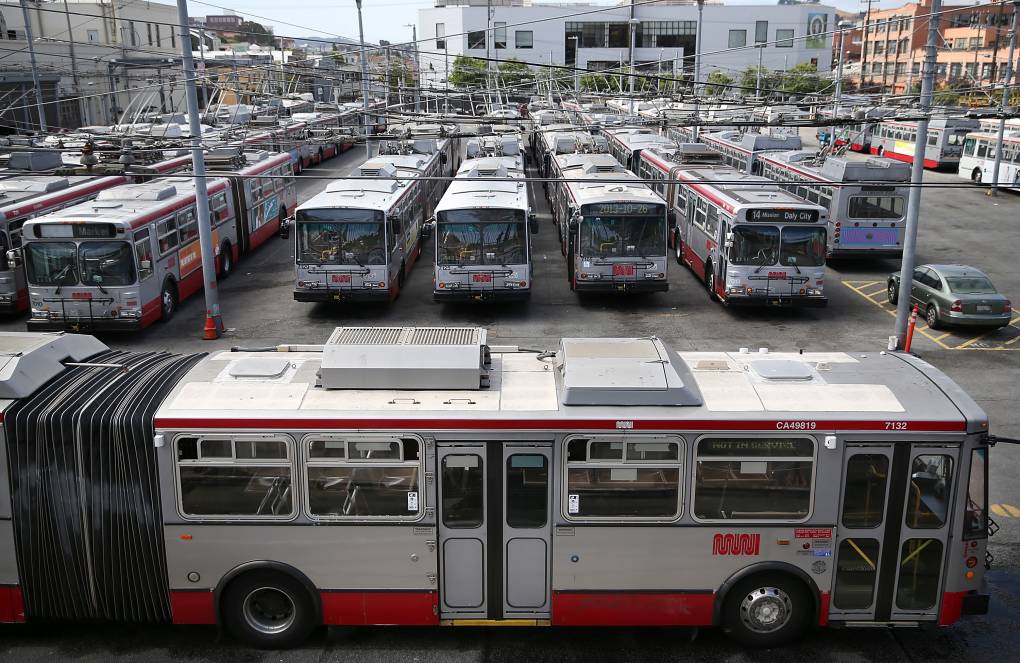
"caption": "San Francisco Muni's Potrero Division yard as seen in June 2014. ",
"description": null,
"title": "Muni-Potrero Yard",
"credit": "Justin Sullivan/Getty Images",
"status": "inherit",
"isLoading": false,
"fetchFailed": false
},
"news_11807933": {
"type": "attachments",
"id": "news_11807933",
"meta": {
"index": "attachments_1716263798",
"site": "news",
"id": "11807933",
"found": true
},
"parent": 11807874,
"imgSizes": {
"apple_news_ca_landscape_5_5": {
"file": "https://ww2.kqed.org/app/uploads/sites/10/2020/03/tollplaza-1044x783.jpg",
"width": 1044,
"mimeType": "image/jpeg",
"height": 783
},
"apple_news_ca_square_4_0": {
"file": "https://ww2.kqed.org/app/uploads/sites/10/2020/03/tollplaza-470x470.jpg",
"width": 470,
"mimeType": "image/jpeg",
"height": 470
},
"twentyfourteen-full-width": {
"file": "https://ww2.kqed.org/app/uploads/sites/10/2020/03/tollplaza-1038x576.jpg",
"width": 1038,
"mimeType": "image/jpeg",
"height": 576
},
"thumbnail": {
"file": "https://ww2.kqed.org/app/uploads/sites/10/2020/03/tollplaza-160x100.jpg",
"width": 160,
"mimeType": "image/jpeg",
"height": 100
},
"post-thumbnail": {
"file": "https://ww2.kqed.org/app/uploads/sites/10/2020/03/tollplaza-672x372.jpg",
"width": 672,
"mimeType": "image/jpeg",
"height": 372
},
"kqedFullSize": {
"file": "https://ww2.kqed.org/app/uploads/sites/10/2020/03/tollplaza.jpg",
"width": 1920,
"height": 1200
},
"apple_news_ca_landscape_4_7": {
"file": "https://ww2.kqed.org/app/uploads/sites/10/2020/03/tollplaza-632x474.jpg",
"width": 632,
"mimeType": "image/jpeg",
"height": 474
},
"large": {
"file": "https://ww2.kqed.org/app/uploads/sites/10/2020/03/tollplaza-1020x638.jpg",
"width": 1020,
"mimeType": "image/jpeg",
"height": 638
},
"apple_news_ca_landscape_4_0": {
"file": "https://ww2.kqed.org/app/uploads/sites/10/2020/03/tollplaza-536x402.jpg",
"width": 536,
"mimeType": "image/jpeg",
"height": 402
},
"apple_news_ca_portrait_12_9": {
"file": "https://ww2.kqed.org/app/uploads/sites/10/2020/03/tollplaza-1122x1200.jpg",
"width": 1122,
"mimeType": "image/jpeg",
"height": 1200
},
"medium": {
"file": "https://ww2.kqed.org/app/uploads/sites/10/2020/03/tollplaza-800x500.jpg",
"width": 800,
"mimeType": "image/jpeg",
"height": 500
},
"apple_news_ca_portrait_4_0": {
"file": "https://ww2.kqed.org/app/uploads/sites/10/2020/03/tollplaza-354x472.jpg",
"width": 354,
"mimeType": "image/jpeg",
"height": 472
},
"apple_news_ca_portrait_9_7": {
"file": "https://ww2.kqed.org/app/uploads/sites/10/2020/03/tollplaza-840x1120.jpg",
"width": 840,
"mimeType": "image/jpeg",
"height": 1120
},
"apple_news_ca_landscape_12_9": {
"file": "https://ww2.kqed.org/app/uploads/sites/10/2020/03/tollplaza-1832x1200.jpg",
"width": 1832,
"mimeType": "image/jpeg",
"height": 1200
},
"apple_news_ca_square_9_7": {
"file": "https://ww2.kqed.org/app/uploads/sites/10/2020/03/tollplaza-1104x1104.jpg",
"width": 1104,
"mimeType": "image/jpeg",
"height": 1104
},
"apple_news_ca_portrait_4_7": {
"file": "https://ww2.kqed.org/app/uploads/sites/10/2020/03/tollplaza-414x552.jpg",
"width": 414,
"mimeType": "image/jpeg",
"height": 552
},
"apple_news_ca_square_12_9": {
"file": "https://ww2.kqed.org/app/uploads/sites/10/2020/03/tollplaza-1472x1200.jpg",
"width": 1472,
"mimeType": "image/jpeg",
"height": 1200
},
"apple_news_ca_portrait_5_5": {
"file": "https://ww2.kqed.org/app/uploads/sites/10/2020/03/tollplaza-687x916.jpg",
"width": 687,
"mimeType": "image/jpeg",
"height": 916
},
"full-width": {
"file": "https://ww2.kqed.org/app/uploads/sites/10/2020/03/tollplaza-1920x1200.jpg",
"width": 1920,
"mimeType": "image/jpeg",
"height": 1200
},
"apple_news_ca_square_4_7": {
"file": "https://ww2.kqed.org/app/uploads/sites/10/2020/03/tollplaza-550x550.jpg",
"width": 550,
"mimeType": "image/jpeg",
"height": 550
},
"apple_news_ca_landscape_9_7": {
"file": "https://ww2.kqed.org/app/uploads/sites/10/2020/03/tollplaza-1376x1032.jpg",
"width": 1376,
"mimeType": "image/jpeg",
"height": 1032
},
"apple_news_ca_square_5_5": {
"file": "https://ww2.kqed.org/app/uploads/sites/10/2020/03/tollplaza-912x912.jpg",
"width": 912,
"mimeType": "image/jpeg",
"height": 912
}
},
"publishDate": 1584749411,
"modified": 1584749479,
"caption": "The Bay Bridge toll plaza is pictured during an October 2009 closure of the span. ",
"description": null,
"title": "Bay Bridge Toll Plaza",
"credit": "Justin Sullivan/Getty Images",
"status": "inherit",
"isLoading": false,
"fetchFailed": false
},
"news_11812981": {
"type": "attachments",
"id": "news_11812981",
"meta": {
"index": "attachments_1716263798",
"site": "news",
"id": "11812981",
"found": true
},
"parent": 11805625,
"imgSizes": {
"apple_news_ca_landscape_5_5": {
"file": "https://ww2.kqed.org/app/uploads/sites/10/2020/03/RS42601_005_KQED_Oakland_CoronavirusCoverage_03172020-qut-1044x783.jpg",
"width": 1044,
"mimeType": "image/jpeg",
"height": 783
},
"apple_news_ca_square_4_0": {
"file": "https://ww2.kqed.org/app/uploads/sites/10/2020/03/RS42601_005_KQED_Oakland_CoronavirusCoverage_03172020-qut-470x470.jpg",
"width": 470,
"mimeType": "image/jpeg",
"height": 470
},
"twentyfourteen-full-width": {
"file": "https://ww2.kqed.org/app/uploads/sites/10/2020/03/RS42601_005_KQED_Oakland_CoronavirusCoverage_03172020-qut-1038x576.jpg",
"width": 1038,
"mimeType": "image/jpeg",
"height": 576
},
"thumbnail": {
"file": "https://ww2.kqed.org/app/uploads/sites/10/2020/03/RS42601_005_KQED_Oakland_CoronavirusCoverage_03172020-qut-160x107.jpg",
"width": 160,
"mimeType": "image/jpeg",
"height": 107
},
"post-thumbnail": {
"file": "https://ww2.kqed.org/app/uploads/sites/10/2020/03/RS42601_005_KQED_Oakland_CoronavirusCoverage_03172020-qut-672x372.jpg",
"width": 672,
"mimeType": "image/jpeg",
"height": 372
},
"kqedFullSize": {
"file": "https://ww2.kqed.org/app/uploads/sites/10/2020/03/RS42601_005_KQED_Oakland_CoronavirusCoverage_03172020-qut.jpg",
"width": 1920,
"height": 1280
},
"apple_news_ca_landscape_4_7": {
"file": "https://ww2.kqed.org/app/uploads/sites/10/2020/03/RS42601_005_KQED_Oakland_CoronavirusCoverage_03172020-qut-632x474.jpg",
"width": 632,
"mimeType": "image/jpeg",
"height": 474
},
"large": {
"file": "https://ww2.kqed.org/app/uploads/sites/10/2020/03/RS42601_005_KQED_Oakland_CoronavirusCoverage_03172020-qut-1020x680.jpg",
"width": 1020,
"mimeType": "image/jpeg",
"height": 680
},
"apple_news_ca_landscape_4_0": {
"file": "https://ww2.kqed.org/app/uploads/sites/10/2020/03/RS42601_005_KQED_Oakland_CoronavirusCoverage_03172020-qut-536x402.jpg",
"width": 536,
"mimeType": "image/jpeg",
"height": 402
},
"apple_news_ca_portrait_12_9": {
"file": "https://ww2.kqed.org/app/uploads/sites/10/2020/03/RS42601_005_KQED_Oakland_CoronavirusCoverage_03172020-qut-1122x1280.jpg",
"width": 1122,
"mimeType": "image/jpeg",
"height": 1280
},
"medium": {
"file": "https://ww2.kqed.org/app/uploads/sites/10/2020/03/RS42601_005_KQED_Oakland_CoronavirusCoverage_03172020-qut-800x533.jpg",
"width": 800,
"mimeType": "image/jpeg",
"height": 533
},
"apple_news_ca_portrait_4_0": {
"file": "https://ww2.kqed.org/app/uploads/sites/10/2020/03/RS42601_005_KQED_Oakland_CoronavirusCoverage_03172020-qut-354x472.jpg",
"width": 354,
"mimeType": "image/jpeg",
"height": 472
},
"apple_news_ca_portrait_9_7": {
"file": "https://ww2.kqed.org/app/uploads/sites/10/2020/03/RS42601_005_KQED_Oakland_CoronavirusCoverage_03172020-qut-840x1120.jpg",
"width": 840,
"mimeType": "image/jpeg",
"height": 1120
},
"apple_news_ca_landscape_12_9": {
"file": "https://ww2.kqed.org/app/uploads/sites/10/2020/03/RS42601_005_KQED_Oakland_CoronavirusCoverage_03172020-qut-1832x1280.jpg",
"width": 1832,
"mimeType": "image/jpeg",
"height": 1280
},
"apple_news_ca_square_9_7": {
"file": "https://ww2.kqed.org/app/uploads/sites/10/2020/03/RS42601_005_KQED_Oakland_CoronavirusCoverage_03172020-qut-1104x1104.jpg",
"width": 1104,
"mimeType": "image/jpeg",
"height": 1104
},
"apple_news_ca_portrait_4_7": {
"file": "https://ww2.kqed.org/app/uploads/sites/10/2020/03/RS42601_005_KQED_Oakland_CoronavirusCoverage_03172020-qut-414x552.jpg",
"width": 414,
"mimeType": "image/jpeg",
"height": 552
},
"apple_news_ca_square_12_9": {
"file": "https://ww2.kqed.org/app/uploads/sites/10/2020/03/RS42601_005_KQED_Oakland_CoronavirusCoverage_03172020-qut-1472x1280.jpg",
"width": 1472,
"mimeType": "image/jpeg",
"height": 1280
},
"apple_news_ca_portrait_5_5": {
"file": "https://ww2.kqed.org/app/uploads/sites/10/2020/03/RS42601_005_KQED_Oakland_CoronavirusCoverage_03172020-qut-687x916.jpg",
"width": 687,
"mimeType": "image/jpeg",
"height": 916
},
"full-width": {
"file": "https://ww2.kqed.org/app/uploads/sites/10/2020/03/RS42601_005_KQED_Oakland_CoronavirusCoverage_03172020-qut-1920x1280.jpg",
"width": 1920,
"mimeType": "image/jpeg",
"height": 1280
},
"apple_news_ca_square_4_7": {
"file": "https://ww2.kqed.org/app/uploads/sites/10/2020/03/RS42601_005_KQED_Oakland_CoronavirusCoverage_03172020-qut-550x550.jpg",
"width": 550,
"mimeType": "image/jpeg",
"height": 550
},
"apple_news_ca_landscape_9_7": {
"file": "https://ww2.kqed.org/app/uploads/sites/10/2020/03/RS42601_005_KQED_Oakland_CoronavirusCoverage_03172020-qut-1376x1032.jpg",
"width": 1376,
"mimeType": "image/jpeg",
"height": 1032
},
"apple_news_ca_square_5_5": {
"file": "https://ww2.kqed.org/app/uploads/sites/10/2020/03/RS42601_005_KQED_Oakland_CoronavirusCoverage_03172020-qut-912x912.jpg",
"width": 912,
"mimeType": "image/jpeg",
"height": 912
}
},
"publishDate": 1587166566,
"modified": 1587166617,
"caption": "Santiago Briseño ensures that all customers wear gloves and that the gloves are sanitized when they enter Mi Ranchito Market on Foothill Blvd in Oakland on April 8, 2020.",
"description": "Santiago Briseño ensures that all customers wear gloves and that the gloves are sanitized when they enter Mi Ranchito Market on Foothill Blvd in Oakland on April 8, 2020.",
"title": "RS42601_005_KQED_Oakland_CoronavirusCoverage_03172020-qut",
"credit": "Beth LaBerge/KQED",
"status": "inherit",
"isLoading": false,
"fetchFailed": false
},
"news_11806374": {
"type": "attachments",
"id": "news_11806374",
"meta": {
"index": "attachments_1716263798",
"site": "news",
"id": "11806374",
"found": true
},
"parent": 11806373,
"imgSizes": {
"apple_news_ca_landscape_5_5": {
"file": "https://ww2.kqed.org/app/uploads/sites/10/2020/03/airline-pandemic-europe-coronavirus-travel-trump-1-a263a65a82ce411c8549856783f7e98fb1247a49-1044x783.jpg",
"width": 1044,
"mimeType": "image/jpeg",
"height": 783
},
"apple_news_ca_square_4_0": {
"file": "https://ww2.kqed.org/app/uploads/sites/10/2020/03/airline-pandemic-europe-coronavirus-travel-trump-1-a263a65a82ce411c8549856783f7e98fb1247a49-470x470.jpg",
"width": 470,
"mimeType": "image/jpeg",
"height": 470
},
"twentyfourteen-full-width": {
"file": "https://ww2.kqed.org/app/uploads/sites/10/2020/03/airline-pandemic-europe-coronavirus-travel-trump-1-a263a65a82ce411c8549856783f7e98fb1247a49-1038x576.jpg",
"width": 1038,
"mimeType": "image/jpeg",
"height": 576
},
"thumbnail": {
"file": "https://ww2.kqed.org/app/uploads/sites/10/2020/03/airline-pandemic-europe-coronavirus-travel-trump-1-a263a65a82ce411c8549856783f7e98fb1247a49-160x120.jpg",
"width": 160,
"mimeType": "image/jpeg",
"height": 120
},
"post-thumbnail": {
"file": "https://ww2.kqed.org/app/uploads/sites/10/2020/03/airline-pandemic-europe-coronavirus-travel-trump-1-a263a65a82ce411c8549856783f7e98fb1247a49-672x372.jpg",
"width": 672,
"mimeType": "image/jpeg",
"height": 372
},
"kqedFullSize": {
"file": "https://ww2.kqed.org/app/uploads/sites/10/2020/03/airline-pandemic-europe-coronavirus-travel-trump-1-a263a65a82ce411c8549856783f7e98fb1247a49-e1584032939439.jpg",
"width": 1920,
"height": 1440
},
"apple_news_ca_landscape_4_7": {
"file": "https://ww2.kqed.org/app/uploads/sites/10/2020/03/airline-pandemic-europe-coronavirus-travel-trump-1-a263a65a82ce411c8549856783f7e98fb1247a49-632x474.jpg",
"width": 632,
"mimeType": "image/jpeg",
"height": 474
},
"large": {
"file": "https://ww2.kqed.org/app/uploads/sites/10/2020/03/airline-pandemic-europe-coronavirus-travel-trump-1-a263a65a82ce411c8549856783f7e98fb1247a49-1020x765.jpg",
"width": 1020,
"mimeType": "image/jpeg",
"height": 765
},
"apple_news_ca_landscape_4_0": {
"file": "https://ww2.kqed.org/app/uploads/sites/10/2020/03/airline-pandemic-europe-coronavirus-travel-trump-1-a263a65a82ce411c8549856783f7e98fb1247a49-536x402.jpg",
"width": 536,
"mimeType": "image/jpeg",
"height": 402
},
"apple_news_ca_portrait_12_9": {
"file": "https://ww2.kqed.org/app/uploads/sites/10/2020/03/airline-pandemic-europe-coronavirus-travel-trump-1-a263a65a82ce411c8549856783f7e98fb1247a49-1122x1496.jpg",
"width": 1122,
"mimeType": "image/jpeg",
"height": 1496
},
"medium": {
"file": "https://ww2.kqed.org/app/uploads/sites/10/2020/03/airline-pandemic-europe-coronavirus-travel-trump-1-a263a65a82ce411c8549856783f7e98fb1247a49-800x600.jpg",
"width": 800,
"mimeType": "image/jpeg",
"height": 600
},
"apple_news_ca_portrait_4_0": {
"file": "https://ww2.kqed.org/app/uploads/sites/10/2020/03/airline-pandemic-europe-coronavirus-travel-trump-1-a263a65a82ce411c8549856783f7e98fb1247a49-354x472.jpg",
"width": 354,
"mimeType": "image/jpeg",
"height": 472
},
"apple_news_ca_portrait_9_7": {
"file": "https://ww2.kqed.org/app/uploads/sites/10/2020/03/airline-pandemic-europe-coronavirus-travel-trump-1-a263a65a82ce411c8549856783f7e98fb1247a49-840x1120.jpg",
"width": 840,
"mimeType": "image/jpeg",
"height": 1120
},
"apple_news_ca_landscape_12_9": {
"file": "https://ww2.kqed.org/app/uploads/sites/10/2020/03/airline-pandemic-europe-coronavirus-travel-trump-1-a263a65a82ce411c8549856783f7e98fb1247a49-1832x1374.jpg",
"width": 1832,
"mimeType": "image/jpeg",
"height": 1374
},
"apple_news_ca_square_9_7": {
"file": "https://ww2.kqed.org/app/uploads/sites/10/2020/03/airline-pandemic-europe-coronavirus-travel-trump-1-a263a65a82ce411c8549856783f7e98fb1247a49-1104x1104.jpg",
"width": 1104,
"mimeType": "image/jpeg",
"height": 1104
},
"apple_news_ca_portrait_4_7": {
"file": "https://ww2.kqed.org/app/uploads/sites/10/2020/03/airline-pandemic-europe-coronavirus-travel-trump-1-a263a65a82ce411c8549856783f7e98fb1247a49-414x552.jpg",
"width": 414,
"mimeType": "image/jpeg",
"height": 552
},
"apple_news_ca_square_12_9": {
"file": "https://ww2.kqed.org/app/uploads/sites/10/2020/03/airline-pandemic-europe-coronavirus-travel-trump-1-a263a65a82ce411c8549856783f7e98fb1247a49-1472x1472.jpg",
"width": 1472,
"mimeType": "image/jpeg",
"height": 1472
},
"apple_news_ca_portrait_5_5": {
"file": "https://ww2.kqed.org/app/uploads/sites/10/2020/03/airline-pandemic-europe-coronavirus-travel-trump-1-a263a65a82ce411c8549856783f7e98fb1247a49-687x916.jpg",
"width": 687,
"mimeType": "image/jpeg",
"height": 916
},
"full-width": {
"file": "https://ww2.kqed.org/app/uploads/sites/10/2020/03/airline-pandemic-europe-coronavirus-travel-trump-1-a263a65a82ce411c8549856783f7e98fb1247a49-1920x1440.jpg",
"width": 1920,
"mimeType": "image/jpeg",
"height": 1440
},
"apple_news_ca_square_4_7": {
"file": "https://ww2.kqed.org/app/uploads/sites/10/2020/03/airline-pandemic-europe-coronavirus-travel-trump-1-a263a65a82ce411c8549856783f7e98fb1247a49-550x550.jpg",
"width": 550,
"mimeType": "image/jpeg",
"height": 550
},
"apple_news_ca_landscape_9_7": {
"file": "https://ww2.kqed.org/app/uploads/sites/10/2020/03/airline-pandemic-europe-coronavirus-travel-trump-1-a263a65a82ce411c8549856783f7e98fb1247a49-1376x1032.jpg",
"width": 1376,
"mimeType": "image/jpeg",
"height": 1032
},
"apple_news_ca_square_5_5": {
"file": "https://ww2.kqed.org/app/uploads/sites/10/2020/03/airline-pandemic-europe-coronavirus-travel-trump-1-a263a65a82ce411c8549856783f7e98fb1247a49-912x912.jpg",
"width": 912,
"mimeType": "image/jpeg",
"height": 912
}
},
"publishDate": 1584032830,
"modified": 1584032988,
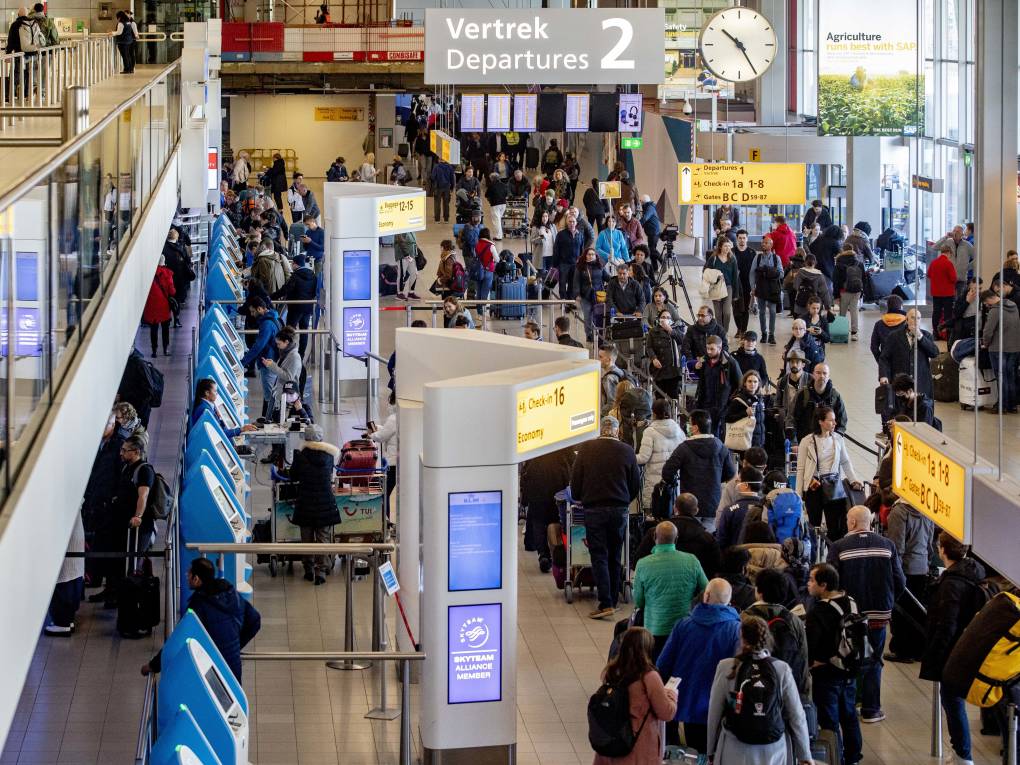
"caption": "Passengers hoping to change their flights to the U.S. wait in long lines at the Schiphol Airport in the Netherlands, after President Trump announced new restrictions on travel from Europe.",
"description": "Passengers hoping to change their flights to the U.S. wait in long lines at the Schiphol Airport in the Netherlands, after President Trump announced new restrictions on travel from Europe.",
"title": "Passengers hoping to change their flights to the U.S. wait in long lines at the Schiphol Airport in the Netherlands, after President Trump announced new restrictions on travel from Europe.",
"credit": "Niels Wenstedt/Barcroft Media via Getty Images",
"status": "inherit",
"isLoading": false,
"fetchFailed": false
},
"news_11540138": {
"type": "attachments",
"id": "news_11540138",
"meta": {
"index": "attachments_1716263798",
"site": "news",
"id": "11540138",
"found": true
},
"parent": 11539532,
"imgSizes": {
"small": {
"file": "https://ww2.kqed.org/app/uploads/sites/10/2017/06/SMARTTrain.MAIN_-520x357.jpg",
"width": 520,
"mimeType": "image/jpeg",
"height": 357
},
"twentyfourteen-full-width": {
"file": "https://ww2.kqed.org/app/uploads/sites/10/2017/06/SMARTTrain.MAIN_-1038x576.jpg",
"width": 1038,
"mimeType": "image/jpeg",
"height": 576
},
"thumbnail": {
"file": "https://ww2.kqed.org/app/uploads/sites/10/2017/06/SMARTTrain.MAIN_-160x110.jpg",
"width": 160,
"mimeType": "image/jpeg",
"height": 110
},
"fd-sm": {
"file": "https://ww2.kqed.org/app/uploads/sites/10/2017/06/SMARTTrain.MAIN_-960x659.jpg",
"width": 960,
"mimeType": "image/jpeg",
"height": 659
},
"post-thumbnail": {
"file": "https://ww2.kqed.org/app/uploads/sites/10/2017/06/SMARTTrain.MAIN_-672x372.jpg",
"width": 672,
"mimeType": "image/jpeg",
"height": 372
},
"xsmall": {
"file": "https://ww2.kqed.org/app/uploads/sites/10/2017/06/SMARTTrain.MAIN_-375x257.jpg",
"width": 375,
"mimeType": "image/jpeg",
"height": 257
},
"kqedFullSize": {
"file": "https://ww2.kqed.org/app/uploads/sites/10/2017/06/SMARTTrain.MAIN_.jpg",
"width": 1920,
"height": 1317
},
"large": {
"file": "https://ww2.kqed.org/app/uploads/sites/10/2017/06/SMARTTrain.MAIN_-1020x700.jpg",
"width": 1020,
"mimeType": "image/jpeg",
"height": 700
},
"xlarge": {
"file": "https://ww2.kqed.org/app/uploads/sites/10/2017/06/SMARTTrain.MAIN_-1180x809.jpg",
"width": 1180,
"mimeType": "image/jpeg",
"height": 809
},
"guest-author-50": {
"file": "https://ww2.kqed.org/app/uploads/sites/10/2017/06/SMARTTrain.MAIN_-50x50.jpg",
"width": 50,
"mimeType": "image/jpeg",
"height": 50
},
"guest-author-96": {
"file": "https://ww2.kqed.org/app/uploads/sites/10/2017/06/SMARTTrain.MAIN_-96x96.jpg",
"width": 96,
"mimeType": "image/jpeg",
"height": 96
},
"medium": {
"file": "https://ww2.kqed.org/app/uploads/sites/10/2017/06/SMARTTrain.MAIN_-800x549.jpg",
"width": 800,
"mimeType": "image/jpeg",
"height": 549
},
"guest-author-64": {
"file": "https://ww2.kqed.org/app/uploads/sites/10/2017/06/SMARTTrain.MAIN_-64x64.jpg",
"width": 64,
"mimeType": "image/jpeg",
"height": 64
},
"guest-author-32": {
"file": "https://ww2.kqed.org/app/uploads/sites/10/2017/06/SMARTTrain.MAIN_-32x32.jpg",
"width": 32,
"mimeType": "image/jpeg",
"height": 32
},
"fd-lrg": {
"file": "https://ww2.kqed.org/app/uploads/sites/10/2017/06/SMARTTrain.MAIN_-1920x1317.jpg",
"width": 1920,
"mimeType": "image/jpeg",
"height": 1317
},
"fd-med": {
"file": "https://ww2.kqed.org/app/uploads/sites/10/2017/06/SMARTTrain.MAIN_-1180x809.jpg",
"width": 1180,
"mimeType": "image/jpeg",
"height": 809
},
"full-width": {
"file": "https://ww2.kqed.org/app/uploads/sites/10/2017/06/SMARTTrain.MAIN_-1920x1317.jpg",
"width": 1920,
"mimeType": "image/jpeg",
"height": 1317
},
"detail": {
"file": "https://ww2.kqed.org/app/uploads/sites/10/2017/06/SMARTTrain.MAIN_-150x150.jpg",
"width": 150,
"mimeType": "image/jpeg",
"height": 150
},
"guest-author-128": {
"file": "https://ww2.kqed.org/app/uploads/sites/10/2017/06/SMARTTrain.MAIN_-128x128.jpg",
"width": 128,
"mimeType": "image/jpeg",
"height": 128
},
"xxsmall": {
"file": "https://ww2.kqed.org/app/uploads/sites/10/2017/06/SMARTTrain.MAIN_-240x165.jpg",
"width": 240,
"mimeType": "image/jpeg",
"height": 165
}
},
"publishDate": 1498809607,
"modified": 1498860382,
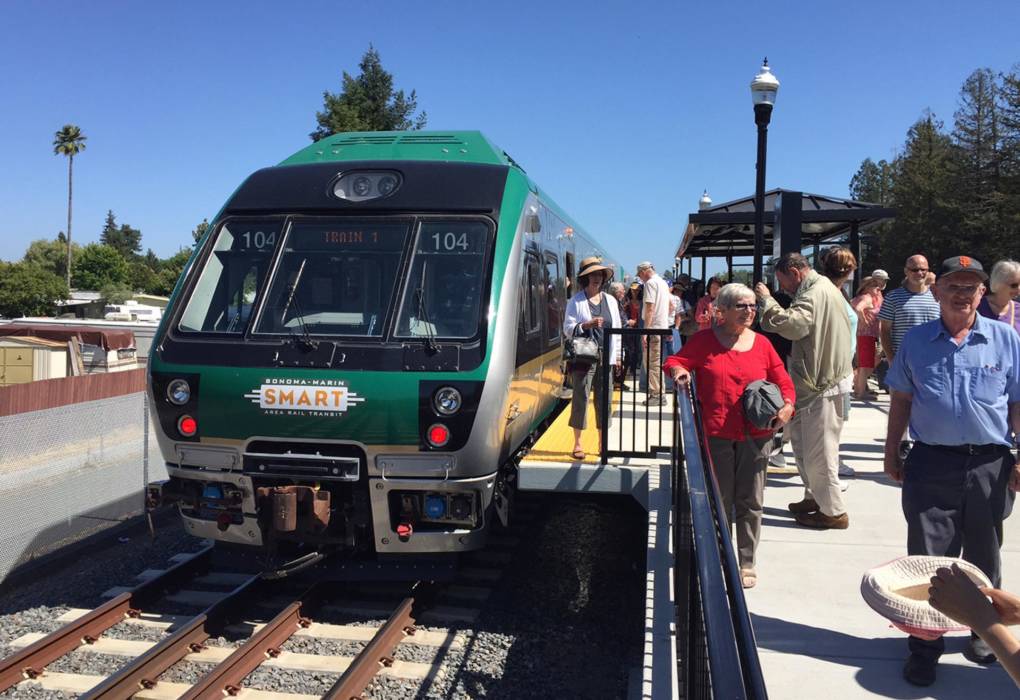
"caption": "A SMART train awaits departure at the Rohnert Park station for a preview ride on June 29, 2017.",
"description": "A SMART train awaits departure at the Rohnert Park station for a preview ride, June 29, 2017.",
"title": "SMARTTrain.MAIN",
"credit": "Gabe Meline/KQED",
"status": "inherit",
"isLoading": false,
"fetchFailed": false
},
"news_11804509": {
"type": "attachments",
"id": "news_11804509",
"meta": {
"index": "attachments_1716263798",
"site": "news",
"id": "11804509",
"found": true
},
"parent": 11804507,
"imgSizes": {
"apple_news_ca_landscape_5_5": {
"file": "https://ww2.kqed.org/app/uploads/sites/10/2020/03/Al-1-1044x783.jpg",
"width": 1044,
"mimeType": "image/jpeg",
"height": 783
},
"apple_news_ca_square_4_0": {
"file": "https://ww2.kqed.org/app/uploads/sites/10/2020/03/Al-1-470x470.jpg",
"width": 470,
"mimeType": "image/jpeg",
"height": 470
},
"twentyfourteen-full-width": {
"file": "https://ww2.kqed.org/app/uploads/sites/10/2020/03/Al-1-1038x576.jpg",
"width": 1038,
"mimeType": "image/jpeg",
"height": 576
},
"thumbnail": {
"file": "https://ww2.kqed.org/app/uploads/sites/10/2020/03/Al-1-160x120.jpg",
"width": 160,
"mimeType": "image/jpeg",
"height": 120
},
"post-thumbnail": {
"file": "https://ww2.kqed.org/app/uploads/sites/10/2020/03/Al-1-672x372.jpg",
"width": 672,
"mimeType": "image/jpeg",
"height": 372
},
"kqedFullSize": {
"file": "https://ww2.kqed.org/app/uploads/sites/10/2020/03/Al-1-e1583182370957.jpg",
"width": 1920,
"height": 1440
},
"apple_news_ca_landscape_4_7": {
"file": "https://ww2.kqed.org/app/uploads/sites/10/2020/03/Al-1-632x474.jpg",
"width": 632,
"mimeType": "image/jpeg",
"height": 474
},
"large": {
"file": "https://ww2.kqed.org/app/uploads/sites/10/2020/03/Al-1-1020x765.jpg",
"width": 1020,
"mimeType": "image/jpeg",
"height": 765
},
"apple_news_ca_landscape_4_0": {
"file": "https://ww2.kqed.org/app/uploads/sites/10/2020/03/Al-1-536x402.jpg",
"width": 536,
"mimeType": "image/jpeg",
"height": 402
},
"apple_news_ca_portrait_12_9": {
"file": "https://ww2.kqed.org/app/uploads/sites/10/2020/03/Al-1-1122x1496.jpg",
"width": 1122,
"mimeType": "image/jpeg",
"height": 1496
},
"medium": {
"file": "https://ww2.kqed.org/app/uploads/sites/10/2020/03/Al-1-800x600.jpg",
"width": 800,
"mimeType": "image/jpeg",
"height": 600
},
"apple_news_ca_portrait_4_0": {
"file": "https://ww2.kqed.org/app/uploads/sites/10/2020/03/Al-1-354x472.jpg",
"width": 354,
"mimeType": "image/jpeg",
"height": 472
},
"apple_news_ca_portrait_9_7": {
"file": "https://ww2.kqed.org/app/uploads/sites/10/2020/03/Al-1-840x1120.jpg",
"width": 840,
"mimeType": "image/jpeg",
"height": 1120
},
"apple_news_ca_landscape_12_9": {
"file": "https://ww2.kqed.org/app/uploads/sites/10/2020/03/Al-1-1832x1374.jpg",
"width": 1832,
"mimeType": "image/jpeg",
"height": 1374
},
"apple_news_ca_square_9_7": {
"file": "https://ww2.kqed.org/app/uploads/sites/10/2020/03/Al-1-1104x1104.jpg",
"width": 1104,
"mimeType": "image/jpeg",
"height": 1104
},
"apple_news_ca_portrait_4_7": {
"file": "https://ww2.kqed.org/app/uploads/sites/10/2020/03/Al-1-414x552.jpg",
"width": 414,
"mimeType": "image/jpeg",
"height": 552
},
"apple_news_ca_square_12_9": {
"file": "https://ww2.kqed.org/app/uploads/sites/10/2020/03/Al-1-1472x1472.jpg",
"width": 1472,
"mimeType": "image/jpeg",
"height": 1472
},
"apple_news_ca_portrait_5_5": {
"file": "https://ww2.kqed.org/app/uploads/sites/10/2020/03/Al-1-687x916.jpg",
"width": 687,
"mimeType": "image/jpeg",
"height": 916
},
"full-width": {
"file": "https://ww2.kqed.org/app/uploads/sites/10/2020/03/Al-1-1920x1440.jpg",
"width": 1920,
"mimeType": "image/jpeg",
"height": 1440
},
"apple_news_ca_square_4_7": {
"file": "https://ww2.kqed.org/app/uploads/sites/10/2020/03/Al-1-550x550.jpg",
"width": 550,
"mimeType": "image/jpeg",
"height": 550
},
"apple_news_ca_landscape_9_7": {
"file": "https://ww2.kqed.org/app/uploads/sites/10/2020/03/Al-1-1376x1032.jpg",
"width": 1376,
"mimeType": "image/jpeg",
"height": 1032
},
"apple_news_ca_square_5_5": {
"file": "https://ww2.kqed.org/app/uploads/sites/10/2020/03/Al-1-912x912.jpg",
"width": 912,
"mimeType": "image/jpeg",
"height": 912
}
},
"publishDate": 1583169507,
"modified": 1583169942,
"caption": "Al Aloudi has organized some 4,000 Uber and Lyft drivers in the Bay Area.",
"description": null,
"title": "Al 1",
"credit": "Sam Harnett/KQED",
"status": "inherit",
"isLoading": false,
"fetchFailed": false
},
"science_1957903": {
"type": "attachments",
"id": "science_1957903",
"meta": {
"index": "attachments_1716263798",
"site": "science",
"id": "1957903",
"found": true
},
"parent": 1957897,
"imgSizes": {
"twentyfourteen-full-width": {
"file": "https://ww2.kqed.org/app/uploads/sites/35/2020/03/RS41726_GettyImages-121207677-1-qut-1038x576.jpg",
"width": 1038,
"mimeType": "image/jpeg",
"height": 576
},
"thumbnail": {
"file": "https://ww2.kqed.org/app/uploads/sites/35/2020/03/RS41726_GettyImages-121207677-1-qut-160x103.jpg",
"width": 160,
"mimeType": "image/jpeg",
"height": 103
},
"post-thumbnail": {
"file": "https://ww2.kqed.org/app/uploads/sites/35/2020/03/RS41726_GettyImages-121207677-1-qut-672x372.jpg",
"width": 672,
"mimeType": "image/jpeg",
"height": 372
},
"kqedFullSize": {
"file": "https://ww2.kqed.org/app/uploads/sites/35/2020/03/RS41726_GettyImages-121207677-1-qut.jpg",
"width": 1920,
"height": 1232
},
"large": {
"file": "https://ww2.kqed.org/app/uploads/sites/35/2020/03/RS41726_GettyImages-121207677-1-qut-1020x655.jpg",
"width": 1020,
"mimeType": "image/jpeg",
"height": 655
},
"full-width": {
"file": "https://ww2.kqed.org/app/uploads/sites/35/2020/03/RS41726_GettyImages-121207677-1-qut-1920x1232.jpg",
"width": 1920,
"mimeType": "image/jpeg",
"height": 1232
},
"medium": {
"file": "https://ww2.kqed.org/app/uploads/sites/35/2020/03/RS41726_GettyImages-121207677-1-qut-800x513.jpg",
"width": 800,
"mimeType": "image/jpeg",
"height": 513
},
"medium_large": {
"file": "https://ww2.kqed.org/app/uploads/sites/35/2020/03/RS41726_GettyImages-121207677-1-qut-768x493.jpg",
"width": 768,
"mimeType": "image/jpeg",
"height": 493
}
},
"publishDate": 1583191367,
"modified": 1583191630,
"caption": " A Bay Area Rapid Transit (BART) train operator waits for passengers to enter the train at the Daly City station on August 15, 2011 in Daly City, California. ",
"description": null,
"title": "Hacker Group Disrupts Bay Area Mass Transit System",
"credit": "Justin Sullivan/Getty Images",
"status": "inherit",
"isLoading": false,
"fetchFailed": false
},
"news_11803468": {
"type": "attachments",
"id": "news_11803468",
"meta": {
"index": "attachments_1716263798",
"site": "news",
"id": "11803468",
"found": true
},
"parent": 11803400,
"imgSizes": {
"apple_news_ca_landscape_5_5": {
"file": "https://ww2.kqed.org/app/uploads/sites/10/2020/02/RS41024_002_KQED_TaxiDriversSFO_01302020_9899-qut-1044x783.jpg",
"width": 1044,
"mimeType": "image/jpeg",
"height": 783
},
"apple_news_ca_square_4_0": {
"file": "https://ww2.kqed.org/app/uploads/sites/10/2020/02/RS41024_002_KQED_TaxiDriversSFO_01302020_9899-qut-470x470.jpg",
"width": 470,
"mimeType": "image/jpeg",
"height": 470
},
"twentyfourteen-full-width": {
"file": "https://ww2.kqed.org/app/uploads/sites/10/2020/02/RS41024_002_KQED_TaxiDriversSFO_01302020_9899-qut-1038x576.jpg",
"width": 1038,
"mimeType": "image/jpeg",
"height": 576
},
"thumbnail": {
"file": "https://ww2.kqed.org/app/uploads/sites/10/2020/02/RS41024_002_KQED_TaxiDriversSFO_01302020_9899-qut-160x107.jpg",
"width": 160,
"mimeType": "image/jpeg",
"height": 107
},
"post-thumbnail": {
"file": "https://ww2.kqed.org/app/uploads/sites/10/2020/02/RS41024_002_KQED_TaxiDriversSFO_01302020_9899-qut-672x372.jpg",
"width": 672,
"mimeType": "image/jpeg",
"height": 372
},
"kqedFullSize": {
"file": "https://ww2.kqed.org/app/uploads/sites/10/2020/02/RS41024_002_KQED_TaxiDriversSFO_01302020_9899-qut.jpg",
"width": 1920,
"height": 1280
},
"apple_news_ca_landscape_4_7": {
"file": "https://ww2.kqed.org/app/uploads/sites/10/2020/02/RS41024_002_KQED_TaxiDriversSFO_01302020_9899-qut-632x474.jpg",
"width": 632,
"mimeType": "image/jpeg",
"height": 474
},
"large": {
"file": "https://ww2.kqed.org/app/uploads/sites/10/2020/02/RS41024_002_KQED_TaxiDriversSFO_01302020_9899-qut-1020x680.jpg",
"width": 1020,
"mimeType": "image/jpeg",
"height": 680
},
"apple_news_ca_landscape_4_0": {
"file": "https://ww2.kqed.org/app/uploads/sites/10/2020/02/RS41024_002_KQED_TaxiDriversSFO_01302020_9899-qut-536x402.jpg",
"width": 536,
"mimeType": "image/jpeg",
"height": 402
},
"apple_news_ca_portrait_12_9": {
"file": "https://ww2.kqed.org/app/uploads/sites/10/2020/02/RS41024_002_KQED_TaxiDriversSFO_01302020_9899-qut-1122x1280.jpg",
"width": 1122,
"mimeType": "image/jpeg",
"height": 1280
},
"medium": {
"file": "https://ww2.kqed.org/app/uploads/sites/10/2020/02/RS41024_002_KQED_TaxiDriversSFO_01302020_9899-qut-800x533.jpg",
"width": 800,
"mimeType": "image/jpeg",
"height": 533
},
"apple_news_ca_portrait_4_0": {
"file": "https://ww2.kqed.org/app/uploads/sites/10/2020/02/RS41024_002_KQED_TaxiDriversSFO_01302020_9899-qut-354x472.jpg",
"width": 354,
"mimeType": "image/jpeg",
"height": 472
},
"apple_news_ca_portrait_9_7": {
"file": "https://ww2.kqed.org/app/uploads/sites/10/2020/02/RS41024_002_KQED_TaxiDriversSFO_01302020_9899-qut-840x1120.jpg",
"width": 840,
"mimeType": "image/jpeg",
"height": 1120
},
"apple_news_ca_landscape_12_9": {
"file": "https://ww2.kqed.org/app/uploads/sites/10/2020/02/RS41024_002_KQED_TaxiDriversSFO_01302020_9899-qut-1832x1280.jpg",
"width": 1832,
"mimeType": "image/jpeg",
"height": 1280
},
"apple_news_ca_square_9_7": {
"file": "https://ww2.kqed.org/app/uploads/sites/10/2020/02/RS41024_002_KQED_TaxiDriversSFO_01302020_9899-qut-1104x1104.jpg",
"width": 1104,
"mimeType": "image/jpeg",
"height": 1104
},
"apple_news_ca_portrait_4_7": {
"file": "https://ww2.kqed.org/app/uploads/sites/10/2020/02/RS41024_002_KQED_TaxiDriversSFO_01302020_9899-qut-414x552.jpg",
"width": 414,
"mimeType": "image/jpeg",
"height": 552
},
"apple_news_ca_square_12_9": {
"file": "https://ww2.kqed.org/app/uploads/sites/10/2020/02/RS41024_002_KQED_TaxiDriversSFO_01302020_9899-qut-1472x1280.jpg",
"width": 1472,
"mimeType": "image/jpeg",
"height": 1280
},
"apple_news_ca_portrait_5_5": {
"file": "https://ww2.kqed.org/app/uploads/sites/10/2020/02/RS41024_002_KQED_TaxiDriversSFO_01302020_9899-qut-687x916.jpg",
"width": 687,
"mimeType": "image/jpeg",
"height": 916
},
"full-width": {
"file": "https://ww2.kqed.org/app/uploads/sites/10/2020/02/RS41024_002_KQED_TaxiDriversSFO_01302020_9899-qut-1920x1280.jpg",
"width": 1920,
"mimeType": "image/jpeg",
"height": 1280
},
"apple_news_ca_square_4_7": {
"file": "https://ww2.kqed.org/app/uploads/sites/10/2020/02/RS41024_002_KQED_TaxiDriversSFO_01302020_9899-qut-550x550.jpg",
"width": 550,
"mimeType": "image/jpeg",
"height": 550
},
"apple_news_ca_landscape_9_7": {
"file": "https://ww2.kqed.org/app/uploads/sites/10/2020/02/RS41024_002_KQED_TaxiDriversSFO_01302020_9899-qut-1376x1032.jpg",
"width": 1376,
"mimeType": "image/jpeg",
"height": 1032
},
"apple_news_ca_square_5_5": {
"file": "https://ww2.kqed.org/app/uploads/sites/10/2020/02/RS41024_002_KQED_TaxiDriversSFO_01302020_9899-qut-912x912.jpg",
"width": 912,
"mimeType": "image/jpeg",
"height": 912
}
},
"publishDate": 1582683097,
"modified": 1582683152,
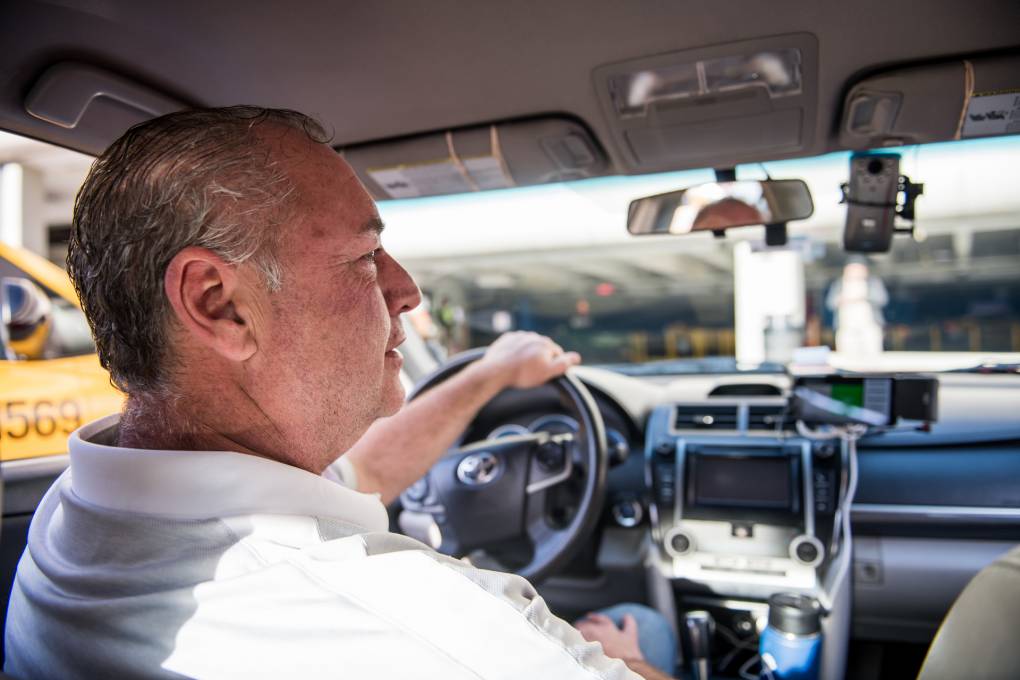
"caption": "Taxi driver Matt Sutter waits at the lower level of the short term parking garage at San Francisco International Airport (SFO) to pick up a fare on Jan. 30, 2020.",
"description": null,
"title": "RS41024_002_KQED_TaxiDriversSFO_01302020_9899-qut",
"credit": "Beth LaBerge/KQED",
"status": "inherit",
"isLoading": false,
"fetchFailed": false
}
},
"audioPlayerReducer": {
"postId": "stream_live",
"isPaused": true,
"isPlaying": false,
"pfsActive": false,
"pledgeModalIsOpen": true,
"playerDrawerIsOpen": false,
"liveAudioPlayStartedAt": 0,
"liveAudioPlayContext": ""
},
"authorsReducer": {
"byline_news_11806373": {
"type": "authors",
"id": "byline_news_11806373",
"meta": {
"override": true
},
"slug": "byline_news_11806373",
"name": "Bill Chappell\u003cbr>NPR",
"isLoading": false
},
"danbrekke": {
"type": "authors",
"id": "222",
"meta": {
"index": "authors_1716337520",
"id": "222",
"found": true
},
"name": "Dan Brekke",
"firstName": "Dan",
"lastName": "Brekke",
"slug": "danbrekke",
"email": "dbrekke@kqed.org",
"display_author_email": true,
"staff_mastheads": [
"news",
"science"
],
"title": "KQED Editor and Reporter",
"bio": "Dan Brekke is a reporter and editor for KQED News, responsible for coverage of topics ranging from California water issues to the Bay Area's transportation challenges. In a newsroom career that began in Chicago in 1972, Dan has worked for \u003cem>The San Francisco Examiner,\u003c/em> Wired and TechTV and has been published in The New York Times, The New York Times Magazine, Business 2.0, Salon and elsewhere.\r\n\r\nSince joining KQED in 2007, Dan has reported, edited and produced both radio and online features and breaking news pieces. He has shared as both editor and reporter in four Society of Professional Journalists Norcal Excellence in Journalism awards and one Edward R. Murrow regional award. He was chosen for a spring 2017 residency at the Mesa Refuge to advance his research on California salmon.\r\n\r\nEmail Dan at: \u003ca href=\"mailto:dbrekke@kqed.org\">dbrekke@kqed.org\u003c/a>\r\n\r\n\u003cstrong>Twitter:\u003c/strong> \u003ca href=\"https://twitter.com/danbrekke\" rel=\"noopener noreferrer\">twitter.com/danbrekke\u003c/a>\r\n\u003cstrong>Facebook:\u003c/strong> \u003ca href=\"https://www.facebook.com/danbrekke\" rel=\"noopener noreferrer\">www.facebook.com/danbrekke\u003c/a>\r\n\u003cstrong>LinkedIn:\u003c/strong> \u003ca href=\"https://www.linkedin.com/in/danbrekke\" rel=\"noopener noreferrer\">www.linkedin.com/in/danbrekke\u003c/a>",
"avatar": "https://secure.gravatar.com/avatar/8f1f0d2a978fb3b23426c922c7e2af558fa36905b49c4ce76a97dc3c72d27226?s=600&d=mm&r=g",
"twitter": "danbrekke",
"bluesky": null,
"facebook": null,
"instagram": "https://www.instagram.com/dan.brekke/",
"linkedin": "https://www.linkedin.com/in/danbrekke/",
"sites": [
{
"site": "news",
"roles": [
"administrator",
"create_posts"
]
},
{
"site": "stateofhealth",
"roles": [
"editor"
]
},
{
"site": "science",
"roles": [
"editor"
]
},
{
"site": "quest",
"roles": [
"contributor"
]
},
{
"site": "food",
"roles": [
"contributor"
]
},
{
"site": "forum",
"roles": [
"contributor"
]
},
{
"site": "elections",
"roles": [
"editor"
]
},
{
"site": "liveblog",
"roles": [
"editor"
]
}
],
"headData": {
"title": "Dan Brekke | KQED",
"description": "KQED Editor and Reporter",
"ogImgSrc": "https://secure.gravatar.com/avatar/8f1f0d2a978fb3b23426c922c7e2af558fa36905b49c4ce76a97dc3c72d27226?s=600&d=mm&r=g",
"twImgSrc": "https://secure.gravatar.com/avatar/8f1f0d2a978fb3b23426c922c7e2af558fa36905b49c4ce76a97dc3c72d27226?s=600&d=mm&r=g"
},
"isLoading": false,
"link": "/author/danbrekke"
},
"kqed": {
"type": "authors",
"id": "236",
"meta": {
"index": "authors_1716337520",
"id": "236",
"found": true
},
"name": "KQED News Staff",
"firstName": "KQED News Staff",
"lastName": null,
"slug": "kqed",
"email": "faq@kqed.org",
"display_author_email": false,
"staff_mastheads": [],
"title": null,
"bio": null,
"avatar": "https://secure.gravatar.com/avatar/ef0e801a68c4c54afa9180db14084167?s=600&d=blank&r=g",
"twitter": null,
"facebook": null,
"instagram": null,
"linkedin": null,
"sites": [
{
"site": "arts",
"roles": [
"contributor"
]
},
{
"site": "news",
"roles": [
"editor"
]
},
{
"site": "futureofyou",
"roles": [
"author"
]
}
],
"headData": {
"title": "KQED News Staff | KQED",
"description": null,
"ogImgSrc": "https://secure.gravatar.com/avatar/ef0e801a68c4c54afa9180db14084167?s=600&d=blank&r=g",
"twImgSrc": "https://secure.gravatar.com/avatar/ef0e801a68c4c54afa9180db14084167?s=600&d=blank&r=g"
},
"isLoading": false,
"link": "/author/kqed"
},
"samharnett": {
"type": "authors",
"id": "253",
"meta": {
"index": "authors_1716337520",
"id": "253",
"found": true
},
"name": "Sam Harnett",
"firstName": "Sam",
"lastName": "Harnett",
"slug": "samharnett",
"email": "samharnett@gmail.com",
"display_author_email": false,
"staff_mastheads": [],
"title": "KQED Contributor",
"bio": "Sam Harnett covered tech and work at KQED. He is the co-creator of \u003cem>\u003ca href=\"http://www.theworldaccordingtosound.org\">The World According to Sound\u003c/a>,\u003c/em> a 90-second podcast that features different sounds and the stories behind them.\r\n\r\nBefore coming to KQED, Sam worked as an independent reporter who contributed regularly to \u003cem>The California Report, Marketplace,\u003c/em> \u003cem>The World \u003c/em>and NPR.",
"avatar": "https://secure.gravatar.com/avatar/2538b972ac02f2b9546c7a6c59a0f3d0?s=600&d=blank&r=g",
"twitter": "Samwharnett",
"facebook": null,
"instagram": null,
"linkedin": null,
"sites": [
{
"site": "news",
"roles": [
"edit_others_posts",
"subscriber"
]
},
{
"site": "stateofhealth",
"roles": [
"author"
]
},
{
"site": "science",
"roles": [
"editor"
]
},
{
"site": "quest",
"roles": [
"subscriber"
]
}
],
"headData": {
"title": "Sam Harnett | KQED",
"description": "KQED Contributor",
"ogImgSrc": "https://secure.gravatar.com/avatar/2538b972ac02f2b9546c7a6c59a0f3d0?s=600&d=blank&r=g",
"twImgSrc": "https://secure.gravatar.com/avatar/2538b972ac02f2b9546c7a6c59a0f3d0?s=600&d=blank&r=g"
},
"isLoading": false,
"link": "/author/samharnett"
},
"tgoldberg": {
"type": "authors",
"id": "258",
"meta": {
"index": "authors_1716337520",
"id": "258",
"found": true
},
"name": "Ted Goldberg",
"firstName": "Ted",
"lastName": "Goldberg",
"slug": "tgoldberg",
"email": "tgoldberg@kqed.org",
"display_author_email": true,
"staff_mastheads": [
"news"
],
"title": "KQED Managing Editor, News and Newscasts",
"bio": "Ted Goldberg is Managing Editor of News and Newscasts at KQED. His main reporting beat is the Bay Area's oil refining industry.\r\n\r\nPrior to joining KQED in 2014, Ted worked at CBS News and WCBS AM in New York and Bay City News and KCBS Radio in San Francisco. He graduated from Oberlin College in Ohio in 1998.",
"avatar": "https://secure.gravatar.com/avatar/30ce2e4fe89135e104f89be2394d16225b9d36c121b5b3cb7651ce642978b96f?s=600&d=blank&r=g",
"twitter": "TedrickG",
"bluesky": null,
"facebook": null,
"instagram": null,
"linkedin": null,
"sites": [
{
"site": "news",
"roles": [
"editor"
]
},
{
"site": "science",
"roles": [
"editor"
]
}
],
"headData": {
"title": "Ted Goldberg | KQED",
"description": "KQED Managing Editor, News and Newscasts",
"ogImgSrc": "https://secure.gravatar.com/avatar/30ce2e4fe89135e104f89be2394d16225b9d36c121b5b3cb7651ce642978b96f?s=600&d=blank&r=g",
"twImgSrc": "https://secure.gravatar.com/avatar/30ce2e4fe89135e104f89be2394d16225b9d36c121b5b3cb7651ce642978b96f?s=600&d=blank&r=g"
},
"isLoading": false,
"link": "/author/tgoldberg"
},
"markfiore": {
"type": "authors",
"id": "3236",
"meta": {
"index": "authors_1716337520",
"id": "3236",
"found": true
},
"name": "Mark Fiore",
"firstName": "Mark",
"lastName": "Fiore",
"slug": "markfiore",
"email": "mark@markfiore.com",
"display_author_email": false,
"staff_mastheads": [
"news"
],
"title": "KQED News Cartoonist",
"bio": "\u003ca href=\"http://www.MarkFiore.com\">MarkFiore.com\u003c/a> | \u003ca href=\"https://twitter.com/markfiore\">Follow on Twitter\u003c/a> | \u003ca href=\"https://www.facebook.com/pages/Mark-Fiore-Animated-Political-Cartoons/94451707396?ref=bookmarks\">Facebook\u003c/a> | \u003ca href=\"mailto:mark@markfiore.com\">email\u003c/a>\r\n\r\nPulitzer Prize-winner, Mark Fiore, who the Wall Street Journal has called “the undisputed guru of the form,” creates animated political cartoons in San Francisco, where his work has been featured regularly on the San Francisco Chronicle’s web site, SFGate.com. His work has appeared on Newsweek.com, Slate.com, CBSNews.com, MotherJones.com, DailyKos.com and NPR’s web site. Fiore’s political animation has appeared on CNN, Frontline, Bill Moyers Journal, Salon.com and cable and broadcast outlets across the globe.\r\n\r\nBeginning his professional life by drawing traditional political cartoons for newspapers, Fiore’s work appeared in publications ranging from the Washington Post to the Los Angeles Times. In the late 1990s, he began to experiment with animating political cartoons and, after a short stint at the San Jose Mercury News as their staff cartoonist, Fiore devoted all his energies to animation.\r\nGrowing up in California, Fiore also spent a good portion of his life in the backwoods of Idaho. It was this combination that shaped him politically. Mark majored in political science at Colorado College, where, in a perfect send-off for a cartoonist, he received his diploma in 1991 as commencement speaker Dick Cheney smiled approvingly.\r\nMark Fiore was awarded the Pulitzer Prize for political cartooning in 2010, a Robert F. Kennedy Journalism Award in 2004 and has twice received an Online Journalism Award for commentary from the Online News Association (2002, 2008). Fiore has received two awards for his work in new media from the National Cartoonists Society (2001, 2002), and in 2006 received The James Madison Freedom of Information Award from The Society of Professional Journalists.",
"avatar": "https://secure.gravatar.com/avatar/fc4e2a612b15b67bad0c6f0e1db4ca9b?s=600&d=blank&r=g",
"twitter": "MarkFiore",
"facebook": null,
"instagram": "https://www.instagram.com/markfiore/?hl=en",
"linkedin": null,
"sites": [
{
"site": "arts",
"roles": [
"contributor"
]
},
{
"site": "news",
"roles": [
"editor"
]
},
{
"site": "futureofyou",
"roles": [
"editor"
]
},
{
"site": "science",
"roles": [
"editor"
]
}
],
"headData": {
"title": "Mark Fiore | KQED",
"description": "KQED News Cartoonist",
"ogImgSrc": "https://secure.gravatar.com/avatar/fc4e2a612b15b67bad0c6f0e1db4ca9b?s=600&d=blank&r=g",
"twImgSrc": "https://secure.gravatar.com/avatar/fc4e2a612b15b67bad0c6f0e1db4ca9b?s=600&d=blank&r=g"
},
"isLoading": false,
"link": "/author/markfiore"
},
"mwiley": {
"type": "authors",
"id": "11526",
"meta": {
"index": "authors_1716337520",
"id": "11526",
"found": true
},
"name": "Michelle Wiley",
"firstName": "Michelle",
"lastName": "Wiley",
"slug": "mwiley",
"email": "mwiley@KQED.org",
"display_author_email": true,
"staff_mastheads": [],
"title": null,
"bio": "Michelle Wiley was the senior editor of weekends.",
"avatar": "https://secure.gravatar.com/avatar/3b897d82a09e8587e8e73fa69fbcc635?s=600&d=blank&r=g",
"twitter": "michelleewiley",
"facebook": null,
"instagram": null,
"linkedin": null,
"sites": [
{
"site": "",
"roles": [
"editor"
]
},
{
"site": "arts",
"roles": [
"editor"
]
},
{
"site": "news",
"roles": [
"subscriber"
]
},
{
"site": "lowdown",
"roles": [
"editor"
]
},
{
"site": "science",
"roles": [
"editor"
]
},
{
"site": "podcasts",
"roles": [
"editor"
]
}
],
"headData": {
"title": "Michelle Wiley | KQED",
"description": null,
"ogImgSrc": "https://secure.gravatar.com/avatar/3b897d82a09e8587e8e73fa69fbcc635?s=600&d=blank&r=g",
"twImgSrc": "https://secure.gravatar.com/avatar/3b897d82a09e8587e8e73fa69fbcc635?s=600&d=blank&r=g"
},
"isLoading": false,
"link": "/author/mwiley"
},
"kevinstark": {
"type": "authors",
"id": "11608",
"meta": {
"index": "authors_1716337520",
"id": "11608",
"found": true
},
"name": "Kevin Stark",
"firstName": "Kevin",
"lastName": "Stark",
"slug": "kevinstark",
"email": "kstark@kqed.org",
"display_author_email": true,
"staff_mastheads": [
"science"
],
"title": "Senior Editor",
"bio": "Kevin is a senior editor for KQED Science, managing the station's health and climate desks. His journalism career began in the Pacific Northwest, and he later became a lead reporter for the San Francisco Public Press. His work has appeared in Pacific Standard magazine, the Energy News Network, the Center for Investigative Reporting's Reveal and WBEZ in Chicago. Kevin joined KQED in 2019, and has covered issues related to energy, wildfire, climate change and the environment.",
"avatar": "https://secure.gravatar.com/avatar/365aaa4b597d3a8374f67504ff0facd323d7906e8eb4be0a7efd2427408e802c?s=600&d=blank&r=g",
"twitter": "starkkev",
"bluesky": null,
"facebook": null,
"instagram": null,
"linkedin": null,
"sites": [
{
"site": "",
"roles": [
"editor"
]
},
{
"site": "news",
"roles": [
"editor"
]
},
{
"site": "science",
"roles": [
"administrator"
]
}
],
"headData": {
"title": "Kevin Stark | KQED",
"description": "Senior Editor",
"ogImgSrc": "https://secure.gravatar.com/avatar/365aaa4b597d3a8374f67504ff0facd323d7906e8eb4be0a7efd2427408e802c?s=600&d=blank&r=g",
"twImgSrc": "https://secure.gravatar.com/avatar/365aaa4b597d3a8374f67504ff0facd323d7906e8eb4be0a7efd2427408e802c?s=600&d=blank&r=g"
},
"isLoading": false,
"link": "/author/kevinstark"
}
},
"pagesReducer": {
"news_category_transportation": {
"type": "terms",
"id": "news_1397",
"meta": {
"index": "terms_1716263798",
"site": "news",
"id": "1397",
"score": 12.939859
},
"featImg": null,
"name": "Transportation",
"description": null,
"taxonomy": "category",
"headData": {
"twImgId": null,
"twTitle": null,
"ogTitle": null,
"ogImgId": null,
"twDescription": null,
"description": null,
"title": "Transportation Archives | KQED News",
"ogDescription": null
},
"ttid": 1409,
"slug": "transportation",
"isLoading": false,
"title": "Transportation",
"pageMeta": {
"site": "news",
"WpPageTemplate": "page-topic-editorial",
"currentPage": 38
},
"blocks": [
{
"blockName": "kqed/post-list",
"attrs": {
"layout": "cardArticle2",
"query": "posts/news?category=transportation",
"seeMore": false,
"paginated": true,
"page": 38
}
},
{
"blockName": "kqed/ad"
}
]
}
},
"pfsSessionReducer": {},
"postsReducer": {
"stream_live": {
"type": "live",
"id": "stream_live",
"audioUrl": "https://streams.kqed.org/kqedradio",
"title": "Live Stream",
"excerpt": "Live Stream information currently unavailable.",
"link": "/radio",
"featImg": "",
"label": {
"name": "KQED Live",
"link": "/"
}
},
"stream_kqedNewscast": {
"type": "posts",
"id": "stream_kqedNewscast",
"audioUrl": "https://www.kqed.org/.stream/anon/radio/RDnews/newscast.mp3?_=1",
"title": "KQED Newscast",
"featImg": "",
"label": {
"name": "88.5 FM",
"link": "/"
}
},
"news_11810925": {
"type": "posts",
"id": "news_11810925",
"meta": {
"index": "posts_1716263798",
"site": "news",
"id": "11810925",
"score": null,
"sort": [
1586218068000
]
},
"guestAuthors": [],
"slug": "another-reason-to-stay-home",
"title": "Another Reason to Stay Home...",
"publishDate": 1586218068,
"format": "standard",
"headTitle": "Another Reason to Stay Home… | KQED",
"labelTerm": {
"term": 18515,
"site": "news"
},
"content": "\u003cp>As Muni scrambled to cut up to three-fourths of its bus lines due to the coronavirus crisis, San Francisco’s head of public transit said, “if you have any choice in how you get to work, \u003ca href=\"http://bit.ly/fioremuniservice\">please don’t choose Muni\u003c/a>.”\u003c/p>\n\u003cp>Municipal Transportation Agency’s Jeffrey Tumlin was referring to the fact that around 40% of Muni’s bus drivers wouldn’t be showing up for work on Monday due to fears of the coronavirus.\u003c/p>\n\u003cp>The transit agency is severely cutting back the service it offers throughout San Francisco as people shelter in place during the deadly COVID-19 pandemic.\u003c/p>\n\u003cp>If you absolutely must get around the city, the best options might be to travel while sealed in an automobile, walking or biking. . . with a cloth face mask and proper social distancing, of course.\u003c/p>\n\u003cp>[ad fullwidth]\u003c/p>\n\u003cp>\u003c/p>\n",
"blocks": [],
"excerpt": "As Muni scrambled to cut up to three-fourths of its bus lines due to the coronavirus crisis, San Francisco's head of public transit said, \"if you have any choice in how you get to work, please don’t choose Muni.\" ",
"status": "publish",
"parent": 0,
"modified": 1721124537,
"stats": {
"hasAudio": false,
"hasVideo": false,
"hasChartOrMap": false,
"iframeSrcs": [],
"hasGoogleForm": false,
"hasGallery": false,
"hasHearkenModule": false,
"hasPolis": false,
"paragraphCount": 6,
"wordCount": 145
},
"headData": {
"title": "Another Reason to Stay Home... | KQED",
"description": "As Muni scrambled to cut up to three-fourths of its bus lines due to the coronavirus crisis, San Francisco's head of public transit said, "if you have any choice in how you get to work, please don’t choose Muni." ",
"ogTitle": "",
"ogDescription": "",
"ogImgId": "",
"twTitle": "",
"twDescription": "",
"twImgId": "",
"schema": {
"@context": "https://schema.org",
"@type": "NewsArticle",
"headline": "Another Reason to Stay Home...",
"datePublished": "2020-04-06T17:07:48-07:00",
"dateModified": "2024-07-16T03:08:57-07:00",
"image": "https://cdn.kqed.org/wp-content/uploads/2020/02/KQED-OG-Image@1x.png",
"isAccessibleForFree": "True",
"publisher": {
"@type": "NewsMediaOrganization",
"@id": "https://www.kqed.org/#organization",
"name": "KQED",
"logo": "https://cdn.kqed.org/wp-content/uploads/2020/02/KQED-OG-Image@1x.png",
"url": "https://www.kqed.org",
"sameAs": [
"https://www.facebook.com/KQED",
"https://twitter.com/KQED",
"https://www.instagram.com/kqed/",
"https://www.tiktok.com/@kqedofficial",
"https://www.linkedin.com/company/kqed",
"https://www.youtube.com/channel/UCeC0IOo7i1P_61zVUWbJ4nw"
]
}
}
},
"sticky": false,
"path": "/news/11810925/another-reason-to-stay-home",
"audioTrackLength": null,
"parsedContent": [
{
"type": "contentString",
"content": "\u003cdiv class=\"post-body\">\u003cp>\u003cp>As Muni scrambled to cut up to three-fourths of its bus lines due to the coronavirus crisis, San Francisco’s head of public transit said, “if you have any choice in how you get to work, \u003ca href=\"http://bit.ly/fioremuniservice\">please don’t choose Muni\u003c/a>.”\u003c/p>\n\u003cp>Municipal Transportation Agency’s Jeffrey Tumlin was referring to the fact that around 40% of Muni’s bus drivers wouldn’t be showing up for work on Monday due to fears of the coronavirus.\u003c/p>\n\u003cp>The transit agency is severely cutting back the service it offers throughout San Francisco as people shelter in place during the deadly COVID-19 pandemic.\u003c/p>\n\u003cp>If you absolutely must get around the city, the best options might be to travel while sealed in an automobile, walking or biking. . . with a cloth face mask and proper social distancing, of course.\u003c/p>\n\u003cp>\u003c/p>\u003c/div>",
"attributes": {
"named": {},
"numeric": []
}
},
{
"type": "component",
"content": "",
"name": "ad",
"attributes": {
"named": {
"label": "fullwidth"
},
"numeric": [
"fullwidth"
]
}
},
{
"type": "contentString",
"content": "\u003cdiv class=\"post-body\">\u003cp>\u003c/p>\n\u003cp>\u003c/p>\n\u003c/div>\u003c/p>",
"attributes": {
"named": {},
"numeric": []
}
}
],
"link": "/news/11810925/another-reason-to-stay-home",
"authors": [
"3236"
],
"series": [
"news_18515"
],
"categories": [
"news_457",
"news_1397"
],
"tags": [
"news_27350",
"news_27504",
"news_20949",
"news_320",
"news_1334"
],
"featImg": "news_11810935",
"label": "news_18515"
},
"news_11810783": {
"type": "posts",
"id": "news_11810783",
"meta": {
"index": "posts_1716263798",
"site": "news",
"id": "11810783",
"score": null,
"sort": [
1586207995000
]
},
"guestAuthors": [],
"slug": "as-coronavirus-crisis-deepens-s-f-muni-forced-to-cancel-service-on-most-lines",
"title": "As Coronavirus Crisis Deepens, SF Muni Forced to Cancel Service on Most Lines",
"publishDate": 1586207995,
"format": "standard",
"headTitle": "As Coronavirus Crisis Deepens, SF Muni Forced to Cancel Service on Most Lines | KQED",
"labelTerm": {},
"content": "\u003cp>Bay Area transit, which has seen a series of sharp service reductions with most residents sheltering at home during the coronavirus crisis, will see its biggest cutbacks to date this week as San Francisco’s Muni dramatically curtails its remaining service.\u003c/p>\n\u003cp>The Municipal Transportation Agency says as many as 40% of its bus operators will be off the job starting Monday due to coronavirus concerns.\u003c/p>\n\u003cp>That will result in widespread delays throughout the system as the agency scrambles to determine what level of service it can effectively deliver. \u003c/p>\n\u003cp>“I never thought I would say this, but if you have any choice in how you get to work, please don’t choose Muni,” Jeffrey Tumlin, the head of the SFMTA, said Sunday night, adding that the system Monday would be “a mess.”\u003c/p>\n\u003cp>“There will be big gaps in service,” he said. “There will not be a single line that’s reliable.”\u003c/p>\n\u003cp>[ad fullwidth]\u003c/p>\n\u003cp>Tumlin says Muni is now scrambling to fundamentally reconfigure its service so it can continue to provide transportation for essential workers and those who lack other travel options. He said that will mean suspending service on lines with the lowest ridership and focusing resources on routes that serve medical facilities and key commercial districts. \u003c/p>\n\u003cp>“Right now what we’re trying to do is work with our labor union and our service planners in order to understand how close to the bone do we need to cut in order to be able to provide the most critical service to the people who need it the most,” Tumlin said. \u003c/p>\n\u003cp>Monday, \u003ca href=\"https://www.sfmta.com/blog/muni-prepares-deliver-essential-trips-only\" rel=\"noopener noreferrer\" target=\"_blank\">the agency announced\u003c/a> that starting Tuesday, service will be temporarily suspended on seven lines: the 2 Clement, 3 Jackson, 5 Fulton, 7 Haight, 10 Townsend, 21 Hayes and 31 Balboa. \u003c/p>\n\u003cp>On Wednesday, Muni says, service will be discontinued on dozens of other routes so that the agency can focus on running 17 “core” lines: the 1 California, 8 Bayshore, 9 San Bruno, 14 Mission, 14R Mission Rapid, 19 Polk, 22 Fillmore, 24 Divisadero, 25 Treasure Island, 29 Sunset, 38 Geary, 38R Geary Rapid, 44 O’Shaughnessy, 49 Van Ness, N Judah bus, L Taraval bus and T Third bus. \u003c/p>\n\u003cfigure id=\"attachment_11810983\" class=\"wp-caption aligncenter\" style=\"max-width: 1920px\">\u003cimg loading=\"lazy\" decoding=\"async\" src=\"https://ww2.kqed.org/app/uploads/sites/10/2020/04/BoardingMuniSF.jpg\" alt=\"Passengers board the 14-Mission on 4th and Mission Streets in San Francisco on April 6, 2020.\" width=\"1920\" height=\"1280\" class=\"size-full wp-image-11810983\" srcset=\"https://cdn.kqed.org/wp-content/uploads/sites/10/2020/04/BoardingMuniSF.jpg 1920w, https://cdn.kqed.org/wp-content/uploads/sites/10/2020/04/BoardingMuniSF-160x107.jpg 160w, https://cdn.kqed.org/wp-content/uploads/sites/10/2020/04/BoardingMuniSF-800x533.jpg 800w, https://cdn.kqed.org/wp-content/uploads/sites/10/2020/04/BoardingMuniSF-1020x680.jpg 1020w\" sizes=\"(max-width: 1920px) 100vw, 1920px\">\u003cfigcaption class=\"wp-caption-text\">Passengers board the 14-Mission on 4th and Mission Streets in San Francisco on April 6, 2020. \u003ccite>(Beth LaBerge/KQED)\u003c/cite>\u003c/figcaption>\u003c/figure>\n\u003cp>Tumlin said that by refocusing operations, Muni hopes to improve service on those remaining lines. But he added that bolstering service while maintaining the physical distancing health officials have ordered will require public cooperation. \u003c/p>\n\u003cp>“We’re trying desperately to maintain social distancing for our passengers,” Tumlin said. “We want to make sure everyone knows that Muni is only for essential workers and essential trips. Everything else is forbidden under the health order, so please don’t take the service if you have another choice.” \u003c/p>\n\u003cp>Monday’s shortage of bus operators comes as a small but growing number of SFMTA employees test positive for the coronavirus. The first infection, involving a driver working out of Muni’s Potrero Yard, was reported nearly two weeks ago. The agency says the number now stands at five. \u003c/p>\n\u003cp>[aside label='Coronavirus Coverage' tag='coronavirus']Tumlin noted that Muni has encouraged any employees who are not feeling well to stay home from work.\u003c/p>\n\u003cp>“Many of our operators are among vulnerable populations or have vulnerable people at home they need to take care of,” he said. “We want to make sure that all of our operators stay healthy.’\u003c/p>\n\u003cp>Roger Marenco, president of Transport Workers Union Local 250-A, which represents Muni operators, said Monday he’d like to see Muni and the city to do more to reduce nonessential trips on the system — especially those involving homeless riders. \u003c/p>\n\u003cp>“We are still in need of security enforcement to make sure the homeless are just not simply getting a free ride on a nice warm bus, just to go from Point A to Point B and then get right back on the bus,” Marenco said. “These are larger problems and situations, but operators are still in fear of that.” \u003c/p>\n\u003cp>He said he’d support limiting ridership to those passengers who are wearing masks or can show they have an essential reason for their trip.\u003c/p>\n\u003cp>“If you do not have a (city-issued) disaster service worker badge and/or a mask and/or some type of identification saying you’re an essential worker, that you’re a front-line worker, then you cannot get on the bus,” Marenco said. “That right there would be an extreme safety measure which I think would please the majority of the riding public and the operators.”\u003c/p>\n\u003cp>Marenco said Muni has been responsive to operator concerns, agreeing, for instance, to demands to require passengers to board through the rear doors of buses and taking other steps to protect drivers. But he said he’d like the agency to do more — to provide workers with more protective equipment and to enforce a lower limit on the number of passengers who can ride on the system’s vehicles. \u003c/p>\n\u003cp>Muni’s impending service reductions come a week after the agency suspended all subway and light-rail service. Last month, Muni canceled a number of rush-hour commute routes after workers in the city were ordered to shelter in place. \u003c/p>\n\u003cp>Despite the cuts, Muni says about 100,000 riders a day continue to use the service. That compares to its normal weekday ridership of about 720,000. \u003c/p>\n\u003cp>\u003c/p>\n",
"blocks": [],
"excerpt": "With hundreds of bus operators off the job due to virus concerns, agency plans to focus resources on a handful of essential routes.",
"status": "publish",
"parent": 0,
"modified": 1721124542,
"stats": {
"hasAudio": false,
"hasVideo": false,
"hasChartOrMap": false,
"iframeSrcs": [],
"hasGoogleForm": false,
"hasGallery": false,
"hasHearkenModule": false,
"hasPolis": false,
"paragraphCount": 23,
"wordCount": 943
},
"headData": {
"title": "As Coronavirus Crisis Deepens, SF Muni Forced to Cancel Service on Most Lines | KQED",
"description": "With hundreds of bus operators off the job due to virus concerns, agency plans to focus resources on a handful of essential routes.",
"ogTitle": "",
"ogDescription": "",
"ogImgId": "",
"twTitle": "",
"twDescription": "",
"twImgId": "",
"schema": {
"@context": "https://schema.org",
"@type": "NewsArticle",
"headline": "As Coronavirus Crisis Deepens, SF Muni Forced to Cancel Service on Most Lines",
"datePublished": "2020-04-06T14:19:55-07:00",
"dateModified": "2024-07-16T03:09:02-07:00",
"image": "https://cdn.kqed.org/wp-content/uploads/2020/02/KQED-OG-Image@1x.png",
"isAccessibleForFree": "True",
"publisher": {
"@type": "NewsMediaOrganization",
"@id": "https://www.kqed.org/#organization",
"name": "KQED",
"logo": "https://cdn.kqed.org/wp-content/uploads/2020/02/KQED-OG-Image@1x.png",
"url": "https://www.kqed.org",
"sameAs": [
"https://www.facebook.com/KQED",
"https://twitter.com/KQED",
"https://www.instagram.com/kqed/",
"https://www.tiktok.com/@kqedofficial",
"https://www.linkedin.com/company/kqed",
"https://www.youtube.com/channel/UCeC0IOo7i1P_61zVUWbJ4nw"
]
}
}
},
"source": "Coronavirus",
"sourceUrl": "https://www.kqed.org/coronavirus",
"sticky": false,
"path": "/news/11810783/as-coronavirus-crisis-deepens-s-f-muni-forced-to-cancel-service-on-most-lines",
"audioTrackLength": null,
"parsedContent": [
{
"type": "contentString",
"content": "\u003cdiv class=\"post-body\">\u003cp>\u003cp>Bay Area transit, which has seen a series of sharp service reductions with most residents sheltering at home during the coronavirus crisis, will see its biggest cutbacks to date this week as San Francisco’s Muni dramatically curtails its remaining service.\u003c/p>\n\u003cp>The Municipal Transportation Agency says as many as 40% of its bus operators will be off the job starting Monday due to coronavirus concerns.\u003c/p>\n\u003cp>That will result in widespread delays throughout the system as the agency scrambles to determine what level of service it can effectively deliver. \u003c/p>\n\u003cp>“I never thought I would say this, but if you have any choice in how you get to work, please don’t choose Muni,” Jeffrey Tumlin, the head of the SFMTA, said Sunday night, adding that the system Monday would be “a mess.”\u003c/p>\n\u003cp>“There will be big gaps in service,” he said. “There will not be a single line that’s reliable.”\u003c/p>\n\u003cp>\u003c/p>\u003c/div>",
"attributes": {
"named": {},
"numeric": []
}
},
{
"type": "component",
"content": "",
"name": "ad",
"attributes": {
"named": {
"label": "fullwidth"
},
"numeric": [
"fullwidth"
]
}
},
{
"type": "contentString",
"content": "\u003cdiv class=\"post-body\">\u003cp>\u003c/p>\n\u003cp>Tumlin says Muni is now scrambling to fundamentally reconfigure its service so it can continue to provide transportation for essential workers and those who lack other travel options. He said that will mean suspending service on lines with the lowest ridership and focusing resources on routes that serve medical facilities and key commercial districts. \u003c/p>\n\u003cp>“Right now what we’re trying to do is work with our labor union and our service planners in order to understand how close to the bone do we need to cut in order to be able to provide the most critical service to the people who need it the most,” Tumlin said. \u003c/p>\n\u003cp>Monday, \u003ca href=\"https://www.sfmta.com/blog/muni-prepares-deliver-essential-trips-only\" rel=\"noopener noreferrer\" target=\"_blank\">the agency announced\u003c/a> that starting Tuesday, service will be temporarily suspended on seven lines: the 2 Clement, 3 Jackson, 5 Fulton, 7 Haight, 10 Townsend, 21 Hayes and 31 Balboa. \u003c/p>\n\u003cp>On Wednesday, Muni says, service will be discontinued on dozens of other routes so that the agency can focus on running 17 “core” lines: the 1 California, 8 Bayshore, 9 San Bruno, 14 Mission, 14R Mission Rapid, 19 Polk, 22 Fillmore, 24 Divisadero, 25 Treasure Island, 29 Sunset, 38 Geary, 38R Geary Rapid, 44 O’Shaughnessy, 49 Van Ness, N Judah bus, L Taraval bus and T Third bus. \u003c/p>\n\u003cfigure id=\"attachment_11810983\" class=\"wp-caption aligncenter\" style=\"max-width: 1920px\">\u003cimg loading=\"lazy\" decoding=\"async\" src=\"https://ww2.kqed.org/app/uploads/sites/10/2020/04/BoardingMuniSF.jpg\" alt=\"Passengers board the 14-Mission on 4th and Mission Streets in San Francisco on April 6, 2020.\" width=\"1920\" height=\"1280\" class=\"size-full wp-image-11810983\" srcset=\"https://cdn.kqed.org/wp-content/uploads/sites/10/2020/04/BoardingMuniSF.jpg 1920w, https://cdn.kqed.org/wp-content/uploads/sites/10/2020/04/BoardingMuniSF-160x107.jpg 160w, https://cdn.kqed.org/wp-content/uploads/sites/10/2020/04/BoardingMuniSF-800x533.jpg 800w, https://cdn.kqed.org/wp-content/uploads/sites/10/2020/04/BoardingMuniSF-1020x680.jpg 1020w\" sizes=\"(max-width: 1920px) 100vw, 1920px\">\u003cfigcaption class=\"wp-caption-text\">Passengers board the 14-Mission on 4th and Mission Streets in San Francisco on April 6, 2020. \u003ccite>(Beth LaBerge/KQED)\u003c/cite>\u003c/figcaption>\u003c/figure>\n\u003cp>Tumlin said that by refocusing operations, Muni hopes to improve service on those remaining lines. But he added that bolstering service while maintaining the physical distancing health officials have ordered will require public cooperation. \u003c/p>\n\u003cp>“We’re trying desperately to maintain social distancing for our passengers,” Tumlin said. “We want to make sure everyone knows that Muni is only for essential workers and essential trips. Everything else is forbidden under the health order, so please don’t take the service if you have another choice.” \u003c/p>\n\u003cp>Monday’s shortage of bus operators comes as a small but growing number of SFMTA employees test positive for the coronavirus. The first infection, involving a driver working out of Muni’s Potrero Yard, was reported nearly two weeks ago. The agency says the number now stands at five. \u003c/p>\n\u003cp>\u003c/p>\u003c/div>",
"attributes": {
"named": {},
"numeric": []
}
},
{
"type": "component",
"content": "",
"name": "aside",
"attributes": {
"named": {
"label": "Coronavirus Coverage ",
"tag": "coronavirus"
},
"numeric": []
}
},
{
"type": "contentString",
"content": "\u003cdiv class=\"post-body\">\u003cp>Tumlin noted that Muni has encouraged any employees who are not feeling well to stay home from work.\u003c/p>\n\u003cp>“Many of our operators are among vulnerable populations or have vulnerable people at home they need to take care of,” he said. “We want to make sure that all of our operators stay healthy.’\u003c/p>\n\u003cp>Roger Marenco, president of Transport Workers Union Local 250-A, which represents Muni operators, said Monday he’d like to see Muni and the city to do more to reduce nonessential trips on the system — especially those involving homeless riders. \u003c/p>\n\u003cp>“We are still in need of security enforcement to make sure the homeless are just not simply getting a free ride on a nice warm bus, just to go from Point A to Point B and then get right back on the bus,” Marenco said. “These are larger problems and situations, but operators are still in fear of that.” \u003c/p>\n\u003cp>He said he’d support limiting ridership to those passengers who are wearing masks or can show they have an essential reason for their trip.\u003c/p>\n\u003cp>“If you do not have a (city-issued) disaster service worker badge and/or a mask and/or some type of identification saying you’re an essential worker, that you’re a front-line worker, then you cannot get on the bus,” Marenco said. “That right there would be an extreme safety measure which I think would please the majority of the riding public and the operators.”\u003c/p>\n\u003cp>Marenco said Muni has been responsive to operator concerns, agreeing, for instance, to demands to require passengers to board through the rear doors of buses and taking other steps to protect drivers. But he said he’d like the agency to do more — to provide workers with more protective equipment and to enforce a lower limit on the number of passengers who can ride on the system’s vehicles. \u003c/p>\n\u003cp>Muni’s impending service reductions come a week after the agency suspended all subway and light-rail service. Last month, Muni canceled a number of rush-hour commute routes after workers in the city were ordered to shelter in place. \u003c/p>\n\u003cp>Despite the cuts, Muni says about 100,000 riders a day continue to use the service. That compares to its normal weekday ridership of about 720,000. \u003c/p>\n\u003cp>\u003c/p>\n\u003c/div>\u003c/p>",
"attributes": {
"named": {},
"numeric": []
}
}
],
"link": "/news/11810783/as-coronavirus-crisis-deepens-s-f-muni-forced-to-cancel-service-on-most-lines",
"authors": [
"222"
],
"categories": [
"news_8",
"news_1397"
],
"tags": [
"news_27350",
"news_27504",
"news_27626",
"news_320",
"news_319"
],
"featImg": "news_11807076",
"label": "source_news_11810783"
},
"news_11810439": {
"type": "posts",
"id": "news_11810439",
"meta": {
"index": "posts_1716263798",
"site": "news",
"id": "11810439",
"score": null,
"sort": [
1586178053000
]
},
"parent": 0,
"labelTerm": {},
"blocks": [],
"publishDate": 1586178053,
"format": "standard",
"disqusTitle": "Coronavirus Crisis Prompts Martinez Refinery to Cut Back, Sell Hydrogen Plants",
"title": "Coronavirus Crisis Prompts Martinez Refinery to Cut Back, Sell Hydrogen Plants",
"headTitle": "The California Report | KQED News",
"content": "\u003cp>PBF Energy, the New Jersey-based company that recently bought Shell's refinery in Martinez, plans to sell two hydrogen plants at the facility for hundreds of millions of dollars.\u003c/p>\n\u003cp>The sale comes as PBF and other oil companies scramble to cut costs and raise revenue as shelter-at-home orders imposed around the United States have drastically reduced travel and slashed demand for gasoline and other fuels.\u003c/p>\n\u003cp>\"All companies will be looking for ways to survive this 'demand side' shock,\" said David Hackett, president of Stillwater Associates, a firm that specialized in analyzing the transportation fuels market.\u003c/p>\n\u003cp>\"Some will shut their refineries down while others will be operating at minimum levels through this crisis,\" Hackett said in an email.\u003c/p>\n\u003cp>Plummeting demand has driven the average cost of a gallon of gas in California below $3 for first time in close to three years, according to \u003ca href=\"https://gasprices.aaa.com/?state=CA\" target=\"_blank\" rel=\"noopener noreferrer\">AAA.\u003c/a> Nationwide, the average price for a gallon of regular gasoline is $1.93, AAA says, with Wisconsin reporting the lowest prices — just $1.44.\u003c/p>\n\u003cp>[ad fullwidth]\u003c/p>\n\u003cp>The dramatic decrease in driving has also had an upside, with Bay Area air quality officials \u003ca href=\"https://www.mercurynews.com/2020/03/23/coronavirus-bay-area-air-quality-improving-as-people-stay-home/\">reporting declines\u003c/a> in pollution levels.\u003c/p>\n\u003cp>The state's refineries are taking in and processing less oil, according to the most \u003ca href=\"https://ww2.energy.ca.gov/almanac/petroleum_data/fuels_watch/output.php\" target=\"_blank\" rel=\"noopener noreferrer\">recent weekly fuels watch report\u003c/a> from the California Energy Commission. The agency's snapshot, from the last week of March, shows declines in both the volume of crude coming into California refineries and in their output of gasoline, jet fuel and diesel.\u003c/p>\n\u003cp>The decline in demand comes at the same time global oil prices have been depressed by \u003ca href=\"https://www.npr.org/sections/coronavirus-live-updates/2020/03/30/823801408/trump-will-speak-with-putin-today-about-oil\" target=\"_blank\" rel=\"noopener noreferrer\">a dispute\u003c/a> between Saudi Arabia and Russia.\u003c/p>\n\u003cp>PBF has seen its \u003ca href=\"https://finance.yahoo.com/quote/PBF/\" target=\"_blank\" rel=\"noopener noreferrer\">stock price\u003c/a> fall 83% from its 2020 high — from $33.19 in mid-January to $5.76 on Friday — and says its decision to sell the Martinez hydrogen plants is designed to raise capital and reduce debt.\u003c/p>\n\u003cp>In \u003ca href=\"https://investors.pbfenergy.com/news/2020/03-30-2020-115910798\" target=\"_blank\" rel=\"noopener noreferrer\">announcing\u003c/a> the sale last week, the company said its refineries are running at 30% of capacity and that it would need to significantly cut spending, including on the \u003ca href=\"https://www.kqed.org/news/11754005/shell-to-sell-martinez-refinery-for-1-billion\" target=\"_blank\" rel=\"noopener noreferrer\">newly acquired Martinez refinery\u003c/a>.\u003c/p>\n\u003cp>[aside label='Coronavirus Coverage' tag='coronavirus']PBF plans to sell five hydrogen plants nationwide to \u003ca href=\"http://www.airproducts.com/Company/news-center/2020/03/0330-air-products-to-acquire-hydrogen-plants-and-provide-long-term-supply-to-pbf-energy.aspx\" target=\"_blank\" rel=\"noopener noreferrer\">Air Products and Chemicals\u003c/a> for $530 million.\u003c/p>\n\u003cp>The company said in a statement the sale is \"part of a strategic plan for PBF to navigate current extraordinary and volatile markets\" and dubbed its moves as \"aggressive steps to increase PBF's flexibility and responsiveness.\"\u003c/p>\n\u003cp>Hydrogen plants are used by refineries to help separate sulfur from crude petroleum as they produce gasoline, jet fuel and diesel.\u003c/p>\n\u003cp>There are three such plants at PBF's Contra Costa County facility, formerly owned and run by Shell, which is now called the Martinez Refining Company. Air Products, a Pennsylvania-based industrial gases company, has owned one of them since 1996.\u003c/p>\n\u003cp>PBF plans to retain its Martinez refinery employees who work at the plants, according to company spokesman Michael Karlovich.\u003c/p>\n\u003cp>\"They are cross-trained on other refinery assets, which we highly value,\" Karlovich said. \"PBF Energy remains fully committed to the Martinez Refinery and its workforce,\" he said.\u003c/p>\n\u003cp>The other three hydrogen plants that are subject of the sale are located in the Los Angeles suburb of Torrance and Delaware. The deal is expected to close during the third quarter of this year, according to Air Products.\u003c/p>\n\u003cp>\u003c/p>\n\u003cp>After the sale, PBF plans to pay Air Products to continue producing hydrogen for the Martinez refinery.\u003c/p>\n\n",
"disqusIdentifier": "11810439 https://ww2.kqed.org/news/?p=11810439",
"disqusUrl": "https://ww2.kqed.org/news/2020/04/06/coronavirus-prompts-martinez-refinery-to-cut-back-sell-hydrogen-plants/",
"stats": {
"hasVideo": false,
"hasChartOrMap": false,
"hasAudio": false,
"hasPolis": false,
"wordCount": 575,
"hasGoogleForm": false,
"hasGallery": false,
"hasHearkenModule": false,
"iframeSrcs": [],
"paragraphCount": 20
},
"modified": 1586194044,
"excerpt": "The pandemic and resulting shelter at home orders have triggered a drastic drop in demand for gasoline and other fuels. ",
"headData": {
"twImgId": "",
"twTitle": "",
"ogTitle": "",
"ogImgId": "",
"twDescription": "",
"description": "The pandemic and resulting shelter at home orders have triggered a drastic drop in demand for gasoline and other fuels. ",
"title": "Coronavirus Crisis Prompts Martinez Refinery to Cut Back, Sell Hydrogen Plants | KQED",
"ogDescription": "",
"schema": {
"@context": "https://schema.org",
"@type": "NewsArticle",
"headline": "Coronavirus Crisis Prompts Martinez Refinery to Cut Back, Sell Hydrogen Plants",
"datePublished": "2020-04-06T06:00:53-07:00",
"dateModified": "2020-04-06T10:27:24-07:00",
"image": "https://cdn.kqed.org/wp-content/uploads/2020/02/KQED-OG-Image@1x.png",
"isAccessibleForFree": "True",
"publisher": {
"@type": "NewsMediaOrganization",
"@id": "https://www.kqed.org/#organization",
"name": "KQED",
"logo": "https://cdn.kqed.org/wp-content/uploads/2020/02/KQED-OG-Image@1x.png",
"url": "https://www.kqed.org",
"sameAs": [
"https://www.facebook.com/KQED",
"https://twitter.com/KQED",
"https://www.instagram.com/kqed/",
"https://www.tiktok.com/@kqedofficial",
"https://www.linkedin.com/company/kqed",
"https://www.youtube.com/channel/UCeC0IOo7i1P_61zVUWbJ4nw"
]
}
}
},
"guestAuthors": [],
"slug": "coronavirus-prompts-martinez-refinery-to-cut-back-sell-hydrogen-plants",
"status": "publish",
"sourceUrl": "https://www.kqed.org/coronavirus",
"source": "Coronavirus",
"path": "/news/11810439/coronavirus-prompts-martinez-refinery-to-cut-back-sell-hydrogen-plants",
"audioTrackLength": null,
"parsedContent": [
{
"type": "contentString",
"content": "\u003cdiv class=\"post-body\">\u003cp>\u003cp>PBF Energy, the New Jersey-based company that recently bought Shell's refinery in Martinez, plans to sell two hydrogen plants at the facility for hundreds of millions of dollars.\u003c/p>\n\u003cp>The sale comes as PBF and other oil companies scramble to cut costs and raise revenue as shelter-at-home orders imposed around the United States have drastically reduced travel and slashed demand for gasoline and other fuels.\u003c/p>\n\u003cp>\"All companies will be looking for ways to survive this 'demand side' shock,\" said David Hackett, president of Stillwater Associates, a firm that specialized in analyzing the transportation fuels market.\u003c/p>\n\u003cp>\"Some will shut their refineries down while others will be operating at minimum levels through this crisis,\" Hackett said in an email.\u003c/p>\n\u003cp>Plummeting demand has driven the average cost of a gallon of gas in California below $3 for first time in close to three years, according to \u003ca href=\"https://gasprices.aaa.com/?state=CA\" target=\"_blank\" rel=\"noopener noreferrer\">AAA.\u003c/a> Nationwide, the average price for a gallon of regular gasoline is $1.93, AAA says, with Wisconsin reporting the lowest prices — just $1.44.\u003c/p>\n\u003cp>\u003c/p>\u003c/div>",
"attributes": {
"named": {},
"numeric": []
}
},
{
"type": "component",
"content": "",
"name": "ad",
"attributes": {
"named": {
"label": "fullwidth"
},
"numeric": [
"fullwidth"
]
}
},
{
"type": "contentString",
"content": "\u003cdiv class=\"post-body\">\u003cp>\u003c/p>\n\u003cp>The dramatic decrease in driving has also had an upside, with Bay Area air quality officials \u003ca href=\"https://www.mercurynews.com/2020/03/23/coronavirus-bay-area-air-quality-improving-as-people-stay-home/\">reporting declines\u003c/a> in pollution levels.\u003c/p>\n\u003cp>The state's refineries are taking in and processing less oil, according to the most \u003ca href=\"https://ww2.energy.ca.gov/almanac/petroleum_data/fuels_watch/output.php\" target=\"_blank\" rel=\"noopener noreferrer\">recent weekly fuels watch report\u003c/a> from the California Energy Commission. The agency's snapshot, from the last week of March, shows declines in both the volume of crude coming into California refineries and in their output of gasoline, jet fuel and diesel.\u003c/p>\n\u003cp>The decline in demand comes at the same time global oil prices have been depressed by \u003ca href=\"https://www.npr.org/sections/coronavirus-live-updates/2020/03/30/823801408/trump-will-speak-with-putin-today-about-oil\" target=\"_blank\" rel=\"noopener noreferrer\">a dispute\u003c/a> between Saudi Arabia and Russia.\u003c/p>\n\u003cp>PBF has seen its \u003ca href=\"https://finance.yahoo.com/quote/PBF/\" target=\"_blank\" rel=\"noopener noreferrer\">stock price\u003c/a> fall 83% from its 2020 high — from $33.19 in mid-January to $5.76 on Friday — and says its decision to sell the Martinez hydrogen plants is designed to raise capital and reduce debt.\u003c/p>\n\u003cp>In \u003ca href=\"https://investors.pbfenergy.com/news/2020/03-30-2020-115910798\" target=\"_blank\" rel=\"noopener noreferrer\">announcing\u003c/a> the sale last week, the company said its refineries are running at 30% of capacity and that it would need to significantly cut spending, including on the \u003ca href=\"https://www.kqed.org/news/11754005/shell-to-sell-martinez-refinery-for-1-billion\" target=\"_blank\" rel=\"noopener noreferrer\">newly acquired Martinez refinery\u003c/a>.\u003c/p>\n\u003cp>\u003c/p>\u003c/div>",
"attributes": {
"named": {},
"numeric": []
}
},
{
"type": "component",
"content": "",
"name": "aside",
"attributes": {
"named": {
"label": "Coronavirus Coverage ",
"tag": "coronavirus"
},
"numeric": []
}
},
{
"type": "contentString",
"content": "\u003cdiv class=\"post-body\">\u003cp>PBF plans to sell five hydrogen plants nationwide to \u003ca href=\"http://www.airproducts.com/Company/news-center/2020/03/0330-air-products-to-acquire-hydrogen-plants-and-provide-long-term-supply-to-pbf-energy.aspx\" target=\"_blank\" rel=\"noopener noreferrer\">Air Products and Chemicals\u003c/a> for $530 million.\u003c/p>\n\u003cp>The company said in a statement the sale is \"part of a strategic plan for PBF to navigate current extraordinary and volatile markets\" and dubbed its moves as \"aggressive steps to increase PBF's flexibility and responsiveness.\"\u003c/p>\n\u003cp>Hydrogen plants are used by refineries to help separate sulfur from crude petroleum as they produce gasoline, jet fuel and diesel.\u003c/p>\n\u003cp>There are three such plants at PBF's Contra Costa County facility, formerly owned and run by Shell, which is now called the Martinez Refining Company. Air Products, a Pennsylvania-based industrial gases company, has owned one of them since 1996.\u003c/p>\n\u003cp>PBF plans to retain its Martinez refinery employees who work at the plants, according to company spokesman Michael Karlovich.\u003c/p>\n\u003cp>\"They are cross-trained on other refinery assets, which we highly value,\" Karlovich said. \"PBF Energy remains fully committed to the Martinez Refinery and its workforce,\" he said.\u003c/p>\n\u003cp>The other three hydrogen plants that are subject of the sale are located in the Los Angeles suburb of Torrance and Delaware. The deal is expected to close during the third quarter of this year, according to Air Products.\u003c/p>\n\u003cp>\u003c/p>\n\u003cp>After the sale, PBF plans to pay Air Products to continue producing hydrogen for the Martinez refinery.\u003c/p>\n\n\u003c/div>\u003c/p>",
"attributes": {
"named": {},
"numeric": []
}
}
],
"link": "/news/11810439/coronavirus-prompts-martinez-refinery-to-cut-back-sell-hydrogen-plants",
"authors": [
"258"
],
"programs": [
"news_72"
],
"categories": [
"news_19906",
"news_8",
"news_1397"
],
"tags": [
"news_27350",
"news_27504",
"news_21390"
],
"featImg": "news_11685494",
"label": "source_news_11810439"
},
"news_11808705": {
"type": "posts",
"id": "news_11808705",
"meta": {
"index": "posts_1716263798",
"site": "news",
"id": "11808705",
"score": null,
"sort": [
1585174680000
]
},
"parent": 0,
"labelTerm": {
"site": "news"
},
"blocks": [],
"publishDate": 1585174680,
"format": "standard",
"disqusTitle": "SF Muni Bus Driver Tests Positive for Coronavirus; Union Demands New Safety Steps",
"title": "SF Muni Bus Driver Tests Positive for Coronavirus; Union Demands New Safety Steps",
"headTitle": "KQED News",
"content": "\u003cp>A San Francisco Muni bus driver has tested positive for the coronavirus, and the union representing the agency’s 2,000-plus vehicle operators is demanding the agency take new steps to protect workers from becoming infected. \u003c/p>\n\u003cp>The city’s Municipal Transportation Agency announced the positive case on Wednesday morning, describing the person involved only as “someone in our SFMTA family.” \u003c/p>\n\u003cp>\"We ... knew that once there were confirmed cases in San Francisco, it was inevitable that at some point at least one member of our staff would be directly affected,\" the agency's statement said. \u003c/p>\n\u003cp>Roger Marenco, head of Transit Workers Union Local 250-A, which represents Muni operators, said Wednesday he has been told the positive case involves a bus driver working out of the agency’s Potrero Division. That location, at Mariposa and Bryant streets, is headquarters for some of Muni’s busiest routes, including the 5-Fulton, 14-Mission, 22-Fillmore and 30-Stockton. \u003c/p>\n\u003cp>The SFMTA announcement of the positive coronavirus case outlined several measures the agency has taken to safeguard riders and operators, including mandating that bus and light-rail operators keep security barriers and cabs closed. \u003c/p>\n\u003cp>[ad fullwidth]\u003c/p>\n\u003cp>But Marenco said SFMTA hasn’t gone far enough and that Local 250-A wants the agency to immediately suspend collecting fares and require passengers to enter through rear doors, away from operators. The union also wants Muni to impose a limit on the number of passengers its vehicle are permitted to carry to allow social distancing among riders. \u003c/p>\n\u003cp>Earlier this week, the San Francisco Examiner \u003ca href=\"//www.sfexaminer.com/news/fearing-coronavirus-muni-operators-demand-more-protection/%E2%80%9D\" target=\"”_blank”\" rel=\"noopener noreferrer\">reported\u003c/a> that some drivers have taken matters into their own hands, placing tape over fareboxes and taping off “don’t stand” areas near operator’s seats. \u003c/p>\n\u003cp>“We’re trying to figure out why the hell the agency is not moving forward with implementing these dire safety measures,” Marenco said. “They’re needed today, not tomorrow.” \u003c/p>\n\u003cp>Several bus agencies in the Bay Area, including AC Transit, SamTrans and Santa Clara County’s VTA, have stopped collecting fares and adopted rear-door boarding over the past week. Boarding through the front door is permitted for riders with disabilities and those with mobility issues who need to use vehicle loading ramps. \u003c/p>\n\u003cp>\u003c/p>\n\u003cp>SFMTA spokesperson Erica Kato said protective driver barriers on Muni buses “better protect our operators compared to other transit fleets.” She said back door-only boarding creates a situation in which our riders have to gather in a concentrated spot and don’t have the ability to practice social distancing.”\u003c/p>\n\n",
"disqusIdentifier": "11808705 https://ww2.kqed.org/news/?p=11808705",
"disqusUrl": "https://ww2.kqed.org/news/2020/03/25/s-f-muni-bus-driver-tests-positive-for-coronavirus-union-demands-new-safety-steps/",
"stats": {
"hasVideo": false,
"hasChartOrMap": false,
"hasAudio": false,
"hasPolis": false,
"wordCount": 439,
"hasGoogleForm": false,
"hasGallery": false,
"hasHearkenModule": false,
"iframeSrcs": [],
"paragraphCount": 12
},
"modified": 1585178195,
"excerpt": "Union seeking mandatory rear-door boarding and strict limits on how many passengers are permitted to ride agency's vehicles. ",
"headData": {
"twImgId": "",
"twTitle": "",
"ogTitle": "",
"ogImgId": "",
"twDescription": "",
"description": "Union seeking mandatory rear-door boarding and strict limits on how many passengers are permitted to ride agency's vehicles. ",
"title": "SF Muni Bus Driver Tests Positive for Coronavirus; Union Demands New Safety Steps | KQED",
"ogDescription": "",
"schema": {
"@context": "https://schema.org",
"@type": "NewsArticle",
"headline": "SF Muni Bus Driver Tests Positive for Coronavirus; Union Demands New Safety Steps",
"datePublished": "2020-03-25T15:18:00-07:00",
"dateModified": "2020-03-25T16:16:35-07:00",
"image": "https://cdn.kqed.org/wp-content/uploads/2020/02/KQED-OG-Image@1x.png",
"isAccessibleForFree": "True",
"publisher": {
"@type": "NewsMediaOrganization",
"@id": "https://www.kqed.org/#organization",
"name": "KQED",
"logo": "https://cdn.kqed.org/wp-content/uploads/2020/02/KQED-OG-Image@1x.png",
"url": "https://www.kqed.org",
"sameAs": [
"https://www.facebook.com/KQED",
"https://twitter.com/KQED",
"https://www.instagram.com/kqed/",
"https://www.tiktok.com/@kqedofficial",
"https://www.linkedin.com/company/kqed",
"https://www.youtube.com/channel/UCeC0IOo7i1P_61zVUWbJ4nw"
]
}
}
},
"guestAuthors": [],
"slug": "s-f-muni-bus-driver-tests-positive-for-coronavirus-union-demands-new-safety-steps",
"status": "publish",
"path": "/news/11808705/s-f-muni-bus-driver-tests-positive-for-coronavirus-union-demands-new-safety-steps",
"audioTrackLength": null,
"parsedContent": [
{
"type": "contentString",
"content": "\u003cdiv class=\"post-body\">\u003cp>\u003cp>A San Francisco Muni bus driver has tested positive for the coronavirus, and the union representing the agency’s 2,000-plus vehicle operators is demanding the agency take new steps to protect workers from becoming infected. \u003c/p>\n\u003cp>The city’s Municipal Transportation Agency announced the positive case on Wednesday morning, describing the person involved only as “someone in our SFMTA family.” \u003c/p>\n\u003cp>\"We ... knew that once there were confirmed cases in San Francisco, it was inevitable that at some point at least one member of our staff would be directly affected,\" the agency's statement said. \u003c/p>\n\u003cp>Roger Marenco, head of Transit Workers Union Local 250-A, which represents Muni operators, said Wednesday he has been told the positive case involves a bus driver working out of the agency’s Potrero Division. That location, at Mariposa and Bryant streets, is headquarters for some of Muni’s busiest routes, including the 5-Fulton, 14-Mission, 22-Fillmore and 30-Stockton. \u003c/p>\n\u003cp>The SFMTA announcement of the positive coronavirus case outlined several measures the agency has taken to safeguard riders and operators, including mandating that bus and light-rail operators keep security barriers and cabs closed. \u003c/p>\n\u003cp>\u003c/p>\u003c/div>",
"attributes": {
"named": {},
"numeric": []
}
},
{
"type": "component",
"content": "",
"name": "ad",
"attributes": {
"named": {
"label": "fullwidth"
},
"numeric": [
"fullwidth"
]
}
},
{
"type": "contentString",
"content": "\u003cdiv class=\"post-body\">\u003cp>\u003c/p>\n\u003cp>But Marenco said SFMTA hasn’t gone far enough and that Local 250-A wants the agency to immediately suspend collecting fares and require passengers to enter through rear doors, away from operators. The union also wants Muni to impose a limit on the number of passengers its vehicle are permitted to carry to allow social distancing among riders. \u003c/p>\n\u003cp>Earlier this week, the San Francisco Examiner \u003ca href=\"//www.sfexaminer.com/news/fearing-coronavirus-muni-operators-demand-more-protection/%E2%80%9D\" target=\"”_blank”\" rel=\"noopener noreferrer\">reported\u003c/a> that some drivers have taken matters into their own hands, placing tape over fareboxes and taping off “don’t stand” areas near operator’s seats. \u003c/p>\n\u003cp>“We’re trying to figure out why the hell the agency is not moving forward with implementing these dire safety measures,” Marenco said. “They’re needed today, not tomorrow.” \u003c/p>\n\u003cp>Several bus agencies in the Bay Area, including AC Transit, SamTrans and Santa Clara County’s VTA, have stopped collecting fares and adopted rear-door boarding over the past week. Boarding through the front door is permitted for riders with disabilities and those with mobility issues who need to use vehicle loading ramps. \u003c/p>\n\u003cp>\u003c/p>\n\u003cp>SFMTA spokesperson Erica Kato said protective driver barriers on Muni buses “better protect our operators compared to other transit fleets.” She said back door-only boarding creates a situation in which our riders have to gather in a concentrated spot and don’t have the ability to practice social distancing.”\u003c/p>\n\n\u003c/div>\u003c/p>",
"attributes": {
"named": {},
"numeric": []
}
}
],
"link": "/news/11808705/s-f-muni-bus-driver-tests-positive-for-coronavirus-union-demands-new-safety-steps",
"authors": [
"222"
],
"categories": [
"news_457",
"news_8",
"news_1397"
],
"tags": [
"news_27350",
"news_27504",
"news_319",
"news_4096"
],
"featImg": "news_11808709",
"label": "news"
},
"news_11807874": {
"type": "posts",
"id": "news_11807874",
"meta": {
"index": "posts_1716263798",
"site": "news",
"id": "11807874",
"score": null,
"sort": [
1584749814000
]
},
"parent": 0,
"labelTerm": {
"site": "news"
},
"blocks": [],
"publishDate": 1584749814,
"format": "standard",
"disqusTitle": "Caltrans Pulling Toll Takers From Bay Area Bridges Amid Concern Over Coronavirus",
"title": "Caltrans Pulling Toll Takers From Bay Area Bridges Amid Concern Over Coronavirus",
"headTitle": "KQED News",
"content": "\u003cp>In the latest coronavirus-prompted departure from a longstanding Bay Area routine, Caltrans is pulling toll takers from all seven of the Bay Area's state-owned bridges at midnight Friday. \u003c/p>\n\u003cp>The Bay Area Toll Authority, which operates the bridges in conjunction with Caltrans, said the abrupt but temporary move is being made at the request of Gov. Gavin Newsom \"in order to minimize toll collectors’ and toll-paying customers’ risk of exposure to COVID-19 during the current public health emergency.\"\u003c/p>\n\u003cp>The decision will affect about 250 Caltrans employees — toll takers, cash handlers and toll-booth cleaners — at the Antioch, Benicia-Martinez, Carquinez, Richmond-San Rafael, Bay, San Mateo and Dumbarton bridges. Caltrans is expected to assign those workers to other duties. \u003c/p>\n\u003cp>Those who use Fastrak electronic toll tags — now the majority of those who cross the state-owned bridges — will see no change in how they proceed through toll plazas or how they're billed. \u003c/p>\n\u003cp>Those who lack Fastrak tags should proceed through toll plazas without stopping, Caltrans says. Automated cameras will capture license-plate images and drivers will be billed through the mail for the cost of the toll only with no other processing fees. \u003c/p>\n\u003cp>[ad fullwidth]\u003c/p>\n\u003cp>Bay Area transportation officials acknowledged that the suddenness of the change may cause confusion — and safety issues — for drivers heading through the toll plazas. \u003c/p>\n\u003cp>Metropolitan Transportation Commission spokesman Randy Rentschler said it's important for drivers to understand they need to keep moving through the toll plazas without stopping. \u003c/p>\n\u003cp>\"Those people who are always accustomed to stopping at the toll plaza — for safety reasons they need to know that they just need to go straight through,\" Rentschler said. \"Don't stop.\" \u003c/p>\n\u003cp>\u003c/p>\n\u003cp>The changes taking effect at midnight Friday do not affect the Golden Gate Bridge, which is operated by a separate agency and began automatic toll collection in 2013. \u003c/p>\n\n",
"disqusIdentifier": "11807874 https://ww2.kqed.org/news/?p=11807874",
"disqusUrl": "https://ww2.kqed.org/news/2020/03/20/caltrans-pulling-toll-takers-from-bay-area-bridges-amid-concern-over-coronavirus/",
"stats": {
"hasVideo": false,
"hasChartOrMap": false,
"hasAudio": false,
"hasPolis": false,
"wordCount": 318,
"hasGoogleForm": false,
"hasGallery": false,
"hasHearkenModule": false,
"iframeSrcs": [],
"paragraphCount": 11
},
"modified": 1584752391,
"excerpt": "Temporary change takes effect at midnight Friday. Drivers without Fastrak electronic toll tags will be billed by mail. ",
"headData": {
"twImgId": "",
"twTitle": "",
"ogTitle": "",
"ogImgId": "",
"twDescription": "",
"description": "Temporary change takes effect at midnight Friday. Drivers without Fastrak electronic toll tags will be billed by mail. ",
"title": "Caltrans Pulling Toll Takers From Bay Area Bridges Amid Concern Over Coronavirus | KQED",
"ogDescription": "",
"schema": {
"@context": "https://schema.org",
"@type": "NewsArticle",
"headline": "Caltrans Pulling Toll Takers From Bay Area Bridges Amid Concern Over Coronavirus",
"datePublished": "2020-03-20T17:16:54-07:00",
"dateModified": "2020-03-20T17:59:51-07:00",
"image": "https://cdn.kqed.org/wp-content/uploads/2020/02/KQED-OG-Image@1x.png",
"isAccessibleForFree": "True",
"publisher": {
"@type": "NewsMediaOrganization",
"@id": "https://www.kqed.org/#organization",
"name": "KQED",
"logo": "https://cdn.kqed.org/wp-content/uploads/2020/02/KQED-OG-Image@1x.png",
"url": "https://www.kqed.org",
"sameAs": [
"https://www.facebook.com/KQED",
"https://twitter.com/KQED",
"https://www.instagram.com/kqed/",
"https://www.tiktok.com/@kqedofficial",
"https://www.linkedin.com/company/kqed",
"https://www.youtube.com/channel/UCeC0IOo7i1P_61zVUWbJ4nw"
]
}
}
},
"guestAuthors": [],
"slug": "caltrans-pulling-toll-takers-from-bay-area-bridges-amid-concern-over-coronavirus",
"status": "publish",
"path": "/news/11807874/caltrans-pulling-toll-takers-from-bay-area-bridges-amid-concern-over-coronavirus",
"audioTrackLength": null,
"parsedContent": [
{
"type": "contentString",
"content": "\u003cdiv class=\"post-body\">\u003cp>\u003cp>In the latest coronavirus-prompted departure from a longstanding Bay Area routine, Caltrans is pulling toll takers from all seven of the Bay Area's state-owned bridges at midnight Friday. \u003c/p>\n\u003cp>The Bay Area Toll Authority, which operates the bridges in conjunction with Caltrans, said the abrupt but temporary move is being made at the request of Gov. Gavin Newsom \"in order to minimize toll collectors’ and toll-paying customers’ risk of exposure to COVID-19 during the current public health emergency.\"\u003c/p>\n\u003cp>The decision will affect about 250 Caltrans employees — toll takers, cash handlers and toll-booth cleaners — at the Antioch, Benicia-Martinez, Carquinez, Richmond-San Rafael, Bay, San Mateo and Dumbarton bridges. Caltrans is expected to assign those workers to other duties. \u003c/p>\n\u003cp>Those who use Fastrak electronic toll tags — now the majority of those who cross the state-owned bridges — will see no change in how they proceed through toll plazas or how they're billed. \u003c/p>\n\u003cp>Those who lack Fastrak tags should proceed through toll plazas without stopping, Caltrans says. Automated cameras will capture license-plate images and drivers will be billed through the mail for the cost of the toll only with no other processing fees. \u003c/p>\n\u003cp>\u003c/p>\u003c/div>",
"attributes": {
"named": {},
"numeric": []
}
},
{
"type": "component",
"content": "",
"name": "ad",
"attributes": {
"named": {
"label": "fullwidth"
},
"numeric": [
"fullwidth"
]
}
},
{
"type": "contentString",
"content": "\u003cdiv class=\"post-body\">\u003cp>\u003c/p>\n\u003cp>Bay Area transportation officials acknowledged that the suddenness of the change may cause confusion — and safety issues — for drivers heading through the toll plazas. \u003c/p>\n\u003cp>Metropolitan Transportation Commission spokesman Randy Rentschler said it's important for drivers to understand they need to keep moving through the toll plazas without stopping. \u003c/p>\n\u003cp>\"Those people who are always accustomed to stopping at the toll plaza — for safety reasons they need to know that they just need to go straight through,\" Rentschler said. \"Don't stop.\" \u003c/p>\n\u003cp>\u003c/p>\n\u003cp>The changes taking effect at midnight Friday do not affect the Golden Gate Bridge, which is operated by a separate agency and began automatic toll collection in 2013. \u003c/p>\n\n\u003c/div>\u003c/p>",
"attributes": {
"named": {},
"numeric": []
}
}
],
"link": "/news/11807874/caltrans-pulling-toll-takers-from-bay-area-bridges-amid-concern-over-coronavirus",
"authors": [
"222"
],
"categories": [
"news_8",
"news_356",
"news_1397"
],
"tags": [
"news_231",
"news_943",
"news_27350",
"news_27504"
],
"featImg": "news_11807933",
"label": "news"
},
"news_11805625": {
"type": "posts",
"id": "news_11805625",
"meta": {
"index": "posts_1716263798",
"site": "news",
"id": "11805625",
"score": null,
"sort": [
1584553340000
]
},
"parent": 0,
"labelTerm": {},
"blocks": [],
"publishDate": 1584553340,
"format": "standard",
"title": "Coronavirus in the Bay Area: Your Questions Answered",
"headTitle": "Coronavirus in the Bay Area: Your Questions Answered | KQED",
"content": "\u003cp>\u003cem>Do you have a question about the coronavirus? \u003ca href=\"#askus\">Ask us below\u003c/a>.\u003c/em>\u003c/p>\n\u003cp>\u003cem>Updated May 13, 4:30 p.m.\u003c/em>\u003c/p>\n\u003cp>The outbreak of novel coronavirus has dominated the news cycle and upended communities across the globe. As we’ve been reporting on this, we’ve come across a lot of \u003ca href=\"https://www.kqed.org/news/11798751/coronavirus-from-symptoms-to-beer-know-your-facts-from-fiction\">myths\u003c/a>, \u003ca href=\"https://www.kqed.org/science/1957469/what-californians-need-to-know-about-the-coronavirus\">questions \u003c/a>and \u003ca href=\"https://www.kqed.org/science/1957767/im-sick-how-do-i-know-if-its-the-coronavirus\">worries\u003c/a> from our audience about how this outbreak might impact our lives. We’ve tried to answer a few questions and want to continue to take on your specific concerns.\u003c/p>\n\u003cp>Jump to a topic area:\u003c/p>\n\u003cul>\n\u003cli>\u003ca href=\"#transmission\">Transmission\u003c/a>\u003c/li>\n\u003cli>\u003ca href=\"#masks\">Masks\u003c/a>\u003c/li>\n\u003cli>\u003ca href=\"#grocery\">Grocery Stores and Restaurants\u003c/a>\u003c/li>\n\u003cli>\u003ca href=\"#data\">Data\u003c/a>\u003c/li>\n\u003cli>\u003ca href=\"#hospitals\">Hospitals and Health Care Workers\u003c/a>\u003c/li>\n\u003cli>\u003ca href=\"#testing\">Testing\u003c/a>\u003c/li>\n\u003cli>\u003ca href=\"#socialdistancing\">Social Distancing\u003c/a>\u003c/li>\n\u003cli>\u003ca href=\"#sheltering\">Sheltering in Place\u003c/a>\u003c/li>\n\u003cli>\u003ca href=\"#goingtowork\">Going to Work\u003c/a>\u003c/li>\n\u003cli>\u003ca href=\"#governmentresponse\">Government Response\u003c/a>\u003c/li>\n\u003cli>\u003ca href=\"#travel\">Travel\u003c/a>\u003c/li>\n\u003cli>\u003ca href=\"#symptoms\">Symptoms\u003c/a>\u003c/li>\n\u003cli>\u003ca href=\"#vulpop\">Vulnerable Populations\u003c/a>\u003c/li>\n\u003cli>\u003ca href=\"#homeless\">Homeless Populations\u003c/a>\u003c/li>\n\u003cli>\u003ca href=\"#kids\">Kids\u003c/a>\u003c/li>\n\u003cli>\u003ca href=\"#pets\">Pets\u003c/a>\u003c/li>\n\u003c/ul>\n\u003cfigure id=\"attachment_11811117\" class=\"wp-caption aligncenter\" style=\"max-width: 1920px\">\u003cimg decoding=\"async\" loading=\"lazy\" class=\"size-full wp-image-11811117\" src=\"https://ww2.kqed.org/app/uploads/sites/10/2020/03/RS42464_GettyImages-1208650113-qut.jpg\" alt=\"\" width=\"1920\" height=\"1280\" srcset=\"https://ww2.kqed.org/app/uploads/sites/10/2020/03/RS42464_GettyImages-1208650113-qut.jpg 1920w, https://ww2.kqed.org/app/uploads/sites/10/2020/03/RS42464_GettyImages-1208650113-qut-160x107.jpg 160w, https://ww2.kqed.org/app/uploads/sites/10/2020/03/RS42464_GettyImages-1208650113-qut-800x533.jpg 800w, https://ww2.kqed.org/app/uploads/sites/10/2020/03/RS42464_GettyImages-1208650113-qut-1020x680.jpg 1020w\" sizes=\"(max-width: 1920px) 100vw, 1920px\">\u003cfigcaption class=\"wp-caption-text\">In this handout released by the U.S. Navy, sailors assigned to the hospital ship USNS Mercy (T-AH 19) treat the first patient from Los Angeles medical facilities March 29, 2020. \u003ccite>(Photo by U.S. Navy via Getty Images)\u003c/cite>\u003c/figcaption>\u003c/figure>\n\u003ch3>\u003ca id=\"transmission\">\u003c/a>Transmission\u003c/h3>\n\u003cp>\u003cstrong>Q: What happens after someone recovers from a novel coronavirus infection? Are they still contagious? Can they get the infection again?\u003c/strong>\u003c/p>\n\u003cp>This is still a big area under investigation. A \u003ca href=\"https://www.biorxiv.org/content/10.1101/2020.03.13.990226v1.article-info\">new study\u003c/a> is reporting that macaque monkeys developed immunity after infection with the virus. However, the study hasn’t been peer reviewed. And so far there’s no published research on how long patients may be contagious after their symptoms resolve.\u003c/p>\n\u003cp>\u003cstrong>Q: How long does COVID-19 survive on various surfaces? Some examples: unwashed human skin, on breath moisture floating in the air, on doorknobs?\u003c/strong>\u003c/p>\n\u003cp>The \u003ca href=\"https://www.nih.gov/news-events/news-releases/new-coronavirus-stable-hours-surfaces\">latest research\u003c/a> shows that COVID-19 can survive in airborne droplets for up to two to three days on plastic and stainless steel.\u003c/p>\n\u003cp>There isn’t research on how long COVID-19 specifically survives on unwashed human skin. Nonetheless, hand washing is still one of the best ways to protect yourself from contracting coronavirus.\u003c/p>\n\u003cp>\u003cstrong>Q: Since the virus could persist on surfaces, should I refrain from mailing packages to others that are considered vulnerable?\u003c/strong>\u003c/p>\n\u003cp>According to \u003ca href=\"https://www.who.int/news-room/q-a-detail/q-a-coronaviruses#\">the WHO\u003c/a>, the “likelihood of an infected person contaminating commercial goods is low and the risk of catching the virus that causes COVID-19 from a package that has been moved, traveled and exposed to different conditions and temperature is also low.”\u003c/p>\n\u003cp>\u003cstrong>Q: How is it spread in asymptomatic, COVID-19 positive people who are not coughing or sneezing?\u003c/strong>\u003c/p>\n\u003cp>Even if they aren’t coughing or sneezing, people who have contracted COVID-19 can still spread the disease by touching their faces and shedding the virus onto other surfaces, or by respiratory droplets produced by talking or sneezing. This is why hand washing and avoiding close contact with others is crucial to prevent the spread of the coronavirus. However, \u003ca href=\"https://www.who.int/news-room/q-a-detail/q-a-coronaviruses#\">according to the WHO\u003c/a>, the risk of contracting the novel coronavirus from someone who has no symptoms at all is very low.\u003c/p>\n\u003cp>\u003cstrong>Q: What can a person do — pre-infection or in early stages — to increase the likelihood that it won’t become a severe case? \u003c/strong>\u003c/p>\n\u003cp>There is currently no specific medicine or treatment for the novel coronavirus. Experts are recommending people minimize the chance of catching the infection by practicing good hygiene and social distancing.\u003c/p>\n\u003cp>According to Stanford University’s Dr. Alexei Wagner, “the best way to prepare your body for a potential infection is to make sure you are staying healthy.”\u003c/p>\n\u003cp>The virus has been \u003ca href=\"https://www.cdc.gov/coronavirus/2019-ncov/specific-groups/high-risk-complications.html\">shown\u003c/a> to be more severe in older patients and those with chronic disease. Dr. Wagner recommends continuing to take medications as prescribed, controlling blood pressure if you have hypertension and making sure sugar levels are normal if you have diabetes.\u003c/p>\n\u003cp>“If you do contract COVID-19, make sure you speak with your doctor or other state health care worker. We recommend staying well hydrated, treating fevers, eating healthily and monitoring symptoms,” said Wagner.\u003c/p>\n\u003cp>There are a few randomized trials that show that supplements like \u003ca href=\"http://cochranelibrary.com/cdsr/doi/10.1002/14651858.CD001364.pub4/abstract\">vitamin C\u003c/a> and \u003ca href=\"https://www.ncbi.nlm.nih.gov/pmc/articles/PMC3136969/\">zinc\u003c/a> lessen the severity of the common cold, but the U.S. Food and Drug Administration has not approved the safety and effectiveness of dietary supplements. There is currently no published research that supports the claim that either zinc or vitamin C can help treat or prevent COVID-19.\u003c/p>\n\u003cp>The FDA and the Federal Trade Commission (FTC) have also \u003ca href=\"https://www.fda.gov/news-events/press-announcements/coronavirus-update-fda-and-ftc-warn-seven-companies-selling-fraudulent-products-claim-treat-or\">sent warnings\u003c/a> to companies for selling fraudulent cures and treatments for coronavirus, including colloidal silver supplements, essential oils and elderberry teas.\u003c/p>\n\u003cp>\u003cstrong>Q: Is there a benefit to the immune system to occasional exposure to a very small amount of the virus?\u003c/strong>\u003c/p>\n\u003cp>When KQED put this question to Dr. Dean Winslow, professor of medicine at Stanford University and an expert on infectious diseases, he said, “No. That would be very dangerous. It’s like the analogy we used to say of someone being ‘just a little bit pregnant.’ ”\u003c/p>\n\u003cp>Winslow said that the question does have its roots in an ancient practice that predates vaccinations.\u003c/p>\n\u003cp>“Before we actually use vaccinia to prevent smallpox, sometimes people would actually expose people, often children, to very small amounts of variola [smallpox viruses],” Winslow said. “However, that was very, very risky, and a lot of the children died of smallpox.”\u003c/p>\n\u003cp>He said what we really need to focus on is the development of a coronavirus vaccine. “This, of course, would be an inactivated virus, that itself would be incapable of causing disease,” Winslow said.\u003c/p>\n\u003cp>\u003cem>— Chloe Veltman\u003c/em>\u003c/p>\n\u003cp>\u003cstrong>Q: I’ve heard rumors that you can make your own hand sanitizer. If so, how? I couldn’t find anything on CDC’s website. \u003c/strong>\u003c/p>\n\u003cp>It is possible to make your own hand sanitizer. There are several videos demonstrating how to do it online. The main ingredients are rubbing alcohol and aloe vera. \u003ca href=\"https://www.youtube.com/watch?time_continue=5&v=bUp-wnLT6ew&feature=emb_logo\">Here’s one short video\u003c/a> that explains the method.\u003c/p>\n\u003cp>However, \u003ca href=\"https://www.cdc.gov/handwashing/show-me-the-science-hand-sanitizer.html\">the Centers for Disease Control and Prevention (CDC) recommends\u003c/a> thorough hand washing with soap and water over the use of hand sanitizers: “Alcohol-based hand sanitizers can quickly reduce the number of microbes on hands in some situations, but sanitizers do not eliminate all types of germs.”\u003c/p>\n\u003cp>Additionally, beware of false claims that vodka can be used to make effective hand sanitizer. Vodka’s alcohol content — 35-46% alcohol by volume — is not powerful enough to battle the coronavirus.\u003c/p>\n\u003cp>\u003cstrong>Q: The WHO says close contact is 3 feet or less. Australia says 4.5 feet. Where does the 6 feet rule come from? \u003c/strong>\u003c/p>\n\u003cp>Like much of the news surrounding COVID-19, the question of what distance between two people constitutes as safe is a bit of a moving target. The discrepancies in the definition of “close contact” are based on different, and potentially outdated, scientific research.\u003c/p>\n\u003cp>During the SARS outbreak of 2002-2003, health officials \u003ca href=\"https://www.rcdhu.com/wp-content/uploads/2016/12/pandemic-plan-chapter-2.pdf\">recommended\u003c/a> 3 feet of distance between people. With COVID-19, the CDC has upped its recommendation to 6 feet of clearance. That’s because the tiny droplets of mucus or saliva that carry the virus can typically spread 3-5 feet.\u003c/p>\n\u003cp>However, recent research from the Massachusetts Institute of Technology suggests that 6 feet may not be enough.\u003c/p>\n\u003cp>The authors of a \u003ca href=\"https://jamanetwork.com/journals/jama/fullarticle/2763852\">new study\u003c/a> published last week in the Journal of the American Medical Association state that: “Although such social distancing strategies are critical in the current time of pandemic, it may seem surprising that the current understanding of the routes of host-to-host transmission in respiratory infectious diseases are predicated on a model of disease transmission developed in the 1930s that, by modern standards, seems overly simplified.”\u003c/p>\n\u003cp>Researchers say viral particles can travel as far as 23 to 27 feet under the right conditions, and more investigation is needed to know definitively what distance is safe.\u003c/p>\n\u003cp>\u003cstrong>Q: Is it OK to kiss or have sex with your spouse that you are sheltering in place with?\u003c/strong>\u003c/p>\n\u003cp>Though the CDC and WHO haven’t directly given guidance about sex during the time of coronavirus, we know that the virus is spread from person to person through \u003ca href=\"https://www.who.int/news-room/q-a-detail/q-a-coronaviruses\">small droplets from the nose or mouth\u003c/a>, making kissing an easy way for transmission to happen.\u003c/p>\n\u003cp>The New York City Health Department released a \u003ca href=\"https://www1.nyc.gov/assets/doh/downloads/pdf/imm/covid-sex-guidance.pdf\">guide to intimacy\u003c/a> during the time of coronavirus. First and foremost, the department said, “You are your safest sex partner.” Your next safest partner is someone living in your household, but the department advised people to avoid close contact with anyone outside their household — including sexual activity.\u003c/p>\n\u003cp>The guide also recommends avoiding sex and kissing if you or your partner isn’t feeling well, may have COVID-19 or a medical condition that makes them especially vulnerable to the virus.\u003c/p>\n\u003cp>\u003cstrong>Q: Mi preocupación es: se puede o no trasmitir el Covid 19 a través de las carnes frescas? // My concern is: Is it possible to transmit COVID-19 through fresh meats?\u003c/strong> (\u003ca href=\"https://www.kqed.org/elcoronavirus\">Leer en español\u003c/a>)\u003c/p>\n\u003cp>\u003ca href=\"https://www.cdc.gov/foodsafety/newsletter/food-safety-and-Coronavirus.html\">According to the CDC\u003c/a>, there is currently “no evidence to support transmission of COVID-19 associated with food.”\u003c/p>\n\u003cp>Before eating or preparing food, you should make sure to follow good hygiene practices — washing your hands for at least 20 seconds with soap and water — and follow food safety guidelines.\u003c/p>\n\u003cp>You can find more about food safety from the CDC \u003ca href=\"https://www.cdc.gov/foodsafety/\">here\u003c/a>.\u003c/p>\n\u003cfigure id=\"attachment_11811119\" class=\"wp-caption aligncenter\" style=\"max-width: 1920px\">\u003cimg decoding=\"async\" loading=\"lazy\" class=\"size-full wp-image-11811119\" src=\"https://ww2.kqed.org/app/uploads/sites/10/2020/03/RS42460_GettyImages-1216024242-qut-1.jpg\" alt=\"\" width=\"1920\" height=\"1205\" srcset=\"https://ww2.kqed.org/app/uploads/sites/10/2020/03/RS42460_GettyImages-1216024242-qut-1.jpg 1920w, https://ww2.kqed.org/app/uploads/sites/10/2020/03/RS42460_GettyImages-1216024242-qut-1-160x100.jpg 160w, https://ww2.kqed.org/app/uploads/sites/10/2020/03/RS42460_GettyImages-1216024242-qut-1-800x502.jpg 800w, https://ww2.kqed.org/app/uploads/sites/10/2020/03/RS42460_GettyImages-1216024242-qut-1-1020x640.jpg 1020w\" sizes=\"(max-width: 1920px) 100vw, 1920px\">\u003cfigcaption class=\"wp-caption-text\">An employee from the Tieks by Gavrieli shoe company makes masks to be donated to hospitals amid the coronavirus pandemic on March 31, 2020 in Culver City, California. \u003ccite>(Mario Tama/Getty Images)\u003c/cite>\u003c/figcaption>\u003c/figure>\n\u003ch3>\u003ca id=\"masks\">\u003c/a>Masks\u003c/h3>\n\u003cp>\u003cstrong>Q: Why does it not help to wear a mask, such as a tight fitting dust mask, since one way the infection is spread is by droplets in the air?\u003c/strong>\u003c/p>\n\u003cp>On April 17, several Bay Area counties \u003ca href=\"https://www.kqed.org/news/11812863/san-francisco-to-enforce-face-mask-requirement-as-bay-area-strengthens-mandates\">issued orders\u003c/a> requiring residents and workers to wear face coverings at grocery stores, medical offices and other essential businesses and on public transit as part of the city’s increasingly aggressive efforts to stem the spread of the coronavirus. Face coverings will also be required while waiting in line for any essential service, and while waiting for public transit.\u003c/p>\n\u003cp>Under the order, residents and workers are not required to wear face coverings in their homes or cars, or while walking, running, hiking, or bicycling, but are encouraged to always keep one handy.\u003c/p>\n\u003cp>As of April 1, the California Department of Public Health (CDPH) recommended that residents use face coverings, like cloth masks or bandannas, when going outside to perform essential activities. On April 3, the CDC issued \u003ca href=\"https://www.cdc.gov/coronavirus/2019-ncov/prevent-getting-sick/cloth-face-cover.html\">similar guidance\u003c/a>.\u003c/p>\n\u003cp>Officials are still encouraging people not to use N95 or surgical masks to ensure there’s enough in stock for health care workers.\u003c/p>\n\u003cp>\u003cstrong>Q: Is it possible to disinfect disposable surgical gloves and N95 masks for reuse for activities like going to the grocery store?\u003c/strong>\u003c/p>\n\u003cp>There is no recommended method of disinfecting disposable gloves. If you don’t have enough disposable gloves for when you come into contact with coronavirus, the CDC \u003ca href=\"https://www.cdc.gov/coronavirus/2019-ncov/prepare/cleaning-disinfection.html\">recommends\u003c/a> dedicating reusable gloves to this purpose and disinfecting according to the glove manufacturer’s instructions.\u003c/p>\n\u003cp>There is no method of disinfecting an N95 respirator for personal use that effectively kills viruses and bacteria and does not compromise the filtration capabilities of the respirator. If you are planning to reuse a mask, the CDC has laid out its \u003ca href=\"https://www.cdc.gov/niosh/topics/hcwcontrols/recommendedguidanceextuse.html\">best practices\u003c/a> for health care workers — including washing your hands before and after removing or putting on the mask, avoiding touching the inside or outside of the mask, storing your mask in a clean paper bag between uses and disposing of the storage bag between uses.\u003c/p>\n\u003cp>If you have unopened and unused PPE, you can find information on where to donate \u003ca href=\"https://www.kqed.org/news/11807823/where-to-donate-n95-masks-and-other-medical-supplies-in-the-bay-area\">here\u003c/a>. If you are at a \u003ca href=\"https://www.cdc.gov/coronavirus/2019-ncov/specific-groups/people-at-higher-risk.html\">higher risk\u003c/a> of severe illness from COVID-19, the CDC has information on how to protect yourself \u003ca href=\"https://www.cdc.gov/coronavirus/2019-ncov/specific-groups/get-ready.html\">here\u003c/a>.\u003c/p>\n\u003cp>\u003cstrong>Q: If I have unused N95 masks I want to donate, where can I do so?\u003c/strong>\u003c/p>\n\u003cp>Bay Area medical facilities and grassroots organizations are accepting donations of N95 masks, which some Californians may have left over from wildfire season. There’s also need for other medical supplies like gloves, hand sanitizer, face shields and protective eyewear. Get the latest on \u003ca href=\"https://www.kqed.org/news/11807823/where-to-donate-n95-masks-and-other-medical-supplies-in-the-bay-area\">where and how to donate\u003c/a>.\u003c/p>\n\u003cp>\u003cstrong>Q: Has the #millionmaskchallenge (cloth masks) been confirmed as a viable option for the medical community to use?\u003c/strong>\u003c/p>\n\u003cp>Medical officials in the Bay Area are largely not accepting homemade masks.\u003c/p>\n\u003cp>According to \u003ca href=\"https://www.cdc.gov/coronavirus/2019-ncov/hcp/ppe-strategy/face-masks.html#crisis-capacity\">CDC guidelines\u003c/a>, homemade masks can be used by health care professionals as a last resort, but their ability to protect health care providers remains unknown.\u003c/p>\n\u003cp>Cloth masks are a good option for residents to wear while using essential services, to comply with the Bay Area’s face mask requirement.\u003c/p>\n\u003cp>If you have extra industrially made masks or other gear that you would like to donate, we’ve reported on where you can donate \u003ca href=\"https://www.kqed.org/news/11807823/where-to-donate-n95-masks-and-other-medical-supplies-in-the-bay-area\">here\u003c/a>.\u003c/p>\n\u003cp>\u003cstrong>Q: Where can I obtain the best pattern(s) for making masks at home? 2) Which fabrics are best for protection and hot-water machine wash?\u003c/strong>\u003c/p>\n\u003cp>There is limited data on what kind of homemade mask is best for protection, but the CDC suggests using cotton fabric in its tutorial for \u003ca href=\"https://www.cdc.gov/coronavirus/2019-ncov/prevent-getting-sick/diy-cloth-face-coverings.html\">sewing a mask\u003c/a>. The website also provides instructions for masks that don’t require sewing, including one made from a T-shirt and another with a coffee filter and bandanna.\u003c/p>\n\u003cp>The CDC recommends homemade masks should:\u003c/p>\n\u003cul>\n\u003cli>Fit snugly but comfortably against the side of the face\u003c/li>\n\u003cli>Be secured with ties or ear loops\u003c/li>\n\u003cli>Include multiple layers of fabric\u003c/li>\n\u003cli>Allow for breathing without restriction\u003c/li>\n\u003cli>Be able to be laundered and machine dried without damage or change to shape\u003c/li>\n\u003c/ul>\n\u003cp>Here are additional mask patterns from \u003ca href=\"https://www.hopkinsmedicine.org/coronavirus/_documents/INF2003076_VW_Hand-Sewn%20Mask%20instructions-1.pdf\">John Hopkins Medicine\u003c/a> and \u003ca href=\"https://about.kaiserpermanente.org/content/dam/internet/kp/comms/import/uploads/2020/03/02_COVID_Mask-Instructions_v9.pdf\">Kaiser Permanente\u003c/a>, which recommend washing your fabric beforehand to prevent the mask from changing shape.\u003c/p>\n\u003cfigure id=\"attachment_11811120\" class=\"wp-caption aligncenter\" style=\"max-width: 1920px\">\u003cimg decoding=\"async\" loading=\"lazy\" class=\"size-full wp-image-11811120\" src=\"https://ww2.kqed.org/app/uploads/sites/10/2020/03/RS42463_GettyImages-1213551485-qut-1.jpg\" alt=\"\" width=\"1920\" height=\"1240\" srcset=\"https://ww2.kqed.org/app/uploads/sites/10/2020/03/RS42463_GettyImages-1213551485-qut-1.jpg 1920w, https://ww2.kqed.org/app/uploads/sites/10/2020/03/RS42463_GettyImages-1213551485-qut-1-160x103.jpg 160w, https://ww2.kqed.org/app/uploads/sites/10/2020/03/RS42463_GettyImages-1213551485-qut-1-800x517.jpg 800w, https://ww2.kqed.org/app/uploads/sites/10/2020/03/RS42463_GettyImages-1213551485-qut-1-1020x659.jpg 1020w\" sizes=\"(max-width: 1920px) 100vw, 1920px\">\u003cfigcaption class=\"wp-caption-text\">Seniors shop for groceries during special hours open to seniors and the disabled only at Northgate Gonzalez Market, a Hispanic specialty supermarket, on March 19, 2020, in Los Angeles. \u003ccite>(Mario Tama/Getty Images)\u003c/cite>\u003c/figcaption>\u003c/figure>\n\u003ch3>\u003ca id=\"grocery\">\u003c/a>Grocery Stores and Restaurants\u003c/h3>\n\u003cp>\u003cstrong>Q: Is it safe to order food to go from local restaurants? I want to keep supporting my favorite eateries but I’m worried.\u003c/strong>\u003c/p>\n\u003cp>It’s a good idea to support \u003ca href=\"https://www.kqed.org/bayareabites/136429/bay-area-restaurants-search-for-safety-net-in-light-of-covid-19\">local businesses\u003c/a>, which are being hit particularly hard during this crisis. According to the CDC and the \u003ca href=\"https://www.fda.gov/emergency-preparedness-and-response/mcm-issues/coronavirus-disease-2019-covid-19-frequently-asked-questions#food\">U.S. Food and Drug Administration\u003c/a> (FDA), there is currently no evidence that COVID-19 is a foodborne illness. Of course, follow social distancing guidelines and practice good hygiene when you go to the restaurant or receive your delivery.\u003c/p>\n\u003cp>If you are part of an at-risk population — or would like to be extra careful — wear gloves when you go to receive the food. When you get home to eat, remove the packaging, throw away the gloves and then wash your hands again before eating.\u003c/p>\n\u003cp>\u003cstrong>Q: Local grocery stores have empty shelves. Going forward, what are their plans to replenish their shelves?\u003c/strong> \u003cem>— Asked by Ellyn Hunt\u003c/em>\u003c/p>\n\u003cp>Experts are saying the reason that we’re seeing empty shelves is because people are overbuying.\u003c/p>\n\u003cp>According to Ronald Fong, the CEO of California Grocers Association, “We’re seeing some customers that are literally buying for three months or six months … if we continue this type of shopping pattern, there’s no way our distribution channels can catch up with that kind of volume.”\u003c/p>\n\u003cp>Fong said there is enough supply, ranging from paper products to food, to go around but grocery distributors need a couple weeks to get things back to normal. Read more on purchasing groceries during the pandemic \u003ca href=\"https://www.kqed.org/news/11809265/doing-the-essential-grocery-shopping-in-the-bay-area-during-the-pandemic\">here\u003c/a>.\u003c/p>\n\u003cp>\u003cstrong>Q: How can we safely buy food in a grocery store? Should we wipe down all packages after we get home? Wash produce with soap?\u003c/strong>\u003c/p>\n\u003cp>For a complete guide on how to purchase groceries safely and efficiently during the COVID-19 outbreak, go \u003ca href=\"https://www.kqed.org/news/11809265/doing-the-essential-grocery-shopping-in-the-bay-area-during-the-pandemic\">here\u003c/a>.\u003c/p>\n\u003ch3>\u003ca id=\"data\">\u003c/a>Data\u003c/h3>\n\u003cp>\u003cstrong>Q: What is the best source of information for pandemic infection rates and mortality in real time? Globally, in U.S., by state, by locality?\u003c/strong> — \u003cem>Asked by Joanna Iliff\u003c/em>\u003c/p>\n\u003cp>You can check out \u003ca href=\"https://www.kqed.org/news/11809760/how-many-california-coronavirus-cases-see-latest-numbers-by-county\">our app\u003c/a> that’s updated daily for confirmed cases of COVID-19 and deaths by county in California. We’re also hoping to release some other ways to view and access local, California data soon.\u003c/p>\n\u003cp>Currently, there is no one place to go for real-time information on the numbers of confirmed COVID-19 cases and deaths on a local level. This is something everyone seems to want, but no one quite fully has in the United States. Partially because public health departments here track cases and deaths, then send that information to the state and the CDC. That chain is partially why some of the most reliable datasets can also sometimes be a few days behind on local information, including the dataset from the \u003ca href=\"https://data.chhs.ca.gov/dataset/california-covid-19-hospital-data-and-case-statistics/resource/6cd8d424-dfaa-4bdd-9410-a3d656e1176e?inner_span=True\">California Department of Public Health\u003c/a>, \u003ca href=\"https://systems.jhu.edu/research/public-health/ncov/\">Johns Hopkins Center for Systems Science and Engineering\u003c/a>, The \u003ca href=\"https://github.com/nytimes/covid-19-data\">New York Times\u003c/a> and the \u003ca href=\"https://covidtracking.com/\">COVID Tracking Project\u003c/a>.\u003c/p>\n\u003cp>It’s also why you may notice that data from some news organizations, state agencies, the CDC and research centers might not match on a daily basis.\u003c/p>\n\u003cp>\u003cstrong>Q: In addition to the number of positive cases of COVID-19, I’d like to know how many people are getting tested.\u003c/strong> — \u003cem>Asked by Jenny Buchanan\u003c/em>\u003c/p>\n\u003cp>While data on confirmed cases of COVID-19 exist; testing data is very spotty.\u003c/p>\n\u003cp>Many \u003ca href=\"https://www.theatlantic.com/health/archive/2020/03/why-coronavirus-testing-us-so-delayed/607954/\">experts agree\u003c/a> that the United States is currently undertesting for COVID-19. The California Department of Public Health officials \u003ca href=\"https://www.kqed.org/science/1958449/california-nearly-doubles-covid-19-tests-but-experts-say-its-not-enough\">told KQED in an email\u003c/a> that their capacity to test is “dependent upon availability of test kits from the CDC.”\u003c/p>\n\u003cp>In the meantime, California is trying to \u003ca href=\"https://www.kqed.org/news/11807416/where-california-stands-with-coronavirus-testing-right-now\">bring more labs online\u003c/a> so that they can process more tests as things ramp up.\u003c/p>\n\u003cp>There is some data out there, though. Several local public health departments publish testing data. The CDC \u003ca href=\"https://www.cdc.gov/coronavirus/2019-ncov/cases-updates/testing-in-us.html\">does report on testing\u003c/a>, although the data is often a few days behind what public health departments report. The \u003ca href=\"https://covidtracking.com/\">COVID Tracking Project\u003c/a> is also bringing in testing numbers from a variety of sources. Also, The Lancet maintains \u003ca href=\"https://www.thelancet.com/journals/laninf/article/PIIS1473-3099(20)30119-5/fulltext\">a dataset\u003c/a> that includes test cases.\u003c/p>\n\u003cp>It’s also important to keep in mind that one test does not equal one person tested. Some people may be tested more than once.\u003c/p>\n\u003ch3>\u003ca id=\"hospitals\">\u003c/a>Hospitals and Health Care Workers\u003c/h3>\n\u003cp>\u003cstrong>Q: What are best practices for sheltering in place with someone who is an essential worker? Specifically a health care professional?\u003c/strong>\u003c/p>\n\u003cp>\u003ca href=\"https://www.kqed.org/science/1959172/coronavirus-how-and-when-to-clean-your-home-and-wash-your-hands\">Here is information\u003c/a> on how and when to clean your house, as well as \u003ca href=\"https://www.cdc.gov/coronavirus/2019-ncov/if-you-are-sick/index.html?CDC_AA_refVal=https%3A%2F%2Fwww.cdc.gov%2Fcoronavirus%2F2019-ncov%2Fhcp%2Fguidance-prevent-spread.html\">guidelines\u003c/a> for preventing the spread of coronavirus at home.\u003c/p>\n\u003cp>A \u003ca href=\"https://jamanetwork.com/journals/jama/fullarticle/2763136\">recent article\u003c/a> from the Journal of the American Medical Association said while evidence is unclear, it may be a good idea for health care workers to take off their shoes, remove and wash clothing, and immediately shower when returning home from work. Additionally, workers may consider changing out of personal clothing into their scrubs upon arrival to work, and then changing back to personal clothes before returning home.\u003c/p>\n\u003cp>\u003cstrong>Q: Are there any plans for training people with no medical background to help address the health care worker shortage/exhaustion?\u003c/strong>\u003c/p>\n\u003cp>Not yet. Because medical care can only be provided by those with extensive training, health care providers are largely looking for people with medical backgrounds to \u003ca href=\"https://healthcarevolunteers.ca.gov/\">volunteer\u003c/a>.\u003c/p>\n\u003cp>If you’re not a medical professional, you can find more information on what you can do to help \u003ca href=\"https://www.kqed.org/forum/2010101876518/how-to-help-during-the-coronavirus-pandemic\">here\u003c/a>.\u003c/p>\n\u003cp>\u003cstrong>Q: Will services like maternity wards be negatively impacted if hospitals need “all hands on deck” for COVID-19?\u003c/strong>\u003c/p>\n\u003cp>It’s unlikely. According to Dr. Alexei Wagner, assistant professor of emergency medicine at Stanford University, “Hospitals are working hard for contingency plans that will allow the safe care of all patients.”\u003c/p>\n\u003cp>Wagner said hospitals are more concerned that surges of critically ill patients could cause a strain on ICUs and emergency departments, not on the maternity ward.\u003c/p>\n\u003cp>You can find more information on COVID-19 and how it relates to pregnancy \u003ca href=\"https://www.kqed.org/science/1959852/coronavirus-if-youre-pregnant-heres-how-to-prepare-and-stay-safe\">here\u003c/a>.\u003c/p>\n\u003cfigure id=\"attachment_11811124\" class=\"wp-caption aligncenter\" style=\"max-width: 1920px\">\u003cimg decoding=\"async\" loading=\"lazy\" class=\"size-full wp-image-11811124\" src=\"https://ww2.kqed.org/app/uploads/sites/10/2020/03/RS42258_GettyImages-1212056096-qut.jpg\" alt=\"\" width=\"1920\" height=\"1235\" srcset=\"https://ww2.kqed.org/app/uploads/sites/10/2020/03/RS42258_GettyImages-1212056096-qut.jpg 1920w, https://ww2.kqed.org/app/uploads/sites/10/2020/03/RS42258_GettyImages-1212056096-qut-160x103.jpg 160w, https://ww2.kqed.org/app/uploads/sites/10/2020/03/RS42258_GettyImages-1212056096-qut-800x515.jpg 800w, https://ww2.kqed.org/app/uploads/sites/10/2020/03/RS42258_GettyImages-1212056096-qut-1020x656.jpg 1020w\" sizes=\"(max-width: 1920px) 100vw, 1920px\">\u003cfigcaption class=\"wp-caption-text\">Medical personnel secure a sample from a person at a drive-thru Coronavirus COVID-19 testing station at a Kaiser Permanente facility on March 12, 2020 in San Francisco, California. \u003ccite>(Justin Sullivan/Getty Images)\u003c/cite>\u003c/figcaption>\u003c/figure>\n\u003ch3>\u003ca id=\"testing\">\u003c/a>Testing\u003c/h3>\n\u003cp>\u003cstrong>Q: Where can I get tested?\u003c/strong>\u003c/p>\n\u003cp>Start by checking with your doctor’s office. Many health care providers around the Bay Area are conducting tests and some even offer drive-through locations. Some counties have specific requirements in order to qualify for a test, others are open to anyone.\u003c/p>\n\u003cp>For more information, you can check out \u003ca href=\"https://www.kqed.org/science/1964257/interactive-map-find-coronavirus-testing-sites-throughout-california\" target=\"_blank\" rel=\"noopener noreferrer\">this map\u003c/a>.\u003c/p>\n\u003cp>\u003cstrong>Q: Who qualifies for the test?\u003c/strong>\u003c/p>\n\u003cp>Each health care provider and county has different criteria. Some require that people have a certain number of symptoms or are front-line health workers, for example. Other counties now have enough tests that anyone who wants one can get one, provided they make an appointment.\u003c/p>\n\u003cp>\u003cstrong>Q: How long does it take to get the results?\u003c/strong>\u003c/p>\n\u003cp>That varies quite a bit. Some providers have promised test results within 36-48 hours, but we’re hearing that in many cases, it takes several days. Kaiser Permanente says results can be expected within four to seven days.\u003c/p>\n\u003cp>Read more about where California currently stands with coronavirus testing \u003ca href=\"https://www.kqed.org/news/11807416/where-california-stands-with-coronavirus-testing-right-now\">here\u003c/a>.\u003c/p>\n\u003cp>\u003cstrong>Q: I’m sick with a cold. Why can’t I get tested for the virus?\u003c/strong>\u003c/p>\n\u003cp>There \u003ca href=\"https://www.kqed.org/science/1958449/california-nearly-doubles-covid-19-tests-but-experts-say-its-not-enough\">aren’t currently enough tests\u003c/a> to go around. If you’re feeling sick, and are concerned, you should look \u003ca href=\"https://www.kqed.org/science/1957767/im-sick-how-do-i-know-if-its-the-coronavirus\">here\u003c/a>.\u003c/p>\n\u003cp>\u003cstrong>Q: What if I can’t get tested?\u003c/strong>\u003c/p>\n\u003cp>Stay home, stay hydrated and get rest.\u003c/p>\n\u003cp>“Testing would help you know whether you have it or not, but it wouldn’t change anything,” said Michael Romero, a program manager with Placer County’s public health emergency preparedness team. There is currently no treatment.\u003c/p>\n\u003cp>\u003cstrong>Q: I think I had COVID-19 earlier (January or February) and didn’t realize it. How would I know? Is there a test?\u003c/strong>\u003c/p>\n\u003cp>The coronavirus started spreading across the U.S. in January. So if you experienced symptoms since then, such as a cough, fever and tiredness, it’s possible you had it.\u003c/p>\n\u003cp>However, the symptoms of COVID-19 vary so widely — ranging from none at all, to flu-like headaches, loss of smell and digestive issues, to extreme difficulty breathing — that without testing for the virus while showing the symptoms, it can be hard to tell.\u003c/p>\n\u003cp>In an interview with \u003ca href=\"https://www.theguardian.com/us-news/2020/apr/01/covid19-coronavirus-have-i-already-had-it\">The Guardian\u003c/a>, Massachusetts General Hospital physician Dr. William Hillmann said there’s currently no way to test for prior cases of the coronavirus. “We are developing antibody tests to check for a prior infection, but those aren’t ready for clinical use yet,” Hillmann said. “The only definitive way to know that you’ve had it is to get tested while you have it and to have that test be positive.”\u003c/p>\n\u003ch3>\u003ca id=\"socialdistancing\">\u003c/a>Social Distancing\u003c/h3>\n\u003cp>\u003cstrong>Q: What happens after the shelter-in-place orders end? If people are carriers without symptoms, wouldn’t this just happen again?\u003c/strong>\u003c/p>\n\u003cp>Gov. Gavin Newsom has \u003ca href=\"https://www.kqed.org/news/11812296/newsoms-roadmap-to-guide-california-out-of-isolation\">issued a roadmap\u003c/a> for how California will begin lifting shelter-in-place restrictions. In his announcement, Newsom laid out six “indicators” that he said will guide his administration’s decisions on how and when to end the statewide stay-at-home order:\u003c/p>\n\u003cul>\n\u003cli>The ability to monitor and protect our communities through testing, contact tracing, isolating and supporting those who are positive or exposed;\u003c/li>\n\u003cli>The ability to prevent infection in people who are at risk for more severe COVID-19;\u003c/li>\n\u003cli>The ability of the hospital and health systems to handle surges;\u003c/li>\n\u003cli>The ability to develop therapeutics to meet the demand;\u003c/li>\n\u003cli>The ability for businesses, schools and child care facilities to support physical\u003c/li>\n\u003cli>distancing; and\u003c/li>\n\u003cli>The ability to determine when to reinstitute certain measures, such as the stay-at-home orders, if necessary.\u003c/li>\n\u003c/ul>\n\u003cp>The final two steps on the governor’s checklist signal that a reopening \u003cem>would not\u003c/em> mean a return to life that existed before the virus. Dr. Sonia Angell, director of the state’s Department of Public Health, said businesses, schools and child care facilities should be prepared to maintain physical distancing and that the state should be prepared to reenter a lockdown if necessary.\u003c/p>\n\u003cp>“There’s no light switch here,” Newsom said. “I would argue it’s more like a dimmer.”\u003c/p>\n\u003cp>On a local level, Alameda, Contra Costa, Marin, San Francisco, San Mateo and Santa Clara counties and the city of Berkeley \u003ca href=\"https://www.kqed.org/news/11814970/bay-area-shelter-in-place-orders-extended-through-may-31\">announced on April 29\u003c/a> they are largely keeping the current coronavirus-related restrictions in place through May 31. The new order eases specific restrictions for a small number of lower-risk activities, such as allowing certain construction projects, the reopening of some outdoor businesses and certain outdoor activities.\u003c/p>\n\u003cp>\u003cstrong>Q: How do I support the arts while performance spaces and galleries are closed? Online art sales? Online concerts or performances with donations or pay per view?\u003c/strong>\u003c/p>\n\u003cp>There are several ways people can support artists and cultural groups at this particularly challenging time in their history. KQED Arts has put together a \u003ca href=\"https://www.kqed.org/arts/13876893/emergency-funds-for-freelancers-creatives-losing-income-during-coronavirus\">handy resource\u003c/a>, listing details of many emergency funding sources available to help out Bay Area cultural workers.\u003c/p>\n\u003cp>While many artists and organizations are continuing to put out their work virtually for free, most of these efforts include a link where the creators will gladly accept donations in exchange for their artistic offerings.\u003c/p>\n\u003cp>“People should check their favorite artists and venues’ social media,” said KQED’s associate arts editor Nastia Voynovskaya. “Many of them have opportunities to donate directly and provide immediate relief.”\u003c/p>\n\u003cp>Some local organizations, notably the \u003ca href=\"https://www.broadwayhd.com/theater-ticketholders/american-conservatory-theater-web\">American Conservatory Theater\u003c/a> and \u003ca href=\"https://www.broadwayhd.com/theater-ticketholders/berkeley-repertory-theatre-web\">Berkeley Repertory Theatre\u003c/a>, have found innovative ways to monetize their digital efforts more directly. These two Bay Area theater companies are offering ticket holders the opportunity to see current and upcoming productions via \u003ca href=\"https://www.broadwayhd.com/\">BroadwayHD\u003c/a>.\u003c/p>\n\u003cfigure id=\"attachment_11811128\" class=\"wp-caption aligncenter\" style=\"max-width: 1920px\">\u003cimg decoding=\"async\" loading=\"lazy\" class=\"size-full wp-image-11811128\" src=\"https://ww2.kqed.org/app/uploads/sites/10/2020/03/RS42567_004_KQED_SanFrancisco_Muni_04062020-qut.jpg\" alt=\"\" width=\"1920\" height=\"1280\" srcset=\"https://ww2.kqed.org/app/uploads/sites/10/2020/03/RS42567_004_KQED_SanFrancisco_Muni_04062020-qut.jpg 1920w, https://ww2.kqed.org/app/uploads/sites/10/2020/03/RS42567_004_KQED_SanFrancisco_Muni_04062020-qut-160x107.jpg 160w, https://ww2.kqed.org/app/uploads/sites/10/2020/03/RS42567_004_KQED_SanFrancisco_Muni_04062020-qut-800x533.jpg 800w, https://ww2.kqed.org/app/uploads/sites/10/2020/03/RS42567_004_KQED_SanFrancisco_Muni_04062020-qut-1020x680.jpg 1020w\" sizes=\"(max-width: 1920px) 100vw, 1920px\">\u003cfigcaption class=\"wp-caption-text\">Passengers wait for the 14-Mission on 4th and Mission Streets in San Francisco on April 6, 2020. \u003ccite>(Beth LaBerge/KQED)\u003c/cite>\u003c/figcaption>\u003c/figure>\n\u003ch3>\u003ca id=\"sheltering\">\u003c/a>Sheltering in Place\u003c/h3>\n\u003cp>\u003cstrong>Q: What’s OK during shelter in place? Walking a pet and exercising? Can I drive to the beach to walk or drive to Marin to hike?\u003c/strong> \u003cem>— Katy\u003c/em>\u003c/p>\n\u003cp>You can leave your residence to do the following things:\u003c/p>\n\u003cul>\n\u003cli>Buy food, groceries or supplies\u003c/li>\n\u003cli>Obtain medical care\u003c/li>\n\u003cli>Work at a business that’s deemed essential\u003c/li>\n\u003cli>Maintain an essential governmental function or essential infrastructure\u003c/li>\n\u003cli>Care for a family member or pet in another household\u003c/li>\n\u003c/ul>\n\u003cp>It’s also OK to engage in outdoor activities, such as walking your dog or going for a run — as long as you stay at least six feet away from other people. And while you’re allowed to go hiking or visit parks, \u003ca href=\"https://www.kqed.org/news/11809015/can-i-go-hiking-during-californias-shelter-in-place-yes-but-read-this-first\">read this\u003c/a> before you go out.\u003c/p>\n\u003cp>Find more details about sheltering in place \u003ca href=\"https://www.kqed.org/news/11806988/sheltering-in-place-what-you-need-to-know\">here\u003c/a>.\u003c/p>\n\u003cp>\u003cstrong>Q: Will SFMTA still be ticketing in two-hour parking zones? Will there still be street cleaning? \u003c/strong>\u003c/p>\n\u003cp>When it comes to street cleaning, the San Francisco Municipal Transportation Agency (SFMTA) will maintain its regular street cleaning schedule and they will still issue citations if rules aren’t followed. If you have to leave your house to move your car, remember to practice social distancing and to wash your hands before and after. Regular rules also apply to the following:\u003c/p>\n\u003cul>\n\u003cli>Fire hydrant zones\u003c/li>\n\u003cli>Red and yellow zones and “no stopping” or “no parking” zones\u003c/li>\n\u003cli>Parking meters\u003c/li>\n\u003cli>Blocked driveways and double parking\u003c/li>\n\u003cli>Parking in bike or transit lanes.\u003c/li>\n\u003c/ul>\n\u003cp>When it comes to parking enforcement, a few things have changed. The following are suspended for now:\u003c/p>\n\u003cul>\n\u003cli>72-hour parking limit and towing\u003c/li>\n\u003cli>Residential permit parking (RPP) permits\u003c/li>\n\u003cli>Commuter shuttles\u003c/li>\n\u003cli>Peak-hour tow-away zones.\u003c/li>\n\u003c/ul>\n\u003cp>\u003ca href=\"https://www.sfmta.com/projects/covid-19-developments-response\">More information\u003c/a> on SFMTA’s rules and restrictions during COVID-19.\u003c/p>\n\u003cp>\u003cstrong>Q: Can I still do laundry at a laundromat?\u003c/strong>\u003c/p>\n\u003cp>Yes. Laundromats and other laundry services are considered \u003ca href=\"https://covid19.ca.gov/img/EssentialCriticalInfrastructureWorkers.pdf\">essential critical infrastructure\u003c/a>.\u003c/p>\n\u003cp>\u003cstrong>Q: Can I drop off/pick up my tax documents at my accountant’s office?\u003c/strong>\u003c/p>\n\u003cp>Yes, but with caveats. Under the statewide order, professional services, like legal or accounting services, are considered essential if they’re part of “legally mandated activities and critical sector services.” But, because both the \u003ca href=\"https://www.ftb.ca.gov/about-ftb/newsroom/news-releases/2020-3-state-postpones-tax-deadlines-until-july-15-due-to-the-covid-19-pandemic.html\">state\u003c/a> and \u003ca href=\"https://www.irs.gov/newsroom/tax-day-now-july-15-treasury-irs-extend-filing-deadline-and-federal-tax-payments-regardless-of-amount-owed\">federal\u003c/a> tax deadlines have been extended until \u003ca href=\"https://www.ftb.ca.gov/about-ftb/newsroom/news-releases/2020-3-state-postpones-tax-deadlines-until-july-15-due-to-the-covid-19-pandemic.html\">July 15\u003c/a>, you should try not to make the trip unless it’s essential.\u003c/p>\n\u003cp>\u003cstrong>Q: Is continuing to practice massage, acupuncture, physical therapy professionally allowed during the shelter-in-place time?\u003c/strong>\u003c/p>\n\u003cp>The California Department of Public Health is \u003ca href=\"https://covid19.ca.gov/stay-home-except-for-essential-needs/\">advising\u003c/a> that “non-essential medical care like eye exams, teeth cleaning and elective procedures must/should be canceled or rescheduled.” If possible, remote options for health care visits should be utilized, as you shouldn’t expose yourself or others by providing or pursuing care if it can wait a few weeks.\u003c/p>\n\u003cp>\u003cstrong>Q: My daughter has a boyfriend she sees ALL the time. She lives at home with me and he lives home with his mom. What’s the shelter-in-place rule?\u003c/strong>\u003c/p>\n\u003cp>As hard as it is to stay away from friends and family, the shelter-in-place order doesn’t allow people from two separate households to physically meet, according to \u003ca href=\"https://www.sccgov.org/sites/phd/DiseaseInformation/novel-coronavirus/Pages/frequently-asked-questions.aspx#travel\">Santa Clara County\u003c/a> health officials. This prevents the spread of COVID-19 from house to house. But video chat apps like FaceTime or Skype are good alternatives!\u003c/p>\n\u003cp>\u003cstrong>Q: Does a house cleaning service fall under the essential business category?\u003c/strong>\u003c/p>\n\u003cp>House cleaning services are allowed to continue operating if their services are “necessary for health and sanitation,” according to the \u003ca href=\"https://www.sccgov.org/sites/phd/DiseaseInformation/novel-coronavirus/Pages/frequently-asked-questions.aspx#travel\">Santa Clara County Department of Public Health\u003c/a>.\u003c/p>\n\u003cp>The statewide order is less clear, but it states that “workers … and other service providers who provide services that are necessary to maintaining the safety, sanitation and essential operation of residences” can continue working.\u003c/p>\n\u003cp>\u003cstrong>Q: Can I drive to see family in Southern California?\u003c/strong>\u003c/p>\n\u003cp>According to the \u003ca href=\"https://covid19.ca.gov/stay-home-except-for-essential-needs/\">state order\u003c/a>, essential activities are permitted. So, if you’re traveling to \u003cem>care \u003c/em>for a family member, that’s OK. But otherwise, the governor’s order says to stay at home.\u003c/p>\n\u003cp>\u003cstrong>Q: Our son has been sheltering in place with a family member in Florida but wants to come home. How can we reunite soon?\u003c/strong>\u003cbr>\nResidents who were traveling when the shelter-in-place order went into effect are permitted to return home. The CDC has recommendations on \u003ca href=\"https://www.cdc.gov/coronavirus/2019-ncov/travelers/travel-in-the-us.html\">how to safely travel\u003c/a> on public transportation, including airplanes.\u003c/p>\n\u003cp>\u003cstrong>Q: If I have a second home elsewhere in California, can I go shelter-in-place there?\u003c/strong>\u003c/p>\n\u003cp>Possibly. But you’ll have to check orders from the health officers in the county you want to move to and comply with any requirements at your destination. In \u003ca href=\"https://www.trinitycounty.org/sites/default/files/Public_Health/Documents/Covid/Health_Officer_order_final_3.25.20_signed.pdf?fbclid=IwAR1li3WQMCSCVoFqDNlWjDPCipYH1WTn7s3pysxL6QI7Gsc02hVMDmnj38I\">Trinity County\u003c/a>, for example, the health officer is requiring people who return to a second home there to self-quarantine for 14 days.\u003c/p>\n\u003cp>\u003cstrong>Q: My boyfriend and myself each live alone in our own homes. Is it safe for me to continue to stay at his home a couple nights a week?\u003c/strong>\u003c/p>\n\u003cp>The \u003ca href=\"https://www.kqed.org/news/11806988/sheltering-in-place-what-you-need-to-know\">statewide shelter-in-place order\u003c/a> instructs California residents to stay at home and leave only for essential activities. According to the order, this is not considered an essential activity and risks transmission between households. Some couples who aren’t cohabitating \u003cem>have\u003c/em> found creative ways to stay \u003ca href=\"https://www.kqed.org/arts/13877358/how-people-are-dating-when-theyre-stuck-together-or-forced-apart\">connected\u003c/a> — including FaceTime, Zoom or live-streaming concerts together.\u003c/p>\n\u003cfigure id=\"attachment_11811126\" class=\"wp-caption aligncenter\" style=\"max-width: 1920px\">\u003cimg decoding=\"async\" loading=\"lazy\" class=\"size-full wp-image-11811126\" src=\"https://ww2.kqed.org/app/uploads/sites/10/2020/03/RS42502_005_KQED_Oakland_EssentialWorkers_04012020-qut.jpg\" alt=\"\" width=\"1920\" height=\"1280\" srcset=\"https://ww2.kqed.org/app/uploads/sites/10/2020/03/RS42502_005_KQED_Oakland_EssentialWorkers_04012020-qut.jpg 1920w, https://ww2.kqed.org/app/uploads/sites/10/2020/03/RS42502_005_KQED_Oakland_EssentialWorkers_04012020-qut-160x107.jpg 160w, https://ww2.kqed.org/app/uploads/sites/10/2020/03/RS42502_005_KQED_Oakland_EssentialWorkers_04012020-qut-800x533.jpg 800w, https://ww2.kqed.org/app/uploads/sites/10/2020/03/RS42502_005_KQED_Oakland_EssentialWorkers_04012020-qut-1020x680.jpg 1020w\" sizes=\"(max-width: 1920px) 100vw, 1920px\">\u003cfigcaption class=\"wp-caption-text\">Mohamed Darhan, 30, sanitizes his gloves at Sunrise Market the corner grocery store where he works in Oakland on April 1, 2020. \u003ccite>(Beth LaBerge/KQED)\u003c/cite>\u003c/figcaption>\u003c/figure>\n\u003ch3>\u003ca id=\"goingtowork\">\u003c/a>Going to Work\u003c/h3>\n\u003cp>\u003cstrong>Q: If I am being asked to work and my work is non-essential, who can I report that to?\u003c/strong>\u003c/p>\n\u003cp>If you believe a business is not essential and should not be open, you can get in touch with the local mayor’s office or county sheriff’s department. The closures are being negotiated on a case-by-case basis using the California state \u003ca href=\"https://covid19.ca.gov/img/EssentialCriticalInfrastructureWorkers.pdf\">guidelines\u003c/a>. Santa Clara County, one of the worst hit so far by the virus, has set up a \u003ca href=\"https://www.sccgov.org/sites/phd/news/Pages/press-statement-032120-reporting-of-non-essential-businesses.aspx\">hotline\u003c/a>.\u003c/p>\n\u003cp>You can read more about what to do \u003ca href=\"https://www.kqed.org/news/11808489/your-boss-says-youre-an-essential-worker-what-if-you-disagree\">here\u003c/a>.\u003c/p>\n\u003cp>\u003cstrong>Q: Can my nanny continue to work? What kind of child care is allowed? \u003c/strong>\u003cem>— \u003c/em>\u003cem>This is an aggregate of several, similar questions\u003c/em>\u003c/p>\n\u003cp>Nannies and babysitters caring for a child in the child’s own home can continue working, if they’re supporting a worker in an essential sector.\u003c/p>\n\u003cp>Day cares are allowed to stay open, but only for children of parents working in essential sectors.\u003c/p>\n\u003cp>Read more about child care rules under shelter-in-place \u003ca href=\"https://www.kqed.org/news/11806988/sheltering-in-place-what-you-need-to-know#nanny\">here\u003c/a>.\u003c/p>\n\u003cp>\u003cstrong>Q: If one member of the household must continue to work (for example, they work at a grocery store) how can they minimize impact on the others in the home?\u003c/strong>\u003c/p>\n\u003cp>According to Dr. Alexei Wagner from Stanford Health Care, essential service employees should take reasonable precautions to protect themselves while at their job. Keeping distance from colleagues, washing hands regularly and wiping down their desk and keyboard are all good steps to practice.\u003c/p>\n\u003cp>To minimize risk at home, practice home hygiene.\u003c/p>\n\u003cp>“Take your work clothes off from outside the front door, carry them directly into the laundry, wash hands and shower thoroughly,” Wagner said.\u003c/p>\n\u003cp>If you live with high-risk age groups, like people in their 60s and 70s, there should be additional restrictions, like avoiding sharing spaces or touching each other.\u003c/p>\n\u003cp>And if you develop symptoms of \u003ca href=\"https://www.cdc.gov/coronavirus/2019-ncov/hcp/caring-for-patients.html\">COVID-19\u003c/a> — fever, cough or difficulty breathing — do not report to work. Instead, contact your occupational health services.\u003c/p>\n\u003cfigure id=\"attachment_11811122\" class=\"wp-caption aligncenter\" style=\"max-width: 1920px\">\u003cimg decoding=\"async\" loading=\"lazy\" class=\"size-full wp-image-11811122\" src=\"https://ww2.kqed.org/app/uploads/sites/10/2020/03/RS42562_GettyImages-1208426139-qut.jpg\" alt=\"\" width=\"1920\" height=\"1280\" srcset=\"https://ww2.kqed.org/app/uploads/sites/10/2020/03/RS42562_GettyImages-1208426139-qut.jpg 1920w, https://ww2.kqed.org/app/uploads/sites/10/2020/03/RS42562_GettyImages-1208426139-qut-160x107.jpg 160w, https://ww2.kqed.org/app/uploads/sites/10/2020/03/RS42562_GettyImages-1208426139-qut-800x533.jpg 800w, https://ww2.kqed.org/app/uploads/sites/10/2020/03/RS42562_GettyImages-1208426139-qut-1020x680.jpg 1020w\" sizes=\"(max-width: 1920px) 100vw, 1920px\">\u003cfigcaption class=\"wp-caption-text\">U.S. Speaker of the House Nancy Pelosi speaks to the press after the House passed a $2 trillion stimulus bill, on March 27, 2020, at the U.S. Capitol in Washington, D.C. \u003ccite>(Alex Edelman/AFP via Getty Images)\u003c/cite>\u003c/figcaption>\u003c/figure>\n\u003ch3>\u003ca id=\"governmentresponse\">\u003c/a>Government Response\u003c/h3>\n\u003cp>\u003cstrong>Q: Does eligibility for the coronavirus stimulus package account for geographic cost of living? You need a higher adjusted gross income (AGI) in places like San Francisco or New York City.\u003c/strong>\u003c/p>\n\u003cp>No, the coronavirus economic impact payment does not account for the cost of living in different regions of the United States. So, it’s the same amount whether you live in Harlingen, Texas, or Manhattan, New York.\u003c/p>\n\u003cp>You’re eligible for $1,200 if you’re a single adult with an adjusted gross income of up to $75,000, head of your household making $112,500 or a married couple filing jointly with a combined income of $150,000. Couples will get $2,400. Families with qualifying children will receive an additional $500.\u003c/p>\n\u003cp>The payment is reduced by $5 for each $100 above the thresholds listed above. Single adults making $99,000, heads of households making $136,000 and joint filers making $198,000 with no children will not be eligible for payments.\u003c/p>\n\u003cp>You can find more information about the payments \u003ca href=\"https://www.irs.gov/coronavirus/economic-impact-payment-information-center\">here\u003c/a>.\u003c/p>\n\u003cp>\u003cstrong>Q: Are any deliberations happening to delay tax payment deadlines either on the local or federal level (personal property or income)? \u003c/strong>\u003c/p>\n\u003cp>Both \u003ca href=\"https://www.ftb.ca.gov/about-ftb/newsroom/news-releases/2020-3-state-postpones-tax-deadlines-until-july-15-due-to-the-covid-19-pandemic.html\">California state\u003c/a> and \u003ca href=\"https://www.irs.gov/newsroom/tax-day-now-july-15-treasury-irs-extend-filing-deadline-and-federal-tax-payments-regardless-of-amount-owed\">federal\u003c/a> tax deadlines have been extended by 90 days — until July 15.\u003c/p>\n\u003cp>\u003cstrong>Q: I’m a disabled senior who “lives” on monthly SSI payments. Will we be receiving a coronavirus relief check?\u003c/strong>\u003c/p>\n\u003cp>Californians who are disabled — as well as those who may be sick, quarantined, providing care for a family member or otherwise unable to work as a result of COVID-19 — can file a \u003ca href=\"https://www.edd.ca.gov/Disability/How_to_File_a_DI_Claim_in_SDI_Online.htm\">disability insurance claim\u003c/a> online. The state’s \u003ca href=\"https://www.edd.ca.gov/about_edd/coronavirus-2019.htm\">Employment Development Department\u003c/a> (EDD), which manages unemployment and disability insurance, says that income received through federal programs such as SSI or Social Security will have to be reported when filing for a claim.\u003c/p>\n\u003cp>You can learn more about how to file for California’s unemployment and disability insurance \u003ca href=\"https://www.kqed.org/news/11806938/how-to-file-for-unemployment-in-california-during-the-coronavirus-pandemic\">here\u003c/a>.\u003c/p>\n\u003cp>\u003cstrong>Q: How is the coronavirus affecting undocumented workers, and is there any help available to them?\u003c/strong>\u003c/p>\n\u003cp>Many undocumented workers have \u003ca href=\"https://www.kqed.org/news/11809657/new-covid-19-relief-benefits-leaves-out-some-undocumented-immigrants\">lost their jobs\u003c/a> in restaurants, construction, janitorial services and other hard-hit industries. We know this from interviews with advocates, school officials and workers themselves.\u003c/p>\n\u003cp>But we don’t have a good estimate on exactly how many of the state’s nearly 2 million undocumented workers have been left without income partly because they can’t file for unemployment benefits, even if they pay taxes (which many do, using an \u003ca href=\"https://www.americanimmigrationcouncil.org/research/facts-about-individual-tax-identification-number-itin\">Individual Tax Identification Number\u003c/a>). Unauthorized immigrants are also excluded from the $2.2 trillion federal aid package signed by President Trump last month.\u003c/p>\n\u003cp>On April 15, Gov. Newsom announced California \u003ca href=\"https://www.kqed.org/news/11812710/more-peace-of-mind-for-undocumented-californians-still-may-not-be-enough\">will provide\u003c/a> one-time $500 checks to undocumented adults impacted by the pandemic, the nation’s first such initiative. Immigrant and workers rights advocates applauded the move, but said it won’t be enough for struggling families to live on. They are calling on the state to offer jobless undocumented Californians a weekly payment while the emergency continues, which the the Latino and Asian Pacific Islander Legislative Caucuses support.\u003c/p>\n\u003cp>Cities like San Francisco, Oakland and San Jose are also raising money for nonprofits to give cash assistance and other services to vulnerable residents, regardless of immigration status (some of those funds are available \u003ca href=\"https://www.kqed.org/news/11809657/new-covid-19-relief-benefits-leaves-out-some-undocumented-immigrants\">here\u003c/a>). There are grassroots efforts to help as well, such as by \u003ca href=\"https://www.kqed.org/news/11811890/oakland-teachers-pledge-stimulus-checks-to-undocumented-families-left-out-of-coronavirus-aid\">teachers in Oakland\u003c/a> and San Francisco pledging their stimulus checks to struggling families at their schools.\u003c/p>\n\u003cp>\u003cem>— Farida Jhabvala Romero\u003c/em>\u003c/p>\n\u003cp>\u003cstrong>Q: ¿Cuándo podrán los Californianos indocumentados solicitar asistencia monetaria del estado y quién calificará? // When can undocumented Californians start applying for state cash aid and who will qualify?\u003c/strong> (\u003ca href=\"https://www.kqed.org/news/11812739/el-coronavirus-en-el-area-de-la-bahia-respondemos-a-sus-preguntas\">Leer en español\u003c/a>)\u003c/p>\n\u003cp>Starting May 18, undocumented Californians impacted by the COVID-19 pandemic will be able to apply for an emergency, one-time grant of $500 per adult, with a cap of $1,000 per household, according to the Governor’s office. \u003ca href=\"https://cdss.ca.gov/inforesources/immigration/covid-19-drai\">Non-profit organizations listed here\u003c/a> will help people apply and distribute the aid directly to applicants.\u003c/p>\n\u003cp>To be eligible, undocumented adults must have experienced hardship as a result of COVID-19 and not qualify for federal emergency help or unemployment insurance benefits, says the Department of Social Services, which is administering the disaster relief fund.\u003c/p>\n\u003cp>For more information on California’s Disaster Relief Assistance for Immigrants Project \u003ca href=\"https://cdss.ca.gov/Portals/13/Homepage/DRAI-Fact-Sheet-FINAL.pdf\">here\u003c/a>. The state has also put together a list of other resources for immigrant Californians \u003ca href=\"https://covid19.ca.gov/img/wp/listos_covid_19_immigrant_guidance_en_daf.pdf\">here\u003c/a>.\u003c/p>\n\u003cp>\u003cem>— Farida Jhabvala Romero\u003c/em>\u003c/p>\n\u003cp>\u003cstrong>Q: Are immigration courts still operating as normal, with crowded rooms?\u003c/strong>\u003c/p>\n\u003cp>The agency that oversees immigration courts, the Executive Office for Immigration Review (EOIR), said \u003ca href=\"https://www.justice.gov/eoir/eoir-operational-status-during-coronavirus-pandemic\">most courts remain open\u003c/a> only to receive filings and conduct the hearings of people who are detained. All other cases have been postponed.\u003c/p>\n\u003cp>But how those detained hearings are conducted depends a lot on individual courts, according to attorneys. Usually, the detainees appear at their hearings via video teleconferencing, while judges must show up at the courtroom in person. In San Francisco’s immigration court for example, attorneys, witnesses and interpreters can be physically present at court or request to appear via phone.\u003c/p>\n\u003cp>The National Association of Immigration Judges (NAIJ) has \u003ca href=\"https://www.naij-usa.org/images/uploads/newsroom/2020.03.30.01.pdf\">repeatedly called\u003c/a> for immigration courts to close during the pandemic, to protect the health and safety of judges, attorneys, detained individuals and others who participate in hearings. California Sen. Dianne Feinstein and other lawmakers support temporary court closures as well.\u003c/p>\n\u003cp>NAIJ says lawyers and respondents’ relatives continue to travel to immigration courthouses to advocate for their clients or see loved ones and appear as witnesses.\u003c/p>\n\u003cp>EOIR has \u003ca href=\"https://www.aila.org/File/Related/20030201al.pdf\">responded\u003c/a> that current operations are “largely in line” with that of most federal courts which have continued to hold critical hearings while deferring others, which NAIJ disputes.\u003c/p>\n\u003cp>\u003cem>— Farida Jhabvala Romero\u003c/em>\u003c/p>\n\u003cp>\u003cstrong>Q: Did the toilets of the Grand Princess cruise ship drain into the Bay?\u003c/strong>\u003c/p>\n\u003cp>Over the past few weeks, crews have pumped more than 1 million gallons of raw sewage from the Grand Princess cruise ship and dumped it in East Bay sanitary sewers for treatment. Learn more about what’s going on with the Grand Princess \u003ca href=\"https://www.kqed.org/news/11808915/coronavirus-cruise-ship-is-still-anchored-on-the-bay-handling-its-sewage-is-a-chore\">here\u003c/a>.\u003c/p>\n\u003ch3>\u003ca id=\"travel\">\u003c/a>Travel\u003c/h3>\n\u003cp>\u003cstrong>Q: Does it seem likely that airplanes are going to be treated like cruise ships — that is, if there is someone on board who is sick and is thought to have the coronavirus, that all passengers will be quarantined?\u003c/strong>\u003c/p>\n\u003cp>According to \u003ca href=\"https://www.cdc.gov/quarantine/air/managing-sick-travelers/ncov-airlines.html\">CDC guidelines\u003c/a>, if someone on board an aircraft is thought to have the novel coronavirus, airline staff are instructed to separate them from other passengers by 6 feet, if possible, and provide them with a face mask.\u003c/p>\n\u003cp>Once the plane has landed, CDC quarantine station staff will conduct an assessment of the sick traveler’s symptoms and exposures and potentially transport them to a health care facility for further testing. The CDC will then “update the airline about the results of the testing and any need for follow-up of exposed crew members or passengers.”\u003c/p>\n\u003cp>\u003cstrong>Q: Is it safe to take cruises? \u003c/strong>\u003c/p>\n\u003cp>The CDC is \u003ca href=\"https://wwwnc.cdc.gov/travel/page/covid-19-cruise-ship\">recommending\u003c/a> that all travelers, especially those with underlying health conditions, avoid traveling on cruise ships for now.\u003c/p>\n\u003ch3>\u003ca id=\"symptoms\">\u003c/a>Symptoms\u003c/h3>\n\u003cp>\u003cstrong>Q: Are there any cases in San Francisco?\u003c/strong>\u003c/p>\n\u003cp>We’re keeping a running update on the spread of the coronavirus in the Bay Area \u003ca href=\"https://www.kqed.org/science/1957877/live-updates-coronavirus-in-the-san-francisco-bay-area\">here\u003c/a>.\u003c/p>\n\u003cp>\u003cstrong>Q: What does it look like if someone has mild symptoms?\u003c/strong>\u003c/p>\n\u003cp>It’s hard to say.\u003c/p>\n\u003cp>“One of the challenges with the COVID-19 virus is that there’s this huge range of symptoms,” says Dr. Alexei Wagner. “But there are symptoms that are seen more often in patients with COVID-19: cough, shortness of breath, fever, fatigue — we’re seeing upwards of 90% of patients testing positive have these symptoms. This is based on information from all the patients in China and some new studies that are coming out of Germany, Italy and the U.S.”\u003c/p>\n\u003cp>\u003cstrong>Q: How many days might you be infectious before/without symptoms?\u003c/strong>\u003c/p>\n\u003cp>“We think the incubation period for this disease — of when you’re exposed to a viral particle to getting it — is anywhere from two to six days. And then symptom-onset of fever, shortness of breath, or cough — we’re seeing people infected for up to about 14 days, but this is really dynamic and this may change as time goes on,” said Dr. Wagner.\u003c/p>\n\u003ch3>\u003ca id=\"vulpop\">\u003c/a>Vulnerable Populations\u003c/h3>\n\u003cp>\u003cstrong>Q: There’s been a lot of discussion of the threat for many immunocompromised people. Does this mean that the average person — maybe the younger population or people who are healthy — don’t run a risk of having extreme complications? \u003c/strong>\u003cem>— Laura, KQED Forum\u003c/em>\u003c/p>\n\u003cp>“It’s a relative thing. No one has zero risk of a more severe course,” said Dr. David Relman, professor of medicine, microbiology and immunology at Stanford University. “But the big numbers say that, on average, if you are 40 [years old] or less and have no major underlying illness … your likelihood of a mild disease or perhaps even asymptomatic disease course is quite good.”\u003c/p>\n\u003cp>\u003cstrong>Q: How are the families and nursing home facilities dealing with lockdown? Many seniors are facing isolation from families and confusion.\u003c/strong> \u003cem>— Asked by Maria Maier\u003c/em>\u003c/p>\n\u003cp>A lockdown at long-term care facilities means residents don’t have visitors, don’t get to eat food together and don’t get to participate in communal activities, like movie nights and bingo. The state public advocates for nursing home and assisted living patients — called long-term care ombudsmen — say that they’re worried about social isolation for their clients. So are nonprofit advocates, like the California Advocates for Nursing Home Reform.\u003c/p>\n\u003cp>If you want to help, the California Association of Health Facilities recommends checking in with individual facilities in your neighborhood, sending notes, cards or flowers to care homes, and if you’ve got spare iPads or iPhones, donating them so that residents can video chat with people outside.\u003c/p>\n\u003cp>We’ve reported on nursing home issues \u003ca href=\"https://www.kqed.org/science/1959285/coronavirus-isolates-californians-in-nursing-homes-long-term-care-facilities\">here\u003c/a>.\u003c/p>\n\u003cp>\u003cstrong>Q: Do you have recommendations for women who are pregnant that would be different from the regular community? \u003c/strong>\u003c/p>\n\u003cp>Dr. Alexei Wagner said that the College of Obstetrics and Gynecology has not seen “a high risk to the moms or the fetuses” from COVID-19.\u003c/p>\n\u003cp>“However, we are still recommending that anyone pregnant or planning to become pregnant do take extra precautions to limit exposure to someone who may be positive or at risk of having the COVID-19 virus,” said Wagner.\u003c/p>\n\u003cp>\u003cstrong>Q: I finally saved enough money for IVF using a donor embryo. What is the impact of the virus on both sperm and egg donors and a pregnancy?\u003c/strong>\u003c/p>\n\u003cp>There is limited data about the impact of COVID-19 on pregnancy. But \u003ca href=\"https://www.who.int/publications-detail/clinical-management-of-severe-acute-respiratory-infection-when-novel-coronavirus-(ncov)-infection-is-suspected\">according to the WHO\u003c/a>, there is currently no known difference between the clinical manifestations of coronavirus in pregnant and non-pregnant people.\u003c/p>\n\u003cp>However, the Society for Assisted Reproductive Technology \u003ca href=\"https://www.sart.org/news-and-publications/news-and-research/press-releases-and-bulletins/sart-and-asrm-issue-advice-for-infertility-patients-concerning-the-novel-coronavirus-covid-19/\">recommends\u003c/a> people who test positive for coronavirus should avoid getting pregnant or an embryo transfer until they recover. \u003ca href=\"https://www.cdc.gov/ncbddd/birthdefects/features/kf-birthdefects-maternal-fever-during-pregnancy.html\">A 2017 study\u003c/a> found that running a fever — one of the common symptoms of COVID-19 — during early pregnancy may be linked to birth defects.\u003c/p>\n\u003cp>Research about COVID-19 and fertility is ongoing. There are \u003ca href=\"https://www.asrm.org/news-and-publications/news-and-research/announcements/covid-19-questions-your-patients-may-have/\">no studies\u003c/a> so far that suggest the virus impacts fertility, but there may be limited access to fertility treatments during the coronavirus pandemic. On March 17, the American Society for Reproductive Medicine \u003ca href=\"https://www.asrm.org/news-and-publications/news-and-research/press-releases-and-bulletins/asrm-issues-new-guidance-on-fertility-care-during-covid-19-pandemiccalls-for-suspension-of-most-treatments/\">recommended\u003c/a> the suspension of new treatment cycles (including IVF) and is encouraging people to consider canceling embryo transfers and suspend elective fertility-related surgeries or procedures.\u003c/p>\n\u003cp>\u003cstrong>Q: Is it safe to use an asymptomatic dog walker if the dog owner is over 65 and technically part of a vulnerable population? \u003c/strong>\u003c/p>\n\u003cp>According to Yvette Johnson-Walker, lecturer of veterinary clinical medicine at the University of Illinois Urbana Champaign, “The risk of COVID-19 spreading to humans from pets, from pet to pet, or from pet to humans, is tiny.”\u003c/p>\n\u003cp>But, she said, there’s still a lot that we don’t know.\u003c/p>\n\u003cp>“There was \u003ca href=\"https://abcnews.go.com/International/coronavirus-hong-kong-warns-people-kiss-pets-dog/story?id=69406015\">a case in Hong Kong\u003c/a> where a dog got a very mild case of COVID-19 from a patient who tested positive for the virus. Health authorities in Hong Kong urged pet owners to not kiss their pets after this case,” said Johnson-Walker. “That being said, the same rules apply to pet owners as everyone else: If you play with a friend’s pet, wash your hands afterwards. The dog walker should be washing their hands before and after walking the dog and should practice social distancing while walking the dog.”\u003c/p>\n\u003cp>You can find more information on COVID-19 and how it relates to pets \u003ca href=\"https://www.tampabay.com/news/health/2020/03/15/can-your-pet-get-coronavirus-we-asked-experts/\">here.\u003c/a>\u003c/p>\n\u003cfigure id=\"attachment_11811131\" class=\"wp-caption aligncenter\" style=\"max-width: 1920px\">\u003cimg decoding=\"async\" loading=\"lazy\" class=\"size-full wp-image-11811131\" src=\"https://ww2.kqed.org/app/uploads/sites/10/2020/03/RS42505_GettyImages-1208909681-qut.jpg\" alt=\"\" width=\"1920\" height=\"1234\" srcset=\"https://ww2.kqed.org/app/uploads/sites/10/2020/03/RS42505_GettyImages-1208909681-qut.jpg 1920w, https://ww2.kqed.org/app/uploads/sites/10/2020/03/RS42505_GettyImages-1208909681-qut-160x103.jpg 160w, https://ww2.kqed.org/app/uploads/sites/10/2020/03/RS42505_GettyImages-1208909681-qut-800x514.jpg 800w, https://ww2.kqed.org/app/uploads/sites/10/2020/03/RS42505_GettyImages-1208909681-qut-1020x656.jpg 1020w\" sizes=\"(max-width: 1920px) 100vw, 1920px\">\u003cfigcaption class=\"wp-caption-text\">A man walks his dog past a homeless man sleeping under a message painted on a boarded up shop in San Francisco, California on April, 1, 2020, during the novel coronavirus outbreak. \u003ccite>(Josh Edelson/AFP via Getty Images)\u003c/cite>\u003c/figcaption>\u003c/figure>\n\u003ch3>\u003ca id=\"homeless\">\u003c/a>Homeless Populations\u003c/h3>\n\u003cp>\u003cstrong>Q: What is the plan to deal with homeless people who contract the virus?\u003c/strong>\u003c/p>\n\u003cp>In many counties across the state, officials are working to secure hotel rooms for people who have nowhere to self-isolate and have either tested positive for the coronavirus or are awaiting test results. People who are considered high-risk for complications — if they are elderly or have underlying health conditions — may also be considered for placement in the hotel rooms. On April 3, Gov. Gavin Newsom said the state had negotiated leases for nearly 7,000 hotel rooms statewide, with a goal of ultimately securing 15,000 hotel rooms. These rooms are available for people who are living in congregate settings, such as single-room occupancy hotels or shelters, as well as those who are living in tents, cars or RVs.\u003c/p>\n\u003cp>In some other counties, officials have also opened temporary shelters to create more space to allow for social distancing within their existing shelters. The state is also distributing about 1,300 trailers that many counties are using to isolate people who have tested positive for the coronavirus or are awaiting test results and need behavioral or mental health services.\u003c/p>\n\u003cp>Counties are not putting people who are unsheltered into shelters, unless they have first been quarantined, but \u003cem>are\u003c/em> distributing tents to people who don’t qualify for the hotel rooms to create more social distancing within camp communities. Many counties around the Bay Area have installed, or are planning to install, hand washing stations and portable toilets in camp communities as well.\u003c/p>\n\u003cp>Newsom has said the state will \u003ca href=\"https://www.kqed.org/news/11807409/coronavirus-what-bay-area-counties-are-doing-for-homeless-residents-and-how-you-can-help\">distribute $150 million\u003c/a> to cities and counties throughout the state to assist them in housing people who live in encampments or to expand shelters. FEMA has agreed to cover 75% of the cost for hotel rooms, with the state supplying the remaining 25% of the cost.\u003c/p>\n\u003cp>\u003cstrong>Q: How can we help people who aren’t able to help themselves? Like the elderly, single parents, homeless, etc?\u003c/strong>\u003c/p>\n\u003cp>Volunteer your time! Many homeless service providers and organizations that support vulnerable populations rely on volunteers. But since many of those volunteers are now staying home, they are scrambling to provide food and other services.\u003c/p>\n\u003cp>Some neighborhoods are organizing grocery and meal support for seniors on your block. You could start an email listserv and encourage your neighbors to sign up.\u003c/p>\n\u003cp>Donations are the most flexible kind of support you can provide to nonprofit organizations at this time. That will allow those organizations to use those funds on whatever they need most, be it more cleaning supplies or additional staff.\u003c/p>\n\u003cp>The San Francisco Chronicle compiled \u003ca href=\"https://projects.sfchronicle.com/sf-homeless/how-to-help/\">this list\u003c/a> of homeless organizations around the Bay Area. Find one near you!\u003c/p>\n\u003cp>\u003ca href=\"https://www.kqed.org/news/11806966/be-a-helper-how-to-contribute-to-your-community-during-coronavirus\">Here\u003c/a> are some other ways to help. Additionally, the state recently created \u003ca href=\"https://californiavolunteers.ca.gov/get-involved/covid-19/\">a new website\u003c/a> for people who want to volunteer or find other ways to help.\u003c/p>\n\u003cp>\u003cstrong>Q: Is the city continuing to do sweeps of encampments?\u003c/strong>\u003c/p>\n\u003cp>That depends on which city you’re talking about. There are 101 cities in the Bay Area and many unincorporated areas that are under the jurisdiction of nine counties. So, policies will vary depending on the location.\u003c/p>\n\u003cp>But, in the Bay Area’s three largest cities — Oakland, San Francisco and San Jose — encampment sweeps have stopped, barring any public health concerns that would necessitate relocating people elsewhere.\u003c/p>\n\u003cp>The CDC has \u003ca href=\"https://www.cdc.gov/coronavirus/2019-ncov/need-extra-precautions/unsheltered-homelessness.html\">released guidelines\u003c/a> that recommend against clearing encampments.\u003c/p>\n\u003cp>\u003cstrong>Q: I want to know about the homeless encampments. I want to know every aspect of what is being done. Human feces is a vector.\u003c/strong>\u003c/p>\n\u003cp>In San Jose, officials have distributed hand washing stations, portable toilets and clean water to 14 encampments, as well as arranged for trash pickup. The city is also \u003ca href=\"https://www.sanjoseca.gov/Home/Components/News/News/932/4699\">partnering with the nonprofit WeHOPE\u003c/a> to operate a mobile medical trailer with virtual doctor’s visits. The organization will help distribute hygiene kits with hand sanitizer, gloves, masks, fresh fruit and healthy snacks to encampments on a biweekly basis.\u003c/p>\n\u003cp>Oakland city officials have installed 42 hand washing stations and portable toilets at 19 encampments and increased garbage pickup at camps. Outreach teams are distributing hygiene supplies to encampments, community cabin sites and RV safe parking sites. City officials said, barring any public health concerns, it will refrain from carrying out scheduled encampment sweeps during the COVID-19 health crisis.\u003c/p>\n\u003cp>In San Francisco, the city has deployed hand washing stations to complement its \u003ca href=\"https://sfpublicworks.wixsite.com/pitstop\">Pit Stops\u003c/a> — which are in 24 locations throughout the city and have a toilet and sinks, needle disposal and pet waste disposal.\u003c/p>\n\u003cp>City outreach workers are continuing to conduct outreach, but now are focusing on providing education and giving out hygiene supplies at encampments. San Francisco has also procured 30 RVs to house people who have tested positive for COVID-19 but don’t need to be hospitalized and don’t have a place where they can isolate themselves from others. San Francisco is also renting hotel rooms for people who don’t have the virus but might need to be quarantined.\u003c/p>\n\u003cp>You can find more information on what Bay Area counties are doing, and how you can help, \u003ca href=\"https://www.kqed.org/news/11807409/coronavirus-what-bay-area-counties-are-doing-for-homeless-residents-and-how-you-can-help\">here\u003c/a>.\u003c/p>\n\u003ch3>\u003ca id=\"kids\">\u003c/a>Kids\u003c/h3>\n\u003cp>\u003cstrong>Q: I’ve read reports that children are not as effected by the coronavirus as adults are. Any idea why?\u003c/strong>\u003c/p>\n\u003cp>According to early data, kids overall appear to be less susceptible to the disease, though it’s \u003ca href=\"https://www.kqed.org/science/1958031/kids-are-less-susceptible-to-covid-19-but-its-not-clear-why\">not clear why\u003c/a>.\u003c/p>\n\u003cp>\u003cstrong>Q: How should parents manage children’s education while schools are closed? Most of us are not trained educators; we need some help. \u003c/strong>\u003cem>— Asked by Sally M.\u003c/em>\u003c/p>\n\u003cp>First, take a step back and realize that this isn’t going to be school as usual. That’s advice from Denise Clark Pope, a senior lecturer at Stanford’s Graduate School of Education.\u003c/p>\n\u003cp>“This is not going to be, 8 a.m. to 3 p.m.,” said Pope. “And in the grand scheme, you might want to think about it in terms of playtime, downtime and family time.”\u003c/p>\n\u003cp>In that spirit, we like this crowdsourced “\u003ca href=\"https://docs.google.com/document/d/1o6kEgCKLn3cyIm2hehhhSTIk7yRTd0C3zx49JS4wwCI/preview?fbclid=IwAR0LOwv6lzi4QfICVfI2xPkhhnV9MumpuKgsv_LePJI6H8QAGWBQPZLqBuI\">Giant List of Ideas for Being Home with Kids\u003c/a>.”\u003c/p>\n\u003cp>We’re finding that many local school district websites are posting links to lesson plans and advice for parents and students — like this example at \u003ca href=\"https://sites.google.com/wccusd.net/wcc-elearning/home\">West Contra Costa Unified\u003c/a>. So check your local district out. Plus, the California Department of Education has directions and examples for online learning \u003ca href=\"https://www.cde.ca.gov/ls/he/hn/appendix1.asp\">on their site\u003c/a>.\u003c/p>\n\u003cp>On the less formal side, we’ve collected other tips for distance learning ideas \u003ca href=\"https://www.kqed.org/news/11807208/how-to-support-families-and-out-of-school-kids\">here\u003c/a>, including how KQED/PBS programming can help families, and advice on topics such as how to talk to kids about trauma.\u003c/p>\n\u003cp>\u003cstrong>Q: Can you provide a child-friendly way to explain quarantines and social distancing? Kids also need to understand why the grown-ups are worried.\u003c/strong>\u003c/p>\n\u003cp>It depends on the child’s age, says Denise Clark Pope, senior lecturer at Stanford’s Graduate School of Education.\u003c/p>\n\u003cp>“It’s OK to say this is a really different kind of time and to let them know it’s OK to be scared and say, as a grown-up, ‘I’m scared, too,’ ” said Pope. “Let them know we’re here together as a family for a reason and school is closed so we can keep people safe. And you’re not going to do a play date today because it’s our job to keep everyone safe.”\u003c/p>\n\u003cp>PBS Kids sends this \u003ca href=\"https://www.pbs.org/parents/thrive/how-to-talk-to-your-kids-about-coronavirus\">advice for talking to younger children\u003c/a>. And NPR’s Malaka Gharib created \u003ca href=\"https://www.npr.org/sections/goatsandsoda/2020/02/28/809580453/just-for-kids-a-comic-exploring-the-new-coronavirus\">this comic\u003c/a> specifically for kids who may be scared or confused about the coronavirus.\u003c/p>\n\u003cp>The NPR Education team adds this advice: Keep it simple, age-appropriate and fact-based. For example, don’t tell your child they won’t get COVID-19; you don’t know that. Instead, the CDC suggests telling children that, from what doctors have seen so far, most kids aren’t getting very sick. In fact, most people who’ve gotten COVID-19 haven’t gotten very sick. Only a small group have had serious problems.\u003c/p>\n\u003cp>And, channeling the great Mr. Rogers: Look for the helpers. Assure your kids, if they — or someone they love — do get sick, the world is full of grown-ups who will help.\u003c/p>\n\u003cp>\u003cstrong>Q: What KQED resources can teachers use as we strive to perfect our online teaching? As an art teacher I will peruse SPARK. Other resources?\u003c/strong> \u003cem>— Asked by Pat O’Connor\u003c/em>\u003c/p>\n\u003cp>We got you! KQED’s education team has a whole page up about KQED developed resources for teachers right now. \u003ca href=\"https://www.kqed.org/education/533204/how-teachers-can-navigate-school-closures-due-to-the-coronavirus\">Check it out\u003c/a> here and we hope you find what you’re looking for!\u003c/p>\n\u003cfigure id=\"attachment_11811130\" class=\"wp-caption aligncenter\" style=\"max-width: 1920px\">\u003cimg decoding=\"async\" loading=\"lazy\" class=\"size-full wp-image-11811130\" src=\"https://ww2.kqed.org/app/uploads/sites/10/2020/03/RS42314_001_KQED_Oakland_DogSocialClub_03252020-qut-1.jpg\" alt=\"\" width=\"1920\" height=\"1280\" srcset=\"https://ww2.kqed.org/app/uploads/sites/10/2020/03/RS42314_001_KQED_Oakland_DogSocialClub_03252020-qut-1.jpg 1920w, https://ww2.kqed.org/app/uploads/sites/10/2020/03/RS42314_001_KQED_Oakland_DogSocialClub_03252020-qut-1-160x107.jpg 160w, https://ww2.kqed.org/app/uploads/sites/10/2020/03/RS42314_001_KQED_Oakland_DogSocialClub_03252020-qut-1-800x533.jpg 800w, https://ww2.kqed.org/app/uploads/sites/10/2020/03/RS42314_001_KQED_Oakland_DogSocialClub_03252020-qut-1-1020x680.jpg 1020w\" sizes=\"(max-width: 1920px) 100vw, 1920px\">\u003cfigcaption class=\"wp-caption-text\">Katie Wojnoonski holds a dog in the play area at the Dog Social Club in Oakland on Mar. 25, 2020. \u003ccite>(Beth LaBerge/KQED)\u003c/cite>\u003c/figcaption>\u003c/figure>\n\u003ch3>\u003ca id=\"pets\">\u003c/a>Pets\u003c/h3>\n\u003cp>\u003cstrong>Q: What advice do medical professionals have for people walking their dogs?\u003c/strong>\u003c/p>\n\u003cp>The \u003ca href=\"https://www.avma.org/resources-tools/animal-health-and-welfare/covid-19\">American Veterinary Medical Association\u003c/a> encourages pet owners to interact with their pet normally, including walks, as long as you are adhering to both social distancing guidelines — like staying at least 6 feet away from other people — and any shelter-in-place mandates. \u003ca href=\"https://www.kqed.org/science/1959951/can-i-get-covid-19-from-my-dog-6-questions-about-pets-and-the-coronavirus-answered-by-experts\">Read more on pets and coronavirus\u003c/a>.\u003c/p>\n\u003cp>\u003cstrong>Q: Can dogs carry the coronavirus?\u003c/strong>\u003c/p>\n\u003cp>There is no evidence that a dog or cat infected with the virus can transmit it to humans. However, the virus could live on your pet’s fur, just like it can live on a doorknob or other surface. Wash your hands after touching pets, their waste, food or supplies, and avoid touching your face. \u003ca href=\"https://www.kqed.org/science/1959951/can-i-get-covid-19-from-my-dog-6-questions-about-pets-and-the-coronavirus-answered-by-experts\">Read more on pets and coronavirus\u003c/a>.\u003c/p>\n\u003cp>\u003cstrong>Q: Can I give my pet the coronavirus?\u003c/strong>\u003c/p>\n\u003cp>As far as we know, pets don’t get the disease caused by the virus. But, if you are sick with COVID-19, you should avoid contact with your pet as a precaution. You could transmit the virus to another human on your pet’s fur. \u003ca href=\"https://www.kqed.org/science/1959951/can-i-get-covid-19-from-my-dog-6-questions-about-pets-and-the-coronavirus-answered-by-experts\">Read more on pets and coronavirus\u003c/a>.\u003c/p>\n\u003cp>[ad fullwidth]\u003c/p>\n\u003cp>\u003cem>This story will continue to be updated.\u003c/em>\u003c/p>\n\u003cp>Are you concerned about the coronavirus? \u003ca id=\"askus\">\u003c/a>Share your questions below.\u003c/p>\n\u003cp>[hearken id=\"4854\" src=\"https://modules.wearehearken.com/kqed/embed/4854.js\"]\u003c/p>\n\u003cp>[ad floatright]\u003c/p>\n",
"stats": {
"hasVideo": false,
"hasChartOrMap": false,
"hasAudio": false,
"hasPolis": false,
"wordCount": 9599,
"hasGoogleForm": false,
"hasGallery": false,
"hasHearkenModule": true,
"iframeSrcs": [],
"paragraphCount": 267
},
"modified": 1687374639,
"excerpt": "KQED tackles audience questions about the novel coronavirus.",
"headData": {
"twImgId": "",
"twTitle": "",
"ogTitle": "",
"ogImgId": "",
"twDescription": "",
"description": "KQED tackles audience questions about the novel coronavirus.",
"socialDescription": "KQED tackles audience questions about the novel coronavirus.",
"title": "Coronavirus in the Bay Area: Your Questions Answered | KQED",
"ogDescription": "",
"schema": {
"@context": "https://schema.org",
"@type": "NewsArticle",
"headline": "Coronavirus in the Bay Area: Your Questions Answered",
"datePublished": "2020-03-18T10:42:20-07:00",
"dateModified": "2023-06-21T12:10:39-07:00",
"image": "https://cdn.kqed.org/wp-content/uploads/2020/02/KQED-OG-Image@1x.png",
"isAccessibleForFree": "True",
"publisher": {
"@type": "NewsMediaOrganization",
"@id": "https://www.kqed.org/#organization",
"name": "KQED",
"logo": "https://cdn.kqed.org/wp-content/uploads/2020/02/KQED-OG-Image@1x.png",
"url": "https://www.kqed.org",
"sameAs": [
"https://www.facebook.com/KQED",
"https://twitter.com/KQED",
"https://www.instagram.com/kqed/",
"https://www.tiktok.com/@kqedofficial",
"https://www.linkedin.com/company/kqed",
"https://www.youtube.com/channel/UCeC0IOo7i1P_61zVUWbJ4nw"
]
}
}
},
"guestAuthors": [],
"slug": "coronavirus-in-the-bay-area-your-questions-answered",
"status": "publish",
"sourceUrl": "https://www.kqed.org/coronavirus",
"excludeFromSiteSearch": "Include",
"source": "Coronavirus",
"articleAge": "0",
"path": "/news/11805625/coronavirus-in-the-bay-area-your-questions-answered",
"audioTrackLength": null,
"parsedContent": [
{
"type": "contentString",
"content": "\u003cdiv class=\"post-body\">\u003cp>\u003cp>\u003cem>Do you have a question about the coronavirus? \u003ca href=\"#askus\">Ask us below\u003c/a>.\u003c/em>\u003c/p>\n\u003cp>\u003cem>Updated May 13, 4:30 p.m.\u003c/em>\u003c/p>\n\u003cp>The outbreak of novel coronavirus has dominated the news cycle and upended communities across the globe. As we’ve been reporting on this, we’ve come across a lot of \u003ca href=\"https://www.kqed.org/news/11798751/coronavirus-from-symptoms-to-beer-know-your-facts-from-fiction\">myths\u003c/a>, \u003ca href=\"https://www.kqed.org/science/1957469/what-californians-need-to-know-about-the-coronavirus\">questions \u003c/a>and \u003ca href=\"https://www.kqed.org/science/1957767/im-sick-how-do-i-know-if-its-the-coronavirus\">worries\u003c/a> from our audience about how this outbreak might impact our lives. We’ve tried to answer a few questions and want to continue to take on your specific concerns.\u003c/p>\n\u003cp>Jump to a topic area:\u003c/p>\n\u003cul>\n\u003cli>\u003ca href=\"#transmission\">Transmission\u003c/a>\u003c/li>\n\u003cli>\u003ca href=\"#masks\">Masks\u003c/a>\u003c/li>\n\u003cli>\u003ca href=\"#grocery\">Grocery Stores and Restaurants\u003c/a>\u003c/li>\n\u003cli>\u003ca href=\"#data\">Data\u003c/a>\u003c/li>\n\u003cli>\u003ca href=\"#hospitals\">Hospitals and Health Care Workers\u003c/a>\u003c/li>\n\u003cli>\u003ca href=\"#testing\">Testing\u003c/a>\u003c/li>\n\u003cli>\u003ca href=\"#socialdistancing\">Social Distancing\u003c/a>\u003c/li>\n\u003cli>\u003ca href=\"#sheltering\">Sheltering in Place\u003c/a>\u003c/li>\n\u003cli>\u003ca href=\"#goingtowork\">Going to Work\u003c/a>\u003c/li>\n\u003cli>\u003ca href=\"#governmentresponse\">Government Response\u003c/a>\u003c/li>\n\u003cli>\u003ca href=\"#travel\">Travel\u003c/a>\u003c/li>\n\u003cli>\u003ca href=\"#symptoms\">Symptoms\u003c/a>\u003c/li>\n\u003cli>\u003ca href=\"#vulpop\">Vulnerable Populations\u003c/a>\u003c/li>\n\u003cli>\u003ca href=\"#homeless\">Homeless Populations\u003c/a>\u003c/li>\n\u003cli>\u003ca href=\"#kids\">Kids\u003c/a>\u003c/li>\n\u003cli>\u003ca href=\"#pets\">Pets\u003c/a>\u003c/li>\n\u003c/ul>\n\u003cfigure id=\"attachment_11811117\" class=\"wp-caption aligncenter\" style=\"max-width: 1920px\">\u003cimg decoding=\"async\" loading=\"lazy\" class=\"size-full wp-image-11811117\" src=\"https://ww2.kqed.org/app/uploads/sites/10/2020/03/RS42464_GettyImages-1208650113-qut.jpg\" alt=\"\" width=\"1920\" height=\"1280\" srcset=\"https://ww2.kqed.org/app/uploads/sites/10/2020/03/RS42464_GettyImages-1208650113-qut.jpg 1920w, https://ww2.kqed.org/app/uploads/sites/10/2020/03/RS42464_GettyImages-1208650113-qut-160x107.jpg 160w, https://ww2.kqed.org/app/uploads/sites/10/2020/03/RS42464_GettyImages-1208650113-qut-800x533.jpg 800w, https://ww2.kqed.org/app/uploads/sites/10/2020/03/RS42464_GettyImages-1208650113-qut-1020x680.jpg 1020w\" sizes=\"(max-width: 1920px) 100vw, 1920px\">\u003cfigcaption class=\"wp-caption-text\">In this handout released by the U.S. Navy, sailors assigned to the hospital ship USNS Mercy (T-AH 19) treat the first patient from Los Angeles medical facilities March 29, 2020. \u003ccite>(Photo by U.S. Navy via Getty Images)\u003c/cite>\u003c/figcaption>\u003c/figure>\n\u003ch3>\u003ca id=\"transmission\">\u003c/a>Transmission\u003c/h3>\n\u003cp>\u003cstrong>Q: What happens after someone recovers from a novel coronavirus infection? Are they still contagious? Can they get the infection again?\u003c/strong>\u003c/p>\n\u003cp>This is still a big area under investigation. A \u003ca href=\"https://www.biorxiv.org/content/10.1101/2020.03.13.990226v1.article-info\">new study\u003c/a> is reporting that macaque monkeys developed immunity after infection with the virus. However, the study hasn’t been peer reviewed. And so far there’s no published research on how long patients may be contagious after their symptoms resolve.\u003c/p>\n\u003cp>\u003cstrong>Q: How long does COVID-19 survive on various surfaces? Some examples: unwashed human skin, on breath moisture floating in the air, on doorknobs?\u003c/strong>\u003c/p>\n\u003cp>The \u003ca href=\"https://www.nih.gov/news-events/news-releases/new-coronavirus-stable-hours-surfaces\">latest research\u003c/a> shows that COVID-19 can survive in airborne droplets for up to two to three days on plastic and stainless steel.\u003c/p>\n\u003cp>There isn’t research on how long COVID-19 specifically survives on unwashed human skin. Nonetheless, hand washing is still one of the best ways to protect yourself from contracting coronavirus.\u003c/p>\n\u003cp>\u003cstrong>Q: Since the virus could persist on surfaces, should I refrain from mailing packages to others that are considered vulnerable?\u003c/strong>\u003c/p>\n\u003cp>According to \u003ca href=\"https://www.who.int/news-room/q-a-detail/q-a-coronaviruses#\">the WHO\u003c/a>, the “likelihood of an infected person contaminating commercial goods is low and the risk of catching the virus that causes COVID-19 from a package that has been moved, traveled and exposed to different conditions and temperature is also low.”\u003c/p>\n\u003cp>\u003cstrong>Q: How is it spread in asymptomatic, COVID-19 positive people who are not coughing or sneezing?\u003c/strong>\u003c/p>\n\u003cp>Even if they aren’t coughing or sneezing, people who have contracted COVID-19 can still spread the disease by touching their faces and shedding the virus onto other surfaces, or by respiratory droplets produced by talking or sneezing. This is why hand washing and avoiding close contact with others is crucial to prevent the spread of the coronavirus. However, \u003ca href=\"https://www.who.int/news-room/q-a-detail/q-a-coronaviruses#\">according to the WHO\u003c/a>, the risk of contracting the novel coronavirus from someone who has no symptoms at all is very low.\u003c/p>\n\u003cp>\u003cstrong>Q: What can a person do — pre-infection or in early stages — to increase the likelihood that it won’t become a severe case? \u003c/strong>\u003c/p>\n\u003cp>There is currently no specific medicine or treatment for the novel coronavirus. Experts are recommending people minimize the chance of catching the infection by practicing good hygiene and social distancing.\u003c/p>\n\u003cp>According to Stanford University’s Dr. Alexei Wagner, “the best way to prepare your body for a potential infection is to make sure you are staying healthy.”\u003c/p>\n\u003cp>The virus has been \u003ca href=\"https://www.cdc.gov/coronavirus/2019-ncov/specific-groups/high-risk-complications.html\">shown\u003c/a> to be more severe in older patients and those with chronic disease. Dr. Wagner recommends continuing to take medications as prescribed, controlling blood pressure if you have hypertension and making sure sugar levels are normal if you have diabetes.\u003c/p>\n\u003cp>“If you do contract COVID-19, make sure you speak with your doctor or other state health care worker. We recommend staying well hydrated, treating fevers, eating healthily and monitoring symptoms,” said Wagner.\u003c/p>\n\u003cp>There are a few randomized trials that show that supplements like \u003ca href=\"http://cochranelibrary.com/cdsr/doi/10.1002/14651858.CD001364.pub4/abstract\">vitamin C\u003c/a> and \u003ca href=\"https://www.ncbi.nlm.nih.gov/pmc/articles/PMC3136969/\">zinc\u003c/a> lessen the severity of the common cold, but the U.S. Food and Drug Administration has not approved the safety and effectiveness of dietary supplements. There is currently no published research that supports the claim that either zinc or vitamin C can help treat or prevent COVID-19.\u003c/p>\n\u003cp>The FDA and the Federal Trade Commission (FTC) have also \u003ca href=\"https://www.fda.gov/news-events/press-announcements/coronavirus-update-fda-and-ftc-warn-seven-companies-selling-fraudulent-products-claim-treat-or\">sent warnings\u003c/a> to companies for selling fraudulent cures and treatments for coronavirus, including colloidal silver supplements, essential oils and elderberry teas.\u003c/p>\n\u003cp>\u003cstrong>Q: Is there a benefit to the immune system to occasional exposure to a very small amount of the virus?\u003c/strong>\u003c/p>\n\u003cp>When KQED put this question to Dr. Dean Winslow, professor of medicine at Stanford University and an expert on infectious diseases, he said, “No. That would be very dangerous. It’s like the analogy we used to say of someone being ‘just a little bit pregnant.’ ”\u003c/p>\n\u003cp>Winslow said that the question does have its roots in an ancient practice that predates vaccinations.\u003c/p>\n\u003cp>“Before we actually use vaccinia to prevent smallpox, sometimes people would actually expose people, often children, to very small amounts of variola [smallpox viruses],” Winslow said. “However, that was very, very risky, and a lot of the children died of smallpox.”\u003c/p>\n\u003cp>He said what we really need to focus on is the development of a coronavirus vaccine. “This, of course, would be an inactivated virus, that itself would be incapable of causing disease,” Winslow said.\u003c/p>\n\u003cp>\u003cem>— Chloe Veltman\u003c/em>\u003c/p>\n\u003cp>\u003cstrong>Q: I’ve heard rumors that you can make your own hand sanitizer. If so, how? I couldn’t find anything on CDC’s website. \u003c/strong>\u003c/p>\n\u003cp>It is possible to make your own hand sanitizer. There are several videos demonstrating how to do it online. The main ingredients are rubbing alcohol and aloe vera. \u003ca href=\"https://www.youtube.com/watch?time_continue=5&v=bUp-wnLT6ew&feature=emb_logo\">Here’s one short video\u003c/a> that explains the method.\u003c/p>\n\u003cp>However, \u003ca href=\"https://www.cdc.gov/handwashing/show-me-the-science-hand-sanitizer.html\">the Centers for Disease Control and Prevention (CDC) recommends\u003c/a> thorough hand washing with soap and water over the use of hand sanitizers: “Alcohol-based hand sanitizers can quickly reduce the number of microbes on hands in some situations, but sanitizers do not eliminate all types of germs.”\u003c/p>\n\u003cp>Additionally, beware of false claims that vodka can be used to make effective hand sanitizer. Vodka’s alcohol content — 35-46% alcohol by volume — is not powerful enough to battle the coronavirus.\u003c/p>\n\u003cp>\u003cstrong>Q: The WHO says close contact is 3 feet or less. Australia says 4.5 feet. Where does the 6 feet rule come from? \u003c/strong>\u003c/p>\n\u003cp>Like much of the news surrounding COVID-19, the question of what distance between two people constitutes as safe is a bit of a moving target. The discrepancies in the definition of “close contact” are based on different, and potentially outdated, scientific research.\u003c/p>\n\u003cp>During the SARS outbreak of 2002-2003, health officials \u003ca href=\"https://www.rcdhu.com/wp-content/uploads/2016/12/pandemic-plan-chapter-2.pdf\">recommended\u003c/a> 3 feet of distance between people. With COVID-19, the CDC has upped its recommendation to 6 feet of clearance. That’s because the tiny droplets of mucus or saliva that carry the virus can typically spread 3-5 feet.\u003c/p>\n\u003cp>However, recent research from the Massachusetts Institute of Technology suggests that 6 feet may not be enough.\u003c/p>\n\u003cp>The authors of a \u003ca href=\"https://jamanetwork.com/journals/jama/fullarticle/2763852\">new study\u003c/a> published last week in the Journal of the American Medical Association state that: “Although such social distancing strategies are critical in the current time of pandemic, it may seem surprising that the current understanding of the routes of host-to-host transmission in respiratory infectious diseases are predicated on a model of disease transmission developed in the 1930s that, by modern standards, seems overly simplified.”\u003c/p>\n\u003cp>Researchers say viral particles can travel as far as 23 to 27 feet under the right conditions, and more investigation is needed to know definitively what distance is safe.\u003c/p>\n\u003cp>\u003cstrong>Q: Is it OK to kiss or have sex with your spouse that you are sheltering in place with?\u003c/strong>\u003c/p>\n\u003cp>Though the CDC and WHO haven’t directly given guidance about sex during the time of coronavirus, we know that the virus is spread from person to person through \u003ca href=\"https://www.who.int/news-room/q-a-detail/q-a-coronaviruses\">small droplets from the nose or mouth\u003c/a>, making kissing an easy way for transmission to happen.\u003c/p>\n\u003cp>The New York City Health Department released a \u003ca href=\"https://www1.nyc.gov/assets/doh/downloads/pdf/imm/covid-sex-guidance.pdf\">guide to intimacy\u003c/a> during the time of coronavirus. First and foremost, the department said, “You are your safest sex partner.” Your next safest partner is someone living in your household, but the department advised people to avoid close contact with anyone outside their household — including sexual activity.\u003c/p>\n\u003cp>The guide also recommends avoiding sex and kissing if you or your partner isn’t feeling well, may have COVID-19 or a medical condition that makes them especially vulnerable to the virus.\u003c/p>\n\u003cp>\u003cstrong>Q: Mi preocupación es: se puede o no trasmitir el Covid 19 a través de las carnes frescas? // My concern is: Is it possible to transmit COVID-19 through fresh meats?\u003c/strong> (\u003ca href=\"https://www.kqed.org/elcoronavirus\">Leer en español\u003c/a>)\u003c/p>\n\u003cp>\u003ca href=\"https://www.cdc.gov/foodsafety/newsletter/food-safety-and-Coronavirus.html\">According to the CDC\u003c/a>, there is currently “no evidence to support transmission of COVID-19 associated with food.”\u003c/p>\n\u003cp>Before eating or preparing food, you should make sure to follow good hygiene practices — washing your hands for at least 20 seconds with soap and water — and follow food safety guidelines.\u003c/p>\n\u003cp>You can find more about food safety from the CDC \u003ca href=\"https://www.cdc.gov/foodsafety/\">here\u003c/a>.\u003c/p>\n\u003cfigure id=\"attachment_11811119\" class=\"wp-caption aligncenter\" style=\"max-width: 1920px\">\u003cimg decoding=\"async\" loading=\"lazy\" class=\"size-full wp-image-11811119\" src=\"https://ww2.kqed.org/app/uploads/sites/10/2020/03/RS42460_GettyImages-1216024242-qut-1.jpg\" alt=\"\" width=\"1920\" height=\"1205\" srcset=\"https://ww2.kqed.org/app/uploads/sites/10/2020/03/RS42460_GettyImages-1216024242-qut-1.jpg 1920w, https://ww2.kqed.org/app/uploads/sites/10/2020/03/RS42460_GettyImages-1216024242-qut-1-160x100.jpg 160w, https://ww2.kqed.org/app/uploads/sites/10/2020/03/RS42460_GettyImages-1216024242-qut-1-800x502.jpg 800w, https://ww2.kqed.org/app/uploads/sites/10/2020/03/RS42460_GettyImages-1216024242-qut-1-1020x640.jpg 1020w\" sizes=\"(max-width: 1920px) 100vw, 1920px\">\u003cfigcaption class=\"wp-caption-text\">An employee from the Tieks by Gavrieli shoe company makes masks to be donated to hospitals amid the coronavirus pandemic on March 31, 2020 in Culver City, California. \u003ccite>(Mario Tama/Getty Images)\u003c/cite>\u003c/figcaption>\u003c/figure>\n\u003ch3>\u003ca id=\"masks\">\u003c/a>Masks\u003c/h3>\n\u003cp>\u003cstrong>Q: Why does it not help to wear a mask, such as a tight fitting dust mask, since one way the infection is spread is by droplets in the air?\u003c/strong>\u003c/p>\n\u003cp>On April 17, several Bay Area counties \u003ca href=\"https://www.kqed.org/news/11812863/san-francisco-to-enforce-face-mask-requirement-as-bay-area-strengthens-mandates\">issued orders\u003c/a> requiring residents and workers to wear face coverings at grocery stores, medical offices and other essential businesses and on public transit as part of the city’s increasingly aggressive efforts to stem the spread of the coronavirus. Face coverings will also be required while waiting in line for any essential service, and while waiting for public transit.\u003c/p>\n\u003cp>Under the order, residents and workers are not required to wear face coverings in their homes or cars, or while walking, running, hiking, or bicycling, but are encouraged to always keep one handy.\u003c/p>\n\u003cp>As of April 1, the California Department of Public Health (CDPH) recommended that residents use face coverings, like cloth masks or bandannas, when going outside to perform essential activities. On April 3, the CDC issued \u003ca href=\"https://www.cdc.gov/coronavirus/2019-ncov/prevent-getting-sick/cloth-face-cover.html\">similar guidance\u003c/a>.\u003c/p>\n\u003cp>Officials are still encouraging people not to use N95 or surgical masks to ensure there’s enough in stock for health care workers.\u003c/p>\n\u003cp>\u003cstrong>Q: Is it possible to disinfect disposable surgical gloves and N95 masks for reuse for activities like going to the grocery store?\u003c/strong>\u003c/p>\n\u003cp>There is no recommended method of disinfecting disposable gloves. If you don’t have enough disposable gloves for when you come into contact with coronavirus, the CDC \u003ca href=\"https://www.cdc.gov/coronavirus/2019-ncov/prepare/cleaning-disinfection.html\">recommends\u003c/a> dedicating reusable gloves to this purpose and disinfecting according to the glove manufacturer’s instructions.\u003c/p>\n\u003cp>There is no method of disinfecting an N95 respirator for personal use that effectively kills viruses and bacteria and does not compromise the filtration capabilities of the respirator. If you are planning to reuse a mask, the CDC has laid out its \u003ca href=\"https://www.cdc.gov/niosh/topics/hcwcontrols/recommendedguidanceextuse.html\">best practices\u003c/a> for health care workers — including washing your hands before and after removing or putting on the mask, avoiding touching the inside or outside of the mask, storing your mask in a clean paper bag between uses and disposing of the storage bag between uses.\u003c/p>\n\u003cp>If you have unopened and unused PPE, you can find information on where to donate \u003ca href=\"https://www.kqed.org/news/11807823/where-to-donate-n95-masks-and-other-medical-supplies-in-the-bay-area\">here\u003c/a>. If you are at a \u003ca href=\"https://www.cdc.gov/coronavirus/2019-ncov/specific-groups/people-at-higher-risk.html\">higher risk\u003c/a> of severe illness from COVID-19, the CDC has information on how to protect yourself \u003ca href=\"https://www.cdc.gov/coronavirus/2019-ncov/specific-groups/get-ready.html\">here\u003c/a>.\u003c/p>\n\u003cp>\u003cstrong>Q: If I have unused N95 masks I want to donate, where can I do so?\u003c/strong>\u003c/p>\n\u003cp>Bay Area medical facilities and grassroots organizations are accepting donations of N95 masks, which some Californians may have left over from wildfire season. There’s also need for other medical supplies like gloves, hand sanitizer, face shields and protective eyewear. Get the latest on \u003ca href=\"https://www.kqed.org/news/11807823/where-to-donate-n95-masks-and-other-medical-supplies-in-the-bay-area\">where and how to donate\u003c/a>.\u003c/p>\n\u003cp>\u003cstrong>Q: Has the #millionmaskchallenge (cloth masks) been confirmed as a viable option for the medical community to use?\u003c/strong>\u003c/p>\n\u003cp>Medical officials in the Bay Area are largely not accepting homemade masks.\u003c/p>\n\u003cp>According to \u003ca href=\"https://www.cdc.gov/coronavirus/2019-ncov/hcp/ppe-strategy/face-masks.html#crisis-capacity\">CDC guidelines\u003c/a>, homemade masks can be used by health care professionals as a last resort, but their ability to protect health care providers remains unknown.\u003c/p>\n\u003cp>Cloth masks are a good option for residents to wear while using essential services, to comply with the Bay Area’s face mask requirement.\u003c/p>\n\u003cp>If you have extra industrially made masks or other gear that you would like to donate, we’ve reported on where you can donate \u003ca href=\"https://www.kqed.org/news/11807823/where-to-donate-n95-masks-and-other-medical-supplies-in-the-bay-area\">here\u003c/a>.\u003c/p>\n\u003cp>\u003cstrong>Q: Where can I obtain the best pattern(s) for making masks at home? 2) Which fabrics are best for protection and hot-water machine wash?\u003c/strong>\u003c/p>\n\u003cp>There is limited data on what kind of homemade mask is best for protection, but the CDC suggests using cotton fabric in its tutorial for \u003ca href=\"https://www.cdc.gov/coronavirus/2019-ncov/prevent-getting-sick/diy-cloth-face-coverings.html\">sewing a mask\u003c/a>. The website also provides instructions for masks that don’t require sewing, including one made from a T-shirt and another with a coffee filter and bandanna.\u003c/p>\n\u003cp>The CDC recommends homemade masks should:\u003c/p>\n\u003cul>\n\u003cli>Fit snugly but comfortably against the side of the face\u003c/li>\n\u003cli>Be secured with ties or ear loops\u003c/li>\n\u003cli>Include multiple layers of fabric\u003c/li>\n\u003cli>Allow for breathing without restriction\u003c/li>\n\u003cli>Be able to be laundered and machine dried without damage or change to shape\u003c/li>\n\u003c/ul>\n\u003cp>Here are additional mask patterns from \u003ca href=\"https://www.hopkinsmedicine.org/coronavirus/_documents/INF2003076_VW_Hand-Sewn%20Mask%20instructions-1.pdf\">John Hopkins Medicine\u003c/a> and \u003ca href=\"https://about.kaiserpermanente.org/content/dam/internet/kp/comms/import/uploads/2020/03/02_COVID_Mask-Instructions_v9.pdf\">Kaiser Permanente\u003c/a>, which recommend washing your fabric beforehand to prevent the mask from changing shape.\u003c/p>\n\u003cfigure id=\"attachment_11811120\" class=\"wp-caption aligncenter\" style=\"max-width: 1920px\">\u003cimg decoding=\"async\" loading=\"lazy\" class=\"size-full wp-image-11811120\" src=\"https://ww2.kqed.org/app/uploads/sites/10/2020/03/RS42463_GettyImages-1213551485-qut-1.jpg\" alt=\"\" width=\"1920\" height=\"1240\" srcset=\"https://ww2.kqed.org/app/uploads/sites/10/2020/03/RS42463_GettyImages-1213551485-qut-1.jpg 1920w, https://ww2.kqed.org/app/uploads/sites/10/2020/03/RS42463_GettyImages-1213551485-qut-1-160x103.jpg 160w, https://ww2.kqed.org/app/uploads/sites/10/2020/03/RS42463_GettyImages-1213551485-qut-1-800x517.jpg 800w, https://ww2.kqed.org/app/uploads/sites/10/2020/03/RS42463_GettyImages-1213551485-qut-1-1020x659.jpg 1020w\" sizes=\"(max-width: 1920px) 100vw, 1920px\">\u003cfigcaption class=\"wp-caption-text\">Seniors shop for groceries during special hours open to seniors and the disabled only at Northgate Gonzalez Market, a Hispanic specialty supermarket, on March 19, 2020, in Los Angeles. \u003ccite>(Mario Tama/Getty Images)\u003c/cite>\u003c/figcaption>\u003c/figure>\n\u003ch3>\u003ca id=\"grocery\">\u003c/a>Grocery Stores and Restaurants\u003c/h3>\n\u003cp>\u003cstrong>Q: Is it safe to order food to go from local restaurants? I want to keep supporting my favorite eateries but I’m worried.\u003c/strong>\u003c/p>\n\u003cp>It’s a good idea to support \u003ca href=\"https://www.kqed.org/bayareabites/136429/bay-area-restaurants-search-for-safety-net-in-light-of-covid-19\">local businesses\u003c/a>, which are being hit particularly hard during this crisis. According to the CDC and the \u003ca href=\"https://www.fda.gov/emergency-preparedness-and-response/mcm-issues/coronavirus-disease-2019-covid-19-frequently-asked-questions#food\">U.S. Food and Drug Administration\u003c/a> (FDA), there is currently no evidence that COVID-19 is a foodborne illness. Of course, follow social distancing guidelines and practice good hygiene when you go to the restaurant or receive your delivery.\u003c/p>\n\u003cp>If you are part of an at-risk population — or would like to be extra careful — wear gloves when you go to receive the food. When you get home to eat, remove the packaging, throw away the gloves and then wash your hands again before eating.\u003c/p>\n\u003cp>\u003cstrong>Q: Local grocery stores have empty shelves. Going forward, what are their plans to replenish their shelves?\u003c/strong> \u003cem>— Asked by Ellyn Hunt\u003c/em>\u003c/p>\n\u003cp>Experts are saying the reason that we’re seeing empty shelves is because people are overbuying.\u003c/p>\n\u003cp>According to Ronald Fong, the CEO of California Grocers Association, “We’re seeing some customers that are literally buying for three months or six months … if we continue this type of shopping pattern, there’s no way our distribution channels can catch up with that kind of volume.”\u003c/p>\n\u003cp>Fong said there is enough supply, ranging from paper products to food, to go around but grocery distributors need a couple weeks to get things back to normal. Read more on purchasing groceries during the pandemic \u003ca href=\"https://www.kqed.org/news/11809265/doing-the-essential-grocery-shopping-in-the-bay-area-during-the-pandemic\">here\u003c/a>.\u003c/p>\n\u003cp>\u003cstrong>Q: How can we safely buy food in a grocery store? Should we wipe down all packages after we get home? Wash produce with soap?\u003c/strong>\u003c/p>\n\u003cp>For a complete guide on how to purchase groceries safely and efficiently during the COVID-19 outbreak, go \u003ca href=\"https://www.kqed.org/news/11809265/doing-the-essential-grocery-shopping-in-the-bay-area-during-the-pandemic\">here\u003c/a>.\u003c/p>\n\u003ch3>\u003ca id=\"data\">\u003c/a>Data\u003c/h3>\n\u003cp>\u003cstrong>Q: What is the best source of information for pandemic infection rates and mortality in real time? Globally, in U.S., by state, by locality?\u003c/strong> — \u003cem>Asked by Joanna Iliff\u003c/em>\u003c/p>\n\u003cp>You can check out \u003ca href=\"https://www.kqed.org/news/11809760/how-many-california-coronavirus-cases-see-latest-numbers-by-county\">our app\u003c/a> that’s updated daily for confirmed cases of COVID-19 and deaths by county in California. We’re also hoping to release some other ways to view and access local, California data soon.\u003c/p>\n\u003cp>Currently, there is no one place to go for real-time information on the numbers of confirmed COVID-19 cases and deaths on a local level. This is something everyone seems to want, but no one quite fully has in the United States. Partially because public health departments here track cases and deaths, then send that information to the state and the CDC. That chain is partially why some of the most reliable datasets can also sometimes be a few days behind on local information, including the dataset from the \u003ca href=\"https://data.chhs.ca.gov/dataset/california-covid-19-hospital-data-and-case-statistics/resource/6cd8d424-dfaa-4bdd-9410-a3d656e1176e?inner_span=True\">California Department of Public Health\u003c/a>, \u003ca href=\"https://systems.jhu.edu/research/public-health/ncov/\">Johns Hopkins Center for Systems Science and Engineering\u003c/a>, The \u003ca href=\"https://github.com/nytimes/covid-19-data\">New York Times\u003c/a> and the \u003ca href=\"https://covidtracking.com/\">COVID Tracking Project\u003c/a>.\u003c/p>\n\u003cp>It’s also why you may notice that data from some news organizations, state agencies, the CDC and research centers might not match on a daily basis.\u003c/p>\n\u003cp>\u003cstrong>Q: In addition to the number of positive cases of COVID-19, I’d like to know how many people are getting tested.\u003c/strong> — \u003cem>Asked by Jenny Buchanan\u003c/em>\u003c/p>\n\u003cp>While data on confirmed cases of COVID-19 exist; testing data is very spotty.\u003c/p>\n\u003cp>Many \u003ca href=\"https://www.theatlantic.com/health/archive/2020/03/why-coronavirus-testing-us-so-delayed/607954/\">experts agree\u003c/a> that the United States is currently undertesting for COVID-19. The California Department of Public Health officials \u003ca href=\"https://www.kqed.org/science/1958449/california-nearly-doubles-covid-19-tests-but-experts-say-its-not-enough\">told KQED in an email\u003c/a> that their capacity to test is “dependent upon availability of test kits from the CDC.”\u003c/p>\n\u003cp>In the meantime, California is trying to \u003ca href=\"https://www.kqed.org/news/11807416/where-california-stands-with-coronavirus-testing-right-now\">bring more labs online\u003c/a> so that they can process more tests as things ramp up.\u003c/p>\n\u003cp>There is some data out there, though. Several local public health departments publish testing data. The CDC \u003ca href=\"https://www.cdc.gov/coronavirus/2019-ncov/cases-updates/testing-in-us.html\">does report on testing\u003c/a>, although the data is often a few days behind what public health departments report. The \u003ca href=\"https://covidtracking.com/\">COVID Tracking Project\u003c/a> is also bringing in testing numbers from a variety of sources. Also, The Lancet maintains \u003ca href=\"https://www.thelancet.com/journals/laninf/article/PIIS1473-3099(20)30119-5/fulltext\">a dataset\u003c/a> that includes test cases.\u003c/p>\n\u003cp>It’s also important to keep in mind that one test does not equal one person tested. Some people may be tested more than once.\u003c/p>\n\u003ch3>\u003ca id=\"hospitals\">\u003c/a>Hospitals and Health Care Workers\u003c/h3>\n\u003cp>\u003cstrong>Q: What are best practices for sheltering in place with someone who is an essential worker? Specifically a health care professional?\u003c/strong>\u003c/p>\n\u003cp>\u003ca href=\"https://www.kqed.org/science/1959172/coronavirus-how-and-when-to-clean-your-home-and-wash-your-hands\">Here is information\u003c/a> on how and when to clean your house, as well as \u003ca href=\"https://www.cdc.gov/coronavirus/2019-ncov/if-you-are-sick/index.html?CDC_AA_refVal=https%3A%2F%2Fwww.cdc.gov%2Fcoronavirus%2F2019-ncov%2Fhcp%2Fguidance-prevent-spread.html\">guidelines\u003c/a> for preventing the spread of coronavirus at home.\u003c/p>\n\u003cp>A \u003ca href=\"https://jamanetwork.com/journals/jama/fullarticle/2763136\">recent article\u003c/a> from the Journal of the American Medical Association said while evidence is unclear, it may be a good idea for health care workers to take off their shoes, remove and wash clothing, and immediately shower when returning home from work. Additionally, workers may consider changing out of personal clothing into their scrubs upon arrival to work, and then changing back to personal clothes before returning home.\u003c/p>\n\u003cp>\u003cstrong>Q: Are there any plans for training people with no medical background to help address the health care worker shortage/exhaustion?\u003c/strong>\u003c/p>\n\u003cp>Not yet. Because medical care can only be provided by those with extensive training, health care providers are largely looking for people with medical backgrounds to \u003ca href=\"https://healthcarevolunteers.ca.gov/\">volunteer\u003c/a>.\u003c/p>\n\u003cp>If you’re not a medical professional, you can find more information on what you can do to help \u003ca href=\"https://www.kqed.org/forum/2010101876518/how-to-help-during-the-coronavirus-pandemic\">here\u003c/a>.\u003c/p>\n\u003cp>\u003cstrong>Q: Will services like maternity wards be negatively impacted if hospitals need “all hands on deck” for COVID-19?\u003c/strong>\u003c/p>\n\u003cp>It’s unlikely. According to Dr. Alexei Wagner, assistant professor of emergency medicine at Stanford University, “Hospitals are working hard for contingency plans that will allow the safe care of all patients.”\u003c/p>\n\u003cp>Wagner said hospitals are more concerned that surges of critically ill patients could cause a strain on ICUs and emergency departments, not on the maternity ward.\u003c/p>\n\u003cp>You can find more information on COVID-19 and how it relates to pregnancy \u003ca href=\"https://www.kqed.org/science/1959852/coronavirus-if-youre-pregnant-heres-how-to-prepare-and-stay-safe\">here\u003c/a>.\u003c/p>\n\u003cfigure id=\"attachment_11811124\" class=\"wp-caption aligncenter\" style=\"max-width: 1920px\">\u003cimg decoding=\"async\" loading=\"lazy\" class=\"size-full wp-image-11811124\" src=\"https://ww2.kqed.org/app/uploads/sites/10/2020/03/RS42258_GettyImages-1212056096-qut.jpg\" alt=\"\" width=\"1920\" height=\"1235\" srcset=\"https://ww2.kqed.org/app/uploads/sites/10/2020/03/RS42258_GettyImages-1212056096-qut.jpg 1920w, https://ww2.kqed.org/app/uploads/sites/10/2020/03/RS42258_GettyImages-1212056096-qut-160x103.jpg 160w, https://ww2.kqed.org/app/uploads/sites/10/2020/03/RS42258_GettyImages-1212056096-qut-800x515.jpg 800w, https://ww2.kqed.org/app/uploads/sites/10/2020/03/RS42258_GettyImages-1212056096-qut-1020x656.jpg 1020w\" sizes=\"(max-width: 1920px) 100vw, 1920px\">\u003cfigcaption class=\"wp-caption-text\">Medical personnel secure a sample from a person at a drive-thru Coronavirus COVID-19 testing station at a Kaiser Permanente facility on March 12, 2020 in San Francisco, California. \u003ccite>(Justin Sullivan/Getty Images)\u003c/cite>\u003c/figcaption>\u003c/figure>\n\u003ch3>\u003ca id=\"testing\">\u003c/a>Testing\u003c/h3>\n\u003cp>\u003cstrong>Q: Where can I get tested?\u003c/strong>\u003c/p>\n\u003cp>Start by checking with your doctor’s office. Many health care providers around the Bay Area are conducting tests and some even offer drive-through locations. Some counties have specific requirements in order to qualify for a test, others are open to anyone.\u003c/p>\n\u003cp>For more information, you can check out \u003ca href=\"https://www.kqed.org/science/1964257/interactive-map-find-coronavirus-testing-sites-throughout-california\" target=\"_blank\" rel=\"noopener noreferrer\">this map\u003c/a>.\u003c/p>\n\u003cp>\u003cstrong>Q: Who qualifies for the test?\u003c/strong>\u003c/p>\n\u003cp>Each health care provider and county has different criteria. Some require that people have a certain number of symptoms or are front-line health workers, for example. Other counties now have enough tests that anyone who wants one can get one, provided they make an appointment.\u003c/p>\n\u003cp>\u003cstrong>Q: How long does it take to get the results?\u003c/strong>\u003c/p>\n\u003cp>That varies quite a bit. Some providers have promised test results within 36-48 hours, but we’re hearing that in many cases, it takes several days. Kaiser Permanente says results can be expected within four to seven days.\u003c/p>\n\u003cp>Read more about where California currently stands with coronavirus testing \u003ca href=\"https://www.kqed.org/news/11807416/where-california-stands-with-coronavirus-testing-right-now\">here\u003c/a>.\u003c/p>\n\u003cp>\u003cstrong>Q: I’m sick with a cold. Why can’t I get tested for the virus?\u003c/strong>\u003c/p>\n\u003cp>There \u003ca href=\"https://www.kqed.org/science/1958449/california-nearly-doubles-covid-19-tests-but-experts-say-its-not-enough\">aren’t currently enough tests\u003c/a> to go around. If you’re feeling sick, and are concerned, you should look \u003ca href=\"https://www.kqed.org/science/1957767/im-sick-how-do-i-know-if-its-the-coronavirus\">here\u003c/a>.\u003c/p>\n\u003cp>\u003cstrong>Q: What if I can’t get tested?\u003c/strong>\u003c/p>\n\u003cp>Stay home, stay hydrated and get rest.\u003c/p>\n\u003cp>“Testing would help you know whether you have it or not, but it wouldn’t change anything,” said Michael Romero, a program manager with Placer County’s public health emergency preparedness team. There is currently no treatment.\u003c/p>\n\u003cp>\u003cstrong>Q: I think I had COVID-19 earlier (January or February) and didn’t realize it. How would I know? Is there a test?\u003c/strong>\u003c/p>\n\u003cp>The coronavirus started spreading across the U.S. in January. So if you experienced symptoms since then, such as a cough, fever and tiredness, it’s possible you had it.\u003c/p>\n\u003cp>However, the symptoms of COVID-19 vary so widely — ranging from none at all, to flu-like headaches, loss of smell and digestive issues, to extreme difficulty breathing — that without testing for the virus while showing the symptoms, it can be hard to tell.\u003c/p>\n\u003cp>In an interview with \u003ca href=\"https://www.theguardian.com/us-news/2020/apr/01/covid19-coronavirus-have-i-already-had-it\">The Guardian\u003c/a>, Massachusetts General Hospital physician Dr. William Hillmann said there’s currently no way to test for prior cases of the coronavirus. “We are developing antibody tests to check for a prior infection, but those aren’t ready for clinical use yet,” Hillmann said. “The only definitive way to know that you’ve had it is to get tested while you have it and to have that test be positive.”\u003c/p>\n\u003ch3>\u003ca id=\"socialdistancing\">\u003c/a>Social Distancing\u003c/h3>\n\u003cp>\u003cstrong>Q: What happens after the shelter-in-place orders end? If people are carriers without symptoms, wouldn’t this just happen again?\u003c/strong>\u003c/p>\n\u003cp>Gov. Gavin Newsom has \u003ca href=\"https://www.kqed.org/news/11812296/newsoms-roadmap-to-guide-california-out-of-isolation\">issued a roadmap\u003c/a> for how California will begin lifting shelter-in-place restrictions. In his announcement, Newsom laid out six “indicators” that he said will guide his administration’s decisions on how and when to end the statewide stay-at-home order:\u003c/p>\n\u003cul>\n\u003cli>The ability to monitor and protect our communities through testing, contact tracing, isolating and supporting those who are positive or exposed;\u003c/li>\n\u003cli>The ability to prevent infection in people who are at risk for more severe COVID-19;\u003c/li>\n\u003cli>The ability of the hospital and health systems to handle surges;\u003c/li>\n\u003cli>The ability to develop therapeutics to meet the demand;\u003c/li>\n\u003cli>The ability for businesses, schools and child care facilities to support physical\u003c/li>\n\u003cli>distancing; and\u003c/li>\n\u003cli>The ability to determine when to reinstitute certain measures, such as the stay-at-home orders, if necessary.\u003c/li>\n\u003c/ul>\n\u003cp>The final two steps on the governor’s checklist signal that a reopening \u003cem>would not\u003c/em> mean a return to life that existed before the virus. Dr. Sonia Angell, director of the state’s Department of Public Health, said businesses, schools and child care facilities should be prepared to maintain physical distancing and that the state should be prepared to reenter a lockdown if necessary.\u003c/p>\n\u003cp>“There’s no light switch here,” Newsom said. “I would argue it’s more like a dimmer.”\u003c/p>\n\u003cp>On a local level, Alameda, Contra Costa, Marin, San Francisco, San Mateo and Santa Clara counties and the city of Berkeley \u003ca href=\"https://www.kqed.org/news/11814970/bay-area-shelter-in-place-orders-extended-through-may-31\">announced on April 29\u003c/a> they are largely keeping the current coronavirus-related restrictions in place through May 31. The new order eases specific restrictions for a small number of lower-risk activities, such as allowing certain construction projects, the reopening of some outdoor businesses and certain outdoor activities.\u003c/p>\n\u003cp>\u003cstrong>Q: How do I support the arts while performance spaces and galleries are closed? Online art sales? Online concerts or performances with donations or pay per view?\u003c/strong>\u003c/p>\n\u003cp>There are several ways people can support artists and cultural groups at this particularly challenging time in their history. KQED Arts has put together a \u003ca href=\"https://www.kqed.org/arts/13876893/emergency-funds-for-freelancers-creatives-losing-income-during-coronavirus\">handy resource\u003c/a>, listing details of many emergency funding sources available to help out Bay Area cultural workers.\u003c/p>\n\u003cp>While many artists and organizations are continuing to put out their work virtually for free, most of these efforts include a link where the creators will gladly accept donations in exchange for their artistic offerings.\u003c/p>\n\u003cp>“People should check their favorite artists and venues’ social media,” said KQED’s associate arts editor Nastia Voynovskaya. “Many of them have opportunities to donate directly and provide immediate relief.”\u003c/p>\n\u003cp>Some local organizations, notably the \u003ca href=\"https://www.broadwayhd.com/theater-ticketholders/american-conservatory-theater-web\">American Conservatory Theater\u003c/a> and \u003ca href=\"https://www.broadwayhd.com/theater-ticketholders/berkeley-repertory-theatre-web\">Berkeley Repertory Theatre\u003c/a>, have found innovative ways to monetize their digital efforts more directly. These two Bay Area theater companies are offering ticket holders the opportunity to see current and upcoming productions via \u003ca href=\"https://www.broadwayhd.com/\">BroadwayHD\u003c/a>.\u003c/p>\n\u003cfigure id=\"attachment_11811128\" class=\"wp-caption aligncenter\" style=\"max-width: 1920px\">\u003cimg decoding=\"async\" loading=\"lazy\" class=\"size-full wp-image-11811128\" src=\"https://ww2.kqed.org/app/uploads/sites/10/2020/03/RS42567_004_KQED_SanFrancisco_Muni_04062020-qut.jpg\" alt=\"\" width=\"1920\" height=\"1280\" srcset=\"https://ww2.kqed.org/app/uploads/sites/10/2020/03/RS42567_004_KQED_SanFrancisco_Muni_04062020-qut.jpg 1920w, https://ww2.kqed.org/app/uploads/sites/10/2020/03/RS42567_004_KQED_SanFrancisco_Muni_04062020-qut-160x107.jpg 160w, https://ww2.kqed.org/app/uploads/sites/10/2020/03/RS42567_004_KQED_SanFrancisco_Muni_04062020-qut-800x533.jpg 800w, https://ww2.kqed.org/app/uploads/sites/10/2020/03/RS42567_004_KQED_SanFrancisco_Muni_04062020-qut-1020x680.jpg 1020w\" sizes=\"(max-width: 1920px) 100vw, 1920px\">\u003cfigcaption class=\"wp-caption-text\">Passengers wait for the 14-Mission on 4th and Mission Streets in San Francisco on April 6, 2020. \u003ccite>(Beth LaBerge/KQED)\u003c/cite>\u003c/figcaption>\u003c/figure>\n\u003ch3>\u003ca id=\"sheltering\">\u003c/a>Sheltering in Place\u003c/h3>\n\u003cp>\u003cstrong>Q: What’s OK during shelter in place? Walking a pet and exercising? Can I drive to the beach to walk or drive to Marin to hike?\u003c/strong> \u003cem>— Katy\u003c/em>\u003c/p>\n\u003cp>You can leave your residence to do the following things:\u003c/p>\n\u003cul>\n\u003cli>Buy food, groceries or supplies\u003c/li>\n\u003cli>Obtain medical care\u003c/li>\n\u003cli>Work at a business that’s deemed essential\u003c/li>\n\u003cli>Maintain an essential governmental function or essential infrastructure\u003c/li>\n\u003cli>Care for a family member or pet in another household\u003c/li>\n\u003c/ul>\n\u003cp>It’s also OK to engage in outdoor activities, such as walking your dog or going for a run — as long as you stay at least six feet away from other people. And while you’re allowed to go hiking or visit parks, \u003ca href=\"https://www.kqed.org/news/11809015/can-i-go-hiking-during-californias-shelter-in-place-yes-but-read-this-first\">read this\u003c/a> before you go out.\u003c/p>\n\u003cp>Find more details about sheltering in place \u003ca href=\"https://www.kqed.org/news/11806988/sheltering-in-place-what-you-need-to-know\">here\u003c/a>.\u003c/p>\n\u003cp>\u003cstrong>Q: Will SFMTA still be ticketing in two-hour parking zones? Will there still be street cleaning? \u003c/strong>\u003c/p>\n\u003cp>When it comes to street cleaning, the San Francisco Municipal Transportation Agency (SFMTA) will maintain its regular street cleaning schedule and they will still issue citations if rules aren’t followed. If you have to leave your house to move your car, remember to practice social distancing and to wash your hands before and after. Regular rules also apply to the following:\u003c/p>\n\u003cul>\n\u003cli>Fire hydrant zones\u003c/li>\n\u003cli>Red and yellow zones and “no stopping” or “no parking” zones\u003c/li>\n\u003cli>Parking meters\u003c/li>\n\u003cli>Blocked driveways and double parking\u003c/li>\n\u003cli>Parking in bike or transit lanes.\u003c/li>\n\u003c/ul>\n\u003cp>When it comes to parking enforcement, a few things have changed. The following are suspended for now:\u003c/p>\n\u003cul>\n\u003cli>72-hour parking limit and towing\u003c/li>\n\u003cli>Residential permit parking (RPP) permits\u003c/li>\n\u003cli>Commuter shuttles\u003c/li>\n\u003cli>Peak-hour tow-away zones.\u003c/li>\n\u003c/ul>\n\u003cp>\u003ca href=\"https://www.sfmta.com/projects/covid-19-developments-response\">More information\u003c/a> on SFMTA’s rules and restrictions during COVID-19.\u003c/p>\n\u003cp>\u003cstrong>Q: Can I still do laundry at a laundromat?\u003c/strong>\u003c/p>\n\u003cp>Yes. Laundromats and other laundry services are considered \u003ca href=\"https://covid19.ca.gov/img/EssentialCriticalInfrastructureWorkers.pdf\">essential critical infrastructure\u003c/a>.\u003c/p>\n\u003cp>\u003cstrong>Q: Can I drop off/pick up my tax documents at my accountant’s office?\u003c/strong>\u003c/p>\n\u003cp>Yes, but with caveats. Under the statewide order, professional services, like legal or accounting services, are considered essential if they’re part of “legally mandated activities and critical sector services.” But, because both the \u003ca href=\"https://www.ftb.ca.gov/about-ftb/newsroom/news-releases/2020-3-state-postpones-tax-deadlines-until-july-15-due-to-the-covid-19-pandemic.html\">state\u003c/a> and \u003ca href=\"https://www.irs.gov/newsroom/tax-day-now-july-15-treasury-irs-extend-filing-deadline-and-federal-tax-payments-regardless-of-amount-owed\">federal\u003c/a> tax deadlines have been extended until \u003ca href=\"https://www.ftb.ca.gov/about-ftb/newsroom/news-releases/2020-3-state-postpones-tax-deadlines-until-july-15-due-to-the-covid-19-pandemic.html\">July 15\u003c/a>, you should try not to make the trip unless it’s essential.\u003c/p>\n\u003cp>\u003cstrong>Q: Is continuing to practice massage, acupuncture, physical therapy professionally allowed during the shelter-in-place time?\u003c/strong>\u003c/p>\n\u003cp>The California Department of Public Health is \u003ca href=\"https://covid19.ca.gov/stay-home-except-for-essential-needs/\">advising\u003c/a> that “non-essential medical care like eye exams, teeth cleaning and elective procedures must/should be canceled or rescheduled.” If possible, remote options for health care visits should be utilized, as you shouldn’t expose yourself or others by providing or pursuing care if it can wait a few weeks.\u003c/p>\n\u003cp>\u003cstrong>Q: My daughter has a boyfriend she sees ALL the time. She lives at home with me and he lives home with his mom. What’s the shelter-in-place rule?\u003c/strong>\u003c/p>\n\u003cp>As hard as it is to stay away from friends and family, the shelter-in-place order doesn’t allow people from two separate households to physically meet, according to \u003ca href=\"https://www.sccgov.org/sites/phd/DiseaseInformation/novel-coronavirus/Pages/frequently-asked-questions.aspx#travel\">Santa Clara County\u003c/a> health officials. This prevents the spread of COVID-19 from house to house. But video chat apps like FaceTime or Skype are good alternatives!\u003c/p>\n\u003cp>\u003cstrong>Q: Does a house cleaning service fall under the essential business category?\u003c/strong>\u003c/p>\n\u003cp>House cleaning services are allowed to continue operating if their services are “necessary for health and sanitation,” according to the \u003ca href=\"https://www.sccgov.org/sites/phd/DiseaseInformation/novel-coronavirus/Pages/frequently-asked-questions.aspx#travel\">Santa Clara County Department of Public Health\u003c/a>.\u003c/p>\n\u003cp>The statewide order is less clear, but it states that “workers … and other service providers who provide services that are necessary to maintaining the safety, sanitation and essential operation of residences” can continue working.\u003c/p>\n\u003cp>\u003cstrong>Q: Can I drive to see family in Southern California?\u003c/strong>\u003c/p>\n\u003cp>According to the \u003ca href=\"https://covid19.ca.gov/stay-home-except-for-essential-needs/\">state order\u003c/a>, essential activities are permitted. So, if you’re traveling to \u003cem>care \u003c/em>for a family member, that’s OK. But otherwise, the governor’s order says to stay at home.\u003c/p>\n\u003cp>\u003cstrong>Q: Our son has been sheltering in place with a family member in Florida but wants to come home. How can we reunite soon?\u003c/strong>\u003cbr>\nResidents who were traveling when the shelter-in-place order went into effect are permitted to return home. The CDC has recommendations on \u003ca href=\"https://www.cdc.gov/coronavirus/2019-ncov/travelers/travel-in-the-us.html\">how to safely travel\u003c/a> on public transportation, including airplanes.\u003c/p>\n\u003cp>\u003cstrong>Q: If I have a second home elsewhere in California, can I go shelter-in-place there?\u003c/strong>\u003c/p>\n\u003cp>Possibly. But you’ll have to check orders from the health officers in the county you want to move to and comply with any requirements at your destination. In \u003ca href=\"https://www.trinitycounty.org/sites/default/files/Public_Health/Documents/Covid/Health_Officer_order_final_3.25.20_signed.pdf?fbclid=IwAR1li3WQMCSCVoFqDNlWjDPCipYH1WTn7s3pysxL6QI7Gsc02hVMDmnj38I\">Trinity County\u003c/a>, for example, the health officer is requiring people who return to a second home there to self-quarantine for 14 days.\u003c/p>\n\u003cp>\u003cstrong>Q: My boyfriend and myself each live alone in our own homes. Is it safe for me to continue to stay at his home a couple nights a week?\u003c/strong>\u003c/p>\n\u003cp>The \u003ca href=\"https://www.kqed.org/news/11806988/sheltering-in-place-what-you-need-to-know\">statewide shelter-in-place order\u003c/a> instructs California residents to stay at home and leave only for essential activities. According to the order, this is not considered an essential activity and risks transmission between households. Some couples who aren’t cohabitating \u003cem>have\u003c/em> found creative ways to stay \u003ca href=\"https://www.kqed.org/arts/13877358/how-people-are-dating-when-theyre-stuck-together-or-forced-apart\">connected\u003c/a> — including FaceTime, Zoom or live-streaming concerts together.\u003c/p>\n\u003cfigure id=\"attachment_11811126\" class=\"wp-caption aligncenter\" style=\"max-width: 1920px\">\u003cimg decoding=\"async\" loading=\"lazy\" class=\"size-full wp-image-11811126\" src=\"https://ww2.kqed.org/app/uploads/sites/10/2020/03/RS42502_005_KQED_Oakland_EssentialWorkers_04012020-qut.jpg\" alt=\"\" width=\"1920\" height=\"1280\" srcset=\"https://ww2.kqed.org/app/uploads/sites/10/2020/03/RS42502_005_KQED_Oakland_EssentialWorkers_04012020-qut.jpg 1920w, https://ww2.kqed.org/app/uploads/sites/10/2020/03/RS42502_005_KQED_Oakland_EssentialWorkers_04012020-qut-160x107.jpg 160w, https://ww2.kqed.org/app/uploads/sites/10/2020/03/RS42502_005_KQED_Oakland_EssentialWorkers_04012020-qut-800x533.jpg 800w, https://ww2.kqed.org/app/uploads/sites/10/2020/03/RS42502_005_KQED_Oakland_EssentialWorkers_04012020-qut-1020x680.jpg 1020w\" sizes=\"(max-width: 1920px) 100vw, 1920px\">\u003cfigcaption class=\"wp-caption-text\">Mohamed Darhan, 30, sanitizes his gloves at Sunrise Market the corner grocery store where he works in Oakland on April 1, 2020. \u003ccite>(Beth LaBerge/KQED)\u003c/cite>\u003c/figcaption>\u003c/figure>\n\u003ch3>\u003ca id=\"goingtowork\">\u003c/a>Going to Work\u003c/h3>\n\u003cp>\u003cstrong>Q: If I am being asked to work and my work is non-essential, who can I report that to?\u003c/strong>\u003c/p>\n\u003cp>If you believe a business is not essential and should not be open, you can get in touch with the local mayor’s office or county sheriff’s department. The closures are being negotiated on a case-by-case basis using the California state \u003ca href=\"https://covid19.ca.gov/img/EssentialCriticalInfrastructureWorkers.pdf\">guidelines\u003c/a>. Santa Clara County, one of the worst hit so far by the virus, has set up a \u003ca href=\"https://www.sccgov.org/sites/phd/news/Pages/press-statement-032120-reporting-of-non-essential-businesses.aspx\">hotline\u003c/a>.\u003c/p>\n\u003cp>You can read more about what to do \u003ca href=\"https://www.kqed.org/news/11808489/your-boss-says-youre-an-essential-worker-what-if-you-disagree\">here\u003c/a>.\u003c/p>\n\u003cp>\u003cstrong>Q: Can my nanny continue to work? What kind of child care is allowed? \u003c/strong>\u003cem>— \u003c/em>\u003cem>This is an aggregate of several, similar questions\u003c/em>\u003c/p>\n\u003cp>Nannies and babysitters caring for a child in the child’s own home can continue working, if they’re supporting a worker in an essential sector.\u003c/p>\n\u003cp>Day cares are allowed to stay open, but only for children of parents working in essential sectors.\u003c/p>\n\u003cp>Read more about child care rules under shelter-in-place \u003ca href=\"https://www.kqed.org/news/11806988/sheltering-in-place-what-you-need-to-know#nanny\">here\u003c/a>.\u003c/p>\n\u003cp>\u003cstrong>Q: If one member of the household must continue to work (for example, they work at a grocery store) how can they minimize impact on the others in the home?\u003c/strong>\u003c/p>\n\u003cp>According to Dr. Alexei Wagner from Stanford Health Care, essential service employees should take reasonable precautions to protect themselves while at their job. Keeping distance from colleagues, washing hands regularly and wiping down their desk and keyboard are all good steps to practice.\u003c/p>\n\u003cp>To minimize risk at home, practice home hygiene.\u003c/p>\n\u003cp>“Take your work clothes off from outside the front door, carry them directly into the laundry, wash hands and shower thoroughly,” Wagner said.\u003c/p>\n\u003cp>If you live with high-risk age groups, like people in their 60s and 70s, there should be additional restrictions, like avoiding sharing spaces or touching each other.\u003c/p>\n\u003cp>And if you develop symptoms of \u003ca href=\"https://www.cdc.gov/coronavirus/2019-ncov/hcp/caring-for-patients.html\">COVID-19\u003c/a> — fever, cough or difficulty breathing — do not report to work. Instead, contact your occupational health services.\u003c/p>\n\u003cfigure id=\"attachment_11811122\" class=\"wp-caption aligncenter\" style=\"max-width: 1920px\">\u003cimg decoding=\"async\" loading=\"lazy\" class=\"size-full wp-image-11811122\" src=\"https://ww2.kqed.org/app/uploads/sites/10/2020/03/RS42562_GettyImages-1208426139-qut.jpg\" alt=\"\" width=\"1920\" height=\"1280\" srcset=\"https://ww2.kqed.org/app/uploads/sites/10/2020/03/RS42562_GettyImages-1208426139-qut.jpg 1920w, https://ww2.kqed.org/app/uploads/sites/10/2020/03/RS42562_GettyImages-1208426139-qut-160x107.jpg 160w, https://ww2.kqed.org/app/uploads/sites/10/2020/03/RS42562_GettyImages-1208426139-qut-800x533.jpg 800w, https://ww2.kqed.org/app/uploads/sites/10/2020/03/RS42562_GettyImages-1208426139-qut-1020x680.jpg 1020w\" sizes=\"(max-width: 1920px) 100vw, 1920px\">\u003cfigcaption class=\"wp-caption-text\">U.S. Speaker of the House Nancy Pelosi speaks to the press after the House passed a $2 trillion stimulus bill, on March 27, 2020, at the U.S. Capitol in Washington, D.C. \u003ccite>(Alex Edelman/AFP via Getty Images)\u003c/cite>\u003c/figcaption>\u003c/figure>\n\u003ch3>\u003ca id=\"governmentresponse\">\u003c/a>Government Response\u003c/h3>\n\u003cp>\u003cstrong>Q: Does eligibility for the coronavirus stimulus package account for geographic cost of living? You need a higher adjusted gross income (AGI) in places like San Francisco or New York City.\u003c/strong>\u003c/p>\n\u003cp>No, the coronavirus economic impact payment does not account for the cost of living in different regions of the United States. So, it’s the same amount whether you live in Harlingen, Texas, or Manhattan, New York.\u003c/p>\n\u003cp>You’re eligible for $1,200 if you’re a single adult with an adjusted gross income of up to $75,000, head of your household making $112,500 or a married couple filing jointly with a combined income of $150,000. Couples will get $2,400. Families with qualifying children will receive an additional $500.\u003c/p>\n\u003cp>The payment is reduced by $5 for each $100 above the thresholds listed above. Single adults making $99,000, heads of households making $136,000 and joint filers making $198,000 with no children will not be eligible for payments.\u003c/p>\n\u003cp>You can find more information about the payments \u003ca href=\"https://www.irs.gov/coronavirus/economic-impact-payment-information-center\">here\u003c/a>.\u003c/p>\n\u003cp>\u003cstrong>Q: Are any deliberations happening to delay tax payment deadlines either on the local or federal level (personal property or income)? \u003c/strong>\u003c/p>\n\u003cp>Both \u003ca href=\"https://www.ftb.ca.gov/about-ftb/newsroom/news-releases/2020-3-state-postpones-tax-deadlines-until-july-15-due-to-the-covid-19-pandemic.html\">California state\u003c/a> and \u003ca href=\"https://www.irs.gov/newsroom/tax-day-now-july-15-treasury-irs-extend-filing-deadline-and-federal-tax-payments-regardless-of-amount-owed\">federal\u003c/a> tax deadlines have been extended by 90 days — until July 15.\u003c/p>\n\u003cp>\u003cstrong>Q: I’m a disabled senior who “lives” on monthly SSI payments. Will we be receiving a coronavirus relief check?\u003c/strong>\u003c/p>\n\u003cp>Californians who are disabled — as well as those who may be sick, quarantined, providing care for a family member or otherwise unable to work as a result of COVID-19 — can file a \u003ca href=\"https://www.edd.ca.gov/Disability/How_to_File_a_DI_Claim_in_SDI_Online.htm\">disability insurance claim\u003c/a> online. The state’s \u003ca href=\"https://www.edd.ca.gov/about_edd/coronavirus-2019.htm\">Employment Development Department\u003c/a> (EDD), which manages unemployment and disability insurance, says that income received through federal programs such as SSI or Social Security will have to be reported when filing for a claim.\u003c/p>\n\u003cp>You can learn more about how to file for California’s unemployment and disability insurance \u003ca href=\"https://www.kqed.org/news/11806938/how-to-file-for-unemployment-in-california-during-the-coronavirus-pandemic\">here\u003c/a>.\u003c/p>\n\u003cp>\u003cstrong>Q: How is the coronavirus affecting undocumented workers, and is there any help available to them?\u003c/strong>\u003c/p>\n\u003cp>Many undocumented workers have \u003ca href=\"https://www.kqed.org/news/11809657/new-covid-19-relief-benefits-leaves-out-some-undocumented-immigrants\">lost their jobs\u003c/a> in restaurants, construction, janitorial services and other hard-hit industries. We know this from interviews with advocates, school officials and workers themselves.\u003c/p>\n\u003cp>But we don’t have a good estimate on exactly how many of the state’s nearly 2 million undocumented workers have been left without income partly because they can’t file for unemployment benefits, even if they pay taxes (which many do, using an \u003ca href=\"https://www.americanimmigrationcouncil.org/research/facts-about-individual-tax-identification-number-itin\">Individual Tax Identification Number\u003c/a>). Unauthorized immigrants are also excluded from the $2.2 trillion federal aid package signed by President Trump last month.\u003c/p>\n\u003cp>On April 15, Gov. Newsom announced California \u003ca href=\"https://www.kqed.org/news/11812710/more-peace-of-mind-for-undocumented-californians-still-may-not-be-enough\">will provide\u003c/a> one-time $500 checks to undocumented adults impacted by the pandemic, the nation’s first such initiative. Immigrant and workers rights advocates applauded the move, but said it won’t be enough for struggling families to live on. They are calling on the state to offer jobless undocumented Californians a weekly payment while the emergency continues, which the the Latino and Asian Pacific Islander Legislative Caucuses support.\u003c/p>\n\u003cp>Cities like San Francisco, Oakland and San Jose are also raising money for nonprofits to give cash assistance and other services to vulnerable residents, regardless of immigration status (some of those funds are available \u003ca href=\"https://www.kqed.org/news/11809657/new-covid-19-relief-benefits-leaves-out-some-undocumented-immigrants\">here\u003c/a>). There are grassroots efforts to help as well, such as by \u003ca href=\"https://www.kqed.org/news/11811890/oakland-teachers-pledge-stimulus-checks-to-undocumented-families-left-out-of-coronavirus-aid\">teachers in Oakland\u003c/a> and San Francisco pledging their stimulus checks to struggling families at their schools.\u003c/p>\n\u003cp>\u003cem>— Farida Jhabvala Romero\u003c/em>\u003c/p>\n\u003cp>\u003cstrong>Q: ¿Cuándo podrán los Californianos indocumentados solicitar asistencia monetaria del estado y quién calificará? // When can undocumented Californians start applying for state cash aid and who will qualify?\u003c/strong> (\u003ca href=\"https://www.kqed.org/news/11812739/el-coronavirus-en-el-area-de-la-bahia-respondemos-a-sus-preguntas\">Leer en español\u003c/a>)\u003c/p>\n\u003cp>Starting May 18, undocumented Californians impacted by the COVID-19 pandemic will be able to apply for an emergency, one-time grant of $500 per adult, with a cap of $1,000 per household, according to the Governor’s office. \u003ca href=\"https://cdss.ca.gov/inforesources/immigration/covid-19-drai\">Non-profit organizations listed here\u003c/a> will help people apply and distribute the aid directly to applicants.\u003c/p>\n\u003cp>To be eligible, undocumented adults must have experienced hardship as a result of COVID-19 and not qualify for federal emergency help or unemployment insurance benefits, says the Department of Social Services, which is administering the disaster relief fund.\u003c/p>\n\u003cp>For more information on California’s Disaster Relief Assistance for Immigrants Project \u003ca href=\"https://cdss.ca.gov/Portals/13/Homepage/DRAI-Fact-Sheet-FINAL.pdf\">here\u003c/a>. The state has also put together a list of other resources for immigrant Californians \u003ca href=\"https://covid19.ca.gov/img/wp/listos_covid_19_immigrant_guidance_en_daf.pdf\">here\u003c/a>.\u003c/p>\n\u003cp>\u003cem>— Farida Jhabvala Romero\u003c/em>\u003c/p>\n\u003cp>\u003cstrong>Q: Are immigration courts still operating as normal, with crowded rooms?\u003c/strong>\u003c/p>\n\u003cp>The agency that oversees immigration courts, the Executive Office for Immigration Review (EOIR), said \u003ca href=\"https://www.justice.gov/eoir/eoir-operational-status-during-coronavirus-pandemic\">most courts remain open\u003c/a> only to receive filings and conduct the hearings of people who are detained. All other cases have been postponed.\u003c/p>\n\u003cp>But how those detained hearings are conducted depends a lot on individual courts, according to attorneys. Usually, the detainees appear at their hearings via video teleconferencing, while judges must show up at the courtroom in person. In San Francisco’s immigration court for example, attorneys, witnesses and interpreters can be physically present at court or request to appear via phone.\u003c/p>\n\u003cp>The National Association of Immigration Judges (NAIJ) has \u003ca href=\"https://www.naij-usa.org/images/uploads/newsroom/2020.03.30.01.pdf\">repeatedly called\u003c/a> for immigration courts to close during the pandemic, to protect the health and safety of judges, attorneys, detained individuals and others who participate in hearings. California Sen. Dianne Feinstein and other lawmakers support temporary court closures as well.\u003c/p>\n\u003cp>NAIJ says lawyers and respondents’ relatives continue to travel to immigration courthouses to advocate for their clients or see loved ones and appear as witnesses.\u003c/p>\n\u003cp>EOIR has \u003ca href=\"https://www.aila.org/File/Related/20030201al.pdf\">responded\u003c/a> that current operations are “largely in line” with that of most federal courts which have continued to hold critical hearings while deferring others, which NAIJ disputes.\u003c/p>\n\u003cp>\u003cem>— Farida Jhabvala Romero\u003c/em>\u003c/p>\n\u003cp>\u003cstrong>Q: Did the toilets of the Grand Princess cruise ship drain into the Bay?\u003c/strong>\u003c/p>\n\u003cp>Over the past few weeks, crews have pumped more than 1 million gallons of raw sewage from the Grand Princess cruise ship and dumped it in East Bay sanitary sewers for treatment. Learn more about what’s going on with the Grand Princess \u003ca href=\"https://www.kqed.org/news/11808915/coronavirus-cruise-ship-is-still-anchored-on-the-bay-handling-its-sewage-is-a-chore\">here\u003c/a>.\u003c/p>\n\u003ch3>\u003ca id=\"travel\">\u003c/a>Travel\u003c/h3>\n\u003cp>\u003cstrong>Q: Does it seem likely that airplanes are going to be treated like cruise ships — that is, if there is someone on board who is sick and is thought to have the coronavirus, that all passengers will be quarantined?\u003c/strong>\u003c/p>\n\u003cp>According to \u003ca href=\"https://www.cdc.gov/quarantine/air/managing-sick-travelers/ncov-airlines.html\">CDC guidelines\u003c/a>, if someone on board an aircraft is thought to have the novel coronavirus, airline staff are instructed to separate them from other passengers by 6 feet, if possible, and provide them with a face mask.\u003c/p>\n\u003cp>Once the plane has landed, CDC quarantine station staff will conduct an assessment of the sick traveler’s symptoms and exposures and potentially transport them to a health care facility for further testing. The CDC will then “update the airline about the results of the testing and any need for follow-up of exposed crew members or passengers.”\u003c/p>\n\u003cp>\u003cstrong>Q: Is it safe to take cruises? \u003c/strong>\u003c/p>\n\u003cp>The CDC is \u003ca href=\"https://wwwnc.cdc.gov/travel/page/covid-19-cruise-ship\">recommending\u003c/a> that all travelers, especially those with underlying health conditions, avoid traveling on cruise ships for now.\u003c/p>\n\u003ch3>\u003ca id=\"symptoms\">\u003c/a>Symptoms\u003c/h3>\n\u003cp>\u003cstrong>Q: Are there any cases in San Francisco?\u003c/strong>\u003c/p>\n\u003cp>We’re keeping a running update on the spread of the coronavirus in the Bay Area \u003ca href=\"https://www.kqed.org/science/1957877/live-updates-coronavirus-in-the-san-francisco-bay-area\">here\u003c/a>.\u003c/p>\n\u003cp>\u003cstrong>Q: What does it look like if someone has mild symptoms?\u003c/strong>\u003c/p>\n\u003cp>It’s hard to say.\u003c/p>\n\u003cp>“One of the challenges with the COVID-19 virus is that there’s this huge range of symptoms,” says Dr. Alexei Wagner. “But there are symptoms that are seen more often in patients with COVID-19: cough, shortness of breath, fever, fatigue — we’re seeing upwards of 90% of patients testing positive have these symptoms. This is based on information from all the patients in China and some new studies that are coming out of Germany, Italy and the U.S.”\u003c/p>\n\u003cp>\u003cstrong>Q: How many days might you be infectious before/without symptoms?\u003c/strong>\u003c/p>\n\u003cp>“We think the incubation period for this disease — of when you’re exposed to a viral particle to getting it — is anywhere from two to six days. And then symptom-onset of fever, shortness of breath, or cough — we’re seeing people infected for up to about 14 days, but this is really dynamic and this may change as time goes on,” said Dr. Wagner.\u003c/p>\n\u003ch3>\u003ca id=\"vulpop\">\u003c/a>Vulnerable Populations\u003c/h3>\n\u003cp>\u003cstrong>Q: There’s been a lot of discussion of the threat for many immunocompromised people. Does this mean that the average person — maybe the younger population or people who are healthy — don’t run a risk of having extreme complications? \u003c/strong>\u003cem>— Laura, KQED Forum\u003c/em>\u003c/p>\n\u003cp>“It’s a relative thing. No one has zero risk of a more severe course,” said Dr. David Relman, professor of medicine, microbiology and immunology at Stanford University. “But the big numbers say that, on average, if you are 40 [years old] or less and have no major underlying illness … your likelihood of a mild disease or perhaps even asymptomatic disease course is quite good.”\u003c/p>\n\u003cp>\u003cstrong>Q: How are the families and nursing home facilities dealing with lockdown? Many seniors are facing isolation from families and confusion.\u003c/strong> \u003cem>— Asked by Maria Maier\u003c/em>\u003c/p>\n\u003cp>A lockdown at long-term care facilities means residents don’t have visitors, don’t get to eat food together and don’t get to participate in communal activities, like movie nights and bingo. The state public advocates for nursing home and assisted living patients — called long-term care ombudsmen — say that they’re worried about social isolation for their clients. So are nonprofit advocates, like the California Advocates for Nursing Home Reform.\u003c/p>\n\u003cp>If you want to help, the California Association of Health Facilities recommends checking in with individual facilities in your neighborhood, sending notes, cards or flowers to care homes, and if you’ve got spare iPads or iPhones, donating them so that residents can video chat with people outside.\u003c/p>\n\u003cp>We’ve reported on nursing home issues \u003ca href=\"https://www.kqed.org/science/1959285/coronavirus-isolates-californians-in-nursing-homes-long-term-care-facilities\">here\u003c/a>.\u003c/p>\n\u003cp>\u003cstrong>Q: Do you have recommendations for women who are pregnant that would be different from the regular community? \u003c/strong>\u003c/p>\n\u003cp>Dr. Alexei Wagner said that the College of Obstetrics and Gynecology has not seen “a high risk to the moms or the fetuses” from COVID-19.\u003c/p>\n\u003cp>“However, we are still recommending that anyone pregnant or planning to become pregnant do take extra precautions to limit exposure to someone who may be positive or at risk of having the COVID-19 virus,” said Wagner.\u003c/p>\n\u003cp>\u003cstrong>Q: I finally saved enough money for IVF using a donor embryo. What is the impact of the virus on both sperm and egg donors and a pregnancy?\u003c/strong>\u003c/p>\n\u003cp>There is limited data about the impact of COVID-19 on pregnancy. But \u003ca href=\"https://www.who.int/publications-detail/clinical-management-of-severe-acute-respiratory-infection-when-novel-coronavirus-(ncov)-infection-is-suspected\">according to the WHO\u003c/a>, there is currently no known difference between the clinical manifestations of coronavirus in pregnant and non-pregnant people.\u003c/p>\n\u003cp>However, the Society for Assisted Reproductive Technology \u003ca href=\"https://www.sart.org/news-and-publications/news-and-research/press-releases-and-bulletins/sart-and-asrm-issue-advice-for-infertility-patients-concerning-the-novel-coronavirus-covid-19/\">recommends\u003c/a> people who test positive for coronavirus should avoid getting pregnant or an embryo transfer until they recover. \u003ca href=\"https://www.cdc.gov/ncbddd/birthdefects/features/kf-birthdefects-maternal-fever-during-pregnancy.html\">A 2017 study\u003c/a> found that running a fever — one of the common symptoms of COVID-19 — during early pregnancy may be linked to birth defects.\u003c/p>\n\u003cp>Research about COVID-19 and fertility is ongoing. There are \u003ca href=\"https://www.asrm.org/news-and-publications/news-and-research/announcements/covid-19-questions-your-patients-may-have/\">no studies\u003c/a> so far that suggest the virus impacts fertility, but there may be limited access to fertility treatments during the coronavirus pandemic. On March 17, the American Society for Reproductive Medicine \u003ca href=\"https://www.asrm.org/news-and-publications/news-and-research/press-releases-and-bulletins/asrm-issues-new-guidance-on-fertility-care-during-covid-19-pandemiccalls-for-suspension-of-most-treatments/\">recommended\u003c/a> the suspension of new treatment cycles (including IVF) and is encouraging people to consider canceling embryo transfers and suspend elective fertility-related surgeries or procedures.\u003c/p>\n\u003cp>\u003cstrong>Q: Is it safe to use an asymptomatic dog walker if the dog owner is over 65 and technically part of a vulnerable population? \u003c/strong>\u003c/p>\n\u003cp>According to Yvette Johnson-Walker, lecturer of veterinary clinical medicine at the University of Illinois Urbana Champaign, “The risk of COVID-19 spreading to humans from pets, from pet to pet, or from pet to humans, is tiny.”\u003c/p>\n\u003cp>But, she said, there’s still a lot that we don’t know.\u003c/p>\n\u003cp>“There was \u003ca href=\"https://abcnews.go.com/International/coronavirus-hong-kong-warns-people-kiss-pets-dog/story?id=69406015\">a case in Hong Kong\u003c/a> where a dog got a very mild case of COVID-19 from a patient who tested positive for the virus. Health authorities in Hong Kong urged pet owners to not kiss their pets after this case,” said Johnson-Walker. “That being said, the same rules apply to pet owners as everyone else: If you play with a friend’s pet, wash your hands afterwards. The dog walker should be washing their hands before and after walking the dog and should practice social distancing while walking the dog.”\u003c/p>\n\u003cp>You can find more information on COVID-19 and how it relates to pets \u003ca href=\"https://www.tampabay.com/news/health/2020/03/15/can-your-pet-get-coronavirus-we-asked-experts/\">here.\u003c/a>\u003c/p>\n\u003cfigure id=\"attachment_11811131\" class=\"wp-caption aligncenter\" style=\"max-width: 1920px\">\u003cimg decoding=\"async\" loading=\"lazy\" class=\"size-full wp-image-11811131\" src=\"https://ww2.kqed.org/app/uploads/sites/10/2020/03/RS42505_GettyImages-1208909681-qut.jpg\" alt=\"\" width=\"1920\" height=\"1234\" srcset=\"https://ww2.kqed.org/app/uploads/sites/10/2020/03/RS42505_GettyImages-1208909681-qut.jpg 1920w, https://ww2.kqed.org/app/uploads/sites/10/2020/03/RS42505_GettyImages-1208909681-qut-160x103.jpg 160w, https://ww2.kqed.org/app/uploads/sites/10/2020/03/RS42505_GettyImages-1208909681-qut-800x514.jpg 800w, https://ww2.kqed.org/app/uploads/sites/10/2020/03/RS42505_GettyImages-1208909681-qut-1020x656.jpg 1020w\" sizes=\"(max-width: 1920px) 100vw, 1920px\">\u003cfigcaption class=\"wp-caption-text\">A man walks his dog past a homeless man sleeping under a message painted on a boarded up shop in San Francisco, California on April, 1, 2020, during the novel coronavirus outbreak. \u003ccite>(Josh Edelson/AFP via Getty Images)\u003c/cite>\u003c/figcaption>\u003c/figure>\n\u003ch3>\u003ca id=\"homeless\">\u003c/a>Homeless Populations\u003c/h3>\n\u003cp>\u003cstrong>Q: What is the plan to deal with homeless people who contract the virus?\u003c/strong>\u003c/p>\n\u003cp>In many counties across the state, officials are working to secure hotel rooms for people who have nowhere to self-isolate and have either tested positive for the coronavirus or are awaiting test results. People who are considered high-risk for complications — if they are elderly or have underlying health conditions — may also be considered for placement in the hotel rooms. On April 3, Gov. Gavin Newsom said the state had negotiated leases for nearly 7,000 hotel rooms statewide, with a goal of ultimately securing 15,000 hotel rooms. These rooms are available for people who are living in congregate settings, such as single-room occupancy hotels or shelters, as well as those who are living in tents, cars or RVs.\u003c/p>\n\u003cp>In some other counties, officials have also opened temporary shelters to create more space to allow for social distancing within their existing shelters. The state is also distributing about 1,300 trailers that many counties are using to isolate people who have tested positive for the coronavirus or are awaiting test results and need behavioral or mental health services.\u003c/p>\n\u003cp>Counties are not putting people who are unsheltered into shelters, unless they have first been quarantined, but \u003cem>are\u003c/em> distributing tents to people who don’t qualify for the hotel rooms to create more social distancing within camp communities. Many counties around the Bay Area have installed, or are planning to install, hand washing stations and portable toilets in camp communities as well.\u003c/p>\n\u003cp>Newsom has said the state will \u003ca href=\"https://www.kqed.org/news/11807409/coronavirus-what-bay-area-counties-are-doing-for-homeless-residents-and-how-you-can-help\">distribute $150 million\u003c/a> to cities and counties throughout the state to assist them in housing people who live in encampments or to expand shelters. FEMA has agreed to cover 75% of the cost for hotel rooms, with the state supplying the remaining 25% of the cost.\u003c/p>\n\u003cp>\u003cstrong>Q: How can we help people who aren’t able to help themselves? Like the elderly, single parents, homeless, etc?\u003c/strong>\u003c/p>\n\u003cp>Volunteer your time! Many homeless service providers and organizations that support vulnerable populations rely on volunteers. But since many of those volunteers are now staying home, they are scrambling to provide food and other services.\u003c/p>\n\u003cp>Some neighborhoods are organizing grocery and meal support for seniors on your block. You could start an email listserv and encourage your neighbors to sign up.\u003c/p>\n\u003cp>Donations are the most flexible kind of support you can provide to nonprofit organizations at this time. That will allow those organizations to use those funds on whatever they need most, be it more cleaning supplies or additional staff.\u003c/p>\n\u003cp>The San Francisco Chronicle compiled \u003ca href=\"https://projects.sfchronicle.com/sf-homeless/how-to-help/\">this list\u003c/a> of homeless organizations around the Bay Area. Find one near you!\u003c/p>\n\u003cp>\u003ca href=\"https://www.kqed.org/news/11806966/be-a-helper-how-to-contribute-to-your-community-during-coronavirus\">Here\u003c/a> are some other ways to help. Additionally, the state recently created \u003ca href=\"https://californiavolunteers.ca.gov/get-involved/covid-19/\">a new website\u003c/a> for people who want to volunteer or find other ways to help.\u003c/p>\n\u003cp>\u003cstrong>Q: Is the city continuing to do sweeps of encampments?\u003c/strong>\u003c/p>\n\u003cp>That depends on which city you’re talking about. There are 101 cities in the Bay Area and many unincorporated areas that are under the jurisdiction of nine counties. So, policies will vary depending on the location.\u003c/p>\n\u003cp>But, in the Bay Area’s three largest cities — Oakland, San Francisco and San Jose — encampment sweeps have stopped, barring any public health concerns that would necessitate relocating people elsewhere.\u003c/p>\n\u003cp>The CDC has \u003ca href=\"https://www.cdc.gov/coronavirus/2019-ncov/need-extra-precautions/unsheltered-homelessness.html\">released guidelines\u003c/a> that recommend against clearing encampments.\u003c/p>\n\u003cp>\u003cstrong>Q: I want to know about the homeless encampments. I want to know every aspect of what is being done. Human feces is a vector.\u003c/strong>\u003c/p>\n\u003cp>In San Jose, officials have distributed hand washing stations, portable toilets and clean water to 14 encampments, as well as arranged for trash pickup. The city is also \u003ca href=\"https://www.sanjoseca.gov/Home/Components/News/News/932/4699\">partnering with the nonprofit WeHOPE\u003c/a> to operate a mobile medical trailer with virtual doctor’s visits. The organization will help distribute hygiene kits with hand sanitizer, gloves, masks, fresh fruit and healthy snacks to encampments on a biweekly basis.\u003c/p>\n\u003cp>Oakland city officials have installed 42 hand washing stations and portable toilets at 19 encampments and increased garbage pickup at camps. Outreach teams are distributing hygiene supplies to encampments, community cabin sites and RV safe parking sites. City officials said, barring any public health concerns, it will refrain from carrying out scheduled encampment sweeps during the COVID-19 health crisis.\u003c/p>\n\u003cp>In San Francisco, the city has deployed hand washing stations to complement its \u003ca href=\"https://sfpublicworks.wixsite.com/pitstop\">Pit Stops\u003c/a> — which are in 24 locations throughout the city and have a toilet and sinks, needle disposal and pet waste disposal.\u003c/p>\n\u003cp>City outreach workers are continuing to conduct outreach, but now are focusing on providing education and giving out hygiene supplies at encampments. San Francisco has also procured 30 RVs to house people who have tested positive for COVID-19 but don’t need to be hospitalized and don’t have a place where they can isolate themselves from others. San Francisco is also renting hotel rooms for people who don’t have the virus but might need to be quarantined.\u003c/p>\n\u003cp>You can find more information on what Bay Area counties are doing, and how you can help, \u003ca href=\"https://www.kqed.org/news/11807409/coronavirus-what-bay-area-counties-are-doing-for-homeless-residents-and-how-you-can-help\">here\u003c/a>.\u003c/p>\n\u003ch3>\u003ca id=\"kids\">\u003c/a>Kids\u003c/h3>\n\u003cp>\u003cstrong>Q: I’ve read reports that children are not as effected by the coronavirus as adults are. Any idea why?\u003c/strong>\u003c/p>\n\u003cp>According to early data, kids overall appear to be less susceptible to the disease, though it’s \u003ca href=\"https://www.kqed.org/science/1958031/kids-are-less-susceptible-to-covid-19-but-its-not-clear-why\">not clear why\u003c/a>.\u003c/p>\n\u003cp>\u003cstrong>Q: How should parents manage children’s education while schools are closed? Most of us are not trained educators; we need some help. \u003c/strong>\u003cem>— Asked by Sally M.\u003c/em>\u003c/p>\n\u003cp>First, take a step back and realize that this isn’t going to be school as usual. That’s advice from Denise Clark Pope, a senior lecturer at Stanford’s Graduate School of Education.\u003c/p>\n\u003cp>“This is not going to be, 8 a.m. to 3 p.m.,” said Pope. “And in the grand scheme, you might want to think about it in terms of playtime, downtime and family time.”\u003c/p>\n\u003cp>In that spirit, we like this crowdsourced “\u003ca href=\"https://docs.google.com/document/d/1o6kEgCKLn3cyIm2hehhhSTIk7yRTd0C3zx49JS4wwCI/preview?fbclid=IwAR0LOwv6lzi4QfICVfI2xPkhhnV9MumpuKgsv_LePJI6H8QAGWBQPZLqBuI\">Giant List of Ideas for Being Home with Kids\u003c/a>.”\u003c/p>\n\u003cp>We’re finding that many local school district websites are posting links to lesson plans and advice for parents and students — like this example at \u003ca href=\"https://sites.google.com/wccusd.net/wcc-elearning/home\">West Contra Costa Unified\u003c/a>. So check your local district out. Plus, the California Department of Education has directions and examples for online learning \u003ca href=\"https://www.cde.ca.gov/ls/he/hn/appendix1.asp\">on their site\u003c/a>.\u003c/p>\n\u003cp>On the less formal side, we’ve collected other tips for distance learning ideas \u003ca href=\"https://www.kqed.org/news/11807208/how-to-support-families-and-out-of-school-kids\">here\u003c/a>, including how KQED/PBS programming can help families, and advice on topics such as how to talk to kids about trauma.\u003c/p>\n\u003cp>\u003cstrong>Q: Can you provide a child-friendly way to explain quarantines and social distancing? Kids also need to understand why the grown-ups are worried.\u003c/strong>\u003c/p>\n\u003cp>It depends on the child’s age, says Denise Clark Pope, senior lecturer at Stanford’s Graduate School of Education.\u003c/p>\n\u003cp>“It’s OK to say this is a really different kind of time and to let them know it’s OK to be scared and say, as a grown-up, ‘I’m scared, too,’ ” said Pope. “Let them know we’re here together as a family for a reason and school is closed so we can keep people safe. And you’re not going to do a play date today because it’s our job to keep everyone safe.”\u003c/p>\n\u003cp>PBS Kids sends this \u003ca href=\"https://www.pbs.org/parents/thrive/how-to-talk-to-your-kids-about-coronavirus\">advice for talking to younger children\u003c/a>. And NPR’s Malaka Gharib created \u003ca href=\"https://www.npr.org/sections/goatsandsoda/2020/02/28/809580453/just-for-kids-a-comic-exploring-the-new-coronavirus\">this comic\u003c/a> specifically for kids who may be scared or confused about the coronavirus.\u003c/p>\n\u003cp>The NPR Education team adds this advice: Keep it simple, age-appropriate and fact-based. For example, don’t tell your child they won’t get COVID-19; you don’t know that. Instead, the CDC suggests telling children that, from what doctors have seen so far, most kids aren’t getting very sick. In fact, most people who’ve gotten COVID-19 haven’t gotten very sick. Only a small group have had serious problems.\u003c/p>\n\u003cp>And, channeling the great Mr. Rogers: Look for the helpers. Assure your kids, if they — or someone they love — do get sick, the world is full of grown-ups who will help.\u003c/p>\n\u003cp>\u003cstrong>Q: What KQED resources can teachers use as we strive to perfect our online teaching? As an art teacher I will peruse SPARK. Other resources?\u003c/strong> \u003cem>— Asked by Pat O’Connor\u003c/em>\u003c/p>\n\u003cp>We got you! KQED’s education team has a whole page up about KQED developed resources for teachers right now. \u003ca href=\"https://www.kqed.org/education/533204/how-teachers-can-navigate-school-closures-due-to-the-coronavirus\">Check it out\u003c/a> here and we hope you find what you’re looking for!\u003c/p>\n\u003cfigure id=\"attachment_11811130\" class=\"wp-caption aligncenter\" style=\"max-width: 1920px\">\u003cimg decoding=\"async\" loading=\"lazy\" class=\"size-full wp-image-11811130\" src=\"https://ww2.kqed.org/app/uploads/sites/10/2020/03/RS42314_001_KQED_Oakland_DogSocialClub_03252020-qut-1.jpg\" alt=\"\" width=\"1920\" height=\"1280\" srcset=\"https://ww2.kqed.org/app/uploads/sites/10/2020/03/RS42314_001_KQED_Oakland_DogSocialClub_03252020-qut-1.jpg 1920w, https://ww2.kqed.org/app/uploads/sites/10/2020/03/RS42314_001_KQED_Oakland_DogSocialClub_03252020-qut-1-160x107.jpg 160w, https://ww2.kqed.org/app/uploads/sites/10/2020/03/RS42314_001_KQED_Oakland_DogSocialClub_03252020-qut-1-800x533.jpg 800w, https://ww2.kqed.org/app/uploads/sites/10/2020/03/RS42314_001_KQED_Oakland_DogSocialClub_03252020-qut-1-1020x680.jpg 1020w\" sizes=\"(max-width: 1920px) 100vw, 1920px\">\u003cfigcaption class=\"wp-caption-text\">Katie Wojnoonski holds a dog in the play area at the Dog Social Club in Oakland on Mar. 25, 2020. \u003ccite>(Beth LaBerge/KQED)\u003c/cite>\u003c/figcaption>\u003c/figure>\n\u003ch3>\u003ca id=\"pets\">\u003c/a>Pets\u003c/h3>\n\u003cp>\u003cstrong>Q: What advice do medical professionals have for people walking their dogs?\u003c/strong>\u003c/p>\n\u003cp>The \u003ca href=\"https://www.avma.org/resources-tools/animal-health-and-welfare/covid-19\">American Veterinary Medical Association\u003c/a> encourages pet owners to interact with their pet normally, including walks, as long as you are adhering to both social distancing guidelines — like staying at least 6 feet away from other people — and any shelter-in-place mandates. \u003ca href=\"https://www.kqed.org/science/1959951/can-i-get-covid-19-from-my-dog-6-questions-about-pets-and-the-coronavirus-answered-by-experts\">Read more on pets and coronavirus\u003c/a>.\u003c/p>\n\u003cp>\u003cstrong>Q: Can dogs carry the coronavirus?\u003c/strong>\u003c/p>\n\u003cp>There is no evidence that a dog or cat infected with the virus can transmit it to humans. However, the virus could live on your pet’s fur, just like it can live on a doorknob or other surface. Wash your hands after touching pets, their waste, food or supplies, and avoid touching your face. \u003ca href=\"https://www.kqed.org/science/1959951/can-i-get-covid-19-from-my-dog-6-questions-about-pets-and-the-coronavirus-answered-by-experts\">Read more on pets and coronavirus\u003c/a>.\u003c/p>\n\u003cp>\u003cstrong>Q: Can I give my pet the coronavirus?\u003c/strong>\u003c/p>\n\u003cp>As far as we know, pets don’t get the disease caused by the virus. But, if you are sick with COVID-19, you should avoid contact with your pet as a precaution. You could transmit the virus to another human on your pet’s fur. \u003ca href=\"https://www.kqed.org/science/1959951/can-i-get-covid-19-from-my-dog-6-questions-about-pets-and-the-coronavirus-answered-by-experts\">Read more on pets and coronavirus\u003c/a>.\u003c/p>\n\u003cp>\u003c/p>\u003c/div>",
"attributes": {
"named": {},
"numeric": []
}
},
{
"type": "component",
"content": "",
"name": "ad",
"attributes": {
"named": {
"label": "fullwidth"
},
"numeric": [
"fullwidth"
]
}
},
{
"type": "contentString",
"content": "\u003cdiv class=\"post-body\">\u003cp>\u003c/p>\n\u003cp>\u003cem>This story will continue to be updated.\u003c/em>\u003c/p>\n\u003cp>Are you concerned about the coronavirus? \u003ca id=\"askus\">\u003c/a>Share your questions below.\u003c/p>\n\u003cp>\u003c/p>\u003c/div>",
"attributes": {
"named": {},
"numeric": []
}
},
{
"type": "component",
"content": "",
"name": "hearken",
"attributes": {
"named": {
"id": "4854",
"src": "https://modules.wearehearken.com/kqed/embed/4854.js",
"label": ""
},
"numeric": []
}
},
{
"type": "contentString",
"content": "\u003cdiv class=\"post-body\">\u003cp>\u003c/p>\n\u003cp>\u003c/p>\u003c/div>",
"attributes": {
"named": {},
"numeric": []
}
},
{
"type": "component",
"content": "",
"name": "ad",
"attributes": {
"named": {
"label": "floatright"
},
"numeric": [
"floatright"
]
}
},
{
"type": "contentString",
"content": "\u003cdiv class=\"post-body\">\u003cp>\u003c/p>\n\u003c/div>\u003c/p>",
"attributes": {
"named": {},
"numeric": []
}
}
],
"link": "/news/11805625/coronavirus-in-the-bay-area-your-questions-answered",
"authors": [
"236",
"11526"
],
"series": [
"news_17986"
],
"categories": [
"news_457",
"news_8",
"news_1397"
],
"tags": [
"news_27350",
"news_27504",
"news_19542",
"news_27626",
"news_27645",
"news_17827",
"news_27808",
"news_1855"
],
"featImg": "news_11812981",
"label": "source_news_11805625"
},
"news_11807044": {
"type": "posts",
"id": "news_11807044",
"meta": {
"index": "posts_1716263798",
"site": "news",
"id": "11807044",
"score": null,
"sort": [
1584411150000
]
},
"parent": 0,
"labelTerm": {
"site": "news"
},
"blocks": [],
"publishDate": 1584411150,
"format": "standard",
"disqusTitle": "Bay Area Transit: What's Running, What's Not During Regional 'Shelter in Place' Order",
"title": "Bay Area Transit: What's Running, What's Not During Regional 'Shelter in Place' Order",
"headTitle": "KQED News",
"content": "\u003cp>Most Bay Area transit agencies say they will continue to operate on more or less normal schedules despite the “shelter in place” order health official have imposed on most of the region in an attempt to limit the spread of novel coronavirus.\u003c/p>\n\u003cp>The major exceptions to that \"more or less normal\" rule: San Francisco Bay Ferry and Golden Gate Transit, both of which announced major service cuts in the wake of the shelter in place announcement Monday. (See details below.)\u003c/p>\n\u003cp>\u003ca href=\"https://assets.documentcloud.org/documents/6811378/Health-Officer-Order-Shelter-in-Place-20200316.pdf\" target=\"_blank\" rel=\"noopener noreferrer\">The order\u003c/a> takes effect at 12:01 a.m. Tuesday and lasts through April 7. It designates public transit as an essential service that will continue to operate.\u003c/p>\n\u003cp>The directive — covering Alameda, Contra Costa, Marin, San Francisco, San Mateo and Santa Clara counties as well as the city of Berkeley — also allows taxis and ride-hailing services Lyft and Uber to continue operations during the three-week stay-at-home period.\u003c/p>\n\u003cp>Here’s a breakdown of major transit agency plans:\u003c/p>\n\u003cp>[ad fullwidth]\u003c/p>\n\u003cp>\u003cstrong>BART:\u003c/strong> The rapid transit agency will continue to operate normal service. That service will include trains long enough to allow passengers to observe \"social distancing\" guidelines and stay at least 6 feet from fellow riders. BART has experienced a costly plunge in ridership, which is down by as much as 50% on weekdays and 61% on weekends. More information: \u003ca href=\"https://www.bart.gov/news/articles/2020/news20200225#Shelter%20in%20place\" target=\"_blank\" rel=\"noopener noreferrer\">BART continues regular service during shelter in place\u003c/a>.\u003c/p>\n\u003cp>\u003cstrong>San Francisco Muni:\u003c/strong> The Bay Area's busiest transit agency is suspending express bus lines running to the city's largely deserted Financial District. The following lines will not run Tuesday:\u003cbr>\n1AX/BX, 7X, 14X, 30X, 31AX/BX, 38AX/BX, 41, 81X, 82X, 83X, 88, 714, NX.\u003c/p>\n\u003cp>Jeffrey Tumlin, the city's director of transportation, said at a Monday evening press briefing the changes were designed \"to reallocate service to our neighborhood lines and lines that serve our critical health care facilities so that our passengers can maintain social distancing while on the bus.\"\u003c/p>\n\u003cp>Muni is also shutting down its cable cars and E- and F-line streetcars and replacing them with bus shuttles. Tumlin said those changes are being made to insure that Muni operators can remain in partitioned cabs, with minimal exposure to passengers. More information: \u003ca href=\"https://www.sfmta.com/projects/covid-19-developments-response\" target=\"_blank\" rel=\"noopener noreferrer\">COVID 19 Developments and Response.\u003c/a>\u003c/p>\n\u003cp>\u003cstrong>AC Transit:\u003c/strong> Bus agency has suspended supplemental bus service for schools throughout the East Bay. District spokesman Robert Lyles said Monday afternoon that AC Transit will continue to run its normal transbay and local bus service \"until further notice.\u003c/p>\n\u003cp>\u003cstrong>Caltrain:\u003c/strong> Peninsula/South Bay rail agency is suspending its Baby Bullet express service between San Jose’s Diridon Station and the 4th and Townsend station in San Francisco. But Caltrain says it will continue to run its 55 local and limited trains— runs that take 25 to 35 minutes longer than the Baby Bullets to make the trip from San Jose to San Francisco. More information: \u003ca href=\"http://www.caltrain.com/about/MediaRelations/news/Transit_District_Statement__Novel_Coronavirus__COVID-19__6595.html\" target=\"_blank\" rel=\"noopener noreferrer\">Caltrain statement\u003c/a> and \u003ca href=\"http://www.caltrain.com/schedules/weekdaytimetable/Upcoming_Reduced_Schedule_March_17__2020.html\" target=\"_blank\" rel=\"noopener noreferrer\">new schedule effective March 17\u003c/a>.\u003c/p>\n\u003cp>\u003cstrong>Golden Gate Transit:\u003c/strong> Marin County agency will reduce bus and ferry service between Marin County and San Francisco beginning Tuesday. Details here: \u003ca href=\"https://www.goldengate.org/golden-gate-bus--ferry-services-adjusted-during-coronavirus-pandemic/\" target=\"_blank\" rel=\"noopener noreferrer\">Golden Gate Transit Service Adjustments\u003c/a>.\u003c/p>\n\u003cp>\u003cstrong>San Francisco Bay Ferry:\u003c/strong> The Water Emergency Transportation Agency is \u003ca href=\"https://sanfranciscobayferry.com/sites/sfbf/files/uploads/PR%20Reduced%20Service%20200316%20FINAL.pdf\" target=\"_blank\" rel=\"noopener noreferrer\">slashing service\u003c/a> starting Tuesday, suspending trips to Harbor Bay, Richmond, South San Francisco and San Francisco's Pier 41 and cutting several runs on its service between the San Francisco Ferry Building and Oakland/Alameda Main Street and Vallejo. The agency also canceled all weekend service. See \u003ca href=\"https://sanfranciscobayferry.com/news/shelter\" target=\"_blank\" rel=\"noopener noreferrer\">the revised schedule\u003c/a>.\u003c/p>\n\u003cp>\u003cstrong>SamTrans:\u003c/strong> The San Mateo County bus agency says it will continue running normal weekday service on a non-school-day basis (buses will skip stops marked \"school days only\" on schedules). More information: \u003ca href=\"http://www.samtrans.com/about/MediaRelations/news/SamTrans_to_Maintain_Service_During_Shelter_In_Place_Public_Health_Order.html\" target=\"_blank\" rel=\"noopener noreferrer\">SamTrans to Maintain Service During Shelter in Place Public Health Order\u003c/a>.\u003c/p>\n\u003cp>\u003cstrong>Santa Clara Valley Transportation Authority:\u003c/strong> VTA has suspended school service and shortened some of its light-rail runs from three-car trains to two- or one-car trains. Bus service continues on a normal basis, \u003ca href=\"https://www.vta.org/blog/vta-service-updates\" target=\"_blank\" rel=\"noopener noreferrer\">the agency says\u003c/a>, pending an ongoing review of ridership data.\u003c/p>\n\u003cp>\u003cstrong>SMART\u003c/strong>: The Sonoma-Marin Area Rail Transportation Agency \u003ca href=\"https://www.sonomamarintrain.org/node/383\" target=\"_blank\" rel=\"noopener noreferrer\">has canceled\u003c/a> weekend service through April 5 but will continue with its normal weekday schedule \"at this time.\"\u003c/p>\n\u003cp>\u003c/p>\n\u003cp>\u003cstrong>WestCAT:\u003c/strong> Transit agency for western Contra Costa County has suspended school service but \u003ca href=\"https://www.westcat.org/\" target=\"_blank\" rel=\"noopener noreferrer\">is continuing\u003c/a> normal commute service.\u003c/p>\n\n",
"disqusIdentifier": "11807044 https://ww2.kqed.org/news/?p=11807044",
"disqusUrl": "https://ww2.kqed.org/news/2020/03/16/pandemic-transit-whats-running-whats-not-during-bay-area-shelter-in-place-order/",
"stats": {
"hasVideo": false,
"hasChartOrMap": false,
"hasAudio": false,
"hasPolis": false,
"wordCount": 712,
"hasGoogleForm": false,
"hasGallery": false,
"hasHearkenModule": false,
"iframeSrcs": [],
"paragraphCount": 19
},
"modified": 1587580718,
"excerpt": null,
"headData": {
"twImgId": "",
"twTitle": "",
"ogTitle": "",
"ogImgId": "",
"twDescription": "",
"description": "Most Bay Area transit agencies say they will continue to operate on more or less normal schedules despite the “shelter in place” order health official have imposed on most of the region in an attempt to limit the spread of novel coronavirus. The major exceptions to that "more or less normal" rule: San Francisco Bay",
"title": "Bay Area Transit: What's Running, What's Not During Regional 'Shelter in Place' Order | KQED",
"ogDescription": "",
"schema": {
"@context": "https://schema.org",
"@type": "NewsArticle",
"headline": "Bay Area Transit: What's Running, What's Not During Regional 'Shelter in Place' Order",
"datePublished": "2020-03-16T19:12:30-07:00",
"dateModified": "2020-04-22T11:38:38-07:00",
"image": "https://cdn.kqed.org/wp-content/uploads/2020/02/KQED-OG-Image@1x.png",
"isAccessibleForFree": "True",
"publisher": {
"@type": "NewsMediaOrganization",
"@id": "https://www.kqed.org/#organization",
"name": "KQED",
"logo": "https://cdn.kqed.org/wp-content/uploads/2020/02/KQED-OG-Image@1x.png",
"url": "https://www.kqed.org",
"sameAs": [
"https://www.facebook.com/KQED",
"https://twitter.com/KQED",
"https://www.instagram.com/kqed/",
"https://www.tiktok.com/@kqedofficial",
"https://www.linkedin.com/company/kqed",
"https://www.youtube.com/channel/UCeC0IOo7i1P_61zVUWbJ4nw"
]
}
}
},
"guestAuthors": [],
"slug": "pandemic-transit-whats-running-whats-not-during-bay-area-shelter-in-place-order",
"status": "publish",
"path": "/news/11807044/pandemic-transit-whats-running-whats-not-during-bay-area-shelter-in-place-order",
"audioTrackLength": null,
"parsedContent": [
{
"type": "contentString",
"content": "\u003cdiv class=\"post-body\">\u003cp>\u003cp>Most Bay Area transit agencies say they will continue to operate on more or less normal schedules despite the “shelter in place” order health official have imposed on most of the region in an attempt to limit the spread of novel coronavirus.\u003c/p>\n\u003cp>The major exceptions to that \"more or less normal\" rule: San Francisco Bay Ferry and Golden Gate Transit, both of which announced major service cuts in the wake of the shelter in place announcement Monday. (See details below.)\u003c/p>\n\u003cp>\u003ca href=\"https://assets.documentcloud.org/documents/6811378/Health-Officer-Order-Shelter-in-Place-20200316.pdf\" target=\"_blank\" rel=\"noopener noreferrer\">The order\u003c/a> takes effect at 12:01 a.m. Tuesday and lasts through April 7. It designates public transit as an essential service that will continue to operate.\u003c/p>\n\u003cp>The directive — covering Alameda, Contra Costa, Marin, San Francisco, San Mateo and Santa Clara counties as well as the city of Berkeley — also allows taxis and ride-hailing services Lyft and Uber to continue operations during the three-week stay-at-home period.\u003c/p>\n\u003cp>Here’s a breakdown of major transit agency plans:\u003c/p>\n\u003cp>\u003c/p>\u003c/div>",
"attributes": {
"named": {},
"numeric": []
}
},
{
"type": "component",
"content": "",
"name": "ad",
"attributes": {
"named": {
"label": "fullwidth"
},
"numeric": [
"fullwidth"
]
}
},
{
"type": "contentString",
"content": "\u003cdiv class=\"post-body\">\u003cp>\u003c/p>\n\u003cp>\u003cstrong>BART:\u003c/strong> The rapid transit agency will continue to operate normal service. That service will include trains long enough to allow passengers to observe \"social distancing\" guidelines and stay at least 6 feet from fellow riders. BART has experienced a costly plunge in ridership, which is down by as much as 50% on weekdays and 61% on weekends. More information: \u003ca href=\"https://www.bart.gov/news/articles/2020/news20200225#Shelter%20in%20place\" target=\"_blank\" rel=\"noopener noreferrer\">BART continues regular service during shelter in place\u003c/a>.\u003c/p>\n\u003cp>\u003cstrong>San Francisco Muni:\u003c/strong> The Bay Area's busiest transit agency is suspending express bus lines running to the city's largely deserted Financial District. The following lines will not run Tuesday:\u003cbr>\n1AX/BX, 7X, 14X, 30X, 31AX/BX, 38AX/BX, 41, 81X, 82X, 83X, 88, 714, NX.\u003c/p>\n\u003cp>Jeffrey Tumlin, the city's director of transportation, said at a Monday evening press briefing the changes were designed \"to reallocate service to our neighborhood lines and lines that serve our critical health care facilities so that our passengers can maintain social distancing while on the bus.\"\u003c/p>\n\u003cp>Muni is also shutting down its cable cars and E- and F-line streetcars and replacing them with bus shuttles. Tumlin said those changes are being made to insure that Muni operators can remain in partitioned cabs, with minimal exposure to passengers. More information: \u003ca href=\"https://www.sfmta.com/projects/covid-19-developments-response\" target=\"_blank\" rel=\"noopener noreferrer\">COVID 19 Developments and Response.\u003c/a>\u003c/p>\n\u003cp>\u003cstrong>AC Transit:\u003c/strong> Bus agency has suspended supplemental bus service for schools throughout the East Bay. District spokesman Robert Lyles said Monday afternoon that AC Transit will continue to run its normal transbay and local bus service \"until further notice.\u003c/p>\n\u003cp>\u003cstrong>Caltrain:\u003c/strong> Peninsula/South Bay rail agency is suspending its Baby Bullet express service between San Jose’s Diridon Station and the 4th and Townsend station in San Francisco. But Caltrain says it will continue to run its 55 local and limited trains— runs that take 25 to 35 minutes longer than the Baby Bullets to make the trip from San Jose to San Francisco. More information: \u003ca href=\"http://www.caltrain.com/about/MediaRelations/news/Transit_District_Statement__Novel_Coronavirus__COVID-19__6595.html\" target=\"_blank\" rel=\"noopener noreferrer\">Caltrain statement\u003c/a> and \u003ca href=\"http://www.caltrain.com/schedules/weekdaytimetable/Upcoming_Reduced_Schedule_March_17__2020.html\" target=\"_blank\" rel=\"noopener noreferrer\">new schedule effective March 17\u003c/a>.\u003c/p>\n\u003cp>\u003cstrong>Golden Gate Transit:\u003c/strong> Marin County agency will reduce bus and ferry service between Marin County and San Francisco beginning Tuesday. Details here: \u003ca href=\"https://www.goldengate.org/golden-gate-bus--ferry-services-adjusted-during-coronavirus-pandemic/\" target=\"_blank\" rel=\"noopener noreferrer\">Golden Gate Transit Service Adjustments\u003c/a>.\u003c/p>\n\u003cp>\u003cstrong>San Francisco Bay Ferry:\u003c/strong> The Water Emergency Transportation Agency is \u003ca href=\"https://sanfranciscobayferry.com/sites/sfbf/files/uploads/PR%20Reduced%20Service%20200316%20FINAL.pdf\" target=\"_blank\" rel=\"noopener noreferrer\">slashing service\u003c/a> starting Tuesday, suspending trips to Harbor Bay, Richmond, South San Francisco and San Francisco's Pier 41 and cutting several runs on its service between the San Francisco Ferry Building and Oakland/Alameda Main Street and Vallejo. The agency also canceled all weekend service. See \u003ca href=\"https://sanfranciscobayferry.com/news/shelter\" target=\"_blank\" rel=\"noopener noreferrer\">the revised schedule\u003c/a>.\u003c/p>\n\u003cp>\u003cstrong>SamTrans:\u003c/strong> The San Mateo County bus agency says it will continue running normal weekday service on a non-school-day basis (buses will skip stops marked \"school days only\" on schedules). More information: \u003ca href=\"http://www.samtrans.com/about/MediaRelations/news/SamTrans_to_Maintain_Service_During_Shelter_In_Place_Public_Health_Order.html\" target=\"_blank\" rel=\"noopener noreferrer\">SamTrans to Maintain Service During Shelter in Place Public Health Order\u003c/a>.\u003c/p>\n\u003cp>\u003cstrong>Santa Clara Valley Transportation Authority:\u003c/strong> VTA has suspended school service and shortened some of its light-rail runs from three-car trains to two- or one-car trains. Bus service continues on a normal basis, \u003ca href=\"https://www.vta.org/blog/vta-service-updates\" target=\"_blank\" rel=\"noopener noreferrer\">the agency says\u003c/a>, pending an ongoing review of ridership data.\u003c/p>\n\u003cp>\u003cstrong>SMART\u003c/strong>: The Sonoma-Marin Area Rail Transportation Agency \u003ca href=\"https://www.sonomamarintrain.org/node/383\" target=\"_blank\" rel=\"noopener noreferrer\">has canceled\u003c/a> weekend service through April 5 but will continue with its normal weekday schedule \"at this time.\"\u003c/p>\n\u003cp>\u003c/p>\n\u003cp>\u003cstrong>WestCAT:\u003c/strong> Transit agency for western Contra Costa County has suspended school service but \u003ca href=\"https://www.westcat.org/\" target=\"_blank\" rel=\"noopener noreferrer\">is continuing\u003c/a> normal commute service.\u003c/p>\n\n\u003c/div>\u003c/p>",
"attributes": {
"named": {},
"numeric": []
}
}
],
"link": "/news/11807044/pandemic-transit-whats-running-whats-not-during-bay-area-shelter-in-place-order",
"authors": [
"222"
],
"categories": [
"news_457",
"news_8",
"news_356",
"news_1397"
],
"tags": [
"news_2505",
"news_269",
"news_27350",
"news_27504",
"news_320",
"news_1533",
"news_27808",
"news_27638"
],
"featImg": "news_11807076",
"label": "news"
},
"news_11806373": {
"type": "posts",
"id": "news_11806373",
"meta": {
"index": "posts_1716263798",
"site": "news",
"id": "11806373",
"score": null,
"sort": [
1584033331000
]
},
"guestAuthors": [],
"slug": "coronavirus-trump-announcement-creates-chaos-eu-says-it-wasnt-warned-of-travel-ban",
"title": "Coronavirus: Trump Travel Ban Speech Sows Chaos; EU Says It Wasn't Warned",
"publishDate": 1584033331,
"format": "standard",
"headTitle": "Coronavirus: Trump Travel Ban Speech Sows Chaos; EU Says It Wasn’t Warned | KQED",
"labelTerm": {},
"content": "\u003cp>“The EU disapproves of the fact that the U.S. decision to impose a travel ban was taken unilaterally and without consultation,” the heads of the European Union said Thursday, expressing their displeasure with President Trump’s plan to block visitors from 26 European countries from entering the U.S.\u003c/p>\n\u003cp>“The Coronavirus is a global crisis and requires cooperation,” the EU leaders said.\u003c/p>\n\u003cp>European Council President Charles Michel and European Commission President Ursula von der Leyen spoke out the morning after Trump abruptly announced \u003ca href=\"https://www.npr.org/2020/03/11/814597993/trump-set-to-deliver-address-as-coronavirus-deemed-a-pandemic\">his 30-day travel ban\u003c/a> – rattling an already-shaken travel industry and creating new uncertainty among travelers in both the U.S. and Europe. The United Kingdom is exempt from the ban.\u003c/p>\n\u003cp>Complicating matters further, Trump left many people scrambling to learn the extent of the ban, which takes effect at midnight Friday. The White House later said the ban applies only to foreign nationals who have been in Europe’s \u003ca href=\"https://www.schengenvisainfo.com/schengen-visa-countries-list/\">Schengen Area\u003c/a>, an open border region comprising the 26 nations.\u003c/p>\n\u003cp>Trump referred to “exemptions for Americans who have undergone appropriate screenings.” Explaining that idea, the White House said U.S. citizens “will be directed to a limited number of airports where screening can take place.”\u003c/p>\n\u003cp>[ad fullwidth]\u003c/p>\n\u003cp>The president’s speech set off chaos at airports in Europe and created doubt for Americans who were bound to depart the U.S. — many of whom faced worries that they might not be able to return home, either under the travel ban or a new policy that might be enacted while they’re abroad.\u003c/p>\n\u003cp>The U.S. move came hours after the World Health Organization \u003ca href=\"https://www.npr.org/sections/goatsandsoda/2020/03/11/814474930/coronavirus-covid-19-is-now-officially-a-pandemic-who-says\">classified COVID-19 as a global pandemic\u003c/a>.\u003c/p>\n\u003cp>Confusion about Trump’s plan was reflected in tweets from two journalists who were on opposite sides of the Atlantic Ocean when he made the announcement.\u003c/p>\n\u003cp>“Sitting at Atlanta airport after abandoning my flight to France late last night,” \u003ca href=\"https://twitter.com/JenBerryHawes/status/1237936676581892097\">tweeted reporter Jennifer Berry Hawes\u003c/a> of Charleston, South Carolina’s\u003ca href=\"https://www.postandcourier.com/\"> The Post and Courier\u003c/a>.\u003c/p>\n\u003cp>After being blindsided by news of the travel ban, Hawes and a colleague had only an hour to decide whether to fly to Europe as planned. The White House guidance on U.S. exemptions came out nearly two hours after Trump began his speech. Hawes and her coworker opted to stay put rather than risk being stranded in Europe.\u003c/p>\n\u003cp>The scene was even more frantic at European airports.\u003c/p>\n\u003cp>“Bedlam at U.S.-bound airlines at [Charles De Gaulle airport] in Paris early this a.m., as Americans pay as much as $20,000 for last-minute flights,” reporter Mike McIntire of \u003cem>The New York Times\u003c/em> \u003ca href=\"https://twitter.com/mmcintire/status/1238019976163995655\">said via Twitter\u003c/a>.\u003c/p>\n\u003cp>McIntire added that he did not pay that large sum — but he said he got an urgent call from a relative in the U.S. after Trump announced the ban, and bought an expensive ticket online as a result.\u003c/p>\n\u003cp>Trump also said the ban will block “trade and cargo” from Europe, causing more confusion. The White House later clarified that the immigration law invoked by the president’s ban “only applies to the movement of human beings, not goods or cargo.”\u003c/p>\n\u003cp>In his address to the nation, the president said:\u003c/p>\n\u003cblockquote>\u003cp>“To keep new cases from entering our shores, we will be suspending all travel from Europe to the United States for the next 30 days. The new rules will go into effect Friday at midnight. These restrictions will be adjusted subject to conditions on the ground.\u003c/p>\n\u003cp>“There will be exemptions for Americans who have undergone appropriate screenings, and these prohibitions will not only apply to the tremendous amount of trade and cargo, but various other things as we get approval. Anything coming from Europe to the United States is what we are discussing.”\u003c/p>\u003c/blockquote>\n\u003cp>Vice President Mike Pence, who is leading the Trump administration’s COVID-19 effort, defended Trump’s handling of the primetime address, saying, “I don’t think there was confusion” created by the president’s remarks.\u003c/p>\n\u003cp>In an \u003ca href=\"https://www.cnn.com/2020/03/12/politics/mike-pence-coronavirus-trump-response-cnntv/index.html\">appearance on CNN\u003c/a> Thursday morning, Pence also mentioned that Americans flying home from Europe “will be funneled through 13 different airports” where they will be screened and then asked to self-quarantine. Pence did not name those airports.\u003c/p>\n\u003cp>The confusion played out as a broader debate continues over the ability of travel bans to contain deadly diseases and protect vulnerable populations from an outbreak.\u003c/p>\n\u003cp>[aside label=\"related coverage\" tag=\"coronavirus\"]The morning after Trump spoke, \u003ca href=\"https://www.law.georgetown.edu/faculty/lawrence-o-gostin/\">Lawrence Gostin\u003c/a>, a public health law expert at Georgetown University, called the president’s travel ban “incoherent” and said it would have no impact on the coronavirus outbreak in the U.S. Gostin added that the policy goes against recommendations from the WHO and other international agencies.\u003c/p>\n\u003cp>“Travel from highly functioning health systems like Switzerland [are] banned, but not weak systems like Russia or Africa,” \u003ca href=\"https://twitter.com/LawrenceGostin/status/1238075324925083650\">Gostin said\u003c/a>. “People are no safer in U.S. than many places banned.”\u003c/p>\n\u003cp>Trump’s new policy follows weeks of criticisms of his administration’s approach to the coronavirus – particularly its inability to get plentiful supplies of reliable testing kits into the hands of health professionals around the country. In the absence of enough testing, \u003ca href=\"https://www.npr.org/sections/goatsandsoda/2020/03/12/814522489/singapore-wins-praise-for-its-covid-19-strategy-the-u-s-does-not\">experts say\u003c/a>, the U.S. has been unable to monitor or contain the virus.\u003c/p>\n\u003cp>In his speech, Trump also sought to blame the EU’s member countries for failing to contain the virus, saying “a large number of new clusters in the United States were seeded by travelers from Europe.”\u003c/p>\n\u003cp>Before Trump’s announcement, his administration had barred visitors from entering the U.S. if they had been in China or Iran in the past 14 days. Those policies, which took effect in February, don’t apply to U.S. citizens or people who live in the U.S.\u003c/p>\n\u003cp>Roughly 105 countries currently have some type of travel restrictions in place because of the coronavirus, according to the \u003ca href=\"https://www.iatatravelcentre.com/international-travel-document-news/1580226297.htm\">IATA international travel site\u003c/a>, which tracks such policies. Most of those limits are aimed at reducing ties to hotspots in China and Italy. And while some countries block passengers from France, Germany and Spain — all of which now have more than 2,000 coronavirus patients — the U.S. seems to be the first to prohibit visitors from virtually all of Europe.\u003c/p>\n\u003cp>“The president of the United States of America has announced an entry ban for most European countries,” Royal Dutch Airlines (KLM) says on its \u003ca href=\"https://www.klm.com/travel/us_en/prepare_for_travel/up_to_date/flight_update/index.htm\">web page dedicated to the COVID-19 outbreak\u003c/a>. Reflecting the uncertainty over Trump’s policy, the airlines adds, “The impact of this measure is still unclear but is being investigated as we speak.”\u003c/p>\n\u003cp>[ad floatright]\u003c/p>\n\u003cp>For now, the airline is one of many that are telling would-be passengers to be sure their contact information is up to date so they can receive news of any changes.\u003c/p>\n\u003cdiv class=\"fullattribution\">Copyright 2020 NPR. To see more, visit https://www.npr.org.\u003cimg decoding=\"async\" src=\"https://www.google-analytics.com/__utm.gif?utmac=UA-5828686-4&utmdt=Coronavirus%3A+Trump+Speech+Creates+Chaos%3B+EU+Says+It+Wasn%27t+Warned+Of+Travel+Ban&utme=8(APIKey)9(MDAxOTAwOTE4MDEyMTkxMDAzNjczZDljZA004)\">\u003c/div>\n\n",
"blocks": [],
"excerpt": "Expressing their displeasure with President Trump's plan to block visitors from 26 European countries, European Union leaders on Thursday said, \"The EU disapproves of the fact that the U.S. decision to impose a travel ban was taken unilaterally and without consultation.\" ",
"status": "publish",
"parent": 0,
"modified": 1721153415,
"stats": {
"hasAudio": false,
"hasVideo": false,
"hasChartOrMap": false,
"iframeSrcs": [],
"hasGoogleForm": false,
"hasGallery": false,
"hasHearkenModule": false,
"hasPolis": false,
"paragraphCount": 30,
"wordCount": 1192
},
"headData": {
"title": "Coronavirus: Trump Travel Ban Speech Sows Chaos; EU Says It Wasn't Warned | KQED",
"description": "Expressing their displeasure with President Trump's plan to block visitors from 26 European countries, European Union leaders on Thursday said, "The EU disapproves of the fact that the U.S. decision to impose a travel ban was taken unilaterally and without consultation." ",
"ogTitle": "",
"ogDescription": "",
"ogImgId": "",
"twTitle": "",
"twDescription": "",
"twImgId": "",
"schema": {
"@context": "https://schema.org",
"@type": "NewsArticle",
"headline": "Coronavirus: Trump Travel Ban Speech Sows Chaos; EU Says It Wasn't Warned",
"datePublished": "2020-03-12T10:15:31-07:00",
"dateModified": "2024-07-16T11:10:15-07:00",
"image": "https://cdn.kqed.org/wp-content/uploads/2020/02/KQED-OG-Image@1x.png",
"isAccessibleForFree": "True",
"publisher": {
"@type": "NewsMediaOrganization",
"@id": "https://www.kqed.org/#organization",
"name": "KQED",
"logo": "https://cdn.kqed.org/wp-content/uploads/2020/02/KQED-OG-Image@1x.png",
"url": "https://www.kqed.org",
"sameAs": [
"https://www.facebook.com/KQED",
"https://twitter.com/KQED",
"https://www.instagram.com/kqed/",
"https://www.tiktok.com/@kqedofficial",
"https://www.linkedin.com/company/kqed",
"https://www.youtube.com/channel/UCeC0IOo7i1P_61zVUWbJ4nw"
]
}
}
},
"source": "NPR",
"sourceUrl": "https://www.npr.org",
"sticky": false,
"nprImageCredit": "Niels Wenstedt",
"nprByline": "Bill Chappell\u003cbr>NPR",
"nprImageAgency": "Barcroft Media via Getty Images",
"nprStoryId": "814876173",
"nprApiLink": "http://api.npr.org/query?id=814876173&apiKey=MDAxOTAwOTE4MDEyMTkxMDAzNjczZDljZA004",
"nprHtmlLink": "https://www.npr.org/sections/goatsandsoda/2020/03/12/814876173/coronavirus-trump-speech-creates-chaos-eu-says-it-wasnt-warned-of-travel-ban?ft=nprml&f=814876173",
"nprRetrievedStory": "1",
"nprPubDate": "Thu, 12 Mar 2020 12:09:00 -0400",
"nprStoryDate": "Thu, 12 Mar 2020 12:09:28 -0400",
"nprLastModifiedDate": "Thu, 12 Mar 2020 12:12:32 -0400",
"path": "/news/11806373/coronavirus-trump-announcement-creates-chaos-eu-says-it-wasnt-warned-of-travel-ban",
"audioTrackLength": null,
"parsedContent": [
{
"type": "contentString",
"content": "\u003cdiv class=\"post-body\">\u003cp>\u003cp>“The EU disapproves of the fact that the U.S. decision to impose a travel ban was taken unilaterally and without consultation,” the heads of the European Union said Thursday, expressing their displeasure with President Trump’s plan to block visitors from 26 European countries from entering the U.S.\u003c/p>\n\u003cp>“The Coronavirus is a global crisis and requires cooperation,” the EU leaders said.\u003c/p>\n\u003cp>European Council President Charles Michel and European Commission President Ursula von der Leyen spoke out the morning after Trump abruptly announced \u003ca href=\"https://www.npr.org/2020/03/11/814597993/trump-set-to-deliver-address-as-coronavirus-deemed-a-pandemic\">his 30-day travel ban\u003c/a> – rattling an already-shaken travel industry and creating new uncertainty among travelers in both the U.S. and Europe. The United Kingdom is exempt from the ban.\u003c/p>\n\u003cp>Complicating matters further, Trump left many people scrambling to learn the extent of the ban, which takes effect at midnight Friday. The White House later said the ban applies only to foreign nationals who have been in Europe’s \u003ca href=\"https://www.schengenvisainfo.com/schengen-visa-countries-list/\">Schengen Area\u003c/a>, an open border region comprising the 26 nations.\u003c/p>\n\u003cp>Trump referred to “exemptions for Americans who have undergone appropriate screenings.” Explaining that idea, the White House said U.S. citizens “will be directed to a limited number of airports where screening can take place.”\u003c/p>\n\u003cp>\u003c/p>\u003c/div>",
"attributes": {
"named": {},
"numeric": []
}
},
{
"type": "component",
"content": "",
"name": "ad",
"attributes": {
"named": {
"label": "fullwidth"
},
"numeric": [
"fullwidth"
]
}
},
{
"type": "contentString",
"content": "\u003cdiv class=\"post-body\">\u003cp>\u003c/p>\n\u003cp>The president’s speech set off chaos at airports in Europe and created doubt for Americans who were bound to depart the U.S. — many of whom faced worries that they might not be able to return home, either under the travel ban or a new policy that might be enacted while they’re abroad.\u003c/p>\n\u003cp>The U.S. move came hours after the World Health Organization \u003ca href=\"https://www.npr.org/sections/goatsandsoda/2020/03/11/814474930/coronavirus-covid-19-is-now-officially-a-pandemic-who-says\">classified COVID-19 as a global pandemic\u003c/a>.\u003c/p>\n\u003cp>Confusion about Trump’s plan was reflected in tweets from two journalists who were on opposite sides of the Atlantic Ocean when he made the announcement.\u003c/p>\n\u003cp>“Sitting at Atlanta airport after abandoning my flight to France late last night,” \u003ca href=\"https://twitter.com/JenBerryHawes/status/1237936676581892097\">tweeted reporter Jennifer Berry Hawes\u003c/a> of Charleston, South Carolina’s\u003ca href=\"https://www.postandcourier.com/\"> The Post and Courier\u003c/a>.\u003c/p>\n\u003cp>After being blindsided by news of the travel ban, Hawes and a colleague had only an hour to decide whether to fly to Europe as planned. The White House guidance on U.S. exemptions came out nearly two hours after Trump began his speech. Hawes and her coworker opted to stay put rather than risk being stranded in Europe.\u003c/p>\n\u003cp>The scene was even more frantic at European airports.\u003c/p>\n\u003cp>“Bedlam at U.S.-bound airlines at [Charles De Gaulle airport] in Paris early this a.m., as Americans pay as much as $20,000 for last-minute flights,” reporter Mike McIntire of \u003cem>The New York Times\u003c/em> \u003ca href=\"https://twitter.com/mmcintire/status/1238019976163995655\">said via Twitter\u003c/a>.\u003c/p>\n\u003cp>McIntire added that he did not pay that large sum — but he said he got an urgent call from a relative in the U.S. after Trump announced the ban, and bought an expensive ticket online as a result.\u003c/p>\n\u003cp>Trump also said the ban will block “trade and cargo” from Europe, causing more confusion. The White House later clarified that the immigration law invoked by the president’s ban “only applies to the movement of human beings, not goods or cargo.”\u003c/p>\n\u003cp>In his address to the nation, the president said:\u003c/p>\n\u003cblockquote>\u003cp>“To keep new cases from entering our shores, we will be suspending all travel from Europe to the United States for the next 30 days. The new rules will go into effect Friday at midnight. These restrictions will be adjusted subject to conditions on the ground.\u003c/p>\n\u003cp>“There will be exemptions for Americans who have undergone appropriate screenings, and these prohibitions will not only apply to the tremendous amount of trade and cargo, but various other things as we get approval. Anything coming from Europe to the United States is what we are discussing.”\u003c/p>\u003c/blockquote>\n\u003cp>Vice President Mike Pence, who is leading the Trump administration’s COVID-19 effort, defended Trump’s handling of the primetime address, saying, “I don’t think there was confusion” created by the president’s remarks.\u003c/p>\n\u003cp>In an \u003ca href=\"https://www.cnn.com/2020/03/12/politics/mike-pence-coronavirus-trump-response-cnntv/index.html\">appearance on CNN\u003c/a> Thursday morning, Pence also mentioned that Americans flying home from Europe “will be funneled through 13 different airports” where they will be screened and then asked to self-quarantine. Pence did not name those airports.\u003c/p>\n\u003cp>The confusion played out as a broader debate continues over the ability of travel bans to contain deadly diseases and protect vulnerable populations from an outbreak.\u003c/p>\n\u003cp>\u003c/p>\u003c/div>",
"attributes": {
"named": {},
"numeric": []
}
},
{
"type": "component",
"content": "",
"name": "aside",
"attributes": {
"named": {
"label": "related coverage ",
"tag": "coronavirus"
},
"numeric": []
}
},
{
"type": "contentString",
"content": "\u003cdiv class=\"post-body\">\u003cp>The morning after Trump spoke, \u003ca href=\"https://www.law.georgetown.edu/faculty/lawrence-o-gostin/\">Lawrence Gostin\u003c/a>, a public health law expert at Georgetown University, called the president’s travel ban “incoherent” and said it would have no impact on the coronavirus outbreak in the U.S. Gostin added that the policy goes against recommendations from the WHO and other international agencies.\u003c/p>\n\u003cp>“Travel from highly functioning health systems like Switzerland [are] banned, but not weak systems like Russia or Africa,” \u003ca href=\"https://twitter.com/LawrenceGostin/status/1238075324925083650\">Gostin said\u003c/a>. “People are no safer in U.S. than many places banned.”\u003c/p>\n\u003cp>Trump’s new policy follows weeks of criticisms of his administration’s approach to the coronavirus – particularly its inability to get plentiful supplies of reliable testing kits into the hands of health professionals around the country. In the absence of enough testing, \u003ca href=\"https://www.npr.org/sections/goatsandsoda/2020/03/12/814522489/singapore-wins-praise-for-its-covid-19-strategy-the-u-s-does-not\">experts say\u003c/a>, the U.S. has been unable to monitor or contain the virus.\u003c/p>\n\u003cp>In his speech, Trump also sought to blame the EU’s member countries for failing to contain the virus, saying “a large number of new clusters in the United States were seeded by travelers from Europe.”\u003c/p>\n\u003cp>Before Trump’s announcement, his administration had barred visitors from entering the U.S. if they had been in China or Iran in the past 14 days. Those policies, which took effect in February, don’t apply to U.S. citizens or people who live in the U.S.\u003c/p>\n\u003cp>Roughly 105 countries currently have some type of travel restrictions in place because of the coronavirus, according to the \u003ca href=\"https://www.iatatravelcentre.com/international-travel-document-news/1580226297.htm\">IATA international travel site\u003c/a>, which tracks such policies. Most of those limits are aimed at reducing ties to hotspots in China and Italy. And while some countries block passengers from France, Germany and Spain — all of which now have more than 2,000 coronavirus patients — the U.S. seems to be the first to prohibit visitors from virtually all of Europe.\u003c/p>\n\u003cp>“The president of the United States of America has announced an entry ban for most European countries,” Royal Dutch Airlines (KLM) says on its \u003ca href=\"https://www.klm.com/travel/us_en/prepare_for_travel/up_to_date/flight_update/index.htm\">web page dedicated to the COVID-19 outbreak\u003c/a>. Reflecting the uncertainty over Trump’s policy, the airlines adds, “The impact of this measure is still unclear but is being investigated as we speak.”\u003c/p>\n\u003cp>\u003c/p>\u003c/div>",
"attributes": {
"named": {},
"numeric": []
}
},
{
"type": "component",
"content": "",
"name": "ad",
"attributes": {
"named": {
"label": "floatright"
},
"numeric": [
"floatright"
]
}
},
{
"type": "contentString",
"content": "\u003cdiv class=\"post-body\">\u003cp>\u003c/p>\n\u003cp>For now, the airline is one of many that are telling would-be passengers to be sure their contact information is up to date so they can receive news of any changes.\u003c/p>\n\u003cdiv class=\"fullattribution\">Copyright 2020 NPR. To see more, visit https://www.npr.org.\u003cimg decoding=\"async\" src=\"https://www.google-analytics.com/__utm.gif?utmac=UA-5828686-4&utmdt=Coronavirus%3A+Trump+Speech+Creates+Chaos%3B+EU+Says+It+Wasn%27t+Warned+Of+Travel+Ban&utme=8(APIKey)9(MDAxOTAwOTE4MDEyMTkxMDAzNjczZDljZA004)\">\u003c/div>\n\n\u003c/div>\u003c/p>",
"attributes": {
"named": {},
"numeric": []
}
}
],
"link": "/news/11806373/coronavirus-trump-announcement-creates-chaos-eu-says-it-wasnt-warned-of-travel-ban",
"authors": [
"byline_news_11806373"
],
"categories": [
"news_457",
"news_8",
"news_356",
"news_1397"
],
"tags": [
"news_27350",
"news_27504",
"news_1323"
],
"featImg": "news_11806374",
"label": "source_news_11806373"
},
"news_11804544": {
"type": "posts",
"id": "news_11804544",
"meta": {
"index": "posts_1716263798",
"site": "news",
"id": "11804544",
"score": null,
"sort": [
1583307816000
]
},
"guestAuthors": [],
"slug": "smart-train-sales-tax-extension-headed-for-defeat-in-sonoma-and-marin",
"title": "Voters Reject SMART Train Sales Tax Extension in Sonoma and Marin",
"publishDate": 1583307816,
"format": "standard",
"headTitle": "Voters Reject SMART Train Sales Tax Extension in Sonoma and Marin | KQED",
"labelTerm": {},
"content": "\u003cp>The long-term future of the North Bay’s ambitious SMART train system has been thrown into doubt after the resounding defeat of a sales tax measure that would have extended the service’s funding for 30 years.\u003c/p>\n\u003cp>Measure I, which asked voters to continue a quarter-cent sales tax that supports Sonoma-Marin Area Rail Transit, or SMART, needed 66.67% to pass.\u003c/p>\n\u003cp>With 100% of precincts reporting early Wednesday morning, the measure fell far short of that level, with just 49.8% support in Sonoma County and 53.5% in Marin County.\u003c/p>\n\u003cp>For up to date vote counts see \u003ca href=\"https://www.kqed.org/elections/results\">KQED’s election result page\u003c/a>. County election officials generally officially announce whether the measures passed a month after the election.\u003c/p>\n\u003cp>Mike Arnold, a Novato economist and treasurer of the NotSoSMART campaign that opposed the tax, said Tuesday that the measure’s defeat was predictable given what he called the rail agency’s “dysfunction,” its relatively high operating costs and modest ridership numbers.\u003c/p>\n\u003cp>[ad fullwidth]\u003c/p>\n\u003cp>“The story is not that complicated,” said Arnold, who has opposed the rail system since its inception and fought the successful sales tax measure funding the transit agency in 2008. He pointed to federal government data that shows SMART, which has about 3,000 riders per weekday, spends about $37.60 for each passenger trip. That compares to $5 per trip for BART.\u003c/p>\n\u003cp>“It’s an incredible amount to be spending on something that doesn’t deliver very much,” Arnold said.\u003c/p>\n\u003cp>Over the last two months, the battle over the sales tax extension became the most expensive ballot measure campaign in North Bay history. With a total of more than $3 million spent on the issue, Measure I was also by far the costliest 2020 local ballot fight anywhere in the Bay Area, with a total more than five times higher than the No. 2 big-dollar race, \u003ca href=\"https://www.kqed.org/news/11805061/contentious-open-space-measure-in-danville-too-close-to-call\" target=\"_blank\" rel=\"noopener noreferrer\">Danville’s Measure Y\u003c/a> development proposition.\u003c/p>\n\u003cp>Sonoma County developer Molly Gallaher Flater donated nearly $2 million to fund the effort to defeat the SMART measure, campaign finance records show. The measure’s supporters raised more than $1.1 million, with about 90% of that cash coming from the Native American tribe that owns the Graton Casino in Rohnert Park.\u003c/p>\n\u003cp>The Measure I result is not the end of the SMART rail story. The current quarter-cent sales tax that funds the system runs through March 2029, and the agency will have to go to voters before then to get the levy extended.\u003c/p>\n\u003cp>NotSoSMART’s Mike Arnold said the vote should be a wake-up call for the agency’s appointed 12-member board, made up mostly of Marin and Sonoma elected officials. He argued that the board has failed to rein in “incredibly risky” operating decisions made by SMART managers. He and other opponents have accused SMART of not being transparent about how the agency is run, noting, for instance, that it only recently began releasing ridership reports.\u003c/p>\n\u003cp>“It’s going to require quite a reform of the agency for them to win back the trust of the voters,” Arnold said. One step in that direction would be to dismiss General Manager Farhad Mansourian, whose leadership SMART opponents have long criticized.\u003c/p>\n\u003cp>“There were a lot of accusations leveled against SMART, some more factual than others,” said Chris Rogers, a SMART board member and Santa Rosa City Council member. He acknowledged that the board must make strides to become more transparent and to demonstrate to voters that it’s in control of SMART’s budget.\u003c/p>\n\u003cp>“There were accusations we have no oversight over agency funding,” Rogers noted. “That’s categorically untrue. We need to do a better job of showing what that oversight is.”\u003c/p>\n\u003cp>Tuesday’s vote “doesn’t change the need for us to get people out of single occupancy vehicles and do a better job of explaining why SMART is something we need,” Rogers said.\u003c/p>\n\u003cp>Eric Lucan, a member of the Novato City Council now serving as the SMART board chair, argued as the first votes were being counted that SMART is on track to providing an effective commute service — citing, for instance, newly released data that shows weekday ridership in the first two months of 2020 rising about 30% compared to the previous year.\u003c/p>\n\u003cp>But he conceded that the agency has work to do to win wider public support.\u003c/p>\n\u003cp>“As a young agency, we’re always collecting feedback and trying to deliver the best possible service we can,” Lucan told KQED’s Mina Kim in an on-air interview.\u003c/p>\n\u003cp>North Bay voters approved the quarter-cent SMART sales tax in November 2008 by a vote of 69.6% yes. Strong support in Sonoma County, where Measure Q won a 73.7% yes vote, was decisive.\u003c/p>\n\u003cp>NotSoSMART’s Arnold said that the rail project’s opponents lacked funds in 2008 to mount a campaign in Sonoma County, which in 2008 had about 70,000 more voters than Marin.\u003c/p>\n\u003cp>He said that the $2 million war chest provided by Molly Gallaher Flater allowed the “No on I” forces to target Sonoma voters this time around. Returns showed Measure I with notably less support in Sonoma County than in Marin County.\u003c/p>\n\u003cp>Measure Q in 2008 envisioned a roughly 70-mile rail system that would include at least 14 stations and stretch from Cloverdale, at the northern edge of Sonoma County, to the Marin County town of Larkspur. The plan also included a cycling and pedestrian path that would parallel the rail line. [aside tag=\"election2020\" label=\"Election 2020\"]\u003c/p>\n\u003cp>But from the beginning, SMART struggled to deliver on those initial promises. Due in part to a shortfall in funding because of the Great Recession, the agency scaled back the initial schedule of the project’s completion.\u003c/p>\n\u003cp>SMART opened in 2017, running its two-car diesel electric trains between Charles M. Shulz-Sonoma County Airport and downtown San Rafael. The rail line, which has now been completed southward to Larkspur, covers about 45 miles and includes a dozen stations. The accompanying bike/pedestrian route has gone mostly uncompleted — a fact that led the major bicycling advocacy groups in the North Bay to withhold support for Measure I.\u003c/p>\n\u003cp>[ad floatright]\u003c/p>\n\u003cp>The SMART board of directors sought the sales tax extension to fund system expansion and a list of future capital needs, including buying new cars and building a new maintenance facility.\u003c/p>\n\n",
"blocks": [],
"excerpt": "A sales tax measure that would extend the North Bay’s rail transit system's funding through the year 2059 is falling far short of the required two-thirds vote needed for approval. ",
"status": "publish",
"parent": 0,
"modified": 1721110521,
"stats": {
"hasAudio": false,
"hasVideo": false,
"hasChartOrMap": false,
"iframeSrcs": [],
"hasGoogleForm": false,
"hasGallery": false,
"hasHearkenModule": false,
"hasPolis": false,
"paragraphCount": 27,
"wordCount": 1106
},
"headData": {
"title": "Voters Reject SMART Train Sales Tax Extension in Sonoma and Marin | KQED",
"description": "A sales tax measure that would extend the North Bay’s rail transit system's funding through the year 2059 is falling far short of the required two-thirds vote needed for approval. ",
"ogTitle": "",
"ogDescription": "",
"ogImgId": "",
"twTitle": "",
"twDescription": "",
"twImgId": "",
"schema": {
"@context": "https://schema.org",
"@type": "NewsArticle",
"headline": "Voters Reject SMART Train Sales Tax Extension in Sonoma and Marin",
"datePublished": "2020-03-03T23:43:36-08:00",
"dateModified": "2024-07-15T23:15:21-07:00",
"image": "https://cdn.kqed.org/wp-content/uploads/2020/02/KQED-OG-Image@1x.png",
"isAccessibleForFree": "True",
"publisher": {
"@type": "NewsMediaOrganization",
"@id": "https://www.kqed.org/#organization",
"name": "KQED",
"logo": "https://cdn.kqed.org/wp-content/uploads/2020/02/KQED-OG-Image@1x.png",
"url": "https://www.kqed.org",
"sameAs": [
"https://www.facebook.com/KQED",
"https://twitter.com/KQED",
"https://www.instagram.com/kqed/",
"https://www.tiktok.com/@kqedofficial",
"https://www.linkedin.com/company/kqed",
"https://www.youtube.com/channel/UCeC0IOo7i1P_61zVUWbJ4nw"
]
}
}
},
"source": "Election 2020",
"sourceUrl": "https://www.kqed.org/elections",
"sticky": false,
"templateType": "standard",
"featuredImageType": "standard",
"justInHeadline": "SMART Train sales tax extension headed for defeat",
"justInDateAndTime": 1583307780,
"path": "/news/11804544/smart-train-sales-tax-extension-headed-for-defeat-in-sonoma-and-marin",
"audioTrackLength": null,
"parsedContent": [
{
"type": "contentString",
"content": "\u003cdiv class=\"post-body\">\u003cp>\u003cp>The long-term future of the North Bay’s ambitious SMART train system has been thrown into doubt after the resounding defeat of a sales tax measure that would have extended the service’s funding for 30 years.\u003c/p>\n\u003cp>Measure I, which asked voters to continue a quarter-cent sales tax that supports Sonoma-Marin Area Rail Transit, or SMART, needed 66.67% to pass.\u003c/p>\n\u003cp>With 100% of precincts reporting early Wednesday morning, the measure fell far short of that level, with just 49.8% support in Sonoma County and 53.5% in Marin County.\u003c/p>\n\u003cp>For up to date vote counts see \u003ca href=\"https://www.kqed.org/elections/results\">KQED’s election result page\u003c/a>. County election officials generally officially announce whether the measures passed a month after the election.\u003c/p>\n\u003cp>Mike Arnold, a Novato economist and treasurer of the NotSoSMART campaign that opposed the tax, said Tuesday that the measure’s defeat was predictable given what he called the rail agency’s “dysfunction,” its relatively high operating costs and modest ridership numbers.\u003c/p>\n\u003cp>\u003c/p>\u003c/div>",
"attributes": {
"named": {},
"numeric": []
}
},
{
"type": "component",
"content": "",
"name": "ad",
"attributes": {
"named": {
"label": "fullwidth"
},
"numeric": [
"fullwidth"
]
}
},
{
"type": "contentString",
"content": "\u003cdiv class=\"post-body\">\u003cp>\u003c/p>\n\u003cp>“The story is not that complicated,” said Arnold, who has opposed the rail system since its inception and fought the successful sales tax measure funding the transit agency in 2008. He pointed to federal government data that shows SMART, which has about 3,000 riders per weekday, spends about $37.60 for each passenger trip. That compares to $5 per trip for BART.\u003c/p>\n\u003cp>“It’s an incredible amount to be spending on something that doesn’t deliver very much,” Arnold said.\u003c/p>\n\u003cp>Over the last two months, the battle over the sales tax extension became the most expensive ballot measure campaign in North Bay history. With a total of more than $3 million spent on the issue, Measure I was also by far the costliest 2020 local ballot fight anywhere in the Bay Area, with a total more than five times higher than the No. 2 big-dollar race, \u003ca href=\"https://www.kqed.org/news/11805061/contentious-open-space-measure-in-danville-too-close-to-call\" target=\"_blank\" rel=\"noopener noreferrer\">Danville’s Measure Y\u003c/a> development proposition.\u003c/p>\n\u003cp>Sonoma County developer Molly Gallaher Flater donated nearly $2 million to fund the effort to defeat the SMART measure, campaign finance records show. The measure’s supporters raised more than $1.1 million, with about 90% of that cash coming from the Native American tribe that owns the Graton Casino in Rohnert Park.\u003c/p>\n\u003cp>The Measure I result is not the end of the SMART rail story. The current quarter-cent sales tax that funds the system runs through March 2029, and the agency will have to go to voters before then to get the levy extended.\u003c/p>\n\u003cp>NotSoSMART’s Mike Arnold said the vote should be a wake-up call for the agency’s appointed 12-member board, made up mostly of Marin and Sonoma elected officials. He argued that the board has failed to rein in “incredibly risky” operating decisions made by SMART managers. He and other opponents have accused SMART of not being transparent about how the agency is run, noting, for instance, that it only recently began releasing ridership reports.\u003c/p>\n\u003cp>“It’s going to require quite a reform of the agency for them to win back the trust of the voters,” Arnold said. One step in that direction would be to dismiss General Manager Farhad Mansourian, whose leadership SMART opponents have long criticized.\u003c/p>\n\u003cp>“There were a lot of accusations leveled against SMART, some more factual than others,” said Chris Rogers, a SMART board member and Santa Rosa City Council member. He acknowledged that the board must make strides to become more transparent and to demonstrate to voters that it’s in control of SMART’s budget.\u003c/p>\n\u003cp>“There were accusations we have no oversight over agency funding,” Rogers noted. “That’s categorically untrue. We need to do a better job of showing what that oversight is.”\u003c/p>\n\u003cp>Tuesday’s vote “doesn’t change the need for us to get people out of single occupancy vehicles and do a better job of explaining why SMART is something we need,” Rogers said.\u003c/p>\n\u003cp>Eric Lucan, a member of the Novato City Council now serving as the SMART board chair, argued as the first votes were being counted that SMART is on track to providing an effective commute service — citing, for instance, newly released data that shows weekday ridership in the first two months of 2020 rising about 30% compared to the previous year.\u003c/p>\n\u003cp>But he conceded that the agency has work to do to win wider public support.\u003c/p>\n\u003cp>“As a young agency, we’re always collecting feedback and trying to deliver the best possible service we can,” Lucan told KQED’s Mina Kim in an on-air interview.\u003c/p>\n\u003cp>North Bay voters approved the quarter-cent SMART sales tax in November 2008 by a vote of 69.6% yes. Strong support in Sonoma County, where Measure Q won a 73.7% yes vote, was decisive.\u003c/p>\n\u003cp>NotSoSMART’s Arnold said that the rail project’s opponents lacked funds in 2008 to mount a campaign in Sonoma County, which in 2008 had about 70,000 more voters than Marin.\u003c/p>\n\u003cp>He said that the $2 million war chest provided by Molly Gallaher Flater allowed the “No on I” forces to target Sonoma voters this time around. Returns showed Measure I with notably less support in Sonoma County than in Marin County.\u003c/p>\n\u003cp>Measure Q in 2008 envisioned a roughly 70-mile rail system that would include at least 14 stations and stretch from Cloverdale, at the northern edge of Sonoma County, to the Marin County town of Larkspur. The plan also included a cycling and pedestrian path that would parallel the rail line. \u003c/p>\u003c/div>",
"attributes": {
"named": {},
"numeric": []
}
},
{
"type": "component",
"content": "",
"name": "aside",
"attributes": {
"named": {
"tag": "election2020",
"label": "Election 2020 "
},
"numeric": []
}
},
{
"type": "contentString",
"content": "\u003cdiv class=\"post-body\">\u003cp>\u003c/p>\n\u003cp>But from the beginning, SMART struggled to deliver on those initial promises. Due in part to a shortfall in funding because of the Great Recession, the agency scaled back the initial schedule of the project’s completion.\u003c/p>\n\u003cp>SMART opened in 2017, running its two-car diesel electric trains between Charles M. Shulz-Sonoma County Airport and downtown San Rafael. The rail line, which has now been completed southward to Larkspur, covers about 45 miles and includes a dozen stations. The accompanying bike/pedestrian route has gone mostly uncompleted — a fact that led the major bicycling advocacy groups in the North Bay to withhold support for Measure I.\u003c/p>\n\u003cp>\u003c/p>\u003c/div>",
"attributes": {
"named": {},
"numeric": []
}
},
{
"type": "component",
"content": "",
"name": "ad",
"attributes": {
"named": {
"label": "floatright"
},
"numeric": [
"floatright"
]
}
},
{
"type": "contentString",
"content": "\u003cdiv class=\"post-body\">\u003cp>\u003c/p>\n\u003cp>The SMART board of directors sought the sales tax extension to fund system expansion and a list of future capital needs, including buying new cars and building a new maintenance facility.\u003c/p>\n\n\u003c/div>\u003c/p>",
"attributes": {
"named": {},
"numeric": []
}
}
],
"link": "/news/11804544/smart-train-sales-tax-extension-headed-for-defeat-in-sonoma-and-marin",
"authors": [
"222"
],
"categories": [
"news_1397"
],
"tags": [
"news_28756",
"news_3729",
"news_17968",
"news_4981",
"news_20517"
],
"featImg": "news_11540138",
"label": "source_news_11804544"
},
"news_11804507": {
"type": "posts",
"id": "news_11804507",
"meta": {
"index": "posts_1716263798",
"site": "news",
"id": "11804507",
"score": null,
"sort": [
1583247639000
]
},
"guestAuthors": [],
"slug": "uber-and-lyft-drivers-are-organizing-but-worry-big-unions-will-sell-them-out",
"title": "Uber and Lyft Drivers Ramp Up Organizing Efforts, But Question Big Unions' Motives",
"publishDate": 1583247639,
"format": "standard",
"headTitle": "Uber and Lyft Drivers Ramp Up Organizing Efforts, But Question Big Unions’ Motives | KQED",
"labelTerm": {
"site": "news"
},
"content": "\u003cp>According to statistics from Uber and Lyft, there could be up to 2 million drivers nationwide. Some of these workers have started organizing for higher wages, benefits and enforcement of\u003ca href=\"https://www.kqed.org/news/11773542/state-senate-passes-ab-5-bill-that-limits-who-can-be-classified-as-contractors\"> Assembly Bill 5\u003c/a>, which would make them employees in California.\u003c/p>\n\u003cp>Big unions like the Teamsters and Service Employees International Union have gotten involved, especially through supporting the launch of a San Jose nonprofit called \u003ca href=\"https://gigworkersrising.org/get-informed\">Gig Workers Rising\u003c/a>. While drivers embraced the attention of these big unions at first, recent news has made some drivers, like Al Aloudi, suspicious of their motives.\u003c/p>\n\u003cp>Aloudi has become a kind of godfather for Bay Area drivers. He’s been working for Uber and Lyft since 2013. Quickly after he got on the road, he started organizing drivers.\u003c/p>\n\u003cp>Aloudi’s organizing work began at a Yemeni community center — he said a lot of Bay Area drivers are Yemeni, like him. At the center, he saw that his fellow drivers needed help, so he started getting their numbers and setting up groups on WhatsApp or Facebook for drivers to talk through their problems.\u003c/p>\n\u003cp>These groups were filling in for what Aloudi said the companies weren’t doing. Sometimes it was something simple — like a driver got a flat tire or had a dead battery. Other times he and others in the group would help drivers with something serious — like when they got kicked off the app or when they were assaulted by a passenger.\u003c/p>\n\u003cp>[ad fullwidth]\u003c/p>\n\u003cp>Then in 2014,\u003ca href=\"https://www.vox.com/2014/4/30/11626254/lyft-and-uber-price-wars-leave-some-drivers-feeling-crunched\"> a price war erupted\u003c/a> between Uber and Lyft, which were using their stockpiles of venture capital to fight for market share. Driver earnings began to plummet.\u003c/p>\n\u003cp>Aloudi and a few other drivers he was close with decided they should try to organize protests. They started getting fellow drivers to come out and publicly speak against what Uber and Lyft were doing to its workers.\u003c/p>\n\u003cp>[pullquote size=\"medium\" align=\"right\" citation=\"Al Aloudi, who has been working for Uber and Lyft since 2013\"]‘Nobody is going to fight our fight. We’re going to have to fight our fight, but with the right people.’[/pullquote]\u003c/p>\n\u003cp>Aloudi says drivers like him can only get Lyft and Uber to give them a good deal if they have a strong community. Now, after seven years in the business, he has a really strong community.\u003c/p>\n\u003cp>“My power is knowing people,” Aloudi said. “I don’t know people just from the profile on Facebook. I know people in real life.” And he knows a lot of people. Aloudi whips out his phone and shows me his contacts. He’s got the names, numbers and emails of over 4,000 local drivers.\u003c/p>\n\u003cp>Aloudi said because of his organizing, he was contacted by \u003ca href=\"https://gigworkersrising.org/\">Gig Workers Rising\u003c/a>. The group promised to help drivers like him get what they want and to have their voices heard, he said. Aloudi trusted them, so he handed over the list of drivers he’d spent years building.\u003c/p>\n\u003cp>Organizing gig workers is difficult because companies still classify them as contractors, which has been used to bar them from joining a typical union.\u003ca href=\"https://www.kqed.org/news/11719321/uber-continues-push-to-keep-paying-drivers-as-contractors-and-stanch-collective-bargaining-efforts\"> Companies like Uber and Lyft have fought hard and in various ways\u003c/a> to keep their workers from being employees, and therefore allowed the right to unionize. This leaves drivers with far less options than workers have in other industries.\u003c/p>\n\u003cp>When drivers in New York City were clamoring for some kind of organization to represent them, Uber stepped in to help set up an organization called \u003ca href=\"https://drivingguild.org\">The Independent Drivers Guild\u003c/a>. The guild receives money directly from Uber, and then funnels some of that money back to its union affiliate.\u003c/p>\n\u003cp>This kind of arrangement does not sit well with Aloudi and some of his fellow drivers in San Francisco. He doubts that the guild could really fight and represent drivers if it is taking money from Uber. Aloudi wants something different.\u003c/p>\n\u003cp>At first, Aloudi said, he thought Gig Workers Rising could help. He and his fellow drivers especially wanted them to help change the lack of benefits, the falling wages and the power Uber and Lyft have to deactivate drivers.\u003c/p>\n\u003cp>Over the last few months, Aloudi felt like he was listened to less and less at meetings. On top of that, he’s heard a few things that alarmed him about the big unions like Teamsters and SEIU, which are involved with Gig Workers Rising.\u003c/p>\n\u003cp>For one thing, there were \u003ca href=\"https://www.nytimes.com/2019/06/29/business/economy/uber-lyft-drivers-unions.html\">reports\u003c/a> last fall that the Teamsters and SEIU were talking with Uber and Lyft about watering down California’s landmark gig worker law, AB 5. Word spread that instead of designating drivers as employees, the unions would make a deal that would keep them contractors.\u003c/p>\n\u003cp>[aside tag=\"ab-5\" label=\"related coverage\"]\u003c/p>\n\u003cp>Then there are the emails from a recent \u003ca href=\"http://www.tdu.org/the_final_fall_of_rome\">investigation into the Teamsters\u003c/a> by its Independent Investigation Officer. The emails are between members of Teamsters leadership, and they suggest that the union thought it could use Uber and Lyft drivers to make money. The emails reference the idea of setting up something like the Independent Drivers Guild in New York City, which remember, gets money directly from Uber and kicks that back to its union affiliate.\u003c/p>\n\u003cp>This was the last straw for Aloudi. He said he doesn’t want to be involved with a big union that’s going to make backroom deals or that sees him and his fellow drivers as a potential source of income. He wishes he never gave up the contact information of all the drivers in the community he helped organize.\u003c/p>\n\u003cp>In a statement, Gig Workers Rising said it was never part of any deals to weaken California’s gig worker law, and while the group launched with support of Teamsters and SEIU, it is a separate entity. The statement added that the organization is concentrating right now on fighting the measure to destroy AB 5 that gig companies are trying to get on the ballot for the fall.\u003c/p>\n\u003cp>Even so, Aloudi said he is done with Gig Workers Rising and the big unions. Aloudi is now organizing with a different group, \u003ca href=\"https://drivers-united.org/\">Rideshare Drivers United\u003c/a>. He said he likes that it was started and is run by workers, not big unions.\u003c/p>\n\u003cp>“Nobody is going to fight our fight,” he said. “We’re going to have to fight our fight, but with the right people.”\u003c/p>\n\u003cp>[ad floatright]\u003c/p>\n\u003cp>Aloudi will work with anyone who can get drivers what they want, which is simple, he said: they want to work, they want decent wages and employee protections like worker’s compensation.\u003c/p>\n\n",
"blocks": [],
"excerpt": "While at first Uber and Lyft workers embraced the attention of big unions like the Teamsters and SEIU, recent news has made some drivers suspicious of their motives.",
"status": "publish",
"parent": 0,
"modified": 1729028605,
"stats": {
"hasAudio": false,
"hasVideo": false,
"hasChartOrMap": false,
"iframeSrcs": [],
"hasGoogleForm": false,
"hasGallery": false,
"hasHearkenModule": false,
"hasPolis": false,
"paragraphCount": 26,
"wordCount": 1111
},
"headData": {
"title": "Uber and Lyft Drivers Ramp Up Organizing Efforts, But Question Big Unions' Motives | KQED",
"description": "While at first Uber and Lyft workers embraced the attention of big unions like the Teamsters and SEIU, recent news has made some drivers suspicious of their motives.",
"ogTitle": "",
"ogDescription": "",
"ogImgId": "",
"twTitle": "",
"twDescription": "",
"twImgId": "",
"schema": {
"@context": "https://schema.org",
"@type": "NewsArticle",
"headline": "Uber and Lyft Drivers Ramp Up Organizing Efforts, But Question Big Unions' Motives",
"datePublished": "2020-03-03T07:00:39-08:00",
"dateModified": "2024-10-15T14:43:25-07:00",
"image": "https://cdn.kqed.org/wp-content/uploads/2020/02/KQED-OG-Image@1x.png",
"isAccessibleForFree": "True",
"publisher": {
"@type": "NewsMediaOrganization",
"@id": "https://www.kqed.org/#organization",
"name": "KQED",
"logo": "https://cdn.kqed.org/wp-content/uploads/2020/02/KQED-OG-Image@1x.png",
"url": "https://www.kqed.org",
"sameAs": [
"https://www.facebook.com/KQED",
"https://twitter.com/KQED",
"https://www.instagram.com/kqed/",
"https://www.tiktok.com/@kqedofficial",
"https://www.linkedin.com/company/kqed",
"https://www.youtube.com/channel/UCeC0IOo7i1P_61zVUWbJ4nw"
]
}
}
},
"sticky": false,
"path": "/news/11804507/uber-and-lyft-drivers-are-organizing-but-worry-big-unions-will-sell-them-out",
"audioTrackLength": null,
"parsedContent": [
{
"type": "contentString",
"content": "\u003cdiv class=\"post-body\">\u003cp>\u003cp>According to statistics from Uber and Lyft, there could be up to 2 million drivers nationwide. Some of these workers have started organizing for higher wages, benefits and enforcement of\u003ca href=\"https://www.kqed.org/news/11773542/state-senate-passes-ab-5-bill-that-limits-who-can-be-classified-as-contractors\"> Assembly Bill 5\u003c/a>, which would make them employees in California.\u003c/p>\n\u003cp>Big unions like the Teamsters and Service Employees International Union have gotten involved, especially through supporting the launch of a San Jose nonprofit called \u003ca href=\"https://gigworkersrising.org/get-informed\">Gig Workers Rising\u003c/a>. While drivers embraced the attention of these big unions at first, recent news has made some drivers, like Al Aloudi, suspicious of their motives.\u003c/p>\n\u003cp>Aloudi has become a kind of godfather for Bay Area drivers. He’s been working for Uber and Lyft since 2013. Quickly after he got on the road, he started organizing drivers.\u003c/p>\n\u003cp>Aloudi’s organizing work began at a Yemeni community center — he said a lot of Bay Area drivers are Yemeni, like him. At the center, he saw that his fellow drivers needed help, so he started getting their numbers and setting up groups on WhatsApp or Facebook for drivers to talk through their problems.\u003c/p>\n\u003cp>These groups were filling in for what Aloudi said the companies weren’t doing. Sometimes it was something simple — like a driver got a flat tire or had a dead battery. Other times he and others in the group would help drivers with something serious — like when they got kicked off the app or when they were assaulted by a passenger.\u003c/p>\n\u003cp>\u003c/p>\u003c/div>",
"attributes": {
"named": {},
"numeric": []
}
},
{
"type": "component",
"content": "",
"name": "ad",
"attributes": {
"named": {
"label": "fullwidth"
},
"numeric": [
"fullwidth"
]
}
},
{
"type": "contentString",
"content": "\u003cdiv class=\"post-body\">\u003cp>\u003c/p>\n\u003cp>Then in 2014,\u003ca href=\"https://www.vox.com/2014/4/30/11626254/lyft-and-uber-price-wars-leave-some-drivers-feeling-crunched\"> a price war erupted\u003c/a> between Uber and Lyft, which were using their stockpiles of venture capital to fight for market share. Driver earnings began to plummet.\u003c/p>\n\u003cp>Aloudi and a few other drivers he was close with decided they should try to organize protests. They started getting fellow drivers to come out and publicly speak against what Uber and Lyft were doing to its workers.\u003c/p>\n\u003cp>\u003c/p>\u003c/div>",
"attributes": {
"named": {},
"numeric": []
}
},
{
"type": "component",
"content": "‘Nobody is going to fight our fight. We’re going to have to fight our fight, but with the right people.’",
"name": "pullquote",
"attributes": {
"named": {
"size": "medium",
"align": "right",
"citation": "Al Aloudi, who has been working for Uber and Lyft since 2013",
"label": ""
},
"numeric": []
}
},
{
"type": "contentString",
"content": "\u003cdiv class=\"post-body\">\u003cp>\u003c/p>\n\u003cp>Aloudi says drivers like him can only get Lyft and Uber to give them a good deal if they have a strong community. Now, after seven years in the business, he has a really strong community.\u003c/p>\n\u003cp>“My power is knowing people,” Aloudi said. “I don’t know people just from the profile on Facebook. I know people in real life.” And he knows a lot of people. Aloudi whips out his phone and shows me his contacts. He’s got the names, numbers and emails of over 4,000 local drivers.\u003c/p>\n\u003cp>Aloudi said because of his organizing, he was contacted by \u003ca href=\"https://gigworkersrising.org/\">Gig Workers Rising\u003c/a>. The group promised to help drivers like him get what they want and to have their voices heard, he said. Aloudi trusted them, so he handed over the list of drivers he’d spent years building.\u003c/p>\n\u003cp>Organizing gig workers is difficult because companies still classify them as contractors, which has been used to bar them from joining a typical union.\u003ca href=\"https://www.kqed.org/news/11719321/uber-continues-push-to-keep-paying-drivers-as-contractors-and-stanch-collective-bargaining-efforts\"> Companies like Uber and Lyft have fought hard and in various ways\u003c/a> to keep their workers from being employees, and therefore allowed the right to unionize. This leaves drivers with far less options than workers have in other industries.\u003c/p>\n\u003cp>When drivers in New York City were clamoring for some kind of organization to represent them, Uber stepped in to help set up an organization called \u003ca href=\"https://drivingguild.org\">The Independent Drivers Guild\u003c/a>. The guild receives money directly from Uber, and then funnels some of that money back to its union affiliate.\u003c/p>\n\u003cp>This kind of arrangement does not sit well with Aloudi and some of his fellow drivers in San Francisco. He doubts that the guild could really fight and represent drivers if it is taking money from Uber. Aloudi wants something different.\u003c/p>\n\u003cp>At first, Aloudi said, he thought Gig Workers Rising could help. He and his fellow drivers especially wanted them to help change the lack of benefits, the falling wages and the power Uber and Lyft have to deactivate drivers.\u003c/p>\n\u003cp>Over the last few months, Aloudi felt like he was listened to less and less at meetings. On top of that, he’s heard a few things that alarmed him about the big unions like Teamsters and SEIU, which are involved with Gig Workers Rising.\u003c/p>\n\u003cp>For one thing, there were \u003ca href=\"https://www.nytimes.com/2019/06/29/business/economy/uber-lyft-drivers-unions.html\">reports\u003c/a> last fall that the Teamsters and SEIU were talking with Uber and Lyft about watering down California’s landmark gig worker law, AB 5. Word spread that instead of designating drivers as employees, the unions would make a deal that would keep them contractors.\u003c/p>\n\u003cp>\u003c/p>\u003c/div>",
"attributes": {
"named": {},
"numeric": []
}
},
{
"type": "component",
"content": "",
"name": "aside",
"attributes": {
"named": {
"tag": "ab-5",
"label": "related coverage "
},
"numeric": []
}
},
{
"type": "contentString",
"content": "\u003cdiv class=\"post-body\">\u003cp>\u003c/p>\n\u003cp>Then there are the emails from a recent \u003ca href=\"http://www.tdu.org/the_final_fall_of_rome\">investigation into the Teamsters\u003c/a> by its Independent Investigation Officer. The emails are between members of Teamsters leadership, and they suggest that the union thought it could use Uber and Lyft drivers to make money. The emails reference the idea of setting up something like the Independent Drivers Guild in New York City, which remember, gets money directly from Uber and kicks that back to its union affiliate.\u003c/p>\n\u003cp>This was the last straw for Aloudi. He said he doesn’t want to be involved with a big union that’s going to make backroom deals or that sees him and his fellow drivers as a potential source of income. He wishes he never gave up the contact information of all the drivers in the community he helped organize.\u003c/p>\n\u003cp>In a statement, Gig Workers Rising said it was never part of any deals to weaken California’s gig worker law, and while the group launched with support of Teamsters and SEIU, it is a separate entity. The statement added that the organization is concentrating right now on fighting the measure to destroy AB 5 that gig companies are trying to get on the ballot for the fall.\u003c/p>\n\u003cp>Even so, Aloudi said he is done with Gig Workers Rising and the big unions. Aloudi is now organizing with a different group, \u003ca href=\"https://drivers-united.org/\">Rideshare Drivers United\u003c/a>. He said he likes that it was started and is run by workers, not big unions.\u003c/p>\n\u003cp>“Nobody is going to fight our fight,” he said. “We’re going to have to fight our fight, but with the right people.”\u003c/p>\n\u003cp>\u003c/p>\u003c/div>",
"attributes": {
"named": {},
"numeric": []
}
},
{
"type": "component",
"content": "",
"name": "ad",
"attributes": {
"named": {
"label": "floatright"
},
"numeric": [
"floatright"
]
}
},
{
"type": "contentString",
"content": "\u003cdiv class=\"post-body\">\u003cp>\u003c/p>\n\u003cp>Aloudi will work with anyone who can get drivers what they want, which is simple, he said: they want to work, they want decent wages and employee protections like worker’s compensation.\u003c/p>\n\n\u003c/div>\u003c/p>",
"attributes": {
"named": {},
"numeric": []
}
}
],
"link": "/news/11804507/uber-and-lyft-drivers-are-organizing-but-worry-big-unions-will-sell-them-out",
"authors": [
"253"
],
"categories": [
"news_8",
"news_248",
"news_1397"
],
"tags": [
"news_26117",
"news_22800",
"news_22620",
"news_1631",
"news_4523"
],
"featImg": "news_11804509",
"label": "news"
},
"science_1957897": {
"type": "posts",
"id": "science_1957897",
"meta": {
"index": "posts_1716263798",
"site": "science",
"id": "1957897",
"score": null,
"sort": [
1583199200000
]
},
"parent": 0,
"labelTerm": {},
"blocks": [],
"publishDate": 1583199200,
"format": "standard",
"title": "Coronavirus Has Yet to Disrupt BART Ridership",
"headTitle": "Coronavirus Has Yet to Disrupt BART Ridership | KQED",
"content": "\u003cp>Top BART and Muni officials say they are preparing for the potential spread of the novel coronavirus in the Bay Area and are engaged in regular meetings with public health officials, who are advising them against making operational changes just yet.\u003c/p>\n\u003cp>Meanwhile, Oakland-based AC Transit, which serves the East Bay, including Alameda and Contra Costa counties, has “activated enhanced cleaning precautions” for commonly touched surfaces on its buses, and it’s got the \u003ca href=\"https://twitter.com/ACTransitMedia\" target=\"_blank\" rel=\"noopener noreferrer\">Twitter photos\u003c/a> to prove it.\u003c/p>\n\u003cp>https://twitter.com/ACTransitMedia/status/1234570653891616768?s=20\u003c/p>\n\u003cp>Muni buses and trains are cleaned every night with products including disinfectant wipes and \u003ca href=\"https://www.unitedlabsinc.com/content/pdf/label/282label.pdf\" target=\"_blank\" rel=\"noopener noreferrer\">sprays\u003c/a>\u003cem>, \u003c/em>“along with bleach when necessary,” said Kristen Holland, a spokeswoman for San Francisco’s transit agency, in an email.\u003c/p>\n\u003cp>“We are closely monitoring developments in response to the declaration of a local emergency in San Francisco,” Holland said.\u003c/p>\n\u003cp>[ad fullwidth]\u003c/p>\n\u003cp>For now, BART officials say they are continuing business-as-usual cleaning of hand-holding straps and poles with disinfectant wipes and providing masks and hand sanitizers for employees.\u003c/p>\n\u003cp>At least for now, the rise in confirmed cases in California has not impacted BART ridership, which was actually higher last week than the previous, the agency says.\u003c/p>\n\u003cp>Holland said Muni’s ridership numbers are steady compared to the same time last year, but the agency won’t attribute any change in ridership due to a specific event. “There are many factors that can influence daily use,” she said.\u003c/p>\n\u003cp>Jeff Lau, BART’s chief safety officer, and Robert Powers, its general manager, \u003ca href=\"https://www.bart.gov/about/bod/multimedia\" target=\"_blank\" rel=\"noopener noreferrer\">briefed\u003c/a> the agency’s board last week on the measures they are taking to prevent the spread of the virus with protective products.\u003c/p>\n\u003cp>Lau said the agency has stockpiled disinfectant spray. “If we have a confirmed case in the service area, we will roll out that application to spray disinfectant in the cars,” he said.\u003c/p>\n\u003cp>Riding public transit in the Bay Area and concerned about the novel coronavirus?\u003c/p>\n\u003cp>Cover your mouth when coughing or sneezing; and, if you are feeling sick, consider staying home. If you can’t stay home, wearing a mask can protect other riders, says Art Reingold, division head of epidemiology at UC Berkeley’s public health school.\u003c/p>\n\u003cp>“Hand-washing is an important tool in preventing infection with the coronavirus,” Reingold said. “On a BART car or on public transit, you are likely to end up holding onto a pole or a strap. Hand-washing with soap and water is great and trying not to put your hands to your face is helpful.”\u003c/p>\n\u003cp>“These are the messages that public health [experts] have been pounding away at for the past couple weeks, and they are all still true,” he added.\u003c/p>\n\u003cp>\u003c/p>\n\u003cp> \u003c/p>\n\n",
"stats": {
"hasVideo": false,
"hasChartOrMap": false,
"hasAudio": false,
"hasPolis": false,
"wordCount": 470,
"hasGoogleForm": false,
"hasGallery": false,
"hasHearkenModule": false,
"iframeSrcs": [],
"paragraphCount": 15
},
"modified": 1704847704,
"excerpt": "Public health experts say riders should wash their hands and stay home if they feel sick. ",
"headData": {
"twImgId": "",
"twTitle": "",
"ogTitle": "",
"ogImgId": "",
"twDescription": "",
"description": "Public health experts say riders should wash their hands and stay home if they feel sick. ",
"title": "Coronavirus Has Yet to Disrupt BART Ridership | KQED",
"ogDescription": "",
"schema": {
"@context": "https://schema.org",
"@type": "Article",
"headline": "Coronavirus Has Yet to Disrupt BART Ridership",
"datePublished": "2020-03-02T17:33:20-08:00",
"dateModified": "2024-01-09T16:48:24-08:00",
"image": "https://cdn.kqed.org/wp-content/uploads/2020/02/KQED-OG-Image@1x.png"
}
},
"guestAuthors": [],
"slug": "coronavirus-has-yet-to-disrupt-bart-ridership",
"status": "publish",
"sticky": false,
"source": "Coronavirus",
"path": "/science/1957897/coronavirus-has-yet-to-disrupt-bart-ridership",
"audioTrackLength": null,
"parsedContent": [
{
"type": "contentString",
"content": "\u003cdiv class=\"post-body\">\u003cp>\u003cp>Top BART and Muni officials say they are preparing for the potential spread of the novel coronavirus in the Bay Area and are engaged in regular meetings with public health officials, who are advising them against making operational changes just yet.\u003c/p>\n\u003cp>Meanwhile, Oakland-based AC Transit, which serves the East Bay, including Alameda and Contra Costa counties, has “activated enhanced cleaning precautions” for commonly touched surfaces on its buses, and it’s got the \u003ca href=\"https://twitter.com/ACTransitMedia\" target=\"_blank\" rel=\"noopener noreferrer\">Twitter photos\u003c/a> to prove it.\u003c/p>\u003c/p>\u003c/div>",
"attributes": {
"named": {},
"numeric": []
}
},
{
"type": "component",
"content": "",
"name": "singleTwitterStatus",
"attributes": {
"named": {
"id": "1234570653891616768"
},
"numeric": []
}
},
{
"type": "contentString",
"content": "\u003cdiv class=\"post-body\">\u003cp>\n\u003cp>Muni buses and trains are cleaned every night with products including disinfectant wipes and \u003ca href=\"https://www.unitedlabsinc.com/content/pdf/label/282label.pdf\" target=\"_blank\" rel=\"noopener noreferrer\">sprays\u003c/a>\u003cem>, \u003c/em>“along with bleach when necessary,” said Kristen Holland, a spokeswoman for San Francisco’s transit agency, in an email.\u003c/p>\n\u003cp>“We are closely monitoring developments in response to the declaration of a local emergency in San Francisco,” Holland said.\u003c/p>\n\u003cp>\u003c/p>\u003c/div>",
"attributes": {
"named": {},
"numeric": []
}
},
{
"type": "component",
"content": "",
"name": "ad",
"attributes": {
"named": {
"label": "fullwidth"
},
"numeric": [
"fullwidth"
]
}
},
{
"type": "contentString",
"content": "\u003cdiv class=\"post-body\">\u003cp>\u003c/p>\n\u003cp>For now, BART officials say they are continuing business-as-usual cleaning of hand-holding straps and poles with disinfectant wipes and providing masks and hand sanitizers for employees.\u003c/p>\n\u003cp>At least for now, the rise in confirmed cases in California has not impacted BART ridership, which was actually higher last week than the previous, the agency says.\u003c/p>\n\u003cp>Holland said Muni’s ridership numbers are steady compared to the same time last year, but the agency won’t attribute any change in ridership due to a specific event. “There are many factors that can influence daily use,” she said.\u003c/p>\n\u003cp>Jeff Lau, BART’s chief safety officer, and Robert Powers, its general manager, \u003ca href=\"https://www.bart.gov/about/bod/multimedia\" target=\"_blank\" rel=\"noopener noreferrer\">briefed\u003c/a> the agency’s board last week on the measures they are taking to prevent the spread of the virus with protective products.\u003c/p>\n\u003cp>Lau said the agency has stockpiled disinfectant spray. “If we have a confirmed case in the service area, we will roll out that application to spray disinfectant in the cars,” he said.\u003c/p>\n\u003cp>Riding public transit in the Bay Area and concerned about the novel coronavirus?\u003c/p>\n\u003cp>Cover your mouth when coughing or sneezing; and, if you are feeling sick, consider staying home. If you can’t stay home, wearing a mask can protect other riders, says Art Reingold, division head of epidemiology at UC Berkeley’s public health school.\u003c/p>\n\u003cp>“Hand-washing is an important tool in preventing infection with the coronavirus,” Reingold said. “On a BART car or on public transit, you are likely to end up holding onto a pole or a strap. Hand-washing with soap and water is great and trying not to put your hands to your face is helpful.”\u003c/p>\n\u003cp>“These are the messages that public health [experts] have been pounding away at for the past couple weeks, and they are all still true,” he added.\u003c/p>\n\u003cp>\u003c/p>\n\u003cp> \u003c/p>\n\n\u003c/div>\u003c/p>",
"attributes": {
"named": {},
"numeric": []
}
}
],
"link": "/science/1957897/coronavirus-has-yet-to-disrupt-bart-ridership",
"authors": [
"11608"
],
"categories": [
"science_39",
"science_3890",
"science_40"
],
"tags": [
"science_4329",
"science_3840"
],
"featImg": "science_1957903",
"label": "source_science_1957897"
},
"news_11803400": {
"type": "posts",
"id": "news_11803400",
"meta": {
"index": "posts_1716263798",
"site": "news",
"id": "11803400",
"score": null,
"sort": [
1582753902000
]
},
"guestAuthors": [],
"slug": "sf-taxi-drivers-who-go-every-week-to-city-hall-buy-back-our-medallions",
"title": "SF Taxi Drivers Who Go Every Week to City Hall: 'Buy Back Our Medallions'",
"publishDate": 1582753902,
"format": "standard",
"headTitle": "SF Taxi Drivers Who Go Every Week to City Hall: ‘Buy Back Our Medallions’ | KQED",
"labelTerm": {},
"content": "\u003cp>Every Tuesday at around 3 p.m., taxi drivers start filing into San Francisco City Hall. On a recent week in February, Matt Sutter is the first one to arrive.\u003c/p>\n\u003cp>Sutter is wearing track pants and a large, faded, gray T-shirt with a Chevy logo. He’s a core member of the Tuesday crew.\u003c/p>\n\u003cp>This group of about 10 drivers has been coming to City Hall weekly for almost three years to speak in the public comment section of the Board of Supervisors meeting. They have one mission: to get the city to buy back their $250,000 taxi medallions.\u003c/p>\n\u003cp>The city started selling medallions to drivers back in 2010, around the same time as the appearance of Lyft and Uber. Now drivers are struggling to make minimum wage, let alone pay down the loans on their medallions. They’re being crushed by the debt. Some have even \u003ca href=\"https://www.kqed.org/news/11798851/s-f-taxi-drivers-say-the-medallion-crisis-is-killing-them-literally\">died of stress-related illnesses\u003c/a>.\u003c/p>\n\u003cfigure id=\"attachment_11803475\" class=\"wp-caption alignnone\" style=\"max-width: 1920px\">\u003cimg loading=\"lazy\" decoding=\"async\" class=\"size-full wp-image-11803475\" src=\"https://ww2.kqed.org/app/uploads/sites/10/2020/02/RS41225_002_KQED_TaxiDriversSFO_02062020_1610-qut.jpg\" alt=\"\" width=\"1920\" height=\"1280\" srcset=\"https://cdn.kqed.org/wp-content/uploads/sites/10/2020/02/RS41225_002_KQED_TaxiDriversSFO_02062020_1610-qut.jpg 1920w, https://cdn.kqed.org/wp-content/uploads/sites/10/2020/02/RS41225_002_KQED_TaxiDriversSFO_02062020_1610-qut-160x107.jpg 160w, https://cdn.kqed.org/wp-content/uploads/sites/10/2020/02/RS41225_002_KQED_TaxiDriversSFO_02062020_1610-qut-800x533.jpg 800w, https://cdn.kqed.org/wp-content/uploads/sites/10/2020/02/RS41225_002_KQED_TaxiDriversSFO_02062020_1610-qut-1020x680.jpg 1020w\" sizes=\"(max-width: 1920px) 100vw, 1920px\">\u003cfigcaption class=\"wp-caption-text\">Bhupinder Singh, a taxi driver for the past 20 years, at San Francisco International Airport on Feb. 6, 2020. He has driven from Chico to SFO for the past 8 years to find passengers. \u003ccite>(Beth LaBerge/KQED)\u003c/cite>\u003c/figcaption>\u003c/figure>\n\u003cp>At 4 p.m., the drivers enter City Hall. They walk under the building’s large central dome, past couples taking wedding photographs and up the long flight of stairs. At the top, they peak into the Board of Supervisors room.\u003c/p>\n\u003cp>It’s packed with people. That’s not good — a busy room means a long agenda, and that means drivers will wait hours for the public comment period.\u003c/p>\n\u003cp>[pullquote size=\"medium\" align=\"right\" citation=\"Matt Sutter, San Francisco taxi driver\"]‘I hope you make the right decision by giving us back our money. That’s hard-earned family money.’[/pullquote]\u003c/p>\n\u003cp>The drivers finally get their chance to speak around 6:30 p.m. Each driver has just two minutes at the microphone to tell their story. One by one, they approach the podium.\u003c/p>\n\u003cp>“I hope you make the right decision by giving us back our money,” Sutter tells them. “That’s hard-earned family money.”\u003c/p>\n\u003cp>Harjeet Gargaria, another driver, says, “I don’t know if it’s because I look different — I look black, brown or whatever — but no one want to help us.”\u003c/p>\n\u003cp>Namdev Sharma is next. He wears a neatly pressed shirt tucked into a pair of slacks. It’s the outfit he always wears on City Hall days. His English isn’t perfect, and he has a few pages of handwritten notes. He carefully puts them on the lectern. But once he starts, he doesn’t even look at them.\u003c/p>\n\u003cp>“You must not forget us,” he says. “It is unfair. You must think. You must heed our voice. You putted us to a dying situation. You have power to create destiny of us.”\u003c/p>\n\u003cfigure id=\"attachment_11803474\" class=\"wp-caption alignnone\" style=\"max-width: 1920px\">\u003cimg loading=\"lazy\" decoding=\"async\" class=\"size-full wp-image-11803474\" src=\"https://ww2.kqed.org/app/uploads/sites/10/2020/02/RS41047_033_KQED_TaxiDriversSFO_01302020_0097-qut.jpg\" alt=\"\" width=\"1920\" height=\"1280\" srcset=\"https://cdn.kqed.org/wp-content/uploads/sites/10/2020/02/RS41047_033_KQED_TaxiDriversSFO_01302020_0097-qut.jpg 1920w, https://cdn.kqed.org/wp-content/uploads/sites/10/2020/02/RS41047_033_KQED_TaxiDriversSFO_01302020_0097-qut-160x107.jpg 160w, https://cdn.kqed.org/wp-content/uploads/sites/10/2020/02/RS41047_033_KQED_TaxiDriversSFO_01302020_0097-qut-800x533.jpg 800w, https://cdn.kqed.org/wp-content/uploads/sites/10/2020/02/RS41047_033_KQED_TaxiDriversSFO_01302020_0097-qut-1020x680.jpg 1020w\" sizes=\"(max-width: 1920px) 100vw, 1920px\">\u003cfigcaption class=\"wp-caption-text\">Taxis fill the lower level of the short term parking garage as they wait to pick up passengers at San Francisco International Airport (SFO) on Jan. 30, 2020. \u003ccite>(Beth LaBerge/KQED)\u003c/cite>\u003c/figcaption>\u003c/figure>\n\u003cp>It’s estimated that it would take the city $160 million to buy back the medallions. New York City is already beginning a debt relief program for its drivers.\u003c/p>\n\u003cp>So, what could be done here in San Francisco?\u003c/p>\n\u003cp>First, there’s the San Francisco Municipal Transportation Agency. The agency could potentially issue a bond to buy back the medallions. It has had the power to do so since voters approved Proposition A in 2007, but the SFMTA isn’t currently pursuing this route. If it did, it would need approval from the Board of Supervisors.\u003c/p>\n\u003cp>Another option is for the supervisors to fund a buyback program from the city budget.\u003c/p>\n\u003cp>Supervisor Dean Preston says something needs to be done.\u003c/p>\n\u003cp>“I think the city definitely owes a debt to the cab drivers who played by the rules for years, and then find themselves in financial dire straits through no fault of their own,” Preston said.\u003c/p>\n\u003cp>Preston isn’t the first supervisor to speak up. For the last two years, Supervisor Sandra Lee Fewer has argued that the whole medallion system is broken.\u003c/p>\n\u003cp>At a public meeting last June, Fewer said, “I personally don’t see any way out except to actually blow up the whole thing and redesign the whole thing over again.”\u003c/p>\n\u003cp>She thinks San Francisco should come up with money to help the drivers out. “I just think the burden these people are living under is incredible,” she said.\u003c/p>\n\u003cfigure id=\"attachment_11803471\" class=\"wp-caption alignnone\" style=\"max-width: 1920px\">\u003cimg loading=\"lazy\" decoding=\"async\" class=\"size-full wp-image-11803471\" src=\"https://ww2.kqed.org/app/uploads/sites/10/2020/02/RS41226_003_KQED_TaxiDriversSFO_02062020_1631-qut.jpg\" alt=\"taxi driver\" width=\"1920\" height=\"1280\" srcset=\"https://cdn.kqed.org/wp-content/uploads/sites/10/2020/02/RS41226_003_KQED_TaxiDriversSFO_02062020_1631-qut.jpg 1920w, https://cdn.kqed.org/wp-content/uploads/sites/10/2020/02/RS41226_003_KQED_TaxiDriversSFO_02062020_1631-qut-160x107.jpg 160w, https://cdn.kqed.org/wp-content/uploads/sites/10/2020/02/RS41226_003_KQED_TaxiDriversSFO_02062020_1631-qut-800x533.jpg 800w, https://cdn.kqed.org/wp-content/uploads/sites/10/2020/02/RS41226_003_KQED_TaxiDriversSFO_02062020_1631-qut-1020x680.jpg 1020w\" sizes=\"(max-width: 1920px) 100vw, 1920px\">\u003cfigcaption class=\"wp-caption-text\">Taxi driver Ali Alikhani at San Francisco International Airport on Feb. 6, 2020. As of 11:45 a.m., he has only had one passenger since starting work at 7 a.m. that day. He said that being a taxi driver is not a healthy work situation — they often work over 12 hours. He said, “Workers in factories have protections for work conditions. Taxi drivers don’t have that. What kind of life is that? Is this America?” \u003ccite>(Beth LaBerge/KQED)\u003c/cite>\u003c/figcaption>\u003c/figure>\n\u003cp>Seven supervisors told KQED they support the city looking into debt relief. They include Preston, Fewer, Matt Haney, Aaron Peskin, Hillary Ronen, Catherine Stefani and Shamann Walton.\u003c/p>\n\u003cp>Supervisors Rafael Mandelman and Gordon Mar are undecided. Ahsha Safai and Norman Yee did not respond. Neither did Mayor London Breed.\u003c/p>\n\u003cp>[aside tag=\"taxi\" label=\"related coverage\"]\u003c/p>\n\u003cp>San Francisco mayors have played a significant role in the \u003ca href=\"https://www.kqed.org/news/11694401/san-francisco-made-millions-selling-taxi-medallions-now-drivers-are-paying-the-price\">medallion debt crisis\u003c/a>. In 2010, then-mayor Gavin Newsom directed the SFMTA to start selling the medallions. Then, Mayor Ed Lee abdicated responsibility for regulating Uber and Lyft to the state. Now, seven hundred drivers, mostly immigrants of color, are being crushed in an unlevel playing field, and Breed has been silent.\u003c/p>\n\u003cp>Breed has not responded to repeated requests from KQED for comment on this issue. These requests date back to when she first arrived in office in 2018. For this story, her press office said, “Due to Mayor Breed’s busy schedule, she does not have a statement on this matter at this time.”\u003c/p>\n\u003cp>When the Board of Supervisors meeting is finally over at nearly 7 p.m., it has gotten dark and cold outside. Some of the drivers have long night shifts ahead of them.\u003c/p>\n\u003cp>Matt Sutter says he doesn’t know if what the drivers said at this particular meeting is going to have an impact, but he says at least they can leave knowing that they went in and tried to do something.\u003c/p>\n\u003cp>If nothing changes, he says, they’ll be back next week. He asks, “What other option do we have?”\u003c/p>\n\u003cp>[ad fullwidth]\u003c/p>\n\u003cp>[ad floatright]\u003c/p>\n",
"blocks": [],
"excerpt": "The group of about 10 drivers has one goal: to get the city to buy back the $250,000 medallions it sold to almost 700 drivers.",
"status": "publish",
"parent": 0,
"modified": 1729028611,
"stats": {
"hasAudio": false,
"hasVideo": false,
"hasChartOrMap": false,
"iframeSrcs": [],
"hasGoogleForm": false,
"hasGallery": false,
"hasHearkenModule": false,
"hasPolis": false,
"paragraphCount": 31,
"wordCount": 1133
},
"headData": {
"title": "SF Taxi Drivers Who Go Every Week to City Hall: 'Buy Back Our Medallions' | KQED",
"description": "The group of about 10 drivers has one goal: to get the city to buy back the $250,000 medallions it sold to almost 700 drivers.",
"ogTitle": "",
"ogDescription": "",
"ogImgId": "",
"twTitle": "",
"twDescription": "",
"twImgId": "",
"schema": {
"@context": "https://schema.org",
"@type": "NewsArticle",
"headline": "SF Taxi Drivers Who Go Every Week to City Hall: 'Buy Back Our Medallions'",
"datePublished": "2020-02-26T13:51:42-08:00",
"dateModified": "2024-10-15T14:43:31-07:00",
"image": "https://cdn.kqed.org/wp-content/uploads/2020/02/KQED-OG-Image@1x.png",
"isAccessibleForFree": "True",
"publisher": {
"@type": "NewsMediaOrganization",
"@id": "https://www.kqed.org/#organization",
"name": "KQED",
"logo": "https://cdn.kqed.org/wp-content/uploads/2020/02/KQED-OG-Image@1x.png",
"url": "https://www.kqed.org",
"sameAs": [
"https://www.facebook.com/KQED",
"https://twitter.com/KQED",
"https://www.instagram.com/kqed/",
"https://www.tiktok.com/@kqedofficial",
"https://www.linkedin.com/company/kqed",
"https://www.youtube.com/channel/UCeC0IOo7i1P_61zVUWbJ4nw"
]
}
}
},
"source": "Food",
"sourceUrl": "https://www.kqed.org/food",
"sticky": false,
"path": "/news/11803400/sf-taxi-drivers-who-go-every-week-to-city-hall-buy-back-our-medallions",
"audioTrackLength": null,
"parsedContent": [
{
"type": "contentString",
"content": "\u003cdiv class=\"post-body\">\u003cp>\u003cp>Every Tuesday at around 3 p.m., taxi drivers start filing into San Francisco City Hall. On a recent week in February, Matt Sutter is the first one to arrive.\u003c/p>\n\u003cp>Sutter is wearing track pants and a large, faded, gray T-shirt with a Chevy logo. He’s a core member of the Tuesday crew.\u003c/p>\n\u003cp>This group of about 10 drivers has been coming to City Hall weekly for almost three years to speak in the public comment section of the Board of Supervisors meeting. They have one mission: to get the city to buy back their $250,000 taxi medallions.\u003c/p>\n\u003cp>The city started selling medallions to drivers back in 2010, around the same time as the appearance of Lyft and Uber. Now drivers are struggling to make minimum wage, let alone pay down the loans on their medallions. They’re being crushed by the debt. Some have even \u003ca href=\"https://www.kqed.org/news/11798851/s-f-taxi-drivers-say-the-medallion-crisis-is-killing-them-literally\">died of stress-related illnesses\u003c/a>.\u003c/p>\n\u003cfigure id=\"attachment_11803475\" class=\"wp-caption alignnone\" style=\"max-width: 1920px\">\u003cimg loading=\"lazy\" decoding=\"async\" class=\"size-full wp-image-11803475\" src=\"https://ww2.kqed.org/app/uploads/sites/10/2020/02/RS41225_002_KQED_TaxiDriversSFO_02062020_1610-qut.jpg\" alt=\"\" width=\"1920\" height=\"1280\" srcset=\"https://cdn.kqed.org/wp-content/uploads/sites/10/2020/02/RS41225_002_KQED_TaxiDriversSFO_02062020_1610-qut.jpg 1920w, https://cdn.kqed.org/wp-content/uploads/sites/10/2020/02/RS41225_002_KQED_TaxiDriversSFO_02062020_1610-qut-160x107.jpg 160w, https://cdn.kqed.org/wp-content/uploads/sites/10/2020/02/RS41225_002_KQED_TaxiDriversSFO_02062020_1610-qut-800x533.jpg 800w, https://cdn.kqed.org/wp-content/uploads/sites/10/2020/02/RS41225_002_KQED_TaxiDriversSFO_02062020_1610-qut-1020x680.jpg 1020w\" sizes=\"(max-width: 1920px) 100vw, 1920px\">\u003cfigcaption class=\"wp-caption-text\">Bhupinder Singh, a taxi driver for the past 20 years, at San Francisco International Airport on Feb. 6, 2020. He has driven from Chico to SFO for the past 8 years to find passengers. \u003ccite>(Beth LaBerge/KQED)\u003c/cite>\u003c/figcaption>\u003c/figure>\n\u003cp>At 4 p.m., the drivers enter City Hall. They walk under the building’s large central dome, past couples taking wedding photographs and up the long flight of stairs. At the top, they peak into the Board of Supervisors room.\u003c/p>\n\u003cp>It’s packed with people. That’s not good — a busy room means a long agenda, and that means drivers will wait hours for the public comment period.\u003c/p>\n\u003cp>\u003c/p>\u003c/div>",
"attributes": {
"named": {},
"numeric": []
}
},
{
"type": "component",
"content": "‘I hope you make the right decision by giving us back our money. That’s hard-earned family money.’",
"name": "pullquote",
"attributes": {
"named": {
"size": "medium",
"align": "right",
"citation": "Matt Sutter, San Francisco taxi driver",
"label": ""
},
"numeric": []
}
},
{
"type": "contentString",
"content": "\u003cdiv class=\"post-body\">\u003cp>\u003c/p>\n\u003cp>The drivers finally get their chance to speak around 6:30 p.m. Each driver has just two minutes at the microphone to tell their story. One by one, they approach the podium.\u003c/p>\n\u003cp>“I hope you make the right decision by giving us back our money,” Sutter tells them. “That’s hard-earned family money.”\u003c/p>\n\u003cp>Harjeet Gargaria, another driver, says, “I don’t know if it’s because I look different — I look black, brown or whatever — but no one want to help us.”\u003c/p>\n\u003cp>Namdev Sharma is next. He wears a neatly pressed shirt tucked into a pair of slacks. It’s the outfit he always wears on City Hall days. His English isn’t perfect, and he has a few pages of handwritten notes. He carefully puts them on the lectern. But once he starts, he doesn’t even look at them.\u003c/p>\n\u003cp>“You must not forget us,” he says. “It is unfair. You must think. You must heed our voice. You putted us to a dying situation. You have power to create destiny of us.”\u003c/p>\n\u003cfigure id=\"attachment_11803474\" class=\"wp-caption alignnone\" style=\"max-width: 1920px\">\u003cimg loading=\"lazy\" decoding=\"async\" class=\"size-full wp-image-11803474\" src=\"https://ww2.kqed.org/app/uploads/sites/10/2020/02/RS41047_033_KQED_TaxiDriversSFO_01302020_0097-qut.jpg\" alt=\"\" width=\"1920\" height=\"1280\" srcset=\"https://cdn.kqed.org/wp-content/uploads/sites/10/2020/02/RS41047_033_KQED_TaxiDriversSFO_01302020_0097-qut.jpg 1920w, https://cdn.kqed.org/wp-content/uploads/sites/10/2020/02/RS41047_033_KQED_TaxiDriversSFO_01302020_0097-qut-160x107.jpg 160w, https://cdn.kqed.org/wp-content/uploads/sites/10/2020/02/RS41047_033_KQED_TaxiDriversSFO_01302020_0097-qut-800x533.jpg 800w, https://cdn.kqed.org/wp-content/uploads/sites/10/2020/02/RS41047_033_KQED_TaxiDriversSFO_01302020_0097-qut-1020x680.jpg 1020w\" sizes=\"(max-width: 1920px) 100vw, 1920px\">\u003cfigcaption class=\"wp-caption-text\">Taxis fill the lower level of the short term parking garage as they wait to pick up passengers at San Francisco International Airport (SFO) on Jan. 30, 2020. \u003ccite>(Beth LaBerge/KQED)\u003c/cite>\u003c/figcaption>\u003c/figure>\n\u003cp>It’s estimated that it would take the city $160 million to buy back the medallions. New York City is already beginning a debt relief program for its drivers.\u003c/p>\n\u003cp>So, what could be done here in San Francisco?\u003c/p>\n\u003cp>First, there’s the San Francisco Municipal Transportation Agency. The agency could potentially issue a bond to buy back the medallions. It has had the power to do so since voters approved Proposition A in 2007, but the SFMTA isn’t currently pursuing this route. If it did, it would need approval from the Board of Supervisors.\u003c/p>\n\u003cp>Another option is for the supervisors to fund a buyback program from the city budget.\u003c/p>\n\u003cp>Supervisor Dean Preston says something needs to be done.\u003c/p>\n\u003cp>“I think the city definitely owes a debt to the cab drivers who played by the rules for years, and then find themselves in financial dire straits through no fault of their own,” Preston said.\u003c/p>\n\u003cp>Preston isn’t the first supervisor to speak up. For the last two years, Supervisor Sandra Lee Fewer has argued that the whole medallion system is broken.\u003c/p>\n\u003cp>At a public meeting last June, Fewer said, “I personally don’t see any way out except to actually blow up the whole thing and redesign the whole thing over again.”\u003c/p>\n\u003cp>She thinks San Francisco should come up with money to help the drivers out. “I just think the burden these people are living under is incredible,” she said.\u003c/p>\n\u003cfigure id=\"attachment_11803471\" class=\"wp-caption alignnone\" style=\"max-width: 1920px\">\u003cimg loading=\"lazy\" decoding=\"async\" class=\"size-full wp-image-11803471\" src=\"https://ww2.kqed.org/app/uploads/sites/10/2020/02/RS41226_003_KQED_TaxiDriversSFO_02062020_1631-qut.jpg\" alt=\"taxi driver\" width=\"1920\" height=\"1280\" srcset=\"https://cdn.kqed.org/wp-content/uploads/sites/10/2020/02/RS41226_003_KQED_TaxiDriversSFO_02062020_1631-qut.jpg 1920w, https://cdn.kqed.org/wp-content/uploads/sites/10/2020/02/RS41226_003_KQED_TaxiDriversSFO_02062020_1631-qut-160x107.jpg 160w, https://cdn.kqed.org/wp-content/uploads/sites/10/2020/02/RS41226_003_KQED_TaxiDriversSFO_02062020_1631-qut-800x533.jpg 800w, https://cdn.kqed.org/wp-content/uploads/sites/10/2020/02/RS41226_003_KQED_TaxiDriversSFO_02062020_1631-qut-1020x680.jpg 1020w\" sizes=\"(max-width: 1920px) 100vw, 1920px\">\u003cfigcaption class=\"wp-caption-text\">Taxi driver Ali Alikhani at San Francisco International Airport on Feb. 6, 2020. As of 11:45 a.m., he has only had one passenger since starting work at 7 a.m. that day. He said that being a taxi driver is not a healthy work situation — they often work over 12 hours. He said, “Workers in factories have protections for work conditions. Taxi drivers don’t have that. What kind of life is that? Is this America?” \u003ccite>(Beth LaBerge/KQED)\u003c/cite>\u003c/figcaption>\u003c/figure>\n\u003cp>Seven supervisors told KQED they support the city looking into debt relief. They include Preston, Fewer, Matt Haney, Aaron Peskin, Hillary Ronen, Catherine Stefani and Shamann Walton.\u003c/p>\n\u003cp>Supervisors Rafael Mandelman and Gordon Mar are undecided. Ahsha Safai and Norman Yee did not respond. Neither did Mayor London Breed.\u003c/p>\n\u003cp>\u003c/p>\u003c/div>",
"attributes": {
"named": {},
"numeric": []
}
},
{
"type": "component",
"content": "",
"name": "aside",
"attributes": {
"named": {
"tag": "taxi",
"label": "related coverage "
},
"numeric": []
}
},
{
"type": "contentString",
"content": "\u003cdiv class=\"post-body\">\u003cp>\u003c/p>\n\u003cp>San Francisco mayors have played a significant role in the \u003ca href=\"https://www.kqed.org/news/11694401/san-francisco-made-millions-selling-taxi-medallions-now-drivers-are-paying-the-price\">medallion debt crisis\u003c/a>. In 2010, then-mayor Gavin Newsom directed the SFMTA to start selling the medallions. Then, Mayor Ed Lee abdicated responsibility for regulating Uber and Lyft to the state. Now, seven hundred drivers, mostly immigrants of color, are being crushed in an unlevel playing field, and Breed has been silent.\u003c/p>\n\u003cp>Breed has not responded to repeated requests from KQED for comment on this issue. These requests date back to when she first arrived in office in 2018. For this story, her press office said, “Due to Mayor Breed’s busy schedule, she does not have a statement on this matter at this time.”\u003c/p>\n\u003cp>When the Board of Supervisors meeting is finally over at nearly 7 p.m., it has gotten dark and cold outside. Some of the drivers have long night shifts ahead of them.\u003c/p>\n\u003cp>Matt Sutter says he doesn’t know if what the drivers said at this particular meeting is going to have an impact, but he says at least they can leave knowing that they went in and tried to do something.\u003c/p>\n\u003cp>If nothing changes, he says, they’ll be back next week. He asks, “What other option do we have?”\u003c/p>\n\u003cp>\u003c/p>\u003c/div>",
"attributes": {
"named": {},
"numeric": []
}
},
{
"type": "component",
"content": "",
"name": "ad",
"attributes": {
"named": {
"label": "fullwidth"
},
"numeric": [
"fullwidth"
]
}
},
{
"type": "contentString",
"content": "\u003cdiv class=\"post-body\">\u003cp>\u003c/p>\n\u003cp>\u003c/p>\u003c/div>",
"attributes": {
"named": {},
"numeric": []
}
},
{
"type": "component",
"content": "",
"name": "ad",
"attributes": {
"named": {
"label": "floatright"
},
"numeric": [
"floatright"
]
}
},
{
"type": "contentString",
"content": "\u003cdiv class=\"post-body\">\u003cp>\u003c/p>\n\u003c/div>\u003c/p>",
"attributes": {
"named": {},
"numeric": []
}
}
],
"link": "/news/11803400/sf-taxi-drivers-who-go-every-week-to-city-hall-buy-back-our-medallions",
"authors": [
"253"
],
"programs": [
"news_72"
],
"categories": [
"news_8",
"news_33520",
"news_13",
"news_248",
"news_1397"
],
"tags": [
"news_27045",
"news_6931",
"news_4524",
"news_17968",
"news_22800",
"news_4940",
"news_1631",
"news_20517",
"news_4523"
],
"featImg": "news_11803468",
"label": "source_news_11803400"
}
},
"podcastsReducer": {
"isFetching": false,
"fetchFailed": false,
"hasFetched": false,
"podcasts": {}
},
"radioProgramsReducer": {
"isFetching": false,
"fetchFailed": false,
"hasFetched": false,
"radioPrograms": {}
},
"radioSearchSegmentsReducer": {},
"programsReducer": {
"all-things-considered": {
"id": "all-things-considered",
"title": "All Things Considered",
"info": "Every weekday, \u003cem>All Things Considered\u003c/em> hosts Robert Siegel, Audie Cornish, Ari Shapiro, and Kelly McEvers present the program's trademark mix of news, interviews, commentaries, reviews, and offbeat features. Michel Martin hosts on the weekends.",
"airtime": "MON-FRI 1pm-2pm, 4:30pm-6:30pm\u003cbr />SAT-SUN 5pm-6pm",
"imageSrc": "https://cdn.kqed.org/wp-content/uploads/2024/04/All-Things-Considered-Podcast-Tile-360x360-1.jpg",
"officialWebsiteLink": "https://www.npr.org/programs/all-things-considered/",
"meta": {
"site": "news",
"source": "npr"
},
"link": "/radio/program/all-things-considered"
},
"american-suburb-podcast": {
"id": "american-suburb-podcast",
"title": "American Suburb: The Podcast",
"tagline": "The flip side of gentrification, told through one town",
"info": "Gentrification is changing cities across America, forcing people from neighborhoods they have long called home. Call them the displaced. Now those priced out of the Bay Area are looking for a better life in an unlikely place. American Suburb follows this migration to one California town along the Delta, 45 miles from San Francisco. But is this once sleepy suburb ready for them?",
"imageSrc": "https://cdn.kqed.org/wp-content/uploads/2024/04/American-Suburb-Podcast-Tile-703x703-1.jpg",
"officialWebsiteLink": "/news/series/american-suburb-podcast",
"meta": {
"site": "news",
"source": "kqed",
"order": 19
},
"link": "/news/series/american-suburb-podcast/",
"subscribe": {
"npr": "https://rpb3r.app.goo.gl/RBrW",
"apple": "https://itunes.apple.com/WebObjects/MZStore.woa/wa/viewPodcast?mt=2&id=1287748328",
"tuneIn": "https://tunein.com/radio/American-Suburb-p1086805/",
"rss": "https://ww2.kqed.org/news/series/american-suburb-podcast/feed/podcast",
"google": "https://podcasts.google.com/feed/aHR0cHM6Ly9mZWVkcy5tZWdhcGhvbmUuZm0vS1FJTkMzMDExODgxNjA5"
}
},
"baycurious": {
"id": "baycurious",
"title": "Bay Curious",
"tagline": "Exploring the Bay Area, one question at a time",
"info": "KQED’s new podcast, Bay Curious, gets to the bottom of the mysteries — both profound and peculiar — that give the Bay Area its unique identity. And we’ll do it with your help! You ask the questions. You decide what Bay Curious investigates. And you join us on the journey to find the answers.",
"imageSrc": "https://cdn.kqed.org/wp-content/uploads/2024/04/Bay-Curious-Podcast-Tile-703x703-1.jpg",
"imageAlt": "KQED Bay Curious",
"officialWebsiteLink": "/news/series/baycurious",
"meta": {
"site": "news",
"source": "kqed",
"order": 3
},
"link": "/podcasts/baycurious",
"subscribe": {
"apple": "https://podcasts.apple.com/us/podcast/bay-curious/id1172473406",
"npr": "https://www.npr.org/podcasts/500557090/bay-curious",
"rss": "https://ww2.kqed.org/news/category/bay-curious-podcast/feed/podcast",
"amazon": "https://music.amazon.com/podcasts/9a90d476-aa04-455d-9a4c-0871ed6216d4/bay-curious",
"stitcher": "https://www.stitcher.com/podcast/kqed/bay-curious",
"spotify": "https://open.spotify.com/show/6O76IdmhixfijmhTZLIJ8k"
}
},
"bbc-world-service": {
"id": "bbc-world-service",
"title": "BBC World Service",
"info": "The day's top stories from BBC News compiled twice daily in the week, once at weekends.",
"airtime": "MON-FRI 9pm-10pm, TUE-FRI 1am-2am",
"imageSrc": "https://cdn.kqed.org/wp-content/uploads/2024/04/BBC-World-Service-Podcast-Tile-360x360-1.jpg",
"officialWebsiteLink": "https://www.bbc.co.uk/sounds/play/live:bbc_world_service",
"meta": {
"site": "news",
"source": "BBC World Service"
},
"link": "/radio/program/bbc-world-service",
"subscribe": {
"apple": "https://itunes.apple.com/us/podcast/global-news-podcast/id135067274?mt=2",
"tuneIn": "https://tunein.com/radio/BBC-World-Service-p455581/",
"rss": "https://podcasts.files.bbci.co.uk/p02nq0gn.rss"
}
},
"californiareport": {
"id": "californiareport",
"title": "The California Report",
"tagline": "California, day by day",
"info": "KQED’s statewide radio news program providing daily coverage of issues, trends and public policy decisions.",
"imageSrc": "https://cdn.kqed.org/wp-content/uploads/2024/04/The-California-Report-Podcast-Tile-703x703-1.jpg",
"imageAlt": "KQED The California Report",
"officialWebsiteLink": "/californiareport",
"meta": {
"site": "news",
"source": "kqed",
"order": 8
},
"link": "/californiareport",
"subscribe": {
"apple": "https://podcasts.apple.com/us/podcast/kqeds-the-california-report/id79681292",
"amazon": "https://music.amazon.com/podcasts/26099305-72af-4542-9dde-ac1807fe36d5/kqed-s-the-california-report",
"npr": "https://www.npr.org/podcasts/432285393/the-california-report",
"stitcher": "https://www.stitcher.com/podcast/kqedfm-kqeds-the-california-report-podcast-8838",
"rss": "https://ww2.kqed.org/news/tag/tcram/feed/podcast"
}
},
"californiareportmagazine": {
"id": "californiareportmagazine",
"title": "The California Report Magazine",
"tagline": "Your state, your stories",
"info": "Every week, The California Report Magazine takes you on a road trip for the ears: to visit the places and meet the people who make California unique. The in-depth storytelling podcast from the California Report.",
"airtime": "FRI 4:30pm-5pm, 6:30pm-7pm, 11pm-11:30pm",
"imageSrc": "https://cdn.kqed.org/wp-content/uploads/2024/04/The-California-Report-Magazine-Podcast-Tile-703x703-1.jpg",
"imageAlt": "KQED The California Report Magazine",
"officialWebsiteLink": "/californiareportmagazine",
"meta": {
"site": "news",
"source": "kqed",
"order": 10
},
"link": "/californiareportmagazine",
"subscribe": {
"apple": "https://podcasts.apple.com/us/podcast/the-california-report-magazine/id1314750545",
"google": "https://podcasts.google.com/feed/aHR0cHM6Ly9mZWVkcy5tZWdhcGhvbmUuZm0vS1FJTkM3NjkwNjk1OTAz",
"npr": "https://www.npr.org/podcasts/564733126/the-california-report-magazine",
"stitcher": "https://www.stitcher.com/podcast/kqed/the-california-report-magazine",
"rss": "https://ww2.kqed.org/news/tag/tcrmag/feed/podcast"
}
},
"city-arts": {
"id": "city-arts",
"title": "City Arts & Lectures",
"info": "A one-hour radio program to hear celebrated writers, artists and thinkers address contemporary ideas and values, often discussing the creative process. Please note: tapes or transcripts are not available",
"imageSrc": "https://ww2.kqed.org/radio/wp-content/uploads/sites/50/2018/05/cityartsandlecture-300x300.jpg",
"officialWebsiteLink": "https://www.cityarts.net/",
"airtime": "SUN 1pm-2pm, TUE 10pm, WED 1am",
"meta": {
"site": "news",
"source": "City Arts & Lectures"
},
"link": "https://www.cityarts.net",
"subscribe": {
"tuneIn": "https://tunein.com/radio/City-Arts-and-Lectures-p692/",
"rss": "https://www.cityarts.net/feed/"
}
},
"closealltabs": {
"id": "closealltabs",
"title": "Close All Tabs",
"tagline": "Your irreverent guide to the trends redefining our world",
"info": "Close All Tabs breaks down how digital culture shapes our world through thoughtful insights and irreverent humor.",
"imageSrc": "https://cdn.kqed.org/wp-content/uploads/2025/02/CAT_2_Tile-scaled.jpg",
"imageAlt": "KQED Close All Tabs",
"officialWebsiteLink": "/podcasts/closealltabs",
"meta": {
"site": "news",
"source": "kqed",
"order": 1
},
"link": "/podcasts/closealltabs",
"subscribe": {
"apple": "https://podcasts.apple.com/us/podcast/close-all-tabs/id214663465",
"rss": "https://feeds.megaphone.fm/KQINC6993880386",
"amazon": "https://music.amazon.com/podcasts/92d9d4ac-67a3-4eed-b10a-fb45d45b1ef2/close-all-tabs",
"spotify": "https://open.spotify.com/show/6LAJFHnGK1pYXYzv6SIol6?si=deb0cae19813417c"
}
},
"code-switch-life-kit": {
"id": "code-switch-life-kit",
"title": "Code Switch / Life Kit",
"info": "\u003cem>Code Switch\u003c/em>, which listeners will hear in the first part of the hour, has fearless and much-needed conversations about race. Hosted by journalists of color, the show tackles the subject of race head-on, exploring how it impacts every part of society — from politics and pop culture to history, sports and more.\u003cbr />\u003cbr />\u003cem>Life Kit\u003c/em>, which will be in the second part of the hour, guides you through spaces and feelings no one prepares you for — from finances to mental health, from workplace microaggressions to imposter syndrome, from relationships to parenting. The show features experts with real world experience and shares their knowledge. Because everyone needs a little help being human.\u003cbr />\u003cbr />\u003ca href=\"https://www.npr.org/podcasts/510312/codeswitch\">\u003cem>Code Switch\u003c/em> offical site and podcast\u003c/a>\u003cbr />\u003ca href=\"https://www.npr.org/lifekit\">\u003cem>Life Kit\u003c/em> offical site and podcast\u003c/a>\u003cbr />",
"airtime": "SUN 9pm-10pm",
"imageSrc": "https://cdn.kqed.org/wp-content/uploads/2024/04/Code-Switch-Life-Kit-Podcast-Tile-360x360-1.jpg",
"meta": {
"site": "radio",
"source": "npr"
},
"link": "/radio/program/code-switch-life-kit",
"subscribe": {
"apple": "https://podcasts.apple.com/podcast/1112190608?mt=2&at=11l79Y&ct=nprdirectory",
"google": "https://podcasts.google.com/feed/aHR0cHM6Ly93d3cubnByLm9yZy9yc3MvcG9kY2FzdC5waHA_aWQ9NTEwMzEy",
"spotify": "https://open.spotify.com/show/3bExJ9JQpkwNhoHvaIIuyV",
"rss": "https://feeds.npr.org/510312/podcast.xml"
}
},
"commonwealth-club": {
"id": "commonwealth-club",
"title": "Commonwealth Club of California Podcast",
"info": "The Commonwealth Club of California is the nation's oldest and largest public affairs forum. As a non-partisan forum, The Club brings to the public airwaves diverse viewpoints on important topics. The Club's weekly radio broadcast - the oldest in the U.S., dating back to 1924 - is carried across the nation on public radio stations and is now podcasting. Our website archive features audio of our recent programs, as well as selected speeches from our long and distinguished history. This podcast feed is usually updated twice a week and is always un-edited.",
"airtime": "THU 10pm, FRI 1am",
"imageSrc": "https://cdn.kqed.org/wp-content/uploads/2024/04/Commonwealth-Club-Podcast-Tile-360x360-1.jpg",
"officialWebsiteLink": "https://www.commonwealthclub.org/podcasts",
"meta": {
"site": "news",
"source": "Commonwealth Club of California"
},
"link": "/radio/program/commonwealth-club",
"subscribe": {
"apple": "https://itunes.apple.com/us/podcast/commonwealth-club-of-california-podcast/id976334034?mt=2",
"google": "https://podcasts.google.com/feed/aHR0cDovL3d3dy5jb21tb253ZWFsdGhjbHViLm9yZy9hdWRpby9wb2RjYXN0L3dlZWtseS54bWw",
"tuneIn": "https://tunein.com/radio/Commonwealth-Club-of-California-p1060/"
}
},
"forum": {
"id": "forum",
"title": "Forum",
"tagline": "The conversation starts here",
"info": "KQED’s live call-in program discussing local, state, national and international issues, as well as in-depth interviews.",
"airtime": "MON-FRI 9am-11am, 10pm-11pm",
"imageSrc": "https://cdn.kqed.org/wp-content/uploads/2024/04/Forum-Podcast-Tile-703x703-1.jpg",
"imageAlt": "KQED Forum with Mina Kim and Alexis Madrigal",
"officialWebsiteLink": "/forum",
"meta": {
"site": "news",
"source": "kqed",
"order": 9
},
"link": "/forum",
"subscribe": {
"apple": "https://podcasts.apple.com/us/podcast/kqeds-forum/id73329719",
"google": "https://podcasts.google.com/feed/aHR0cHM6Ly9mZWVkcy5tZWdhcGhvbmUuZm0vS1FJTkM5NTU3MzgxNjMz",
"npr": "https://www.npr.org/podcasts/432307980/forum",
"stitcher": "https://www.stitcher.com/podcast/kqedfm-kqeds-forum-podcast",
"rss": "https://feeds.megaphone.fm/KQINC9557381633"
}
},
"freakonomics-radio": {
"id": "freakonomics-radio",
"title": "Freakonomics Radio",
"info": "Freakonomics Radio is a one-hour award-winning podcast and public-radio project hosted by Stephen Dubner, with co-author Steve Levitt as a regular guest. It is produced in partnership with WNYC.",
"imageSrc": "https://ww2.kqed.org/news/wp-content/uploads/sites/10/2018/05/freakonomicsRadio.png",
"officialWebsiteLink": "http://freakonomics.com/",
"airtime": "SUN 1am-2am, SAT 3pm-4pm",
"meta": {
"site": "radio",
"source": "WNYC"
},
"link": "/radio/program/freakonomics-radio",
"subscribe": {
"npr": "https://rpb3r.app.goo.gl/4s8b",
"apple": "https://itunes.apple.com/us/podcast/freakonomics-radio/id354668519",
"tuneIn": "https://tunein.com/podcasts/WNYC-Podcasts/Freakonomics-Radio-p272293/",
"rss": "https://feeds.feedburner.com/freakonomicsradio"
}
},
"fresh-air": {
"id": "fresh-air",
"title": "Fresh Air",
"info": "Hosted by Terry Gross, \u003cem>Fresh Air from WHYY\u003c/em> is the Peabody Award-winning weekday magazine of contemporary arts and issues. One of public radio's most popular programs, Fresh Air features intimate conversations with today's biggest luminaries.",
"airtime": "MON-FRI 7pm-8pm",
"imageSrc": "https://cdn.kqed.org/wp-content/uploads/2024/04/Fresh-Air-Podcast-Tile-360x360-1.jpg",
"officialWebsiteLink": "https://www.npr.org/programs/fresh-air/",
"meta": {
"site": "radio",
"source": "npr"
},
"link": "/radio/program/fresh-air",
"subscribe": {
"npr": "https://rpb3r.app.goo.gl/4s8b",
"apple": "https://itunes.apple.com/WebObjects/MZStore.woa/wa/viewPodcast?s=143441&mt=2&id=214089682&at=11l79Y&ct=nprdirectory",
"tuneIn": "https://tunein.com/radio/Fresh-Air-p17/",
"rss": "https://feeds.npr.org/381444908/podcast.xml"
}
},
"here-and-now": {
"id": "here-and-now",
"title": "Here & Now",
"info": "A live production of NPR and WBUR Boston, in collaboration with stations across the country, Here & Now reflects the fluid world of news as it's happening in the middle of the day, with timely, in-depth news, interviews and conversation. Hosted by Robin Young, Jeremy Hobson and Tonya Mosley.",
"airtime": "MON-THU 11am-12pm",
"imageSrc": "https://cdn.kqed.org/wp-content/uploads/2024/04/Here-And-Now-Podcast-Tile-360x360-1.jpg",
"officialWebsiteLink": "http://www.wbur.org/hereandnow",
"meta": {
"site": "news",
"source": "npr"
},
"link": "/radio/program/here-and-now",
"subsdcribe": {
"apple": "https://itunes.apple.com/WebObjects/MZStore.woa/wa/viewPodcast?mt=2&id=426698661",
"tuneIn": "https://tunein.com/radio/Here--Now-p211/",
"rss": "https://feeds.npr.org/510051/podcast.xml"
}
},
"hidden-brain": {
"id": "hidden-brain",
"title": "Hidden Brain",
"info": "Shankar Vedantam uses science and storytelling to reveal the unconscious patterns that drive human behavior, shape our choices and direct our relationships.",
"imageSrc": "https://ww2.kqed.org/radio/wp-content/uploads/sites/50/2018/05/hiddenbrain.jpg",
"officialWebsiteLink": "https://www.npr.org/series/423302056/hidden-brain",
"airtime": "SUN 7pm-8pm",
"meta": {
"site": "news",
"source": "NPR"
},
"link": "/radio/program/hidden-brain",
"subscribe": {
"apple": "https://itunes.apple.com/us/podcast/hidden-brain/id1028908750?mt=2",
"tuneIn": "https://tunein.com/podcasts/Science-Podcasts/Hidden-Brain-p787503/",
"rss": "https://feeds.npr.org/510308/podcast.xml"
}
},
"how-i-built-this": {
"id": "how-i-built-this",
"title": "How I Built This with Guy Raz",
"info": "Guy Raz dives into the stories behind some of the world's best known companies. How I Built This weaves a narrative journey about innovators, entrepreneurs and idealists—and the movements they built.",
"imageSrc": "https://ww2.kqed.org/news/wp-content/uploads/sites/10/2018/05/howIBuiltThis.png",
"officialWebsiteLink": "https://www.npr.org/podcasts/510313/how-i-built-this",
"airtime": "SUN 7:30pm-8pm",
"meta": {
"site": "news",
"source": "npr"
},
"link": "/radio/program/how-i-built-this",
"subscribe": {
"npr": "https://rpb3r.app.goo.gl/3zxy",
"apple": "https://itunes.apple.com/us/podcast/how-i-built-this-with-guy-raz/id1150510297?mt=2",
"tuneIn": "https://tunein.com/podcasts/Arts--Culture-Podcasts/How-I-Built-This-p910896/",
"rss": "https://feeds.npr.org/510313/podcast.xml"
}
},
"hyphenacion": {
"id": "hyphenacion",
"title": "Hyphenación",
"tagline": "Where conversation and cultura meet",
"info": "What kind of no sabo word is Hyphenación? For us, it’s about living within a hyphenation. Like being a third-gen Mexican-American from the Texas border now living that Bay Area Chicano life. Like Xorje! Each week we bring together a couple of hyphenated Latinos to talk all about personal life choices: family, careers, relationships, belonging … everything is on the table. ",
"imageSrc": "https://cdn.kqed.org/wp-content/uploads/2025/03/Hyphenacion_FinalAssets_PodcastTile.png",
"imageAlt": "KQED Hyphenación",
"officialWebsiteLink": "/podcasts/hyphenacion",
"meta": {
"site": "news",
"source": "kqed",
"order": 15
},
"link": "/podcasts/hyphenacion",
"subscribe": {
"apple": "https://podcasts.apple.com/us/podcast/hyphenaci%C3%B3n/id1191591838",
"spotify": "https://open.spotify.com/show/2p3Fifq96nw9BPcmFdIq0o?si=39209f7b25774f38",
"youtube": "https://www.youtube.com/c/kqedarts",
"amazon": "https://music.amazon.com/podcasts/6c3dd23c-93fb-4aab-97ba-1725fa6315f1/hyphenaci%C3%B3n",
"rss": "https://feeds.megaphone.fm/KQINC2275451163"
}
},
"jerrybrown": {
"id": "jerrybrown",
"title": "The Political Mind of Jerry Brown",
"tagline": "Lessons from a lifetime in politics",
"info": "The Political Mind of Jerry Brown brings listeners the wisdom of the former Governor, Mayor, and presidential candidate. Scott Shafer interviewed Brown for more than 40 hours, covering the former governor's life and half-century in the political game – and Brown has some lessons he'd like to share. ",
"imageSrc": "https://cdn.kqed.org/wp-content/uploads/2024/04/The-Political-Mind-of-Jerry-Brown-Podcast-Tile-703x703-1.jpg",
"imageAlt": "KQED The Political Mind of Jerry Brown",
"officialWebsiteLink": "/podcasts/jerrybrown",
"meta": {
"site": "news",
"source": "kqed",
"order": 18
},
"link": "/podcasts/jerrybrown",
"subscribe": {
"npr": "https://www.npr.org/podcasts/790253322/the-political-mind-of-jerry-brown",
"apple": "https://itunes.apple.com/us/podcast/id1492194549",
"rss": "https://ww2.kqed.org/news/series/jerrybrown/feed/podcast/",
"tuneIn": "http://tun.in/pjGcK",
"stitcher": "https://www.stitcher.com/podcast/kqed/the-political-mind-of-jerry-brown",
"spotify": "https://open.spotify.com/show/54C1dmuyFyKMFttY6X2j6r?si=K8SgRCoISNK6ZbjpXrX5-w",
"amazon": "https://music.amazon.com/podcasts/44420f75-3b0e-4301-ab3b-16da6b09e543/the-political-mind-of-jerry-brown"
}
},
"latino-usa": {
"id": "latino-usa",
"title": "Latino USA",
"airtime": "MON 1am-2am, SUN 6pm-7pm",
"info": "Latino USA, the radio journal of news and culture, is the only national, English-language radio program produced from a Latino perspective.",
"imageSrc": "https://ww2.kqed.org/radio/wp-content/uploads/sites/50/2018/04/latinoUsa.jpg",
"officialWebsiteLink": "http://latinousa.org/",
"meta": {
"site": "news",
"source": "npr"
},
"link": "/radio/program/latino-usa",
"subscribe": {
"npr": "https://rpb3r.app.goo.gl/xtTd",
"apple": "https://itunes.apple.com/WebObjects/MZStore.woa/wa/viewPodcast?s=143441&mt=2&id=79681317&at=11l79Y&ct=nprdirectory",
"tuneIn": "https://tunein.com/radio/Latino-USA-p621/",
"rss": "https://feeds.npr.org/510016/podcast.xml"
}
},
"marketplace": {
"id": "marketplace",
"title": "Marketplace",
"info": "Our flagship program, helmed by Kai Ryssdal, examines what the day in money delivered, through stories, conversations, newsworthy numbers and more. Updated Monday through Friday at about 3:30 p.m. PT.",
"airtime": "MON-FRI 4pm-4:30pm, MON-WED 6:30pm-7pm",
"imageSrc": "https://cdn.kqed.org/wp-content/uploads/2024/04/Marketplace-Podcast-Tile-360x360-1.jpg",
"officialWebsiteLink": "https://www.marketplace.org/",
"meta": {
"site": "news",
"source": "American Public Media"
},
"link": "/radio/program/marketplace",
"subscribe": {
"apple": "https://itunes.apple.com/WebObjects/MZStore.woa/wa/viewPodcast?s=143441&mt=2&id=201853034&at=11l79Y&ct=nprdirectory",
"tuneIn": "https://tunein.com/radio/APM-Marketplace-p88/",
"rss": "https://feeds.publicradio.org/public_feeds/marketplace-pm/rss/rss"
}
},
"masters-of-scale": {
"id": "masters-of-scale",
"title": "Masters of Scale",
"info": "Masters of Scale is an original podcast in which LinkedIn co-founder and Greylock Partner Reid Hoffman sets out to describe and prove theories that explain how great entrepreneurs take their companies from zero to a gazillion in ingenious fashion.",
"airtime": "Every other Wednesday June 12 through October 16 at 8pm (repeats Thursdays at 2am)",
"imageSrc": "https://cdn.kqed.org/wp-content/uploads/2024/04/Masters-of-Scale-Podcast-Tile-360x360-1.jpg",
"officialWebsiteLink": "https://mastersofscale.com/",
"meta": {
"site": "radio",
"source": "WaitWhat"
},
"link": "/radio/program/masters-of-scale",
"subscribe": {
"apple": "http://mastersofscale.app.link/",
"rss": "https://rss.art19.com/masters-of-scale"
}
},
"mindshift": {
"id": "mindshift",
"title": "MindShift",
"tagline": "A podcast about the future of learning and how we raise our kids",
"info": "The MindShift podcast explores the innovations in education that are shaping how kids learn. Hosts Ki Sung and Katrina Schwartz introduce listeners to educators, researchers, parents and students who are developing effective ways to improve how kids learn. We cover topics like how fed-up administrators are developing surprising tactics to deal with classroom disruptions; how listening to podcasts are helping kids develop reading skills; the consequences of overparenting; and why interdisciplinary learning can engage students on all ends of the traditional achievement spectrum. This podcast is part of the MindShift education site, a division of KQED News. KQED is an NPR/PBS member station based in San Francisco. You can also visit the MindShift website for episodes and supplemental blog posts or tweet us \u003ca href=\"https://twitter.com/MindShiftKQED\">@MindShiftKQED\u003c/a> or visit us at \u003ca href=\"/mindshift\">MindShift.KQED.org\u003c/a>",
"imageSrc": "https://cdn.kqed.org/wp-content/uploads/2024/04/Mindshift-Podcast-Tile-703x703-1.jpg",
"imageAlt": "KQED MindShift: How We Will Learn",
"officialWebsiteLink": "/mindshift/",
"meta": {
"site": "news",
"source": "kqed",
"order": 12
},
"link": "/podcasts/mindshift",
"subscribe": {
"apple": "https://podcasts.apple.com/us/podcast/mindshift-podcast/id1078765985",
"google": "https://podcasts.google.com/feed/aHR0cHM6Ly9mZWVkcy5tZWdhcGhvbmUuZm0vS1FJTkM1NzY0NjAwNDI5",
"npr": "https://www.npr.org/podcasts/464615685/mind-shift-podcast",
"stitcher": "https://www.stitcher.com/podcast/kqed/stories-teachers-share",
"spotify": "https://open.spotify.com/show/0MxSpNYZKNprFLCl7eEtyx"
}
},
"morning-edition": {
"id": "morning-edition",
"title": "Morning Edition",
"info": "\u003cem>Morning Edition\u003c/em> takes listeners around the country and the world with multi-faceted stories and commentaries every weekday. Hosts Steve Inskeep, David Greene and Rachel Martin bring you the latest breaking news and features to prepare you for the day.",
"airtime": "MON-FRI 3am-9am",
"imageSrc": "https://cdn.kqed.org/wp-content/uploads/2024/04/Morning-Edition-Podcast-Tile-360x360-1.jpg",
"officialWebsiteLink": "https://www.npr.org/programs/morning-edition/",
"meta": {
"site": "news",
"source": "npr"
},
"link": "/radio/program/morning-edition"
},
"onourwatch": {
"id": "onourwatch",
"title": "On Our Watch",
"tagline": "Deeply-reported investigative journalism",
"info": "For decades, the process for how police police themselves has been inconsistent – if not opaque. In some states, like California, these proceedings were completely hidden. After a new police transparency law unsealed scores of internal affairs files, our reporters set out to examine these cases and the shadow world of police discipline. On Our Watch brings listeners into the rooms where officers are questioned and witnesses are interrogated to find out who this system is really protecting. Is it the officers, or the public they've sworn to serve?",
"imageSrc": "https://cdn.kqed.org/wp-content/uploads/2024/04/On-Our-Watch-Podcast-Tile-703x703-1.jpg",
"imageAlt": "On Our Watch from NPR and KQED",
"officialWebsiteLink": "/podcasts/onourwatch",
"meta": {
"site": "news",
"source": "kqed",
"order": 11
},
"link": "/podcasts/onourwatch",
"subscribe": {
"apple": "https://podcasts.apple.com/podcast/id1567098962",
"google": "https://podcasts.google.com/feed/aHR0cHM6Ly9mZWVkcy5ucHIub3JnLzUxMDM2MC9wb2RjYXN0LnhtbD9zYz1nb29nbGVwb2RjYXN0cw",
"npr": "https://rpb3r.app.goo.gl/onourwatch",
"spotify": "https://open.spotify.com/show/0OLWoyizopu6tY1XiuX70x",
"tuneIn": "https://tunein.com/radio/On-Our-Watch-p1436229/",
"stitcher": "https://www.stitcher.com/show/on-our-watch",
"rss": "https://feeds.npr.org/510360/podcast.xml"
}
},
"on-the-media": {
"id": "on-the-media",
"title": "On The Media",
"info": "Our weekly podcast explores how the media 'sausage' is made, casts an incisive eye on fluctuations in the marketplace of ideas, and examines threats to the freedom of information and expression in America and abroad. For one hour a week, the show tries to lift the veil from the process of \"making media,\" especially news media, because it's through that lens that we see the world and the world sees us",
"airtime": "SUN 2pm-3pm, MON 12am-1am",
"imageSrc": "https://ww2.kqed.org/radio/wp-content/uploads/sites/50/2018/04/onTheMedia.png",
"officialWebsiteLink": "https://www.wnycstudios.org/shows/otm",
"meta": {
"site": "news",
"source": "wnyc"
},
"link": "/radio/program/on-the-media",
"subscribe": {
"apple": "https://itunes.apple.com/us/podcast/on-the-media/id73330715?mt=2",
"tuneIn": "https://tunein.com/radio/On-the-Media-p69/",
"rss": "http://feeds.wnyc.org/onthemedia"
}
},
"pbs-newshour": {
"id": "pbs-newshour",
"title": "PBS NewsHour",
"info": "Analysis, background reports and updates from the PBS NewsHour putting today's news in context.",
"airtime": "MON-FRI 3pm-4pm",
"imageSrc": "https://cdn.kqed.org/wp-content/uploads/2024/04/PBS-News-Hour-Podcast-Tile-360x360-1.jpg",
"officialWebsiteLink": "https://www.pbs.org/newshour/",
"meta": {
"site": "news",
"source": "pbs"
},
"link": "/radio/program/pbs-newshour",
"subscribe": {
"apple": "https://itunes.apple.com/us/podcast/pbs-newshour-full-show/id394432287?mt=2",
"tuneIn": "https://tunein.com/radio/PBS-NewsHour---Full-Show-p425698/",
"rss": "https://www.pbs.org/newshour/feeds/rss/podcasts/show"
}
},
"perspectives": {
"id": "perspectives",
"title": "Perspectives",
"tagline": "KQED's series of daily listener commentaries since 1991",
"info": "KQED's series of daily listener commentaries since 1991.",
"imageSrc": "https://cdn.kqed.org/wp-content/uploads/2025/01/Perspectives_Tile_Final.jpg",
"imageAlt": "KQED Perspectives",
"officialWebsiteLink": "/perspectives/",
"meta": {
"site": "radio",
"source": "kqed",
"order": 14
},
"link": "/perspectives",
"subscribe": {
"apple": "https://podcasts.apple.com/us/podcast/id73801135",
"npr": "https://www.npr.org/podcasts/432309616/perspectives",
"rss": "https://ww2.kqed.org/perspectives/category/perspectives/feed/",
"google": "https://podcasts.google.com/feed/aHR0cHM6Ly93dzIua3FlZC5vcmcvcGVyc3BlY3RpdmVzL2NhdGVnb3J5L3BlcnNwZWN0aXZlcy9mZWVkLw"
}
},
"planet-money": {
"id": "planet-money",
"title": "Planet Money",
"info": "The economy explained. Imagine you could call up a friend and say, Meet me at the bar and tell me what's going on with the economy. Now imagine that's actually a fun evening.",
"airtime": "SUN 3pm-4pm",
"imageSrc": "https://ww2.kqed.org/radio/wp-content/uploads/sites/50/2018/04/planetmoney.jpg",
"officialWebsiteLink": "https://www.npr.org/sections/money/",
"meta": {
"site": "news",
"source": "npr"
},
"link": "/radio/program/planet-money",
"subscribe": {
"npr": "https://rpb3r.app.goo.gl/M4f5",
"apple": "https://itunes.apple.com/us/podcast/planet-money/id290783428?mt=2",
"tuneIn": "https://tunein.com/podcasts/Business--Economics-Podcasts/Planet-Money-p164680/",
"rss": "https://feeds.npr.org/510289/podcast.xml"
}
},
"politicalbreakdown": {
"id": "politicalbreakdown",
"title": "Political Breakdown",
"tagline": "Politics from a personal perspective",
"info": "Political Breakdown is a new series that explores the political intersection of California and the nation. Each week hosts Scott Shafer and Marisa Lagos are joined with a new special guest to unpack politics -- with personality — and offer an insider’s glimpse at how politics happens.",
"airtime": "THU 6:30pm-7pm",
"imageSrc": "https://cdn.kqed.org/wp-content/uploads/2024/04/Political-Breakdown-2024-Podcast-Tile-703x703-1.jpg",
"imageAlt": "KQED Political Breakdown",
"officialWebsiteLink": "/podcasts/politicalbreakdown",
"meta": {
"site": "radio",
"source": "kqed",
"order": 5
},
"link": "/podcasts/politicalbreakdown",
"subscribe": {
"apple": "https://podcasts.apple.com/us/podcast/political-breakdown/id1327641087",
"amazon": "https://music.amazon.com/podcasts/e0c2d153-ad36-4c8d-901d-f1da6a724824/political-breakdown",
"npr": "https://www.npr.org/podcasts/572155894/political-breakdown",
"stitcher": "https://www.stitcher.com/podcast/kqed/political-breakdown",
"spotify": "https://open.spotify.com/show/07RVyIjIdk2WDuVehvBMoN",
"rss": "https://ww2.kqed.org/news/tag/political-breakdown/feed/podcast"
}
},
"possible": {
"id": "possible",
"title": "Possible",
"info": "Possible is hosted by entrepreneur Reid Hoffman and writer Aria Finger. Together in Possible, Hoffman and Finger lead enlightening discussions about building a brighter collective future. The show features interviews with visionary guests like Trevor Noah, Sam Altman and Janette Sadik-Khan. Possible paints an optimistic portrait of the world we can create through science, policy, business, art and our shared humanity. It asks: What if everything goes right for once? How can we get there? Each episode also includes a short fiction story generated by advanced AI GPT-4, serving as a thought-provoking springboard to speculate how humanity could leverage technology for good.",
"airtime": "SUN 2pm",
"imageSrc": "https://cdn.kqed.org/wp-content/uploads/2024/04/Possible-Podcast-Tile-360x360-1.jpg",
"officialWebsiteLink": "https://www.possible.fm/",
"meta": {
"site": "news",
"source": "Possible"
},
"link": "/radio/program/possible",
"subscribe": {
"apple": "https://podcasts.apple.com/us/podcast/possible/id1677184070",
"spotify": "https://open.spotify.com/show/730YpdUSNlMyPQwNnyjp4k"
}
},
"pri-the-world": {
"id": "pri-the-world",
"title": "PRI's The World: Latest Edition",
"info": "Each weekday, host Marco Werman and his team of producers bring you the world's most interesting stories in an hour of radio that reminds us just how small our planet really is.",
"airtime": "MON-FRI 2pm-3pm",
"imageSrc": "https://cdn.kqed.org/wp-content/uploads/2024/04/The-World-Podcast-Tile-360x360-1.jpg",
"officialWebsiteLink": "https://www.pri.org/programs/the-world",
"meta": {
"site": "news",
"source": "PRI"
},
"link": "/radio/program/pri-the-world",
"subscribe": {
"apple": "https://itunes.apple.com/us/podcast/pris-the-world-latest-edition/id278196007?mt=2",
"tuneIn": "https://tunein.com/podcasts/News--Politics-Podcasts/PRIs-The-World-p24/",
"rss": "http://feeds.feedburner.com/pri/theworld"
}
},
"radiolab": {
"id": "radiolab",
"title": "Radiolab",
"info": "A two-time Peabody Award-winner, Radiolab is an investigation told through sounds and stories, and centered around one big idea. In the Radiolab world, information sounds like music and science and culture collide. Hosted by Jad Abumrad and Robert Krulwich, the show is designed for listeners who demand skepticism, but appreciate wonder. WNYC Studios is the producer of other leading podcasts including Freakonomics Radio, Death, Sex & Money, On the Media and many more.",
"airtime": "SUN 12am-1am, SAT 2pm-3pm",
"imageSrc": "https://ww2.kqed.org/radio/wp-content/uploads/sites/50/2018/04/radiolab1400.png",
"officialWebsiteLink": "https://www.wnycstudios.org/shows/radiolab/",
"meta": {
"site": "science",
"source": "WNYC"
},
"link": "/radio/program/radiolab",
"subscribe": {
"apple": "https://itunes.apple.com/us/podcast/radiolab/id152249110?mt=2",
"tuneIn": "https://tunein.com/radio/RadioLab-p68032/",
"rss": "https://feeds.wnyc.org/radiolab"
}
},
"reveal": {
"id": "reveal",
"title": "Reveal",
"info": "Created by The Center for Investigative Reporting and PRX, Reveal is public radios first one-hour weekly radio show and podcast dedicated to investigative reporting. Credible, fact based and without a partisan agenda, Reveal combines the power and artistry of driveway moment storytelling with data-rich reporting on critically important issues. The result is stories that inform and inspire, arming our listeners with information to right injustices, hold the powerful accountable and improve lives.Reveal is hosted by Al Letson and showcases the award-winning work of CIR and newsrooms large and small across the nation. In a radio and podcast market crowded with choices, Reveal focuses on important and often surprising stories that illuminate the world for our listeners.",
"airtime": "SAT 4pm-5pm",
"imageSrc": "https://ww2.kqed.org/radio/wp-content/uploads/sites/50/2018/04/reveal300px.png",
"officialWebsiteLink": "https://www.revealnews.org/episodes/",
"meta": {
"site": "news",
"source": "npr"
},
"link": "/radio/program/reveal",
"subscribe": {
"apple": "https://itunes.apple.com/us/podcast/reveal/id886009669",
"tuneIn": "https://tunein.com/radio/Reveal-p679597/",
"rss": "http://feeds.revealradio.org/revealpodcast"
}
},
"rightnowish": {
"id": "rightnowish",
"title": "Rightnowish",
"tagline": "Art is where you find it",
"info": "Rightnowish digs into life in the Bay Area right now… ish. Journalist Pendarvis Harshaw takes us to galleries painted on the sides of liquor stores in West Oakland. We'll dance in warehouses in the Bayview, make smoothies with kids in South Berkeley, and listen to classical music in a 1984 Cutlass Supreme in Richmond. Every week, Pen talks to movers and shakers about how the Bay Area shapes what they create, and how they shape the place we call home.",
"imageSrc": "https://cdn.kqed.org/wp-content/uploads/2024/04/Rightnowish-Podcast-Tile-500x500-1.jpg",
"imageAlt": "KQED Rightnowish with Pendarvis Harshaw",
"officialWebsiteLink": "/podcasts/rightnowish",
"meta": {
"site": "arts",
"source": "kqed",
"order": 16
},
"link": "/podcasts/rightnowish",
"subscribe": {
"npr": "https://www.npr.org/podcasts/721590300/rightnowish",
"rss": "https://ww2.kqed.org/arts/programs/rightnowish/feed/podcast",
"apple": "https://podcasts.apple.com/us/podcast/rightnowish/id1482187648",
"stitcher": "https://www.stitcher.com/podcast/kqed/rightnowish",
"google": "https://podcasts.google.com/feed/aHR0cHM6Ly9mZWVkcy5tZWdhcGhvbmUuZm0vS1FJTkMxMjU5MTY3NDc4",
"spotify": "https://open.spotify.com/show/7kEJuafTzTVan7B78ttz1I"
}
},
"science-friday": {
"id": "science-friday",
"title": "Science Friday",
"info": "Science Friday is a weekly science talk show, broadcast live over public radio stations nationwide. Each week, the show focuses on science topics that are in the news and tries to bring an educated, balanced discussion to bear on the scientific issues at hand. Panels of expert guests join host Ira Flatow, a veteran science journalist, to discuss science and to take questions from listeners during the call-in portion of the program.",
"airtime": "FRI 11am-1pm",
"imageSrc": "https://cdn.kqed.org/wp-content/uploads/2024/04/Science-Friday-Podcast-Tile-360x360-1.jpg",
"officialWebsiteLink": "https://www.wnycstudios.org/shows/science-friday",
"meta": {
"site": "news",
"source": "npr"
},
"link": "/radio/program/science-friday",
"subscribe": {
"apple": "https://itunes.apple.com/WebObjects/MZStore.woa/wa/viewPodcast?s=143441&mt=2&id=73329284&at=11l79Y&ct=nprdirectory",
"tuneIn": "https://tunein.com/radio/Science-Friday-p394/",
"rss": "http://feeds.wnyc.org/science-friday"
}
},
"snap-judgment": {
"id": "snap-judgment",
"title": "Snap Judgment",
"tagline": "Real stories with killer beats",
"info": "The Snap Judgment radio show and podcast mixes real stories with killer beats to produce cinematic, dramatic radio. Snap's musical brand of storytelling dares listeners to see the world through the eyes of another. This is storytelling... with a BEAT!! Snap first aired on public radio stations nationwide in July 2010. Today, Snap Judgment airs on over 450 public radio stations and is brought to the airwaves by KQED & PRX.",
"airtime": "SAT 1pm-2pm, 9pm-10pm",
"imageSrc": "https://cdn.kqed.org/wp-content/uploads/2024/05/Snap-Judgment-Podcast-Tile-703x703-1.jpg",
"imageAlt": "KQED Snap Judgment",
"officialWebsiteLink": "https://snapjudgment.org",
"meta": {
"site": "arts",
"source": "kqed",
"order": 4
},
"link": "https://snapjudgment.org",
"subscribe": {
"apple": "https://podcasts.apple.com/us/podcast/snap-judgment/id283657561",
"npr": "https://www.npr.org/podcasts/449018144/snap-judgment",
"stitcher": "https://www.pandora.com/podcast/snap-judgment/PC:241?source=stitcher-sunset",
"spotify": "https://open.spotify.com/show/3Cct7ZWmxHNAtLgBTqjC5v",
"rss": "https://snap.feed.snapjudgment.org/"
}
},
"soldout": {
"id": "soldout",
"title": "SOLD OUT: Rethinking Housing in America",
"tagline": "A new future for housing",
"info": "Sold Out: Rethinking Housing in America",
"imageSrc": "https://cdn.kqed.org/wp-content/uploads/2024/04/Sold-Out-Podcast-Tile-703x703-1.jpg",
"imageAlt": "KQED Sold Out: Rethinking Housing in America",
"officialWebsiteLink": "/podcasts/soldout",
"meta": {
"site": "news",
"source": "kqed",
"order": 13
},
"link": "/podcasts/soldout",
"subscribe": {
"npr": "https://www.npr.org/podcasts/911586047/s-o-l-d-o-u-t-a-new-future-for-housing",
"apple": "https://podcasts.apple.com/us/podcast/introducing-sold-out-rethinking-housing-in-america/id1531354937",
"rss": "https://feeds.megaphone.fm/soldout",
"spotify": "https://open.spotify.com/show/38dTBSk2ISFoPiyYNoKn1X",
"stitcher": "https://www.stitcher.com/podcast/kqed/sold-out-rethinking-housing-in-america",
"tunein": "https://tunein.com/radio/SOLD-OUT-Rethinking-Housing-in-America-p1365871/"
}
},
"spooked": {
"id": "spooked",
"title": "Spooked",
"tagline": "True-life supernatural stories",
"info": "",
"imageSrc": "https://cdn.kqed.org/wp-content/uploads/2024/10/Spooked-Podcast-Tile-703x703-1.jpg",
"imageAlt": "KQED Spooked",
"officialWebsiteLink": "https://spookedpodcast.org/",
"meta": {
"site": "news",
"source": "kqed",
"order": 7
},
"link": "https://spookedpodcast.org/",
"subscribe": {
"apple": "https://podcasts.apple.com/us/podcast/spooked/id1279361017",
"npr": "https://www.npr.org/podcasts/549547848/snap-judgment-presents-spooked",
"spotify": "https://open.spotify.com/show/76571Rfl3m7PLJQZKQIGCT",
"rss": "https://feeds.simplecast.com/TBotaapn"
}
},
"tech-nation": {
"id": "tech-nation",
"title": "Tech Nation Radio Podcast",
"info": "Tech Nation is a weekly public radio program, hosted by Dr. Moira Gunn. Founded in 1993, it has grown from a simple interview show to a multi-faceted production, featuring conversations with noted technology and science leaders, and a weekly science and technology-related commentary.",
"airtime": "FRI 10pm",
"imageSrc": "https://cdn.kqed.org/wp-content/uploads/2024/04/Tech-Nation-Radio-Podcast-Tile-360x360-1.jpg",
"officialWebsiteLink": "http://technation.podomatic.com/",
"meta": {
"site": "science",
"source": "Tech Nation Media"
},
"link": "/radio/program/tech-nation",
"subscribe": {
"rss": "https://technation.podomatic.com/rss2.xml"
}
},
"ted-radio-hour": {
"id": "ted-radio-hour",
"title": "TED Radio Hour",
"info": "The TED Radio Hour is a journey through fascinating ideas, astonishing inventions, fresh approaches to old problems, and new ways to think and create.",
"airtime": "SUN 3pm-4pm, SAT 10pm-11pm",
"imageSrc": "https://ww2.kqed.org/radio/wp-content/uploads/sites/50/2018/04/tedRadioHour.jpg",
"officialWebsiteLink": "https://www.npr.org/programs/ted-radio-hour/?showDate=2018-06-22",
"meta": {
"site": "news",
"source": "npr"
},
"link": "/radio/program/ted-radio-hour",
"subscribe": {
"npr": "https://rpb3r.app.goo.gl/8vsS",
"apple": "https://itunes.apple.com/WebObjects/MZStore.woa/wa/viewPodcast?s=143441&mt=2&id=523121474&at=11l79Y&ct=nprdirectory",
"tuneIn": "https://tunein.com/radio/TED-Radio-Hour-p418021/",
"rss": "https://feeds.npr.org/510298/podcast.xml"
}
},
"thebay": {
"id": "thebay",
"title": "The Bay",
"tagline": "Local news to keep you rooted",
"info": "Host Devin Katayama walks you through the biggest story of the day with reporters and newsmakers.",
"imageSrc": "https://cdn.kqed.org/wp-content/uploads/2024/04/The-Bay-Podcast-Tile-703x703-1.jpg",
"imageAlt": "KQED The Bay",
"officialWebsiteLink": "/podcasts/thebay",
"meta": {
"site": "radio",
"source": "kqed",
"order": 2
},
"link": "/podcasts/thebay",
"subscribe": {
"apple": "https://podcasts.apple.com/us/podcast/the-bay/id1350043452",
"amazon": "https://music.amazon.com/podcasts/d800ea4c-7a2c-42f2-b861-edaf78a5db0b/the-bay",
"npr": "https://www.npr.org/podcasts/586725995/the-bay",
"stitcher": "https://www.stitcher.com/podcast/kqed/the-bay",
"spotify": "https://open.spotify.com/show/4BIKBKIujizLHlIlBNaAqQ",
"rss": "https://feeds.megaphone.fm/KQINC8259786327"
}
},
"thelatest": {
"id": "thelatest",
"title": "The Latest",
"tagline": "Trusted local news in real time",
"info": "",
"imageSrc": "https://cdn.kqed.org/wp-content/uploads/2025/05/The-Latest-2025-Podcast-Tile-703x703-1.jpg",
"imageAlt": "KQED The Latest",
"officialWebsiteLink": "/thelatest",
"meta": {
"site": "news",
"source": "kqed",
"order": 6
},
"link": "/thelatest",
"subscribe": {
"apple": "https://podcasts.apple.com/us/podcast/the-latest-from-kqed/id1197721799",
"npr": "https://www.npr.org/podcasts/1257949365/the-latest-from-k-q-e-d",
"spotify": "https://open.spotify.com/show/5KIIXMgM9GTi5AepwOYvIZ?si=bd3053fec7244dba",
"rss": "https://feeds.megaphone.fm/KQINC9137121918"
}
},
"theleap": {
"id": "theleap",
"title": "The Leap",
"tagline": "What if you closed your eyes, and jumped?",
"info": "Stories about people making dramatic, risky changes, told by award-winning public radio reporter Judy Campbell.",
"imageSrc": "https://cdn.kqed.org/wp-content/uploads/2024/04/The-Leap-Podcast-Tile-703x703-1.jpg",
"imageAlt": "KQED The Leap",
"officialWebsiteLink": "/podcasts/theleap",
"meta": {
"site": "news",
"source": "kqed",
"order": 17
},
"link": "/podcasts/theleap",
"subscribe": {
"apple": "https://podcasts.apple.com/us/podcast/the-leap/id1046668171",
"npr": "https://www.npr.org/podcasts/447248267/the-leap",
"stitcher": "https://www.stitcher.com/podcast/kqed/the-leap",
"spotify": "https://open.spotify.com/show/3sSlVHHzU0ytLwuGs1SD1U",
"rss": "https://ww2.kqed.org/news/programs/the-leap/feed/podcast"
}
},
"the-moth-radio-hour": {
"id": "the-moth-radio-hour",
"title": "The Moth Radio Hour",
"info": "Since its launch in 1997, The Moth has presented thousands of true stories, told live and without notes, to standing-room-only crowds worldwide. Moth storytellers stand alone, under a spotlight, with only a microphone and a roomful of strangers. The storyteller and the audience embark on a high-wire act of shared experience which is both terrifying and exhilarating. Since 2008, The Moth podcast has featured many of our favorite stories told live on Moth stages around the country. For information on all of our programs and live events, visit themoth.org.",
"airtime": "SAT 8pm-9pm and SUN 11am-12pm",
"imageSrc": "https://ww2.kqed.org/radio/wp-content/uploads/sites/50/2018/04/theMoth.jpg",
"officialWebsiteLink": "https://themoth.org/",
"meta": {
"site": "arts",
"source": "prx"
},
"link": "/radio/program/the-moth-radio-hour",
"subscribe": {
"apple": "https://itunes.apple.com/us/podcast/the-moth-podcast/id275699983?mt=2",
"tuneIn": "https://tunein.com/radio/The-Moth-p273888/",
"rss": "http://feeds.themoth.org/themothpodcast"
}
},
"the-new-yorker-radio-hour": {
"id": "the-new-yorker-radio-hour",
"title": "The New Yorker Radio Hour",
"info": "The New Yorker Radio Hour is a weekly program presented by the magazine's editor, David Remnick, and produced by WNYC Studios and The New Yorker. Each episode features a diverse mix of interviews, profiles, storytelling, and an occasional burst of humor inspired by the magazine, and shaped by its writers, artists, and editors. This isn't a radio version of a magazine, but something all its own, reflecting the rich possibilities of audio storytelling and conversation. Theme music for the show was composed and performed by Merrill Garbus of tUnE-YArDs.",
"airtime": "SAT 10am-11am",
"imageSrc": "https://cdn.kqed.org/wp-content/uploads/2024/04/The-New-Yorker-Podcast-Tile-360x360-1.jpg",
"officialWebsiteLink": "https://www.wnycstudios.org/shows/tnyradiohour",
"meta": {
"site": "arts",
"source": "WNYC"
},
"link": "/radio/program/the-new-yorker-radio-hour",
"subscribe": {
"apple": "https://itunes.apple.com/us/podcast/id1050430296",
"tuneIn": "https://tunein.com/podcasts/WNYC-Podcasts/New-Yorker-Radio-Hour-p803804/",
"rss": "https://feeds.feedburner.com/newyorkerradiohour"
}
},
"the-sam-sanders-show": {
"id": "the-sam-sanders-show",
"title": "The Sam Sanders Show",
"info": "One of public radio's most dynamic voices, Sam Sanders helped launch The NPR Politics Podcast and hosted NPR's hit show It's Been A Minute. Now, the award-winning host returns with something brand new, The Sam Sanders Show. Every week, Sam Sanders and friends dig into the culture that shapes our lives: what's driving the biggest trends, how artists really think, and even the memes you can't stop scrolling past. Sam is beloved for his way of unpacking the world and bringing you up close to fresh currents and engaging conversations. The Sam Sanders Show is smart, funny and always a good time.",
"airtime": "FRI 12-1pm AND SAT 11am-12pm",
"imageSrc": "https://cdn.kqed.org/wp-content/uploads/2025/11/The-Sam-Sanders-Show-Podcast-Tile-400x400-1.jpg",
"officialWebsiteLink": "https://www.kcrw.com/shows/the-sam-sanders-show/latest",
"meta": {
"site": "arts",
"source": "KCRW"
},
"link": "https://www.kcrw.com/shows/the-sam-sanders-show/latest",
"subscribe": {
"rss": "https://feed.cdnstream1.com/zjb/feed/download/ac/28/59/ac28594c-e1d0-4231-8728-61865cdc80e8.xml"
}
},
"the-splendid-table": {
"id": "the-splendid-table",
"title": "The Splendid Table",
"info": "\u003cem>The Splendid Table\u003c/em> hosts our nation's conversations about cooking, sustainability and food culture.",
"imageSrc": "https://cdn.kqed.org/wp-content/uploads/2024/04/The-Splendid-Table-Podcast-Tile-360x360-1.jpg",
"officialWebsiteLink": "https://www.splendidtable.org/",
"airtime": "SUN 10-11 pm",
"meta": {
"site": "radio",
"source": "npr"
},
"link": "/radio/program/the-splendid-table"
},
"this-american-life": {
"id": "this-american-life",
"title": "This American Life",
"info": "This American Life is a weekly public radio show, heard by 2.2 million people on more than 500 stations. Another 2.5 million people download the weekly podcast. It is hosted by Ira Glass, produced in collaboration with Chicago Public Media, delivered to stations by PRX The Public Radio Exchange, and has won all of the major broadcasting awards.",
"airtime": "SAT 12pm-1pm, 7pm-8pm",
"imageSrc": "https://ww2.kqed.org/radio/wp-content/uploads/sites/50/2018/04/thisAmericanLife.png",
"officialWebsiteLink": "https://www.thisamericanlife.org/",
"meta": {
"site": "news",
"source": "wbez"
},
"link": "/radio/program/this-american-life",
"subscribe": {
"apple": "https://itunes.apple.com/WebObjects/MZStore.woa/wa/viewPodcast?s=143441&mt=2&id=201671138&at=11l79Y&ct=nprdirectory",
"rss": "https://www.thisamericanlife.org/podcast/rss.xml"
}
},
"tinydeskradio": {
"id": "tinydeskradio",
"title": "Tiny Desk Radio",
"info": "We're bringing the best of Tiny Desk to the airwaves, only on public radio.",
"airtime": "SUN 8pm and SAT 9pm",
"imageSrc": "https://cdn.kqed.org/wp-content/uploads/2025/04/300x300-For-Member-Station-Logo-Tiny-Desk-Radio-@2x.png",
"officialWebsiteLink": "https://www.npr.org/series/g-s1-52030/tiny-desk-radio",
"meta": {
"site": "news",
"source": "npr"
},
"link": "/radio/program/tinydeskradio",
"subscribe": {
"rss": "https://feeds.npr.org/g-s1-52030/rss.xml"
}
},
"wait-wait-dont-tell-me": {
"id": "wait-wait-dont-tell-me",
"title": "Wait Wait... Don't Tell Me!",
"info": "Peter Sagal and Bill Kurtis host the weekly NPR News quiz show alongside some of the best and brightest news and entertainment personalities.",
"airtime": "SUN 10am-11am, SAT 11am-12pm, SAT 6pm-7pm",
"imageSrc": "https://cdn.kqed.org/wp-content/uploads/2024/04/Wait-Wait-Podcast-Tile-300x300-1.jpg",
"officialWebsiteLink": "https://www.npr.org/programs/wait-wait-dont-tell-me/",
"meta": {
"site": "news",
"source": "npr"
},
"link": "/radio/program/wait-wait-dont-tell-me",
"subscribe": {
"npr": "https://rpb3r.app.goo.gl/Xogv",
"apple": "https://itunes.apple.com/WebObjects/MZStore.woa/wa/viewPodcast?s=143441&mt=2&id=121493804&at=11l79Y&ct=nprdirectory",
"tuneIn": "https://tunein.com/radio/Wait-Wait-Dont-Tell-Me-p46/",
"rss": "https://feeds.npr.org/344098539/podcast.xml"
}
},
"weekend-edition-saturday": {
"id": "weekend-edition-saturday",
"title": "Weekend Edition Saturday",
"info": "Weekend Edition Saturday wraps up the week's news and offers a mix of analysis and features on a wide range of topics, including arts, sports, entertainment, and human interest stories. The two-hour program is hosted by NPR's Peabody Award-winning Scott Simon.",
"airtime": "SAT 5am-10am",
"imageSrc": "https://cdn.kqed.org/wp-content/uploads/2024/04/Weekend-Edition-Podcast-Tile-360x360-1.jpg",
"officialWebsiteLink": "https://www.npr.org/programs/weekend-edition-saturday/",
"meta": {
"site": "news",
"source": "npr"
},
"link": "/radio/program/weekend-edition-saturday"
},
"weekend-edition-sunday": {
"id": "weekend-edition-sunday",
"title": "Weekend Edition Sunday",
"info": "Weekend Edition Sunday features interviews with newsmakers, artists, scientists, politicians, musicians, writers, theologians and historians. The program has covered news events from Nelson Mandela's 1990 release from a South African prison to the capture of Saddam Hussein.",
"airtime": "SUN 5am-10am",
"imageSrc": "https://cdn.kqed.org/wp-content/uploads/2024/04/Weekend-Edition-Podcast-Tile-360x360-1.jpg",
"officialWebsiteLink": "https://www.npr.org/programs/weekend-edition-sunday/",
"meta": {
"site": "news",
"source": "npr"
},
"link": "/radio/program/weekend-edition-sunday"
}
},
"racesReducer": {},
"racesGenElectionReducer": {},
"racesGenElection2026Reducer": {},
"racesGenElection2026PresidentialReducer": {},
"radioSchedulesReducer": {},
"listsReducer": {
"posts/news?category=transportation": {
"isFetching": false,
"latestQuery": {
"from": 444,
"size": 12
},
"vitalsOnly": false,
"totalRequested": 12,
"isLoading": false,
"isLoadingMore": true,
"total": {
"value": 1951,
"relation": "eq"
},
"items": [
"news_11810925",
"news_11810783",
"news_11810439",
"news_11808705",
"news_11807874",
"news_11805625",
"news_11807044",
"news_11806373",
"news_11804544",
"news_11804507",
"science_1957897",
"news_11803400"
],
"complete": true
}
},
"recallGuideReducer": {
"intros": {},
"policy": {},
"candidates": {}
},
"savedArticleReducer": {
"articles": [],
"status": {}
},
"newslettersReducer": {
"isFetching": false,
"fetchFailed": false,
"hasFetched": false,
"newsletters": {},
"isSubscribing": false,
"isUnsubscribing": false,
"subscribedNewsletters": {}
},
"termsReducer": {
"about": {
"name": "About",
"type": "terms",
"id": "about",
"slug": "about",
"link": "/about",
"taxonomy": "site"
},
"arts": {
"name": "Arts & Culture",
"grouping": [
"arts",
"pop",
"trulyca"
],
"description": "KQED Arts provides daily in-depth coverage of the Bay Area's music, art, film, performing arts, literature and arts news, as well as cultural commentary and criticism.",
"type": "terms",
"id": "arts",
"slug": "arts",
"link": "/arts",
"taxonomy": "site"
},
"artschool": {
"name": "Art School",
"parent": "arts",
"type": "terms",
"id": "artschool",
"slug": "artschool",
"link": "/artschool",
"taxonomy": "site"
},
"bayareabites": {
"name": "KQED food",
"grouping": [
"food",
"bayareabites",
"checkplease"
],
"parent": "food",
"type": "terms",
"id": "bayareabites",
"slug": "bayareabites",
"link": "/food",
"taxonomy": "site"
},
"bayareahiphop": {
"name": "Bay Area Hiphop",
"type": "terms",
"id": "bayareahiphop",
"slug": "bayareahiphop",
"link": "/bayareahiphop",
"taxonomy": "site"
},
"campaign21": {
"name": "Campaign 21",
"type": "terms",
"id": "campaign21",
"slug": "campaign21",
"link": "/campaign21",
"taxonomy": "site"
},
"careers": {
"name": "Careers",
"type": "terms",
"id": "careers",
"slug": "careers",
"link": "/careers",
"taxonomy": "site"
},
"checkplease": {
"name": "KQED food",
"grouping": [
"food",
"bayareabites",
"checkplease"
],
"parent": "food",
"type": "terms",
"id": "checkplease",
"slug": "checkplease",
"link": "/food",
"taxonomy": "site"
},
"education": {
"name": "Education",
"grouping": [
"education"
],
"type": "terms",
"id": "education",
"slug": "education",
"link": "/education",
"taxonomy": "site"
},
"elections": {
"name": "Elections",
"type": "terms",
"id": "elections",
"slug": "elections",
"link": "/elections",
"taxonomy": "site"
},
"events": {
"name": "Events",
"type": "terms",
"id": "events",
"slug": "events",
"link": "/events",
"taxonomy": "site"
},
"event": {
"name": "Event",
"alias": "events",
"type": "terms",
"id": "event",
"slug": "event",
"link": "/event",
"taxonomy": "site"
},
"filmschoolshorts": {
"name": "Film School Shorts",
"type": "terms",
"id": "filmschoolshorts",
"slug": "filmschoolshorts",
"link": "/filmschoolshorts",
"taxonomy": "site"
},
"food": {
"name": "KQED food",
"grouping": [
"food",
"bayareabites",
"checkplease"
],
"type": "terms",
"id": "food",
"slug": "food",
"link": "/food",
"taxonomy": "site"
},
"forum": {
"name": "Forum",
"relatedContentQuery": "posts/forum?",
"parent": "news",
"type": "terms",
"id": "forum",
"slug": "forum",
"link": "/forum",
"taxonomy": "site"
},
"futureofyou": {
"name": "Future of You",
"grouping": [
"science",
"futureofyou"
],
"parent": "science",
"type": "terms",
"id": "futureofyou",
"slug": "futureofyou",
"link": "/futureofyou",
"taxonomy": "site"
},
"jpepinheart": {
"name": "KQED food",
"relatedContentQuery": "posts/food,bayareabites,checkplease",
"parent": "food",
"type": "terms",
"id": "jpepinheart",
"slug": "jpepinheart",
"link": "/food",
"taxonomy": "site"
},
"liveblog": {
"name": "Live Blog",
"type": "terms",
"id": "liveblog",
"slug": "liveblog",
"link": "/liveblog",
"taxonomy": "site"
},
"livetv": {
"name": "Live TV",
"parent": "tv",
"type": "terms",
"id": "livetv",
"slug": "livetv",
"link": "/livetv",
"taxonomy": "site"
},
"lowdown": {
"name": "The Lowdown",
"relatedContentQuery": "posts/lowdown?",
"parent": "news",
"type": "terms",
"id": "lowdown",
"slug": "lowdown",
"link": "/lowdown",
"taxonomy": "site"
},
"mindshift": {
"name": "Mindshift",
"parent": "news",
"description": "MindShift explores the future of education by highlighting the innovative – and sometimes counterintuitive – ways educators and parents are helping all children succeed.",
"type": "terms",
"id": "mindshift",
"slug": "mindshift",
"link": "/mindshift",
"taxonomy": "site"
},
"news": {
"name": "News",
"grouping": [
"news",
"forum"
],
"type": "terms",
"id": "news",
"slug": "news",
"link": "/news",
"taxonomy": "site"
},
"newsletters": {
"name": "newsletters",
"type": "terms",
"id": "newsletters",
"slug": "newsletters",
"link": "/newsletters",
"taxonomy": "site"
},
"perspectives": {
"name": "Perspectives",
"parent": "radio",
"type": "terms",
"id": "perspectives",
"slug": "perspectives",
"link": "/perspectives",
"taxonomy": "site"
},
"podcasts": {
"name": "Podcasts",
"type": "terms",
"id": "podcasts",
"slug": "podcasts",
"link": "/podcasts",
"taxonomy": "site"
},
"pop": {
"name": "Pop",
"parent": "arts",
"type": "terms",
"id": "pop",
"slug": "pop",
"link": "/pop",
"taxonomy": "site"
},
"pressroom": {
"name": "Pressroom",
"type": "terms",
"id": "pressroom",
"slug": "pressroom",
"link": "/pressroom",
"taxonomy": "site"
},
"quest": {
"name": "Quest",
"parent": "science",
"type": "terms",
"id": "quest",
"slug": "quest",
"link": "/quest",
"taxonomy": "site"
},
"radio": {
"name": "Radio",
"grouping": [
"forum",
"perspectives"
],
"description": "Listen to KQED Public Radio – home of Forum and The California Report – on 88.5 FM in San Francisco, 89.3 FM in Sacramento, 88.3 FM in Santa Rosa and 88.1 FM in Martinez.",
"type": "terms",
"id": "radio",
"slug": "radio",
"link": "/radio",
"taxonomy": "site"
},
"root": {
"name": "KQED",
"image": "https://ww2.kqed.org/app/uploads/2020/02/KQED-OG-Image@1x.png",
"imageWidth": 1200,
"imageHeight": 630,
"headData": {
"title": "KQED | News, Radio, Podcasts, TV | Public Media for Northern California",
"description": "KQED provides public radio, television, and independent reporting on issues that matter to the Bay Area. We’re the NPR and PBS member station for Northern California."
},
"type": "terms",
"id": "root",
"slug": "root",
"link": "/root",
"taxonomy": "site"
},
"science": {
"name": "Science",
"grouping": [
"science",
"futureofyou"
],
"description": "KQED Science brings you award-winning science and environment coverage from the Bay Area and beyond.",
"type": "terms",
"id": "science",
"slug": "science",
"link": "/science",
"taxonomy": "site"
},
"stateofhealth": {
"name": "State of Health",
"parent": "science",
"type": "terms",
"id": "stateofhealth",
"slug": "stateofhealth",
"link": "/stateofhealth",
"taxonomy": "site"
},
"support": {
"name": "Support",
"type": "terms",
"id": "support",
"slug": "support",
"link": "/support",
"taxonomy": "site"
},
"thedolist": {
"name": "The Do List",
"parent": "arts",
"type": "terms",
"id": "thedolist",
"slug": "thedolist",
"link": "/thedolist",
"taxonomy": "site"
},
"trulyca": {
"name": "Truly CA",
"grouping": [
"arts",
"pop",
"trulyca"
],
"parent": "arts",
"type": "terms",
"id": "trulyca",
"slug": "trulyca",
"link": "/trulyca",
"taxonomy": "site"
},
"tv": {
"name": "TV",
"type": "terms",
"id": "tv",
"slug": "tv",
"link": "/tv",
"taxonomy": "site"
},
"voterguide": {
"name": "Voter Guide",
"parent": "elections",
"alias": "elections",
"type": "terms",
"id": "voterguide",
"slug": "voterguide",
"link": "/voterguide",
"taxonomy": "site"
},
"guiaelectoral": {
"name": "Guia Electoral",
"parent": "elections",
"alias": "elections",
"type": "terms",
"id": "guiaelectoral",
"slug": "guiaelectoral",
"link": "/guiaelectoral",
"taxonomy": "site"
},
"news_category_transportation": {
"isLoading": true
},
"news_1397": {
"type": "terms",
"id": "news_1397",
"meta": {
"index": "terms_1716263798",
"site": "news",
"id": "1397",
"found": true
},
"relationships": {},
"featImg": null,
"name": "Transportation",
"description": null,
"taxonomy": "category",
"headData": {
"twImgId": null,
"twTitle": null,
"ogTitle": null,
"ogImgId": null,
"twDescription": null,
"description": null,
"title": "Transportation Archives | KQED News",
"ogDescription": null
},
"ttid": 1409,
"slug": "transportation",
"isLoading": false,
"link": "/news/category/transportation"
},
"source_news_11810783": {
"type": "terms",
"id": "source_news_11810783",
"meta": {
"override": true
},
"name": "Coronavirus",
"link": "https://www.kqed.org/coronavirus",
"isLoading": false
},
"source_news_11810439": {
"type": "terms",
"id": "source_news_11810439",
"meta": {
"override": true
},
"name": "Coronavirus",
"link": "https://www.kqed.org/coronavirus",
"isLoading": false
},
"source_news_11805625": {
"type": "terms",
"id": "source_news_11805625",
"meta": {
"override": true
},
"name": "Coronavirus",
"link": "https://www.kqed.org/coronavirus",
"isLoading": false
},
"source_news_11806373": {
"type": "terms",
"id": "source_news_11806373",
"meta": {
"override": true
},
"name": "NPR",
"link": "https://www.npr.org",
"isLoading": false
},
"source_news_11804544": {
"type": "terms",
"id": "source_news_11804544",
"meta": {
"override": true
},
"name": "Election 2020",
"link": "https://www.kqed.org/elections",
"isLoading": false
},
"source_science_1957897": {
"type": "terms",
"id": "source_science_1957897",
"meta": {
"override": true
},
"name": "Coronavirus",
"isLoading": false
},
"source_news_11803400": {
"type": "terms",
"id": "source_news_11803400",
"meta": {
"override": true
},
"name": "Food",
"link": "https://www.kqed.org/food",
"isLoading": false
},
"news_18515": {
"type": "terms",
"id": "news_18515",
"meta": {
"index": "terms_1716263798",
"site": "news",
"id": "18515",
"found": true
},
"relationships": {},
"featImg": "https://ww2.kqed.org/app/uploads/sites/10/2015/09/DrawnBayHeader.jpg",
"name": "Mark Fiore: Drawn to the Bay",
"description": "\"Mark Fiore: Drawn to the Bay\" is a look at the Bay Area through the eyes of a longtime local cartoonist. Sometimes current, sometimes quirky, always interesting and engaging, you can find Drawn to the Bay here and on KQED’s Facebook, Twitter and Instagram feeds Monday through Friday. Mark Fiore is a Pulitzer Prize-winning political animator and cartoonist who hatched in California before the Intertubes were even invented.\r\n",
"taxonomy": "series",
"headData": {
"twImgId": null,
"twTitle": null,
"ogTitle": null,
"ogImgId": null,
"twDescription": null,
"description": "\"Mark Fiore: Drawn to the Bay\" is a look at the Bay Area through the eyes of a longtime local cartoonist. Sometimes current, sometimes quirky, always interesting and engaging, you can find Drawn to the Bay here and on KQED’s Facebook, Twitter and Instagram feeds Monday through Friday. Mark Fiore is a Pulitzer Prize-winning political animator and cartoonist who hatched in California before the Intertubes were even invented.",
"title": "Mark Fiore: Drawn to the Bay Archives | KQED News",
"ogDescription": null
},
"ttid": 18549,
"slug": "mark-fiore-drawn-to-the-bay",
"isLoading": false,
"link": "/news/series/mark-fiore-drawn-to-the-bay"
},
"news_457": {
"type": "terms",
"id": "news_457",
"meta": {
"index": "terms_1716263798",
"site": "news",
"id": "457",
"found": true
},
"relationships": {},
"featImg": null,
"name": "Health",
"description": null,
"taxonomy": "category",
"headData": {
"twImgId": null,
"twTitle": null,
"ogTitle": null,
"ogImgId": null,
"twDescription": null,
"description": null,
"title": "Health Archives | KQED News",
"ogDescription": null
},
"ttid": 16998,
"slug": "health",
"isLoading": false,
"link": "/news/category/health"
},
"news_27350": {
"type": "terms",
"id": "news_27350",
"meta": {
"index": "terms_1716263798",
"site": "news",
"id": "27350",
"found": true
},
"relationships": {},
"featImg": null,
"name": "coronavirus",
"description": null,
"taxonomy": "tag",
"headData": {
"twImgId": null,
"twTitle": null,
"ogTitle": null,
"ogImgId": null,
"twDescription": null,
"description": null,
"title": "coronavirus Archives | KQED News",
"ogDescription": null
},
"ttid": 27367,
"slug": "coronavirus",
"isLoading": false,
"link": "/news/tag/coronavirus"
},
"news_27504": {
"type": "terms",
"id": "news_27504",
"meta": {
"index": "terms_1716263798",
"site": "news",
"id": "27504",
"found": true
},
"relationships": {},
"featImg": null,
"name": "covid-19",
"description": null,
"taxonomy": "tag",
"headData": {
"twImgId": null,
"twTitle": null,
"ogTitle": null,
"ogImgId": null,
"twDescription": null,
"description": null,
"title": "covid-19 Archives | KQED News",
"ogDescription": null
},
"ttid": 27521,
"slug": "covid-19",
"isLoading": false,
"link": "/news/tag/covid-19"
},
"news_20949": {
"type": "terms",
"id": "news_20949",
"meta": {
"index": "terms_1716263798",
"site": "news",
"id": "20949",
"found": true
},
"relationships": {},
"featImg": null,
"name": "mark-fiore-drawn-to-the-bay-featured",
"description": null,
"taxonomy": "tag",
"headData": {
"twImgId": null,
"twTitle": null,
"ogTitle": null,
"ogImgId": null,
"twDescription": null,
"description": null,
"title": "mark-fiore-drawn-to-the-bay-featured Archives | KQED News",
"ogDescription": null
},
"ttid": 20966,
"slug": "mark-fiore-drawn-to-the-bay-featured",
"isLoading": false,
"link": "/news/tag/mark-fiore-drawn-to-the-bay-featured"
},
"news_320": {
"type": "terms",
"id": "news_320",
"meta": {
"index": "terms_1716263798",
"site": "news",
"id": "320",
"found": true
},
"relationships": {},
"featImg": null,
"name": "Muni",
"description": null,
"taxonomy": "tag",
"headData": {
"twImgId": null,
"twTitle": null,
"ogTitle": null,
"ogImgId": null,
"twDescription": null,
"description": null,
"title": "Muni Archives | KQED News",
"ogDescription": null
},
"ttid": 328,
"slug": "muni",
"isLoading": false,
"link": "/news/tag/muni"
},
"news_1334": {
"type": "terms",
"id": "news_1334",
"meta": {
"index": "terms_1716263798",
"site": "news",
"id": "1334",
"found": true
},
"relationships": {},
"featImg": null,
"name": "SFMTA",
"description": null,
"taxonomy": "tag",
"headData": {
"twImgId": null,
"twTitle": null,
"ogTitle": null,
"ogImgId": null,
"twDescription": null,
"description": null,
"title": "SFMTA Archives | KQED News",
"ogDescription": null
},
"ttid": 1346,
"slug": "sfmta",
"isLoading": false,
"link": "/news/tag/sfmta"
},
"news_8": {
"type": "terms",
"id": "news_8",
"meta": {
"index": "terms_1716263798",
"site": "news",
"id": "8",
"found": true
},
"relationships": {},
"featImg": null,
"name": "News",
"description": null,
"taxonomy": "category",
"headData": {
"twImgId": null,
"twTitle": null,
"ogTitle": null,
"ogImgId": null,
"twDescription": null,
"description": null,
"title": "News Archives | KQED News",
"ogDescription": null
},
"ttid": 8,
"slug": "news",
"isLoading": false,
"link": "/news/category/news"
},
"news_27626": {
"type": "terms",
"id": "news_27626",
"meta": {
"index": "terms_1716263798",
"site": "news",
"id": "27626",
"found": true
},
"relationships": {},
"featImg": null,
"name": "featured-news",
"description": null,
"taxonomy": "tag",
"headData": {
"twImgId": null,
"twTitle": null,
"ogTitle": null,
"ogImgId": null,
"twDescription": null,
"description": null,
"title": "featured-news Archives | KQED News",
"ogDescription": null
},
"ttid": 27643,
"slug": "featured-news",
"isLoading": false,
"link": "/news/tag/featured-news"
},
"news_319": {
"type": "terms",
"id": "news_319",
"meta": {
"index": "terms_1716263798",
"site": "news",
"id": "319",
"found": true
},
"relationships": {},
"featImg": null,
"name": "San Francisco Muni",
"description": null,
"taxonomy": "tag",
"headData": {
"twImgId": null,
"twTitle": null,
"ogTitle": null,
"ogImgId": null,
"twDescription": null,
"description": null,
"title": "San Francisco Muni Archives | KQED News",
"ogDescription": null
},
"ttid": 327,
"slug": "san-francisco-muni",
"isLoading": false,
"link": "/news/tag/san-francisco-muni"
},
"news_72": {
"type": "terms",
"id": "news_72",
"meta": {
"index": "terms_1716263798",
"site": "news",
"id": "72",
"found": true
},
"relationships": {},
"featImg": "https://ww2.kqed.org/app/uploads/sites/10/2014/10/TCR-2-Logo-Web-Banners-03.png",
"name": "The California Report",
"description": null,
"taxonomy": "program",
"headData": {
"twImgId": null,
"twTitle": null,
"ogTitle": null,
"ogImgId": null,
"twDescription": null,
"description": null,
"title": "The California Report Archives | KQED News",
"ogDescription": null
},
"ttid": 6969,
"slug": "the-california-report",
"isLoading": false,
"link": "/news/program/the-california-report"
},
"news_19906": {
"type": "terms",
"id": "news_19906",
"meta": {
"index": "terms_1716263798",
"site": "news",
"id": "19906",
"found": true
},
"relationships": {},
"featImg": null,
"name": "Environment",
"description": null,
"taxonomy": "category",
"headData": {
"twImgId": null,
"twTitle": null,
"ogTitle": null,
"ogImgId": null,
"twDescription": null,
"description": null,
"title": "Environment Archives | KQED News",
"ogDescription": null
},
"ttid": 19923,
"slug": "environment",
"isLoading": false,
"link": "/news/category/environment"
},
"news_21390": {
"type": "terms",
"id": "news_21390",
"meta": {
"index": "terms_1716263798",
"site": "news",
"id": "21390",
"found": true
},
"relationships": {},
"featImg": null,
"name": "oil industry",
"description": null,
"taxonomy": "tag",
"headData": {
"twImgId": null,
"twTitle": null,
"ogTitle": null,
"ogImgId": null,
"twDescription": null,
"description": null,
"title": "oil industry Archives | KQED News",
"ogDescription": null
},
"ttid": 21407,
"slug": "oil-industry",
"isLoading": false,
"link": "/news/tag/oil-industry"
},
"news_4096": {
"type": "terms",
"id": "news_4096",
"meta": {
"index": "terms_1716263798",
"site": "news",
"id": "4096",
"found": true
},
"relationships": {},
"featImg": null,
"name": "San Francisco Municipal Transportation Agency",
"description": null,
"taxonomy": "tag",
"headData": {
"twImgId": null,
"twTitle": null,
"ogTitle": null,
"ogImgId": null,
"twDescription": null,
"description": null,
"title": "San Francisco Municipal Transportation Agency Archives | KQED News",
"ogDescription": null
},
"ttid": 4115,
"slug": "san-francisco-municipal-transportation-agency",
"isLoading": false,
"link": "/news/tag/san-francisco-municipal-transportation-agency"
},
"news_356": {
"type": "terms",
"id": "news_356",
"meta": {
"index": "terms_1716263798",
"site": "news",
"id": "356",
"found": true
},
"relationships": {},
"featImg": null,
"name": "Science",
"description": null,
"taxonomy": "category",
"headData": {
"twImgId": null,
"twTitle": null,
"ogTitle": null,
"ogImgId": null,
"twDescription": null,
"description": null,
"title": "Science Archives | KQED News",
"ogDescription": null
},
"ttid": 364,
"slug": "science",
"isLoading": false,
"link": "/news/category/science"
},
"news_231": {
"type": "terms",
"id": "news_231",
"meta": {
"index": "terms_1716263798",
"site": "news",
"id": "231",
"found": true
},
"relationships": {},
"featImg": null,
"name": "Bay Bridge",
"description": null,
"taxonomy": "tag",
"headData": {
"twImgId": null,
"twTitle": null,
"ogTitle": null,
"ogImgId": null,
"twDescription": null,
"description": null,
"title": "Bay Bridge Archives | KQED News",
"ogDescription": null
},
"ttid": 239,
"slug": "bay-bridge",
"isLoading": false,
"link": "/news/tag/bay-bridge"
},
"news_943": {
"type": "terms",
"id": "news_943",
"meta": {
"index": "terms_1716263798",
"site": "news",
"id": "943",
"found": true
},
"relationships": {},
"featImg": null,
"name": "Caltrans",
"description": null,
"taxonomy": "tag",
"headData": {
"twImgId": null,
"twTitle": null,
"ogTitle": null,
"ogImgId": null,
"twDescription": null,
"description": null,
"title": "Caltrans Archives | KQED News",
"ogDescription": null
},
"ttid": 953,
"slug": "caltrans",
"isLoading": false,
"link": "/news/tag/caltrans"
},
"news_17986": {
"type": "terms",
"id": "news_17986",
"meta": {
"index": "terms_1716263798",
"site": "news",
"id": "17986",
"found": true
},
"relationships": {},
"featImg": "https://ww2.kqed.org/app/uploads/sites/10/2016/11/BayCuriousLogoFinal01-e1493662037229.png",
"name": "Bay Curious",
"description": "\u003ch2>A podcast exploring the Bay Area one question at a time\u003c/h2>\r\n\r\n\u003caside>\r\n\u003cdiv style=\"width: 100%; padding-right: 20px;\">\r\n\r\nKQED’s \u003cstrong>Bay Curious\u003c/strong> gets to the bottom of the mysteries — both profound and peculiar — that give the Bay Area its unique identity. And we’ll do it with your help! You ask the questions. You decide what Bay Curious investigates. And you join us on the journey to find the answers.\r\n\u003cbr />\r\n\u003cspan class=\"alignleft\">\u003ca href=\"https://itunes.apple.com/us/podcast/id1172473406\">\u003cimg width=\"75px\" src=\"https://ww2.kqed.org/news/wp-content/uploads/sites/10/2016/11/DownloadOniTunes_100x100.png\">\u003c/a> \u003ca href=\"https://goo.gl/app/playmusic?ibi=com.google.PlayMusic&isi=691797987&ius=googleplaymusic&link=https://play.google.com/music/m/Ipi2mc5aqfen4nr2daayiziiyuy?t%3DBay_Curious\">\u003cimg width=\"75px\" src=\"https://ww2.kqed.org/news/wp-content/uploads/sites/10/2016/11/Google_Play_100x100.png\">\u003c/a>\u003c/span>\u003c/div>\r\n\u003c/aside> \r\n\u003ch2>What's your question?\u003c/h2>\r\n\u003cdiv id=\"huxq6\" class=\"curiosity-module\" data-pym-src=\"//modules.wearehearken.com/kqed/curiosity_modules/133\">\u003c/div>\r\n\u003cscript src=\"//assets.wearehearken.com/production/thirdparty/p.m.js\">\u003c/script>\r\n\u003ch2>Bay Curious monthly newsletter\u003c/h2>\r\nWe're launching it soon! \u003ca href=\"https://docs.google.com/forms/d/e/1FAIpQLSdEtzbyNbSQkRHCCAkKhoGiAl3Bd0zWxhk0ZseJ1KH_o_ZDjQ/viewform\" target=\"_blank\">Sign up\u003c/a> so you don't miss it when it drops.\r\n",
"taxonomy": "series",
"headData": {
"twImgId": null,
"twTitle": null,
"ogTitle": null,
"ogImgId": null,
"twDescription": null,
"description": "A podcast exploring the Bay Area one question at a time KQED’s Bay Curious gets to the bottom of the mysteries — both profound and peculiar — that give the Bay Area its unique identity. And we’ll do it with your help! You ask the questions. You decide what Bay Curious investigates. And you join us on the journey to find the answers. What's your question? Bay Curious monthly newsletter We're launching it soon! Sign up so you don't miss it when it drops.",
"title": "Bay Curious Archives | KQED News",
"ogDescription": null
},
"ttid": 18020,
"slug": "baycurious",
"isLoading": false,
"link": "/news/series/baycurious"
},
"news_19542": {
"type": "terms",
"id": "news_19542",
"meta": {
"index": "terms_1716263798",
"site": "news",
"id": "19542",
"found": true
},
"relationships": {},
"featImg": null,
"name": "featured",
"description": null,
"taxonomy": "tag",
"headData": {
"twImgId": null,
"twTitle": null,
"ogTitle": null,
"ogImgId": null,
"twDescription": null,
"description": null,
"title": "featured Archives | KQED News",
"ogDescription": null
},
"ttid": 19559,
"slug": "featured",
"isLoading": false,
"link": "/news/tag/featured"
},
"news_27808": {
"type": "terms",
"id": "news_27808",
"meta": {
"index": "terms_1716263798",
"site": "news",
"id": "27808",
"found": true
},
"relationships": {},
"featImg": null,
"name": "resource",
"description": null,
"taxonomy": "tag",
"headData": {
"twImgId": null,
"twTitle": null,
"ogTitle": null,
"ogImgId": null,
"twDescription": null,
"description": null,
"title": "resource Archives | KQED News",
"ogDescription": null
},
"ttid": 27825,
"slug": "resource",
"isLoading": false,
"link": "/news/tag/resource"
},
"news_1855": {
"type": "terms",
"id": "news_1855",
"meta": {
"index": "terms_1716263798",
"site": "news",
"id": "1855",
"found": true
},
"relationships": {},
"featImg": null,
"name": "travel",
"description": null,
"taxonomy": "tag",
"headData": {
"twImgId": null,
"twTitle": null,
"ogTitle": null,
"ogImgId": null,
"twDescription": null,
"description": null,
"title": "travel Archives | KQED News",
"ogDescription": null
},
"ttid": 1870,
"slug": "travel",
"isLoading": false,
"link": "/news/tag/travel"
},
"news_2505": {
"type": "terms",
"id": "news_2505",
"meta": {
"index": "terms_1716263798",
"site": "news",
"id": "2505",
"found": true
},
"relationships": {},
"featImg": null,
"name": "AC Transit",
"description": null,
"taxonomy": "tag",
"headData": {
"twImgId": null,
"twTitle": null,
"ogTitle": null,
"ogImgId": null,
"twDescription": null,
"description": null,
"title": "AC Transit Archives | KQED News",
"ogDescription": null
},
"ttid": 2520,
"slug": "ac-transit",
"isLoading": false,
"link": "/news/tag/ac-transit"
},
"news_269": {
"type": "terms",
"id": "news_269",
"meta": {
"index": "terms_1716263798",
"site": "news",
"id": "269",
"found": true
},
"relationships": {},
"featImg": null,
"name": "BART",
"description": null,
"taxonomy": "tag",
"headData": {
"twImgId": null,
"twTitle": null,
"ogTitle": null,
"ogImgId": null,
"twDescription": null,
"description": null,
"title": "BART Archives | KQED News",
"ogDescription": null
},
"ttid": 277,
"slug": "bart",
"isLoading": false,
"link": "/news/tag/bart"
},
"news_1533": {
"type": "terms",
"id": "news_1533",
"meta": {
"index": "terms_1716263798",
"site": "news",
"id": "1533",
"found": true
},
"relationships": {},
"featImg": null,
"name": "public transportation",
"description": null,
"taxonomy": "tag",
"headData": {
"twImgId": null,
"twTitle": null,
"ogTitle": null,
"ogImgId": null,
"twDescription": null,
"description": null,
"title": "public transportation Archives | KQED News",
"ogDescription": null
},
"ttid": 1545,
"slug": "public-transportation",
"isLoading": false,
"link": "/news/tag/public-transportation"
},
"news_27638": {
"type": "terms",
"id": "news_27638",
"meta": {
"index": "terms_1716263798",
"site": "news",
"id": "27638",
"found": true
},
"relationships": {},
"featImg": null,
"name": "shelter-in-place",
"description": null,
"taxonomy": "tag",
"headData": {
"twImgId": null,
"twTitle": null,
"ogTitle": null,
"ogImgId": null,
"twDescription": null,
"description": null,
"title": "shelter-in-place Archives | KQED News",
"ogDescription": null
},
"ttid": 27655,
"slug": "shelter-in-place",
"isLoading": false,
"link": "/news/tag/shelter-in-place"
},
"news_1323": {
"type": "terms",
"id": "news_1323",
"meta": {
"index": "terms_1716263798",
"site": "news",
"id": "1323",
"found": true
},
"relationships": {},
"featImg": null,
"name": "Donald Trump",
"description": null,
"taxonomy": "tag",
"headData": {
"twImgId": null,
"twTitle": null,
"ogTitle": null,
"ogImgId": null,
"twDescription": null,
"description": null,
"title": "Donald Trump Archives | KQED News",
"ogDescription": null
},
"ttid": 1335,
"slug": "donald-trump",
"isLoading": false,
"link": "/news/tag/donald-trump"
},
"news_28756": {
"type": "terms",
"id": "news_28756",
"meta": {
"index": "terms_1716263798",
"site": "news",
"id": "28756",
"found": true
},
"relationships": {},
"name": "Election 2020",
"slug": "election-2020",
"taxonomy": "tag",
"description": null,
"featImg": null,
"headData": {
"title": "Election 2020 | KQED News",
"description": null,
"ogTitle": null,
"ogDescription": null,
"ogImgId": null,
"twTitle": null,
"twDescription": null,
"twImgId": null
},
"ttid": 28773,
"isLoading": false,
"link": "/news/tag/election-2020"
},
"news_3729": {
"type": "terms",
"id": "news_3729",
"meta": {
"index": "terms_1716263798",
"site": "news",
"id": "3729",
"found": true
},
"relationships": {},
"featImg": null,
"name": "Marin County",
"description": null,
"taxonomy": "tag",
"headData": {
"twImgId": null,
"twTitle": null,
"ogTitle": null,
"ogImgId": null,
"twDescription": null,
"description": null,
"title": "Marin County Archives | KQED News",
"ogDescription": null
},
"ttid": 3747,
"slug": "marin-county",
"isLoading": false,
"link": "/news/tag/marin-county"
},
"news_17968": {
"type": "terms",
"id": "news_17968",
"meta": {
"index": "terms_1716263798",
"site": "news",
"id": "17968",
"found": true
},
"relationships": {},
"name": "Politics",
"slug": "politics",
"taxonomy": "tag",
"description": null,
"featImg": null,
"headData": {
"title": "Politics | KQED News",
"description": null,
"ogTitle": null,
"ogDescription": null,
"ogImgId": null,
"twTitle": null,
"twDescription": null,
"twImgId": null
},
"ttid": 18002,
"isLoading": false,
"link": "/news/tag/politics"
},
"news_4981": {
"type": "terms",
"id": "news_4981",
"meta": {
"index": "terms_1716263798",
"site": "news",
"id": "4981",
"found": true
},
"relationships": {},
"featImg": null,
"name": "Sonoma County",
"description": null,
"taxonomy": "tag",
"headData": {
"twImgId": null,
"twTitle": null,
"ogTitle": null,
"ogImgId": null,
"twDescription": null,
"description": null,
"title": "Sonoma County Archives | KQED News",
"ogDescription": null
},
"ttid": 5000,
"slug": "sonoma-county",
"isLoading": false,
"link": "/news/tag/sonoma-county"
},
"news_20517": {
"type": "terms",
"id": "news_20517",
"meta": {
"index": "terms_1716263798",
"site": "news",
"id": "20517",
"found": true
},
"relationships": {},
"featImg": null,
"name": "transportation",
"description": null,
"taxonomy": "tag",
"headData": {
"twImgId": null,
"twTitle": null,
"ogTitle": null,
"ogImgId": null,
"twDescription": null,
"description": null,
"title": "transportation Archives | KQED News",
"ogDescription": null
},
"ttid": 20534,
"slug": "transportation",
"isLoading": false,
"link": "/news/tag/transportation"
},
"news_248": {
"type": "terms",
"id": "news_248",
"meta": {
"index": "terms_1716263798",
"site": "news",
"id": "248",
"found": true
},
"relationships": {},
"featImg": null,
"name": "Technology",
"description": null,
"taxonomy": "category",
"headData": {
"twImgId": null,
"twTitle": null,
"ogTitle": null,
"ogImgId": null,
"twDescription": null,
"description": null,
"title": "Technology Archives | KQED News",
"ogDescription": null
},
"ttid": 256,
"slug": "technology",
"isLoading": false,
"link": "/news/category/technology"
},
"news_26117": {
"type": "terms",
"id": "news_26117",
"meta": {
"index": "terms_1716263798",
"site": "news",
"id": "26117",
"found": true
},
"relationships": {},
"name": "AB 5",
"slug": "ab-5",
"taxonomy": "tag",
"description": null,
"featImg": null,
"headData": {
"title": "AB 5 | KQED News",
"description": null,
"ogTitle": null,
"ogDescription": null,
"ogImgId": null,
"twTitle": null,
"twDescription": null,
"twImgId": null,
"metaRobotsNoIndex": "noindex"
},
"ttid": 26134,
"isLoading": false,
"link": "/news/tag/ab-5"
},
"news_22800": {
"type": "terms",
"id": "news_22800",
"meta": {
"index": "terms_1716263798",
"site": "news",
"id": "22800",
"found": true
},
"relationships": {},
"featImg": null,
"name": "Sam Harnett",
"description": null,
"taxonomy": "tag",
"headData": {
"twImgId": null,
"twTitle": null,
"ogTitle": null,
"ogImgId": null,
"twDescription": null,
"description": null,
"title": "Sam Harnett Archives | KQED News",
"ogDescription": null
},
"ttid": 22817,
"slug": "sam-harnett",
"isLoading": false,
"link": "/news/tag/sam-harnett"
},
"news_22620": {
"type": "terms",
"id": "news_22620",
"meta": {
"index": "terms_1716263798",
"site": "news",
"id": "22620",
"found": true
},
"relationships": {},
"featImg": null,
"name": "Taxi",
"description": null,
"taxonomy": "tag",
"headData": {
"twImgId": null,
"twTitle": null,
"ogTitle": null,
"ogImgId": null,
"twDescription": null,
"description": null,
"title": "Taxi Archives | KQED News",
"ogDescription": null
},
"ttid": 22637,
"slug": "taxi",
"isLoading": false,
"link": "/news/tag/taxi"
},
"news_1631": {
"type": "terms",
"id": "news_1631",
"meta": {
"index": "terms_1716263798",
"site": "news",
"id": "1631",
"found": true
},
"relationships": {},
"name": "Technology",
"slug": "technology",
"taxonomy": "tag",
"description": null,
"featImg": null,
"headData": {
"title": "Technology | KQED News",
"description": null,
"ogTitle": null,
"ogDescription": null,
"ogImgId": null,
"twTitle": null,
"twDescription": null,
"twImgId": null
},
"ttid": 1643,
"isLoading": false,
"link": "/news/tag/technology"
},
"news_4523": {
"type": "terms",
"id": "news_4523",
"meta": {
"index": "terms_1716263798",
"site": "news",
"id": "4523",
"found": true
},
"relationships": {},
"featImg": null,
"name": "Uber",
"description": null,
"taxonomy": "tag",
"headData": {
"twImgId": null,
"twTitle": null,
"ogTitle": null,
"ogImgId": null,
"twDescription": null,
"description": null,
"title": "Uber Archives | KQED News",
"ogDescription": null
},
"ttid": 4542,
"slug": "uber",
"isLoading": false,
"link": "/news/tag/uber"
},
"science_39": {
"type": "terms",
"id": "science_39",
"meta": {
"index": "terms_1716263798",
"site": "science",
"id": "39",
"found": true
},
"relationships": {},
"featImg": null,
"name": "Health",
"description": null,
"taxonomy": "category",
"headData": {
"twImgId": null,
"twTitle": null,
"ogTitle": null,
"ogImgId": null,
"twDescription": null,
"description": null,
"title": "Health Archives | KQED Science",
"ogDescription": null
},
"ttid": 41,
"slug": "health",
"isLoading": false,
"link": "/science/category/health"
},
"science_3890": {
"type": "terms",
"id": "science_3890",
"meta": {
"index": "terms_1716263798",
"site": "science",
"id": "3890",
"found": true
},
"relationships": {},
"featImg": null,
"name": "Medical Science",
"description": null,
"taxonomy": "category",
"headData": {
"twImgId": null,
"twTitle": null,
"ogTitle": null,
"ogImgId": null,
"twDescription": null,
"description": null,
"title": "Medical Science Archives | KQED Science",
"ogDescription": null
},
"ttid": 3890,
"slug": "medical-science",
"isLoading": false,
"link": "/science/category/medical-science"
},
"science_40": {
"type": "terms",
"id": "science_40",
"meta": {
"index": "terms_1716263798",
"site": "science",
"id": "40",
"found": true
},
"relationships": {},
"featImg": null,
"name": "News",
"description": null,
"taxonomy": "category",
"headData": {
"twImgId": null,
"twTitle": null,
"ogTitle": null,
"ogImgId": null,
"twDescription": null,
"description": null,
"title": "News Archives | KQED Science",
"ogDescription": null
},
"ttid": 42,
"slug": "news",
"isLoading": false,
"link": "/science/category/news"
},
"science_4329": {
"type": "terms",
"id": "science_4329",
"meta": {
"index": "terms_1716263798",
"site": "science",
"id": "4329",
"found": true
},
"relationships": {},
"featImg": null,
"name": "Coronavirus",
"description": null,
"taxonomy": "tag",
"headData": {
"twImgId": null,
"twTitle": null,
"ogTitle": null,
"ogImgId": null,
"twDescription": null,
"description": null,
"title": "Coronavirus Archives | KQED Science",
"ogDescription": null
},
"ttid": 4329,
"slug": "coronavirus",
"isLoading": false,
"link": "/science/tag/coronavirus"
},
"science_3840": {
"type": "terms",
"id": "science_3840",
"meta": {
"index": "terms_1716263798",
"site": "science",
"id": "3840",
"found": true
},
"relationships": {},
"featImg": null,
"name": "daily",
"description": null,
"taxonomy": "tag",
"headData": {
"twImgId": null,
"twTitle": null,
"ogTitle": null,
"ogImgId": null,
"twDescription": null,
"description": null,
"title": "daily Archives | KQED Science",
"ogDescription": null
},
"ttid": 3840,
"slug": "daily",
"isLoading": false,
"link": "/science/tag/daily"
},
"news_33520": {
"type": "terms",
"id": "news_33520",
"meta": {
"index": "terms_1716263798",
"site": "news",
"id": "33520",
"found": true
},
"relationships": {},
"featImg": null,
"name": "Podcast",
"description": null,
"taxonomy": "category",
"headData": {
"twImgId": null,
"twTitle": null,
"ogTitle": null,
"ogImgId": null,
"twDescription": null,
"description": null,
"title": "Podcast Archives | KQED News",
"ogDescription": null
},
"ttid": 33537,
"slug": "podcast",
"isLoading": false,
"link": "/news/category/podcast"
},
"news_13": {
"type": "terms",
"id": "news_13",
"meta": {
"index": "terms_1716263798",
"site": "news",
"id": "13",
"found": true
},
"relationships": {},
"name": "Politics",
"slug": "politics",
"taxonomy": "category",
"description": null,
"featImg": null,
"headData": {
"title": "Politics | KQED News",
"description": null,
"ogTitle": null,
"ogDescription": null,
"ogImgId": null,
"twTitle": null,
"twDescription": null,
"twImgId": null
},
"ttid": 13,
"isLoading": false,
"link": "/news/category/politics"
},
"news_27045": {
"type": "terms",
"id": "news_27045",
"meta": {
"index": "terms_1716263798",
"site": "news",
"id": "27045",
"found": true
},
"relationships": {},
"featImg": null,
"name": "Dean Preston",
"description": null,
"taxonomy": "tag",
"headData": {
"twImgId": null,
"twTitle": null,
"ogTitle": null,
"ogImgId": null,
"twDescription": null,
"description": null,
"title": "Dean Preston Archives | KQED News",
"ogDescription": null
},
"ttid": 27062,
"slug": "dean-preston",
"isLoading": false,
"link": "/news/tag/dean-preston"
},
"news_6931": {
"type": "terms",
"id": "news_6931",
"meta": {
"index": "terms_1716263798",
"site": "news",
"id": "6931",
"found": true
},
"relationships": {},
"featImg": null,
"name": "London Breed",
"description": null,
"taxonomy": "tag",
"headData": {
"twImgId": null,
"twTitle": null,
"ogTitle": null,
"ogImgId": null,
"twDescription": null,
"description": null,
"title": "London Breed Archives | KQED News",
"ogDescription": null
},
"ttid": 6955,
"slug": "london-breed",
"isLoading": false,
"link": "/news/tag/london-breed"
},
"news_4524": {
"type": "terms",
"id": "news_4524",
"meta": {
"index": "terms_1716263798",
"site": "news",
"id": "4524",
"found": true
},
"relationships": {},
"featImg": null,
"name": "Lyft",
"description": null,
"taxonomy": "tag",
"headData": {
"twImgId": null,
"twTitle": null,
"ogTitle": null,
"ogImgId": null,
"twDescription": null,
"description": null,
"title": "Lyft Archives | KQED News",
"ogDescription": null
},
"ttid": 4543,
"slug": "lyft",
"isLoading": false,
"link": "/news/tag/lyft"
},
"news_4940": {
"type": "terms",
"id": "news_4940",
"meta": {
"index": "terms_1716263798",
"site": "news",
"id": "4940",
"found": true
},
"relationships": {},
"featImg": null,
"name": "San Francisco taxis",
"description": null,
"taxonomy": "tag",
"headData": {
"twImgId": null,
"twTitle": null,
"ogTitle": null,
"ogImgId": null,
"twDescription": null,
"description": null,
"title": "San Francisco taxis Archives | KQED News",
"ogDescription": null
},
"ttid": 4959,
"slug": "san-francisco-taxis",
"isLoading": false,
"link": "/news/tag/san-francisco-taxis"
}
},
"userPermissionsReducer": {
"wpLoggedIn": false
},
"eventsReducer": {},
"fssReducer": {},
"tvDailyScheduleReducer": {},
"tvWeeklyScheduleReducer": {},
"tvPrimetimeScheduleReducer": {},
"tvMonthlyScheduleReducer": {},
"userAccountReducer": {
"user": {
"email": null,
"emailStatus": "EMAIL_UNVALIDATED",
"loggedStatus": "LOGGED_OUT",
"loggingChecked": false,
"articles": [],
"firstName": null,
"lastName": null,
"phoneNumber": null,
"fetchingMembership": false,
"membershipError": false,
"memberships": [
{
"id": null,
"startDate": null,
"firstName": null,
"lastName": null,
"familyNumber": null,
"memberNumber": null,
"memberSince": null,
"expirationDate": null,
"pfsEligible": false,
"isSustaining": false,
"membershipLevel": "Prospect",
"membershipStatus": "Non Member",
"lastGiftDate": null,
"renewalDate": null,
"lastDonationAmount": null
}
]
},
"authModal": {
"isOpen": false,
"view": "LANDING_VIEW"
},
"error": null
},
"youthMediaReducer": {},
"checkPleaseReducer": {
"filterData": {
"region": {
"key": "Restaurant Region",
"filters": [
"Any Region"
]
},
"cuisine": {
"key": "Restaurant Cuisine",
"filters": [
"Any Cuisine"
]
}
},
"restaurantDataById": {},
"restaurantIdsSorted": [],
"error": null
},
"userAgentReducer": {
"userAgent": "Mozilla/5.0 AppleWebKit/537.36 (KHTML, like Gecko; compatible; ClaudeBot/1.0; +claudebot@anthropic.com)",
"isBot": true
},
"requestOutcomesReducer": {
"notFound": []
}
}