window.__IS_SSR__=true
window.__INITIAL_STATE__={
"attachmentsReducer": {
"audio_0": {
"type": "attachments",
"id": "audio_0",
"imgSizes": {
"kqedFullSize": {
"file": "https://ww2.kqed.org/news/wp-content/themes/KQED-unified/img/audio_bgs/background0.jpg"
}
}
},
"audio_1": {
"type": "attachments",
"id": "audio_1",
"imgSizes": {
"kqedFullSize": {
"file": "https://ww2.kqed.org/news/wp-content/themes/KQED-unified/img/audio_bgs/background1.jpg"
}
}
},
"audio_2": {
"type": "attachments",
"id": "audio_2",
"imgSizes": {
"kqedFullSize": {
"file": "https://ww2.kqed.org/news/wp-content/themes/KQED-unified/img/audio_bgs/background2.jpg"
}
}
},
"audio_3": {
"type": "attachments",
"id": "audio_3",
"imgSizes": {
"kqedFullSize": {
"file": "https://ww2.kqed.org/news/wp-content/themes/KQED-unified/img/audio_bgs/background3.jpg"
}
}
},
"audio_4": {
"type": "attachments",
"id": "audio_4",
"imgSizes": {
"kqedFullSize": {
"file": "https://ww2.kqed.org/news/wp-content/themes/KQED-unified/img/audio_bgs/background4.jpg"
}
}
},
"placeholder": {
"type": "attachments",
"id": "placeholder",
"imgSizes": {
"thumbnail": {
"file": "https://cdn.kqed.org/wp-content/uploads/2024/12/KQED-Default-Image-816638274-2000x1333-1-160x107.jpg",
"width": 160,
"height": 107,
"mimeType": "image/jpeg"
},
"medium": {
"file": "https://cdn.kqed.org/wp-content/uploads/2024/12/KQED-Default-Image-816638274-2000x1333-1-800x533.jpg",
"width": 800,
"height": 533,
"mimeType": "image/jpeg"
},
"medium_large": {
"file": "https://cdn.kqed.org/wp-content/uploads/2024/12/KQED-Default-Image-816638274-2000x1333-1-768x512.jpg",
"width": 768,
"height": 512,
"mimeType": "image/jpeg"
},
"large": {
"file": "https://cdn.kqed.org/wp-content/uploads/2024/12/KQED-Default-Image-816638274-2000x1333-1-1020x680.jpg",
"width": 1020,
"height": 680,
"mimeType": "image/jpeg"
},
"1536x1536": {
"file": "https://cdn.kqed.org/wp-content/uploads/2024/12/KQED-Default-Image-816638274-2000x1333-1-1536x1024.jpg",
"width": 1536,
"height": 1024,
"mimeType": "image/jpeg"
},
"fd-lrg": {
"file": "https://cdn.kqed.org/wp-content/uploads/2024/12/KQED-Default-Image-816638274-2000x1333-1-1536x1024.jpg",
"width": 1536,
"height": 1024,
"mimeType": "image/jpeg"
},
"fd-med": {
"file": "https://cdn.kqed.org/wp-content/uploads/2024/12/KQED-Default-Image-816638274-2000x1333-1-1020x680.jpg",
"width": 1020,
"height": 680,
"mimeType": "image/jpeg"
},
"fd-sm": {
"file": "https://cdn.kqed.org/wp-content/uploads/2024/12/KQED-Default-Image-816638274-2000x1333-1-800x533.jpg",
"width": 800,
"height": 533,
"mimeType": "image/jpeg"
},
"post-thumbnail": {
"file": "https://cdn.kqed.org/wp-content/uploads/2024/12/KQED-Default-Image-816638274-2000x1333-1-672x372.jpg",
"width": 672,
"height": 372,
"mimeType": "image/jpeg"
},
"twentyfourteen-full-width": {
"file": "https://cdn.kqed.org/wp-content/uploads/2024/12/KQED-Default-Image-816638274-2000x1333-1-1038x576.jpg",
"width": 1038,
"height": 576,
"mimeType": "image/jpeg"
},
"xxsmall": {
"file": "https://cdn.kqed.org/wp-content/uploads/2024/12/KQED-Default-Image-816638274-2000x1333-1-160x107.jpg",
"width": 160,
"height": 107,
"mimeType": "image/jpeg"
},
"xsmall": {
"file": "https://cdn.kqed.org/wp-content/uploads/2024/12/KQED-Default-Image-816638274-2000x1333-1-672x372.jpg",
"width": 672,
"height": 372,
"mimeType": "image/jpeg"
},
"small": {
"file": "https://cdn.kqed.org/wp-content/uploads/2024/12/KQED-Default-Image-816638274-2000x1333-1-672x372.jpg",
"width": 672,
"height": 372,
"mimeType": "image/jpeg"
},
"xlarge": {
"file": "https://cdn.kqed.org/wp-content/uploads/2024/12/KQED-Default-Image-816638274-2000x1333-1-1020x680.jpg",
"width": 1020,
"height": 680,
"mimeType": "image/jpeg"
},
"full-width": {
"file": "https://cdn.kqed.org/wp-content/uploads/2024/12/KQED-Default-Image-816638274-2000x1333-1-1920x1280.jpg",
"width": 1920,
"height": 1280,
"mimeType": "image/jpeg"
},
"guest-author-32": {
"file": "https://cdn.kqed.org/wp-content/uploads/2025/01/KQED-Default-Image-816638274-1333x1333-1-160x160.jpg",
"width": 32,
"height": 32,
"mimeType": "image/jpeg"
},
"guest-author-50": {
"file": "https://cdn.kqed.org/wp-content/uploads/2025/01/KQED-Default-Image-816638274-1333x1333-1-160x160.jpg",
"width": 50,
"height": 50,
"mimeType": "image/jpeg"
},
"guest-author-64": {
"file": "https://cdn.kqed.org/wp-content/uploads/2025/01/KQED-Default-Image-816638274-1333x1333-1-160x160.jpg",
"width": 64,
"height": 64,
"mimeType": "image/jpeg"
},
"guest-author-96": {
"file": "https://cdn.kqed.org/wp-content/uploads/2025/01/KQED-Default-Image-816638274-1333x1333-1-160x160.jpg",
"width": 96,
"height": 96,
"mimeType": "image/jpeg"
},
"guest-author-128": {
"file": "https://cdn.kqed.org/wp-content/uploads/2025/01/KQED-Default-Image-816638274-1333x1333-1-160x160.jpg",
"width": 128,
"height": 128,
"mimeType": "image/jpeg"
},
"detail": {
"file": "https://cdn.kqed.org/wp-content/uploads/2025/01/KQED-Default-Image-816638274-1333x1333-1-160x160.jpg",
"width": 160,
"height": 160,
"mimeType": "image/jpeg"
},
"kqedFullSize": {
"file": "https://cdn.kqed.org/wp-content/uploads/2024/12/KQED-Default-Image-816638274-2000x1333-1.jpg",
"width": 2000,
"height": 1333
}
}
},
"news_11811947": {
"type": "attachments",
"id": "news_11811947",
"meta": {
"index": "attachments_1716263798",
"site": "news",
"id": "11811947",
"found": true
},
"parent": 11811661,
"imgSizes": {
"apple_news_ca_landscape_5_5": {
"file": "https://ww2.kqed.org/app/uploads/sites/10/2020/04/3d-printing-face-shields-1044x783.jpg",
"width": 1044,
"mimeType": "image/jpeg",
"height": 783
},
"apple_news_ca_square_4_0": {
"file": "https://ww2.kqed.org/app/uploads/sites/10/2020/04/3d-printing-face-shields-470x470.jpg",
"width": 470,
"mimeType": "image/jpeg",
"height": 470
},
"twentyfourteen-full-width": {
"file": "https://ww2.kqed.org/app/uploads/sites/10/2020/04/3d-printing-face-shields-1038x576.jpg",
"width": 1038,
"mimeType": "image/jpeg",
"height": 576
},
"thumbnail": {
"file": "https://ww2.kqed.org/app/uploads/sites/10/2020/04/3d-printing-face-shields-160x107.jpg",
"width": 160,
"mimeType": "image/jpeg",
"height": 107
},
"post-thumbnail": {
"file": "https://ww2.kqed.org/app/uploads/sites/10/2020/04/3d-printing-face-shields-672x372.jpg",
"width": 672,
"mimeType": "image/jpeg",
"height": 372
},
"kqedFullSize": {
"file": "https://ww2.kqed.org/app/uploads/sites/10/2020/04/3d-printing-face-shields.jpg",
"width": 1920,
"height": 1280
},
"apple_news_ca_landscape_4_7": {
"file": "https://ww2.kqed.org/app/uploads/sites/10/2020/04/3d-printing-face-shields-632x474.jpg",
"width": 632,
"mimeType": "image/jpeg",
"height": 474
},
"large": {
"file": "https://ww2.kqed.org/app/uploads/sites/10/2020/04/3d-printing-face-shields-1020x680.jpg",
"width": 1020,
"mimeType": "image/jpeg",
"height": 680
},
"apple_news_ca_landscape_4_0": {
"file": "https://ww2.kqed.org/app/uploads/sites/10/2020/04/3d-printing-face-shields-536x402.jpg",
"width": 536,
"mimeType": "image/jpeg",
"height": 402
},
"apple_news_ca_portrait_12_9": {
"file": "https://ww2.kqed.org/app/uploads/sites/10/2020/04/3d-printing-face-shields-1122x1280.jpg",
"width": 1122,
"mimeType": "image/jpeg",
"height": 1280
},
"medium": {
"file": "https://ww2.kqed.org/app/uploads/sites/10/2020/04/3d-printing-face-shields-800x533.jpg",
"width": 800,
"mimeType": "image/jpeg",
"height": 533
},
"apple_news_ca_portrait_4_0": {
"file": "https://ww2.kqed.org/app/uploads/sites/10/2020/04/3d-printing-face-shields-354x472.jpg",
"width": 354,
"mimeType": "image/jpeg",
"height": 472
},
"apple_news_ca_portrait_9_7": {
"file": "https://ww2.kqed.org/app/uploads/sites/10/2020/04/3d-printing-face-shields-840x1120.jpg",
"width": 840,
"mimeType": "image/jpeg",
"height": 1120
},
"apple_news_ca_landscape_12_9": {
"file": "https://ww2.kqed.org/app/uploads/sites/10/2020/04/3d-printing-face-shields-1832x1280.jpg",
"width": 1832,
"mimeType": "image/jpeg",
"height": 1280
},
"apple_news_ca_square_9_7": {
"file": "https://ww2.kqed.org/app/uploads/sites/10/2020/04/3d-printing-face-shields-1104x1104.jpg",
"width": 1104,
"mimeType": "image/jpeg",
"height": 1104
},
"apple_news_ca_portrait_4_7": {
"file": "https://ww2.kqed.org/app/uploads/sites/10/2020/04/3d-printing-face-shields-414x552.jpg",
"width": 414,
"mimeType": "image/jpeg",
"height": 552
},
"apple_news_ca_square_12_9": {
"file": "https://ww2.kqed.org/app/uploads/sites/10/2020/04/3d-printing-face-shields-1472x1280.jpg",
"width": 1472,
"mimeType": "image/jpeg",
"height": 1280
},
"apple_news_ca_portrait_5_5": {
"file": "https://ww2.kqed.org/app/uploads/sites/10/2020/04/3d-printing-face-shields-687x916.jpg",
"width": 687,
"mimeType": "image/jpeg",
"height": 916
},
"full-width": {
"file": "https://ww2.kqed.org/app/uploads/sites/10/2020/04/3d-printing-face-shields-1920x1280.jpg",
"width": 1920,
"mimeType": "image/jpeg",
"height": 1280
},
"apple_news_ca_square_4_7": {
"file": "https://ww2.kqed.org/app/uploads/sites/10/2020/04/3d-printing-face-shields-550x550.jpg",
"width": 550,
"mimeType": "image/jpeg",
"height": 550
},
"apple_news_ca_landscape_9_7": {
"file": "https://ww2.kqed.org/app/uploads/sites/10/2020/04/3d-printing-face-shields-1376x1032.jpg",
"width": 1376,
"mimeType": "image/jpeg",
"height": 1032
},
"apple_news_ca_square_5_5": {
"file": "https://ww2.kqed.org/app/uploads/sites/10/2020/04/3d-printing-face-shields-912x912.jpg",
"width": 912,
"mimeType": "image/jpeg",
"height": 912
}
},
"publishDate": 1586559704,
"modified": 1586559756,
"caption": "Jared Murnan holds a 3D printed face shield at Moddler, a 3D printing shop in San Francisco, on April 8, 2020.",
"description": "Jared Murnan holds a 3D printed face shield at Moddler, a 3D printing shop in San Francisco, on April 8, 2020.",
"title": "3d-printing-face-shields",
"credit": "Beth LaBerge/KQED",
"status": "inherit",
"isLoading": false,
"fetchFailed": false
},
"news_11811869": {
"type": "attachments",
"id": "news_11811869",
"meta": {
"index": "attachments_1716263798",
"site": "news",
"id": "11811869",
"found": true
},
"parent": 11810891,
"imgSizes": {
"apple_news_ca_landscape_5_5": {
"file": "https://ww2.kqed.org/app/uploads/sites/10/2020/04/iStock-598912704_1920x-1044x783.jpg",
"width": 1044,
"mimeType": "image/jpeg",
"height": 783
},
"apple_news_ca_square_4_0": {
"file": "https://ww2.kqed.org/app/uploads/sites/10/2020/04/iStock-598912704_1920x-470x470.jpg",
"width": 470,
"mimeType": "image/jpeg",
"height": 470
},
"twentyfourteen-full-width": {
"file": "https://ww2.kqed.org/app/uploads/sites/10/2020/04/iStock-598912704_1920x-1038x576.jpg",
"width": 1038,
"mimeType": "image/jpeg",
"height": 576
},
"thumbnail": {
"file": "https://ww2.kqed.org/app/uploads/sites/10/2020/04/iStock-598912704_1920x-160x107.jpg",
"width": 160,
"mimeType": "image/jpeg",
"height": 107
},
"post-thumbnail": {
"file": "https://ww2.kqed.org/app/uploads/sites/10/2020/04/iStock-598912704_1920x-672x372.jpg",
"width": 672,
"mimeType": "image/jpeg",
"height": 372
},
"kqedFullSize": {
"file": "https://ww2.kqed.org/app/uploads/sites/10/2020/04/iStock-598912704_1920x.jpg",
"width": 1920,
"height": 1280
},
"apple_news_ca_landscape_4_7": {
"file": "https://ww2.kqed.org/app/uploads/sites/10/2020/04/iStock-598912704_1920x-632x474.jpg",
"width": 632,
"mimeType": "image/jpeg",
"height": 474
},
"large": {
"file": "https://ww2.kqed.org/app/uploads/sites/10/2020/04/iStock-598912704_1920x-1020x680.jpg",
"width": 1020,
"mimeType": "image/jpeg",
"height": 680
},
"apple_news_ca_landscape_4_0": {
"file": "https://ww2.kqed.org/app/uploads/sites/10/2020/04/iStock-598912704_1920x-536x402.jpg",
"width": 536,
"mimeType": "image/jpeg",
"height": 402
},
"apple_news_ca_portrait_12_9": {
"file": "https://ww2.kqed.org/app/uploads/sites/10/2020/04/iStock-598912704_1920x-1122x1280.jpg",
"width": 1122,
"mimeType": "image/jpeg",
"height": 1280
},
"medium": {
"file": "https://ww2.kqed.org/app/uploads/sites/10/2020/04/iStock-598912704_1920x-800x533.jpg",
"width": 800,
"mimeType": "image/jpeg",
"height": 533
},
"apple_news_ca_portrait_4_0": {
"file": "https://ww2.kqed.org/app/uploads/sites/10/2020/04/iStock-598912704_1920x-354x472.jpg",
"width": 354,
"mimeType": "image/jpeg",
"height": 472
},
"apple_news_ca_portrait_9_7": {
"file": "https://ww2.kqed.org/app/uploads/sites/10/2020/04/iStock-598912704_1920x-840x1120.jpg",
"width": 840,
"mimeType": "image/jpeg",
"height": 1120
},
"apple_news_ca_landscape_12_9": {
"file": "https://ww2.kqed.org/app/uploads/sites/10/2020/04/iStock-598912704_1920x-1832x1280.jpg",
"width": 1832,
"mimeType": "image/jpeg",
"height": 1280
},
"apple_news_ca_square_9_7": {
"file": "https://ww2.kqed.org/app/uploads/sites/10/2020/04/iStock-598912704_1920x-1104x1104.jpg",
"width": 1104,
"mimeType": "image/jpeg",
"height": 1104
},
"apple_news_ca_portrait_4_7": {
"file": "https://ww2.kqed.org/app/uploads/sites/10/2020/04/iStock-598912704_1920x-414x552.jpg",
"width": 414,
"mimeType": "image/jpeg",
"height": 552
},
"apple_news_ca_square_12_9": {
"file": "https://ww2.kqed.org/app/uploads/sites/10/2020/04/iStock-598912704_1920x-1472x1280.jpg",
"width": 1472,
"mimeType": "image/jpeg",
"height": 1280
},
"apple_news_ca_portrait_5_5": {
"file": "https://ww2.kqed.org/app/uploads/sites/10/2020/04/iStock-598912704_1920x-687x916.jpg",
"width": 687,
"mimeType": "image/jpeg",
"height": 916
},
"full-width": {
"file": "https://ww2.kqed.org/app/uploads/sites/10/2020/04/iStock-598912704_1920x-1920x1280.jpg",
"width": 1920,
"mimeType": "image/jpeg",
"height": 1280
},
"apple_news_ca_square_4_7": {
"file": "https://ww2.kqed.org/app/uploads/sites/10/2020/04/iStock-598912704_1920x-550x550.jpg",
"width": 550,
"mimeType": "image/jpeg",
"height": 550
},
"apple_news_ca_landscape_9_7": {
"file": "https://ww2.kqed.org/app/uploads/sites/10/2020/04/iStock-598912704_1920x-1376x1032.jpg",
"width": 1376,
"mimeType": "image/jpeg",
"height": 1032
},
"apple_news_ca_square_5_5": {
"file": "https://ww2.kqed.org/app/uploads/sites/10/2020/04/iStock-598912704_1920x-912x912.jpg",
"width": 912,
"mimeType": "image/jpeg",
"height": 912
}
},
"publishDate": 1586550150,
"modified": 1586550267,
"caption": "Some high schoolers across the Golden State are coping a lot better with an online-only social life. That’s in part because much of teenage social life was already happening online, anyway.",
"description": "Some high schoolers across the Golden State are coping a lot better with an online-only social life. That’s in part because much of teenage social life was already happening online, anyway.",
"title": "Woman Typing Phone Message On Social Network At Night",
"credit": "Diego Cervo/iStock",
"status": "inherit",
"isLoading": false,
"fetchFailed": false
},
"news_11811399": {
"type": "attachments",
"id": "news_11811399",
"meta": {
"index": "attachments_1716263798",
"site": "news",
"id": "11811399",
"found": true
},
"parent": 0,
"imgSizes": {
"apple_news_ca_landscape_5_5": {
"file": "https://ww2.kqed.org/app/uploads/sites/10/2020/04/RS42594_GettyImages-1217144016-qut-1044x783.jpg",
"width": 1044,
"mimeType": "image/jpeg",
"height": 783
},
"apple_news_ca_square_4_0": {
"file": "https://ww2.kqed.org/app/uploads/sites/10/2020/04/RS42594_GettyImages-1217144016-qut-470x470.jpg",
"width": 470,
"mimeType": "image/jpeg",
"height": 470
},
"twentyfourteen-full-width": {
"file": "https://ww2.kqed.org/app/uploads/sites/10/2020/04/RS42594_GettyImages-1217144016-qut-1038x576.jpg",
"width": 1038,
"mimeType": "image/jpeg",
"height": 576
},
"thumbnail": {
"file": "https://ww2.kqed.org/app/uploads/sites/10/2020/04/RS42594_GettyImages-1217144016-qut-160x107.jpg",
"width": 160,
"mimeType": "image/jpeg",
"height": 107
},
"post-thumbnail": {
"file": "https://ww2.kqed.org/app/uploads/sites/10/2020/04/RS42594_GettyImages-1217144016-qut-672x372.jpg",
"width": 672,
"mimeType": "image/jpeg",
"height": 372
},
"kqedFullSize": {
"file": "https://ww2.kqed.org/app/uploads/sites/10/2020/04/RS42594_GettyImages-1217144016-qut.jpg",
"width": 1920,
"height": 1280
},
"apple_news_ca_landscape_4_7": {
"file": "https://ww2.kqed.org/app/uploads/sites/10/2020/04/RS42594_GettyImages-1217144016-qut-632x474.jpg",
"width": 632,
"mimeType": "image/jpeg",
"height": 474
},
"large": {
"file": "https://ww2.kqed.org/app/uploads/sites/10/2020/04/RS42594_GettyImages-1217144016-qut-1020x680.jpg",
"width": 1020,
"mimeType": "image/jpeg",
"height": 680
},
"apple_news_ca_landscape_4_0": {
"file": "https://ww2.kqed.org/app/uploads/sites/10/2020/04/RS42594_GettyImages-1217144016-qut-536x402.jpg",
"width": 536,
"mimeType": "image/jpeg",
"height": 402
},
"apple_news_ca_portrait_12_9": {
"file": "https://ww2.kqed.org/app/uploads/sites/10/2020/04/RS42594_GettyImages-1217144016-qut-1122x1280.jpg",
"width": 1122,
"mimeType": "image/jpeg",
"height": 1280
},
"medium": {
"file": "https://ww2.kqed.org/app/uploads/sites/10/2020/04/RS42594_GettyImages-1217144016-qut-800x533.jpg",
"width": 800,
"mimeType": "image/jpeg",
"height": 533
},
"apple_news_ca_portrait_4_0": {
"file": "https://ww2.kqed.org/app/uploads/sites/10/2020/04/RS42594_GettyImages-1217144016-qut-354x472.jpg",
"width": 354,
"mimeType": "image/jpeg",
"height": 472
},
"apple_news_ca_portrait_9_7": {
"file": "https://ww2.kqed.org/app/uploads/sites/10/2020/04/RS42594_GettyImages-1217144016-qut-840x1120.jpg",
"width": 840,
"mimeType": "image/jpeg",
"height": 1120
},
"apple_news_ca_landscape_12_9": {
"file": "https://ww2.kqed.org/app/uploads/sites/10/2020/04/RS42594_GettyImages-1217144016-qut-1832x1280.jpg",
"width": 1832,
"mimeType": "image/jpeg",
"height": 1280
},
"apple_news_ca_square_9_7": {
"file": "https://ww2.kqed.org/app/uploads/sites/10/2020/04/RS42594_GettyImages-1217144016-qut-1104x1104.jpg",
"width": 1104,
"mimeType": "image/jpeg",
"height": 1104
},
"apple_news_ca_portrait_4_7": {
"file": "https://ww2.kqed.org/app/uploads/sites/10/2020/04/RS42594_GettyImages-1217144016-qut-414x552.jpg",
"width": 414,
"mimeType": "image/jpeg",
"height": 552
},
"apple_news_ca_square_12_9": {
"file": "https://ww2.kqed.org/app/uploads/sites/10/2020/04/RS42594_GettyImages-1217144016-qut-1472x1280.jpg",
"width": 1472,
"mimeType": "image/jpeg",
"height": 1280
},
"apple_news_ca_portrait_5_5": {
"file": "https://ww2.kqed.org/app/uploads/sites/10/2020/04/RS42594_GettyImages-1217144016-qut-687x916.jpg",
"width": 687,
"mimeType": "image/jpeg",
"height": 916
},
"full-width": {
"file": "https://ww2.kqed.org/app/uploads/sites/10/2020/04/RS42594_GettyImages-1217144016-qut-1920x1280.jpg",
"width": 1920,
"mimeType": "image/jpeg",
"height": 1280
},
"apple_news_ca_square_4_7": {
"file": "https://ww2.kqed.org/app/uploads/sites/10/2020/04/RS42594_GettyImages-1217144016-qut-550x550.jpg",
"width": 550,
"mimeType": "image/jpeg",
"height": 550
},
"apple_news_ca_landscape_9_7": {
"file": "https://ww2.kqed.org/app/uploads/sites/10/2020/04/RS42594_GettyImages-1217144016-qut-1376x1032.jpg",
"width": 1376,
"mimeType": "image/jpeg",
"height": 1032
},
"apple_news_ca_square_5_5": {
"file": "https://ww2.kqed.org/app/uploads/sites/10/2020/04/RS42594_GettyImages-1217144016-qut-912x912.jpg",
"width": 912,
"mimeType": "image/jpeg",
"height": 912
}
},
"publishDate": 1586378368,
"modified": 1586378529,
"caption": "With so many schools closed, the Zoom video meeting app has become wildly popular among educators, but it's now under scrutiny for security and privacy issues.",
"description": null,
"title": "Rural Parents Struggle With Internet Infrastructure As They Home School Children During Coronavirus Lockdown",
"credit": "Lisa Maree Williams/Getty Images",
"status": "inherit",
"isLoading": false,
"fetchFailed": false
},
"news_11811313": {
"type": "attachments",
"id": "news_11811313",
"meta": {
"index": "attachments_1716263798",
"site": "news",
"id": "11811313",
"found": true
},
"parent": 11811262,
"imgSizes": {
"apple_news_ca_landscape_5_5": {
"file": "https://ww2.kqed.org/app/uploads/sites/10/2020/04/iStock-1213480145-1044x783.jpg",
"width": 1044,
"mimeType": "image/jpeg",
"height": 783
},
"apple_news_ca_square_4_0": {
"file": "https://ww2.kqed.org/app/uploads/sites/10/2020/04/iStock-1213480145-470x470.jpg",
"width": 470,
"mimeType": "image/jpeg",
"height": 470
},
"twentyfourteen-full-width": {
"file": "https://ww2.kqed.org/app/uploads/sites/10/2020/04/iStock-1213480145-1038x576.jpg",
"width": 1038,
"mimeType": "image/jpeg",
"height": 576
},
"thumbnail": {
"file": "https://ww2.kqed.org/app/uploads/sites/10/2020/04/iStock-1213480145-160x100.jpg",
"width": 160,
"mimeType": "image/jpeg",
"height": 100
},
"post-thumbnail": {
"file": "https://ww2.kqed.org/app/uploads/sites/10/2020/04/iStock-1213480145-672x372.jpg",
"width": 672,
"mimeType": "image/jpeg",
"height": 372
},
"kqedFullSize": {
"file": "https://ww2.kqed.org/app/uploads/sites/10/2020/04/iStock-1213480145.jpg",
"width": 2190,
"height": 1369
},
"apple_news_ca_landscape_4_7": {
"file": "https://ww2.kqed.org/app/uploads/sites/10/2020/04/iStock-1213480145-632x474.jpg",
"width": 632,
"mimeType": "image/jpeg",
"height": 474
},
"large": {
"file": "https://ww2.kqed.org/app/uploads/sites/10/2020/04/iStock-1213480145-1020x638.jpg",
"width": 1020,
"mimeType": "image/jpeg",
"height": 638
},
"apple_news_ca_landscape_4_0": {
"file": "https://ww2.kqed.org/app/uploads/sites/10/2020/04/iStock-1213480145-536x402.jpg",
"width": 536,
"mimeType": "image/jpeg",
"height": 402
},
"apple_news_ca_portrait_12_9": {
"file": "https://ww2.kqed.org/app/uploads/sites/10/2020/04/iStock-1213480145-1122x1369.jpg",
"width": 1122,
"mimeType": "image/jpeg",
"height": 1369
},
"medium": {
"file": "https://ww2.kqed.org/app/uploads/sites/10/2020/04/iStock-1213480145-800x500.jpg",
"width": 800,
"mimeType": "image/jpeg",
"height": 500
},
"apple_news_ca_portrait_4_0": {
"file": "https://ww2.kqed.org/app/uploads/sites/10/2020/04/iStock-1213480145-354x472.jpg",
"width": 354,
"mimeType": "image/jpeg",
"height": 472
},
"apple_news_ca_portrait_9_7": {
"file": "https://ww2.kqed.org/app/uploads/sites/10/2020/04/iStock-1213480145-840x1120.jpg",
"width": 840,
"mimeType": "image/jpeg",
"height": 1120
},
"apple_news_ca_landscape_12_9": {
"file": "https://ww2.kqed.org/app/uploads/sites/10/2020/04/iStock-1213480145-1832x1369.jpg",
"width": 1832,
"mimeType": "image/jpeg",
"height": 1369
},
"apple_news_ca_square_9_7": {
"file": "https://ww2.kqed.org/app/uploads/sites/10/2020/04/iStock-1213480145-1104x1104.jpg",
"width": 1104,
"mimeType": "image/jpeg",
"height": 1104
},
"apple_news_ca_portrait_4_7": {
"file": "https://ww2.kqed.org/app/uploads/sites/10/2020/04/iStock-1213480145-414x552.jpg",
"width": 414,
"mimeType": "image/jpeg",
"height": 552
},
"apple_news_ca_square_12_9": {
"file": "https://ww2.kqed.org/app/uploads/sites/10/2020/04/iStock-1213480145-1472x1369.jpg",
"width": 1472,
"mimeType": "image/jpeg",
"height": 1369
},
"apple_news_ca_portrait_5_5": {
"file": "https://ww2.kqed.org/app/uploads/sites/10/2020/04/iStock-1213480145-687x916.jpg",
"width": 687,
"mimeType": "image/jpeg",
"height": 916
},
"full-width": {
"file": "https://ww2.kqed.org/app/uploads/sites/10/2020/04/iStock-1213480145-1920x1200.jpg",
"width": 1920,
"mimeType": "image/jpeg",
"height": 1200
},
"apple_news_ca_square_4_7": {
"file": "https://ww2.kqed.org/app/uploads/sites/10/2020/04/iStock-1213480145-550x550.jpg",
"width": 550,
"mimeType": "image/jpeg",
"height": 550
},
"apple_news_ca_landscape_9_7": {
"file": "https://ww2.kqed.org/app/uploads/sites/10/2020/04/iStock-1213480145-1376x1032.jpg",
"width": 1376,
"mimeType": "image/jpeg",
"height": 1032
},
"apple_news_ca_square_5_5": {
"file": "https://ww2.kqed.org/app/uploads/sites/10/2020/04/iStock-1213480145-912x912.jpg",
"width": 912,
"mimeType": "image/jpeg",
"height": 912
}
},
"publishDate": 1586357641,
"modified": 1586357750,
"caption": "Behind the scenes, the U.S. Census Bureau has been working with 340,000+ \"partners\" to identify, delete and counteract misinformation and disinformation about the 2020 count.",
"description": "Behind the scenes, the U.S. Census Bureau has been working with 340,000+ \"partners\" to identify, delete and counteract misinformation and disinformation about the 2020 count.",
"title": "Vector Illustration For 2020 Population Census. Digital Concept With Survey And Check. Can Use For Landing Page, Template, Web, Mobile App, Poster, Banner, Flyer, Background, Website, Advertisement",
"credit": "iStock",
"status": "inherit",
"isLoading": false,
"fetchFailed": false
},
"news_11811382": {
"type": "attachments",
"id": "news_11811382",
"meta": {
"index": "attachments_1716263798",
"site": "news",
"id": "11811382",
"found": true
},
"parent": 11811246,
"imgSizes": {
"apple_news_ca_landscape_5_5": {
"file": "https://ww2.kqed.org/app/uploads/sites/10/2020/04/1920_liza-1044x783.jpg",
"width": 1044,
"mimeType": "image/jpeg",
"height": 783
},
"apple_news_ca_square_4_0": {
"file": "https://ww2.kqed.org/app/uploads/sites/10/2020/04/1920_liza-470x470.jpg",
"width": 470,
"mimeType": "image/jpeg",
"height": 470
},
"twentyfourteen-full-width": {
"file": "https://ww2.kqed.org/app/uploads/sites/10/2020/04/1920_liza-1038x576.jpg",
"width": 1038,
"mimeType": "image/jpeg",
"height": 576
},
"thumbnail": {
"file": "https://ww2.kqed.org/app/uploads/sites/10/2020/04/1920_liza-160x90.jpg",
"width": 160,
"mimeType": "image/jpeg",
"height": 90
},
"post-thumbnail": {
"file": "https://ww2.kqed.org/app/uploads/sites/10/2020/04/1920_liza-672x372.jpg",
"width": 672,
"mimeType": "image/jpeg",
"height": 372
},
"kqedFullSize": {
"file": "https://ww2.kqed.org/app/uploads/sites/10/2020/04/1920_liza.jpg",
"width": 1920,
"height": 1080
},
"apple_news_ca_landscape_4_7": {
"file": "https://ww2.kqed.org/app/uploads/sites/10/2020/04/1920_liza-632x474.jpg",
"width": 632,
"mimeType": "image/jpeg",
"height": 474
},
"large": {
"file": "https://ww2.kqed.org/app/uploads/sites/10/2020/04/1920_liza-1020x574.jpg",
"width": 1020,
"mimeType": "image/jpeg",
"height": 574
},
"apple_news_ca_landscape_4_0": {
"file": "https://ww2.kqed.org/app/uploads/sites/10/2020/04/1920_liza-536x402.jpg",
"width": 536,
"mimeType": "image/jpeg",
"height": 402
},
"apple_news_ca_portrait_12_9": {
"file": "https://ww2.kqed.org/app/uploads/sites/10/2020/04/1920_liza-1122x1080.jpg",
"width": 1122,
"mimeType": "image/jpeg",
"height": 1080
},
"medium": {
"file": "https://ww2.kqed.org/app/uploads/sites/10/2020/04/1920_liza-800x450.jpg",
"width": 800,
"mimeType": "image/jpeg",
"height": 450
},
"apple_news_ca_portrait_4_0": {
"file": "https://ww2.kqed.org/app/uploads/sites/10/2020/04/1920_liza-354x472.jpg",
"width": 354,
"mimeType": "image/jpeg",
"height": 472
},
"apple_news_ca_portrait_9_7": {
"file": "https://ww2.kqed.org/app/uploads/sites/10/2020/04/1920_liza-840x1080.jpg",
"width": 840,
"mimeType": "image/jpeg",
"height": 1080
},
"apple_news_ca_landscape_12_9": {
"file": "https://ww2.kqed.org/app/uploads/sites/10/2020/04/1920_liza-1832x1080.jpg",
"width": 1832,
"mimeType": "image/jpeg",
"height": 1080
},
"apple_news_ca_square_9_7": {
"file": "https://ww2.kqed.org/app/uploads/sites/10/2020/04/1920_liza-1104x1080.jpg",
"width": 1104,
"mimeType": "image/jpeg",
"height": 1080
},
"apple_news_ca_portrait_4_7": {
"file": "https://ww2.kqed.org/app/uploads/sites/10/2020/04/1920_liza-414x552.jpg",
"width": 414,
"mimeType": "image/jpeg",
"height": 552
},
"apple_news_ca_square_12_9": {
"file": "https://ww2.kqed.org/app/uploads/sites/10/2020/04/1920_liza-1472x1080.jpg",
"width": 1472,
"mimeType": "image/jpeg",
"height": 1080
},
"apple_news_ca_portrait_5_5": {
"file": "https://ww2.kqed.org/app/uploads/sites/10/2020/04/1920_liza-687x916.jpg",
"width": 687,
"mimeType": "image/jpeg",
"height": 916
},
"full-width": {
"file": "https://ww2.kqed.org/app/uploads/sites/10/2020/04/1920_liza-1920x1080.jpg",
"width": 1920,
"mimeType": "image/jpeg",
"height": 1080
},
"apple_news_ca_square_4_7": {
"file": "https://ww2.kqed.org/app/uploads/sites/10/2020/04/1920_liza-550x550.jpg",
"width": 550,
"mimeType": "image/jpeg",
"height": 550
},
"apple_news_ca_landscape_9_7": {
"file": "https://ww2.kqed.org/app/uploads/sites/10/2020/04/1920_liza-1376x1032.jpg",
"width": 1376,
"mimeType": "image/jpeg",
"height": 1032
},
"apple_news_ca_square_5_5": {
"file": "https://ww2.kqed.org/app/uploads/sites/10/2020/04/1920_liza-912x912.jpg",
"width": 912,
"mimeType": "image/jpeg",
"height": 912
}
},
"publishDate": 1586375849,
"modified": 1586375897,
"caption": "Liza P fended off Zoom bombers recently who were disrupting one of the Zoom meetings she co-hosts for a South Bay Alcoholics Anonymous chapter.",
"description": null,
"title": "1920_liza",
"credit": "Courtesy of Liza P",
"status": "inherit",
"isLoading": false,
"fetchFailed": false
},
"news_11810416": {
"type": "attachments",
"id": "news_11810416",
"meta": {
"index": "attachments_1716263798",
"site": "news",
"id": "11810416",
"found": true
},
"parent": 11809643,
"imgSizes": {
"apple_news_ca_landscape_5_5": {
"file": "https://ww2.kqed.org/app/uploads/sites/10/2020/04/RS42502_005_KQED_Oakland_EssentialWorkers_04012020-qut-1-1044x783.jpg",
"width": 1044,
"mimeType": "image/jpeg",
"height": 783
},
"apple_news_ca_square_4_0": {
"file": "https://ww2.kqed.org/app/uploads/sites/10/2020/04/RS42502_005_KQED_Oakland_EssentialWorkers_04012020-qut-1-470x470.jpg",
"width": 470,
"mimeType": "image/jpeg",
"height": 470
},
"twentyfourteen-full-width": {
"file": "https://ww2.kqed.org/app/uploads/sites/10/2020/04/RS42502_005_KQED_Oakland_EssentialWorkers_04012020-qut-1-1038x576.jpg",
"width": 1038,
"mimeType": "image/jpeg",
"height": 576
},
"thumbnail": {
"file": "https://ww2.kqed.org/app/uploads/sites/10/2020/04/RS42502_005_KQED_Oakland_EssentialWorkers_04012020-qut-1-160x107.jpg",
"width": 160,
"mimeType": "image/jpeg",
"height": 107
},
"post-thumbnail": {
"file": "https://ww2.kqed.org/app/uploads/sites/10/2020/04/RS42502_005_KQED_Oakland_EssentialWorkers_04012020-qut-1-672x372.jpg",
"width": 672,
"mimeType": "image/jpeg",
"height": 372
},
"kqedFullSize": {
"file": "https://ww2.kqed.org/app/uploads/sites/10/2020/04/RS42502_005_KQED_Oakland_EssentialWorkers_04012020-qut-1.jpg",
"width": 1920,
"height": 1280
},
"apple_news_ca_landscape_4_7": {
"file": "https://ww2.kqed.org/app/uploads/sites/10/2020/04/RS42502_005_KQED_Oakland_EssentialWorkers_04012020-qut-1-632x474.jpg",
"width": 632,
"mimeType": "image/jpeg",
"height": 474
},
"large": {
"file": "https://ww2.kqed.org/app/uploads/sites/10/2020/04/RS42502_005_KQED_Oakland_EssentialWorkers_04012020-qut-1-1020x680.jpg",
"width": 1020,
"mimeType": "image/jpeg",
"height": 680
},
"apple_news_ca_landscape_4_0": {
"file": "https://ww2.kqed.org/app/uploads/sites/10/2020/04/RS42502_005_KQED_Oakland_EssentialWorkers_04012020-qut-1-536x402.jpg",
"width": 536,
"mimeType": "image/jpeg",
"height": 402
},
"apple_news_ca_portrait_12_9": {
"file": "https://ww2.kqed.org/app/uploads/sites/10/2020/04/RS42502_005_KQED_Oakland_EssentialWorkers_04012020-qut-1-1122x1280.jpg",
"width": 1122,
"mimeType": "image/jpeg",
"height": 1280
},
"medium": {
"file": "https://ww2.kqed.org/app/uploads/sites/10/2020/04/RS42502_005_KQED_Oakland_EssentialWorkers_04012020-qut-1-800x533.jpg",
"width": 800,
"mimeType": "image/jpeg",
"height": 533
},
"apple_news_ca_portrait_4_0": {
"file": "https://ww2.kqed.org/app/uploads/sites/10/2020/04/RS42502_005_KQED_Oakland_EssentialWorkers_04012020-qut-1-354x472.jpg",
"width": 354,
"mimeType": "image/jpeg",
"height": 472
},
"apple_news_ca_portrait_9_7": {
"file": "https://ww2.kqed.org/app/uploads/sites/10/2020/04/RS42502_005_KQED_Oakland_EssentialWorkers_04012020-qut-1-840x1120.jpg",
"width": 840,
"mimeType": "image/jpeg",
"height": 1120
},
"apple_news_ca_landscape_12_9": {
"file": "https://ww2.kqed.org/app/uploads/sites/10/2020/04/RS42502_005_KQED_Oakland_EssentialWorkers_04012020-qut-1-1832x1280.jpg",
"width": 1832,
"mimeType": "image/jpeg",
"height": 1280
},
"apple_news_ca_square_9_7": {
"file": "https://ww2.kqed.org/app/uploads/sites/10/2020/04/RS42502_005_KQED_Oakland_EssentialWorkers_04012020-qut-1-1104x1104.jpg",
"width": 1104,
"mimeType": "image/jpeg",
"height": 1104
},
"apple_news_ca_portrait_4_7": {
"file": "https://ww2.kqed.org/app/uploads/sites/10/2020/04/RS42502_005_KQED_Oakland_EssentialWorkers_04012020-qut-1-414x552.jpg",
"width": 414,
"mimeType": "image/jpeg",
"height": 552
},
"apple_news_ca_square_12_9": {
"file": "https://ww2.kqed.org/app/uploads/sites/10/2020/04/RS42502_005_KQED_Oakland_EssentialWorkers_04012020-qut-1-1472x1280.jpg",
"width": 1472,
"mimeType": "image/jpeg",
"height": 1280
},
"apple_news_ca_portrait_5_5": {
"file": "https://ww2.kqed.org/app/uploads/sites/10/2020/04/RS42502_005_KQED_Oakland_EssentialWorkers_04012020-qut-1-687x916.jpg",
"width": 687,
"mimeType": "image/jpeg",
"height": 916
},
"full-width": {
"file": "https://ww2.kqed.org/app/uploads/sites/10/2020/04/RS42502_005_KQED_Oakland_EssentialWorkers_04012020-qut-1-1920x1280.jpg",
"width": 1920,
"mimeType": "image/jpeg",
"height": 1280
},
"apple_news_ca_square_4_7": {
"file": "https://ww2.kqed.org/app/uploads/sites/10/2020/04/RS42502_005_KQED_Oakland_EssentialWorkers_04012020-qut-1-550x550.jpg",
"width": 550,
"mimeType": "image/jpeg",
"height": 550
},
"apple_news_ca_landscape_9_7": {
"file": "https://ww2.kqed.org/app/uploads/sites/10/2020/04/RS42502_005_KQED_Oakland_EssentialWorkers_04012020-qut-1-1376x1032.jpg",
"width": 1376,
"mimeType": "image/jpeg",
"height": 1032
},
"apple_news_ca_square_5_5": {
"file": "https://ww2.kqed.org/app/uploads/sites/10/2020/04/RS42502_005_KQED_Oakland_EssentialWorkers_04012020-qut-1-912x912.jpg",
"width": 912,
"mimeType": "image/jpeg",
"height": 912
}
},
"publishDate": 1585892154,
"modified": 1585893172,
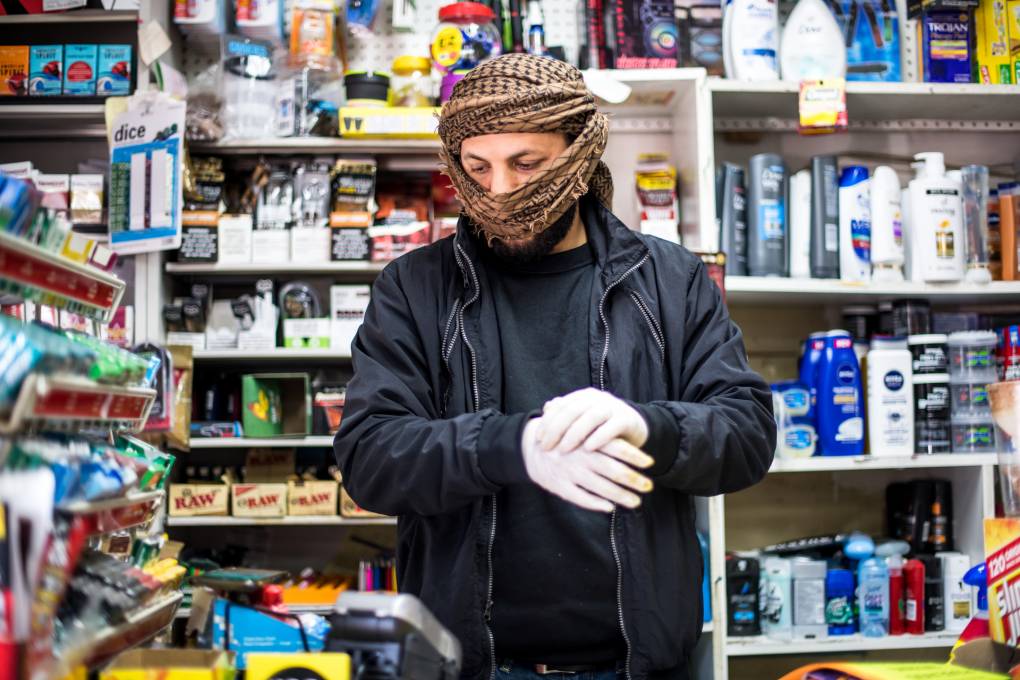
"caption": "Mohamed Darhan, 30, an employee at Sunrise Market in Oakland on April 1, 2020. Darhan said he regularly sanitizes his gloves and the counter, and posts signs reminding customers to keep a distance from each other (and from him) and not to come in the store if they're feeling sick. ",
"description": null,
"title": "RS42502_005_KQED_Oakland_EssentialWorkers_04012020-qut (1)",
"credit": "Beth LaBerge/KQED",
"status": "inherit",
"isLoading": false,
"fetchFailed": false
},
"news_11809878": {
"type": "attachments",
"id": "news_11809878",
"meta": {
"index": "attachments_1716263798",
"site": "news",
"id": "11809878",
"found": true
},
"parent": 11809671,
"imgSizes": {
"apple_news_ca_landscape_5_5": {
"file": "https://ww2.kqed.org/app/uploads/sites/10/2020/03/RS42460_GettyImages-1216024242-qut-1044x783.jpg",
"width": 1044,
"mimeType": "image/jpeg",
"height": 783
},
"apple_news_ca_square_4_0": {
"file": "https://ww2.kqed.org/app/uploads/sites/10/2020/03/RS42460_GettyImages-1216024242-qut-470x470.jpg",
"width": 470,
"mimeType": "image/jpeg",
"height": 470
},
"twentyfourteen-full-width": {
"file": "https://ww2.kqed.org/app/uploads/sites/10/2020/03/RS42460_GettyImages-1216024242-qut-1038x576.jpg",
"width": 1038,
"mimeType": "image/jpeg",
"height": 576
},
"thumbnail": {
"file": "https://ww2.kqed.org/app/uploads/sites/10/2020/03/RS42460_GettyImages-1216024242-qut-160x100.jpg",
"width": 160,
"mimeType": "image/jpeg",
"height": 100
},
"post-thumbnail": {
"file": "https://ww2.kqed.org/app/uploads/sites/10/2020/03/RS42460_GettyImages-1216024242-qut-672x372.jpg",
"width": 672,
"mimeType": "image/jpeg",
"height": 372
},
"kqedFullSize": {
"file": "https://ww2.kqed.org/app/uploads/sites/10/2020/03/RS42460_GettyImages-1216024242-qut.jpg",
"width": 1920,
"height": 1205
},
"apple_news_ca_landscape_4_7": {
"file": "https://ww2.kqed.org/app/uploads/sites/10/2020/03/RS42460_GettyImages-1216024242-qut-632x474.jpg",
"width": 632,
"mimeType": "image/jpeg",
"height": 474
},
"large": {
"file": "https://ww2.kqed.org/app/uploads/sites/10/2020/03/RS42460_GettyImages-1216024242-qut-1020x640.jpg",
"width": 1020,
"mimeType": "image/jpeg",
"height": 640
},
"apple_news_ca_landscape_4_0": {
"file": "https://ww2.kqed.org/app/uploads/sites/10/2020/03/RS42460_GettyImages-1216024242-qut-536x402.jpg",
"width": 536,
"mimeType": "image/jpeg",
"height": 402
},
"apple_news_ca_portrait_12_9": {
"file": "https://ww2.kqed.org/app/uploads/sites/10/2020/03/RS42460_GettyImages-1216024242-qut-1122x1205.jpg",
"width": 1122,
"mimeType": "image/jpeg",
"height": 1205
},
"medium": {
"file": "https://ww2.kqed.org/app/uploads/sites/10/2020/03/RS42460_GettyImages-1216024242-qut-800x502.jpg",
"width": 800,
"mimeType": "image/jpeg",
"height": 502
},
"apple_news_ca_portrait_4_0": {
"file": "https://ww2.kqed.org/app/uploads/sites/10/2020/03/RS42460_GettyImages-1216024242-qut-354x472.jpg",
"width": 354,
"mimeType": "image/jpeg",
"height": 472
},
"apple_news_ca_portrait_9_7": {
"file": "https://ww2.kqed.org/app/uploads/sites/10/2020/03/RS42460_GettyImages-1216024242-qut-840x1120.jpg",
"width": 840,
"mimeType": "image/jpeg",
"height": 1120
},
"apple_news_ca_landscape_12_9": {
"file": "https://ww2.kqed.org/app/uploads/sites/10/2020/03/RS42460_GettyImages-1216024242-qut-1832x1205.jpg",
"width": 1832,
"mimeType": "image/jpeg",
"height": 1205
},
"apple_news_ca_square_9_7": {
"file": "https://ww2.kqed.org/app/uploads/sites/10/2020/03/RS42460_GettyImages-1216024242-qut-1104x1104.jpg",
"width": 1104,
"mimeType": "image/jpeg",
"height": 1104
},
"apple_news_ca_portrait_4_7": {
"file": "https://ww2.kqed.org/app/uploads/sites/10/2020/03/RS42460_GettyImages-1216024242-qut-414x552.jpg",
"width": 414,
"mimeType": "image/jpeg",
"height": 552
},
"apple_news_ca_square_12_9": {
"file": "https://ww2.kqed.org/app/uploads/sites/10/2020/03/RS42460_GettyImages-1216024242-qut-1472x1205.jpg",
"width": 1472,
"mimeType": "image/jpeg",
"height": 1205
},
"apple_news_ca_portrait_5_5": {
"file": "https://ww2.kqed.org/app/uploads/sites/10/2020/03/RS42460_GettyImages-1216024242-qut-687x916.jpg",
"width": 687,
"mimeType": "image/jpeg",
"height": 916
},
"full-width": {
"file": "https://ww2.kqed.org/app/uploads/sites/10/2020/03/RS42460_GettyImages-1216024242-qut-1920x1205.jpg",
"width": 1920,
"mimeType": "image/jpeg",
"height": 1205
},
"apple_news_ca_square_4_7": {
"file": "https://ww2.kqed.org/app/uploads/sites/10/2020/03/RS42460_GettyImages-1216024242-qut-550x550.jpg",
"width": 550,
"mimeType": "image/jpeg",
"height": 550
},
"apple_news_ca_landscape_9_7": {
"file": "https://ww2.kqed.org/app/uploads/sites/10/2020/03/RS42460_GettyImages-1216024242-qut-1376x1032.jpg",
"width": 1376,
"mimeType": "image/jpeg",
"height": 1032
},
"apple_news_ca_square_5_5": {
"file": "https://ww2.kqed.org/app/uploads/sites/10/2020/03/RS42460_GettyImages-1216024242-qut-912x912.jpg",
"width": 912,
"mimeType": "image/jpeg",
"height": 912
}
},
"publishDate": 1585689712,
"modified": 1585689934,
"caption": "Tieks by Gavrieli, a Los Angeles-based shoemaker, has retrained employees to make masks from sewing machines and launched an online campaign teaching people how to make the masks for donation at home, after learning of a need for masks in hospitals during the battle against COVID-19. The cotton masks are intended for use by medical workers in non-coronavirus situations.",
"description": null,
"title": "Coronavirus Pandemic Causes Climate Of Anxiety And Changing Routines In America",
"credit": "Mario Tama/Getty Images",
"status": "inherit",
"isLoading": false,
"fetchFailed": false
},
"news_11809419": {
"type": "attachments",
"id": "news_11809419",
"meta": {
"index": "attachments_1716263798",
"site": "news",
"id": "11809419",
"found": true
},
"parent": 11808522,
"imgSizes": {
"apple_news_ca_landscape_5_5": {
"file": "https://ww2.kqed.org/app/uploads/sites/10/2020/03/RS42338_004_KQED_SanFrancisco_ChaseCenter_03272020-qut-1044x783.jpg",
"width": 1044,
"mimeType": "image/jpeg",
"height": 783
},
"apple_news_ca_square_4_0": {
"file": "https://ww2.kqed.org/app/uploads/sites/10/2020/03/RS42338_004_KQED_SanFrancisco_ChaseCenter_03272020-qut-470x470.jpg",
"width": 470,
"mimeType": "image/jpeg",
"height": 470
},
"twentyfourteen-full-width": {
"file": "https://ww2.kqed.org/app/uploads/sites/10/2020/03/RS42338_004_KQED_SanFrancisco_ChaseCenter_03272020-qut-1038x576.jpg",
"width": 1038,
"mimeType": "image/jpeg",
"height": 576
},
"thumbnail": {
"file": "https://ww2.kqed.org/app/uploads/sites/10/2020/03/RS42338_004_KQED_SanFrancisco_ChaseCenter_03272020-qut-160x107.jpg",
"width": 160,
"mimeType": "image/jpeg",
"height": 107
},
"post-thumbnail": {
"file": "https://ww2.kqed.org/app/uploads/sites/10/2020/03/RS42338_004_KQED_SanFrancisco_ChaseCenter_03272020-qut-672x372.jpg",
"width": 672,
"mimeType": "image/jpeg",
"height": 372
},
"kqedFullSize": {
"file": "https://ww2.kqed.org/app/uploads/sites/10/2020/03/RS42338_004_KQED_SanFrancisco_ChaseCenter_03272020-qut.jpg",
"width": 1920,
"height": 1280
},
"apple_news_ca_landscape_4_7": {
"file": "https://ww2.kqed.org/app/uploads/sites/10/2020/03/RS42338_004_KQED_SanFrancisco_ChaseCenter_03272020-qut-632x474.jpg",
"width": 632,
"mimeType": "image/jpeg",
"height": 474
},
"large": {
"file": "https://ww2.kqed.org/app/uploads/sites/10/2020/03/RS42338_004_KQED_SanFrancisco_ChaseCenter_03272020-qut-1020x680.jpg",
"width": 1020,
"mimeType": "image/jpeg",
"height": 680
},
"apple_news_ca_landscape_4_0": {
"file": "https://ww2.kqed.org/app/uploads/sites/10/2020/03/RS42338_004_KQED_SanFrancisco_ChaseCenter_03272020-qut-536x402.jpg",
"width": 536,
"mimeType": "image/jpeg",
"height": 402
},
"apple_news_ca_portrait_12_9": {
"file": "https://ww2.kqed.org/app/uploads/sites/10/2020/03/RS42338_004_KQED_SanFrancisco_ChaseCenter_03272020-qut-1122x1280.jpg",
"width": 1122,
"mimeType": "image/jpeg",
"height": 1280
},
"medium": {
"file": "https://ww2.kqed.org/app/uploads/sites/10/2020/03/RS42338_004_KQED_SanFrancisco_ChaseCenter_03272020-qut-800x533.jpg",
"width": 800,
"mimeType": "image/jpeg",
"height": 533
},
"apple_news_ca_portrait_4_0": {
"file": "https://ww2.kqed.org/app/uploads/sites/10/2020/03/RS42338_004_KQED_SanFrancisco_ChaseCenter_03272020-qut-354x472.jpg",
"width": 354,
"mimeType": "image/jpeg",
"height": 472
},
"apple_news_ca_portrait_9_7": {
"file": "https://ww2.kqed.org/app/uploads/sites/10/2020/03/RS42338_004_KQED_SanFrancisco_ChaseCenter_03272020-qut-840x1120.jpg",
"width": 840,
"mimeType": "image/jpeg",
"height": 1120
},
"apple_news_ca_landscape_12_9": {
"file": "https://ww2.kqed.org/app/uploads/sites/10/2020/03/RS42338_004_KQED_SanFrancisco_ChaseCenter_03272020-qut-1832x1280.jpg",
"width": 1832,
"mimeType": "image/jpeg",
"height": 1280
},
"apple_news_ca_square_9_7": {
"file": "https://ww2.kqed.org/app/uploads/sites/10/2020/03/RS42338_004_KQED_SanFrancisco_ChaseCenter_03272020-qut-1104x1104.jpg",
"width": 1104,
"mimeType": "image/jpeg",
"height": 1104
},
"apple_news_ca_portrait_4_7": {
"file": "https://ww2.kqed.org/app/uploads/sites/10/2020/03/RS42338_004_KQED_SanFrancisco_ChaseCenter_03272020-qut-414x552.jpg",
"width": 414,
"mimeType": "image/jpeg",
"height": 552
},
"apple_news_ca_square_12_9": {
"file": "https://ww2.kqed.org/app/uploads/sites/10/2020/03/RS42338_004_KQED_SanFrancisco_ChaseCenter_03272020-qut-1472x1280.jpg",
"width": 1472,
"mimeType": "image/jpeg",
"height": 1280
},
"apple_news_ca_portrait_5_5": {
"file": "https://ww2.kqed.org/app/uploads/sites/10/2020/03/RS42338_004_KQED_SanFrancisco_ChaseCenter_03272020-qut-687x916.jpg",
"width": 687,
"mimeType": "image/jpeg",
"height": 916
},
"full-width": {
"file": "https://ww2.kqed.org/app/uploads/sites/10/2020/03/RS42338_004_KQED_SanFrancisco_ChaseCenter_03272020-qut-1920x1280.jpg",
"width": 1920,
"mimeType": "image/jpeg",
"height": 1280
},
"apple_news_ca_square_4_7": {
"file": "https://ww2.kqed.org/app/uploads/sites/10/2020/03/RS42338_004_KQED_SanFrancisco_ChaseCenter_03272020-qut-550x550.jpg",
"width": 550,
"mimeType": "image/jpeg",
"height": 550
},
"apple_news_ca_landscape_9_7": {
"file": "https://ww2.kqed.org/app/uploads/sites/10/2020/03/RS42338_004_KQED_SanFrancisco_ChaseCenter_03272020-qut-1376x1032.jpg",
"width": 1376,
"mimeType": "image/jpeg",
"height": 1032
},
"apple_news_ca_square_5_5": {
"file": "https://ww2.kqed.org/app/uploads/sites/10/2020/03/RS42338_004_KQED_SanFrancisco_ChaseCenter_03272020-qut-912x912.jpg",
"width": 912,
"mimeType": "image/jpeg",
"height": 912
}
},
"publishDate": 1585371272,
"modified": 1585371366,
"caption": "The Chase Center in San Francisco on March 27, 2020.",
"description": null,
"title": "The Chase Center in San Francisco on Mar. 27, 2020.",
"credit": "Beth LaBerge/KQED",
"status": "inherit",
"isLoading": false,
"fetchFailed": false
},
"news_11808805": {
"type": "attachments",
"id": "news_11808805",
"meta": {
"index": "attachments_1716263798",
"site": "news",
"id": "11808805",
"found": true
},
"parent": 11808711,
"imgSizes": {
"apple_news_ca_landscape_5_5": {
"file": "https://ww2.kqed.org/app/uploads/sites/10/2020/03/90245715_3091677367509822_8359472221764190208_o-1044x720.jpg",
"width": 1044,
"mimeType": "image/jpeg",
"height": 720
},
"apple_news_ca_square_4_0": {
"file": "https://ww2.kqed.org/app/uploads/sites/10/2020/03/90245715_3091677367509822_8359472221764190208_o-470x470.jpg",
"width": 470,
"mimeType": "image/jpeg",
"height": 470
},
"twentyfourteen-full-width": {
"file": "https://ww2.kqed.org/app/uploads/sites/10/2020/03/90245715_3091677367509822_8359472221764190208_o-1038x576.jpg",
"width": 1038,
"mimeType": "image/jpeg",
"height": 576
},
"thumbnail": {
"file": "https://ww2.kqed.org/app/uploads/sites/10/2020/03/90245715_3091677367509822_8359472221764190208_o-160x90.jpg",
"width": 160,
"mimeType": "image/jpeg",
"height": 90
},
"post-thumbnail": {
"file": "https://ww2.kqed.org/app/uploads/sites/10/2020/03/90245715_3091677367509822_8359472221764190208_o-672x372.jpg",
"width": 672,
"mimeType": "image/jpeg",
"height": 372
},
"kqedFullSize": {
"file": "https://ww2.kqed.org/app/uploads/sites/10/2020/03/90245715_3091677367509822_8359472221764190208_o.jpg",
"width": 1280,
"height": 720
},
"apple_news_ca_landscape_4_7": {
"file": "https://ww2.kqed.org/app/uploads/sites/10/2020/03/90245715_3091677367509822_8359472221764190208_o-632x474.jpg",
"width": 632,
"mimeType": "image/jpeg",
"height": 474
},
"large": {
"file": "https://ww2.kqed.org/app/uploads/sites/10/2020/03/90245715_3091677367509822_8359472221764190208_o-1020x574.jpg",
"width": 1020,
"mimeType": "image/jpeg",
"height": 574
},
"apple_news_ca_landscape_4_0": {
"file": "https://ww2.kqed.org/app/uploads/sites/10/2020/03/90245715_3091677367509822_8359472221764190208_o-536x402.jpg",
"width": 536,
"mimeType": "image/jpeg",
"height": 402
},
"apple_news_ca_portrait_12_9": {
"file": "https://ww2.kqed.org/app/uploads/sites/10/2020/03/90245715_3091677367509822_8359472221764190208_o-1122x720.jpg",
"width": 1122,
"mimeType": "image/jpeg",
"height": 720
},
"medium": {
"file": "https://ww2.kqed.org/app/uploads/sites/10/2020/03/90245715_3091677367509822_8359472221764190208_o-800x450.jpg",
"width": 800,
"mimeType": "image/jpeg",
"height": 450
},
"apple_news_ca_portrait_4_0": {
"file": "https://ww2.kqed.org/app/uploads/sites/10/2020/03/90245715_3091677367509822_8359472221764190208_o-354x472.jpg",
"width": 354,
"mimeType": "image/jpeg",
"height": 472
},
"apple_news_ca_portrait_9_7": {
"file": "https://ww2.kqed.org/app/uploads/sites/10/2020/03/90245715_3091677367509822_8359472221764190208_o-840x720.jpg",
"width": 840,
"mimeType": "image/jpeg",
"height": 720
},
"apple_news_ca_square_9_7": {
"file": "https://ww2.kqed.org/app/uploads/sites/10/2020/03/90245715_3091677367509822_8359472221764190208_o-1104x720.jpg",
"width": 1104,
"mimeType": "image/jpeg",
"height": 720
},
"apple_news_ca_portrait_4_7": {
"file": "https://ww2.kqed.org/app/uploads/sites/10/2020/03/90245715_3091677367509822_8359472221764190208_o-414x552.jpg",
"width": 414,
"mimeType": "image/jpeg",
"height": 552
},
"apple_news_ca_portrait_5_5": {
"file": "https://ww2.kqed.org/app/uploads/sites/10/2020/03/90245715_3091677367509822_8359472221764190208_o-687x720.jpg",
"width": 687,
"mimeType": "image/jpeg",
"height": 720
},
"apple_news_ca_square_4_7": {
"file": "https://ww2.kqed.org/app/uploads/sites/10/2020/03/90245715_3091677367509822_8359472221764190208_o-550x550.jpg",
"width": 550,
"mimeType": "image/jpeg",
"height": 550
},
"apple_news_ca_square_5_5": {
"file": "https://ww2.kqed.org/app/uploads/sites/10/2020/03/90245715_3091677367509822_8359472221764190208_o-912x720.jpg",
"width": 912,
"mimeType": "image/jpeg",
"height": 720
}
},
"publishDate": 1585185117,
"modified": 1585335476,
"caption": "Enjoying the golden hour in \"Animal Crossing: New Horizons.\" No social distancing necessary.",
"description": null,
"title": "90245715_3091677367509822_8359472221764190208_o",
"credit": "Ariella Markowitz/KQED",
"status": "inherit",
"isLoading": false,
"fetchFailed": false
},
"news_11809217": {
"type": "attachments",
"id": "news_11809217",
"meta": {
"index": "attachments_1716263798",
"site": "news",
"id": "11809217",
"found": true
},
"parent": 11809184,
"imgSizes": {
"apple_news_ca_landscape_5_5": {
"file": "https://ww2.kqed.org/app/uploads/sites/10/2020/03/RS42333_GettyImages-1207671954-qut-1044x783.jpg",
"width": 1044,
"mimeType": "image/jpeg",
"height": 783
},
"apple_news_ca_square_4_0": {
"file": "https://ww2.kqed.org/app/uploads/sites/10/2020/03/RS42333_GettyImages-1207671954-qut-470x470.jpg",
"width": 470,
"mimeType": "image/jpeg",
"height": 470
},
"twentyfourteen-full-width": {
"file": "https://ww2.kqed.org/app/uploads/sites/10/2020/03/RS42333_GettyImages-1207671954-qut-1038x576.jpg",
"width": 1038,
"mimeType": "image/jpeg",
"height": 576
},
"thumbnail": {
"file": "https://ww2.kqed.org/app/uploads/sites/10/2020/03/RS42333_GettyImages-1207671954-qut-160x96.jpg",
"width": 160,
"mimeType": "image/jpeg",
"height": 96
},
"post-thumbnail": {
"file": "https://ww2.kqed.org/app/uploads/sites/10/2020/03/RS42333_GettyImages-1207671954-qut-672x372.jpg",
"width": 672,
"mimeType": "image/jpeg",
"height": 372
},
"kqedFullSize": {
"file": "https://ww2.kqed.org/app/uploads/sites/10/2020/03/RS42333_GettyImages-1207671954-qut.jpg",
"width": 1920,
"height": 1148
},
"apple_news_ca_landscape_4_7": {
"file": "https://ww2.kqed.org/app/uploads/sites/10/2020/03/RS42333_GettyImages-1207671954-qut-632x474.jpg",
"width": 632,
"mimeType": "image/jpeg",
"height": 474
},
"large": {
"file": "https://ww2.kqed.org/app/uploads/sites/10/2020/03/RS42333_GettyImages-1207671954-qut-1020x610.jpg",
"width": 1020,
"mimeType": "image/jpeg",
"height": 610
},
"apple_news_ca_landscape_4_0": {
"file": "https://ww2.kqed.org/app/uploads/sites/10/2020/03/RS42333_GettyImages-1207671954-qut-536x402.jpg",
"width": 536,
"mimeType": "image/jpeg",
"height": 402
},
"apple_news_ca_portrait_12_9": {
"file": "https://ww2.kqed.org/app/uploads/sites/10/2020/03/RS42333_GettyImages-1207671954-qut-1122x1148.jpg",
"width": 1122,
"mimeType": "image/jpeg",
"height": 1148
},
"medium": {
"file": "https://ww2.kqed.org/app/uploads/sites/10/2020/03/RS42333_GettyImages-1207671954-qut-800x478.jpg",
"width": 800,
"mimeType": "image/jpeg",
"height": 478
},
"apple_news_ca_portrait_4_0": {
"file": "https://ww2.kqed.org/app/uploads/sites/10/2020/03/RS42333_GettyImages-1207671954-qut-354x472.jpg",
"width": 354,
"mimeType": "image/jpeg",
"height": 472
},
"apple_news_ca_portrait_9_7": {
"file": "https://ww2.kqed.org/app/uploads/sites/10/2020/03/RS42333_GettyImages-1207671954-qut-840x1120.jpg",
"width": 840,
"mimeType": "image/jpeg",
"height": 1120
},
"apple_news_ca_landscape_12_9": {
"file": "https://ww2.kqed.org/app/uploads/sites/10/2020/03/RS42333_GettyImages-1207671954-qut-1832x1148.jpg",
"width": 1832,
"mimeType": "image/jpeg",
"height": 1148
},
"apple_news_ca_square_9_7": {
"file": "https://ww2.kqed.org/app/uploads/sites/10/2020/03/RS42333_GettyImages-1207671954-qut-1104x1104.jpg",
"width": 1104,
"mimeType": "image/jpeg",
"height": 1104
},
"apple_news_ca_portrait_4_7": {
"file": "https://ww2.kqed.org/app/uploads/sites/10/2020/03/RS42333_GettyImages-1207671954-qut-414x552.jpg",
"width": 414,
"mimeType": "image/jpeg",
"height": 552
},
"apple_news_ca_square_12_9": {
"file": "https://ww2.kqed.org/app/uploads/sites/10/2020/03/RS42333_GettyImages-1207671954-qut-1472x1148.jpg",
"width": 1472,
"mimeType": "image/jpeg",
"height": 1148
},
"apple_news_ca_portrait_5_5": {
"file": "https://ww2.kqed.org/app/uploads/sites/10/2020/03/RS42333_GettyImages-1207671954-qut-687x916.jpg",
"width": 687,
"mimeType": "image/jpeg",
"height": 916
},
"full-width": {
"file": "https://ww2.kqed.org/app/uploads/sites/10/2020/03/RS42333_GettyImages-1207671954-qut-1920x1148.jpg",
"width": 1920,
"mimeType": "image/jpeg",
"height": 1148
},
"apple_news_ca_square_4_7": {
"file": "https://ww2.kqed.org/app/uploads/sites/10/2020/03/RS42333_GettyImages-1207671954-qut-550x550.jpg",
"width": 550,
"mimeType": "image/jpeg",
"height": 550
},
"apple_news_ca_landscape_9_7": {
"file": "https://ww2.kqed.org/app/uploads/sites/10/2020/03/RS42333_GettyImages-1207671954-qut-1376x1032.jpg",
"width": 1376,
"mimeType": "image/jpeg",
"height": 1032
},
"apple_news_ca_square_5_5": {
"file": "https://ww2.kqed.org/app/uploads/sites/10/2020/03/RS42333_GettyImages-1207671954-qut-912x912.jpg",
"width": 912,
"mimeType": "image/jpeg",
"height": 912
}
},
"publishDate": 1585342033,
"modified": 1585349509,
"caption": "An Instacart worker scans barcodes showing proof of purchase for a customer while picking up groceries. Instacart shoppers are planning a nationwide strike on Monday, March 30, 2020.",
"description": null,
"title": "US-VIRUS-HEALTH-EPIDEMIC",
"credit": "Frederic J. Brown/AFP via Getty Images",
"status": "inherit",
"isLoading": false,
"fetchFailed": false
},
"news_11809026": {
"type": "attachments",
"id": "news_11809026",
"meta": {
"index": "attachments_1716263798",
"site": "news",
"id": "11809026",
"found": true
},
"parent": 11808977,
"imgSizes": {
"apple_news_ca_landscape_5_5": {
"file": "https://ww2.kqed.org/app/uploads/sites/10/2020/03/e1ac44a9-86e8-49e0-94a8-9f2cce9834f0-1044x783.jpeg",
"width": 1044,
"mimeType": "image/jpeg",
"height": 783
},
"apple_news_ca_square_4_0": {
"file": "https://ww2.kqed.org/app/uploads/sites/10/2020/03/e1ac44a9-86e8-49e0-94a8-9f2cce9834f0-470x470.jpeg",
"width": 470,
"mimeType": "image/jpeg",
"height": 470
},
"twentyfourteen-full-width": {
"file": "https://ww2.kqed.org/app/uploads/sites/10/2020/03/e1ac44a9-86e8-49e0-94a8-9f2cce9834f0-1038x576.jpeg",
"width": 1038,
"mimeType": "image/jpeg",
"height": 576
},
"thumbnail": {
"file": "https://ww2.kqed.org/app/uploads/sites/10/2020/03/e1ac44a9-86e8-49e0-94a8-9f2cce9834f0-160x120.jpeg",
"width": 160,
"mimeType": "image/jpeg",
"height": 120
},
"post-thumbnail": {
"file": "https://ww2.kqed.org/app/uploads/sites/10/2020/03/e1ac44a9-86e8-49e0-94a8-9f2cce9834f0-672x372.jpeg",
"width": 672,
"mimeType": "image/jpeg",
"height": 372
},
"kqedFullSize": {
"file": "https://ww2.kqed.org/app/uploads/sites/10/2020/03/e1ac44a9-86e8-49e0-94a8-9f2cce9834f0.jpeg",
"width": 1600,
"height": 1200
},
"apple_news_ca_landscape_4_7": {
"file": "https://ww2.kqed.org/app/uploads/sites/10/2020/03/e1ac44a9-86e8-49e0-94a8-9f2cce9834f0-632x474.jpeg",
"width": 632,
"mimeType": "image/jpeg",
"height": 474
},
"large": {
"file": "https://ww2.kqed.org/app/uploads/sites/10/2020/03/e1ac44a9-86e8-49e0-94a8-9f2cce9834f0-1020x765.jpeg",
"width": 1020,
"mimeType": "image/jpeg",
"height": 765
},
"apple_news_ca_landscape_4_0": {
"file": "https://ww2.kqed.org/app/uploads/sites/10/2020/03/e1ac44a9-86e8-49e0-94a8-9f2cce9834f0-536x402.jpeg",
"width": 536,
"mimeType": "image/jpeg",
"height": 402
},
"apple_news_ca_portrait_12_9": {
"file": "https://ww2.kqed.org/app/uploads/sites/10/2020/03/e1ac44a9-86e8-49e0-94a8-9f2cce9834f0-1122x1200.jpeg",
"width": 1122,
"mimeType": "image/jpeg",
"height": 1200
},
"medium": {
"file": "https://ww2.kqed.org/app/uploads/sites/10/2020/03/e1ac44a9-86e8-49e0-94a8-9f2cce9834f0-800x600.jpeg",
"width": 800,
"mimeType": "image/jpeg",
"height": 600
},
"apple_news_ca_portrait_4_0": {
"file": "https://ww2.kqed.org/app/uploads/sites/10/2020/03/e1ac44a9-86e8-49e0-94a8-9f2cce9834f0-354x472.jpeg",
"width": 354,
"mimeType": "image/jpeg",
"height": 472
},
"apple_news_ca_portrait_9_7": {
"file": "https://ww2.kqed.org/app/uploads/sites/10/2020/03/e1ac44a9-86e8-49e0-94a8-9f2cce9834f0-840x1120.jpeg",
"width": 840,
"mimeType": "image/jpeg",
"height": 1120
},
"apple_news_ca_square_9_7": {
"file": "https://ww2.kqed.org/app/uploads/sites/10/2020/03/e1ac44a9-86e8-49e0-94a8-9f2cce9834f0-1104x1104.jpeg",
"width": 1104,
"mimeType": "image/jpeg",
"height": 1104
},
"apple_news_ca_portrait_4_7": {
"file": "https://ww2.kqed.org/app/uploads/sites/10/2020/03/e1ac44a9-86e8-49e0-94a8-9f2cce9834f0-414x552.jpeg",
"width": 414,
"mimeType": "image/jpeg",
"height": 552
},
"apple_news_ca_square_12_9": {
"file": "https://ww2.kqed.org/app/uploads/sites/10/2020/03/e1ac44a9-86e8-49e0-94a8-9f2cce9834f0-1472x1200.jpeg",
"width": 1472,
"mimeType": "image/jpeg",
"height": 1200
},
"apple_news_ca_portrait_5_5": {
"file": "https://ww2.kqed.org/app/uploads/sites/10/2020/03/e1ac44a9-86e8-49e0-94a8-9f2cce9834f0-687x916.jpeg",
"width": 687,
"mimeType": "image/jpeg",
"height": 916
},
"apple_news_ca_square_4_7": {
"file": "https://ww2.kqed.org/app/uploads/sites/10/2020/03/e1ac44a9-86e8-49e0-94a8-9f2cce9834f0-550x550.jpeg",
"width": 550,
"mimeType": "image/jpeg",
"height": 550
},
"apple_news_ca_landscape_9_7": {
"file": "https://ww2.kqed.org/app/uploads/sites/10/2020/03/e1ac44a9-86e8-49e0-94a8-9f2cce9834f0-1376x1032.jpeg",
"width": 1376,
"mimeType": "image/jpeg",
"height": 1032
},
"apple_news_ca_square_5_5": {
"file": "https://ww2.kqed.org/app/uploads/sites/10/2020/03/e1ac44a9-86e8-49e0-94a8-9f2cce9834f0-912x912.jpeg",
"width": 912,
"mimeType": "image/jpeg",
"height": 912
}
},
"publishDate": 1585261924,
"modified": 1585338393,
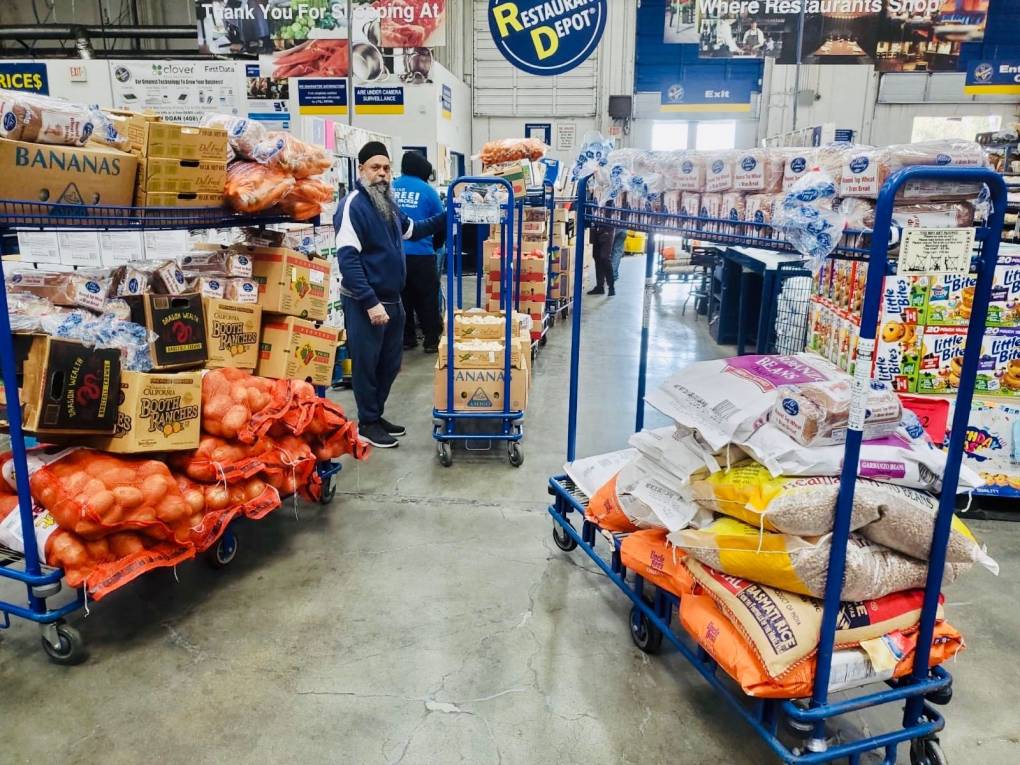
"caption": "Harpreet Singh stands in a Restaurant Depot, collecting supplies for the Silicon Valley Gudwara's free grocery delivery service. Local temples and churches have been brainstorming how to support their congregations under COVID-19 shelter-in-place orders.",
"description": "Harpreet Singh stands in a Restaurant Depot, collecting supplies for the Silicon Valley Gudwara's free grocery delivery service. Local temples and churches have been brainstorming how to support their congregation under COVID-19.",
"title": "e1ac44a9-86e8-49e0-94a8-9f2cce9834f0",
"credit": "Photo courtesy of Harpreet Singh Kohli",
"status": "inherit",
"isLoading": false,
"fetchFailed": false
},
"news_11808593": {
"type": "attachments",
"id": "news_11808593",
"meta": {
"index": "attachments_1716263798",
"site": "news",
"id": "11808593",
"found": true
},
"parent": 11808489,
"imgSizes": {
"apple_news_ca_landscape_5_5": {
"file": "https://ww2.kqed.org/app/uploads/sites/10/2020/03/RS42265_001_KQED_Berkeley_Peets_MaraSchneider_03242020-qut-1044x783.jpg",
"width": 1044,
"mimeType": "image/jpeg",
"height": 783
},
"apple_news_ca_square_4_0": {
"file": "https://ww2.kqed.org/app/uploads/sites/10/2020/03/RS42265_001_KQED_Berkeley_Peets_MaraSchneider_03242020-qut-470x470.jpg",
"width": 470,
"mimeType": "image/jpeg",
"height": 470
},
"twentyfourteen-full-width": {
"file": "https://ww2.kqed.org/app/uploads/sites/10/2020/03/RS42265_001_KQED_Berkeley_Peets_MaraSchneider_03242020-qut-1038x576.jpg",
"width": 1038,
"mimeType": "image/jpeg",
"height": 576
},
"thumbnail": {
"file": "https://ww2.kqed.org/app/uploads/sites/10/2020/03/RS42265_001_KQED_Berkeley_Peets_MaraSchneider_03242020-qut-160x107.jpg",
"width": 160,
"mimeType": "image/jpeg",
"height": 107
},
"post-thumbnail": {
"file": "https://ww2.kqed.org/app/uploads/sites/10/2020/03/RS42265_001_KQED_Berkeley_Peets_MaraSchneider_03242020-qut-672x372.jpg",
"width": 672,
"mimeType": "image/jpeg",
"height": 372
},
"kqedFullSize": {
"file": "https://ww2.kqed.org/app/uploads/sites/10/2020/03/RS42265_001_KQED_Berkeley_Peets_MaraSchneider_03242020-qut.jpg",
"width": 1920,
"height": 1280
},
"apple_news_ca_landscape_4_7": {
"file": "https://ww2.kqed.org/app/uploads/sites/10/2020/03/RS42265_001_KQED_Berkeley_Peets_MaraSchneider_03242020-qut-632x474.jpg",
"width": 632,
"mimeType": "image/jpeg",
"height": 474
},
"large": {
"file": "https://ww2.kqed.org/app/uploads/sites/10/2020/03/RS42265_001_KQED_Berkeley_Peets_MaraSchneider_03242020-qut-1020x680.jpg",
"width": 1020,
"mimeType": "image/jpeg",
"height": 680
},
"apple_news_ca_landscape_4_0": {
"file": "https://ww2.kqed.org/app/uploads/sites/10/2020/03/RS42265_001_KQED_Berkeley_Peets_MaraSchneider_03242020-qut-536x402.jpg",
"width": 536,
"mimeType": "image/jpeg",
"height": 402
},
"apple_news_ca_portrait_12_9": {
"file": "https://ww2.kqed.org/app/uploads/sites/10/2020/03/RS42265_001_KQED_Berkeley_Peets_MaraSchneider_03242020-qut-1122x1280.jpg",
"width": 1122,
"mimeType": "image/jpeg",
"height": 1280
},
"medium": {
"file": "https://ww2.kqed.org/app/uploads/sites/10/2020/03/RS42265_001_KQED_Berkeley_Peets_MaraSchneider_03242020-qut-800x533.jpg",
"width": 800,
"mimeType": "image/jpeg",
"height": 533
},
"apple_news_ca_portrait_4_0": {
"file": "https://ww2.kqed.org/app/uploads/sites/10/2020/03/RS42265_001_KQED_Berkeley_Peets_MaraSchneider_03242020-qut-354x472.jpg",
"width": 354,
"mimeType": "image/jpeg",
"height": 472
},
"apple_news_ca_portrait_9_7": {
"file": "https://ww2.kqed.org/app/uploads/sites/10/2020/03/RS42265_001_KQED_Berkeley_Peets_MaraSchneider_03242020-qut-840x1120.jpg",
"width": 840,
"mimeType": "image/jpeg",
"height": 1120
},
"apple_news_ca_landscape_12_9": {
"file": "https://ww2.kqed.org/app/uploads/sites/10/2020/03/RS42265_001_KQED_Berkeley_Peets_MaraSchneider_03242020-qut-1832x1280.jpg",
"width": 1832,
"mimeType": "image/jpeg",
"height": 1280
},
"apple_news_ca_square_9_7": {
"file": "https://ww2.kqed.org/app/uploads/sites/10/2020/03/RS42265_001_KQED_Berkeley_Peets_MaraSchneider_03242020-qut-1104x1104.jpg",
"width": 1104,
"mimeType": "image/jpeg",
"height": 1104
},
"apple_news_ca_portrait_4_7": {
"file": "https://ww2.kqed.org/app/uploads/sites/10/2020/03/RS42265_001_KQED_Berkeley_Peets_MaraSchneider_03242020-qut-414x552.jpg",
"width": 414,
"mimeType": "image/jpeg",
"height": 552
},
"apple_news_ca_square_12_9": {
"file": "https://ww2.kqed.org/app/uploads/sites/10/2020/03/RS42265_001_KQED_Berkeley_Peets_MaraSchneider_03242020-qut-1472x1280.jpg",
"width": 1472,
"mimeType": "image/jpeg",
"height": 1280
},
"apple_news_ca_portrait_5_5": {
"file": "https://ww2.kqed.org/app/uploads/sites/10/2020/03/RS42265_001_KQED_Berkeley_Peets_MaraSchneider_03242020-qut-687x916.jpg",
"width": 687,
"mimeType": "image/jpeg",
"height": 916
},
"full-width": {
"file": "https://ww2.kqed.org/app/uploads/sites/10/2020/03/RS42265_001_KQED_Berkeley_Peets_MaraSchneider_03242020-qut-1920x1280.jpg",
"width": 1920,
"mimeType": "image/jpeg",
"height": 1280
},
"apple_news_ca_square_4_7": {
"file": "https://ww2.kqed.org/app/uploads/sites/10/2020/03/RS42265_001_KQED_Berkeley_Peets_MaraSchneider_03242020-qut-550x550.jpg",
"width": 550,
"mimeType": "image/jpeg",
"height": 550
},
"apple_news_ca_landscape_9_7": {
"file": "https://ww2.kqed.org/app/uploads/sites/10/2020/03/RS42265_001_KQED_Berkeley_Peets_MaraSchneider_03242020-qut-1376x1032.jpg",
"width": 1376,
"mimeType": "image/jpeg",
"height": 1032
},
"apple_news_ca_square_5_5": {
"file": "https://ww2.kqed.org/app/uploads/sites/10/2020/03/RS42265_001_KQED_Berkeley_Peets_MaraSchneider_03242020-qut-912x912.jpg",
"width": 912,
"mimeType": "image/jpeg",
"height": 912
}
},
"publishDate": 1585105199,
"modified": 1585105307,
"caption": "Mara is a Peet's employee who is studying to be a nurse. ",
"description": null,
"title": "Peet's employee Mara Schneider in Berkeley on Mar. 24, 2020.",
"credit": "Beth LaBerge/KQED",
"status": "inherit",
"isLoading": false,
"fetchFailed": false
}
},
"audioPlayerReducer": {
"postId": "stream_live",
"isPaused": true,
"isPlaying": false,
"pfsActive": false,
"pledgeModalIsOpen": true,
"playerDrawerIsOpen": false,
"liveAudioPlayStartedAt": 0,
"liveAudioPlayContext": ""
},
"authorsReducer": {
"byline_news_11810891": {
"type": "authors",
"id": "byline_news_11810891",
"meta": {
"override": true
},
"slug": "byline_news_11810891",
"name": "Haley Gray",
"isLoading": false
},
"rachael-myrow": {
"type": "authors",
"id": "251",
"meta": {
"index": "authors_1716337520",
"id": "251",
"found": true
},
"name": "Rachael Myrow",
"firstName": "Rachael",
"lastName": "Myrow",
"slug": "rachael-myrow",
"email": "rmyrow@kqed.org",
"display_author_email": true,
"staff_mastheads": [
"news"
],
"title": "Senior Editor of KQED's Silicon Valley News Desk",
"bio": "• I write and edit stories about how Silicon Valley power and policies shape everyday life in California. I’m also passionate about making Bay Area history and culture more accessible to a broad public. • I’ve been a journalist for most of my life, starting in high school with The Franklin Press in Los Angeles, where I grew up. While earning my first degree in English at UC Berkeley, I got my start in public radio at KALX-FM. After completing a second degree in journalism at Cal, I landed my first professional job at Marketplace, then moved on to KPCC (now LAist), and then KQED, where I hosted The California Report for more than seven years. • My reporting has appeared on NPR, The World, WBUR’s \u003ci>Here & Now\u003c/i>, and the BBC. I also guest host for KQED’s \u003ci>Forum\u003c/i>, as well as the Commonwealth Club in San Francisco. • I speak periodically on media, democracy and technology issues, and do voiceover work for documentaries and educational video projects. • Outside of the studio, you'll find me hiking Bay Area trails and whipping up Insta-ready meals in my kitchen. • I do not accept gifts, money, or favors from anyone connected to my reporting, I don't pay people for information, and I do not support or donate to political causes. • I strive to treat the people I report on with fairness, honesty, and respect. I also recognize there are often multiple sides to a story and work to verify information through multiple sources and documentation. If I get something wrong, I correct it.",
"avatar": "https://secure.gravatar.com/avatar/3ed8a3c5f26025e4a805ba634cda8cd764906b97438a6d9ce216b044e340da4e?s=600&d=blank&r=g",
"twitter": "rachaelmyrow",
"bluesky": null,
"facebook": null,
"instagram": null,
"linkedin": "https://www.linkedin.com/in/rachaelmyrow/",
"sites": [
{
"site": "arts",
"roles": [
"administrator"
]
},
{
"site": "news",
"roles": [
"edit_others_posts",
"editor"
]
},
{
"site": "futureofyou",
"roles": [
"editor"
]
},
{
"site": "bayareabites",
"roles": [
"editor"
]
},
{
"site": "stateofhealth",
"roles": [
"editor"
]
},
{
"site": "science",
"roles": [
"editor"
]
},
{
"site": "food",
"roles": [
"editor"
]
},
{
"site": "forum",
"roles": [
"editor"
]
},
{
"site": "liveblog",
"roles": [
"author"
]
}
],
"headData": {
"title": "Rachael Myrow | KQED",
"description": "Senior Editor of KQED's Silicon Valley News Desk",
"ogImgSrc": "https://secure.gravatar.com/avatar/3ed8a3c5f26025e4a805ba634cda8cd764906b97438a6d9ce216b044e340da4e?s=600&d=blank&r=g",
"twImgSrc": "https://secure.gravatar.com/avatar/3ed8a3c5f26025e4a805ba634cda8cd764906b97438a6d9ce216b044e340da4e?s=600&d=blank&r=g"
},
"isLoading": false,
"link": "/author/rachael-myrow"
},
"samharnett": {
"type": "authors",
"id": "253",
"meta": {
"index": "authors_1716337520",
"id": "253",
"found": true
},
"name": "Sam Harnett",
"firstName": "Sam",
"lastName": "Harnett",
"slug": "samharnett",
"email": "samharnett@gmail.com",
"display_author_email": false,
"staff_mastheads": [],
"title": "KQED Contributor",
"bio": "Sam Harnett covered tech and work at KQED. He is the co-creator of \u003cem>\u003ca href=\"http://www.theworldaccordingtosound.org\">The World According to Sound\u003c/a>,\u003c/em> a 90-second podcast that features different sounds and the stories behind them.\r\n\r\nBefore coming to KQED, Sam worked as an independent reporter who contributed regularly to \u003cem>The California Report, Marketplace,\u003c/em> \u003cem>The World \u003c/em>and NPR.",
"avatar": "https://secure.gravatar.com/avatar/2538b972ac02f2b9546c7a6c59a0f3d0?s=600&d=blank&r=g",
"twitter": "Samwharnett",
"facebook": null,
"instagram": null,
"linkedin": null,
"sites": [
{
"site": "news",
"roles": [
"edit_others_posts",
"subscriber"
]
},
{
"site": "stateofhealth",
"roles": [
"author"
]
},
{
"site": "science",
"roles": [
"editor"
]
},
{
"site": "quest",
"roles": [
"subscriber"
]
}
],
"headData": {
"title": "Sam Harnett | KQED",
"description": "KQED Contributor",
"ogImgSrc": "https://secure.gravatar.com/avatar/2538b972ac02f2b9546c7a6c59a0f3d0?s=600&d=blank&r=g",
"twImgSrc": "https://secure.gravatar.com/avatar/2538b972ac02f2b9546c7a6c59a0f3d0?s=600&d=blank&r=g"
},
"isLoading": false,
"link": "/author/samharnett"
},
"vrancano": {
"type": "authors",
"id": "11276",
"meta": {
"index": "authors_1716337520",
"id": "11276",
"found": true
},
"name": "Vanessa Rancaño",
"firstName": "Vanessa",
"lastName": "Rancaño",
"slug": "vrancano",
"email": "vrancano@kqed.org",
"display_author_email": false,
"staff_mastheads": [
"news"
],
"title": "Reporter",
"bio": "Vanessa Rancaño is a features reporter for KQED. She’s also covered homelessness and education for the station and reported from the Central Valley. Her work has aired across public radio, from flagship national news shows to longform narrative podcasts. Before taking up a mic, she worked as a freelance print journalist. She’s been recognized with a number of national and regional awards. Vanessa grew up in California's Central Valley. She's a former NPR Kroc Fellow, and a graduate of the UC Berkeley Graduate School of Journalism.",
"avatar": "https://secure.gravatar.com/avatar/b3a383dfb0e7ee1c17568f2cf067904ab654d6e3de9743fc661f3c788ade1bed?s=600&d=blank&r=g",
"twitter": "vanessarancano",
"bluesky": null,
"facebook": null,
"instagram": null,
"linkedin": null,
"sites": [
{
"site": "arts",
"roles": [
"editor"
]
},
{
"site": "news",
"roles": [
"editor"
]
},
{
"site": "liveblog",
"roles": [
"contributor"
]
}
],
"headData": {
"title": "Vanessa Rancaño | KQED",
"description": "Reporter",
"ogImgSrc": "https://secure.gravatar.com/avatar/b3a383dfb0e7ee1c17568f2cf067904ab654d6e3de9743fc661f3c788ade1bed?s=600&d=blank&r=g",
"twImgSrc": "https://secure.gravatar.com/avatar/b3a383dfb0e7ee1c17568f2cf067904ab654d6e3de9743fc661f3c788ade1bed?s=600&d=blank&r=g"
},
"isLoading": false,
"link": "/author/vrancano"
},
"mwiley": {
"type": "authors",
"id": "11526",
"meta": {
"index": "authors_1716337520",
"id": "11526",
"found": true
},
"name": "Michelle Wiley",
"firstName": "Michelle",
"lastName": "Wiley",
"slug": "mwiley",
"email": "mwiley@KQED.org",
"display_author_email": true,
"staff_mastheads": [],
"title": null,
"bio": "Michelle Wiley was the senior editor of weekends.",
"avatar": "https://secure.gravatar.com/avatar/3b897d82a09e8587e8e73fa69fbcc635?s=600&d=blank&r=g",
"twitter": "michelleewiley",
"facebook": null,
"instagram": null,
"linkedin": null,
"sites": [
{
"site": "",
"roles": [
"editor"
]
},
{
"site": "arts",
"roles": [
"editor"
]
},
{
"site": "news",
"roles": [
"subscriber"
]
},
{
"site": "lowdown",
"roles": [
"editor"
]
},
{
"site": "science",
"roles": [
"editor"
]
},
{
"site": "podcasts",
"roles": [
"editor"
]
}
],
"headData": {
"title": "Michelle Wiley | KQED",
"description": null,
"ogImgSrc": "https://secure.gravatar.com/avatar/3b897d82a09e8587e8e73fa69fbcc635?s=600&d=blank&r=g",
"twImgSrc": "https://secure.gravatar.com/avatar/3b897d82a09e8587e8e73fa69fbcc635?s=600&d=blank&r=g"
},
"isLoading": false,
"link": "/author/mwiley"
},
"amarkowitz": {
"type": "authors",
"id": "11660",
"meta": {
"index": "authors_1716337520",
"id": "11660",
"found": true
},
"name": "Ariella Markowitz",
"firstName": "Ariella",
"lastName": "Markowitz",
"slug": "amarkowitz",
"email": "amarkowitz@kqed.org",
"display_author_email": false,
"staff_mastheads": [],
"title": "KQED Contributor",
"bio": "Ariella is a former intern for the California Report Magazine. Before that, she helped mobilize freelance journalists with Association of Independents in Radio (AIR) and made radio features for KALW. Ariella loves investigative reporting, personal stories that interrogate power, and spicy vegan cooking.",
"avatar": "https://secure.gravatar.com/avatar/7076c77064fecef602a2c779f2b9e1d33cb6f9b5fa13542bd1a6e2846a7c85a9?s=600&d=blank&r=g",
"twitter": "ariellaudio",
"bluesky": null,
"facebook": null,
"instagram": null,
"linkedin": null,
"sites": [
{
"site": "news",
"roles": [
"author"
]
},
{
"site": "forum",
"roles": [
"editor"
]
},
{
"site": "perspectives",
"roles": [
"administrator"
]
}
],
"headData": {
"title": "Ariella Markowitz | KQED",
"description": "KQED Contributor",
"ogImgSrc": "https://secure.gravatar.com/avatar/7076c77064fecef602a2c779f2b9e1d33cb6f9b5fa13542bd1a6e2846a7c85a9?s=600&d=blank&r=g",
"twImgSrc": "https://secure.gravatar.com/avatar/7076c77064fecef602a2c779f2b9e1d33cb6f9b5fa13542bd1a6e2846a7c85a9?s=600&d=blank&r=g"
},
"isLoading": false,
"link": "/author/amarkowitz"
},
"abandlamudi": {
"type": "authors",
"id": "11672",
"meta": {
"index": "authors_1716337520",
"id": "11672",
"found": true
},
"name": "Adhiti Bandlamudi",
"firstName": "Adhiti",
"lastName": "Bandlamudi",
"slug": "abandlamudi",
"email": "abandlamudi@kqed.org",
"display_author_email": false,
"staff_mastheads": [
"news"
],
"title": "KQED Housing Reporter",
"bio": "Adhiti Bandlamudi reports for KQED's Housing desk. She focuses on how housing gets built across the Bay Area. Before joining KQED in 2020, she reported for WUNC in Durham, North Carolina, WABE in Atlanta, Georgia and Capital Public Radio in Sacramento. In 2017, she was awarded a Kroc Fellowship at NPR where she reported on everything from sprinkles to the Golden State Killer's arrest. When she's not reporting, she's baking new recipes in her kitchen or watching movies with friends and family. She's originally from Georgia and has strong opinions about Great British Bake Off.",
"avatar": "https://secure.gravatar.com/avatar/868129c8b257bb99a3500e2c86a65400?s=600&d=mm&r=g",
"twitter": "oddity_adhiti",
"facebook": null,
"instagram": null,
"linkedin": null,
"sites": [
{
"site": "arts",
"roles": [
"author"
]
},
{
"site": "news",
"roles": [
"editor"
]
},
{
"site": "liveblog",
"roles": [
"author"
]
}
],
"headData": {
"title": "Adhiti Bandlamudi | KQED",
"description": "KQED Housing Reporter",
"ogImgSrc": "https://secure.gravatar.com/avatar/868129c8b257bb99a3500e2c86a65400?s=600&d=mm&r=g",
"twImgSrc": "https://secure.gravatar.com/avatar/868129c8b257bb99a3500e2c86a65400?s=600&d=mm&r=g"
},
"isLoading": false,
"link": "/author/abandlamudi"
}
},
"pagesReducer": {
"news_category_technology": {
"type": "terms",
"id": "news_248",
"meta": {
"index": "terms_1716263798",
"site": "news",
"id": "248",
"score": 10.93111
},
"featImg": null,
"name": "Technology",
"description": null,
"taxonomy": "category",
"headData": {
"twImgId": null,
"twTitle": null,
"ogTitle": null,
"ogImgId": null,
"twDescription": null,
"description": null,
"title": "Technology Archives | KQED News",
"ogDescription": null
},
"ttid": 256,
"slug": "technology",
"isLoading": false,
"title": "Technology",
"pageMeta": {
"site": "news",
"WpPageTemplate": "page-topic-editorial",
"currentPage": 52
},
"blocks": [
{
"blockName": "kqed/post-list",
"attrs": {
"layout": "cardArticle2",
"query": "posts/news?category=technology",
"seeMore": false,
"paginated": true,
"page": 52
}
},
{
"blockName": "kqed/ad"
}
]
}
},
"pfsSessionReducer": {},
"postsReducer": {
"stream_live": {
"type": "live",
"id": "stream_live",
"audioUrl": "https://streams.kqed.org/kqedradio",
"title": "Live Stream",
"excerpt": "Live Stream information currently unavailable.",
"link": "/radio",
"featImg": "",
"label": {
"name": "KQED Live",
"link": "/"
}
},
"stream_kqedNewscast": {
"type": "posts",
"id": "stream_kqedNewscast",
"audioUrl": "https://www.kqed.org/.stream/anon/radio/RDnews/newscast.mp3?_=1",
"title": "KQED Newscast",
"featImg": "",
"label": {
"name": "88.5 FM",
"link": "/"
}
},
"news_11811661": {
"type": "posts",
"id": "news_11811661",
"meta": {
"index": "posts_1716263798",
"site": "news",
"id": "11811661",
"score": null,
"sort": [
1586561831000
]
},
"guestAuthors": [],
"slug": "hospitals-lack-ppe-the-3d-printing-community-is-working-to-pick-up-the-slack",
"title": "Hospitals Lack PPE. The 3D Printing Community Is Working to Pick Up the Slack",
"publishDate": 1586561831,
"format": "standard",
"headTitle": "Hospitals Lack PPE. The 3D Printing Community Is Working to Pick Up the Slack | KQED",
"labelTerm": {},
"content": "\u003cp>Since the COVID-19 pandemic began sweeping the world, hospitals have been scrambling to acquire enough personal protective equipment (PPE) to allow workers to care for those who’ve contracted the disease, without contracting it themselves.\u003c/p>\n\u003cp>As traditional manufacturers struggle to produce PPE fast enough, tech companies and members of the 3D printing community have stepped up to create the supplies desperately needed by doctors and nurses.\u003c/p>\n\u003cp>For the uninitiated, 3D printers can create objects from a digital file by stacking layers of material on top of each other until the design is finished.\u003c/p>\n\u003cp>In the interest of helping out first responders, small-time manufacturers and at-home printers have been sharing \u003ca href=\"https://m.facebook.com/groups/670932227050506\">open-source designs online\u003c/a> to help meet the need for PPE. But that desire to help isn’t without limitations. Many items that hospitals need — like N95 masks or nasal swabs — have complex designs and have to go through an approvals and sterilization process before they can be shipped out to hospitals.\u003c/p>\n\u003cp>But some items are easier to get through the process than others, like face shields.\u003c/p>\n\u003cfigure id=\"attachment_11811876\" class=\"wp-caption aligncenter\" style=\"max-width: 1920px\">\u003cimg loading=\"lazy\" decoding=\"async\" class=\"size-full wp-image-11811876\" src=\"https://ww2.kqed.org/app/uploads/sites/10/2020/04/RS42634_014_KQED_SanFrancisco_Moddler3DPrinting_04082020-qut.jpg\" alt=\"\" width=\"1920\" height=\"1280\" srcset=\"https://cdn.kqed.org/wp-content/uploads/sites/10/2020/04/RS42634_014_KQED_SanFrancisco_Moddler3DPrinting_04082020-qut.jpg 1920w, https://cdn.kqed.org/wp-content/uploads/sites/10/2020/04/RS42634_014_KQED_SanFrancisco_Moddler3DPrinting_04082020-qut-160x107.jpg 160w, https://cdn.kqed.org/wp-content/uploads/sites/10/2020/04/RS42634_014_KQED_SanFrancisco_Moddler3DPrinting_04082020-qut-800x533.jpg 800w, https://cdn.kqed.org/wp-content/uploads/sites/10/2020/04/RS42634_014_KQED_SanFrancisco_Moddler3DPrinting_04082020-qut-1020x680.jpg 1020w\" sizes=\"(max-width: 1920px) 100vw, 1920px\">\u003cfigcaption class=\"wp-caption-text\">Face shields being 3D printed at Moddler in San Francisco on April 8, 2020. \u003ccite>(Beth LaBerge/KQED)\u003c/cite>\u003c/figcaption>\u003c/figure>\n\u003cp>Jared Murnan, director of operations at San Francisco’s Moddler, a service-based 3D printing company, said he was wondering how the company could contribute to the PPE effort when officials with UCSF reached out for help.\u003c/p>\n\u003cp>“One of the people we talked to was almost in tears, explaining the situation and how dire it was,” said Murnan.\u003c/p>\n\u003cp>Since then, Murnan and his colleagues have been working with UCSF to create a face shield design that workers could use. As of April 7, the design has been approved by the hospital, and Murnan said they’re now in contact with Sutter and Kaiser to get the design approved there.\u003c/p>\n\u003cp>One roadblock Murnan said he and his more small-time colleagues encounter is capacity.\u003c/p>\n\u003cfigure id=\"attachment_11811877\" class=\"wp-caption aligncenter\" style=\"max-width: 1920px\">\u003cimg loading=\"lazy\" decoding=\"async\" class=\"size-full wp-image-11811877\" src=\"https://ww2.kqed.org/app/uploads/sites/10/2020/04/RS42633_013_KQED_SanFrancisco_Moddler3DPrinting_04082020-qut.jpg\" alt=\"\" width=\"1920\" height=\"1280\" srcset=\"https://cdn.kqed.org/wp-content/uploads/sites/10/2020/04/RS42633_013_KQED_SanFrancisco_Moddler3DPrinting_04082020-qut.jpg 1920w, https://cdn.kqed.org/wp-content/uploads/sites/10/2020/04/RS42633_013_KQED_SanFrancisco_Moddler3DPrinting_04082020-qut-160x107.jpg 160w, https://cdn.kqed.org/wp-content/uploads/sites/10/2020/04/RS42633_013_KQED_SanFrancisco_Moddler3DPrinting_04082020-qut-800x533.jpg 800w, https://cdn.kqed.org/wp-content/uploads/sites/10/2020/04/RS42633_013_KQED_SanFrancisco_Moddler3DPrinting_04082020-qut-1020x680.jpg 1020w\" sizes=\"(max-width: 1920px) 100vw, 1920px\">\u003cfigcaption class=\"wp-caption-text\">Jared Murnan pauses the 3D printing machine at Moddler in San Francisco on April 8, 2020. \u003ccite>(Beth LaBerge/KQED)\u003c/cite>\u003c/figcaption>\u003c/figure>\n\u003cp>“Most people have … one to 10 machines. Most people don’t have a fleet bigger than that unless they’re a company that actually makes the printers themselves,” said Murnan. “And so this is going to be a collective thing. Where we’re only going to be one piece of the puzzle.”\u003c/p>\n\u003cp>And some large companies \u003cem>have\u003c/em> stepped up to meet that need.\u003c/p>\n\u003cp>HP, which manufactures the HP Multi Jet Fusion 3D printer, has several 3D printing centers with capacity — more than 100 systems — in Spain, Oregon and California. To meet the global need for PPE, the company has teamed up with its partners and customers to widely manufacture it.\u003c/p>\n\u003cp>“Basically what we’re doing is working with partners and customers, but also internally … to come up with these designs, make them available, use our own capacity, actually reach out to some of our customers and partners and use their capacity for their local areas and provide parts to the medical industry,” said Tim Weber, HP’s global head for 3D metals.\u003c/p>\n\u003cp>[ad fullwidth]\u003c/p>\n\u003cp>So far, Weber said HP and its affiliates have delivered tens of thousands of parts to hospitals and service providers across the world.\u003c/p>\n\u003cp>One of those partners is Oakland-based FATHOM, which has been working to create face shields, masks, ventilators and nasal swabs for COVID-19 test kits.\u003c/p>\n\u003cp>Rich Stump, the co-founder of FATHOM, says they’re currently partnering with multiple different stakeholders — including experts at HP, Harvard, Stanford and Lawrence Livermore National Labs — to get the swabs approved by the U.S. Food and Drug Administration, and then put into production.\u003c/p>\n\u003cp>“We’ve been driving the swabs from Livermore to Stanford, getting feedback and changing the design very quickly to try to get this into production,” said Stump.\u003c/p>\n\u003cp>FATHOM is currently leveraging those bigger partners to try to find medical companies who can help get the 3D printed swabs “sterilized, packaged and [then] get them out with their test kits.”\u003c/p>\n\u003cp>Stump said they hope to get the swabs into production over the next week.\u003c/p>\n\u003cp>So far, the PPE printed by FATHOM has been delivered to several different organizations, including the Alameda County Fire Department.\u003c/p>\n\u003cp>And some of the designs they’ve made are rather surprising. Stump said the company has partnered with Dolphin Scuba Center in Sacramento to convert scuba masks into PPE.\u003c/p>\n\u003cfigure id=\"attachment_11811914\" class=\"wp-caption aligncenter\" style=\"max-width: 1920px\">\u003cimg loading=\"lazy\" decoding=\"async\" class=\"size-full wp-image-11811914\" src=\"https://ww2.kqed.org/app/uploads/sites/10/2020/04/RS42666_FATHOM_ScubaMasksON_50-qut.jpg\" alt=\"\" width=\"1920\" height=\"1280\" srcset=\"https://cdn.kqed.org/wp-content/uploads/sites/10/2020/04/RS42666_FATHOM_ScubaMasksON_50-qut.jpg 1920w, https://cdn.kqed.org/wp-content/uploads/sites/10/2020/04/RS42666_FATHOM_ScubaMasksON_50-qut-160x107.jpg 160w, https://cdn.kqed.org/wp-content/uploads/sites/10/2020/04/RS42666_FATHOM_ScubaMasksON_50-qut-800x533.jpg 800w, https://cdn.kqed.org/wp-content/uploads/sites/10/2020/04/RS42666_FATHOM_ScubaMasksON_50-qut-1020x680.jpg 1020w\" sizes=\"(max-width: 1920px) 100vw, 1920px\">\u003cfigcaption class=\"wp-caption-text\">FATHOM, in partnership with Dolphin Scuba, is manufacturing adaptors that attach filters to scuba masks, allowing them to be repurposed by medical personnel who need PPE. \u003ccite>(Courtesy of Dolphin Scuba)\u003c/cite>\u003c/figcaption>\u003c/figure>\n\u003cp>According to HP’s Weber, that kind of innovation and quick turnaround is one of the highlights of 3D printing.\u003c/p>\n\u003cp>“The power of 3D is you can design and react very quickly and go straight into digital manufacturing,” said Weber. But he also notes that the dynamic nature of the pandemic requires a flexible response. “We will do what we can to help as this thing evolves on us.”\u003c/p>\n\u003cp>For Moddler’s Jared Murnan, he said having a way to contribute and help people get through this pandemic has helped him process what’s happening.\u003c/p>\n\u003cp>“There was a significant call to action and then there’s a little bit of a game plan moving forward,” said Murnan. He said having something to do “feels rewarding and like we’re doing something to help.”\u003c/p>\n\u003cp>\u003ci>If you have a 3D printer and want to get involved, you can find the design for Moddler’s face shield \u003ca href=\"https://www.prusaprinters.org/prints/25857-prusa-face-shield\">here.\u003c/a> They plan to add the updated face shield design to their website once they have approval from Sutter and Kaiser.\u003c/i>\u003c/p>\n\u003cp>\u003ci>You can find HP’s designs \u003c/i>\u003ca style=\"font-style: italic\" href=\"https://enable.hp.com/us-en-3dprint-COVID-19-containment-applications\">here\u003c/a>\u003ci>. Hospitals can also make \u003ca href=\"https://app.smartsheet.com/b/form/86efe6ce7d70463da130e4d6be670d6b\">printing requests\u003c/a> or requests for \u003ca href=\"https://app.smartsheet.com/b/form/0f85fb04e2d44f09a799ba9475fd5d0a\">new designs\u003c/a>.\u003c/i>\u003c/p>\n\u003cp>\u003cem>If you have manufacturing capacity, or would like to request PPE from FATHOM, you can sign up \u003ca href=\"https://studiofathom.com/blog/covid-19-response\">here\u003c/a>.\u003c/em>\u003c/p>\n\u003cp>\u003c/p>\n",
"blocks": [],
"excerpt": "As traditional manufacturers struggle to produce PPE fast enough, tech companies and members of the 3D printing community have stepped up to create supplies desperately needed by doctors and nurses.",
"status": "publish",
"parent": 0,
"modified": 1721124500,
"stats": {
"hasAudio": false,
"hasVideo": false,
"hasChartOrMap": false,
"iframeSrcs": [],
"hasGoogleForm": false,
"hasGallery": false,
"hasHearkenModule": false,
"hasPolis": false,
"paragraphCount": 30,
"wordCount": 1022
},
"headData": {
"title": "Hospitals Lack PPE. The 3D Printing Community Is Working to Pick Up the Slack | KQED",
"description": "As manufacturers struggle to produce PPE fast enough, 3D printers are creating supplies desperately needed by doctors and nurses fighting coronavirus.",
"ogTitle": "",
"ogDescription": "",
"ogImgId": "",
"twTitle": "",
"twDescription": "",
"twImgId": "",
"socialDescription": "As manufacturers struggle to produce PPE fast enough, 3D printers are creating supplies desperately needed by doctors and nurses fighting coronavirus.",
"schema": {
"@context": "https://schema.org",
"@type": "NewsArticle",
"headline": "Hospitals Lack PPE. The 3D Printing Community Is Working to Pick Up the Slack",
"datePublished": "2020-04-10T16:37:11-07:00",
"dateModified": "2024-07-16T03:08:20-07:00",
"image": "https://cdn.kqed.org/wp-content/uploads/2020/02/KQED-OG-Image@1x.png",
"isAccessibleForFree": "True",
"publisher": {
"@type": "NewsMediaOrganization",
"@id": "https://www.kqed.org/#organization",
"name": "KQED",
"logo": "https://cdn.kqed.org/wp-content/uploads/2020/02/KQED-OG-Image@1x.png",
"url": "https://www.kqed.org",
"sameAs": [
"https://www.facebook.com/KQED",
"https://twitter.com/KQED",
"https://www.instagram.com/kqed/",
"https://www.tiktok.com/@kqedofficial",
"https://www.linkedin.com/company/kqed",
"https://www.youtube.com/channel/UCeC0IOo7i1P_61zVUWbJ4nw"
]
}
}
},
"source": "Coronavirus",
"sourceUrl": "https://www.kqed.org/coronavirus",
"sticky": false,
"path": "/news/11811661/hospitals-lack-ppe-the-3d-printing-community-is-working-to-pick-up-the-slack",
"audioTrackLength": null,
"parsedContent": [
{
"type": "contentString",
"content": "\u003cdiv class=\"post-body\">\u003cp>\u003cp>Since the COVID-19 pandemic began sweeping the world, hospitals have been scrambling to acquire enough personal protective equipment (PPE) to allow workers to care for those who’ve contracted the disease, without contracting it themselves.\u003c/p>\n\u003cp>As traditional manufacturers struggle to produce PPE fast enough, tech companies and members of the 3D printing community have stepped up to create the supplies desperately needed by doctors and nurses.\u003c/p>\n\u003cp>For the uninitiated, 3D printers can create objects from a digital file by stacking layers of material on top of each other until the design is finished.\u003c/p>\n\u003cp>In the interest of helping out first responders, small-time manufacturers and at-home printers have been sharing \u003ca href=\"https://m.facebook.com/groups/670932227050506\">open-source designs online\u003c/a> to help meet the need for PPE. But that desire to help isn’t without limitations. Many items that hospitals need — like N95 masks or nasal swabs — have complex designs and have to go through an approvals and sterilization process before they can be shipped out to hospitals.\u003c/p>\n\u003cp>But some items are easier to get through the process than others, like face shields.\u003c/p>\n\u003cfigure id=\"attachment_11811876\" class=\"wp-caption aligncenter\" style=\"max-width: 1920px\">\u003cimg loading=\"lazy\" decoding=\"async\" class=\"size-full wp-image-11811876\" src=\"https://ww2.kqed.org/app/uploads/sites/10/2020/04/RS42634_014_KQED_SanFrancisco_Moddler3DPrinting_04082020-qut.jpg\" alt=\"\" width=\"1920\" height=\"1280\" srcset=\"https://cdn.kqed.org/wp-content/uploads/sites/10/2020/04/RS42634_014_KQED_SanFrancisco_Moddler3DPrinting_04082020-qut.jpg 1920w, https://cdn.kqed.org/wp-content/uploads/sites/10/2020/04/RS42634_014_KQED_SanFrancisco_Moddler3DPrinting_04082020-qut-160x107.jpg 160w, https://cdn.kqed.org/wp-content/uploads/sites/10/2020/04/RS42634_014_KQED_SanFrancisco_Moddler3DPrinting_04082020-qut-800x533.jpg 800w, https://cdn.kqed.org/wp-content/uploads/sites/10/2020/04/RS42634_014_KQED_SanFrancisco_Moddler3DPrinting_04082020-qut-1020x680.jpg 1020w\" sizes=\"(max-width: 1920px) 100vw, 1920px\">\u003cfigcaption class=\"wp-caption-text\">Face shields being 3D printed at Moddler in San Francisco on April 8, 2020. \u003ccite>(Beth LaBerge/KQED)\u003c/cite>\u003c/figcaption>\u003c/figure>\n\u003cp>Jared Murnan, director of operations at San Francisco’s Moddler, a service-based 3D printing company, said he was wondering how the company could contribute to the PPE effort when officials with UCSF reached out for help.\u003c/p>\n\u003cp>“One of the people we talked to was almost in tears, explaining the situation and how dire it was,” said Murnan.\u003c/p>\n\u003cp>Since then, Murnan and his colleagues have been working with UCSF to create a face shield design that workers could use. As of April 7, the design has been approved by the hospital, and Murnan said they’re now in contact with Sutter and Kaiser to get the design approved there.\u003c/p>\n\u003cp>One roadblock Murnan said he and his more small-time colleagues encounter is capacity.\u003c/p>\n\u003cfigure id=\"attachment_11811877\" class=\"wp-caption aligncenter\" style=\"max-width: 1920px\">\u003cimg loading=\"lazy\" decoding=\"async\" class=\"size-full wp-image-11811877\" src=\"https://ww2.kqed.org/app/uploads/sites/10/2020/04/RS42633_013_KQED_SanFrancisco_Moddler3DPrinting_04082020-qut.jpg\" alt=\"\" width=\"1920\" height=\"1280\" srcset=\"https://cdn.kqed.org/wp-content/uploads/sites/10/2020/04/RS42633_013_KQED_SanFrancisco_Moddler3DPrinting_04082020-qut.jpg 1920w, https://cdn.kqed.org/wp-content/uploads/sites/10/2020/04/RS42633_013_KQED_SanFrancisco_Moddler3DPrinting_04082020-qut-160x107.jpg 160w, https://cdn.kqed.org/wp-content/uploads/sites/10/2020/04/RS42633_013_KQED_SanFrancisco_Moddler3DPrinting_04082020-qut-800x533.jpg 800w, https://cdn.kqed.org/wp-content/uploads/sites/10/2020/04/RS42633_013_KQED_SanFrancisco_Moddler3DPrinting_04082020-qut-1020x680.jpg 1020w\" sizes=\"(max-width: 1920px) 100vw, 1920px\">\u003cfigcaption class=\"wp-caption-text\">Jared Murnan pauses the 3D printing machine at Moddler in San Francisco on April 8, 2020. \u003ccite>(Beth LaBerge/KQED)\u003c/cite>\u003c/figcaption>\u003c/figure>\n\u003cp>“Most people have … one to 10 machines. Most people don’t have a fleet bigger than that unless they’re a company that actually makes the printers themselves,” said Murnan. “And so this is going to be a collective thing. Where we’re only going to be one piece of the puzzle.”\u003c/p>\n\u003cp>And some large companies \u003cem>have\u003c/em> stepped up to meet that need.\u003c/p>\n\u003cp>HP, which manufactures the HP Multi Jet Fusion 3D printer, has several 3D printing centers with capacity — more than 100 systems — in Spain, Oregon and California. To meet the global need for PPE, the company has teamed up with its partners and customers to widely manufacture it.\u003c/p>\n\u003cp>“Basically what we’re doing is working with partners and customers, but also internally … to come up with these designs, make them available, use our own capacity, actually reach out to some of our customers and partners and use their capacity for their local areas and provide parts to the medical industry,” said Tim Weber, HP’s global head for 3D metals.\u003c/p>\n\u003cp>\u003c/p>\u003c/div>",
"attributes": {
"named": {},
"numeric": []
}
},
{
"type": "component",
"content": "",
"name": "ad",
"attributes": {
"named": {
"label": "fullwidth"
},
"numeric": [
"fullwidth"
]
}
},
{
"type": "contentString",
"content": "\u003cdiv class=\"post-body\">\u003cp>\u003c/p>\n\u003cp>So far, Weber said HP and its affiliates have delivered tens of thousands of parts to hospitals and service providers across the world.\u003c/p>\n\u003cp>One of those partners is Oakland-based FATHOM, which has been working to create face shields, masks, ventilators and nasal swabs for COVID-19 test kits.\u003c/p>\n\u003cp>Rich Stump, the co-founder of FATHOM, says they’re currently partnering with multiple different stakeholders — including experts at HP, Harvard, Stanford and Lawrence Livermore National Labs — to get the swabs approved by the U.S. Food and Drug Administration, and then put into production.\u003c/p>\n\u003cp>“We’ve been driving the swabs from Livermore to Stanford, getting feedback and changing the design very quickly to try to get this into production,” said Stump.\u003c/p>\n\u003cp>FATHOM is currently leveraging those bigger partners to try to find medical companies who can help get the 3D printed swabs “sterilized, packaged and [then] get them out with their test kits.”\u003c/p>\n\u003cp>Stump said they hope to get the swabs into production over the next week.\u003c/p>\n\u003cp>So far, the PPE printed by FATHOM has been delivered to several different organizations, including the Alameda County Fire Department.\u003c/p>\n\u003cp>And some of the designs they’ve made are rather surprising. Stump said the company has partnered with Dolphin Scuba Center in Sacramento to convert scuba masks into PPE.\u003c/p>\n\u003cfigure id=\"attachment_11811914\" class=\"wp-caption aligncenter\" style=\"max-width: 1920px\">\u003cimg loading=\"lazy\" decoding=\"async\" class=\"size-full wp-image-11811914\" src=\"https://ww2.kqed.org/app/uploads/sites/10/2020/04/RS42666_FATHOM_ScubaMasksON_50-qut.jpg\" alt=\"\" width=\"1920\" height=\"1280\" srcset=\"https://cdn.kqed.org/wp-content/uploads/sites/10/2020/04/RS42666_FATHOM_ScubaMasksON_50-qut.jpg 1920w, https://cdn.kqed.org/wp-content/uploads/sites/10/2020/04/RS42666_FATHOM_ScubaMasksON_50-qut-160x107.jpg 160w, https://cdn.kqed.org/wp-content/uploads/sites/10/2020/04/RS42666_FATHOM_ScubaMasksON_50-qut-800x533.jpg 800w, https://cdn.kqed.org/wp-content/uploads/sites/10/2020/04/RS42666_FATHOM_ScubaMasksON_50-qut-1020x680.jpg 1020w\" sizes=\"(max-width: 1920px) 100vw, 1920px\">\u003cfigcaption class=\"wp-caption-text\">FATHOM, in partnership with Dolphin Scuba, is manufacturing adaptors that attach filters to scuba masks, allowing them to be repurposed by medical personnel who need PPE. \u003ccite>(Courtesy of Dolphin Scuba)\u003c/cite>\u003c/figcaption>\u003c/figure>\n\u003cp>According to HP’s Weber, that kind of innovation and quick turnaround is one of the highlights of 3D printing.\u003c/p>\n\u003cp>“The power of 3D is you can design and react very quickly and go straight into digital manufacturing,” said Weber. But he also notes that the dynamic nature of the pandemic requires a flexible response. “We will do what we can to help as this thing evolves on us.”\u003c/p>\n\u003cp>For Moddler’s Jared Murnan, he said having a way to contribute and help people get through this pandemic has helped him process what’s happening.\u003c/p>\n\u003cp>“There was a significant call to action and then there’s a little bit of a game plan moving forward,” said Murnan. He said having something to do “feels rewarding and like we’re doing something to help.”\u003c/p>\n\u003cp>\u003ci>If you have a 3D printer and want to get involved, you can find the design for Moddler’s face shield \u003ca href=\"https://www.prusaprinters.org/prints/25857-prusa-face-shield\">here.\u003c/a> They plan to add the updated face shield design to their website once they have approval from Sutter and Kaiser.\u003c/i>\u003c/p>\n\u003cp>\u003ci>You can find HP’s designs \u003c/i>\u003ca style=\"font-style: italic\" href=\"https://enable.hp.com/us-en-3dprint-COVID-19-containment-applications\">here\u003c/a>\u003ci>. Hospitals can also make \u003ca href=\"https://app.smartsheet.com/b/form/86efe6ce7d70463da130e4d6be670d6b\">printing requests\u003c/a> or requests for \u003ca href=\"https://app.smartsheet.com/b/form/0f85fb04e2d44f09a799ba9475fd5d0a\">new designs\u003c/a>.\u003c/i>\u003c/p>\n\u003cp>\u003cem>If you have manufacturing capacity, or would like to request PPE from FATHOM, you can sign up \u003ca href=\"https://studiofathom.com/blog/covid-19-response\">here\u003c/a>.\u003c/em>\u003c/p>\n\u003cp>\u003c/p>\n\u003c/div>\u003c/p>",
"attributes": {
"named": {},
"numeric": []
}
}
],
"link": "/news/11811661/hospitals-lack-ppe-the-3d-printing-community-is-working-to-pick-up-the-slack",
"authors": [
"11526"
],
"categories": [
"news_1758",
"news_457",
"news_8",
"news_356",
"news_248"
],
"tags": [
"news_27350",
"news_27504",
"news_18543",
"news_18659",
"news_27684",
"news_1631"
],
"featImg": "news_11811947",
"label": "source_news_11811661"
},
"news_11810891": {
"type": "posts",
"id": "news_11810891",
"meta": {
"index": "posts_1716263798",
"site": "news",
"id": "11810891",
"score": null,
"sort": [
1586550702000
]
},
"parent": 0,
"labelTerm": {},
"blocks": [],
"publishDate": 1586550702,
"format": "audio",
"disqusTitle": "How to Be Social Online: Lessons from Gen Z",
"title": "How to Be Social Online: Lessons from Gen Z",
"headTitle": "The California Report Magazine | KQED News",
"content": "\u003cp>With the outbreak of the coronavirus across the world, our social lives have suddenly become entirely virtual. The \u003ca href=\"https://www.axios.com/states-shelter-in-place-coronavirus-66e9987a-a674-42bc-8d3f-070a1c0ee1a9.html\">majority of states\u003c/a> have issued shelter-in-place orders to combat the spread of the novel coronavirus.\u003c/p>\n\u003cp>But as the nation attempts to slow the rate of infection, many are squirming with boredom, cabin fever and loneliness. For many, shifting to virtual-only communication has been a difficult and dramatic change. But some high schoolers across the Golden State are coping a lot better because, for them, engaging online is business as usual.\u003c/p>\n\u003cp>That’s in part because much of teenage social life was already happening online, anyway. For example, El Segundo High School seniors Rahma Sudarmadji and Uma Clemenceau were regularly using FaceTime to talk with each other, updating friends on Snapchat and Instagram and posting goofy TikToks long before the global pandemic forced us all to stay inside and opt online.\u003c/p>\n\u003cp>At first pass, the everyday moments these girls post might not seem like they’re worth sharing virtually — Sudarmadji sent her friends a Snapchat video of her trip to the bank and Clemenceau once posted a TikTok of herself brushing her teeth. But posting the mundane parts of their days, and seeing their pals do the same, makes these girls feel less alone.\u003c/p>\n\u003cp>Here’s some advice for the rest of us from some of California’s virtual social experts: teenagers.\u003c/p>\n\u003cfigure id=\"attachment_11811836\" class=\"wp-caption aligncenter\" style=\"max-width: 828px\">\u003cimg class=\"size-full wp-image-11811836\" src=\"https://ww2.kqed.org/app/uploads/sites/10/2020/04/IMG_1936.jpeg\" alt=\"\" width=\"828\" height=\"617\" srcset=\"https://ww2.kqed.org/app/uploads/sites/10/2020/04/IMG_1936.jpeg 828w, https://ww2.kqed.org/app/uploads/sites/10/2020/04/IMG_1936-160x119.jpeg 160w, https://ww2.kqed.org/app/uploads/sites/10/2020/04/IMG_1936-800x596.jpeg 800w\" sizes=\"(max-width: 828px) 100vw, 828px\">\u003cfigcaption class=\"wp-caption-text\">Ixchel Arista is currently finishing ninth grade from home, but last spring she traveled to Mexico on a class trip to close out the school year. \u003ccite>(Photo courtesy of Ixchel Arista)\u003c/cite>\u003c/figcaption>\u003c/figure>\n\u003cp>\u003cstrong>Ixchel Arista — Oakland High School, Freshman\u003c/strong>\u003c/p>\n\u003cp>“Try to stay in as much contact with loved ones digitally or otherwise without exposing yourself [to the virus] … as well as keeping up with your hobbies, if you have any. My grandmother loves crocheting and knitting, so she’s crocheting and knitting some masks. … Stick to your routine, hobbies, without exposing yourself.”\u003c/p>\n\u003cfigure id=\"attachment_11811837\" class=\"wp-caption aligncenter\" style=\"max-width: 1920px\">\u003cimg class=\"size-full wp-image-11811837\" src=\"https://ww2.kqed.org/app/uploads/sites/10/2020/04/Screen_Shot_2020-03-23_at_1.58.29_PM_1920x.png\" alt=\"\" width=\"1920\" height=\"1096\" srcset=\"https://ww2.kqed.org/app/uploads/sites/10/2020/04/Screen_Shot_2020-03-23_at_1.58.29_PM_1920x.png 1920w, https://ww2.kqed.org/app/uploads/sites/10/2020/04/Screen_Shot_2020-03-23_at_1.58.29_PM_1920x-160x91.png 160w, https://ww2.kqed.org/app/uploads/sites/10/2020/04/Screen_Shot_2020-03-23_at_1.58.29_PM_1920x-800x457.png 800w, https://ww2.kqed.org/app/uploads/sites/10/2020/04/Screen_Shot_2020-03-23_at_1.58.29_PM_1920x-1020x582.png 1020w\" sizes=\"(max-width: 1920px) 100vw, 1920px\">\u003cfigcaption class=\"wp-caption-text\">Uma Clemenceau speaking with reporter Haley Gray via Google Hangouts. \u003ccite>(Haley Gray/KQED)\u003c/cite>\u003c/figcaption>\u003c/figure>\n\u003cp>\u003cstrong>Uma Clemenceau — El Segundo High School, Senior\u003c/strong>\u003c/p>\n\u003cp>“I FaceTime my boyfriend and then me and my friends, we’re setting up FaceTimes to do face masks together and just talk. So just, seeing other people, no matter what that means.”\u003c/p>\n\u003cp>Sometimes Clemenceau and her friends FaceTime, even if they’re not talking.\u003c/p>\n\u003cp>“It's kind of like having a TV on in the background. It's just a kind of white noise. But it's more than that, too, cause there’s a connection.”\u003c/p>\n\u003cp>Clemenceau has some advice for the parents of teens, too.\u003c/p>\n\u003cp>“Let them connect with their friends because that's pretty much all they have right now.”\u003c/p>\n\u003cp>[ad fullwidth]\u003c/p>\n\u003cfigure id=\"attachment_11811838\" class=\"wp-caption aligncenter\" style=\"max-width: 1920px\">\u003cimg class=\"size-full wp-image-11811838\" src=\"https://ww2.kqed.org/app/uploads/sites/10/2020/04/PHOTO-2019-04-07-17-33-19_10_Original_1920x.jpg\" alt=\"\" width=\"1920\" height=\"1440\" srcset=\"https://ww2.kqed.org/app/uploads/sites/10/2020/04/PHOTO-2019-04-07-17-33-19_10_Original_1920x.jpg 1920w, https://ww2.kqed.org/app/uploads/sites/10/2020/04/PHOTO-2019-04-07-17-33-19_10_Original_1920x-160x120.jpg 160w, https://ww2.kqed.org/app/uploads/sites/10/2020/04/PHOTO-2019-04-07-17-33-19_10_Original_1920x-800x600.jpg 800w, https://ww2.kqed.org/app/uploads/sites/10/2020/04/PHOTO-2019-04-07-17-33-19_10_Original_1920x-1020x765.jpg 1020w, https://ww2.kqed.org/app/uploads/sites/10/2020/04/PHOTO-2019-04-07-17-33-19_10_Original_1920x-1832x1374.jpg 1832w, https://ww2.kqed.org/app/uploads/sites/10/2020/04/PHOTO-2019-04-07-17-33-19_10_Original_1920x-1376x1032.jpg 1376w, https://ww2.kqed.org/app/uploads/sites/10/2020/04/PHOTO-2019-04-07-17-33-19_10_Original_1920x-1044x783.jpg 1044w, https://ww2.kqed.org/app/uploads/sites/10/2020/04/PHOTO-2019-04-07-17-33-19_10_Original_1920x-632x474.jpg 632w, https://ww2.kqed.org/app/uploads/sites/10/2020/04/PHOTO-2019-04-07-17-33-19_10_Original_1920x-536x402.jpg 536w\" sizes=\"(max-width: 1920px) 100vw, 1920px\">\u003cfigcaption class=\"wp-caption-text\">Rahma Sudarmadji said she doesn’t bother dressing up for the daily Snapchat videos she shares with her pals. \u003ccite>(Photo courtesy of Rahma Sudarmadji)\u003c/cite>\u003c/figcaption>\u003c/figure>\n\u003cp>\u003cstrong>Rahma Sudarmadji — El Segundo High School, Senior\u003c/strong>\u003c/p>\n\u003cp>Don’t sweat all the scrolling. “It's, like, really fun to see what other people are up to, too.”\u003c/p>\n\u003cp>Likewise, posting everyday moments for your close friends helps you all feel more connected.\u003c/p>\n\u003cfigure id=\"attachment_11811839\" class=\"wp-caption aligncenter\" style=\"max-width: 479px\">\u003cimg class=\"size-full wp-image-11811839\" src=\"https://ww2.kqed.org/app/uploads/sites/10/2020/04/image000000.jpg\" alt=\"\" width=\"479\" height=\"422\" srcset=\"https://ww2.kqed.org/app/uploads/sites/10/2020/04/image000000.jpg 479w, https://ww2.kqed.org/app/uploads/sites/10/2020/04/image000000-160x141.jpg 160w\" sizes=\"(max-width: 479px) 100vw, 479px\">\u003cfigcaption class=\"wp-caption-text\">Malia Liao said what has surprised her most about the pandemic has been the racism it has exposed. \u003ccite>(Photo courtesy of Malia Liao)\u003c/cite>\u003c/figcaption>\u003c/figure>\n\u003cp>\u003cstrong>Malia Liao — Oakland Technical High School, Junior\u003c/strong>\u003c/p>\n\u003cp>Liao says what has surprised her most about the pandemic is the racism it has exposed. She said that she, and her parents, have “seen videos of Asians getting harassed or beat up and being treated... not fairly. I think that that's a big issue that should be addressed as soon as possible.”\u003c/p>\n\u003cp>Her advice is to stand up to bigotry.\u003c/p>\n\u003cp>“The virus itself is the most important part,” said Liao. “Everyone's human. We're not walking viruses.”\u003c/p>\n\u003cfigure id=\"attachment_11811844\" class=\"wp-caption aligncenter\" style=\"max-width: 1920px\">\u003cimg class=\"size-full wp-image-11811844\" src=\"https://ww2.kqed.org/app/uploads/sites/10/2020/04/IMG_4075_1920x-e1586543908596.jpeg\" alt=\"\" width=\"1920\" height=\"1442\" srcset=\"https://ww2.kqed.org/app/uploads/sites/10/2020/04/IMG_4075_1920x-e1586543908596.jpeg 1920w, https://ww2.kqed.org/app/uploads/sites/10/2020/04/IMG_4075_1920x-e1586543908596-160x120.jpeg 160w, https://ww2.kqed.org/app/uploads/sites/10/2020/04/IMG_4075_1920x-e1586543908596-800x601.jpeg 800w, https://ww2.kqed.org/app/uploads/sites/10/2020/04/IMG_4075_1920x-e1586543908596-1020x766.jpeg 1020w, https://ww2.kqed.org/app/uploads/sites/10/2020/04/IMG_4075_1920x-e1586543908596-1376x1032.jpeg 1376w, https://ww2.kqed.org/app/uploads/sites/10/2020/04/IMG_4075_1920x-e1586543908596-1044x783.jpeg 1044w, https://ww2.kqed.org/app/uploads/sites/10/2020/04/IMG_4075_1920x-e1586543908596-632x474.jpeg 632w, https://ww2.kqed.org/app/uploads/sites/10/2020/04/IMG_4075_1920x-e1586543908596-536x402.jpeg 536w\" sizes=\"(max-width: 1920px) 100vw, 1920px\">\u003cfigcaption class=\"wp-caption-text\">Jermesha Hall (C) with her friends Nyia (L) and Vernajah (R) before social distancing radically changed their daily lives. \u003ccite>(Photo courtesy of Jermesha Hall)\u003c/cite>\u003c/figcaption>\u003c/figure>\n\u003cp>\u003cstrong>Jermesha Hall — Oakland Technical High School, Junior\u003c/strong>\u003c/p>\n\u003cp>Apps can help a lot, but at the end of the day they can't replace face-to-face connection. But leaning on family can help.\u003c/p>\n\u003cp>“Me and my family, we've been playing a lot more games ... We usually don't, like, sit in the living room and play Monopoly for like five hours. So that's new. … It's nice to have time with each other.”\u003c/p>\n\u003cp>\u003c/p>\n",
"disqusIdentifier": "11810891 https://ww2.kqed.org/news/?p=11810891",
"disqusUrl": "https://ww2.kqed.org/news/2020/04/10/how-to-be-social-online-lessons-from-gen-z/",
"stats": {
"hasVideo": false,
"hasChartOrMap": false,
"hasAudio": false,
"hasPolis": false,
"wordCount": 758,
"hasGoogleForm": false,
"hasGallery": false,
"hasHearkenModule": false,
"iframeSrcs": [],
"paragraphCount": 25
},
"modified": 1610570457,
"excerpt": "For many, shifting to a virtual-only social life has been a difficult and dramatic change. But some high schoolers across the Golden State are coping a lot better because, for them, engaging online is business as usual.",
"headData": {
"twImgId": "",
"twTitle": "",
"ogTitle": "",
"ogImgId": "",
"twDescription": "",
"description": "For many, shifting to a virtual-only social life has been a difficult and dramatic change. But some high schoolers across the Golden State are coping a lot better because, for them, engaging online is business as usual.",
"title": "How to Be Social Online: Lessons from Gen Z | KQED",
"ogDescription": "",
"schema": {
"@context": "https://schema.org",
"@type": "NewsArticle",
"headline": "How to Be Social Online: Lessons from Gen Z",
"datePublished": "2020-04-10T13:31:42-07:00",
"dateModified": "2021-01-13T12:40:57-08:00",
"image": "https://cdn.kqed.org/wp-content/uploads/2020/02/KQED-OG-Image@1x.png",
"isAccessibleForFree": "True",
"publisher": {
"@type": "NewsMediaOrganization",
"@id": "https://www.kqed.org/#organization",
"name": "KQED",
"logo": "https://cdn.kqed.org/wp-content/uploads/2020/02/KQED-OG-Image@1x.png",
"url": "https://www.kqed.org",
"sameAs": [
"https://www.facebook.com/KQED",
"https://twitter.com/KQED",
"https://www.instagram.com/kqed/",
"https://www.tiktok.com/@kqedofficial",
"https://www.linkedin.com/company/kqed",
"https://www.youtube.com/channel/UCeC0IOo7i1P_61zVUWbJ4nw"
]
}
}
},
"guestAuthors": [],
"slug": "how-to-be-social-online-lessons-from-gen-z",
"status": "publish",
"sourceUrl": "http://www.kqed.org/coronavirus",
"audioUrl": "https://traffic.omny.fm/d/clips/0af137ef-751e-4b19-a055-aaef00d2d578/ffca7e9f-6831-41c5-bcaf-aaef00f5a073/e6194120-f0cb-4c4a-844f-ab8c0000f23b/audio.mp3",
"nprByline": "Haley Gray",
"source": "Coronavirus",
"path": "/news/11810891/how-to-be-social-online-lessons-from-gen-z",
"audioTrackLength": null,
"parsedContent": [
{
"type": "contentString",
"content": "\u003cdiv class=\"post-body\">\u003cp>\u003cp>With the outbreak of the coronavirus across the world, our social lives have suddenly become entirely virtual. The \u003ca href=\"https://www.axios.com/states-shelter-in-place-coronavirus-66e9987a-a674-42bc-8d3f-070a1c0ee1a9.html\">majority of states\u003c/a> have issued shelter-in-place orders to combat the spread of the novel coronavirus.\u003c/p>\n\u003cp>But as the nation attempts to slow the rate of infection, many are squirming with boredom, cabin fever and loneliness. For many, shifting to virtual-only communication has been a difficult and dramatic change. But some high schoolers across the Golden State are coping a lot better because, for them, engaging online is business as usual.\u003c/p>\n\u003cp>That’s in part because much of teenage social life was already happening online, anyway. For example, El Segundo High School seniors Rahma Sudarmadji and Uma Clemenceau were regularly using FaceTime to talk with each other, updating friends on Snapchat and Instagram and posting goofy TikToks long before the global pandemic forced us all to stay inside and opt online.\u003c/p>\n\u003cp>At first pass, the everyday moments these girls post might not seem like they’re worth sharing virtually — Sudarmadji sent her friends a Snapchat video of her trip to the bank and Clemenceau once posted a TikTok of herself brushing her teeth. But posting the mundane parts of their days, and seeing their pals do the same, makes these girls feel less alone.\u003c/p>\n\u003cp>Here’s some advice for the rest of us from some of California’s virtual social experts: teenagers.\u003c/p>\n\u003cfigure id=\"attachment_11811836\" class=\"wp-caption aligncenter\" style=\"max-width: 828px\">\u003cimg class=\"size-full wp-image-11811836\" src=\"https://ww2.kqed.org/app/uploads/sites/10/2020/04/IMG_1936.jpeg\" alt=\"\" width=\"828\" height=\"617\" srcset=\"https://ww2.kqed.org/app/uploads/sites/10/2020/04/IMG_1936.jpeg 828w, https://ww2.kqed.org/app/uploads/sites/10/2020/04/IMG_1936-160x119.jpeg 160w, https://ww2.kqed.org/app/uploads/sites/10/2020/04/IMG_1936-800x596.jpeg 800w\" sizes=\"(max-width: 828px) 100vw, 828px\">\u003cfigcaption class=\"wp-caption-text\">Ixchel Arista is currently finishing ninth grade from home, but last spring she traveled to Mexico on a class trip to close out the school year. \u003ccite>(Photo courtesy of Ixchel Arista)\u003c/cite>\u003c/figcaption>\u003c/figure>\n\u003cp>\u003cstrong>Ixchel Arista — Oakland High School, Freshman\u003c/strong>\u003c/p>\n\u003cp>“Try to stay in as much contact with loved ones digitally or otherwise without exposing yourself [to the virus] … as well as keeping up with your hobbies, if you have any. My grandmother loves crocheting and knitting, so she’s crocheting and knitting some masks. … Stick to your routine, hobbies, without exposing yourself.”\u003c/p>\n\u003cfigure id=\"attachment_11811837\" class=\"wp-caption aligncenter\" style=\"max-width: 1920px\">\u003cimg class=\"size-full wp-image-11811837\" src=\"https://ww2.kqed.org/app/uploads/sites/10/2020/04/Screen_Shot_2020-03-23_at_1.58.29_PM_1920x.png\" alt=\"\" width=\"1920\" height=\"1096\" srcset=\"https://ww2.kqed.org/app/uploads/sites/10/2020/04/Screen_Shot_2020-03-23_at_1.58.29_PM_1920x.png 1920w, https://ww2.kqed.org/app/uploads/sites/10/2020/04/Screen_Shot_2020-03-23_at_1.58.29_PM_1920x-160x91.png 160w, https://ww2.kqed.org/app/uploads/sites/10/2020/04/Screen_Shot_2020-03-23_at_1.58.29_PM_1920x-800x457.png 800w, https://ww2.kqed.org/app/uploads/sites/10/2020/04/Screen_Shot_2020-03-23_at_1.58.29_PM_1920x-1020x582.png 1020w\" sizes=\"(max-width: 1920px) 100vw, 1920px\">\u003cfigcaption class=\"wp-caption-text\">Uma Clemenceau speaking with reporter Haley Gray via Google Hangouts. \u003ccite>(Haley Gray/KQED)\u003c/cite>\u003c/figcaption>\u003c/figure>\n\u003cp>\u003cstrong>Uma Clemenceau — El Segundo High School, Senior\u003c/strong>\u003c/p>\n\u003cp>“I FaceTime my boyfriend and then me and my friends, we’re setting up FaceTimes to do face masks together and just talk. So just, seeing other people, no matter what that means.”\u003c/p>\n\u003cp>Sometimes Clemenceau and her friends FaceTime, even if they’re not talking.\u003c/p>\n\u003cp>“It's kind of like having a TV on in the background. It's just a kind of white noise. But it's more than that, too, cause there’s a connection.”\u003c/p>\n\u003cp>Clemenceau has some advice for the parents of teens, too.\u003c/p>\n\u003cp>“Let them connect with their friends because that's pretty much all they have right now.”\u003c/p>\n\u003cp>\u003c/p>\u003c/div>",
"attributes": {
"named": {},
"numeric": []
}
},
{
"type": "component",
"content": "",
"name": "ad",
"attributes": {
"named": {
"label": "fullwidth"
},
"numeric": [
"fullwidth"
]
}
},
{
"type": "contentString",
"content": "\u003cdiv class=\"post-body\">\u003cp>\u003c/p>\n\u003cfigure id=\"attachment_11811838\" class=\"wp-caption aligncenter\" style=\"max-width: 1920px\">\u003cimg class=\"size-full wp-image-11811838\" src=\"https://ww2.kqed.org/app/uploads/sites/10/2020/04/PHOTO-2019-04-07-17-33-19_10_Original_1920x.jpg\" alt=\"\" width=\"1920\" height=\"1440\" srcset=\"https://ww2.kqed.org/app/uploads/sites/10/2020/04/PHOTO-2019-04-07-17-33-19_10_Original_1920x.jpg 1920w, https://ww2.kqed.org/app/uploads/sites/10/2020/04/PHOTO-2019-04-07-17-33-19_10_Original_1920x-160x120.jpg 160w, https://ww2.kqed.org/app/uploads/sites/10/2020/04/PHOTO-2019-04-07-17-33-19_10_Original_1920x-800x600.jpg 800w, https://ww2.kqed.org/app/uploads/sites/10/2020/04/PHOTO-2019-04-07-17-33-19_10_Original_1920x-1020x765.jpg 1020w, https://ww2.kqed.org/app/uploads/sites/10/2020/04/PHOTO-2019-04-07-17-33-19_10_Original_1920x-1832x1374.jpg 1832w, https://ww2.kqed.org/app/uploads/sites/10/2020/04/PHOTO-2019-04-07-17-33-19_10_Original_1920x-1376x1032.jpg 1376w, https://ww2.kqed.org/app/uploads/sites/10/2020/04/PHOTO-2019-04-07-17-33-19_10_Original_1920x-1044x783.jpg 1044w, https://ww2.kqed.org/app/uploads/sites/10/2020/04/PHOTO-2019-04-07-17-33-19_10_Original_1920x-632x474.jpg 632w, https://ww2.kqed.org/app/uploads/sites/10/2020/04/PHOTO-2019-04-07-17-33-19_10_Original_1920x-536x402.jpg 536w\" sizes=\"(max-width: 1920px) 100vw, 1920px\">\u003cfigcaption class=\"wp-caption-text\">Rahma Sudarmadji said she doesn’t bother dressing up for the daily Snapchat videos she shares with her pals. \u003ccite>(Photo courtesy of Rahma Sudarmadji)\u003c/cite>\u003c/figcaption>\u003c/figure>\n\u003cp>\u003cstrong>Rahma Sudarmadji — El Segundo High School, Senior\u003c/strong>\u003c/p>\n\u003cp>Don’t sweat all the scrolling. “It's, like, really fun to see what other people are up to, too.”\u003c/p>\n\u003cp>Likewise, posting everyday moments for your close friends helps you all feel more connected.\u003c/p>\n\u003cfigure id=\"attachment_11811839\" class=\"wp-caption aligncenter\" style=\"max-width: 479px\">\u003cimg class=\"size-full wp-image-11811839\" src=\"https://ww2.kqed.org/app/uploads/sites/10/2020/04/image000000.jpg\" alt=\"\" width=\"479\" height=\"422\" srcset=\"https://ww2.kqed.org/app/uploads/sites/10/2020/04/image000000.jpg 479w, https://ww2.kqed.org/app/uploads/sites/10/2020/04/image000000-160x141.jpg 160w\" sizes=\"(max-width: 479px) 100vw, 479px\">\u003cfigcaption class=\"wp-caption-text\">Malia Liao said what has surprised her most about the pandemic has been the racism it has exposed. \u003ccite>(Photo courtesy of Malia Liao)\u003c/cite>\u003c/figcaption>\u003c/figure>\n\u003cp>\u003cstrong>Malia Liao — Oakland Technical High School, Junior\u003c/strong>\u003c/p>\n\u003cp>Liao says what has surprised her most about the pandemic is the racism it has exposed. She said that she, and her parents, have “seen videos of Asians getting harassed or beat up and being treated... not fairly. I think that that's a big issue that should be addressed as soon as possible.”\u003c/p>\n\u003cp>Her advice is to stand up to bigotry.\u003c/p>\n\u003cp>“The virus itself is the most important part,” said Liao. “Everyone's human. We're not walking viruses.”\u003c/p>\n\u003cfigure id=\"attachment_11811844\" class=\"wp-caption aligncenter\" style=\"max-width: 1920px\">\u003cimg class=\"size-full wp-image-11811844\" src=\"https://ww2.kqed.org/app/uploads/sites/10/2020/04/IMG_4075_1920x-e1586543908596.jpeg\" alt=\"\" width=\"1920\" height=\"1442\" srcset=\"https://ww2.kqed.org/app/uploads/sites/10/2020/04/IMG_4075_1920x-e1586543908596.jpeg 1920w, https://ww2.kqed.org/app/uploads/sites/10/2020/04/IMG_4075_1920x-e1586543908596-160x120.jpeg 160w, https://ww2.kqed.org/app/uploads/sites/10/2020/04/IMG_4075_1920x-e1586543908596-800x601.jpeg 800w, https://ww2.kqed.org/app/uploads/sites/10/2020/04/IMG_4075_1920x-e1586543908596-1020x766.jpeg 1020w, https://ww2.kqed.org/app/uploads/sites/10/2020/04/IMG_4075_1920x-e1586543908596-1376x1032.jpeg 1376w, https://ww2.kqed.org/app/uploads/sites/10/2020/04/IMG_4075_1920x-e1586543908596-1044x783.jpeg 1044w, https://ww2.kqed.org/app/uploads/sites/10/2020/04/IMG_4075_1920x-e1586543908596-632x474.jpeg 632w, https://ww2.kqed.org/app/uploads/sites/10/2020/04/IMG_4075_1920x-e1586543908596-536x402.jpeg 536w\" sizes=\"(max-width: 1920px) 100vw, 1920px\">\u003cfigcaption class=\"wp-caption-text\">Jermesha Hall (C) with her friends Nyia (L) and Vernajah (R) before social distancing radically changed their daily lives. \u003ccite>(Photo courtesy of Jermesha Hall)\u003c/cite>\u003c/figcaption>\u003c/figure>\n\u003cp>\u003cstrong>Jermesha Hall — Oakland Technical High School, Junior\u003c/strong>\u003c/p>\n\u003cp>Apps can help a lot, but at the end of the day they can't replace face-to-face connection. But leaning on family can help.\u003c/p>\n\u003cp>“Me and my family, we've been playing a lot more games ... We usually don't, like, sit in the living room and play Monopoly for like five hours. So that's new. … It's nice to have time with each other.”\u003c/p>\n\u003cp>\u003c/p>\n\u003c/div>\u003c/p>",
"attributes": {
"named": {},
"numeric": []
}
}
],
"link": "/news/11810891/how-to-be-social-online-lessons-from-gen-z",
"authors": [
"byline_news_11810891"
],
"programs": [
"news_26731"
],
"categories": [
"news_8",
"news_248"
],
"tags": [
"news_27350",
"news_29029",
"news_27504",
"news_4922",
"news_2451",
"news_21121"
],
"featImg": "news_11811869",
"label": "source_news_11810891"
},
"news_11811480": {
"type": "posts",
"id": "news_11811480",
"meta": {
"index": "posts_1716263798",
"site": "news",
"id": "11811480",
"score": null,
"sort": [
1586440902000
]
},
"guestAuthors": [],
"slug": "security-concerns-prompt-berkeley-unified-to-suspend-use-of-zoom-for-classes",
"title": "Security Concerns Prompt Berkeley Unified to Suspend Use of Zoom for Classes",
"publishDate": 1586440902,
"format": "audio",
"headTitle": "Security Concerns Prompt Berkeley Unified to Suspend Use of Zoom for Classes | KQED",
"labelTerm": {},
"content": "\u003cp>Tuesday was Berkeley High School photography teacher Gabriel Berent’s first foray into teaching via Zoom. It was uncomfortable from the start — the grid of faces in front of him reminded him of “The Brady Bunch,” and as the number of students on his screen passed 30, then 40, he struggled to make out their expressions and feel connected.\u003c/p>\n\u003cp>While he checked in with some — “How are you doing? How many of you are stressed?” — others rolled in late, their screen names popping up in a waiting area pending his approval to join the class.\u003c/p>\n\u003cp>Among names he recognized, Berent spotted racist slurs and vulgarities. It was disconcerting, but he did his best to weed out the interlopers while keeping up a dialogue with the class.\u003c/p>\n\u003cp>“I was trying to remind them that photography is really suited for this experience — you get to document your life,” he said. “Trying to let them know we’re in this together, and we’re gonna get through this.”\u003c/p>\n\u003cp>Not long after that, a naked middle-aged man appeared on screen among the students, spewing a nonsensical string of curses in Spanish.\u003c/p>\n\u003cp>[ad fullwidth]\u003c/p>\n\u003cp>“He was just kind of running around and screaming,” said Emily Beckett, a Berkeley High School junior. The quality was poor enough to obscure details, and it may have been a pre-recorded video, she said.\u003c/p>\n\u003cp>“But you could definitely obviously tell that this person was naked, and in a very kind of broken down, kind of beat up room, almost like a basement,” Beckett said.\u003c/p>\n\u003cp>Within seconds Berent kicked him out. A few minutes later, he was back.\u003c/p>\n\u003cp>It was only day two of the Berkeley Unified School District’s \u003ca href=\"https://www.berkeleyschools.net/home-learning/\" target=\"_blank\" rel=\"noopener noreferrer\">Distance Learning Plan\u003c/a> roll out, and by evening administrators had \u003ca href=\"https://www.berkeleyschools.net/2020/04/temporary-pause-in-live-video-instruction/\" target=\"_blank\" rel=\"noopener noreferrer\">suspended live video instruction\u003c/a> citywide.\u003c/p>\n\u003cp>Around the country, fear over organized “\u003ca href=\"https://www.npr.org/2020/04/03/826129520/a-must-for-millions-zoom-has-a-dark-side-and-an-fbi-warning\" target=\"_blank\" rel=\"noopener noreferrer\">Zoombombing\u003c/a>” campaigns have prompted school leaders to \u003ca href=\"https://www.npr.org/sections/coronavirus-live-updates/2020/04/06/828087551/schools-ditch-zoom-amid-concerns-over-online-learning-security\" target=\"_blank\" rel=\"noopener noreferrer\">drop Zoom\u003c/a>, while others have \u003ca href=\"https://www.latimes.com/california/story/2020-03-25/zoombombing-usc-classes-interrupted-racist-remarks\" target=\"_blank\" rel=\"noopener noreferrer\">switched\u003c/a> to alternative platforms.\u003c/p>\n\u003cp>School meeting disruptions and reports of racist and pornographic imagery being shown to young children led the \u003ca href=\"https://www.fbi.gov/contact-us/field-offices/boston/news/press-releases/fbi-warns-of-teleconferencing-and-online-classroom-hijacking-during-covid-19-pandemic\" target=\"_blank\" rel=\"noopener noreferrer\">FBI to warn schools\u003c/a> about using Zoom, and law enforcement agencies have said \u003ca href=\"https://www.justice.gov/usao-edmi/pr/federal-state-and-local-law-enforcement-warn-against-teleconferencing-hacking-during\" target=\"_blank\" rel=\"noopener noreferrer\">they’ll take on\u003c/a> Zoombombers.\u003c/p>\n\u003cp>[pullquote size='medium' align='left' citation=\"Eric Yuan, Zoom CEO\"]‘We’re going to transform our business to a privacy-and-security-first mentality.’[/pullquote]\u003c/p>\n\u003cp>In response to mounting scrutiny, Zoom CEO Eric Yuan on Wednesday \u003ca href=\"https://www.npr.org/sections/coronavirus-live-updates/2020/04/08/829330707/zoom-ceo-tells-npr-he-never-thought-seriously-about-online-harassment-until-now\" target=\"_blank\" rel=\"noopener noreferrer\">announced\u003c/a> the formation of a \u003ca href=\"https://blog.zoom.us/wordpress/2020/04/08/update-on-zoom-90-day-plan-to-bolster-key-privacy-and-security-initiatives/\" target=\"_blank\" rel=\"noopener noreferrer\">security-focused council and advisory board\u003c/a> at the company. In an interview with Ari Shapiro of NPR’s “All Things Considered,” Yuan said missteps and criticism had prompted the company to focus on security.\u003c/p>\n\u003cp>“We’re going to transform our business to a privacy-and-security-first mentality,” he said.\u003c/p>\n\u003cp>Brent Stephens, superintendent of Berkeley Unified School District, said the decision to shut down Zoom classes was black and white.\u003c/p>\n\u003cp>“The severity of the behavior and the risk that he poses to students’ well-being really forced my hand,” he said.\u003c/p>\n\u003cp>After all, the Zoombomber could have targeted an elementary school class.\u003c/p>\n\u003cp>Stephens said he hopes the hiatus lasts no more than a few days. During that time, school officials will assess their safety protocols, consider alternative platforms and retool educator training on distance learning.\u003c/p>\n\u003cp>[aside label=\"More related stories\" tag=\"zoom\"]\u003c/p>\n\u003cp>The district is already requiring teachers to complete Zoom security training, and Berkeley High’s Berent completed it.\u003c/p>\n\u003cp>“I followed the district’s protocol,” he said. “But the reality is the human element of mistake.”\u003c/p>\n\u003cp>Administrators suspect the meeting ID and password had likely been shared, maybe even posted online, and Berent believes while juggling his dialogue with students and managing the waiting room, he mistakenly let in a Zoombomber whose innocuous screen name he thought was a student’s: Josh.\u003c/p>\n\u003cp>Going forward, Stephens said, the district may require all students to use full names and student ID numbers to gain access to a class meeting, and require teachers to implement a time-consuming student authentication system.\u003c/p>\n\u003cp>Stephens acknowledged it’s a complicated endeavor and said he hopes to draw from best practices in other districts.\u003c/p>\n\u003cp>He struck a determined tone, but the crisis is clearly wearing on him.\u003c/p>\n\u003cp>“On day two of our district plan, it’s a little discouraging to have run into an issue that’s just this serious,” he said.\u003c/p>\n\u003cp>Meanwhile, Berent said he spent hours in shock after the traumatic Zoom experience.\u003c/p>\n\u003cp>“I couldn’t sleep last night,” he said. “It felt very violating. I feel terrible as a teacher, like I let the parents down by not creating a safe space or letting this happen.”\u003c/p>\n\u003cp>[pullquote size='medium' align='left' citation=\"Gabriel Berent, Berkeley High School photography teacher\"]‘It felt very violating. I feel terrible as a teacher, like I let the parents down by not creating a safe space or letting this happen.’[/pullquote]\u003c/p>\n\u003cp>Berent emailed parents and students about the incident and apologized profusely.\u003c/p>\n\u003cp>Student Emily Beckett’s mother, Teri, said she reached out to Berent immediately to reassure him.\u003c/p>\n\u003cp>“It wasn’t his fault,” she said. “It was not the end of the world. We’re not particularly sensitive over here.”\u003c/p>\n\u003cp>She’s more concerned about her daughter losing further instruction time.\u003c/p>\n\u003cp>“Even a couple days’ pause in 11th grade is rough because they’re taking in so much,” she said. “Hopefully, they will get it back up and running very quickly.”\u003c/p>\n\u003cp>Emily wants that, too, but she said even when naked men aren’t dropping into her classes, disruptive students could easily hijack Zoom meetings. If things start back up again, she’d like to see teachers stick to smaller groups and keep students on mute until it’s their turn to talk.\u003c/p>\n\u003cp>Even Berent is sorry to see Zoom go. He knows his own young children, whose Berkeley Elementary teachers were also using the platform, will miss seeing their classmates and teachers. But ultimately, he’s glad the district suspended it.\u003c/p>\n\u003cp>“I’m saddened for the kids that don’t get to connect, for the other teachers out there — yes, we’re mourning that loss,” he said. “But also, it’s far worse to be violated by people jumping into that safe space that you are trying to create.”\u003c/p>\n\u003cp>Berkeley police are looking into the case.\u003c/p>\n\u003cp>[ad floatright]\u003c/p>\n\u003cp>\u003cem>NPR contributed to this report.\u003c/em>\u003c/p>\n\n",
"blocks": [],
"excerpt": "Around the country, 'Zoom bombing' campaigns have prompted school leaders to drop Zoom.",
"status": "publish",
"parent": 0,
"modified": 1721124485,
"stats": {
"hasAudio": false,
"hasVideo": false,
"hasChartOrMap": false,
"iframeSrcs": [],
"hasGoogleForm": false,
"hasGallery": false,
"hasHearkenModule": false,
"hasPolis": false,
"paragraphCount": 41,
"wordCount": 1122
},
"headData": {
"title": "Security Concerns Prompt Berkeley Unified to Suspend Use of Zoom for Classes | KQED",
"description": "Around the country, 'Zoom bombing' campaigns have prompted school leaders to drop Zoom.",
"ogTitle": "",
"ogDescription": "",
"ogImgId": "",
"twTitle": "",
"twDescription": "",
"twImgId": "",
"schema": {
"@context": "https://schema.org",
"@type": "NewsArticle",
"headline": "Security Concerns Prompt Berkeley Unified to Suspend Use of Zoom for Classes",
"datePublished": "2020-04-09T07:01:42-07:00",
"dateModified": "2024-07-16T03:08:05-07:00",
"image": "https://cdn.kqed.org/wp-content/uploads/2020/02/KQED-OG-Image@1x.png",
"isAccessibleForFree": "True",
"publisher": {
"@type": "NewsMediaOrganization",
"@id": "https://www.kqed.org/#organization",
"name": "KQED",
"logo": "https://cdn.kqed.org/wp-content/uploads/2020/02/KQED-OG-Image@1x.png",
"url": "https://www.kqed.org",
"sameAs": [
"https://www.facebook.com/KQED",
"https://twitter.com/KQED",
"https://www.instagram.com/kqed/",
"https://www.tiktok.com/@kqedofficial",
"https://www.linkedin.com/company/kqed",
"https://www.youtube.com/channel/UCeC0IOo7i1P_61zVUWbJ4nw"
]
}
}
},
"source": "Coronavirus",
"sourceUrl": "https://www.kqed.org/coronavirus",
"audioUrl": "https://www.kqed.org/.stream/anon/radio/RDnews/2020/04/RancanoBerkeleyZoombombing.mp3",
"sticky": false,
"path": "/news/11811480/security-concerns-prompt-berkeley-unified-to-suspend-use-of-zoom-for-classes",
"audioTrackLength": null,
"parsedContent": [
{
"type": "contentString",
"content": "\u003cdiv class=\"post-body\">\u003cp>\u003cp>Tuesday was Berkeley High School photography teacher Gabriel Berent’s first foray into teaching via Zoom. It was uncomfortable from the start — the grid of faces in front of him reminded him of “The Brady Bunch,” and as the number of students on his screen passed 30, then 40, he struggled to make out their expressions and feel connected.\u003c/p>\n\u003cp>While he checked in with some — “How are you doing? How many of you are stressed?” — others rolled in late, their screen names popping up in a waiting area pending his approval to join the class.\u003c/p>\n\u003cp>Among names he recognized, Berent spotted racist slurs and vulgarities. It was disconcerting, but he did his best to weed out the interlopers while keeping up a dialogue with the class.\u003c/p>\n\u003cp>“I was trying to remind them that photography is really suited for this experience — you get to document your life,” he said. “Trying to let them know we’re in this together, and we’re gonna get through this.”\u003c/p>\n\u003cp>Not long after that, a naked middle-aged man appeared on screen among the students, spewing a nonsensical string of curses in Spanish.\u003c/p>\n\u003cp>\u003c/p>\u003c/div>",
"attributes": {
"named": {},
"numeric": []
}
},
{
"type": "component",
"content": "",
"name": "ad",
"attributes": {
"named": {
"label": "fullwidth"
},
"numeric": [
"fullwidth"
]
}
},
{
"type": "contentString",
"content": "\u003cdiv class=\"post-body\">\u003cp>\u003c/p>\n\u003cp>“He was just kind of running around and screaming,” said Emily Beckett, a Berkeley High School junior. The quality was poor enough to obscure details, and it may have been a pre-recorded video, she said.\u003c/p>\n\u003cp>“But you could definitely obviously tell that this person was naked, and in a very kind of broken down, kind of beat up room, almost like a basement,” Beckett said.\u003c/p>\n\u003cp>Within seconds Berent kicked him out. A few minutes later, he was back.\u003c/p>\n\u003cp>It was only day two of the Berkeley Unified School District’s \u003ca href=\"https://www.berkeleyschools.net/home-learning/\" target=\"_blank\" rel=\"noopener noreferrer\">Distance Learning Plan\u003c/a> roll out, and by evening administrators had \u003ca href=\"https://www.berkeleyschools.net/2020/04/temporary-pause-in-live-video-instruction/\" target=\"_blank\" rel=\"noopener noreferrer\">suspended live video instruction\u003c/a> citywide.\u003c/p>\n\u003cp>Around the country, fear over organized “\u003ca href=\"https://www.npr.org/2020/04/03/826129520/a-must-for-millions-zoom-has-a-dark-side-and-an-fbi-warning\" target=\"_blank\" rel=\"noopener noreferrer\">Zoombombing\u003c/a>” campaigns have prompted school leaders to \u003ca href=\"https://www.npr.org/sections/coronavirus-live-updates/2020/04/06/828087551/schools-ditch-zoom-amid-concerns-over-online-learning-security\" target=\"_blank\" rel=\"noopener noreferrer\">drop Zoom\u003c/a>, while others have \u003ca href=\"https://www.latimes.com/california/story/2020-03-25/zoombombing-usc-classes-interrupted-racist-remarks\" target=\"_blank\" rel=\"noopener noreferrer\">switched\u003c/a> to alternative platforms.\u003c/p>\n\u003cp>School meeting disruptions and reports of racist and pornographic imagery being shown to young children led the \u003ca href=\"https://www.fbi.gov/contact-us/field-offices/boston/news/press-releases/fbi-warns-of-teleconferencing-and-online-classroom-hijacking-during-covid-19-pandemic\" target=\"_blank\" rel=\"noopener noreferrer\">FBI to warn schools\u003c/a> about using Zoom, and law enforcement agencies have said \u003ca href=\"https://www.justice.gov/usao-edmi/pr/federal-state-and-local-law-enforcement-warn-against-teleconferencing-hacking-during\" target=\"_blank\" rel=\"noopener noreferrer\">they’ll take on\u003c/a> Zoombombers.\u003c/p>\n\u003cp>\u003c/p>\u003c/div>",
"attributes": {
"named": {},
"numeric": []
}
},
{
"type": "component",
"content": "‘We’re going to transform our business to a privacy-and-security-first mentality.’",
"name": "pullquote",
"attributes": {
"named": {
"size": "medium",
"align": "left",
"citation": "Eric Yuan, Zoom CEO",
"label": ""
},
"numeric": []
}
},
{
"type": "contentString",
"content": "\u003cdiv class=\"post-body\">\u003cp>\u003c/p>\n\u003cp>In response to mounting scrutiny, Zoom CEO Eric Yuan on Wednesday \u003ca href=\"https://www.npr.org/sections/coronavirus-live-updates/2020/04/08/829330707/zoom-ceo-tells-npr-he-never-thought-seriously-about-online-harassment-until-now\" target=\"_blank\" rel=\"noopener noreferrer\">announced\u003c/a> the formation of a \u003ca href=\"https://blog.zoom.us/wordpress/2020/04/08/update-on-zoom-90-day-plan-to-bolster-key-privacy-and-security-initiatives/\" target=\"_blank\" rel=\"noopener noreferrer\">security-focused council and advisory board\u003c/a> at the company. In an interview with Ari Shapiro of NPR’s “All Things Considered,” Yuan said missteps and criticism had prompted the company to focus on security.\u003c/p>\n\u003cp>“We’re going to transform our business to a privacy-and-security-first mentality,” he said.\u003c/p>\n\u003cp>Brent Stephens, superintendent of Berkeley Unified School District, said the decision to shut down Zoom classes was black and white.\u003c/p>\n\u003cp>“The severity of the behavior and the risk that he poses to students’ well-being really forced my hand,” he said.\u003c/p>\n\u003cp>After all, the Zoombomber could have targeted an elementary school class.\u003c/p>\n\u003cp>Stephens said he hopes the hiatus lasts no more than a few days. During that time, school officials will assess their safety protocols, consider alternative platforms and retool educator training on distance learning.\u003c/p>\n\u003cp>\u003c/p>\u003c/div>",
"attributes": {
"named": {},
"numeric": []
}
},
{
"type": "component",
"content": "",
"name": "aside",
"attributes": {
"named": {
"label": "More related stories ",
"tag": "zoom"
},
"numeric": []
}
},
{
"type": "contentString",
"content": "\u003cdiv class=\"post-body\">\u003cp>\u003c/p>\n\u003cp>The district is already requiring teachers to complete Zoom security training, and Berkeley High’s Berent completed it.\u003c/p>\n\u003cp>“I followed the district’s protocol,” he said. “But the reality is the human element of mistake.”\u003c/p>\n\u003cp>Administrators suspect the meeting ID and password had likely been shared, maybe even posted online, and Berent believes while juggling his dialogue with students and managing the waiting room, he mistakenly let in a Zoombomber whose innocuous screen name he thought was a student’s: Josh.\u003c/p>\n\u003cp>Going forward, Stephens said, the district may require all students to use full names and student ID numbers to gain access to a class meeting, and require teachers to implement a time-consuming student authentication system.\u003c/p>\n\u003cp>Stephens acknowledged it’s a complicated endeavor and said he hopes to draw from best practices in other districts.\u003c/p>\n\u003cp>He struck a determined tone, but the crisis is clearly wearing on him.\u003c/p>\n\u003cp>“On day two of our district plan, it’s a little discouraging to have run into an issue that’s just this serious,” he said.\u003c/p>\n\u003cp>Meanwhile, Berent said he spent hours in shock after the traumatic Zoom experience.\u003c/p>\n\u003cp>“I couldn’t sleep last night,” he said. “It felt very violating. I feel terrible as a teacher, like I let the parents down by not creating a safe space or letting this happen.”\u003c/p>\n\u003cp>\u003c/p>\u003c/div>",
"attributes": {
"named": {},
"numeric": []
}
},
{
"type": "component",
"content": "‘It felt very violating. I feel terrible as a teacher, like I let the parents down by not creating a safe space or letting this happen.’",
"name": "pullquote",
"attributes": {
"named": {
"size": "medium",
"align": "left",
"citation": "Gabriel Berent, Berkeley High School photography teacher",
"label": ""
},
"numeric": []
}
},
{
"type": "contentString",
"content": "\u003cdiv class=\"post-body\">\u003cp>\u003c/p>\n\u003cp>Berent emailed parents and students about the incident and apologized profusely.\u003c/p>\n\u003cp>Student Emily Beckett’s mother, Teri, said she reached out to Berent immediately to reassure him.\u003c/p>\n\u003cp>“It wasn’t his fault,” she said. “It was not the end of the world. We’re not particularly sensitive over here.”\u003c/p>\n\u003cp>She’s more concerned about her daughter losing further instruction time.\u003c/p>\n\u003cp>“Even a couple days’ pause in 11th grade is rough because they’re taking in so much,” she said. “Hopefully, they will get it back up and running very quickly.”\u003c/p>\n\u003cp>Emily wants that, too, but she said even when naked men aren’t dropping into her classes, disruptive students could easily hijack Zoom meetings. If things start back up again, she’d like to see teachers stick to smaller groups and keep students on mute until it’s their turn to talk.\u003c/p>\n\u003cp>Even Berent is sorry to see Zoom go. He knows his own young children, whose Berkeley Elementary teachers were also using the platform, will miss seeing their classmates and teachers. But ultimately, he’s glad the district suspended it.\u003c/p>\n\u003cp>“I’m saddened for the kids that don’t get to connect, for the other teachers out there — yes, we’re mourning that loss,” he said. “But also, it’s far worse to be violated by people jumping into that safe space that you are trying to create.”\u003c/p>\n\u003cp>Berkeley police are looking into the case.\u003c/p>\n\u003cp>\u003c/p>\u003c/div>",
"attributes": {
"named": {},
"numeric": []
}
},
{
"type": "component",
"content": "",
"name": "ad",
"attributes": {
"named": {
"label": "floatright"
},
"numeric": [
"floatright"
]
}
},
{
"type": "contentString",
"content": "\u003cdiv class=\"post-body\">\u003cp>\u003c/p>\n\u003cp>\u003cem>NPR contributed to this report.\u003c/em>\u003c/p>\n\n\u003c/div>\u003c/p>",
"attributes": {
"named": {},
"numeric": []
}
}
],
"link": "/news/11811480/security-concerns-prompt-berkeley-unified-to-suspend-use-of-zoom-for-classes",
"authors": [
"11276"
],
"programs": [
"news_72"
],
"categories": [
"news_18540",
"news_8",
"news_248"
],
"tags": [
"news_27350",
"news_27504",
"news_27666",
"news_20013",
"news_1631"
],
"featImg": "news_11811399",
"label": "source_news_11811480"
},
"news_11811262": {
"type": "posts",
"id": "news_11811262",
"meta": {
"index": "posts_1716263798",
"site": "news",
"id": "11811262",
"score": null,
"sort": [
1586437227000
]
},
"guestAuthors": [],
"slug": "how-good-is-your-grasp-of-census-2020-it-comes-down-to-who-you-trust-online",
"title": "How Good Is Your Grasp of Census 2020? It Comes Down to Who You Trust Online",
"publishDate": 1586437227,
"format": "audio",
"headTitle": "How Good Is Your Grasp of Census 2020? It Comes Down to Who You Trust Online | KQED",
"labelTerm": {
"site": "news"
},
"content": "\u003cp>The U.S. Census count is facing multiple unprecedented challenges this year. There’s the coronavirus pandemic, of course, but also the way social media can amplify misinformation and disinformation about the census.\u003c/p>\n\u003cp>This is the first time people have been able to respond to the census online as well as by phone or mail. It’s also the first decennial count that’s happening in an era when a huge number of Americans get their news — and, really, their understanding of reality — online.\u003c/p>\n\u003cp>So when somebody popular on Instagram posts mistaken information, things can get out of hand pretty quickly.\u003c/p>\n\u003cp>[aside tag=\"census\" label=\"Related Coverage\"]\u003c/p>\n\u003cp>“Often it starts with a micro-celebrity, newspaper or article or something that may have mentioned it,” said Zack Schwartz, one of the leads of the U.S. Census Bureau’s \u003ca href=\"https://2020census.gov/en/trust-and-safety.html\" target=\"_blank\" rel=\"noopener noreferrer\">Trust and Safety Team\u003c/a>.\u003c/p>\n\u003cp>“It’s people who are well-intentioned just not realizing the information they’re putting out is not accurate,” said Schwartz. In an age when everyone considers themselves to be an expert, many don’t hesitate to post unverified information.\u003c/p>\n\u003cp>So for instance, April 1 was \u003cem>not\u003c/em> the deadline to respond to 2020 Census. That’s a classic example of misinformation the census team has been flagging this year and getting social media platforms to delete. The most common myths are posted on the bureau’s dedicated \u003ca href=\"https://2020census.gov/en/news-events/rumors.html\" target=\"_blank\" rel=\"noopener noreferrer\">rumors\u003c/a> page.\u003c/p>\n\u003cp>Ahead of the census, the Trust and Safety Team reached out to more than 340,000 companies and organizations to sensitize them about common misconceptions. That includes tech titans like \u003ca href=\"https://about.fb.com/news/2019/12/helping-protect-the-us-census/\" target=\"_blank\" rel=\"noopener noreferrer\">Facebook,\u003c/a> \u003ca href=\"https://www.blog.google/technology/safety-security/how-google-and-youtube-are-working-protect-2020-us-census/\" target=\"_blank\" rel=\"noopener noreferrer\">Google\u003c/a> and \u003ca href=\"https://blog.twitter.com/en_us/topics/company/2020/us-census-search-prompt.html\" target=\"_blank\" rel=\"noopener noreferrer\">Twitter\u003c/a>, as well as thousands of local community groups.\u003c/p>\n\u003cp>[ad fullwidth]\u003c/p>\n\u003ch2>Misinformation Versus Disinformation\u003c/h2>\n\u003cp>What’s much harder to stamp out is disinformation. “Disinformation are those more coordinated attempts to deter people from participating in the census or push the count in a different direction,” said Trust and Safety Team co-lead Steve Buckner.\u003c/p>\n\u003cp>Why would somebody want to deliberately mess with the count?\u003c/p>\n\u003cp>“Because there is so much at stake in terms of political apportionment in Congress, but also in terms of the billions and billions of dollars that state and local governments get every year, based on census counts,” Buckner said.\u003c/p>\n\u003cp>For instance, a variety of conservative and even neo-Nazi pundits have been posting warnings that Democrats will unfairly benefit from non-citizens participating in the census. This, despite the fact that every count since the first one in 1790 has included non-citizens. The U.S. Constitution calls for a count of “Persons.”\u003c/p>\n\u003cp>In late February, Turning Point USA founder \u003ca href=\"https://twitter.com/charliekirk11\" target=\"_blank\" rel=\"noopener noreferrer\">Charlie Kirk\u003c/a> tweeted:\u003c/p>\n\u003cp>https://twitter.com/charliekirk11/status/1232679818283700229?s=20\u003c/p>\n\u003cp>In addition to the huge reach of his Twitter feed, Kirk’s framing was \u003ca href=\"https://www.mediamatters.org/facebook/right-wing-facebook-pages-and-groups-are-spreading-disinformation-about-census\" target=\"_blank\" rel=\"noopener noreferrer\">quickly amplified\u003c/a> on right-wing Facebook groups and pages, including \u003ca href=\"https://www.facebook.com/groups/158123834849659/permalink/561798951148810\">Team Trump 2020, \u003c/a>\u003ca href=\"https://www.facebook.com/groups/1250734815048111/permalink/2857989347655975\">Fox News with Tucker Carlson \u003c/a>and \u003ca href=\"https://www.facebook.com/groups/1592686077461605/permalink/2979053348824864\">First Official Candace Owens Fan Club\u003c/a>.\u003c/p>\n\u003cp>This public debate demonizing immigrants could scare them away from participating, according to Subbu Vincent, director of the Journalism and Media Ethics program at Santa Clara University.\u003c/p>\n\u003cp>“It’s hard to credibly dismiss a fear, which is a feeling, with thinking. Hard to use reason to dismiss it, especially when there are facts that show that the administration’s intent has been to deport people. Those facts have driven the fear,” Vincent said.\u003c/p>\n\u003cp>The Census Bureau has historically relied on community leaders in hard-to-reach populations to carry the message of the count’s importance, as well as to assure people their information won’t be used against them.\u003c/p>\n\u003cp>“The human brain is actually wired to listen to other people. When you trust particular community leaders, when you trust particular political leaders, you’re more likely to listen to them, as opposed to just facts,” Vincent said.\u003c/p>\n\u003cp>But if your social media feed is counteracting the messages you’re receiving from your trusted leaders, or your feed is building upon a preexisting fear of authority, you might decide to sit this count out, despite the fact that the Census Bureau is \u003ca href=\"https://www.census.gov/about/policies/privacy/data_stewardship/title_13_-_protection_of_confidential_information.html\" target=\"_blank\" rel=\"noopener noreferrer\">legally barred\u003c/a> from sharing your individual responses in any way that can identify you during your likely lifetime.\u003c/p>\n\u003cp>[youtube https://www.youtube.com/watch?v=qzmB5oJQ_z4]\u003c/p>\n\u003cp>Buckner, of the U.S. Census, says the bureau has spent a lot of time building out its website to communicate what’s true and debunk what’s not. But the Trust and Safety Team is also proactively working with social media platforms to flag rumors and lies as they start to take shape.\u003c/p>\n\u003cp>Ultimately though, the platforms decide where to draw the line between what they consider attempts to skew the census count and legally protected political speech. They’ve all signed on to a strategy similar to the one they’re pursuing with the coronavirus pandemic: amplify credible sources and posts; delete or deprioritize non-credible ones.\u003c/p>\n\u003cp>Will those efforts be enough to support a complete and accurate count? We’ll only know when the census is done. Americans have until Aug. 14 to respond.\u003c/p>\n\u003cp>\u003c/p>\n",
"blocks": [],
"excerpt": "This is the first U.S. Census count during a time when a huge number of Americans form their understanding of reality online.",
"status": "publish",
"parent": 0,
"modified": 1738180028,
"stats": {
"hasAudio": false,
"hasVideo": true,
"hasChartOrMap": false,
"iframeSrcs": [],
"hasGoogleForm": false,
"hasGallery": false,
"hasHearkenModule": false,
"hasPolis": false,
"paragraphCount": 25,
"wordCount": 880
},
"headData": {
"title": "How Good Is Your Grasp of Census 2020? It Comes Down to Who You Trust Online | KQED",
"description": "This is the first U.S. Census count during a time when a huge number of Americans form their understanding of reality online.",
"ogTitle": "",
"ogDescription": "",
"ogImgId": "",
"twTitle": "",
"twDescription": "",
"twImgId": "",
"schema": {
"@context": "https://schema.org",
"@type": "NewsArticle",
"headline": "How Good Is Your Grasp of Census 2020? It Comes Down to Who You Trust Online",
"datePublished": "2020-04-09T06:00:27-07:00",
"dateModified": "2025-01-29T11:47:08-08:00",
"image": "https://cdn.kqed.org/wp-content/uploads/2020/02/KQED-OG-Image@1x.png",
"isAccessibleForFree": "True",
"publisher": {
"@type": "NewsMediaOrganization",
"@id": "https://www.kqed.org/#organization",
"name": "KQED",
"logo": "https://cdn.kqed.org/wp-content/uploads/2020/02/KQED-OG-Image@1x.png",
"url": "https://www.kqed.org",
"sameAs": [
"https://www.facebook.com/KQED",
"https://twitter.com/KQED",
"https://www.instagram.com/kqed/",
"https://www.tiktok.com/@kqedofficial",
"https://www.linkedin.com/company/kqed",
"https://www.youtube.com/channel/UCeC0IOo7i1P_61zVUWbJ4nw"
]
}
}
},
"audioUrl": "https://traffic.omny.fm/d/clips/0af137ef-751e-4b19-a055-aaef00d2d578/ffca7e9f-6831-41c5-bcaf-aaef00f5a073/fdfb6507-11ed-484a-bf68-ab9801232e2f/audio.mp3",
"sticky": false,
"path": "/news/11811262/how-good-is-your-grasp-of-census-2020-it-comes-down-to-who-you-trust-online",
"audioTrackLength": null,
"parsedContent": [
{
"type": "contentString",
"content": "\u003cdiv class=\"post-body\">\u003cp>\u003cp>The U.S. Census count is facing multiple unprecedented challenges this year. There’s the coronavirus pandemic, of course, but also the way social media can amplify misinformation and disinformation about the census.\u003c/p>\n\u003cp>This is the first time people have been able to respond to the census online as well as by phone or mail. It’s also the first decennial count that’s happening in an era when a huge number of Americans get their news — and, really, their understanding of reality — online.\u003c/p>\n\u003cp>So when somebody popular on Instagram posts mistaken information, things can get out of hand pretty quickly.\u003c/p>\n\u003cp>\u003c/p>\u003c/div>",
"attributes": {
"named": {},
"numeric": []
}
},
{
"type": "component",
"content": "",
"name": "aside",
"attributes": {
"named": {
"tag": "census",
"label": "Related Coverage "
},
"numeric": []
}
},
{
"type": "contentString",
"content": "\u003cdiv class=\"post-body\">\u003cp>\u003c/p>\n\u003cp>“Often it starts with a micro-celebrity, newspaper or article or something that may have mentioned it,” said Zack Schwartz, one of the leads of the U.S. Census Bureau’s \u003ca href=\"https://2020census.gov/en/trust-and-safety.html\" target=\"_blank\" rel=\"noopener noreferrer\">Trust and Safety Team\u003c/a>.\u003c/p>\n\u003cp>“It’s people who are well-intentioned just not realizing the information they’re putting out is not accurate,” said Schwartz. In an age when everyone considers themselves to be an expert, many don’t hesitate to post unverified information.\u003c/p>\n\u003cp>So for instance, April 1 was \u003cem>not\u003c/em> the deadline to respond to 2020 Census. That’s a classic example of misinformation the census team has been flagging this year and getting social media platforms to delete. The most common myths are posted on the bureau’s dedicated \u003ca href=\"https://2020census.gov/en/news-events/rumors.html\" target=\"_blank\" rel=\"noopener noreferrer\">rumors\u003c/a> page.\u003c/p>\n\u003cp>Ahead of the census, the Trust and Safety Team reached out to more than 340,000 companies and organizations to sensitize them about common misconceptions. That includes tech titans like \u003ca href=\"https://about.fb.com/news/2019/12/helping-protect-the-us-census/\" target=\"_blank\" rel=\"noopener noreferrer\">Facebook,\u003c/a> \u003ca href=\"https://www.blog.google/technology/safety-security/how-google-and-youtube-are-working-protect-2020-us-census/\" target=\"_blank\" rel=\"noopener noreferrer\">Google\u003c/a> and \u003ca href=\"https://blog.twitter.com/en_us/topics/company/2020/us-census-search-prompt.html\" target=\"_blank\" rel=\"noopener noreferrer\">Twitter\u003c/a>, as well as thousands of local community groups.\u003c/p>\n\u003cp>\u003c/p>\u003c/div>",
"attributes": {
"named": {},
"numeric": []
}
},
{
"type": "component",
"content": "",
"name": "ad",
"attributes": {
"named": {
"label": "fullwidth"
},
"numeric": [
"fullwidth"
]
}
},
{
"type": "contentString",
"content": "\u003cdiv class=\"post-body\">\u003cp>\u003c/p>\n\u003ch2>Misinformation Versus Disinformation\u003c/h2>\n\u003cp>What’s much harder to stamp out is disinformation. “Disinformation are those more coordinated attempts to deter people from participating in the census or push the count in a different direction,” said Trust and Safety Team co-lead Steve Buckner.\u003c/p>\n\u003cp>Why would somebody want to deliberately mess with the count?\u003c/p>\n\u003cp>“Because there is so much at stake in terms of political apportionment in Congress, but also in terms of the billions and billions of dollars that state and local governments get every year, based on census counts,” Buckner said.\u003c/p>\n\u003cp>For instance, a variety of conservative and even neo-Nazi pundits have been posting warnings that Democrats will unfairly benefit from non-citizens participating in the census. This, despite the fact that every count since the first one in 1790 has included non-citizens. The U.S. Constitution calls for a count of “Persons.”\u003c/p>\n\u003cp>In late February, Turning Point USA founder \u003ca href=\"https://twitter.com/charliekirk11\" target=\"_blank\" rel=\"noopener noreferrer\">Charlie Kirk\u003c/a> tweeted:\u003c/p>\u003c/p>\u003c/div>",
"attributes": {
"named": {},
"numeric": []
}
},
{
"type": "component",
"content": "",
"name": "singleTwitterStatus",
"attributes": {
"named": {
"id": "1232679818283700229"
},
"numeric": []
}
},
{
"type": "contentString",
"content": "\u003cdiv class=\"post-body\">\u003cp>\n\u003cp>In addition to the huge reach of his Twitter feed, Kirk’s framing was \u003ca href=\"https://www.mediamatters.org/facebook/right-wing-facebook-pages-and-groups-are-spreading-disinformation-about-census\" target=\"_blank\" rel=\"noopener noreferrer\">quickly amplified\u003c/a> on right-wing Facebook groups and pages, including \u003ca href=\"https://www.facebook.com/groups/158123834849659/permalink/561798951148810\">Team Trump 2020, \u003c/a>\u003ca href=\"https://www.facebook.com/groups/1250734815048111/permalink/2857989347655975\">Fox News with Tucker Carlson \u003c/a>and \u003ca href=\"https://www.facebook.com/groups/1592686077461605/permalink/2979053348824864\">First Official Candace Owens Fan Club\u003c/a>.\u003c/p>\n\u003cp>This public debate demonizing immigrants could scare them away from participating, according to Subbu Vincent, director of the Journalism and Media Ethics program at Santa Clara University.\u003c/p>\n\u003cp>“It’s hard to credibly dismiss a fear, which is a feeling, with thinking. Hard to use reason to dismiss it, especially when there are facts that show that the administration’s intent has been to deport people. Those facts have driven the fear,” Vincent said.\u003c/p>\n\u003cp>The Census Bureau has historically relied on community leaders in hard-to-reach populations to carry the message of the count’s importance, as well as to assure people their information won’t be used against them.\u003c/p>\n\u003cp>“The human brain is actually wired to listen to other people. When you trust particular community leaders, when you trust particular political leaders, you’re more likely to listen to them, as opposed to just facts,” Vincent said.\u003c/p>\n\u003cp>But if your social media feed is counteracting the messages you’re receiving from your trusted leaders, or your feed is building upon a preexisting fear of authority, you might decide to sit this count out, despite the fact that the Census Bureau is \u003ca href=\"https://www.census.gov/about/policies/privacy/data_stewardship/title_13_-_protection_of_confidential_information.html\" target=\"_blank\" rel=\"noopener noreferrer\">legally barred\u003c/a> from sharing your individual responses in any way that can identify you during your likely lifetime.\u003c/p>\n\u003cp>\u003c/p>\u003cp>\u003cspan class='utils-parseShortcode-shortcodes-__youtubeShortcode__embedYoutube'>\n \u003cspan class='utils-parseShortcode-shortcodes-__youtubeShortcode__embedYoutubeInside'>\n \u003ciframe\n loading='lazy'\n class='utils-parseShortcode-shortcodes-__youtubeShortcode__youtubePlayer'\n type='text/html'\n src='//www.youtube.com/embed/qzmB5oJQ_z4'\n title='//www.youtube.com/embed/qzmB5oJQ_z4'\n allowfullscreen='true'\n style='border:0;'>\u003c/iframe>\n \u003c/span>\n \u003c/span>\u003c/p>\u003cp>\u003c/p>\n\u003cp>Buckner, of the U.S. Census, says the bureau has spent a lot of time building out its website to communicate what’s true and debunk what’s not. But the Trust and Safety Team is also proactively working with social media platforms to flag rumors and lies as they start to take shape.\u003c/p>\n\u003cp>Ultimately though, the platforms decide where to draw the line between what they consider attempts to skew the census count and legally protected political speech. They’ve all signed on to a strategy similar to the one they’re pursuing with the coronavirus pandemic: amplify credible sources and posts; delete or deprioritize non-credible ones.\u003c/p>\n\u003cp>Will those efforts be enough to support a complete and accurate count? We’ll only know when the census is done. Americans have until Aug. 14 to respond.\u003c/p>\n\u003cp>\u003c/p>\n\u003c/div>\u003c/p>",
"attributes": {
"named": {},
"numeric": []
}
}
],
"link": "/news/11811262/how-good-is-your-grasp-of-census-2020-it-comes-down-to-who-you-trust-online",
"authors": [
"251"
],
"categories": [
"news_8",
"news_13",
"news_248"
],
"tags": [
"news_26244",
"news_26706",
"news_1323",
"news_28756",
"news_249",
"news_93",
"news_205",
"news_26264",
"news_2011",
"news_1631",
"news_346",
"news_27553"
],
"featImg": "news_11811313",
"label": "news"
},
"news_11811246": {
"type": "posts",
"id": "news_11811246",
"meta": {
"index": "posts_1716263798",
"site": "news",
"id": "11811246",
"score": null,
"sort": [
1586382279000
]
},
"guestAuthors": [],
"slug": "how-to-lock-down-your-zoom-meeting-now-that-trolls-are-zoom-bombing",
"title": "How to Lock Down Your Zoom Meeting Now That Trolls are 'Zoom Bombing'",
"publishDate": 1586382279,
"format": "audio",
"headTitle": "How to Lock Down Your Zoom Meeting Now That Trolls are ‘Zoom Bombing’ | KQED",
"labelTerm": {},
"content": "\u003cp>By now, you’ve heard of “Zoom bombing,” where trolls hijack an online video conference. \u003ca href=\"https://zoom.us\" target=\"_blank\" rel=\"noopener noreferrer\">Zoom\u003c/a> has quickly become the most popular software for group meetings in recent weeks. Another word to add to the coronavirus pandemic lexicon: Zoom bouncer.\u003c/p>\n\u003cp>Meet Liza P: “clean and sober for seven years,” as she puts it. We’re not sharing her last name or location because she’s a member of \u003ca href=\"https://www.aa.org/p\" target=\"_blank\" rel=\"noopener noreferrer\">Alcoholics Anonymous\u003c/a>. Privacy is paramount in AA.\u003c/p>\n\u003cp>[aside tag=\"zoom\" label=\"More Related Stories\"]Many local AA chapters pivoted online when shelter-in-place orders took hold a few weeks ago. P co-hosts two Zoom meetings, publicly listed, of course — which is how Zoom bombers get access. As a co-host, her role includes serving as a digital bouncer, “to make sure that nothing funny is going on in the background.”\u003c/p>\n\u003cp>Already, she’s had to tackle a group of male zoom bombers spewing obscenities in a women-only meeting. It started with the ostensible husband of a woman attendee getting into an argument during the meeting.\u003c/p>\n\u003cp>“I think it was rehearsed,” P said. “So I’m watching the photo gallery like a hawk and saying OK, where is the sound coming from. One by one deleting them.” This was just the first in a series of steps Zoom recommends taking to regain control of a meeting from those seeking to disrupt it. “Then I went in and I locked the meeting down,” she said.\u003c/p>\n\u003cp>[ad fullwidth]\u003c/p>\n\u003cp>Within the Zoom settings a host can “lock” the meeting to prevent anyone else from joining, even if they have the ID and password. Zoom has recently publicized a\u003ca href=\"https://aasfmarin.org/handling-meeting-disruptions-in-the-moment\" target=\"_blank\" rel=\"noopener noreferrer\"> suite of options\u003c/a> to handle trolls, and the Electronic Frontier Foundation, a nonprofit focused in privacy and civil liberties, has compiled a \u003ca href=\"https://www.eff.org/deeplinks/2020/04/harden-your-zoom-settings-protect-your-privacy-and-avoid-trolls\" target=\"_blank\" rel=\"noopener noreferrer\">list of tips\u003c/a> to safeguard privacy.\u003c/p>\n\u003cp>As Zoom states on their \u003ca href=\"https://blog.zoom.us/wordpress/2020/03/20/keep-uninvited-guests-out-of-your-zoom-event/\" target=\"_blank\" rel=\"noopener noreferrer\">website\u003c/a>, “You do not want random people in your public event taking control of the screen and sharing unwanted content with the group.” Zoom suggests restricting this — before the meeting and during the meeting in the host control bar — so the host is the only one who can screen-share.\u003c/p>\n\u003cp>P has no problem using all the tools available to her in the software. She also takes advantage of a “waiting room” feature, that requires would-be participants to linger in digital purgatory until the host lets them in — or not. There’s also a default setting to limit screen sharing to only the host.\u003c/p>\n\u003cp>[youtube https://www.youtube.com/watch?v=ySas2Rgi6yA]P doesn’t know if the same trolls will attempt to disrupt future meetings. “I don’t know who they were, why they were doing it. I can only guess, and my guess is [they were doing it] to create theater, to create fear,” she said.\u003c/p>\n\u003cp>P worries the newcomers in her women’s groups could be put off. “Just the fact of knowing that someone can do such a thing scares some women to begin with. It’s one more barrier,” she said.\u003c/p>\n\u003cp>\u003c/p>\n\u003cp>She’s not intimidated though. P will be monitoring the digital doors in weeks to come — a Zoom bouncer on a mission to keep her AA groups open to the public.\u003c/p>\n\n",
"blocks": [],
"excerpt": "With the rise of Zoom meetings, there's an increasing need to monitor and protect participants from disruptive trolls.",
"status": "publish",
"parent": 0,
"modified": 1729028572,
"stats": {
"hasAudio": false,
"hasVideo": true,
"hasChartOrMap": false,
"iframeSrcs": [],
"hasGoogleForm": false,
"hasGallery": false,
"hasHearkenModule": false,
"hasPolis": false,
"paragraphCount": 13,
"wordCount": 574
},
"headData": {
"title": "How to Lock Down Your Zoom Meeting Now That Trolls are 'Zoom Bombing' | KQED",
"description": "With the rise of Zoom meetings, there's an increasing need to monitor and protect participants from disruptive trolls.",
"ogTitle": "",
"ogDescription": "",
"ogImgId": "",
"twTitle": "",
"twDescription": "",
"twImgId": "",
"schema": {
"@context": "https://schema.org",
"@type": "NewsArticle",
"headline": "How to Lock Down Your Zoom Meeting Now That Trolls are 'Zoom Bombing'",
"datePublished": "2020-04-08T14:44:39-07:00",
"dateModified": "2024-10-15T14:42:52-07:00",
"image": "https://cdn.kqed.org/wp-content/uploads/2020/02/KQED-OG-Image@1x.png",
"isAccessibleForFree": "True",
"publisher": {
"@type": "NewsMediaOrganization",
"@id": "https://www.kqed.org/#organization",
"name": "KQED",
"logo": "https://cdn.kqed.org/wp-content/uploads/2020/02/KQED-OG-Image@1x.png",
"url": "https://www.kqed.org",
"sameAs": [
"https://www.facebook.com/KQED",
"https://twitter.com/KQED",
"https://www.instagram.com/kqed/",
"https://www.tiktok.com/@kqedofficial",
"https://www.linkedin.com/company/kqed",
"https://www.youtube.com/channel/UCeC0IOo7i1P_61zVUWbJ4nw"
]
}
}
},
"source": "Coronavirus",
"sourceUrl": "https://www.kqed.org/coronavirus",
"audioUrl": "https://traffic.omny.fm/d/clips/0af137ef-751e-4b19-a055-aaef00d2d578/ffca7e9f-6831-41c5-bcaf-aaef00f5a073/0af8019b-0538-440a-9646-ab97011014f0/audio.mp3",
"sticky": false,
"path": "/news/11811246/how-to-lock-down-your-zoom-meeting-now-that-trolls-are-zoom-bombing",
"audioTrackLength": null,
"parsedContent": [
{
"type": "contentString",
"content": "\u003cdiv class=\"post-body\">\u003cp>\u003cp>By now, you’ve heard of “Zoom bombing,” where trolls hijack an online video conference. \u003ca href=\"https://zoom.us\" target=\"_blank\" rel=\"noopener noreferrer\">Zoom\u003c/a> has quickly become the most popular software for group meetings in recent weeks. Another word to add to the coronavirus pandemic lexicon: Zoom bouncer.\u003c/p>\n\u003cp>Meet Liza P: “clean and sober for seven years,” as she puts it. We’re not sharing her last name or location because she’s a member of \u003ca href=\"https://www.aa.org/p\" target=\"_blank\" rel=\"noopener noreferrer\">Alcoholics Anonymous\u003c/a>. Privacy is paramount in AA.\u003c/p>\n\u003cp>\u003c/p>\u003c/div>",
"attributes": {
"named": {},
"numeric": []
}
},
{
"type": "component",
"content": "",
"name": "aside",
"attributes": {
"named": {
"tag": "zoom",
"label": "More Related Stories "
},
"numeric": []
}
},
{
"type": "contentString",
"content": "\u003cdiv class=\"post-body\">\u003cp>Many local AA chapters pivoted online when shelter-in-place orders took hold a few weeks ago. P co-hosts two Zoom meetings, publicly listed, of course — which is how Zoom bombers get access. As a co-host, her role includes serving as a digital bouncer, “to make sure that nothing funny is going on in the background.”\u003c/p>\n\u003cp>Already, she’s had to tackle a group of male zoom bombers spewing obscenities in a women-only meeting. It started with the ostensible husband of a woman attendee getting into an argument during the meeting.\u003c/p>\n\u003cp>“I think it was rehearsed,” P said. “So I’m watching the photo gallery like a hawk and saying OK, where is the sound coming from. One by one deleting them.” This was just the first in a series of steps Zoom recommends taking to regain control of a meeting from those seeking to disrupt it. “Then I went in and I locked the meeting down,” she said.\u003c/p>\n\u003cp>\u003c/p>\u003c/div>",
"attributes": {
"named": {},
"numeric": []
}
},
{
"type": "component",
"content": "",
"name": "ad",
"attributes": {
"named": {
"label": "fullwidth"
},
"numeric": [
"fullwidth"
]
}
},
{
"type": "contentString",
"content": "\u003cdiv class=\"post-body\">\u003cp>\u003c/p>\n\u003cp>Within the Zoom settings a host can “lock” the meeting to prevent anyone else from joining, even if they have the ID and password. Zoom has recently publicized a\u003ca href=\"https://aasfmarin.org/handling-meeting-disruptions-in-the-moment\" target=\"_blank\" rel=\"noopener noreferrer\"> suite of options\u003c/a> to handle trolls, and the Electronic Frontier Foundation, a nonprofit focused in privacy and civil liberties, has compiled a \u003ca href=\"https://www.eff.org/deeplinks/2020/04/harden-your-zoom-settings-protect-your-privacy-and-avoid-trolls\" target=\"_blank\" rel=\"noopener noreferrer\">list of tips\u003c/a> to safeguard privacy.\u003c/p>\n\u003cp>As Zoom states on their \u003ca href=\"https://blog.zoom.us/wordpress/2020/03/20/keep-uninvited-guests-out-of-your-zoom-event/\" target=\"_blank\" rel=\"noopener noreferrer\">website\u003c/a>, “You do not want random people in your public event taking control of the screen and sharing unwanted content with the group.” Zoom suggests restricting this — before the meeting and during the meeting in the host control bar — so the host is the only one who can screen-share.\u003c/p>\n\u003cp>P has no problem using all the tools available to her in the software. She also takes advantage of a “waiting room” feature, that requires would-be participants to linger in digital purgatory until the host lets them in — or not. There’s also a default setting to limit screen sharing to only the host.\u003c/p>\n\u003cp>\u003c/p>\u003cp>\u003cspan class='utils-parseShortcode-shortcodes-__youtubeShortcode__embedYoutube'>\n \u003cspan class='utils-parseShortcode-shortcodes-__youtubeShortcode__embedYoutubeInside'>\n \u003ciframe\n loading='lazy'\n class='utils-parseShortcode-shortcodes-__youtubeShortcode__youtubePlayer'\n type='text/html'\n src='//www.youtube.com/embed/ySas2Rgi6yA'\n title='//www.youtube.com/embed/ySas2Rgi6yA'\n allowfullscreen='true'\n style='border:0;'>\u003c/iframe>\n \u003c/span>\n \u003c/span>\u003c/p>\u003cp>P doesn’t know if the same trolls will attempt to disrupt future meetings. “I don’t know who they were, why they were doing it. I can only guess, and my guess is [they were doing it] to create theater, to create fear,” she said.\u003c/p>\n\u003cp>P worries the newcomers in her women’s groups could be put off. “Just the fact of knowing that someone can do such a thing scares some women to begin with. It’s one more barrier,” she said.\u003c/p>\n\u003cp>\u003c/p>\n\u003cp>She’s not intimidated though. P will be monitoring the digital doors in weeks to come — a Zoom bouncer on a mission to keep her AA groups open to the public.\u003c/p>\n\n\u003c/div>\u003c/p>",
"attributes": {
"named": {},
"numeric": []
}
}
],
"link": "/news/11811246/how-to-lock-down-your-zoom-meeting-now-that-trolls-are-zoom-bombing",
"authors": [
"251"
],
"categories": [
"news_457",
"news_8",
"news_248"
],
"tags": [
"news_18543",
"news_2011",
"news_1631"
],
"featImg": "news_11811382",
"label": "source_news_11811246"
},
"news_11809643": {
"type": "posts",
"id": "news_11809643",
"meta": {
"index": "posts_1716263798",
"site": "news",
"id": "11809643",
"score": null,
"sort": [
1585918872000
]
},
"guestAuthors": [],
"slug": "the-many-challenges-of-being-an-essential-service-worker-in-a-pandemic",
"title": "The Big Challenge of Being an ‘Essential’ Worker in a Global Pandemic",
"publishDate": 1585918872,
"format": "standard",
"headTitle": "The Big Challenge of Being an ‘Essential’ Worker in a Global Pandemic | KQED",
"labelTerm": {},
"content": "\u003cp>Tens of millions of workers in the U.S. with jobs once considered “low skill” — like grocery and drugstore clerks, delivery drivers and in-home care providers — have suddenly been recognized as “essential.”\u003c/p>\n\u003cp>And with the coronavirus pandemic more than likely to remain a fact of life for months to come, some of these workers are now demanding higher pay and better working conditions.\u003c/p>\n\u003cp>For decades, many employers of low-wage workers have chipped away at benefits like paid sick time and health care, shifted positions from full- to part-time or contract work and suppressed wages. With the sharp decline of union membership and spike in personal debt, more of these workers have had to take on second and third jobs to survive.\u003c/p>\n\u003cp>And now on top of all this, they are on the front lines of a global pandemic, one that has exposed their precarious situation, while adding another layer of burden and responsibility.\u003c/p>\n\u003cp>[pullquote size=\"medium\" align=\"right\" citation=\"Vanessa Bain, Instacart shopper\"]‘Right now there’s a heightened sense of awareness, thankfully, that our labor is essential, but it’s still not paying like it’s essential, and we’re still not being protected like we’re essential.’[/pullquote]\u003c/p>\n\u003cp>Employed by businesses considered essential, these workers are putting themselves and their families at risk by continuing to go to work, enabling everyone else to access food and other basic necessities.\u003c/p>\n\u003cp>Even so, many of the workers KQED has interviewed in recent weeks said their employers have not provided sufficient safety protections or offered adequate additional compensation to account for the health risks.\u003c/p>\n\u003cp>As Instacart shopper Vanessa Bain put it, “Right now there’s a heightened sense of awareness, thankfully, that our labor is essential, but it’s still not paying like it’s essential, and we’re still not being protected like we’re essential.”\u003c/p>\n\u003cp>Before the coronavirus hit, a number of these workers were already struggling to make ends meet.\u003c/p>\n\u003cp>Among the workers KQED has recently profiled: \u003ca href=\"https://www.kqed.org/news/11806175/coronavirus-poses-heightened-hardship-for-workers-who-cant-take-sick-leave-or-work-from-home\">Lyft and Uber driver Erica Mighetto \u003c/a>had been searching for a steady job for three years in Sacramento, and had started sleeping in her car and on friends’ couches after being kicked out of her apartment. Alina Martinez,\u003ca href=\"https://www.kqed.org/news/11808522/chase-center-workers-left-unemployed-and-uninsured\"> a suite attendant\u003c/a> at San Francisco’s new Chase Center, was negotiating with her employer for health insurance, which she hasn’t had since September. Hotel housekeeper Larrilou Carumba had spent years paying down about $35,000 in credit card debt incurred after a personal disaster, and she was getting ready to finally move with her three kids out of her crowded sister’s house in San Leandro. And in-home health care provider Carnella Marks was being paid just over minimum wage in Chico to feed, nurse, bathe and tend to a patient with severe dementia.\u003c/p>\n\u003cp>Meanwhile, the coronavirus crisis has been a boon for many employers of low-wage workers. Grocery stores across the country are breaking sales records. App-based delivery services are being flooded with new users. Products are surging through the warehouses of Amazon and Walmart.\u003c/p>\n\u003cp>To meet rising demand companies are hiring. Instacart alone plans to add 200,000 shoppers. Amazon said it’s looking to add 100,000 more workers in its warehouses. Individual grocery chains are adding on thousands and thousands of jobs.\u003c/p>\n\u003cp>Under pressure from workers, many of these companies are beginning to do things like provide hand sanitizer and let workers wear masks and gloves on the job. Some companies have started to offer hazard pay of an additional dollar or two an hour. Others are adding emergency paid time off for those who end up getting sick.\u003c/p>\n\u003cp>But some of the workers KQED spoke to said these efforts fall far short, given the level of risk involved. And now, they have more leverage than they’ve perhaps ever had before, as demand for their services continues to rise.\u003c/p>\n\u003cp>KQED is keeping a running tab on the conditions of workers in a variety of different sectors who have been thrust onto the front lines of this pandemic. Below, we describe the conditions in some of the most impacted industries in California, links to related stories we’ve covered and resources for workers or those who want to support them.\u003c/p>\n\u003ch3>\u003cstrong>Grocery Store Workers\u003c/strong>\u003c/h3>\n\u003cfigure id=\"attachment_11810502\" class=\"wp-caption alignnone\" style=\"max-width: 4800px\">\u003cimg loading=\"lazy\" decoding=\"async\" class=\"size-full wp-image-11810502\" src=\"https://ww2.kqed.org/app/uploads/sites/10/2020/04/GettyImages-1207671809-1.jpg\" alt=\"\" width=\"4800\" height=\"2973\" srcset=\"https://cdn.kqed.org/wp-content/uploads/sites/10/2020/04/GettyImages-1207671809-1.jpg 4800w, https://cdn.kqed.org/wp-content/uploads/sites/10/2020/04/GettyImages-1207671809-1-160x99.jpg 160w, https://cdn.kqed.org/wp-content/uploads/sites/10/2020/04/GettyImages-1207671809-1-800x496.jpg 800w, https://cdn.kqed.org/wp-content/uploads/sites/10/2020/04/GettyImages-1207671809-1-1020x632.jpg 1020w, https://cdn.kqed.org/wp-content/uploads/sites/10/2020/04/GettyImages-1207671809-1-1920x1189.jpg 1920w\" sizes=\"(max-width: 4800px) 100vw, 4800px\">\u003cfigcaption class=\"wp-caption-text\">Items piled high at the checkout counter of a Ralph’s Supermarket in North Hollywood on March 19, 2020. \u003ccite>(Frederic J. Brown/AFP via Getty Images)\u003c/cite>\u003c/figcaption>\u003c/figure>\n\u003cp>Until recently, most major grocery store chains were telling workers\u003ca href=\"https://www.kqed.org/news/11808742/grocery-store-workers-fight-to-wear-masks-gloves-while-on-the-job\"> they could not wear their own masks to work\u003c/a>, and in some cases even discouraged wearing gloves. The United Food and Commercial Workers International Union (UFCW) has successfully pushed to have those restrictions lifted and helped some workers negotiate hazard pay raises of up to $2 an hour. The union represents some 1.3 million grocery and food service employees, but doesn’t include workers at Whole Foods, Trader Joe’s and a number of other massive grocery outlets.\u003c/p>\n\u003cp>This week, workers at Whole Foods called for a nationwide “sickout” to push for higher pay and better working conditions. There have been reports of workers contracting coronavirus at Whole Foods stores in several major cities,\u003ca href=\"https://www.kqed.org/news/11809819/sf-whole-foods-employee-tests-positive-for-coronavirus-store-stays-open\"> including in San Francisco at the Upper Haight Street location\u003c/a>. Some Whole Foods employees who are continuing to work during the pandemic are asking for double the current hourly wage for employees, paid leave for all workers who have to stay home or self-quarantine and free coronavirus testing.\u003c/p>\n\u003ch3>\u003cstrong>Pharmacists and Drugstore Workers\u003c/strong>\u003c/h3>\n\u003cfigure id=\"attachment_11810417\" class=\"wp-caption alignnone\" style=\"max-width: 1920px\">\u003cimg loading=\"lazy\" decoding=\"async\" class=\"size-full wp-image-11810417\" src=\"https://ww2.kqed.org/app/uploads/sites/10/2020/04/RS42501_004_KQED_Oakland_EssentialWorkers_04012020-qut.jpg\" alt=\"\" width=\"1920\" height=\"1280\" srcset=\"https://cdn.kqed.org/wp-content/uploads/sites/10/2020/04/RS42501_004_KQED_Oakland_EssentialWorkers_04012020-qut.jpg 1920w, https://cdn.kqed.org/wp-content/uploads/sites/10/2020/04/RS42501_004_KQED_Oakland_EssentialWorkers_04012020-qut-160x107.jpg 160w, https://cdn.kqed.org/wp-content/uploads/sites/10/2020/04/RS42501_004_KQED_Oakland_EssentialWorkers_04012020-qut-800x533.jpg 800w, https://cdn.kqed.org/wp-content/uploads/sites/10/2020/04/RS42501_004_KQED_Oakland_EssentialWorkers_04012020-qut-1020x680.jpg 1020w\" sizes=\"(max-width: 1920px) 100vw, 1920px\">\u003cfigcaption class=\"wp-caption-text\">Raymond Cheung, 49, a pharmacist at New Oakland Pharmacy on April 1, 2020. His business has started a delivery system to encourage customers to stay home and keep the number of people in the store to a minimum. He said the store has enough PPE for his employees to use, but currently has no extra stock to sell to customers. \u003ccite>(Beth LaBerge/KQED)\u003c/cite>\u003c/figcaption>\u003c/figure>\n\u003cp>Many drugstore workers also belong to UFCW and are pushing for similar protections as their counterparts in grocery and retail. The lack of adequate paid time off has been a prime concern, prompting \u003ca href=\"https://www.businessinsider.com/coronavirus-cvs-updates-policies-after-workers-petition-for-sick-leave-2020-3\">protests at CVS\u003c/a>, \u003ca href=\"https://www.change.org/p/richard-ashworth-hazard-pay-and-family-leave-for-walgreens-employees?recruiter=410752018&utm_source=share_petition&utm_medium=copylink&utm_campaign=share_petition\">a petition for Walgreens employees\u003c/a> and other labor actions. KQED interviewed a drug store employee\u003cstrong> \u003c/strong>who says she and several other coworkers went to work in recent weeks with flu-like symptoms because they could not get any paid sick days. Some workers are asking for major pharmacies to switch to a drive-thru model to limit exposure, and \u003ca href=\"https://www.change.org/p/cvs-pharmacy-make-pharmacies-drive-thru-only-during-the-corona-crisis?utm_source=grow_us&utm_medium=media\">over 100,000 people recently signed a petition\u003c/a> demanding that major drugstores like Walgreens, Rite Aid and CVS make that change.\u003c/p>\n\u003ch3>\u003cstrong>Warehouse Workers\u003c/strong>\u003c/h3>\n\u003cfigure id=\"attachment_11633738\" class=\"wp-caption alignnone\" style=\"max-width: 1920px\">\u003cimg loading=\"lazy\" decoding=\"async\" class=\"size-full wp-image-11633738\" src=\"https://ww2.kqed.org/app/uploads/sites/10/2017/11/AmazonTracy.jpg\" alt=\"Workers pack orders at an Amazon fulfillment center in Tracy.\" width=\"1920\" height=\"1272\" srcset=\"https://cdn.kqed.org/wp-content/uploads/sites/10/2017/11/AmazonTracy.jpg 1920w, https://cdn.kqed.org/wp-content/uploads/sites/10/2017/11/AmazonTracy-160x106.jpg 160w, https://cdn.kqed.org/wp-content/uploads/sites/10/2017/11/AmazonTracy-800x530.jpg 800w, https://cdn.kqed.org/wp-content/uploads/sites/10/2017/11/AmazonTracy-1020x676.jpg 1020w, https://cdn.kqed.org/wp-content/uploads/sites/10/2017/11/AmazonTracy-1180x782.jpg 1180w, https://cdn.kqed.org/wp-content/uploads/sites/10/2017/11/AmazonTracy-960x636.jpg 960w, https://cdn.kqed.org/wp-content/uploads/sites/10/2017/11/AmazonTracy-240x159.jpg 240w, https://cdn.kqed.org/wp-content/uploads/sites/10/2017/11/AmazonTracy-375x248.jpg 375w, https://cdn.kqed.org/wp-content/uploads/sites/10/2017/11/AmazonTracy-520x345.jpg 520w\" sizes=\"(max-width: 1920px) 100vw, 1920px\">\u003cfigcaption class=\"wp-caption-text\">Workers pack orders at an Amazon fulfillment center in Tracy. \u003ccite>(Justin Sullivan/Getty Images)\u003c/cite>\u003c/figcaption>\u003c/figure>\n\u003cp>After an Amazon warehouse worker in Staten Island \u003ca href=\"https://nypost.com/2020/03/24/amazon-worker-in-staten-island-warehouse-tests-positive-for-coronavirus/\">tested positive for COVID-19\u003c/a> in late March — one of a growing number of Amazon warehouse employees across the country to contract the virus — workers at that location \u003ca href=\"https://www.theverge.com/2020/3/30/21199942/amazon-warehouse-coronavirus-covid-new-york-protest-walkout\">staged a sickout\u003c/a> on March 30, demanding safer conditions, protective gear and hazard pay of double their regular salaries.\u003c/p>\n\u003cp>Amazon recently raised worker pay by $2 an hour through the end of April and increased the rate of overtime pay, among other changes. The group Amazonians United New York City is continuing to gather signatures of workers pushing for improved conditions, and posted their demands \u003ca href=\"https://medium.com/@amazoniansunitednyc/we-amazon-workers-demand-coronavirus-protections-16f28ad8b15f\">here\u003c/a>.\u003c/p>\n\u003ch3>\u003cstrong>Grocery Delivery Workers\u003c/strong>\u003c/h3>\n\u003cfigure id=\"attachment_11810168\" class=\"wp-caption aligncenter\" style=\"max-width: 1920px\">\u003cimg loading=\"lazy\" decoding=\"async\" class=\"wp-image-11810168 size-full\" src=\"https://ww2.kqed.org/app/uploads/sites/10/2020/04/Instacart-worker.jpg\" alt=\"Instacart employee Monica Ortega wears gloves while using her cellphone to check orders while picking up groceries for delivery on March 19, 2020 in North Hollywood.\" width=\"1920\" height=\"1214\" srcset=\"https://cdn.kqed.org/wp-content/uploads/sites/10/2020/04/Instacart-worker.jpg 1920w, https://cdn.kqed.org/wp-content/uploads/sites/10/2020/04/Instacart-worker-160x101.jpg 160w, https://cdn.kqed.org/wp-content/uploads/sites/10/2020/04/Instacart-worker-800x506.jpg 800w, https://cdn.kqed.org/wp-content/uploads/sites/10/2020/04/Instacart-worker-1020x645.jpg 1020w\" sizes=\"(max-width: 1920px) 100vw, 1920px\">\u003cfigcaption class=\"wp-caption-text\">Instacart employee Monica Ortega wears gloves while using her phone to check orders as she picks up groceries for delivery on March 19, 2020 in North Hollywood. \u003ccite>(Frederic J. Brown/AFP via Getty Images)\u003c/cite>\u003c/figcaption>\u003c/figure>\n\u003cp>Workers at app-based delivery companies like Instacart, Postmates, and Shipt have also been demanding higher compensation and more protection. \u003ca href=\"https://www.kqed.org/news/11809184/instacart-workers-set-to-strike-on-monday-demanding-hazard-pay-and-protections\">Instacart workers on Monday participated in a one-day nationwide strike,\u003c/a> demanding hazard pay of an additional $5 per order, sick pay for anyone considered at-risk or needing to self-quarantine and personal protective equipment (PPE) like hand sanitizer and disinfectant wipes.Instacart has said it will provide the protective gear, but has so far not agreed to the additional hazard pay demand. Working with a group called the Gig Workers Collective, Instacart workers\u003ca href=\"https://medium.com/@GigWorkersCollective/instacart-emergency-walk-off-ebdf11b6995a\"> posted their demands online. \u003c/a>The company also \u003ca href=\"https://medium.com/shopper-news/shopper-health-safety-update-ec518ad3841c\">posted its response.\u003c/a>\u003c/p>\n\u003cp>Meanwhile, app-based delivery companies are experiencing a surge in both customers and workers. Instacart has reported higher sales than ever before, and said it was now employing 40 percent more workers than normal, with 250,000 new workers added just in the last week.\u003c/p>\n\u003ch3>\u003cstrong>Ride-Hail Drivers\u003c/strong>\u003c/h3>\n\u003cfigure id=\"attachment_11806429\" class=\"wp-caption alignnone\" style=\"max-width: 1920px\">\u003cimg loading=\"lazy\" decoding=\"async\" class=\"size-full wp-image-11806429\" src=\"https://ww2.kqed.org/app/uploads/sites/10/2020/03/RS41942_005_KQED_Oakland_RideHail_03102020_-qut.jpg\" alt=\"\" width=\"1920\" height=\"1280\" srcset=\"https://cdn.kqed.org/wp-content/uploads/sites/10/2020/03/RS41942_005_KQED_Oakland_RideHail_03102020_-qut.jpg 1920w, https://cdn.kqed.org/wp-content/uploads/sites/10/2020/03/RS41942_005_KQED_Oakland_RideHail_03102020_-qut-160x107.jpg 160w, https://cdn.kqed.org/wp-content/uploads/sites/10/2020/03/RS41942_005_KQED_Oakland_RideHail_03102020_-qut-800x533.jpg 800w, https://cdn.kqed.org/wp-content/uploads/sites/10/2020/03/RS41942_005_KQED_Oakland_RideHail_03102020_-qut-1020x680.jpg 1020w\" sizes=\"(max-width: 1920px) 100vw, 1920px\">\u003cfigcaption class=\"wp-caption-text\">Ride-hail driver Erica Mighetto in Oakland on March 10, 2020. \u003ccite>(Beth LaBerge/KQED)\u003c/cite>\u003c/figcaption>\u003c/figure>\n\u003cp>Uber and Lyft drivers have seen a decline in ridership and are asking for the state to ensure that they quickly get unemployment benefits. The lack of legal clarity over their employment category has led to many drivers having their claims denied or put on hold. Like Instacart and other grocery delivery workers, they share the burdens and requests of gig workers outlined below. Rideshare Drivers United, an advocacy group, \u003ca href=\"https://drivers-united.org/a/demand-coronavirus-relief-for-platform-workers\">has released a set of driver specific demands\u003c/a>.\u003c/p>\n\u003ch3>\u003cstrong>Restaurant, Bar and Food Service Workers\u003c/strong>\u003c/h3>\n\u003cfigure id=\"attachment_11806950\" class=\"wp-caption alignnone\" style=\"max-width: 1920px\">\u003cimg loading=\"lazy\" decoding=\"async\" class=\"size-full wp-image-11806950\" src=\"https://ww2.kqed.org/app/uploads/sites/10/2020/03/RS42045_031_KQED_SanFrancisco_Coronavirus_03132020_-qut.jpg\" alt=\"\" width=\"1920\" height=\"1280\" srcset=\"https://cdn.kqed.org/wp-content/uploads/sites/10/2020/03/RS42045_031_KQED_SanFrancisco_Coronavirus_03132020_-qut.jpg 1920w, https://cdn.kqed.org/wp-content/uploads/sites/10/2020/03/RS42045_031_KQED_SanFrancisco_Coronavirus_03132020_-qut-160x107.jpg 160w, https://cdn.kqed.org/wp-content/uploads/sites/10/2020/03/RS42045_031_KQED_SanFrancisco_Coronavirus_03132020_-qut-800x533.jpg 800w, https://cdn.kqed.org/wp-content/uploads/sites/10/2020/03/RS42045_031_KQED_SanFrancisco_Coronavirus_03132020_-qut-1020x680.jpg 1020w\" sizes=\"(max-width: 1920px) 100vw, 1920px\">\u003cfigcaption class=\"wp-caption-text\">Roberto Lopes works at Nick’s Lighthouse in Fisherman’s Wharf in San Francisco. Like many service industry workers, he worries about the decline in revenue at the restaurant and what that means for his job. \u003ccite>(Beth LaBerge/KQED)\u003c/cite>\u003c/figcaption>\u003c/figure>\n\u003cp>With bars and restaurants closed, or only offering takeout orders, many workers in the food service industry have been \u003ca href=\"https://www.kqed.org/news/11807773/big-debt-little-savings-no-income-many-california-workers-need-help\">laid off or had their shifts cut significantly\u003c/a>. The maximum unemployment benefit in California is $450 per week, not nearly enough to cover most expenses — especially in places with high rent like the Bay Area.\u003c/p>\n\u003cp>Some groups, like the \u003ca href=\"https://www.usbgfoundation.org/beap\">Bartender Emergency Assistance Program\u003c/a> and \u003ca href=\"https://www.restaurantworkerscf.org/\">Restaurant Workers’ Community Foundation\u003c/a>, are collecting donations to help workers in need, but can only accommodate a tiny fraction of the overwhelming number of suddenly unemployed restaurant workers.\u003c/p>\n\u003ch3>\u003cstrong>Farmworkers\u003c/strong>\u003c/h3>\n\u003cfigure id=\"attachment_11781801\" class=\"wp-caption alignnone\" style=\"max-width: 1920px\">\u003cimg loading=\"lazy\" decoding=\"async\" class=\"size-full wp-image-11781801\" src=\"https://ww2.kqed.org/app/uploads/sites/10/2019/10/IMG_7077-1-e1571854504431.jpg\" alt=\"A crew of migrant farmworkers harvest celery just outside Salinas.\" width=\"1920\" height=\"1440\">\u003cfigcaption class=\"wp-caption-text\">A crew of migrant farmworkers harvest celery just outside Salinas. \u003ccite>(Alex Hall/KQED)\u003c/cite>\u003c/figcaption>\u003c/figure>\n\u003cp>California’s farm belt pumps out more than a third of the country’s vegetables and two-thirds of its fruits and nuts every year. But employers who manage the state’s orchards, packing sheds and fields of row crops are now faced with a dilemma: continue operating and hope their workers don’t get sick or shutter their businesses, forcing their workers (who are eligible) to file for unemployment and putting the country’s food supply at risk.\u003c/p>\n\u003cp>The \u003ca href=\"https://www.fda.gov/food/food-safety-during-emergencies/food-safety-and-coronavirus-disease-2019-covid-19\">Food and Drug Administration is reassuring\u003c/a> consumers that there’s no evidence the coronavirus can be transmitted through food or food packaging. Another question, however, is how to keep farmworkers safe from exposure on the job, when social distancing is often difficult or downright impossible.\u003c/p>\n\u003cp>The United Farm Workers union is \u003ca href=\"https://ufw.org/wp-content/uploads/2020/03/COVID-19-2020-Open-Letter-from-UFW-FINAL.pdf\">calling on employers\u003c/a> to extend worker sick pay to 40 hours or more and to eliminate the 90-day waiting period for new employees to be eligible for sick pay, among other changes.\u003c/p>\n\u003cp>\u003cem>\u003ca href=\"https://www.kqed.org/news/11808267/farmworkers-cant-pick-crops-remotely-how-can-they-stay-safe\">Read more of this story \u003c/a>by KQED’s Sasha Khokha and Alexandra Hall\u003c/em>\u003c/p>\n\u003ch3>\u003cstrong>In-Home Supportive Service Workers\u003c/strong>\u003c/h3>\n\u003cfigure id=\"attachment_11810359\" class=\"wp-caption alignnone\" style=\"max-width: 1913px\">\u003cimg loading=\"lazy\" decoding=\"async\" class=\"size-full wp-image-11810359\" src=\"https://ww2.kqed.org/app/uploads/sites/10/2020/04/IMG_0164-e1585931231219.jpg\" alt=\"\" width=\"1913\" height=\"1497\">\u003cfigcaption class=\"wp-caption-text\">Low-wage in-home health service providers like Carnella Marks of Chico say they can’t get adequate protective gear to safely care for the sick and elderly. \u003ccite>(Photo courtesy of Amy Day)\u003c/cite>\u003c/figcaption>\u003c/figure>\n\u003cp>There are roughly half a million in-home supportive service providers in California. According to the \u003ca href=\"http://www.udwa.org/\">United Domestic Workers of America\u003c/a> (UDW), a union representing house cleaners and in-home child care providers, the average hourly pay in California is $13.43, and only 9 percent of workers get employee-sponsored health care. Contract negotiations for these workers often drag on for years.\u003c/p>\n\u003cp>Like health care professionals in hospitals, these workers are not provided with nearly enough PPE. Masks and other protective gear are particularly crucial for them because they typically enter other people’s houses, and many of the patients they serve are elderly and immunocompromised. The UDW is asking Gov. Gavin Newsom’s office to order a handful of emergency measures, including paid sick leave for workers who need to self quarantine, free treatment for those infected, guaranteed unemployment insurance and increased recruitment of new providers to make sure care is not interrupted for patients.\u003c/p>\n\u003ch3>\u003cstrong>Domestic Workers\u003c/strong>\u003c/h3>\n\u003cfigure id=\"attachment_11810415\" class=\"wp-caption alignnone\" style=\"max-width: 1920px\">\u003cimg loading=\"lazy\" decoding=\"async\" class=\"size-full wp-image-11810415\" src=\"https://ww2.kqed.org/app/uploads/sites/10/2020/04/RS42506_001_KQED_TreasureIsland_EssentialWorkers_04022020-qut.jpg\" alt=\"\" width=\"1920\" height=\"1280\" srcset=\"https://cdn.kqed.org/wp-content/uploads/sites/10/2020/04/RS42506_001_KQED_TreasureIsland_EssentialWorkers_04022020-qut.jpg 1920w, https://cdn.kqed.org/wp-content/uploads/sites/10/2020/04/RS42506_001_KQED_TreasureIsland_EssentialWorkers_04022020-qut-160x107.jpg 160w, https://cdn.kqed.org/wp-content/uploads/sites/10/2020/04/RS42506_001_KQED_TreasureIsland_EssentialWorkers_04022020-qut-800x533.jpg 800w, https://cdn.kqed.org/wp-content/uploads/sites/10/2020/04/RS42506_001_KQED_TreasureIsland_EssentialWorkers_04022020-qut-1020x680.jpg 1020w\" sizes=\"(max-width: 1920px) 100vw, 1920px\">\u003cfigcaption class=\"wp-caption-text\">Lourdes Dobarganes, a member of the San Francisco Women’s Collective and the California Domestic Workers Coalition on Treasure Island on April 1, 2020. \u003ccite>(Beth LaBerge/KQED)\u003c/cite>\u003c/figcaption>\u003c/figure>\n\u003cp>A growing number of domestic workers, including many child care providers and house cleaners, are being asked not to come to work by clients who do not want people entering their homes. Since many of these working arrangements are not officially on the books, it is difficult for these workers to apply for unemployment insurance or effectively advocate for themselves. Many workers are also undocumented, which bars them from applying for state or federal aid.\u003c/p>\n\u003cp>[aside label=\"more coronavirus coverage\" tag=\"coronavirus\"]Some families that are able to work from home and continue to earn incomes are continuing to pay their domestic workers during the pandemic, even without receiving their services.\u003c/p>\n\u003cp>The National Domestic Workers Alliance has \u003ca href=\"https://domesticworkers.org/coronavirus-care-fund\">set up a care fund \u003c/a>for these workers, and is accepting donations. It is also working on legislation — \u003ca href=\"http://leginfo.legislature.ca.gov/faces/billPdf.xhtml?bill_id=201920200SB1257&version=20190SB125798AMD\">SB 1257 \u003c/a>— that would allow domestic workers to be covered under Cal/OSHA.\u003c/p>\n\u003ch3>\u003cstrong>Gig Workers\u003c/strong>\u003c/h3>\n\u003cp>Individual groups of gig workers and labor advocates in different industries have released specific demands, but the main ask is to gain employee status and have basic job protections. As employees, gig workers would be guaranteed minimum wage and overtime pay, unemployment insurance and workers compensation.\u003c/p>\n\u003cp>Driver advocacy groups like Rideshare Drivers United (RDU), along with some local leaders are calling for state Attorney General Xavier Becerra and Labor Secretary Julie Su to enforce AB 5, a measure that went into effect in January, making it harder for companies to classify their workers as contractors instead of employees.\u003c/p>\n\u003ch3>\u003cstrong>Undocumented Workers\u003c/strong>\u003c/h3>\n\u003cp>The $2 trillion \u003ca href=\"https://www.npr.org/2020/03/26/821457551/whats-inside-the-senate-s-2-trillion-coronavirus-aid-package\">federal aid package\u003c/a> signed by President Trump last Friday will expand unemployment insurance and send cash to Americans hard hit by the coronavirus pandemic and economic downturn. But immigrants who lack work permits won’t benefit from those provisions.\u003c/p>\n\u003cp>[ad fullwidth]\u003c/p>\n\u003cp>Even though many undocumented workers collectively pay billions of dollars in taxes, they are excluded from unemployment insurance benefits — which require applicants to show federal work authorization.\u003c/p>\n\u003cp>\u003ca href=\"https://legalaidatwork.org/releases/covid19-newsom/\">More than 125 organizations signed on to a letter sent to Newsom\u003c/a> and state legislative leaders to designate emergency funding to support undocumented residents and others who are ineligible for unemployment insurance benefits.\u003c/p>\n\u003cp>\u003cem>\u003ca href=\"https://www.kqed.org/news/11809657/new-covid-19-relief-benefits-leaves-out-some-undocumented-immigrants\">Read more of this story by KQED’s Farida Jhabvala Romero\u003c/a>\u003c/em>\u003c/p>\n\u003ch3>\u003cstrong>‘Essential’ or ‘Unessential’?\u003c/strong>\u003c/h3>\n\u003cp>Retail chains like GameStop and manufacturers like Tesla have argued that they are essential in a bid to remain open during the pandemic. Both are now closed. Some establishments are more in the gray area, like cafes. Should places like Peet’s Coffee and Starbucks stay open if they are mainly serving coffee instead of food?\u003c/p>\n\u003cp>\u003ca href=\"https://www.kqed.org/news/11808489/your-boss-says-youre-an-essential-worker-what-if-you-disagree\">Workers have been pushing back\u003c/a>, urging employers to close so as not to put them in the position of having to stay home and earn no income or go to work and risk getting sick. If stores close or reduce hours, workers can collect unemployment benefits, but not if those businesses remain open.\u003c/p>\n\u003cp>Workers or customers who believe a store is not essential and should be closed can contact city or county officials, but as yet, there is no state agency handling this issue\u003cstrong>.\u003c/strong> Some counties, like \u003ca href=\"https://www.sccgov.org/sites/phd/news/Pages/press-statement-032120-reporting-of-non-essential-businesses.aspx\">Santa Clara County,\u003c/a> have set up hotlines. In others, sheriffs’ offices are handling complaints.\u003c/p>\n\u003chr>\n\u003cp>\u003cem>This is a continually updated post. If you know of resources for specific groups of workers on the frontlines, please send them to sharnett@kqed.org.\u003c/em>\u003c/p>\n\u003cp>[ad floatright]\u003c/p>\n",
"blocks": [],
"excerpt": "Low-wage service workers on the frontlines are pushing their employers for hazard pay raises, protective gear and paid time off if they get sick.",
"status": "publish",
"parent": 0,
"modified": 1729028575,
"stats": {
"hasAudio": false,
"hasVideo": false,
"hasChartOrMap": false,
"iframeSrcs": [],
"hasGoogleForm": false,
"hasGallery": false,
"hasHearkenModule": false,
"hasPolis": false,
"paragraphCount": 46,
"wordCount": 2664
},
"headData": {
"title": "The Big Challenge of Being an ‘Essential’ Worker in a Global Pandemic | KQED",
"description": "Low-wage service workers on the frontlines are pushing their employers for hazard pay raises, protective gear and paid time off if they get sick.",
"ogTitle": "",
"ogDescription": "",
"ogImgId": "",
"twTitle": "",
"twDescription": "",
"twImgId": "",
"schema": {
"@context": "https://schema.org",
"@type": "NewsArticle",
"headline": "The Big Challenge of Being an ‘Essential’ Worker in a Global Pandemic",
"datePublished": "2020-04-03T06:01:12-07:00",
"dateModified": "2024-10-15T14:42:55-07:00",
"image": "https://cdn.kqed.org/wp-content/uploads/2020/02/KQED-OG-Image@1x.png",
"isAccessibleForFree": "True",
"publisher": {
"@type": "NewsMediaOrganization",
"@id": "https://www.kqed.org/#organization",
"name": "KQED",
"logo": "https://cdn.kqed.org/wp-content/uploads/2020/02/KQED-OG-Image@1x.png",
"url": "https://www.kqed.org",
"sameAs": [
"https://www.facebook.com/KQED",
"https://twitter.com/KQED",
"https://www.instagram.com/kqed/",
"https://www.tiktok.com/@kqedofficial",
"https://www.linkedin.com/company/kqed",
"https://www.youtube.com/channel/UCeC0IOo7i1P_61zVUWbJ4nw"
]
}
}
},
"source": "Coronavirus",
"sourceUrl": "https://www.kqed.org/coronavirus",
"sticky": false,
"path": "/news/11809643/the-many-challenges-of-being-an-essential-service-worker-in-a-pandemic",
"audioTrackLength": null,
"parsedContent": [
{
"type": "contentString",
"content": "\u003cdiv class=\"post-body\">\u003cp>\u003cp>Tens of millions of workers in the U.S. with jobs once considered “low skill” — like grocery and drugstore clerks, delivery drivers and in-home care providers — have suddenly been recognized as “essential.”\u003c/p>\n\u003cp>And with the coronavirus pandemic more than likely to remain a fact of life for months to come, some of these workers are now demanding higher pay and better working conditions.\u003c/p>\n\u003cp>For decades, many employers of low-wage workers have chipped away at benefits like paid sick time and health care, shifted positions from full- to part-time or contract work and suppressed wages. With the sharp decline of union membership and spike in personal debt, more of these workers have had to take on second and third jobs to survive.\u003c/p>\n\u003cp>And now on top of all this, they are on the front lines of a global pandemic, one that has exposed their precarious situation, while adding another layer of burden and responsibility.\u003c/p>\n\u003cp>\u003c/p>\u003c/div>",
"attributes": {
"named": {},
"numeric": []
}
},
{
"type": "component",
"content": "‘Right now there’s a heightened sense of awareness, thankfully, that our labor is essential, but it’s still not paying like it’s essential, and we’re still not being protected like we’re essential.’",
"name": "pullquote",
"attributes": {
"named": {
"size": "medium",
"align": "right",
"citation": "Vanessa Bain, Instacart shopper",
"label": ""
},
"numeric": []
}
},
{
"type": "contentString",
"content": "\u003cdiv class=\"post-body\">\u003cp>\u003c/p>\n\u003cp>Employed by businesses considered essential, these workers are putting themselves and their families at risk by continuing to go to work, enabling everyone else to access food and other basic necessities.\u003c/p>\n\u003cp>Even so, many of the workers KQED has interviewed in recent weeks said their employers have not provided sufficient safety protections or offered adequate additional compensation to account for the health risks.\u003c/p>\n\u003cp>As Instacart shopper Vanessa Bain put it, “Right now there’s a heightened sense of awareness, thankfully, that our labor is essential, but it’s still not paying like it’s essential, and we’re still not being protected like we’re essential.”\u003c/p>\n\u003cp>Before the coronavirus hit, a number of these workers were already struggling to make ends meet.\u003c/p>\n\u003cp>Among the workers KQED has recently profiled: \u003ca href=\"https://www.kqed.org/news/11806175/coronavirus-poses-heightened-hardship-for-workers-who-cant-take-sick-leave-or-work-from-home\">Lyft and Uber driver Erica Mighetto \u003c/a>had been searching for a steady job for three years in Sacramento, and had started sleeping in her car and on friends’ couches after being kicked out of her apartment. Alina Martinez,\u003ca href=\"https://www.kqed.org/news/11808522/chase-center-workers-left-unemployed-and-uninsured\"> a suite attendant\u003c/a> at San Francisco’s new Chase Center, was negotiating with her employer for health insurance, which she hasn’t had since September. Hotel housekeeper Larrilou Carumba had spent years paying down about $35,000 in credit card debt incurred after a personal disaster, and she was getting ready to finally move with her three kids out of her crowded sister’s house in San Leandro. And in-home health care provider Carnella Marks was being paid just over minimum wage in Chico to feed, nurse, bathe and tend to a patient with severe dementia.\u003c/p>\n\u003cp>Meanwhile, the coronavirus crisis has been a boon for many employers of low-wage workers. Grocery stores across the country are breaking sales records. App-based delivery services are being flooded with new users. Products are surging through the warehouses of Amazon and Walmart.\u003c/p>\n\u003cp>To meet rising demand companies are hiring. Instacart alone plans to add 200,000 shoppers. Amazon said it’s looking to add 100,000 more workers in its warehouses. Individual grocery chains are adding on thousands and thousands of jobs.\u003c/p>\n\u003cp>Under pressure from workers, many of these companies are beginning to do things like provide hand sanitizer and let workers wear masks and gloves on the job. Some companies have started to offer hazard pay of an additional dollar or two an hour. Others are adding emergency paid time off for those who end up getting sick.\u003c/p>\n\u003cp>But some of the workers KQED spoke to said these efforts fall far short, given the level of risk involved. And now, they have more leverage than they’ve perhaps ever had before, as demand for their services continues to rise.\u003c/p>\n\u003cp>KQED is keeping a running tab on the conditions of workers in a variety of different sectors who have been thrust onto the front lines of this pandemic. Below, we describe the conditions in some of the most impacted industries in California, links to related stories we’ve covered and resources for workers or those who want to support them.\u003c/p>\n\u003ch3>\u003cstrong>Grocery Store Workers\u003c/strong>\u003c/h3>\n\u003cfigure id=\"attachment_11810502\" class=\"wp-caption alignnone\" style=\"max-width: 4800px\">\u003cimg loading=\"lazy\" decoding=\"async\" class=\"size-full wp-image-11810502\" src=\"https://ww2.kqed.org/app/uploads/sites/10/2020/04/GettyImages-1207671809-1.jpg\" alt=\"\" width=\"4800\" height=\"2973\" srcset=\"https://cdn.kqed.org/wp-content/uploads/sites/10/2020/04/GettyImages-1207671809-1.jpg 4800w, https://cdn.kqed.org/wp-content/uploads/sites/10/2020/04/GettyImages-1207671809-1-160x99.jpg 160w, https://cdn.kqed.org/wp-content/uploads/sites/10/2020/04/GettyImages-1207671809-1-800x496.jpg 800w, https://cdn.kqed.org/wp-content/uploads/sites/10/2020/04/GettyImages-1207671809-1-1020x632.jpg 1020w, https://cdn.kqed.org/wp-content/uploads/sites/10/2020/04/GettyImages-1207671809-1-1920x1189.jpg 1920w\" sizes=\"(max-width: 4800px) 100vw, 4800px\">\u003cfigcaption class=\"wp-caption-text\">Items piled high at the checkout counter of a Ralph’s Supermarket in North Hollywood on March 19, 2020. \u003ccite>(Frederic J. Brown/AFP via Getty Images)\u003c/cite>\u003c/figcaption>\u003c/figure>\n\u003cp>Until recently, most major grocery store chains were telling workers\u003ca href=\"https://www.kqed.org/news/11808742/grocery-store-workers-fight-to-wear-masks-gloves-while-on-the-job\"> they could not wear their own masks to work\u003c/a>, and in some cases even discouraged wearing gloves. The United Food and Commercial Workers International Union (UFCW) has successfully pushed to have those restrictions lifted and helped some workers negotiate hazard pay raises of up to $2 an hour. The union represents some 1.3 million grocery and food service employees, but doesn’t include workers at Whole Foods, Trader Joe’s and a number of other massive grocery outlets.\u003c/p>\n\u003cp>This week, workers at Whole Foods called for a nationwide “sickout” to push for higher pay and better working conditions. There have been reports of workers contracting coronavirus at Whole Foods stores in several major cities,\u003ca href=\"https://www.kqed.org/news/11809819/sf-whole-foods-employee-tests-positive-for-coronavirus-store-stays-open\"> including in San Francisco at the Upper Haight Street location\u003c/a>. Some Whole Foods employees who are continuing to work during the pandemic are asking for double the current hourly wage for employees, paid leave for all workers who have to stay home or self-quarantine and free coronavirus testing.\u003c/p>\n\u003ch3>\u003cstrong>Pharmacists and Drugstore Workers\u003c/strong>\u003c/h3>\n\u003cfigure id=\"attachment_11810417\" class=\"wp-caption alignnone\" style=\"max-width: 1920px\">\u003cimg loading=\"lazy\" decoding=\"async\" class=\"size-full wp-image-11810417\" src=\"https://ww2.kqed.org/app/uploads/sites/10/2020/04/RS42501_004_KQED_Oakland_EssentialWorkers_04012020-qut.jpg\" alt=\"\" width=\"1920\" height=\"1280\" srcset=\"https://cdn.kqed.org/wp-content/uploads/sites/10/2020/04/RS42501_004_KQED_Oakland_EssentialWorkers_04012020-qut.jpg 1920w, https://cdn.kqed.org/wp-content/uploads/sites/10/2020/04/RS42501_004_KQED_Oakland_EssentialWorkers_04012020-qut-160x107.jpg 160w, https://cdn.kqed.org/wp-content/uploads/sites/10/2020/04/RS42501_004_KQED_Oakland_EssentialWorkers_04012020-qut-800x533.jpg 800w, https://cdn.kqed.org/wp-content/uploads/sites/10/2020/04/RS42501_004_KQED_Oakland_EssentialWorkers_04012020-qut-1020x680.jpg 1020w\" sizes=\"(max-width: 1920px) 100vw, 1920px\">\u003cfigcaption class=\"wp-caption-text\">Raymond Cheung, 49, a pharmacist at New Oakland Pharmacy on April 1, 2020. His business has started a delivery system to encourage customers to stay home and keep the number of people in the store to a minimum. He said the store has enough PPE for his employees to use, but currently has no extra stock to sell to customers. \u003ccite>(Beth LaBerge/KQED)\u003c/cite>\u003c/figcaption>\u003c/figure>\n\u003cp>Many drugstore workers also belong to UFCW and are pushing for similar protections as their counterparts in grocery and retail. The lack of adequate paid time off has been a prime concern, prompting \u003ca href=\"https://www.businessinsider.com/coronavirus-cvs-updates-policies-after-workers-petition-for-sick-leave-2020-3\">protests at CVS\u003c/a>, \u003ca href=\"https://www.change.org/p/richard-ashworth-hazard-pay-and-family-leave-for-walgreens-employees?recruiter=410752018&utm_source=share_petition&utm_medium=copylink&utm_campaign=share_petition\">a petition for Walgreens employees\u003c/a> and other labor actions. KQED interviewed a drug store employee\u003cstrong> \u003c/strong>who says she and several other coworkers went to work in recent weeks with flu-like symptoms because they could not get any paid sick days. Some workers are asking for major pharmacies to switch to a drive-thru model to limit exposure, and \u003ca href=\"https://www.change.org/p/cvs-pharmacy-make-pharmacies-drive-thru-only-during-the-corona-crisis?utm_source=grow_us&utm_medium=media\">over 100,000 people recently signed a petition\u003c/a> demanding that major drugstores like Walgreens, Rite Aid and CVS make that change.\u003c/p>\n\u003ch3>\u003cstrong>Warehouse Workers\u003c/strong>\u003c/h3>\n\u003cfigure id=\"attachment_11633738\" class=\"wp-caption alignnone\" style=\"max-width: 1920px\">\u003cimg loading=\"lazy\" decoding=\"async\" class=\"size-full wp-image-11633738\" src=\"https://ww2.kqed.org/app/uploads/sites/10/2017/11/AmazonTracy.jpg\" alt=\"Workers pack orders at an Amazon fulfillment center in Tracy.\" width=\"1920\" height=\"1272\" srcset=\"https://cdn.kqed.org/wp-content/uploads/sites/10/2017/11/AmazonTracy.jpg 1920w, https://cdn.kqed.org/wp-content/uploads/sites/10/2017/11/AmazonTracy-160x106.jpg 160w, https://cdn.kqed.org/wp-content/uploads/sites/10/2017/11/AmazonTracy-800x530.jpg 800w, https://cdn.kqed.org/wp-content/uploads/sites/10/2017/11/AmazonTracy-1020x676.jpg 1020w, https://cdn.kqed.org/wp-content/uploads/sites/10/2017/11/AmazonTracy-1180x782.jpg 1180w, https://cdn.kqed.org/wp-content/uploads/sites/10/2017/11/AmazonTracy-960x636.jpg 960w, https://cdn.kqed.org/wp-content/uploads/sites/10/2017/11/AmazonTracy-240x159.jpg 240w, https://cdn.kqed.org/wp-content/uploads/sites/10/2017/11/AmazonTracy-375x248.jpg 375w, https://cdn.kqed.org/wp-content/uploads/sites/10/2017/11/AmazonTracy-520x345.jpg 520w\" sizes=\"(max-width: 1920px) 100vw, 1920px\">\u003cfigcaption class=\"wp-caption-text\">Workers pack orders at an Amazon fulfillment center in Tracy. \u003ccite>(Justin Sullivan/Getty Images)\u003c/cite>\u003c/figcaption>\u003c/figure>\n\u003cp>After an Amazon warehouse worker in Staten Island \u003ca href=\"https://nypost.com/2020/03/24/amazon-worker-in-staten-island-warehouse-tests-positive-for-coronavirus/\">tested positive for COVID-19\u003c/a> in late March — one of a growing number of Amazon warehouse employees across the country to contract the virus — workers at that location \u003ca href=\"https://www.theverge.com/2020/3/30/21199942/amazon-warehouse-coronavirus-covid-new-york-protest-walkout\">staged a sickout\u003c/a> on March 30, demanding safer conditions, protective gear and hazard pay of double their regular salaries.\u003c/p>\n\u003cp>Amazon recently raised worker pay by $2 an hour through the end of April and increased the rate of overtime pay, among other changes. The group Amazonians United New York City is continuing to gather signatures of workers pushing for improved conditions, and posted their demands \u003ca href=\"https://medium.com/@amazoniansunitednyc/we-amazon-workers-demand-coronavirus-protections-16f28ad8b15f\">here\u003c/a>.\u003c/p>\n\u003ch3>\u003cstrong>Grocery Delivery Workers\u003c/strong>\u003c/h3>\n\u003cfigure id=\"attachment_11810168\" class=\"wp-caption aligncenter\" style=\"max-width: 1920px\">\u003cimg loading=\"lazy\" decoding=\"async\" class=\"wp-image-11810168 size-full\" src=\"https://ww2.kqed.org/app/uploads/sites/10/2020/04/Instacart-worker.jpg\" alt=\"Instacart employee Monica Ortega wears gloves while using her cellphone to check orders while picking up groceries for delivery on March 19, 2020 in North Hollywood.\" width=\"1920\" height=\"1214\" srcset=\"https://cdn.kqed.org/wp-content/uploads/sites/10/2020/04/Instacart-worker.jpg 1920w, https://cdn.kqed.org/wp-content/uploads/sites/10/2020/04/Instacart-worker-160x101.jpg 160w, https://cdn.kqed.org/wp-content/uploads/sites/10/2020/04/Instacart-worker-800x506.jpg 800w, https://cdn.kqed.org/wp-content/uploads/sites/10/2020/04/Instacart-worker-1020x645.jpg 1020w\" sizes=\"(max-width: 1920px) 100vw, 1920px\">\u003cfigcaption class=\"wp-caption-text\">Instacart employee Monica Ortega wears gloves while using her phone to check orders as she picks up groceries for delivery on March 19, 2020 in North Hollywood. \u003ccite>(Frederic J. Brown/AFP via Getty Images)\u003c/cite>\u003c/figcaption>\u003c/figure>\n\u003cp>Workers at app-based delivery companies like Instacart, Postmates, and Shipt have also been demanding higher compensation and more protection. \u003ca href=\"https://www.kqed.org/news/11809184/instacart-workers-set-to-strike-on-monday-demanding-hazard-pay-and-protections\">Instacart workers on Monday participated in a one-day nationwide strike,\u003c/a> demanding hazard pay of an additional $5 per order, sick pay for anyone considered at-risk or needing to self-quarantine and personal protective equipment (PPE) like hand sanitizer and disinfectant wipes.Instacart has said it will provide the protective gear, but has so far not agreed to the additional hazard pay demand. Working with a group called the Gig Workers Collective, Instacart workers\u003ca href=\"https://medium.com/@GigWorkersCollective/instacart-emergency-walk-off-ebdf11b6995a\"> posted their demands online. \u003c/a>The company also \u003ca href=\"https://medium.com/shopper-news/shopper-health-safety-update-ec518ad3841c\">posted its response.\u003c/a>\u003c/p>\n\u003cp>Meanwhile, app-based delivery companies are experiencing a surge in both customers and workers. Instacart has reported higher sales than ever before, and said it was now employing 40 percent more workers than normal, with 250,000 new workers added just in the last week.\u003c/p>\n\u003ch3>\u003cstrong>Ride-Hail Drivers\u003c/strong>\u003c/h3>\n\u003cfigure id=\"attachment_11806429\" class=\"wp-caption alignnone\" style=\"max-width: 1920px\">\u003cimg loading=\"lazy\" decoding=\"async\" class=\"size-full wp-image-11806429\" src=\"https://ww2.kqed.org/app/uploads/sites/10/2020/03/RS41942_005_KQED_Oakland_RideHail_03102020_-qut.jpg\" alt=\"\" width=\"1920\" height=\"1280\" srcset=\"https://cdn.kqed.org/wp-content/uploads/sites/10/2020/03/RS41942_005_KQED_Oakland_RideHail_03102020_-qut.jpg 1920w, https://cdn.kqed.org/wp-content/uploads/sites/10/2020/03/RS41942_005_KQED_Oakland_RideHail_03102020_-qut-160x107.jpg 160w, https://cdn.kqed.org/wp-content/uploads/sites/10/2020/03/RS41942_005_KQED_Oakland_RideHail_03102020_-qut-800x533.jpg 800w, https://cdn.kqed.org/wp-content/uploads/sites/10/2020/03/RS41942_005_KQED_Oakland_RideHail_03102020_-qut-1020x680.jpg 1020w\" sizes=\"(max-width: 1920px) 100vw, 1920px\">\u003cfigcaption class=\"wp-caption-text\">Ride-hail driver Erica Mighetto in Oakland on March 10, 2020. \u003ccite>(Beth LaBerge/KQED)\u003c/cite>\u003c/figcaption>\u003c/figure>\n\u003cp>Uber and Lyft drivers have seen a decline in ridership and are asking for the state to ensure that they quickly get unemployment benefits. The lack of legal clarity over their employment category has led to many drivers having their claims denied or put on hold. Like Instacart and other grocery delivery workers, they share the burdens and requests of gig workers outlined below. Rideshare Drivers United, an advocacy group, \u003ca href=\"https://drivers-united.org/a/demand-coronavirus-relief-for-platform-workers\">has released a set of driver specific demands\u003c/a>.\u003c/p>\n\u003ch3>\u003cstrong>Restaurant, Bar and Food Service Workers\u003c/strong>\u003c/h3>\n\u003cfigure id=\"attachment_11806950\" class=\"wp-caption alignnone\" style=\"max-width: 1920px\">\u003cimg loading=\"lazy\" decoding=\"async\" class=\"size-full wp-image-11806950\" src=\"https://ww2.kqed.org/app/uploads/sites/10/2020/03/RS42045_031_KQED_SanFrancisco_Coronavirus_03132020_-qut.jpg\" alt=\"\" width=\"1920\" height=\"1280\" srcset=\"https://cdn.kqed.org/wp-content/uploads/sites/10/2020/03/RS42045_031_KQED_SanFrancisco_Coronavirus_03132020_-qut.jpg 1920w, https://cdn.kqed.org/wp-content/uploads/sites/10/2020/03/RS42045_031_KQED_SanFrancisco_Coronavirus_03132020_-qut-160x107.jpg 160w, https://cdn.kqed.org/wp-content/uploads/sites/10/2020/03/RS42045_031_KQED_SanFrancisco_Coronavirus_03132020_-qut-800x533.jpg 800w, https://cdn.kqed.org/wp-content/uploads/sites/10/2020/03/RS42045_031_KQED_SanFrancisco_Coronavirus_03132020_-qut-1020x680.jpg 1020w\" sizes=\"(max-width: 1920px) 100vw, 1920px\">\u003cfigcaption class=\"wp-caption-text\">Roberto Lopes works at Nick’s Lighthouse in Fisherman’s Wharf in San Francisco. Like many service industry workers, he worries about the decline in revenue at the restaurant and what that means for his job. \u003ccite>(Beth LaBerge/KQED)\u003c/cite>\u003c/figcaption>\u003c/figure>\n\u003cp>With bars and restaurants closed, or only offering takeout orders, many workers in the food service industry have been \u003ca href=\"https://www.kqed.org/news/11807773/big-debt-little-savings-no-income-many-california-workers-need-help\">laid off or had their shifts cut significantly\u003c/a>. The maximum unemployment benefit in California is $450 per week, not nearly enough to cover most expenses — especially in places with high rent like the Bay Area.\u003c/p>\n\u003cp>Some groups, like the \u003ca href=\"https://www.usbgfoundation.org/beap\">Bartender Emergency Assistance Program\u003c/a> and \u003ca href=\"https://www.restaurantworkerscf.org/\">Restaurant Workers’ Community Foundation\u003c/a>, are collecting donations to help workers in need, but can only accommodate a tiny fraction of the overwhelming number of suddenly unemployed restaurant workers.\u003c/p>\n\u003ch3>\u003cstrong>Farmworkers\u003c/strong>\u003c/h3>\n\u003cfigure id=\"attachment_11781801\" class=\"wp-caption alignnone\" style=\"max-width: 1920px\">\u003cimg loading=\"lazy\" decoding=\"async\" class=\"size-full wp-image-11781801\" src=\"https://ww2.kqed.org/app/uploads/sites/10/2019/10/IMG_7077-1-e1571854504431.jpg\" alt=\"A crew of migrant farmworkers harvest celery just outside Salinas.\" width=\"1920\" height=\"1440\">\u003cfigcaption class=\"wp-caption-text\">A crew of migrant farmworkers harvest celery just outside Salinas. \u003ccite>(Alex Hall/KQED)\u003c/cite>\u003c/figcaption>\u003c/figure>\n\u003cp>California’s farm belt pumps out more than a third of the country’s vegetables and two-thirds of its fruits and nuts every year. But employers who manage the state’s orchards, packing sheds and fields of row crops are now faced with a dilemma: continue operating and hope their workers don’t get sick or shutter their businesses, forcing their workers (who are eligible) to file for unemployment and putting the country’s food supply at risk.\u003c/p>\n\u003cp>The \u003ca href=\"https://www.fda.gov/food/food-safety-during-emergencies/food-safety-and-coronavirus-disease-2019-covid-19\">Food and Drug Administration is reassuring\u003c/a> consumers that there’s no evidence the coronavirus can be transmitted through food or food packaging. Another question, however, is how to keep farmworkers safe from exposure on the job, when social distancing is often difficult or downright impossible.\u003c/p>\n\u003cp>The United Farm Workers union is \u003ca href=\"https://ufw.org/wp-content/uploads/2020/03/COVID-19-2020-Open-Letter-from-UFW-FINAL.pdf\">calling on employers\u003c/a> to extend worker sick pay to 40 hours or more and to eliminate the 90-day waiting period for new employees to be eligible for sick pay, among other changes.\u003c/p>\n\u003cp>\u003cem>\u003ca href=\"https://www.kqed.org/news/11808267/farmworkers-cant-pick-crops-remotely-how-can-they-stay-safe\">Read more of this story \u003c/a>by KQED’s Sasha Khokha and Alexandra Hall\u003c/em>\u003c/p>\n\u003ch3>\u003cstrong>In-Home Supportive Service Workers\u003c/strong>\u003c/h3>\n\u003cfigure id=\"attachment_11810359\" class=\"wp-caption alignnone\" style=\"max-width: 1913px\">\u003cimg loading=\"lazy\" decoding=\"async\" class=\"size-full wp-image-11810359\" src=\"https://ww2.kqed.org/app/uploads/sites/10/2020/04/IMG_0164-e1585931231219.jpg\" alt=\"\" width=\"1913\" height=\"1497\">\u003cfigcaption class=\"wp-caption-text\">Low-wage in-home health service providers like Carnella Marks of Chico say they can’t get adequate protective gear to safely care for the sick and elderly. \u003ccite>(Photo courtesy of Amy Day)\u003c/cite>\u003c/figcaption>\u003c/figure>\n\u003cp>There are roughly half a million in-home supportive service providers in California. According to the \u003ca href=\"http://www.udwa.org/\">United Domestic Workers of America\u003c/a> (UDW), a union representing house cleaners and in-home child care providers, the average hourly pay in California is $13.43, and only 9 percent of workers get employee-sponsored health care. Contract negotiations for these workers often drag on for years.\u003c/p>\n\u003cp>Like health care professionals in hospitals, these workers are not provided with nearly enough PPE. Masks and other protective gear are particularly crucial for them because they typically enter other people’s houses, and many of the patients they serve are elderly and immunocompromised. The UDW is asking Gov. Gavin Newsom’s office to order a handful of emergency measures, including paid sick leave for workers who need to self quarantine, free treatment for those infected, guaranteed unemployment insurance and increased recruitment of new providers to make sure care is not interrupted for patients.\u003c/p>\n\u003ch3>\u003cstrong>Domestic Workers\u003c/strong>\u003c/h3>\n\u003cfigure id=\"attachment_11810415\" class=\"wp-caption alignnone\" style=\"max-width: 1920px\">\u003cimg loading=\"lazy\" decoding=\"async\" class=\"size-full wp-image-11810415\" src=\"https://ww2.kqed.org/app/uploads/sites/10/2020/04/RS42506_001_KQED_TreasureIsland_EssentialWorkers_04022020-qut.jpg\" alt=\"\" width=\"1920\" height=\"1280\" srcset=\"https://cdn.kqed.org/wp-content/uploads/sites/10/2020/04/RS42506_001_KQED_TreasureIsland_EssentialWorkers_04022020-qut.jpg 1920w, https://cdn.kqed.org/wp-content/uploads/sites/10/2020/04/RS42506_001_KQED_TreasureIsland_EssentialWorkers_04022020-qut-160x107.jpg 160w, https://cdn.kqed.org/wp-content/uploads/sites/10/2020/04/RS42506_001_KQED_TreasureIsland_EssentialWorkers_04022020-qut-800x533.jpg 800w, https://cdn.kqed.org/wp-content/uploads/sites/10/2020/04/RS42506_001_KQED_TreasureIsland_EssentialWorkers_04022020-qut-1020x680.jpg 1020w\" sizes=\"(max-width: 1920px) 100vw, 1920px\">\u003cfigcaption class=\"wp-caption-text\">Lourdes Dobarganes, a member of the San Francisco Women’s Collective and the California Domestic Workers Coalition on Treasure Island on April 1, 2020. \u003ccite>(Beth LaBerge/KQED)\u003c/cite>\u003c/figcaption>\u003c/figure>\n\u003cp>A growing number of domestic workers, including many child care providers and house cleaners, are being asked not to come to work by clients who do not want people entering their homes. Since many of these working arrangements are not officially on the books, it is difficult for these workers to apply for unemployment insurance or effectively advocate for themselves. Many workers are also undocumented, which bars them from applying for state or federal aid.\u003c/p>\n\u003cp>\u003c/p>\u003c/div>",
"attributes": {
"named": {},
"numeric": []
}
},
{
"type": "component",
"content": "",
"name": "aside",
"attributes": {
"named": {
"label": "more coronavirus coverage ",
"tag": "coronavirus"
},
"numeric": []
}
},
{
"type": "contentString",
"content": "\u003cdiv class=\"post-body\">\u003cp>Some families that are able to work from home and continue to earn incomes are continuing to pay their domestic workers during the pandemic, even without receiving their services.\u003c/p>\n\u003cp>The National Domestic Workers Alliance has \u003ca href=\"https://domesticworkers.org/coronavirus-care-fund\">set up a care fund \u003c/a>for these workers, and is accepting donations. It is also working on legislation — \u003ca href=\"http://leginfo.legislature.ca.gov/faces/billPdf.xhtml?bill_id=201920200SB1257&version=20190SB125798AMD\">SB 1257 \u003c/a>— that would allow domestic workers to be covered under Cal/OSHA.\u003c/p>\n\u003ch3>\u003cstrong>Gig Workers\u003c/strong>\u003c/h3>\n\u003cp>Individual groups of gig workers and labor advocates in different industries have released specific demands, but the main ask is to gain employee status and have basic job protections. As employees, gig workers would be guaranteed minimum wage and overtime pay, unemployment insurance and workers compensation.\u003c/p>\n\u003cp>Driver advocacy groups like Rideshare Drivers United (RDU), along with some local leaders are calling for state Attorney General Xavier Becerra and Labor Secretary Julie Su to enforce AB 5, a measure that went into effect in January, making it harder for companies to classify their workers as contractors instead of employees.\u003c/p>\n\u003ch3>\u003cstrong>Undocumented Workers\u003c/strong>\u003c/h3>\n\u003cp>The $2 trillion \u003ca href=\"https://www.npr.org/2020/03/26/821457551/whats-inside-the-senate-s-2-trillion-coronavirus-aid-package\">federal aid package\u003c/a> signed by President Trump last Friday will expand unemployment insurance and send cash to Americans hard hit by the coronavirus pandemic and economic downturn. But immigrants who lack work permits won’t benefit from those provisions.\u003c/p>\n\u003cp>\u003c/p>\u003c/div>",
"attributes": {
"named": {},
"numeric": []
}
},
{
"type": "component",
"content": "",
"name": "ad",
"attributes": {
"named": {
"label": "fullwidth"
},
"numeric": [
"fullwidth"
]
}
},
{
"type": "contentString",
"content": "\u003cdiv class=\"post-body\">\u003cp>\u003c/p>\n\u003cp>Even though many undocumented workers collectively pay billions of dollars in taxes, they are excluded from unemployment insurance benefits — which require applicants to show federal work authorization.\u003c/p>\n\u003cp>\u003ca href=\"https://legalaidatwork.org/releases/covid19-newsom/\">More than 125 organizations signed on to a letter sent to Newsom\u003c/a> and state legislative leaders to designate emergency funding to support undocumented residents and others who are ineligible for unemployment insurance benefits.\u003c/p>\n\u003cp>\u003cem>\u003ca href=\"https://www.kqed.org/news/11809657/new-covid-19-relief-benefits-leaves-out-some-undocumented-immigrants\">Read more of this story by KQED’s Farida Jhabvala Romero\u003c/a>\u003c/em>\u003c/p>\n\u003ch3>\u003cstrong>‘Essential’ or ‘Unessential’?\u003c/strong>\u003c/h3>\n\u003cp>Retail chains like GameStop and manufacturers like Tesla have argued that they are essential in a bid to remain open during the pandemic. Both are now closed. Some establishments are more in the gray area, like cafes. Should places like Peet’s Coffee and Starbucks stay open if they are mainly serving coffee instead of food?\u003c/p>\n\u003cp>\u003ca href=\"https://www.kqed.org/news/11808489/your-boss-says-youre-an-essential-worker-what-if-you-disagree\">Workers have been pushing back\u003c/a>, urging employers to close so as not to put them in the position of having to stay home and earn no income or go to work and risk getting sick. If stores close or reduce hours, workers can collect unemployment benefits, but not if those businesses remain open.\u003c/p>\n\u003cp>Workers or customers who believe a store is not essential and should be closed can contact city or county officials, but as yet, there is no state agency handling this issue\u003cstrong>.\u003c/strong> Some counties, like \u003ca href=\"https://www.sccgov.org/sites/phd/news/Pages/press-statement-032120-reporting-of-non-essential-businesses.aspx\">Santa Clara County,\u003c/a> have set up hotlines. In others, sheriffs’ offices are handling complaints.\u003c/p>\n\u003chr>\n\u003cp>\u003cem>This is a continually updated post. If you know of resources for specific groups of workers on the frontlines, please send them to sharnett@kqed.org.\u003c/em>\u003c/p>\n\u003cp>\u003c/p>\u003c/div>",
"attributes": {
"named": {},
"numeric": []
}
},
{
"type": "component",
"content": "",
"name": "ad",
"attributes": {
"named": {
"label": "floatright"
},
"numeric": [
"floatright"
]
}
},
{
"type": "contentString",
"content": "\u003cdiv class=\"post-body\">\u003cp>\u003c/p>\n\u003c/div>\u003c/p>",
"attributes": {
"named": {},
"numeric": []
}
}
],
"link": "/news/11809643/the-many-challenges-of-being-an-essential-service-worker-in-a-pandemic",
"authors": [
"253"
],
"categories": [
"news_1758",
"news_457",
"news_34551",
"news_8",
"news_13",
"news_248"
],
"tags": [
"news_18538",
"news_27350",
"news_27504",
"news_27698",
"news_27626",
"news_25039",
"news_19904",
"news_22800",
"news_1631"
],
"featImg": "news_11810416",
"label": "source_news_11809643"
},
"news_11809671": {
"type": "posts",
"id": "news_11809671",
"meta": {
"index": "posts_1716263798",
"site": "news",
"id": "11809671",
"score": null,
"sort": [
1585690092000
]
},
"guestAuthors": [],
"slug": "diyers-rally-to-make-last-resort-face-masks-for-health-care-workers",
"title": "DIYers Rally to Make 'Last Resort' Face Masks for Health Care Workers",
"publishDate": 1585690092,
"format": "audio",
"headTitle": "DIYers Rally to Make ‘Last Resort’ Face Masks for Health Care Workers | KQED",
"labelTerm": {},
"content": "\u003cp>Across the Bay Area and beyond, crafty people have mobilized to make face masks for health care workers, who are reporting dire protective equipment shortages. There’s a whole lot of heart in the effort, but are these homemade jobs truly suited to front line health care workers confronting COVID-19? That depends on how desperate they are.\u003c/p>\n\u003cp>Social media feeds are filled with calls for money, materials and talent to help deliver personal protective equipment to health care workers: from purpose-built organizations like \u003ca href=\"https://www.makemasks2020.org/volunteer\" target=\"_blank\" rel=\"noopener noreferrer\">Make Masks,\u003c/a> to longstanding craft groups like the \u003ca href=\"http://www.sbamodernquiltguild.com\" target=\"_blank\" rel=\"noopener noreferrer\">South Bay Area Modern Quilt Guild,\u003c/a> to social service-minded outfits like the \u003ca href=\"https://edeninterfaith.weebly.com\" target=\"_blank\" rel=\"noopener noreferrer\">Eden Area Interfaith Council\u003c/a>.\u003c/p>\n\u003cp>Businesses with manufacturing capacity are also caught up in the the fervor to donate goods and services. Last week, Gap, the local parent company of a host of clothing brands, announced plans to shift some of its textile production capacity to serve the public good during this pandemic.\u003c/p>\n\u003cp>https://twitter.com/GapInc/status/1242652699314675713?s=20\u003c/p>\n\u003cp>On a less industrial scale, \u003ca href=\"https://www.roughlinen.com\" target=\"_blank\" rel=\"noopener noreferrer\">Rough Linen\u003c/a> of San Rafael is sending about 200 linen face masks a week to Kaiser Permanente San Rafael Medical Center and to local firefighters and law enforcement officers. The company typically makes bedding and tableware. But CEO Daiva Finell says, “We are going to be making [face masks] until there is no need.”\u003c/p>\n\u003cp>Danielle Mallory manages marketing at \u003ca href=\"https://www.chromeindustries.com\" target=\"_blank\" rel=\"noopener noreferrer\">Chrome Industries\u003c/a>, a Portland-based company that makes messenger bags, backpacks and cycling apparel. In other words, the company’s sewers are familiar working with a durable fabrics. “The shortage of masks is really awful,” says Mallory. “We wanted to challenge ourselves to help.”\u003c/p>\n\u003cp>https://youtu.be/dgd8Mh2gJEU\u003c/p>\n\u003cp>After shuttering its production of “Ragtime” to conform with shelter-in-place guidelines, \u003ca href=\"https://theatreworks.org\" target=\"_blank\" rel=\"noopener noreferrer\">TheatreWorks Silicon Valley\u003c/a> donated N95 masks and nitrile gloves the company typically uses for set construction. But the crew wanted to do more.\u003c/p>\n\u003cp>“It made sense to produce these much-needed items and keep our workers on the payroll as long as possible,” wrote Jill Bowers, the costume director. “The pleas for help with protective gear and supplies were exploding in my feeds, especially \u003ca href=\"https://www.facebook.com/groups/SomethingWeCanDo/about/\" target=\"_blank\" rel=\"noopener noreferrer\">Something We Can Do\u003c/a>. There are several popular patterns circulating. We’re making the pleated style masks — some with elastic loops that go over the ears and some with ties. This style allows us to make the most with the time and materials we have on hand.”\u003c/p>\n\u003cp>[aside tag=\"coronavirus\" label=\"More Related Stories\"]\u003c/p>\n\u003cp>In a similar vein, Monica Thakkar, \u003ca href=\"https://www.operasj.org\" target=\"_blank\" rel=\"noopener noreferrer\">Opera San Jose’s\u003c/a> artistic administrator, says the company’s costume director, Alyssa Oania, sidelined by the cancellation of this spring’s “Magic Flute,” is instead churning out 70 face masks a week on her home sewing machine.\u003c/p>\n\u003cp>“It’s not a huge contribution, but we’re doing what we can to help our community right now,” Thakkar says. Thakker says the \u003ca href=\"http://vmcfoundation.org/covid19/\" target=\"_blank\" rel=\"noopener noreferrer\">Valley Medical Center Foundation\u003c/a> is taking the masks to distribute to health care workers who are not involved in patient care.\u003c/p>\n\u003cp>“You know, the fabric bolts in our costume shop are not medical grade,” Thakkar acknowledged. But she added, “At least you have a physical barrier” to help protect against droplets of COVID-19.\u003c/p>\n\u003cp>As recently as March 17, the Centers for Disease Control and Prevention recommended homemade masks for health care workers as a “\u003ca href=\"https://www.cdc.gov/coronavirus/2019-ncov/hcp/ppe-strategy/face-masks.html\" target=\"_blank\" rel=\"noopener noreferrer\">last resort\u003c/a>.”\u003c/p>\n\u003cp>https://twitter.com/vmcfoundation/status/1244662681757536259?s=20\u003c/p>\n\u003cp>As \u003ca href=\"https://www.npr.org/sections/goatsandsoda/2020/03/16/814929294/covid-19-has-caused-a-shortage-of-face-masks-but-theyre-surprisingly-hard-to-mak\" target=\"_blank\" rel=\"noopener noreferrer\">NPR has reported,\u003c/a> making medical-grade face masks is a tricky business. They require a material called melt-blown fabric, an extremely fine mesh of synthetic polymer fibers, for the inner filtration layer. Each machine that makes this fabric costs more than $4 million.\u003c/p>\n\u003cp>But given widely \u003ca href=\"https://www.vox.com/2020/3/22/21189896/coronavirus-in-us-masks-n95-respirator-doctors-nurses-shortage-ppe\" target=\"_blank\" rel=\"noopener noreferrer\">reported shortages\u003c/a>, public health students from UC Berkeley found \u003ca href=\"https://docs.google.com/document/d/12a5YO0Z9RpHZk9Zkzl4NOj9CbjzhFfoKjPLFFC-21LU/preview#\" target=\"_blank\" rel=\"noopener noreferrer\">40 hospitals in California\u003c/a> currently accepting homemade donations.\u003c/p>\n\u003cp>It’s one alternative for hospitals and clinics worried about running out of conventional supplies if/when a surge of COVID-19 patients hits in the coming weeks.\u003c/p>\n\u003cp>That said, N95 respirator masks are still the go-to choice at the \u003ca href=\"https://www.scvmc.org\" target=\"_blank\" rel=\"noopener noreferrer\">Santa Clara Valley Medical Center.\u003c/a> Dr. Sanjay Kurani, the hospital’s medical director, explained, “Out of an abundance of caution, we’re using the N95 mask anytime we think somebody has potentially COVID-19, is going through testing or is COVID-19 positive.” That’s because, like the name suggests, N95 face masks filter out about 95% of airborne particles.\u003c/p>\n\u003cfigure id=\"attachment_11809741\" class=\"wp-caption aligncenter\" style=\"max-width: 2149px\">\u003cimg loading=\"lazy\" decoding=\"async\" class=\"size-full wp-image-11809741\" src=\"https://ww2.kqed.org/app/uploads/sites/10/2020/03/Dr.-Sanjay-Kurani-Medical-Director-SCVMC2.jpeg\" alt=\"Dr. Sanjay Kurani, hospital medical director at the Santa Clara Valley Medical Center, models a plastic face shield worn over a surgical mask. \" width=\"2149\" height=\"2357\" srcset=\"https://cdn.kqed.org/wp-content/uploads/sites/10/2020/03/Dr.-Sanjay-Kurani-Medical-Director-SCVMC2.jpeg 2149w, https://cdn.kqed.org/wp-content/uploads/sites/10/2020/03/Dr.-Sanjay-Kurani-Medical-Director-SCVMC2-160x175.jpeg 160w, https://cdn.kqed.org/wp-content/uploads/sites/10/2020/03/Dr.-Sanjay-Kurani-Medical-Director-SCVMC2-800x877.jpeg 800w, https://cdn.kqed.org/wp-content/uploads/sites/10/2020/03/Dr.-Sanjay-Kurani-Medical-Director-SCVMC2-1020x1119.jpeg 1020w, https://cdn.kqed.org/wp-content/uploads/sites/10/2020/03/Dr.-Sanjay-Kurani-Medical-Director-SCVMC2-1920x2106.jpeg 1920w\" sizes=\"(max-width: 2149px) 100vw, 2149px\">\u003cfigcaption class=\"wp-caption-text\">Dr. Sanjay Kurani, hospital medical director at the Santa Clara Valley Medical Center, models a plastic face shield worn over a surgical mask. \u003ccite>(Courtesy of Santa Clara Valley Medical Center.)\u003c/cite>\u003c/figcaption>\u003c/figure>\n\u003cp>He added that face masks are just one part of a \u003ca href=\"https://www.cdc.gov/niosh/npptl/pdfs/PPE-Sequence-508.pdf\" target=\"_blank\" rel=\"noopener noreferrer\">personal protection outfit\u003c/a> that health care professionals ideally wear when dealing with patients who have COVID-19. Gloves, gowns, face shields and goggles are also essential.\u003c/p>\n\u003ch2>Makers Want in on the Action, Too\u003c/h2>\n\u003cp>When it comes to rigid plastics, 3D printers come to mind. Makers of 3D printers, like \u003ca href=\"https://enable.hp.com/us-en-3dprint-COVID-19-containment-applications\" target=\"_blank\" rel=\"noopener noreferrer\">Hewlett-Packard\u003c/a>, are proving more than happy to help would-be printers of health care equipment.\u003c/p>\n\u003cp>This week, the Valley Medical Center Foundation and the Sunnyvale nonprofit \u003ca href=\"https://www.makernexus.com/covid1\" target=\"_blank\" rel=\"noopener noreferrer\">Maker Nexus \u003c/a>announced an initiative to produce 3,000 face shields a week.\u003c/p>\n\u003cp>Volunteers hashed out the specifications with hospital clinicians at Santa Clara Valley Medical Center. Dr. Kurani, for one, is thrilled.\u003c/p>\n\u003cp>“We don’t need to go out to our usual vendors, who are right now overwhelmed,” he says. “We can actually go out to the community and use them.”\u003c/p>\n\u003cp>It’s a bit of a rag-tag army marshaling this fight, but when you see social media posts from health care workers donning garbage bags to protect themselves, you can see why people who know how to make things want to help.\u003c/p>\n\u003cp>https://twitter.com/OaklandNurse/status/1244651372491898881?s=20\u003c/p>\n\u003ch2>Do Health Care Providers Want My Cloth Masks, Then?\u003c/h2>\n\u003cp>The short answer is yes. Chris Wilder is CEO of the aforementioned Valley Medical Center Foundation, which raises dollars, and these days, supplies, for three hospitals and 11 clinics and more in Santa Clara County — one of the hardest hit Bay Area counties during the coronavirus pandemic.\u003c/p>\n\u003cp>“There are so many needs within a health care system the size of Santa Clara County’s. You know, there are so many nonprofits that are helping to distribute food and supplies and keep people healthy in many, many ways outside of the hospital. And so these masks are absolutely going to be used. We need them. The bottom line is everyone should keep sewing,” Wilder said.\u003c/p>\n\u003ch2>So, Where Do I Send These Things?\u003c/h2>\n\u003cp>It helps to connect with a group that’s already established a pipeline of product donations to facilities that want the materials. These groups are also helping to direct people with cloth to people with sewing machines, and coordinating pick ups and drop offs.\u003c/p>\n\u003cul>\n\u003cli>\u003ca href=\"https://edeninterfaith.weebly.com\" target=\"_blank\" rel=\"noopener noreferrer\">Eden Area Interfaith Council\u003c/a>\u003c/li>\n\u003cli>\u003ca href=\"https://www.makemasks2020.org/volunteer\" target=\"_blank\" rel=\"noopener noreferrer\">Make Masks\u003c/a>\u003c/li>\n\u003cli>\u003ca href=\"https://www.makernexus.com/covid1\" target=\"_blank\" rel=\"noopener noreferrer\">Maker Nexus \u003c/a>\u003c/li>\n\u003cli>\u003ca href=\"https://www.facebook.com/groups/251379072540664/?ref=group_header\">Mask-ER-Aid: Face Masks for Non-Clinical Hospital Workers\u003c/a>\u003c/li>\n\u003cli>\u003ca href=\"https://opensourcemedicalsupplies.org/\" target=\"_blank\" rel=\"noopener noreferrer\">Open Source Medical Supplies\u003c/a>\u003c/li>\n\u003cli>\u003ca href=\"https://www.sewing4good.org\" target=\"_blank\" rel=\"noopener noreferrer\">Sewing4Good\u003c/a>\u003c/li>\n\u003cli>\u003ca href=\"https://www.facebook.com/groups/SomethingWeCanDo/about/\" target=\"_blank\" rel=\"noopener noreferrer\">Something We Can Do\u003c/a>\u003c/li>\n\u003cli>\u003ca href=\"http://www.sbamodernquiltguild.com\" target=\"_blank\" rel=\"noopener noreferrer\">South Bay Area Quilt Guild\u003c/a>\u003c/li>\n\u003c/ul>\n\u003cp>[ad fullwidth]\u003c/p>\n\u003cp>[ad floatright]\u003c/p>\n",
"blocks": [],
"excerpt": "There’s a whole lot of heart in homemade face masks, but are these truly suited to front line health care workers confronting COVID-19? ",
"status": "publish",
"parent": 0,
"modified": 1729028579,
"stats": {
"hasAudio": false,
"hasVideo": false,
"hasChartOrMap": false,
"iframeSrcs": [],
"hasGoogleForm": false,
"hasGallery": false,
"hasHearkenModule": false,
"hasPolis": false,
"paragraphCount": 27,
"wordCount": 1234
},
"headData": {
"title": "DIYers Rally to Make 'Last Resort' Face Masks for Health Care Workers | KQED",
"description": "There’s a whole lot of heart in homemade face masks, but are these truly suited to front line health care workers confronting COVID-19? ",
"ogTitle": "",
"ogDescription": "",
"ogImgId": "",
"twTitle": "",
"twDescription": "",
"twImgId": "",
"schema": {
"@context": "https://schema.org",
"@type": "NewsArticle",
"headline": "DIYers Rally to Make 'Last Resort' Face Masks for Health Care Workers",
"datePublished": "2020-03-31T14:28:12-07:00",
"dateModified": "2024-10-15T14:42:59-07:00",
"image": "https://cdn.kqed.org/wp-content/uploads/2020/02/KQED-OG-Image@1x.png",
"isAccessibleForFree": "True",
"publisher": {
"@type": "NewsMediaOrganization",
"@id": "https://www.kqed.org/#organization",
"name": "KQED",
"logo": "https://cdn.kqed.org/wp-content/uploads/2020/02/KQED-OG-Image@1x.png",
"url": "https://www.kqed.org",
"sameAs": [
"https://www.facebook.com/KQED",
"https://twitter.com/KQED",
"https://www.instagram.com/kqed/",
"https://www.tiktok.com/@kqedofficial",
"https://www.linkedin.com/company/kqed",
"https://www.youtube.com/channel/UCeC0IOo7i1P_61zVUWbJ4nw"
]
}
}
},
"source": "Coronavirus",
"sourceUrl": "https://www.kqed.org/coronavirus",
"audioUrl": "https://traffic.omny.fm/d/clips/0af137ef-751e-4b19-a055-aaef00d2d578/ffca7e9f-6831-41c5-bcaf-aaef00f5a073/07375eda-8b3a-4555-98d9-ab900127316f/audio.mp3",
"sticky": false,
"path": "/news/11809671/diyers-rally-to-make-last-resort-face-masks-for-health-care-workers",
"audioTrackLength": null,
"parsedContent": [
{
"type": "contentString",
"content": "\u003cdiv class=\"post-body\">\u003cp>\u003cp>Across the Bay Area and beyond, crafty people have mobilized to make face masks for health care workers, who are reporting dire protective equipment shortages. There’s a whole lot of heart in the effort, but are these homemade jobs truly suited to front line health care workers confronting COVID-19? That depends on how desperate they are.\u003c/p>\n\u003cp>Social media feeds are filled with calls for money, materials and talent to help deliver personal protective equipment to health care workers: from purpose-built organizations like \u003ca href=\"https://www.makemasks2020.org/volunteer\" target=\"_blank\" rel=\"noopener noreferrer\">Make Masks,\u003c/a> to longstanding craft groups like the \u003ca href=\"http://www.sbamodernquiltguild.com\" target=\"_blank\" rel=\"noopener noreferrer\">South Bay Area Modern Quilt Guild,\u003c/a> to social service-minded outfits like the \u003ca href=\"https://edeninterfaith.weebly.com\" target=\"_blank\" rel=\"noopener noreferrer\">Eden Area Interfaith Council\u003c/a>.\u003c/p>\n\u003cp>Businesses with manufacturing capacity are also caught up in the the fervor to donate goods and services. Last week, Gap, the local parent company of a host of clothing brands, announced plans to shift some of its textile production capacity to serve the public good during this pandemic.\u003c/p>\u003c/p>\u003c/div>",
"attributes": {
"named": {},
"numeric": []
}
},
{
"type": "component",
"content": "",
"name": "singleTwitterStatus",
"attributes": {
"named": {
"id": "1242652699314675713"
},
"numeric": []
}
},
{
"type": "contentString",
"content": "\u003cdiv class=\"post-body\">\u003cp>\n\u003cp>On a less industrial scale, \u003ca href=\"https://www.roughlinen.com\" target=\"_blank\" rel=\"noopener noreferrer\">Rough Linen\u003c/a> of San Rafael is sending about 200 linen face masks a week to Kaiser Permanente San Rafael Medical Center and to local firefighters and law enforcement officers. The company typically makes bedding and tableware. But CEO Daiva Finell says, “We are going to be making [face masks] until there is no need.”\u003c/p>\n\u003cp>Danielle Mallory manages marketing at \u003ca href=\"https://www.chromeindustries.com\" target=\"_blank\" rel=\"noopener noreferrer\">Chrome Industries\u003c/a>, a Portland-based company that makes messenger bags, backpacks and cycling apparel. In other words, the company’s sewers are familiar working with a durable fabrics. “The shortage of masks is really awful,” says Mallory. “We wanted to challenge ourselves to help.”\u003c/p>\u003c/p>\u003cp>\u003cspan class='utils-parseShortcode-shortcodes-__youtubeShortcode__embedYoutube'>\n \u003cspan class='utils-parseShortcode-shortcodes-__youtubeShortcode__embedYoutubeInside'>\n \u003ciframe\n loading='lazy'\n class='utils-parseShortcode-shortcodes-__youtubeShortcode__youtubePlayer'\n type='text/html'\n src='//www.youtube.com/embed/dgd8Mh2gJEU'\n title='//www.youtube.com/embed/dgd8Mh2gJEU'\n allowfullscreen='true'\n style='border:0;'>\u003c/iframe>\n \u003c/span>\n \u003c/span>\u003c/p>\u003cp>\u003cp>After shuttering its production of “Ragtime” to conform with shelter-in-place guidelines, \u003ca href=\"https://theatreworks.org\" target=\"_blank\" rel=\"noopener noreferrer\">TheatreWorks Silicon Valley\u003c/a> donated N95 masks and nitrile gloves the company typically uses for set construction. But the crew wanted to do more.\u003c/p>\n\u003cp>“It made sense to produce these much-needed items and keep our workers on the payroll as long as possible,” wrote Jill Bowers, the costume director. “The pleas for help with protective gear and supplies were exploding in my feeds, especially \u003ca href=\"https://www.facebook.com/groups/SomethingWeCanDo/about/\" target=\"_blank\" rel=\"noopener noreferrer\">Something We Can Do\u003c/a>. There are several popular patterns circulating. We’re making the pleated style masks — some with elastic loops that go over the ears and some with ties. This style allows us to make the most with the time and materials we have on hand.”\u003c/p>\n\u003cp>\u003c/p>\u003c/div>",
"attributes": {
"named": {},
"numeric": []
}
},
{
"type": "component",
"content": "",
"name": "aside",
"attributes": {
"named": {
"tag": "coronavirus",
"label": "More Related Stories "
},
"numeric": []
}
},
{
"type": "contentString",
"content": "\u003cdiv class=\"post-body\">\u003cp>\u003c/p>\n\u003cp>In a similar vein, Monica Thakkar, \u003ca href=\"https://www.operasj.org\" target=\"_blank\" rel=\"noopener noreferrer\">Opera San Jose’s\u003c/a> artistic administrator, says the company’s costume director, Alyssa Oania, sidelined by the cancellation of this spring’s “Magic Flute,” is instead churning out 70 face masks a week on her home sewing machine.\u003c/p>\n\u003cp>“It’s not a huge contribution, but we’re doing what we can to help our community right now,” Thakkar says. Thakker says the \u003ca href=\"http://vmcfoundation.org/covid19/\" target=\"_blank\" rel=\"noopener noreferrer\">Valley Medical Center Foundation\u003c/a> is taking the masks to distribute to health care workers who are not involved in patient care.\u003c/p>\n\u003cp>“You know, the fabric bolts in our costume shop are not medical grade,” Thakkar acknowledged. But she added, “At least you have a physical barrier” to help protect against droplets of COVID-19.\u003c/p>\n\u003cp>As recently as March 17, the Centers for Disease Control and Prevention recommended homemade masks for health care workers as a “\u003ca href=\"https://www.cdc.gov/coronavirus/2019-ncov/hcp/ppe-strategy/face-masks.html\" target=\"_blank\" rel=\"noopener noreferrer\">last resort\u003c/a>.”\u003c/p>\u003c/p>\u003c/div>",
"attributes": {
"named": {},
"numeric": []
}
},
{
"type": "component",
"content": "",
"name": "singleTwitterStatus",
"attributes": {
"named": {
"id": "1244662681757536259"
},
"numeric": []
}
},
{
"type": "contentString",
"content": "\u003cdiv class=\"post-body\">\u003cp>\n\u003cp>As \u003ca href=\"https://www.npr.org/sections/goatsandsoda/2020/03/16/814929294/covid-19-has-caused-a-shortage-of-face-masks-but-theyre-surprisingly-hard-to-mak\" target=\"_blank\" rel=\"noopener noreferrer\">NPR has reported,\u003c/a> making medical-grade face masks is a tricky business. They require a material called melt-blown fabric, an extremely fine mesh of synthetic polymer fibers, for the inner filtration layer. Each machine that makes this fabric costs more than $4 million.\u003c/p>\n\u003cp>But given widely \u003ca href=\"https://www.vox.com/2020/3/22/21189896/coronavirus-in-us-masks-n95-respirator-doctors-nurses-shortage-ppe\" target=\"_blank\" rel=\"noopener noreferrer\">reported shortages\u003c/a>, public health students from UC Berkeley found \u003ca href=\"https://docs.google.com/document/d/12a5YO0Z9RpHZk9Zkzl4NOj9CbjzhFfoKjPLFFC-21LU/preview#\" target=\"_blank\" rel=\"noopener noreferrer\">40 hospitals in California\u003c/a> currently accepting homemade donations.\u003c/p>\n\u003cp>It’s one alternative for hospitals and clinics worried about running out of conventional supplies if/when a surge of COVID-19 patients hits in the coming weeks.\u003c/p>\n\u003cp>That said, N95 respirator masks are still the go-to choice at the \u003ca href=\"https://www.scvmc.org\" target=\"_blank\" rel=\"noopener noreferrer\">Santa Clara Valley Medical Center.\u003c/a> Dr. Sanjay Kurani, the hospital’s medical director, explained, “Out of an abundance of caution, we’re using the N95 mask anytime we think somebody has potentially COVID-19, is going through testing or is COVID-19 positive.” That’s because, like the name suggests, N95 face masks filter out about 95% of airborne particles.\u003c/p>\n\u003cfigure id=\"attachment_11809741\" class=\"wp-caption aligncenter\" style=\"max-width: 2149px\">\u003cimg loading=\"lazy\" decoding=\"async\" class=\"size-full wp-image-11809741\" src=\"https://ww2.kqed.org/app/uploads/sites/10/2020/03/Dr.-Sanjay-Kurani-Medical-Director-SCVMC2.jpeg\" alt=\"Dr. Sanjay Kurani, hospital medical director at the Santa Clara Valley Medical Center, models a plastic face shield worn over a surgical mask. \" width=\"2149\" height=\"2357\" srcset=\"https://cdn.kqed.org/wp-content/uploads/sites/10/2020/03/Dr.-Sanjay-Kurani-Medical-Director-SCVMC2.jpeg 2149w, https://cdn.kqed.org/wp-content/uploads/sites/10/2020/03/Dr.-Sanjay-Kurani-Medical-Director-SCVMC2-160x175.jpeg 160w, https://cdn.kqed.org/wp-content/uploads/sites/10/2020/03/Dr.-Sanjay-Kurani-Medical-Director-SCVMC2-800x877.jpeg 800w, https://cdn.kqed.org/wp-content/uploads/sites/10/2020/03/Dr.-Sanjay-Kurani-Medical-Director-SCVMC2-1020x1119.jpeg 1020w, https://cdn.kqed.org/wp-content/uploads/sites/10/2020/03/Dr.-Sanjay-Kurani-Medical-Director-SCVMC2-1920x2106.jpeg 1920w\" sizes=\"(max-width: 2149px) 100vw, 2149px\">\u003cfigcaption class=\"wp-caption-text\">Dr. Sanjay Kurani, hospital medical director at the Santa Clara Valley Medical Center, models a plastic face shield worn over a surgical mask. \u003ccite>(Courtesy of Santa Clara Valley Medical Center.)\u003c/cite>\u003c/figcaption>\u003c/figure>\n\u003cp>He added that face masks are just one part of a \u003ca href=\"https://www.cdc.gov/niosh/npptl/pdfs/PPE-Sequence-508.pdf\" target=\"_blank\" rel=\"noopener noreferrer\">personal protection outfit\u003c/a> that health care professionals ideally wear when dealing with patients who have COVID-19. Gloves, gowns, face shields and goggles are also essential.\u003c/p>\n\u003ch2>Makers Want in on the Action, Too\u003c/h2>\n\u003cp>When it comes to rigid plastics, 3D printers come to mind. Makers of 3D printers, like \u003ca href=\"https://enable.hp.com/us-en-3dprint-COVID-19-containment-applications\" target=\"_blank\" rel=\"noopener noreferrer\">Hewlett-Packard\u003c/a>, are proving more than happy to help would-be printers of health care equipment.\u003c/p>\n\u003cp>This week, the Valley Medical Center Foundation and the Sunnyvale nonprofit \u003ca href=\"https://www.makernexus.com/covid1\" target=\"_blank\" rel=\"noopener noreferrer\">Maker Nexus \u003c/a>announced an initiative to produce 3,000 face shields a week.\u003c/p>\n\u003cp>Volunteers hashed out the specifications with hospital clinicians at Santa Clara Valley Medical Center. Dr. Kurani, for one, is thrilled.\u003c/p>\n\u003cp>“We don’t need to go out to our usual vendors, who are right now overwhelmed,” he says. “We can actually go out to the community and use them.”\u003c/p>\n\u003cp>It’s a bit of a rag-tag army marshaling this fight, but when you see social media posts from health care workers donning garbage bags to protect themselves, you can see why people who know how to make things want to help.\u003c/p>\u003c/p>\u003c/div>",
"attributes": {
"named": {},
"numeric": []
}
},
{
"type": "component",
"content": "",
"name": "singleTwitterStatus",
"attributes": {
"named": {
"id": "1244651372491898881"
},
"numeric": []
}
},
{
"type": "contentString",
"content": "\u003cdiv class=\"post-body\">\u003cp>\n\u003ch2>Do Health Care Providers Want My Cloth Masks, Then?\u003c/h2>\n\u003cp>The short answer is yes. Chris Wilder is CEO of the aforementioned Valley Medical Center Foundation, which raises dollars, and these days, supplies, for three hospitals and 11 clinics and more in Santa Clara County — one of the hardest hit Bay Area counties during the coronavirus pandemic.\u003c/p>\n\u003cp>“There are so many needs within a health care system the size of Santa Clara County’s. You know, there are so many nonprofits that are helping to distribute food and supplies and keep people healthy in many, many ways outside of the hospital. And so these masks are absolutely going to be used. We need them. The bottom line is everyone should keep sewing,” Wilder said.\u003c/p>\n\u003ch2>So, Where Do I Send These Things?\u003c/h2>\n\u003cp>It helps to connect with a group that’s already established a pipeline of product donations to facilities that want the materials. These groups are also helping to direct people with cloth to people with sewing machines, and coordinating pick ups and drop offs.\u003c/p>\n\u003cul>\n\u003cli>\u003ca href=\"https://edeninterfaith.weebly.com\" target=\"_blank\" rel=\"noopener noreferrer\">Eden Area Interfaith Council\u003c/a>\u003c/li>\n\u003cli>\u003ca href=\"https://www.makemasks2020.org/volunteer\" target=\"_blank\" rel=\"noopener noreferrer\">Make Masks\u003c/a>\u003c/li>\n\u003cli>\u003ca href=\"https://www.makernexus.com/covid1\" target=\"_blank\" rel=\"noopener noreferrer\">Maker Nexus \u003c/a>\u003c/li>\n\u003cli>\u003ca href=\"https://www.facebook.com/groups/251379072540664/?ref=group_header\">Mask-ER-Aid: Face Masks for Non-Clinical Hospital Workers\u003c/a>\u003c/li>\n\u003cli>\u003ca href=\"https://opensourcemedicalsupplies.org/\" target=\"_blank\" rel=\"noopener noreferrer\">Open Source Medical Supplies\u003c/a>\u003c/li>\n\u003cli>\u003ca href=\"https://www.sewing4good.org\" target=\"_blank\" rel=\"noopener noreferrer\">Sewing4Good\u003c/a>\u003c/li>\n\u003cli>\u003ca href=\"https://www.facebook.com/groups/SomethingWeCanDo/about/\" target=\"_blank\" rel=\"noopener noreferrer\">Something We Can Do\u003c/a>\u003c/li>\n\u003cli>\u003ca href=\"http://www.sbamodernquiltguild.com\" target=\"_blank\" rel=\"noopener noreferrer\">South Bay Area Quilt Guild\u003c/a>\u003c/li>\n\u003c/ul>\n\u003cp>\u003c/p>\u003c/div>",
"attributes": {
"named": {},
"numeric": []
}
},
{
"type": "component",
"content": "",
"name": "ad",
"attributes": {
"named": {
"label": "fullwidth"
},
"numeric": [
"fullwidth"
]
}
},
{
"type": "contentString",
"content": "\u003cdiv class=\"post-body\">\u003cp>\u003c/p>\n\u003cp>\u003c/p>\u003c/div>",
"attributes": {
"named": {},
"numeric": []
}
},
{
"type": "component",
"content": "",
"name": "ad",
"attributes": {
"named": {
"label": "floatright"
},
"numeric": [
"floatright"
]
}
},
{
"type": "contentString",
"content": "\u003cdiv class=\"post-body\">\u003cp>\u003c/p>\n\u003c/div>\u003c/p>",
"attributes": {
"named": {},
"numeric": []
}
}
],
"link": "/news/11809671/diyers-rally-to-make-last-resort-face-masks-for-health-care-workers",
"authors": [
"251"
],
"categories": [
"news_223",
"news_457",
"news_8",
"news_356",
"news_248"
],
"tags": [
"news_27350",
"news_27504",
"news_2011",
"news_18188",
"news_1631"
],
"featImg": "news_11809878",
"label": "source_news_11809671"
},
"news_11808522": {
"type": "posts",
"id": "news_11808522",
"meta": {
"index": "posts_1716263798",
"site": "news",
"id": "11808522",
"score": null,
"sort": [
1585423041000
]
},
"guestAuthors": [],
"slug": "chase-center-workers-left-unemployed-and-uninsured",
"title": "Workers at Golden State Warriors' Chase Center Left Unemployed, Uninsured",
"publishDate": 1585423041,
"format": "standard",
"headTitle": "Workers at Golden State Warriors’ Chase Center Left Unemployed, Uninsured | KQED",
"labelTerm": {},
"content": "\u003cp>In her seven years as a suite attendant for the Golden State Warriors, Alina Martinez has tried hard to avoid living paycheck to paycheck. She paid down her debts and saved what little was left every month. Even with years of diligent work, she and her husband only have enough in reserve to scrape by for a few weeks.\u003c/p>\n\u003cp>They’re going to need every penny right now. With the suspension of the NBA season due to the coronavirus pandemic, she and the other roughly 1,500 workers at the Warriors’ Chase Center in San Francisco are out of a job for the foreseeable future.\u003c/p>\n\u003cp>“I’m definitely scared,” Martinez said. “There’s a lot of anxiety and stress, because without generating revenue for such an extended period of time, what does that mean for me and my family?”\u003c/p>\n\u003cp>“If the pandemic lasts beyond a few weeks, it’s going to turn into a dire situation,” she added. She can collect unemployment, but it’s not going to be nearly enough to pay her monthly bills in San Francisco.\u003c/p>\n\u003cp>With the NBA season suspended, arena workers across the country like Martinez have no income. Individual players and organizations are pledging money, but in the best cases it replaces just a fraction of lost wages. The Golden State Warriors put up $1 million for all of the roughly 1,500 workers at their arena.\u003c/p>\n\u003cp>[aside tag=\"coronavirus\" label=\"More Coronavirus Coverage\"]\u003c/p>\n\u003cp>Martinez said she’s grateful that the team is trying to help, even thought they’re not required by law to do so. Still, Martinez figures she needs $4,000 to $5,000 a month to pay the bills. That’s a lot more than she could possibly get from the Warrior’s fund.\u003c/p>\n\u003cp>“A million dollars between 1,500 workers is less than $1,000 each,” she said. “What happens when that’s gone? Because after that, we’re still here and we’re still in this situation.”\u003c/p>\n\u003cp>Public officials from Gov. Gavin Newsom to local city officials have confirmed Martinez’s fears that the crisis could last for months to come. The dire situation will become even more desperate if she or her husband gets sick from COVID-19, because neither of them have health insurance.\u003c/p>\n\u003cp>The couple hasn’t had insurance since September. That’s when the Golden State Warriors moved to the new stadium. In the new arena, the employment situation changed for Martinez. Bon Appetit, which manages some 600 food service workers for the Warriors, including Martinez, isn’t currently providing health insurance.\u003c/p>\n\u003cp>UNITE HERE Local 2, which represents food service workers at the Chase Center, is currently negotiating a contract to get them health insurance. Martinez was waiting for the contract to come through, but then the coroanvirus hit. Now the pressure to have health insurance is greater than ever. Martinez said she wishes the Warriors would make sure all the workers in the arena had it.\u003c/p>\n\u003cp>Even though Martinez doesn’t have health insurance, she said she will go to the doctor if she thinks she may have the coronavirus. Still, appointments and treatment would mean that she and her husband would have no choice but to take on medical debt.\u003c/p>\n\u003cp>“I think no matter what, it’s important to get medical help regardless of the financial implications,” Martinez said. “I think it would be worse to not go and infect the people around me, especially the children.”\u003c/p>\n\u003cp>For many workers who don’t have health care or paid time off, deciding what to do when feeling ill raises serious questions. Martinez said she’s constantly asking herself whether she really needs to go to the doctor, or if she can tough it out and keep working.\u003c/p>\n\u003cp>“That’s definitely the questions that are in your head that you’re not going to say out loud,” she said.\u003c/p>\n\u003cp>Ultimately, Martinez said, it shouldn’t be up to basketball players and teams to come up with solutions for everyone who is out of work during the current public health crisis.\u003c/p>\n\u003cp>[ad fullwidth]\u003c/p>\n\u003ch3>Resources for Unemployed and Uninsured\u003c/h3>\n\u003cul>\n\u003cli>Guidance and resources from the \u003ca href=\"https://www.sjeconomy.com/why-san-jose/covid-19-guidance#employees\" target=\"_blank\" rel=\"noopener noreferrer\">City of San Jose\u003c/a>\u003c/li>\n\u003cli>Guidance for employers and employees from the \u003ca href=\"https://oewd.org/\" target=\"_blank\" rel=\"noopener noreferrer\">City of San Francisco\u003c/a>\u003c/li>\n\u003cli>A \u003ca href=\"https://www.forbes.com/sites/advisor/2020/03/12/list-of-banks-offering-relief-to-customers-affected-by-coronavirus/#1bae17063ee3\" target=\"_blank\" rel=\"noopener noreferrer\">list of banks offering relief\u003c/a> to customers affected by the coronavirus.\u003c/li>\n\u003cli>\u003ca href=\"https://www.kqed.org/news/11809099/a-guide-to-bay-area-eviction-moratoriums-during-the-coronavirus-crisis?fbclid=IwAR0IxlRMss3UvbGRSkgBlHvcjUSYwbi9OOtRip6N9AGZsLVIdVhS7GWO-fo\" target=\"_blank\" rel=\"noopener noreferrer\">Questions and answers\u003c/a> regarding evictions\u003c/li>\n\u003cli>Assistance keeping the lights on (\u003ca href=\"https://www.pge.com/en_US/about-pge/company-information/protective-protocols/covid19-protections.page\" target=\"_blank\" rel=\"noopener noreferrer\">PG&E\u003c/a>)\u003c/li>\n\u003cli>\u003ca href=\"https://www.kqed.org/news/11808035\" target=\"_blank\" rel=\"noopener noreferrer\">Resources\u003c/a> for finding discounted internet and devices\u003c/li>\n\u003c/ul>\n\u003cp>KQED’s guide to \u003ca href=\"https://www.kqed.org/news/11806938/how-to-file-for-unemployment-in-california-during-the-coronavirus-pandemic\" target=\"_blank\" rel=\"noopener noreferrer\">filing for unemployment\u003c/a> is available here. And if you’ve lost a job and no longer have health insurance, \u003ca href=\"https://www.coveredca.com/\" target=\"_blank\" rel=\"noopener noreferrer\">Covered California\u003c/a> has opened \u003ca href=\"https://www.kqed.org/news/11807676/covered-california-opens-special-enrollment-period-in-wake-of-coronavirus-crisis\" target=\"_blank\" rel=\"noopener noreferrer\">a special enrollment period\u003c/a>, which means you can still get health insurance.\u003c/p>\n\u003cp>\u003c/p>\n",
"blocks": [],
"excerpt": "With the NBA's season canceled due to the coronavirus, the Warriors set up a $1 million fund for workers at the Chase Center, who will have no income for the near future. But those funds can only go so far.",
"status": "publish",
"parent": 0,
"modified": 1729028583,
"stats": {
"hasAudio": false,
"hasVideo": false,
"hasChartOrMap": false,
"iframeSrcs": [],
"hasGoogleForm": false,
"hasGallery": false,
"hasHearkenModule": false,
"hasPolis": false,
"paragraphCount": 19,
"wordCount": 819
},
"headData": {
"title": "Workers at Golden State Warriors' Chase Center Left Unemployed, Uninsured | KQED",
"description": "With the NBA's season canceled due to the coronavirus, the Warriors set up a $1 million fund for workers at the Chase Center, who will have no income for the near future. But those funds can only go so far.",
"ogTitle": "",
"ogDescription": "",
"ogImgId": "",
"twTitle": "",
"twDescription": "",
"twImgId": "",
"schema": {
"@context": "https://schema.org",
"@type": "NewsArticle",
"headline": "Workers at Golden State Warriors' Chase Center Left Unemployed, Uninsured",
"datePublished": "2020-03-28T12:17:21-07:00",
"dateModified": "2024-10-15T14:43:03-07:00",
"image": "https://cdn.kqed.org/wp-content/uploads/2020/02/KQED-OG-Image@1x.png",
"isAccessibleForFree": "True",
"publisher": {
"@type": "NewsMediaOrganization",
"@id": "https://www.kqed.org/#organization",
"name": "KQED",
"logo": "https://cdn.kqed.org/wp-content/uploads/2020/02/KQED-OG-Image@1x.png",
"url": "https://www.kqed.org",
"sameAs": [
"https://www.facebook.com/KQED",
"https://twitter.com/KQED",
"https://www.instagram.com/kqed/",
"https://www.tiktok.com/@kqedofficial",
"https://www.linkedin.com/company/kqed",
"https://www.youtube.com/channel/UCeC0IOo7i1P_61zVUWbJ4nw"
]
}
}
},
"source": "Coronavirus",
"sourceUrl": "https://www.kqed.org/coronavirus",
"audioUrl": "https://traffic.omny.fm/d/clips/0af137ef-751e-4b19-a055-aaef00d2d578/ffca7e9f-6831-41c5-bcaf-aaef00f5a073/6dc42988-7a88-4a88-9d0a-ab8e0139b34d/audio.mp3",
"sticky": false,
"path": "/news/11808522/chase-center-workers-left-unemployed-and-uninsured",
"audioTrackLength": null,
"parsedContent": [
{
"type": "contentString",
"content": "\u003cdiv class=\"post-body\">\u003cp>\u003cp>In her seven years as a suite attendant for the Golden State Warriors, Alina Martinez has tried hard to avoid living paycheck to paycheck. She paid down her debts and saved what little was left every month. Even with years of diligent work, she and her husband only have enough in reserve to scrape by for a few weeks.\u003c/p>\n\u003cp>They’re going to need every penny right now. With the suspension of the NBA season due to the coronavirus pandemic, she and the other roughly 1,500 workers at the Warriors’ Chase Center in San Francisco are out of a job for the foreseeable future.\u003c/p>\n\u003cp>“I’m definitely scared,” Martinez said. “There’s a lot of anxiety and stress, because without generating revenue for such an extended period of time, what does that mean for me and my family?”\u003c/p>\n\u003cp>“If the pandemic lasts beyond a few weeks, it’s going to turn into a dire situation,” she added. She can collect unemployment, but it’s not going to be nearly enough to pay her monthly bills in San Francisco.\u003c/p>\n\u003cp>With the NBA season suspended, arena workers across the country like Martinez have no income. Individual players and organizations are pledging money, but in the best cases it replaces just a fraction of lost wages. The Golden State Warriors put up $1 million for all of the roughly 1,500 workers at their arena.\u003c/p>\n\u003cp>\u003c/p>\u003c/div>",
"attributes": {
"named": {},
"numeric": []
}
},
{
"type": "component",
"content": "",
"name": "aside",
"attributes": {
"named": {
"tag": "coronavirus",
"label": "More Coronavirus Coverage "
},
"numeric": []
}
},
{
"type": "contentString",
"content": "\u003cdiv class=\"post-body\">\u003cp>\u003c/p>\n\u003cp>Martinez said she’s grateful that the team is trying to help, even thought they’re not required by law to do so. Still, Martinez figures she needs $4,000 to $5,000 a month to pay the bills. That’s a lot more than she could possibly get from the Warrior’s fund.\u003c/p>\n\u003cp>“A million dollars between 1,500 workers is less than $1,000 each,” she said. “What happens when that’s gone? Because after that, we’re still here and we’re still in this situation.”\u003c/p>\n\u003cp>Public officials from Gov. Gavin Newsom to local city officials have confirmed Martinez’s fears that the crisis could last for months to come. The dire situation will become even more desperate if she or her husband gets sick from COVID-19, because neither of them have health insurance.\u003c/p>\n\u003cp>The couple hasn’t had insurance since September. That’s when the Golden State Warriors moved to the new stadium. In the new arena, the employment situation changed for Martinez. Bon Appetit, which manages some 600 food service workers for the Warriors, including Martinez, isn’t currently providing health insurance.\u003c/p>\n\u003cp>UNITE HERE Local 2, which represents food service workers at the Chase Center, is currently negotiating a contract to get them health insurance. Martinez was waiting for the contract to come through, but then the coroanvirus hit. Now the pressure to have health insurance is greater than ever. Martinez said she wishes the Warriors would make sure all the workers in the arena had it.\u003c/p>\n\u003cp>Even though Martinez doesn’t have health insurance, she said she will go to the doctor if she thinks she may have the coronavirus. Still, appointments and treatment would mean that she and her husband would have no choice but to take on medical debt.\u003c/p>\n\u003cp>“I think no matter what, it’s important to get medical help regardless of the financial implications,” Martinez said. “I think it would be worse to not go and infect the people around me, especially the children.”\u003c/p>\n\u003cp>For many workers who don’t have health care or paid time off, deciding what to do when feeling ill raises serious questions. Martinez said she’s constantly asking herself whether she really needs to go to the doctor, or if she can tough it out and keep working.\u003c/p>\n\u003cp>“That’s definitely the questions that are in your head that you’re not going to say out loud,” she said.\u003c/p>\n\u003cp>Ultimately, Martinez said, it shouldn’t be up to basketball players and teams to come up with solutions for everyone who is out of work during the current public health crisis.\u003c/p>\n\u003cp>\u003c/p>\u003c/div>",
"attributes": {
"named": {},
"numeric": []
}
},
{
"type": "component",
"content": "",
"name": "ad",
"attributes": {
"named": {
"label": "fullwidth"
},
"numeric": [
"fullwidth"
]
}
},
{
"type": "contentString",
"content": "\u003cdiv class=\"post-body\">\u003cp>\u003c/p>\n\u003ch3>Resources for Unemployed and Uninsured\u003c/h3>\n\u003cul>\n\u003cli>Guidance and resources from the \u003ca href=\"https://www.sjeconomy.com/why-san-jose/covid-19-guidance#employees\" target=\"_blank\" rel=\"noopener noreferrer\">City of San Jose\u003c/a>\u003c/li>\n\u003cli>Guidance for employers and employees from the \u003ca href=\"https://oewd.org/\" target=\"_blank\" rel=\"noopener noreferrer\">City of San Francisco\u003c/a>\u003c/li>\n\u003cli>A \u003ca href=\"https://www.forbes.com/sites/advisor/2020/03/12/list-of-banks-offering-relief-to-customers-affected-by-coronavirus/#1bae17063ee3\" target=\"_blank\" rel=\"noopener noreferrer\">list of banks offering relief\u003c/a> to customers affected by the coronavirus.\u003c/li>\n\u003cli>\u003ca href=\"https://www.kqed.org/news/11809099/a-guide-to-bay-area-eviction-moratoriums-during-the-coronavirus-crisis?fbclid=IwAR0IxlRMss3UvbGRSkgBlHvcjUSYwbi9OOtRip6N9AGZsLVIdVhS7GWO-fo\" target=\"_blank\" rel=\"noopener noreferrer\">Questions and answers\u003c/a> regarding evictions\u003c/li>\n\u003cli>Assistance keeping the lights on (\u003ca href=\"https://www.pge.com/en_US/about-pge/company-information/protective-protocols/covid19-protections.page\" target=\"_blank\" rel=\"noopener noreferrer\">PG&E\u003c/a>)\u003c/li>\n\u003cli>\u003ca href=\"https://www.kqed.org/news/11808035\" target=\"_blank\" rel=\"noopener noreferrer\">Resources\u003c/a> for finding discounted internet and devices\u003c/li>\n\u003c/ul>\n\u003cp>KQED’s guide to \u003ca href=\"https://www.kqed.org/news/11806938/how-to-file-for-unemployment-in-california-during-the-coronavirus-pandemic\" target=\"_blank\" rel=\"noopener noreferrer\">filing for unemployment\u003c/a> is available here. And if you’ve lost a job and no longer have health insurance, \u003ca href=\"https://www.coveredca.com/\" target=\"_blank\" rel=\"noopener noreferrer\">Covered California\u003c/a> has opened \u003ca href=\"https://www.kqed.org/news/11807676/covered-california-opens-special-enrollment-period-in-wake-of-coronavirus-crisis\" target=\"_blank\" rel=\"noopener noreferrer\">a special enrollment period\u003c/a>, which means you can still get health insurance.\u003c/p>\n\u003cp>\u003c/p>\n\u003c/div>\u003c/p>",
"attributes": {
"named": {},
"numeric": []
}
}
],
"link": "/news/11808522/chase-center-workers-left-unemployed-and-uninsured",
"authors": [
"253"
],
"categories": [
"news_457",
"news_8",
"news_10",
"news_248"
],
"tags": [
"news_27350",
"news_27504",
"news_27626",
"news_22800",
"news_1631",
"news_18185"
],
"featImg": "news_11809419",
"label": "source_news_11808522"
},
"news_11808711": {
"type": "posts",
"id": "news_11808711",
"meta": {
"index": "posts_1716263798",
"site": "news",
"id": "11808711",
"score": null,
"sort": [
1585404025000
]
},
"parent": 0,
"labelTerm": {
"site": "news",
"term": 26731
},
"blocks": [],
"publishDate": 1585404025,
"format": "audio",
"disqusTitle": "Using “Animal Crossing: New Horizons” to Escape Coronavirus Anxiety? I've Been There",
"title": "Using “Animal Crossing: New Horizons” to Escape Coronavirus Anxiety? I've Been There",
"headTitle": "The California Report Magazine | KQED News",
"content": "\u003cp>Without getting out of bed, I chop some wood, maybe craft a fishing rod or a swinging bench. If I run out of materials, I fly to a deserted island and strip all its natural resources. No, I’m not a 17th century European colonizer — I’m just playing “Animal Crossing: New Horizons.”\u003c/p>\n\u003cp>The premise of the game is a classic life simulation, except you live on an island inhabited by really cute animals.\u003c/p>\n\u003cfigure id=\"attachment_11808797\" class=\"wp-caption alignnone\" style=\"max-width: 1280px\">\u003cimg class=\"size-full wp-image-11808797\" src=\"https://ww2.kqed.org/app/uploads/sites/10/2020/03/90801030_3091657380845154_8712898775540039680_o.jpg\" alt=\"\" width=\"1280\" height=\"720\" srcset=\"https://ww2.kqed.org/app/uploads/sites/10/2020/03/90801030_3091657380845154_8712898775540039680_o.jpg 1280w, https://ww2.kqed.org/app/uploads/sites/10/2020/03/90801030_3091657380845154_8712898775540039680_o-160x90.jpg 160w, https://ww2.kqed.org/app/uploads/sites/10/2020/03/90801030_3091657380845154_8712898775540039680_o-800x450.jpg 800w, https://ww2.kqed.org/app/uploads/sites/10/2020/03/90801030_3091657380845154_8712898775540039680_o-1020x574.jpg 1020w\" sizes=\"(max-width: 1280px) 100vw, 1280px\" />\u003cfigcaption class=\"wp-caption-text\">Villagers gather in my town for the opening of my new town bridge. \u003ccite>(Ariella Markowitz/KQED)\u003c/cite>\u003c/figcaption>\u003c/figure>\n\u003cp>There’s not really a goal to the game, you just slowly collect furniture and clothes, and pay off your debt with a steady income of selling bugs and fish.\u003c/p>\n\u003cp>\"Animal Crossing\" has been around since the mid-2000s, but it’s more than a vessel for childhood nostalgia. Almost all the Gen Zers that I know — including myself — are playing the new release: “New Horizons.” Social media is flooded with wholesome videos and memes about how the game is helping us get through one of the most disruptive events in our collective memory.\u003c/p>\n\u003cp>https://twitter.com/mercurialHekate/status/1242444144204791808?s=20\u003c/p>\n\u003cp>https://twitter.com/_itsjackielee/status/1242676080135135232\u003c/p>\n\u003cp>It's the perfect obsession for not leaving your house.\u003c/p>\n\u003cp>One of the creators of the game even said he hopes people use “New Horizons” as an \u003ca href=\"https://www.theverge.com/2020/3/18/21185608/animal-crossing-new-horizons-nintendo-switch-coronavirus-escape-interview\">escape\u003c/a> during these hard times.\u003c/p>\n\u003cp>“['Animal Crossing'] is a lot nicer than real life in a lot of ways,” said James Rasmussen, one of my best friends from college. We live just a few miles apart from each other, but haven’t seen each other since the statewide lockdown. We connect on FaceTime over our love for \"Animal Crossing.\"\u003c/p>\n\u003cp>“It's so peaceful to be able to take some time into this really light hearted world of these little animals,” he said. “It's just been nice and chill, which I think we all need right now.”\u003cbr />\n[aside label=\"The Do (From Home) List\" link1=\"https://www.kqed.org/thedolist,A Collection of Shelter-in-Place Activities\" hero=\"https://cdn.kqed.org/wp-content/uploads/sites/2/2020/03/gettyimages-1212241393_wide-5aa9105c64e197a8d3d663dd56241e616f5b5c14-1020x574.jpg\"]\u003c/p>\n\u003cp>In the past, \"Animal Crossing\" has gotten me through some rough mental health periods. When I moved from Southern California to Western Massachusetts for college, I fell into an intense seasonal depression.\u003c/p>\n\u003cp>I would stay inside my dorm for days at a time, playing a bootleg version of \"Animal Crossing: Wild World,\" listening to the soothing sleighbells of the winter soundtrack. During those short days, \"Animal Crossing\" was my main source of joy.\u003c/p>\n\u003cp>Flash forward to now, using \"Animal Crossing\" as an escape feels like second nature. But sometimes, as James mentioned, it stirs up some realistic moments that can blur reality.\u003c/p>\n\u003cp>“One of the villagers gave me the hat I always wear, and I was like so struck by this gesture,” he said. “But it's this computer animal, you know. But this action in a game can make you feel really nice and cared for. It does have such a power to comfort you.”\u003c/p>\n\u003cfigure id=\"attachment_11808790\" class=\"wp-caption alignnone\" style=\"max-width: 1280px\">\u003cimg class=\"size-full wp-image-11808790\" src=\"https://ww2.kqed.org/app/uploads/sites/10/2020/03/RS42272_90603170_3090742870936605_1544660669901570048_o-qut.jpg\" alt=\"\" width=\"1280\" height=\"720\" srcset=\"https://ww2.kqed.org/app/uploads/sites/10/2020/03/RS42272_90603170_3090742870936605_1544660669901570048_o-qut.jpg 1280w, https://ww2.kqed.org/app/uploads/sites/10/2020/03/RS42272_90603170_3090742870936605_1544660669901570048_o-qut-160x90.jpg 160w, https://ww2.kqed.org/app/uploads/sites/10/2020/03/RS42272_90603170_3090742870936605_1544660669901570048_o-qut-800x450.jpg 800w, https://ww2.kqed.org/app/uploads/sites/10/2020/03/RS42272_90603170_3090742870936605_1544660669901570048_o-qut-1020x574.jpg 1020w\" sizes=\"(max-width: 1280px) 100vw, 1280px\" />\u003cfigcaption class=\"wp-caption-text\">James and me, just vibing out. James's face is swollen from a virtual wasp attack. \u003ccite>(Ariella Markowitz/KQED)\u003c/cite>\u003c/figcaption>\u003c/figure>\n\u003cp>And you can actually bring your real life friends to your island, voice chat and even send each other presents. This week, James visited my island. We had a great time watching the virtual sun set on a cliff overlooking the ocean.\u003c/p>\n\u003cp>When the sun goes down, the whole music and scenescape changes into a magical evening as chill, jazzy music plays (if you want to binge listen, \u003ca href=\"https://www.youtube.com/watch?v=0637dd6uevo\">YouTube\u003c/a> has your back.)\u003c/p>\n\u003cfigure id=\"attachment_11808791\" class=\"wp-caption alignnone\" style=\"max-width: 1280px\">\u003cimg class=\"size-full wp-image-11808791\" src=\"https://ww2.kqed.org/app/uploads/sites/10/2020/03/RS42273_90930460_3090744210936471_2870507608068849664_o-qut.jpg\" alt=\"\" width=\"1280\" height=\"720\" srcset=\"https://ww2.kqed.org/app/uploads/sites/10/2020/03/RS42273_90930460_3090744210936471_2870507608068849664_o-qut.jpg 1280w, https://ww2.kqed.org/app/uploads/sites/10/2020/03/RS42273_90930460_3090744210936471_2870507608068849664_o-qut-160x90.jpg 160w, https://ww2.kqed.org/app/uploads/sites/10/2020/03/RS42273_90930460_3090744210936471_2870507608068849664_o-qut-800x450.jpg 800w, https://ww2.kqed.org/app/uploads/sites/10/2020/03/RS42273_90930460_3090744210936471_2870507608068849664_o-qut-1020x574.jpg 1020w\" sizes=\"(max-width: 1280px) 100vw, 1280px\" />\u003cfigcaption class=\"wp-caption-text\">A tender moment between friends. \u003ccite>(Ariella Markowitz/KQED)\u003c/cite>\u003c/figcaption>\u003c/figure>\n\u003cp>It’s a reminder of what life can be. “I miss being able to be outside all the time,” James said. “With friends.”\u003c/p>\n\u003cp>But for now, at least we have \"Animal Crossing.\" And in these times, it’s more than enough for me.\u003c/p>\n",
"disqusIdentifier": "11808711 https://ww2.kqed.org/news/?p=11808711",
"disqusUrl": "https://ww2.kqed.org/news/2020/03/28/using-animal-crossing-new-horizons-to-escape-coronavirus-anxiety-ive-been-there/",
"stats": {
"hasVideo": false,
"hasChartOrMap": false,
"hasAudio": false,
"hasPolis": false,
"wordCount": 657,
"hasGoogleForm": false,
"hasGallery": false,
"hasHearkenModule": false,
"iframeSrcs": [],
"paragraphCount": 16
},
"modified": 1586801621,
"excerpt": "One of the game's creators said he hopes people use “New Horizons” as an escape during these hard times. ",
"headData": {
"twImgId": "",
"twTitle": "",
"ogTitle": "",
"ogImgId": "",
"twDescription": "",
"description": "Without getting out of bed, I chop some wood, maybe craft a fishing rod or a swinging bench. If I run out of materials, I fly to a deserted island and strip all its natural resources. I’m not a 17th century European colonizer. I’m just playing “Animal Crossing: New Horizons.”",
"title": "Using “Animal Crossing: New Horizons” to Escape Coronavirus Anxiety? I've Been There | KQED",
"ogDescription": "",
"schema": {
"@context": "https://schema.org",
"@type": "NewsArticle",
"headline": "Using “Animal Crossing: New Horizons” to Escape Coronavirus Anxiety? I've Been There",
"datePublished": "2020-03-28T07:00:25-07:00",
"dateModified": "2020-04-13T11:13:41-07:00",
"image": "https://cdn.kqed.org/wp-content/uploads/2020/02/KQED-OG-Image@1x.png",
"isAccessibleForFree": "True",
"publisher": {
"@type": "NewsMediaOrganization",
"@id": "https://www.kqed.org/#organization",
"name": "KQED",
"logo": "https://cdn.kqed.org/wp-content/uploads/2020/02/KQED-OG-Image@1x.png",
"url": "https://www.kqed.org",
"sameAs": [
"https://www.facebook.com/KQED",
"https://twitter.com/KQED",
"https://www.instagram.com/kqed/",
"https://www.tiktok.com/@kqedofficial",
"https://www.linkedin.com/company/kqed",
"https://www.youtube.com/channel/UCeC0IOo7i1P_61zVUWbJ4nw"
]
}
}
},
"guestAuthors": [],
"slug": "using-animal-crossing-new-horizons-to-escape-coronavirus-anxiety-ive-been-there",
"status": "publish",
"audioUrl": "https://traffic.omny.fm/d/clips/0af137ef-751e-4b19-a055-aaef00d2d578/ffca7e9f-6831-41c5-bcaf-aaef00f5a073/4c247efd-7e04-49f7-9f24-ab8c0000f23a/audio.mp3",
"path": "/news/11808711/using-animal-crossing-new-horizons-to-escape-coronavirus-anxiety-ive-been-there",
"audioDuration": 272000,
"audioTrackLength": null,
"parsedContent": [
{
"type": "contentString",
"content": "\u003cdiv class=\"post-body\">\u003cp>\u003cp>Without getting out of bed, I chop some wood, maybe craft a fishing rod or a swinging bench. If I run out of materials, I fly to a deserted island and strip all its natural resources. No, I’m not a 17th century European colonizer — I’m just playing “Animal Crossing: New Horizons.”\u003c/p>\n\u003cp>The premise of the game is a classic life simulation, except you live on an island inhabited by really cute animals.\u003c/p>\n\u003cfigure id=\"attachment_11808797\" class=\"wp-caption alignnone\" style=\"max-width: 1280px\">\u003cimg class=\"size-full wp-image-11808797\" src=\"https://ww2.kqed.org/app/uploads/sites/10/2020/03/90801030_3091657380845154_8712898775540039680_o.jpg\" alt=\"\" width=\"1280\" height=\"720\" srcset=\"https://ww2.kqed.org/app/uploads/sites/10/2020/03/90801030_3091657380845154_8712898775540039680_o.jpg 1280w, https://ww2.kqed.org/app/uploads/sites/10/2020/03/90801030_3091657380845154_8712898775540039680_o-160x90.jpg 160w, https://ww2.kqed.org/app/uploads/sites/10/2020/03/90801030_3091657380845154_8712898775540039680_o-800x450.jpg 800w, https://ww2.kqed.org/app/uploads/sites/10/2020/03/90801030_3091657380845154_8712898775540039680_o-1020x574.jpg 1020w\" sizes=\"(max-width: 1280px) 100vw, 1280px\" />\u003cfigcaption class=\"wp-caption-text\">Villagers gather in my town for the opening of my new town bridge. \u003ccite>(Ariella Markowitz/KQED)\u003c/cite>\u003c/figcaption>\u003c/figure>\n\u003cp>There’s not really a goal to the game, you just slowly collect furniture and clothes, and pay off your debt with a steady income of selling bugs and fish.\u003c/p>\n\u003cp>\"Animal Crossing\" has been around since the mid-2000s, but it’s more than a vessel for childhood nostalgia. Almost all the Gen Zers that I know — including myself — are playing the new release: “New Horizons.” Social media is flooded with wholesome videos and memes about how the game is helping us get through one of the most disruptive events in our collective memory.\u003c/p>\u003c/p>\u003c/div>",
"attributes": {
"named": {},
"numeric": []
}
},
{
"type": "component",
"content": "",
"name": "singleTwitterStatus",
"attributes": {
"named": {
"id": "1242444144204791808"
},
"numeric": []
}
},
{
"type": "contentString",
"content": "\u003cdiv class=\"post-body\">\u003cp>\u003c/p>\u003c/div>",
"attributes": {
"named": {},
"numeric": []
}
},
{
"type": "component",
"content": "",
"name": "singleTwitterStatus",
"attributes": {
"named": {
"id": "1242676080135135232"
},
"numeric": []
}
},
{
"type": "contentString",
"content": "\u003cdiv class=\"post-body\">\u003cp>\n\u003cp>It's the perfect obsession for not leaving your house.\u003c/p>\n\u003cp>One of the creators of the game even said he hopes people use “New Horizons” as an \u003ca href=\"https://www.theverge.com/2020/3/18/21185608/animal-crossing-new-horizons-nintendo-switch-coronavirus-escape-interview\">escape\u003c/a> during these hard times.\u003c/p>\n\u003cp>“['Animal Crossing'] is a lot nicer than real life in a lot of ways,” said James Rasmussen, one of my best friends from college. We live just a few miles apart from each other, but haven’t seen each other since the statewide lockdown. We connect on FaceTime over our love for \"Animal Crossing.\"\u003c/p>\n\u003cp>“It's so peaceful to be able to take some time into this really light hearted world of these little animals,” he said. “It's just been nice and chill, which I think we all need right now.”\u003cbr />\n\u003c/p>\u003c/div>",
"attributes": {
"named": {},
"numeric": []
}
},
{
"type": "component",
"content": "",
"name": "aside",
"attributes": {
"named": {
"label": "The Do (From Home) List ",
"link1": "https://www.kqed.org/thedolist,A Collection of Shelter-in-Place Activities",
"hero": "https://cdn.kqed.org/wp-content/uploads/sites/2/2020/03/gettyimages-1212241393_wide-5aa9105c64e197a8d3d663dd56241e616f5b5c14-1020x574.jpg"
},
"numeric": []
}
},
{
"type": "contentString",
"content": "\u003cdiv class=\"post-body\">\u003cp>\u003c/p>\n\u003cp>In the past, \"Animal Crossing\" has gotten me through some rough mental health periods. When I moved from Southern California to Western Massachusetts for college, I fell into an intense seasonal depression.\u003c/p>\n\u003cp>I would stay inside my dorm for days at a time, playing a bootleg version of \"Animal Crossing: Wild World,\" listening to the soothing sleighbells of the winter soundtrack. During those short days, \"Animal Crossing\" was my main source of joy.\u003c/p>\n\u003cp>Flash forward to now, using \"Animal Crossing\" as an escape feels like second nature. But sometimes, as James mentioned, it stirs up some realistic moments that can blur reality.\u003c/p>\n\u003cp>“One of the villagers gave me the hat I always wear, and I was like so struck by this gesture,” he said. “But it's this computer animal, you know. But this action in a game can make you feel really nice and cared for. It does have such a power to comfort you.”\u003c/p>\n\u003cfigure id=\"attachment_11808790\" class=\"wp-caption alignnone\" style=\"max-width: 1280px\">\u003cimg class=\"size-full wp-image-11808790\" src=\"https://ww2.kqed.org/app/uploads/sites/10/2020/03/RS42272_90603170_3090742870936605_1544660669901570048_o-qut.jpg\" alt=\"\" width=\"1280\" height=\"720\" srcset=\"https://ww2.kqed.org/app/uploads/sites/10/2020/03/RS42272_90603170_3090742870936605_1544660669901570048_o-qut.jpg 1280w, https://ww2.kqed.org/app/uploads/sites/10/2020/03/RS42272_90603170_3090742870936605_1544660669901570048_o-qut-160x90.jpg 160w, https://ww2.kqed.org/app/uploads/sites/10/2020/03/RS42272_90603170_3090742870936605_1544660669901570048_o-qut-800x450.jpg 800w, https://ww2.kqed.org/app/uploads/sites/10/2020/03/RS42272_90603170_3090742870936605_1544660669901570048_o-qut-1020x574.jpg 1020w\" sizes=\"(max-width: 1280px) 100vw, 1280px\" />\u003cfigcaption class=\"wp-caption-text\">James and me, just vibing out. James's face is swollen from a virtual wasp attack. \u003ccite>(Ariella Markowitz/KQED)\u003c/cite>\u003c/figcaption>\u003c/figure>\n\u003cp>And you can actually bring your real life friends to your island, voice chat and even send each other presents. This week, James visited my island. We had a great time watching the virtual sun set on a cliff overlooking the ocean.\u003c/p>\n\u003cp>When the sun goes down, the whole music and scenescape changes into a magical evening as chill, jazzy music plays (if you want to binge listen, \u003ca href=\"https://www.youtube.com/watch?v=0637dd6uevo\">YouTube\u003c/a> has your back.)\u003c/p>\n\u003cfigure id=\"attachment_11808791\" class=\"wp-caption alignnone\" style=\"max-width: 1280px\">\u003cimg class=\"size-full wp-image-11808791\" src=\"https://ww2.kqed.org/app/uploads/sites/10/2020/03/RS42273_90930460_3090744210936471_2870507608068849664_o-qut.jpg\" alt=\"\" width=\"1280\" height=\"720\" srcset=\"https://ww2.kqed.org/app/uploads/sites/10/2020/03/RS42273_90930460_3090744210936471_2870507608068849664_o-qut.jpg 1280w, https://ww2.kqed.org/app/uploads/sites/10/2020/03/RS42273_90930460_3090744210936471_2870507608068849664_o-qut-160x90.jpg 160w, https://ww2.kqed.org/app/uploads/sites/10/2020/03/RS42273_90930460_3090744210936471_2870507608068849664_o-qut-800x450.jpg 800w, https://ww2.kqed.org/app/uploads/sites/10/2020/03/RS42273_90930460_3090744210936471_2870507608068849664_o-qut-1020x574.jpg 1020w\" sizes=\"(max-width: 1280px) 100vw, 1280px\" />\u003cfigcaption class=\"wp-caption-text\">A tender moment between friends. \u003ccite>(Ariella Markowitz/KQED)\u003c/cite>\u003c/figcaption>\u003c/figure>\n\u003cp>It’s a reminder of what life can be. “I miss being able to be outside all the time,” James said. “With friends.”\u003c/p>\n\u003cp>But for now, at least we have \"Animal Crossing.\" And in these times, it’s more than enough for me.\u003c/p>\n\u003c/div>\u003c/p>",
"attributes": {
"named": {},
"numeric": []
}
}
],
"link": "/news/11808711/using-animal-crossing-new-horizons-to-escape-coronavirus-anxiety-ive-been-there",
"authors": [
"11660"
],
"programs": [
"news_72",
"news_26731"
],
"categories": [
"news_223",
"news_8",
"news_248"
],
"tags": [
"news_27350",
"news_5702"
],
"featImg": "news_11808805",
"label": "news_26731"
},
"news_11809184": {
"type": "posts",
"id": "news_11809184",
"meta": {
"index": "posts_1716263798",
"site": "news",
"id": "11809184",
"score": null,
"sort": [
1585350644000
]
},
"parent": 0,
"labelTerm": {
"site": "news"
},
"blocks": [],
"publishDate": 1585350644,
"format": "standard",
"disqusTitle": "Instacart Workers Set to Strike on Monday, Demanding Hazard Pay and Protections",
"title": "Instacart Workers Set to Strike on Monday, Demanding Hazard Pay and Protections",
"headTitle": "KQED News",
"content": "\u003cp>People are scared to go to grocery stores right now and risk exposure to coronavirus, so they’re hiring others to do it for them. It’s been a boon for delivery services like Instacart, which is planning to hire 300,000 more shoppers.\u003c/p>\n\u003cp>These shoppers will join other front-line pandemic workers — at grocery stores, in delivery trucks and behind pharmacy counters — who are risking exposure to coronavirus in order to make sure essential businesses and services stay up and running.\u003c/p>\n\u003cp>But because Instacart continues to classify their workers as contractors, they do not have the same kind of protections and benefits as employees. Instacart workers aren’t guaranteed minimum wage, have no paid time off and their employer does not pay into unemployment insurance.\u003c/p>\n\u003cp>To protest working conditions and a lack of protection on the job, Instacart shoppers are planning to go on strike across the country on Monday.\u003c/p>\n\u003cp>[pullquote size=\"medium\" align=\"right\" citation=\"Vanessa Bain, an Instacart shopper\"]\"Right now there’s a heightened sense of awareness, thankfully, that our labor is essential, but it’s still not paying like it’s essential and it’s still not protecting like it’s essential.\"[/pullquote]\u003c/p>\n\u003cp>Vanessa Bain has been an Instacart shopper in the Bay Area for four years. She said work is incredibly stressful right now. The grocery stores are packed. Often the items she’s sent to get aren’t available. And she isn't being provided with hand sanitizers and wipes to protect herself from infection.\u003c/p>\n\u003cp>“Right now there’s a heightened sense of awareness, thankfully, that our labor is essential,” Bain said, “but it’s still not paying like it’s essential and it’s still not protecting like it’s essential.”\u003c/p>\n\u003cp>Instacart has made a number of changes as their business has surged. They’ve added bonuses based on the number of hours worked. Workers can also get up to two weeks of sick pay, but only if they contract coronavirus. They posted \u003ca href=\"https://medium.com/shopper-news/shopper-health-safety-update-ec518ad3841c\">the steps they have taken\u003c/a> in the last few days online.\u003c/p>\n\u003cp>[aside postID=\"news_11806938,news_11809099\" label=\"Resources\" hero=\"https://cdn.kqed.org/wp-content/uploads/sites/10/2020/03/RS42045_031_KQED_SanFrancisco_Coronavirus_03132020_-qut-1020x680.jpg\"]\u003c/p>\n\u003cp>Bain said Instacart workers are in the same dangerous, exposed position as grocery store workers, pharmacists and others performing work that has long been labeled and compensated as “low-skilled\" jobs. Unlike many of those workers, though, people like her in the gig economy are controversially classified as contractors, which means they have less protections and can’t take steps to collectively advocate for themselves by joining a traditional union.\u003c/p>\n\u003cp>“We’re misclassified as independent contractors which means we’re not even eligible for minimum wage for example,” Bain says. “Should we become sick we’re not able to draw from the same safety nets that other traditional W-2 workers are able to draw from.”\u003c/p>\n\u003cp>Bain and other shoppers say they will strike Monday unless they all get hazard pay, per order, and basic protections like hand sanitizer and wipes. An advocacy group for shoppers and other app-based workers called Gig Worker Collective \u003ca href=\"https://medium.com/@GigWorkersCollective/instacart-emergency-walk-off-ebdf11b6995a\">has posted a full list of the Instacart workers’ demands online\u003c/a>.\u003c/p>\n\u003cp>[ad fullwidth]\u003c/p>\n\u003cp>\u003c/p>\n",
"disqusIdentifier": "11809184 https://ww2.kqed.org/news/?p=11809184",
"disqusUrl": "https://ww2.kqed.org/news/2020/03/27/instacart-workers-set-to-strike-on-monday-demanding-hazard-pay-and-protections/",
"stats": {
"hasVideo": false,
"hasChartOrMap": false,
"hasAudio": false,
"hasPolis": false,
"wordCount": 564,
"hasGoogleForm": false,
"hasGallery": false,
"hasHearkenModule": false,
"iframeSrcs": [],
"paragraphCount": 14
},
"modified": 1585360057,
"excerpt": "Instacart shoppers say they're not being paid or protected like other workers delivering essential services during the coronavirus pandemic.",
"headData": {
"twImgId": "",
"twTitle": "",
"ogTitle": "",
"ogImgId": "",
"twDescription": "",
"description": "Instacart shoppers say they're not being paid or protected like other workers delivering essential services during the coronavirus pandemic.",
"title": "Instacart Workers Set to Strike on Monday, Demanding Hazard Pay and Protections | KQED",
"ogDescription": "",
"schema": {
"@context": "https://schema.org",
"@type": "NewsArticle",
"headline": "Instacart Workers Set to Strike on Monday, Demanding Hazard Pay and Protections",
"datePublished": "2020-03-27T16:10:44-07:00",
"dateModified": "2020-03-27T18:47:37-07:00",
"image": "https://cdn.kqed.org/wp-content/uploads/2020/02/KQED-OG-Image@1x.png",
"isAccessibleForFree": "True",
"publisher": {
"@type": "NewsMediaOrganization",
"@id": "https://www.kqed.org/#organization",
"name": "KQED",
"logo": "https://cdn.kqed.org/wp-content/uploads/2020/02/KQED-OG-Image@1x.png",
"url": "https://www.kqed.org",
"sameAs": [
"https://www.facebook.com/KQED",
"https://twitter.com/KQED",
"https://www.instagram.com/kqed/",
"https://www.tiktok.com/@kqedofficial",
"https://www.linkedin.com/company/kqed",
"https://www.youtube.com/channel/UCeC0IOo7i1P_61zVUWbJ4nw"
]
}
}
},
"guestAuthors": [],
"slug": "instacart-workers-set-to-strike-on-monday-demanding-hazard-pay-and-protections",
"status": "publish",
"path": "/news/11809184/instacart-workers-set-to-strike-on-monday-demanding-hazard-pay-and-protections",
"audioTrackLength": null,
"parsedContent": [
{
"type": "contentString",
"content": "\u003cdiv class=\"post-body\">\u003cp>\u003cp>People are scared to go to grocery stores right now and risk exposure to coronavirus, so they’re hiring others to do it for them. It’s been a boon for delivery services like Instacart, which is planning to hire 300,000 more shoppers.\u003c/p>\n\u003cp>These shoppers will join other front-line pandemic workers — at grocery stores, in delivery trucks and behind pharmacy counters — who are risking exposure to coronavirus in order to make sure essential businesses and services stay up and running.\u003c/p>\n\u003cp>But because Instacart continues to classify their workers as contractors, they do not have the same kind of protections and benefits as employees. Instacart workers aren’t guaranteed minimum wage, have no paid time off and their employer does not pay into unemployment insurance.\u003c/p>\n\u003cp>To protest working conditions and a lack of protection on the job, Instacart shoppers are planning to go on strike across the country on Monday.\u003c/p>\n\u003cp>\u003c/p>\u003c/div>",
"attributes": {
"named": {},
"numeric": []
}
},
{
"type": "component",
"content": "\"Right now there’s a heightened sense of awareness, thankfully, that our labor is essential, but it’s still not paying like it’s essential and it’s still not protecting like it’s essential.\"",
"name": "pullquote",
"attributes": {
"named": {
"size": "medium",
"align": "right",
"citation": "Vanessa Bain, an Instacart shopper",
"label": ""
},
"numeric": []
}
},
{
"type": "contentString",
"content": "\u003cdiv class=\"post-body\">\u003cp>\u003c/p>\n\u003cp>Vanessa Bain has been an Instacart shopper in the Bay Area for four years. She said work is incredibly stressful right now. The grocery stores are packed. Often the items she’s sent to get aren’t available. And she isn't being provided with hand sanitizers and wipes to protect herself from infection.\u003c/p>\n\u003cp>“Right now there’s a heightened sense of awareness, thankfully, that our labor is essential,” Bain said, “but it’s still not paying like it’s essential and it’s still not protecting like it’s essential.”\u003c/p>\n\u003cp>Instacart has made a number of changes as their business has surged. They’ve added bonuses based on the number of hours worked. Workers can also get up to two weeks of sick pay, but only if they contract coronavirus. They posted \u003ca href=\"https://medium.com/shopper-news/shopper-health-safety-update-ec518ad3841c\">the steps they have taken\u003c/a> in the last few days online.\u003c/p>\n\u003cp>\u003c/p>\u003c/div>",
"attributes": {
"named": {},
"numeric": []
}
},
{
"type": "component",
"content": "",
"name": "aside",
"attributes": {
"named": {
"postid": "news_11806938,news_11809099",
"label": "Resources ",
"hero": "https://cdn.kqed.org/wp-content/uploads/sites/10/2020/03/RS42045_031_KQED_SanFrancisco_Coronavirus_03132020_-qut-1020x680.jpg"
},
"numeric": []
}
},
{
"type": "contentString",
"content": "\u003cdiv class=\"post-body\">\u003cp>\u003c/p>\n\u003cp>Bain said Instacart workers are in the same dangerous, exposed position as grocery store workers, pharmacists and others performing work that has long been labeled and compensated as “low-skilled\" jobs. Unlike many of those workers, though, people like her in the gig economy are controversially classified as contractors, which means they have less protections and can’t take steps to collectively advocate for themselves by joining a traditional union.\u003c/p>\n\u003cp>“We’re misclassified as independent contractors which means we’re not even eligible for minimum wage for example,” Bain says. “Should we become sick we’re not able to draw from the same safety nets that other traditional W-2 workers are able to draw from.”\u003c/p>\n\u003cp>Bain and other shoppers say they will strike Monday unless they all get hazard pay, per order, and basic protections like hand sanitizer and wipes. An advocacy group for shoppers and other app-based workers called Gig Worker Collective \u003ca href=\"https://medium.com/@GigWorkersCollective/instacart-emergency-walk-off-ebdf11b6995a\">has posted a full list of the Instacart workers’ demands online\u003c/a>.\u003c/p>\n\u003cp>\u003c/p>\u003c/div>",
"attributes": {
"named": {},
"numeric": []
}
},
{
"type": "component",
"content": "",
"name": "ad",
"attributes": {
"named": {
"label": "fullwidth"
},
"numeric": [
"fullwidth"
]
}
},
{
"type": "contentString",
"content": "\u003cdiv class=\"post-body\">\u003cp>\u003c/p>\n\u003cp>\u003c/p>\n\u003c/div>\u003c/p>",
"attributes": {
"named": {},
"numeric": []
}
}
],
"link": "/news/11809184/instacart-workers-set-to-strike-on-monday-demanding-hazard-pay-and-protections",
"authors": [
"253"
],
"categories": [
"news_8",
"news_248"
],
"tags": [
"news_27350",
"news_17994",
"news_26585",
"news_25039",
"news_22800"
],
"featImg": "news_11809217",
"label": "news"
},
"news_11808977": {
"type": "posts",
"id": "news_11808977",
"meta": {
"index": "posts_1716263798",
"site": "news",
"id": "11808977",
"score": null,
"sort": [
1585336681000
]
},
"guestAuthors": [],
"slug": "with-bay-area-worshippers-stuck-at-home-religion-goes-virtual",
"title": "With Bay Area Worshippers Stuck at Home, Religion Goes Virtual",
"publishDate": 1585336681,
"format": "standard",
"headTitle": "With Bay Area Worshippers Stuck at Home, Religion Goes Virtual | KQED",
"labelTerm": {},
"content": "\u003cp>\u003ca href=\"https://www.st-andrews.org/\">St. Andrews Episcopal Church\u003c/a> in Saratoga is one of \u003ca href=\"https://crcc.usc.edu/santaclara/\">more than 400 houses of worship\u003c/a> in Santa Clara County that moved online last week following shelter-in-place orders to prevent the spread of the coronavirus.\u003c/p>\n\u003cp>The church has some experience filming services for online audiences, so it wasn’t completely unprepared for the abrupt transition, said the Rev. Peggy Bryan. But the change has still been jarring.\u003c/p>\n\u003cp>“We’re used to talking to people in front of us,” Bryan said. “So I delivered a sermon to a hundred empty pews. Where do I look? How do I engage?”\u003c/p>\n\u003cp>[pullquote size=\"medium\" align=\"right\" citation=\"Rev. Peggy Bryan, St. Andrews Episcopal Church\"]‘We had actually quite a few people who are not members. I got feedback from one person that it was her first time she had ever been in a church service.’[/pullquote]\u003c/p>\n\u003cp>For the past few weeks, as officials have sought to prevent large gatherings, religious congregations around the Bay Area have moved their services and communications online — using video apps like Zoom, YouTube and Facebook Live. The United Church of Christ, a national Protestant denomination, and other organizations have provided \u003ca href=\"https://www.ucc.org/coronavirus\">training\u003c/a> and other resources for churches that are trying to begin livestreaming their services.\u003c/p>\n\u003cp>That effort at Bryan’s church has been paying off, she said. On average, there are about 400 people in the St. Andrews congregation, but once she began \u003ca href=\"https://vimeo.com/saintandrews\">recording her services\u003c/a> using the Zoom video conferencing platform, she began noticing new names in the attendee log.\u003c/p>\n\u003cp>“We had actually quite a few people who are not members,” Bryan said. “I got feedback from one person that it was her first time she had ever been in a church service.”\u003c/p>\n\u003cp>Because so many religious communities have moved their services online, she explained, worshipers can now more easily either tune in to their own regular service or experiment with any number of other services streaming online.\u003c/p>\n\u003cp>“But then they said watching us was actually more comforting because there were familiar faces,” Bryan said. “So, how can we keep that comfort and normalize community feel in a time that looks like, for at least the next few weeks, we’re not going to be able to get together at all?”\u003c/p>\n\u003cp>For some, digital offerings from religious institutions during a time of uncertainty and isolation can’t come fast enough. Kyle Matsumoto Burch, who lives in San Jose’s Japantown neighborhood, regularly attends worship services at \u003ca href=\"https://www.sjbetsuin.com/\">San Jose Buddhist Church Betsuin\u003c/a>, located just a few blocks from his house.\u003c/p>\n\u003cp>“I [normally] walk to temple in the morning, usually when I hear the bell go off,” Burch. “There’s a bell that they ring outside and then I just go and attend the service.”\u003c/p>\n\u003cp>Attending these services in person, Burch said, is what he misses most about having to shelter in place. And with newfound time and additional anxiety, Burch said he now watches multiple \u003ca href=\"https://www.youtube.com/watch?v=qTMUgJqtypE&feature=youtu.be&fbclid=IwAR0TupWBm1DGw__puqcQVYwfrJaGqJzhfrMQhmWeHKLIyd_WbNZNxla4-rA\">services\u003c/a> a day.\u003c/p>\n\u003cp>“I started getting curious about what the Oregon Buddhist [Temple] was doing and what the Orange County Buddhist church was doing, so I watched all of them,” Burch said. “So I ended up watching about three dharma talks.”\u003c/p>\n\u003cp>[aside label=\"related coverage\" tag=\"coronavirus\"]Burch particularly misses the community he’s cultivated at the temple. And now, more than ever, he’s relying on his faith to guide him, he said.\u003c/p>\n\u003cp>“Being able to hear something positive for a change, which is what I get from hearing the dharma talks, is a nice, welcoming relief from the news that we keep hearing,” he said.\u003c/p>\n\u003cp>In addition to moving services online, some houses of worship have tried to reach out to their communities and provide offline support to those in need.\u003c/p>\n\u003cp>The \u003ca href=\"http://www.siliconvalleygurdwara.org/\">Silicon Valley Gurdwara\u003c/a>, a Sikh temple in Santa Clara, typically has religious services every day and serves langar, a free vegetarian meal, all of which it has had to suspend under COVID-19 restrictions. The temple has since started streaming its services on Facebook Live and last week, began delivering \u003ca href=\"https://www.facebook.com/SiliconValleyGurdwara/photos/pb.232281660211984.-2207520000../2772610906179034/?type=3&theater\">free groceries\u003c/a> to members of its congregation. [ad fullwidth]\u003c/p>\n\u003cp>Harpreet Singh Kohli, a volunteer at the temple, works with about 100 other members of his congregation to buy groceries and make care packages and then deliver them to people’s doorsteps.\u003c/p>\n\u003cp>“There’s lentils, rice, laundry detergents and diapers and toilet paper rolls, sanitizers, milks, fruits and veggies,” Kohli said. “A family can last [on] it for a week. And it takes around $100 to $120 for making one package.”\u003c/p>\n\u003cp>The temple serves about 40 families and delivers everywhere from Fremont to Gilroy. “It’s going smooth and thanks to God, we’re able to sustain it because we expect this to get much worse in the coming weeks,” Kohli said. As long as the temple keeps receiving donations, Kohli is certain his team will be able to continue meeting the need.\u003c/p>\n\u003cp>\u003c/p>\n",
"blocks": [],
"excerpt": "Religious organizations have been moving their services online after Bay Area officials issued the shelter-in-place order. But the transition to the digital space hasn't been easy for all congregations. ",
"status": "publish",
"parent": 0,
"modified": 1729028586,
"stats": {
"hasAudio": false,
"hasVideo": false,
"hasChartOrMap": false,
"iframeSrcs": [],
"hasGoogleForm": false,
"hasGallery": false,
"hasHearkenModule": false,
"hasPolis": false,
"paragraphCount": 21,
"wordCount": 859
},
"headData": {
"title": "With Bay Area Worshippers Stuck at Home, Religion Goes Virtual | KQED",
"description": "Religious organizations have been moving their services online after Bay Area officials issued the shelter-in-place order. But the transition to the digital space hasn't been easy for all congregations. ",
"ogTitle": "",
"ogDescription": "",
"ogImgId": "",
"twTitle": "",
"twDescription": "",
"twImgId": "",
"schema": {
"@context": "https://schema.org",
"@type": "NewsArticle",
"headline": "With Bay Area Worshippers Stuck at Home, Religion Goes Virtual",
"datePublished": "2020-03-27T12:18:01-07:00",
"dateModified": "2024-10-15T14:43:06-07:00",
"image": "https://cdn.kqed.org/wp-content/uploads/2020/02/KQED-OG-Image@1x.png",
"isAccessibleForFree": "True",
"publisher": {
"@type": "NewsMediaOrganization",
"@id": "https://www.kqed.org/#organization",
"name": "KQED",
"logo": "https://cdn.kqed.org/wp-content/uploads/2020/02/KQED-OG-Image@1x.png",
"url": "https://www.kqed.org",
"sameAs": [
"https://www.facebook.com/KQED",
"https://twitter.com/KQED",
"https://www.instagram.com/kqed/",
"https://www.tiktok.com/@kqedofficial",
"https://www.linkedin.com/company/kqed",
"https://www.youtube.com/channel/UCeC0IOo7i1P_61zVUWbJ4nw"
]
}
}
},
"source": "Coronavirus",
"sourceUrl": "https://www.kqed.org/coronavirus",
"audioUrl": "https://traffic.omny.fm/d/clips/0af137ef-751e-4b19-a055-aaef00d2d578/ffca7e9f-6831-41c5-bcaf-aaef00f5a073/99ff4ca2-7dc6-437c-a870-ab8b0128cdbe/audio.mp3",
"sticky": false,
"path": "/news/11808977/with-bay-area-worshippers-stuck-at-home-religion-goes-virtual",
"audioTrackLength": null,
"parsedContent": [
{
"type": "contentString",
"content": "\u003cdiv class=\"post-body\">\u003cp>\u003cp>\u003ca href=\"https://www.st-andrews.org/\">St. Andrews Episcopal Church\u003c/a> in Saratoga is one of \u003ca href=\"https://crcc.usc.edu/santaclara/\">more than 400 houses of worship\u003c/a> in Santa Clara County that moved online last week following shelter-in-place orders to prevent the spread of the coronavirus.\u003c/p>\n\u003cp>The church has some experience filming services for online audiences, so it wasn’t completely unprepared for the abrupt transition, said the Rev. Peggy Bryan. But the change has still been jarring.\u003c/p>\n\u003cp>“We’re used to talking to people in front of us,” Bryan said. “So I delivered a sermon to a hundred empty pews. Where do I look? How do I engage?”\u003c/p>\n\u003cp>\u003c/p>\u003c/div>",
"attributes": {
"named": {},
"numeric": []
}
},
{
"type": "component",
"content": "‘We had actually quite a few people who are not members. I got feedback from one person that it was her first time she had ever been in a church service.’",
"name": "pullquote",
"attributes": {
"named": {
"size": "medium",
"align": "right",
"citation": "Rev. Peggy Bryan, St. Andrews Episcopal Church",
"label": ""
},
"numeric": []
}
},
{
"type": "contentString",
"content": "\u003cdiv class=\"post-body\">\u003cp>\u003c/p>\n\u003cp>For the past few weeks, as officials have sought to prevent large gatherings, religious congregations around the Bay Area have moved their services and communications online — using video apps like Zoom, YouTube and Facebook Live. The United Church of Christ, a national Protestant denomination, and other organizations have provided \u003ca href=\"https://www.ucc.org/coronavirus\">training\u003c/a> and other resources for churches that are trying to begin livestreaming their services.\u003c/p>\n\u003cp>That effort at Bryan’s church has been paying off, she said. On average, there are about 400 people in the St. Andrews congregation, but once she began \u003ca href=\"https://vimeo.com/saintandrews\">recording her services\u003c/a> using the Zoom video conferencing platform, she began noticing new names in the attendee log.\u003c/p>\n\u003cp>“We had actually quite a few people who are not members,” Bryan said. “I got feedback from one person that it was her first time she had ever been in a church service.”\u003c/p>\n\u003cp>Because so many religious communities have moved their services online, she explained, worshipers can now more easily either tune in to their own regular service or experiment with any number of other services streaming online.\u003c/p>\n\u003cp>“But then they said watching us was actually more comforting because there were familiar faces,” Bryan said. “So, how can we keep that comfort and normalize community feel in a time that looks like, for at least the next few weeks, we’re not going to be able to get together at all?”\u003c/p>\n\u003cp>For some, digital offerings from religious institutions during a time of uncertainty and isolation can’t come fast enough. Kyle Matsumoto Burch, who lives in San Jose’s Japantown neighborhood, regularly attends worship services at \u003ca href=\"https://www.sjbetsuin.com/\">San Jose Buddhist Church Betsuin\u003c/a>, located just a few blocks from his house.\u003c/p>\n\u003cp>“I [normally] walk to temple in the morning, usually when I hear the bell go off,” Burch. “There’s a bell that they ring outside and then I just go and attend the service.”\u003c/p>\n\u003cp>Attending these services in person, Burch said, is what he misses most about having to shelter in place. And with newfound time and additional anxiety, Burch said he now watches multiple \u003ca href=\"https://www.youtube.com/watch?v=qTMUgJqtypE&feature=youtu.be&fbclid=IwAR0TupWBm1DGw__puqcQVYwfrJaGqJzhfrMQhmWeHKLIyd_WbNZNxla4-rA\">services\u003c/a> a day.\u003c/p>\n\u003cp>“I started getting curious about what the Oregon Buddhist [Temple] was doing and what the Orange County Buddhist church was doing, so I watched all of them,” Burch said. “So I ended up watching about three dharma talks.”\u003c/p>\n\u003cp>\u003c/p>\u003c/div>",
"attributes": {
"named": {},
"numeric": []
}
},
{
"type": "component",
"content": "",
"name": "aside",
"attributes": {
"named": {
"label": "related coverage ",
"tag": "coronavirus"
},
"numeric": []
}
},
{
"type": "contentString",
"content": "\u003cdiv class=\"post-body\">\u003cp>Burch particularly misses the community he’s cultivated at the temple. And now, more than ever, he’s relying on his faith to guide him, he said.\u003c/p>\n\u003cp>“Being able to hear something positive for a change, which is what I get from hearing the dharma talks, is a nice, welcoming relief from the news that we keep hearing,” he said.\u003c/p>\n\u003cp>In addition to moving services online, some houses of worship have tried to reach out to their communities and provide offline support to those in need.\u003c/p>\n\u003cp>The \u003ca href=\"http://www.siliconvalleygurdwara.org/\">Silicon Valley Gurdwara\u003c/a>, a Sikh temple in Santa Clara, typically has religious services every day and serves langar, a free vegetarian meal, all of which it has had to suspend under COVID-19 restrictions. The temple has since started streaming its services on Facebook Live and last week, began delivering \u003ca href=\"https://www.facebook.com/SiliconValleyGurdwara/photos/pb.232281660211984.-2207520000../2772610906179034/?type=3&theater\">free groceries\u003c/a> to members of its congregation. \u003c/p>\u003c/div>",
"attributes": {
"named": {},
"numeric": []
}
},
{
"type": "component",
"content": "",
"name": "ad",
"attributes": {
"named": {
"label": "fullwidth"
},
"numeric": [
"fullwidth"
]
}
},
{
"type": "contentString",
"content": "\u003cdiv class=\"post-body\">\u003cp>\u003c/p>\n\u003cp>Harpreet Singh Kohli, a volunteer at the temple, works with about 100 other members of his congregation to buy groceries and make care packages and then deliver them to people’s doorsteps.\u003c/p>\n\u003cp>“There’s lentils, rice, laundry detergents and diapers and toilet paper rolls, sanitizers, milks, fruits and veggies,” Kohli said. “A family can last [on] it for a week. And it takes around $100 to $120 for making one package.”\u003c/p>\n\u003cp>The temple serves about 40 families and delivers everywhere from Fremont to Gilroy. “It’s going smooth and thanks to God, we’re able to sustain it because we expect this to get much worse in the coming weeks,” Kohli said. As long as the temple keeps receiving donations, Kohli is certain his team will be able to continue meeting the need.\u003c/p>\n\u003cp>\u003c/p>\n\u003c/div>\u003c/p>",
"attributes": {
"named": {},
"numeric": []
}
}
],
"link": "/news/11808977/with-bay-area-worshippers-stuck-at-home-religion-goes-virtual",
"authors": [
"11672"
],
"categories": [
"news_24114",
"news_8",
"news_248"
],
"tags": [
"news_2975",
"news_21641",
"news_27350",
"news_27504",
"news_856",
"news_1749",
"news_20242",
"news_20056",
"news_25573",
"news_1631"
],
"featImg": "news_11809026",
"label": "source_news_11808977"
},
"news_11808489": {
"type": "posts",
"id": "news_11808489",
"meta": {
"index": "posts_1716263798",
"site": "news",
"id": "11808489",
"score": null,
"sort": [
1585146661000
]
},
"guestAuthors": [],
"slug": "your-boss-says-youre-an-essential-worker-what-if-you-disagree",
"title": "Your Boss Says You’re an Essential Worker. What if You Disagree?",
"publishDate": 1585146661,
"format": "audio",
"headTitle": "Your Boss Says You’re an Essential Worker. What if You Disagree? | KQED",
"labelTerm": {},
"content": "\u003cp>Last week, Mara had a tough decision: go to work and potentially get sick, or stay home and make no money. Mara works at a Peet’s Coffee in the East Bay. She doesn’t want to use her last name for fear of reprisal.\u003c/p>\n\u003cp>Peet’s is just doing to-go orders, but it’s staying open, arguing that it is an essential business. Mara disagrees. “We don’t even serve food, Mara says. “We serve coffee and pastries. That seems like a luxury right now.”\u003c/p>\n\u003cp>Serving coffee isn’t worth getting sick for, says Mara, who’s 24 years old and plans to go to nursing school. “It doesn’t seem fair to put others and myself at risk,” Mara says. So, she’s staying home. That means no income. Mara can’t collect unemployment because her business is still open and didn’t lay her off.\u003c/p>\n\u003cp>[pullquote size=\"small\" align=\"right\" citation=\"Jeff Rosen, district attorney of Santa Clara County\"]“Conversations that we have to have with sons and daughters whose mothers or fathers have died because we as a community didn’t do everything we could to slow the spread of this pandemic? Those are impossible conversations.”[/pullquote]\u003c/p>\n\u003cp>What businesses are truly essential during this pandemic? California’s public health officer \u003ca href=\"https://covid19.ca.gov/img/EssentialCriticalInfrastructureWorkers.pdf?te=1&nl=california-today&emc=edit_ca_20200323&campaign_id=49&instance_id=16995&segment_id=22614&user_id=73f0d065b27caea3a0de6a48ee7fff27®i_id=9014547620200323\" target=\"_blank\" rel=\"noopener noreferrer\">released a 14-page-long list\u003c/a> including food manufacturing, transportation and garbage removal.\u003c/p>\n\u003cp>The exact qualifications are subject to debate and interpretation. Because of expenses and considerations of shareholders, there is intense financial pressure on businesses to argue that they are essential and to remain open.\u003c/p>\n\u003cp>Carry-out and quick-service food service are allowed to stay open. A coffee shop is in more of a gray area. As Mara points out, Peet’s sells mostly coffee beans and drinks.\u003c/p>\n\u003cp>In a statement, Peet’s says “by staying open, we can serve our communities and provide work,” adding that it has closed locations that could not shift to a to-go model.\u003c/p>\n\u003cp>Mara says the company is staying open for the wrong reason: making money. “I know the explanation of why they’re open, and it’s because of profit,” she says.\u003c/p>\n\u003cp>[ad fullwidth]\u003c/p>\n\u003cp>Many businesses have argued that they’re essential, like the video game retail chain GameStop, \u003ca href=\"https://www.rawstory.com/2020/03/gamestop-blasted-for-refusing-to-shut-down-during-coronavirus-even-if-there-are-government-ordered-lockdowns/\" target=\"_blank\" rel=\"noopener noreferrer\">which finally closed after employee concerns went public\u003c/a>. In Fremont, Elon Musk kept the Tesla plant open and\u003ca href=\"https://www.mercurynews.com/2020/03/19/coronavirus-tesla-takes-temperatures-of-employees-coming-to-work/\" target=\"_blank\" rel=\"noopener noreferrer\"> only closed after days of pressure from the county\u003c/a> and a whole lot of people on Twitter and Facebook.\u003c/p>\n\u003cp>Other companies with lower profiles are still telling employees to keep coming in to work. A worker named Ben says his bosses told him and others to come to the office, but to stay out of the public eye.\u003c/p>\n\u003cp>[aside tag=\"coronavirus\" label=\"More Coronavirus Coverage\"]He says his bosses told workers: ” ‘Don’t use the main entrance, park in the side lot that’s not visible to the public. Don’t be outside for the time being. The people that smoke can even smoke on company grounds instead of on the sidewalk.’ ”\u003c/p>\n\u003cp>To protect his job, Ben doesn’t want to use his full name. He doesn’t think of company he works for as essential — it’s a website where people can sell used cars. “I expressed my concern about coming in,” Ben says, “but my email was never responded to.”\u003c/p>\n\u003cp>Cities and counties are scrambling to figure out how to handle complaints about non-essential businesses without overwhelming law enforcement. \u003ca href=\"https://www.nbcbayarea.com/news/coronavirus/castro-valley-gun-shop-closes-after-warning-from-sheriff/2258789/\" target=\"_blank\" rel=\"noopener noreferrer\">Sheriff’s offices are using complaints to identify potential violators of the essential business directive.\u003c/a> In some cases they are negotiating with businesses, in other cases they’re issuing warnings or citations.\u003c/p>\n\u003cp>In San Jose, residents are being urged to call 311 if they see a business that should be closed. Santa Clara County has set up a hotline, (408) 792-2300, and an email address: \u003ca href=\"mailto:pubhealthreferral@dao.sccgov.org\" target=\"_blank\" rel=\"noopener noreferrer\">pubhealthreferral@dao.sccgov.org\u003c/a>.\u003c/p>\n\u003cp>The Santa Clara County office has been flooded with calls and emails, which have led to the county investigating, warning and closing down places like a gaming arcade, a church and restaurants that are still serving sit-down meals.\u003c/p>\n\u003cp>Jeff Rosen is the District Attorney of Santa Clara County. “Conversations that we’re having with businesses or individuals about how they have to change their behavior are difficult,” Rosen says, “but conversations that we have to have with sons and daughters whose mothers or fathers have died because we as a community didn’t do everything we could to slow the spread of this pandemic? Those are impossible conversations.”\u003c/p>\n\u003cp>Absent comprehensive financial assistance from the federal government, businesses are in the same bind as individuals. There is intense economic pressure to continue operating as usual, even when doing so increases the chance that the virus will infect and kill more people.\u003c/p>\n\u003cp>Both Mara and Ben say they are luckily to have the resources not to work for the time being. But they worry about workers at non-essential businesses who don’t have the same resources.\u003c/p>\n\u003cp>\u003c/p>\n",
"blocks": [],
"excerpt": "Under financial pressure, businesses around the state are arguing that they are essential and should stay open.",
"status": "publish",
"parent": 0,
"modified": 1729028589,
"stats": {
"hasAudio": false,
"hasVideo": false,
"hasChartOrMap": false,
"iframeSrcs": [],
"hasGoogleForm": false,
"hasGallery": false,
"hasHearkenModule": false,
"hasPolis": false,
"paragraphCount": 21,
"wordCount": 884
},
"headData": {
"title": "Your Boss Says You’re an Essential Worker. What if You Disagree? | KQED",
"description": "Under financial pressure, businesses around the state are arguing that they are essential and should stay open.",
"ogTitle": "",
"ogDescription": "",
"ogImgId": "",
"twTitle": "",
"twDescription": "",
"twImgId": "",
"schema": {
"@context": "https://schema.org",
"@type": "NewsArticle",
"headline": "Your Boss Says You’re an Essential Worker. What if You Disagree?",
"datePublished": "2020-03-25T07:31:01-07:00",
"dateModified": "2024-10-15T14:43:09-07:00",
"image": "https://cdn.kqed.org/wp-content/uploads/2020/02/KQED-OG-Image@1x.png",
"isAccessibleForFree": "True",
"publisher": {
"@type": "NewsMediaOrganization",
"@id": "https://www.kqed.org/#organization",
"name": "KQED",
"logo": "https://cdn.kqed.org/wp-content/uploads/2020/02/KQED-OG-Image@1x.png",
"url": "https://www.kqed.org",
"sameAs": [
"https://www.facebook.com/KQED",
"https://twitter.com/KQED",
"https://www.instagram.com/kqed/",
"https://www.tiktok.com/@kqedofficial",
"https://www.linkedin.com/company/kqed",
"https://www.youtube.com/channel/UCeC0IOo7i1P_61zVUWbJ4nw"
]
}
}
},
"source": "Food",
"sourceUrl": "https://www.kqed.org/food",
"audioUrl": "https://traffic.omny.fm/d/clips/0af137ef-751e-4b19-a055-aaef00d2d578/ffca7e9f-6831-41c5-bcaf-aaef00f5a073/496963f7-68ce-40e0-a7f6-ab890134b52d/audio.mp3",
"sticky": false,
"path": "/news/11808489/your-boss-says-youre-an-essential-worker-what-if-you-disagree",
"audioTrackLength": null,
"parsedContent": [
{
"type": "contentString",
"content": "\u003cdiv class=\"post-body\">\u003cp>\u003cp>Last week, Mara had a tough decision: go to work and potentially get sick, or stay home and make no money. Mara works at a Peet’s Coffee in the East Bay. She doesn’t want to use her last name for fear of reprisal.\u003c/p>\n\u003cp>Peet’s is just doing to-go orders, but it’s staying open, arguing that it is an essential business. Mara disagrees. “We don’t even serve food, Mara says. “We serve coffee and pastries. That seems like a luxury right now.”\u003c/p>\n\u003cp>Serving coffee isn’t worth getting sick for, says Mara, who’s 24 years old and plans to go to nursing school. “It doesn’t seem fair to put others and myself at risk,” Mara says. So, she’s staying home. That means no income. Mara can’t collect unemployment because her business is still open and didn’t lay her off.\u003c/p>\n\u003cp>\u003c/p>\u003c/div>",
"attributes": {
"named": {},
"numeric": []
}
},
{
"type": "component",
"content": "“Conversations that we have to have with sons and daughters whose mothers or fathers have died because we as a community didn’t do everything we could to slow the spread of this pandemic? Those are impossible conversations.”",
"name": "pullquote",
"attributes": {
"named": {
"size": "small",
"align": "right",
"citation": "Jeff Rosen, district attorney of Santa Clara County",
"label": ""
},
"numeric": []
}
},
{
"type": "contentString",
"content": "\u003cdiv class=\"post-body\">\u003cp>\u003c/p>\n\u003cp>What businesses are truly essential during this pandemic? California’s public health officer \u003ca href=\"https://covid19.ca.gov/img/EssentialCriticalInfrastructureWorkers.pdf?te=1&nl=california-today&emc=edit_ca_20200323&campaign_id=49&instance_id=16995&segment_id=22614&user_id=73f0d065b27caea3a0de6a48ee7fff27®i_id=9014547620200323\" target=\"_blank\" rel=\"noopener noreferrer\">released a 14-page-long list\u003c/a> including food manufacturing, transportation and garbage removal.\u003c/p>\n\u003cp>The exact qualifications are subject to debate and interpretation. Because of expenses and considerations of shareholders, there is intense financial pressure on businesses to argue that they are essential and to remain open.\u003c/p>\n\u003cp>Carry-out and quick-service food service are allowed to stay open. A coffee shop is in more of a gray area. As Mara points out, Peet’s sells mostly coffee beans and drinks.\u003c/p>\n\u003cp>In a statement, Peet’s says “by staying open, we can serve our communities and provide work,” adding that it has closed locations that could not shift to a to-go model.\u003c/p>\n\u003cp>Mara says the company is staying open for the wrong reason: making money. “I know the explanation of why they’re open, and it’s because of profit,” she says.\u003c/p>\n\u003cp>\u003c/p>\u003c/div>",
"attributes": {
"named": {},
"numeric": []
}
},
{
"type": "component",
"content": "",
"name": "ad",
"attributes": {
"named": {
"label": "fullwidth"
},
"numeric": [
"fullwidth"
]
}
},
{
"type": "contentString",
"content": "\u003cdiv class=\"post-body\">\u003cp>\u003c/p>\n\u003cp>Many businesses have argued that they’re essential, like the video game retail chain GameStop, \u003ca href=\"https://www.rawstory.com/2020/03/gamestop-blasted-for-refusing-to-shut-down-during-coronavirus-even-if-there-are-government-ordered-lockdowns/\" target=\"_blank\" rel=\"noopener noreferrer\">which finally closed after employee concerns went public\u003c/a>. In Fremont, Elon Musk kept the Tesla plant open and\u003ca href=\"https://www.mercurynews.com/2020/03/19/coronavirus-tesla-takes-temperatures-of-employees-coming-to-work/\" target=\"_blank\" rel=\"noopener noreferrer\"> only closed after days of pressure from the county\u003c/a> and a whole lot of people on Twitter and Facebook.\u003c/p>\n\u003cp>Other companies with lower profiles are still telling employees to keep coming in to work. A worker named Ben says his bosses told him and others to come to the office, but to stay out of the public eye.\u003c/p>\n\u003cp>\u003c/p>\u003c/div>",
"attributes": {
"named": {},
"numeric": []
}
},
{
"type": "component",
"content": "",
"name": "aside",
"attributes": {
"named": {
"tag": "coronavirus",
"label": "More Coronavirus Coverage "
},
"numeric": []
}
},
{
"type": "contentString",
"content": "\u003cdiv class=\"post-body\">\u003cp>He says his bosses told workers: ” ‘Don’t use the main entrance, park in the side lot that’s not visible to the public. Don’t be outside for the time being. The people that smoke can even smoke on company grounds instead of on the sidewalk.’ ”\u003c/p>\n\u003cp>To protect his job, Ben doesn’t want to use his full name. He doesn’t think of company he works for as essential — it’s a website where people can sell used cars. “I expressed my concern about coming in,” Ben says, “but my email was never responded to.”\u003c/p>\n\u003cp>Cities and counties are scrambling to figure out how to handle complaints about non-essential businesses without overwhelming law enforcement. \u003ca href=\"https://www.nbcbayarea.com/news/coronavirus/castro-valley-gun-shop-closes-after-warning-from-sheriff/2258789/\" target=\"_blank\" rel=\"noopener noreferrer\">Sheriff’s offices are using complaints to identify potential violators of the essential business directive.\u003c/a> In some cases they are negotiating with businesses, in other cases they’re issuing warnings or citations.\u003c/p>\n\u003cp>In San Jose, residents are being urged to call 311 if they see a business that should be closed. Santa Clara County has set up a hotline, (408) 792-2300, and an email address: \u003ca href=\"mailto:pubhealthreferral@dao.sccgov.org\" target=\"_blank\" rel=\"noopener noreferrer\">pubhealthreferral@dao.sccgov.org\u003c/a>.\u003c/p>\n\u003cp>The Santa Clara County office has been flooded with calls and emails, which have led to the county investigating, warning and closing down places like a gaming arcade, a church and restaurants that are still serving sit-down meals.\u003c/p>\n\u003cp>Jeff Rosen is the District Attorney of Santa Clara County. “Conversations that we’re having with businesses or individuals about how they have to change their behavior are difficult,” Rosen says, “but conversations that we have to have with sons and daughters whose mothers or fathers have died because we as a community didn’t do everything we could to slow the spread of this pandemic? Those are impossible conversations.”\u003c/p>\n\u003cp>Absent comprehensive financial assistance from the federal government, businesses are in the same bind as individuals. There is intense economic pressure to continue operating as usual, even when doing so increases the chance that the virus will infect and kill more people.\u003c/p>\n\u003cp>Both Mara and Ben say they are luckily to have the resources not to work for the time being. But they worry about workers at non-essential businesses who don’t have the same resources.\u003c/p>\n\u003cp>\u003c/p>\n\u003c/div>\u003c/p>",
"attributes": {
"named": {},
"numeric": []
}
}
],
"link": "/news/11808489/your-boss-says-youre-an-essential-worker-what-if-you-disagree",
"authors": [
"253"
],
"categories": [
"news_1758",
"news_457",
"news_8",
"news_248"
],
"tags": [
"news_17611",
"news_27350",
"news_27504",
"news_22800",
"news_1631"
],
"featImg": "news_11808593",
"label": "source_news_11808489"
}
},
"podcastsReducer": {
"isFetching": false,
"fetchFailed": false,
"hasFetched": false,
"podcasts": {}
},
"radioProgramsReducer": {
"isFetching": false,
"fetchFailed": false,
"hasFetched": false,
"radioPrograms": {}
},
"radioSearchSegmentsReducer": {},
"programsReducer": {
"all-things-considered": {
"id": "all-things-considered",
"title": "All Things Considered",
"info": "Every weekday, \u003cem>All Things Considered\u003c/em> hosts Robert Siegel, Audie Cornish, Ari Shapiro, and Kelly McEvers present the program's trademark mix of news, interviews, commentaries, reviews, and offbeat features. Michel Martin hosts on the weekends.",
"airtime": "MON-FRI 1pm-2pm, 4:30pm-6:30pm\u003cbr />SAT-SUN 5pm-6pm",
"imageSrc": "https://cdn.kqed.org/wp-content/uploads/2024/04/All-Things-Considered-Podcast-Tile-360x360-1.jpg",
"officialWebsiteLink": "https://www.npr.org/programs/all-things-considered/",
"meta": {
"site": "news",
"source": "npr"
},
"link": "/radio/program/all-things-considered"
},
"american-suburb-podcast": {
"id": "american-suburb-podcast",
"title": "American Suburb: The Podcast",
"tagline": "The flip side of gentrification, told through one town",
"info": "Gentrification is changing cities across America, forcing people from neighborhoods they have long called home. Call them the displaced. Now those priced out of the Bay Area are looking for a better life in an unlikely place. American Suburb follows this migration to one California town along the Delta, 45 miles from San Francisco. But is this once sleepy suburb ready for them?",
"imageSrc": "https://cdn.kqed.org/wp-content/uploads/2024/04/American-Suburb-Podcast-Tile-703x703-1.jpg",
"officialWebsiteLink": "/news/series/american-suburb-podcast",
"meta": {
"site": "news",
"source": "kqed",
"order": 19
},
"link": "/news/series/american-suburb-podcast/",
"subscribe": {
"npr": "https://rpb3r.app.goo.gl/RBrW",
"apple": "https://itunes.apple.com/WebObjects/MZStore.woa/wa/viewPodcast?mt=2&id=1287748328",
"tuneIn": "https://tunein.com/radio/American-Suburb-p1086805/",
"rss": "https://ww2.kqed.org/news/series/american-suburb-podcast/feed/podcast",
"google": "https://podcasts.google.com/feed/aHR0cHM6Ly9mZWVkcy5tZWdhcGhvbmUuZm0vS1FJTkMzMDExODgxNjA5"
}
},
"baycurious": {
"id": "baycurious",
"title": "Bay Curious",
"tagline": "Exploring the Bay Area, one question at a time",
"info": "KQED’s new podcast, Bay Curious, gets to the bottom of the mysteries — both profound and peculiar — that give the Bay Area its unique identity. And we’ll do it with your help! You ask the questions. You decide what Bay Curious investigates. And you join us on the journey to find the answers.",
"imageSrc": "https://cdn.kqed.org/wp-content/uploads/2024/04/Bay-Curious-Podcast-Tile-703x703-1.jpg",
"imageAlt": "KQED Bay Curious",
"officialWebsiteLink": "/news/series/baycurious",
"meta": {
"site": "news",
"source": "kqed",
"order": 3
},
"link": "/podcasts/baycurious",
"subscribe": {
"apple": "https://podcasts.apple.com/us/podcast/bay-curious/id1172473406",
"npr": "https://www.npr.org/podcasts/500557090/bay-curious",
"rss": "https://ww2.kqed.org/news/category/bay-curious-podcast/feed/podcast",
"amazon": "https://music.amazon.com/podcasts/9a90d476-aa04-455d-9a4c-0871ed6216d4/bay-curious",
"stitcher": "https://www.stitcher.com/podcast/kqed/bay-curious",
"spotify": "https://open.spotify.com/show/6O76IdmhixfijmhTZLIJ8k"
}
},
"bbc-world-service": {
"id": "bbc-world-service",
"title": "BBC World Service",
"info": "The day's top stories from BBC News compiled twice daily in the week, once at weekends.",
"airtime": "MON-FRI 9pm-10pm, TUE-FRI 1am-2am",
"imageSrc": "https://cdn.kqed.org/wp-content/uploads/2024/04/BBC-World-Service-Podcast-Tile-360x360-1.jpg",
"officialWebsiteLink": "https://www.bbc.co.uk/sounds/play/live:bbc_world_service",
"meta": {
"site": "news",
"source": "BBC World Service"
},
"link": "/radio/program/bbc-world-service",
"subscribe": {
"apple": "https://itunes.apple.com/us/podcast/global-news-podcast/id135067274?mt=2",
"tuneIn": "https://tunein.com/radio/BBC-World-Service-p455581/",
"rss": "https://podcasts.files.bbci.co.uk/p02nq0gn.rss"
}
},
"californiareport": {
"id": "californiareport",
"title": "The California Report",
"tagline": "California, day by day",
"info": "KQED’s statewide radio news program providing daily coverage of issues, trends and public policy decisions.",
"imageSrc": "https://cdn.kqed.org/wp-content/uploads/2024/04/The-California-Report-Podcast-Tile-703x703-1.jpg",
"imageAlt": "KQED The California Report",
"officialWebsiteLink": "/californiareport",
"meta": {
"site": "news",
"source": "kqed",
"order": 8
},
"link": "/californiareport",
"subscribe": {
"apple": "https://podcasts.apple.com/us/podcast/kqeds-the-california-report/id79681292",
"amazon": "https://music.amazon.com/podcasts/26099305-72af-4542-9dde-ac1807fe36d5/kqed-s-the-california-report",
"npr": "https://www.npr.org/podcasts/432285393/the-california-report",
"stitcher": "https://www.stitcher.com/podcast/kqedfm-kqeds-the-california-report-podcast-8838",
"rss": "https://ww2.kqed.org/news/tag/tcram/feed/podcast"
}
},
"californiareportmagazine": {
"id": "californiareportmagazine",
"title": "The California Report Magazine",
"tagline": "Your state, your stories",
"info": "Every week, The California Report Magazine takes you on a road trip for the ears: to visit the places and meet the people who make California unique. The in-depth storytelling podcast from the California Report.",
"airtime": "FRI 4:30pm-5pm, 6:30pm-7pm, 11pm-11:30pm",
"imageSrc": "https://cdn.kqed.org/wp-content/uploads/2024/04/The-California-Report-Magazine-Podcast-Tile-703x703-1.jpg",
"imageAlt": "KQED The California Report Magazine",
"officialWebsiteLink": "/californiareportmagazine",
"meta": {
"site": "news",
"source": "kqed",
"order": 10
},
"link": "/californiareportmagazine",
"subscribe": {
"apple": "https://podcasts.apple.com/us/podcast/the-california-report-magazine/id1314750545",
"google": "https://podcasts.google.com/feed/aHR0cHM6Ly9mZWVkcy5tZWdhcGhvbmUuZm0vS1FJTkM3NjkwNjk1OTAz",
"npr": "https://www.npr.org/podcasts/564733126/the-california-report-magazine",
"stitcher": "https://www.stitcher.com/podcast/kqed/the-california-report-magazine",
"rss": "https://ww2.kqed.org/news/tag/tcrmag/feed/podcast"
}
},
"city-arts": {
"id": "city-arts",
"title": "City Arts & Lectures",
"info": "A one-hour radio program to hear celebrated writers, artists and thinkers address contemporary ideas and values, often discussing the creative process. Please note: tapes or transcripts are not available",
"imageSrc": "https://ww2.kqed.org/radio/wp-content/uploads/sites/50/2018/05/cityartsandlecture-300x300.jpg",
"officialWebsiteLink": "https://www.cityarts.net/",
"airtime": "SUN 1pm-2pm, TUE 10pm, WED 1am",
"meta": {
"site": "news",
"source": "City Arts & Lectures"
},
"link": "https://www.cityarts.net",
"subscribe": {
"tuneIn": "https://tunein.com/radio/City-Arts-and-Lectures-p692/",
"rss": "https://www.cityarts.net/feed/"
}
},
"closealltabs": {
"id": "closealltabs",
"title": "Close All Tabs",
"tagline": "Your irreverent guide to the trends redefining our world",
"info": "Close All Tabs breaks down how digital culture shapes our world through thoughtful insights and irreverent humor.",
"imageSrc": "https://cdn.kqed.org/wp-content/uploads/2025/02/CAT_2_Tile-scaled.jpg",
"imageAlt": "KQED Close All Tabs",
"officialWebsiteLink": "/podcasts/closealltabs",
"meta": {
"site": "news",
"source": "kqed",
"order": 1
},
"link": "/podcasts/closealltabs",
"subscribe": {
"apple": "https://podcasts.apple.com/us/podcast/close-all-tabs/id214663465",
"rss": "https://feeds.megaphone.fm/KQINC6993880386",
"amazon": "https://music.amazon.com/podcasts/92d9d4ac-67a3-4eed-b10a-fb45d45b1ef2/close-all-tabs",
"spotify": "https://open.spotify.com/show/6LAJFHnGK1pYXYzv6SIol6?si=deb0cae19813417c"
}
},
"code-switch-life-kit": {
"id": "code-switch-life-kit",
"title": "Code Switch / Life Kit",
"info": "\u003cem>Code Switch\u003c/em>, which listeners will hear in the first part of the hour, has fearless and much-needed conversations about race. Hosted by journalists of color, the show tackles the subject of race head-on, exploring how it impacts every part of society — from politics and pop culture to history, sports and more.\u003cbr />\u003cbr />\u003cem>Life Kit\u003c/em>, which will be in the second part of the hour, guides you through spaces and feelings no one prepares you for — from finances to mental health, from workplace microaggressions to imposter syndrome, from relationships to parenting. The show features experts with real world experience and shares their knowledge. Because everyone needs a little help being human.\u003cbr />\u003cbr />\u003ca href=\"https://www.npr.org/podcasts/510312/codeswitch\">\u003cem>Code Switch\u003c/em> offical site and podcast\u003c/a>\u003cbr />\u003ca href=\"https://www.npr.org/lifekit\">\u003cem>Life Kit\u003c/em> offical site and podcast\u003c/a>\u003cbr />",
"airtime": "SUN 9pm-10pm",
"imageSrc": "https://cdn.kqed.org/wp-content/uploads/2024/04/Code-Switch-Life-Kit-Podcast-Tile-360x360-1.jpg",
"meta": {
"site": "radio",
"source": "npr"
},
"link": "/radio/program/code-switch-life-kit",
"subscribe": {
"apple": "https://podcasts.apple.com/podcast/1112190608?mt=2&at=11l79Y&ct=nprdirectory",
"google": "https://podcasts.google.com/feed/aHR0cHM6Ly93d3cubnByLm9yZy9yc3MvcG9kY2FzdC5waHA_aWQ9NTEwMzEy",
"spotify": "https://open.spotify.com/show/3bExJ9JQpkwNhoHvaIIuyV",
"rss": "https://feeds.npr.org/510312/podcast.xml"
}
},
"commonwealth-club": {
"id": "commonwealth-club",
"title": "Commonwealth Club of California Podcast",
"info": "The Commonwealth Club of California is the nation's oldest and largest public affairs forum. As a non-partisan forum, The Club brings to the public airwaves diverse viewpoints on important topics. The Club's weekly radio broadcast - the oldest in the U.S., dating back to 1924 - is carried across the nation on public radio stations and is now podcasting. Our website archive features audio of our recent programs, as well as selected speeches from our long and distinguished history. This podcast feed is usually updated twice a week and is always un-edited.",
"airtime": "THU 10pm, FRI 1am",
"imageSrc": "https://cdn.kqed.org/wp-content/uploads/2024/04/Commonwealth-Club-Podcast-Tile-360x360-1.jpg",
"officialWebsiteLink": "https://www.commonwealthclub.org/podcasts",
"meta": {
"site": "news",
"source": "Commonwealth Club of California"
},
"link": "/radio/program/commonwealth-club",
"subscribe": {
"apple": "https://itunes.apple.com/us/podcast/commonwealth-club-of-california-podcast/id976334034?mt=2",
"google": "https://podcasts.google.com/feed/aHR0cDovL3d3dy5jb21tb253ZWFsdGhjbHViLm9yZy9hdWRpby9wb2RjYXN0L3dlZWtseS54bWw",
"tuneIn": "https://tunein.com/radio/Commonwealth-Club-of-California-p1060/"
}
},
"forum": {
"id": "forum",
"title": "Forum",
"tagline": "The conversation starts here",
"info": "KQED’s live call-in program discussing local, state, national and international issues, as well as in-depth interviews.",
"airtime": "MON-FRI 9am-11am, 10pm-11pm",
"imageSrc": "https://cdn.kqed.org/wp-content/uploads/2024/04/Forum-Podcast-Tile-703x703-1.jpg",
"imageAlt": "KQED Forum with Mina Kim and Alexis Madrigal",
"officialWebsiteLink": "/forum",
"meta": {
"site": "news",
"source": "kqed",
"order": 9
},
"link": "/forum",
"subscribe": {
"apple": "https://podcasts.apple.com/us/podcast/kqeds-forum/id73329719",
"google": "https://podcasts.google.com/feed/aHR0cHM6Ly9mZWVkcy5tZWdhcGhvbmUuZm0vS1FJTkM5NTU3MzgxNjMz",
"npr": "https://www.npr.org/podcasts/432307980/forum",
"stitcher": "https://www.stitcher.com/podcast/kqedfm-kqeds-forum-podcast",
"rss": "https://feeds.megaphone.fm/KQINC9557381633"
}
},
"freakonomics-radio": {
"id": "freakonomics-radio",
"title": "Freakonomics Radio",
"info": "Freakonomics Radio is a one-hour award-winning podcast and public-radio project hosted by Stephen Dubner, with co-author Steve Levitt as a regular guest. It is produced in partnership with WNYC.",
"imageSrc": "https://ww2.kqed.org/news/wp-content/uploads/sites/10/2018/05/freakonomicsRadio.png",
"officialWebsiteLink": "http://freakonomics.com/",
"airtime": "SUN 1am-2am, SAT 3pm-4pm",
"meta": {
"site": "radio",
"source": "WNYC"
},
"link": "/radio/program/freakonomics-radio",
"subscribe": {
"npr": "https://rpb3r.app.goo.gl/4s8b",
"apple": "https://itunes.apple.com/us/podcast/freakonomics-radio/id354668519",
"tuneIn": "https://tunein.com/podcasts/WNYC-Podcasts/Freakonomics-Radio-p272293/",
"rss": "https://feeds.feedburner.com/freakonomicsradio"
}
},
"fresh-air": {
"id": "fresh-air",
"title": "Fresh Air",
"info": "Hosted by Terry Gross, \u003cem>Fresh Air from WHYY\u003c/em> is the Peabody Award-winning weekday magazine of contemporary arts and issues. One of public radio's most popular programs, Fresh Air features intimate conversations with today's biggest luminaries.",
"airtime": "MON-FRI 7pm-8pm",
"imageSrc": "https://cdn.kqed.org/wp-content/uploads/2024/04/Fresh-Air-Podcast-Tile-360x360-1.jpg",
"officialWebsiteLink": "https://www.npr.org/programs/fresh-air/",
"meta": {
"site": "radio",
"source": "npr"
},
"link": "/radio/program/fresh-air",
"subscribe": {
"npr": "https://rpb3r.app.goo.gl/4s8b",
"apple": "https://itunes.apple.com/WebObjects/MZStore.woa/wa/viewPodcast?s=143441&mt=2&id=214089682&at=11l79Y&ct=nprdirectory",
"tuneIn": "https://tunein.com/radio/Fresh-Air-p17/",
"rss": "https://feeds.npr.org/381444908/podcast.xml"
}
},
"here-and-now": {
"id": "here-and-now",
"title": "Here & Now",
"info": "A live production of NPR and WBUR Boston, in collaboration with stations across the country, Here & Now reflects the fluid world of news as it's happening in the middle of the day, with timely, in-depth news, interviews and conversation. Hosted by Robin Young, Jeremy Hobson and Tonya Mosley.",
"airtime": "MON-THU 11am-12pm",
"imageSrc": "https://cdn.kqed.org/wp-content/uploads/2024/04/Here-And-Now-Podcast-Tile-360x360-1.jpg",
"officialWebsiteLink": "http://www.wbur.org/hereandnow",
"meta": {
"site": "news",
"source": "npr"
},
"link": "/radio/program/here-and-now",
"subsdcribe": {
"apple": "https://itunes.apple.com/WebObjects/MZStore.woa/wa/viewPodcast?mt=2&id=426698661",
"tuneIn": "https://tunein.com/radio/Here--Now-p211/",
"rss": "https://feeds.npr.org/510051/podcast.xml"
}
},
"hidden-brain": {
"id": "hidden-brain",
"title": "Hidden Brain",
"info": "Shankar Vedantam uses science and storytelling to reveal the unconscious patterns that drive human behavior, shape our choices and direct our relationships.",
"imageSrc": "https://ww2.kqed.org/radio/wp-content/uploads/sites/50/2018/05/hiddenbrain.jpg",
"officialWebsiteLink": "https://www.npr.org/series/423302056/hidden-brain",
"airtime": "SUN 7pm-8pm",
"meta": {
"site": "news",
"source": "NPR"
},
"link": "/radio/program/hidden-brain",
"subscribe": {
"apple": "https://itunes.apple.com/us/podcast/hidden-brain/id1028908750?mt=2",
"tuneIn": "https://tunein.com/podcasts/Science-Podcasts/Hidden-Brain-p787503/",
"rss": "https://feeds.npr.org/510308/podcast.xml"
}
},
"how-i-built-this": {
"id": "how-i-built-this",
"title": "How I Built This with Guy Raz",
"info": "Guy Raz dives into the stories behind some of the world's best known companies. How I Built This weaves a narrative journey about innovators, entrepreneurs and idealists—and the movements they built.",
"imageSrc": "https://ww2.kqed.org/news/wp-content/uploads/sites/10/2018/05/howIBuiltThis.png",
"officialWebsiteLink": "https://www.npr.org/podcasts/510313/how-i-built-this",
"airtime": "SUN 7:30pm-8pm",
"meta": {
"site": "news",
"source": "npr"
},
"link": "/radio/program/how-i-built-this",
"subscribe": {
"npr": "https://rpb3r.app.goo.gl/3zxy",
"apple": "https://itunes.apple.com/us/podcast/how-i-built-this-with-guy-raz/id1150510297?mt=2",
"tuneIn": "https://tunein.com/podcasts/Arts--Culture-Podcasts/How-I-Built-This-p910896/",
"rss": "https://feeds.npr.org/510313/podcast.xml"
}
},
"hyphenacion": {
"id": "hyphenacion",
"title": "Hyphenación",
"tagline": "Where conversation and cultura meet",
"info": "What kind of no sabo word is Hyphenación? For us, it’s about living within a hyphenation. Like being a third-gen Mexican-American from the Texas border now living that Bay Area Chicano life. Like Xorje! Each week we bring together a couple of hyphenated Latinos to talk all about personal life choices: family, careers, relationships, belonging … everything is on the table. ",
"imageSrc": "https://cdn.kqed.org/wp-content/uploads/2025/03/Hyphenacion_FinalAssets_PodcastTile.png",
"imageAlt": "KQED Hyphenación",
"officialWebsiteLink": "/podcasts/hyphenacion",
"meta": {
"site": "news",
"source": "kqed",
"order": 15
},
"link": "/podcasts/hyphenacion",
"subscribe": {
"apple": "https://podcasts.apple.com/us/podcast/hyphenaci%C3%B3n/id1191591838",
"spotify": "https://open.spotify.com/show/2p3Fifq96nw9BPcmFdIq0o?si=39209f7b25774f38",
"youtube": "https://www.youtube.com/c/kqedarts",
"amazon": "https://music.amazon.com/podcasts/6c3dd23c-93fb-4aab-97ba-1725fa6315f1/hyphenaci%C3%B3n",
"rss": "https://feeds.megaphone.fm/KQINC2275451163"
}
},
"jerrybrown": {
"id": "jerrybrown",
"title": "The Political Mind of Jerry Brown",
"tagline": "Lessons from a lifetime in politics",
"info": "The Political Mind of Jerry Brown brings listeners the wisdom of the former Governor, Mayor, and presidential candidate. Scott Shafer interviewed Brown for more than 40 hours, covering the former governor's life and half-century in the political game – and Brown has some lessons he'd like to share. ",
"imageSrc": "https://cdn.kqed.org/wp-content/uploads/2024/04/The-Political-Mind-of-Jerry-Brown-Podcast-Tile-703x703-1.jpg",
"imageAlt": "KQED The Political Mind of Jerry Brown",
"officialWebsiteLink": "/podcasts/jerrybrown",
"meta": {
"site": "news",
"source": "kqed",
"order": 18
},
"link": "/podcasts/jerrybrown",
"subscribe": {
"npr": "https://www.npr.org/podcasts/790253322/the-political-mind-of-jerry-brown",
"apple": "https://itunes.apple.com/us/podcast/id1492194549",
"rss": "https://ww2.kqed.org/news/series/jerrybrown/feed/podcast/",
"tuneIn": "http://tun.in/pjGcK",
"stitcher": "https://www.stitcher.com/podcast/kqed/the-political-mind-of-jerry-brown",
"spotify": "https://open.spotify.com/show/54C1dmuyFyKMFttY6X2j6r?si=K8SgRCoISNK6ZbjpXrX5-w",
"amazon": "https://music.amazon.com/podcasts/44420f75-3b0e-4301-ab3b-16da6b09e543/the-political-mind-of-jerry-brown"
}
},
"latino-usa": {
"id": "latino-usa",
"title": "Latino USA",
"airtime": "MON 1am-2am, SUN 6pm-7pm",
"info": "Latino USA, the radio journal of news and culture, is the only national, English-language radio program produced from a Latino perspective.",
"imageSrc": "https://ww2.kqed.org/radio/wp-content/uploads/sites/50/2018/04/latinoUsa.jpg",
"officialWebsiteLink": "http://latinousa.org/",
"meta": {
"site": "news",
"source": "npr"
},
"link": "/radio/program/latino-usa",
"subscribe": {
"npr": "https://rpb3r.app.goo.gl/xtTd",
"apple": "https://itunes.apple.com/WebObjects/MZStore.woa/wa/viewPodcast?s=143441&mt=2&id=79681317&at=11l79Y&ct=nprdirectory",
"tuneIn": "https://tunein.com/radio/Latino-USA-p621/",
"rss": "https://feeds.npr.org/510016/podcast.xml"
}
},
"marketplace": {
"id": "marketplace",
"title": "Marketplace",
"info": "Our flagship program, helmed by Kai Ryssdal, examines what the day in money delivered, through stories, conversations, newsworthy numbers and more. Updated Monday through Friday at about 3:30 p.m. PT.",
"airtime": "MON-FRI 4pm-4:30pm, MON-WED 6:30pm-7pm",
"imageSrc": "https://cdn.kqed.org/wp-content/uploads/2024/04/Marketplace-Podcast-Tile-360x360-1.jpg",
"officialWebsiteLink": "https://www.marketplace.org/",
"meta": {
"site": "news",
"source": "American Public Media"
},
"link": "/radio/program/marketplace",
"subscribe": {
"apple": "https://itunes.apple.com/WebObjects/MZStore.woa/wa/viewPodcast?s=143441&mt=2&id=201853034&at=11l79Y&ct=nprdirectory",
"tuneIn": "https://tunein.com/radio/APM-Marketplace-p88/",
"rss": "https://feeds.publicradio.org/public_feeds/marketplace-pm/rss/rss"
}
},
"masters-of-scale": {
"id": "masters-of-scale",
"title": "Masters of Scale",
"info": "Masters of Scale is an original podcast in which LinkedIn co-founder and Greylock Partner Reid Hoffman sets out to describe and prove theories that explain how great entrepreneurs take their companies from zero to a gazillion in ingenious fashion.",
"airtime": "Every other Wednesday June 12 through October 16 at 8pm (repeats Thursdays at 2am)",
"imageSrc": "https://cdn.kqed.org/wp-content/uploads/2024/04/Masters-of-Scale-Podcast-Tile-360x360-1.jpg",
"officialWebsiteLink": "https://mastersofscale.com/",
"meta": {
"site": "radio",
"source": "WaitWhat"
},
"link": "/radio/program/masters-of-scale",
"subscribe": {
"apple": "http://mastersofscale.app.link/",
"rss": "https://rss.art19.com/masters-of-scale"
}
},
"mindshift": {
"id": "mindshift",
"title": "MindShift",
"tagline": "A podcast about the future of learning and how we raise our kids",
"info": "The MindShift podcast explores the innovations in education that are shaping how kids learn. Hosts Ki Sung and Katrina Schwartz introduce listeners to educators, researchers, parents and students who are developing effective ways to improve how kids learn. We cover topics like how fed-up administrators are developing surprising tactics to deal with classroom disruptions; how listening to podcasts are helping kids develop reading skills; the consequences of overparenting; and why interdisciplinary learning can engage students on all ends of the traditional achievement spectrum. This podcast is part of the MindShift education site, a division of KQED News. KQED is an NPR/PBS member station based in San Francisco. You can also visit the MindShift website for episodes and supplemental blog posts or tweet us \u003ca href=\"https://twitter.com/MindShiftKQED\">@MindShiftKQED\u003c/a> or visit us at \u003ca href=\"/mindshift\">MindShift.KQED.org\u003c/a>",
"imageSrc": "https://cdn.kqed.org/wp-content/uploads/2024/04/Mindshift-Podcast-Tile-703x703-1.jpg",
"imageAlt": "KQED MindShift: How We Will Learn",
"officialWebsiteLink": "/mindshift/",
"meta": {
"site": "news",
"source": "kqed",
"order": 12
},
"link": "/podcasts/mindshift",
"subscribe": {
"apple": "https://podcasts.apple.com/us/podcast/mindshift-podcast/id1078765985",
"google": "https://podcasts.google.com/feed/aHR0cHM6Ly9mZWVkcy5tZWdhcGhvbmUuZm0vS1FJTkM1NzY0NjAwNDI5",
"npr": "https://www.npr.org/podcasts/464615685/mind-shift-podcast",
"stitcher": "https://www.stitcher.com/podcast/kqed/stories-teachers-share",
"spotify": "https://open.spotify.com/show/0MxSpNYZKNprFLCl7eEtyx"
}
},
"morning-edition": {
"id": "morning-edition",
"title": "Morning Edition",
"info": "\u003cem>Morning Edition\u003c/em> takes listeners around the country and the world with multi-faceted stories and commentaries every weekday. Hosts Steve Inskeep, David Greene and Rachel Martin bring you the latest breaking news and features to prepare you for the day.",
"airtime": "MON-FRI 3am-9am",
"imageSrc": "https://cdn.kqed.org/wp-content/uploads/2024/04/Morning-Edition-Podcast-Tile-360x360-1.jpg",
"officialWebsiteLink": "https://www.npr.org/programs/morning-edition/",
"meta": {
"site": "news",
"source": "npr"
},
"link": "/radio/program/morning-edition"
},
"onourwatch": {
"id": "onourwatch",
"title": "On Our Watch",
"tagline": "Deeply-reported investigative journalism",
"info": "For decades, the process for how police police themselves has been inconsistent – if not opaque. In some states, like California, these proceedings were completely hidden. After a new police transparency law unsealed scores of internal affairs files, our reporters set out to examine these cases and the shadow world of police discipline. On Our Watch brings listeners into the rooms where officers are questioned and witnesses are interrogated to find out who this system is really protecting. Is it the officers, or the public they've sworn to serve?",
"imageSrc": "https://cdn.kqed.org/wp-content/uploads/2024/04/On-Our-Watch-Podcast-Tile-703x703-1.jpg",
"imageAlt": "On Our Watch from NPR and KQED",
"officialWebsiteLink": "/podcasts/onourwatch",
"meta": {
"site": "news",
"source": "kqed",
"order": 11
},
"link": "/podcasts/onourwatch",
"subscribe": {
"apple": "https://podcasts.apple.com/podcast/id1567098962",
"google": "https://podcasts.google.com/feed/aHR0cHM6Ly9mZWVkcy5ucHIub3JnLzUxMDM2MC9wb2RjYXN0LnhtbD9zYz1nb29nbGVwb2RjYXN0cw",
"npr": "https://rpb3r.app.goo.gl/onourwatch",
"spotify": "https://open.spotify.com/show/0OLWoyizopu6tY1XiuX70x",
"tuneIn": "https://tunein.com/radio/On-Our-Watch-p1436229/",
"stitcher": "https://www.stitcher.com/show/on-our-watch",
"rss": "https://feeds.npr.org/510360/podcast.xml"
}
},
"on-the-media": {
"id": "on-the-media",
"title": "On The Media",
"info": "Our weekly podcast explores how the media 'sausage' is made, casts an incisive eye on fluctuations in the marketplace of ideas, and examines threats to the freedom of information and expression in America and abroad. For one hour a week, the show tries to lift the veil from the process of \"making media,\" especially news media, because it's through that lens that we see the world and the world sees us",
"airtime": "SUN 2pm-3pm, MON 12am-1am",
"imageSrc": "https://ww2.kqed.org/radio/wp-content/uploads/sites/50/2018/04/onTheMedia.png",
"officialWebsiteLink": "https://www.wnycstudios.org/shows/otm",
"meta": {
"site": "news",
"source": "wnyc"
},
"link": "/radio/program/on-the-media",
"subscribe": {
"apple": "https://itunes.apple.com/us/podcast/on-the-media/id73330715?mt=2",
"tuneIn": "https://tunein.com/radio/On-the-Media-p69/",
"rss": "http://feeds.wnyc.org/onthemedia"
}
},
"pbs-newshour": {
"id": "pbs-newshour",
"title": "PBS NewsHour",
"info": "Analysis, background reports and updates from the PBS NewsHour putting today's news in context.",
"airtime": "MON-FRI 3pm-4pm",
"imageSrc": "https://cdn.kqed.org/wp-content/uploads/2024/04/PBS-News-Hour-Podcast-Tile-360x360-1.jpg",
"officialWebsiteLink": "https://www.pbs.org/newshour/",
"meta": {
"site": "news",
"source": "pbs"
},
"link": "/radio/program/pbs-newshour",
"subscribe": {
"apple": "https://itunes.apple.com/us/podcast/pbs-newshour-full-show/id394432287?mt=2",
"tuneIn": "https://tunein.com/radio/PBS-NewsHour---Full-Show-p425698/",
"rss": "https://www.pbs.org/newshour/feeds/rss/podcasts/show"
}
},
"perspectives": {
"id": "perspectives",
"title": "Perspectives",
"tagline": "KQED's series of daily listener commentaries since 1991",
"info": "KQED's series of daily listener commentaries since 1991.",
"imageSrc": "https://cdn.kqed.org/wp-content/uploads/2025/01/Perspectives_Tile_Final.jpg",
"imageAlt": "KQED Perspectives",
"officialWebsiteLink": "/perspectives/",
"meta": {
"site": "radio",
"source": "kqed",
"order": 14
},
"link": "/perspectives",
"subscribe": {
"apple": "https://podcasts.apple.com/us/podcast/id73801135",
"npr": "https://www.npr.org/podcasts/432309616/perspectives",
"rss": "https://ww2.kqed.org/perspectives/category/perspectives/feed/",
"google": "https://podcasts.google.com/feed/aHR0cHM6Ly93dzIua3FlZC5vcmcvcGVyc3BlY3RpdmVzL2NhdGVnb3J5L3BlcnNwZWN0aXZlcy9mZWVkLw"
}
},
"planet-money": {
"id": "planet-money",
"title": "Planet Money",
"info": "The economy explained. Imagine you could call up a friend and say, Meet me at the bar and tell me what's going on with the economy. Now imagine that's actually a fun evening.",
"airtime": "SUN 3pm-4pm",
"imageSrc": "https://ww2.kqed.org/radio/wp-content/uploads/sites/50/2018/04/planetmoney.jpg",
"officialWebsiteLink": "https://www.npr.org/sections/money/",
"meta": {
"site": "news",
"source": "npr"
},
"link": "/radio/program/planet-money",
"subscribe": {
"npr": "https://rpb3r.app.goo.gl/M4f5",
"apple": "https://itunes.apple.com/us/podcast/planet-money/id290783428?mt=2",
"tuneIn": "https://tunein.com/podcasts/Business--Economics-Podcasts/Planet-Money-p164680/",
"rss": "https://feeds.npr.org/510289/podcast.xml"
}
},
"politicalbreakdown": {
"id": "politicalbreakdown",
"title": "Political Breakdown",
"tagline": "Politics from a personal perspective",
"info": "Political Breakdown is a new series that explores the political intersection of California and the nation. Each week hosts Scott Shafer and Marisa Lagos are joined with a new special guest to unpack politics -- with personality — and offer an insider’s glimpse at how politics happens.",
"airtime": "THU 6:30pm-7pm",
"imageSrc": "https://cdn.kqed.org/wp-content/uploads/2024/04/Political-Breakdown-2024-Podcast-Tile-703x703-1.jpg",
"imageAlt": "KQED Political Breakdown",
"officialWebsiteLink": "/podcasts/politicalbreakdown",
"meta": {
"site": "radio",
"source": "kqed",
"order": 5
},
"link": "/podcasts/politicalbreakdown",
"subscribe": {
"apple": "https://podcasts.apple.com/us/podcast/political-breakdown/id1327641087",
"amazon": "https://music.amazon.com/podcasts/e0c2d153-ad36-4c8d-901d-f1da6a724824/political-breakdown",
"npr": "https://www.npr.org/podcasts/572155894/political-breakdown",
"stitcher": "https://www.stitcher.com/podcast/kqed/political-breakdown",
"spotify": "https://open.spotify.com/show/07RVyIjIdk2WDuVehvBMoN",
"rss": "https://ww2.kqed.org/news/tag/political-breakdown/feed/podcast"
}
},
"possible": {
"id": "possible",
"title": "Possible",
"info": "Possible is hosted by entrepreneur Reid Hoffman and writer Aria Finger. Together in Possible, Hoffman and Finger lead enlightening discussions about building a brighter collective future. The show features interviews with visionary guests like Trevor Noah, Sam Altman and Janette Sadik-Khan. Possible paints an optimistic portrait of the world we can create through science, policy, business, art and our shared humanity. It asks: What if everything goes right for once? How can we get there? Each episode also includes a short fiction story generated by advanced AI GPT-4, serving as a thought-provoking springboard to speculate how humanity could leverage technology for good.",
"airtime": "SUN 2pm",
"imageSrc": "https://cdn.kqed.org/wp-content/uploads/2024/04/Possible-Podcast-Tile-360x360-1.jpg",
"officialWebsiteLink": "https://www.possible.fm/",
"meta": {
"site": "news",
"source": "Possible"
},
"link": "/radio/program/possible",
"subscribe": {
"apple": "https://podcasts.apple.com/us/podcast/possible/id1677184070",
"spotify": "https://open.spotify.com/show/730YpdUSNlMyPQwNnyjp4k"
}
},
"pri-the-world": {
"id": "pri-the-world",
"title": "PRI's The World: Latest Edition",
"info": "Each weekday, host Marco Werman and his team of producers bring you the world's most interesting stories in an hour of radio that reminds us just how small our planet really is.",
"airtime": "MON-FRI 2pm-3pm",
"imageSrc": "https://cdn.kqed.org/wp-content/uploads/2024/04/The-World-Podcast-Tile-360x360-1.jpg",
"officialWebsiteLink": "https://www.pri.org/programs/the-world",
"meta": {
"site": "news",
"source": "PRI"
},
"link": "/radio/program/pri-the-world",
"subscribe": {
"apple": "https://itunes.apple.com/us/podcast/pris-the-world-latest-edition/id278196007?mt=2",
"tuneIn": "https://tunein.com/podcasts/News--Politics-Podcasts/PRIs-The-World-p24/",
"rss": "http://feeds.feedburner.com/pri/theworld"
}
},
"radiolab": {
"id": "radiolab",
"title": "Radiolab",
"info": "A two-time Peabody Award-winner, Radiolab is an investigation told through sounds and stories, and centered around one big idea. In the Radiolab world, information sounds like music and science and culture collide. Hosted by Jad Abumrad and Robert Krulwich, the show is designed for listeners who demand skepticism, but appreciate wonder. WNYC Studios is the producer of other leading podcasts including Freakonomics Radio, Death, Sex & Money, On the Media and many more.",
"airtime": "SUN 12am-1am, SAT 2pm-3pm",
"imageSrc": "https://ww2.kqed.org/radio/wp-content/uploads/sites/50/2018/04/radiolab1400.png",
"officialWebsiteLink": "https://www.wnycstudios.org/shows/radiolab/",
"meta": {
"site": "science",
"source": "WNYC"
},
"link": "/radio/program/radiolab",
"subscribe": {
"apple": "https://itunes.apple.com/us/podcast/radiolab/id152249110?mt=2",
"tuneIn": "https://tunein.com/radio/RadioLab-p68032/",
"rss": "https://feeds.wnyc.org/radiolab"
}
},
"reveal": {
"id": "reveal",
"title": "Reveal",
"info": "Created by The Center for Investigative Reporting and PRX, Reveal is public radios first one-hour weekly radio show and podcast dedicated to investigative reporting. Credible, fact based and without a partisan agenda, Reveal combines the power and artistry of driveway moment storytelling with data-rich reporting on critically important issues. The result is stories that inform and inspire, arming our listeners with information to right injustices, hold the powerful accountable and improve lives.Reveal is hosted by Al Letson and showcases the award-winning work of CIR and newsrooms large and small across the nation. In a radio and podcast market crowded with choices, Reveal focuses on important and often surprising stories that illuminate the world for our listeners.",
"airtime": "SAT 4pm-5pm",
"imageSrc": "https://ww2.kqed.org/radio/wp-content/uploads/sites/50/2018/04/reveal300px.png",
"officialWebsiteLink": "https://www.revealnews.org/episodes/",
"meta": {
"site": "news",
"source": "npr"
},
"link": "/radio/program/reveal",
"subscribe": {
"apple": "https://itunes.apple.com/us/podcast/reveal/id886009669",
"tuneIn": "https://tunein.com/radio/Reveal-p679597/",
"rss": "http://feeds.revealradio.org/revealpodcast"
}
},
"rightnowish": {
"id": "rightnowish",
"title": "Rightnowish",
"tagline": "Art is where you find it",
"info": "Rightnowish digs into life in the Bay Area right now… ish. Journalist Pendarvis Harshaw takes us to galleries painted on the sides of liquor stores in West Oakland. We'll dance in warehouses in the Bayview, make smoothies with kids in South Berkeley, and listen to classical music in a 1984 Cutlass Supreme in Richmond. Every week, Pen talks to movers and shakers about how the Bay Area shapes what they create, and how they shape the place we call home.",
"imageSrc": "https://cdn.kqed.org/wp-content/uploads/2024/04/Rightnowish-Podcast-Tile-500x500-1.jpg",
"imageAlt": "KQED Rightnowish with Pendarvis Harshaw",
"officialWebsiteLink": "/podcasts/rightnowish",
"meta": {
"site": "arts",
"source": "kqed",
"order": 16
},
"link": "/podcasts/rightnowish",
"subscribe": {
"npr": "https://www.npr.org/podcasts/721590300/rightnowish",
"rss": "https://ww2.kqed.org/arts/programs/rightnowish/feed/podcast",
"apple": "https://podcasts.apple.com/us/podcast/rightnowish/id1482187648",
"stitcher": "https://www.stitcher.com/podcast/kqed/rightnowish",
"google": "https://podcasts.google.com/feed/aHR0cHM6Ly9mZWVkcy5tZWdhcGhvbmUuZm0vS1FJTkMxMjU5MTY3NDc4",
"spotify": "https://open.spotify.com/show/7kEJuafTzTVan7B78ttz1I"
}
},
"science-friday": {
"id": "science-friday",
"title": "Science Friday",
"info": "Science Friday is a weekly science talk show, broadcast live over public radio stations nationwide. Each week, the show focuses on science topics that are in the news and tries to bring an educated, balanced discussion to bear on the scientific issues at hand. Panels of expert guests join host Ira Flatow, a veteran science journalist, to discuss science and to take questions from listeners during the call-in portion of the program.",
"airtime": "FRI 11am-1pm",
"imageSrc": "https://cdn.kqed.org/wp-content/uploads/2024/04/Science-Friday-Podcast-Tile-360x360-1.jpg",
"officialWebsiteLink": "https://www.wnycstudios.org/shows/science-friday",
"meta": {
"site": "news",
"source": "npr"
},
"link": "/radio/program/science-friday",
"subscribe": {
"apple": "https://itunes.apple.com/WebObjects/MZStore.woa/wa/viewPodcast?s=143441&mt=2&id=73329284&at=11l79Y&ct=nprdirectory",
"tuneIn": "https://tunein.com/radio/Science-Friday-p394/",
"rss": "http://feeds.wnyc.org/science-friday"
}
},
"snap-judgment": {
"id": "snap-judgment",
"title": "Snap Judgment",
"tagline": "Real stories with killer beats",
"info": "The Snap Judgment radio show and podcast mixes real stories with killer beats to produce cinematic, dramatic radio. Snap's musical brand of storytelling dares listeners to see the world through the eyes of another. This is storytelling... with a BEAT!! Snap first aired on public radio stations nationwide in July 2010. Today, Snap Judgment airs on over 450 public radio stations and is brought to the airwaves by KQED & PRX.",
"airtime": "SAT 1pm-2pm, 9pm-10pm",
"imageSrc": "https://cdn.kqed.org/wp-content/uploads/2024/05/Snap-Judgment-Podcast-Tile-703x703-1.jpg",
"imageAlt": "KQED Snap Judgment",
"officialWebsiteLink": "https://snapjudgment.org",
"meta": {
"site": "arts",
"source": "kqed",
"order": 4
},
"link": "https://snapjudgment.org",
"subscribe": {
"apple": "https://podcasts.apple.com/us/podcast/snap-judgment/id283657561",
"npr": "https://www.npr.org/podcasts/449018144/snap-judgment",
"stitcher": "https://www.pandora.com/podcast/snap-judgment/PC:241?source=stitcher-sunset",
"spotify": "https://open.spotify.com/show/3Cct7ZWmxHNAtLgBTqjC5v",
"rss": "https://snap.feed.snapjudgment.org/"
}
},
"soldout": {
"id": "soldout",
"title": "SOLD OUT: Rethinking Housing in America",
"tagline": "A new future for housing",
"info": "Sold Out: Rethinking Housing in America",
"imageSrc": "https://cdn.kqed.org/wp-content/uploads/2024/04/Sold-Out-Podcast-Tile-703x703-1.jpg",
"imageAlt": "KQED Sold Out: Rethinking Housing in America",
"officialWebsiteLink": "/podcasts/soldout",
"meta": {
"site": "news",
"source": "kqed",
"order": 13
},
"link": "/podcasts/soldout",
"subscribe": {
"npr": "https://www.npr.org/podcasts/911586047/s-o-l-d-o-u-t-a-new-future-for-housing",
"apple": "https://podcasts.apple.com/us/podcast/introducing-sold-out-rethinking-housing-in-america/id1531354937",
"rss": "https://feeds.megaphone.fm/soldout",
"spotify": "https://open.spotify.com/show/38dTBSk2ISFoPiyYNoKn1X",
"stitcher": "https://www.stitcher.com/podcast/kqed/sold-out-rethinking-housing-in-america",
"tunein": "https://tunein.com/radio/SOLD-OUT-Rethinking-Housing-in-America-p1365871/"
}
},
"spooked": {
"id": "spooked",
"title": "Spooked",
"tagline": "True-life supernatural stories",
"info": "",
"imageSrc": "https://cdn.kqed.org/wp-content/uploads/2024/10/Spooked-Podcast-Tile-703x703-1.jpg",
"imageAlt": "KQED Spooked",
"officialWebsiteLink": "https://spookedpodcast.org/",
"meta": {
"site": "news",
"source": "kqed",
"order": 7
},
"link": "https://spookedpodcast.org/",
"subscribe": {
"apple": "https://podcasts.apple.com/us/podcast/spooked/id1279361017",
"npr": "https://www.npr.org/podcasts/549547848/snap-judgment-presents-spooked",
"spotify": "https://open.spotify.com/show/76571Rfl3m7PLJQZKQIGCT",
"rss": "https://feeds.simplecast.com/TBotaapn"
}
},
"tech-nation": {
"id": "tech-nation",
"title": "Tech Nation Radio Podcast",
"info": "Tech Nation is a weekly public radio program, hosted by Dr. Moira Gunn. Founded in 1993, it has grown from a simple interview show to a multi-faceted production, featuring conversations with noted technology and science leaders, and a weekly science and technology-related commentary.",
"airtime": "FRI 10pm",
"imageSrc": "https://cdn.kqed.org/wp-content/uploads/2024/04/Tech-Nation-Radio-Podcast-Tile-360x360-1.jpg",
"officialWebsiteLink": "http://technation.podomatic.com/",
"meta": {
"site": "science",
"source": "Tech Nation Media"
},
"link": "/radio/program/tech-nation",
"subscribe": {
"rss": "https://technation.podomatic.com/rss2.xml"
}
},
"ted-radio-hour": {
"id": "ted-radio-hour",
"title": "TED Radio Hour",
"info": "The TED Radio Hour is a journey through fascinating ideas, astonishing inventions, fresh approaches to old problems, and new ways to think and create.",
"airtime": "SUN 3pm-4pm, SAT 10pm-11pm",
"imageSrc": "https://ww2.kqed.org/radio/wp-content/uploads/sites/50/2018/04/tedRadioHour.jpg",
"officialWebsiteLink": "https://www.npr.org/programs/ted-radio-hour/?showDate=2018-06-22",
"meta": {
"site": "news",
"source": "npr"
},
"link": "/radio/program/ted-radio-hour",
"subscribe": {
"npr": "https://rpb3r.app.goo.gl/8vsS",
"apple": "https://itunes.apple.com/WebObjects/MZStore.woa/wa/viewPodcast?s=143441&mt=2&id=523121474&at=11l79Y&ct=nprdirectory",
"tuneIn": "https://tunein.com/radio/TED-Radio-Hour-p418021/",
"rss": "https://feeds.npr.org/510298/podcast.xml"
}
},
"thebay": {
"id": "thebay",
"title": "The Bay",
"tagline": "Local news to keep you rooted",
"info": "Host Devin Katayama walks you through the biggest story of the day with reporters and newsmakers.",
"imageSrc": "https://cdn.kqed.org/wp-content/uploads/2024/04/The-Bay-Podcast-Tile-703x703-1.jpg",
"imageAlt": "KQED The Bay",
"officialWebsiteLink": "/podcasts/thebay",
"meta": {
"site": "radio",
"source": "kqed",
"order": 2
},
"link": "/podcasts/thebay",
"subscribe": {
"apple": "https://podcasts.apple.com/us/podcast/the-bay/id1350043452",
"amazon": "https://music.amazon.com/podcasts/d800ea4c-7a2c-42f2-b861-edaf78a5db0b/the-bay",
"npr": "https://www.npr.org/podcasts/586725995/the-bay",
"stitcher": "https://www.stitcher.com/podcast/kqed/the-bay",
"spotify": "https://open.spotify.com/show/4BIKBKIujizLHlIlBNaAqQ",
"rss": "https://feeds.megaphone.fm/KQINC8259786327"
}
},
"thelatest": {
"id": "thelatest",
"title": "The Latest",
"tagline": "Trusted local news in real time",
"info": "",
"imageSrc": "https://cdn.kqed.org/wp-content/uploads/2025/05/The-Latest-2025-Podcast-Tile-703x703-1.jpg",
"imageAlt": "KQED The Latest",
"officialWebsiteLink": "/thelatest",
"meta": {
"site": "news",
"source": "kqed",
"order": 6
},
"link": "/thelatest",
"subscribe": {
"apple": "https://podcasts.apple.com/us/podcast/the-latest-from-kqed/id1197721799",
"npr": "https://www.npr.org/podcasts/1257949365/the-latest-from-k-q-e-d",
"spotify": "https://open.spotify.com/show/5KIIXMgM9GTi5AepwOYvIZ?si=bd3053fec7244dba",
"rss": "https://feeds.megaphone.fm/KQINC9137121918"
}
},
"theleap": {
"id": "theleap",
"title": "The Leap",
"tagline": "What if you closed your eyes, and jumped?",
"info": "Stories about people making dramatic, risky changes, told by award-winning public radio reporter Judy Campbell.",
"imageSrc": "https://cdn.kqed.org/wp-content/uploads/2024/04/The-Leap-Podcast-Tile-703x703-1.jpg",
"imageAlt": "KQED The Leap",
"officialWebsiteLink": "/podcasts/theleap",
"meta": {
"site": "news",
"source": "kqed",
"order": 17
},
"link": "/podcasts/theleap",
"subscribe": {
"apple": "https://podcasts.apple.com/us/podcast/the-leap/id1046668171",
"npr": "https://www.npr.org/podcasts/447248267/the-leap",
"stitcher": "https://www.stitcher.com/podcast/kqed/the-leap",
"spotify": "https://open.spotify.com/show/3sSlVHHzU0ytLwuGs1SD1U",
"rss": "https://ww2.kqed.org/news/programs/the-leap/feed/podcast"
}
},
"the-moth-radio-hour": {
"id": "the-moth-radio-hour",
"title": "The Moth Radio Hour",
"info": "Since its launch in 1997, The Moth has presented thousands of true stories, told live and without notes, to standing-room-only crowds worldwide. Moth storytellers stand alone, under a spotlight, with only a microphone and a roomful of strangers. The storyteller and the audience embark on a high-wire act of shared experience which is both terrifying and exhilarating. Since 2008, The Moth podcast has featured many of our favorite stories told live on Moth stages around the country. For information on all of our programs and live events, visit themoth.org.",
"airtime": "SAT 8pm-9pm and SUN 11am-12pm",
"imageSrc": "https://ww2.kqed.org/radio/wp-content/uploads/sites/50/2018/04/theMoth.jpg",
"officialWebsiteLink": "https://themoth.org/",
"meta": {
"site": "arts",
"source": "prx"
},
"link": "/radio/program/the-moth-radio-hour",
"subscribe": {
"apple": "https://itunes.apple.com/us/podcast/the-moth-podcast/id275699983?mt=2",
"tuneIn": "https://tunein.com/radio/The-Moth-p273888/",
"rss": "http://feeds.themoth.org/themothpodcast"
}
},
"the-new-yorker-radio-hour": {
"id": "the-new-yorker-radio-hour",
"title": "The New Yorker Radio Hour",
"info": "The New Yorker Radio Hour is a weekly program presented by the magazine's editor, David Remnick, and produced by WNYC Studios and The New Yorker. Each episode features a diverse mix of interviews, profiles, storytelling, and an occasional burst of humor inspired by the magazine, and shaped by its writers, artists, and editors. This isn't a radio version of a magazine, but something all its own, reflecting the rich possibilities of audio storytelling and conversation. Theme music for the show was composed and performed by Merrill Garbus of tUnE-YArDs.",
"airtime": "SAT 10am-11am",
"imageSrc": "https://cdn.kqed.org/wp-content/uploads/2024/04/The-New-Yorker-Podcast-Tile-360x360-1.jpg",
"officialWebsiteLink": "https://www.wnycstudios.org/shows/tnyradiohour",
"meta": {
"site": "arts",
"source": "WNYC"
},
"link": "/radio/program/the-new-yorker-radio-hour",
"subscribe": {
"apple": "https://itunes.apple.com/us/podcast/id1050430296",
"tuneIn": "https://tunein.com/podcasts/WNYC-Podcasts/New-Yorker-Radio-Hour-p803804/",
"rss": "https://feeds.feedburner.com/newyorkerradiohour"
}
},
"the-sam-sanders-show": {
"id": "the-sam-sanders-show",
"title": "The Sam Sanders Show",
"info": "One of public radio's most dynamic voices, Sam Sanders helped launch The NPR Politics Podcast and hosted NPR's hit show It's Been A Minute. Now, the award-winning host returns with something brand new, The Sam Sanders Show. Every week, Sam Sanders and friends dig into the culture that shapes our lives: what's driving the biggest trends, how artists really think, and even the memes you can't stop scrolling past. Sam is beloved for his way of unpacking the world and bringing you up close to fresh currents and engaging conversations. The Sam Sanders Show is smart, funny and always a good time.",
"airtime": "FRI 12-1pm AND SAT 11am-12pm",
"imageSrc": "https://cdn.kqed.org/wp-content/uploads/2025/11/The-Sam-Sanders-Show-Podcast-Tile-400x400-1.jpg",
"officialWebsiteLink": "https://www.kcrw.com/shows/the-sam-sanders-show/latest",
"meta": {
"site": "arts",
"source": "KCRW"
},
"link": "https://www.kcrw.com/shows/the-sam-sanders-show/latest",
"subscribe": {
"rss": "https://feed.cdnstream1.com/zjb/feed/download/ac/28/59/ac28594c-e1d0-4231-8728-61865cdc80e8.xml"
}
},
"the-splendid-table": {
"id": "the-splendid-table",
"title": "The Splendid Table",
"info": "\u003cem>The Splendid Table\u003c/em> hosts our nation's conversations about cooking, sustainability and food culture.",
"imageSrc": "https://cdn.kqed.org/wp-content/uploads/2024/04/The-Splendid-Table-Podcast-Tile-360x360-1.jpg",
"officialWebsiteLink": "https://www.splendidtable.org/",
"airtime": "SUN 10-11 pm",
"meta": {
"site": "radio",
"source": "npr"
},
"link": "/radio/program/the-splendid-table"
},
"this-american-life": {
"id": "this-american-life",
"title": "This American Life",
"info": "This American Life is a weekly public radio show, heard by 2.2 million people on more than 500 stations. Another 2.5 million people download the weekly podcast. It is hosted by Ira Glass, produced in collaboration with Chicago Public Media, delivered to stations by PRX The Public Radio Exchange, and has won all of the major broadcasting awards.",
"airtime": "SAT 12pm-1pm, 7pm-8pm",
"imageSrc": "https://ww2.kqed.org/radio/wp-content/uploads/sites/50/2018/04/thisAmericanLife.png",
"officialWebsiteLink": "https://www.thisamericanlife.org/",
"meta": {
"site": "news",
"source": "wbez"
},
"link": "/radio/program/this-american-life",
"subscribe": {
"apple": "https://itunes.apple.com/WebObjects/MZStore.woa/wa/viewPodcast?s=143441&mt=2&id=201671138&at=11l79Y&ct=nprdirectory",
"rss": "https://www.thisamericanlife.org/podcast/rss.xml"
}
},
"tinydeskradio": {
"id": "tinydeskradio",
"title": "Tiny Desk Radio",
"info": "We're bringing the best of Tiny Desk to the airwaves, only on public radio.",
"airtime": "SUN 8pm and SAT 9pm",
"imageSrc": "https://cdn.kqed.org/wp-content/uploads/2025/04/300x300-For-Member-Station-Logo-Tiny-Desk-Radio-@2x.png",
"officialWebsiteLink": "https://www.npr.org/series/g-s1-52030/tiny-desk-radio",
"meta": {
"site": "news",
"source": "npr"
},
"link": "/radio/program/tinydeskradio",
"subscribe": {
"rss": "https://feeds.npr.org/g-s1-52030/rss.xml"
}
},
"wait-wait-dont-tell-me": {
"id": "wait-wait-dont-tell-me",
"title": "Wait Wait... Don't Tell Me!",
"info": "Peter Sagal and Bill Kurtis host the weekly NPR News quiz show alongside some of the best and brightest news and entertainment personalities.",
"airtime": "SUN 10am-11am, SAT 11am-12pm, SAT 6pm-7pm",
"imageSrc": "https://cdn.kqed.org/wp-content/uploads/2024/04/Wait-Wait-Podcast-Tile-300x300-1.jpg",
"officialWebsiteLink": "https://www.npr.org/programs/wait-wait-dont-tell-me/",
"meta": {
"site": "news",
"source": "npr"
},
"link": "/radio/program/wait-wait-dont-tell-me",
"subscribe": {
"npr": "https://rpb3r.app.goo.gl/Xogv",
"apple": "https://itunes.apple.com/WebObjects/MZStore.woa/wa/viewPodcast?s=143441&mt=2&id=121493804&at=11l79Y&ct=nprdirectory",
"tuneIn": "https://tunein.com/radio/Wait-Wait-Dont-Tell-Me-p46/",
"rss": "https://feeds.npr.org/344098539/podcast.xml"
}
},
"weekend-edition-saturday": {
"id": "weekend-edition-saturday",
"title": "Weekend Edition Saturday",
"info": "Weekend Edition Saturday wraps up the week's news and offers a mix of analysis and features on a wide range of topics, including arts, sports, entertainment, and human interest stories. The two-hour program is hosted by NPR's Peabody Award-winning Scott Simon.",
"airtime": "SAT 5am-10am",
"imageSrc": "https://cdn.kqed.org/wp-content/uploads/2024/04/Weekend-Edition-Podcast-Tile-360x360-1.jpg",
"officialWebsiteLink": "https://www.npr.org/programs/weekend-edition-saturday/",
"meta": {
"site": "news",
"source": "npr"
},
"link": "/radio/program/weekend-edition-saturday"
},
"weekend-edition-sunday": {
"id": "weekend-edition-sunday",
"title": "Weekend Edition Sunday",
"info": "Weekend Edition Sunday features interviews with newsmakers, artists, scientists, politicians, musicians, writers, theologians and historians. The program has covered news events from Nelson Mandela's 1990 release from a South African prison to the capture of Saddam Hussein.",
"airtime": "SUN 5am-10am",
"imageSrc": "https://cdn.kqed.org/wp-content/uploads/2024/04/Weekend-Edition-Podcast-Tile-360x360-1.jpg",
"officialWebsiteLink": "https://www.npr.org/programs/weekend-edition-sunday/",
"meta": {
"site": "news",
"source": "npr"
},
"link": "/radio/program/weekend-edition-sunday"
}
},
"racesReducer": {},
"racesGenElectionReducer": {},
"racesGenElection2026Reducer": {},
"racesGenElection2026PresidentialReducer": {},
"radioSchedulesReducer": {},
"listsReducer": {
"posts/news?category=technology": {
"isFetching": false,
"latestQuery": {
"from": 612,
"size": 12
},
"vitalsOnly": false,
"totalRequested": 12,
"isLoading": false,
"isLoadingMore": true,
"total": {
"value": 2461,
"relation": "eq"
},
"items": [
"news_11811661",
"news_11810891",
"news_11811480",
"news_11811262",
"news_11811246",
"news_11809643",
"news_11809671",
"news_11808522",
"news_11808711",
"news_11809184",
"news_11808977",
"news_11808489"
],
"complete": true
}
},
"recallGuideReducer": {
"intros": {},
"policy": {},
"candidates": {}
},
"savedArticleReducer": {
"articles": [],
"status": {}
},
"newslettersReducer": {
"isFetching": false,
"fetchFailed": false,
"hasFetched": false,
"newsletters": {},
"isSubscribing": false,
"isUnsubscribing": false,
"subscribedNewsletters": {}
},
"termsReducer": {
"about": {
"name": "About",
"type": "terms",
"id": "about",
"slug": "about",
"link": "/about",
"taxonomy": "site"
},
"arts": {
"name": "Arts & Culture",
"grouping": [
"arts",
"pop",
"trulyca"
],
"description": "KQED Arts provides daily in-depth coverage of the Bay Area's music, art, film, performing arts, literature and arts news, as well as cultural commentary and criticism.",
"type": "terms",
"id": "arts",
"slug": "arts",
"link": "/arts",
"taxonomy": "site"
},
"artschool": {
"name": "Art School",
"parent": "arts",
"type": "terms",
"id": "artschool",
"slug": "artschool",
"link": "/artschool",
"taxonomy": "site"
},
"bayareabites": {
"name": "KQED food",
"grouping": [
"food",
"bayareabites",
"checkplease"
],
"parent": "food",
"type": "terms",
"id": "bayareabites",
"slug": "bayareabites",
"link": "/food",
"taxonomy": "site"
},
"bayareahiphop": {
"name": "Bay Area Hiphop",
"type": "terms",
"id": "bayareahiphop",
"slug": "bayareahiphop",
"link": "/bayareahiphop",
"taxonomy": "site"
},
"campaign21": {
"name": "Campaign 21",
"type": "terms",
"id": "campaign21",
"slug": "campaign21",
"link": "/campaign21",
"taxonomy": "site"
},
"careers": {
"name": "Careers",
"type": "terms",
"id": "careers",
"slug": "careers",
"link": "/careers",
"taxonomy": "site"
},
"checkplease": {
"name": "KQED food",
"grouping": [
"food",
"bayareabites",
"checkplease"
],
"parent": "food",
"type": "terms",
"id": "checkplease",
"slug": "checkplease",
"link": "/food",
"taxonomy": "site"
},
"education": {
"name": "Education",
"grouping": [
"education"
],
"type": "terms",
"id": "education",
"slug": "education",
"link": "/education",
"taxonomy": "site"
},
"elections": {
"name": "Elections",
"type": "terms",
"id": "elections",
"slug": "elections",
"link": "/elections",
"taxonomy": "site"
},
"events": {
"name": "Events",
"type": "terms",
"id": "events",
"slug": "events",
"link": "/events",
"taxonomy": "site"
},
"event": {
"name": "Event",
"alias": "events",
"type": "terms",
"id": "event",
"slug": "event",
"link": "/event",
"taxonomy": "site"
},
"filmschoolshorts": {
"name": "Film School Shorts",
"type": "terms",
"id": "filmschoolshorts",
"slug": "filmschoolshorts",
"link": "/filmschoolshorts",
"taxonomy": "site"
},
"food": {
"name": "KQED food",
"grouping": [
"food",
"bayareabites",
"checkplease"
],
"type": "terms",
"id": "food",
"slug": "food",
"link": "/food",
"taxonomy": "site"
},
"forum": {
"name": "Forum",
"relatedContentQuery": "posts/forum?",
"parent": "news",
"type": "terms",
"id": "forum",
"slug": "forum",
"link": "/forum",
"taxonomy": "site"
},
"futureofyou": {
"name": "Future of You",
"grouping": [
"science",
"futureofyou"
],
"parent": "science",
"type": "terms",
"id": "futureofyou",
"slug": "futureofyou",
"link": "/futureofyou",
"taxonomy": "site"
},
"jpepinheart": {
"name": "KQED food",
"relatedContentQuery": "posts/food,bayareabites,checkplease",
"parent": "food",
"type": "terms",
"id": "jpepinheart",
"slug": "jpepinheart",
"link": "/food",
"taxonomy": "site"
},
"liveblog": {
"name": "Live Blog",
"type": "terms",
"id": "liveblog",
"slug": "liveblog",
"link": "/liveblog",
"taxonomy": "site"
},
"livetv": {
"name": "Live TV",
"parent": "tv",
"type": "terms",
"id": "livetv",
"slug": "livetv",
"link": "/livetv",
"taxonomy": "site"
},
"lowdown": {
"name": "The Lowdown",
"relatedContentQuery": "posts/lowdown?",
"parent": "news",
"type": "terms",
"id": "lowdown",
"slug": "lowdown",
"link": "/lowdown",
"taxonomy": "site"
},
"mindshift": {
"name": "Mindshift",
"parent": "news",
"description": "MindShift explores the future of education by highlighting the innovative – and sometimes counterintuitive – ways educators and parents are helping all children succeed.",
"type": "terms",
"id": "mindshift",
"slug": "mindshift",
"link": "/mindshift",
"taxonomy": "site"
},
"news": {
"name": "News",
"grouping": [
"news",
"forum"
],
"type": "terms",
"id": "news",
"slug": "news",
"link": "/news",
"taxonomy": "site"
},
"newsletters": {
"name": "newsletters",
"type": "terms",
"id": "newsletters",
"slug": "newsletters",
"link": "/newsletters",
"taxonomy": "site"
},
"perspectives": {
"name": "Perspectives",
"parent": "radio",
"type": "terms",
"id": "perspectives",
"slug": "perspectives",
"link": "/perspectives",
"taxonomy": "site"
},
"podcasts": {
"name": "Podcasts",
"type": "terms",
"id": "podcasts",
"slug": "podcasts",
"link": "/podcasts",
"taxonomy": "site"
},
"pop": {
"name": "Pop",
"parent": "arts",
"type": "terms",
"id": "pop",
"slug": "pop",
"link": "/pop",
"taxonomy": "site"
},
"pressroom": {
"name": "Pressroom",
"type": "terms",
"id": "pressroom",
"slug": "pressroom",
"link": "/pressroom",
"taxonomy": "site"
},
"quest": {
"name": "Quest",
"parent": "science",
"type": "terms",
"id": "quest",
"slug": "quest",
"link": "/quest",
"taxonomy": "site"
},
"radio": {
"name": "Radio",
"grouping": [
"forum",
"perspectives"
],
"description": "Listen to KQED Public Radio – home of Forum and The California Report – on 88.5 FM in San Francisco, 89.3 FM in Sacramento, 88.3 FM in Santa Rosa and 88.1 FM in Martinez.",
"type": "terms",
"id": "radio",
"slug": "radio",
"link": "/radio",
"taxonomy": "site"
},
"root": {
"name": "KQED",
"image": "https://ww2.kqed.org/app/uploads/2020/02/KQED-OG-Image@1x.png",
"imageWidth": 1200,
"imageHeight": 630,
"headData": {
"title": "KQED | News, Radio, Podcasts, TV | Public Media for Northern California",
"description": "KQED provides public radio, television, and independent reporting on issues that matter to the Bay Area. We’re the NPR and PBS member station for Northern California."
},
"type": "terms",
"id": "root",
"slug": "root",
"link": "/root",
"taxonomy": "site"
},
"science": {
"name": "Science",
"grouping": [
"science",
"futureofyou"
],
"description": "KQED Science brings you award-winning science and environment coverage from the Bay Area and beyond.",
"type": "terms",
"id": "science",
"slug": "science",
"link": "/science",
"taxonomy": "site"
},
"stateofhealth": {
"name": "State of Health",
"parent": "science",
"type": "terms",
"id": "stateofhealth",
"slug": "stateofhealth",
"link": "/stateofhealth",
"taxonomy": "site"
},
"support": {
"name": "Support",
"type": "terms",
"id": "support",
"slug": "support",
"link": "/support",
"taxonomy": "site"
},
"thedolist": {
"name": "The Do List",
"parent": "arts",
"type": "terms",
"id": "thedolist",
"slug": "thedolist",
"link": "/thedolist",
"taxonomy": "site"
},
"trulyca": {
"name": "Truly CA",
"grouping": [
"arts",
"pop",
"trulyca"
],
"parent": "arts",
"type": "terms",
"id": "trulyca",
"slug": "trulyca",
"link": "/trulyca",
"taxonomy": "site"
},
"tv": {
"name": "TV",
"type": "terms",
"id": "tv",
"slug": "tv",
"link": "/tv",
"taxonomy": "site"
},
"voterguide": {
"name": "Voter Guide",
"parent": "elections",
"alias": "elections",
"type": "terms",
"id": "voterguide",
"slug": "voterguide",
"link": "/voterguide",
"taxonomy": "site"
},
"guiaelectoral": {
"name": "Guia Electoral",
"parent": "elections",
"alias": "elections",
"type": "terms",
"id": "guiaelectoral",
"slug": "guiaelectoral",
"link": "/guiaelectoral",
"taxonomy": "site"
},
"news_category_technology": {
"isLoading": true
},
"news_248": {
"type": "terms",
"id": "news_248",
"meta": {
"index": "terms_1716263798",
"site": "news",
"id": "248",
"found": true
},
"relationships": {},
"featImg": null,
"name": "Technology",
"description": null,
"taxonomy": "category",
"headData": {
"twImgId": null,
"twTitle": null,
"ogTitle": null,
"ogImgId": null,
"twDescription": null,
"description": null,
"title": "Technology Archives | KQED News",
"ogDescription": null
},
"ttid": 256,
"slug": "technology",
"isLoading": false,
"link": "/news/category/technology"
},
"source_news_11811661": {
"type": "terms",
"id": "source_news_11811661",
"meta": {
"override": true
},
"name": "Coronavirus",
"link": "https://www.kqed.org/coronavirus",
"isLoading": false
},
"source_news_11810891": {
"type": "terms",
"id": "source_news_11810891",
"meta": {
"override": true
},
"name": "Coronavirus",
"link": "http://www.kqed.org/coronavirus",
"isLoading": false
},
"source_news_11811480": {
"type": "terms",
"id": "source_news_11811480",
"meta": {
"override": true
},
"name": "Coronavirus",
"link": "https://www.kqed.org/coronavirus",
"isLoading": false
},
"source_news_11811246": {
"type": "terms",
"id": "source_news_11811246",
"meta": {
"override": true
},
"name": "Coronavirus",
"link": "https://www.kqed.org/coronavirus",
"isLoading": false
},
"source_news_11809643": {
"type": "terms",
"id": "source_news_11809643",
"meta": {
"override": true
},
"name": "Coronavirus",
"link": "https://www.kqed.org/coronavirus",
"isLoading": false
},
"source_news_11809671": {
"type": "terms",
"id": "source_news_11809671",
"meta": {
"override": true
},
"name": "Coronavirus",
"link": "https://www.kqed.org/coronavirus",
"isLoading": false
},
"source_news_11808522": {
"type": "terms",
"id": "source_news_11808522",
"meta": {
"override": true
},
"name": "Coronavirus",
"link": "https://www.kqed.org/coronavirus",
"isLoading": false
},
"source_news_11808977": {
"type": "terms",
"id": "source_news_11808977",
"meta": {
"override": true
},
"name": "Coronavirus",
"link": "https://www.kqed.org/coronavirus",
"isLoading": false
},
"source_news_11808489": {
"type": "terms",
"id": "source_news_11808489",
"meta": {
"override": true
},
"name": "Food",
"link": "https://www.kqed.org/food",
"isLoading": false
},
"news_1758": {
"type": "terms",
"id": "news_1758",
"meta": {
"index": "terms_1716263798",
"site": "news",
"id": "1758",
"found": true
},
"relationships": {},
"featImg": null,
"name": "Economy",
"description": null,
"taxonomy": "category",
"headData": {
"twImgId": null,
"twTitle": null,
"ogTitle": null,
"ogImgId": null,
"twDescription": null,
"description": "Full coverage of the economy",
"title": "Economy Archives | KQED News",
"ogDescription": null
},
"ttid": 2648,
"slug": "economy",
"isLoading": false,
"link": "/news/category/economy"
},
"news_457": {
"type": "terms",
"id": "news_457",
"meta": {
"index": "terms_1716263798",
"site": "news",
"id": "457",
"found": true
},
"relationships": {},
"featImg": null,
"name": "Health",
"description": null,
"taxonomy": "category",
"headData": {
"twImgId": null,
"twTitle": null,
"ogTitle": null,
"ogImgId": null,
"twDescription": null,
"description": null,
"title": "Health Archives | KQED News",
"ogDescription": null
},
"ttid": 16998,
"slug": "health",
"isLoading": false,
"link": "/news/category/health"
},
"news_8": {
"type": "terms",
"id": "news_8",
"meta": {
"index": "terms_1716263798",
"site": "news",
"id": "8",
"found": true
},
"relationships": {},
"featImg": null,
"name": "News",
"description": null,
"taxonomy": "category",
"headData": {
"twImgId": null,
"twTitle": null,
"ogTitle": null,
"ogImgId": null,
"twDescription": null,
"description": null,
"title": "News Archives | KQED News",
"ogDescription": null
},
"ttid": 8,
"slug": "news",
"isLoading": false,
"link": "/news/category/news"
},
"news_356": {
"type": "terms",
"id": "news_356",
"meta": {
"index": "terms_1716263798",
"site": "news",
"id": "356",
"found": true
},
"relationships": {},
"featImg": null,
"name": "Science",
"description": null,
"taxonomy": "category",
"headData": {
"twImgId": null,
"twTitle": null,
"ogTitle": null,
"ogImgId": null,
"twDescription": null,
"description": null,
"title": "Science Archives | KQED News",
"ogDescription": null
},
"ttid": 364,
"slug": "science",
"isLoading": false,
"link": "/news/category/science"
},
"news_27350": {
"type": "terms",
"id": "news_27350",
"meta": {
"index": "terms_1716263798",
"site": "news",
"id": "27350",
"found": true
},
"relationships": {},
"featImg": null,
"name": "coronavirus",
"description": null,
"taxonomy": "tag",
"headData": {
"twImgId": null,
"twTitle": null,
"ogTitle": null,
"ogImgId": null,
"twDescription": null,
"description": null,
"title": "coronavirus Archives | KQED News",
"ogDescription": null
},
"ttid": 27367,
"slug": "coronavirus",
"isLoading": false,
"link": "/news/tag/coronavirus"
},
"news_27504": {
"type": "terms",
"id": "news_27504",
"meta": {
"index": "terms_1716263798",
"site": "news",
"id": "27504",
"found": true
},
"relationships": {},
"featImg": null,
"name": "covid-19",
"description": null,
"taxonomy": "tag",
"headData": {
"twImgId": null,
"twTitle": null,
"ogTitle": null,
"ogImgId": null,
"twDescription": null,
"description": null,
"title": "covid-19 Archives | KQED News",
"ogDescription": null
},
"ttid": 27521,
"slug": "covid-19",
"isLoading": false,
"link": "/news/tag/covid-19"
},
"news_18543": {
"type": "terms",
"id": "news_18543",
"meta": {
"index": "terms_1716263798",
"site": "news",
"id": "18543",
"found": true
},
"relationships": {},
"featImg": null,
"name": "Health",
"description": null,
"taxonomy": "tag",
"headData": {
"twImgId": null,
"twTitle": null,
"ogTitle": null,
"ogImgId": null,
"twDescription": null,
"description": null,
"title": "Health Archives | KQED News",
"ogDescription": null
},
"ttid": 466,
"slug": "health",
"isLoading": false,
"link": "/news/tag/health"
},
"news_18659": {
"type": "terms",
"id": "news_18659",
"meta": {
"index": "terms_1716263798",
"site": "news",
"id": "18659",
"found": true
},
"relationships": {},
"featImg": null,
"name": "hospitals",
"description": null,
"taxonomy": "tag",
"headData": {
"twImgId": null,
"twTitle": null,
"ogTitle": null,
"ogImgId": null,
"twDescription": null,
"description": null,
"title": "hospitals Archives | KQED News",
"ogDescription": null
},
"ttid": 18676,
"slug": "hospitals",
"isLoading": false,
"link": "/news/tag/hospitals"
},
"news_27684": {
"type": "terms",
"id": "news_27684",
"meta": {
"index": "terms_1716263798",
"site": "news",
"id": "27684",
"found": true
},
"relationships": {},
"featImg": null,
"name": "ppe",
"description": null,
"taxonomy": "tag",
"headData": {
"twImgId": null,
"twTitle": null,
"ogTitle": null,
"ogImgId": null,
"twDescription": null,
"description": null,
"title": "ppe Archives | KQED News",
"ogDescription": null
},
"ttid": 27701,
"slug": "ppe",
"isLoading": false,
"link": "/news/tag/ppe"
},
"news_1631": {
"type": "terms",
"id": "news_1631",
"meta": {
"index": "terms_1716263798",
"site": "news",
"id": "1631",
"found": true
},
"relationships": {},
"name": "Technology",
"slug": "technology",
"taxonomy": "tag",
"description": null,
"featImg": null,
"headData": {
"title": "Technology | KQED News",
"description": null,
"ogTitle": null,
"ogDescription": null,
"ogImgId": null,
"twTitle": null,
"twDescription": null,
"twImgId": null
},
"ttid": 1643,
"isLoading": false,
"link": "/news/tag/technology"
},
"news_26731": {
"type": "terms",
"id": "news_26731",
"meta": {
"index": "terms_1716263798",
"site": "news",
"id": "26731",
"found": true
},
"relationships": {},
"featImg": null,
"name": "The California Report Magazine",
"description": null,
"taxonomy": "program",
"headData": {
"twImgId": null,
"twTitle": null,
"ogTitle": null,
"ogImgId": null,
"twDescription": null,
"description": null,
"title": "The California Report Magazine Archives | KQED News",
"ogDescription": null
},
"ttid": 26748,
"slug": "the-california-report-magazine",
"isLoading": false,
"link": "/news/program/the-california-report-magazine"
},
"news_29029": {
"type": "terms",
"id": "news_29029",
"meta": {
"index": "terms_1716263798",
"site": "news",
"id": "29029",
"found": true
},
"relationships": {},
"featImg": null,
"name": "Coronavirus Resources and Explainers",
"description": null,
"taxonomy": "tag",
"headData": {
"twImgId": null,
"twTitle": null,
"ogTitle": null,
"ogImgId": null,
"twDescription": null,
"description": null,
"title": "Coronavirus Resources and Explainers Archives | KQED News",
"ogDescription": null
},
"ttid": 29046,
"slug": "coronavirus-resources-and-explainers",
"isLoading": false,
"link": "/news/tag/coronavirus-resources-and-explainers"
},
"news_4922": {
"type": "terms",
"id": "news_4922",
"meta": {
"index": "terms_1716263798",
"site": "news",
"id": "4922",
"found": true
},
"relationships": {},
"featImg": null,
"name": "high school",
"description": null,
"taxonomy": "tag",
"headData": {
"twImgId": null,
"twTitle": null,
"ogTitle": null,
"ogImgId": null,
"twDescription": null,
"description": null,
"title": "high school Archives | KQED News",
"ogDescription": null
},
"ttid": 4941,
"slug": "high-school",
"isLoading": false,
"link": "/news/tag/high-school"
},
"news_2451": {
"type": "terms",
"id": "news_2451",
"meta": {
"index": "terms_1716263798",
"site": "news",
"id": "2451",
"found": true
},
"relationships": {},
"featImg": null,
"name": "Instagram",
"description": null,
"taxonomy": "tag",
"headData": {
"twImgId": null,
"twTitle": null,
"ogTitle": null,
"ogImgId": null,
"twDescription": null,
"description": null,
"title": "Instagram Archives | KQED News",
"ogDescription": null
},
"ttid": 2466,
"slug": "instagram",
"isLoading": false,
"link": "/news/tag/instagram"
},
"news_21121": {
"type": "terms",
"id": "news_21121",
"meta": {
"index": "terms_1716263798",
"site": "news",
"id": "21121",
"found": true
},
"relationships": {},
"featImg": null,
"name": "Teenagers",
"description": null,
"taxonomy": "tag",
"headData": {
"twImgId": null,
"twTitle": null,
"ogTitle": null,
"ogImgId": null,
"twDescription": null,
"description": null,
"title": "Teenagers Archives | KQED News",
"ogDescription": null
},
"ttid": 21138,
"slug": "teenagers",
"isLoading": false,
"link": "/news/tag/teenagers"
},
"news_72": {
"type": "terms",
"id": "news_72",
"meta": {
"index": "terms_1716263798",
"site": "news",
"id": "72",
"found": true
},
"relationships": {},
"featImg": "https://ww2.kqed.org/app/uploads/sites/10/2014/10/TCR-2-Logo-Web-Banners-03.png",
"name": "The California Report",
"description": null,
"taxonomy": "program",
"headData": {
"twImgId": null,
"twTitle": null,
"ogTitle": null,
"ogImgId": null,
"twDescription": null,
"description": null,
"title": "The California Report Archives | KQED News",
"ogDescription": null
},
"ttid": 6969,
"slug": "the-california-report",
"isLoading": false,
"link": "/news/program/the-california-report"
},
"news_18540": {
"type": "terms",
"id": "news_18540",
"meta": {
"index": "terms_1716263798",
"site": "news",
"id": "18540",
"found": true
},
"relationships": {},
"featImg": null,
"name": "Education",
"description": null,
"taxonomy": "category",
"headData": {
"twImgId": null,
"twTitle": null,
"ogTitle": null,
"ogImgId": null,
"twDescription": null,
"description": null,
"title": "Education Archives | KQED News",
"ogDescription": null
},
"ttid": 2595,
"slug": "education",
"isLoading": false,
"link": "/news/category/education"
},
"news_27666": {
"type": "terms",
"id": "news_27666",
"meta": {
"index": "terms_1716263798",
"site": "news",
"id": "27666",
"found": true
},
"relationships": {},
"featImg": null,
"name": "distance learning",
"description": null,
"taxonomy": "tag",
"headData": {
"twImgId": null,
"twTitle": null,
"ogTitle": null,
"ogImgId": null,
"twDescription": null,
"description": null,
"title": "distance learning Archives | KQED News",
"ogDescription": null
},
"ttid": 27683,
"slug": "distance-learning",
"isLoading": false,
"link": "/news/tag/distance-learning"
},
"news_20013": {
"type": "terms",
"id": "news_20013",
"meta": {
"index": "terms_1716263798",
"site": "news",
"id": "20013",
"found": true
},
"relationships": {},
"featImg": null,
"name": "education",
"description": null,
"taxonomy": "tag",
"headData": {
"twImgId": null,
"twTitle": null,
"ogTitle": null,
"ogImgId": null,
"twDescription": null,
"description": null,
"title": "education Archives | KQED News",
"ogDescription": null
},
"ttid": 20030,
"slug": "education",
"isLoading": false,
"link": "/news/tag/education"
},
"news_13": {
"type": "terms",
"id": "news_13",
"meta": {
"index": "terms_1716263798",
"site": "news",
"id": "13",
"found": true
},
"relationships": {},
"name": "Politics",
"slug": "politics",
"taxonomy": "category",
"description": null,
"featImg": null,
"headData": {
"title": "Politics | KQED News",
"description": null,
"ogTitle": null,
"ogDescription": null,
"ogImgId": null,
"twTitle": null,
"twDescription": null,
"twImgId": null
},
"ttid": 13,
"isLoading": false,
"link": "/news/category/politics"
},
"news_26244": {
"type": "terms",
"id": "news_26244",
"meta": {
"index": "terms_1716263798",
"site": "news",
"id": "26244",
"found": true
},
"relationships": {},
"name": "2020 census",
"slug": "2020-census",
"taxonomy": "tag",
"description": null,
"featImg": null,
"headData": {
"title": "2020 census | KQED News",
"description": null,
"ogTitle": null,
"ogDescription": null,
"ogImgId": null,
"twTitle": null,
"twDescription": null,
"twImgId": null,
"metaRobotsNoIndex": "noindex"
},
"ttid": 26261,
"isLoading": false,
"link": "/news/tag/2020-census"
},
"news_26706": {
"type": "terms",
"id": "news_26706",
"meta": {
"index": "terms_1716263798",
"site": "news",
"id": "26706",
"found": true
},
"relationships": {},
"featImg": null,
"name": "disinformation",
"description": null,
"taxonomy": "tag",
"headData": {
"twImgId": null,
"twTitle": null,
"ogTitle": null,
"ogImgId": null,
"twDescription": null,
"description": null,
"title": "disinformation Archives | KQED News",
"ogDescription": null
},
"ttid": 26723,
"slug": "disinformation",
"isLoading": false,
"link": "/news/tag/disinformation"
},
"news_1323": {
"type": "terms",
"id": "news_1323",
"meta": {
"index": "terms_1716263798",
"site": "news",
"id": "1323",
"found": true
},
"relationships": {},
"featImg": null,
"name": "Donald Trump",
"description": null,
"taxonomy": "tag",
"headData": {
"twImgId": null,
"twTitle": null,
"ogTitle": null,
"ogImgId": null,
"twDescription": null,
"description": null,
"title": "Donald Trump Archives | KQED News",
"ogDescription": null
},
"ttid": 1335,
"slug": "donald-trump",
"isLoading": false,
"link": "/news/tag/donald-trump"
},
"news_28756": {
"type": "terms",
"id": "news_28756",
"meta": {
"index": "terms_1716263798",
"site": "news",
"id": "28756",
"found": true
},
"relationships": {},
"name": "Election 2020",
"slug": "election-2020",
"taxonomy": "tag",
"description": null,
"featImg": null,
"headData": {
"title": "Election 2020 | KQED News",
"description": null,
"ogTitle": null,
"ogDescription": null,
"ogImgId": null,
"twTitle": null,
"twDescription": null,
"twImgId": null
},
"ttid": 28773,
"isLoading": false,
"link": "/news/tag/election-2020"
},
"news_249": {
"type": "terms",
"id": "news_249",
"meta": {
"index": "terms_1716263798",
"site": "news",
"id": "249",
"found": true
},
"relationships": {},
"featImg": null,
"name": "Facebook",
"description": null,
"taxonomy": "tag",
"headData": {
"twImgId": null,
"twTitle": null,
"ogTitle": null,
"ogImgId": null,
"twDescription": null,
"description": null,
"title": "Facebook Archives | KQED News",
"ogDescription": null
},
"ttid": 257,
"slug": "facebook",
"isLoading": false,
"link": "/news/tag/facebook"
},
"news_93": {
"type": "terms",
"id": "news_93",
"meta": {
"index": "terms_1716263798",
"site": "news",
"id": "93",
"found": true
},
"relationships": {},
"featImg": null,
"name": "Google",
"description": null,
"taxonomy": "tag",
"headData": {
"twImgId": null,
"twTitle": null,
"ogTitle": null,
"ogImgId": null,
"twDescription": null,
"description": null,
"title": "Google Archives | KQED News",
"ogDescription": null
},
"ttid": 96,
"slug": "google",
"isLoading": false,
"link": "/news/tag/google"
},
"news_205": {
"type": "terms",
"id": "news_205",
"meta": {
"index": "terms_1716263798",
"site": "news",
"id": "205",
"found": true
},
"relationships": {},
"featImg": null,
"name": "Media",
"description": null,
"taxonomy": "tag",
"headData": {
"twImgId": null,
"twTitle": null,
"ogTitle": null,
"ogImgId": null,
"twDescription": null,
"description": null,
"title": "Media Archives | KQED News",
"ogDescription": null
},
"ttid": 213,
"slug": "media",
"isLoading": false,
"link": "/news/tag/media"
},
"news_26264": {
"type": "terms",
"id": "news_26264",
"meta": {
"index": "terms_1716263798",
"site": "news",
"id": "26264",
"found": true
},
"relationships": {},
"featImg": null,
"name": "misinformation",
"description": null,
"taxonomy": "tag",
"headData": {
"twImgId": null,
"twTitle": null,
"ogTitle": null,
"ogImgId": null,
"twDescription": null,
"description": null,
"title": "misinformation Archives | KQED News",
"ogDescription": null
},
"ttid": 26281,
"slug": "misinformation",
"isLoading": false,
"link": "/news/tag/misinformation"
},
"news_2011": {
"type": "terms",
"id": "news_2011",
"meta": {
"index": "terms_1716263798",
"site": "news",
"id": "2011",
"found": true
},
"relationships": {},
"featImg": null,
"name": "Rachael Myrow",
"description": null,
"taxonomy": "tag",
"headData": {
"twImgId": null,
"twTitle": null,
"ogTitle": null,
"ogImgId": null,
"twDescription": null,
"description": null,
"title": "Rachael Myrow Archives | KQED News",
"ogDescription": null
},
"ttid": 2026,
"slug": "rachael-myrow-2",
"isLoading": false,
"link": "/news/tag/rachael-myrow-2"
},
"news_346": {
"type": "terms",
"id": "news_346",
"meta": {
"index": "terms_1716263798",
"site": "news",
"id": "346",
"found": true
},
"relationships": {},
"featImg": null,
"name": "Twitter",
"description": null,
"taxonomy": "tag",
"headData": {
"twImgId": null,
"twTitle": null,
"ogTitle": null,
"ogImgId": null,
"twDescription": null,
"description": null,
"title": "Twitter Archives | KQED News",
"ogDescription": null
},
"ttid": 354,
"slug": "twitter",
"isLoading": false,
"link": "/news/tag/twitter"
},
"news_27553": {
"type": "terms",
"id": "news_27553",
"meta": {
"index": "terms_1716263798",
"site": "news",
"id": "27553",
"found": true
},
"relationships": {},
"featImg": null,
"name": "U.S. Census Bureau",
"description": null,
"taxonomy": "tag",
"headData": {
"twImgId": null,
"twTitle": null,
"ogTitle": null,
"ogImgId": null,
"twDescription": null,
"description": null,
"title": "U.S. Census Bureau Archives | KQED News",
"ogDescription": null
},
"ttid": 27570,
"slug": "u-s-census-bureau",
"isLoading": false,
"link": "/news/tag/u-s-census-bureau"
},
"news_34551": {
"type": "terms",
"id": "news_34551",
"meta": {
"index": "terms_1716263798",
"site": "news",
"id": "34551",
"found": true
},
"relationships": {},
"name": "Labor",
"slug": "labor",
"taxonomy": "category",
"description": "We examine worker safety, workplace regulation, employment trends and union organizing.",
"featImg": null,
"headData": {
"title": "Labor | KQED News",
"description": "We examine worker safety, workplace regulation, employment trends and union organizing.",
"ogTitle": null,
"ogDescription": null,
"ogImgId": null,
"twTitle": null,
"twDescription": null,
"twImgId": null
},
"ttid": 34568,
"isLoading": false,
"link": "/news/category/labor"
},
"news_18538": {
"type": "terms",
"id": "news_18538",
"meta": {
"index": "terms_1716263798",
"site": "news",
"id": "18538",
"found": true
},
"relationships": {},
"featImg": null,
"name": "California",
"description": null,
"taxonomy": "tag",
"headData": {
"twImgId": null,
"twTitle": null,
"ogTitle": null,
"ogImgId": null,
"twDescription": null,
"description": null,
"title": "California Archives | KQED News",
"ogDescription": null
},
"ttid": 31,
"slug": "california",
"isLoading": false,
"link": "/news/tag/california"
},
"news_27698": {
"type": "terms",
"id": "news_27698",
"meta": {
"index": "terms_1716263798",
"site": "news",
"id": "27698",
"found": true
},
"relationships": {},
"featImg": null,
"name": "essential workers",
"description": null,
"taxonomy": "tag",
"headData": {
"twImgId": null,
"twTitle": null,
"ogTitle": null,
"ogImgId": null,
"twDescription": null,
"description": null,
"title": "essential workers Archives | KQED News",
"ogDescription": null
},
"ttid": 27715,
"slug": "essential-workers",
"isLoading": false,
"link": "/news/tag/essential-workers"
},
"news_27626": {
"type": "terms",
"id": "news_27626",
"meta": {
"index": "terms_1716263798",
"site": "news",
"id": "27626",
"found": true
},
"relationships": {},
"featImg": null,
"name": "featured-news",
"description": null,
"taxonomy": "tag",
"headData": {
"twImgId": null,
"twTitle": null,
"ogTitle": null,
"ogImgId": null,
"twDescription": null,
"description": null,
"title": "featured-news Archives | KQED News",
"ogDescription": null
},
"ttid": 27643,
"slug": "featured-news",
"isLoading": false,
"link": "/news/tag/featured-news"
},
"news_25039": {
"type": "terms",
"id": "news_25039",
"meta": {
"index": "terms_1716263798",
"site": "news",
"id": "25039",
"found": true
},
"relationships": {},
"featImg": null,
"name": "Instacart",
"description": null,
"taxonomy": "tag",
"headData": {
"twImgId": null,
"twTitle": null,
"ogTitle": null,
"ogImgId": null,
"twDescription": null,
"description": null,
"title": "Instacart Archives | KQED News",
"ogDescription": null
},
"ttid": 25056,
"slug": "instacart",
"isLoading": false,
"link": "/news/tag/instacart"
},
"news_19904": {
"type": "terms",
"id": "news_19904",
"meta": {
"index": "terms_1716263798",
"site": "news",
"id": "19904",
"found": true
},
"relationships": {},
"name": "Labor",
"slug": "labor",
"taxonomy": "tag",
"description": null,
"featImg": null,
"headData": {
"title": "Labor | KQED News",
"description": null,
"ogTitle": null,
"ogDescription": null,
"ogImgId": null,
"twTitle": null,
"twDescription": null,
"twImgId": null
},
"ttid": 19921,
"isLoading": false,
"link": "/news/tag/labor"
},
"news_22800": {
"type": "terms",
"id": "news_22800",
"meta": {
"index": "terms_1716263798",
"site": "news",
"id": "22800",
"found": true
},
"relationships": {},
"featImg": null,
"name": "Sam Harnett",
"description": null,
"taxonomy": "tag",
"headData": {
"twImgId": null,
"twTitle": null,
"ogTitle": null,
"ogImgId": null,
"twDescription": null,
"description": null,
"title": "Sam Harnett Archives | KQED News",
"ogDescription": null
},
"ttid": 22817,
"slug": "sam-harnett",
"isLoading": false,
"link": "/news/tag/sam-harnett"
},
"news_223": {
"type": "terms",
"id": "news_223",
"meta": {
"index": "terms_1716263798",
"site": "news",
"id": "223",
"found": true
},
"relationships": {},
"featImg": null,
"name": "Arts and Culture",
"description": null,
"taxonomy": "category",
"headData": {
"twImgId": null,
"twTitle": null,
"ogTitle": null,
"ogImgId": null,
"twDescription": null,
"description": null,
"title": "Arts and Culture Archives | KQED News",
"ogDescription": null
},
"ttid": 231,
"slug": "arts-and-culture",
"isLoading": false,
"link": "/news/category/arts-and-culture"
},
"news_18188": {
"type": "terms",
"id": "news_18188",
"meta": {
"index": "terms_1716263798",
"site": "news",
"id": "18188",
"found": true
},
"relationships": {},
"featImg": null,
"name": "Santa Clara County",
"description": null,
"taxonomy": "tag",
"headData": {
"twImgId": null,
"twTitle": null,
"ogTitle": null,
"ogImgId": null,
"twDescription": null,
"description": null,
"title": "Santa Clara County Archives | KQED News",
"ogDescription": null
},
"ttid": 18222,
"slug": "santa-clara-county",
"isLoading": false,
"link": "/news/tag/santa-clara-county"
},
"news_10": {
"type": "terms",
"id": "news_10",
"meta": {
"index": "terms_1716263798",
"site": "news",
"id": "10",
"found": true
},
"relationships": {},
"featImg": null,
"name": "Sports",
"description": null,
"taxonomy": "category",
"headData": {
"twImgId": null,
"twTitle": null,
"ogTitle": null,
"ogImgId": null,
"twDescription": null,
"description": null,
"title": "Sports Archives | KQED News",
"ogDescription": null
},
"ttid": 10,
"slug": "sports",
"isLoading": false,
"link": "/news/category/sports"
},
"news_18185": {
"type": "terms",
"id": "news_18185",
"meta": {
"index": "terms_1716263798",
"site": "news",
"id": "18185",
"found": true
},
"relationships": {},
"featImg": null,
"name": "Warriors",
"description": null,
"taxonomy": "tag",
"headData": {
"twImgId": null,
"twTitle": null,
"ogTitle": null,
"ogImgId": null,
"twDescription": null,
"description": null,
"title": "Warriors Archives | KQED News",
"ogDescription": null
},
"ttid": 18219,
"slug": "warriors",
"isLoading": false,
"link": "/news/tag/warriors"
},
"news_5702": {
"type": "terms",
"id": "news_5702",
"meta": {
"index": "terms_1716263798",
"site": "news",
"id": "5702",
"found": true
},
"relationships": {},
"featImg": null,
"name": "video games",
"description": null,
"taxonomy": "tag",
"headData": {
"twImgId": null,
"twTitle": null,
"ogTitle": null,
"ogImgId": null,
"twDescription": null,
"description": null,
"title": "video games Archives | KQED News",
"ogDescription": null
},
"ttid": 5726,
"slug": "video-games",
"isLoading": false,
"link": "/news/tag/video-games"
},
"news_17994": {
"type": "terms",
"id": "news_17994",
"meta": {
"index": "terms_1716263798",
"site": "news",
"id": "17994",
"found": true
},
"relationships": {},
"featImg": null,
"name": "gig economy",
"description": null,
"taxonomy": "tag",
"headData": {
"twImgId": null,
"twTitle": null,
"ogTitle": null,
"ogImgId": null,
"twDescription": null,
"description": null,
"title": "gig economy Archives | KQED News",
"ogDescription": null
},
"ttid": 18028,
"slug": "gig-economy",
"isLoading": false,
"link": "/news/tag/gig-economy"
},
"news_26585": {
"type": "terms",
"id": "news_26585",
"meta": {
"index": "terms_1716263798",
"site": "news",
"id": "26585",
"found": true
},
"relationships": {},
"featImg": null,
"name": "gig workers",
"description": null,
"taxonomy": "tag",
"headData": {
"twImgId": null,
"twTitle": null,
"ogTitle": null,
"ogImgId": null,
"twDescription": null,
"description": null,
"title": "gig workers Archives | KQED News",
"ogDescription": null
},
"ttid": 26602,
"slug": "gig-workers",
"isLoading": false,
"link": "/news/tag/gig-workers"
},
"news_24114": {
"type": "terms",
"id": "news_24114",
"meta": {
"index": "terms_1716263798",
"site": "news",
"id": "24114",
"found": true
},
"relationships": {},
"featImg": null,
"name": "Food",
"description": null,
"taxonomy": "category",
"headData": {
"twImgId": null,
"twTitle": null,
"ogTitle": null,
"ogImgId": null,
"twDescription": null,
"description": null,
"title": "Food Archives | KQED News",
"ogDescription": null
},
"ttid": 24131,
"slug": "food",
"isLoading": false,
"link": "/news/category/food"
},
"news_2975": {
"type": "terms",
"id": "news_2975",
"meta": {
"index": "terms_1716263798",
"site": "news",
"id": "2975",
"found": true
},
"relationships": {},
"name": "Buddhism",
"slug": "buddhism",
"taxonomy": "tag",
"description": null,
"featImg": null,
"headData": {
"title": "Buddhism | KQED News",
"description": null,
"ogTitle": null,
"ogDescription": null,
"ogImgId": null,
"twTitle": null,
"twDescription": null,
"twImgId": null,
"metaRobotsNoIndex": "noindex"
},
"ttid": 2993,
"isLoading": false,
"link": "/news/tag/buddhism"
},
"news_21641": {
"type": "terms",
"id": "news_21641",
"meta": {
"index": "terms_1716263798",
"site": "news",
"id": "21641",
"found": true
},
"relationships": {},
"featImg": null,
"name": "churches",
"description": null,
"taxonomy": "tag",
"headData": {
"twImgId": null,
"twTitle": null,
"ogTitle": null,
"ogImgId": null,
"twDescription": null,
"description": null,
"title": "churches Archives | KQED News",
"ogDescription": null
},
"ttid": 21658,
"slug": "churches",
"isLoading": false,
"link": "/news/tag/churches"
},
"news_856": {
"type": "terms",
"id": "news_856",
"meta": {
"index": "terms_1716263798",
"site": "news",
"id": "856",
"found": true
},
"relationships": {},
"featImg": null,
"name": "Religion",
"description": null,
"taxonomy": "tag",
"headData": {
"twImgId": null,
"twTitle": null,
"ogTitle": null,
"ogImgId": null,
"twDescription": null,
"description": null,
"title": "Religion Archives | KQED News",
"ogDescription": null
},
"ttid": 866,
"slug": "religion",
"isLoading": false,
"link": "/news/tag/religion"
},
"news_1749": {
"type": "terms",
"id": "news_1749",
"meta": {
"index": "terms_1716263798",
"site": "news",
"id": "1749",
"found": true
},
"relationships": {},
"featImg": null,
"name": "Santa Clara",
"description": null,
"taxonomy": "tag",
"headData": {
"twImgId": null,
"twTitle": null,
"ogTitle": null,
"ogImgId": null,
"twDescription": null,
"description": null,
"title": "Santa Clara Archives | KQED News",
"ogDescription": null
},
"ttid": 1761,
"slug": "santa-clara",
"isLoading": false,
"link": "/news/tag/santa-clara"
},
"news_20242": {
"type": "terms",
"id": "news_20242",
"meta": {
"index": "terms_1716263798",
"site": "news",
"id": "20242",
"found": true
},
"relationships": {},
"featImg": null,
"name": "Sikh",
"description": null,
"taxonomy": "tag",
"headData": {
"twImgId": null,
"twTitle": null,
"ogTitle": null,
"ogImgId": null,
"twDescription": null,
"description": null,
"title": "Sikh Archives | KQED News",
"ogDescription": null
},
"ttid": 20259,
"slug": "sikh",
"isLoading": false,
"link": "/news/tag/sikh"
},
"news_20056": {
"type": "terms",
"id": "news_20056",
"meta": {
"index": "terms_1716263798",
"site": "news",
"id": "20056",
"found": true
},
"relationships": {},
"featImg": null,
"name": "Sikh Community",
"description": null,
"taxonomy": "tag",
"headData": {
"twImgId": null,
"twTitle": null,
"ogTitle": null,
"ogImgId": null,
"twDescription": null,
"description": null,
"title": "Sikh Community Archives | KQED News",
"ogDescription": null
},
"ttid": 20073,
"slug": "sikh-community",
"isLoading": false,
"link": "/news/tag/sikh-community"
},
"news_25573": {
"type": "terms",
"id": "news_25573",
"meta": {
"index": "terms_1716263798",
"site": "news",
"id": "25573",
"found": true
},
"relationships": {},
"featImg": null,
"name": "synagogue",
"description": null,
"taxonomy": "tag",
"headData": {
"twImgId": null,
"twTitle": null,
"ogTitle": null,
"ogImgId": null,
"twDescription": null,
"description": null,
"title": "synagogue Archives | KQED News",
"ogDescription": null
},
"ttid": 25590,
"slug": "synagogue",
"isLoading": false,
"link": "/news/tag/synagogue"
},
"news_17611": {
"type": "terms",
"id": "news_17611",
"meta": {
"index": "terms_1716263798",
"site": "news",
"id": "17611",
"found": true
},
"relationships": {},
"featImg": null,
"name": "business",
"description": null,
"taxonomy": "tag",
"headData": {
"twImgId": null,
"twTitle": null,
"ogTitle": null,
"ogImgId": null,
"twDescription": null,
"description": null,
"title": "business Archives | KQED News",
"ogDescription": null
},
"ttid": 17645,
"slug": "business",
"isLoading": false,
"link": "/news/tag/business"
}
},
"userPermissionsReducer": {
"wpLoggedIn": false
},
"eventsReducer": {},
"fssReducer": {},
"tvDailyScheduleReducer": {},
"tvWeeklyScheduleReducer": {},
"tvPrimetimeScheduleReducer": {},
"tvMonthlyScheduleReducer": {},
"userAccountReducer": {
"user": {
"email": null,
"emailStatus": "EMAIL_UNVALIDATED",
"loggedStatus": "LOGGED_OUT",
"loggingChecked": false,
"articles": [],
"firstName": null,
"lastName": null,
"phoneNumber": null,
"fetchingMembership": false,
"membershipError": false,
"memberships": [
{
"id": null,
"startDate": null,
"firstName": null,
"lastName": null,
"familyNumber": null,
"memberNumber": null,
"memberSince": null,
"expirationDate": null,
"pfsEligible": false,
"isSustaining": false,
"membershipLevel": "Prospect",
"membershipStatus": "Non Member",
"lastGiftDate": null,
"renewalDate": null,
"lastDonationAmount": null
}
]
},
"authModal": {
"isOpen": false,
"view": "LANDING_VIEW"
},
"error": null
},
"youthMediaReducer": {},
"checkPleaseReducer": {
"filterData": {
"region": {
"key": "Restaurant Region",
"filters": [
"Any Region"
]
},
"cuisine": {
"key": "Restaurant Cuisine",
"filters": [
"Any Cuisine"
]
}
},
"restaurantDataById": {},
"restaurantIdsSorted": [],
"error": null
},
"userAgentReducer": {
"userAgent": "Mozilla/5.0 AppleWebKit/537.36 (KHTML, like Gecko; compatible; ClaudeBot/1.0; +claudebot@anthropic.com)",
"isBot": true
},
"requestOutcomesReducer": {
"notFound": []
}
}