window.__IS_SSR__=true
window.__INITIAL_STATE__={
"attachmentsReducer": {
"audio_0": {
"type": "attachments",
"id": "audio_0",
"imgSizes": {
"kqedFullSize": {
"file": "https://ww2.kqed.org/news/wp-content/themes/KQED-unified/img/audio_bgs/background0.jpg"
}
}
},
"audio_1": {
"type": "attachments",
"id": "audio_1",
"imgSizes": {
"kqedFullSize": {
"file": "https://ww2.kqed.org/news/wp-content/themes/KQED-unified/img/audio_bgs/background1.jpg"
}
}
},
"audio_2": {
"type": "attachments",
"id": "audio_2",
"imgSizes": {
"kqedFullSize": {
"file": "https://ww2.kqed.org/news/wp-content/themes/KQED-unified/img/audio_bgs/background2.jpg"
}
}
},
"audio_3": {
"type": "attachments",
"id": "audio_3",
"imgSizes": {
"kqedFullSize": {
"file": "https://ww2.kqed.org/news/wp-content/themes/KQED-unified/img/audio_bgs/background3.jpg"
}
}
},
"audio_4": {
"type": "attachments",
"id": "audio_4",
"imgSizes": {
"kqedFullSize": {
"file": "https://ww2.kqed.org/news/wp-content/themes/KQED-unified/img/audio_bgs/background4.jpg"
}
}
},
"placeholder": {
"type": "attachments",
"id": "placeholder",
"imgSizes": {
"thumbnail": {
"file": "https://cdn.kqed.org/wp-content/uploads/2024/12/KQED-Default-Image-816638274-2000x1333-1-160x107.jpg",
"width": 160,
"height": 107,
"mimeType": "image/jpeg"
},
"medium": {
"file": "https://cdn.kqed.org/wp-content/uploads/2024/12/KQED-Default-Image-816638274-2000x1333-1-800x533.jpg",
"width": 800,
"height": 533,
"mimeType": "image/jpeg"
},
"medium_large": {
"file": "https://cdn.kqed.org/wp-content/uploads/2024/12/KQED-Default-Image-816638274-2000x1333-1-768x512.jpg",
"width": 768,
"height": 512,
"mimeType": "image/jpeg"
},
"large": {
"file": "https://cdn.kqed.org/wp-content/uploads/2024/12/KQED-Default-Image-816638274-2000x1333-1-1020x680.jpg",
"width": 1020,
"height": 680,
"mimeType": "image/jpeg"
},
"1536x1536": {
"file": "https://cdn.kqed.org/wp-content/uploads/2024/12/KQED-Default-Image-816638274-2000x1333-1-1536x1024.jpg",
"width": 1536,
"height": 1024,
"mimeType": "image/jpeg"
},
"fd-lrg": {
"file": "https://cdn.kqed.org/wp-content/uploads/2024/12/KQED-Default-Image-816638274-2000x1333-1-1536x1024.jpg",
"width": 1536,
"height": 1024,
"mimeType": "image/jpeg"
},
"fd-med": {
"file": "https://cdn.kqed.org/wp-content/uploads/2024/12/KQED-Default-Image-816638274-2000x1333-1-1020x680.jpg",
"width": 1020,
"height": 680,
"mimeType": "image/jpeg"
},
"fd-sm": {
"file": "https://cdn.kqed.org/wp-content/uploads/2024/12/KQED-Default-Image-816638274-2000x1333-1-800x533.jpg",
"width": 800,
"height": 533,
"mimeType": "image/jpeg"
},
"post-thumbnail": {
"file": "https://cdn.kqed.org/wp-content/uploads/2024/12/KQED-Default-Image-816638274-2000x1333-1-672x372.jpg",
"width": 672,
"height": 372,
"mimeType": "image/jpeg"
},
"twentyfourteen-full-width": {
"file": "https://cdn.kqed.org/wp-content/uploads/2024/12/KQED-Default-Image-816638274-2000x1333-1-1038x576.jpg",
"width": 1038,
"height": 576,
"mimeType": "image/jpeg"
},
"xxsmall": {
"file": "https://cdn.kqed.org/wp-content/uploads/2024/12/KQED-Default-Image-816638274-2000x1333-1-160x107.jpg",
"width": 160,
"height": 107,
"mimeType": "image/jpeg"
},
"xsmall": {
"file": "https://cdn.kqed.org/wp-content/uploads/2024/12/KQED-Default-Image-816638274-2000x1333-1-672x372.jpg",
"width": 672,
"height": 372,
"mimeType": "image/jpeg"
},
"small": {
"file": "https://cdn.kqed.org/wp-content/uploads/2024/12/KQED-Default-Image-816638274-2000x1333-1-672x372.jpg",
"width": 672,
"height": 372,
"mimeType": "image/jpeg"
},
"xlarge": {
"file": "https://cdn.kqed.org/wp-content/uploads/2024/12/KQED-Default-Image-816638274-2000x1333-1-1020x680.jpg",
"width": 1020,
"height": 680,
"mimeType": "image/jpeg"
},
"full-width": {
"file": "https://cdn.kqed.org/wp-content/uploads/2024/12/KQED-Default-Image-816638274-2000x1333-1-1920x1280.jpg",
"width": 1920,
"height": 1280,
"mimeType": "image/jpeg"
},
"guest-author-32": {
"file": "https://cdn.kqed.org/wp-content/uploads/2025/01/KQED-Default-Image-816638274-1333x1333-1-160x160.jpg",
"width": 32,
"height": 32,
"mimeType": "image/jpeg"
},
"guest-author-50": {
"file": "https://cdn.kqed.org/wp-content/uploads/2025/01/KQED-Default-Image-816638274-1333x1333-1-160x160.jpg",
"width": 50,
"height": 50,
"mimeType": "image/jpeg"
},
"guest-author-64": {
"file": "https://cdn.kqed.org/wp-content/uploads/2025/01/KQED-Default-Image-816638274-1333x1333-1-160x160.jpg",
"width": 64,
"height": 64,
"mimeType": "image/jpeg"
},
"guest-author-96": {
"file": "https://cdn.kqed.org/wp-content/uploads/2025/01/KQED-Default-Image-816638274-1333x1333-1-160x160.jpg",
"width": 96,
"height": 96,
"mimeType": "image/jpeg"
},
"guest-author-128": {
"file": "https://cdn.kqed.org/wp-content/uploads/2025/01/KQED-Default-Image-816638274-1333x1333-1-160x160.jpg",
"width": 128,
"height": 128,
"mimeType": "image/jpeg"
},
"detail": {
"file": "https://cdn.kqed.org/wp-content/uploads/2025/01/KQED-Default-Image-816638274-1333x1333-1-160x160.jpg",
"width": 160,
"height": 160,
"mimeType": "image/jpeg"
},
"kqedFullSize": {
"file": "https://cdn.kqed.org/wp-content/uploads/2024/12/KQED-Default-Image-816638274-2000x1333-1.jpg",
"width": 2000,
"height": 1333
}
}
},
"news_11868343": {
"type": "attachments",
"id": "news_11868343",
"meta": {
"index": "attachments_1716263798",
"site": "news",
"id": "11868343",
"found": true
},
"parent": 11868310,
"imgSizes": {
"twentyfourteen-full-width": {
"file": "https://ww2.kqed.org/app/uploads/sites/10/2021/04/Google-Campus-1038x576.jpg",
"width": 1038,
"mimeType": "image/jpeg",
"height": 576
},
"thumbnail": {
"file": "https://ww2.kqed.org/app/uploads/sites/10/2021/04/Google-Campus-160x64.jpg",
"width": 160,
"mimeType": "image/jpeg",
"height": 64
},
"post-thumbnail": {
"file": "https://ww2.kqed.org/app/uploads/sites/10/2021/04/Google-Campus-672x372.jpg",
"width": 672,
"mimeType": "image/jpeg",
"height": 372
},
"kqedFullSize": {
"file": "https://ww2.kqed.org/app/uploads/sites/10/2021/04/Google-Campus-scaled-e1617754125595.jpg",
"width": 1920,
"height": 768
},
"2048x2048": {
"file": "https://ww2.kqed.org/app/uploads/sites/10/2021/04/Google-Campus-2048x819.jpg",
"width": 2048,
"mimeType": "image/jpeg",
"height": 819
},
"large": {
"file": "https://ww2.kqed.org/app/uploads/sites/10/2021/04/Google-Campus-1020x408.jpg",
"width": 1020,
"mimeType": "image/jpeg",
"height": 408
},
"1536x1536": {
"file": "https://ww2.kqed.org/app/uploads/sites/10/2021/04/Google-Campus-1536x614.jpg",
"width": 1536,
"mimeType": "image/jpeg",
"height": 614
},
"full-width": {
"file": "https://ww2.kqed.org/app/uploads/sites/10/2021/04/Google-Campus-1920x768.jpg",
"width": 1920,
"mimeType": "image/jpeg",
"height": 768
},
"medium": {
"file": "https://ww2.kqed.org/app/uploads/sites/10/2021/04/Google-Campus-800x320.jpg",
"width": 800,
"mimeType": "image/jpeg",
"height": 320
}
},
"publishDate": 1617754108,
"modified": 1617754160,
"caption": "Google's plans for a new campus in San Jose.",
"description": null,
"title": "Google Campus",
"credit": "Google",
"status": "inherit",
"altTag": null,
"isLoading": false,
"fetchFailed": false
},
"news_11867834": {
"type": "attachments",
"id": "news_11867834",
"meta": {
"index": "attachments_1716263798",
"site": "news",
"id": "11867834",
"found": true
},
"parent": 11866747,
"imgSizes": {
"twentyfourteen-full-width": {
"file": "https://ww2.kqed.org/app/uploads/sites/10/2021/04/RS48338_GettyImages-1310180889-qut-1038x576.jpg",
"width": 1038,
"mimeType": "image/jpeg",
"height": 576
},
"thumbnail": {
"file": "https://ww2.kqed.org/app/uploads/sites/10/2021/04/RS48338_GettyImages-1310180889-qut-160x117.jpg",
"width": 160,
"mimeType": "image/jpeg",
"height": 117
},
"post-thumbnail": {
"file": "https://ww2.kqed.org/app/uploads/sites/10/2021/04/RS48338_GettyImages-1310180889-qut-672x372.jpg",
"width": 672,
"mimeType": "image/jpeg",
"height": 372
},
"kqedFullSize": {
"file": "https://ww2.kqed.org/app/uploads/sites/10/2021/04/RS48338_GettyImages-1310180889-qut.jpg",
"width": 1920,
"height": 1405
},
"large": {
"file": "https://ww2.kqed.org/app/uploads/sites/10/2021/04/RS48338_GettyImages-1310180889-qut-1020x746.jpg",
"width": 1020,
"mimeType": "image/jpeg",
"height": 746
},
"1536x1536": {
"file": "https://ww2.kqed.org/app/uploads/sites/10/2021/04/RS48338_GettyImages-1310180889-qut-1536x1124.jpg",
"width": 1536,
"mimeType": "image/jpeg",
"height": 1124
},
"medium": {
"file": "https://ww2.kqed.org/app/uploads/sites/10/2021/04/RS48338_GettyImages-1310180889-qut-800x585.jpg",
"width": 800,
"mimeType": "image/jpeg",
"height": 585
}
},
"publishDate": 1617391224,
"modified": 1617391277,
"caption": "Concentra registered nurse Deysi Fleix administers a Moderna COVID-19 vaccination to an Amazon employee at an Amazon fulfillment center on March 31, 2021 in North Las Vegas, Nevada.",
"description": null,
"title": "Amazon Employees At Nevada Fulfillment Center Receive COVID-19 Vaccinations",
"credit": "Ethan Miller/Getty Images",
"status": "inherit",
"altTag": "Person receiving a COVID-19 vaccine shot in the arm from a masked nurse",
"isLoading": false,
"fetchFailed": false
},
"news_11867174": {
"type": "attachments",
"id": "news_11867174",
"meta": {
"index": "attachments_1716263798",
"site": "news",
"id": "11867174",
"found": true
},
"parent": 11866438,
"imgSizes": {
"twentyfourteen-full-width": {
"file": "https://ww2.kqed.org/app/uploads/sites/10/2021/03/GettyImages-84776357-2-1-1038x576.jpg",
"width": 1038,
"mimeType": "image/jpeg",
"height": 576
},
"thumbnail": {
"file": "https://ww2.kqed.org/app/uploads/sites/10/2021/03/GettyImages-84776357-2-1-160x107.jpg",
"width": 160,
"mimeType": "image/jpeg",
"height": 107
},
"post-thumbnail": {
"file": "https://ww2.kqed.org/app/uploads/sites/10/2021/03/GettyImages-84776357-2-1-672x372.jpg",
"width": 672,
"mimeType": "image/jpeg",
"height": 372
},
"kqedFullSize": {
"file": "https://ww2.kqed.org/app/uploads/sites/10/2021/03/GettyImages-84776357-2-1.jpg",
"width": 1920,
"height": 1278
},
"large": {
"file": "https://ww2.kqed.org/app/uploads/sites/10/2021/03/GettyImages-84776357-2-1-1020x679.jpg",
"width": 1020,
"mimeType": "image/jpeg",
"height": 679
},
"1536x1536": {
"file": "https://ww2.kqed.org/app/uploads/sites/10/2021/03/GettyImages-84776357-2-1-1536x1022.jpg",
"width": 1536,
"mimeType": "image/jpeg",
"height": 1022
},
"medium": {
"file": "https://ww2.kqed.org/app/uploads/sites/10/2021/03/GettyImages-84776357-2-1-800x533.jpg",
"width": 800,
"mimeType": "image/jpeg",
"height": 533
}
},
"publishDate": 1617143694,
"modified": 1617150041,
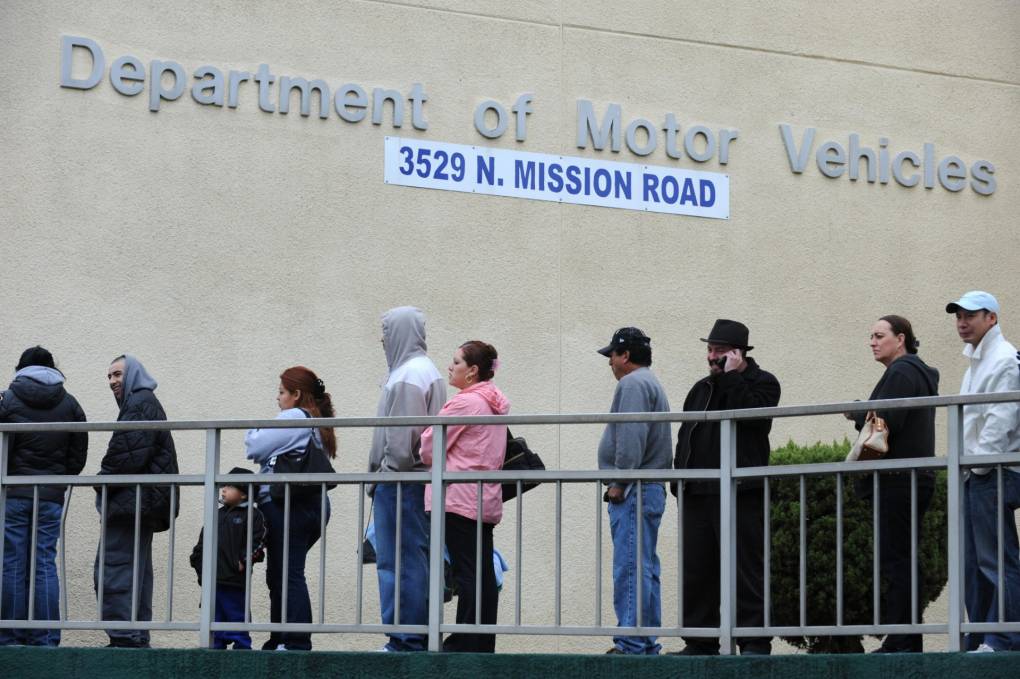
"caption": "People wait in line outside of the Department of Motor Vehicles in Los Angeles on Feb. 13, 2009.",
"description": "People wait in line outside of the State of California Department of Motor Vehicles (DMV) in Los Angeles, California on February 13, 2009.",
"title": "GettyImages-84776357 (2)",
"credit": "Robyn Beck/AFP via Getty Images",
"status": "inherit",
"altTag": null,
"isLoading": false,
"fetchFailed": false
},
"news_11866643": {
"type": "attachments",
"id": "news_11866643",
"meta": {
"index": "attachments_1716263798",
"site": "news",
"id": "11866643",
"found": true
},
"parent": 11866642,
"imgSizes": {
"twentyfourteen-full-width": {
"file": "https://ww2.kqed.org/app/uploads/sites/10/2021/03/DSC_9679-1038x576.jpg",
"width": 1038,
"mimeType": "image/jpeg",
"height": 576
},
"thumbnail": {
"file": "https://ww2.kqed.org/app/uploads/sites/10/2021/03/DSC_9679-160x106.jpg",
"width": 160,
"mimeType": "image/jpeg",
"height": 106
},
"post-thumbnail": {
"file": "https://ww2.kqed.org/app/uploads/sites/10/2021/03/DSC_9679-672x372.jpg",
"width": 672,
"mimeType": "image/jpeg",
"height": 372
},
"kqedFullSize": {
"file": "https://ww2.kqed.org/app/uploads/sites/10/2021/03/DSC_9679-scaled-e1616788457664.jpg",
"width": 1920,
"height": 1275
},
"2048x2048": {
"file": "https://ww2.kqed.org/app/uploads/sites/10/2021/03/DSC_9679-2048x1360.jpg",
"width": 2048,
"mimeType": "image/jpeg",
"height": 1360
},
"large": {
"file": "https://ww2.kqed.org/app/uploads/sites/10/2021/03/DSC_9679-1020x677.jpg",
"width": 1020,
"mimeType": "image/jpeg",
"height": 677
},
"1536x1536": {
"file": "https://ww2.kqed.org/app/uploads/sites/10/2021/03/DSC_9679-1536x1020.jpg",
"width": 1536,
"mimeType": "image/jpeg",
"height": 1020
},
"full-width": {
"file": "https://ww2.kqed.org/app/uploads/sites/10/2021/03/DSC_9679-1920x1275.jpg",
"width": 1920,
"mimeType": "image/jpeg",
"height": 1275
},
"medium": {
"file": "https://ww2.kqed.org/app/uploads/sites/10/2021/03/DSC_9679-800x531.jpg",
"width": 800,
"mimeType": "image/jpeg",
"height": 531
}
},
"publishDate": 1616731710,
"modified": 1616794650,
"caption": "Rich Saito (left), Jean Yoshida (center) and Ray Chin get ready to patrol the streets of Japantown near downtown San Jose. Their group, Japantown Prepared, recently started patrolling the neighborhood after an increase in attacks against Asian Americans.",
"description": "Rich Saito (left), Jean Yoshida and Ray Chin are getting ready to patrol the streets of Japantown near downtown San Jose with their group Japantown Prepared. The group started patrolling streets after an increase in attacks against Asian Americans.",
"title": "Rich Saito, Jean Yoshida and Ray Chin are getting ready to patrol the streets of Japantown near downtown San Jose with their group Japantown Prepared. The group started patrolling streets after an increase in attacks against Asian Americans.",
"credit": "Adhiti Bandlamudi/KQED",
"status": "inherit",
"altTag": "Rich Saito, Jean Yoshida and Ray Chin are getting ready to patrol the streets of Japantown near downtown San Jose with their group Japantown Prepared. The group started patrolling streets after an increase in attacks against Asian Americans.",
"isLoading": false,
"fetchFailed": false
},
"news_11866401": {
"type": "attachments",
"id": "news_11866401",
"meta": {
"index": "attachments_1716263798",
"site": "news",
"id": "11866401",
"found": true
},
"parent": 11866331,
"imgSizes": {
"twentyfourteen-full-width": {
"file": "https://ww2.kqed.org/app/uploads/sites/10/2021/03/GettyImages-1230040552-1038x576.jpg",
"width": 1038,
"mimeType": "image/jpeg",
"height": 576
},
"thumbnail": {
"file": "https://ww2.kqed.org/app/uploads/sites/10/2021/03/GettyImages-1230040552-160x107.jpg",
"width": 160,
"mimeType": "image/jpeg",
"height": 107
},
"post-thumbnail": {
"file": "https://ww2.kqed.org/app/uploads/sites/10/2021/03/GettyImages-1230040552-672x372.jpg",
"width": 672,
"mimeType": "image/jpeg",
"height": 372
},
"kqedFullSize": {
"file": "https://ww2.kqed.org/app/uploads/sites/10/2021/03/GettyImages-1230040552-scaled.jpg",
"width": 2560,
"height": 1707
},
"2048x2048": {
"file": "https://ww2.kqed.org/app/uploads/sites/10/2021/03/GettyImages-1230040552-2048x1365.jpg",
"width": 2048,
"mimeType": "image/jpeg",
"height": 1365
},
"large": {
"file": "https://ww2.kqed.org/app/uploads/sites/10/2021/03/GettyImages-1230040552-1020x680.jpg",
"width": 1020,
"mimeType": "image/jpeg",
"height": 680
},
"1536x1536": {
"file": "https://ww2.kqed.org/app/uploads/sites/10/2021/03/GettyImages-1230040552-1536x1024.jpg",
"width": 1536,
"mimeType": "image/jpeg",
"height": 1024
},
"full-width": {
"file": "https://ww2.kqed.org/app/uploads/sites/10/2021/03/GettyImages-1230040552-1920x1280.jpg",
"width": 1920,
"mimeType": "image/jpeg",
"height": 1280
},
"medium": {
"file": "https://ww2.kqed.org/app/uploads/sites/10/2021/03/GettyImages-1230040552-800x533.jpg",
"width": 800,
"mimeType": "image/jpeg",
"height": 533
}
},
"publishDate": 1616684110,
"modified": 1616712868,
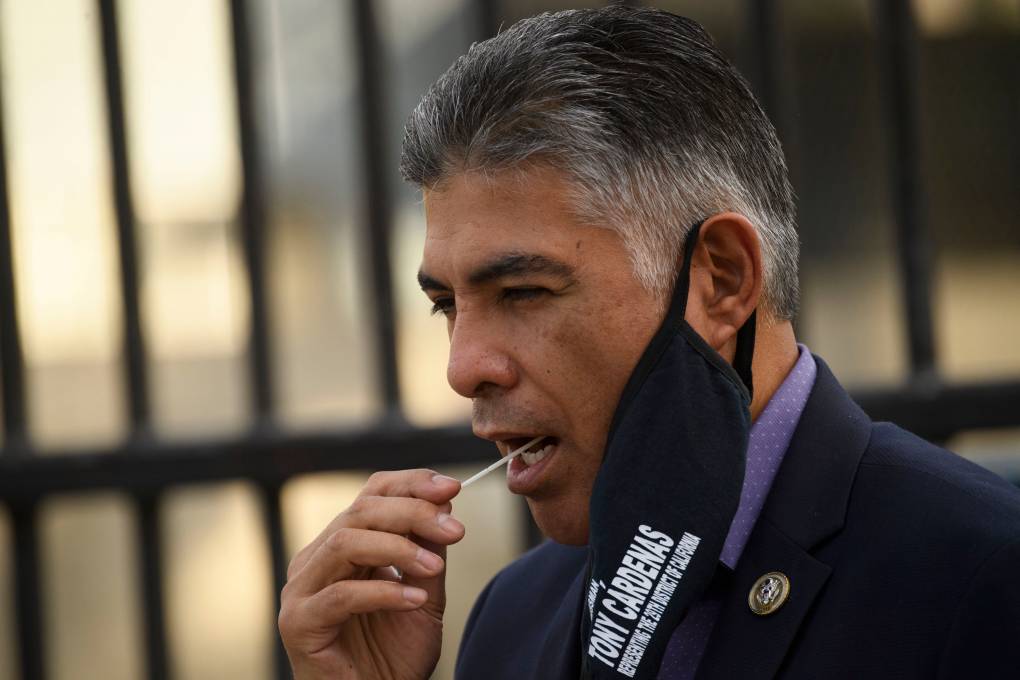
"caption": "U.S. Rep. Tony Cárdenas, D-Los Angeles, takes a COVID-19 oral swab test at a pop-up community testing site in Panorama City on Dec. 9, 2020. Cárdenas is leading calls for social media companies to do a better job of screening misinformation in Spanish and other languages.",
"description": "US Rep. Tony Cardenas takes a Covid-19 oral swab test at a pop-up community testing site in Panorama City on December 9, 2020. Cardenas is leading calls for social media companies to do a better job of screening misinformation in Spanish.",
"title": "US-VIRUS-HEALTH",
"credit": "Patrick T. Fallon/AFP via Getty Images",
"status": "inherit",
"altTag": "US Rep. Tony Cardenas takes a Covid-19 oral swab test at a pop-up community testing site in Panorama City on December 9, 2020. Cardenas is leading calls for social media companies to do a better job of screening misinformation in Spanish.",
"isLoading": false,
"fetchFailed": false
},
"news_11865322": {
"type": "attachments",
"id": "news_11865322",
"meta": {
"index": "attachments_1716263798",
"site": "news",
"id": "11865322",
"found": true
},
"parent": 11865234,
"imgSizes": {
"twentyfourteen-full-width": {
"file": "https://ww2.kqed.org/app/uploads/sites/10/2021/03/Anthony-Mata-Press-Pic-1038x576.jpeg",
"width": 1038,
"mimeType": "image/jpeg",
"height": 576
},
"thumbnail": {
"file": "https://ww2.kqed.org/app/uploads/sites/10/2021/03/Anthony-Mata-Press-Pic-160x153.jpeg",
"width": 160,
"mimeType": "image/jpeg",
"height": 153
},
"post-thumbnail": {
"file": "https://ww2.kqed.org/app/uploads/sites/10/2021/03/Anthony-Mata-Press-Pic-672x372.jpeg",
"width": 672,
"mimeType": "image/jpeg",
"height": 372
},
"kqedFullSize": {
"file": "https://ww2.kqed.org/app/uploads/sites/10/2021/03/Anthony-Mata-Press-Pic.jpeg",
"width": 1876,
"height": 1792
},
"large": {
"file": "https://ww2.kqed.org/app/uploads/sites/10/2021/03/Anthony-Mata-Press-Pic-1020x974.jpeg",
"width": 1020,
"mimeType": "image/jpeg",
"height": 974
},
"1536x1536": {
"file": "https://ww2.kqed.org/app/uploads/sites/10/2021/03/Anthony-Mata-Press-Pic-1536x1467.jpeg",
"width": 1536,
"mimeType": "image/jpeg",
"height": 1467
},
"medium": {
"file": "https://ww2.kqed.org/app/uploads/sites/10/2021/03/Anthony-Mata-Press-Pic-800x764.jpeg",
"width": 800,
"mimeType": "image/jpeg",
"height": 764
}
},
"publishDate": 1616029566,
"modified": 1616029659,
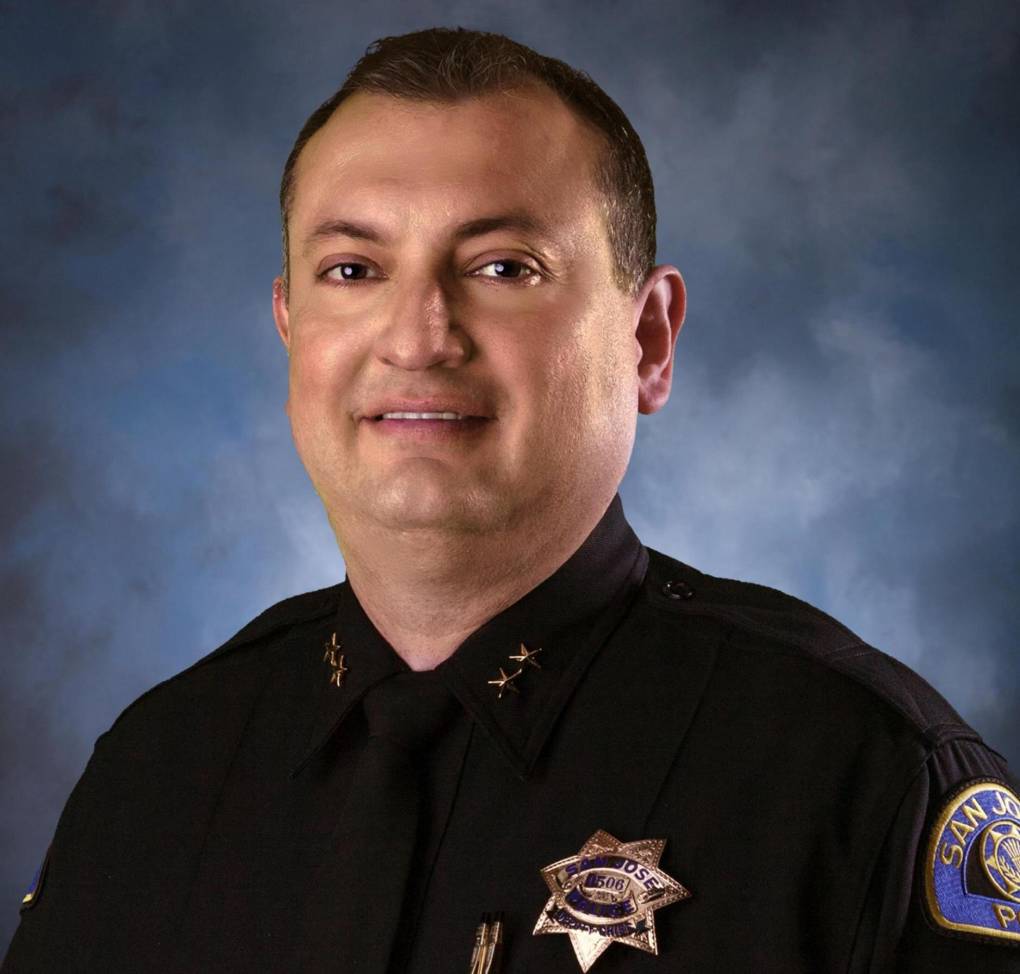
"caption": "Deputy Police Chief Anthony Mata, who was unanimously confirmed this week to head San Jose's Police Department. ",
"description": null,
"title": "Anthony Mata Press Pic",
"credit": "Courtesy of the San Jose Police Department",
"status": "inherit",
"altTag": null,
"isLoading": false,
"fetchFailed": false
},
"news_11858262": {
"type": "attachments",
"id": "news_11858262",
"meta": {
"index": "attachments_1716263798",
"site": "news",
"id": "11858262",
"found": true
},
"parent": 11858255,
"imgSizes": {
"apple_news_ca_landscape_5_5": {
"file": "https://ww2.kqed.org/app/uploads/sites/10/2021/02/amy-gubser-swimming-v5-1044x783.jpg",
"width": 1044,
"mimeType": "image/jpeg",
"height": 783
},
"apple_news_ca_square_4_0": {
"file": "https://ww2.kqed.org/app/uploads/sites/10/2021/02/amy-gubser-swimming-v5-470x470.jpg",
"width": 470,
"mimeType": "image/jpeg",
"height": 470
},
"twentyfourteen-full-width": {
"file": "https://ww2.kqed.org/app/uploads/sites/10/2021/02/amy-gubser-swimming-v5-1038x576.jpg",
"width": 1038,
"mimeType": "image/jpeg",
"height": 576
},
"thumbnail": {
"file": "https://ww2.kqed.org/app/uploads/sites/10/2021/02/amy-gubser-swimming-v5-160x90.jpg",
"width": 160,
"mimeType": "image/jpeg",
"height": 90
},
"post-thumbnail": {
"file": "https://ww2.kqed.org/app/uploads/sites/10/2021/02/amy-gubser-swimming-v5-672x372.jpg",
"width": 672,
"mimeType": "image/jpeg",
"height": 372
},
"kqedFullSize": {
"file": "https://ww2.kqed.org/app/uploads/sites/10/2021/02/amy-gubser-swimming-v5.jpg",
"width": 1920,
"height": 1080
},
"apple_news_ca_landscape_4_7": {
"file": "https://ww2.kqed.org/app/uploads/sites/10/2021/02/amy-gubser-swimming-v5-632x474.jpg",
"width": 632,
"mimeType": "image/jpeg",
"height": 474
},
"large": {
"file": "https://ww2.kqed.org/app/uploads/sites/10/2021/02/amy-gubser-swimming-v5-1020x574.jpg",
"width": 1020,
"mimeType": "image/jpeg",
"height": 574
},
"apple_news_ca_landscape_4_0": {
"file": "https://ww2.kqed.org/app/uploads/sites/10/2021/02/amy-gubser-swimming-v5-536x402.jpg",
"width": 536,
"mimeType": "image/jpeg",
"height": 402
},
"apple_news_ca_portrait_12_9": {
"file": "https://ww2.kqed.org/app/uploads/sites/10/2021/02/amy-gubser-swimming-v5-1122x1080.jpg",
"width": 1122,
"mimeType": "image/jpeg",
"height": 1080
},
"medium": {
"file": "https://ww2.kqed.org/app/uploads/sites/10/2021/02/amy-gubser-swimming-v5-800x450.jpg",
"width": 800,
"mimeType": "image/jpeg",
"height": 450
},
"apple_news_ca_portrait_4_0": {
"file": "https://ww2.kqed.org/app/uploads/sites/10/2021/02/amy-gubser-swimming-v5-354x472.jpg",
"width": 354,
"mimeType": "image/jpeg",
"height": 472
},
"apple_news_ca_portrait_9_7": {
"file": "https://ww2.kqed.org/app/uploads/sites/10/2021/02/amy-gubser-swimming-v5-840x1080.jpg",
"width": 840,
"mimeType": "image/jpeg",
"height": 1080
},
"apple_news_ca_landscape_12_9": {
"file": "https://ww2.kqed.org/app/uploads/sites/10/2021/02/amy-gubser-swimming-v5-1832x1080.jpg",
"width": 1832,
"mimeType": "image/jpeg",
"height": 1080
},
"apple_news_ca_square_9_7": {
"file": "https://ww2.kqed.org/app/uploads/sites/10/2021/02/amy-gubser-swimming-v5-1104x1080.jpg",
"width": 1104,
"mimeType": "image/jpeg",
"height": 1080
},
"1536x1536": {
"file": "https://ww2.kqed.org/app/uploads/sites/10/2021/02/amy-gubser-swimming-v5-1536x864.jpg",
"width": 1536,
"mimeType": "image/jpeg",
"height": 864
},
"apple_news_ca_portrait_4_7": {
"file": "https://ww2.kqed.org/app/uploads/sites/10/2021/02/amy-gubser-swimming-v5-414x552.jpg",
"width": 414,
"mimeType": "image/jpeg",
"height": 552
},
"apple_news_ca_square_12_9": {
"file": "https://ww2.kqed.org/app/uploads/sites/10/2021/02/amy-gubser-swimming-v5-1472x1080.jpg",
"width": 1472,
"mimeType": "image/jpeg",
"height": 1080
},
"apple_news_ca_portrait_5_5": {
"file": "https://ww2.kqed.org/app/uploads/sites/10/2021/02/amy-gubser-swimming-v5-687x916.jpg",
"width": 687,
"mimeType": "image/jpeg",
"height": 916
},
"apple_news_ca_square_4_7": {
"file": "https://ww2.kqed.org/app/uploads/sites/10/2021/02/amy-gubser-swimming-v5-550x550.jpg",
"width": 550,
"mimeType": "image/jpeg",
"height": 550
},
"apple_news_ca_landscape_9_7": {
"file": "https://ww2.kqed.org/app/uploads/sites/10/2021/02/amy-gubser-swimming-v5-1376x1032.jpg",
"width": 1376,
"mimeType": "image/jpeg",
"height": 1032
},
"apple_news_ca_square_5_5": {
"file": "https://ww2.kqed.org/app/uploads/sites/10/2021/02/amy-gubser-swimming-v5-912x912.jpg",
"width": 912,
"mimeType": "image/jpeg",
"height": 912
}
},
"publishDate": 1612305188,
"modified": 1615506372,
"caption": null,
"description": null,
"title": "amy gubser swimming-v5",
"credit": "Courtesy of Amy Gubser",
"status": "inherit",
"altTag": null,
"isLoading": false,
"fetchFailed": false
},
"news_11864132": {
"type": "attachments",
"id": "news_11864132",
"meta": {
"index": "attachments_1716263798",
"site": "news",
"id": "11864132",
"found": true
},
"parent": 11864122,
"imgSizes": {
"twentyfourteen-full-width": {
"file": "https://ww2.kqed.org/app/uploads/sites/10/2021/03/GettyImages-1149113711-1-1024x576.jpg",
"width": 1024,
"mimeType": "image/jpeg",
"height": 576
},
"thumbnail": {
"file": "https://ww2.kqed.org/app/uploads/sites/10/2021/03/GettyImages-1149113711-1-160x112.jpg",
"width": 160,
"mimeType": "image/jpeg",
"height": 112
},
"post-thumbnail": {
"file": "https://ww2.kqed.org/app/uploads/sites/10/2021/03/GettyImages-1149113711-1-672x372.jpg",
"width": 672,
"mimeType": "image/jpeg",
"height": 372
},
"kqedFullSize": {
"file": "https://ww2.kqed.org/app/uploads/sites/10/2021/03/GettyImages-1149113711-1.jpg",
"width": 1024,
"height": 718
},
"large": {
"file": "https://ww2.kqed.org/app/uploads/sites/10/2021/03/GettyImages-1149113711-1-1020x715.jpg",
"width": 1020,
"mimeType": "image/jpeg",
"height": 715
},
"medium": {
"file": "https://ww2.kqed.org/app/uploads/sites/10/2021/03/GettyImages-1149113711-1-800x561.jpg",
"width": 800,
"mimeType": "image/jpeg",
"height": 561
}
},
"publishDate": 1615407079,
"modified": 1615408279,
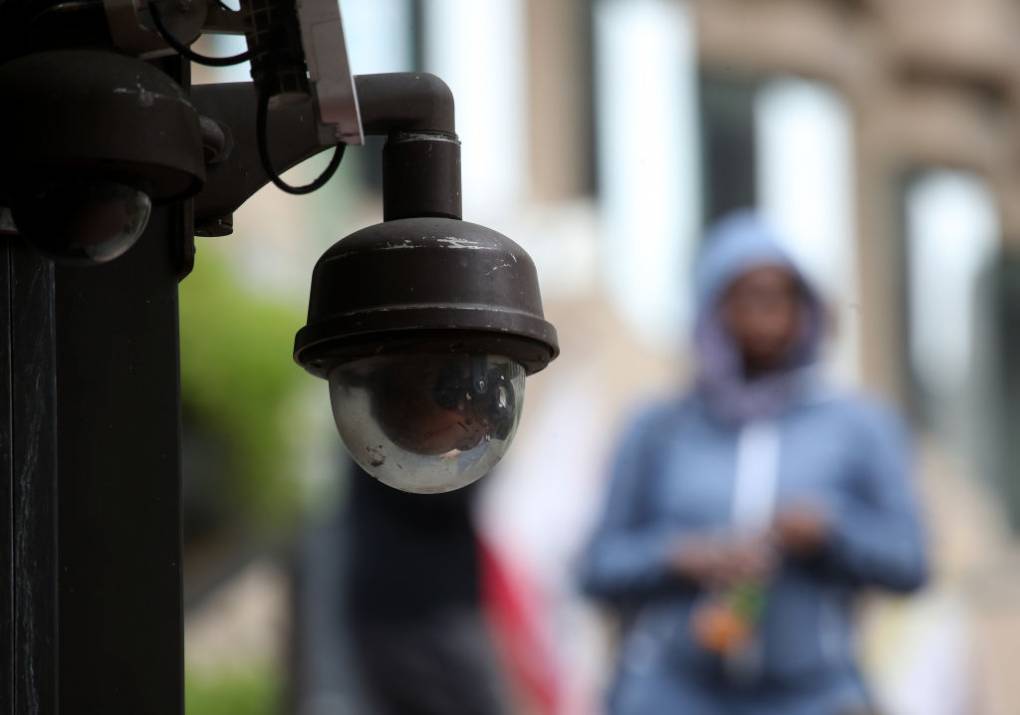
"caption": "A video surveillance camera hangs from the side of a building in San Francisco.",
"description": null,
"title": "San Francisco Board Of Supervisors To Vote On Banning Facial-Recognition Technology",
"credit": "Justin Sullivan/Getty Images",
"status": "inherit",
"altTag": null,
"isLoading": false,
"fetchFailed": false
},
"news_11861777": {
"type": "attachments",
"id": "news_11861777",
"meta": {
"index": "attachments_1716263798",
"site": "news",
"id": "11861777",
"found": true
},
"parent": 11861758,
"imgSizes": {
"apple_news_ca_landscape_5_5": {
"file": "https://ww2.kqed.org/app/uploads/sites/10/2021/02/delivered_022321_final-1044x783.png",
"width": 1044,
"mimeType": "image/png",
"height": 783
},
"apple_news_ca_square_4_0": {
"file": "https://ww2.kqed.org/app/uploads/sites/10/2021/02/delivered_022321_final-470x470.png",
"width": 470,
"mimeType": "image/png",
"height": 470
},
"twentyfourteen-full-width": {
"file": "https://ww2.kqed.org/app/uploads/sites/10/2021/02/delivered_022321_final-1038x576.png",
"width": 1038,
"mimeType": "image/png",
"height": 576
},
"thumbnail": {
"file": "https://ww2.kqed.org/app/uploads/sites/10/2021/02/delivered_022321_final-160x103.png",
"width": 160,
"mimeType": "image/png",
"height": 103
},
"post-thumbnail": {
"file": "https://ww2.kqed.org/app/uploads/sites/10/2021/02/delivered_022321_final-672x372.png",
"width": 672,
"mimeType": "image/png",
"height": 372
},
"kqedFullSize": {
"file": "https://ww2.kqed.org/app/uploads/sites/10/2021/02/delivered_022321_final.png",
"width": 1920,
"height": 1234
},
"apple_news_ca_landscape_4_7": {
"file": "https://ww2.kqed.org/app/uploads/sites/10/2021/02/delivered_022321_final-632x474.png",
"width": 632,
"mimeType": "image/png",
"height": 474
},
"large": {
"file": "https://ww2.kqed.org/app/uploads/sites/10/2021/02/delivered_022321_final-1020x656.png",
"width": 1020,
"mimeType": "image/png",
"height": 656
},
"apple_news_ca_landscape_4_0": {
"file": "https://ww2.kqed.org/app/uploads/sites/10/2021/02/delivered_022321_final-536x402.png",
"width": 536,
"mimeType": "image/png",
"height": 402
},
"apple_news_ca_portrait_12_9": {
"file": "https://ww2.kqed.org/app/uploads/sites/10/2021/02/delivered_022321_final-1122x1234.png",
"width": 1122,
"mimeType": "image/png",
"height": 1234
},
"medium": {
"file": "https://ww2.kqed.org/app/uploads/sites/10/2021/02/delivered_022321_final-800x514.png",
"width": 800,
"mimeType": "image/png",
"height": 514
},
"apple_news_ca_portrait_4_0": {
"file": "https://ww2.kqed.org/app/uploads/sites/10/2021/02/delivered_022321_final-354x472.png",
"width": 354,
"mimeType": "image/png",
"height": 472
},
"apple_news_ca_portrait_9_7": {
"file": "https://ww2.kqed.org/app/uploads/sites/10/2021/02/delivered_022321_final-840x1120.png",
"width": 840,
"mimeType": "image/png",
"height": 1120
},
"apple_news_ca_landscape_12_9": {
"file": "https://ww2.kqed.org/app/uploads/sites/10/2021/02/delivered_022321_final-1832x1234.png",
"width": 1832,
"mimeType": "image/png",
"height": 1234
},
"apple_news_ca_square_9_7": {
"file": "https://ww2.kqed.org/app/uploads/sites/10/2021/02/delivered_022321_final-1104x1104.png",
"width": 1104,
"mimeType": "image/png",
"height": 1104
},
"1536x1536": {
"file": "https://ww2.kqed.org/app/uploads/sites/10/2021/02/delivered_022321_final-1536x987.png",
"width": 1536,
"mimeType": "image/png",
"height": 987
},
"apple_news_ca_portrait_4_7": {
"file": "https://ww2.kqed.org/app/uploads/sites/10/2021/02/delivered_022321_final-414x552.png",
"width": 414,
"mimeType": "image/png",
"height": 552
},
"apple_news_ca_square_12_9": {
"file": "https://ww2.kqed.org/app/uploads/sites/10/2021/02/delivered_022321_final-1472x1234.png",
"width": 1472,
"mimeType": "image/png",
"height": 1234
},
"apple_news_ca_portrait_5_5": {
"file": "https://ww2.kqed.org/app/uploads/sites/10/2021/02/delivered_022321_final-687x916.png",
"width": 687,
"mimeType": "image/png",
"height": 916
},
"apple_news_ca_square_4_7": {
"file": "https://ww2.kqed.org/app/uploads/sites/10/2021/02/delivered_022321_final-550x550.png",
"width": 550,
"mimeType": "image/png",
"height": 550
},
"apple_news_ca_landscape_9_7": {
"file": "https://ww2.kqed.org/app/uploads/sites/10/2021/02/delivered_022321_final-1376x1032.png",
"width": 1376,
"mimeType": "image/png",
"height": 1032
},
"apple_news_ca_square_5_5": {
"file": "https://ww2.kqed.org/app/uploads/sites/10/2021/02/delivered_022321_final-912x912.png",
"width": 912,
"mimeType": "image/png",
"height": 912
}
},
"publishDate": 1614120877,
"modified": 1614120933,
"caption": null,
"description": null,
"title": "delivered_022321_final",
"credit": null,
"status": "inherit",
"altTag": "A Mark Fiore cartoon comparing video delivered from Mars with COVID-19 vaccines that have yet to be delivered on Earth.",
"isLoading": false,
"fetchFailed": false
},
"news_11860512": {
"type": "attachments",
"id": "news_11860512",
"meta": {
"index": "attachments_1716263798",
"site": "news",
"id": "11860512",
"found": true
},
"parent": 11860455,
"imgSizes": {
"apple_news_ca_landscape_5_5": {
"file": "https://ww2.kqed.org/app/uploads/sites/10/2021/02/032-Horton-Family-Photo-1044x783.jpeg",
"width": 1044,
"mimeType": "image/jpeg",
"height": 783
},
"apple_news_ca_square_4_0": {
"file": "https://ww2.kqed.org/app/uploads/sites/10/2021/02/032-Horton-Family-Photo-470x470.jpeg",
"width": 470,
"mimeType": "image/jpeg",
"height": 470
},
"twentyfourteen-full-width": {
"file": "https://ww2.kqed.org/app/uploads/sites/10/2021/02/032-Horton-Family-Photo-1038x576.jpeg",
"width": 1038,
"mimeType": "image/jpeg",
"height": 576
},
"thumbnail": {
"file": "https://ww2.kqed.org/app/uploads/sites/10/2021/02/032-Horton-Family-Photo-160x107.jpeg",
"width": 160,
"mimeType": "image/jpeg",
"height": 107
},
"post-thumbnail": {
"file": "https://ww2.kqed.org/app/uploads/sites/10/2021/02/032-Horton-Family-Photo-672x372.jpeg",
"width": 672,
"mimeType": "image/jpeg",
"height": 372
},
"kqedFullSize": {
"file": "https://ww2.kqed.org/app/uploads/sites/10/2021/02/032-Horton-Family-Photo.jpeg",
"width": 2021,
"height": 1346
},
"apple_news_ca_landscape_4_7": {
"file": "https://ww2.kqed.org/app/uploads/sites/10/2021/02/032-Horton-Family-Photo-632x474.jpeg",
"width": 632,
"mimeType": "image/jpeg",
"height": 474
},
"large": {
"file": "https://ww2.kqed.org/app/uploads/sites/10/2021/02/032-Horton-Family-Photo-1020x679.jpeg",
"width": 1020,
"mimeType": "image/jpeg",
"height": 679
},
"apple_news_ca_landscape_4_0": {
"file": "https://ww2.kqed.org/app/uploads/sites/10/2021/02/032-Horton-Family-Photo-536x402.jpeg",
"width": 536,
"mimeType": "image/jpeg",
"height": 402
},
"apple_news_ca_portrait_12_9": {
"file": "https://ww2.kqed.org/app/uploads/sites/10/2021/02/032-Horton-Family-Photo-1122x1346.jpeg",
"width": 1122,
"mimeType": "image/jpeg",
"height": 1346
},
"medium": {
"file": "https://ww2.kqed.org/app/uploads/sites/10/2021/02/032-Horton-Family-Photo-800x533.jpeg",
"width": 800,
"mimeType": "image/jpeg",
"height": 533
},
"apple_news_ca_portrait_4_0": {
"file": "https://ww2.kqed.org/app/uploads/sites/10/2021/02/032-Horton-Family-Photo-354x472.jpeg",
"width": 354,
"mimeType": "image/jpeg",
"height": 472
},
"apple_news_ca_portrait_9_7": {
"file": "https://ww2.kqed.org/app/uploads/sites/10/2021/02/032-Horton-Family-Photo-840x1120.jpeg",
"width": 840,
"mimeType": "image/jpeg",
"height": 1120
},
"apple_news_ca_landscape_12_9": {
"file": "https://ww2.kqed.org/app/uploads/sites/10/2021/02/032-Horton-Family-Photo-1832x1346.jpeg",
"width": 1832,
"mimeType": "image/jpeg",
"height": 1346
},
"apple_news_ca_square_9_7": {
"file": "https://ww2.kqed.org/app/uploads/sites/10/2021/02/032-Horton-Family-Photo-1104x1104.jpeg",
"width": 1104,
"mimeType": "image/jpeg",
"height": 1104
},
"1536x1536": {
"file": "https://ww2.kqed.org/app/uploads/sites/10/2021/02/032-Horton-Family-Photo-1536x1023.jpeg",
"width": 1536,
"mimeType": "image/jpeg",
"height": 1023
},
"apple_news_ca_portrait_4_7": {
"file": "https://ww2.kqed.org/app/uploads/sites/10/2021/02/032-Horton-Family-Photo-414x552.jpeg",
"width": 414,
"mimeType": "image/jpeg",
"height": 552
},
"apple_news_ca_square_12_9": {
"file": "https://ww2.kqed.org/app/uploads/sites/10/2021/02/032-Horton-Family-Photo-1472x1346.jpeg",
"width": 1472,
"mimeType": "image/jpeg",
"height": 1346
},
"apple_news_ca_portrait_5_5": {
"file": "https://ww2.kqed.org/app/uploads/sites/10/2021/02/032-Horton-Family-Photo-687x916.jpeg",
"width": 687,
"mimeType": "image/jpeg",
"height": 916
},
"full-width": {
"file": "https://ww2.kqed.org/app/uploads/sites/10/2021/02/032-Horton-Family-Photo-1920x1279.jpeg",
"width": 1920,
"mimeType": "image/jpeg",
"height": 1279
},
"apple_news_ca_square_4_7": {
"file": "https://ww2.kqed.org/app/uploads/sites/10/2021/02/032-Horton-Family-Photo-550x550.jpeg",
"width": 550,
"mimeType": "image/jpeg",
"height": 550
},
"apple_news_ca_landscape_9_7": {
"file": "https://ww2.kqed.org/app/uploads/sites/10/2021/02/032-Horton-Family-Photo-1376x1032.jpeg",
"width": 1376,
"mimeType": "image/jpeg",
"height": 1032
},
"apple_news_ca_square_5_5": {
"file": "https://ww2.kqed.org/app/uploads/sites/10/2021/02/032-Horton-Family-Photo-912x912.jpeg",
"width": 912,
"mimeType": "image/jpeg",
"height": 912
}
},
"publishDate": 1613504606,
"modified": 1613679483,
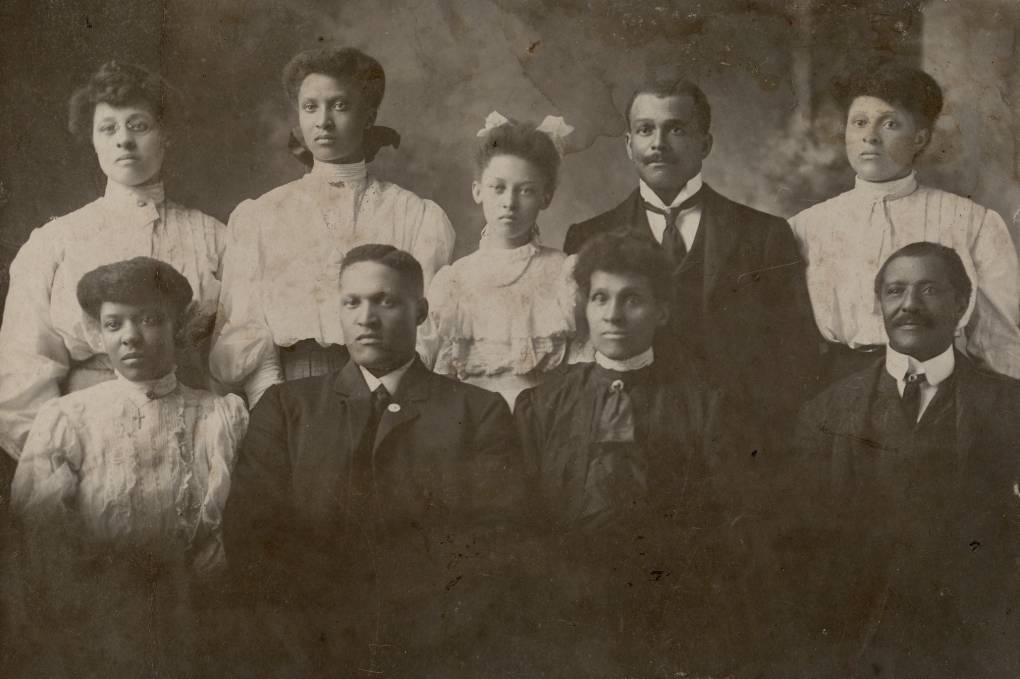
"caption": "The Horton family of San Jose. For her latest book about African Americans in Santa Clara County, Jan Batiste Adkins talked to families whose presence in the South Bay dates back several generations.",
"description": "The Horton family of San Jose. For her latest book about African Americans in Santa Clara County, Jan Batiste Adkins talked to families whose presence in the South Bay dates back several generations.",
"title": "#032-Horton Family Photo",
"credit": "Courtesy of Sourisseau Academy/San Jose State University",
"status": "inherit",
"altTag": "The Horton family of San Jose. For her latest book about African Americans in Santa Clara County, Jan Batiste Adkins talked to families whose presence in the South Bay dates back several generations.",
"isLoading": false,
"fetchFailed": false
},
"news_11860547": {
"type": "attachments",
"id": "news_11860547",
"meta": {
"index": "attachments_1716263798",
"site": "news",
"id": "11860547",
"found": true
},
"parent": 11860458,
"imgSizes": {
"apple_news_ca_landscape_5_5": {
"file": "https://ww2.kqed.org/app/uploads/sites/10/2021/02/1369_transform-2-1044x783.jpg",
"width": 1044,
"mimeType": "image/jpeg",
"height": 783
},
"apple_news_ca_square_4_0": {
"file": "https://ww2.kqed.org/app/uploads/sites/10/2021/02/1369_transform-2-470x470.jpg",
"width": 470,
"mimeType": "image/jpeg",
"height": 470
},
"twentyfourteen-full-width": {
"file": "https://ww2.kqed.org/app/uploads/sites/10/2021/02/1369_transform-2-1038x576.jpg",
"width": 1038,
"mimeType": "image/jpeg",
"height": 576
},
"thumbnail": {
"file": "https://ww2.kqed.org/app/uploads/sites/10/2021/02/1369_transform-2-160x107.jpg",
"width": 160,
"mimeType": "image/jpeg",
"height": 107
},
"post-thumbnail": {
"file": "https://ww2.kqed.org/app/uploads/sites/10/2021/02/1369_transform-2-672x372.jpg",
"width": 672,
"mimeType": "image/jpeg",
"height": 372
},
"kqedFullSize": {
"file": "https://ww2.kqed.org/app/uploads/sites/10/2021/02/1369_transform-2.jpg",
"width": 1920,
"height": 1280
},
"apple_news_ca_landscape_4_7": {
"file": "https://ww2.kqed.org/app/uploads/sites/10/2021/02/1369_transform-2-632x474.jpg",
"width": 632,
"mimeType": "image/jpeg",
"height": 474
},
"large": {
"file": "https://ww2.kqed.org/app/uploads/sites/10/2021/02/1369_transform-2-1020x680.jpg",
"width": 1020,
"mimeType": "image/jpeg",
"height": 680
},
"apple_news_ca_landscape_4_0": {
"file": "https://ww2.kqed.org/app/uploads/sites/10/2021/02/1369_transform-2-536x402.jpg",
"width": 536,
"mimeType": "image/jpeg",
"height": 402
},
"apple_news_ca_portrait_12_9": {
"file": "https://ww2.kqed.org/app/uploads/sites/10/2021/02/1369_transform-2-1122x1280.jpg",
"width": 1122,
"mimeType": "image/jpeg",
"height": 1280
},
"medium": {
"file": "https://ww2.kqed.org/app/uploads/sites/10/2021/02/1369_transform-2-800x533.jpg",
"width": 800,
"mimeType": "image/jpeg",
"height": 533
},
"apple_news_ca_portrait_4_0": {
"file": "https://ww2.kqed.org/app/uploads/sites/10/2021/02/1369_transform-2-354x472.jpg",
"width": 354,
"mimeType": "image/jpeg",
"height": 472
},
"apple_news_ca_portrait_9_7": {
"file": "https://ww2.kqed.org/app/uploads/sites/10/2021/02/1369_transform-2-840x1120.jpg",
"width": 840,
"mimeType": "image/jpeg",
"height": 1120
},
"apple_news_ca_landscape_12_9": {
"file": "https://ww2.kqed.org/app/uploads/sites/10/2021/02/1369_transform-2-1832x1280.jpg",
"width": 1832,
"mimeType": "image/jpeg",
"height": 1280
},
"apple_news_ca_square_9_7": {
"file": "https://ww2.kqed.org/app/uploads/sites/10/2021/02/1369_transform-2-1104x1104.jpg",
"width": 1104,
"mimeType": "image/jpeg",
"height": 1104
},
"1536x1536": {
"file": "https://ww2.kqed.org/app/uploads/sites/10/2021/02/1369_transform-2-1536x1024.jpg",
"width": 1536,
"mimeType": "image/jpeg",
"height": 1024
},
"apple_news_ca_portrait_4_7": {
"file": "https://ww2.kqed.org/app/uploads/sites/10/2021/02/1369_transform-2-414x552.jpg",
"width": 414,
"mimeType": "image/jpeg",
"height": 552
},
"apple_news_ca_square_12_9": {
"file": "https://ww2.kqed.org/app/uploads/sites/10/2021/02/1369_transform-2-1472x1280.jpg",
"width": 1472,
"mimeType": "image/jpeg",
"height": 1280
},
"apple_news_ca_portrait_5_5": {
"file": "https://ww2.kqed.org/app/uploads/sites/10/2021/02/1369_transform-2-687x916.jpg",
"width": 687,
"mimeType": "image/jpeg",
"height": 916
},
"apple_news_ca_square_4_7": {
"file": "https://ww2.kqed.org/app/uploads/sites/10/2021/02/1369_transform-2-550x550.jpg",
"width": 550,
"mimeType": "image/jpeg",
"height": 550
},
"apple_news_ca_landscape_9_7": {
"file": "https://ww2.kqed.org/app/uploads/sites/10/2021/02/1369_transform-2-1376x1032.jpg",
"width": 1376,
"mimeType": "image/jpeg",
"height": 1032
},
"apple_news_ca_square_5_5": {
"file": "https://ww2.kqed.org/app/uploads/sites/10/2021/02/1369_transform-2-912x912.jpg",
"width": 912,
"mimeType": "image/jpeg",
"height": 912
}
},
"publishDate": 1613511091,
"modified": 1624975617,
"caption": null,
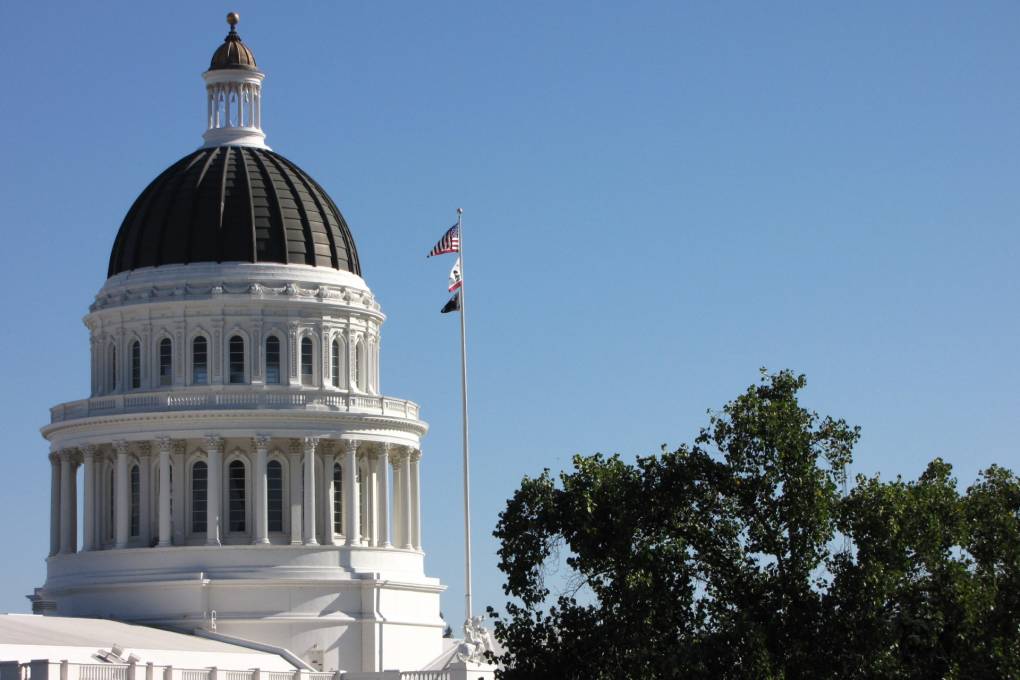
"description": "A new bill introduced in Sacramento targets loopholes in non-disclosure agreements that block employees from speaking out about discrimination and harassment. So-called NDAs are common in Silicon Valley and Hollywood.",
"title": "1369_transform-2",
"credit": "Craig Miller/KQED",
"status": "inherit",
"altTag": "The Capitol building in Sacramento in 2015.",
"isLoading": false,
"fetchFailed": false
},
"news_11855410": {
"type": "attachments",
"id": "news_11855410",
"meta": {
"index": "attachments_1716263798",
"site": "news",
"id": "11855410",
"found": true
},
"parent": 11855408,
"imgSizes": {
"apple_news_ca_square_4_0": {
"file": "https://ww2.kqed.org/app/uploads/sites/10/2021/01/GettyImages-1215626690-470x470.jpg",
"width": 470,
"mimeType": "image/jpeg",
"height": 470
},
"twentyfourteen-full-width": {
"file": "https://ww2.kqed.org/app/uploads/sites/10/2021/01/GettyImages-1215626690-1024x576.jpg",
"width": 1024,
"mimeType": "image/jpeg",
"height": 576
},
"thumbnail": {
"file": "https://ww2.kqed.org/app/uploads/sites/10/2021/01/GettyImages-1215626690-160x109.jpg",
"width": 160,
"mimeType": "image/jpeg",
"height": 109
},
"post-thumbnail": {
"file": "https://ww2.kqed.org/app/uploads/sites/10/2021/01/GettyImages-1215626690-672x372.jpg",
"width": 672,
"mimeType": "image/jpeg",
"height": 372
},
"kqedFullSize": {
"file": "https://ww2.kqed.org/app/uploads/sites/10/2021/01/GettyImages-1215626690.jpg",
"width": 1024,
"height": 695
},
"apple_news_ca_landscape_4_7": {
"file": "https://ww2.kqed.org/app/uploads/sites/10/2021/01/GettyImages-1215626690-632x474.jpg",
"width": 632,
"mimeType": "image/jpeg",
"height": 474
},
"large": {
"file": "https://ww2.kqed.org/app/uploads/sites/10/2021/01/GettyImages-1215626690-1020x692.jpg",
"width": 1020,
"mimeType": "image/jpeg",
"height": 692
},
"apple_news_ca_landscape_4_0": {
"file": "https://ww2.kqed.org/app/uploads/sites/10/2021/01/GettyImages-1215626690-536x402.jpg",
"width": 536,
"mimeType": "image/jpeg",
"height": 402
},
"medium": {
"file": "https://ww2.kqed.org/app/uploads/sites/10/2021/01/GettyImages-1215626690-800x543.jpg",
"width": 800,
"mimeType": "image/jpeg",
"height": 543
},
"apple_news_ca_portrait_4_0": {
"file": "https://ww2.kqed.org/app/uploads/sites/10/2021/01/GettyImages-1215626690-354x472.jpg",
"width": 354,
"mimeType": "image/jpeg",
"height": 472
},
"apple_news_ca_portrait_9_7": {
"file": "https://ww2.kqed.org/app/uploads/sites/10/2021/01/GettyImages-1215626690-840x695.jpg",
"width": 840,
"mimeType": "image/jpeg",
"height": 695
},
"apple_news_ca_portrait_4_7": {
"file": "https://ww2.kqed.org/app/uploads/sites/10/2021/01/GettyImages-1215626690-414x552.jpg",
"width": 414,
"mimeType": "image/jpeg",
"height": 552
},
"apple_news_ca_portrait_5_5": {
"file": "https://ww2.kqed.org/app/uploads/sites/10/2021/01/GettyImages-1215626690-687x695.jpg",
"width": 687,
"mimeType": "image/jpeg",
"height": 695
},
"apple_news_ca_square_4_7": {
"file": "https://ww2.kqed.org/app/uploads/sites/10/2021/01/GettyImages-1215626690-550x550.jpg",
"width": 550,
"mimeType": "image/jpeg",
"height": 550
},
"apple_news_ca_square_5_5": {
"file": "https://ww2.kqed.org/app/uploads/sites/10/2021/01/GettyImages-1215626690-912x695.jpg",
"width": 912,
"mimeType": "image/jpeg",
"height": 695
}
},
"publishDate": 1610657882,
"modified": 1610657882,
"caption": "In this photo illustration, a Twitter logo is displayed on a mobile phone with President Trump's Twitter page shown in the background on May 27, 2020, in Arlington, Virginia. - US President Donald Trump threatened Wednesday to shutter social media platforms after Twitter for the first time acted against his false tweets, prompting the enraged Republican to double down on unsubstantiated claims and conspiracy theories. Twitter tagged two of Trump's tweets in which he claimed that more mail-in voting would lead to what he called a \"Rigged Election\" this November. (Photo by Olivier DOULIERY / AFP) (Photo by OLIVIER DOULIERY/AFP via Getty Images)",
"description": null,
"title": "US-POLITICS-TRUMP]-TWITTER",
"credit": null,
"status": "inherit",
"altTag": null,
"isLoading": false,
"fetchFailed": false
}
},
"audioPlayerReducer": {
"postId": "stream_live",
"isPaused": true,
"isPlaying": false,
"pfsActive": false,
"pledgeModalIsOpen": true,
"playerDrawerIsOpen": false,
"liveAudioPlayStartedAt": 0,
"liveAudioPlayContext": ""
},
"authorsReducer": {
"byline_news_11864122": {
"type": "authors",
"id": "byline_news_11864122",
"meta": {
"override": true
},
"slug": "byline_news_11864122",
"name": "Associated Press",
"isLoading": false
},
"rachael-myrow": {
"type": "authors",
"id": "251",
"meta": {
"index": "authors_1716337520",
"id": "251",
"found": true
},
"name": "Rachael Myrow",
"firstName": "Rachael",
"lastName": "Myrow",
"slug": "rachael-myrow",
"email": "rmyrow@kqed.org",
"display_author_email": true,
"staff_mastheads": [
"news"
],
"title": "Senior Editor of KQED's Silicon Valley News Desk",
"bio": "• I write and edit stories about how Silicon Valley power and policies shape everyday life in California. I’m also passionate about making Bay Area history and culture more accessible to a broad public. • I’ve been a journalist for most of my life, starting in high school with The Franklin Press in Los Angeles, where I grew up. While earning my first degree in English at UC Berkeley, I got my start in public radio at KALX-FM. After completing a second degree in journalism at Cal, I landed my first professional job at Marketplace, then moved on to KPCC (now LAist), and then KQED, where I hosted The California Report for more than seven years. • My reporting has appeared on NPR, The World, WBUR’s \u003ci>Here & Now\u003c/i>, and the BBC. I also guest host for KQED’s \u003ci>Forum\u003c/i>, as well as the Commonwealth Club in San Francisco. • I speak periodically on media, democracy and technology issues, and do voiceover work for documentaries and educational video projects. • Outside of the studio, you'll find me hiking Bay Area trails and whipping up Insta-ready meals in my kitchen. • I do not accept gifts, money, or favors from anyone connected to my reporting, I don't pay people for information, and I do not support or donate to political causes. • I strive to treat the people I report on with fairness, honesty, and respect. I also recognize there are often multiple sides to a story and work to verify information through multiple sources and documentation. If I get something wrong, I correct it.",
"avatar": "https://secure.gravatar.com/avatar/3ed8a3c5f26025e4a805ba634cda8cd764906b97438a6d9ce216b044e340da4e?s=600&d=blank&r=g",
"twitter": "rachaelmyrow",
"bluesky": null,
"facebook": null,
"instagram": null,
"linkedin": "https://www.linkedin.com/in/rachaelmyrow/",
"sites": [
{
"site": "arts",
"roles": [
"administrator"
]
},
{
"site": "news",
"roles": [
"edit_others_posts",
"editor"
]
},
{
"site": "futureofyou",
"roles": [
"editor"
]
},
{
"site": "bayareabites",
"roles": [
"editor"
]
},
{
"site": "stateofhealth",
"roles": [
"editor"
]
},
{
"site": "science",
"roles": [
"editor"
]
},
{
"site": "food",
"roles": [
"editor"
]
},
{
"site": "forum",
"roles": [
"editor"
]
},
{
"site": "liveblog",
"roles": [
"author"
]
}
],
"headData": {
"title": "Rachael Myrow | KQED",
"description": "Senior Editor of KQED's Silicon Valley News Desk",
"ogImgSrc": "https://secure.gravatar.com/avatar/3ed8a3c5f26025e4a805ba634cda8cd764906b97438a6d9ce216b044e340da4e?s=600&d=blank&r=g",
"twImgSrc": "https://secure.gravatar.com/avatar/3ed8a3c5f26025e4a805ba634cda8cd764906b97438a6d9ce216b044e340da4e?s=600&d=blank&r=g"
},
"isLoading": false,
"link": "/author/rachael-myrow"
},
"matthewgreen": {
"type": "authors",
"id": "1263",
"meta": {
"index": "authors_1716337520",
"id": "1263",
"found": true
},
"name": "Matthew Green",
"firstName": "Matthew",
"lastName": "Green",
"slug": "matthewgreen",
"email": "mgreen@kqed.org",
"display_author_email": false,
"staff_mastheads": [],
"title": "KQED Editor/Reporter",
"bio": "Matthew Green is a digital media producer for KQED News. He previously produced \u003ca href=\"http://www.kqed.org/lowdown\">The Lowdown\u003c/a>, KQED’s multimedia news education blog. Matthew's written for numerous Bay Area publications, including the Oakland Tribune and San Francisco Chronicle. He also taught journalism classes at Fremont High School in East Oakland.\r\n\r\nEmail: mgreen@kqed.org; Twitter: @MGreenKQED",
"avatar": "https://secure.gravatar.com/avatar/3bf498d1267ca02c8494f33d8cfc575e?s=600&d=blank&r=g",
"twitter": "MGreenKQED",
"facebook": null,
"instagram": null,
"linkedin": null,
"sites": [
{
"site": "news",
"roles": []
},
{
"site": "lowdown",
"roles": []
},
{
"site": "science",
"roles": []
},
{
"site": "education",
"roles": []
},
{
"site": "quest",
"roles": []
},
{
"site": "liveblog",
"roles": []
}
],
"headData": {
"title": "Matthew Green | KQED",
"description": "KQED Editor/Reporter",
"ogImgSrc": "https://secure.gravatar.com/avatar/3bf498d1267ca02c8494f33d8cfc575e?s=600&d=blank&r=g",
"twImgSrc": "https://secure.gravatar.com/avatar/3bf498d1267ca02c8494f33d8cfc575e?s=600&d=blank&r=g"
},
"isLoading": false,
"link": "/author/matthewgreen"
},
"markfiore": {
"type": "authors",
"id": "3236",
"meta": {
"index": "authors_1716337520",
"id": "3236",
"found": true
},
"name": "Mark Fiore",
"firstName": "Mark",
"lastName": "Fiore",
"slug": "markfiore",
"email": "mark@markfiore.com",
"display_author_email": false,
"staff_mastheads": [
"news"
],
"title": "KQED News Cartoonist",
"bio": "\u003ca href=\"http://www.MarkFiore.com\">MarkFiore.com\u003c/a> | \u003ca href=\"https://twitter.com/markfiore\">Follow on Twitter\u003c/a> | \u003ca href=\"https://www.facebook.com/pages/Mark-Fiore-Animated-Political-Cartoons/94451707396?ref=bookmarks\">Facebook\u003c/a> | \u003ca href=\"mailto:mark@markfiore.com\">email\u003c/a>\r\n\r\nPulitzer Prize-winner, Mark Fiore, who the Wall Street Journal has called “the undisputed guru of the form,” creates animated political cartoons in San Francisco, where his work has been featured regularly on the San Francisco Chronicle’s web site, SFGate.com. His work has appeared on Newsweek.com, Slate.com, CBSNews.com, MotherJones.com, DailyKos.com and NPR’s web site. Fiore’s political animation has appeared on CNN, Frontline, Bill Moyers Journal, Salon.com and cable and broadcast outlets across the globe.\r\n\r\nBeginning his professional life by drawing traditional political cartoons for newspapers, Fiore’s work appeared in publications ranging from the Washington Post to the Los Angeles Times. In the late 1990s, he began to experiment with animating political cartoons and, after a short stint at the San Jose Mercury News as their staff cartoonist, Fiore devoted all his energies to animation.\r\nGrowing up in California, Fiore also spent a good portion of his life in the backwoods of Idaho. It was this combination that shaped him politically. Mark majored in political science at Colorado College, where, in a perfect send-off for a cartoonist, he received his diploma in 1991 as commencement speaker Dick Cheney smiled approvingly.\r\nMark Fiore was awarded the Pulitzer Prize for political cartooning in 2010, a Robert F. Kennedy Journalism Award in 2004 and has twice received an Online Journalism Award for commentary from the Online News Association (2002, 2008). Fiore has received two awards for his work in new media from the National Cartoonists Society (2001, 2002), and in 2006 received The James Madison Freedom of Information Award from The Society of Professional Journalists.",
"avatar": "https://secure.gravatar.com/avatar/fc4e2a612b15b67bad0c6f0e1db4ca9b?s=600&d=blank&r=g",
"twitter": "MarkFiore",
"facebook": null,
"instagram": "https://www.instagram.com/markfiore/?hl=en",
"linkedin": null,
"sites": [
{
"site": "arts",
"roles": [
"contributor"
]
},
{
"site": "news",
"roles": [
"editor"
]
},
{
"site": "futureofyou",
"roles": [
"editor"
]
},
{
"site": "science",
"roles": [
"editor"
]
}
],
"headData": {
"title": "Mark Fiore | KQED",
"description": "KQED News Cartoonist",
"ogImgSrc": "https://secure.gravatar.com/avatar/fc4e2a612b15b67bad0c6f0e1db4ca9b?s=600&d=blank&r=g",
"twImgSrc": "https://secure.gravatar.com/avatar/fc4e2a612b15b67bad0c6f0e1db4ca9b?s=600&d=blank&r=g"
},
"isLoading": false,
"link": "/author/markfiore"
},
"dkatayama": {
"type": "authors",
"id": "7240",
"meta": {
"index": "authors_1716337520",
"id": "7240",
"found": true
},
"name": "Devin Katayama",
"firstName": "Devin",
"lastName": "Katayama",
"slug": "dkatayama",
"email": "dkatayama@kqed.org",
"display_author_email": true,
"staff_mastheads": [
"news"
],
"title": "Editor of Talent and Development",
"bio": "Devin Katayama is former Editor of Talent and Development for KQED. He supported our internship program and on-call staff by looking for equitable opportunities to improve the newsroom.\r\n\r\nHe previously hosted The Bay and American Suburb podcasts from KQED News. Prior to returning to the Bay Area in 2015, Devin was the education reporter for WFPL in Louisville and worked as a producer with radio stations in Chicago and Portland, OR. His work has appeared on NPR’s \u003cem>Morning Edition, All Things Considered, The Takeaway\u003c/em> and \u003cem>Here and Now.\u003c/em>\r\n\r\nDevin earned his MA in Journalism from Columbia College Chicago, where he was a Follett Fellow and the recipient of the 2011 Studs Terkel Community Media Workshop Scholarship for his story on Chicago's homeless youth. He won WBUR's 2014 Daniel Schorr award and a regional RTNDA Edward R. Murrow Award for his documentary \"At Risk\" that looked at issues facing some of Louisville's students. Devin has also received numerous local awards from the Associated Press and the Society of Professional Journalists.",
"avatar": "https://secure.gravatar.com/avatar/d0d2978a31002fb2de107921a8e18405?s=600&d=blank&r=g",
"twitter": "RadioDevin",
"facebook": null,
"instagram": null,
"linkedin": null,
"sites": [
{
"site": "arts",
"roles": []
},
{
"site": "news",
"roles": [
"author"
]
},
{
"site": "stateofhealth",
"roles": [
"author"
]
},
{
"site": "forum",
"roles": [
"editor"
]
},
{
"site": "perspectives",
"roles": [
"editor"
]
}
],
"headData": {
"title": "Devin Katayama | KQED",
"description": "Editor of Talent and Development",
"ogImgSrc": "https://secure.gravatar.com/avatar/d0d2978a31002fb2de107921a8e18405?s=600&d=blank&r=g",
"twImgSrc": "https://secure.gravatar.com/avatar/d0d2978a31002fb2de107921a8e18405?s=600&d=blank&r=g"
},
"isLoading": false,
"link": "/author/dkatayama"
},
"ecruzguevarra": {
"type": "authors",
"id": "8654",
"meta": {
"index": "authors_1716337520",
"id": "8654",
"found": true
},
"name": "Ericka Cruz Guevarra",
"firstName": "Ericka",
"lastName": "Cruz Guevarra",
"slug": "ecruzguevarra",
"email": "ecruzguevarra@kqed.org",
"display_author_email": true,
"staff_mastheads": [
"news"
],
"title": "Producer, The Bay Podcast",
"bio": "Ericka Cruz Guevarra is host of \u003ca href=\"https://www.kqed.org/podcasts/thebay\">\u003cem>The Bay\u003c/em>\u003c/a> podcast at KQED. Before host, she was the show’s producer. Her work in that capacity includes a three-part reported series on policing in Vallejo, which won a 2020 excellence in journalism award from the Society of Professional Journalists. Ericka has worked as a breaking news reporter at Oregon Public Broadcasting, helped produce the Code Switch podcast, and was KQED’s inaugural Raul Ramirez Diversity Fund intern. She’s also an alumna of NPR’s Next Generation Radio program. Send her an email if you have strong feelings about whether Fairfield and Suisun City are the Bay. Ericka is represented by SAG-AFTRA.",
"avatar": "https://secure.gravatar.com/avatar/accefc1de4bafc7e234b69bcb9b6f6536c130fd84709bc3069ef11a78787e1bb?s=600&d=blank&r=g",
"twitter": "NotoriousECG",
"bluesky": null,
"facebook": null,
"instagram": null,
"linkedin": null,
"sites": [
{
"site": "arts",
"roles": [
"subscriber"
]
},
{
"site": "news",
"roles": [
"editor",
"manage_categories"
]
},
{
"site": "futureofyou",
"roles": [
"subscriber"
]
},
{
"site": "stateofhealth",
"roles": [
"subscriber"
]
},
{
"site": "science",
"roles": [
"editor"
]
},
{
"site": "forum",
"roles": [
"subscriber"
]
}
],
"headData": {
"title": "Ericka Cruz Guevarra | KQED",
"description": "Producer, The Bay Podcast",
"ogImgSrc": "https://secure.gravatar.com/avatar/accefc1de4bafc7e234b69bcb9b6f6536c130fd84709bc3069ef11a78787e1bb?s=600&d=blank&r=g",
"twImgSrc": "https://secure.gravatar.com/avatar/accefc1de4bafc7e234b69bcb9b6f6536c130fd84709bc3069ef11a78787e1bb?s=600&d=blank&r=g"
},
"isLoading": false,
"link": "/author/ecruzguevarra"
},
"korr": {
"type": "authors",
"id": "11200",
"meta": {
"index": "authors_1716337520",
"id": "11200",
"found": true
},
"name": "Katie Orr",
"firstName": "Katie",
"lastName": "Orr",
"slug": "korr",
"email": "korr@kqed.org",
"display_author_email": false,
"staff_mastheads": [],
"title": "KQED Contributor",
"bio": "Katie Orr was a Sacramento-based reporter for KQED's Politics and Government Desk, covering the state Capitol and a variety of issues including women in politics, voting and elections and legislation. Prior to joining KQED in 2016, Katie was state government reporter for Capital Public Radio in Sacramento. She's also worked for KPBS in San Diego, where she covered City Hall.\r\n\r\nKatie received her masters degree in political science from San Diego State University and holds a Bachelors degree in broadcast journalism from Arizona State University.\r\n\r\nIn 2015 Katie won a national Clarion Award for a series of stories she did on women in California politics. She's been honored by the Society for Professional Journalists and, in 2013, was named by \u003cem>The Washington Post\u003c/em> as one of the country's top state Capitol reporters. She's also reported for the award-winning documentary series \u003cem>The View from Here \u003c/em>and was part of the team that won national PRNDI and Gabriel Awards in 2015. She lives in Sacramento with her husband. Twitter: @1KatieOrr",
"avatar": "https://secure.gravatar.com/avatar/41a40b25845adc78f50808670860449e?s=600&d=blank&r=g",
"twitter": "1katieorr",
"facebook": null,
"instagram": null,
"linkedin": null,
"sites": [
{
"site": "news",
"roles": [
"subscriber"
]
},
{
"site": "stateofhealth",
"roles": [
"author"
]
},
{
"site": "forum",
"roles": [
"author"
]
}
],
"headData": {
"title": "Katie Orr | KQED",
"description": "KQED Contributor",
"ogImgSrc": "https://secure.gravatar.com/avatar/41a40b25845adc78f50808670860449e?s=600&d=blank&r=g",
"twImgSrc": "https://secure.gravatar.com/avatar/41a40b25845adc78f50808670860449e?s=600&d=blank&r=g"
},
"isLoading": false,
"link": "/author/korr"
},
"btaylor": {
"type": "authors",
"id": "11365",
"meta": {
"index": "authors_1716337520",
"id": "11365",
"found": true
},
"name": "Bianca Taylor",
"firstName": "Bianca",
"lastName": "Taylor",
"slug": "btaylor",
"email": "btaylor@KQED.org",
"display_author_email": false,
"staff_mastheads": [
"news"
],
"title": "Host and Producer ",
"bio": "Bianca Taylor is a news producer and host of KQED's The Latest podcast.\r\n\r\nHer work with KQED has been honored by the Society of Professional Journalists NorCal, the Webby's, the Regional Murrow Awards, and ONA. She has also worked with NPR, the BBC World Service, and the Washington Post Creative Group.\r\n\r\nBianca is represented by SAG-AFTRA.",
"avatar": "https://secure.gravatar.com/avatar/6b9d3f6552dd10470c5d1c2e58cfe717?s=600&d=blank&r=g",
"twitter": "SoundsLkeBianca",
"facebook": null,
"instagram": null,
"linkedin": null,
"sites": [
{
"site": "arts",
"roles": [
"editor"
]
},
{
"site": "news",
"roles": [
"edit_others_posts",
"editor"
]
},
{
"site": "pop",
"roles": [
"editor"
]
},
{
"site": "bayareabites",
"roles": [
"author"
]
},
{
"site": "science",
"roles": [
"editor"
]
},
{
"site": "forum",
"roles": [
"editor"
]
},
{
"site": "radio",
"roles": [
"editor"
]
},
{
"site": "podcasts",
"roles": [
"editor"
]
}
],
"headData": {
"title": "Bianca Taylor | KQED",
"description": "Host and Producer ",
"ogImgSrc": "https://secure.gravatar.com/avatar/6b9d3f6552dd10470c5d1c2e58cfe717?s=600&d=blank&r=g",
"twImgSrc": "https://secure.gravatar.com/avatar/6b9d3f6552dd10470c5d1c2e58cfe717?s=600&d=blank&r=g"
},
"isLoading": false,
"link": "/author/btaylor"
},
"kmoghadam": {
"type": "authors",
"id": "11637",
"meta": {
"index": "authors_1716337520",
"id": "11637",
"found": true
},
"name": "Kyana Moghadam",
"firstName": "Kyana",
"lastName": "Moghadam",
"slug": "kmoghadam",
"email": "kmoghadam@kqed.org",
"display_author_email": false,
"staff_mastheads": [
"news"
],
"title": "Senior Producer ",
"bio": "Kyana Moghadam is a senior producer at KQED. Prior to joining KQED, she was an audio producer and editor with Al Jazeera, Jetty Studios, VOX Media, Democracy Now!, and Global Press.",
"avatar": "https://secure.gravatar.com/avatar/cdbd6cb0b9e99deaa9eb618abdba56f265d374a2c614710aebeb4e58decbc5f0?s=600&d=blank&r=g",
"twitter": null,
"bluesky": null,
"facebook": null,
"instagram": null,
"linkedin": "https://www.linkedin.com/in/kyanamoghadam/",
"sites": [
{
"site": "",
"roles": [
"editor"
]
},
{
"site": "arts",
"roles": [
"editor"
]
},
{
"site": "news",
"roles": [
"administrator"
]
},
{
"site": "pop",
"roles": [
"editor"
]
},
{
"site": "about",
"roles": [
"editor"
]
},
{
"site": "forum",
"roles": [
"editor"
]
},
{
"site": "perspectives",
"roles": [
"editor"
]
},
{
"site": "podcasts",
"roles": [
"administrator"
]
}
],
"headData": {
"title": "Kyana Moghadam | KQED",
"description": "Senior Producer ",
"ogImgSrc": "https://secure.gravatar.com/avatar/cdbd6cb0b9e99deaa9eb618abdba56f265d374a2c614710aebeb4e58decbc5f0?s=600&d=blank&r=g",
"twImgSrc": "https://secure.gravatar.com/avatar/cdbd6cb0b9e99deaa9eb618abdba56f265d374a2c614710aebeb4e58decbc5f0?s=600&d=blank&r=g"
},
"isLoading": false,
"link": "/author/kmoghadam"
},
"amontecillo": {
"type": "authors",
"id": "11649",
"meta": {
"index": "authors_1716337520",
"id": "11649",
"found": true
},
"name": "Alan Montecillo",
"firstName": "Alan",
"lastName": "Montecillo",
"slug": "amontecillo",
"email": "amontecillo@kqed.org",
"display_author_email": false,
"staff_mastheads": [
"news"
],
"title": "KQED Contributor",
"bio": "Alan Montecillo is the senior editor of \u003cem>\u003ca href=\"http://kqed.org/thebay\">The Bay\u003c/a>, \u003c/em> KQED's local news podcast. Before moving to the Bay Area, he worked as a senior talk show producer for WILL in Champaign-Urbana, Illinois and at Oregon Public Broadcasting in Portland, Oregon. He has won journalism awards from the Society of Professional Journalists Northern California, the Public Media Journalists Association, The Signal Awards, and has also received a regional Edward R. Murrow award. Alan is a Filipino American from Hong Kong and a graduate of Reed College.",
"avatar": "https://secure.gravatar.com/avatar/268f53a2066899ea9efdd8a5900218b17c822d9862cbc9326cccec53ef41d349?s=600&d=blank&r=g",
"twitter": "alanmontecillo",
"bluesky": null,
"facebook": null,
"instagram": null,
"linkedin": null,
"sites": [
{
"site": "",
"roles": [
"editor"
]
},
{
"site": "news",
"roles": [
"editor",
"manage_categories"
]
}
],
"headData": {
"title": "Alan Montecillo | KQED",
"description": "KQED Contributor",
"ogImgSrc": "https://secure.gravatar.com/avatar/268f53a2066899ea9efdd8a5900218b17c822d9862cbc9326cccec53ef41d349?s=600&d=blank&r=g",
"twImgSrc": "https://secure.gravatar.com/avatar/268f53a2066899ea9efdd8a5900218b17c822d9862cbc9326cccec53ef41d349?s=600&d=blank&r=g"
},
"isLoading": false,
"link": "/author/amontecillo"
},
"abandlamudi": {
"type": "authors",
"id": "11672",
"meta": {
"index": "authors_1716337520",
"id": "11672",
"found": true
},
"name": "Adhiti Bandlamudi",
"firstName": "Adhiti",
"lastName": "Bandlamudi",
"slug": "abandlamudi",
"email": "abandlamudi@kqed.org",
"display_author_email": false,
"staff_mastheads": [
"news"
],
"title": "KQED Housing Reporter",
"bio": "Adhiti Bandlamudi reports for KQED's Housing desk. She focuses on how housing gets built across the Bay Area. Before joining KQED in 2020, she reported for WUNC in Durham, North Carolina, WABE in Atlanta, Georgia and Capital Public Radio in Sacramento. In 2017, she was awarded a Kroc Fellowship at NPR where she reported on everything from sprinkles to the Golden State Killer's arrest. When she's not reporting, she's baking new recipes in her kitchen or watching movies with friends and family. She's originally from Georgia and has strong opinions about Great British Bake Off.",
"avatar": "https://secure.gravatar.com/avatar/868129c8b257bb99a3500e2c86a65400?s=600&d=mm&r=g",
"twitter": "oddity_adhiti",
"facebook": null,
"instagram": null,
"linkedin": null,
"sites": [
{
"site": "arts",
"roles": [
"author"
]
},
{
"site": "news",
"roles": [
"editor"
]
},
{
"site": "liveblog",
"roles": [
"author"
]
}
],
"headData": {
"title": "Adhiti Bandlamudi | KQED",
"description": "KQED Housing Reporter",
"ogImgSrc": "https://secure.gravatar.com/avatar/868129c8b257bb99a3500e2c86a65400?s=600&d=mm&r=g",
"twImgSrc": "https://secure.gravatar.com/avatar/868129c8b257bb99a3500e2c86a65400?s=600&d=mm&r=g"
},
"isLoading": false,
"link": "/author/abandlamudi"
}
},
"pagesReducer": {
"news_category_technology": {
"type": "terms",
"id": "news_248",
"meta": {
"index": "terms_1716263798",
"site": "news",
"id": "248",
"score": 10.931152
},
"featImg": null,
"name": "Technology",
"description": null,
"taxonomy": "category",
"headData": {
"twImgId": null,
"twTitle": null,
"ogTitle": null,
"ogImgId": null,
"twDescription": null,
"description": null,
"title": "Technology Archives | KQED News",
"ogDescription": null
},
"ttid": 256,
"slug": "technology",
"isLoading": false,
"title": "Technology",
"pageMeta": {
"site": "news",
"WpPageTemplate": "page-topic-editorial",
"currentPage": 44
},
"blocks": [
{
"blockName": "kqed/post-list",
"attrs": {
"layout": "cardArticle2",
"query": "posts/news?category=technology",
"seeMore": false,
"paginated": true,
"page": 44
}
},
{
"blockName": "kqed/ad"
}
]
}
},
"pfsSessionReducer": {},
"postsReducer": {
"stream_live": {
"type": "live",
"id": "stream_live",
"audioUrl": "https://streams.kqed.org/kqedradio",
"title": "Live Stream",
"excerpt": "Live Stream information currently unavailable.",
"link": "/radio",
"featImg": "",
"label": {
"name": "KQED Live",
"link": "/"
}
},
"stream_kqedNewscast": {
"type": "posts",
"id": "stream_kqedNewscast",
"audioUrl": "https://www.kqed.org/.stream/anon/radio/RDnews/newscast.mp3?_=1",
"title": "KQED Newscast",
"featImg": "",
"label": {
"name": "88.5 FM",
"link": "/"
}
},
"news_11868310": {
"type": "posts",
"id": "news_11868310",
"meta": {
"index": "posts_1716263798",
"site": "news",
"id": "11868310",
"score": null,
"sort": [
1617754560000
]
},
"guestAuthors": [],
"slug": "google-san-jose-development-deal-includes-200-million-in-housing-funds",
"title": "Google, San Jose Development Deal Includes $200 Million in Housing Funds",
"publishDate": 1617754560,
"format": "standard",
"headTitle": "Google, San Jose Development Deal Includes $200 Million in Housing Funds | KQED",
"labelTerm": {
"site": "news"
},
"content": "\u003cp>\u003cspan style=\"font-weight: 400\">After four years of negotiations between Google and San Jose, the tech giant and the Silicon Valley city have announced a development plan for Google’s new transit-oriented campus near downtown. The plan includes \u003ca href=\"https://www.sanjoseca.gov/Home/ShowDocument?id=71001\">$200 million\u003c/a> in funding for affordable housing and preventing displacement. The Google community benefits package includes $150 million for various social programs aimed at preserving affordable housing, fighting homelessness and other housing-related goals.\u003c/span>\u003c/p>\n\u003cp>\u003cspan style=\"font-weight: 400\">The proposed campus, called Downtown West, will include 15 acres of open space, 4,000 new homes and 600 units allocated for affordable housing. \u003c/span> \u003c/p>\n\u003cp>\u003cspan style=\"font-weight: 400\">Google’s benefits package also includes “opportunity grants,” which would provide college scholarships, career exploration for middle and high school students and support for small business and entrepreneurship in the city. \u003c/span>\u003c/p>\n\u003cp>\u003cspan style=\"font-weight: 400\">“Google gets it, they’ve heard the community,” Mayor Sam Liccardo said Tuesday. “They’re eager to respond to the needs of the community and we look forward to this partnership.” \u003c/span>\u003c/p>\n\u003cp>\u003cspan style=\"font-weight: 400\">Since \u003ca href=\"https://www.kqed.org/news/11709962/despite-fierce-opposition-san-jose-city-council-unanimously-approves-major-public-land-sale-to-google\">2018\u003c/a>, when city officials approved the $110 million sale of public land for Google’s expanded campus, local housing \u003ca href=\"https://www.kqed.org/news/11754319/without-affordability-safeguards-googles-san-jose-campus-could-trigger-235-million-in-yearly-rent-hikes-report-finds\">advocates\u003c/a> have been vocal about their concern over the development’s likely impact on the city’s \u003ca href=\"https://www.statista.com/chart/23843/least-affordable-housing-markets/\" target=\"_blank\" rel=\"noopener noreferrer\">already low\u003c/a> housing affordability.\u003c/span>\u003c/p>\n\u003cp>[ad fullwidth]\u003c/p>\n\u003cp>\u003cspan style=\"font-weight: 400\">Maria Noel Fernandez, campaign director for the advocacy group \u003ca href=\"https://act.siliconvalleyrising.org/google-community-fund\">Silicon Valley Rising\u003c/a>, has been outspoken about her fears of what impact Google will have on San Jose’s low-income communities. \u003c/span>\u003c/p>\n\u003cp>\u003cspan style=\"font-weight: 400\">“Google and the city listened to our four years of organizing, coming together with the community to develop a different kind of project,” Fernandez said. “By putting $150 million and real decision-making power in the hands of grassroots leaders in neighborhoods at risk of displacement, this project sets a new model for how tech development can keep families housed, and lift the quality of blue collar jobs.” \u003c/span>\u003c/p>\n\u003cp>\u003cspan style=\"font-weight: 400\">The City Council votes on the project in late May, after which city officials are planning to create a commission made up of local organizations to decide how and where to spend the money. \u003c/span>\u003c/p>\n\u003cp>\u003c/p>\n\u003cp>\u003cspan style=\"font-weight: 400\">“What we want in our downtown is not a corporate campus that’s going to simply displace people,” Liccardo said. “And what we see in response is not simply 7 million square feet of office, but in fact thousands of homes, many affordable, as well as retail and restaurants and a whole host of amenities that will be a really great attraction for residents who live right here in downtown … as well as the entire region.”\u003c/span>\u003c/p>\n\n",
"blocks": [],
"excerpt": "Housing advocates have feared Google moving into San Jose and increasing the already high housing costs in the Silicon Valley capital. Google is offering a solution: funding for programs fighting homelessness and anti-displacement efforts.",
"status": "publish",
"parent": 0,
"modified": 1740178549,
"stats": {
"hasAudio": false,
"hasVideo": false,
"hasChartOrMap": false,
"iframeSrcs": [],
"hasGoogleForm": false,
"hasGallery": false,
"hasHearkenModule": false,
"hasPolis": false,
"paragraphCount": 11,
"wordCount": 439
},
"headData": {
"title": "Google, San Jose Development Deal Includes $200 Million in Housing Funds | KQED",
"description": "Housing advocates have feared Google moving into San Jose and increasing the already high housing costs in the Silicon Valley capital. Google is offering a solution: funding for programs fighting homelessness and anti-displacement efforts.",
"ogTitle": "",
"ogDescription": "",
"ogImgId": "",
"twTitle": "",
"twDescription": "",
"twImgId": "",
"schema": {
"@context": "https://schema.org",
"@type": "NewsArticle",
"headline": "Google, San Jose Development Deal Includes $200 Million in Housing Funds",
"datePublished": "2021-04-06T17:16:00-07:00",
"dateModified": "2025-02-21T14:55:49-08:00",
"image": "https://cdn.kqed.org/wp-content/uploads/2020/02/KQED-OG-Image@1x.png",
"isAccessibleForFree": "True",
"publisher": {
"@type": "NewsMediaOrganization",
"@id": "https://www.kqed.org/#organization",
"name": "KQED",
"logo": "https://cdn.kqed.org/wp-content/uploads/2020/02/KQED-OG-Image@1x.png",
"url": "https://www.kqed.org",
"sameAs": [
"https://www.facebook.com/KQED",
"https://twitter.com/KQED",
"https://www.instagram.com/kqed/",
"https://www.tiktok.com/@kqedofficial",
"https://www.linkedin.com/company/kqed",
"https://www.youtube.com/channel/UCeC0IOo7i1P_61zVUWbJ4nw"
]
}
}
},
"sticky": false,
"templateType": "standard",
"featuredImageType": "standard",
"path": "/news/11868310/google-san-jose-development-deal-includes-200-million-in-housing-funds",
"audioTrackLength": null,
"parsedContent": [
{
"type": "contentString",
"content": "\u003cdiv class=\"post-body\">\u003cp>\u003cp>\u003cspan style=\"font-weight: 400\">After four years of negotiations between Google and San Jose, the tech giant and the Silicon Valley city have announced a development plan for Google’s new transit-oriented campus near downtown. The plan includes \u003ca href=\"https://www.sanjoseca.gov/Home/ShowDocument?id=71001\">$200 million\u003c/a> in funding for affordable housing and preventing displacement. The Google community benefits package includes $150 million for various social programs aimed at preserving affordable housing, fighting homelessness and other housing-related goals.\u003c/span>\u003c/p>\n\u003cp>\u003cspan style=\"font-weight: 400\">The proposed campus, called Downtown West, will include 15 acres of open space, 4,000 new homes and 600 units allocated for affordable housing. \u003c/span> \u003c/p>\n\u003cp>\u003cspan style=\"font-weight: 400\">Google’s benefits package also includes “opportunity grants,” which would provide college scholarships, career exploration for middle and high school students and support for small business and entrepreneurship in the city. \u003c/span>\u003c/p>\n\u003cp>\u003cspan style=\"font-weight: 400\">“Google gets it, they’ve heard the community,” Mayor Sam Liccardo said Tuesday. “They’re eager to respond to the needs of the community and we look forward to this partnership.” \u003c/span>\u003c/p>\n\u003cp>\u003cspan style=\"font-weight: 400\">Since \u003ca href=\"https://www.kqed.org/news/11709962/despite-fierce-opposition-san-jose-city-council-unanimously-approves-major-public-land-sale-to-google\">2018\u003c/a>, when city officials approved the $110 million sale of public land for Google’s expanded campus, local housing \u003ca href=\"https://www.kqed.org/news/11754319/without-affordability-safeguards-googles-san-jose-campus-could-trigger-235-million-in-yearly-rent-hikes-report-finds\">advocates\u003c/a> have been vocal about their concern over the development’s likely impact on the city’s \u003ca href=\"https://www.statista.com/chart/23843/least-affordable-housing-markets/\" target=\"_blank\" rel=\"noopener noreferrer\">already low\u003c/a> housing affordability.\u003c/span>\u003c/p>\n\u003cp>\u003c/p>\u003c/div>",
"attributes": {
"named": {},
"numeric": []
}
},
{
"type": "component",
"content": "",
"name": "ad",
"attributes": {
"named": {
"label": "fullwidth"
},
"numeric": [
"fullwidth"
]
}
},
{
"type": "contentString",
"content": "\u003cdiv class=\"post-body\">\u003cp>\u003c/p>\n\u003cp>\u003cspan style=\"font-weight: 400\">Maria Noel Fernandez, campaign director for the advocacy group \u003ca href=\"https://act.siliconvalleyrising.org/google-community-fund\">Silicon Valley Rising\u003c/a>, has been outspoken about her fears of what impact Google will have on San Jose’s low-income communities. \u003c/span>\u003c/p>\n\u003cp>\u003cspan style=\"font-weight: 400\">“Google and the city listened to our four years of organizing, coming together with the community to develop a different kind of project,” Fernandez said. “By putting $150 million and real decision-making power in the hands of grassroots leaders in neighborhoods at risk of displacement, this project sets a new model for how tech development can keep families housed, and lift the quality of blue collar jobs.” \u003c/span>\u003c/p>\n\u003cp>\u003cspan style=\"font-weight: 400\">The City Council votes on the project in late May, after which city officials are planning to create a commission made up of local organizations to decide how and where to spend the money. \u003c/span>\u003c/p>\n\u003cp>\u003c/p>\n\u003cp>\u003cspan style=\"font-weight: 400\">“What we want in our downtown is not a corporate campus that’s going to simply displace people,” Liccardo said. “And what we see in response is not simply 7 million square feet of office, but in fact thousands of homes, many affordable, as well as retail and restaurants and a whole host of amenities that will be a really great attraction for residents who live right here in downtown … as well as the entire region.”\u003c/span>\u003c/p>\n\n\u003c/div>\u003c/p>",
"attributes": {
"named": {},
"numeric": []
}
}
],
"link": "/news/11868310/google-san-jose-development-deal-includes-200-million-in-housing-funds",
"authors": [
"11672"
],
"categories": [
"news_6266",
"news_8",
"news_248"
],
"tags": [
"news_27510",
"news_3921",
"news_93",
"news_1775",
"news_27208",
"news_18541",
"news_1631"
],
"featImg": "news_11868343",
"label": "news"
},
"news_11866747": {
"type": "posts",
"id": "news_11866747",
"meta": {
"index": "posts_1716263798",
"site": "news",
"id": "11866747",
"score": null,
"sort": [
1617392610000
]
},
"guestAuthors": [],
"slug": "when-covid-vaccine-websites-spring-up-what-and-who-gets-left-out",
"title": "When COVID Vaccine Websites Spring Up, What — and Who — Gets Left Out?",
"publishDate": 1617392610,
"format": "standard",
"headTitle": "When COVID Vaccine Websites Spring Up, What — and Who — Gets Left Out? | KQED",
"labelTerm": {
"site": "news"
},
"content": "\u003cp>Finding a vaccine appointment can be confusing and complicated — especially if you’re not particularly comfortable using the internet.\u003c/p>\n\u003cp>\u003ca href=\"https://www.kqed.org/news/11855623/where-can-i-get-a-covid-19-vaccine-in-the-bay-area-your-questions-answered#county\"> County public health webpages in the Bay Area\u003c/a> \u003cem>have\u003c/em> progressively gotten easier to navigate as vaccine information has become more available. But it wasn’t so easy a few months ago.\u003c/p>\n\u003cp>Zoelle Egner was working in the marketing department for a big tech company, from home in Oakland, and was also frantically trying to find vaccine information. Egner said she saw friends doing exactly the same, “calling 20, 30 locations, trying to understand [if they] were eligible for a vaccine, how they get an appointment — and over and over again, really hitting walls.”\u003c/p>\n\u003cp>So, \u003ca href=\"https://www.kqed.org/news/11856204/californias-clearest-covid-19-vaccine-appointment-dashboard-is-run-by-volunteers\">she and her friends decided to do something about it\u003c/a>. They created \u003ca href=\"https://www.vaccinateca.com/\">VaccinateCA.com\u003c/a>, an aggregator website that compiles data from clinics and pharmacies across the state. After typing in your ZIP code or county name, a list of sites will pop up with vaccination information for eligible people.\u003c/p>\n\u003cp>“If we call the people who can actually give you a vaccine and we write down what they say — do they have a vaccine, who is eligible and how do you get an appointment — then hopefully, hundreds or even thousands of phone calls don’t need to be made [by members of the public,” said Egner.\u003cspan style=\"font-weight: 400;\">[aside postID=\"news_11855623\"]\u003c/span>\u003c/p>\n\u003cp>VaccinateCA swiftly expanded as more volunteers signed up to help maintain the site. But Egner and her team weren’t the only people using technology to address information gaps around vaccination.\u003c/p>\n\u003cp>Adam Freemer created \u003ca href=\"https://www.vaxxmax.com/\">VaxxMax,\u003c/a> a website that fetches data from pharmacy websites, including Walgreens, CVS and Rite Aid, on the status of vaccination slots at each provider.\u003c/p>\n\u003cp>“I quickly became frustrated with the process you have to go through on the pharmacy sites,” Freemer said. “I brainstormed a bit and thought of a mechanism that could help in the process, originally only for my own personal use.” Freemer created a code and built a website that others could use, scraping code for Rite Aid stores. Eventually, the website expanded to other vaccine providers.\u003c/p>\n\u003cp>VaccinateCA and VaxxMax are just two of many sites that promise a clearer answer to the question on everyone’s mind: Where can I find a vaccine?\u003c/p>\n\u003cp>Some, like \u003ca href=\"https://vaccinefinder.org/\">VaccineFinder\u003c/a> and \u003ca href=\"https://www.vaccinespotter.org/CA/\">Vaccine Spotter\u003c/a>, scan available appointments at clinics and pharmacies near your ZIP code — essentially aggregating information that’s already available online.\u003c/p>\n\u003cp>Sign-up sites like \u003ca href=\"https://hidrb.com/\">Dr. B\u003c/a> go further, and will put you on a waitlist for a leftover vaccine that could be available near you at a moment’s notice.\u003c/p>\n\u003ch3>What \u003cstrong>— and Who — \u003c/strong>Gets Left Out?\u003c/h3>\n\u003cp>It’s worth clarifying that these kinds of sites aren’t run by public health departments, or the state itself. As such, their priorities — including speed and convenience — aren’t necessarily those of public health officials.\u003c/p>\n\u003cp>As a result, public health and internet ethics watchdogs have misgivings about some of these kinds of sites.\u003c/p>\n\u003cp>Irina Raicu, director of the \u003ca href=\"https://www.scu.edu/ethics/focus-areas/internet-ethics/\">internet ethics program at Santa Clara University’s Markkula Center,\u003c/a> worries that while these sites are easy to use for many Bay Area residents, they also require internet access and a fair amount of internet literacy.\u003c/p>\n\u003cp>“Anytime something is done through the internet, it means that it’s leaving some people out,” said Raicu.\u003cspan style=\"font-weight: 400;\">[aside postID=\"news_11856204\"]\u003c/span>\u003c/p>\n\u003cp>Her colleague Dr. Charles Binkley, the Markkula Center’s \u003ca href=\"https://www.scu.edu/ethics/focus-areas/bioethics/\">director of bioethics\u003c/a>, feels that the existence of \u003cem>multiple\u003c/em> sites is part of what’s confusing the public around vaccines. He also cautions that it’s impossible for people using these sites to be completely sure of their accuracy, despite the best efforts of those running them.\u003c/p>\n\u003cp>Of VaccinateCA’s method of volunteers calling vaccination sites to aggregate information, Binkley believes that “it’s very unlikely that the person who is answering the phone is going to have this global view of how many doses they have.”\u003c/p>\n\u003cp>“What I’d rather see are these engineers working within the system that’s already in place to make it better, rather than trying to duplicate it outside,” said Binkley.\u003c/p>\n\u003cp>Many of these volunteer or pop-up websites were created months ago, back when public health departments were scrambling to handle an influx of traffic from eager residents looking for vaccine information, all as eligibility shifted frequently.\u003c/p>\n\u003cp>Not only have counties somewhat improved the navigability of their public health websites, but in late January, the California Department of Public Health launched \u003ca href=\"https://myturn.ca.gov/\">My Turn \u003c/a>— a centralized place for Californians to assess their eligibility for a vaccine, and then find an appointment near them as supplies allow. And in light of these developments, Raicu believes privately created sites like VaccinateCA or Dr. B might have outlived their usefulness.\u003c/p>\n\u003cp>“It may be that this kind of site maybe made every ethical sense in the world for a week, while something better wasn’t around,” Raicu said. “And maybe it needs, at some point, to just go away — because it’s interfering with the efforts.”\u003c/p>\n\u003cp>[ad fullwidth]\u003c/p>\n\u003ch3>The Ethics of Hunting Leftover Vaccines\u003c/h3>\n\u003cp>Sites like Dr. B have encouraged people, eager for their vaccine, but not yet eligible, to be on the lookout for a leftover dose. But while some sites \u003cem>will\u003c/em> dole out leftover vaccines to ineligible people at the end of the day, other vaccination sites — especially those operated by the Federal Emergency Management Agency — have strict regulations for where leftover vaccines can go.\u003c/p>\n\u003cp>For example, the \u003ca href=\"https://www.theoaklandarena.com/ring-central\">RingCentral Coliseum\u003c/a> in Oakland is a FEMA-operated site. According to officials from the California Governor’s Office of Emergency Services, site operators will call the Alameda Office of Education, the Sheriff’s Office and the Transportation Commission to give leftover vaccines to vulnerable individuals in high-risk jobs.\u003c/p>\n\u003cp>Other sites, like San Francisco’s \u003ca href=\"https://sf.gov/location/moscone-center-south-covid-19-vaccine-site\">Moscone Center\u003c/a>, operated through Kaiser Permanente, have different guidelines that allow them to be more loose with their leftover vaccines.\u003c/p>\n\u003cp>“Standard practice is that appointments are required at the Moscone vaccination hub,” a spokesperson from San Francisco’s COVID Command Center said — but “occasionally, when small amounts of unused vaccines are left over at the end of the day, vaccines may be made available to a limited number of people who do not have appointments.”\u003c/p>\n\u003cp>But Binkley is skeptical of this standby-line model for vaccine distribution.\u003c/p>\n\u003cp>“Is ‘first-come, first-served’ really a great ethical model? Well, no,” he said. “Typically the ‘first-comers’ are not the most vulnerable, or who need it the most.”\u003c/p>\n\u003cp>Binkley worries that when people wait in line for a leftover vaccine, the people who might need a vaccine, but \u003cem>can’t\u003c/em> wait in line, aren’t able to get that shot. And he worries that sites like Dr. B perpetuate this problem.\u003c/p>\n\u003cp>If Dr. B prioritized people not by who signed up first, but instead based prioritization on a person’s personal information and health circumstances, they could “prioritize you according to the phases and the tiers that have been decided on,” Binkley said.\u003c/p>\n\u003cp>“So, if you have a line forming for leftover doses at the end of the day and you have a healthy 22-year-old at the front of the line and a 89-year-old with diabetes at the end of the line, you would prioritize the 89-year-old over the 22-year-old, just based on phases,” he said.\u003c/p>\n\u003cp>In Binkley’s ideal ethical world, Dr. B would morph into a structure of volunteers who would get the vaccine — but who would also bring along people who don’t have access to transportation, or who are from more vulnerable populations, to get the vaccine \u003cem>with\u003c/em> them.\u003c/p>\n\u003cp>“What I would love to see is people saying, ‘OK, I’m going to get my vaccine, I’m going to reach out to people I know who don’t have transportation and see if they want to go with me,” Binkley said. “So that we not only think about ourselves, and we think about our neighbor.”\u003c/p>\n\u003cp>[ad floatright]\u003c/p>\n",
"blocks": [],
"excerpt": "Getting a vaccine appointment can be difficult and confusing. Some people have created sleek unofficial solutions that are easy to use, but who might they be leaving out? ",
"status": "publish",
"parent": 0,
"modified": 1740699694,
"stats": {
"hasAudio": false,
"hasVideo": false,
"hasChartOrMap": false,
"iframeSrcs": [],
"hasGoogleForm": false,
"hasGallery": false,
"hasHearkenModule": false,
"hasPolis": false,
"paragraphCount": 34,
"wordCount": 1412
},
"headData": {
"title": "When COVID Vaccine Websites Spring Up, What — and Who — Gets Left Out? | KQED",
"description": "Getting a vaccine appointment can be difficult and confusing. Some people have created sleek unofficial solutions that are easy to use, but who might they be leaving out? ",
"ogTitle": "",
"ogDescription": "",
"ogImgId": "",
"twTitle": "",
"twDescription": "",
"twImgId": "",
"schema": {
"@context": "https://schema.org",
"@type": "NewsArticle",
"headline": "When COVID Vaccine Websites Spring Up, What — and Who — Gets Left Out?",
"datePublished": "2021-04-02T12:43:30-07:00",
"dateModified": "2025-02-27T15:41:34-08:00",
"image": "https://cdn.kqed.org/wp-content/uploads/2020/02/KQED-OG-Image@1x.png",
"isAccessibleForFree": "True",
"publisher": {
"@type": "NewsMediaOrganization",
"@id": "https://www.kqed.org/#organization",
"name": "KQED",
"logo": "https://cdn.kqed.org/wp-content/uploads/2020/02/KQED-OG-Image@1x.png",
"url": "https://www.kqed.org",
"sameAs": [
"https://www.facebook.com/KQED",
"https://twitter.com/KQED",
"https://www.instagram.com/kqed/",
"https://www.tiktok.com/@kqedofficial",
"https://www.linkedin.com/company/kqed",
"https://www.youtube.com/channel/UCeC0IOo7i1P_61zVUWbJ4nw"
]
}
}
},
"audioUrl": "https://traffic.omny.fm/d/clips/0af137ef-751e-4b19-a055-aaef00d2d578/ffca7e9f-6831-41c5-bcaf-aaef00f5a073/dc79aeac-ae3a-435f-b6c1-acf40111fef1/audio.mp3",
"sticky": false,
"path": "/news/11866747/when-covid-vaccine-websites-spring-up-what-and-who-gets-left-out",
"audioTrackLength": null,
"parsedContent": [
{
"type": "contentString",
"content": "\u003cdiv class=\"post-body\">\u003cp>\u003cp>Finding a vaccine appointment can be confusing and complicated — especially if you’re not particularly comfortable using the internet.\u003c/p>\n\u003cp>\u003ca href=\"https://www.kqed.org/news/11855623/where-can-i-get-a-covid-19-vaccine-in-the-bay-area-your-questions-answered#county\"> County public health webpages in the Bay Area\u003c/a> \u003cem>have\u003c/em> progressively gotten easier to navigate as vaccine information has become more available. But it wasn’t so easy a few months ago.\u003c/p>\n\u003cp>Zoelle Egner was working in the marketing department for a big tech company, from home in Oakland, and was also frantically trying to find vaccine information. Egner said she saw friends doing exactly the same, “calling 20, 30 locations, trying to understand [if they] were eligible for a vaccine, how they get an appointment — and over and over again, really hitting walls.”\u003c/p>\n\u003cp>So, \u003ca href=\"https://www.kqed.org/news/11856204/californias-clearest-covid-19-vaccine-appointment-dashboard-is-run-by-volunteers\">she and her friends decided to do something about it\u003c/a>. They created \u003ca href=\"https://www.vaccinateca.com/\">VaccinateCA.com\u003c/a>, an aggregator website that compiles data from clinics and pharmacies across the state. After typing in your ZIP code or county name, a list of sites will pop up with vaccination information for eligible people.\u003c/p>\n\u003cp>“If we call the people who can actually give you a vaccine and we write down what they say — do they have a vaccine, who is eligible and how do you get an appointment — then hopefully, hundreds or even thousands of phone calls don’t need to be made [by members of the public,” said Egner.\u003cspan style=\"font-weight: 400;\">\u003c/p>\u003c/div>",
"attributes": {
"named": {},
"numeric": []
}
},
{
"type": "component",
"content": "",
"name": "aside",
"attributes": {
"named": {
"postid": "news_11855623",
"label": ""
},
"numeric": []
}
},
{
"type": "contentString",
"content": "\u003cdiv class=\"post-body\">\u003cp>\u003c/span>\u003c/p>\n\u003cp>VaccinateCA swiftly expanded as more volunteers signed up to help maintain the site. But Egner and her team weren’t the only people using technology to address information gaps around vaccination.\u003c/p>\n\u003cp>Adam Freemer created \u003ca href=\"https://www.vaxxmax.com/\">VaxxMax,\u003c/a> a website that fetches data from pharmacy websites, including Walgreens, CVS and Rite Aid, on the status of vaccination slots at each provider.\u003c/p>\n\u003cp>“I quickly became frustrated with the process you have to go through on the pharmacy sites,” Freemer said. “I brainstormed a bit and thought of a mechanism that could help in the process, originally only for my own personal use.” Freemer created a code and built a website that others could use, scraping code for Rite Aid stores. Eventually, the website expanded to other vaccine providers.\u003c/p>\n\u003cp>VaccinateCA and VaxxMax are just two of many sites that promise a clearer answer to the question on everyone’s mind: Where can I find a vaccine?\u003c/p>\n\u003cp>Some, like \u003ca href=\"https://vaccinefinder.org/\">VaccineFinder\u003c/a> and \u003ca href=\"https://www.vaccinespotter.org/CA/\">Vaccine Spotter\u003c/a>, scan available appointments at clinics and pharmacies near your ZIP code — essentially aggregating information that’s already available online.\u003c/p>\n\u003cp>Sign-up sites like \u003ca href=\"https://hidrb.com/\">Dr. B\u003c/a> go further, and will put you on a waitlist for a leftover vaccine that could be available near you at a moment’s notice.\u003c/p>\n\u003ch3>What \u003cstrong>— and Who — \u003c/strong>Gets Left Out?\u003c/h3>\n\u003cp>It’s worth clarifying that these kinds of sites aren’t run by public health departments, or the state itself. As such, their priorities — including speed and convenience — aren’t necessarily those of public health officials.\u003c/p>\n\u003cp>As a result, public health and internet ethics watchdogs have misgivings about some of these kinds of sites.\u003c/p>\n\u003cp>Irina Raicu, director of the \u003ca href=\"https://www.scu.edu/ethics/focus-areas/internet-ethics/\">internet ethics program at Santa Clara University’s Markkula Center,\u003c/a> worries that while these sites are easy to use for many Bay Area residents, they also require internet access and a fair amount of internet literacy.\u003c/p>\n\u003cp>“Anytime something is done through the internet, it means that it’s leaving some people out,” said Raicu.\u003cspan style=\"font-weight: 400;\">\u003c/p>\u003c/div>",
"attributes": {
"named": {},
"numeric": []
}
},
{
"type": "component",
"content": "",
"name": "aside",
"attributes": {
"named": {
"postid": "news_11856204",
"label": ""
},
"numeric": []
}
},
{
"type": "contentString",
"content": "\u003cdiv class=\"post-body\">\u003cp>\u003c/span>\u003c/p>\n\u003cp>Her colleague Dr. Charles Binkley, the Markkula Center’s \u003ca href=\"https://www.scu.edu/ethics/focus-areas/bioethics/\">director of bioethics\u003c/a>, feels that the existence of \u003cem>multiple\u003c/em> sites is part of what’s confusing the public around vaccines. He also cautions that it’s impossible for people using these sites to be completely sure of their accuracy, despite the best efforts of those running them.\u003c/p>\n\u003cp>Of VaccinateCA’s method of volunteers calling vaccination sites to aggregate information, Binkley believes that “it’s very unlikely that the person who is answering the phone is going to have this global view of how many doses they have.”\u003c/p>\n\u003cp>“What I’d rather see are these engineers working within the system that’s already in place to make it better, rather than trying to duplicate it outside,” said Binkley.\u003c/p>\n\u003cp>Many of these volunteer or pop-up websites were created months ago, back when public health departments were scrambling to handle an influx of traffic from eager residents looking for vaccine information, all as eligibility shifted frequently.\u003c/p>\n\u003cp>Not only have counties somewhat improved the navigability of their public health websites, but in late January, the California Department of Public Health launched \u003ca href=\"https://myturn.ca.gov/\">My Turn \u003c/a>— a centralized place for Californians to assess their eligibility for a vaccine, and then find an appointment near them as supplies allow. And in light of these developments, Raicu believes privately created sites like VaccinateCA or Dr. B might have outlived their usefulness.\u003c/p>\n\u003cp>“It may be that this kind of site maybe made every ethical sense in the world for a week, while something better wasn’t around,” Raicu said. “And maybe it needs, at some point, to just go away — because it’s interfering with the efforts.”\u003c/p>\n\u003cp>\u003c/p>\u003c/div>",
"attributes": {
"named": {},
"numeric": []
}
},
{
"type": "component",
"content": "",
"name": "ad",
"attributes": {
"named": {
"label": "fullwidth"
},
"numeric": [
"fullwidth"
]
}
},
{
"type": "contentString",
"content": "\u003cdiv class=\"post-body\">\u003cp>\u003c/p>\n\u003ch3>The Ethics of Hunting Leftover Vaccines\u003c/h3>\n\u003cp>Sites like Dr. B have encouraged people, eager for their vaccine, but not yet eligible, to be on the lookout for a leftover dose. But while some sites \u003cem>will\u003c/em> dole out leftover vaccines to ineligible people at the end of the day, other vaccination sites — especially those operated by the Federal Emergency Management Agency — have strict regulations for where leftover vaccines can go.\u003c/p>\n\u003cp>For example, the \u003ca href=\"https://www.theoaklandarena.com/ring-central\">RingCentral Coliseum\u003c/a> in Oakland is a FEMA-operated site. According to officials from the California Governor’s Office of Emergency Services, site operators will call the Alameda Office of Education, the Sheriff’s Office and the Transportation Commission to give leftover vaccines to vulnerable individuals in high-risk jobs.\u003c/p>\n\u003cp>Other sites, like San Francisco’s \u003ca href=\"https://sf.gov/location/moscone-center-south-covid-19-vaccine-site\">Moscone Center\u003c/a>, operated through Kaiser Permanente, have different guidelines that allow them to be more loose with their leftover vaccines.\u003c/p>\n\u003cp>“Standard practice is that appointments are required at the Moscone vaccination hub,” a spokesperson from San Francisco’s COVID Command Center said — but “occasionally, when small amounts of unused vaccines are left over at the end of the day, vaccines may be made available to a limited number of people who do not have appointments.”\u003c/p>\n\u003cp>But Binkley is skeptical of this standby-line model for vaccine distribution.\u003c/p>\n\u003cp>“Is ‘first-come, first-served’ really a great ethical model? Well, no,” he said. “Typically the ‘first-comers’ are not the most vulnerable, or who need it the most.”\u003c/p>\n\u003cp>Binkley worries that when people wait in line for a leftover vaccine, the people who might need a vaccine, but \u003cem>can’t\u003c/em> wait in line, aren’t able to get that shot. And he worries that sites like Dr. B perpetuate this problem.\u003c/p>\n\u003cp>If Dr. B prioritized people not by who signed up first, but instead based prioritization on a person’s personal information and health circumstances, they could “prioritize you according to the phases and the tiers that have been decided on,” Binkley said.\u003c/p>\n\u003cp>“So, if you have a line forming for leftover doses at the end of the day and you have a healthy 22-year-old at the front of the line and a 89-year-old with diabetes at the end of the line, you would prioritize the 89-year-old over the 22-year-old, just based on phases,” he said.\u003c/p>\n\u003cp>In Binkley’s ideal ethical world, Dr. B would morph into a structure of volunteers who would get the vaccine — but who would also bring along people who don’t have access to transportation, or who are from more vulnerable populations, to get the vaccine \u003cem>with\u003c/em> them.\u003c/p>\n\u003cp>“What I would love to see is people saying, ‘OK, I’m going to get my vaccine, I’m going to reach out to people I know who don’t have transportation and see if they want to go with me,” Binkley said. “So that we not only think about ourselves, and we think about our neighbor.”\u003c/p>\n\u003cp>\u003c/p>\u003c/div>",
"attributes": {
"named": {},
"numeric": []
}
},
{
"type": "component",
"content": "",
"name": "ad",
"attributes": {
"named": {
"label": "floatright"
},
"numeric": [
"floatright"
]
}
},
{
"type": "contentString",
"content": "\u003cdiv class=\"post-body\">\u003cp>\u003c/p>\n\u003c/div>\u003c/p>",
"attributes": {
"named": {},
"numeric": []
}
}
],
"link": "/news/11866747/when-covid-vaccine-websites-spring-up-what-and-who-gets-left-out",
"authors": [
"11672"
],
"categories": [
"news_8",
"news_248"
],
"tags": [
"news_29216",
"news_27510",
"news_27350",
"news_27989",
"news_28801",
"news_18543",
"news_1631",
"news_981"
],
"featImg": "news_11867834",
"label": "news"
},
"news_11866438": {
"type": "posts",
"id": "news_11866438",
"meta": {
"index": "posts_1716263798",
"site": "news",
"id": "11866438",
"score": null,
"sort": [
1617145439000
]
},
"guestAuthors": [],
"slug": "after-a-string-of-bungled-tech-upgrades-california-tries-a-new-approach",
"title": "After a String of Bungled Tech Upgrades, California Tries a New Approach",
"publishDate": 1617145439,
"format": "standard",
"headTitle": "After a String of Bungled Tech Upgrades, California Tries a New Approach | KQED",
"labelTerm": {
"site": "news"
},
"content": "\u003cp>California may be home to some of the biggest tech companies in the world, but as the pandemic unemployment payment scandal has shown, proximity to greatness doesn’t seem to have helped the state’s IT messes, much.\u003c/p>\n\u003cp>Throughout 2020, millions of Californians waited helplessly for delayed unemployment checks while the Employment Development Department mistakenly paid out billions of dollars to fraudsters.\u003c/p>\n\u003cp>That wasn’t the half of it: EDD was also overwhelmed by the sheer number of people filing for unemployment after losing their jobs during the pandemic. That’s partly because some of California’s largest agencies rely on a 60-year-old computer programming language called COBOL for some of their operations. That includes EDD, the DMV and Medi-Cal’s fee-for-service program.\u003c/p>\n\u003cp>It’s too late to prevent the unemployment disarray at EDD, but the state is hoping a new way of procuring and updating technology will help prevent similar computer meltdowns in the future. Some of these improvements are already underway, but reforms on some of the legacy systems may not bear fruit for at least three to five years.\u003c/p>\n\u003cp>https://twitter.com/KQED/status/1354957502077657099\u003c/p>\n\u003cp>[ad fullwidth]\u003c/p>\n\u003cp>Gov. Gavin Newsom has made improving the state’s technology and increasing innovation a big focus: In 2019, he created the Office of Digital Innovation and signed an executive order implementing a new method for choosing which vendors and programs to upgrade the state’s aging technology infrastructure. Amy Tong, California’s chief information officer and director of the Department of Technology, said the state used to have their priorities backward — they’d tell vendors what their department needed, and how they should get there.\u003c/p>\n\u003cp>Now, California is telling vendors what \u003cem>problem it needs solved\u003c/em> and asking vendors to not only provide solutions, but show proof that their solution is the best one.\u003c/p>\n\u003cp>“Tell me what idea you can bring forward in solving that and demonstrate to me how you would solve that,” Tong said. “So that’s a two-step process that we have implemented.”\u003c/p>\n\u003cp>The change is needed according to Assemblymember David Chiu, D-San Francisco. He said the state generally does a poor job managing \u003ca href=\"https://cdt.ca.gov/policy/it-project-tracking/\">IT modernization projects\u003c/a>. Chiu has served on the Assembly Budget Committee for six years. He said efforts to modernize these systems tend to go off the rails.\u003c/p>\n\u003cp>“As legislators, we are often asked to approve tens of millions of dollars, if not hundreds of millions of dollars on top of budgets that have been blown, projects that are years behind in being completed,” he said.[pullquote size=\"medium\" align=\"right\" citation=\"Amy Tong, CA Chief Information Officer and Director of the Department of Technology\"]‘We’re not saying, ‘Oh, not our problem.’ We own it, we fix it, we keep moving. That is a culture shift.’[/pullquote]\u003c/p>\n\u003cp>There are \u003ca href=\"https://www.independent.org/publications/article.asp?id=13241\">plenty of examples\u003c/a> to point to, but perhaps one of the largest is the implementation of \u003ca href=\"https://lao.ca.gov/reports/2020/4132/fiscal-project-update-080120.pdf\">FI$Cal\u003c/a>, a financial management system that is supposed to integrate the state’s accounting, budgeting, cash management and procurement processes. That effort started in 2005 with a six-year timeline and a $138 million budget. The cost has since ballooned to around $1 billion and the deadline has been pushed to 2022 as the scope of the project has gradually increased.\u003c/p>\n\u003cp>Chiu said lawmakers are often put in tough positions when dealing with half-done projects.\u003c/p>\n\u003cp>“From my perspective, the Legislature generally acquiesces to the incremental budget requests where we continue to throw good money after bad,” he said.\u003c/p>\n\u003cp>The state’s long history of bungling IT projects means a lot of legislators remain skeptical about whether the state can get these projects right. Tong knows that’s what she’s up against and said the state has become a lot more transparent about its challenges.\u003c/p>\n\u003cp>“We’re out front,” Tong said. “We’re not saying, ‘Oh, not our problem.’ We own it, we fix it, we keep moving. That is a culture shift.”\u003c/p>\n\u003cp>Tong said the cost of recent IT projects has been smaller compared with projects in the past. The California Department of Technology’s \u003ca href=\"https://cdt.ca.gov/policy/it-project-tracking/\">project tracker page\u003c/a> shows a number of IT efforts coming in at under $20 million, though there are also several costing hundreds of millions.\u003c/p>\n\u003cp>The department has laid out its goals in its \u003ca href=\"https://vision2023.cdt.ca.gov/\">Vision 2023\u003c/a> strategic plan, which includes delivering fast and secure public services and making common technology easy to use across government.\u003c/p>\n\u003cp>The state is also trying to shift how it approaches massive system upgrades. Some of its largest agencies are running on technology that’s decades old and specifically tailored to the agency that’s using it. Tong said that makes overhauling an entire system all at once impractical. So the state is taking a different approach.\u003c/p>\n\u003cp>[aside postID=\"news_11860924\" label=\"More on EDD's Problems\"]\u003c/p>\n\u003cp>“No more big rip and replace of a big system, because when you do that, imagine the retraining, the reprocessing, it’s just awful,” she said. “So rather than do that, let’s take a look at the big things you need to do, but do it in a more modular manner. And then you can do a lot quicker.”\u003c/p>\n\u003cp>Brian Metzker, senior fiscal and policy analyst with the nonpartisan Legislative Analyst’s Office, said the new method of asking for input from vendors and requiring them to demonstrate how their ideas work could help the state understand what its needs are and how different vendors could meet them.\u003c/p>\n\u003cp>“But I don’t think that there has been, necessarily, a good example of a legacy system being modernized that really is transformative yet,” he said.\u003c/p>\n\u003cp>The state could have a case study in how to fix an ailing department computer system soon from the Department of Motor Vehicles. The DMV has been plagued by \u003ca href=\"https://esd.dof.ca.gov/reports/reportPdf/C87E0788-C250-E911-9105-00505685B5D1/California%20Department%20of%20Motor%20Vehicles%20Performance%20Audit%20March%202019\">long wait times and system outages\u003c/a>, caused in part by outdated technology. DMV Director Steve Gordon said the agency has just begun the process of updating its computer system using the new proof-of-concept method.\u003c/p>\n\u003cp>“We’re just starting on the road, but it’s going to be a three- to five-year journey,” Gordon said. “We’re doing our first module, hopefully this calendar year, and then we’re going to be doing successive modules. And then at the end of it, hopefully, all the DMV will be on a new platform.”\u003c/p>\n\u003cp>[ad floatright]\u003c/p>\n\u003cp>It’s a project a lot of people will likely be watching closely to see whether this latest approach helps bring California into the future, or ends in another expensive IT mess.\u003c/p>\n\n",
"blocks": [],
"excerpt": "The massive failure of California’s unemployment insurance program during the pandemic has shined yet another spotlight on the state’s outdated technology.",
"status": "publish",
"parent": 0,
"modified": 1722644501,
"stats": {
"hasAudio": false,
"hasVideo": false,
"hasChartOrMap": false,
"iframeSrcs": [],
"hasGoogleForm": false,
"hasGallery": false,
"hasHearkenModule": false,
"hasPolis": false,
"paragraphCount": 26,
"wordCount": 1160
},
"headData": {
"title": "After a String of Bungled Tech Upgrades, California Tries a New Approach | KQED",
"description": "The massive failure of California’s unemployment insurance program during the pandemic has shined yet another spotlight on the state’s outdated technology.",
"ogTitle": "",
"ogDescription": "",
"ogImgId": "",
"twTitle": "",
"twDescription": "",
"twImgId": "",
"schema": {
"@context": "https://schema.org",
"@type": "NewsArticle",
"headline": "After a String of Bungled Tech Upgrades, California Tries a New Approach",
"datePublished": "2021-03-30T16:03:59-07:00",
"dateModified": "2024-08-02T17:21:41-07:00",
"image": "https://cdn.kqed.org/wp-content/uploads/2020/02/KQED-OG-Image@1x.png",
"isAccessibleForFree": "True",
"publisher": {
"@type": "NewsMediaOrganization",
"@id": "https://www.kqed.org/#organization",
"name": "KQED",
"logo": "https://cdn.kqed.org/wp-content/uploads/2020/02/KQED-OG-Image@1x.png",
"url": "https://www.kqed.org",
"sameAs": [
"https://www.facebook.com/KQED",
"https://twitter.com/KQED",
"https://www.instagram.com/kqed/",
"https://www.tiktok.com/@kqedofficial",
"https://www.linkedin.com/company/kqed",
"https://www.youtube.com/channel/UCeC0IOo7i1P_61zVUWbJ4nw"
]
}
}
},
"audioUrl": "https://ww2.kqed.org/app/uploads/sites/10/2021/03/EDD-Problems-Exemplify-Need-to-Update-California-Technology-Systems.mp3",
"sticky": false,
"path": "/news/11866438/after-a-string-of-bungled-tech-upgrades-california-tries-a-new-approach",
"audioTrackLength": null,
"parsedContent": [
{
"type": "contentString",
"content": "\u003cdiv class=\"post-body\">\u003cp>\u003cp>California may be home to some of the biggest tech companies in the world, but as the pandemic unemployment payment scandal has shown, proximity to greatness doesn’t seem to have helped the state’s IT messes, much.\u003c/p>\n\u003cp>Throughout 2020, millions of Californians waited helplessly for delayed unemployment checks while the Employment Development Department mistakenly paid out billions of dollars to fraudsters.\u003c/p>\n\u003cp>That wasn’t the half of it: EDD was also overwhelmed by the sheer number of people filing for unemployment after losing their jobs during the pandemic. That’s partly because some of California’s largest agencies rely on a 60-year-old computer programming language called COBOL for some of their operations. That includes EDD, the DMV and Medi-Cal’s fee-for-service program.\u003c/p>\n\u003cp>It’s too late to prevent the unemployment disarray at EDD, but the state is hoping a new way of procuring and updating technology will help prevent similar computer meltdowns in the future. Some of these improvements are already underway, but reforms on some of the legacy systems may not bear fruit for at least three to five years.\u003c/p>\u003c/p>\u003c/div>",
"attributes": {
"named": {},
"numeric": []
}
},
{
"type": "component",
"content": "",
"name": "singleTwitterStatus",
"attributes": {
"named": {
"id": "1354957502077657099"
},
"numeric": []
}
},
{
"type": "contentString",
"content": "\u003cdiv class=\"post-body\">\u003cp>\n\u003cp>\u003c/p>\u003c/div>",
"attributes": {
"named": {},
"numeric": []
}
},
{
"type": "component",
"content": "",
"name": "ad",
"attributes": {
"named": {
"label": "fullwidth"
},
"numeric": [
"fullwidth"
]
}
},
{
"type": "contentString",
"content": "\u003cdiv class=\"post-body\">\u003cp>\u003c/p>\n\u003cp>Gov. Gavin Newsom has made improving the state’s technology and increasing innovation a big focus: In 2019, he created the Office of Digital Innovation and signed an executive order implementing a new method for choosing which vendors and programs to upgrade the state’s aging technology infrastructure. Amy Tong, California’s chief information officer and director of the Department of Technology, said the state used to have their priorities backward — they’d tell vendors what their department needed, and how they should get there.\u003c/p>\n\u003cp>Now, California is telling vendors what \u003cem>problem it needs solved\u003c/em> and asking vendors to not only provide solutions, but show proof that their solution is the best one.\u003c/p>\n\u003cp>“Tell me what idea you can bring forward in solving that and demonstrate to me how you would solve that,” Tong said. “So that’s a two-step process that we have implemented.”\u003c/p>\n\u003cp>The change is needed according to Assemblymember David Chiu, D-San Francisco. He said the state generally does a poor job managing \u003ca href=\"https://cdt.ca.gov/policy/it-project-tracking/\">IT modernization projects\u003c/a>. Chiu has served on the Assembly Budget Committee for six years. He said efforts to modernize these systems tend to go off the rails.\u003c/p>\n\u003cp>“As legislators, we are often asked to approve tens of millions of dollars, if not hundreds of millions of dollars on top of budgets that have been blown, projects that are years behind in being completed,” he said.\u003c/p>\u003c/div>",
"attributes": {
"named": {},
"numeric": []
}
},
{
"type": "component",
"content": "‘We’re not saying, ‘Oh, not our problem.’ We own it, we fix it, we keep moving. That is a culture shift.’",
"name": "pullquote",
"attributes": {
"named": {
"size": "medium",
"align": "right",
"citation": "Amy Tong, CA Chief Information Officer and Director of the Department of Technology",
"label": ""
},
"numeric": []
}
},
{
"type": "contentString",
"content": "\u003cdiv class=\"post-body\">\u003cp>\u003c/p>\n\u003cp>There are \u003ca href=\"https://www.independent.org/publications/article.asp?id=13241\">plenty of examples\u003c/a> to point to, but perhaps one of the largest is the implementation of \u003ca href=\"https://lao.ca.gov/reports/2020/4132/fiscal-project-update-080120.pdf\">FI$Cal\u003c/a>, a financial management system that is supposed to integrate the state’s accounting, budgeting, cash management and procurement processes. That effort started in 2005 with a six-year timeline and a $138 million budget. The cost has since ballooned to around $1 billion and the deadline has been pushed to 2022 as the scope of the project has gradually increased.\u003c/p>\n\u003cp>Chiu said lawmakers are often put in tough positions when dealing with half-done projects.\u003c/p>\n\u003cp>“From my perspective, the Legislature generally acquiesces to the incremental budget requests where we continue to throw good money after bad,” he said.\u003c/p>\n\u003cp>The state’s long history of bungling IT projects means a lot of legislators remain skeptical about whether the state can get these projects right. Tong knows that’s what she’s up against and said the state has become a lot more transparent about its challenges.\u003c/p>\n\u003cp>“We’re out front,” Tong said. “We’re not saying, ‘Oh, not our problem.’ We own it, we fix it, we keep moving. That is a culture shift.”\u003c/p>\n\u003cp>Tong said the cost of recent IT projects has been smaller compared with projects in the past. The California Department of Technology’s \u003ca href=\"https://cdt.ca.gov/policy/it-project-tracking/\">project tracker page\u003c/a> shows a number of IT efforts coming in at under $20 million, though there are also several costing hundreds of millions.\u003c/p>\n\u003cp>The department has laid out its goals in its \u003ca href=\"https://vision2023.cdt.ca.gov/\">Vision 2023\u003c/a> strategic plan, which includes delivering fast and secure public services and making common technology easy to use across government.\u003c/p>\n\u003cp>The state is also trying to shift how it approaches massive system upgrades. Some of its largest agencies are running on technology that’s decades old and specifically tailored to the agency that’s using it. Tong said that makes overhauling an entire system all at once impractical. So the state is taking a different approach.\u003c/p>\n\u003cp>\u003c/p>\u003c/div>",
"attributes": {
"named": {},
"numeric": []
}
},
{
"type": "component",
"content": "",
"name": "aside",
"attributes": {
"named": {
"postid": "news_11860924",
"label": "More on EDD's Problems "
},
"numeric": []
}
},
{
"type": "contentString",
"content": "\u003cdiv class=\"post-body\">\u003cp>\u003c/p>\n\u003cp>“No more big rip and replace of a big system, because when you do that, imagine the retraining, the reprocessing, it’s just awful,” she said. “So rather than do that, let’s take a look at the big things you need to do, but do it in a more modular manner. And then you can do a lot quicker.”\u003c/p>\n\u003cp>Brian Metzker, senior fiscal and policy analyst with the nonpartisan Legislative Analyst’s Office, said the new method of asking for input from vendors and requiring them to demonstrate how their ideas work could help the state understand what its needs are and how different vendors could meet them.\u003c/p>\n\u003cp>“But I don’t think that there has been, necessarily, a good example of a legacy system being modernized that really is transformative yet,” he said.\u003c/p>\n\u003cp>The state could have a case study in how to fix an ailing department computer system soon from the Department of Motor Vehicles. The DMV has been plagued by \u003ca href=\"https://esd.dof.ca.gov/reports/reportPdf/C87E0788-C250-E911-9105-00505685B5D1/California%20Department%20of%20Motor%20Vehicles%20Performance%20Audit%20March%202019\">long wait times and system outages\u003c/a>, caused in part by outdated technology. DMV Director Steve Gordon said the agency has just begun the process of updating its computer system using the new proof-of-concept method.\u003c/p>\n\u003cp>“We’re just starting on the road, but it’s going to be a three- to five-year journey,” Gordon said. “We’re doing our first module, hopefully this calendar year, and then we’re going to be doing successive modules. And then at the end of it, hopefully, all the DMV will be on a new platform.”\u003c/p>\n\u003cp>\u003c/p>\u003c/div>",
"attributes": {
"named": {},
"numeric": []
}
},
{
"type": "component",
"content": "",
"name": "ad",
"attributes": {
"named": {
"label": "floatright"
},
"numeric": [
"floatright"
]
}
},
{
"type": "contentString",
"content": "\u003cdiv class=\"post-body\">\u003cp>\u003c/p>\n\u003cp>It’s a project a lot of people will likely be watching closely to see whether this latest approach helps bring California into the future, or ends in another expensive IT mess.\u003c/p>\n\n\u003c/div>\u003c/p>",
"attributes": {
"named": {},
"numeric": []
}
}
],
"link": "/news/11866438/after-a-string-of-bungled-tech-upgrades-california-tries-a-new-approach",
"authors": [
"11200"
],
"categories": [
"news_8",
"news_13",
"news_248"
],
"tags": [
"news_17636",
"news_28339",
"news_16",
"news_1852",
"news_1631",
"news_29254"
],
"featImg": "news_11867174",
"label": "news"
},
"news_11866642": {
"type": "posts",
"id": "news_11866642",
"meta": {
"index": "posts_1716263798",
"site": "news",
"id": "11866642",
"score": null,
"sort": [
1616793057000
]
},
"guestAuthors": [],
"slug": "japantown-prepared-wants-to-keep-san-jose-asian-seniors-safe",
"title": "Fueled by Volunteers, ‘Japantown Prepared’ Strives to Keep San Jose's Asian Seniors Safe",
"publishDate": 1616793057,
"format": "standard",
"headTitle": "Fueled by Volunteers, ‘Japantown Prepared’ Strives to Keep San Jose’s Asian Seniors Safe | KQED",
"labelTerm": {
"site": "news"
},
"content": "\u003cp>Jean Yoshida lives a few blocks from Japantown near downtown San Jose. She jogs around the neighborhood often, and these days, does so on high alert.\u003c/p>\n\u003cp>“It really made me think that if I’m feeling this way, I couldn’t imagine how the senior population [is] feeling,” said Yoshida, a young Asian-American woman. “Just to get out of their house, go to the market, just run their daily errands.”\u003c/p>\n\u003cp>Recent attacks in Atlanta and in various parts of the Bay Area have alarmed members of the local Asian American community and prompted some of them to take measures into their own hands.\u003c/p>\n\u003cp>Yoshida says she’s been worried about her elderly relatives in Milpitas and her parents in San Diego.\u003c/p>\n\u003cp>[pullquote align=\"right\" size=\"medium\" citation=\"Rich Saito, head of Japantown Prepared\"]‘I don’t want people to be paranoid, but I want them to be aware of what’s around them.’[/pullquote]\u003c/p>\n\u003cp>“That was really one of the things that got me thinking I need to be out there, I need to be an extra set of eyes,” she said. “If I can help make them feel a little bit safer.”\u003c/p>\n\u003cp>So Yoshida joined \u003ca href=\"https://japantownprepared.wordpress.com/\">Japantown Prepared\u003c/a>, a group originally started by a retired San Jose police officer in 2011 to prepare residents for natural disasters. But last year, when \u003ca href=\"https://secureservercdn.net/104.238.69.231/a1w.90d.myftpupload.com/wp-content/uploads/2021/02/Press-Statement-re_-Bay-Area-Elderly-Incidents-2.9.2021-1.pdf\">attacks against elderly Asian residents\u003c/a> began to rise, Rich Saito, who founded the group, grew increasingly concerned.\u003c/p>\n\u003cp>“I get angry that people take out their aggressions on unsuspecting, undeserving, defenseless people,” Saito said. “So, it makes me want to do things. Something!”\u003c/p>\n\u003cp>The frequency of \u003ca href=\"https://www.csusb.edu/sites/default/files/FACT%20SHEET-%20Anti-Asian%20Hate%202020%203.2.21.pdf\">attacks against Asian Americans\u003c/a> more than doubled last year in San Jose alone, according to the Center for the Study of Hate and Extremism at Cal State San Bernardino.\u003c/p>\n\u003cp>[ad fullwidth]A few days after the mass shooting in Atlanta on March 16, in which six of the eight people killed were Asian women, Saito expanded his group’s emergency response routine to include a patrol unit. Now, volunteers wear bright red vests and walk the neighborhood during the day and night, introducing themselves to everyone on the streets, especially seniors.\u003c/p>\n\u003cp>“I don’t want people to be paranoid, but I want them to be aware of what’s around them,” Saito said.\u003c/p>\n\u003cp>Saito is modeling his program after the \u003ca href=\"https://unitedpeacecollaborative.org/about-us\">United Peace Collaborative\u003c/a>, a volunteer patrol group based in San Francisco’s Chinatown. Leanna Louie started the group early last year after the first spike in attacks against elderly Asian residents there.\u003c/p>\n\u003cp>“We love to believe that love solves all of the world’s problems, but we know that it hasn’t. Sometimes, you love them but they don’t love you back,” Louie said. “And when they come on the offense, you have to have a defense.”\u003c/p>\n\u003cp>For Louie, the mission is personal. Her mother was attacked and robbed three times in the past decade. She now wants to empower Asian elders to speak up and fight back.\u003c/p>\n\u003cp>“Always be alert. I see people, they’re looking at the floor, looking at their phone. They’re not paying attention to their surroundings, they’re not looking people in the eye,” Louie said. “You have to always be alert.”\u003c/p>\n\u003cp>[aside label=\"Related Stories\" postID=\"news_11866439,news_11865333,news_11865171\"]That’s the same advice Saito is giving elderly Asian residents in San Jose’s Japantown. Both Louie and Saito’s programs focus on de-escalation — an effort to reduce tensions and avoid conflict. But volunteers are also trained to call the police when it becomes clear that a situation is escalating.\u003c/p>\n\u003cp>“During training, we explicitly tell our volunteers we are looking for unusual or suspicious behavior,” Saito said. “To make people feel welcome, I encourage [volunteers] to introduce themselves, explain what we are doing, and ask them if they have any questions or if there is anything we can do for them.”\u003c/p>\n\u003cp>Similar patrol programs have started in \u003ca href=\"https://www.nbcbayarea.com/news/local/new-oakland-chinatown-foot-patrol-forms-to-protect-asian-american-community/2481091/\">Oakland\u003c/a> and some other cities across the Bay Area. The San Jose Police Department has also increased patrols in Japantown and in \u003ca href=\"https://twitter.com/SJPD_PIO/status/1373420464672960514?s=20\">Little Saigon\u003c/a>, one of California’s largest Vietnamese American communities.\u003c/p>\n\u003cp>In an effort to spread the word about Japantown Prepared among San Jose’s senior community, Saito is working with the \u003ca href=\"https://yuaikai.org/\">Yu-Ai Kai Senior Center\u003c/a> in Japantown, which serves about 700 seniors a week.\u003c/p>\n\u003cp>“The seniors and majority of the AAPI community are feeling on edge with their personal safety as AAPI hate crimes are in the news daily,” said Jennifer Masuda, the center’s executive director.\u003c/p>\n\u003cp>“I hope the patrol will give our elders the confidence and freedom to leave their home; to know it is safe to pick up their lunch, grocery shop, go to church — basically to do what they want,” Masuda said.\u003c/p>\n\u003cp>Since Saito recently started his patrol program, he says his email inbox has been overflowing with requests to volunteer.\u003c/p>\n\u003cp>“I have over 330 emails of people interested in finding out about [the program],” he said. “There’s a lot of really good people out there who care about what’s going on, and they want to do something about it.”\u003c/p>\n\u003cp>\u003c/p>\n",
"blocks": [],
"excerpt": "In response to the sharp rise in attacks against Asian Americans since the start of the COVID-19 pandemic, a group of concerned citizens in San Jose has decided to take measures into their own hands. ",
"status": "publish",
"parent": 0,
"modified": 1729027932,
"stats": {
"hasAudio": false,
"hasVideo": false,
"hasChartOrMap": false,
"iframeSrcs": [],
"hasGoogleForm": false,
"hasGallery": false,
"hasHearkenModule": false,
"hasPolis": false,
"paragraphCount": 24,
"wordCount": 913
},
"headData": {
"title": "Fueled by Volunteers, ‘Japantown Prepared’ Strives to Keep San Jose's Asian Seniors Safe | KQED",
"description": "In response to the sharp rise in attacks against Asian Americans since the start of the COVID-19 pandemic, a group of concerned citizens in San Jose has decided to take measures into their own hands. ",
"ogTitle": "",
"ogDescription": "",
"ogImgId": "",
"twTitle": "",
"twDescription": "",
"twImgId": "",
"schema": {
"@context": "https://schema.org",
"@type": "NewsArticle",
"headline": "Fueled by Volunteers, ‘Japantown Prepared’ Strives to Keep San Jose's Asian Seniors Safe",
"datePublished": "2021-03-26T14:10:57-07:00",
"dateModified": "2024-10-15T14:32:12-07:00",
"image": "https://cdn.kqed.org/wp-content/uploads/2020/02/KQED-OG-Image@1x.png",
"isAccessibleForFree": "True",
"publisher": {
"@type": "NewsMediaOrganization",
"@id": "https://www.kqed.org/#organization",
"name": "KQED",
"logo": "https://cdn.kqed.org/wp-content/uploads/2020/02/KQED-OG-Image@1x.png",
"url": "https://www.kqed.org",
"sameAs": [
"https://www.facebook.com/KQED",
"https://twitter.com/KQED",
"https://www.instagram.com/kqed/",
"https://www.tiktok.com/@kqedofficial",
"https://www.linkedin.com/company/kqed",
"https://www.youtube.com/channel/UCeC0IOo7i1P_61zVUWbJ4nw"
]
}
}
},
"audioUrl": "https://traffic.omny.fm/d/clips/0af137ef-751e-4b19-a055-aaef00d2d578/ffca7e9f-6831-4[…]f-aaef00f5a073/fef4f1f7-9f92-40b9-bce8-acf701232bf9/audio.mp3",
"sticky": false,
"path": "/news/11866642/japantown-prepared-wants-to-keep-san-jose-asian-seniors-safe",
"audioTrackLength": null,
"parsedContent": [
{
"type": "contentString",
"content": "\u003cdiv class=\"post-body\">\u003cp>\u003cp>Jean Yoshida lives a few blocks from Japantown near downtown San Jose. She jogs around the neighborhood often, and these days, does so on high alert.\u003c/p>\n\u003cp>“It really made me think that if I’m feeling this way, I couldn’t imagine how the senior population [is] feeling,” said Yoshida, a young Asian-American woman. “Just to get out of their house, go to the market, just run their daily errands.”\u003c/p>\n\u003cp>Recent attacks in Atlanta and in various parts of the Bay Area have alarmed members of the local Asian American community and prompted some of them to take measures into their own hands.\u003c/p>\n\u003cp>Yoshida says she’s been worried about her elderly relatives in Milpitas and her parents in San Diego.\u003c/p>\n\u003cp>\u003c/p>\u003c/div>",
"attributes": {
"named": {},
"numeric": []
}
},
{
"type": "component",
"content": "‘I don’t want people to be paranoid, but I want them to be aware of what’s around them.’",
"name": "pullquote",
"attributes": {
"named": {
"align": "right",
"size": "medium",
"citation": "Rich Saito, head of Japantown Prepared",
"label": ""
},
"numeric": []
}
},
{
"type": "contentString",
"content": "\u003cdiv class=\"post-body\">\u003cp>\u003c/p>\n\u003cp>“That was really one of the things that got me thinking I need to be out there, I need to be an extra set of eyes,” she said. “If I can help make them feel a little bit safer.”\u003c/p>\n\u003cp>So Yoshida joined \u003ca href=\"https://japantownprepared.wordpress.com/\">Japantown Prepared\u003c/a>, a group originally started by a retired San Jose police officer in 2011 to prepare residents for natural disasters. But last year, when \u003ca href=\"https://secureservercdn.net/104.238.69.231/a1w.90d.myftpupload.com/wp-content/uploads/2021/02/Press-Statement-re_-Bay-Area-Elderly-Incidents-2.9.2021-1.pdf\">attacks against elderly Asian residents\u003c/a> began to rise, Rich Saito, who founded the group, grew increasingly concerned.\u003c/p>\n\u003cp>“I get angry that people take out their aggressions on unsuspecting, undeserving, defenseless people,” Saito said. “So, it makes me want to do things. Something!”\u003c/p>\n\u003cp>The frequency of \u003ca href=\"https://www.csusb.edu/sites/default/files/FACT%20SHEET-%20Anti-Asian%20Hate%202020%203.2.21.pdf\">attacks against Asian Americans\u003c/a> more than doubled last year in San Jose alone, according to the Center for the Study of Hate and Extremism at Cal State San Bernardino.\u003c/p>\n\u003cp>\u003c/p>\u003c/div>",
"attributes": {
"named": {},
"numeric": []
}
},
{
"type": "component",
"content": "",
"name": "ad",
"attributes": {
"named": {
"label": "fullwidth"
},
"numeric": [
"fullwidth"
]
}
},
{
"type": "contentString",
"content": "\u003cdiv class=\"post-body\">\u003cp>A few days after the mass shooting in Atlanta on March 16, in which six of the eight people killed were Asian women, Saito expanded his group’s emergency response routine to include a patrol unit. Now, volunteers wear bright red vests and walk the neighborhood during the day and night, introducing themselves to everyone on the streets, especially seniors.\u003c/p>\n\u003cp>“I don’t want people to be paranoid, but I want them to be aware of what’s around them,” Saito said.\u003c/p>\n\u003cp>Saito is modeling his program after the \u003ca href=\"https://unitedpeacecollaborative.org/about-us\">United Peace Collaborative\u003c/a>, a volunteer patrol group based in San Francisco’s Chinatown. Leanna Louie started the group early last year after the first spike in attacks against elderly Asian residents there.\u003c/p>\n\u003cp>“We love to believe that love solves all of the world’s problems, but we know that it hasn’t. Sometimes, you love them but they don’t love you back,” Louie said. “And when they come on the offense, you have to have a defense.”\u003c/p>\n\u003cp>For Louie, the mission is personal. Her mother was attacked and robbed three times in the past decade. She now wants to empower Asian elders to speak up and fight back.\u003c/p>\n\u003cp>“Always be alert. I see people, they’re looking at the floor, looking at their phone. They’re not paying attention to their surroundings, they’re not looking people in the eye,” Louie said. “You have to always be alert.”\u003c/p>\n\u003cp>\u003c/p>\u003c/div>",
"attributes": {
"named": {},
"numeric": []
}
},
{
"type": "component",
"content": "",
"name": "aside",
"attributes": {
"named": {
"label": "Related Stories ",
"postid": "news_11866439,news_11865333,news_11865171"
},
"numeric": []
}
},
{
"type": "contentString",
"content": "\u003cdiv class=\"post-body\">\u003cp>That’s the same advice Saito is giving elderly Asian residents in San Jose’s Japantown. Both Louie and Saito’s programs focus on de-escalation — an effort to reduce tensions and avoid conflict. But volunteers are also trained to call the police when it becomes clear that a situation is escalating.\u003c/p>\n\u003cp>“During training, we explicitly tell our volunteers we are looking for unusual or suspicious behavior,” Saito said. “To make people feel welcome, I encourage [volunteers] to introduce themselves, explain what we are doing, and ask them if they have any questions or if there is anything we can do for them.”\u003c/p>\n\u003cp>Similar patrol programs have started in \u003ca href=\"https://www.nbcbayarea.com/news/local/new-oakland-chinatown-foot-patrol-forms-to-protect-asian-american-community/2481091/\">Oakland\u003c/a> and some other cities across the Bay Area. The San Jose Police Department has also increased patrols in Japantown and in \u003ca href=\"https://twitter.com/SJPD_PIO/status/1373420464672960514?s=20\">Little Saigon\u003c/a>, one of California’s largest Vietnamese American communities.\u003c/p>\n\u003cp>In an effort to spread the word about Japantown Prepared among San Jose’s senior community, Saito is working with the \u003ca href=\"https://yuaikai.org/\">Yu-Ai Kai Senior Center\u003c/a> in Japantown, which serves about 700 seniors a week.\u003c/p>\n\u003cp>“The seniors and majority of the AAPI community are feeling on edge with their personal safety as AAPI hate crimes are in the news daily,” said Jennifer Masuda, the center’s executive director.\u003c/p>\n\u003cp>“I hope the patrol will give our elders the confidence and freedom to leave their home; to know it is safe to pick up their lunch, grocery shop, go to church — basically to do what they want,” Masuda said.\u003c/p>\n\u003cp>Since Saito recently started his patrol program, he says his email inbox has been overflowing with requests to volunteer.\u003c/p>\n\u003cp>“I have over 330 emails of people interested in finding out about [the program],” he said. “There’s a lot of really good people out there who care about what’s going on, and they want to do something about it.”\u003c/p>\n\u003cp>\u003c/p>\n\u003c/div>\u003c/p>",
"attributes": {
"named": {},
"numeric": []
}
}
],
"link": "/news/11866642/japantown-prepared-wants-to-keep-san-jose-asian-seniors-safe",
"authors": [
"11672"
],
"categories": [
"news_8",
"news_248"
],
"tags": [
"news_29182",
"news_29173",
"news_29272",
"news_393",
"news_4273",
"news_23056",
"news_38",
"news_18541",
"news_1631"
],
"featImg": "news_11866643",
"label": "news"
},
"news_11866331": {
"type": "posts",
"id": "news_11866331",
"meta": {
"index": "posts_1716263798",
"site": "news",
"id": "11866331",
"score": null,
"sort": [
1616706041000
]
},
"guestAuthors": [],
"slug": "tech-giants-urged-to-clamp-down-on-misinformation-in-spanish-and-other-languages",
"title": "Tech Giants Urged to Clamp Down on Misinformation in Spanish and Other Languages",
"publishDate": 1616706041,
"format": "standard",
"headTitle": "Tech Giants Urged to Clamp Down on Misinformation in Spanish and Other Languages | KQED",
"labelTerm": {
"site": "news"
},
"content": "\u003cp>When the Big Three, which is to say, the CEOs of Facebook, Google and Twitter, testify before a U.S. Senate or \u003ca href=\"https://youtu.be/dw6wJ7dFiPs\" target=\"_blank\" rel=\"noopener noreferrer\">House committee\u003c/a> — as they do again on Thursday — they will face an increasingly familiar litany of challenges from lawmakers.\u003c/p>\n\u003cp>Top among them: Why do these companies, among the wealthiest and most technologically sophisticated in the world, have such trouble scrubbing their platforms of misinformation, disinformation and hate speech?\u003c/p>\n\u003cp>Some lawmakers are also asking: Why do these companies have such trouble scrubbing their platforms of objectionable material in languages other than English?\u003c/p>\n\u003cp>https://youtu.be/dw6wJ7dFiPs\u003c/p>\n\u003cp>“Think Facebook is failing with disinformation in English? You won’t believe what’s happening in Spanish.” So says a \u003ca href=\"https://youtu.be/NqpIAJdz2c0\" target=\"_blank\" rel=\"noopener noreferrer\">video\u003c/a> launched recently as part of a campaign called #YaBastaFacebook, or “Enough Already.”\u003c/p>\n\u003ch3>Mounting Pressure\u003c/h3>\n\u003cp>The campaign is organized by a coalition of advocacy groups, including the \u003ca href=\"https://www.americanprogress.org\" target=\"_blank\" rel=\"noopener noreferrer\">Center for American Progress\u003c/a>, \u003ca href=\"https://www.freepress.net\" target=\"_blank\" rel=\"noopener noreferrer\">Free Press\u003c/a>, the \u003ca href=\"https://www.nhmc.org\" target=\"_blank\" rel=\"noopener noreferrer\">National Hispanic Media Coalition\u003c/a> and the \u003ca href=\"https://the-citizens.com/real-facebook-oversight/\" target=\"_blank\" rel=\"noopener noreferrer\">Real Facebook Oversight Board\u003c/a>, a British-based group of journalists, filmmakers and others critical of \u003ca href=\"https://oversightboard.com\" target=\"_blank\" rel=\"noopener noreferrer\">Facebook\u003c/a>.\u003c/p>\n\u003cp>[pullquote align=\"right\" size=\"medium\" citation= \"U.S. Rep. Tony Cárdenas, D-Los Angeles\"]‘My mother-in-law is saying, ‘Is it true that there’s some kind of an electronic thing that they’re going to put in your body?’ ‘[/pullquote]Collectively, they claim Facebook’s efforts to scrub Spanish-language content of political and health-related misinformation and disinformation have been underwhelming.\u003c/p>\n\u003cp>U.S. Rep. Tony Cárdenas, D-Los Angeles, is on board with the campaign, because, he says, this issue is as personal to him as his 78-year-old mother-in-law.\u003c/p>\n\u003cp>“My mother-in-law is saying, ‘Is it true that there’s some kind of an electronic thing that they’re going to put in your body?” he said during a \u003ca href=\"https://youtu.be/uQtcbfUKRcQ\" target=\"_blank\" rel=\"noopener noreferrer\">press conference\u003c/a> the coalition held last week.\u003c/p>\n\u003cp>Cárdenas was referring to one of the most popular myths that has spread across the internet, in multiple languages: that the COVID-19 vaccine contains a microchip that allows the government to track people. Cárdenas says Facebook — by far the largest social media company, which owns three popular platforms, including WhatsApp and Instagram — has the money to do more, and should do more, before federal lawmakers force it to do more.\u003c/p>\n\u003cp>“It should not be left to the not-for-profits and to the community at large to do the job Facebook admits that they actually do in English. I’m not saying that they do a good job in English, but the job that they’re doing in Spanish and in other languages is almost nonexistent by comparison,” Cárdenas said.\u003c/p>\n\u003cp>According to \u003ca href=\"https://secure.avaaz.org/campaign/en/facebook_coronavirus_misinformation/\" target=\"_blank\" rel=\"noopener noreferrer\">a recent study\u003c/a> published last year by the human rights nonprofit Avaaz, just 29% of misinformation in Spanish is flagged on Facebook, compared to 70% of comparable material in English.\u003c/p>\n\u003cp>The study found, for example, that it took 22 days for Facebook to flag a \u003ca href=\"http://archive.vn/vP4fB\" target=\"_blank\" rel=\"noopener noreferrer\">video in Spanish \u003c/a>that falsely claimed the virus was deliberately created in a lab at the Institute of Virology in Wuhan. It took nine days for the video to be fact-checked and another 13 days for the company to add the misinformation warning.\u003c/p>\n\u003cp>By that time, the video had already been viewed 33 million times.\u003c/p>\n\u003ch3>‘Aggressive’ Steps\u003c/h3>\n\u003cp>Facebook spokeswoman Dani Lever told KQED in an email that the social media giant is taking “aggressive” human and automated steps to fight misinformation in Spanish and dozens of other languages, including by removing millions of pieces of misleading content related to COVID-19 and the vaccine.\u003c/p>\n\u003cp>The company, she added, wants “to continue our dialogue with these [advocacy] groups to strengthen our approach.”\u003c/p>\n\u003cp>Representatives from YouTube and Twitter said much the same thing.\u003c/p>\n\u003cp>“Our community guidelines and approach to misinformation apply to all content in any language. And we have reviewers and raters in all relevant languages, looking at e.g. Spanish videos when flagged,” said Elena Hernandez, a spokeswoman for Google, whose parent company owns YouTube, said in an email.\u003c/p>\n\u003cp>Twitter spokesman Trenton Kennedy wrote that his company’s goal was to eventually use both automated and human review to address content that violates its COVID-19 vaccine misinformation rules.\u003c/p>\n\u003cp>“Machine learning and automated language processing takes time to be effective,” he wrote. “As such, we will begin with English-language content first and use this same process as we work to expand to other languages and cultural contexts over time.”\u003c/p>\n\u003cp>[aside label=\"related coverage\" tag=\"misinformation\"]But as a growing list of incidents around election tampering, racially motivated attacks and COVID-19 vaccine hesitancy clog news headlines worldwide, the heat is on Silicon Valley companies to up their game substantially.\u003c/p>\n\u003cp>Increasingly, social media giants face \u003ca href=\"https://www.theguardian.com/technology/2021/mar/23/facebook-lawsuit-deceptive-practices-disinformation\" target=\"_blank\" rel=\"noopener noreferrer\">litigation\u003c/a>, \u003ca href=\"https://www.congress.gov/bill/116th-congress/house-bill/8636/text\" target=\"_blank\" rel=\"noopener noreferrer\">legislation\u003c/a> and \u003ca href=\"https://www.cnbc.com/2021/03/25/big-tech-how-europe-became-the-worlds-top-regulator.html\" target=\"_blank\" rel=\"noopener noreferrer\">regulation\u003c/a> across the globe. Critics argue that, at best, platforms aren’t doing enough to moderate toxic content. At worst, they say, platforms are intentionally amplifying toxic content to profit off of the advertising revenue it brings in, a process they’ve dubbed the “hate-for-profit” economic model.\u003c/p>\n\u003cp>That growing backlash comes even as these platforms, which treat much of their data as proprietary intellectual property, make it difficult for journalists, academic researchers and advocacy groups to keep track of problematic content and efforts to control it.\u003c/p>\n\u003cp>“We are unable to say how significant the harms are, and therefore, whether there is enough being done to combat them,” said Ivan Sigal, executive director of \u003ca href=\"https://globalvoices.org\" target=\"_blank\" rel=\"noopener noreferrer\">Global Voices\u003c/a>, a citizen media network that operates in about 40 languages. “We do not have visibility into the companies.”\u003c/p>\n\u003ch3>Reaching Across Borders\u003c/h3>\n\u003cp>Global Voices conducted an in-depth, international study of popular COVID-19 content in a dozen different languages. One takeaway: The success of a narrative that started in the U.S. is often directly correlated to local political and cultural dynamics in other countries.\u003cbr>\n[ad fullwidth]\u003c/p>\n\u003cp>“It’s hard to isolate or just say that a certain kind of misinformation exists only in a single country and in a single language,” Sigal said.\u003c/p>\n\u003cp>He offers examples from Bolivia, where one of the most popular coronavirus-related disinformation messages on social media is the scientifically disproven suggestion, proliferated by former President Donald Trump, that people take the drug hydroxychloroquine to protect themselves from the virus.\u003c/p>\n\u003cp>“It was entangled in a very interesting way, in the political tensions between the traditional right-wing political parties in Bolivia, and the indigenous communities that were actively the source of those kind of natural healing approaches,” Sigal said. “And it all hinged on the mistrust between those two communities. And it was happening both in Spanish, in Aymara and in other indigenous languages.”\u003c/p>\n\u003cp>[ad floatright]\u003c/p>\n",
"blocks": [],
"excerpt": "Critics argue social media platforms are amplifying toxic content in a wide variety of languages to profit off of the advertising revenue it brings in.",
"status": "publish",
"parent": 0,
"modified": 1740614474,
"stats": {
"hasAudio": false,
"hasVideo": false,
"hasChartOrMap": false,
"iframeSrcs": [],
"hasGoogleForm": false,
"hasGallery": false,
"hasHearkenModule": false,
"hasPolis": false,
"paragraphCount": 28,
"wordCount": 1169
},
"headData": {
"title": "Tech Giants Urged to Clamp Down on Misinformation in Spanish and Other Languages | KQED",
"description": "Critics argue social media platforms are amplifying toxic content in a wide variety of languages to profit off of the advertising revenue it brings in.",
"ogTitle": "",
"ogDescription": "",
"ogImgId": "",
"twTitle": "",
"twDescription": "",
"twImgId": "",
"schema": {
"@context": "https://schema.org",
"@type": "NewsArticle",
"headline": "Tech Giants Urged to Clamp Down on Misinformation in Spanish and Other Languages",
"datePublished": "2021-03-25T14:00:41-07:00",
"dateModified": "2025-02-26T16:01:14-08:00",
"image": "https://cdn.kqed.org/wp-content/uploads/2020/02/KQED-OG-Image@1x.png",
"isAccessibleForFree": "True",
"publisher": {
"@type": "NewsMediaOrganization",
"@id": "https://www.kqed.org/#organization",
"name": "KQED",
"logo": "https://cdn.kqed.org/wp-content/uploads/2020/02/KQED-OG-Image@1x.png",
"url": "https://www.kqed.org",
"sameAs": [
"https://www.facebook.com/KQED",
"https://twitter.com/KQED",
"https://www.instagram.com/kqed/",
"https://www.tiktok.com/@kqedofficial",
"https://www.linkedin.com/company/kqed",
"https://www.youtube.com/channel/UCeC0IOo7i1P_61zVUWbJ4nw"
]
}
}
},
"audioUrl": "https://traffic.omny.fm/d/clips/0af137ef-751e-4b19-a055-aaef00d2d578/ffca7e9f-6831-41c5-bcaf-aaef00f5a073/dc3c7a2c-c6d9-4feb-9058-acf6012a2d89/audio.mp3",
"sticky": false,
"path": "/news/11866331/tech-giants-urged-to-clamp-down-on-misinformation-in-spanish-and-other-languages",
"audioTrackLength": null,
"parsedContent": [
{
"type": "contentString",
"content": "\u003cdiv class=\"post-body\">\u003cp>\u003cp>When the Big Three, which is to say, the CEOs of Facebook, Google and Twitter, testify before a U.S. Senate or \u003ca href=\"https://youtu.be/dw6wJ7dFiPs\" target=\"_blank\" rel=\"noopener noreferrer\">House committee\u003c/a> — as they do again on Thursday — they will face an increasingly familiar litany of challenges from lawmakers.\u003c/p>\n\u003cp>Top among them: Why do these companies, among the wealthiest and most technologically sophisticated in the world, have such trouble scrubbing their platforms of misinformation, disinformation and hate speech?\u003c/p>\n\u003cp>Some lawmakers are also asking: Why do these companies have such trouble scrubbing their platforms of objectionable material in languages other than English?\u003c/p>\u003c/p>\u003cp>\u003cspan class='utils-parseShortcode-shortcodes-__youtubeShortcode__embedYoutube'>\n \u003cspan class='utils-parseShortcode-shortcodes-__youtubeShortcode__embedYoutubeInside'>\n \u003ciframe\n loading='lazy'\n class='utils-parseShortcode-shortcodes-__youtubeShortcode__youtubePlayer'\n type='text/html'\n src='//www.youtube.com/embed/dw6wJ7dFiPs'\n title='//www.youtube.com/embed/dw6wJ7dFiPs'\n allowfullscreen='true'\n style='border:0;'>\u003c/iframe>\n \u003c/span>\n \u003c/span>\u003c/p>\u003cp>\u003cp>“Think Facebook is failing with disinformation in English? You won’t believe what’s happening in Spanish.” So says a \u003ca href=\"https://youtu.be/NqpIAJdz2c0\" target=\"_blank\" rel=\"noopener noreferrer\">video\u003c/a> launched recently as part of a campaign called #YaBastaFacebook, or “Enough Already.”\u003c/p>\n\u003ch3>Mounting Pressure\u003c/h3>\n\u003cp>The campaign is organized by a coalition of advocacy groups, including the \u003ca href=\"https://www.americanprogress.org\" target=\"_blank\" rel=\"noopener noreferrer\">Center for American Progress\u003c/a>, \u003ca href=\"https://www.freepress.net\" target=\"_blank\" rel=\"noopener noreferrer\">Free Press\u003c/a>, the \u003ca href=\"https://www.nhmc.org\" target=\"_blank\" rel=\"noopener noreferrer\">National Hispanic Media Coalition\u003c/a> and the \u003ca href=\"https://the-citizens.com/real-facebook-oversight/\" target=\"_blank\" rel=\"noopener noreferrer\">Real Facebook Oversight Board\u003c/a>, a British-based group of journalists, filmmakers and others critical of \u003ca href=\"https://oversightboard.com\" target=\"_blank\" rel=\"noopener noreferrer\">Facebook\u003c/a>.\u003c/p>\n\u003cp>\u003c/p>\u003c/div>",
"attributes": {
"named": {},
"numeric": []
}
},
{
"type": "component",
"content": "‘My mother-in-law is saying, ‘Is it true that there’s some kind of an electronic thing that they’re going to put in your body?’ ‘",
"name": "pullquote",
"attributes": {
"named": {
"align": "right",
"size": "medium",
"citation": "U.S. Rep. Tony Cárdenas, D-Los Angeles",
"label": ""
},
"numeric": []
}
},
{
"type": "contentString",
"content": "\u003cdiv class=\"post-body\">\u003cp>Collectively, they claim Facebook’s efforts to scrub Spanish-language content of political and health-related misinformation and disinformation have been underwhelming.\u003c/p>\n\u003cp>U.S. Rep. Tony Cárdenas, D-Los Angeles, is on board with the campaign, because, he says, this issue is as personal to him as his 78-year-old mother-in-law.\u003c/p>\n\u003cp>“My mother-in-law is saying, ‘Is it true that there’s some kind of an electronic thing that they’re going to put in your body?” he said during a \u003ca href=\"https://youtu.be/uQtcbfUKRcQ\" target=\"_blank\" rel=\"noopener noreferrer\">press conference\u003c/a> the coalition held last week.\u003c/p>\n\u003cp>Cárdenas was referring to one of the most popular myths that has spread across the internet, in multiple languages: that the COVID-19 vaccine contains a microchip that allows the government to track people. Cárdenas says Facebook — by far the largest social media company, which owns three popular platforms, including WhatsApp and Instagram — has the money to do more, and should do more, before federal lawmakers force it to do more.\u003c/p>\n\u003cp>“It should not be left to the not-for-profits and to the community at large to do the job Facebook admits that they actually do in English. I’m not saying that they do a good job in English, but the job that they’re doing in Spanish and in other languages is almost nonexistent by comparison,” Cárdenas said.\u003c/p>\n\u003cp>According to \u003ca href=\"https://secure.avaaz.org/campaign/en/facebook_coronavirus_misinformation/\" target=\"_blank\" rel=\"noopener noreferrer\">a recent study\u003c/a> published last year by the human rights nonprofit Avaaz, just 29% of misinformation in Spanish is flagged on Facebook, compared to 70% of comparable material in English.\u003c/p>\n\u003cp>The study found, for example, that it took 22 days for Facebook to flag a \u003ca href=\"http://archive.vn/vP4fB\" target=\"_blank\" rel=\"noopener noreferrer\">video in Spanish \u003c/a>that falsely claimed the virus was deliberately created in a lab at the Institute of Virology in Wuhan. It took nine days for the video to be fact-checked and another 13 days for the company to add the misinformation warning.\u003c/p>\n\u003cp>By that time, the video had already been viewed 33 million times.\u003c/p>\n\u003ch3>‘Aggressive’ Steps\u003c/h3>\n\u003cp>Facebook spokeswoman Dani Lever told KQED in an email that the social media giant is taking “aggressive” human and automated steps to fight misinformation in Spanish and dozens of other languages, including by removing millions of pieces of misleading content related to COVID-19 and the vaccine.\u003c/p>\n\u003cp>The company, she added, wants “to continue our dialogue with these [advocacy] groups to strengthen our approach.”\u003c/p>\n\u003cp>Representatives from YouTube and Twitter said much the same thing.\u003c/p>\n\u003cp>“Our community guidelines and approach to misinformation apply to all content in any language. And we have reviewers and raters in all relevant languages, looking at e.g. Spanish videos when flagged,” said Elena Hernandez, a spokeswoman for Google, whose parent company owns YouTube, said in an email.\u003c/p>\n\u003cp>Twitter spokesman Trenton Kennedy wrote that his company’s goal was to eventually use both automated and human review to address content that violates its COVID-19 vaccine misinformation rules.\u003c/p>\n\u003cp>“Machine learning and automated language processing takes time to be effective,” he wrote. “As such, we will begin with English-language content first and use this same process as we work to expand to other languages and cultural contexts over time.”\u003c/p>\n\u003cp>\u003c/p>\u003c/div>",
"attributes": {
"named": {},
"numeric": []
}
},
{
"type": "component",
"content": "",
"name": "aside",
"attributes": {
"named": {
"label": "related coverage ",
"tag": "misinformation"
},
"numeric": []
}
},
{
"type": "contentString",
"content": "\u003cdiv class=\"post-body\">\u003cp>But as a growing list of incidents around election tampering, racially motivated attacks and COVID-19 vaccine hesitancy clog news headlines worldwide, the heat is on Silicon Valley companies to up their game substantially.\u003c/p>\n\u003cp>Increasingly, social media giants face \u003ca href=\"https://www.theguardian.com/technology/2021/mar/23/facebook-lawsuit-deceptive-practices-disinformation\" target=\"_blank\" rel=\"noopener noreferrer\">litigation\u003c/a>, \u003ca href=\"https://www.congress.gov/bill/116th-congress/house-bill/8636/text\" target=\"_blank\" rel=\"noopener noreferrer\">legislation\u003c/a> and \u003ca href=\"https://www.cnbc.com/2021/03/25/big-tech-how-europe-became-the-worlds-top-regulator.html\" target=\"_blank\" rel=\"noopener noreferrer\">regulation\u003c/a> across the globe. Critics argue that, at best, platforms aren’t doing enough to moderate toxic content. At worst, they say, platforms are intentionally amplifying toxic content to profit off of the advertising revenue it brings in, a process they’ve dubbed the “hate-for-profit” economic model.\u003c/p>\n\u003cp>That growing backlash comes even as these platforms, which treat much of their data as proprietary intellectual property, make it difficult for journalists, academic researchers and advocacy groups to keep track of problematic content and efforts to control it.\u003c/p>\n\u003cp>“We are unable to say how significant the harms are, and therefore, whether there is enough being done to combat them,” said Ivan Sigal, executive director of \u003ca href=\"https://globalvoices.org\" target=\"_blank\" rel=\"noopener noreferrer\">Global Voices\u003c/a>, a citizen media network that operates in about 40 languages. “We do not have visibility into the companies.”\u003c/p>\n\u003ch3>Reaching Across Borders\u003c/h3>\n\u003cp>Global Voices conducted an in-depth, international study of popular COVID-19 content in a dozen different languages. One takeaway: The success of a narrative that started in the U.S. is often directly correlated to local political and cultural dynamics in other countries.\u003cbr>\n\u003c/p>\u003c/div>",
"attributes": {
"named": {},
"numeric": []
}
},
{
"type": "component",
"content": "",
"name": "ad",
"attributes": {
"named": {
"label": "fullwidth"
},
"numeric": [
"fullwidth"
]
}
},
{
"type": "contentString",
"content": "\u003cdiv class=\"post-body\">\u003cp>\u003c/p>\n\u003cp>“It’s hard to isolate or just say that a certain kind of misinformation exists only in a single country and in a single language,” Sigal said.\u003c/p>\n\u003cp>He offers examples from Bolivia, where one of the most popular coronavirus-related disinformation messages on social media is the scientifically disproven suggestion, proliferated by former President Donald Trump, that people take the drug hydroxychloroquine to protect themselves from the virus.\u003c/p>\n\u003cp>“It was entangled in a very interesting way, in the political tensions between the traditional right-wing political parties in Bolivia, and the indigenous communities that were actively the source of those kind of natural healing approaches,” Sigal said. “And it all hinged on the mistrust between those two communities. And it was happening both in Spanish, in Aymara and in other indigenous languages.”\u003c/p>\n\u003cp>\u003c/p>\u003c/div>",
"attributes": {
"named": {},
"numeric": []
}
},
{
"type": "component",
"content": "",
"name": "ad",
"attributes": {
"named": {
"label": "floatright"
},
"numeric": [
"floatright"
]
}
},
{
"type": "contentString",
"content": "\u003cdiv class=\"post-body\">\u003cp>\u003c/p>\n\u003c/div>\u003c/p>",
"attributes": {
"named": {},
"numeric": []
}
}
],
"link": "/news/11866331/tech-giants-urged-to-clamp-down-on-misinformation-in-spanish-and-other-languages",
"authors": [
"251"
],
"categories": [
"news_8",
"news_248"
],
"tags": [
"news_28801",
"news_27504",
"news_26706",
"news_249",
"news_20261",
"news_2451",
"news_25409",
"news_26264",
"news_2011",
"news_1631",
"news_346",
"news_5800",
"news_22585"
],
"featImg": "news_11866401",
"label": "news"
},
"news_11865234": {
"type": "posts",
"id": "news_11865234",
"meta": {
"index": "posts_1716263798",
"site": "news",
"id": "11865234",
"score": null,
"sort": [
1616083335000
]
},
"guestAuthors": [],
"slug": "building-trust-in-our-department-is-top-priority-says-new-san-jose-police-chief",
"title": "Building 'Trust in Our Department' Is Top Priority, Says New San Jose Police Chief",
"publishDate": 1616083335,
"format": "standard",
"headTitle": "Building ‘Trust in Our Department’ Is Top Priority, Says New San Jose Police Chief | KQED",
"labelTerm": {
"site": "news"
},
"content": "\u003cp>San Jose Deputy Police Chief Anthony Mata, who was selected this week as the city’s next head cop, says his top priority is regaining public trust in the department after a year of civil unrest and often tense relations with police.\u003c/p>\n\u003cp>“My vision is that every resident and every visitor here has that high confidence and trust in our department that we’ll help them out whenever they need [it],” Mata said during a press conference Wednesday. “We’re always open to improve what we do, our processes. So yes, I’ve been part of that change and I will continue to do so to make our department better and our community safer.”\u003c/p>\n\u003cp>Mata was unanimously confirmed as San Jose’s chief of police by the City Council on Tuesday and will take the reins on March 22. He was one of four finalists for the position following former Police Chief Eddie Garcia’s departure announcement last summer and the city’s subsequent seven-month nationwide search to find his replacement. Garcia has since become Dallas’ police chief.\u003c/p>\n\u003cp>Mata has served with the SJPD since 1996, slowly making his way up the ranks. He currently oversees various units, including the crime data center.\u003c/p>\n\u003cp>San Jose Mayor Sam Liccardo on Wednesday threw his support behind Mata and the department he will soon lead.\u003c/p>\n\u003cp>[ad fullwidth]\u003c/p>\n\u003cp>“Let me emphasize this great department,” he said. “That doesn’t mean that we don’t have our share of problems, that doesn’t mean there are plenty of reforms that we need to enact in partnership with our community, but we have a great police department.”\u003c/p>\n\u003cp>The department drew fierce criticism last summer for its heavy-handed response to mostly peaceful protests held in the city’s downtown following the death of George Floyd at the hands of Minneapolis police.\u003c/p>\n\u003cp>Two Northern California civil rights groups \u003ca href=\"https://www.kqed.org/news/11864376/san-jose-demonstrators-sue-accuse-police-of-excessive-force-during-george-floyd-protests\">sued the city\u003c/a> earlier this month, accusing the department of using excessive force. The class-action suit seeks reforms and compensation for at least 28 people who were injured as police used teargas, flashbang grenades, rubber bullets and batons to break up the crowd.\u003c/p>\n\u003cp>The plaintiffs include Derrick Sanderlin, a community activist and one-time police bias trainer, who was trying to de-escalate tensions between police and protesters when he was hit in the groin with a rubber bullet. Another protester lost his right eye in the melee.\u003c/p>\n\u003cp>Liccardo and other city leaders have since proposed \u003ca href=\"https://www.sanjoseca.gov/Home/Components/News/News/1480/4959\">various police reforms\u003c/a>. To that end, Mata said he intends to work closely with communities of color in San Jose to build a shared vision of policing.\u003c/p>\n\u003cp>His hire, though, is not without controversy.\u003c/p>\n\u003cp>In 1999, \u003ca href=\"https://www.mercurynews.com/2021/03/11/as-san-jose-nears-police-chief-selection-who-can-best-usher-in-change/\">Mata killed Odest Mitchell\u003c/a>, a 48-year-old Black man suspected of participating in an armed robbery in Salinas. Mata said he thought Mitchell was carrying a firearm, and shot him four times as he tried running away from officers onto a freeway ramp. \u003c/p>\n\u003cp>[aside label=\"related coverage\" tag=\"san-jose-police\"]Prosecutors later discovered Mitchell was holding a pair of sunglasses.\u003c/p>\n\u003cp>Mata was ultimately found to have acted “within the justifiable use-of-force provisions,” according to the Salinas police chief. \u003c/p>\n\u003cp>On Wednesday, Mata referenced the incident, saying he still feels remorse.\u003c/p>\n\u003cp>“It was a traumatic incident that changed my life and it’s something that I don’t want any officer to go through,” Mata said. “My continued thoughts and prayers go out to that family.”\u003c/p>\n\u003cp>In a \u003ca href=\"https://www.sanjoseinside.com/news/san-jose-backs-new-sjpd-chief-despite-allegations-of-transphobia-islamophobia/\">2018 lawsuit\u003c/a>, Mata was also accused of presiding over a police briefing in which Islamophobic comments were allegedly made to harass a Lebanese American officer — an incident Mata said happened when he was not in the room. And just this week, a former SJPD officer, who is transgender, \u003ca href=\"https://abc7news.com/san-jose-police-chief-anthony-mata-transgender-women-lgtbq-rights/10421378/\">told ABC7 News\u003c/a> that Mata made unsettling comments to her in a conversation in which he refused to support her transition. \u003c/p>\n\u003cp>Assemblymembers Alex Lee and Evan Low, both Democrats who represent parts of the city, issued a joint statement opposing the city’s selection of Mata. (Lee is also one of the plaintiffs in the suit against the department over its protest response.)\u003c/p>\n\u003cp>“At a time when the department needs bold leadership to move forward, San Jose has instead turned to an insider whose own record — killing an unarmed man, along with allegations of Islamophobia and transphobia — should immediately disqualify him from consideration,” the two lawmakers said in the statement. \u003c/p>\n\u003cp>On Wednesday, Mata acknowledged the gap in trust and the steep challenges he and his department face.\u003c/p>\n\u003cp>\u003c/p>\n\u003cp>“I stand before you today, not as a person with all the answers or with solutions, but as a person who is fully committed to working with you and finding solutions,” he said. “We cannot underestimate the importance of continuing to build strong community ties. Together we will achieve our shared vision of policing here in San Jose.”\u003c/p>\n\n",
"blocks": [],
"excerpt": "Anthony Mata steps into his new role as San Jose's chief of police as the city recovers from a year of civil unrest and often tense relations with police. ",
"status": "publish",
"parent": 0,
"modified": 1729027939,
"stats": {
"hasAudio": false,
"hasVideo": false,
"hasChartOrMap": false,
"iframeSrcs": [],
"hasGoogleForm": false,
"hasGallery": false,
"hasHearkenModule": false,
"hasPolis": false,
"paragraphCount": 23,
"wordCount": 849
},
"headData": {
"title": "Building 'Trust in Our Department' Is Top Priority, Says New San Jose Police Chief | KQED",
"description": "Anthony Mata steps into his new role as San Jose's chief of police as the city recovers from a year of civil unrest and often tense relations with police. ",
"ogTitle": "",
"ogDescription": "",
"ogImgId": "",
"twTitle": "",
"twDescription": "",
"twImgId": "",
"schema": {
"@context": "https://schema.org",
"@type": "NewsArticle",
"headline": "Building 'Trust in Our Department' Is Top Priority, Says New San Jose Police Chief",
"datePublished": "2021-03-18T09:02:15-07:00",
"dateModified": "2024-10-15T14:32:19-07:00",
"image": "https://cdn.kqed.org/wp-content/uploads/2020/02/KQED-OG-Image@1x.png",
"isAccessibleForFree": "True",
"publisher": {
"@type": "NewsMediaOrganization",
"@id": "https://www.kqed.org/#organization",
"name": "KQED",
"logo": "https://cdn.kqed.org/wp-content/uploads/2020/02/KQED-OG-Image@1x.png",
"url": "https://www.kqed.org",
"sameAs": [
"https://www.facebook.com/KQED",
"https://twitter.com/KQED",
"https://www.instagram.com/kqed/",
"https://www.tiktok.com/@kqedofficial",
"https://www.linkedin.com/company/kqed",
"https://www.youtube.com/channel/UCeC0IOo7i1P_61zVUWbJ4nw"
]
}
}
},
"sticky": false,
"path": "/news/11865234/building-trust-in-our-department-is-top-priority-says-new-san-jose-police-chief",
"audioTrackLength": null,
"parsedContent": [
{
"type": "contentString",
"content": "\u003cdiv class=\"post-body\">\u003cp>\u003cp>San Jose Deputy Police Chief Anthony Mata, who was selected this week as the city’s next head cop, says his top priority is regaining public trust in the department after a year of civil unrest and often tense relations with police.\u003c/p>\n\u003cp>“My vision is that every resident and every visitor here has that high confidence and trust in our department that we’ll help them out whenever they need [it],” Mata said during a press conference Wednesday. “We’re always open to improve what we do, our processes. So yes, I’ve been part of that change and I will continue to do so to make our department better and our community safer.”\u003c/p>\n\u003cp>Mata was unanimously confirmed as San Jose’s chief of police by the City Council on Tuesday and will take the reins on March 22. He was one of four finalists for the position following former Police Chief Eddie Garcia’s departure announcement last summer and the city’s subsequent seven-month nationwide search to find his replacement. Garcia has since become Dallas’ police chief.\u003c/p>\n\u003cp>Mata has served with the SJPD since 1996, slowly making his way up the ranks. He currently oversees various units, including the crime data center.\u003c/p>\n\u003cp>San Jose Mayor Sam Liccardo on Wednesday threw his support behind Mata and the department he will soon lead.\u003c/p>\n\u003cp>\u003c/p>\u003c/div>",
"attributes": {
"named": {},
"numeric": []
}
},
{
"type": "component",
"content": "",
"name": "ad",
"attributes": {
"named": {
"label": "fullwidth"
},
"numeric": [
"fullwidth"
]
}
},
{
"type": "contentString",
"content": "\u003cdiv class=\"post-body\">\u003cp>\u003c/p>\n\u003cp>“Let me emphasize this great department,” he said. “That doesn’t mean that we don’t have our share of problems, that doesn’t mean there are plenty of reforms that we need to enact in partnership with our community, but we have a great police department.”\u003c/p>\n\u003cp>The department drew fierce criticism last summer for its heavy-handed response to mostly peaceful protests held in the city’s downtown following the death of George Floyd at the hands of Minneapolis police.\u003c/p>\n\u003cp>Two Northern California civil rights groups \u003ca href=\"https://www.kqed.org/news/11864376/san-jose-demonstrators-sue-accuse-police-of-excessive-force-during-george-floyd-protests\">sued the city\u003c/a> earlier this month, accusing the department of using excessive force. The class-action suit seeks reforms and compensation for at least 28 people who were injured as police used teargas, flashbang grenades, rubber bullets and batons to break up the crowd.\u003c/p>\n\u003cp>The plaintiffs include Derrick Sanderlin, a community activist and one-time police bias trainer, who was trying to de-escalate tensions between police and protesters when he was hit in the groin with a rubber bullet. Another protester lost his right eye in the melee.\u003c/p>\n\u003cp>Liccardo and other city leaders have since proposed \u003ca href=\"https://www.sanjoseca.gov/Home/Components/News/News/1480/4959\">various police reforms\u003c/a>. To that end, Mata said he intends to work closely with communities of color in San Jose to build a shared vision of policing.\u003c/p>\n\u003cp>His hire, though, is not without controversy.\u003c/p>\n\u003cp>In 1999, \u003ca href=\"https://www.mercurynews.com/2021/03/11/as-san-jose-nears-police-chief-selection-who-can-best-usher-in-change/\">Mata killed Odest Mitchell\u003c/a>, a 48-year-old Black man suspected of participating in an armed robbery in Salinas. Mata said he thought Mitchell was carrying a firearm, and shot him four times as he tried running away from officers onto a freeway ramp. \u003c/p>\n\u003cp>\u003c/p>\u003c/div>",
"attributes": {
"named": {},
"numeric": []
}
},
{
"type": "component",
"content": "",
"name": "aside",
"attributes": {
"named": {
"label": "related coverage ",
"tag": "san-jose-police"
},
"numeric": []
}
},
{
"type": "contentString",
"content": "\u003cdiv class=\"post-body\">\u003cp>Prosecutors later discovered Mitchell was holding a pair of sunglasses.\u003c/p>\n\u003cp>Mata was ultimately found to have acted “within the justifiable use-of-force provisions,” according to the Salinas police chief. \u003c/p>\n\u003cp>On Wednesday, Mata referenced the incident, saying he still feels remorse.\u003c/p>\n\u003cp>“It was a traumatic incident that changed my life and it’s something that I don’t want any officer to go through,” Mata said. “My continued thoughts and prayers go out to that family.”\u003c/p>\n\u003cp>In a \u003ca href=\"https://www.sanjoseinside.com/news/san-jose-backs-new-sjpd-chief-despite-allegations-of-transphobia-islamophobia/\">2018 lawsuit\u003c/a>, Mata was also accused of presiding over a police briefing in which Islamophobic comments were allegedly made to harass a Lebanese American officer — an incident Mata said happened when he was not in the room. And just this week, a former SJPD officer, who is transgender, \u003ca href=\"https://abc7news.com/san-jose-police-chief-anthony-mata-transgender-women-lgtbq-rights/10421378/\">told ABC7 News\u003c/a> that Mata made unsettling comments to her in a conversation in which he refused to support her transition. \u003c/p>\n\u003cp>Assemblymembers Alex Lee and Evan Low, both Democrats who represent parts of the city, issued a joint statement opposing the city’s selection of Mata. (Lee is also one of the plaintiffs in the suit against the department over its protest response.)\u003c/p>\n\u003cp>“At a time when the department needs bold leadership to move forward, San Jose has instead turned to an insider whose own record — killing an unarmed man, along with allegations of Islamophobia and transphobia — should immediately disqualify him from consideration,” the two lawmakers said in the statement. \u003c/p>\n\u003cp>On Wednesday, Mata acknowledged the gap in trust and the steep challenges he and his department face.\u003c/p>\n\u003cp>\u003c/p>\n\u003cp>“I stand before you today, not as a person with all the answers or with solutions, but as a person who is fully committed to working with you and finding solutions,” he said. “We cannot underestimate the importance of continuing to build strong community ties. Together we will achieve our shared vision of policing here in San Jose.”\u003c/p>\n\n\u003c/div>\u003c/p>",
"attributes": {
"named": {},
"numeric": []
}
}
],
"link": "/news/11865234/building-trust-in-our-department-is-top-priority-says-new-san-jose-police-chief",
"authors": [
"11672",
"1263"
],
"categories": [
"news_8",
"news_248"
],
"tags": [
"news_27510",
"news_116",
"news_22850",
"news_6413",
"news_18541",
"news_667",
"news_21285",
"news_1631"
],
"featImg": "news_11865322",
"label": "news"
},
"news_11858255": {
"type": "posts",
"id": "news_11858255",
"meta": {
"index": "posts_1716263798",
"site": "news",
"id": "11858255",
"score": null,
"sort": [
1615550446000
]
},
"parent": 0,
"labelTerm": {
"site": "news"
},
"blocks": [],
"publishDate": 1615550446,
"format": "standard",
"disqusTitle": "Isolation/Inspiration: Interactive Stories for Surviving Solitude",
"title": "Isolation/Inspiration: Interactive Stories for Surviving Solitude",
"headTitle": "KQED News",
"content": "\u003cp>Isolation/Inspiration is an interactive storytelling experience that wants to know: How do you handle the unknown?\u003c/p>\n\u003cp>As we continue through another month of social distancing and the COVID-19 pandemic, many of us have been confronted with this question — and the discomfort it brings.\u003c/p>\n\u003cp>Isolation/Inspiration explores how we deal with uncertainty by weaving your own thoughts and feelings in with the stories of three other people who have been challenged and motivated by the unpredictable, the isolating and the extreme.\u003c/p>\n\u003cp>You'll meet:\u003c/p>\n\u003cul>\n\u003cli>\u003cstrong>Amy Gubser\u003c/strong>, a competitive long-distance open-water swimmer who spends many hours swimming at night in some of the world's most frigid and treacherous waters\u003c/li>\n\u003cli>\u003cstrong>Joseph Jackson\u003c/strong>, a park ranger who spent three years living in an old ghost town in one of the most remote parts of California\u003c/li>\n\u003cli>\u003cstrong>Maryam Moraveji\u003c/strong>, a mother of two who spent both pregnancies confined to bed rest for nearly the entire term\u003c/li>\n\u003c/ul>\n\u003cp>While interacting with Isolation/Inspiration, you become part of a communal listening and storytelling experience. You’ll hear Amy, Joseph and Maryam’s strategies for moving through hard moments, and reflect on your own reactions to being challenged.\u003c/p>\n\u003cp>[ad fullwidth]\u003c/p>\n\u003cp>What do their experiences of living through an isolating time have in common with yours? Your answers to these questions move this story forward — and you’ll have the chance to share your responses and hear from other listeners.\u003c/p>\n\u003cp>We may be socially distanced, but we are not alone. What can we learn from these experts, and how can their stories inspire us to better understand ourselves? Isolation/Inspiration takes you on that journey, no matter where you are.\u003c/p>\n\u003cp>\u003ca href=\"https://www.amazon.com/dp/B08Y87PM4V\">\u003cimg class=\"alignright size-full wp-image-11864338\" src=\"https://ww2.kqed.org/app/uploads/sites/10/2021/03/amazon-alexa-160x76-1.png\" alt=\"\" width=\"160\" height=\"76\">\u003c/a>\u003c/p>\n\u003cp>To experience Isolation/Inspiration on Alexa, say \u003cstrong>“Alexa, open Isolation Inspiration.”\u003c/strong> \u003ca href=\"https://www.amazon.com/dp/B08Y87PM4V\">You can also find it here on Amazon.\u003c/a>\u003c/p>\n\u003cp>\u003ca href=\"https://assistant.google.com/services/a/uid/0000006ade7df0eb?hl=en\">\u003cimg class=\"alignright size-full wp-image-11863026\" src=\"https://ww2.kqed.org/app/uploads/sites/10/2021/03/XPM_BADGING_GoogleAssistant_VER-1-160x157-1.png\" alt=\"\" width=\"160\" height=\"157\">\u003c/a>\u003c/p>\n\u003cp>\u003c/p>\n\u003cp>To experience Isolation/Inspiration on Google Assistant, say \u003cstrong>“Hey Google, talk to Isolation Inspiration.”\u003c/strong> \u003ca href=\"https://assistant.google.com/services/a/uid/0000006ade7df0eb?hl=en\">You can also find it here in the Actions Directory.\u003c/a>\u003c/p>\n\n",
"disqusIdentifier": "11858255 https://ww2.kqed.org/news/?p=11858255",
"disqusUrl": "https://ww2.kqed.org/news/2021/03/12/isolation-inspiration-interactive-stories-for-surviving-solitude/",
"stats": {
"hasVideo": false,
"hasChartOrMap": false,
"hasAudio": false,
"hasPolis": false,
"wordCount": 327,
"hasGoogleForm": false,
"hasGallery": false,
"hasHearkenModule": false,
"iframeSrcs": [],
"paragraphCount": 13
},
"modified": 1615829982,
"excerpt": "Isolation/Inspiration is an interactive storytelling experience that wants to know: How do you handle the unknown?",
"headData": {
"twImgId": "",
"twTitle": "",
"ogTitle": "",
"ogImgId": "",
"twDescription": "",
"description": "Isolation/Inspiration is an interactive storytelling experience that wants to know: How do you handle the unknown?",
"title": "Isolation/Inspiration: Interactive Stories for Surviving Solitude | KQED",
"ogDescription": "",
"schema": {
"@context": "https://schema.org",
"@type": "NewsArticle",
"headline": "Isolation/Inspiration: Interactive Stories for Surviving Solitude",
"datePublished": "2021-03-12T04:00:46-08:00",
"dateModified": "2021-03-15T10:39:42-07:00",
"image": "https://cdn.kqed.org/wp-content/uploads/2020/02/KQED-OG-Image@1x.png",
"isAccessibleForFree": "True",
"publisher": {
"@type": "NewsMediaOrganization",
"@id": "https://www.kqed.org/#organization",
"name": "KQED",
"logo": "https://cdn.kqed.org/wp-content/uploads/2020/02/KQED-OG-Image@1x.png",
"url": "https://www.kqed.org",
"sameAs": [
"https://www.facebook.com/KQED",
"https://twitter.com/KQED",
"https://www.instagram.com/kqed/",
"https://www.tiktok.com/@kqedofficial",
"https://www.linkedin.com/company/kqed",
"https://www.youtube.com/channel/UCeC0IOo7i1P_61zVUWbJ4nw"
]
}
}
},
"guestAuthors": [],
"slug": "isolation-inspiration-interactive-stories-for-surviving-solitude",
"status": "publish",
"path": "/news/11858255/isolation-inspiration-interactive-stories-for-surviving-solitude",
"audioTrackLength": null,
"parsedContent": [
{
"type": "contentString",
"content": "\u003cdiv class=\"post-body\">\u003cp>\u003cp>Isolation/Inspiration is an interactive storytelling experience that wants to know: How do you handle the unknown?\u003c/p>\n\u003cp>As we continue through another month of social distancing and the COVID-19 pandemic, many of us have been confronted with this question — and the discomfort it brings.\u003c/p>\n\u003cp>Isolation/Inspiration explores how we deal with uncertainty by weaving your own thoughts and feelings in with the stories of three other people who have been challenged and motivated by the unpredictable, the isolating and the extreme.\u003c/p>\n\u003cp>You'll meet:\u003c/p>\n\u003cul>\n\u003cli>\u003cstrong>Amy Gubser\u003c/strong>, a competitive long-distance open-water swimmer who spends many hours swimming at night in some of the world's most frigid and treacherous waters\u003c/li>\n\u003cli>\u003cstrong>Joseph Jackson\u003c/strong>, a park ranger who spent three years living in an old ghost town in one of the most remote parts of California\u003c/li>\n\u003cli>\u003cstrong>Maryam Moraveji\u003c/strong>, a mother of two who spent both pregnancies confined to bed rest for nearly the entire term\u003c/li>\n\u003c/ul>\n\u003cp>While interacting with Isolation/Inspiration, you become part of a communal listening and storytelling experience. You’ll hear Amy, Joseph and Maryam’s strategies for moving through hard moments, and reflect on your own reactions to being challenged.\u003c/p>\n\u003cp>\u003c/p>\u003c/div>",
"attributes": {
"named": {},
"numeric": []
}
},
{
"type": "component",
"content": "",
"name": "ad",
"attributes": {
"named": {
"label": "fullwidth"
},
"numeric": [
"fullwidth"
]
}
},
{
"type": "contentString",
"content": "\u003cdiv class=\"post-body\">\u003cp>\u003c/p>\n\u003cp>What do their experiences of living through an isolating time have in common with yours? Your answers to these questions move this story forward — and you’ll have the chance to share your responses and hear from other listeners.\u003c/p>\n\u003cp>We may be socially distanced, but we are not alone. What can we learn from these experts, and how can their stories inspire us to better understand ourselves? Isolation/Inspiration takes you on that journey, no matter where you are.\u003c/p>\n\u003cp>\u003ca href=\"https://www.amazon.com/dp/B08Y87PM4V\">\u003cimg class=\"alignright size-full wp-image-11864338\" src=\"https://ww2.kqed.org/app/uploads/sites/10/2021/03/amazon-alexa-160x76-1.png\" alt=\"\" width=\"160\" height=\"76\">\u003c/a>\u003c/p>\n\u003cp>To experience Isolation/Inspiration on Alexa, say \u003cstrong>“Alexa, open Isolation Inspiration.”\u003c/strong> \u003ca href=\"https://www.amazon.com/dp/B08Y87PM4V\">You can also find it here on Amazon.\u003c/a>\u003c/p>\n\u003cp>\u003ca href=\"https://assistant.google.com/services/a/uid/0000006ade7df0eb?hl=en\">\u003cimg class=\"alignright size-full wp-image-11863026\" src=\"https://ww2.kqed.org/app/uploads/sites/10/2021/03/XPM_BADGING_GoogleAssistant_VER-1-160x157-1.png\" alt=\"\" width=\"160\" height=\"157\">\u003c/a>\u003c/p>\n\u003cp>\u003c/p>\n\u003cp>To experience Isolation/Inspiration on Google Assistant, say \u003cstrong>“Hey Google, talk to Isolation Inspiration.”\u003c/strong> \u003ca href=\"https://assistant.google.com/services/a/uid/0000006ade7df0eb?hl=en\">You can also find it here in the Actions Directory.\u003c/a>\u003c/p>\n\n\u003c/div>\u003c/p>",
"attributes": {
"named": {},
"numeric": []
}
}
],
"link": "/news/11858255/isolation-inspiration-interactive-stories-for-surviving-solitude",
"authors": [
"11365"
],
"categories": [
"news_248",
"news_21291"
],
"featImg": "news_11858262",
"label": "news"
},
"news_11864122": {
"type": "posts",
"id": "news_11864122",
"meta": {
"index": "posts_1716263798",
"site": "news",
"id": "11864122",
"score": null,
"sort": [
1615409011000
]
},
"parent": 0,
"labelTerm": {
"site": "news"
},
"blocks": [],
"publishDate": 1615409011,
"format": "standard",
"disqusTitle": "California Activists Sue Facial Recognition Firm for Illegal Data Collection",
"title": "California Activists Sue Facial Recognition Firm for Illegal Data Collection",
"headTitle": "KQED News",
"content": "\u003cp>Civil liberties activists are suing a firm that provides facial recognition services to law enforcement agencies and private companies around the world, contending that Clearview AI illegally stockpiled data on 3 billion people without their knowledge or permission.\u003c/p>\n\u003cp>The lawsuit, filed Tuesday in Alameda County Superior Court, argues that the New York-based firm is in violation of California's constitution. The suit seeks an injunction to bar the company from collecting biometric information in California and to require it to delete data on Californians.\u003c/p>\n\u003cp>The company has built “the most dangerous” facial recognition database in the nation, the lawsuit claims, and has fielded requests from more than 2,000 law enforcement agencies and private companies, amassing a database nearly seven times larger than the FBI’s.\u003c/p>\n\u003cp>The lawsuit was filed by four activists and the groups Mijente and NorCal Resist, who have supported causes such as Black Lives Matter and have been critical of U.S. Immigration and Customs Enforcement policies, which has a contract with Clearview AI.\u003c/p>\n\u003cp>“Clearview has provided thousands of governments, government agencies, and private entities access to its database, which they can use to identify people with dissident views, monitor their associations, and track their speech,” the lawsuit contends.\u003c/p>\n\u003cp>[ad fullwidth]\u003c/p>\n\u003cp>The lawsuit contends that Clearview AI scrapes dozens of internet sites, such as Facebook, Twitter, Google and Venmo, to gather facial photos. Scraping involves the use of computer programs to automatically scan and copy data. The lawsuit says this data is then analyzed by the company to identify individual biometrics, such as eye shape and size, that are then put into a “faceprint” database that clients can use to ID people.\u003c/p>\n\u003cp>The images scraped include those posted not only by individuals and their family and friends but also those of people who are inadvertently captured in the background of strangers’ photos, according to the lawsuit.\u003c/p>\n\u003cp>The company also offers its services to law enforcement, even in cities that ban the use of facial recognition, the lawsuit alleges.\u003c/p>\n\u003cp>Several cities around the country, including the Bay Area cities of Alameda, San Francisco, Oakland and Berkeley, have limited or banned the use of facial recognition technology by local law enforcement.\u003c/p>\n\u003cp>“Clearview AI complies with all applicable law and its conduct is fully protected by the First Amendment,” said a statement from attorney Floyd Abrams, representing the company.\u003c/p>\n\u003cp>[aside label=\"related coverage\" tag=\"facial-recognition\"]The company says use of its technology by law enforcement jumped 26% following January's deadly riot at the U.S. Capitol.\u003c/p>\n\u003cp>Facial recognition systems have faced criticism because of their mass surveillance capabilities, which raise privacy concerns, and because some studies have shown that the technology is far more likely to misidentify Black people and other people of color than white people, which has resulted in mistaken arrests.\u003c/p>\n\u003cp>But Clearview AI's CEO, Hoan Ton-That, said in a statement that “an independent study has indicated the Clearview AI has no racial bias.\"\u003c/p>\n\u003cp>“As a person of mixed race, having non-biased technology is important to me,” he said.\u003c/p>\n\u003cp>He also argued that the use of accurate facial recognition technology can reduce the chance of wrongful arrests.\u003c/p>\n\u003cp>The lawsuit says Facebook, Twitter, Google and other social media firms have asked Clearview AI to stop scraping images because it violated their terms of service with users.\u003c/p>\n\u003cp>Clearview AI also is facing other challenges. A lawsuit filed in Illinois alleges the company violates that state's biometric privacy act, while privacy watchdogs in both Canada and the European Union have issued statements of concern.\u003c/p>\n\u003cp>\u003c/p>\n\u003cp>The company stopped operations in Canada last year. But privacy commissioners this year asked the firm to remove data on Canadian citizens, with one commissioner arguing that the system puts all Canadians “continually in a police lineup.”\u003c/p>\n\n",
"disqusIdentifier": "11864122 https://ww2.kqed.org/news/?p=11864122",
"disqusUrl": "https://ww2.kqed.org/news/2021/03/10/california-activists-sue-facial-recognition-firm-for-illegal-data-collection/",
"stats": {
"hasVideo": false,
"hasChartOrMap": false,
"hasAudio": false,
"hasPolis": false,
"wordCount": 643,
"hasGoogleForm": false,
"hasGallery": false,
"hasHearkenModule": false,
"iframeSrcs": [],
"paragraphCount": 20
},
"modified": 1615412933,
"excerpt": "The lawsuit contends that Clearview AI has built 'the most dangerous' facial recognition database in the nation, illegally stockpiling information on 3 billion people without their knowledge or permission.",
"headData": {
"twImgId": "",
"twTitle": "",
"ogTitle": "",
"ogImgId": "",
"twDescription": "",
"description": "The lawsuit contends that Clearview AI has built 'the most dangerous' facial recognition database in the nation, illegally stockpiling information on 3 billion people without their knowledge or permission.",
"title": "California Activists Sue Facial Recognition Firm for Illegal Data Collection | KQED",
"ogDescription": "",
"schema": {
"@context": "https://schema.org",
"@type": "NewsArticle",
"headline": "California Activists Sue Facial Recognition Firm for Illegal Data Collection",
"datePublished": "2021-03-10T12:43:31-08:00",
"dateModified": "2021-03-10T13:48:53-08:00",
"image": "https://cdn.kqed.org/wp-content/uploads/2020/02/KQED-OG-Image@1x.png",
"isAccessibleForFree": "True",
"publisher": {
"@type": "NewsMediaOrganization",
"@id": "https://www.kqed.org/#organization",
"name": "KQED",
"logo": "https://cdn.kqed.org/wp-content/uploads/2020/02/KQED-OG-Image@1x.png",
"url": "https://www.kqed.org",
"sameAs": [
"https://www.facebook.com/KQED",
"https://twitter.com/KQED",
"https://www.instagram.com/kqed/",
"https://www.tiktok.com/@kqedofficial",
"https://www.linkedin.com/company/kqed",
"https://www.youtube.com/channel/UCeC0IOo7i1P_61zVUWbJ4nw"
]
}
}
},
"guestAuthors": [],
"slug": "california-activists-sue-facial-recognition-firm-for-illegal-data-collection",
"status": "publish",
"nprByline": "Associated Press",
"path": "/news/11864122/california-activists-sue-facial-recognition-firm-for-illegal-data-collection",
"audioTrackLength": null,
"parsedContent": [
{
"type": "contentString",
"content": "\u003cdiv class=\"post-body\">\u003cp>\u003cp>Civil liberties activists are suing a firm that provides facial recognition services to law enforcement agencies and private companies around the world, contending that Clearview AI illegally stockpiled data on 3 billion people without their knowledge or permission.\u003c/p>\n\u003cp>The lawsuit, filed Tuesday in Alameda County Superior Court, argues that the New York-based firm is in violation of California's constitution. The suit seeks an injunction to bar the company from collecting biometric information in California and to require it to delete data on Californians.\u003c/p>\n\u003cp>The company has built “the most dangerous” facial recognition database in the nation, the lawsuit claims, and has fielded requests from more than 2,000 law enforcement agencies and private companies, amassing a database nearly seven times larger than the FBI’s.\u003c/p>\n\u003cp>The lawsuit was filed by four activists and the groups Mijente and NorCal Resist, who have supported causes such as Black Lives Matter and have been critical of U.S. Immigration and Customs Enforcement policies, which has a contract with Clearview AI.\u003c/p>\n\u003cp>“Clearview has provided thousands of governments, government agencies, and private entities access to its database, which they can use to identify people with dissident views, monitor their associations, and track their speech,” the lawsuit contends.\u003c/p>\n\u003cp>\u003c/p>\u003c/div>",
"attributes": {
"named": {},
"numeric": []
}
},
{
"type": "component",
"content": "",
"name": "ad",
"attributes": {
"named": {
"label": "fullwidth"
},
"numeric": [
"fullwidth"
]
}
},
{
"type": "contentString",
"content": "\u003cdiv class=\"post-body\">\u003cp>\u003c/p>\n\u003cp>The lawsuit contends that Clearview AI scrapes dozens of internet sites, such as Facebook, Twitter, Google and Venmo, to gather facial photos. Scraping involves the use of computer programs to automatically scan and copy data. The lawsuit says this data is then analyzed by the company to identify individual biometrics, such as eye shape and size, that are then put into a “faceprint” database that clients can use to ID people.\u003c/p>\n\u003cp>The images scraped include those posted not only by individuals and their family and friends but also those of people who are inadvertently captured in the background of strangers’ photos, according to the lawsuit.\u003c/p>\n\u003cp>The company also offers its services to law enforcement, even in cities that ban the use of facial recognition, the lawsuit alleges.\u003c/p>\n\u003cp>Several cities around the country, including the Bay Area cities of Alameda, San Francisco, Oakland and Berkeley, have limited or banned the use of facial recognition technology by local law enforcement.\u003c/p>\n\u003cp>“Clearview AI complies with all applicable law and its conduct is fully protected by the First Amendment,” said a statement from attorney Floyd Abrams, representing the company.\u003c/p>\n\u003cp>\u003c/p>\u003c/div>",
"attributes": {
"named": {},
"numeric": []
}
},
{
"type": "component",
"content": "",
"name": "aside",
"attributes": {
"named": {
"label": "related coverage ",
"tag": "facial-recognition"
},
"numeric": []
}
},
{
"type": "contentString",
"content": "\u003cdiv class=\"post-body\">\u003cp>The company says use of its technology by law enforcement jumped 26% following January's deadly riot at the U.S. Capitol.\u003c/p>\n\u003cp>Facial recognition systems have faced criticism because of their mass surveillance capabilities, which raise privacy concerns, and because some studies have shown that the technology is far more likely to misidentify Black people and other people of color than white people, which has resulted in mistaken arrests.\u003c/p>\n\u003cp>But Clearview AI's CEO, Hoan Ton-That, said in a statement that “an independent study has indicated the Clearview AI has no racial bias.\"\u003c/p>\n\u003cp>“As a person of mixed race, having non-biased technology is important to me,” he said.\u003c/p>\n\u003cp>He also argued that the use of accurate facial recognition technology can reduce the chance of wrongful arrests.\u003c/p>\n\u003cp>The lawsuit says Facebook, Twitter, Google and other social media firms have asked Clearview AI to stop scraping images because it violated their terms of service with users.\u003c/p>\n\u003cp>Clearview AI also is facing other challenges. A lawsuit filed in Illinois alleges the company violates that state's biometric privacy act, while privacy watchdogs in both Canada and the European Union have issued statements of concern.\u003c/p>\n\u003cp>\u003c/p>\n\u003cp>The company stopped operations in Canada last year. But privacy commissioners this year asked the firm to remove data on Canadian citizens, with one commissioner arguing that the system puts all Canadians “continually in a police lineup.”\u003c/p>\n\n\u003c/div>\u003c/p>",
"attributes": {
"named": {},
"numeric": []
}
}
],
"link": "/news/11864122/california-activists-sue-facial-recognition-firm-for-illegal-data-collection",
"authors": [
"byline_news_11864122"
],
"categories": [
"news_8",
"news_248"
],
"tags": [
"news_22844",
"news_23800",
"news_4289"
],
"featImg": "news_11864132",
"label": "news"
},
"news_11861758": {
"type": "posts",
"id": "news_11861758",
"meta": {
"index": "posts_1716263798",
"site": "news",
"id": "11861758",
"score": null,
"sort": [
1614121411000
]
},
"guestAuthors": [],
"slug": "if-we-can-download-video-from-mars",
"title": "If We Can Download Video From Mars ...",
"publishDate": 1614121411,
"format": "standard",
"headTitle": "If We Can Download Video From Mars … | KQED",
"labelTerm": {
"term": 18515,
"site": "news"
},
"content": "\u003cp>Vaccine supply continues to be a problem as Gov. Gavin Newsom said on Monday, “\u003ca href=\"http://bit.ly/fiorevaxsupply\">there’s not enough vaccines to accommodate the need and demand\u003c/a>.”\u003ca id=\"LPlnk359990\" class=\"OWAAutoLink\" href=\"http://bit.ly/fiorevaxsupply\">\u003c/a>\u003c/p>\n\u003cp>Also on Monday, you could \u003ca href=\"https://www.kqed.org/science/1972859/was-there-life-on-mars-the-mission-to-find-out-begins-as-perseverance-photos-video-comes-in\">watch video\u003c/a> just sent from Mars by NASA’s Perseverance rover on your mobile phone, while you were walking down the street.\u003c/p>\n\u003cp>I’m hopeful that the nation that brought the world high-definition video from Mars can also finally have a \u003ca href=\"https://www.kqed.org/news/11855623/where-can-i-get-a-covid-19-vaccine-in-the-bay-area-your-questions-answered\">successful vaccine rollout\u003c/a>.\u003c/p>\n\u003cp>[ad fullwidth]\u003c/p>\n\u003cp>\u003c/p>\n",
"blocks": [],
"excerpt": "Vaccine supply continues to be a problem as Gov. Newsom said on Monday, 'there's not enough vaccines to accommodate the need and demand.'",
"status": "publish",
"parent": 0,
"modified": 1740614510,
"stats": {
"hasAudio": false,
"hasVideo": false,
"hasChartOrMap": false,
"iframeSrcs": [],
"hasGoogleForm": false,
"hasGallery": false,
"hasHearkenModule": false,
"hasPolis": false,
"paragraphCount": 5,
"wordCount": 82
},
"headData": {
"title": "If We Can Download Video From Mars ... | KQED",
"description": "Vaccine supply continues to be a problem as Gov. Newsom said on Monday, 'there's not enough vaccines to accommodate the need and demand.'",
"ogTitle": "",
"ogDescription": "",
"ogImgId": "",
"twTitle": "",
"twDescription": "",
"twImgId": "",
"schema": {
"@context": "https://schema.org",
"@type": "NewsArticle",
"headline": "If We Can Download Video From Mars ...",
"datePublished": "2021-02-23T15:03:31-08:00",
"dateModified": "2025-02-26T16:01:50-08:00",
"image": "https://cdn.kqed.org/wp-content/uploads/2020/02/KQED-OG-Image@1x.png",
"isAccessibleForFree": "True",
"publisher": {
"@type": "NewsMediaOrganization",
"@id": "https://www.kqed.org/#organization",
"name": "KQED",
"logo": "https://cdn.kqed.org/wp-content/uploads/2020/02/KQED-OG-Image@1x.png",
"url": "https://www.kqed.org",
"sameAs": [
"https://www.facebook.com/KQED",
"https://twitter.com/KQED",
"https://www.instagram.com/kqed/",
"https://www.tiktok.com/@kqedofficial",
"https://www.linkedin.com/company/kqed",
"https://www.youtube.com/channel/UCeC0IOo7i1P_61zVUWbJ4nw"
]
}
}
},
"sticky": false,
"path": "/news/11861758/if-we-can-download-video-from-mars",
"audioTrackLength": null,
"parsedContent": [
{
"type": "contentString",
"content": "\u003cdiv class=\"post-body\">\u003cp>\u003cp>Vaccine supply continues to be a problem as Gov. Gavin Newsom said on Monday, “\u003ca href=\"http://bit.ly/fiorevaxsupply\">there’s not enough vaccines to accommodate the need and demand\u003c/a>.”\u003ca id=\"LPlnk359990\" class=\"OWAAutoLink\" href=\"http://bit.ly/fiorevaxsupply\">\u003c/a>\u003c/p>\n\u003cp>Also on Monday, you could \u003ca href=\"https://www.kqed.org/science/1972859/was-there-life-on-mars-the-mission-to-find-out-begins-as-perseverance-photos-video-comes-in\">watch video\u003c/a> just sent from Mars by NASA’s Perseverance rover on your mobile phone, while you were walking down the street.\u003c/p>\n\u003cp>I’m hopeful that the nation that brought the world high-definition video from Mars can also finally have a \u003ca href=\"https://www.kqed.org/news/11855623/where-can-i-get-a-covid-19-vaccine-in-the-bay-area-your-questions-answered\">successful vaccine rollout\u003c/a>.\u003c/p>\n\u003cp>\u003c/p>\u003c/div>",
"attributes": {
"named": {},
"numeric": []
}
},
{
"type": "component",
"content": "",
"name": "ad",
"attributes": {
"named": {
"label": "fullwidth"
},
"numeric": [
"fullwidth"
]
}
},
{
"type": "contentString",
"content": "\u003cdiv class=\"post-body\">\u003cp>\u003c/p>\n\u003cp>\u003c/p>\n\u003c/div>\u003c/p>",
"attributes": {
"named": {},
"numeric": []
}
}
],
"link": "/news/11861758/if-we-can-download-video-from-mars",
"authors": [
"3236"
],
"series": [
"news_18515"
],
"categories": [
"news_457",
"news_248"
],
"tags": [
"news_27350",
"news_28801",
"news_27504",
"news_20949",
"news_2762",
"news_355",
"news_27660",
"news_981"
],
"featImg": "news_11861777",
"label": "news_18515"
},
"news_11860455": {
"type": "posts",
"id": "news_11860455",
"meta": {
"index": "posts_1716263798",
"site": "news",
"id": "11860455",
"score": null,
"sort": [
1613676958000
]
},
"guestAuthors": [],
"slug": "since-before-the-beginning-the-black-pioneers-of-the-south-bay",
"title": "'Since Before the Beginning': The Black Pioneers of the South Bay",
"publishDate": 1613676958,
"format": "standard",
"headTitle": "‘Since Before the Beginning’: The Black Pioneers of the South Bay | KQED",
"labelTerm": {
"site": "news"
},
"content": "\u003cp>In 1777, five families of mixed Mexican and African heritage arrived in Alta California with the Spanish to help establish \u003ca href=\"https://artsandculture.google.com/exhibit/a-year-in-the-life-of-a-spanish-colonial-pueblo-san-jos%C3%A9%C2%A0de-guadalupe-in-1809-history-san-jose/qgJCEgJtbqBZLw?hl=en\" target=\"_blank\" rel=\"noopener noreferrer\">El Pueblo de San José de Guadalupe\u003c/a>.\u003c/p>\n\u003cp>“They grew the food for the presidios, the military installations in the Bay Area,” explains local historian Jan Batiste Adkins, who’s written \u003ca href=\"https://www.africanamericanhistories.com/\">three books\u003c/a> on the history of African Americans in the Bay Area. Adkins says those are the first Black families in the South Bay she’s found records for.\u003c/p>\n\u003cp>She notes there have historically been very few African Americans who have lived on the Peninsula and in the South Bay. This explains the relative lack of awareness of their cultural and economic contributions to those areas, particularly compared to those of the much larger Black communities in San Francisco and Oakland. But that’s not to say the South Bay’s Black communities have not been influential, from “since before the beginning,” she says.\u003c/p>\n\u003cp>Mexico abolished slavery in 1829, but it took the United States until 1865 to officially do so. And although California was admitted to the Union in 1850 as a “free state,” the experience of Black residents here was complicated. There was even a \u003ca href=\"https://www.kcet.org/shows/lost-la/los-angeles-1850s-slave-market-is-now-the-site-of-a-federal-courthouse\" target=\"_blank\" rel=\"noopener noreferrer\">slave market\u003c/a> in Los Angeles. Some Southerners who came to California after the Gold Rush brought slaves with them, and a number of them subsequently sued to secure their freedom.\u003c/p>\n\u003cfigure id=\"attachment_11860514\" class=\"wp-caption aligncenter\" style=\"max-width: 1280px\">\u003cimg loading=\"lazy\" decoding=\"async\" class=\"size-full wp-image-11860514\" src=\"https://ww2.kqed.org/app/uploads/sites/10/2021/02/040-Pop-Harris-new-adj.jpeg\" alt=\"James Williams was brought to California as a slave to mine in Sacramento Valley. Once he earned enough money, Williams was able to buy his freedom and moved to Murphy Ranch in Milpitas in 1852. Later he started his own business and operated freight teams between Hollister and San Francisco.\" width=\"1280\" height=\"865\" srcset=\"https://cdn.kqed.org/wp-content/uploads/sites/10/2021/02/040-Pop-Harris-new-adj.jpeg 1280w, https://cdn.kqed.org/wp-content/uploads/sites/10/2021/02/040-Pop-Harris-new-adj-800x541.jpeg 800w, https://cdn.kqed.org/wp-content/uploads/sites/10/2021/02/040-Pop-Harris-new-adj-1020x689.jpeg 1020w, https://cdn.kqed.org/wp-content/uploads/sites/10/2021/02/040-Pop-Harris-new-adj-160x108.jpeg 160w\" sizes=\"(max-width: 1280px) 100vw, 1280px\">\u003cfigcaption class=\"wp-caption-text\">James Williams was brought to California as a slave to mine for gold in the Sacramento Valley. Once he earned enough money, Williams was able to buy his freedom and moved in 1852 to Murphy Ranch in Milpitas. Later he started his own business and operated freight teams between Hollister and San Francisco. \u003ccite>(Courtesy of Santa Clara City Library)\u003c/cite>\u003c/figcaption>\u003c/figure>\n\u003cp>“Many of the families that came here came as freed men and women from the East Coast. Many of them [also] came as slaves, and found freedom here in California,” Adkins says.\u003c/p>\n\u003ch2>First Draft of Black History\u003c/h2>\n\u003cp>In the mid-19th century, a number of Black newspapers, like the \u003ca href=\"https://cdnc.ucr.edu/?a=cl&cl=CL1&sp=PA\" target=\"_blank\" rel=\"noopener noreferrer\">Pacific Appeal\u003c/a>, \u003ca href=\"https://www.loc.gov/item/sn83027100/\" target=\"_blank\" rel=\"noopener noreferrer\">Mirror of the Times \u003c/a>and the \u003ca href=\"https://cdnc.ucr.edu/?a=cl&cl=CL1&sp=EL&\" target=\"_blank\" rel=\"noopener noreferrer\">Elevator\u003c/a>, emerged in San Francisco. Today, they remain a treasure trove of tidbits of early Black history in the region.\u003c/p>\n\u003cp>Consider this plea for subscriptions in the very first issue of the Pacific Appeal, in April 1862:\u003c/p>\n\u003cblockquote>\u003cp>Reader! Our first number is before you. Will you sustain us in our infant enterprise? We have engaged in an undertaking which requires pecuniary outlay, energy, perseverance and ability. We have “Set our boat before the blast, Our breast before the gun,” and while there is a breeze to swell our canvas we will continue our voyage; — while we have a hand to wield a weapon (the pen,) we will battle against oppression and injustice. Will you support us?\u003c/p>\u003c/blockquote>\n\u003cp>“I just fell in love with reading about the history of African Americans,” Adkins said. “Those newspapers were published in San Francisco, and those newspapers carried the stories of local pioneers, not only in San Francisco, but in the entire Bay Area.”\u003c/p>\n\u003cp>African Americans in the South Bay built homes, \u003ca href=\"https://www.mercurynews.com/2018/07/28/san-joses-historic-antioch-baptist-church-marks-a-milestone/\" target=\"_blank\" rel=\"noopener noreferrer\">churches\u003c/a> and schools. They were \u003ca href=\"https://www.aclunc.org/sites/goldchains/explore/archy-lee.html\" target=\"_blank\" rel=\"noopener noreferrer\">abolitionists\u003c/a> before the Civil War, and sued for civil rights afterward. But the community was tiny, less than 100 people through much of the 19th century, according to Adkins.\u003c/p>\n\u003cp>[aside label=\"related coverage\" tag=\"tommie-smith\"]That changed with the Great Migration beginning in the early 20th century, as African Americans from southern and midwestern states seeking new economic opportunities were drawn to cities like San Jose, Palo Alto and Milpitas.\u003c/p>\n\u003cp>After World War II, some African Americans who had first arrived elsewhere in the Bay Area for military manufacturing jobs, later moved to the South Bay and the Peninsula for other industrial work, especially at \u003ca href=\"https://milpitashistoricalsociety.org/milpitas-history/milpitas-street-names/gross-street/\" target=\"_blank\" rel=\"noopener noreferrer\">Ford Motor Company\u003c/a> in Milpitas. A number of large technology companies, like IBM, were also hiring, as were local \u003ca href=\"https://www.paloaltoonline.com/news/2017/02/23/city-to-honor-distinguished-african-american-leaders\" target=\"_blank\" rel=\"noopener noreferrer\">governments\u003c/a> and universities.\u003c/p>\n\u003cp>But newly arrived African Americans quickly discovered they were shut out from living in most South Bay neighborhoods due to “\u003ca href=\"https://www.kqed.org/lowdown/18486/redlining\" target=\"_blank\" rel=\"noopener noreferrer\">redlining\u003c/a>” and other discriminatory local housing policies.\u003c/p>\n\u003cp>There were some exceptions, however, although few and far between. Adkins says some companies, like IBM, built worker housing where Black employees and their families could stay. And legendary Bay Area real estate developer \u003ca href=\"https://www.kqed.org/news/11635574/how-joseph-eichler-introduced-stylish-housing-for-the-masses\" target=\"_blank\" rel=\"noopener noreferrer\">Joseph Eichler\u003c/a> famously did not discriminate.\u003c/p>\n\u003cfigure id=\"attachment_11860517\" class=\"wp-caption aligncenter\" style=\"max-width: 1259px\">\u003cimg loading=\"lazy\" decoding=\"async\" class=\"wp-image-11860517 size-full\" src=\"https://ww2.kqed.org/app/uploads/sites/10/2021/02/037-jordanellington_0005.jpeg\" alt=\"The Jordan family poses for a photo in 1948. John Jordan settled in North San Jose in 1909, and was a leader in of the city's Antioch Baptist Church, itself established in 1893. \" width=\"1259\" height=\"960\" srcset=\"https://cdn.kqed.org/wp-content/uploads/sites/10/2021/02/037-jordanellington_0005.jpeg 1259w, https://cdn.kqed.org/wp-content/uploads/sites/10/2021/02/037-jordanellington_0005-800x610.jpeg 800w, https://cdn.kqed.org/wp-content/uploads/sites/10/2021/02/037-jordanellington_0005-1020x778.jpeg 1020w, https://cdn.kqed.org/wp-content/uploads/sites/10/2021/02/037-jordanellington_0005-160x122.jpeg 160w\" sizes=\"(max-width: 1259px) 100vw, 1259px\">\u003cfigcaption class=\"wp-caption-text\">The Jordan family poses for a photo in 1948. John Jordan settled in North San Jose in 1909 and was a leader in the city’s Antioch Baptist Church, which was established in 1893. \u003ccite>(Courtesy of Robert Ellington)\u003c/cite>\u003c/figcaption>\u003c/figure>\n\u003cp>In 1967, \u003ca href=\"https://www.kqed.org/news/tag/harry-edwards\" target=\"_blank\" rel=\"noopener noreferrer\">Harry Edwards\u003c/a>, a young San Jose State University faculty member and former student athlete, organized a demonstration on the first day of fall semester to protest the lack of student housing available to Black football players.\u003c/p>\n\u003cp>Former KQED host Belva Davis, then with KPIX, \u003ca href=\"https://diva.sfsu.edu/collections/sfbatv/bundles/230943\" target=\"_blank\" rel=\"noopener noreferrer\">reported\u003c/a>, “Protesting groups have given the administration until 11 a.m. Friday to do something about the situation, or else they say they’ll stop the coming weekend football game.”\u003c/p>\n\u003cp>[ad fullwidth]The president of the university ultimately canceled that game, and campus activism for racial equality continued to grow throughout the late 1960s. Most famously, San Jose State sprinters Tommie Smith and John Carlos \u003ca href=\"https://www.kqed.org/news/11711644/black-power-the-1968-olympics-and-the-san-jose-state-students-who-shook-the-world\" target=\"_blank\" rel=\"noopener noreferrer\">raised their clenched fists\u003c/a> in a Black Power salute while receiving their medals during the 1968 Summer Olympics in Mexico City — a protest against racial discrimination back home.\u003c/p>\n\u003cp>Today, though, the explosive growth of Silicon Valley and the concurrent explosion in real estate prices have driven many Black residents out of the South Bay. Roughly 55,000 African Americans now live in Santa Clara County, \u003ca href=\"https://www.census.gov/quickfacts/santaclaracountycalifornia\">less than 3%\u003c/a> of the total population, according to U.S. census figures.\u003c/p>\n\u003cp>Adkins says her research into the local history of African Americans has convinced her there are many more fascinating stories hidden in the state’s archives and family attics that must be discovered and told.\u003c/p>\n\u003cp>“My feeling,” she says, “is if we do not write our history, if we do not document our history, who will?”\u003c/p>\n\u003cp>\u003c/p>\n",
"blocks": [],
"excerpt": "Despite their relatively small population, the history of African Americans in the South Bay has been long and influential.",
"status": "publish",
"parent": 0,
"modified": 1729027944,
"stats": {
"hasAudio": false,
"hasVideo": false,
"hasChartOrMap": false,
"iframeSrcs": [],
"hasGoogleForm": false,
"hasGallery": false,
"hasHearkenModule": false,
"hasPolis": false,
"paragraphCount": 21,
"wordCount": 1026
},
"headData": {
"title": "'Since Before the Beginning': The Black Pioneers of the South Bay | KQED",
"description": "Despite their relatively small population, the history of African Americans in the South Bay has been long and influential.",
"ogTitle": "",
"ogDescription": "",
"ogImgId": "",
"twTitle": "",
"twDescription": "",
"twImgId": "",
"schema": {
"@context": "https://schema.org",
"@type": "NewsArticle",
"headline": "'Since Before the Beginning': The Black Pioneers of the South Bay",
"datePublished": "2021-02-18T11:35:58-08:00",
"dateModified": "2024-10-15T14:32:24-07:00",
"image": "https://cdn.kqed.org/wp-content/uploads/2020/02/KQED-OG-Image@1x.png",
"isAccessibleForFree": "True",
"publisher": {
"@type": "NewsMediaOrganization",
"@id": "https://www.kqed.org/#organization",
"name": "KQED",
"logo": "https://cdn.kqed.org/wp-content/uploads/2020/02/KQED-OG-Image@1x.png",
"url": "https://www.kqed.org",
"sameAs": [
"https://www.facebook.com/KQED",
"https://twitter.com/KQED",
"https://www.instagram.com/kqed/",
"https://www.tiktok.com/@kqedofficial",
"https://www.linkedin.com/company/kqed",
"https://www.youtube.com/channel/UCeC0IOo7i1P_61zVUWbJ4nw"
]
}
}
},
"audioUrl": "https://traffic.omny.fm/d/clips/0af137ef-751e-4b19-a055-aaef00d2d578/ffca7e9f-6831-4[…]f-aaef00f5a073/d8318e89-b1e3-49dc-b12e-acd20135d7c0/audio.mp3",
"sticky": false,
"path": "/news/11860455/since-before-the-beginning-the-black-pioneers-of-the-south-bay",
"audioTrackLength": null,
"parsedContent": [
{
"type": "contentString",
"content": "\u003cdiv class=\"post-body\">\u003cp>\u003cp>In 1777, five families of mixed Mexican and African heritage arrived in Alta California with the Spanish to help establish \u003ca href=\"https://artsandculture.google.com/exhibit/a-year-in-the-life-of-a-spanish-colonial-pueblo-san-jos%C3%A9%C2%A0de-guadalupe-in-1809-history-san-jose/qgJCEgJtbqBZLw?hl=en\" target=\"_blank\" rel=\"noopener noreferrer\">El Pueblo de San José de Guadalupe\u003c/a>.\u003c/p>\n\u003cp>“They grew the food for the presidios, the military installations in the Bay Area,” explains local historian Jan Batiste Adkins, who’s written \u003ca href=\"https://www.africanamericanhistories.com/\">three books\u003c/a> on the history of African Americans in the Bay Area. Adkins says those are the first Black families in the South Bay she’s found records for.\u003c/p>\n\u003cp>She notes there have historically been very few African Americans who have lived on the Peninsula and in the South Bay. This explains the relative lack of awareness of their cultural and economic contributions to those areas, particularly compared to those of the much larger Black communities in San Francisco and Oakland. But that’s not to say the South Bay’s Black communities have not been influential, from “since before the beginning,” she says.\u003c/p>\n\u003cp>Mexico abolished slavery in 1829, but it took the United States until 1865 to officially do so. And although California was admitted to the Union in 1850 as a “free state,” the experience of Black residents here was complicated. There was even a \u003ca href=\"https://www.kcet.org/shows/lost-la/los-angeles-1850s-slave-market-is-now-the-site-of-a-federal-courthouse\" target=\"_blank\" rel=\"noopener noreferrer\">slave market\u003c/a> in Los Angeles. Some Southerners who came to California after the Gold Rush brought slaves with them, and a number of them subsequently sued to secure their freedom.\u003c/p>\n\u003cfigure id=\"attachment_11860514\" class=\"wp-caption aligncenter\" style=\"max-width: 1280px\">\u003cimg loading=\"lazy\" decoding=\"async\" class=\"size-full wp-image-11860514\" src=\"https://ww2.kqed.org/app/uploads/sites/10/2021/02/040-Pop-Harris-new-adj.jpeg\" alt=\"James Williams was brought to California as a slave to mine in Sacramento Valley. Once he earned enough money, Williams was able to buy his freedom and moved to Murphy Ranch in Milpitas in 1852. Later he started his own business and operated freight teams between Hollister and San Francisco.\" width=\"1280\" height=\"865\" srcset=\"https://cdn.kqed.org/wp-content/uploads/sites/10/2021/02/040-Pop-Harris-new-adj.jpeg 1280w, https://cdn.kqed.org/wp-content/uploads/sites/10/2021/02/040-Pop-Harris-new-adj-800x541.jpeg 800w, https://cdn.kqed.org/wp-content/uploads/sites/10/2021/02/040-Pop-Harris-new-adj-1020x689.jpeg 1020w, https://cdn.kqed.org/wp-content/uploads/sites/10/2021/02/040-Pop-Harris-new-adj-160x108.jpeg 160w\" sizes=\"(max-width: 1280px) 100vw, 1280px\">\u003cfigcaption class=\"wp-caption-text\">James Williams was brought to California as a slave to mine for gold in the Sacramento Valley. Once he earned enough money, Williams was able to buy his freedom and moved in 1852 to Murphy Ranch in Milpitas. Later he started his own business and operated freight teams between Hollister and San Francisco. \u003ccite>(Courtesy of Santa Clara City Library)\u003c/cite>\u003c/figcaption>\u003c/figure>\n\u003cp>“Many of the families that came here came as freed men and women from the East Coast. Many of them [also] came as slaves, and found freedom here in California,” Adkins says.\u003c/p>\n\u003ch2>First Draft of Black History\u003c/h2>\n\u003cp>In the mid-19th century, a number of Black newspapers, like the \u003ca href=\"https://cdnc.ucr.edu/?a=cl&cl=CL1&sp=PA\" target=\"_blank\" rel=\"noopener noreferrer\">Pacific Appeal\u003c/a>, \u003ca href=\"https://www.loc.gov/item/sn83027100/\" target=\"_blank\" rel=\"noopener noreferrer\">Mirror of the Times \u003c/a>and the \u003ca href=\"https://cdnc.ucr.edu/?a=cl&cl=CL1&sp=EL&\" target=\"_blank\" rel=\"noopener noreferrer\">Elevator\u003c/a>, emerged in San Francisco. Today, they remain a treasure trove of tidbits of early Black history in the region.\u003c/p>\n\u003cp>Consider this plea for subscriptions in the very first issue of the Pacific Appeal, in April 1862:\u003c/p>\n\u003cblockquote>\u003cp>Reader! Our first number is before you. Will you sustain us in our infant enterprise? We have engaged in an undertaking which requires pecuniary outlay, energy, perseverance and ability. We have “Set our boat before the blast, Our breast before the gun,” and while there is a breeze to swell our canvas we will continue our voyage; — while we have a hand to wield a weapon (the pen,) we will battle against oppression and injustice. Will you support us?\u003c/p>\u003c/blockquote>\n\u003cp>“I just fell in love with reading about the history of African Americans,” Adkins said. “Those newspapers were published in San Francisco, and those newspapers carried the stories of local pioneers, not only in San Francisco, but in the entire Bay Area.”\u003c/p>\n\u003cp>African Americans in the South Bay built homes, \u003ca href=\"https://www.mercurynews.com/2018/07/28/san-joses-historic-antioch-baptist-church-marks-a-milestone/\" target=\"_blank\" rel=\"noopener noreferrer\">churches\u003c/a> and schools. They were \u003ca href=\"https://www.aclunc.org/sites/goldchains/explore/archy-lee.html\" target=\"_blank\" rel=\"noopener noreferrer\">abolitionists\u003c/a> before the Civil War, and sued for civil rights afterward. But the community was tiny, less than 100 people through much of the 19th century, according to Adkins.\u003c/p>\n\u003cp>\u003c/p>\u003c/div>",
"attributes": {
"named": {},
"numeric": []
}
},
{
"type": "component",
"content": "",
"name": "aside",
"attributes": {
"named": {
"label": "related coverage ",
"tag": "tommie-smith"
},
"numeric": []
}
},
{
"type": "contentString",
"content": "\u003cdiv class=\"post-body\">\u003cp>That changed with the Great Migration beginning in the early 20th century, as African Americans from southern and midwestern states seeking new economic opportunities were drawn to cities like San Jose, Palo Alto and Milpitas.\u003c/p>\n\u003cp>After World War II, some African Americans who had first arrived elsewhere in the Bay Area for military manufacturing jobs, later moved to the South Bay and the Peninsula for other industrial work, especially at \u003ca href=\"https://milpitashistoricalsociety.org/milpitas-history/milpitas-street-names/gross-street/\" target=\"_blank\" rel=\"noopener noreferrer\">Ford Motor Company\u003c/a> in Milpitas. A number of large technology companies, like IBM, were also hiring, as were local \u003ca href=\"https://www.paloaltoonline.com/news/2017/02/23/city-to-honor-distinguished-african-american-leaders\" target=\"_blank\" rel=\"noopener noreferrer\">governments\u003c/a> and universities.\u003c/p>\n\u003cp>But newly arrived African Americans quickly discovered they were shut out from living in most South Bay neighborhoods due to “\u003ca href=\"https://www.kqed.org/lowdown/18486/redlining\" target=\"_blank\" rel=\"noopener noreferrer\">redlining\u003c/a>” and other discriminatory local housing policies.\u003c/p>\n\u003cp>There were some exceptions, however, although few and far between. Adkins says some companies, like IBM, built worker housing where Black employees and their families could stay. And legendary Bay Area real estate developer \u003ca href=\"https://www.kqed.org/news/11635574/how-joseph-eichler-introduced-stylish-housing-for-the-masses\" target=\"_blank\" rel=\"noopener noreferrer\">Joseph Eichler\u003c/a> famously did not discriminate.\u003c/p>\n\u003cfigure id=\"attachment_11860517\" class=\"wp-caption aligncenter\" style=\"max-width: 1259px\">\u003cimg loading=\"lazy\" decoding=\"async\" class=\"wp-image-11860517 size-full\" src=\"https://ww2.kqed.org/app/uploads/sites/10/2021/02/037-jordanellington_0005.jpeg\" alt=\"The Jordan family poses for a photo in 1948. John Jordan settled in North San Jose in 1909, and was a leader in of the city's Antioch Baptist Church, itself established in 1893. \" width=\"1259\" height=\"960\" srcset=\"https://cdn.kqed.org/wp-content/uploads/sites/10/2021/02/037-jordanellington_0005.jpeg 1259w, https://cdn.kqed.org/wp-content/uploads/sites/10/2021/02/037-jordanellington_0005-800x610.jpeg 800w, https://cdn.kqed.org/wp-content/uploads/sites/10/2021/02/037-jordanellington_0005-1020x778.jpeg 1020w, https://cdn.kqed.org/wp-content/uploads/sites/10/2021/02/037-jordanellington_0005-160x122.jpeg 160w\" sizes=\"(max-width: 1259px) 100vw, 1259px\">\u003cfigcaption class=\"wp-caption-text\">The Jordan family poses for a photo in 1948. John Jordan settled in North San Jose in 1909 and was a leader in the city’s Antioch Baptist Church, which was established in 1893. \u003ccite>(Courtesy of Robert Ellington)\u003c/cite>\u003c/figcaption>\u003c/figure>\n\u003cp>In 1967, \u003ca href=\"https://www.kqed.org/news/tag/harry-edwards\" target=\"_blank\" rel=\"noopener noreferrer\">Harry Edwards\u003c/a>, a young San Jose State University faculty member and former student athlete, organized a demonstration on the first day of fall semester to protest the lack of student housing available to Black football players.\u003c/p>\n\u003cp>Former KQED host Belva Davis, then with KPIX, \u003ca href=\"https://diva.sfsu.edu/collections/sfbatv/bundles/230943\" target=\"_blank\" rel=\"noopener noreferrer\">reported\u003c/a>, “Protesting groups have given the administration until 11 a.m. Friday to do something about the situation, or else they say they’ll stop the coming weekend football game.”\u003c/p>\n\u003cp>\u003c/p>\u003c/div>",
"attributes": {
"named": {},
"numeric": []
}
},
{
"type": "component",
"content": "",
"name": "ad",
"attributes": {
"named": {
"label": "fullwidth"
},
"numeric": [
"fullwidth"
]
}
},
{
"type": "contentString",
"content": "\u003cdiv class=\"post-body\">\u003cp>The president of the university ultimately canceled that game, and campus activism for racial equality continued to grow throughout the late 1960s. Most famously, San Jose State sprinters Tommie Smith and John Carlos \u003ca href=\"https://www.kqed.org/news/11711644/black-power-the-1968-olympics-and-the-san-jose-state-students-who-shook-the-world\" target=\"_blank\" rel=\"noopener noreferrer\">raised their clenched fists\u003c/a> in a Black Power salute while receiving their medals during the 1968 Summer Olympics in Mexico City — a protest against racial discrimination back home.\u003c/p>\n\u003cp>Today, though, the explosive growth of Silicon Valley and the concurrent explosion in real estate prices have driven many Black residents out of the South Bay. Roughly 55,000 African Americans now live in Santa Clara County, \u003ca href=\"https://www.census.gov/quickfacts/santaclaracountycalifornia\">less than 3%\u003c/a> of the total population, according to U.S. census figures.\u003c/p>\n\u003cp>Adkins says her research into the local history of African Americans has convinced her there are many more fascinating stories hidden in the state’s archives and family attics that must be discovered and told.\u003c/p>\n\u003cp>“My feeling,” she says, “is if we do not write our history, if we do not document our history, who will?”\u003c/p>\n\u003cp>\u003c/p>\n\u003c/div>\u003c/p>",
"attributes": {
"named": {},
"numeric": []
}
}
],
"link": "/news/11860455/since-before-the-beginning-the-black-pioneers-of-the-south-bay",
"authors": [
"251"
],
"categories": [
"news_223",
"news_1758",
"news_18540",
"news_1169",
"news_8",
"news_248"
],
"tags": [
"news_1698",
"news_18541",
"news_1405",
"news_1394",
"news_1631"
],
"featImg": "news_11860512",
"label": "news"
},
"news_11860458": {
"type": "posts",
"id": "news_11860458",
"meta": {
"index": "posts_1716263798",
"site": "news",
"id": "11860458",
"score": null,
"sort": [
1613511490000
]
},
"guestAuthors": [],
"slug": "new-california-bill-takes-aim-at-non-disclosure-agreements-that-block-talk-of-harassment",
"title": "New California Bill Takes Aim at Non-Disclosure Agreements That Block Talk of Harassment",
"publishDate": 1613511490,
"format": "audio",
"headTitle": "New California Bill Takes Aim at Non-Disclosure Agreements That Block Talk of Harassment | KQED",
"labelTerm": {
"site": "news"
},
"content": "\u003cp>Silicon Valley is \u003ca href=\"https://www.teamblind.com/blog/index.php/2018/09/04/15-percent-of-tech-workers-silenced-by-an-nda/\" target=\"_blank\" rel=\"noopener noreferrer\">infamous\u003c/a> for making prospective and departing employees sign agreements designed to prevent them from speaking out about just about everything. But in recent years, state lawmakers have been chipping away at that legal practice.\u003c/p>\n\u003cp>They go by many names: non-disclosure, non-disparagement and confidentiality agreements. Some you sign to get the job, some you sign on the way out. They’re all intended to keep people silent about what goes on behind closed doors. And while initially “NDAs” were mainly about protecting trade secrets, the #MeToo movement and the Black Lives Matter movement — along with the broader effort toward racial justice — have exposed the way the NDA also serves as corporate cover for illegal behavior.\u003c/p>\n\u003cp>[pullquote size='medium' align='right' citation='Ifeoma Ozoma']‘The agreements are written so broadly, you can’t even speak to your spouse about what happened. It really is a gag order, and it compounds the harm, because you’ve already experienced the discrimination, or harassment, you’ve been pushed out of your job, and you can’t even explain why you left.’[/pullquote]\u003c/p>\n\u003cp>“You can’t fix a problem if you don’t know there’s a problem,” said state Sen. Connie Leyva, D-Chino. She authored one of two laws passed in 2018 that made it illegal for companies to bar people from going public about misconduct involving sex or gender.\u003c/p>\n\u003cp>“If someone is not allowed to speak out about what happened to them, it’s never gonna change,” she said. “Sure, if you’re Coca-Cola and you don’t want somebody giving away the secret ingredients, no problem. We understand that. But people should always have the right to be able to speak out against any form of discrimination.”\u003c/p>\n\u003cp>Now, Leyva has introduced a new bill, \u003ca href=\"https://sd20.senate.ca.gov/news/2021-02-08-senator-leyva-introduces-%E2%80%9Csilenced-no-more-act%E2%80%9D\" target=\"_blank\" rel=\"noopener noreferrer\">Senate Bill 331\u003c/a>, which casts a wider net — covering workplace discrimination involving race, ethnicity, age, disability and religion. Even, and perhaps especially, in a severance settlement.\u003c/p>\n\u003cp>“They’re multibillion-dollar corporations. If Pinterest decided to sue me, I would be bankrupted,” said Ifeoma Ozoma, a former tech policy manager at Google, Facebook and Pinterest. Ozoma \u003ca href=\"https://www.kqed.org/news/11824857/silicon-valleys-black-employees-question-corporate-claims-that-black-lives-matter\" target=\"_blank\" rel=\"noopener noreferrer\">went public\u003c/a> last year against Pinterest with allegations she was underpaid and subjected to racist comments and retaliation. These days, she’s lobbying for Leyva’s bill. [ad fullwidth]\u003c/p>\n\u003cp>“The agreements are written so broadly, you can’t even speak to your spouse about what happened. It really is a gag order, and it compounds the harm, because you’ve already experienced the discrimination, or harassment, you’ve been pushed out of your job, and you can’t even explain why you left,” Ozoma said.\u003c/p>\n\u003cp>She added that even new agreements, which are crafted to comply with California’s new laws about sexual and gender harassment and discrimination, are still written in language designed to confuse and intimidate. “I would not be surprised if folks who could not afford legal help or did not understand that the [new] statutes existed, think that they are under a gag order, even if they fall under those categories,” Ozoma said.\u003c/p>\n\u003cp>Political analysts say you won’t see individual tech titans openly oppose this bill, because when a political position is unpopular, California companies typically leave the public lobbying to groups like the \u003ca href=\"https://www.thesvo.com\" target=\"_blank\" rel=\"noopener noreferrer\">Silicon Valley Organization\u003c/a>, formerly the San Jose Silicon Valley Chamber of Commerce. But just a few months ago, that organization ousted its CEO over a racist campaign ad \u003ca href=\"https://sanjosespotlight.com/san-jose-councilmember-denounces-racist-message-from-backer-targeting-her-opponent/\" target=\"_blank\" rel=\"noopener noreferrer\">scandal\u003c/a>.\u003c/p>\n\u003cp>[aside tag=\"silicon-valley\" label=\"more coverage\"]“I don’t think that you will get a lot of pushback anywhere in Silicon Valley on this type of legislation. That day is past,” said Russell Hancock, president and CEO of \u003ca href=\"https://jointventure.org\" target=\"_blank\" rel=\"noopener noreferrer\">Joint Venture Silicon Valley\u003c/a>, a think tank in San Jose that studies the regional economy.\u003c/p>\n\u003cp>There’s been a well-established gap over the last half century between the progressive political rhetoric of Silicon Valley leaders and their companies’ behavior behind the scenes with employees. But Hancock says the industry is facing increasing pressure to change from the outside, as well as the inside.\u003c/p>\n\u003cp>“Workforce, stock holders, other stake holders are becoming outspoken, vociferous and even demanding on management, workplace culture and other ethical issues,” he said. “We’ve been famously non-unionized, a Wild West. That is actually starting to change, even at big companies. I don’t mean to be naive or sentimental, but I think 2020 was an important year and people have come to feel differently.”\u003c/p>\n\u003cp>The biggest Silicon Valley companies are multinational, employing hundreds of thousands of people far beyond the reach of California law. But as the #MeToo movement and the Black Lives Matter movement demonstrate, the court of public opinion is increasingly global.\u003c/p>\n\u003cp>“This bill covers every single form of workplace harassment or discrimination,” Ozoma said. “I’m hoping this lays the groundwork for similar bills in New York and in other states, and maybe even at the federal level.”\u003c/p>\n\u003cp>\u003c/p>\n",
"blocks": [],
"excerpt": "If passed, the new bill would cover workplace discrimination involving race, ethnicity, age, disability and religion. Even, and perhaps especially, in a severance settlement.",
"status": "publish",
"parent": 0,
"modified": 1729027948,
"stats": {
"hasAudio": false,
"hasVideo": false,
"hasChartOrMap": false,
"iframeSrcs": [],
"hasGoogleForm": false,
"hasGallery": false,
"hasHearkenModule": false,
"hasPolis": false,
"paragraphCount": 16,
"wordCount": 875
},
"headData": {
"title": "New California Bill Takes Aim at Non-Disclosure Agreements That Block Talk of Harassment | KQED",
"description": "If passed, the new bill would cover workplace discrimination involving race, ethnicity, age, disability and religion. Even, and perhaps especially, in a severance settlement.",
"ogTitle": "",
"ogDescription": "",
"ogImgId": "",
"twTitle": "",
"twDescription": "",
"twImgId": "",
"schema": {
"@context": "https://schema.org",
"@type": "NewsArticle",
"headline": "New California Bill Takes Aim at Non-Disclosure Agreements That Block Talk of Harassment",
"datePublished": "2021-02-16T13:38:10-08:00",
"dateModified": "2024-10-15T14:32:28-07:00",
"image": "https://cdn.kqed.org/wp-content/uploads/2020/02/KQED-OG-Image@1x.png",
"isAccessibleForFree": "True",
"publisher": {
"@type": "NewsMediaOrganization",
"@id": "https://www.kqed.org/#organization",
"name": "KQED",
"logo": "https://cdn.kqed.org/wp-content/uploads/2020/02/KQED-OG-Image@1x.png",
"url": "https://www.kqed.org",
"sameAs": [
"https://www.facebook.com/KQED",
"https://twitter.com/KQED",
"https://www.instagram.com/kqed/",
"https://www.tiktok.com/@kqedofficial",
"https://www.linkedin.com/company/kqed",
"https://www.youtube.com/channel/UCeC0IOo7i1P_61zVUWbJ4nw"
]
}
}
},
"audioUrl": "https://traffic.omny.fm/d/clips/0af137ef-751e-4b19-a055-aaef00d2d578/ffca7e9f-6831-4[…]f-aaef00f5a073/8d88ceb0-a45c-459f-a4da-acd10112f4fe/audio.mp3",
"sticky": false,
"path": "/news/11860458/new-california-bill-takes-aim-at-non-disclosure-agreements-that-block-talk-of-harassment",
"audioTrackLength": null,
"parsedContent": [
{
"type": "contentString",
"content": "\u003cdiv class=\"post-body\">\u003cp>\u003cp>Silicon Valley is \u003ca href=\"https://www.teamblind.com/blog/index.php/2018/09/04/15-percent-of-tech-workers-silenced-by-an-nda/\" target=\"_blank\" rel=\"noopener noreferrer\">infamous\u003c/a> for making prospective and departing employees sign agreements designed to prevent them from speaking out about just about everything. But in recent years, state lawmakers have been chipping away at that legal practice.\u003c/p>\n\u003cp>They go by many names: non-disclosure, non-disparagement and confidentiality agreements. Some you sign to get the job, some you sign on the way out. They’re all intended to keep people silent about what goes on behind closed doors. And while initially “NDAs” were mainly about protecting trade secrets, the #MeToo movement and the Black Lives Matter movement — along with the broader effort toward racial justice — have exposed the way the NDA also serves as corporate cover for illegal behavior.\u003c/p>\n\u003cp>\u003c/p>\u003c/div>",
"attributes": {
"named": {},
"numeric": []
}
},
{
"type": "component",
"content": "‘The agreements are written so broadly, you can’t even speak to your spouse about what happened. It really is a gag order, and it compounds the harm, because you’ve already experienced the discrimination, or harassment, you’ve been pushed out of your job, and you can’t even explain why you left.’",
"name": "pullquote",
"attributes": {
"named": {
"size": "medium",
"align": "right",
"citation": "Ifeoma Ozoma",
"label": ""
},
"numeric": []
}
},
{
"type": "contentString",
"content": "\u003cdiv class=\"post-body\">\u003cp>\u003c/p>\n\u003cp>“You can’t fix a problem if you don’t know there’s a problem,” said state Sen. Connie Leyva, D-Chino. She authored one of two laws passed in 2018 that made it illegal for companies to bar people from going public about misconduct involving sex or gender.\u003c/p>\n\u003cp>“If someone is not allowed to speak out about what happened to them, it’s never gonna change,” she said. “Sure, if you’re Coca-Cola and you don’t want somebody giving away the secret ingredients, no problem. We understand that. But people should always have the right to be able to speak out against any form of discrimination.”\u003c/p>\n\u003cp>Now, Leyva has introduced a new bill, \u003ca href=\"https://sd20.senate.ca.gov/news/2021-02-08-senator-leyva-introduces-%E2%80%9Csilenced-no-more-act%E2%80%9D\" target=\"_blank\" rel=\"noopener noreferrer\">Senate Bill 331\u003c/a>, which casts a wider net — covering workplace discrimination involving race, ethnicity, age, disability and religion. Even, and perhaps especially, in a severance settlement.\u003c/p>\n\u003cp>“They’re multibillion-dollar corporations. If Pinterest decided to sue me, I would be bankrupted,” said Ifeoma Ozoma, a former tech policy manager at Google, Facebook and Pinterest. Ozoma \u003ca href=\"https://www.kqed.org/news/11824857/silicon-valleys-black-employees-question-corporate-claims-that-black-lives-matter\" target=\"_blank\" rel=\"noopener noreferrer\">went public\u003c/a> last year against Pinterest with allegations she was underpaid and subjected to racist comments and retaliation. These days, she’s lobbying for Leyva’s bill. \u003c/p>\u003c/div>",
"attributes": {
"named": {},
"numeric": []
}
},
{
"type": "component",
"content": "",
"name": "ad",
"attributes": {
"named": {
"label": "fullwidth"
},
"numeric": [
"fullwidth"
]
}
},
{
"type": "contentString",
"content": "\u003cdiv class=\"post-body\">\u003cp>\u003c/p>\n\u003cp>“The agreements are written so broadly, you can’t even speak to your spouse about what happened. It really is a gag order, and it compounds the harm, because you’ve already experienced the discrimination, or harassment, you’ve been pushed out of your job, and you can’t even explain why you left,” Ozoma said.\u003c/p>\n\u003cp>She added that even new agreements, which are crafted to comply with California’s new laws about sexual and gender harassment and discrimination, are still written in language designed to confuse and intimidate. “I would not be surprised if folks who could not afford legal help or did not understand that the [new] statutes existed, think that they are under a gag order, even if they fall under those categories,” Ozoma said.\u003c/p>\n\u003cp>Political analysts say you won’t see individual tech titans openly oppose this bill, because when a political position is unpopular, California companies typically leave the public lobbying to groups like the \u003ca href=\"https://www.thesvo.com\" target=\"_blank\" rel=\"noopener noreferrer\">Silicon Valley Organization\u003c/a>, formerly the San Jose Silicon Valley Chamber of Commerce. But just a few months ago, that organization ousted its CEO over a racist campaign ad \u003ca href=\"https://sanjosespotlight.com/san-jose-councilmember-denounces-racist-message-from-backer-targeting-her-opponent/\" target=\"_blank\" rel=\"noopener noreferrer\">scandal\u003c/a>.\u003c/p>\n\u003cp>\u003c/p>\u003c/div>",
"attributes": {
"named": {},
"numeric": []
}
},
{
"type": "component",
"content": "",
"name": "aside",
"attributes": {
"named": {
"tag": "silicon-valley",
"label": "more coverage "
},
"numeric": []
}
},
{
"type": "contentString",
"content": "\u003cdiv class=\"post-body\">\u003cp>“I don’t think that you will get a lot of pushback anywhere in Silicon Valley on this type of legislation. That day is past,” said Russell Hancock, president and CEO of \u003ca href=\"https://jointventure.org\" target=\"_blank\" rel=\"noopener noreferrer\">Joint Venture Silicon Valley\u003c/a>, a think tank in San Jose that studies the regional economy.\u003c/p>\n\u003cp>There’s been a well-established gap over the last half century between the progressive political rhetoric of Silicon Valley leaders and their companies’ behavior behind the scenes with employees. But Hancock says the industry is facing increasing pressure to change from the outside, as well as the inside.\u003c/p>\n\u003cp>“Workforce, stock holders, other stake holders are becoming outspoken, vociferous and even demanding on management, workplace culture and other ethical issues,” he said. “We’ve been famously non-unionized, a Wild West. That is actually starting to change, even at big companies. I don’t mean to be naive or sentimental, but I think 2020 was an important year and people have come to feel differently.”\u003c/p>\n\u003cp>The biggest Silicon Valley companies are multinational, employing hundreds of thousands of people far beyond the reach of California law. But as the #MeToo movement and the Black Lives Matter movement demonstrate, the court of public opinion is increasingly global.\u003c/p>\n\u003cp>“This bill covers every single form of workplace harassment or discrimination,” Ozoma said. “I’m hoping this lays the groundwork for similar bills in New York and in other states, and maybe even at the federal level.”\u003c/p>\n\u003cp>\u003c/p>\n\u003c/div>\u003c/p>",
"attributes": {
"named": {},
"numeric": []
}
}
],
"link": "/news/11860458/new-california-bill-takes-aim-at-non-disclosure-agreements-that-block-talk-of-harassment",
"authors": [
"251"
],
"categories": [
"news_1758",
"news_8",
"news_248"
],
"tags": [
"news_19971",
"news_23186",
"news_22464",
"news_2706",
"news_2011",
"news_1631"
],
"featImg": "news_11860547",
"label": "news"
},
"news_11855408": {
"type": "posts",
"id": "news_11855408",
"meta": {
"index": "posts_1716263798",
"site": "news",
"id": "11855408",
"score": null,
"sort": [
1610708404000
]
},
"guestAuthors": [],
"slug": "social-media-giants-banned-trump-but-they-still-have-lots-of-problems",
"title": "Social Media Giants Banned Trump, But They Still Have Lots of Problems",
"publishDate": 1610708404,
"format": "audio",
"headTitle": "Social Media Giants Banned Trump, But They Still Have Lots of Problems | KQED",
"labelTerm": {},
"content": "\u003cp>Silicon Valley giants like Facebook, Twitter and Google have long struggled to deal with violent language and misinformation on their platforms.\u003c/p>\n\u003cp>But after the attack on the U.S. Capitol last week, a line was crossed — and these companies banned or restricted President Trump, along with some of his supporters who have incited violence.\u003c/p>\n\u003cp>So what took these companies so long to take action? And how should we feel about their continued role in how we communicate?\u003c/p>\n\u003cp>\u003cstrong>Guest\u003c/strong>: \u003ca href=\"https://twitter.com/rachaelmyrow\">Rachael Myrow\u003c/a>, KQED Silicon Valley senior editor\u003c/p>\n\u003ch5 id=\"embed-code\" class=\"inconsolata\">\n\u003c!-- iframe plugin v.4.3 wordpress.org/plugins/iframe/ -->\u003cbr>\n\u003ciframe loading=\"lazy\" frameborder=\"0\" height=\"200\" scrolling=\"no\" src=\"https://playlist.megaphone.fm?e=KQINC6325646407&light=true\" width=\"100%\" class=\"iframe-class\">\u003c/iframe>\u003cbr>\n\u003c/h5>\n\u003cp>Read the transcript \u003ca href=\"http://bit.ly/3qnp8By\" target=\"_blank\" rel=\"noopener noreferrer\">here\u003c/a>.\u003c/p>\n\u003cp>[ad fullwidth]\u003c/p>\u003cp>\u003c/p>\n",
"blocks": [],
"excerpt": null,
"status": "publish",
"parent": 0,
"modified": 1740179016,
"stats": {
"hasAudio": true,
"hasVideo": false,
"hasChartOrMap": false,
"iframeSrcs": [],
"hasGoogleForm": false,
"hasGallery": false,
"hasHearkenModule": false,
"hasPolis": false,
"paragraphCount": 7,
"wordCount": 92
},
"headData": {
"title": "Social Media Giants Banned Trump, But They Still Have Lots of Problems | KQED",
"description": "Silicon Valley giants like Facebook, Twitter and Google have long struggled to deal with violent language and misinformation on their platforms. But after the attack on the U.S. Capitol last week, a line was crossed — and these companies banned or restricted President Trump, along with some of his supporters who have incited violence. So what took these companies so long to take action? And how should we feel about their continued role in how we communicate? Guest: Rachael Myrow, KQED Silicon Valley senior editor Read the transcript here.",
"ogTitle": "",
"ogDescription": "",
"ogImgId": "",
"twTitle": "",
"twDescription": "",
"twImgId": "",
"schema": {
"@context": "https://schema.org",
"@type": "NewsArticle",
"headline": "Social Media Giants Banned Trump, But They Still Have Lots of Problems",
"datePublished": "2021-01-15T03:00:04-08:00",
"dateModified": "2025-02-21T15:03:36-08:00",
"image": "https://cdn.kqed.org/wp-content/uploads/2020/02/KQED-OG-Image@1x.png",
"isAccessibleForFree": "True",
"publisher": {
"@type": "NewsMediaOrganization",
"@id": "https://www.kqed.org/#organization",
"name": "KQED",
"logo": "https://cdn.kqed.org/wp-content/uploads/2020/02/KQED-OG-Image@1x.png",
"url": "https://www.kqed.org",
"sameAs": [
"https://www.facebook.com/KQED",
"https://twitter.com/KQED",
"https://www.instagram.com/kqed/",
"https://www.tiktok.com/@kqedofficial",
"https://www.linkedin.com/company/kqed",
"https://www.youtube.com/channel/UCeC0IOo7i1P_61zVUWbJ4nw"
]
}
}
},
"source": "The Bay",
"sourceUrl": "https://www.kqed.org/podcasts/thebay",
"audioUrl": "https://www.podtrac.com/pts/redirect.mp3/traffic.megaphone.fm/KQINC6325646407.mp3",
"sticky": false,
"path": "/news/11855408/social-media-giants-banned-trump-but-they-still-have-lots-of-problems",
"audioTrackLength": null,
"parsedContent": [
{
"type": "contentString",
"content": "\u003cdiv class=\"post-body\">\u003cp>\u003cp>Silicon Valley giants like Facebook, Twitter and Google have long struggled to deal with violent language and misinformation on their platforms.\u003c/p>\n\u003cp>But after the attack on the U.S. Capitol last week, a line was crossed — and these companies banned or restricted President Trump, along with some of his supporters who have incited violence.\u003c/p>\n\u003cp>So what took these companies so long to take action? And how should we feel about their continued role in how we communicate?\u003c/p>\n\u003cp>\u003cstrong>Guest\u003c/strong>: \u003ca href=\"https://twitter.com/rachaelmyrow\">Rachael Myrow\u003c/a>, KQED Silicon Valley senior editor\u003c/p>\n\u003ch5 id=\"embed-code\" class=\"inconsolata\">\n\u003c!-- iframe plugin v.4.3 wordpress.org/plugins/iframe/ -->\u003cbr>\n\u003ciframe loading=\"lazy\" frameborder=\"0\" height=\"200\" scrolling=\"no\" src=\"https://playlist.megaphone.fm?e=KQINC6325646407&light=true\" width=\"100%\" class=\"iframe-class\">\u003c/iframe>\u003cbr>\n\u003c/h5>\n\u003cp>Read the transcript \u003ca href=\"http://bit.ly/3qnp8By\" target=\"_blank\" rel=\"noopener noreferrer\">here\u003c/a>.\u003c/p>\n\u003cp>\u003c/p>\u003c/div>",
"attributes": {
"named": {},
"numeric": []
}
},
{
"type": "component",
"content": "",
"name": "ad",
"attributes": {
"named": {
"label": "fullwidth"
},
"numeric": [
"fullwidth"
]
}
},
{
"type": "contentString",
"content": "\u003cdiv class=\"post-body\">\u003cp>\u003c/p>\u003cp>\u003c/p>\n\u003c/div>\u003c/p>",
"attributes": {
"named": {},
"numeric": []
}
}
],
"link": "/news/11855408/social-media-giants-banned-trump-but-they-still-have-lots-of-problems",
"authors": [
"7240",
"251",
"8654",
"11637",
"11649"
],
"programs": [
"news_28779"
],
"categories": [
"news_8",
"news_33520",
"news_248"
],
"tags": [
"news_1323",
"news_249",
"news_93",
"news_1631",
"news_22598",
"news_346"
],
"featImg": "news_11855410",
"label": "source_news_11855408"
}
},
"podcastsReducer": {
"isFetching": false,
"fetchFailed": false,
"hasFetched": false,
"podcasts": {}
},
"radioProgramsReducer": {
"isFetching": false,
"fetchFailed": false,
"hasFetched": false,
"radioPrograms": {}
},
"radioSearchSegmentsReducer": {},
"programsReducer": {
"all-things-considered": {
"id": "all-things-considered",
"title": "All Things Considered",
"info": "Every weekday, \u003cem>All Things Considered\u003c/em> hosts Robert Siegel, Audie Cornish, Ari Shapiro, and Kelly McEvers present the program's trademark mix of news, interviews, commentaries, reviews, and offbeat features. Michel Martin hosts on the weekends.",
"airtime": "MON-FRI 1pm-2pm, 4:30pm-6:30pm\u003cbr />SAT-SUN 5pm-6pm",
"imageSrc": "https://cdn.kqed.org/wp-content/uploads/2024/04/All-Things-Considered-Podcast-Tile-360x360-1.jpg",
"officialWebsiteLink": "https://www.npr.org/programs/all-things-considered/",
"meta": {
"site": "news",
"source": "npr"
},
"link": "/radio/program/all-things-considered"
},
"american-suburb-podcast": {
"id": "american-suburb-podcast",
"title": "American Suburb: The Podcast",
"tagline": "The flip side of gentrification, told through one town",
"info": "Gentrification is changing cities across America, forcing people from neighborhoods they have long called home. Call them the displaced. Now those priced out of the Bay Area are looking for a better life in an unlikely place. American Suburb follows this migration to one California town along the Delta, 45 miles from San Francisco. But is this once sleepy suburb ready for them?",
"imageSrc": "https://cdn.kqed.org/wp-content/uploads/2024/04/American-Suburb-Podcast-Tile-703x703-1.jpg",
"officialWebsiteLink": "/news/series/american-suburb-podcast",
"meta": {
"site": "news",
"source": "kqed",
"order": 19
},
"link": "/news/series/american-suburb-podcast/",
"subscribe": {
"npr": "https://rpb3r.app.goo.gl/RBrW",
"apple": "https://itunes.apple.com/WebObjects/MZStore.woa/wa/viewPodcast?mt=2&id=1287748328",
"tuneIn": "https://tunein.com/radio/American-Suburb-p1086805/",
"rss": "https://ww2.kqed.org/news/series/american-suburb-podcast/feed/podcast",
"google": "https://podcasts.google.com/feed/aHR0cHM6Ly9mZWVkcy5tZWdhcGhvbmUuZm0vS1FJTkMzMDExODgxNjA5"
}
},
"baycurious": {
"id": "baycurious",
"title": "Bay Curious",
"tagline": "Exploring the Bay Area, one question at a time",
"info": "KQED’s new podcast, Bay Curious, gets to the bottom of the mysteries — both profound and peculiar — that give the Bay Area its unique identity. And we’ll do it with your help! You ask the questions. You decide what Bay Curious investigates. And you join us on the journey to find the answers.",
"imageSrc": "https://cdn.kqed.org/wp-content/uploads/2024/04/Bay-Curious-Podcast-Tile-703x703-1.jpg",
"imageAlt": "KQED Bay Curious",
"officialWebsiteLink": "/news/series/baycurious",
"meta": {
"site": "news",
"source": "kqed",
"order": 3
},
"link": "/podcasts/baycurious",
"subscribe": {
"apple": "https://podcasts.apple.com/us/podcast/bay-curious/id1172473406",
"npr": "https://www.npr.org/podcasts/500557090/bay-curious",
"rss": "https://ww2.kqed.org/news/category/bay-curious-podcast/feed/podcast",
"amazon": "https://music.amazon.com/podcasts/9a90d476-aa04-455d-9a4c-0871ed6216d4/bay-curious",
"stitcher": "https://www.stitcher.com/podcast/kqed/bay-curious",
"spotify": "https://open.spotify.com/show/6O76IdmhixfijmhTZLIJ8k"
}
},
"bbc-world-service": {
"id": "bbc-world-service",
"title": "BBC World Service",
"info": "The day's top stories from BBC News compiled twice daily in the week, once at weekends.",
"airtime": "MON-FRI 9pm-10pm, TUE-FRI 1am-2am",
"imageSrc": "https://cdn.kqed.org/wp-content/uploads/2024/04/BBC-World-Service-Podcast-Tile-360x360-1.jpg",
"officialWebsiteLink": "https://www.bbc.co.uk/sounds/play/live:bbc_world_service",
"meta": {
"site": "news",
"source": "BBC World Service"
},
"link": "/radio/program/bbc-world-service",
"subscribe": {
"apple": "https://itunes.apple.com/us/podcast/global-news-podcast/id135067274?mt=2",
"tuneIn": "https://tunein.com/radio/BBC-World-Service-p455581/",
"rss": "https://podcasts.files.bbci.co.uk/p02nq0gn.rss"
}
},
"californiareport": {
"id": "californiareport",
"title": "The California Report",
"tagline": "California, day by day",
"info": "KQED’s statewide radio news program providing daily coverage of issues, trends and public policy decisions.",
"imageSrc": "https://cdn.kqed.org/wp-content/uploads/2024/04/The-California-Report-Podcast-Tile-703x703-1.jpg",
"imageAlt": "KQED The California Report",
"officialWebsiteLink": "/californiareport",
"meta": {
"site": "news",
"source": "kqed",
"order": 8
},
"link": "/californiareport",
"subscribe": {
"apple": "https://podcasts.apple.com/us/podcast/kqeds-the-california-report/id79681292",
"amazon": "https://music.amazon.com/podcasts/26099305-72af-4542-9dde-ac1807fe36d5/kqed-s-the-california-report",
"npr": "https://www.npr.org/podcasts/432285393/the-california-report",
"stitcher": "https://www.stitcher.com/podcast/kqedfm-kqeds-the-california-report-podcast-8838",
"rss": "https://ww2.kqed.org/news/tag/tcram/feed/podcast"
}
},
"californiareportmagazine": {
"id": "californiareportmagazine",
"title": "The California Report Magazine",
"tagline": "Your state, your stories",
"info": "Every week, The California Report Magazine takes you on a road trip for the ears: to visit the places and meet the people who make California unique. The in-depth storytelling podcast from the California Report.",
"airtime": "FRI 4:30pm-5pm, 6:30pm-7pm, 11pm-11:30pm",
"imageSrc": "https://cdn.kqed.org/wp-content/uploads/2024/04/The-California-Report-Magazine-Podcast-Tile-703x703-1.jpg",
"imageAlt": "KQED The California Report Magazine",
"officialWebsiteLink": "/californiareportmagazine",
"meta": {
"site": "news",
"source": "kqed",
"order": 10
},
"link": "/californiareportmagazine",
"subscribe": {
"apple": "https://podcasts.apple.com/us/podcast/the-california-report-magazine/id1314750545",
"google": "https://podcasts.google.com/feed/aHR0cHM6Ly9mZWVkcy5tZWdhcGhvbmUuZm0vS1FJTkM3NjkwNjk1OTAz",
"npr": "https://www.npr.org/podcasts/564733126/the-california-report-magazine",
"stitcher": "https://www.stitcher.com/podcast/kqed/the-california-report-magazine",
"rss": "https://ww2.kqed.org/news/tag/tcrmag/feed/podcast"
}
},
"city-arts": {
"id": "city-arts",
"title": "City Arts & Lectures",
"info": "A one-hour radio program to hear celebrated writers, artists and thinkers address contemporary ideas and values, often discussing the creative process. Please note: tapes or transcripts are not available",
"imageSrc": "https://ww2.kqed.org/radio/wp-content/uploads/sites/50/2018/05/cityartsandlecture-300x300.jpg",
"officialWebsiteLink": "https://www.cityarts.net/",
"airtime": "SUN 1pm-2pm, TUE 10pm, WED 1am",
"meta": {
"site": "news",
"source": "City Arts & Lectures"
},
"link": "https://www.cityarts.net",
"subscribe": {
"tuneIn": "https://tunein.com/radio/City-Arts-and-Lectures-p692/",
"rss": "https://www.cityarts.net/feed/"
}
},
"closealltabs": {
"id": "closealltabs",
"title": "Close All Tabs",
"tagline": "Your irreverent guide to the trends redefining our world",
"info": "Close All Tabs breaks down how digital culture shapes our world through thoughtful insights and irreverent humor.",
"imageSrc": "https://cdn.kqed.org/wp-content/uploads/2025/02/CAT_2_Tile-scaled.jpg",
"imageAlt": "KQED Close All Tabs",
"officialWebsiteLink": "/podcasts/closealltabs",
"meta": {
"site": "news",
"source": "kqed",
"order": 1
},
"link": "/podcasts/closealltabs",
"subscribe": {
"apple": "https://podcasts.apple.com/us/podcast/close-all-tabs/id214663465",
"rss": "https://feeds.megaphone.fm/KQINC6993880386",
"amazon": "https://music.amazon.com/podcasts/92d9d4ac-67a3-4eed-b10a-fb45d45b1ef2/close-all-tabs",
"spotify": "https://open.spotify.com/show/6LAJFHnGK1pYXYzv6SIol6?si=deb0cae19813417c"
}
},
"code-switch-life-kit": {
"id": "code-switch-life-kit",
"title": "Code Switch / Life Kit",
"info": "\u003cem>Code Switch\u003c/em>, which listeners will hear in the first part of the hour, has fearless and much-needed conversations about race. Hosted by journalists of color, the show tackles the subject of race head-on, exploring how it impacts every part of society — from politics and pop culture to history, sports and more.\u003cbr />\u003cbr />\u003cem>Life Kit\u003c/em>, which will be in the second part of the hour, guides you through spaces and feelings no one prepares you for — from finances to mental health, from workplace microaggressions to imposter syndrome, from relationships to parenting. The show features experts with real world experience and shares their knowledge. Because everyone needs a little help being human.\u003cbr />\u003cbr />\u003ca href=\"https://www.npr.org/podcasts/510312/codeswitch\">\u003cem>Code Switch\u003c/em> offical site and podcast\u003c/a>\u003cbr />\u003ca href=\"https://www.npr.org/lifekit\">\u003cem>Life Kit\u003c/em> offical site and podcast\u003c/a>\u003cbr />",
"airtime": "SUN 9pm-10pm",
"imageSrc": "https://cdn.kqed.org/wp-content/uploads/2024/04/Code-Switch-Life-Kit-Podcast-Tile-360x360-1.jpg",
"meta": {
"site": "radio",
"source": "npr"
},
"link": "/radio/program/code-switch-life-kit",
"subscribe": {
"apple": "https://podcasts.apple.com/podcast/1112190608?mt=2&at=11l79Y&ct=nprdirectory",
"google": "https://podcasts.google.com/feed/aHR0cHM6Ly93d3cubnByLm9yZy9yc3MvcG9kY2FzdC5waHA_aWQ9NTEwMzEy",
"spotify": "https://open.spotify.com/show/3bExJ9JQpkwNhoHvaIIuyV",
"rss": "https://feeds.npr.org/510312/podcast.xml"
}
},
"commonwealth-club": {
"id": "commonwealth-club",
"title": "Commonwealth Club of California Podcast",
"info": "The Commonwealth Club of California is the nation's oldest and largest public affairs forum. As a non-partisan forum, The Club brings to the public airwaves diverse viewpoints on important topics. The Club's weekly radio broadcast - the oldest in the U.S., dating back to 1924 - is carried across the nation on public radio stations and is now podcasting. Our website archive features audio of our recent programs, as well as selected speeches from our long and distinguished history. This podcast feed is usually updated twice a week and is always un-edited.",
"airtime": "THU 10pm, FRI 1am",
"imageSrc": "https://cdn.kqed.org/wp-content/uploads/2024/04/Commonwealth-Club-Podcast-Tile-360x360-1.jpg",
"officialWebsiteLink": "https://www.commonwealthclub.org/podcasts",
"meta": {
"site": "news",
"source": "Commonwealth Club of California"
},
"link": "/radio/program/commonwealth-club",
"subscribe": {
"apple": "https://itunes.apple.com/us/podcast/commonwealth-club-of-california-podcast/id976334034?mt=2",
"google": "https://podcasts.google.com/feed/aHR0cDovL3d3dy5jb21tb253ZWFsdGhjbHViLm9yZy9hdWRpby9wb2RjYXN0L3dlZWtseS54bWw",
"tuneIn": "https://tunein.com/radio/Commonwealth-Club-of-California-p1060/"
}
},
"forum": {
"id": "forum",
"title": "Forum",
"tagline": "The conversation starts here",
"info": "KQED’s live call-in program discussing local, state, national and international issues, as well as in-depth interviews.",
"airtime": "MON-FRI 9am-11am, 10pm-11pm",
"imageSrc": "https://cdn.kqed.org/wp-content/uploads/2024/04/Forum-Podcast-Tile-703x703-1.jpg",
"imageAlt": "KQED Forum with Mina Kim and Alexis Madrigal",
"officialWebsiteLink": "/forum",
"meta": {
"site": "news",
"source": "kqed",
"order": 9
},
"link": "/forum",
"subscribe": {
"apple": "https://podcasts.apple.com/us/podcast/kqeds-forum/id73329719",
"google": "https://podcasts.google.com/feed/aHR0cHM6Ly9mZWVkcy5tZWdhcGhvbmUuZm0vS1FJTkM5NTU3MzgxNjMz",
"npr": "https://www.npr.org/podcasts/432307980/forum",
"stitcher": "https://www.stitcher.com/podcast/kqedfm-kqeds-forum-podcast",
"rss": "https://feeds.megaphone.fm/KQINC9557381633"
}
},
"freakonomics-radio": {
"id": "freakonomics-radio",
"title": "Freakonomics Radio",
"info": "Freakonomics Radio is a one-hour award-winning podcast and public-radio project hosted by Stephen Dubner, with co-author Steve Levitt as a regular guest. It is produced in partnership with WNYC.",
"imageSrc": "https://ww2.kqed.org/news/wp-content/uploads/sites/10/2018/05/freakonomicsRadio.png",
"officialWebsiteLink": "http://freakonomics.com/",
"airtime": "SUN 1am-2am, SAT 3pm-4pm",
"meta": {
"site": "radio",
"source": "WNYC"
},
"link": "/radio/program/freakonomics-radio",
"subscribe": {
"npr": "https://rpb3r.app.goo.gl/4s8b",
"apple": "https://itunes.apple.com/us/podcast/freakonomics-radio/id354668519",
"tuneIn": "https://tunein.com/podcasts/WNYC-Podcasts/Freakonomics-Radio-p272293/",
"rss": "https://feeds.feedburner.com/freakonomicsradio"
}
},
"fresh-air": {
"id": "fresh-air",
"title": "Fresh Air",
"info": "Hosted by Terry Gross, \u003cem>Fresh Air from WHYY\u003c/em> is the Peabody Award-winning weekday magazine of contemporary arts and issues. One of public radio's most popular programs, Fresh Air features intimate conversations with today's biggest luminaries.",
"airtime": "MON-FRI 7pm-8pm",
"imageSrc": "https://cdn.kqed.org/wp-content/uploads/2024/04/Fresh-Air-Podcast-Tile-360x360-1.jpg",
"officialWebsiteLink": "https://www.npr.org/programs/fresh-air/",
"meta": {
"site": "radio",
"source": "npr"
},
"link": "/radio/program/fresh-air",
"subscribe": {
"npr": "https://rpb3r.app.goo.gl/4s8b",
"apple": "https://itunes.apple.com/WebObjects/MZStore.woa/wa/viewPodcast?s=143441&mt=2&id=214089682&at=11l79Y&ct=nprdirectory",
"tuneIn": "https://tunein.com/radio/Fresh-Air-p17/",
"rss": "https://feeds.npr.org/381444908/podcast.xml"
}
},
"here-and-now": {
"id": "here-and-now",
"title": "Here & Now",
"info": "A live production of NPR and WBUR Boston, in collaboration with stations across the country, Here & Now reflects the fluid world of news as it's happening in the middle of the day, with timely, in-depth news, interviews and conversation. Hosted by Robin Young, Jeremy Hobson and Tonya Mosley.",
"airtime": "MON-THU 11am-12pm",
"imageSrc": "https://cdn.kqed.org/wp-content/uploads/2024/04/Here-And-Now-Podcast-Tile-360x360-1.jpg",
"officialWebsiteLink": "http://www.wbur.org/hereandnow",
"meta": {
"site": "news",
"source": "npr"
},
"link": "/radio/program/here-and-now",
"subsdcribe": {
"apple": "https://itunes.apple.com/WebObjects/MZStore.woa/wa/viewPodcast?mt=2&id=426698661",
"tuneIn": "https://tunein.com/radio/Here--Now-p211/",
"rss": "https://feeds.npr.org/510051/podcast.xml"
}
},
"hidden-brain": {
"id": "hidden-brain",
"title": "Hidden Brain",
"info": "Shankar Vedantam uses science and storytelling to reveal the unconscious patterns that drive human behavior, shape our choices and direct our relationships.",
"imageSrc": "https://ww2.kqed.org/radio/wp-content/uploads/sites/50/2018/05/hiddenbrain.jpg",
"officialWebsiteLink": "https://www.npr.org/series/423302056/hidden-brain",
"airtime": "SUN 7pm-8pm",
"meta": {
"site": "news",
"source": "NPR"
},
"link": "/radio/program/hidden-brain",
"subscribe": {
"apple": "https://itunes.apple.com/us/podcast/hidden-brain/id1028908750?mt=2",
"tuneIn": "https://tunein.com/podcasts/Science-Podcasts/Hidden-Brain-p787503/",
"rss": "https://feeds.npr.org/510308/podcast.xml"
}
},
"how-i-built-this": {
"id": "how-i-built-this",
"title": "How I Built This with Guy Raz",
"info": "Guy Raz dives into the stories behind some of the world's best known companies. How I Built This weaves a narrative journey about innovators, entrepreneurs and idealists—and the movements they built.",
"imageSrc": "https://ww2.kqed.org/news/wp-content/uploads/sites/10/2018/05/howIBuiltThis.png",
"officialWebsiteLink": "https://www.npr.org/podcasts/510313/how-i-built-this",
"airtime": "SUN 7:30pm-8pm",
"meta": {
"site": "news",
"source": "npr"
},
"link": "/radio/program/how-i-built-this",
"subscribe": {
"npr": "https://rpb3r.app.goo.gl/3zxy",
"apple": "https://itunes.apple.com/us/podcast/how-i-built-this-with-guy-raz/id1150510297?mt=2",
"tuneIn": "https://tunein.com/podcasts/Arts--Culture-Podcasts/How-I-Built-This-p910896/",
"rss": "https://feeds.npr.org/510313/podcast.xml"
}
},
"hyphenacion": {
"id": "hyphenacion",
"title": "Hyphenación",
"tagline": "Where conversation and cultura meet",
"info": "What kind of no sabo word is Hyphenación? For us, it’s about living within a hyphenation. Like being a third-gen Mexican-American from the Texas border now living that Bay Area Chicano life. Like Xorje! Each week we bring together a couple of hyphenated Latinos to talk all about personal life choices: family, careers, relationships, belonging … everything is on the table. ",
"imageSrc": "https://cdn.kqed.org/wp-content/uploads/2025/03/Hyphenacion_FinalAssets_PodcastTile.png",
"imageAlt": "KQED Hyphenación",
"officialWebsiteLink": "/podcasts/hyphenacion",
"meta": {
"site": "news",
"source": "kqed",
"order": 15
},
"link": "/podcasts/hyphenacion",
"subscribe": {
"apple": "https://podcasts.apple.com/us/podcast/hyphenaci%C3%B3n/id1191591838",
"spotify": "https://open.spotify.com/show/2p3Fifq96nw9BPcmFdIq0o?si=39209f7b25774f38",
"youtube": "https://www.youtube.com/c/kqedarts",
"amazon": "https://music.amazon.com/podcasts/6c3dd23c-93fb-4aab-97ba-1725fa6315f1/hyphenaci%C3%B3n",
"rss": "https://feeds.megaphone.fm/KQINC2275451163"
}
},
"jerrybrown": {
"id": "jerrybrown",
"title": "The Political Mind of Jerry Brown",
"tagline": "Lessons from a lifetime in politics",
"info": "The Political Mind of Jerry Brown brings listeners the wisdom of the former Governor, Mayor, and presidential candidate. Scott Shafer interviewed Brown for more than 40 hours, covering the former governor's life and half-century in the political game – and Brown has some lessons he'd like to share. ",
"imageSrc": "https://cdn.kqed.org/wp-content/uploads/2024/04/The-Political-Mind-of-Jerry-Brown-Podcast-Tile-703x703-1.jpg",
"imageAlt": "KQED The Political Mind of Jerry Brown",
"officialWebsiteLink": "/podcasts/jerrybrown",
"meta": {
"site": "news",
"source": "kqed",
"order": 18
},
"link": "/podcasts/jerrybrown",
"subscribe": {
"npr": "https://www.npr.org/podcasts/790253322/the-political-mind-of-jerry-brown",
"apple": "https://itunes.apple.com/us/podcast/id1492194549",
"rss": "https://ww2.kqed.org/news/series/jerrybrown/feed/podcast/",
"tuneIn": "http://tun.in/pjGcK",
"stitcher": "https://www.stitcher.com/podcast/kqed/the-political-mind-of-jerry-brown",
"spotify": "https://open.spotify.com/show/54C1dmuyFyKMFttY6X2j6r?si=K8SgRCoISNK6ZbjpXrX5-w",
"amazon": "https://music.amazon.com/podcasts/44420f75-3b0e-4301-ab3b-16da6b09e543/the-political-mind-of-jerry-brown"
}
},
"latino-usa": {
"id": "latino-usa",
"title": "Latino USA",
"airtime": "MON 1am-2am, SUN 6pm-7pm",
"info": "Latino USA, the radio journal of news and culture, is the only national, English-language radio program produced from a Latino perspective.",
"imageSrc": "https://ww2.kqed.org/radio/wp-content/uploads/sites/50/2018/04/latinoUsa.jpg",
"officialWebsiteLink": "http://latinousa.org/",
"meta": {
"site": "news",
"source": "npr"
},
"link": "/radio/program/latino-usa",
"subscribe": {
"npr": "https://rpb3r.app.goo.gl/xtTd",
"apple": "https://itunes.apple.com/WebObjects/MZStore.woa/wa/viewPodcast?s=143441&mt=2&id=79681317&at=11l79Y&ct=nprdirectory",
"tuneIn": "https://tunein.com/radio/Latino-USA-p621/",
"rss": "https://feeds.npr.org/510016/podcast.xml"
}
},
"marketplace": {
"id": "marketplace",
"title": "Marketplace",
"info": "Our flagship program, helmed by Kai Ryssdal, examines what the day in money delivered, through stories, conversations, newsworthy numbers and more. Updated Monday through Friday at about 3:30 p.m. PT.",
"airtime": "MON-FRI 4pm-4:30pm, MON-WED 6:30pm-7pm",
"imageSrc": "https://cdn.kqed.org/wp-content/uploads/2024/04/Marketplace-Podcast-Tile-360x360-1.jpg",
"officialWebsiteLink": "https://www.marketplace.org/",
"meta": {
"site": "news",
"source": "American Public Media"
},
"link": "/radio/program/marketplace",
"subscribe": {
"apple": "https://itunes.apple.com/WebObjects/MZStore.woa/wa/viewPodcast?s=143441&mt=2&id=201853034&at=11l79Y&ct=nprdirectory",
"tuneIn": "https://tunein.com/radio/APM-Marketplace-p88/",
"rss": "https://feeds.publicradio.org/public_feeds/marketplace-pm/rss/rss"
}
},
"masters-of-scale": {
"id": "masters-of-scale",
"title": "Masters of Scale",
"info": "Masters of Scale is an original podcast in which LinkedIn co-founder and Greylock Partner Reid Hoffman sets out to describe and prove theories that explain how great entrepreneurs take their companies from zero to a gazillion in ingenious fashion.",
"airtime": "Every other Wednesday June 12 through October 16 at 8pm (repeats Thursdays at 2am)",
"imageSrc": "https://cdn.kqed.org/wp-content/uploads/2024/04/Masters-of-Scale-Podcast-Tile-360x360-1.jpg",
"officialWebsiteLink": "https://mastersofscale.com/",
"meta": {
"site": "radio",
"source": "WaitWhat"
},
"link": "/radio/program/masters-of-scale",
"subscribe": {
"apple": "http://mastersofscale.app.link/",
"rss": "https://rss.art19.com/masters-of-scale"
}
},
"mindshift": {
"id": "mindshift",
"title": "MindShift",
"tagline": "A podcast about the future of learning and how we raise our kids",
"info": "The MindShift podcast explores the innovations in education that are shaping how kids learn. Hosts Ki Sung and Katrina Schwartz introduce listeners to educators, researchers, parents and students who are developing effective ways to improve how kids learn. We cover topics like how fed-up administrators are developing surprising tactics to deal with classroom disruptions; how listening to podcasts are helping kids develop reading skills; the consequences of overparenting; and why interdisciplinary learning can engage students on all ends of the traditional achievement spectrum. This podcast is part of the MindShift education site, a division of KQED News. KQED is an NPR/PBS member station based in San Francisco. You can also visit the MindShift website for episodes and supplemental blog posts or tweet us \u003ca href=\"https://twitter.com/MindShiftKQED\">@MindShiftKQED\u003c/a> or visit us at \u003ca href=\"/mindshift\">MindShift.KQED.org\u003c/a>",
"imageSrc": "https://cdn.kqed.org/wp-content/uploads/2024/04/Mindshift-Podcast-Tile-703x703-1.jpg",
"imageAlt": "KQED MindShift: How We Will Learn",
"officialWebsiteLink": "/mindshift/",
"meta": {
"site": "news",
"source": "kqed",
"order": 12
},
"link": "/podcasts/mindshift",
"subscribe": {
"apple": "https://podcasts.apple.com/us/podcast/mindshift-podcast/id1078765985",
"google": "https://podcasts.google.com/feed/aHR0cHM6Ly9mZWVkcy5tZWdhcGhvbmUuZm0vS1FJTkM1NzY0NjAwNDI5",
"npr": "https://www.npr.org/podcasts/464615685/mind-shift-podcast",
"stitcher": "https://www.stitcher.com/podcast/kqed/stories-teachers-share",
"spotify": "https://open.spotify.com/show/0MxSpNYZKNprFLCl7eEtyx"
}
},
"morning-edition": {
"id": "morning-edition",
"title": "Morning Edition",
"info": "\u003cem>Morning Edition\u003c/em> takes listeners around the country and the world with multi-faceted stories and commentaries every weekday. Hosts Steve Inskeep, David Greene and Rachel Martin bring you the latest breaking news and features to prepare you for the day.",
"airtime": "MON-FRI 3am-9am",
"imageSrc": "https://cdn.kqed.org/wp-content/uploads/2024/04/Morning-Edition-Podcast-Tile-360x360-1.jpg",
"officialWebsiteLink": "https://www.npr.org/programs/morning-edition/",
"meta": {
"site": "news",
"source": "npr"
},
"link": "/radio/program/morning-edition"
},
"onourwatch": {
"id": "onourwatch",
"title": "On Our Watch",
"tagline": "Deeply-reported investigative journalism",
"info": "For decades, the process for how police police themselves has been inconsistent – if not opaque. In some states, like California, these proceedings were completely hidden. After a new police transparency law unsealed scores of internal affairs files, our reporters set out to examine these cases and the shadow world of police discipline. On Our Watch brings listeners into the rooms where officers are questioned and witnesses are interrogated to find out who this system is really protecting. Is it the officers, or the public they've sworn to serve?",
"imageSrc": "https://cdn.kqed.org/wp-content/uploads/2024/04/On-Our-Watch-Podcast-Tile-703x703-1.jpg",
"imageAlt": "On Our Watch from NPR and KQED",
"officialWebsiteLink": "/podcasts/onourwatch",
"meta": {
"site": "news",
"source": "kqed",
"order": 11
},
"link": "/podcasts/onourwatch",
"subscribe": {
"apple": "https://podcasts.apple.com/podcast/id1567098962",
"google": "https://podcasts.google.com/feed/aHR0cHM6Ly9mZWVkcy5ucHIub3JnLzUxMDM2MC9wb2RjYXN0LnhtbD9zYz1nb29nbGVwb2RjYXN0cw",
"npr": "https://rpb3r.app.goo.gl/onourwatch",
"spotify": "https://open.spotify.com/show/0OLWoyizopu6tY1XiuX70x",
"tuneIn": "https://tunein.com/radio/On-Our-Watch-p1436229/",
"stitcher": "https://www.stitcher.com/show/on-our-watch",
"rss": "https://feeds.npr.org/510360/podcast.xml"
}
},
"on-the-media": {
"id": "on-the-media",
"title": "On The Media",
"info": "Our weekly podcast explores how the media 'sausage' is made, casts an incisive eye on fluctuations in the marketplace of ideas, and examines threats to the freedom of information and expression in America and abroad. For one hour a week, the show tries to lift the veil from the process of \"making media,\" especially news media, because it's through that lens that we see the world and the world sees us",
"airtime": "SUN 2pm-3pm, MON 12am-1am",
"imageSrc": "https://ww2.kqed.org/radio/wp-content/uploads/sites/50/2018/04/onTheMedia.png",
"officialWebsiteLink": "https://www.wnycstudios.org/shows/otm",
"meta": {
"site": "news",
"source": "wnyc"
},
"link": "/radio/program/on-the-media",
"subscribe": {
"apple": "https://itunes.apple.com/us/podcast/on-the-media/id73330715?mt=2",
"tuneIn": "https://tunein.com/radio/On-the-Media-p69/",
"rss": "http://feeds.wnyc.org/onthemedia"
}
},
"pbs-newshour": {
"id": "pbs-newshour",
"title": "PBS NewsHour",
"info": "Analysis, background reports and updates from the PBS NewsHour putting today's news in context.",
"airtime": "MON-FRI 3pm-4pm",
"imageSrc": "https://cdn.kqed.org/wp-content/uploads/2024/04/PBS-News-Hour-Podcast-Tile-360x360-1.jpg",
"officialWebsiteLink": "https://www.pbs.org/newshour/",
"meta": {
"site": "news",
"source": "pbs"
},
"link": "/radio/program/pbs-newshour",
"subscribe": {
"apple": "https://itunes.apple.com/us/podcast/pbs-newshour-full-show/id394432287?mt=2",
"tuneIn": "https://tunein.com/radio/PBS-NewsHour---Full-Show-p425698/",
"rss": "https://www.pbs.org/newshour/feeds/rss/podcasts/show"
}
},
"perspectives": {
"id": "perspectives",
"title": "Perspectives",
"tagline": "KQED's series of daily listener commentaries since 1991",
"info": "KQED's series of daily listener commentaries since 1991.",
"imageSrc": "https://cdn.kqed.org/wp-content/uploads/2025/01/Perspectives_Tile_Final.jpg",
"imageAlt": "KQED Perspectives",
"officialWebsiteLink": "/perspectives/",
"meta": {
"site": "radio",
"source": "kqed",
"order": 14
},
"link": "/perspectives",
"subscribe": {
"apple": "https://podcasts.apple.com/us/podcast/id73801135",
"npr": "https://www.npr.org/podcasts/432309616/perspectives",
"rss": "https://ww2.kqed.org/perspectives/category/perspectives/feed/",
"google": "https://podcasts.google.com/feed/aHR0cHM6Ly93dzIua3FlZC5vcmcvcGVyc3BlY3RpdmVzL2NhdGVnb3J5L3BlcnNwZWN0aXZlcy9mZWVkLw"
}
},
"planet-money": {
"id": "planet-money",
"title": "Planet Money",
"info": "The economy explained. Imagine you could call up a friend and say, Meet me at the bar and tell me what's going on with the economy. Now imagine that's actually a fun evening.",
"airtime": "SUN 3pm-4pm",
"imageSrc": "https://ww2.kqed.org/radio/wp-content/uploads/sites/50/2018/04/planetmoney.jpg",
"officialWebsiteLink": "https://www.npr.org/sections/money/",
"meta": {
"site": "news",
"source": "npr"
},
"link": "/radio/program/planet-money",
"subscribe": {
"npr": "https://rpb3r.app.goo.gl/M4f5",
"apple": "https://itunes.apple.com/us/podcast/planet-money/id290783428?mt=2",
"tuneIn": "https://tunein.com/podcasts/Business--Economics-Podcasts/Planet-Money-p164680/",
"rss": "https://feeds.npr.org/510289/podcast.xml"
}
},
"politicalbreakdown": {
"id": "politicalbreakdown",
"title": "Political Breakdown",
"tagline": "Politics from a personal perspective",
"info": "Political Breakdown is a new series that explores the political intersection of California and the nation. Each week hosts Scott Shafer and Marisa Lagos are joined with a new special guest to unpack politics -- with personality — and offer an insider’s glimpse at how politics happens.",
"airtime": "THU 6:30pm-7pm",
"imageSrc": "https://cdn.kqed.org/wp-content/uploads/2024/04/Political-Breakdown-2024-Podcast-Tile-703x703-1.jpg",
"imageAlt": "KQED Political Breakdown",
"officialWebsiteLink": "/podcasts/politicalbreakdown",
"meta": {
"site": "radio",
"source": "kqed",
"order": 5
},
"link": "/podcasts/politicalbreakdown",
"subscribe": {
"apple": "https://podcasts.apple.com/us/podcast/political-breakdown/id1327641087",
"amazon": "https://music.amazon.com/podcasts/e0c2d153-ad36-4c8d-901d-f1da6a724824/political-breakdown",
"npr": "https://www.npr.org/podcasts/572155894/political-breakdown",
"stitcher": "https://www.stitcher.com/podcast/kqed/political-breakdown",
"spotify": "https://open.spotify.com/show/07RVyIjIdk2WDuVehvBMoN",
"rss": "https://ww2.kqed.org/news/tag/political-breakdown/feed/podcast"
}
},
"possible": {
"id": "possible",
"title": "Possible",
"info": "Possible is hosted by entrepreneur Reid Hoffman and writer Aria Finger. Together in Possible, Hoffman and Finger lead enlightening discussions about building a brighter collective future. The show features interviews with visionary guests like Trevor Noah, Sam Altman and Janette Sadik-Khan. Possible paints an optimistic portrait of the world we can create through science, policy, business, art and our shared humanity. It asks: What if everything goes right for once? How can we get there? Each episode also includes a short fiction story generated by advanced AI GPT-4, serving as a thought-provoking springboard to speculate how humanity could leverage technology for good.",
"airtime": "SUN 2pm",
"imageSrc": "https://cdn.kqed.org/wp-content/uploads/2024/04/Possible-Podcast-Tile-360x360-1.jpg",
"officialWebsiteLink": "https://www.possible.fm/",
"meta": {
"site": "news",
"source": "Possible"
},
"link": "/radio/program/possible",
"subscribe": {
"apple": "https://podcasts.apple.com/us/podcast/possible/id1677184070",
"spotify": "https://open.spotify.com/show/730YpdUSNlMyPQwNnyjp4k"
}
},
"pri-the-world": {
"id": "pri-the-world",
"title": "PRI's The World: Latest Edition",
"info": "Each weekday, host Marco Werman and his team of producers bring you the world's most interesting stories in an hour of radio that reminds us just how small our planet really is.",
"airtime": "MON-FRI 2pm-3pm",
"imageSrc": "https://cdn.kqed.org/wp-content/uploads/2024/04/The-World-Podcast-Tile-360x360-1.jpg",
"officialWebsiteLink": "https://www.pri.org/programs/the-world",
"meta": {
"site": "news",
"source": "PRI"
},
"link": "/radio/program/pri-the-world",
"subscribe": {
"apple": "https://itunes.apple.com/us/podcast/pris-the-world-latest-edition/id278196007?mt=2",
"tuneIn": "https://tunein.com/podcasts/News--Politics-Podcasts/PRIs-The-World-p24/",
"rss": "http://feeds.feedburner.com/pri/theworld"
}
},
"radiolab": {
"id": "radiolab",
"title": "Radiolab",
"info": "A two-time Peabody Award-winner, Radiolab is an investigation told through sounds and stories, and centered around one big idea. In the Radiolab world, information sounds like music and science and culture collide. Hosted by Jad Abumrad and Robert Krulwich, the show is designed for listeners who demand skepticism, but appreciate wonder. WNYC Studios is the producer of other leading podcasts including Freakonomics Radio, Death, Sex & Money, On the Media and many more.",
"airtime": "SUN 12am-1am, SAT 2pm-3pm",
"imageSrc": "https://ww2.kqed.org/radio/wp-content/uploads/sites/50/2018/04/radiolab1400.png",
"officialWebsiteLink": "https://www.wnycstudios.org/shows/radiolab/",
"meta": {
"site": "science",
"source": "WNYC"
},
"link": "/radio/program/radiolab",
"subscribe": {
"apple": "https://itunes.apple.com/us/podcast/radiolab/id152249110?mt=2",
"tuneIn": "https://tunein.com/radio/RadioLab-p68032/",
"rss": "https://feeds.wnyc.org/radiolab"
}
},
"reveal": {
"id": "reveal",
"title": "Reveal",
"info": "Created by The Center for Investigative Reporting and PRX, Reveal is public radios first one-hour weekly radio show and podcast dedicated to investigative reporting. Credible, fact based and without a partisan agenda, Reveal combines the power and artistry of driveway moment storytelling with data-rich reporting on critically important issues. The result is stories that inform and inspire, arming our listeners with information to right injustices, hold the powerful accountable and improve lives.Reveal is hosted by Al Letson and showcases the award-winning work of CIR and newsrooms large and small across the nation. In a radio and podcast market crowded with choices, Reveal focuses on important and often surprising stories that illuminate the world for our listeners.",
"airtime": "SAT 4pm-5pm",
"imageSrc": "https://ww2.kqed.org/radio/wp-content/uploads/sites/50/2018/04/reveal300px.png",
"officialWebsiteLink": "https://www.revealnews.org/episodes/",
"meta": {
"site": "news",
"source": "npr"
},
"link": "/radio/program/reveal",
"subscribe": {
"apple": "https://itunes.apple.com/us/podcast/reveal/id886009669",
"tuneIn": "https://tunein.com/radio/Reveal-p679597/",
"rss": "http://feeds.revealradio.org/revealpodcast"
}
},
"rightnowish": {
"id": "rightnowish",
"title": "Rightnowish",
"tagline": "Art is where you find it",
"info": "Rightnowish digs into life in the Bay Area right now… ish. Journalist Pendarvis Harshaw takes us to galleries painted on the sides of liquor stores in West Oakland. We'll dance in warehouses in the Bayview, make smoothies with kids in South Berkeley, and listen to classical music in a 1984 Cutlass Supreme in Richmond. Every week, Pen talks to movers and shakers about how the Bay Area shapes what they create, and how they shape the place we call home.",
"imageSrc": "https://cdn.kqed.org/wp-content/uploads/2024/04/Rightnowish-Podcast-Tile-500x500-1.jpg",
"imageAlt": "KQED Rightnowish with Pendarvis Harshaw",
"officialWebsiteLink": "/podcasts/rightnowish",
"meta": {
"site": "arts",
"source": "kqed",
"order": 16
},
"link": "/podcasts/rightnowish",
"subscribe": {
"npr": "https://www.npr.org/podcasts/721590300/rightnowish",
"rss": "https://ww2.kqed.org/arts/programs/rightnowish/feed/podcast",
"apple": "https://podcasts.apple.com/us/podcast/rightnowish/id1482187648",
"stitcher": "https://www.stitcher.com/podcast/kqed/rightnowish",
"google": "https://podcasts.google.com/feed/aHR0cHM6Ly9mZWVkcy5tZWdhcGhvbmUuZm0vS1FJTkMxMjU5MTY3NDc4",
"spotify": "https://open.spotify.com/show/7kEJuafTzTVan7B78ttz1I"
}
},
"science-friday": {
"id": "science-friday",
"title": "Science Friday",
"info": "Science Friday is a weekly science talk show, broadcast live over public radio stations nationwide. Each week, the show focuses on science topics that are in the news and tries to bring an educated, balanced discussion to bear on the scientific issues at hand. Panels of expert guests join host Ira Flatow, a veteran science journalist, to discuss science and to take questions from listeners during the call-in portion of the program.",
"airtime": "FRI 11am-1pm",
"imageSrc": "https://cdn.kqed.org/wp-content/uploads/2024/04/Science-Friday-Podcast-Tile-360x360-1.jpg",
"officialWebsiteLink": "https://www.wnycstudios.org/shows/science-friday",
"meta": {
"site": "news",
"source": "npr"
},
"link": "/radio/program/science-friday",
"subscribe": {
"apple": "https://itunes.apple.com/WebObjects/MZStore.woa/wa/viewPodcast?s=143441&mt=2&id=73329284&at=11l79Y&ct=nprdirectory",
"tuneIn": "https://tunein.com/radio/Science-Friday-p394/",
"rss": "http://feeds.wnyc.org/science-friday"
}
},
"snap-judgment": {
"id": "snap-judgment",
"title": "Snap Judgment",
"tagline": "Real stories with killer beats",
"info": "The Snap Judgment radio show and podcast mixes real stories with killer beats to produce cinematic, dramatic radio. Snap's musical brand of storytelling dares listeners to see the world through the eyes of another. This is storytelling... with a BEAT!! Snap first aired on public radio stations nationwide in July 2010. Today, Snap Judgment airs on over 450 public radio stations and is brought to the airwaves by KQED & PRX.",
"airtime": "SAT 1pm-2pm, 9pm-10pm",
"imageSrc": "https://cdn.kqed.org/wp-content/uploads/2024/05/Snap-Judgment-Podcast-Tile-703x703-1.jpg",
"imageAlt": "KQED Snap Judgment",
"officialWebsiteLink": "https://snapjudgment.org",
"meta": {
"site": "arts",
"source": "kqed",
"order": 4
},
"link": "https://snapjudgment.org",
"subscribe": {
"apple": "https://podcasts.apple.com/us/podcast/snap-judgment/id283657561",
"npr": "https://www.npr.org/podcasts/449018144/snap-judgment",
"stitcher": "https://www.pandora.com/podcast/snap-judgment/PC:241?source=stitcher-sunset",
"spotify": "https://open.spotify.com/show/3Cct7ZWmxHNAtLgBTqjC5v",
"rss": "https://snap.feed.snapjudgment.org/"
}
},
"soldout": {
"id": "soldout",
"title": "SOLD OUT: Rethinking Housing in America",
"tagline": "A new future for housing",
"info": "Sold Out: Rethinking Housing in America",
"imageSrc": "https://cdn.kqed.org/wp-content/uploads/2024/04/Sold-Out-Podcast-Tile-703x703-1.jpg",
"imageAlt": "KQED Sold Out: Rethinking Housing in America",
"officialWebsiteLink": "/podcasts/soldout",
"meta": {
"site": "news",
"source": "kqed",
"order": 13
},
"link": "/podcasts/soldout",
"subscribe": {
"npr": "https://www.npr.org/podcasts/911586047/s-o-l-d-o-u-t-a-new-future-for-housing",
"apple": "https://podcasts.apple.com/us/podcast/introducing-sold-out-rethinking-housing-in-america/id1531354937",
"rss": "https://feeds.megaphone.fm/soldout",
"spotify": "https://open.spotify.com/show/38dTBSk2ISFoPiyYNoKn1X",
"stitcher": "https://www.stitcher.com/podcast/kqed/sold-out-rethinking-housing-in-america",
"tunein": "https://tunein.com/radio/SOLD-OUT-Rethinking-Housing-in-America-p1365871/"
}
},
"spooked": {
"id": "spooked",
"title": "Spooked",
"tagline": "True-life supernatural stories",
"info": "",
"imageSrc": "https://cdn.kqed.org/wp-content/uploads/2024/10/Spooked-Podcast-Tile-703x703-1.jpg",
"imageAlt": "KQED Spooked",
"officialWebsiteLink": "https://spookedpodcast.org/",
"meta": {
"site": "news",
"source": "kqed",
"order": 7
},
"link": "https://spookedpodcast.org/",
"subscribe": {
"apple": "https://podcasts.apple.com/us/podcast/spooked/id1279361017",
"npr": "https://www.npr.org/podcasts/549547848/snap-judgment-presents-spooked",
"spotify": "https://open.spotify.com/show/76571Rfl3m7PLJQZKQIGCT",
"rss": "https://feeds.simplecast.com/TBotaapn"
}
},
"tech-nation": {
"id": "tech-nation",
"title": "Tech Nation Radio Podcast",
"info": "Tech Nation is a weekly public radio program, hosted by Dr. Moira Gunn. Founded in 1993, it has grown from a simple interview show to a multi-faceted production, featuring conversations with noted technology and science leaders, and a weekly science and technology-related commentary.",
"airtime": "FRI 10pm",
"imageSrc": "https://cdn.kqed.org/wp-content/uploads/2024/04/Tech-Nation-Radio-Podcast-Tile-360x360-1.jpg",
"officialWebsiteLink": "http://technation.podomatic.com/",
"meta": {
"site": "science",
"source": "Tech Nation Media"
},
"link": "/radio/program/tech-nation",
"subscribe": {
"rss": "https://technation.podomatic.com/rss2.xml"
}
},
"ted-radio-hour": {
"id": "ted-radio-hour",
"title": "TED Radio Hour",
"info": "The TED Radio Hour is a journey through fascinating ideas, astonishing inventions, fresh approaches to old problems, and new ways to think and create.",
"airtime": "SUN 3pm-4pm, SAT 10pm-11pm",
"imageSrc": "https://ww2.kqed.org/radio/wp-content/uploads/sites/50/2018/04/tedRadioHour.jpg",
"officialWebsiteLink": "https://www.npr.org/programs/ted-radio-hour/?showDate=2018-06-22",
"meta": {
"site": "news",
"source": "npr"
},
"link": "/radio/program/ted-radio-hour",
"subscribe": {
"npr": "https://rpb3r.app.goo.gl/8vsS",
"apple": "https://itunes.apple.com/WebObjects/MZStore.woa/wa/viewPodcast?s=143441&mt=2&id=523121474&at=11l79Y&ct=nprdirectory",
"tuneIn": "https://tunein.com/radio/TED-Radio-Hour-p418021/",
"rss": "https://feeds.npr.org/510298/podcast.xml"
}
},
"thebay": {
"id": "thebay",
"title": "The Bay",
"tagline": "Local news to keep you rooted",
"info": "Host Devin Katayama walks you through the biggest story of the day with reporters and newsmakers.",
"imageSrc": "https://cdn.kqed.org/wp-content/uploads/2024/04/The-Bay-Podcast-Tile-703x703-1.jpg",
"imageAlt": "KQED The Bay",
"officialWebsiteLink": "/podcasts/thebay",
"meta": {
"site": "radio",
"source": "kqed",
"order": 2
},
"link": "/podcasts/thebay",
"subscribe": {
"apple": "https://podcasts.apple.com/us/podcast/the-bay/id1350043452",
"amazon": "https://music.amazon.com/podcasts/d800ea4c-7a2c-42f2-b861-edaf78a5db0b/the-bay",
"npr": "https://www.npr.org/podcasts/586725995/the-bay",
"stitcher": "https://www.stitcher.com/podcast/kqed/the-bay",
"spotify": "https://open.spotify.com/show/4BIKBKIujizLHlIlBNaAqQ",
"rss": "https://feeds.megaphone.fm/KQINC8259786327"
}
},
"thelatest": {
"id": "thelatest",
"title": "The Latest",
"tagline": "Trusted local news in real time",
"info": "",
"imageSrc": "https://cdn.kqed.org/wp-content/uploads/2025/05/The-Latest-2025-Podcast-Tile-703x703-1.jpg",
"imageAlt": "KQED The Latest",
"officialWebsiteLink": "/thelatest",
"meta": {
"site": "news",
"source": "kqed",
"order": 6
},
"link": "/thelatest",
"subscribe": {
"apple": "https://podcasts.apple.com/us/podcast/the-latest-from-kqed/id1197721799",
"npr": "https://www.npr.org/podcasts/1257949365/the-latest-from-k-q-e-d",
"spotify": "https://open.spotify.com/show/5KIIXMgM9GTi5AepwOYvIZ?si=bd3053fec7244dba",
"rss": "https://feeds.megaphone.fm/KQINC9137121918"
}
},
"theleap": {
"id": "theleap",
"title": "The Leap",
"tagline": "What if you closed your eyes, and jumped?",
"info": "Stories about people making dramatic, risky changes, told by award-winning public radio reporter Judy Campbell.",
"imageSrc": "https://cdn.kqed.org/wp-content/uploads/2024/04/The-Leap-Podcast-Tile-703x703-1.jpg",
"imageAlt": "KQED The Leap",
"officialWebsiteLink": "/podcasts/theleap",
"meta": {
"site": "news",
"source": "kqed",
"order": 17
},
"link": "/podcasts/theleap",
"subscribe": {
"apple": "https://podcasts.apple.com/us/podcast/the-leap/id1046668171",
"npr": "https://www.npr.org/podcasts/447248267/the-leap",
"stitcher": "https://www.stitcher.com/podcast/kqed/the-leap",
"spotify": "https://open.spotify.com/show/3sSlVHHzU0ytLwuGs1SD1U",
"rss": "https://ww2.kqed.org/news/programs/the-leap/feed/podcast"
}
},
"the-moth-radio-hour": {
"id": "the-moth-radio-hour",
"title": "The Moth Radio Hour",
"info": "Since its launch in 1997, The Moth has presented thousands of true stories, told live and without notes, to standing-room-only crowds worldwide. Moth storytellers stand alone, under a spotlight, with only a microphone and a roomful of strangers. The storyteller and the audience embark on a high-wire act of shared experience which is both terrifying and exhilarating. Since 2008, The Moth podcast has featured many of our favorite stories told live on Moth stages around the country. For information on all of our programs and live events, visit themoth.org.",
"airtime": "SAT 8pm-9pm and SUN 11am-12pm",
"imageSrc": "https://ww2.kqed.org/radio/wp-content/uploads/sites/50/2018/04/theMoth.jpg",
"officialWebsiteLink": "https://themoth.org/",
"meta": {
"site": "arts",
"source": "prx"
},
"link": "/radio/program/the-moth-radio-hour",
"subscribe": {
"apple": "https://itunes.apple.com/us/podcast/the-moth-podcast/id275699983?mt=2",
"tuneIn": "https://tunein.com/radio/The-Moth-p273888/",
"rss": "http://feeds.themoth.org/themothpodcast"
}
},
"the-new-yorker-radio-hour": {
"id": "the-new-yorker-radio-hour",
"title": "The New Yorker Radio Hour",
"info": "The New Yorker Radio Hour is a weekly program presented by the magazine's editor, David Remnick, and produced by WNYC Studios and The New Yorker. Each episode features a diverse mix of interviews, profiles, storytelling, and an occasional burst of humor inspired by the magazine, and shaped by its writers, artists, and editors. This isn't a radio version of a magazine, but something all its own, reflecting the rich possibilities of audio storytelling and conversation. Theme music for the show was composed and performed by Merrill Garbus of tUnE-YArDs.",
"airtime": "SAT 10am-11am",
"imageSrc": "https://cdn.kqed.org/wp-content/uploads/2024/04/The-New-Yorker-Podcast-Tile-360x360-1.jpg",
"officialWebsiteLink": "https://www.wnycstudios.org/shows/tnyradiohour",
"meta": {
"site": "arts",
"source": "WNYC"
},
"link": "/radio/program/the-new-yorker-radio-hour",
"subscribe": {
"apple": "https://itunes.apple.com/us/podcast/id1050430296",
"tuneIn": "https://tunein.com/podcasts/WNYC-Podcasts/New-Yorker-Radio-Hour-p803804/",
"rss": "https://feeds.feedburner.com/newyorkerradiohour"
}
},
"the-sam-sanders-show": {
"id": "the-sam-sanders-show",
"title": "The Sam Sanders Show",
"info": "One of public radio's most dynamic voices, Sam Sanders helped launch The NPR Politics Podcast and hosted NPR's hit show It's Been A Minute. Now, the award-winning host returns with something brand new, The Sam Sanders Show. Every week, Sam Sanders and friends dig into the culture that shapes our lives: what's driving the biggest trends, how artists really think, and even the memes you can't stop scrolling past. Sam is beloved for his way of unpacking the world and bringing you up close to fresh currents and engaging conversations. The Sam Sanders Show is smart, funny and always a good time.",
"airtime": "FRI 12-1pm AND SAT 11am-12pm",
"imageSrc": "https://cdn.kqed.org/wp-content/uploads/2025/11/The-Sam-Sanders-Show-Podcast-Tile-400x400-1.jpg",
"officialWebsiteLink": "https://www.kcrw.com/shows/the-sam-sanders-show/latest",
"meta": {
"site": "arts",
"source": "KCRW"
},
"link": "https://www.kcrw.com/shows/the-sam-sanders-show/latest",
"subscribe": {
"rss": "https://feed.cdnstream1.com/zjb/feed/download/ac/28/59/ac28594c-e1d0-4231-8728-61865cdc80e8.xml"
}
},
"the-splendid-table": {
"id": "the-splendid-table",
"title": "The Splendid Table",
"info": "\u003cem>The Splendid Table\u003c/em> hosts our nation's conversations about cooking, sustainability and food culture.",
"imageSrc": "https://cdn.kqed.org/wp-content/uploads/2024/04/The-Splendid-Table-Podcast-Tile-360x360-1.jpg",
"officialWebsiteLink": "https://www.splendidtable.org/",
"airtime": "SUN 10-11 pm",
"meta": {
"site": "radio",
"source": "npr"
},
"link": "/radio/program/the-splendid-table"
},
"this-american-life": {
"id": "this-american-life",
"title": "This American Life",
"info": "This American Life is a weekly public radio show, heard by 2.2 million people on more than 500 stations. Another 2.5 million people download the weekly podcast. It is hosted by Ira Glass, produced in collaboration with Chicago Public Media, delivered to stations by PRX The Public Radio Exchange, and has won all of the major broadcasting awards.",
"airtime": "SAT 12pm-1pm, 7pm-8pm",
"imageSrc": "https://ww2.kqed.org/radio/wp-content/uploads/sites/50/2018/04/thisAmericanLife.png",
"officialWebsiteLink": "https://www.thisamericanlife.org/",
"meta": {
"site": "news",
"source": "wbez"
},
"link": "/radio/program/this-american-life",
"subscribe": {
"apple": "https://itunes.apple.com/WebObjects/MZStore.woa/wa/viewPodcast?s=143441&mt=2&id=201671138&at=11l79Y&ct=nprdirectory",
"rss": "https://www.thisamericanlife.org/podcast/rss.xml"
}
},
"tinydeskradio": {
"id": "tinydeskradio",
"title": "Tiny Desk Radio",
"info": "We're bringing the best of Tiny Desk to the airwaves, only on public radio.",
"airtime": "SUN 8pm and SAT 9pm",
"imageSrc": "https://cdn.kqed.org/wp-content/uploads/2025/04/300x300-For-Member-Station-Logo-Tiny-Desk-Radio-@2x.png",
"officialWebsiteLink": "https://www.npr.org/series/g-s1-52030/tiny-desk-radio",
"meta": {
"site": "news",
"source": "npr"
},
"link": "/radio/program/tinydeskradio",
"subscribe": {
"rss": "https://feeds.npr.org/g-s1-52030/rss.xml"
}
},
"wait-wait-dont-tell-me": {
"id": "wait-wait-dont-tell-me",
"title": "Wait Wait... Don't Tell Me!",
"info": "Peter Sagal and Bill Kurtis host the weekly NPR News quiz show alongside some of the best and brightest news and entertainment personalities.",
"airtime": "SUN 10am-11am, SAT 11am-12pm, SAT 6pm-7pm",
"imageSrc": "https://cdn.kqed.org/wp-content/uploads/2024/04/Wait-Wait-Podcast-Tile-300x300-1.jpg",
"officialWebsiteLink": "https://www.npr.org/programs/wait-wait-dont-tell-me/",
"meta": {
"site": "news",
"source": "npr"
},
"link": "/radio/program/wait-wait-dont-tell-me",
"subscribe": {
"npr": "https://rpb3r.app.goo.gl/Xogv",
"apple": "https://itunes.apple.com/WebObjects/MZStore.woa/wa/viewPodcast?s=143441&mt=2&id=121493804&at=11l79Y&ct=nprdirectory",
"tuneIn": "https://tunein.com/radio/Wait-Wait-Dont-Tell-Me-p46/",
"rss": "https://feeds.npr.org/344098539/podcast.xml"
}
},
"weekend-edition-saturday": {
"id": "weekend-edition-saturday",
"title": "Weekend Edition Saturday",
"info": "Weekend Edition Saturday wraps up the week's news and offers a mix of analysis and features on a wide range of topics, including arts, sports, entertainment, and human interest stories. The two-hour program is hosted by NPR's Peabody Award-winning Scott Simon.",
"airtime": "SAT 5am-10am",
"imageSrc": "https://cdn.kqed.org/wp-content/uploads/2024/04/Weekend-Edition-Podcast-Tile-360x360-1.jpg",
"officialWebsiteLink": "https://www.npr.org/programs/weekend-edition-saturday/",
"meta": {
"site": "news",
"source": "npr"
},
"link": "/radio/program/weekend-edition-saturday"
},
"weekend-edition-sunday": {
"id": "weekend-edition-sunday",
"title": "Weekend Edition Sunday",
"info": "Weekend Edition Sunday features interviews with newsmakers, artists, scientists, politicians, musicians, writers, theologians and historians. The program has covered news events from Nelson Mandela's 1990 release from a South African prison to the capture of Saddam Hussein.",
"airtime": "SUN 5am-10am",
"imageSrc": "https://cdn.kqed.org/wp-content/uploads/2024/04/Weekend-Edition-Podcast-Tile-360x360-1.jpg",
"officialWebsiteLink": "https://www.npr.org/programs/weekend-edition-sunday/",
"meta": {
"site": "news",
"source": "npr"
},
"link": "/radio/program/weekend-edition-sunday"
}
},
"racesReducer": {},
"racesGenElectionReducer": {},
"racesGenElection2026Reducer": {},
"racesGenElection2026PresidentialReducer": {},
"radioSchedulesReducer": {},
"listsReducer": {
"posts/news?category=technology": {
"isFetching": false,
"latestQuery": {
"from": 516,
"size": 12
},
"vitalsOnly": false,
"totalRequested": 12,
"isLoading": false,
"isLoadingMore": true,
"total": {
"value": 2461,
"relation": "eq"
},
"items": [
"news_11868310",
"news_11866747",
"news_11866438",
"news_11866642",
"news_11866331",
"news_11865234",
"news_11858255",
"news_11864122",
"news_11861758",
"news_11860455",
"news_11860458",
"news_11855408"
],
"complete": true
}
},
"recallGuideReducer": {
"intros": {},
"policy": {},
"candidates": {}
},
"savedArticleReducer": {
"articles": [],
"status": {}
},
"newslettersReducer": {
"isFetching": false,
"fetchFailed": false,
"hasFetched": false,
"newsletters": {},
"isSubscribing": false,
"isUnsubscribing": false,
"subscribedNewsletters": {}
},
"termsReducer": {
"about": {
"name": "About",
"type": "terms",
"id": "about",
"slug": "about",
"link": "/about",
"taxonomy": "site"
},
"arts": {
"name": "Arts & Culture",
"grouping": [
"arts",
"pop",
"trulyca"
],
"description": "KQED Arts provides daily in-depth coverage of the Bay Area's music, art, film, performing arts, literature and arts news, as well as cultural commentary and criticism.",
"type": "terms",
"id": "arts",
"slug": "arts",
"link": "/arts",
"taxonomy": "site"
},
"artschool": {
"name": "Art School",
"parent": "arts",
"type": "terms",
"id": "artschool",
"slug": "artschool",
"link": "/artschool",
"taxonomy": "site"
},
"bayareabites": {
"name": "KQED food",
"grouping": [
"food",
"bayareabites",
"checkplease"
],
"parent": "food",
"type": "terms",
"id": "bayareabites",
"slug": "bayareabites",
"link": "/food",
"taxonomy": "site"
},
"bayareahiphop": {
"name": "Bay Area Hiphop",
"type": "terms",
"id": "bayareahiphop",
"slug": "bayareahiphop",
"link": "/bayareahiphop",
"taxonomy": "site"
},
"campaign21": {
"name": "Campaign 21",
"type": "terms",
"id": "campaign21",
"slug": "campaign21",
"link": "/campaign21",
"taxonomy": "site"
},
"careers": {
"name": "Careers",
"type": "terms",
"id": "careers",
"slug": "careers",
"link": "/careers",
"taxonomy": "site"
},
"checkplease": {
"name": "KQED food",
"grouping": [
"food",
"bayareabites",
"checkplease"
],
"parent": "food",
"type": "terms",
"id": "checkplease",
"slug": "checkplease",
"link": "/food",
"taxonomy": "site"
},
"education": {
"name": "Education",
"grouping": [
"education"
],
"type": "terms",
"id": "education",
"slug": "education",
"link": "/education",
"taxonomy": "site"
},
"elections": {
"name": "Elections",
"type": "terms",
"id": "elections",
"slug": "elections",
"link": "/elections",
"taxonomy": "site"
},
"events": {
"name": "Events",
"type": "terms",
"id": "events",
"slug": "events",
"link": "/events",
"taxonomy": "site"
},
"event": {
"name": "Event",
"alias": "events",
"type": "terms",
"id": "event",
"slug": "event",
"link": "/event",
"taxonomy": "site"
},
"filmschoolshorts": {
"name": "Film School Shorts",
"type": "terms",
"id": "filmschoolshorts",
"slug": "filmschoolshorts",
"link": "/filmschoolshorts",
"taxonomy": "site"
},
"food": {
"name": "KQED food",
"grouping": [
"food",
"bayareabites",
"checkplease"
],
"type": "terms",
"id": "food",
"slug": "food",
"link": "/food",
"taxonomy": "site"
},
"forum": {
"name": "Forum",
"relatedContentQuery": "posts/forum?",
"parent": "news",
"type": "terms",
"id": "forum",
"slug": "forum",
"link": "/forum",
"taxonomy": "site"
},
"futureofyou": {
"name": "Future of You",
"grouping": [
"science",
"futureofyou"
],
"parent": "science",
"type": "terms",
"id": "futureofyou",
"slug": "futureofyou",
"link": "/futureofyou",
"taxonomy": "site"
},
"jpepinheart": {
"name": "KQED food",
"relatedContentQuery": "posts/food,bayareabites,checkplease",
"parent": "food",
"type": "terms",
"id": "jpepinheart",
"slug": "jpepinheart",
"link": "/food",
"taxonomy": "site"
},
"liveblog": {
"name": "Live Blog",
"type": "terms",
"id": "liveblog",
"slug": "liveblog",
"link": "/liveblog",
"taxonomy": "site"
},
"livetv": {
"name": "Live TV",
"parent": "tv",
"type": "terms",
"id": "livetv",
"slug": "livetv",
"link": "/livetv",
"taxonomy": "site"
},
"lowdown": {
"name": "The Lowdown",
"relatedContentQuery": "posts/lowdown?",
"parent": "news",
"type": "terms",
"id": "lowdown",
"slug": "lowdown",
"link": "/lowdown",
"taxonomy": "site"
},
"mindshift": {
"name": "Mindshift",
"parent": "news",
"description": "MindShift explores the future of education by highlighting the innovative – and sometimes counterintuitive – ways educators and parents are helping all children succeed.",
"type": "terms",
"id": "mindshift",
"slug": "mindshift",
"link": "/mindshift",
"taxonomy": "site"
},
"news": {
"name": "News",
"grouping": [
"news",
"forum"
],
"type": "terms",
"id": "news",
"slug": "news",
"link": "/news",
"taxonomy": "site"
},
"newsletters": {
"name": "newsletters",
"type": "terms",
"id": "newsletters",
"slug": "newsletters",
"link": "/newsletters",
"taxonomy": "site"
},
"perspectives": {
"name": "Perspectives",
"parent": "radio",
"type": "terms",
"id": "perspectives",
"slug": "perspectives",
"link": "/perspectives",
"taxonomy": "site"
},
"podcasts": {
"name": "Podcasts",
"type": "terms",
"id": "podcasts",
"slug": "podcasts",
"link": "/podcasts",
"taxonomy": "site"
},
"pop": {
"name": "Pop",
"parent": "arts",
"type": "terms",
"id": "pop",
"slug": "pop",
"link": "/pop",
"taxonomy": "site"
},
"pressroom": {
"name": "Pressroom",
"type": "terms",
"id": "pressroom",
"slug": "pressroom",
"link": "/pressroom",
"taxonomy": "site"
},
"quest": {
"name": "Quest",
"parent": "science",
"type": "terms",
"id": "quest",
"slug": "quest",
"link": "/quest",
"taxonomy": "site"
},
"radio": {
"name": "Radio",
"grouping": [
"forum",
"perspectives"
],
"description": "Listen to KQED Public Radio – home of Forum and The California Report – on 88.5 FM in San Francisco, 89.3 FM in Sacramento, 88.3 FM in Santa Rosa and 88.1 FM in Martinez.",
"type": "terms",
"id": "radio",
"slug": "radio",
"link": "/radio",
"taxonomy": "site"
},
"root": {
"name": "KQED",
"image": "https://ww2.kqed.org/app/uploads/2020/02/KQED-OG-Image@1x.png",
"imageWidth": 1200,
"imageHeight": 630,
"headData": {
"title": "KQED | News, Radio, Podcasts, TV | Public Media for Northern California",
"description": "KQED provides public radio, television, and independent reporting on issues that matter to the Bay Area. We’re the NPR and PBS member station for Northern California."
},
"type": "terms",
"id": "root",
"slug": "root",
"link": "/root",
"taxonomy": "site"
},
"science": {
"name": "Science",
"grouping": [
"science",
"futureofyou"
],
"description": "KQED Science brings you award-winning science and environment coverage from the Bay Area and beyond.",
"type": "terms",
"id": "science",
"slug": "science",
"link": "/science",
"taxonomy": "site"
},
"stateofhealth": {
"name": "State of Health",
"parent": "science",
"type": "terms",
"id": "stateofhealth",
"slug": "stateofhealth",
"link": "/stateofhealth",
"taxonomy": "site"
},
"support": {
"name": "Support",
"type": "terms",
"id": "support",
"slug": "support",
"link": "/support",
"taxonomy": "site"
},
"thedolist": {
"name": "The Do List",
"parent": "arts",
"type": "terms",
"id": "thedolist",
"slug": "thedolist",
"link": "/thedolist",
"taxonomy": "site"
},
"trulyca": {
"name": "Truly CA",
"grouping": [
"arts",
"pop",
"trulyca"
],
"parent": "arts",
"type": "terms",
"id": "trulyca",
"slug": "trulyca",
"link": "/trulyca",
"taxonomy": "site"
},
"tv": {
"name": "TV",
"type": "terms",
"id": "tv",
"slug": "tv",
"link": "/tv",
"taxonomy": "site"
},
"voterguide": {
"name": "Voter Guide",
"parent": "elections",
"alias": "elections",
"type": "terms",
"id": "voterguide",
"slug": "voterguide",
"link": "/voterguide",
"taxonomy": "site"
},
"guiaelectoral": {
"name": "Guia Electoral",
"parent": "elections",
"alias": "elections",
"type": "terms",
"id": "guiaelectoral",
"slug": "guiaelectoral",
"link": "/guiaelectoral",
"taxonomy": "site"
},
"news_category_technology": {
"isLoading": true
},
"news_248": {
"type": "terms",
"id": "news_248",
"meta": {
"index": "terms_1716263798",
"site": "news",
"id": "248",
"found": true
},
"relationships": {},
"featImg": null,
"name": "Technology",
"description": null,
"taxonomy": "category",
"headData": {
"twImgId": null,
"twTitle": null,
"ogTitle": null,
"ogImgId": null,
"twDescription": null,
"description": null,
"title": "Technology Archives | KQED News",
"ogDescription": null
},
"ttid": 256,
"slug": "technology",
"isLoading": false,
"link": "/news/category/technology"
},
"source_news_11855408": {
"type": "terms",
"id": "source_news_11855408",
"meta": {
"override": true
},
"name": "The Bay",
"link": "https://www.kqed.org/podcasts/thebay",
"isLoading": false
},
"news_6266": {
"type": "terms",
"id": "news_6266",
"meta": {
"index": "terms_1716263798",
"site": "news",
"id": "6266",
"found": true
},
"relationships": {},
"featImg": null,
"name": "Housing",
"description": null,
"taxonomy": "category",
"headData": {
"twImgId": null,
"twTitle": null,
"ogTitle": null,
"ogImgId": null,
"twDescription": null,
"description": null,
"title": "Housing Archives | KQED News",
"ogDescription": null
},
"ttid": 6290,
"slug": "housing",
"isLoading": false,
"link": "/news/category/housing"
},
"news_8": {
"type": "terms",
"id": "news_8",
"meta": {
"index": "terms_1716263798",
"site": "news",
"id": "8",
"found": true
},
"relationships": {},
"featImg": null,
"name": "News",
"description": null,
"taxonomy": "category",
"headData": {
"twImgId": null,
"twTitle": null,
"ogTitle": null,
"ogImgId": null,
"twDescription": null,
"description": null,
"title": "News Archives | KQED News",
"ogDescription": null
},
"ttid": 8,
"slug": "news",
"isLoading": false,
"link": "/news/category/news"
},
"news_27510": {
"type": "terms",
"id": "news_27510",
"meta": {
"index": "terms_1716263798",
"site": "news",
"id": "27510",
"found": true
},
"relationships": {},
"featImg": null,
"name": "Adhiti Bandlamudi",
"description": null,
"taxonomy": "tag",
"headData": {
"twImgId": null,
"twTitle": null,
"ogTitle": null,
"ogImgId": null,
"twDescription": null,
"description": null,
"title": "Adhiti Bandlamudi Archives | KQED News",
"ogDescription": null
},
"ttid": 27527,
"slug": "adhiti-bandlamudi",
"isLoading": false,
"link": "/news/tag/adhiti-bandlamudi"
},
"news_3921": {
"type": "terms",
"id": "news_3921",
"meta": {
"index": "terms_1716263798",
"site": "news",
"id": "3921",
"found": true
},
"relationships": {},
"featImg": null,
"name": "affordable housing",
"description": null,
"taxonomy": "tag",
"headData": {
"twImgId": null,
"twTitle": null,
"ogTitle": null,
"ogImgId": null,
"twDescription": null,
"description": null,
"title": "affordable housing Archives | KQED News",
"ogDescription": null
},
"ttid": 3940,
"slug": "affordable-housing",
"isLoading": false,
"link": "/news/tag/affordable-housing"
},
"news_93": {
"type": "terms",
"id": "news_93",
"meta": {
"index": "terms_1716263798",
"site": "news",
"id": "93",
"found": true
},
"relationships": {},
"featImg": null,
"name": "Google",
"description": null,
"taxonomy": "tag",
"headData": {
"twImgId": null,
"twTitle": null,
"ogTitle": null,
"ogImgId": null,
"twDescription": null,
"description": null,
"title": "Google Archives | KQED News",
"ogDescription": null
},
"ttid": 96,
"slug": "google",
"isLoading": false,
"link": "/news/tag/google"
},
"news_1775": {
"type": "terms",
"id": "news_1775",
"meta": {
"index": "terms_1716263798",
"site": "news",
"id": "1775",
"found": true
},
"relationships": {},
"featImg": null,
"name": "housing",
"description": null,
"taxonomy": "tag",
"headData": {
"twImgId": null,
"twTitle": null,
"ogTitle": null,
"ogImgId": null,
"twDescription": null,
"description": null,
"title": "housing Archives | KQED News",
"ogDescription": null
},
"ttid": 1790,
"slug": "housing",
"isLoading": false,
"link": "/news/tag/housing"
},
"news_27208": {
"type": "terms",
"id": "news_27208",
"meta": {
"index": "terms_1716263798",
"site": "news",
"id": "27208",
"found": true
},
"relationships": {},
"featImg": null,
"name": "housing affordability",
"description": null,
"taxonomy": "tag",
"headData": {
"twImgId": null,
"twTitle": null,
"ogTitle": null,
"ogImgId": null,
"twDescription": null,
"description": null,
"title": "housing affordability Archives | KQED News",
"ogDescription": null
},
"ttid": 27225,
"slug": "housing-affordability",
"isLoading": false,
"link": "/news/tag/housing-affordability"
},
"news_18541": {
"type": "terms",
"id": "news_18541",
"meta": {
"index": "terms_1716263798",
"site": "news",
"id": "18541",
"found": true
},
"relationships": {},
"featImg": null,
"name": "San Jose",
"description": null,
"taxonomy": "tag",
"headData": {
"twImgId": null,
"twTitle": null,
"ogTitle": null,
"ogImgId": null,
"twDescription": null,
"description": null,
"title": "San Jose Archives | KQED News",
"ogDescription": null
},
"ttid": 91,
"slug": "san-jose",
"isLoading": false,
"link": "/news/tag/san-jose"
},
"news_1631": {
"type": "terms",
"id": "news_1631",
"meta": {
"index": "terms_1716263798",
"site": "news",
"id": "1631",
"found": true
},
"relationships": {},
"name": "Technology",
"slug": "technology",
"taxonomy": "tag",
"description": null,
"featImg": null,
"headData": {
"title": "Technology | KQED News",
"description": null,
"ogTitle": null,
"ogDescription": null,
"ogImgId": null,
"twTitle": null,
"twDescription": null,
"twImgId": null
},
"ttid": 1643,
"isLoading": false,
"link": "/news/tag/technology"
},
"news_29216": {
"type": "terms",
"id": "news_29216",
"meta": {
"index": "terms_1716263798",
"site": "news",
"id": "29216",
"found": true
},
"relationships": {},
"name": "A Year of COVID",
"slug": "a-year-of-covid",
"taxonomy": "tag",
"description": null,
"featImg": null,
"headData": {
"title": "A Year of COVID | KQED News",
"description": null,
"ogTitle": null,
"ogDescription": null,
"ogImgId": null,
"twTitle": null,
"twDescription": null,
"twImgId": null,
"metaRobotsNoIndex": "noindex"
},
"ttid": 29233,
"isLoading": false,
"link": "/news/tag/a-year-of-covid"
},
"news_27350": {
"type": "terms",
"id": "news_27350",
"meta": {
"index": "terms_1716263798",
"site": "news",
"id": "27350",
"found": true
},
"relationships": {},
"featImg": null,
"name": "coronavirus",
"description": null,
"taxonomy": "tag",
"headData": {
"twImgId": null,
"twTitle": null,
"ogTitle": null,
"ogImgId": null,
"twDescription": null,
"description": null,
"title": "coronavirus Archives | KQED News",
"ogDescription": null
},
"ttid": 27367,
"slug": "coronavirus",
"isLoading": false,
"link": "/news/tag/coronavirus"
},
"news_27989": {
"type": "terms",
"id": "news_27989",
"meta": {
"index": "terms_1716263798",
"site": "news",
"id": "27989",
"found": true
},
"relationships": {},
"featImg": null,
"name": "covid",
"description": null,
"taxonomy": "tag",
"headData": {
"twImgId": null,
"twTitle": null,
"ogTitle": null,
"ogImgId": null,
"twDescription": null,
"description": null,
"title": "covid Archives | KQED News",
"ogDescription": null
},
"ttid": 28006,
"slug": "covid",
"isLoading": false,
"link": "/news/tag/covid"
},
"news_28801": {
"type": "terms",
"id": "news_28801",
"meta": {
"index": "terms_1716263798",
"site": "news",
"id": "28801",
"found": true
},
"relationships": {},
"name": "COVID vaccines",
"slug": "covid-vaccines",
"taxonomy": "tag",
"description": null,
"featImg": null,
"headData": {
"title": "COVID vaccines | KQED News",
"description": null,
"ogTitle": null,
"ogDescription": null,
"ogImgId": null,
"twTitle": null,
"twDescription": null,
"twImgId": null
},
"ttid": 28818,
"isLoading": false,
"link": "/news/tag/covid-vaccines"
},
"news_18543": {
"type": "terms",
"id": "news_18543",
"meta": {
"index": "terms_1716263798",
"site": "news",
"id": "18543",
"found": true
},
"relationships": {},
"featImg": null,
"name": "Health",
"description": null,
"taxonomy": "tag",
"headData": {
"twImgId": null,
"twTitle": null,
"ogTitle": null,
"ogImgId": null,
"twDescription": null,
"description": null,
"title": "Health Archives | KQED News",
"ogDescription": null
},
"ttid": 466,
"slug": "health",
"isLoading": false,
"link": "/news/tag/health"
},
"news_981": {
"type": "terms",
"id": "news_981",
"meta": {
"index": "terms_1716263798",
"site": "news",
"id": "981",
"found": true
},
"relationships": {},
"name": "Vaccines",
"slug": "vaccines",
"taxonomy": "tag",
"description": null,
"featImg": null,
"headData": {
"title": "Vaccines | KQED News",
"description": null,
"ogTitle": null,
"ogDescription": null,
"ogImgId": null,
"twTitle": null,
"twDescription": null,
"twImgId": null
},
"ttid": 991,
"isLoading": false,
"link": "/news/tag/vaccines"
},
"news_13": {
"type": "terms",
"id": "news_13",
"meta": {
"index": "terms_1716263798",
"site": "news",
"id": "13",
"found": true
},
"relationships": {},
"name": "Politics",
"slug": "politics",
"taxonomy": "category",
"description": null,
"featImg": null,
"headData": {
"title": "Politics | KQED News",
"description": null,
"ogTitle": null,
"ogDescription": null,
"ogImgId": null,
"twTitle": null,
"twDescription": null,
"twImgId": null
},
"ttid": 13,
"isLoading": false,
"link": "/news/category/politics"
},
"news_17636": {
"type": "terms",
"id": "news_17636",
"meta": {
"index": "terms_1716263798",
"site": "news",
"id": "17636",
"found": true
},
"relationships": {},
"featImg": null,
"name": "DMV",
"description": null,
"taxonomy": "tag",
"headData": {
"twImgId": null,
"twTitle": null,
"ogTitle": null,
"ogImgId": null,
"twDescription": null,
"description": null,
"title": "DMV Archives | KQED News",
"ogDescription": null
},
"ttid": 17670,
"slug": "dmv",
"isLoading": false,
"link": "/news/tag/dmv"
},
"news_28339": {
"type": "terms",
"id": "news_28339",
"meta": {
"index": "terms_1716263798",
"site": "news",
"id": "28339",
"found": true
},
"relationships": {},
"featImg": null,
"name": "EDD",
"description": null,
"taxonomy": "tag",
"headData": {
"twImgId": null,
"twTitle": null,
"ogTitle": null,
"ogImgId": null,
"twDescription": null,
"description": null,
"title": "EDD Archives | KQED News",
"ogDescription": null
},
"ttid": 28356,
"slug": "edd",
"isLoading": false,
"link": "/news/tag/edd"
},
"news_16": {
"type": "terms",
"id": "news_16",
"meta": {
"index": "terms_1716263798",
"site": "news",
"id": "16",
"found": true
},
"relationships": {},
"featImg": null,
"name": "Gavin Newsom",
"description": null,
"taxonomy": "tag",
"headData": {
"twImgId": null,
"twTitle": null,
"ogTitle": null,
"ogImgId": null,
"twDescription": null,
"description": null,
"title": "Gavin Newsom Archives | KQED News",
"ogDescription": null
},
"ttid": 16,
"slug": "gavin-newsom",
"isLoading": false,
"link": "/news/tag/gavin-newsom"
},
"news_1852": {
"type": "terms",
"id": "news_1852",
"meta": {
"index": "terms_1716263798",
"site": "news",
"id": "1852",
"found": true
},
"relationships": {},
"featImg": null,
"name": "legislature",
"description": null,
"taxonomy": "tag",
"headData": {
"twImgId": null,
"twTitle": null,
"ogTitle": null,
"ogImgId": null,
"twDescription": null,
"description": null,
"title": "legislature Archives | KQED News",
"ogDescription": null
},
"ttid": 1867,
"slug": "legislature",
"isLoading": false,
"link": "/news/tag/legislature"
},
"news_29254": {
"type": "terms",
"id": "news_29254",
"meta": {
"index": "terms_1716263798",
"site": "news",
"id": "29254",
"found": true
},
"relationships": {},
"featImg": null,
"name": "unemployment fraud",
"description": null,
"taxonomy": "tag",
"headData": {
"twImgId": null,
"twTitle": null,
"ogTitle": null,
"ogImgId": null,
"twDescription": null,
"description": null,
"title": "unemployment fraud Archives | KQED News",
"ogDescription": null
},
"ttid": 29271,
"slug": "unemployment-fraud",
"isLoading": false,
"link": "/news/tag/unemployment-fraud"
},
"news_29182": {
"type": "terms",
"id": "news_29182",
"meta": {
"index": "terms_1716263798",
"site": "news",
"id": "29182",
"found": true
},
"relationships": {},
"featImg": null,
"name": "AAPI",
"description": null,
"taxonomy": "tag",
"headData": {
"twImgId": null,
"twTitle": null,
"ogTitle": null,
"ogImgId": null,
"twDescription": null,
"description": null,
"title": "AAPI Archives | KQED News",
"ogDescription": null
},
"ttid": 29199,
"slug": "aapi",
"isLoading": false,
"link": "/news/tag/aapi"
},
"news_29173": {
"type": "terms",
"id": "news_29173",
"meta": {
"index": "terms_1716263798",
"site": "news",
"id": "29173",
"found": true
},
"relationships": {},
"featImg": null,
"name": "anti-Asian attacks",
"description": null,
"taxonomy": "tag",
"headData": {
"twImgId": null,
"twTitle": null,
"ogTitle": null,
"ogImgId": null,
"twDescription": null,
"description": null,
"title": "anti-Asian attacks Archives | KQED News",
"ogDescription": null
},
"ttid": 29190,
"slug": "anti-asian-attacks",
"isLoading": false,
"link": "/news/tag/anti-asian-attacks"
},
"news_29272": {
"type": "terms",
"id": "news_29272",
"meta": {
"index": "terms_1716263798",
"site": "news",
"id": "29272",
"found": true
},
"relationships": {},
"featImg": null,
"name": "anti-asian violence",
"description": null,
"taxonomy": "tag",
"headData": {
"twImgId": null,
"twTitle": null,
"ogTitle": null,
"ogImgId": null,
"twDescription": null,
"description": null,
"title": "anti-asian violence Archives | KQED News",
"ogDescription": null
},
"ttid": 29289,
"slug": "anti-asian-violence",
"isLoading": false,
"link": "/news/tag/anti-asian-violence"
},
"news_393": {
"type": "terms",
"id": "news_393",
"meta": {
"index": "terms_1716263798",
"site": "news",
"id": "393",
"found": true
},
"relationships": {},
"featImg": null,
"name": "Chinatown",
"description": null,
"taxonomy": "tag",
"headData": {
"twImgId": null,
"twTitle": null,
"ogTitle": null,
"ogImgId": null,
"twDescription": null,
"description": null,
"title": "Chinatown Archives | KQED News",
"ogDescription": null
},
"ttid": 401,
"slug": "chinatown",
"isLoading": false,
"link": "/news/tag/chinatown"
},
"news_4273": {
"type": "terms",
"id": "news_4273",
"meta": {
"index": "terms_1716263798",
"site": "news",
"id": "4273",
"found": true
},
"relationships": {},
"featImg": null,
"name": "hate crimes",
"description": null,
"taxonomy": "tag",
"headData": {
"twImgId": null,
"twTitle": null,
"ogTitle": null,
"ogImgId": null,
"twDescription": null,
"description": null,
"title": "hate crimes Archives | KQED News",
"ogDescription": null
},
"ttid": 4292,
"slug": "hate-crimes",
"isLoading": false,
"link": "/news/tag/hate-crimes"
},
"news_23056": {
"type": "terms",
"id": "news_23056",
"meta": {
"index": "terms_1716263798",
"site": "news",
"id": "23056",
"found": true
},
"relationships": {},
"featImg": null,
"name": "japantown",
"description": null,
"taxonomy": "tag",
"headData": {
"twImgId": null,
"twTitle": null,
"ogTitle": null,
"ogImgId": null,
"twDescription": null,
"description": null,
"title": "japantown Archives | KQED News",
"ogDescription": null
},
"ttid": 23073,
"slug": "japantown",
"isLoading": false,
"link": "/news/tag/japantown"
},
"news_38": {
"type": "terms",
"id": "news_38",
"meta": {
"index": "terms_1716263798",
"site": "news",
"id": "38",
"found": true
},
"relationships": {},
"featImg": null,
"name": "San Francisco",
"description": null,
"taxonomy": "tag",
"headData": {
"twImgId": null,
"twTitle": null,
"ogTitle": null,
"ogImgId": null,
"twDescription": null,
"description": null,
"title": "San Francisco Archives | KQED News",
"ogDescription": null
},
"ttid": 58,
"slug": "san-francisco",
"isLoading": false,
"link": "/news/tag/san-francisco"
},
"news_27504": {
"type": "terms",
"id": "news_27504",
"meta": {
"index": "terms_1716263798",
"site": "news",
"id": "27504",
"found": true
},
"relationships": {},
"featImg": null,
"name": "covid-19",
"description": null,
"taxonomy": "tag",
"headData": {
"twImgId": null,
"twTitle": null,
"ogTitle": null,
"ogImgId": null,
"twDescription": null,
"description": null,
"title": "covid-19 Archives | KQED News",
"ogDescription": null
},
"ttid": 27521,
"slug": "covid-19",
"isLoading": false,
"link": "/news/tag/covid-19"
},
"news_26706": {
"type": "terms",
"id": "news_26706",
"meta": {
"index": "terms_1716263798",
"site": "news",
"id": "26706",
"found": true
},
"relationships": {},
"featImg": null,
"name": "disinformation",
"description": null,
"taxonomy": "tag",
"headData": {
"twImgId": null,
"twTitle": null,
"ogTitle": null,
"ogImgId": null,
"twDescription": null,
"description": null,
"title": "disinformation Archives | KQED News",
"ogDescription": null
},
"ttid": 26723,
"slug": "disinformation",
"isLoading": false,
"link": "/news/tag/disinformation"
},
"news_249": {
"type": "terms",
"id": "news_249",
"meta": {
"index": "terms_1716263798",
"site": "news",
"id": "249",
"found": true
},
"relationships": {},
"featImg": null,
"name": "Facebook",
"description": null,
"taxonomy": "tag",
"headData": {
"twImgId": null,
"twTitle": null,
"ogTitle": null,
"ogImgId": null,
"twDescription": null,
"description": null,
"title": "Facebook Archives | KQED News",
"ogDescription": null
},
"ttid": 257,
"slug": "facebook",
"isLoading": false,
"link": "/news/tag/facebook"
},
"news_20261": {
"type": "terms",
"id": "news_20261",
"meta": {
"index": "terms_1716263798",
"site": "news",
"id": "20261",
"found": true
},
"relationships": {},
"featImg": null,
"name": "fake news",
"description": null,
"taxonomy": "tag",
"headData": {
"twImgId": null,
"twTitle": null,
"ogTitle": null,
"ogImgId": null,
"twDescription": null,
"description": null,
"title": "fake news Archives | KQED News",
"ogDescription": null
},
"ttid": 20278,
"slug": "fake-news",
"isLoading": false,
"link": "/news/tag/fake-news"
},
"news_2451": {
"type": "terms",
"id": "news_2451",
"meta": {
"index": "terms_1716263798",
"site": "news",
"id": "2451",
"found": true
},
"relationships": {},
"featImg": null,
"name": "Instagram",
"description": null,
"taxonomy": "tag",
"headData": {
"twImgId": null,
"twTitle": null,
"ogTitle": null,
"ogImgId": null,
"twDescription": null,
"description": null,
"title": "Instagram Archives | KQED News",
"ogDescription": null
},
"ttid": 2466,
"slug": "instagram",
"isLoading": false,
"link": "/news/tag/instagram"
},
"news_25409": {
"type": "terms",
"id": "news_25409",
"meta": {
"index": "terms_1716263798",
"site": "news",
"id": "25409",
"found": true
},
"relationships": {},
"featImg": null,
"name": "Latinx",
"description": null,
"taxonomy": "tag",
"headData": {
"twImgId": null,
"twTitle": null,
"ogTitle": null,
"ogImgId": null,
"twDescription": null,
"description": null,
"title": "Latinx Archives | KQED News",
"ogDescription": null
},
"ttid": 25426,
"slug": "latinx",
"isLoading": false,
"link": "/news/tag/latinx"
},
"news_26264": {
"type": "terms",
"id": "news_26264",
"meta": {
"index": "terms_1716263798",
"site": "news",
"id": "26264",
"found": true
},
"relationships": {},
"featImg": null,
"name": "misinformation",
"description": null,
"taxonomy": "tag",
"headData": {
"twImgId": null,
"twTitle": null,
"ogTitle": null,
"ogImgId": null,
"twDescription": null,
"description": null,
"title": "misinformation Archives | KQED News",
"ogDescription": null
},
"ttid": 26281,
"slug": "misinformation",
"isLoading": false,
"link": "/news/tag/misinformation"
},
"news_2011": {
"type": "terms",
"id": "news_2011",
"meta": {
"index": "terms_1716263798",
"site": "news",
"id": "2011",
"found": true
},
"relationships": {},
"featImg": null,
"name": "Rachael Myrow",
"description": null,
"taxonomy": "tag",
"headData": {
"twImgId": null,
"twTitle": null,
"ogTitle": null,
"ogImgId": null,
"twDescription": null,
"description": null,
"title": "Rachael Myrow Archives | KQED News",
"ogDescription": null
},
"ttid": 2026,
"slug": "rachael-myrow-2",
"isLoading": false,
"link": "/news/tag/rachael-myrow-2"
},
"news_346": {
"type": "terms",
"id": "news_346",
"meta": {
"index": "terms_1716263798",
"site": "news",
"id": "346",
"found": true
},
"relationships": {},
"featImg": null,
"name": "Twitter",
"description": null,
"taxonomy": "tag",
"headData": {
"twImgId": null,
"twTitle": null,
"ogTitle": null,
"ogImgId": null,
"twDescription": null,
"description": null,
"title": "Twitter Archives | KQED News",
"ogDescription": null
},
"ttid": 354,
"slug": "twitter",
"isLoading": false,
"link": "/news/tag/twitter"
},
"news_5800": {
"type": "terms",
"id": "news_5800",
"meta": {
"index": "terms_1716263798",
"site": "news",
"id": "5800",
"found": true
},
"relationships": {},
"featImg": null,
"name": "Whatsapp",
"description": null,
"taxonomy": "tag",
"headData": {
"twImgId": null,
"twTitle": null,
"ogTitle": null,
"ogImgId": null,
"twDescription": null,
"description": null,
"title": "Whatsapp Archives | KQED News",
"ogDescription": null
},
"ttid": 5824,
"slug": "whatsapp",
"isLoading": false,
"link": "/news/tag/whatsapp"
},
"news_22585": {
"type": "terms",
"id": "news_22585",
"meta": {
"index": "terms_1716263798",
"site": "news",
"id": "22585",
"found": true
},
"relationships": {},
"featImg": null,
"name": "YouTube",
"description": null,
"taxonomy": "tag",
"headData": {
"twImgId": null,
"twTitle": null,
"ogTitle": null,
"ogImgId": null,
"twDescription": null,
"description": null,
"title": "YouTube Archives | KQED News",
"ogDescription": null
},
"ttid": 22602,
"slug": "youtube",
"isLoading": false,
"link": "/news/tag/youtube"
},
"news_116": {
"type": "terms",
"id": "news_116",
"meta": {
"index": "terms_1716263798",
"site": "news",
"id": "116",
"found": true
},
"relationships": {},
"featImg": null,
"name": "police",
"description": null,
"taxonomy": "tag",
"headData": {
"twImgId": null,
"twTitle": null,
"ogTitle": null,
"ogImgId": null,
"twDescription": null,
"description": null,
"title": "police Archives | KQED News",
"ogDescription": null
},
"ttid": 120,
"slug": "police",
"isLoading": false,
"link": "/news/tag/police"
},
"news_22850": {
"type": "terms",
"id": "news_22850",
"meta": {
"index": "terms_1716263798",
"site": "news",
"id": "22850",
"found": true
},
"relationships": {},
"featImg": null,
"name": "Police shooting",
"description": null,
"taxonomy": "tag",
"headData": {
"twImgId": null,
"twTitle": null,
"ogTitle": null,
"ogImgId": null,
"twDescription": null,
"description": null,
"title": "Police shooting Archives | KQED News",
"ogDescription": null
},
"ttid": 22867,
"slug": "police-shooting",
"isLoading": false,
"link": "/news/tag/police-shooting"
},
"news_6413": {
"type": "terms",
"id": "news_6413",
"meta": {
"index": "terms_1716263798",
"site": "news",
"id": "6413",
"found": true
},
"relationships": {},
"featImg": null,
"name": "Sam Liccardo",
"description": null,
"taxonomy": "tag",
"headData": {
"twImgId": null,
"twTitle": null,
"ogTitle": null,
"ogImgId": null,
"twDescription": null,
"description": null,
"title": "Sam Liccardo Archives | KQED News",
"ogDescription": null
},
"ttid": 6437,
"slug": "sam-liccardo",
"isLoading": false,
"link": "/news/tag/sam-liccardo"
},
"news_667": {
"type": "terms",
"id": "news_667",
"meta": {
"index": "terms_1716263798",
"site": "news",
"id": "667",
"found": true
},
"relationships": {},
"featImg": null,
"name": "San Jose police",
"description": null,
"taxonomy": "tag",
"headData": {
"twImgId": null,
"twTitle": null,
"ogTitle": null,
"ogImgId": null,
"twDescription": null,
"description": null,
"title": "San Jose police Archives | KQED News",
"ogDescription": null
},
"ttid": 676,
"slug": "san-jose-police",
"isLoading": false,
"link": "/news/tag/san-jose-police"
},
"news_21285": {
"type": "terms",
"id": "news_21285",
"meta": {
"index": "terms_1716263798",
"site": "news",
"id": "21285",
"found": true
},
"relationships": {},
"featImg": null,
"name": "South Bay",
"description": null,
"taxonomy": "tag",
"headData": {
"twImgId": null,
"twTitle": null,
"ogTitle": null,
"ogImgId": null,
"twDescription": null,
"description": null,
"title": "South Bay Archives | KQED News",
"ogDescription": null
},
"ttid": 21302,
"slug": "south-bay",
"isLoading": false,
"link": "/news/tag/south-bay"
},
"news_21291": {
"type": "terms",
"id": "news_21291",
"meta": {
"index": "terms_1716263798",
"site": "news",
"id": "21291",
"found": true
},
"relationships": {},
"featImg": null,
"name": "Uncategorized",
"description": null,
"taxonomy": "category",
"headData": {
"twImgId": null,
"twTitle": null,
"ogTitle": null,
"ogImgId": null,
"twDescription": null,
"description": null,
"title": "Uncategorized Archives | KQED News",
"ogDescription": null
},
"ttid": 21308,
"slug": "uncategorized",
"isLoading": false,
"link": "/news/category/uncategorized"
},
"news_22844": {
"type": "terms",
"id": "news_22844",
"meta": {
"index": "terms_1716263798",
"site": "news",
"id": "22844",
"found": true
},
"relationships": {},
"featImg": null,
"name": "Data Privacy",
"description": null,
"taxonomy": "tag",
"headData": {
"twImgId": null,
"twTitle": null,
"ogTitle": null,
"ogImgId": null,
"twDescription": null,
"description": null,
"title": "Data Privacy Archives | KQED News",
"ogDescription": null
},
"ttid": 22861,
"slug": "data-privacy",
"isLoading": false,
"link": "/news/tag/data-privacy"
},
"news_23800": {
"type": "terms",
"id": "news_23800",
"meta": {
"index": "terms_1716263798",
"site": "news",
"id": "23800",
"found": true
},
"relationships": {},
"featImg": null,
"name": "facial recognition",
"description": null,
"taxonomy": "tag",
"headData": {
"twImgId": null,
"twTitle": null,
"ogTitle": null,
"ogImgId": null,
"twDescription": null,
"description": null,
"title": "facial recognition Archives | KQED News",
"ogDescription": null
},
"ttid": 23817,
"slug": "facial-recognition",
"isLoading": false,
"link": "/news/tag/facial-recognition"
},
"news_4289": {
"type": "terms",
"id": "news_4289",
"meta": {
"index": "terms_1716263798",
"site": "news",
"id": "4289",
"found": true
},
"relationships": {},
"featImg": null,
"name": "surveillance",
"description": null,
"taxonomy": "tag",
"headData": {
"twImgId": null,
"twTitle": null,
"ogTitle": null,
"ogImgId": null,
"twDescription": null,
"description": null,
"title": "surveillance Archives | KQED News",
"ogDescription": null
},
"ttid": 4308,
"slug": "surveillance",
"isLoading": false,
"link": "/news/tag/surveillance"
},
"news_18515": {
"type": "terms",
"id": "news_18515",
"meta": {
"index": "terms_1716263798",
"site": "news",
"id": "18515",
"found": true
},
"relationships": {},
"featImg": "https://ww2.kqed.org/app/uploads/sites/10/2015/09/DrawnBayHeader.jpg",
"name": "Mark Fiore: Drawn to the Bay",
"description": "\"Mark Fiore: Drawn to the Bay\" is a look at the Bay Area through the eyes of a longtime local cartoonist. Sometimes current, sometimes quirky, always interesting and engaging, you can find Drawn to the Bay here and on KQED’s Facebook, Twitter and Instagram feeds Monday through Friday. Mark Fiore is a Pulitzer Prize-winning political animator and cartoonist who hatched in California before the Intertubes were even invented.\r\n",
"taxonomy": "series",
"headData": {
"twImgId": null,
"twTitle": null,
"ogTitle": null,
"ogImgId": null,
"twDescription": null,
"description": "\"Mark Fiore: Drawn to the Bay\" is a look at the Bay Area through the eyes of a longtime local cartoonist. Sometimes current, sometimes quirky, always interesting and engaging, you can find Drawn to the Bay here and on KQED’s Facebook, Twitter and Instagram feeds Monday through Friday. Mark Fiore is a Pulitzer Prize-winning political animator and cartoonist who hatched in California before the Intertubes were even invented.",
"title": "Mark Fiore: Drawn to the Bay Archives | KQED News",
"ogDescription": null
},
"ttid": 18549,
"slug": "mark-fiore-drawn-to-the-bay",
"isLoading": false,
"link": "/news/series/mark-fiore-drawn-to-the-bay"
},
"news_457": {
"type": "terms",
"id": "news_457",
"meta": {
"index": "terms_1716263798",
"site": "news",
"id": "457",
"found": true
},
"relationships": {},
"featImg": null,
"name": "Health",
"description": null,
"taxonomy": "category",
"headData": {
"twImgId": null,
"twTitle": null,
"ogTitle": null,
"ogImgId": null,
"twDescription": null,
"description": null,
"title": "Health Archives | KQED News",
"ogDescription": null
},
"ttid": 16998,
"slug": "health",
"isLoading": false,
"link": "/news/category/health"
},
"news_20949": {
"type": "terms",
"id": "news_20949",
"meta": {
"index": "terms_1716263798",
"site": "news",
"id": "20949",
"found": true
},
"relationships": {},
"featImg": null,
"name": "mark-fiore-drawn-to-the-bay-featured",
"description": null,
"taxonomy": "tag",
"headData": {
"twImgId": null,
"twTitle": null,
"ogTitle": null,
"ogImgId": null,
"twDescription": null,
"description": null,
"title": "mark-fiore-drawn-to-the-bay-featured Archives | KQED News",
"ogDescription": null
},
"ttid": 20966,
"slug": "mark-fiore-drawn-to-the-bay-featured",
"isLoading": false,
"link": "/news/tag/mark-fiore-drawn-to-the-bay-featured"
},
"news_2762": {
"type": "terms",
"id": "news_2762",
"meta": {
"index": "terms_1716263798",
"site": "news",
"id": "2762",
"found": true
},
"relationships": {},
"featImg": null,
"name": "Mars",
"description": null,
"taxonomy": "tag",
"headData": {
"twImgId": null,
"twTitle": null,
"ogTitle": null,
"ogImgId": null,
"twDescription": null,
"description": null,
"title": "Mars Archives | KQED News",
"ogDescription": null
},
"ttid": 2780,
"slug": "mars",
"isLoading": false,
"link": "/news/tag/mars"
},
"news_355": {
"type": "terms",
"id": "news_355",
"meta": {
"index": "terms_1716263798",
"site": "news",
"id": "355",
"found": true
},
"relationships": {},
"featImg": null,
"name": "NASA",
"description": null,
"taxonomy": "tag",
"headData": {
"twImgId": null,
"twTitle": null,
"ogTitle": null,
"ogImgId": null,
"twDescription": null,
"description": null,
"title": "NASA Archives | KQED News",
"ogDescription": null
},
"ttid": 363,
"slug": "nasa",
"isLoading": false,
"link": "/news/tag/nasa"
},
"news_27660": {
"type": "terms",
"id": "news_27660",
"meta": {
"index": "terms_1716263798",
"site": "news",
"id": "27660",
"found": true
},
"relationships": {},
"featImg": null,
"name": "pandemic",
"description": null,
"taxonomy": "tag",
"headData": {
"twImgId": null,
"twTitle": null,
"ogTitle": null,
"ogImgId": null,
"twDescription": null,
"description": null,
"title": "pandemic Archives | KQED News",
"ogDescription": null
},
"ttid": 27677,
"slug": "pandemic",
"isLoading": false,
"link": "/news/tag/pandemic"
},
"news_223": {
"type": "terms",
"id": "news_223",
"meta": {
"index": "terms_1716263798",
"site": "news",
"id": "223",
"found": true
},
"relationships": {},
"featImg": null,
"name": "Arts and Culture",
"description": null,
"taxonomy": "category",
"headData": {
"twImgId": null,
"twTitle": null,
"ogTitle": null,
"ogImgId": null,
"twDescription": null,
"description": null,
"title": "Arts and Culture Archives | KQED News",
"ogDescription": null
},
"ttid": 231,
"slug": "arts-and-culture",
"isLoading": false,
"link": "/news/category/arts-and-culture"
},
"news_1758": {
"type": "terms",
"id": "news_1758",
"meta": {
"index": "terms_1716263798",
"site": "news",
"id": "1758",
"found": true
},
"relationships": {},
"featImg": null,
"name": "Economy",
"description": null,
"taxonomy": "category",
"headData": {
"twImgId": null,
"twTitle": null,
"ogTitle": null,
"ogImgId": null,
"twDescription": null,
"description": "Full coverage of the economy",
"title": "Economy Archives | KQED News",
"ogDescription": null
},
"ttid": 2648,
"slug": "economy",
"isLoading": false,
"link": "/news/category/economy"
},
"news_18540": {
"type": "terms",
"id": "news_18540",
"meta": {
"index": "terms_1716263798",
"site": "news",
"id": "18540",
"found": true
},
"relationships": {},
"featImg": null,
"name": "Education",
"description": null,
"taxonomy": "category",
"headData": {
"twImgId": null,
"twTitle": null,
"ogTitle": null,
"ogImgId": null,
"twDescription": null,
"description": null,
"title": "Education Archives | KQED News",
"ogDescription": null
},
"ttid": 2595,
"slug": "education",
"isLoading": false,
"link": "/news/category/education"
},
"news_1169": {
"type": "terms",
"id": "news_1169",
"meta": {
"index": "terms_1716263798",
"site": "news",
"id": "1169",
"found": true
},
"relationships": {},
"featImg": null,
"name": "Immigration",
"description": null,
"taxonomy": "category",
"headData": {
"twImgId": null,
"twTitle": null,
"ogTitle": null,
"ogImgId": null,
"twDescription": null,
"description": null,
"title": "Immigration Archives | KQED News",
"ogDescription": null
},
"ttid": 1180,
"slug": "immigration",
"isLoading": false,
"link": "/news/category/immigration"
},
"news_1698": {
"type": "terms",
"id": "news_1698",
"meta": {
"index": "terms_1716263798",
"site": "news",
"id": "1698",
"found": true
},
"relationships": {},
"featImg": null,
"name": "Belva Davis",
"description": null,
"taxonomy": "tag",
"headData": {
"twImgId": null,
"twTitle": null,
"ogTitle": null,
"ogImgId": null,
"twDescription": null,
"description": null,
"title": "Belva Davis Archives | KQED News",
"ogDescription": null
},
"ttid": 1710,
"slug": "belva-davis",
"isLoading": false,
"link": "/news/tag/belva-davis"
},
"news_1405": {
"type": "terms",
"id": "news_1405",
"meta": {
"index": "terms_1716263798",
"site": "news",
"id": "1405",
"found": true
},
"relationships": {},
"featImg": null,
"name": "San Jose State",
"description": null,
"taxonomy": "tag",
"headData": {
"twImgId": null,
"twTitle": null,
"ogTitle": null,
"ogImgId": null,
"twDescription": null,
"description": null,
"title": "San Jose State Archives | KQED News",
"ogDescription": null
},
"ttid": 1417,
"slug": "san-jose-state",
"isLoading": false,
"link": "/news/tag/san-jose-state"
},
"news_1394": {
"type": "terms",
"id": "news_1394",
"meta": {
"index": "terms_1716263798",
"site": "news",
"id": "1394",
"found": true
},
"relationships": {},
"featImg": null,
"name": "SJSU",
"description": null,
"taxonomy": "tag",
"headData": {
"twImgId": null,
"twTitle": null,
"ogTitle": null,
"ogImgId": null,
"twDescription": null,
"description": null,
"title": "SJSU Archives | KQED News",
"ogDescription": null
},
"ttid": 1406,
"slug": "sjsu",
"isLoading": false,
"link": "/news/tag/sjsu"
},
"news_19971": {
"type": "terms",
"id": "news_19971",
"meta": {
"index": "terms_1716263798",
"site": "news",
"id": "19971",
"found": true
},
"relationships": {},
"featImg": null,
"name": "black lives matter",
"description": null,
"taxonomy": "tag",
"headData": {
"twImgId": null,
"twTitle": null,
"ogTitle": null,
"ogImgId": null,
"twDescription": null,
"description": null,
"title": "black lives matter Archives | KQED News",
"ogDescription": null
},
"ttid": 19988,
"slug": "black-lives-matter",
"isLoading": false,
"link": "/news/tag/black-lives-matter"
},
"news_23186": {
"type": "terms",
"id": "news_23186",
"meta": {
"index": "terms_1716263798",
"site": "news",
"id": "23186",
"found": true
},
"relationships": {},
"featImg": null,
"name": "Connie Leyva",
"description": null,
"taxonomy": "tag",
"headData": {
"twImgId": null,
"twTitle": null,
"ogTitle": null,
"ogImgId": null,
"twDescription": null,
"description": null,
"title": "Connie Leyva Archives | KQED News",
"ogDescription": null
},
"ttid": 23203,
"slug": "connie-leyva",
"isLoading": false,
"link": "/news/tag/connie-leyva"
},
"news_22464": {
"type": "terms",
"id": "news_22464",
"meta": {
"index": "terms_1716263798",
"site": "news",
"id": "22464",
"found": true
},
"relationships": {},
"featImg": null,
"name": "Me Too",
"description": null,
"taxonomy": "tag",
"headData": {
"twImgId": null,
"twTitle": null,
"ogTitle": null,
"ogImgId": null,
"twDescription": null,
"description": null,
"title": "Me Too Archives | KQED News",
"ogDescription": null
},
"ttid": 22481,
"slug": "me-too",
"isLoading": false,
"link": "/news/tag/me-too"
},
"news_2706": {
"type": "terms",
"id": "news_2706",
"meta": {
"index": "terms_1716263798",
"site": "news",
"id": "2706",
"found": true
},
"relationships": {},
"name": "Pinterest",
"slug": "pinterest",
"taxonomy": "tag",
"description": null,
"featImg": null,
"headData": {
"title": "Pinterest | KQED News",
"description": null,
"ogTitle": null,
"ogDescription": null,
"ogImgId": null,
"twTitle": null,
"twDescription": null,
"twImgId": null,
"metaRobotsNoIndex": "noindex"
},
"ttid": 2724,
"isLoading": false,
"link": "/news/tag/pinterest"
},
"news_28779": {
"type": "terms",
"id": "news_28779",
"meta": {
"index": "terms_1716263798",
"site": "news",
"id": "28779",
"found": true
},
"relationships": {},
"featImg": null,
"name": "The Bay",
"description": null,
"taxonomy": "program",
"headData": {
"twImgId": null,
"twTitle": null,
"ogTitle": null,
"ogImgId": null,
"twDescription": null,
"description": "The Bay is a daily news and culture program from KQED that covers the latest headlines, trends, and stories that matter to the Bay Area.",
"title": "The Bay Area Archives | KQED",
"ogDescription": null
},
"ttid": 28796,
"slug": "the-bay",
"isLoading": false,
"link": "/news/program/the-bay"
},
"news_33520": {
"type": "terms",
"id": "news_33520",
"meta": {
"index": "terms_1716263798",
"site": "news",
"id": "33520",
"found": true
},
"relationships": {},
"featImg": null,
"name": "Podcast",
"description": null,
"taxonomy": "category",
"headData": {
"twImgId": null,
"twTitle": null,
"ogTitle": null,
"ogImgId": null,
"twDescription": null,
"description": null,
"title": "Podcast Archives | KQED News",
"ogDescription": null
},
"ttid": 33537,
"slug": "podcast",
"isLoading": false,
"link": "/news/category/podcast"
},
"news_1323": {
"type": "terms",
"id": "news_1323",
"meta": {
"index": "terms_1716263798",
"site": "news",
"id": "1323",
"found": true
},
"relationships": {},
"featImg": null,
"name": "Donald Trump",
"description": null,
"taxonomy": "tag",
"headData": {
"twImgId": null,
"twTitle": null,
"ogTitle": null,
"ogImgId": null,
"twDescription": null,
"description": null,
"title": "Donald Trump Archives | KQED News",
"ogDescription": null
},
"ttid": 1335,
"slug": "donald-trump",
"isLoading": false,
"link": "/news/tag/donald-trump"
},
"news_22598": {
"type": "terms",
"id": "news_22598",
"meta": {
"index": "terms_1716263798",
"site": "news",
"id": "22598",
"found": true
},
"relationships": {},
"featImg": null,
"name": "The Bay",
"description": "\u003cimg class=\"alignnone size-medium wp-image-11638190\" src=\"https://ww2.kqed.org/news/wp-content/uploads/sites/10/2018/02/TheBay_1200x6301.png\" alt=\"\" />\r\n\u003cbr/>\r\n\r\nEvery good story starts local. So that’s where we start. \u003ci>The Bay\u003c/i> is storytelling for daily news. KQED host Devin Katayama talks with reporters to help us make sense of what’s happening in the Bay Area. One story. One conversation. One idea.\r\n\r\n\u003cstrong>Subscribe to The Bay:\u003c/strong>\r\n\r\n\u003ca href=\"https://itunes.apple.com/us/podcast/the-bay/id1350043452?mt=2\">\u003cimg src=\"https://ww2.kqed.org/news/wp-content/uploads/sites/10/2018/01/Listen_on_Apple_Podcasts_sRGB_US-e1515635079510.png\" />\u003c/a>",
"taxonomy": "tag",
"headData": {
"twImgId": null,
"twTitle": null,
"ogTitle": null,
"ogImgId": null,
"twDescription": null,
"description": "Every good story starts local. So that’s where we start. The Bay is storytelling for daily news. KQED host Devin Katayama talks with reporters to help us make sense of what’s happening in the Bay Area. One story. One conversation. One idea. Subscribe to The Bay:",
"title": "The Bay Archives | KQED News",
"ogDescription": null
},
"ttid": 22615,
"slug": "the-bay",
"isLoading": false,
"link": "/news/tag/the-bay"
}
},
"userPermissionsReducer": {
"wpLoggedIn": false
},
"eventsReducer": {},
"fssReducer": {},
"tvDailyScheduleReducer": {},
"tvWeeklyScheduleReducer": {},
"tvPrimetimeScheduleReducer": {},
"tvMonthlyScheduleReducer": {},
"userAccountReducer": {
"user": {
"email": null,
"emailStatus": "EMAIL_UNVALIDATED",
"loggedStatus": "LOGGED_OUT",
"loggingChecked": false,
"articles": [],
"firstName": null,
"lastName": null,
"phoneNumber": null,
"fetchingMembership": false,
"membershipError": false,
"memberships": [
{
"id": null,
"startDate": null,
"firstName": null,
"lastName": null,
"familyNumber": null,
"memberNumber": null,
"memberSince": null,
"expirationDate": null,
"pfsEligible": false,
"isSustaining": false,
"membershipLevel": "Prospect",
"membershipStatus": "Non Member",
"lastGiftDate": null,
"renewalDate": null,
"lastDonationAmount": null
}
]
},
"authModal": {
"isOpen": false,
"view": "LANDING_VIEW"
},
"error": null
},
"youthMediaReducer": {},
"checkPleaseReducer": {
"filterData": {
"region": {
"key": "Restaurant Region",
"filters": [
"Any Region"
]
},
"cuisine": {
"key": "Restaurant Cuisine",
"filters": [
"Any Cuisine"
]
}
},
"restaurantDataById": {},
"restaurantIdsSorted": [],
"error": null
},
"userAgentReducer": {
"userAgent": "Mozilla/5.0 AppleWebKit/537.36 (KHTML, like Gecko; compatible; ClaudeBot/1.0; +claudebot@anthropic.com)",
"isBot": true
},
"requestOutcomesReducer": {
"notFound": []
}
}