window.__IS_SSR__=true
window.__INITIAL_STATE__={
"attachmentsReducer": {
"audio_0": {
"type": "attachments",
"id": "audio_0",
"imgSizes": {
"kqedFullSize": {
"file": "https://ww2.kqed.org/news/wp-content/themes/KQED-unified/img/audio_bgs/background0.jpg"
}
}
},
"audio_1": {
"type": "attachments",
"id": "audio_1",
"imgSizes": {
"kqedFullSize": {
"file": "https://ww2.kqed.org/news/wp-content/themes/KQED-unified/img/audio_bgs/background1.jpg"
}
}
},
"audio_2": {
"type": "attachments",
"id": "audio_2",
"imgSizes": {
"kqedFullSize": {
"file": "https://ww2.kqed.org/news/wp-content/themes/KQED-unified/img/audio_bgs/background2.jpg"
}
}
},
"audio_3": {
"type": "attachments",
"id": "audio_3",
"imgSizes": {
"kqedFullSize": {
"file": "https://ww2.kqed.org/news/wp-content/themes/KQED-unified/img/audio_bgs/background3.jpg"
}
}
},
"audio_4": {
"type": "attachments",
"id": "audio_4",
"imgSizes": {
"kqedFullSize": {
"file": "https://ww2.kqed.org/news/wp-content/themes/KQED-unified/img/audio_bgs/background4.jpg"
}
}
},
"placeholder": {
"type": "attachments",
"id": "placeholder",
"imgSizes": {
"thumbnail": {
"file": "https://cdn.kqed.org/wp-content/uploads/2024/12/KQED-Default-Image-816638274-2000x1333-1-160x107.jpg",
"width": 160,
"height": 107,
"mimeType": "image/jpeg"
},
"medium": {
"file": "https://cdn.kqed.org/wp-content/uploads/2024/12/KQED-Default-Image-816638274-2000x1333-1-800x533.jpg",
"width": 800,
"height": 533,
"mimeType": "image/jpeg"
},
"medium_large": {
"file": "https://cdn.kqed.org/wp-content/uploads/2024/12/KQED-Default-Image-816638274-2000x1333-1-768x512.jpg",
"width": 768,
"height": 512,
"mimeType": "image/jpeg"
},
"large": {
"file": "https://cdn.kqed.org/wp-content/uploads/2024/12/KQED-Default-Image-816638274-2000x1333-1-1020x680.jpg",
"width": 1020,
"height": 680,
"mimeType": "image/jpeg"
},
"1536x1536": {
"file": "https://cdn.kqed.org/wp-content/uploads/2024/12/KQED-Default-Image-816638274-2000x1333-1-1536x1024.jpg",
"width": 1536,
"height": 1024,
"mimeType": "image/jpeg"
},
"fd-lrg": {
"file": "https://cdn.kqed.org/wp-content/uploads/2024/12/KQED-Default-Image-816638274-2000x1333-1-1536x1024.jpg",
"width": 1536,
"height": 1024,
"mimeType": "image/jpeg"
},
"fd-med": {
"file": "https://cdn.kqed.org/wp-content/uploads/2024/12/KQED-Default-Image-816638274-2000x1333-1-1020x680.jpg",
"width": 1020,
"height": 680,
"mimeType": "image/jpeg"
},
"fd-sm": {
"file": "https://cdn.kqed.org/wp-content/uploads/2024/12/KQED-Default-Image-816638274-2000x1333-1-800x533.jpg",
"width": 800,
"height": 533,
"mimeType": "image/jpeg"
},
"post-thumbnail": {
"file": "https://cdn.kqed.org/wp-content/uploads/2024/12/KQED-Default-Image-816638274-2000x1333-1-672x372.jpg",
"width": 672,
"height": 372,
"mimeType": "image/jpeg"
},
"twentyfourteen-full-width": {
"file": "https://cdn.kqed.org/wp-content/uploads/2024/12/KQED-Default-Image-816638274-2000x1333-1-1038x576.jpg",
"width": 1038,
"height": 576,
"mimeType": "image/jpeg"
},
"xxsmall": {
"file": "https://cdn.kqed.org/wp-content/uploads/2024/12/KQED-Default-Image-816638274-2000x1333-1-160x107.jpg",
"width": 160,
"height": 107,
"mimeType": "image/jpeg"
},
"xsmall": {
"file": "https://cdn.kqed.org/wp-content/uploads/2024/12/KQED-Default-Image-816638274-2000x1333-1-672x372.jpg",
"width": 672,
"height": 372,
"mimeType": "image/jpeg"
},
"small": {
"file": "https://cdn.kqed.org/wp-content/uploads/2024/12/KQED-Default-Image-816638274-2000x1333-1-672x372.jpg",
"width": 672,
"height": 372,
"mimeType": "image/jpeg"
},
"xlarge": {
"file": "https://cdn.kqed.org/wp-content/uploads/2024/12/KQED-Default-Image-816638274-2000x1333-1-1020x680.jpg",
"width": 1020,
"height": 680,
"mimeType": "image/jpeg"
},
"full-width": {
"file": "https://cdn.kqed.org/wp-content/uploads/2024/12/KQED-Default-Image-816638274-2000x1333-1-1920x1280.jpg",
"width": 1920,
"height": 1280,
"mimeType": "image/jpeg"
},
"guest-author-32": {
"file": "https://cdn.kqed.org/wp-content/uploads/2025/01/KQED-Default-Image-816638274-1333x1333-1-160x160.jpg",
"width": 32,
"height": 32,
"mimeType": "image/jpeg"
},
"guest-author-50": {
"file": "https://cdn.kqed.org/wp-content/uploads/2025/01/KQED-Default-Image-816638274-1333x1333-1-160x160.jpg",
"width": 50,
"height": 50,
"mimeType": "image/jpeg"
},
"guest-author-64": {
"file": "https://cdn.kqed.org/wp-content/uploads/2025/01/KQED-Default-Image-816638274-1333x1333-1-160x160.jpg",
"width": 64,
"height": 64,
"mimeType": "image/jpeg"
},
"guest-author-96": {
"file": "https://cdn.kqed.org/wp-content/uploads/2025/01/KQED-Default-Image-816638274-1333x1333-1-160x160.jpg",
"width": 96,
"height": 96,
"mimeType": "image/jpeg"
},
"guest-author-128": {
"file": "https://cdn.kqed.org/wp-content/uploads/2025/01/KQED-Default-Image-816638274-1333x1333-1-160x160.jpg",
"width": 128,
"height": 128,
"mimeType": "image/jpeg"
},
"detail": {
"file": "https://cdn.kqed.org/wp-content/uploads/2025/01/KQED-Default-Image-816638274-1333x1333-1-160x160.jpg",
"width": 160,
"height": 160,
"mimeType": "image/jpeg"
},
"kqedFullSize": {
"file": "https://cdn.kqed.org/wp-content/uploads/2024/12/KQED-Default-Image-816638274-2000x1333-1.jpg",
"width": 2000,
"height": 1333
}
}
},
"news_11871842": {
"type": "attachments",
"id": "news_11871842",
"meta": {
"index": "attachments_1716263798",
"site": "news",
"id": "11871842",
"found": true
},
"parent": 11871813,
"imgSizes": {
"twentyfourteen-full-width": {
"file": "https://ww2.kqed.org/app/uploads/sites/10/2021/04/1920_GettyImages-1228049811-1038x576.jpg",
"width": 1038,
"mimeType": "image/jpeg",
"height": 576
},
"thumbnail": {
"file": "https://ww2.kqed.org/app/uploads/sites/10/2021/04/1920_GettyImages-1228049811-160x90.jpg",
"width": 160,
"mimeType": "image/jpeg",
"height": 90
},
"post-thumbnail": {
"file": "https://ww2.kqed.org/app/uploads/sites/10/2021/04/1920_GettyImages-1228049811-672x372.jpg",
"width": 672,
"mimeType": "image/jpeg",
"height": 372
},
"kqedFullSize": {
"file": "https://ww2.kqed.org/app/uploads/sites/10/2021/04/1920_GettyImages-1228049811-scaled.jpg",
"width": 2560,
"height": 1440
},
"2048x2048": {
"file": "https://ww2.kqed.org/app/uploads/sites/10/2021/04/1920_GettyImages-1228049811-2048x1152.jpg",
"width": 2048,
"mimeType": "image/jpeg",
"height": 1152
},
"large": {
"file": "https://ww2.kqed.org/app/uploads/sites/10/2021/04/1920_GettyImages-1228049811-1020x574.jpg",
"width": 1020,
"mimeType": "image/jpeg",
"height": 574
},
"1536x1536": {
"file": "https://ww2.kqed.org/app/uploads/sites/10/2021/04/1920_GettyImages-1228049811-1536x864.jpg",
"width": 1536,
"mimeType": "image/jpeg",
"height": 864
},
"full-width": {
"file": "https://ww2.kqed.org/app/uploads/sites/10/2021/04/1920_GettyImages-1228049811-1920x1080.jpg",
"width": 1920,
"mimeType": "image/jpeg",
"height": 1080
},
"medium": {
"file": "https://ww2.kqed.org/app/uploads/sites/10/2021/04/1920_GettyImages-1228049811-800x450.jpg",
"width": 800,
"mimeType": "image/jpeg",
"height": 450
}
},
"publishDate": 1619808751,
"modified": 1619808871,
"caption": "'Most people played Fortnite on their computers or consoles like the PS4 or Xbox, but I played on my phone,' said Jimmy Luong during an interview with KQED's Brian Watt. 'I was a mobile gamer and I happened to be really good. So I had my own thing. I stood out.'",
"description": null,
"title": "US-IT-LIFESTYLE-GAMES-COURT-APPLE-FORTNITE",
"credit": "Chris Delmas/AFP via Getty Images",
"status": "inherit",
"altTag": null,
"isLoading": false,
"fetchFailed": false
},
"news_11871124": {
"type": "attachments",
"id": "news_11871124",
"meta": {
"index": "attachments_1716263798",
"site": "news",
"id": "11871124",
"found": true
},
"parent": 11871122,
"imgSizes": {
"twentyfourteen-full-width": {
"file": "https://ww2.kqed.org/app/uploads/sites/10/2021/04/GettyImages-1314176777-1038x576.jpg",
"width": 1038,
"mimeType": "image/jpeg",
"height": 576
},
"thumbnail": {
"file": "https://ww2.kqed.org/app/uploads/sites/10/2021/04/GettyImages-1314176777-160x90.jpg",
"width": 160,
"mimeType": "image/jpeg",
"height": 90
},
"post-thumbnail": {
"file": "https://ww2.kqed.org/app/uploads/sites/10/2021/04/GettyImages-1314176777-672x372.jpg",
"width": 672,
"mimeType": "image/jpeg",
"height": 372
},
"kqedFullSize": {
"file": "https://ww2.kqed.org/app/uploads/sites/10/2021/04/GettyImages-1314176777-scaled.jpg",
"width": 2560,
"height": 1440
},
"2048x2048": {
"file": "https://ww2.kqed.org/app/uploads/sites/10/2021/04/GettyImages-1314176777-2048x1152.jpg",
"width": 2048,
"mimeType": "image/jpeg",
"height": 1152
},
"large": {
"file": "https://ww2.kqed.org/app/uploads/sites/10/2021/04/GettyImages-1314176777-1020x574.jpg",
"width": 1020,
"mimeType": "image/jpeg",
"height": 574
},
"1536x1536": {
"file": "https://ww2.kqed.org/app/uploads/sites/10/2021/04/GettyImages-1314176777-1536x864.jpg",
"width": 1536,
"mimeType": "image/jpeg",
"height": 864
},
"full-width": {
"file": "https://ww2.kqed.org/app/uploads/sites/10/2021/04/GettyImages-1314176777-1920x1080.jpg",
"width": 1920,
"mimeType": "image/jpeg",
"height": 1080
},
"medium": {
"file": "https://ww2.kqed.org/app/uploads/sites/10/2021/04/GettyImages-1314176777-800x450.jpg",
"width": 800,
"mimeType": "image/jpeg",
"height": 450
}
},
"publishDate": 1619406299,
"modified": 1619465946,
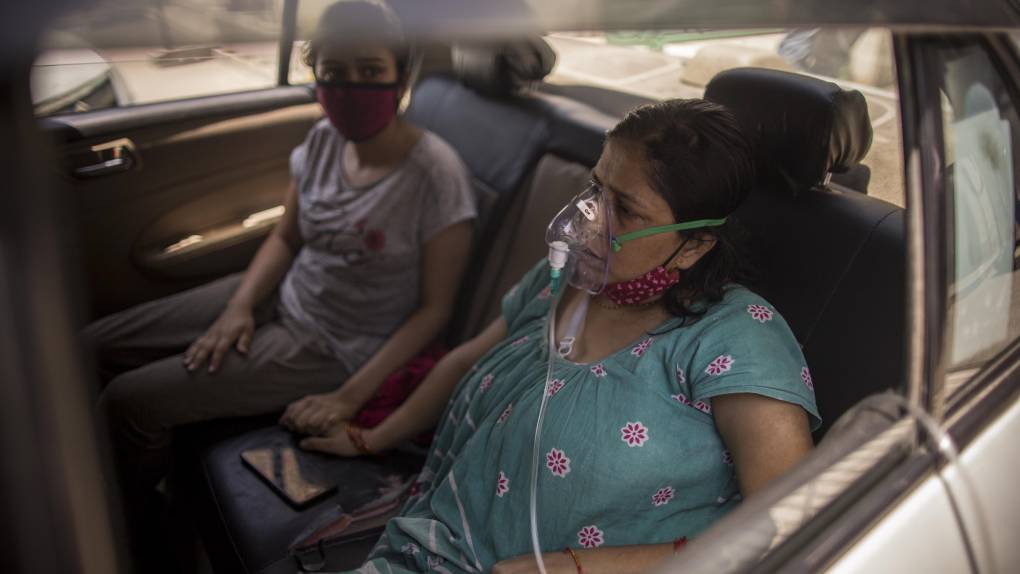
"caption": "Patients infected with COVID-19 can be seen wearing oxygen masks on April 24, 2021 in New Delhi, India. With recorded cases crossing 300,000 a day, India has more than 2 million active cases of COVID-19, the second-highest number in the world after the U.S.",
"description": null,
"title": "India Struggles To Contain Huge Wave Of Covid-19 Infections",
"credit": "Anindito Mukherjee/Getty Images",
"status": "inherit",
"altTag": "Patients infected with COVID-19 can be seen wearing Oxygen masks place amid the rising concerns over lack of Oxygen on April 24, 2021 in New Delhi, India. With recorded cases crossing 300,000 a day, India has more than 2 million active cases of COVID-19, the second-highest number in the world after the U.S. A new wave of the pandemic has totally overwhelmed the country's healthcare services and has caused crematoriums to operate day and night as the number of victims continues to spiral out of control.",
"isLoading": false,
"fetchFailed": false
},
"news_11870815": {
"type": "attachments",
"id": "news_11870815",
"meta": {
"index": "attachments_1716263798",
"site": "news",
"id": "11870815",
"found": true
},
"parent": 11870797,
"imgSizes": {
"twentyfourteen-full-width": {
"file": "https://ww2.kqed.org/app/uploads/sites/10/2021/04/ZII_1015-1038x576.jpeg",
"width": 1038,
"mimeType": "image/jpeg",
"height": 576
},
"thumbnail": {
"file": "https://ww2.kqed.org/app/uploads/sites/10/2021/04/ZII_1015-160x107.jpeg",
"width": 160,
"mimeType": "image/jpeg",
"height": 107
},
"post-thumbnail": {
"file": "https://ww2.kqed.org/app/uploads/sites/10/2021/04/ZII_1015-672x372.jpeg",
"width": 672,
"mimeType": "image/jpeg",
"height": 372
},
"kqedFullSize": {
"file": "https://ww2.kqed.org/app/uploads/sites/10/2021/04/ZII_1015.jpeg",
"width": 1620,
"height": 1080
},
"large": {
"file": "https://ww2.kqed.org/app/uploads/sites/10/2021/04/ZII_1015-1020x680.jpeg",
"width": 1020,
"mimeType": "image/jpeg",
"height": 680
},
"1536x1536": {
"file": "https://ww2.kqed.org/app/uploads/sites/10/2021/04/ZII_1015-1536x1024.jpeg",
"width": 1536,
"mimeType": "image/jpeg",
"height": 1024
},
"medium": {
"file": "https://ww2.kqed.org/app/uploads/sites/10/2021/04/ZII_1015-800x533.jpeg",
"width": 800,
"mimeType": "image/jpeg",
"height": 533
}
},
"publishDate": 1619130730,
"modified": 1619138126,
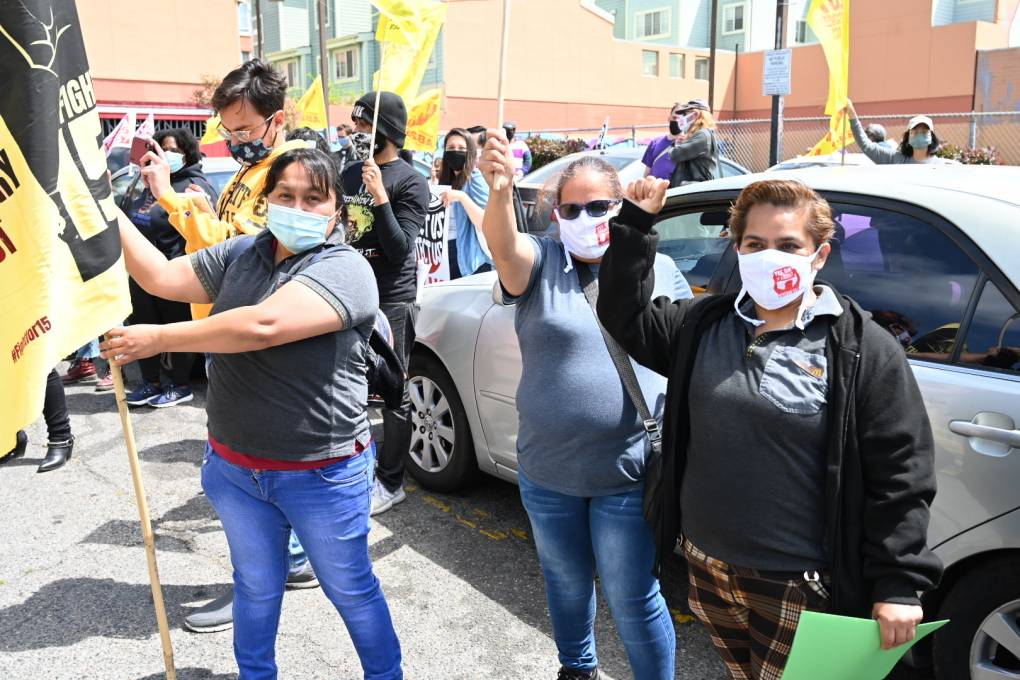
"caption": "Lorena Velazquez (r) joins a rally in Oakland on April 20, 2021 to push for the passage of a state bill that aims to improve conditions for fast food workers.",
"description": null,
"title": "ZII_1015",
"credit": "Courtesy of Fight for $15 campaign",
"status": "inherit",
"altTag": null,
"isLoading": false,
"fetchFailed": false
},
"news_11869359": {
"type": "attachments",
"id": "news_11869359",
"meta": {
"index": "attachments_1716263798",
"site": "news",
"id": "11869359",
"found": true
},
"parent": 11869346,
"imgSizes": {
"thumbnail": {
"file": "https://ww2.kqed.org/app/uploads/sites/10/2021/04/Santa-Cruz-Railroad-1-160x115.jpg",
"width": 160,
"mimeType": "image/jpeg",
"height": 115
},
"post-thumbnail": {
"file": "https://ww2.kqed.org/app/uploads/sites/10/2021/04/Santa-Cruz-Railroad-1-672x372.jpg",
"width": 672,
"mimeType": "image/jpeg",
"height": 372
},
"kqedFullSize": {
"file": "https://ww2.kqed.org/app/uploads/sites/10/2021/04/Santa-Cruz-Railroad-1.jpg",
"width": 763,
"height": 550
}
},
"publishDate": 1618360202,
"modified": 1618439482,
"caption": "A South Pacific Coast Railroad train stopped for a photograph in San Lorenzo Gorge in the 1880s.",
"description": null,
"title": "Santa Cruz Railroad 1",
"credit": "Courtesy of Derek Whaley",
"status": "inherit",
"altTag": null,
"isLoading": false,
"fetchFailed": false
},
"news_11868975": {
"type": "attachments",
"id": "news_11868975",
"meta": {
"index": "attachments_1716263798",
"site": "news",
"id": "11868975",
"found": true
},
"parent": 11868969,
"imgSizes": {
"twentyfourteen-full-width": {
"file": "https://ww2.kqed.org/app/uploads/sites/10/2021/04/04_RS48457_028_SanFrancisco_IndiaFarmerProtest_04102021-qut-1038x576.jpg",
"width": 1038,
"mimeType": "image/jpeg",
"height": 576
},
"thumbnail": {
"file": "https://ww2.kqed.org/app/uploads/sites/10/2021/04/04_RS48457_028_SanFrancisco_IndiaFarmerProtest_04102021-qut-160x107.jpg",
"width": 160,
"mimeType": "image/jpeg",
"height": 107
},
"post-thumbnail": {
"file": "https://ww2.kqed.org/app/uploads/sites/10/2021/04/04_RS48457_028_SanFrancisco_IndiaFarmerProtest_04102021-qut-672x372.jpg",
"width": 672,
"mimeType": "image/jpeg",
"height": 372
},
"kqedFullSize": {
"file": "https://ww2.kqed.org/app/uploads/sites/10/2021/04/04_RS48457_028_SanFrancisco_IndiaFarmerProtest_04102021-qut.jpg",
"width": 1920,
"height": 1280
},
"large": {
"file": "https://ww2.kqed.org/app/uploads/sites/10/2021/04/04_RS48457_028_SanFrancisco_IndiaFarmerProtest_04102021-qut-1020x680.jpg",
"width": 1020,
"mimeType": "image/jpeg",
"height": 680
},
"1536x1536": {
"file": "https://ww2.kqed.org/app/uploads/sites/10/2021/04/04_RS48457_028_SanFrancisco_IndiaFarmerProtest_04102021-qut-1536x1024.jpg",
"width": 1536,
"mimeType": "image/jpeg",
"height": 1024
},
"medium": {
"file": "https://ww2.kqed.org/app/uploads/sites/10/2021/04/04_RS48457_028_SanFrancisco_IndiaFarmerProtest_04102021-qut-800x533.jpg",
"width": 800,
"mimeType": "image/jpeg",
"height": 533
}
},
"publishDate": 1618157611,
"modified": 1618244481,
"caption": "Demonstrators march from Crissy Field to the Golden Gate Bridge in solidarity with farmers in India on April 10, 2021.",
"description": "Demonstrators march from Crissy Field to the Golden Gate Bridge in solidarity with farmers in India on April 10, 2021.",
"title": "04_RS48457_028_SanFrancisco_IndiaFarmerProtest_04102021-qut",
"credit": "Beth LaBerge/KQED",
"status": "inherit",
"altTag": null,
"isLoading": false,
"fetchFailed": false
},
"news_11868867": {
"type": "attachments",
"id": "news_11868867",
"meta": {
"index": "attachments_1716263798",
"site": "news",
"id": "11868867",
"found": true
},
"parent": 11868617,
"imgSizes": {
"twentyfourteen-full-width": {
"file": "https://ww2.kqed.org/app/uploads/sites/10/2021/04/RS47911_011_SanFrancisco_StopAAPIHateRally_0320201-qut-1038x576.jpeg",
"width": 1038,
"mimeType": "image/jpeg",
"height": 576
},
"thumbnail": {
"file": "https://ww2.kqed.org/app/uploads/sites/10/2021/04/RS47911_011_SanFrancisco_StopAAPIHateRally_0320201-qut-160x107.jpeg",
"width": 160,
"mimeType": "image/jpeg",
"height": 107
},
"post-thumbnail": {
"file": "https://ww2.kqed.org/app/uploads/sites/10/2021/04/RS47911_011_SanFrancisco_StopAAPIHateRally_0320201-qut-672x372.jpeg",
"width": 672,
"mimeType": "image/jpeg",
"height": 372
},
"kqedFullSize": {
"file": "https://ww2.kqed.org/app/uploads/sites/10/2021/04/RS47911_011_SanFrancisco_StopAAPIHateRally_0320201-qut.jpeg",
"width": 1920,
"height": 1280
},
"large": {
"file": "https://ww2.kqed.org/app/uploads/sites/10/2021/04/RS47911_011_SanFrancisco_StopAAPIHateRally_0320201-qut-1020x680.jpeg",
"width": 1020,
"mimeType": "image/jpeg",
"height": 680
},
"1536x1536": {
"file": "https://ww2.kqed.org/app/uploads/sites/10/2021/04/RS47911_011_SanFrancisco_StopAAPIHateRally_0320201-qut-1536x1024.jpeg",
"width": 1536,
"mimeType": "image/jpeg",
"height": 1024
},
"medium": {
"file": "https://ww2.kqed.org/app/uploads/sites/10/2021/04/RS47911_011_SanFrancisco_StopAAPIHateRally_0320201-qut-800x533.jpeg",
"width": 800,
"mimeType": "image/jpeg",
"height": 533
}
},
"publishDate": 1618005602,
"modified": 1620253831,
"caption": "Hundreds gather at Portsmouth Square in San Francisco’s Chinatown on March 20, 2021 for a Stop AAPI Hate rally, which made space for people to grieve, make art and to honor the lives lost to recent anti-Asian violence.",
"description": "Hundreds gather at Portsmouth Square in San Francisco’s Chinatown on March 20, 2021 for a Stop AAPI Hate rally, which made space for people to grieve, make art and to honor the lives lost to recent anti-Asian violence.",
"title": "RS47911_011_SanFrancisco_StopAAPIHateRally_0320201-qut",
"credit": "Beth LaBerge/KQED",
"status": "inherit",
"altTag": "Hundreds gather at Portsmouth Square in San Francisco’s Chinatown on March 20, 2021, for a Stop AAPI Hate rally which made space for people to grieve, make art and to honor the lives lost to recent anti-Asian violence.",
"isLoading": false,
"fetchFailed": false
},
"news_11868510": {
"type": "attachments",
"id": "news_11868510",
"meta": {
"index": "attachments_1716263798",
"site": "news",
"id": "11868510",
"found": true
},
"parent": 11868460,
"imgSizes": {
"twentyfourteen-full-width": {
"file": "https://ww2.kqed.org/app/uploads/sites/10/2021/04/cargo-ship-backup-1038x576.jpg",
"width": 1038,
"mimeType": "image/jpeg",
"height": 576
},
"thumbnail": {
"file": "https://ww2.kqed.org/app/uploads/sites/10/2021/04/cargo-ship-backup-160x90.jpg",
"width": 160,
"mimeType": "image/jpeg",
"height": 90
},
"post-thumbnail": {
"file": "https://ww2.kqed.org/app/uploads/sites/10/2021/04/cargo-ship-backup-672x372.jpg",
"width": 672,
"mimeType": "image/jpeg",
"height": 372
},
"kqedFullSize": {
"file": "https://ww2.kqed.org/app/uploads/sites/10/2021/04/cargo-ship-backup.jpg",
"width": 1920,
"height": 1080
},
"large": {
"file": "https://ww2.kqed.org/app/uploads/sites/10/2021/04/cargo-ship-backup-1020x574.jpg",
"width": 1020,
"mimeType": "image/jpeg",
"height": 574
},
"1536x1536": {
"file": "https://ww2.kqed.org/app/uploads/sites/10/2021/04/cargo-ship-backup-1536x864.jpg",
"width": 1536,
"mimeType": "image/jpeg",
"height": 864
},
"medium": {
"file": "https://ww2.kqed.org/app/uploads/sites/10/2021/04/cargo-ship-backup-800x450.jpg",
"width": 800,
"mimeType": "image/jpeg",
"height": 450
}
},
"publishDate": 1617835099,
"modified": 1617835164,
"caption": "Container ships sit idle in the the San Francisco Bay just outside of the Port of Oakland on March 26, 2021 in San Francisco, California. As the global pandemic has fueled online shopping and international shipping to fulfill orders, metal shipping containers have become scarce and have caused log jams at ports around the globe. ",
"description": null,
"title": "cargo-ship-backup",
"credit": "Justin Sullivan/Getty Images",
"status": "inherit",
"altTag": "Container ships sit idle in the the San Francisco Bay just outside of the Port of Oakland on March 26, 2021 in San Francisco, California. As the global pandemic has fueled online shopping and international shipping to fulfill orders, metal shipping containers have become scarce and have caused log jams at ports around the globe.",
"isLoading": false,
"fetchFailed": false
},
"news_11868492": {
"type": "attachments",
"id": "news_11868492",
"meta": {
"index": "attachments_1716263798",
"site": "news",
"id": "11868492",
"found": true
},
"parent": 11868474,
"imgSizes": {
"twentyfourteen-full-width": {
"file": "https://ww2.kqed.org/app/uploads/sites/10/2021/04/Recology-bins-1038x576.jpg",
"width": 1038,
"mimeType": "image/jpeg",
"height": 576
},
"thumbnail": {
"file": "https://ww2.kqed.org/app/uploads/sites/10/2021/04/Recology-bins-160x90.jpg",
"width": 160,
"mimeType": "image/jpeg",
"height": 90
},
"post-thumbnail": {
"file": "https://ww2.kqed.org/app/uploads/sites/10/2021/04/Recology-bins-672x372.jpg",
"width": 672,
"mimeType": "image/jpeg",
"height": 372
},
"kqedFullSize": {
"file": "https://ww2.kqed.org/app/uploads/sites/10/2021/04/Recology-bins.jpg",
"width": 1920,
"height": 1080
},
"large": {
"file": "https://ww2.kqed.org/app/uploads/sites/10/2021/04/Recology-bins-1020x574.jpg",
"width": 1020,
"mimeType": "image/jpeg",
"height": 574
},
"1536x1536": {
"file": "https://ww2.kqed.org/app/uploads/sites/10/2021/04/Recology-bins-1536x864.jpg",
"width": 1536,
"mimeType": "image/jpeg",
"height": 864
},
"medium": {
"file": "https://ww2.kqed.org/app/uploads/sites/10/2021/04/Recology-bins-800x450.jpg",
"width": 800,
"mimeType": "image/jpeg",
"height": 450
}
},
"publishDate": 1617832304,
"modified": 1617832346,
"caption": "A Recology worker collecting curbside waste.",
"description": null,
"title": "Recology-bins",
"credit": "Courtesy of Recology",
"status": "inherit",
"altTag": "A Recology worker collecting curbside waste.",
"isLoading": false,
"fetchFailed": false
},
"news_11867938": {
"type": "attachments",
"id": "news_11867938",
"meta": {
"index": "attachments_1716263798",
"site": "news",
"id": "11867938",
"found": true
},
"parent": 11867877,
"imgSizes": {
"twentyfourteen-full-width": {
"file": "https://ww2.kqed.org/app/uploads/sites/10/2021/04/MARQUEE_823-1038x576.jpg",
"width": 1038,
"mimeType": "image/jpeg",
"height": 576
},
"thumbnail": {
"file": "https://ww2.kqed.org/app/uploads/sites/10/2021/04/MARQUEE_823-160x90.jpg",
"width": 160,
"mimeType": "image/jpeg",
"height": 90
},
"post-thumbnail": {
"file": "https://ww2.kqed.org/app/uploads/sites/10/2021/04/MARQUEE_823-672x372.jpg",
"width": 672,
"mimeType": "image/jpeg",
"height": 372
},
"kqedFullSize": {
"file": "https://ww2.kqed.org/app/uploads/sites/10/2021/04/MARQUEE_823.jpg",
"width": 1920,
"height": 1080
},
"large": {
"file": "https://ww2.kqed.org/app/uploads/sites/10/2021/04/MARQUEE_823-1020x574.jpg",
"width": 1020,
"mimeType": "image/jpeg",
"height": 574
},
"1536x1536": {
"file": "https://ww2.kqed.org/app/uploads/sites/10/2021/04/MARQUEE_823-1536x864.jpg",
"width": 1536,
"mimeType": "image/jpeg",
"height": 864
},
"medium": {
"file": "https://ww2.kqed.org/app/uploads/sites/10/2021/04/MARQUEE_823-800x450.jpg",
"width": 800,
"mimeType": "image/jpeg",
"height": 450
}
},
"publishDate": 1617410534,
"modified": 1617410534,
"caption": null,
"description": null,
"title": "MARQUEE_823",
"credit": null,
"status": "inherit",
"altTag": null,
"isLoading": false,
"fetchFailed": false
},
"news_11867414": {
"type": "attachments",
"id": "news_11867414",
"meta": {
"index": "attachments_1716263798",
"site": "news",
"id": "11867414",
"found": true
},
"parent": 11864811,
"imgSizes": {
"twentyfourteen-full-width": {
"file": "https://ww2.kqed.org/app/uploads/sites/10/2021/03/RS37211_GettyImages-461907958-1-qut-1038x576.jpg",
"width": 1038,
"mimeType": "image/jpeg",
"height": 576
},
"thumbnail": {
"file": "https://ww2.kqed.org/app/uploads/sites/10/2021/03/RS37211_GettyImages-461907958-1-qut-160x107.jpg",
"width": 160,
"mimeType": "image/jpeg",
"height": 107
},
"post-thumbnail": {
"file": "https://ww2.kqed.org/app/uploads/sites/10/2021/03/RS37211_GettyImages-461907958-1-qut-672x372.jpg",
"width": 672,
"mimeType": "image/jpeg",
"height": 372
},
"kqedFullSize": {
"file": "https://ww2.kqed.org/app/uploads/sites/10/2021/03/RS37211_GettyImages-461907958-1-qut.jpg",
"width": 1920,
"height": 1281
},
"large": {
"file": "https://ww2.kqed.org/app/uploads/sites/10/2021/03/RS37211_GettyImages-461907958-1-qut-1020x681.jpg",
"width": 1020,
"mimeType": "image/jpeg",
"height": 681
},
"1536x1536": {
"file": "https://ww2.kqed.org/app/uploads/sites/10/2021/03/RS37211_GettyImages-461907958-1-qut-1536x1025.jpg",
"width": 1536,
"mimeType": "image/jpeg",
"height": 1025
},
"medium": {
"file": "https://ww2.kqed.org/app/uploads/sites/10/2021/03/RS37211_GettyImages-461907958-1-qut-800x534.jpg",
"width": 800,
"mimeType": "image/jpeg",
"height": 534
}
},
"publishDate": 1617227402,
"modified": 1617227622,
"caption": "A construction worker carries lumber as he builds a new home in Petaluma in 2015. A new state Senate bill would close a loophole that has allowed thousands of contractors to avoid buying insurance to cover workers injured or killed on the job.",
"description": "A construction worker carries lumber as he builds a new home in Petaluma in 2015. A new state Senate bill would close a loophole that has allowed thousands of contractors to avoid buying insurance to cover workers injured or killed on the job.",
"title": "Increase In Housing Starts At End Of Year Signals Housing Market Recovery",
"credit": "Justin Sullivan/Getty Images",
"status": "inherit",
"altTag": "worker carrying lumber precariously on roof of building under construction",
"isLoading": false,
"fetchFailed": false
},
"news_11866833": {
"type": "attachments",
"id": "news_11866833",
"meta": {
"index": "attachments_1716263798",
"site": "news",
"id": "11866833",
"found": true
},
"parent": 11866831,
"imgSizes": {
"twentyfourteen-full-width": {
"file": "https://ww2.kqed.org/app/uploads/sites/10/2021/03/Feature_RS48144_023_SanFrancisco_RiseUpRally_03262021-qut-1038x576.jpg",
"width": 1038,
"mimeType": "image/jpeg",
"height": 576
},
"thumbnail": {
"file": "https://ww2.kqed.org/app/uploads/sites/10/2021/03/Feature_RS48144_023_SanFrancisco_RiseUpRally_03262021-qut-160x107.jpg",
"width": 160,
"mimeType": "image/jpeg",
"height": 107
},
"post-thumbnail": {
"file": "https://ww2.kqed.org/app/uploads/sites/10/2021/03/Feature_RS48144_023_SanFrancisco_RiseUpRally_03262021-qut-672x372.jpg",
"width": 672,
"mimeType": "image/jpeg",
"height": 372
},
"kqedFullSize": {
"file": "https://ww2.kqed.org/app/uploads/sites/10/2021/03/Feature_RS48144_023_SanFrancisco_RiseUpRally_03262021-qut.jpg",
"width": 1920,
"height": 1280
},
"large": {
"file": "https://ww2.kqed.org/app/uploads/sites/10/2021/03/Feature_RS48144_023_SanFrancisco_RiseUpRally_03262021-qut-1020x680.jpg",
"width": 1020,
"mimeType": "image/jpeg",
"height": 680
},
"1536x1536": {
"file": "https://ww2.kqed.org/app/uploads/sites/10/2021/03/Feature_RS48144_023_SanFrancisco_RiseUpRally_03262021-qut-1536x1024.jpg",
"width": 1536,
"mimeType": "image/jpeg",
"height": 1024
},
"medium": {
"file": "https://ww2.kqed.org/app/uploads/sites/10/2021/03/Feature_RS48144_023_SanFrancisco_RiseUpRally_03262021-qut-800x533.jpg",
"width": 800,
"mimeType": "image/jpeg",
"height": 533
}
},
"publishDate": 1616882797,
"modified": 1617042619,
"caption": "A demonstrator holds a sign that says 'Justice for Angelo Quinto' during a student-led rally to show solidarity with the Asian American community and bring awareness to the death of Angelo Quinto, in San Francisco on March 26, 2021.",
"description": null,
"title": "Feature_RS48144_023_SanFrancisco_RiseUpRally_03262021-qut",
"credit": "Beth LaBerge/KQED",
"status": "inherit",
"altTag": "A demonstrator holds a sign that says, 'Justice for Angelo Quinto' during a student-led rally to show solidarity with the Asian American community and bring awareness to the death of Angelo Quinto, in San Francisco on March 26, 2021.",
"isLoading": false,
"fetchFailed": false
},
"news_11866790": {
"type": "attachments",
"id": "news_11866790",
"meta": {
"index": "attachments_1716263798",
"site": "news",
"id": "11866790",
"found": true
},
"parent": 11866770,
"imgSizes": {
"twentyfourteen-full-width": {
"file": "https://ww2.kqed.org/app/uploads/sites/10/2021/03/MARQUEE_822-1038x576.jpg",
"width": 1038,
"mimeType": "image/jpeg",
"height": 576
},
"thumbnail": {
"file": "https://ww2.kqed.org/app/uploads/sites/10/2021/03/MARQUEE_822-160x90.jpg",
"width": 160,
"mimeType": "image/jpeg",
"height": 90
},
"post-thumbnail": {
"file": "https://ww2.kqed.org/app/uploads/sites/10/2021/03/MARQUEE_822-672x372.jpg",
"width": 672,
"mimeType": "image/jpeg",
"height": 372
},
"kqedFullSize": {
"file": "https://ww2.kqed.org/app/uploads/sites/10/2021/03/MARQUEE_822.jpg",
"width": 1920,
"height": 1080
},
"large": {
"file": "https://ww2.kqed.org/app/uploads/sites/10/2021/03/MARQUEE_822-1020x574.jpg",
"width": 1020,
"mimeType": "image/jpeg",
"height": 574
},
"1536x1536": {
"file": "https://ww2.kqed.org/app/uploads/sites/10/2021/03/MARQUEE_822-1536x864.jpg",
"width": 1536,
"mimeType": "image/jpeg",
"height": 864
},
"medium": {
"file": "https://ww2.kqed.org/app/uploads/sites/10/2021/03/MARQUEE_822-800x450.jpg",
"width": 800,
"mimeType": "image/jpeg",
"height": 450
}
},
"publishDate": 1616806208,
"modified": 1616806208,
"caption": null,
"description": null,
"title": "MARQUEE_822",
"credit": null,
"status": "inherit",
"altTag": null,
"isLoading": false,
"fetchFailed": false
}
},
"audioPlayerReducer": {
"postId": "stream_live",
"isPaused": true,
"isPlaying": false,
"pfsActive": false,
"pledgeModalIsOpen": true,
"playerDrawerIsOpen": false,
"liveAudioPlayStartedAt": 0,
"liveAudioPlayContext": ""
},
"authorsReducer": {
"byline_news_11871813": {
"type": "authors",
"id": "byline_news_11871813",
"meta": {
"override": true
},
"slug": "byline_news_11871813",
"name": "Teresa Wierzbianska",
"isLoading": false
},
"katrinaschwartz": {
"type": "authors",
"id": "234",
"meta": {
"index": "authors_1716337520",
"id": "234",
"found": true
},
"name": "Katrina Schwartz",
"firstName": "Katrina",
"lastName": "Schwartz",
"slug": "katrinaschwartz",
"email": "kschwartz@kqed.org",
"display_author_email": false,
"staff_mastheads": [
"news"
],
"title": "Producer",
"bio": "Katrina Schwartz is a journalist based in San Francisco. She's worked at KPCC public radio in LA and has reported on air and online for KQED since 2010. She covered how teaching and learning is changing for MindShift between 2012 and 2020. She is the co-host of the MindShift podcast and now produces KQED's Bay Curious podcast.",
"avatar": "https://secure.gravatar.com/avatar/edb4ee79070447a018538c9aae6eeecf28786515b8a0c30e43b6b7dce5aa44c8?s=600&d=blank&r=g",
"twitter": "kschwart",
"bluesky": null,
"facebook": null,
"instagram": null,
"linkedin": null,
"sites": [
{
"site": "",
"roles": [
"editor"
]
},
{
"site": "news",
"roles": [
"editor"
]
},
{
"site": "mindshift",
"roles": [
"administrator"
]
},
{
"site": "stateofhealth",
"roles": [
"author"
]
},
{
"site": "science",
"roles": [
"editor"
]
}
],
"headData": {
"title": "Katrina Schwartz | KQED",
"description": "Producer",
"ogImgSrc": "https://secure.gravatar.com/avatar/edb4ee79070447a018538c9aae6eeecf28786515b8a0c30e43b6b7dce5aa44c8?s=600&d=blank&r=g",
"twImgSrc": "https://secure.gravatar.com/avatar/edb4ee79070447a018538c9aae6eeecf28786515b8a0c30e43b6b7dce5aa44c8?s=600&d=blank&r=g"
},
"isLoading": false,
"link": "/author/katrinaschwartz"
},
"kqed": {
"type": "authors",
"id": "236",
"meta": {
"index": "authors_1716337520",
"id": "236",
"found": true
},
"name": "KQED News Staff",
"firstName": "KQED News Staff",
"lastName": null,
"slug": "kqed",
"email": "faq@kqed.org",
"display_author_email": false,
"staff_mastheads": [],
"title": null,
"bio": null,
"avatar": "https://secure.gravatar.com/avatar/ef0e801a68c4c54afa9180db14084167?s=600&d=blank&r=g",
"twitter": null,
"facebook": null,
"instagram": null,
"linkedin": null,
"sites": [
{
"site": "arts",
"roles": [
"contributor"
]
},
{
"site": "news",
"roles": [
"editor"
]
},
{
"site": "futureofyou",
"roles": [
"author"
]
}
],
"headData": {
"title": "KQED News Staff | KQED",
"description": null,
"ogImgSrc": "https://secure.gravatar.com/avatar/ef0e801a68c4c54afa9180db14084167?s=600&d=blank&r=g",
"twImgSrc": "https://secure.gravatar.com/avatar/ef0e801a68c4c54afa9180db14084167?s=600&d=blank&r=g"
},
"isLoading": false,
"link": "/author/kqed"
},
"tgoldberg": {
"type": "authors",
"id": "258",
"meta": {
"index": "authors_1716337520",
"id": "258",
"found": true
},
"name": "Ted Goldberg",
"firstName": "Ted",
"lastName": "Goldberg",
"slug": "tgoldberg",
"email": "tgoldberg@kqed.org",
"display_author_email": true,
"staff_mastheads": [
"news"
],
"title": "KQED Managing Editor, News and Newscasts",
"bio": "Ted Goldberg is Managing Editor of News and Newscasts at KQED. His main reporting beat is the Bay Area's oil refining industry.\r\n\r\nPrior to joining KQED in 2014, Ted worked at CBS News and WCBS AM in New York and Bay City News and KCBS Radio in San Francisco. He graduated from Oberlin College in Ohio in 1998.",
"avatar": "https://secure.gravatar.com/avatar/30ce2e4fe89135e104f89be2394d16225b9d36c121b5b3cb7651ce642978b96f?s=600&d=blank&r=g",
"twitter": "TedrickG",
"bluesky": null,
"facebook": null,
"instagram": null,
"linkedin": null,
"sites": [
{
"site": "news",
"roles": [
"editor"
]
},
{
"site": "science",
"roles": [
"editor"
]
}
],
"headData": {
"title": "Ted Goldberg | KQED",
"description": "KQED Managing Editor, News and Newscasts",
"ogImgSrc": "https://secure.gravatar.com/avatar/30ce2e4fe89135e104f89be2394d16225b9d36c121b5b3cb7651ce642978b96f?s=600&d=blank&r=g",
"twImgSrc": "https://secure.gravatar.com/avatar/30ce2e4fe89135e104f89be2394d16225b9d36c121b5b3cb7651ce642978b96f?s=600&d=blank&r=g"
},
"isLoading": false,
"link": "/author/tgoldberg"
},
"cveltman": {
"type": "authors",
"id": "8608",
"meta": {
"index": "authors_1716337520",
"id": "8608",
"found": true
},
"name": "Chloe Veltman",
"firstName": "Chloe",
"lastName": "Veltman",
"slug": "cveltman",
"email": "cveltman@kqed.org",
"display_author_email": true,
"staff_mastheads": [],
"title": "Arts and Culture Reporter",
"bio": "Chloe Veltman is a former arts and culture reporter for KQED. Prior to joining the organization, she launched and led the arts bureau at Colorado Public Radio, served as the Bay Area's culture columnist for the New York Times, and was the founder, host and executive producer of VoiceBox, a national award-winning weekly podcast/radio show and live events series all about the human voice. Chloe is the recipient of numerous prizes, grants and fellowships including a Webby Award for her work on interactive storytelling, both the John S Knight Journalism Fellowship and Humanities Center Fellowship at Stanford University, the Sundance Arts Writing Fellowship and a Library of Congress Research Fellowship. She is the author of the book \"On Acting\" and has appeared as a guest lecturer at Yale University and the San Francisco Conservatory of Music among other institutions. She holds a BA in english literature from King's College, Cambridge, and a Masters in Dramaturgy from the Central School of Speech and Drama/Harvard Institute for Advanced Theater Training.\r\n\u003ca href=\"https://www.chloeveltman.com\">www.chloeveltman.com\u003c/a>",
"avatar": "https://secure.gravatar.com/avatar/55403394b00a1ddab683952c2eb2cf85?s=600&d=blank&r=g",
"twitter": "chloeveltman",
"facebook": null,
"instagram": null,
"linkedin": null,
"sites": [
{
"site": "arts",
"roles": []
},
{
"site": "news",
"roles": [
"author"
]
},
{
"site": "pop",
"roles": [
"editor"
]
},
{
"site": "science",
"roles": []
}
],
"headData": {
"title": "Chloe Veltman | KQED",
"description": "Arts and Culture Reporter",
"ogImgSrc": "https://secure.gravatar.com/avatar/55403394b00a1ddab683952c2eb2cf85?s=600&d=blank&r=g",
"twImgSrc": "https://secure.gravatar.com/avatar/55403394b00a1ddab683952c2eb2cf85?s=600&d=blank&r=g"
},
"isLoading": false,
"link": "/author/cveltman"
},
"fjhabvala": {
"type": "authors",
"id": "8659",
"meta": {
"index": "authors_1716337520",
"id": "8659",
"found": true
},
"name": "Farida Jhabvala Romero",
"firstName": "Farida",
"lastName": "Jhabvala Romero",
"slug": "fjhabvala",
"email": "fjhabvala@kqed.org",
"display_author_email": true,
"staff_mastheads": [
"news"
],
"title": "KQED Contributor",
"bio": "Farida Jhabvala Romero is a Labor Correspondent for KQED. She previously covered immigration. Farida was \u003ca href=\"https://www.ccnma.org/2022-most-influential-latina-journalists\">named\u003c/a> one of the 10 Most Influential Latina Journalists in California in 2022 by the California Chicano News Media Association. Her work has won awards from the Society of Professional Journalists (Northern California), as well as a national and regional Edward M. Murrow Award for the collaborative reporting projects “Dangerous Air” and “Graying California.” Before joining KQED, Farida worked as a producer at Radio Bilingüe, a national public radio network. Farida earned her master’s degree in journalism from Stanford University.",
"avatar": "https://secure.gravatar.com/avatar/f9f022d4e2609741874222a1e9d41f48fea74011aa7c615eef91d9a50c944ebe?s=600&d=blank&r=g",
"twitter": "FaridaJhabvala",
"bluesky": null,
"facebook": null,
"instagram": null,
"linkedin": "https://www.linkedin.com/in/faridajhabvala/",
"sites": [
{
"site": "news",
"roles": [
"editor"
]
},
{
"site": "stateofhealth",
"roles": [
"author"
]
},
{
"site": "liveblog",
"roles": [
"author"
]
}
],
"headData": {
"title": "Farida Jhabvala Romero | KQED",
"description": "KQED Contributor",
"ogImgSrc": "https://secure.gravatar.com/avatar/f9f022d4e2609741874222a1e9d41f48fea74011aa7c615eef91d9a50c944ebe?s=600&d=blank&r=g",
"twImgSrc": "https://secure.gravatar.com/avatar/f9f022d4e2609741874222a1e9d41f48fea74011aa7c615eef91d9a50c944ebe?s=600&d=blank&r=g"
},
"isLoading": false,
"link": "/author/fjhabvala"
},
"parcuni": {
"type": "authors",
"id": "11368",
"meta": {
"index": "authors_1716337520",
"id": "11368",
"found": true
},
"name": "Peter Arcuni",
"firstName": "Peter",
"lastName": "Arcuni",
"slug": "parcuni",
"email": "parcuni@KQED.org",
"display_author_email": false,
"staff_mastheads": [
"science"
],
"title": "Reporter",
"bio": "Peter reports radio and online stories for \u003cem>KQED Science\u003c/em>. His work has also appeared on the \u003cem>The California Report\u003c/em> morning show and \u003cem>KQED News\u003c/em>. His production credits include \u003cem>The California Report, The California Report Magazine\u003c/em> and KQED's local news podcast \u003cem>The Bay\u003c/em>. Other credits include NPR's \u003cem>All Things Considered\u003c/em>, WNYC's \u003cem>Science Friday\u003c/em>, WBUR's \u003cem>Here & Now\u003c/em>, WIRED and SFGate. Peter graduated from Brown University and earned a master's degree in journalism from Stanford. He's covered everything from homelessness to wildfires, health, the environment, arts and Thanksgiving in San Quentin prison. In other lives, he played rock n roll music and studied neuroscience. You can email him at: parcuni@kqed.org",
"avatar": "https://secure.gravatar.com/avatar/d5032f6f27199d478af34ad2e1d98732?s=600&d=blank&r=g",
"twitter": "peterarcuni",
"facebook": null,
"instagram": null,
"linkedin": null,
"sites": [
{
"site": "news",
"roles": [
"editor"
]
},
{
"site": "science",
"roles": [
"editor"
]
}
],
"headData": {
"title": "Peter Arcuni | KQED",
"description": "Reporter",
"ogImgSrc": "https://secure.gravatar.com/avatar/d5032f6f27199d478af34ad2e1d98732?s=600&d=blank&r=g",
"twImgSrc": "https://secure.gravatar.com/avatar/d5032f6f27199d478af34ad2e1d98732?s=600&d=blank&r=g"
},
"isLoading": false,
"link": "/author/parcuni"
},
"lsarah": {
"type": "authors",
"id": "11626",
"meta": {
"index": "authors_1716337520",
"id": "11626",
"found": true
},
"name": "Lakshmi Sarah",
"firstName": "Lakshmi",
"lastName": "Sarah",
"slug": "lsarah",
"email": "lsarah@kqed.org",
"display_author_email": false,
"staff_mastheads": [],
"title": "Digital Producer",
"bio": "Lakshmi Sarah is an educator, author and journalist with a focus on innovative storytelling. She has worked with newspapers, radio and magazines from Ahmedabad, India to Los Angeles, California. She has written and produced for Die Zeit, Global Voices, AJ+, KQED, Fusion Media Group and the New York Times.",
"avatar": "https://secure.gravatar.com/avatar/652dcaecd8b28826fc17a8b2d6bb4e93?s=600&d=blank&r=g",
"twitter": "lakitalki",
"facebook": null,
"instagram": "https://www.instagram.com/laki.talki/",
"linkedin": "https://www.linkedin.com/in/lakisarah/",
"sites": [
{
"site": "arts",
"roles": []
},
{
"site": "news",
"roles": []
},
{
"site": "bayareabites",
"roles": []
},
{
"site": "science",
"roles": []
}
],
"headData": {
"title": "Lakshmi Sarah | KQED",
"description": "Digital Producer",
"ogImgSrc": "https://secure.gravatar.com/avatar/652dcaecd8b28826fc17a8b2d6bb4e93?s=600&d=blank&r=g",
"twImgSrc": "https://secure.gravatar.com/avatar/652dcaecd8b28826fc17a8b2d6bb4e93?s=600&d=blank&r=g"
},
"isLoading": false,
"link": "/author/lsarah"
},
"jchang": {
"type": "authors",
"id": "11642",
"meta": {
"index": "authors_1716337520",
"id": "11642",
"found": true
},
"name": "Julie Chang",
"firstName": "Julie",
"lastName": "Chang",
"slug": "jchang",
"email": "jchang@kqed.org",
"display_author_email": false,
"staff_mastheads": [
"news"
],
"title": "KQED Contributor",
"bio": "Julie Chang is a reporter and producer (and occasional anchor) with the radio and digital teams at KQED. Before KQED, she worked at WAMU 88.5 in Washington D.C. and 89.3 KPCC in Los Angeles County. Her work has been featured on NPR’s Morning Edition and All Things Considered, Here & Now, the New York Times, and more. Julie graduated from UC Berkeley’s Graduate School of Journalism. She previously taught English at Pasadena City College, Fullerton College and Cal Poly Pomona. Julie earned her M.A. in English from Cal Poly Pomona and her B.A. in English from UCI with a minor in criminology.",
"avatar": "https://secure.gravatar.com/avatar/a7afce94ef127082c5475116b4a3b77d?s=600&d=blank&r=g",
"twitter": "BayAreaJulie",
"facebook": null,
"instagram": null,
"linkedin": "https://www.linkedin.com/in/julieyc/",
"sites": [
{
"site": "",
"roles": [
"editor"
]
},
{
"site": "news",
"roles": [
"author"
]
},
{
"site": "science",
"roles": [
"editor"
]
}
],
"headData": {
"title": "Julie Chang | KQED",
"description": "KQED Contributor",
"ogImgSrc": "https://secure.gravatar.com/avatar/a7afce94ef127082c5475116b4a3b77d?s=600&d=blank&r=g",
"twImgSrc": "https://secure.gravatar.com/avatar/a7afce94ef127082c5475116b4a3b77d?s=600&d=blank&r=g"
},
"isLoading": false,
"link": "/author/jchang"
},
"blaberge": {
"type": "authors",
"id": "11667",
"meta": {
"index": "authors_1716337520",
"id": "11667",
"found": true
},
"name": "Beth LaBerge",
"firstName": "Beth",
"lastName": "LaBerge",
"slug": "blaberge",
"email": "blaberge@KQED.org",
"display_author_email": true,
"staff_mastheads": [
"news"
],
"title": "Photographer, News",
"bio": "Beth LaBerge is a visual journalist for \u003ca href=\"https://www.kqed.org/news\">KQED News\u003c/a>.",
"avatar": "https://secure.gravatar.com/avatar/ce49ecd7a1306685637b45a1f6f5dedfc4ae9481966eb596fea5160466dd6319?s=600&d=blank&r=g",
"twitter": null,
"bluesky": null,
"facebook": null,
"instagram": "https://www.instagram.com/bethlaberge/",
"linkedin": null,
"sites": [
{
"site": "arts",
"roles": [
"editor",
"manage_categories"
]
},
{
"site": "news",
"roles": [
"editor",
"edit_plugins",
"manage_categories"
]
},
{
"site": "science",
"roles": [
"editor",
"contributor",
"author",
"manage_categories"
]
},
{
"site": "perspectives",
"roles": [
"editor"
]
},
{
"site": "liveblog",
"roles": [
"editor"
]
}
],
"headData": {
"title": "Beth LaBerge | KQED",
"description": "Photographer, News",
"ogImgSrc": "https://secure.gravatar.com/avatar/ce49ecd7a1306685637b45a1f6f5dedfc4ae9481966eb596fea5160466dd6319?s=600&d=blank&r=g",
"twImgSrc": "https://secure.gravatar.com/avatar/ce49ecd7a1306685637b45a1f6f5dedfc4ae9481966eb596fea5160466dd6319?s=600&d=blank&r=g"
},
"isLoading": false,
"link": "/author/blaberge"
}
},
"pagesReducer": {
"news_category_local": {
"type": "terms",
"id": "news_28250",
"meta": {
"index": "terms_1716263798",
"site": "news",
"id": "28250",
"score": 12.795155
},
"featImg": null,
"name": "Local",
"description": null,
"taxonomy": "category",
"headData": {
"twImgId": null,
"twTitle": null,
"ogTitle": null,
"ogImgId": null,
"twDescription": null,
"description": null,
"title": "Local Archives | KQED News",
"ogDescription": null
},
"ttid": 28267,
"slug": "local",
"isLoading": false,
"title": "Local",
"pageMeta": {
"site": "news",
"WpPageTemplate": "page-topic-editorial",
"currentPage": 182
},
"blocks": [
{
"blockName": "kqed/post-list",
"attrs": {
"layout": "cardArticle2",
"query": "posts/news?category=local",
"seeMore": false,
"paginated": true,
"page": 182
}
},
{
"blockName": "kqed/ad"
}
]
}
},
"pfsSessionReducer": {},
"postsReducer": {
"stream_live": {
"type": "live",
"id": "stream_live",
"audioUrl": "https://hls.kqed.org/hls/kqed_app/playlist.m3u8",
"title": "Live Stream",
"excerpt": "Live Stream information currently unavailable.",
"link": "/radio",
"featImg": "",
"label": {
"name": "KQED Live",
"link": "/"
}
},
"stream_kqedNewscast": {
"type": "posts",
"id": "stream_kqedNewscast",
"audioUrl": "https://www.kqed.org/.stream/anon/radio/RDnews/newscast.mp3?_=1",
"title": "KQED Newscast",
"featImg": "",
"label": {
"name": "88.5 FM",
"link": "/"
}
},
"news_11871813": {
"type": "posts",
"id": "news_11871813",
"meta": {
"index": "posts_1716263798",
"site": "news",
"id": "11871813",
"score": null,
"sort": [
1619810856000
]
},
"guestAuthors": [],
"slug": "becoming-a-teen-youtuber-in-the-times-of-covid",
"title": "Becoming a Teen YouTuber in the Times of COVID",
"publishDate": 1619810856,
"format": "standard",
"headTitle": "Becoming a Teen YouTuber in the Times of COVID | KQED",
"labelTerm": {
"site": "news"
},
"content": "\u003cp>\u003cem>This article is adapted from an interview between KQED’s Brian Watt and San Francisco high school student Jimmy Luong. It was produced as part of KQED’s \u003ca href=\"https://www.kqed.org/youthtakeover\" target=\"_blank\" rel=\"noopener noreferrer\">Youth Takeover Week.\u003c/a>\u003c/em>\u003c/p>\n\u003cp>Many high school students in the Bay Area have been learning online for over a year. Jimmy Luong, a junior at Abraham Lincoln High School in San Francisco, used the time indoors to revive a passion from his younger days. He’s \u003ca href=\"https://youtube.com/channel/UCk4OuGnGEcY0fVlAA8jEDmw\" target=\"_blank\" rel=\"noopener noreferrer\">making videos\u003c/a> about video games on YouTube.\u003c/p>\n\u003cp>Luong, 17, spent several hours a day running a YouTube channel in ninth grade. At the time, the video game Fortnite was all the rage among young people. Luong said he had a niche that gave him a great idea for a YouTube series.\u003c/p>\n\u003cp>“See, most people played Fortnite on their computers or consoles like the PS4 or Xbox, but I played on my phone,” he said during an interview with KQED’s Brian Watt. “I was a mobile gamer and I happened to be really good. So I had my own thing. I stood out.”\u003c/p>\n\u003cp>Fortnite, a Battle Royale game that has \u003ca href=\"https://www.npr.org/2018/05/05/608164530/the-fortnite-craze-might-be-here-to-stay\" target=\"_blank\" rel=\"noopener noreferrer\">swept\u003c/a> the video game world since its release in 2017, garnered more than \u003ca href=\"https://twitter.com/FortniteGame/status/1258079550321446912\" target=\"_blank\" rel=\"noopener noreferrer\">350 million\u003c/a> registered players as of May 2020, during the early months of the pandemic. In a typical game, about 100 people play in a video game “lobby,” and the last one standing wins.\u003c/p>\n\u003cp>[ad fullwidth]\u003c/p>\n\u003cp>https://twitter.com/FortniteGame/status/1258079550321446912?\u003c/p>\n\u003cp>Luong found a group of followers: people who both wanted to be good at playing Fortnite on their phones and who wanted to excel at it.\u003c/p>\n\u003cp>“The way I played the game, I liked to get as many kills as I could while also landing that victory,” he said. “I’ve tended to get about 20 to 30 kills out of 100. So that’s a big percentage of the lobby. That’s what most of my viewers came to watch.”\u003c/p>\n\u003cp>But staying up past midnight for over 11 months to edit and post YouTube videos proved to be too much time for one single hobby. So Luong decided to stop and focus on school and off-screen hobbies.\u003c/p>\n\u003cp>Then the pandemic hit. Luong found himself again in front of screens — like most Americans in lockdown — this time for hours and hours at a time without alternative activities. He decided to give his video game channel another shot, but this time with a newer game in the Call of Duty franchise.\u003c/p>\n\u003cp>“This time around, I don’t feel as … guilty of gaming for so long, because I do it anyways I’m not forced to go outside because, well — I can’t,” he said. “Since I’m already just gaming, I might as well just record it and edit and upload.” [aside tag=\"youth, youth-takover, education\" label=\"More Related Stories\"]\u003c/p>\n\u003cp>According to a \u003ca href=\"https://www.businessinsider.com/american-kids-youtube-star-astronauts-survey-2019-7\" target=\"_blank\" rel=\"noopener noreferrer\">2019 poll\u003c/a>, YouTuber or vlogger was the most popular dream career among U.S. kids surveyed. Luong, whose channel reached 15,000 subscribers at its peak, aspired toward that career goal.\u003c/p>\n\u003cp>“The reason I think my channel really blew up was because I was super dedicated. I wanted this to be my job,” he said.\u003c/p>\n\u003cp>Luong quickly realized he could easily monetize his channel. But to do that, he would need to provide bank information that he didn’t have and that his parents refused to provide.\u003c/p>\n\u003cp>Lately, he’s considering other career options.\u003c/p>\n\u003cp>\u003c/p>\n\u003cp>“I really want to get into movie acting. I think I like working in the entertainment industry. That’s why I like YouTube so much,” he said.\u003c/p>\n\n",
"blocks": [],
"excerpt": "Many high school students in the Bay Area have been learning online for over a year. Jimmy Luong, a junior at Lincoln High School in San Francisco, used the time indoors to revive a passion from his younger days. He's making videos about video games on YouTube.",
"status": "publish",
"parent": 0,
"modified": 1729027908,
"stats": {
"hasAudio": false,
"hasVideo": false,
"hasChartOrMap": false,
"iframeSrcs": [],
"hasGoogleForm": false,
"hasGallery": false,
"hasHearkenModule": false,
"hasPolis": false,
"paragraphCount": 17,
"wordCount": 633
},
"headData": {
"title": "Becoming a Teen YouTuber in the Times of COVID | KQED",
"description": "Many high school students in the Bay Area have been learning online for over a year. Jimmy Luong, a junior at Lincoln High School in San Francisco, used the time indoors to revive a passion from his younger days. He's making videos about video games on YouTube.",
"ogTitle": "",
"ogDescription": "",
"ogImgId": "",
"twTitle": "",
"twDescription": "",
"twImgId": "",
"schema": {
"@context": "https://schema.org",
"@type": "NewsArticle",
"headline": "Becoming a Teen YouTuber in the Times of COVID",
"datePublished": "2021-04-30T12:27:36-07:00",
"dateModified": "2024-10-15T14:31:48-07:00",
"image": "https://cdn.kqed.org/wp-content/uploads/2020/02/KQED-OG-Image@1x.png",
"isAccessibleForFree": "True",
"publisher": {
"@type": "NewsMediaOrganization",
"@id": "https://www.kqed.org/#organization",
"name": "KQED",
"logo": "https://cdn.kqed.org/wp-content/uploads/2020/02/KQED-OG-Image@1x.png",
"url": "https://www.kqed.org",
"sameAs": [
"https://www.facebook.com/KQED",
"https://twitter.com/KQED",
"https://www.instagram.com/kqed/",
"https://www.tiktok.com/@kqedofficial",
"https://www.linkedin.com/company/kqed",
"https://www.youtube.com/channel/UCeC0IOo7i1P_61zVUWbJ4nw"
]
}
}
},
"audioUrl": "https://traffic.omny.fm/d/clips/0af137ef-751e-4b19-a055-aaef00d2d578/ffca7e9f-6831-41c5-bcaf-aaef00f5a073/5838f035-0047-4104-8e30-ad1a011e28d1/audio.mp3",
"sticky": false,
"nprByline": "Teresa Wierzbianska",
"path": "/news/11871813/becoming-a-teen-youtuber-in-the-times-of-covid",
"audioTrackLength": null,
"parsedContent": [
{
"type": "contentString",
"content": "\u003cdiv class=\"post-body\">\u003cp>\u003cp>\u003cem>This article is adapted from an interview between KQED’s Brian Watt and San Francisco high school student Jimmy Luong. It was produced as part of KQED’s \u003ca href=\"https://www.kqed.org/youthtakeover\" target=\"_blank\" rel=\"noopener noreferrer\">Youth Takeover Week.\u003c/a>\u003c/em>\u003c/p>\n\u003cp>Many high school students in the Bay Area have been learning online for over a year. Jimmy Luong, a junior at Abraham Lincoln High School in San Francisco, used the time indoors to revive a passion from his younger days. He’s \u003ca href=\"https://youtube.com/channel/UCk4OuGnGEcY0fVlAA8jEDmw\" target=\"_blank\" rel=\"noopener noreferrer\">making videos\u003c/a> about video games on YouTube.\u003c/p>\n\u003cp>Luong, 17, spent several hours a day running a YouTube channel in ninth grade. At the time, the video game Fortnite was all the rage among young people. Luong said he had a niche that gave him a great idea for a YouTube series.\u003c/p>\n\u003cp>“See, most people played Fortnite on their computers or consoles like the PS4 or Xbox, but I played on my phone,” he said during an interview with KQED’s Brian Watt. “I was a mobile gamer and I happened to be really good. So I had my own thing. I stood out.”\u003c/p>\n\u003cp>Fortnite, a Battle Royale game that has \u003ca href=\"https://www.npr.org/2018/05/05/608164530/the-fortnite-craze-might-be-here-to-stay\" target=\"_blank\" rel=\"noopener noreferrer\">swept\u003c/a> the video game world since its release in 2017, garnered more than \u003ca href=\"https://twitter.com/FortniteGame/status/1258079550321446912\" target=\"_blank\" rel=\"noopener noreferrer\">350 million\u003c/a> registered players as of May 2020, during the early months of the pandemic. In a typical game, about 100 people play in a video game “lobby,” and the last one standing wins.\u003c/p>\n\u003cp>\u003c/p>\u003c/div>",
"attributes": {
"named": {},
"numeric": []
}
},
{
"type": "component",
"content": "",
"name": "ad",
"attributes": {
"named": {
"label": "fullwidth"
},
"numeric": [
"fullwidth"
]
}
},
{
"type": "contentString",
"content": "\u003cdiv class=\"post-body\">\u003cp>\u003c/p>\u003c/p>\u003c/div>",
"attributes": {
"named": {},
"numeric": []
}
},
{
"type": "component",
"content": "",
"name": "singleTwitterStatus",
"attributes": {
"named": {
"id": "1258079550321446912"
},
"numeric": []
}
},
{
"type": "contentString",
"content": "\u003cdiv class=\"post-body\">\u003cp>\n\u003cp>Luong found a group of followers: people who both wanted to be good at playing Fortnite on their phones and who wanted to excel at it.\u003c/p>\n\u003cp>“The way I played the game, I liked to get as many kills as I could while also landing that victory,” he said. “I’ve tended to get about 20 to 30 kills out of 100. So that’s a big percentage of the lobby. That’s what most of my viewers came to watch.”\u003c/p>\n\u003cp>But staying up past midnight for over 11 months to edit and post YouTube videos proved to be too much time for one single hobby. So Luong decided to stop and focus on school and off-screen hobbies.\u003c/p>\n\u003cp>Then the pandemic hit. Luong found himself again in front of screens — like most Americans in lockdown — this time for hours and hours at a time without alternative activities. He decided to give his video game channel another shot, but this time with a newer game in the Call of Duty franchise.\u003c/p>\n\u003cp>“This time around, I don’t feel as … guilty of gaming for so long, because I do it anyways I’m not forced to go outside because, well — I can’t,” he said. “Since I’m already just gaming, I might as well just record it and edit and upload.” \u003c/p>\u003c/div>",
"attributes": {
"named": {},
"numeric": []
}
},
{
"type": "component",
"content": "",
"name": "aside",
"attributes": {
"named": {
"tag": "youth, youth-takover, education",
"label": "More Related Stories "
},
"numeric": []
}
},
{
"type": "contentString",
"content": "\u003cdiv class=\"post-body\">\u003cp>\u003c/p>\n\u003cp>According to a \u003ca href=\"https://www.businessinsider.com/american-kids-youtube-star-astronauts-survey-2019-7\" target=\"_blank\" rel=\"noopener noreferrer\">2019 poll\u003c/a>, YouTuber or vlogger was the most popular dream career among U.S. kids surveyed. Luong, whose channel reached 15,000 subscribers at its peak, aspired toward that career goal.\u003c/p>\n\u003cp>“The reason I think my channel really blew up was because I was super dedicated. I wanted this to be my job,” he said.\u003c/p>\n\u003cp>Luong quickly realized he could easily monetize his channel. But to do that, he would need to provide bank information that he didn’t have and that his parents refused to provide.\u003c/p>\n\u003cp>Lately, he’s considering other career options.\u003c/p>\n\u003cp>\u003c/p>\n\u003cp>“I really want to get into movie acting. I think I like working in the entertainment industry. That’s why I like YouTube so much,” he said.\u003c/p>\n\n\u003c/div>\u003c/p>",
"attributes": {
"named": {},
"numeric": []
}
}
],
"link": "/news/11871813/becoming-a-teen-youtuber-in-the-times-of-covid",
"authors": [
"byline_news_11871813"
],
"categories": [
"news_28250",
"news_8",
"news_248",
"news_25641"
],
"tags": [
"news_27989",
"news_1631",
"news_5702",
"news_23013",
"news_22585"
],
"featImg": "news_11871842",
"label": "news"
},
"news_11871122": {
"type": "posts",
"id": "news_11871122",
"meta": {
"index": "posts_1716263798",
"site": "news",
"id": "11871122",
"score": null,
"sort": [
1619463414000
]
},
"guestAuthors": [],
"slug": "each-hour-matters-bay-area-couple-fundraises-for-indias-oxygen-crisis",
"title": "'Each Hour Matters': Bay Area Couple Fundraises for India's Oxygen Crisis",
"publishDate": 1619463414,
"format": "standard",
"headTitle": "‘Each Hour Matters’: Bay Area Couple Fundraises for India’s Oxygen Crisis | KQED",
"labelTerm": {
"site": "news"
},
"content": "\u003cp>For the fifth straight day, \u003ca href=\"https://apnews.com/article/health-india-coronavirus-1bda2318594d65be400074da41fa13c6\">India set a global daily record of new coronavirus infections\u003c/a> on Monday.\u003c/p>\n\u003cp>Social media has been filled with desperate pleas from those in India seeking hospital beds and oxygen concentrators. \u003ca href=\"https://www.bloombergquint.com/coronavirus-outbreak/hope-and-heartbreak-on-indian-covid-twitter\">One journalist, Vinay Srivastava, even live-tweeted his declining oxygen levels until he died\u003c/a>. And on Sunday, the National Security Council announced that \u003ca href=\"https://www.npr.org/2021/04/25/990676453/u-s-pledges-medical-aid-to-india-where-covid-19-is-overwhelming-hospitals\">the United States will now make more medical aid available to India\u003c/a> in an effort to fight the spike in COVID-19 cases.\u003c/p>\n\u003cp>For Indians and Indian Americans in the Bay Area, what many are experiencing in daily life — the excitement of getting the vaccine and reopening businesses — contrasts starkly with the reality of family and friends sick and dying in New Delhi and other parts of the country.\u003c/p>\n\u003cp>“Every Indian you speak to will tell you we know somebody who has passed away in the last few days because they weren’t able to find a hospital to take them — or they weren’t able to get access to oxygen,” said Palo Alto resident Kanika Mediratta, who has family and friends in New Delhi. [pullquote size=\"medium\" align=\"right\" citation=\"Kanika Mediratta, started CovidReliefIndia.com\"]‘Every Indian you speak to will tell you we know somebody who has passed away in the last few days because they weren’t able to find a hospital to take them — or they weren’t able to get access to oxygen.’[/pullquote]\u003c/p>\n\u003cp>“Just 10 minutes ago I got a call from one of my very close friends asking if we knew of any supply for a patient [in India] who has oxygen only for the next three hours,” Mediratta said. “Without that, they will die.”\u003c/p>\n\u003cp>Mediratta’s brother-in-law — her husband Rohit’s brother — is a neurosurgeon at Apollo Hospital in New Delhi, and told the Palo Alto couple of his firsthand experiences with the region’s severe oxygen shortage that was being mirrored across India. So the Medirattas decided to take action.\u003c/p>\n\u003cp>They started a \u003ca href=\"https://www.gofundme.com/f/oxygen-concentrators-for-delhi?utm_campaign=p_cp+share-sheet&utm_medium=copy_link_all&utm_source=customer\" target=\"_blank\" rel=\"noopener noreferrer\">GoFundMe\u003c/a> to raise money for the \u003ca href=\"https://savelifefoundation.org/covid19\" target=\"_blank\" rel=\"noopener noreferrer\">Save Life Foundation,\u003c/a> a nonprofit working with the New Delhi government. In about 48 hours they raised enough money to procure 200 units of oxygen. They’ve also created the website \u003ca href=\"http://covidreliefindia.com/\" target=\"_blank\" rel=\"noopener noreferrer\">CovidReliefIndia.com\u003c/a> which explains the severity of India’s need for oxygen and \u003ca href=\"http://covidreliefindia.com/faqs/\">how people can help\u003c/a>.\u003c/p>\n\u003cp>It’s expected that this first shipment of oxygen units will start reaching the people in need in public hospitals “in the next week or so,” said Rohit Mediratta.\u003c/p>\n\u003cp>Their campaign has been amplified by people including Bay Area Congressman Ro Khanna, whose California District 17 encompasses Silicon Valley. Thus far, through their networks, the couple say they’ve seen people donating money from around the world — Australia, UK, the Middle East. “People who know people, who know people, have been contacting us,” Kanika Mediratta said.\u003c/p>\n\u003cp>https://twitter.com/RoKhanna/status/1385794794186813443?s=20\u003c/p>\n\u003cp>In addition to the \u003ca href=\"https://savelifefoundation.org/covid19\" target=\"_blank\" rel=\"noopener noreferrer\">Save Life Foundation,\u003c/a> the Medirattas are also directing donations to the humanitarian nonprofit organization \u003ca href=\"https://www.sewausa.org/Kanikas-Campaign-for-COVID-19-Relief-India\" target=\"_blank\" rel=\"noopener noreferrer\">Sewa International\u003c/a>. For those unsure which place to donate to, Kanika Mediratta gave some guidance: “If you’re looking to donate specifically for the Delhi region, then Save Life Foundation is working with the Delhi government, and is probably the biggest impact that we will have,” she said.\u003c/p>\n\u003cp>But for Bay Area residents wanting their donations to go beyond government agencies, or into other cities and regions in India, Sewa International is a good choice, say the Medirattas. Both organizations are registered nonprofits in the U.S.\u003c/p>\n\u003cp>“Thousands of people are dying every single day” in India, said Gitesh Desai, a Texas-based spokesperson for Sewa International on the COVID-19 crisis. According to Johns Hopkins University data, \u003ca href=\"https://coronavirus.jhu.edu/region/india\">on April 25 alone there were 2,812 deaths\u003c/a>.\u003c/p>\n\u003cp>Desai said Sewa International is buying oxygen concentrators and has already bought 400 that will be given to hospitals in India. With additional funds raised, Desai said they will be providing food and medicine to families as well as other basic needs to orphanages and senior citizen homes.\u003c/p>\n\u003cp>“We all want our money to get used in the best way possible and as quickly as possible, because each hour matters right now,” Kanika Mediratta said.\u003c/p>\n\u003cp>She added that it’s not just hours that count right now — it’s minutes. “We don’t have till Monday morning, or Tuesday morning, for action to be taken. If you have the capacity to contribute, to participate, to volunteer, we need the help and we need it now.”\u003c/p>\n\u003cp>“We don’t have a moment to lose right now,” she said.\u003c/p>\n\u003cp>“Whatever we can do to help, if we can do anything at all, it’s still not enough,” her husband Rohit added.\u003c/p>\n\u003cp>[ad fullwidth]\u003c/p>\n\u003ch3>The Severity of COVID-19 in India\u003c/h3>\n\u003cp>As of April 25, the country had over 16.9 million recorded cases, second behind only the United States. \u003ca href=\"https://apnews.com/article/health-india-religion-coronavirus-c644fc9eb09beb04e16d0215a6693886\">The Health Ministry reported another 2,767 deaths in the past 24 hours\u003c/a>, pushing India’s fatalities to 192,311.\u003c/p>\n\u003cp>Yet experts say this toll could be a huge undercount, as suspected cases are not included, and many COVID-19 deaths are being attributed to underlying conditions. [aside tag=\"india, coronavirus\" label=\"More Related Stories\"]\u003c/p>\n\u003cp>The unfolding crisis is most visceral in India’s overwhelmed graveyards and crematoriums, and in heartbreaking images of gasping patients dying on their way to hospitals due to lack of oxygen.\u003c/p>\n\u003cp>Burial grounds in the capital New Delhi are running out of space. The situation is equally grim at unbearably full hospitals, where desperate people are dying in line — sometimes on the roads outside — waiting to see doctors.\u003c/p>\n\u003cp>Health officials are scrambling to expand critical care units and stock up on dwindling supplies of oxygen. Hospitals and patients alike are struggling to procure scarce medical equipment that’s being sold on the black market at an exponential markup.\u003c/p>\n\u003cp>The drama is in direct contrast with \u003ca href=\"https://apnews.com/article/health-india-religion-coronavirus-c644fc9eb09beb04e16d0215a6693886\">government claims that “nobody in the country was left without oxygen,”\u003c/a> in a statement made Saturday by India’s Solicitor General Tushar Mehta before the Delhi High Court.\u003c/p>\n\u003cp>The breakdown is a stark failure for a country whose prime minister only in January had declared victory over COVID-19, and which boasted of being the “world’s pharmacy” as a global producer of vaccines and a model for other developing nations.\u003c/p>\n\u003cp>\u003cem>This article includes additional reporting from the Associated Press.\u003c/em>\u003c/p>\n\u003cp>[ad floatright]\u003c/p>\n",
"blocks": [],
"excerpt": " 'We don't have a moment to lose right now,' say Palo Alto residents Kanika and Rohit Mediratta of India's devastating COVID crisis.",
"status": "publish",
"parent": 0,
"modified": 1721156479,
"stats": {
"hasAudio": false,
"hasVideo": false,
"hasChartOrMap": false,
"iframeSrcs": [],
"hasGoogleForm": false,
"hasGallery": false,
"hasHearkenModule": false,
"hasPolis": false,
"paragraphCount": 27,
"wordCount": 1125
},
"headData": {
"title": "'Each Hour Matters': Bay Area Couple Fundraises for India's Oxygen Crisis | KQED",
"description": " 'We don't have a moment to lose right now,' say Palo Alto residents Kanika and Rohit Mediratta of India's devastating COVID crisis.",
"ogTitle": "",
"ogDescription": "",
"ogImgId": "",
"twTitle": "",
"twDescription": "",
"twImgId": "",
"schema": {
"@context": "https://schema.org",
"@type": "NewsArticle",
"headline": "'Each Hour Matters': Bay Area Couple Fundraises for India's Oxygen Crisis",
"datePublished": "2021-04-26T11:56:54-07:00",
"dateModified": "2024-07-16T12:01:19-07:00",
"image": "https://cdn.kqed.org/wp-content/uploads/2020/02/KQED-OG-Image@1x.png",
"isAccessibleForFree": "True",
"publisher": {
"@type": "NewsMediaOrganization",
"@id": "https://www.kqed.org/#organization",
"name": "KQED",
"logo": "https://cdn.kqed.org/wp-content/uploads/2020/02/KQED-OG-Image@1x.png",
"url": "https://www.kqed.org",
"sameAs": [
"https://www.facebook.com/KQED",
"https://twitter.com/KQED",
"https://www.instagram.com/kqed/",
"https://www.tiktok.com/@kqedofficial",
"https://www.linkedin.com/company/kqed",
"https://www.youtube.com/channel/UCeC0IOo7i1P_61zVUWbJ4nw"
]
}
}
},
"sticky": false,
"path": "/news/11871122/each-hour-matters-bay-area-couple-fundraises-for-indias-oxygen-crisis",
"audioTrackLength": null,
"parsedContent": [
{
"type": "contentString",
"content": "\u003cdiv class=\"post-body\">\u003cp>\u003cp>For the fifth straight day, \u003ca href=\"https://apnews.com/article/health-india-coronavirus-1bda2318594d65be400074da41fa13c6\">India set a global daily record of new coronavirus infections\u003c/a> on Monday.\u003c/p>\n\u003cp>Social media has been filled with desperate pleas from those in India seeking hospital beds and oxygen concentrators. \u003ca href=\"https://www.bloombergquint.com/coronavirus-outbreak/hope-and-heartbreak-on-indian-covid-twitter\">One journalist, Vinay Srivastava, even live-tweeted his declining oxygen levels until he died\u003c/a>. And on Sunday, the National Security Council announced that \u003ca href=\"https://www.npr.org/2021/04/25/990676453/u-s-pledges-medical-aid-to-india-where-covid-19-is-overwhelming-hospitals\">the United States will now make more medical aid available to India\u003c/a> in an effort to fight the spike in COVID-19 cases.\u003c/p>\n\u003cp>For Indians and Indian Americans in the Bay Area, what many are experiencing in daily life — the excitement of getting the vaccine and reopening businesses — contrasts starkly with the reality of family and friends sick and dying in New Delhi and other parts of the country.\u003c/p>\n\u003cp>“Every Indian you speak to will tell you we know somebody who has passed away in the last few days because they weren’t able to find a hospital to take them — or they weren’t able to get access to oxygen,” said Palo Alto resident Kanika Mediratta, who has family and friends in New Delhi. \u003c/p>\u003c/div>",
"attributes": {
"named": {},
"numeric": []
}
},
{
"type": "component",
"content": "‘Every Indian you speak to will tell you we know somebody who has passed away in the last few days because they weren’t able to find a hospital to take them — or they weren’t able to get access to oxygen.’",
"name": "pullquote",
"attributes": {
"named": {
"size": "medium",
"align": "right",
"citation": "Kanika Mediratta, started CovidReliefIndia.com",
"label": ""
},
"numeric": []
}
},
{
"type": "contentString",
"content": "\u003cdiv class=\"post-body\">\u003cp>\u003c/p>\n\u003cp>“Just 10 minutes ago I got a call from one of my very close friends asking if we knew of any supply for a patient [in India] who has oxygen only for the next three hours,” Mediratta said. “Without that, they will die.”\u003c/p>\n\u003cp>Mediratta’s brother-in-law — her husband Rohit’s brother — is a neurosurgeon at Apollo Hospital in New Delhi, and told the Palo Alto couple of his firsthand experiences with the region’s severe oxygen shortage that was being mirrored across India. So the Medirattas decided to take action.\u003c/p>\n\u003cp>They started a \u003ca href=\"https://www.gofundme.com/f/oxygen-concentrators-for-delhi?utm_campaign=p_cp+share-sheet&utm_medium=copy_link_all&utm_source=customer\" target=\"_blank\" rel=\"noopener noreferrer\">GoFundMe\u003c/a> to raise money for the \u003ca href=\"https://savelifefoundation.org/covid19\" target=\"_blank\" rel=\"noopener noreferrer\">Save Life Foundation,\u003c/a> a nonprofit working with the New Delhi government. In about 48 hours they raised enough money to procure 200 units of oxygen. They’ve also created the website \u003ca href=\"http://covidreliefindia.com/\" target=\"_blank\" rel=\"noopener noreferrer\">CovidReliefIndia.com\u003c/a> which explains the severity of India’s need for oxygen and \u003ca href=\"http://covidreliefindia.com/faqs/\">how people can help\u003c/a>.\u003c/p>\n\u003cp>It’s expected that this first shipment of oxygen units will start reaching the people in need in public hospitals “in the next week or so,” said Rohit Mediratta.\u003c/p>\n\u003cp>Their campaign has been amplified by people including Bay Area Congressman Ro Khanna, whose California District 17 encompasses Silicon Valley. Thus far, through their networks, the couple say they’ve seen people donating money from around the world — Australia, UK, the Middle East. “People who know people, who know people, have been contacting us,” Kanika Mediratta said.\u003c/p>\u003c/p>\u003c/div>",
"attributes": {
"named": {},
"numeric": []
}
},
{
"type": "component",
"content": "",
"name": "singleTwitterStatus",
"attributes": {
"named": {
"id": "1385794794186813443"
},
"numeric": []
}
},
{
"type": "contentString",
"content": "\u003cdiv class=\"post-body\">\u003cp>\n\u003cp>In addition to the \u003ca href=\"https://savelifefoundation.org/covid19\" target=\"_blank\" rel=\"noopener noreferrer\">Save Life Foundation,\u003c/a> the Medirattas are also directing donations to the humanitarian nonprofit organization \u003ca href=\"https://www.sewausa.org/Kanikas-Campaign-for-COVID-19-Relief-India\" target=\"_blank\" rel=\"noopener noreferrer\">Sewa International\u003c/a>. For those unsure which place to donate to, Kanika Mediratta gave some guidance: “If you’re looking to donate specifically for the Delhi region, then Save Life Foundation is working with the Delhi government, and is probably the biggest impact that we will have,” she said.\u003c/p>\n\u003cp>But for Bay Area residents wanting their donations to go beyond government agencies, or into other cities and regions in India, Sewa International is a good choice, say the Medirattas. Both organizations are registered nonprofits in the U.S.\u003c/p>\n\u003cp>“Thousands of people are dying every single day” in India, said Gitesh Desai, a Texas-based spokesperson for Sewa International on the COVID-19 crisis. According to Johns Hopkins University data, \u003ca href=\"https://coronavirus.jhu.edu/region/india\">on April 25 alone there were 2,812 deaths\u003c/a>.\u003c/p>\n\u003cp>Desai said Sewa International is buying oxygen concentrators and has already bought 400 that will be given to hospitals in India. With additional funds raised, Desai said they will be providing food and medicine to families as well as other basic needs to orphanages and senior citizen homes.\u003c/p>\n\u003cp>“We all want our money to get used in the best way possible and as quickly as possible, because each hour matters right now,” Kanika Mediratta said.\u003c/p>\n\u003cp>She added that it’s not just hours that count right now — it’s minutes. “We don’t have till Monday morning, or Tuesday morning, for action to be taken. If you have the capacity to contribute, to participate, to volunteer, we need the help and we need it now.”\u003c/p>\n\u003cp>“We don’t have a moment to lose right now,” she said.\u003c/p>\n\u003cp>“Whatever we can do to help, if we can do anything at all, it’s still not enough,” her husband Rohit added.\u003c/p>\n\u003cp>\u003c/p>\u003c/div>",
"attributes": {
"named": {},
"numeric": []
}
},
{
"type": "component",
"content": "",
"name": "ad",
"attributes": {
"named": {
"label": "fullwidth"
},
"numeric": [
"fullwidth"
]
}
},
{
"type": "contentString",
"content": "\u003cdiv class=\"post-body\">\u003cp>\u003c/p>\n\u003ch3>The Severity of COVID-19 in India\u003c/h3>\n\u003cp>As of April 25, the country had over 16.9 million recorded cases, second behind only the United States. \u003ca href=\"https://apnews.com/article/health-india-religion-coronavirus-c644fc9eb09beb04e16d0215a6693886\">The Health Ministry reported another 2,767 deaths in the past 24 hours\u003c/a>, pushing India’s fatalities to 192,311.\u003c/p>\n\u003cp>Yet experts say this toll could be a huge undercount, as suspected cases are not included, and many COVID-19 deaths are being attributed to underlying conditions. \u003c/p>\u003c/div>",
"attributes": {
"named": {},
"numeric": []
}
},
{
"type": "component",
"content": "",
"name": "aside",
"attributes": {
"named": {
"tag": "india, coronavirus",
"label": "More Related Stories "
},
"numeric": []
}
},
{
"type": "contentString",
"content": "\u003cdiv class=\"post-body\">\u003cp>\u003c/p>\n\u003cp>The unfolding crisis is most visceral in India’s overwhelmed graveyards and crematoriums, and in heartbreaking images of gasping patients dying on their way to hospitals due to lack of oxygen.\u003c/p>\n\u003cp>Burial grounds in the capital New Delhi are running out of space. The situation is equally grim at unbearably full hospitals, where desperate people are dying in line — sometimes on the roads outside — waiting to see doctors.\u003c/p>\n\u003cp>Health officials are scrambling to expand critical care units and stock up on dwindling supplies of oxygen. Hospitals and patients alike are struggling to procure scarce medical equipment that’s being sold on the black market at an exponential markup.\u003c/p>\n\u003cp>The drama is in direct contrast with \u003ca href=\"https://apnews.com/article/health-india-religion-coronavirus-c644fc9eb09beb04e16d0215a6693886\">government claims that “nobody in the country was left without oxygen,”\u003c/a> in a statement made Saturday by India’s Solicitor General Tushar Mehta before the Delhi High Court.\u003c/p>\n\u003cp>The breakdown is a stark failure for a country whose prime minister only in January had declared victory over COVID-19, and which boasted of being the “world’s pharmacy” as a global producer of vaccines and a model for other developing nations.\u003c/p>\n\u003cp>\u003cem>This article includes additional reporting from the Associated Press.\u003c/em>\u003c/p>\n\u003cp>\u003c/p>\u003c/div>",
"attributes": {
"named": {},
"numeric": []
}
},
{
"type": "component",
"content": "",
"name": "ad",
"attributes": {
"named": {
"label": "floatright"
},
"numeric": [
"floatright"
]
}
},
{
"type": "contentString",
"content": "\u003cdiv class=\"post-body\">\u003cp>\u003c/p>\n\u003c/div>\u003c/p>",
"attributes": {
"named": {},
"numeric": []
}
}
],
"link": "/news/11871122/each-hour-matters-bay-area-couple-fundraises-for-indias-oxygen-crisis",
"authors": [
"11626"
],
"categories": [
"news_28250",
"news_8"
],
"tags": [
"news_1386",
"news_27350",
"news_27989",
"news_27504",
"news_18436"
],
"featImg": "news_11871124",
"label": "news"
},
"news_11870797": {
"type": "posts",
"id": "news_11870797",
"meta": {
"index": "posts_1716263798",
"site": "news",
"id": "11870797",
"score": null,
"sort": [
1619133865000
]
},
"guestAuthors": [],
"slug": "low-wage-workers-lack-covid-protections-fear-retaliation-california-survey-shows",
"title": "Low-Wage Workers Lack COVID Protections, Fear Retaliation, California Survey Shows",
"publishDate": 1619133865,
"format": "standard",
"headTitle": "Low-Wage Workers Lack COVID Protections, Fear Retaliation, California Survey Shows | KQED",
"labelTerm": {},
"content": "\u003cp>Front-line workers in the Bay Area and other parts of California say their bosses often fail to inform them of their rights during the pandemic, and sometimes even retaliate when they ask for COVID-19 protections, according to a new survey of hundreds of workers in the restaurant, home health care, janitorial and other industries.\u003c/p>\n\u003cp>The \u003ca href=\"https://www.advancingjustice-alc.org/wp-content/uploads/2021/04/ALC-Workers-Rights-COVID-Report-202103-R7_digital.pdf\" target=\"_blank\" rel=\"noopener noreferrer\">report\u003c/a>, which was published Wednesday, polled more than 630 mostly low-wage workers as coronavirus cases spiked last fall. It found a troubling lack of workplace protections for reducing the spread of COVID-19, with many employees worried they were putting their lives at risk to earn a paycheck.\u003c/p>\n\u003cp>About two-thirds of the survey’s respondents were concentrated in the Bay Area, and included many immigrants and people of color. Many feared contracting the virus at work and infecting others at home, as well as not being able to support their families if they got sick.\u003c/p>\n\u003cp>In California, employers \u003ca href=\"https://www.dir.ca.gov/dosh/coronavirus/ETS.html#:~:text=California%20recently%20approved%20Cal%2FOSHA,OSHA's%20Aerosol%20Transmissible%20Diseases%20standard.\" target=\"_blank\" rel=\"noopener noreferrer\">must\u003c/a> provide health and safety information and training, and let workers know of coronavirus-related benefits available to them, such as paid sick leave.\u003c/p>\n\u003cp>But more than half of the surveyed workers said their employer did not inform them what to do if they had COVID-19 symptoms or exposure. And three in five surveyed said they weren’t informed about their right to use paid sick leave for COVID-19, according to the report titled “Few Options, Many Risks.” [pullquote size=\"medium\" align=\"right\" citation=\"Winnie Kao, attorney with the Asian Law Caucus\"]‘Workers really feel that they’re risking their livelihood to push back in any way, and that if you speak up either about your symptoms or about lack of protections, you’re potentially losing your job.’[/pullquote]\u003c/p>\n\u003cp>The results are troubling for efforts to contain the virus, since one in three respondents felt uncomfortable reporting coronavirus symptoms to their bosses, said Winnie Kao, an attorney with San Francisco’s Asian Law Caucus and one of the authors of the report.\u003c/p>\n\u003cp>“There might be protections out there on paper, but many folks don’t know about them,” said Kao, who leads her organization’s workers rights project. “Workers really feel that they’re risking their livelihood to push back in any way, and that if you speak up either about your symptoms or about lack of protections, you’re potentially losing your job.”\u003c/p>\n\u003cp>[ad fullwidth]\u003c/p>\n\u003cp>Kao said many workers are not speaking up about COVID-19 concerns out of fear of retaliation or doubt that their employer will address the problem. But even worse, dozens of workers who did ask for COVID-19 protections, such as masks or paid leave, reported retaliation from their employers, she said.\u003c/p>\n\u003cfigure id=\"attachment_11870819\" class=\"wp-caption alignleft\" style=\"max-width: 800px\">\u003cimg loading=\"lazy\" decoding=\"async\" class=\"size-medium wp-image-11870819\" src=\"https://ww2.kqed.org/app/uploads/sites/10/2021/04/View20recent20photos-800x919.jpeg\" alt=\"\" width=\"800\" height=\"919\" srcset=\"https://cdn.kqed.org/wp-content/uploads/sites/10/2021/04/View20recent20photos-800x919.jpeg 800w, https://cdn.kqed.org/wp-content/uploads/sites/10/2021/04/View20recent20photos-160x184.jpeg 160w, https://cdn.kqed.org/wp-content/uploads/sites/10/2021/04/View20recent20photos.jpeg 828w\" sizes=\"auto, (max-width: 800px) 100vw, 800px\">\u003cfigcaption class=\"wp-caption-text\">Lorena Velazquez, a mother of two sons, says her employer retaliated by cutting her hours after she took time off to get her COVID-19 vaccine and recover from side effects. \u003ccite>(Fight for $15 campaign)\u003c/cite>\u003c/figcaption>\u003c/figure>\n\u003cp>The survey was disseminated through nonprofit groups serving immigrants and low-wage workers, and about 40% of respondents identified as Asian, with another 40% Latinos. The vast majority of participants responded to the survey in Chinese or Spanish, suggesting they were immigrants, said Kao.\u003c/p>\n\u003cp>Lower-income communities of color have been disproportionately impacted by the virus. For example, since the beginning of the pandemic, 10,400 working-age Latinos in California have died from COVID-19, four times the number of white people in the same age group, according to California Department of Public Health figures. People who work outside the home face a higher risk of exposure to the virus, say public health experts.\u003c/p>\n\u003cp>But basic prevention measures were not available to many of the workers surveyed, with 33% of all respondents — including more than half of restaurant workers — saying they could not physically distance most of the time at work.\u003c/p>\n\u003cp>Employers in California are responsible for providing masks or reimbursing employees who buy their own, but 12% of respondents said they did not receive face coverings or protective equipment from their bosses.\u003c/p>\n\u003cp>Another troubling finding of the report: nearly one in five workers reported being paid less than the state’s minimum wage. The report authors say that’s often a signal of other violations in the workplace.\u003c/p>\n\u003cp>A spokeswoman for the California Department of Industrial Relations said the agency’s enforcement divisions have been working hard to educate employers about their responsibilities and to investigate workplace complaints.\u003c/p>\n\u003cp>Since the beginning of the pandemic, the California Division of Occupational Safety and Health (Cal/OSHA) has issued more than $4.6 million in citations for COVID-related health and safety violations, said Erika Monterroza, with the Department of Industrial Relations. She added that the Labor Commissioner’s Office is investigating more than 1,200 wage and retaliation complaints connected to the coronavirus.\u003c/p>\n\u003cp>Unsafe working conditions, wage theft and employer retaliation are long-standing problems for the lowest paid workers in the state. But the pandemic has brought a new urgency to addressing these abuses, and fixing them will require more funding, staffing and attention at the government agencies that enforce labor laws, said Alejandra Domenzain, a co-author of the report.\u003c/p>\n\u003cp>[pullquote size=\"large\" align=\"center\" citation=\"Alejandra Domenzain, program coordinator, Labor Occupational Health Program, UC Berkeley\"]‘As long as there is no vigorous enforcement of labor laws, employers will continue to violate workers’ rights.[/pullquote]\u003cbr>\n“As long as there is no vigorous enforcement of labor laws, employers will continue to violate workers’ rights,” said Domenzain, a program coordinator at the Labor Occupational Health Program at UC Berkeley. “If an employer knows that there will be absolutely no accountability, then there’s very little incentive for a lot of these low-wage employers to comply with the law.”\u003c/p>\n\u003cp>In California, workers \u003ca href=\"https://www.dir.ca.gov/covid/paid-sick-leave.html\" target=\"_blank\" rel=\"noopener noreferrer\">are entitled\u003c/a> to up to 80 hours of paid sick leave (depending on the size of their employer) if they have coronavirus symptoms, must care for a relative with COVID-19 or have vaccine-related side effects.\u003c/p>\n\u003cp>But when Lorena Velazquez took time off to get her vaccine on April 6 and then recover from an ensuing fever and arm pain, she said her employer at a McDonald’s in Oakland retaliated by cutting her hours in half.\u003c/p>\n\u003cp>“I used to work four days per week regularly, but then they only gave me two days,” said Velazquez, 45, in Spanish. “Now I’m worried about paying my bills and rent.” [aside tag=\"workers-rights, low-wage\" label=\"More Related Stories\"]\u003c/p>\n\u003cp>With the help of worker advocates, Velazquez filed a complaint about the alleged retaliation with the Labor Commissioner’s Office this week. Other workers at the same McDonald’s also filed complaints with Cal/OSHA, alleging their employer failed to notify them of potential exposure to co-workers confirmed with COVID-19, \u003ca href=\"https://www.dir.ca.gov/dosh/coronavirus/AB6852020FAQs.html\" target=\"_blank\" rel=\"noopener noreferrer\">as required\u003c/a>.\u003c/p>\n\u003cp>The restaurant’s manager was not available to respond to requests for comment.\u003c/p>\n\u003cp>On Tuesday, Velazquez, who has two young sons to support, rallied with other fast food workers outside the McDonald’s on E. 12th St. in Oakland in support of a state bill that aims to improve conditions for fast food workers.\u003c/p>\n\u003cp>\u003ca href=\"https://leginfo.legislature.ca.gov/faces/billTextClient.xhtml?bill_id=202120220AB257\" target=\"_blank\" rel=\"noopener noreferrer\">Assembly Bill 257\u003c/a>, by Democratic Assemblywoman Lorena Gonzalez of San Diego, would also make fast food franchisors liable for violations of employment, safety and other laws by their franchisees.\u003c/p>\n\u003ch3>Resources:\u003c/h3>\n\u003cul>\n\u003cli>Additional information on reporting a labor violation can be found \u003ca href=\"https://www.dir.ca.gov/DLSE/Know_Your_Rights.html\" target=\"_blank\" rel=\"noopener noreferrer\">here\u003c/a> (available in English, Spanish, Chinese, Korean, Russian, Tagalog and Vietnamese).\u003c/li>\n\u003cli>Report a labor law violation \u003ca href=\"https://www.dir.ca.gov/dlse/HowToReportViolationtoBOFE.htm\" target=\"_blank\" rel=\"noopener noreferrer\">here\u003c/a>.\u003c/li>\n\u003cli>How to file a retaliation/discrimination complaint can be found \u003ca href=\"https://www.dir.ca.gov/dlse/HowToFileRetaliationComplaint.htm\" target=\"_blank\" rel=\"noopener noreferrer\">here\u003c/a>.\u003c/li>\n\u003c/ul>\n\u003cp>[ad floatright]\u003c/p>\n",
"blocks": [],
"excerpt": "The report polled more than 630 mostly low-wage workers as coronavirus cases spiked last fall — finding a troubling lack of workplace protections for reducing the spread of COVID-19.",
"status": "publish",
"parent": 0,
"modified": 1740182316,
"stats": {
"hasAudio": false,
"hasVideo": false,
"hasChartOrMap": false,
"iframeSrcs": [],
"hasGoogleForm": false,
"hasGallery": false,
"hasHearkenModule": false,
"hasPolis": false,
"paragraphCount": 26,
"wordCount": 1293
},
"headData": {
"title": "Low-Wage Workers Lack COVID Protections, Fear Retaliation, California Survey Shows | KQED",
"description": "The report polled more than 630 mostly low-wage workers as coronavirus cases spiked last fall — finding a troubling lack of workplace protections for reducing the spread of COVID-19.",
"ogTitle": "",
"ogDescription": "",
"ogImgId": "",
"twTitle": "",
"twDescription": "",
"twImgId": "",
"schema": {
"@context": "https://schema.org",
"@type": "NewsArticle",
"headline": "Low-Wage Workers Lack COVID Protections, Fear Retaliation, California Survey Shows",
"datePublished": "2021-04-22T16:24:25-07:00",
"dateModified": "2025-02-21T15:58:36-08:00",
"image": "https://cdn.kqed.org/wp-content/uploads/2020/02/KQED-OG-Image@1x.png",
"isAccessibleForFree": "True",
"publisher": {
"@type": "NewsMediaOrganization",
"@id": "https://www.kqed.org/#organization",
"name": "KQED",
"logo": "https://cdn.kqed.org/wp-content/uploads/2020/02/KQED-OG-Image@1x.png",
"url": "https://www.kqed.org",
"sameAs": [
"https://www.facebook.com/KQED",
"https://twitter.com/KQED",
"https://www.instagram.com/kqed/",
"https://www.tiktok.com/@kqedofficial",
"https://www.linkedin.com/company/kqed",
"https://www.youtube.com/channel/UCeC0IOo7i1P_61zVUWbJ4nw"
]
}
}
},
"source": "Food",
"sourceUrl": "/food/",
"audioUrl": "https://traffic.omny.fm/d/clips/0af137ef-751e-4b19-a055-aaef00d2d578/ffca7e9f-6831-4[…]f-aaef00f5a073/43a73111-3cac-4772-80da-ad1201100f28/audio.mp3",
"sticky": false,
"path": "/news/11870797/low-wage-workers-lack-covid-protections-fear-retaliation-california-survey-shows",
"audioTrackLength": null,
"parsedContent": [
{
"type": "contentString",
"content": "\u003cdiv class=\"post-body\">\u003cp>\u003cp>Front-line workers in the Bay Area and other parts of California say their bosses often fail to inform them of their rights during the pandemic, and sometimes even retaliate when they ask for COVID-19 protections, according to a new survey of hundreds of workers in the restaurant, home health care, janitorial and other industries.\u003c/p>\n\u003cp>The \u003ca href=\"https://www.advancingjustice-alc.org/wp-content/uploads/2021/04/ALC-Workers-Rights-COVID-Report-202103-R7_digital.pdf\" target=\"_blank\" rel=\"noopener noreferrer\">report\u003c/a>, which was published Wednesday, polled more than 630 mostly low-wage workers as coronavirus cases spiked last fall. It found a troubling lack of workplace protections for reducing the spread of COVID-19, with many employees worried they were putting their lives at risk to earn a paycheck.\u003c/p>\n\u003cp>About two-thirds of the survey’s respondents were concentrated in the Bay Area, and included many immigrants and people of color. Many feared contracting the virus at work and infecting others at home, as well as not being able to support their families if they got sick.\u003c/p>\n\u003cp>In California, employers \u003ca href=\"https://www.dir.ca.gov/dosh/coronavirus/ETS.html#:~:text=California%20recently%20approved%20Cal%2FOSHA,OSHA's%20Aerosol%20Transmissible%20Diseases%20standard.\" target=\"_blank\" rel=\"noopener noreferrer\">must\u003c/a> provide health and safety information and training, and let workers know of coronavirus-related benefits available to them, such as paid sick leave.\u003c/p>\n\u003cp>But more than half of the surveyed workers said their employer did not inform them what to do if they had COVID-19 symptoms or exposure. And three in five surveyed said they weren’t informed about their right to use paid sick leave for COVID-19, according to the report titled “Few Options, Many Risks.” \u003c/p>\u003c/div>",
"attributes": {
"named": {},
"numeric": []
}
},
{
"type": "component",
"content": "‘Workers really feel that they’re risking their livelihood to push back in any way, and that if you speak up either about your symptoms or about lack of protections, you’re potentially losing your job.’",
"name": "pullquote",
"attributes": {
"named": {
"size": "medium",
"align": "right",
"citation": "Winnie Kao, attorney with the Asian Law Caucus",
"label": ""
},
"numeric": []
}
},
{
"type": "contentString",
"content": "\u003cdiv class=\"post-body\">\u003cp>\u003c/p>\n\u003cp>The results are troubling for efforts to contain the virus, since one in three respondents felt uncomfortable reporting coronavirus symptoms to their bosses, said Winnie Kao, an attorney with San Francisco’s Asian Law Caucus and one of the authors of the report.\u003c/p>\n\u003cp>“There might be protections out there on paper, but many folks don’t know about them,” said Kao, who leads her organization’s workers rights project. “Workers really feel that they’re risking their livelihood to push back in any way, and that if you speak up either about your symptoms or about lack of protections, you’re potentially losing your job.”\u003c/p>\n\u003cp>\u003c/p>\u003c/div>",
"attributes": {
"named": {},
"numeric": []
}
},
{
"type": "component",
"content": "",
"name": "ad",
"attributes": {
"named": {
"label": "fullwidth"
},
"numeric": [
"fullwidth"
]
}
},
{
"type": "contentString",
"content": "\u003cdiv class=\"post-body\">\u003cp>\u003c/p>\n\u003cp>Kao said many workers are not speaking up about COVID-19 concerns out of fear of retaliation or doubt that their employer will address the problem. But even worse, dozens of workers who did ask for COVID-19 protections, such as masks or paid leave, reported retaliation from their employers, she said.\u003c/p>\n\u003cfigure id=\"attachment_11870819\" class=\"wp-caption alignleft\" style=\"max-width: 800px\">\u003cimg loading=\"lazy\" decoding=\"async\" class=\"size-medium wp-image-11870819\" src=\"https://ww2.kqed.org/app/uploads/sites/10/2021/04/View20recent20photos-800x919.jpeg\" alt=\"\" width=\"800\" height=\"919\" srcset=\"https://cdn.kqed.org/wp-content/uploads/sites/10/2021/04/View20recent20photos-800x919.jpeg 800w, https://cdn.kqed.org/wp-content/uploads/sites/10/2021/04/View20recent20photos-160x184.jpeg 160w, https://cdn.kqed.org/wp-content/uploads/sites/10/2021/04/View20recent20photos.jpeg 828w\" sizes=\"auto, (max-width: 800px) 100vw, 800px\">\u003cfigcaption class=\"wp-caption-text\">Lorena Velazquez, a mother of two sons, says her employer retaliated by cutting her hours after she took time off to get her COVID-19 vaccine and recover from side effects. \u003ccite>(Fight for $15 campaign)\u003c/cite>\u003c/figcaption>\u003c/figure>\n\u003cp>The survey was disseminated through nonprofit groups serving immigrants and low-wage workers, and about 40% of respondents identified as Asian, with another 40% Latinos. The vast majority of participants responded to the survey in Chinese or Spanish, suggesting they were immigrants, said Kao.\u003c/p>\n\u003cp>Lower-income communities of color have been disproportionately impacted by the virus. For example, since the beginning of the pandemic, 10,400 working-age Latinos in California have died from COVID-19, four times the number of white people in the same age group, according to California Department of Public Health figures. People who work outside the home face a higher risk of exposure to the virus, say public health experts.\u003c/p>\n\u003cp>But basic prevention measures were not available to many of the workers surveyed, with 33% of all respondents — including more than half of restaurant workers — saying they could not physically distance most of the time at work.\u003c/p>\n\u003cp>Employers in California are responsible for providing masks or reimbursing employees who buy their own, but 12% of respondents said they did not receive face coverings or protective equipment from their bosses.\u003c/p>\n\u003cp>Another troubling finding of the report: nearly one in five workers reported being paid less than the state’s minimum wage. The report authors say that’s often a signal of other violations in the workplace.\u003c/p>\n\u003cp>A spokeswoman for the California Department of Industrial Relations said the agency’s enforcement divisions have been working hard to educate employers about their responsibilities and to investigate workplace complaints.\u003c/p>\n\u003cp>Since the beginning of the pandemic, the California Division of Occupational Safety and Health (Cal/OSHA) has issued more than $4.6 million in citations for COVID-related health and safety violations, said Erika Monterroza, with the Department of Industrial Relations. She added that the Labor Commissioner’s Office is investigating more than 1,200 wage and retaliation complaints connected to the coronavirus.\u003c/p>\n\u003cp>Unsafe working conditions, wage theft and employer retaliation are long-standing problems for the lowest paid workers in the state. But the pandemic has brought a new urgency to addressing these abuses, and fixing them will require more funding, staffing and attention at the government agencies that enforce labor laws, said Alejandra Domenzain, a co-author of the report.\u003c/p>\n\u003cp>\u003c/p>\u003c/div>",
"attributes": {
"named": {},
"numeric": []
}
},
{
"type": "component",
"content": "‘As long as there is no vigorous enforcement of labor laws, employers will continue to violate workers’ rights.",
"name": "pullquote",
"attributes": {
"named": {
"size": "large",
"align": "center",
"citation": "Alejandra Domenzain, program coordinator, Labor Occupational Health Program, UC Berkeley",
"label": ""
},
"numeric": []
}
},
{
"type": "contentString",
"content": "\u003cdiv class=\"post-body\">\u003cp>\u003cbr>\n“As long as there is no vigorous enforcement of labor laws, employers will continue to violate workers’ rights,” said Domenzain, a program coordinator at the Labor Occupational Health Program at UC Berkeley. “If an employer knows that there will be absolutely no accountability, then there’s very little incentive for a lot of these low-wage employers to comply with the law.”\u003c/p>\n\u003cp>In California, workers \u003ca href=\"https://www.dir.ca.gov/covid/paid-sick-leave.html\" target=\"_blank\" rel=\"noopener noreferrer\">are entitled\u003c/a> to up to 80 hours of paid sick leave (depending on the size of their employer) if they have coronavirus symptoms, must care for a relative with COVID-19 or have vaccine-related side effects.\u003c/p>\n\u003cp>But when Lorena Velazquez took time off to get her vaccine on April 6 and then recover from an ensuing fever and arm pain, she said her employer at a McDonald’s in Oakland retaliated by cutting her hours in half.\u003c/p>\n\u003cp>“I used to work four days per week regularly, but then they only gave me two days,” said Velazquez, 45, in Spanish. “Now I’m worried about paying my bills and rent.” \u003c/p>\u003c/div>",
"attributes": {
"named": {},
"numeric": []
}
},
{
"type": "component",
"content": "",
"name": "aside",
"attributes": {
"named": {
"tag": "workers-rights, low-wage",
"label": "More Related Stories "
},
"numeric": []
}
},
{
"type": "contentString",
"content": "\u003cdiv class=\"post-body\">\u003cp>\u003c/p>\n\u003cp>With the help of worker advocates, Velazquez filed a complaint about the alleged retaliation with the Labor Commissioner’s Office this week. Other workers at the same McDonald’s also filed complaints with Cal/OSHA, alleging their employer failed to notify them of potential exposure to co-workers confirmed with COVID-19, \u003ca href=\"https://www.dir.ca.gov/dosh/coronavirus/AB6852020FAQs.html\" target=\"_blank\" rel=\"noopener noreferrer\">as required\u003c/a>.\u003c/p>\n\u003cp>The restaurant’s manager was not available to respond to requests for comment.\u003c/p>\n\u003cp>On Tuesday, Velazquez, who has two young sons to support, rallied with other fast food workers outside the McDonald’s on E. 12th St. in Oakland in support of a state bill that aims to improve conditions for fast food workers.\u003c/p>\n\u003cp>\u003ca href=\"https://leginfo.legislature.ca.gov/faces/billTextClient.xhtml?bill_id=202120220AB257\" target=\"_blank\" rel=\"noopener noreferrer\">Assembly Bill 257\u003c/a>, by Democratic Assemblywoman Lorena Gonzalez of San Diego, would also make fast food franchisors liable for violations of employment, safety and other laws by their franchisees.\u003c/p>\n\u003ch3>Resources:\u003c/h3>\n\u003cul>\n\u003cli>Additional information on reporting a labor violation can be found \u003ca href=\"https://www.dir.ca.gov/DLSE/Know_Your_Rights.html\" target=\"_blank\" rel=\"noopener noreferrer\">here\u003c/a> (available in English, Spanish, Chinese, Korean, Russian, Tagalog and Vietnamese).\u003c/li>\n\u003cli>Report a labor law violation \u003ca href=\"https://www.dir.ca.gov/dlse/HowToReportViolationtoBOFE.htm\" target=\"_blank\" rel=\"noopener noreferrer\">here\u003c/a>.\u003c/li>\n\u003cli>How to file a retaliation/discrimination complaint can be found \u003ca href=\"https://www.dir.ca.gov/dlse/HowToFileRetaliationComplaint.htm\" target=\"_blank\" rel=\"noopener noreferrer\">here\u003c/a>.\u003c/li>\n\u003c/ul>\n\u003cp>\u003c/p>\u003c/div>",
"attributes": {
"named": {},
"numeric": []
}
},
{
"type": "component",
"content": "",
"name": "ad",
"attributes": {
"named": {
"label": "floatright"
},
"numeric": [
"floatright"
]
}
},
{
"type": "contentString",
"content": "\u003cdiv class=\"post-body\">\u003cp>\u003c/p>\n\u003c/div>\u003c/p>",
"attributes": {
"named": {},
"numeric": []
}
}
],
"link": "/news/11870797/low-wage-workers-lack-covid-protections-fear-retaliation-california-survey-shows",
"authors": [
"8659"
],
"categories": [
"news_1758",
"news_24114",
"news_34551",
"news_28250",
"news_8"
],
"tags": [
"news_27504",
"news_29044",
"news_19904",
"news_4569"
],
"featImg": "news_11870815",
"label": "source_news_11870797"
},
"news_11869346": {
"type": "posts",
"id": "news_11869346",
"meta": {
"index": "posts_1716263798",
"site": "news",
"id": "11869346",
"score": null,
"sort": [
1618480892000
]
},
"guestAuthors": [],
"slug": "the-story-behind-those-old-train-tunnels-in-the-santa-cruz-mountains",
"title": "The Story Behind Those Old Train Tunnels in the Santa Cruz Mountains",
"publishDate": 1618480892,
"format": "standard",
"headTitle": "The Story Behind Those Old Train Tunnels in the Santa Cruz Mountains | KQED",
"labelTerm": {},
"content": "\u003cp>These days, if I want to get to Santa Cruz from my San Francisco apartment, I hop in my hatchback, head south on Interstate 280, then cut over to Highway 17. Ninety minutes later (pandemic aside), I’m watching the Giant Dipper roller coaster dive into free fall, fish tacos in hand.\u003c/p>\n\u003cfigure id=\"attachment_11869428\" class=\"wp-caption alignright\" style=\"max-width: 800px\">\u003cimg loading=\"lazy\" decoding=\"async\" class=\"size-full wp-image-11869428\" src=\"https://ww2.kqed.org/app/uploads/sites/10/2021/04/Santa-Cruz-Trains-Route.png\" alt=\"\" width=\"800\" height=\"1115\" srcset=\"https://cdn.kqed.org/wp-content/uploads/sites/10/2021/04/Santa-Cruz-Trains-Route.png 800w, https://cdn.kqed.org/wp-content/uploads/sites/10/2021/04/Santa-Cruz-Trains-Route-160x223.png 160w\" sizes=\"(max-width: 800px) 100vw, 800px\">\u003cfigcaption class=\"wp-caption-text\">The South Pacific Coast Railroad Route, which debuted in 1880, could take passengers from Alameda to Santa Cruz in just under four hours. \u003ccite>(Wikimedia Commons)\u003c/cite>\u003c/figcaption>\u003c/figure>\n\u003cp>But, 150 years ago, that same trip would have meant rattling around in a horse-drawn carriage for four days. The long, expensive journey meant only upper-class people could afford to go. All that changed when a guy named \u003ca href=\"https://en.wikipedia.org/wiki/James_Graham_Fair\">James Graham Fair\u003c/a> got the audacious idea to build a railroad through the Santa Cruz Mountains.\u003c/p>\n\u003cp>Fair, or “Slippery Jim” as he was known in business circles, made his fortune mining silver in Nevada. But he saw railroad barons like Leland Stanford getting rich in the railroad business and he wanted a piece of the action.\u003c/p>\n\u003cp>“If there’s only one person you need to know, it’s probably him,” says local historian Derek Whaley, who grew up in Santa Cruz County and \u003ca href=\"https://www.santacruztrains.com/\" target=\"_blank\" rel=\"noopener noreferrer\">wrote two books\u003c/a> about the railroad. “He had a lot of money, a lot of influence and just a huge vision.”\u003c/p>\n\u003cp>Railroads were big business in the late 19th century. Everything from shipping to logging, mining, farming and tourism depended on them. Fair’s “vision” was to compete with the big train lines — namely the Central Pacific and Southern Pacific railroads — that had staked claim across the western United States.\u003c/p>\n\u003cp>[ad fullwidth]\u003c/p>\n\u003cp>Rich with redwood timber and strategically located between San Francisco Bay and the port of Santa Cruz, Fair identified the Santa Cruz Mountains as the ideal place for his railroad. The problem was, he didn’t know much about trains.\u003c/p>\n\u003cp>[baycuriouspodcastinfo]\u003c/p>\n\u003cp>“But he also had a bit of a henchman who was the on-the-ground person that was overseeing daily operations,” Whaley says. The henchman’s name was \u003ca href=\"http://www.spcrr.org/HistorySPCRR.htm\" target=\"_blank\" rel=\"noopener noreferrer\">Alfred Davis\u003c/a>, but everyone called him “Hog.”\u003c/p>\n\u003cp>“He was an interesting guy, apparently quite friendly most of the time,” Whaley says. “But he also had a bit of an attitude when he wanted to.”\u003c/p>\n\u003cp>Davis also had a ton of railroad savvy. What came to be known as the “Mountain Route” never would have gotten built without the combination of Fair’s deep pockets and Davis’ know-how, says Whaley.\u003c/p>\n\u003cfigure id=\"attachment_11869422\" class=\"wp-caption alignnone\" style=\"max-width: 800px\">\u003cimg loading=\"lazy\" decoding=\"async\" class=\"size-medium wp-image-11869422\" src=\"https://ww2.kqed.org/app/uploads/sites/10/2021/04/Santa-Cruz-Train-Wrights-800x469.jpg\" alt=\"\" width=\"800\" height=\"469\" srcset=\"https://cdn.kqed.org/wp-content/uploads/sites/10/2021/04/Santa-Cruz-Train-Wrights-800x469.jpg 800w, https://cdn.kqed.org/wp-content/uploads/sites/10/2021/04/Santa-Cruz-Train-Wrights-1020x598.jpg 1020w, https://cdn.kqed.org/wp-content/uploads/sites/10/2021/04/Santa-Cruz-Train-Wrights-160x94.jpg 160w, https://cdn.kqed.org/wp-content/uploads/sites/10/2021/04/Santa-Cruz-Train-Wrights.jpg 1338w\" sizes=\"(max-width: 800px) 100vw, 800px\">\u003cfigcaption class=\"wp-caption-text\">A group visits the town of Wrights, a major stop on the South Pacific Coast Railroad, on a push car, circa 1880. \u003ccite>(Rodolph Brandt/The Bancroft Library)\u003c/cite>\u003c/figcaption>\u003c/figure>\n\u003cp>The \u003ca href=\"https://www.abandonedrails.com/south-pacific-coast-railroad\" target=\"_blank\" rel=\"noopener noreferrer\">South Pacific Coast Railroad\u003c/a> was an engineering marvel for its day. Laying tracks through 25 miles of rugged mountain terrain was a massive undertaking. While standard train tracks measure about 5-feet wide, the “narrow gauge” tracks of the Mountain Route measured just 3-feet wide, making it easier to curve around the rolling hills. To make it through the steepest grades, laborers dug eight tunnels through the mountains. To cross the region’s winding creek beds, they built just as many trestles.\u003c/p>\n\u003cp>The Santa Cruz Weekly Sentinel described the construction in 1879:\u003c/p>\n\u003cblockquote>\u003cp>“With its great bores … its powerful bridges … its heavy rails, its easy curves … its expensive right of way, its smell of money from one end of the line to the other, we say .. . nobody else would build this road. Few can do it.”\u003c/p>\u003c/blockquote>\n\u003cp>\u003cb>Tragedy in the Tunnels\u003c/b>\u003c/p>\n\u003cp>The South Pacific Coast Railroad featured two tunnels that spanned over a mile. Carved along the San Andreas Fault, the Summit Tunnel near the town of Wrights Station, measured over 6,000 feet and once held the record for the longest railroad tunnel in all of California. But digging it came at considerable human cost: the lives of dozens of Chinese migrant workers.\u003c/p>\n\u003cp>Inseparable from the story of California’s railroads is the exploitation of Chinese migrants, who often did the most dangerous jobs for a fraction of what white laborers were paid.\u003c/p>\n\u003cp>In his book “Chinese Gold: The Chinese in the Monterey Bay Region,” \u003ca href=\"http://www.sandylydon.com/new-page-18\" target=\"_blank\" rel=\"noopener noreferrer\">local historian Sandy Lydon\u003c/a> wrote that, “Between 1875 and 1880, the Chinese built three separate railroads, laid 42 miles of track, drilled 2.6 miles of tunnels to stitch Santa Cruz County together. For every mile of railroad, one Chinese died.”\u003c/p>\n\u003cfigure id=\"attachment_11869537\" class=\"wp-caption alignnone\" style=\"max-width: 800px\">\u003cimg loading=\"lazy\" decoding=\"async\" class=\"size-medium wp-image-11869537\" src=\"https://ww2.kqed.org/app/uploads/sites/10/2021/04/Santa-Cruz-Railroad-Tunnel-800x442.jpg\" alt=\"\" width=\"800\" height=\"442\" srcset=\"https://cdn.kqed.org/wp-content/uploads/sites/10/2021/04/Santa-Cruz-Railroad-Tunnel-800x442.jpg 800w, https://cdn.kqed.org/wp-content/uploads/sites/10/2021/04/Santa-Cruz-Railroad-Tunnel-1020x563.jpg 1020w, https://cdn.kqed.org/wp-content/uploads/sites/10/2021/04/Santa-Cruz-Railroad-Tunnel-160x88.jpg 160w, https://cdn.kqed.org/wp-content/uploads/sites/10/2021/04/Santa-Cruz-Railroad-Tunnel-1536x848.jpg 1536w, https://cdn.kqed.org/wp-content/uploads/sites/10/2021/04/Santa-Cruz-Railroad-Tunnel-672x372.jpg 672w, https://cdn.kqed.org/wp-content/uploads/sites/10/2021/04/Santa-Cruz-Railroad-Tunnel.jpg 1600w\" sizes=\"(max-width: 800px) 100vw, 800px\">\u003cfigcaption class=\"wp-caption-text\">Crews haul mud from the Summit Tunnel, circa 1880. \u003ccite>(Courtesy of Derek Whaley)\u003c/cite>\u003c/figcaption>\u003c/figure>\n\u003cp>Construction of the Summit Tunnel began in 1878 and was plagued from the start. Underground, crews complained of suffocating fumes and oil oozing from the earth. The air got so bad that workers began to pass out. Eventually, methane gas that had been building up inside the cavern ignited into a fireball.\u003c/p>\n\u003cp>A \u003ca href=\"https://www.newspapers.com/clip/6988949/wrights-tunnel-22-nov-1879/\" target=\"_blank\" rel=\"noopener noreferrer\">Santa Cruz Weekly Sentinel article\u003c/a> dated Nov. 18, 1879 described its devastation:\u003c/p>\n\u003cblockquote>\u003cp>“The explosion was followed by a sheet of lurid flame, which the great mountain belched forth, consuming everything before it.”\u003c/p>\u003c/blockquote>\n\u003cp>The blast killed 32 Chinese workers. “Most of their bodies were returned to China,” Whaley says. “But there were several years where there was a Chinese cemetery up in the mountains where some of the workers had been buried.”\u003c/p>\n\u003cp>After the explosion, the gas leak was fixed. But for years the tunnel was said to be haunted by the ghosts of those who died digging it.\u003c/p>\n\u003cp>\u003cb>The Railroad Opens for Business\u003c/b>\u003c/p>\n\u003cp>In May of 1880, the South Pacific Coast Railroad opened for business. Despite the ghastly death toll leading up to its debut, the train was an overnight success. Riders lined up to \u003ca href=\"https://www.kqed.org/news/11549263/the-island-ghost-town-in-the-middle-of-san-francisco-bay\">escape city life\u003c/a> for an afternoon taking in Santa Cruz’s sandy beaches and Boardwalk amusements. San Franciscans took a ferry across the bay to Alameda, before hopping on a train that took them south. In the 1920s, the line earned the nickname “The \u003ca href=\"https://www.santacruztrains.com/2019/09/curiosities-sun-tan-special.html\" target=\"_blank\" rel=\"noopener noreferrer\">Sun Tan Special\u003c/a>.”\u003c/p>\n\u003cp>“Especially during the summer,” Whaley says, “it would bring tourists from all over the Bay Area, thousands of people on busy days.”\u003c/p>\n\u003cp>For others, the pristine wilderness and fresh air of the Santa Cruz Mountains was the main draw. Mountain retreats and picnic areas, like Sunset Park, drew crowds on the weekends.\u003c/p>\n\u003cfigure id=\"attachment_11869412\" class=\"wp-caption aligncenter\" style=\"max-width: 714px\">\u003cimg loading=\"lazy\" decoding=\"async\" class=\"wp-image-11869412\" src=\"https://ww2.kqed.org/app/uploads/sites/10/2021/04/Santa-Cruz-Trains-Hiln-Mill.png\" alt=\"\" width=\"714\" height=\"558\" srcset=\"https://cdn.kqed.org/wp-content/uploads/sites/10/2021/04/Santa-Cruz-Trains-Hiln-Mill.png 714w, https://cdn.kqed.org/wp-content/uploads/sites/10/2021/04/Santa-Cruz-Trains-Hiln-Mill-160x125.png 160w\" sizes=\"(max-width: 714px) 100vw, 714px\">\u003cfigcaption class=\"wp-caption-text\">The main yard at the Frederick A. Hihn sawmill at Laurel in 1902. The South Pacific Coast Railroad’s biggest exported was redwood timber processed at mills along the route. \u003ccite>(Santa Cruz Museum of Art & History)\u003c/cite>\u003c/figcaption>\u003c/figure>\n\u003cp>“The ride is one which rivals anything up the Shasta division or over the Sierras, for tho’ the mountain groups are not so massive, the effects are equally fine,” wrote H.S. Kneedler in his 1895 book “Through Storyland to Sunset Seas.”\u003c/p>\n\u003cp>Along with tourism, industry flourished. Owners of sand quarries, quicksilver mines and a gunpowder factory used the train to ship their goods. Farmers shipped apples and sugar beets. There was even a brief oil boom.\u003c/p>\n\u003cp>But the railroad’s biggest export was the sturdy lumber harvested from redwood trees. Builders used the timber to construct San Francisco houses, and lumber companies shipped their boards all over the world.\u003c/p>\n\u003cp>“They had lumber sent over to Hawaii,” Whaley says. “They had it sent down to Mexico.”\u003c/p>\n\u003cfigure id=\"attachment_11869415\" class=\"wp-caption aligncenter\" style=\"max-width: 1600px\">\u003cimg loading=\"lazy\" decoding=\"async\" class=\"wp-image-11869415 size-full\" src=\"https://ww2.kqed.org/app/uploads/sites/10/2021/04/Santa-Cruz-Railroad-Hiln-Mill-2.png\" alt=\"\" width=\"1600\" height=\"1245\" srcset=\"https://cdn.kqed.org/wp-content/uploads/sites/10/2021/04/Santa-Cruz-Railroad-Hiln-Mill-2.png 1600w, https://cdn.kqed.org/wp-content/uploads/sites/10/2021/04/Santa-Cruz-Railroad-Hiln-Mill-2-800x623.png 800w, https://cdn.kqed.org/wp-content/uploads/sites/10/2021/04/Santa-Cruz-Railroad-Hiln-Mill-2-1020x794.png 1020w, https://cdn.kqed.org/wp-content/uploads/sites/10/2021/04/Santa-Cruz-Railroad-Hiln-Mill-2-160x125.png 160w, https://cdn.kqed.org/wp-content/uploads/sites/10/2021/04/Santa-Cruz-Railroad-Hiln-Mill-2-1536x1195.png 1536w\" sizes=\"(max-width: 1600px) 100vw, 1600px\">\u003cfigcaption class=\"wp-caption-text\">The first band saw in California operating at the Hihn sawmill at Laurel in 1902. \u003ccite>(Santa Cruz Museum of Art & History)\u003c/cite>\u003c/figcaption>\u003c/figure>\n\u003cp>Logging, tourism and other industries gave life to towns like Alma, Wrights and Laurel, which was known for its sawmill. Stops along the route become destinations in themselves, including one named Call of the Wild. Its log cabin station invoked a scene from Jack London’s Gold Rush-era novel.\u003c/p>\n\u003cp>In 1887, with business booming, Fair sold his upstart railroad to the Southern Pacific Transportation Company, one of the industry giants he’d set out to challenge. The sale earned Fair a reported $6 million, which is roughly the equivalent of $160 million today.\u003c/p>\n\u003cp>Fair’s legacy in the Bay Area outlasted his stake in the railroad. His daughter built the \u003ca href=\"https://www.fairmont.com/our-story/\" target=\"_blank\" rel=\"noopener noreferrer\">Fairmont Hotel\u003c/a> atop San Francisco’s Nob Hill and named it in his honor.\u003c/p>\n\u003cp>\u003cb>The End of the Mountain Route\u003c/b>\u003c/p>\n\u003cp>In 1940, California built Highway 17, a paved road that ran parallel to much of the train line. As car ownership soared, the railroad’s profits plummeted. To make matters worse, loggers had stripped the mountains of redwood trees, the railroad’s major export. Whaley says the redwoods we see in the mountains today are primarily second growth trees, unlike the 1,000-year-old trees found in places like Muir Woods.\u003c/p>\n\u003cfigure id=\"attachment_11869545\" class=\"wp-caption alignright\" style=\"max-width: 800px\">\u003cimg loading=\"lazy\" decoding=\"async\" class=\"size-full wp-image-11869545\" src=\"https://ww2.kqed.org/app/uploads/sites/10/2021/04/Santa-Cruz-Trains-Fair.jpg\" alt=\"\" width=\"800\" height=\"856\" srcset=\"https://cdn.kqed.org/wp-content/uploads/sites/10/2021/04/Santa-Cruz-Trains-Fair.jpg 800w, https://cdn.kqed.org/wp-content/uploads/sites/10/2021/04/Santa-Cruz-Trains-Fair-160x171.jpg 160w\" sizes=\"(max-width: 800px) 100vw, 800px\">\u003cfigcaption class=\"wp-caption-text\">A portrait of James Graham Fair, one of the founders of the South Pacific Coast Railroad. \u003ccite>(Library of Congress)\u003c/cite>\u003c/figcaption>\u003c/figure>\n\u003cp>In February of 1940, with the railroad barely scraping by, a storm hit the Santa Cruz Mountains. Without trees to hold the hillside in place, the earth collapsed.\u003c/p>\n\u003cp>“It caused huge chunks of the line to sink,” Whaley says. “There’s a couple of spots where you can actually see the tracks hanging off the ledge.”\u003c/p>\n\u003cp>After the storm, Southern Pacific decided the repairs weren’t worth the cost. Most of the tunnels were sealed with dynamite or left to decay. And the once-booming mountain towns faded off the map. The town of Alma, arguably the most bustling stop on the line, was eventually flooded to create what’s now the Lexington Reservoir south of downtown Los Gatos.\u003c/p>\n\u003cp>The final stretch of the track between Felton and the Santa Cruz Boardwalk survived the storm. These days, \u003ca href=\"https://www.roaringcamp.com/\" target=\"_blank\" rel=\"noopener noreferrer\">Roaring Camp Railroads\u003c/a> runs trains on the weekends for tourists.\u003c/p>\n\u003cp>\u003cb>Railroad Revival?\u003c/b>\u003c/p>\n\u003cp>As traffic on Highway 17 has picked up over the years, some locals have discussed reviving the old railroad. The Santa Cruz County Board of Supervisors \u003ca href=\"https://goodtimes.sc/santa-cruz-news/isnt-train-san-jose/\" target=\"_blank\" rel=\"noopener noreferrer\">debated the idea\u003c/a> in the 1990s.\u003c/p>\n\u003cp>“Almost every feasibility study has said that, yes, the route through the mountains is a good idea,” Whaley says. “And the current existing route is probably the most logical one.”\u003c/p>\n\u003cp>But these efforts have been opposed by groups arguing that a commuter train would spoil Santa Cruz’ identity as a locals-only beach town. Whaley believes Santa Cruz has already become a satellite community of Silicon Valley, and that an alternative to Highway 17 would make everyone’s life better. He dreams of one day riding a train that traces the same sharp curves as the old Mountain Route.\u003c/p>\n\u003cp>[ad floatright]\u003c/p>\n\u003cp>[baycuriousquestion]\u003c/p>\n\n",
"blocks": [],
"excerpt": "A train once carried eager beach goers from San Francisco to Santa Cruz. The remnants of the 'Mountain Route' can still be seen off small roads in the Santa Cruz Mountains.",
"status": "publish",
"parent": 0,
"modified": 1721125370,
"stats": {
"hasAudio": false,
"hasVideo": false,
"hasChartOrMap": false,
"iframeSrcs": [],
"hasGoogleForm": false,
"hasGallery": false,
"hasHearkenModule": true,
"hasPolis": false,
"paragraphCount": 46,
"wordCount": 1800
},
"headData": {
"title": "The Story Behind Those Old Train Tunnels in the Santa Cruz Mountains | KQED",
"description": "A train once carried eager beach goers from San Francisco to Santa Cruz. The remnants of the 'Mountain Route' can still be seen off small roads in the Santa Cruz Mountains.",
"ogTitle": "",
"ogDescription": "",
"ogImgId": "",
"twTitle": "",
"twDescription": "",
"twImgId": "",
"schema": {
"@context": "https://schema.org",
"@type": "NewsArticle",
"headline": "The Story Behind Those Old Train Tunnels in the Santa Cruz Mountains",
"datePublished": "2021-04-15T03:01:32-07:00",
"dateModified": "2024-07-16T03:22:50-07:00",
"image": "https://cdn.kqed.org/wp-content/uploads/2020/02/KQED-OG-Image@1x.png",
"isAccessibleForFree": "True",
"publisher": {
"@type": "NewsMediaOrganization",
"@id": "https://www.kqed.org/#organization",
"name": "KQED",
"logo": "https://cdn.kqed.org/wp-content/uploads/2020/02/KQED-OG-Image@1x.png",
"url": "https://www.kqed.org",
"sameAs": [
"https://www.facebook.com/KQED",
"https://twitter.com/KQED",
"https://www.instagram.com/kqed/",
"https://www.tiktok.com/@kqedofficial",
"https://www.linkedin.com/company/kqed",
"https://www.youtube.com/channel/UCeC0IOo7i1P_61zVUWbJ4nw"
]
}
}
},
"source": "Bay Curious",
"sourceUrl": "https://www.kqed.org/podcasts/baycurious",
"audioUrl": "https://www.podtrac.com/pts/redirect.mp3/traffic.megaphone.fm/KQINC1757674960.mp3?updated=1618341378",
"sticky": false,
"path": "/news/11869346/the-story-behind-those-old-train-tunnels-in-the-santa-cruz-mountains",
"audioTrackLength": null,
"parsedContent": [
{
"type": "contentString",
"content": "\u003cdiv class=\"post-body\">\u003cp>\u003cp>These days, if I want to get to Santa Cruz from my San Francisco apartment, I hop in my hatchback, head south on Interstate 280, then cut over to Highway 17. Ninety minutes later (pandemic aside), I’m watching the Giant Dipper roller coaster dive into free fall, fish tacos in hand.\u003c/p>\n\u003cfigure id=\"attachment_11869428\" class=\"wp-caption alignright\" style=\"max-width: 800px\">\u003cimg loading=\"lazy\" decoding=\"async\" class=\"size-full wp-image-11869428\" src=\"https://ww2.kqed.org/app/uploads/sites/10/2021/04/Santa-Cruz-Trains-Route.png\" alt=\"\" width=\"800\" height=\"1115\" srcset=\"https://cdn.kqed.org/wp-content/uploads/sites/10/2021/04/Santa-Cruz-Trains-Route.png 800w, https://cdn.kqed.org/wp-content/uploads/sites/10/2021/04/Santa-Cruz-Trains-Route-160x223.png 160w\" sizes=\"(max-width: 800px) 100vw, 800px\">\u003cfigcaption class=\"wp-caption-text\">The South Pacific Coast Railroad Route, which debuted in 1880, could take passengers from Alameda to Santa Cruz in just under four hours. \u003ccite>(Wikimedia Commons)\u003c/cite>\u003c/figcaption>\u003c/figure>\n\u003cp>But, 150 years ago, that same trip would have meant rattling around in a horse-drawn carriage for four days. The long, expensive journey meant only upper-class people could afford to go. All that changed when a guy named \u003ca href=\"https://en.wikipedia.org/wiki/James_Graham_Fair\">James Graham Fair\u003c/a> got the audacious idea to build a railroad through the Santa Cruz Mountains.\u003c/p>\n\u003cp>Fair, or “Slippery Jim” as he was known in business circles, made his fortune mining silver in Nevada. But he saw railroad barons like Leland Stanford getting rich in the railroad business and he wanted a piece of the action.\u003c/p>\n\u003cp>“If there’s only one person you need to know, it’s probably him,” says local historian Derek Whaley, who grew up in Santa Cruz County and \u003ca href=\"https://www.santacruztrains.com/\" target=\"_blank\" rel=\"noopener noreferrer\">wrote two books\u003c/a> about the railroad. “He had a lot of money, a lot of influence and just a huge vision.”\u003c/p>\n\u003cp>Railroads were big business in the late 19th century. Everything from shipping to logging, mining, farming and tourism depended on them. Fair’s “vision” was to compete with the big train lines — namely the Central Pacific and Southern Pacific railroads — that had staked claim across the western United States.\u003c/p>\n\u003cp>\u003c/p>\u003c/div>",
"attributes": {
"named": {},
"numeric": []
}
},
{
"type": "component",
"content": "",
"name": "ad",
"attributes": {
"named": {
"label": "fullwidth"
},
"numeric": [
"fullwidth"
]
}
},
{
"type": "contentString",
"content": "\u003cdiv class=\"post-body\">\u003cp>\u003c/p>\n\u003cp>Rich with redwood timber and strategically located between San Francisco Bay and the port of Santa Cruz, Fair identified the Santa Cruz Mountains as the ideal place for his railroad. The problem was, he didn’t know much about trains.\u003c/p>\n\u003cp>\u003c/p>\u003cp>\u003caside class=\"alignleft utils-parseShortcode-shortcodes-__bayCuriousPodcastShortcode__bayCurious\">\u003cimg src=https://cdn.kqed.org/wp-content/uploads/2023/02/bayCuriousLogo.png alt=\"Bay Curious Podcast\" loading=\"lazy\" />\n \u003ca href=\"/news/series/baycurious\">Bay Curious\u003c/a> is a podcast that answers your questions about the Bay Area.\n Subscribe on \u003ca href=\"https://itunes.apple.com/us/podcast/bay-curious/id1172473406\" target=\"_blank\" rel=\"noopener noreferrer\">Apple Podcasts\u003c/a>,\n \u003ca href=\"http://www.npr.org/podcasts/500557090/bay-curious\" target=\"_blank\" rel=\"noopener noreferrer\">NPR One\u003c/a> or your favorite podcast platform.\u003c/aside>\u003c/p>\u003cp>\u003c/p>\n\u003cp>“But he also had a bit of a henchman who was the on-the-ground person that was overseeing daily operations,” Whaley says. The henchman’s name was \u003ca href=\"http://www.spcrr.org/HistorySPCRR.htm\" target=\"_blank\" rel=\"noopener noreferrer\">Alfred Davis\u003c/a>, but everyone called him “Hog.”\u003c/p>\n\u003cp>“He was an interesting guy, apparently quite friendly most of the time,” Whaley says. “But he also had a bit of an attitude when he wanted to.”\u003c/p>\n\u003cp>Davis also had a ton of railroad savvy. What came to be known as the “Mountain Route” never would have gotten built without the combination of Fair’s deep pockets and Davis’ know-how, says Whaley.\u003c/p>\n\u003cfigure id=\"attachment_11869422\" class=\"wp-caption alignnone\" style=\"max-width: 800px\">\u003cimg loading=\"lazy\" decoding=\"async\" class=\"size-medium wp-image-11869422\" src=\"https://ww2.kqed.org/app/uploads/sites/10/2021/04/Santa-Cruz-Train-Wrights-800x469.jpg\" alt=\"\" width=\"800\" height=\"469\" srcset=\"https://cdn.kqed.org/wp-content/uploads/sites/10/2021/04/Santa-Cruz-Train-Wrights-800x469.jpg 800w, https://cdn.kqed.org/wp-content/uploads/sites/10/2021/04/Santa-Cruz-Train-Wrights-1020x598.jpg 1020w, https://cdn.kqed.org/wp-content/uploads/sites/10/2021/04/Santa-Cruz-Train-Wrights-160x94.jpg 160w, https://cdn.kqed.org/wp-content/uploads/sites/10/2021/04/Santa-Cruz-Train-Wrights.jpg 1338w\" sizes=\"(max-width: 800px) 100vw, 800px\">\u003cfigcaption class=\"wp-caption-text\">A group visits the town of Wrights, a major stop on the South Pacific Coast Railroad, on a push car, circa 1880. \u003ccite>(Rodolph Brandt/The Bancroft Library)\u003c/cite>\u003c/figcaption>\u003c/figure>\n\u003cp>The \u003ca href=\"https://www.abandonedrails.com/south-pacific-coast-railroad\" target=\"_blank\" rel=\"noopener noreferrer\">South Pacific Coast Railroad\u003c/a> was an engineering marvel for its day. Laying tracks through 25 miles of rugged mountain terrain was a massive undertaking. While standard train tracks measure about 5-feet wide, the “narrow gauge” tracks of the Mountain Route measured just 3-feet wide, making it easier to curve around the rolling hills. To make it through the steepest grades, laborers dug eight tunnels through the mountains. To cross the region’s winding creek beds, they built just as many trestles.\u003c/p>\n\u003cp>The Santa Cruz Weekly Sentinel described the construction in 1879:\u003c/p>\n\u003cblockquote>\u003cp>“With its great bores … its powerful bridges … its heavy rails, its easy curves … its expensive right of way, its smell of money from one end of the line to the other, we say .. . nobody else would build this road. Few can do it.”\u003c/p>\u003c/blockquote>\n\u003cp>\u003cb>Tragedy in the Tunnels\u003c/b>\u003c/p>\n\u003cp>The South Pacific Coast Railroad featured two tunnels that spanned over a mile. Carved along the San Andreas Fault, the Summit Tunnel near the town of Wrights Station, measured over 6,000 feet and once held the record for the longest railroad tunnel in all of California. But digging it came at considerable human cost: the lives of dozens of Chinese migrant workers.\u003c/p>\n\u003cp>Inseparable from the story of California’s railroads is the exploitation of Chinese migrants, who often did the most dangerous jobs for a fraction of what white laborers were paid.\u003c/p>\n\u003cp>In his book “Chinese Gold: The Chinese in the Monterey Bay Region,” \u003ca href=\"http://www.sandylydon.com/new-page-18\" target=\"_blank\" rel=\"noopener noreferrer\">local historian Sandy Lydon\u003c/a> wrote that, “Between 1875 and 1880, the Chinese built three separate railroads, laid 42 miles of track, drilled 2.6 miles of tunnels to stitch Santa Cruz County together. For every mile of railroad, one Chinese died.”\u003c/p>\n\u003cfigure id=\"attachment_11869537\" class=\"wp-caption alignnone\" style=\"max-width: 800px\">\u003cimg loading=\"lazy\" decoding=\"async\" class=\"size-medium wp-image-11869537\" src=\"https://ww2.kqed.org/app/uploads/sites/10/2021/04/Santa-Cruz-Railroad-Tunnel-800x442.jpg\" alt=\"\" width=\"800\" height=\"442\" srcset=\"https://cdn.kqed.org/wp-content/uploads/sites/10/2021/04/Santa-Cruz-Railroad-Tunnel-800x442.jpg 800w, https://cdn.kqed.org/wp-content/uploads/sites/10/2021/04/Santa-Cruz-Railroad-Tunnel-1020x563.jpg 1020w, https://cdn.kqed.org/wp-content/uploads/sites/10/2021/04/Santa-Cruz-Railroad-Tunnel-160x88.jpg 160w, https://cdn.kqed.org/wp-content/uploads/sites/10/2021/04/Santa-Cruz-Railroad-Tunnel-1536x848.jpg 1536w, https://cdn.kqed.org/wp-content/uploads/sites/10/2021/04/Santa-Cruz-Railroad-Tunnel-672x372.jpg 672w, https://cdn.kqed.org/wp-content/uploads/sites/10/2021/04/Santa-Cruz-Railroad-Tunnel.jpg 1600w\" sizes=\"(max-width: 800px) 100vw, 800px\">\u003cfigcaption class=\"wp-caption-text\">Crews haul mud from the Summit Tunnel, circa 1880. \u003ccite>(Courtesy of Derek Whaley)\u003c/cite>\u003c/figcaption>\u003c/figure>\n\u003cp>Construction of the Summit Tunnel began in 1878 and was plagued from the start. Underground, crews complained of suffocating fumes and oil oozing from the earth. The air got so bad that workers began to pass out. Eventually, methane gas that had been building up inside the cavern ignited into a fireball.\u003c/p>\n\u003cp>A \u003ca href=\"https://www.newspapers.com/clip/6988949/wrights-tunnel-22-nov-1879/\" target=\"_blank\" rel=\"noopener noreferrer\">Santa Cruz Weekly Sentinel article\u003c/a> dated Nov. 18, 1879 described its devastation:\u003c/p>\n\u003cblockquote>\u003cp>“The explosion was followed by a sheet of lurid flame, which the great mountain belched forth, consuming everything before it.”\u003c/p>\u003c/blockquote>\n\u003cp>The blast killed 32 Chinese workers. “Most of their bodies were returned to China,” Whaley says. “But there were several years where there was a Chinese cemetery up in the mountains where some of the workers had been buried.”\u003c/p>\n\u003cp>After the explosion, the gas leak was fixed. But for years the tunnel was said to be haunted by the ghosts of those who died digging it.\u003c/p>\n\u003cp>\u003cb>The Railroad Opens for Business\u003c/b>\u003c/p>\n\u003cp>In May of 1880, the South Pacific Coast Railroad opened for business. Despite the ghastly death toll leading up to its debut, the train was an overnight success. Riders lined up to \u003ca href=\"https://www.kqed.org/news/11549263/the-island-ghost-town-in-the-middle-of-san-francisco-bay\">escape city life\u003c/a> for an afternoon taking in Santa Cruz’s sandy beaches and Boardwalk amusements. San Franciscans took a ferry across the bay to Alameda, before hopping on a train that took them south. In the 1920s, the line earned the nickname “The \u003ca href=\"https://www.santacruztrains.com/2019/09/curiosities-sun-tan-special.html\" target=\"_blank\" rel=\"noopener noreferrer\">Sun Tan Special\u003c/a>.”\u003c/p>\n\u003cp>“Especially during the summer,” Whaley says, “it would bring tourists from all over the Bay Area, thousands of people on busy days.”\u003c/p>\n\u003cp>For others, the pristine wilderness and fresh air of the Santa Cruz Mountains was the main draw. Mountain retreats and picnic areas, like Sunset Park, drew crowds on the weekends.\u003c/p>\n\u003cfigure id=\"attachment_11869412\" class=\"wp-caption aligncenter\" style=\"max-width: 714px\">\u003cimg loading=\"lazy\" decoding=\"async\" class=\"wp-image-11869412\" src=\"https://ww2.kqed.org/app/uploads/sites/10/2021/04/Santa-Cruz-Trains-Hiln-Mill.png\" alt=\"\" width=\"714\" height=\"558\" srcset=\"https://cdn.kqed.org/wp-content/uploads/sites/10/2021/04/Santa-Cruz-Trains-Hiln-Mill.png 714w, https://cdn.kqed.org/wp-content/uploads/sites/10/2021/04/Santa-Cruz-Trains-Hiln-Mill-160x125.png 160w\" sizes=\"(max-width: 714px) 100vw, 714px\">\u003cfigcaption class=\"wp-caption-text\">The main yard at the Frederick A. Hihn sawmill at Laurel in 1902. The South Pacific Coast Railroad’s biggest exported was redwood timber processed at mills along the route. \u003ccite>(Santa Cruz Museum of Art & History)\u003c/cite>\u003c/figcaption>\u003c/figure>\n\u003cp>“The ride is one which rivals anything up the Shasta division or over the Sierras, for tho’ the mountain groups are not so massive, the effects are equally fine,” wrote H.S. Kneedler in his 1895 book “Through Storyland to Sunset Seas.”\u003c/p>\n\u003cp>Along with tourism, industry flourished. Owners of sand quarries, quicksilver mines and a gunpowder factory used the train to ship their goods. Farmers shipped apples and sugar beets. There was even a brief oil boom.\u003c/p>\n\u003cp>But the railroad’s biggest export was the sturdy lumber harvested from redwood trees. Builders used the timber to construct San Francisco houses, and lumber companies shipped their boards all over the world.\u003c/p>\n\u003cp>“They had lumber sent over to Hawaii,” Whaley says. “They had it sent down to Mexico.”\u003c/p>\n\u003cfigure id=\"attachment_11869415\" class=\"wp-caption aligncenter\" style=\"max-width: 1600px\">\u003cimg loading=\"lazy\" decoding=\"async\" class=\"wp-image-11869415 size-full\" src=\"https://ww2.kqed.org/app/uploads/sites/10/2021/04/Santa-Cruz-Railroad-Hiln-Mill-2.png\" alt=\"\" width=\"1600\" height=\"1245\" srcset=\"https://cdn.kqed.org/wp-content/uploads/sites/10/2021/04/Santa-Cruz-Railroad-Hiln-Mill-2.png 1600w, https://cdn.kqed.org/wp-content/uploads/sites/10/2021/04/Santa-Cruz-Railroad-Hiln-Mill-2-800x623.png 800w, https://cdn.kqed.org/wp-content/uploads/sites/10/2021/04/Santa-Cruz-Railroad-Hiln-Mill-2-1020x794.png 1020w, https://cdn.kqed.org/wp-content/uploads/sites/10/2021/04/Santa-Cruz-Railroad-Hiln-Mill-2-160x125.png 160w, https://cdn.kqed.org/wp-content/uploads/sites/10/2021/04/Santa-Cruz-Railroad-Hiln-Mill-2-1536x1195.png 1536w\" sizes=\"(max-width: 1600px) 100vw, 1600px\">\u003cfigcaption class=\"wp-caption-text\">The first band saw in California operating at the Hihn sawmill at Laurel in 1902. \u003ccite>(Santa Cruz Museum of Art & History)\u003c/cite>\u003c/figcaption>\u003c/figure>\n\u003cp>Logging, tourism and other industries gave life to towns like Alma, Wrights and Laurel, which was known for its sawmill. Stops along the route become destinations in themselves, including one named Call of the Wild. Its log cabin station invoked a scene from Jack London’s Gold Rush-era novel.\u003c/p>\n\u003cp>In 1887, with business booming, Fair sold his upstart railroad to the Southern Pacific Transportation Company, one of the industry giants he’d set out to challenge. The sale earned Fair a reported $6 million, which is roughly the equivalent of $160 million today.\u003c/p>\n\u003cp>Fair’s legacy in the Bay Area outlasted his stake in the railroad. His daughter built the \u003ca href=\"https://www.fairmont.com/our-story/\" target=\"_blank\" rel=\"noopener noreferrer\">Fairmont Hotel\u003c/a> atop San Francisco’s Nob Hill and named it in his honor.\u003c/p>\n\u003cp>\u003cb>The End of the Mountain Route\u003c/b>\u003c/p>\n\u003cp>In 1940, California built Highway 17, a paved road that ran parallel to much of the train line. As car ownership soared, the railroad’s profits plummeted. To make matters worse, loggers had stripped the mountains of redwood trees, the railroad’s major export. Whaley says the redwoods we see in the mountains today are primarily second growth trees, unlike the 1,000-year-old trees found in places like Muir Woods.\u003c/p>\n\u003cfigure id=\"attachment_11869545\" class=\"wp-caption alignright\" style=\"max-width: 800px\">\u003cimg loading=\"lazy\" decoding=\"async\" class=\"size-full wp-image-11869545\" src=\"https://ww2.kqed.org/app/uploads/sites/10/2021/04/Santa-Cruz-Trains-Fair.jpg\" alt=\"\" width=\"800\" height=\"856\" srcset=\"https://cdn.kqed.org/wp-content/uploads/sites/10/2021/04/Santa-Cruz-Trains-Fair.jpg 800w, https://cdn.kqed.org/wp-content/uploads/sites/10/2021/04/Santa-Cruz-Trains-Fair-160x171.jpg 160w\" sizes=\"(max-width: 800px) 100vw, 800px\">\u003cfigcaption class=\"wp-caption-text\">A portrait of James Graham Fair, one of the founders of the South Pacific Coast Railroad. \u003ccite>(Library of Congress)\u003c/cite>\u003c/figcaption>\u003c/figure>\n\u003cp>In February of 1940, with the railroad barely scraping by, a storm hit the Santa Cruz Mountains. Without trees to hold the hillside in place, the earth collapsed.\u003c/p>\n\u003cp>“It caused huge chunks of the line to sink,” Whaley says. “There’s a couple of spots where you can actually see the tracks hanging off the ledge.”\u003c/p>\n\u003cp>After the storm, Southern Pacific decided the repairs weren’t worth the cost. Most of the tunnels were sealed with dynamite or left to decay. And the once-booming mountain towns faded off the map. The town of Alma, arguably the most bustling stop on the line, was eventually flooded to create what’s now the Lexington Reservoir south of downtown Los Gatos.\u003c/p>\n\u003cp>The final stretch of the track between Felton and the Santa Cruz Boardwalk survived the storm. These days, \u003ca href=\"https://www.roaringcamp.com/\" target=\"_blank\" rel=\"noopener noreferrer\">Roaring Camp Railroads\u003c/a> runs trains on the weekends for tourists.\u003c/p>\n\u003cp>\u003cb>Railroad Revival?\u003c/b>\u003c/p>\n\u003cp>As traffic on Highway 17 has picked up over the years, some locals have discussed reviving the old railroad. The Santa Cruz County Board of Supervisors \u003ca href=\"https://goodtimes.sc/santa-cruz-news/isnt-train-san-jose/\" target=\"_blank\" rel=\"noopener noreferrer\">debated the idea\u003c/a> in the 1990s.\u003c/p>\n\u003cp>“Almost every feasibility study has said that, yes, the route through the mountains is a good idea,” Whaley says. “And the current existing route is probably the most logical one.”\u003c/p>\n\u003cp>But these efforts have been opposed by groups arguing that a commuter train would spoil Santa Cruz’ identity as a locals-only beach town. Whaley believes Santa Cruz has already become a satellite community of Silicon Valley, and that an alternative to Highway 17 would make everyone’s life better. He dreams of one day riding a train that traces the same sharp curves as the old Mountain Route.\u003c/p>\n\u003cp>\u003c/p>\u003c/div>",
"attributes": {
"named": {},
"numeric": []
}
},
{
"type": "component",
"content": "",
"name": "ad",
"attributes": {
"named": {
"label": "floatright"
},
"numeric": [
"floatright"
]
}
},
{
"type": "contentString",
"content": "\u003cdiv class=\"post-body\">\u003cp>\u003c/p>\n\u003cp>\u003c/p>\u003c/div>",
"attributes": {
"named": {},
"numeric": []
}
},
{
"type": "component",
"content": "",
"name": "baycuriousquestion",
"attributes": {
"named": {
"label": ""
},
"numeric": []
}
},
{
"type": "contentString",
"content": "\u003cdiv class=\"post-body\">\u003cp>\u003c/p>\n\n\u003c/div>\u003c/p>",
"attributes": {
"named": {},
"numeric": []
}
}
],
"link": "/news/11869346/the-story-behind-those-old-train-tunnels-in-the-santa-cruz-mountains",
"authors": [
"11368"
],
"programs": [
"news_33523"
],
"series": [
"news_17986"
],
"categories": [
"news_28250",
"news_8",
"news_33520"
],
"tags": [
"news_3631",
"news_18607",
"news_21176",
"news_20517"
],
"featImg": "news_11869359",
"label": "source_news_11869346"
},
"news_11868969": {
"type": "posts",
"id": "news_11868969",
"meta": {
"index": "posts_1716263798",
"site": "news",
"id": "11868969",
"score": null,
"sort": [
1618172476000
]
},
"guestAuthors": [],
"slug": "the-same-hands-that-feed-us-san-franciscans-rally-in-solidarity-with-indias-farmers-protest",
"title": "'The Same Hands That Feed Us': San Franciscans Rally in Solidarity With India's Farmers Protest",
"publishDate": 1618172476,
"format": "standard",
"headTitle": "‘The Same Hands That Feed Us’: San Franciscans Rally in Solidarity With India’s Farmers Protest | KQED",
"labelTerm": {
"site": "news"
},
"content": "\u003cp>Hundreds of people demonstrated at the Golden Gate Bridge on Saturday to show solidarity with farmers in India.\u003c/p>\n\u003cp>Thousands of farmers have been camped out at the edges of India’s capital of New Delhi for more than four months now — more recently drawing attention from the likes of celebrities such as \u003ca href=\"https://www.bbc.com/news/world-asia-india-55931894\" target=\"_blank\" rel=\"noopener noreferrer\">Rihanna\u003c/a> and more local figures, like San Francisco’s \u003ca href=\"https://twitter.com/meenaharris/status/1357376550803369986\" target=\"_blank\" rel=\"noopener noreferrer\">Meena Harris,\u003c/a> the niece of Vice President Harris.\u003c/p>\n\u003cp>For many protesting in solidarity, the issues are personal. [pullquote size=\"medium\" align=\"right\" citation=\"Mandee Banga, from San Francisco\"]‘Those people out on the borders of New Delhi are actually our grandparents, our grandmothers, our uncles, our aunts, our mothers … We want to show them we’re here for them because those are the same hands that feed us.’[/pullquote]\u003c/p>\n\u003cp>“Those people out on the borders of New Delhi are actually our grandparents, our grandmothers, our uncles, our aunts, our mothers,” said Mandee Banga, who is from San Francisco. “We want to show them we’re here for them because those are the same hands that feed us.”\u003c/p>\n\u003cp>Amar Singh, who is from San Jose, said he also has aunts and uncles protesting in India. The people are protesting on local highways there for miles and miles, he said.\u003c/p>\n\u003cp>[ad fullwidth]\u003c/p>\n\u003cp>“It’s equivalent of 101 from the San Francisco airport to San Jose … full of farmers, that’s what’s been going on for the past four months,” Singh said.\u003c/p>\n\u003cp>These recent protests in India initially began over a set of farm bills that critics say would make it harder for farmers to earn a living wage. As author Mallika Kaur \u003ca href=\"https://www.kqed.org/news/11849926/why-farmers-drove-a-tractor-to-protest-at-the-indian-consulate-in-san-francisco\" target=\"_blank\" rel=\"noopener noreferrer\">told KQED in December\u003c/a>, “The spark might be the new laws, but the pain and outrage is decades old and due to devastating policies that have taken too many lives the [Indian] state considers expendable.”\u003c/p>\n\u003cp>Because many have traveled several miles to reach the protest, Singh said many on the front lines in New Delhi have been returning home to do fieldwork, and are then going back to the protests — rotating to continue protesting and farming. [aside postID=news_11850784,news_11849926]\u003c/p>\n\u003cp>“When I remember what they’re going through, it just really energizes me, gives me that much more motivation,” Singh said. “If they’re being suppressed, I’ll be the voice.” Prime Minister Narendra Modi has been \u003ca href=\"https://www.nytimes.com/2021/02/03/world/asia/india-modi-farmer-protest-censorship.html\" target=\"_blank\" rel=\"noopener noreferrer\">criticized for blocking the internet to quell the protests and for using a heavy hand when it comes to punishing dissent and journalists\u003c/a>.\u003c/p>\n\u003cp>Speaking to the crowd, Harbir K. Bhatia encouraged people to keep the conversation alive. She called on both American leadership and Indian leadership to listen and understand the perspective of those protesting in India. Bhatia reminded the crowd of the importance of the bills passed by India’s Modi government, as well as the more recent history of farmer suicides.\u003c/p>\n\u003cp>“They’re dying because they cannot make ends meet, they cannot pay back their loans,” she said, adding that “more than 65% of India’s population are dealing with farming either as workers or farm owners.”\u003c/p>\n\u003cp>Bhatia also brought it back to something tangible. “If anybody here opens up their cabinet, there is a spice that’s from India,” she said, connecting the global spice trade to the importance of farmers.\u003c/p>\n\u003cp>“If the largest democracy does not follow democratic principles … it will affect this nation [U.S.],” she said.\u003c/p>\n\u003cp>\u003c/p>\n\u003cp>Bhatia finished her speech by asking the audience what they would be doing to support farmers in India. “Are you telling your local officials, are you calling your city council members? … What are you doing to help this movement?”\u003c/p>\n\u003cfigure id=\"attachment_11868972\" class=\"wp-caption alignnone\" style=\"max-width: 800px\">\u003cimg loading=\"lazy\" decoding=\"async\" class=\"size-medium wp-image-11868972\" src=\"https://ww2.kqed.org/app/uploads/sites/10/2021/04/01_RS48444_008_SanFrancisco_IndiaFarmerProtest_04102021-qut-800x533.jpg\" alt=\"\" width=\"800\" height=\"533\" srcset=\"https://cdn.kqed.org/wp-content/uploads/sites/10/2021/04/01_RS48444_008_SanFrancisco_IndiaFarmerProtest_04102021-qut-800x533.jpg 800w, https://cdn.kqed.org/wp-content/uploads/sites/10/2021/04/01_RS48444_008_SanFrancisco_IndiaFarmerProtest_04102021-qut-1020x680.jpg 1020w, https://cdn.kqed.org/wp-content/uploads/sites/10/2021/04/01_RS48444_008_SanFrancisco_IndiaFarmerProtest_04102021-qut-160x107.jpg 160w, https://cdn.kqed.org/wp-content/uploads/sites/10/2021/04/01_RS48444_008_SanFrancisco_IndiaFarmerProtest_04102021-qut-1536x1024.jpg 1536w, https://cdn.kqed.org/wp-content/uploads/sites/10/2021/04/01_RS48444_008_SanFrancisco_IndiaFarmerProtest_04102021-qut.jpg 1920w\" sizes=\"(max-width: 800px) 100vw, 800px\">\u003cfigcaption class=\"wp-caption-text\">Brianna Kaur is a member of the \u003ca href=\"https://www.influencedbysikhi.com/our-story\" target=\"_blank\" rel=\"noopener noreferrer\">Black Sikh Initiative\u003c/a> advocating for inclusivity for Black, Dalit and other marginalized voices. ‘It doesn’t have to directly affect you or your community in order for you to care,’ she said. ‘It’s more important to physically show up. I am Black and Sikh — there’s no where else I’d want to be,’ she said on April 10, 2021. ‘We’re going to continue to show up until the farmers bill is thrown out completely.’ \u003ccite>(Beth LaBerge/KQED)\u003c/cite>\u003c/figcaption>\u003c/figure>\n\u003cfigure id=\"attachment_11868973\" class=\"wp-caption alignnone\" style=\"max-width: 800px\">\u003cimg loading=\"lazy\" decoding=\"async\" class=\"size-medium wp-image-11868973\" src=\"https://ww2.kqed.org/app/uploads/sites/10/2021/04/02_RS48447_011_SanFrancisco_IndiaFarmerProtest_04102021-qut-800x533.jpg\" alt=\"\" width=\"800\" height=\"533\" srcset=\"https://cdn.kqed.org/wp-content/uploads/sites/10/2021/04/02_RS48447_011_SanFrancisco_IndiaFarmerProtest_04102021-qut-800x533.jpg 800w, https://cdn.kqed.org/wp-content/uploads/sites/10/2021/04/02_RS48447_011_SanFrancisco_IndiaFarmerProtest_04102021-qut-1020x679.jpg 1020w, https://cdn.kqed.org/wp-content/uploads/sites/10/2021/04/02_RS48447_011_SanFrancisco_IndiaFarmerProtest_04102021-qut-160x107.jpg 160w, https://cdn.kqed.org/wp-content/uploads/sites/10/2021/04/02_RS48447_011_SanFrancisco_IndiaFarmerProtest_04102021-qut-1536x1022.jpg 1536w, https://cdn.kqed.org/wp-content/uploads/sites/10/2021/04/02_RS48447_011_SanFrancisco_IndiaFarmerProtest_04102021-qut.jpg 1920w\" sizes=\"(max-width: 800px) 100vw, 800px\">\u003cfigcaption class=\"wp-caption-text\">Twin sisters Mehakk Kaur and Meharr Kaur Natt rap about the struggle of farmers in India during a rally near the Gate Bridge in San Francisco on April 10, 2021. \u003ccite>(Beth LaBerge/KQED)\u003c/cite>\u003c/figcaption>\u003c/figure>\n\u003cfigure id=\"attachment_11868974\" class=\"wp-caption alignnone\" style=\"max-width: 800px\">\u003cimg loading=\"lazy\" decoding=\"async\" class=\"size-medium wp-image-11868974\" src=\"https://ww2.kqed.org/app/uploads/sites/10/2021/04/03_RS48453_020_SanFrancisco_IndiaFarmerProtest_04102021-qut-800x533.jpg\" alt=\"\" width=\"800\" height=\"533\" srcset=\"https://cdn.kqed.org/wp-content/uploads/sites/10/2021/04/03_RS48453_020_SanFrancisco_IndiaFarmerProtest_04102021-qut-800x533.jpg 800w, https://cdn.kqed.org/wp-content/uploads/sites/10/2021/04/03_RS48453_020_SanFrancisco_IndiaFarmerProtest_04102021-qut-1020x679.jpg 1020w, https://cdn.kqed.org/wp-content/uploads/sites/10/2021/04/03_RS48453_020_SanFrancisco_IndiaFarmerProtest_04102021-qut-160x107.jpg 160w, https://cdn.kqed.org/wp-content/uploads/sites/10/2021/04/03_RS48453_020_SanFrancisco_IndiaFarmerProtest_04102021-qut-1536x1022.jpg 1536w, https://cdn.kqed.org/wp-content/uploads/sites/10/2021/04/03_RS48453_020_SanFrancisco_IndiaFarmerProtest_04102021-qut.jpg 1920w\" sizes=\"(max-width: 800px) 100vw, 800px\">\u003cfigcaption class=\"wp-caption-text\">A demonstrator holds a sign saying ‘330 deaths, 136 days, repeal the 3 bills Modi’ as protesters march from Crissy Field to the Golden Gate Bridge on April 10, 2021 in solidarity with farmers in India. \u003ccite>(Beth LaBerge/KQED)\u003c/cite>\u003c/figcaption>\u003c/figure>\n\u003cfigure id=\"attachment_11868977\" class=\"wp-caption alignnone\" style=\"max-width: 800px\">\u003cimg loading=\"lazy\" decoding=\"async\" class=\"size-medium wp-image-11868977\" src=\"https://ww2.kqed.org/app/uploads/sites/10/2021/04/06_RS48470_042_SanFrancisco_IndiaFarmerProtest_04102021-qut-800x533.jpg\" alt=\"\" width=\"800\" height=\"533\" srcset=\"https://cdn.kqed.org/wp-content/uploads/sites/10/2021/04/06_RS48470_042_SanFrancisco_IndiaFarmerProtest_04102021-qut-800x533.jpg 800w, https://cdn.kqed.org/wp-content/uploads/sites/10/2021/04/06_RS48470_042_SanFrancisco_IndiaFarmerProtest_04102021-qut-1020x679.jpg 1020w, https://cdn.kqed.org/wp-content/uploads/sites/10/2021/04/06_RS48470_042_SanFrancisco_IndiaFarmerProtest_04102021-qut-160x107.jpg 160w, https://cdn.kqed.org/wp-content/uploads/sites/10/2021/04/06_RS48470_042_SanFrancisco_IndiaFarmerProtest_04102021-qut-1536x1022.jpg 1536w, https://cdn.kqed.org/wp-content/uploads/sites/10/2021/04/06_RS48470_042_SanFrancisco_IndiaFarmerProtest_04102021-qut.jpg 1920w\" sizes=\"(max-width: 800px) 100vw, 800px\">\u003cfigcaption class=\"wp-caption-text\">Demonstrators listen to speakers before marching on the Golden Gate Bridge during a rally on April 10, 2021 in solidarity with farmers in India. \u003ccite>(Beth LaBerge/KQED)\u003c/cite>\u003c/figcaption>\u003c/figure>\n\u003cfigure id=\"attachment_11868978\" class=\"wp-caption alignnone\" style=\"max-width: 800px\">\u003cimg loading=\"lazy\" decoding=\"async\" class=\"size-medium wp-image-11868978\" src=\"https://ww2.kqed.org/app/uploads/sites/10/2021/04/07_RS48474_046_SanFrancisco_IndiaFarmerProtest_04102021-qut-800x533.jpg\" alt=\"\" width=\"800\" height=\"533\" srcset=\"https://cdn.kqed.org/wp-content/uploads/sites/10/2021/04/07_RS48474_046_SanFrancisco_IndiaFarmerProtest_04102021-qut-800x533.jpg 800w, https://cdn.kqed.org/wp-content/uploads/sites/10/2021/04/07_RS48474_046_SanFrancisco_IndiaFarmerProtest_04102021-qut-1020x679.jpg 1020w, https://cdn.kqed.org/wp-content/uploads/sites/10/2021/04/07_RS48474_046_SanFrancisco_IndiaFarmerProtest_04102021-qut-160x107.jpg 160w, https://cdn.kqed.org/wp-content/uploads/sites/10/2021/04/07_RS48474_046_SanFrancisco_IndiaFarmerProtest_04102021-qut-1536x1022.jpg 1536w, https://cdn.kqed.org/wp-content/uploads/sites/10/2021/04/07_RS48474_046_SanFrancisco_IndiaFarmerProtest_04102021-qut.jpg 1920w\" sizes=\"(max-width: 800px) 100vw, 800px\">\u003cfigcaption class=\"wp-caption-text\">Neha Jammu wears a face mask that says, ‘I Stand with Farmers,’ during a rally in solidarity with farmers in India on April 10, 2021 in San Francisco. \u003ccite>(Beth LaBerge/KQED)\u003c/cite>\u003c/figcaption>\u003c/figure>\n\u003cfigure id=\"attachment_11868979\" class=\"wp-caption alignnone\" style=\"max-width: 800px\">\u003cimg loading=\"lazy\" decoding=\"async\" class=\"size-medium wp-image-11868979\" src=\"https://ww2.kqed.org/app/uploads/sites/10/2021/04/08_RS48446_010_SanFrancisco_IndiaFarmerProtest_04102021-qut-800x533.jpg\" alt=\"\" width=\"800\" height=\"533\" srcset=\"https://cdn.kqed.org/wp-content/uploads/sites/10/2021/04/08_RS48446_010_SanFrancisco_IndiaFarmerProtest_04102021-qut-800x533.jpg 800w, https://cdn.kqed.org/wp-content/uploads/sites/10/2021/04/08_RS48446_010_SanFrancisco_IndiaFarmerProtest_04102021-qut-1020x679.jpg 1020w, https://cdn.kqed.org/wp-content/uploads/sites/10/2021/04/08_RS48446_010_SanFrancisco_IndiaFarmerProtest_04102021-qut-160x107.jpg 160w, https://cdn.kqed.org/wp-content/uploads/sites/10/2021/04/08_RS48446_010_SanFrancisco_IndiaFarmerProtest_04102021-qut-1536x1022.jpg 1536w, https://cdn.kqed.org/wp-content/uploads/sites/10/2021/04/08_RS48446_010_SanFrancisco_IndiaFarmerProtest_04102021-qut.jpg 1920w\" sizes=\"(max-width: 800px) 100vw, 800px\">\u003cfigcaption class=\"wp-caption-text\">Demonstrators march from Crissy Field to the Golden Gate Bridge in solidarity with farmers in India on April 10, 2021. \u003ccite>(Beth LaBerge/KQED)\u003c/cite>\u003c/figcaption>\u003c/figure>\n\n",
"blocks": [],
"excerpt": "Hundreds of people demonstrated at the Golden Gate Bridge on Saturday to show solidarity with farmers in India.",
"status": "publish",
"parent": 0,
"modified": 1721157144,
"stats": {
"hasAudio": false,
"hasVideo": false,
"hasChartOrMap": false,
"iframeSrcs": [],
"hasGoogleForm": false,
"hasGallery": false,
"hasHearkenModule": false,
"hasPolis": false,
"paragraphCount": 16,
"wordCount": 901
},
"headData": {
"title": "'The Same Hands That Feed Us': San Franciscans Rally in Solidarity With India's Farmers Protest | KQED",
"description": "Hundreds of people demonstrated at the Golden Gate Bridge on Saturday to show solidarity with farmers in India.",
"ogTitle": "",
"ogDescription": "",
"ogImgId": "",
"twTitle": "",
"twDescription": "",
"twImgId": "",
"schema": {
"@context": "https://schema.org",
"@type": "NewsArticle",
"headline": "'The Same Hands That Feed Us': San Franciscans Rally in Solidarity With India's Farmers Protest",
"datePublished": "2021-04-11T13:21:16-07:00",
"dateModified": "2024-07-16T12:12:24-07:00",
"image": "https://cdn.kqed.org/wp-content/uploads/2020/02/KQED-OG-Image@1x.png",
"isAccessibleForFree": "True",
"publisher": {
"@type": "NewsMediaOrganization",
"@id": "https://www.kqed.org/#organization",
"name": "KQED",
"logo": "https://cdn.kqed.org/wp-content/uploads/2020/02/KQED-OG-Image@1x.png",
"url": "https://www.kqed.org",
"sameAs": [
"https://www.facebook.com/KQED",
"https://twitter.com/KQED",
"https://www.instagram.com/kqed/",
"https://www.tiktok.com/@kqedofficial",
"https://www.linkedin.com/company/kqed",
"https://www.youtube.com/channel/UCeC0IOo7i1P_61zVUWbJ4nw"
]
}
}
},
"sticky": false,
"path": "/news/11868969/the-same-hands-that-feed-us-san-franciscans-rally-in-solidarity-with-indias-farmers-protest",
"audioTrackLength": null,
"parsedContent": [
{
"type": "contentString",
"content": "\u003cdiv class=\"post-body\">\u003cp>\u003cp>Hundreds of people demonstrated at the Golden Gate Bridge on Saturday to show solidarity with farmers in India.\u003c/p>\n\u003cp>Thousands of farmers have been camped out at the edges of India’s capital of New Delhi for more than four months now — more recently drawing attention from the likes of celebrities such as \u003ca href=\"https://www.bbc.com/news/world-asia-india-55931894\" target=\"_blank\" rel=\"noopener noreferrer\">Rihanna\u003c/a> and more local figures, like San Francisco’s \u003ca href=\"https://twitter.com/meenaharris/status/1357376550803369986\" target=\"_blank\" rel=\"noopener noreferrer\">Meena Harris,\u003c/a> the niece of Vice President Harris.\u003c/p>\n\u003cp>For many protesting in solidarity, the issues are personal. \u003c/p>\u003c/div>",
"attributes": {
"named": {},
"numeric": []
}
},
{
"type": "component",
"content": "‘Those people out on the borders of New Delhi are actually our grandparents, our grandmothers, our uncles, our aunts, our mothers … We want to show them we’re here for them because those are the same hands that feed us.’",
"name": "pullquote",
"attributes": {
"named": {
"size": "medium",
"align": "right",
"citation": "Mandee Banga, from San Francisco",
"label": ""
},
"numeric": []
}
},
{
"type": "contentString",
"content": "\u003cdiv class=\"post-body\">\u003cp>\u003c/p>\n\u003cp>“Those people out on the borders of New Delhi are actually our grandparents, our grandmothers, our uncles, our aunts, our mothers,” said Mandee Banga, who is from San Francisco. “We want to show them we’re here for them because those are the same hands that feed us.”\u003c/p>\n\u003cp>Amar Singh, who is from San Jose, said he also has aunts and uncles protesting in India. The people are protesting on local highways there for miles and miles, he said.\u003c/p>\n\u003cp>\u003c/p>\u003c/div>",
"attributes": {
"named": {},
"numeric": []
}
},
{
"type": "component",
"content": "",
"name": "ad",
"attributes": {
"named": {
"label": "fullwidth"
},
"numeric": [
"fullwidth"
]
}
},
{
"type": "contentString",
"content": "\u003cdiv class=\"post-body\">\u003cp>\u003c/p>\n\u003cp>“It’s equivalent of 101 from the San Francisco airport to San Jose … full of farmers, that’s what’s been going on for the past four months,” Singh said.\u003c/p>\n\u003cp>These recent protests in India initially began over a set of farm bills that critics say would make it harder for farmers to earn a living wage. As author Mallika Kaur \u003ca href=\"https://www.kqed.org/news/11849926/why-farmers-drove-a-tractor-to-protest-at-the-indian-consulate-in-san-francisco\" target=\"_blank\" rel=\"noopener noreferrer\">told KQED in December\u003c/a>, “The spark might be the new laws, but the pain and outrage is decades old and due to devastating policies that have taken too many lives the [Indian] state considers expendable.”\u003c/p>\n\u003cp>Because many have traveled several miles to reach the protest, Singh said many on the front lines in New Delhi have been returning home to do fieldwork, and are then going back to the protests — rotating to continue protesting and farming. \u003c/p>\u003c/div>",
"attributes": {
"named": {},
"numeric": []
}
},
{
"type": "component",
"content": "",
"name": "aside",
"attributes": {
"named": {
"postid": "news_11850784,news_11849926",
"label": ""
},
"numeric": []
}
},
{
"type": "contentString",
"content": "\u003cdiv class=\"post-body\">\u003cp>\u003c/p>\n\u003cp>“When I remember what they’re going through, it just really energizes me, gives me that much more motivation,” Singh said. “If they’re being suppressed, I’ll be the voice.” Prime Minister Narendra Modi has been \u003ca href=\"https://www.nytimes.com/2021/02/03/world/asia/india-modi-farmer-protest-censorship.html\" target=\"_blank\" rel=\"noopener noreferrer\">criticized for blocking the internet to quell the protests and for using a heavy hand when it comes to punishing dissent and journalists\u003c/a>.\u003c/p>\n\u003cp>Speaking to the crowd, Harbir K. Bhatia encouraged people to keep the conversation alive. She called on both American leadership and Indian leadership to listen and understand the perspective of those protesting in India. Bhatia reminded the crowd of the importance of the bills passed by India’s Modi government, as well as the more recent history of farmer suicides.\u003c/p>\n\u003cp>“They’re dying because they cannot make ends meet, they cannot pay back their loans,” she said, adding that “more than 65% of India’s population are dealing with farming either as workers or farm owners.”\u003c/p>\n\u003cp>Bhatia also brought it back to something tangible. “If anybody here opens up their cabinet, there is a spice that’s from India,” she said, connecting the global spice trade to the importance of farmers.\u003c/p>\n\u003cp>“If the largest democracy does not follow democratic principles … it will affect this nation [U.S.],” she said.\u003c/p>\n\u003cp>\u003c/p>\n\u003cp>Bhatia finished her speech by asking the audience what they would be doing to support farmers in India. “Are you telling your local officials, are you calling your city council members? … What are you doing to help this movement?”\u003c/p>\n\u003cfigure id=\"attachment_11868972\" class=\"wp-caption alignnone\" style=\"max-width: 800px\">\u003cimg loading=\"lazy\" decoding=\"async\" class=\"size-medium wp-image-11868972\" src=\"https://ww2.kqed.org/app/uploads/sites/10/2021/04/01_RS48444_008_SanFrancisco_IndiaFarmerProtest_04102021-qut-800x533.jpg\" alt=\"\" width=\"800\" height=\"533\" srcset=\"https://cdn.kqed.org/wp-content/uploads/sites/10/2021/04/01_RS48444_008_SanFrancisco_IndiaFarmerProtest_04102021-qut-800x533.jpg 800w, https://cdn.kqed.org/wp-content/uploads/sites/10/2021/04/01_RS48444_008_SanFrancisco_IndiaFarmerProtest_04102021-qut-1020x680.jpg 1020w, https://cdn.kqed.org/wp-content/uploads/sites/10/2021/04/01_RS48444_008_SanFrancisco_IndiaFarmerProtest_04102021-qut-160x107.jpg 160w, https://cdn.kqed.org/wp-content/uploads/sites/10/2021/04/01_RS48444_008_SanFrancisco_IndiaFarmerProtest_04102021-qut-1536x1024.jpg 1536w, https://cdn.kqed.org/wp-content/uploads/sites/10/2021/04/01_RS48444_008_SanFrancisco_IndiaFarmerProtest_04102021-qut.jpg 1920w\" sizes=\"(max-width: 800px) 100vw, 800px\">\u003cfigcaption class=\"wp-caption-text\">Brianna Kaur is a member of the \u003ca href=\"https://www.influencedbysikhi.com/our-story\" target=\"_blank\" rel=\"noopener noreferrer\">Black Sikh Initiative\u003c/a> advocating for inclusivity for Black, Dalit and other marginalized voices. ‘It doesn’t have to directly affect you or your community in order for you to care,’ she said. ‘It’s more important to physically show up. I am Black and Sikh — there’s no where else I’d want to be,’ she said on April 10, 2021. ‘We’re going to continue to show up until the farmers bill is thrown out completely.’ \u003ccite>(Beth LaBerge/KQED)\u003c/cite>\u003c/figcaption>\u003c/figure>\n\u003cfigure id=\"attachment_11868973\" class=\"wp-caption alignnone\" style=\"max-width: 800px\">\u003cimg loading=\"lazy\" decoding=\"async\" class=\"size-medium wp-image-11868973\" src=\"https://ww2.kqed.org/app/uploads/sites/10/2021/04/02_RS48447_011_SanFrancisco_IndiaFarmerProtest_04102021-qut-800x533.jpg\" alt=\"\" width=\"800\" height=\"533\" srcset=\"https://cdn.kqed.org/wp-content/uploads/sites/10/2021/04/02_RS48447_011_SanFrancisco_IndiaFarmerProtest_04102021-qut-800x533.jpg 800w, https://cdn.kqed.org/wp-content/uploads/sites/10/2021/04/02_RS48447_011_SanFrancisco_IndiaFarmerProtest_04102021-qut-1020x679.jpg 1020w, https://cdn.kqed.org/wp-content/uploads/sites/10/2021/04/02_RS48447_011_SanFrancisco_IndiaFarmerProtest_04102021-qut-160x107.jpg 160w, https://cdn.kqed.org/wp-content/uploads/sites/10/2021/04/02_RS48447_011_SanFrancisco_IndiaFarmerProtest_04102021-qut-1536x1022.jpg 1536w, https://cdn.kqed.org/wp-content/uploads/sites/10/2021/04/02_RS48447_011_SanFrancisco_IndiaFarmerProtest_04102021-qut.jpg 1920w\" sizes=\"(max-width: 800px) 100vw, 800px\">\u003cfigcaption class=\"wp-caption-text\">Twin sisters Mehakk Kaur and Meharr Kaur Natt rap about the struggle of farmers in India during a rally near the Gate Bridge in San Francisco on April 10, 2021. \u003ccite>(Beth LaBerge/KQED)\u003c/cite>\u003c/figcaption>\u003c/figure>\n\u003cfigure id=\"attachment_11868974\" class=\"wp-caption alignnone\" style=\"max-width: 800px\">\u003cimg loading=\"lazy\" decoding=\"async\" class=\"size-medium wp-image-11868974\" src=\"https://ww2.kqed.org/app/uploads/sites/10/2021/04/03_RS48453_020_SanFrancisco_IndiaFarmerProtest_04102021-qut-800x533.jpg\" alt=\"\" width=\"800\" height=\"533\" srcset=\"https://cdn.kqed.org/wp-content/uploads/sites/10/2021/04/03_RS48453_020_SanFrancisco_IndiaFarmerProtest_04102021-qut-800x533.jpg 800w, https://cdn.kqed.org/wp-content/uploads/sites/10/2021/04/03_RS48453_020_SanFrancisco_IndiaFarmerProtest_04102021-qut-1020x679.jpg 1020w, https://cdn.kqed.org/wp-content/uploads/sites/10/2021/04/03_RS48453_020_SanFrancisco_IndiaFarmerProtest_04102021-qut-160x107.jpg 160w, https://cdn.kqed.org/wp-content/uploads/sites/10/2021/04/03_RS48453_020_SanFrancisco_IndiaFarmerProtest_04102021-qut-1536x1022.jpg 1536w, https://cdn.kqed.org/wp-content/uploads/sites/10/2021/04/03_RS48453_020_SanFrancisco_IndiaFarmerProtest_04102021-qut.jpg 1920w\" sizes=\"(max-width: 800px) 100vw, 800px\">\u003cfigcaption class=\"wp-caption-text\">A demonstrator holds a sign saying ‘330 deaths, 136 days, repeal the 3 bills Modi’ as protesters march from Crissy Field to the Golden Gate Bridge on April 10, 2021 in solidarity with farmers in India. \u003ccite>(Beth LaBerge/KQED)\u003c/cite>\u003c/figcaption>\u003c/figure>\n\u003cfigure id=\"attachment_11868977\" class=\"wp-caption alignnone\" style=\"max-width: 800px\">\u003cimg loading=\"lazy\" decoding=\"async\" class=\"size-medium wp-image-11868977\" src=\"https://ww2.kqed.org/app/uploads/sites/10/2021/04/06_RS48470_042_SanFrancisco_IndiaFarmerProtest_04102021-qut-800x533.jpg\" alt=\"\" width=\"800\" height=\"533\" srcset=\"https://cdn.kqed.org/wp-content/uploads/sites/10/2021/04/06_RS48470_042_SanFrancisco_IndiaFarmerProtest_04102021-qut-800x533.jpg 800w, https://cdn.kqed.org/wp-content/uploads/sites/10/2021/04/06_RS48470_042_SanFrancisco_IndiaFarmerProtest_04102021-qut-1020x679.jpg 1020w, https://cdn.kqed.org/wp-content/uploads/sites/10/2021/04/06_RS48470_042_SanFrancisco_IndiaFarmerProtest_04102021-qut-160x107.jpg 160w, https://cdn.kqed.org/wp-content/uploads/sites/10/2021/04/06_RS48470_042_SanFrancisco_IndiaFarmerProtest_04102021-qut-1536x1022.jpg 1536w, https://cdn.kqed.org/wp-content/uploads/sites/10/2021/04/06_RS48470_042_SanFrancisco_IndiaFarmerProtest_04102021-qut.jpg 1920w\" sizes=\"(max-width: 800px) 100vw, 800px\">\u003cfigcaption class=\"wp-caption-text\">Demonstrators listen to speakers before marching on the Golden Gate Bridge during a rally on April 10, 2021 in solidarity with farmers in India. \u003ccite>(Beth LaBerge/KQED)\u003c/cite>\u003c/figcaption>\u003c/figure>\n\u003cfigure id=\"attachment_11868978\" class=\"wp-caption alignnone\" style=\"max-width: 800px\">\u003cimg loading=\"lazy\" decoding=\"async\" class=\"size-medium wp-image-11868978\" src=\"https://ww2.kqed.org/app/uploads/sites/10/2021/04/07_RS48474_046_SanFrancisco_IndiaFarmerProtest_04102021-qut-800x533.jpg\" alt=\"\" width=\"800\" height=\"533\" srcset=\"https://cdn.kqed.org/wp-content/uploads/sites/10/2021/04/07_RS48474_046_SanFrancisco_IndiaFarmerProtest_04102021-qut-800x533.jpg 800w, https://cdn.kqed.org/wp-content/uploads/sites/10/2021/04/07_RS48474_046_SanFrancisco_IndiaFarmerProtest_04102021-qut-1020x679.jpg 1020w, https://cdn.kqed.org/wp-content/uploads/sites/10/2021/04/07_RS48474_046_SanFrancisco_IndiaFarmerProtest_04102021-qut-160x107.jpg 160w, https://cdn.kqed.org/wp-content/uploads/sites/10/2021/04/07_RS48474_046_SanFrancisco_IndiaFarmerProtest_04102021-qut-1536x1022.jpg 1536w, https://cdn.kqed.org/wp-content/uploads/sites/10/2021/04/07_RS48474_046_SanFrancisco_IndiaFarmerProtest_04102021-qut.jpg 1920w\" sizes=\"(max-width: 800px) 100vw, 800px\">\u003cfigcaption class=\"wp-caption-text\">Neha Jammu wears a face mask that says, ‘I Stand with Farmers,’ during a rally in solidarity with farmers in India on April 10, 2021 in San Francisco. \u003ccite>(Beth LaBerge/KQED)\u003c/cite>\u003c/figcaption>\u003c/figure>\n\u003cfigure id=\"attachment_11868979\" class=\"wp-caption alignnone\" style=\"max-width: 800px\">\u003cimg loading=\"lazy\" decoding=\"async\" class=\"size-medium wp-image-11868979\" src=\"https://ww2.kqed.org/app/uploads/sites/10/2021/04/08_RS48446_010_SanFrancisco_IndiaFarmerProtest_04102021-qut-800x533.jpg\" alt=\"\" width=\"800\" height=\"533\" srcset=\"https://cdn.kqed.org/wp-content/uploads/sites/10/2021/04/08_RS48446_010_SanFrancisco_IndiaFarmerProtest_04102021-qut-800x533.jpg 800w, https://cdn.kqed.org/wp-content/uploads/sites/10/2021/04/08_RS48446_010_SanFrancisco_IndiaFarmerProtest_04102021-qut-1020x679.jpg 1020w, https://cdn.kqed.org/wp-content/uploads/sites/10/2021/04/08_RS48446_010_SanFrancisco_IndiaFarmerProtest_04102021-qut-160x107.jpg 160w, https://cdn.kqed.org/wp-content/uploads/sites/10/2021/04/08_RS48446_010_SanFrancisco_IndiaFarmerProtest_04102021-qut-1536x1022.jpg 1536w, https://cdn.kqed.org/wp-content/uploads/sites/10/2021/04/08_RS48446_010_SanFrancisco_IndiaFarmerProtest_04102021-qut.jpg 1920w\" sizes=\"(max-width: 800px) 100vw, 800px\">\u003cfigcaption class=\"wp-caption-text\">Demonstrators march from Crissy Field to the Golden Gate Bridge in solidarity with farmers in India on April 10, 2021. \u003ccite>(Beth LaBerge/KQED)\u003c/cite>\u003c/figcaption>\u003c/figure>\n\n\u003c/div>\u003c/p>",
"attributes": {
"named": {},
"numeric": []
}
}
],
"link": "/news/11868969/the-same-hands-that-feed-us-san-franciscans-rally-in-solidarity-with-indias-farmers-protest",
"authors": [
"11642",
"11667",
"11626"
],
"categories": [
"news_28250",
"news_8"
],
"tags": [
"news_18538",
"news_745",
"news_38",
"news_20242"
],
"featImg": "news_11868975",
"label": "news"
},
"news_11868617": {
"type": "posts",
"id": "news_11868617",
"meta": {
"index": "posts_1716263798",
"site": "news",
"id": "11868617",
"score": null,
"sort": [
1618015024000
]
},
"guestAuthors": [],
"slug": "sf-supervisors-pledge-plan-to-fight-hate-crimes-against-asian-americans",
"title": "SF Supervisors Pledge Plan to Fight Hate Crimes Against Asian Americans",
"publishDate": 1618015024,
"format": "audio",
"headTitle": "SF Supervisors Pledge Plan to Fight Hate Crimes Against Asian Americans | KQED",
"labelTerm": {
"site": "news"
},
"content": "\u003cp>The San Francisco Board of Supervisors is working to prioritize public safety for Asian American and Pacific Islander seniors in the city’s upcoming budget, and has resolved to come up with an action plan by the end of May in an effort to prevent anti-Asian crimes, while also working to better coordinate support for victims of hate and violence.\u003c/p>\n\u003cp>At a public meeting Thursday, city agencies shared some of the ways San Francisco is already working to combat anti-Asian attacks. These include a network of neighborhood ambassadors and a new internal data dashboard to track hate crimes, with a focus on AAPI elders.\u003c/p>\n\u003cp>“This was in direct response to community concerns regarding hate-based incidents, which were not being reflected in the reported hate crime statistics,” said Daryl Fong, San Francisco Police Department community engagement division commander.\u003c/p>\n\u003cp>[pullquote size=\"medium\" align=\"right\" citation=\"Nikita Saini, deputy public defender\"]‘Rather than relying on a broken system that has failed us, we must invest in community-based solutions.’[/pullquote]\u003c/p>\n\u003cp>Around 360 incidents – nearly 40% of the Bay Area’s AAPI hate incidents over the past year, have occurred in San Francisco, said a member of the \u003ca href=\"https://www.cycsf.org/program/ccsj/\" target=\"_blank\" rel=\"noopener noreferrer\">Coalition for Community Safety and Justice\u003c/a> during Thursday’s day-long hearing. Community advocates like Deputy Public Defender Nikita Saini said the city could do better.\u003c/p>\n\u003cp>“Rather than relying on a broken system that has failed us, we must invest in community-based solutions,” Saini said during the public comments portion of the hearing.\u003c/p>\n\u003cp>[ad fullwidth]\u003c/p>\n\u003cp>Many speakers called for greater coordination between city agencies and community groups to counteract and prevent crimes targeting AAPI residents, improved cultural and linguistic competency, particularly for first responders, and more cross-racial solidarity.\u003c/p>\n\u003cp>“So often our communities are being pitted against each other,” said Cynthia Choi, co-executive director of Chinese for Affirmative Action and co-founder of Stop AAPI Hate. “We want to understand the divisions, particularly around the Chinese and Black community.”\u003c/p>\n\u003cp>Shakirah Simley, \u003ca href=\"https://www.racialequitysf.org/staff/shakirah-simley\" target=\"_blank\" rel=\"noopener noreferrer\">director of San Francisco’s Office of Racial Equity\u003c/a>, also gave a presentation to the board. Simley said many structural issues and problems existed before COVID-19, but the pandemic has created a more intense “pressure cooker.” She noted the importance of looking at all facets: before, during and after an incident, while also emphasizing the “tremendous” amount of race-based structural violence AAPI residents are facing.\u003c/p>\n\u003cp>“We know that there’s a tremendous amount of race-based structural violence that our AAPI residents face every day from housing conditions or work conditions and access to health care and other services,” she said, adding that expanding preventative education, countering anti-immigrant narratives and white supremacist extremism are also important parts of combating the problem. “And we do need systemic policy change in public services to remedy this.”\u003c/p>\n\u003cp>Adrienne Pon, executive director of the city’s \u003ca href=\"https://sfgov.org/oceia/immigrant-rights-commission\" target=\"_blank\" rel=\"noopener noreferrer\">Office of Civic Engagement and Immigrant Affairs\u003c/a> echoed the importance of an intersectional approach — noting how racial, economic, health and housing equity intersect with other facets, such as criminal justice and access to services.\u003c/p>\n\u003cp>“Addressing the hate and violence has to be about all these things,” she said. “It’s not enough to have a conversation when something bad happens. We need to have ongoing conversations and collaborations about how to solve these problems.”\u003c/p>\n\u003cp>[aside tag=\"anti-asian-attacks, anti-asian-violence\" label=\"Related Stories\"]While the overall discussions will eventually be refined into what may go into a budget, Pon said “it isn’t always about more. It’s about where you put the investment and how you sustain that support for community-based organizations that are doing the hard lifting, and for victims’ rights and services.”\u003c/p>\n\u003cp>Supervisor Catherine Stefani said she wanted the AAPI community to know that she will work to find ways to address that issue, “regardless of budgets,” and that prevention is just one aspect of safety.\u003c/p>\n\u003cp>“It is absolutely critical that every person in our city, every person visiting our city, especially those in our Asian community right now, feel safe at all times — feel that they have someone that they can go to to report crimes and feel that they have someone that can be there for them as cases go through the system,” she said.\u003c/p>\n\u003cp>Supervisor Gordon Mar, who convened Thursday’s hearing, said it was the most comprehensive step the city has taken to date to address the rising crime statistics against AAPI community members. While he acknowledged that community-based organizations have truly stepped up to meet a large gap in rapid victim response, Mar said the onus should not just be on community organizations.\u003c/p>\n\u003cp>“We as a city also need to step up,” he said. “We need to ensure that where prejudice-based [crimes] and hate crimes exist, that barriers are removed, investigations are adequate and there are fair and effective consequences.”\u003c/p>\n\u003cp>Mar said he plans to hold another hearing later this month, and to review the draft action plan at another hearing in June.\u003c/p>\n\u003cp>\u003c/p>\n",
"blocks": [],
"excerpt": "San Francisco Supervisor Gordon Mar said the hearing was the most comprehensive step the city has taken to address the rising crime statistics against AAPI community members.",
"status": "publish",
"parent": 0,
"modified": 1721128998,
"stats": {
"hasAudio": false,
"hasVideo": false,
"hasChartOrMap": false,
"iframeSrcs": [],
"hasGoogleForm": false,
"hasGallery": false,
"hasHearkenModule": false,
"hasPolis": false,
"paragraphCount": 20,
"wordCount": 877
},
"headData": {
"title": "SF Supervisors Pledge Plan to Fight Hate Crimes Against Asian Americans | KQED",
"description": "San Francisco Supervisor Gordon Mar said the hearing was the most comprehensive step the city has taken to address the rising crime statistics against AAPI community members.",
"ogTitle": "",
"ogDescription": "",
"ogImgId": "",
"twTitle": "",
"twDescription": "",
"twImgId": "",
"schema": {
"@context": "https://schema.org",
"@type": "NewsArticle",
"headline": "SF Supervisors Pledge Plan to Fight Hate Crimes Against Asian Americans",
"datePublished": "2021-04-09T17:37:04-07:00",
"dateModified": "2024-07-16T04:23:18-07:00",
"image": "https://cdn.kqed.org/wp-content/uploads/2020/02/KQED-OG-Image@1x.png",
"isAccessibleForFree": "True",
"publisher": {
"@type": "NewsMediaOrganization",
"@id": "https://www.kqed.org/#organization",
"name": "KQED",
"logo": "https://cdn.kqed.org/wp-content/uploads/2020/02/KQED-OG-Image@1x.png",
"url": "https://www.kqed.org",
"sameAs": [
"https://www.facebook.com/KQED",
"https://twitter.com/KQED",
"https://www.instagram.com/kqed/",
"https://www.tiktok.com/@kqedofficial",
"https://www.linkedin.com/company/kqed",
"https://www.youtube.com/channel/UCeC0IOo7i1P_61zVUWbJ4nw"
]
}
}
},
"audioUrl": "https://www.kqed.org/.stream/anon/radio/RDnews/2021/04/VeltmanAAPISF20210409.mp3",
"sticky": false,
"path": "/news/11868617/sf-supervisors-pledge-plan-to-fight-hate-crimes-against-asian-americans",
"audioTrackLength": null,
"parsedContent": [
{
"type": "contentString",
"content": "\u003cdiv class=\"post-body\">\u003cp>\u003cp>The San Francisco Board of Supervisors is working to prioritize public safety for Asian American and Pacific Islander seniors in the city’s upcoming budget, and has resolved to come up with an action plan by the end of May in an effort to prevent anti-Asian crimes, while also working to better coordinate support for victims of hate and violence.\u003c/p>\n\u003cp>At a public meeting Thursday, city agencies shared some of the ways San Francisco is already working to combat anti-Asian attacks. These include a network of neighborhood ambassadors and a new internal data dashboard to track hate crimes, with a focus on AAPI elders.\u003c/p>\n\u003cp>“This was in direct response to community concerns regarding hate-based incidents, which were not being reflected in the reported hate crime statistics,” said Daryl Fong, San Francisco Police Department community engagement division commander.\u003c/p>\n\u003cp>\u003c/p>\u003c/div>",
"attributes": {
"named": {},
"numeric": []
}
},
{
"type": "component",
"content": "‘Rather than relying on a broken system that has failed us, we must invest in community-based solutions.’",
"name": "pullquote",
"attributes": {
"named": {
"size": "medium",
"align": "right",
"citation": "Nikita Saini, deputy public defender",
"label": ""
},
"numeric": []
}
},
{
"type": "contentString",
"content": "\u003cdiv class=\"post-body\">\u003cp>\u003c/p>\n\u003cp>Around 360 incidents – nearly 40% of the Bay Area’s AAPI hate incidents over the past year, have occurred in San Francisco, said a member of the \u003ca href=\"https://www.cycsf.org/program/ccsj/\" target=\"_blank\" rel=\"noopener noreferrer\">Coalition for Community Safety and Justice\u003c/a> during Thursday’s day-long hearing. Community advocates like Deputy Public Defender Nikita Saini said the city could do better.\u003c/p>\n\u003cp>“Rather than relying on a broken system that has failed us, we must invest in community-based solutions,” Saini said during the public comments portion of the hearing.\u003c/p>\n\u003cp>\u003c/p>\u003c/div>",
"attributes": {
"named": {},
"numeric": []
}
},
{
"type": "component",
"content": "",
"name": "ad",
"attributes": {
"named": {
"label": "fullwidth"
},
"numeric": [
"fullwidth"
]
}
},
{
"type": "contentString",
"content": "\u003cdiv class=\"post-body\">\u003cp>\u003c/p>\n\u003cp>Many speakers called for greater coordination between city agencies and community groups to counteract and prevent crimes targeting AAPI residents, improved cultural and linguistic competency, particularly for first responders, and more cross-racial solidarity.\u003c/p>\n\u003cp>“So often our communities are being pitted against each other,” said Cynthia Choi, co-executive director of Chinese for Affirmative Action and co-founder of Stop AAPI Hate. “We want to understand the divisions, particularly around the Chinese and Black community.”\u003c/p>\n\u003cp>Shakirah Simley, \u003ca href=\"https://www.racialequitysf.org/staff/shakirah-simley\" target=\"_blank\" rel=\"noopener noreferrer\">director of San Francisco’s Office of Racial Equity\u003c/a>, also gave a presentation to the board. Simley said many structural issues and problems existed before COVID-19, but the pandemic has created a more intense “pressure cooker.” She noted the importance of looking at all facets: before, during and after an incident, while also emphasizing the “tremendous” amount of race-based structural violence AAPI residents are facing.\u003c/p>\n\u003cp>“We know that there’s a tremendous amount of race-based structural violence that our AAPI residents face every day from housing conditions or work conditions and access to health care and other services,” she said, adding that expanding preventative education, countering anti-immigrant narratives and white supremacist extremism are also important parts of combating the problem. “And we do need systemic policy change in public services to remedy this.”\u003c/p>\n\u003cp>Adrienne Pon, executive director of the city’s \u003ca href=\"https://sfgov.org/oceia/immigrant-rights-commission\" target=\"_blank\" rel=\"noopener noreferrer\">Office of Civic Engagement and Immigrant Affairs\u003c/a> echoed the importance of an intersectional approach — noting how racial, economic, health and housing equity intersect with other facets, such as criminal justice and access to services.\u003c/p>\n\u003cp>“Addressing the hate and violence has to be about all these things,” she said. “It’s not enough to have a conversation when something bad happens. We need to have ongoing conversations and collaborations about how to solve these problems.”\u003c/p>\n\u003cp>\u003c/p>\u003c/div>",
"attributes": {
"named": {},
"numeric": []
}
},
{
"type": "component",
"content": "",
"name": "aside",
"attributes": {
"named": {
"tag": "anti-asian-attacks, anti-asian-violence",
"label": "Related Stories "
},
"numeric": []
}
},
{
"type": "contentString",
"content": "\u003cdiv class=\"post-body\">\u003cp>While the overall discussions will eventually be refined into what may go into a budget, Pon said “it isn’t always about more. It’s about where you put the investment and how you sustain that support for community-based organizations that are doing the hard lifting, and for victims’ rights and services.”\u003c/p>\n\u003cp>Supervisor Catherine Stefani said she wanted the AAPI community to know that she will work to find ways to address that issue, “regardless of budgets,” and that prevention is just one aspect of safety.\u003c/p>\n\u003cp>“It is absolutely critical that every person in our city, every person visiting our city, especially those in our Asian community right now, feel safe at all times — feel that they have someone that they can go to to report crimes and feel that they have someone that can be there for them as cases go through the system,” she said.\u003c/p>\n\u003cp>Supervisor Gordon Mar, who convened Thursday’s hearing, said it was the most comprehensive step the city has taken to date to address the rising crime statistics against AAPI community members. While he acknowledged that community-based organizations have truly stepped up to meet a large gap in rapid victim response, Mar said the onus should not just be on community organizations.\u003c/p>\n\u003cp>“We as a city also need to step up,” he said. “We need to ensure that where prejudice-based [crimes] and hate crimes exist, that barriers are removed, investigations are adequate and there are fair and effective consequences.”\u003c/p>\n\u003cp>Mar said he plans to hold another hearing later this month, and to review the draft action plan at another hearing in June.\u003c/p>\n\u003cp>\u003c/p>\n\u003c/div>\u003c/p>",
"attributes": {
"named": {},
"numeric": []
}
}
],
"link": "/news/11868617/sf-supervisors-pledge-plan-to-fight-hate-crimes-against-asian-americans",
"authors": [
"8608",
"11626"
],
"categories": [
"news_28250",
"news_8",
"news_13"
],
"tags": [
"news_29173",
"news_29272",
"news_24788",
"news_28289",
"news_19216",
"news_38",
"news_29159"
],
"featImg": "news_11868867",
"label": "news"
},
"news_11868460": {
"type": "posts",
"id": "news_11868460",
"meta": {
"index": "posts_1716263798",
"site": "news",
"id": "11868460",
"score": null,
"sort": [
1617881452000
]
},
"guestAuthors": [],
"slug": "its-not-just-you-there-are-more-cargo-ships-in-the-bay-than-usual",
"title": "It's Not Just You, There Are More Cargo Ships in the Bay Than Usual",
"publishDate": 1617881452,
"format": "standard",
"headTitle": "It’s Not Just You, There Are More Cargo Ships in the Bay Than Usual | KQED",
"labelTerm": {},
"content": "\u003cp>Many of us have come to appreciate the beauty of the Bay Area even more during the COVID-19 pandemic. We’re outside, we’re walking more, and we’re noticing things we maybe didn’t have time to note before. Of course, all eyes are on the bay itself, which has led to some questions about the vessels floating there.\u003c/p>\n\u003cp>Bay Curious listener Christian Garvin lives in San Francisco, but works in San Leandro. He crosses the Bay Bridge every day, so he’s got time to take in the sweeping views. Recently, that view has been a little … cluttered.\u003c/p>\n\u003cp>[baycuriouspodcastinfo]\u003c/p>\n\u003cp>“As I sit in traffic, I look over to my left and think: That’s a lot of cargo ships just sitting there,” Christian said. “As a business person, it makes me wonder, how is that efficient? What’s going on?”\u003c/p>\n\u003cp>Christian is right, there \u003cem>are\u003c/em> more ships in the bay than usual. Under ideal circumstances, says Robert Bernardo, a spokesperson for the Port of Oakland, there would be zero ships anchored in the bay waiting to be unloaded. But in the last several weeks there have been as many as 13 ships. (If you’re curious about what each ship in the bay does, check out this \u003ca href=\"https://www.kqed.org/news/11730890/san-francisco-bay-is-filled-with-boats-but-what-do-they-do\">Bay Curious breakdown\u003c/a>.)\u003c/p>\n\u003cp>[ad fullwidth]\u003c/p>\n\u003cp>“Asian factories are shipping goods in record numbers to replenish store shelves and assembly lines,” Bernardo said. “Retailers and manufacturers, consumers, they’re all driving this surge and that’s the phenomena that we’re experiencing right now.”\u003c/p>\n\u003cp>Remember at the start of the pandemic when it was nearly impossible to get toilet paper? That was mostly because people were hoarding it, but it \u003ca href=\"https://www.npr.org/2020/04/03/826945396/why-are-stores-are-running-low-on-toilet-paper-its-not-just-hoarding\">caused a hiccup in a supply chain meant for stable demand\u003c/a>. That’s just one example of a disruption, but it has been happening throughout the manufacturing industry ever since the pandemic started. Now, companies are racing to catch up, but the shipping schedules are off.\u003c/p>\n\u003cp>Turns out, shipping is a delicate web of networks that depend on a reliable schedule. If a ship arrives late or can’t dock immediately to unload, it backs up the whole schedule. That’s at least part of why there are more cargo ships in the bay than usual.\u003c/p>\n\u003cp>https://www.youtube.com/watch?v=maEbR4GRJAY\u003c/p>\n\u003cp>The Port of Oakland has 14 berths that are fully operational. It seems logical that when cargo ships are backed up, all 14 would be in use at the same time. But that’s not how it works, Bernardo says. The port \u003ca href=\"https://www.oaklandseaport.com/wp-content/uploads/2019/04/PoOak_Apr-2019_Seaport-Map.pdf\">leases its berths to different marine terminal operators\u003c/a>, who in turn have their own long-standing contracts with shippers. So, a ship waiting in the bay to be unloaded can’t just go to any berth, it has to go to one at a marine terminal with which it is contracted.\u003c/p>\n\u003cp>Delays that happen elsewhere in the world, like with \u003ca href=\"https://www.bbc.com/news/world-middle-east-56567985\">the cargo ship that was stuck in the Suez Canal\u003c/a>, or \u003ca href=\"https://www.marketplace.org/2021/03/08/dozens-container-ships-waiting-unloaded-port-los-angeles/\">backups at the Long Beach\u003c/a> or Los Angeles ports, eventually affect Oakland as well. In normal times, \u003ca href=\"https://www.kqed.org/news/11606579/what-gets-shipped-through-the-port-of-oakland\">Oakland exports almost as many goods as it imports\u003c/a> — largely agricultural products. But Bernardo says right now, they’re sending empty containers back to Asia. It’s all a desperate effort to get back on schedule.\u003c/p>\n\u003cp>“It’s not good for the port because any type of logjam hinders trade,” Bernardo said.\u003c/p>\n\u003cp>The maritime community is predicting that the backup will last at least through summer, and could affect what we see on our shelves.\u003c/p>\n\u003cp>\u003c/p>\n\u003cp>[baycuriousquestion]\u003c/p>\n\n",
"blocks": [],
"excerpt": "Shipping schedules and supply chains are off globally, contributing to a backup of cargo ships in San Francisco Bay.",
"status": "publish",
"parent": 0,
"modified": 1721111462,
"stats": {
"hasAudio": false,
"hasVideo": true,
"hasChartOrMap": false,
"iframeSrcs": [],
"hasGoogleForm": false,
"hasGallery": false,
"hasHearkenModule": true,
"hasPolis": false,
"paragraphCount": 15,
"wordCount": 619
},
"headData": {
"title": "It's Not Just You, There Are More Cargo Ships in the Bay Than Usual | KQED",
"description": "Shipping schedules and supply chains are off globally, contributing to a backup of cargo ships in San Francisco Bay.",
"ogTitle": "",
"ogDescription": "",
"ogImgId": "",
"twTitle": "",
"twDescription": "",
"twImgId": "",
"schema": {
"@context": "https://schema.org",
"@type": "NewsArticle",
"headline": "It's Not Just You, There Are More Cargo Ships in the Bay Than Usual",
"datePublished": "2021-04-08T04:30:52-07:00",
"dateModified": "2024-07-15T23:31:02-07:00",
"image": "https://cdn.kqed.org/wp-content/uploads/2020/02/KQED-OG-Image@1x.png",
"isAccessibleForFree": "True",
"publisher": {
"@type": "NewsMediaOrganization",
"@id": "https://www.kqed.org/#organization",
"name": "KQED",
"logo": "https://cdn.kqed.org/wp-content/uploads/2020/02/KQED-OG-Image@1x.png",
"url": "https://www.kqed.org",
"sameAs": [
"https://www.facebook.com/KQED",
"https://twitter.com/KQED",
"https://www.instagram.com/kqed/",
"https://www.tiktok.com/@kqedofficial",
"https://www.linkedin.com/company/kqed",
"https://www.youtube.com/channel/UCeC0IOo7i1P_61zVUWbJ4nw"
]
}
}
},
"source": "Bay Curious",
"sourceUrl": "https://www.kqed.org/podcasts/baycurious",
"audioUrl": "https://www.podtrac.com/pts/redirect.mp3/traffic.megaphone.fm/KQINC6015797810.mp3?updated=1617829827",
"sticky": false,
"path": "/news/11868460/its-not-just-you-there-are-more-cargo-ships-in-the-bay-than-usual",
"audioTrackLength": null,
"parsedContent": [
{
"type": "contentString",
"content": "\u003cdiv class=\"post-body\">\u003cp>\u003cp>Many of us have come to appreciate the beauty of the Bay Area even more during the COVID-19 pandemic. We’re outside, we’re walking more, and we’re noticing things we maybe didn’t have time to note before. Of course, all eyes are on the bay itself, which has led to some questions about the vessels floating there.\u003c/p>\n\u003cp>Bay Curious listener Christian Garvin lives in San Francisco, but works in San Leandro. He crosses the Bay Bridge every day, so he’s got time to take in the sweeping views. Recently, that view has been a little … cluttered.\u003c/p>\n\u003cp>\u003c/p>\u003cp>\u003caside class=\"alignleft utils-parseShortcode-shortcodes-__bayCuriousPodcastShortcode__bayCurious\">\u003cimg src=https://cdn.kqed.org/wp-content/uploads/2023/02/bayCuriousLogo.png alt=\"Bay Curious Podcast\" loading=\"lazy\" />\n \u003ca href=\"/news/series/baycurious\">Bay Curious\u003c/a> is a podcast that answers your questions about the Bay Area.\n Subscribe on \u003ca href=\"https://itunes.apple.com/us/podcast/bay-curious/id1172473406\" target=\"_blank\" rel=\"noopener noreferrer\">Apple Podcasts\u003c/a>,\n \u003ca href=\"http://www.npr.org/podcasts/500557090/bay-curious\" target=\"_blank\" rel=\"noopener noreferrer\">NPR One\u003c/a> or your favorite podcast platform.\u003c/aside>\u003c/p>\u003cp>\u003c/p>\n\u003cp>“As I sit in traffic, I look over to my left and think: That’s a lot of cargo ships just sitting there,” Christian said. “As a business person, it makes me wonder, how is that efficient? What’s going on?”\u003c/p>\n\u003cp>Christian is right, there \u003cem>are\u003c/em> more ships in the bay than usual. Under ideal circumstances, says Robert Bernardo, a spokesperson for the Port of Oakland, there would be zero ships anchored in the bay waiting to be unloaded. But in the last several weeks there have been as many as 13 ships. (If you’re curious about what each ship in the bay does, check out this \u003ca href=\"https://www.kqed.org/news/11730890/san-francisco-bay-is-filled-with-boats-but-what-do-they-do\">Bay Curious breakdown\u003c/a>.)\u003c/p>\n\u003cp>\u003c/p>\u003c/div>",
"attributes": {
"named": {},
"numeric": []
}
},
{
"type": "component",
"content": "",
"name": "ad",
"attributes": {
"named": {
"label": "fullwidth"
},
"numeric": [
"fullwidth"
]
}
},
{
"type": "contentString",
"content": "\u003cdiv class=\"post-body\">\u003cp>\u003c/p>\n\u003cp>“Asian factories are shipping goods in record numbers to replenish store shelves and assembly lines,” Bernardo said. “Retailers and manufacturers, consumers, they’re all driving this surge and that’s the phenomena that we’re experiencing right now.”\u003c/p>\n\u003cp>Remember at the start of the pandemic when it was nearly impossible to get toilet paper? That was mostly because people were hoarding it, but it \u003ca href=\"https://www.npr.org/2020/04/03/826945396/why-are-stores-are-running-low-on-toilet-paper-its-not-just-hoarding\">caused a hiccup in a supply chain meant for stable demand\u003c/a>. That’s just one example of a disruption, but it has been happening throughout the manufacturing industry ever since the pandemic started. Now, companies are racing to catch up, but the shipping schedules are off.\u003c/p>\n\u003cp>Turns out, shipping is a delicate web of networks that depend on a reliable schedule. If a ship arrives late or can’t dock immediately to unload, it backs up the whole schedule. That’s at least part of why there are more cargo ships in the bay than usual.\u003c/p>\u003c/p>\u003cp>\u003cspan class='utils-parseShortcode-shortcodes-__youtubeShortcode__embedYoutube'>\n \u003cspan class='utils-parseShortcode-shortcodes-__youtubeShortcode__embedYoutubeInside'>\n \u003ciframe\n loading='lazy'\n class='utils-parseShortcode-shortcodes-__youtubeShortcode__youtubePlayer'\n type='text/html'\n src='//www.youtube.com/embed/maEbR4GRJAY'\n title='//www.youtube.com/embed/maEbR4GRJAY'\n allowfullscreen='true'\n style='border:0;'>\u003c/iframe>\n \u003c/span>\n \u003c/span>\u003c/p>\u003cp>\u003cp>The Port of Oakland has 14 berths that are fully operational. It seems logical that when cargo ships are backed up, all 14 would be in use at the same time. But that’s not how it works, Bernardo says. The port \u003ca href=\"https://www.oaklandseaport.com/wp-content/uploads/2019/04/PoOak_Apr-2019_Seaport-Map.pdf\">leases its berths to different marine terminal operators\u003c/a>, who in turn have their own long-standing contracts with shippers. So, a ship waiting in the bay to be unloaded can’t just go to any berth, it has to go to one at a marine terminal with which it is contracted.\u003c/p>\n\u003cp>Delays that happen elsewhere in the world, like with \u003ca href=\"https://www.bbc.com/news/world-middle-east-56567985\">the cargo ship that was stuck in the Suez Canal\u003c/a>, or \u003ca href=\"https://www.marketplace.org/2021/03/08/dozens-container-ships-waiting-unloaded-port-los-angeles/\">backups at the Long Beach\u003c/a> or Los Angeles ports, eventually affect Oakland as well. In normal times, \u003ca href=\"https://www.kqed.org/news/11606579/what-gets-shipped-through-the-port-of-oakland\">Oakland exports almost as many goods as it imports\u003c/a> — largely agricultural products. But Bernardo says right now, they’re sending empty containers back to Asia. It’s all a desperate effort to get back on schedule.\u003c/p>\n\u003cp>“It’s not good for the port because any type of logjam hinders trade,” Bernardo said.\u003c/p>\n\u003cp>The maritime community is predicting that the backup will last at least through summer, and could affect what we see on our shelves.\u003c/p>\n\u003cp>\u003c/p>\n\u003cp>\u003c/p>\u003c/div>",
"attributes": {
"named": {},
"numeric": []
}
},
{
"type": "component",
"content": "",
"name": "baycuriousquestion",
"attributes": {
"named": {
"label": ""
},
"numeric": []
}
},
{
"type": "contentString",
"content": "\u003cdiv class=\"post-body\">\u003cp>\u003c/p>\n\n\u003c/div>\u003c/p>",
"attributes": {
"named": {},
"numeric": []
}
}
],
"link": "/news/11868460/its-not-just-you-there-are-more-cargo-ships-in-the-bay-than-usual",
"authors": [
"234"
],
"programs": [
"news_33523"
],
"series": [
"news_17986"
],
"categories": [
"news_1758",
"news_28250",
"news_33520"
],
"tags": [
"news_2045",
"news_1861",
"news_20517"
],
"featImg": "news_11868510",
"label": "source_news_11868460"
},
"news_11868474": {
"type": "posts",
"id": "news_11868474",
"meta": {
"index": "posts_1716263798",
"site": "news",
"id": "11868474",
"score": null,
"sort": [
1617876081000
]
},
"guestAuthors": [],
"slug": "how-the-bay-area-is-using-water-power-and-landfill-space-during-the-pandemic",
"title": "How the Bay Area Is Using Water, Power and Landfill Space During the Pandemic",
"publishDate": 1617876081,
"format": "standard",
"headTitle": "How the Bay Area Is Using Water, Power and Landfill Space During the Pandemic | KQED",
"labelTerm": {},
"content": "\u003cp>The Bay Area is starting to return to normal with vaccine distribution continuing at a good pace and Gov. Gavin Newsom announcing that \u003ca href=\"https://www.kqed.org/news/11868240/newsom-announces-plan-to-open-up-business-as-usual-in-california-by-june-15\">California could fully open up its economy by June 15, 2021\u003c/a>. But, the past year has impacted every area of life, including how we consume resources.\u003c/p>\n\u003cp>[baycuriouspodcastinfo]\u003c/p>\n\u003cp>Bay Curious listener Kelly Runyon was curious how the pandemic impacted how people in the Bay Area use water, electricity and landfill space. And, his question won a voting round, so it’s clear many people are interested in the answer.\u003c/p>\n\u003cp>Resource use has fluctuated over the past year as counties have opened up more businesses or closed them down again. But in the most general sense, consumption shifted from commercial to residential use. We’ll look at water, electricity and landfill use one by one.\u003c/p>\n\u003ch3>Water Use\u003c/h3>\n\u003cp>Commercial and tourism hubs like San Francisco saw the biggest decreases in water use. That’s because thousands of non-residents flow into San Francisco to work and play every day. They all use water when they’re in the city, but since hotels, restaurants and big office buildings have been largely shut down or are operating at a reduced capacity, there’s been a lot less water use in the city.\u003c/p>\n\u003cp>[ad fullwidth]\u003c/p>\n\u003cp>Residential water use in San Francisco is up 5%, and commercial water use is down 38%. That means overall the city used 8% less water, says Will Reisman, press secretary for the \u003ca href=\"https://www.sfwater.org/\">San Francisco Public Utilities Commission\u003c/a>, which provides the city’s water. It might seem like the drop should be bigger, given the gap between those two numbers, but Reisman says there are far more residences than businesses, which offset the decrease.\u003c/p>\n\u003cp>In other parts of the Bay Area, the water picture looks different. More residential counties, like Marin and parts of the East Bay, saw fairly steady water usage from before the pandemic to now. Trends there are driven more by the seasons — people water their yards more in the summer — and whether there’s a drought or not.\u003c/p>\n\u003cp>The SFPUC provides wholesale water to several other communities on the peninsula, so Reisman had a little more insight into water usage there, where he says trends were not uniform. In Burlingame and Palo Alto, usage was down, but in Hillsborough and Redwood City usage was up.\u003c/p>\n\u003ch3>Electricity Use\u003c/h3>\n\u003cfigure id=\"attachment_11868497\" class=\"wp-caption aligncenter\" style=\"max-width: 1920px\">\u003cimg loading=\"lazy\" decoding=\"async\" class=\"size-full wp-image-11868497\" src=\"https://ww2.kqed.org/app/uploads/sites/10/2021/04/RS42845_GettyImages-1217248264-qut.jpg\" alt=\"San Francisco MUNI buses sit parked at an SF Municipal Railway yard during the coronavirus (COVID-19) pandemic on April 06, 2020 in San Francisco, California. The San Francisco Municipal Transportation Agency (SFMTA) announced that they are cutting service to a majority of their 89 bus lines in the City of San Francisco as ridership plummets due to the coronavirus shelter in place. \" width=\"1920\" height=\"1280\" srcset=\"https://cdn.kqed.org/wp-content/uploads/sites/10/2021/04/RS42845_GettyImages-1217248264-qut.jpg 1920w, https://cdn.kqed.org/wp-content/uploads/sites/10/2021/04/RS42845_GettyImages-1217248264-qut-800x533.jpg 800w, https://cdn.kqed.org/wp-content/uploads/sites/10/2021/04/RS42845_GettyImages-1217248264-qut-1020x680.jpg 1020w, https://cdn.kqed.org/wp-content/uploads/sites/10/2021/04/RS42845_GettyImages-1217248264-qut-160x107.jpg 160w, https://cdn.kqed.org/wp-content/uploads/sites/10/2021/04/RS42845_GettyImages-1217248264-qut-1536x1024.jpg 1536w\" sizes=\"(max-width: 1920px) 100vw, 1920px\">\u003cfigcaption class=\"wp-caption-text\">San Francisco Muni buses sit parked at a San Francisco Municipal Railway yard during the coronavirus pandemic on April 6, 2020 in San Francisco. The San Francisco Municipal Transportation Agency announced that they are cutting service to a majority of their 89 bus lines in the city of San Francisco as ridership plummets due to the coronavirus shelter in place. \u003ccite>(Justin Sullivan/Getty Images))\u003c/cite>\u003c/figcaption>\u003c/figure>\n\u003cp>The \u003ca href=\"https://sfwater.org/index.aspx?page=70\">SFPUC provides power to most municipal buildings\u003c/a> in the city, as well as big power users like Muni and San Francisco International Airport. Reisman says they saw a decrease of 17% overall, which makes sense because Muni has cut back service, many city workers have been working from home and SFO hasn’t been nearly as busy. Reisman did note, however, the decrease wasn’t uniform; there were upticks in power used for sewage treatment, public hospitals and street lights.\u003c/p>\n\u003cp>He also had some insight into the shift in residential and commercial usage patterns because of the \u003ca href=\"https://www.cleanpowersf.org/\">CleanPowerSF program\u003c/a>, which provides renewable energy to about 380,000 San Francisco residents and businesses. He says there they saw predictable shifts: Residential use went up 7% and commercial use went down 18%. That means, overall, CleanPowerSF customers used 8% less electricity.\u003c/p>\n\u003cp>“We were, I think, a little surprised that the commercial usage wasn’t down more,” Reisman said. “But I think you understand that some of these big buildings have to keep the lights on to an extent.”\u003c/p>\n\u003cp>He also thinks it points to the resilience of many San Francisco businesses. Even under difficult circumstances, restaurants and other businesses were operating, and thus using power.\u003c/p>\n\u003cp>PG&E is another big power provider in the Bay Area. They also saw declines in consumption, although they wouldn’t break the numbers out by city or region. A PG&E spokesperson said from March 2020 through the end of the year, power usage was down 2% across all 5.1 million PG&E accounts.\u003c/p>\n\u003ch3>Trash and Landfill Space\u003c/h3>\n\u003cp>“For the first six months of the pandemic, it was about a 10% total reduction in the amount of waste that was being disposed in California landfills,” said Mark Murray, executive director of \u003ca href=\"https://www.cawrecycles.org/\">Californians Against Waste\u003c/a>.\u003c/p>\n\u003cp>He says households are producing more waste, but commercial waste streams make up between 40% and 45% of California’s waste. Due to the shutdowns, businesses produced far less waste during the first six months of 2020, leading to the overall decline.\u003c/p>\n\u003cp>\u003ca href=\"https://www.recology.com/\">Recology\u003c/a>, San Francisco’s curbside waste contractor, confirmed this trend. When they compared the last quarter of 2019 to the same period in 2020, they found that commercial waste was down 33%, while residential waste was only up 2%. That means for that quarter, Recology sent 14% less trash to the landfill. That’s about six huge 18-wheeler truck loads.\u003c/p>\n\u003cp>Recology also noted that recyclables collected on mostly residential routes were up, and they’re proud to have continued their recycling and composting programs during the pandemic when other cities suspended these services.\u003c/p>\n\u003cp>The increase in recycling could be due, in part, to what Murray calls “the Amazon effect.” Online shopping was popular before the pandemic, but it only went up as people stayed home. That means more cardboard boxes, flexible plastic containers that cannot be recycled and a fairly inefficient delivery system. He hopes retailers like Amazon will start using materials that can be more easily recycled. But, he thinks it’s important consumers know the impact they’re having, too.\u003c/p>\n\u003cp>“This whole pandemic does represent a window into what might be if we were actually to change behavior and change systems so that we reduced our consumption,” Murray said.\u003c/p>\n\u003cp>\u003c/p>\n\u003cp>[baycuriousquestion]\u003c/p>\n\n",
"blocks": [],
"excerpt": "In general, the Bay Area used less electricity and landfill space during the height of the COVID-19 pandemic. Water use was down in commercial hubs like San Francisco, but stable in more residential communities.",
"status": "publish",
"parent": 0,
"modified": 1721106512,
"stats": {
"hasAudio": false,
"hasVideo": false,
"hasChartOrMap": false,
"iframeSrcs": [],
"hasGoogleForm": false,
"hasGallery": false,
"hasHearkenModule": true,
"hasPolis": false,
"paragraphCount": 22,
"wordCount": 1033
},
"headData": {
"title": "How the Bay Area Is Using Water, Power and Landfill Space During the Pandemic | KQED",
"description": "In general, the Bay Area used less electricity and landfill space during the height of the COVID-19 pandemic. Water use was down in commercial hubs like San Francisco, but stable in more residential communities.",
"ogTitle": "",
"ogDescription": "",
"ogImgId": "",
"twTitle": "",
"twDescription": "",
"twImgId": "",
"schema": {
"@context": "https://schema.org",
"@type": "NewsArticle",
"headline": "How the Bay Area Is Using Water, Power and Landfill Space During the Pandemic",
"datePublished": "2021-04-08T03:01:21-07:00",
"dateModified": "2024-07-15T22:08:32-07:00",
"image": "https://cdn.kqed.org/wp-content/uploads/2020/02/KQED-OG-Image@1x.png",
"isAccessibleForFree": "True",
"publisher": {
"@type": "NewsMediaOrganization",
"@id": "https://www.kqed.org/#organization",
"name": "KQED",
"logo": "https://cdn.kqed.org/wp-content/uploads/2020/02/KQED-OG-Image@1x.png",
"url": "https://www.kqed.org",
"sameAs": [
"https://www.facebook.com/KQED",
"https://twitter.com/KQED",
"https://www.instagram.com/kqed/",
"https://www.tiktok.com/@kqedofficial",
"https://www.linkedin.com/company/kqed",
"https://www.youtube.com/channel/UCeC0IOo7i1P_61zVUWbJ4nw"
]
}
}
},
"source": "Bay Curious",
"sourceUrl": "https://www.kqed.org/podcasts/baycurious",
"audioUrl": "https://www.podtrac.com/pts/redirect.mp3/traffic.megaphone.fm/KQINC6015797810.mp3?updated=1617829827",
"sticky": false,
"path": "/news/11868474/how-the-bay-area-is-using-water-power-and-landfill-space-during-the-pandemic",
"audioTrackLength": null,
"parsedContent": [
{
"type": "contentString",
"content": "\u003cdiv class=\"post-body\">\u003cp>\u003cp>The Bay Area is starting to return to normal with vaccine distribution continuing at a good pace and Gov. Gavin Newsom announcing that \u003ca href=\"https://www.kqed.org/news/11868240/newsom-announces-plan-to-open-up-business-as-usual-in-california-by-june-15\">California could fully open up its economy by June 15, 2021\u003c/a>. But, the past year has impacted every area of life, including how we consume resources.\u003c/p>\n\u003cp>\u003c/p>\u003cp>\u003caside class=\"alignleft utils-parseShortcode-shortcodes-__bayCuriousPodcastShortcode__bayCurious\">\u003cimg src=https://cdn.kqed.org/wp-content/uploads/2023/02/bayCuriousLogo.png alt=\"Bay Curious Podcast\" loading=\"lazy\" />\n \u003ca href=\"/news/series/baycurious\">Bay Curious\u003c/a> is a podcast that answers your questions about the Bay Area.\n Subscribe on \u003ca href=\"https://itunes.apple.com/us/podcast/bay-curious/id1172473406\" target=\"_blank\" rel=\"noopener noreferrer\">Apple Podcasts\u003c/a>,\n \u003ca href=\"http://www.npr.org/podcasts/500557090/bay-curious\" target=\"_blank\" rel=\"noopener noreferrer\">NPR One\u003c/a> or your favorite podcast platform.\u003c/aside>\u003c/p>\u003cp>\u003c/p>\n\u003cp>Bay Curious listener Kelly Runyon was curious how the pandemic impacted how people in the Bay Area use water, electricity and landfill space. And, his question won a voting round, so it’s clear many people are interested in the answer.\u003c/p>\n\u003cp>Resource use has fluctuated over the past year as counties have opened up more businesses or closed them down again. But in the most general sense, consumption shifted from commercial to residential use. We’ll look at water, electricity and landfill use one by one.\u003c/p>\n\u003ch3>Water Use\u003c/h3>\n\u003cp>Commercial and tourism hubs like San Francisco saw the biggest decreases in water use. That’s because thousands of non-residents flow into San Francisco to work and play every day. They all use water when they’re in the city, but since hotels, restaurants and big office buildings have been largely shut down or are operating at a reduced capacity, there’s been a lot less water use in the city.\u003c/p>\n\u003cp>\u003c/p>\u003c/div>",
"attributes": {
"named": {},
"numeric": []
}
},
{
"type": "component",
"content": "",
"name": "ad",
"attributes": {
"named": {
"label": "fullwidth"
},
"numeric": [
"fullwidth"
]
}
},
{
"type": "contentString",
"content": "\u003cdiv class=\"post-body\">\u003cp>\u003c/p>\n\u003cp>Residential water use in San Francisco is up 5%, and commercial water use is down 38%. That means overall the city used 8% less water, says Will Reisman, press secretary for the \u003ca href=\"https://www.sfwater.org/\">San Francisco Public Utilities Commission\u003c/a>, which provides the city’s water. It might seem like the drop should be bigger, given the gap between those two numbers, but Reisman says there are far more residences than businesses, which offset the decrease.\u003c/p>\n\u003cp>In other parts of the Bay Area, the water picture looks different. More residential counties, like Marin and parts of the East Bay, saw fairly steady water usage from before the pandemic to now. Trends there are driven more by the seasons — people water their yards more in the summer — and whether there’s a drought or not.\u003c/p>\n\u003cp>The SFPUC provides wholesale water to several other communities on the peninsula, so Reisman had a little more insight into water usage there, where he says trends were not uniform. In Burlingame and Palo Alto, usage was down, but in Hillsborough and Redwood City usage was up.\u003c/p>\n\u003ch3>Electricity Use\u003c/h3>\n\u003cfigure id=\"attachment_11868497\" class=\"wp-caption aligncenter\" style=\"max-width: 1920px\">\u003cimg loading=\"lazy\" decoding=\"async\" class=\"size-full wp-image-11868497\" src=\"https://ww2.kqed.org/app/uploads/sites/10/2021/04/RS42845_GettyImages-1217248264-qut.jpg\" alt=\"San Francisco MUNI buses sit parked at an SF Municipal Railway yard during the coronavirus (COVID-19) pandemic on April 06, 2020 in San Francisco, California. The San Francisco Municipal Transportation Agency (SFMTA) announced that they are cutting service to a majority of their 89 bus lines in the City of San Francisco as ridership plummets due to the coronavirus shelter in place. \" width=\"1920\" height=\"1280\" srcset=\"https://cdn.kqed.org/wp-content/uploads/sites/10/2021/04/RS42845_GettyImages-1217248264-qut.jpg 1920w, https://cdn.kqed.org/wp-content/uploads/sites/10/2021/04/RS42845_GettyImages-1217248264-qut-800x533.jpg 800w, https://cdn.kqed.org/wp-content/uploads/sites/10/2021/04/RS42845_GettyImages-1217248264-qut-1020x680.jpg 1020w, https://cdn.kqed.org/wp-content/uploads/sites/10/2021/04/RS42845_GettyImages-1217248264-qut-160x107.jpg 160w, https://cdn.kqed.org/wp-content/uploads/sites/10/2021/04/RS42845_GettyImages-1217248264-qut-1536x1024.jpg 1536w\" sizes=\"(max-width: 1920px) 100vw, 1920px\">\u003cfigcaption class=\"wp-caption-text\">San Francisco Muni buses sit parked at a San Francisco Municipal Railway yard during the coronavirus pandemic on April 6, 2020 in San Francisco. The San Francisco Municipal Transportation Agency announced that they are cutting service to a majority of their 89 bus lines in the city of San Francisco as ridership plummets due to the coronavirus shelter in place. \u003ccite>(Justin Sullivan/Getty Images))\u003c/cite>\u003c/figcaption>\u003c/figure>\n\u003cp>The \u003ca href=\"https://sfwater.org/index.aspx?page=70\">SFPUC provides power to most municipal buildings\u003c/a> in the city, as well as big power users like Muni and San Francisco International Airport. Reisman says they saw a decrease of 17% overall, which makes sense because Muni has cut back service, many city workers have been working from home and SFO hasn’t been nearly as busy. Reisman did note, however, the decrease wasn’t uniform; there were upticks in power used for sewage treatment, public hospitals and street lights.\u003c/p>\n\u003cp>He also had some insight into the shift in residential and commercial usage patterns because of the \u003ca href=\"https://www.cleanpowersf.org/\">CleanPowerSF program\u003c/a>, which provides renewable energy to about 380,000 San Francisco residents and businesses. He says there they saw predictable shifts: Residential use went up 7% and commercial use went down 18%. That means, overall, CleanPowerSF customers used 8% less electricity.\u003c/p>\n\u003cp>“We were, I think, a little surprised that the commercial usage wasn’t down more,” Reisman said. “But I think you understand that some of these big buildings have to keep the lights on to an extent.”\u003c/p>\n\u003cp>He also thinks it points to the resilience of many San Francisco businesses. Even under difficult circumstances, restaurants and other businesses were operating, and thus using power.\u003c/p>\n\u003cp>PG&E is another big power provider in the Bay Area. They also saw declines in consumption, although they wouldn’t break the numbers out by city or region. A PG&E spokesperson said from March 2020 through the end of the year, power usage was down 2% across all 5.1 million PG&E accounts.\u003c/p>\n\u003ch3>Trash and Landfill Space\u003c/h3>\n\u003cp>“For the first six months of the pandemic, it was about a 10% total reduction in the amount of waste that was being disposed in California landfills,” said Mark Murray, executive director of \u003ca href=\"https://www.cawrecycles.org/\">Californians Against Waste\u003c/a>.\u003c/p>\n\u003cp>He says households are producing more waste, but commercial waste streams make up between 40% and 45% of California’s waste. Due to the shutdowns, businesses produced far less waste during the first six months of 2020, leading to the overall decline.\u003c/p>\n\u003cp>\u003ca href=\"https://www.recology.com/\">Recology\u003c/a>, San Francisco’s curbside waste contractor, confirmed this trend. When they compared the last quarter of 2019 to the same period in 2020, they found that commercial waste was down 33%, while residential waste was only up 2%. That means for that quarter, Recology sent 14% less trash to the landfill. That’s about six huge 18-wheeler truck loads.\u003c/p>\n\u003cp>Recology also noted that recyclables collected on mostly residential routes were up, and they’re proud to have continued their recycling and composting programs during the pandemic when other cities suspended these services.\u003c/p>\n\u003cp>The increase in recycling could be due, in part, to what Murray calls “the Amazon effect.” Online shopping was popular before the pandemic, but it only went up as people stayed home. That means more cardboard boxes, flexible plastic containers that cannot be recycled and a fairly inefficient delivery system. He hopes retailers like Amazon will start using materials that can be more easily recycled. But, he thinks it’s important consumers know the impact they’re having, too.\u003c/p>\n\u003cp>“This whole pandemic does represent a window into what might be if we were actually to change behavior and change systems so that we reduced our consumption,” Murray said.\u003c/p>\n\u003cp>\u003c/p>\n\u003cp>\u003c/p>\u003c/div>",
"attributes": {
"named": {},
"numeric": []
}
},
{
"type": "component",
"content": "",
"name": "baycuriousquestion",
"attributes": {
"named": {
"label": ""
},
"numeric": []
}
},
{
"type": "contentString",
"content": "\u003cdiv class=\"post-body\">\u003cp>\u003c/p>\n\n\u003c/div>\u003c/p>",
"attributes": {
"named": {},
"numeric": []
}
}
],
"link": "/news/11868474/how-the-bay-area-is-using-water-power-and-landfill-space-during-the-pandemic",
"authors": [
"234"
],
"programs": [
"news_33523"
],
"series": [
"news_17986"
],
"categories": [
"news_19906",
"news_28250",
"news_33520"
],
"tags": [
"news_19232",
"news_21973",
"news_20023"
],
"featImg": "news_11868492",
"label": "source_news_11868474"
},
"news_11867877": {
"type": "posts",
"id": "news_11867877",
"meta": {
"index": "posts_1716263798",
"site": "news",
"id": "11867877",
"score": null,
"sort": [
1617410561000
]
},
"guestAuthors": [],
"slug": "searching-for-exoplanets-this-week-in-california-politics",
"title": "Searching for Exoplanets | This Week in California Politics",
"publishDate": 1617410561,
"format": "video",
"headTitle": "Searching for Exoplanets | This Week in California Politics | KQED",
"labelTerm": {
"term": 7052,
"site": "news"
},
"content": "\u003cp>\u003cb>This Week in California Politics\u003cbr>\n\u003c/b>\u003cspan style=\"font-weight: 400;\">The state is reopening its economy as it opens up vaccinations for more and more residents. Meanwhile, a new poll from the Public Policy Institute of California indicated that Gov. Gavin Newsom could beat back a recall if an election was held now: 40% said they’re in favor of kicking him out, but 56% said they’d vote to keep him in office.\u003c/span>\u003c/p>\n\u003cp>\u003cspan style=\"font-weight: 400;\">Guests:\u003c/span>\u003c/p>\n\u003cul>\n\u003cli style=\"font-weight: 400;\">\u003cspan style=\"font-weight: 400;\">Joe Garofoli, San Francisco Chronicle senior political writer\u003c/span>\u003c/li>\n\u003cli style=\"font-weight: 400;\">\u003cspan style=\"font-weight: 400;\">Carla Marinucci, POLITICO senior writer\u003c/span>\u003c/li>\n\u003c/ul>\n\u003cp>\u003cb>Searching for Exoplanets\u003cbr>\n\u003c/b>\u003cspan style=\"font-weight: 400;\">Astrophysicist and astrobiologist Natalie Batalha studies exoplanets — planets outside our solar system. When she began in the mid-’90s, there were only a few known exoplanets, but as a leader on the recent Kepler Mission, she and her team discovered more than 4,000 additional exoplanets, some of them potentially harboring life. \u003c/span>\u003c/p>\n\u003cp>\u003cspan style=\"font-weight: 400;\">Her daughter, Natasha Batalha, is following in her footsteps as a NASA Ames research scientist working on the James Webb Telescope Space project. When it’s launched into space this fall, it will be the largest telescope yet created.\u003c/span>\u003c/p>\n\u003cp>\u003cspan style=\"font-weight: 400;\">Guests:\u003c/span>\u003c/p>\n\u003cul>\n\u003cli style=\"font-weight: 400;\">\u003cspan style=\"font-weight: 400;\">Natalie Batalha, professor of astrophysics and director of the Astrobiology Initiative, UC Santa Cruz\u003c/span>\u003c/li>\n\u003cli style=\"font-weight: 400;\">\u003cspan style=\"font-weight: 400;\">Natasha Batalha, NASA Ames research scientist\u003c/span>\u003c/li>\n\u003c/ul>\n\u003cp>\u003cb>Something Beautiful: KQED Headquarters\u003cbr>\n\u003c/b>\u003cspan style=\"font-weight: 400;\">For this week’s look at something beautiful, we bring you a glimpse of our building as it undergoes renovation — from architectural renderings of the new design to the current progress of construction.\u003c/span>\u003c/p>\n\u003cp>[ad fullwidth]\u003c/p>\n\u003cp>\u003c/p>\n\u003cp>\u003cb>A Program Note\u003cbr>\n\u003c/b>\u003cspan style=\"font-weight: 400;\">KQED Newsroom is going to be on a temporary hiatus as we prepare to move back into our headquarters, which are currently being renovated. That means we’ll be off air after April 2 through the end of July. Our new season will launch in August.\u003c/span>\u003c/p>\n\n",
"blocks": [],
"excerpt": null,
"status": "publish",
"parent": 0,
"modified": 1721753521,
"stats": {
"hasAudio": false,
"hasVideo": false,
"hasChartOrMap": false,
"iframeSrcs": [],
"hasGoogleForm": false,
"hasGallery": false,
"hasHearkenModule": false,
"hasPolis": false,
"paragraphCount": 9,
"wordCount": 295
},
"headData": {
"title": "Searching for Exoplanets | This Week in California Politics | KQED",
"description": "This Week in California Politics The state is reopening its economy as it opens up vaccinations for more and more residents. Meanwhile, a new poll from the Public Policy Institute of California indicated that Gov. Gavin Newsom could beat back a recall if an election was held now: 40% said they’re in favor of kicking him out, but 56% said they’d vote to keep him in office. Guests: Joe Garofoli, San Francisco Chronicle senior political writer Carla Marinucci, POLITICO senior writer Searching for Exoplanets Astrophysicist and astrobiologist Natalie Batalha studies exoplanets — planets outside our solar system. When she began",
"ogTitle": "",
"ogDescription": "",
"ogImgId": "",
"twTitle": "",
"twDescription": "",
"twImgId": "",
"schema": {
"@context": "https://schema.org",
"@type": "NewsArticle",
"headline": "Searching for Exoplanets | This Week in California Politics",
"datePublished": "2021-04-02T17:42:41-07:00",
"dateModified": "2024-07-23T09:52:01-07:00",
"image": "https://cdn.kqed.org/wp-content/uploads/2020/02/KQED-OG-Image@1x.png",
"isAccessibleForFree": "True",
"publisher": {
"@type": "NewsMediaOrganization",
"@id": "https://www.kqed.org/#organization",
"name": "KQED",
"logo": "https://cdn.kqed.org/wp-content/uploads/2020/02/KQED-OG-Image@1x.png",
"url": "https://www.kqed.org",
"sameAs": [
"https://www.facebook.com/KQED",
"https://twitter.com/KQED",
"https://www.instagram.com/kqed/",
"https://www.tiktok.com/@kqedofficial",
"https://www.linkedin.com/company/kqed",
"https://www.youtube.com/channel/UCeC0IOo7i1P_61zVUWbJ4nw"
]
}
}
},
"videoEmbed": "https://youtu.be/HD_02wsYlyU ",
"sticky": false,
"excludeFromSiteSearch": "Include",
"articleAge": "0",
"path": "/news/11867877/searching-for-exoplanets-this-week-in-california-politics",
"audioTrackLength": null,
"parsedContent": [
{
"type": "contentString",
"content": "\u003cdiv class=\"post-body\">\u003cp>\u003cp>\u003cb>This Week in California Politics\u003cbr>\n\u003c/b>\u003cspan style=\"font-weight: 400;\">The state is reopening its economy as it opens up vaccinations for more and more residents. Meanwhile, a new poll from the Public Policy Institute of California indicated that Gov. Gavin Newsom could beat back a recall if an election was held now: 40% said they’re in favor of kicking him out, but 56% said they’d vote to keep him in office.\u003c/span>\u003c/p>\n\u003cp>\u003cspan style=\"font-weight: 400;\">Guests:\u003c/span>\u003c/p>\n\u003cul>\n\u003cli style=\"font-weight: 400;\">\u003cspan style=\"font-weight: 400;\">Joe Garofoli, San Francisco Chronicle senior political writer\u003c/span>\u003c/li>\n\u003cli style=\"font-weight: 400;\">\u003cspan style=\"font-weight: 400;\">Carla Marinucci, POLITICO senior writer\u003c/span>\u003c/li>\n\u003c/ul>\n\u003cp>\u003cb>Searching for Exoplanets\u003cbr>\n\u003c/b>\u003cspan style=\"font-weight: 400;\">Astrophysicist and astrobiologist Natalie Batalha studies exoplanets — planets outside our solar system. When she began in the mid-’90s, there were only a few known exoplanets, but as a leader on the recent Kepler Mission, she and her team discovered more than 4,000 additional exoplanets, some of them potentially harboring life. \u003c/span>\u003c/p>\n\u003cp>\u003cspan style=\"font-weight: 400;\">Her daughter, Natasha Batalha, is following in her footsteps as a NASA Ames research scientist working on the James Webb Telescope Space project. When it’s launched into space this fall, it will be the largest telescope yet created.\u003c/span>\u003c/p>\n\u003cp>\u003cspan style=\"font-weight: 400;\">Guests:\u003c/span>\u003c/p>\n\u003cul>\n\u003cli style=\"font-weight: 400;\">\u003cspan style=\"font-weight: 400;\">Natalie Batalha, professor of astrophysics and director of the Astrobiology Initiative, UC Santa Cruz\u003c/span>\u003c/li>\n\u003cli style=\"font-weight: 400;\">\u003cspan style=\"font-weight: 400;\">Natasha Batalha, NASA Ames research scientist\u003c/span>\u003c/li>\n\u003c/ul>\n\u003cp>\u003cb>Something Beautiful: KQED Headquarters\u003cbr>\n\u003c/b>\u003cspan style=\"font-weight: 400;\">For this week’s look at something beautiful, we bring you a glimpse of our building as it undergoes renovation — from architectural renderings of the new design to the current progress of construction.\u003c/span>\u003c/p>\n\u003cp>\u003c/p>\u003c/div>",
"attributes": {
"named": {},
"numeric": []
}
},
{
"type": "component",
"content": "",
"name": "ad",
"attributes": {
"named": {
"label": "fullwidth"
},
"numeric": [
"fullwidth"
]
}
},
{
"type": "contentString",
"content": "\u003cdiv class=\"post-body\">\u003cp>\u003c/p>\n\u003cp>\u003c/p>\n\u003cp>\u003cb>A Program Note\u003cbr>\n\u003c/b>\u003cspan style=\"font-weight: 400;\">KQED Newsroom is going to be on a temporary hiatus as we prepare to move back into our headquarters, which are currently being renovated. That means we’ll be off air after April 2 through the end of July. Our new season will launch in August.\u003c/span>\u003c/p>\n\n\u003c/div>\u003c/p>",
"attributes": {
"named": {},
"numeric": []
}
}
],
"link": "/news/11867877/searching-for-exoplanets-this-week-in-california-politics",
"authors": [
"236"
],
"programs": [
"news_7052"
],
"categories": [
"news_6188",
"news_28250",
"news_8",
"news_13",
"news_356"
],
"tags": [
"news_262",
"news_16",
"news_20202",
"news_3682",
"news_61",
"news_20297",
"news_19177",
"news_565",
"news_28988",
"news_1770",
"news_25682"
],
"featImg": "news_11867938",
"label": "news_7052"
},
"news_11864811": {
"type": "posts",
"id": "news_11864811",
"meta": {
"index": "posts_1716263798",
"site": "news",
"id": "11864811",
"score": null,
"sort": [
1617264026000
]
},
"parent": 0,
"labelTerm": {
"site": "news"
},
"blocks": [],
"publishDate": 1617264026,
"format": "standard",
"disqusTitle": "California Contractors Are Abusing Workers' Comp Rules. A New Bill Would Change That",
"title": "California Contractors Are Abusing Workers' Comp Rules. A New Bill Would Change That",
"headTitle": "KQED News",
"content": "\u003cp>A state Senate bill that would require all of California's quarter million contractors to carry workers' compensation insurance is moving ahead with strong support from both parties — and backing from regulators, industry and workers groups.\u003c/p>\n\u003cp>State officials and industry leaders say the bill is aimed at closing a loophole in state law. They say thousands of companies lie to regulators by telling them they do not employ anyone when they actually do. That allows them to avoid buying insurance that's crucial to helping workers who get injured on the job.\u003c/p>\n\u003cp>\"The bill will greatly curb the underground economy,\" Skip Daum, a lobbyist for the the American Subcontractors Association of California, told lawmakers this month.\u003c/p>\n\u003cp>Currently, there are more than 230,000 contractors with active licenses in California, according to the agency that regulates the state's construction industry. The Contractors State License Board says more than half of those firms — 53% — say they are exempt from carrying insurance because they have no employees.\u003c/p>\n\u003cp>\"Many contractors are falsely making that claim,\" state Sen. Bill Dodd, D-Napa, the bill's author, said at a committee hearing in early March.\u003c/p>\n\u003cp>Many contractors who claim to be exempt actually have employees, state regulators say. When those workers are injured or killed on the job, that exemption leaves them and their families unprotected.\u003c/p>\n\u003cp>\"This drives up the cost of workers' compensation insurance for the good actors and puts workers at risk,\" Dodd said.\u003c/p>\n\u003cp>[ad fullwidth]\u003c/p>\n\u003cp>Those abuses are at the heart of a series of \u003ca href=\"https://www.kqed.org/news/11780384/employer-in-key-wildfire-gig-economy-trial-from-soberanes-blaze-found-guilty\" target=\"_blank\" rel=\"noopener noreferrer\">KQED stories\u003c/a> on the deaths of bulldozer operators and water tender drivers employed by contractors hired by Cal Fire to help fight wildfires.\u003c/p>\n\u003cp>Among those cases were the deaths of three heavy equipment operators killed during wildfires in 2016, 2017 and 2018. After their deaths, state officials learned that the contractors who sent them to fight the fires lacked workers' comp insurance.\u003c/p>\n\u003cp>[pullquote size=\"medium\" align=\"right\" citation=\"Veena Dubal, professor, UC Hastings College of the Law\"]'Failure to carry workers' compensation has had devastating impacts for workers (and their families) who are injured on the job.'[/pullquote]Every year the Contractors State License Board issues hundreds of stop-work orders to companies that are found to have employees and an workers' compensation exemption on file with the agency, according to Mike Jamnetski, the board's chief of legislation.\u003c/p>\n\u003cp>But that disciplinary action \"has not moved the proverbial needle,\" Jamnetski said at the March 8 hearing before the Senate Business, Professions and Economic Development Committee.\u003c/p>\n\u003cp>The contractors board does not have enough staff to audit the 123,000 contractors who claim they do not employ people, Jamnetski said.\u003c/p>\n\u003cp>Dodd's proposal, \u003ca href=\"https://leginfo.legislature.ca.gov/faces/billNavClient.xhtml?bill_id=202120220SB216\" target=\"_blank\" rel=\"noopener noreferrer\">Senate Bill 216\u003c/a>, is sponsored by the state contractors board. It would require all concrete, heating, air conditioning and tree service contractors to buy workers' comp right away. By 2025, all licensed contractors in California would be required to purchase coverage.\u003c/p>\n\u003cp>The bill faces no apparent opposition in the Legislature.\u003c/p>\n\u003cp>The committee passed the bill in a 14-0 vote after members of nine associations representing contractor groups, unions and lawyers who handle workers' comp cases voiced support.\u003c/p>\n\u003cp>[aside postID=news_11780384,news_11405049,news_11367902 label='Related Coverage']Daum, the lobbyist with the subcontractors association, said contractors who try to hide the fact they have employees and neglect their responsibility to get workers' comp have an unfair advantage over those who follow the rules: Without paying for insurance, their costs are lower, allowing them to make lower bids on project contracts.\u003c/p>\n\u003cp>The bill does not require a set level of workers' comp coverage. Currently, about half of California's construction companies that have the benefit have chosen what are called minimum policies.\u003c/p>\n\u003cp>Many contractors who have not claimed employees in the past are expected to choose such plans, which range from $500 to $5,000 a year, according to the State Compensation Insurance Fund, one of California's leading providers of the benefit.\u003c/p>\n\u003cp>The cost range depends on the industry in which the contractor works, how many people they employ and their claims history, the fund's chief risk officer, Ken Van Laar, said in an email.\u003c/p>\n\u003cp>\"As we've seen, failure to carry workers' compensation has had devastating impacts for workers (and their families) who are injured on the job,\" said Veena Dubal, a UC Hastings College of the Law professor specializing in employment law.\u003c/p>\n\u003cp>If the bill passes and contractors do not get workers' comp, the state could suspend their license and they could be charged with a misdemeanor.\u003c/p>\n\u003cp>Dubal raised concerns that not complying with the potential new rules could lead to criminal prosecution.\u003c/p>\n\u003cp>\"I think it's really troubling,\" Dubal said. \"Addressing workplace violations through criminal law is a trend that, I'm afraid, will be used to disproportionately impact small business, racial minorities and immigrant contractors.\"\u003c/p>\n\u003cp>In response to Dubal's concerns, Natalie Watmore, a CSLB representative, noted that the bill does not change the existing criminal penalties for contractors who lack workers' comp. It just expands the existing regulations to more industries and cuts out exemptions for companies that do not claim employees.\u003c/p>\n\u003cp>Watmore said the agency does not expect to refer a significant number of cases for criminal enforcement. She emphasized that the proposed regulations apply to all contractors regardless of their background.\u003c/p>\n\u003cp>SB 216 was recently placed in the Senate Committee on Appropriations' suspense file and is expected to face its next hearing in late May.\u003c/p>\n\u003cp>If it passes, state officials say they plan to make sure contractors are aware of the new rules by posting them on a CSLB \u003ca href=\"https://www.cslb.ca.gov/Resources/Newsletters/winter-2021-CLC.pdf\" target=\"_blank\" rel=\"noopener noreferrer\">newsletter\u003c/a>, industry \u003ca href=\"https://www.cslb.ca.gov/media_room/industry_bulletins/\" target=\"_blank\" rel=\"noopener noreferrer\">bulletins\u003c/a>, social media posts and \u003ca href=\"https://www.cslb.ca.gov/Media_Room/consumer_education/licensing_workshops.aspx\" target=\"_blank\" rel=\"noopener noreferrer\">workshops\u003c/a> for firms to get contractors' licenses.\u003c/p>\n\u003cp>\u003c/p>\n",
"disqusIdentifier": "11864811 https://ww2.kqed.org/news/?p=11864811",
"disqusUrl": "https://ww2.kqed.org/news/2021/04/01/california-contractors-are-abusing-workers-comp-rules-a-new-bill-would-change-that/",
"stats": {
"hasVideo": false,
"hasChartOrMap": false,
"hasAudio": false,
"hasPolis": false,
"wordCount": 948,
"hasGoogleForm": false,
"hasGallery": false,
"hasHearkenModule": false,
"iframeSrcs": [],
"paragraphCount": 29
},
"modified": 1617297894,
"excerpt": "A new state Senate bill would close a loophole that has allowed thousands of contractors to avoid buying insurance to cover workers injured or killed on the job.",
"headData": {
"twImgId": "",
"twTitle": "",
"ogTitle": "",
"ogImgId": "",
"twDescription": "",
"description": "A new state Senate bill would close a loophole that has allowed thousands of contractors to avoid buying insurance to cover workers injured or killed on the job.",
"title": "California Contractors Are Abusing Workers' Comp Rules. A New Bill Would Change That | KQED",
"ogDescription": "",
"schema": {
"@context": "https://schema.org",
"@type": "NewsArticle",
"headline": "California Contractors Are Abusing Workers' Comp Rules. A New Bill Would Change That",
"datePublished": "2021-04-01T01:00:26-07:00",
"dateModified": "2021-04-01T10:24:54-07:00",
"image": "https://cdn.kqed.org/wp-content/uploads/2020/02/KQED-OG-Image@1x.png",
"isAccessibleForFree": "True",
"publisher": {
"@type": "NewsMediaOrganization",
"@id": "https://www.kqed.org/#organization",
"name": "KQED",
"logo": "https://cdn.kqed.org/wp-content/uploads/2020/02/KQED-OG-Image@1x.png",
"url": "https://www.kqed.org",
"sameAs": [
"https://www.facebook.com/KQED",
"https://twitter.com/KQED",
"https://www.instagram.com/kqed/",
"https://www.tiktok.com/@kqedofficial",
"https://www.linkedin.com/company/kqed",
"https://www.youtube.com/channel/UCeC0IOo7i1P_61zVUWbJ4nw"
]
}
}
},
"guestAuthors": [],
"slug": "california-contractors-are-abusing-workers-comp-rules-a-new-bill-would-change-that",
"status": "publish",
"path": "/news/11864811/california-contractors-are-abusing-workers-comp-rules-a-new-bill-would-change-that",
"audioTrackLength": null,
"parsedContent": [
{
"type": "contentString",
"content": "\u003cdiv class=\"post-body\">\u003cp>\u003cp>A state Senate bill that would require all of California's quarter million contractors to carry workers' compensation insurance is moving ahead with strong support from both parties — and backing from regulators, industry and workers groups.\u003c/p>\n\u003cp>State officials and industry leaders say the bill is aimed at closing a loophole in state law. They say thousands of companies lie to regulators by telling them they do not employ anyone when they actually do. That allows them to avoid buying insurance that's crucial to helping workers who get injured on the job.\u003c/p>\n\u003cp>\"The bill will greatly curb the underground economy,\" Skip Daum, a lobbyist for the the American Subcontractors Association of California, told lawmakers this month.\u003c/p>\n\u003cp>Currently, there are more than 230,000 contractors with active licenses in California, according to the agency that regulates the state's construction industry. The Contractors State License Board says more than half of those firms — 53% — say they are exempt from carrying insurance because they have no employees.\u003c/p>\n\u003cp>\"Many contractors are falsely making that claim,\" state Sen. Bill Dodd, D-Napa, the bill's author, said at a committee hearing in early March.\u003c/p>\n\u003cp>Many contractors who claim to be exempt actually have employees, state regulators say. When those workers are injured or killed on the job, that exemption leaves them and their families unprotected.\u003c/p>\n\u003cp>\"This drives up the cost of workers' compensation insurance for the good actors and puts workers at risk,\" Dodd said.\u003c/p>\n\u003cp>\u003c/p>\u003c/div>",
"attributes": {
"named": {},
"numeric": []
}
},
{
"type": "component",
"content": "",
"name": "ad",
"attributes": {
"named": {
"label": "fullwidth"
},
"numeric": [
"fullwidth"
]
}
},
{
"type": "contentString",
"content": "\u003cdiv class=\"post-body\">\u003cp>\u003c/p>\n\u003cp>Those abuses are at the heart of a series of \u003ca href=\"https://www.kqed.org/news/11780384/employer-in-key-wildfire-gig-economy-trial-from-soberanes-blaze-found-guilty\" target=\"_blank\" rel=\"noopener noreferrer\">KQED stories\u003c/a> on the deaths of bulldozer operators and water tender drivers employed by contractors hired by Cal Fire to help fight wildfires.\u003c/p>\n\u003cp>Among those cases were the deaths of three heavy equipment operators killed during wildfires in 2016, 2017 and 2018. After their deaths, state officials learned that the contractors who sent them to fight the fires lacked workers' comp insurance.\u003c/p>\n\u003cp>\u003c/p>\u003c/div>",
"attributes": {
"named": {},
"numeric": []
}
},
{
"type": "component",
"content": "'Failure to carry workers' compensation has had devastating impacts for workers (and their families) who are injured on the job.'",
"name": "pullquote",
"attributes": {
"named": {
"size": "medium",
"align": "right",
"citation": "Veena Dubal, professor, UC Hastings College of the Law",
"label": ""
},
"numeric": []
}
},
{
"type": "contentString",
"content": "\u003cdiv class=\"post-body\">\u003cp>Every year the Contractors State License Board issues hundreds of stop-work orders to companies that are found to have employees and an workers' compensation exemption on file with the agency, according to Mike Jamnetski, the board's chief of legislation.\u003c/p>\n\u003cp>But that disciplinary action \"has not moved the proverbial needle,\" Jamnetski said at the March 8 hearing before the Senate Business, Professions and Economic Development Committee.\u003c/p>\n\u003cp>The contractors board does not have enough staff to audit the 123,000 contractors who claim they do not employ people, Jamnetski said.\u003c/p>\n\u003cp>Dodd's proposal, \u003ca href=\"https://leginfo.legislature.ca.gov/faces/billNavClient.xhtml?bill_id=202120220SB216\" target=\"_blank\" rel=\"noopener noreferrer\">Senate Bill 216\u003c/a>, is sponsored by the state contractors board. It would require all concrete, heating, air conditioning and tree service contractors to buy workers' comp right away. By 2025, all licensed contractors in California would be required to purchase coverage.\u003c/p>\n\u003cp>The bill faces no apparent opposition in the Legislature.\u003c/p>\n\u003cp>The committee passed the bill in a 14-0 vote after members of nine associations representing contractor groups, unions and lawyers who handle workers' comp cases voiced support.\u003c/p>\n\u003cp>\u003c/p>\u003c/div>",
"attributes": {
"named": {},
"numeric": []
}
},
{
"type": "component",
"content": "",
"name": "aside",
"attributes": {
"named": {
"postid": "news_11780384,news_11405049,news_11367902",
"label": "Related Coverage "
},
"numeric": []
}
},
{
"type": "contentString",
"content": "\u003cdiv class=\"post-body\">\u003cp>Daum, the lobbyist with the subcontractors association, said contractors who try to hide the fact they have employees and neglect their responsibility to get workers' comp have an unfair advantage over those who follow the rules: Without paying for insurance, their costs are lower, allowing them to make lower bids on project contracts.\u003c/p>\n\u003cp>The bill does not require a set level of workers' comp coverage. Currently, about half of California's construction companies that have the benefit have chosen what are called minimum policies.\u003c/p>\n\u003cp>Many contractors who have not claimed employees in the past are expected to choose such plans, which range from $500 to $5,000 a year, according to the State Compensation Insurance Fund, one of California's leading providers of the benefit.\u003c/p>\n\u003cp>The cost range depends on the industry in which the contractor works, how many people they employ and their claims history, the fund's chief risk officer, Ken Van Laar, said in an email.\u003c/p>\n\u003cp>\"As we've seen, failure to carry workers' compensation has had devastating impacts for workers (and their families) who are injured on the job,\" said Veena Dubal, a UC Hastings College of the Law professor specializing in employment law.\u003c/p>\n\u003cp>If the bill passes and contractors do not get workers' comp, the state could suspend their license and they could be charged with a misdemeanor.\u003c/p>\n\u003cp>Dubal raised concerns that not complying with the potential new rules could lead to criminal prosecution.\u003c/p>\n\u003cp>\"I think it's really troubling,\" Dubal said. \"Addressing workplace violations through criminal law is a trend that, I'm afraid, will be used to disproportionately impact small business, racial minorities and immigrant contractors.\"\u003c/p>\n\u003cp>In response to Dubal's concerns, Natalie Watmore, a CSLB representative, noted that the bill does not change the existing criminal penalties for contractors who lack workers' comp. It just expands the existing regulations to more industries and cuts out exemptions for companies that do not claim employees.\u003c/p>\n\u003cp>Watmore said the agency does not expect to refer a significant number of cases for criminal enforcement. She emphasized that the proposed regulations apply to all contractors regardless of their background.\u003c/p>\n\u003cp>SB 216 was recently placed in the Senate Committee on Appropriations' suspense file and is expected to face its next hearing in late May.\u003c/p>\n\u003cp>If it passes, state officials say they plan to make sure contractors are aware of the new rules by posting them on a CSLB \u003ca href=\"https://www.cslb.ca.gov/Resources/Newsletters/winter-2021-CLC.pdf\" target=\"_blank\" rel=\"noopener noreferrer\">newsletter\u003c/a>, industry \u003ca href=\"https://www.cslb.ca.gov/media_room/industry_bulletins/\" target=\"_blank\" rel=\"noopener noreferrer\">bulletins\u003c/a>, social media posts and \u003ca href=\"https://www.cslb.ca.gov/Media_Room/consumer_education/licensing_workshops.aspx\" target=\"_blank\" rel=\"noopener noreferrer\">workshops\u003c/a> for firms to get contractors' licenses.\u003c/p>\n\u003cp>\u003c/p>\n\u003c/div>\u003c/p>",
"attributes": {
"named": {},
"numeric": []
}
}
],
"link": "/news/11864811/california-contractors-are-abusing-workers-comp-rules-a-new-bill-would-change-that",
"authors": [
"258"
],
"categories": [
"news_1758",
"news_457",
"news_6266",
"news_6188",
"news_28250",
"news_8",
"news_13"
],
"tags": [
"news_21595",
"news_18538",
"news_18159",
"news_19904",
"news_17968",
"news_23007",
"news_19377"
],
"featImg": "news_11867414",
"label": "news"
},
"news_11866831": {
"type": "posts",
"id": "news_11866831",
"meta": {
"index": "posts_1716263798",
"site": "news",
"id": "11866831",
"score": null,
"sort": [
1616899355000
]
},
"guestAuthors": [],
"slug": "students-have-been-yelling-for-decades-sf-youth-led-rally-for-aapi-community-remembers-angelo-quinto",
"title": "'Students Have Been Yelling for Decades': SF Youth-Led Rally for AAPI Community Remembers Angelo Quinto",
"publishDate": 1616899355,
"format": "standard",
"headTitle": "‘Students Have Been Yelling for Decades’: SF Youth-Led Rally for AAPI Community Remembers Angelo Quinto | KQED",
"labelTerm": {
"site": "news"
},
"content": "\u003cp>A youth-led “Rise Up With Asians” march and rally drew hundreds of attendees on Friday, with participants gathering at San Francisco’s Union Square and marching to Embarcadero Plaza.\u003c/p>\n\u003cp>While protesters aimed to bring attention to violence against the Asian American and Pacific Islander community in the wake of the Atlanta shootings, organizers also highlighted the death of \u003ca href=\"https://www.kqed.org/news/11863507/will-angelo-quintos-death-lead-to-police-reforms-in-antioch\" target=\"_blank\" rel=\"noopener noreferrer\">Angelo Quinto\u003c/a>.\u003c/p>\n\u003cp>The 30-year-old Filipino man was having a mental health crisis, but when his family called the police for help, \u003ca href=\"https://www.kqed.org/news/11863507/will-angelo-quintos-death-lead-to-police-reforms-in-antioch\">his family says an Antioch police officer knelt on his back near the neck before his body went limp\u003c/a>. He died a few days later.\u003c/p>\n\u003cp>“Despite awareness that this was a mental health crisis, the police kneeled on his neck while handcuffing him,” his sister, Bella Collins, told the crowd. The family is demanding the creation of mental health crisis response teams and has also said they would like to see changes at the state level.\u003c/p>\n\u003cfigure id=\"attachment_11866837\" class=\"wp-caption alignnone\" style=\"max-width: 800px\">\u003cimg loading=\"lazy\" decoding=\"async\" class=\"size-medium wp-image-11866837\" src=\"https://ww2.kqed.org/app/uploads/sites/10/2021/03/RS48140_019_SanFrancisco_RiseUpRally_03262021-qut-800x533.jpg\" alt=\"\" width=\"800\" height=\"533\" srcset=\"https://cdn.kqed.org/wp-content/uploads/sites/10/2021/03/RS48140_019_SanFrancisco_RiseUpRally_03262021-qut-800x533.jpg 800w, https://cdn.kqed.org/wp-content/uploads/sites/10/2021/03/RS48140_019_SanFrancisco_RiseUpRally_03262021-qut-1020x680.jpg 1020w, https://cdn.kqed.org/wp-content/uploads/sites/10/2021/03/RS48140_019_SanFrancisco_RiseUpRally_03262021-qut-160x107.jpg 160w, https://cdn.kqed.org/wp-content/uploads/sites/10/2021/03/RS48140_019_SanFrancisco_RiseUpRally_03262021-qut-1536x1024.jpg 1536w, https://cdn.kqed.org/wp-content/uploads/sites/10/2021/03/RS48140_019_SanFrancisco_RiseUpRally_03262021-qut.jpg 1920w\" sizes=\"(max-width: 800px) 100vw, 800px\">\u003cfigcaption class=\"wp-caption-text\">The family of Angelo Quinto march from Union Square to the Embarcadero Plaza followed by hundreds of demonstrators during a student-led rally in San Francisco on March 26, 2021 to bring awareness to Quinto’s death and to show solidarity with the Asian American community. \u003ccite>(Beth LaBerge/KQED)\u003c/cite>\u003c/figcaption>\u003c/figure>\n\u003cp>“We are going to go further,” said Robert Collins, Angelo Quinto’s stepfather, saying he would like “to get more responsive laws that treat every human being with respect and peace, and that’s … what we’re looking for, is genuine respect.”\u003c/p>\n\u003cp>[ad fullwidth]\u003c/p>\n\u003cp>Also speaking at the rally was Kiara Konishi, an ethnic studies student at the University of Hawaii. [pullquote size=\"medium\" align=\"right\" citation=\"Kiara Konishi, ethnic studies student, University of Hawaii\"]‘We as students have been yelling for decades — U.S. history curriculum seeks to erase us, but we have fought back every single time.’[/pullquote]\u003c/p>\n\u003cp>“Angelo Quinto shows us that it’s not police who keep us safe, but our communities,” Konishi told the crowd. Konishi called out white supremacy for systemic attempts to pit communities against each other. They are fighting for a day when we see an end to white supremacist violence and the dismantling of “settler institutions that have none of us in mind.”\u003c/p>\n\u003cp>Konishi’s address to the audience also highlighted the history of \u003ca href=\"https://www.kqed.org/news/11825573/ethnic-studies-to-be-required-for-cal-state-university-students\" target=\"_blank\" rel=\"noopener noreferrer\">ethnic studies rooted in San Francisco\u003c/a>, and they said they also see students, specifically ethnic studies students, as playing an important role in the current movement. “We as students have been yelling for decades — U.S. history curriculum seeks to erase us, but we have fought back every single time,” they said.\u003c/p>\n\u003cfigure id=\"attachment_11866842\" class=\"wp-caption alignnone\" style=\"max-width: 800px\">\u003cimg loading=\"lazy\" decoding=\"async\" class=\"size-medium wp-image-11866842\" src=\"https://ww2.kqed.org/app/uploads/sites/10/2021/03/RS48171_052_SanFrancisco_RiseUpRally_03262021-qut-800x533.jpg\" alt=\"\" width=\"800\" height=\"533\" srcset=\"https://cdn.kqed.org/wp-content/uploads/sites/10/2021/03/RS48171_052_SanFrancisco_RiseUpRally_03262021-qut-800x533.jpg 800w, https://cdn.kqed.org/wp-content/uploads/sites/10/2021/03/RS48171_052_SanFrancisco_RiseUpRally_03262021-qut-1020x679.jpg 1020w, https://cdn.kqed.org/wp-content/uploads/sites/10/2021/03/RS48171_052_SanFrancisco_RiseUpRally_03262021-qut-160x107.jpg 160w, https://cdn.kqed.org/wp-content/uploads/sites/10/2021/03/RS48171_052_SanFrancisco_RiseUpRally_03262021-qut-1536x1022.jpg 1536w, https://cdn.kqed.org/wp-content/uploads/sites/10/2021/03/RS48171_052_SanFrancisco_RiseUpRally_03262021-qut.jpg 1920w\" sizes=\"(max-width: 800px) 100vw, 800px\">\u003cfigcaption class=\"wp-caption-text\">Former San Francisco Supervisor Sandra Lee Fewer speaks during a student-led rally to show solidarity with the Asian American community at the Embarcadero Plaza in San Francisco on March 26, 2021. \u003ccite>(Beth LaBerge/KQED)\u003c/cite>\u003c/figcaption>\u003c/figure>\n\u003cp>Former San Francisco supervisor Sandra Lee Fewer spoke to the crowd, recalling her own experience of violence against her mother in San Francisco. [aside tag=\"aapi, racial-reckoning\" label=\"More Related Stories\"]Fewer said she was a 6-year-old child holding her mother’s hand on a Muni bus when a white woman pushed her mother. Her mother got up and said, “It’s OK, just ignore it.” But as Fewer said, the incident was imprinted in her brain. She was hurt, embarrassed and angry at the woman who pushed her mother and angry at her mother for not standing up for herself.\u003c/p>\n\u003cp>As Fewer told the crowd, she stopped blaming her mother decades ago. Instead, she blames “the framework in society that has kept us silent, ignored, invisible.”\u003c/p>\n\u003cp>The younger generation will right the wrongs she saw, Fewer said.\u003c/p>\n\u003cp>\u003c/p>\n\u003cp>“You cannot be stopped. You know too much,” she said.\u003c/p>\n\u003cfigure id=\"attachment_11866834\" class=\"wp-caption alignnone\" style=\"max-width: 800px\">\u003cimg loading=\"lazy\" decoding=\"async\" class=\"size-medium wp-image-11866834\" src=\"https://ww2.kqed.org/app/uploads/sites/10/2021/03/RS48124_002_SanFrancisco_RiseUpRally_03262021-qut-800x533.jpg\" alt=\"\" width=\"800\" height=\"533\" srcset=\"https://cdn.kqed.org/wp-content/uploads/sites/10/2021/03/RS48124_002_SanFrancisco_RiseUpRally_03262021-qut-800x533.jpg 800w, https://cdn.kqed.org/wp-content/uploads/sites/10/2021/03/RS48124_002_SanFrancisco_RiseUpRally_03262021-qut-1020x680.jpg 1020w, https://cdn.kqed.org/wp-content/uploads/sites/10/2021/03/RS48124_002_SanFrancisco_RiseUpRally_03262021-qut-160x107.jpg 160w, https://cdn.kqed.org/wp-content/uploads/sites/10/2021/03/RS48124_002_SanFrancisco_RiseUpRally_03262021-qut-1536x1024.jpg 1536w, https://cdn.kqed.org/wp-content/uploads/sites/10/2021/03/RS48124_002_SanFrancisco_RiseUpRally_03262021-qut.jpg 1920w\" sizes=\"(max-width: 800px) 100vw, 800px\">\u003cfigcaption class=\"wp-caption-text\">Student organizer An Vo speaks before a student-led march from Union Square to the Embarcadero Plaza on March 26, 2021 in San Francisco, to show solidarity with the Asian American community. \u003ccite>(Beth LaBerge/KQED)\u003c/cite>\u003c/figcaption>\u003c/figure>\n\u003cfigure id=\"attachment_11866840\" class=\"wp-caption alignnone\" style=\"max-width: 800px\">\u003cimg loading=\"lazy\" decoding=\"async\" class=\"size-medium wp-image-11866840\" src=\"https://ww2.kqed.org/app/uploads/sites/10/2021/03/RS48162_042_SanFrancisco_RiseUpRally_03262021-qut-800x533.jpg\" alt=\"\" width=\"800\" height=\"533\" srcset=\"https://cdn.kqed.org/wp-content/uploads/sites/10/2021/03/RS48162_042_SanFrancisco_RiseUpRally_03262021-qut-800x533.jpg 800w, https://cdn.kqed.org/wp-content/uploads/sites/10/2021/03/RS48162_042_SanFrancisco_RiseUpRally_03262021-qut-1020x679.jpg 1020w, https://cdn.kqed.org/wp-content/uploads/sites/10/2021/03/RS48162_042_SanFrancisco_RiseUpRally_03262021-qut-160x107.jpg 160w, https://cdn.kqed.org/wp-content/uploads/sites/10/2021/03/RS48162_042_SanFrancisco_RiseUpRally_03262021-qut-1536x1022.jpg 1536w, https://cdn.kqed.org/wp-content/uploads/sites/10/2021/03/RS48162_042_SanFrancisco_RiseUpRally_03262021-qut.jpg 1920w\" sizes=\"(max-width: 800px) 100vw, 800px\">\u003cfigcaption class=\"wp-caption-text\">Demonstrators have a five-minute moment of silence to honor Angelo Quinto at the Embarcadero Plaza in San Francisco on March 26, 2021, during a student-led rally to bring awareness to his death and show solidarity with the Asian American community. The family said Quinto died after police knelt on his neck for nearly five minutes. \u003ccite>(Beth LaBerge/KQED)\u003c/cite>\u003c/figcaption>\u003c/figure>\n\u003cfigure id=\"attachment_11866839\" class=\"wp-caption alignnone\" style=\"max-width: 800px\">\u003cimg loading=\"lazy\" decoding=\"async\" class=\"size-medium wp-image-11866839\" src=\"https://ww2.kqed.org/app/uploads/sites/10/2021/03/RS48159_039_SanFrancisco_RiseUpRally_03262021-qut-800x533.jpg\" alt=\"\" width=\"800\" height=\"533\" srcset=\"https://cdn.kqed.org/wp-content/uploads/sites/10/2021/03/RS48159_039_SanFrancisco_RiseUpRally_03262021-qut-800x533.jpg 800w, https://cdn.kqed.org/wp-content/uploads/sites/10/2021/03/RS48159_039_SanFrancisco_RiseUpRally_03262021-qut-1020x679.jpg 1020w, https://cdn.kqed.org/wp-content/uploads/sites/10/2021/03/RS48159_039_SanFrancisco_RiseUpRally_03262021-qut-160x107.jpg 160w, https://cdn.kqed.org/wp-content/uploads/sites/10/2021/03/RS48159_039_SanFrancisco_RiseUpRally_03262021-qut-1536x1022.jpg 1536w, https://cdn.kqed.org/wp-content/uploads/sites/10/2021/03/RS48159_039_SanFrancisco_RiseUpRally_03262021-qut.jpg 1920w\" sizes=\"(max-width: 800px) 100vw, 800px\">\u003cfigcaption class=\"wp-caption-text\">Bella Collins, the sister of Angelo Quinto, speaks about the death of her brother while surrounded by family at the Embarcadero Plaza during a student-led rally to bring awareness to his death and show solidarity with the Asian American community, in San Francisco on March 26, 2021. \u003ccite>(Beth LaBerge/KQED)\u003c/cite>\u003c/figcaption>\u003c/figure>\n\u003cfigure id=\"attachment_11866838\" class=\"wp-caption alignnone\" style=\"max-width: 800px\">\u003cimg loading=\"lazy\" decoding=\"async\" class=\"size-medium wp-image-11866838\" src=\"https://ww2.kqed.org/app/uploads/sites/10/2021/03/RS48147_026_SanFrancisco_RiseUpRally_03262021-qut-800x533.jpg\" alt=\"\" width=\"800\" height=\"533\" srcset=\"https://cdn.kqed.org/wp-content/uploads/sites/10/2021/03/RS48147_026_SanFrancisco_RiseUpRally_03262021-qut-800x533.jpg 800w, https://cdn.kqed.org/wp-content/uploads/sites/10/2021/03/RS48147_026_SanFrancisco_RiseUpRally_03262021-qut-1020x680.jpg 1020w, https://cdn.kqed.org/wp-content/uploads/sites/10/2021/03/RS48147_026_SanFrancisco_RiseUpRally_03262021-qut-160x107.jpg 160w, https://cdn.kqed.org/wp-content/uploads/sites/10/2021/03/RS48147_026_SanFrancisco_RiseUpRally_03262021-qut-1536x1024.jpg 1536w, https://cdn.kqed.org/wp-content/uploads/sites/10/2021/03/RS48147_026_SanFrancisco_RiseUpRally_03262021-qut.jpg 1920w\" sizes=\"(max-width: 800px) 100vw, 800px\">\u003cfigcaption class=\"wp-caption-text\">Demonstrators march down Market Street to the Embarcadero Plaza during a student-led rally to show solidarity with the Asian American community in San Francisco on March 26, 2021. \u003ccite>(Beth LaBerge/KQED)\u003c/cite>\u003c/figcaption>\u003c/figure>\n\u003cfigure id=\"attachment_11866836\" class=\"wp-caption alignnone\" style=\"max-width: 800px\">\u003cimg loading=\"lazy\" decoding=\"async\" class=\"size-medium wp-image-11866836\" src=\"https://ww2.kqed.org/app/uploads/sites/10/2021/03/RS48136_015_SanFrancisco_RiseUpRally_03262021-qut-800x533.jpg\" alt=\"\" width=\"800\" height=\"533\" srcset=\"https://cdn.kqed.org/wp-content/uploads/sites/10/2021/03/RS48136_015_SanFrancisco_RiseUpRally_03262021-qut-800x533.jpg 800w, https://cdn.kqed.org/wp-content/uploads/sites/10/2021/03/RS48136_015_SanFrancisco_RiseUpRally_03262021-qut-1020x679.jpg 1020w, https://cdn.kqed.org/wp-content/uploads/sites/10/2021/03/RS48136_015_SanFrancisco_RiseUpRally_03262021-qut-160x107.jpg 160w, https://cdn.kqed.org/wp-content/uploads/sites/10/2021/03/RS48136_015_SanFrancisco_RiseUpRally_03262021-qut-1536x1022.jpg 1536w, https://cdn.kqed.org/wp-content/uploads/sites/10/2021/03/RS48136_015_SanFrancisco_RiseUpRally_03262021-qut.jpg 1920w\" sizes=\"(max-width: 800px) 100vw, 800px\">\u003cfigcaption class=\"wp-caption-text\">Hundreds of demonstrators march from Union Square to the Embarcadero Plaza to show solidarity with the Asian American community in San Francisco on March 26, 2021. \u003ccite>(Beth LaBerge/KQED)\u003c/cite>\u003c/figcaption>\u003c/figure>\n\u003cfigure id=\"attachment_11866835\" class=\"wp-caption alignnone\" style=\"max-width: 800px\">\u003cimg loading=\"lazy\" decoding=\"async\" class=\"size-medium wp-image-11866835\" src=\"https://ww2.kqed.org/app/uploads/sites/10/2021/03/RS48125_003_SanFrancisco_RiseUpRally_03262021-qut-800x533.jpg\" alt=\"\" width=\"800\" height=\"533\" srcset=\"https://cdn.kqed.org/wp-content/uploads/sites/10/2021/03/RS48125_003_SanFrancisco_RiseUpRally_03262021-qut-800x533.jpg 800w, https://cdn.kqed.org/wp-content/uploads/sites/10/2021/03/RS48125_003_SanFrancisco_RiseUpRally_03262021-qut-1020x680.jpg 1020w, https://cdn.kqed.org/wp-content/uploads/sites/10/2021/03/RS48125_003_SanFrancisco_RiseUpRally_03262021-qut-160x107.jpg 160w, https://cdn.kqed.org/wp-content/uploads/sites/10/2021/03/RS48125_003_SanFrancisco_RiseUpRally_03262021-qut-1536x1024.jpg 1536w, https://cdn.kqed.org/wp-content/uploads/sites/10/2021/03/RS48125_003_SanFrancisco_RiseUpRally_03262021-qut.jpg 1920w\" sizes=\"(max-width: 800px) 100vw, 800px\">\u003cfigcaption class=\"wp-caption-text\">Volunteer organizer Krystal Mak wears a mask that says ‘Stop Asian Hate’ during a student-led rally to show solidarity with Asian Americans in San Francisco on March 26, 2021. \u003ccite>(Beth LaBerge/KQED)\u003c/cite>\u003c/figcaption>\u003c/figure>\n\u003cfigure id=\"attachment_11866841\" class=\"wp-caption alignnone\" style=\"max-width: 800px\">\u003cimg loading=\"lazy\" decoding=\"async\" class=\"size-medium wp-image-11866841\" src=\"https://ww2.kqed.org/app/uploads/sites/10/2021/03/RS48167_048_SanFrancisco_RiseUpRally_03262021-qut-800x533.jpg\" alt=\"\" width=\"800\" height=\"533\" srcset=\"https://cdn.kqed.org/wp-content/uploads/sites/10/2021/03/RS48167_048_SanFrancisco_RiseUpRally_03262021-qut-800x533.jpg 800w, https://cdn.kqed.org/wp-content/uploads/sites/10/2021/03/RS48167_048_SanFrancisco_RiseUpRally_03262021-qut-1020x680.jpg 1020w, https://cdn.kqed.org/wp-content/uploads/sites/10/2021/03/RS48167_048_SanFrancisco_RiseUpRally_03262021-qut-160x107.jpg 160w, https://cdn.kqed.org/wp-content/uploads/sites/10/2021/03/RS48167_048_SanFrancisco_RiseUpRally_03262021-qut-1536x1024.jpg 1536w, https://cdn.kqed.org/wp-content/uploads/sites/10/2021/03/RS48167_048_SanFrancisco_RiseUpRally_03262021-qut.jpg 1920w\" sizes=\"(max-width: 800px) 100vw, 800px\">\u003cfigcaption class=\"wp-caption-text\">Members of the United Playaz speak during a student-led rally to show solidarity with Asian Americans at the Embarcadero Plaza in San Francisco on March 26, 2021. \u003ccite>(Beth LaBerge/KQED)\u003c/cite>\u003c/figcaption>\u003c/figure>\n\n",
"blocks": [],
"excerpt": "'Angelo Quinto shows us that it's not police who keep us safe, but our communities,' said Kiara Konishi, speaking to a crowd at a march and rally on March 26.",
"status": "publish",
"parent": 0,
"modified": 1721107174,
"stats": {
"hasAudio": false,
"hasVideo": false,
"hasChartOrMap": false,
"iframeSrcs": [],
"hasGoogleForm": false,
"hasGallery": false,
"hasHearkenModule": false,
"hasPolis": false,
"paragraphCount": 14,
"wordCount": 925
},
"headData": {
"title": "'Students Have Been Yelling for Decades': SF Youth-Led Rally for AAPI Community Remembers Angelo Quinto | KQED",
"description": "'Angelo Quinto shows us that it's not police who keep us safe, but our communities,' said Kiara Konishi, speaking to a crowd at a march and rally on March 26.",
"ogTitle": "",
"ogDescription": "",
"ogImgId": "",
"twTitle": "",
"twDescription": "",
"twImgId": "",
"schema": {
"@context": "https://schema.org",
"@type": "NewsArticle",
"headline": "'Students Have Been Yelling for Decades': SF Youth-Led Rally for AAPI Community Remembers Angelo Quinto",
"datePublished": "2021-03-27T19:42:35-07:00",
"dateModified": "2024-07-15T22:19:34-07:00",
"image": "https://cdn.kqed.org/wp-content/uploads/2020/02/KQED-OG-Image@1x.png",
"isAccessibleForFree": "True",
"publisher": {
"@type": "NewsMediaOrganization",
"@id": "https://www.kqed.org/#organization",
"name": "KQED",
"logo": "https://cdn.kqed.org/wp-content/uploads/2020/02/KQED-OG-Image@1x.png",
"url": "https://www.kqed.org",
"sameAs": [
"https://www.facebook.com/KQED",
"https://twitter.com/KQED",
"https://www.instagram.com/kqed/",
"https://www.tiktok.com/@kqedofficial",
"https://www.linkedin.com/company/kqed",
"https://www.youtube.com/channel/UCeC0IOo7i1P_61zVUWbJ4nw"
]
}
}
},
"sticky": false,
"path": "/news/11866831/students-have-been-yelling-for-decades-sf-youth-led-rally-for-aapi-community-remembers-angelo-quinto",
"audioTrackLength": null,
"parsedContent": [
{
"type": "contentString",
"content": "\u003cdiv class=\"post-body\">\u003cp>\u003cp>A youth-led “Rise Up With Asians” march and rally drew hundreds of attendees on Friday, with participants gathering at San Francisco’s Union Square and marching to Embarcadero Plaza.\u003c/p>\n\u003cp>While protesters aimed to bring attention to violence against the Asian American and Pacific Islander community in the wake of the Atlanta shootings, organizers also highlighted the death of \u003ca href=\"https://www.kqed.org/news/11863507/will-angelo-quintos-death-lead-to-police-reforms-in-antioch\" target=\"_blank\" rel=\"noopener noreferrer\">Angelo Quinto\u003c/a>.\u003c/p>\n\u003cp>The 30-year-old Filipino man was having a mental health crisis, but when his family called the police for help, \u003ca href=\"https://www.kqed.org/news/11863507/will-angelo-quintos-death-lead-to-police-reforms-in-antioch\">his family says an Antioch police officer knelt on his back near the neck before his body went limp\u003c/a>. He died a few days later.\u003c/p>\n\u003cp>“Despite awareness that this was a mental health crisis, the police kneeled on his neck while handcuffing him,” his sister, Bella Collins, told the crowd. The family is demanding the creation of mental health crisis response teams and has also said they would like to see changes at the state level.\u003c/p>\n\u003cfigure id=\"attachment_11866837\" class=\"wp-caption alignnone\" style=\"max-width: 800px\">\u003cimg loading=\"lazy\" decoding=\"async\" class=\"size-medium wp-image-11866837\" src=\"https://ww2.kqed.org/app/uploads/sites/10/2021/03/RS48140_019_SanFrancisco_RiseUpRally_03262021-qut-800x533.jpg\" alt=\"\" width=\"800\" height=\"533\" srcset=\"https://cdn.kqed.org/wp-content/uploads/sites/10/2021/03/RS48140_019_SanFrancisco_RiseUpRally_03262021-qut-800x533.jpg 800w, https://cdn.kqed.org/wp-content/uploads/sites/10/2021/03/RS48140_019_SanFrancisco_RiseUpRally_03262021-qut-1020x680.jpg 1020w, https://cdn.kqed.org/wp-content/uploads/sites/10/2021/03/RS48140_019_SanFrancisco_RiseUpRally_03262021-qut-160x107.jpg 160w, https://cdn.kqed.org/wp-content/uploads/sites/10/2021/03/RS48140_019_SanFrancisco_RiseUpRally_03262021-qut-1536x1024.jpg 1536w, https://cdn.kqed.org/wp-content/uploads/sites/10/2021/03/RS48140_019_SanFrancisco_RiseUpRally_03262021-qut.jpg 1920w\" sizes=\"(max-width: 800px) 100vw, 800px\">\u003cfigcaption class=\"wp-caption-text\">The family of Angelo Quinto march from Union Square to the Embarcadero Plaza followed by hundreds of demonstrators during a student-led rally in San Francisco on March 26, 2021 to bring awareness to Quinto’s death and to show solidarity with the Asian American community. \u003ccite>(Beth LaBerge/KQED)\u003c/cite>\u003c/figcaption>\u003c/figure>\n\u003cp>“We are going to go further,” said Robert Collins, Angelo Quinto’s stepfather, saying he would like “to get more responsive laws that treat every human being with respect and peace, and that’s … what we’re looking for, is genuine respect.”\u003c/p>\n\u003cp>\u003c/p>\u003c/div>",
"attributes": {
"named": {},
"numeric": []
}
},
{
"type": "component",
"content": "",
"name": "ad",
"attributes": {
"named": {
"label": "fullwidth"
},
"numeric": [
"fullwidth"
]
}
},
{
"type": "contentString",
"content": "\u003cdiv class=\"post-body\">\u003cp>\u003c/p>\n\u003cp>Also speaking at the rally was Kiara Konishi, an ethnic studies student at the University of Hawaii. \u003c/p>\u003c/div>",
"attributes": {
"named": {},
"numeric": []
}
},
{
"type": "component",
"content": "‘We as students have been yelling for decades — U.S. history curriculum seeks to erase us, but we have fought back every single time.’",
"name": "pullquote",
"attributes": {
"named": {
"size": "medium",
"align": "right",
"citation": "Kiara Konishi, ethnic studies student, University of Hawaii",
"label": ""
},
"numeric": []
}
},
{
"type": "contentString",
"content": "\u003cdiv class=\"post-body\">\u003cp>\u003c/p>\n\u003cp>“Angelo Quinto shows us that it’s not police who keep us safe, but our communities,” Konishi told the crowd. Konishi called out white supremacy for systemic attempts to pit communities against each other. They are fighting for a day when we see an end to white supremacist violence and the dismantling of “settler institutions that have none of us in mind.”\u003c/p>\n\u003cp>Konishi’s address to the audience also highlighted the history of \u003ca href=\"https://www.kqed.org/news/11825573/ethnic-studies-to-be-required-for-cal-state-university-students\" target=\"_blank\" rel=\"noopener noreferrer\">ethnic studies rooted in San Francisco\u003c/a>, and they said they also see students, specifically ethnic studies students, as playing an important role in the current movement. “We as students have been yelling for decades — U.S. history curriculum seeks to erase us, but we have fought back every single time,” they said.\u003c/p>\n\u003cfigure id=\"attachment_11866842\" class=\"wp-caption alignnone\" style=\"max-width: 800px\">\u003cimg loading=\"lazy\" decoding=\"async\" class=\"size-medium wp-image-11866842\" src=\"https://ww2.kqed.org/app/uploads/sites/10/2021/03/RS48171_052_SanFrancisco_RiseUpRally_03262021-qut-800x533.jpg\" alt=\"\" width=\"800\" height=\"533\" srcset=\"https://cdn.kqed.org/wp-content/uploads/sites/10/2021/03/RS48171_052_SanFrancisco_RiseUpRally_03262021-qut-800x533.jpg 800w, https://cdn.kqed.org/wp-content/uploads/sites/10/2021/03/RS48171_052_SanFrancisco_RiseUpRally_03262021-qut-1020x679.jpg 1020w, https://cdn.kqed.org/wp-content/uploads/sites/10/2021/03/RS48171_052_SanFrancisco_RiseUpRally_03262021-qut-160x107.jpg 160w, https://cdn.kqed.org/wp-content/uploads/sites/10/2021/03/RS48171_052_SanFrancisco_RiseUpRally_03262021-qut-1536x1022.jpg 1536w, https://cdn.kqed.org/wp-content/uploads/sites/10/2021/03/RS48171_052_SanFrancisco_RiseUpRally_03262021-qut.jpg 1920w\" sizes=\"(max-width: 800px) 100vw, 800px\">\u003cfigcaption class=\"wp-caption-text\">Former San Francisco Supervisor Sandra Lee Fewer speaks during a student-led rally to show solidarity with the Asian American community at the Embarcadero Plaza in San Francisco on March 26, 2021. \u003ccite>(Beth LaBerge/KQED)\u003c/cite>\u003c/figcaption>\u003c/figure>\n\u003cp>Former San Francisco supervisor Sandra Lee Fewer spoke to the crowd, recalling her own experience of violence against her mother in San Francisco. \u003c/p>\u003c/div>",
"attributes": {
"named": {},
"numeric": []
}
},
{
"type": "component",
"content": "",
"name": "aside",
"attributes": {
"named": {
"tag": "aapi, racial-reckoning",
"label": "More Related Stories "
},
"numeric": []
}
},
{
"type": "contentString",
"content": "\u003cdiv class=\"post-body\">\u003cp>Fewer said she was a 6-year-old child holding her mother’s hand on a Muni bus when a white woman pushed her mother. Her mother got up and said, “It’s OK, just ignore it.” But as Fewer said, the incident was imprinted in her brain. She was hurt, embarrassed and angry at the woman who pushed her mother and angry at her mother for not standing up for herself.\u003c/p>\n\u003cp>As Fewer told the crowd, she stopped blaming her mother decades ago. Instead, she blames “the framework in society that has kept us silent, ignored, invisible.”\u003c/p>\n\u003cp>The younger generation will right the wrongs she saw, Fewer said.\u003c/p>\n\u003cp>\u003c/p>\n\u003cp>“You cannot be stopped. You know too much,” she said.\u003c/p>\n\u003cfigure id=\"attachment_11866834\" class=\"wp-caption alignnone\" style=\"max-width: 800px\">\u003cimg loading=\"lazy\" decoding=\"async\" class=\"size-medium wp-image-11866834\" src=\"https://ww2.kqed.org/app/uploads/sites/10/2021/03/RS48124_002_SanFrancisco_RiseUpRally_03262021-qut-800x533.jpg\" alt=\"\" width=\"800\" height=\"533\" srcset=\"https://cdn.kqed.org/wp-content/uploads/sites/10/2021/03/RS48124_002_SanFrancisco_RiseUpRally_03262021-qut-800x533.jpg 800w, https://cdn.kqed.org/wp-content/uploads/sites/10/2021/03/RS48124_002_SanFrancisco_RiseUpRally_03262021-qut-1020x680.jpg 1020w, https://cdn.kqed.org/wp-content/uploads/sites/10/2021/03/RS48124_002_SanFrancisco_RiseUpRally_03262021-qut-160x107.jpg 160w, https://cdn.kqed.org/wp-content/uploads/sites/10/2021/03/RS48124_002_SanFrancisco_RiseUpRally_03262021-qut-1536x1024.jpg 1536w, https://cdn.kqed.org/wp-content/uploads/sites/10/2021/03/RS48124_002_SanFrancisco_RiseUpRally_03262021-qut.jpg 1920w\" sizes=\"(max-width: 800px) 100vw, 800px\">\u003cfigcaption class=\"wp-caption-text\">Student organizer An Vo speaks before a student-led march from Union Square to the Embarcadero Plaza on March 26, 2021 in San Francisco, to show solidarity with the Asian American community. \u003ccite>(Beth LaBerge/KQED)\u003c/cite>\u003c/figcaption>\u003c/figure>\n\u003cfigure id=\"attachment_11866840\" class=\"wp-caption alignnone\" style=\"max-width: 800px\">\u003cimg loading=\"lazy\" decoding=\"async\" class=\"size-medium wp-image-11866840\" src=\"https://ww2.kqed.org/app/uploads/sites/10/2021/03/RS48162_042_SanFrancisco_RiseUpRally_03262021-qut-800x533.jpg\" alt=\"\" width=\"800\" height=\"533\" srcset=\"https://cdn.kqed.org/wp-content/uploads/sites/10/2021/03/RS48162_042_SanFrancisco_RiseUpRally_03262021-qut-800x533.jpg 800w, https://cdn.kqed.org/wp-content/uploads/sites/10/2021/03/RS48162_042_SanFrancisco_RiseUpRally_03262021-qut-1020x679.jpg 1020w, https://cdn.kqed.org/wp-content/uploads/sites/10/2021/03/RS48162_042_SanFrancisco_RiseUpRally_03262021-qut-160x107.jpg 160w, https://cdn.kqed.org/wp-content/uploads/sites/10/2021/03/RS48162_042_SanFrancisco_RiseUpRally_03262021-qut-1536x1022.jpg 1536w, https://cdn.kqed.org/wp-content/uploads/sites/10/2021/03/RS48162_042_SanFrancisco_RiseUpRally_03262021-qut.jpg 1920w\" sizes=\"(max-width: 800px) 100vw, 800px\">\u003cfigcaption class=\"wp-caption-text\">Demonstrators have a five-minute moment of silence to honor Angelo Quinto at the Embarcadero Plaza in San Francisco on March 26, 2021, during a student-led rally to bring awareness to his death and show solidarity with the Asian American community. The family said Quinto died after police knelt on his neck for nearly five minutes. \u003ccite>(Beth LaBerge/KQED)\u003c/cite>\u003c/figcaption>\u003c/figure>\n\u003cfigure id=\"attachment_11866839\" class=\"wp-caption alignnone\" style=\"max-width: 800px\">\u003cimg loading=\"lazy\" decoding=\"async\" class=\"size-medium wp-image-11866839\" src=\"https://ww2.kqed.org/app/uploads/sites/10/2021/03/RS48159_039_SanFrancisco_RiseUpRally_03262021-qut-800x533.jpg\" alt=\"\" width=\"800\" height=\"533\" srcset=\"https://cdn.kqed.org/wp-content/uploads/sites/10/2021/03/RS48159_039_SanFrancisco_RiseUpRally_03262021-qut-800x533.jpg 800w, https://cdn.kqed.org/wp-content/uploads/sites/10/2021/03/RS48159_039_SanFrancisco_RiseUpRally_03262021-qut-1020x679.jpg 1020w, https://cdn.kqed.org/wp-content/uploads/sites/10/2021/03/RS48159_039_SanFrancisco_RiseUpRally_03262021-qut-160x107.jpg 160w, https://cdn.kqed.org/wp-content/uploads/sites/10/2021/03/RS48159_039_SanFrancisco_RiseUpRally_03262021-qut-1536x1022.jpg 1536w, https://cdn.kqed.org/wp-content/uploads/sites/10/2021/03/RS48159_039_SanFrancisco_RiseUpRally_03262021-qut.jpg 1920w\" sizes=\"(max-width: 800px) 100vw, 800px\">\u003cfigcaption class=\"wp-caption-text\">Bella Collins, the sister of Angelo Quinto, speaks about the death of her brother while surrounded by family at the Embarcadero Plaza during a student-led rally to bring awareness to his death and show solidarity with the Asian American community, in San Francisco on March 26, 2021. \u003ccite>(Beth LaBerge/KQED)\u003c/cite>\u003c/figcaption>\u003c/figure>\n\u003cfigure id=\"attachment_11866838\" class=\"wp-caption alignnone\" style=\"max-width: 800px\">\u003cimg loading=\"lazy\" decoding=\"async\" class=\"size-medium wp-image-11866838\" src=\"https://ww2.kqed.org/app/uploads/sites/10/2021/03/RS48147_026_SanFrancisco_RiseUpRally_03262021-qut-800x533.jpg\" alt=\"\" width=\"800\" height=\"533\" srcset=\"https://cdn.kqed.org/wp-content/uploads/sites/10/2021/03/RS48147_026_SanFrancisco_RiseUpRally_03262021-qut-800x533.jpg 800w, https://cdn.kqed.org/wp-content/uploads/sites/10/2021/03/RS48147_026_SanFrancisco_RiseUpRally_03262021-qut-1020x680.jpg 1020w, https://cdn.kqed.org/wp-content/uploads/sites/10/2021/03/RS48147_026_SanFrancisco_RiseUpRally_03262021-qut-160x107.jpg 160w, https://cdn.kqed.org/wp-content/uploads/sites/10/2021/03/RS48147_026_SanFrancisco_RiseUpRally_03262021-qut-1536x1024.jpg 1536w, https://cdn.kqed.org/wp-content/uploads/sites/10/2021/03/RS48147_026_SanFrancisco_RiseUpRally_03262021-qut.jpg 1920w\" sizes=\"(max-width: 800px) 100vw, 800px\">\u003cfigcaption class=\"wp-caption-text\">Demonstrators march down Market Street to the Embarcadero Plaza during a student-led rally to show solidarity with the Asian American community in San Francisco on March 26, 2021. \u003ccite>(Beth LaBerge/KQED)\u003c/cite>\u003c/figcaption>\u003c/figure>\n\u003cfigure id=\"attachment_11866836\" class=\"wp-caption alignnone\" style=\"max-width: 800px\">\u003cimg loading=\"lazy\" decoding=\"async\" class=\"size-medium wp-image-11866836\" src=\"https://ww2.kqed.org/app/uploads/sites/10/2021/03/RS48136_015_SanFrancisco_RiseUpRally_03262021-qut-800x533.jpg\" alt=\"\" width=\"800\" height=\"533\" srcset=\"https://cdn.kqed.org/wp-content/uploads/sites/10/2021/03/RS48136_015_SanFrancisco_RiseUpRally_03262021-qut-800x533.jpg 800w, https://cdn.kqed.org/wp-content/uploads/sites/10/2021/03/RS48136_015_SanFrancisco_RiseUpRally_03262021-qut-1020x679.jpg 1020w, https://cdn.kqed.org/wp-content/uploads/sites/10/2021/03/RS48136_015_SanFrancisco_RiseUpRally_03262021-qut-160x107.jpg 160w, https://cdn.kqed.org/wp-content/uploads/sites/10/2021/03/RS48136_015_SanFrancisco_RiseUpRally_03262021-qut-1536x1022.jpg 1536w, https://cdn.kqed.org/wp-content/uploads/sites/10/2021/03/RS48136_015_SanFrancisco_RiseUpRally_03262021-qut.jpg 1920w\" sizes=\"(max-width: 800px) 100vw, 800px\">\u003cfigcaption class=\"wp-caption-text\">Hundreds of demonstrators march from Union Square to the Embarcadero Plaza to show solidarity with the Asian American community in San Francisco on March 26, 2021. \u003ccite>(Beth LaBerge/KQED)\u003c/cite>\u003c/figcaption>\u003c/figure>\n\u003cfigure id=\"attachment_11866835\" class=\"wp-caption alignnone\" style=\"max-width: 800px\">\u003cimg loading=\"lazy\" decoding=\"async\" class=\"size-medium wp-image-11866835\" src=\"https://ww2.kqed.org/app/uploads/sites/10/2021/03/RS48125_003_SanFrancisco_RiseUpRally_03262021-qut-800x533.jpg\" alt=\"\" width=\"800\" height=\"533\" srcset=\"https://cdn.kqed.org/wp-content/uploads/sites/10/2021/03/RS48125_003_SanFrancisco_RiseUpRally_03262021-qut-800x533.jpg 800w, https://cdn.kqed.org/wp-content/uploads/sites/10/2021/03/RS48125_003_SanFrancisco_RiseUpRally_03262021-qut-1020x680.jpg 1020w, https://cdn.kqed.org/wp-content/uploads/sites/10/2021/03/RS48125_003_SanFrancisco_RiseUpRally_03262021-qut-160x107.jpg 160w, https://cdn.kqed.org/wp-content/uploads/sites/10/2021/03/RS48125_003_SanFrancisco_RiseUpRally_03262021-qut-1536x1024.jpg 1536w, https://cdn.kqed.org/wp-content/uploads/sites/10/2021/03/RS48125_003_SanFrancisco_RiseUpRally_03262021-qut.jpg 1920w\" sizes=\"(max-width: 800px) 100vw, 800px\">\u003cfigcaption class=\"wp-caption-text\">Volunteer organizer Krystal Mak wears a mask that says ‘Stop Asian Hate’ during a student-led rally to show solidarity with Asian Americans in San Francisco on March 26, 2021. \u003ccite>(Beth LaBerge/KQED)\u003c/cite>\u003c/figcaption>\u003c/figure>\n\u003cfigure id=\"attachment_11866841\" class=\"wp-caption alignnone\" style=\"max-width: 800px\">\u003cimg loading=\"lazy\" decoding=\"async\" class=\"size-medium wp-image-11866841\" src=\"https://ww2.kqed.org/app/uploads/sites/10/2021/03/RS48167_048_SanFrancisco_RiseUpRally_03262021-qut-800x533.jpg\" alt=\"\" width=\"800\" height=\"533\" srcset=\"https://cdn.kqed.org/wp-content/uploads/sites/10/2021/03/RS48167_048_SanFrancisco_RiseUpRally_03262021-qut-800x533.jpg 800w, https://cdn.kqed.org/wp-content/uploads/sites/10/2021/03/RS48167_048_SanFrancisco_RiseUpRally_03262021-qut-1020x680.jpg 1020w, https://cdn.kqed.org/wp-content/uploads/sites/10/2021/03/RS48167_048_SanFrancisco_RiseUpRally_03262021-qut-160x107.jpg 160w, https://cdn.kqed.org/wp-content/uploads/sites/10/2021/03/RS48167_048_SanFrancisco_RiseUpRally_03262021-qut-1536x1024.jpg 1536w, https://cdn.kqed.org/wp-content/uploads/sites/10/2021/03/RS48167_048_SanFrancisco_RiseUpRally_03262021-qut.jpg 1920w\" sizes=\"(max-width: 800px) 100vw, 800px\">\u003cfigcaption class=\"wp-caption-text\">Members of the United Playaz speak during a student-led rally to show solidarity with Asian Americans at the Embarcadero Plaza in San Francisco on March 26, 2021. \u003ccite>(Beth LaBerge/KQED)\u003c/cite>\u003c/figcaption>\u003c/figure>\n\n\u003c/div>\u003c/p>",
"attributes": {
"named": {},
"numeric": []
}
}
],
"link": "/news/11866831/students-have-been-yelling-for-decades-sf-youth-led-rally-for-aapi-community-remembers-angelo-quinto",
"authors": [
"11626",
"11667"
],
"categories": [
"news_223",
"news_28250",
"news_8"
],
"tags": [
"news_29221",
"news_29173",
"news_29272",
"news_27626",
"news_2672",
"news_28289",
"news_38"
],
"featImg": "news_11866833",
"label": "news"
},
"news_11866770": {
"type": "posts",
"id": "news_11866770",
"meta": {
"index": "posts_1716263798",
"site": "news",
"id": "11866770",
"score": null,
"sort": [
1616806387000
]
},
"guestAuthors": [],
"slug": "opd-chief-leronne-armstrong-sfpd-chief-willam-scott",
"title": "OPD Chief LeRonne Armstrong | SFPD Chief Willam Scott",
"publishDate": 1616806387,
"format": "video",
"headTitle": "OPD Chief LeRonne Armstrong | SFPD Chief Willam Scott | KQED",
"labelTerm": {
"term": 7052,
"site": "news"
},
"content": "\u003cp>\u003cb>Bay Area Police Reform\u003cbr>\n\u003c/b>\u003cspan style=\"font-weight: 400\">Safer cities and equal justice for all? We talk to Oakland Police Chief LeRonne Armstrong and San Francisco Police Chief William Scott about their efforts to reform policing in their cities. We also speak with Lisa McNair, a social justice activist whose sister was one of the four girls killed in the Birmingham church bombing of 1963, as she visits San Francisco to contribute her perspective on police reform efforts. \u003c/span>\u003c/p>\n\u003cp>\u003cspan style=\"font-weight: 400\">Guests:\u003c/span>\u003c/p>\n\u003cul>\n\u003cli style=\"font-weight: 400\">\u003cspan style=\"font-weight: 400\">Chief LeRonne Armstrong, Oakland Police Department\u003c/span>\u003c/li>\n\u003cli style=\"font-weight: 400\">\u003cspan style=\"font-weight: 400\">Chief William Scott, San Francisco Police Department\u003c/span>\u003c/li>\n\u003cli style=\"font-weight: 400\">\u003cspan style=\"font-weight: 400\">Lisa McNair, social justice activist\u003c/span>\u003c/li>\n\u003c/ul>\n\u003cp>\u003cb>Something Beautiful: Sea Lions at Pier 39\u003cbr>\n\u003c/b>\u003cspan style=\"font-weight: 400\">After the Loma Prieta earthquake rocked the San Francisco Bay Area in October 1989, sea lions began hanging out at Pier 39’s K-Dock, where they found an abundance of food and safety from predators. Over the years, it’s become an attraction for tourists and locals alike, and it’s this week’s look at Something Beautiful.\u003c/span>\u003c/p>\n\u003cp>[ad fullwidth]\u003c/p>\u003cp>\u003c/p>\n",
"blocks": [],
"excerpt": null,
"status": "publish",
"parent": 0,
"modified": 1721155661,
"stats": {
"hasAudio": false,
"hasVideo": false,
"hasChartOrMap": false,
"iframeSrcs": [],
"hasGoogleForm": false,
"hasGallery": false,
"hasHearkenModule": false,
"hasPolis": false,
"paragraphCount": 5,
"wordCount": 166
},
"headData": {
"title": "OPD Chief LeRonne Armstrong | SFPD Chief Willam Scott | KQED",
"description": "Bay Area Police Reform Safer cities and equal justice for all? We talk to Oakland Police Chief LeRonne Armstrong and San Francisco Police Chief William Scott about their efforts to reform policing in their cities. We also speak with Lisa McNair, a social justice activist whose sister was one of the four girls killed in",
"ogTitle": "",
"ogDescription": "",
"ogImgId": "",
"twTitle": "",
"twDescription": "",
"twImgId": "",
"schema": {
"@context": "https://schema.org",
"@type": "NewsArticle",
"headline": "OPD Chief LeRonne Armstrong | SFPD Chief Willam Scott",
"datePublished": "2021-03-26T17:53:07-07:00",
"dateModified": "2024-07-16T11:47:41-07:00",
"image": "https://cdn.kqed.org/wp-content/uploads/2020/02/KQED-OG-Image@1x.png",
"isAccessibleForFree": "True",
"publisher": {
"@type": "NewsMediaOrganization",
"@id": "https://www.kqed.org/#organization",
"name": "KQED",
"logo": "https://cdn.kqed.org/wp-content/uploads/2020/02/KQED-OG-Image@1x.png",
"url": "https://www.kqed.org",
"sameAs": [
"https://www.facebook.com/KQED",
"https://twitter.com/KQED",
"https://www.instagram.com/kqed/",
"https://www.tiktok.com/@kqedofficial",
"https://www.linkedin.com/company/kqed",
"https://www.youtube.com/channel/UCeC0IOo7i1P_61zVUWbJ4nw"
]
}
}
},
"videoEmbed": "https://youtu.be/pJFlG9rEh0c ",
"sticky": false,
"path": "/news/11866770/opd-chief-leronne-armstrong-sfpd-chief-willam-scott",
"audioTrackLength": null,
"parsedContent": [
{
"type": "contentString",
"content": "\u003cdiv class=\"post-body\">\u003cp>\u003cp>\u003cb>Bay Area Police Reform\u003cbr>\n\u003c/b>\u003cspan style=\"font-weight: 400\">Safer cities and equal justice for all? We talk to Oakland Police Chief LeRonne Armstrong and San Francisco Police Chief William Scott about their efforts to reform policing in their cities. We also speak with Lisa McNair, a social justice activist whose sister was one of the four girls killed in the Birmingham church bombing of 1963, as she visits San Francisco to contribute her perspective on police reform efforts. \u003c/span>\u003c/p>\n\u003cp>\u003cspan style=\"font-weight: 400\">Guests:\u003c/span>\u003c/p>\n\u003cul>\n\u003cli style=\"font-weight: 400\">\u003cspan style=\"font-weight: 400\">Chief LeRonne Armstrong, Oakland Police Department\u003c/span>\u003c/li>\n\u003cli style=\"font-weight: 400\">\u003cspan style=\"font-weight: 400\">Chief William Scott, San Francisco Police Department\u003c/span>\u003c/li>\n\u003cli style=\"font-weight: 400\">\u003cspan style=\"font-weight: 400\">Lisa McNair, social justice activist\u003c/span>\u003c/li>\n\u003c/ul>\n\u003cp>\u003cb>Something Beautiful: Sea Lions at Pier 39\u003cbr>\n\u003c/b>\u003cspan style=\"font-weight: 400\">After the Loma Prieta earthquake rocked the San Francisco Bay Area in October 1989, sea lions began hanging out at Pier 39’s K-Dock, where they found an abundance of food and safety from predators. Over the years, it’s become an attraction for tourists and locals alike, and it’s this week’s look at Something Beautiful.\u003c/span>\u003c/p>\n\u003cp>\u003c/p>\u003c/div>",
"attributes": {
"named": {},
"numeric": []
}
},
{
"type": "component",
"content": "",
"name": "ad",
"attributes": {
"named": {
"label": "fullwidth"
},
"numeric": [
"fullwidth"
]
}
},
{
"type": "contentString",
"content": "\u003cdiv class=\"post-body\">\u003cp>\u003c/p>\u003cp>\u003c/p>\n\u003c/div>\u003c/p>",
"attributes": {
"named": {},
"numeric": []
}
}
],
"link": "/news/11866770/opd-chief-leronne-armstrong-sfpd-chief-willam-scott",
"authors": [
"236"
],
"programs": [
"news_7052"
],
"categories": [
"news_6188",
"news_28250",
"news_8",
"news_13"
],
"tags": [
"news_18132",
"news_17601",
"news_16",
"news_20297",
"news_19177",
"news_1526",
"news_116",
"news_20081",
"news_3674",
"news_20331",
"news_20441"
],
"featImg": "news_11866790",
"label": "news_7052"
}
},
"podcastsReducer": {
"isFetching": false,
"fetchFailed": false,
"hasFetched": false,
"podcasts": {}
},
"radioProgramsReducer": {
"isFetching": false,
"fetchFailed": false,
"hasFetched": false,
"radioPrograms": {}
},
"radioSearchSegmentsReducer": {},
"programsReducer": {
"all-things-considered": {
"id": "all-things-considered",
"title": "All Things Considered",
"info": "Every weekday, \u003cem>All Things Considered\u003c/em> hosts Robert Siegel, Audie Cornish, Ari Shapiro, and Kelly McEvers present the program's trademark mix of news, interviews, commentaries, reviews, and offbeat features. Michel Martin hosts on the weekends.",
"airtime": "MON-FRI 1pm-2pm, 4:30pm-6:30pm\u003cbr />SAT-SUN 5pm-6pm",
"imageSrc": "https://cdn.kqed.org/wp-content/uploads/2024/04/All-Things-Considered-Podcast-Tile-360x360-1.jpg",
"officialWebsiteLink": "https://www.npr.org/programs/all-things-considered/",
"meta": {
"site": "news",
"source": "npr"
},
"link": "/radio/program/all-things-considered"
},
"american-suburb-podcast": {
"id": "american-suburb-podcast",
"title": "American Suburb: The Podcast",
"tagline": "The flip side of gentrification, told through one town",
"info": "Gentrification is changing cities across America, forcing people from neighborhoods they have long called home. Call them the displaced. Now those priced out of the Bay Area are looking for a better life in an unlikely place. American Suburb follows this migration to one California town along the Delta, 45 miles from San Francisco. But is this once sleepy suburb ready for them?",
"imageSrc": "https://cdn.kqed.org/wp-content/uploads/2024/04/American-Suburb-Podcast-Tile-703x703-1.jpg",
"officialWebsiteLink": "/news/series/american-suburb-podcast",
"meta": {
"site": "news",
"source": "kqed",
"order": 19
},
"link": "/news/series/american-suburb-podcast/",
"subscribe": {
"npr": "https://rpb3r.app.goo.gl/RBrW",
"apple": "https://itunes.apple.com/WebObjects/MZStore.woa/wa/viewPodcast?mt=2&id=1287748328",
"tuneIn": "https://tunein.com/radio/American-Suburb-p1086805/",
"rss": "https://ww2.kqed.org/news/series/american-suburb-podcast/feed/podcast",
"google": "https://podcasts.google.com/feed/aHR0cHM6Ly9mZWVkcy5tZWdhcGhvbmUuZm0vS1FJTkMzMDExODgxNjA5"
}
},
"baycurious": {
"id": "baycurious",
"title": "Bay Curious",
"tagline": "Exploring the Bay Area, one question at a time",
"info": "KQED’s new podcast, Bay Curious, gets to the bottom of the mysteries — both profound and peculiar — that give the Bay Area its unique identity. And we’ll do it with your help! You ask the questions. You decide what Bay Curious investigates. And you join us on the journey to find the answers.",
"imageSrc": "https://cdn.kqed.org/wp-content/uploads/2024/04/Bay-Curious-Podcast-Tile-703x703-1.jpg",
"imageAlt": "KQED Bay Curious",
"officialWebsiteLink": "/news/series/baycurious",
"meta": {
"site": "news",
"source": "kqed",
"order": 3
},
"link": "/podcasts/baycurious",
"subscribe": {
"apple": "https://podcasts.apple.com/us/podcast/bay-curious/id1172473406",
"npr": "https://www.npr.org/podcasts/500557090/bay-curious",
"rss": "https://ww2.kqed.org/news/category/bay-curious-podcast/feed/podcast",
"amazon": "https://music.amazon.com/podcasts/9a90d476-aa04-455d-9a4c-0871ed6216d4/bay-curious",
"stitcher": "https://www.stitcher.com/podcast/kqed/bay-curious",
"spotify": "https://open.spotify.com/show/6O76IdmhixfijmhTZLIJ8k"
}
},
"bbc-world-service": {
"id": "bbc-world-service",
"title": "BBC World Service",
"info": "The day's top stories from BBC News compiled twice daily in the week, once at weekends.",
"airtime": "MON-FRI 9pm-10pm, TUE-FRI 1am-2am",
"imageSrc": "https://cdn.kqed.org/wp-content/uploads/2024/04/BBC-World-Service-Podcast-Tile-360x360-1.jpg",
"officialWebsiteLink": "https://www.bbc.co.uk/sounds/play/live:bbc_world_service",
"meta": {
"site": "news",
"source": "BBC World Service"
},
"link": "/radio/program/bbc-world-service",
"subscribe": {
"apple": "https://itunes.apple.com/us/podcast/global-news-podcast/id135067274?mt=2",
"tuneIn": "https://tunein.com/radio/BBC-World-Service-p455581/",
"rss": "https://podcasts.files.bbci.co.uk/p02nq0gn.rss"
}
},
"californiareport": {
"id": "californiareport",
"title": "The California Report",
"tagline": "California, day by day",
"info": "KQED’s statewide radio news program providing daily coverage of issues, trends and public policy decisions.",
"imageSrc": "https://cdn.kqed.org/wp-content/uploads/2024/04/The-California-Report-Podcast-Tile-703x703-1.jpg",
"imageAlt": "KQED The California Report",
"officialWebsiteLink": "/californiareport",
"meta": {
"site": "news",
"source": "kqed",
"order": 8
},
"link": "/californiareport",
"subscribe": {
"apple": "https://podcasts.apple.com/us/podcast/kqeds-the-california-report/id79681292",
"amazon": "https://music.amazon.com/podcasts/26099305-72af-4542-9dde-ac1807fe36d5/kqed-s-the-california-report",
"npr": "https://www.npr.org/podcasts/432285393/the-california-report",
"stitcher": "https://www.stitcher.com/podcast/kqedfm-kqeds-the-california-report-podcast-8838",
"rss": "https://ww2.kqed.org/news/tag/tcram/feed/podcast"
}
},
"californiareportmagazine": {
"id": "californiareportmagazine",
"title": "The California Report Magazine",
"tagline": "Your state, your stories",
"info": "Every week, The California Report Magazine takes you on a road trip for the ears: to visit the places and meet the people who make California unique. The in-depth storytelling podcast from the California Report.",
"airtime": "FRI 4:30pm-5pm, 6:30pm-7pm, 11pm-11:30pm",
"imageSrc": "https://cdn.kqed.org/wp-content/uploads/2024/04/The-California-Report-Magazine-Podcast-Tile-703x703-1.jpg",
"imageAlt": "KQED The California Report Magazine",
"officialWebsiteLink": "/californiareportmagazine",
"meta": {
"site": "news",
"source": "kqed",
"order": 10
},
"link": "/californiareportmagazine",
"subscribe": {
"apple": "https://podcasts.apple.com/us/podcast/the-california-report-magazine/id1314750545",
"google": "https://podcasts.google.com/feed/aHR0cHM6Ly9mZWVkcy5tZWdhcGhvbmUuZm0vS1FJTkM3NjkwNjk1OTAz",
"npr": "https://www.npr.org/podcasts/564733126/the-california-report-magazine",
"stitcher": "https://www.stitcher.com/podcast/kqed/the-california-report-magazine",
"rss": "https://ww2.kqed.org/news/tag/tcrmag/feed/podcast"
}
},
"city-arts": {
"id": "city-arts",
"title": "City Arts & Lectures",
"info": "A one-hour radio program to hear celebrated writers, artists and thinkers address contemporary ideas and values, often discussing the creative process. Please note: tapes or transcripts are not available",
"imageSrc": "https://ww2.kqed.org/radio/wp-content/uploads/sites/50/2018/05/cityartsandlecture-300x300.jpg",
"officialWebsiteLink": "https://www.cityarts.net/",
"airtime": "SUN 1pm-2pm, TUE 10pm, WED 1am",
"meta": {
"site": "news",
"source": "City Arts & Lectures"
},
"link": "https://www.cityarts.net",
"subscribe": {
"tuneIn": "https://tunein.com/radio/City-Arts-and-Lectures-p692/",
"rss": "https://www.cityarts.net/feed/"
}
},
"closealltabs": {
"id": "closealltabs",
"title": "Close All Tabs",
"tagline": "Your irreverent guide to the trends redefining our world",
"info": "Close All Tabs breaks down how digital culture shapes our world through thoughtful insights and irreverent humor.",
"imageSrc": "https://cdn.kqed.org/wp-content/uploads/2025/02/CAT_2_Tile-scaled.jpg",
"imageAlt": "KQED Close All Tabs",
"officialWebsiteLink": "/podcasts/closealltabs",
"meta": {
"site": "news",
"source": "kqed",
"order": 1
},
"link": "/podcasts/closealltabs",
"subscribe": {
"apple": "https://podcasts.apple.com/us/podcast/close-all-tabs/id214663465",
"rss": "https://feeds.megaphone.fm/KQINC6993880386",
"amazon": "https://music.amazon.com/podcasts/92d9d4ac-67a3-4eed-b10a-fb45d45b1ef2/close-all-tabs",
"spotify": "https://open.spotify.com/show/6LAJFHnGK1pYXYzv6SIol6?si=deb0cae19813417c"
}
},
"code-switch-life-kit": {
"id": "code-switch-life-kit",
"title": "Code Switch / Life Kit",
"info": "\u003cem>Code Switch\u003c/em>, which listeners will hear in the first part of the hour, has fearless and much-needed conversations about race. Hosted by journalists of color, the show tackles the subject of race head-on, exploring how it impacts every part of society — from politics and pop culture to history, sports and more.\u003cbr />\u003cbr />\u003cem>Life Kit\u003c/em>, which will be in the second part of the hour, guides you through spaces and feelings no one prepares you for — from finances to mental health, from workplace microaggressions to imposter syndrome, from relationships to parenting. The show features experts with real world experience and shares their knowledge. Because everyone needs a little help being human.\u003cbr />\u003cbr />\u003ca href=\"https://www.npr.org/podcasts/510312/codeswitch\">\u003cem>Code Switch\u003c/em> offical site and podcast\u003c/a>\u003cbr />\u003ca href=\"https://www.npr.org/lifekit\">\u003cem>Life Kit\u003c/em> offical site and podcast\u003c/a>\u003cbr />",
"airtime": "SUN 9pm-10pm",
"imageSrc": "https://cdn.kqed.org/wp-content/uploads/2024/04/Code-Switch-Life-Kit-Podcast-Tile-360x360-1.jpg",
"meta": {
"site": "radio",
"source": "npr"
},
"link": "/radio/program/code-switch-life-kit",
"subscribe": {
"apple": "https://podcasts.apple.com/podcast/1112190608?mt=2&at=11l79Y&ct=nprdirectory",
"google": "https://podcasts.google.com/feed/aHR0cHM6Ly93d3cubnByLm9yZy9yc3MvcG9kY2FzdC5waHA_aWQ9NTEwMzEy",
"spotify": "https://open.spotify.com/show/3bExJ9JQpkwNhoHvaIIuyV",
"rss": "https://feeds.npr.org/510312/podcast.xml"
}
},
"commonwealth-club": {
"id": "commonwealth-club",
"title": "Commonwealth Club of California Podcast",
"info": "The Commonwealth Club of California is the nation's oldest and largest public affairs forum. As a non-partisan forum, The Club brings to the public airwaves diverse viewpoints on important topics. The Club's weekly radio broadcast - the oldest in the U.S., dating back to 1924 - is carried across the nation on public radio stations and is now podcasting. Our website archive features audio of our recent programs, as well as selected speeches from our long and distinguished history. This podcast feed is usually updated twice a week and is always un-edited.",
"airtime": "THU 10pm, FRI 1am",
"imageSrc": "https://cdn.kqed.org/wp-content/uploads/2024/04/Commonwealth-Club-Podcast-Tile-360x360-1.jpg",
"officialWebsiteLink": "https://www.commonwealthclub.org/podcasts",
"meta": {
"site": "news",
"source": "Commonwealth Club of California"
},
"link": "/radio/program/commonwealth-club",
"subscribe": {
"apple": "https://itunes.apple.com/us/podcast/commonwealth-club-of-california-podcast/id976334034?mt=2",
"google": "https://podcasts.google.com/feed/aHR0cDovL3d3dy5jb21tb253ZWFsdGhjbHViLm9yZy9hdWRpby9wb2RjYXN0L3dlZWtseS54bWw",
"tuneIn": "https://tunein.com/radio/Commonwealth-Club-of-California-p1060/"
}
},
"forum": {
"id": "forum",
"title": "Forum",
"tagline": "The conversation starts here",
"info": "KQED’s live call-in program discussing local, state, national and international issues, as well as in-depth interviews.",
"airtime": "MON-FRI 9am-11am, 10pm-11pm",
"imageSrc": "https://cdn.kqed.org/wp-content/uploads/2024/04/Forum-Podcast-Tile-703x703-1.jpg",
"imageAlt": "KQED Forum with Mina Kim and Alexis Madrigal",
"officialWebsiteLink": "/forum",
"meta": {
"site": "news",
"source": "kqed",
"order": 9
},
"link": "/forum",
"subscribe": {
"apple": "https://podcasts.apple.com/us/podcast/kqeds-forum/id73329719",
"google": "https://podcasts.google.com/feed/aHR0cHM6Ly9mZWVkcy5tZWdhcGhvbmUuZm0vS1FJTkM5NTU3MzgxNjMz",
"npr": "https://www.npr.org/podcasts/432307980/forum",
"stitcher": "https://www.stitcher.com/podcast/kqedfm-kqeds-forum-podcast",
"rss": "https://feeds.megaphone.fm/KQINC9557381633"
}
},
"freakonomics-radio": {
"id": "freakonomics-radio",
"title": "Freakonomics Radio",
"info": "Freakonomics Radio is a one-hour award-winning podcast and public-radio project hosted by Stephen Dubner, with co-author Steve Levitt as a regular guest. It is produced in partnership with WNYC.",
"imageSrc": "https://ww2.kqed.org/news/wp-content/uploads/sites/10/2018/05/freakonomicsRadio.png",
"officialWebsiteLink": "http://freakonomics.com/",
"airtime": "SUN 1am-2am, SAT 3pm-4pm",
"meta": {
"site": "radio",
"source": "WNYC"
},
"link": "/radio/program/freakonomics-radio",
"subscribe": {
"npr": "https://rpb3r.app.goo.gl/4s8b",
"apple": "https://itunes.apple.com/us/podcast/freakonomics-radio/id354668519",
"tuneIn": "https://tunein.com/podcasts/WNYC-Podcasts/Freakonomics-Radio-p272293/",
"rss": "https://feeds.feedburner.com/freakonomicsradio"
}
},
"fresh-air": {
"id": "fresh-air",
"title": "Fresh Air",
"info": "Hosted by Terry Gross, \u003cem>Fresh Air from WHYY\u003c/em> is the Peabody Award-winning weekday magazine of contemporary arts and issues. One of public radio's most popular programs, Fresh Air features intimate conversations with today's biggest luminaries.",
"airtime": "MON-FRI 7pm-8pm",
"imageSrc": "https://cdn.kqed.org/wp-content/uploads/2024/04/Fresh-Air-Podcast-Tile-360x360-1.jpg",
"officialWebsiteLink": "https://www.npr.org/programs/fresh-air/",
"meta": {
"site": "radio",
"source": "npr"
},
"link": "/radio/program/fresh-air",
"subscribe": {
"npr": "https://rpb3r.app.goo.gl/4s8b",
"apple": "https://itunes.apple.com/WebObjects/MZStore.woa/wa/viewPodcast?s=143441&mt=2&id=214089682&at=11l79Y&ct=nprdirectory",
"tuneIn": "https://tunein.com/radio/Fresh-Air-p17/",
"rss": "https://feeds.npr.org/381444908/podcast.xml"
}
},
"here-and-now": {
"id": "here-and-now",
"title": "Here & Now",
"info": "A live production of NPR and WBUR Boston, in collaboration with stations across the country, Here & Now reflects the fluid world of news as it's happening in the middle of the day, with timely, in-depth news, interviews and conversation. Hosted by Robin Young, Jeremy Hobson and Tonya Mosley.",
"airtime": "MON-THU 11am-12pm",
"imageSrc": "https://cdn.kqed.org/wp-content/uploads/2024/04/Here-And-Now-Podcast-Tile-360x360-1.jpg",
"officialWebsiteLink": "http://www.wbur.org/hereandnow",
"meta": {
"site": "news",
"source": "npr"
},
"link": "/radio/program/here-and-now",
"subsdcribe": {
"apple": "https://itunes.apple.com/WebObjects/MZStore.woa/wa/viewPodcast?mt=2&id=426698661",
"tuneIn": "https://tunein.com/radio/Here--Now-p211/",
"rss": "https://feeds.npr.org/510051/podcast.xml"
}
},
"hidden-brain": {
"id": "hidden-brain",
"title": "Hidden Brain",
"info": "Shankar Vedantam uses science and storytelling to reveal the unconscious patterns that drive human behavior, shape our choices and direct our relationships.",
"imageSrc": "https://ww2.kqed.org/radio/wp-content/uploads/sites/50/2018/05/hiddenbrain.jpg",
"officialWebsiteLink": "https://www.npr.org/series/423302056/hidden-brain",
"airtime": "SUN 7pm-8pm",
"meta": {
"site": "news",
"source": "NPR"
},
"link": "/radio/program/hidden-brain",
"subscribe": {
"apple": "https://itunes.apple.com/us/podcast/hidden-brain/id1028908750?mt=2",
"tuneIn": "https://tunein.com/podcasts/Science-Podcasts/Hidden-Brain-p787503/",
"rss": "https://feeds.npr.org/510308/podcast.xml"
}
},
"how-i-built-this": {
"id": "how-i-built-this",
"title": "How I Built This with Guy Raz",
"info": "Guy Raz dives into the stories behind some of the world's best known companies. How I Built This weaves a narrative journey about innovators, entrepreneurs and idealists—and the movements they built.",
"imageSrc": "https://ww2.kqed.org/news/wp-content/uploads/sites/10/2018/05/howIBuiltThis.png",
"officialWebsiteLink": "https://www.npr.org/podcasts/510313/how-i-built-this",
"airtime": "SUN 7:30pm-8pm",
"meta": {
"site": "news",
"source": "npr"
},
"link": "/radio/program/how-i-built-this",
"subscribe": {
"npr": "https://rpb3r.app.goo.gl/3zxy",
"apple": "https://itunes.apple.com/us/podcast/how-i-built-this-with-guy-raz/id1150510297?mt=2",
"tuneIn": "https://tunein.com/podcasts/Arts--Culture-Podcasts/How-I-Built-This-p910896/",
"rss": "https://feeds.npr.org/510313/podcast.xml"
}
},
"hyphenacion": {
"id": "hyphenacion",
"title": "Hyphenación",
"tagline": "Where conversation and cultura meet",
"info": "What kind of no sabo word is Hyphenación? For us, it’s about living within a hyphenation. Like being a third-gen Mexican-American from the Texas border now living that Bay Area Chicano life. Like Xorje! Each week we bring together a couple of hyphenated Latinos to talk all about personal life choices: family, careers, relationships, belonging … everything is on the table. ",
"imageSrc": "https://cdn.kqed.org/wp-content/uploads/2025/03/Hyphenacion_FinalAssets_PodcastTile.png",
"imageAlt": "KQED Hyphenación",
"officialWebsiteLink": "/podcasts/hyphenacion",
"meta": {
"site": "news",
"source": "kqed",
"order": 15
},
"link": "/podcasts/hyphenacion",
"subscribe": {
"apple": "https://podcasts.apple.com/us/podcast/hyphenaci%C3%B3n/id1191591838",
"spotify": "https://open.spotify.com/show/2p3Fifq96nw9BPcmFdIq0o?si=39209f7b25774f38",
"youtube": "https://www.youtube.com/c/kqedarts",
"amazon": "https://music.amazon.com/podcasts/6c3dd23c-93fb-4aab-97ba-1725fa6315f1/hyphenaci%C3%B3n",
"rss": "https://feeds.megaphone.fm/KQINC2275451163"
}
},
"jerrybrown": {
"id": "jerrybrown",
"title": "The Political Mind of Jerry Brown",
"tagline": "Lessons from a lifetime in politics",
"info": "The Political Mind of Jerry Brown brings listeners the wisdom of the former Governor, Mayor, and presidential candidate. Scott Shafer interviewed Brown for more than 40 hours, covering the former governor's life and half-century in the political game – and Brown has some lessons he'd like to share. ",
"imageSrc": "https://cdn.kqed.org/wp-content/uploads/2024/04/The-Political-Mind-of-Jerry-Brown-Podcast-Tile-703x703-1.jpg",
"imageAlt": "KQED The Political Mind of Jerry Brown",
"officialWebsiteLink": "/podcasts/jerrybrown",
"meta": {
"site": "news",
"source": "kqed",
"order": 18
},
"link": "/podcasts/jerrybrown",
"subscribe": {
"npr": "https://www.npr.org/podcasts/790253322/the-political-mind-of-jerry-brown",
"apple": "https://itunes.apple.com/us/podcast/id1492194549",
"rss": "https://ww2.kqed.org/news/series/jerrybrown/feed/podcast/",
"tuneIn": "http://tun.in/pjGcK",
"stitcher": "https://www.stitcher.com/podcast/kqed/the-political-mind-of-jerry-brown",
"spotify": "https://open.spotify.com/show/54C1dmuyFyKMFttY6X2j6r?si=K8SgRCoISNK6ZbjpXrX5-w",
"amazon": "https://music.amazon.com/podcasts/44420f75-3b0e-4301-ab3b-16da6b09e543/the-political-mind-of-jerry-brown"
}
},
"latino-usa": {
"id": "latino-usa",
"title": "Latino USA",
"airtime": "MON 1am-2am, SUN 6pm-7pm",
"info": "Latino USA, the radio journal of news and culture, is the only national, English-language radio program produced from a Latino perspective.",
"imageSrc": "https://ww2.kqed.org/radio/wp-content/uploads/sites/50/2018/04/latinoUsa.jpg",
"officialWebsiteLink": "http://latinousa.org/",
"meta": {
"site": "news",
"source": "npr"
},
"link": "/radio/program/latino-usa",
"subscribe": {
"npr": "https://rpb3r.app.goo.gl/xtTd",
"apple": "https://itunes.apple.com/WebObjects/MZStore.woa/wa/viewPodcast?s=143441&mt=2&id=79681317&at=11l79Y&ct=nprdirectory",
"tuneIn": "https://tunein.com/radio/Latino-USA-p621/",
"rss": "https://feeds.npr.org/510016/podcast.xml"
}
},
"marketplace": {
"id": "marketplace",
"title": "Marketplace",
"info": "Our flagship program, helmed by Kai Ryssdal, examines what the day in money delivered, through stories, conversations, newsworthy numbers and more. Updated Monday through Friday at about 3:30 p.m. PT.",
"airtime": "MON-FRI 4pm-4:30pm, MON-WED 6:30pm-7pm",
"imageSrc": "https://cdn.kqed.org/wp-content/uploads/2024/04/Marketplace-Podcast-Tile-360x360-1.jpg",
"officialWebsiteLink": "https://www.marketplace.org/",
"meta": {
"site": "news",
"source": "American Public Media"
},
"link": "/radio/program/marketplace",
"subscribe": {
"apple": "https://itunes.apple.com/WebObjects/MZStore.woa/wa/viewPodcast?s=143441&mt=2&id=201853034&at=11l79Y&ct=nprdirectory",
"tuneIn": "https://tunein.com/radio/APM-Marketplace-p88/",
"rss": "https://feeds.publicradio.org/public_feeds/marketplace-pm/rss/rss"
}
},
"masters-of-scale": {
"id": "masters-of-scale",
"title": "Masters of Scale",
"info": "Masters of Scale is an original podcast in which LinkedIn co-founder and Greylock Partner Reid Hoffman sets out to describe and prove theories that explain how great entrepreneurs take their companies from zero to a gazillion in ingenious fashion.",
"airtime": "Every other Wednesday June 12 through October 16 at 8pm (repeats Thursdays at 2am)",
"imageSrc": "https://cdn.kqed.org/wp-content/uploads/2024/04/Masters-of-Scale-Podcast-Tile-360x360-1.jpg",
"officialWebsiteLink": "https://mastersofscale.com/",
"meta": {
"site": "radio",
"source": "WaitWhat"
},
"link": "/radio/program/masters-of-scale",
"subscribe": {
"apple": "http://mastersofscale.app.link/",
"rss": "https://rss.art19.com/masters-of-scale"
}
},
"mindshift": {
"id": "mindshift",
"title": "MindShift",
"tagline": "A podcast about the future of learning and how we raise our kids",
"info": "The MindShift podcast explores the innovations in education that are shaping how kids learn. Hosts Ki Sung and Katrina Schwartz introduce listeners to educators, researchers, parents and students who are developing effective ways to improve how kids learn. We cover topics like how fed-up administrators are developing surprising tactics to deal with classroom disruptions; how listening to podcasts are helping kids develop reading skills; the consequences of overparenting; and why interdisciplinary learning can engage students on all ends of the traditional achievement spectrum. This podcast is part of the MindShift education site, a division of KQED News. KQED is an NPR/PBS member station based in San Francisco. You can also visit the MindShift website for episodes and supplemental blog posts or tweet us \u003ca href=\"https://twitter.com/MindShiftKQED\">@MindShiftKQED\u003c/a> or visit us at \u003ca href=\"/mindshift\">MindShift.KQED.org\u003c/a>",
"imageSrc": "https://cdn.kqed.org/wp-content/uploads/2024/04/Mindshift-Podcast-Tile-703x703-1.jpg",
"imageAlt": "KQED MindShift: How We Will Learn",
"officialWebsiteLink": "/mindshift/",
"meta": {
"site": "news",
"source": "kqed",
"order": 12
},
"link": "/podcasts/mindshift",
"subscribe": {
"apple": "https://podcasts.apple.com/us/podcast/mindshift-podcast/id1078765985",
"google": "https://podcasts.google.com/feed/aHR0cHM6Ly9mZWVkcy5tZWdhcGhvbmUuZm0vS1FJTkM1NzY0NjAwNDI5",
"npr": "https://www.npr.org/podcasts/464615685/mind-shift-podcast",
"stitcher": "https://www.stitcher.com/podcast/kqed/stories-teachers-share",
"spotify": "https://open.spotify.com/show/0MxSpNYZKNprFLCl7eEtyx"
}
},
"morning-edition": {
"id": "morning-edition",
"title": "Morning Edition",
"info": "\u003cem>Morning Edition\u003c/em> takes listeners around the country and the world with multi-faceted stories and commentaries every weekday. Hosts Steve Inskeep, David Greene and Rachel Martin bring you the latest breaking news and features to prepare you for the day.",
"airtime": "MON-FRI 3am-9am",
"imageSrc": "https://cdn.kqed.org/wp-content/uploads/2024/04/Morning-Edition-Podcast-Tile-360x360-1.jpg",
"officialWebsiteLink": "https://www.npr.org/programs/morning-edition/",
"meta": {
"site": "news",
"source": "npr"
},
"link": "/radio/program/morning-edition"
},
"onourwatch": {
"id": "onourwatch",
"title": "On Our Watch",
"tagline": "Deeply-reported investigative journalism",
"info": "For decades, the process for how police police themselves has been inconsistent – if not opaque. In some states, like California, these proceedings were completely hidden. After a new police transparency law unsealed scores of internal affairs files, our reporters set out to examine these cases and the shadow world of police discipline. On Our Watch brings listeners into the rooms where officers are questioned and witnesses are interrogated to find out who this system is really protecting. Is it the officers, or the public they've sworn to serve?",
"imageSrc": "https://cdn.kqed.org/wp-content/uploads/2024/04/On-Our-Watch-Podcast-Tile-703x703-1.jpg",
"imageAlt": "On Our Watch from NPR and KQED",
"officialWebsiteLink": "/podcasts/onourwatch",
"meta": {
"site": "news",
"source": "kqed",
"order": 11
},
"link": "/podcasts/onourwatch",
"subscribe": {
"apple": "https://podcasts.apple.com/podcast/id1567098962",
"google": "https://podcasts.google.com/feed/aHR0cHM6Ly9mZWVkcy5ucHIub3JnLzUxMDM2MC9wb2RjYXN0LnhtbD9zYz1nb29nbGVwb2RjYXN0cw",
"npr": "https://rpb3r.app.goo.gl/onourwatch",
"spotify": "https://open.spotify.com/show/0OLWoyizopu6tY1XiuX70x",
"tuneIn": "https://tunein.com/radio/On-Our-Watch-p1436229/",
"stitcher": "https://www.stitcher.com/show/on-our-watch",
"rss": "https://feeds.npr.org/510360/podcast.xml"
}
},
"on-the-media": {
"id": "on-the-media",
"title": "On The Media",
"info": "Our weekly podcast explores how the media 'sausage' is made, casts an incisive eye on fluctuations in the marketplace of ideas, and examines threats to the freedom of information and expression in America and abroad. For one hour a week, the show tries to lift the veil from the process of \"making media,\" especially news media, because it's through that lens that we see the world and the world sees us",
"airtime": "SUN 2pm-3pm, MON 12am-1am",
"imageSrc": "https://ww2.kqed.org/radio/wp-content/uploads/sites/50/2018/04/onTheMedia.png",
"officialWebsiteLink": "https://www.wnycstudios.org/shows/otm",
"meta": {
"site": "news",
"source": "wnyc"
},
"link": "/radio/program/on-the-media",
"subscribe": {
"apple": "https://itunes.apple.com/us/podcast/on-the-media/id73330715?mt=2",
"tuneIn": "https://tunein.com/radio/On-the-Media-p69/",
"rss": "http://feeds.wnyc.org/onthemedia"
}
},
"pbs-newshour": {
"id": "pbs-newshour",
"title": "PBS NewsHour",
"info": "Analysis, background reports and updates from the PBS NewsHour putting today's news in context.",
"airtime": "MON-FRI 3pm-4pm",
"imageSrc": "https://cdn.kqed.org/wp-content/uploads/2024/04/PBS-News-Hour-Podcast-Tile-360x360-1.jpg",
"officialWebsiteLink": "https://www.pbs.org/newshour/",
"meta": {
"site": "news",
"source": "pbs"
},
"link": "/radio/program/pbs-newshour",
"subscribe": {
"apple": "https://itunes.apple.com/us/podcast/pbs-newshour-full-show/id394432287?mt=2",
"tuneIn": "https://tunein.com/radio/PBS-NewsHour---Full-Show-p425698/",
"rss": "https://www.pbs.org/newshour/feeds/rss/podcasts/show"
}
},
"perspectives": {
"id": "perspectives",
"title": "Perspectives",
"tagline": "KQED's series of daily listener commentaries since 1991",
"info": "KQED's series of daily listener commentaries since 1991.",
"imageSrc": "https://cdn.kqed.org/wp-content/uploads/2025/01/Perspectives_Tile_Final.jpg",
"imageAlt": "KQED Perspectives",
"officialWebsiteLink": "/perspectives/",
"meta": {
"site": "radio",
"source": "kqed",
"order": 14
},
"link": "/perspectives",
"subscribe": {
"apple": "https://podcasts.apple.com/us/podcast/id73801135",
"npr": "https://www.npr.org/podcasts/432309616/perspectives",
"rss": "https://ww2.kqed.org/perspectives/category/perspectives/feed/",
"google": "https://podcasts.google.com/feed/aHR0cHM6Ly93dzIua3FlZC5vcmcvcGVyc3BlY3RpdmVzL2NhdGVnb3J5L3BlcnNwZWN0aXZlcy9mZWVkLw"
}
},
"planet-money": {
"id": "planet-money",
"title": "Planet Money",
"info": "The economy explained. Imagine you could call up a friend and say, Meet me at the bar and tell me what's going on with the economy. Now imagine that's actually a fun evening.",
"airtime": "SUN 3pm-4pm",
"imageSrc": "https://ww2.kqed.org/radio/wp-content/uploads/sites/50/2018/04/planetmoney.jpg",
"officialWebsiteLink": "https://www.npr.org/sections/money/",
"meta": {
"site": "news",
"source": "npr"
},
"link": "/radio/program/planet-money",
"subscribe": {
"npr": "https://rpb3r.app.goo.gl/M4f5",
"apple": "https://itunes.apple.com/us/podcast/planet-money/id290783428?mt=2",
"tuneIn": "https://tunein.com/podcasts/Business--Economics-Podcasts/Planet-Money-p164680/",
"rss": "https://feeds.npr.org/510289/podcast.xml"
}
},
"politicalbreakdown": {
"id": "politicalbreakdown",
"title": "Political Breakdown",
"tagline": "Politics from a personal perspective",
"info": "Political Breakdown is a new series that explores the political intersection of California and the nation. Each week hosts Scott Shafer and Marisa Lagos are joined with a new special guest to unpack politics -- with personality — and offer an insider’s glimpse at how politics happens.",
"airtime": "THU 6:30pm-7pm",
"imageSrc": "https://cdn.kqed.org/wp-content/uploads/2024/04/Political-Breakdown-2024-Podcast-Tile-703x703-1.jpg",
"imageAlt": "KQED Political Breakdown",
"officialWebsiteLink": "/podcasts/politicalbreakdown",
"meta": {
"site": "radio",
"source": "kqed",
"order": 5
},
"link": "/podcasts/politicalbreakdown",
"subscribe": {
"apple": "https://podcasts.apple.com/us/podcast/political-breakdown/id1327641087",
"amazon": "https://music.amazon.com/podcasts/e0c2d153-ad36-4c8d-901d-f1da6a724824/political-breakdown",
"npr": "https://www.npr.org/podcasts/572155894/political-breakdown",
"stitcher": "https://www.stitcher.com/podcast/kqed/political-breakdown",
"spotify": "https://open.spotify.com/show/07RVyIjIdk2WDuVehvBMoN",
"rss": "https://ww2.kqed.org/news/tag/political-breakdown/feed/podcast"
}
},
"possible": {
"id": "possible",
"title": "Possible",
"info": "Possible is hosted by entrepreneur Reid Hoffman and writer Aria Finger. Together in Possible, Hoffman and Finger lead enlightening discussions about building a brighter collective future. The show features interviews with visionary guests like Trevor Noah, Sam Altman and Janette Sadik-Khan. Possible paints an optimistic portrait of the world we can create through science, policy, business, art and our shared humanity. It asks: What if everything goes right for once? How can we get there? Each episode also includes a short fiction story generated by advanced AI GPT-4, serving as a thought-provoking springboard to speculate how humanity could leverage technology for good.",
"airtime": "SUN 2pm",
"imageSrc": "https://cdn.kqed.org/wp-content/uploads/2024/04/Possible-Podcast-Tile-360x360-1.jpg",
"officialWebsiteLink": "https://www.possible.fm/",
"meta": {
"site": "news",
"source": "Possible"
},
"link": "/radio/program/possible",
"subscribe": {
"apple": "https://podcasts.apple.com/us/podcast/possible/id1677184070",
"spotify": "https://open.spotify.com/show/730YpdUSNlMyPQwNnyjp4k"
}
},
"pri-the-world": {
"id": "pri-the-world",
"title": "PRI's The World: Latest Edition",
"info": "Each weekday, host Marco Werman and his team of producers bring you the world's most interesting stories in an hour of radio that reminds us just how small our planet really is.",
"airtime": "MON-FRI 2pm-3pm",
"imageSrc": "https://cdn.kqed.org/wp-content/uploads/2024/04/The-World-Podcast-Tile-360x360-1.jpg",
"officialWebsiteLink": "https://www.pri.org/programs/the-world",
"meta": {
"site": "news",
"source": "PRI"
},
"link": "/radio/program/pri-the-world",
"subscribe": {
"apple": "https://itunes.apple.com/us/podcast/pris-the-world-latest-edition/id278196007?mt=2",
"tuneIn": "https://tunein.com/podcasts/News--Politics-Podcasts/PRIs-The-World-p24/",
"rss": "http://feeds.feedburner.com/pri/theworld"
}
},
"radiolab": {
"id": "radiolab",
"title": "Radiolab",
"info": "A two-time Peabody Award-winner, Radiolab is an investigation told through sounds and stories, and centered around one big idea. In the Radiolab world, information sounds like music and science and culture collide. Hosted by Jad Abumrad and Robert Krulwich, the show is designed for listeners who demand skepticism, but appreciate wonder. WNYC Studios is the producer of other leading podcasts including Freakonomics Radio, Death, Sex & Money, On the Media and many more.",
"airtime": "SUN 12am-1am, SAT 2pm-3pm",
"imageSrc": "https://ww2.kqed.org/radio/wp-content/uploads/sites/50/2018/04/radiolab1400.png",
"officialWebsiteLink": "https://www.wnycstudios.org/shows/radiolab/",
"meta": {
"site": "science",
"source": "WNYC"
},
"link": "/radio/program/radiolab",
"subscribe": {
"apple": "https://itunes.apple.com/us/podcast/radiolab/id152249110?mt=2",
"tuneIn": "https://tunein.com/radio/RadioLab-p68032/",
"rss": "https://feeds.wnyc.org/radiolab"
}
},
"reveal": {
"id": "reveal",
"title": "Reveal",
"info": "Created by The Center for Investigative Reporting and PRX, Reveal is public radios first one-hour weekly radio show and podcast dedicated to investigative reporting. Credible, fact based and without a partisan agenda, Reveal combines the power and artistry of driveway moment storytelling with data-rich reporting on critically important issues. The result is stories that inform and inspire, arming our listeners with information to right injustices, hold the powerful accountable and improve lives.Reveal is hosted by Al Letson and showcases the award-winning work of CIR and newsrooms large and small across the nation. In a radio and podcast market crowded with choices, Reveal focuses on important and often surprising stories that illuminate the world for our listeners.",
"airtime": "SAT 4pm-5pm",
"imageSrc": "https://ww2.kqed.org/radio/wp-content/uploads/sites/50/2018/04/reveal300px.png",
"officialWebsiteLink": "https://www.revealnews.org/episodes/",
"meta": {
"site": "news",
"source": "npr"
},
"link": "/radio/program/reveal",
"subscribe": {
"apple": "https://itunes.apple.com/us/podcast/reveal/id886009669",
"tuneIn": "https://tunein.com/radio/Reveal-p679597/",
"rss": "http://feeds.revealradio.org/revealpodcast"
}
},
"rightnowish": {
"id": "rightnowish",
"title": "Rightnowish",
"tagline": "Art is where you find it",
"info": "Rightnowish digs into life in the Bay Area right now… ish. Journalist Pendarvis Harshaw takes us to galleries painted on the sides of liquor stores in West Oakland. We'll dance in warehouses in the Bayview, make smoothies with kids in South Berkeley, and listen to classical music in a 1984 Cutlass Supreme in Richmond. Every week, Pen talks to movers and shakers about how the Bay Area shapes what they create, and how they shape the place we call home.",
"imageSrc": "https://cdn.kqed.org/wp-content/uploads/2024/04/Rightnowish-Podcast-Tile-500x500-1.jpg",
"imageAlt": "KQED Rightnowish with Pendarvis Harshaw",
"officialWebsiteLink": "/podcasts/rightnowish",
"meta": {
"site": "arts",
"source": "kqed",
"order": 16
},
"link": "/podcasts/rightnowish",
"subscribe": {
"npr": "https://www.npr.org/podcasts/721590300/rightnowish",
"rss": "https://ww2.kqed.org/arts/programs/rightnowish/feed/podcast",
"apple": "https://podcasts.apple.com/us/podcast/rightnowish/id1482187648",
"stitcher": "https://www.stitcher.com/podcast/kqed/rightnowish",
"google": "https://podcasts.google.com/feed/aHR0cHM6Ly9mZWVkcy5tZWdhcGhvbmUuZm0vS1FJTkMxMjU5MTY3NDc4",
"spotify": "https://open.spotify.com/show/7kEJuafTzTVan7B78ttz1I"
}
},
"science-friday": {
"id": "science-friday",
"title": "Science Friday",
"info": "Science Friday is a weekly science talk show, broadcast live over public radio stations nationwide. Each week, the show focuses on science topics that are in the news and tries to bring an educated, balanced discussion to bear on the scientific issues at hand. Panels of expert guests join host Ira Flatow, a veteran science journalist, to discuss science and to take questions from listeners during the call-in portion of the program.",
"airtime": "FRI 11am-1pm",
"imageSrc": "https://cdn.kqed.org/wp-content/uploads/2024/04/Science-Friday-Podcast-Tile-360x360-1.jpg",
"officialWebsiteLink": "https://www.wnycstudios.org/shows/science-friday",
"meta": {
"site": "news",
"source": "npr"
},
"link": "/radio/program/science-friday",
"subscribe": {
"apple": "https://itunes.apple.com/WebObjects/MZStore.woa/wa/viewPodcast?s=143441&mt=2&id=73329284&at=11l79Y&ct=nprdirectory",
"tuneIn": "https://tunein.com/radio/Science-Friday-p394/",
"rss": "http://feeds.wnyc.org/science-friday"
}
},
"snap-judgment": {
"id": "snap-judgment",
"title": "Snap Judgment",
"tagline": "Real stories with killer beats",
"info": "The Snap Judgment radio show and podcast mixes real stories with killer beats to produce cinematic, dramatic radio. Snap's musical brand of storytelling dares listeners to see the world through the eyes of another. This is storytelling... with a BEAT!! Snap first aired on public radio stations nationwide in July 2010. Today, Snap Judgment airs on over 450 public radio stations and is brought to the airwaves by KQED & PRX.",
"airtime": "SAT 1pm-2pm, 9pm-10pm",
"imageSrc": "https://cdn.kqed.org/wp-content/uploads/2024/05/Snap-Judgment-Podcast-Tile-703x703-1.jpg",
"imageAlt": "KQED Snap Judgment",
"officialWebsiteLink": "https://snapjudgment.org",
"meta": {
"site": "arts",
"source": "kqed",
"order": 4
},
"link": "https://snapjudgment.org",
"subscribe": {
"apple": "https://podcasts.apple.com/us/podcast/snap-judgment/id283657561",
"npr": "https://www.npr.org/podcasts/449018144/snap-judgment",
"stitcher": "https://www.pandora.com/podcast/snap-judgment/PC:241?source=stitcher-sunset",
"spotify": "https://open.spotify.com/show/3Cct7ZWmxHNAtLgBTqjC5v",
"rss": "https://snap.feed.snapjudgment.org/"
}
},
"soldout": {
"id": "soldout",
"title": "SOLD OUT: Rethinking Housing in America",
"tagline": "A new future for housing",
"info": "Sold Out: Rethinking Housing in America",
"imageSrc": "https://cdn.kqed.org/wp-content/uploads/2024/04/Sold-Out-Podcast-Tile-703x703-1.jpg",
"imageAlt": "KQED Sold Out: Rethinking Housing in America",
"officialWebsiteLink": "/podcasts/soldout",
"meta": {
"site": "news",
"source": "kqed",
"order": 13
},
"link": "/podcasts/soldout",
"subscribe": {
"npr": "https://www.npr.org/podcasts/911586047/s-o-l-d-o-u-t-a-new-future-for-housing",
"apple": "https://podcasts.apple.com/us/podcast/introducing-sold-out-rethinking-housing-in-america/id1531354937",
"rss": "https://feeds.megaphone.fm/soldout",
"spotify": "https://open.spotify.com/show/38dTBSk2ISFoPiyYNoKn1X",
"stitcher": "https://www.stitcher.com/podcast/kqed/sold-out-rethinking-housing-in-america",
"tunein": "https://tunein.com/radio/SOLD-OUT-Rethinking-Housing-in-America-p1365871/"
}
},
"spooked": {
"id": "spooked",
"title": "Spooked",
"tagline": "True-life supernatural stories",
"info": "",
"imageSrc": "https://cdn.kqed.org/wp-content/uploads/2024/10/Spooked-Podcast-Tile-703x703-1.jpg",
"imageAlt": "KQED Spooked",
"officialWebsiteLink": "https://spookedpodcast.org/",
"meta": {
"site": "news",
"source": "kqed",
"order": 7
},
"link": "https://spookedpodcast.org/",
"subscribe": {
"apple": "https://podcasts.apple.com/us/podcast/spooked/id1279361017",
"npr": "https://www.npr.org/podcasts/549547848/snap-judgment-presents-spooked",
"spotify": "https://open.spotify.com/show/76571Rfl3m7PLJQZKQIGCT",
"rss": "https://feeds.simplecast.com/TBotaapn"
}
},
"tech-nation": {
"id": "tech-nation",
"title": "Tech Nation Radio Podcast",
"info": "Tech Nation is a weekly public radio program, hosted by Dr. Moira Gunn. Founded in 1993, it has grown from a simple interview show to a multi-faceted production, featuring conversations with noted technology and science leaders, and a weekly science and technology-related commentary.",
"airtime": "FRI 10pm",
"imageSrc": "https://cdn.kqed.org/wp-content/uploads/2024/04/Tech-Nation-Radio-Podcast-Tile-360x360-1.jpg",
"officialWebsiteLink": "http://technation.podomatic.com/",
"meta": {
"site": "science",
"source": "Tech Nation Media"
},
"link": "/radio/program/tech-nation",
"subscribe": {
"rss": "https://technation.podomatic.com/rss2.xml"
}
},
"ted-radio-hour": {
"id": "ted-radio-hour",
"title": "TED Radio Hour",
"info": "The TED Radio Hour is a journey through fascinating ideas, astonishing inventions, fresh approaches to old problems, and new ways to think and create.",
"airtime": "SUN 3pm-4pm, SAT 10pm-11pm",
"imageSrc": "https://ww2.kqed.org/radio/wp-content/uploads/sites/50/2018/04/tedRadioHour.jpg",
"officialWebsiteLink": "https://www.npr.org/programs/ted-radio-hour/?showDate=2018-06-22",
"meta": {
"site": "news",
"source": "npr"
},
"link": "/radio/program/ted-radio-hour",
"subscribe": {
"npr": "https://rpb3r.app.goo.gl/8vsS",
"apple": "https://itunes.apple.com/WebObjects/MZStore.woa/wa/viewPodcast?s=143441&mt=2&id=523121474&at=11l79Y&ct=nprdirectory",
"tuneIn": "https://tunein.com/radio/TED-Radio-Hour-p418021/",
"rss": "https://feeds.npr.org/510298/podcast.xml"
}
},
"thebay": {
"id": "thebay",
"title": "The Bay",
"tagline": "Local news to keep you rooted",
"info": "Host Devin Katayama walks you through the biggest story of the day with reporters and newsmakers.",
"imageSrc": "https://cdn.kqed.org/wp-content/uploads/2024/04/The-Bay-Podcast-Tile-703x703-1.jpg",
"imageAlt": "KQED The Bay",
"officialWebsiteLink": "/podcasts/thebay",
"meta": {
"site": "radio",
"source": "kqed",
"order": 2
},
"link": "/podcasts/thebay",
"subscribe": {
"apple": "https://podcasts.apple.com/us/podcast/the-bay/id1350043452",
"amazon": "https://music.amazon.com/podcasts/d800ea4c-7a2c-42f2-b861-edaf78a5db0b/the-bay",
"npr": "https://www.npr.org/podcasts/586725995/the-bay",
"stitcher": "https://www.stitcher.com/podcast/kqed/the-bay",
"spotify": "https://open.spotify.com/show/4BIKBKIujizLHlIlBNaAqQ",
"rss": "https://feeds.megaphone.fm/KQINC8259786327"
}
},
"thelatest": {
"id": "thelatest",
"title": "The Latest",
"tagline": "Trusted local news in real time",
"info": "",
"imageSrc": "https://cdn.kqed.org/wp-content/uploads/2025/05/The-Latest-2025-Podcast-Tile-703x703-1.jpg",
"imageAlt": "KQED The Latest",
"officialWebsiteLink": "/thelatest",
"meta": {
"site": "news",
"source": "kqed",
"order": 6
},
"link": "/thelatest",
"subscribe": {
"apple": "https://podcasts.apple.com/us/podcast/the-latest-from-kqed/id1197721799",
"npr": "https://www.npr.org/podcasts/1257949365/the-latest-from-k-q-e-d",
"spotify": "https://open.spotify.com/show/5KIIXMgM9GTi5AepwOYvIZ?si=bd3053fec7244dba",
"rss": "https://feeds.megaphone.fm/KQINC9137121918"
}
},
"theleap": {
"id": "theleap",
"title": "The Leap",
"tagline": "What if you closed your eyes, and jumped?",
"info": "Stories about people making dramatic, risky changes, told by award-winning public radio reporter Judy Campbell.",
"imageSrc": "https://cdn.kqed.org/wp-content/uploads/2024/04/The-Leap-Podcast-Tile-703x703-1.jpg",
"imageAlt": "KQED The Leap",
"officialWebsiteLink": "/podcasts/theleap",
"meta": {
"site": "news",
"source": "kqed",
"order": 17
},
"link": "/podcasts/theleap",
"subscribe": {
"apple": "https://podcasts.apple.com/us/podcast/the-leap/id1046668171",
"npr": "https://www.npr.org/podcasts/447248267/the-leap",
"stitcher": "https://www.stitcher.com/podcast/kqed/the-leap",
"spotify": "https://open.spotify.com/show/3sSlVHHzU0ytLwuGs1SD1U",
"rss": "https://ww2.kqed.org/news/programs/the-leap/feed/podcast"
}
},
"the-moth-radio-hour": {
"id": "the-moth-radio-hour",
"title": "The Moth Radio Hour",
"info": "Since its launch in 1997, The Moth has presented thousands of true stories, told live and without notes, to standing-room-only crowds worldwide. Moth storytellers stand alone, under a spotlight, with only a microphone and a roomful of strangers. The storyteller and the audience embark on a high-wire act of shared experience which is both terrifying and exhilarating. Since 2008, The Moth podcast has featured many of our favorite stories told live on Moth stages around the country. For information on all of our programs and live events, visit themoth.org.",
"airtime": "SAT 8pm-9pm and SUN 11am-12pm",
"imageSrc": "https://ww2.kqed.org/radio/wp-content/uploads/sites/50/2018/04/theMoth.jpg",
"officialWebsiteLink": "https://themoth.org/",
"meta": {
"site": "arts",
"source": "prx"
},
"link": "/radio/program/the-moth-radio-hour",
"subscribe": {
"apple": "https://itunes.apple.com/us/podcast/the-moth-podcast/id275699983?mt=2",
"tuneIn": "https://tunein.com/radio/The-Moth-p273888/",
"rss": "http://feeds.themoth.org/themothpodcast"
}
},
"the-new-yorker-radio-hour": {
"id": "the-new-yorker-radio-hour",
"title": "The New Yorker Radio Hour",
"info": "The New Yorker Radio Hour is a weekly program presented by the magazine's editor, David Remnick, and produced by WNYC Studios and The New Yorker. Each episode features a diverse mix of interviews, profiles, storytelling, and an occasional burst of humor inspired by the magazine, and shaped by its writers, artists, and editors. This isn't a radio version of a magazine, but something all its own, reflecting the rich possibilities of audio storytelling and conversation. Theme music for the show was composed and performed by Merrill Garbus of tUnE-YArDs.",
"airtime": "SAT 10am-11am",
"imageSrc": "https://cdn.kqed.org/wp-content/uploads/2024/04/The-New-Yorker-Podcast-Tile-360x360-1.jpg",
"officialWebsiteLink": "https://www.wnycstudios.org/shows/tnyradiohour",
"meta": {
"site": "arts",
"source": "WNYC"
},
"link": "/radio/program/the-new-yorker-radio-hour",
"subscribe": {
"apple": "https://itunes.apple.com/us/podcast/id1050430296",
"tuneIn": "https://tunein.com/podcasts/WNYC-Podcasts/New-Yorker-Radio-Hour-p803804/",
"rss": "https://feeds.feedburner.com/newyorkerradiohour"
}
},
"the-sam-sanders-show": {
"id": "the-sam-sanders-show",
"title": "The Sam Sanders Show",
"info": "One of public radio's most dynamic voices, Sam Sanders helped launch The NPR Politics Podcast and hosted NPR's hit show It's Been A Minute. Now, the award-winning host returns with something brand new, The Sam Sanders Show. Every week, Sam Sanders and friends dig into the culture that shapes our lives: what's driving the biggest trends, how artists really think, and even the memes you can't stop scrolling past. Sam is beloved for his way of unpacking the world and bringing you up close to fresh currents and engaging conversations. The Sam Sanders Show is smart, funny and always a good time.",
"airtime": "FRI 12-1pm AND SAT 11am-12pm",
"imageSrc": "https://cdn.kqed.org/wp-content/uploads/2025/11/The-Sam-Sanders-Show-Podcast-Tile-400x400-1.jpg",
"officialWebsiteLink": "https://www.kcrw.com/shows/the-sam-sanders-show/latest",
"meta": {
"site": "arts",
"source": "KCRW"
},
"link": "https://www.kcrw.com/shows/the-sam-sanders-show/latest",
"subscribe": {
"rss": "https://feed.cdnstream1.com/zjb/feed/download/ac/28/59/ac28594c-e1d0-4231-8728-61865cdc80e8.xml"
}
},
"the-splendid-table": {
"id": "the-splendid-table",
"title": "The Splendid Table",
"info": "\u003cem>The Splendid Table\u003c/em> hosts our nation's conversations about cooking, sustainability and food culture.",
"imageSrc": "https://cdn.kqed.org/wp-content/uploads/2024/04/The-Splendid-Table-Podcast-Tile-360x360-1.jpg",
"officialWebsiteLink": "https://www.splendidtable.org/",
"airtime": "SUN 10-11 pm",
"meta": {
"site": "radio",
"source": "npr"
},
"link": "/radio/program/the-splendid-table"
},
"this-american-life": {
"id": "this-american-life",
"title": "This American Life",
"info": "This American Life is a weekly public radio show, heard by 2.2 million people on more than 500 stations. Another 2.5 million people download the weekly podcast. It is hosted by Ira Glass, produced in collaboration with Chicago Public Media, delivered to stations by PRX The Public Radio Exchange, and has won all of the major broadcasting awards.",
"airtime": "SAT 12pm-1pm, 7pm-8pm",
"imageSrc": "https://ww2.kqed.org/radio/wp-content/uploads/sites/50/2018/04/thisAmericanLife.png",
"officialWebsiteLink": "https://www.thisamericanlife.org/",
"meta": {
"site": "news",
"source": "wbez"
},
"link": "/radio/program/this-american-life",
"subscribe": {
"apple": "https://itunes.apple.com/WebObjects/MZStore.woa/wa/viewPodcast?s=143441&mt=2&id=201671138&at=11l79Y&ct=nprdirectory",
"rss": "https://www.thisamericanlife.org/podcast/rss.xml"
}
},
"tinydeskradio": {
"id": "tinydeskradio",
"title": "Tiny Desk Radio",
"info": "We're bringing the best of Tiny Desk to the airwaves, only on public radio.",
"airtime": "SUN 8pm and SAT 9pm",
"imageSrc": "https://cdn.kqed.org/wp-content/uploads/2025/04/300x300-For-Member-Station-Logo-Tiny-Desk-Radio-@2x.png",
"officialWebsiteLink": "https://www.npr.org/series/g-s1-52030/tiny-desk-radio",
"meta": {
"site": "news",
"source": "npr"
},
"link": "/radio/program/tinydeskradio",
"subscribe": {
"rss": "https://feeds.npr.org/g-s1-52030/rss.xml"
}
},
"wait-wait-dont-tell-me": {
"id": "wait-wait-dont-tell-me",
"title": "Wait Wait... Don't Tell Me!",
"info": "Peter Sagal and Bill Kurtis host the weekly NPR News quiz show alongside some of the best and brightest news and entertainment personalities.",
"airtime": "SUN 10am-11am, SAT 11am-12pm, SAT 6pm-7pm",
"imageSrc": "https://cdn.kqed.org/wp-content/uploads/2024/04/Wait-Wait-Podcast-Tile-300x300-1.jpg",
"officialWebsiteLink": "https://www.npr.org/programs/wait-wait-dont-tell-me/",
"meta": {
"site": "news",
"source": "npr"
},
"link": "/radio/program/wait-wait-dont-tell-me",
"subscribe": {
"npr": "https://rpb3r.app.goo.gl/Xogv",
"apple": "https://itunes.apple.com/WebObjects/MZStore.woa/wa/viewPodcast?s=143441&mt=2&id=121493804&at=11l79Y&ct=nprdirectory",
"tuneIn": "https://tunein.com/radio/Wait-Wait-Dont-Tell-Me-p46/",
"rss": "https://feeds.npr.org/344098539/podcast.xml"
}
},
"weekend-edition-saturday": {
"id": "weekend-edition-saturday",
"title": "Weekend Edition Saturday",
"info": "Weekend Edition Saturday wraps up the week's news and offers a mix of analysis and features on a wide range of topics, including arts, sports, entertainment, and human interest stories. The two-hour program is hosted by NPR's Peabody Award-winning Scott Simon.",
"airtime": "SAT 5am-10am",
"imageSrc": "https://cdn.kqed.org/wp-content/uploads/2024/04/Weekend-Edition-Podcast-Tile-360x360-1.jpg",
"officialWebsiteLink": "https://www.npr.org/programs/weekend-edition-saturday/",
"meta": {
"site": "news",
"source": "npr"
},
"link": "/radio/program/weekend-edition-saturday"
},
"weekend-edition-sunday": {
"id": "weekend-edition-sunday",
"title": "Weekend Edition Sunday",
"info": "Weekend Edition Sunday features interviews with newsmakers, artists, scientists, politicians, musicians, writers, theologians and historians. The program has covered news events from Nelson Mandela's 1990 release from a South African prison to the capture of Saddam Hussein.",
"airtime": "SUN 5am-10am",
"imageSrc": "https://cdn.kqed.org/wp-content/uploads/2024/04/Weekend-Edition-Podcast-Tile-360x360-1.jpg",
"officialWebsiteLink": "https://www.npr.org/programs/weekend-edition-sunday/",
"meta": {
"site": "news",
"source": "npr"
},
"link": "/radio/program/weekend-edition-sunday"
}
},
"racesReducer": {},
"racesGenElectionReducer": {},
"racesGenElection2026Reducer": {},
"racesGeneralEl2026Reducer": {},
"radioSchedulesReducer": {},
"listsReducer": {
"posts/news?category=local": {
"isFetching": false,
"latestQuery": {
"from": 2172,
"size": 12
},
"vitalsOnly": false,
"totalRequested": 12,
"isLoading": false,
"isLoadingMore": true,
"total": {
"value": 2252,
"relation": "eq"
},
"items": [
"news_11871813",
"news_11871122",
"news_11870797",
"news_11869346",
"news_11868969",
"news_11868617",
"news_11868460",
"news_11868474",
"news_11867877",
"news_11864811",
"news_11866831",
"news_11866770"
],
"complete": true
}
},
"recallGuideReducer": {
"intros": {},
"policy": {},
"candidates": {}
},
"savedArticleReducer": {
"articles": [],
"status": {}
},
"newslettersReducer": {
"isFetching": false,
"fetchFailed": false,
"hasFetched": false,
"newsletters": {},
"isSubscribing": false,
"isUnsubscribing": false,
"subscribedNewsletters": {}
},
"termsReducer": {
"about": {
"name": "About",
"type": "terms",
"id": "about",
"slug": "about",
"link": "/about",
"taxonomy": "site"
},
"arts": {
"name": "Arts & Culture",
"grouping": [
"arts",
"pop",
"trulyca"
],
"description": "KQED Arts provides daily in-depth coverage of the Bay Area's music, art, film, performing arts, literature and arts news, as well as cultural commentary and criticism.",
"type": "terms",
"id": "arts",
"slug": "arts",
"link": "/arts",
"taxonomy": "site"
},
"artschool": {
"name": "Art School",
"parent": "arts",
"type": "terms",
"id": "artschool",
"slug": "artschool",
"link": "/artschool",
"taxonomy": "site"
},
"bayareabites": {
"name": "KQED food",
"grouping": [
"food",
"bayareabites",
"checkplease"
],
"parent": "food",
"type": "terms",
"id": "bayareabites",
"slug": "bayareabites",
"link": "/food",
"taxonomy": "site"
},
"bayareahiphop": {
"name": "Bay Area Hiphop",
"type": "terms",
"id": "bayareahiphop",
"slug": "bayareahiphop",
"link": "/bayareahiphop",
"taxonomy": "site"
},
"campaign21": {
"name": "Campaign 21",
"type": "terms",
"id": "campaign21",
"slug": "campaign21",
"link": "/campaign21",
"taxonomy": "site"
},
"careers": {
"name": "Careers",
"type": "terms",
"id": "careers",
"slug": "careers",
"link": "/careers",
"taxonomy": "site"
},
"checkplease": {
"name": "KQED food",
"grouping": [
"food",
"bayareabites",
"checkplease"
],
"parent": "food",
"type": "terms",
"id": "checkplease",
"slug": "checkplease",
"link": "/food",
"taxonomy": "site"
},
"education": {
"name": "Education",
"grouping": [
"education"
],
"type": "terms",
"id": "education",
"slug": "education",
"link": "/education",
"taxonomy": "site"
},
"elections": {
"name": "Elections",
"type": "terms",
"id": "elections",
"slug": "elections",
"link": "/elections",
"taxonomy": "site"
},
"events": {
"name": "Events",
"type": "terms",
"id": "events",
"slug": "events",
"link": "/events",
"taxonomy": "site"
},
"event": {
"name": "Event",
"alias": "events",
"type": "terms",
"id": "event",
"slug": "event",
"link": "/event",
"taxonomy": "site"
},
"filmschoolshorts": {
"name": "Film School Shorts",
"type": "terms",
"id": "filmschoolshorts",
"slug": "filmschoolshorts",
"link": "/filmschoolshorts",
"taxonomy": "site"
},
"food": {
"name": "KQED food",
"grouping": [
"food",
"bayareabites",
"checkplease"
],
"type": "terms",
"id": "food",
"slug": "food",
"link": "/food",
"taxonomy": "site"
},
"forum": {
"name": "Forum",
"relatedContentQuery": "posts/forum?",
"parent": "news",
"type": "terms",
"id": "forum",
"slug": "forum",
"link": "/forum",
"taxonomy": "site"
},
"futureofyou": {
"name": "Future of You",
"grouping": [
"science",
"futureofyou"
],
"parent": "science",
"type": "terms",
"id": "futureofyou",
"slug": "futureofyou",
"link": "/futureofyou",
"taxonomy": "site"
},
"jpepinheart": {
"name": "KQED food",
"relatedContentQuery": "posts/food,bayareabites,checkplease",
"parent": "food",
"type": "terms",
"id": "jpepinheart",
"slug": "jpepinheart",
"link": "/food",
"taxonomy": "site"
},
"liveblog": {
"name": "Live Blog",
"type": "terms",
"id": "liveblog",
"slug": "liveblog",
"link": "/liveblog",
"taxonomy": "site"
},
"livetv": {
"name": "Live TV",
"parent": "tv",
"type": "terms",
"id": "livetv",
"slug": "livetv",
"link": "/livetv",
"taxonomy": "site"
},
"lowdown": {
"name": "The Lowdown",
"relatedContentQuery": "posts/lowdown?",
"parent": "news",
"type": "terms",
"id": "lowdown",
"slug": "lowdown",
"link": "/lowdown",
"taxonomy": "site"
},
"mindshift": {
"name": "Mindshift",
"parent": "news",
"description": "MindShift explores the future of education by highlighting the innovative – and sometimes counterintuitive – ways educators and parents are helping all children succeed.",
"type": "terms",
"id": "mindshift",
"slug": "mindshift",
"link": "/mindshift",
"taxonomy": "site"
},
"news": {
"name": "News",
"grouping": [
"news",
"forum"
],
"type": "terms",
"id": "news",
"slug": "news",
"link": "/news",
"taxonomy": "site"
},
"newsletters": {
"name": "newsletters",
"type": "terms",
"id": "newsletters",
"slug": "newsletters",
"link": "/newsletters",
"taxonomy": "site"
},
"perspectives": {
"name": "Perspectives",
"parent": "radio",
"type": "terms",
"id": "perspectives",
"slug": "perspectives",
"link": "/perspectives",
"taxonomy": "site"
},
"podcasts": {
"name": "Podcasts",
"type": "terms",
"id": "podcasts",
"slug": "podcasts",
"link": "/podcasts",
"taxonomy": "site"
},
"pop": {
"name": "Pop",
"parent": "arts",
"type": "terms",
"id": "pop",
"slug": "pop",
"link": "/pop",
"taxonomy": "site"
},
"pressroom": {
"name": "Pressroom",
"type": "terms",
"id": "pressroom",
"slug": "pressroom",
"link": "/pressroom",
"taxonomy": "site"
},
"quest": {
"name": "Quest",
"parent": "science",
"type": "terms",
"id": "quest",
"slug": "quest",
"link": "/quest",
"taxonomy": "site"
},
"radio": {
"name": "Radio",
"grouping": [
"forum",
"perspectives"
],
"description": "Listen to KQED Public Radio – home of Forum and The California Report – on 88.5 FM in San Francisco, 89.3 FM in Sacramento, 88.3 FM in Santa Rosa and 88.1 FM in Martinez.",
"type": "terms",
"id": "radio",
"slug": "radio",
"link": "/radio",
"taxonomy": "site"
},
"root": {
"name": "KQED",
"image": "https://ww2.kqed.org/app/uploads/2020/02/KQED-OG-Image@1x.png",
"imageWidth": 1200,
"imageHeight": 630,
"headData": {
"title": "KQED | News, Radio, Podcasts, TV | Public Media for Northern California",
"description": "KQED provides public radio, television, and independent reporting on issues that matter to the Bay Area. We’re the NPR and PBS member station for Northern California."
},
"type": "terms",
"id": "root",
"slug": "root",
"link": "/root",
"taxonomy": "site"
},
"science": {
"name": "Science",
"grouping": [
"science",
"futureofyou"
],
"description": "KQED Science brings you award-winning science and environment coverage from the Bay Area and beyond.",
"type": "terms",
"id": "science",
"slug": "science",
"link": "/science",
"taxonomy": "site"
},
"stateofhealth": {
"name": "State of Health",
"parent": "science",
"type": "terms",
"id": "stateofhealth",
"slug": "stateofhealth",
"link": "/stateofhealth",
"taxonomy": "site"
},
"support": {
"name": "Support",
"type": "terms",
"id": "support",
"slug": "support",
"link": "/support",
"taxonomy": "site"
},
"thedolist": {
"name": "The Do List",
"parent": "arts",
"type": "terms",
"id": "thedolist",
"slug": "thedolist",
"link": "/thedolist",
"taxonomy": "site"
},
"trulyca": {
"name": "Truly CA",
"grouping": [
"arts",
"pop",
"trulyca"
],
"parent": "arts",
"type": "terms",
"id": "trulyca",
"slug": "trulyca",
"link": "/trulyca",
"taxonomy": "site"
},
"tv": {
"name": "TV",
"type": "terms",
"id": "tv",
"slug": "tv",
"link": "/tv",
"taxonomy": "site"
},
"voterguide": {
"name": "Voter Guide",
"parent": "elections",
"alias": "elections",
"type": "terms",
"id": "voterguide",
"slug": "voterguide",
"link": "/voterguide",
"taxonomy": "site"
},
"guiaelectoral": {
"name": "Guia Electoral",
"parent": "elections",
"alias": "elections",
"type": "terms",
"id": "guiaelectoral",
"slug": "guiaelectoral",
"link": "/guiaelectoral",
"taxonomy": "site"
},
"news_category_local": {
"isLoading": true
},
"news_28250": {
"type": "terms",
"id": "news_28250",
"meta": {
"index": "terms_1716263798",
"site": "news",
"id": "28250",
"found": true
},
"relationships": {},
"featImg": null,
"name": "Local",
"description": null,
"taxonomy": "category",
"headData": {
"twImgId": null,
"twTitle": null,
"ogTitle": null,
"ogImgId": null,
"twDescription": null,
"description": null,
"title": "Local Archives | KQED News",
"ogDescription": null
},
"ttid": 28267,
"slug": "local",
"isLoading": false,
"link": "/news/category/local"
},
"source_news_11870797": {
"type": "terms",
"id": "source_news_11870797",
"meta": {
"override": true
},
"name": "Food",
"link": "/food/",
"isLoading": false
},
"source_news_11869346": {
"type": "terms",
"id": "source_news_11869346",
"meta": {
"override": true
},
"name": "Bay Curious",
"link": "https://www.kqed.org/podcasts/baycurious",
"isLoading": false
},
"source_news_11868460": {
"type": "terms",
"id": "source_news_11868460",
"meta": {
"override": true
},
"name": "Bay Curious",
"link": "https://www.kqed.org/podcasts/baycurious",
"isLoading": false
},
"source_news_11868474": {
"type": "terms",
"id": "source_news_11868474",
"meta": {
"override": true
},
"name": "Bay Curious",
"link": "https://www.kqed.org/podcasts/baycurious",
"isLoading": false
},
"news_8": {
"type": "terms",
"id": "news_8",
"meta": {
"index": "terms_1716263798",
"site": "news",
"id": "8",
"found": true
},
"relationships": {},
"featImg": null,
"name": "News",
"description": null,
"taxonomy": "category",
"headData": {
"twImgId": null,
"twTitle": null,
"ogTitle": null,
"ogImgId": null,
"twDescription": null,
"description": null,
"title": "News Archives | KQED News",
"ogDescription": null
},
"ttid": 8,
"slug": "news",
"isLoading": false,
"link": "/news/category/news"
},
"news_248": {
"type": "terms",
"id": "news_248",
"meta": {
"index": "terms_1716263798",
"site": "news",
"id": "248",
"found": true
},
"relationships": {},
"featImg": null,
"name": "Technology",
"description": null,
"taxonomy": "category",
"headData": {
"twImgId": null,
"twTitle": null,
"ogTitle": null,
"ogImgId": null,
"twDescription": null,
"description": null,
"title": "Technology Archives | KQED News",
"ogDescription": null
},
"ttid": 256,
"slug": "technology",
"isLoading": false,
"link": "/news/category/technology"
},
"news_25641": {
"type": "terms",
"id": "news_25641",
"meta": {
"index": "terms_1716263798",
"site": "news",
"id": "25641",
"found": true
},
"relationships": {},
"featImg": null,
"name": "Youth Takeover",
"description": null,
"taxonomy": "category",
"headData": {
"twImgId": null,
"twTitle": null,
"ogTitle": null,
"ogImgId": null,
"twDescription": null,
"description": null,
"title": "Youth Takeover Archives | KQED News",
"ogDescription": null
},
"ttid": 25658,
"slug": "youth-takeover",
"isLoading": false,
"link": "/news/category/youth-takeover"
},
"news_27989": {
"type": "terms",
"id": "news_27989",
"meta": {
"index": "terms_1716263798",
"site": "news",
"id": "27989",
"found": true
},
"relationships": {},
"featImg": null,
"name": "covid",
"description": null,
"taxonomy": "tag",
"headData": {
"twImgId": null,
"twTitle": null,
"ogTitle": null,
"ogImgId": null,
"twDescription": null,
"description": null,
"title": "covid Archives | KQED News",
"ogDescription": null
},
"ttid": 28006,
"slug": "covid",
"isLoading": false,
"link": "/news/tag/covid"
},
"news_1631": {
"type": "terms",
"id": "news_1631",
"meta": {
"index": "terms_1716263798",
"site": "news",
"id": "1631",
"found": true
},
"relationships": {},
"name": "Technology",
"slug": "technology",
"taxonomy": "tag",
"description": null,
"featImg": null,
"headData": {
"title": "Technology | KQED News",
"description": null,
"ogTitle": null,
"ogDescription": null,
"ogImgId": null,
"twTitle": null,
"twDescription": null,
"twImgId": null
},
"ttid": 1643,
"isLoading": false,
"link": "/news/tag/technology"
},
"news_5702": {
"type": "terms",
"id": "news_5702",
"meta": {
"index": "terms_1716263798",
"site": "news",
"id": "5702",
"found": true
},
"relationships": {},
"featImg": null,
"name": "video games",
"description": null,
"taxonomy": "tag",
"headData": {
"twImgId": null,
"twTitle": null,
"ogTitle": null,
"ogImgId": null,
"twDescription": null,
"description": null,
"title": "video games Archives | KQED News",
"ogDescription": null
},
"ttid": 5726,
"slug": "video-games",
"isLoading": false,
"link": "/news/tag/video-games"
},
"news_23013": {
"type": "terms",
"id": "news_23013",
"meta": {
"index": "terms_1716263798",
"site": "news",
"id": "23013",
"found": true
},
"relationships": {},
"featImg": null,
"name": "Youth Takeover",
"description": null,
"taxonomy": "tag",
"headData": {
"twImgId": null,
"twTitle": null,
"ogTitle": null,
"ogImgId": null,
"twDescription": null,
"description": null,
"title": "Youth Takeover Archives | KQED News",
"ogDescription": null
},
"ttid": 23030,
"slug": "youth-takeover",
"isLoading": false,
"link": "/news/tag/youth-takeover"
},
"news_22585": {
"type": "terms",
"id": "news_22585",
"meta": {
"index": "terms_1716263798",
"site": "news",
"id": "22585",
"found": true
},
"relationships": {},
"featImg": null,
"name": "YouTube",
"description": null,
"taxonomy": "tag",
"headData": {
"twImgId": null,
"twTitle": null,
"ogTitle": null,
"ogImgId": null,
"twDescription": null,
"description": null,
"title": "YouTube Archives | KQED News",
"ogDescription": null
},
"ttid": 22602,
"slug": "youtube",
"isLoading": false,
"link": "/news/tag/youtube"
},
"news_1386": {
"type": "terms",
"id": "news_1386",
"meta": {
"index": "terms_1716263798",
"site": "news",
"id": "1386",
"found": true
},
"relationships": {},
"featImg": null,
"name": "Bay Area",
"description": null,
"taxonomy": "tag",
"headData": {
"twImgId": null,
"twTitle": null,
"ogTitle": null,
"ogImgId": null,
"twDescription": null,
"description": null,
"title": "Bay Area Archives | KQED News",
"ogDescription": null
},
"ttid": 1398,
"slug": "bay-area",
"isLoading": false,
"link": "/news/tag/bay-area"
},
"news_27350": {
"type": "terms",
"id": "news_27350",
"meta": {
"index": "terms_1716263798",
"site": "news",
"id": "27350",
"found": true
},
"relationships": {},
"featImg": null,
"name": "coronavirus",
"description": null,
"taxonomy": "tag",
"headData": {
"twImgId": null,
"twTitle": null,
"ogTitle": null,
"ogImgId": null,
"twDescription": null,
"description": null,
"title": "coronavirus Archives | KQED News",
"ogDescription": null
},
"ttid": 27367,
"slug": "coronavirus",
"isLoading": false,
"link": "/news/tag/coronavirus"
},
"news_27504": {
"type": "terms",
"id": "news_27504",
"meta": {
"index": "terms_1716263798",
"site": "news",
"id": "27504",
"found": true
},
"relationships": {},
"featImg": null,
"name": "covid-19",
"description": null,
"taxonomy": "tag",
"headData": {
"twImgId": null,
"twTitle": null,
"ogTitle": null,
"ogImgId": null,
"twDescription": null,
"description": null,
"title": "covid-19 Archives | KQED News",
"ogDescription": null
},
"ttid": 27521,
"slug": "covid-19",
"isLoading": false,
"link": "/news/tag/covid-19"
},
"news_18436": {
"type": "terms",
"id": "news_18436",
"meta": {
"index": "terms_1716263798",
"site": "news",
"id": "18436",
"found": true
},
"relationships": {},
"featImg": null,
"name": "India",
"description": null,
"taxonomy": "tag",
"headData": {
"twImgId": null,
"twTitle": null,
"ogTitle": null,
"ogImgId": null,
"twDescription": null,
"description": null,
"title": "India Archives | KQED News",
"ogDescription": null
},
"ttid": 18470,
"slug": "india",
"isLoading": false,
"link": "/news/tag/india"
},
"news_1758": {
"type": "terms",
"id": "news_1758",
"meta": {
"index": "terms_1716263798",
"site": "news",
"id": "1758",
"found": true
},
"relationships": {},
"featImg": null,
"name": "Economy",
"description": null,
"taxonomy": "category",
"headData": {
"twImgId": null,
"twTitle": null,
"ogTitle": null,
"ogImgId": null,
"twDescription": null,
"description": "Full coverage of the economy",
"title": "Economy Archives | KQED News",
"ogDescription": null
},
"ttid": 2648,
"slug": "economy",
"isLoading": false,
"link": "/news/category/economy"
},
"news_24114": {
"type": "terms",
"id": "news_24114",
"meta": {
"index": "terms_1716263798",
"site": "news",
"id": "24114",
"found": true
},
"relationships": {},
"featImg": null,
"name": "Food",
"description": null,
"taxonomy": "category",
"headData": {
"twImgId": null,
"twTitle": null,
"ogTitle": null,
"ogImgId": null,
"twDescription": null,
"description": null,
"title": "Food Archives | KQED News",
"ogDescription": null
},
"ttid": 24131,
"slug": "food",
"isLoading": false,
"link": "/news/category/food"
},
"news_34551": {
"type": "terms",
"id": "news_34551",
"meta": {
"index": "terms_1716263798",
"site": "news",
"id": "34551",
"found": true
},
"relationships": {},
"name": "Labor",
"slug": "labor",
"taxonomy": "category",
"description": "We examine worker safety, workplace regulation, employment trends and union organizing.",
"featImg": null,
"headData": {
"title": "Labor | KQED News",
"description": "We examine worker safety, workplace regulation, employment trends and union organizing.",
"ogTitle": null,
"ogDescription": null,
"ogImgId": null,
"twTitle": null,
"twDescription": null,
"twImgId": null
},
"ttid": 34568,
"isLoading": false,
"link": "/news/category/labor"
},
"news_29044": {
"type": "terms",
"id": "news_29044",
"meta": {
"index": "terms_1716263798",
"site": "news",
"id": "29044",
"found": true
},
"relationships": {},
"featImg": null,
"name": "fast food workers",
"description": null,
"taxonomy": "tag",
"headData": {
"twImgId": null,
"twTitle": null,
"ogTitle": null,
"ogImgId": null,
"twDescription": null,
"description": null,
"title": "fast food workers Archives | KQED News",
"ogDescription": null
},
"ttid": 29061,
"slug": "fast-food-workers",
"isLoading": false,
"link": "/news/tag/fast-food-workers"
},
"news_19904": {
"type": "terms",
"id": "news_19904",
"meta": {
"index": "terms_1716263798",
"site": "news",
"id": "19904",
"found": true
},
"relationships": {},
"name": "Labor",
"slug": "labor",
"taxonomy": "tag",
"description": null,
"featImg": null,
"headData": {
"title": "Labor | KQED News",
"description": null,
"ogTitle": null,
"ogDescription": null,
"ogImgId": null,
"twTitle": null,
"twDescription": null,
"twImgId": null
},
"ttid": 19921,
"isLoading": false,
"link": "/news/tag/labor"
},
"news_4569": {
"type": "terms",
"id": "news_4569",
"meta": {
"index": "terms_1716263798",
"site": "news",
"id": "4569",
"found": true
},
"relationships": {},
"featImg": null,
"name": "Workers",
"description": null,
"taxonomy": "tag",
"headData": {
"twImgId": null,
"twTitle": null,
"ogTitle": null,
"ogImgId": null,
"twDescription": null,
"description": null,
"title": "Workers Archives | KQED News",
"ogDescription": null
},
"ttid": 4588,
"slug": "workers",
"isLoading": false,
"link": "/news/tag/workers"
},
"news_33523": {
"type": "terms",
"id": "news_33523",
"meta": {
"index": "terms_1716263798",
"site": "news",
"id": "33523",
"found": true
},
"relationships": {},
"featImg": null,
"name": "Bay Curious",
"description": null,
"taxonomy": "program",
"headData": {
"twImgId": null,
"twTitle": null,
"ogTitle": null,
"ogImgId": null,
"twDescription": null,
"description": null,
"title": "Bay Curious Archives | KQED News",
"ogDescription": null
},
"ttid": 33540,
"slug": "bay-curious",
"isLoading": false,
"link": "/news/program/bay-curious"
},
"news_17986": {
"type": "terms",
"id": "news_17986",
"meta": {
"index": "terms_1716263798",
"site": "news",
"id": "17986",
"found": true
},
"relationships": {},
"featImg": "https://ww2.kqed.org/app/uploads/sites/10/2016/11/BayCuriousLogoFinal01-e1493662037229.png",
"name": "Bay Curious",
"description": "\u003ch2>A podcast exploring the Bay Area one question at a time\u003c/h2>\r\n\r\n\u003caside>\r\n\u003cdiv style=\"width: 100%; padding-right: 20px;\">\r\n\r\nKQED’s \u003cstrong>Bay Curious\u003c/strong> gets to the bottom of the mysteries — both profound and peculiar — that give the Bay Area its unique identity. And we’ll do it with your help! You ask the questions. You decide what Bay Curious investigates. And you join us on the journey to find the answers.\r\n\u003cbr />\r\n\u003cspan class=\"alignleft\">\u003ca href=\"https://itunes.apple.com/us/podcast/id1172473406\">\u003cimg width=\"75px\" src=\"https://ww2.kqed.org/news/wp-content/uploads/sites/10/2016/11/DownloadOniTunes_100x100.png\">\u003c/a> \u003ca href=\"https://goo.gl/app/playmusic?ibi=com.google.PlayMusic&isi=691797987&ius=googleplaymusic&link=https://play.google.com/music/m/Ipi2mc5aqfen4nr2daayiziiyuy?t%3DBay_Curious\">\u003cimg width=\"75px\" src=\"https://ww2.kqed.org/news/wp-content/uploads/sites/10/2016/11/Google_Play_100x100.png\">\u003c/a>\u003c/span>\u003c/div>\r\n\u003c/aside> \r\n\u003ch2>What's your question?\u003c/h2>\r\n\u003cdiv id=\"huxq6\" class=\"curiosity-module\" data-pym-src=\"//modules.wearehearken.com/kqed/curiosity_modules/133\">\u003c/div>\r\n\u003cscript src=\"//assets.wearehearken.com/production/thirdparty/p.m.js\">\u003c/script>\r\n\u003ch2>Bay Curious monthly newsletter\u003c/h2>\r\nWe're launching it soon! \u003ca href=\"https://docs.google.com/forms/d/e/1FAIpQLSdEtzbyNbSQkRHCCAkKhoGiAl3Bd0zWxhk0ZseJ1KH_o_ZDjQ/viewform\" target=\"_blank\">Sign up\u003c/a> so you don't miss it when it drops.\r\n",
"taxonomy": "series",
"headData": {
"twImgId": null,
"twTitle": null,
"ogTitle": null,
"ogImgId": null,
"twDescription": null,
"description": "A podcast exploring the Bay Area one question at a time KQED’s Bay Curious gets to the bottom of the mysteries — both profound and peculiar — that give the Bay Area its unique identity. And we’ll do it with your help! You ask the questions. You decide what Bay Curious investigates. And you join us on the journey to find the answers. What's your question? Bay Curious monthly newsletter We're launching it soon! Sign up so you don't miss it when it drops.",
"title": "Bay Curious Archives | KQED News",
"ogDescription": null
},
"ttid": 18020,
"slug": "baycurious",
"isLoading": false,
"link": "/news/series/baycurious"
},
"news_33520": {
"type": "terms",
"id": "news_33520",
"meta": {
"index": "terms_1716263798",
"site": "news",
"id": "33520",
"found": true
},
"relationships": {},
"featImg": null,
"name": "Podcast",
"description": null,
"taxonomy": "category",
"headData": {
"twImgId": null,
"twTitle": null,
"ogTitle": null,
"ogImgId": null,
"twDescription": null,
"description": null,
"title": "Podcast Archives | KQED News",
"ogDescription": null
},
"ttid": 33537,
"slug": "podcast",
"isLoading": false,
"link": "/news/category/podcast"
},
"news_3631": {
"type": "terms",
"id": "news_3631",
"meta": {
"index": "terms_1716263798",
"site": "news",
"id": "3631",
"found": true
},
"relationships": {},
"featImg": null,
"name": "Bay Area History",
"description": null,
"taxonomy": "tag",
"headData": {
"twImgId": null,
"twTitle": null,
"ogTitle": null,
"ogImgId": null,
"twDescription": null,
"description": null,
"title": "Bay Area History Archives | KQED News",
"ogDescription": null
},
"ttid": 3649,
"slug": "bay-area-history",
"isLoading": false,
"link": "/news/tag/bay-area-history"
},
"news_18607": {
"type": "terms",
"id": "news_18607",
"meta": {
"index": "terms_1716263798",
"site": "news",
"id": "18607",
"found": true
},
"relationships": {},
"featImg": null,
"name": "Gold rush",
"description": null,
"taxonomy": "tag",
"headData": {
"twImgId": null,
"twTitle": null,
"ogTitle": null,
"ogImgId": null,
"twDescription": null,
"description": null,
"title": "Gold rush Archives | KQED News",
"ogDescription": null
},
"ttid": 18624,
"slug": "gold-rush",
"isLoading": false,
"link": "/news/tag/gold-rush"
},
"news_21176": {
"type": "terms",
"id": "news_21176",
"meta": {
"index": "terms_1716263798",
"site": "news",
"id": "21176",
"found": true
},
"relationships": {},
"featImg": null,
"name": "redwoods",
"description": null,
"taxonomy": "tag",
"headData": {
"twImgId": null,
"twTitle": null,
"ogTitle": null,
"ogImgId": null,
"twDescription": null,
"description": null,
"title": "redwoods Archives | KQED News",
"ogDescription": null
},
"ttid": 21193,
"slug": "redwoods",
"isLoading": false,
"link": "/news/tag/redwoods"
},
"news_20517": {
"type": "terms",
"id": "news_20517",
"meta": {
"index": "terms_1716263798",
"site": "news",
"id": "20517",
"found": true
},
"relationships": {},
"featImg": null,
"name": "transportation",
"description": null,
"taxonomy": "tag",
"headData": {
"twImgId": null,
"twTitle": null,
"ogTitle": null,
"ogImgId": null,
"twDescription": null,
"description": null,
"title": "transportation Archives | KQED News",
"ogDescription": null
},
"ttid": 20534,
"slug": "transportation",
"isLoading": false,
"link": "/news/tag/transportation"
},
"news_18538": {
"type": "terms",
"id": "news_18538",
"meta": {
"index": "terms_1716263798",
"site": "news",
"id": "18538",
"found": true
},
"relationships": {},
"featImg": null,
"name": "California",
"description": null,
"taxonomy": "tag",
"headData": {
"twImgId": null,
"twTitle": null,
"ogTitle": null,
"ogImgId": null,
"twDescription": null,
"description": null,
"title": "California Archives | KQED News",
"ogDescription": null
},
"ttid": 31,
"slug": "california",
"isLoading": false,
"link": "/news/tag/california"
},
"news_745": {
"type": "terms",
"id": "news_745",
"meta": {
"index": "terms_1716263798",
"site": "news",
"id": "745",
"found": true
},
"relationships": {},
"featImg": null,
"name": "protests",
"description": null,
"taxonomy": "tag",
"headData": {
"twImgId": null,
"twTitle": null,
"ogTitle": null,
"ogImgId": null,
"twDescription": null,
"description": null,
"title": "protests Archives | KQED News",
"ogDescription": null
},
"ttid": 754,
"slug": "protests",
"isLoading": false,
"link": "/news/tag/protests"
},
"news_38": {
"type": "terms",
"id": "news_38",
"meta": {
"index": "terms_1716263798",
"site": "news",
"id": "38",
"found": true
},
"relationships": {},
"featImg": null,
"name": "San Francisco",
"description": null,
"taxonomy": "tag",
"headData": {
"twImgId": null,
"twTitle": null,
"ogTitle": null,
"ogImgId": null,
"twDescription": null,
"description": null,
"title": "San Francisco Archives | KQED News",
"ogDescription": null
},
"ttid": 58,
"slug": "san-francisco",
"isLoading": false,
"link": "/news/tag/san-francisco"
},
"news_20242": {
"type": "terms",
"id": "news_20242",
"meta": {
"index": "terms_1716263798",
"site": "news",
"id": "20242",
"found": true
},
"relationships": {},
"featImg": null,
"name": "Sikh",
"description": null,
"taxonomy": "tag",
"headData": {
"twImgId": null,
"twTitle": null,
"ogTitle": null,
"ogImgId": null,
"twDescription": null,
"description": null,
"title": "Sikh Archives | KQED News",
"ogDescription": null
},
"ttid": 20259,
"slug": "sikh",
"isLoading": false,
"link": "/news/tag/sikh"
},
"news_13": {
"type": "terms",
"id": "news_13",
"meta": {
"index": "terms_1716263798",
"site": "news",
"id": "13",
"found": true
},
"relationships": {},
"name": "Politics",
"slug": "politics",
"taxonomy": "category",
"description": null,
"featImg": null,
"headData": {
"title": "Politics | KQED News",
"description": null,
"ogTitle": null,
"ogDescription": null,
"ogImgId": null,
"twTitle": null,
"twDescription": null,
"twImgId": null
},
"ttid": 13,
"isLoading": false,
"link": "/news/category/politics"
},
"news_29173": {
"type": "terms",
"id": "news_29173",
"meta": {
"index": "terms_1716263798",
"site": "news",
"id": "29173",
"found": true
},
"relationships": {},
"featImg": null,
"name": "anti-Asian attacks",
"description": null,
"taxonomy": "tag",
"headData": {
"twImgId": null,
"twTitle": null,
"ogTitle": null,
"ogImgId": null,
"twDescription": null,
"description": null,
"title": "anti-Asian attacks Archives | KQED News",
"ogDescription": null
},
"ttid": 29190,
"slug": "anti-asian-attacks",
"isLoading": false,
"link": "/news/tag/anti-asian-attacks"
},
"news_29272": {
"type": "terms",
"id": "news_29272",
"meta": {
"index": "terms_1716263798",
"site": "news",
"id": "29272",
"found": true
},
"relationships": {},
"featImg": null,
"name": "anti-asian violence",
"description": null,
"taxonomy": "tag",
"headData": {
"twImgId": null,
"twTitle": null,
"ogTitle": null,
"ogImgId": null,
"twDescription": null,
"description": null,
"title": "anti-asian violence Archives | KQED News",
"ogDescription": null
},
"ttid": 29289,
"slug": "anti-asian-violence",
"isLoading": false,
"link": "/news/tag/anti-asian-violence"
},
"news_24788": {
"type": "terms",
"id": "news_24788",
"meta": {
"index": "terms_1716263798",
"site": "news",
"id": "24788",
"found": true
},
"relationships": {},
"featImg": null,
"name": "Asian American",
"description": null,
"taxonomy": "tag",
"headData": {
"twImgId": null,
"twTitle": null,
"ogTitle": null,
"ogImgId": null,
"twDescription": null,
"description": null,
"title": "Asian American Archives | KQED News",
"ogDescription": null
},
"ttid": 24805,
"slug": "asian-american",
"isLoading": false,
"link": "/news/tag/asian-american"
},
"news_28289": {
"type": "terms",
"id": "news_28289",
"meta": {
"index": "terms_1716263798",
"site": "news",
"id": "28289",
"found": true
},
"relationships": {},
"featImg": null,
"name": "racial reckoning",
"description": null,
"taxonomy": "tag",
"headData": {
"twImgId": null,
"twTitle": null,
"ogTitle": null,
"ogImgId": null,
"twDescription": null,
"description": null,
"title": "racial reckoning Archives | KQED News",
"ogDescription": null
},
"ttid": 28306,
"slug": "racial-reckoning",
"isLoading": false,
"link": "/news/tag/racial-reckoning"
},
"news_19216": {
"type": "terms",
"id": "news_19216",
"meta": {
"index": "terms_1716263798",
"site": "news",
"id": "19216",
"found": true
},
"relationships": {},
"featImg": null,
"name": "racism",
"description": null,
"taxonomy": "tag",
"headData": {
"twImgId": null,
"twTitle": null,
"ogTitle": null,
"ogImgId": null,
"twDescription": null,
"description": null,
"title": "racism Archives | KQED News",
"ogDescription": null
},
"ttid": 19233,
"slug": "racism",
"isLoading": false,
"link": "/news/tag/racism"
},
"news_29159": {
"type": "terms",
"id": "news_29159",
"meta": {
"index": "terms_1716263798",
"site": "news",
"id": "29159",
"found": true
},
"relationships": {},
"featImg": null,
"name": "stop aapi hate",
"description": null,
"taxonomy": "tag",
"headData": {
"twImgId": null,
"twTitle": null,
"ogTitle": null,
"ogImgId": null,
"twDescription": null,
"description": null,
"title": "stop aapi hate Archives | KQED News",
"ogDescription": null
},
"ttid": 29176,
"slug": "stop-aapi-hate",
"isLoading": false,
"link": "/news/tag/stop-aapi-hate"
},
"news_2045": {
"type": "terms",
"id": "news_2045",
"meta": {
"index": "terms_1716263798",
"site": "news",
"id": "2045",
"found": true
},
"relationships": {},
"featImg": null,
"name": "Port of Oakland",
"description": null,
"taxonomy": "tag",
"headData": {
"twImgId": null,
"twTitle": null,
"ogTitle": null,
"ogImgId": null,
"twDescription": null,
"description": null,
"title": "Port of Oakland Archives | KQED News",
"ogDescription": null
},
"ttid": 2060,
"slug": "port-of-oakland",
"isLoading": false,
"link": "/news/tag/port-of-oakland"
},
"news_1861": {
"type": "terms",
"id": "news_1861",
"meta": {
"index": "terms_1716263798",
"site": "news",
"id": "1861",
"found": true
},
"relationships": {},
"featImg": null,
"name": "San Francisco Bay",
"description": null,
"taxonomy": "tag",
"headData": {
"twImgId": null,
"twTitle": null,
"ogTitle": null,
"ogImgId": null,
"twDescription": null,
"description": null,
"title": "San Francisco Bay Archives | KQED News",
"ogDescription": null
},
"ttid": 1876,
"slug": "san-francisco-bay",
"isLoading": false,
"link": "/news/tag/san-francisco-bay"
},
"news_19906": {
"type": "terms",
"id": "news_19906",
"meta": {
"index": "terms_1716263798",
"site": "news",
"id": "19906",
"found": true
},
"relationships": {},
"featImg": null,
"name": "Environment",
"description": null,
"taxonomy": "category",
"headData": {
"twImgId": null,
"twTitle": null,
"ogTitle": null,
"ogImgId": null,
"twDescription": null,
"description": null,
"title": "Environment Archives | KQED News",
"ogDescription": null
},
"ttid": 19923,
"slug": "environment",
"isLoading": false,
"link": "/news/category/environment"
},
"news_19232": {
"type": "terms",
"id": "news_19232",
"meta": {
"index": "terms_1716263798",
"site": "news",
"id": "19232",
"found": true
},
"relationships": {},
"featImg": null,
"name": "drinking water",
"description": null,
"taxonomy": "tag",
"headData": {
"twImgId": null,
"twTitle": null,
"ogTitle": null,
"ogImgId": null,
"twDescription": null,
"description": null,
"title": "drinking water Archives | KQED News",
"ogDescription": null
},
"ttid": 19249,
"slug": "drinking-water",
"isLoading": false,
"link": "/news/tag/drinking-water"
},
"news_21973": {
"type": "terms",
"id": "news_21973",
"meta": {
"index": "terms_1716263798",
"site": "news",
"id": "21973",
"found": true
},
"relationships": {},
"featImg": null,
"name": "energy",
"description": null,
"taxonomy": "tag",
"headData": {
"twImgId": null,
"twTitle": null,
"ogTitle": null,
"ogImgId": null,
"twDescription": null,
"description": null,
"title": "energy Archives | KQED News",
"ogDescription": null
},
"ttid": 21990,
"slug": "energy",
"isLoading": false,
"link": "/news/tag/energy"
},
"news_20023": {
"type": "terms",
"id": "news_20023",
"meta": {
"index": "terms_1716263798",
"site": "news",
"id": "20023",
"found": true
},
"relationships": {},
"featImg": null,
"name": "environment",
"description": null,
"taxonomy": "tag",
"headData": {
"twImgId": null,
"twTitle": null,
"ogTitle": null,
"ogImgId": null,
"twDescription": null,
"description": null,
"title": "environment Archives | KQED News",
"ogDescription": null
},
"ttid": 20040,
"slug": "environment",
"isLoading": false,
"link": "/news/tag/environment"
},
"news_7052": {
"type": "terms",
"id": "news_7052",
"meta": {
"index": "terms_1716263798",
"site": "news",
"id": "7052",
"found": true
},
"relationships": {
"ogImgId": {
"data": {
"type": "attachments",
"id": "news_117396"
}
}
},
"featImg": "https://ww2.kqed.org/app/uploads/sites/10/2014/10/KQED-Newsroom-Logo-Web-Banners-051.png",
"name": "KQED Newsroom",
"description": null,
"taxonomy": "program",
"headData": {
"twImgId": null,
"twTitle": null,
"ogTitle": "KQED Newsroom",
"ogImgId": "news_117396",
"twDescription": null,
"description": "KQED Newsroom airs every Friday on KQED-9",
"title": "KQED Newsroom | KQED Arts",
"ogDescription": "KQED Newsroom is our weekly show highlighting the issues that matter most to the people of Northern California."
},
"ttid": 7078,
"slug": "kqed-newsroom",
"isLoading": false,
"link": "/news/program/kqed-newsroom"
},
"news_6188": {
"type": "terms",
"id": "news_6188",
"meta": {
"index": "terms_1716263798",
"site": "news",
"id": "6188",
"found": true
},
"relationships": {},
"featImg": null,
"name": "Law and Justice",
"description": null,
"taxonomy": "category",
"headData": {
"twImgId": null,
"twTitle": null,
"ogTitle": null,
"ogImgId": null,
"twDescription": null,
"description": null,
"title": "Law and Justice Archives | KQED News",
"ogDescription": null
},
"ttid": 6212,
"slug": "law-and-justice",
"isLoading": false,
"link": "/news/category/law-and-justice"
},
"news_356": {
"type": "terms",
"id": "news_356",
"meta": {
"index": "terms_1716263798",
"site": "news",
"id": "356",
"found": true
},
"relationships": {},
"featImg": null,
"name": "Science",
"description": null,
"taxonomy": "category",
"headData": {
"twImgId": null,
"twTitle": null,
"ogTitle": null,
"ogImgId": null,
"twDescription": null,
"description": null,
"title": "Science Archives | KQED News",
"ogDescription": null
},
"ttid": 364,
"slug": "science",
"isLoading": false,
"link": "/news/category/science"
},
"news_262": {
"type": "terms",
"id": "news_262",
"meta": {
"index": "terms_1716263798",
"site": "news",
"id": "262",
"found": true
},
"relationships": {},
"featImg": null,
"name": "Carla Marinucci",
"description": null,
"taxonomy": "tag",
"headData": {
"twImgId": null,
"twTitle": null,
"ogTitle": null,
"ogImgId": null,
"twDescription": null,
"description": null,
"title": "Carla Marinucci Archives | KQED News",
"ogDescription": null
},
"ttid": 270,
"slug": "carla-marinucci",
"isLoading": false,
"link": "/news/tag/carla-marinucci"
},
"news_16": {
"type": "terms",
"id": "news_16",
"meta": {
"index": "terms_1716263798",
"site": "news",
"id": "16",
"found": true
},
"relationships": {},
"featImg": null,
"name": "Gavin Newsom",
"description": null,
"taxonomy": "tag",
"headData": {
"twImgId": null,
"twTitle": null,
"ogTitle": null,
"ogImgId": null,
"twDescription": null,
"description": null,
"title": "Gavin Newsom Archives | KQED News",
"ogDescription": null
},
"ttid": 16,
"slug": "gavin-newsom",
"isLoading": false,
"link": "/news/tag/gavin-newsom"
},
"news_20202": {
"type": "terms",
"id": "news_20202",
"meta": {
"index": "terms_1716263798",
"site": "news",
"id": "20202",
"found": true
},
"relationships": {},
"featImg": null,
"name": "immigration",
"description": null,
"taxonomy": "tag",
"headData": {
"twImgId": null,
"twTitle": null,
"ogTitle": null,
"ogImgId": null,
"twDescription": null,
"description": null,
"title": "immigration Archives | KQED News",
"ogDescription": null
},
"ttid": 20219,
"slug": "immigration",
"isLoading": false,
"link": "/news/tag/immigration"
},
"news_3682": {
"type": "terms",
"id": "news_3682",
"meta": {
"index": "terms_1716263798",
"site": "news",
"id": "3682",
"found": true
},
"relationships": {},
"featImg": null,
"name": "Joe Garofoli",
"description": null,
"taxonomy": "tag",
"headData": {
"twImgId": null,
"twTitle": null,
"ogTitle": null,
"ogImgId": null,
"twDescription": null,
"description": null,
"title": "Joe Garofoli Archives | KQED News",
"ogDescription": null
},
"ttid": 3700,
"slug": "joe-garofoli",
"isLoading": false,
"link": "/news/tag/joe-garofoli"
},
"news_61": {
"type": "terms",
"id": "news_61",
"meta": {
"index": "terms_1716263798",
"site": "news",
"id": "61",
"found": true
},
"relationships": {},
"name": "Kamala Harris",
"slug": "kamala-harris",
"taxonomy": "tag",
"description": "Browse all our stories on Vice President Kamala Harris, including archive coverage of her accomplishments — and controversies — during her time in Bay Area and California politics before 2020.\r\n\r\nThe Oakland-born, Berkeley-raised Harris was San Francisco district attorney from 2004–10, California attorney general from 2011–17 and United States senator for California from 2017–21. In 2020, she became the first woman, the first Black woman and the first South Asian woman to be elected to vice president.",
"featImg": null,
"headData": {
"title": "Kamala Harris Archives | KQED News",
"description": "Browse all our stories on Vice President Kamala Harris, including archive coverage of her accomplishments — and controversies — during her time in Bay Area and California politics before 2020. The Oakland-born, Berkeley-raised Harris was San Francisco district attorney from 2004–10, California attorney general from 2011–17 and United States senator for California from 2017–21. In 2020, she became the first woman, the first Black woman and the first South Asian woman to be elected to vice president.",
"ogTitle": null,
"ogDescription": null,
"ogImgId": null,
"twTitle": null,
"twDescription": null,
"twImgId": null
},
"ttid": 62,
"isLoading": false,
"link": "/news/tag/kamala-harris"
},
"news_20297": {
"type": "terms",
"id": "news_20297",
"meta": {
"index": "terms_1716263798",
"site": "news",
"id": "20297",
"found": true
},
"relationships": {},
"featImg": "https://ww2.kqed.org/app/uploads/sites/10/2014/10/KQED-Newsroom-Logo-Web-Banners-051.png",
"name": "KQED Newsroom Full Episodes",
"description": null,
"taxonomy": "tag",
"headData": {
"twImgId": null,
"twTitle": null,
"ogTitle": null,
"ogImgId": null,
"twDescription": null,
"description": null,
"title": "KQED Newsroom Full Episodes Archives | KQED News",
"ogDescription": null
},
"ttid": 20314,
"slug": "kqed-newsroom-episode",
"isLoading": false,
"link": "/news/tag/kqed-newsroom-episode"
},
"news_19177": {
"type": "terms",
"id": "news_19177",
"meta": {
"index": "terms_1716263798",
"site": "news",
"id": "19177",
"found": true
},
"relationships": {},
"featImg": null,
"name": "kqed-newsroom-featured",
"description": null,
"taxonomy": "tag",
"headData": {
"twImgId": null,
"twTitle": null,
"ogTitle": null,
"ogImgId": null,
"twDescription": null,
"description": null,
"title": "kqed-newsroom-featured Archives | KQED News",
"ogDescription": null
},
"ttid": 19194,
"slug": "kqed-newsroom-featured",
"isLoading": false,
"link": "/news/tag/kqed-newsroom-featured"
},
"news_565": {
"type": "terms",
"id": "news_565",
"meta": {
"index": "terms_1716263798",
"site": "news",
"id": "565",
"found": true
},
"relationships": {},
"featImg": null,
"name": "NASA Ames",
"description": null,
"taxonomy": "tag",
"headData": {
"twImgId": null,
"twTitle": null,
"ogTitle": null,
"ogImgId": null,
"twDescription": null,
"description": null,
"title": "NASA Ames Archives | KQED News",
"ogDescription": null
},
"ttid": 574,
"slug": "nasa-ames",
"isLoading": false,
"link": "/news/tag/nasa-ames"
},
"news_28988": {
"type": "terms",
"id": "news_28988",
"meta": {
"index": "terms_1716263798",
"site": "news",
"id": "28988",
"found": true
},
"relationships": {},
"featImg": null,
"name": "Newsom Recall",
"description": "KQED's coverage of the 2021 recall election.",
"taxonomy": "tag",
"headData": {
"twImgId": null,
"twTitle": null,
"ogTitle": null,
"ogImgId": null,
"twDescription": null,
"description": "KQED's coverage of the 2021 recall election.",
"title": "Newsom Recall Archives | KQED News",
"ogDescription": null
},
"ttid": 29005,
"slug": "newsom-recall",
"isLoading": false,
"link": "/news/tag/newsom-recall"
},
"news_1770": {
"type": "terms",
"id": "news_1770",
"meta": {
"index": "terms_1716263798",
"site": "news",
"id": "1770",
"found": true
},
"relationships": {},
"featImg": null,
"name": "space",
"description": null,
"taxonomy": "tag",
"headData": {
"twImgId": null,
"twTitle": null,
"ogTitle": null,
"ogImgId": null,
"twDescription": null,
"description": null,
"title": "space Archives | KQED News",
"ogDescription": null
},
"ttid": 1785,
"slug": "space",
"isLoading": false,
"link": "/news/tag/space"
},
"news_25682": {
"type": "terms",
"id": "news_25682",
"meta": {
"index": "terms_1716263798",
"site": "news",
"id": "25682",
"found": true
},
"relationships": {},
"featImg": null,
"name": "UC Santa Cruz",
"description": null,
"taxonomy": "tag",
"headData": {
"twImgId": null,
"twTitle": null,
"ogTitle": null,
"ogImgId": null,
"twDescription": null,
"description": null,
"title": "UC Santa Cruz Archives | KQED News",
"ogDescription": null
},
"ttid": 25699,
"slug": "uc-santa-cruz",
"isLoading": false,
"link": "/news/tag/uc-santa-cruz"
},
"news_457": {
"type": "terms",
"id": "news_457",
"meta": {
"index": "terms_1716263798",
"site": "news",
"id": "457",
"found": true
},
"relationships": {},
"featImg": null,
"name": "Health",
"description": null,
"taxonomy": "category",
"headData": {
"twImgId": null,
"twTitle": null,
"ogTitle": null,
"ogImgId": null,
"twDescription": null,
"description": null,
"title": "Health Archives | KQED News",
"ogDescription": null
},
"ttid": 16998,
"slug": "health",
"isLoading": false,
"link": "/news/category/health"
},
"news_6266": {
"type": "terms",
"id": "news_6266",
"meta": {
"index": "terms_1716263798",
"site": "news",
"id": "6266",
"found": true
},
"relationships": {},
"featImg": null,
"name": "Housing",
"description": null,
"taxonomy": "category",
"headData": {
"twImgId": null,
"twTitle": null,
"ogTitle": null,
"ogImgId": null,
"twDescription": null,
"description": null,
"title": "Housing Archives | KQED News",
"ogDescription": null
},
"ttid": 6290,
"slug": "housing",
"isLoading": false,
"link": "/news/category/housing"
},
"news_21595": {
"type": "terms",
"id": "news_21595",
"meta": {
"index": "terms_1716263798",
"site": "news",
"id": "21595",
"found": true
},
"relationships": {},
"featImg": null,
"name": "Bill Dodd",
"description": null,
"taxonomy": "tag",
"headData": {
"twImgId": null,
"twTitle": null,
"ogTitle": null,
"ogImgId": null,
"twDescription": null,
"description": null,
"title": "Bill Dodd Archives | KQED News",
"ogDescription": null
},
"ttid": 21612,
"slug": "bill-dodd",
"isLoading": false,
"link": "/news/tag/bill-dodd"
},
"news_18159": {
"type": "terms",
"id": "news_18159",
"meta": {
"index": "terms_1716263798",
"site": "news",
"id": "18159",
"found": true
},
"relationships": {},
"featImg": null,
"name": "insurance",
"description": null,
"taxonomy": "tag",
"headData": {
"twImgId": null,
"twTitle": null,
"ogTitle": null,
"ogImgId": null,
"twDescription": null,
"description": null,
"title": "insurance Archives | KQED News",
"ogDescription": null
},
"ttid": 18193,
"slug": "insurance",
"isLoading": false,
"link": "/news/tag/insurance"
},
"news_17968": {
"type": "terms",
"id": "news_17968",
"meta": {
"index": "terms_1716263798",
"site": "news",
"id": "17968",
"found": true
},
"relationships": {},
"name": "Politics",
"slug": "politics",
"taxonomy": "tag",
"description": null,
"featImg": null,
"headData": {
"title": "Politics | KQED News",
"description": null,
"ogTitle": null,
"ogDescription": null,
"ogImgId": null,
"twTitle": null,
"twDescription": null,
"twImgId": null
},
"ttid": 18002,
"isLoading": false,
"link": "/news/tag/politics"
},
"news_23007": {
"type": "terms",
"id": "news_23007",
"meta": {
"index": "terms_1716263798",
"site": "news",
"id": "23007",
"found": true
},
"relationships": {},
"featImg": null,
"name": "worker safety",
"description": null,
"taxonomy": "tag",
"headData": {
"twImgId": null,
"twTitle": null,
"ogTitle": null,
"ogImgId": null,
"twDescription": null,
"description": null,
"title": "worker safety Archives | KQED News",
"ogDescription": null
},
"ttid": 23024,
"slug": "worker-safety",
"isLoading": false,
"link": "/news/tag/worker-safety"
},
"news_19377": {
"type": "terms",
"id": "news_19377",
"meta": {
"index": "terms_1716263798",
"site": "news",
"id": "19377",
"found": true
},
"relationships": {},
"featImg": null,
"name": "workers comp",
"description": null,
"taxonomy": "tag",
"headData": {
"twImgId": null,
"twTitle": null,
"ogTitle": null,
"ogImgId": null,
"twDescription": null,
"description": null,
"title": "workers comp Archives | KQED News",
"ogDescription": null
},
"ttid": 19394,
"slug": "workers-comp",
"isLoading": false,
"link": "/news/tag/workers-comp"
},
"news_223": {
"type": "terms",
"id": "news_223",
"meta": {
"index": "terms_1716263798",
"site": "news",
"id": "223",
"found": true
},
"relationships": {},
"featImg": null,
"name": "Arts and Culture",
"description": null,
"taxonomy": "category",
"headData": {
"twImgId": null,
"twTitle": null,
"ogTitle": null,
"ogImgId": null,
"twDescription": null,
"description": null,
"title": "Arts and Culture Archives | KQED News",
"ogDescription": null
},
"ttid": 231,
"slug": "arts-and-culture",
"isLoading": false,
"link": "/news/category/arts-and-culture"
},
"news_29221": {
"type": "terms",
"id": "news_29221",
"meta": {
"index": "terms_1716263798",
"site": "news",
"id": "29221",
"found": true
},
"relationships": {},
"featImg": null,
"name": "Angelo Quinto",
"description": null,
"taxonomy": "tag",
"headData": {
"twImgId": null,
"twTitle": null,
"ogTitle": null,
"ogImgId": null,
"twDescription": null,
"description": null,
"title": "Angelo Quinto Archives | KQED News",
"ogDescription": null
},
"ttid": 29238,
"slug": "angelo-quinto",
"isLoading": false,
"link": "/news/tag/angelo-quinto"
},
"news_27626": {
"type": "terms",
"id": "news_27626",
"meta": {
"index": "terms_1716263798",
"site": "news",
"id": "27626",
"found": true
},
"relationships": {},
"featImg": null,
"name": "featured-news",
"description": null,
"taxonomy": "tag",
"headData": {
"twImgId": null,
"twTitle": null,
"ogTitle": null,
"ogImgId": null,
"twDescription": null,
"description": null,
"title": "featured-news Archives | KQED News",
"ogDescription": null
},
"ttid": 27643,
"slug": "featured-news",
"isLoading": false,
"link": "/news/tag/featured-news"
},
"news_2672": {
"type": "terms",
"id": "news_2672",
"meta": {
"index": "terms_1716263798",
"site": "news",
"id": "2672",
"found": true
},
"relationships": {},
"featImg": null,
"name": "Photography",
"description": "Witness the Bay Area through captivating images and compelling narratives. Explore the latest visually-driven storytelling by KQED and immerse yourself in the heart of our community.",
"taxonomy": "tag",
"headData": {
"twImgId": null,
"twTitle": null,
"ogTitle": null,
"ogImgId": null,
"twDescription": null,
"description": "Witness the Bay Area through captivating images and compelling narratives. Explore the latest visually-driven storytelling by KQED and immerse yourself in the heart of our community.",
"title": "Photography Archives | KQED News",
"ogDescription": null
},
"ttid": 2689,
"slug": "photography",
"isLoading": false,
"link": "/news/tag/photography"
},
"news_18132": {
"type": "terms",
"id": "news_18132",
"meta": {
"index": "terms_1716263798",
"site": "news",
"id": "18132",
"found": true
},
"relationships": {},
"featImg": null,
"name": "animals",
"description": null,
"taxonomy": "tag",
"headData": {
"twImgId": null,
"twTitle": null,
"ogTitle": null,
"ogImgId": null,
"twDescription": null,
"description": null,
"title": "animals Archives | KQED News",
"ogDescription": null
},
"ttid": 18166,
"slug": "animals",
"isLoading": false,
"link": "/news/tag/animals"
},
"news_17601": {
"type": "terms",
"id": "news_17601",
"meta": {
"index": "terms_1716263798",
"site": "news",
"id": "17601",
"found": true
},
"relationships": {},
"featImg": null,
"name": "Drought",
"description": null,
"taxonomy": "tag",
"headData": {
"twImgId": null,
"twTitle": null,
"ogTitle": null,
"ogImgId": null,
"twDescription": null,
"description": null,
"title": "Drought Archives | KQED News",
"ogDescription": null
},
"ttid": 17635,
"slug": "drought",
"isLoading": false,
"link": "/news/tag/drought"
},
"news_1526": {
"type": "terms",
"id": "news_1526",
"meta": {
"index": "terms_1716263798",
"site": "news",
"id": "1526",
"found": true
},
"relationships": {},
"featImg": null,
"name": "OPD",
"description": null,
"taxonomy": "tag",
"headData": {
"twImgId": null,
"twTitle": null,
"ogTitle": null,
"ogImgId": null,
"twDescription": null,
"description": null,
"title": "OPD Archives | KQED News",
"ogDescription": null
},
"ttid": 1538,
"slug": "opd",
"isLoading": false,
"link": "/news/tag/opd"
},
"news_116": {
"type": "terms",
"id": "news_116",
"meta": {
"index": "terms_1716263798",
"site": "news",
"id": "116",
"found": true
},
"relationships": {},
"featImg": null,
"name": "police",
"description": null,
"taxonomy": "tag",
"headData": {
"twImgId": null,
"twTitle": null,
"ogTitle": null,
"ogImgId": null,
"twDescription": null,
"description": null,
"title": "police Archives | KQED News",
"ogDescription": null
},
"ttid": 120,
"slug": "police",
"isLoading": false,
"link": "/news/tag/police"
},
"news_20081": {
"type": "terms",
"id": "news_20081",
"meta": {
"index": "terms_1716263798",
"site": "news",
"id": "20081",
"found": true
},
"relationships": {},
"featImg": null,
"name": "police reform",
"description": null,
"taxonomy": "tag",
"headData": {
"twImgId": null,
"twTitle": null,
"ogTitle": null,
"ogImgId": null,
"twDescription": null,
"description": null,
"title": "police reform Archives | KQED News",
"ogDescription": null
},
"ttid": 20098,
"slug": "police-reform",
"isLoading": false,
"link": "/news/tag/police-reform"
},
"news_3674": {
"type": "terms",
"id": "news_3674",
"meta": {
"index": "terms_1716263798",
"site": "news",
"id": "3674",
"found": true
},
"relationships": {},
"featImg": null,
"name": "Rob Bonta",
"description": null,
"taxonomy": "tag",
"headData": {
"twImgId": null,
"twTitle": null,
"ogTitle": null,
"ogImgId": null,
"twDescription": null,
"description": null,
"title": "Rob Bonta Archives | KQED News",
"ogDescription": null
},
"ttid": 3692,
"slug": "rob-bonta",
"isLoading": false,
"link": "/news/tag/rob-bonta"
},
"news_20331": {
"type": "terms",
"id": "news_20331",
"meta": {
"index": "terms_1716263798",
"site": "news",
"id": "20331",
"found": true
},
"relationships": {},
"featImg": null,
"name": "SFPD",
"description": null,
"taxonomy": "tag",
"headData": {
"twImgId": null,
"twTitle": null,
"ogTitle": null,
"ogImgId": null,
"twDescription": null,
"description": null,
"title": "SFPD Archives | KQED News",
"ogDescription": null
},
"ttid": 20348,
"slug": "sfpd",
"isLoading": false,
"link": "/news/tag/sfpd"
},
"news_20441": {
"type": "terms",
"id": "news_20441",
"meta": {
"index": "terms_1716263798",
"site": "news",
"id": "20441",
"found": true
},
"relationships": {},
"featImg": null,
"name": "William Scott",
"description": null,
"taxonomy": "tag",
"headData": {
"twImgId": null,
"twTitle": null,
"ogTitle": null,
"ogImgId": null,
"twDescription": null,
"description": null,
"title": "William Scott Archives | KQED News",
"ogDescription": null
},
"ttid": 20458,
"slug": "william-scott",
"isLoading": false,
"link": "/news/tag/william-scott"
}
},
"userPermissionsReducer": {
"wpLoggedIn": false
},
"eventsReducer": {},
"fssReducer": {},
"tvDailyScheduleReducer": {},
"tvWeeklyScheduleReducer": {},
"tvPrimetimeScheduleReducer": {},
"tvMonthlyScheduleReducer": {},
"userAccountReducer": {
"user": {
"email": null,
"emailStatus": "EMAIL_UNVALIDATED",
"loggedStatus": "LOGGED_OUT",
"loggingChecked": false,
"articles": [],
"firstName": null,
"lastName": null,
"phoneNumber": null,
"fetchingMembership": false,
"membershipError": false,
"memberships": [
{
"id": null,
"startDate": null,
"firstName": null,
"lastName": null,
"familyNumber": null,
"memberNumber": null,
"memberSince": null,
"expirationDate": null,
"pfsEligible": false,
"isSustaining": false,
"membershipLevel": "Prospect",
"membershipStatus": "Non Member",
"lastGiftDate": null,
"renewalDate": null,
"lastDonationAmount": null
}
]
},
"authModal": {
"isOpen": false,
"view": "LANDING_VIEW"
},
"error": null
},
"youthMediaReducer": {},
"checkPleaseReducer": {
"filterData": {
"region": {
"key": "Restaurant Region",
"filters": [
"Any Region"
]
},
"cuisine": {
"key": "Restaurant Cuisine",
"filters": [
"Any Cuisine"
]
}
},
"restaurantDataById": {},
"restaurantIdsSorted": [],
"error": null
},
"userAgentReducer": {
"userAgent": "Mozilla/5.0 AppleWebKit/537.36 (KHTML, like Gecko; compatible; ClaudeBot/1.0; +claudebot@anthropic.com)",
"isBot": true
},
"requestOutcomesReducer": {
"notFound": []
},
"navPromosReducer": {
"isFetching": false,
"fetchFailed": false,
"hasFetched": true,
"promos": {
"news": {},
"podcasts-radio": {},
"video-tv": {},
"events": {},
"support": {
"name": "Shop exclusive Bay Area offers",
"link": "https://shop.kqed.org/",
"imageURL": "https://cdn.kqed.org/wp-content/uploads/2026/11/Nav-Support-KQED-Marketplace@2x-e29b8111.png",
"description": "100% of net proceeds go to support KQED’s mission."
}
}
}
}