window.__IS_SSR__=true
window.__INITIAL_STATE__={
"attachmentsReducer": {
"audio_0": {
"type": "attachments",
"id": "audio_0",
"imgSizes": {
"kqedFullSize": {
"file": "https://ww2.kqed.org/news/wp-content/themes/KQED-unified/img/audio_bgs/background0.jpg"
}
}
},
"audio_1": {
"type": "attachments",
"id": "audio_1",
"imgSizes": {
"kqedFullSize": {
"file": "https://ww2.kqed.org/news/wp-content/themes/KQED-unified/img/audio_bgs/background1.jpg"
}
}
},
"audio_2": {
"type": "attachments",
"id": "audio_2",
"imgSizes": {
"kqedFullSize": {
"file": "https://ww2.kqed.org/news/wp-content/themes/KQED-unified/img/audio_bgs/background2.jpg"
}
}
},
"audio_3": {
"type": "attachments",
"id": "audio_3",
"imgSizes": {
"kqedFullSize": {
"file": "https://ww2.kqed.org/news/wp-content/themes/KQED-unified/img/audio_bgs/background3.jpg"
}
}
},
"audio_4": {
"type": "attachments",
"id": "audio_4",
"imgSizes": {
"kqedFullSize": {
"file": "https://ww2.kqed.org/news/wp-content/themes/KQED-unified/img/audio_bgs/background4.jpg"
}
}
},
"placeholder": {
"type": "attachments",
"id": "placeholder",
"imgSizes": {
"thumbnail": {
"file": "https://cdn.kqed.org/wp-content/uploads/2024/12/KQED-Default-Image-816638274-2000x1333-1-160x107.jpg",
"width": 160,
"height": 107,
"mimeType": "image/jpeg"
},
"medium": {
"file": "https://cdn.kqed.org/wp-content/uploads/2024/12/KQED-Default-Image-816638274-2000x1333-1-800x533.jpg",
"width": 800,
"height": 533,
"mimeType": "image/jpeg"
},
"medium_large": {
"file": "https://cdn.kqed.org/wp-content/uploads/2024/12/KQED-Default-Image-816638274-2000x1333-1-768x512.jpg",
"width": 768,
"height": 512,
"mimeType": "image/jpeg"
},
"large": {
"file": "https://cdn.kqed.org/wp-content/uploads/2024/12/KQED-Default-Image-816638274-2000x1333-1-1020x680.jpg",
"width": 1020,
"height": 680,
"mimeType": "image/jpeg"
},
"1536x1536": {
"file": "https://cdn.kqed.org/wp-content/uploads/2024/12/KQED-Default-Image-816638274-2000x1333-1-1536x1024.jpg",
"width": 1536,
"height": 1024,
"mimeType": "image/jpeg"
},
"fd-lrg": {
"file": "https://cdn.kqed.org/wp-content/uploads/2024/12/KQED-Default-Image-816638274-2000x1333-1-1536x1024.jpg",
"width": 1536,
"height": 1024,
"mimeType": "image/jpeg"
},
"fd-med": {
"file": "https://cdn.kqed.org/wp-content/uploads/2024/12/KQED-Default-Image-816638274-2000x1333-1-1020x680.jpg",
"width": 1020,
"height": 680,
"mimeType": "image/jpeg"
},
"fd-sm": {
"file": "https://cdn.kqed.org/wp-content/uploads/2024/12/KQED-Default-Image-816638274-2000x1333-1-800x533.jpg",
"width": 800,
"height": 533,
"mimeType": "image/jpeg"
},
"post-thumbnail": {
"file": "https://cdn.kqed.org/wp-content/uploads/2024/12/KQED-Default-Image-816638274-2000x1333-1-672x372.jpg",
"width": 672,
"height": 372,
"mimeType": "image/jpeg"
},
"twentyfourteen-full-width": {
"file": "https://cdn.kqed.org/wp-content/uploads/2024/12/KQED-Default-Image-816638274-2000x1333-1-1038x576.jpg",
"width": 1038,
"height": 576,
"mimeType": "image/jpeg"
},
"xxsmall": {
"file": "https://cdn.kqed.org/wp-content/uploads/2024/12/KQED-Default-Image-816638274-2000x1333-1-160x107.jpg",
"width": 160,
"height": 107,
"mimeType": "image/jpeg"
},
"xsmall": {
"file": "https://cdn.kqed.org/wp-content/uploads/2024/12/KQED-Default-Image-816638274-2000x1333-1-672x372.jpg",
"width": 672,
"height": 372,
"mimeType": "image/jpeg"
},
"small": {
"file": "https://cdn.kqed.org/wp-content/uploads/2024/12/KQED-Default-Image-816638274-2000x1333-1-672x372.jpg",
"width": 672,
"height": 372,
"mimeType": "image/jpeg"
},
"xlarge": {
"file": "https://cdn.kqed.org/wp-content/uploads/2024/12/KQED-Default-Image-816638274-2000x1333-1-1020x680.jpg",
"width": 1020,
"height": 680,
"mimeType": "image/jpeg"
},
"full-width": {
"file": "https://cdn.kqed.org/wp-content/uploads/2024/12/KQED-Default-Image-816638274-2000x1333-1-1920x1280.jpg",
"width": 1920,
"height": 1280,
"mimeType": "image/jpeg"
},
"guest-author-32": {
"file": "https://cdn.kqed.org/wp-content/uploads/2025/01/KQED-Default-Image-816638274-1333x1333-1-160x160.jpg",
"width": 32,
"height": 32,
"mimeType": "image/jpeg"
},
"guest-author-50": {
"file": "https://cdn.kqed.org/wp-content/uploads/2025/01/KQED-Default-Image-816638274-1333x1333-1-160x160.jpg",
"width": 50,
"height": 50,
"mimeType": "image/jpeg"
},
"guest-author-64": {
"file": "https://cdn.kqed.org/wp-content/uploads/2025/01/KQED-Default-Image-816638274-1333x1333-1-160x160.jpg",
"width": 64,
"height": 64,
"mimeType": "image/jpeg"
},
"guest-author-96": {
"file": "https://cdn.kqed.org/wp-content/uploads/2025/01/KQED-Default-Image-816638274-1333x1333-1-160x160.jpg",
"width": 96,
"height": 96,
"mimeType": "image/jpeg"
},
"guest-author-128": {
"file": "https://cdn.kqed.org/wp-content/uploads/2025/01/KQED-Default-Image-816638274-1333x1333-1-160x160.jpg",
"width": 128,
"height": 128,
"mimeType": "image/jpeg"
},
"detail": {
"file": "https://cdn.kqed.org/wp-content/uploads/2025/01/KQED-Default-Image-816638274-1333x1333-1-160x160.jpg",
"width": 160,
"height": 160,
"mimeType": "image/jpeg"
},
"kqedFullSize": {
"file": "https://cdn.kqed.org/wp-content/uploads/2024/12/KQED-Default-Image-816638274-2000x1333-1.jpg",
"width": 2000,
"height": 1333
}
}
},
"news_11958938": {
"type": "attachments",
"id": "news_11958938",
"meta": {
"index": "attachments_1716263798",
"site": "news",
"id": "11958938",
"found": true
},
"parent": 0,
"imgSizes": {
"twentyfourteen-full-width": {
"file": "https://ww2.kqed.org/app/uploads/sites/10/2023/08/RS68250_20230822-HomelessLawsuit-09-JY-KQED-1038x576.jpg",
"width": 1038,
"mimeType": "image/jpeg",
"height": 576
},
"thumbnail": {
"file": "https://ww2.kqed.org/app/uploads/sites/10/2023/08/RS68250_20230822-HomelessLawsuit-09-JY-KQED-160x107.jpg",
"width": 160,
"mimeType": "image/jpeg",
"height": 107
},
"post-thumbnail": {
"file": "https://ww2.kqed.org/app/uploads/sites/10/2023/08/RS68250_20230822-HomelessLawsuit-09-JY-KQED-672x372.jpg",
"width": 672,
"mimeType": "image/jpeg",
"height": 372
},
"kqedFullSize": {
"file": "https://ww2.kqed.org/app/uploads/sites/10/2023/08/RS68250_20230822-HomelessLawsuit-09-JY-KQED.jpg",
"width": 2000,
"height": 1333
},
"large": {
"file": "https://ww2.kqed.org/app/uploads/sites/10/2023/08/RS68250_20230822-HomelessLawsuit-09-JY-KQED-1020x680.jpg",
"width": 1020,
"mimeType": "image/jpeg",
"height": 680
},
"1536x1536": {
"file": "https://ww2.kqed.org/app/uploads/sites/10/2023/08/RS68250_20230822-HomelessLawsuit-09-JY-KQED-1536x1024.jpg",
"width": 1536,
"mimeType": "image/jpeg",
"height": 1024
},
"full-width": {
"file": "https://ww2.kqed.org/app/uploads/sites/10/2023/08/RS68250_20230822-HomelessLawsuit-09-JY-KQED-1920x1280.jpg",
"width": 1920,
"mimeType": "image/jpeg",
"height": 1280
},
"medium": {
"file": "https://ww2.kqed.org/app/uploads/sites/10/2023/08/RS68250_20230822-HomelessLawsuit-09-JY-KQED-800x533.jpg",
"width": 800,
"mimeType": "image/jpeg",
"height": 533
}
},
"publishDate": 1692825517,
"modified": 1692829980,
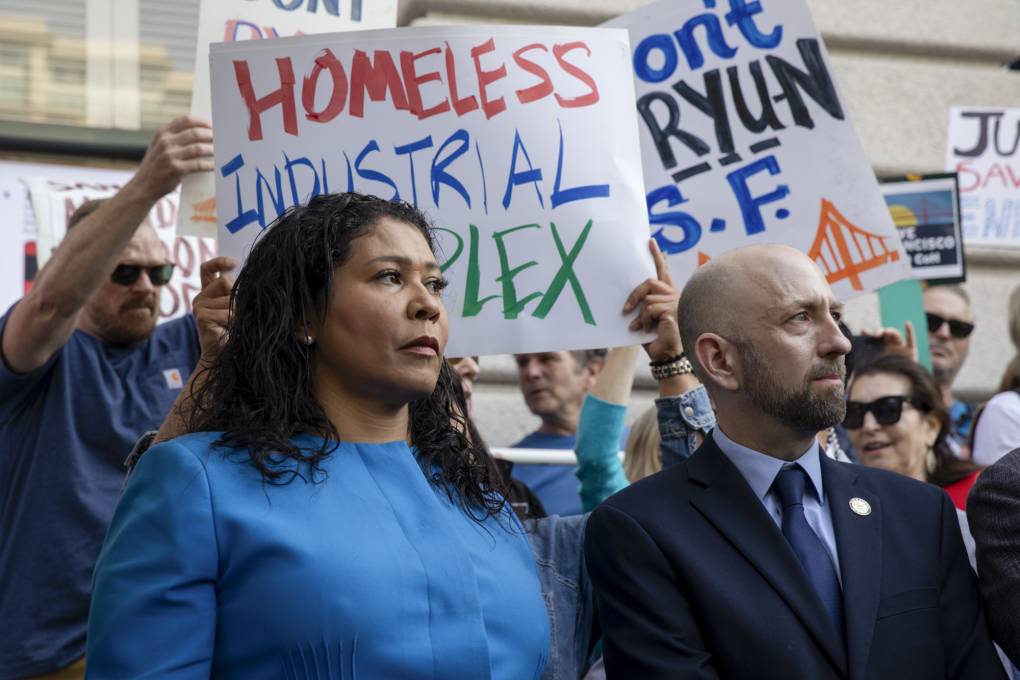
"caption": "Mayor London Breed (left) and Supervisor Joel Engardio (right) are seen at a rally in front of the Ninth Circuit Court of Appeals in San Francisco on Wednesday, Aug. 23, 2023. Mayor Breed and Supervisor Engardio strongly oppose the injunction filed by the Coalition on Homelessness, which has temporarily kept city workers from removing encampments on the streets.",
"description": null,
"title": "RS68250_20230822-HomelessLawsuit-09-JY-KQED",
"credit": "Juliana Yamada/KQED",
"status": "inherit",
"altTag": "A woman in blue stands next to a man in a suit with signs protesting and supporting homelessness in the background.",
"isLoading": false,
"fetchFailed": false
},
"news_11958488": {
"type": "attachments",
"id": "news_11958488",
"meta": {
"index": "attachments_1716263798",
"site": "news",
"id": "11958488",
"found": true
},
"title": "Climate Change Wine Blues",
"publishDate": 1692298642,
"status": "inherit",
"parent": 12044748,
"modified": 1750196819,
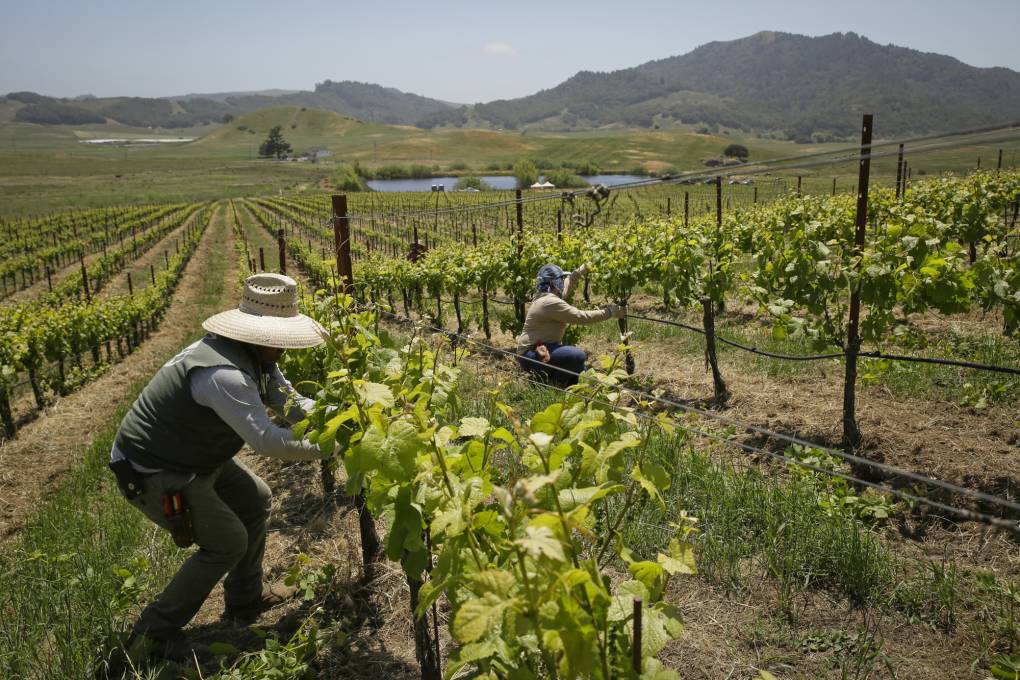
"caption": "Workers trim leaves on Pinot Noir vines in Petaluma on May 21, 2018.",
"credit": "Eric Risberg/AP Photo",
"altTag": "Two people wearing long sleeves, hats and face coverings work in a large outdoor field of grape vines on a sunny day.",
"description": null,
"imgSizes": {
"medium": {
"file": "https://cdn.kqed.org/wp-content/uploads/sites/10/2023/08/230817-PETALUMA-VINEYARD-FARMWORKERS-AP-ER-KQED-800x533.jpg",
"width": 800,
"height": 533,
"mimeType": "image/jpeg"
},
"large": {
"file": "https://cdn.kqed.org/wp-content/uploads/sites/10/2023/08/230817-PETALUMA-VINEYARD-FARMWORKERS-AP-ER-KQED-1020x680.jpg",
"width": 1020,
"height": 680,
"mimeType": "image/jpeg"
},
"thumbnail": {
"file": "https://cdn.kqed.org/wp-content/uploads/sites/10/2023/08/230817-PETALUMA-VINEYARD-FARMWORKERS-AP-ER-KQED-160x107.jpg",
"width": 160,
"height": 107,
"mimeType": "image/jpeg"
},
"1536x1536": {
"file": "https://cdn.kqed.org/wp-content/uploads/sites/10/2023/08/230817-PETALUMA-VINEYARD-FARMWORKERS-AP-ER-KQED-1536x1024.jpg",
"width": 1536,
"height": 1024,
"mimeType": "image/jpeg"
},
"post-thumbnail": {
"file": "https://cdn.kqed.org/wp-content/uploads/sites/10/2023/08/230817-PETALUMA-VINEYARD-FARMWORKERS-AP-ER-KQED-672x372.jpg",
"width": 672,
"height": 372,
"mimeType": "image/jpeg"
},
"twentyfourteen-full-width": {
"file": "https://cdn.kqed.org/wp-content/uploads/sites/10/2023/08/230817-PETALUMA-VINEYARD-FARMWORKERS-AP-ER-KQED-1038x576.jpg",
"width": 1038,
"height": 576,
"mimeType": "image/jpeg"
},
"full-width": {
"file": "https://cdn.kqed.org/wp-content/uploads/sites/10/2023/08/230817-PETALUMA-VINEYARD-FARMWORKERS-AP-ER-KQED-1920x1280.jpg",
"width": 1920,
"height": 1280,
"mimeType": "image/jpeg"
},
"kqedFullSize": {
"file": "https://cdn.kqed.org/wp-content/uploads/sites/10/2023/08/230817-PETALUMA-VINEYARD-FARMWORKERS-AP-ER-KQED.jpg",
"width": 2000,
"height": 1333
}
},
"isLoading": false,
"fetchFailed": false
},
"news_11957857": {
"type": "attachments",
"id": "news_11957857",
"meta": {
"index": "attachments_1716263798",
"site": "news",
"id": "11957857",
"found": true
},
"title": "230809-altenberg-port-fire-3-KQED",
"publishDate": 1691686158,
"status": "inherit",
"parent": 11996994,
"modified": 1721776822,
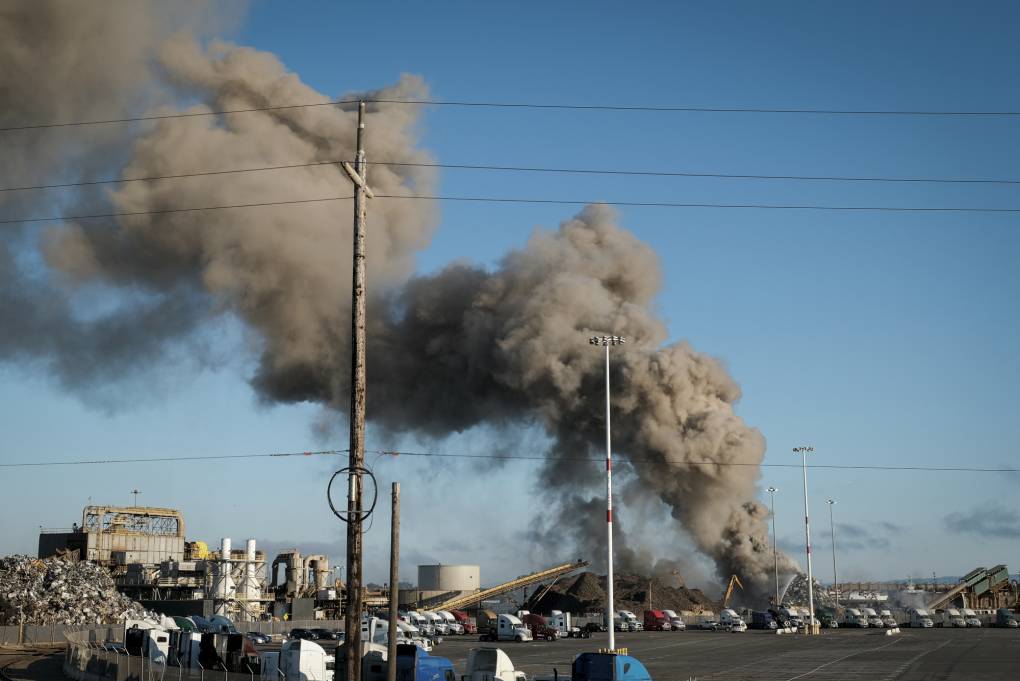
"caption": "Smoke rises from a fire burning at Schnitzer Steel in Oakland on Aug. 10, 2023.",
"credit": "Nik Altenberg/KQED",
"altTag": "Large clouds of smoke rise from an industrial-looking space where many truck cabs are parked.",
"description": null,
"imgSizes": {
"medium": {
"file": "https://cdn.kqed.org/wp-content/uploads/sites/10/2023/08/230809-altenberg-port-fire-3-KQED-800x534.jpg",
"width": 800,
"height": 534,
"mimeType": "image/jpeg"
},
"large": {
"file": "https://cdn.kqed.org/wp-content/uploads/sites/10/2023/08/230809-altenberg-port-fire-3-KQED-1020x681.jpg",
"width": 1020,
"height": 681,
"mimeType": "image/jpeg"
},
"thumbnail": {
"file": "https://cdn.kqed.org/wp-content/uploads/sites/10/2023/08/230809-altenberg-port-fire-3-KQED-160x107.jpg",
"width": 160,
"height": 107,
"mimeType": "image/jpeg"
},
"1536x1536": {
"file": "https://cdn.kqed.org/wp-content/uploads/sites/10/2023/08/230809-altenberg-port-fire-3-KQED-1536x1026.jpg",
"width": 1536,
"height": 1026,
"mimeType": "image/jpeg"
},
"post-thumbnail": {
"file": "https://cdn.kqed.org/wp-content/uploads/sites/10/2023/08/230809-altenberg-port-fire-3-KQED-672x372.jpg",
"width": 672,
"height": 372,
"mimeType": "image/jpeg"
},
"twentyfourteen-full-width": {
"file": "https://cdn.kqed.org/wp-content/uploads/sites/10/2023/08/230809-altenberg-port-fire-3-KQED-1038x576.jpg",
"width": 1038,
"height": 576,
"mimeType": "image/jpeg"
},
"full-width": {
"file": "https://cdn.kqed.org/wp-content/uploads/sites/10/2023/08/230809-altenberg-port-fire-3-KQED-1920x1283.jpg",
"width": 1920,
"height": 1283,
"mimeType": "image/jpeg"
},
"kqedFullSize": {
"file": "https://cdn.kqed.org/wp-content/uploads/sites/10/2023/08/230809-altenberg-port-fire-3-KQED.jpg",
"width": 2000,
"height": 1336
}
},
"isLoading": false,
"fetchFailed": false
},
"news_11958738": {
"type": "attachments",
"id": "news_11958738",
"meta": {
"index": "attachments_1716263798",
"site": "news",
"id": "11958738",
"found": true
},
"parent": 11958733,
"imgSizes": {
"twentyfourteen-full-width": {
"file": "https://ww2.kqed.org/app/uploads/sites/10/2023/08/GettyImages-1310855004-1038x576.jpg",
"width": 1038,
"mimeType": "image/jpeg",
"height": 576
},
"thumbnail": {
"file": "https://ww2.kqed.org/app/uploads/sites/10/2023/08/GettyImages-1310855004-160x107.jpg",
"width": 160,
"mimeType": "image/jpeg",
"height": 107
},
"post-thumbnail": {
"file": "https://ww2.kqed.org/app/uploads/sites/10/2023/08/GettyImages-1310855004-672x372.jpg",
"width": 672,
"mimeType": "image/jpeg",
"height": 372
},
"kqedFullSize": {
"file": "https://ww2.kqed.org/app/uploads/sites/10/2023/08/GettyImages-1310855004-scaled.jpg",
"width": 2560,
"height": 1707
},
"2048x2048": {
"file": "https://ww2.kqed.org/app/uploads/sites/10/2023/08/GettyImages-1310855004-2048x1365.jpg",
"width": 2048,
"mimeType": "image/jpeg",
"height": 1365
},
"large": {
"file": "https://ww2.kqed.org/app/uploads/sites/10/2023/08/GettyImages-1310855004-1020x680.jpg",
"width": 1020,
"mimeType": "image/jpeg",
"height": 680
},
"1536x1536": {
"file": "https://ww2.kqed.org/app/uploads/sites/10/2023/08/GettyImages-1310855004-1536x1024.jpg",
"width": 1536,
"mimeType": "image/jpeg",
"height": 1024
},
"full-width": {
"file": "https://ww2.kqed.org/app/uploads/sites/10/2023/08/GettyImages-1310855004-1920x1280.jpg",
"width": 1920,
"mimeType": "image/jpeg",
"height": 1280
},
"medium": {
"file": "https://ww2.kqed.org/app/uploads/sites/10/2023/08/GettyImages-1310855004-800x533.jpg",
"width": 800,
"mimeType": "image/jpeg",
"height": 533
}
},
"publishDate": 1692659959,
"modified": 1692665447,
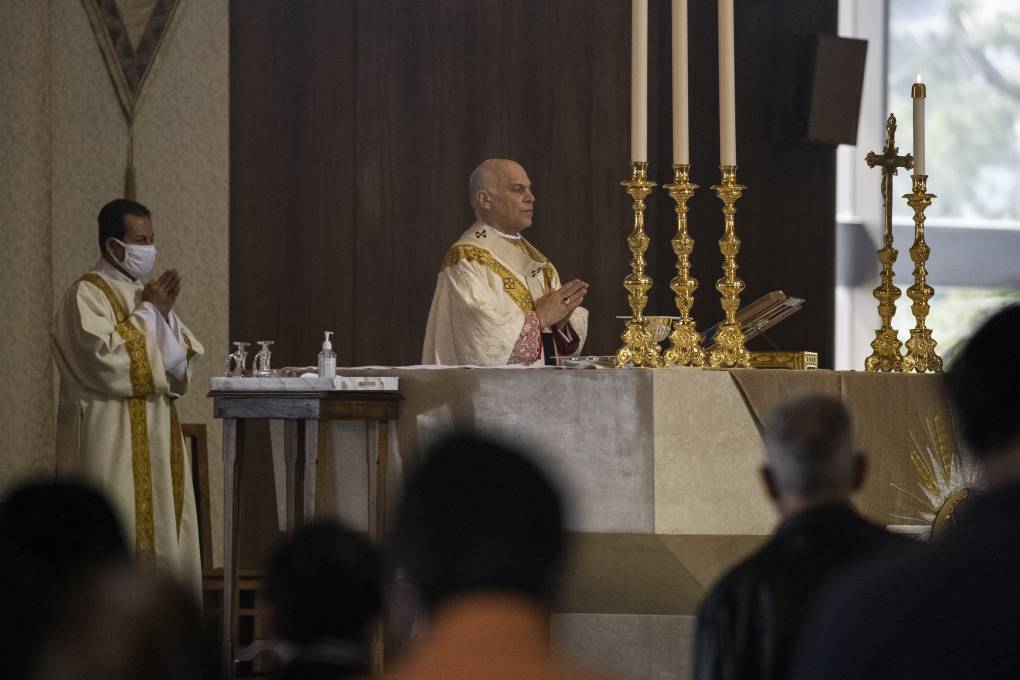
"caption": "Archbishop Salvatore Cordileone speaks during Easter Mass at the Cathedral of St. Mary of the Assumption in San Francisco on April 4, 2021. In a statement published on Monday, Aug. 21, 2023, Cordileone said that the Archdiocese 'has neither the financial means nor the practical ability' to litigate the hundreds of pending child abuse cases.",
"description": "Archbishop Salvatore Cordileone speaks during Easter Mass at the Cathedral of St. Mary of the Assumption in San Francisco on April 4, 2021.",
"title": "SFChronicleVirusChurchServices",
"credit": "Stephen Lam/The San Francisco Chronicle via Getty Images",
"status": "inherit",
"altTag": "Archbishop Salvatore Cordileone wears his robes in front of the altar, facing the faithful. At the altar there are many candles. Deacons stand behind Cordileone in prayer.",
"isLoading": false,
"fetchFailed": false
},
"news_11958215": {
"type": "attachments",
"id": "news_11958215",
"meta": {
"index": "attachments_1716263798",
"site": "news",
"id": "11958215",
"found": true
},
"parent": 0,
"imgSizes": {
"twentyfourteen-full-width": {
"file": "https://ww2.kqed.org/app/uploads/sites/10/2023/08/RS67550_20230801-SJCityHall-28-JY-KQED-1038x576.jpg",
"width": 1038,
"mimeType": "image/jpeg",
"height": 576
},
"thumbnail": {
"file": "https://ww2.kqed.org/app/uploads/sites/10/2023/08/RS67550_20230801-SJCityHall-28-JY-KQED-160x107.jpg",
"width": 160,
"mimeType": "image/jpeg",
"height": 107
},
"post-thumbnail": {
"file": "https://ww2.kqed.org/app/uploads/sites/10/2023/08/RS67550_20230801-SJCityHall-28-JY-KQED-672x372.jpg",
"width": 672,
"mimeType": "image/jpeg",
"height": 372
},
"kqedFullSize": {
"file": "https://ww2.kqed.org/app/uploads/sites/10/2023/08/RS67550_20230801-SJCityHall-28-JY-KQED.jpg",
"width": 2000,
"height": 1333
},
"large": {
"file": "https://ww2.kqed.org/app/uploads/sites/10/2023/08/RS67550_20230801-SJCityHall-28-JY-KQED-1020x680.jpg",
"width": 1020,
"mimeType": "image/jpeg",
"height": 680
},
"1536x1536": {
"file": "https://ww2.kqed.org/app/uploads/sites/10/2023/08/RS67550_20230801-SJCityHall-28-JY-KQED-1536x1024.jpg",
"width": 1536,
"mimeType": "image/jpeg",
"height": 1024
},
"full-width": {
"file": "https://ww2.kqed.org/app/uploads/sites/10/2023/08/RS67550_20230801-SJCityHall-28-JY-KQED-1920x1280.jpg",
"width": 1920,
"mimeType": "image/jpeg",
"height": 1280
},
"medium": {
"file": "https://ww2.kqed.org/app/uploads/sites/10/2023/08/RS67550_20230801-SJCityHall-28-JY-KQED-800x533.jpg",
"width": 800,
"mimeType": "image/jpeg",
"height": 533
}
},
"publishDate": 1692054119,
"modified": 1692060420,
"caption": "The San José City Hall in San José.",
"description": null,
"title": "City Hall in San Jose, Calif., on Tuesday, August 1, 2023.",
"credit": "Juliana Yamada/KQED",
"status": "inherit",
"altTag": "A large tall office building.",
"isLoading": false,
"fetchFailed": false
},
"news_11957075": {
"type": "attachments",
"id": "news_11957075",
"meta": {
"index": "attachments_1716263798",
"site": "news",
"id": "11957075",
"found": true
},
"parent": 0,
"imgSizes": {
"twentyfourteen-full-width": {
"file": "https://ww2.kqed.org/app/uploads/sites/10/2023/08/RS67528_20230801-SJCityHall-04-JY-qut-KQED-1038x576.jpg",
"width": 1038,
"mimeType": "image/jpeg",
"height": 576
},
"thumbnail": {
"file": "https://ww2.kqed.org/app/uploads/sites/10/2023/08/RS67528_20230801-SJCityHall-04-JY-qut-KQED-160x107.jpg",
"width": 160,
"mimeType": "image/jpeg",
"height": 107
},
"post-thumbnail": {
"file": "https://ww2.kqed.org/app/uploads/sites/10/2023/08/RS67528_20230801-SJCityHall-04-JY-qut-KQED-672x372.jpg",
"width": 672,
"mimeType": "image/jpeg",
"height": 372
},
"kqedFullSize": {
"file": "https://ww2.kqed.org/app/uploads/sites/10/2023/08/RS67528_20230801-SJCityHall-04-JY-qut-KQED.jpg",
"width": 2000,
"height": 1333
},
"large": {
"file": "https://ww2.kqed.org/app/uploads/sites/10/2023/08/RS67528_20230801-SJCityHall-04-JY-qut-KQED-1020x680.jpg",
"width": 1020,
"mimeType": "image/jpeg",
"height": 680
},
"1536x1536": {
"file": "https://ww2.kqed.org/app/uploads/sites/10/2023/08/RS67528_20230801-SJCityHall-04-JY-qut-KQED-1536x1024.jpg",
"width": 1536,
"mimeType": "image/jpeg",
"height": 1024
},
"full-width": {
"file": "https://ww2.kqed.org/app/uploads/sites/10/2023/08/RS67528_20230801-SJCityHall-04-JY-qut-KQED-1920x1280.jpg",
"width": 1920,
"mimeType": "image/jpeg",
"height": 1280
},
"medium": {
"file": "https://ww2.kqed.org/app/uploads/sites/10/2023/08/RS67528_20230801-SJCityHall-04-JY-qut-KQED-800x533.jpg",
"width": 800,
"mimeType": "image/jpeg",
"height": 533
}
},
"publishDate": 1690926250,
"modified": 1692037743,
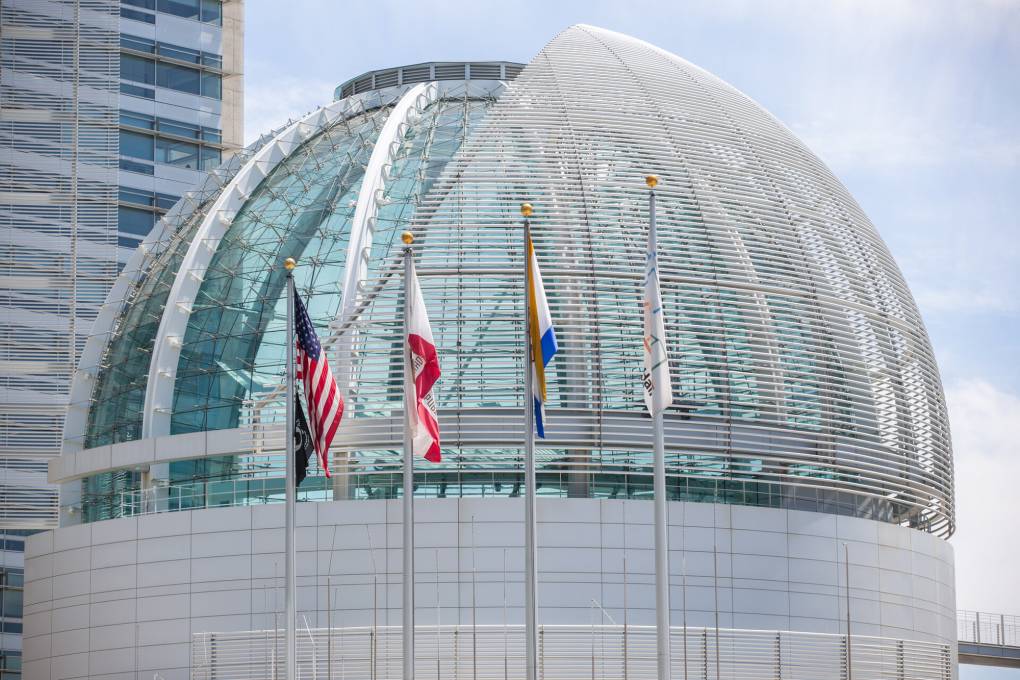
"caption": "Flags at City Hall in San José on Aug. 1, 2023. Members of several city employee unions will be voting on whether to authorize a strike.",
"description": null,
"title": "Flags at City Hall in San José, California, on Tuesday, August 1, 2023.",
"credit": "Juliana Yamada/KQED",
"status": "inherit",
"altTag": "A domed building behind four flags on poles.",
"isLoading": false,
"fetchFailed": false
},
"news_11953895": {
"type": "attachments",
"id": "news_11953895",
"meta": {
"index": "attachments_1716263798",
"site": "news",
"id": "11953895",
"found": true
},
"parent": 11953890,
"imgSizes": {
"thumbnail": {
"file": "https://ww2.kqed.org/app/uploads/sites/10/2023/06/1990s-now-1YT-160x90.png",
"width": 160,
"mimeType": "image/png",
"height": 90
},
"post-thumbnail": {
"file": "https://ww2.kqed.org/app/uploads/sites/10/2023/06/1990s-now-1YT-672x372.png",
"width": 672,
"mimeType": "image/png",
"height": 372
},
"kqedFullSize": {
"file": "https://ww2.kqed.org/app/uploads/sites/10/2023/06/1990s-now-1YT.png",
"width": 682,
"height": 384
}
},
"publishDate": 1687545230,
"modified": 1687545230,
"caption": null,
"description": null,
"title": "1990s-now (1)YT",
"credit": null,
"status": "inherit",
"altTag": null,
"isLoading": false,
"fetchFailed": false
},
"news_11676953": {
"type": "attachments",
"id": "news_11676953",
"meta": {
"index": "attachments_1716263798",
"site": "news",
"id": "11676953",
"found": true
},
"parent": 11676842,
"imgSizes": {
"small": {
"file": "https://ww2.kqed.org/app/uploads/sites/10/2018/06/RS31561_62418_AW_Pride_09-qut-520x347.jpg",
"width": 520,
"mimeType": "image/jpeg",
"height": 347
},
"twentyfourteen-full-width": {
"file": "https://ww2.kqed.org/app/uploads/sites/10/2018/06/RS31561_62418_AW_Pride_09-qut-1038x576.jpg",
"width": 1038,
"mimeType": "image/jpeg",
"height": 576
},
"thumbnail": {
"file": "https://ww2.kqed.org/app/uploads/sites/10/2018/06/RS31561_62418_AW_Pride_09-qut-160x107.jpg",
"width": 160,
"mimeType": "image/jpeg",
"height": 107
},
"fd-sm": {
"file": "https://ww2.kqed.org/app/uploads/sites/10/2018/06/RS31561_62418_AW_Pride_09-qut-960x640.jpg",
"width": 960,
"mimeType": "image/jpeg",
"height": 640
},
"post-thumbnail": {
"file": "https://ww2.kqed.org/app/uploads/sites/10/2018/06/RS31561_62418_AW_Pride_09-qut-672x372.jpg",
"width": 672,
"mimeType": "image/jpeg",
"height": 372
},
"xsmall": {
"file": "https://ww2.kqed.org/app/uploads/sites/10/2018/06/RS31561_62418_AW_Pride_09-qut-375x250.jpg",
"width": 375,
"mimeType": "image/jpeg",
"height": 250
},
"kqedFullSize": {
"file": "https://ww2.kqed.org/app/uploads/sites/10/2018/06/RS31561_62418_AW_Pride_09-qut.jpg",
"width": 1920,
"height": 1280
},
"large": {
"file": "https://ww2.kqed.org/app/uploads/sites/10/2018/06/RS31561_62418_AW_Pride_09-qut-1020x680.jpg",
"width": 1020,
"mimeType": "image/jpeg",
"height": 680
},
"xlarge": {
"file": "https://ww2.kqed.org/app/uploads/sites/10/2018/06/RS31561_62418_AW_Pride_09-qut-1180x787.jpg",
"width": 1180,
"mimeType": "image/jpeg",
"height": 787
},
"complete_open_graph": {
"file": "https://ww2.kqed.org/app/uploads/sites/10/2018/06/RS31561_62418_AW_Pride_09-qut-1200x800.jpg",
"width": 1200,
"mimeType": "image/jpeg",
"height": 800
},
"guest-author-50": {
"file": "https://ww2.kqed.org/app/uploads/sites/10/2018/06/RS31561_62418_AW_Pride_09-qut-50x50.jpg",
"width": 50,
"mimeType": "image/jpeg",
"height": 50
},
"guest-author-96": {
"file": "https://ww2.kqed.org/app/uploads/sites/10/2018/06/RS31561_62418_AW_Pride_09-qut-96x96.jpg",
"width": 96,
"mimeType": "image/jpeg",
"height": 96
},
"medium": {
"file": "https://ww2.kqed.org/app/uploads/sites/10/2018/06/RS31561_62418_AW_Pride_09-qut-800x533.jpg",
"width": 800,
"mimeType": "image/jpeg",
"height": 533
},
"guest-author-64": {
"file": "https://ww2.kqed.org/app/uploads/sites/10/2018/06/RS31561_62418_AW_Pride_09-qut-64x64.jpg",
"width": 64,
"mimeType": "image/jpeg",
"height": 64
},
"guest-author-32": {
"file": "https://ww2.kqed.org/app/uploads/sites/10/2018/06/RS31561_62418_AW_Pride_09-qut-32x32.jpg",
"width": 32,
"mimeType": "image/jpeg",
"height": 32
},
"fd-lrg": {
"file": "https://ww2.kqed.org/app/uploads/sites/10/2018/06/RS31561_62418_AW_Pride_09-qut-1920x1280.jpg",
"width": 1920,
"mimeType": "image/jpeg",
"height": 1280
},
"fd-med": {
"file": "https://ww2.kqed.org/app/uploads/sites/10/2018/06/RS31561_62418_AW_Pride_09-qut-1180x787.jpg",
"width": 1180,
"mimeType": "image/jpeg",
"height": 787
},
"full-width": {
"file": "https://ww2.kqed.org/app/uploads/sites/10/2018/06/RS31561_62418_AW_Pride_09-qut-1920x1280.jpg",
"width": 1920,
"mimeType": "image/jpeg",
"height": 1280
},
"detail": {
"file": "https://ww2.kqed.org/app/uploads/sites/10/2018/06/RS31561_62418_AW_Pride_09-qut-150x150.jpg",
"width": 150,
"mimeType": "image/jpeg",
"height": 150
},
"guest-author-128": {
"file": "https://ww2.kqed.org/app/uploads/sites/10/2018/06/RS31561_62418_AW_Pride_09-qut-128x128.jpg",
"width": 128,
"mimeType": "image/jpeg",
"height": 128
},
"xxsmall": {
"file": "https://ww2.kqed.org/app/uploads/sites/10/2018/06/RS31561_62418_AW_Pride_09-qut-240x160.jpg",
"width": 240,
"mimeType": "image/jpeg",
"height": 160
}
},
"publishDate": 1529887986,
"modified": 1687467006,
"caption": "Organizers estimated 50,000 people participated in the San Francisco Pride Parade on June 24, 2018, in addition to 100,000 who watched from the sidelines.",
"description": "Organizers estimate 50,000 people participated in Sunday's San Francisco Pride Parade, in addition to 100,000 who watched from the sidelines.",
"title": "RS31561_62418_AW_Pride_09-qut",
"credit": "Anne Wernikoff/KQED",
"status": "inherit",
"altTag": "A scene of the Pride parade on Market Street in San Francisco. In the foreground is a white woman wearing rose-colored glasses and holding a rainbow flag with both hands above her head. She is surrounded by other marchers and towers of green and orange balloons. It is sunny, and this is a joyful scene, as the woman is smiling broadly.",
"isLoading": false,
"fetchFailed": false
},
"news_11952787": {
"type": "attachments",
"id": "news_11952787",
"meta": {
"index": "attachments_1716263798",
"site": "news",
"id": "11952787",
"found": true
},
"parent": 0,
"imgSizes": {
"twentyfourteen-full-width": {
"file": "https://ww2.kqed.org/app/uploads/sites/10/2023/06/IMG_3867-scaled-e1686587568851-1038x576.jpeg",
"width": 1038,
"mimeType": "image/jpeg",
"height": 576
},
"thumbnail": {
"file": "https://ww2.kqed.org/app/uploads/sites/10/2023/06/IMG_3867-scaled-e1686587568851-160x120.jpeg",
"width": 160,
"mimeType": "image/jpeg",
"height": 120
},
"post-thumbnail": {
"file": "https://ww2.kqed.org/app/uploads/sites/10/2023/06/IMG_3867-scaled-e1686587568851-672x372.jpeg",
"width": 672,
"mimeType": "image/jpeg",
"height": 372
},
"kqedFullSize": {
"file": "https://ww2.kqed.org/app/uploads/sites/10/2023/06/IMG_3867-scaled-e1686587568851.jpeg",
"width": 1920,
"height": 1440
},
"large": {
"file": "https://ww2.kqed.org/app/uploads/sites/10/2023/06/IMG_3867-scaled-e1686587568851-1020x765.jpeg",
"width": 1020,
"mimeType": "image/jpeg",
"height": 765
},
"1536x1536": {
"file": "https://ww2.kqed.org/app/uploads/sites/10/2023/06/IMG_3867-scaled-e1686587568851-1536x1152.jpeg",
"width": 1536,
"mimeType": "image/jpeg",
"height": 1152
},
"medium": {
"file": "https://ww2.kqed.org/app/uploads/sites/10/2023/06/IMG_3867-scaled-e1686587568851-800x600.jpeg",
"width": 800,
"mimeType": "image/jpeg",
"height": 600
}
},
"publishDate": 1686587771,
"modified": 1686592498,
"caption": "The corner of 24th Street and Treat Avenue just next to the Dying Breed/Mission Skateboards store where the block party was held Friday night.",
"description": null,
"title": "IMG_3867-scaled-e1686587568851",
"credit": "Elize Manoukian/KQED",
"status": "inherit",
"altTag": null,
"isLoading": false,
"fetchFailed": false
},
"news_11952545": {
"type": "attachments",
"id": "news_11952545",
"meta": {
"index": "attachments_1716263798",
"site": "news",
"id": "11952545",
"found": true
},
"title": "RS66141_016_KQED_SheriffPressConference_06082023-KQED",
"publishDate": 1686251655,
"status": "inherit",
"parent": 0,
"modified": 1717610445,
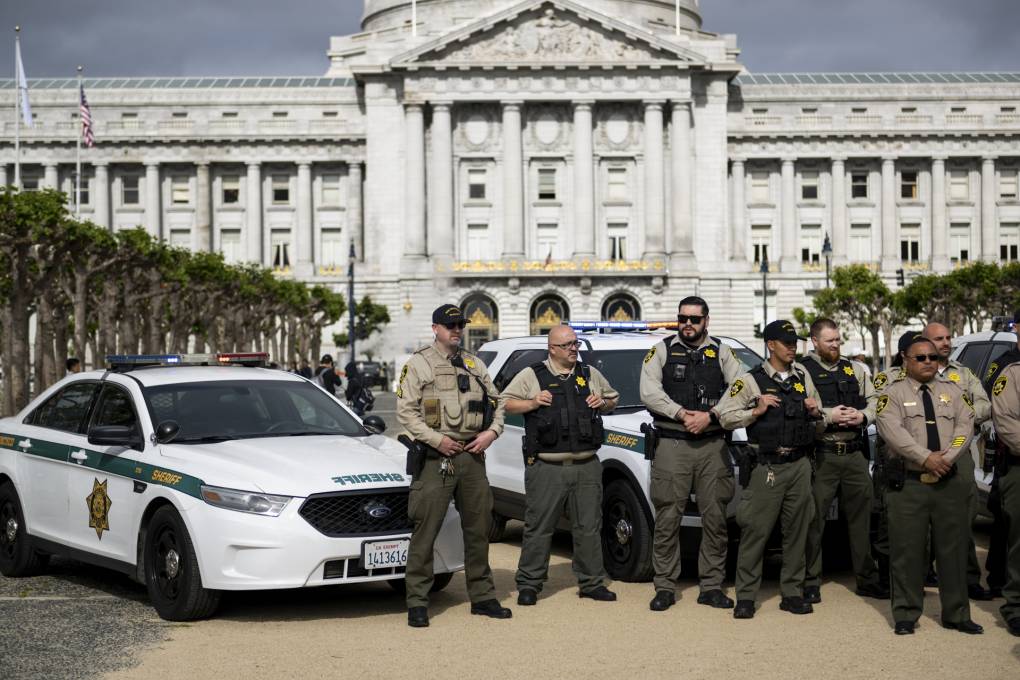
"caption": "San Francisco sheriff's deputies listen to a news conference in San Francisco's Civic Center on June 8, 2023, where Sheriff Paul Miyamoto (not pictured) announced the activation of a six-month plan focused on areas of the Tenderloin and SoMa neighborhoods to reduce open-air drug dealing and drug use.",
"credit": "Beth LaBerge/KQED",
"altTag": "A group of half a dozen law enforcement officers stand in front of squad cars parked in an open area in front of an ornate columned building.",
"description": null,
"imgSizes": {
"medium": {
"file": "https://cdn.kqed.org/wp-content/uploads/sites/10/2023/06/RS66141_016_KQED_SheriffPressConference_06082023-KQED-800x533.jpg",
"width": 800,
"height": 533,
"mimeType": "image/jpeg"
},
"large": {
"file": "https://cdn.kqed.org/wp-content/uploads/sites/10/2023/06/RS66141_016_KQED_SheriffPressConference_06082023-KQED-1020x680.jpg",
"width": 1020,
"height": 680,
"mimeType": "image/jpeg"
},
"thumbnail": {
"file": "https://cdn.kqed.org/wp-content/uploads/sites/10/2023/06/RS66141_016_KQED_SheriffPressConference_06082023-KQED-160x107.jpg",
"width": 160,
"height": 107,
"mimeType": "image/jpeg"
},
"1536x1536": {
"file": "https://cdn.kqed.org/wp-content/uploads/sites/10/2023/06/RS66141_016_KQED_SheriffPressConference_06082023-KQED-1536x1024.jpg",
"width": 1536,
"height": 1024,
"mimeType": "image/jpeg"
},
"post-thumbnail": {
"file": "https://cdn.kqed.org/wp-content/uploads/sites/10/2023/06/RS66141_016_KQED_SheriffPressConference_06082023-KQED-672x372.jpg",
"width": 672,
"height": 372,
"mimeType": "image/jpeg"
},
"twentyfourteen-full-width": {
"file": "https://cdn.kqed.org/wp-content/uploads/sites/10/2023/06/RS66141_016_KQED_SheriffPressConference_06082023-KQED-1038x576.jpg",
"width": 1038,
"height": 576,
"mimeType": "image/jpeg"
},
"kqedFullSize": {
"file": "https://cdn.kqed.org/wp-content/uploads/sites/10/2023/06/RS66141_016_KQED_SheriffPressConference_06082023-KQED.jpg",
"width": 1920,
"height": 1280
}
},
"isLoading": false,
"fetchFailed": false
},
"news_11952119": {
"type": "attachments",
"id": "news_11952119",
"meta": {
"index": "attachments_1716263798",
"site": "news",
"id": "11952119",
"found": true
},
"parent": 11952106,
"imgSizes": {
"twentyfourteen-full-width": {
"file": "https://ww2.kqed.org/app/uploads/sites/10/2023/06/RS65708_032_KQED_Kindergarten2College_05162023-qut-1038x576.jpg",
"width": 1038,
"mimeType": "image/jpeg",
"height": 576
},
"thumbnail": {
"file": "https://ww2.kqed.org/app/uploads/sites/10/2023/06/RS65708_032_KQED_Kindergarten2College_05162023-qut-160x107.jpg",
"width": 160,
"mimeType": "image/jpeg",
"height": 107
},
"post-thumbnail": {
"file": "https://ww2.kqed.org/app/uploads/sites/10/2023/06/RS65708_032_KQED_Kindergarten2College_05162023-qut-672x372.jpg",
"width": 672,
"mimeType": "image/jpeg",
"height": 372
},
"kqedFullSize": {
"file": "https://ww2.kqed.org/app/uploads/sites/10/2023/06/RS65708_032_KQED_Kindergarten2College_05162023-qut.jpg",
"width": 1920,
"height": 1280
},
"large": {
"file": "https://ww2.kqed.org/app/uploads/sites/10/2023/06/RS65708_032_KQED_Kindergarten2College_05162023-qut-1020x680.jpg",
"width": 1020,
"mimeType": "image/jpeg",
"height": 680
},
"1536x1536": {
"file": "https://ww2.kqed.org/app/uploads/sites/10/2023/06/RS65708_032_KQED_Kindergarten2College_05162023-qut-1536x1024.jpg",
"width": 1536,
"mimeType": "image/jpeg",
"height": 1024
},
"medium": {
"file": "https://ww2.kqed.org/app/uploads/sites/10/2023/06/RS65708_032_KQED_Kindergarten2College_05162023-qut-800x533.jpg",
"width": 800,
"mimeType": "image/jpeg",
"height": 533
}
},
"publishDate": 1685819650,
"modified": 1685994781,
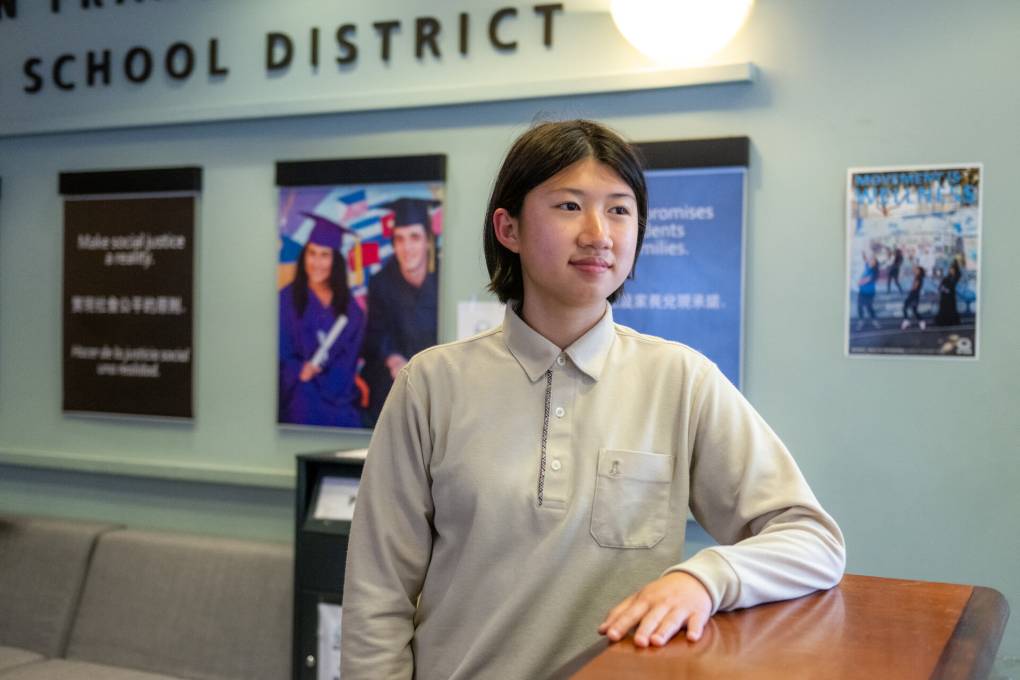
"caption": "Class of 2023 student Saw Yunn Nwe poses for a portrait during a ceremony celebrating the first class of graduates from San Francisco high schools using the Kindergarten to College (K2C) savings account as they head off to college, at the San Francisco Unified School District headquarters in San Francisco on May 16, 2023.",
"description": null,
"title": "RS65708_032_KQED_Kindergarten2College_05162023-qut",
"credit": "Beth LaBerge/KQED",
"status": "inherit",
"altTag": "An Asian youth looks away from the camera with a school wall behind her.",
"isLoading": false,
"fetchFailed": false
},
"news_11952140": {
"type": "attachments",
"id": "news_11952140",
"meta": {
"index": "attachments_1716263798",
"site": "news",
"id": "11952140",
"found": true
},
"parent": 0,
"imgSizes": {
"twentyfourteen-full-width": {
"file": "https://ww2.kqed.org/app/uploads/sites/10/2023/06/RS66035_06032023_bayfc-444-KQED-1038x576.jpg",
"width": 1038,
"mimeType": "image/jpeg",
"height": 576
},
"thumbnail": {
"file": "https://ww2.kqed.org/app/uploads/sites/10/2023/06/RS66035_06032023_bayfc-444-KQED-160x106.jpg",
"width": 160,
"mimeType": "image/jpeg",
"height": 106
},
"post-thumbnail": {
"file": "https://ww2.kqed.org/app/uploads/sites/10/2023/06/RS66035_06032023_bayfc-444-KQED-672x372.jpg",
"width": 672,
"mimeType": "image/jpeg",
"height": 372
},
"kqedFullSize": {
"file": "https://ww2.kqed.org/app/uploads/sites/10/2023/06/RS66035_06032023_bayfc-444-KQED.jpg",
"width": 1920,
"height": 1277
},
"large": {
"file": "https://ww2.kqed.org/app/uploads/sites/10/2023/06/RS66035_06032023_bayfc-444-KQED-1020x678.jpg",
"width": 1020,
"mimeType": "image/jpeg",
"height": 678
},
"1536x1536": {
"file": "https://ww2.kqed.org/app/uploads/sites/10/2023/06/RS66035_06032023_bayfc-444-KQED-1536x1022.jpg",
"width": 1536,
"mimeType": "image/jpeg",
"height": 1022
},
"medium": {
"file": "https://ww2.kqed.org/app/uploads/sites/10/2023/06/RS66035_06032023_bayfc-444-KQED-800x532.jpg",
"width": 800,
"mimeType": "image/jpeg",
"height": 532
}
},
"publishDate": 1685833990,
"modified": 1686001226,
"caption": "Kasey, a player on the Alameda Islanders youth team, takes a kick during an event for Bay FC, the Bay Area's first team in the National Women's Soccer League, at the Presidio in San Francisco on June 3, 2023.",
"description": null,
"title": "RS66035_06032023_bayfc 444-KQED",
"credit": "Kori Suzuki/KQED",
"status": "inherit",
"altTag": "A girl with long hair about to kick a soccer ball while people look on at a lawn on a blue day.",
"isLoading": false,
"fetchFailed": false
}
},
"audioPlayerReducer": {
"postId": "stream_live",
"isPaused": true,
"isPlaying": false,
"pfsActive": false,
"pledgeModalIsOpen": true,
"playerDrawerIsOpen": false,
"liveAudioPlayStartedAt": 0,
"liveAudioPlayContext": ""
},
"authorsReducer": {
"byline_news_11958733": {
"type": "authors",
"id": "byline_news_11958733",
"meta": {
"override": true
},
"slug": "byline_news_11958733",
"name": "Olga R. Rodriguez \u003cbr> The Associated Press",
"isLoading": false
},
"gmarzorati": {
"type": "authors",
"id": "227",
"meta": {
"index": "authors_1716337520",
"id": "227",
"found": true
},
"name": "Guy Marzorati",
"firstName": "Guy",
"lastName": "Marzorati",
"slug": "gmarzorati",
"email": "gmarzorati@KQED.org",
"display_author_email": true,
"staff_mastheads": [
"news"
],
"title": "Correspondent",
"bio": "Guy Marzorati is a correspondent on KQED's California Politics and Government Desk, based in San Jose. A graduate of Santa Clara University, Guy joined KQED in 2013. He reports on state and local politics and produces KQED's digital voter guide.",
"avatar": "https://secure.gravatar.com/avatar/e7038b8dbfd55b104369b76b1cd0b9de?s=600&d=blank&r=g",
"twitter": "guymarzorati",
"facebook": null,
"instagram": null,
"linkedin": null,
"sites": [
{
"site": "",
"roles": [
"editor"
]
},
{
"site": "news",
"roles": [
"editor"
]
},
{
"site": "science",
"roles": [
"editor"
]
},
{
"site": "forum",
"roles": [
"editor"
]
},
{
"site": "elections",
"roles": [
"editor"
]
},
{
"site": "liveblog",
"roles": [
"editor"
]
}
],
"headData": {
"title": "Guy Marzorati | KQED",
"description": "Correspondent",
"ogImgSrc": "https://secure.gravatar.com/avatar/e7038b8dbfd55b104369b76b1cd0b9de?s=600&d=blank&r=g",
"twImgSrc": "https://secure.gravatar.com/avatar/e7038b8dbfd55b104369b76b1cd0b9de?s=600&d=blank&r=g"
},
"isLoading": false,
"link": "/author/gmarzorati"
},
"kqed": {
"type": "authors",
"id": "236",
"meta": {
"index": "authors_1716337520",
"id": "236",
"found": true
},
"name": "KQED News Staff",
"firstName": "KQED News Staff",
"lastName": null,
"slug": "kqed",
"email": "faq@kqed.org",
"display_author_email": false,
"staff_mastheads": [],
"title": null,
"bio": null,
"avatar": "https://secure.gravatar.com/avatar/ef0e801a68c4c54afa9180db14084167?s=600&d=blank&r=g",
"twitter": null,
"facebook": null,
"instagram": null,
"linkedin": null,
"sites": [
{
"site": "arts",
"roles": [
"contributor"
]
},
{
"site": "news",
"roles": [
"editor"
]
},
{
"site": "futureofyou",
"roles": [
"author"
]
}
],
"headData": {
"title": "KQED News Staff | KQED",
"description": null,
"ogImgSrc": "https://secure.gravatar.com/avatar/ef0e801a68c4c54afa9180db14084167?s=600&d=blank&r=g",
"twImgSrc": "https://secure.gravatar.com/avatar/ef0e801a68c4c54afa9180db14084167?s=600&d=blank&r=g"
},
"isLoading": false,
"link": "/author/kqed"
},
"carlysevern": {
"type": "authors",
"id": "3243",
"meta": {
"index": "authors_1716337520",
"id": "3243",
"found": true
},
"name": "Carly Severn",
"firstName": "Carly",
"lastName": "Severn",
"slug": "carlysevern",
"email": "csevern@kqed.org",
"display_author_email": false,
"staff_mastheads": [
"news"
],
"title": "Senior Editor, Audience News ",
"bio": "Carly is KQED's Senior Editor of Audience News on the Digital News team, and has reported for the California Report Magazine, Bay Curious and KQED Arts. She's formerly the host of \u003ca href=\"http://ww2.kqed.org/pop/category/the-cooler/\" rel=\"noopener noreferrer\">The Cooler\u003c/a> podcast.",
"avatar": "https://secure.gravatar.com/avatar/54037bf5c128fe678f0ef26cec97a93f2e7f220a22d7285703328f12c42c1b1d?s=600&d=blank&r=g",
"twitter": "teacupinthebay",
"bluesky": null,
"facebook": null,
"instagram": null,
"linkedin": null,
"sites": [
{
"site": "",
"roles": [
"editor"
]
},
{
"site": "arts",
"roles": [
"editor"
]
},
{
"site": "news",
"roles": [
"administrator"
]
},
{
"site": "pop",
"roles": [
"editor"
]
},
{
"site": "futureofyou",
"roles": [
"editor"
]
},
{
"site": "about",
"roles": [
"administrator"
]
},
{
"site": "mindshift",
"roles": [
"editor"
]
},
{
"site": "bayareabites",
"roles": [
"editor"
]
},
{
"site": "stateofhealth",
"roles": [
"editor"
]
},
{
"site": "science",
"roles": [
"editor"
]
},
{
"site": "food",
"roles": [
"contributor"
]
},
{
"site": "forum",
"roles": [
"editor"
]
},
{
"site": "perspectives",
"roles": [
"administrator"
]
},
{
"site": "liveblog",
"roles": [
"editor"
]
}
],
"headData": {
"title": "Carly Severn | KQED",
"description": "Senior Editor, Audience News ",
"ogImgSrc": "https://secure.gravatar.com/avatar/54037bf5c128fe678f0ef26cec97a93f2e7f220a22d7285703328f12c42c1b1d?s=600&d=blank&r=g",
"twImgSrc": "https://secure.gravatar.com/avatar/54037bf5c128fe678f0ef26cec97a93f2e7f220a22d7285703328f12c42c1b1d?s=600&d=blank&r=g"
},
"isLoading": false,
"link": "/author/carlysevern"
},
"lsarah": {
"type": "authors",
"id": "11626",
"meta": {
"index": "authors_1716337520",
"id": "11626",
"found": true
},
"name": "Lakshmi Sarah",
"firstName": "Lakshmi",
"lastName": "Sarah",
"slug": "lsarah",
"email": "lsarah@kqed.org",
"display_author_email": false,
"staff_mastheads": [],
"title": "Digital Producer",
"bio": "Lakshmi Sarah is an educator, author and journalist with a focus on innovative storytelling. She has worked with newspapers, radio and magazines from Ahmedabad, India to Los Angeles, California. She has written and produced for Die Zeit, Global Voices, AJ+, KQED, Fusion Media Group and the New York Times.",
"avatar": "https://secure.gravatar.com/avatar/652dcaecd8b28826fc17a8b2d6bb4e93?s=600&d=blank&r=g",
"twitter": "lakitalki",
"facebook": null,
"instagram": "https://www.instagram.com/laki.talki/",
"linkedin": "https://www.linkedin.com/in/lakisarah/",
"sites": [
{
"site": "arts",
"roles": []
},
{
"site": "news",
"roles": []
},
{
"site": "bayareabites",
"roles": []
},
{
"site": "science",
"roles": []
}
],
"headData": {
"title": "Lakshmi Sarah | KQED",
"description": "Digital Producer",
"ogImgSrc": "https://secure.gravatar.com/avatar/652dcaecd8b28826fc17a8b2d6bb4e93?s=600&d=blank&r=g",
"twImgSrc": "https://secure.gravatar.com/avatar/652dcaecd8b28826fc17a8b2d6bb4e93?s=600&d=blank&r=g"
},
"isLoading": false,
"link": "/author/lsarah"
},
"ccabreralomeli": {
"type": "authors",
"id": "11708",
"meta": {
"index": "authors_1716337520",
"id": "11708",
"found": true
},
"name": "Carlos Cabrera-Lomelí",
"firstName": "Carlos",
"lastName": "Cabrera-Lomelí",
"slug": "ccabreralomeli",
"email": "ccabreralomeli@KQED.org",
"display_author_email": true,
"staff_mastheads": [
"news"
],
"title": "Community Reporter",
"bio": "Carlos Cabrera-Lomelí is a community reporter with KQED's digital engagement team. He also reports and co-produces for KQED's bilingual news hub KQED en Español. He grew up in San Francisco's Mission District and has previously worked with Univision, 48 Hills and REFORMA in Mexico City.",
"avatar": "https://secure.gravatar.com/avatar/c309be9665e484f887b818c89e273ecc673004f426f36b24d00a4d813a2e0518?s=600&d=blank&r=g",
"twitter": "@LomeliCabrera",
"bluesky": null,
"facebook": null,
"instagram": null,
"linkedin": null,
"sites": [
{
"site": "arts",
"roles": [
"editor"
]
},
{
"site": "news",
"roles": [
"editor"
]
},
{
"site": "about",
"roles": [
"editor"
]
},
{
"site": "science",
"roles": [
"editor"
]
},
{
"site": "perspectives",
"roles": [
"editor"
]
},
{
"site": "elections",
"roles": [
"editor"
]
},
{
"site": "liveblog",
"roles": [
"contributor"
]
}
],
"headData": {
"title": "Carlos Cabrera-Lomelí | KQED",
"description": "Community Reporter",
"ogImgSrc": "https://secure.gravatar.com/avatar/c309be9665e484f887b818c89e273ecc673004f426f36b24d00a4d813a2e0518?s=600&d=blank&r=g",
"twImgSrc": "https://secure.gravatar.com/avatar/c309be9665e484f887b818c89e273ecc673004f426f36b24d00a4d813a2e0518?s=600&d=blank&r=g"
},
"isLoading": false,
"link": "/author/ccabreralomeli"
},
"adahlstromeckman": {
"type": "authors",
"id": "11785",
"meta": {
"index": "authors_1716337520",
"id": "11785",
"found": true
},
"name": "Azul Dahlstrom-Eckman",
"firstName": "Azul",
"lastName": "Dahlstrom-Eckman",
"slug": "adahlstromeckman",
"email": "adahlstrom-eckman@kqed.org",
"display_author_email": true,
"staff_mastheads": [],
"title": "Reporter",
"bio": "Azul is a reporter for KQED focusing on transportation and features. He joined KQED in 2021 as an alumna of KALW's Audio Academy radio journalism training program.",
"avatar": "https://secure.gravatar.com/avatar/9cb750298435add7815a777f55bf1f46845c1386bb8452555c60a7b820b5aba3?s=600&d=blank&r=g",
"twitter": "@zuliemann",
"bluesky": "@azul415.bsky.social",
"facebook": null,
"instagram": null,
"linkedin": null,
"sites": [
{
"site": "arts",
"roles": [
"editor"
]
},
{
"site": "news",
"roles": [
"editor"
]
},
{
"site": "science",
"roles": [
"editor"
]
},
{
"site": "liveblog",
"roles": [
"author"
]
}
],
"headData": {
"title": "Azul Dahlstrom-Eckman | KQED",
"description": "Reporter",
"ogImgSrc": "https://secure.gravatar.com/avatar/9cb750298435add7815a777f55bf1f46845c1386bb8452555c60a7b820b5aba3?s=600&d=blank&r=g",
"twImgSrc": "https://secure.gravatar.com/avatar/9cb750298435add7815a777f55bf1f46845c1386bb8452555c60a7b820b5aba3?s=600&d=blank&r=g"
},
"isLoading": false,
"link": "/author/adahlstromeckman"
},
"apelit": {
"type": "authors",
"id": "11812",
"meta": {
"index": "authors_1716337520",
"id": "11812",
"found": true
},
"name": "Attila Pelit",
"firstName": "Attila",
"lastName": "Pelit",
"slug": "apelit",
"email": "apelit@kqed.org",
"display_author_email": false,
"staff_mastheads": [],
"title": "KQED Contributor",
"bio": null,
"avatar": "https://secure.gravatar.com/avatar/9b7b8a9e595d58a1f4d853f8608ae584?s=600&d=mm&r=g",
"twitter": null,
"facebook": null,
"instagram": null,
"linkedin": null,
"sites": [
{
"site": "news",
"roles": [
"editor"
]
},
{
"site": "science",
"roles": [
"editor"
]
},
{
"site": "elections",
"roles": [
"editor"
]
},
{
"site": "liveblog",
"roles": [
"editor"
]
}
],
"headData": {
"title": "Attila Pelit | KQED",
"description": "KQED Contributor",
"ogImgSrc": "https://secure.gravatar.com/avatar/9b7b8a9e595d58a1f4d853f8608ae584?s=600&d=mm&r=g",
"twImgSrc": "https://secure.gravatar.com/avatar/9b7b8a9e595d58a1f4d853f8608ae584?s=600&d=mm&r=g"
},
"isLoading": false,
"link": "/author/apelit"
},
"sjohnson": {
"type": "authors",
"id": "11840",
"meta": {
"index": "authors_1716337520",
"id": "11840",
"found": true
},
"name": "Sydney Johnson",
"firstName": "Sydney",
"lastName": "Johnson",
"slug": "sjohnson",
"email": "sjohnson@kqed.org",
"display_author_email": false,
"staff_mastheads": [
"news"
],
"title": "KQED Reporter",
"bio": "Sydney Johnson is a general assignment reporter at KQED. She previously reported on public health and city government at the San Francisco Examiner, and before that, she covered statewide education policy for EdSource. Her reporting has won multiple local, state and national awards. Sydney is a graduate of the University of California, Berkeley and lives in San Francisco.",
"avatar": "https://secure.gravatar.com/avatar/97855f2719b72ad6190b7c535fe642c8?s=600&d=blank&r=g",
"twitter": "sydneyfjohnson",
"facebook": null,
"instagram": null,
"linkedin": null,
"sites": [
{
"site": "news",
"roles": [
"editor"
]
}
],
"headData": {
"title": "Sydney Johnson | KQED",
"description": "KQED Reporter",
"ogImgSrc": "https://secure.gravatar.com/avatar/97855f2719b72ad6190b7c535fe642c8?s=600&d=blank&r=g",
"twImgSrc": "https://secure.gravatar.com/avatar/97855f2719b72ad6190b7c535fe642c8?s=600&d=blank&r=g"
},
"isLoading": false,
"link": "/author/sjohnson"
}
},
"pagesReducer": {
"news_category_local": {
"type": "terms",
"id": "news_28250",
"meta": {
"index": "terms_1716263798",
"site": "news",
"id": "28250",
"score": 12.940829
},
"featImg": null,
"name": "Local",
"description": null,
"taxonomy": "category",
"headData": {
"twImgId": null,
"twTitle": null,
"ogTitle": null,
"ogImgId": null,
"twDescription": null,
"description": null,
"title": "Local Archives | KQED News",
"ogDescription": null
},
"ttid": 28267,
"slug": "local",
"isLoading": false,
"title": "Local",
"pageMeta": {
"site": "news",
"WpPageTemplate": "page-topic-editorial",
"currentPage": 145
},
"blocks": [
{
"blockName": "kqed/post-list",
"attrs": {
"layout": "cardArticle2",
"query": "posts/news?category=local",
"seeMore": false,
"paginated": true,
"page": 145
}
},
{
"blockName": "kqed/ad"
}
]
}
},
"pfsSessionReducer": {},
"postsReducer": {
"stream_live": {
"type": "live",
"id": "stream_live",
"audioUrl": "https://streams.kqed.org/kqedradio",
"title": "Live Stream",
"excerpt": "Live Stream information currently unavailable.",
"link": "/radio",
"featImg": "",
"label": {
"name": "KQED Live",
"link": "/"
}
},
"stream_kqedNewscast": {
"type": "posts",
"id": "stream_kqedNewscast",
"audioUrl": "https://www.kqed.org/.stream/anon/radio/RDnews/newscast.mp3?_=1",
"title": "KQED Newscast",
"featImg": "",
"label": {
"name": "88.5 FM",
"link": "/"
}
},
"news_11958939": {
"type": "posts",
"id": "news_11958939",
"meta": {
"index": "posts_1716263798",
"site": "news",
"id": "11958939",
"score": null,
"sort": [
1692830767000
]
},
"guestAuthors": [],
"slug": "sf-homelessness-lawsuit-faces-critical-hearing-over-sweeps-ban",
"title": "'An Impossible Situation': Tensions Rise as Federal Court Weighs Legality of SF Encampment Sweeps",
"publishDate": 1692830767,
"format": "standard",
"headTitle": "‘An Impossible Situation’: Tensions Rise as Federal Court Weighs Legality of SF Encampment Sweeps | KQED",
"labelTerm": {
"site": "news"
},
"content": "\u003cp>Protesters and counterprotesters went head-to-head outside the Ninth Circuit Court of Appeals in San Francisco on Wednesday, where a panel of three judges heard arguments over whether to appeal \u003ca href=\"https://www.kqed.org/news/11950967/advocates-for-unhoused-san-franciscans-say-encampment-sweeps-continue-despite-court-order-call-on-judge-to-rein-city-in\">an injunction that prevents the city from moving unhoused people\u003c/a> under certain circumstances.\u003c/p>\n\u003cp>\u003ca href=\"https://www.kqed.org/news/11926891/unhoused-san-francisco-residents-sue-city-over-displacement-rights-violations\">The legal battle started in September 2022\u003c/a>, when the Coalition on Homelessness sued San Francisco for violating the city’s own ordinances around clearing encampments. Attorneys for the coalition, representing both the ACLU and Lawyers’ Committee for Civil Rights of the San Francisco Bay Area, argue that the city has violated federal precedent by not providing appropriate shelter before removing unhoused people, and that it trashed personal belongings during its sweeps.[pullquote size=\"medium\" align=\"right\" citation=\"Zal Shroff, interim legal director for the Lawyers Committee\"]‘They have cited and arrested thousands of unhoused people whose only crime was having nowhere else to go when the city obviously did not have shelter to offer them.’[/pullquote]“They have cited and arrested thousands of unhoused people whose only crime was having nowhere else to go when the city obviously did not have shelter to offer them,” Zal Shroff, interim legal director for the Lawyers Committee, told KQED in an interview before the hearing. “You can still clean the streets, you can enforce your drug laws, you can enforce your accessibility laws, clear all safety hazards, but you can’t keep policing unhoused people from block to block solely for the crime of being too poor to afford a home, when you obviously haven’t given them a place to go.”\u003c/p>\n\u003cp>Tensions were high outside the packed courthouse, where more than 100 people rallied both for and against the injunction while surrounded by a significant police presence.\u003c/p>\n\u003cp>“We are compassionate, we are supportive, we continue to help people. But this is not the way,” Mayor London Breed said outside the courthouse on Wednesday. “It is not humane to let people live on our streets in tents, use drugs. We have found dead bodies, we found a dead body in these tents. We have seen people in really awful conditions and we are not standing for it anymore. The goal here is to make sure that the court of appeals understands we want a reversal of this injunction that makes it impossible for us to do our jobs.”\u003c/p>\n\u003cfigure id=\"attachment_11958935\" class=\"wp-caption alignnone\" style=\"max-width: 800px\">\u003cimg loading=\"lazy\" decoding=\"async\" class=\"wp-image-11958935 size-medium\" src=\"https://ww2.kqed.org/app/uploads/sites/10/2023/08/RS68263_20230822-HomelessLawsuit-17-JY-KQED-800x533.jpg\" alt=\"Police and protesters with sign stand in front of a San Francisco building.\" width=\"800\" height=\"533\" srcset=\"https://cdn.kqed.org/wp-content/uploads/sites/10/2023/08/RS68263_20230822-HomelessLawsuit-17-JY-KQED-800x533.jpg 800w, https://cdn.kqed.org/wp-content/uploads/sites/10/2023/08/RS68263_20230822-HomelessLawsuit-17-JY-KQED-1020x680.jpg 1020w, https://cdn.kqed.org/wp-content/uploads/sites/10/2023/08/RS68263_20230822-HomelessLawsuit-17-JY-KQED-160x107.jpg 160w, https://cdn.kqed.org/wp-content/uploads/sites/10/2023/08/RS68263_20230822-HomelessLawsuit-17-JY-KQED-1536x1024.jpg 1536w, https://cdn.kqed.org/wp-content/uploads/sites/10/2023/08/RS68263_20230822-HomelessLawsuit-17-JY-KQED-1920x1280.jpg 1920w, https://cdn.kqed.org/wp-content/uploads/sites/10/2023/08/RS68263_20230822-HomelessLawsuit-17-JY-KQED.jpg 2000w\" sizes=\"auto, (max-width: 800px) 100vw, 800px\">\u003cfigcaption class=\"wp-caption-text\">Protesters, counterprotesters, and SFPD are seen at a rally in front of the Ninth Circuit Court of Appeals in San Francisco on Wednesday, Aug. 23, 2023. The court is hearing arguments for the city’s appeal of an injunction filed by the Coalition on Homelessness, which has temporarily kept city workers from removing encampments on the streets. \u003ccite>(Juliana Yamada/KQED)\u003c/cite>\u003c/figcaption>\u003c/figure>\n\u003cp>San Francisco resident Fred Winograd showed up to the rally to protest the injunction. “It’s unfair to the people on the street and it’s unfair to the city,” Winograd told KQED. “Outside of my door someone can camp and stay there and not be moved because of this injunction. That’s harmful to the residents and businesses of this city, and it’s got to stop.”\u003c/p>\n\u003cp>Others, like Terri Beswick, came to show their support for the Coalition on Homelessness and its lawsuit. “I love that the court took a stand on this and I hope they stick to it,” Beswick said. “If you want people off the streets, you have to give them somewhere to stay.”\u003c/p>\n\u003cp>Wednesday’s hearing laid out initial arguments, but it could be several months before the panel of judges issue their ruling over the injunction, which was first issued by U.S. Magistrate Judge Donna Ryu.\u003c/p>\n\u003cp>City Attorney David Chiu formally appealed the injunction in January 2023, with the backing of Mayor Breed, multiple city supervisors and a coalition of residents and business owners.\u003c/p>\n\u003cp>“We are trying to address the conditions on the street and this lawsuit makes it harder to do so,” Chiu told KQED. “There are a number of issues with the injunction, which we believe is unnecessarily broad, exceeds legal precedent and has strained our city’s ability to meet practical and legal obligations.”\u003c/p>\n\u003cp>Plaintiffs maintain that the city can clean its sidewalks and enforce its sit-lie laws so long as shelter is offered and personal belongings are protected. If someone refuses shelter, the plaintiffs said the city could then enforce its laws.\u003c/p>\n\u003cp>But the city is far from meeting the need for temporary shelter beds or permanent supportive housing.[pullquote size=\"medium\" align=\"right\" citation=\"Mayor London Breed\"]‘It is not humane to let people live on our streets in tents, use drugs.’[/pullquote]As of Aug. 23, there were \u003ca href=\"https://hsh.sfgov.org/services/how-to-get-services/accessing-temporary-shelter/adult-temporary-shelter/shelter-reservation-waitlist/\">448 people\u003c/a> on the waiting list for the city’s recently-opened shelter request system. San Francisco has 7,754 people experiencing homelessness, and at least 4,397 of them living outside as opposed to a shelter, according to the latest citywide count.\u003c/p>\n\u003cp>Meanwhile, the city has roughly 3,500 shelter beds in its system. (During the COVID-19 pandemic, more than 2,000 additional beds were brought online through programs like the Shelter-In-Place Hotel program, but that program has since ended.)\u003c/p>\n\u003cp>In an email, Chiu estimated that it could cost $1.45 billion, on top of several years of building and planning, to erect enough shelter for everyone who needs it in the city.\u003c/p>\n\u003cp>“The injunction has put our City in an impossible situation, ignoring the necessary balance between providing compassionate services and shelter to unhoused people and maintaining safe and healthy streets for all,” Chiu said.\u003c/p>\n\u003cp>On Wednesday, attorneys representing the city said the injunction was overly broad and left questions as to what options the city has to address street homelessness.\u003c/p>\n\u003cp>[ad fullwidth]\u003c/p>\n\u003cp>In particular, defendants questioned the judges’ definition of “involuntarily homeless,” arguing that the injunction language is not clear.\u003c/p>\n\u003cp>The injunction “does not define ‘involuntarily homeless,’ which has created uncertainty about whether the City can enforce laws against those who refuse shelter or have shelter beds but choose to maintain tents on the street,” Chiu said in a press statement ahead of the hearing.\u003c/p>\n\u003cp>“This is especially problematic as over half of the unhoused individuals approached by City workers reject offers of shelter.”\u003c/p>\n\u003cp>Joseph Lee, the attorney representing the plaintiffs, said at the hearing that a person could no longer be considered “involuntarily homeless” if they are offered but decline a genuine shelter option.\u003c/p>\n\u003cp>“The actual limitation for who the injunction protects is limited to involuntarily homeless individuals,” Lee said. “The city used these laws not in the way that they are intended or in the way that their policy describes they can be used, but used it as a pretext to criminalize homeless individuals.”\u003c/p>\n\u003cfigure id=\"attachment_11958936\" class=\"wp-caption alignnone\" style=\"max-width: 800px\">\u003cimg loading=\"lazy\" decoding=\"async\" class=\"size-medium wp-image-11958936\" src=\"https://ww2.kqed.org/app/uploads/sites/10/2023/08/RS68264_20230822-HomelessLawsuit-24-JY-KQED-800x533.jpg\" alt=\"People holding signs stand in front of a grey building.\" width=\"800\" height=\"533\" srcset=\"https://cdn.kqed.org/wp-content/uploads/sites/10/2023/08/RS68264_20230822-HomelessLawsuit-24-JY-KQED-800x533.jpg 800w, https://cdn.kqed.org/wp-content/uploads/sites/10/2023/08/RS68264_20230822-HomelessLawsuit-24-JY-KQED-1020x680.jpg 1020w, https://cdn.kqed.org/wp-content/uploads/sites/10/2023/08/RS68264_20230822-HomelessLawsuit-24-JY-KQED-160x107.jpg 160w, https://cdn.kqed.org/wp-content/uploads/sites/10/2023/08/RS68264_20230822-HomelessLawsuit-24-JY-KQED-1536x1024.jpg 1536w, https://cdn.kqed.org/wp-content/uploads/sites/10/2023/08/RS68264_20230822-HomelessLawsuit-24-JY-KQED-1920x1280.jpg 1920w, https://cdn.kqed.org/wp-content/uploads/sites/10/2023/08/RS68264_20230822-HomelessLawsuit-24-JY-KQED.jpg 2000w\" sizes=\"auto, (max-width: 800px) 100vw, 800px\">\u003cfigcaption class=\"wp-caption-text\">Protesters and counterprotesters gather at a rally in front of the Ninth Circuit Court of Appeals in San Francisco on Wednesday. \u003ccite>(Juliana Yamada/KQED)\u003c/cite>\u003c/figcaption>\u003c/figure>\n\u003cp>Right after the hearing, Chiu said that his team was “pleasantly surprised to receive this major concession from Plaintiffs during oral argument today,” referring to the clarity over involuntary homelessness. “It never made sense that a person who rejected a shelter offer or had a shelter bed but chose to maintain tents on the street should be considered ‘involuntarily homeless,’” he wrote in a press release.\u003c/p>\n\u003cp>The city also argued that precedents established in similar cases including \u003ca href=\"https://homelesslaw.org/supreme-court-martin-v-boise/\">Martin v. Boise\u003c/a> and \u003ca href=\"https://cdn.ca9.uscourts.gov/datastore/opinions/2022/09/28/20-35752.pdf\">Johnson v. Grants Pass (PDF)\u003c/a> should not apply to San Francisco. In broad terms, those cases found that public agencies can’t enforce public sidewalk sleeping or camping laws if there is no shelter or housing alternative available. The city’s attorney said San Francisco is different because its laws allow for people to sleep outside in certain settings.\u003c/p>\n\u003cp>But San Francisco has several laws governing and preventing sidewalk camping and sleeping.\u003c/p>\n\u003cp>In 2010, voters approved a “sit-lie” law that prohibits sitting or lying on public sidewalks between 7 a.m. and 11 p.m., with certain exceptions. In 2013, the city amended another ordinance to ban sleeping in parks from 8 p.m. to 8 a.m.\u003c/p>\n\u003cp>If someone is not with their belongings, the city is required to bag and tag items rather than tossing them to the dump during an encampment sweep.\u003c/p>\n\u003cfigure id=\"attachment_11958937\" class=\"wp-caption alignnone\" style=\"max-width: 800px\">\u003cimg loading=\"lazy\" decoding=\"async\" class=\"size-medium wp-image-11958937\" src=\"https://ww2.kqed.org/app/uploads/sites/10/2023/08/RS68271_20230822-HomelessLawsuit-31-JY-KQED-800x533.jpg\" alt=\"'More homes less cops' is written in pink chalk\" width=\"800\" height=\"533\" srcset=\"https://cdn.kqed.org/wp-content/uploads/sites/10/2023/08/RS68271_20230822-HomelessLawsuit-31-JY-KQED-800x533.jpg 800w, https://cdn.kqed.org/wp-content/uploads/sites/10/2023/08/RS68271_20230822-HomelessLawsuit-31-JY-KQED-1020x680.jpg 1020w, https://cdn.kqed.org/wp-content/uploads/sites/10/2023/08/RS68271_20230822-HomelessLawsuit-31-JY-KQED-160x107.jpg 160w, https://cdn.kqed.org/wp-content/uploads/sites/10/2023/08/RS68271_20230822-HomelessLawsuit-31-JY-KQED-1536x1024.jpg 1536w, https://cdn.kqed.org/wp-content/uploads/sites/10/2023/08/RS68271_20230822-HomelessLawsuit-31-JY-KQED-1920x1280.jpg 1920w, https://cdn.kqed.org/wp-content/uploads/sites/10/2023/08/RS68271_20230822-HomelessLawsuit-31-JY-KQED.jpg 2000w\" sizes=\"auto, (max-width: 800px) 100vw, 800px\">\u003cfigcaption class=\"wp-caption-text\">‘More homes less cops’ is written in chalk on the sidewalk during a rally in front of the Ninth Circuit Court of Appeals in San Francisco on Wednesday. \u003ccite>(Juliana Yamada/KQED)\u003c/cite>\u003c/figcaption>\u003c/figure>\n\u003cp>Multiple lawsuits were filed earlier this year on behalf of homeless residents who said they lost clothes, cell phones or laptops, sleeping gear, family heirlooms and other important personal items during sweeps. As of February, the city had paid out more than $100,000 in claims to unhoused people in more than 20 different cases, the \u003ca href=\"https://sfstandard.com/2023/02/21/gold-chains-designer-clothes-family-heirlooms-homeless-san-franciscans-sue-the-city-for-thousands-in-lost-property/\">\u003cem>San Francisco Standard\u003c/em> reports\u003c/a>.[aside tag=\"homeless, unhoused\" label=\"More Related Stories\"]Supervisor Rafael Mandelman, who spoke at the rally on Wednesday in support of ending the injunction, has proposed legislation, called “A Place for All,” that would dramatically expand the number of temporary shelter beds, including the use of tiny homes and other non-congregate options. But reception to that response has been mixed.\u003c/p>\n\u003cp>“Yes, we need more shelter, but it needs to be coupled with housing and prevention, otherwise it’s inefficient and we waste city dollars,” said Jennifer Friedenbach, executive director of the Coalition on Homelessness. “Most (permanent) housing options are cheaper than shelter. And it’s not faster to create a shelter program than it would be to expand our section 8 program either.”\u003c/p>\n\u003cp>Next, on Thursday, August 24, the district court will hear a motion to enforce the injunction brought by plaintiffs, alleging the city violated the sweeps ban.\u003c/p>\n\u003cp>\u003cem>KQED’s Billy Cruz contributed to this report.\u003c/em>\u003c/p>\n\u003cp>[ad floatright]\u003c/p>\n",
"blocks": [],
"excerpt": "City leaders say the lawsuit stops them from clearing homeless encampments on sidewalks. Plaintiffs say the city isn’t following its own laws. ",
"status": "publish",
"parent": 0,
"modified": 1740611659,
"stats": {
"hasAudio": false,
"hasVideo": false,
"hasChartOrMap": false,
"iframeSrcs": [],
"hasGoogleForm": false,
"hasGallery": false,
"hasHearkenModule": false,
"hasPolis": false,
"paragraphCount": 31,
"wordCount": 1690
},
"headData": {
"title": "'An Impossible Situation': Tensions Rise as Federal Court Weighs Legality of SF Encampment Sweeps | KQED",
"description": "City leaders say the lawsuit stops them from clearing homeless encampments on sidewalks. Plaintiffs say the city isn’t following its own laws. ",
"ogTitle": "",
"ogDescription": "",
"ogImgId": "",
"twTitle": "",
"twDescription": "",
"twImgId": "",
"schema": {
"@context": "https://schema.org",
"@type": "NewsArticle",
"headline": "'An Impossible Situation': Tensions Rise as Federal Court Weighs Legality of SF Encampment Sweeps",
"datePublished": "2023-08-23T15:46:07-07:00",
"dateModified": "2025-02-26T15:14:19-08:00",
"image": "https://cdn.kqed.org/wp-content/uploads/2020/02/KQED-OG-Image@1x.png",
"isAccessibleForFree": "True",
"publisher": {
"@type": "NewsMediaOrganization",
"@id": "https://www.kqed.org/#organization",
"name": "KQED",
"logo": "https://cdn.kqed.org/wp-content/uploads/2020/02/KQED-OG-Image@1x.png",
"url": "https://www.kqed.org",
"sameAs": [
"https://www.facebook.com/KQED",
"https://twitter.com/KQED",
"https://www.instagram.com/kqed/",
"https://www.tiktok.com/@kqedofficial",
"https://www.linkedin.com/company/kqed",
"https://www.youtube.com/channel/UCeC0IOo7i1P_61zVUWbJ4nw"
]
}
}
},
"sticky": false,
"excludeFromSiteSearch": "Include",
"articleAge": "0",
"path": "/news/11958939/sf-homelessness-lawsuit-faces-critical-hearing-over-sweeps-ban",
"audioTrackLength": null,
"parsedContent": [
{
"type": "contentString",
"content": "\u003cdiv class=\"post-body\">\u003cp>\u003cp>Protesters and counterprotesters went head-to-head outside the Ninth Circuit Court of Appeals in San Francisco on Wednesday, where a panel of three judges heard arguments over whether to appeal \u003ca href=\"https://www.kqed.org/news/11950967/advocates-for-unhoused-san-franciscans-say-encampment-sweeps-continue-despite-court-order-call-on-judge-to-rein-city-in\">an injunction that prevents the city from moving unhoused people\u003c/a> under certain circumstances.\u003c/p>\n\u003cp>\u003ca href=\"https://www.kqed.org/news/11926891/unhoused-san-francisco-residents-sue-city-over-displacement-rights-violations\">The legal battle started in September 2022\u003c/a>, when the Coalition on Homelessness sued San Francisco for violating the city’s own ordinances around clearing encampments. Attorneys for the coalition, representing both the ACLU and Lawyers’ Committee for Civil Rights of the San Francisco Bay Area, argue that the city has violated federal precedent by not providing appropriate shelter before removing unhoused people, and that it trashed personal belongings during its sweeps.\u003c/p>\u003c/div>",
"attributes": {
"named": {},
"numeric": []
}
},
{
"type": "component",
"content": "‘They have cited and arrested thousands of unhoused people whose only crime was having nowhere else to go when the city obviously did not have shelter to offer them.’",
"name": "pullquote",
"attributes": {
"named": {
"size": "medium",
"align": "right",
"citation": "Zal Shroff, interim legal director for the Lawyers Committee",
"label": ""
},
"numeric": []
}
},
{
"type": "contentString",
"content": "\u003cdiv class=\"post-body\">\u003cp>“They have cited and arrested thousands of unhoused people whose only crime was having nowhere else to go when the city obviously did not have shelter to offer them,” Zal Shroff, interim legal director for the Lawyers Committee, told KQED in an interview before the hearing. “You can still clean the streets, you can enforce your drug laws, you can enforce your accessibility laws, clear all safety hazards, but you can’t keep policing unhoused people from block to block solely for the crime of being too poor to afford a home, when you obviously haven’t given them a place to go.”\u003c/p>\n\u003cp>Tensions were high outside the packed courthouse, where more than 100 people rallied both for and against the injunction while surrounded by a significant police presence.\u003c/p>\n\u003cp>“We are compassionate, we are supportive, we continue to help people. But this is not the way,” Mayor London Breed said outside the courthouse on Wednesday. “It is not humane to let people live on our streets in tents, use drugs. We have found dead bodies, we found a dead body in these tents. We have seen people in really awful conditions and we are not standing for it anymore. The goal here is to make sure that the court of appeals understands we want a reversal of this injunction that makes it impossible for us to do our jobs.”\u003c/p>\n\u003cfigure id=\"attachment_11958935\" class=\"wp-caption alignnone\" style=\"max-width: 800px\">\u003cimg loading=\"lazy\" decoding=\"async\" class=\"wp-image-11958935 size-medium\" src=\"https://ww2.kqed.org/app/uploads/sites/10/2023/08/RS68263_20230822-HomelessLawsuit-17-JY-KQED-800x533.jpg\" alt=\"Police and protesters with sign stand in front of a San Francisco building.\" width=\"800\" height=\"533\" srcset=\"https://cdn.kqed.org/wp-content/uploads/sites/10/2023/08/RS68263_20230822-HomelessLawsuit-17-JY-KQED-800x533.jpg 800w, https://cdn.kqed.org/wp-content/uploads/sites/10/2023/08/RS68263_20230822-HomelessLawsuit-17-JY-KQED-1020x680.jpg 1020w, https://cdn.kqed.org/wp-content/uploads/sites/10/2023/08/RS68263_20230822-HomelessLawsuit-17-JY-KQED-160x107.jpg 160w, https://cdn.kqed.org/wp-content/uploads/sites/10/2023/08/RS68263_20230822-HomelessLawsuit-17-JY-KQED-1536x1024.jpg 1536w, https://cdn.kqed.org/wp-content/uploads/sites/10/2023/08/RS68263_20230822-HomelessLawsuit-17-JY-KQED-1920x1280.jpg 1920w, https://cdn.kqed.org/wp-content/uploads/sites/10/2023/08/RS68263_20230822-HomelessLawsuit-17-JY-KQED.jpg 2000w\" sizes=\"auto, (max-width: 800px) 100vw, 800px\">\u003cfigcaption class=\"wp-caption-text\">Protesters, counterprotesters, and SFPD are seen at a rally in front of the Ninth Circuit Court of Appeals in San Francisco on Wednesday, Aug. 23, 2023. The court is hearing arguments for the city’s appeal of an injunction filed by the Coalition on Homelessness, which has temporarily kept city workers from removing encampments on the streets. \u003ccite>(Juliana Yamada/KQED)\u003c/cite>\u003c/figcaption>\u003c/figure>\n\u003cp>San Francisco resident Fred Winograd showed up to the rally to protest the injunction. “It’s unfair to the people on the street and it’s unfair to the city,” Winograd told KQED. “Outside of my door someone can camp and stay there and not be moved because of this injunction. That’s harmful to the residents and businesses of this city, and it’s got to stop.”\u003c/p>\n\u003cp>Others, like Terri Beswick, came to show their support for the Coalition on Homelessness and its lawsuit. “I love that the court took a stand on this and I hope they stick to it,” Beswick said. “If you want people off the streets, you have to give them somewhere to stay.”\u003c/p>\n\u003cp>Wednesday’s hearing laid out initial arguments, but it could be several months before the panel of judges issue their ruling over the injunction, which was first issued by U.S. Magistrate Judge Donna Ryu.\u003c/p>\n\u003cp>City Attorney David Chiu formally appealed the injunction in January 2023, with the backing of Mayor Breed, multiple city supervisors and a coalition of residents and business owners.\u003c/p>\n\u003cp>“We are trying to address the conditions on the street and this lawsuit makes it harder to do so,” Chiu told KQED. “There are a number of issues with the injunction, which we believe is unnecessarily broad, exceeds legal precedent and has strained our city’s ability to meet practical and legal obligations.”\u003c/p>\n\u003cp>Plaintiffs maintain that the city can clean its sidewalks and enforce its sit-lie laws so long as shelter is offered and personal belongings are protected. If someone refuses shelter, the plaintiffs said the city could then enforce its laws.\u003c/p>\n\u003cp>But the city is far from meeting the need for temporary shelter beds or permanent supportive housing.\u003c/p>\u003c/div>",
"attributes": {
"named": {},
"numeric": []
}
},
{
"type": "component",
"content": "‘It is not humane to let people live on our streets in tents, use drugs.’",
"name": "pullquote",
"attributes": {
"named": {
"size": "medium",
"align": "right",
"citation": "Mayor London Breed",
"label": ""
},
"numeric": []
}
},
{
"type": "contentString",
"content": "\u003cdiv class=\"post-body\">\u003cp>As of Aug. 23, there were \u003ca href=\"https://hsh.sfgov.org/services/how-to-get-services/accessing-temporary-shelter/adult-temporary-shelter/shelter-reservation-waitlist/\">448 people\u003c/a> on the waiting list for the city’s recently-opened shelter request system. San Francisco has 7,754 people experiencing homelessness, and at least 4,397 of them living outside as opposed to a shelter, according to the latest citywide count.\u003c/p>\n\u003cp>Meanwhile, the city has roughly 3,500 shelter beds in its system. (During the COVID-19 pandemic, more than 2,000 additional beds were brought online through programs like the Shelter-In-Place Hotel program, but that program has since ended.)\u003c/p>\n\u003cp>In an email, Chiu estimated that it could cost $1.45 billion, on top of several years of building and planning, to erect enough shelter for everyone who needs it in the city.\u003c/p>\n\u003cp>“The injunction has put our City in an impossible situation, ignoring the necessary balance between providing compassionate services and shelter to unhoused people and maintaining safe and healthy streets for all,” Chiu said.\u003c/p>\n\u003cp>On Wednesday, attorneys representing the city said the injunction was overly broad and left questions as to what options the city has to address street homelessness.\u003c/p>\n\u003cp>\u003c/p>\u003c/div>",
"attributes": {
"named": {},
"numeric": []
}
},
{
"type": "component",
"content": "",
"name": "ad",
"attributes": {
"named": {
"label": "fullwidth"
},
"numeric": [
"fullwidth"
]
}
},
{
"type": "contentString",
"content": "\u003cdiv class=\"post-body\">\u003cp>\u003c/p>\n\u003cp>In particular, defendants questioned the judges’ definition of “involuntarily homeless,” arguing that the injunction language is not clear.\u003c/p>\n\u003cp>The injunction “does not define ‘involuntarily homeless,’ which has created uncertainty about whether the City can enforce laws against those who refuse shelter or have shelter beds but choose to maintain tents on the street,” Chiu said in a press statement ahead of the hearing.\u003c/p>\n\u003cp>“This is especially problematic as over half of the unhoused individuals approached by City workers reject offers of shelter.”\u003c/p>\n\u003cp>Joseph Lee, the attorney representing the plaintiffs, said at the hearing that a person could no longer be considered “involuntarily homeless” if they are offered but decline a genuine shelter option.\u003c/p>\n\u003cp>“The actual limitation for who the injunction protects is limited to involuntarily homeless individuals,” Lee said. “The city used these laws not in the way that they are intended or in the way that their policy describes they can be used, but used it as a pretext to criminalize homeless individuals.”\u003c/p>\n\u003cfigure id=\"attachment_11958936\" class=\"wp-caption alignnone\" style=\"max-width: 800px\">\u003cimg loading=\"lazy\" decoding=\"async\" class=\"size-medium wp-image-11958936\" src=\"https://ww2.kqed.org/app/uploads/sites/10/2023/08/RS68264_20230822-HomelessLawsuit-24-JY-KQED-800x533.jpg\" alt=\"People holding signs stand in front of a grey building.\" width=\"800\" height=\"533\" srcset=\"https://cdn.kqed.org/wp-content/uploads/sites/10/2023/08/RS68264_20230822-HomelessLawsuit-24-JY-KQED-800x533.jpg 800w, https://cdn.kqed.org/wp-content/uploads/sites/10/2023/08/RS68264_20230822-HomelessLawsuit-24-JY-KQED-1020x680.jpg 1020w, https://cdn.kqed.org/wp-content/uploads/sites/10/2023/08/RS68264_20230822-HomelessLawsuit-24-JY-KQED-160x107.jpg 160w, https://cdn.kqed.org/wp-content/uploads/sites/10/2023/08/RS68264_20230822-HomelessLawsuit-24-JY-KQED-1536x1024.jpg 1536w, https://cdn.kqed.org/wp-content/uploads/sites/10/2023/08/RS68264_20230822-HomelessLawsuit-24-JY-KQED-1920x1280.jpg 1920w, https://cdn.kqed.org/wp-content/uploads/sites/10/2023/08/RS68264_20230822-HomelessLawsuit-24-JY-KQED.jpg 2000w\" sizes=\"auto, (max-width: 800px) 100vw, 800px\">\u003cfigcaption class=\"wp-caption-text\">Protesters and counterprotesters gather at a rally in front of the Ninth Circuit Court of Appeals in San Francisco on Wednesday. \u003ccite>(Juliana Yamada/KQED)\u003c/cite>\u003c/figcaption>\u003c/figure>\n\u003cp>Right after the hearing, Chiu said that his team was “pleasantly surprised to receive this major concession from Plaintiffs during oral argument today,” referring to the clarity over involuntary homelessness. “It never made sense that a person who rejected a shelter offer or had a shelter bed but chose to maintain tents on the street should be considered ‘involuntarily homeless,’” he wrote in a press release.\u003c/p>\n\u003cp>The city also argued that precedents established in similar cases including \u003ca href=\"https://homelesslaw.org/supreme-court-martin-v-boise/\">Martin v. Boise\u003c/a> and \u003ca href=\"https://cdn.ca9.uscourts.gov/datastore/opinions/2022/09/28/20-35752.pdf\">Johnson v. Grants Pass (PDF)\u003c/a> should not apply to San Francisco. In broad terms, those cases found that public agencies can’t enforce public sidewalk sleeping or camping laws if there is no shelter or housing alternative available. The city’s attorney said San Francisco is different because its laws allow for people to sleep outside in certain settings.\u003c/p>\n\u003cp>But San Francisco has several laws governing and preventing sidewalk camping and sleeping.\u003c/p>\n\u003cp>In 2010, voters approved a “sit-lie” law that prohibits sitting or lying on public sidewalks between 7 a.m. and 11 p.m., with certain exceptions. In 2013, the city amended another ordinance to ban sleeping in parks from 8 p.m. to 8 a.m.\u003c/p>\n\u003cp>If someone is not with their belongings, the city is required to bag and tag items rather than tossing them to the dump during an encampment sweep.\u003c/p>\n\u003cfigure id=\"attachment_11958937\" class=\"wp-caption alignnone\" style=\"max-width: 800px\">\u003cimg loading=\"lazy\" decoding=\"async\" class=\"size-medium wp-image-11958937\" src=\"https://ww2.kqed.org/app/uploads/sites/10/2023/08/RS68271_20230822-HomelessLawsuit-31-JY-KQED-800x533.jpg\" alt=\"'More homes less cops' is written in pink chalk\" width=\"800\" height=\"533\" srcset=\"https://cdn.kqed.org/wp-content/uploads/sites/10/2023/08/RS68271_20230822-HomelessLawsuit-31-JY-KQED-800x533.jpg 800w, https://cdn.kqed.org/wp-content/uploads/sites/10/2023/08/RS68271_20230822-HomelessLawsuit-31-JY-KQED-1020x680.jpg 1020w, https://cdn.kqed.org/wp-content/uploads/sites/10/2023/08/RS68271_20230822-HomelessLawsuit-31-JY-KQED-160x107.jpg 160w, https://cdn.kqed.org/wp-content/uploads/sites/10/2023/08/RS68271_20230822-HomelessLawsuit-31-JY-KQED-1536x1024.jpg 1536w, https://cdn.kqed.org/wp-content/uploads/sites/10/2023/08/RS68271_20230822-HomelessLawsuit-31-JY-KQED-1920x1280.jpg 1920w, https://cdn.kqed.org/wp-content/uploads/sites/10/2023/08/RS68271_20230822-HomelessLawsuit-31-JY-KQED.jpg 2000w\" sizes=\"auto, (max-width: 800px) 100vw, 800px\">\u003cfigcaption class=\"wp-caption-text\">‘More homes less cops’ is written in chalk on the sidewalk during a rally in front of the Ninth Circuit Court of Appeals in San Francisco on Wednesday. \u003ccite>(Juliana Yamada/KQED)\u003c/cite>\u003c/figcaption>\u003c/figure>\n\u003cp>Multiple lawsuits were filed earlier this year on behalf of homeless residents who said they lost clothes, cell phones or laptops, sleeping gear, family heirlooms and other important personal items during sweeps. As of February, the city had paid out more than $100,000 in claims to unhoused people in more than 20 different cases, the \u003ca href=\"https://sfstandard.com/2023/02/21/gold-chains-designer-clothes-family-heirlooms-homeless-san-franciscans-sue-the-city-for-thousands-in-lost-property/\">\u003cem>San Francisco Standard\u003c/em> reports\u003c/a>.\u003c/p>\u003c/div>",
"attributes": {
"named": {},
"numeric": []
}
},
{
"type": "component",
"content": "",
"name": "aside",
"attributes": {
"named": {
"tag": "homeless, unhoused",
"label": "More Related Stories "
},
"numeric": []
}
},
{
"type": "contentString",
"content": "\u003cdiv class=\"post-body\">\u003cp>Supervisor Rafael Mandelman, who spoke at the rally on Wednesday in support of ending the injunction, has proposed legislation, called “A Place for All,” that would dramatically expand the number of temporary shelter beds, including the use of tiny homes and other non-congregate options. But reception to that response has been mixed.\u003c/p>\n\u003cp>“Yes, we need more shelter, but it needs to be coupled with housing and prevention, otherwise it’s inefficient and we waste city dollars,” said Jennifer Friedenbach, executive director of the Coalition on Homelessness. “Most (permanent) housing options are cheaper than shelter. And it’s not faster to create a shelter program than it would be to expand our section 8 program either.”\u003c/p>\n\u003cp>Next, on Thursday, August 24, the district court will hear a motion to enforce the injunction brought by plaintiffs, alleging the city violated the sweeps ban.\u003c/p>\n\u003cp>\u003cem>KQED’s Billy Cruz contributed to this report.\u003c/em>\u003c/p>\n\u003cp>\u003c/p>\u003c/div>",
"attributes": {
"named": {},
"numeric": []
}
},
{
"type": "component",
"content": "",
"name": "ad",
"attributes": {
"named": {
"label": "floatright"
},
"numeric": [
"floatright"
]
}
},
{
"type": "contentString",
"content": "\u003cdiv class=\"post-body\">\u003cp>\u003c/p>\n\u003c/div>\u003c/p>",
"attributes": {
"named": {},
"numeric": []
}
}
],
"link": "/news/11958939/sf-homelessness-lawsuit-faces-critical-hearing-over-sweeps-ban",
"authors": [
"11840"
],
"categories": [
"news_6266",
"news_6188",
"news_28250",
"news_8",
"news_13"
],
"tags": [
"news_167",
"news_27626",
"news_4020",
"news_20530",
"news_25113",
"news_29607"
],
"featImg": "news_11958938",
"label": "news"
},
"news_11958506": {
"type": "posts",
"id": "news_11958506",
"meta": {
"index": "posts_1716263798",
"site": "news",
"id": "11958506",
"score": null,
"sort": [
1692788423000
]
},
"guestAuthors": [],
"slug": "guide-unsafe-working-conditions-employer-retaliation-and-worker-protections",
"title": "California Farmworkers Guide to Unsafe Working Conditions and Worker Protections",
"publishDate": 1692788423,
"format": "standard",
"headTitle": "California Farmworkers Guide to Unsafe Working Conditions and Worker Protections | KQED",
"labelTerm": {
"site": "news"
},
"content": "\u003cp>\u003ca href=\"https://www.kqed.org/news/11960536/trabaja-en-los-campos-de-california-que-hacer-si-sufre-represalias\">\u003cem>Leer en español\u003c/em>\u003c/a>\u003c/p>\n\u003cp>Twenty-one immigrant farmworkers will collectively receive $328,077 from their former employer, Mauritson Farms, a Sonoma County vineyard company, \u003ca href=\"https://www.kqed.org/news/11956413/how-california-farmworkers-took-on-a-sonoma-winery-over-abuses-and-won\">after the grower reached a settlement with state labor regulators\u003c/a> earlier this summer. Officials with the California Agricultural Labor Relations Board (ALRB) announced in July that their investigation determined Mauritson Farms retaliated against the workers — who were in the U.S. on H-2A visas — after they spoke up about unsafe conditions in the fields.\u003c/p>\n\u003cp>Such incidents of employer retaliation against workers who speak up are unfortunately not rare. In the agriculture industry, many workers get punished by their boss — or the person that connected them to employment — after they request a better or safer workplace.\u003c/p>\n\u003cp>\u003cstrong>Jump straight to specific advice: \u003c/strong>\u003c/p>\n\u003cul>\n\u003cli>\u003cstrong>\u003ca href=\"#unsafe\">What’s considered ‘unsafe working conditions’ for farmworkers?\u003c/a>\u003c/strong>\u003c/li>\n\u003cli>\u003cstrong>\u003ca href=\"#retaliation\">What is retaliation by an employer?\u003c/a>\u003c/strong>\u003c/li>\n\u003cli>\u003cstrong>\u003ca href=\"#undocumented\">Do these protections still apply for undocumented employees?\u003c/a>\u003c/strong>\u003c/li>\n\u003cli>\u003cstrong>\u003ca href=\"#enforce\">Which agencies enforce labor rules in California?\u003c/a>\u003c/strong>\u003c/li>\n\u003cli>\u003cstrong>\u003ca href=\"#speakingup\">I believe my employer retaliated against me for speaking up about conditions at work. What should I do?\u003c/a>\u003c/strong>\u003c/li>\n\u003cli>\u003cstrong>\u003ca href=\"#options\">I am nervous about my immigration situation if I report what happened at work. What are my options?\u003c/a>\u003c/strong>\u003c/li>\n\u003c/ul>\n\u003cp>In California, it is illegal for an employer to retaliate against their employee, regardless of their immigration or documentation status. But that still doesn’t prevent some growers from punishing workers that speak up.\u003c/p>\n\u003cp>That’s why we have created this guide to inform farmworkers about their rights and protections. When you work in the fields, even if you are in the United States without documentation, your employer needs to respect your rights — and this is how they can be held accountable if they don’t.\u003c/p>\n\u003ch2>\u003ca id=\"unsafe\">\u003c/a>What’s considered unsafe working conditions for farmworkers?\u003c/h2>\n\u003cp>California has \u003ca href=\"https://www.dir.ca.gov/dosh/dosh_publications/ag-field-operations.pdf\">a complex set of rules for what a safe working environment is in the agriculture industry (PDF)\u003c/a>, which cover things like worker safety during wildfires, handling farm machinery, and even in the case of dairies and grain facilities, how to prevent accidents in confined spaces.\u003c/p>\n\u003cp>Regardless of \u003ca href=\"https://www.kqed.org/news/11886628/feeling-the-heat-how-workers-can-advocate-for-safer-working-conditions-under-the-sun\">how hot it is\u003c/a>, employers must always provide farmworkers with enough drinking water near their stations. Each employee should have access to at least one quart of water every hour. And even if folks bring their own water bottles, employers must still have enough water available on site.[aside postID=news_11886628]When temperatures rise above 80 degrees, employers must also provide an area with enough shade to accommodate every worker on-site. On days hotter than 95 degrees, supervisors must check in with laborers consistently throughout the day and ensure workers take breaks that are at least 10 minutes long every 2 hours to prevent overheating. Just “offering” these breaks is not sufficient.\u003c/p>\n\u003cp>These heat-safety rules apply to workers in all industries, not just the agricultural sector.\u003c/p>\n\u003cul>\n\u003cli>\u003cstrong>\u003ca href=\"#tellus\">Tell us: What else do you need information about right now?\u003c/a>\u003c/strong>\u003c/li>\n\u003c/ul>\n\u003ch2>\u003ca id=\"retaliation\">\u003c/a>What is retaliation by an employer?\u003c/h2>\n\u003cp>In California, retaliation means when an employer fires, punishes or cuts the wages or hours of a worker because that individual sought to improve their working conditions. This includes \u003ca href=\"https://www.kqed.org/news/11956413/how-california-farmworkers-took-on-a-sonoma-winery-over-abuses-and-won\">cases of growers refusing to rehire seasonal workers for the next harvest after they have spoken up\u003c/a>.\u003c/p>\n\u003cp>Asking your boss to improve working conditions doesn’t have to be something big like organizing a strike or a march. It can also include:\u003c/p>\n\u003cul>\n\u003cli>Asking for more water and shade to be provided on very hot days.\u003c/li>\n\u003cli>Asking for equipment necessary to keep you safe when working in the fields.\u003c/li>\n\u003cli>Pointing out that some of your wages are missing.\u003c/li>\n\u003c/ul>\n\u003cp>If there is a law concerning your safety, your labor rights or your wages that your employer is not following, you should be able to talk about it with your boss freely and safely.\u003c/p>\n\u003cp>\u003ca id=\"undocumented\">\u003c/a>\u003cstrong>Do these protections still apply for undocumented employees?\u003c/strong>\u003c/p>\n\u003cp>Yes. California’s safety rules benefit all workers, regardless of their immigration status. Your employer cannot use your immigration status as a reason to exclude you from safety protections.[pullquote size=\"medium\" align=\"right\" citation=\"Jessica Arciniega, regional director, ALRB\"]‘Immigration status, if that’s an issue, is not anything that our office asks folks about.’[/pullquote]Additionally, undocumented workers can still seek help from state agencies that enforce labor protections — that is, being undocumented doesn’t disqualify them from seeking (and getting) this help from the state.\u003c/p>\n\u003cp>“Immigration status, if that’s an issue, is not anything that our office asks folks about,” confirmed Jessica Arciniega, regional director of the ALRB, which investigates possible workplace abuses in the agricultural industry.\u003c/p>\n\u003cp>\u003ca id=\"withoutcontract\">\u003c/a>\u003cstrong>Do these protections still apply for those working without a formal contract?\u003c/strong>\u003c/p>\n\u003cp>If you’re working for an individual or a business without a formal job contract, labor rights experts say that these protections still apply to you — as long as it can be proven that you, as a worker, have provided labor in exchange for payment.\u003c/p>\n\u003cp>In some cases, that proof could include written communication between a worker and an employer — like an email, or a text message — that confirms that an exchange of services for payment took place.\u003c/p>\n\u003ch2>\u003ca id=\"enforce\">\u003c/a>Which agencies enforce labor rules in California?\u003c/h2>\n\u003cp>There are three state agencies that investigate labor violations and have the authority to penalize bad employers. All three agencies can investigate cases in the agricultural industry.\u003c/p>\n\u003cp>\u003cstrong>The Agricultural Labor Relations Board\u003c/strong>\u003c/p>\n\u003cp>The ALRB was created in 1975 after then-Gov. Jerry Brown signed the California Agricultural Labor Relations Act in 1975. This legislation also defines what an unfair labor practice is: actions taken by an employer that violate the rights of farmworkers, which includes retaliation — firing or cutting the wages of employees who ask for better working conditions. \u003cstrong>\u003ca href=\"#speakingup\">Jump straight to what you can do if you believe your employer has retaliated against you.\u003c/a>\u003c/strong>\u003c/p>\n\u003cp>“I would encourage anybody that’s considering whether or not their rights were violated to call our office,” said the ALRB’s Arciniega. “Not only is our staff bilingual, but they’re culturally competent. Many of them, their families or past generations have worked in agriculture or are farmworkers.”\u003c/p>\n\u003cp>You can contact the ALRB directly by calling 1-800-449-3699 or \u003ca href=\"https://www.alrb.ca.gov/contact-us/\">reach out to its regional offices located in Santa Rosa, Salinas, Visalia, Oxnard and Indio\u003c/a>. Bay Area workers should contact the Santa Rosa office.\u003c/p>\n\u003cp>An ALRB official can talk to you more about workplace safety rules and your rights as a worker specific to your situation. Additionally, they can explain how you can file an unfair labor practice charge against your employer which could set off a formal investigation of your employer by the ALRB.\u003c/p>\n\u003cp>\u003cstrong>California Division of Occupational Safety and Health\u003c/strong>\u003c/p>\n\u003cp>Cal/OSHA creates and enforces the state’s rules on workplace safety, making sure that employees are not exposed to dangerous chemicals or placed in risky situations.\u003c/p>\n\u003cp>If your boss is making you or your colleagues do something you are not sure is safe, you can check in with the agency by calling (833) 579-0927.\u003c/p>\n\u003cp>\u003cstrong>The Labor Commissioner’s Office\u003c/strong>\u003c/p>\n\u003cp>The Labor Commissioner’s Office — which is also known as the Division of Labor Standards Enforcement (DLSE) — is the part of California’s Department of Industrial Relations that looks into wage theft and retaliation by employers against workers.\u003c/p>\n\u003cp>If you think your boss is not paying you correctly for the hours you work or refuses to pay you for overtime, this is the agency you should contact.\u003c/p>\n\u003ch2>\u003ca id=\"speakingup\">\u003c/a>I believe my employer retaliated against me for speaking up about conditions at work. What should I do?\u003c/h2>\n\u003cp>\u003cstrong>Pause while you document everything.\u003c/strong>\u003c/p>\n\u003cp>If you just lost your job or wages, and you think it’s because of retaliation, first take some time to process the situation, and collect your thoughts.\u003c/p>\n\u003cp>“I’d recommend folks to write down everything they remember that led up to this, because with the strong feelings you have at the moment, it is easy to forget important details,” said Ana Salgado, former farmworker and board member of North Bay Jobs With Justice (NBJWJ), a labor rights group that assisted the former employees of Mauritson Farms in their case with the ALRB.\u003c/p>\n\u003cp>“Believe in yourself and in what you know happened to you,” she added.\u003c/p>\n\u003cp>[ad fullwidth]\u003c/p>\n\u003cp>\u003cstrong>Collect past evidence\u003c/strong>\u003c/p>\n\u003cp>As you’re jotting down your experiences, also look for written messages between you and your employer where you describe conditions at work and your supervisor’s response. This could be letters, emails or even screenshots of a text message conversation.\u003c/p>\n\u003cp>Other important pieces of information to look for are your pay stubs that show a cut in wages or hours after you spoke, or photos of conditions in the fields, your workstation or housing, if it’s employer-provided.\u003c/p>\n\u003cp>\u003cstrong>\u003ca id=\"laborrightsgroups\">\u003c/a>Seek help from the professionals\u003c/strong>\u003c/p>\n\u003cp>Salgado also recommends looking for the help of a labor rights organization in your area. Advocates can help you create a timeline of what happened, help you contact your employer if you want to try resolving the situation directly, or even prepare you for talking to state officials if you choose to take that step.\u003c/p>\n\u003cp>Based on their resources, like staff numbers, some groups can provide more help than others. So if you think you may need extra guidance and support, consider reaching out to more than one organization.\u003c/p>\n\u003cp>Here are some organizations in the Bay Area that can connect farmworkers with help:\u003c/p>\n\u003cul>\n\u003cli>California Rural Legal Assistance: (800) 337-0690\u003c/li>\n\u003cli>Legal Aid at Work: (415) 864-8208\u003c/li>\n\u003cli>North Bay Organizing Project: (707) 843-7858\u003c/li>\n\u003cli>Asian Americans Advancing Justice/Asian Law Caucus: (415) 896-1701\u003c/li>\n\u003cli>Centro Legal de la Raza (Oakland): (510) 437-1554\u003c/li>\n\u003cli>La Raza Centro Legal (San Francisco): (415) 575-3500\u003c/li>\n\u003c/ul>\n\u003ch2>\u003ca id=\"fileclaim\">\u003c/a>I want to file a claim so officials can investigate my situation. What’s next?\u003c/h2>\n\u003cp>If you are ready to report what happened, the ALRB will be the agency you contact. You will need a \u003ca href=\"https://www.alrb.ca.gov/wp-content/uploads/sites/196/2018/05/alrb_form38_en.pdf\">Charge Against Employer form (PDF)\u003c/a>, which you need to print out, complete and either email or mail to your \u003ca href=\"https://www.alrb.ca.gov/contact-us/\">nearest ALRB field office\u003c/a>.\u003c/p>\n\u003cp>For Bay Area residents, that’s the Santa Rosa office:\u003c/p>\n\u003cul>\n\u003cli>Phone: (707) 527-3256\u003c/li>\n\u003cli>Email: Contact regional director Jessica Arciniega at \u003ca href=\"Jessica.Arciniega@alrb.ca.gov\">Jessica.Arciniega@alrb.ca.gov\u003c/a>\u003c/li>\n\u003cli>Mail: 606 Healdsburg Avenue Santa Rosa, CA 95401\u003c/li>\n\u003c/ul>\n\u003cp>If you need to complete the form in another language that is not English, \u003ca href=\"https://www.alrb.ca.gov/contact-us/\">reach out to your nearest field office directly\u003c/a>.\u003c/p>\n\u003cp>Keep in mind that the ALRB requires at least two workers to come together to file a charge. If you are nervous about this step, a workers’ rights group can file a charge on your behalf — \u003ca href=\"https://www.kqed.org/news/11956413/how-california-farmworkers-took-on-a-sonoma-winery-over-abuses-and-won\">which is what happened in the Mauritson Farms case\u003c/a>.\u003c/p>\n\u003ch2>Why you should file a charge as soon as possible (even if you’re anxious)\u003c/h2>\n\u003cp>Labor advocates recommend employees report what happened to them as soon as they can. This gives state officials more time to talk to laborers and investigate what happened in the fields.\u003c/p>\n\u003cp>Timing becomes even more important when farmworkers are in the country on a temporary work permit, like the H-2A visa.\u003c/p>\n\u003cp>It is completely understandable if you are feeling very nervous about filing a report — especially if you are afraid your employer or the person that got you the job is threatening you with further retaliation. But keep in mind that there is a time limit to report an incident with the state. You only have six months from the moment you experienced retaliation (when your hours were cut, or you were fired or knew you would not be rehired) to file a charge with the ALRB.\u003c/p>\n\u003cp>After the six-month mark, officials cannot launch an investigation.\u003c/p>\n\u003cp>What if your boss — or the individual that connected you with employment, like a job recruiter — continues to threaten you with further retaliation if you talk to the state?\u003c/p>\n\u003cp>In this case, it could be a good idea to seek help from a labor rights group to protect yourself. \u003ca href=\"#laborrightsgroups\">See a list of labor rights groups you can contact.\u003c/a>\u003c/p>\n\u003ch2>Once I file a charge with the ALRB, what happens?\u003c/h2>\n\u003cp>\u003cstrong>The agency assesses your case.\u003c/strong>\u003c/p>\n\u003cp>Officials will first decide if your situation meets the requirements to begin an investigation.\u003c/p>\n\u003cp>Some examples of when the ALRB wouldn’t be able to take your case: if you were fired — two years ago — and you think your boss did that to retaliate against you, that exceeds the ALRB’s six-month time limit and the agency cannot launch an investigation. Or if the incident took place in a farm in another state, that is also out of the ALRB’s jurisdiction.\u003c/p>\n\u003cp>\u003cstrong>An investigation begins, and your employer is notified.\u003c/strong>\u003c/p>\n\u003cp>If the agency is able to take the case, ALRB officials will confirm that with you. They will then notify your employer about the charge, and that an investigation will begin, says ALRB General Counsel Julia Montgomery.\u003c/p>\n\u003cp>“A team of lawyers and investigators will take on the investigation, which can include the workers involved in the investigation, other employees, supervisors and anyone else that could have relevant information,” said Montgomery. Investigators can also request documents and other written records from both employers and workers, she said.\u003c/p>\n\u003cp>This step can take months, or even years. If you are no longer in the U.S. during the investigation because of your immigration situation, the ALRB will still look to contact you. In past cases, agency officials have sought out farmworkers even when they have traveled back to remote rural communities in their countries of origin.\u003c/p>\n\u003cp>\u003cstrong>A decision is made about the charge.\u003c/strong>\u003c/p>\n\u003cp>After the investigation, officials will determine if there is enough evidence to confirm if retaliation or another unfair labor practice took place. If there is not enough evidence, the charge is dismissed.\u003c/p>\n\u003cp>If the evidence is sufficient, however, the ALRB regional director will present a formal complaint against the employer.\u003c/p>\n\u003cp>But, hold on, that doesn’t mean you have won your case yet.\u003c/p>\n\u003ch2>How the ALRB brings a case against an employer\u003c/h2>\n\u003cp>A date for a hearing will be set and an administrative judge will decide whether the employer did in fact break the law.\u003c/p>\n\u003cp>Both sides will have an opportunity to defend their case: your employer and their legal representatives, and the ALRB which will argue that you experienced retaliation.\u003c/p>\n\u003cp>If the judge decides in favor of the ALRB and the employees involved, workers can receive compensation to make up for lost wages and potentially even be re-employed if they lost their jobs. ALRB officials will travel to the farm and inform other employees of the case. Additionally, employers could face heavy fines.\u003c/p>\n\u003cp>At any step of the process, the ALRB can strike a settlement agreement with the employer. A settlement can also include compensation for the affected workers or even employment offers.\u003c/p>\n\u003ch2>\u003ca id=\"options\">\u003c/a>I am nervous about my immigration situation if I report what happened at work. What are my options?\u003c/h2>\n\u003cp>On July 19, Gov. Gavin Newsom announced a \u003ca href=\"https://www.kqed.org/news/11956315/some-migrant-farmworkers-to-get-free-legal-help-with-immigration\">$4.5 million pilot program to provide free immigration legal services to farmworkers who are involved in state labor investigations\u003c/a>. This would include case-review services, legal advice and representation by an attorney to laborers in California who have a pending case with either the ALRB, the Labor Commissioner’s Office or Cal/OSHA.[aside postID=news_11956315]The goal of this program, officials say, is to address one of the fears that prevents employees from speaking up — the fear of losing their visa or not being rehired — by connecting them to immigration experts who could help them find ways to stay in this country. And earlier this year, the \u003ca href=\"https://www.kqed.org/news/11940316/fear-of-deportation-keeps-some-workers-from-reporting-labor-abuses-a-new-biden-program-aims-to-change-that\">Biden administration unveiled a new, streamlined “deferred action” initiative\u003c/a> that allows workers to apply for a work permit and two years of protection from deportation, if they are cooperating with a labor rights investigation.\u003c/p>\n\u003cp>To learn more about the pilot program and whether your case could qualify for free legal services from the state, \u003ca href=\"https://www.alrb.ca.gov/contact-us/\">talk to your ALRB field office\u003c/a>.\u003c/p>\n\u003ch2>\u003ca id=\"tellus\">\u003c/a>Tell us: What else do you need information about?\u003c/h2>\n\u003cp>At KQED News, we know that it can sometimes be hard to track down the answers to navigate life in the Bay Area in 2023. We’ve published \u003ca href=\"https://www.kqed.org/news/tag/coronavirus-resources-and-explainers\">clear, practical explainers and guides about COVID\u003c/a>, \u003ca href=\"https://www.kqed.org/news/11936674/how-to-prepare-for-this-weeks-atmospheric-river-storm-sandbags-emergency-kits-and-more\">how to cope with intense winter weather\u003c/a> and \u003ca href=\"https://www.kqed.org/news/11821950/how-to-safely-attend-a-protest-in-the-bay-area\">how to exercise your right to protest safely\u003c/a>.\u003c/p>\n\u003cp>So tell us: What do you need to know more about? Tell us, and you could see your question answered online or on social media. What you submit will make our reporting stronger, and help us decide what to cover here on our site, and on KQED Public Radio, too.\u003c/p>\n\u003cp>[hearken id=\"10483\" src=\"https://modules.wearehearken.com/kqed/embed/10483.js\"]\u003c/p>\n\u003cp>[ad floatright]\u003c/p>\n",
"blocks": [],
"excerpt": "In California, it's illegal for an employer to retaliate against workers, regardless of immigration or documentation status. Still, some employers punish workers for speaking up. Here's what you can do.",
"status": "publish",
"parent": 0,
"modified": 1746621467,
"stats": {
"hasAudio": false,
"hasVideo": false,
"hasChartOrMap": false,
"iframeSrcs": [],
"hasGoogleForm": false,
"hasGallery": false,
"hasHearkenModule": true,
"hasPolis": false,
"paragraphCount": 73,
"wordCount": 2827
},
"headData": {
"title": "Know Your Rights: Reporting Unsafe Work Conditions in California | KQED",
"description": "Know how to identify unsafe working conditions, protections against employer retaliation & discover steps to report violations—regardless of immigration status.",
"ogTitle": "",
"ogDescription": "",
"ogImgId": "",
"twTitle": "",
"twDescription": "",
"twImgId": "",
"socialTitle": "Know Your Rights: Reporting Unsafe Work Conditions in California | KQED",
"socialDescription": "Know how to identify unsafe working conditions, protections against employer retaliation & discover steps to report violations—regardless of immigration status.",
"schema": {
"@context": "https://schema.org",
"@type": "NewsArticle",
"headline": "California Farmworkers Guide to Unsafe Working Conditions and Worker Protections",
"datePublished": "2023-08-23T04:00:23-07:00",
"dateModified": "2025-05-07T05:37:47-07:00",
"image": "https://cdn.kqed.org/wp-content/uploads/2020/02/KQED-OG-Image@1x.png",
"isAccessibleForFree": "True",
"publisher": {
"@type": "NewsMediaOrganization",
"@id": "https://www.kqed.org/#organization",
"name": "KQED",
"logo": "https://cdn.kqed.org/wp-content/uploads/2020/02/KQED-OG-Image@1x.png",
"url": "https://www.kqed.org",
"sameAs": [
"https://www.facebook.com/KQED",
"https://twitter.com/KQED",
"https://www.instagram.com/kqed/",
"https://www.tiktok.com/@kqedofficial",
"https://www.linkedin.com/company/kqed",
"https://www.youtube.com/channel/UCeC0IOo7i1P_61zVUWbJ4nw"
]
}
}
},
"sticky": false,
"templateType": "standard",
"featuredImageType": "standard",
"excludeFromSiteSearch": "Include",
"articleAge": "0",
"path": "/news/11958506/guide-unsafe-working-conditions-employer-retaliation-and-worker-protections",
"audioTrackLength": null,
"parsedContent": [
{
"type": "contentString",
"content": "\u003cdiv class=\"post-body\">\u003cp>\u003cp>\u003ca href=\"https://www.kqed.org/news/11960536/trabaja-en-los-campos-de-california-que-hacer-si-sufre-represalias\">\u003cem>Leer en español\u003c/em>\u003c/a>\u003c/p>\n\u003cp>Twenty-one immigrant farmworkers will collectively receive $328,077 from their former employer, Mauritson Farms, a Sonoma County vineyard company, \u003ca href=\"https://www.kqed.org/news/11956413/how-california-farmworkers-took-on-a-sonoma-winery-over-abuses-and-won\">after the grower reached a settlement with state labor regulators\u003c/a> earlier this summer. Officials with the California Agricultural Labor Relations Board (ALRB) announced in July that their investigation determined Mauritson Farms retaliated against the workers — who were in the U.S. on H-2A visas — after they spoke up about unsafe conditions in the fields.\u003c/p>\n\u003cp>Such incidents of employer retaliation against workers who speak up are unfortunately not rare. In the agriculture industry, many workers get punished by their boss — or the person that connected them to employment — after they request a better or safer workplace.\u003c/p>\n\u003cp>\u003cstrong>Jump straight to specific advice: \u003c/strong>\u003c/p>\n\u003cul>\n\u003cli>\u003cstrong>\u003ca href=\"#unsafe\">What’s considered ‘unsafe working conditions’ for farmworkers?\u003c/a>\u003c/strong>\u003c/li>\n\u003cli>\u003cstrong>\u003ca href=\"#retaliation\">What is retaliation by an employer?\u003c/a>\u003c/strong>\u003c/li>\n\u003cli>\u003cstrong>\u003ca href=\"#undocumented\">Do these protections still apply for undocumented employees?\u003c/a>\u003c/strong>\u003c/li>\n\u003cli>\u003cstrong>\u003ca href=\"#enforce\">Which agencies enforce labor rules in California?\u003c/a>\u003c/strong>\u003c/li>\n\u003cli>\u003cstrong>\u003ca href=\"#speakingup\">I believe my employer retaliated against me for speaking up about conditions at work. What should I do?\u003c/a>\u003c/strong>\u003c/li>\n\u003cli>\u003cstrong>\u003ca href=\"#options\">I am nervous about my immigration situation if I report what happened at work. What are my options?\u003c/a>\u003c/strong>\u003c/li>\n\u003c/ul>\n\u003cp>In California, it is illegal for an employer to retaliate against their employee, regardless of their immigration or documentation status. But that still doesn’t prevent some growers from punishing workers that speak up.\u003c/p>\n\u003cp>That’s why we have created this guide to inform farmworkers about their rights and protections. When you work in the fields, even if you are in the United States without documentation, your employer needs to respect your rights — and this is how they can be held accountable if they don’t.\u003c/p>\n\u003ch2>\u003ca id=\"unsafe\">\u003c/a>What’s considered unsafe working conditions for farmworkers?\u003c/h2>\n\u003cp>California has \u003ca href=\"https://www.dir.ca.gov/dosh/dosh_publications/ag-field-operations.pdf\">a complex set of rules for what a safe working environment is in the agriculture industry (PDF)\u003c/a>, which cover things like worker safety during wildfires, handling farm machinery, and even in the case of dairies and grain facilities, how to prevent accidents in confined spaces.\u003c/p>\n\u003cp>Regardless of \u003ca href=\"https://www.kqed.org/news/11886628/feeling-the-heat-how-workers-can-advocate-for-safer-working-conditions-under-the-sun\">how hot it is\u003c/a>, employers must always provide farmworkers with enough drinking water near their stations. Each employee should have access to at least one quart of water every hour. And even if folks bring their own water bottles, employers must still have enough water available on site.\u003c/p>\u003c/div>",
"attributes": {
"named": {},
"numeric": []
}
},
{
"type": "component",
"content": "",
"name": "aside",
"attributes": {
"named": {
"postid": "news_11886628",
"label": ""
},
"numeric": []
}
},
{
"type": "contentString",
"content": "\u003cdiv class=\"post-body\">\u003cp>When temperatures rise above 80 degrees, employers must also provide an area with enough shade to accommodate every worker on-site. On days hotter than 95 degrees, supervisors must check in with laborers consistently throughout the day and ensure workers take breaks that are at least 10 minutes long every 2 hours to prevent overheating. Just “offering” these breaks is not sufficient.\u003c/p>\n\u003cp>These heat-safety rules apply to workers in all industries, not just the agricultural sector.\u003c/p>\n\u003cul>\n\u003cli>\u003cstrong>\u003ca href=\"#tellus\">Tell us: What else do you need information about right now?\u003c/a>\u003c/strong>\u003c/li>\n\u003c/ul>\n\u003ch2>\u003ca id=\"retaliation\">\u003c/a>What is retaliation by an employer?\u003c/h2>\n\u003cp>In California, retaliation means when an employer fires, punishes or cuts the wages or hours of a worker because that individual sought to improve their working conditions. This includes \u003ca href=\"https://www.kqed.org/news/11956413/how-california-farmworkers-took-on-a-sonoma-winery-over-abuses-and-won\">cases of growers refusing to rehire seasonal workers for the next harvest after they have spoken up\u003c/a>.\u003c/p>\n\u003cp>Asking your boss to improve working conditions doesn’t have to be something big like organizing a strike or a march. It can also include:\u003c/p>\n\u003cul>\n\u003cli>Asking for more water and shade to be provided on very hot days.\u003c/li>\n\u003cli>Asking for equipment necessary to keep you safe when working in the fields.\u003c/li>\n\u003cli>Pointing out that some of your wages are missing.\u003c/li>\n\u003c/ul>\n\u003cp>If there is a law concerning your safety, your labor rights or your wages that your employer is not following, you should be able to talk about it with your boss freely and safely.\u003c/p>\n\u003cp>\u003ca id=\"undocumented\">\u003c/a>\u003cstrong>Do these protections still apply for undocumented employees?\u003c/strong>\u003c/p>\n\u003cp>Yes. California’s safety rules benefit all workers, regardless of their immigration status. Your employer cannot use your immigration status as a reason to exclude you from safety protections.\u003c/p>\u003c/div>",
"attributes": {
"named": {},
"numeric": []
}
},
{
"type": "component",
"content": "‘Immigration status, if that’s an issue, is not anything that our office asks folks about.’",
"name": "pullquote",
"attributes": {
"named": {
"size": "medium",
"align": "right",
"citation": "Jessica Arciniega, regional director, ALRB",
"label": ""
},
"numeric": []
}
},
{
"type": "contentString",
"content": "\u003cdiv class=\"post-body\">\u003cp>Additionally, undocumented workers can still seek help from state agencies that enforce labor protections — that is, being undocumented doesn’t disqualify them from seeking (and getting) this help from the state.\u003c/p>\n\u003cp>“Immigration status, if that’s an issue, is not anything that our office asks folks about,” confirmed Jessica Arciniega, regional director of the ALRB, which investigates possible workplace abuses in the agricultural industry.\u003c/p>\n\u003cp>\u003ca id=\"withoutcontract\">\u003c/a>\u003cstrong>Do these protections still apply for those working without a formal contract?\u003c/strong>\u003c/p>\n\u003cp>If you’re working for an individual or a business without a formal job contract, labor rights experts say that these protections still apply to you — as long as it can be proven that you, as a worker, have provided labor in exchange for payment.\u003c/p>\n\u003cp>In some cases, that proof could include written communication between a worker and an employer — like an email, or a text message — that confirms that an exchange of services for payment took place.\u003c/p>\n\u003ch2>\u003ca id=\"enforce\">\u003c/a>Which agencies enforce labor rules in California?\u003c/h2>\n\u003cp>There are three state agencies that investigate labor violations and have the authority to penalize bad employers. All three agencies can investigate cases in the agricultural industry.\u003c/p>\n\u003cp>\u003cstrong>The Agricultural Labor Relations Board\u003c/strong>\u003c/p>\n\u003cp>The ALRB was created in 1975 after then-Gov. Jerry Brown signed the California Agricultural Labor Relations Act in 1975. This legislation also defines what an unfair labor practice is: actions taken by an employer that violate the rights of farmworkers, which includes retaliation — firing or cutting the wages of employees who ask for better working conditions. \u003cstrong>\u003ca href=\"#speakingup\">Jump straight to what you can do if you believe your employer has retaliated against you.\u003c/a>\u003c/strong>\u003c/p>\n\u003cp>“I would encourage anybody that’s considering whether or not their rights were violated to call our office,” said the ALRB’s Arciniega. “Not only is our staff bilingual, but they’re culturally competent. Many of them, their families or past generations have worked in agriculture or are farmworkers.”\u003c/p>\n\u003cp>You can contact the ALRB directly by calling 1-800-449-3699 or \u003ca href=\"https://www.alrb.ca.gov/contact-us/\">reach out to its regional offices located in Santa Rosa, Salinas, Visalia, Oxnard and Indio\u003c/a>. Bay Area workers should contact the Santa Rosa office.\u003c/p>\n\u003cp>An ALRB official can talk to you more about workplace safety rules and your rights as a worker specific to your situation. Additionally, they can explain how you can file an unfair labor practice charge against your employer which could set off a formal investigation of your employer by the ALRB.\u003c/p>\n\u003cp>\u003cstrong>California Division of Occupational Safety and Health\u003c/strong>\u003c/p>\n\u003cp>Cal/OSHA creates and enforces the state’s rules on workplace safety, making sure that employees are not exposed to dangerous chemicals or placed in risky situations.\u003c/p>\n\u003cp>If your boss is making you or your colleagues do something you are not sure is safe, you can check in with the agency by calling (833) 579-0927.\u003c/p>\n\u003cp>\u003cstrong>The Labor Commissioner’s Office\u003c/strong>\u003c/p>\n\u003cp>The Labor Commissioner’s Office — which is also known as the Division of Labor Standards Enforcement (DLSE) — is the part of California’s Department of Industrial Relations that looks into wage theft and retaliation by employers against workers.\u003c/p>\n\u003cp>If you think your boss is not paying you correctly for the hours you work or refuses to pay you for overtime, this is the agency you should contact.\u003c/p>\n\u003ch2>\u003ca id=\"speakingup\">\u003c/a>I believe my employer retaliated against me for speaking up about conditions at work. What should I do?\u003c/h2>\n\u003cp>\u003cstrong>Pause while you document everything.\u003c/strong>\u003c/p>\n\u003cp>If you just lost your job or wages, and you think it’s because of retaliation, first take some time to process the situation, and collect your thoughts.\u003c/p>\n\u003cp>“I’d recommend folks to write down everything they remember that led up to this, because with the strong feelings you have at the moment, it is easy to forget important details,” said Ana Salgado, former farmworker and board member of North Bay Jobs With Justice (NBJWJ), a labor rights group that assisted the former employees of Mauritson Farms in their case with the ALRB.\u003c/p>\n\u003cp>“Believe in yourself and in what you know happened to you,” she added.\u003c/p>\n\u003cp>\u003c/p>\u003c/div>",
"attributes": {
"named": {},
"numeric": []
}
},
{
"type": "component",
"content": "",
"name": "ad",
"attributes": {
"named": {
"label": "fullwidth"
},
"numeric": [
"fullwidth"
]
}
},
{
"type": "contentString",
"content": "\u003cdiv class=\"post-body\">\u003cp>\u003c/p>\n\u003cp>\u003cstrong>Collect past evidence\u003c/strong>\u003c/p>\n\u003cp>As you’re jotting down your experiences, also look for written messages between you and your employer where you describe conditions at work and your supervisor’s response. This could be letters, emails or even screenshots of a text message conversation.\u003c/p>\n\u003cp>Other important pieces of information to look for are your pay stubs that show a cut in wages or hours after you spoke, or photos of conditions in the fields, your workstation or housing, if it’s employer-provided.\u003c/p>\n\u003cp>\u003cstrong>\u003ca id=\"laborrightsgroups\">\u003c/a>Seek help from the professionals\u003c/strong>\u003c/p>\n\u003cp>Salgado also recommends looking for the help of a labor rights organization in your area. Advocates can help you create a timeline of what happened, help you contact your employer if you want to try resolving the situation directly, or even prepare you for talking to state officials if you choose to take that step.\u003c/p>\n\u003cp>Based on their resources, like staff numbers, some groups can provide more help than others. So if you think you may need extra guidance and support, consider reaching out to more than one organization.\u003c/p>\n\u003cp>Here are some organizations in the Bay Area that can connect farmworkers with help:\u003c/p>\n\u003cul>\n\u003cli>California Rural Legal Assistance: (800) 337-0690\u003c/li>\n\u003cli>Legal Aid at Work: (415) 864-8208\u003c/li>\n\u003cli>North Bay Organizing Project: (707) 843-7858\u003c/li>\n\u003cli>Asian Americans Advancing Justice/Asian Law Caucus: (415) 896-1701\u003c/li>\n\u003cli>Centro Legal de la Raza (Oakland): (510) 437-1554\u003c/li>\n\u003cli>La Raza Centro Legal (San Francisco): (415) 575-3500\u003c/li>\n\u003c/ul>\n\u003ch2>\u003ca id=\"fileclaim\">\u003c/a>I want to file a claim so officials can investigate my situation. What’s next?\u003c/h2>\n\u003cp>If you are ready to report what happened, the ALRB will be the agency you contact. You will need a \u003ca href=\"https://www.alrb.ca.gov/wp-content/uploads/sites/196/2018/05/alrb_form38_en.pdf\">Charge Against Employer form (PDF)\u003c/a>, which you need to print out, complete and either email or mail to your \u003ca href=\"https://www.alrb.ca.gov/contact-us/\">nearest ALRB field office\u003c/a>.\u003c/p>\n\u003cp>For Bay Area residents, that’s the Santa Rosa office:\u003c/p>\n\u003cul>\n\u003cli>Phone: (707) 527-3256\u003c/li>\n\u003cli>Email: Contact regional director Jessica Arciniega at \u003ca href=\"Jessica.Arciniega@alrb.ca.gov\">Jessica.Arciniega@alrb.ca.gov\u003c/a>\u003c/li>\n\u003cli>Mail: 606 Healdsburg Avenue Santa Rosa, CA 95401\u003c/li>\n\u003c/ul>\n\u003cp>If you need to complete the form in another language that is not English, \u003ca href=\"https://www.alrb.ca.gov/contact-us/\">reach out to your nearest field office directly\u003c/a>.\u003c/p>\n\u003cp>Keep in mind that the ALRB requires at least two workers to come together to file a charge. If you are nervous about this step, a workers’ rights group can file a charge on your behalf — \u003ca href=\"https://www.kqed.org/news/11956413/how-california-farmworkers-took-on-a-sonoma-winery-over-abuses-and-won\">which is what happened in the Mauritson Farms case\u003c/a>.\u003c/p>\n\u003ch2>Why you should file a charge as soon as possible (even if you’re anxious)\u003c/h2>\n\u003cp>Labor advocates recommend employees report what happened to them as soon as they can. This gives state officials more time to talk to laborers and investigate what happened in the fields.\u003c/p>\n\u003cp>Timing becomes even more important when farmworkers are in the country on a temporary work permit, like the H-2A visa.\u003c/p>\n\u003cp>It is completely understandable if you are feeling very nervous about filing a report — especially if you are afraid your employer or the person that got you the job is threatening you with further retaliation. But keep in mind that there is a time limit to report an incident with the state. You only have six months from the moment you experienced retaliation (when your hours were cut, or you were fired or knew you would not be rehired) to file a charge with the ALRB.\u003c/p>\n\u003cp>After the six-month mark, officials cannot launch an investigation.\u003c/p>\n\u003cp>What if your boss — or the individual that connected you with employment, like a job recruiter — continues to threaten you with further retaliation if you talk to the state?\u003c/p>\n\u003cp>In this case, it could be a good idea to seek help from a labor rights group to protect yourself. \u003ca href=\"#laborrightsgroups\">See a list of labor rights groups you can contact.\u003c/a>\u003c/p>\n\u003ch2>Once I file a charge with the ALRB, what happens?\u003c/h2>\n\u003cp>\u003cstrong>The agency assesses your case.\u003c/strong>\u003c/p>\n\u003cp>Officials will first decide if your situation meets the requirements to begin an investigation.\u003c/p>\n\u003cp>Some examples of when the ALRB wouldn’t be able to take your case: if you were fired — two years ago — and you think your boss did that to retaliate against you, that exceeds the ALRB’s six-month time limit and the agency cannot launch an investigation. Or if the incident took place in a farm in another state, that is also out of the ALRB’s jurisdiction.\u003c/p>\n\u003cp>\u003cstrong>An investigation begins, and your employer is notified.\u003c/strong>\u003c/p>\n\u003cp>If the agency is able to take the case, ALRB officials will confirm that with you. They will then notify your employer about the charge, and that an investigation will begin, says ALRB General Counsel Julia Montgomery.\u003c/p>\n\u003cp>“A team of lawyers and investigators will take on the investigation, which can include the workers involved in the investigation, other employees, supervisors and anyone else that could have relevant information,” said Montgomery. Investigators can also request documents and other written records from both employers and workers, she said.\u003c/p>\n\u003cp>This step can take months, or even years. If you are no longer in the U.S. during the investigation because of your immigration situation, the ALRB will still look to contact you. In past cases, agency officials have sought out farmworkers even when they have traveled back to remote rural communities in their countries of origin.\u003c/p>\n\u003cp>\u003cstrong>A decision is made about the charge.\u003c/strong>\u003c/p>\n\u003cp>After the investigation, officials will determine if there is enough evidence to confirm if retaliation or another unfair labor practice took place. If there is not enough evidence, the charge is dismissed.\u003c/p>\n\u003cp>If the evidence is sufficient, however, the ALRB regional director will present a formal complaint against the employer.\u003c/p>\n\u003cp>But, hold on, that doesn’t mean you have won your case yet.\u003c/p>\n\u003ch2>How the ALRB brings a case against an employer\u003c/h2>\n\u003cp>A date for a hearing will be set and an administrative judge will decide whether the employer did in fact break the law.\u003c/p>\n\u003cp>Both sides will have an opportunity to defend their case: your employer and their legal representatives, and the ALRB which will argue that you experienced retaliation.\u003c/p>\n\u003cp>If the judge decides in favor of the ALRB and the employees involved, workers can receive compensation to make up for lost wages and potentially even be re-employed if they lost their jobs. ALRB officials will travel to the farm and inform other employees of the case. Additionally, employers could face heavy fines.\u003c/p>\n\u003cp>At any step of the process, the ALRB can strike a settlement agreement with the employer. A settlement can also include compensation for the affected workers or even employment offers.\u003c/p>\n\u003ch2>\u003ca id=\"options\">\u003c/a>I am nervous about my immigration situation if I report what happened at work. What are my options?\u003c/h2>\n\u003cp>On July 19, Gov. Gavin Newsom announced a \u003ca href=\"https://www.kqed.org/news/11956315/some-migrant-farmworkers-to-get-free-legal-help-with-immigration\">$4.5 million pilot program to provide free immigration legal services to farmworkers who are involved in state labor investigations\u003c/a>. This would include case-review services, legal advice and representation by an attorney to laborers in California who have a pending case with either the ALRB, the Labor Commissioner’s Office or Cal/OSHA.\u003c/p>\u003c/div>",
"attributes": {
"named": {},
"numeric": []
}
},
{
"type": "component",
"content": "",
"name": "aside",
"attributes": {
"named": {
"postid": "news_11956315",
"label": ""
},
"numeric": []
}
},
{
"type": "contentString",
"content": "\u003cdiv class=\"post-body\">\u003cp>The goal of this program, officials say, is to address one of the fears that prevents employees from speaking up — the fear of losing their visa or not being rehired — by connecting them to immigration experts who could help them find ways to stay in this country. And earlier this year, the \u003ca href=\"https://www.kqed.org/news/11940316/fear-of-deportation-keeps-some-workers-from-reporting-labor-abuses-a-new-biden-program-aims-to-change-that\">Biden administration unveiled a new, streamlined “deferred action” initiative\u003c/a> that allows workers to apply for a work permit and two years of protection from deportation, if they are cooperating with a labor rights investigation.\u003c/p>\n\u003cp>To learn more about the pilot program and whether your case could qualify for free legal services from the state, \u003ca href=\"https://www.alrb.ca.gov/contact-us/\">talk to your ALRB field office\u003c/a>.\u003c/p>\n\u003ch2>\u003ca id=\"tellus\">\u003c/a>Tell us: What else do you need information about?\u003c/h2>\n\u003cp>At KQED News, we know that it can sometimes be hard to track down the answers to navigate life in the Bay Area in 2023. We’ve published \u003ca href=\"https://www.kqed.org/news/tag/coronavirus-resources-and-explainers\">clear, practical explainers and guides about COVID\u003c/a>, \u003ca href=\"https://www.kqed.org/news/11936674/how-to-prepare-for-this-weeks-atmospheric-river-storm-sandbags-emergency-kits-and-more\">how to cope with intense winter weather\u003c/a> and \u003ca href=\"https://www.kqed.org/news/11821950/how-to-safely-attend-a-protest-in-the-bay-area\">how to exercise your right to protest safely\u003c/a>.\u003c/p>\n\u003cp>So tell us: What do you need to know more about? Tell us, and you could see your question answered online or on social media. What you submit will make our reporting stronger, and help us decide what to cover here on our site, and on KQED Public Radio, too.\u003c/p>\n\u003cp>\u003c/p>\u003c/div>",
"attributes": {
"named": {},
"numeric": []
}
},
{
"type": "component",
"content": "",
"name": "hearken",
"attributes": {
"named": {
"id": "10483",
"src": "https://modules.wearehearken.com/kqed/embed/10483.js",
"label": ""
},
"numeric": []
}
},
{
"type": "contentString",
"content": "\u003cdiv class=\"post-body\">\u003cp>\u003c/p>\n\u003cp>\u003c/p>\u003c/div>",
"attributes": {
"named": {},
"numeric": []
}
},
{
"type": "component",
"content": "",
"name": "ad",
"attributes": {
"named": {
"label": "floatright"
},
"numeric": [
"floatright"
]
}
},
{
"type": "contentString",
"content": "\u003cdiv class=\"post-body\">\u003cp>\u003c/p>\n\u003c/div>\u003c/p>",
"attributes": {
"named": {},
"numeric": []
}
}
],
"link": "/news/11958506/guide-unsafe-working-conditions-employer-retaliation-and-worker-protections",
"authors": [
"11708"
],
"categories": [
"news_1758",
"news_1169",
"news_34551",
"news_6188",
"news_28250",
"news_8"
],
"tags": [
"news_32707",
"news_6145",
"news_27626",
"news_20202",
"news_19904",
"news_33039",
"news_31275",
"news_244",
"news_31320",
"news_31387"
],
"featImg": "news_11958488",
"label": "news"
},
"news_11958816": {
"type": "posts",
"id": "news_11958816",
"meta": {
"index": "posts_1716263798",
"site": "news",
"id": "11958816",
"score": null,
"sort": [
1692742669000
]
},
"parent": 0,
"labelTerm": {
"site": "news"
},
"blocks": [],
"publishDate": 1692742669,
"format": "standard",
"title": "Alameda County DA's Office Wants Your Help Investigating Schnitzer Steel Fire",
"headTitle": "Alameda County DA’s Office Wants Your Help Investigating Schnitzer Steel Fire | KQED",
"content": "\u003cp>\u003cem>Updated 6:30 p.m. Tuesday\u003c/em>\u003c/p>\n\u003cp>The Alameda County District Attorney’s Office announced Monday they are investigating the fire at Schnitzer Steel metal recycling facility near the Port of Oakland that sent plumes of stinky smoke across a large swath of the East Bay on August 9.\u003c/p>\n\u003cp>The District Attorney’s office announced the investigation on X, formerly known as Twitter, by asking the public for leads.\u003c/p>\n\u003cp>“We call on any community members who may possess evidence or leads regarding the fire, contact us. 510-383-8600, or email askcjb-DA@acgov.org,” they said.\u003c/p>\n\u003cp>https://twitter.com/AlamedaCountyDA/status/1693763671795843394\u003c/p>\n\u003cp>“It was very overdue,” said Margaret Gordon, co-director of the \u003ca href=\"https://woeip.org/\">West Oakland Environmental Indicators Project\u003c/a>. “We should have a joint effort of all these agencies at the table.” She’d like to see more due diligence, and more transparency in an effort to end harms against residents of West Oakland.\u003c/p>\n\u003cp>Gordon also spoke at a meeting on Saturday with over 50 people, including local residents, environmental groups, and Assemblymember Mia Bonta. The meeting at \u003ca href=\"https://www.oakhella.com/blog/2018/10/20/n49ng0yjhin8puy7z7aoo48cnhb0cp\">Bottoms Up Community Garden\u003c/a> in Oakland brought together locals to discuss air quality concerns in the aftermath of the Schnitzer Steel recycling yard fire.[pullquote size=\"medium\" align=\"right\" citation=\"Pam White, Oakland resident\"]‘They say they’re doing everything they can and there’s still these toxic fires that happen year after year after year.’[/pullquote]“If they can’t clean up, they need to go,” Gordon said. Many in attendance want to see Schnitzer Steel take responsibility, or leave.\u003c/p>\n\u003cp>“I know that people are here to be solution-oriented, but also to make sure that people are accountable, and one of those entities that need to be accountable, I believe, is the state,” said Bonta, who represents the 18th Assembly District that includes Oakland, Alameda and Emeryville. “My job is to make sure that those solutions turn into actions that can lead to accountability when the state is involved.”\u003c/p>\n\u003cp>The fire at Schnitzer Steel — which was \u003ca href=\"https://www.radiusrecycling.com/company/investors/news-release-details/22391\">recently rebranded as Radius Recycling\u003c/a> — broke out on Aug. 9 in a large scrap metal pile that sent thick black plumes with aluminum, tin, steel and iron particles and other toxic air contaminants across the East Bay, as far as Milpitas in the south, before spreading north all the way to Martinez. The blaze lasted four hours and involved more than 20 firefighters, three fire engines and two fireboats, including crews from Oakland, San Francisco and Alameda. But those most immediately affected were West Oakland residents and communities who live in close proximity to the plant.\u003c/p>\n\u003cp>“[They say] they’re doing everything they can and there’s still these toxic fires that happen year after year after year,” said Oakland resident Pam White, who is a member of the climate justice group \u003ca href=\"https://www.1000grandmothers.com/\">1000 Grandmothers for Future Generations\u003c/a>. “That raises questions about whether they should, in fact, be in a residential neighborhood.”[aside tag=\"pollution, schnitzer-steel\" label=\"More Related Stories\"]“Allowing an organized industrial company like that, performing the sort of industrial activities that they have this close and up front to a residential area is completely inappropriate,” said another West Oakland resident, Philip Patrick. “And the fact that our state leaders, federal leaders have allowed something like this to take place is really a travesty.”\u003c/p>\n\u003cp>Oakland Fire Department spokesperson Mike Hunt said in a statement to KQED late last week that there was as yet no official cause for the fire, although he added “historically, these fires are typically caused by lithium ion batteries that get damaged while in the piles.”\u003c/p>\n\u003cp>During the Q&A section of Saturday’s meeting, residents asked what is being done to prevent toxic fires. Representatives from Schnitzer Steel said they inspect every load that comes onto the site. They also said an investigation is underway to learn from the most recent fire. “We are looking to enclose the rest of our shredder,” said Tasion Kwamilele, Public Affairs manager for Schnitzer Steel.\u003c/p>\n\u003cp>\u003cspan style=\"font-weight: 400\">In a statement to KQED on Tuesday, Eric Potashner, chief public affairs and communications officer of Radius Recycling, said: “\u003c/span>\u003cspan style=\"font-weight: 400\">The Company has fully cooperated and will continue to cooperate with the investigation conducted by the Alameda County District Attorney’s Office regarding the fire on August 9th, in which no injuries were reported. We are grateful for the prompt response of the Oakland Fire Department and other first responders, who swiftly arrived at our recycling facility and brought the situation to a safe conclusion.”\u003c/span>\u003c/p>\n\u003cp>\u003cem>KQED’s Billy Cruz contributed to this report.\u003c/em>\u003c/p>\n\u003cp>[ad fullwidth]\u003c/p>\n\u003cp>\u003c/p>\n",
"stats": {
"hasVideo": false,
"hasChartOrMap": false,
"hasAudio": false,
"hasPolis": false,
"wordCount": 799,
"hasGoogleForm": false,
"hasGallery": false,
"hasHearkenModule": false,
"iframeSrcs": [],
"paragraphCount": 15
},
"modified": 1692755239,
"excerpt": "After the fire at Schnitzer Steel metal recycling facility near the Port of Oakland sent smoke across the Bay Area, the DA’s office is asking community members with evidence or leads for assistance.\r\n",
"headData": {
"twImgId": "",
"twTitle": "",
"ogTitle": "",
"ogImgId": "",
"twDescription": "",
"description": "After the fire at Schnitzer Steel metal recycling facility near the Port of Oakland sent smoke across the Bay Area, the DA’s office is asking community members with evidence or leads for assistance.\r\n",
"title": "Alameda County DA's Office Wants Your Help Investigating Schnitzer Steel Fire | KQED",
"ogDescription": "",
"schema": {
"@context": "https://schema.org",
"@type": "NewsArticle",
"headline": "Alameda County DA's Office Wants Your Help Investigating Schnitzer Steel Fire",
"datePublished": "2023-08-22T15:17:49-07:00",
"dateModified": "2023-08-22T18:47:19-07:00",
"image": "https://cdn.kqed.org/wp-content/uploads/2020/02/KQED-OG-Image@1x.png",
"isAccessibleForFree": "True",
"publisher": {
"@type": "NewsMediaOrganization",
"@id": "https://www.kqed.org/#organization",
"name": "KQED",
"logo": "https://cdn.kqed.org/wp-content/uploads/2020/02/KQED-OG-Image@1x.png",
"url": "https://www.kqed.org",
"sameAs": [
"https://www.facebook.com/KQED",
"https://twitter.com/KQED",
"https://www.instagram.com/kqed/",
"https://www.tiktok.com/@kqedofficial",
"https://www.linkedin.com/company/kqed",
"https://www.youtube.com/channel/UCeC0IOo7i1P_61zVUWbJ4nw"
]
}
}
},
"guestAuthors": [],
"slug": "alameda-county-das-office-wants-your-help-investigating-schnitzer-steel-fire",
"status": "publish",
"excludeFromSiteSearch": "Include",
"articleAge": "0",
"path": "/news/11958816/alameda-county-das-office-wants-your-help-investigating-schnitzer-steel-fire",
"audioTrackLength": null,
"parsedContent": [
{
"type": "contentString",
"content": "\u003cdiv class=\"post-body\">\u003cp>\u003cp>\u003cem>Updated 6:30 p.m. Tuesday\u003c/em>\u003c/p>\n\u003cp>The Alameda County District Attorney’s Office announced Monday they are investigating the fire at Schnitzer Steel metal recycling facility near the Port of Oakland that sent plumes of stinky smoke across a large swath of the East Bay on August 9.\u003c/p>\n\u003cp>The District Attorney’s office announced the investigation on X, formerly known as Twitter, by asking the public for leads.\u003c/p>\n\u003cp>“We call on any community members who may possess evidence or leads regarding the fire, contact us. 510-383-8600, or email askcjb-DA@acgov.org,” they said.\u003c/p>\u003c/p>\u003c/div>",
"attributes": {
"named": {},
"numeric": []
}
},
{
"type": "component",
"content": "",
"name": "singleTwitterStatus",
"attributes": {
"named": {
"id": "1693763671795843394"
},
"numeric": []
}
},
{
"type": "contentString",
"content": "\u003cdiv class=\"post-body\">\u003cp>\n\u003cp>“It was very overdue,” said Margaret Gordon, co-director of the \u003ca href=\"https://woeip.org/\">West Oakland Environmental Indicators Project\u003c/a>. “We should have a joint effort of all these agencies at the table.” She’d like to see more due diligence, and more transparency in an effort to end harms against residents of West Oakland.\u003c/p>\n\u003cp>Gordon also spoke at a meeting on Saturday with over 50 people, including local residents, environmental groups, and Assemblymember Mia Bonta. The meeting at \u003ca href=\"https://www.oakhella.com/blog/2018/10/20/n49ng0yjhin8puy7z7aoo48cnhb0cp\">Bottoms Up Community Garden\u003c/a> in Oakland brought together locals to discuss air quality concerns in the aftermath of the Schnitzer Steel recycling yard fire.\u003c/p>\u003c/div>",
"attributes": {
"named": {},
"numeric": []
}
},
{
"type": "component",
"content": "‘They say they’re doing everything they can and there’s still these toxic fires that happen year after year after year.’",
"name": "pullquote",
"attributes": {
"named": {
"size": "medium",
"align": "right",
"citation": "Pam White, Oakland resident",
"label": ""
},
"numeric": []
}
},
{
"type": "contentString",
"content": "\u003cdiv class=\"post-body\">\u003cp>“If they can’t clean up, they need to go,” Gordon said. Many in attendance want to see Schnitzer Steel take responsibility, or leave.\u003c/p>\n\u003cp>“I know that people are here to be solution-oriented, but also to make sure that people are accountable, and one of those entities that need to be accountable, I believe, is the state,” said Bonta, who represents the 18th Assembly District that includes Oakland, Alameda and Emeryville. “My job is to make sure that those solutions turn into actions that can lead to accountability when the state is involved.”\u003c/p>\n\u003cp>The fire at Schnitzer Steel — which was \u003ca href=\"https://www.radiusrecycling.com/company/investors/news-release-details/22391\">recently rebranded as Radius Recycling\u003c/a> — broke out on Aug. 9 in a large scrap metal pile that sent thick black plumes with aluminum, tin, steel and iron particles and other toxic air contaminants across the East Bay, as far as Milpitas in the south, before spreading north all the way to Martinez. The blaze lasted four hours and involved more than 20 firefighters, three fire engines and two fireboats, including crews from Oakland, San Francisco and Alameda. But those most immediately affected were West Oakland residents and communities who live in close proximity to the plant.\u003c/p>\n\u003cp>“[They say] they’re doing everything they can and there’s still these toxic fires that happen year after year after year,” said Oakland resident Pam White, who is a member of the climate justice group \u003ca href=\"https://www.1000grandmothers.com/\">1000 Grandmothers for Future Generations\u003c/a>. “That raises questions about whether they should, in fact, be in a residential neighborhood.”\u003c/p>\u003c/div>",
"attributes": {
"named": {},
"numeric": []
}
},
{
"type": "component",
"content": "",
"name": "aside",
"attributes": {
"named": {
"tag": "pollution, schnitzer-steel",
"label": "More Related Stories "
},
"numeric": []
}
},
{
"type": "contentString",
"content": "\u003cdiv class=\"post-body\">\u003cp>“Allowing an organized industrial company like that, performing the sort of industrial activities that they have this close and up front to a residential area is completely inappropriate,” said another West Oakland resident, Philip Patrick. “And the fact that our state leaders, federal leaders have allowed something like this to take place is really a travesty.”\u003c/p>\n\u003cp>Oakland Fire Department spokesperson Mike Hunt said in a statement to KQED late last week that there was as yet no official cause for the fire, although he added “historically, these fires are typically caused by lithium ion batteries that get damaged while in the piles.”\u003c/p>\n\u003cp>During the Q&A section of Saturday’s meeting, residents asked what is being done to prevent toxic fires. Representatives from Schnitzer Steel said they inspect every load that comes onto the site. They also said an investigation is underway to learn from the most recent fire. “We are looking to enclose the rest of our shredder,” said Tasion Kwamilele, Public Affairs manager for Schnitzer Steel.\u003c/p>\n\u003cp>\u003cspan style=\"font-weight: 400\">In a statement to KQED on Tuesday, Eric Potashner, chief public affairs and communications officer of Radius Recycling, said: “\u003c/span>\u003cspan style=\"font-weight: 400\">The Company has fully cooperated and will continue to cooperate with the investigation conducted by the Alameda County District Attorney’s Office regarding the fire on August 9th, in which no injuries were reported. We are grateful for the prompt response of the Oakland Fire Department and other first responders, who swiftly arrived at our recycling facility and brought the situation to a safe conclusion.”\u003c/span>\u003c/p>\n\u003cp>\u003cem>KQED’s Billy Cruz contributed to this report.\u003c/em>\u003c/p>\n\u003cp>\u003c/p>\u003c/div>",
"attributes": {
"named": {},
"numeric": []
}
},
{
"type": "component",
"content": "",
"name": "ad",
"attributes": {
"named": {
"label": "fullwidth"
},
"numeric": [
"fullwidth"
]
}
},
{
"type": "contentString",
"content": "\u003cdiv class=\"post-body\">\u003cp>\u003c/p>\n\u003cp>\u003c/p>\n\u003c/div>\u003c/p>",
"attributes": {
"named": {},
"numeric": []
}
}
],
"link": "/news/11958816/alameda-county-das-office-wants-your-help-investigating-schnitzer-steel-fire",
"authors": [
"11626",
"11812"
],
"categories": [
"news_19906",
"news_28250",
"news_8",
"news_356"
],
"tags": [
"news_33061",
"news_33060",
"news_28361"
],
"featImg": "news_11957857",
"label": "news"
},
"news_11958733": {
"type": "posts",
"id": "news_11958733",
"meta": {
"index": "posts_1716263798",
"site": "news",
"id": "11958733",
"score": null,
"sort": [
1692660952000
]
},
"guestAuthors": [],
"slug": "sf-archdiocese-files-for-bankruptcy",
"title": "SF Archdiocese Files for Bankruptcy Amid Child Sexual Abuse Scandals",
"publishDate": 1692660952,
"format": "standard",
"headTitle": "SF Archdiocese Files for Bankruptcy Amid Child Sexual Abuse Scandals | KQED",
"labelTerm": {
"site": "news"
},
"content": "\u003cp>San Francisco’s Roman Catholic Archdiocese filed for bankruptcy Monday, saying the filing is necessary to manage more than 500 lawsuits alleging child sexual abuse by church officials.\u003c/p>\n\u003cp>The Chapter 11 protection filing will stop all legal actions against the Archdiocese and thus allow it to develop a settlement plan with abuse survivors, San Francisco Archbishop Salvatore Cordileone said in a statement.\u003c/p>\n\u003cp>“The unfortunate reality is that the Archdiocese has neither the financial means nor the practical ability to litigate all of these abuse claims individually, and therefore, after much consideration, concluded that the bankruptcy process was the best solution for providing fair and equitable compensation to the innocent survivors who have been harmed,” Cordileone said.\u003c/p>\n\u003cp>Individual parishes will continue to offer Mass and other religious services to the faithful, Cordileone added. “Our parishes, schools, and other entities are not included in the filing,” he wrote. “Catholic Charities, Catholic cemeteries, and St. Patrick’s Seminary & University will continue their operations as usual.”\u003c/p>\n\u003cp>[ad fullwidth]\u003c/p>\n\u003cp>San Francisco is the third Bay Area diocese to file for bankruptcy after facing hundreds of lawsuits brought under a California law approved in 2019 that allowed decades-old claims to be filed by Dec. 31, 2022. The Roman Catholic Diocese of Oakland filed for bankruptcy in May. And the Diocese of Santa Rosa became the first one in California to file for Chapter 11 protection, in March.\u003c/p>\n\u003cp>The overwhelming majority of the more than 500 claims stem from allegations of sexual abuse that occurred 30 or more years ago involving priests who are no longer active in ministry or are deceased, said Cordileone.\u003c/p>\n\u003cp>Survivors of clergy sex abuse criticized the bankruptcy filing, calling it a ploy to keep information hidden.\u003c/p>\n\u003cp>“Cordileone will use every tactic and tool at his disposal to continue to run from the truth. He refuses to identify offenders in his diocese, he attempts legal maneuvers to eliminate the California Child Victims Act, and now he is attempting a last-ditch effort to hide the truth behind bankruptcy,” Jeff Anderson, an attorney representing over 125 plaintiffs who allege they were sexually abused by clergy in the Archdiocese of San Francisco, said in a statement.\u003c/p>\n\u003cfigure id=\"attachment_11958737\" class=\"wp-caption aligncenter\" style=\"max-width: 2560px\">\u003cimg loading=\"lazy\" decoding=\"async\" class=\"size-full wp-image-11958737\" src=\"https://ww2.kqed.org/app/uploads/sites/10/2023/08/GettyImages-1310855020-scaled.jpg\" alt=\"A large cathedral with a brutalist and modernist design of exposed concrete.\" width=\"2560\" height=\"1707\" srcset=\"https://cdn.kqed.org/wp-content/uploads/sites/10/2023/08/GettyImages-1310855020-scaled.jpg 2560w, https://cdn.kqed.org/wp-content/uploads/sites/10/2023/08/GettyImages-1310855020-800x533.jpg 800w, https://cdn.kqed.org/wp-content/uploads/sites/10/2023/08/GettyImages-1310855020-1020x680.jpg 1020w, https://cdn.kqed.org/wp-content/uploads/sites/10/2023/08/GettyImages-1310855020-160x107.jpg 160w, https://cdn.kqed.org/wp-content/uploads/sites/10/2023/08/GettyImages-1310855020-1536x1024.jpg 1536w, https://cdn.kqed.org/wp-content/uploads/sites/10/2023/08/GettyImages-1310855020-2048x1365.jpg 2048w, https://cdn.kqed.org/wp-content/uploads/sites/10/2023/08/GettyImages-1310855020-1920x1280.jpg 1920w\" sizes=\"(max-width: 2560px) 100vw, 2560px\">\u003cfigcaption class=\"wp-caption-text\">People walk outside the Cathedral of St. Mary of the Assumption ahead of Easter Mass in San Francisco on Sunday, April 4, 2021. \u003ccite>(Stephen Lam/The San Francisco Chronicle via Getty Images)\u003c/cite>\u003c/figcaption>\u003c/figure>\n\u003cp>The Archdiocese of San Francisco is the only diocese in California yet to release a list of clergy credibly accused of child sexual abuse, Anderson said.\u003c/p>\n\u003cp>Cordileone said in his statement that a list of priests and deacons who are in good standing can be found on the Archdiocese website. He said those under investigation for alleged child sexual abuse are prohibited from exercising public ministry and are removed from the list.[aside postID=\"news_11927319\" hero=\"https://ww2.kqed.org/app/uploads/sites/10/2022/09/GettyImages-1310855027-1-1020x680.jpg\"]Cordileone has established himself as one of the most prominent and outspoken of the hard-line conservatives within the U.S. Conference of Catholic Bishops.\u003c/p>\n\u003cp>He attracted national attention in May 2022 when he said that then-House Speaker Nancy Pelosi, a San Francisco resident and practicing Catholic, would be barred from receiving Communion in his archdiocese because of her support for abortion rights.\u003c/p>\n\u003cp>The San Francisco Archdiocese serves about 440,000 Catholics in the counties of San Francisco, Marin and San Mateo.\u003c/p>\n\u003cp>[ad fullwidth]\u003c/p>\n\u003cp>\u003c/p>\n",
"blocks": [],
"excerpt": "San Francisco Archbishop Salvatore Cordileone published a statement on Monday, affirming that filing for bankruptcy is necessary to manage the hundreds of lawsuits alleging child sexual abuse by church officials.",
"status": "publish",
"parent": 0,
"modified": 1721119787,
"stats": {
"hasAudio": false,
"hasVideo": false,
"hasChartOrMap": false,
"iframeSrcs": [],
"hasGoogleForm": false,
"hasGallery": false,
"hasHearkenModule": false,
"hasPolis": false,
"paragraphCount": 15,
"wordCount": 581
},
"headData": {
"title": "SF Archdiocese Files for Bankruptcy Amid Child Sexual Abuse Scandals | KQED",
"description": "San Francisco Archbishop Salvatore Cordileone published a statement on Monday, affirming that filing for bankruptcy is necessary to manage the hundreds of lawsuits alleging child sexual abuse by church officials.",
"ogTitle": "SF Archdiocese Files for Bankruptcy Amid Child Sexual Abuse Scandals",
"ogDescription": "",
"ogImgId": "",
"twTitle": "SF Archdiocese Files for Bankruptcy Amid Child Sexual Abuse Scandals",
"twDescription": "",
"twImgId": "",
"schema": {
"@context": "https://schema.org",
"@type": "NewsArticle",
"headline": "SF Archdiocese Files for Bankruptcy Amid Child Sexual Abuse Scandals",
"datePublished": "2023-08-21T16:35:52-07:00",
"dateModified": "2024-07-16T01:49:47-07:00",
"image": "https://cdn.kqed.org/wp-content/uploads/2020/02/KQED-OG-Image@1x.png",
"isAccessibleForFree": "True",
"publisher": {
"@type": "NewsMediaOrganization",
"@id": "https://www.kqed.org/#organization",
"name": "KQED",
"logo": "https://cdn.kqed.org/wp-content/uploads/2020/02/KQED-OG-Image@1x.png",
"url": "https://www.kqed.org",
"sameAs": [
"https://www.facebook.com/KQED",
"https://twitter.com/KQED",
"https://www.instagram.com/kqed/",
"https://www.tiktok.com/@kqedofficial",
"https://www.linkedin.com/company/kqed",
"https://www.youtube.com/channel/UCeC0IOo7i1P_61zVUWbJ4nw"
]
}
}
},
"sticky": false,
"WpOldSlug": "sf-archdiocese-files-for-bankruptcy-amid-child-abuse-scandals",
"nprByline": "Olga R. Rodriguez \u003cbr> The Associated Press",
"excludeFromSiteSearch": "Include",
"showOnAuthorArchivePages": "No",
"articleAge": "0",
"path": "/news/11958733/sf-archdiocese-files-for-bankruptcy",
"audioTrackLength": null,
"parsedContent": [
{
"type": "contentString",
"content": "\u003cdiv class=\"post-body\">\u003cp>\u003cp>San Francisco’s Roman Catholic Archdiocese filed for bankruptcy Monday, saying the filing is necessary to manage more than 500 lawsuits alleging child sexual abuse by church officials.\u003c/p>\n\u003cp>The Chapter 11 protection filing will stop all legal actions against the Archdiocese and thus allow it to develop a settlement plan with abuse survivors, San Francisco Archbishop Salvatore Cordileone said in a statement.\u003c/p>\n\u003cp>“The unfortunate reality is that the Archdiocese has neither the financial means nor the practical ability to litigate all of these abuse claims individually, and therefore, after much consideration, concluded that the bankruptcy process was the best solution for providing fair and equitable compensation to the innocent survivors who have been harmed,” Cordileone said.\u003c/p>\n\u003cp>Individual parishes will continue to offer Mass and other religious services to the faithful, Cordileone added. “Our parishes, schools, and other entities are not included in the filing,” he wrote. “Catholic Charities, Catholic cemeteries, and St. Patrick’s Seminary & University will continue their operations as usual.”\u003c/p>\n\u003cp>\u003c/p>\u003c/div>",
"attributes": {
"named": {},
"numeric": []
}
},
{
"type": "component",
"content": "",
"name": "ad",
"attributes": {
"named": {
"label": "fullwidth"
},
"numeric": [
"fullwidth"
]
}
},
{
"type": "contentString",
"content": "\u003cdiv class=\"post-body\">\u003cp>\u003c/p>\n\u003cp>San Francisco is the third Bay Area diocese to file for bankruptcy after facing hundreds of lawsuits brought under a California law approved in 2019 that allowed decades-old claims to be filed by Dec. 31, 2022. The Roman Catholic Diocese of Oakland filed for bankruptcy in May. And the Diocese of Santa Rosa became the first one in California to file for Chapter 11 protection, in March.\u003c/p>\n\u003cp>The overwhelming majority of the more than 500 claims stem from allegations of sexual abuse that occurred 30 or more years ago involving priests who are no longer active in ministry or are deceased, said Cordileone.\u003c/p>\n\u003cp>Survivors of clergy sex abuse criticized the bankruptcy filing, calling it a ploy to keep information hidden.\u003c/p>\n\u003cp>“Cordileone will use every tactic and tool at his disposal to continue to run from the truth. He refuses to identify offenders in his diocese, he attempts legal maneuvers to eliminate the California Child Victims Act, and now he is attempting a last-ditch effort to hide the truth behind bankruptcy,” Jeff Anderson, an attorney representing over 125 plaintiffs who allege they were sexually abused by clergy in the Archdiocese of San Francisco, said in a statement.\u003c/p>\n\u003cfigure id=\"attachment_11958737\" class=\"wp-caption aligncenter\" style=\"max-width: 2560px\">\u003cimg loading=\"lazy\" decoding=\"async\" class=\"size-full wp-image-11958737\" src=\"https://ww2.kqed.org/app/uploads/sites/10/2023/08/GettyImages-1310855020-scaled.jpg\" alt=\"A large cathedral with a brutalist and modernist design of exposed concrete.\" width=\"2560\" height=\"1707\" srcset=\"https://cdn.kqed.org/wp-content/uploads/sites/10/2023/08/GettyImages-1310855020-scaled.jpg 2560w, https://cdn.kqed.org/wp-content/uploads/sites/10/2023/08/GettyImages-1310855020-800x533.jpg 800w, https://cdn.kqed.org/wp-content/uploads/sites/10/2023/08/GettyImages-1310855020-1020x680.jpg 1020w, https://cdn.kqed.org/wp-content/uploads/sites/10/2023/08/GettyImages-1310855020-160x107.jpg 160w, https://cdn.kqed.org/wp-content/uploads/sites/10/2023/08/GettyImages-1310855020-1536x1024.jpg 1536w, https://cdn.kqed.org/wp-content/uploads/sites/10/2023/08/GettyImages-1310855020-2048x1365.jpg 2048w, https://cdn.kqed.org/wp-content/uploads/sites/10/2023/08/GettyImages-1310855020-1920x1280.jpg 1920w\" sizes=\"(max-width: 2560px) 100vw, 2560px\">\u003cfigcaption class=\"wp-caption-text\">People walk outside the Cathedral of St. Mary of the Assumption ahead of Easter Mass in San Francisco on Sunday, April 4, 2021. \u003ccite>(Stephen Lam/The San Francisco Chronicle via Getty Images)\u003c/cite>\u003c/figcaption>\u003c/figure>\n\u003cp>The Archdiocese of San Francisco is the only diocese in California yet to release a list of clergy credibly accused of child sexual abuse, Anderson said.\u003c/p>\n\u003cp>Cordileone said in his statement that a list of priests and deacons who are in good standing can be found on the Archdiocese website. He said those under investigation for alleged child sexual abuse are prohibited from exercising public ministry and are removed from the list.\u003c/p>\u003c/div>",
"attributes": {
"named": {},
"numeric": []
}
},
{
"type": "component",
"content": "",
"name": "aside",
"attributes": {
"named": {
"postid": "news_11927319",
"hero": "https://ww2.kqed.org/app/uploads/sites/10/2022/09/GettyImages-1310855027-1-1020x680.jpg",
"label": ""
},
"numeric": []
}
},
{
"type": "contentString",
"content": "\u003cdiv class=\"post-body\">\u003cp>Cordileone has established himself as one of the most prominent and outspoken of the hard-line conservatives within the U.S. Conference of Catholic Bishops.\u003c/p>\n\u003cp>He attracted national attention in May 2022 when he said that then-House Speaker Nancy Pelosi, a San Francisco resident and practicing Catholic, would be barred from receiving Communion in his archdiocese because of her support for abortion rights.\u003c/p>\n\u003cp>The San Francisco Archdiocese serves about 440,000 Catholics in the counties of San Francisco, Marin and San Mateo.\u003c/p>\n\u003cp>\u003c/p>\u003c/div>",
"attributes": {
"named": {},
"numeric": []
}
},
{
"type": "component",
"content": "",
"name": "ad",
"attributes": {
"named": {
"label": "fullwidth"
},
"numeric": [
"fullwidth"
]
}
},
{
"type": "contentString",
"content": "\u003cdiv class=\"post-body\">\u003cp>\u003c/p>\n\u003cp>\u003c/p>\n\u003c/div>\u003c/p>",
"attributes": {
"named": {},
"numeric": []
}
}
],
"link": "/news/11958733/sf-archdiocese-files-for-bankruptcy",
"authors": [
"byline_news_11958733"
],
"categories": [
"news_6188",
"news_28250",
"news_8"
],
"tags": [
"news_33003",
"news_1177",
"news_25609",
"news_856",
"news_2826",
"news_2439",
"news_1527"
],
"featImg": "news_11958738",
"label": "news"
},
"news_11958216": {
"type": "posts",
"id": "news_11958216",
"meta": {
"index": "posts_1716263798",
"site": "news",
"id": "11958216",
"score": null,
"sort": [
1692060437000
]
},
"parent": 0,
"labelTerm": {
"site": "news"
},
"blocks": [],
"publishDate": 1692060437,
"format": "standard",
"title": "San José City Worker Strike on Hold After Agreement",
"headTitle": "San José City Worker Strike on Hold After Agreement | KQED",
"content": "\u003cp>Two unions representing nearly 4,500 San José city workers have reached an agreement with the city to potentially \u003ca href=\"https://www.kqed.org/news/11957602/san-joses-looming-city-worker-strike-would-be-largest-in-42-years\">avert a historic strike\u003c/a>.\u003c/p>\n\u003cp>The conceptual agreement, confirmed by both sides late Monday, came hours before a scheduled work stoppage that would have been the city’s largest in more than 40 years — potentially shuttering libraries and community centers and delaying permitting and inspections.\u003c/p>\n\u003cp>Neither side shared details of the terms of the pact, which will be reviewed and potentially approved by the city council on Tuesday. Officials with the unions MEF-AFSCME Local 101 and IFPTE Local 21 said they are pausing the strike, which would have begun on Tuesday morning.[aside postID=news_11957086,news_11957602]In guidance sent to union members and shared with KQED, union leaders advised workers to “go to work as normal tomorrow.”\u003c/p>\n\u003cp>The announcement comes after months of bargaining, largely over employee pay. Workers represented by the unions argued that wages in San José are not keeping pace with other municipalities, leading to employee turnover.\u003c/p>\n\u003cp>“It feels good, overall it feels good,” David Nerhood, a financial analyst with the department of transportation and a member of the IFPTE Local 21 bargaining team, told KQED.\u003c/p>\n\u003cp>“We did quite a bit of work over the weekend and then today was a long haul,” Nerhood added. “I’m pleased where things are at this point in the proceedings and I’m hopeful it continues towards the resolution we’re all after.”\u003c/p>\n\u003cp>A statement from the city manager’s office said all city services “will be open and take place as normally scheduled on Tuesday.”\u003c/p>\n\u003cp>San José City Manager Jennifer Maguire’s office has led negotiations, while the city council has set the parameters of the city’s offers in closed session meetings. The council can now approve the contract on a majority vote.\u003c/p>\n\u003cp>“While I support substantial raises for our workers, I will be paying close attention to the budget office’s projected fiscal impact before voting on the proposal,” Mayor Matt Mahan said, in a statement. “Signing up for tens of millions of dollars in projected deficits and, therefore, likely future service cuts and layoffs wouldn’t be fair to city workers or residents. I won’t vote for something today that’s going to hurt us tomorrow.”\u003c/p>\n\u003cp>[ad fullwidth]\u003c/p>\n\u003cp>\u003c/p>\n",
"stats": {
"hasVideo": false,
"hasChartOrMap": false,
"hasAudio": false,
"hasPolis": false,
"wordCount": 411,
"hasGoogleForm": false,
"hasGallery": false,
"hasHearkenModule": false,
"iframeSrcs": [],
"paragraphCount": 11
},
"modified": 1692122315,
"excerpt": "Union officials said late Monday a planned work stoppage is on pause after they agreed with the city on 'conceptual terms.'\r\n",
"headData": {
"twImgId": "",
"twTitle": "",
"ogTitle": "",
"ogImgId": "",
"twDescription": "",
"description": "Union officials said late Monday a planned work stoppage is on pause after they agreed with the city on 'conceptual terms.'\r\n",
"title": "San José City Worker Strike on Hold After Agreement | KQED",
"ogDescription": "",
"schema": {
"@context": "https://schema.org",
"@type": "NewsArticle",
"headline": "San José City Worker Strike on Hold After Agreement",
"datePublished": "2023-08-14T17:47:17-07:00",
"dateModified": "2023-08-15T10:58:35-07:00",
"image": "https://cdn.kqed.org/wp-content/uploads/2020/02/KQED-OG-Image@1x.png",
"isAccessibleForFree": "True",
"publisher": {
"@type": "NewsMediaOrganization",
"@id": "https://www.kqed.org/#organization",
"name": "KQED",
"logo": "https://cdn.kqed.org/wp-content/uploads/2020/02/KQED-OG-Image@1x.png",
"url": "https://www.kqed.org",
"sameAs": [
"https://www.facebook.com/KQED",
"https://twitter.com/KQED",
"https://www.instagram.com/kqed/",
"https://www.tiktok.com/@kqedofficial",
"https://www.linkedin.com/company/kqed",
"https://www.youtube.com/channel/UCeC0IOo7i1P_61zVUWbJ4nw"
]
}
}
},
"guestAuthors": [],
"slug": "san-jose-city-worker-strike-on-hold-after-agreement",
"status": "publish",
"excludeFromSiteSearch": "Include",
"articleAge": "0",
"path": "/news/11958216/san-jose-city-worker-strike-on-hold-after-agreement",
"audioTrackLength": null,
"parsedContent": [
{
"type": "contentString",
"content": "\u003cdiv class=\"post-body\">\u003cp>\u003cp>Two unions representing nearly 4,500 San José city workers have reached an agreement with the city to potentially \u003ca href=\"https://www.kqed.org/news/11957602/san-joses-looming-city-worker-strike-would-be-largest-in-42-years\">avert a historic strike\u003c/a>.\u003c/p>\n\u003cp>The conceptual agreement, confirmed by both sides late Monday, came hours before a scheduled work stoppage that would have been the city’s largest in more than 40 years — potentially shuttering libraries and community centers and delaying permitting and inspections.\u003c/p>\n\u003cp>Neither side shared details of the terms of the pact, which will be reviewed and potentially approved by the city council on Tuesday. Officials with the unions MEF-AFSCME Local 101 and IFPTE Local 21 said they are pausing the strike, which would have begun on Tuesday morning.\u003c/p>\u003c/div>",
"attributes": {
"named": {},
"numeric": []
}
},
{
"type": "component",
"content": "",
"name": "aside",
"attributes": {
"named": {
"postid": "news_11957086,news_11957602",
"label": ""
},
"numeric": []
}
},
{
"type": "contentString",
"content": "\u003cdiv class=\"post-body\">\u003cp>In guidance sent to union members and shared with KQED, union leaders advised workers to “go to work as normal tomorrow.”\u003c/p>\n\u003cp>The announcement comes after months of bargaining, largely over employee pay. Workers represented by the unions argued that wages in San José are not keeping pace with other municipalities, leading to employee turnover.\u003c/p>\n\u003cp>“It feels good, overall it feels good,” David Nerhood, a financial analyst with the department of transportation and a member of the IFPTE Local 21 bargaining team, told KQED.\u003c/p>\n\u003cp>“We did quite a bit of work over the weekend and then today was a long haul,” Nerhood added. “I’m pleased where things are at this point in the proceedings and I’m hopeful it continues towards the resolution we’re all after.”\u003c/p>\n\u003cp>A statement from the city manager’s office said all city services “will be open and take place as normally scheduled on Tuesday.”\u003c/p>\n\u003cp>San José City Manager Jennifer Maguire’s office has led negotiations, while the city council has set the parameters of the city’s offers in closed session meetings. The council can now approve the contract on a majority vote.\u003c/p>\n\u003cp>“While I support substantial raises for our workers, I will be paying close attention to the budget office’s projected fiscal impact before voting on the proposal,” Mayor Matt Mahan said, in a statement. “Signing up for tens of millions of dollars in projected deficits and, therefore, likely future service cuts and layoffs wouldn’t be fair to city workers or residents. I won’t vote for something today that’s going to hurt us tomorrow.”\u003c/p>\n\u003cp>\u003c/p>\u003c/div>",
"attributes": {
"named": {},
"numeric": []
}
},
{
"type": "component",
"content": "",
"name": "ad",
"attributes": {
"named": {
"label": "fullwidth"
},
"numeric": [
"fullwidth"
]
}
},
{
"type": "contentString",
"content": "\u003cdiv class=\"post-body\">\u003cp>\u003c/p>\n\u003cp>\u003c/p>\n\u003c/div>\u003c/p>",
"attributes": {
"named": {},
"numeric": []
}
}
],
"link": "/news/11958216/san-jose-city-worker-strike-on-hold-after-agreement",
"authors": [
"227"
],
"categories": [
"news_28250",
"news_8",
"news_13"
],
"tags": [
"news_27626",
"news_32900",
"news_31197",
"news_32899",
"news_18541",
"news_32925",
"news_33023"
],
"featImg": "news_11958215",
"label": "news"
},
"news_11957086": {
"type": "posts",
"id": "news_11957086",
"meta": {
"index": "posts_1716263798",
"site": "news",
"id": "11957086",
"score": null,
"sort": [
1692038411000
]
},
"guestAuthors": [],
"slug": "san-jose-city-workers-strike-what-residents-can-expect-if-municipal-employees-walk-out",
"title": "San Jose City Workers Strike: What Residents Need to Know",
"publishDate": 1692038411,
"format": "standard",
"headTitle": "San Jose City Workers Strike: What Residents Need to Know | KQED",
"labelTerm": {
"site": "news"
},
"content": "\u003cp>\u003ca href=\"#correction\">\u003cem>This story contains a correction.\u003c/em>\u003c/a>\u003c/p>\n\u003cp>Over 4,000 San José city workers are preparing to go on strike tomorrow morning, after months-long negotiations between the employee unions and the city have failed to reach an agreement.\u003c/p>\n\u003cul>\n\u003cli>\u003ca href=\"#services\">\u003cstrong>Jump to: How will the strike affect city services?\u003c/strong>\u003c/a>\u003c/li>\n\u003c/ul>\n\u003cp>A strike could have massive implications for residents of the Bay Area’s largest city. Here’s a look at the impasse and which city agencies will be the most affected.\u003c/p>\n\u003ch2>When could a strike take place?\u003c/h2>\n\u003cp>A strike is planned to start on Tuesday, Aug. 15 at 6 a.m. and last for three days.\u003c/p>\n\u003cp>[ad fullwidth]\u003c/p>\n\u003ch2>How long could a strike last?\u003c/h2>\n\u003cp>The unions are proposing an initial strike that would last three days.\u003c/p>\n\u003cp>But, John Tucker, representative for MEF-AFSCME Local 101, one of the unions bargaining with the city, said they would be prepared to strike for longer if necessary.\u003c/p>\n\u003cp>“Should we have to talk about a further strike afterwards, we’re willing to do so,” said Tucker, but he believes three days should be enough for the unions to show officials how serious they are about their demands.\u003c/p>\n\u003ch2>\u003ca id=\"services\">\u003c/a>How could the strike affect city services?\u003c/h2>\n\u003cp>With workers potentially walking off the job in so many departments, both union and city officials expect disruptions to take place.\u003c/p>\n\u003cp>Tucker predicted the suspension of \u003ca href=\"https://www.sanjoseca.gov/your-government/departments-offices/parks-recreation-neighborhood-services/programs-activities/recreation-camps\">city-run summer recreation programs for kids\u003c/a>, delays in permit applications for building and renovations and flight delays at San José International Airport as workers hit the picket lines.\u003c/p>\n\u003cp>“We have operations specialists who really kind of handle a lot of the day to day operations of the airport, from perimeter security to [responding to] issues at different gates,” Tucker added.[aside label='More Guides from KQED' tag='audience-news']San José’s deputy city manager Kip Harkness says it is impossible to predict the strike’s impact with full certainty without knowing how many workers will follow through.\u003c/p>\n\u003cp>“It all depends on who will show up, but we’d look to libraries and community centers as ones that might be affected,” he said.\u003c/p>\n\u003cp>Harkness added that each of the city departments that could be affected by a work stoppage has a contingency plan to continue services, either with existing employees or contractors.\u003c/p>\n\u003ch2>Would my garbage and recycling still be collected?\u003c/h2>\n\u003cp>Yes. The city has existing agreements with four contractors who collect garbage, recycling and yard trimmings from businesses, homes and apartments in the city. Those agreements all run through 2036 and the collections are not affected by a MEF-AFSCME/IFPTE strike.\u003c/p>\n\u003ch2>What about emergency services like fire and police?\u003c/h2>\n\u003cp>Emergency services such as police and fire will not be affected by the strike. In California, police officers and firefighters are prohibited from striking, and the unions representing police and fire in San José have existing contracts with the city. However, MEF-AFSCME does represent public safety dispatchers; but Tucker acknowledged that those workers are likely to be deemed “essential” and excluded from any work stoppage.\u003c/p>\n\u003ch2>Which workers are negotiating a new contract?\u003c/h2>\n\u003cp>Workers with four bargaining units have been in negotiations with the city. The largest is Municipal Employees’ Federation (MEF)-AFSCME Local 101, which represents thousands of employees, including librarians, city planners and code inspectors.\u003c/p>\n\u003cp>Three other bargaining units, representing workers such as architects, building maintenance supervisors, park managers and wastewater operators, are negotiating under their umbrella union, the International Federation of Professional and Technical Engineers Local 21.\u003c/p>\n\u003cul>\n\u003cli>\u003cstrong>\u003ca href=\"#tellus\">Tell us: What else do you need information about right now?\u003c/a>\u003c/strong>\u003c/li>\n\u003c/ul>\n\u003ch2>What are the latest proposals from each side?\u003c/h2>\n\u003cp>The unions’ latest offer asks for a 7% pay hike in the fiscal year that began on July 1, with raises of 6% in fiscal year 2024–25 and 5% for 2025–26.\u003c/p>\n\u003cp>Workers are also pushing for increased paid family leave and other benefits. They say their demands are needed in order to reverse what they call a staffing and retention crisis at the city. City officials point out that the vacancy rate is similar to cities such as Oakland and Fremont — and that it has remained around 12% for the last half-decade despite a growing workforce.\u003c/p>\n\u003cp>The city’s last offer would provide wage increases of 5% in the current fiscal year, with increases of 4% and 3% in the following years.\u003c/p>\n\u003ch2>What are both sides saying about the impasse?\u003c/h2>\n\u003cp>City employees interviewed by KQED complain that their teams are chronically understaffed, resulting in unrealistic workloads and burnout. They say the city has turned into a launching pad for employees to build their skills before moving on to neighboring local governments that offer higher wages and better benefits.\u003c/p>\n\u003cp>“I’m looking forward to voting for a strike because things have not been getting better within the city,” said Michael Jun, who works on residential development in the city’s housing department. “It’s really [that] we’ve been asked to do more with less for a long time now, so this is a real last resort.”[aside label='More on the Strike' tag='san-jose']But the city manager’s office, which is conducting the negotiations with direction from the City Council, argues higher wage increases and corresponding pension contributions will outstretch the city’s financial resources.\u003c/p>\n\u003cp>“We need to come to an agreement that’s fair for the workers, but that we can also afford as a city and as taxpayers,” said Harkness, the deputy city manager.\u003c/p>\n\u003cp>San José has not seen a strike by city employees since 2007, when fewer than a hundred city inspectors walked off the job for nearly two weeks.\u003c/p>\n\u003cp>A much larger action by AFSCME Local 101 took place in the summer of 1981, when hundreds of San José workers went on strike for nine days to push for equal pay for female employees who did comparable jobs to their male colleagues. \u003ca href=\"https://www.nytimes.com/1981/07/06/us/san-jose-employees-strike-over-equal-pay-for-women.html\">It was the first municipal strike over equal pay in U.S. history.\u003c/a>\u003c/p>\n\u003cp>While the work stoppage struggled to compete for local headlines \u003ca href=\"https://www.youtube.com/watch?v=EK-xtG75l2M\">with the MedFly outbreak in the Santa Clara Valley,\u003c/a> it drew national attention — Mayor Janet Gray Hayes and union leaders even flew to New York to discuss the impasse on “Good Morning America.”\u003c/p>\n\u003cp>In \u003cem>The\u003c/em> \u003cem>Mercury News\u003c/em>, the late Phil Trounstine described a tense standoff, “marked by angry confrontations between workers and the city council and by the threatened firing of 400 employees.” On July 15, 1981, the strike came to an end, with the city and union agreeing to a compromise that set aside $1.4 million over two years to increase pay for positions historically held by female employees.\u003c/p>\n\u003cp>\u003ca id=\"correction\">\u003c/a>\u003cem>CORRECTION – Aug. 2: An earlier version of this story stated leadership of the unions involved in negotiations would tally the strike vote on Aug. 7. This story has been corrected to reflect that the strike vote tally will be completed by Aug. 7 and union leadership will announce the results on that date.\u003c/em>\u003c/p>\n\u003cp>[ad fullwidth]\u003c/p>\n\u003ch2>\u003ca id=\"tellus\">\u003c/a>Tell us: What else do you need information about?\u003c/h2>\n\u003cp>At KQED News, we know that it can sometimes be hard to track down the answers to navigate life in the Bay Area in 2023. We’ve published \u003ca href=\"https://www.kqed.org/news/tag/coronavirus-resources-and-explainers\">clear, practical explainers and guides about COVID\u003c/a>, \u003ca href=\"https://www.kqed.org/news/11936674/how-to-prepare-for-this-weeks-atmospheric-river-storm-sandbags-emergency-kits-and-more\">how to cope with intense winter weather\u003c/a> and \u003ca href=\"https://www.kqed.org/news/11821950/how-to-safely-attend-a-protest-in-the-bay-area\">how to exercise your right to protest safely\u003c/a>.\u003c/p>\n\u003cp>So tell us: What do you need to know more about? Tell us, and you could see your question answered online or on social media. What you submit will make our reporting stronger, and help us decide what to cover here on our site, and on KQED Public Radio, too.\u003c/p>\n\u003cp>[hearken id=\"10483\" src=\"https://modules.wearehearken.com/kqed/embed/10483.js\"]\u003c/p>\n\u003cp>[ad floatright]\u003c/p>\n",
"blocks": [],
"excerpt": "Over 4,000 San José city workers are preparing to go on strike. How could a strike affect the residents of the biggest city in the Bay Area?",
"status": "publish",
"parent": 0,
"modified": 1746620876,
"stats": {
"hasAudio": false,
"hasVideo": false,
"hasChartOrMap": false,
"iframeSrcs": [],
"hasGoogleForm": false,
"hasGallery": false,
"hasHearkenModule": true,
"hasPolis": false,
"paragraphCount": 33,
"wordCount": 1322
},
"headData": {
"title": "San José City Workers Strike: Service Disruptions to Expect | KQED",
"description": "Find out how a potential San José city worker strike could impact essential services. Learn what to expect if municipal employees walk out.",
"ogTitle": "",
"ogDescription": "",
"ogImgId": "",
"twTitle": "",
"twDescription": "",
"twImgId": "",
"socialTitle": "San José City Workers Strike: Service Disruptions to Expect | KQED",
"socialDescription": "Find out how a potential San José city worker strike could impact essential services. Learn what to expect if municipal employees walk out.",
"schema": {
"@context": "https://schema.org",
"@type": "NewsArticle",
"headline": "San Jose City Workers Strike: What Residents Need to Know",
"datePublished": "2023-08-14T11:40:11-07:00",
"dateModified": "2025-05-07T05:27:56-07:00",
"image": "https://cdn.kqed.org/wp-content/uploads/2020/02/KQED-OG-Image@1x.png",
"isAccessibleForFree": "True",
"publisher": {
"@type": "NewsMediaOrganization",
"@id": "https://www.kqed.org/#organization",
"name": "KQED",
"logo": "https://cdn.kqed.org/wp-content/uploads/2020/02/KQED-OG-Image@1x.png",
"url": "https://www.kqed.org",
"sameAs": [
"https://www.facebook.com/KQED",
"https://twitter.com/KQED",
"https://www.instagram.com/kqed/",
"https://www.tiktok.com/@kqedofficial",
"https://www.linkedin.com/company/kqed",
"https://www.youtube.com/channel/UCeC0IOo7i1P_61zVUWbJ4nw"
]
}
}
},
"sticky": false,
"templateType": "standard",
"featuredImageType": "standard",
"excludeFromSiteSearch": "Include",
"articleAge": "0",
"path": "/news/11957086/san-jose-city-workers-strike-what-residents-can-expect-if-municipal-employees-walk-out",
"audioTrackLength": null,
"parsedContent": [
{
"type": "contentString",
"content": "\u003cdiv class=\"post-body\">\u003cp>\u003cp>\u003ca href=\"#correction\">\u003cem>This story contains a correction.\u003c/em>\u003c/a>\u003c/p>\n\u003cp>Over 4,000 San José city workers are preparing to go on strike tomorrow morning, after months-long negotiations between the employee unions and the city have failed to reach an agreement.\u003c/p>\n\u003cul>\n\u003cli>\u003ca href=\"#services\">\u003cstrong>Jump to: How will the strike affect city services?\u003c/strong>\u003c/a>\u003c/li>\n\u003c/ul>\n\u003cp>A strike could have massive implications for residents of the Bay Area’s largest city. Here’s a look at the impasse and which city agencies will be the most affected.\u003c/p>\n\u003ch2>When could a strike take place?\u003c/h2>\n\u003cp>A strike is planned to start on Tuesday, Aug. 15 at 6 a.m. and last for three days.\u003c/p>\n\u003cp>\u003c/p>\u003c/div>",
"attributes": {
"named": {},
"numeric": []
}
},
{
"type": "component",
"content": "",
"name": "ad",
"attributes": {
"named": {
"label": "fullwidth"
},
"numeric": [
"fullwidth"
]
}
},
{
"type": "contentString",
"content": "\u003cdiv class=\"post-body\">\u003cp>\u003c/p>\n\u003ch2>How long could a strike last?\u003c/h2>\n\u003cp>The unions are proposing an initial strike that would last three days.\u003c/p>\n\u003cp>But, John Tucker, representative for MEF-AFSCME Local 101, one of the unions bargaining with the city, said they would be prepared to strike for longer if necessary.\u003c/p>\n\u003cp>“Should we have to talk about a further strike afterwards, we’re willing to do so,” said Tucker, but he believes three days should be enough for the unions to show officials how serious they are about their demands.\u003c/p>\n\u003ch2>\u003ca id=\"services\">\u003c/a>How could the strike affect city services?\u003c/h2>\n\u003cp>With workers potentially walking off the job in so many departments, both union and city officials expect disruptions to take place.\u003c/p>\n\u003cp>Tucker predicted the suspension of \u003ca href=\"https://www.sanjoseca.gov/your-government/departments-offices/parks-recreation-neighborhood-services/programs-activities/recreation-camps\">city-run summer recreation programs for kids\u003c/a>, delays in permit applications for building and renovations and flight delays at San José International Airport as workers hit the picket lines.\u003c/p>\n\u003cp>“We have operations specialists who really kind of handle a lot of the day to day operations of the airport, from perimeter security to [responding to] issues at different gates,” Tucker added.\u003c/p>\u003c/div>",
"attributes": {
"named": {},
"numeric": []
}
},
{
"type": "component",
"content": "",
"name": "aside",
"attributes": {
"named": {
"label": "More Guides from KQED ",
"tag": "audience-news"
},
"numeric": []
}
},
{
"type": "contentString",
"content": "\u003cdiv class=\"post-body\">\u003cp>San José’s deputy city manager Kip Harkness says it is impossible to predict the strike’s impact with full certainty without knowing how many workers will follow through.\u003c/p>\n\u003cp>“It all depends on who will show up, but we’d look to libraries and community centers as ones that might be affected,” he said.\u003c/p>\n\u003cp>Harkness added that each of the city departments that could be affected by a work stoppage has a contingency plan to continue services, either with existing employees or contractors.\u003c/p>\n\u003ch2>Would my garbage and recycling still be collected?\u003c/h2>\n\u003cp>Yes. The city has existing agreements with four contractors who collect garbage, recycling and yard trimmings from businesses, homes and apartments in the city. Those agreements all run through 2036 and the collections are not affected by a MEF-AFSCME/IFPTE strike.\u003c/p>\n\u003ch2>What about emergency services like fire and police?\u003c/h2>\n\u003cp>Emergency services such as police and fire will not be affected by the strike. In California, police officers and firefighters are prohibited from striking, and the unions representing police and fire in San José have existing contracts with the city. However, MEF-AFSCME does represent public safety dispatchers; but Tucker acknowledged that those workers are likely to be deemed “essential” and excluded from any work stoppage.\u003c/p>\n\u003ch2>Which workers are negotiating a new contract?\u003c/h2>\n\u003cp>Workers with four bargaining units have been in negotiations with the city. The largest is Municipal Employees’ Federation (MEF)-AFSCME Local 101, which represents thousands of employees, including librarians, city planners and code inspectors.\u003c/p>\n\u003cp>Three other bargaining units, representing workers such as architects, building maintenance supervisors, park managers and wastewater operators, are negotiating under their umbrella union, the International Federation of Professional and Technical Engineers Local 21.\u003c/p>\n\u003cul>\n\u003cli>\u003cstrong>\u003ca href=\"#tellus\">Tell us: What else do you need information about right now?\u003c/a>\u003c/strong>\u003c/li>\n\u003c/ul>\n\u003ch2>What are the latest proposals from each side?\u003c/h2>\n\u003cp>The unions’ latest offer asks for a 7% pay hike in the fiscal year that began on July 1, with raises of 6% in fiscal year 2024–25 and 5% for 2025–26.\u003c/p>\n\u003cp>Workers are also pushing for increased paid family leave and other benefits. They say their demands are needed in order to reverse what they call a staffing and retention crisis at the city. City officials point out that the vacancy rate is similar to cities such as Oakland and Fremont — and that it has remained around 12% for the last half-decade despite a growing workforce.\u003c/p>\n\u003cp>The city’s last offer would provide wage increases of 5% in the current fiscal year, with increases of 4% and 3% in the following years.\u003c/p>\n\u003ch2>What are both sides saying about the impasse?\u003c/h2>\n\u003cp>City employees interviewed by KQED complain that their teams are chronically understaffed, resulting in unrealistic workloads and burnout. They say the city has turned into a launching pad for employees to build their skills before moving on to neighboring local governments that offer higher wages and better benefits.\u003c/p>\n\u003cp>“I’m looking forward to voting for a strike because things have not been getting better within the city,” said Michael Jun, who works on residential development in the city’s housing department. “It’s really [that] we’ve been asked to do more with less for a long time now, so this is a real last resort.”\u003c/p>\u003c/div>",
"attributes": {
"named": {},
"numeric": []
}
},
{
"type": "component",
"content": "",
"name": "aside",
"attributes": {
"named": {
"label": "More on the Strike ",
"tag": "san-jose"
},
"numeric": []
}
},
{
"type": "contentString",
"content": "\u003cdiv class=\"post-body\">\u003cp>But the city manager’s office, which is conducting the negotiations with direction from the City Council, argues higher wage increases and corresponding pension contributions will outstretch the city’s financial resources.\u003c/p>\n\u003cp>“We need to come to an agreement that’s fair for the workers, but that we can also afford as a city and as taxpayers,” said Harkness, the deputy city manager.\u003c/p>\n\u003cp>San José has not seen a strike by city employees since 2007, when fewer than a hundred city inspectors walked off the job for nearly two weeks.\u003c/p>\n\u003cp>A much larger action by AFSCME Local 101 took place in the summer of 1981, when hundreds of San José workers went on strike for nine days to push for equal pay for female employees who did comparable jobs to their male colleagues. \u003ca href=\"https://www.nytimes.com/1981/07/06/us/san-jose-employees-strike-over-equal-pay-for-women.html\">It was the first municipal strike over equal pay in U.S. history.\u003c/a>\u003c/p>\n\u003cp>While the work stoppage struggled to compete for local headlines \u003ca href=\"https://www.youtube.com/watch?v=EK-xtG75l2M\">with the MedFly outbreak in the Santa Clara Valley,\u003c/a> it drew national attention — Mayor Janet Gray Hayes and union leaders even flew to New York to discuss the impasse on “Good Morning America.”\u003c/p>\n\u003cp>In \u003cem>The\u003c/em> \u003cem>Mercury News\u003c/em>, the late Phil Trounstine described a tense standoff, “marked by angry confrontations between workers and the city council and by the threatened firing of 400 employees.” On July 15, 1981, the strike came to an end, with the city and union agreeing to a compromise that set aside $1.4 million over two years to increase pay for positions historically held by female employees.\u003c/p>\n\u003cp>\u003ca id=\"correction\">\u003c/a>\u003cem>CORRECTION – Aug. 2: An earlier version of this story stated leadership of the unions involved in negotiations would tally the strike vote on Aug. 7. This story has been corrected to reflect that the strike vote tally will be completed by Aug. 7 and union leadership will announce the results on that date.\u003c/em>\u003c/p>\n\u003cp>\u003c/p>\u003c/div>",
"attributes": {
"named": {},
"numeric": []
}
},
{
"type": "component",
"content": "",
"name": "ad",
"attributes": {
"named": {
"label": "fullwidth"
},
"numeric": [
"fullwidth"
]
}
},
{
"type": "contentString",
"content": "\u003cdiv class=\"post-body\">\u003cp>\u003c/p>\n\u003ch2>\u003ca id=\"tellus\">\u003c/a>Tell us: What else do you need information about?\u003c/h2>\n\u003cp>At KQED News, we know that it can sometimes be hard to track down the answers to navigate life in the Bay Area in 2023. We’ve published \u003ca href=\"https://www.kqed.org/news/tag/coronavirus-resources-and-explainers\">clear, practical explainers and guides about COVID\u003c/a>, \u003ca href=\"https://www.kqed.org/news/11936674/how-to-prepare-for-this-weeks-atmospheric-river-storm-sandbags-emergency-kits-and-more\">how to cope with intense winter weather\u003c/a> and \u003ca href=\"https://www.kqed.org/news/11821950/how-to-safely-attend-a-protest-in-the-bay-area\">how to exercise your right to protest safely\u003c/a>.\u003c/p>\n\u003cp>So tell us: What do you need to know more about? Tell us, and you could see your question answered online or on social media. What you submit will make our reporting stronger, and help us decide what to cover here on our site, and on KQED Public Radio, too.\u003c/p>\n\u003cp>\u003c/p>\u003c/div>",
"attributes": {
"named": {},
"numeric": []
}
},
{
"type": "component",
"content": "",
"name": "hearken",
"attributes": {
"named": {
"id": "10483",
"src": "https://modules.wearehearken.com/kqed/embed/10483.js",
"label": ""
},
"numeric": []
}
},
{
"type": "contentString",
"content": "\u003cdiv class=\"post-body\">\u003cp>\u003c/p>\n\u003cp>\u003c/p>\u003c/div>",
"attributes": {
"named": {},
"numeric": []
}
},
{
"type": "component",
"content": "",
"name": "ad",
"attributes": {
"named": {
"label": "floatright"
},
"numeric": [
"floatright"
]
}
},
{
"type": "contentString",
"content": "\u003cdiv class=\"post-body\">\u003cp>\u003c/p>\n\u003c/div>\u003c/p>",
"attributes": {
"named": {},
"numeric": []
}
}
],
"link": "/news/11957086/san-jose-city-workers-strike-what-residents-can-expect-if-municipal-employees-walk-out",
"authors": [
"227",
"11785"
],
"categories": [
"news_28250",
"news_8",
"news_13"
],
"tags": [
"news_32707",
"news_27626",
"news_26702",
"news_32899",
"news_17968",
"news_18541",
"news_32925",
"news_32963"
],
"featImg": "news_11957075",
"label": "news"
},
"news_11953890": {
"type": "posts",
"id": "news_11953890",
"meta": {
"index": "posts_1716263798",
"site": "news",
"id": "11953890",
"score": null,
"sort": [
1687554057000
]
},
"parent": 0,
"labelTerm": {
"site": "news",
"term": 7052
},
"blocks": [],
"publishDate": 1687554057,
"format": "video",
"title": "KQED Newsroom Finale: Saying Goodbye",
"headTitle": "KQED Newsroom Finale: Saying Goodbye | KQED",
"content": "\u003cp>KQED Newsroom\u003cbr>\nFriday, June 23, 2023\u003cbr>\n7 p.m. on Channel 9\u003cbr>\nHost: Priya David Clemens\u003c/p>\n\u003cp> \u003c/p>\n\u003cp>\u003cb>KQED Newsroom Celebrates 55 Years\u003c/b>\u003c/p>\n\u003cp>\u003cspan style=\"font-weight: 400\">For 55 years, KQED Newsroom has covered the Bay Area’s defining moments and hosted in-depth discussions with major newsmakers, including elected officials, politicians, artists, scientists and entrepreneurs.\u003c/span>\u003c/p>\n\u003cp>\u003cspan style=\"font-weight: 400\">KQED Newsroom journalists have always strived to give our audience trustworthy news coverage and deliver the important news of our times from here in the Bay Area, across California and from the nation’s capital. \u003c/span>\u003c/p>\n\u003cp>[ad fullwidth]\u003c/p>\n\u003cp>\u003cb>Looking Back (1990s\u003c/b>\u003cb>–\u003c/b>\u003cb>Now)\u003c/b>\u003c/p>\n\u003cp>\u003c/p>\n\u003cp>\u003cspan style=\"font-weight: 400\">In our final episode, we journey through news highlights from the past four decades with the stories that shaped the Bay Area we live in today. We start with the 1990s, a decade defined by the explosion of the internet and the radical transformation of every aspect of our lives.\u003c/span>\u003c/p>\n\n",
"stats": {
"hasVideo": false,
"hasChartOrMap": false,
"hasAudio": false,
"hasPolis": false,
"wordCount": 148,
"hasGoogleForm": false,
"hasGallery": false,
"hasHearkenModule": false,
"iframeSrcs": [],
"paragraphCount": 8
},
"modified": 1687580706,
"excerpt": null,
"headData": {
"twImgId": "",
"twTitle": "",
"ogTitle": "",
"ogImgId": "",
"twDescription": "",
"description": "KQED Newsroom Friday, June 23, 2023 7 p.m. on Channel 9 Host: Priya David Clemens KQED Newsroom Celebrates 55 Years For 55 years, KQED Newsroom has covered the Bay Area's defining moments and hosted in-depth discussions with major newsmakers, including elected officials, politicians, artists, scientists and entrepreneurs. KQED Newsroom journalists have always strived to",
"title": "KQED Newsroom Finale: Saying Goodbye | KQED",
"ogDescription": "",
"schema": {
"@context": "https://schema.org",
"@type": "NewsArticle",
"headline": "KQED Newsroom Finale: Saying Goodbye",
"datePublished": "2023-06-23T14:00:57-07:00",
"dateModified": "2023-06-23T21:25:06-07:00",
"image": "https://cdn.kqed.org/wp-content/uploads/2020/02/KQED-OG-Image@1x.png",
"isAccessibleForFree": "True",
"publisher": {
"@type": "NewsMediaOrganization",
"@id": "https://www.kqed.org/#organization",
"name": "KQED",
"logo": "https://cdn.kqed.org/wp-content/uploads/2020/02/KQED-OG-Image@1x.png",
"url": "https://www.kqed.org",
"sameAs": [
"https://www.facebook.com/KQED",
"https://twitter.com/KQED",
"https://www.instagram.com/kqed/",
"https://www.tiktok.com/@kqedofficial",
"https://www.linkedin.com/company/kqed",
"https://www.youtube.com/channel/UCeC0IOo7i1P_61zVUWbJ4nw"
]
}
}
},
"guestAuthors": [],
"slug": "kqed-newsroom-finale-saying-goodbye",
"status": "publish",
"videoEmbed": "https://youtu.be/yFcHjneDrbM",
"excludeFromSiteSearch": "Include",
"articleAge": "0",
"path": "/news/11953890/kqed-newsroom-finale-saying-goodbye",
"audioTrackLength": null,
"parsedContent": [
{
"type": "contentString",
"content": "\u003cdiv class=\"post-body\">\u003cp>\u003cp>KQED Newsroom\u003cbr>\nFriday, June 23, 2023\u003cbr>\n7 p.m. on Channel 9\u003cbr>\nHost: Priya David Clemens\u003c/p>\n\u003cp> \u003c/p>\n\u003cp>\u003cb>KQED Newsroom Celebrates 55 Years\u003c/b>\u003c/p>\n\u003cp>\u003cspan style=\"font-weight: 400\">For 55 years, KQED Newsroom has covered the Bay Area’s defining moments and hosted in-depth discussions with major newsmakers, including elected officials, politicians, artists, scientists and entrepreneurs.\u003c/span>\u003c/p>\n\u003cp>\u003cspan style=\"font-weight: 400\">KQED Newsroom journalists have always strived to give our audience trustworthy news coverage and deliver the important news of our times from here in the Bay Area, across California and from the nation’s capital. \u003c/span>\u003c/p>\n\u003cp>\u003c/p>\u003c/div>",
"attributes": {
"named": {},
"numeric": []
}
},
{
"type": "component",
"content": "",
"name": "ad",
"attributes": {
"named": {
"label": "fullwidth"
},
"numeric": [
"fullwidth"
]
}
},
{
"type": "contentString",
"content": "\u003cdiv class=\"post-body\">\u003cp>\u003c/p>\n\u003cp>\u003cb>Looking Back (1990s\u003c/b>\u003cb>–\u003c/b>\u003cb>Now)\u003c/b>\u003c/p>\n\u003cp>\u003c/p>\n\u003cp>\u003cspan style=\"font-weight: 400\">In our final episode, we journey through news highlights from the past four decades with the stories that shaped the Bay Area we live in today. We start with the 1990s, a decade defined by the explosion of the internet and the radical transformation of every aspect of our lives.\u003c/span>\u003c/p>\n\n\u003c/div>\u003c/p>",
"attributes": {
"named": {},
"numeric": []
}
}
],
"link": "/news/11953890/kqed-newsroom-finale-saying-goodbye",
"authors": [
"236"
],
"programs": [
"news_7052"
],
"categories": [
"news_31795",
"news_1758",
"news_19906",
"news_457",
"news_6188",
"news_28250",
"news_8",
"news_13",
"news_10",
"news_248"
],
"tags": [
"news_32851"
],
"featImg": "news_11953895",
"label": "news_7052"
},
"news_11953672": {
"type": "posts",
"id": "news_11953672",
"meta": {
"index": "posts_1716263798",
"site": "news",
"id": "11953672",
"score": null,
"sort": [
1687463002000
]
},
"guestAuthors": [],
"slug": "pride-2023",
"title": "SF Pride 2023: Celebrating the LGBTQ+ Community and Activism",
"publishDate": 1687463002,
"format": "standard",
"headTitle": "SF Pride 2023: Celebrating the LGBTQ+ Community and Activism | KQED",
"labelTerm": {
"site": "news"
},
"content": "\u003cp>San Francisco Pride 2023 is here. And with Pride comes \u003ca href=\"https://www.kqed.org/arts/13930587/drag-dance-and-liberation-5-parties-for-your-2023-sf-pride-weekend\">parties, shows and the chance to meet new people\u003c/a>. But we can’t gloss over the fact that with certain activities sometimes comes risks.\u003c/p>\n\u003cp>What you do this weekend is your business, so we want to make sure that you have the information you need to take care of yourself and those around you. This guide includes when and where everything is happening at this year’s celebration in San Francisco’s Civic Center. But it also includes advice from experts on how to protect yourself from COVID-19 risks, take care of your sexual health and avoid being exposed to fentanyl if you’re planning to use heavier drugs.\u003c/p>\n\u003cp>And one thing to keep in mind: Pride is a time to celebrate the progress and achievements of the LGBTQ+ community, but as many advocates point out, it’s also a time to continue pushing for better protections of queer people across the country. Making sure you and those around you are safe this weekend is part of that work.\u003c/p>\n\u003cp>\u003cb>Jump straight to:\u003c/b>\u003c/p>\n\u003cul>\n\u003cli>\u003cstrong>\u003ca href=\"#paradeschedule\">Pride 2023 parade schedule, route and map\u003c/a>\u003c/strong>\u003c/li>\n\u003cli>\u003cstrong>\u003ca href=\"#drugs\">What to know about drugs this weekend\u003c/a>\u003c/strong>\u003c/li>\n\u003cli>\u003cstrong>\u003ca href=\"#mpox\">Mpox (formerly known as monkeypox) and Pride\u003c/a>\u003c/strong>\u003c/li>\n\u003cli>\u003cstrong>\u003ca href=\"#covid\">COVID considerations at Pride\u003c/a>\u003c/strong>\u003c/li>\n\u003c/ul>\n\u003ch2>\u003ca id=\"paradeschedule\">\u003c/a>Heading to the Pride parade? Know the logistics\u003c/h2>\n\u003cp>Sunday’s Pride parade is not the only way to enjoy Pride, but it definitely is one of the most emblematic Pride celebrations in the country, bringing together hundreds of groups and organizations, along with tens of thousands of people, with hours of music and dancing down Market Street.\u003c/p>\n\u003cp>If you’re not feeling the parade this year, there’s a whole universe of events and parties happening across the Bay Area this weekend: See \u003ca href=\"https://www.kqed.org/arts/13930587/drag-dance-and-liberation-5-parties-for-your-2023-sf-pride-weekend\">KQED Arts’ guide to some of the best Pride parties\u003c/a>, and look for other online guides to the myriad cultural and celebratory events going on, like \u003ca href=\"https://48hills.org/2023/06/ultimate-pride-guide-2023-more-more-more/\">48 Hills’ Ultimate Pride Guide 2023\u003c/a>.\u003c/p>\n\u003cp>And if you are planning to head over to the parade, here’s a quick breakdown of what to expect:\u003c/p>\n\u003cp>\u003cb>When is the Pride parade? And what’s the Pride parade route?\u003c/b>\u003c/p>\n\u003cp>The schedule for the Pride parade on Sunday, June 25:\u003c/p>\n\u003cul>\n\u003cli>Starts at 10:30 a.m. at Market and Beale streets (closest BART station: Embarcadero)\u003c/li>\n\u003cli>Ends at Market and 8th streets (closest BART station: Civic Center)\u003c/li>\n\u003c/ul>\n\u003cp>Save this Pride map to your phone’s camera roll, in case you’re in an area with poor or slow cellphone service:\u003c/p>\n\u003cp>\u003ca href=\"https://ww2.kqed.org/app/uploads/sites/10/2023/06/Screenshot-2023-06-21-at-4.21.30-PM.png\">\u003cimg loading=\"lazy\" decoding=\"async\" class=\"aligncenter size-medium wp-image-11953704\" src=\"https://ww2.kqed.org/app/uploads/sites/10/2023/06/Screenshot-2023-06-21-at-4.21.30-PM-800x791.png\" alt='A mag that reads \"San Francisco Pride\" in the top left corner.' width=\"800\" height=\"791\" srcset=\"https://cdn.kqed.org/wp-content/uploads/sites/10/2023/06/Screenshot-2023-06-21-at-4.21.30-PM-800x791.png 800w, https://cdn.kqed.org/wp-content/uploads/sites/10/2023/06/Screenshot-2023-06-21-at-4.21.30-PM-1020x1009.png 1020w, https://cdn.kqed.org/wp-content/uploads/sites/10/2023/06/Screenshot-2023-06-21-at-4.21.30-PM-160x158.png 160w, https://cdn.kqed.org/wp-content/uploads/sites/10/2023/06/Screenshot-2023-06-21-at-4.21.30-PM.png 1484w\" sizes=\"auto, (max-width: 800px) 100vw, 800px\">\u003c/a>\u003c/p>\n\u003cp>\u003cb>Check the weather forecast — and stay hydrated\u003c/b>\u003c/p>\n\u003cp>Currently, \u003ca href=\"https://forecast.weather.gov/MapClick.php?CityName=San+Francisco&state=CA&site=MTR&textField1=37.775&textField2=-122.418&e=0\">the National Weather Service forecasts mild temperatures for San Francisco this weekend\u003c/a>, with highs around the low-to-mid-60s. SF’s weather is nothing if not changeable, though, so keep an eye on the forecast, pack your sunscreen (you can get surprisingly sunburned even on a cloudy day) and remember to bring a lot of water. (Although, remember that \u003ca href=\"https://sfpride.org/security/\">the official Pride parade prohibits water bottles, “sealed or not,”\u003c/a> and only allows you to bring empty plastic water bottles inside the parade area.)\u003cbr>\n[ad fullwidth]\u003cbr>\n\u003cb>Check the prohibited items list if you’re planning to attend the Sunday Pride parade\u003c/b>\u003c/p>\n\u003cp>There’s a high chance any bag you bring will be searched at Sunday’s Pride parade upon entry, so pack accordingly. Organizers have a description of \u003ca href=\"https://sfpride.org/security/\">the kinds and sizes of bags allowed at the parade\u003c/a> on the Pride site. Be sure to look over the list of\u003ca href=\"https://sfpride.org/security/\"> items that are prohibited\u003c/a>, which include:\u003c/p>\n\u003cul>\n\u003cli>Weapons, regardless of permit\u003c/li>\n\u003cli>Umbrellas\u003c/li>\n\u003cli>Cans, thermoses and glass bottles\u003c/li>\n\u003cli>Any water bottle, even if sealed (although empty plastic water bottles are allowed)\u003c/li>\n\u003cli>Outside food and beverages, including alcohol\u003c/li>\n\u003cli>Narcotics and marijuana\u003c/li>\n\u003cli>Hard-sided coolers\u003c/li>\n\u003cli>Chairs of any kind\u003c/li>\n\u003cli>Drones\u003c/li>\n\u003cli>Pets (except service animals)\u003c/li>\n\u003cli>Bicycles\u003c/li>\n\u003c/ul>\n\u003cp>Speaking of prohibited items, \u003ca href=\"https://www.sanfranciscopolice.org/stay-safe/safety-tips/pride-safety-tips\">the San Francisco Police Department says there will be “a significant police presence during Pride activities,”\u003c/a> and that “both uniformed and plainclothes officers” will be present. SFPD’s Pride advisory also says that because there is “no organized event taking place Saturday in the Castro District” and no street closures, “laws prohibiting possession of open containers of alcoholic beverages and drinking in public will be strictly enforced.”[aside postID=arts_13930587 hero='https://ww2.kqed.org/app/uploads/sites/2/2023/06/Pink-Block-2022-1020x678.png']\u003c/p>\n\u003cp>\u003cb>Know your public transit options (and how you’ll get home)\u003c/b>\u003c/p>\n\u003cp>Your regular bus or train home may be rerouted or disrupted by Pride, so make a plan for getting around and getting home safely before you head out. (See a \u003ca href=\"https://www.sfmta.com/travel-transit-updates\">list of Muni routes disrupted or closed by Pride setup and celebrations all this week\u003c/a>.)\u003c/p>\n\u003cp>\u003ca href=\"https://www.bart.gov/news/articles/2023/news20230609\">BART officials say there will be more service for this year’s Pride Sunday\u003c/a> than for any previous year, opening at 8 a.m. that day and running a five-line service until 9 p.m. “with added special event trains as ridership warrants.” After 9 p.m., that service will be reduced to a three-line service.\u003c/p>\n\u003cp>Expect crowding at BART stations near the parade, as well as in the train carriages (a reason you might consider bringing an N95 mask along). BART recommends using Montgomery Street and Powell Street stations instead of Civic Center or Embarcadero stations, for this reason.\u003c/p>\n\u003ch2>What to know about accessibility at Pride\u003c/h2>\n\u003cp>\u003cb>Accessible viewing areas at Pride\u003c/b>\u003c/p>\n\u003cp>Sunday’s Pride parade has an \u003ca href=\"https://sfpride.org/accessibility/\">accessible parade viewing area\u003c/a>, which organizers say provides “unobstructed parade viewing” for free, for individuals plus one guest. This seated parade viewing area at the parade grandstands also has accessible restroom facilities. You can \u003ca href=\"https://docs.google.com/forms/d/e/1FAIpQLSfsSAMJ_jH4mwg3hMMClLSsVuwqPqqTEn4kYIA1RIBA11igEQ/viewform\">request a spot for you and a guest using this Google Form\u003c/a>.\u003c/p>\n\u003cp>Pride organizers say the parade’s main stage also has a seated viewing platform with ASL interpretation, and that wristbands for this area will be available at the Pride information booth on Fulton Street at Larkin Street. \u003ca href=\"https://sfpride.org/accessibility/\">Find more information about accessibility at Pride.\u003c/a>\u003c/p>\n\u003cp>\u003cb>BART and accessibility\u003c/b>\u003c/p>\n\u003cp>\u003ca href=\"https://www.bart.gov/guide/accessibility/mobility\">All BART stations have accessible elevators\u003c/a>, but being prepared for issues with those elevators is a good idea. You can \u003ca href=\"https://www.bart.gov/news/alerts\">sign up for BART alerts\u003c/a> to be notified if there’s an issue with the elevator at the station you’re planning to use to attend Pride, or check the status of elevator operations at any station by calling (510) 834-LIFT or (888) 2-ELEVAT.\u003c/p>\n\u003cp>If you discover that an elevator is not working at a particular station you’re planning to use, call the BART Transit Information Center to get information about transit alternatives at (510) 465-2278 from 8 a.m. to 6 p.m., Monday to Friday.\u003c/p>\n\u003cp>In a statement about accessibility, Pride organizers say the event has a “zero-tolerance policy for harassment, discrimination, or any form of violence,” and that Pride security personnel, “in collaboration with law enforcement, will be vigilant in enforcing these guidelines and addressing any inappropriate behavior.”\u003c/p>\n\u003cfigure id=\"attachment_11947462\" class=\"wp-caption aligncenter\" style=\"max-width: 1920px\">\u003cimg loading=\"lazy\" decoding=\"async\" class=\"size-full wp-image-11947462\" src=\"https://ww2.kqed.org/app/uploads/sites/10/2023/04/RS64551_011_KQED_MothershipHarmReduction_04112023-qut.jpg\" alt=\"A wooden box hanging on a bar wall is open, with medication, cups, instructions inside.\" width=\"1920\" height=\"1280\" srcset=\"https://cdn.kqed.org/wp-content/uploads/sites/10/2023/04/RS64551_011_KQED_MothershipHarmReduction_04112023-qut.jpg 1920w, https://cdn.kqed.org/wp-content/uploads/sites/10/2023/04/RS64551_011_KQED_MothershipHarmReduction_04112023-qut-800x533.jpg 800w, https://cdn.kqed.org/wp-content/uploads/sites/10/2023/04/RS64551_011_KQED_MothershipHarmReduction_04112023-qut-1020x680.jpg 1020w, https://cdn.kqed.org/wp-content/uploads/sites/10/2023/04/RS64551_011_KQED_MothershipHarmReduction_04112023-qut-160x107.jpg 160w, https://cdn.kqed.org/wp-content/uploads/sites/10/2023/04/RS64551_011_KQED_MothershipHarmReduction_04112023-qut-1536x1024.jpg 1536w\" sizes=\"auto, (max-width: 1920px) 100vw, 1920px\">\u003cfigcaption class=\"wp-caption-text\">A harm-reduction box created by Josh Yule hangs on the wall at Mothership bar in San Francisco on April 11, 2023. The boxes include Narcan and instructions on how to administer it, along with fentanyl test strips. \u003ccite>(Beth LaBerge/KQED)\u003c/cite>\u003c/figcaption>\u003c/figure>\n\u003ch2>\u003ca id=\"drugs\">\u003c/a>Always test your drugs\u003c/h2>\n\u003cp>In the past few years, there’s been a spike nationwide of accidental fentanyl overdoses. Many party drugs, including cocaine and molly, are increasingly laced with fentanyl. Just in San Francisco, \u003ca href=\"https://www.kqed.org/news/11947448/there-to-save-a-life-san-francisco-bars-fight-fentanyl-overdoses-with-narcan\">hundreds of people have already lost their lives this year due to fentanyl overdoses\u003c/a>.\u003c/p>\n\u003cp>Kate Franza, who leads the behavioral health services team at the \u003ca href=\"https://sfcommunityhealth.org/\">San Francisco Community Health Center\u003c/a> in the city’s Tenderloin District, says it is very common nowadays to find other drugs laced with fentanyl and that if someone is going to consume drugs like cocaine or molly, they should very much consider the possibility that there may be fentanyl present.\u003c/p>\n\u003cp>“We don’t want folks to be anxious,” she said, “but we want folks to know that there’s ways that they can prepare themselves and do things to be safe so that they can check if their drugs have fentanyl in them and then make an informed decision.”\u003c/p>\n\u003cp>\u003cstrong>Consider testing ahead of time\u003c/strong>\u003c/p>\n\u003cp>If you know you will be taking drugs this weekend, Franza says one way to reduce the risk of being exposed to fentanyl is bringing your own substances that you have already tested and know are free of fentanyl. That way, you avoid consuming from unknown sources at places, like a crowded party, where it might be harder to test.\u003c/p>\n\u003cp>Testing, Franza says, is critical. “Because if your drugs are cut with fentanyl, you can die. It can trigger an overdose. It can trigger death,” she said. “And if folks feel shame or embarrassment, they can test privately as long as they have the strips.”\u003c/p>\n\u003cul>\n\u003cli>The nonprofit FentCheck provides bars and other community spaces with fentanyl test strips and Narcan. \u003ca href=\"https://fentcheck.org/check-your-drugs-1\">Find locations with free fentanyl strips here\u003c/a>, and review a \u003ca href=\"https://fentcheck.org/check-your-drugs-2\">step-by-step tutorial from FentCheck on how to use test strips here\u003c/a>.\u003c/li>\n\u003c/ul>\n\u003cp>\u003cstrong>Know about Narcan\u003c/strong>\u003c/p>\n\u003cp>Franza also recommends bringing your own water and a Narcan kit. Narcan is the brand name for a naloxone nasal spray that is administered to someone when they are experiencing an opioid overdose (that includes fentanyl).\u003c/p>\n\u003cp>Anyone can buy and apply Narcan. You can buy a Narcan kit at a pharmacy without needing a prescription, and you can also get it free of charge at the San Francisco Department of Public Health’s Community Behavioral Health Services pharmacy at 1380 Howard Street. The pharmacy is open Monday to Friday from 9 a.m. to 6:30 p.m., and on weekdays from 9 a.m. to 4:30 p.m.\u003c/p>\n\u003cul>\n\u003cli>Watch this video training from the National Harm Reduction Coalition: \u003ca href=\"https://www.youtube.com/watch?v=01mIImI85lM\">How to safely administer Narcan to someone experiencing an opioid overdose\u003c/a>\u003c/li>\n\u003c/ul>\n\u003cp>“Mixing various substances increases the risk of access to fentanyl, but [also] overdose with uppers and downers,” said Franza. “Be mindful of making decisions as best as you can about what drugs you want to do and minimize mixing.”\u003c/p>\n\u003cp>\u003cstrong>Set up a buddy system\u003c/strong>\u003c/p>\n\u003cp>Your friends are key in keeping you safe, especially when you’re taking harder drugs, adds Franza. She recommends setting up a buddy system where each person reminds the other to test whatever you will be taking, drinking enough water and having emergency contacts ready if additional help is needed. Additionally, if you made a plan for the weekend, including specific limits of what you will consume and when, a friend can help you remember this information when you may not be sober.\u003c/p>\n\u003cp>“If you’re planning on going out a lot during Pride, you may want to set some limitations because each time you do it, it’s harder on your body,” Franza said. “Another strategy is buying less. The likelihood of you doing more if you have it on you is higher. So if you buy less, it’s essentially one step further to have to purchase more.”\u003c/p>\n\u003ch2>\u003ca id=\"mpox\">\u003c/a>What to know about Pride and mpox\u003c/h2>\n\u003cp>\u003cb>What is mpox, and why should you be vigilant for it?\u003c/b>\u003c/p>\n\u003cp>In the summer and fall of 2022, \u003ca href=\"https://www.kqed.org/news/11919070/monkeypox-in-the-bay-area-from-symptoms-to-how-to-find-a-vaccine-heres-what-we-know\">an outbreak of the mpox virus\u003c/a> — \u003ca href=\"https://www.who.int/news/item/28-11-2022-who-recommends-new-name-for-monkeypox-disease\">formerly known as monkeypox\u003c/a> — hit the United States. This virus particularly affected gay and bisexual men, as well as trans and nonbinary people who have sex with men, in California.\u003c/p>\n\u003cp>After \u003ca href=\"https://www.kqed.org/news/11939819/when-mpox-hit-community-clinics-stepped-in-why-hasnt-the-government-paid-them-back-yet\">a mass vaccination effort led both by organizers from the LGBTQ+ community\u003c/a> and public health officials, the rate of mpox infections dropped to virtually zero in California. But in May, with Pride around the corner, \u003ca href=\"https://www.cbsnews.com/news/mpox-resurgence-dozens-new-cases-nationwide-cdc-investigating/\">an outbreak in Chicago that resulted in 13 suspected or confirmed cases\u003c/a> prompted Bay Area health officials to once again urge local communities to be vigilant for the virus ahead of Pride — and to seek out the free mpox vaccine.[aside label='More Guides from KQED' tag='audience-news']\u003c/p>\n\u003cp>Cases of mpox have remained low in the Bay Area since last summer’s outbreak, and health officials in the city aren’t seeing any rise that’s giving them cause for concern, says Dr. Stephanie Cohen, director of HIV prevention for the Population Health Division at SFDPH. But with a huge number of gatherings and celebrations planned — not just over Pride weekend but well into the summer and fall — and also the volume of visitors to the city arriving for these celebrations from other parts of the state and the country, Cohen stresses that she and her colleagues in Bay Area public health will be remaining vigilant and cautious about mpox.\u003c/p>\n\u003cfigure id=\"attachment_11949273\" class=\"wp-caption aligncenter\" style=\"max-width: 1920px\">\u003cimg loading=\"lazy\" decoding=\"async\" class=\"wp-image-11949273 size-full\" src=\"https://ww2.kqed.org/app/uploads/sites/10/2023/05/RS65506_GettyImages-1428290091-1-qut.jpg\" alt=\"Small orange discs appear to float in a dense, thick brown substance.\" width=\"1920\" height=\"1523\" srcset=\"https://cdn.kqed.org/wp-content/uploads/sites/10/2023/05/RS65506_GettyImages-1428290091-1-qut.jpg 1920w, https://cdn.kqed.org/wp-content/uploads/sites/10/2023/05/RS65506_GettyImages-1428290091-1-qut-800x635.jpg 800w, https://cdn.kqed.org/wp-content/uploads/sites/10/2023/05/RS65506_GettyImages-1428290091-1-qut-1020x809.jpg 1020w, https://cdn.kqed.org/wp-content/uploads/sites/10/2023/05/RS65506_GettyImages-1428290091-1-qut-160x127.jpg 160w, https://cdn.kqed.org/wp-content/uploads/sites/10/2023/05/RS65506_GettyImages-1428290091-1-qut-1536x1218.jpg 1536w\" sizes=\"auto, (max-width: 1920px) 100vw, 1920px\">\u003cfigcaption class=\"wp-caption-text\">Colorized transmission electron micrograph of mpox virus particles (orange) found within an infected cell (brown), cultured in a laboratory. \u003ccite>(NIH-NIAID/Image Point FR/BSIP/Universal Images Group via Getty Images)\u003c/cite>\u003c/figcaption>\u003c/figure>\n\u003cp>\u003cb>If I haven’t got an mpox vaccine, is it too late?\u003c/b>\u003c/p>\n\u003cp>It’s definitely not too late, and you should “absolutely” get a free mpox vaccine if you want one, says SFDPH’s Cohen — even if your first dose is coming just days or even hours before Pride.\u003c/p>\n\u003cp>“The body will start producing the antibodies really soon after the vaccine is given,” said Cohen. “And some protection against mpox is definitely better than no protection against mpox.” Cohen also points out that although the vaccine doesn’t offer 100% protection against contracting mpox, “what we’re seeing is that people who got infected with mpox after having been vaccinated … have a much less severe illness.”\u003c/p>\n\u003cp>Dr. Peter Chin-Hong, infectious disease expert at UCSF, echoes this recommendation to get your mpox vaccine to keep yourself and the community safer — noting that not only does immunity start building quickly, but that the virus also has a longer incubation period than say, COVID.\u003c/p>\n\u003cul>\n\u003cli>\u003ca href=\"#covid\">\u003cstrong>Jump to: Reducing the risk of COVID-19 during Pride\u003c/strong>\u003c/a>\u003c/li>\n\u003c/ul>\n\u003cp>This means that even if you get your vaccine within just a few days of exposure, “your body starts making immune cells that start to work,” said Chin-Hong — and \u003ca href=\"https://www.cdc.gov/poxvirus/mpox/interim-considerations/overview.html\">the mpox vaccine can also “be used in a post-exposure prophylaxis situation (PEP\u003c/a>), not just for pre-exposure prophylaxis (PREP).” And while your immediate thoughts may be on mpox exposure during Pride weekend, there are multiple Pride events happening all over the Bay Area for many months. “So think of it as an insurance policy beyond Pride in SF,” he advised.\u003c/p>\n\u003cp>\u003cb>Where can I find an mpox vaccine?\u003c/b>\u003c/p>\n\u003cp>There are several places across the Bay Area to find a free mpox vaccine, which comes in two doses one month apart. \u003ca href=\"https://www.kqed.org/news/11949180/mpox-and-the-bay-area-why-health-officials-are-again-urging-vigilance-and-vaccines#mpoxvaccinenearme\">Find an mpox vaccination clinic near you.\u003c/a>\u003c/p>\n\u003cp>There are no longer any limitations on who can get an mpox vaccine: In 2022 public health officials were originally only offering vaccines to people who’d been exposed, or were categorized as higher risk, but all those eligibility criteria are no longer in effect. If you want an mpox vaccine, you can get one — free.\u003c/p>\n\u003cp>[aside postID=\"news_11939819\" hero=\"https://ww2.kqed.org/app/uploads/sites/10/2023/01/082422_MonkeyPoxClinicFresno_LV__012-CM-1-1020x680.jpg\"]By getting an mpox vaccine, you’ll be joining many folks locally who have done the same. Cohen says that after SFDPH’s awareness campaign in May, the number of mpox vaccines being given in San Francisco every week has “about doubled.” Although some of these vaccinations are for people getting their second dose, Cohen said that “most of them are actually people getting their first dose.”\u003c/p>\n\u003cp>\u003cb>How does mpox spread?\u003c/b>\u003c/p>\n\u003cp>\u003ca href=\"https://sf.gov/information/monkeypox\">Mpox is a disease that is caused when a person is infected with the mpox virus.\u003c/a> As the name might suggest, the virus is related to the smallpox virus but is generally less severe and “much less contagious” than smallpox, according to the California Department of Public Health.\u003c/p>\n\u003cp>Mpox is not strictly a sexually transmitted infection. The virus can spread through close, skin-to-skin contact and through \u003ca href=\"https://www.cdc.gov/poxvirus/monkeypox/symptoms.html\">coming into contact with objects and fabrics used by somebody infected with mpox\u003c/a>. This includes coming into contact with the rashes and sores that can develop on an infected person’s skin and even inside their mouth. The virus can also spread through respiratory droplets and saliva.\u003c/p>\n\u003cp>This makes it possible for mpox to spread during sex and other intimate actions, like kissing and cuddling. But it can also spread through nonsexual behavior, like using a towel or bedsheets previously used by an infected person that have not been washed yet.\u003c/p>\n\u003cp>\u003cb>What are the symptoms of mpox?\u003c/b>\u003c/p>\n\u003cp>\u003ca href=\"https://www.who.int/news-room/fact-sheets/detail/monkeypox\">The incubation period for mpox\u003c/a> — the amount of time between exposure and developing symptoms and becoming contagious — is usually between six and 13 days, according to the Centers for Disease Control and Prevention. It can, however, range from five to 21 days.\u003c/p>\n\u003cp>Mpox symptoms often start as flu-like symptoms, says SFDPH, but the virus also appears as a rash, or sores or spots that can resemble pimples or blisters on the skin anywhere on the body, especially around your genitals. These spots often start as “red, flat spots, and then become bumps,” says SFDPH, before the bumps become filled with pus, and turn into scabs when they break. \u003ca href=\"https://sf.gov/information/mpox\">See the full list of mpox symptoms from SFDPH.\u003c/a>\u003c/p>\n\u003cp>[aside postID=\"news_11949180\" hero=\"https://ww2.kqed.org/app/uploads/sites/10/2022/08/RS57502_007_KQED_MonkeypoxVaccineLineSFGen_08012022-qut.jpg\"]“It’s really important that if someone develops a rash that they think might be related to pox, even if it’s subtle, to come in and see their doctor and get checked out and get tested,” urged Cohen. “And that can help us prevent the spread of transmission in the community.” \u003ca href=\"https://sf.gov/information/mpox\">See more on what to do if you suspect you have mpox.\u003c/a>\u003c/p>\n\u003ch2>\u003cb>Take care of your personal and sexual health\u003c/b>\u003c/h2>\n\u003cp>It goes without saying that taking care of your individual health and that of your partners involves practicing safer sex, and making sure you bring protection like condoms to Pride.\u003c/p>\n\u003cp>SFDPH’s Dr. Stephanie Cohen says that in addition to having a presence at stages at Friday’s Trans March and Sunday’s Pride parade, the department will also be marching in the parade on Sunday and handing out “harm-reduction supply” (such as condoms).\u003c/p>\n\u003cp>You can also find free HIV and hepatitis C screenings at the following events this weekend:\u003c/p>\n\u003cul>\n\u003cli>\u003cb>Trans March SF, Friday, June\u003c/b> \u003cstrong>23:\u003c/strong> The march will include a resource fair at Dolores Park from 3 p.m. to 6 p.m., which will include free screenings.\u003c/li>\n\u003cli>\u003cb>Trans stage at SF Pride, Saturday, June 24:\u003c/b> Screenings will be offered at the Trans Thrive booth on the corner of Golden Gate Avenue and Polk Street, from 12 p.m. to 6 p.m.\u003c/li>\n\u003cli>\u003cb>A&PI LGBT Community Stage at SF Pride, Sunday, June 25:\u003c/b> Screenings will be offered at the the corner of Golden Gate Avenue and Polk Street from 10 a.m. to 6 p.m.\u003c/li>\n\u003c/ul>\n\u003cp>If you need to get tested after Pride, your county may offer free or low-cost screenings. For example, \u003ca href=\"https://www.sfcityclinic.org/services/sti-and-hiv-testing\">San Francisco City Clinic offers low-cost STI testing\u003c/a>, diagnosis and treatment on a walk-in basis, whether you’re insured or not. They also offer free condoms, and you can get at-home tests delivered via City Clinic in discreet packaging including screening kits for HIV and STIs.\u003c/p>\n\u003cfigure id=\"attachment_11950446\" class=\"wp-caption aligncenter\" style=\"max-width: 2560px\">\u003cimg loading=\"lazy\" decoding=\"async\" class=\"wp-image-11950446 size-full\" src=\"https://ww2.kqed.org/app/uploads/sites/10/2023/05/GettyImages-1369841386-scaled.jpg\" alt=\"A young Asian man with glasses and a moustache and goatee squeezes the sample liquid on a test strip while carrying out a COVID-19 rapid self test at home.\" width=\"2560\" height=\"1707\" srcset=\"https://cdn.kqed.org/wp-content/uploads/sites/10/2023/05/GettyImages-1369841386-scaled.jpg 2560w, https://cdn.kqed.org/wp-content/uploads/sites/10/2023/05/GettyImages-1369841386-800x533.jpg 800w, https://cdn.kqed.org/wp-content/uploads/sites/10/2023/05/GettyImages-1369841386-1020x680.jpg 1020w, https://cdn.kqed.org/wp-content/uploads/sites/10/2023/05/GettyImages-1369841386-160x107.jpg 160w, https://cdn.kqed.org/wp-content/uploads/sites/10/2023/05/GettyImages-1369841386-1536x1024.jpg 1536w, https://cdn.kqed.org/wp-content/uploads/sites/10/2023/05/GettyImages-1369841386-2048x1365.jpg 2048w, https://cdn.kqed.org/wp-content/uploads/sites/10/2023/05/GettyImages-1369841386-1920x1280.jpg 1920w\" sizes=\"auto, (max-width: 2560px) 100vw, 2560px\">\u003cfigcaption class=\"wp-caption-text\">According to the most recent FDA data, antigen tests are effective in detecting arcturus and other omicron subvariants. \u003ccite>(Tang Ming Tung/Getty Images)\u003c/cite>\u003c/figcaption>\u003c/figure>\n\u003ch2>\u003ca id=\"covid\">\u003c/a>Pride and COVID-19\u003c/h2>\n\u003cp>\u003cb>Consider bringing an N95 mask with you\u003c/b>\u003c/p>\n\u003cp>While \u003ca href=\"https://data.wastewaterscan.org/tracker/?charts=CiIQACABSABSBjM3NDMwYVoGTiBHZW5leKwBigEGNjdiODZi&selectedChartId=67b86b\">the presence of COVID in San Francisco wastewater\u003c/a> has steadily fallen after a spike in March, a huge amount of folks will be traveling into the city from other parts of the Bay Area, the state, the country and even the world — meaning it’s impossible to know just how many COVID-positive people will be present in the same crowded indoor space as you.\u003c/p>\n\u003cp>Even if you \u003ci>really \u003c/i>don’t want to wear a mask at a party or inside a bar, you might want to slip one on when using a busy bathroom (or “well-worn” Porta Potty), on public transit or in a crowded store on a supply run — and carrying one in your back pocket or purse at least gives you this option. And since Pride is for everyone, if you’re going to a celebration that’s primarily attended by disabled folks or people who are otherwise at a higher risk for severe illness from COVID, you might be outright asked to wear a mask.\u003c/p>\n\u003cp>\u003cb>Stay home if you’re not feeling well (even if it’s not COVID)\u003c/b>\u003c/p>\n\u003cp>If you’re experiencing any of \u003ca href=\"https://www.cdc.gov/coronavirus/2019-ncov/symptoms-testing/symptoms.html\">the symptoms of COVID\u003c/a> — which, with the arcturus variant, can include pink eye — seek out a test, and stay home if you’re positive. If you’re negative, but still feeling sick, consider staying home regardless. Missing the celebrations will hurt, but you’ll be keeping your community safer — even if it’s not COVID.\u003c/p>\n\u003cp>\u003cb>Feeling sick a couple days after Pride? Seek out a COVID test\u003c/b>\u003c/p>\n\u003cp>Unfortunately, finding a quick, free COVID test — whether an at-home antigen test or a PCR test — has gotten progressively harder at this stage of the pandemic, as more sites and services have been shuttered for good. As of June 1, the federal government has also ended its \u003ca href=\"https://www.covid.gov/tests\"> free at-home COVID-test-ordering service\u003c/a> through USPS. But you still have options: \u003ca href=\"https://www.kqed.org/news/11940562/how-to-find-a-free-covid-test-near-you-in-2023-because-its-getting-harder\">Find a free or low-cost test near you with our guide\u003c/a>, or use \u003ca href=\"https://testinglocator.cdc.gov/Search\">the CDC’s COVID test locator\u003c/a> — and read \u003ca href=\"https://www.kqed.org/news/11950386/at-home-covid-tests-are-still-effective-in-2023-and-you-can-still-get-them-for-free\">our guide to using at-home antigen tests in 2023\u003c/a>.\u003c/p>\n\u003cp>How long should you wait after a potential COVID exposure to take a test? If you’ve heard that incubation times for the virus are getting shorter, you’re not wrong — people really are testing positive for COVID more quickly than they were in 2020, when the average incubation period was five days. That’s because “the incubation period is definitely changing with the variants,” said UCSF’s Chin-Hong, and the period keeps going down somewhat with every new variant.\u003c/p>\n\u003cp>Given this trend, even with a lack of studies on the arcturus variant, it “makes sense that if someone has symptoms as quickly as two days after exposure, they should test rather than waiting the full five days,” advised Chin-Hong. “But if [you test] negative at two to three days, rinse and repeat.” In other words: If you’re feeling sick as soon as two days after a Pride party, don’t assume it’s just a cold or you’re rundown after the celebrations — it could very well be COVID.\u003c/p>\n\u003ch2>\u003cb>Lastly, remember: You don’t have to stick to the main Sunday parade\u003c/b>\u003c/h2>\n\u003cp>The presence of large corporations in the Pride parade can be jarring for some, who may not feel comfortable celebrating in this particular environment.\u003c/p>\n\u003cp>But there’ll be a huge amount of gatherings, celebrations, parties and safe spaces around Pride weekend — truly, something for everyone.\u003c/p>\n\u003cp>\u003ca href=\"https://www.transmarch.org/trans-march-2023/\">The 2023 Trans March\u003c/a> and accompanying events will kick off Pride weekend on Friday, June 23, starting at 11 a.m. with the Señora Felicia Flames Intergenerational Brunch, and the march itself is at 6 p.m. The following day, on Saturday, June 24, \u003ca href=\"https://www.thedykemarch.org/\">the 2023 Dyke March\u003c/a> begins at 5 p.m., starting from Dolores and 18th streets.\u003c/p>\n\u003cp>\u003ca href=\"https://www.kqed.org/arts/13930587/drag-dance-and-liberation-5-parties-for-your-2023-sf-pride-weekend\">KQED Arts has a guide to several Pride parties taking place over the weekend.\u003c/a>\u003c/p>\n\u003ch2>\u003ca id=\"tellus\">\u003c/a>Tell us: What else do you need information about?\u003c/h2>\n\u003cp>At KQED News, we know that it can sometimes be hard to track down the answers to navigate life in the Bay Area in 2023. We’ve published \u003ca href=\"https://www.kqed.org/news/tag/coronavirus-resources-and-explainers\">clear, helpful explainers and guides about issues like COVID\u003c/a>, \u003ca href=\"https://www.kqed.org/news/11936674/how-to-prepare-for-this-weeks-atmospheric-river-storm-sandbags-emergency-kits-and-more\">how to cope with intense winter weather\u003c/a> and \u003ca href=\"https://www.kqed.org/news/11821950/how-to-safely-attend-a-protest-in-the-bay-area\">how to exercise your right to protest safely\u003c/a>.\u003c/p>\n\u003cp>So tell us: What do you need to know more about? Tell us, and you could see your question answered online or on social media. What you submit will make our reporting stronger, and help us decide what to cover here on our site, and on KQED Public Radio, too.\u003c/p>\n\u003cp>[hearken id=\"10483\" src=\"https://modules.wearehearken.com/kqed/embed/10483.js\"]\u003c/p>\n\u003cp>[ad floatright]\u003c/p>\n",
"blocks": [],
"excerpt": "From the Pride schedule and route map to testing your drugs and finding an mpox vaccine, here's everything you need to know about staying safer at Pride this year.",
"status": "publish",
"parent": 0,
"modified": 1746546870,
"stats": {
"hasAudio": false,
"hasVideo": false,
"hasChartOrMap": false,
"iframeSrcs": [],
"hasGoogleForm": false,
"hasGallery": false,
"hasHearkenModule": true,
"hasPolis": false,
"paragraphCount": 81,
"wordCount": 4169
},
"headData": {
"title": "SF Pride: Safely Celebrate the Vibrant Festivities | KQED",
"description": "Explore SF Pride 2023 with the latest on LGBTQ+ celebrations, community events, and inspiring stories of activism. Stay informed and join the movement.",
"ogTitle": "",
"ogDescription": "",
"ogImgId": "",
"twTitle": "",
"twDescription": "",
"twImgId": "",
"socialTitle": "SF Pride: Safely Celebrate the Vibrant Festivities | KQED",
"socialDescription": "Explore SF Pride 2023 with the latest on LGBTQ+ celebrations, community events, and inspiring stories of activism. Stay informed and join the movement.",
"schema": {
"@context": "https://schema.org",
"@type": "NewsArticle",
"headline": "SF Pride 2023: Celebrating the LGBTQ+ Community and Activism",
"datePublished": "2023-06-22T12:43:22-07:00",
"dateModified": "2025-05-06T08:54:30-07:00",
"image": "https://cdn.kqed.org/wp-content/uploads/2020/02/KQED-OG-Image@1x.png",
"isAccessibleForFree": "True",
"publisher": {
"@type": "NewsMediaOrganization",
"@id": "https://www.kqed.org/#organization",
"name": "KQED",
"logo": "https://cdn.kqed.org/wp-content/uploads/2020/02/KQED-OG-Image@1x.png",
"url": "https://www.kqed.org",
"sameAs": [
"https://www.facebook.com/KQED",
"https://twitter.com/KQED",
"https://www.instagram.com/kqed/",
"https://www.tiktok.com/@kqedofficial",
"https://www.linkedin.com/company/kqed",
"https://www.youtube.com/channel/UCeC0IOo7i1P_61zVUWbJ4nw"
]
}
}
},
"sticky": false,
"templateType": "standard",
"featuredImageType": "standard",
"excludeFromSiteSearch": "Include",
"articleAge": "0",
"path": "/news/11953672/pride-2023",
"audioTrackLength": null,
"parsedContent": [
{
"type": "contentString",
"content": "\u003cdiv class=\"post-body\">\u003cp>\u003cp>San Francisco Pride 2023 is here. And with Pride comes \u003ca href=\"https://www.kqed.org/arts/13930587/drag-dance-and-liberation-5-parties-for-your-2023-sf-pride-weekend\">parties, shows and the chance to meet new people\u003c/a>. But we can’t gloss over the fact that with certain activities sometimes comes risks.\u003c/p>\n\u003cp>What you do this weekend is your business, so we want to make sure that you have the information you need to take care of yourself and those around you. This guide includes when and where everything is happening at this year’s celebration in San Francisco’s Civic Center. But it also includes advice from experts on how to protect yourself from COVID-19 risks, take care of your sexual health and avoid being exposed to fentanyl if you’re planning to use heavier drugs.\u003c/p>\n\u003cp>And one thing to keep in mind: Pride is a time to celebrate the progress and achievements of the LGBTQ+ community, but as many advocates point out, it’s also a time to continue pushing for better protections of queer people across the country. Making sure you and those around you are safe this weekend is part of that work.\u003c/p>\n\u003cp>\u003cb>Jump straight to:\u003c/b>\u003c/p>\n\u003cul>\n\u003cli>\u003cstrong>\u003ca href=\"#paradeschedule\">Pride 2023 parade schedule, route and map\u003c/a>\u003c/strong>\u003c/li>\n\u003cli>\u003cstrong>\u003ca href=\"#drugs\">What to know about drugs this weekend\u003c/a>\u003c/strong>\u003c/li>\n\u003cli>\u003cstrong>\u003ca href=\"#mpox\">Mpox (formerly known as monkeypox) and Pride\u003c/a>\u003c/strong>\u003c/li>\n\u003cli>\u003cstrong>\u003ca href=\"#covid\">COVID considerations at Pride\u003c/a>\u003c/strong>\u003c/li>\n\u003c/ul>\n\u003ch2>\u003ca id=\"paradeschedule\">\u003c/a>Heading to the Pride parade? Know the logistics\u003c/h2>\n\u003cp>Sunday’s Pride parade is not the only way to enjoy Pride, but it definitely is one of the most emblematic Pride celebrations in the country, bringing together hundreds of groups and organizations, along with tens of thousands of people, with hours of music and dancing down Market Street.\u003c/p>\n\u003cp>If you’re not feeling the parade this year, there’s a whole universe of events and parties happening across the Bay Area this weekend: See \u003ca href=\"https://www.kqed.org/arts/13930587/drag-dance-and-liberation-5-parties-for-your-2023-sf-pride-weekend\">KQED Arts’ guide to some of the best Pride parties\u003c/a>, and look for other online guides to the myriad cultural and celebratory events going on, like \u003ca href=\"https://48hills.org/2023/06/ultimate-pride-guide-2023-more-more-more/\">48 Hills’ Ultimate Pride Guide 2023\u003c/a>.\u003c/p>\n\u003cp>And if you are planning to head over to the parade, here’s a quick breakdown of what to expect:\u003c/p>\n\u003cp>\u003cb>When is the Pride parade? And what’s the Pride parade route?\u003c/b>\u003c/p>\n\u003cp>The schedule for the Pride parade on Sunday, June 25:\u003c/p>\n\u003cul>\n\u003cli>Starts at 10:30 a.m. at Market and Beale streets (closest BART station: Embarcadero)\u003c/li>\n\u003cli>Ends at Market and 8th streets (closest BART station: Civic Center)\u003c/li>\n\u003c/ul>\n\u003cp>Save this Pride map to your phone’s camera roll, in case you’re in an area with poor or slow cellphone service:\u003c/p>\n\u003cp>\u003ca href=\"https://ww2.kqed.org/app/uploads/sites/10/2023/06/Screenshot-2023-06-21-at-4.21.30-PM.png\">\u003cimg loading=\"lazy\" decoding=\"async\" class=\"aligncenter size-medium wp-image-11953704\" src=\"https://ww2.kqed.org/app/uploads/sites/10/2023/06/Screenshot-2023-06-21-at-4.21.30-PM-800x791.png\" alt='A mag that reads \"San Francisco Pride\" in the top left corner.' width=\"800\" height=\"791\" srcset=\"https://cdn.kqed.org/wp-content/uploads/sites/10/2023/06/Screenshot-2023-06-21-at-4.21.30-PM-800x791.png 800w, https://cdn.kqed.org/wp-content/uploads/sites/10/2023/06/Screenshot-2023-06-21-at-4.21.30-PM-1020x1009.png 1020w, https://cdn.kqed.org/wp-content/uploads/sites/10/2023/06/Screenshot-2023-06-21-at-4.21.30-PM-160x158.png 160w, https://cdn.kqed.org/wp-content/uploads/sites/10/2023/06/Screenshot-2023-06-21-at-4.21.30-PM.png 1484w\" sizes=\"auto, (max-width: 800px) 100vw, 800px\">\u003c/a>\u003c/p>\n\u003cp>\u003cb>Check the weather forecast — and stay hydrated\u003c/b>\u003c/p>\n\u003cp>Currently, \u003ca href=\"https://forecast.weather.gov/MapClick.php?CityName=San+Francisco&state=CA&site=MTR&textField1=37.775&textField2=-122.418&e=0\">the National Weather Service forecasts mild temperatures for San Francisco this weekend\u003c/a>, with highs around the low-to-mid-60s. SF’s weather is nothing if not changeable, though, so keep an eye on the forecast, pack your sunscreen (you can get surprisingly sunburned even on a cloudy day) and remember to bring a lot of water. (Although, remember that \u003ca href=\"https://sfpride.org/security/\">the official Pride parade prohibits water bottles, “sealed or not,”\u003c/a> and only allows you to bring empty plastic water bottles inside the parade area.)\u003cbr>\n\u003c/p>\u003c/div>",
"attributes": {
"named": {},
"numeric": []
}
},
{
"type": "component",
"content": "",
"name": "ad",
"attributes": {
"named": {
"label": "fullwidth"
},
"numeric": [
"fullwidth"
]
}
},
{
"type": "contentString",
"content": "\u003cdiv class=\"post-body\">\u003cp>\u003cbr>\n\u003cb>Check the prohibited items list if you’re planning to attend the Sunday Pride parade\u003c/b>\u003c/p>\n\u003cp>There’s a high chance any bag you bring will be searched at Sunday’s Pride parade upon entry, so pack accordingly. Organizers have a description of \u003ca href=\"https://sfpride.org/security/\">the kinds and sizes of bags allowed at the parade\u003c/a> on the Pride site. Be sure to look over the list of\u003ca href=\"https://sfpride.org/security/\"> items that are prohibited\u003c/a>, which include:\u003c/p>\n\u003cul>\n\u003cli>Weapons, regardless of permit\u003c/li>\n\u003cli>Umbrellas\u003c/li>\n\u003cli>Cans, thermoses and glass bottles\u003c/li>\n\u003cli>Any water bottle, even if sealed (although empty plastic water bottles are allowed)\u003c/li>\n\u003cli>Outside food and beverages, including alcohol\u003c/li>\n\u003cli>Narcotics and marijuana\u003c/li>\n\u003cli>Hard-sided coolers\u003c/li>\n\u003cli>Chairs of any kind\u003c/li>\n\u003cli>Drones\u003c/li>\n\u003cli>Pets (except service animals)\u003c/li>\n\u003cli>Bicycles\u003c/li>\n\u003c/ul>\n\u003cp>Speaking of prohibited items, \u003ca href=\"https://www.sanfranciscopolice.org/stay-safe/safety-tips/pride-safety-tips\">the San Francisco Police Department says there will be “a significant police presence during Pride activities,”\u003c/a> and that “both uniformed and plainclothes officers” will be present. SFPD’s Pride advisory also says that because there is “no organized event taking place Saturday in the Castro District” and no street closures, “laws prohibiting possession of open containers of alcoholic beverages and drinking in public will be strictly enforced.”\u003c/p>\u003c/div>",
"attributes": {
"named": {},
"numeric": []
}
},
{
"type": "component",
"content": "",
"name": "aside",
"attributes": {
"named": {
"postid": "arts_13930587",
"hero": "https://ww2.kqed.org/app/uploads/sites/2/2023/06/Pink-Block-2022-1020x678.png",
"label": ""
},
"numeric": []
}
},
{
"type": "contentString",
"content": "\u003cdiv class=\"post-body\">\u003cp>\u003c/p>\n\u003cp>\u003cb>Know your public transit options (and how you’ll get home)\u003c/b>\u003c/p>\n\u003cp>Your regular bus or train home may be rerouted or disrupted by Pride, so make a plan for getting around and getting home safely before you head out. (See a \u003ca href=\"https://www.sfmta.com/travel-transit-updates\">list of Muni routes disrupted or closed by Pride setup and celebrations all this week\u003c/a>.)\u003c/p>\n\u003cp>\u003ca href=\"https://www.bart.gov/news/articles/2023/news20230609\">BART officials say there will be more service for this year’s Pride Sunday\u003c/a> than for any previous year, opening at 8 a.m. that day and running a five-line service until 9 p.m. “with added special event trains as ridership warrants.” After 9 p.m., that service will be reduced to a three-line service.\u003c/p>\n\u003cp>Expect crowding at BART stations near the parade, as well as in the train carriages (a reason you might consider bringing an N95 mask along). BART recommends using Montgomery Street and Powell Street stations instead of Civic Center or Embarcadero stations, for this reason.\u003c/p>\n\u003ch2>What to know about accessibility at Pride\u003c/h2>\n\u003cp>\u003cb>Accessible viewing areas at Pride\u003c/b>\u003c/p>\n\u003cp>Sunday’s Pride parade has an \u003ca href=\"https://sfpride.org/accessibility/\">accessible parade viewing area\u003c/a>, which organizers say provides “unobstructed parade viewing” for free, for individuals plus one guest. This seated parade viewing area at the parade grandstands also has accessible restroom facilities. You can \u003ca href=\"https://docs.google.com/forms/d/e/1FAIpQLSfsSAMJ_jH4mwg3hMMClLSsVuwqPqqTEn4kYIA1RIBA11igEQ/viewform\">request a spot for you and a guest using this Google Form\u003c/a>.\u003c/p>\n\u003cp>Pride organizers say the parade’s main stage also has a seated viewing platform with ASL interpretation, and that wristbands for this area will be available at the Pride information booth on Fulton Street at Larkin Street. \u003ca href=\"https://sfpride.org/accessibility/\">Find more information about accessibility at Pride.\u003c/a>\u003c/p>\n\u003cp>\u003cb>BART and accessibility\u003c/b>\u003c/p>\n\u003cp>\u003ca href=\"https://www.bart.gov/guide/accessibility/mobility\">All BART stations have accessible elevators\u003c/a>, but being prepared for issues with those elevators is a good idea. You can \u003ca href=\"https://www.bart.gov/news/alerts\">sign up for BART alerts\u003c/a> to be notified if there’s an issue with the elevator at the station you’re planning to use to attend Pride, or check the status of elevator operations at any station by calling (510) 834-LIFT or (888) 2-ELEVAT.\u003c/p>\n\u003cp>If you discover that an elevator is not working at a particular station you’re planning to use, call the BART Transit Information Center to get information about transit alternatives at (510) 465-2278 from 8 a.m. to 6 p.m., Monday to Friday.\u003c/p>\n\u003cp>In a statement about accessibility, Pride organizers say the event has a “zero-tolerance policy for harassment, discrimination, or any form of violence,” and that Pride security personnel, “in collaboration with law enforcement, will be vigilant in enforcing these guidelines and addressing any inappropriate behavior.”\u003c/p>\n\u003cfigure id=\"attachment_11947462\" class=\"wp-caption aligncenter\" style=\"max-width: 1920px\">\u003cimg loading=\"lazy\" decoding=\"async\" class=\"size-full wp-image-11947462\" src=\"https://ww2.kqed.org/app/uploads/sites/10/2023/04/RS64551_011_KQED_MothershipHarmReduction_04112023-qut.jpg\" alt=\"A wooden box hanging on a bar wall is open, with medication, cups, instructions inside.\" width=\"1920\" height=\"1280\" srcset=\"https://cdn.kqed.org/wp-content/uploads/sites/10/2023/04/RS64551_011_KQED_MothershipHarmReduction_04112023-qut.jpg 1920w, https://cdn.kqed.org/wp-content/uploads/sites/10/2023/04/RS64551_011_KQED_MothershipHarmReduction_04112023-qut-800x533.jpg 800w, https://cdn.kqed.org/wp-content/uploads/sites/10/2023/04/RS64551_011_KQED_MothershipHarmReduction_04112023-qut-1020x680.jpg 1020w, https://cdn.kqed.org/wp-content/uploads/sites/10/2023/04/RS64551_011_KQED_MothershipHarmReduction_04112023-qut-160x107.jpg 160w, https://cdn.kqed.org/wp-content/uploads/sites/10/2023/04/RS64551_011_KQED_MothershipHarmReduction_04112023-qut-1536x1024.jpg 1536w\" sizes=\"auto, (max-width: 1920px) 100vw, 1920px\">\u003cfigcaption class=\"wp-caption-text\">A harm-reduction box created by Josh Yule hangs on the wall at Mothership bar in San Francisco on April 11, 2023. The boxes include Narcan and instructions on how to administer it, along with fentanyl test strips. \u003ccite>(Beth LaBerge/KQED)\u003c/cite>\u003c/figcaption>\u003c/figure>\n\u003ch2>\u003ca id=\"drugs\">\u003c/a>Always test your drugs\u003c/h2>\n\u003cp>In the past few years, there’s been a spike nationwide of accidental fentanyl overdoses. Many party drugs, including cocaine and molly, are increasingly laced with fentanyl. Just in San Francisco, \u003ca href=\"https://www.kqed.org/news/11947448/there-to-save-a-life-san-francisco-bars-fight-fentanyl-overdoses-with-narcan\">hundreds of people have already lost their lives this year due to fentanyl overdoses\u003c/a>.\u003c/p>\n\u003cp>Kate Franza, who leads the behavioral health services team at the \u003ca href=\"https://sfcommunityhealth.org/\">San Francisco Community Health Center\u003c/a> in the city’s Tenderloin District, says it is very common nowadays to find other drugs laced with fentanyl and that if someone is going to consume drugs like cocaine or molly, they should very much consider the possibility that there may be fentanyl present.\u003c/p>\n\u003cp>“We don’t want folks to be anxious,” she said, “but we want folks to know that there’s ways that they can prepare themselves and do things to be safe so that they can check if their drugs have fentanyl in them and then make an informed decision.”\u003c/p>\n\u003cp>\u003cstrong>Consider testing ahead of time\u003c/strong>\u003c/p>\n\u003cp>If you know you will be taking drugs this weekend, Franza says one way to reduce the risk of being exposed to fentanyl is bringing your own substances that you have already tested and know are free of fentanyl. That way, you avoid consuming from unknown sources at places, like a crowded party, where it might be harder to test.\u003c/p>\n\u003cp>Testing, Franza says, is critical. “Because if your drugs are cut with fentanyl, you can die. It can trigger an overdose. It can trigger death,” she said. “And if folks feel shame or embarrassment, they can test privately as long as they have the strips.”\u003c/p>\n\u003cul>\n\u003cli>The nonprofit FentCheck provides bars and other community spaces with fentanyl test strips and Narcan. \u003ca href=\"https://fentcheck.org/check-your-drugs-1\">Find locations with free fentanyl strips here\u003c/a>, and review a \u003ca href=\"https://fentcheck.org/check-your-drugs-2\">step-by-step tutorial from FentCheck on how to use test strips here\u003c/a>.\u003c/li>\n\u003c/ul>\n\u003cp>\u003cstrong>Know about Narcan\u003c/strong>\u003c/p>\n\u003cp>Franza also recommends bringing your own water and a Narcan kit. Narcan is the brand name for a naloxone nasal spray that is administered to someone when they are experiencing an opioid overdose (that includes fentanyl).\u003c/p>\n\u003cp>Anyone can buy and apply Narcan. You can buy a Narcan kit at a pharmacy without needing a prescription, and you can also get it free of charge at the San Francisco Department of Public Health’s Community Behavioral Health Services pharmacy at 1380 Howard Street. The pharmacy is open Monday to Friday from 9 a.m. to 6:30 p.m., and on weekdays from 9 a.m. to 4:30 p.m.\u003c/p>\n\u003cul>\n\u003cli>Watch this video training from the National Harm Reduction Coalition: \u003ca href=\"https://www.youtube.com/watch?v=01mIImI85lM\">How to safely administer Narcan to someone experiencing an opioid overdose\u003c/a>\u003c/li>\n\u003c/ul>\n\u003cp>“Mixing various substances increases the risk of access to fentanyl, but [also] overdose with uppers and downers,” said Franza. “Be mindful of making decisions as best as you can about what drugs you want to do and minimize mixing.”\u003c/p>\n\u003cp>\u003cstrong>Set up a buddy system\u003c/strong>\u003c/p>\n\u003cp>Your friends are key in keeping you safe, especially when you’re taking harder drugs, adds Franza. She recommends setting up a buddy system where each person reminds the other to test whatever you will be taking, drinking enough water and having emergency contacts ready if additional help is needed. Additionally, if you made a plan for the weekend, including specific limits of what you will consume and when, a friend can help you remember this information when you may not be sober.\u003c/p>\n\u003cp>“If you’re planning on going out a lot during Pride, you may want to set some limitations because each time you do it, it’s harder on your body,” Franza said. “Another strategy is buying less. The likelihood of you doing more if you have it on you is higher. So if you buy less, it’s essentially one step further to have to purchase more.”\u003c/p>\n\u003ch2>\u003ca id=\"mpox\">\u003c/a>What to know about Pride and mpox\u003c/h2>\n\u003cp>\u003cb>What is mpox, and why should you be vigilant for it?\u003c/b>\u003c/p>\n\u003cp>In the summer and fall of 2022, \u003ca href=\"https://www.kqed.org/news/11919070/monkeypox-in-the-bay-area-from-symptoms-to-how-to-find-a-vaccine-heres-what-we-know\">an outbreak of the mpox virus\u003c/a> — \u003ca href=\"https://www.who.int/news/item/28-11-2022-who-recommends-new-name-for-monkeypox-disease\">formerly known as monkeypox\u003c/a> — hit the United States. This virus particularly affected gay and bisexual men, as well as trans and nonbinary people who have sex with men, in California.\u003c/p>\n\u003cp>After \u003ca href=\"https://www.kqed.org/news/11939819/when-mpox-hit-community-clinics-stepped-in-why-hasnt-the-government-paid-them-back-yet\">a mass vaccination effort led both by organizers from the LGBTQ+ community\u003c/a> and public health officials, the rate of mpox infections dropped to virtually zero in California. But in May, with Pride around the corner, \u003ca href=\"https://www.cbsnews.com/news/mpox-resurgence-dozens-new-cases-nationwide-cdc-investigating/\">an outbreak in Chicago that resulted in 13 suspected or confirmed cases\u003c/a> prompted Bay Area health officials to once again urge local communities to be vigilant for the virus ahead of Pride — and to seek out the free mpox vaccine.\u003c/p>\u003c/div>",
"attributes": {
"named": {},
"numeric": []
}
},
{
"type": "component",
"content": "",
"name": "aside",
"attributes": {
"named": {
"label": "More Guides from KQED ",
"tag": "audience-news"
},
"numeric": []
}
},
{
"type": "contentString",
"content": "\u003cdiv class=\"post-body\">\u003cp>\u003c/p>\n\u003cp>Cases of mpox have remained low in the Bay Area since last summer’s outbreak, and health officials in the city aren’t seeing any rise that’s giving them cause for concern, says Dr. Stephanie Cohen, director of HIV prevention for the Population Health Division at SFDPH. But with a huge number of gatherings and celebrations planned — not just over Pride weekend but well into the summer and fall — and also the volume of visitors to the city arriving for these celebrations from other parts of the state and the country, Cohen stresses that she and her colleagues in Bay Area public health will be remaining vigilant and cautious about mpox.\u003c/p>\n\u003cfigure id=\"attachment_11949273\" class=\"wp-caption aligncenter\" style=\"max-width: 1920px\">\u003cimg loading=\"lazy\" decoding=\"async\" class=\"wp-image-11949273 size-full\" src=\"https://ww2.kqed.org/app/uploads/sites/10/2023/05/RS65506_GettyImages-1428290091-1-qut.jpg\" alt=\"Small orange discs appear to float in a dense, thick brown substance.\" width=\"1920\" height=\"1523\" srcset=\"https://cdn.kqed.org/wp-content/uploads/sites/10/2023/05/RS65506_GettyImages-1428290091-1-qut.jpg 1920w, https://cdn.kqed.org/wp-content/uploads/sites/10/2023/05/RS65506_GettyImages-1428290091-1-qut-800x635.jpg 800w, https://cdn.kqed.org/wp-content/uploads/sites/10/2023/05/RS65506_GettyImages-1428290091-1-qut-1020x809.jpg 1020w, https://cdn.kqed.org/wp-content/uploads/sites/10/2023/05/RS65506_GettyImages-1428290091-1-qut-160x127.jpg 160w, https://cdn.kqed.org/wp-content/uploads/sites/10/2023/05/RS65506_GettyImages-1428290091-1-qut-1536x1218.jpg 1536w\" sizes=\"auto, (max-width: 1920px) 100vw, 1920px\">\u003cfigcaption class=\"wp-caption-text\">Colorized transmission electron micrograph of mpox virus particles (orange) found within an infected cell (brown), cultured in a laboratory. \u003ccite>(NIH-NIAID/Image Point FR/BSIP/Universal Images Group via Getty Images)\u003c/cite>\u003c/figcaption>\u003c/figure>\n\u003cp>\u003cb>If I haven’t got an mpox vaccine, is it too late?\u003c/b>\u003c/p>\n\u003cp>It’s definitely not too late, and you should “absolutely” get a free mpox vaccine if you want one, says SFDPH’s Cohen — even if your first dose is coming just days or even hours before Pride.\u003c/p>\n\u003cp>“The body will start producing the antibodies really soon after the vaccine is given,” said Cohen. “And some protection against mpox is definitely better than no protection against mpox.” Cohen also points out that although the vaccine doesn’t offer 100% protection against contracting mpox, “what we’re seeing is that people who got infected with mpox after having been vaccinated … have a much less severe illness.”\u003c/p>\n\u003cp>Dr. Peter Chin-Hong, infectious disease expert at UCSF, echoes this recommendation to get your mpox vaccine to keep yourself and the community safer — noting that not only does immunity start building quickly, but that the virus also has a longer incubation period than say, COVID.\u003c/p>\n\u003cul>\n\u003cli>\u003ca href=\"#covid\">\u003cstrong>Jump to: Reducing the risk of COVID-19 during Pride\u003c/strong>\u003c/a>\u003c/li>\n\u003c/ul>\n\u003cp>This means that even if you get your vaccine within just a few days of exposure, “your body starts making immune cells that start to work,” said Chin-Hong — and \u003ca href=\"https://www.cdc.gov/poxvirus/mpox/interim-considerations/overview.html\">the mpox vaccine can also “be used in a post-exposure prophylaxis situation (PEP\u003c/a>), not just for pre-exposure prophylaxis (PREP).” And while your immediate thoughts may be on mpox exposure during Pride weekend, there are multiple Pride events happening all over the Bay Area for many months. “So think of it as an insurance policy beyond Pride in SF,” he advised.\u003c/p>\n\u003cp>\u003cb>Where can I find an mpox vaccine?\u003c/b>\u003c/p>\n\u003cp>There are several places across the Bay Area to find a free mpox vaccine, which comes in two doses one month apart. \u003ca href=\"https://www.kqed.org/news/11949180/mpox-and-the-bay-area-why-health-officials-are-again-urging-vigilance-and-vaccines#mpoxvaccinenearme\">Find an mpox vaccination clinic near you.\u003c/a>\u003c/p>\n\u003cp>There are no longer any limitations on who can get an mpox vaccine: In 2022 public health officials were originally only offering vaccines to people who’d been exposed, or were categorized as higher risk, but all those eligibility criteria are no longer in effect. If you want an mpox vaccine, you can get one — free.\u003c/p>\n\u003cp>\u003c/p>\u003c/div>",
"attributes": {
"named": {},
"numeric": []
}
},
{
"type": "component",
"content": "",
"name": "aside",
"attributes": {
"named": {
"postid": "news_11939819",
"hero": "https://ww2.kqed.org/app/uploads/sites/10/2023/01/082422_MonkeyPoxClinicFresno_LV__012-CM-1-1020x680.jpg",
"label": ""
},
"numeric": []
}
},
{
"type": "contentString",
"content": "\u003cdiv class=\"post-body\">\u003cp>By getting an mpox vaccine, you’ll be joining many folks locally who have done the same. Cohen says that after SFDPH’s awareness campaign in May, the number of mpox vaccines being given in San Francisco every week has “about doubled.” Although some of these vaccinations are for people getting their second dose, Cohen said that “most of them are actually people getting their first dose.”\u003c/p>\n\u003cp>\u003cb>How does mpox spread?\u003c/b>\u003c/p>\n\u003cp>\u003ca href=\"https://sf.gov/information/monkeypox\">Mpox is a disease that is caused when a person is infected with the mpox virus.\u003c/a> As the name might suggest, the virus is related to the smallpox virus but is generally less severe and “much less contagious” than smallpox, according to the California Department of Public Health.\u003c/p>\n\u003cp>Mpox is not strictly a sexually transmitted infection. The virus can spread through close, skin-to-skin contact and through \u003ca href=\"https://www.cdc.gov/poxvirus/monkeypox/symptoms.html\">coming into contact with objects and fabrics used by somebody infected with mpox\u003c/a>. This includes coming into contact with the rashes and sores that can develop on an infected person’s skin and even inside their mouth. The virus can also spread through respiratory droplets and saliva.\u003c/p>\n\u003cp>This makes it possible for mpox to spread during sex and other intimate actions, like kissing and cuddling. But it can also spread through nonsexual behavior, like using a towel or bedsheets previously used by an infected person that have not been washed yet.\u003c/p>\n\u003cp>\u003cb>What are the symptoms of mpox?\u003c/b>\u003c/p>\n\u003cp>\u003ca href=\"https://www.who.int/news-room/fact-sheets/detail/monkeypox\">The incubation period for mpox\u003c/a> — the amount of time between exposure and developing symptoms and becoming contagious — is usually between six and 13 days, according to the Centers for Disease Control and Prevention. It can, however, range from five to 21 days.\u003c/p>\n\u003cp>Mpox symptoms often start as flu-like symptoms, says SFDPH, but the virus also appears as a rash, or sores or spots that can resemble pimples or blisters on the skin anywhere on the body, especially around your genitals. These spots often start as “red, flat spots, and then become bumps,” says SFDPH, before the bumps become filled with pus, and turn into scabs when they break. \u003ca href=\"https://sf.gov/information/mpox\">See the full list of mpox symptoms from SFDPH.\u003c/a>\u003c/p>\n\u003cp>\u003c/p>\u003c/div>",
"attributes": {
"named": {},
"numeric": []
}
},
{
"type": "component",
"content": "",
"name": "aside",
"attributes": {
"named": {
"postid": "news_11949180",
"hero": "https://ww2.kqed.org/app/uploads/sites/10/2022/08/RS57502_007_KQED_MonkeypoxVaccineLineSFGen_08012022-qut.jpg",
"label": ""
},
"numeric": []
}
},
{
"type": "contentString",
"content": "\u003cdiv class=\"post-body\">\u003cp>“It’s really important that if someone develops a rash that they think might be related to pox, even if it’s subtle, to come in and see their doctor and get checked out and get tested,” urged Cohen. “And that can help us prevent the spread of transmission in the community.” \u003ca href=\"https://sf.gov/information/mpox\">See more on what to do if you suspect you have mpox.\u003c/a>\u003c/p>\n\u003ch2>\u003cb>Take care of your personal and sexual health\u003c/b>\u003c/h2>\n\u003cp>It goes without saying that taking care of your individual health and that of your partners involves practicing safer sex, and making sure you bring protection like condoms to Pride.\u003c/p>\n\u003cp>SFDPH’s Dr. Stephanie Cohen says that in addition to having a presence at stages at Friday’s Trans March and Sunday’s Pride parade, the department will also be marching in the parade on Sunday and handing out “harm-reduction supply” (such as condoms).\u003c/p>\n\u003cp>You can also find free HIV and hepatitis C screenings at the following events this weekend:\u003c/p>\n\u003cul>\n\u003cli>\u003cb>Trans March SF, Friday, June\u003c/b> \u003cstrong>23:\u003c/strong> The march will include a resource fair at Dolores Park from 3 p.m. to 6 p.m., which will include free screenings.\u003c/li>\n\u003cli>\u003cb>Trans stage at SF Pride, Saturday, June 24:\u003c/b> Screenings will be offered at the Trans Thrive booth on the corner of Golden Gate Avenue and Polk Street, from 12 p.m. to 6 p.m.\u003c/li>\n\u003cli>\u003cb>A&PI LGBT Community Stage at SF Pride, Sunday, June 25:\u003c/b> Screenings will be offered at the the corner of Golden Gate Avenue and Polk Street from 10 a.m. to 6 p.m.\u003c/li>\n\u003c/ul>\n\u003cp>If you need to get tested after Pride, your county may offer free or low-cost screenings. For example, \u003ca href=\"https://www.sfcityclinic.org/services/sti-and-hiv-testing\">San Francisco City Clinic offers low-cost STI testing\u003c/a>, diagnosis and treatment on a walk-in basis, whether you’re insured or not. They also offer free condoms, and you can get at-home tests delivered via City Clinic in discreet packaging including screening kits for HIV and STIs.\u003c/p>\n\u003cfigure id=\"attachment_11950446\" class=\"wp-caption aligncenter\" style=\"max-width: 2560px\">\u003cimg loading=\"lazy\" decoding=\"async\" class=\"wp-image-11950446 size-full\" src=\"https://ww2.kqed.org/app/uploads/sites/10/2023/05/GettyImages-1369841386-scaled.jpg\" alt=\"A young Asian man with glasses and a moustache and goatee squeezes the sample liquid on a test strip while carrying out a COVID-19 rapid self test at home.\" width=\"2560\" height=\"1707\" srcset=\"https://cdn.kqed.org/wp-content/uploads/sites/10/2023/05/GettyImages-1369841386-scaled.jpg 2560w, https://cdn.kqed.org/wp-content/uploads/sites/10/2023/05/GettyImages-1369841386-800x533.jpg 800w, https://cdn.kqed.org/wp-content/uploads/sites/10/2023/05/GettyImages-1369841386-1020x680.jpg 1020w, https://cdn.kqed.org/wp-content/uploads/sites/10/2023/05/GettyImages-1369841386-160x107.jpg 160w, https://cdn.kqed.org/wp-content/uploads/sites/10/2023/05/GettyImages-1369841386-1536x1024.jpg 1536w, https://cdn.kqed.org/wp-content/uploads/sites/10/2023/05/GettyImages-1369841386-2048x1365.jpg 2048w, https://cdn.kqed.org/wp-content/uploads/sites/10/2023/05/GettyImages-1369841386-1920x1280.jpg 1920w\" sizes=\"auto, (max-width: 2560px) 100vw, 2560px\">\u003cfigcaption class=\"wp-caption-text\">According to the most recent FDA data, antigen tests are effective in detecting arcturus and other omicron subvariants. \u003ccite>(Tang Ming Tung/Getty Images)\u003c/cite>\u003c/figcaption>\u003c/figure>\n\u003ch2>\u003ca id=\"covid\">\u003c/a>Pride and COVID-19\u003c/h2>\n\u003cp>\u003cb>Consider bringing an N95 mask with you\u003c/b>\u003c/p>\n\u003cp>While \u003ca href=\"https://data.wastewaterscan.org/tracker/?charts=CiIQACABSABSBjM3NDMwYVoGTiBHZW5leKwBigEGNjdiODZi&selectedChartId=67b86b\">the presence of COVID in San Francisco wastewater\u003c/a> has steadily fallen after a spike in March, a huge amount of folks will be traveling into the city from other parts of the Bay Area, the state, the country and even the world — meaning it’s impossible to know just how many COVID-positive people will be present in the same crowded indoor space as you.\u003c/p>\n\u003cp>Even if you \u003ci>really \u003c/i>don’t want to wear a mask at a party or inside a bar, you might want to slip one on when using a busy bathroom (or “well-worn” Porta Potty), on public transit or in a crowded store on a supply run — and carrying one in your back pocket or purse at least gives you this option. And since Pride is for everyone, if you’re going to a celebration that’s primarily attended by disabled folks or people who are otherwise at a higher risk for severe illness from COVID, you might be outright asked to wear a mask.\u003c/p>\n\u003cp>\u003cb>Stay home if you’re not feeling well (even if it’s not COVID)\u003c/b>\u003c/p>\n\u003cp>If you’re experiencing any of \u003ca href=\"https://www.cdc.gov/coronavirus/2019-ncov/symptoms-testing/symptoms.html\">the symptoms of COVID\u003c/a> — which, with the arcturus variant, can include pink eye — seek out a test, and stay home if you’re positive. If you’re negative, but still feeling sick, consider staying home regardless. Missing the celebrations will hurt, but you’ll be keeping your community safer — even if it’s not COVID.\u003c/p>\n\u003cp>\u003cb>Feeling sick a couple days after Pride? Seek out a COVID test\u003c/b>\u003c/p>\n\u003cp>Unfortunately, finding a quick, free COVID test — whether an at-home antigen test or a PCR test — has gotten progressively harder at this stage of the pandemic, as more sites and services have been shuttered for good. As of June 1, the federal government has also ended its \u003ca href=\"https://www.covid.gov/tests\"> free at-home COVID-test-ordering service\u003c/a> through USPS. But you still have options: \u003ca href=\"https://www.kqed.org/news/11940562/how-to-find-a-free-covid-test-near-you-in-2023-because-its-getting-harder\">Find a free or low-cost test near you with our guide\u003c/a>, or use \u003ca href=\"https://testinglocator.cdc.gov/Search\">the CDC’s COVID test locator\u003c/a> — and read \u003ca href=\"https://www.kqed.org/news/11950386/at-home-covid-tests-are-still-effective-in-2023-and-you-can-still-get-them-for-free\">our guide to using at-home antigen tests in 2023\u003c/a>.\u003c/p>\n\u003cp>How long should you wait after a potential COVID exposure to take a test? If you’ve heard that incubation times for the virus are getting shorter, you’re not wrong — people really are testing positive for COVID more quickly than they were in 2020, when the average incubation period was five days. That’s because “the incubation period is definitely changing with the variants,” said UCSF’s Chin-Hong, and the period keeps going down somewhat with every new variant.\u003c/p>\n\u003cp>Given this trend, even with a lack of studies on the arcturus variant, it “makes sense that if someone has symptoms as quickly as two days after exposure, they should test rather than waiting the full five days,” advised Chin-Hong. “But if [you test] negative at two to three days, rinse and repeat.” In other words: If you’re feeling sick as soon as two days after a Pride party, don’t assume it’s just a cold or you’re rundown after the celebrations — it could very well be COVID.\u003c/p>\n\u003ch2>\u003cb>Lastly, remember: You don’t have to stick to the main Sunday parade\u003c/b>\u003c/h2>\n\u003cp>The presence of large corporations in the Pride parade can be jarring for some, who may not feel comfortable celebrating in this particular environment.\u003c/p>\n\u003cp>But there’ll be a huge amount of gatherings, celebrations, parties and safe spaces around Pride weekend — truly, something for everyone.\u003c/p>\n\u003cp>\u003ca href=\"https://www.transmarch.org/trans-march-2023/\">The 2023 Trans March\u003c/a> and accompanying events will kick off Pride weekend on Friday, June 23, starting at 11 a.m. with the Señora Felicia Flames Intergenerational Brunch, and the march itself is at 6 p.m. The following day, on Saturday, June 24, \u003ca href=\"https://www.thedykemarch.org/\">the 2023 Dyke March\u003c/a> begins at 5 p.m., starting from Dolores and 18th streets.\u003c/p>\n\u003cp>\u003ca href=\"https://www.kqed.org/arts/13930587/drag-dance-and-liberation-5-parties-for-your-2023-sf-pride-weekend\">KQED Arts has a guide to several Pride parties taking place over the weekend.\u003c/a>\u003c/p>\n\u003ch2>\u003ca id=\"tellus\">\u003c/a>Tell us: What else do you need information about?\u003c/h2>\n\u003cp>At KQED News, we know that it can sometimes be hard to track down the answers to navigate life in the Bay Area in 2023. We’ve published \u003ca href=\"https://www.kqed.org/news/tag/coronavirus-resources-and-explainers\">clear, helpful explainers and guides about issues like COVID\u003c/a>, \u003ca href=\"https://www.kqed.org/news/11936674/how-to-prepare-for-this-weeks-atmospheric-river-storm-sandbags-emergency-kits-and-more\">how to cope with intense winter weather\u003c/a> and \u003ca href=\"https://www.kqed.org/news/11821950/how-to-safely-attend-a-protest-in-the-bay-area\">how to exercise your right to protest safely\u003c/a>.\u003c/p>\n\u003cp>So tell us: What do you need to know more about? Tell us, and you could see your question answered online or on social media. What you submit will make our reporting stronger, and help us decide what to cover here on our site, and on KQED Public Radio, too.\u003c/p>\n\u003cp>\u003c/p>\u003c/div>",
"attributes": {
"named": {},
"numeric": []
}
},
{
"type": "component",
"content": "",
"name": "hearken",
"attributes": {
"named": {
"id": "10483",
"src": "https://modules.wearehearken.com/kqed/embed/10483.js",
"label": ""
},
"numeric": []
}
},
{
"type": "contentString",
"content": "\u003cdiv class=\"post-body\">\u003cp>\u003c/p>\n\u003cp>\u003c/p>\u003c/div>",
"attributes": {
"named": {},
"numeric": []
}
},
{
"type": "component",
"content": "",
"name": "ad",
"attributes": {
"named": {
"label": "floatright"
},
"numeric": [
"floatright"
]
}
},
{
"type": "contentString",
"content": "\u003cdiv class=\"post-body\">\u003cp>\u003c/p>\n\u003c/div>\u003c/p>",
"attributes": {
"named": {},
"numeric": []
}
}
],
"link": "/news/11953672/pride-2023",
"authors": [
"3243",
"11708"
],
"categories": [
"news_28250",
"news_8"
],
"tags": [
"news_21167",
"news_32707",
"news_27350",
"news_27989",
"news_2587",
"news_23051",
"news_138",
"news_29548",
"news_26702",
"news_20004",
"news_31133",
"news_32353",
"news_1579",
"news_2486"
],
"featImg": "news_11676953",
"label": "news"
},
"news_11952740": {
"type": "posts",
"id": "news_11952740",
"meta": {
"index": "posts_1716263798",
"site": "news",
"id": "11952740",
"score": null,
"sort": [
1686444346000
]
},
"parent": 0,
"labelTerm": {
"site": "news"
},
"blocks": [],
"publishDate": 1686444346,
"format": "standard",
"title": "Mission District Residents Reeling After Friday Night Shooting Leaves 9 Injured",
"headTitle": "Mission District Residents Reeling After Friday Night Shooting Leaves 9 Injured | KQED",
"content": "\u003cp>Residents of San Francisco’s Mission District were in shock Saturday morning after nine people were shot and injured at a Friday night party outside a skate shop and clothing store at the intersection of 24th Street and Treat Avenue.\u003c/p>\n\u003cp>Area resident Warden Lawlor, who says he’s lived in the Mission District for 20 years, said the store where the block party and shooting occurred — which is shared between clothing company Dying Breed and Mission Skateboards — has never been a problem in the past.\u003c/p>\n\u003cp>“From what I understand, there were families there and it was kind of like this open house situation that some promoter was putting on,” said Lawlor. “So it was nice and people were out and about and it’s a shame that that happened, because it puts us in the national headlines and, you know, more mass shootings.”\u003c/p>\n\u003cp>Mission District resident Mark, who declined to give his last name because of fear for his safety in the wake of the shooting, was at a bar across the street when the shooting happened.\u003c/p>\n\u003cp>“None of this makes sense at all … Everyone was surprised,” said Mark, “They’ve (Mission Skateboards) been doing a lot of different events. Everything was going good. People were selling food, deejays, it was a beautiful scene. There were kids here, dogs, families and all that. And then all of a sudden, the gunshots broke out.” Mark said his family has been living in the Mission for six generations. He said he didn’t think the shooting was related to the business.\u003c/p>\n\u003cp>But another resident who lives near the skateboard and clothing store, and who declined to give his name for the same reasons, said the parties the store throws, like the one on Friday night, have been a problem in the past.\u003c/p>\n\u003cp>“This is not the first time that they have these block parties,” said the man. “It was bound to happen someday, sooner or later … It always gets out of hand … The police never show up if you call them. Or if they do, they drive by.”\u003c/p>\n\u003cp>[ad fullwidth]\u003c/p>\n\u003cp>The Police Department \u003ca href=\"https://twitter.com/SFPD/status/1667417523338510337\">tweeted\u003c/a> Friday night that “the incident appears to be targeted and isolated,” but said Saturday afternoon that they could not confirm reports that they had identified a suspect.\u003c/p>\n\u003cp>“I know there are a lot of questions and concerns in the community, and people want answers,” Mayor London Breed said on Twitter. “We are still working to understand exactly what happened and why and we will share information as soon as we can.”\u003c/p>\n\u003cblockquote class=\"twitter-tweet\" data-width=\"550\" data-dnt=\"true\">\n\u003cp lang=\"en\" dir=\"ltr\">Last night's shooting in the Mission is still under investigation. I know there are a lot of questions and concerns in the community, and people want answers. \u003c/p>\n\u003cp>We are still working to understand exactly what happened and why and we will share information as soon as we can.\u003c/p>\n\u003cp>— London Breed (@LondonBreed) \u003ca href=\"https://twitter.com/LondonBreed/status/1667585585639481344?ref_src=twsrc%5Etfw\">June 10, 2023\u003c/a>\u003c/p>\u003c/blockquote>\n\u003cp>\u003cscript async src=\"https://platform.twitter.com/widgets.js\" charset=\"utf-8\">\u003c/script>\u003c/p>\n\u003cp>In a statement, San Francisco Supervisor Hillary Ronen, who represents District 9, where the shooting happened, said that all nine victims, who ranged in age from 19 to 35, were expected to survive their injuries.\u003c/p>\n\u003cp>“My staff and I are in communication with SFPD and SFFD and we will provide support to the community to address the impacts of this traumatizing though reportedly isolated and targeted shooting,” said Ronen.\u003c/p>\n\u003cfigure id=\"attachment_11952742\" class=\"wp-caption alignnone\" style=\"max-width: 2560px\">\u003cimg decoding=\"async\" loading=\"lazy\" class=\"size-full wp-image-11952742\" src=\"https://ww2.kqed.org/app/uploads/sites/10/2023/06/IMG_3855-scaled.jpg\" alt='A closed storefront with \"Mission\" written over the main window, and a man with a toddler walking by.' width=\"2560\" height=\"1920\" srcset=\"https://ww2.kqed.org/app/uploads/sites/10/2023/06/IMG_3855-scaled.jpg 2560w, https://ww2.kqed.org/app/uploads/sites/10/2023/06/IMG_3855-800x600.jpg 800w, https://ww2.kqed.org/app/uploads/sites/10/2023/06/IMG_3855-1020x765.jpg 1020w, https://ww2.kqed.org/app/uploads/sites/10/2023/06/IMG_3855-160x120.jpg 160w, https://ww2.kqed.org/app/uploads/sites/10/2023/06/IMG_3855-1536x1152.jpg 1536w, https://ww2.kqed.org/app/uploads/sites/10/2023/06/IMG_3855-2048x1536.jpg 2048w, https://ww2.kqed.org/app/uploads/sites/10/2023/06/IMG_3855-1920x1440.jpg 1920w\" sizes=\"(max-width: 2560px) 100vw, 2560px\">\u003cfigcaption class=\"wp-caption-text\">The Dying Breed/Mission Skateboards store on 3045 24th Street in the Mission District of San Francisco on June 10, 2023. \u003ccite>(Elize Manoukian/KQED)\u003c/cite>\u003c/figcaption>\u003c/figure>\n\u003cp>In a \u003ca href=\"https://www.facebook.com/MissionSkateboards\">statement on Facebook\u003c/a>, Mission Skateboards said they were still in disbelief and expressed their gratitude to “selfless” friends and neighbors who tended to the wounded, adding that it was hard to make sense of what happened.\u003c/p>\n\u003cp>\u003cem>KQED’s Attila Pelit, Elize Manoukian and Azul Dahlstrom-Eckman contributed to this story, which will be updated.\u003c/em>\u003c/p>\n\u003cp>\u003c/p>\n",
"stats": {
"hasVideo": false,
"hasChartOrMap": false,
"hasAudio": false,
"hasPolis": false,
"wordCount": 665,
"hasGoogleForm": false,
"hasGallery": false,
"hasHearkenModule": false,
"iframeSrcs": [],
"paragraphCount": 18
},
"modified": 1686702669,
"excerpt": "A shooting at a block party on the intersection of 24th Street and Treat Avenue in San Francisco's Mission District leaves 9 injured Friday night, with Mayor London Breed saying the incident is under investigation. ",
"headData": {
"twImgId": "",
"twTitle": "",
"ogTitle": "",
"ogImgId": "",
"twDescription": "",
"description": "A shooting at a block party on the intersection of 24th Street and Treat Avenue in San Francisco's Mission District leaves 9 injured Friday night, with Mayor London Breed saying the incident is under investigation. ",
"title": "Mission District Residents Reeling After Friday Night Shooting Leaves 9 Injured | KQED",
"ogDescription": "",
"schema": {
"@context": "https://schema.org",
"@type": "NewsArticle",
"headline": "Mission District Residents Reeling After Friday Night Shooting Leaves 9 Injured",
"datePublished": "2023-06-10T17:45:46-07:00",
"dateModified": "2023-06-13T17:31:09-07:00",
"image": "https://cdn.kqed.org/wp-content/uploads/2020/02/KQED-OG-Image@1x.png",
"isAccessibleForFree": "True",
"publisher": {
"@type": "NewsMediaOrganization",
"@id": "https://www.kqed.org/#organization",
"name": "KQED",
"logo": "https://cdn.kqed.org/wp-content/uploads/2020/02/KQED-OG-Image@1x.png",
"url": "https://www.kqed.org",
"sameAs": [
"https://www.facebook.com/KQED",
"https://twitter.com/KQED",
"https://www.instagram.com/kqed/",
"https://www.tiktok.com/@kqedofficial",
"https://www.linkedin.com/company/kqed",
"https://www.youtube.com/channel/UCeC0IOo7i1P_61zVUWbJ4nw"
]
}
}
},
"guestAuthors": [],
"slug": "mission-district-residents-reeling-after-friday-night-shooting-leaves-9-injured",
"status": "publish",
"excludeFromSiteSearch": "Include",
"articleAge": "0",
"path": "/news/11952740/mission-district-residents-reeling-after-friday-night-shooting-leaves-9-injured",
"audioTrackLength": null,
"parsedContent": [
{
"type": "contentString",
"content": "\u003cdiv class=\"post-body\">\u003cp>\u003cp>Residents of San Francisco’s Mission District were in shock Saturday morning after nine people were shot and injured at a Friday night party outside a skate shop and clothing store at the intersection of 24th Street and Treat Avenue.\u003c/p>\n\u003cp>Area resident Warden Lawlor, who says he’s lived in the Mission District for 20 years, said the store where the block party and shooting occurred — which is shared between clothing company Dying Breed and Mission Skateboards — has never been a problem in the past.\u003c/p>\n\u003cp>“From what I understand, there were families there and it was kind of like this open house situation that some promoter was putting on,” said Lawlor. “So it was nice and people were out and about and it’s a shame that that happened, because it puts us in the national headlines and, you know, more mass shootings.”\u003c/p>\n\u003cp>Mission District resident Mark, who declined to give his last name because of fear for his safety in the wake of the shooting, was at a bar across the street when the shooting happened.\u003c/p>\n\u003cp>“None of this makes sense at all … Everyone was surprised,” said Mark, “They’ve (Mission Skateboards) been doing a lot of different events. Everything was going good. People were selling food, deejays, it was a beautiful scene. There were kids here, dogs, families and all that. And then all of a sudden, the gunshots broke out.” Mark said his family has been living in the Mission for six generations. He said he didn’t think the shooting was related to the business.\u003c/p>\n\u003cp>But another resident who lives near the skateboard and clothing store, and who declined to give his name for the same reasons, said the parties the store throws, like the one on Friday night, have been a problem in the past.\u003c/p>\n\u003cp>“This is not the first time that they have these block parties,” said the man. “It was bound to happen someday, sooner or later … It always gets out of hand … The police never show up if you call them. Or if they do, they drive by.”\u003c/p>\n\u003cp>\u003c/p>\u003c/div>",
"attributes": {
"named": {},
"numeric": []
}
},
{
"type": "component",
"content": "",
"name": "ad",
"attributes": {
"named": {
"label": "fullwidth"
},
"numeric": [
"fullwidth"
]
}
},
{
"type": "contentString",
"content": "\u003cdiv class=\"post-body\">\u003cp>\u003c/p>\n\u003cp>The Police Department \u003ca href=\"https://twitter.com/SFPD/status/1667417523338510337\">tweeted\u003c/a> Friday night that “the incident appears to be targeted and isolated,” but said Saturday afternoon that they could not confirm reports that they had identified a suspect.\u003c/p>\n\u003cp>“I know there are a lot of questions and concerns in the community, and people want answers,” Mayor London Breed said on Twitter. “We are still working to understand exactly what happened and why and we will share information as soon as we can.”\u003c/p>\n\u003cblockquote class=\"twitter-tweet\" data-width=\"550\" data-dnt=\"true\">\n\u003cp lang=\"en\" dir=\"ltr\">Last night's shooting in the Mission is still under investigation. I know there are a lot of questions and concerns in the community, and people want answers. \u003c/p>\n\u003cp>We are still working to understand exactly what happened and why and we will share information as soon as we can.\u003c/p>\n\u003cp>— London Breed (@LondonBreed) \u003ca href=\"https://twitter.com/LondonBreed/status/1667585585639481344?ref_src=twsrc%5Etfw\">June 10, 2023\u003c/a>\u003c/p>\u003c/blockquote>\n\u003cp>\u003cscript async src=\"https://platform.twitter.com/widgets.js\" charset=\"utf-8\">\u003c/script>\u003c/p>\n\u003cp>In a statement, San Francisco Supervisor Hillary Ronen, who represents District 9, where the shooting happened, said that all nine victims, who ranged in age from 19 to 35, were expected to survive their injuries.\u003c/p>\n\u003cp>“My staff and I are in communication with SFPD and SFFD and we will provide support to the community to address the impacts of this traumatizing though reportedly isolated and targeted shooting,” said Ronen.\u003c/p>\n\u003cfigure id=\"attachment_11952742\" class=\"wp-caption alignnone\" style=\"max-width: 2560px\">\u003cimg decoding=\"async\" loading=\"lazy\" class=\"size-full wp-image-11952742\" src=\"https://ww2.kqed.org/app/uploads/sites/10/2023/06/IMG_3855-scaled.jpg\" alt='A closed storefront with \"Mission\" written over the main window, and a man with a toddler walking by.' width=\"2560\" height=\"1920\" srcset=\"https://ww2.kqed.org/app/uploads/sites/10/2023/06/IMG_3855-scaled.jpg 2560w, https://ww2.kqed.org/app/uploads/sites/10/2023/06/IMG_3855-800x600.jpg 800w, https://ww2.kqed.org/app/uploads/sites/10/2023/06/IMG_3855-1020x765.jpg 1020w, https://ww2.kqed.org/app/uploads/sites/10/2023/06/IMG_3855-160x120.jpg 160w, https://ww2.kqed.org/app/uploads/sites/10/2023/06/IMG_3855-1536x1152.jpg 1536w, https://ww2.kqed.org/app/uploads/sites/10/2023/06/IMG_3855-2048x1536.jpg 2048w, https://ww2.kqed.org/app/uploads/sites/10/2023/06/IMG_3855-1920x1440.jpg 1920w\" sizes=\"(max-width: 2560px) 100vw, 2560px\">\u003cfigcaption class=\"wp-caption-text\">The Dying Breed/Mission Skateboards store on 3045 24th Street in the Mission District of San Francisco on June 10, 2023. \u003ccite>(Elize Manoukian/KQED)\u003c/cite>\u003c/figcaption>\u003c/figure>\n\u003cp>In a \u003ca href=\"https://www.facebook.com/MissionSkateboards\">statement on Facebook\u003c/a>, Mission Skateboards said they were still in disbelief and expressed their gratitude to “selfless” friends and neighbors who tended to the wounded, adding that it was hard to make sense of what happened.\u003c/p>\n\u003cp>\u003cem>KQED’s Attila Pelit, Elize Manoukian and Azul Dahlstrom-Eckman contributed to this story, which will be updated.\u003c/em>\u003c/p>\n\u003cp>\u003c/p>\n\u003c/div>\u003c/p>",
"attributes": {
"named": {},
"numeric": []
}
}
],
"link": "/news/11952740/mission-district-residents-reeling-after-friday-night-shooting-leaves-9-injured",
"authors": [
"236"
],
"categories": [
"news_28250",
"news_8"
],
"tags": [
"news_32813",
"news_27626",
"news_18246",
"news_21721",
"news_5270",
"news_32811",
"news_32814",
"news_32812"
],
"featImg": "news_11952787",
"label": "news"
},
"news_11952571": {
"type": "posts",
"id": "news_11952571",
"meta": {
"index": "posts_1716263798",
"site": "news",
"id": "11952571",
"score": null,
"sort": [
1686263975000
]
},
"guestAuthors": [],
"slug": "san-francisco-to-deploy-130-sheriffs-deputies-in-downtown-drug-crackdown",
"title": "San Francisco to Deploy 130 Sheriff's Deputies in Downtown Drug Crackdown",
"publishDate": 1686263975,
"format": "standard",
"headTitle": "San Francisco to Deploy 130 Sheriff’s Deputies in Downtown Drug Crackdown | KQED",
"labelTerm": {
"site": "news"
},
"content": "\u003cp>The San Francisco Sheriff’s Office is tasking its emergency unit with arresting and compelling treatment for people who use drugs or are intoxicated in public, city leaders announced Thursday.\u003c/p>\n\u003cp>The plan comes shortly after \u003ca href=\"https://www.kqed.org/news/11950520/compassion-is-killing-people-london-breed-pushes-for-more-arrests-to-tackle-sfs-drug-crisis\">Mayor London Breed last month told the Board of Supervisors that “force” needs to be part of the city’s response to drug use\u003c/a>. The sheriff’s plan includes deploying 130 additional deputies to the Tenderloin and South of Market neighborhoods, two areas where drug use, sales and overdoses are concentrated in the city.\u003c/p>\n\u003cp>The deputies will work overtime for a six-month deployment beginning this month.\u003c/p>\n\u003cp>“In many cases, individuals suffering from drug addiction only seek help when they hit their lowest point, and the sad truth for many is that the low point is incarceration,” Sheriff Paul Miyamoto said at a press conference Thursday morning outside City Hall.\u003c/p>\n\u003cp>The Emergency Services Unit at the sheriff’s office will work with the Mayor’s Office to increase arrests for drug sellers as well as people using drugs outdoors and in public settings, particularly those who are deemed to pose a threat to themselves or others.\u003c/p>\n\u003cfigure id=\"attachment_11952546\" class=\"wp-caption aligncenter\" style=\"max-width: 1920px\">\u003cimg loading=\"lazy\" decoding=\"async\" class=\"size-full wp-image-11952546\" src=\"https://ww2.kqed.org/app/uploads/sites/10/2023/06/RS66153_031_KQED_SheriffPressConference_06082023-KQED.jpg\" alt=\"A man in an official uniform with a starred badge pinned to it speaks into an array of microphones from an outdoor lectern, flanked by law enforcement officers and others.\" width=\"1920\" height=\"1280\" srcset=\"https://cdn.kqed.org/wp-content/uploads/sites/10/2023/06/RS66153_031_KQED_SheriffPressConference_06082023-KQED.jpg 1920w, https://cdn.kqed.org/wp-content/uploads/sites/10/2023/06/RS66153_031_KQED_SheriffPressConference_06082023-KQED-800x533.jpg 800w, https://cdn.kqed.org/wp-content/uploads/sites/10/2023/06/RS66153_031_KQED_SheriffPressConference_06082023-KQED-1020x680.jpg 1020w, https://cdn.kqed.org/wp-content/uploads/sites/10/2023/06/RS66153_031_KQED_SheriffPressConference_06082023-KQED-160x107.jpg 160w, https://cdn.kqed.org/wp-content/uploads/sites/10/2023/06/RS66153_031_KQED_SheriffPressConference_06082023-KQED-1536x1024.jpg 1536w\" sizes=\"(max-width: 1920px) 100vw, 1920px\">\u003cfigcaption class=\"wp-caption-text\">Sheriff Paul Miyamoto speaks during a news conference outside City Hall Thursday morning. \u003ccite>(Beth LaBerge/KQED)\u003c/cite>\u003c/figcaption>\u003c/figure>\n\u003cp>Law enforcement including the San Francisco Police Department, \u003ca href=\"https://www.kqed.org/news/11948062/newsom-taps-chp-national-guard-to-fight-san-franciscos-fentanyl-crisis\">the California Highway Patrol and the National Guard\u003c/a> in recent months have renewed focus on the Tenderloin and SoMa, two areas that have become central to ongoing debates over how to respond to challenges around outdoor drug use and sales, homelessness and substance use disorders.\u003c/p>\n\u003cp>[ad fullwidth]\u003c/p>\n\u003cp>“Part of the solution is making sure we have enough law enforcement on the ground in the Tenderloin, South of Market and in the Civic Center area to make sure drug dealers understand that their behavior will not be tolerated any longer in this city and that those who are struggling with addiction get the help they so desperately need,” District Attorney Brooke Jenkins told reporters at Thursday’s press conference.\u003c/p>\n\u003cp>But public health experts have historically decried the notion put forward Thursday that jails can rehabilitate substance use disorders for many. And incarceration can make life much worse for some people seeking employment or housing upon release.\u003c/p>\n\u003cp>Some fear the approach mimics tried-and-failed approaches to cracking down on drugs in the past, which led to outsized incarceration for members of Black and brown communities.\u003c/p>\n\u003cp>“Rounding up individuals for being under the influence is another war-on-drugs tactic that we know from decades of experience and research will not be effective in addressing our city’s public health crisis,” said San Francisco Public Defender Mano Raju in a statement following Thursday’s press conference. “Our jails, which already subject people to frequent lockdowns, little contact with family, and no sunlight, are not well-equipped to treat individuals with substance use disorder.”\u003c/p>\n\u003cfigure id=\"attachment_11952547\" class=\"wp-caption aligncenter\" style=\"max-width: 1920px\">\u003cimg loading=\"lazy\" decoding=\"async\" class=\"size-full wp-image-11952547\" src=\"https://ww2.kqed.org/app/uploads/sites/10/2023/06/RS66158_040_KQED_SheriffPressConference_06082023-KQED.jpg\" alt=\"A woman in a purple suit speaks into an array of microphones from an outdoor lectern, flanked by law enforcement officers and others.\" width=\"1920\" height=\"1280\" srcset=\"https://cdn.kqed.org/wp-content/uploads/sites/10/2023/06/RS66158_040_KQED_SheriffPressConference_06082023-KQED.jpg 1920w, https://cdn.kqed.org/wp-content/uploads/sites/10/2023/06/RS66158_040_KQED_SheriffPressConference_06082023-KQED-800x533.jpg 800w, https://cdn.kqed.org/wp-content/uploads/sites/10/2023/06/RS66158_040_KQED_SheriffPressConference_06082023-KQED-1020x680.jpg 1020w, https://cdn.kqed.org/wp-content/uploads/sites/10/2023/06/RS66158_040_KQED_SheriffPressConference_06082023-KQED-160x107.jpg 160w, https://cdn.kqed.org/wp-content/uploads/sites/10/2023/06/RS66158_040_KQED_SheriffPressConference_06082023-KQED-1536x1024.jpg 1536w\" sizes=\"(max-width: 1920px) 100vw, 1920px\">\u003cfigcaption class=\"wp-caption-text\">San Francisco District Attorney Brooke Jenkins speaks during Thursday’s press conference. \u003ccite>(Beth LaBerge/KQED)\u003c/cite>\u003c/figcaption>\u003c/figure>\n\u003cp>Numerous studies show that \u003ca href=\"https://www.kqed.org/news/11948421/newsoms-plan-to-crack-down-on-fentanyl-in-san-francisco-could-cause-more-harm-than-good-some-addiction-experts-say\">efforts to criminalize drug use can also lead to increased overdoses\u003c/a> once targeted operations subside, and even immediately after individual arrests themselves.\u003c/p>\n\u003cp>In Indianapolis, \u003ca href=\"https://ajph.aphapublications.org/doi/10.2105/AJPH.2023.307329\">researchers found that opioid overdose deaths doubled within a 500-meter radius of each drug arrest\u003c/a>. “Elevated fatal and nonfatal opioid overdoses were sustained over one, two and three weeks,” reads \u003ca href=\"https://ajph.aphapublications.org/doi/10.2105/AJPH.2023.307329\">a report published June 7, 2023, in the \u003cem>American Journal of Public Health\u003c/em>\u003c/a>.\u003c/p>\n\u003cp>One reason for the uptick in overdoses, the paper explains, is that disrupting the drug supply can drive drug users to find new suppliers who may have tainted substances, and pushing people to use drugs alone or secretly can lead to more erratic drug use.\u003c/p>\n\u003cp>Earlier this week, Breed applauded arrests made on 25 people for public intoxication with drugs or alcohol in the Tenderloin and SoMa. But, \u003cem>The San Francisco Chronicle \u003c/em>reported, \u003ca href=\"https://www.sfchronicle.com/sf/article/sf-mayor-breed-arrests-drug-dealers-treatment-18135871.php\">none of them accepted drug treatment upon release from jail\u003c/a>.\u003c/p>\n\u003cp>[aside label='Related Coverage' tag='overdose,overdoses,fentanyl,fatal-overdoses,fentanyl-overdoses']Law enforcement officials on Thursday expressed awareness that arrests alone won’t fix the problematic drug use or crime trends. They suggested that it was part of a broader effort.\u003c/p>\n\u003cp>“While it’s an unpopular stance to take, arresting and putting people in jail, it can be a critical gateway to help and needs to be a part of the multipronged approach,” Miyamoto said. “We’re not advocating for harsher punishments or increased incarceration for those who are struggling with harmful choices. There needs to be a multipronged approach to these problems, not just a single focus on harm reduction and treating this as a health crisis.”\u003c/p>\n\u003cp>Although the six-month-long deployment will be focused on SoMa and the Tenderloin, the sheriff said it could potentially reach into other neighborhoods. The deputies will patrol in marked vehicles and on foot, Miyamoto said. In a press release, officials said that deputies “undergo extensive, specialized training for handling situations that require intervention for destructive or criminal behavior.”\u003c/p>\n\u003cp>The latest push to criminalize drug use in the Tenderloin and SoMa comes amid a staffing shortage in both SFPD and the Sheriff’s Office. Also on Thursday, city leaders held a hearing on those staffing challenges, for which some have called for additional funding to resolve.\u003c/p>\n\u003cp>“We have to be funded properly. We have to be staffed properly, and we definitely are working toward getting in that direction,” Police Chief Bill Scott said Thursday at the press conference. “But that doesn’t happen without our elected officials supporting us.”\u003c/p>\n\u003cp>\u003cem>KQED reporter Billy Cruz contributed to this story.\u003c/em>\u003c/p>\n\u003cp>\u003c/p>\n\u003cp>\u003cem>This story has been updated.\u003c/em>\u003c/p>\n\n",
"blocks": [],
"excerpt": "Mayor London Breed has said that 'force' must be part of the city’s response to outdoor drug use and dealing.",
"status": "publish",
"parent": 0,
"modified": 1726004921,
"stats": {
"hasAudio": false,
"hasVideo": false,
"hasChartOrMap": false,
"iframeSrcs": [],
"hasGoogleForm": false,
"hasGallery": false,
"hasHearkenModule": false,
"hasPolis": false,
"paragraphCount": 23,
"wordCount": 963
},
"headData": {
"title": "San Francisco to Deploy 130 Sheriff's Deputies in Downtown Drug Crackdown | KQED",
"description": "Mayor London Breed has said that 'force' must be part of the city’s response to outdoor drug use and dealing.",
"ogTitle": "",
"ogDescription": "",
"ogImgId": "",
"twTitle": "",
"twDescription": "",
"twImgId": "",
"schema": {
"@context": "https://schema.org",
"@type": "NewsArticle",
"headline": "San Francisco to Deploy 130 Sheriff's Deputies in Downtown Drug Crackdown",
"datePublished": "2023-06-08T15:39:35-07:00",
"dateModified": "2024-09-10T14:48:41-07:00",
"image": "https://cdn.kqed.org/wp-content/uploads/2020/02/KQED-OG-Image@1x.png",
"isAccessibleForFree": "True",
"publisher": {
"@type": "NewsMediaOrganization",
"@id": "https://www.kqed.org/#organization",
"name": "KQED",
"logo": "https://cdn.kqed.org/wp-content/uploads/2020/02/KQED-OG-Image@1x.png",
"url": "https://www.kqed.org",
"sameAs": [
"https://www.facebook.com/KQED",
"https://twitter.com/KQED",
"https://www.instagram.com/kqed/",
"https://www.tiktok.com/@kqedofficial",
"https://www.linkedin.com/company/kqed",
"https://www.youtube.com/channel/UCeC0IOo7i1P_61zVUWbJ4nw"
]
}
}
},
"sticky": false,
"excludeFromSiteSearch": "Include",
"articleAge": "0",
"path": "/news/11952571/san-francisco-to-deploy-130-sheriffs-deputies-in-downtown-drug-crackdown",
"audioTrackLength": null,
"parsedContent": [
{
"type": "contentString",
"content": "\u003cdiv class=\"post-body\">\u003cp>\u003cp>The San Francisco Sheriff’s Office is tasking its emergency unit with arresting and compelling treatment for people who use drugs or are intoxicated in public, city leaders announced Thursday.\u003c/p>\n\u003cp>The plan comes shortly after \u003ca href=\"https://www.kqed.org/news/11950520/compassion-is-killing-people-london-breed-pushes-for-more-arrests-to-tackle-sfs-drug-crisis\">Mayor London Breed last month told the Board of Supervisors that “force” needs to be part of the city’s response to drug use\u003c/a>. The sheriff’s plan includes deploying 130 additional deputies to the Tenderloin and South of Market neighborhoods, two areas where drug use, sales and overdoses are concentrated in the city.\u003c/p>\n\u003cp>The deputies will work overtime for a six-month deployment beginning this month.\u003c/p>\n\u003cp>“In many cases, individuals suffering from drug addiction only seek help when they hit their lowest point, and the sad truth for many is that the low point is incarceration,” Sheriff Paul Miyamoto said at a press conference Thursday morning outside City Hall.\u003c/p>\n\u003cp>The Emergency Services Unit at the sheriff’s office will work with the Mayor’s Office to increase arrests for drug sellers as well as people using drugs outdoors and in public settings, particularly those who are deemed to pose a threat to themselves or others.\u003c/p>\n\u003cfigure id=\"attachment_11952546\" class=\"wp-caption aligncenter\" style=\"max-width: 1920px\">\u003cimg loading=\"lazy\" decoding=\"async\" class=\"size-full wp-image-11952546\" src=\"https://ww2.kqed.org/app/uploads/sites/10/2023/06/RS66153_031_KQED_SheriffPressConference_06082023-KQED.jpg\" alt=\"A man in an official uniform with a starred badge pinned to it speaks into an array of microphones from an outdoor lectern, flanked by law enforcement officers and others.\" width=\"1920\" height=\"1280\" srcset=\"https://cdn.kqed.org/wp-content/uploads/sites/10/2023/06/RS66153_031_KQED_SheriffPressConference_06082023-KQED.jpg 1920w, https://cdn.kqed.org/wp-content/uploads/sites/10/2023/06/RS66153_031_KQED_SheriffPressConference_06082023-KQED-800x533.jpg 800w, https://cdn.kqed.org/wp-content/uploads/sites/10/2023/06/RS66153_031_KQED_SheriffPressConference_06082023-KQED-1020x680.jpg 1020w, https://cdn.kqed.org/wp-content/uploads/sites/10/2023/06/RS66153_031_KQED_SheriffPressConference_06082023-KQED-160x107.jpg 160w, https://cdn.kqed.org/wp-content/uploads/sites/10/2023/06/RS66153_031_KQED_SheriffPressConference_06082023-KQED-1536x1024.jpg 1536w\" sizes=\"(max-width: 1920px) 100vw, 1920px\">\u003cfigcaption class=\"wp-caption-text\">Sheriff Paul Miyamoto speaks during a news conference outside City Hall Thursday morning. \u003ccite>(Beth LaBerge/KQED)\u003c/cite>\u003c/figcaption>\u003c/figure>\n\u003cp>Law enforcement including the San Francisco Police Department, \u003ca href=\"https://www.kqed.org/news/11948062/newsom-taps-chp-national-guard-to-fight-san-franciscos-fentanyl-crisis\">the California Highway Patrol and the National Guard\u003c/a> in recent months have renewed focus on the Tenderloin and SoMa, two areas that have become central to ongoing debates over how to respond to challenges around outdoor drug use and sales, homelessness and substance use disorders.\u003c/p>\n\u003cp>\u003c/p>\u003c/div>",
"attributes": {
"named": {},
"numeric": []
}
},
{
"type": "component",
"content": "",
"name": "ad",
"attributes": {
"named": {
"label": "fullwidth"
},
"numeric": [
"fullwidth"
]
}
},
{
"type": "contentString",
"content": "\u003cdiv class=\"post-body\">\u003cp>\u003c/p>\n\u003cp>“Part of the solution is making sure we have enough law enforcement on the ground in the Tenderloin, South of Market and in the Civic Center area to make sure drug dealers understand that their behavior will not be tolerated any longer in this city and that those who are struggling with addiction get the help they so desperately need,” District Attorney Brooke Jenkins told reporters at Thursday’s press conference.\u003c/p>\n\u003cp>But public health experts have historically decried the notion put forward Thursday that jails can rehabilitate substance use disorders for many. And incarceration can make life much worse for some people seeking employment or housing upon release.\u003c/p>\n\u003cp>Some fear the approach mimics tried-and-failed approaches to cracking down on drugs in the past, which led to outsized incarceration for members of Black and brown communities.\u003c/p>\n\u003cp>“Rounding up individuals for being under the influence is another war-on-drugs tactic that we know from decades of experience and research will not be effective in addressing our city’s public health crisis,” said San Francisco Public Defender Mano Raju in a statement following Thursday’s press conference. “Our jails, which already subject people to frequent lockdowns, little contact with family, and no sunlight, are not well-equipped to treat individuals with substance use disorder.”\u003c/p>\n\u003cfigure id=\"attachment_11952547\" class=\"wp-caption aligncenter\" style=\"max-width: 1920px\">\u003cimg loading=\"lazy\" decoding=\"async\" class=\"size-full wp-image-11952547\" src=\"https://ww2.kqed.org/app/uploads/sites/10/2023/06/RS66158_040_KQED_SheriffPressConference_06082023-KQED.jpg\" alt=\"A woman in a purple suit speaks into an array of microphones from an outdoor lectern, flanked by law enforcement officers and others.\" width=\"1920\" height=\"1280\" srcset=\"https://cdn.kqed.org/wp-content/uploads/sites/10/2023/06/RS66158_040_KQED_SheriffPressConference_06082023-KQED.jpg 1920w, https://cdn.kqed.org/wp-content/uploads/sites/10/2023/06/RS66158_040_KQED_SheriffPressConference_06082023-KQED-800x533.jpg 800w, https://cdn.kqed.org/wp-content/uploads/sites/10/2023/06/RS66158_040_KQED_SheriffPressConference_06082023-KQED-1020x680.jpg 1020w, https://cdn.kqed.org/wp-content/uploads/sites/10/2023/06/RS66158_040_KQED_SheriffPressConference_06082023-KQED-160x107.jpg 160w, https://cdn.kqed.org/wp-content/uploads/sites/10/2023/06/RS66158_040_KQED_SheriffPressConference_06082023-KQED-1536x1024.jpg 1536w\" sizes=\"(max-width: 1920px) 100vw, 1920px\">\u003cfigcaption class=\"wp-caption-text\">San Francisco District Attorney Brooke Jenkins speaks during Thursday’s press conference. \u003ccite>(Beth LaBerge/KQED)\u003c/cite>\u003c/figcaption>\u003c/figure>\n\u003cp>Numerous studies show that \u003ca href=\"https://www.kqed.org/news/11948421/newsoms-plan-to-crack-down-on-fentanyl-in-san-francisco-could-cause-more-harm-than-good-some-addiction-experts-say\">efforts to criminalize drug use can also lead to increased overdoses\u003c/a> once targeted operations subside, and even immediately after individual arrests themselves.\u003c/p>\n\u003cp>In Indianapolis, \u003ca href=\"https://ajph.aphapublications.org/doi/10.2105/AJPH.2023.307329\">researchers found that opioid overdose deaths doubled within a 500-meter radius of each drug arrest\u003c/a>. “Elevated fatal and nonfatal opioid overdoses were sustained over one, two and three weeks,” reads \u003ca href=\"https://ajph.aphapublications.org/doi/10.2105/AJPH.2023.307329\">a report published June 7, 2023, in the \u003cem>American Journal of Public Health\u003c/em>\u003c/a>.\u003c/p>\n\u003cp>One reason for the uptick in overdoses, the paper explains, is that disrupting the drug supply can drive drug users to find new suppliers who may have tainted substances, and pushing people to use drugs alone or secretly can lead to more erratic drug use.\u003c/p>\n\u003cp>Earlier this week, Breed applauded arrests made on 25 people for public intoxication with drugs or alcohol in the Tenderloin and SoMa. But, \u003cem>The San Francisco Chronicle \u003c/em>reported, \u003ca href=\"https://www.sfchronicle.com/sf/article/sf-mayor-breed-arrests-drug-dealers-treatment-18135871.php\">none of them accepted drug treatment upon release from jail\u003c/a>.\u003c/p>\n\u003cp>\u003c/p>\u003c/div>",
"attributes": {
"named": {},
"numeric": []
}
},
{
"type": "component",
"content": "",
"name": "aside",
"attributes": {
"named": {
"label": "Related Coverage ",
"tag": "overdose,overdoses,fentanyl,fatal-overdoses,fentanyl-overdoses"
},
"numeric": []
}
},
{
"type": "contentString",
"content": "\u003cdiv class=\"post-body\">\u003cp>Law enforcement officials on Thursday expressed awareness that arrests alone won’t fix the problematic drug use or crime trends. They suggested that it was part of a broader effort.\u003c/p>\n\u003cp>“While it’s an unpopular stance to take, arresting and putting people in jail, it can be a critical gateway to help and needs to be a part of the multipronged approach,” Miyamoto said. “We’re not advocating for harsher punishments or increased incarceration for those who are struggling with harmful choices. There needs to be a multipronged approach to these problems, not just a single focus on harm reduction and treating this as a health crisis.”\u003c/p>\n\u003cp>Although the six-month-long deployment will be focused on SoMa and the Tenderloin, the sheriff said it could potentially reach into other neighborhoods. The deputies will patrol in marked vehicles and on foot, Miyamoto said. In a press release, officials said that deputies “undergo extensive, specialized training for handling situations that require intervention for destructive or criminal behavior.”\u003c/p>\n\u003cp>The latest push to criminalize drug use in the Tenderloin and SoMa comes amid a staffing shortage in both SFPD and the Sheriff’s Office. Also on Thursday, city leaders held a hearing on those staffing challenges, for which some have called for additional funding to resolve.\u003c/p>\n\u003cp>“We have to be funded properly. We have to be staffed properly, and we definitely are working toward getting in that direction,” Police Chief Bill Scott said Thursday at the press conference. “But that doesn’t happen without our elected officials supporting us.”\u003c/p>\n\u003cp>\u003cem>KQED reporter Billy Cruz contributed to this story.\u003c/em>\u003c/p>\n\u003cp>\u003c/p>\n\u003cp>\u003cem>This story has been updated.\u003c/em>\u003c/p>\n\n\u003c/div>\u003c/p>",
"attributes": {
"named": {},
"numeric": []
}
}
],
"link": "/news/11952571/san-francisco-to-deploy-130-sheriffs-deputies-in-downtown-drug-crackdown",
"authors": [
"11840"
],
"categories": [
"news_457",
"news_6188",
"news_28250",
"news_8",
"news_13"
],
"tags": [
"news_31298",
"news_21536",
"news_17725",
"news_25703",
"news_27626",
"news_23051",
"news_29524",
"news_18543",
"news_6931",
"news_22661",
"news_38",
"news_6544",
"news_3181"
],
"featImg": "news_11952545",
"label": "news"
},
"news_11952106": {
"type": "posts",
"id": "news_11952106",
"meta": {
"index": "posts_1716263798",
"site": "news",
"id": "11952106",
"score": null,
"sort": [
1685996424000
]
},
"guestAuthors": [],
"slug": "kindergarten-to-college-2023",
"title": "Kindergarten to College: How to Save for Your Child’s Future",
"publishDate": 1685996424,
"format": "standard",
"headTitle": "Kindergarten to College: How to Save for Your Child’s Future | KQED",
"labelTerm": {
"site": "news"
},
"content": "\u003cp>When Saw Yunn Nwe, 18, attends the University of Pennsylvania as a freshman this fall, she will be the first person in her family to go to \u003ca href=\"https://www.kqed.org/educationnews\">college in the United States\u003c/a>.\u003c/p>\n\u003cp>She’s also part of San Francisco’s graduating senior class of 2023 — the first group of students to complete the city’s \u003ca href=\"https://sfgov.org/k2c/\">Kindergarten to College program\u003c/a> (K2C), which, back in 2011, was the first universal college savings program in the country. It started with a limited number of kindergartners before expanding to include every student from that generation. Twelve years later, at the time of their high school graduation, the class of 2023 have been able to save $755,281 overall, which will go to cover college tuition and other education expenses.\u003c/p>\n\u003cp>Back when Nwe was in eighth grade, her homeroom teacher passed out envelopes to all the kids in her class. Nwe and her family had just settled in San Francisco after migrating from Myanmar, and she was just getting adjusted to her new classes at James Denman Middle School.\u003c/p>\n\u003cfigure id=\"attachment_11952122\" class=\"wp-caption alignnone\" style=\"max-width: 1920px\">\u003cimg loading=\"lazy\" decoding=\"async\" class=\"size-full wp-image-11952122\" src=\"https://ww2.kqed.org/app/uploads/sites/10/2023/06/RS65682_005_KQED_Kindergarten2College_05162023-qut.jpg\" alt=\"People sit and watch a video in a conference hall.\" width=\"1920\" height=\"1280\" srcset=\"https://cdn.kqed.org/wp-content/uploads/sites/10/2023/06/RS65682_005_KQED_Kindergarten2College_05162023-qut.jpg 1920w, https://cdn.kqed.org/wp-content/uploads/sites/10/2023/06/RS65682_005_KQED_Kindergarten2College_05162023-qut-800x533.jpg 800w, https://cdn.kqed.org/wp-content/uploads/sites/10/2023/06/RS65682_005_KQED_Kindergarten2College_05162023-qut-1020x680.jpg 1020w, https://cdn.kqed.org/wp-content/uploads/sites/10/2023/06/RS65682_005_KQED_Kindergarten2College_05162023-qut-160x107.jpg 160w, https://cdn.kqed.org/wp-content/uploads/sites/10/2023/06/RS65682_005_KQED_Kindergarten2College_05162023-qut-1536x1024.jpg 1536w\" sizes=\"auto, (max-width: 1920px) 100vw, 1920px\">\u003cfigcaption class=\"wp-caption-text\">Attendees watch a video during the ceremony. \u003ccite>(Beth LaBerge/KQED)\u003c/cite>\u003c/figcaption>\u003c/figure>\n\u003cp>The envelopes carried a message from the school district, reminding them about their accounts and letting them know the city had already deposited $50 in each. As she saw her classmates read their letters, Nwe assumed she didn’t qualify for the program — she had arrived in San Francisco only a few months prior and hadn’t gone to kindergarten in here.[aside label='Guides from KQED' tag='audience-news']But a few weeks later, her teacher gave her an envelope from K2C. “It was kind of shocking … I don’t think this would have been possible back in my country,” she said. “I was really encouraged to save for college.”\u003c/p>\n\u003cp>Since 2011, K2C has continued to grow and now opens accounts for every student currently enrolled in an SFUSD school, regardless of when they entered the district. If you add up every account, the total savings amounts to roughly $15 million.\u003c/p>\n\u003cp>Nwe says that one of her dreams, ever since she emigrated to the U.S., has been to attend an American university. However, when she learned how expensive it is in this country, she became nervous because her parents were already working multiple jobs to support her and her siblings.\u003c/p>\n\u003cfigure id=\"attachment_11952123\" class=\"wp-caption alignnone\" style=\"max-width: 1920px\">\u003cimg loading=\"lazy\" decoding=\"async\" class=\"wp-image-11952123 size-full\" src=\"https://ww2.kqed.org/app/uploads/sites/10/2023/06/RS65686_010_KQED_Kindergarten2College_05162023-qut.jpg\" alt=\"An Asian youth and a white youth smile with dyed orange hair sit behind a podium and smile at an unseen audience.\" width=\"1920\" height=\"1280\" srcset=\"https://cdn.kqed.org/wp-content/uploads/sites/10/2023/06/RS65686_010_KQED_Kindergarten2College_05162023-qut.jpg 1920w, https://cdn.kqed.org/wp-content/uploads/sites/10/2023/06/RS65686_010_KQED_Kindergarten2College_05162023-qut-800x533.jpg 800w, https://cdn.kqed.org/wp-content/uploads/sites/10/2023/06/RS65686_010_KQED_Kindergarten2College_05162023-qut-1020x680.jpg 1020w, https://cdn.kqed.org/wp-content/uploads/sites/10/2023/06/RS65686_010_KQED_Kindergarten2College_05162023-qut-160x107.jpg 160w, https://cdn.kqed.org/wp-content/uploads/sites/10/2023/06/RS65686_010_KQED_Kindergarten2College_05162023-qut-1536x1024.jpg 1536w\" sizes=\"auto, (max-width: 1920px) 100vw, 1920px\">\u003cfigcaption class=\"wp-caption-text\">Nwe (left) speaks alongside fellow student Yadira Vazquez. \u003ccite>(Beth LaBerge/KQED)\u003c/cite>\u003c/figcaption>\u003c/figure>\n\u003cp>“Whenever my parents tried to set money aside for me to go to college, I would feel bad because they couldn’t use it for themselves — like I was putting a burden on them,” she explained, and said that there were times it felt like going to college was not going to be financially possible. “But then my parents reassured me that it was going to be worth it.”\u003c/p>\n\u003cp>Nwe and her parents decided they were going to make the most of the K2C account. Her parents would deposit small amounts whenever they had the chance, and Nwe found out that the program also offered cash incentives: Whenever students take time to explore their account or learn more about savings and personal finances, K2C rewards them by adding small amounts into their accounts.\u003c/p>\n\u003cp>[ad fullwidth]\u003c/p>\n\u003cp>“Most of my K2C comes from scholarships I earned and from summer jobs,” Nwe explained. “Instead of giving me a check, they put it in [my account].” By the end of her senior year, Nwe was able to save a little over $1,400, which she says isn’t enough to cover tuition at UPenn, but it can cover other necessary expenses, like fees and books for class.\u003c/p>\n\u003cp>Having young people learn how savings accounts work and talking about personal finances with their families are some of the goals of the K2C program, says San Francisco City Treasurer José Cisneros, who helped design the program with then-Mayor Gavin Newsom in 2011. “It’s not about saving thousands of dollars necessarily,” Cisneros said. “If we give [students] 12 or 13 years to save money, they’re going to have something real there when they graduate high school.”\u003c/p>\n\u003cfigure id=\"attachment_11952120\" class=\"wp-caption alignnone\" style=\"max-width: 1920px\">\u003cimg loading=\"lazy\" decoding=\"async\" class=\"size-full wp-image-11952120\" src=\"https://ww2.kqed.org/app/uploads/sites/10/2023/06/RS65681_004_KQED_Kindergarten2College_05162023-qut.jpg\" alt=\"A middle-aged Latino man with a suit and tie speaks from behind a dais with a university emblem behind him.\" width=\"1920\" height=\"1280\" srcset=\"https://cdn.kqed.org/wp-content/uploads/sites/10/2023/06/RS65681_004_KQED_Kindergarten2College_05162023-qut.jpg 1920w, https://cdn.kqed.org/wp-content/uploads/sites/10/2023/06/RS65681_004_KQED_Kindergarten2College_05162023-qut-800x533.jpg 800w, https://cdn.kqed.org/wp-content/uploads/sites/10/2023/06/RS65681_004_KQED_Kindergarten2College_05162023-qut-1020x680.jpg 1020w, https://cdn.kqed.org/wp-content/uploads/sites/10/2023/06/RS65681_004_KQED_Kindergarten2College_05162023-qut-160x107.jpg 160w, https://cdn.kqed.org/wp-content/uploads/sites/10/2023/06/RS65681_004_KQED_Kindergarten2College_05162023-qut-1536x1024.jpg 1536w\" sizes=\"auto, (max-width: 1920px) 100vw, 1920px\">\u003cfigcaption class=\"wp-caption-text\">San Francisco Treasurer José Cisneros speaks about the first class of graduates from San Francisco high schools using the K2C savings. \u003ccite>(Beth LaBerge/KQED)\u003c/cite>\u003c/figcaption>\u003c/figure>\n\u003cp>If you’re currently an SFUSD student — or a parent or guardian of one — and are heading into summer thinking about college, here’s a quick breakdown of how Kindergarten to College works and how to make the most of your account.\u003c/p>\n\u003cp>\u003cstrong>How can I access my Kindergarten to College account?\u003c/strong>\u003c/p>\n\u003cp>K2C opens an account for a student automatically, as soon as they enroll in an SFUSD school and regardless of what grade they enroll in or whether they transfer in partway through the year.\u003c/p>\n\u003cp>Parents or guardians do not need to do anything; however, they do need to \u003ca href=\"https://sfgov.org/k2c/my-account/register-view-balance-online\">visit the K2C portal\u003c/a> and register their student’s information so they can see their account balance and start depositing. To register an account, you will need your student’s K2C account number. SFUSD mails families a letter with their student’s account number several times during elementary and middle school.\u003c/p>\n\u003cp>\u003cstrong>What if I can’t find my K2C account number?\u003c/strong>\u003c/p>\n\u003cp>No worries — K2C has \u003ca href=\"https://newbusiness.sfgov.org/k2cAccountLookup/\">a tool that can help track down your account number\u003c/a>. All you need is your student’s full name, birth date and ZIP code. Once you have the number handy, go back to the K2C portal to register, create a password and check out your account. You should already have $50 dollars in there — that starting amount comes from the city and is allocated from the city’s general fund.\u003c/p>\n\u003cp>Once you have your account set up, \u003ca href=\"https://sfgov.org/k2c/my-account/how-make-deposit\">there are several ways you can make a deposit\u003c/a>, including through direct deposit, making a deposit in person or mailing a check.\u003c/p>\n\u003cp>\u003cstrong>How much is my family expected to save?\u003c/strong>\u003c/p>\n\u003cp>Each family can engage with their K2C account as much or as little as they see fit. There is no obligation from the city to use the account. Each account already comes with $50, and if you log in to your account at least once a year, the city will add another $20. There are many different types of cash incentives available: Some you can receive by learning more about your account; others are available through special student contests where students can submit original art pieces they created at school; and some are automatically available to students at select elementary schools. \u003ca href=\"https://sfgov.org/k2c/my-account/earn-incentives\">You can review a more detailed list of incentives on the K2C website.\u003c/a>\u003c/p>\n\u003cfigure id=\"attachment_11952205\" class=\"wp-caption aligncenter\" style=\"max-width: 1920px\">\u003cimg loading=\"lazy\" decoding=\"async\" class=\"size-full wp-image-11952205\" src=\"https://ww2.kqed.org/app/uploads/sites/10/2024/06/RS65689_014_KQED_Kindergarten2College_05162023-qut.jpg\" alt='A crowd of people sit inside a large conference room and look away from the camera. Behind them, a large monitor reads out, \"Congratulations graduates!\"' width=\"1920\" height=\"1280\" srcset=\"https://cdn.kqed.org/wp-content/uploads/sites/10/2024/06/RS65689_014_KQED_Kindergarten2College_05162023-qut.jpg 1920w, https://cdn.kqed.org/wp-content/uploads/sites/10/2024/06/RS65689_014_KQED_Kindergarten2College_05162023-qut-800x533.jpg 800w, https://cdn.kqed.org/wp-content/uploads/sites/10/2024/06/RS65689_014_KQED_Kindergarten2College_05162023-qut-1020x680.jpg 1020w, https://cdn.kqed.org/wp-content/uploads/sites/10/2024/06/RS65689_014_KQED_Kindergarten2College_05162023-qut-160x107.jpg 160w, https://cdn.kqed.org/wp-content/uploads/sites/10/2024/06/RS65689_014_KQED_Kindergarten2College_05162023-qut-1536x1024.jpg 1536w\" sizes=\"auto, (max-width: 1920px) 100vw, 1920px\">\u003cfigcaption class=\"wp-caption-text\">Attendees watch a video during the ceremony. Every kindergartner who attends public school in San Francisco receives a college savings account automatically with a $50 incentive. \u003ccite>(Beth LaBerge/KQED)\u003c/cite>\u003c/figcaption>\u003c/figure>\n\u003cp>\u003cstrong>I’m a high school senior right now. How can I withdraw what I have in my account?\u003c/strong>\u003c/p>\n\u003cp>Closing out your account is pretty straightforward. If you have an automatic direct deposit set up, first make sure you stop these transfers. Then, complete a \u003ca href=\"https://etaxstatement.sfgov.org/K2COnlineForm/\">K2C Account Withdrawal Request Form\u003c/a>, where you will be asked to confirm your personal information, whether you are graduating high school and what you will be using the money for. You have several ways to receive it, including through a Zelle account transfer, a check or a transfer to a ScholarShare 529 account.\u003c/p>\n\u003cp>If you have not yet graduated high school, but are transferring out of an SFUSD school (for example, you are transferring to a private school in the city or to another school district), you can also request to withdraw your funds. And if you never deposited your own money into your account, you can still request to withdraw the money the city deposited.\u003c/p>\n\u003cp>\u003cstrong>Are students enrolled in charter schools included in the K2C program? What about students in private or parochial schools?\u003c/strong>\u003c/p>\n\u003cp>Most charter schools in San Francisco are included in K2C. Students at any of these schools qualify for the program:\u003c/p>\n\u003cul>\n\u003cli>Creative Arts Charter School\u003c/li>\n\u003cli>Thomas Edison Charter Academy\u003c/li>\n\u003cli>Gateway Middle School\u003c/li>\n\u003cli>KIPP Bayview Academy (middle school)\u003c/li>\n\u003cli>KIPP San Francisco Bay Academy\u003c/li>\n\u003cli>KIPP San Francisco College Preparatory\u003c/li>\n\u003cli>Gateway High School\u003c/li>\n\u003cli>Leadership High School\u003c/li>\n\u003cli>City Arts and Tech High School\u003c/li>\n\u003c/ul>\n\u003cp>Something important to keep in mind: According to city officials, students at KIPP Bayview Elementary (separate from KIPP Bayview Academy, the middle school) and the New School of San Francisco, a K–8 school, are not included in the program.\u003c/p>\n\u003cp>K2C does not open accounts for students enrolled in private or parochial schools. Additionally, those currently enrolled in learning institutions affiliated with the San Francisco County Office of Education also are not eligible.\u003c/p>\n\u003cp>\u003cstrong>What about students who are not enrolled in a San Francisco public school? Are there programs similar to K2C in other parts of California?\u003c/strong>\u003c/p>\n\u003cp>Since the creation of K2C, other cities in California have worked with school districts and nonprofit organizations to create their own versions of a universal college savings program. In Oakland, the nonprofit Oakland Promise manages two similar programs, \u003ca href=\"https://oaklandpromise.org/kindergarten-to-college/\">Oakland Promise Kindergarten to College\u003c/a>, which helps open savings accounts for families in Oakland public schools and offers scholarships for students who graduate high school, and the \u003ca href=\"https://oaklandpromise.org/brilliant-baby/\">Brilliant Baby program\u003c/a>, which opens college savings accounts with $500 already added, for families who recently had a baby and who qualify for Medi-Cal or food stamps.\u003c/p>\n\u003cp>In Los Angeles, \u003ca href=\"https://communityinvestmentforfamilies.org/opportunity-la-0\">Opportunity L.A.\u003c/a> opens savings accounts for eligible LAUSD students, with a $50 seed deposit. And in 2022, California launched a statewide college savings initiative, \u003ca href=\"https://calkids.org/the-basics/what-is-calkids/\">CalKIDS\u003c/a>. Two groups of young Californians are eligible for CalKIDS: children born on or after the creation of the program on July 1, 2022; and current K–12 students enrolled in any California public school who are either unhoused, enrolled in a foster youth program or are considered by the state to come from lower-income households.\u003c/p>\n\u003cp>Families who open an account for their newborn can receive a seed deposit from the state of up to $100, and eligible K–12 students qualify for a $500 deposit. \u003ca href=\"https://calkids.org/the-basics/who-is-eligible/\">You can check whether your newborn or student qualifies on the CalKIDS website.\u003c/a>\u003c/p>\n\u003ch2>\u003ca id=\"tellus\">\u003c/a>Tell us: What else do you need information about?\u003c/h2>\n\u003cp>At KQED News, we know that it can sometimes be hard to track down the answers to navigate life in the Bay Area in 2023. We’ve published \u003ca href=\"https://www.kqed.org/news/tag/coronavirus-resources-and-explainers\">clear, helpful explainers and guides about issues like COVID\u003c/a>, \u003ca href=\"https://www.kqed.org/news/11936674/how-to-prepare-for-this-weeks-atmospheric-river-storm-sandbags-emergency-kits-and-more\">how to cope with intense winter weather\u003c/a> and \u003ca href=\"https://www.kqed.org/news/11821950/how-to-safely-attend-a-protest-in-the-bay-area\">how to exercise your right to protest safely\u003c/a>.\u003c/p>\n\u003cp>So tell us: What do you need to know more about? Tell us, and you could see your question answered online or on social media. What you submit will make our reporting stronger, and help us decide what to cover here on our site, and on KQED Public Radio, too.\u003c/p>\n\u003cp>[hearken id=\"10483\" src=\"https://modules.wearehearken.com/kqed/embed/10483.js\"]\u003c/p>\n\u003cp>[ad fullwidth]\u003c/p>\n\u003cp>[ad floatright]\u003c/p>\n",
"blocks": [],
"excerpt": "Thinking about saving for college? San Francisco's graduating high school seniors saved up thousands of dollars for college through the city's Kindergarten to College program.",
"status": "publish",
"parent": 0,
"modified": 1746548539,
"stats": {
"hasAudio": false,
"hasVideo": false,
"hasChartOrMap": false,
"iframeSrcs": [],
"hasGoogleForm": false,
"hasGallery": false,
"hasHearkenModule": true,
"hasPolis": false,
"paragraphCount": 36,
"wordCount": 1849
},
"headData": {
"title": "SF Kindergartners' College Savings: Seniors Cash In | KQED",
"description": "Learn how the Kindergarten to College program helps families save for higher education. Explore benefits, eligibility, and how to get started today.",
"ogTitle": "",
"ogDescription": "",
"ogImgId": "",
"twTitle": "",
"twDescription": "",
"twImgId": "",
"socialTitle": "SF Kindergartners' College Savings: Seniors Cash In | KQED",
"socialDescription": "Learn how the Kindergarten to College program helps families save for higher education. Explore benefits, eligibility, and how to get started today.",
"schema": {
"@context": "https://schema.org",
"@type": "NewsArticle",
"headline": "Kindergarten to College: How to Save for Your Child’s Future",
"datePublished": "2023-06-05T13:20:24-07:00",
"dateModified": "2025-05-06T09:22:19-07:00",
"image": "https://cdn.kqed.org/wp-content/uploads/2020/02/KQED-OG-Image@1x.png",
"isAccessibleForFree": "True",
"publisher": {
"@type": "NewsMediaOrganization",
"@id": "https://www.kqed.org/#organization",
"name": "KQED",
"logo": "https://cdn.kqed.org/wp-content/uploads/2020/02/KQED-OG-Image@1x.png",
"url": "https://www.kqed.org",
"sameAs": [
"https://www.facebook.com/KQED",
"https://twitter.com/KQED",
"https://www.instagram.com/kqed/",
"https://www.tiktok.com/@kqedofficial",
"https://www.linkedin.com/company/kqed",
"https://www.youtube.com/channel/UCeC0IOo7i1P_61zVUWbJ4nw"
]
}
}
},
"audioUrl": "https://traffic.omny.fm/d/clips/0af137ef-751e-4b19-a055-aaef00d2d578/ffca7e9f-6831-4[%E2%80%A6]f-aaef00f5a073/c71b3457-65cd-42ac-8e46-b013010395ac/audio.mp3",
"sticky": false,
"templateType": "standard",
"featuredImageType": "standard",
"excludeFromSiteSearch": "Include",
"articleAge": "0",
"path": "/news/11952106/kindergarten-to-college-2023",
"audioTrackLength": null,
"parsedContent": [
{
"type": "contentString",
"content": "\u003cdiv class=\"post-body\">\u003cp>\u003cp>When Saw Yunn Nwe, 18, attends the University of Pennsylvania as a freshman this fall, she will be the first person in her family to go to \u003ca href=\"https://www.kqed.org/educationnews\">college in the United States\u003c/a>.\u003c/p>\n\u003cp>She’s also part of San Francisco’s graduating senior class of 2023 — the first group of students to complete the city’s \u003ca href=\"https://sfgov.org/k2c/\">Kindergarten to College program\u003c/a> (K2C), which, back in 2011, was the first universal college savings program in the country. It started with a limited number of kindergartners before expanding to include every student from that generation. Twelve years later, at the time of their high school graduation, the class of 2023 have been able to save $755,281 overall, which will go to cover college tuition and other education expenses.\u003c/p>\n\u003cp>Back when Nwe was in eighth grade, her homeroom teacher passed out envelopes to all the kids in her class. Nwe and her family had just settled in San Francisco after migrating from Myanmar, and she was just getting adjusted to her new classes at James Denman Middle School.\u003c/p>\n\u003cfigure id=\"attachment_11952122\" class=\"wp-caption alignnone\" style=\"max-width: 1920px\">\u003cimg loading=\"lazy\" decoding=\"async\" class=\"size-full wp-image-11952122\" src=\"https://ww2.kqed.org/app/uploads/sites/10/2023/06/RS65682_005_KQED_Kindergarten2College_05162023-qut.jpg\" alt=\"People sit and watch a video in a conference hall.\" width=\"1920\" height=\"1280\" srcset=\"https://cdn.kqed.org/wp-content/uploads/sites/10/2023/06/RS65682_005_KQED_Kindergarten2College_05162023-qut.jpg 1920w, https://cdn.kqed.org/wp-content/uploads/sites/10/2023/06/RS65682_005_KQED_Kindergarten2College_05162023-qut-800x533.jpg 800w, https://cdn.kqed.org/wp-content/uploads/sites/10/2023/06/RS65682_005_KQED_Kindergarten2College_05162023-qut-1020x680.jpg 1020w, https://cdn.kqed.org/wp-content/uploads/sites/10/2023/06/RS65682_005_KQED_Kindergarten2College_05162023-qut-160x107.jpg 160w, https://cdn.kqed.org/wp-content/uploads/sites/10/2023/06/RS65682_005_KQED_Kindergarten2College_05162023-qut-1536x1024.jpg 1536w\" sizes=\"auto, (max-width: 1920px) 100vw, 1920px\">\u003cfigcaption class=\"wp-caption-text\">Attendees watch a video during the ceremony. \u003ccite>(Beth LaBerge/KQED)\u003c/cite>\u003c/figcaption>\u003c/figure>\n\u003cp>The envelopes carried a message from the school district, reminding them about their accounts and letting them know the city had already deposited $50 in each. As she saw her classmates read their letters, Nwe assumed she didn’t qualify for the program — she had arrived in San Francisco only a few months prior and hadn’t gone to kindergarten in here.\u003c/p>\u003c/div>",
"attributes": {
"named": {},
"numeric": []
}
},
{
"type": "component",
"content": "",
"name": "aside",
"attributes": {
"named": {
"label": "Guides from KQED ",
"tag": "audience-news"
},
"numeric": []
}
},
{
"type": "contentString",
"content": "\u003cdiv class=\"post-body\">\u003cp>But a few weeks later, her teacher gave her an envelope from K2C. “It was kind of shocking … I don’t think this would have been possible back in my country,” she said. “I was really encouraged to save for college.”\u003c/p>\n\u003cp>Since 2011, K2C has continued to grow and now opens accounts for every student currently enrolled in an SFUSD school, regardless of when they entered the district. If you add up every account, the total savings amounts to roughly $15 million.\u003c/p>\n\u003cp>Nwe says that one of her dreams, ever since she emigrated to the U.S., has been to attend an American university. However, when she learned how expensive it is in this country, she became nervous because her parents were already working multiple jobs to support her and her siblings.\u003c/p>\n\u003cfigure id=\"attachment_11952123\" class=\"wp-caption alignnone\" style=\"max-width: 1920px\">\u003cimg loading=\"lazy\" decoding=\"async\" class=\"wp-image-11952123 size-full\" src=\"https://ww2.kqed.org/app/uploads/sites/10/2023/06/RS65686_010_KQED_Kindergarten2College_05162023-qut.jpg\" alt=\"An Asian youth and a white youth smile with dyed orange hair sit behind a podium and smile at an unseen audience.\" width=\"1920\" height=\"1280\" srcset=\"https://cdn.kqed.org/wp-content/uploads/sites/10/2023/06/RS65686_010_KQED_Kindergarten2College_05162023-qut.jpg 1920w, https://cdn.kqed.org/wp-content/uploads/sites/10/2023/06/RS65686_010_KQED_Kindergarten2College_05162023-qut-800x533.jpg 800w, https://cdn.kqed.org/wp-content/uploads/sites/10/2023/06/RS65686_010_KQED_Kindergarten2College_05162023-qut-1020x680.jpg 1020w, https://cdn.kqed.org/wp-content/uploads/sites/10/2023/06/RS65686_010_KQED_Kindergarten2College_05162023-qut-160x107.jpg 160w, https://cdn.kqed.org/wp-content/uploads/sites/10/2023/06/RS65686_010_KQED_Kindergarten2College_05162023-qut-1536x1024.jpg 1536w\" sizes=\"auto, (max-width: 1920px) 100vw, 1920px\">\u003cfigcaption class=\"wp-caption-text\">Nwe (left) speaks alongside fellow student Yadira Vazquez. \u003ccite>(Beth LaBerge/KQED)\u003c/cite>\u003c/figcaption>\u003c/figure>\n\u003cp>“Whenever my parents tried to set money aside for me to go to college, I would feel bad because they couldn’t use it for themselves — like I was putting a burden on them,” she explained, and said that there were times it felt like going to college was not going to be financially possible. “But then my parents reassured me that it was going to be worth it.”\u003c/p>\n\u003cp>Nwe and her parents decided they were going to make the most of the K2C account. Her parents would deposit small amounts whenever they had the chance, and Nwe found out that the program also offered cash incentives: Whenever students take time to explore their account or learn more about savings and personal finances, K2C rewards them by adding small amounts into their accounts.\u003c/p>\n\u003cp>\u003c/p>\u003c/div>",
"attributes": {
"named": {},
"numeric": []
}
},
{
"type": "component",
"content": "",
"name": "ad",
"attributes": {
"named": {
"label": "fullwidth"
},
"numeric": [
"fullwidth"
]
}
},
{
"type": "contentString",
"content": "\u003cdiv class=\"post-body\">\u003cp>\u003c/p>\n\u003cp>“Most of my K2C comes from scholarships I earned and from summer jobs,” Nwe explained. “Instead of giving me a check, they put it in [my account].” By the end of her senior year, Nwe was able to save a little over $1,400, which she says isn’t enough to cover tuition at UPenn, but it can cover other necessary expenses, like fees and books for class.\u003c/p>\n\u003cp>Having young people learn how savings accounts work and talking about personal finances with their families are some of the goals of the K2C program, says San Francisco City Treasurer José Cisneros, who helped design the program with then-Mayor Gavin Newsom in 2011. “It’s not about saving thousands of dollars necessarily,” Cisneros said. “If we give [students] 12 or 13 years to save money, they’re going to have something real there when they graduate high school.”\u003c/p>\n\u003cfigure id=\"attachment_11952120\" class=\"wp-caption alignnone\" style=\"max-width: 1920px\">\u003cimg loading=\"lazy\" decoding=\"async\" class=\"size-full wp-image-11952120\" src=\"https://ww2.kqed.org/app/uploads/sites/10/2023/06/RS65681_004_KQED_Kindergarten2College_05162023-qut.jpg\" alt=\"A middle-aged Latino man with a suit and tie speaks from behind a dais with a university emblem behind him.\" width=\"1920\" height=\"1280\" srcset=\"https://cdn.kqed.org/wp-content/uploads/sites/10/2023/06/RS65681_004_KQED_Kindergarten2College_05162023-qut.jpg 1920w, https://cdn.kqed.org/wp-content/uploads/sites/10/2023/06/RS65681_004_KQED_Kindergarten2College_05162023-qut-800x533.jpg 800w, https://cdn.kqed.org/wp-content/uploads/sites/10/2023/06/RS65681_004_KQED_Kindergarten2College_05162023-qut-1020x680.jpg 1020w, https://cdn.kqed.org/wp-content/uploads/sites/10/2023/06/RS65681_004_KQED_Kindergarten2College_05162023-qut-160x107.jpg 160w, https://cdn.kqed.org/wp-content/uploads/sites/10/2023/06/RS65681_004_KQED_Kindergarten2College_05162023-qut-1536x1024.jpg 1536w\" sizes=\"auto, (max-width: 1920px) 100vw, 1920px\">\u003cfigcaption class=\"wp-caption-text\">San Francisco Treasurer José Cisneros speaks about the first class of graduates from San Francisco high schools using the K2C savings. \u003ccite>(Beth LaBerge/KQED)\u003c/cite>\u003c/figcaption>\u003c/figure>\n\u003cp>If you’re currently an SFUSD student — or a parent or guardian of one — and are heading into summer thinking about college, here’s a quick breakdown of how Kindergarten to College works and how to make the most of your account.\u003c/p>\n\u003cp>\u003cstrong>How can I access my Kindergarten to College account?\u003c/strong>\u003c/p>\n\u003cp>K2C opens an account for a student automatically, as soon as they enroll in an SFUSD school and regardless of what grade they enroll in or whether they transfer in partway through the year.\u003c/p>\n\u003cp>Parents or guardians do not need to do anything; however, they do need to \u003ca href=\"https://sfgov.org/k2c/my-account/register-view-balance-online\">visit the K2C portal\u003c/a> and register their student’s information so they can see their account balance and start depositing. To register an account, you will need your student’s K2C account number. SFUSD mails families a letter with their student’s account number several times during elementary and middle school.\u003c/p>\n\u003cp>\u003cstrong>What if I can’t find my K2C account number?\u003c/strong>\u003c/p>\n\u003cp>No worries — K2C has \u003ca href=\"https://newbusiness.sfgov.org/k2cAccountLookup/\">a tool that can help track down your account number\u003c/a>. All you need is your student’s full name, birth date and ZIP code. Once you have the number handy, go back to the K2C portal to register, create a password and check out your account. You should already have $50 dollars in there — that starting amount comes from the city and is allocated from the city’s general fund.\u003c/p>\n\u003cp>Once you have your account set up, \u003ca href=\"https://sfgov.org/k2c/my-account/how-make-deposit\">there are several ways you can make a deposit\u003c/a>, including through direct deposit, making a deposit in person or mailing a check.\u003c/p>\n\u003cp>\u003cstrong>How much is my family expected to save?\u003c/strong>\u003c/p>\n\u003cp>Each family can engage with their K2C account as much or as little as they see fit. There is no obligation from the city to use the account. Each account already comes with $50, and if you log in to your account at least once a year, the city will add another $20. There are many different types of cash incentives available: Some you can receive by learning more about your account; others are available through special student contests where students can submit original art pieces they created at school; and some are automatically available to students at select elementary schools. \u003ca href=\"https://sfgov.org/k2c/my-account/earn-incentives\">You can review a more detailed list of incentives on the K2C website.\u003c/a>\u003c/p>\n\u003cfigure id=\"attachment_11952205\" class=\"wp-caption aligncenter\" style=\"max-width: 1920px\">\u003cimg loading=\"lazy\" decoding=\"async\" class=\"size-full wp-image-11952205\" src=\"https://ww2.kqed.org/app/uploads/sites/10/2024/06/RS65689_014_KQED_Kindergarten2College_05162023-qut.jpg\" alt='A crowd of people sit inside a large conference room and look away from the camera. Behind them, a large monitor reads out, \"Congratulations graduates!\"' width=\"1920\" height=\"1280\" srcset=\"https://cdn.kqed.org/wp-content/uploads/sites/10/2024/06/RS65689_014_KQED_Kindergarten2College_05162023-qut.jpg 1920w, https://cdn.kqed.org/wp-content/uploads/sites/10/2024/06/RS65689_014_KQED_Kindergarten2College_05162023-qut-800x533.jpg 800w, https://cdn.kqed.org/wp-content/uploads/sites/10/2024/06/RS65689_014_KQED_Kindergarten2College_05162023-qut-1020x680.jpg 1020w, https://cdn.kqed.org/wp-content/uploads/sites/10/2024/06/RS65689_014_KQED_Kindergarten2College_05162023-qut-160x107.jpg 160w, https://cdn.kqed.org/wp-content/uploads/sites/10/2024/06/RS65689_014_KQED_Kindergarten2College_05162023-qut-1536x1024.jpg 1536w\" sizes=\"auto, (max-width: 1920px) 100vw, 1920px\">\u003cfigcaption class=\"wp-caption-text\">Attendees watch a video during the ceremony. Every kindergartner who attends public school in San Francisco receives a college savings account automatically with a $50 incentive. \u003ccite>(Beth LaBerge/KQED)\u003c/cite>\u003c/figcaption>\u003c/figure>\n\u003cp>\u003cstrong>I’m a high school senior right now. How can I withdraw what I have in my account?\u003c/strong>\u003c/p>\n\u003cp>Closing out your account is pretty straightforward. If you have an automatic direct deposit set up, first make sure you stop these transfers. Then, complete a \u003ca href=\"https://etaxstatement.sfgov.org/K2COnlineForm/\">K2C Account Withdrawal Request Form\u003c/a>, where you will be asked to confirm your personal information, whether you are graduating high school and what you will be using the money for. You have several ways to receive it, including through a Zelle account transfer, a check or a transfer to a ScholarShare 529 account.\u003c/p>\n\u003cp>If you have not yet graduated high school, but are transferring out of an SFUSD school (for example, you are transferring to a private school in the city or to another school district), you can also request to withdraw your funds. And if you never deposited your own money into your account, you can still request to withdraw the money the city deposited.\u003c/p>\n\u003cp>\u003cstrong>Are students enrolled in charter schools included in the K2C program? What about students in private or parochial schools?\u003c/strong>\u003c/p>\n\u003cp>Most charter schools in San Francisco are included in K2C. Students at any of these schools qualify for the program:\u003c/p>\n\u003cul>\n\u003cli>Creative Arts Charter School\u003c/li>\n\u003cli>Thomas Edison Charter Academy\u003c/li>\n\u003cli>Gateway Middle School\u003c/li>\n\u003cli>KIPP Bayview Academy (middle school)\u003c/li>\n\u003cli>KIPP San Francisco Bay Academy\u003c/li>\n\u003cli>KIPP San Francisco College Preparatory\u003c/li>\n\u003cli>Gateway High School\u003c/li>\n\u003cli>Leadership High School\u003c/li>\n\u003cli>City Arts and Tech High School\u003c/li>\n\u003c/ul>\n\u003cp>Something important to keep in mind: According to city officials, students at KIPP Bayview Elementary (separate from KIPP Bayview Academy, the middle school) and the New School of San Francisco, a K–8 school, are not included in the program.\u003c/p>\n\u003cp>K2C does not open accounts for students enrolled in private or parochial schools. Additionally, those currently enrolled in learning institutions affiliated with the San Francisco County Office of Education also are not eligible.\u003c/p>\n\u003cp>\u003cstrong>What about students who are not enrolled in a San Francisco public school? Are there programs similar to K2C in other parts of California?\u003c/strong>\u003c/p>\n\u003cp>Since the creation of K2C, other cities in California have worked with school districts and nonprofit organizations to create their own versions of a universal college savings program. In Oakland, the nonprofit Oakland Promise manages two similar programs, \u003ca href=\"https://oaklandpromise.org/kindergarten-to-college/\">Oakland Promise Kindergarten to College\u003c/a>, which helps open savings accounts for families in Oakland public schools and offers scholarships for students who graduate high school, and the \u003ca href=\"https://oaklandpromise.org/brilliant-baby/\">Brilliant Baby program\u003c/a>, which opens college savings accounts with $500 already added, for families who recently had a baby and who qualify for Medi-Cal or food stamps.\u003c/p>\n\u003cp>In Los Angeles, \u003ca href=\"https://communityinvestmentforfamilies.org/opportunity-la-0\">Opportunity L.A.\u003c/a> opens savings accounts for eligible LAUSD students, with a $50 seed deposit. And in 2022, California launched a statewide college savings initiative, \u003ca href=\"https://calkids.org/the-basics/what-is-calkids/\">CalKIDS\u003c/a>. Two groups of young Californians are eligible for CalKIDS: children born on or after the creation of the program on July 1, 2022; and current K–12 students enrolled in any California public school who are either unhoused, enrolled in a foster youth program or are considered by the state to come from lower-income households.\u003c/p>\n\u003cp>Families who open an account for their newborn can receive a seed deposit from the state of up to $100, and eligible K–12 students qualify for a $500 deposit. \u003ca href=\"https://calkids.org/the-basics/who-is-eligible/\">You can check whether your newborn or student qualifies on the CalKIDS website.\u003c/a>\u003c/p>\n\u003ch2>\u003ca id=\"tellus\">\u003c/a>Tell us: What else do you need information about?\u003c/h2>\n\u003cp>At KQED News, we know that it can sometimes be hard to track down the answers to navigate life in the Bay Area in 2023. We’ve published \u003ca href=\"https://www.kqed.org/news/tag/coronavirus-resources-and-explainers\">clear, helpful explainers and guides about issues like COVID\u003c/a>, \u003ca href=\"https://www.kqed.org/news/11936674/how-to-prepare-for-this-weeks-atmospheric-river-storm-sandbags-emergency-kits-and-more\">how to cope with intense winter weather\u003c/a> and \u003ca href=\"https://www.kqed.org/news/11821950/how-to-safely-attend-a-protest-in-the-bay-area\">how to exercise your right to protest safely\u003c/a>.\u003c/p>\n\u003cp>So tell us: What do you need to know more about? Tell us, and you could see your question answered online or on social media. What you submit will make our reporting stronger, and help us decide what to cover here on our site, and on KQED Public Radio, too.\u003c/p>\n\u003cp>\u003c/p>\u003c/div>",
"attributes": {
"named": {},
"numeric": []
}
},
{
"type": "component",
"content": "",
"name": "hearken",
"attributes": {
"named": {
"id": "10483",
"src": "https://modules.wearehearken.com/kqed/embed/10483.js",
"label": ""
},
"numeric": []
}
},
{
"type": "contentString",
"content": "\u003cdiv class=\"post-body\">\u003cp>\u003c/p>\n\u003cp>\u003c/p>\u003c/div>",
"attributes": {
"named": {},
"numeric": []
}
},
{
"type": "component",
"content": "",
"name": "ad",
"attributes": {
"named": {
"label": "fullwidth"
},
"numeric": [
"fullwidth"
]
}
},
{
"type": "contentString",
"content": "\u003cdiv class=\"post-body\">\u003cp>\u003c/p>\n\u003cp>\u003c/p>\u003c/div>",
"attributes": {
"named": {},
"numeric": []
}
},
{
"type": "component",
"content": "",
"name": "ad",
"attributes": {
"named": {
"label": "floatright"
},
"numeric": [
"floatright"
]
}
},
{
"type": "contentString",
"content": "\u003cdiv class=\"post-body\">\u003cp>\u003c/p>\n\u003c/div>\u003c/p>",
"attributes": {
"named": {},
"numeric": []
}
}
],
"link": "/news/11952106/kindergarten-to-college-2023",
"authors": [
"11708"
],
"categories": [
"news_18540",
"news_28250",
"news_8"
],
"tags": [
"news_32707",
"news_18085",
"news_20013",
"news_38",
"news_3946",
"news_1290",
"news_6699"
],
"featImg": "news_11952119",
"label": "news"
},
"news_11952128": {
"type": "posts",
"id": "news_11952128",
"meta": {
"index": "posts_1716263798",
"site": "news",
"id": "11952128",
"score": null,
"sort": [
1685843713000
]
},
"guestAuthors": [],
"slug": "bay-areas-first-professional-womens-soccer-team-kicks-off-with-public-launch",
"title": "Bay Area's First National Women's Soccer League Team Kicks Off With Public Launch",
"publishDate": 1685843713,
"format": "standard",
"headTitle": "Bay Area’s First National Women’s Soccer League Team Kicks Off With Public Launch | KQED",
"labelTerm": {
"site": "news"
},
"content": "\u003cp>\u003ca href=\"https://bayfc.com/\">Bay Football Club\u003c/a>, the Bay Area’s first National Women’s Soccer League (NWSL) team, got the ball rolling for the 2024 season at an official launch event at the Main Parade Lawn in San Francisco’s Presidio on Saturday.\u003c/p>\n\u003cp>“I’m so excited. I started watching the NWSL since the 2015 World Cup, and since then I’ve just been waiting for a team to come,” said Deepa Patel, a soccer fan from San Bruno, who was at FC Day for the Bay. “I put my deposit down already, for seats. I’m ready.”\u003c/p>\n\u003cfigure id=\"attachment_11952135\" class=\"wp-caption alignnone\" style=\"max-width: 1920px\">\u003cimg loading=\"lazy\" decoding=\"async\" class=\"size-full wp-image-11952135\" src=\"https://ww2.kqed.org/app/uploads/sites/10/2023/06/RS66015_06032023_bayfc-027-KQED.jpg\" alt=\"Two men and a woman stand on a stage as one of the men speaks to the crowd.\" width=\"1920\" height=\"1282\" srcset=\"https://cdn.kqed.org/wp-content/uploads/sites/10/2023/06/RS66015_06032023_bayfc-027-KQED.jpg 1920w, https://cdn.kqed.org/wp-content/uploads/sites/10/2023/06/RS66015_06032023_bayfc-027-KQED-800x534.jpg 800w, https://cdn.kqed.org/wp-content/uploads/sites/10/2023/06/RS66015_06032023_bayfc-027-KQED-1020x681.jpg 1020w, https://cdn.kqed.org/wp-content/uploads/sites/10/2023/06/RS66015_06032023_bayfc-027-KQED-160x107.jpg 160w, https://cdn.kqed.org/wp-content/uploads/sites/10/2023/06/RS66015_06032023_bayfc-027-KQED-1536x1026.jpg 1536w\" sizes=\"(max-width: 1920px) 100vw, 1920px\">\u003cfigcaption class=\"wp-caption-text\">San José Mayor Matt Mahan (right) speaks alongside state Senator Scott Weiner (center) and a representative of Oakland Mayor Sheng Thao. \u003ccite>(Kori Suzuki/KQED)\u003c/cite>\u003c/figcaption>\u003c/figure>\n\u003cp>Bay FC announced in an online press release on June 1 that it would be the 14th team in the National Women’s Soccer League, the top women’s professional soccer league in the U.S. The team was co-founded by four former U.S. national women’s team legends — Brandi Chastain, Leslie Osborne, Danielle Slaton and Aly Wagner — in partnership with global investment firm \u003ca href=\"https://sixthstreet.com/\">Sixth Street\u003c/a>. The team colors — navy blue, warm poppy red and fog gray — and the \u003ca href=\"https://www.instagram.com/reel/Cs9QH2GgOkm/\">Gothic-font logo\u003c/a> with a nod to the Golden Gate Bridge, emphasize the new team’s mission to represent the entire Bay Area.[pullquote align=\"right\" size=\"medium\" citation=\"Danielle Slaton, co-founder, Bay FC\"]‘We really, truly believe we will attract the best players, the best supporters, the best fans, the best sponsors from around the globe.’[/pullquote]“We really, truly are focused on bringing our Bay Area together, being a bridge that unites the diverse communities we have here,” said Slaton in the press release. “We believe we will attract the best players, the best supporters, the best fans, the best sponsors from around the globe.”\u003c/p>\n\u003cp>San Rafael resident Monica McMillan, 59, celebrated with friends at the launch, where there were musical performances, food trucks, giveaways and soccer games. She said it was great to finally have a women’s pro soccer team in Northern California.\u003c/p>\n\u003cp>“We don’t have to fly to Portland. We don’t have to fly to LA. We don’t have to go to San Diego to watch. We got somebody representing Northern California,” said McMillan.\u003c/p>\n\u003cfigure id=\"attachment_11952138\" class=\"wp-caption alignnone\" style=\"max-width: 1920px\">\u003cimg loading=\"lazy\" decoding=\"async\" class=\"size-full wp-image-11952138\" src=\"https://ww2.kqed.org/app/uploads/sites/10/2023/06/RS66032_06032023_bayfc-394-KQED.jpg\" alt=\"A crowd of people listening while some take photos.\" width=\"1920\" height=\"1277\" srcset=\"https://cdn.kqed.org/wp-content/uploads/sites/10/2023/06/RS66032_06032023_bayfc-394-KQED.jpg 1920w, https://cdn.kqed.org/wp-content/uploads/sites/10/2023/06/RS66032_06032023_bayfc-394-KQED-800x532.jpg 800w, https://cdn.kqed.org/wp-content/uploads/sites/10/2023/06/RS66032_06032023_bayfc-394-KQED-1020x678.jpg 1020w, https://cdn.kqed.org/wp-content/uploads/sites/10/2023/06/RS66032_06032023_bayfc-394-KQED-160x106.jpg 160w, https://cdn.kqed.org/wp-content/uploads/sites/10/2023/06/RS66032_06032023_bayfc-394-KQED-1536x1022.jpg 1536w\" sizes=\"(max-width: 1920px) 100vw, 1920px\">\u003cfigcaption class=\"wp-caption-text\">People listen during the event. \u003ccite>(Kori Suzuki/KQED)\u003c/cite>\u003c/figcaption>\u003c/figure>\n\u003cp>The decision to invest in a Bay Area women’s soccer team came from the long-term growth and popularity of women’s soccer over the last 20 years, said Sixth Street CEO and co-founder Alan Waxman. The Bay Area is also “one of the best ecosystems of women’s soccer,” he added.\u003c/p>\n\u003cp>“The support from people across the Bay Area has been overwhelming,” said Waxman, who is also co-chair of Bay FC. “It’s because the best women’s soccer in the world is played here in the U.S. … and 40% of the women’s U.S. national team has Bay Area ties. People are ready for this.”\u003c/p>\n\u003cp>NWSL Commissioner Jessica Berman referred to the Bay Area as a “hotbed for women’s soccer,” which, she added, has been under-utilized and under-invested. But with teams like the \u003ca href=\"https://www.oaklandrootssc.com/\">Oakland Roots\u003c/a>, which plays in the USL Championship, and amateur women’s team \u003ca href=\"https://www.oaklandsoulsc.com/\">Oakland Soul\u003c/a>, which just completed its first season to \u003ca href=\"https://www.kqed.org/news/11915080/oakland-roots-soccer-club-to-start-new-amateur-womens-team\">rousing home support\u003c/a>, the Bay Area is already on the map in terms of high-level soccer. The addition of an NWSL team is expected to take Bay Area soccer to another level.\u003c/p>\n\u003cp>[ad fullwidth]\u003c/p>\n\u003cp>“This league is the best in the world and has the potential to bring in all possible fans and be the kind of inclusive environment that attracts the best players,” Berman said at the press release on Thursday.\u003c/p>\n\u003cp>Bay FC co-founder and former U.S. national team player Chastain told KQED at the launch it was a “monumental” day for women’s soccer as well as women in business.\u003c/p>\n\u003cp>“This day has been a long time in the making … We know that the nine counties [in the Bay Area] are essential to the success of our team. They are our team,” she said.\u003c/p>\n\u003cfigure id=\"attachment_11952137\" class=\"wp-caption alignnone\" style=\"max-width: 1920px\">\u003cimg loading=\"lazy\" decoding=\"async\" class=\"size-full wp-image-11952137\" src=\"https://ww2.kqed.org/app/uploads/sites/10/2023/06/RS66031_06032023_bayfc-364-KQED.jpg\" alt=\"Four girls pose for a photo with two soccer balls and people in the background.\" width=\"1920\" height=\"1278\" srcset=\"https://cdn.kqed.org/wp-content/uploads/sites/10/2023/06/RS66031_06032023_bayfc-364-KQED.jpg 1920w, https://cdn.kqed.org/wp-content/uploads/sites/10/2023/06/RS66031_06032023_bayfc-364-KQED-800x533.jpg 800w, https://cdn.kqed.org/wp-content/uploads/sites/10/2023/06/RS66031_06032023_bayfc-364-KQED-1020x679.jpg 1020w, https://cdn.kqed.org/wp-content/uploads/sites/10/2023/06/RS66031_06032023_bayfc-364-KQED-160x107.jpg 160w, https://cdn.kqed.org/wp-content/uploads/sites/10/2023/06/RS66031_06032023_bayfc-364-KQED-1536x1022.jpg 1536w\" sizes=\"(max-width: 1920px) 100vw, 1920px\">\u003cfigcaption class=\"wp-caption-text\">Members of the Alameda Islanders youth soccer team pose for a photo. \u003ccite>(Kori Suzuki/KQED)\u003c/cite>\u003c/figcaption>\u003c/figure>\n\u003cp>Where Bay FC will practice and play their matches hasn’t been decided yet, and they know the team has to be ready for the 2024 season.\u003c/p>\n\u003cp>“We’ve got a lot of work to do, to stand up the company and get this in a place that we’re ready to rock and roll and kick a ball come 2024,” said co-founder and former national team player Wagner. “We’ve got to bring in world-class executives to lead our vision, but we’ve also got to get players. We need a full roster.”\u003c/p>\n\u003cfigure id=\"attachment_11952139\" class=\"wp-caption alignnone\" style=\"max-width: 1920px\">\u003cimg loading=\"lazy\" decoding=\"async\" class=\"size-full wp-image-11952139\" src=\"https://ww2.kqed.org/app/uploads/sites/10/2023/06/RS66034_06032023_bayfc-429-KQED.jpg\" alt=\"A woman stands and listens with people in the background.\" width=\"1920\" height=\"1277\" srcset=\"https://cdn.kqed.org/wp-content/uploads/sites/10/2023/06/RS66034_06032023_bayfc-429-KQED.jpg 1920w, https://cdn.kqed.org/wp-content/uploads/sites/10/2023/06/RS66034_06032023_bayfc-429-KQED-800x532.jpg 800w, https://cdn.kqed.org/wp-content/uploads/sites/10/2023/06/RS66034_06032023_bayfc-429-KQED-1020x678.jpg 1020w, https://cdn.kqed.org/wp-content/uploads/sites/10/2023/06/RS66034_06032023_bayfc-429-KQED-160x106.jpg 160w, https://cdn.kqed.org/wp-content/uploads/sites/10/2023/06/RS66034_06032023_bayfc-429-KQED-1536x1022.jpg 1536w\" sizes=\"(max-width: 1920px) 100vw, 1920px\">\u003cfigcaption class=\"wp-caption-text\">Fan Deepa Patel, 27, stands for a photo during the kickoff event. \u003ccite>(Kori Suzuki/KQED)\u003c/cite>\u003c/figcaption>\u003c/figure>\n\u003cp>Bay FC investor and board member Sheryl Sandberg, formerly of Meta, said she considered Bay FC a win for girls, women, sports and the Bay.\u003c/p>\n\u003cp>“For all of us, this is much bigger and much more than soccer,” Sandberg said from the stage at FC Day for the Bay. “You may have noticed that men have run the world for a really long time. I don’t think it’s going that well. Women’s sports are critical to creating the path the world needs for change. Girls who play today become women who lead tomorrow.”\u003c/p>\n\u003cp>Some girls like Olivia, 6, are already eagerly watching. “I’m excited to see them all play really cool and just see them all score goals and make really good finishes,” she said.\u003c/p>\n\u003cfigure id=\"attachment_11952136\" class=\"wp-caption alignnone\" style=\"max-width: 1920px\">\u003cimg loading=\"lazy\" decoding=\"async\" class=\"size-full wp-image-11952136\" src=\"https://ww2.kqed.org/app/uploads/sites/10/2023/06/RS66018_06032023_bayfc-065-KQED.jpg\" alt=\"A young girl sits and listens with people around her and behind her.\" width=\"1920\" height=\"1282\" srcset=\"https://cdn.kqed.org/wp-content/uploads/sites/10/2023/06/RS66018_06032023_bayfc-065-KQED.jpg 1920w, https://cdn.kqed.org/wp-content/uploads/sites/10/2023/06/RS66018_06032023_bayfc-065-KQED-800x534.jpg 800w, https://cdn.kqed.org/wp-content/uploads/sites/10/2023/06/RS66018_06032023_bayfc-065-KQED-1020x681.jpg 1020w, https://cdn.kqed.org/wp-content/uploads/sites/10/2023/06/RS66018_06032023_bayfc-065-KQED-160x107.jpg 160w, https://cdn.kqed.org/wp-content/uploads/sites/10/2023/06/RS66018_06032023_bayfc-065-KQED-1536x1026.jpg 1536w\" sizes=\"(max-width: 1920px) 100vw, 1920px\">\u003cfigcaption class=\"wp-caption-text\">Olivia, 6, listens to speakers during the event. \u003ccite>(Kori Suzuki/KQED)\u003c/cite>\u003c/figcaption>\u003c/figure>\n\u003cp>\u003cem>KQED’s Attila Pelit, Emily Calix, Kelly O’Mara, Kori Suzuki and Azul Dahlstrom-Eckman contributed to this story.\u003c/em>\u003c/p>\n\u003cp>\u003c/p>\n",
"blocks": [],
"excerpt": "Bay Football Club, the newest team in the NWSL, threw a free, family-friendly 'FC Day for the Bay' in San Francisco, where soccer fans shared their excitement at seeing a local pro women's team compete in 2024.",
"status": "publish",
"parent": 0,
"modified": 1721133459,
"stats": {
"hasAudio": false,
"hasVideo": false,
"hasChartOrMap": false,
"iframeSrcs": [],
"hasGoogleForm": false,
"hasGallery": false,
"hasHearkenModule": false,
"hasPolis": false,
"paragraphCount": 19,
"wordCount": 1058
},
"headData": {
"title": "Bay Area's First National Women's Soccer League Team Kicks Off With Public Launch | KQED",
"description": "Bay Football Club, the newest team in the NWSL, threw a free, family-friendly 'FC Day for the Bay' in San Francisco, where soccer fans shared their excitement at seeing a local pro women's team compete in 2024.",
"ogTitle": "",
"ogDescription": "",
"ogImgId": "",
"twTitle": "",
"twDescription": "",
"twImgId": "",
"schema": {
"@context": "https://schema.org",
"@type": "NewsArticle",
"headline": "Bay Area's First National Women's Soccer League Team Kicks Off With Public Launch",
"datePublished": "2023-06-03T18:55:13-07:00",
"dateModified": "2024-07-16T05:37:39-07:00",
"image": "https://cdn.kqed.org/wp-content/uploads/2020/02/KQED-OG-Image@1x.png",
"isAccessibleForFree": "True",
"publisher": {
"@type": "NewsMediaOrganization",
"@id": "https://www.kqed.org/#organization",
"name": "KQED",
"logo": "https://cdn.kqed.org/wp-content/uploads/2020/02/KQED-OG-Image@1x.png",
"url": "https://www.kqed.org",
"sameAs": [
"https://www.facebook.com/KQED",
"https://twitter.com/KQED",
"https://www.instagram.com/kqed/",
"https://www.tiktok.com/@kqedofficial",
"https://www.linkedin.com/company/kqed",
"https://www.youtube.com/channel/UCeC0IOo7i1P_61zVUWbJ4nw"
]
}
}
},
"sticky": false,
"excludeFromSiteSearch": "Include",
"articleAge": "0",
"path": "/news/11952128/bay-areas-first-professional-womens-soccer-team-kicks-off-with-public-launch",
"audioTrackLength": null,
"parsedContent": [
{
"type": "contentString",
"content": "\u003cdiv class=\"post-body\">\u003cp>\u003cp>\u003ca href=\"https://bayfc.com/\">Bay Football Club\u003c/a>, the Bay Area’s first National Women’s Soccer League (NWSL) team, got the ball rolling for the 2024 season at an official launch event at the Main Parade Lawn in San Francisco’s Presidio on Saturday.\u003c/p>\n\u003cp>“I’m so excited. I started watching the NWSL since the 2015 World Cup, and since then I’ve just been waiting for a team to come,” said Deepa Patel, a soccer fan from San Bruno, who was at FC Day for the Bay. “I put my deposit down already, for seats. I’m ready.”\u003c/p>\n\u003cfigure id=\"attachment_11952135\" class=\"wp-caption alignnone\" style=\"max-width: 1920px\">\u003cimg loading=\"lazy\" decoding=\"async\" class=\"size-full wp-image-11952135\" src=\"https://ww2.kqed.org/app/uploads/sites/10/2023/06/RS66015_06032023_bayfc-027-KQED.jpg\" alt=\"Two men and a woman stand on a stage as one of the men speaks to the crowd.\" width=\"1920\" height=\"1282\" srcset=\"https://cdn.kqed.org/wp-content/uploads/sites/10/2023/06/RS66015_06032023_bayfc-027-KQED.jpg 1920w, https://cdn.kqed.org/wp-content/uploads/sites/10/2023/06/RS66015_06032023_bayfc-027-KQED-800x534.jpg 800w, https://cdn.kqed.org/wp-content/uploads/sites/10/2023/06/RS66015_06032023_bayfc-027-KQED-1020x681.jpg 1020w, https://cdn.kqed.org/wp-content/uploads/sites/10/2023/06/RS66015_06032023_bayfc-027-KQED-160x107.jpg 160w, https://cdn.kqed.org/wp-content/uploads/sites/10/2023/06/RS66015_06032023_bayfc-027-KQED-1536x1026.jpg 1536w\" sizes=\"(max-width: 1920px) 100vw, 1920px\">\u003cfigcaption class=\"wp-caption-text\">San José Mayor Matt Mahan (right) speaks alongside state Senator Scott Weiner (center) and a representative of Oakland Mayor Sheng Thao. \u003ccite>(Kori Suzuki/KQED)\u003c/cite>\u003c/figcaption>\u003c/figure>\n\u003cp>Bay FC announced in an online press release on June 1 that it would be the 14th team in the National Women’s Soccer League, the top women’s professional soccer league in the U.S. The team was co-founded by four former U.S. national women’s team legends — Brandi Chastain, Leslie Osborne, Danielle Slaton and Aly Wagner — in partnership with global investment firm \u003ca href=\"https://sixthstreet.com/\">Sixth Street\u003c/a>. The team colors — navy blue, warm poppy red and fog gray — and the \u003ca href=\"https://www.instagram.com/reel/Cs9QH2GgOkm/\">Gothic-font logo\u003c/a> with a nod to the Golden Gate Bridge, emphasize the new team’s mission to represent the entire Bay Area.\u003c/p>\u003c/div>",
"attributes": {
"named": {},
"numeric": []
}
},
{
"type": "component",
"content": "‘We really, truly believe we will attract the best players, the best supporters, the best fans, the best sponsors from around the globe.’",
"name": "pullquote",
"attributes": {
"named": {
"align": "right",
"size": "medium",
"citation": "Danielle Slaton, co-founder, Bay FC",
"label": ""
},
"numeric": []
}
},
{
"type": "contentString",
"content": "\u003cdiv class=\"post-body\">\u003cp>“We really, truly are focused on bringing our Bay Area together, being a bridge that unites the diverse communities we have here,” said Slaton in the press release. “We believe we will attract the best players, the best supporters, the best fans, the best sponsors from around the globe.”\u003c/p>\n\u003cp>San Rafael resident Monica McMillan, 59, celebrated with friends at the launch, where there were musical performances, food trucks, giveaways and soccer games. She said it was great to finally have a women’s pro soccer team in Northern California.\u003c/p>\n\u003cp>“We don’t have to fly to Portland. We don’t have to fly to LA. We don’t have to go to San Diego to watch. We got somebody representing Northern California,” said McMillan.\u003c/p>\n\u003cfigure id=\"attachment_11952138\" class=\"wp-caption alignnone\" style=\"max-width: 1920px\">\u003cimg loading=\"lazy\" decoding=\"async\" class=\"size-full wp-image-11952138\" src=\"https://ww2.kqed.org/app/uploads/sites/10/2023/06/RS66032_06032023_bayfc-394-KQED.jpg\" alt=\"A crowd of people listening while some take photos.\" width=\"1920\" height=\"1277\" srcset=\"https://cdn.kqed.org/wp-content/uploads/sites/10/2023/06/RS66032_06032023_bayfc-394-KQED.jpg 1920w, https://cdn.kqed.org/wp-content/uploads/sites/10/2023/06/RS66032_06032023_bayfc-394-KQED-800x532.jpg 800w, https://cdn.kqed.org/wp-content/uploads/sites/10/2023/06/RS66032_06032023_bayfc-394-KQED-1020x678.jpg 1020w, https://cdn.kqed.org/wp-content/uploads/sites/10/2023/06/RS66032_06032023_bayfc-394-KQED-160x106.jpg 160w, https://cdn.kqed.org/wp-content/uploads/sites/10/2023/06/RS66032_06032023_bayfc-394-KQED-1536x1022.jpg 1536w\" sizes=\"(max-width: 1920px) 100vw, 1920px\">\u003cfigcaption class=\"wp-caption-text\">People listen during the event. \u003ccite>(Kori Suzuki/KQED)\u003c/cite>\u003c/figcaption>\u003c/figure>\n\u003cp>The decision to invest in a Bay Area women’s soccer team came from the long-term growth and popularity of women’s soccer over the last 20 years, said Sixth Street CEO and co-founder Alan Waxman. The Bay Area is also “one of the best ecosystems of women’s soccer,” he added.\u003c/p>\n\u003cp>“The support from people across the Bay Area has been overwhelming,” said Waxman, who is also co-chair of Bay FC. “It’s because the best women’s soccer in the world is played here in the U.S. … and 40% of the women’s U.S. national team has Bay Area ties. People are ready for this.”\u003c/p>\n\u003cp>NWSL Commissioner Jessica Berman referred to the Bay Area as a “hotbed for women’s soccer,” which, she added, has been under-utilized and under-invested. But with teams like the \u003ca href=\"https://www.oaklandrootssc.com/\">Oakland Roots\u003c/a>, which plays in the USL Championship, and amateur women’s team \u003ca href=\"https://www.oaklandsoulsc.com/\">Oakland Soul\u003c/a>, which just completed its first season to \u003ca href=\"https://www.kqed.org/news/11915080/oakland-roots-soccer-club-to-start-new-amateur-womens-team\">rousing home support\u003c/a>, the Bay Area is already on the map in terms of high-level soccer. The addition of an NWSL team is expected to take Bay Area soccer to another level.\u003c/p>\n\u003cp>\u003c/p>\u003c/div>",
"attributes": {
"named": {},
"numeric": []
}
},
{
"type": "component",
"content": "",
"name": "ad",
"attributes": {
"named": {
"label": "fullwidth"
},
"numeric": [
"fullwidth"
]
}
},
{
"type": "contentString",
"content": "\u003cdiv class=\"post-body\">\u003cp>\u003c/p>\n\u003cp>“This league is the best in the world and has the potential to bring in all possible fans and be the kind of inclusive environment that attracts the best players,” Berman said at the press release on Thursday.\u003c/p>\n\u003cp>Bay FC co-founder and former U.S. national team player Chastain told KQED at the launch it was a “monumental” day for women’s soccer as well as women in business.\u003c/p>\n\u003cp>“This day has been a long time in the making … We know that the nine counties [in the Bay Area] are essential to the success of our team. They are our team,” she said.\u003c/p>\n\u003cfigure id=\"attachment_11952137\" class=\"wp-caption alignnone\" style=\"max-width: 1920px\">\u003cimg loading=\"lazy\" decoding=\"async\" class=\"size-full wp-image-11952137\" src=\"https://ww2.kqed.org/app/uploads/sites/10/2023/06/RS66031_06032023_bayfc-364-KQED.jpg\" alt=\"Four girls pose for a photo with two soccer balls and people in the background.\" width=\"1920\" height=\"1278\" srcset=\"https://cdn.kqed.org/wp-content/uploads/sites/10/2023/06/RS66031_06032023_bayfc-364-KQED.jpg 1920w, https://cdn.kqed.org/wp-content/uploads/sites/10/2023/06/RS66031_06032023_bayfc-364-KQED-800x533.jpg 800w, https://cdn.kqed.org/wp-content/uploads/sites/10/2023/06/RS66031_06032023_bayfc-364-KQED-1020x679.jpg 1020w, https://cdn.kqed.org/wp-content/uploads/sites/10/2023/06/RS66031_06032023_bayfc-364-KQED-160x107.jpg 160w, https://cdn.kqed.org/wp-content/uploads/sites/10/2023/06/RS66031_06032023_bayfc-364-KQED-1536x1022.jpg 1536w\" sizes=\"(max-width: 1920px) 100vw, 1920px\">\u003cfigcaption class=\"wp-caption-text\">Members of the Alameda Islanders youth soccer team pose for a photo. \u003ccite>(Kori Suzuki/KQED)\u003c/cite>\u003c/figcaption>\u003c/figure>\n\u003cp>Where Bay FC will practice and play their matches hasn’t been decided yet, and they know the team has to be ready for the 2024 season.\u003c/p>\n\u003cp>“We’ve got a lot of work to do, to stand up the company and get this in a place that we’re ready to rock and roll and kick a ball come 2024,” said co-founder and former national team player Wagner. “We’ve got to bring in world-class executives to lead our vision, but we’ve also got to get players. We need a full roster.”\u003c/p>\n\u003cfigure id=\"attachment_11952139\" class=\"wp-caption alignnone\" style=\"max-width: 1920px\">\u003cimg loading=\"lazy\" decoding=\"async\" class=\"size-full wp-image-11952139\" src=\"https://ww2.kqed.org/app/uploads/sites/10/2023/06/RS66034_06032023_bayfc-429-KQED.jpg\" alt=\"A woman stands and listens with people in the background.\" width=\"1920\" height=\"1277\" srcset=\"https://cdn.kqed.org/wp-content/uploads/sites/10/2023/06/RS66034_06032023_bayfc-429-KQED.jpg 1920w, https://cdn.kqed.org/wp-content/uploads/sites/10/2023/06/RS66034_06032023_bayfc-429-KQED-800x532.jpg 800w, https://cdn.kqed.org/wp-content/uploads/sites/10/2023/06/RS66034_06032023_bayfc-429-KQED-1020x678.jpg 1020w, https://cdn.kqed.org/wp-content/uploads/sites/10/2023/06/RS66034_06032023_bayfc-429-KQED-160x106.jpg 160w, https://cdn.kqed.org/wp-content/uploads/sites/10/2023/06/RS66034_06032023_bayfc-429-KQED-1536x1022.jpg 1536w\" sizes=\"(max-width: 1920px) 100vw, 1920px\">\u003cfigcaption class=\"wp-caption-text\">Fan Deepa Patel, 27, stands for a photo during the kickoff event. \u003ccite>(Kori Suzuki/KQED)\u003c/cite>\u003c/figcaption>\u003c/figure>\n\u003cp>Bay FC investor and board member Sheryl Sandberg, formerly of Meta, said she considered Bay FC a win for girls, women, sports and the Bay.\u003c/p>\n\u003cp>“For all of us, this is much bigger and much more than soccer,” Sandberg said from the stage at FC Day for the Bay. “You may have noticed that men have run the world for a really long time. I don’t think it’s going that well. Women’s sports are critical to creating the path the world needs for change. Girls who play today become women who lead tomorrow.”\u003c/p>\n\u003cp>Some girls like Olivia, 6, are already eagerly watching. “I’m excited to see them all play really cool and just see them all score goals and make really good finishes,” she said.\u003c/p>\n\u003cfigure id=\"attachment_11952136\" class=\"wp-caption alignnone\" style=\"max-width: 1920px\">\u003cimg loading=\"lazy\" decoding=\"async\" class=\"size-full wp-image-11952136\" src=\"https://ww2.kqed.org/app/uploads/sites/10/2023/06/RS66018_06032023_bayfc-065-KQED.jpg\" alt=\"A young girl sits and listens with people around her and behind her.\" width=\"1920\" height=\"1282\" srcset=\"https://cdn.kqed.org/wp-content/uploads/sites/10/2023/06/RS66018_06032023_bayfc-065-KQED.jpg 1920w, https://cdn.kqed.org/wp-content/uploads/sites/10/2023/06/RS66018_06032023_bayfc-065-KQED-800x534.jpg 800w, https://cdn.kqed.org/wp-content/uploads/sites/10/2023/06/RS66018_06032023_bayfc-065-KQED-1020x681.jpg 1020w, https://cdn.kqed.org/wp-content/uploads/sites/10/2023/06/RS66018_06032023_bayfc-065-KQED-160x107.jpg 160w, https://cdn.kqed.org/wp-content/uploads/sites/10/2023/06/RS66018_06032023_bayfc-065-KQED-1536x1026.jpg 1536w\" sizes=\"(max-width: 1920px) 100vw, 1920px\">\u003cfigcaption class=\"wp-caption-text\">Olivia, 6, listens to speakers during the event. \u003ccite>(Kori Suzuki/KQED)\u003c/cite>\u003c/figcaption>\u003c/figure>\n\u003cp>\u003cem>KQED’s Attila Pelit, Emily Calix, Kelly O’Mara, Kori Suzuki and Azul Dahlstrom-Eckman contributed to this story.\u003c/em>\u003c/p>\n\u003cp>\u003c/p>\n\u003c/div>\u003c/p>",
"attributes": {
"named": {},
"numeric": []
}
}
],
"link": "/news/11952128/bay-areas-first-professional-womens-soccer-team-kicks-off-with-public-launch",
"authors": [
"236"
],
"categories": [
"news_28250",
"news_8",
"news_10"
],
"tags": [
"news_32793",
"news_32791",
"news_27626",
"news_32794",
"news_1489",
"news_34078",
"news_28623"
],
"featImg": "news_11952140",
"label": "news"
}
},
"podcastsReducer": {
"isFetching": false,
"fetchFailed": false,
"hasFetched": false,
"podcasts": {}
},
"radioProgramsReducer": {
"isFetching": false,
"fetchFailed": false,
"hasFetched": false,
"radioPrograms": {}
},
"radioSearchSegmentsReducer": {},
"programsReducer": {
"all-things-considered": {
"id": "all-things-considered",
"title": "All Things Considered",
"info": "Every weekday, \u003cem>All Things Considered\u003c/em> hosts Robert Siegel, Audie Cornish, Ari Shapiro, and Kelly McEvers present the program's trademark mix of news, interviews, commentaries, reviews, and offbeat features. Michel Martin hosts on the weekends.",
"airtime": "MON-FRI 1pm-2pm, 4:30pm-6:30pm\u003cbr />SAT-SUN 5pm-6pm",
"imageSrc": "https://cdn.kqed.org/wp-content/uploads/2024/04/All-Things-Considered-Podcast-Tile-360x360-1.jpg",
"officialWebsiteLink": "https://www.npr.org/programs/all-things-considered/",
"meta": {
"site": "news",
"source": "npr"
},
"link": "/radio/program/all-things-considered"
},
"american-suburb-podcast": {
"id": "american-suburb-podcast",
"title": "American Suburb: The Podcast",
"tagline": "The flip side of gentrification, told through one town",
"info": "Gentrification is changing cities across America, forcing people from neighborhoods they have long called home. Call them the displaced. Now those priced out of the Bay Area are looking for a better life in an unlikely place. American Suburb follows this migration to one California town along the Delta, 45 miles from San Francisco. But is this once sleepy suburb ready for them?",
"imageSrc": "https://cdn.kqed.org/wp-content/uploads/2024/04/American-Suburb-Podcast-Tile-703x703-1.jpg",
"officialWebsiteLink": "/news/series/american-suburb-podcast",
"meta": {
"site": "news",
"source": "kqed",
"order": 19
},
"link": "/news/series/american-suburb-podcast/",
"subscribe": {
"npr": "https://rpb3r.app.goo.gl/RBrW",
"apple": "https://itunes.apple.com/WebObjects/MZStore.woa/wa/viewPodcast?mt=2&id=1287748328",
"tuneIn": "https://tunein.com/radio/American-Suburb-p1086805/",
"rss": "https://ww2.kqed.org/news/series/american-suburb-podcast/feed/podcast",
"google": "https://podcasts.google.com/feed/aHR0cHM6Ly9mZWVkcy5tZWdhcGhvbmUuZm0vS1FJTkMzMDExODgxNjA5"
}
},
"baycurious": {
"id": "baycurious",
"title": "Bay Curious",
"tagline": "Exploring the Bay Area, one question at a time",
"info": "KQED’s new podcast, Bay Curious, gets to the bottom of the mysteries — both profound and peculiar — that give the Bay Area its unique identity. And we’ll do it with your help! You ask the questions. You decide what Bay Curious investigates. And you join us on the journey to find the answers.",
"imageSrc": "https://cdn.kqed.org/wp-content/uploads/2024/04/Bay-Curious-Podcast-Tile-703x703-1.jpg",
"imageAlt": "KQED Bay Curious",
"officialWebsiteLink": "/news/series/baycurious",
"meta": {
"site": "news",
"source": "kqed",
"order": 3
},
"link": "/podcasts/baycurious",
"subscribe": {
"apple": "https://podcasts.apple.com/us/podcast/bay-curious/id1172473406",
"npr": "https://www.npr.org/podcasts/500557090/bay-curious",
"rss": "https://ww2.kqed.org/news/category/bay-curious-podcast/feed/podcast",
"amazon": "https://music.amazon.com/podcasts/9a90d476-aa04-455d-9a4c-0871ed6216d4/bay-curious",
"stitcher": "https://www.stitcher.com/podcast/kqed/bay-curious",
"spotify": "https://open.spotify.com/show/6O76IdmhixfijmhTZLIJ8k"
}
},
"bbc-world-service": {
"id": "bbc-world-service",
"title": "BBC World Service",
"info": "The day's top stories from BBC News compiled twice daily in the week, once at weekends.",
"airtime": "MON-FRI 9pm-10pm, TUE-FRI 1am-2am",
"imageSrc": "https://cdn.kqed.org/wp-content/uploads/2024/04/BBC-World-Service-Podcast-Tile-360x360-1.jpg",
"officialWebsiteLink": "https://www.bbc.co.uk/sounds/play/live:bbc_world_service",
"meta": {
"site": "news",
"source": "BBC World Service"
},
"link": "/radio/program/bbc-world-service",
"subscribe": {
"apple": "https://itunes.apple.com/us/podcast/global-news-podcast/id135067274?mt=2",
"tuneIn": "https://tunein.com/radio/BBC-World-Service-p455581/",
"rss": "https://podcasts.files.bbci.co.uk/p02nq0gn.rss"
}
},
"californiareport": {
"id": "californiareport",
"title": "The California Report",
"tagline": "California, day by day",
"info": "KQED’s statewide radio news program providing daily coverage of issues, trends and public policy decisions.",
"imageSrc": "https://cdn.kqed.org/wp-content/uploads/2024/04/The-California-Report-Podcast-Tile-703x703-1.jpg",
"imageAlt": "KQED The California Report",
"officialWebsiteLink": "/californiareport",
"meta": {
"site": "news",
"source": "kqed",
"order": 8
},
"link": "/californiareport",
"subscribe": {
"apple": "https://podcasts.apple.com/us/podcast/kqeds-the-california-report/id79681292",
"amazon": "https://music.amazon.com/podcasts/26099305-72af-4542-9dde-ac1807fe36d5/kqed-s-the-california-report",
"npr": "https://www.npr.org/podcasts/432285393/the-california-report",
"stitcher": "https://www.stitcher.com/podcast/kqedfm-kqeds-the-california-report-podcast-8838",
"rss": "https://ww2.kqed.org/news/tag/tcram/feed/podcast"
}
},
"californiareportmagazine": {
"id": "californiareportmagazine",
"title": "The California Report Magazine",
"tagline": "Your state, your stories",
"info": "Every week, The California Report Magazine takes you on a road trip for the ears: to visit the places and meet the people who make California unique. The in-depth storytelling podcast from the California Report.",
"airtime": "FRI 4:30pm-5pm, 6:30pm-7pm, 11pm-11:30pm",
"imageSrc": "https://cdn.kqed.org/wp-content/uploads/2024/04/The-California-Report-Magazine-Podcast-Tile-703x703-1.jpg",
"imageAlt": "KQED The California Report Magazine",
"officialWebsiteLink": "/californiareportmagazine",
"meta": {
"site": "news",
"source": "kqed",
"order": 10
},
"link": "/californiareportmagazine",
"subscribe": {
"apple": "https://podcasts.apple.com/us/podcast/the-california-report-magazine/id1314750545",
"google": "https://podcasts.google.com/feed/aHR0cHM6Ly9mZWVkcy5tZWdhcGhvbmUuZm0vS1FJTkM3NjkwNjk1OTAz",
"npr": "https://www.npr.org/podcasts/564733126/the-california-report-magazine",
"stitcher": "https://www.stitcher.com/podcast/kqed/the-california-report-magazine",
"rss": "https://ww2.kqed.org/news/tag/tcrmag/feed/podcast"
}
},
"city-arts": {
"id": "city-arts",
"title": "City Arts & Lectures",
"info": "A one-hour radio program to hear celebrated writers, artists and thinkers address contemporary ideas and values, often discussing the creative process. Please note: tapes or transcripts are not available",
"imageSrc": "https://ww2.kqed.org/radio/wp-content/uploads/sites/50/2018/05/cityartsandlecture-300x300.jpg",
"officialWebsiteLink": "https://www.cityarts.net/",
"airtime": "SUN 1pm-2pm, TUE 10pm, WED 1am",
"meta": {
"site": "news",
"source": "City Arts & Lectures"
},
"link": "https://www.cityarts.net",
"subscribe": {
"tuneIn": "https://tunein.com/radio/City-Arts-and-Lectures-p692/",
"rss": "https://www.cityarts.net/feed/"
}
},
"closealltabs": {
"id": "closealltabs",
"title": "Close All Tabs",
"tagline": "Your irreverent guide to the trends redefining our world",
"info": "Close All Tabs breaks down how digital culture shapes our world through thoughtful insights and irreverent humor.",
"imageSrc": "https://cdn.kqed.org/wp-content/uploads/2025/02/CAT_2_Tile-scaled.jpg",
"imageAlt": "KQED Close All Tabs",
"officialWebsiteLink": "/podcasts/closealltabs",
"meta": {
"site": "news",
"source": "kqed",
"order": 1
},
"link": "/podcasts/closealltabs",
"subscribe": {
"apple": "https://podcasts.apple.com/us/podcast/close-all-tabs/id214663465",
"rss": "https://feeds.megaphone.fm/KQINC6993880386",
"amazon": "https://music.amazon.com/podcasts/92d9d4ac-67a3-4eed-b10a-fb45d45b1ef2/close-all-tabs",
"spotify": "https://open.spotify.com/show/6LAJFHnGK1pYXYzv6SIol6?si=deb0cae19813417c"
}
},
"code-switch-life-kit": {
"id": "code-switch-life-kit",
"title": "Code Switch / Life Kit",
"info": "\u003cem>Code Switch\u003c/em>, which listeners will hear in the first part of the hour, has fearless and much-needed conversations about race. Hosted by journalists of color, the show tackles the subject of race head-on, exploring how it impacts every part of society — from politics and pop culture to history, sports and more.\u003cbr />\u003cbr />\u003cem>Life Kit\u003c/em>, which will be in the second part of the hour, guides you through spaces and feelings no one prepares you for — from finances to mental health, from workplace microaggressions to imposter syndrome, from relationships to parenting. The show features experts with real world experience and shares their knowledge. Because everyone needs a little help being human.\u003cbr />\u003cbr />\u003ca href=\"https://www.npr.org/podcasts/510312/codeswitch\">\u003cem>Code Switch\u003c/em> offical site and podcast\u003c/a>\u003cbr />\u003ca href=\"https://www.npr.org/lifekit\">\u003cem>Life Kit\u003c/em> offical site and podcast\u003c/a>\u003cbr />",
"airtime": "SUN 9pm-10pm",
"imageSrc": "https://cdn.kqed.org/wp-content/uploads/2024/04/Code-Switch-Life-Kit-Podcast-Tile-360x360-1.jpg",
"meta": {
"site": "radio",
"source": "npr"
},
"link": "/radio/program/code-switch-life-kit",
"subscribe": {
"apple": "https://podcasts.apple.com/podcast/1112190608?mt=2&at=11l79Y&ct=nprdirectory",
"google": "https://podcasts.google.com/feed/aHR0cHM6Ly93d3cubnByLm9yZy9yc3MvcG9kY2FzdC5waHA_aWQ9NTEwMzEy",
"spotify": "https://open.spotify.com/show/3bExJ9JQpkwNhoHvaIIuyV",
"rss": "https://feeds.npr.org/510312/podcast.xml"
}
},
"commonwealth-club": {
"id": "commonwealth-club",
"title": "Commonwealth Club of California Podcast",
"info": "The Commonwealth Club of California is the nation's oldest and largest public affairs forum. As a non-partisan forum, The Club brings to the public airwaves diverse viewpoints on important topics. The Club's weekly radio broadcast - the oldest in the U.S., dating back to 1924 - is carried across the nation on public radio stations and is now podcasting. Our website archive features audio of our recent programs, as well as selected speeches from our long and distinguished history. This podcast feed is usually updated twice a week and is always un-edited.",
"airtime": "THU 10pm, FRI 1am",
"imageSrc": "https://cdn.kqed.org/wp-content/uploads/2024/04/Commonwealth-Club-Podcast-Tile-360x360-1.jpg",
"officialWebsiteLink": "https://www.commonwealthclub.org/podcasts",
"meta": {
"site": "news",
"source": "Commonwealth Club of California"
},
"link": "/radio/program/commonwealth-club",
"subscribe": {
"apple": "https://itunes.apple.com/us/podcast/commonwealth-club-of-california-podcast/id976334034?mt=2",
"google": "https://podcasts.google.com/feed/aHR0cDovL3d3dy5jb21tb253ZWFsdGhjbHViLm9yZy9hdWRpby9wb2RjYXN0L3dlZWtseS54bWw",
"tuneIn": "https://tunein.com/radio/Commonwealth-Club-of-California-p1060/"
}
},
"forum": {
"id": "forum",
"title": "Forum",
"tagline": "The conversation starts here",
"info": "KQED’s live call-in program discussing local, state, national and international issues, as well as in-depth interviews.",
"airtime": "MON-FRI 9am-11am, 10pm-11pm",
"imageSrc": "https://cdn.kqed.org/wp-content/uploads/2024/04/Forum-Podcast-Tile-703x703-1.jpg",
"imageAlt": "KQED Forum with Mina Kim and Alexis Madrigal",
"officialWebsiteLink": "/forum",
"meta": {
"site": "news",
"source": "kqed",
"order": 9
},
"link": "/forum",
"subscribe": {
"apple": "https://podcasts.apple.com/us/podcast/kqeds-forum/id73329719",
"google": "https://podcasts.google.com/feed/aHR0cHM6Ly9mZWVkcy5tZWdhcGhvbmUuZm0vS1FJTkM5NTU3MzgxNjMz",
"npr": "https://www.npr.org/podcasts/432307980/forum",
"stitcher": "https://www.stitcher.com/podcast/kqedfm-kqeds-forum-podcast",
"rss": "https://feeds.megaphone.fm/KQINC9557381633"
}
},
"freakonomics-radio": {
"id": "freakonomics-radio",
"title": "Freakonomics Radio",
"info": "Freakonomics Radio is a one-hour award-winning podcast and public-radio project hosted by Stephen Dubner, with co-author Steve Levitt as a regular guest. It is produced in partnership with WNYC.",
"imageSrc": "https://ww2.kqed.org/news/wp-content/uploads/sites/10/2018/05/freakonomicsRadio.png",
"officialWebsiteLink": "http://freakonomics.com/",
"airtime": "SUN 1am-2am, SAT 3pm-4pm",
"meta": {
"site": "radio",
"source": "WNYC"
},
"link": "/radio/program/freakonomics-radio",
"subscribe": {
"npr": "https://rpb3r.app.goo.gl/4s8b",
"apple": "https://itunes.apple.com/us/podcast/freakonomics-radio/id354668519",
"tuneIn": "https://tunein.com/podcasts/WNYC-Podcasts/Freakonomics-Radio-p272293/",
"rss": "https://feeds.feedburner.com/freakonomicsradio"
}
},
"fresh-air": {
"id": "fresh-air",
"title": "Fresh Air",
"info": "Hosted by Terry Gross, \u003cem>Fresh Air from WHYY\u003c/em> is the Peabody Award-winning weekday magazine of contemporary arts and issues. One of public radio's most popular programs, Fresh Air features intimate conversations with today's biggest luminaries.",
"airtime": "MON-FRI 7pm-8pm",
"imageSrc": "https://cdn.kqed.org/wp-content/uploads/2024/04/Fresh-Air-Podcast-Tile-360x360-1.jpg",
"officialWebsiteLink": "https://www.npr.org/programs/fresh-air/",
"meta": {
"site": "radio",
"source": "npr"
},
"link": "/radio/program/fresh-air",
"subscribe": {
"npr": "https://rpb3r.app.goo.gl/4s8b",
"apple": "https://itunes.apple.com/WebObjects/MZStore.woa/wa/viewPodcast?s=143441&mt=2&id=214089682&at=11l79Y&ct=nprdirectory",
"tuneIn": "https://tunein.com/radio/Fresh-Air-p17/",
"rss": "https://feeds.npr.org/381444908/podcast.xml"
}
},
"here-and-now": {
"id": "here-and-now",
"title": "Here & Now",
"info": "A live production of NPR and WBUR Boston, in collaboration with stations across the country, Here & Now reflects the fluid world of news as it's happening in the middle of the day, with timely, in-depth news, interviews and conversation. Hosted by Robin Young, Jeremy Hobson and Tonya Mosley.",
"airtime": "MON-THU 11am-12pm",
"imageSrc": "https://cdn.kqed.org/wp-content/uploads/2024/04/Here-And-Now-Podcast-Tile-360x360-1.jpg",
"officialWebsiteLink": "http://www.wbur.org/hereandnow",
"meta": {
"site": "news",
"source": "npr"
},
"link": "/radio/program/here-and-now",
"subsdcribe": {
"apple": "https://itunes.apple.com/WebObjects/MZStore.woa/wa/viewPodcast?mt=2&id=426698661",
"tuneIn": "https://tunein.com/radio/Here--Now-p211/",
"rss": "https://feeds.npr.org/510051/podcast.xml"
}
},
"hidden-brain": {
"id": "hidden-brain",
"title": "Hidden Brain",
"info": "Shankar Vedantam uses science and storytelling to reveal the unconscious patterns that drive human behavior, shape our choices and direct our relationships.",
"imageSrc": "https://ww2.kqed.org/radio/wp-content/uploads/sites/50/2018/05/hiddenbrain.jpg",
"officialWebsiteLink": "https://www.npr.org/series/423302056/hidden-brain",
"airtime": "SUN 7pm-8pm",
"meta": {
"site": "news",
"source": "NPR"
},
"link": "/radio/program/hidden-brain",
"subscribe": {
"apple": "https://itunes.apple.com/us/podcast/hidden-brain/id1028908750?mt=2",
"tuneIn": "https://tunein.com/podcasts/Science-Podcasts/Hidden-Brain-p787503/",
"rss": "https://feeds.npr.org/510308/podcast.xml"
}
},
"how-i-built-this": {
"id": "how-i-built-this",
"title": "How I Built This with Guy Raz",
"info": "Guy Raz dives into the stories behind some of the world's best known companies. How I Built This weaves a narrative journey about innovators, entrepreneurs and idealists—and the movements they built.",
"imageSrc": "https://ww2.kqed.org/news/wp-content/uploads/sites/10/2018/05/howIBuiltThis.png",
"officialWebsiteLink": "https://www.npr.org/podcasts/510313/how-i-built-this",
"airtime": "SUN 7:30pm-8pm",
"meta": {
"site": "news",
"source": "npr"
},
"link": "/radio/program/how-i-built-this",
"subscribe": {
"npr": "https://rpb3r.app.goo.gl/3zxy",
"apple": "https://itunes.apple.com/us/podcast/how-i-built-this-with-guy-raz/id1150510297?mt=2",
"tuneIn": "https://tunein.com/podcasts/Arts--Culture-Podcasts/How-I-Built-This-p910896/",
"rss": "https://feeds.npr.org/510313/podcast.xml"
}
},
"hyphenacion": {
"id": "hyphenacion",
"title": "Hyphenación",
"tagline": "Where conversation and cultura meet",
"info": "What kind of no sabo word is Hyphenación? For us, it’s about living within a hyphenation. Like being a third-gen Mexican-American from the Texas border now living that Bay Area Chicano life. Like Xorje! Each week we bring together a couple of hyphenated Latinos to talk all about personal life choices: family, careers, relationships, belonging … everything is on the table. ",
"imageSrc": "https://cdn.kqed.org/wp-content/uploads/2025/03/Hyphenacion_FinalAssets_PodcastTile.png",
"imageAlt": "KQED Hyphenación",
"officialWebsiteLink": "/podcasts/hyphenacion",
"meta": {
"site": "news",
"source": "kqed",
"order": 15
},
"link": "/podcasts/hyphenacion",
"subscribe": {
"apple": "https://podcasts.apple.com/us/podcast/hyphenaci%C3%B3n/id1191591838",
"spotify": "https://open.spotify.com/show/2p3Fifq96nw9BPcmFdIq0o?si=39209f7b25774f38",
"youtube": "https://www.youtube.com/c/kqedarts",
"amazon": "https://music.amazon.com/podcasts/6c3dd23c-93fb-4aab-97ba-1725fa6315f1/hyphenaci%C3%B3n",
"rss": "https://feeds.megaphone.fm/KQINC2275451163"
}
},
"jerrybrown": {
"id": "jerrybrown",
"title": "The Political Mind of Jerry Brown",
"tagline": "Lessons from a lifetime in politics",
"info": "The Political Mind of Jerry Brown brings listeners the wisdom of the former Governor, Mayor, and presidential candidate. Scott Shafer interviewed Brown for more than 40 hours, covering the former governor's life and half-century in the political game – and Brown has some lessons he'd like to share. ",
"imageSrc": "https://cdn.kqed.org/wp-content/uploads/2024/04/The-Political-Mind-of-Jerry-Brown-Podcast-Tile-703x703-1.jpg",
"imageAlt": "KQED The Political Mind of Jerry Brown",
"officialWebsiteLink": "/podcasts/jerrybrown",
"meta": {
"site": "news",
"source": "kqed",
"order": 18
},
"link": "/podcasts/jerrybrown",
"subscribe": {
"npr": "https://www.npr.org/podcasts/790253322/the-political-mind-of-jerry-brown",
"apple": "https://itunes.apple.com/us/podcast/id1492194549",
"rss": "https://ww2.kqed.org/news/series/jerrybrown/feed/podcast/",
"tuneIn": "http://tun.in/pjGcK",
"stitcher": "https://www.stitcher.com/podcast/kqed/the-political-mind-of-jerry-brown",
"spotify": "https://open.spotify.com/show/54C1dmuyFyKMFttY6X2j6r?si=K8SgRCoISNK6ZbjpXrX5-w",
"amazon": "https://music.amazon.com/podcasts/44420f75-3b0e-4301-ab3b-16da6b09e543/the-political-mind-of-jerry-brown"
}
},
"latino-usa": {
"id": "latino-usa",
"title": "Latino USA",
"airtime": "MON 1am-2am, SUN 6pm-7pm",
"info": "Latino USA, the radio journal of news and culture, is the only national, English-language radio program produced from a Latino perspective.",
"imageSrc": "https://ww2.kqed.org/radio/wp-content/uploads/sites/50/2018/04/latinoUsa.jpg",
"officialWebsiteLink": "http://latinousa.org/",
"meta": {
"site": "news",
"source": "npr"
},
"link": "/radio/program/latino-usa",
"subscribe": {
"npr": "https://rpb3r.app.goo.gl/xtTd",
"apple": "https://itunes.apple.com/WebObjects/MZStore.woa/wa/viewPodcast?s=143441&mt=2&id=79681317&at=11l79Y&ct=nprdirectory",
"tuneIn": "https://tunein.com/radio/Latino-USA-p621/",
"rss": "https://feeds.npr.org/510016/podcast.xml"
}
},
"marketplace": {
"id": "marketplace",
"title": "Marketplace",
"info": "Our flagship program, helmed by Kai Ryssdal, examines what the day in money delivered, through stories, conversations, newsworthy numbers and more. Updated Monday through Friday at about 3:30 p.m. PT.",
"airtime": "MON-FRI 4pm-4:30pm, MON-WED 6:30pm-7pm",
"imageSrc": "https://cdn.kqed.org/wp-content/uploads/2024/04/Marketplace-Podcast-Tile-360x360-1.jpg",
"officialWebsiteLink": "https://www.marketplace.org/",
"meta": {
"site": "news",
"source": "American Public Media"
},
"link": "/radio/program/marketplace",
"subscribe": {
"apple": "https://itunes.apple.com/WebObjects/MZStore.woa/wa/viewPodcast?s=143441&mt=2&id=201853034&at=11l79Y&ct=nprdirectory",
"tuneIn": "https://tunein.com/radio/APM-Marketplace-p88/",
"rss": "https://feeds.publicradio.org/public_feeds/marketplace-pm/rss/rss"
}
},
"masters-of-scale": {
"id": "masters-of-scale",
"title": "Masters of Scale",
"info": "Masters of Scale is an original podcast in which LinkedIn co-founder and Greylock Partner Reid Hoffman sets out to describe and prove theories that explain how great entrepreneurs take their companies from zero to a gazillion in ingenious fashion.",
"airtime": "Every other Wednesday June 12 through October 16 at 8pm (repeats Thursdays at 2am)",
"imageSrc": "https://cdn.kqed.org/wp-content/uploads/2024/04/Masters-of-Scale-Podcast-Tile-360x360-1.jpg",
"officialWebsiteLink": "https://mastersofscale.com/",
"meta": {
"site": "radio",
"source": "WaitWhat"
},
"link": "/radio/program/masters-of-scale",
"subscribe": {
"apple": "http://mastersofscale.app.link/",
"rss": "https://rss.art19.com/masters-of-scale"
}
},
"mindshift": {
"id": "mindshift",
"title": "MindShift",
"tagline": "A podcast about the future of learning and how we raise our kids",
"info": "The MindShift podcast explores the innovations in education that are shaping how kids learn. Hosts Ki Sung and Katrina Schwartz introduce listeners to educators, researchers, parents and students who are developing effective ways to improve how kids learn. We cover topics like how fed-up administrators are developing surprising tactics to deal with classroom disruptions; how listening to podcasts are helping kids develop reading skills; the consequences of overparenting; and why interdisciplinary learning can engage students on all ends of the traditional achievement spectrum. This podcast is part of the MindShift education site, a division of KQED News. KQED is an NPR/PBS member station based in San Francisco. You can also visit the MindShift website for episodes and supplemental blog posts or tweet us \u003ca href=\"https://twitter.com/MindShiftKQED\">@MindShiftKQED\u003c/a> or visit us at \u003ca href=\"/mindshift\">MindShift.KQED.org\u003c/a>",
"imageSrc": "https://cdn.kqed.org/wp-content/uploads/2024/04/Mindshift-Podcast-Tile-703x703-1.jpg",
"imageAlt": "KQED MindShift: How We Will Learn",
"officialWebsiteLink": "/mindshift/",
"meta": {
"site": "news",
"source": "kqed",
"order": 12
},
"link": "/podcasts/mindshift",
"subscribe": {
"apple": "https://podcasts.apple.com/us/podcast/mindshift-podcast/id1078765985",
"google": "https://podcasts.google.com/feed/aHR0cHM6Ly9mZWVkcy5tZWdhcGhvbmUuZm0vS1FJTkM1NzY0NjAwNDI5",
"npr": "https://www.npr.org/podcasts/464615685/mind-shift-podcast",
"stitcher": "https://www.stitcher.com/podcast/kqed/stories-teachers-share",
"spotify": "https://open.spotify.com/show/0MxSpNYZKNprFLCl7eEtyx"
}
},
"morning-edition": {
"id": "morning-edition",
"title": "Morning Edition",
"info": "\u003cem>Morning Edition\u003c/em> takes listeners around the country and the world with multi-faceted stories and commentaries every weekday. Hosts Steve Inskeep, David Greene and Rachel Martin bring you the latest breaking news and features to prepare you for the day.",
"airtime": "MON-FRI 3am-9am",
"imageSrc": "https://cdn.kqed.org/wp-content/uploads/2024/04/Morning-Edition-Podcast-Tile-360x360-1.jpg",
"officialWebsiteLink": "https://www.npr.org/programs/morning-edition/",
"meta": {
"site": "news",
"source": "npr"
},
"link": "/radio/program/morning-edition"
},
"onourwatch": {
"id": "onourwatch",
"title": "On Our Watch",
"tagline": "Deeply-reported investigative journalism",
"info": "For decades, the process for how police police themselves has been inconsistent – if not opaque. In some states, like California, these proceedings were completely hidden. After a new police transparency law unsealed scores of internal affairs files, our reporters set out to examine these cases and the shadow world of police discipline. On Our Watch brings listeners into the rooms where officers are questioned and witnesses are interrogated to find out who this system is really protecting. Is it the officers, or the public they've sworn to serve?",
"imageSrc": "https://cdn.kqed.org/wp-content/uploads/2024/04/On-Our-Watch-Podcast-Tile-703x703-1.jpg",
"imageAlt": "On Our Watch from NPR and KQED",
"officialWebsiteLink": "/podcasts/onourwatch",
"meta": {
"site": "news",
"source": "kqed",
"order": 11
},
"link": "/podcasts/onourwatch",
"subscribe": {
"apple": "https://podcasts.apple.com/podcast/id1567098962",
"google": "https://podcasts.google.com/feed/aHR0cHM6Ly9mZWVkcy5ucHIub3JnLzUxMDM2MC9wb2RjYXN0LnhtbD9zYz1nb29nbGVwb2RjYXN0cw",
"npr": "https://rpb3r.app.goo.gl/onourwatch",
"spotify": "https://open.spotify.com/show/0OLWoyizopu6tY1XiuX70x",
"tuneIn": "https://tunein.com/radio/On-Our-Watch-p1436229/",
"stitcher": "https://www.stitcher.com/show/on-our-watch",
"rss": "https://feeds.npr.org/510360/podcast.xml"
}
},
"on-the-media": {
"id": "on-the-media",
"title": "On The Media",
"info": "Our weekly podcast explores how the media 'sausage' is made, casts an incisive eye on fluctuations in the marketplace of ideas, and examines threats to the freedom of information and expression in America and abroad. For one hour a week, the show tries to lift the veil from the process of \"making media,\" especially news media, because it's through that lens that we see the world and the world sees us",
"airtime": "SUN 2pm-3pm, MON 12am-1am",
"imageSrc": "https://ww2.kqed.org/radio/wp-content/uploads/sites/50/2018/04/onTheMedia.png",
"officialWebsiteLink": "https://www.wnycstudios.org/shows/otm",
"meta": {
"site": "news",
"source": "wnyc"
},
"link": "/radio/program/on-the-media",
"subscribe": {
"apple": "https://itunes.apple.com/us/podcast/on-the-media/id73330715?mt=2",
"tuneIn": "https://tunein.com/radio/On-the-Media-p69/",
"rss": "http://feeds.wnyc.org/onthemedia"
}
},
"pbs-newshour": {
"id": "pbs-newshour",
"title": "PBS NewsHour",
"info": "Analysis, background reports and updates from the PBS NewsHour putting today's news in context.",
"airtime": "MON-FRI 3pm-4pm",
"imageSrc": "https://cdn.kqed.org/wp-content/uploads/2024/04/PBS-News-Hour-Podcast-Tile-360x360-1.jpg",
"officialWebsiteLink": "https://www.pbs.org/newshour/",
"meta": {
"site": "news",
"source": "pbs"
},
"link": "/radio/program/pbs-newshour",
"subscribe": {
"apple": "https://itunes.apple.com/us/podcast/pbs-newshour-full-show/id394432287?mt=2",
"tuneIn": "https://tunein.com/radio/PBS-NewsHour---Full-Show-p425698/",
"rss": "https://www.pbs.org/newshour/feeds/rss/podcasts/show"
}
},
"perspectives": {
"id": "perspectives",
"title": "Perspectives",
"tagline": "KQED's series of daily listener commentaries since 1991",
"info": "KQED's series of daily listener commentaries since 1991.",
"imageSrc": "https://cdn.kqed.org/wp-content/uploads/2025/01/Perspectives_Tile_Final.jpg",
"imageAlt": "KQED Perspectives",
"officialWebsiteLink": "/perspectives/",
"meta": {
"site": "radio",
"source": "kqed",
"order": 14
},
"link": "/perspectives",
"subscribe": {
"apple": "https://podcasts.apple.com/us/podcast/id73801135",
"npr": "https://www.npr.org/podcasts/432309616/perspectives",
"rss": "https://ww2.kqed.org/perspectives/category/perspectives/feed/",
"google": "https://podcasts.google.com/feed/aHR0cHM6Ly93dzIua3FlZC5vcmcvcGVyc3BlY3RpdmVzL2NhdGVnb3J5L3BlcnNwZWN0aXZlcy9mZWVkLw"
}
},
"planet-money": {
"id": "planet-money",
"title": "Planet Money",
"info": "The economy explained. Imagine you could call up a friend and say, Meet me at the bar and tell me what's going on with the economy. Now imagine that's actually a fun evening.",
"airtime": "SUN 3pm-4pm",
"imageSrc": "https://ww2.kqed.org/radio/wp-content/uploads/sites/50/2018/04/planetmoney.jpg",
"officialWebsiteLink": "https://www.npr.org/sections/money/",
"meta": {
"site": "news",
"source": "npr"
},
"link": "/radio/program/planet-money",
"subscribe": {
"npr": "https://rpb3r.app.goo.gl/M4f5",
"apple": "https://itunes.apple.com/us/podcast/planet-money/id290783428?mt=2",
"tuneIn": "https://tunein.com/podcasts/Business--Economics-Podcasts/Planet-Money-p164680/",
"rss": "https://feeds.npr.org/510289/podcast.xml"
}
},
"politicalbreakdown": {
"id": "politicalbreakdown",
"title": "Political Breakdown",
"tagline": "Politics from a personal perspective",
"info": "Political Breakdown is a new series that explores the political intersection of California and the nation. Each week hosts Scott Shafer and Marisa Lagos are joined with a new special guest to unpack politics -- with personality — and offer an insider’s glimpse at how politics happens.",
"airtime": "THU 6:30pm-7pm",
"imageSrc": "https://cdn.kqed.org/wp-content/uploads/2024/04/Political-Breakdown-2024-Podcast-Tile-703x703-1.jpg",
"imageAlt": "KQED Political Breakdown",
"officialWebsiteLink": "/podcasts/politicalbreakdown",
"meta": {
"site": "radio",
"source": "kqed",
"order": 5
},
"link": "/podcasts/politicalbreakdown",
"subscribe": {
"apple": "https://podcasts.apple.com/us/podcast/political-breakdown/id1327641087",
"amazon": "https://music.amazon.com/podcasts/e0c2d153-ad36-4c8d-901d-f1da6a724824/political-breakdown",
"npr": "https://www.npr.org/podcasts/572155894/political-breakdown",
"stitcher": "https://www.stitcher.com/podcast/kqed/political-breakdown",
"spotify": "https://open.spotify.com/show/07RVyIjIdk2WDuVehvBMoN",
"rss": "https://ww2.kqed.org/news/tag/political-breakdown/feed/podcast"
}
},
"possible": {
"id": "possible",
"title": "Possible",
"info": "Possible is hosted by entrepreneur Reid Hoffman and writer Aria Finger. Together in Possible, Hoffman and Finger lead enlightening discussions about building a brighter collective future. The show features interviews with visionary guests like Trevor Noah, Sam Altman and Janette Sadik-Khan. Possible paints an optimistic portrait of the world we can create through science, policy, business, art and our shared humanity. It asks: What if everything goes right for once? How can we get there? Each episode also includes a short fiction story generated by advanced AI GPT-4, serving as a thought-provoking springboard to speculate how humanity could leverage technology for good.",
"airtime": "SUN 2pm",
"imageSrc": "https://cdn.kqed.org/wp-content/uploads/2024/04/Possible-Podcast-Tile-360x360-1.jpg",
"officialWebsiteLink": "https://www.possible.fm/",
"meta": {
"site": "news",
"source": "Possible"
},
"link": "/radio/program/possible",
"subscribe": {
"apple": "https://podcasts.apple.com/us/podcast/possible/id1677184070",
"spotify": "https://open.spotify.com/show/730YpdUSNlMyPQwNnyjp4k"
}
},
"pri-the-world": {
"id": "pri-the-world",
"title": "PRI's The World: Latest Edition",
"info": "Each weekday, host Marco Werman and his team of producers bring you the world's most interesting stories in an hour of radio that reminds us just how small our planet really is.",
"airtime": "MON-FRI 2pm-3pm",
"imageSrc": "https://cdn.kqed.org/wp-content/uploads/2024/04/The-World-Podcast-Tile-360x360-1.jpg",
"officialWebsiteLink": "https://www.pri.org/programs/the-world",
"meta": {
"site": "news",
"source": "PRI"
},
"link": "/radio/program/pri-the-world",
"subscribe": {
"apple": "https://itunes.apple.com/us/podcast/pris-the-world-latest-edition/id278196007?mt=2",
"tuneIn": "https://tunein.com/podcasts/News--Politics-Podcasts/PRIs-The-World-p24/",
"rss": "http://feeds.feedburner.com/pri/theworld"
}
},
"radiolab": {
"id": "radiolab",
"title": "Radiolab",
"info": "A two-time Peabody Award-winner, Radiolab is an investigation told through sounds and stories, and centered around one big idea. In the Radiolab world, information sounds like music and science and culture collide. Hosted by Jad Abumrad and Robert Krulwich, the show is designed for listeners who demand skepticism, but appreciate wonder. WNYC Studios is the producer of other leading podcasts including Freakonomics Radio, Death, Sex & Money, On the Media and many more.",
"airtime": "SUN 12am-1am, SAT 2pm-3pm",
"imageSrc": "https://ww2.kqed.org/radio/wp-content/uploads/sites/50/2018/04/radiolab1400.png",
"officialWebsiteLink": "https://www.wnycstudios.org/shows/radiolab/",
"meta": {
"site": "science",
"source": "WNYC"
},
"link": "/radio/program/radiolab",
"subscribe": {
"apple": "https://itunes.apple.com/us/podcast/radiolab/id152249110?mt=2",
"tuneIn": "https://tunein.com/radio/RadioLab-p68032/",
"rss": "https://feeds.wnyc.org/radiolab"
}
},
"reveal": {
"id": "reveal",
"title": "Reveal",
"info": "Created by The Center for Investigative Reporting and PRX, Reveal is public radios first one-hour weekly radio show and podcast dedicated to investigative reporting. Credible, fact based and without a partisan agenda, Reveal combines the power and artistry of driveway moment storytelling with data-rich reporting on critically important issues. The result is stories that inform and inspire, arming our listeners with information to right injustices, hold the powerful accountable and improve lives.Reveal is hosted by Al Letson and showcases the award-winning work of CIR and newsrooms large and small across the nation. In a radio and podcast market crowded with choices, Reveal focuses on important and often surprising stories that illuminate the world for our listeners.",
"airtime": "SAT 4pm-5pm",
"imageSrc": "https://ww2.kqed.org/radio/wp-content/uploads/sites/50/2018/04/reveal300px.png",
"officialWebsiteLink": "https://www.revealnews.org/episodes/",
"meta": {
"site": "news",
"source": "npr"
},
"link": "/radio/program/reveal",
"subscribe": {
"apple": "https://itunes.apple.com/us/podcast/reveal/id886009669",
"tuneIn": "https://tunein.com/radio/Reveal-p679597/",
"rss": "http://feeds.revealradio.org/revealpodcast"
}
},
"rightnowish": {
"id": "rightnowish",
"title": "Rightnowish",
"tagline": "Art is where you find it",
"info": "Rightnowish digs into life in the Bay Area right now… ish. Journalist Pendarvis Harshaw takes us to galleries painted on the sides of liquor stores in West Oakland. We'll dance in warehouses in the Bayview, make smoothies with kids in South Berkeley, and listen to classical music in a 1984 Cutlass Supreme in Richmond. Every week, Pen talks to movers and shakers about how the Bay Area shapes what they create, and how they shape the place we call home.",
"imageSrc": "https://cdn.kqed.org/wp-content/uploads/2024/04/Rightnowish-Podcast-Tile-500x500-1.jpg",
"imageAlt": "KQED Rightnowish with Pendarvis Harshaw",
"officialWebsiteLink": "/podcasts/rightnowish",
"meta": {
"site": "arts",
"source": "kqed",
"order": 16
},
"link": "/podcasts/rightnowish",
"subscribe": {
"npr": "https://www.npr.org/podcasts/721590300/rightnowish",
"rss": "https://ww2.kqed.org/arts/programs/rightnowish/feed/podcast",
"apple": "https://podcasts.apple.com/us/podcast/rightnowish/id1482187648",
"stitcher": "https://www.stitcher.com/podcast/kqed/rightnowish",
"google": "https://podcasts.google.com/feed/aHR0cHM6Ly9mZWVkcy5tZWdhcGhvbmUuZm0vS1FJTkMxMjU5MTY3NDc4",
"spotify": "https://open.spotify.com/show/7kEJuafTzTVan7B78ttz1I"
}
},
"science-friday": {
"id": "science-friday",
"title": "Science Friday",
"info": "Science Friday is a weekly science talk show, broadcast live over public radio stations nationwide. Each week, the show focuses on science topics that are in the news and tries to bring an educated, balanced discussion to bear on the scientific issues at hand. Panels of expert guests join host Ira Flatow, a veteran science journalist, to discuss science and to take questions from listeners during the call-in portion of the program.",
"airtime": "FRI 11am-1pm",
"imageSrc": "https://cdn.kqed.org/wp-content/uploads/2024/04/Science-Friday-Podcast-Tile-360x360-1.jpg",
"officialWebsiteLink": "https://www.wnycstudios.org/shows/science-friday",
"meta": {
"site": "news",
"source": "npr"
},
"link": "/radio/program/science-friday",
"subscribe": {
"apple": "https://itunes.apple.com/WebObjects/MZStore.woa/wa/viewPodcast?s=143441&mt=2&id=73329284&at=11l79Y&ct=nprdirectory",
"tuneIn": "https://tunein.com/radio/Science-Friday-p394/",
"rss": "http://feeds.wnyc.org/science-friday"
}
},
"snap-judgment": {
"id": "snap-judgment",
"title": "Snap Judgment",
"tagline": "Real stories with killer beats",
"info": "The Snap Judgment radio show and podcast mixes real stories with killer beats to produce cinematic, dramatic radio. Snap's musical brand of storytelling dares listeners to see the world through the eyes of another. This is storytelling... with a BEAT!! Snap first aired on public radio stations nationwide in July 2010. Today, Snap Judgment airs on over 450 public radio stations and is brought to the airwaves by KQED & PRX.",
"airtime": "SAT 1pm-2pm, 9pm-10pm",
"imageSrc": "https://cdn.kqed.org/wp-content/uploads/2024/05/Snap-Judgment-Podcast-Tile-703x703-1.jpg",
"imageAlt": "KQED Snap Judgment",
"officialWebsiteLink": "https://snapjudgment.org",
"meta": {
"site": "arts",
"source": "kqed",
"order": 4
},
"link": "https://snapjudgment.org",
"subscribe": {
"apple": "https://podcasts.apple.com/us/podcast/snap-judgment/id283657561",
"npr": "https://www.npr.org/podcasts/449018144/snap-judgment",
"stitcher": "https://www.pandora.com/podcast/snap-judgment/PC:241?source=stitcher-sunset",
"spotify": "https://open.spotify.com/show/3Cct7ZWmxHNAtLgBTqjC5v",
"rss": "https://snap.feed.snapjudgment.org/"
}
},
"soldout": {
"id": "soldout",
"title": "SOLD OUT: Rethinking Housing in America",
"tagline": "A new future for housing",
"info": "Sold Out: Rethinking Housing in America",
"imageSrc": "https://cdn.kqed.org/wp-content/uploads/2024/04/Sold-Out-Podcast-Tile-703x703-1.jpg",
"imageAlt": "KQED Sold Out: Rethinking Housing in America",
"officialWebsiteLink": "/podcasts/soldout",
"meta": {
"site": "news",
"source": "kqed",
"order": 13
},
"link": "/podcasts/soldout",
"subscribe": {
"npr": "https://www.npr.org/podcasts/911586047/s-o-l-d-o-u-t-a-new-future-for-housing",
"apple": "https://podcasts.apple.com/us/podcast/introducing-sold-out-rethinking-housing-in-america/id1531354937",
"rss": "https://feeds.megaphone.fm/soldout",
"spotify": "https://open.spotify.com/show/38dTBSk2ISFoPiyYNoKn1X",
"stitcher": "https://www.stitcher.com/podcast/kqed/sold-out-rethinking-housing-in-america",
"tunein": "https://tunein.com/radio/SOLD-OUT-Rethinking-Housing-in-America-p1365871/"
}
},
"spooked": {
"id": "spooked",
"title": "Spooked",
"tagline": "True-life supernatural stories",
"info": "",
"imageSrc": "https://cdn.kqed.org/wp-content/uploads/2024/10/Spooked-Podcast-Tile-703x703-1.jpg",
"imageAlt": "KQED Spooked",
"officialWebsiteLink": "https://spookedpodcast.org/",
"meta": {
"site": "news",
"source": "kqed",
"order": 7
},
"link": "https://spookedpodcast.org/",
"subscribe": {
"apple": "https://podcasts.apple.com/us/podcast/spooked/id1279361017",
"npr": "https://www.npr.org/podcasts/549547848/snap-judgment-presents-spooked",
"spotify": "https://open.spotify.com/show/76571Rfl3m7PLJQZKQIGCT",
"rss": "https://feeds.simplecast.com/TBotaapn"
}
},
"tech-nation": {
"id": "tech-nation",
"title": "Tech Nation Radio Podcast",
"info": "Tech Nation is a weekly public radio program, hosted by Dr. Moira Gunn. Founded in 1993, it has grown from a simple interview show to a multi-faceted production, featuring conversations with noted technology and science leaders, and a weekly science and technology-related commentary.",
"airtime": "FRI 10pm",
"imageSrc": "https://cdn.kqed.org/wp-content/uploads/2024/04/Tech-Nation-Radio-Podcast-Tile-360x360-1.jpg",
"officialWebsiteLink": "http://technation.podomatic.com/",
"meta": {
"site": "science",
"source": "Tech Nation Media"
},
"link": "/radio/program/tech-nation",
"subscribe": {
"rss": "https://technation.podomatic.com/rss2.xml"
}
},
"ted-radio-hour": {
"id": "ted-radio-hour",
"title": "TED Radio Hour",
"info": "The TED Radio Hour is a journey through fascinating ideas, astonishing inventions, fresh approaches to old problems, and new ways to think and create.",
"airtime": "SUN 3pm-4pm, SAT 10pm-11pm",
"imageSrc": "https://ww2.kqed.org/radio/wp-content/uploads/sites/50/2018/04/tedRadioHour.jpg",
"officialWebsiteLink": "https://www.npr.org/programs/ted-radio-hour/?showDate=2018-06-22",
"meta": {
"site": "news",
"source": "npr"
},
"link": "/radio/program/ted-radio-hour",
"subscribe": {
"npr": "https://rpb3r.app.goo.gl/8vsS",
"apple": "https://itunes.apple.com/WebObjects/MZStore.woa/wa/viewPodcast?s=143441&mt=2&id=523121474&at=11l79Y&ct=nprdirectory",
"tuneIn": "https://tunein.com/radio/TED-Radio-Hour-p418021/",
"rss": "https://feeds.npr.org/510298/podcast.xml"
}
},
"thebay": {
"id": "thebay",
"title": "The Bay",
"tagline": "Local news to keep you rooted",
"info": "Host Devin Katayama walks you through the biggest story of the day with reporters and newsmakers.",
"imageSrc": "https://cdn.kqed.org/wp-content/uploads/2024/04/The-Bay-Podcast-Tile-703x703-1.jpg",
"imageAlt": "KQED The Bay",
"officialWebsiteLink": "/podcasts/thebay",
"meta": {
"site": "radio",
"source": "kqed",
"order": 2
},
"link": "/podcasts/thebay",
"subscribe": {
"apple": "https://podcasts.apple.com/us/podcast/the-bay/id1350043452",
"amazon": "https://music.amazon.com/podcasts/d800ea4c-7a2c-42f2-b861-edaf78a5db0b/the-bay",
"npr": "https://www.npr.org/podcasts/586725995/the-bay",
"stitcher": "https://www.stitcher.com/podcast/kqed/the-bay",
"spotify": "https://open.spotify.com/show/4BIKBKIujizLHlIlBNaAqQ",
"rss": "https://feeds.megaphone.fm/KQINC8259786327"
}
},
"thelatest": {
"id": "thelatest",
"title": "The Latest",
"tagline": "Trusted local news in real time",
"info": "",
"imageSrc": "https://cdn.kqed.org/wp-content/uploads/2025/05/The-Latest-2025-Podcast-Tile-703x703-1.jpg",
"imageAlt": "KQED The Latest",
"officialWebsiteLink": "/thelatest",
"meta": {
"site": "news",
"source": "kqed",
"order": 6
},
"link": "/thelatest",
"subscribe": {
"apple": "https://podcasts.apple.com/us/podcast/the-latest-from-kqed/id1197721799",
"npr": "https://www.npr.org/podcasts/1257949365/the-latest-from-k-q-e-d",
"spotify": "https://open.spotify.com/show/5KIIXMgM9GTi5AepwOYvIZ?si=bd3053fec7244dba",
"rss": "https://feeds.megaphone.fm/KQINC9137121918"
}
},
"theleap": {
"id": "theleap",
"title": "The Leap",
"tagline": "What if you closed your eyes, and jumped?",
"info": "Stories about people making dramatic, risky changes, told by award-winning public radio reporter Judy Campbell.",
"imageSrc": "https://cdn.kqed.org/wp-content/uploads/2024/04/The-Leap-Podcast-Tile-703x703-1.jpg",
"imageAlt": "KQED The Leap",
"officialWebsiteLink": "/podcasts/theleap",
"meta": {
"site": "news",
"source": "kqed",
"order": 17
},
"link": "/podcasts/theleap",
"subscribe": {
"apple": "https://podcasts.apple.com/us/podcast/the-leap/id1046668171",
"npr": "https://www.npr.org/podcasts/447248267/the-leap",
"stitcher": "https://www.stitcher.com/podcast/kqed/the-leap",
"spotify": "https://open.spotify.com/show/3sSlVHHzU0ytLwuGs1SD1U",
"rss": "https://ww2.kqed.org/news/programs/the-leap/feed/podcast"
}
},
"the-moth-radio-hour": {
"id": "the-moth-radio-hour",
"title": "The Moth Radio Hour",
"info": "Since its launch in 1997, The Moth has presented thousands of true stories, told live and without notes, to standing-room-only crowds worldwide. Moth storytellers stand alone, under a spotlight, with only a microphone and a roomful of strangers. The storyteller and the audience embark on a high-wire act of shared experience which is both terrifying and exhilarating. Since 2008, The Moth podcast has featured many of our favorite stories told live on Moth stages around the country. For information on all of our programs and live events, visit themoth.org.",
"airtime": "SAT 8pm-9pm and SUN 11am-12pm",
"imageSrc": "https://ww2.kqed.org/radio/wp-content/uploads/sites/50/2018/04/theMoth.jpg",
"officialWebsiteLink": "https://themoth.org/",
"meta": {
"site": "arts",
"source": "prx"
},
"link": "/radio/program/the-moth-radio-hour",
"subscribe": {
"apple": "https://itunes.apple.com/us/podcast/the-moth-podcast/id275699983?mt=2",
"tuneIn": "https://tunein.com/radio/The-Moth-p273888/",
"rss": "http://feeds.themoth.org/themothpodcast"
}
},
"the-new-yorker-radio-hour": {
"id": "the-new-yorker-radio-hour",
"title": "The New Yorker Radio Hour",
"info": "The New Yorker Radio Hour is a weekly program presented by the magazine's editor, David Remnick, and produced by WNYC Studios and The New Yorker. Each episode features a diverse mix of interviews, profiles, storytelling, and an occasional burst of humor inspired by the magazine, and shaped by its writers, artists, and editors. This isn't a radio version of a magazine, but something all its own, reflecting the rich possibilities of audio storytelling and conversation. Theme music for the show was composed and performed by Merrill Garbus of tUnE-YArDs.",
"airtime": "SAT 10am-11am",
"imageSrc": "https://cdn.kqed.org/wp-content/uploads/2024/04/The-New-Yorker-Podcast-Tile-360x360-1.jpg",
"officialWebsiteLink": "https://www.wnycstudios.org/shows/tnyradiohour",
"meta": {
"site": "arts",
"source": "WNYC"
},
"link": "/radio/program/the-new-yorker-radio-hour",
"subscribe": {
"apple": "https://itunes.apple.com/us/podcast/id1050430296",
"tuneIn": "https://tunein.com/podcasts/WNYC-Podcasts/New-Yorker-Radio-Hour-p803804/",
"rss": "https://feeds.feedburner.com/newyorkerradiohour"
}
},
"the-sam-sanders-show": {
"id": "the-sam-sanders-show",
"title": "The Sam Sanders Show",
"info": "One of public radio's most dynamic voices, Sam Sanders helped launch The NPR Politics Podcast and hosted NPR's hit show It's Been A Minute. Now, the award-winning host returns with something brand new, The Sam Sanders Show. Every week, Sam Sanders and friends dig into the culture that shapes our lives: what's driving the biggest trends, how artists really think, and even the memes you can't stop scrolling past. Sam is beloved for his way of unpacking the world and bringing you up close to fresh currents and engaging conversations. The Sam Sanders Show is smart, funny and always a good time.",
"airtime": "FRI 12-1pm AND SAT 11am-12pm",
"imageSrc": "https://cdn.kqed.org/wp-content/uploads/2025/11/The-Sam-Sanders-Show-Podcast-Tile-400x400-1.jpg",
"officialWebsiteLink": "https://www.kcrw.com/shows/the-sam-sanders-show/latest",
"meta": {
"site": "arts",
"source": "KCRW"
},
"link": "https://www.kcrw.com/shows/the-sam-sanders-show/latest",
"subscribe": {
"rss": "https://feed.cdnstream1.com/zjb/feed/download/ac/28/59/ac28594c-e1d0-4231-8728-61865cdc80e8.xml"
}
},
"the-splendid-table": {
"id": "the-splendid-table",
"title": "The Splendid Table",
"info": "\u003cem>The Splendid Table\u003c/em> hosts our nation's conversations about cooking, sustainability and food culture.",
"imageSrc": "https://cdn.kqed.org/wp-content/uploads/2024/04/The-Splendid-Table-Podcast-Tile-360x360-1.jpg",
"officialWebsiteLink": "https://www.splendidtable.org/",
"airtime": "SUN 10-11 pm",
"meta": {
"site": "radio",
"source": "npr"
},
"link": "/radio/program/the-splendid-table"
},
"this-american-life": {
"id": "this-american-life",
"title": "This American Life",
"info": "This American Life is a weekly public radio show, heard by 2.2 million people on more than 500 stations. Another 2.5 million people download the weekly podcast. It is hosted by Ira Glass, produced in collaboration with Chicago Public Media, delivered to stations by PRX The Public Radio Exchange, and has won all of the major broadcasting awards.",
"airtime": "SAT 12pm-1pm, 7pm-8pm",
"imageSrc": "https://ww2.kqed.org/radio/wp-content/uploads/sites/50/2018/04/thisAmericanLife.png",
"officialWebsiteLink": "https://www.thisamericanlife.org/",
"meta": {
"site": "news",
"source": "wbez"
},
"link": "/radio/program/this-american-life",
"subscribe": {
"apple": "https://itunes.apple.com/WebObjects/MZStore.woa/wa/viewPodcast?s=143441&mt=2&id=201671138&at=11l79Y&ct=nprdirectory",
"rss": "https://www.thisamericanlife.org/podcast/rss.xml"
}
},
"tinydeskradio": {
"id": "tinydeskradio",
"title": "Tiny Desk Radio",
"info": "We're bringing the best of Tiny Desk to the airwaves, only on public radio.",
"airtime": "SUN 8pm and SAT 9pm",
"imageSrc": "https://cdn.kqed.org/wp-content/uploads/2025/04/300x300-For-Member-Station-Logo-Tiny-Desk-Radio-@2x.png",
"officialWebsiteLink": "https://www.npr.org/series/g-s1-52030/tiny-desk-radio",
"meta": {
"site": "news",
"source": "npr"
},
"link": "/radio/program/tinydeskradio",
"subscribe": {
"rss": "https://feeds.npr.org/g-s1-52030/rss.xml"
}
},
"wait-wait-dont-tell-me": {
"id": "wait-wait-dont-tell-me",
"title": "Wait Wait... Don't Tell Me!",
"info": "Peter Sagal and Bill Kurtis host the weekly NPR News quiz show alongside some of the best and brightest news and entertainment personalities.",
"airtime": "SUN 10am-11am, SAT 11am-12pm, SAT 6pm-7pm",
"imageSrc": "https://cdn.kqed.org/wp-content/uploads/2024/04/Wait-Wait-Podcast-Tile-300x300-1.jpg",
"officialWebsiteLink": "https://www.npr.org/programs/wait-wait-dont-tell-me/",
"meta": {
"site": "news",
"source": "npr"
},
"link": "/radio/program/wait-wait-dont-tell-me",
"subscribe": {
"npr": "https://rpb3r.app.goo.gl/Xogv",
"apple": "https://itunes.apple.com/WebObjects/MZStore.woa/wa/viewPodcast?s=143441&mt=2&id=121493804&at=11l79Y&ct=nprdirectory",
"tuneIn": "https://tunein.com/radio/Wait-Wait-Dont-Tell-Me-p46/",
"rss": "https://feeds.npr.org/344098539/podcast.xml"
}
},
"weekend-edition-saturday": {
"id": "weekend-edition-saturday",
"title": "Weekend Edition Saturday",
"info": "Weekend Edition Saturday wraps up the week's news and offers a mix of analysis and features on a wide range of topics, including arts, sports, entertainment, and human interest stories. The two-hour program is hosted by NPR's Peabody Award-winning Scott Simon.",
"airtime": "SAT 5am-10am",
"imageSrc": "https://cdn.kqed.org/wp-content/uploads/2024/04/Weekend-Edition-Podcast-Tile-360x360-1.jpg",
"officialWebsiteLink": "https://www.npr.org/programs/weekend-edition-saturday/",
"meta": {
"site": "news",
"source": "npr"
},
"link": "/radio/program/weekend-edition-saturday"
},
"weekend-edition-sunday": {
"id": "weekend-edition-sunday",
"title": "Weekend Edition Sunday",
"info": "Weekend Edition Sunday features interviews with newsmakers, artists, scientists, politicians, musicians, writers, theologians and historians. The program has covered news events from Nelson Mandela's 1990 release from a South African prison to the capture of Saddam Hussein.",
"airtime": "SUN 5am-10am",
"imageSrc": "https://cdn.kqed.org/wp-content/uploads/2024/04/Weekend-Edition-Podcast-Tile-360x360-1.jpg",
"officialWebsiteLink": "https://www.npr.org/programs/weekend-edition-sunday/",
"meta": {
"site": "news",
"source": "npr"
},
"link": "/radio/program/weekend-edition-sunday"
}
},
"racesReducer": {},
"racesGenElectionReducer": {},
"racesGenElection2026Reducer": {},
"racesGenElection2026PresidentialReducer": {},
"radioSchedulesReducer": {},
"listsReducer": {
"posts/news?category=local": {
"isFetching": false,
"latestQuery": {
"from": 1728,
"size": 12
},
"vitalsOnly": false,
"totalRequested": 12,
"isLoading": false,
"isLoadingMore": true,
"total": {
"value": 1998,
"relation": "eq"
},
"items": [
"news_11958939",
"news_11958506",
"news_11958816",
"news_11958733",
"news_11958216",
"news_11957086",
"news_11953890",
"news_11953672",
"news_11952740",
"news_11952571",
"news_11952106",
"news_11952128"
],
"complete": true
}
},
"recallGuideReducer": {
"intros": {},
"policy": {},
"candidates": {}
},
"savedArticleReducer": {
"articles": [],
"status": {}
},
"newslettersReducer": {
"isFetching": false,
"fetchFailed": false,
"hasFetched": false,
"newsletters": {},
"isSubscribing": false,
"isUnsubscribing": false,
"subscribedNewsletters": {}
},
"termsReducer": {
"about": {
"name": "About",
"type": "terms",
"id": "about",
"slug": "about",
"link": "/about",
"taxonomy": "site"
},
"arts": {
"name": "Arts & Culture",
"grouping": [
"arts",
"pop",
"trulyca"
],
"description": "KQED Arts provides daily in-depth coverage of the Bay Area's music, art, film, performing arts, literature and arts news, as well as cultural commentary and criticism.",
"type": "terms",
"id": "arts",
"slug": "arts",
"link": "/arts",
"taxonomy": "site"
},
"artschool": {
"name": "Art School",
"parent": "arts",
"type": "terms",
"id": "artschool",
"slug": "artschool",
"link": "/artschool",
"taxonomy": "site"
},
"bayareabites": {
"name": "KQED food",
"grouping": [
"food",
"bayareabites",
"checkplease"
],
"parent": "food",
"type": "terms",
"id": "bayareabites",
"slug": "bayareabites",
"link": "/food",
"taxonomy": "site"
},
"bayareahiphop": {
"name": "Bay Area Hiphop",
"type": "terms",
"id": "bayareahiphop",
"slug": "bayareahiphop",
"link": "/bayareahiphop",
"taxonomy": "site"
},
"campaign21": {
"name": "Campaign 21",
"type": "terms",
"id": "campaign21",
"slug": "campaign21",
"link": "/campaign21",
"taxonomy": "site"
},
"careers": {
"name": "Careers",
"type": "terms",
"id": "careers",
"slug": "careers",
"link": "/careers",
"taxonomy": "site"
},
"checkplease": {
"name": "KQED food",
"grouping": [
"food",
"bayareabites",
"checkplease"
],
"parent": "food",
"type": "terms",
"id": "checkplease",
"slug": "checkplease",
"link": "/food",
"taxonomy": "site"
},
"education": {
"name": "Education",
"grouping": [
"education"
],
"type": "terms",
"id": "education",
"slug": "education",
"link": "/education",
"taxonomy": "site"
},
"elections": {
"name": "Elections",
"type": "terms",
"id": "elections",
"slug": "elections",
"link": "/elections",
"taxonomy": "site"
},
"events": {
"name": "Events",
"type": "terms",
"id": "events",
"slug": "events",
"link": "/events",
"taxonomy": "site"
},
"event": {
"name": "Event",
"alias": "events",
"type": "terms",
"id": "event",
"slug": "event",
"link": "/event",
"taxonomy": "site"
},
"filmschoolshorts": {
"name": "Film School Shorts",
"type": "terms",
"id": "filmschoolshorts",
"slug": "filmschoolshorts",
"link": "/filmschoolshorts",
"taxonomy": "site"
},
"food": {
"name": "KQED food",
"grouping": [
"food",
"bayareabites",
"checkplease"
],
"type": "terms",
"id": "food",
"slug": "food",
"link": "/food",
"taxonomy": "site"
},
"forum": {
"name": "Forum",
"relatedContentQuery": "posts/forum?",
"parent": "news",
"type": "terms",
"id": "forum",
"slug": "forum",
"link": "/forum",
"taxonomy": "site"
},
"futureofyou": {
"name": "Future of You",
"grouping": [
"science",
"futureofyou"
],
"parent": "science",
"type": "terms",
"id": "futureofyou",
"slug": "futureofyou",
"link": "/futureofyou",
"taxonomy": "site"
},
"jpepinheart": {
"name": "KQED food",
"relatedContentQuery": "posts/food,bayareabites,checkplease",
"parent": "food",
"type": "terms",
"id": "jpepinheart",
"slug": "jpepinheart",
"link": "/food",
"taxonomy": "site"
},
"liveblog": {
"name": "Live Blog",
"type": "terms",
"id": "liveblog",
"slug": "liveblog",
"link": "/liveblog",
"taxonomy": "site"
},
"livetv": {
"name": "Live TV",
"parent": "tv",
"type": "terms",
"id": "livetv",
"slug": "livetv",
"link": "/livetv",
"taxonomy": "site"
},
"lowdown": {
"name": "The Lowdown",
"relatedContentQuery": "posts/lowdown?",
"parent": "news",
"type": "terms",
"id": "lowdown",
"slug": "lowdown",
"link": "/lowdown",
"taxonomy": "site"
},
"mindshift": {
"name": "Mindshift",
"parent": "news",
"description": "MindShift explores the future of education by highlighting the innovative – and sometimes counterintuitive – ways educators and parents are helping all children succeed.",
"type": "terms",
"id": "mindshift",
"slug": "mindshift",
"link": "/mindshift",
"taxonomy": "site"
},
"news": {
"name": "News",
"grouping": [
"news",
"forum"
],
"type": "terms",
"id": "news",
"slug": "news",
"link": "/news",
"taxonomy": "site"
},
"newsletters": {
"name": "newsletters",
"type": "terms",
"id": "newsletters",
"slug": "newsletters",
"link": "/newsletters",
"taxonomy": "site"
},
"perspectives": {
"name": "Perspectives",
"parent": "radio",
"type": "terms",
"id": "perspectives",
"slug": "perspectives",
"link": "/perspectives",
"taxonomy": "site"
},
"podcasts": {
"name": "Podcasts",
"type": "terms",
"id": "podcasts",
"slug": "podcasts",
"link": "/podcasts",
"taxonomy": "site"
},
"pop": {
"name": "Pop",
"parent": "arts",
"type": "terms",
"id": "pop",
"slug": "pop",
"link": "/pop",
"taxonomy": "site"
},
"pressroom": {
"name": "Pressroom",
"type": "terms",
"id": "pressroom",
"slug": "pressroom",
"link": "/pressroom",
"taxonomy": "site"
},
"quest": {
"name": "Quest",
"parent": "science",
"type": "terms",
"id": "quest",
"slug": "quest",
"link": "/quest",
"taxonomy": "site"
},
"radio": {
"name": "Radio",
"grouping": [
"forum",
"perspectives"
],
"description": "Listen to KQED Public Radio – home of Forum and The California Report – on 88.5 FM in San Francisco, 89.3 FM in Sacramento, 88.3 FM in Santa Rosa and 88.1 FM in Martinez.",
"type": "terms",
"id": "radio",
"slug": "radio",
"link": "/radio",
"taxonomy": "site"
},
"root": {
"name": "KQED",
"image": "https://ww2.kqed.org/app/uploads/2020/02/KQED-OG-Image@1x.png",
"imageWidth": 1200,
"imageHeight": 630,
"headData": {
"title": "KQED | News, Radio, Podcasts, TV | Public Media for Northern California",
"description": "KQED provides public radio, television, and independent reporting on issues that matter to the Bay Area. We’re the NPR and PBS member station for Northern California."
},
"type": "terms",
"id": "root",
"slug": "root",
"link": "/root",
"taxonomy": "site"
},
"science": {
"name": "Science",
"grouping": [
"science",
"futureofyou"
],
"description": "KQED Science brings you award-winning science and environment coverage from the Bay Area and beyond.",
"type": "terms",
"id": "science",
"slug": "science",
"link": "/science",
"taxonomy": "site"
},
"stateofhealth": {
"name": "State of Health",
"parent": "science",
"type": "terms",
"id": "stateofhealth",
"slug": "stateofhealth",
"link": "/stateofhealth",
"taxonomy": "site"
},
"support": {
"name": "Support",
"type": "terms",
"id": "support",
"slug": "support",
"link": "/support",
"taxonomy": "site"
},
"thedolist": {
"name": "The Do List",
"parent": "arts",
"type": "terms",
"id": "thedolist",
"slug": "thedolist",
"link": "/thedolist",
"taxonomy": "site"
},
"trulyca": {
"name": "Truly CA",
"grouping": [
"arts",
"pop",
"trulyca"
],
"parent": "arts",
"type": "terms",
"id": "trulyca",
"slug": "trulyca",
"link": "/trulyca",
"taxonomy": "site"
},
"tv": {
"name": "TV",
"type": "terms",
"id": "tv",
"slug": "tv",
"link": "/tv",
"taxonomy": "site"
},
"voterguide": {
"name": "Voter Guide",
"parent": "elections",
"alias": "elections",
"type": "terms",
"id": "voterguide",
"slug": "voterguide",
"link": "/voterguide",
"taxonomy": "site"
},
"guiaelectoral": {
"name": "Guia Electoral",
"parent": "elections",
"alias": "elections",
"type": "terms",
"id": "guiaelectoral",
"slug": "guiaelectoral",
"link": "/guiaelectoral",
"taxonomy": "site"
},
"news_category_local": {
"isLoading": true
},
"news_28250": {
"type": "terms",
"id": "news_28250",
"meta": {
"index": "terms_1716263798",
"site": "news",
"id": "28250",
"found": true
},
"relationships": {},
"featImg": null,
"name": "Local",
"description": null,
"taxonomy": "category",
"headData": {
"twImgId": null,
"twTitle": null,
"ogTitle": null,
"ogImgId": null,
"twDescription": null,
"description": null,
"title": "Local Archives | KQED News",
"ogDescription": null
},
"ttid": 28267,
"slug": "local",
"isLoading": false,
"link": "/news/category/local"
},
"news_6266": {
"type": "terms",
"id": "news_6266",
"meta": {
"index": "terms_1716263798",
"site": "news",
"id": "6266",
"found": true
},
"relationships": {},
"featImg": null,
"name": "Housing",
"description": null,
"taxonomy": "category",
"headData": {
"twImgId": null,
"twTitle": null,
"ogTitle": null,
"ogImgId": null,
"twDescription": null,
"description": null,
"title": "Housing Archives | KQED News",
"ogDescription": null
},
"ttid": 6290,
"slug": "housing",
"isLoading": false,
"link": "/news/category/housing"
},
"news_6188": {
"type": "terms",
"id": "news_6188",
"meta": {
"index": "terms_1716263798",
"site": "news",
"id": "6188",
"found": true
},
"relationships": {},
"featImg": null,
"name": "Law and Justice",
"description": null,
"taxonomy": "category",
"headData": {
"twImgId": null,
"twTitle": null,
"ogTitle": null,
"ogImgId": null,
"twDescription": null,
"description": null,
"title": "Law and Justice Archives | KQED News",
"ogDescription": null
},
"ttid": 6212,
"slug": "law-and-justice",
"isLoading": false,
"link": "/news/category/law-and-justice"
},
"news_8": {
"type": "terms",
"id": "news_8",
"meta": {
"index": "terms_1716263798",
"site": "news",
"id": "8",
"found": true
},
"relationships": {},
"featImg": null,
"name": "News",
"description": null,
"taxonomy": "category",
"headData": {
"twImgId": null,
"twTitle": null,
"ogTitle": null,
"ogImgId": null,
"twDescription": null,
"description": null,
"title": "News Archives | KQED News",
"ogDescription": null
},
"ttid": 8,
"slug": "news",
"isLoading": false,
"link": "/news/category/news"
},
"news_13": {
"type": "terms",
"id": "news_13",
"meta": {
"index": "terms_1716263798",
"site": "news",
"id": "13",
"found": true
},
"relationships": {},
"name": "Politics",
"slug": "politics",
"taxonomy": "category",
"description": null,
"featImg": null,
"headData": {
"title": "Politics | KQED News",
"description": null,
"ogTitle": null,
"ogDescription": null,
"ogImgId": null,
"twTitle": null,
"twDescription": null,
"twImgId": null
},
"ttid": 13,
"isLoading": false,
"link": "/news/category/politics"
},
"news_167": {
"type": "terms",
"id": "news_167",
"meta": {
"index": "terms_1716263798",
"site": "news",
"id": "167",
"found": true
},
"relationships": {},
"featImg": null,
"name": "David Chiu",
"description": null,
"taxonomy": "tag",
"headData": {
"twImgId": null,
"twTitle": null,
"ogTitle": null,
"ogImgId": null,
"twDescription": null,
"description": null,
"title": "David Chiu Archives | KQED News",
"ogDescription": null
},
"ttid": 174,
"slug": "david-chiu",
"isLoading": false,
"link": "/news/tag/david-chiu"
},
"news_27626": {
"type": "terms",
"id": "news_27626",
"meta": {
"index": "terms_1716263798",
"site": "news",
"id": "27626",
"found": true
},
"relationships": {},
"featImg": null,
"name": "featured-news",
"description": null,
"taxonomy": "tag",
"headData": {
"twImgId": null,
"twTitle": null,
"ogTitle": null,
"ogImgId": null,
"twDescription": null,
"description": null,
"title": "featured-news Archives | KQED News",
"ogDescription": null
},
"ttid": 27643,
"slug": "featured-news",
"isLoading": false,
"link": "/news/tag/featured-news"
},
"news_4020": {
"type": "terms",
"id": "news_4020",
"meta": {
"index": "terms_1716263798",
"site": "news",
"id": "4020",
"found": true
},
"relationships": {},
"name": "Homelessness",
"slug": "homelessness",
"taxonomy": "tag",
"description": null,
"featImg": null,
"headData": {
"title": "Homelessness | KQED News",
"description": null,
"ogTitle": null,
"ogDescription": null,
"ogImgId": null,
"twTitle": null,
"twDescription": null,
"twImgId": null,
"metaRobotsNoIndex": "index"
},
"ttid": 4039,
"isLoading": false,
"link": "/news/tag/homelessness"
},
"news_20530": {
"type": "terms",
"id": "news_20530",
"meta": {
"index": "terms_1716263798",
"site": "news",
"id": "20530",
"found": true
},
"relationships": {},
"featImg": null,
"name": "ninth circuit",
"description": null,
"taxonomy": "tag",
"headData": {
"twImgId": null,
"twTitle": null,
"ogTitle": null,
"ogImgId": null,
"twDescription": null,
"description": null,
"title": "ninth circuit Archives | KQED News",
"ogDescription": null
},
"ttid": 20547,
"slug": "ninth-circuit",
"isLoading": false,
"link": "/news/tag/ninth-circuit"
},
"news_25113": {
"type": "terms",
"id": "news_25113",
"meta": {
"index": "terms_1716263798",
"site": "news",
"id": "25113",
"found": true
},
"relationships": {},
"featImg": null,
"name": "Rafael Mandelman",
"description": null,
"taxonomy": "tag",
"headData": {
"twImgId": null,
"twTitle": null,
"ogTitle": null,
"ogImgId": null,
"twDescription": null,
"description": null,
"title": "Rafael Mandelman Archives | KQED News",
"ogDescription": null
},
"ttid": 25130,
"slug": "rafael-mandelman",
"isLoading": false,
"link": "/news/tag/rafael-mandelman"
},
"news_29607": {
"type": "terms",
"id": "news_29607",
"meta": {
"index": "terms_1716263798",
"site": "news",
"id": "29607",
"found": true
},
"relationships": {},
"featImg": null,
"name": "unhoused",
"description": null,
"taxonomy": "tag",
"headData": {
"twImgId": null,
"twTitle": null,
"ogTitle": null,
"ogImgId": null,
"twDescription": null,
"description": null,
"title": "unhoused Archives | KQED News",
"ogDescription": null
},
"ttid": 29624,
"slug": "unhoused",
"isLoading": false,
"link": "/news/tag/unhoused"
},
"news_1758": {
"type": "terms",
"id": "news_1758",
"meta": {
"index": "terms_1716263798",
"site": "news",
"id": "1758",
"found": true
},
"relationships": {},
"featImg": null,
"name": "Economy",
"description": null,
"taxonomy": "category",
"headData": {
"twImgId": null,
"twTitle": null,
"ogTitle": null,
"ogImgId": null,
"twDescription": null,
"description": "Full coverage of the economy",
"title": "Economy Archives | KQED News",
"ogDescription": null
},
"ttid": 2648,
"slug": "economy",
"isLoading": false,
"link": "/news/category/economy"
},
"news_1169": {
"type": "terms",
"id": "news_1169",
"meta": {
"index": "terms_1716263798",
"site": "news",
"id": "1169",
"found": true
},
"relationships": {},
"featImg": null,
"name": "Immigration",
"description": null,
"taxonomy": "category",
"headData": {
"twImgId": null,
"twTitle": null,
"ogTitle": null,
"ogImgId": null,
"twDescription": null,
"description": null,
"title": "Immigration Archives | KQED News",
"ogDescription": null
},
"ttid": 1180,
"slug": "immigration",
"isLoading": false,
"link": "/news/category/immigration"
},
"news_34551": {
"type": "terms",
"id": "news_34551",
"meta": {
"index": "terms_1716263798",
"site": "news",
"id": "34551",
"found": true
},
"relationships": {},
"name": "Labor",
"slug": "labor",
"taxonomy": "category",
"description": "We examine worker safety, workplace regulation, employment trends and union organizing.",
"featImg": null,
"headData": {
"title": "Labor | KQED News",
"description": "We examine worker safety, workplace regulation, employment trends and union organizing.",
"ogTitle": null,
"ogDescription": null,
"ogImgId": null,
"twTitle": null,
"twDescription": null,
"twImgId": null
},
"ttid": 34568,
"isLoading": false,
"link": "/news/category/labor"
},
"news_32707": {
"type": "terms",
"id": "news_32707",
"meta": {
"index": "terms_1716263798",
"site": "news",
"id": "32707",
"found": true
},
"relationships": {},
"featImg": null,
"name": "audience-news",
"description": null,
"taxonomy": "tag",
"headData": {
"twImgId": null,
"twTitle": null,
"ogTitle": null,
"ogImgId": null,
"twDescription": null,
"description": null,
"title": "audience-news Archives | KQED News",
"ogDescription": null
},
"ttid": 32724,
"slug": "audience-news",
"isLoading": false,
"link": "/news/tag/audience-news"
},
"news_6145": {
"type": "terms",
"id": "news_6145",
"meta": {
"index": "terms_1716263798",
"site": "news",
"id": "6145",
"found": true
},
"relationships": {},
"featImg": null,
"name": "Cal-OSHA",
"description": null,
"taxonomy": "tag",
"headData": {
"twImgId": null,
"twTitle": null,
"ogTitle": null,
"ogImgId": null,
"twDescription": null,
"description": null,
"title": "Cal-OSHA Archives | KQED News",
"ogDescription": null
},
"ttid": 6169,
"slug": "cal-osha",
"isLoading": false,
"link": "/news/tag/cal-osha"
},
"news_20202": {
"type": "terms",
"id": "news_20202",
"meta": {
"index": "terms_1716263798",
"site": "news",
"id": "20202",
"found": true
},
"relationships": {},
"featImg": null,
"name": "immigration",
"description": null,
"taxonomy": "tag",
"headData": {
"twImgId": null,
"twTitle": null,
"ogTitle": null,
"ogImgId": null,
"twDescription": null,
"description": null,
"title": "immigration Archives | KQED News",
"ogDescription": null
},
"ttid": 20219,
"slug": "immigration",
"isLoading": false,
"link": "/news/tag/immigration"
},
"news_19904": {
"type": "terms",
"id": "news_19904",
"meta": {
"index": "terms_1716263798",
"site": "news",
"id": "19904",
"found": true
},
"relationships": {},
"name": "Labor",
"slug": "labor",
"taxonomy": "tag",
"description": null,
"featImg": null,
"headData": {
"title": "Labor | KQED News",
"description": null,
"ogTitle": null,
"ogDescription": null,
"ogImgId": null,
"twTitle": null,
"twDescription": null,
"twImgId": null
},
"ttid": 19921,
"isLoading": false,
"link": "/news/tag/labor"
},
"news_33039": {
"type": "terms",
"id": "news_33039",
"meta": {
"index": "terms_1716263798",
"site": "news",
"id": "33039",
"found": true
},
"relationships": {},
"name": "Labor Commissioner’s Office",
"slug": "labor-commissioners-office",
"taxonomy": "tag",
"description": null,
"featImg": null,
"headData": {
"title": "Labor Commissioner’s Office | KQED News",
"description": null,
"ogTitle": null,
"ogDescription": null,
"ogImgId": null,
"twTitle": null,
"twDescription": null,
"twImgId": null,
"metaRobotsNoIndex": "noindex"
},
"ttid": 33056,
"isLoading": false,
"link": "/news/tag/labor-commissioners-office"
},
"news_31275": {
"type": "terms",
"id": "news_31275",
"meta": {
"index": "terms_1716263798",
"site": "news",
"id": "31275",
"found": true
},
"relationships": {},
"featImg": null,
"name": "retaliation",
"description": null,
"taxonomy": "tag",
"headData": {
"twImgId": null,
"twTitle": null,
"ogTitle": null,
"ogImgId": null,
"twDescription": null,
"description": null,
"title": "retaliation Archives | KQED News",
"ogDescription": null
},
"ttid": 31292,
"slug": "retaliation",
"isLoading": false,
"link": "/news/tag/retaliation"
},
"news_244": {
"type": "terms",
"id": "news_244",
"meta": {
"index": "terms_1716263798",
"site": "news",
"id": "244",
"found": true
},
"relationships": {},
"featImg": null,
"name": "undocumented immigrants",
"description": null,
"taxonomy": "tag",
"headData": {
"twImgId": null,
"twTitle": null,
"ogTitle": null,
"ogImgId": null,
"twDescription": null,
"description": null,
"title": "undocumented immigrants Archives | KQED News",
"ogDescription": null
},
"ttid": 252,
"slug": "undocumented-immigrants",
"isLoading": false,
"link": "/news/tag/undocumented-immigrants"
},
"news_31320": {
"type": "terms",
"id": "news_31320",
"meta": {
"index": "terms_1716263798",
"site": "news",
"id": "31320",
"found": true
},
"relationships": {},
"name": "visa H-2A",
"slug": "visa-h-2a",
"taxonomy": "tag",
"description": null,
"featImg": null,
"headData": {
"title": "visa H-2A | KQED News",
"description": null,
"ogTitle": null,
"ogDescription": null,
"ogImgId": null,
"twTitle": null,
"twDescription": null,
"twImgId": null,
"metaRobotsNoIndex": "noindex"
},
"ttid": 31337,
"isLoading": false,
"link": "/news/tag/visa-h-2a"
},
"news_31387": {
"type": "terms",
"id": "news_31387",
"meta": {
"index": "terms_1716263798",
"site": "news",
"id": "31387",
"found": true
},
"relationships": {},
"featImg": null,
"name": "workers' rights",
"description": null,
"taxonomy": "tag",
"headData": {
"twImgId": null,
"twTitle": null,
"ogTitle": null,
"ogImgId": null,
"twDescription": null,
"description": null,
"title": "workers' rights Archives | KQED News",
"ogDescription": null
},
"ttid": 31404,
"slug": "workers-rights",
"isLoading": false,
"link": "/news/tag/workers-rights"
},
"news_19906": {
"type": "terms",
"id": "news_19906",
"meta": {
"index": "terms_1716263798",
"site": "news",
"id": "19906",
"found": true
},
"relationships": {},
"featImg": null,
"name": "Environment",
"description": null,
"taxonomy": "category",
"headData": {
"twImgId": null,
"twTitle": null,
"ogTitle": null,
"ogImgId": null,
"twDescription": null,
"description": null,
"title": "Environment Archives | KQED News",
"ogDescription": null
},
"ttid": 19923,
"slug": "environment",
"isLoading": false,
"link": "/news/category/environment"
},
"news_356": {
"type": "terms",
"id": "news_356",
"meta": {
"index": "terms_1716263798",
"site": "news",
"id": "356",
"found": true
},
"relationships": {},
"featImg": null,
"name": "Science",
"description": null,
"taxonomy": "category",
"headData": {
"twImgId": null,
"twTitle": null,
"ogTitle": null,
"ogImgId": null,
"twDescription": null,
"description": null,
"title": "Science Archives | KQED News",
"ogDescription": null
},
"ttid": 364,
"slug": "science",
"isLoading": false,
"link": "/news/category/science"
},
"news_28361": {
"type": "terms",
"id": "news_28361",
"meta": {
"index": "terms_1716263798",
"site": "news",
"id": "28361",
"found": true
},
"relationships": {},
"featImg": null,
"name": "schnitzer steel",
"description": null,
"taxonomy": "tag",
"headData": {
"twImgId": null,
"twTitle": null,
"ogTitle": null,
"ogImgId": null,
"twDescription": null,
"description": null,
"title": "schnitzer steel Archives | KQED News",
"ogDescription": null
},
"ttid": 28378,
"slug": "schnitzer-steel",
"isLoading": false,
"link": "/news/tag/schnitzer-steel"
},
"news_33003": {
"type": "terms",
"id": "news_33003",
"meta": {
"index": "terms_1716263798",
"site": "news",
"id": "33003",
"found": true
},
"relationships": {},
"featImg": null,
"name": "Archdiocese of San Francisco",
"description": null,
"taxonomy": "tag",
"headData": {
"twImgId": null,
"twTitle": null,
"ogTitle": null,
"ogImgId": null,
"twDescription": null,
"description": null,
"title": "Archdiocese of San Francisco Archives | KQED News",
"ogDescription": null
},
"ttid": 33020,
"slug": "archdiocese-of-san-francisco",
"isLoading": false,
"link": "/news/tag/archdiocese-of-san-francisco"
},
"news_1177": {
"type": "terms",
"id": "news_1177",
"meta": {
"index": "terms_1716263798",
"site": "news",
"id": "1177",
"found": true
},
"relationships": {},
"featImg": null,
"name": "Catholic Church",
"description": null,
"taxonomy": "tag",
"headData": {
"twImgId": null,
"twTitle": null,
"ogTitle": null,
"ogImgId": null,
"twDescription": null,
"description": null,
"title": "Catholic Church Archives | KQED News",
"ogDescription": null
},
"ttid": 1188,
"slug": "catholic-church",
"isLoading": false,
"link": "/news/tag/catholic-church"
},
"news_25609": {
"type": "terms",
"id": "news_25609",
"meta": {
"index": "terms_1716263798",
"site": "news",
"id": "25609",
"found": true
},
"relationships": {},
"featImg": null,
"name": "Catholic Church sexual abuse",
"description": null,
"taxonomy": "tag",
"headData": {
"twImgId": null,
"twTitle": null,
"ogTitle": null,
"ogImgId": null,
"twDescription": null,
"description": null,
"title": "Catholic Church sexual abuse Archives | KQED News",
"ogDescription": null
},
"ttid": 25626,
"slug": "catholic-church-sexual-abuse",
"isLoading": false,
"link": "/news/tag/catholic-church-sexual-abuse"
},
"news_856": {
"type": "terms",
"id": "news_856",
"meta": {
"index": "terms_1716263798",
"site": "news",
"id": "856",
"found": true
},
"relationships": {},
"featImg": null,
"name": "Religion",
"description": null,
"taxonomy": "tag",
"headData": {
"twImgId": null,
"twTitle": null,
"ogTitle": null,
"ogImgId": null,
"twDescription": null,
"description": null,
"title": "Religion Archives | KQED News",
"ogDescription": null
},
"ttid": 866,
"slug": "religion",
"isLoading": false,
"link": "/news/tag/religion"
},
"news_2826": {
"type": "terms",
"id": "news_2826",
"meta": {
"index": "terms_1716263798",
"site": "news",
"id": "2826",
"found": true
},
"relationships": {},
"featImg": null,
"name": "Salvatore Cordileone",
"description": null,
"taxonomy": "tag",
"headData": {
"twImgId": null,
"twTitle": null,
"ogTitle": null,
"ogImgId": null,
"twDescription": null,
"description": null,
"title": "Salvatore Cordileone Archives | KQED News",
"ogDescription": null
},
"ttid": 2844,
"slug": "salvatore-cordileone",
"isLoading": false,
"link": "/news/tag/salvatore-cordileone"
},
"news_2439": {
"type": "terms",
"id": "news_2439",
"meta": {
"index": "terms_1716263798",
"site": "news",
"id": "2439",
"found": true
},
"relationships": {},
"featImg": null,
"name": "San Francisco Archdiocese",
"description": null,
"taxonomy": "tag",
"headData": {
"twImgId": null,
"twTitle": null,
"ogTitle": null,
"ogImgId": null,
"twDescription": null,
"description": null,
"title": "San Francisco Archdiocese Archives | KQED News",
"ogDescription": null
},
"ttid": 2454,
"slug": "san-francisco-archdiocese",
"isLoading": false,
"link": "/news/tag/san-francisco-archdiocese"
},
"news_1527": {
"type": "terms",
"id": "news_1527",
"meta": {
"index": "terms_1716263798",
"site": "news",
"id": "1527",
"found": true
},
"relationships": {},
"featImg": null,
"name": "sexual assault",
"description": null,
"taxonomy": "tag",
"headData": {
"twImgId": null,
"twTitle": null,
"ogTitle": null,
"ogImgId": null,
"twDescription": null,
"description": null,
"title": "sexual assault Archives | KQED News",
"ogDescription": null
},
"ttid": 1539,
"slug": "sexual-assault",
"isLoading": false,
"link": "/news/tag/sexual-assault"
},
"news_32900": {
"type": "terms",
"id": "news_32900",
"meta": {
"index": "terms_1716263798",
"site": "news",
"id": "32900",
"found": true
},
"relationships": {},
"name": "IFPTE Local 21",
"slug": "ifpte-local-21",
"taxonomy": "tag",
"description": null,
"featImg": null,
"headData": {
"title": "IFPTE Local 21 | KQED News",
"description": null,
"ogTitle": null,
"ogDescription": null,
"ogImgId": null,
"twTitle": null,
"twDescription": null,
"twImgId": null,
"metaRobotsNoIndex": "noindex"
},
"ttid": 32917,
"isLoading": false,
"link": "/news/tag/ifpte-local-21"
},
"news_31197": {
"type": "terms",
"id": "news_31197",
"meta": {
"index": "terms_1716263798",
"site": "news",
"id": "31197",
"found": true
},
"relationships": {},
"name": "Matt Mahan",
"slug": "matt-mahan",
"taxonomy": "tag",
"description": null,
"featImg": null,
"headData": {
"title": "Matt Mahan | KQED News",
"description": null,
"ogTitle": null,
"ogDescription": null,
"ogImgId": null,
"twTitle": null,
"twDescription": null,
"twImgId": null
},
"ttid": 31214,
"isLoading": false,
"link": "/news/tag/matt-mahan"
},
"news_32899": {
"type": "terms",
"id": "news_32899",
"meta": {
"index": "terms_1716263798",
"site": "news",
"id": "32899",
"found": true
},
"relationships": {},
"name": "MEF - AFSCME Local 101",
"slug": "mef-afscme-local-101",
"taxonomy": "tag",
"description": null,
"featImg": null,
"headData": {
"title": "MEF - AFSCME Local 101 | KQED News",
"description": null,
"ogTitle": null,
"ogDescription": null,
"ogImgId": null,
"twTitle": null,
"twDescription": null,
"twImgId": null,
"metaRobotsNoIndex": "noindex"
},
"ttid": 32916,
"isLoading": false,
"link": "/news/tag/mef-afscme-local-101"
},
"news_18541": {
"type": "terms",
"id": "news_18541",
"meta": {
"index": "terms_1716263798",
"site": "news",
"id": "18541",
"found": true
},
"relationships": {},
"featImg": null,
"name": "San Jose",
"description": null,
"taxonomy": "tag",
"headData": {
"twImgId": null,
"twTitle": null,
"ogTitle": null,
"ogImgId": null,
"twDescription": null,
"description": null,
"title": "San Jose Archives | KQED News",
"ogDescription": null
},
"ttid": 91,
"slug": "san-jose",
"isLoading": false,
"link": "/news/tag/san-jose"
},
"news_32925": {
"type": "terms",
"id": "news_32925",
"meta": {
"index": "terms_1716263798",
"site": "news",
"id": "32925",
"found": true
},
"relationships": {},
"featImg": null,
"name": "san jose city workers",
"description": null,
"taxonomy": "tag",
"headData": {
"twImgId": null,
"twTitle": null,
"ogTitle": null,
"ogImgId": null,
"twDescription": null,
"description": null,
"title": "san jose city workers Archives | KQED News",
"ogDescription": null
},
"ttid": 32942,
"slug": "san-jose-city-workers",
"isLoading": false,
"link": "/news/tag/san-jose-city-workers"
},
"news_26702": {
"type": "terms",
"id": "news_26702",
"meta": {
"index": "terms_1716263798",
"site": "news",
"id": "26702",
"found": true
},
"relationships": {},
"featImg": null,
"name": "KQED guides",
"description": null,
"taxonomy": "tag",
"headData": {
"twImgId": null,
"twTitle": null,
"ogTitle": null,
"ogImgId": null,
"twDescription": null,
"description": null,
"title": "KQED guides Archives | KQED News",
"ogDescription": null
},
"ttid": 26719,
"slug": "kqed-guides",
"isLoading": false,
"link": "/news/tag/kqed-guides"
},
"news_17968": {
"type": "terms",
"id": "news_17968",
"meta": {
"index": "terms_1716263798",
"site": "news",
"id": "17968",
"found": true
},
"relationships": {},
"name": "Politics",
"slug": "politics",
"taxonomy": "tag",
"description": null,
"featImg": null,
"headData": {
"title": "Politics | KQED News",
"description": null,
"ogTitle": null,
"ogDescription": null,
"ogImgId": null,
"twTitle": null,
"twDescription": null,
"twImgId": null
},
"ttid": 18002,
"isLoading": false,
"link": "/news/tag/politics"
},
"news_32963": {
"type": "terms",
"id": "news_32963",
"meta": {
"index": "terms_1716263798",
"site": "news",
"id": "32963",
"found": true
},
"relationships": {},
"name": "San Jose city workers' strike",
"slug": "san-jose-city-workers-strike",
"taxonomy": "tag",
"description": null,
"featImg": null,
"headData": {
"title": "San Jose city workers' strike | KQED News",
"description": null,
"ogTitle": null,
"ogDescription": null,
"ogImgId": null,
"twTitle": null,
"twDescription": null,
"twImgId": null,
"metaRobotsNoIndex": "noindex"
},
"ttid": 32980,
"isLoading": false,
"link": "/news/tag/san-jose-city-workers-strike"
},
"news_7052": {
"type": "terms",
"id": "news_7052",
"meta": {
"index": "terms_1716263798",
"site": "news",
"id": "7052",
"found": true
},
"relationships": {
"ogImgId": {
"data": {
"type": "attachments",
"id": "news_117396"
}
}
},
"featImg": "https://ww2.kqed.org/app/uploads/sites/10/2014/10/KQED-Newsroom-Logo-Web-Banners-051.png",
"name": "KQED Newsroom",
"description": null,
"taxonomy": "program",
"headData": {
"twImgId": null,
"twTitle": null,
"ogTitle": "KQED Newsroom",
"ogImgId": "news_117396",
"twDescription": null,
"description": "KQED Newsroom airs every Friday on KQED-9",
"title": "KQED Newsroom | KQED Arts",
"ogDescription": "KQED Newsroom is our weekly show highlighting the issues that matter most to the people of Northern California."
},
"ttid": 7078,
"slug": "kqed-newsroom",
"isLoading": false,
"link": "/news/program/kqed-newsroom"
},
"news_31795": {
"type": "terms",
"id": "news_31795",
"meta": {
"index": "terms_1716263798",
"site": "news",
"id": "31795",
"found": true
},
"relationships": {},
"featImg": null,
"name": "California",
"description": null,
"taxonomy": "category",
"headData": {
"twImgId": null,
"twTitle": null,
"ogTitle": null,
"ogImgId": null,
"twDescription": null,
"description": null,
"title": "California Archives | KQED News",
"ogDescription": null
},
"ttid": 31812,
"slug": "california",
"isLoading": false,
"link": "/news/category/california"
},
"news_457": {
"type": "terms",
"id": "news_457",
"meta": {
"index": "terms_1716263798",
"site": "news",
"id": "457",
"found": true
},
"relationships": {},
"featImg": null,
"name": "Health",
"description": null,
"taxonomy": "category",
"headData": {
"twImgId": null,
"twTitle": null,
"ogTitle": null,
"ogImgId": null,
"twDescription": null,
"description": null,
"title": "Health Archives | KQED News",
"ogDescription": null
},
"ttid": 16998,
"slug": "health",
"isLoading": false,
"link": "/news/category/health"
},
"news_10": {
"type": "terms",
"id": "news_10",
"meta": {
"index": "terms_1716263798",
"site": "news",
"id": "10",
"found": true
},
"relationships": {},
"featImg": null,
"name": "Sports",
"description": null,
"taxonomy": "category",
"headData": {
"twImgId": null,
"twTitle": null,
"ogTitle": null,
"ogImgId": null,
"twDescription": null,
"description": null,
"title": "Sports Archives | KQED News",
"ogDescription": null
},
"ttid": 10,
"slug": "sports",
"isLoading": false,
"link": "/news/category/sports"
},
"news_248": {
"type": "terms",
"id": "news_248",
"meta": {
"index": "terms_1716263798",
"site": "news",
"id": "248",
"found": true
},
"relationships": {},
"featImg": null,
"name": "Technology",
"description": null,
"taxonomy": "category",
"headData": {
"twImgId": null,
"twTitle": null,
"ogTitle": null,
"ogImgId": null,
"twDescription": null,
"description": null,
"title": "Technology Archives | KQED News",
"ogDescription": null
},
"ttid": 256,
"slug": "technology",
"isLoading": false,
"link": "/news/category/technology"
},
"news_21167": {
"type": "terms",
"id": "news_21167",
"meta": {
"index": "terms_1716263798",
"site": "news",
"id": "21167",
"found": true
},
"relationships": {},
"name": "Affordable Health Care Act",
"slug": "affordable-health-care-act",
"taxonomy": "tag",
"description": null,
"featImg": null,
"headData": {
"title": "Affordable Health Care Act | KQED News",
"description": null,
"ogTitle": null,
"ogDescription": null,
"ogImgId": null,
"twTitle": null,
"twDescription": null,
"twImgId": null,
"metaRobotsNoIndex": "noindex"
},
"ttid": 21184,
"isLoading": false,
"link": "/news/tag/affordable-health-care-act"
},
"news_27350": {
"type": "terms",
"id": "news_27350",
"meta": {
"index": "terms_1716263798",
"site": "news",
"id": "27350",
"found": true
},
"relationships": {},
"featImg": null,
"name": "coronavirus",
"description": null,
"taxonomy": "tag",
"headData": {
"twImgId": null,
"twTitle": null,
"ogTitle": null,
"ogImgId": null,
"twDescription": null,
"description": null,
"title": "coronavirus Archives | KQED News",
"ogDescription": null
},
"ttid": 27367,
"slug": "coronavirus",
"isLoading": false,
"link": "/news/tag/coronavirus"
},
"news_27989": {
"type": "terms",
"id": "news_27989",
"meta": {
"index": "terms_1716263798",
"site": "news",
"id": "27989",
"found": true
},
"relationships": {},
"featImg": null,
"name": "covid",
"description": null,
"taxonomy": "tag",
"headData": {
"twImgId": null,
"twTitle": null,
"ogTitle": null,
"ogImgId": null,
"twDescription": null,
"description": null,
"title": "covid Archives | KQED News",
"ogDescription": null
},
"ttid": 28006,
"slug": "covid",
"isLoading": false,
"link": "/news/tag/covid"
},
"news_2587": {
"type": "terms",
"id": "news_2587",
"meta": {
"index": "terms_1716263798",
"site": "news",
"id": "2587",
"found": true
},
"relationships": {},
"featImg": null,
"name": "drugs",
"description": null,
"taxonomy": "tag",
"headData": {
"twImgId": null,
"twTitle": null,
"ogTitle": null,
"ogImgId": null,
"twDescription": null,
"description": null,
"title": "drugs Archives | KQED News",
"ogDescription": null
},
"ttid": 2603,
"slug": "drugs",
"isLoading": false,
"link": "/news/tag/drugs"
},
"news_23051": {
"type": "terms",
"id": "news_23051",
"meta": {
"index": "terms_1716263798",
"site": "news",
"id": "23051",
"found": true
},
"relationships": {},
"featImg": null,
"name": "fentanyl",
"description": null,
"taxonomy": "tag",
"headData": {
"twImgId": null,
"twTitle": null,
"ogTitle": null,
"ogImgId": null,
"twDescription": null,
"description": null,
"title": "fentanyl Archives | KQED News",
"ogDescription": null
},
"ttid": 23068,
"slug": "fentanyl",
"isLoading": false,
"link": "/news/tag/fentanyl"
},
"news_138": {
"type": "terms",
"id": "news_138",
"meta": {
"index": "terms_1716263798",
"site": "news",
"id": "138",
"found": true
},
"relationships": {},
"featImg": null,
"name": "Gay Pride",
"description": null,
"taxonomy": "tag",
"headData": {
"twImgId": null,
"twTitle": null,
"ogTitle": null,
"ogImgId": null,
"twDescription": null,
"description": null,
"title": "Gay Pride Archives | KQED News",
"ogDescription": null
},
"ttid": 142,
"slug": "gay-pride",
"isLoading": false,
"link": "/news/tag/gay-pride"
},
"news_29548": {
"type": "terms",
"id": "news_29548",
"meta": {
"index": "terms_1716263798",
"site": "news",
"id": "29548",
"found": true
},
"relationships": {},
"featImg": null,
"name": "HIV/AIDS",
"description": null,
"taxonomy": "tag",
"headData": {
"twImgId": null,
"twTitle": null,
"ogTitle": null,
"ogImgId": null,
"twDescription": null,
"description": null,
"title": "HIV/AIDS Archives | KQED News",
"ogDescription": null
},
"ttid": 29565,
"slug": "hiv-aids",
"isLoading": false,
"link": "/news/tag/hiv-aids"
},
"news_20004": {
"type": "terms",
"id": "news_20004",
"meta": {
"index": "terms_1716263798",
"site": "news",
"id": "20004",
"found": true
},
"relationships": {},
"featImg": null,
"name": "LGBTQ",
"description": null,
"taxonomy": "tag",
"headData": {
"twImgId": null,
"twTitle": null,
"ogTitle": null,
"ogImgId": null,
"twDescription": null,
"description": null,
"title": "LGBTQ Archives | KQED News",
"ogDescription": null
},
"ttid": 20021,
"slug": "lgbtq",
"isLoading": false,
"link": "/news/tag/lgbtq"
},
"news_31133": {
"type": "terms",
"id": "news_31133",
"meta": {
"index": "terms_1716263798",
"site": "news",
"id": "31133",
"found": true
},
"relationships": {},
"featImg": null,
"name": "Monkeypox",
"description": null,
"taxonomy": "tag",
"headData": {
"twImgId": null,
"twTitle": null,
"ogTitle": null,
"ogImgId": null,
"twDescription": null,
"description": null,
"title": "Monkeypox Archives | KQED News",
"ogDescription": null
},
"ttid": 31150,
"slug": "monkeypox",
"isLoading": false,
"link": "/news/tag/monkeypox"
},
"news_32353": {
"type": "terms",
"id": "news_32353",
"meta": {
"index": "terms_1716263798",
"site": "news",
"id": "32353",
"found": true
},
"relationships": {},
"featImg": null,
"name": "mpox",
"description": null,
"taxonomy": "tag",
"headData": {
"twImgId": null,
"twTitle": null,
"ogTitle": null,
"ogImgId": null,
"twDescription": null,
"description": null,
"title": "mpox Archives | KQED News",
"ogDescription": null
},
"ttid": 32370,
"slug": "mpox",
"isLoading": false,
"link": "/news/tag/mpox"
},
"news_1579": {
"type": "terms",
"id": "news_1579",
"meta": {
"index": "terms_1716263798",
"site": "news",
"id": "1579",
"found": true
},
"relationships": {},
"featImg": null,
"name": "San Francisco Pride",
"description": null,
"taxonomy": "tag",
"headData": {
"twImgId": null,
"twTitle": null,
"ogTitle": null,
"ogImgId": null,
"twDescription": null,
"description": null,
"title": "San Francisco Pride Archives | KQED News",
"ogDescription": null
},
"ttid": 1591,
"slug": "san-francisco-pride",
"isLoading": false,
"link": "/news/tag/san-francisco-pride"
},
"news_2486": {
"type": "terms",
"id": "news_2486",
"meta": {
"index": "terms_1716263798",
"site": "news",
"id": "2486",
"found": true
},
"relationships": {},
"featImg": null,
"name": "transgender",
"description": null,
"taxonomy": "tag",
"headData": {
"twImgId": null,
"twTitle": null,
"ogTitle": null,
"ogImgId": null,
"twDescription": null,
"description": null,
"title": "transgender Archives | KQED News",
"ogDescription": null
},
"ttid": 2501,
"slug": "transgender",
"isLoading": false,
"link": "/news/tag/transgender"
},
"news_21721": {
"type": "terms",
"id": "news_21721",
"meta": {
"index": "terms_1716263798",
"site": "news",
"id": "21721",
"found": true
},
"relationships": {},
"featImg": null,
"name": "mass shooting",
"description": null,
"taxonomy": "tag",
"headData": {
"twImgId": null,
"twTitle": null,
"ogTitle": null,
"ogImgId": null,
"twDescription": null,
"description": null,
"title": "mass shooting Archives | KQED News",
"ogDescription": null
},
"ttid": 21738,
"slug": "mass-shooting",
"isLoading": false,
"link": "/news/tag/mass-shooting"
},
"news_5270": {
"type": "terms",
"id": "news_5270",
"meta": {
"index": "terms_1716263798",
"site": "news",
"id": "5270",
"found": true
},
"relationships": {},
"featImg": null,
"name": "Mission District",
"description": null,
"taxonomy": "tag",
"headData": {
"twImgId": null,
"twTitle": null,
"ogTitle": null,
"ogImgId": null,
"twDescription": null,
"description": null,
"title": "Mission District Archives | KQED News",
"ogDescription": null
},
"ttid": 5292,
"slug": "mission-district",
"isLoading": false,
"link": "/news/tag/mission-district"
},
"news_31298": {
"type": "terms",
"id": "news_31298",
"meta": {
"index": "terms_1716263798",
"site": "news",
"id": "31298",
"found": true
},
"relationships": {},
"name": "Brooke Jenkins",
"slug": "brooke-jenkins",
"taxonomy": "tag",
"description": null,
"featImg": null,
"headData": {
"title": "Brooke Jenkins | KQED News",
"description": null,
"ogTitle": null,
"ogDescription": null,
"ogImgId": null,
"twTitle": null,
"twDescription": null,
"twImgId": null,
"metaRobotsNoIndex": "index"
},
"ttid": 31315,
"isLoading": false,
"link": "/news/tag/brooke-jenkins"
},
"news_21536": {
"type": "terms",
"id": "news_21536",
"meta": {
"index": "terms_1716263798",
"site": "news",
"id": "21536",
"found": true
},
"relationships": {},
"featImg": null,
"name": "Civic Center",
"description": null,
"taxonomy": "tag",
"headData": {
"twImgId": null,
"twTitle": null,
"ogTitle": null,
"ogImgId": null,
"twDescription": null,
"description": null,
"title": "Civic Center Archives | KQED News",
"ogDescription": null
},
"ttid": 21553,
"slug": "civic-center",
"isLoading": false,
"link": "/news/tag/civic-center"
},
"news_17725": {
"type": "terms",
"id": "news_17725",
"meta": {
"index": "terms_1716263798",
"site": "news",
"id": "17725",
"found": true
},
"relationships": {},
"featImg": null,
"name": "criminal justice",
"description": null,
"taxonomy": "tag",
"headData": {
"twImgId": null,
"twTitle": null,
"ogTitle": null,
"ogImgId": null,
"twDescription": null,
"description": null,
"title": "criminal justice Archives | KQED News",
"ogDescription": null
},
"ttid": 17759,
"slug": "criminal-justice",
"isLoading": false,
"link": "/news/tag/criminal-justice"
},
"news_25703": {
"type": "terms",
"id": "news_25703",
"meta": {
"index": "terms_1716263798",
"site": "news",
"id": "25703",
"found": true
},
"relationships": {},
"featImg": null,
"name": "drug abuse",
"description": null,
"taxonomy": "tag",
"headData": {
"twImgId": null,
"twTitle": null,
"ogTitle": null,
"ogImgId": null,
"twDescription": null,
"description": null,
"title": "drug abuse Archives | KQED News",
"ogDescription": null
},
"ttid": 25720,
"slug": "drug-abuse",
"isLoading": false,
"link": "/news/tag/drug-abuse"
},
"news_29524": {
"type": "terms",
"id": "news_29524",
"meta": {
"index": "terms_1716263798",
"site": "news",
"id": "29524",
"found": true
},
"relationships": {},
"featImg": null,
"name": "Fentanyl overdoses",
"description": null,
"taxonomy": "tag",
"headData": {
"twImgId": null,
"twTitle": null,
"ogTitle": null,
"ogImgId": null,
"twDescription": null,
"description": null,
"title": "Fentanyl overdoses Archives | KQED News",
"ogDescription": null
},
"ttid": 29541,
"slug": "fentanyl-overdoses",
"isLoading": false,
"link": "/news/tag/fentanyl-overdoses"
},
"news_18543": {
"type": "terms",
"id": "news_18543",
"meta": {
"index": "terms_1716263798",
"site": "news",
"id": "18543",
"found": true
},
"relationships": {},
"featImg": null,
"name": "Health",
"description": null,
"taxonomy": "tag",
"headData": {
"twImgId": null,
"twTitle": null,
"ogTitle": null,
"ogImgId": null,
"twDescription": null,
"description": null,
"title": "Health Archives | KQED News",
"ogDescription": null
},
"ttid": 466,
"slug": "health",
"isLoading": false,
"link": "/news/tag/health"
},
"news_6931": {
"type": "terms",
"id": "news_6931",
"meta": {
"index": "terms_1716263798",
"site": "news",
"id": "6931",
"found": true
},
"relationships": {},
"featImg": null,
"name": "London Breed",
"description": null,
"taxonomy": "tag",
"headData": {
"twImgId": null,
"twTitle": null,
"ogTitle": null,
"ogImgId": null,
"twDescription": null,
"description": null,
"title": "London Breed Archives | KQED News",
"ogDescription": null
},
"ttid": 6955,
"slug": "london-breed",
"isLoading": false,
"link": "/news/tag/london-breed"
},
"news_22661": {
"type": "terms",
"id": "news_22661",
"meta": {
"index": "terms_1716263798",
"site": "news",
"id": "22661",
"found": true
},
"relationships": {},
"featImg": null,
"name": "overdose",
"description": null,
"taxonomy": "tag",
"headData": {
"twImgId": null,
"twTitle": null,
"ogTitle": null,
"ogImgId": null,
"twDescription": null,
"description": null,
"title": "overdose Archives | KQED News",
"ogDescription": null
},
"ttid": 22678,
"slug": "overdose",
"isLoading": false,
"link": "/news/tag/overdose"
},
"news_38": {
"type": "terms",
"id": "news_38",
"meta": {
"index": "terms_1716263798",
"site": "news",
"id": "38",
"found": true
},
"relationships": {},
"featImg": null,
"name": "San Francisco",
"description": null,
"taxonomy": "tag",
"headData": {
"twImgId": null,
"twTitle": null,
"ogTitle": null,
"ogImgId": null,
"twDescription": null,
"description": null,
"title": "San Francisco Archives | KQED News",
"ogDescription": null
},
"ttid": 58,
"slug": "san-francisco",
"isLoading": false,
"link": "/news/tag/san-francisco"
},
"news_6544": {
"type": "terms",
"id": "news_6544",
"meta": {
"index": "terms_1716263798",
"site": "news",
"id": "6544",
"found": true
},
"relationships": {},
"featImg": null,
"name": "SOMA",
"description": null,
"taxonomy": "tag",
"headData": {
"twImgId": null,
"twTitle": null,
"ogTitle": null,
"ogImgId": null,
"twDescription": null,
"description": null,
"title": "SOMA Archives | KQED News",
"ogDescription": null
},
"ttid": 6568,
"slug": "soma",
"isLoading": false,
"link": "/news/tag/soma"
},
"news_3181": {
"type": "terms",
"id": "news_3181",
"meta": {
"index": "terms_1716263798",
"site": "news",
"id": "3181",
"found": true
},
"relationships": {},
"featImg": null,
"name": "Tenderloin",
"description": null,
"taxonomy": "tag",
"headData": {
"twImgId": null,
"twTitle": null,
"ogTitle": null,
"ogImgId": null,
"twDescription": null,
"description": null,
"title": "Tenderloin Archives | KQED News",
"ogDescription": null
},
"ttid": 3199,
"slug": "tenderloin",
"isLoading": false,
"link": "/news/tag/tenderloin"
},
"news_18540": {
"type": "terms",
"id": "news_18540",
"meta": {
"index": "terms_1716263798",
"site": "news",
"id": "18540",
"found": true
},
"relationships": {},
"featImg": null,
"name": "Education",
"description": null,
"taxonomy": "category",
"headData": {
"twImgId": null,
"twTitle": null,
"ogTitle": null,
"ogImgId": null,
"twDescription": null,
"description": null,
"title": "Education Archives | KQED News",
"ogDescription": null
},
"ttid": 2595,
"slug": "education",
"isLoading": false,
"link": "/news/category/education"
},
"news_18085": {
"type": "terms",
"id": "news_18085",
"meta": {
"index": "terms_1716263798",
"site": "news",
"id": "18085",
"found": true
},
"relationships": {},
"name": "College",
"slug": "college",
"taxonomy": "tag",
"description": null,
"featImg": null,
"headData": {
"title": "College | KQED News",
"description": null,
"ogTitle": null,
"ogDescription": null,
"ogImgId": null,
"twTitle": null,
"twDescription": null,
"twImgId": null
},
"ttid": 18119,
"isLoading": false,
"link": "/news/tag/college"
},
"news_20013": {
"type": "terms",
"id": "news_20013",
"meta": {
"index": "terms_1716263798",
"site": "news",
"id": "20013",
"found": true
},
"relationships": {},
"featImg": null,
"name": "education",
"description": null,
"taxonomy": "tag",
"headData": {
"twImgId": null,
"twTitle": null,
"ogTitle": null,
"ogImgId": null,
"twDescription": null,
"description": null,
"title": "education Archives | KQED News",
"ogDescription": null
},
"ttid": 20030,
"slug": "education",
"isLoading": false,
"link": "/news/tag/education"
},
"news_3946": {
"type": "terms",
"id": "news_3946",
"meta": {
"index": "terms_1716263798",
"site": "news",
"id": "3946",
"found": true
},
"relationships": {},
"featImg": null,
"name": "San Francisco Unified School District",
"description": null,
"taxonomy": "tag",
"headData": {
"twImgId": null,
"twTitle": null,
"ogTitle": null,
"ogImgId": null,
"twDescription": null,
"description": null,
"title": "San Francisco Unified School District Archives | KQED News",
"ogDescription": null
},
"ttid": 3965,
"slug": "san-francisco-unified-school-district",
"isLoading": false,
"link": "/news/tag/san-francisco-unified-school-district"
},
"news_1290": {
"type": "terms",
"id": "news_1290",
"meta": {
"index": "terms_1716263798",
"site": "news",
"id": "1290",
"found": true
},
"relationships": {},
"featImg": null,
"name": "SFUSD",
"description": null,
"taxonomy": "tag",
"headData": {
"twImgId": null,
"twTitle": null,
"ogTitle": null,
"ogImgId": null,
"twDescription": null,
"description": null,
"title": "SFUSD Archives | KQED News",
"ogDescription": null
},
"ttid": 1302,
"slug": "sfusd",
"isLoading": false,
"link": "/news/tag/sfusd"
},
"news_6699": {
"type": "terms",
"id": "news_6699",
"meta": {
"index": "terms_1716263798",
"site": "news",
"id": "6699",
"found": true
},
"relationships": {},
"featImg": null,
"name": "University",
"description": null,
"taxonomy": "tag",
"headData": {
"twImgId": null,
"twTitle": null,
"ogTitle": null,
"ogImgId": null,
"twDescription": null,
"description": null,
"title": "University Archives | KQED News",
"ogDescription": null
},
"ttid": 6723,
"slug": "university",
"isLoading": false,
"link": "/news/tag/university"
},
"news_32793": {
"type": "terms",
"id": "news_32793",
"meta": {
"index": "terms_1716263798",
"site": "news",
"id": "32793",
"found": true
},
"relationships": {},
"featImg": null,
"name": "Bay Area soccer",
"description": null,
"taxonomy": "tag",
"headData": {
"twImgId": null,
"twTitle": null,
"ogTitle": null,
"ogImgId": null,
"twDescription": null,
"description": null,
"title": "Bay Area soccer Archives | KQED News",
"ogDescription": null
},
"ttid": 32810,
"slug": "bay-area-soccer",
"isLoading": false,
"link": "/news/tag/bay-area-soccer"
},
"news_32791": {
"type": "terms",
"id": "news_32791",
"meta": {
"index": "terms_1716263798",
"site": "news",
"id": "32791",
"found": true
},
"relationships": {},
"name": "Bay FC",
"slug": "bay-fc",
"taxonomy": "tag",
"description": null,
"featImg": null,
"headData": {
"title": "Bay FC | KQED News",
"description": null,
"ogTitle": null,
"ogDescription": null,
"ogImgId": null,
"twTitle": null,
"twDescription": null,
"twImgId": null,
"metaRobotsNoIndex": "noindex"
},
"ttid": 32808,
"isLoading": false,
"link": "/news/tag/bay-fc"
},
"news_32794": {
"type": "terms",
"id": "news_32794",
"meta": {
"index": "terms_1716263798",
"site": "news",
"id": "32794",
"found": true
},
"relationships": {},
"featImg": null,
"name": "Oakland Soul",
"description": null,
"taxonomy": "tag",
"headData": {
"twImgId": null,
"twTitle": null,
"ogTitle": null,
"ogImgId": null,
"twDescription": null,
"description": null,
"title": "Oakland Soul Archives | KQED News",
"ogDescription": null
},
"ttid": 32811,
"slug": "oakland-soul",
"isLoading": false,
"link": "/news/tag/oakland-soul"
},
"news_1489": {
"type": "terms",
"id": "news_1489",
"meta": {
"index": "terms_1716263798",
"site": "news",
"id": "1489",
"found": true
},
"relationships": {},
"featImg": null,
"name": "soccer",
"description": null,
"taxonomy": "tag",
"headData": {
"twImgId": null,
"twTitle": null,
"ogTitle": null,
"ogImgId": null,
"twDescription": null,
"description": null,
"title": "soccer Archives | KQED News",
"ogDescription": null
},
"ttid": 1501,
"slug": "soccer",
"isLoading": false,
"link": "/news/tag/soccer"
},
"news_34078": {
"type": "terms",
"id": "news_34078",
"meta": {
"index": "terms_1716263798",
"site": "news",
"id": "34078",
"found": true
},
"relationships": {},
"featImg": null,
"name": "sports",
"description": null,
"taxonomy": "tag",
"headData": {
"twImgId": null,
"twTitle": null,
"ogTitle": null,
"ogImgId": null,
"twDescription": null,
"description": null,
"title": "sports Archives | KQED News",
"ogDescription": null
},
"ttid": 34095,
"slug": "sports",
"isLoading": false,
"link": "/news/tag/sports"
},
"news_28623": {
"type": "terms",
"id": "news_28623",
"meta": {
"index": "terms_1716263798",
"site": "news",
"id": "28623",
"found": true
},
"relationships": {},
"featImg": null,
"name": "women's soccer",
"description": null,
"taxonomy": "tag",
"headData": {
"twImgId": null,
"twTitle": null,
"ogTitle": null,
"ogImgId": null,
"twDescription": null,
"description": null,
"title": "women's soccer Archives | KQED News",
"ogDescription": null
},
"ttid": 28640,
"slug": "womens-soccer",
"isLoading": false,
"link": "/news/tag/womens-soccer"
}
},
"userPermissionsReducer": {
"wpLoggedIn": false
},
"eventsReducer": {},
"fssReducer": {},
"tvDailyScheduleReducer": {},
"tvWeeklyScheduleReducer": {},
"tvPrimetimeScheduleReducer": {},
"tvMonthlyScheduleReducer": {},
"userAccountReducer": {
"user": {
"email": null,
"emailStatus": "EMAIL_UNVALIDATED",
"loggedStatus": "LOGGED_OUT",
"loggingChecked": false,
"articles": [],
"firstName": null,
"lastName": null,
"phoneNumber": null,
"fetchingMembership": false,
"membershipError": false,
"memberships": [
{
"id": null,
"startDate": null,
"firstName": null,
"lastName": null,
"familyNumber": null,
"memberNumber": null,
"memberSince": null,
"expirationDate": null,
"pfsEligible": false,
"isSustaining": false,
"membershipLevel": "Prospect",
"membershipStatus": "Non Member",
"lastGiftDate": null,
"renewalDate": null,
"lastDonationAmount": null
}
]
},
"authModal": {
"isOpen": false,
"view": "LANDING_VIEW"
},
"error": null
},
"youthMediaReducer": {},
"checkPleaseReducer": {
"filterData": {
"region": {
"key": "Restaurant Region",
"filters": [
"Any Region"
]
},
"cuisine": {
"key": "Restaurant Cuisine",
"filters": [
"Any Cuisine"
]
}
},
"restaurantDataById": {},
"restaurantIdsSorted": [],
"error": null
},
"userAgentReducer": {
"userAgent": "Mozilla/5.0 AppleWebKit/537.36 (KHTML, like Gecko; compatible; ClaudeBot/1.0; +claudebot@anthropic.com)",
"isBot": true
},
"requestOutcomesReducer": {
"notFound": []
}
}