window.__IS_SSR__=true
window.__INITIAL_STATE__={
"attachmentsReducer": {
"audio_0": {
"type": "attachments",
"id": "audio_0",
"imgSizes": {
"kqedFullSize": {
"file": "https://ww2.kqed.org/news/wp-content/themes/KQED-unified/img/audio_bgs/background0.jpg"
}
}
},
"audio_1": {
"type": "attachments",
"id": "audio_1",
"imgSizes": {
"kqedFullSize": {
"file": "https://ww2.kqed.org/news/wp-content/themes/KQED-unified/img/audio_bgs/background1.jpg"
}
}
},
"audio_2": {
"type": "attachments",
"id": "audio_2",
"imgSizes": {
"kqedFullSize": {
"file": "https://ww2.kqed.org/news/wp-content/themes/KQED-unified/img/audio_bgs/background2.jpg"
}
}
},
"audio_3": {
"type": "attachments",
"id": "audio_3",
"imgSizes": {
"kqedFullSize": {
"file": "https://ww2.kqed.org/news/wp-content/themes/KQED-unified/img/audio_bgs/background3.jpg"
}
}
},
"audio_4": {
"type": "attachments",
"id": "audio_4",
"imgSizes": {
"kqedFullSize": {
"file": "https://ww2.kqed.org/news/wp-content/themes/KQED-unified/img/audio_bgs/background4.jpg"
}
}
},
"placeholder": {
"type": "attachments",
"id": "placeholder",
"imgSizes": {
"thumbnail": {
"file": "https://cdn.kqed.org/wp-content/uploads/2024/12/KQED-Default-Image-816638274-2000x1333-1-160x107.jpg",
"width": 160,
"height": 107,
"mimeType": "image/jpeg"
},
"medium": {
"file": "https://cdn.kqed.org/wp-content/uploads/2024/12/KQED-Default-Image-816638274-2000x1333-1-800x533.jpg",
"width": 800,
"height": 533,
"mimeType": "image/jpeg"
},
"medium_large": {
"file": "https://cdn.kqed.org/wp-content/uploads/2024/12/KQED-Default-Image-816638274-2000x1333-1-768x512.jpg",
"width": 768,
"height": 512,
"mimeType": "image/jpeg"
},
"large": {
"file": "https://cdn.kqed.org/wp-content/uploads/2024/12/KQED-Default-Image-816638274-2000x1333-1-1020x680.jpg",
"width": 1020,
"height": 680,
"mimeType": "image/jpeg"
},
"1536x1536": {
"file": "https://cdn.kqed.org/wp-content/uploads/2024/12/KQED-Default-Image-816638274-2000x1333-1-1536x1024.jpg",
"width": 1536,
"height": 1024,
"mimeType": "image/jpeg"
},
"fd-lrg": {
"file": "https://cdn.kqed.org/wp-content/uploads/2024/12/KQED-Default-Image-816638274-2000x1333-1-1536x1024.jpg",
"width": 1536,
"height": 1024,
"mimeType": "image/jpeg"
},
"fd-med": {
"file": "https://cdn.kqed.org/wp-content/uploads/2024/12/KQED-Default-Image-816638274-2000x1333-1-1020x680.jpg",
"width": 1020,
"height": 680,
"mimeType": "image/jpeg"
},
"fd-sm": {
"file": "https://cdn.kqed.org/wp-content/uploads/2024/12/KQED-Default-Image-816638274-2000x1333-1-800x533.jpg",
"width": 800,
"height": 533,
"mimeType": "image/jpeg"
},
"post-thumbnail": {
"file": "https://cdn.kqed.org/wp-content/uploads/2024/12/KQED-Default-Image-816638274-2000x1333-1-672x372.jpg",
"width": 672,
"height": 372,
"mimeType": "image/jpeg"
},
"twentyfourteen-full-width": {
"file": "https://cdn.kqed.org/wp-content/uploads/2024/12/KQED-Default-Image-816638274-2000x1333-1-1038x576.jpg",
"width": 1038,
"height": 576,
"mimeType": "image/jpeg"
},
"xxsmall": {
"file": "https://cdn.kqed.org/wp-content/uploads/2024/12/KQED-Default-Image-816638274-2000x1333-1-160x107.jpg",
"width": 160,
"height": 107,
"mimeType": "image/jpeg"
},
"xsmall": {
"file": "https://cdn.kqed.org/wp-content/uploads/2024/12/KQED-Default-Image-816638274-2000x1333-1-672x372.jpg",
"width": 672,
"height": 372,
"mimeType": "image/jpeg"
},
"small": {
"file": "https://cdn.kqed.org/wp-content/uploads/2024/12/KQED-Default-Image-816638274-2000x1333-1-672x372.jpg",
"width": 672,
"height": 372,
"mimeType": "image/jpeg"
},
"xlarge": {
"file": "https://cdn.kqed.org/wp-content/uploads/2024/12/KQED-Default-Image-816638274-2000x1333-1-1020x680.jpg",
"width": 1020,
"height": 680,
"mimeType": "image/jpeg"
},
"full-width": {
"file": "https://cdn.kqed.org/wp-content/uploads/2024/12/KQED-Default-Image-816638274-2000x1333-1-1920x1280.jpg",
"width": 1920,
"height": 1280,
"mimeType": "image/jpeg"
},
"guest-author-32": {
"file": "https://cdn.kqed.org/wp-content/uploads/2025/01/KQED-Default-Image-816638274-1333x1333-1-160x160.jpg",
"width": 32,
"height": 32,
"mimeType": "image/jpeg"
},
"guest-author-50": {
"file": "https://cdn.kqed.org/wp-content/uploads/2025/01/KQED-Default-Image-816638274-1333x1333-1-160x160.jpg",
"width": 50,
"height": 50,
"mimeType": "image/jpeg"
},
"guest-author-64": {
"file": "https://cdn.kqed.org/wp-content/uploads/2025/01/KQED-Default-Image-816638274-1333x1333-1-160x160.jpg",
"width": 64,
"height": 64,
"mimeType": "image/jpeg"
},
"guest-author-96": {
"file": "https://cdn.kqed.org/wp-content/uploads/2025/01/KQED-Default-Image-816638274-1333x1333-1-160x160.jpg",
"width": 96,
"height": 96,
"mimeType": "image/jpeg"
},
"guest-author-128": {
"file": "https://cdn.kqed.org/wp-content/uploads/2025/01/KQED-Default-Image-816638274-1333x1333-1-160x160.jpg",
"width": 128,
"height": 128,
"mimeType": "image/jpeg"
},
"detail": {
"file": "https://cdn.kqed.org/wp-content/uploads/2025/01/KQED-Default-Image-816638274-1333x1333-1-160x160.jpg",
"width": 160,
"height": 160,
"mimeType": "image/jpeg"
},
"kqedFullSize": {
"file": "https://cdn.kqed.org/wp-content/uploads/2024/12/KQED-Default-Image-816638274-2000x1333-1.jpg",
"width": 2000,
"height": 1333
}
}
},
"news_11904092": {
"type": "attachments",
"id": "news_11904092",
"meta": {
"index": "attachments_1716263798",
"site": "news",
"id": "11904092",
"found": true
},
"parent": 11904052,
"imgSizes": {
"twentyfourteen-full-width": {
"file": "https://ww2.kqed.org/app/uploads/sites/10/2022/02/RS53089_050_KQED_BethLaBerge_SchoolBoardRecallPresser_01142022-qut-1038x576.jpg",
"width": 1038,
"mimeType": "image/jpeg",
"height": 576
},
"thumbnail": {
"file": "https://ww2.kqed.org/app/uploads/sites/10/2022/02/RS53089_050_KQED_BethLaBerge_SchoolBoardRecallPresser_01142022-qut-160x107.jpg",
"width": 160,
"mimeType": "image/jpeg",
"height": 107
},
"post-thumbnail": {
"file": "https://ww2.kqed.org/app/uploads/sites/10/2022/02/RS53089_050_KQED_BethLaBerge_SchoolBoardRecallPresser_01142022-qut-672x372.jpg",
"width": 672,
"mimeType": "image/jpeg",
"height": 372
},
"kqedFullSize": {
"file": "https://ww2.kqed.org/app/uploads/sites/10/2022/02/RS53089_050_KQED_BethLaBerge_SchoolBoardRecallPresser_01142022-qut.jpg",
"width": 1920,
"height": 1278
},
"large": {
"file": "https://ww2.kqed.org/app/uploads/sites/10/2022/02/RS53089_050_KQED_BethLaBerge_SchoolBoardRecallPresser_01142022-qut-1020x679.jpg",
"width": 1020,
"mimeType": "image/jpeg",
"height": 679
},
"1536x1536": {
"file": "https://ww2.kqed.org/app/uploads/sites/10/2022/02/RS53089_050_KQED_BethLaBerge_SchoolBoardRecallPresser_01142022-qut-1536x1022.jpg",
"width": 1536,
"mimeType": "image/jpeg",
"height": 1022
},
"medium": {
"file": "https://ww2.kqed.org/app/uploads/sites/10/2022/02/RS53089_050_KQED_BethLaBerge_SchoolBoardRecallPresser_01142022-qut-800x533.jpg",
"width": 800,
"mimeType": "image/jpeg",
"height": 533
}
},
"publishDate": 1644008483,
"modified": 1646848114,
"caption": "Siva Raj (left) and Autumn Looijen speak during a press conference held by the Chinese/API Voter Outreach Taskforce on the steps of the Asian Art Museum in San Francisco on Jan. 14, 2022.",
"description": null,
"title": "RS53089_050_KQED_BethLaBerge_SchoolBoardRecallPresser_01142022-qut",
"credit": "Beth LaBerge/KQED",
"status": "inherit",
"altTag": "A woman wearing a yellow 'Recall the School Board' T-shirt hold a microphone, and stands next to a man wearing the same shirt.",
"isLoading": false,
"fetchFailed": false
},
"news_11903498": {
"type": "attachments",
"id": "news_11903498",
"meta": {
"index": "attachments_1716263798",
"site": "news",
"id": "11903498",
"found": true
},
"parent": 11903372,
"imgSizes": {
"twentyfourteen-full-width": {
"file": "https://ww2.kqed.org/app/uploads/sites/10/2022/01/IMG_4911-1038x576.jpeg",
"width": 1038,
"mimeType": "image/jpeg",
"height": 576
},
"thumbnail": {
"file": "https://ww2.kqed.org/app/uploads/sites/10/2022/01/IMG_4911-160x107.jpeg",
"width": 160,
"mimeType": "image/jpeg",
"height": 107
},
"post-thumbnail": {
"file": "https://ww2.kqed.org/app/uploads/sites/10/2022/01/IMG_4911-672x372.jpeg",
"width": 672,
"mimeType": "image/jpeg",
"height": 372
},
"kqedFullSize": {
"file": "https://ww2.kqed.org/app/uploads/sites/10/2022/01/IMG_4911-scaled.jpeg",
"width": 2560,
"height": 1707
},
"2048x2048": {
"file": "https://ww2.kqed.org/app/uploads/sites/10/2022/01/IMG_4911-2048x1365.jpeg",
"width": 2048,
"mimeType": "image/jpeg",
"height": 1365
},
"large": {
"file": "https://ww2.kqed.org/app/uploads/sites/10/2022/01/IMG_4911-1020x680.jpeg",
"width": 1020,
"mimeType": "image/jpeg",
"height": 680
},
"1536x1536": {
"file": "https://ww2.kqed.org/app/uploads/sites/10/2022/01/IMG_4911-1536x1024.jpeg",
"width": 1536,
"mimeType": "image/jpeg",
"height": 1024
},
"full-width": {
"file": "https://ww2.kqed.org/app/uploads/sites/10/2022/01/IMG_4911-1920x1280.jpeg",
"width": 1920,
"mimeType": "image/jpeg",
"height": 1280
},
"medium": {
"file": "https://ww2.kqed.org/app/uploads/sites/10/2022/01/IMG_4911-800x533.jpeg",
"width": 800,
"mimeType": "image/jpeg",
"height": 533
}
},
"publishDate": 1643700570,
"modified": 1643764930,
"caption": "Prem Pariyar, an alumnus of California State University, East Bay has been one of the leaders in the fight for caste protections in the CSU system. 'Society needs to understand the gravity of caste discrimination,' he said.",
"description": "Prem Pariyar, an alumnus of California State University, East Bay has been one of the leaders in the fight for caste protections in the CSU system.",
"title": "IMG_4911",
"credit": "Cesar Saldaña/KQED",
"status": "inherit",
"altTag": "Prem Pariyar wears a suit and tie and stands outside on a sidewalk in a residential area. He looks away from the camera.",
"isLoading": false,
"fetchFailed": false
},
"news_11903437": {
"type": "attachments",
"id": "news_11903437",
"meta": {
"index": "attachments_1716263798",
"site": "news",
"id": "11903437",
"found": true
},
"parent": 11903352,
"imgSizes": {
"twentyfourteen-full-width": {
"file": "https://ww2.kqed.org/app/uploads/sites/10/2022/01/new-image-1038x576.jpg",
"width": 1038,
"mimeType": "image/jpeg",
"height": 576
},
"thumbnail": {
"file": "https://ww2.kqed.org/app/uploads/sites/10/2022/01/new-image-160x104.jpg",
"width": 160,
"mimeType": "image/jpeg",
"height": 104
},
"post-thumbnail": {
"file": "https://ww2.kqed.org/app/uploads/sites/10/2022/01/new-image-672x372.jpg",
"width": 672,
"mimeType": "image/jpeg",
"height": 372
},
"kqedFullSize": {
"file": "https://ww2.kqed.org/app/uploads/sites/10/2022/01/new-image.jpg",
"width": 1790,
"height": 1160
},
"large": {
"file": "https://ww2.kqed.org/app/uploads/sites/10/2022/01/new-image-1020x661.jpg",
"width": 1020,
"mimeType": "image/jpeg",
"height": 661
},
"1536x1536": {
"file": "https://ww2.kqed.org/app/uploads/sites/10/2022/01/new-image-1536x995.jpg",
"width": 1536,
"mimeType": "image/jpeg",
"height": 995
},
"medium": {
"file": "https://ww2.kqed.org/app/uploads/sites/10/2022/01/new-image-800x518.jpg",
"width": 800,
"mimeType": "image/jpeg",
"height": 518
}
},
"publishDate": 1643662339,
"modified": 1643662381,
"caption": "From left to right: Supervisors Gordon Mar and Connie Chan, Assemblyman Phil Ting and City Attorney David Chiu.",
"description": null,
"title": "new-image",
"credit": "Courtesy of The San Francisco Standard",
"status": "inherit",
"altTag": "Four people dressed in business attire wearing jackets and ties.",
"isLoading": false,
"fetchFailed": false
},
"news_11903105": {
"type": "attachments",
"id": "news_11903105",
"meta": {
"index": "attachments_1716263798",
"site": "news",
"id": "11903105",
"found": true
},
"parent": 11903103,
"imgSizes": {
"twentyfourteen-full-width": {
"file": "https://ww2.kqed.org/app/uploads/sites/10/2022/01/ANGELA-ZHOU-SF-SCHOO-BOARD-RECALL-PICTURE-1020x576.jpg",
"width": 1020,
"mimeType": "image/jpeg",
"height": 576
},
"thumbnail": {
"file": "https://ww2.kqed.org/app/uploads/sites/10/2022/01/ANGELA-ZHOU-SF-SCHOO-BOARD-RECALL-PICTURE-160x107.jpg",
"width": 160,
"mimeType": "image/jpeg",
"height": 107
},
"post-thumbnail": {
"file": "https://ww2.kqed.org/app/uploads/sites/10/2022/01/ANGELA-ZHOU-SF-SCHOO-BOARD-RECALL-PICTURE-672x372.jpg",
"width": 672,
"mimeType": "image/jpeg",
"height": 372
},
"kqedFullSize": {
"file": "https://ww2.kqed.org/app/uploads/sites/10/2022/01/ANGELA-ZHOU-SF-SCHOO-BOARD-RECALL-PICTURE.jpg",
"width": 1020,
"height": 679
},
"medium": {
"file": "https://ww2.kqed.org/app/uploads/sites/10/2022/01/ANGELA-ZHOU-SF-SCHOO-BOARD-RECALL-PICTURE-800x533.jpg",
"width": 800,
"mimeType": "image/jpeg",
"height": 533
}
},
"publishDate": 1643394355,
"modified": 1643652988,
"caption": "Angela Zhou habla durante una conferencia de prensa organizada por el grupo de trabajo de alcance al votante chino/API en las escalinatas del Asian Art Museum en San Francisco el 14 de enero de 2022.",
"description": null,
"title": "ANGELA ZHOU SF SCHOO BOARD RECALL PICTURE",
"credit": "(Beth LaBerge/KQED)",
"status": "inherit",
"altTag": null,
"isLoading": false,
"fetchFailed": false
},
"news_11877739": {
"type": "attachments",
"id": "news_11877739",
"meta": {
"index": "attachments_1716263798",
"site": "news",
"id": "11877739",
"found": true
},
"parent": 11877661,
"imgSizes": {
"twentyfourteen-full-width": {
"file": "https://ww2.kqed.org/app/uploads/sites/10/2021/06/GettyImages-1311697471-1038x576.jpg",
"width": 1038,
"mimeType": "image/jpeg",
"height": 576
},
"thumbnail": {
"file": "https://ww2.kqed.org/app/uploads/sites/10/2021/06/GettyImages-1311697471-160x107.jpg",
"width": 160,
"mimeType": "image/jpeg",
"height": 107
},
"post-thumbnail": {
"file": "https://ww2.kqed.org/app/uploads/sites/10/2021/06/GettyImages-1311697471-672x372.jpg",
"width": 672,
"mimeType": "image/jpeg",
"height": 372
},
"kqedFullSize": {
"file": "https://ww2.kqed.org/app/uploads/sites/10/2021/06/GettyImages-1311697471.jpg",
"width": 1920,
"height": 1280
},
"large": {
"file": "https://ww2.kqed.org/app/uploads/sites/10/2021/06/GettyImages-1311697471-1020x680.jpg",
"width": 1020,
"mimeType": "image/jpeg",
"height": 680
},
"1536x1536": {
"file": "https://ww2.kqed.org/app/uploads/sites/10/2021/06/GettyImages-1311697471-1536x1024.jpg",
"width": 1536,
"mimeType": "image/jpeg",
"height": 1024
},
"medium": {
"file": "https://ww2.kqed.org/app/uploads/sites/10/2021/06/GettyImages-1311697471-800x533.jpg",
"width": 800,
"mimeType": "image/jpeg",
"height": 533
}
},
"publishDate": 1623438510,
"modified": 1643402608,
"caption": "Chris Johnson, a teacher at Bryant Elementary School in San Francisco, prepares to welcome 16 kindergarteners to class on April 9, 2021.",
"description": "A San Francisco elementary school teacher sets up his classroom for in-person instruction. A UCSF study looked at learning hubs in the city and found that in-school transmission among students were low.",
"title": "San Francisco Public Schools Prepare For In Person Learning",
"credit": "Justin Sullivan/Getty Images",
"status": "inherit",
"altTag": "A masked teacher sets up an activity on a table.",
"isLoading": false,
"fetchFailed": false
},
"news_11902667": {
"type": "attachments",
"id": "news_11902667",
"meta": {
"index": "attachments_1716263798",
"site": "news",
"id": "11902667",
"found": true
},
"parent": 11902655,
"imgSizes": {
"twentyfourteen-full-width": {
"file": "https://ww2.kqed.org/app/uploads/sites/10/2022/01/personal_012522_final-1038x576.png",
"width": 1038,
"mimeType": "image/png",
"height": 576
},
"thumbnail": {
"file": "https://ww2.kqed.org/app/uploads/sites/10/2022/01/personal_012522_final-160x107.png",
"width": 160,
"mimeType": "image/png",
"height": 107
},
"post-thumbnail": {
"file": "https://ww2.kqed.org/app/uploads/sites/10/2022/01/personal_012522_final-672x372.png",
"width": 672,
"mimeType": "image/png",
"height": 372
},
"kqedFullSize": {
"file": "https://ww2.kqed.org/app/uploads/sites/10/2022/01/personal_012522_final.png",
"width": 1920,
"height": 1287
},
"large": {
"file": "https://ww2.kqed.org/app/uploads/sites/10/2022/01/personal_012522_final-1020x684.png",
"width": 1020,
"mimeType": "image/png",
"height": 684
},
"1536x1536": {
"file": "https://ww2.kqed.org/app/uploads/sites/10/2022/01/personal_012522_final-1536x1030.png",
"width": 1536,
"mimeType": "image/png",
"height": 1030
},
"medium": {
"file": "https://ww2.kqed.org/app/uploads/sites/10/2022/01/personal_012522_final-800x536.png",
"width": 800,
"mimeType": "image/png",
"height": 536
}
},
"publishDate": 1643154553,
"modified": 1643154697,
"caption": null,
"description": null,
"title": "personal_012522_final",
"credit": null,
"status": "inherit",
"altTag": "Cartoon: an anti-vaccine parent with anti-vax signs and phony covid cures stands next to his child. An arrow pointing at the child reads, \"personal belief exemption.\" The arrow pointing at the shrunken brain of the parent reads, \"parenting skills exemption.\"",
"isLoading": false,
"fetchFailed": false
},
"news_11902520": {
"type": "attachments",
"id": "news_11902520",
"meta": {
"index": "attachments_1716263798",
"site": "news",
"id": "11902520",
"found": true
},
"parent": 11902497,
"imgSizes": {
"twentyfourteen-full-width": {
"file": "https://ww2.kqed.org/app/uploads/sites/10/2022/01/002_Hayward_OUSDCarCaravan_01212022-1038x576.jpg",
"width": 1038,
"mimeType": "image/jpeg",
"height": 576
},
"thumbnail": {
"file": "https://ww2.kqed.org/app/uploads/sites/10/2022/01/002_Hayward_OUSDCarCaravan_01212022-160x107.jpg",
"width": 160,
"mimeType": "image/jpeg",
"height": 107
},
"post-thumbnail": {
"file": "https://ww2.kqed.org/app/uploads/sites/10/2022/01/002_Hayward_OUSDCarCaravan_01212022-672x372.jpg",
"width": 672,
"mimeType": "image/jpeg",
"height": 372
},
"kqedFullSize": {
"file": "https://ww2.kqed.org/app/uploads/sites/10/2022/01/002_Hayward_OUSDCarCaravan_01212022.jpg",
"width": 1920,
"height": 1280
},
"large": {
"file": "https://ww2.kqed.org/app/uploads/sites/10/2022/01/002_Hayward_OUSDCarCaravan_01212022-1020x680.jpg",
"width": 1020,
"mimeType": "image/jpeg",
"height": 680
},
"1536x1536": {
"file": "https://ww2.kqed.org/app/uploads/sites/10/2022/01/002_Hayward_OUSDCarCaravan_01212022-1536x1024.jpg",
"width": 1536,
"mimeType": "image/jpeg",
"height": 1024
},
"medium": {
"file": "https://ww2.kqed.org/app/uploads/sites/10/2022/01/002_Hayward_OUSDCarCaravan_01212022-800x533.jpg",
"width": 800,
"mimeType": "image/jpeg",
"height": 533
}
},
"publishDate": 1643060914,
"modified": 1643074887,
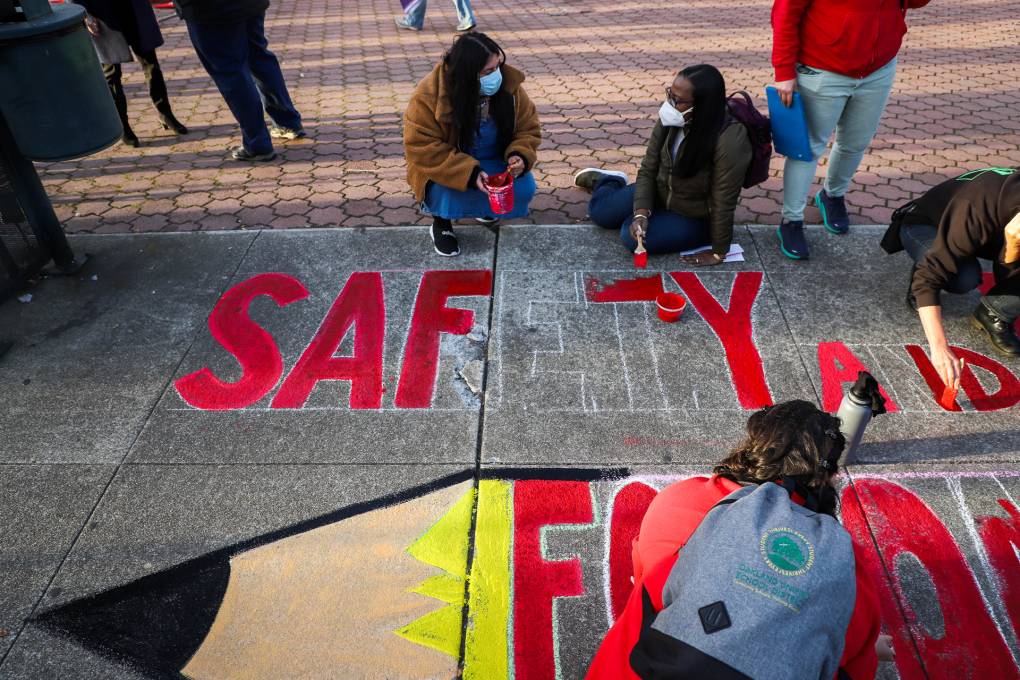
"caption": "Demonstrators paint the sidewalk outside the Alameda County Office of Education during a protest calling for COVID-safe and racially just schools in Hayward on Jan. 21, 2022.",
"description": null,
"title": "002_Hayward_OUSDCarCaravan_01212022",
"credit": "Amaya Edwards/KQED",
"status": "inherit",
"altTag": "Three people wearing masks are seen writing words in chalk on the ground outside spelling \"safety.\"",
"isLoading": false,
"fetchFailed": false
},
"news_11902406": {
"type": "attachments",
"id": "news_11902406",
"meta": {
"index": "attachments_1716263798",
"site": "news",
"id": "11902406",
"found": true
},
"parent": 11902396,
"imgSizes": {
"twentyfourteen-full-width": {
"file": "https://ww2.kqed.org/app/uploads/sites/10/2022/01/RS53036_023_Richmond_HighSchoolStudents_01132022-qut-1038x576.jpg",
"width": 1038,
"mimeType": "image/jpeg",
"height": 576
},
"thumbnail": {
"file": "https://ww2.kqed.org/app/uploads/sites/10/2022/01/RS53036_023_Richmond_HighSchoolStudents_01132022-qut-160x107.jpg",
"width": 160,
"mimeType": "image/jpeg",
"height": 107
},
"post-thumbnail": {
"file": "https://ww2.kqed.org/app/uploads/sites/10/2022/01/RS53036_023_Richmond_HighSchoolStudents_01132022-qut-672x372.jpg",
"width": 672,
"mimeType": "image/jpeg",
"height": 372
},
"kqedFullSize": {
"file": "https://ww2.kqed.org/app/uploads/sites/10/2022/01/RS53036_023_Richmond_HighSchoolStudents_01132022-qut.jpg",
"width": 1920,
"height": 1280
},
"large": {
"file": "https://ww2.kqed.org/app/uploads/sites/10/2022/01/RS53036_023_Richmond_HighSchoolStudents_01132022-qut-1020x680.jpg",
"width": 1020,
"mimeType": "image/jpeg",
"height": 680
},
"1536x1536": {
"file": "https://ww2.kqed.org/app/uploads/sites/10/2022/01/RS53036_023_Richmond_HighSchoolStudents_01132022-qut-1536x1024.jpg",
"width": 1536,
"mimeType": "image/jpeg",
"height": 1024
},
"medium": {
"file": "https://ww2.kqed.org/app/uploads/sites/10/2022/01/RS53036_023_Richmond_HighSchoolStudents_01132022-qut-800x533.jpg",
"width": 800,
"mimeType": "image/jpeg",
"height": 533
}
},
"publishDate": 1642814384,
"modified": 1643653046,
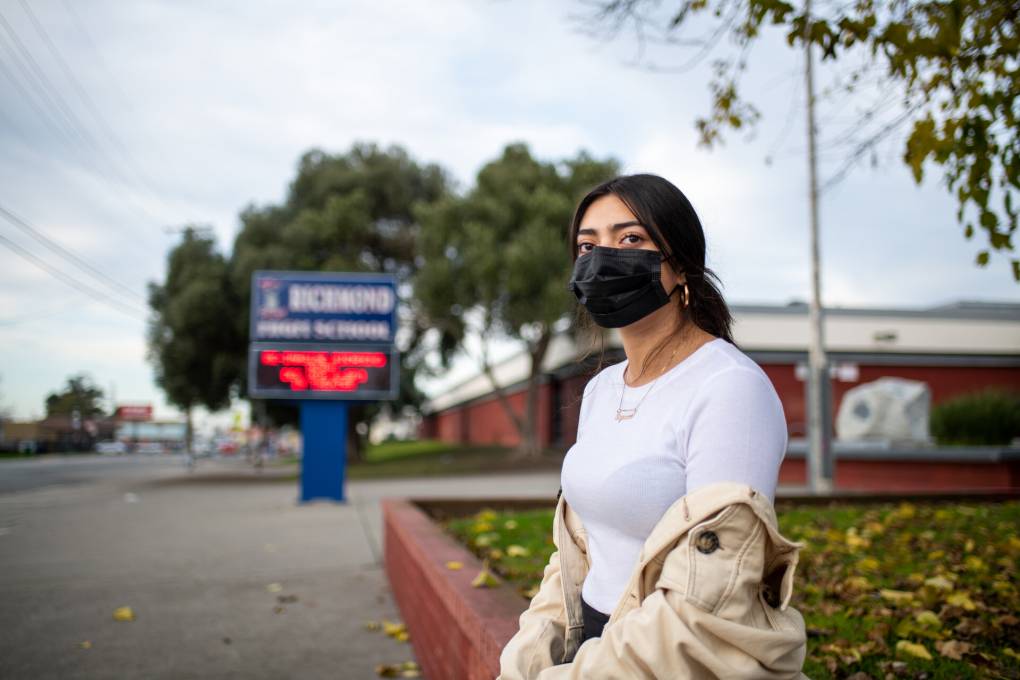
"caption": "Dayanara Mendoza, 16, a sophomore at Richmond High School, sits outside the school on Jan. 14, 2022. She said on a recent school day, three of her five teachers were out. Thousands of students and dozens of teachers in West Contra Costa Unified School District haven't attended school over the past three weeks, saying they don't feel safe returning to in-person instruction.",
"description": null,
"title": "RS53036_023_Richmond_HighSchoolStudents_01132022-qut",
"credit": "Beth LaBerge/KQED",
"status": "inherit",
"altTag": "Teenage girl wearing mask looks toward camera, with sign reading Richmond High School in background",
"isLoading": false,
"fetchFailed": false
},
"news_11901971": {
"type": "attachments",
"id": "news_11901971",
"meta": {
"index": "attachments_1716263798",
"site": "news",
"id": "11901971",
"found": true
},
"parent": 11901945,
"imgSizes": {
"twentyfourteen-full-width": {
"file": "https://ww2.kqed.org/app/uploads/sites/10/2022/01/GettyImages-1231909722-1024x576.jpg",
"width": 1024,
"mimeType": "image/jpeg",
"height": 576
},
"thumbnail": {
"file": "https://ww2.kqed.org/app/uploads/sites/10/2022/01/GettyImages-1231909722-160x107.jpg",
"width": 160,
"mimeType": "image/jpeg",
"height": 107
},
"post-thumbnail": {
"file": "https://ww2.kqed.org/app/uploads/sites/10/2022/01/GettyImages-1231909722-672x372.jpg",
"width": 672,
"mimeType": "image/jpeg",
"height": 372
},
"kqedFullSize": {
"file": "https://ww2.kqed.org/app/uploads/sites/10/2022/01/GettyImages-1231909722.jpg",
"width": 1024,
"height": 683
},
"large": {
"file": "https://ww2.kqed.org/app/uploads/sites/10/2022/01/GettyImages-1231909722-1020x680.jpg",
"width": 1020,
"mimeType": "image/jpeg",
"height": 680
},
"medium": {
"file": "https://ww2.kqed.org/app/uploads/sites/10/2022/01/GettyImages-1231909722-800x534.jpg",
"width": 800,
"mimeType": "image/jpeg",
"height": 534
}
},
"publishDate": 1642545048,
"modified": 1642551902,
"caption": "A student receives a temperature check before class as they return to in-person learning at St. Anthony Catholic High School during the COVID-19 pandemic, on March 24, 2021, in Long Beach.",
"description": null,
"title": "US-HEALTH-VIRUS-SCHOOL",
"credit": "Patrick T. Fallon/AFP via Getty Images",
"status": "inherit",
"altTag": "A young woman wearing a mask stands as another woman wearing a masks holds a digital thermometer up to her head. A third women with a mask is seen in the background.",
"isLoading": false,
"fetchFailed": false
},
"news_11901529": {
"type": "attachments",
"id": "news_11901529",
"meta": {
"index": "attachments_1716263798",
"site": "news",
"id": "11901529",
"found": true
},
"parent": 11901484,
"imgSizes": {
"twentyfourteen-full-width": {
"file": "https://ww2.kqed.org/app/uploads/sites/10/2022/01/RS47516_GettyImages-1229643858-qut-1038x576.jpg",
"width": 1038,
"mimeType": "image/jpeg",
"height": 576
},
"thumbnail": {
"file": "https://ww2.kqed.org/app/uploads/sites/10/2022/01/RS47516_GettyImages-1229643858-qut-160x90.jpg",
"width": 160,
"mimeType": "image/jpeg",
"height": 90
},
"post-thumbnail": {
"file": "https://ww2.kqed.org/app/uploads/sites/10/2022/01/RS47516_GettyImages-1229643858-qut-672x372.jpg",
"width": 672,
"mimeType": "image/jpeg",
"height": 372
},
"kqedFullSize": {
"file": "https://ww2.kqed.org/app/uploads/sites/10/2022/01/RS47516_GettyImages-1229643858-qut.jpg",
"width": 1920,
"height": 1075
},
"large": {
"file": "https://ww2.kqed.org/app/uploads/sites/10/2022/01/RS47516_GettyImages-1229643858-qut-1020x571.jpg",
"width": 1020,
"mimeType": "image/jpeg",
"height": 571
},
"1536x1536": {
"file": "https://ww2.kqed.org/app/uploads/sites/10/2022/01/RS47516_GettyImages-1229643858-qut-1536x860.jpg",
"width": 1536,
"mimeType": "image/jpeg",
"height": 860
},
"medium": {
"file": "https://ww2.kqed.org/app/uploads/sites/10/2022/01/RS47516_GettyImages-1229643858-qut-800x448.jpg",
"width": 800,
"mimeType": "image/jpeg",
"height": 448
}
},
"publishDate": 1642024547,
"modified": 1649432437,
"caption": null,
"description": "Students work on laptops at a school in La Puente, in Los Angeles County, in the fall of 2020. A comprehensive survey from the Oakland-based research and advocacy organization Children Now found that learning loss disparities during the pandemic continue to haunt the state's children.",
"title": "US-HEALTH-VIRUS-epidemic",
"credit": "Frederic J. Brown/AFP via Getty Images",
"status": "inherit",
"altTag": "side profile view of two young students, wearing masks while working at classroom desks",
"isLoading": false,
"fetchFailed": false
},
"news_11901442": {
"type": "attachments",
"id": "news_11901442",
"meta": {
"index": "attachments_1716263798",
"site": "news",
"id": "11901442",
"found": true
},
"parent": 11901439,
"imgSizes": {
"twentyfourteen-full-width": {
"file": "https://ww2.kqed.org/app/uploads/sites/10/2022/01/RS43921_GettyImages-1226007165-qut-1038x576.jpg",
"width": 1038,
"mimeType": "image/jpeg",
"height": 576
},
"thumbnail": {
"file": "https://ww2.kqed.org/app/uploads/sites/10/2022/01/RS43921_GettyImages-1226007165-qut-160x98.jpg",
"width": 160,
"mimeType": "image/jpeg",
"height": 98
},
"post-thumbnail": {
"file": "https://ww2.kqed.org/app/uploads/sites/10/2022/01/RS43921_GettyImages-1226007165-qut-672x372.jpg",
"width": 672,
"mimeType": "image/jpeg",
"height": 372
},
"kqedFullSize": {
"file": "https://ww2.kqed.org/app/uploads/sites/10/2022/01/RS43921_GettyImages-1226007165-qut.jpg",
"width": 1920,
"height": 1171
},
"large": {
"file": "https://ww2.kqed.org/app/uploads/sites/10/2022/01/RS43921_GettyImages-1226007165-qut-1020x622.jpg",
"width": 1020,
"mimeType": "image/jpeg",
"height": 622
},
"1536x1536": {
"file": "https://ww2.kqed.org/app/uploads/sites/10/2022/01/RS43921_GettyImages-1226007165-qut-1536x937.jpg",
"width": 1536,
"mimeType": "image/jpeg",
"height": 937
},
"medium": {
"file": "https://ww2.kqed.org/app/uploads/sites/10/2022/01/RS43921_GettyImages-1226007165-qut-800x488.jpg",
"width": 800,
"mimeType": "image/jpeg",
"height": 488
}
},
"publishDate": 1641948521,
"modified": 1641948552,
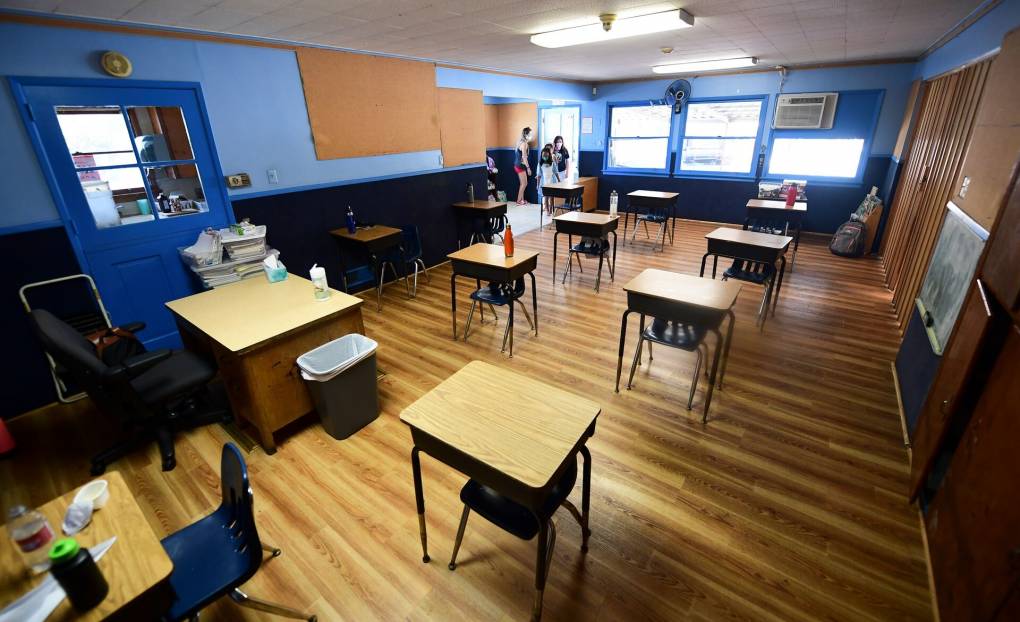
"caption": "(Photo by FREDERIC J. BROWN/AFP via Getty Images)",
"description": "A classroom.",
"title": "US-HEALTH-VIRUS-EDUCATION",
"credit": null,
"status": "inherit",
"altTag": null,
"isLoading": false,
"fetchFailed": false
},
"news_11873453": {
"type": "attachments",
"id": "news_11873453",
"meta": {
"index": "attachments_1716263798",
"site": "news",
"id": "11873453",
"found": true
},
"parent": 11873384,
"imgSizes": {
"twentyfourteen-full-width": {
"file": "https://ww2.kqed.org/app/uploads/sites/10/2021/05/SF-high-school-in-person-class-1038x576.jpg",
"width": 1038,
"mimeType": "image/jpeg",
"height": 576
},
"thumbnail": {
"file": "https://ww2.kqed.org/app/uploads/sites/10/2021/05/SF-high-school-in-person-class-160x107.jpg",
"width": 160,
"mimeType": "image/jpeg",
"height": 107
},
"post-thumbnail": {
"file": "https://ww2.kqed.org/app/uploads/sites/10/2021/05/SF-high-school-in-person-class-672x372.jpg",
"width": 672,
"mimeType": "image/jpeg",
"height": 372
},
"kqedFullSize": {
"file": "https://ww2.kqed.org/app/uploads/sites/10/2021/05/SF-high-school-in-person-class.jpg",
"width": 1920,
"height": 1280
},
"large": {
"file": "https://ww2.kqed.org/app/uploads/sites/10/2021/05/SF-high-school-in-person-class-1020x680.jpg",
"width": 1020,
"mimeType": "image/jpeg",
"height": 680
},
"1536x1536": {
"file": "https://ww2.kqed.org/app/uploads/sites/10/2021/05/SF-high-school-in-person-class-1536x1024.jpg",
"width": 1536,
"mimeType": "image/jpeg",
"height": 1024
},
"medium": {
"file": "https://ww2.kqed.org/app/uploads/sites/10/2021/05/SF-high-school-in-person-class-800x533.jpg",
"width": 800,
"mimeType": "image/jpeg",
"height": 533
}
},
"publishDate": 1620861200,
"modified": 1633972879,
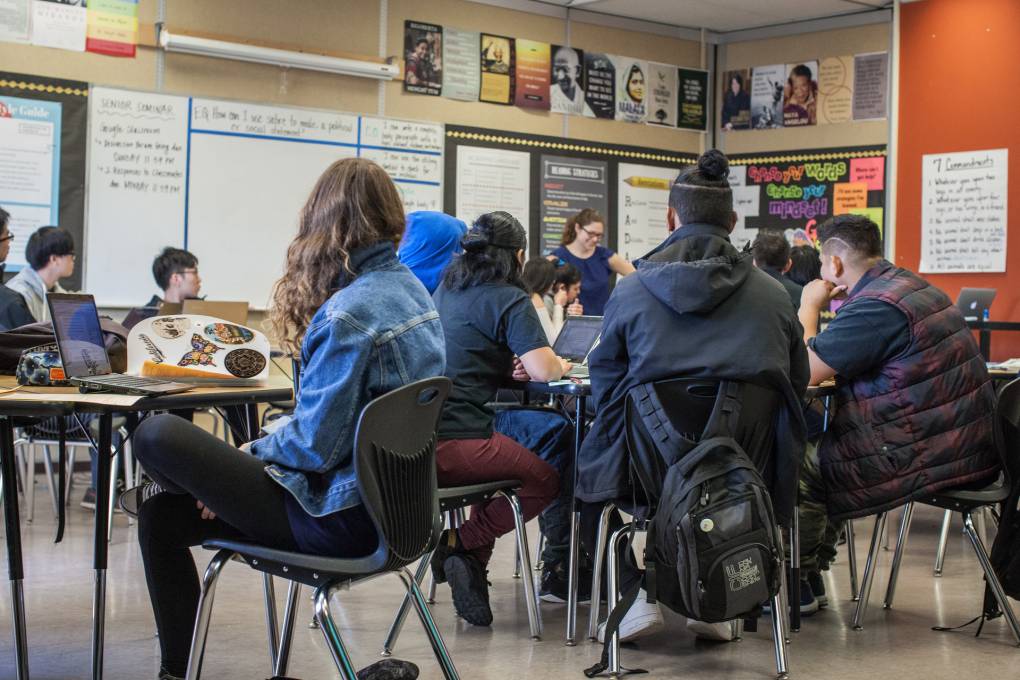
"caption": "Students in class at San Francisco International High School in March 2017.",
"description": null,
"title": "SF high school in person class",
"credit": "Deb Svoboda/KQED",
"status": "inherit",
"altTag": "High school students sit on chairs behind tables facing a teacher, who stands.",
"isLoading": false,
"fetchFailed": false
}
},
"audioPlayerReducer": {
"postId": "stream_live",
"isPaused": true,
"isPlaying": false,
"pfsActive": false,
"pledgeModalIsOpen": true,
"playerDrawerIsOpen": false,
"liveAudioPlayStartedAt": 0,
"liveAudioPlayContext": ""
},
"authorsReducer": {
"byline_news_11903352": {
"type": "authors",
"id": "byline_news_11903352",
"meta": {
"override": true
},
"slug": "byline_news_11903352",
"name": "Scott Shafer and Han Li",
"isLoading": false
},
"byline_news_11903020": {
"type": "authors",
"id": "byline_news_11903020",
"meta": {
"override": true
},
"slug": "byline_news_11903020",
"name": "\u003ca href=\"https://edsource.org/author/dlambert\">Diana Lambert\u003c/a>",
"isLoading": false
},
"byline_news_11901945": {
"type": "authors",
"id": "byline_news_11901945",
"meta": {
"override": true
},
"slug": "byline_news_11901945",
"name": "\u003ca href=\"https://edsource.org/author/kdsouza\">Karen D'Souza\u003c/a>",
"isLoading": false
},
"byline_news_11901484": {
"type": "authors",
"id": "byline_news_11901484",
"meta": {
"override": true
},
"slug": "byline_news_11901484",
"name": "\u003ca href=\"https://edsource.org/author/cjones\">Carolyn Jones\u003c/a>",
"isLoading": false
},
"byline_news_11901355": {
"type": "authors",
"id": "byline_news_11901355",
"meta": {
"override": true
},
"slug": "byline_news_11901355",
"name": "\u003ca href=\"https://edsource.org/author/cjones\">Carolyn Jones\u003c/a>\u003cbr>EdSource",
"isLoading": false
},
"gmarzorati": {
"type": "authors",
"id": "227",
"meta": {
"index": "authors_1716337520",
"id": "227",
"found": true
},
"name": "Guy Marzorati",
"firstName": "Guy",
"lastName": "Marzorati",
"slug": "gmarzorati",
"email": "gmarzorati@KQED.org",
"display_author_email": true,
"staff_mastheads": [
"news"
],
"title": "Correspondent",
"bio": "Guy Marzorati is a correspondent on KQED's California Politics and Government Desk, based in San Jose. A graduate of Santa Clara University, Guy joined KQED in 2013. He reports on state and local politics and produces KQED's digital voter guide.",
"avatar": "https://secure.gravatar.com/avatar/e7038b8dbfd55b104369b76b1cd0b9de?s=600&d=blank&r=g",
"twitter": "guymarzorati",
"facebook": null,
"instagram": null,
"linkedin": null,
"sites": [
{
"site": "",
"roles": [
"editor"
]
},
{
"site": "news",
"roles": [
"editor"
]
},
{
"site": "science",
"roles": [
"editor"
]
},
{
"site": "forum",
"roles": [
"editor"
]
},
{
"site": "elections",
"roles": [
"editor"
]
},
{
"site": "liveblog",
"roles": [
"editor"
]
}
],
"headData": {
"title": "Guy Marzorati | KQED",
"description": "Correspondent",
"ogImgSrc": "https://secure.gravatar.com/avatar/e7038b8dbfd55b104369b76b1cd0b9de?s=600&d=blank&r=g",
"twImgSrc": "https://secure.gravatar.com/avatar/e7038b8dbfd55b104369b76b1cd0b9de?s=600&d=blank&r=g"
},
"isLoading": false,
"link": "/author/gmarzorati"
},
"jmcevoy": {
"type": "authors",
"id": "231",
"meta": {
"index": "authors_1716337520",
"id": "231",
"found": true
},
"name": "Julia McEvoy",
"firstName": "Julia",
"lastName": "McEvoy",
"slug": "jmcevoy",
"email": "jmcevoy@KQED.org",
"display_author_email": true,
"staff_mastheads": [
"news"
],
"title": "KQED Senior Editor",
"bio": "Julia McEvoy is KQED's Senior Editor, Education Equity.\r\n\r\nJulia heads KQED’s education coverage examining inequities students face in Bay Area and California schools, and reports on what it will take to educate the next generation.\r\n\r\nJulia's editorial work has received a Peabody Award, a Casey Medal for Coverage of Children and Families, several Edward R. Murrow awards, as well as awards from the Public Radio News Directors Inc. and the Society for Professional Journalists.",
"avatar": "https://secure.gravatar.com/avatar/aec3ce21abe02b302fd33638abd56a22?s=600&d=blank&r=g",
"twitter": "juliamcevoy1",
"facebook": null,
"instagram": null,
"linkedin": null,
"sites": [
{
"site": "news",
"roles": []
},
{
"site": "stateofhealth",
"roles": [
"author"
]
}
],
"headData": {
"title": "Julia McEvoy | KQED",
"description": "KQED Senior Editor",
"ogImgSrc": "https://secure.gravatar.com/avatar/aec3ce21abe02b302fd33638abd56a22?s=600&d=blank&r=g",
"twImgSrc": "https://secure.gravatar.com/avatar/aec3ce21abe02b302fd33638abd56a22?s=600&d=blank&r=g"
},
"isLoading": false,
"link": "/author/jmcevoy"
},
"markfiore": {
"type": "authors",
"id": "3236",
"meta": {
"index": "authors_1716337520",
"id": "3236",
"found": true
},
"name": "Mark Fiore",
"firstName": "Mark",
"lastName": "Fiore",
"slug": "markfiore",
"email": "mark@markfiore.com",
"display_author_email": false,
"staff_mastheads": [
"news"
],
"title": "KQED News Cartoonist",
"bio": "\u003ca href=\"http://www.MarkFiore.com\">MarkFiore.com\u003c/a> | \u003ca href=\"https://twitter.com/markfiore\">Follow on Twitter\u003c/a> | \u003ca href=\"https://www.facebook.com/pages/Mark-Fiore-Animated-Political-Cartoons/94451707396?ref=bookmarks\">Facebook\u003c/a> | \u003ca href=\"mailto:mark@markfiore.com\">email\u003c/a>\r\n\r\nPulitzer Prize-winner, Mark Fiore, who the Wall Street Journal has called “the undisputed guru of the form,” creates animated political cartoons in San Francisco, where his work has been featured regularly on the San Francisco Chronicle’s web site, SFGate.com. His work has appeared on Newsweek.com, Slate.com, CBSNews.com, MotherJones.com, DailyKos.com and NPR’s web site. Fiore’s political animation has appeared on CNN, Frontline, Bill Moyers Journal, Salon.com and cable and broadcast outlets across the globe.\r\n\r\nBeginning his professional life by drawing traditional political cartoons for newspapers, Fiore’s work appeared in publications ranging from the Washington Post to the Los Angeles Times. In the late 1990s, he began to experiment with animating political cartoons and, after a short stint at the San Jose Mercury News as their staff cartoonist, Fiore devoted all his energies to animation.\r\nGrowing up in California, Fiore also spent a good portion of his life in the backwoods of Idaho. It was this combination that shaped him politically. Mark majored in political science at Colorado College, where, in a perfect send-off for a cartoonist, he received his diploma in 1991 as commencement speaker Dick Cheney smiled approvingly.\r\nMark Fiore was awarded the Pulitzer Prize for political cartooning in 2010, a Robert F. Kennedy Journalism Award in 2004 and has twice received an Online Journalism Award for commentary from the Online News Association (2002, 2008). Fiore has received two awards for his work in new media from the National Cartoonists Society (2001, 2002), and in 2006 received The James Madison Freedom of Information Award from The Society of Professional Journalists.",
"avatar": "https://secure.gravatar.com/avatar/fc4e2a612b15b67bad0c6f0e1db4ca9b?s=600&d=blank&r=g",
"twitter": "MarkFiore",
"facebook": null,
"instagram": "https://www.instagram.com/markfiore/?hl=en",
"linkedin": null,
"sites": [
{
"site": "arts",
"roles": [
"contributor"
]
},
{
"site": "news",
"roles": [
"editor"
]
},
{
"site": "futureofyou",
"roles": [
"editor"
]
},
{
"site": "science",
"roles": [
"editor"
]
}
],
"headData": {
"title": "Mark Fiore | KQED",
"description": "KQED News Cartoonist",
"ogImgSrc": "https://secure.gravatar.com/avatar/fc4e2a612b15b67bad0c6f0e1db4ca9b?s=600&d=blank&r=g",
"twImgSrc": "https://secure.gravatar.com/avatar/fc4e2a612b15b67bad0c6f0e1db4ca9b?s=600&d=blank&r=g"
},
"isLoading": false,
"link": "/author/markfiore"
},
"ecruzguevarra": {
"type": "authors",
"id": "8654",
"meta": {
"index": "authors_1716337520",
"id": "8654",
"found": true
},
"name": "Ericka Cruz Guevarra",
"firstName": "Ericka",
"lastName": "Cruz Guevarra",
"slug": "ecruzguevarra",
"email": "ecruzguevarra@kqed.org",
"display_author_email": true,
"staff_mastheads": [
"news"
],
"title": "Producer, The Bay Podcast",
"bio": "Ericka Cruz Guevarra is host of \u003ca href=\"https://www.kqed.org/podcasts/thebay\">\u003cem>The Bay\u003c/em>\u003c/a> podcast at KQED. Before host, she was the show’s producer. Her work in that capacity includes a three-part reported series on policing in Vallejo, which won a 2020 excellence in journalism award from the Society of Professional Journalists. Ericka has worked as a breaking news reporter at Oregon Public Broadcasting, helped produce the Code Switch podcast, and was KQED’s inaugural Raul Ramirez Diversity Fund intern. She’s also an alumna of NPR’s Next Generation Radio program. Send her an email if you have strong feelings about whether Fairfield and Suisun City are the Bay. Ericka is represented by SAG-AFTRA.",
"avatar": "https://secure.gravatar.com/avatar/accefc1de4bafc7e234b69bcb9b6f6536c130fd84709bc3069ef11a78787e1bb?s=600&d=blank&r=g",
"twitter": "NotoriousECG",
"bluesky": null,
"facebook": null,
"instagram": null,
"linkedin": null,
"sites": [
{
"site": "arts",
"roles": [
"subscriber"
]
},
{
"site": "news",
"roles": [
"editor",
"manage_categories"
]
},
{
"site": "futureofyou",
"roles": [
"subscriber"
]
},
{
"site": "stateofhealth",
"roles": [
"subscriber"
]
},
{
"site": "science",
"roles": [
"editor"
]
},
{
"site": "forum",
"roles": [
"subscriber"
]
}
],
"headData": {
"title": "Ericka Cruz Guevarra | KQED",
"description": "Producer, The Bay Podcast",
"ogImgSrc": "https://secure.gravatar.com/avatar/accefc1de4bafc7e234b69bcb9b6f6536c130fd84709bc3069ef11a78787e1bb?s=600&d=blank&r=g",
"twImgSrc": "https://secure.gravatar.com/avatar/accefc1de4bafc7e234b69bcb9b6f6536c130fd84709bc3069ef11a78787e1bb?s=600&d=blank&r=g"
},
"isLoading": false,
"link": "/author/ecruzguevarra"
},
"vrancano": {
"type": "authors",
"id": "11276",
"meta": {
"index": "authors_1716337520",
"id": "11276",
"found": true
},
"name": "Vanessa Rancaño",
"firstName": "Vanessa",
"lastName": "Rancaño",
"slug": "vrancano",
"email": "vrancano@kqed.org",
"display_author_email": false,
"staff_mastheads": [
"news"
],
"title": "Reporter",
"bio": "Vanessa Rancaño is a features reporter for KQED. She’s also covered homelessness and education for the station and reported from the Central Valley. Her work has aired across public radio, from flagship national news shows to longform narrative podcasts. Before taking up a mic, she worked as a freelance print journalist. She’s been recognized with a number of national and regional awards. Vanessa grew up in California's Central Valley. She's a former NPR Kroc Fellow, and a graduate of the UC Berkeley Graduate School of Journalism.",
"avatar": "https://secure.gravatar.com/avatar/b3a383dfb0e7ee1c17568f2cf067904ab654d6e3de9743fc661f3c788ade1bed?s=600&d=blank&r=g",
"twitter": "vanessarancano",
"bluesky": null,
"facebook": null,
"instagram": null,
"linkedin": null,
"sites": [
{
"site": "arts",
"roles": [
"editor"
]
},
{
"site": "news",
"roles": [
"editor"
]
},
{
"site": "liveblog",
"roles": [
"contributor"
]
}
],
"headData": {
"title": "Vanessa Rancaño | KQED",
"description": "Reporter",
"ogImgSrc": "https://secure.gravatar.com/avatar/b3a383dfb0e7ee1c17568f2cf067904ab654d6e3de9743fc661f3c788ade1bed?s=600&d=blank&r=g",
"twImgSrc": "https://secure.gravatar.com/avatar/b3a383dfb0e7ee1c17568f2cf067904ab654d6e3de9743fc661f3c788ade1bed?s=600&d=blank&r=g"
},
"isLoading": false,
"link": "/author/vrancano"
},
"csaldana": {
"type": "authors",
"id": "11301",
"meta": {
"index": "authors_1716337520",
"id": "11301",
"found": true
},
"name": "Cesar Saldaña",
"firstName": "Cesar",
"lastName": "Saldaña",
"slug": "csaldana",
"email": "csaldana@kqed.org",
"display_author_email": false,
"staff_mastheads": [
"news"
],
"title": "KQED Contributor",
"bio": null,
"avatar": "https://secure.gravatar.com/avatar/04e89425007fe7102f750c79e76274bc?s=600&d=mm&r=g",
"twitter": null,
"facebook": null,
"instagram": null,
"linkedin": null,
"sites": [
{
"site": "news",
"roles": []
},
{
"site": "perspectives",
"roles": []
}
],
"headData": {
"title": "Cesar Saldaña | KQED",
"description": "KQED Contributor",
"ogImgSrc": "https://secure.gravatar.com/avatar/04e89425007fe7102f750c79e76274bc?s=600&d=mm&r=g",
"twImgSrc": "https://secure.gravatar.com/avatar/04e89425007fe7102f750c79e76274bc?s=600&d=mm&r=g"
},
"isLoading": false,
"link": "/author/csaldana"
},
"amontecillo": {
"type": "authors",
"id": "11649",
"meta": {
"index": "authors_1716337520",
"id": "11649",
"found": true
},
"name": "Alan Montecillo",
"firstName": "Alan",
"lastName": "Montecillo",
"slug": "amontecillo",
"email": "amontecillo@kqed.org",
"display_author_email": false,
"staff_mastheads": [
"news"
],
"title": "KQED Contributor",
"bio": "Alan Montecillo is the senior editor of \u003cem>\u003ca href=\"http://kqed.org/thebay\">The Bay\u003c/a>, \u003c/em> KQED's local news podcast. Before moving to the Bay Area, he worked as a senior talk show producer for WILL in Champaign-Urbana, Illinois and at Oregon Public Broadcasting in Portland, Oregon. He has won journalism awards from the Society of Professional Journalists Northern California, the Public Media Journalists Association, The Signal Awards, and has also received a regional Edward R. Murrow award. Alan is a Filipino American from Hong Kong and a graduate of Reed College.",
"avatar": "https://secure.gravatar.com/avatar/268f53a2066899ea9efdd8a5900218b17c822d9862cbc9326cccec53ef41d349?s=600&d=blank&r=g",
"twitter": "alanmontecillo",
"bluesky": null,
"facebook": null,
"instagram": null,
"linkedin": null,
"sites": [
{
"site": "",
"roles": [
"editor"
]
},
{
"site": "news",
"roles": [
"editor",
"manage_categories"
]
}
],
"headData": {
"title": "Alan Montecillo | KQED",
"description": "KQED Contributor",
"ogImgSrc": "https://secure.gravatar.com/avatar/268f53a2066899ea9efdd8a5900218b17c822d9862cbc9326cccec53ef41d349?s=600&d=blank&r=g",
"twImgSrc": "https://secure.gravatar.com/avatar/268f53a2066899ea9efdd8a5900218b17c822d9862cbc9326cccec53ef41d349?s=600&d=blank&r=g"
},
"isLoading": false,
"link": "/author/amontecillo"
},
"ccabreralomeli": {
"type": "authors",
"id": "11708",
"meta": {
"index": "authors_1716337520",
"id": "11708",
"found": true
},
"name": "Carlos Cabrera-Lomelí",
"firstName": "Carlos",
"lastName": "Cabrera-Lomelí",
"slug": "ccabreralomeli",
"email": "ccabreralomeli@KQED.org",
"display_author_email": true,
"staff_mastheads": [
"news"
],
"title": "Community Reporter",
"bio": "Carlos Cabrera-Lomelí is a community reporter with KQED's digital engagement team. He also reports and co-produces for KQED's bilingual news hub KQED en Español. He grew up in San Francisco's Mission District and has previously worked with Univision, 48 Hills and REFORMA in Mexico City.",
"avatar": "https://secure.gravatar.com/avatar/c309be9665e484f887b818c89e273ecc673004f426f36b24d00a4d813a2e0518?s=600&d=blank&r=g",
"twitter": "@LomeliCabrera",
"bluesky": null,
"facebook": null,
"instagram": null,
"linkedin": null,
"sites": [
{
"site": "arts",
"roles": [
"editor"
]
},
{
"site": "news",
"roles": [
"editor"
]
},
{
"site": "about",
"roles": [
"editor"
]
},
{
"site": "science",
"roles": [
"editor"
]
},
{
"site": "perspectives",
"roles": [
"editor"
]
},
{
"site": "elections",
"roles": [
"editor"
]
},
{
"site": "liveblog",
"roles": [
"contributor"
]
}
],
"headData": {
"title": "Carlos Cabrera-Lomelí | KQED",
"description": "Community Reporter",
"ogImgSrc": "https://secure.gravatar.com/avatar/c309be9665e484f887b818c89e273ecc673004f426f36b24d00a4d813a2e0518?s=600&d=blank&r=g",
"twImgSrc": "https://secure.gravatar.com/avatar/c309be9665e484f887b818c89e273ecc673004f426f36b24d00a4d813a2e0518?s=600&d=blank&r=g"
},
"isLoading": false,
"link": "/author/ccabreralomeli"
},
"cbeale": {
"type": "authors",
"id": "11749",
"meta": {
"index": "authors_1716337520",
"id": "11749",
"found": true
},
"name": "Christopher Beale",
"firstName": "Christopher",
"lastName": "Beale",
"slug": "cbeale",
"email": "cbeale@kqed.org",
"display_author_email": true,
"staff_mastheads": [
"news"
],
"title": "Engineer/Producer/Reporter",
"bio": "\u003ca href=\"https://linktr.ee/realchrisjbeale\" rel=\"noopener noreferrer\">Christopher J. Beale\u003c/a> is an award winning journalist, audio engineer, and media host living in San Francisco. \r\n\r\nChristopher works primarily as an audio engineer at KQED and serves as the sound designer for both the Bay Curious and Rightnowish podcasts. He is the host and producer of the LGBTQIA podcast and radio segment \u003ca href=\"https://stereotypespodcast.org\">Stereotypes\u003c/a>.",
"avatar": "https://secure.gravatar.com/avatar/dc485bf84788eb7e7414eb638e72407e?s=600&d=blank&r=g",
"twitter": "realchrisjbeale",
"facebook": null,
"instagram": "http://instagram.com/realchrisjbeale",
"linkedin": null,
"sites": [
{
"site": "arts",
"roles": [
"contributor"
]
},
{
"site": "news",
"roles": [
"editor"
]
},
{
"site": "forum",
"roles": [
"editor"
]
}
],
"headData": {
"title": "Christopher Beale | KQED",
"description": "Engineer/Producer/Reporter",
"ogImgSrc": "https://secure.gravatar.com/avatar/dc485bf84788eb7e7414eb638e72407e?s=600&d=blank&r=g",
"twImgSrc": "https://secure.gravatar.com/avatar/dc485bf84788eb7e7414eb638e72407e?s=600&d=blank&r=g"
},
"isLoading": false,
"link": "/author/cbeale"
}
},
"pagesReducer": {
"news_category_education": {
"type": "terms",
"id": "news_18540",
"meta": {
"index": "terms_1716263798",
"site": "news",
"id": "18540",
"score": 10.973221
},
"featImg": null,
"name": "Education",
"description": null,
"taxonomy": "category",
"headData": {
"twImgId": null,
"twTitle": null,
"ogTitle": null,
"ogImgId": null,
"twDescription": null,
"description": null,
"title": "Education Archives | KQED News",
"ogDescription": null
},
"ttid": 2595,
"slug": "education",
"isLoading": false,
"title": "Education",
"pageMeta": {
"site": "news",
"WpPageTemplate": "page-topic-editorial",
"currentPage": 74
},
"blocks": [
{
"blockName": "kqed/post-list",
"attrs": {
"layout": "cardArticle2",
"query": "posts/news?category=education",
"seeMore": false,
"paginated": true,
"page": 74
}
},
{
"blockName": "kqed/ad"
}
]
}
},
"pfsSessionReducer": {},
"postsReducer": {
"stream_live": {
"type": "live",
"id": "stream_live",
"audioUrl": "https://streams.kqed.org/kqedradio",
"title": "Live Stream",
"excerpt": "Live Stream information currently unavailable.",
"link": "/radio",
"featImg": "",
"label": {
"name": "KQED Live",
"link": "/"
}
},
"stream_kqedNewscast": {
"type": "posts",
"id": "stream_kqedNewscast",
"audioUrl": "https://www.kqed.org/.stream/anon/radio/RDnews/newscast.mp3?_=1",
"title": "KQED Newscast",
"featImg": "",
"label": {
"name": "88.5 FM",
"link": "/"
}
},
"news_11904052": {
"type": "posts",
"id": "news_11904052",
"meta": {
"index": "posts_1716263798",
"site": "news",
"id": "11904052",
"score": null,
"sort": [
1644019599000
]
},
"guestAuthors": [],
"slug": "campaign-to-recall-three-san-francisco-school-board-members-vastly-outspending-opposition",
"title": "Campaign to Recall Three San Francisco School Board Members Vastly Outspending Opposition",
"publishDate": 1644019599,
"format": "standard",
"headTitle": "Campaign to Recall Three San Francisco School Board Members Vastly Outspending Opposition | KQED",
"labelTerm": {
"site": "news"
},
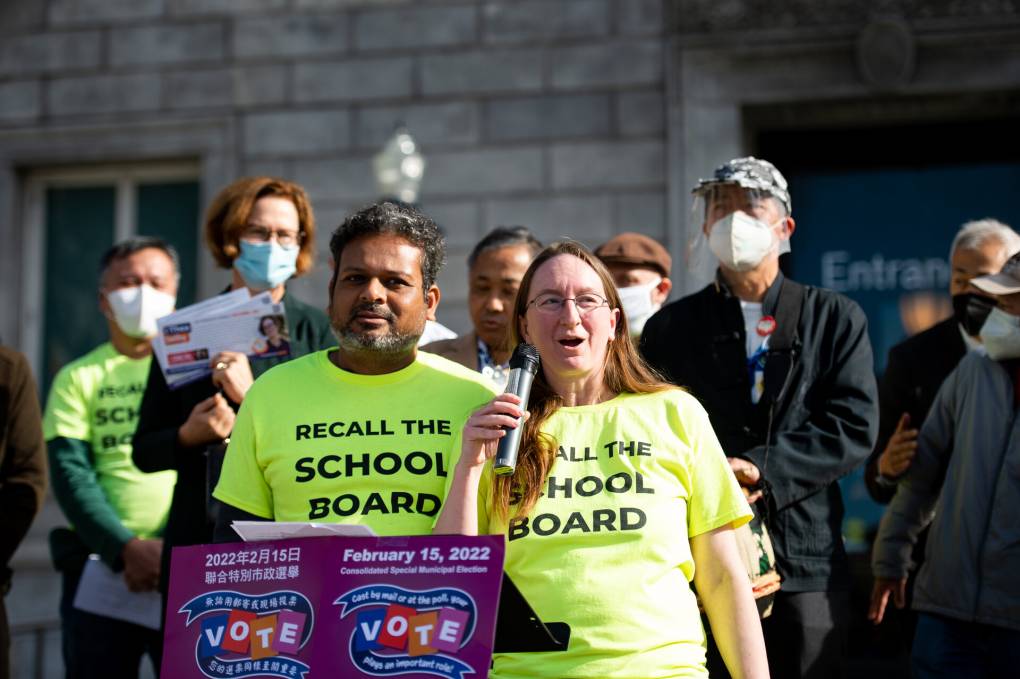
"content": "\u003cp>The \u003ca href=\"https://www.kqed.org/news/11903279/san-franciscos-school-board-recall-election\" target=\"_blank\" rel=\"noopener noreferrer\">campaign to recall three San Francisco school board members\u003c/a> in a Feb. 15 special election is vastly outspending its opponents, according to filings made public on Thursday.\u003c/p>\n\u003cp>With just over a week until voting ends, the financial advantage of the pro-recall campaign, which is made up of two separate committees, has enabled it to flood San Francisco mailboxes, airwaves and even streaming platforms like Hulu with arguments to remove board members Alison Collins, Gabriela López and Faauuga Moliga from office.\u003c/p>\n\u003cp>Through the end of last week, those two committees reported spending a total of $1.75 million, nearly half of that in January alone. Meanwhile, the two separate anti-recall campaigns (one solely fighting the removal of Moliga) collectively spent just $68,110.\u003c/p>\n\u003cp>Recall supporters started campaigning much earlier than their opponents, giving them a major head start in building a financial war chest. The first of the pro-recall groups, led by Autumn Looijen and Siva Raj, raised cash beginning in the spring of 2021, from a mix of \u003ca href=\"https://www.kqed.org/news/11894065/sf-school-board-recall-funded-mostly-by-local-donors-with-venture-capitalists-topping-the-list\" target=\"_blank\" rel=\"noopener noreferrer\">wealthy venture capitalists and small-dollar donors\u003c/a>, helping them pay for an army of signature gatherers to \u003ca href=\"https://www.kqed.org/news/11892743/recall-of-3-san-francisco-school-board-members-headed-to-ballot\" target=\"_blank\" rel=\"noopener noreferrer\">qualify the three recall questions for the ballot\u003c/a>.\u003c/p>\n\u003cp>By contrast, the two campaigns opposing the recall didn’t begin raising money in earnest until November.\u003c/p>\n\u003cp>[ad fullwidth]\u003c/p>\n\u003cp>That same month, a second pro-recall campaign committee, Concerned Parents Supporting the Recall of Collins, López, and Moliga, was formed with a focus on recruiting and spending big dollars.\u003c/p>\n\u003cp>The largest contributor to the Concerned Parents group is the political group Neighbors for a Better San Francisco, which has given $458,800. That group’s largest donor is William Oberndorf, a San Francisco-based investor and \u003ca href=\"https://www.educationnext.org/this-is-the-civil-rights-issue-of-our-time-philanthropist-bill-oberndorf/\" target=\"_blank\" rel=\"noopener noreferrer\">advocate for school voucher systems in states across the country\u003c/a>, in which government funds could be used to attend private schools.\u003c/p>\n\u003cp>[aside label=\"Related Coverage\" tag=\"sf-school-board-recall\"]The largest individual pro-recall donor so far is venture capitalist Arthur Rock, a charter school proponent who has given nearly $400,000 to the effort.\u003c/p>\n\u003cp>Recall questions are listed on the ballot as “measures,” a specific designation that allows unlimited fundraising and spending on their behalf. Those rules have opened the door for the pro-recall campaigns to spend far in excess of the traditionally low-dollar contributions in school board races.\u003c/p>\n\u003cp>To put that in perspective: The 38 candidates who ran for school board in San Francisco across four elections, from 2016 to 2020, collectively spent $1.05 million — 60% less than the $1.75 million the pro-recall campaigns have so far spent on this single election.\u003c/p>\n\u003cp>The biggest payout thus far has been $289,708 to Comcast, for the airing of pro-recall ads on stations including CNN, Fox News, MSNBC, ESPN and HGTV.\u003c/p>\n\u003cp>Spending files also show the pro-recall campaign’s focus on spreading its message to San Francisco’s \u003ca href=\"https://www.kqed.org/news/11903593/the-sf-school-board-recall-is-motivating-first-time-chinese-voters\" target=\"_blank\" rel=\"noopener noreferrer\">Chinese-language voters\u003c/a>. The Concerned Parents committee spent $42,840 to air ads on the TV station KTSF, along with $11,013 to purchase print ads in the Sing Tao Daily and World Journal newspapers.\u003c/p>\n\u003cp>The main campaign opposing the recall has received its largest donations from SEIU 1021 ($6,500), a union representing public sector workers, and the United Educators of San Francisco ($5,000), the city’s teachers union. Our Revolution, a political group aligned with Vermont Sen. Bernie Sanders, also spent $5,000 in opposition to the recall.\u003c/p>\n\u003cp>Lacking the resources to put their message on the airwaves, that campaign has spent roughly $27,213 on items including door hangers, window signs and mailers.\u003c/p>\n\u003cp>Meanwhile, Commissioner Moliga has reported spending a total of $40,896 on\u003ca href=\"https://www.kqed.org/news/11899172/in-sf-school-board-recall-moliga-charts-separate-path-and-local-politicos-take-notice\" target=\"_blank\" rel=\"noopener noreferrer\"> his own separate campaign to save his job\u003c/a>, largely to pay for campaign literature, mailings and printing.\u003c/p>\n\u003cp>The pro-recall campaign committees ended the reporting period, on Jan. 29, with a combined $162,110 on hand, compared with $11,214 for the two anti-recall campaigns.\u003c/p>\n\u003cp>\u003c/p>\n\u003cp>\u003ci>Correction: in the initial version of this story, KTSF was described as a radio station. It is, in fact, a TV station.\u003c/i>\u003c/p>\n\n",
"blocks": [],
"excerpt": "Two committees supporting the recall reported spending a total of $1.75 million, as compared to the total $68,110 spent by two anti-recall committees.",
"status": "publish",
"parent": 0,
"modified": 1721132260,
"stats": {
"hasAudio": false,
"hasVideo": false,
"hasChartOrMap": false,
"iframeSrcs": [],
"hasGoogleForm": false,
"hasGallery": false,
"hasHearkenModule": false,
"hasPolis": false,
"paragraphCount": 19,
"wordCount": 688
},
"headData": {
"title": "Campaign to Recall Three San Francisco School Board Members Vastly Outspending Opposition | KQED",
"description": "Two committees supporting the recall reported spending a total of $1.75 million, as compared to the total $68,110 spent by two anti-recall committees.",
"ogTitle": "",
"ogDescription": "",
"ogImgId": "",
"twTitle": "",
"twDescription": "",
"twImgId": "",
"schema": {
"@context": "https://schema.org",
"@type": "NewsArticle",
"headline": "Campaign to Recall Three San Francisco School Board Members Vastly Outspending Opposition",
"datePublished": "2022-02-04T16:06:39-08:00",
"dateModified": "2024-07-16T05:17:40-07:00",
"image": "https://cdn.kqed.org/wp-content/uploads/2020/02/KQED-OG-Image@1x.png",
"isAccessibleForFree": "True",
"publisher": {
"@type": "NewsMediaOrganization",
"@id": "https://www.kqed.org/#organization",
"name": "KQED",
"logo": "https://cdn.kqed.org/wp-content/uploads/2020/02/KQED-OG-Image@1x.png",
"url": "https://www.kqed.org",
"sameAs": [
"https://www.facebook.com/KQED",
"https://twitter.com/KQED",
"https://www.instagram.com/kqed/",
"https://www.tiktok.com/@kqedofficial",
"https://www.linkedin.com/company/kqed",
"https://www.youtube.com/channel/UCeC0IOo7i1P_61zVUWbJ4nw"
]
}
}
},
"sticky": false,
"excludeFromSiteSearch": "Include",
"path": "/news/11904052/campaign-to-recall-three-san-francisco-school-board-members-vastly-outspending-opposition",
"audioTrackLength": null,
"parsedContent": [
{
"type": "contentString",
"content": "\u003cdiv class=\"post-body\">\u003cp>\u003cp>The \u003ca href=\"https://www.kqed.org/news/11903279/san-franciscos-school-board-recall-election\" target=\"_blank\" rel=\"noopener noreferrer\">campaign to recall three San Francisco school board members\u003c/a> in a Feb. 15 special election is vastly outspending its opponents, according to filings made public on Thursday.\u003c/p>\n\u003cp>With just over a week until voting ends, the financial advantage of the pro-recall campaign, which is made up of two separate committees, has enabled it to flood San Francisco mailboxes, airwaves and even streaming platforms like Hulu with arguments to remove board members Alison Collins, Gabriela López and Faauuga Moliga from office.\u003c/p>\n\u003cp>Through the end of last week, those two committees reported spending a total of $1.75 million, nearly half of that in January alone. Meanwhile, the two separate anti-recall campaigns (one solely fighting the removal of Moliga) collectively spent just $68,110.\u003c/p>\n\u003cp>Recall supporters started campaigning much earlier than their opponents, giving them a major head start in building a financial war chest. The first of the pro-recall groups, led by Autumn Looijen and Siva Raj, raised cash beginning in the spring of 2021, from a mix of \u003ca href=\"https://www.kqed.org/news/11894065/sf-school-board-recall-funded-mostly-by-local-donors-with-venture-capitalists-topping-the-list\" target=\"_blank\" rel=\"noopener noreferrer\">wealthy venture capitalists and small-dollar donors\u003c/a>, helping them pay for an army of signature gatherers to \u003ca href=\"https://www.kqed.org/news/11892743/recall-of-3-san-francisco-school-board-members-headed-to-ballot\" target=\"_blank\" rel=\"noopener noreferrer\">qualify the three recall questions for the ballot\u003c/a>.\u003c/p>\n\u003cp>By contrast, the two campaigns opposing the recall didn’t begin raising money in earnest until November.\u003c/p>\n\u003cp>\u003c/p>\u003c/div>",
"attributes": {
"named": {},
"numeric": []
}
},
{
"type": "component",
"content": "",
"name": "ad",
"attributes": {
"named": {
"label": "fullwidth"
},
"numeric": [
"fullwidth"
]
}
},
{
"type": "contentString",
"content": "\u003cdiv class=\"post-body\">\u003cp>\u003c/p>\n\u003cp>That same month, a second pro-recall campaign committee, Concerned Parents Supporting the Recall of Collins, López, and Moliga, was formed with a focus on recruiting and spending big dollars.\u003c/p>\n\u003cp>The largest contributor to the Concerned Parents group is the political group Neighbors for a Better San Francisco, which has given $458,800. That group’s largest donor is William Oberndorf, a San Francisco-based investor and \u003ca href=\"https://www.educationnext.org/this-is-the-civil-rights-issue-of-our-time-philanthropist-bill-oberndorf/\" target=\"_blank\" rel=\"noopener noreferrer\">advocate for school voucher systems in states across the country\u003c/a>, in which government funds could be used to attend private schools.\u003c/p>\n\u003cp>\u003c/p>\u003c/div>",
"attributes": {
"named": {},
"numeric": []
}
},
{
"type": "component",
"content": "",
"name": "aside",
"attributes": {
"named": {
"label": "Related Coverage ",
"tag": "sf-school-board-recall"
},
"numeric": []
}
},
{
"type": "contentString",
"content": "\u003cdiv class=\"post-body\">\u003cp>The largest individual pro-recall donor so far is venture capitalist Arthur Rock, a charter school proponent who has given nearly $400,000 to the effort.\u003c/p>\n\u003cp>Recall questions are listed on the ballot as “measures,” a specific designation that allows unlimited fundraising and spending on their behalf. Those rules have opened the door for the pro-recall campaigns to spend far in excess of the traditionally low-dollar contributions in school board races.\u003c/p>\n\u003cp>To put that in perspective: The 38 candidates who ran for school board in San Francisco across four elections, from 2016 to 2020, collectively spent $1.05 million — 60% less than the $1.75 million the pro-recall campaigns have so far spent on this single election.\u003c/p>\n\u003cp>The biggest payout thus far has been $289,708 to Comcast, for the airing of pro-recall ads on stations including CNN, Fox News, MSNBC, ESPN and HGTV.\u003c/p>\n\u003cp>Spending files also show the pro-recall campaign’s focus on spreading its message to San Francisco’s \u003ca href=\"https://www.kqed.org/news/11903593/the-sf-school-board-recall-is-motivating-first-time-chinese-voters\" target=\"_blank\" rel=\"noopener noreferrer\">Chinese-language voters\u003c/a>. The Concerned Parents committee spent $42,840 to air ads on the TV station KTSF, along with $11,013 to purchase print ads in the Sing Tao Daily and World Journal newspapers.\u003c/p>\n\u003cp>The main campaign opposing the recall has received its largest donations from SEIU 1021 ($6,500), a union representing public sector workers, and the United Educators of San Francisco ($5,000), the city’s teachers union. Our Revolution, a political group aligned with Vermont Sen. Bernie Sanders, also spent $5,000 in opposition to the recall.\u003c/p>\n\u003cp>Lacking the resources to put their message on the airwaves, that campaign has spent roughly $27,213 on items including door hangers, window signs and mailers.\u003c/p>\n\u003cp>Meanwhile, Commissioner Moliga has reported spending a total of $40,896 on\u003ca href=\"https://www.kqed.org/news/11899172/in-sf-school-board-recall-moliga-charts-separate-path-and-local-politicos-take-notice\" target=\"_blank\" rel=\"noopener noreferrer\"> his own separate campaign to save his job\u003c/a>, largely to pay for campaign literature, mailings and printing.\u003c/p>\n\u003cp>The pro-recall campaign committees ended the reporting period, on Jan. 29, with a combined $162,110 on hand, compared with $11,214 for the two anti-recall campaigns.\u003c/p>\n\u003cp>\u003c/p>\n\u003cp>\u003ci>Correction: in the initial version of this story, KTSF was described as a radio station. It is, in fact, a TV station.\u003c/i>\u003c/p>\n\n\u003c/div>\u003c/p>",
"attributes": {
"named": {},
"numeric": []
}
}
],
"link": "/news/11904052/campaign-to-recall-three-san-francisco-school-board-members-vastly-outspending-opposition",
"authors": [
"227"
],
"categories": [
"news_18540",
"news_8"
],
"tags": [
"news_29311",
"news_20013",
"news_30139",
"news_29888",
"news_17968",
"news_30277"
],
"featImg": "news_11904092",
"label": "news"
},
"news_11903372": {
"type": "posts",
"id": "news_11903372",
"meta": {
"index": "posts_1716263798",
"site": "news",
"id": "11903372",
"score": null,
"sort": [
1643763624000
]
},
"guestAuthors": [],
"slug": "setting-the-precedent-what-caste-protections-at-cal-state-mean-for-students-and-alumni",
"title": "'Setting the Precedent': What Caste Protections at Cal State Mean for Students and Alumni",
"publishDate": 1643763624,
"format": "standard",
"headTitle": "‘Setting the Precedent’: What Caste Protections at Cal State Mean for Students and Alumni | KQED",
"labelTerm": {
"site": "news"
},
"content": "\u003cp>Students and alumni across the California State University system are responding to the change that went into effect on Jan. 1, \u003ca href=\"https://calstate.policystat.com/policy/10926024/latest/\">to add caste protections to its nondiscrimination policy\u003c/a>, affecting students, staff and faculty at all 23 campuses of the nation’s largest university system.\u003c/p>\n\u003cp>The updated policy is intended to protect caste-oppressed students, many of whom are of South Asian descent and may be subject to this rigid form of social stratification by other students, faculty or staff. The caste system has roots in the Hindu religion, and though it is officially outlawed in many countries, discrimination still persists.\u003c/p>\n\u003cp>For some current and former students who have suffered caste discrimination firsthand, these new protections provide an element of accountability.\u003c/p>\n\u003cp>“Society needs to understand the gravity of caste discrimination,” said Prem Pariyar, who received his master’s degree in social work from California State University East Bay in 2021, has been a leader in the fight for caste protections in the CSU system. “People are \u003ca href=\"https://www.reuters.com/article/us-nepal-rights-discrimination-trfn/dalit-killings-in-nepal-spark-outrage-over-caste-discrimination-idUSKBN23O23F\" target=\"_blank\" rel=\"noopener noreferrer\">being killed\u003c/a>. People are \u003ca href=\"https://theconversation.com/gang-rape-exposes-caste-violence-in-india-and-the-limits-of-me-too-154623\" target=\"_blank\" rel=\"noopener noreferrer\">being raped\u003c/a> in the name of caste.”\u003c/p>\n\u003cp>[pullquote size=\"medium\" align=\"right\" citation=\"Prem Pariyar, CSU East Bay alumnus\"]‘Society needs to understand the gravity of caste discrimination.’[/pullquote]Pariyar said when he speaks about his own experiences with caste discrimination, many people don’t understand. He’s experienced discrimination as a Dalit — one of the most oppressed classes in the caste system sometimes referred to as “Untouchable” — after he introduced himself to a pair of students on campus speaking Nepali.\u003c/p>\n\u003cp>Pariyar said the students looked at him from top to bottom. “In the beginning, they talked to me in a nice way,” he said, “but after knowing my first and last name, they started to distance themselves.” Knowing his first and last name — for those who understand caste nuances — gave away Pariyar’s so-called lower caste.\u003c/p>\n\u003cp>Pariyar said that he quickly understood what the two men were thinking, apologized and walked away.\u003c/p>\n\u003cp>“Caste has thousands and thousands of years of history. Many generations spend their lives as ‘untouchables,'” Pariyar said.\u003c/p>\n\u003cp>According to a study conducted by \u003ca href=\"https://www.equalitylabs.org/\" target=\"_blank\" rel=\"noopener noreferrer\">Equality Labs\u003c/a>, a Dalit civil rights organization, one in three American Dalit students reports being discriminated against during their education, and \u003ca href=\"https://www.yesmagazine.org/opinion/2020/09/01/caste-race-united-states\">25% said they had faced verbal or physical assault\u003c/a> because of their caste.\u003c/p>\n\u003cp>“Race and caste are not the same system, but they are parallel oppressions that have the same logic,” wrote Thenmozhi Soundararajan, executive director of Equality Labs in an \u003ca href=\"https://www.yesmagazine.org/opinion/2020/09/01/caste-race-united-states\" target=\"_blank\" rel=\"noopener noreferrer\">opinion piece\u003c/a> for Yes! magazine.\u003cbr>\n[ad fullwidth]\u003cbr>\nSome CSU students feel that the new caste protections could open the door for bigger conversations on equity.\u003c/p>\n\u003cp>“It allows for the space for caste-oppressed students, staff and faculty to come forward and share their experiences,” said Sahiba Singh. Singh is a student at San Francisco State University studying ethnic studies and one of the leaders in the CSU-wide coalition that fought for caste protections.\u003c/p>\n\u003cp>“By adopting caste protections, [California State University is] really setting that precedent for other universities across the nation to follow in affirming their commitment to civil rights,” Singh said.\u003c/p>\n\u003cp>Both Singh and Pariyar said their work is just beginning. Pariyar would like to see a curriculum developed to educate students, staff and faculty throughout the CSU system on the history of the caste system and the real-life consequences people face in academic settings as a result of this discrimination.\u003c/p>\n\u003cp>[aside tag=\"caste, discrimination\" label=\"Related Stories\"]President Jeffrey Armstrong of Cal Poly, San Luis Obispo says he welcomes the change in the nondiscrimination policy.\u003c/p>\n\u003cp>“We have a good number of students from India or of Indian descent,” he said. “So, this is an important topic for our campus. But it really doesn’t matter the number of students — all students should feel welcome.”\u003c/p>\n\u003cp>In a statement, CSU Chancellor Joseph Castro said he commends “the incredible work and dedication of the students, employees, and other partners” that led to the new protections.\u003cbr>\n[ad fullwidth]\u003c/p>\n\u003cp>\u003c/p>\n",
"blocks": [],
"excerpt": "The Cal State University system added caste to its nondiscrimination policy in January, following years of student-led organizing.",
"status": "publish",
"parent": 0,
"modified": 1721158380,
"stats": {
"hasAudio": false,
"hasVideo": false,
"hasChartOrMap": false,
"iframeSrcs": [],
"hasGoogleForm": false,
"hasGallery": false,
"hasHearkenModule": false,
"hasPolis": false,
"paragraphCount": 17,
"wordCount": 696
},
"headData": {
"title": "'Setting the Precedent': What Caste Protections at Cal State Mean for Students and Alumni | KQED",
"description": "The Cal State University system added caste to its nondiscrimination policy in January, following years of student-led organizing.",
"ogTitle": "",
"ogDescription": "",
"ogImgId": "",
"twTitle": "",
"twDescription": "",
"twImgId": "",
"schema": {
"@context": "https://schema.org",
"@type": "NewsArticle",
"headline": "'Setting the Precedent': What Caste Protections at Cal State Mean for Students and Alumni",
"datePublished": "2022-02-01T17:00:24-08:00",
"dateModified": "2024-07-16T12:33:00-07:00",
"image": "https://cdn.kqed.org/wp-content/uploads/2020/02/KQED-OG-Image@1x.png",
"isAccessibleForFree": "True",
"publisher": {
"@type": "NewsMediaOrganization",
"@id": "https://www.kqed.org/#organization",
"name": "KQED",
"logo": "https://cdn.kqed.org/wp-content/uploads/2020/02/KQED-OG-Image@1x.png",
"url": "https://www.kqed.org",
"sameAs": [
"https://www.facebook.com/KQED",
"https://twitter.com/KQED",
"https://www.instagram.com/kqed/",
"https://www.tiktok.com/@kqedofficial",
"https://www.linkedin.com/company/kqed",
"https://www.youtube.com/channel/UCeC0IOo7i1P_61zVUWbJ4nw"
]
}
}
},
"sticky": false,
"excludeFromSiteSearch": "Include",
"path": "/news/11903372/setting-the-precedent-what-caste-protections-at-cal-state-mean-for-students-and-alumni",
"audioTrackLength": null,
"parsedContent": [
{
"type": "contentString",
"content": "\u003cdiv class=\"post-body\">\u003cp>\u003cp>Students and alumni across the California State University system are responding to the change that went into effect on Jan. 1, \u003ca href=\"https://calstate.policystat.com/policy/10926024/latest/\">to add caste protections to its nondiscrimination policy\u003c/a>, affecting students, staff and faculty at all 23 campuses of the nation’s largest university system.\u003c/p>\n\u003cp>The updated policy is intended to protect caste-oppressed students, many of whom are of South Asian descent and may be subject to this rigid form of social stratification by other students, faculty or staff. The caste system has roots in the Hindu religion, and though it is officially outlawed in many countries, discrimination still persists.\u003c/p>\n\u003cp>For some current and former students who have suffered caste discrimination firsthand, these new protections provide an element of accountability.\u003c/p>\n\u003cp>“Society needs to understand the gravity of caste discrimination,” said Prem Pariyar, who received his master’s degree in social work from California State University East Bay in 2021, has been a leader in the fight for caste protections in the CSU system. “People are \u003ca href=\"https://www.reuters.com/article/us-nepal-rights-discrimination-trfn/dalit-killings-in-nepal-spark-outrage-over-caste-discrimination-idUSKBN23O23F\" target=\"_blank\" rel=\"noopener noreferrer\">being killed\u003c/a>. People are \u003ca href=\"https://theconversation.com/gang-rape-exposes-caste-violence-in-india-and-the-limits-of-me-too-154623\" target=\"_blank\" rel=\"noopener noreferrer\">being raped\u003c/a> in the name of caste.”\u003c/p>\n\u003cp>\u003c/p>\u003c/div>",
"attributes": {
"named": {},
"numeric": []
}
},
{
"type": "component",
"content": "‘Society needs to understand the gravity of caste discrimination.’",
"name": "pullquote",
"attributes": {
"named": {
"size": "medium",
"align": "right",
"citation": "Prem Pariyar, CSU East Bay alumnus",
"label": ""
},
"numeric": []
}
},
{
"type": "contentString",
"content": "\u003cdiv class=\"post-body\">\u003cp>Pariyar said when he speaks about his own experiences with caste discrimination, many people don’t understand. He’s experienced discrimination as a Dalit — one of the most oppressed classes in the caste system sometimes referred to as “Untouchable” — after he introduced himself to a pair of students on campus speaking Nepali.\u003c/p>\n\u003cp>Pariyar said the students looked at him from top to bottom. “In the beginning, they talked to me in a nice way,” he said, “but after knowing my first and last name, they started to distance themselves.” Knowing his first and last name — for those who understand caste nuances — gave away Pariyar’s so-called lower caste.\u003c/p>\n\u003cp>Pariyar said that he quickly understood what the two men were thinking, apologized and walked away.\u003c/p>\n\u003cp>“Caste has thousands and thousands of years of history. Many generations spend their lives as ‘untouchables,'” Pariyar said.\u003c/p>\n\u003cp>According to a study conducted by \u003ca href=\"https://www.equalitylabs.org/\" target=\"_blank\" rel=\"noopener noreferrer\">Equality Labs\u003c/a>, a Dalit civil rights organization, one in three American Dalit students reports being discriminated against during their education, and \u003ca href=\"https://www.yesmagazine.org/opinion/2020/09/01/caste-race-united-states\">25% said they had faced verbal or physical assault\u003c/a> because of their caste.\u003c/p>\n\u003cp>“Race and caste are not the same system, but they are parallel oppressions that have the same logic,” wrote Thenmozhi Soundararajan, executive director of Equality Labs in an \u003ca href=\"https://www.yesmagazine.org/opinion/2020/09/01/caste-race-united-states\" target=\"_blank\" rel=\"noopener noreferrer\">opinion piece\u003c/a> for Yes! magazine.\u003cbr>\n\u003c/p>\u003c/div>",
"attributes": {
"named": {},
"numeric": []
}
},
{
"type": "component",
"content": "",
"name": "ad",
"attributes": {
"named": {
"label": "fullwidth"
},
"numeric": [
"fullwidth"
]
}
},
{
"type": "contentString",
"content": "\u003cdiv class=\"post-body\">\u003cp>\u003cbr>\nSome CSU students feel that the new caste protections could open the door for bigger conversations on equity.\u003c/p>\n\u003cp>“It allows for the space for caste-oppressed students, staff and faculty to come forward and share their experiences,” said Sahiba Singh. Singh is a student at San Francisco State University studying ethnic studies and one of the leaders in the CSU-wide coalition that fought for caste protections.\u003c/p>\n\u003cp>“By adopting caste protections, [California State University is] really setting that precedent for other universities across the nation to follow in affirming their commitment to civil rights,” Singh said.\u003c/p>\n\u003cp>Both Singh and Pariyar said their work is just beginning. Pariyar would like to see a curriculum developed to educate students, staff and faculty throughout the CSU system on the history of the caste system and the real-life consequences people face in academic settings as a result of this discrimination.\u003c/p>\n\u003cp>\u003c/p>\u003c/div>",
"attributes": {
"named": {},
"numeric": []
}
},
{
"type": "component",
"content": "",
"name": "aside",
"attributes": {
"named": {
"tag": "caste, discrimination",
"label": "Related Stories "
},
"numeric": []
}
},
{
"type": "contentString",
"content": "\u003cdiv class=\"post-body\">\u003cp>President Jeffrey Armstrong of Cal Poly, San Luis Obispo says he welcomes the change in the nondiscrimination policy.\u003c/p>\n\u003cp>“We have a good number of students from India or of Indian descent,” he said. “So, this is an important topic for our campus. But it really doesn’t matter the number of students — all students should feel welcome.”\u003c/p>\n\u003cp>In a statement, CSU Chancellor Joseph Castro said he commends “the incredible work and dedication of the students, employees, and other partners” that led to the new protections.\u003cbr>\n\u003c/p>\u003c/div>",
"attributes": {
"named": {},
"numeric": []
}
},
{
"type": "component",
"content": "",
"name": "ad",
"attributes": {
"named": {
"label": "fullwidth"
},
"numeric": [
"fullwidth"
]
}
},
{
"type": "contentString",
"content": "\u003cdiv class=\"post-body\">\u003cp>\u003c/p>\n\u003cp>\u003c/p>\n\u003c/div>\u003c/p>",
"attributes": {
"named": {},
"numeric": []
}
}
],
"link": "/news/11903372/setting-the-precedent-what-caste-protections-at-cal-state-mean-for-students-and-alumni",
"authors": [
"11301"
],
"categories": [
"news_18540",
"news_28250",
"news_8"
],
"tags": [
"news_221",
"news_18738",
"news_20228",
"news_20013",
"news_27626"
],
"featImg": "news_11903498",
"label": "news"
},
"news_11903352": {
"type": "posts",
"id": "news_11903352",
"meta": {
"index": "posts_1716263798",
"site": "news",
"id": "11903352",
"score": null,
"sort": [
1643662546000
]
},
"guestAuthors": [],
"slug": "as-chinese-community-helps-fuel-the-s-f-school-board-recall-their-elected-leaders-are-silent",
"title": "As Chinese Community Helps Fuel the S.F. School Board Recall, Their Elected Leaders Are Silent",
"publishDate": 1643662546,
"format": "standard",
"headTitle": "As Chinese Community Helps Fuel the S.F. School Board Recall, Their Elected Leaders Are Silent | KQED",
"labelTerm": {
"site": "news"
},
"content": "\u003cp>\u003cspan style=\"font-weight: 400;\">Selena Chu tightened up her double mask and braved the omicron threat on a recent sunny Saturday to join a volunteer event in support of the recall of three San Francisco school board members.\u003c/span>\u003c/p>\n\u003cp>\u003cspan style=\"font-weight: 400;\">“I’m here with the Chinese-language voter registration form to encourage them. ‘Hey, have you signed up? If you haven’t, this is your chance. I can help you,’” said Chu, a Chinese immigrant and a public school parent.\u003c/span>\u003c/p>\n\u003cp>\u003cspan style=\"font-weight: 400;\">Chu, along with many Asian community activists, sees the passion ignited by the school board recall as an opportunity to fight apathy among Chinese San Franciscans who are eligible to vote but don’t.\u003c/span>\u003c/p>\n\u003cp>\u003cspan style=\"font-weight: 400;\">Recall supporters are confident they have heavy support in the Chinese American community. One of the board members facing a recall, Alison Collins, made comments on Twitter that appeared to be anti-Asian, and many Asian parents, including Chu, are against efforts to end merit-based admissions at the elite Lowell High School, where Asian students are the majority. The three board members also are blamed for failing to reopen schools until more than a year into the pandemic.\u003c/span>[pullquote size=\"medium\" align=\"right\" citation=\"Todd David, director, Concerned Parents Supporting the Recall of Collins, Lopez, and Moliga\"]‘Supervisor Mar and Supervisor Chan have different rules for themselves than they do for people who, you know, volunteer their time at farmers markets to go collect signatures.’[/pullquote]\u003c/p>\n\u003cp>\u003cspan style=\"font-weight: 400;\">Yet San Francisco’s top Asian American public officials are not on the same page — and don’t much want to talk about it. Supervisors Gordon Mar and Connie Chan, along with Assemblymember Phil Ting, all called on Collins to resign after her controversial tweets were publicized. But none of them supports the recall of Collins and her two colleagues, Gabriela López and Faauuga Moliga.\u003c/span>\u003c/p>\n\u003cp>\u003cspan style=\"font-weight: 400;\">Ting declined to make himself available for an interview. In a text, he said, “I have not taken a position on the recall outside of my call to have Allison Collins resign.”\u003c/span>\u003c/p>\n\u003cp>\u003cspan style=\"font-weight: 400;\">Supervisor Chan’s team, given a choice of four days for an interview, said she was too busy on all of those days. She said in a statement that she opposed all recalls.\u003c/span>\u003c/p>\n\u003cp>\u003cspan style=\"font-weight: 400;\">Supervisor Mar agreed with Chan. He said, “It was not an appropriate use of the recall process when we have these three school board members up for reelection just later this year.”\u003c/span>\u003c/p>\n\u003cp>\u003cspan style=\"font-weight: 400;\">Former Assembly member David Chiu said he would not take a position on the issue now that he is city attorney. In fact the City Charter explicitly prohibits the city attorney from taking positions on or raising money for ballot measures or candidate elections other than their own.\u003c/span>\u003c/p>\n\u003cp>\u003cspan style=\"font-weight: 400;\">None of the four is eager to advertise their positions, though: T\u003c/span>\u003cspan style=\"font-weight: 400;\">heir names do not appear on the “No on Recalls of School Board Commissioners Lopez, Collins and Moliga” campaign website.\u003c/span>[aside postID=\"news_11903279,news_11902654,news_11900721\" label=\"Related Posts\"]\u003c/p>\n\u003cp>\u003cspan style=\"font-weight: 400;\">Todd David, who’s running a well-funded committee called “\u003c/span>\u003ca href=\"https://public.netfile.com/pub2/?aid=sfo\">\u003cspan style=\"font-weight: 400;\">Concerned Parents Supporting the Recall of Collins, Lopez, and Moliga\u003c/span>\u003c/a>\u003cspan style=\"font-weight: 400;\">,” criticized elected officials who try to have it both ways — calling on Collins to resign, while declining to endorse the recall.\u003c/span>\u003c/p>\n\u003cp>\u003cspan style=\"font-weight: 400;\">“Supervisor Mar and Supervisor Chan have different rules for themselves than they do for people who, you know, volunteer their time at farmers markets to go collect signatures,” David said. “I just find that argument bizarre.”\u003c/span>\u003c/p>\n\u003cp>\u003cspan style=\"font-weight: 400;\">For her part, Collins, in an interview with KQED’s Vanessa Rancaño in November, insisted she is a victim of hate, not a perpetrator. She sees it as part of a larger right-wing plot. “All of a sudden it’s on Fox News. And this is all very, very organized activity that’s been happening on a national level and it’s highly funded,” she said. \u003c/span>\u003c/p>\n\u003cp>\u003cspan style=\"font-weight: 400;\">San Francisco Board of Education President Gabriela López also dismissed some of the criticisms she and her colleagues are facing in the recall campaign, including that they acted too slowly in reopening the schools.\u003c/span>\u003c/p>\n\u003cp>\u003cspan style=\"font-weight: 400;\">“But this sense of just returning to return because of the pressure that people were giving us, or the fact that \u003c/span>\u003ca href=\"https://www.kqed.org/news/11858457/as-battle-over-reopening-san-francisco-schools-turns-ugly-equity-emerges-as-fault-line\">\u003cspan style=\"font-weight: 400;\">the city sued the school district\u003c/span>\u003c/a>\u003cspan style=\"font-weight: 400;\"> — which I still disagree with — and trying to push these efforts to appease a voter base that honestly wasn’t impacted by the pandemic in as many ways as other communities were who didn’t want to return, is all political,” López told KQED in October. \u003c/span>\u003c/p>\n\u003cp>\u003cspan style=\"font-weight: 400;\">“The fact that people keep pointing to the renaming issue is another, for me, excuse to kind of point to that fact. And I say that because the renaming work had begun before members were even on the board. It was passed by a previous school board a couple of years back, and work had begun on a topic that hadn’t been finalized yet.”\u003c/span>\u003c/p>\n\u003cp>\u003cspan style=\"font-weight: 400;\">Having raised just $12,631 last year, the campaign opposing the recall said they’re hoping to reach voters through person-to-person contact within existing networks of parents and teachers. \u003c/span>\u003c/p>\n\u003cp>\u003cspan style=\"font-weight: 400;\">“We’re not able to depend on TV ads and mailers,” said Tara Ramos, a co-chair of the No campaign. “So we’re just doing a lot of footwork, getting out there, talking to our own community at our school sites and our neighborhoods.” \u003c/span>\u003c/p>\n\u003cp>\u003cspan style=\"font-weight: 400;\">Moliga has opted to\u003c/span>\u003ca href=\"https://www.kqed.org/news/11899172/in-sf-school-board-recall-moliga-charts-separate-path-and-local-politicos-take-notice\">\u003cspan style=\"font-weight: 400;\"> run a separate campaign\u003c/span>\u003c/a>\u003cspan style=\"font-weight: 400;\">, raising $35,500 and relying largely on appearances at local Democratic clubs and community forums to spread his message. \u003c/span>\u003c/p>\n\u003cp>\u003cspan style=\"font-weight: 400;\">“The relationships are already there,” said Moliga. “I’ve done plenty of work being on the school board with the Chinese community.”\u003c/span>\u003c/p>\n\u003cp>\u003cspan style=\"font-weight: 400;\">Moliga touted a recent visit he took to Chinatown to meet with members of the Chinese Progressive Association and students who helped create the \u003c/span>\u003ca href=\"https://www.kalw.org/show/crosscurrents/2019-07-02/sf-high-school-students-seek-improved-mental-health-services\">\u003cspan style=\"font-weight: 400;\">“\u003c/span>\u003cspan style=\"font-weight: 400;\">Our Healing in Our Hands” initiative\u003c/span>\u003c/a>\u003cspan style=\"font-weight: 400;\">. The policy was passed by the school board in 2019 to improve wellness services, particularly for Asian American students. \u003c/span>\u003c/p>\n\u003cp>\u003cspan style=\"font-weight: 400;\">Voter outreach ahead of the recall vote, Moliga said, will rely on these existing networks of support. \u003c/span>\u003c/p>\n\u003cp>\u003cspan style=\"font-weight: 400;\">“I could probably go out there and pull 5,000 votes, 5,000 people who know me just because I’m from this city,” Moliga added. “I can go to Chinatown, I can go to the Richmond district.” \u003c/span>\u003c/p>\n\u003ch3>City at a turning point\u003c/h3>\n\u003cp>\u003cspan style=\"font-weight: 400;\">David Lee, executive director of the Chinese American Voter Education Committee, sees dissatisfaction with the school board as just one of the numerous urgent issues facing the community. Standing in Portsmouth Square — “the living room of Chinatown,” Lee said — he pointed to the rise of anti-Asian hate crimes and the pandemic-flattened economy, noting the absence of people in the square just a few days from Chinese New Year celebrations.\u003c/span>\u003c/p>\n\u003cp>\u003cspan style=\"font-weight: 400;\">“To see Chinatown boarded up, we’re lacking in the kind of vibrancy that you would normally see at this time of year,” Lee said. “It is a true indication of the frustrations of the Asian American community.”\u003c/span>\u003c/p>\n\u003cp>\u003cspan style=\"font-weight: 400;\">For the first time ever, Lee’s organization produced a “get out the vote” video in Mandarin and Cantonese, with Ting, Chan and Chiu. “Because we feel that the city is at a turning point, the Asian American community, particularly the Chinese American community, feels that the city is headed in the wrong direction,” he said, adding that many see the Feb. 15 election as a chance to change course.\u003c/span>\u003c/p>\n\u003cp>\u003cspan style=\"font-weight: 400;\">Data shows that supporters of the school board recall are \u003c/span>\u003ca href=\"https://www.sfchronicle.com/sf/article/Who-is-supporting-the-S-F-Board-of-Education-16779875.php\">\u003cspan style=\"font-weight: 400;\">highly concentrated on the city’s west side\u003c/span>\u003c/a>\u003cspan style=\"font-weight: 400;\">, where most of the precincts have majority Asian, including Chinese, households.\u003c/span>\u003c/p>\n\u003cp>\u003cspan style=\"font-weight: 400;\">The grassroots Chinese/API Voter Outreach Taskforce, which formed after the recall qualified for the ballot, said it has registered 430 new Asian American voters just since mid-December, including 330 first-time voters and 100 noncitizen parents who are eligible to vote in local school board elections.\u003c/span>\u003c/p>\n\u003cp>\u003cspan style=\"font-weight: 400;\">While the well-organized recall supporters are confident of victory, the future is still filled with uncertainty for many parents.\u003c/span>\u003c/p>\n\u003cp>\u003cspan style=\"font-weight: 400;\">Allene Jue, a San Francisco mom with two toddlers, is now struggling to choose between public and private kindergarten. “My kids are not even in public school, but it’s important for me to stay involved,” Jue said, adding that she’s been paying extra attention to local politics, and the recall movement really “resonated” with her.\u003c/span>\u003c/p>\n\u003cp>\u003cspan style=\"font-weight: 400;\">“I did graduate from Lowell,” said Jue, who considers herself a proud public school product. But now she feels being Asian is “not welcomed” in the school district.\u003c/span>\u003c/p>\n\u003cp>\u003ci>\u003cspan style=\"font-weight: 400;\">KQED’s Guy Marzorati contributed to this story.\u003c/span>\u003c/i>\u003c/p>\n\u003cp>\u003cem>\u003cspan class=\"s1\">This article has been updated to identify restrictions placed on the city attorney by the City Charter.\u003c/span>\u003c/em>\u003c/p>\n\u003cp>\u003ci data-stringify-type=\"italic\">Note: This story is part of a collaboration between KQED and Han Li of \u003c/i>\u003ci data-stringify-type=\"italic\">\u003ca class=\"c-link\" href=\"https://sfstandard.com/\" target=\"_blank\" rel=\"noopener noreferrer\" data-stringify-link=\"https://sfstandard.com/\" data-sk=\"tooltip_parent\" data-remove-tab-index=\"true\">The San Francisco Standard\u003c/a>\u003c/i>\u003ci data-stringify-type=\"italic\"> to cover the school board recall election. Han Li can be reached at \u003c/i>\u003ci data-stringify-type=\"italic\">\u003ca class=\"c-link\" target=\"_blank\" rel=\"noopener noreferrer\" data-stringify-link=\"mailto:han@sfstandard.com\" data-sk=\"tooltip_parent\" data-remove-tab-index=\"true\">han@sfstandard.com\u003c/a>\u003c/i>\u003ci data-stringify-type=\"italic\"> or on Twitter \u003c/i>\u003ci data-stringify-type=\"italic\">\u003ca class=\"c-link\" href=\"https://twitter.com/lihanlihan\" target=\"_blank\" rel=\"noopener noreferrer\" data-stringify-link=\"https://twitter.com/lihanlihan\" data-sk=\"tooltip_parent\" data-remove-tab-index=\"true\">@lihanlihan\u003c/a>\u003c/i>\u003ci data-stringify-type=\"italic\">.\u003c/i>\u003c/p>\n\u003cp>[ad fullwidth]\u003c/p>\n\u003cp>[ad floatright]\u003c/p>\n",
"blocks": [],
"excerpt": "San Francisco school board recall supporters are confident they have heavy support in the Chinese American community. Yet, the city's top Asian American public officials are not on the same page — and don't much want to talk about it.",
"status": "publish",
"parent": 0,
"modified": 1721126149,
"stats": {
"hasAudio": false,
"hasVideo": false,
"hasChartOrMap": false,
"iframeSrcs": [],
"hasGoogleForm": false,
"hasGallery": false,
"hasHearkenModule": false,
"hasPolis": false,
"paragraphCount": 36,
"wordCount": 1573
},
"headData": {
"title": "As Chinese Community Helps Fuel the S.F. School Board Recall, Their Elected Leaders Are Silent | KQED",
"description": "San Francisco school board recall supporters are confident they have heavy support in the Chinese American community. Yet, the city's top Asian American public officials are not on the same page — and don't much want to talk about it.",
"ogTitle": "",
"ogDescription": "",
"ogImgId": "",
"twTitle": "",
"twDescription": "",
"twImgId": "",
"schema": {
"@context": "https://schema.org",
"@type": "NewsArticle",
"headline": "As Chinese Community Helps Fuel the S.F. School Board Recall, Their Elected Leaders Are Silent",
"datePublished": "2022-01-31T12:55:46-08:00",
"dateModified": "2024-07-16T03:35:49-07:00",
"image": "https://cdn.kqed.org/wp-content/uploads/2020/02/KQED-OG-Image@1x.png",
"isAccessibleForFree": "True",
"publisher": {
"@type": "NewsMediaOrganization",
"@id": "https://www.kqed.org/#organization",
"name": "KQED",
"logo": "https://cdn.kqed.org/wp-content/uploads/2020/02/KQED-OG-Image@1x.png",
"url": "https://www.kqed.org",
"sameAs": [
"https://www.facebook.com/KQED",
"https://twitter.com/KQED",
"https://www.instagram.com/kqed/",
"https://www.tiktok.com/@kqedofficial",
"https://www.linkedin.com/company/kqed",
"https://www.youtube.com/channel/UCeC0IOo7i1P_61zVUWbJ4nw"
]
}
}
},
"sticky": false,
"nprByline": "Scott Shafer and Han Li",
"excludeFromSiteSearch": "Include",
"showOnAuthorArchivePages": "No",
"path": "/news/11903352/as-chinese-community-helps-fuel-the-s-f-school-board-recall-their-elected-leaders-are-silent",
"audioTrackLength": null,
"parsedContent": [
{
"type": "contentString",
"content": "\u003cdiv class=\"post-body\">\u003cp>\u003cp>\u003cspan style=\"font-weight: 400;\">Selena Chu tightened up her double mask and braved the omicron threat on a recent sunny Saturday to join a volunteer event in support of the recall of three San Francisco school board members.\u003c/span>\u003c/p>\n\u003cp>\u003cspan style=\"font-weight: 400;\">“I’m here with the Chinese-language voter registration form to encourage them. ‘Hey, have you signed up? If you haven’t, this is your chance. I can help you,’” said Chu, a Chinese immigrant and a public school parent.\u003c/span>\u003c/p>\n\u003cp>\u003cspan style=\"font-weight: 400;\">Chu, along with many Asian community activists, sees the passion ignited by the school board recall as an opportunity to fight apathy among Chinese San Franciscans who are eligible to vote but don’t.\u003c/span>\u003c/p>\n\u003cp>\u003cspan style=\"font-weight: 400;\">Recall supporters are confident they have heavy support in the Chinese American community. One of the board members facing a recall, Alison Collins, made comments on Twitter that appeared to be anti-Asian, and many Asian parents, including Chu, are against efforts to end merit-based admissions at the elite Lowell High School, where Asian students are the majority. The three board members also are blamed for failing to reopen schools until more than a year into the pandemic.\u003c/span>\u003c/p>\u003c/div>",
"attributes": {
"named": {},
"numeric": []
}
},
{
"type": "component",
"content": "‘Supervisor Mar and Supervisor Chan have different rules for themselves than they do for people who, you know, volunteer their time at farmers markets to go collect signatures.’",
"name": "pullquote",
"attributes": {
"named": {
"size": "medium",
"align": "right",
"citation": "Todd David, director, Concerned Parents Supporting the Recall of Collins, Lopez, and Moliga",
"label": ""
},
"numeric": []
}
},
{
"type": "contentString",
"content": "\u003cdiv class=\"post-body\">\u003cp>\u003c/p>\n\u003cp>\u003cspan style=\"font-weight: 400;\">Yet San Francisco’s top Asian American public officials are not on the same page — and don’t much want to talk about it. Supervisors Gordon Mar and Connie Chan, along with Assemblymember Phil Ting, all called on Collins to resign after her controversial tweets were publicized. But none of them supports the recall of Collins and her two colleagues, Gabriela López and Faauuga Moliga.\u003c/span>\u003c/p>\n\u003cp>\u003cspan style=\"font-weight: 400;\">Ting declined to make himself available for an interview. In a text, he said, “I have not taken a position on the recall outside of my call to have Allison Collins resign.”\u003c/span>\u003c/p>\n\u003cp>\u003cspan style=\"font-weight: 400;\">Supervisor Chan’s team, given a choice of four days for an interview, said she was too busy on all of those days. She said in a statement that she opposed all recalls.\u003c/span>\u003c/p>\n\u003cp>\u003cspan style=\"font-weight: 400;\">Supervisor Mar agreed with Chan. He said, “It was not an appropriate use of the recall process when we have these three school board members up for reelection just later this year.”\u003c/span>\u003c/p>\n\u003cp>\u003cspan style=\"font-weight: 400;\">Former Assembly member David Chiu said he would not take a position on the issue now that he is city attorney. In fact the City Charter explicitly prohibits the city attorney from taking positions on or raising money for ballot measures or candidate elections other than their own.\u003c/span>\u003c/p>\n\u003cp>\u003cspan style=\"font-weight: 400;\">None of the four is eager to advertise their positions, though: T\u003c/span>\u003cspan style=\"font-weight: 400;\">heir names do not appear on the “No on Recalls of School Board Commissioners Lopez, Collins and Moliga” campaign website.\u003c/span>\u003c/p>\u003c/div>",
"attributes": {
"named": {},
"numeric": []
}
},
{
"type": "component",
"content": "",
"name": "aside",
"attributes": {
"named": {
"postid": "news_11903279,news_11902654,news_11900721",
"label": "Related Posts "
},
"numeric": []
}
},
{
"type": "contentString",
"content": "\u003cdiv class=\"post-body\">\u003cp>\u003c/p>\n\u003cp>\u003cspan style=\"font-weight: 400;\">Todd David, who’s running a well-funded committee called “\u003c/span>\u003ca href=\"https://public.netfile.com/pub2/?aid=sfo\">\u003cspan style=\"font-weight: 400;\">Concerned Parents Supporting the Recall of Collins, Lopez, and Moliga\u003c/span>\u003c/a>\u003cspan style=\"font-weight: 400;\">,” criticized elected officials who try to have it both ways — calling on Collins to resign, while declining to endorse the recall.\u003c/span>\u003c/p>\n\u003cp>\u003cspan style=\"font-weight: 400;\">“Supervisor Mar and Supervisor Chan have different rules for themselves than they do for people who, you know, volunteer their time at farmers markets to go collect signatures,” David said. “I just find that argument bizarre.”\u003c/span>\u003c/p>\n\u003cp>\u003cspan style=\"font-weight: 400;\">For her part, Collins, in an interview with KQED’s Vanessa Rancaño in November, insisted she is a victim of hate, not a perpetrator. She sees it as part of a larger right-wing plot. “All of a sudden it’s on Fox News. And this is all very, very organized activity that’s been happening on a national level and it’s highly funded,” she said. \u003c/span>\u003c/p>\n\u003cp>\u003cspan style=\"font-weight: 400;\">San Francisco Board of Education President Gabriela López also dismissed some of the criticisms she and her colleagues are facing in the recall campaign, including that they acted too slowly in reopening the schools.\u003c/span>\u003c/p>\n\u003cp>\u003cspan style=\"font-weight: 400;\">“But this sense of just returning to return because of the pressure that people were giving us, or the fact that \u003c/span>\u003ca href=\"https://www.kqed.org/news/11858457/as-battle-over-reopening-san-francisco-schools-turns-ugly-equity-emerges-as-fault-line\">\u003cspan style=\"font-weight: 400;\">the city sued the school district\u003c/span>\u003c/a>\u003cspan style=\"font-weight: 400;\"> — which I still disagree with — and trying to push these efforts to appease a voter base that honestly wasn’t impacted by the pandemic in as many ways as other communities were who didn’t want to return, is all political,” López told KQED in October. \u003c/span>\u003c/p>\n\u003cp>\u003cspan style=\"font-weight: 400;\">“The fact that people keep pointing to the renaming issue is another, for me, excuse to kind of point to that fact. And I say that because the renaming work had begun before members were even on the board. It was passed by a previous school board a couple of years back, and work had begun on a topic that hadn’t been finalized yet.”\u003c/span>\u003c/p>\n\u003cp>\u003cspan style=\"font-weight: 400;\">Having raised just $12,631 last year, the campaign opposing the recall said they’re hoping to reach voters through person-to-person contact within existing networks of parents and teachers. \u003c/span>\u003c/p>\n\u003cp>\u003cspan style=\"font-weight: 400;\">“We’re not able to depend on TV ads and mailers,” said Tara Ramos, a co-chair of the No campaign. “So we’re just doing a lot of footwork, getting out there, talking to our own community at our school sites and our neighborhoods.” \u003c/span>\u003c/p>\n\u003cp>\u003cspan style=\"font-weight: 400;\">Moliga has opted to\u003c/span>\u003ca href=\"https://www.kqed.org/news/11899172/in-sf-school-board-recall-moliga-charts-separate-path-and-local-politicos-take-notice\">\u003cspan style=\"font-weight: 400;\"> run a separate campaign\u003c/span>\u003c/a>\u003cspan style=\"font-weight: 400;\">, raising $35,500 and relying largely on appearances at local Democratic clubs and community forums to spread his message. \u003c/span>\u003c/p>\n\u003cp>\u003cspan style=\"font-weight: 400;\">“The relationships are already there,” said Moliga. “I’ve done plenty of work being on the school board with the Chinese community.”\u003c/span>\u003c/p>\n\u003cp>\u003cspan style=\"font-weight: 400;\">Moliga touted a recent visit he took to Chinatown to meet with members of the Chinese Progressive Association and students who helped create the \u003c/span>\u003ca href=\"https://www.kalw.org/show/crosscurrents/2019-07-02/sf-high-school-students-seek-improved-mental-health-services\">\u003cspan style=\"font-weight: 400;\">“\u003c/span>\u003cspan style=\"font-weight: 400;\">Our Healing in Our Hands” initiative\u003c/span>\u003c/a>\u003cspan style=\"font-weight: 400;\">. The policy was passed by the school board in 2019 to improve wellness services, particularly for Asian American students. \u003c/span>\u003c/p>\n\u003cp>\u003cspan style=\"font-weight: 400;\">Voter outreach ahead of the recall vote, Moliga said, will rely on these existing networks of support. \u003c/span>\u003c/p>\n\u003cp>\u003cspan style=\"font-weight: 400;\">“I could probably go out there and pull 5,000 votes, 5,000 people who know me just because I’m from this city,” Moliga added. “I can go to Chinatown, I can go to the Richmond district.” \u003c/span>\u003c/p>\n\u003ch3>City at a turning point\u003c/h3>\n\u003cp>\u003cspan style=\"font-weight: 400;\">David Lee, executive director of the Chinese American Voter Education Committee, sees dissatisfaction with the school board as just one of the numerous urgent issues facing the community. Standing in Portsmouth Square — “the living room of Chinatown,” Lee said — he pointed to the rise of anti-Asian hate crimes and the pandemic-flattened economy, noting the absence of people in the square just a few days from Chinese New Year celebrations.\u003c/span>\u003c/p>\n\u003cp>\u003cspan style=\"font-weight: 400;\">“To see Chinatown boarded up, we’re lacking in the kind of vibrancy that you would normally see at this time of year,” Lee said. “It is a true indication of the frustrations of the Asian American community.”\u003c/span>\u003c/p>\n\u003cp>\u003cspan style=\"font-weight: 400;\">For the first time ever, Lee’s organization produced a “get out the vote” video in Mandarin and Cantonese, with Ting, Chan and Chiu. “Because we feel that the city is at a turning point, the Asian American community, particularly the Chinese American community, feels that the city is headed in the wrong direction,” he said, adding that many see the Feb. 15 election as a chance to change course.\u003c/span>\u003c/p>\n\u003cp>\u003cspan style=\"font-weight: 400;\">Data shows that supporters of the school board recall are \u003c/span>\u003ca href=\"https://www.sfchronicle.com/sf/article/Who-is-supporting-the-S-F-Board-of-Education-16779875.php\">\u003cspan style=\"font-weight: 400;\">highly concentrated on the city’s west side\u003c/span>\u003c/a>\u003cspan style=\"font-weight: 400;\">, where most of the precincts have majority Asian, including Chinese, households.\u003c/span>\u003c/p>\n\u003cp>\u003cspan style=\"font-weight: 400;\">The grassroots Chinese/API Voter Outreach Taskforce, which formed after the recall qualified for the ballot, said it has registered 430 new Asian American voters just since mid-December, including 330 first-time voters and 100 noncitizen parents who are eligible to vote in local school board elections.\u003c/span>\u003c/p>\n\u003cp>\u003cspan style=\"font-weight: 400;\">While the well-organized recall supporters are confident of victory, the future is still filled with uncertainty for many parents.\u003c/span>\u003c/p>\n\u003cp>\u003cspan style=\"font-weight: 400;\">Allene Jue, a San Francisco mom with two toddlers, is now struggling to choose between public and private kindergarten. “My kids are not even in public school, but it’s important for me to stay involved,” Jue said, adding that she’s been paying extra attention to local politics, and the recall movement really “resonated” with her.\u003c/span>\u003c/p>\n\u003cp>\u003cspan style=\"font-weight: 400;\">“I did graduate from Lowell,” said Jue, who considers herself a proud public school product. But now she feels being Asian is “not welcomed” in the school district.\u003c/span>\u003c/p>\n\u003cp>\u003ci>\u003cspan style=\"font-weight: 400;\">KQED’s Guy Marzorati contributed to this story.\u003c/span>\u003c/i>\u003c/p>\n\u003cp>\u003cem>\u003cspan class=\"s1\">This article has been updated to identify restrictions placed on the city attorney by the City Charter.\u003c/span>\u003c/em>\u003c/p>\n\u003cp>\u003ci data-stringify-type=\"italic\">Note: This story is part of a collaboration between KQED and Han Li of \u003c/i>\u003ci data-stringify-type=\"italic\">\u003ca class=\"c-link\" href=\"https://sfstandard.com/\" target=\"_blank\" rel=\"noopener noreferrer\" data-stringify-link=\"https://sfstandard.com/\" data-sk=\"tooltip_parent\" data-remove-tab-index=\"true\">The San Francisco Standard\u003c/a>\u003c/i>\u003ci data-stringify-type=\"italic\"> to cover the school board recall election. Han Li can be reached at \u003c/i>\u003ci data-stringify-type=\"italic\">\u003ca class=\"c-link\" target=\"_blank\" rel=\"noopener noreferrer\" data-stringify-link=\"mailto:han@sfstandard.com\" data-sk=\"tooltip_parent\" data-remove-tab-index=\"true\">han@sfstandard.com\u003c/a>\u003c/i>\u003ci data-stringify-type=\"italic\"> or on Twitter \u003c/i>\u003ci data-stringify-type=\"italic\">\u003ca class=\"c-link\" href=\"https://twitter.com/lihanlihan\" target=\"_blank\" rel=\"noopener noreferrer\" data-stringify-link=\"https://twitter.com/lihanlihan\" data-sk=\"tooltip_parent\" data-remove-tab-index=\"true\">@lihanlihan\u003c/a>\u003c/i>\u003ci data-stringify-type=\"italic\">.\u003c/i>\u003c/p>\n\u003cp>\u003c/p>\u003c/div>",
"attributes": {
"named": {},
"numeric": []
}
},
{
"type": "component",
"content": "",
"name": "ad",
"attributes": {
"named": {
"label": "fullwidth"
},
"numeric": [
"fullwidth"
]
}
},
{
"type": "contentString",
"content": "\u003cdiv class=\"post-body\">\u003cp>\u003c/p>\n\u003cp>\u003c/p>\u003c/div>",
"attributes": {
"named": {},
"numeric": []
}
},
{
"type": "component",
"content": "",
"name": "ad",
"attributes": {
"named": {
"label": "floatright"
},
"numeric": [
"floatright"
]
}
},
{
"type": "contentString",
"content": "\u003cdiv class=\"post-body\">\u003cp>\u003c/p>\n\u003c/div>\u003c/p>",
"attributes": {
"named": {},
"numeric": []
}
}
],
"link": "/news/11903352/as-chinese-community-helps-fuel-the-s-f-school-board-recall-their-elected-leaders-are-silent",
"authors": [
"byline_news_11903352"
],
"categories": [
"news_18540",
"news_8"
],
"tags": [
"news_27626",
"news_17968",
"news_29647",
"news_29330",
"news_30277"
],
"featImg": "news_11903437",
"label": "news"
},
"news_11903103": {
"type": "posts",
"id": "news_11903103",
"meta": {
"index": "posts_1716263798",
"site": "news",
"id": "11903103",
"score": null,
"sort": [
1643415575000
]
},
"guestAuthors": [],
"slug": "como-votar-en-la-eleccion-revocatoria-del-consejo-escolar-de-san-francisco-si-usted-es-padre-no-ciudadano",
"title": "Cómo votar en la elección revocatoria del consejo escolar de San Francisco si usted es padre no ciudadano",
"publishDate": 1643415575,
"format": "standard",
"headTitle": "Cómo votar en la elección revocatoria del consejo escolar de San Francisco si usted es padre no ciudadano | KQED",
"labelTerm": {},
"content": "\u003cul>\n\u003cli>\u003ca href=\"#inscribo\">\u003cstrong>Avanza a la sección con detalles sobre cómo registrarse como no ciudadano para la elección revocatoria de la junta escolar.\u003c/strong>\u003c/a>\u003c/li>\n\u003c/ul>\n\u003cp>\u003ca href=\"https://www.kqed.org/news/11902654/sf-school-board-recall-how-to-vote-as-a-noncitizen-parent\">\u003cem>Read in English\u003c/em>\u003c/a>\u003c/p>\n\u003cp>Algunos residentes de San Francisco que no son ciudadanos podrán \u003ca href=\"https://www.kqed.org/news/tag/sf-school-board-recall\">votar en la elección revocatoria que se aproxima de los miembros del consejo escolar Alison Collins, Gabriela López y Faauuga Moliga\u003c/a> (\u003cspan style=\"font-weight: 400\">sólo\u003c/span> en inglés).\u003c/p>\n\u003cp>Gracias a una ley que fue aprobada por votantes en 2016, los padres y tutores legales de estudiantes en el Distrito Escolar Unificado de San Francisco pueden participar en las elecciones del consejo escolar, independientemente de su estatus migratorio. Para que un padre pueda votar, debe tener un hijo/hija de 19 años o menos\u003c/p>\n\u003cp>En octubre de 2021, la Junta de Supervisores de la ciudad hizo que la ley fuera permanente para todas las futuras votaciones del consejo escolar, permitiendo a los padres no ciudadanos, como Angela Zhou, votar en las elecciones de febrero.\u003c/p>\n\u003cp>[pullquote align=\"right\" size=\"medium\" citation=\"Angela Zhou, una registrante no ciudadana\"]‘Estoy muy contenta de tener la oportunidad de votar. Será la primera vez que vote en Estados Unidos y me siento muy afortunad.’[/pullquote]\u003c/p>\n\u003cp>“Soy residente en San Francisco desde hace unos 20 años, pero aún no soy ciudadana estadounidense”, dijo Zhou, \u003ca href=\"https://www.kqed.org/news/11901813/sf-school-board-recall-drives-more-non-citizen-voters-to-register\">en una rueda de prensa celebrada por un grupo de voluntarios enfocado en el registro de votantes asiáticos\u003c/a> (\u003cspan style=\"font-weight: 400\">sólo\u003c/span> en inglés). “Estoy muy contenta de tener la oportunidad de votar. Será la primera vez que vote en Estados Unidos y me siento muy afortunada”.\u003c/p>\n\u003cp>La idea de limitar el derecho de voto de algunos no ciudadanos está adquiriendo impulso: \u003ca href=\"https://www.npr.org/2021/12/12/1063539443/nyc-granted-noncitizens-the-right-to-vote-in-local-elections-the-idea-isnt-so-ne\">Nueva York permitirá a los residentes legales votar en las elecciones municipales\u003c/a> (\u003cspan style=\"font-weight: 400\">sólo\u003c/span> en inglés), y \u003ca href=\"https://www.kqed.org/news/11901435/give-us-a-chance-non-citizens-in-san-jose-could-potentially-be-allowed-to-vote\">San José está estudiando la idea\u003c/a> (\u003cspan style=\"font-weight: 400\">sólo\u003c/span> en inglés).\u003c/p>\n\u003cp>Los grupos comunitarios y de defensa de los inmigrantes de San Francisco ya se están movilizando para que los padres no ciudadanos se registren. Hasta el martes, una cifra récord de 122 personas no ciudadanos se han registrado para votar en la revocación de la Junta de Educación.\u003c/p>\n\u003cp>A continuación, las respuestas a algunas preguntas comunes sobre el programa de San Francisco. Haga clic en los enlaces de abajo para ir a una sección específica.\u003c/p>\n\u003cul>\n\u003cli>\u003ca href=\"#revocatoria\">\u003cstrong>¿Qué es la elección revocatoria de la junta escolar de SF?\u003c/strong>\u003c/a>\u003c/li>\n\u003cli>\u003ca href=\"#correo\">\u003cstrong>¿Por qué he recibido información por correo sobre la votación cuando no soy ciudadano?\u003c/strong>\u003c/a>\u003c/li>\n\u003cli>\u003ca href=\"#inscribo\">\u003cstrong>¿Cómo me inscribo para votar a través de este programa?\u003c/strong>\u003c/a>\u003c/li>\n\u003cli>\u003ca href=\"#ciudadanos\">\u003cstrong>¿Los votos de los no ciudadanos se cuentan de forma diferente a los de los ciudadanos?\u003c/strong>\u003c/a>\u003c/li>\n\u003cli>\u003ca href=\"#ICE\">\u003cstrong>¿Adónde va a parar esta información? ¿Se compartirá mi información con otras agencias gubernamentales como ICE?\u003c/strong>\u003c/a>\u003c/li>\n\u003c/ul>\n\u003ch3>\u003ca id=\"revocatoria\">\u003c/a>¿Qué es la elección revocatoria de la junta escolar de SF?\u003c/h3>\n\u003cp>El 15 de febrero, los votantes decidirán si quieren remover de su cargo a tres comisionados de la Junta de Educación de San Francisco: Alison Collins, Gabriela López y Faauuga Moliga.\u003c/p>\n\u003cp>Los votantes pueden optar por destituir a uno, dos, los tres o ninguno de estos funcionarios. Si se destituye a alguno de los tres miembros del consejo, la alcaldesa de San Francisco, London Breed, nombraría a su sustituto.\u003c/p>\n\u003cp>La votación será la primera revocación de un funcionario de San Francisco en casi 40 años, después de que los organizadores que apoyan la revocación presentaran el año pasado más de las 51,325 firmas necesarias para forzar la votación.\u003c/p>\n\u003cp>\u003ca href=\"https://www.kqed.org/news/11900721/how-we-got-here-the-road-to-the-recall-election-of-3-sf-school-board-members\">Lea más sobre la cronología que condujo a esta elección revocatoria del Consejo Escolar de San Francisco, y lo que está en juego\u003c/a> (sólo en inglés).\u003cbr>\n[ad fullwidth]\u003c/p>\n\u003ch3>\u003ca id=\"correo\">\u003c/a>¿Por qué he recibido información por correo sobre la votación cuando no soy ciudadano?\u003c/h3>\n\u003cp>Antes de cada elección, el Departamento Electoral de San Francisco envía información sobre el voto a todos los hogares de la ciudad. Estos correos, que contienen información sobre el voto de los residentes no ciudadanos, se envían a las casas y apartamentos independientemente de quiénes residan en ellos.\u003c/p>\n\u003cp>“Cualquiera que viva en San Francisco, recibe un correo antes de las elecciones, indicando cómo pueden, si no son ciudadanos, obtener más información y participar en las elecciones”, dijo John Arntz, director del departamento. “No sabemos quiénes son no ciudadanos, así que no nos ponemos en contacto con ellos individualmente”.\u003c/p>\n\u003cp>Arntz dijo que su departamento espera concienciar sobre el voto de los no ciudadanos mediante anuncios en los periódicos locales. Un grupo de organizaciones sin fines de lucro ha formado la coalición multilingüe Immigrant Parent Voting Collaborative, la cual trabaja para dar a conocer a los no ciudadanos su derecho al voto.\u003c/p>\n\u003cp>“Nuestro trabajo continúa asegurando que las familias inmigrantes conozcan y tomen sus propias decisiones sobre el ejercicio de este nuevo derecho de voto permanente”, dijo Eva Poon, gerente de políticas del grupo ‘Chinese for Affirmative Action’, en una declaración celebrando la decisión de hacer permanente el voto de los no ciudadanos.\u003c/p>\n\u003ch3>\u003ca id=\"inscribo\">\u003c/a>¿Cómo me inscribo para votar a través de este programa?\u003c/h3>\n\u003cp>Asegúrese de rellenar y enviar un formulario de inscripción para votantes no ciudadanos. El formulario está disponible en línea en \u003ca href=\"https://sfelections.sfgov.org/sites/default/files/Documents/VoterEducation/2022February/NCV_VRC_SP.pdf\">español\u003c/a>, \u003ca href=\"https://sfelections.sfgov.org/sites/default/files/Documents/VoterEducation/2022February/NCV_VRC_ENG.pdf\">inglés\u003c/a>, \u003ca href=\"https://sfelections.sfgov.org/sites/default/files/Documents/VoterEducation/2022February/NCV_VRC_CH.pdf\">chino\u003c/a>, \u003ca href=\"https://sfelections.sfgov.org/sites/default/files/Documents/VoterEducation/2022February/NCV_VRC_FI.pdf\">tagalo\u003c/a>, \u003ca href=\"https://sfelections.sfgov.org/sites/default/files/Documents/VoterEducation/2022February/NCV_VRC_Arabic.pdf\">árabe\u003c/a> y \u003ca href=\"https://sfelections.sfgov.org/inscripci%C3%B3n-y-votaci%C3%B3n-de-personas-sin-ciudadan%C3%ADa\">más de 40 idiomas\u003c/a>. \u003ca href=\"https://sfelections.sfgov.org/formularios-y-recursos\">La lista completa de formularios que puede imprimir está disponible aquí\u003c/a>.\u003c/p>\n\u003cp>El formulario de inscripción le pide que comparta su nombre y dirección, e incluye preguntas opcionales donde puede compartir su correo electrónico, número de teléfono y país de nacimiento. No es necesario que comparta su estatus migratorio ni información sobre sus hijos.\u003c/p>\n\u003cp>Una vez que haya rellenado el formulario, puede presentarlo en persona en la oficina del Departamento de Elecciones en el Ayuntamiento o enviarlo por correo (a través del Servicio Postal de EE.UU.) a:\u003c/p>\n\u003cp>Department of Elections\u003cbr>\nCity Hall\u003cbr>\n1 Dr. Carlton B. Goodlett Place, Room 48\u003cbr>\nSan Francisco, CA 94102\u003c/p>\n\u003cp>La fecha límite de inscripción es el 31 de enero. Si se le pasó la fecha, no se preocupe, todavía puede registrarse, pero ya no tendrá la opción de hacerlo por correo. Tendrá que rellenar el formulario y presentarlo en persona en el Ayuntamiento o en la mesa electoral más cercana.\u003c/p>\n\u003ch3>\u003ca id=\"ciudadanos\">\u003c/a>¿Los votos de los no ciudadanos se cuentan de forma diferente a los de los ciudadanos?\u003c/h3>\n\u003cp>No, los votos de los no ciudadanos se incluyen en el recuento total de las elecciones al consejo escolar.\u003c/p>\n\u003cp>“En su mayoría, es la misma elección, los no ciudadanos experimentan la misma elección que otros votantes”, dijo Arntz.\u003c/p>\n\u003cp>Hay algunas pequeñas diferencias en la forma en que se administran las elecciones para los no ciudadanos.\u003c/p>\n\u003cp>Estos votantes se registran en una base de datos local, separada del sistema estatal que sólo contiene la información de los votantes que son ciudadanos. Y los no ciudadanos reciben una guía del votante única, escrita en cuatro idiomas (inglés, español, chino y tagalo) y una papeleta que contiene sólo las contiendas del consejo escolar.\u003c/p>\n\u003ch3>\u003ca id=\"ICE\">\u003c/a>¿Adónde va a parar esta información? ¿Se compartirá mi información con otras agencias gubernamentales como el ICE?\u003c/h3>\n\u003cp>Una vez que haya rellenado su formulario de inscripción de votante y lo haya enviado al Departamento de Elecciones, su información se almacenará en la base de datos de este organismo. Según Arntz, la ciudad mantiene una base de datos separada donde guarda la información de registro de los no ciudadanos.\u003c/p>\n\u003cp>“No podemos ingresar a los no ciudadanos en la base de datos estatal”, dijo, pero añadió que la base de datos de no ciudadanos debe seguir las mismas normas sobre quién tiene acceso a su contenido. Las agencias gubernamentales, las campañas políticas y los periodistas pueden solicitar información específica sobre los votantes registrados, como direcciones o información demográfica.\u003c/p>\n\u003cp>Arntz reconoce que esto puede preocupar a algunas personas, el hecho de que agencias federales como el Servicio de Inmigración y Control de Aduanas (ICE) puedan acceder a los datos personales de personas indocumentadas que se registraron en San Francisco para votar. Sin embargo, señala que existe un sistema que controla quién puede acceder a esta información.\u003c/p>\n\u003cp>“Si alguien nos pidiera específicamente la información de registro [de los no ciudadanos], en realidad consultaríamos primero a la oficina del abogado de la ciudad antes de hacer algo”, dijo. ICE podría solicitar esta información, pero Arntz dice que nunca ha recibido una solicitud de esta agencia desde que la ciudad amplió la elegibilidad de los votantes en 2016.\u003c/p>\n\u003cp>Además, la oficina del abogado de la ciudad publicó un memorando el 20 de enero, defendiendo la legalidad de dejar que los padres no ciudadanos voten en las elecciones de la junta escolar, afirmando que, “las elecciones de la junta escolar son para un propósito local, distinto de una elección para un cargo federal…los votantes no ciudadanos no pueden, y no votan en ninguna otra contienda electoral.”\u003c/p>\n\u003chr>\n\u003cp>\u003cem>Este artículo fue traducido por la periodista, \u003ca href=\"https://twitter.com/soytapatia\">María Peña\u003c/a> y editado por el periodista, \u003ca href=\"https://www.kqed.org/author/ccabreralomeli\">Carlos Cabrera-Lomelí\u003c/a>.\u003c/em>\u003cbr>\n[ad fullwidth]\u003c/p>\n\u003cp>[ad floatright]\u003c/p>\n",
"blocks": [],
"excerpt": "Algunos residentes de San Francisco que no son ciudadanos podrán votar en la elección revocatoria de los miembros del consejo escolar Alison Collins, Gabriela López y Faauuga Moliga.",
"status": "publish",
"parent": 0,
"modified": 1721132213,
"stats": {
"hasAudio": false,
"hasVideo": false,
"hasChartOrMap": false,
"iframeSrcs": [],
"hasGoogleForm": false,
"hasGallery": false,
"hasHearkenModule": false,
"hasPolis": false,
"paragraphCount": 33,
"wordCount": 1772
},
"headData": {
"title": "Cómo votar en la elección revocatoria del consejo escolar de San Francisco si usted es padre no ciudadano | KQED",
"description": "Algunos residentes de San Francisco que no son ciudadanos podrán votar en la elección revocatoria de los miembros del consejo escolar Alison Collins, Gabriela López y Faauuga Moliga.",
"ogTitle": "",
"ogDescription": "",
"ogImgId": "",
"twTitle": "",
"twDescription": "",
"twImgId": "",
"schema": {
"@context": "https://schema.org",
"@type": "NewsArticle",
"headline": "Cómo votar en la elección revocatoria del consejo escolar de San Francisco si usted es padre no ciudadano",
"datePublished": "2022-01-28T16:19:35-08:00",
"dateModified": "2024-07-16T05:16:53-07:00",
"image": "https://cdn.kqed.org/wp-content/uploads/2020/02/KQED-OG-Image@1x.png",
"isAccessibleForFree": "True",
"publisher": {
"@type": "NewsMediaOrganization",
"@id": "https://www.kqed.org/#organization",
"name": "KQED",
"logo": "https://cdn.kqed.org/wp-content/uploads/2020/02/KQED-OG-Image@1x.png",
"url": "https://www.kqed.org",
"sameAs": [
"https://www.facebook.com/KQED",
"https://twitter.com/KQED",
"https://www.instagram.com/kqed/",
"https://www.tiktok.com/@kqedofficial",
"https://www.linkedin.com/company/kqed",
"https://www.youtube.com/channel/UCeC0IOo7i1P_61zVUWbJ4nw"
]
}
}
},
"source": "KQED En Español",
"sourceUrl": "https://www.kqed.org/kqedenespanol",
"sticky": false,
"excludeFromSiteSearch": "Include",
"showOnAuthorArchivePages": "No",
"path": "/news/11903103/como-votar-en-la-eleccion-revocatoria-del-consejo-escolar-de-san-francisco-si-usted-es-padre-no-ciudadano",
"audioTrackLength": null,
"parsedContent": [
{
"type": "contentString",
"content": "\u003cdiv class=\"post-body\">\u003cp>\u003cul>\n\u003cli>\u003ca href=\"#inscribo\">\u003cstrong>Avanza a la sección con detalles sobre cómo registrarse como no ciudadano para la elección revocatoria de la junta escolar.\u003c/strong>\u003c/a>\u003c/li>\n\u003c/ul>\n\u003cp>\u003ca href=\"https://www.kqed.org/news/11902654/sf-school-board-recall-how-to-vote-as-a-noncitizen-parent\">\u003cem>Read in English\u003c/em>\u003c/a>\u003c/p>\n\u003cp>Algunos residentes de San Francisco que no son ciudadanos podrán \u003ca href=\"https://www.kqed.org/news/tag/sf-school-board-recall\">votar en la elección revocatoria que se aproxima de los miembros del consejo escolar Alison Collins, Gabriela López y Faauuga Moliga\u003c/a> (\u003cspan style=\"font-weight: 400\">sólo\u003c/span> en inglés).\u003c/p>\n\u003cp>Gracias a una ley que fue aprobada por votantes en 2016, los padres y tutores legales de estudiantes en el Distrito Escolar Unificado de San Francisco pueden participar en las elecciones del consejo escolar, independientemente de su estatus migratorio. Para que un padre pueda votar, debe tener un hijo/hija de 19 años o menos\u003c/p>\n\u003cp>En octubre de 2021, la Junta de Supervisores de la ciudad hizo que la ley fuera permanente para todas las futuras votaciones del consejo escolar, permitiendo a los padres no ciudadanos, como Angela Zhou, votar en las elecciones de febrero.\u003c/p>\n\u003cp>\u003c/p>\u003c/div>",
"attributes": {
"named": {},
"numeric": []
}
},
{
"type": "component",
"content": "‘Estoy muy contenta de tener la oportunidad de votar. Será la primera vez que vote en Estados Unidos y me siento muy afortunad.’",
"name": "pullquote",
"attributes": {
"named": {
"align": "right",
"size": "medium",
"citation": "Angela Zhou, una registrante no ciudadana",
"label": ""
},
"numeric": []
}
},
{
"type": "contentString",
"content": "\u003cdiv class=\"post-body\">\u003cp>\u003c/p>\n\u003cp>“Soy residente en San Francisco desde hace unos 20 años, pero aún no soy ciudadana estadounidense”, dijo Zhou, \u003ca href=\"https://www.kqed.org/news/11901813/sf-school-board-recall-drives-more-non-citizen-voters-to-register\">en una rueda de prensa celebrada por un grupo de voluntarios enfocado en el registro de votantes asiáticos\u003c/a> (\u003cspan style=\"font-weight: 400\">sólo\u003c/span> en inglés). “Estoy muy contenta de tener la oportunidad de votar. Será la primera vez que vote en Estados Unidos y me siento muy afortunada”.\u003c/p>\n\u003cp>La idea de limitar el derecho de voto de algunos no ciudadanos está adquiriendo impulso: \u003ca href=\"https://www.npr.org/2021/12/12/1063539443/nyc-granted-noncitizens-the-right-to-vote-in-local-elections-the-idea-isnt-so-ne\">Nueva York permitirá a los residentes legales votar en las elecciones municipales\u003c/a> (\u003cspan style=\"font-weight: 400\">sólo\u003c/span> en inglés), y \u003ca href=\"https://www.kqed.org/news/11901435/give-us-a-chance-non-citizens-in-san-jose-could-potentially-be-allowed-to-vote\">San José está estudiando la idea\u003c/a> (\u003cspan style=\"font-weight: 400\">sólo\u003c/span> en inglés).\u003c/p>\n\u003cp>Los grupos comunitarios y de defensa de los inmigrantes de San Francisco ya se están movilizando para que los padres no ciudadanos se registren. Hasta el martes, una cifra récord de 122 personas no ciudadanos se han registrado para votar en la revocación de la Junta de Educación.\u003c/p>\n\u003cp>A continuación, las respuestas a algunas preguntas comunes sobre el programa de San Francisco. Haga clic en los enlaces de abajo para ir a una sección específica.\u003c/p>\n\u003cul>\n\u003cli>\u003ca href=\"#revocatoria\">\u003cstrong>¿Qué es la elección revocatoria de la junta escolar de SF?\u003c/strong>\u003c/a>\u003c/li>\n\u003cli>\u003ca href=\"#correo\">\u003cstrong>¿Por qué he recibido información por correo sobre la votación cuando no soy ciudadano?\u003c/strong>\u003c/a>\u003c/li>\n\u003cli>\u003ca href=\"#inscribo\">\u003cstrong>¿Cómo me inscribo para votar a través de este programa?\u003c/strong>\u003c/a>\u003c/li>\n\u003cli>\u003ca href=\"#ciudadanos\">\u003cstrong>¿Los votos de los no ciudadanos se cuentan de forma diferente a los de los ciudadanos?\u003c/strong>\u003c/a>\u003c/li>\n\u003cli>\u003ca href=\"#ICE\">\u003cstrong>¿Adónde va a parar esta información? ¿Se compartirá mi información con otras agencias gubernamentales como ICE?\u003c/strong>\u003c/a>\u003c/li>\n\u003c/ul>\n\u003ch3>\u003ca id=\"revocatoria\">\u003c/a>¿Qué es la elección revocatoria de la junta escolar de SF?\u003c/h3>\n\u003cp>El 15 de febrero, los votantes decidirán si quieren remover de su cargo a tres comisionados de la Junta de Educación de San Francisco: Alison Collins, Gabriela López y Faauuga Moliga.\u003c/p>\n\u003cp>Los votantes pueden optar por destituir a uno, dos, los tres o ninguno de estos funcionarios. Si se destituye a alguno de los tres miembros del consejo, la alcaldesa de San Francisco, London Breed, nombraría a su sustituto.\u003c/p>\n\u003cp>La votación será la primera revocación de un funcionario de San Francisco en casi 40 años, después de que los organizadores que apoyan la revocación presentaran el año pasado más de las 51,325 firmas necesarias para forzar la votación.\u003c/p>\n\u003cp>\u003ca href=\"https://www.kqed.org/news/11900721/how-we-got-here-the-road-to-the-recall-election-of-3-sf-school-board-members\">Lea más sobre la cronología que condujo a esta elección revocatoria del Consejo Escolar de San Francisco, y lo que está en juego\u003c/a> (sólo en inglés).\u003cbr>\n\u003c/p>\u003c/div>",
"attributes": {
"named": {},
"numeric": []
}
},
{
"type": "component",
"content": "",
"name": "ad",
"attributes": {
"named": {
"label": "fullwidth"
},
"numeric": [
"fullwidth"
]
}
},
{
"type": "contentString",
"content": "\u003cdiv class=\"post-body\">\u003cp>\u003c/p>\n\u003ch3>\u003ca id=\"correo\">\u003c/a>¿Por qué he recibido información por correo sobre la votación cuando no soy ciudadano?\u003c/h3>\n\u003cp>Antes de cada elección, el Departamento Electoral de San Francisco envía información sobre el voto a todos los hogares de la ciudad. Estos correos, que contienen información sobre el voto de los residentes no ciudadanos, se envían a las casas y apartamentos independientemente de quiénes residan en ellos.\u003c/p>\n\u003cp>“Cualquiera que viva en San Francisco, recibe un correo antes de las elecciones, indicando cómo pueden, si no son ciudadanos, obtener más información y participar en las elecciones”, dijo John Arntz, director del departamento. “No sabemos quiénes son no ciudadanos, así que no nos ponemos en contacto con ellos individualmente”.\u003c/p>\n\u003cp>Arntz dijo que su departamento espera concienciar sobre el voto de los no ciudadanos mediante anuncios en los periódicos locales. Un grupo de organizaciones sin fines de lucro ha formado la coalición multilingüe Immigrant Parent Voting Collaborative, la cual trabaja para dar a conocer a los no ciudadanos su derecho al voto.\u003c/p>\n\u003cp>“Nuestro trabajo continúa asegurando que las familias inmigrantes conozcan y tomen sus propias decisiones sobre el ejercicio de este nuevo derecho de voto permanente”, dijo Eva Poon, gerente de políticas del grupo ‘Chinese for Affirmative Action’, en una declaración celebrando la decisión de hacer permanente el voto de los no ciudadanos.\u003c/p>\n\u003ch3>\u003ca id=\"inscribo\">\u003c/a>¿Cómo me inscribo para votar a través de este programa?\u003c/h3>\n\u003cp>Asegúrese de rellenar y enviar un formulario de inscripción para votantes no ciudadanos. El formulario está disponible en línea en \u003ca href=\"https://sfelections.sfgov.org/sites/default/files/Documents/VoterEducation/2022February/NCV_VRC_SP.pdf\">español\u003c/a>, \u003ca href=\"https://sfelections.sfgov.org/sites/default/files/Documents/VoterEducation/2022February/NCV_VRC_ENG.pdf\">inglés\u003c/a>, \u003ca href=\"https://sfelections.sfgov.org/sites/default/files/Documents/VoterEducation/2022February/NCV_VRC_CH.pdf\">chino\u003c/a>, \u003ca href=\"https://sfelections.sfgov.org/sites/default/files/Documents/VoterEducation/2022February/NCV_VRC_FI.pdf\">tagalo\u003c/a>, \u003ca href=\"https://sfelections.sfgov.org/sites/default/files/Documents/VoterEducation/2022February/NCV_VRC_Arabic.pdf\">árabe\u003c/a> y \u003ca href=\"https://sfelections.sfgov.org/inscripci%C3%B3n-y-votaci%C3%B3n-de-personas-sin-ciudadan%C3%ADa\">más de 40 idiomas\u003c/a>. \u003ca href=\"https://sfelections.sfgov.org/formularios-y-recursos\">La lista completa de formularios que puede imprimir está disponible aquí\u003c/a>.\u003c/p>\n\u003cp>El formulario de inscripción le pide que comparta su nombre y dirección, e incluye preguntas opcionales donde puede compartir su correo electrónico, número de teléfono y país de nacimiento. No es necesario que comparta su estatus migratorio ni información sobre sus hijos.\u003c/p>\n\u003cp>Una vez que haya rellenado el formulario, puede presentarlo en persona en la oficina del Departamento de Elecciones en el Ayuntamiento o enviarlo por correo (a través del Servicio Postal de EE.UU.) a:\u003c/p>\n\u003cp>Department of Elections\u003cbr>\nCity Hall\u003cbr>\n1 Dr. Carlton B. Goodlett Place, Room 48\u003cbr>\nSan Francisco, CA 94102\u003c/p>\n\u003cp>La fecha límite de inscripción es el 31 de enero. Si se le pasó la fecha, no se preocupe, todavía puede registrarse, pero ya no tendrá la opción de hacerlo por correo. Tendrá que rellenar el formulario y presentarlo en persona en el Ayuntamiento o en la mesa electoral más cercana.\u003c/p>\n\u003ch3>\u003ca id=\"ciudadanos\">\u003c/a>¿Los votos de los no ciudadanos se cuentan de forma diferente a los de los ciudadanos?\u003c/h3>\n\u003cp>No, los votos de los no ciudadanos se incluyen en el recuento total de las elecciones al consejo escolar.\u003c/p>\n\u003cp>“En su mayoría, es la misma elección, los no ciudadanos experimentan la misma elección que otros votantes”, dijo Arntz.\u003c/p>\n\u003cp>Hay algunas pequeñas diferencias en la forma en que se administran las elecciones para los no ciudadanos.\u003c/p>\n\u003cp>Estos votantes se registran en una base de datos local, separada del sistema estatal que sólo contiene la información de los votantes que son ciudadanos. Y los no ciudadanos reciben una guía del votante única, escrita en cuatro idiomas (inglés, español, chino y tagalo) y una papeleta que contiene sólo las contiendas del consejo escolar.\u003c/p>\n\u003ch3>\u003ca id=\"ICE\">\u003c/a>¿Adónde va a parar esta información? ¿Se compartirá mi información con otras agencias gubernamentales como el ICE?\u003c/h3>\n\u003cp>Una vez que haya rellenado su formulario de inscripción de votante y lo haya enviado al Departamento de Elecciones, su información se almacenará en la base de datos de este organismo. Según Arntz, la ciudad mantiene una base de datos separada donde guarda la información de registro de los no ciudadanos.\u003c/p>\n\u003cp>“No podemos ingresar a los no ciudadanos en la base de datos estatal”, dijo, pero añadió que la base de datos de no ciudadanos debe seguir las mismas normas sobre quién tiene acceso a su contenido. Las agencias gubernamentales, las campañas políticas y los periodistas pueden solicitar información específica sobre los votantes registrados, como direcciones o información demográfica.\u003c/p>\n\u003cp>Arntz reconoce que esto puede preocupar a algunas personas, el hecho de que agencias federales como el Servicio de Inmigración y Control de Aduanas (ICE) puedan acceder a los datos personales de personas indocumentadas que se registraron en San Francisco para votar. Sin embargo, señala que existe un sistema que controla quién puede acceder a esta información.\u003c/p>\n\u003cp>“Si alguien nos pidiera específicamente la información de registro [de los no ciudadanos], en realidad consultaríamos primero a la oficina del abogado de la ciudad antes de hacer algo”, dijo. ICE podría solicitar esta información, pero Arntz dice que nunca ha recibido una solicitud de esta agencia desde que la ciudad amplió la elegibilidad de los votantes en 2016.\u003c/p>\n\u003cp>Además, la oficina del abogado de la ciudad publicó un memorando el 20 de enero, defendiendo la legalidad de dejar que los padres no ciudadanos voten en las elecciones de la junta escolar, afirmando que, “las elecciones de la junta escolar son para un propósito local, distinto de una elección para un cargo federal…los votantes no ciudadanos no pueden, y no votan en ninguna otra contienda electoral.”\u003c/p>\n\u003chr>\n\u003cp>\u003cem>Este artículo fue traducido por la periodista, \u003ca href=\"https://twitter.com/soytapatia\">María Peña\u003c/a> y editado por el periodista, \u003ca href=\"https://www.kqed.org/author/ccabreralomeli\">Carlos Cabrera-Lomelí\u003c/a>.\u003c/em>\u003cbr>\n\u003c/p>\u003c/div>",
"attributes": {
"named": {},
"numeric": []
}
},
{
"type": "component",
"content": "",
"name": "ad",
"attributes": {
"named": {
"label": "fullwidth"
},
"numeric": [
"fullwidth"
]
}
},
{
"type": "contentString",
"content": "\u003cdiv class=\"post-body\">\u003cp>\u003c/p>\n\u003cp>\u003c/p>\u003c/div>",
"attributes": {
"named": {},
"numeric": []
}
},
{
"type": "component",
"content": "",
"name": "ad",
"attributes": {
"named": {
"label": "floatright"
},
"numeric": [
"floatright"
]
}
},
{
"type": "contentString",
"content": "\u003cdiv class=\"post-body\">\u003cp>\u003c/p>\n\u003c/div>\u003c/p>",
"attributes": {
"named": {},
"numeric": []
}
}
],
"link": "/news/11903103/como-votar-en-la-eleccion-revocatoria-del-consejo-escolar-de-san-francisco-si-usted-es-padre-no-ciudadano",
"authors": [
"11708",
"227"
],
"categories": [
"news_18540",
"news_1169",
"news_28523",
"news_28250",
"news_13"
],
"tags": [
"news_29311",
"news_28422",
"news_28586",
"news_30139",
"news_29888",
"news_29423",
"news_28611",
"news_30152",
"news_27775",
"news_17968",
"news_38"
],
"featImg": "news_11903105",
"label": "source_news_11903103"
},
"news_11903020": {
"type": "posts",
"id": "news_11903020",
"meta": {
"index": "posts_1716263798",
"site": "news",
"id": "11903020",
"score": null,
"sort": [
1643394748000
]
},
"parent": 0,
"labelTerm": {},
"blocks": [],
"publishDate": 1643394748,
"format": "standard",
"disqusTitle": "California School Districts Move to Improve Pay, Working Conditions to Ease Teacher Shortage",
"title": "California School Districts Move to Improve Pay, Working Conditions to Ease Teacher Shortage",
"headTitle": "KQED News",
"content": "\u003cp>A severe teacher shortage exacerbated by the pandemic has prompted a growing number of California school districts to increase teacher pay, develop new hiring strategies and reduce teachers’ workloads by hiring more support staff, according to a report by the Learning Policy Institute, a nonprofit education research organization.\u003c/p>\n\u003cp>The move comes as officials in districts across the state scramble to fill classroom positions this school year, particularly in traditionally hard-to-staff subjects and areas like mathematics, science and special education, according to the report.\u003c/p>\n\u003cp>\u003ca href=\"https://learningpolicyinstitute.org/product/california-teacher-shortages-response-report\">The report\u003c/a> is based on a survey of officials from 12 large and small districts throughout California — including those in San Francisco, Los Angeles and San Diego, as well as several rural districts — that collectively enroll roughly one out of every six K-12 student in the state.\u003c/p>\n\u003cp>Two-thirds of the districts surveyed reported they have had more teacher vacancies than usual this school year and were having a harder time finding teachers to hire — despite an influx or additional \u003ca href=\"https://edsource.org/2021/california-school-districts-receive-unprecedented-windfall-but-lack-teachers-to-help-students-catch-up/656711\">state and federal funding\u003c/a>.\u003c/p>\n\u003cp>The teacher shortage is due in part to recent higher-than-average rates of teacher resignations and retirements — largely a result of burnout. In one large district, retirements in 2020-21 increased by 25% over the 2018-19 school year, and leaves of absence increased by 50%.\u003c/p>\n\u003cp>[ad fullwidth]\u003c/p>\n\u003cp>The dearth of teachers has been further amplified by an \u003ca href=\"https://edsource.org/2021/substitute-shortages-so-severe-some-districts-may-have-to-temporarily-close-classrooms/660540\">acute substitute shortage\u003c/a> so severe that many schools have been forced to merge classrooms, use administrators as temporary fill-in and, in some drastic cases, \u003ca href=\"https://edsource.org/2021/covid-closes-rural-california-schools-as-delta-variant-spreads/660712\">close schools\u003c/a> for one or more days.\u003c/p>\n\u003cp>“In San Lorenzo USD, directors, principals, assistant superintendents, and the superintendent are in classrooms trying to support school sites,” said Superintendent Daryl Camp, in the report. “Teachers are subbing during their prep periods way too much.”\u003c/p>\n\u003cp>In August and September, when the 12 districts were surveyed, half were still trying to fill a significant number of teacher vacancies.\u003c/p>\n\u003cp>As a result, schools have increasingly had to hire instructors with intern credentials, permits or waivers, rather than fully credentialed teachers who have completed the required coursework, clinical practice and tests.[aside label=\"Related Stories\" postID=\"news_11902497,news_11900220,news_11898251\"]“The solutions that are available aren’t often the solutions we would want for our children — cutting classes and combining classes, or trying to fill classes with substitutes and teachers on emergency credentials who haven’t demonstrated competency in the subjects they are teaching,” said Desiree Carver-Thomas, one of the authors of the report. “What we would want is for classes to be filled with competent teachers that are experienced. Instead they are scrambling to find those people and are relying on strategies that aren’t necessarily ideal.”\u003c/p>\n\u003cp>With only a limited number of candidates for jobs, many districts are focusing on retaining the teachers they do have by working to improve their working conditions, a strategy that often includes hiring additional classroom support staff, according to the study. Several of the districts surveyed had recently increased teacher pay, while one large district had focused on building its pool of substitute teachers by increasing their daily rates.\u003c/p>\n\u003cp>Some rural districts, where the eligible hiring pool is typically much smaller, have particularly struggled to attract teachers despite offering signing bonuses and relocation stipends, Carver-Thomas said.\u003c/p>\n\u003cp>One of the small districts surveyed offered teachers a $15,000 signing bonus and a $3,000 moving stipend to fill positions in high school mathematics and music, but had yet to receive any applications for those jobs, according to the study.\u003c/p>\n\u003cp>Some districts that can’t hire enough new teachers are trying to lighten the load of their existing workforce by using state and federal recovery dollars to bring on more classroom aides, counselors, psychologists, social workers, instructional coaches and assistant principals. A number of districts are also \u003ca href=\"https://edsource.org/2020/california-school-districts-forced-to-move-to-virtual-recruiting-and-its-working/632718\">investing in recruitment operations\u003c/a>, hiring more human resources staff, streamlining their recruitment process and increasing their presence at virtual and in-person job fairs.\u003c/p>\n\u003cp>“Each district had its own strategy — from what we heard, it’s a holistic set of strategies,” Carver-Thomas said. “They are doing everything they can, making classes smaller, hiring counselors, hiring instruction aides.”\u003c/p>\n\u003cp>The report also acknowledges the state’s record investment in teacher preparation, retention and training over the last two years. The \u003ca href=\"https://edsource.org/2022/funding-for-schools-community-colleges-to-break-100-billion-in-gov-newsoms-proposed-budget/665602\">budget proposed\u003c/a> by Gov. Gavin Newsom earlier this month includes more than $54 million to recruit teachers and make it easier for them to earn a credential. Carver-Thomas said these funds can be used to support some of the report’s recommendations for increasing the number of teachers available.\u003c/p>\n\u003cp>Among the report's suggestions:\u003c/p>\n\u003cul>\n\u003cli style=\"list-style-type: none\">\n\u003cul>\n\u003cli>School districts should increase teacher compensation by increasing wages, and offering stipends and bonuses, especially for hard-to-fill positions. They should develop their teacher pipeline by starting teacher residency programs and initiatives that recruit and train school staff to become teachers as they earn a credential. Districts should also continue to invest in teacher recruitment and add more staff to support teachers.\u003c/li>\n\u003c/ul>\n\u003c/li>\n\u003c/ul>\n\u003cul>\n\u003cli style=\"list-style-type: none\">\n\u003cul>\n\u003cli>The federal government should make teaching more financially attractive by making college debt-free for students who commit to becoming educators, and providing income tax credits and housing subsidies.\u003c/li>\n\u003c/ul>\n\u003c/li>\n\u003c/ul>\n\u003cul>\n\u003cli style=\"list-style-type: none\">\n\u003cul>\n\u003cli>California should implement a program to help teacher candidates navigate preparation programs, credentialing requirements and funding opportunities. It should also invest in programs that allow students to begin teacher preparation at community colleges and complete it at a four-year institution.\u003c/li>\n\u003c/ul>\n\u003c/li>\n\u003c/ul>\n\u003cul>\n\u003cli style=\"list-style-type: none\">\n\u003cul>\n\u003cli>Universities should increase enrollment in teacher preparation programs, especially in high-demand education fields.\u003c/li>\n\u003c/ul>\n\u003c/li>\n\u003c/ul>\n\u003cp>\u003c/p>\n\u003cp>\u003cem>\u003ca href=\"https://edsource.org/2022/california-school-districts-increase-pay-working-conditions-to-ease-teacher-shortage/666523\">This article was originally published by EdSource.\u003c/a>\u003c/em>\u003c/p>\n\n",
"disqusIdentifier": "11903020 https://ww2.kqed.org/news/?p=11903020",
"disqusUrl": "https://ww2.kqed.org/news/2022/01/28/california-school-districts-move-to-improve-pay-working-conditions-to-ease-teacher-shortage/",
"stats": {
"hasVideo": false,
"hasChartOrMap": false,
"hasAudio": false,
"hasPolis": false,
"wordCount": 948,
"hasGoogleForm": false,
"hasGallery": false,
"hasHearkenModule": false,
"iframeSrcs": [],
"paragraphCount": 19
},
"modified": 1643402613,
"excerpt": "Two-thirds of the districts surveyed said they have had more teacher vacancies than usual this school year and were having a harder time finding new teachers to hire — despite an influx of additional state and federal funding.",
"headData": {
"twImgId": "",
"twTitle": "",
"ogTitle": "",
"ogImgId": "",
"twDescription": "",
"description": "Two-thirds of the districts surveyed said they have had more teacher vacancies than usual this school year and were having a harder time finding new teachers to hire — despite an influx of additional state and federal funding.",
"title": "California School Districts Move to Improve Pay, Working Conditions to Ease Teacher Shortage | KQED",
"ogDescription": "",
"schema": {
"@context": "https://schema.org",
"@type": "NewsArticle",
"headline": "California School Districts Move to Improve Pay, Working Conditions to Ease Teacher Shortage",
"datePublished": "2022-01-28T10:32:28-08:00",
"dateModified": "2022-01-28T12:43:33-08:00",
"image": "https://cdn.kqed.org/wp-content/uploads/2020/02/KQED-OG-Image@1x.png",
"isAccessibleForFree": "True",
"publisher": {
"@type": "NewsMediaOrganization",
"@id": "https://www.kqed.org/#organization",
"name": "KQED",
"logo": "https://cdn.kqed.org/wp-content/uploads/2020/02/KQED-OG-Image@1x.png",
"url": "https://www.kqed.org",
"sameAs": [
"https://www.facebook.com/KQED",
"https://twitter.com/KQED",
"https://www.instagram.com/kqed/",
"https://www.tiktok.com/@kqedofficial",
"https://www.linkedin.com/company/kqed",
"https://www.youtube.com/channel/UCeC0IOo7i1P_61zVUWbJ4nw"
]
}
}
},
"guestAuthors": [],
"slug": "california-school-districts-move-to-improve-pay-working-conditions-to-ease-teacher-shortage",
"status": "publish",
"sourceUrl": "https://edsource.org/",
"nprByline": "\u003ca href=\"https://edsource.org/author/dlambert\">Diana Lambert\u003c/a>",
"excludeFromSiteSearch": "Include",
"source": "EdSource",
"showOnAuthorArchivePages": "No",
"path": "/news/11903020/california-school-districts-move-to-improve-pay-working-conditions-to-ease-teacher-shortage",
"audioTrackLength": null,
"parsedContent": [
{
"type": "contentString",
"content": "\u003cdiv class=\"post-body\">\u003cp>\u003cp>A severe teacher shortage exacerbated by the pandemic has prompted a growing number of California school districts to increase teacher pay, develop new hiring strategies and reduce teachers’ workloads by hiring more support staff, according to a report by the Learning Policy Institute, a nonprofit education research organization.\u003c/p>\n\u003cp>The move comes as officials in districts across the state scramble to fill classroom positions this school year, particularly in traditionally hard-to-staff subjects and areas like mathematics, science and special education, according to the report.\u003c/p>\n\u003cp>\u003ca href=\"https://learningpolicyinstitute.org/product/california-teacher-shortages-response-report\">The report\u003c/a> is based on a survey of officials from 12 large and small districts throughout California — including those in San Francisco, Los Angeles and San Diego, as well as several rural districts — that collectively enroll roughly one out of every six K-12 student in the state.\u003c/p>\n\u003cp>Two-thirds of the districts surveyed reported they have had more teacher vacancies than usual this school year and were having a harder time finding teachers to hire — despite an influx or additional \u003ca href=\"https://edsource.org/2021/california-school-districts-receive-unprecedented-windfall-but-lack-teachers-to-help-students-catch-up/656711\">state and federal funding\u003c/a>.\u003c/p>\n\u003cp>The teacher shortage is due in part to recent higher-than-average rates of teacher resignations and retirements — largely a result of burnout. In one large district, retirements in 2020-21 increased by 25% over the 2018-19 school year, and leaves of absence increased by 50%.\u003c/p>\n\u003cp>\u003c/p>\u003c/div>",
"attributes": {
"named": {},
"numeric": []
}
},
{
"type": "component",
"content": "",
"name": "ad",
"attributes": {
"named": {
"label": "fullwidth"
},
"numeric": [
"fullwidth"
]
}
},
{
"type": "contentString",
"content": "\u003cdiv class=\"post-body\">\u003cp>\u003c/p>\n\u003cp>The dearth of teachers has been further amplified by an \u003ca href=\"https://edsource.org/2021/substitute-shortages-so-severe-some-districts-may-have-to-temporarily-close-classrooms/660540\">acute substitute shortage\u003c/a> so severe that many schools have been forced to merge classrooms, use administrators as temporary fill-in and, in some drastic cases, \u003ca href=\"https://edsource.org/2021/covid-closes-rural-california-schools-as-delta-variant-spreads/660712\">close schools\u003c/a> for one or more days.\u003c/p>\n\u003cp>“In San Lorenzo USD, directors, principals, assistant superintendents, and the superintendent are in classrooms trying to support school sites,” said Superintendent Daryl Camp, in the report. “Teachers are subbing during their prep periods way too much.”\u003c/p>\n\u003cp>In August and September, when the 12 districts were surveyed, half were still trying to fill a significant number of teacher vacancies.\u003c/p>\n\u003cp>As a result, schools have increasingly had to hire instructors with intern credentials, permits or waivers, rather than fully credentialed teachers who have completed the required coursework, clinical practice and tests.\u003c/p>\u003c/div>",
"attributes": {
"named": {},
"numeric": []
}
},
{
"type": "component",
"content": "",
"name": "aside",
"attributes": {
"named": {
"label": "Related Stories ",
"postid": "news_11902497,news_11900220,news_11898251"
},
"numeric": []
}
},
{
"type": "contentString",
"content": "\u003cdiv class=\"post-body\">\u003cp>“The solutions that are available aren’t often the solutions we would want for our children — cutting classes and combining classes, or trying to fill classes with substitutes and teachers on emergency credentials who haven’t demonstrated competency in the subjects they are teaching,” said Desiree Carver-Thomas, one of the authors of the report. “What we would want is for classes to be filled with competent teachers that are experienced. Instead they are scrambling to find those people and are relying on strategies that aren’t necessarily ideal.”\u003c/p>\n\u003cp>With only a limited number of candidates for jobs, many districts are focusing on retaining the teachers they do have by working to improve their working conditions, a strategy that often includes hiring additional classroom support staff, according to the study. Several of the districts surveyed had recently increased teacher pay, while one large district had focused on building its pool of substitute teachers by increasing their daily rates.\u003c/p>\n\u003cp>Some rural districts, where the eligible hiring pool is typically much smaller, have particularly struggled to attract teachers despite offering signing bonuses and relocation stipends, Carver-Thomas said.\u003c/p>\n\u003cp>One of the small districts surveyed offered teachers a $15,000 signing bonus and a $3,000 moving stipend to fill positions in high school mathematics and music, but had yet to receive any applications for those jobs, according to the study.\u003c/p>\n\u003cp>Some districts that can’t hire enough new teachers are trying to lighten the load of their existing workforce by using state and federal recovery dollars to bring on more classroom aides, counselors, psychologists, social workers, instructional coaches and assistant principals. A number of districts are also \u003ca href=\"https://edsource.org/2020/california-school-districts-forced-to-move-to-virtual-recruiting-and-its-working/632718\">investing in recruitment operations\u003c/a>, hiring more human resources staff, streamlining their recruitment process and increasing their presence at virtual and in-person job fairs.\u003c/p>\n\u003cp>“Each district had its own strategy — from what we heard, it’s a holistic set of strategies,” Carver-Thomas said. “They are doing everything they can, making classes smaller, hiring counselors, hiring instruction aides.”\u003c/p>\n\u003cp>The report also acknowledges the state’s record investment in teacher preparation, retention and training over the last two years. The \u003ca href=\"https://edsource.org/2022/funding-for-schools-community-colleges-to-break-100-billion-in-gov-newsoms-proposed-budget/665602\">budget proposed\u003c/a> by Gov. Gavin Newsom earlier this month includes more than $54 million to recruit teachers and make it easier for them to earn a credential. Carver-Thomas said these funds can be used to support some of the report’s recommendations for increasing the number of teachers available.\u003c/p>\n\u003cp>Among the report's suggestions:\u003c/p>\n\u003cul>\n\u003cli style=\"list-style-type: none\">\n\u003cul>\n\u003cli>School districts should increase teacher compensation by increasing wages, and offering stipends and bonuses, especially for hard-to-fill positions. They should develop their teacher pipeline by starting teacher residency programs and initiatives that recruit and train school staff to become teachers as they earn a credential. Districts should also continue to invest in teacher recruitment and add more staff to support teachers.\u003c/li>\n\u003c/ul>\n\u003c/li>\n\u003c/ul>\n\u003cul>\n\u003cli style=\"list-style-type: none\">\n\u003cul>\n\u003cli>The federal government should make teaching more financially attractive by making college debt-free for students who commit to becoming educators, and providing income tax credits and housing subsidies.\u003c/li>\n\u003c/ul>\n\u003c/li>\n\u003c/ul>\n\u003cul>\n\u003cli style=\"list-style-type: none\">\n\u003cul>\n\u003cli>California should implement a program to help teacher candidates navigate preparation programs, credentialing requirements and funding opportunities. It should also invest in programs that allow students to begin teacher preparation at community colleges and complete it at a four-year institution.\u003c/li>\n\u003c/ul>\n\u003c/li>\n\u003c/ul>\n\u003cul>\n\u003cli style=\"list-style-type: none\">\n\u003cul>\n\u003cli>Universities should increase enrollment in teacher preparation programs, especially in high-demand education fields.\u003c/li>\n\u003c/ul>\n\u003c/li>\n\u003c/ul>\n\u003cp>\u003c/p>\n\u003cp>\u003cem>\u003ca href=\"https://edsource.org/2022/california-school-districts-increase-pay-working-conditions-to-ease-teacher-shortage/666523\">This article was originally published by EdSource.\u003c/a>\u003c/em>\u003c/p>\n\n\u003c/div>\u003c/p>",
"attributes": {
"named": {},
"numeric": []
}
}
],
"link": "/news/11903020/california-school-districts-move-to-improve-pay-working-conditions-to-ease-teacher-shortage",
"authors": [
"byline_news_11903020"
],
"categories": [
"news_18540",
"news_8"
],
"tags": [
"news_20013",
"news_30585",
"news_2044"
],
"featImg": "news_11877739",
"label": "source_news_11903020"
},
"news_11902655": {
"type": "posts",
"id": "news_11902655",
"meta": {
"index": "posts_1716263798",
"site": "news",
"id": "11902655",
"score": null,
"sort": [
1643157533000
]
},
"guestAuthors": [],
"slug": "nothing-personal",
"title": "Nothing Personal ...",
"publishDate": 1643157533,
"format": "aside",
"headTitle": "Nothing Personal … | KQED",
"labelTerm": {
"term": 18515,
"site": "news"
},
"content": "\u003cp>\u003ca href=\"https://ww2.kqed.org/app/uploads/sites/10/2022/01/personal_012522_final.png\">\u003cimg loading=\"lazy\" decoding=\"async\" class=\"alignnone size-full wp-image-11902667\" src=\"https://ww2.kqed.org/app/uploads/sites/10/2022/01/personal_012522_final.png\" alt='Cartoon: an anti-vaccine parent with anti-vax signs and phony covid cures stands next to his child. An arrow pointing at the child reads, \"personal belief exemption.\" The arrow pointing at the shrunken brain of the parent reads, \"parenting skills exemption.\"' width=\"1920\" height=\"1287\" srcset=\"https://cdn.kqed.org/wp-content/uploads/sites/10/2022/01/personal_012522_final.png 1920w, https://cdn.kqed.org/wp-content/uploads/sites/10/2022/01/personal_012522_final-800x536.png 800w, https://cdn.kqed.org/wp-content/uploads/sites/10/2022/01/personal_012522_final-1020x684.png 1020w, https://cdn.kqed.org/wp-content/uploads/sites/10/2022/01/personal_012522_final-160x107.png 160w, https://cdn.kqed.org/wp-content/uploads/sites/10/2022/01/personal_012522_final-1536x1030.png 1536w\" sizes=\"auto, (max-width: 1920px) 100vw, 1920px\">\u003c/a>\u003c/p>\n\u003cp>The \u003ca href=\"https://calmatters.org/newsletters/whatmatters/2022/01/california-vaccine-mandate-children/\">bill Democratic state Sen. Richard Pan introduced on Monday\u003c/a> would require all California students in grades K-12 to be vaccinated against COVID-19 by Jan. 1, 2023, eliminating the personal belief exemption.\u003c/p>\n\u003cp>Pan’s bill goes a step further than \u003ca href=\"https://www.kqed.org/news/11890715/newsom-enacts-first-in-nation-statewide-student-vaccine-mandate\">Gov. Gavin Newsom’s mandate announced in the fall\u003c/a>, which allows for personal belief exemptions.\u003c/p>\n\u003cp>In this era of rampant anti-science misinformation, a personal belief exemption is far too easy of an out, and it only serves to sabotage herd immunity and prolong the pandemic.\u003c/p>\n\u003cp>Sorry, if you really want to put yourself, your kids and others at risk, you’re going to need a much better reason than “personal belief.”\u003c/p>\n\u003cp>[ad fullwidth]\u003c/p>\n\u003cp>\u003c/p>\n",
"blocks": [],
"excerpt": "The bill Democratic state Sen. Richard Pan introduced on Monday would require all California students in grades K-12 to be vaccinated against COVID-19, eliminating the personal belief exemption.",
"status": "publish",
"parent": 0,
"modified": 1740699586,
"stats": {
"hasAudio": false,
"hasVideo": false,
"hasChartOrMap": false,
"iframeSrcs": [],
"hasGoogleForm": false,
"hasGallery": false,
"hasHearkenModule": false,
"hasPolis": false,
"paragraphCount": 7,
"wordCount": 127
},
"headData": {
"title": "Nothing Personal ... | KQED",
"description": "The bill Democratic state Sen. Richard Pan introduced on Monday would require all California students in grades K-12 to be vaccinated against COVID-19, eliminating the personal belief exemption.",
"ogTitle": "",
"ogDescription": "",
"ogImgId": "",
"twTitle": "",
"twDescription": "",
"twImgId": "",
"schema": {
"@context": "https://schema.org",
"@type": "NewsArticle",
"headline": "Nothing Personal ...",
"datePublished": "2022-01-25T16:38:53-08:00",
"dateModified": "2025-02-27T15:39:46-08:00",
"image": "https://cdn.kqed.org/wp-content/uploads/2020/02/KQED-OG-Image@1x.png",
"isAccessibleForFree": "True",
"publisher": {
"@type": "NewsMediaOrganization",
"@id": "https://www.kqed.org/#organization",
"name": "KQED",
"logo": "https://cdn.kqed.org/wp-content/uploads/2020/02/KQED-OG-Image@1x.png",
"url": "https://www.kqed.org",
"sameAs": [
"https://www.facebook.com/KQED",
"https://twitter.com/KQED",
"https://www.instagram.com/kqed/",
"https://www.tiktok.com/@kqedofficial",
"https://www.linkedin.com/company/kqed",
"https://www.youtube.com/channel/UCeC0IOo7i1P_61zVUWbJ4nw"
]
}
}
},
"sticky": false,
"excludeFromSiteSearch": "Include",
"path": "/news/11902655/nothing-personal",
"audioTrackLength": null,
"parsedContent": [
{
"type": "contentString",
"content": "\u003cdiv class=\"post-body\">\u003cp>\u003cp>\u003ca href=\"https://ww2.kqed.org/app/uploads/sites/10/2022/01/personal_012522_final.png\">\u003cimg loading=\"lazy\" decoding=\"async\" class=\"alignnone size-full wp-image-11902667\" src=\"https://ww2.kqed.org/app/uploads/sites/10/2022/01/personal_012522_final.png\" alt='Cartoon: an anti-vaccine parent with anti-vax signs and phony covid cures stands next to his child. An arrow pointing at the child reads, \"personal belief exemption.\" The arrow pointing at the shrunken brain of the parent reads, \"parenting skills exemption.\"' width=\"1920\" height=\"1287\" srcset=\"https://cdn.kqed.org/wp-content/uploads/sites/10/2022/01/personal_012522_final.png 1920w, https://cdn.kqed.org/wp-content/uploads/sites/10/2022/01/personal_012522_final-800x536.png 800w, https://cdn.kqed.org/wp-content/uploads/sites/10/2022/01/personal_012522_final-1020x684.png 1020w, https://cdn.kqed.org/wp-content/uploads/sites/10/2022/01/personal_012522_final-160x107.png 160w, https://cdn.kqed.org/wp-content/uploads/sites/10/2022/01/personal_012522_final-1536x1030.png 1536w\" sizes=\"auto, (max-width: 1920px) 100vw, 1920px\">\u003c/a>\u003c/p>\n\u003cp>The \u003ca href=\"https://calmatters.org/newsletters/whatmatters/2022/01/california-vaccine-mandate-children/\">bill Democratic state Sen. Richard Pan introduced on Monday\u003c/a> would require all California students in grades K-12 to be vaccinated against COVID-19 by Jan. 1, 2023, eliminating the personal belief exemption.\u003c/p>\n\u003cp>Pan’s bill goes a step further than \u003ca href=\"https://www.kqed.org/news/11890715/newsom-enacts-first-in-nation-statewide-student-vaccine-mandate\">Gov. Gavin Newsom’s mandate announced in the fall\u003c/a>, which allows for personal belief exemptions.\u003c/p>\n\u003cp>In this era of rampant anti-science misinformation, a personal belief exemption is far too easy of an out, and it only serves to sabotage herd immunity and prolong the pandemic.\u003c/p>\n\u003cp>Sorry, if you really want to put yourself, your kids and others at risk, you’re going to need a much better reason than “personal belief.”\u003c/p>\n\u003cp>\u003c/p>\u003c/div>",
"attributes": {
"named": {},
"numeric": []
}
},
{
"type": "component",
"content": "",
"name": "ad",
"attributes": {
"named": {
"label": "fullwidth"
},
"numeric": [
"fullwidth"
]
}
},
{
"type": "contentString",
"content": "\u003cdiv class=\"post-body\">\u003cp>\u003c/p>\n\u003cp>\u003c/p>\n\u003c/div>\u003c/p>",
"attributes": {
"named": {},
"numeric": []
}
}
],
"link": "/news/11902655/nothing-personal",
"authors": [
"3236"
],
"series": [
"news_18515"
],
"categories": [
"news_18540",
"news_457",
"news_13"
],
"tags": [
"news_27350",
"news_28801",
"news_27504",
"news_16",
"news_20949",
"news_27660",
"news_5831",
"news_981"
],
"featImg": "news_11902667",
"label": "news_18515"
},
"news_11902497": {
"type": "posts",
"id": "news_11902497",
"meta": {
"index": "posts_1716263798",
"site": "news",
"id": "11902497",
"score": null,
"sort": [
1643072733000
]
},
"parent": 0,
"labelTerm": {
"site": "news"
},
"blocks": [],
"publishDate": 1643072733,
"format": "standard",
"disqusTitle": "Testing Shortages at Oakland Schools Leave Students and Teachers Frustrated",
"title": "Testing Shortages at Oakland Schools Leave Students and Teachers Frustrated",
"headTitle": "KQED News",
"content": "\u003cp>Teachers at Oakland’s Reach Academy were fed up.\u003c/p>\n\u003cp>The elementary school on the eastern edge of the city has been overwhelmed by positive COVID cases since returning from winter break — the Oakland Unified School District’s dashboard tallies nearly 80 cases there in the first three weeks back.\u003c/p>\n\u003cp>Teachers were desperate to stop more students and coworkers from turning up positive, but while some of their colleagues around the district planned sick-outs, Reach Academy staff hatched a plan to catch cases before kids entered the building.[pullquote size=\"medium\" align=\"right\" citation=\"Megan Bumpus, fifth grade teacher, Reach Academy\"]'We made it so that we literally stayed outside until we were sure that each child in our class tested negative.'[/pullquote]\u003c/p>\n\u003cp>“We decided, we're the teachers, we know how this works. Let's just see if our families will do this,” said fifth grade teacher Megan Bumpus.\u003c/p>\n\u003cp>She and her colleagues knew a district testing team would be on campus Tuesday, after the MLK holiday, until midday. But they wanted to ensure kids got swabbed before sitting down in a classroom, or eating breakfast in the cafeteria, where positive students would have a chance to infect others while unmasked. So, without approval from administrators, they designed a staggered arrival schedule. “We said to the principal, ‘This is what we're doing. We are already sending these messages,’” Bumpus said.\u003c/p>\n\u003cfigure id=\"attachment_11902563\" class=\"wp-caption aligncenter\" style=\"max-width: 800px\">\u003ca href=\"https://ww2.kqed.org/app/uploads/sites/10/2022/01/IMG_4488-scaled.jpg\">\u003cimg class=\"size-medium wp-image-11902563\" src=\"https://ww2.kqed.org/app/uploads/sites/10/2022/01/IMG_4488-800x600.jpg\" alt=\"A woman wearing a mask sits down in a classroom.\" width=\"800\" height=\"600\" srcset=\"https://ww2.kqed.org/app/uploads/sites/10/2022/01/IMG_4488-800x600.jpg 800w, https://ww2.kqed.org/app/uploads/sites/10/2022/01/IMG_4488-1020x765.jpg 1020w, https://ww2.kqed.org/app/uploads/sites/10/2022/01/IMG_4488-160x120.jpg 160w, https://ww2.kqed.org/app/uploads/sites/10/2022/01/IMG_4488-1536x1152.jpg 1536w, https://ww2.kqed.org/app/uploads/sites/10/2022/01/IMG_4488-2048x1536.jpg 2048w, https://ww2.kqed.org/app/uploads/sites/10/2022/01/IMG_4488-1920x1440.jpg 1920w\" sizes=\"(max-width: 800px) 100vw, 800px\">\u003c/a>\u003cfigcaption class=\"wp-caption-text\">Megan Bumpus, a fifth grade teacher at Oakland's Reach Academy, goes over a math lesson in a classroom. \u003ccite>(Courtesy of Megan Bumpus)\u003c/cite>\u003c/figcaption>\u003c/figure>\n\u003cp>Teachers alerted parents in advance, and gave those who couldn’t manage it the option to drop kids off early. “We made it so that we literally stayed outside until we were sure that each child in our class tested negative,” she said. She credits the district for sending extra staff to support the effort, though it wasn’t condoned.\u003c/p>\n\u003cp>“For the first time ever, we literally had — at least according to the rapid tests — only kids and adults in school who had tested negative,” she said. “The peace of mind that we felt on Tuesday was amazing.”\u003c/p>\n\u003cp>Whether Reach Academy’s unsanctioned testing strategy curbs new cases remains to be seen. \u003ca href=\"https://www.cdc.gov/coronavirus/2019-ncov/science/science-briefs/transmission_k_12_schools.html\">Transmission rates have generally been low in schools\u003c/a> when mitigation protocols are followed, with most spread taking place in less controlled community contexts. But the action speaks to a broader need for a sense of safety and stability. It came amid a second week of student and staff protests in the district, with some students striking in an effort to force the district to improve safety measures, while teachers at some sites held sick-outs.\u003c/p>\n\u003cp>The pressure has seen some success: The district and teachers union worked out a plan to reinstate paid COVID sick leave, something teachers had been demanding, and it emboldened the Oakland Education Association to flex some muscle in negotiations for a new safety agreement with the district. OEA President Keith Brown now has approval from union leadership to call a strike vote if he deems it necessary, and nearly three-quarters of members told the union they’d support the action.\u003c/p>\n\u003cp>OUSD has distributed N95 or KN95 masks for students and staff, something both the union and student organizers are demanding, and is working to provide covered outdoor eating areas at all sites, efforts officials say were underway before the pressure.[aside postID=\"news_11900220,news_11898251,mindshift_58938\" label=\"Related Posts\"]\u003c/p>\n\u003cp>But the demand teachers and students say they care most about — increased testing — isn’t getting much traction.\u003c/p>\n\u003cp>“Testing is the most important demand of the students and the staff and the wider community,” said Sasha Rockwell, who teaches third and fourth grades at Bridges Academy at Melrose in East Oakland, where staff held a sick-out. Rockwell would like to see a “test to stay” policy along the lines of what Reach Academy teachers pulled off. She argues it’s key to avoiding unnecessary learning loss.\u003c/p>\n\u003cp>“Before coronavirus, a child would come to me with an invisible boo-boo and I'd be like, ‘Let me rub it and it's going to be OK. Get back in the school,’ you know?”\u003c/p>\n\u003cp>Now, she said, everyday ailments trigger pandemic precautions.\u003c/p>\n\u003cp>“A child comes to me with a headache, well, that's a symptom of COVID, so they need to go to the isolation tent. A child comes to me with a stomachache, same,” she said. “We don't have a system in place to ensure that kids can stay in school for the maximum amount possible.”\u003c/p>\n\u003cp>Student organizers are advocating for twice-weekly rapid and PCR tests at all schools; the teachers union is pushing for weekly testing at all sites. But the district has not announced any plans to further ramp up testing.\u003c/p>\n\u003cp>“Obviously there are capacity issues at work, but we are doing everything we can to ensure the testing is available at all times,” district spokesperson John Sasaki said. “We are \u003ca href=\"https://www.cdph.ca.gov/Programs/CID/DCDC/Pages/COVID-19/K-12-Guidance-2021-22-School-Year.aspx\">\u003cspan style=\"font-weight: 400\">following the public health experts\u003c/span>\u003c/a>\u003cspan style=\"font-weight: 400\"> at both the county, state and federal level and feel that we are moving in the right direction with regard to testing and everything else.”\u003c/span>\u003c/p>\n\u003cp>Beyond the issue of limited resources, it’s not clear more aggressive testing would meaningfully improve safety. UCSF professor and infectious disease specialist Peter Chin-Hong said layering strategies is the best approach, and vaccination remains the most important mitigation tool.\u003c/p>\n\u003cp>“At the end of the day, there is no magic bullet,” he said. “Whether you test once a week, twice a week, I'm not sure if you get a bigger bang for the buck when you add the other components.”\u003c/p>\n\u003cfigure id=\"attachment_11902556\" class=\"wp-caption aligncenter\" style=\"max-width: 800px\">\u003ca href=\"https://ww2.kqed.org/app/uploads/sites/10/2022/01/004_Hayward_OUSDCarCaravan_01212022.jpg\">\u003cimg class=\"size-medium wp-image-11902556\" src=\"https://ww2.kqed.org/app/uploads/sites/10/2022/01/004_Hayward_OUSDCarCaravan_01212022-800x533.jpg\" alt=\"A woman with a purple mask and t-shirt holds a piece of paper rolled up in her hand with others in the background.\" width=\"800\" height=\"533\" srcset=\"https://ww2.kqed.org/app/uploads/sites/10/2022/01/004_Hayward_OUSDCarCaravan_01212022-800x533.jpg 800w, https://ww2.kqed.org/app/uploads/sites/10/2022/01/004_Hayward_OUSDCarCaravan_01212022-1020x680.jpg 1020w, https://ww2.kqed.org/app/uploads/sites/10/2022/01/004_Hayward_OUSDCarCaravan_01212022-160x107.jpg 160w, https://ww2.kqed.org/app/uploads/sites/10/2022/01/004_Hayward_OUSDCarCaravan_01212022-1536x1024.jpg 1536w, https://ww2.kqed.org/app/uploads/sites/10/2022/01/004_Hayward_OUSDCarCaravan_01212022.jpg 1920w\" sizes=\"(max-width: 800px) 100vw, 800px\">\u003c/a>\u003cfigcaption class=\"wp-caption-text\">Students march to call for COVID-safe and racially just schools in Hayward on Jan. 21, 2022. The group said that racial justice should be a part of the conversation about a safe return to school with COVID. \u003ccite>(Amaya Edwards/KQED)\u003c/cite>\u003c/figcaption>\u003c/figure>\n\u003cp>When there was less of the virus circulating in the community, it made more sense to think of testing as a way to stamp out infection, he said. “In the age of omicron, we've kind of abandoned virus elimination,” he said.\u003c/p>\n\u003cp>In fact, some local public health experts are \u003ca href=\"https://www.change.org/p/gavin-newsom-post-omicron-pivot-for-california-public-schools\">petitioning state officials\u003c/a> to accept that COVID is endemic and “shift our public dialogue toward defining a path for removing all remaining COVID-19 restrictions in public schools.”\u003c/p>\n\u003ch3>What does testing look like in OUSD?\u003c/h3>\n\u003cp>Oakland Unified runs 10 testing hubs at schools around the city. Four of the 10 are open on any given day, from 8 a.m. to 4 p.m., and have been serving over 300 people a day during the surge, according to Sasaki.\u003c/p>\n\u003cp>For MetWest High School student Ximena Santana, who helped organize the student strike and petition calling for more testing, off-site testing isn’t enough. “Some people don’t have the time to go to a place and do it,” she said. “We need the weekly testing at schools.”\u003c/p>\n\u003cp>Bridges Academy teacher Rockwell points out that the hubs are largely open during school hours. “So this means that all OUSD students, teachers and staff do not have access to the testing unless they are at that school,” she said. “And working families who often work late into the evening do not have access to that testing.” For weekend and after-school testing, the district refers families to the \u003ca href=\"https://covid-19.acgov.org/testing.page?#Community\">county’s many free testing sites\u003c/a>.\u003c/p>\n\u003cp>The district also runs a \u003ca href=\"https://www.ousd.org/Page/21454\">pilot pool testing program\u003c/a> at 39 elementary schools. Students at these sites are tested at least once a week. Swabs are collected for entire classes and tested together in a single vial. If the pooled PCR test comes up positive, every student in the positive pool is then rapid-tested. Pooled testing can be cost-effective and reduces the burden on labs, according to Chin-Hong.\u003c/p>\n\u003cp>Both Bridges Academy and Reach Academy are part of the program, and, while teachers Rockwell and Bumpus are appreciative, they say implementation doesn't always go smoothly.\u003c/p>\n\u003cp>“Pool testing has been a positive change for us, but has it been consistent? Absolutely not,” Rockwell said. “Today was a perfect example. My principal did not get a message at all of why the pool testers did not come today. So here we are, left with nothing.”\u003c/p>\n\u003cp>The testing is optional and teachers say tracking down consent forms for all students can be tricky, leaving some classes with several students untested.\u003c/p>\n\u003cp>District officials say they also provide on-site rapid testing at schools with classes in modified quarantine. Theoretically, the more classes are affected, the more testing resources are dispatched. \u003ca href=\"https://www.cdph.ca.gov/Programs/CID/DCDC/Pages/COVID-19/K-12-Guidance-2021-22-School-Year.aspx\">Modified quarantine\u003c/a> applies to unvaccinated students who’ve been in close contact with someone who tests positive. To stay in school, they must get tested regularly.\u003c/p>\n\u003cp>Some middle and high school administrators and teachers describe weekly testing programs at their sites; others say they have testers on campus biweekly. Frick United Academy of Language teacher Ella Every-Wortman said her site is small enough to give all students a chance to swab when testers come every other week. “I know that is not the case at other sites,” she wrote in a text. “Another frequent issue is that they run out of tests.”\u003c/p>\n\u003cfigure id=\"attachment_11902519\" class=\"wp-caption aligncenter\" style=\"max-width: 800px\">\u003ca href=\"https://ww2.kqed.org/app/uploads/sites/10/2022/01/001_Hayward_OUSDCarCaravan_01212022.jpg\">\u003cimg class=\"size-medium wp-image-11902519\" src=\"https://ww2.kqed.org/app/uploads/sites/10/2022/01/001_Hayward_OUSDCarCaravan_01212022-800x533.jpg\" alt='Nine people are standing outside with two people wearing purple shirts with their backs turned and facing a sign being held that reads \"safety and racial justice for Oakland schools.\"' width=\"800\" height=\"533\" srcset=\"https://ww2.kqed.org/app/uploads/sites/10/2022/01/001_Hayward_OUSDCarCaravan_01212022-800x533.jpg 800w, https://ww2.kqed.org/app/uploads/sites/10/2022/01/001_Hayward_OUSDCarCaravan_01212022-1020x680.jpg 1020w, https://ww2.kqed.org/app/uploads/sites/10/2022/01/001_Hayward_OUSDCarCaravan_01212022-160x107.jpg 160w, https://ww2.kqed.org/app/uploads/sites/10/2022/01/001_Hayward_OUSDCarCaravan_01212022-1536x1024.jpg 1536w, https://ww2.kqed.org/app/uploads/sites/10/2022/01/001_Hayward_OUSDCarCaravan_01212022.jpg 1920w\" sizes=\"(max-width: 800px) 100vw, 800px\">\u003c/a>\u003cfigcaption class=\"wp-caption-text\">Demonstrators rally outside the Alameda County Office of Education during a protest calling for COVID-safe and racially just schools in Hayward on Jan. 21, 2022. \u003ccite>(Amaya Edwards/KQED)\u003c/cite>\u003c/figcaption>\u003c/figure>\n\u003cp>As for getting themselves tested on campus, some teachers say finding coverage to leave class during the narrow testing window in the middle of a severe staffing shortage is nearly impossible.\u003c/p>\n\u003cp>At Oakland Technical High School, students say they have access to voluntary on-site testing once a week on Thursdays. “The lines get extremely long and they're not really socially distanced. It's just kind of a cluster and the tests take forever,” said 10th grader Scarlett Welpton. “It's just not set up well.”\u003c/p>\n\u003cp>Welpton said she waited in line about an hour last week, and though the test only took a few seconds, it took almost another hour to get results, during which she wasn’t allowed to return to class. “Which means we're missing a lot of school,” she said.\u003c/p>\n\u003cp>Fellow Tech 10th grader Jasmina Garfagnoli has opted not to get tested at school. Instead, she uses the nearby testing hub at Oakland International High School, where she said lines are shorter, or she takes at-home tests. “It's so hard to get tested at school and to wait in line for an hour,” she said. “I think it's a very good thing that we have testing, but I just think that it needs to be revised a little bit.”\u003c/p>\n\u003cp>The district also distributed 41,000 at-home rapid tests for students and staff to use over winter break, but some students say they never saw them.\u003c/p>\n\u003cp>By now, most schools have gone through their supplies of rapid tests to use as needed. OUSD began placing orders for more rapid tests with the California Department of Public Health, Abbott and Office Depot beginning last fall, Sasaki said in an email, “but they were delayed because of the large supply set aside for the federal program to send at-home tests to all households.”\u003c/p>\n\u003cp>The district’s existing supply of at-home tests is being reserved for preschools, “where students are entirely unvaccinated and don't have easy access to hubs because of age limits,” according to Sasaki, and for student athletes, who are required to test regularly.\u003c/p>\n\u003cp>Last week, the student leaders behind the safety petition and strike held a virtual forum. For more than an hour, students and staff around the district shared stories of sick family members, empty classrooms, and anxiety as schoolmates tested positive. They expressed solidarity with striking students and thanked them for their work.\u003c/p>\n\u003cp>MetWest High School student Ayleen Serrano, who helped organize the boycott, told students to keep pressuring the district. “Not all the demands have been met. Some schools still do not have access to PCR or rapid testing,” she said.\u003c/p>\n\u003cp>She encouraged her peers to get involved in organizing and plans to hold another Zoom forum Thursday, Jan. 27. She said students will keep at the strike until there are better testing options at all schools.\u003c/p>\n\u003cp>[ad fullwidth]\u003c/p>\n\u003cp>[ad floatright]\u003c/p>\n",
"disqusIdentifier": "11902497 https://ww2.kqed.org/news/?p=11902497",
"disqusUrl": "https://ww2.kqed.org/news/2022/01/24/testing-shortages-at-oakland-schools-leaves-students-and-teachers-frustrated/",
"stats": {
"hasVideo": false,
"hasChartOrMap": false,
"hasAudio": false,
"hasPolis": false,
"wordCount": 2137,
"hasGoogleForm": false,
"hasGallery": false,
"hasHearkenModule": false,
"iframeSrcs": [],
"paragraphCount": 42
},
"modified": 1643134271,
"excerpt": "In Oakland's school district, both teachers and students have been frustrated with COVID testing shortages. In an attempt to curb transmission rates in schools, teachers at Reach Academy came up with an unsanctioned strategy to test students before they arrived in classrooms. ",
"headData": {
"twImgId": "",
"twTitle": "",
"ogTitle": "",
"ogImgId": "",
"twDescription": "",
"description": "In Oakland's school district, both teachers and students have been frustrated with COVID testing shortages. In an attempt to curb transmission rates in schools, teachers at Reach Academy came up with an unsanctioned strategy to test students before they arrived in classrooms. ",
"title": "Testing Shortages at Oakland Schools Leave Students and Teachers Frustrated | KQED",
"ogDescription": "",
"schema": {
"@context": "https://schema.org",
"@type": "NewsArticle",
"headline": "Testing Shortages at Oakland Schools Leave Students and Teachers Frustrated",
"datePublished": "2022-01-24T17:05:33-08:00",
"dateModified": "2022-01-25T10:11:11-08:00",
"image": "https://cdn.kqed.org/wp-content/uploads/2020/02/KQED-OG-Image@1x.png",
"isAccessibleForFree": "True",
"publisher": {
"@type": "NewsMediaOrganization",
"@id": "https://www.kqed.org/#organization",
"name": "KQED",
"logo": "https://cdn.kqed.org/wp-content/uploads/2020/02/KQED-OG-Image@1x.png",
"url": "https://www.kqed.org",
"sameAs": [
"https://www.facebook.com/KQED",
"https://twitter.com/KQED",
"https://www.instagram.com/kqed/",
"https://www.tiktok.com/@kqedofficial",
"https://www.linkedin.com/company/kqed",
"https://www.youtube.com/channel/UCeC0IOo7i1P_61zVUWbJ4nw"
]
}
}
},
"guestAuthors": [],
"slug": "testing-shortages-at-oakland-schools-leaves-students-and-teachers-frustrated",
"status": "publish",
"excludeFromSiteSearch": "Include",
"path": "/news/11902497/testing-shortages-at-oakland-schools-leaves-students-and-teachers-frustrated",
"audioTrackLength": null,
"parsedContent": [
{
"type": "contentString",
"content": "\u003cdiv class=\"post-body\">\u003cp>\u003cp>Teachers at Oakland’s Reach Academy were fed up.\u003c/p>\n\u003cp>The elementary school on the eastern edge of the city has been overwhelmed by positive COVID cases since returning from winter break — the Oakland Unified School District’s dashboard tallies nearly 80 cases there in the first three weeks back.\u003c/p>\n\u003cp>Teachers were desperate to stop more students and coworkers from turning up positive, but while some of their colleagues around the district planned sick-outs, Reach Academy staff hatched a plan to catch cases before kids entered the building.\u003c/p>\u003c/div>",
"attributes": {
"named": {},
"numeric": []
}
},
{
"type": "component",
"content": "'We made it so that we literally stayed outside until we were sure that each child in our class tested negative.'",
"name": "pullquote",
"attributes": {
"named": {
"size": "medium",
"align": "right",
"citation": "Megan Bumpus, fifth grade teacher, Reach Academy",
"label": ""
},
"numeric": []
}
},
{
"type": "contentString",
"content": "\u003cdiv class=\"post-body\">\u003cp>\u003c/p>\n\u003cp>“We decided, we're the teachers, we know how this works. Let's just see if our families will do this,” said fifth grade teacher Megan Bumpus.\u003c/p>\n\u003cp>She and her colleagues knew a district testing team would be on campus Tuesday, after the MLK holiday, until midday. But they wanted to ensure kids got swabbed before sitting down in a classroom, or eating breakfast in the cafeteria, where positive students would have a chance to infect others while unmasked. So, without approval from administrators, they designed a staggered arrival schedule. “We said to the principal, ‘This is what we're doing. We are already sending these messages,’” Bumpus said.\u003c/p>\n\u003cfigure id=\"attachment_11902563\" class=\"wp-caption aligncenter\" style=\"max-width: 800px\">\u003ca href=\"https://ww2.kqed.org/app/uploads/sites/10/2022/01/IMG_4488-scaled.jpg\">\u003cimg class=\"size-medium wp-image-11902563\" src=\"https://ww2.kqed.org/app/uploads/sites/10/2022/01/IMG_4488-800x600.jpg\" alt=\"A woman wearing a mask sits down in a classroom.\" width=\"800\" height=\"600\" srcset=\"https://ww2.kqed.org/app/uploads/sites/10/2022/01/IMG_4488-800x600.jpg 800w, https://ww2.kqed.org/app/uploads/sites/10/2022/01/IMG_4488-1020x765.jpg 1020w, https://ww2.kqed.org/app/uploads/sites/10/2022/01/IMG_4488-160x120.jpg 160w, https://ww2.kqed.org/app/uploads/sites/10/2022/01/IMG_4488-1536x1152.jpg 1536w, https://ww2.kqed.org/app/uploads/sites/10/2022/01/IMG_4488-2048x1536.jpg 2048w, https://ww2.kqed.org/app/uploads/sites/10/2022/01/IMG_4488-1920x1440.jpg 1920w\" sizes=\"(max-width: 800px) 100vw, 800px\">\u003c/a>\u003cfigcaption class=\"wp-caption-text\">Megan Bumpus, a fifth grade teacher at Oakland's Reach Academy, goes over a math lesson in a classroom. \u003ccite>(Courtesy of Megan Bumpus)\u003c/cite>\u003c/figcaption>\u003c/figure>\n\u003cp>Teachers alerted parents in advance, and gave those who couldn’t manage it the option to drop kids off early. “We made it so that we literally stayed outside until we were sure that each child in our class tested negative,” she said. She credits the district for sending extra staff to support the effort, though it wasn’t condoned.\u003c/p>\n\u003cp>“For the first time ever, we literally had — at least according to the rapid tests — only kids and adults in school who had tested negative,” she said. “The peace of mind that we felt on Tuesday was amazing.”\u003c/p>\n\u003cp>Whether Reach Academy’s unsanctioned testing strategy curbs new cases remains to be seen. \u003ca href=\"https://www.cdc.gov/coronavirus/2019-ncov/science/science-briefs/transmission_k_12_schools.html\">Transmission rates have generally been low in schools\u003c/a> when mitigation protocols are followed, with most spread taking place in less controlled community contexts. But the action speaks to a broader need for a sense of safety and stability. It came amid a second week of student and staff protests in the district, with some students striking in an effort to force the district to improve safety measures, while teachers at some sites held sick-outs.\u003c/p>\n\u003cp>The pressure has seen some success: The district and teachers union worked out a plan to reinstate paid COVID sick leave, something teachers had been demanding, and it emboldened the Oakland Education Association to flex some muscle in negotiations for a new safety agreement with the district. OEA President Keith Brown now has approval from union leadership to call a strike vote if he deems it necessary, and nearly three-quarters of members told the union they’d support the action.\u003c/p>\n\u003cp>OUSD has distributed N95 or KN95 masks for students and staff, something both the union and student organizers are demanding, and is working to provide covered outdoor eating areas at all sites, efforts officials say were underway before the pressure.\u003c/p>\u003c/div>",
"attributes": {
"named": {},
"numeric": []
}
},
{
"type": "component",
"content": "",
"name": "aside",
"attributes": {
"named": {
"postid": "news_11900220,news_11898251,mindshift_58938",
"label": "Related Posts "
},
"numeric": []
}
},
{
"type": "contentString",
"content": "\u003cdiv class=\"post-body\">\u003cp>\u003c/p>\n\u003cp>But the demand teachers and students say they care most about — increased testing — isn’t getting much traction.\u003c/p>\n\u003cp>“Testing is the most important demand of the students and the staff and the wider community,” said Sasha Rockwell, who teaches third and fourth grades at Bridges Academy at Melrose in East Oakland, where staff held a sick-out. Rockwell would like to see a “test to stay” policy along the lines of what Reach Academy teachers pulled off. She argues it’s key to avoiding unnecessary learning loss.\u003c/p>\n\u003cp>“Before coronavirus, a child would come to me with an invisible boo-boo and I'd be like, ‘Let me rub it and it's going to be OK. Get back in the school,’ you know?”\u003c/p>\n\u003cp>Now, she said, everyday ailments trigger pandemic precautions.\u003c/p>\n\u003cp>“A child comes to me with a headache, well, that's a symptom of COVID, so they need to go to the isolation tent. A child comes to me with a stomachache, same,” she said. “We don't have a system in place to ensure that kids can stay in school for the maximum amount possible.”\u003c/p>\n\u003cp>Student organizers are advocating for twice-weekly rapid and PCR tests at all schools; the teachers union is pushing for weekly testing at all sites. But the district has not announced any plans to further ramp up testing.\u003c/p>\n\u003cp>“Obviously there are capacity issues at work, but we are doing everything we can to ensure the testing is available at all times,” district spokesperson John Sasaki said. “We are \u003ca href=\"https://www.cdph.ca.gov/Programs/CID/DCDC/Pages/COVID-19/K-12-Guidance-2021-22-School-Year.aspx\">\u003cspan style=\"font-weight: 400\">following the public health experts\u003c/span>\u003c/a>\u003cspan style=\"font-weight: 400\"> at both the county, state and federal level and feel that we are moving in the right direction with regard to testing and everything else.”\u003c/span>\u003c/p>\n\u003cp>Beyond the issue of limited resources, it’s not clear more aggressive testing would meaningfully improve safety. UCSF professor and infectious disease specialist Peter Chin-Hong said layering strategies is the best approach, and vaccination remains the most important mitigation tool.\u003c/p>\n\u003cp>“At the end of the day, there is no magic bullet,” he said. “Whether you test once a week, twice a week, I'm not sure if you get a bigger bang for the buck when you add the other components.”\u003c/p>\n\u003cfigure id=\"attachment_11902556\" class=\"wp-caption aligncenter\" style=\"max-width: 800px\">\u003ca href=\"https://ww2.kqed.org/app/uploads/sites/10/2022/01/004_Hayward_OUSDCarCaravan_01212022.jpg\">\u003cimg class=\"size-medium wp-image-11902556\" src=\"https://ww2.kqed.org/app/uploads/sites/10/2022/01/004_Hayward_OUSDCarCaravan_01212022-800x533.jpg\" alt=\"A woman with a purple mask and t-shirt holds a piece of paper rolled up in her hand with others in the background.\" width=\"800\" height=\"533\" srcset=\"https://ww2.kqed.org/app/uploads/sites/10/2022/01/004_Hayward_OUSDCarCaravan_01212022-800x533.jpg 800w, https://ww2.kqed.org/app/uploads/sites/10/2022/01/004_Hayward_OUSDCarCaravan_01212022-1020x680.jpg 1020w, https://ww2.kqed.org/app/uploads/sites/10/2022/01/004_Hayward_OUSDCarCaravan_01212022-160x107.jpg 160w, https://ww2.kqed.org/app/uploads/sites/10/2022/01/004_Hayward_OUSDCarCaravan_01212022-1536x1024.jpg 1536w, https://ww2.kqed.org/app/uploads/sites/10/2022/01/004_Hayward_OUSDCarCaravan_01212022.jpg 1920w\" sizes=\"(max-width: 800px) 100vw, 800px\">\u003c/a>\u003cfigcaption class=\"wp-caption-text\">Students march to call for COVID-safe and racially just schools in Hayward on Jan. 21, 2022. The group said that racial justice should be a part of the conversation about a safe return to school with COVID. \u003ccite>(Amaya Edwards/KQED)\u003c/cite>\u003c/figcaption>\u003c/figure>\n\u003cp>When there was less of the virus circulating in the community, it made more sense to think of testing as a way to stamp out infection, he said. “In the age of omicron, we've kind of abandoned virus elimination,” he said.\u003c/p>\n\u003cp>In fact, some local public health experts are \u003ca href=\"https://www.change.org/p/gavin-newsom-post-omicron-pivot-for-california-public-schools\">petitioning state officials\u003c/a> to accept that COVID is endemic and “shift our public dialogue toward defining a path for removing all remaining COVID-19 restrictions in public schools.”\u003c/p>\n\u003ch3>What does testing look like in OUSD?\u003c/h3>\n\u003cp>Oakland Unified runs 10 testing hubs at schools around the city. Four of the 10 are open on any given day, from 8 a.m. to 4 p.m., and have been serving over 300 people a day during the surge, according to Sasaki.\u003c/p>\n\u003cp>For MetWest High School student Ximena Santana, who helped organize the student strike and petition calling for more testing, off-site testing isn’t enough. “Some people don’t have the time to go to a place and do it,” she said. “We need the weekly testing at schools.”\u003c/p>\n\u003cp>Bridges Academy teacher Rockwell points out that the hubs are largely open during school hours. “So this means that all OUSD students, teachers and staff do not have access to the testing unless they are at that school,” she said. “And working families who often work late into the evening do not have access to that testing.” For weekend and after-school testing, the district refers families to the \u003ca href=\"https://covid-19.acgov.org/testing.page?#Community\">county’s many free testing sites\u003c/a>.\u003c/p>\n\u003cp>The district also runs a \u003ca href=\"https://www.ousd.org/Page/21454\">pilot pool testing program\u003c/a> at 39 elementary schools. Students at these sites are tested at least once a week. Swabs are collected for entire classes and tested together in a single vial. If the pooled PCR test comes up positive, every student in the positive pool is then rapid-tested. Pooled testing can be cost-effective and reduces the burden on labs, according to Chin-Hong.\u003c/p>\n\u003cp>Both Bridges Academy and Reach Academy are part of the program, and, while teachers Rockwell and Bumpus are appreciative, they say implementation doesn't always go smoothly.\u003c/p>\n\u003cp>“Pool testing has been a positive change for us, but has it been consistent? Absolutely not,” Rockwell said. “Today was a perfect example. My principal did not get a message at all of why the pool testers did not come today. So here we are, left with nothing.”\u003c/p>\n\u003cp>The testing is optional and teachers say tracking down consent forms for all students can be tricky, leaving some classes with several students untested.\u003c/p>\n\u003cp>District officials say they also provide on-site rapid testing at schools with classes in modified quarantine. Theoretically, the more classes are affected, the more testing resources are dispatched. \u003ca href=\"https://www.cdph.ca.gov/Programs/CID/DCDC/Pages/COVID-19/K-12-Guidance-2021-22-School-Year.aspx\">Modified quarantine\u003c/a> applies to unvaccinated students who’ve been in close contact with someone who tests positive. To stay in school, they must get tested regularly.\u003c/p>\n\u003cp>Some middle and high school administrators and teachers describe weekly testing programs at their sites; others say they have testers on campus biweekly. Frick United Academy of Language teacher Ella Every-Wortman said her site is small enough to give all students a chance to swab when testers come every other week. “I know that is not the case at other sites,” she wrote in a text. “Another frequent issue is that they run out of tests.”\u003c/p>\n\u003cfigure id=\"attachment_11902519\" class=\"wp-caption aligncenter\" style=\"max-width: 800px\">\u003ca href=\"https://ww2.kqed.org/app/uploads/sites/10/2022/01/001_Hayward_OUSDCarCaravan_01212022.jpg\">\u003cimg class=\"size-medium wp-image-11902519\" src=\"https://ww2.kqed.org/app/uploads/sites/10/2022/01/001_Hayward_OUSDCarCaravan_01212022-800x533.jpg\" alt='Nine people are standing outside with two people wearing purple shirts with their backs turned and facing a sign being held that reads \"safety and racial justice for Oakland schools.\"' width=\"800\" height=\"533\" srcset=\"https://ww2.kqed.org/app/uploads/sites/10/2022/01/001_Hayward_OUSDCarCaravan_01212022-800x533.jpg 800w, https://ww2.kqed.org/app/uploads/sites/10/2022/01/001_Hayward_OUSDCarCaravan_01212022-1020x680.jpg 1020w, https://ww2.kqed.org/app/uploads/sites/10/2022/01/001_Hayward_OUSDCarCaravan_01212022-160x107.jpg 160w, https://ww2.kqed.org/app/uploads/sites/10/2022/01/001_Hayward_OUSDCarCaravan_01212022-1536x1024.jpg 1536w, https://ww2.kqed.org/app/uploads/sites/10/2022/01/001_Hayward_OUSDCarCaravan_01212022.jpg 1920w\" sizes=\"(max-width: 800px) 100vw, 800px\">\u003c/a>\u003cfigcaption class=\"wp-caption-text\">Demonstrators rally outside the Alameda County Office of Education during a protest calling for COVID-safe and racially just schools in Hayward on Jan. 21, 2022. \u003ccite>(Amaya Edwards/KQED)\u003c/cite>\u003c/figcaption>\u003c/figure>\n\u003cp>As for getting themselves tested on campus, some teachers say finding coverage to leave class during the narrow testing window in the middle of a severe staffing shortage is nearly impossible.\u003c/p>\n\u003cp>At Oakland Technical High School, students say they have access to voluntary on-site testing once a week on Thursdays. “The lines get extremely long and they're not really socially distanced. It's just kind of a cluster and the tests take forever,” said 10th grader Scarlett Welpton. “It's just not set up well.”\u003c/p>\n\u003cp>Welpton said she waited in line about an hour last week, and though the test only took a few seconds, it took almost another hour to get results, during which she wasn’t allowed to return to class. “Which means we're missing a lot of school,” she said.\u003c/p>\n\u003cp>Fellow Tech 10th grader Jasmina Garfagnoli has opted not to get tested at school. Instead, she uses the nearby testing hub at Oakland International High School, where she said lines are shorter, or she takes at-home tests. “It's so hard to get tested at school and to wait in line for an hour,” she said. “I think it's a very good thing that we have testing, but I just think that it needs to be revised a little bit.”\u003c/p>\n\u003cp>The district also distributed 41,000 at-home rapid tests for students and staff to use over winter break, but some students say they never saw them.\u003c/p>\n\u003cp>By now, most schools have gone through their supplies of rapid tests to use as needed. OUSD began placing orders for more rapid tests with the California Department of Public Health, Abbott and Office Depot beginning last fall, Sasaki said in an email, “but they were delayed because of the large supply set aside for the federal program to send at-home tests to all households.”\u003c/p>\n\u003cp>The district’s existing supply of at-home tests is being reserved for preschools, “where students are entirely unvaccinated and don't have easy access to hubs because of age limits,” according to Sasaki, and for student athletes, who are required to test regularly.\u003c/p>\n\u003cp>Last week, the student leaders behind the safety petition and strike held a virtual forum. For more than an hour, students and staff around the district shared stories of sick family members, empty classrooms, and anxiety as schoolmates tested positive. They expressed solidarity with striking students and thanked them for their work.\u003c/p>\n\u003cp>MetWest High School student Ayleen Serrano, who helped organize the boycott, told students to keep pressuring the district. “Not all the demands have been met. Some schools still do not have access to PCR or rapid testing,” she said.\u003c/p>\n\u003cp>She encouraged her peers to get involved in organizing and plans to hold another Zoom forum Thursday, Jan. 27. She said students will keep at the strike until there are better testing options at all schools.\u003c/p>\n\u003cp>\u003c/p>\u003c/div>",
"attributes": {
"named": {},
"numeric": []
}
},
{
"type": "component",
"content": "",
"name": "ad",
"attributes": {
"named": {
"label": "fullwidth"
},
"numeric": [
"fullwidth"
]
}
},
{
"type": "contentString",
"content": "\u003cdiv class=\"post-body\">\u003cp>\u003c/p>\n\u003cp>\u003c/p>\u003c/div>",
"attributes": {
"named": {},
"numeric": []
}
},
{
"type": "component",
"content": "",
"name": "ad",
"attributes": {
"named": {
"label": "floatright"
},
"numeric": [
"floatright"
]
}
},
{
"type": "contentString",
"content": "\u003cdiv class=\"post-body\">\u003cp>\u003c/p>\n\u003c/div>\u003c/p>",
"attributes": {
"named": {},
"numeric": []
}
}
],
"link": "/news/11902497/testing-shortages-at-oakland-schools-leaves-students-and-teachers-frustrated",
"authors": [
"11276"
],
"categories": [
"news_18540",
"news_457",
"news_8"
],
"tags": [
"news_30561",
"news_20013",
"news_27626",
"news_18",
"news_24471",
"news_3366",
"news_30557",
"news_30559",
"news_30558",
"news_30560"
],
"featImg": "news_11902520",
"label": "news"
},
"news_11902396": {
"type": "posts",
"id": "news_11902396",
"meta": {
"index": "posts_1716263798",
"site": "news",
"id": "11902396",
"score": null,
"sort": [
1642860107000
]
},
"guestAuthors": [],
"slug": "shouldnt-have-to-make-this-decision-thousands-of-contra-costa-students-stay-home-citing-omicron-fears",
"title": "'Shouldn't Have to Make This Decision': Thousands of Contra Costa Students Stay Home, Citing Omicron Fears",
"publishDate": 1642860107,
"format": "standard",
"headTitle": "‘Shouldn’t Have to Make This Decision’: Thousands of Contra Costa Students Stay Home, Citing Omicron Fears | KQED",
"labelTerm": {
"site": "news"
},
"content": "\u003cp>Nearly one-third of students in West Contra Costa Unified have not been attending school over the past three weeks, creating a crisis for the East Bay school district.\u003c/p>\n\u003cp>The district — which covers the cities of Richmond, San Pablo, El Cerrito, Pinole and Hercules and enrolls some 27,000 students — reported 737 student and 70 staff COVID cases from Jan. 11-14. But even students who are not positive or quarantining are choosing to remain at home, out of fear they will be next to get the virus. On Jan. 14, for example, district attendance figures show 8,820 students were absent, while 17,440 attended.\u003c/p>\n\u003cp>“This entire week, I feel like I am choosing between my health, the health of my family versus my education. I shouldn’t have to make this decision,” student school board delegate Justin Trujillo, a senior at Pinole Valley High School, told the board at a Jan. 13 safety meeting in Richmond.\u003c/p>\n\u003cp>[pullquote size=\"medium\" align=\"right\" citation=\"Irene Kou, student delegate to the West Contra Costa County Unified School District board\"]‘It is a joke that the district believes that in-person learning in these conditions is better for all of us.’[/pullquote]\u003c/p>\n\u003cp>While the district says few of these positive cases are linked to in-school transmission, students like Trujillo aren’t buying it.\u003c/p>\n\u003cp>Both Trujillo and De Anza High senior Irene Kou, the other student delegate to the board, believe it is past time for the district to offer a temporary return to online learning for students who feel vulnerable.\u003c/p>\n\u003cp>“It is a joke that the district believes that in-person learning in these conditions is better for all of us,” said Kou. “Having our county health officials determine it is safe to go to school when they have not visited our school sites or interviewed students or staff members to understand what it is truly like on campus is just another slap in the face for us.”\u003c/p>\n\u003cp>[ad fullwidth]\u003c/p>\n\u003cp>County health officials and county education officials confirmed they had not made any visits to schools in the West Contra Costa Unified School District since the most recent omicron surge began.\u003c/p>\n\u003cp>A Contra Costa Health Services spokesperson said in an email that infections diagnosed in students and school staff are not necessarily the result of exposure at school, and COVID-19 transmission remains much more likely to occur among people living in the same household or participating in other non-school activities, which they attributed to the California Department of Public Health.\u003c/p>\n\u003cp>At Richmond High, where 53 students tested positive for COVID during the week of Jan. 11-14 (a short week after students had Monday off) and where hundreds of kids have been sent home to quarantine, 32 teachers stayed home Wednesday as part of a single-day “sick-out” action by teachers and students protesting safety conditions at the school.\u003c/p>\n\u003cp>[pullquote size=\"medium\" align=\"right\" citation=\"Lorenzo Morotti, teacher, Richmond High\"]‘Latino students and families were hit so hard last year with COVID. They’ve seen family members die because of COVID, they’ve had family members lose jobs … There’s a huge disconnect between the district and the reality that’s on the ground.’[/pullquote]Richmond High journalism teacher Lorenzo Morotti, who did show up to teach, said hundreds of students are without teachers, and are being sent to the auditorium or gym to spend their seven class periods. “There is no learning going on in these classrooms. All there is is anxiety and the spread of COVID,” said Morotti.\u003c/p>\n\u003cp>Dayanara Mendoza, a 16-year-old sophomore at Richmond High, said that on a recent school day three of her five teachers were out.\u003c/p>\n\u003cp>“They either put us in the theater or they give us subs because a lot of teachers are absent and they have to put, like, other kids in the theater as well,” she said.\u003c/p>\n\u003cp>Morotti supports the teacher’s sick-out, calling it absurd to think COVID isn’t being transmitted inside the school. During the Jan. 19 board meeting, the district said it has little evidence of in-school transmission. However, Morotti said after kids returned from winter break, eight of his students were sent home on a single day, all of them in class with a student who tested positive.\u003c/p>\n\u003cp>In this majority-Latino district, Morotti said families have a right to be concerned.\u003c/p>\n\u003cp>“Latino students and families were hit so hard last year with COVID. They’ve seen family members die because of COVID, \u003ca href=\"https://www.kqed.org/mindshift/58972/how-teens-are-experiencing-their-version-of-the-great-resignation\">they’ve had family members lose jobs because of COVID\u003c/a>. There’s a huge disconnect between the district and the reality that’s on the ground,” Morotti said.\u003c/p>\n\u003cfigure id=\"attachment_11902413\" class=\"wp-caption aligncenter\" style=\"max-width: 1920px\">\u003cimg loading=\"lazy\" decoding=\"async\" class=\"size-full wp-image-11902413\" src=\"https://ww2.kqed.org/app/uploads/sites/10/2022/01/RS53039_026_Richmond_HighSchoolStudents_01132022-qut.jpg\" alt=\"male high school senior wearing mask and white t shirt stands with a backpack in front of high school entrance\" width=\"1920\" height=\"1280\" srcset=\"https://cdn.kqed.org/wp-content/uploads/sites/10/2022/01/RS53039_026_Richmond_HighSchoolStudents_01132022-qut.jpg 1920w, https://cdn.kqed.org/wp-content/uploads/sites/10/2022/01/RS53039_026_Richmond_HighSchoolStudents_01132022-qut-800x533.jpg 800w, https://cdn.kqed.org/wp-content/uploads/sites/10/2022/01/RS53039_026_Richmond_HighSchoolStudents_01132022-qut-1020x680.jpg 1020w, https://cdn.kqed.org/wp-content/uploads/sites/10/2022/01/RS53039_026_Richmond_HighSchoolStudents_01132022-qut-160x107.jpg 160w, https://cdn.kqed.org/wp-content/uploads/sites/10/2022/01/RS53039_026_Richmond_HighSchoolStudents_01132022-qut-1536x1024.jpg 1536w\" sizes=\"(max-width: 1920px) 100vw, 1920px\">\u003cfigcaption class=\"wp-caption-text\">Adrian Revuelta, 18, a senior at Richmond High School, stands outside the school on Jan. 14, 2021. ‘With the uprising of COVID cases … you see everyone keeping their distance, being scared,’ he said. \u003ccite>(Beth LaBerge/KQED)\u003c/cite>\u003c/figcaption>\u003c/figure>\n\u003cp>Richmond High’s student body is 85.4% Latino with 40.7% English-language learners, and many teachers have voiced concerns to the board about the difficulty many of their non-native English-speaking parents are having navigating the school district’s online portal needed to reserve COVID testing appointments, where even the translation option is hard to see, according to those who spoke during public comment.\u003c/p>\n\u003cp>Although senior Adrian Revuelta said the fear of catching COVID at school is real, he remains reluctant to return to distance learning. Revuelta said the hallways feel different.\u003c/p>\n\u003cp>“At lunch, you usually see people up on the lockers, people chitchatting … With the uprising of COVID cases … you see everyone keeping their distance, being scared, you know?”\u003c/p>\n\u003cp>But Revuelta had just returned from four days in quarantine himself (he tested negative) and said he’s having a hard time catching up. The only silver lining of fewer classmates, he said, is that his class sizes are smaller and teachers who are there can give him more individualized instruction.\u003c/p>\n\u003cp>With so many teachers out, and a shortage of substitutes to step in, sophomore Luz Ruiz said the staffing shortage is affecting learning.\u003c/p>\n\u003cp>“It is a little difficult for me right now since there’s finals, and I really wanted my teacher’s opinions on what to do, and they’re not here, so I can’t really ask them,” she said. Ruiz thinks a temporary pause on in-person classes makes sense.\u003c/p>\n\u003cfigure id=\"attachment_11902418\" class=\"wp-caption aligncenter\" style=\"max-width: 1920px\">\u003cimg loading=\"lazy\" decoding=\"async\" class=\"size-full wp-image-11902418\" src=\"https://ww2.kqed.org/app/uploads/sites/10/2022/01/RS53026_013_Richmond_HighSchoolStudents_01132022-qut.jpg\" alt=\"young girl wearing mask sits with pensive look outside an entrance to her high school\" width=\"1920\" height=\"1280\" srcset=\"https://cdn.kqed.org/wp-content/uploads/sites/10/2022/01/RS53026_013_Richmond_HighSchoolStudents_01132022-qut.jpg 1920w, https://cdn.kqed.org/wp-content/uploads/sites/10/2022/01/RS53026_013_Richmond_HighSchoolStudents_01132022-qut-800x533.jpg 800w, https://cdn.kqed.org/wp-content/uploads/sites/10/2022/01/RS53026_013_Richmond_HighSchoolStudents_01132022-qut-1020x680.jpg 1020w, https://cdn.kqed.org/wp-content/uploads/sites/10/2022/01/RS53026_013_Richmond_HighSchoolStudents_01132022-qut-160x107.jpg 160w, https://cdn.kqed.org/wp-content/uploads/sites/10/2022/01/RS53026_013_Richmond_HighSchoolStudents_01132022-qut-1536x1024.jpg 1536w\" sizes=\"(max-width: 1920px) 100vw, 1920px\">\u003cfigcaption class=\"wp-caption-text\">Luz Ruiz, 15, a sophomore at Richmond High, sits outside the school on Jan. 14, 2022. \u003ccite>(Beth LaBerge/KQED)\u003c/cite>\u003c/figcaption>\u003c/figure>\n\u003cp>During the Jan. 19 school board meeting, board member Leslie Reckler called the situation across the district “desperate.” But safety concerns were not even part of the board agenda.\u003c/p>\n\u003cp>Following public comment during which parents questioned the lack of focus on safety concerns, district Superintendent Kenneth “Chris” Hurst announced he had amended his presentation to include an update on safety, admitting this was not typically done.\u003c/p>\n\u003cp>“We are certainly listening. The message by some that’s being shared that we are not listening is simply not accurate,” said Hurst, as he began a lengthy presentation on the district’s future strategic plan.\u003c/p>\n\u003cp>While some teachers and students are calling for allowing some schools to shift over to online learning, that’s not an option being endorsed by the district. The district’s only virtual school is already at capacity with 316 students, in part because they cannot fill the 24 positions needed to staff the online school. Meanwhile, some 400 parents are on the waitlist, trying to get their kids in.\u003c/p>\n\u003cp>[aside label='More Education Coverage' tag='education']It is not just a problem of hiring teachers — \u003ca href=\"https://www.kqed.org/news/11900220/state-slow-to-approve-substitute-teachers-districts-use-new-tactics-to-fill-the-gap\">like many other Bay Area districts, WCCUSD is also struggling to find substitutes\u003c/a>. District data shows it pays the lowest daily rate for substitutes in the Bay Area: $190 compared with $300 in San Francisco. Board member Demetrio Gonzales-Hoy pleaded for the district to do what it can to attract more substitute educators who could help fill in for teachers. “That is on us, that there are hundreds of students who are not learning,” Gonzalez-Hoy lamented.\u003c/p>\n\u003cp>This week the district \u003ca href=\"https://www.mercurynews.com/2022/01/12/here-come-the-parents-to-help-palo-alto-schools-stay-open-amid-covid-surge/\">followed others\u003c/a> in launching a public campaign calling on community members for help. So far, 11 have come forward; the district’s goal is to get 100.\u003c/p>\n\u003cp>When asked at last week’s special board meeting about learning loss for the thousands of students who are missing classes, the district’s Chief Academic Officer LaResha Martin didn’t have an answer for elementary school kids. For middle and high school kids, she said, grading deadlines would be extended.\u003c/p>\n\u003cp>“And so that’s really to help all those students who’ve been out, to give them an extra eight to 10 days to get in any missing work, especially for our students who have been out on quarantine because of COVID, and to give our staff additional time to enter grades,” Martin said.\u003c/p>\n\u003cfigure id=\"attachment_11902420\" class=\"wp-caption aligncenter\" style=\"max-width: 1920px\">\u003cimg loading=\"lazy\" decoding=\"async\" class=\"size-full wp-image-11902420\" src=\"https://ww2.kqed.org/app/uploads/sites/10/2022/01/RS53017_004_Richmond_HighSchoolStudents_01132022-qut-1.jpg\" alt=\"young high school student wearing wearing mask sits beneath a tree on green grass with bright red school wall behind her\" width=\"1920\" height=\"1280\" srcset=\"https://cdn.kqed.org/wp-content/uploads/sites/10/2022/01/RS53017_004_Richmond_HighSchoolStudents_01132022-qut-1.jpg 1920w, https://cdn.kqed.org/wp-content/uploads/sites/10/2022/01/RS53017_004_Richmond_HighSchoolStudents_01132022-qut-1-800x533.jpg 800w, https://cdn.kqed.org/wp-content/uploads/sites/10/2022/01/RS53017_004_Richmond_HighSchoolStudents_01132022-qut-1-1020x680.jpg 1020w, https://cdn.kqed.org/wp-content/uploads/sites/10/2022/01/RS53017_004_Richmond_HighSchoolStudents_01132022-qut-1-160x107.jpg 160w, https://cdn.kqed.org/wp-content/uploads/sites/10/2022/01/RS53017_004_Richmond_HighSchoolStudents_01132022-qut-1-1536x1024.jpg 1536w\" sizes=\"(max-width: 1920px) 100vw, 1920px\">\u003cfigcaption class=\"wp-caption-text\">Cincia Valiente, 17, a junior at Richmond High School, sits outside the school on Jan. 14, 2022. \u003ccite>(Beth LaBerge/KQED)\u003c/cite>\u003c/figcaption>\u003c/figure>\n\u003cp>Extra time to turn assignments in should help Richmond High junior Cincia Valiente. She stayed home Wednesday in part, she said, because the school has only been distributing cloth masks, which she considers inadequate.\u003c/p>\n\u003cp>“They are not giving out the disposable kind. I asked multiple times, actually,” Valiente said.\u003c/p>\n\u003cp>The district says it is now distributing N95s for teachers and surgical masks for students. It has requested 200,000 from the state. But at Richmond High, it feels a bit late since during the week of Jan 11, over half the student body was out.\u003c/p>\n\u003cp>District staff said more take-home testing kits have been ordered and it is trying to get the county to help it schedule more vaccine clinics. Just 52% of West Contra Costa Unified’s students are vaccinated, fewer than in other Bay Area districts, such as Oakland Unified (62%) and Berkeley Unified (80%).\u003c/p>\n\u003cp>Meanwhile, the county office of education has said it will help the district speed up its contact tracing.\u003c/p>\n\u003cp>“I’m actually really scared that we might have to leave school again,” said Valiente. ”It’s really hard to work at home. There’s so many distractions.”\u003c/p>\n\u003cp>Valiente said she doesn’t want to return to learning from home — she just wants schools to be safer.\u003c/p>\n\u003cp>[ad floatright]\u003c/p>\n",
"blocks": [],
"excerpt": "Nearly one-third of students in West Contra Costa Unified — covering Richmond, San Pablo, El Cerrito, Pinole and Hercules — haven't attended school over the past three weeks, saying they don't feel safe returning to in-person instruction, and that the district is failing them by not providing better online learning options.",
"status": "publish",
"parent": 0,
"modified": 1721115835,
"stats": {
"hasAudio": false,
"hasVideo": false,
"hasChartOrMap": false,
"iframeSrcs": [],
"hasGoogleForm": false,
"hasGallery": false,
"hasHearkenModule": false,
"hasPolis": false,
"paragraphCount": 39,
"wordCount": 1801
},
"headData": {
"title": "'Shouldn't Have to Make This Decision': Thousands of Contra Costa Students Stay Home, Citing Omicron Fears | KQED",
"description": "Nearly one-third of students in West Contra Costa Unified — covering Richmond, San Pablo, El Cerrito, Pinole and Hercules — haven't attended school over the past three weeks, saying they don't feel safe returning to in-person instruction, and that the district is failing them by not providing better online learning options.",
"ogTitle": "",
"ogDescription": "",
"ogImgId": "",
"twTitle": "",
"twDescription": "",
"twImgId": "",
"schema": {
"@context": "https://schema.org",
"@type": "NewsArticle",
"headline": "'Shouldn't Have to Make This Decision': Thousands of Contra Costa Students Stay Home, Citing Omicron Fears",
"datePublished": "2022-01-22T06:01:47-08:00",
"dateModified": "2024-07-16T00:43:55-07:00",
"image": "https://cdn.kqed.org/wp-content/uploads/2020/02/KQED-OG-Image@1x.png",
"isAccessibleForFree": "True",
"publisher": {
"@type": "NewsMediaOrganization",
"@id": "https://www.kqed.org/#organization",
"name": "KQED",
"logo": "https://cdn.kqed.org/wp-content/uploads/2020/02/KQED-OG-Image@1x.png",
"url": "https://www.kqed.org",
"sameAs": [
"https://www.facebook.com/KQED",
"https://twitter.com/KQED",
"https://www.instagram.com/kqed/",
"https://www.tiktok.com/@kqedofficial",
"https://www.linkedin.com/company/kqed",
"https://www.youtube.com/channel/UCeC0IOo7i1P_61zVUWbJ4nw"
]
}
}
},
"audioUrl": "https://traffic.omny.fm/d/clips/0af137ef-751e-4b19-a055-aaef00d2d578/ffca7e9f-6831-4[…]f-aaef00f5a073/d5df789a-1725-48fd-80aa-ae24000dce76/audio.mp3",
"sticky": false,
"excludeFromSiteSearch": "Include",
"path": "/news/11902396/shouldnt-have-to-make-this-decision-thousands-of-contra-costa-students-stay-home-citing-omicron-fears",
"audioTrackLength": null,
"parsedContent": [
{
"type": "contentString",
"content": "\u003cdiv class=\"post-body\">\u003cp>\u003cp>Nearly one-third of students in West Contra Costa Unified have not been attending school over the past three weeks, creating a crisis for the East Bay school district.\u003c/p>\n\u003cp>The district — which covers the cities of Richmond, San Pablo, El Cerrito, Pinole and Hercules and enrolls some 27,000 students — reported 737 student and 70 staff COVID cases from Jan. 11-14. But even students who are not positive or quarantining are choosing to remain at home, out of fear they will be next to get the virus. On Jan. 14, for example, district attendance figures show 8,820 students were absent, while 17,440 attended.\u003c/p>\n\u003cp>“This entire week, I feel like I am choosing between my health, the health of my family versus my education. I shouldn’t have to make this decision,” student school board delegate Justin Trujillo, a senior at Pinole Valley High School, told the board at a Jan. 13 safety meeting in Richmond.\u003c/p>\n\u003cp>\u003c/p>\u003c/div>",
"attributes": {
"named": {},
"numeric": []
}
},
{
"type": "component",
"content": "‘It is a joke that the district believes that in-person learning in these conditions is better for all of us.’",
"name": "pullquote",
"attributes": {
"named": {
"size": "medium",
"align": "right",
"citation": "Irene Kou, student delegate to the West Contra Costa County Unified School District board",
"label": ""
},
"numeric": []
}
},
{
"type": "contentString",
"content": "\u003cdiv class=\"post-body\">\u003cp>\u003c/p>\n\u003cp>While the district says few of these positive cases are linked to in-school transmission, students like Trujillo aren’t buying it.\u003c/p>\n\u003cp>Both Trujillo and De Anza High senior Irene Kou, the other student delegate to the board, believe it is past time for the district to offer a temporary return to online learning for students who feel vulnerable.\u003c/p>\n\u003cp>“It is a joke that the district believes that in-person learning in these conditions is better for all of us,” said Kou. “Having our county health officials determine it is safe to go to school when they have not visited our school sites or interviewed students or staff members to understand what it is truly like on campus is just another slap in the face for us.”\u003c/p>\n\u003cp>\u003c/p>\u003c/div>",
"attributes": {
"named": {},
"numeric": []
}
},
{
"type": "component",
"content": "",
"name": "ad",
"attributes": {
"named": {
"label": "fullwidth"
},
"numeric": [
"fullwidth"
]
}
},
{
"type": "contentString",
"content": "\u003cdiv class=\"post-body\">\u003cp>\u003c/p>\n\u003cp>County health officials and county education officials confirmed they had not made any visits to schools in the West Contra Costa Unified School District since the most recent omicron surge began.\u003c/p>\n\u003cp>A Contra Costa Health Services spokesperson said in an email that infections diagnosed in students and school staff are not necessarily the result of exposure at school, and COVID-19 transmission remains much more likely to occur among people living in the same household or participating in other non-school activities, which they attributed to the California Department of Public Health.\u003c/p>\n\u003cp>At Richmond High, where 53 students tested positive for COVID during the week of Jan. 11-14 (a short week after students had Monday off) and where hundreds of kids have been sent home to quarantine, 32 teachers stayed home Wednesday as part of a single-day “sick-out” action by teachers and students protesting safety conditions at the school.\u003c/p>\n\u003cp>\u003c/p>\u003c/div>",
"attributes": {
"named": {},
"numeric": []
}
},
{
"type": "component",
"content": "‘Latino students and families were hit so hard last year with COVID. They’ve seen family members die because of COVID, they’ve had family members lose jobs … There’s a huge disconnect between the district and the reality that’s on the ground.’",
"name": "pullquote",
"attributes": {
"named": {
"size": "medium",
"align": "right",
"citation": "Lorenzo Morotti, teacher, Richmond High",
"label": ""
},
"numeric": []
}
},
{
"type": "contentString",
"content": "\u003cdiv class=\"post-body\">\u003cp>Richmond High journalism teacher Lorenzo Morotti, who did show up to teach, said hundreds of students are without teachers, and are being sent to the auditorium or gym to spend their seven class periods. “There is no learning going on in these classrooms. All there is is anxiety and the spread of COVID,” said Morotti.\u003c/p>\n\u003cp>Dayanara Mendoza, a 16-year-old sophomore at Richmond High, said that on a recent school day three of her five teachers were out.\u003c/p>\n\u003cp>“They either put us in the theater or they give us subs because a lot of teachers are absent and they have to put, like, other kids in the theater as well,” she said.\u003c/p>\n\u003cp>Morotti supports the teacher’s sick-out, calling it absurd to think COVID isn’t being transmitted inside the school. During the Jan. 19 board meeting, the district said it has little evidence of in-school transmission. However, Morotti said after kids returned from winter break, eight of his students were sent home on a single day, all of them in class with a student who tested positive.\u003c/p>\n\u003cp>In this majority-Latino district, Morotti said families have a right to be concerned.\u003c/p>\n\u003cp>“Latino students and families were hit so hard last year with COVID. They’ve seen family members die because of COVID, \u003ca href=\"https://www.kqed.org/mindshift/58972/how-teens-are-experiencing-their-version-of-the-great-resignation\">they’ve had family members lose jobs because of COVID\u003c/a>. There’s a huge disconnect between the district and the reality that’s on the ground,” Morotti said.\u003c/p>\n\u003cfigure id=\"attachment_11902413\" class=\"wp-caption aligncenter\" style=\"max-width: 1920px\">\u003cimg loading=\"lazy\" decoding=\"async\" class=\"size-full wp-image-11902413\" src=\"https://ww2.kqed.org/app/uploads/sites/10/2022/01/RS53039_026_Richmond_HighSchoolStudents_01132022-qut.jpg\" alt=\"male high school senior wearing mask and white t shirt stands with a backpack in front of high school entrance\" width=\"1920\" height=\"1280\" srcset=\"https://cdn.kqed.org/wp-content/uploads/sites/10/2022/01/RS53039_026_Richmond_HighSchoolStudents_01132022-qut.jpg 1920w, https://cdn.kqed.org/wp-content/uploads/sites/10/2022/01/RS53039_026_Richmond_HighSchoolStudents_01132022-qut-800x533.jpg 800w, https://cdn.kqed.org/wp-content/uploads/sites/10/2022/01/RS53039_026_Richmond_HighSchoolStudents_01132022-qut-1020x680.jpg 1020w, https://cdn.kqed.org/wp-content/uploads/sites/10/2022/01/RS53039_026_Richmond_HighSchoolStudents_01132022-qut-160x107.jpg 160w, https://cdn.kqed.org/wp-content/uploads/sites/10/2022/01/RS53039_026_Richmond_HighSchoolStudents_01132022-qut-1536x1024.jpg 1536w\" sizes=\"(max-width: 1920px) 100vw, 1920px\">\u003cfigcaption class=\"wp-caption-text\">Adrian Revuelta, 18, a senior at Richmond High School, stands outside the school on Jan. 14, 2021. ‘With the uprising of COVID cases … you see everyone keeping their distance, being scared,’ he said. \u003ccite>(Beth LaBerge/KQED)\u003c/cite>\u003c/figcaption>\u003c/figure>\n\u003cp>Richmond High’s student body is 85.4% Latino with 40.7% English-language learners, and many teachers have voiced concerns to the board about the difficulty many of their non-native English-speaking parents are having navigating the school district’s online portal needed to reserve COVID testing appointments, where even the translation option is hard to see, according to those who spoke during public comment.\u003c/p>\n\u003cp>Although senior Adrian Revuelta said the fear of catching COVID at school is real, he remains reluctant to return to distance learning. Revuelta said the hallways feel different.\u003c/p>\n\u003cp>“At lunch, you usually see people up on the lockers, people chitchatting … With the uprising of COVID cases … you see everyone keeping their distance, being scared, you know?”\u003c/p>\n\u003cp>But Revuelta had just returned from four days in quarantine himself (he tested negative) and said he’s having a hard time catching up. The only silver lining of fewer classmates, he said, is that his class sizes are smaller and teachers who are there can give him more individualized instruction.\u003c/p>\n\u003cp>With so many teachers out, and a shortage of substitutes to step in, sophomore Luz Ruiz said the staffing shortage is affecting learning.\u003c/p>\n\u003cp>“It is a little difficult for me right now since there’s finals, and I really wanted my teacher’s opinions on what to do, and they’re not here, so I can’t really ask them,” she said. Ruiz thinks a temporary pause on in-person classes makes sense.\u003c/p>\n\u003cfigure id=\"attachment_11902418\" class=\"wp-caption aligncenter\" style=\"max-width: 1920px\">\u003cimg loading=\"lazy\" decoding=\"async\" class=\"size-full wp-image-11902418\" src=\"https://ww2.kqed.org/app/uploads/sites/10/2022/01/RS53026_013_Richmond_HighSchoolStudents_01132022-qut.jpg\" alt=\"young girl wearing mask sits with pensive look outside an entrance to her high school\" width=\"1920\" height=\"1280\" srcset=\"https://cdn.kqed.org/wp-content/uploads/sites/10/2022/01/RS53026_013_Richmond_HighSchoolStudents_01132022-qut.jpg 1920w, https://cdn.kqed.org/wp-content/uploads/sites/10/2022/01/RS53026_013_Richmond_HighSchoolStudents_01132022-qut-800x533.jpg 800w, https://cdn.kqed.org/wp-content/uploads/sites/10/2022/01/RS53026_013_Richmond_HighSchoolStudents_01132022-qut-1020x680.jpg 1020w, https://cdn.kqed.org/wp-content/uploads/sites/10/2022/01/RS53026_013_Richmond_HighSchoolStudents_01132022-qut-160x107.jpg 160w, https://cdn.kqed.org/wp-content/uploads/sites/10/2022/01/RS53026_013_Richmond_HighSchoolStudents_01132022-qut-1536x1024.jpg 1536w\" sizes=\"(max-width: 1920px) 100vw, 1920px\">\u003cfigcaption class=\"wp-caption-text\">Luz Ruiz, 15, a sophomore at Richmond High, sits outside the school on Jan. 14, 2022. \u003ccite>(Beth LaBerge/KQED)\u003c/cite>\u003c/figcaption>\u003c/figure>\n\u003cp>During the Jan. 19 school board meeting, board member Leslie Reckler called the situation across the district “desperate.” But safety concerns were not even part of the board agenda.\u003c/p>\n\u003cp>Following public comment during which parents questioned the lack of focus on safety concerns, district Superintendent Kenneth “Chris” Hurst announced he had amended his presentation to include an update on safety, admitting this was not typically done.\u003c/p>\n\u003cp>“We are certainly listening. The message by some that’s being shared that we are not listening is simply not accurate,” said Hurst, as he began a lengthy presentation on the district’s future strategic plan.\u003c/p>\n\u003cp>While some teachers and students are calling for allowing some schools to shift over to online learning, that’s not an option being endorsed by the district. The district’s only virtual school is already at capacity with 316 students, in part because they cannot fill the 24 positions needed to staff the online school. Meanwhile, some 400 parents are on the waitlist, trying to get their kids in.\u003c/p>\n\u003cp>\u003c/p>\u003c/div>",
"attributes": {
"named": {},
"numeric": []
}
},
{
"type": "component",
"content": "",
"name": "aside",
"attributes": {
"named": {
"label": "More Education Coverage ",
"tag": "education"
},
"numeric": []
}
},
{
"type": "contentString",
"content": "\u003cdiv class=\"post-body\">\u003cp>It is not just a problem of hiring teachers — \u003ca href=\"https://www.kqed.org/news/11900220/state-slow-to-approve-substitute-teachers-districts-use-new-tactics-to-fill-the-gap\">like many other Bay Area districts, WCCUSD is also struggling to find substitutes\u003c/a>. District data shows it pays the lowest daily rate for substitutes in the Bay Area: $190 compared with $300 in San Francisco. Board member Demetrio Gonzales-Hoy pleaded for the district to do what it can to attract more substitute educators who could help fill in for teachers. “That is on us, that there are hundreds of students who are not learning,” Gonzalez-Hoy lamented.\u003c/p>\n\u003cp>This week the district \u003ca href=\"https://www.mercurynews.com/2022/01/12/here-come-the-parents-to-help-palo-alto-schools-stay-open-amid-covid-surge/\">followed others\u003c/a> in launching a public campaign calling on community members for help. So far, 11 have come forward; the district’s goal is to get 100.\u003c/p>\n\u003cp>When asked at last week’s special board meeting about learning loss for the thousands of students who are missing classes, the district’s Chief Academic Officer LaResha Martin didn’t have an answer for elementary school kids. For middle and high school kids, she said, grading deadlines would be extended.\u003c/p>\n\u003cp>“And so that’s really to help all those students who’ve been out, to give them an extra eight to 10 days to get in any missing work, especially for our students who have been out on quarantine because of COVID, and to give our staff additional time to enter grades,” Martin said.\u003c/p>\n\u003cfigure id=\"attachment_11902420\" class=\"wp-caption aligncenter\" style=\"max-width: 1920px\">\u003cimg loading=\"lazy\" decoding=\"async\" class=\"size-full wp-image-11902420\" src=\"https://ww2.kqed.org/app/uploads/sites/10/2022/01/RS53017_004_Richmond_HighSchoolStudents_01132022-qut-1.jpg\" alt=\"young high school student wearing wearing mask sits beneath a tree on green grass with bright red school wall behind her\" width=\"1920\" height=\"1280\" srcset=\"https://cdn.kqed.org/wp-content/uploads/sites/10/2022/01/RS53017_004_Richmond_HighSchoolStudents_01132022-qut-1.jpg 1920w, https://cdn.kqed.org/wp-content/uploads/sites/10/2022/01/RS53017_004_Richmond_HighSchoolStudents_01132022-qut-1-800x533.jpg 800w, https://cdn.kqed.org/wp-content/uploads/sites/10/2022/01/RS53017_004_Richmond_HighSchoolStudents_01132022-qut-1-1020x680.jpg 1020w, https://cdn.kqed.org/wp-content/uploads/sites/10/2022/01/RS53017_004_Richmond_HighSchoolStudents_01132022-qut-1-160x107.jpg 160w, https://cdn.kqed.org/wp-content/uploads/sites/10/2022/01/RS53017_004_Richmond_HighSchoolStudents_01132022-qut-1-1536x1024.jpg 1536w\" sizes=\"(max-width: 1920px) 100vw, 1920px\">\u003cfigcaption class=\"wp-caption-text\">Cincia Valiente, 17, a junior at Richmond High School, sits outside the school on Jan. 14, 2022. \u003ccite>(Beth LaBerge/KQED)\u003c/cite>\u003c/figcaption>\u003c/figure>\n\u003cp>Extra time to turn assignments in should help Richmond High junior Cincia Valiente. She stayed home Wednesday in part, she said, because the school has only been distributing cloth masks, which she considers inadequate.\u003c/p>\n\u003cp>“They are not giving out the disposable kind. I asked multiple times, actually,” Valiente said.\u003c/p>\n\u003cp>The district says it is now distributing N95s for teachers and surgical masks for students. It has requested 200,000 from the state. But at Richmond High, it feels a bit late since during the week of Jan 11, over half the student body was out.\u003c/p>\n\u003cp>District staff said more take-home testing kits have been ordered and it is trying to get the county to help it schedule more vaccine clinics. Just 52% of West Contra Costa Unified’s students are vaccinated, fewer than in other Bay Area districts, such as Oakland Unified (62%) and Berkeley Unified (80%).\u003c/p>\n\u003cp>Meanwhile, the county office of education has said it will help the district speed up its contact tracing.\u003c/p>\n\u003cp>“I’m actually really scared that we might have to leave school again,” said Valiente. ”It’s really hard to work at home. There’s so many distractions.”\u003c/p>\n\u003cp>Valiente said she doesn’t want to return to learning from home — she just wants schools to be safer.\u003c/p>\n\u003cp>\u003c/p>\u003c/div>",
"attributes": {
"named": {},
"numeric": []
}
},
{
"type": "component",
"content": "",
"name": "ad",
"attributes": {
"named": {
"label": "floatright"
},
"numeric": [
"floatright"
]
}
},
{
"type": "contentString",
"content": "\u003cdiv class=\"post-body\">\u003cp>\u003c/p>\n\u003c/div>\u003c/p>",
"attributes": {
"named": {},
"numeric": []
}
}
],
"link": "/news/11902396/shouldnt-have-to-make-this-decision-thousands-of-contra-costa-students-stay-home-citing-omicron-fears",
"authors": [
"231"
],
"categories": [
"news_18540",
"news_8"
],
"tags": [
"news_27350",
"news_27989",
"news_20013",
"news_27626",
"news_579",
"news_27458"
],
"featImg": "news_11902406",
"label": "news"
},
"news_11901945": {
"type": "posts",
"id": "news_11901945",
"meta": {
"index": "posts_1716263798",
"site": "news",
"id": "11901945",
"score": null,
"sort": [
1642546923000
]
},
"guestAuthors": [],
"slug": "stressed-out-parents-divided-over-sending-children-back-to-school-amid-omicron-surge",
"title": "Stressed-Out Parents Divided Over Sending Children Back to School Amid Omicron Surge",
"publishDate": 1642546923,
"format": "standard",
"headTitle": "Stressed-Out Parents Divided Over Sending Children Back to School Amid Omicron Surge | KQED",
"labelTerm": {},
"content": "\u003cp>Just when it seemed like a little normalcy might be returning to the lives of beleaguered California families at long last, the deep-seated angst and confusion that comes with parenting amid a pandemic has returned.[pullquote size=\"medium\" align=\"right\" citation=\"Janelle Scott, an Oakland mother\"]‘The excruciating parental calculations of what is safe during this surge for teenagers who want and need to be with friends are exhausting.’[/pullquote]\u003c/p>\n\u003cp data-reader-unique-id=\"4\">As the highly contagious omicron variant sweeps through the state and a new wave of schools shuts down due to outbreaks and staff shortages, many parents are feeling conflicted about sending their children back to school after winter break. The timing coincides with what may be the peak of the latest surge, as the infection count climbs and test kits and child-size masks are hard to come by, all of which puts more strain on frazzled parents.\u003c/p>\n\u003cp data-reader-unique-id=\"5\">“As a parent, I’m part of a community and an ecosystem where all of us are struggling right now,” said Janelle Scott, an Oakland mother of two children in their early teens. “Like a lot of parents, I can tell I’m nervous by how hard I’ve been clenching my jaw. The excruciating parental calculations of what is safe during this surge for teenagers who want and need to be with friends are exhausting.”\u003c/p>\n\u003cp data-reader-unique-id=\"6\">Some are most worried about schools shuttering again, fearful of remote learning, which led to emotional damage and learning loss for many families. Others, particularly those with children too young to be vaccinated, are keeping their children at home out of caution.\u003c/p>\n\u003cp data-reader-unique-id=\"7\">“We are afraid of sending our son back to his preschool,” said Amie Zheng, a Menlo Park mother of two who is keeping her 3-year-old son at home for now. “We feel health is the most important thing in our family. Mainly because we have a 6-month-old baby at home.”\u003c/p>\n\u003cp data-reader-unique-id=\"8\">The piercing uncertainty of the situation leaves many parents confused about how to proceed and what is safest for their children. The constant risk assessment can be draining.\u003c/p>\n\u003cp data-reader-unique-id=\"9\">“I would say we are worried about all of it,” said Qasim Ali, a father of two girls, ages 8 and 11, in Redwood City. “It’s a hard choice to make, but if I had to choose one thing I’m most worried about since both girls are thankfully vaccinated, I’d say we are most concerned about schools closing again.”\u003c/p>\n\u003cp data-reader-unique-id=\"10\">Many parents say they have been run ragged by navigating the ongoing volatility of the situation.\u003c/p>\n\u003cp data-reader-unique-id=\"11\">“It’s so frustrating. It’s been two years of this,” said Katharine Fitzpatrick, a mother of three who lives in San Diego County. “You reach a point of fatigue.”\u003c/p>\n\u003cp data-reader-unique-id=\"12\">Down to her last at-home test kit, she is scrambling to find more and take all necessary precautions with her three small children, ages 6, 5 and 3. However, even though her 3-year-old is too young to be vaccinated, Fitzpatrick remains committed to in-person learning.\u003c/p>\n\u003cp data-reader-unique-id=\"13\">“I know we need to be vigilant,” she said, “but at this point, I’m more worried about school shutting down than about anything else.”\u003c/p>\n\u003cp data-reader-unique-id=\"14\">Some parents feel strongly that safety measures have not been rigorous enough at school. Some have even switched their children from public to private schools as a result. Others are hoping that enhanced safety protocols will become more widespread as the public health crisis drags on.\u003c/p>\n\u003cp>[aside postID=\"forum_2010101887375,forum_2010101887248,news_11900637\" label=\"Related Posts\"]“This is yet another example of how the pandemic exacerbated issues of inequity,” said Jessica Reid Sliwerski, an Oakland mother of one. “I don’t feel worried about sending my child to school because she goes to a private school where they’ve implemented weekly pool testing and have outdoor classrooms they’ve set up for kids. They figured out how to safely reopen when so many other kids were at home doing remote school.”\u003c/p>\n\u003cp data-reader-unique-id=\"16\">Sliwerski, a former teacher who now runs an educational nonprofit, is mindful of her privilege in this regard.\u003c/p>\n\u003cp data-reader-unique-id=\"17\">“I feel insanely fortunate that I can afford private school,” she said, “and also very sad that what my child is receiving isn’t universally what all kids are getting.”\u003c/p>\n\u003cp data-reader-unique-id=\"18\">Meanwhile, some parents of vaccinated children are avoiding most indoor activities other than school, for which they are willing to make an exception.\u003c/p>\n\u003cp data-reader-unique-id=\"19\">“It can happen anywhere, so why should we stop kids from going to school?” said Gaurav Bharadwaj, a Fremont father of one. “The only thing to do is to take precautions, get the vaccine, wear a mask, wash hands and try to stay outdoors as much as possible.”\u003c/p>\n\u003cp data-reader-unique-id=\"20\">There are myriad trade-offs on the table. Staying at home might be best for a child’s physical health, for instance, keeping them safe from the virus, but it might also deepen the mental health crisis among youth. The\u003cspan class=\"apple-converted-space\"> \u003c/span>\u003ca href=\"https://www.hhs.gov/about/news/2021/12/07/us-surgeon-general-issues-advisory-on-youth-mental-health-crisis-further-exposed-by-covid-19-pandemic.html\" target=\"_blank\" rel=\"noopener noreferrer\" data-reader-unique-id=\"21\">surgeon general has called for urgent measures\u003c/a>\u003cspan class=\"apple-converted-space\"> \u003c/span>to grapple with the\u003ca href=\"https://www.aap.org/en/advocacy/child-and-adolescent-healthy-mental-development/aap-aacap-cha-declaration-of-a-national-emergency-in-child-and-adolescent-mental-health/\" target=\"_blank\" rel=\"noopener noreferrer\" data-reader-unique-id=\"22\">\u003cspan class=\"apple-converted-space\"> \u003c/span>national emergency\u003c/a>\u003cspan class=\"apple-converted-space\"> \u003c/span>in children’s mental health triggered by the pandemic.\u003c/p>\n\u003cp data-reader-unique-id=\"23\">“They need school to socialize,” Bharadwaj said. “And I am afraid if they stop school I don’t know if they will open again.”\u003c/p>\n\u003cp data-reader-unique-id=\"24\">Learning loss is also a concern.\u003cspan class=\"apple-converted-space\"> \u003c/span>\u003ca href=\"https://caaspp-elpac.cde.ca.gov/caaspp/DashViewReportSB?ps=true&lstTestYear=2021&lstTestType=B&lstGroup=1&lstSubGroup=1&lstSchoolType=A&lstGrade=13&lstCounty=00&lstDistrict=00000&lstSchool=0000000\" target=\"_blank\" rel=\"noopener noreferrer\" data-reader-unique-id=\"25\">Student test scores\u003c/a>\u003cspan class=\"apple-converted-space\"> \u003c/span>have plummeted in the wake of COVID-triggered remote learning. To make matters worse, the data shows that existing\u003cspan class=\"apple-converted-space\"> \u003c/span>\u003ca href=\"https://edsource.org/2022/standardized-test-scores-in-california-fell-during-year-in-distance-learning/665487\" data-reader-unique-id=\"26\">achievement gaps\u003c/a>\u003cspan class=\"apple-converted-space\"> \u003c/span>between Black and Latino students and their white and Asian peers have gotten even wider.\u003c/p>\n\u003cp data-reader-unique-id=\"27\">Many parents are concerned that children who fall behind now will struggle to catch up, shaping the course of their academic futures for the worse.\u003c/p>\n\u003cp data-reader-unique-id=\"28\">“I am a stay-at-home mom, but I can’t duplicate the academics or the social-emotional learning of being in the classroom,” Fitzpatrick said. “They really need that peer engagement.”\u003c/p>\n\u003cp data-reader-unique-id=\"29\">Children crave stability, as all parents know, and\u003cspan class=\"apple-converted-space\"> \u003c/span>\u003ca href=\"https://jamanetwork.com/journals/jamapediatrics/fullarticle/2787966\" target=\"_blank\" rel=\"noopener noreferrer\" data-reader-unique-id=\"30\">recent Harvard research\u003c/a>\u003cspan class=\"apple-converted-space\"> \u003c/span>shows that educational disruptions, a hallmark of the pandemic that includes school shutdowns and switching among in-person, hybrid and remote learning formats, negatively affect children’s social, emotional and behavioral well-being.\u003c/p>\n\u003cp data-reader-unique-id=\"31\">Juggling the shifting uncertainties and weighing the risks is no mean feat for stressed-out parents, some of whom are reluctant to let go of in-person learning and return to Zoom school.\u003c/p>\n\u003cp data-reader-unique-id=\"32\">“I’m so worn out. This has gone on for so long,” said Fitzpatrick, as her three children vie for her attention in the background. “Also, I can’t handle all the Zoom stuff.”\u003c/p>\n\u003cp data-reader-unique-id=\"33\">For others, the plan is to wait it out and hope for the best. Zheng, for one, intends to keep her little boy at home from preschool until the spike has passed.\u003c/p>\n\u003cp data-reader-unique-id=\"34\">“We will wait to see some numbers drop down,” she said. “Right now we are not comfortable when we are at the top of the pandemic wave.”\u003c/p>\n\u003cp data-reader-unique-id=\"35\">\u003ca href=\"https://edsource.org/2022/stressed-out-parents-divided-over-going-back-to-school-amid-surge/666205\">\u003ci>\u003cspan style=\"font-weight: 400\">This story originally appeared in EdSource.\u003c/span>\u003c/i>\u003c/a>\u003c/p>\n\u003cp data-reader-unique-id=\"35\">\u003ci>EdSource staffer Sunny Xie contributed to this report.\u003c/i>\u003c/p>\n\u003cp>[ad fullwidth]\u003c/p>\n\u003cp>[ad floatright]\u003c/p>\n",
"blocks": [],
"excerpt": "As the omicron variant sweeps through California, causing schools to shut down due to outbreaks and staff shortages, many parents are feeling conflicted about sending their children back to school after winter break.",
"status": "publish",
"parent": 0,
"modified": 1726005831,
"stats": {
"hasAudio": false,
"hasVideo": false,
"hasChartOrMap": false,
"iframeSrcs": [],
"hasGoogleForm": false,
"hasGallery": false,
"hasHearkenModule": false,
"hasPolis": false,
"paragraphCount": 4,
"wordCount": 1235
},
"headData": {
"title": "Stressed-Out Parents Divided Over Sending Children Back to School Amid Omicron Surge | KQED",
"description": "As the omicron variant sweeps through California, causing schools to shut down due to outbreaks and staff shortages, many parents are feeling conflicted about sending their children back to school after winter break.",
"ogTitle": "",
"ogDescription": "",
"ogImgId": "",
"twTitle": "",
"twDescription": "",
"twImgId": "",
"schema": {
"@context": "https://schema.org",
"@type": "NewsArticle",
"headline": "Stressed-Out Parents Divided Over Sending Children Back to School Amid Omicron Surge",
"datePublished": "2022-01-18T15:02:03-08:00",
"dateModified": "2024-09-10T15:03:51-07:00",
"image": "https://cdn.kqed.org/wp-content/uploads/2020/02/KQED-OG-Image@1x.png",
"isAccessibleForFree": "True",
"publisher": {
"@type": "NewsMediaOrganization",
"@id": "https://www.kqed.org/#organization",
"name": "KQED",
"logo": "https://cdn.kqed.org/wp-content/uploads/2020/02/KQED-OG-Image@1x.png",
"url": "https://www.kqed.org",
"sameAs": [
"https://www.facebook.com/KQED",
"https://twitter.com/KQED",
"https://www.instagram.com/kqed/",
"https://www.tiktok.com/@kqedofficial",
"https://www.linkedin.com/company/kqed",
"https://www.youtube.com/channel/UCeC0IOo7i1P_61zVUWbJ4nw"
]
}
}
},
"source": "EdSource",
"sourceUrl": "https://edsource.org/",
"sticky": false,
"nprByline": "\u003ca href=\"https://edsource.org/author/kdsouza\">Karen D'Souza\u003c/a>",
"excludeFromSiteSearch": "Include",
"showOnAuthorArchivePages": "No",
"path": "/news/11901945/stressed-out-parents-divided-over-sending-children-back-to-school-amid-omicron-surge",
"audioTrackLength": null,
"parsedContent": [
{
"type": "contentString",
"content": "\u003cdiv class=\"post-body\">\u003cp>\u003cp>Just when it seemed like a little normalcy might be returning to the lives of beleaguered California families at long last, the deep-seated angst and confusion that comes with parenting amid a pandemic has returned.\u003c/p>\u003c/div>",
"attributes": {
"named": {},
"numeric": []
}
},
{
"type": "component",
"content": "‘The excruciating parental calculations of what is safe during this surge for teenagers who want and need to be with friends are exhausting.’",
"name": "pullquote",
"attributes": {
"named": {
"size": "medium",
"align": "right",
"citation": "Janelle Scott, an Oakland mother",
"label": ""
},
"numeric": []
}
},
{
"type": "contentString",
"content": "\u003cdiv class=\"post-body\">\u003cp>\u003c/p>\n\u003cp data-reader-unique-id=\"4\">As the highly contagious omicron variant sweeps through the state and a new wave of schools shuts down due to outbreaks and staff shortages, many parents are feeling conflicted about sending their children back to school after winter break. The timing coincides with what may be the peak of the latest surge, as the infection count climbs and test kits and child-size masks are hard to come by, all of which puts more strain on frazzled parents.\u003c/p>\n\u003cp data-reader-unique-id=\"5\">“As a parent, I’m part of a community and an ecosystem where all of us are struggling right now,” said Janelle Scott, an Oakland mother of two children in their early teens. “Like a lot of parents, I can tell I’m nervous by how hard I’ve been clenching my jaw. The excruciating parental calculations of what is safe during this surge for teenagers who want and need to be with friends are exhausting.”\u003c/p>\n\u003cp data-reader-unique-id=\"6\">Some are most worried about schools shuttering again, fearful of remote learning, which led to emotional damage and learning loss for many families. Others, particularly those with children too young to be vaccinated, are keeping their children at home out of caution.\u003c/p>\n\u003cp data-reader-unique-id=\"7\">“We are afraid of sending our son back to his preschool,” said Amie Zheng, a Menlo Park mother of two who is keeping her 3-year-old son at home for now. “We feel health is the most important thing in our family. Mainly because we have a 6-month-old baby at home.”\u003c/p>\n\u003cp data-reader-unique-id=\"8\">The piercing uncertainty of the situation leaves many parents confused about how to proceed and what is safest for their children. The constant risk assessment can be draining.\u003c/p>\n\u003cp data-reader-unique-id=\"9\">“I would say we are worried about all of it,” said Qasim Ali, a father of two girls, ages 8 and 11, in Redwood City. “It’s a hard choice to make, but if I had to choose one thing I’m most worried about since both girls are thankfully vaccinated, I’d say we are most concerned about schools closing again.”\u003c/p>\n\u003cp data-reader-unique-id=\"10\">Many parents say they have been run ragged by navigating the ongoing volatility of the situation.\u003c/p>\n\u003cp data-reader-unique-id=\"11\">“It’s so frustrating. It’s been two years of this,” said Katharine Fitzpatrick, a mother of three who lives in San Diego County. “You reach a point of fatigue.”\u003c/p>\n\u003cp data-reader-unique-id=\"12\">Down to her last at-home test kit, she is scrambling to find more and take all necessary precautions with her three small children, ages 6, 5 and 3. However, even though her 3-year-old is too young to be vaccinated, Fitzpatrick remains committed to in-person learning.\u003c/p>\n\u003cp data-reader-unique-id=\"13\">“I know we need to be vigilant,” she said, “but at this point, I’m more worried about school shutting down than about anything else.”\u003c/p>\n\u003cp data-reader-unique-id=\"14\">Some parents feel strongly that safety measures have not been rigorous enough at school. Some have even switched their children from public to private schools as a result. Others are hoping that enhanced safety protocols will become more widespread as the public health crisis drags on.\u003c/p>\n\u003cp>\u003c/p>\u003c/div>",
"attributes": {
"named": {},
"numeric": []
}
},
{
"type": "component",
"content": "",
"name": "aside",
"attributes": {
"named": {
"postid": "forum_2010101887375,forum_2010101887248,news_11900637",
"label": "Related Posts "
},
"numeric": []
}
},
{
"type": "contentString",
"content": "\u003cdiv class=\"post-body\">\u003cp>“This is yet another example of how the pandemic exacerbated issues of inequity,” said Jessica Reid Sliwerski, an Oakland mother of one. “I don’t feel worried about sending my child to school because she goes to a private school where they’ve implemented weekly pool testing and have outdoor classrooms they’ve set up for kids. They figured out how to safely reopen when so many other kids were at home doing remote school.”\u003c/p>\n\u003cp data-reader-unique-id=\"16\">Sliwerski, a former teacher who now runs an educational nonprofit, is mindful of her privilege in this regard.\u003c/p>\n\u003cp data-reader-unique-id=\"17\">“I feel insanely fortunate that I can afford private school,” she said, “and also very sad that what my child is receiving isn’t universally what all kids are getting.”\u003c/p>\n\u003cp data-reader-unique-id=\"18\">Meanwhile, some parents of vaccinated children are avoiding most indoor activities other than school, for which they are willing to make an exception.\u003c/p>\n\u003cp data-reader-unique-id=\"19\">“It can happen anywhere, so why should we stop kids from going to school?” said Gaurav Bharadwaj, a Fremont father of one. “The only thing to do is to take precautions, get the vaccine, wear a mask, wash hands and try to stay outdoors as much as possible.”\u003c/p>\n\u003cp data-reader-unique-id=\"20\">There are myriad trade-offs on the table. Staying at home might be best for a child’s physical health, for instance, keeping them safe from the virus, but it might also deepen the mental health crisis among youth. The\u003cspan class=\"apple-converted-space\"> \u003c/span>\u003ca href=\"https://www.hhs.gov/about/news/2021/12/07/us-surgeon-general-issues-advisory-on-youth-mental-health-crisis-further-exposed-by-covid-19-pandemic.html\" target=\"_blank\" rel=\"noopener noreferrer\" data-reader-unique-id=\"21\">surgeon general has called for urgent measures\u003c/a>\u003cspan class=\"apple-converted-space\"> \u003c/span>to grapple with the\u003ca href=\"https://www.aap.org/en/advocacy/child-and-adolescent-healthy-mental-development/aap-aacap-cha-declaration-of-a-national-emergency-in-child-and-adolescent-mental-health/\" target=\"_blank\" rel=\"noopener noreferrer\" data-reader-unique-id=\"22\">\u003cspan class=\"apple-converted-space\"> \u003c/span>national emergency\u003c/a>\u003cspan class=\"apple-converted-space\"> \u003c/span>in children’s mental health triggered by the pandemic.\u003c/p>\n\u003cp data-reader-unique-id=\"23\">“They need school to socialize,” Bharadwaj said. “And I am afraid if they stop school I don’t know if they will open again.”\u003c/p>\n\u003cp data-reader-unique-id=\"24\">Learning loss is also a concern.\u003cspan class=\"apple-converted-space\"> \u003c/span>\u003ca href=\"https://caaspp-elpac.cde.ca.gov/caaspp/DashViewReportSB?ps=true&lstTestYear=2021&lstTestType=B&lstGroup=1&lstSubGroup=1&lstSchoolType=A&lstGrade=13&lstCounty=00&lstDistrict=00000&lstSchool=0000000\" target=\"_blank\" rel=\"noopener noreferrer\" data-reader-unique-id=\"25\">Student test scores\u003c/a>\u003cspan class=\"apple-converted-space\"> \u003c/span>have plummeted in the wake of COVID-triggered remote learning. To make matters worse, the data shows that existing\u003cspan class=\"apple-converted-space\"> \u003c/span>\u003ca href=\"https://edsource.org/2022/standardized-test-scores-in-california-fell-during-year-in-distance-learning/665487\" data-reader-unique-id=\"26\">achievement gaps\u003c/a>\u003cspan class=\"apple-converted-space\"> \u003c/span>between Black and Latino students and their white and Asian peers have gotten even wider.\u003c/p>\n\u003cp data-reader-unique-id=\"27\">Many parents are concerned that children who fall behind now will struggle to catch up, shaping the course of their academic futures for the worse.\u003c/p>\n\u003cp data-reader-unique-id=\"28\">“I am a stay-at-home mom, but I can’t duplicate the academics or the social-emotional learning of being in the classroom,” Fitzpatrick said. “They really need that peer engagement.”\u003c/p>\n\u003cp data-reader-unique-id=\"29\">Children crave stability, as all parents know, and\u003cspan class=\"apple-converted-space\"> \u003c/span>\u003ca href=\"https://jamanetwork.com/journals/jamapediatrics/fullarticle/2787966\" target=\"_blank\" rel=\"noopener noreferrer\" data-reader-unique-id=\"30\">recent Harvard research\u003c/a>\u003cspan class=\"apple-converted-space\"> \u003c/span>shows that educational disruptions, a hallmark of the pandemic that includes school shutdowns and switching among in-person, hybrid and remote learning formats, negatively affect children’s social, emotional and behavioral well-being.\u003c/p>\n\u003cp data-reader-unique-id=\"31\">Juggling the shifting uncertainties and weighing the risks is no mean feat for stressed-out parents, some of whom are reluctant to let go of in-person learning and return to Zoom school.\u003c/p>\n\u003cp data-reader-unique-id=\"32\">“I’m so worn out. This has gone on for so long,” said Fitzpatrick, as her three children vie for her attention in the background. “Also, I can’t handle all the Zoom stuff.”\u003c/p>\n\u003cp data-reader-unique-id=\"33\">For others, the plan is to wait it out and hope for the best. Zheng, for one, intends to keep her little boy at home from preschool until the spike has passed.\u003c/p>\n\u003cp data-reader-unique-id=\"34\">“We will wait to see some numbers drop down,” she said. “Right now we are not comfortable when we are at the top of the pandemic wave.”\u003c/p>\n\u003cp data-reader-unique-id=\"35\">\u003ca href=\"https://edsource.org/2022/stressed-out-parents-divided-over-going-back-to-school-amid-surge/666205\">\u003ci>\u003cspan style=\"font-weight: 400\">This story originally appeared in EdSource.\u003c/span>\u003c/i>\u003c/a>\u003c/p>\n\u003cp data-reader-unique-id=\"35\">\u003ci>EdSource staffer Sunny Xie contributed to this report.\u003c/i>\u003c/p>\n\u003cp>\u003c/p>\u003c/div>",
"attributes": {
"named": {},
"numeric": []
}
},
{
"type": "component",
"content": "",
"name": "ad",
"attributes": {
"named": {
"label": "fullwidth"
},
"numeric": [
"fullwidth"
]
}
},
{
"type": "contentString",
"content": "\u003cdiv class=\"post-body\">\u003cp>\u003c/p>\n\u003cp>\u003c/p>\u003c/div>",
"attributes": {
"named": {},
"numeric": []
}
},
{
"type": "component",
"content": "",
"name": "ad",
"attributes": {
"named": {
"label": "floatright"
},
"numeric": [
"floatright"
]
}
},
{
"type": "contentString",
"content": "\u003cdiv class=\"post-body\">\u003cp>\u003c/p>\n\u003c/div>\u003c/p>",
"attributes": {
"named": {},
"numeric": []
}
}
],
"link": "/news/11901945/stressed-out-parents-divided-over-sending-children-back-to-school-amid-omicron-surge",
"authors": [
"byline_news_11901945"
],
"categories": [
"news_18540",
"news_457",
"news_8"
],
"tags": [
"news_20013",
"news_18543",
"news_30306",
"news_28515"
],
"featImg": "news_11901971",
"label": "source_news_11901945"
},
"news_11901484": {
"type": "posts",
"id": "news_11901484",
"meta": {
"index": "posts_1716263798",
"site": "news",
"id": "11901484",
"score": null,
"sort": [
1642028176000
]
},
"parent": 0,
"labelTerm": {},
"blocks": [],
"publishDate": 1642028176,
"format": "standard",
"disqusTitle": "Survey Finds 'Grim' Results for California Kids' Well-Being",
"title": "Survey Finds 'Grim' Results for California Kids' Well-Being",
"headTitle": "KQED News",
"content": "\u003cp>The COVID pandemic, wildfires, economic uncertainty and persistent racial injustices have upended nearly every aspect of children’s lives in California, according to one of the first comprehensive surveys of young people’s overall well-being since the pandemic began.\u003c/p>\n\u003cp>The \u003ca href=\"https://www.childrennow.org/portfolio-posts/2022-california-childrens-report-card/\">2022 California Children's Report Card\u003c/a>, released Wednesday by the Oakland-based research and advocacy organization Children Now, offers a glimpse into the struggles — and victories — children have experienced as the pandemic approaches the end of its second year. Education, child care, physical and mental health, homelessness, poverty, juvenile justice and food security are among the topics explored in the report, which issues A through F letter grades based on data and state policies.\u003c/p>\n\u003cp>“For years, policymakers have been saying, ‘Of course, of course, kids are a priority,’ but what we know is, that it’s not enough,” said Ted Lempert, president of Children Now, which has been compiling the annual surveys since 1990.\u003c/p>\n\u003cp>“The situation is especially grim because of the pandemic, and children have to be our No. 1, No. 2 and No. 3 top priorities. Not ensuring that our children are healthy and educated will have an enormous impact on our economy and our democracy. ... It’s doable. We just have to do it.”\u003c/p>\n\u003cp>[ad fullwidth]\u003c/p>\n\u003cp>Of particular concern is the disparity in learning loss during last year’s school closures. Using \u003ca href=\"https://edpolicyinca.org/sites/default/files/2021-06/i_ch_jun2021_2.pdf\">data from Policy Analysis for California Education\u003c/a>, the report shows that English learners, students from lower-income families, Native American, Black and Latino students lost far more ground academically in math and English language arts than their white and Asian peers.\u003c/p>\n\u003cp>\u003c!-- iframe plugin v.4.3 wordpress.org/plugins/iframe/ -->\u003cbr>\n\u003ciframe title=\"Students experiencing pandemic learning lag by race/ethnicity\" aria-label=\"Split Bars\" id=\"datawrapper-chart-lWI0V\" src=\"https://datawrapper.dwcdn.net/lWI0V/3/\" scrolling=\"no\" frameborder=\"0\" style=\"border: none;\" width=\"1000\" height=\"264\" class=\"iframe-class\">\u003c/iframe>\u003c/p>\n\u003cp>Native American students and English learners, for example, had lost nearly four months of learning compared with just over a week for Asian students. The data is based on third through eighth graders’ scores on interim assessments given in fall 2020 compared with the previous year.\u003c/p>\n\u003cp>\u003c!-- iframe plugin v.4.3 wordpress.org/plugins/iframe/ -->\u003cbr>\n\u003ciframe title=\"Students experiencing pandemic learning lag by economic and English learner status\" aria-label=\"Split Bars\" id=\"datawrapper-chart-m1Vzf\" src=\"https://datawrapper.dwcdn.net/m1Vzf/4/\" scrolling=\"no\" frameborder=\"0\" style=\"border: none;\" width=\"1000\" height=\"259\" class=\"iframe-class\">\u003c/iframe>\u003c/p>\n\u003cp>The reason for the disparity is uneven quality in distance learning programs, limited access to technology and the disproportionate impact of the pandemic on lower-income families, according to the report.\u003c/p>\n\u003ch3>Surge in suicides among Black youth\u003c/h3>\n\u003cp>Another noteworthy statistic is the surge in suicides among Black youth. According to the report, the suicide rate among Black 10- to 24-year-olds has more than doubled since 2014 while the rate among other groups has remained steady or dropped. In 2020, 12 of every 100,000 Black young people died by suicide, compared with a statewide average for all racial groups of just over 6 of every 100,000 young people.\u003c/p>\n\u003cp>While disturbing, the numbers are not a shock, said Lisa Andrews, a director at the California College Guidance Initiative and a counseling professor at the University of La Verne. The spotlight on racial injustice, as well as continuing violence against Black people, has contributed to ongoing trauma among Black youth, she said.\u003c/p>\n\u003cp>A cultural stigma associated with mental illness and a shortage of Black counselors, meanwhile, has prevented too many young Black people from seeking help, she added.\u003c/p>\n\u003cp>[aside postID=news_11895538 hero='https://ww2.kqed.org/app/uploads/sites/10/2021/11/Oak_Tech_008-1200x750-1-1020x638.jpeg']Schools and other organizations can do a better job addressing mental health challenges among Black young people, she said.\u003c/p>\n\u003cp>“Teachers can say, ‘Hey, how’re you doing?,’ and just spend a few minutes talking about life,” Andrews said. “If students know that someone is concerned, someone cares, it can make a big difference.”\u003c/p>\n\u003cp>\u003ca href=\"https://www.kqed.org/arts/13881725/where-to-find-affordable-culturally-competent-therapy-in-bay-area-and-beyond\">\u003cstrong>Check out our updated list of affordable and culturally competent mental health services in the Bay Area.\u003c/strong>\u003c/a>\u003c/p>\n\u003ch3>Some good news\u003c/h3>\n\u003cp>The expansion of transitional kindergarten was a bright spot in the report. California got an A- for its investment in transitional kindergarten for all 4-year-olds, but it needs to do more to ensure that all children have access to early childhood education, the report said. Transitional kindergarten classes should have smaller student-to-teacher ratios and better-trained teachers, and affordable preschool needs to be available for every 3-year-old.\u003c/p>\n\u003cp>Another bright spot was health insurance. California “has made remarkable progress toward ensuring health coverage for every child” by expanding Medi-Cal to undocumented children and youth age 19 to 25, the report said.\u003c/p>\n\u003cp>But even with health insurance, too many children aren’t getting basic medical care, the report said. In some cases, the premiums are still too high for parents to afford, or families don’t know what services they’re eligible for, or health care providers aren’t offering services in a timely way. The report gave California a D- for its health care oversight and accountability.\u003c/p>\n\u003cp>This is a particular concern during the pandemic, according to the report.\u003c/p>\n\u003cp>[aside label='More Education Coverage' tag='education']Increased student engagement was a reason for optimism. More students registered to vote — and voted when they became eligible — after California allowed 16- and-17-year-olds to preregister last year, and took the lead in national movements centered on social justice, climate change and other issues. Nearly half of California’s 18- to 24-year-olds voted in 2020, above the national average and up from 37% in 2012.\u003c/p>\n\u003cp>“When young people are engaged and empowered, they can be integral partners in shaping the policies that impact their lives,” the report said.\u003c/p>\n\u003cp>But overall, California needs to do much more to support young people, especially regarding their mental health, Lempert said. He noted that California lags behind most other states in the number of adults on school campuses, including teachers, counselors, tutors, social workers, nurses and psychologists. While the state has been boosting funding for schools for years, it hasn’t been enough to keep up with students’ needs, he said.\u003c/p>\n\u003cp>“We’ve been sounding the alarm about this for a while,” he said. “This is unacceptable. And the result is incredibly detrimental to kids. We’re behind other states in so many areas, and there is no excuse for that.”\u003c/p>\n\u003cp>\u003cem>\u003ca href=\"https://edsource.org/2022/grim-outlook-for-california-childrens-well-being-report-finds/665747\">This story was originally published by EdSource.\u003c/a>\u003c/em>\u003c/p>\n\u003cp>\u003c/p>\n",
"disqusIdentifier": "11901484 https://ww2.kqed.org/news/?p=11901484",
"disqusUrl": "https://ww2.kqed.org/news/2022/01/12/survey-finds-grim-results-for-california-kids-well-being/",
"stats": {
"hasVideo": false,
"hasChartOrMap": true,
"hasAudio": false,
"hasPolis": false,
"wordCount": 1035,
"hasGoogleForm": false,
"hasGallery": false,
"hasHearkenModule": false,
"iframeSrcs": [
"https://datawrapper.dwcdn.net/lWI0V/3/",
"https://datawrapper.dwcdn.net/m1Vzf/4/"
],
"paragraphCount": 26
},
"modified": 1642028176,
"excerpt": "COVID, wildfires and persistent racial injustices have upended nearly every aspect of children's lives in California, according to one of the first comprehensive surveys of young people's overall well-being since the pandemic began.",
"headData": {
"twImgId": "",
"twTitle": "",
"ogTitle": "",
"ogImgId": "",
"twDescription": "",
"description": "COVID, wildfires and persistent racial injustices have upended nearly every aspect of children's lives in California, according to one of the first comprehensive surveys of young people's overall well-being since the pandemic began.",
"title": "Survey Finds 'Grim' Results for California Kids' Well-Being | KQED",
"ogDescription": "",
"schema": {
"@context": "https://schema.org",
"@type": "NewsArticle",
"headline": "Survey Finds 'Grim' Results for California Kids' Well-Being",
"datePublished": "2022-01-12T14:56:16-08:00",
"dateModified": "2022-01-12T14:56:16-08:00",
"image": "https://cdn.kqed.org/wp-content/uploads/2020/02/KQED-OG-Image@1x.png",
"isAccessibleForFree": "True",
"publisher": {
"@type": "NewsMediaOrganization",
"@id": "https://www.kqed.org/#organization",
"name": "KQED",
"logo": "https://cdn.kqed.org/wp-content/uploads/2020/02/KQED-OG-Image@1x.png",
"url": "https://www.kqed.org",
"sameAs": [
"https://www.facebook.com/KQED",
"https://twitter.com/KQED",
"https://www.instagram.com/kqed/",
"https://www.tiktok.com/@kqedofficial",
"https://www.linkedin.com/company/kqed",
"https://www.youtube.com/channel/UCeC0IOo7i1P_61zVUWbJ4nw"
]
}
}
},
"guestAuthors": [],
"slug": "survey-finds-grim-results-for-california-kids-well-being",
"status": "publish",
"sourceUrl": "https://edsource.org/",
"nprByline": "\u003ca href=\"https://edsource.org/author/cjones\">Carolyn Jones\u003c/a>",
"excludeFromSiteSearch": "Include",
"source": "EdSource",
"showOnAuthorArchivePages": "No",
"path": "/news/11901484/survey-finds-grim-results-for-california-kids-well-being",
"audioTrackLength": null,
"parsedContent": [
{
"type": "contentString",
"content": "\u003cdiv class=\"post-body\">\u003cp>\u003cp>The COVID pandemic, wildfires, economic uncertainty and persistent racial injustices have upended nearly every aspect of children’s lives in California, according to one of the first comprehensive surveys of young people’s overall well-being since the pandemic began.\u003c/p>\n\u003cp>The \u003ca href=\"https://www.childrennow.org/portfolio-posts/2022-california-childrens-report-card/\">2022 California Children's Report Card\u003c/a>, released Wednesday by the Oakland-based research and advocacy organization Children Now, offers a glimpse into the struggles — and victories — children have experienced as the pandemic approaches the end of its second year. Education, child care, physical and mental health, homelessness, poverty, juvenile justice and food security are among the topics explored in the report, which issues A through F letter grades based on data and state policies.\u003c/p>\n\u003cp>“For years, policymakers have been saying, ‘Of course, of course, kids are a priority,’ but what we know is, that it’s not enough,” said Ted Lempert, president of Children Now, which has been compiling the annual surveys since 1990.\u003c/p>\n\u003cp>“The situation is especially grim because of the pandemic, and children have to be our No. 1, No. 2 and No. 3 top priorities. Not ensuring that our children are healthy and educated will have an enormous impact on our economy and our democracy. ... It’s doable. We just have to do it.”\u003c/p>\n\u003cp>\u003c/p>\u003c/div>",
"attributes": {
"named": {},
"numeric": []
}
},
{
"type": "component",
"content": "",
"name": "ad",
"attributes": {
"named": {
"label": "fullwidth"
},
"numeric": [
"fullwidth"
]
}
},
{
"type": "contentString",
"content": "\u003cdiv class=\"post-body\">\u003cp>\u003c/p>\n\u003cp>Of particular concern is the disparity in learning loss during last year’s school closures. Using \u003ca href=\"https://edpolicyinca.org/sites/default/files/2021-06/i_ch_jun2021_2.pdf\">data from Policy Analysis for California Education\u003c/a>, the report shows that English learners, students from lower-income families, Native American, Black and Latino students lost far more ground academically in math and English language arts than their white and Asian peers.\u003c/p>\n\u003cp>\u003c!-- iframe plugin v.4.3 wordpress.org/plugins/iframe/ -->\u003cbr>\n\u003ciframe title=\"Students experiencing pandemic learning lag by race/ethnicity\" aria-label=\"Split Bars\" id=\"datawrapper-chart-lWI0V\" src=\"https://datawrapper.dwcdn.net/lWI0V/3/\" scrolling=\"no\" frameborder=\"0\" style=\"border: none;\" width=\"1000\" height=\"264\" class=\"iframe-class\">\u003c/iframe>\u003c/p>\n\u003cp>Native American students and English learners, for example, had lost nearly four months of learning compared with just over a week for Asian students. The data is based on third through eighth graders’ scores on interim assessments given in fall 2020 compared with the previous year.\u003c/p>\n\u003cp>\u003c!-- iframe plugin v.4.3 wordpress.org/plugins/iframe/ -->\u003cbr>\n\u003ciframe title=\"Students experiencing pandemic learning lag by economic and English learner status\" aria-label=\"Split Bars\" id=\"datawrapper-chart-m1Vzf\" src=\"https://datawrapper.dwcdn.net/m1Vzf/4/\" scrolling=\"no\" frameborder=\"0\" style=\"border: none;\" width=\"1000\" height=\"259\" class=\"iframe-class\">\u003c/iframe>\u003c/p>\n\u003cp>The reason for the disparity is uneven quality in distance learning programs, limited access to technology and the disproportionate impact of the pandemic on lower-income families, according to the report.\u003c/p>\n\u003ch3>Surge in suicides among Black youth\u003c/h3>\n\u003cp>Another noteworthy statistic is the surge in suicides among Black youth. According to the report, the suicide rate among Black 10- to 24-year-olds has more than doubled since 2014 while the rate among other groups has remained steady or dropped. In 2020, 12 of every 100,000 Black young people died by suicide, compared with a statewide average for all racial groups of just over 6 of every 100,000 young people.\u003c/p>\n\u003cp>While disturbing, the numbers are not a shock, said Lisa Andrews, a director at the California College Guidance Initiative and a counseling professor at the University of La Verne. The spotlight on racial injustice, as well as continuing violence against Black people, has contributed to ongoing trauma among Black youth, she said.\u003c/p>\n\u003cp>A cultural stigma associated with mental illness and a shortage of Black counselors, meanwhile, has prevented too many young Black people from seeking help, she added.\u003c/p>\n\u003cp>\u003c/p>\u003c/div>",
"attributes": {
"named": {},
"numeric": []
}
},
{
"type": "component",
"content": "",
"name": "aside",
"attributes": {
"named": {
"postid": "news_11895538",
"hero": "https://ww2.kqed.org/app/uploads/sites/10/2021/11/Oak_Tech_008-1200x750-1-1020x638.jpeg",
"label": ""
},
"numeric": []
}
},
{
"type": "contentString",
"content": "\u003cdiv class=\"post-body\">\u003cp>Schools and other organizations can do a better job addressing mental health challenges among Black young people, she said.\u003c/p>\n\u003cp>“Teachers can say, ‘Hey, how’re you doing?,’ and just spend a few minutes talking about life,” Andrews said. “If students know that someone is concerned, someone cares, it can make a big difference.”\u003c/p>\n\u003cp>\u003ca href=\"https://www.kqed.org/arts/13881725/where-to-find-affordable-culturally-competent-therapy-in-bay-area-and-beyond\">\u003cstrong>Check out our updated list of affordable and culturally competent mental health services in the Bay Area.\u003c/strong>\u003c/a>\u003c/p>\n\u003ch3>Some good news\u003c/h3>\n\u003cp>The expansion of transitional kindergarten was a bright spot in the report. California got an A- for its investment in transitional kindergarten for all 4-year-olds, but it needs to do more to ensure that all children have access to early childhood education, the report said. Transitional kindergarten classes should have smaller student-to-teacher ratios and better-trained teachers, and affordable preschool needs to be available for every 3-year-old.\u003c/p>\n\u003cp>Another bright spot was health insurance. California “has made remarkable progress toward ensuring health coverage for every child” by expanding Medi-Cal to undocumented children and youth age 19 to 25, the report said.\u003c/p>\n\u003cp>But even with health insurance, too many children aren’t getting basic medical care, the report said. In some cases, the premiums are still too high for parents to afford, or families don’t know what services they’re eligible for, or health care providers aren’t offering services in a timely way. The report gave California a D- for its health care oversight and accountability.\u003c/p>\n\u003cp>This is a particular concern during the pandemic, according to the report.\u003c/p>\n\u003cp>\u003c/p>\u003c/div>",
"attributes": {
"named": {},
"numeric": []
}
},
{
"type": "component",
"content": "",
"name": "aside",
"attributes": {
"named": {
"label": "More Education Coverage ",
"tag": "education"
},
"numeric": []
}
},
{
"type": "contentString",
"content": "\u003cdiv class=\"post-body\">\u003cp>Increased student engagement was a reason for optimism. More students registered to vote — and voted when they became eligible — after California allowed 16- and-17-year-olds to preregister last year, and took the lead in national movements centered on social justice, climate change and other issues. Nearly half of California’s 18- to 24-year-olds voted in 2020, above the national average and up from 37% in 2012.\u003c/p>\n\u003cp>“When young people are engaged and empowered, they can be integral partners in shaping the policies that impact their lives,” the report said.\u003c/p>\n\u003cp>But overall, California needs to do much more to support young people, especially regarding their mental health, Lempert said. He noted that California lags behind most other states in the number of adults on school campuses, including teachers, counselors, tutors, social workers, nurses and psychologists. While the state has been boosting funding for schools for years, it hasn’t been enough to keep up with students’ needs, he said.\u003c/p>\n\u003cp>“We’ve been sounding the alarm about this for a while,” he said. “This is unacceptable. And the result is incredibly detrimental to kids. We’re behind other states in so many areas, and there is no excuse for that.”\u003c/p>\n\u003cp>\u003cem>\u003ca href=\"https://edsource.org/2022/grim-outlook-for-california-childrens-well-being-report-finds/665747\">This story was originally published by EdSource.\u003c/a>\u003c/em>\u003c/p>\n\u003cp>\u003c/p>\n\u003c/div>\u003c/p>",
"attributes": {
"named": {},
"numeric": []
}
}
],
"link": "/news/11901484/survey-finds-grim-results-for-california-kids-well-being",
"authors": [
"byline_news_11901484"
],
"categories": [
"news_18540",
"news_457",
"news_8"
],
"tags": [
"news_18538",
"news_2043",
"news_3306",
"news_20013"
],
"featImg": "news_11901529",
"label": "source_news_11901484"
},
"news_11901439": {
"type": "posts",
"id": "news_11901439",
"meta": {
"index": "posts_1716263798",
"site": "news",
"id": "11901439",
"score": null,
"sort": [
1641985213000
]
},
"parent": 0,
"labelTerm": {},
"blocks": [],
"publishDate": 1641985213,
"format": "audio",
"title": "A Chaotic Return to School in the Bay Area",
"headTitle": "A Chaotic Return to School in the Bay Area | KQED",
"content": "\u003cp>Last week, students, teachers and staff returned to class after the winter holidays…and right in the middle of a record-high surge in confirmed COVID-19 cases across California.\u003c/p>\n\u003cp>The result? Lots of classroom absences and disruptions, thanks to huge numbers of positive cases among students and educators alike. So, what happens next?\u003c/p>\n\u003cp>\u003cstrong>Guest: \u003c/strong>\u003ca href=\"https://twitter.com/vanessarancano\" target=\"_blank\" rel=\"noopener noreferrer\">Vanessa Rancaño\u003c/a>, KQED education reporter\u003c/p>\n\u003cp id=\"embed-code\" class=\"inconsolata\">\n\u003c!-- iframe plugin v.4.3 wordpress.org/plugins/iframe/ -->\u003cbr>\n\u003ciframe loading=\"lazy\" frameborder=\"0\" height=\"200\" scrolling=\"no\" src=\"https://playlist.megaphone.fm?e=KQINC9577676262&light=true\" width=\"100%\" class=\"iframe-class\">\u003c/iframe>\n\u003c/p>\n\u003cp>\u003ci>Follow \u003c/i>\u003ca href=\"https://www.kqed.org/news/tag/the-bay\">\u003ci>The Bay\u003c/i>\u003c/a>\u003ci> to hear more local Bay Area stories like this one. New episodes are released Monday, Wednesday and Friday at 3 a.m. Find The Bay on \u003c/i>\u003ca href=\"https://podcasts.apple.com/us/podcast/the-bay/id1350043452?mt=2\">\u003ci>Apple Podcasts\u003c/i>\u003c/a>\u003ci>, \u003c/i>\u003ca href=\"https://open.spotify.com/show/4BIKBKIujizLHlIlBNaAqQ\">\u003ci>Spotify\u003c/i>\u003c/a>\u003ci>, \u003c/i>\u003ca href=\"https://www.stitcher.com/podcast/kqed/the-bay\">\u003ci>Stitcher\u003c/i>\u003c/a>\u003ci>, NPR One or via \u003c/i>\u003ca href=\"https://www.amazon.com/KQED-The-Bay-Flash-Briefing/dp/B07H6YYV23\">\u003ci>Alexa\u003c/i>\u003c/a>.\u003c/p>\n\u003cp>[ad fullwidth]\u003c/p>\n\u003cp>\u003c/p>\n\u003cp> \u003c/p>\n\n",
"stats": {
"hasVideo": false,
"hasChartOrMap": false,
"hasAudio": true,
"hasPolis": false,
"wordCount": 104,
"hasGoogleForm": false,
"hasGallery": false,
"hasHearkenModule": false,
"iframeSrcs": [],
"paragraphCount": 6
},
"modified": 1700690890,
"excerpt": null,
"headData": {
"twImgId": "",
"twTitle": "",
"ogTitle": "",
"ogImgId": "",
"twDescription": "",
"description": "Last week, students and teachers returned to class after the winter holidays…and right in the middle of a record-high surge in confirmed COVID-19 cases across California.",
"socialDescription": "Last week, students and teachers returned to class after the winter holidays…and right in the middle of a record-high surge in confirmed COVID-19 cases across California.",
"title": "A Chaotic Return to School in the Bay Area | KQED",
"ogDescription": "",
"schema": {
"@context": "https://schema.org",
"@type": "NewsArticle",
"headline": "A Chaotic Return to School in the Bay Area",
"datePublished": "2022-01-12T03:00:13-08:00",
"dateModified": "2023-11-22T14:08:10-08:00",
"image": "https://cdn.kqed.org/wp-content/uploads/2020/02/KQED-OG-Image@1x.png",
"isAccessibleForFree": "True",
"publisher": {
"@type": "NewsMediaOrganization",
"@id": "https://www.kqed.org/#organization",
"name": "KQED",
"logo": "https://cdn.kqed.org/wp-content/uploads/2020/02/KQED-OG-Image@1x.png",
"url": "https://www.kqed.org",
"sameAs": [
"https://www.facebook.com/KQED",
"https://twitter.com/KQED",
"https://www.instagram.com/kqed/",
"https://www.tiktok.com/@kqedofficial",
"https://www.linkedin.com/company/kqed",
"https://www.youtube.com/channel/UCeC0IOo7i1P_61zVUWbJ4nw"
]
}
}
},
"guestAuthors": [],
"slug": "a-chaotic-return-to-school-in-the-bay",
"status": "publish",
"sourceUrl": "https://www.kqed.org/podcasts/thebay",
"audioUrl": "https://www.podtrac.com/pts/redirect.mp3/traffic.megaphone.fm/KQINC9577676262.mp3?updated=1641954373",
"airdate": "1641945600",
"excludeFromSiteSearch": "Include",
"source": "The Bay",
"path": "/news/11901439/a-chaotic-return-to-school-in-the-bay",
"audioTrackLength": null,
"parsedContent": [
{
"type": "contentString",
"content": "\u003cdiv class=\"post-body\">\u003cp>\u003cp>Last week, students, teachers and staff returned to class after the winter holidays…and right in the middle of a record-high surge in confirmed COVID-19 cases across California.\u003c/p>\n\u003cp>The result? Lots of classroom absences and disruptions, thanks to huge numbers of positive cases among students and educators alike. So, what happens next?\u003c/p>\n\u003cp>\u003cstrong>Guest: \u003c/strong>\u003ca href=\"https://twitter.com/vanessarancano\" target=\"_blank\" rel=\"noopener noreferrer\">Vanessa Rancaño\u003c/a>, KQED education reporter\u003c/p>\n\u003cp id=\"embed-code\" class=\"inconsolata\">\n\u003c!-- iframe plugin v.4.3 wordpress.org/plugins/iframe/ -->\u003cbr>\n\u003ciframe loading=\"lazy\" frameborder=\"0\" height=\"200\" scrolling=\"no\" src=\"https://playlist.megaphone.fm?e=KQINC9577676262&light=true\" width=\"100%\" class=\"iframe-class\">\u003c/iframe>\n\u003c/p>\n\u003cp>\u003ci>Follow \u003c/i>\u003ca href=\"https://www.kqed.org/news/tag/the-bay\">\u003ci>The Bay\u003c/i>\u003c/a>\u003ci> to hear more local Bay Area stories like this one. New episodes are released Monday, Wednesday and Friday at 3 a.m. Find The Bay on \u003c/i>\u003ca href=\"https://podcasts.apple.com/us/podcast/the-bay/id1350043452?mt=2\">\u003ci>Apple Podcasts\u003c/i>\u003c/a>\u003ci>, \u003c/i>\u003ca href=\"https://open.spotify.com/show/4BIKBKIujizLHlIlBNaAqQ\">\u003ci>Spotify\u003c/i>\u003c/a>\u003ci>, \u003c/i>\u003ca href=\"https://www.stitcher.com/podcast/kqed/the-bay\">\u003ci>Stitcher\u003c/i>\u003c/a>\u003ci>, NPR One or via \u003c/i>\u003ca href=\"https://www.amazon.com/KQED-The-Bay-Flash-Briefing/dp/B07H6YYV23\">\u003ci>Alexa\u003c/i>\u003c/a>.\u003c/p>\n\u003cp>\u003c/p>\u003c/div>",
"attributes": {
"named": {},
"numeric": []
}
},
{
"type": "component",
"content": "",
"name": "ad",
"attributes": {
"named": {
"label": "fullwidth"
},
"numeric": [
"fullwidth"
]
}
},
{
"type": "contentString",
"content": "\u003cdiv class=\"post-body\">\u003cp>\u003c/p>\n\u003cp>\u003c/p>\n\u003cp> \u003c/p>\n\n\u003c/div>\u003c/p>",
"attributes": {
"named": {},
"numeric": []
}
}
],
"link": "/news/11901439/a-chaotic-return-to-school-in-the-bay",
"authors": [
"8654",
"11276",
"11749",
"11649"
],
"programs": [
"news_28779"
],
"categories": [
"news_18540",
"news_33520"
],
"tags": [
"news_22598"
],
"featImg": "news_11901442",
"label": "source_news_11901439"
},
"news_11901355": {
"type": "posts",
"id": "news_11901355",
"meta": {
"index": "posts_1716263798",
"site": "news",
"id": "11901355",
"score": null,
"sort": [
1641947100000
]
},
"parent": 0,
"labelTerm": {},
"blocks": [],
"publishDate": 1641947100,
"format": "standard",
"disqusTitle": "'Hopefully This Will Change Lives': Mental Health Curriculum Added to California High School Health Classes",
"title": "'Hopefully This Will Change Lives': Mental Health Curriculum Added to California High School Health Classes",
"headTitle": "KQED News",
"content": "\u003cp>Health classes in California high schools soon will cover more than just nutrition and exercise. Thanks to a new law that went into effect Jan. 1, students will learn about depression, schizophrenia, mood disorders and other serious mental health conditions.\u003c/p>\n\u003cp>\u003ca class=\"external\" href=\"https://leginfo.legislature.ca.gov/faces/billNavClient.xhtml?bill_id=202120220SB224\" rel=\"noopener noreferrer\">Senate Bill 224\u003c/a> requires all school districts that offer health classes to include mental health as part of the curriculum. The California Department of Education has until Jan. 1, 2023, to incorporate mental health into the \u003ca class=\"external\" href=\"https://www.cde.ca.gov/be/st/ss/documents/healthstandmar08.pdf\" rel=\"noopener noreferrer\">state standards\u003c/a>, and districts have until Jan. 1, 2024, to begin teaching the new material.\u003c/p>\n\u003cp>“Hopefully this will change lives,” said state Sen. Anthony Portantino, D-La Cañada Flintridge, who sponsored the bill. “That ninth grader who’s inspired by a health class may go on to save a peer’s life. Every one of us touches so many people in our lives, we see this as having an exponential benefit.”\u003c/p>\n\u003cp>Health classes are not mandatory in California high schools, but about 60% of districts offer a course that includes lessons on nutrition, exercise, substance abuse, sexual health, injury prevention, healthy relationships and other health-related topics.\u003c/p>\n\u003cp>The standards also include mental health, but the new legislation takes the subject a step further to cover more serious conditions such as schizophrenia, eating disorders, post-traumatic stress disorder, obsessive-compulsive disorder and bipolar disorder. The curriculum will explore causes, symptoms and treatment of mental illness, and how to advocate for friends or family members who need help. Substance use disorders also will be part of the curriculum.\u003c/p>\n\u003cp>[ad fullwidth]\u003c/p>\n\u003cp>The California Department of Education will create the new curriculum. Schools that don’t already offer health classes will not be required to add them.\u003c/p>\n\u003cp>Portantino, whose brother died of suicide a decade ago, has long advocated for mental health education. The new law, he said, will empower young people to talk about mental illness, recognize the signs and provide help for those who need it.\u003c/p>\n\u003cp>[aside label=\"Related Stories\" postID=\"forum_2010101882337,mindshift_58942,mindshift_58663\"]“Teenagers are much more likely to listen to someone at school than a lecture from Mom or Dad,” he said. “Our hope is that this encourages that peer-to-peer advocacy and support and it will have wide-reaching effects.”\u003c/p>\n\u003cp>Even before the pandemic, young people were facing myriad mental health challenges, fueled in part by social media, racial inequity and growing social and political discord.\u003c/p>\n\u003cp>In 2019, a third of U.S. high school students reported persistent feelings of sadness or hopelessness, according to the U.S. \u003ca class=\"external\" href=\"https://www.cdc.gov/nchhstp/dear_colleague/2020/dcl-102320-YRBS-2009-2019-report.html\" rel=\"noopener noreferrer\">Centers for Disease Control and Prevention\u003c/a>. After nearly two years of a pandemic, those feelings have dramatically intensified for many students, especially those who have felt isolated or struggled with distance learning, medical conditions or economic hardship.\u003c/p>\n\u003cp>Alvin Lee, the executive director of Generation Up, a California youth advocacy group that strongly supported the new law, said education is a good way to help students cope with their own emotional struggles, while also learning how best to support their friends.\u003c/p>\n\u003cp>“Mental health is one of the biggest conversations happening right now,” said Lee, a first-year student at Claremont McKenna College. “The research is pretty clear. The more mental health education early on, the better the outcomes later. … Our hope is that this prepares the next generation of students to talk about and deal with mental health issues, their own as well as others’.”\u003c/p>\n\u003cp>Last month, U.S. Surgeon General Vivek Murthy \u003ca href=\"https://www.hhs.gov/sites/default/files/surgeon-general-youth-mental-health-advisory.pdf\">issued a stark warning about the mental health of young people\u003c/a>, urging schools, health care companies and other institutions to do a better job supporting young people’s emotional health and self-esteem.\u003c/p>\n\u003cp>In the report, Murthy recommended that young people have increased access to high-quality counseling and physical care and learn techniques for managing stress and emotional changes, while also limiting their social media and video game exposure.\u003c/p>\n\u003cp>Increased support for kids in families struggling with poverty and other inequities is also key, he added.\u003c/p>\n\u003cp>“Mental health challenges in children, adolescents, and young adults are real, and they are widespread,” Murthy wrote in the report. “But most importantly, they are treatable, and often preventable. … Our obligation to act is not just medical — it’s moral.”\u003c/p>\n\u003cp>The \u003ca href=\"https://www.cahperd.org/\">California Association for Health, Physical Education,\u003cbr>\nRecreation and Dance\u003c/a> strongly supported SB 224, noting that even though mental health is included in existing curriculum, the way it's taught is not consistent across school districts and teachers often are not adequately prepared to cover it.\u003c/p>\n\u003cp>Hopefully, this bill will help fix that, said William Potter, the group’s president.\u003c/p>\n\u003cp>“Many [of our] members instruct mental health topics in schools, and we know how important this education is for young people. It can literally save lives,” he said. “However … many school districts do not have qualified health teachers who are trained to teach this content and it would be great to see that change.”\u003c/p>\n\u003cp>Jessica Cruz, executive director of the California chapter of the National Alliance on Mental Illness, said the new law is a good start in reducing the stigma of mental illness and encouraging students, teachers and families to talk about the issue.\u003c/p>\n\u003cp>“We’re happy this isn’t one-and-done,” she said. “We wanted to make sure it’s robust, ingrained in the curriculum and cumulative over time, so students really get a chance to understand and identify mental health disorders and know how to access resources.”\u003c/p>\n\u003cp>Ideally, she said, it’s the beginning of more comprehensive and substantial mental health education in schools, beginning in kindergarten.\u003c/p>\n\u003cp>“My hope is that eventually this curriculum will get into every school in California and the nation,” she said. “It’s not just for the benefit of students, but their families and teachers, too. It’s for the entire community.”\u003c/p>\n\u003cp>\u003c/p>\n\u003cp>\u003cem>\u003ca href=\"https://edsource.org/2022/new-law-on-mental-health-curriculum-goes-into-effect-with-start-of-the-new-year/665417\">This story was originally published by EdSource.\u003c/a>\u003c/em>\u003c/p>\n\n",
"disqusIdentifier": "11901355 https://ww2.kqed.org/news/?p=11901355",
"disqusUrl": "https://ww2.kqed.org/news/2022/01/11/hopefully-this-will-change-lives-mental-health-curriculum-added-to-california-high-school-health-classes/",
"stats": {
"hasVideo": false,
"hasChartOrMap": false,
"hasAudio": false,
"hasPolis": false,
"wordCount": 1013,
"hasGoogleForm": false,
"hasGallery": false,
"hasHearkenModule": false,
"iframeSrcs": [],
"paragraphCount": 26
},
"modified": 1642040636,
"excerpt": "Under a new state law that went into effect Jan. 1, high school health classes will address depression, schizophrenia, mood disorders and other serious mental health conditions.",
"headData": {
"twImgId": "",
"twTitle": "",
"ogTitle": "",
"ogImgId": "",
"twDescription": "",
"description": "Under a new state law that went into effect Jan. 1, high school health classes will address depression, schizophrenia, mood disorders and other serious mental health conditions.",
"title": "'Hopefully This Will Change Lives': Mental Health Curriculum Added to California High School Health Classes | KQED",
"ogDescription": "",
"schema": {
"@context": "https://schema.org",
"@type": "NewsArticle",
"headline": "'Hopefully This Will Change Lives': Mental Health Curriculum Added to California High School Health Classes",
"datePublished": "2022-01-11T16:25:00-08:00",
"dateModified": "2022-01-12T18:23:56-08:00",
"image": "https://cdn.kqed.org/wp-content/uploads/2020/02/KQED-OG-Image@1x.png",
"isAccessibleForFree": "True",
"publisher": {
"@type": "NewsMediaOrganization",
"@id": "https://www.kqed.org/#organization",
"name": "KQED",
"logo": "https://cdn.kqed.org/wp-content/uploads/2020/02/KQED-OG-Image@1x.png",
"url": "https://www.kqed.org",
"sameAs": [
"https://www.facebook.com/KQED",
"https://twitter.com/KQED",
"https://www.instagram.com/kqed/",
"https://www.tiktok.com/@kqedofficial",
"https://www.linkedin.com/company/kqed",
"https://www.youtube.com/channel/UCeC0IOo7i1P_61zVUWbJ4nw"
]
}
}
},
"guestAuthors": [],
"slug": "hopefully-this-will-change-lives-mental-health-curriculum-added-to-california-high-school-health-classes",
"status": "publish",
"sourceUrl": "https://edsource.org/",
"nprByline": "\u003ca href=\"https://edsource.org/author/cjones\">Carolyn Jones\u003c/a>\u003cbr>EdSource",
"excludeFromSiteSearch": "Include",
"source": "EdSource",
"showOnAuthorArchivePages": "No",
"path": "/news/11901355/hopefully-this-will-change-lives-mental-health-curriculum-added-to-california-high-school-health-classes",
"audioTrackLength": null,
"parsedContent": [
{
"type": "contentString",
"content": "\u003cdiv class=\"post-body\">\u003cp>\u003cp>Health classes in California high schools soon will cover more than just nutrition and exercise. Thanks to a new law that went into effect Jan. 1, students will learn about depression, schizophrenia, mood disorders and other serious mental health conditions.\u003c/p>\n\u003cp>\u003ca class=\"external\" href=\"https://leginfo.legislature.ca.gov/faces/billNavClient.xhtml?bill_id=202120220SB224\" rel=\"noopener noreferrer\">Senate Bill 224\u003c/a> requires all school districts that offer health classes to include mental health as part of the curriculum. The California Department of Education has until Jan. 1, 2023, to incorporate mental health into the \u003ca class=\"external\" href=\"https://www.cde.ca.gov/be/st/ss/documents/healthstandmar08.pdf\" rel=\"noopener noreferrer\">state standards\u003c/a>, and districts have until Jan. 1, 2024, to begin teaching the new material.\u003c/p>\n\u003cp>“Hopefully this will change lives,” said state Sen. Anthony Portantino, D-La Cañada Flintridge, who sponsored the bill. “That ninth grader who’s inspired by a health class may go on to save a peer’s life. Every one of us touches so many people in our lives, we see this as having an exponential benefit.”\u003c/p>\n\u003cp>Health classes are not mandatory in California high schools, but about 60% of districts offer a course that includes lessons on nutrition, exercise, substance abuse, sexual health, injury prevention, healthy relationships and other health-related topics.\u003c/p>\n\u003cp>The standards also include mental health, but the new legislation takes the subject a step further to cover more serious conditions such as schizophrenia, eating disorders, post-traumatic stress disorder, obsessive-compulsive disorder and bipolar disorder. The curriculum will explore causes, symptoms and treatment of mental illness, and how to advocate for friends or family members who need help. Substance use disorders also will be part of the curriculum.\u003c/p>\n\u003cp>\u003c/p>\u003c/div>",
"attributes": {
"named": {},
"numeric": []
}
},
{
"type": "component",
"content": "",
"name": "ad",
"attributes": {
"named": {
"label": "fullwidth"
},
"numeric": [
"fullwidth"
]
}
},
{
"type": "contentString",
"content": "\u003cdiv class=\"post-body\">\u003cp>\u003c/p>\n\u003cp>The California Department of Education will create the new curriculum. Schools that don’t already offer health classes will not be required to add them.\u003c/p>\n\u003cp>Portantino, whose brother died of suicide a decade ago, has long advocated for mental health education. The new law, he said, will empower young people to talk about mental illness, recognize the signs and provide help for those who need it.\u003c/p>\n\u003cp>\u003c/p>\u003c/div>",
"attributes": {
"named": {},
"numeric": []
}
},
{
"type": "component",
"content": "",
"name": "aside",
"attributes": {
"named": {
"label": "Related Stories ",
"postid": "forum_2010101882337,mindshift_58942,mindshift_58663"
},
"numeric": []
}
},
{
"type": "contentString",
"content": "\u003cdiv class=\"post-body\">\u003cp>“Teenagers are much more likely to listen to someone at school than a lecture from Mom or Dad,” he said. “Our hope is that this encourages that peer-to-peer advocacy and support and it will have wide-reaching effects.”\u003c/p>\n\u003cp>Even before the pandemic, young people were facing myriad mental health challenges, fueled in part by social media, racial inequity and growing social and political discord.\u003c/p>\n\u003cp>In 2019, a third of U.S. high school students reported persistent feelings of sadness or hopelessness, according to the U.S. \u003ca class=\"external\" href=\"https://www.cdc.gov/nchhstp/dear_colleague/2020/dcl-102320-YRBS-2009-2019-report.html\" rel=\"noopener noreferrer\">Centers for Disease Control and Prevention\u003c/a>. After nearly two years of a pandemic, those feelings have dramatically intensified for many students, especially those who have felt isolated or struggled with distance learning, medical conditions or economic hardship.\u003c/p>\n\u003cp>Alvin Lee, the executive director of Generation Up, a California youth advocacy group that strongly supported the new law, said education is a good way to help students cope with their own emotional struggles, while also learning how best to support their friends.\u003c/p>\n\u003cp>“Mental health is one of the biggest conversations happening right now,” said Lee, a first-year student at Claremont McKenna College. “The research is pretty clear. The more mental health education early on, the better the outcomes later. … Our hope is that this prepares the next generation of students to talk about and deal with mental health issues, their own as well as others’.”\u003c/p>\n\u003cp>Last month, U.S. Surgeon General Vivek Murthy \u003ca href=\"https://www.hhs.gov/sites/default/files/surgeon-general-youth-mental-health-advisory.pdf\">issued a stark warning about the mental health of young people\u003c/a>, urging schools, health care companies and other institutions to do a better job supporting young people’s emotional health and self-esteem.\u003c/p>\n\u003cp>In the report, Murthy recommended that young people have increased access to high-quality counseling and physical care and learn techniques for managing stress and emotional changes, while also limiting their social media and video game exposure.\u003c/p>\n\u003cp>Increased support for kids in families struggling with poverty and other inequities is also key, he added.\u003c/p>\n\u003cp>“Mental health challenges in children, adolescents, and young adults are real, and they are widespread,” Murthy wrote in the report. “But most importantly, they are treatable, and often preventable. … Our obligation to act is not just medical — it’s moral.”\u003c/p>\n\u003cp>The \u003ca href=\"https://www.cahperd.org/\">California Association for Health, Physical Education,\u003cbr>\nRecreation and Dance\u003c/a> strongly supported SB 224, noting that even though mental health is included in existing curriculum, the way it's taught is not consistent across school districts and teachers often are not adequately prepared to cover it.\u003c/p>\n\u003cp>Hopefully, this bill will help fix that, said William Potter, the group’s president.\u003c/p>\n\u003cp>“Many [of our] members instruct mental health topics in schools, and we know how important this education is for young people. It can literally save lives,” he said. “However … many school districts do not have qualified health teachers who are trained to teach this content and it would be great to see that change.”\u003c/p>\n\u003cp>Jessica Cruz, executive director of the California chapter of the National Alliance on Mental Illness, said the new law is a good start in reducing the stigma of mental illness and encouraging students, teachers and families to talk about the issue.\u003c/p>\n\u003cp>“We’re happy this isn’t one-and-done,” she said. “We wanted to make sure it’s robust, ingrained in the curriculum and cumulative over time, so students really get a chance to understand and identify mental health disorders and know how to access resources.”\u003c/p>\n\u003cp>Ideally, she said, it’s the beginning of more comprehensive and substantial mental health education in schools, beginning in kindergarten.\u003c/p>\n\u003cp>“My hope is that eventually this curriculum will get into every school in California and the nation,” she said. “It’s not just for the benefit of students, but their families and teachers, too. It’s for the entire community.”\u003c/p>\n\u003cp>\u003c/p>\n\u003cp>\u003cem>\u003ca href=\"https://edsource.org/2022/new-law-on-mental-health-curriculum-goes-into-effect-with-start-of-the-new-year/665417\">This story was originally published by EdSource.\u003c/a>\u003c/em>\u003c/p>\n\n\u003c/div>\u003c/p>",
"attributes": {
"named": {},
"numeric": []
}
}
],
"link": "/news/11901355/hopefully-this-will-change-lives-mental-health-curriculum-added-to-california-high-school-health-classes",
"authors": [
"byline_news_11901355"
],
"categories": [
"news_18540",
"news_8"
],
"tags": [
"news_20013",
"news_26060",
"news_30499",
"news_2109"
],
"featImg": "news_11873453",
"label": "source_news_11901355"
}
},
"podcastsReducer": {
"isFetching": false,
"fetchFailed": false,
"hasFetched": false,
"podcasts": {}
},
"radioProgramsReducer": {
"isFetching": false,
"fetchFailed": false,
"hasFetched": false,
"radioPrograms": {}
},
"radioSearchSegmentsReducer": {},
"programsReducer": {
"all-things-considered": {
"id": "all-things-considered",
"title": "All Things Considered",
"info": "Every weekday, \u003cem>All Things Considered\u003c/em> hosts Robert Siegel, Audie Cornish, Ari Shapiro, and Kelly McEvers present the program's trademark mix of news, interviews, commentaries, reviews, and offbeat features. Michel Martin hosts on the weekends.",
"airtime": "MON-FRI 1pm-2pm, 4:30pm-6:30pm\u003cbr />SAT-SUN 5pm-6pm",
"imageSrc": "https://cdn.kqed.org/wp-content/uploads/2024/04/All-Things-Considered-Podcast-Tile-360x360-1.jpg",
"officialWebsiteLink": "https://www.npr.org/programs/all-things-considered/",
"meta": {
"site": "news",
"source": "npr"
},
"link": "/radio/program/all-things-considered"
},
"american-suburb-podcast": {
"id": "american-suburb-podcast",
"title": "American Suburb: The Podcast",
"tagline": "The flip side of gentrification, told through one town",
"info": "Gentrification is changing cities across America, forcing people from neighborhoods they have long called home. Call them the displaced. Now those priced out of the Bay Area are looking for a better life in an unlikely place. American Suburb follows this migration to one California town along the Delta, 45 miles from San Francisco. But is this once sleepy suburb ready for them?",
"imageSrc": "https://cdn.kqed.org/wp-content/uploads/2024/04/American-Suburb-Podcast-Tile-703x703-1.jpg",
"officialWebsiteLink": "/news/series/american-suburb-podcast",
"meta": {
"site": "news",
"source": "kqed",
"order": 19
},
"link": "/news/series/american-suburb-podcast/",
"subscribe": {
"npr": "https://rpb3r.app.goo.gl/RBrW",
"apple": "https://itunes.apple.com/WebObjects/MZStore.woa/wa/viewPodcast?mt=2&id=1287748328",
"tuneIn": "https://tunein.com/radio/American-Suburb-p1086805/",
"rss": "https://ww2.kqed.org/news/series/american-suburb-podcast/feed/podcast",
"google": "https://podcasts.google.com/feed/aHR0cHM6Ly9mZWVkcy5tZWdhcGhvbmUuZm0vS1FJTkMzMDExODgxNjA5"
}
},
"baycurious": {
"id": "baycurious",
"title": "Bay Curious",
"tagline": "Exploring the Bay Area, one question at a time",
"info": "KQED’s new podcast, Bay Curious, gets to the bottom of the mysteries — both profound and peculiar — that give the Bay Area its unique identity. And we’ll do it with your help! You ask the questions. You decide what Bay Curious investigates. And you join us on the journey to find the answers.",
"imageSrc": "https://cdn.kqed.org/wp-content/uploads/2024/04/Bay-Curious-Podcast-Tile-703x703-1.jpg",
"imageAlt": "KQED Bay Curious",
"officialWebsiteLink": "/news/series/baycurious",
"meta": {
"site": "news",
"source": "kqed",
"order": 3
},
"link": "/podcasts/baycurious",
"subscribe": {
"apple": "https://podcasts.apple.com/us/podcast/bay-curious/id1172473406",
"npr": "https://www.npr.org/podcasts/500557090/bay-curious",
"rss": "https://ww2.kqed.org/news/category/bay-curious-podcast/feed/podcast",
"amazon": "https://music.amazon.com/podcasts/9a90d476-aa04-455d-9a4c-0871ed6216d4/bay-curious",
"stitcher": "https://www.stitcher.com/podcast/kqed/bay-curious",
"spotify": "https://open.spotify.com/show/6O76IdmhixfijmhTZLIJ8k"
}
},
"bbc-world-service": {
"id": "bbc-world-service",
"title": "BBC World Service",
"info": "The day's top stories from BBC News compiled twice daily in the week, once at weekends.",
"airtime": "MON-FRI 9pm-10pm, TUE-FRI 1am-2am",
"imageSrc": "https://cdn.kqed.org/wp-content/uploads/2024/04/BBC-World-Service-Podcast-Tile-360x360-1.jpg",
"officialWebsiteLink": "https://www.bbc.co.uk/sounds/play/live:bbc_world_service",
"meta": {
"site": "news",
"source": "BBC World Service"
},
"link": "/radio/program/bbc-world-service",
"subscribe": {
"apple": "https://itunes.apple.com/us/podcast/global-news-podcast/id135067274?mt=2",
"tuneIn": "https://tunein.com/radio/BBC-World-Service-p455581/",
"rss": "https://podcasts.files.bbci.co.uk/p02nq0gn.rss"
}
},
"californiareport": {
"id": "californiareport",
"title": "The California Report",
"tagline": "California, day by day",
"info": "KQED’s statewide radio news program providing daily coverage of issues, trends and public policy decisions.",
"imageSrc": "https://cdn.kqed.org/wp-content/uploads/2024/04/The-California-Report-Podcast-Tile-703x703-1.jpg",
"imageAlt": "KQED The California Report",
"officialWebsiteLink": "/californiareport",
"meta": {
"site": "news",
"source": "kqed",
"order": 8
},
"link": "/californiareport",
"subscribe": {
"apple": "https://podcasts.apple.com/us/podcast/kqeds-the-california-report/id79681292",
"amazon": "https://music.amazon.com/podcasts/26099305-72af-4542-9dde-ac1807fe36d5/kqed-s-the-california-report",
"npr": "https://www.npr.org/podcasts/432285393/the-california-report",
"stitcher": "https://www.stitcher.com/podcast/kqedfm-kqeds-the-california-report-podcast-8838",
"rss": "https://ww2.kqed.org/news/tag/tcram/feed/podcast"
}
},
"californiareportmagazine": {
"id": "californiareportmagazine",
"title": "The California Report Magazine",
"tagline": "Your state, your stories",
"info": "Every week, The California Report Magazine takes you on a road trip for the ears: to visit the places and meet the people who make California unique. The in-depth storytelling podcast from the California Report.",
"airtime": "FRI 4:30pm-5pm, 6:30pm-7pm, 11pm-11:30pm",
"imageSrc": "https://cdn.kqed.org/wp-content/uploads/2024/04/The-California-Report-Magazine-Podcast-Tile-703x703-1.jpg",
"imageAlt": "KQED The California Report Magazine",
"officialWebsiteLink": "/californiareportmagazine",
"meta": {
"site": "news",
"source": "kqed",
"order": 10
},
"link": "/californiareportmagazine",
"subscribe": {
"apple": "https://podcasts.apple.com/us/podcast/the-california-report-magazine/id1314750545",
"google": "https://podcasts.google.com/feed/aHR0cHM6Ly9mZWVkcy5tZWdhcGhvbmUuZm0vS1FJTkM3NjkwNjk1OTAz",
"npr": "https://www.npr.org/podcasts/564733126/the-california-report-magazine",
"stitcher": "https://www.stitcher.com/podcast/kqed/the-california-report-magazine",
"rss": "https://ww2.kqed.org/news/tag/tcrmag/feed/podcast"
}
},
"city-arts": {
"id": "city-arts",
"title": "City Arts & Lectures",
"info": "A one-hour radio program to hear celebrated writers, artists and thinkers address contemporary ideas and values, often discussing the creative process. Please note: tapes or transcripts are not available",
"imageSrc": "https://ww2.kqed.org/radio/wp-content/uploads/sites/50/2018/05/cityartsandlecture-300x300.jpg",
"officialWebsiteLink": "https://www.cityarts.net/",
"airtime": "SUN 1pm-2pm, TUE 10pm, WED 1am",
"meta": {
"site": "news",
"source": "City Arts & Lectures"
},
"link": "https://www.cityarts.net",
"subscribe": {
"tuneIn": "https://tunein.com/radio/City-Arts-and-Lectures-p692/",
"rss": "https://www.cityarts.net/feed/"
}
},
"closealltabs": {
"id": "closealltabs",
"title": "Close All Tabs",
"tagline": "Your irreverent guide to the trends redefining our world",
"info": "Close All Tabs breaks down how digital culture shapes our world through thoughtful insights and irreverent humor.",
"imageSrc": "https://cdn.kqed.org/wp-content/uploads/2025/02/CAT_2_Tile-scaled.jpg",
"imageAlt": "KQED Close All Tabs",
"officialWebsiteLink": "/podcasts/closealltabs",
"meta": {
"site": "news",
"source": "kqed",
"order": 1
},
"link": "/podcasts/closealltabs",
"subscribe": {
"apple": "https://podcasts.apple.com/us/podcast/close-all-tabs/id214663465",
"rss": "https://feeds.megaphone.fm/KQINC6993880386",
"amazon": "https://music.amazon.com/podcasts/92d9d4ac-67a3-4eed-b10a-fb45d45b1ef2/close-all-tabs",
"spotify": "https://open.spotify.com/show/6LAJFHnGK1pYXYzv6SIol6?si=deb0cae19813417c"
}
},
"code-switch-life-kit": {
"id": "code-switch-life-kit",
"title": "Code Switch / Life Kit",
"info": "\u003cem>Code Switch\u003c/em>, which listeners will hear in the first part of the hour, has fearless and much-needed conversations about race. Hosted by journalists of color, the show tackles the subject of race head-on, exploring how it impacts every part of society — from politics and pop culture to history, sports and more.\u003cbr />\u003cbr />\u003cem>Life Kit\u003c/em>, which will be in the second part of the hour, guides you through spaces and feelings no one prepares you for — from finances to mental health, from workplace microaggressions to imposter syndrome, from relationships to parenting. The show features experts with real world experience and shares their knowledge. Because everyone needs a little help being human.\u003cbr />\u003cbr />\u003ca href=\"https://www.npr.org/podcasts/510312/codeswitch\">\u003cem>Code Switch\u003c/em> offical site and podcast\u003c/a>\u003cbr />\u003ca href=\"https://www.npr.org/lifekit\">\u003cem>Life Kit\u003c/em> offical site and podcast\u003c/a>\u003cbr />",
"airtime": "SUN 9pm-10pm",
"imageSrc": "https://cdn.kqed.org/wp-content/uploads/2024/04/Code-Switch-Life-Kit-Podcast-Tile-360x360-1.jpg",
"meta": {
"site": "radio",
"source": "npr"
},
"link": "/radio/program/code-switch-life-kit",
"subscribe": {
"apple": "https://podcasts.apple.com/podcast/1112190608?mt=2&at=11l79Y&ct=nprdirectory",
"google": "https://podcasts.google.com/feed/aHR0cHM6Ly93d3cubnByLm9yZy9yc3MvcG9kY2FzdC5waHA_aWQ9NTEwMzEy",
"spotify": "https://open.spotify.com/show/3bExJ9JQpkwNhoHvaIIuyV",
"rss": "https://feeds.npr.org/510312/podcast.xml"
}
},
"commonwealth-club": {
"id": "commonwealth-club",
"title": "Commonwealth Club of California Podcast",
"info": "The Commonwealth Club of California is the nation's oldest and largest public affairs forum. As a non-partisan forum, The Club brings to the public airwaves diverse viewpoints on important topics. The Club's weekly radio broadcast - the oldest in the U.S., dating back to 1924 - is carried across the nation on public radio stations and is now podcasting. Our website archive features audio of our recent programs, as well as selected speeches from our long and distinguished history. This podcast feed is usually updated twice a week and is always un-edited.",
"airtime": "THU 10pm, FRI 1am",
"imageSrc": "https://cdn.kqed.org/wp-content/uploads/2024/04/Commonwealth-Club-Podcast-Tile-360x360-1.jpg",
"officialWebsiteLink": "https://www.commonwealthclub.org/podcasts",
"meta": {
"site": "news",
"source": "Commonwealth Club of California"
},
"link": "/radio/program/commonwealth-club",
"subscribe": {
"apple": "https://itunes.apple.com/us/podcast/commonwealth-club-of-california-podcast/id976334034?mt=2",
"google": "https://podcasts.google.com/feed/aHR0cDovL3d3dy5jb21tb253ZWFsdGhjbHViLm9yZy9hdWRpby9wb2RjYXN0L3dlZWtseS54bWw",
"tuneIn": "https://tunein.com/radio/Commonwealth-Club-of-California-p1060/"
}
},
"forum": {
"id": "forum",
"title": "Forum",
"tagline": "The conversation starts here",
"info": "KQED’s live call-in program discussing local, state, national and international issues, as well as in-depth interviews.",
"airtime": "MON-FRI 9am-11am, 10pm-11pm",
"imageSrc": "https://cdn.kqed.org/wp-content/uploads/2024/04/Forum-Podcast-Tile-703x703-1.jpg",
"imageAlt": "KQED Forum with Mina Kim and Alexis Madrigal",
"officialWebsiteLink": "/forum",
"meta": {
"site": "news",
"source": "kqed",
"order": 9
},
"link": "/forum",
"subscribe": {
"apple": "https://podcasts.apple.com/us/podcast/kqeds-forum/id73329719",
"google": "https://podcasts.google.com/feed/aHR0cHM6Ly9mZWVkcy5tZWdhcGhvbmUuZm0vS1FJTkM5NTU3MzgxNjMz",
"npr": "https://www.npr.org/podcasts/432307980/forum",
"stitcher": "https://www.stitcher.com/podcast/kqedfm-kqeds-forum-podcast",
"rss": "https://feeds.megaphone.fm/KQINC9557381633"
}
},
"freakonomics-radio": {
"id": "freakonomics-radio",
"title": "Freakonomics Radio",
"info": "Freakonomics Radio is a one-hour award-winning podcast and public-radio project hosted by Stephen Dubner, with co-author Steve Levitt as a regular guest. It is produced in partnership with WNYC.",
"imageSrc": "https://ww2.kqed.org/news/wp-content/uploads/sites/10/2018/05/freakonomicsRadio.png",
"officialWebsiteLink": "http://freakonomics.com/",
"airtime": "SUN 1am-2am, SAT 3pm-4pm",
"meta": {
"site": "radio",
"source": "WNYC"
},
"link": "/radio/program/freakonomics-radio",
"subscribe": {
"npr": "https://rpb3r.app.goo.gl/4s8b",
"apple": "https://itunes.apple.com/us/podcast/freakonomics-radio/id354668519",
"tuneIn": "https://tunein.com/podcasts/WNYC-Podcasts/Freakonomics-Radio-p272293/",
"rss": "https://feeds.feedburner.com/freakonomicsradio"
}
},
"fresh-air": {
"id": "fresh-air",
"title": "Fresh Air",
"info": "Hosted by Terry Gross, \u003cem>Fresh Air from WHYY\u003c/em> is the Peabody Award-winning weekday magazine of contemporary arts and issues. One of public radio's most popular programs, Fresh Air features intimate conversations with today's biggest luminaries.",
"airtime": "MON-FRI 7pm-8pm",
"imageSrc": "https://cdn.kqed.org/wp-content/uploads/2024/04/Fresh-Air-Podcast-Tile-360x360-1.jpg",
"officialWebsiteLink": "https://www.npr.org/programs/fresh-air/",
"meta": {
"site": "radio",
"source": "npr"
},
"link": "/radio/program/fresh-air",
"subscribe": {
"npr": "https://rpb3r.app.goo.gl/4s8b",
"apple": "https://itunes.apple.com/WebObjects/MZStore.woa/wa/viewPodcast?s=143441&mt=2&id=214089682&at=11l79Y&ct=nprdirectory",
"tuneIn": "https://tunein.com/radio/Fresh-Air-p17/",
"rss": "https://feeds.npr.org/381444908/podcast.xml"
}
},
"here-and-now": {
"id": "here-and-now",
"title": "Here & Now",
"info": "A live production of NPR and WBUR Boston, in collaboration with stations across the country, Here & Now reflects the fluid world of news as it's happening in the middle of the day, with timely, in-depth news, interviews and conversation. Hosted by Robin Young, Jeremy Hobson and Tonya Mosley.",
"airtime": "MON-THU 11am-12pm",
"imageSrc": "https://cdn.kqed.org/wp-content/uploads/2024/04/Here-And-Now-Podcast-Tile-360x360-1.jpg",
"officialWebsiteLink": "http://www.wbur.org/hereandnow",
"meta": {
"site": "news",
"source": "npr"
},
"link": "/radio/program/here-and-now",
"subsdcribe": {
"apple": "https://itunes.apple.com/WebObjects/MZStore.woa/wa/viewPodcast?mt=2&id=426698661",
"tuneIn": "https://tunein.com/radio/Here--Now-p211/",
"rss": "https://feeds.npr.org/510051/podcast.xml"
}
},
"hidden-brain": {
"id": "hidden-brain",
"title": "Hidden Brain",
"info": "Shankar Vedantam uses science and storytelling to reveal the unconscious patterns that drive human behavior, shape our choices and direct our relationships.",
"imageSrc": "https://ww2.kqed.org/radio/wp-content/uploads/sites/50/2018/05/hiddenbrain.jpg",
"officialWebsiteLink": "https://www.npr.org/series/423302056/hidden-brain",
"airtime": "SUN 7pm-8pm",
"meta": {
"site": "news",
"source": "NPR"
},
"link": "/radio/program/hidden-brain",
"subscribe": {
"apple": "https://itunes.apple.com/us/podcast/hidden-brain/id1028908750?mt=2",
"tuneIn": "https://tunein.com/podcasts/Science-Podcasts/Hidden-Brain-p787503/",
"rss": "https://feeds.npr.org/510308/podcast.xml"
}
},
"how-i-built-this": {
"id": "how-i-built-this",
"title": "How I Built This with Guy Raz",
"info": "Guy Raz dives into the stories behind some of the world's best known companies. How I Built This weaves a narrative journey about innovators, entrepreneurs and idealists—and the movements they built.",
"imageSrc": "https://ww2.kqed.org/news/wp-content/uploads/sites/10/2018/05/howIBuiltThis.png",
"officialWebsiteLink": "https://www.npr.org/podcasts/510313/how-i-built-this",
"airtime": "SUN 7:30pm-8pm",
"meta": {
"site": "news",
"source": "npr"
},
"link": "/radio/program/how-i-built-this",
"subscribe": {
"npr": "https://rpb3r.app.goo.gl/3zxy",
"apple": "https://itunes.apple.com/us/podcast/how-i-built-this-with-guy-raz/id1150510297?mt=2",
"tuneIn": "https://tunein.com/podcasts/Arts--Culture-Podcasts/How-I-Built-This-p910896/",
"rss": "https://feeds.npr.org/510313/podcast.xml"
}
},
"hyphenacion": {
"id": "hyphenacion",
"title": "Hyphenación",
"tagline": "Where conversation and cultura meet",
"info": "What kind of no sabo word is Hyphenación? For us, it’s about living within a hyphenation. Like being a third-gen Mexican-American from the Texas border now living that Bay Area Chicano life. Like Xorje! Each week we bring together a couple of hyphenated Latinos to talk all about personal life choices: family, careers, relationships, belonging … everything is on the table. ",
"imageSrc": "https://cdn.kqed.org/wp-content/uploads/2025/03/Hyphenacion_FinalAssets_PodcastTile.png",
"imageAlt": "KQED Hyphenación",
"officialWebsiteLink": "/podcasts/hyphenacion",
"meta": {
"site": "news",
"source": "kqed",
"order": 15
},
"link": "/podcasts/hyphenacion",
"subscribe": {
"apple": "https://podcasts.apple.com/us/podcast/hyphenaci%C3%B3n/id1191591838",
"spotify": "https://open.spotify.com/show/2p3Fifq96nw9BPcmFdIq0o?si=39209f7b25774f38",
"youtube": "https://www.youtube.com/c/kqedarts",
"amazon": "https://music.amazon.com/podcasts/6c3dd23c-93fb-4aab-97ba-1725fa6315f1/hyphenaci%C3%B3n",
"rss": "https://feeds.megaphone.fm/KQINC2275451163"
}
},
"jerrybrown": {
"id": "jerrybrown",
"title": "The Political Mind of Jerry Brown",
"tagline": "Lessons from a lifetime in politics",
"info": "The Political Mind of Jerry Brown brings listeners the wisdom of the former Governor, Mayor, and presidential candidate. Scott Shafer interviewed Brown for more than 40 hours, covering the former governor's life and half-century in the political game – and Brown has some lessons he'd like to share. ",
"imageSrc": "https://cdn.kqed.org/wp-content/uploads/2024/04/The-Political-Mind-of-Jerry-Brown-Podcast-Tile-703x703-1.jpg",
"imageAlt": "KQED The Political Mind of Jerry Brown",
"officialWebsiteLink": "/podcasts/jerrybrown",
"meta": {
"site": "news",
"source": "kqed",
"order": 18
},
"link": "/podcasts/jerrybrown",
"subscribe": {
"npr": "https://www.npr.org/podcasts/790253322/the-political-mind-of-jerry-brown",
"apple": "https://itunes.apple.com/us/podcast/id1492194549",
"rss": "https://ww2.kqed.org/news/series/jerrybrown/feed/podcast/",
"tuneIn": "http://tun.in/pjGcK",
"stitcher": "https://www.stitcher.com/podcast/kqed/the-political-mind-of-jerry-brown",
"spotify": "https://open.spotify.com/show/54C1dmuyFyKMFttY6X2j6r?si=K8SgRCoISNK6ZbjpXrX5-w",
"amazon": "https://music.amazon.com/podcasts/44420f75-3b0e-4301-ab3b-16da6b09e543/the-political-mind-of-jerry-brown"
}
},
"latino-usa": {
"id": "latino-usa",
"title": "Latino USA",
"airtime": "MON 1am-2am, SUN 6pm-7pm",
"info": "Latino USA, the radio journal of news and culture, is the only national, English-language radio program produced from a Latino perspective.",
"imageSrc": "https://ww2.kqed.org/radio/wp-content/uploads/sites/50/2018/04/latinoUsa.jpg",
"officialWebsiteLink": "http://latinousa.org/",
"meta": {
"site": "news",
"source": "npr"
},
"link": "/radio/program/latino-usa",
"subscribe": {
"npr": "https://rpb3r.app.goo.gl/xtTd",
"apple": "https://itunes.apple.com/WebObjects/MZStore.woa/wa/viewPodcast?s=143441&mt=2&id=79681317&at=11l79Y&ct=nprdirectory",
"tuneIn": "https://tunein.com/radio/Latino-USA-p621/",
"rss": "https://feeds.npr.org/510016/podcast.xml"
}
},
"marketplace": {
"id": "marketplace",
"title": "Marketplace",
"info": "Our flagship program, helmed by Kai Ryssdal, examines what the day in money delivered, through stories, conversations, newsworthy numbers and more. Updated Monday through Friday at about 3:30 p.m. PT.",
"airtime": "MON-FRI 4pm-4:30pm, MON-WED 6:30pm-7pm",
"imageSrc": "https://cdn.kqed.org/wp-content/uploads/2024/04/Marketplace-Podcast-Tile-360x360-1.jpg",
"officialWebsiteLink": "https://www.marketplace.org/",
"meta": {
"site": "news",
"source": "American Public Media"
},
"link": "/radio/program/marketplace",
"subscribe": {
"apple": "https://itunes.apple.com/WebObjects/MZStore.woa/wa/viewPodcast?s=143441&mt=2&id=201853034&at=11l79Y&ct=nprdirectory",
"tuneIn": "https://tunein.com/radio/APM-Marketplace-p88/",
"rss": "https://feeds.publicradio.org/public_feeds/marketplace-pm/rss/rss"
}
},
"masters-of-scale": {
"id": "masters-of-scale",
"title": "Masters of Scale",
"info": "Masters of Scale is an original podcast in which LinkedIn co-founder and Greylock Partner Reid Hoffman sets out to describe and prove theories that explain how great entrepreneurs take their companies from zero to a gazillion in ingenious fashion.",
"airtime": "Every other Wednesday June 12 through October 16 at 8pm (repeats Thursdays at 2am)",
"imageSrc": "https://cdn.kqed.org/wp-content/uploads/2024/04/Masters-of-Scale-Podcast-Tile-360x360-1.jpg",
"officialWebsiteLink": "https://mastersofscale.com/",
"meta": {
"site": "radio",
"source": "WaitWhat"
},
"link": "/radio/program/masters-of-scale",
"subscribe": {
"apple": "http://mastersofscale.app.link/",
"rss": "https://rss.art19.com/masters-of-scale"
}
},
"mindshift": {
"id": "mindshift",
"title": "MindShift",
"tagline": "A podcast about the future of learning and how we raise our kids",
"info": "The MindShift podcast explores the innovations in education that are shaping how kids learn. Hosts Ki Sung and Katrina Schwartz introduce listeners to educators, researchers, parents and students who are developing effective ways to improve how kids learn. We cover topics like how fed-up administrators are developing surprising tactics to deal with classroom disruptions; how listening to podcasts are helping kids develop reading skills; the consequences of overparenting; and why interdisciplinary learning can engage students on all ends of the traditional achievement spectrum. This podcast is part of the MindShift education site, a division of KQED News. KQED is an NPR/PBS member station based in San Francisco. You can also visit the MindShift website for episodes and supplemental blog posts or tweet us \u003ca href=\"https://twitter.com/MindShiftKQED\">@MindShiftKQED\u003c/a> or visit us at \u003ca href=\"/mindshift\">MindShift.KQED.org\u003c/a>",
"imageSrc": "https://cdn.kqed.org/wp-content/uploads/2024/04/Mindshift-Podcast-Tile-703x703-1.jpg",
"imageAlt": "KQED MindShift: How We Will Learn",
"officialWebsiteLink": "/mindshift/",
"meta": {
"site": "news",
"source": "kqed",
"order": 12
},
"link": "/podcasts/mindshift",
"subscribe": {
"apple": "https://podcasts.apple.com/us/podcast/mindshift-podcast/id1078765985",
"google": "https://podcasts.google.com/feed/aHR0cHM6Ly9mZWVkcy5tZWdhcGhvbmUuZm0vS1FJTkM1NzY0NjAwNDI5",
"npr": "https://www.npr.org/podcasts/464615685/mind-shift-podcast",
"stitcher": "https://www.stitcher.com/podcast/kqed/stories-teachers-share",
"spotify": "https://open.spotify.com/show/0MxSpNYZKNprFLCl7eEtyx"
}
},
"morning-edition": {
"id": "morning-edition",
"title": "Morning Edition",
"info": "\u003cem>Morning Edition\u003c/em> takes listeners around the country and the world with multi-faceted stories and commentaries every weekday. Hosts Steve Inskeep, David Greene and Rachel Martin bring you the latest breaking news and features to prepare you for the day.",
"airtime": "MON-FRI 3am-9am",
"imageSrc": "https://cdn.kqed.org/wp-content/uploads/2024/04/Morning-Edition-Podcast-Tile-360x360-1.jpg",
"officialWebsiteLink": "https://www.npr.org/programs/morning-edition/",
"meta": {
"site": "news",
"source": "npr"
},
"link": "/radio/program/morning-edition"
},
"onourwatch": {
"id": "onourwatch",
"title": "On Our Watch",
"tagline": "Deeply-reported investigative journalism",
"info": "For decades, the process for how police police themselves has been inconsistent – if not opaque. In some states, like California, these proceedings were completely hidden. After a new police transparency law unsealed scores of internal affairs files, our reporters set out to examine these cases and the shadow world of police discipline. On Our Watch brings listeners into the rooms where officers are questioned and witnesses are interrogated to find out who this system is really protecting. Is it the officers, or the public they've sworn to serve?",
"imageSrc": "https://cdn.kqed.org/wp-content/uploads/2024/04/On-Our-Watch-Podcast-Tile-703x703-1.jpg",
"imageAlt": "On Our Watch from NPR and KQED",
"officialWebsiteLink": "/podcasts/onourwatch",
"meta": {
"site": "news",
"source": "kqed",
"order": 11
},
"link": "/podcasts/onourwatch",
"subscribe": {
"apple": "https://podcasts.apple.com/podcast/id1567098962",
"google": "https://podcasts.google.com/feed/aHR0cHM6Ly9mZWVkcy5ucHIub3JnLzUxMDM2MC9wb2RjYXN0LnhtbD9zYz1nb29nbGVwb2RjYXN0cw",
"npr": "https://rpb3r.app.goo.gl/onourwatch",
"spotify": "https://open.spotify.com/show/0OLWoyizopu6tY1XiuX70x",
"tuneIn": "https://tunein.com/radio/On-Our-Watch-p1436229/",
"stitcher": "https://www.stitcher.com/show/on-our-watch",
"rss": "https://feeds.npr.org/510360/podcast.xml"
}
},
"on-the-media": {
"id": "on-the-media",
"title": "On The Media",
"info": "Our weekly podcast explores how the media 'sausage' is made, casts an incisive eye on fluctuations in the marketplace of ideas, and examines threats to the freedom of information and expression in America and abroad. For one hour a week, the show tries to lift the veil from the process of \"making media,\" especially news media, because it's through that lens that we see the world and the world sees us",
"airtime": "SUN 2pm-3pm, MON 12am-1am",
"imageSrc": "https://ww2.kqed.org/radio/wp-content/uploads/sites/50/2018/04/onTheMedia.png",
"officialWebsiteLink": "https://www.wnycstudios.org/shows/otm",
"meta": {
"site": "news",
"source": "wnyc"
},
"link": "/radio/program/on-the-media",
"subscribe": {
"apple": "https://itunes.apple.com/us/podcast/on-the-media/id73330715?mt=2",
"tuneIn": "https://tunein.com/radio/On-the-Media-p69/",
"rss": "http://feeds.wnyc.org/onthemedia"
}
},
"pbs-newshour": {
"id": "pbs-newshour",
"title": "PBS NewsHour",
"info": "Analysis, background reports and updates from the PBS NewsHour putting today's news in context.",
"airtime": "MON-FRI 3pm-4pm",
"imageSrc": "https://cdn.kqed.org/wp-content/uploads/2024/04/PBS-News-Hour-Podcast-Tile-360x360-1.jpg",
"officialWebsiteLink": "https://www.pbs.org/newshour/",
"meta": {
"site": "news",
"source": "pbs"
},
"link": "/radio/program/pbs-newshour",
"subscribe": {
"apple": "https://itunes.apple.com/us/podcast/pbs-newshour-full-show/id394432287?mt=2",
"tuneIn": "https://tunein.com/radio/PBS-NewsHour---Full-Show-p425698/",
"rss": "https://www.pbs.org/newshour/feeds/rss/podcasts/show"
}
},
"perspectives": {
"id": "perspectives",
"title": "Perspectives",
"tagline": "KQED's series of daily listener commentaries since 1991",
"info": "KQED's series of daily listener commentaries since 1991.",
"imageSrc": "https://cdn.kqed.org/wp-content/uploads/2025/01/Perspectives_Tile_Final.jpg",
"imageAlt": "KQED Perspectives",
"officialWebsiteLink": "/perspectives/",
"meta": {
"site": "radio",
"source": "kqed",
"order": 14
},
"link": "/perspectives",
"subscribe": {
"apple": "https://podcasts.apple.com/us/podcast/id73801135",
"npr": "https://www.npr.org/podcasts/432309616/perspectives",
"rss": "https://ww2.kqed.org/perspectives/category/perspectives/feed/",
"google": "https://podcasts.google.com/feed/aHR0cHM6Ly93dzIua3FlZC5vcmcvcGVyc3BlY3RpdmVzL2NhdGVnb3J5L3BlcnNwZWN0aXZlcy9mZWVkLw"
}
},
"planet-money": {
"id": "planet-money",
"title": "Planet Money",
"info": "The economy explained. Imagine you could call up a friend and say, Meet me at the bar and tell me what's going on with the economy. Now imagine that's actually a fun evening.",
"airtime": "SUN 3pm-4pm",
"imageSrc": "https://ww2.kqed.org/radio/wp-content/uploads/sites/50/2018/04/planetmoney.jpg",
"officialWebsiteLink": "https://www.npr.org/sections/money/",
"meta": {
"site": "news",
"source": "npr"
},
"link": "/radio/program/planet-money",
"subscribe": {
"npr": "https://rpb3r.app.goo.gl/M4f5",
"apple": "https://itunes.apple.com/us/podcast/planet-money/id290783428?mt=2",
"tuneIn": "https://tunein.com/podcasts/Business--Economics-Podcasts/Planet-Money-p164680/",
"rss": "https://feeds.npr.org/510289/podcast.xml"
}
},
"politicalbreakdown": {
"id": "politicalbreakdown",
"title": "Political Breakdown",
"tagline": "Politics from a personal perspective",
"info": "Political Breakdown is a new series that explores the political intersection of California and the nation. Each week hosts Scott Shafer and Marisa Lagos are joined with a new special guest to unpack politics -- with personality — and offer an insider’s glimpse at how politics happens.",
"airtime": "THU 6:30pm-7pm",
"imageSrc": "https://cdn.kqed.org/wp-content/uploads/2024/04/Political-Breakdown-2024-Podcast-Tile-703x703-1.jpg",
"imageAlt": "KQED Political Breakdown",
"officialWebsiteLink": "/podcasts/politicalbreakdown",
"meta": {
"site": "radio",
"source": "kqed",
"order": 5
},
"link": "/podcasts/politicalbreakdown",
"subscribe": {
"apple": "https://podcasts.apple.com/us/podcast/political-breakdown/id1327641087",
"amazon": "https://music.amazon.com/podcasts/e0c2d153-ad36-4c8d-901d-f1da6a724824/political-breakdown",
"npr": "https://www.npr.org/podcasts/572155894/political-breakdown",
"stitcher": "https://www.stitcher.com/podcast/kqed/political-breakdown",
"spotify": "https://open.spotify.com/show/07RVyIjIdk2WDuVehvBMoN",
"rss": "https://ww2.kqed.org/news/tag/political-breakdown/feed/podcast"
}
},
"possible": {
"id": "possible",
"title": "Possible",
"info": "Possible is hosted by entrepreneur Reid Hoffman and writer Aria Finger. Together in Possible, Hoffman and Finger lead enlightening discussions about building a brighter collective future. The show features interviews with visionary guests like Trevor Noah, Sam Altman and Janette Sadik-Khan. Possible paints an optimistic portrait of the world we can create through science, policy, business, art and our shared humanity. It asks: What if everything goes right for once? How can we get there? Each episode also includes a short fiction story generated by advanced AI GPT-4, serving as a thought-provoking springboard to speculate how humanity could leverage technology for good.",
"airtime": "SUN 2pm",
"imageSrc": "https://cdn.kqed.org/wp-content/uploads/2024/04/Possible-Podcast-Tile-360x360-1.jpg",
"officialWebsiteLink": "https://www.possible.fm/",
"meta": {
"site": "news",
"source": "Possible"
},
"link": "/radio/program/possible",
"subscribe": {
"apple": "https://podcasts.apple.com/us/podcast/possible/id1677184070",
"spotify": "https://open.spotify.com/show/730YpdUSNlMyPQwNnyjp4k"
}
},
"pri-the-world": {
"id": "pri-the-world",
"title": "PRI's The World: Latest Edition",
"info": "Each weekday, host Marco Werman and his team of producers bring you the world's most interesting stories in an hour of radio that reminds us just how small our planet really is.",
"airtime": "MON-FRI 2pm-3pm",
"imageSrc": "https://cdn.kqed.org/wp-content/uploads/2024/04/The-World-Podcast-Tile-360x360-1.jpg",
"officialWebsiteLink": "https://www.pri.org/programs/the-world",
"meta": {
"site": "news",
"source": "PRI"
},
"link": "/radio/program/pri-the-world",
"subscribe": {
"apple": "https://itunes.apple.com/us/podcast/pris-the-world-latest-edition/id278196007?mt=2",
"tuneIn": "https://tunein.com/podcasts/News--Politics-Podcasts/PRIs-The-World-p24/",
"rss": "http://feeds.feedburner.com/pri/theworld"
}
},
"radiolab": {
"id": "radiolab",
"title": "Radiolab",
"info": "A two-time Peabody Award-winner, Radiolab is an investigation told through sounds and stories, and centered around one big idea. In the Radiolab world, information sounds like music and science and culture collide. Hosted by Jad Abumrad and Robert Krulwich, the show is designed for listeners who demand skepticism, but appreciate wonder. WNYC Studios is the producer of other leading podcasts including Freakonomics Radio, Death, Sex & Money, On the Media and many more.",
"airtime": "SUN 12am-1am, SAT 2pm-3pm",
"imageSrc": "https://ww2.kqed.org/radio/wp-content/uploads/sites/50/2018/04/radiolab1400.png",
"officialWebsiteLink": "https://www.wnycstudios.org/shows/radiolab/",
"meta": {
"site": "science",
"source": "WNYC"
},
"link": "/radio/program/radiolab",
"subscribe": {
"apple": "https://itunes.apple.com/us/podcast/radiolab/id152249110?mt=2",
"tuneIn": "https://tunein.com/radio/RadioLab-p68032/",
"rss": "https://feeds.wnyc.org/radiolab"
}
},
"reveal": {
"id": "reveal",
"title": "Reveal",
"info": "Created by The Center for Investigative Reporting and PRX, Reveal is public radios first one-hour weekly radio show and podcast dedicated to investigative reporting. Credible, fact based and without a partisan agenda, Reveal combines the power and artistry of driveway moment storytelling with data-rich reporting on critically important issues. The result is stories that inform and inspire, arming our listeners with information to right injustices, hold the powerful accountable and improve lives.Reveal is hosted by Al Letson and showcases the award-winning work of CIR and newsrooms large and small across the nation. In a radio and podcast market crowded with choices, Reveal focuses on important and often surprising stories that illuminate the world for our listeners.",
"airtime": "SAT 4pm-5pm",
"imageSrc": "https://ww2.kqed.org/radio/wp-content/uploads/sites/50/2018/04/reveal300px.png",
"officialWebsiteLink": "https://www.revealnews.org/episodes/",
"meta": {
"site": "news",
"source": "npr"
},
"link": "/radio/program/reveal",
"subscribe": {
"apple": "https://itunes.apple.com/us/podcast/reveal/id886009669",
"tuneIn": "https://tunein.com/radio/Reveal-p679597/",
"rss": "http://feeds.revealradio.org/revealpodcast"
}
},
"rightnowish": {
"id": "rightnowish",
"title": "Rightnowish",
"tagline": "Art is where you find it",
"info": "Rightnowish digs into life in the Bay Area right now… ish. Journalist Pendarvis Harshaw takes us to galleries painted on the sides of liquor stores in West Oakland. We'll dance in warehouses in the Bayview, make smoothies with kids in South Berkeley, and listen to classical music in a 1984 Cutlass Supreme in Richmond. Every week, Pen talks to movers and shakers about how the Bay Area shapes what they create, and how they shape the place we call home.",
"imageSrc": "https://cdn.kqed.org/wp-content/uploads/2024/04/Rightnowish-Podcast-Tile-500x500-1.jpg",
"imageAlt": "KQED Rightnowish with Pendarvis Harshaw",
"officialWebsiteLink": "/podcasts/rightnowish",
"meta": {
"site": "arts",
"source": "kqed",
"order": 16
},
"link": "/podcasts/rightnowish",
"subscribe": {
"npr": "https://www.npr.org/podcasts/721590300/rightnowish",
"rss": "https://ww2.kqed.org/arts/programs/rightnowish/feed/podcast",
"apple": "https://podcasts.apple.com/us/podcast/rightnowish/id1482187648",
"stitcher": "https://www.stitcher.com/podcast/kqed/rightnowish",
"google": "https://podcasts.google.com/feed/aHR0cHM6Ly9mZWVkcy5tZWdhcGhvbmUuZm0vS1FJTkMxMjU5MTY3NDc4",
"spotify": "https://open.spotify.com/show/7kEJuafTzTVan7B78ttz1I"
}
},
"science-friday": {
"id": "science-friday",
"title": "Science Friday",
"info": "Science Friday is a weekly science talk show, broadcast live over public radio stations nationwide. Each week, the show focuses on science topics that are in the news and tries to bring an educated, balanced discussion to bear on the scientific issues at hand. Panels of expert guests join host Ira Flatow, a veteran science journalist, to discuss science and to take questions from listeners during the call-in portion of the program.",
"airtime": "FRI 11am-1pm",
"imageSrc": "https://cdn.kqed.org/wp-content/uploads/2024/04/Science-Friday-Podcast-Tile-360x360-1.jpg",
"officialWebsiteLink": "https://www.wnycstudios.org/shows/science-friday",
"meta": {
"site": "news",
"source": "npr"
},
"link": "/radio/program/science-friday",
"subscribe": {
"apple": "https://itunes.apple.com/WebObjects/MZStore.woa/wa/viewPodcast?s=143441&mt=2&id=73329284&at=11l79Y&ct=nprdirectory",
"tuneIn": "https://tunein.com/radio/Science-Friday-p394/",
"rss": "http://feeds.wnyc.org/science-friday"
}
},
"snap-judgment": {
"id": "snap-judgment",
"title": "Snap Judgment",
"tagline": "Real stories with killer beats",
"info": "The Snap Judgment radio show and podcast mixes real stories with killer beats to produce cinematic, dramatic radio. Snap's musical brand of storytelling dares listeners to see the world through the eyes of another. This is storytelling... with a BEAT!! Snap first aired on public radio stations nationwide in July 2010. Today, Snap Judgment airs on over 450 public radio stations and is brought to the airwaves by KQED & PRX.",
"airtime": "SAT 1pm-2pm, 9pm-10pm",
"imageSrc": "https://cdn.kqed.org/wp-content/uploads/2024/05/Snap-Judgment-Podcast-Tile-703x703-1.jpg",
"imageAlt": "KQED Snap Judgment",
"officialWebsiteLink": "https://snapjudgment.org",
"meta": {
"site": "arts",
"source": "kqed",
"order": 4
},
"link": "https://snapjudgment.org",
"subscribe": {
"apple": "https://podcasts.apple.com/us/podcast/snap-judgment/id283657561",
"npr": "https://www.npr.org/podcasts/449018144/snap-judgment",
"stitcher": "https://www.pandora.com/podcast/snap-judgment/PC:241?source=stitcher-sunset",
"spotify": "https://open.spotify.com/show/3Cct7ZWmxHNAtLgBTqjC5v",
"rss": "https://snap.feed.snapjudgment.org/"
}
},
"soldout": {
"id": "soldout",
"title": "SOLD OUT: Rethinking Housing in America",
"tagline": "A new future for housing",
"info": "Sold Out: Rethinking Housing in America",
"imageSrc": "https://cdn.kqed.org/wp-content/uploads/2024/04/Sold-Out-Podcast-Tile-703x703-1.jpg",
"imageAlt": "KQED Sold Out: Rethinking Housing in America",
"officialWebsiteLink": "/podcasts/soldout",
"meta": {
"site": "news",
"source": "kqed",
"order": 13
},
"link": "/podcasts/soldout",
"subscribe": {
"npr": "https://www.npr.org/podcasts/911586047/s-o-l-d-o-u-t-a-new-future-for-housing",
"apple": "https://podcasts.apple.com/us/podcast/introducing-sold-out-rethinking-housing-in-america/id1531354937",
"rss": "https://feeds.megaphone.fm/soldout",
"spotify": "https://open.spotify.com/show/38dTBSk2ISFoPiyYNoKn1X",
"stitcher": "https://www.stitcher.com/podcast/kqed/sold-out-rethinking-housing-in-america",
"tunein": "https://tunein.com/radio/SOLD-OUT-Rethinking-Housing-in-America-p1365871/"
}
},
"spooked": {
"id": "spooked",
"title": "Spooked",
"tagline": "True-life supernatural stories",
"info": "",
"imageSrc": "https://cdn.kqed.org/wp-content/uploads/2024/10/Spooked-Podcast-Tile-703x703-1.jpg",
"imageAlt": "KQED Spooked",
"officialWebsiteLink": "https://spookedpodcast.org/",
"meta": {
"site": "news",
"source": "kqed",
"order": 7
},
"link": "https://spookedpodcast.org/",
"subscribe": {
"apple": "https://podcasts.apple.com/us/podcast/spooked/id1279361017",
"npr": "https://www.npr.org/podcasts/549547848/snap-judgment-presents-spooked",
"spotify": "https://open.spotify.com/show/76571Rfl3m7PLJQZKQIGCT",
"rss": "https://feeds.simplecast.com/TBotaapn"
}
},
"tech-nation": {
"id": "tech-nation",
"title": "Tech Nation Radio Podcast",
"info": "Tech Nation is a weekly public radio program, hosted by Dr. Moira Gunn. Founded in 1993, it has grown from a simple interview show to a multi-faceted production, featuring conversations with noted technology and science leaders, and a weekly science and technology-related commentary.",
"airtime": "FRI 10pm",
"imageSrc": "https://cdn.kqed.org/wp-content/uploads/2024/04/Tech-Nation-Radio-Podcast-Tile-360x360-1.jpg",
"officialWebsiteLink": "http://technation.podomatic.com/",
"meta": {
"site": "science",
"source": "Tech Nation Media"
},
"link": "/radio/program/tech-nation",
"subscribe": {
"rss": "https://technation.podomatic.com/rss2.xml"
}
},
"ted-radio-hour": {
"id": "ted-radio-hour",
"title": "TED Radio Hour",
"info": "The TED Radio Hour is a journey through fascinating ideas, astonishing inventions, fresh approaches to old problems, and new ways to think and create.",
"airtime": "SUN 3pm-4pm, SAT 10pm-11pm",
"imageSrc": "https://ww2.kqed.org/radio/wp-content/uploads/sites/50/2018/04/tedRadioHour.jpg",
"officialWebsiteLink": "https://www.npr.org/programs/ted-radio-hour/?showDate=2018-06-22",
"meta": {
"site": "news",
"source": "npr"
},
"link": "/radio/program/ted-radio-hour",
"subscribe": {
"npr": "https://rpb3r.app.goo.gl/8vsS",
"apple": "https://itunes.apple.com/WebObjects/MZStore.woa/wa/viewPodcast?s=143441&mt=2&id=523121474&at=11l79Y&ct=nprdirectory",
"tuneIn": "https://tunein.com/radio/TED-Radio-Hour-p418021/",
"rss": "https://feeds.npr.org/510298/podcast.xml"
}
},
"thebay": {
"id": "thebay",
"title": "The Bay",
"tagline": "Local news to keep you rooted",
"info": "Host Devin Katayama walks you through the biggest story of the day with reporters and newsmakers.",
"imageSrc": "https://cdn.kqed.org/wp-content/uploads/2024/04/The-Bay-Podcast-Tile-703x703-1.jpg",
"imageAlt": "KQED The Bay",
"officialWebsiteLink": "/podcasts/thebay",
"meta": {
"site": "radio",
"source": "kqed",
"order": 2
},
"link": "/podcasts/thebay",
"subscribe": {
"apple": "https://podcasts.apple.com/us/podcast/the-bay/id1350043452",
"amazon": "https://music.amazon.com/podcasts/d800ea4c-7a2c-42f2-b861-edaf78a5db0b/the-bay",
"npr": "https://www.npr.org/podcasts/586725995/the-bay",
"stitcher": "https://www.stitcher.com/podcast/kqed/the-bay",
"spotify": "https://open.spotify.com/show/4BIKBKIujizLHlIlBNaAqQ",
"rss": "https://feeds.megaphone.fm/KQINC8259786327"
}
},
"thelatest": {
"id": "thelatest",
"title": "The Latest",
"tagline": "Trusted local news in real time",
"info": "",
"imageSrc": "https://cdn.kqed.org/wp-content/uploads/2025/05/The-Latest-2025-Podcast-Tile-703x703-1.jpg",
"imageAlt": "KQED The Latest",
"officialWebsiteLink": "/thelatest",
"meta": {
"site": "news",
"source": "kqed",
"order": 6
},
"link": "/thelatest",
"subscribe": {
"apple": "https://podcasts.apple.com/us/podcast/the-latest-from-kqed/id1197721799",
"npr": "https://www.npr.org/podcasts/1257949365/the-latest-from-k-q-e-d",
"spotify": "https://open.spotify.com/show/5KIIXMgM9GTi5AepwOYvIZ?si=bd3053fec7244dba",
"rss": "https://feeds.megaphone.fm/KQINC9137121918"
}
},
"theleap": {
"id": "theleap",
"title": "The Leap",
"tagline": "What if you closed your eyes, and jumped?",
"info": "Stories about people making dramatic, risky changes, told by award-winning public radio reporter Judy Campbell.",
"imageSrc": "https://cdn.kqed.org/wp-content/uploads/2024/04/The-Leap-Podcast-Tile-703x703-1.jpg",
"imageAlt": "KQED The Leap",
"officialWebsiteLink": "/podcasts/theleap",
"meta": {
"site": "news",
"source": "kqed",
"order": 17
},
"link": "/podcasts/theleap",
"subscribe": {
"apple": "https://podcasts.apple.com/us/podcast/the-leap/id1046668171",
"npr": "https://www.npr.org/podcasts/447248267/the-leap",
"stitcher": "https://www.stitcher.com/podcast/kqed/the-leap",
"spotify": "https://open.spotify.com/show/3sSlVHHzU0ytLwuGs1SD1U",
"rss": "https://ww2.kqed.org/news/programs/the-leap/feed/podcast"
}
},
"the-moth-radio-hour": {
"id": "the-moth-radio-hour",
"title": "The Moth Radio Hour",
"info": "Since its launch in 1997, The Moth has presented thousands of true stories, told live and without notes, to standing-room-only crowds worldwide. Moth storytellers stand alone, under a spotlight, with only a microphone and a roomful of strangers. The storyteller and the audience embark on a high-wire act of shared experience which is both terrifying and exhilarating. Since 2008, The Moth podcast has featured many of our favorite stories told live on Moth stages around the country. For information on all of our programs and live events, visit themoth.org.",
"airtime": "SAT 8pm-9pm and SUN 11am-12pm",
"imageSrc": "https://ww2.kqed.org/radio/wp-content/uploads/sites/50/2018/04/theMoth.jpg",
"officialWebsiteLink": "https://themoth.org/",
"meta": {
"site": "arts",
"source": "prx"
},
"link": "/radio/program/the-moth-radio-hour",
"subscribe": {
"apple": "https://itunes.apple.com/us/podcast/the-moth-podcast/id275699983?mt=2",
"tuneIn": "https://tunein.com/radio/The-Moth-p273888/",
"rss": "http://feeds.themoth.org/themothpodcast"
}
},
"the-new-yorker-radio-hour": {
"id": "the-new-yorker-radio-hour",
"title": "The New Yorker Radio Hour",
"info": "The New Yorker Radio Hour is a weekly program presented by the magazine's editor, David Remnick, and produced by WNYC Studios and The New Yorker. Each episode features a diverse mix of interviews, profiles, storytelling, and an occasional burst of humor inspired by the magazine, and shaped by its writers, artists, and editors. This isn't a radio version of a magazine, but something all its own, reflecting the rich possibilities of audio storytelling and conversation. Theme music for the show was composed and performed by Merrill Garbus of tUnE-YArDs.",
"airtime": "SAT 10am-11am",
"imageSrc": "https://cdn.kqed.org/wp-content/uploads/2024/04/The-New-Yorker-Podcast-Tile-360x360-1.jpg",
"officialWebsiteLink": "https://www.wnycstudios.org/shows/tnyradiohour",
"meta": {
"site": "arts",
"source": "WNYC"
},
"link": "/radio/program/the-new-yorker-radio-hour",
"subscribe": {
"apple": "https://itunes.apple.com/us/podcast/id1050430296",
"tuneIn": "https://tunein.com/podcasts/WNYC-Podcasts/New-Yorker-Radio-Hour-p803804/",
"rss": "https://feeds.feedburner.com/newyorkerradiohour"
}
},
"the-sam-sanders-show": {
"id": "the-sam-sanders-show",
"title": "The Sam Sanders Show",
"info": "One of public radio's most dynamic voices, Sam Sanders helped launch The NPR Politics Podcast and hosted NPR's hit show It's Been A Minute. Now, the award-winning host returns with something brand new, The Sam Sanders Show. Every week, Sam Sanders and friends dig into the culture that shapes our lives: what's driving the biggest trends, how artists really think, and even the memes you can't stop scrolling past. Sam is beloved for his way of unpacking the world and bringing you up close to fresh currents and engaging conversations. The Sam Sanders Show is smart, funny and always a good time.",
"airtime": "FRI 12-1pm AND SAT 11am-12pm",
"imageSrc": "https://cdn.kqed.org/wp-content/uploads/2025/11/The-Sam-Sanders-Show-Podcast-Tile-400x400-1.jpg",
"officialWebsiteLink": "https://www.kcrw.com/shows/the-sam-sanders-show/latest",
"meta": {
"site": "arts",
"source": "KCRW"
},
"link": "https://www.kcrw.com/shows/the-sam-sanders-show/latest",
"subscribe": {
"rss": "https://feed.cdnstream1.com/zjb/feed/download/ac/28/59/ac28594c-e1d0-4231-8728-61865cdc80e8.xml"
}
},
"the-splendid-table": {
"id": "the-splendid-table",
"title": "The Splendid Table",
"info": "\u003cem>The Splendid Table\u003c/em> hosts our nation's conversations about cooking, sustainability and food culture.",
"imageSrc": "https://cdn.kqed.org/wp-content/uploads/2024/04/The-Splendid-Table-Podcast-Tile-360x360-1.jpg",
"officialWebsiteLink": "https://www.splendidtable.org/",
"airtime": "SUN 10-11 pm",
"meta": {
"site": "radio",
"source": "npr"
},
"link": "/radio/program/the-splendid-table"
},
"this-american-life": {
"id": "this-american-life",
"title": "This American Life",
"info": "This American Life is a weekly public radio show, heard by 2.2 million people on more than 500 stations. Another 2.5 million people download the weekly podcast. It is hosted by Ira Glass, produced in collaboration with Chicago Public Media, delivered to stations by PRX The Public Radio Exchange, and has won all of the major broadcasting awards.",
"airtime": "SAT 12pm-1pm, 7pm-8pm",
"imageSrc": "https://ww2.kqed.org/radio/wp-content/uploads/sites/50/2018/04/thisAmericanLife.png",
"officialWebsiteLink": "https://www.thisamericanlife.org/",
"meta": {
"site": "news",
"source": "wbez"
},
"link": "/radio/program/this-american-life",
"subscribe": {
"apple": "https://itunes.apple.com/WebObjects/MZStore.woa/wa/viewPodcast?s=143441&mt=2&id=201671138&at=11l79Y&ct=nprdirectory",
"rss": "https://www.thisamericanlife.org/podcast/rss.xml"
}
},
"tinydeskradio": {
"id": "tinydeskradio",
"title": "Tiny Desk Radio",
"info": "We're bringing the best of Tiny Desk to the airwaves, only on public radio.",
"airtime": "SUN 8pm and SAT 9pm",
"imageSrc": "https://cdn.kqed.org/wp-content/uploads/2025/04/300x300-For-Member-Station-Logo-Tiny-Desk-Radio-@2x.png",
"officialWebsiteLink": "https://www.npr.org/series/g-s1-52030/tiny-desk-radio",
"meta": {
"site": "news",
"source": "npr"
},
"link": "/radio/program/tinydeskradio",
"subscribe": {
"rss": "https://feeds.npr.org/g-s1-52030/rss.xml"
}
},
"wait-wait-dont-tell-me": {
"id": "wait-wait-dont-tell-me",
"title": "Wait Wait... Don't Tell Me!",
"info": "Peter Sagal and Bill Kurtis host the weekly NPR News quiz show alongside some of the best and brightest news and entertainment personalities.",
"airtime": "SUN 10am-11am, SAT 11am-12pm, SAT 6pm-7pm",
"imageSrc": "https://cdn.kqed.org/wp-content/uploads/2024/04/Wait-Wait-Podcast-Tile-300x300-1.jpg",
"officialWebsiteLink": "https://www.npr.org/programs/wait-wait-dont-tell-me/",
"meta": {
"site": "news",
"source": "npr"
},
"link": "/radio/program/wait-wait-dont-tell-me",
"subscribe": {
"npr": "https://rpb3r.app.goo.gl/Xogv",
"apple": "https://itunes.apple.com/WebObjects/MZStore.woa/wa/viewPodcast?s=143441&mt=2&id=121493804&at=11l79Y&ct=nprdirectory",
"tuneIn": "https://tunein.com/radio/Wait-Wait-Dont-Tell-Me-p46/",
"rss": "https://feeds.npr.org/344098539/podcast.xml"
}
},
"weekend-edition-saturday": {
"id": "weekend-edition-saturday",
"title": "Weekend Edition Saturday",
"info": "Weekend Edition Saturday wraps up the week's news and offers a mix of analysis and features on a wide range of topics, including arts, sports, entertainment, and human interest stories. The two-hour program is hosted by NPR's Peabody Award-winning Scott Simon.",
"airtime": "SAT 5am-10am",
"imageSrc": "https://cdn.kqed.org/wp-content/uploads/2024/04/Weekend-Edition-Podcast-Tile-360x360-1.jpg",
"officialWebsiteLink": "https://www.npr.org/programs/weekend-edition-saturday/",
"meta": {
"site": "news",
"source": "npr"
},
"link": "/radio/program/weekend-edition-saturday"
},
"weekend-edition-sunday": {
"id": "weekend-edition-sunday",
"title": "Weekend Edition Sunday",
"info": "Weekend Edition Sunday features interviews with newsmakers, artists, scientists, politicians, musicians, writers, theologians and historians. The program has covered news events from Nelson Mandela's 1990 release from a South African prison to the capture of Saddam Hussein.",
"airtime": "SUN 5am-10am",
"imageSrc": "https://cdn.kqed.org/wp-content/uploads/2024/04/Weekend-Edition-Podcast-Tile-360x360-1.jpg",
"officialWebsiteLink": "https://www.npr.org/programs/weekend-edition-sunday/",
"meta": {
"site": "news",
"source": "npr"
},
"link": "/radio/program/weekend-edition-sunday"
}
},
"racesReducer": {},
"racesGenElectionReducer": {},
"racesGenElection2026Reducer": {},
"racesGenElection2026PresidentialReducer": {},
"radioSchedulesReducer": {},
"listsReducer": {
"posts/news?category=education": {
"isFetching": false,
"latestQuery": {
"from": 876,
"size": 12
},
"vitalsOnly": false,
"totalRequested": 12,
"isLoading": false,
"isLoadingMore": true,
"total": {
"value": 2621,
"relation": "eq"
},
"items": [
"news_11904052",
"news_11903372",
"news_11903352",
"news_11903103",
"news_11903020",
"news_11902655",
"news_11902497",
"news_11902396",
"news_11901945",
"news_11901484",
"news_11901439",
"news_11901355"
],
"complete": true
}
},
"recallGuideReducer": {
"intros": {},
"policy": {},
"candidates": {}
},
"savedArticleReducer": {
"articles": [],
"status": {}
},
"newslettersReducer": {
"isFetching": false,
"fetchFailed": false,
"hasFetched": false,
"newsletters": {},
"isSubscribing": false,
"isUnsubscribing": false,
"subscribedNewsletters": {}
},
"termsReducer": {
"about": {
"name": "About",
"type": "terms",
"id": "about",
"slug": "about",
"link": "/about",
"taxonomy": "site"
},
"arts": {
"name": "Arts & Culture",
"grouping": [
"arts",
"pop",
"trulyca"
],
"description": "KQED Arts provides daily in-depth coverage of the Bay Area's music, art, film, performing arts, literature and arts news, as well as cultural commentary and criticism.",
"type": "terms",
"id": "arts",
"slug": "arts",
"link": "/arts",
"taxonomy": "site"
},
"artschool": {
"name": "Art School",
"parent": "arts",
"type": "terms",
"id": "artschool",
"slug": "artschool",
"link": "/artschool",
"taxonomy": "site"
},
"bayareabites": {
"name": "KQED food",
"grouping": [
"food",
"bayareabites",
"checkplease"
],
"parent": "food",
"type": "terms",
"id": "bayareabites",
"slug": "bayareabites",
"link": "/food",
"taxonomy": "site"
},
"bayareahiphop": {
"name": "Bay Area Hiphop",
"type": "terms",
"id": "bayareahiphop",
"slug": "bayareahiphop",
"link": "/bayareahiphop",
"taxonomy": "site"
},
"campaign21": {
"name": "Campaign 21",
"type": "terms",
"id": "campaign21",
"slug": "campaign21",
"link": "/campaign21",
"taxonomy": "site"
},
"careers": {
"name": "Careers",
"type": "terms",
"id": "careers",
"slug": "careers",
"link": "/careers",
"taxonomy": "site"
},
"checkplease": {
"name": "KQED food",
"grouping": [
"food",
"bayareabites",
"checkplease"
],
"parent": "food",
"type": "terms",
"id": "checkplease",
"slug": "checkplease",
"link": "/food",
"taxonomy": "site"
},
"education": {
"name": "Education",
"grouping": [
"education"
],
"type": "terms",
"id": "education",
"slug": "education",
"link": "/education",
"taxonomy": "site"
},
"elections": {
"name": "Elections",
"type": "terms",
"id": "elections",
"slug": "elections",
"link": "/elections",
"taxonomy": "site"
},
"events": {
"name": "Events",
"type": "terms",
"id": "events",
"slug": "events",
"link": "/events",
"taxonomy": "site"
},
"event": {
"name": "Event",
"alias": "events",
"type": "terms",
"id": "event",
"slug": "event",
"link": "/event",
"taxonomy": "site"
},
"filmschoolshorts": {
"name": "Film School Shorts",
"type": "terms",
"id": "filmschoolshorts",
"slug": "filmschoolshorts",
"link": "/filmschoolshorts",
"taxonomy": "site"
},
"food": {
"name": "KQED food",
"grouping": [
"food",
"bayareabites",
"checkplease"
],
"type": "terms",
"id": "food",
"slug": "food",
"link": "/food",
"taxonomy": "site"
},
"forum": {
"name": "Forum",
"relatedContentQuery": "posts/forum?",
"parent": "news",
"type": "terms",
"id": "forum",
"slug": "forum",
"link": "/forum",
"taxonomy": "site"
},
"futureofyou": {
"name": "Future of You",
"grouping": [
"science",
"futureofyou"
],
"parent": "science",
"type": "terms",
"id": "futureofyou",
"slug": "futureofyou",
"link": "/futureofyou",
"taxonomy": "site"
},
"jpepinheart": {
"name": "KQED food",
"relatedContentQuery": "posts/food,bayareabites,checkplease",
"parent": "food",
"type": "terms",
"id": "jpepinheart",
"slug": "jpepinheart",
"link": "/food",
"taxonomy": "site"
},
"liveblog": {
"name": "Live Blog",
"type": "terms",
"id": "liveblog",
"slug": "liveblog",
"link": "/liveblog",
"taxonomy": "site"
},
"livetv": {
"name": "Live TV",
"parent": "tv",
"type": "terms",
"id": "livetv",
"slug": "livetv",
"link": "/livetv",
"taxonomy": "site"
},
"lowdown": {
"name": "The Lowdown",
"relatedContentQuery": "posts/lowdown?",
"parent": "news",
"type": "terms",
"id": "lowdown",
"slug": "lowdown",
"link": "/lowdown",
"taxonomy": "site"
},
"mindshift": {
"name": "Mindshift",
"parent": "news",
"description": "MindShift explores the future of education by highlighting the innovative – and sometimes counterintuitive – ways educators and parents are helping all children succeed.",
"type": "terms",
"id": "mindshift",
"slug": "mindshift",
"link": "/mindshift",
"taxonomy": "site"
},
"news": {
"name": "News",
"grouping": [
"news",
"forum"
],
"type": "terms",
"id": "news",
"slug": "news",
"link": "/news",
"taxonomy": "site"
},
"newsletters": {
"name": "newsletters",
"type": "terms",
"id": "newsletters",
"slug": "newsletters",
"link": "/newsletters",
"taxonomy": "site"
},
"perspectives": {
"name": "Perspectives",
"parent": "radio",
"type": "terms",
"id": "perspectives",
"slug": "perspectives",
"link": "/perspectives",
"taxonomy": "site"
},
"podcasts": {
"name": "Podcasts",
"type": "terms",
"id": "podcasts",
"slug": "podcasts",
"link": "/podcasts",
"taxonomy": "site"
},
"pop": {
"name": "Pop",
"parent": "arts",
"type": "terms",
"id": "pop",
"slug": "pop",
"link": "/pop",
"taxonomy": "site"
},
"pressroom": {
"name": "Pressroom",
"type": "terms",
"id": "pressroom",
"slug": "pressroom",
"link": "/pressroom",
"taxonomy": "site"
},
"quest": {
"name": "Quest",
"parent": "science",
"type": "terms",
"id": "quest",
"slug": "quest",
"link": "/quest",
"taxonomy": "site"
},
"radio": {
"name": "Radio",
"grouping": [
"forum",
"perspectives"
],
"description": "Listen to KQED Public Radio – home of Forum and The California Report – on 88.5 FM in San Francisco, 89.3 FM in Sacramento, 88.3 FM in Santa Rosa and 88.1 FM in Martinez.",
"type": "terms",
"id": "radio",
"slug": "radio",
"link": "/radio",
"taxonomy": "site"
},
"root": {
"name": "KQED",
"image": "https://ww2.kqed.org/app/uploads/2020/02/KQED-OG-Image@1x.png",
"imageWidth": 1200,
"imageHeight": 630,
"headData": {
"title": "KQED | News, Radio, Podcasts, TV | Public Media for Northern California",
"description": "KQED provides public radio, television, and independent reporting on issues that matter to the Bay Area. We’re the NPR and PBS member station for Northern California."
},
"type": "terms",
"id": "root",
"slug": "root",
"link": "/root",
"taxonomy": "site"
},
"science": {
"name": "Science",
"grouping": [
"science",
"futureofyou"
],
"description": "KQED Science brings you award-winning science and environment coverage from the Bay Area and beyond.",
"type": "terms",
"id": "science",
"slug": "science",
"link": "/science",
"taxonomy": "site"
},
"stateofhealth": {
"name": "State of Health",
"parent": "science",
"type": "terms",
"id": "stateofhealth",
"slug": "stateofhealth",
"link": "/stateofhealth",
"taxonomy": "site"
},
"support": {
"name": "Support",
"type": "terms",
"id": "support",
"slug": "support",
"link": "/support",
"taxonomy": "site"
},
"thedolist": {
"name": "The Do List",
"parent": "arts",
"type": "terms",
"id": "thedolist",
"slug": "thedolist",
"link": "/thedolist",
"taxonomy": "site"
},
"trulyca": {
"name": "Truly CA",
"grouping": [
"arts",
"pop",
"trulyca"
],
"parent": "arts",
"type": "terms",
"id": "trulyca",
"slug": "trulyca",
"link": "/trulyca",
"taxonomy": "site"
},
"tv": {
"name": "TV",
"type": "terms",
"id": "tv",
"slug": "tv",
"link": "/tv",
"taxonomy": "site"
},
"voterguide": {
"name": "Voter Guide",
"parent": "elections",
"alias": "elections",
"type": "terms",
"id": "voterguide",
"slug": "voterguide",
"link": "/voterguide",
"taxonomy": "site"
},
"guiaelectoral": {
"name": "Guia Electoral",
"parent": "elections",
"alias": "elections",
"type": "terms",
"id": "guiaelectoral",
"slug": "guiaelectoral",
"link": "/guiaelectoral",
"taxonomy": "site"
},
"news_category_education": {
"isLoading": true
},
"news_18540": {
"type": "terms",
"id": "news_18540",
"meta": {
"index": "terms_1716263798",
"site": "news",
"id": "18540",
"found": true
},
"relationships": {},
"featImg": null,
"name": "Education",
"description": null,
"taxonomy": "category",
"headData": {
"twImgId": null,
"twTitle": null,
"ogTitle": null,
"ogImgId": null,
"twDescription": null,
"description": null,
"title": "Education Archives | KQED News",
"ogDescription": null
},
"ttid": 2595,
"slug": "education",
"isLoading": false,
"link": "/news/category/education"
},
"source_news_11903103": {
"type": "terms",
"id": "source_news_11903103",
"meta": {
"override": true
},
"name": "KQED En Español",
"link": "https://www.kqed.org/kqedenespanol",
"isLoading": false
},
"source_news_11903020": {
"type": "terms",
"id": "source_news_11903020",
"meta": {
"override": true
},
"name": "EdSource",
"link": "https://edsource.org/",
"isLoading": false
},
"source_news_11901945": {
"type": "terms",
"id": "source_news_11901945",
"meta": {
"override": true
},
"name": "EdSource",
"link": "https://edsource.org/",
"isLoading": false
},
"source_news_11901484": {
"type": "terms",
"id": "source_news_11901484",
"meta": {
"override": true
},
"name": "EdSource",
"link": "https://edsource.org/",
"isLoading": false
},
"source_news_11901439": {
"type": "terms",
"id": "source_news_11901439",
"meta": {
"override": true
},
"name": "The Bay",
"link": "https://www.kqed.org/podcasts/thebay",
"isLoading": false
},
"source_news_11901355": {
"type": "terms",
"id": "source_news_11901355",
"meta": {
"override": true
},
"name": "EdSource",
"link": "https://edsource.org/",
"isLoading": false
},
"news_8": {
"type": "terms",
"id": "news_8",
"meta": {
"index": "terms_1716263798",
"site": "news",
"id": "8",
"found": true
},
"relationships": {},
"featImg": null,
"name": "News",
"description": null,
"taxonomy": "category",
"headData": {
"twImgId": null,
"twTitle": null,
"ogTitle": null,
"ogImgId": null,
"twDescription": null,
"description": null,
"title": "News Archives | KQED News",
"ogDescription": null
},
"ttid": 8,
"slug": "news",
"isLoading": false,
"link": "/news/category/news"
},
"news_29311": {
"type": "terms",
"id": "news_29311",
"meta": {
"index": "terms_1716263798",
"site": "news",
"id": "29311",
"found": true
},
"relationships": {},
"name": "alison collins",
"slug": "alison-collins",
"taxonomy": "tag",
"description": null,
"featImg": null,
"headData": {
"title": "alison collins | KQED News",
"description": null,
"ogTitle": null,
"ogDescription": null,
"ogImgId": null,
"twTitle": null,
"twDescription": null,
"twImgId": null,
"metaRobotsNoIndex": "noindex"
},
"ttid": 29328,
"isLoading": false,
"link": "/news/tag/alison-collins"
},
"news_20013": {
"type": "terms",
"id": "news_20013",
"meta": {
"index": "terms_1716263798",
"site": "news",
"id": "20013",
"found": true
},
"relationships": {},
"featImg": null,
"name": "education",
"description": null,
"taxonomy": "tag",
"headData": {
"twImgId": null,
"twTitle": null,
"ogTitle": null,
"ogImgId": null,
"twDescription": null,
"description": null,
"title": "education Archives | KQED News",
"ogDescription": null
},
"ttid": 20030,
"slug": "education",
"isLoading": false,
"link": "/news/tag/education"
},
"news_30139": {
"type": "terms",
"id": "news_30139",
"meta": {
"index": "terms_1716263798",
"site": "news",
"id": "30139",
"found": true
},
"relationships": {},
"featImg": null,
"name": "Faauuga Moliga",
"description": null,
"taxonomy": "tag",
"headData": {
"twImgId": null,
"twTitle": null,
"ogTitle": null,
"ogImgId": null,
"twDescription": null,
"description": null,
"title": "Faauuga Moliga Archives | KQED News",
"ogDescription": null
},
"ttid": 30156,
"slug": "faauuga-moliga",
"isLoading": false,
"link": "/news/tag/faauuga-moliga"
},
"news_29888": {
"type": "terms",
"id": "news_29888",
"meta": {
"index": "terms_1716263798",
"site": "news",
"id": "29888",
"found": true
},
"relationships": {},
"featImg": null,
"name": "Gabriela Lopez",
"description": null,
"taxonomy": "tag",
"headData": {
"twImgId": null,
"twTitle": null,
"ogTitle": null,
"ogImgId": null,
"twDescription": null,
"description": null,
"title": "Gabriela Lopez Archives | KQED News",
"ogDescription": null
},
"ttid": 29905,
"slug": "gabriela-lopez",
"isLoading": false,
"link": "/news/tag/gabriela-lopez"
},
"news_17968": {
"type": "terms",
"id": "news_17968",
"meta": {
"index": "terms_1716263798",
"site": "news",
"id": "17968",
"found": true
},
"relationships": {},
"name": "Politics",
"slug": "politics",
"taxonomy": "tag",
"description": null,
"featImg": null,
"headData": {
"title": "Politics | KQED News",
"description": null,
"ogTitle": null,
"ogDescription": null,
"ogImgId": null,
"twTitle": null,
"twDescription": null,
"twImgId": null
},
"ttid": 18002,
"isLoading": false,
"link": "/news/tag/politics"
},
"news_30277": {
"type": "terms",
"id": "news_30277",
"meta": {
"index": "terms_1716263798",
"site": "news",
"id": "30277",
"found": true
},
"relationships": {},
"featImg": null,
"name": "SF school board recall",
"description": null,
"taxonomy": "tag",
"headData": {
"twImgId": null,
"twTitle": null,
"ogTitle": null,
"ogImgId": null,
"twDescription": null,
"description": null,
"title": "SF school board recall Archives | KQED News",
"ogDescription": null
},
"ttid": 30294,
"slug": "sf-school-board-recall",
"isLoading": false,
"link": "/news/tag/sf-school-board-recall"
},
"news_28250": {
"type": "terms",
"id": "news_28250",
"meta": {
"index": "terms_1716263798",
"site": "news",
"id": "28250",
"found": true
},
"relationships": {},
"featImg": null,
"name": "Local",
"description": null,
"taxonomy": "category",
"headData": {
"twImgId": null,
"twTitle": null,
"ogTitle": null,
"ogImgId": null,
"twDescription": null,
"description": null,
"title": "Local Archives | KQED News",
"ogDescription": null
},
"ttid": 28267,
"slug": "local",
"isLoading": false,
"link": "/news/category/local"
},
"news_221": {
"type": "terms",
"id": "news_221",
"meta": {
"index": "terms_1716263798",
"site": "news",
"id": "221",
"found": true
},
"relationships": {},
"featImg": null,
"name": "California State University",
"description": null,
"taxonomy": "tag",
"headData": {
"twImgId": null,
"twTitle": null,
"ogTitle": null,
"ogImgId": null,
"twDescription": null,
"description": null,
"title": "California State University Archives | KQED News",
"ogDescription": null
},
"ttid": 229,
"slug": "california-state-university",
"isLoading": false,
"link": "/news/tag/california-state-university"
},
"news_18738": {
"type": "terms",
"id": "news_18738",
"meta": {
"index": "terms_1716263798",
"site": "news",
"id": "18738",
"found": true
},
"relationships": {},
"featImg": null,
"name": "CSU",
"description": null,
"taxonomy": "tag",
"headData": {
"twImgId": null,
"twTitle": null,
"ogTitle": null,
"ogImgId": null,
"twDescription": null,
"description": null,
"title": "CSU Archives | KQED News",
"ogDescription": null
},
"ttid": 18755,
"slug": "csu",
"isLoading": false,
"link": "/news/tag/csu"
},
"news_20228": {
"type": "terms",
"id": "news_20228",
"meta": {
"index": "terms_1716263798",
"site": "news",
"id": "20228",
"found": true
},
"relationships": {},
"featImg": null,
"name": "discrimination",
"description": null,
"taxonomy": "tag",
"headData": {
"twImgId": null,
"twTitle": null,
"ogTitle": null,
"ogImgId": null,
"twDescription": null,
"description": null,
"title": "discrimination Archives | KQED News",
"ogDescription": null
},
"ttid": 20245,
"slug": "discrimination",
"isLoading": false,
"link": "/news/tag/discrimination"
},
"news_27626": {
"type": "terms",
"id": "news_27626",
"meta": {
"index": "terms_1716263798",
"site": "news",
"id": "27626",
"found": true
},
"relationships": {},
"featImg": null,
"name": "featured-news",
"description": null,
"taxonomy": "tag",
"headData": {
"twImgId": null,
"twTitle": null,
"ogTitle": null,
"ogImgId": null,
"twDescription": null,
"description": null,
"title": "featured-news Archives | KQED News",
"ogDescription": null
},
"ttid": 27643,
"slug": "featured-news",
"isLoading": false,
"link": "/news/tag/featured-news"
},
"news_29647": {
"type": "terms",
"id": "news_29647",
"meta": {
"index": "terms_1716263798",
"site": "news",
"id": "29647",
"found": true
},
"relationships": {},
"featImg": null,
"name": "Recall election",
"description": null,
"taxonomy": "tag",
"headData": {
"twImgId": null,
"twTitle": null,
"ogTitle": null,
"ogImgId": null,
"twDescription": null,
"description": null,
"title": "Recall election Archives | KQED News",
"ogDescription": null
},
"ttid": 29664,
"slug": "recall-election",
"isLoading": false,
"link": "/news/tag/recall-election"
},
"news_29330": {
"type": "terms",
"id": "news_29330",
"meta": {
"index": "terms_1716263798",
"site": "news",
"id": "29330",
"found": true
},
"relationships": {},
"featImg": null,
"name": "San Francisco Board of Education",
"description": null,
"taxonomy": "tag",
"headData": {
"twImgId": null,
"twTitle": null,
"ogTitle": null,
"ogImgId": null,
"twDescription": null,
"description": null,
"title": "San Francisco Board of Education Archives | KQED News",
"ogDescription": null
},
"ttid": 29347,
"slug": "san-francisco-board-of-education",
"isLoading": false,
"link": "/news/tag/san-francisco-board-of-education"
},
"news_1169": {
"type": "terms",
"id": "news_1169",
"meta": {
"index": "terms_1716263798",
"site": "news",
"id": "1169",
"found": true
},
"relationships": {},
"featImg": null,
"name": "Immigration",
"description": null,
"taxonomy": "category",
"headData": {
"twImgId": null,
"twTitle": null,
"ogTitle": null,
"ogImgId": null,
"twDescription": null,
"description": null,
"title": "Immigration Archives | KQED News",
"ogDescription": null
},
"ttid": 1180,
"slug": "immigration",
"isLoading": false,
"link": "/news/category/immigration"
},
"news_28523": {
"type": "terms",
"id": "news_28523",
"meta": {
"index": "terms_1716263798",
"site": "news",
"id": "28523",
"found": true
},
"relationships": {},
"featImg": null,
"name": "KQED en Español",
"description": null,
"taxonomy": "category",
"headData": {
"twImgId": null,
"twTitle": null,
"ogTitle": null,
"ogImgId": null,
"twDescription": null,
"description": null,
"title": "KQED en Español Archives | KQED News",
"ogDescription": null
},
"ttid": 28540,
"slug": "kqed-en-espanol",
"isLoading": false,
"link": "/news/category/kqed-en-espanol"
},
"news_13": {
"type": "terms",
"id": "news_13",
"meta": {
"index": "terms_1716263798",
"site": "news",
"id": "13",
"found": true
},
"relationships": {},
"name": "Politics",
"slug": "politics",
"taxonomy": "category",
"description": null,
"featImg": null,
"headData": {
"title": "Politics | KQED News",
"description": null,
"ogTitle": null,
"ogDescription": null,
"ogImgId": null,
"twTitle": null,
"twDescription": null,
"twImgId": null
},
"ttid": 13,
"isLoading": false,
"link": "/news/category/politics"
},
"news_28422": {
"type": "terms",
"id": "news_28422",
"meta": {
"index": "terms_1716263798",
"site": "news",
"id": "28422",
"found": true
},
"relationships": {},
"featImg": null,
"name": "elecciones",
"description": null,
"taxonomy": "tag",
"headData": {
"twImgId": null,
"twTitle": null,
"ogTitle": null,
"ogImgId": null,
"twDescription": null,
"description": null,
"title": "elecciones Archives | KQED News",
"ogDescription": null
},
"ttid": 28439,
"slug": "elecciones",
"isLoading": false,
"link": "/news/tag/elecciones"
},
"news_28586": {
"type": "terms",
"id": "news_28586",
"meta": {
"index": "terms_1716263798",
"site": "news",
"id": "28586",
"found": true
},
"relationships": {},
"featImg": null,
"name": "en español",
"description": null,
"taxonomy": "tag",
"headData": {
"twImgId": null,
"twTitle": null,
"ogTitle": null,
"ogImgId": null,
"twDescription": null,
"description": null,
"title": "en español Archives | KQED News",
"ogDescription": null
},
"ttid": 28603,
"slug": "en-espanol",
"isLoading": false,
"link": "/news/tag/en-espanol"
},
"news_29423": {
"type": "terms",
"id": "news_29423",
"meta": {
"index": "terms_1716263798",
"site": "news",
"id": "29423",
"found": true
},
"relationships": {},
"featImg": null,
"name": "guia",
"description": null,
"taxonomy": "tag",
"headData": {
"twImgId": null,
"twTitle": null,
"ogTitle": null,
"ogImgId": null,
"twDescription": null,
"description": null,
"title": "guia Archives | KQED News",
"ogDescription": null
},
"ttid": 29440,
"slug": "guia",
"isLoading": false,
"link": "/news/tag/guia"
},
"news_28611": {
"type": "terms",
"id": "news_28611",
"meta": {
"index": "terms_1716263798",
"site": "news",
"id": "28611",
"found": true
},
"relationships": {},
"featImg": null,
"name": "guía para votar",
"description": null,
"taxonomy": "tag",
"headData": {
"twImgId": null,
"twTitle": null,
"ogTitle": null,
"ogImgId": null,
"twDescription": null,
"description": null,
"title": "guía para votar Archives | KQED News",
"ogDescription": null
},
"ttid": 28628,
"slug": "guia-para-votar",
"isLoading": false,
"link": "/news/tag/guia-para-votar"
},
"news_30152": {
"type": "terms",
"id": "news_30152",
"meta": {
"index": "terms_1716263798",
"site": "news",
"id": "30152",
"found": true
},
"relationships": {},
"featImg": null,
"name": "guías de KQED",
"description": null,
"taxonomy": "tag",
"headData": {
"twImgId": null,
"twTitle": null,
"ogTitle": null,
"ogImgId": null,
"twDescription": null,
"description": null,
"title": "guías de KQED Archives | KQED News",
"ogDescription": null
},
"ttid": 30169,
"slug": "guias-de-kqed",
"isLoading": false,
"link": "/news/tag/guias-de-kqed"
},
"news_27775": {
"type": "terms",
"id": "news_27775",
"meta": {
"index": "terms_1716263798",
"site": "news",
"id": "27775",
"found": true
},
"relationships": {},
"featImg": null,
"name": "kqed en español",
"description": null,
"taxonomy": "tag",
"headData": {
"twImgId": null,
"twTitle": null,
"ogTitle": null,
"ogImgId": null,
"twDescription": null,
"description": null,
"title": "kqed en español Archives | KQED News",
"ogDescription": null
},
"ttid": 27792,
"slug": "kqed-en-espanol",
"isLoading": false,
"link": "/news/tag/kqed-en-espanol"
},
"news_38": {
"type": "terms",
"id": "news_38",
"meta": {
"index": "terms_1716263798",
"site": "news",
"id": "38",
"found": true
},
"relationships": {},
"featImg": null,
"name": "San Francisco",
"description": null,
"taxonomy": "tag",
"headData": {
"twImgId": null,
"twTitle": null,
"ogTitle": null,
"ogImgId": null,
"twDescription": null,
"description": null,
"title": "San Francisco Archives | KQED News",
"ogDescription": null
},
"ttid": 58,
"slug": "san-francisco",
"isLoading": false,
"link": "/news/tag/san-francisco"
},
"news_2044": {
"type": "terms",
"id": "news_2044",
"meta": {
"index": "terms_1716263798",
"site": "news",
"id": "2044",
"found": true
},
"relationships": {},
"featImg": null,
"name": "teachers",
"description": null,
"taxonomy": "tag",
"headData": {
"twImgId": null,
"twTitle": null,
"ogTitle": null,
"ogImgId": null,
"twDescription": null,
"description": null,
"title": "teachers Archives | KQED News",
"ogDescription": null
},
"ttid": 2059,
"slug": "teachers",
"isLoading": false,
"link": "/news/tag/teachers"
},
"news_18515": {
"type": "terms",
"id": "news_18515",
"meta": {
"index": "terms_1716263798",
"site": "news",
"id": "18515",
"found": true
},
"relationships": {},
"featImg": "https://ww2.kqed.org/app/uploads/sites/10/2015/09/DrawnBayHeader.jpg",
"name": "Mark Fiore: Drawn to the Bay",
"description": "\"Mark Fiore: Drawn to the Bay\" is a look at the Bay Area through the eyes of a longtime local cartoonist. Sometimes current, sometimes quirky, always interesting and engaging, you can find Drawn to the Bay here and on KQED’s Facebook, Twitter and Instagram feeds Monday through Friday. Mark Fiore is a Pulitzer Prize-winning political animator and cartoonist who hatched in California before the Intertubes were even invented.\r\n",
"taxonomy": "series",
"headData": {
"twImgId": null,
"twTitle": null,
"ogTitle": null,
"ogImgId": null,
"twDescription": null,
"description": "\"Mark Fiore: Drawn to the Bay\" is a look at the Bay Area through the eyes of a longtime local cartoonist. Sometimes current, sometimes quirky, always interesting and engaging, you can find Drawn to the Bay here and on KQED’s Facebook, Twitter and Instagram feeds Monday through Friday. Mark Fiore is a Pulitzer Prize-winning political animator and cartoonist who hatched in California before the Intertubes were even invented.",
"title": "Mark Fiore: Drawn to the Bay Archives | KQED News",
"ogDescription": null
},
"ttid": 18549,
"slug": "mark-fiore-drawn-to-the-bay",
"isLoading": false,
"link": "/news/series/mark-fiore-drawn-to-the-bay"
},
"news_457": {
"type": "terms",
"id": "news_457",
"meta": {
"index": "terms_1716263798",
"site": "news",
"id": "457",
"found": true
},
"relationships": {},
"featImg": null,
"name": "Health",
"description": null,
"taxonomy": "category",
"headData": {
"twImgId": null,
"twTitle": null,
"ogTitle": null,
"ogImgId": null,
"twDescription": null,
"description": null,
"title": "Health Archives | KQED News",
"ogDescription": null
},
"ttid": 16998,
"slug": "health",
"isLoading": false,
"link": "/news/category/health"
},
"news_27350": {
"type": "terms",
"id": "news_27350",
"meta": {
"index": "terms_1716263798",
"site": "news",
"id": "27350",
"found": true
},
"relationships": {},
"featImg": null,
"name": "coronavirus",
"description": null,
"taxonomy": "tag",
"headData": {
"twImgId": null,
"twTitle": null,
"ogTitle": null,
"ogImgId": null,
"twDescription": null,
"description": null,
"title": "coronavirus Archives | KQED News",
"ogDescription": null
},
"ttid": 27367,
"slug": "coronavirus",
"isLoading": false,
"link": "/news/tag/coronavirus"
},
"news_28801": {
"type": "terms",
"id": "news_28801",
"meta": {
"index": "terms_1716263798",
"site": "news",
"id": "28801",
"found": true
},
"relationships": {},
"name": "COVID vaccines",
"slug": "covid-vaccines",
"taxonomy": "tag",
"description": null,
"featImg": null,
"headData": {
"title": "COVID vaccines | KQED News",
"description": null,
"ogTitle": null,
"ogDescription": null,
"ogImgId": null,
"twTitle": null,
"twDescription": null,
"twImgId": null
},
"ttid": 28818,
"isLoading": false,
"link": "/news/tag/covid-vaccines"
},
"news_27504": {
"type": "terms",
"id": "news_27504",
"meta": {
"index": "terms_1716263798",
"site": "news",
"id": "27504",
"found": true
},
"relationships": {},
"featImg": null,
"name": "covid-19",
"description": null,
"taxonomy": "tag",
"headData": {
"twImgId": null,
"twTitle": null,
"ogTitle": null,
"ogImgId": null,
"twDescription": null,
"description": null,
"title": "covid-19 Archives | KQED News",
"ogDescription": null
},
"ttid": 27521,
"slug": "covid-19",
"isLoading": false,
"link": "/news/tag/covid-19"
},
"news_16": {
"type": "terms",
"id": "news_16",
"meta": {
"index": "terms_1716263798",
"site": "news",
"id": "16",
"found": true
},
"relationships": {},
"featImg": null,
"name": "Gavin Newsom",
"description": null,
"taxonomy": "tag",
"headData": {
"twImgId": null,
"twTitle": null,
"ogTitle": null,
"ogImgId": null,
"twDescription": null,
"description": null,
"title": "Gavin Newsom Archives | KQED News",
"ogDescription": null
},
"ttid": 16,
"slug": "gavin-newsom",
"isLoading": false,
"link": "/news/tag/gavin-newsom"
},
"news_20949": {
"type": "terms",
"id": "news_20949",
"meta": {
"index": "terms_1716263798",
"site": "news",
"id": "20949",
"found": true
},
"relationships": {},
"featImg": null,
"name": "mark-fiore-drawn-to-the-bay-featured",
"description": null,
"taxonomy": "tag",
"headData": {
"twImgId": null,
"twTitle": null,
"ogTitle": null,
"ogImgId": null,
"twDescription": null,
"description": null,
"title": "mark-fiore-drawn-to-the-bay-featured Archives | KQED News",
"ogDescription": null
},
"ttid": 20966,
"slug": "mark-fiore-drawn-to-the-bay-featured",
"isLoading": false,
"link": "/news/tag/mark-fiore-drawn-to-the-bay-featured"
},
"news_27660": {
"type": "terms",
"id": "news_27660",
"meta": {
"index": "terms_1716263798",
"site": "news",
"id": "27660",
"found": true
},
"relationships": {},
"featImg": null,
"name": "pandemic",
"description": null,
"taxonomy": "tag",
"headData": {
"twImgId": null,
"twTitle": null,
"ogTitle": null,
"ogImgId": null,
"twDescription": null,
"description": null,
"title": "pandemic Archives | KQED News",
"ogDescription": null
},
"ttid": 27677,
"slug": "pandemic",
"isLoading": false,
"link": "/news/tag/pandemic"
},
"news_5831": {
"type": "terms",
"id": "news_5831",
"meta": {
"index": "terms_1716263798",
"site": "news",
"id": "5831",
"found": true
},
"relationships": {},
"featImg": null,
"name": "Richard Pan",
"description": null,
"taxonomy": "tag",
"headData": {
"twImgId": null,
"twTitle": null,
"ogTitle": null,
"ogImgId": null,
"twDescription": null,
"description": null,
"title": "Richard Pan Archives | KQED News",
"ogDescription": null
},
"ttid": 5855,
"slug": "richard-pan",
"isLoading": false,
"link": "/news/tag/richard-pan"
},
"news_981": {
"type": "terms",
"id": "news_981",
"meta": {
"index": "terms_1716263798",
"site": "news",
"id": "981",
"found": true
},
"relationships": {},
"name": "Vaccines",
"slug": "vaccines",
"taxonomy": "tag",
"description": null,
"featImg": null,
"headData": {
"title": "Vaccines | KQED News",
"description": null,
"ogTitle": null,
"ogDescription": null,
"ogImgId": null,
"twTitle": null,
"twDescription": null,
"twImgId": null
},
"ttid": 991,
"isLoading": false,
"link": "/news/tag/vaccines"
},
"news_30561": {
"type": "terms",
"id": "news_30561",
"meta": {
"index": "terms_1716263798",
"site": "news",
"id": "30561",
"found": true
},
"relationships": {},
"name": "COVID sick leave",
"slug": "covid-sick-leave",
"taxonomy": "tag",
"description": null,
"featImg": null,
"headData": {
"title": "COVID sick leave | KQED News",
"description": null,
"ogTitle": null,
"ogDescription": null,
"ogImgId": null,
"twTitle": null,
"twDescription": null,
"twImgId": null,
"metaRobotsNoIndex": "noindex"
},
"ttid": 30578,
"isLoading": false,
"link": "/news/tag/covid-sick-leave"
},
"news_24471": {
"type": "terms",
"id": "news_24471",
"meta": {
"index": "terms_1716263798",
"site": "news",
"id": "24471",
"found": true
},
"relationships": {},
"featImg": null,
"name": "Oakland Reach",
"description": null,
"taxonomy": "tag",
"headData": {
"twImgId": null,
"twTitle": null,
"ogTitle": null,
"ogImgId": null,
"twDescription": null,
"description": null,
"title": "Oakland Reach Archives | KQED News",
"ogDescription": null
},
"ttid": 24488,
"slug": "oakland-reach",
"isLoading": false,
"link": "/news/tag/oakland-reach"
},
"news_3366": {
"type": "terms",
"id": "news_3366",
"meta": {
"index": "terms_1716263798",
"site": "news",
"id": "3366",
"found": true
},
"relationships": {},
"featImg": null,
"name": "OUSD",
"description": null,
"taxonomy": "tag",
"headData": {
"twImgId": null,
"twTitle": null,
"ogTitle": null,
"ogImgId": null,
"twDescription": null,
"description": null,
"title": "OUSD Archives | KQED News",
"ogDescription": null
},
"ttid": 3384,
"slug": "ousd",
"isLoading": false,
"link": "/news/tag/ousd"
},
"news_27989": {
"type": "terms",
"id": "news_27989",
"meta": {
"index": "terms_1716263798",
"site": "news",
"id": "27989",
"found": true
},
"relationships": {},
"featImg": null,
"name": "covid",
"description": null,
"taxonomy": "tag",
"headData": {
"twImgId": null,
"twTitle": null,
"ogTitle": null,
"ogImgId": null,
"twDescription": null,
"description": null,
"title": "covid Archives | KQED News",
"ogDescription": null
},
"ttid": 28006,
"slug": "covid",
"isLoading": false,
"link": "/news/tag/covid"
},
"news_579": {
"type": "terms",
"id": "news_579",
"meta": {
"index": "terms_1716263798",
"site": "news",
"id": "579",
"found": true
},
"relationships": {},
"featImg": null,
"name": "Richmond",
"description": null,
"taxonomy": "tag",
"headData": {
"twImgId": null,
"twTitle": null,
"ogTitle": null,
"ogImgId": null,
"twDescription": null,
"description": null,
"title": "Richmond Archives | KQED News",
"ogDescription": null
},
"ttid": 2717,
"slug": "richmond",
"isLoading": false,
"link": "/news/tag/richmond"
},
"news_27458": {
"type": "terms",
"id": "news_27458",
"meta": {
"index": "terms_1716263798",
"site": "news",
"id": "27458",
"found": true
},
"relationships": {},
"featImg": null,
"name": "West Contra Costa Unified School District",
"description": null,
"taxonomy": "tag",
"headData": {
"twImgId": null,
"twTitle": null,
"ogTitle": null,
"ogImgId": null,
"twDescription": null,
"description": null,
"title": "West Contra Costa Unified School District Archives | KQED News",
"ogDescription": null
},
"ttid": 27475,
"slug": "west-contra-costa-unified-school-district",
"isLoading": false,
"link": "/news/tag/west-contra-costa-unified-school-district"
},
"news_18543": {
"type": "terms",
"id": "news_18543",
"meta": {
"index": "terms_1716263798",
"site": "news",
"id": "18543",
"found": true
},
"relationships": {},
"featImg": null,
"name": "Health",
"description": null,
"taxonomy": "tag",
"headData": {
"twImgId": null,
"twTitle": null,
"ogTitle": null,
"ogImgId": null,
"twDescription": null,
"description": null,
"title": "Health Archives | KQED News",
"ogDescription": null
},
"ttid": 466,
"slug": "health",
"isLoading": false,
"link": "/news/tag/health"
},
"news_30306": {
"type": "terms",
"id": "news_30306",
"meta": {
"index": "terms_1716263798",
"site": "news",
"id": "30306",
"found": true
},
"relationships": {},
"featImg": null,
"name": "omicron variant",
"description": null,
"taxonomy": "tag",
"headData": {
"twImgId": null,
"twTitle": null,
"ogTitle": null,
"ogImgId": null,
"twDescription": null,
"description": null,
"title": "omicron variant Archives | KQED News",
"ogDescription": null
},
"ttid": 30323,
"slug": "omicron-variant",
"isLoading": false,
"link": "/news/tag/omicron-variant"
},
"news_28515": {
"type": "terms",
"id": "news_28515",
"meta": {
"index": "terms_1716263798",
"site": "news",
"id": "28515",
"found": true
},
"relationships": {},
"featImg": null,
"name": "remote learning",
"description": null,
"taxonomy": "tag",
"headData": {
"twImgId": null,
"twTitle": null,
"ogTitle": null,
"ogImgId": null,
"twDescription": null,
"description": null,
"title": "remote learning Archives | KQED News",
"ogDescription": null
},
"ttid": 28532,
"slug": "remote-learning",
"isLoading": false,
"link": "/news/tag/remote-learning"
},
"news_18538": {
"type": "terms",
"id": "news_18538",
"meta": {
"index": "terms_1716263798",
"site": "news",
"id": "18538",
"found": true
},
"relationships": {},
"featImg": null,
"name": "California",
"description": null,
"taxonomy": "tag",
"headData": {
"twImgId": null,
"twTitle": null,
"ogTitle": null,
"ogImgId": null,
"twDescription": null,
"description": null,
"title": "California Archives | KQED News",
"ogDescription": null
},
"ttid": 31,
"slug": "california",
"isLoading": false,
"link": "/news/tag/california"
},
"news_2043": {
"type": "terms",
"id": "news_2043",
"meta": {
"index": "terms_1716263798",
"site": "news",
"id": "2043",
"found": true
},
"relationships": {},
"featImg": null,
"name": "children",
"description": null,
"taxonomy": "tag",
"headData": {
"twImgId": null,
"twTitle": null,
"ogTitle": null,
"ogImgId": null,
"twDescription": null,
"description": null,
"title": "children Archives | KQED News",
"ogDescription": null
},
"ttid": 2058,
"slug": "children",
"isLoading": false,
"link": "/news/tag/children"
},
"news_3306": {
"type": "terms",
"id": "news_3306",
"meta": {
"index": "terms_1716263798",
"site": "news",
"id": "3306",
"found": true
},
"relationships": {},
"featImg": null,
"name": "Children Now",
"description": null,
"taxonomy": "tag",
"headData": {
"twImgId": null,
"twTitle": null,
"ogTitle": null,
"ogImgId": null,
"twDescription": null,
"description": null,
"title": "Children Now Archives | KQED News",
"ogDescription": null
},
"ttid": 3324,
"slug": "children-now",
"isLoading": false,
"link": "/news/tag/children-now"
},
"news_28779": {
"type": "terms",
"id": "news_28779",
"meta": {
"index": "terms_1716263798",
"site": "news",
"id": "28779",
"found": true
},
"relationships": {},
"featImg": null,
"name": "The Bay",
"description": null,
"taxonomy": "program",
"headData": {
"twImgId": null,
"twTitle": null,
"ogTitle": null,
"ogImgId": null,
"twDescription": null,
"description": "The Bay is a daily news and culture program from KQED that covers the latest headlines, trends, and stories that matter to the Bay Area.",
"title": "The Bay Area Archives | KQED",
"ogDescription": null
},
"ttid": 28796,
"slug": "the-bay",
"isLoading": false,
"link": "/news/program/the-bay"
},
"news_33520": {
"type": "terms",
"id": "news_33520",
"meta": {
"index": "terms_1716263798",
"site": "news",
"id": "33520",
"found": true
},
"relationships": {},
"featImg": null,
"name": "Podcast",
"description": null,
"taxonomy": "category",
"headData": {
"twImgId": null,
"twTitle": null,
"ogTitle": null,
"ogImgId": null,
"twDescription": null,
"description": null,
"title": "Podcast Archives | KQED News",
"ogDescription": null
},
"ttid": 33537,
"slug": "podcast",
"isLoading": false,
"link": "/news/category/podcast"
},
"news_22598": {
"type": "terms",
"id": "news_22598",
"meta": {
"index": "terms_1716263798",
"site": "news",
"id": "22598",
"found": true
},
"relationships": {},
"featImg": null,
"name": "The Bay",
"description": "\u003cimg class=\"alignnone size-medium wp-image-11638190\" src=\"https://ww2.kqed.org/news/wp-content/uploads/sites/10/2018/02/TheBay_1200x6301.png\" alt=\"\" />\r\n\u003cbr/>\r\n\r\nEvery good story starts local. So that’s where we start. \u003ci>The Bay\u003c/i> is storytelling for daily news. KQED host Devin Katayama talks with reporters to help us make sense of what’s happening in the Bay Area. One story. One conversation. One idea.\r\n\r\n\u003cstrong>Subscribe to The Bay:\u003c/strong>\r\n\r\n\u003ca href=\"https://itunes.apple.com/us/podcast/the-bay/id1350043452?mt=2\">\u003cimg src=\"https://ww2.kqed.org/news/wp-content/uploads/sites/10/2018/01/Listen_on_Apple_Podcasts_sRGB_US-e1515635079510.png\" />\u003c/a>",
"taxonomy": "tag",
"headData": {
"twImgId": null,
"twTitle": null,
"ogTitle": null,
"ogImgId": null,
"twDescription": null,
"description": "Every good story starts local. So that’s where we start. The Bay is storytelling for daily news. KQED host Devin Katayama talks with reporters to help us make sense of what’s happening in the Bay Area. One story. One conversation. One idea. Subscribe to The Bay:",
"title": "The Bay Archives | KQED News",
"ogDescription": null
},
"ttid": 22615,
"slug": "the-bay",
"isLoading": false,
"link": "/news/tag/the-bay"
},
"news_26060": {
"type": "terms",
"id": "news_26060",
"meta": {
"index": "terms_1716263798",
"site": "news",
"id": "26060",
"found": true
},
"relationships": {},
"featImg": null,
"name": "education policy",
"description": null,
"taxonomy": "tag",
"headData": {
"twImgId": null,
"twTitle": null,
"ogTitle": null,
"ogImgId": null,
"twDescription": null,
"description": null,
"title": "education policy Archives | KQED News",
"ogDescription": null
},
"ttid": 26077,
"slug": "education-policy",
"isLoading": false,
"link": "/news/tag/education-policy"
},
"news_2109": {
"type": "terms",
"id": "news_2109",
"meta": {
"index": "terms_1716263798",
"site": "news",
"id": "2109",
"found": true
},
"relationships": {},
"featImg": null,
"name": "mental health",
"description": null,
"taxonomy": "tag",
"headData": {
"twImgId": null,
"twTitle": null,
"ogTitle": null,
"ogImgId": null,
"twDescription": null,
"description": null,
"title": "mental health Archives | KQED News",
"ogDescription": null
},
"ttid": 2124,
"slug": "mental-health",
"isLoading": false,
"link": "/news/tag/mental-health"
}
},
"userPermissionsReducer": {
"wpLoggedIn": false
},
"eventsReducer": {},
"fssReducer": {},
"tvDailyScheduleReducer": {},
"tvWeeklyScheduleReducer": {},
"tvPrimetimeScheduleReducer": {},
"tvMonthlyScheduleReducer": {},
"userAccountReducer": {
"user": {
"email": null,
"emailStatus": "EMAIL_UNVALIDATED",
"loggedStatus": "LOGGED_OUT",
"loggingChecked": false,
"articles": [],
"firstName": null,
"lastName": null,
"phoneNumber": null,
"fetchingMembership": false,
"membershipError": false,
"memberships": [
{
"id": null,
"startDate": null,
"firstName": null,
"lastName": null,
"familyNumber": null,
"memberNumber": null,
"memberSince": null,
"expirationDate": null,
"pfsEligible": false,
"isSustaining": false,
"membershipLevel": "Prospect",
"membershipStatus": "Non Member",
"lastGiftDate": null,
"renewalDate": null,
"lastDonationAmount": null
}
]
},
"authModal": {
"isOpen": false,
"view": "LANDING_VIEW"
},
"error": null
},
"youthMediaReducer": {},
"checkPleaseReducer": {
"filterData": {
"region": {
"key": "Restaurant Region",
"filters": [
"Any Region"
]
},
"cuisine": {
"key": "Restaurant Cuisine",
"filters": [
"Any Cuisine"
]
}
},
"restaurantDataById": {},
"restaurantIdsSorted": [],
"error": null
},
"userAgentReducer": {
"userAgent": "Mozilla/5.0 AppleWebKit/537.36 (KHTML, like Gecko; compatible; ClaudeBot/1.0; +claudebot@anthropic.com)",
"isBot": true
},
"requestOutcomesReducer": {
"notFound": []
}
}