window.__IS_SSR__=true
window.__INITIAL_STATE__={
"attachmentsReducer": {
"audio_0": {
"type": "attachments",
"id": "audio_0",
"imgSizes": {
"kqedFullSize": {
"file": "https://ww2.kqed.org/news/wp-content/themes/KQED-unified/img/audio_bgs/background0.jpg"
}
}
},
"audio_1": {
"type": "attachments",
"id": "audio_1",
"imgSizes": {
"kqedFullSize": {
"file": "https://ww2.kqed.org/news/wp-content/themes/KQED-unified/img/audio_bgs/background1.jpg"
}
}
},
"audio_2": {
"type": "attachments",
"id": "audio_2",
"imgSizes": {
"kqedFullSize": {
"file": "https://ww2.kqed.org/news/wp-content/themes/KQED-unified/img/audio_bgs/background2.jpg"
}
}
},
"audio_3": {
"type": "attachments",
"id": "audio_3",
"imgSizes": {
"kqedFullSize": {
"file": "https://ww2.kqed.org/news/wp-content/themes/KQED-unified/img/audio_bgs/background3.jpg"
}
}
},
"audio_4": {
"type": "attachments",
"id": "audio_4",
"imgSizes": {
"kqedFullSize": {
"file": "https://ww2.kqed.org/news/wp-content/themes/KQED-unified/img/audio_bgs/background4.jpg"
}
}
},
"placeholder": {
"type": "attachments",
"id": "placeholder",
"imgSizes": {
"thumbnail": {
"file": "https://cdn.kqed.org/wp-content/uploads/2024/12/KQED-Default-Image-816638274-2000x1333-1-160x107.jpg",
"width": 160,
"height": 107,
"mimeType": "image/jpeg"
},
"medium": {
"file": "https://cdn.kqed.org/wp-content/uploads/2024/12/KQED-Default-Image-816638274-2000x1333-1-800x533.jpg",
"width": 800,
"height": 533,
"mimeType": "image/jpeg"
},
"medium_large": {
"file": "https://cdn.kqed.org/wp-content/uploads/2024/12/KQED-Default-Image-816638274-2000x1333-1-768x512.jpg",
"width": 768,
"height": 512,
"mimeType": "image/jpeg"
},
"large": {
"file": "https://cdn.kqed.org/wp-content/uploads/2024/12/KQED-Default-Image-816638274-2000x1333-1-1020x680.jpg",
"width": 1020,
"height": 680,
"mimeType": "image/jpeg"
},
"1536x1536": {
"file": "https://cdn.kqed.org/wp-content/uploads/2024/12/KQED-Default-Image-816638274-2000x1333-1-1536x1024.jpg",
"width": 1536,
"height": 1024,
"mimeType": "image/jpeg"
},
"fd-lrg": {
"file": "https://cdn.kqed.org/wp-content/uploads/2024/12/KQED-Default-Image-816638274-2000x1333-1-1536x1024.jpg",
"width": 1536,
"height": 1024,
"mimeType": "image/jpeg"
},
"fd-med": {
"file": "https://cdn.kqed.org/wp-content/uploads/2024/12/KQED-Default-Image-816638274-2000x1333-1-1020x680.jpg",
"width": 1020,
"height": 680,
"mimeType": "image/jpeg"
},
"fd-sm": {
"file": "https://cdn.kqed.org/wp-content/uploads/2024/12/KQED-Default-Image-816638274-2000x1333-1-800x533.jpg",
"width": 800,
"height": 533,
"mimeType": "image/jpeg"
},
"post-thumbnail": {
"file": "https://cdn.kqed.org/wp-content/uploads/2024/12/KQED-Default-Image-816638274-2000x1333-1-672x372.jpg",
"width": 672,
"height": 372,
"mimeType": "image/jpeg"
},
"twentyfourteen-full-width": {
"file": "https://cdn.kqed.org/wp-content/uploads/2024/12/KQED-Default-Image-816638274-2000x1333-1-1038x576.jpg",
"width": 1038,
"height": 576,
"mimeType": "image/jpeg"
},
"xxsmall": {
"file": "https://cdn.kqed.org/wp-content/uploads/2024/12/KQED-Default-Image-816638274-2000x1333-1-160x107.jpg",
"width": 160,
"height": 107,
"mimeType": "image/jpeg"
},
"xsmall": {
"file": "https://cdn.kqed.org/wp-content/uploads/2024/12/KQED-Default-Image-816638274-2000x1333-1-672x372.jpg",
"width": 672,
"height": 372,
"mimeType": "image/jpeg"
},
"small": {
"file": "https://cdn.kqed.org/wp-content/uploads/2024/12/KQED-Default-Image-816638274-2000x1333-1-672x372.jpg",
"width": 672,
"height": 372,
"mimeType": "image/jpeg"
},
"xlarge": {
"file": "https://cdn.kqed.org/wp-content/uploads/2024/12/KQED-Default-Image-816638274-2000x1333-1-1020x680.jpg",
"width": 1020,
"height": 680,
"mimeType": "image/jpeg"
},
"full-width": {
"file": "https://cdn.kqed.org/wp-content/uploads/2024/12/KQED-Default-Image-816638274-2000x1333-1-1920x1280.jpg",
"width": 1920,
"height": 1280,
"mimeType": "image/jpeg"
},
"guest-author-32": {
"file": "https://cdn.kqed.org/wp-content/uploads/2025/01/KQED-Default-Image-816638274-1333x1333-1-160x160.jpg",
"width": 32,
"height": 32,
"mimeType": "image/jpeg"
},
"guest-author-50": {
"file": "https://cdn.kqed.org/wp-content/uploads/2025/01/KQED-Default-Image-816638274-1333x1333-1-160x160.jpg",
"width": 50,
"height": 50,
"mimeType": "image/jpeg"
},
"guest-author-64": {
"file": "https://cdn.kqed.org/wp-content/uploads/2025/01/KQED-Default-Image-816638274-1333x1333-1-160x160.jpg",
"width": 64,
"height": 64,
"mimeType": "image/jpeg"
},
"guest-author-96": {
"file": "https://cdn.kqed.org/wp-content/uploads/2025/01/KQED-Default-Image-816638274-1333x1333-1-160x160.jpg",
"width": 96,
"height": 96,
"mimeType": "image/jpeg"
},
"guest-author-128": {
"file": "https://cdn.kqed.org/wp-content/uploads/2025/01/KQED-Default-Image-816638274-1333x1333-1-160x160.jpg",
"width": 128,
"height": 128,
"mimeType": "image/jpeg"
},
"detail": {
"file": "https://cdn.kqed.org/wp-content/uploads/2025/01/KQED-Default-Image-816638274-1333x1333-1-160x160.jpg",
"width": 160,
"height": 160,
"mimeType": "image/jpeg"
},
"kqedFullSize": {
"file": "https://cdn.kqed.org/wp-content/uploads/2024/12/KQED-Default-Image-816638274-2000x1333-1.jpg",
"width": 2000,
"height": 1333
}
}
},
"news_11922435": {
"type": "attachments",
"id": "news_11922435",
"meta": {
"index": "attachments_1716263798",
"site": "news",
"id": "11922435",
"found": true
},
"parent": 11922427,
"imgSizes": {
"twentyfourteen-full-width": {
"file": "https://ww2.kqed.org/app/uploads/sites/10/2022/08/Sophia-S-Image-1038x576.jpeg",
"width": 1038,
"mimeType": "image/jpeg",
"height": 576
},
"thumbnail": {
"file": "https://ww2.kqed.org/app/uploads/sites/10/2022/08/Sophia-S-Image-160x122.jpeg",
"width": 160,
"mimeType": "image/jpeg",
"height": 122
},
"post-thumbnail": {
"file": "https://ww2.kqed.org/app/uploads/sites/10/2022/08/Sophia-S-Image-672x372.jpeg",
"width": 672,
"mimeType": "image/jpeg",
"height": 372
},
"kqedFullSize": {
"file": "https://ww2.kqed.org/app/uploads/sites/10/2022/08/Sophia-S-Image-scaled.jpeg",
"width": 2560,
"height": 1946
},
"2048x2048": {
"file": "https://ww2.kqed.org/app/uploads/sites/10/2022/08/Sophia-S-Image-2048x1557.jpeg",
"width": 2048,
"mimeType": "image/jpeg",
"height": 1557
},
"large": {
"file": "https://ww2.kqed.org/app/uploads/sites/10/2022/08/Sophia-S-Image-1020x775.jpeg",
"width": 1020,
"mimeType": "image/jpeg",
"height": 775
},
"1536x1536": {
"file": "https://ww2.kqed.org/app/uploads/sites/10/2022/08/Sophia-S-Image-1536x1168.jpeg",
"width": 1536,
"mimeType": "image/jpeg",
"height": 1168
},
"full-width": {
"file": "https://ww2.kqed.org/app/uploads/sites/10/2022/08/Sophia-S-Image-1920x1460.jpeg",
"width": 1920,
"mimeType": "image/jpeg",
"height": 1460
},
"medium": {
"file": "https://ww2.kqed.org/app/uploads/sites/10/2022/08/Sophia-S-Image-800x608.jpeg",
"width": 800,
"mimeType": "image/jpeg",
"height": 608
}
},
"publishDate": 1660342294,
"modified": 1660342351,
"caption": "Sophia Shao is a senior at Los Altos High School.",
"description": null,
"title": "Sophia S - Image",
"credit": null,
"status": "inherit",
"altTag": null,
"isLoading": false,
"fetchFailed": false
},
"news_11922099": {
"type": "attachments",
"id": "news_11922099",
"meta": {
"index": "attachments_1716263798",
"site": "news",
"id": "11922099",
"found": true
},
"parent": 11922072,
"imgSizes": {
"twentyfourteen-full-width": {
"file": "https://ww2.kqed.org/app/uploads/sites/10/2022/08/RS57584_20220804_123312-qut-e1660089420909-1038x576.jpg",
"width": 1038,
"mimeType": "image/jpeg",
"height": 576
},
"thumbnail": {
"file": "https://ww2.kqed.org/app/uploads/sites/10/2022/08/RS57584_20220804_123312-qut-e1660089420909-160x100.jpg",
"width": 160,
"mimeType": "image/jpeg",
"height": 100
},
"post-thumbnail": {
"file": "https://ww2.kqed.org/app/uploads/sites/10/2022/08/RS57584_20220804_123312-qut-e1660089420909-672x372.jpg",
"width": 672,
"mimeType": "image/jpeg",
"height": 372
},
"kqedFullSize": {
"file": "https://ww2.kqed.org/app/uploads/sites/10/2022/08/RS57584_20220804_123312-qut-e1660089420909.jpg",
"width": 1857,
"height": 1161
},
"large": {
"file": "https://ww2.kqed.org/app/uploads/sites/10/2022/08/RS57584_20220804_123312-qut-e1660089420909-1020x638.jpg",
"width": 1020,
"mimeType": "image/jpeg",
"height": 638
},
"1536x1536": {
"file": "https://ww2.kqed.org/app/uploads/sites/10/2022/08/RS57584_20220804_123312-qut-e1660089420909-1536x960.jpg",
"width": 1536,
"mimeType": "image/jpeg",
"height": 960
},
"medium": {
"file": "https://ww2.kqed.org/app/uploads/sites/10/2022/08/RS57584_20220804_123312-qut-e1660089420909-800x500.jpg",
"width": 800,
"mimeType": "image/jpeg",
"height": 500
}
},
"publishDate": 1660082445,
"modified": 1660510884,
"caption": "SFUSD student Selser Seth in a KQED study for an interview. 'If you're going to work for the kids, you should work for all of them,' she said. \n",
"description": null,
"title": "Ann Hsu",
"credit": "Joe Fitzgerald Rodriguez/KQED",
"status": "inherit",
"altTag": "A young black woman wearing a black parka sits in an audio studio, a microphone pointed toward her mouth and headphones on the table in front of her. She holds two fingers up, pointing them toward her face. A tangerine-flavored La Croix fizzy water is on the desk in front of her.",
"isLoading": false,
"fetchFailed": false
},
"news_11922199": {
"type": "attachments",
"id": "news_11922199",
"meta": {
"index": "attachments_1716263798",
"site": "news",
"id": "11922199",
"found": true
},
"parent": 11922183,
"imgSizes": {
"twentyfourteen-full-width": {
"file": "https://ww2.kqed.org/app/uploads/sites/10/2022/08/Oakland-First-day-of-School-1038x576.jpg",
"width": 1038,
"mimeType": "image/jpeg",
"height": 576
},
"thumbnail": {
"file": "https://ww2.kqed.org/app/uploads/sites/10/2022/08/Oakland-First-day-of-School-160x105.jpg",
"width": 160,
"mimeType": "image/jpeg",
"height": 105
},
"post-thumbnail": {
"file": "https://ww2.kqed.org/app/uploads/sites/10/2022/08/Oakland-First-day-of-School-672x372.jpg",
"width": 672,
"mimeType": "image/jpeg",
"height": 372
},
"kqedFullSize": {
"file": "https://ww2.kqed.org/app/uploads/sites/10/2022/08/Oakland-First-day-of-School.jpg",
"width": 1980,
"height": 1302
},
"large": {
"file": "https://ww2.kqed.org/app/uploads/sites/10/2022/08/Oakland-First-day-of-School-1020x671.jpg",
"width": 1020,
"mimeType": "image/jpeg",
"height": 671
},
"1536x1536": {
"file": "https://ww2.kqed.org/app/uploads/sites/10/2022/08/Oakland-First-day-of-School-1536x1010.jpg",
"width": 1536,
"mimeType": "image/jpeg",
"height": 1010
},
"full-width": {
"file": "https://ww2.kqed.org/app/uploads/sites/10/2022/08/Oakland-First-day-of-School-1920x1263.jpg",
"width": 1920,
"mimeType": "image/jpeg",
"height": 1263
},
"medium": {
"file": "https://ww2.kqed.org/app/uploads/sites/10/2022/08/Oakland-First-day-of-School-800x526.jpg",
"width": 800,
"mimeType": "image/jpeg",
"height": 526
}
},
"publishDate": 1660167606,
"modified": 1660167719,
"caption": "Jameela Jackson snaps a photo of her son Shadeede, a third grader, at Markham Elementary in Oakland Unified on Monday.",
"description": "Jameela Jackson snaps a photo of her son Shadeede, a third grader, at Markham Elementary in Oakland Unified on Monday.",
"title": "Oakland First day of School",
"credit": "Andrew Reed/EdSource",
"status": "inherit",
"altTag": "Jameela Jackson snaps a photo of her son Shadeede, a third grader, at Markham Elementary in Oakland Unified on Monday.",
"isLoading": false,
"fetchFailed": false
},
"news_11922013": {
"type": "attachments",
"id": "news_11922013",
"meta": {
"index": "attachments_1716263798",
"site": "news",
"id": "11922013",
"found": true
},
"parent": 11921954,
"imgSizes": {
"twentyfourteen-full-width": {
"file": "https://ww2.kqed.org/app/uploads/sites/10/2022/08/RS48270_022_Oakland_SchoolReopening_03302021-qut-1038x576.jpg",
"width": 1038,
"mimeType": "image/jpeg",
"height": 576
},
"thumbnail": {
"file": "https://ww2.kqed.org/app/uploads/sites/10/2022/08/RS48270_022_Oakland_SchoolReopening_03302021-qut-160x107.jpg",
"width": 160,
"mimeType": "image/jpeg",
"height": 107
},
"post-thumbnail": {
"file": "https://ww2.kqed.org/app/uploads/sites/10/2022/08/RS48270_022_Oakland_SchoolReopening_03302021-qut-672x372.jpg",
"width": 672,
"mimeType": "image/jpeg",
"height": 372
},
"kqedFullSize": {
"file": "https://ww2.kqed.org/app/uploads/sites/10/2022/08/RS48270_022_Oakland_SchoolReopening_03302021-qut.jpg",
"width": 1920,
"height": 1280
},
"large": {
"file": "https://ww2.kqed.org/app/uploads/sites/10/2022/08/RS48270_022_Oakland_SchoolReopening_03302021-qut-1020x680.jpg",
"width": 1020,
"mimeType": "image/jpeg",
"height": 680
},
"1536x1536": {
"file": "https://ww2.kqed.org/app/uploads/sites/10/2022/08/RS48270_022_Oakland_SchoolReopening_03302021-qut-1536x1024.jpg",
"width": 1536,
"mimeType": "image/jpeg",
"height": 1024
},
"medium": {
"file": "https://ww2.kqed.org/app/uploads/sites/10/2022/08/RS48270_022_Oakland_SchoolReopening_03302021-qut-800x533.jpg",
"width": 800,
"mimeType": "image/jpeg",
"height": 533
}
},
"publishDate": 1659994908,
"modified": 1660003156,
"caption": "Families pick up their children from Montclair Elementary School on the first day back to in-person learning on March 30, 2021.",
"description": "Families pick up their children from Montclair Elementary School on the first day back to in-person learning on March 30, 2021.",
"title": "RS48270_022_Oakland_SchoolReopening_03302021-qut",
"credit": "Beth LaBerge/KQED",
"status": "inherit",
"altTag": "Families pick up their children from Montclair Elementary School on the first day back to in-person learning on March 30, 2021.",
"isLoading": false,
"fetchFailed": false
},
"news_11921329": {
"type": "attachments",
"id": "news_11921329",
"meta": {
"index": "attachments_1716263798",
"site": "news",
"id": "11921329",
"found": true
},
"parent": 11921165,
"imgSizes": {
"twentyfourteen-full-width": {
"file": "https://ww2.kqed.org/app/uploads/sites/10/2022/08/RS57524_JeanFamily-qut-1038x576.jpg",
"width": 1038,
"mimeType": "image/jpeg",
"height": 576
},
"thumbnail": {
"file": "https://ww2.kqed.org/app/uploads/sites/10/2022/08/RS57524_JeanFamily-qut-160x120.jpg",
"width": 160,
"mimeType": "image/jpeg",
"height": 120
},
"post-thumbnail": {
"file": "https://ww2.kqed.org/app/uploads/sites/10/2022/08/RS57524_JeanFamily-qut-672x372.jpg",
"width": 672,
"mimeType": "image/jpeg",
"height": 372
},
"kqedFullSize": {
"file": "https://ww2.kqed.org/app/uploads/sites/10/2022/08/RS57524_JeanFamily-qut.jpg",
"width": 1920,
"height": 1440
},
"large": {
"file": "https://ww2.kqed.org/app/uploads/sites/10/2022/08/RS57524_JeanFamily-qut-1020x765.jpg",
"width": 1020,
"mimeType": "image/jpeg",
"height": 765
},
"1536x1536": {
"file": "https://ww2.kqed.org/app/uploads/sites/10/2022/08/RS57524_JeanFamily-qut-1536x1152.jpg",
"width": 1536,
"mimeType": "image/jpeg",
"height": 1152
},
"medium": {
"file": "https://ww2.kqed.org/app/uploads/sites/10/2022/08/RS57524_JeanFamily-qut-800x600.jpg",
"width": 800,
"mimeType": "image/jpeg",
"height": 600
}
},
"publishDate": 1659477203,
"modified": 1659636615,
"caption": "Shirley and Chris Jean with their twins Chandler (L) and Chase (R) at Leaps & Bounds Pediatric Therapy in Norco, on May 17, 2022. Twice per week, the three-year-old boys go there to ride a horse as a form of physical therapy and visit farm animals.",
"description": null,
"title": "RS57524_JeanFamily-qut",
"credit": "Daisy Nguyen/KQED",
"status": "inherit",
"altTag": "A man and a woman with their young child standing in front of a vehicle.",
"isLoading": false,
"fetchFailed": false
},
"news_11921484": {
"type": "attachments",
"id": "news_11921484",
"meta": {
"index": "attachments_1716263798",
"site": "news",
"id": "11921484",
"found": true
},
"parent": 11921441,
"imgSizes": {
"twentyfourteen-full-width": {
"file": "https://ww2.kqed.org/app/uploads/sites/10/2022/08/RS41995_028_KQED_SanFrancisco_SFSU_03112020_6899-qut-1038x576.jpg",
"width": 1038,
"mimeType": "image/jpeg",
"height": 576
},
"thumbnail": {
"file": "https://ww2.kqed.org/app/uploads/sites/10/2022/08/RS41995_028_KQED_SanFrancisco_SFSU_03112020_6899-qut-160x107.jpg",
"width": 160,
"mimeType": "image/jpeg",
"height": 107
},
"post-thumbnail": {
"file": "https://ww2.kqed.org/app/uploads/sites/10/2022/08/RS41995_028_KQED_SanFrancisco_SFSU_03112020_6899-qut-672x372.jpg",
"width": 672,
"mimeType": "image/jpeg",
"height": 372
},
"kqedFullSize": {
"file": "https://ww2.kqed.org/app/uploads/sites/10/2022/08/RS41995_028_KQED_SanFrancisco_SFSU_03112020_6899-qut.jpg",
"width": 1920,
"height": 1280
},
"large": {
"file": "https://ww2.kqed.org/app/uploads/sites/10/2022/08/RS41995_028_KQED_SanFrancisco_SFSU_03112020_6899-qut-1020x680.jpg",
"width": 1020,
"mimeType": "image/jpeg",
"height": 680
},
"1536x1536": {
"file": "https://ww2.kqed.org/app/uploads/sites/10/2022/08/RS41995_028_KQED_SanFrancisco_SFSU_03112020_6899-qut-1536x1024.jpg",
"width": 1536,
"mimeType": "image/jpeg",
"height": 1024
},
"medium": {
"file": "https://ww2.kqed.org/app/uploads/sites/10/2022/08/RS41995_028_KQED_SanFrancisco_SFSU_03112020_6899-qut-800x533.jpg",
"width": 800,
"mimeType": "image/jpeg",
"height": 533
}
},
"publishDate": 1659568997,
"modified": 1659569353,
"caption": "Empty classrooms at San Francisco State University on Wednesday, Mar. 11, 2020.",
"description": "Empty classrooms at San Francisco State University on Wednesday, Mar. 11, 2020.",
"title": "SFSU",
"credit": "Beth LaBerge/KQED",
"status": "inherit",
"altTag": "The image shows rows of chairs with writing tables attached in a classroom. Pale green trees are visible through the blinds over the windows. A mural on the left of the photo, at the back of the classroom shows a magnolia tree in full bloom, with ibis's flying and standing nearby against a backdrop of palm fronds and pale blue sky.",
"isLoading": false,
"fetchFailed": false
},
"news_11920653": {
"type": "attachments",
"id": "news_11920653",
"meta": {
"index": "attachments_1716263798",
"site": "news",
"id": "11920653",
"found": true
},
"parent": 11920639,
"imgSizes": {
"twentyfourteen-full-width": {
"file": "https://ww2.kqed.org/app/uploads/sites/10/2022/07/Screen-Shot-2022-07-27-at-4.01.42-PM-1038x576.png",
"width": 1038,
"mimeType": "image/png",
"height": 576
},
"thumbnail": {
"file": "https://ww2.kqed.org/app/uploads/sites/10/2022/07/Screen-Shot-2022-07-27-at-4.01.42-PM-160x99.png",
"width": 160,
"mimeType": "image/png",
"height": 99
},
"post-thumbnail": {
"file": "https://ww2.kqed.org/app/uploads/sites/10/2022/07/Screen-Shot-2022-07-27-at-4.01.42-PM-672x372.png",
"width": 672,
"mimeType": "image/png",
"height": 372
},
"kqedFullSize": {
"file": "https://ww2.kqed.org/app/uploads/sites/10/2022/07/Screen-Shot-2022-07-27-at-4.01.42-PM.png",
"width": 1558,
"height": 960
},
"large": {
"file": "https://ww2.kqed.org/app/uploads/sites/10/2022/07/Screen-Shot-2022-07-27-at-4.01.42-PM-1020x628.png",
"width": 1020,
"mimeType": "image/png",
"height": 628
},
"1536x1536": {
"file": "https://ww2.kqed.org/app/uploads/sites/10/2022/07/Screen-Shot-2022-07-27-at-4.01.42-PM-1536x946.png",
"width": 1536,
"mimeType": "image/png",
"height": 946
},
"medium": {
"file": "https://ww2.kqed.org/app/uploads/sites/10/2022/07/Screen-Shot-2022-07-27-at-4.01.42-PM-800x493.png",
"width": 800,
"mimeType": "image/png",
"height": 493
}
},
"publishDate": 1658962919,
"modified": 1658963037,
"caption": null,
"description": null,
"title": "Screen Shot 2022-07-27 at 4.01.42 PM",
"credit": "Andrew Reed/EdSource",
"status": "inherit",
"altTag": "A young girl holds a hoolahoop on a playground with another child in the background kicking a ball.",
"isLoading": false,
"fetchFailed": false
},
"news_11920324": {
"type": "attachments",
"id": "news_11920324",
"meta": {
"index": "attachments_1716263798",
"site": "news",
"id": "11920324",
"found": true
},
"parent": 11920323,
"imgSizes": {
"twentyfourteen-full-width": {
"file": "https://ww2.kqed.org/app/uploads/sites/10/2022/07/Shatz-VR-2_frame_17162-1038x576.jpeg",
"width": 1038,
"mimeType": "image/jpeg",
"height": 576
},
"thumbnail": {
"file": "https://ww2.kqed.org/app/uploads/sites/10/2022/07/Shatz-VR-2_frame_17162-160x90.jpeg",
"width": 160,
"mimeType": "image/jpeg",
"height": 90
},
"post-thumbnail": {
"file": "https://ww2.kqed.org/app/uploads/sites/10/2022/07/Shatz-VR-2_frame_17162-672x372.jpeg",
"width": 672,
"mimeType": "image/jpeg",
"height": 372
},
"kqedFullSize": {
"file": "https://ww2.kqed.org/app/uploads/sites/10/2022/07/Shatz-VR-2_frame_17162.jpeg",
"width": 1920,
"height": 1080
},
"large": {
"file": "https://ww2.kqed.org/app/uploads/sites/10/2022/07/Shatz-VR-2_frame_17162-1020x574.jpeg",
"width": 1020,
"mimeType": "image/jpeg",
"height": 574
},
"1536x1536": {
"file": "https://ww2.kqed.org/app/uploads/sites/10/2022/07/Shatz-VR-2_frame_17162-1536x864.jpeg",
"width": 1536,
"mimeType": "image/jpeg",
"height": 864
},
"medium": {
"file": "https://ww2.kqed.org/app/uploads/sites/10/2022/07/Shatz-VR-2_frame_17162-800x450.jpeg",
"width": 800,
"mimeType": "image/jpeg",
"height": 450
}
},
"publishDate": 1658533590,
"modified": 1658533590,
"caption": null,
"description": null,
"title": "Shatz VR 2_frame_17162",
"credit": null,
"status": "inherit",
"altTag": null,
"isLoading": false,
"fetchFailed": false
},
"news_11920264": {
"type": "attachments",
"id": "news_11920264",
"meta": {
"index": "attachments_1716263798",
"site": "news",
"id": "11920264",
"found": true
},
"parent": 11920106,
"imgSizes": {
"twentyfourteen-full-width": {
"file": "https://ww2.kqed.org/app/uploads/sites/10/2022/07/1-1-600x576.jpeg",
"width": 600,
"mimeType": "image/jpeg",
"height": 576
},
"thumbnail": {
"file": "https://ww2.kqed.org/app/uploads/sites/10/2022/07/1-1-e1658524096789-160x150.jpeg",
"width": 160,
"mimeType": "image/jpeg",
"height": 150
},
"post-thumbnail": {
"file": "https://ww2.kqed.org/app/uploads/sites/10/2022/07/1-1-e1658524096789-600x372.jpeg",
"width": 600,
"mimeType": "image/jpeg",
"height": 372
},
"kqedFullSize": {
"file": "https://ww2.kqed.org/app/uploads/sites/10/2022/07/1-1-e1658524096789.jpeg",
"width": 600,
"height": 564
}
},
"publishDate": 1658516687,
"modified": 1658532957,
"caption": "Rosemead High School journalism teacher Eric Burgess was known as a prankster and a fun-loving adult on campus. But some students allege he groomed them for sex. ",
"description": "Rosemead igh journalism teacher Eric Burgess was known as a prankster and a fun-loving adult on campus. But some students allege he groomed them for sex. ",
"title": "Eric Burgess",
"credit": "Rosemead High School file photo",
"status": "inherit",
"altTag": "A middle aged man with white skin and tousled dark hair raises onw eyebrow at the camera, holding the tip of his eyeglasses in the corner of his mouth. His lips are pursed in a small smile. He's wearing a white collared shirt and light blue sweater.",
"isLoading": false,
"fetchFailed": false
},
"news_11920162": {
"type": "attachments",
"id": "news_11920162",
"meta": {
"index": "attachments_1716263798",
"site": "news",
"id": "11920162",
"found": true
},
"parent": 11920137,
"imgSizes": {
"twentyfourteen-full-width": {
"file": "https://ww2.kqed.org/app/uploads/sites/10/2022/07/RS57390_GettyImages-1234637846-qut-1038x576.jpg",
"width": 1038,
"mimeType": "image/jpeg",
"height": 576
},
"thumbnail": {
"file": "https://ww2.kqed.org/app/uploads/sites/10/2022/07/RS57390_GettyImages-1234637846-qut-160x106.jpg",
"width": 160,
"mimeType": "image/jpeg",
"height": 106
},
"post-thumbnail": {
"file": "https://ww2.kqed.org/app/uploads/sites/10/2022/07/RS57390_GettyImages-1234637846-qut-672x372.jpg",
"width": 672,
"mimeType": "image/jpeg",
"height": 372
},
"kqedFullSize": {
"file": "https://ww2.kqed.org/app/uploads/sites/10/2022/07/RS57390_GettyImages-1234637846-qut.jpg",
"width": 1920,
"height": 1277
},
"large": {
"file": "https://ww2.kqed.org/app/uploads/sites/10/2022/07/RS57390_GettyImages-1234637846-qut-1020x678.jpg",
"width": 1020,
"mimeType": "image/jpeg",
"height": 678
},
"1536x1536": {
"file": "https://ww2.kqed.org/app/uploads/sites/10/2022/07/RS57390_GettyImages-1234637846-qut-1536x1022.jpg",
"width": 1536,
"mimeType": "image/jpeg",
"height": 1022
},
"medium": {
"file": "https://ww2.kqed.org/app/uploads/sites/10/2022/07/RS57390_GettyImages-1234637846-qut-800x532.jpg",
"width": 800,
"mimeType": "image/jpeg",
"height": 532
}
},
"publishDate": 1658444902,
"modified": 1658445153,
"caption": "First graders raise their hands on the first day of school at a Southern California elementary school in Aug., 2021. A persistent teacher shortage has forced many California school districts to hire teachers who aren’t fully credentialed or are teaching out of their subject areas.",
"description": null,
"title": "First Day of School",
"credit": "Jeff Gritchen/MediaNews Group/Orange County Register via Getty Images",
"status": "inherit",
"altTag": "Five children of various racial backgrounds seated at tables, wearing masks, raising their hands for a teacher who is out of frame",
"isLoading": false,
"fetchFailed": false
},
"news_11919998": {
"type": "attachments",
"id": "news_11919998",
"meta": {
"index": "attachments_1716263798",
"site": "news",
"id": "11919998",
"found": true
},
"parent": 11919984,
"imgSizes": {
"thumbnail": {
"file": "https://ww2.kqed.org/app/uploads/sites/10/2022/07/PlayingPiano-160x120.jpeg",
"width": 160,
"mimeType": "image/jpeg",
"height": 120
},
"post-thumbnail": {
"file": "https://ww2.kqed.org/app/uploads/sites/10/2022/07/PlayingPiano-672x372.jpeg",
"width": 672,
"mimeType": "image/jpeg",
"height": 372
},
"kqedFullSize": {
"file": "https://ww2.kqed.org/app/uploads/sites/10/2022/07/PlayingPiano.jpeg",
"width": 768,
"height": 576
}
},
"publishDate": 1658342195,
"modified": 1658363343,
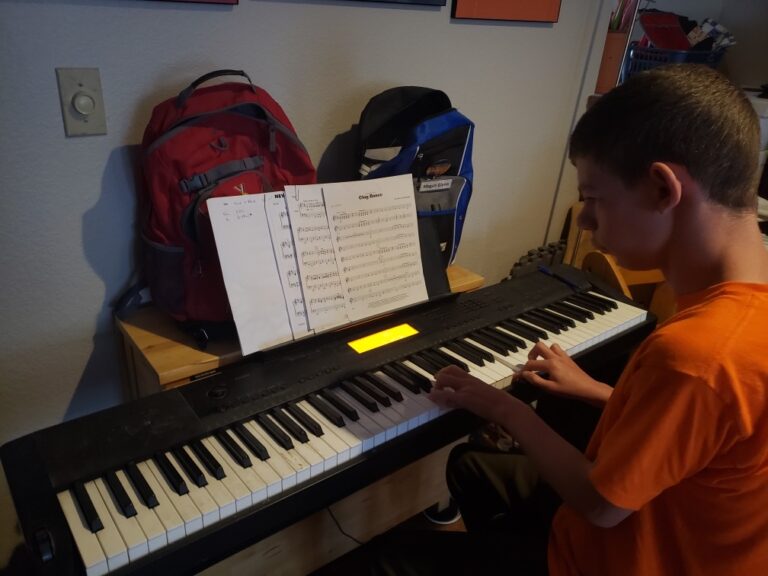
"caption": "Liam Glynn excels at piano. His mother, Megan Glynn, is hoping that Liam, who has cognitive disabilities, will be able to benefit from a new program that would allow him to earn a high school diploma.",
"description": null,
"title": "PlayingPiano",
"credit": "Courtesy of Megan Glynn/EdSource",
"status": "inherit",
"altTag": "A boy sits at a piano playing a musical piece.",
"isLoading": false,
"fetchFailed": false
},
"news_11919955": {
"type": "attachments",
"id": "news_11919955",
"meta": {
"index": "attachments_1716263798",
"site": "news",
"id": "11919955",
"found": true
},
"parent": 0,
"imgSizes": {
"twentyfourteen-full-width": {
"file": "https://ww2.kqed.org/app/uploads/sites/10/2022/07/RS57323_003_KQED_WoodStreetEncampment_07192022-qut-1038x576.jpg",
"width": 1038,
"mimeType": "image/jpeg",
"height": 576
},
"thumbnail": {
"file": "https://ww2.kqed.org/app/uploads/sites/10/2022/07/RS57323_003_KQED_WoodStreetEncampment_07192022-qut-160x107.jpg",
"width": 160,
"mimeType": "image/jpeg",
"height": 107
},
"post-thumbnail": {
"file": "https://ww2.kqed.org/app/uploads/sites/10/2022/07/RS57323_003_KQED_WoodStreetEncampment_07192022-qut-672x372.jpg",
"width": 672,
"mimeType": "image/jpeg",
"height": 372
},
"kqedFullSize": {
"file": "https://ww2.kqed.org/app/uploads/sites/10/2022/07/RS57323_003_KQED_WoodStreetEncampment_07192022-qut.jpg",
"width": 1920,
"height": 1280
},
"large": {
"file": "https://ww2.kqed.org/app/uploads/sites/10/2022/07/RS57323_003_KQED_WoodStreetEncampment_07192022-qut-1020x680.jpg",
"width": 1020,
"mimeType": "image/jpeg",
"height": 680
},
"1536x1536": {
"file": "https://ww2.kqed.org/app/uploads/sites/10/2022/07/RS57323_003_KQED_WoodStreetEncampment_07192022-qut-1536x1024.jpg",
"width": 1536,
"mimeType": "image/jpeg",
"height": 1024
},
"medium": {
"file": "https://ww2.kqed.org/app/uploads/sites/10/2022/07/RS57323_003_KQED_WoodStreetEncampment_07192022-qut-800x533.jpg",
"width": 800,
"mimeType": "image/jpeg",
"height": 533
}
},
"publishDate": 1658274844,
"modified": 1658275643,
"caption": "David Bahar, 59, carries a piece of furniture to a friend at the Wood Street encampment in West Oakland on July 19, 2022.",
"description": null,
"title": "RS57323_003_KQED_WoodStreetEncampment_07192022-qut",
"credit": "Beth LaBerge/KQED",
"status": "inherit",
"altTag": "A man walking on a path carries a square piece of furniture toward an underpass. To his right, a sign reads '2121 Wood. 100% Affordable Housing'",
"isLoading": false,
"fetchFailed": false
}
},
"audioPlayerReducer": {
"postId": "stream_live",
"isPaused": true,
"isPlaying": false,
"pfsActive": false,
"pledgeModalIsOpen": true,
"playerDrawerIsOpen": false,
"liveAudioPlayStartedAt": 0,
"liveAudioPlayContext": ""
},
"authorsReducer": {
"byline_news_11922183": {
"type": "authors",
"id": "byline_news_11922183",
"meta": {
"override": true
},
"slug": "byline_news_11922183",
"name": "Diana Lambert",
"isLoading": false
},
"byline_news_11921954": {
"type": "authors",
"id": "byline_news_11921954",
"meta": {
"override": true
},
"slug": "byline_news_11921954",
"name": "John Fensterwald",
"isLoading": false
},
"byline_news_11921441": {
"type": "authors",
"id": "byline_news_11921441",
"meta": {
"override": true
},
"slug": "byline_news_11921441",
"name": "Thomas Peele, Ashley A. Smith and Daniel J. Willis",
"isLoading": false
},
"byline_news_11920639": {
"type": "authors",
"id": "byline_news_11920639",
"meta": {
"override": true
},
"slug": "byline_news_11920639",
"name": "\u003ca href=\"https://edsource.org/author/atadayon\">Ali Tadayon\u003c/a>",
"isLoading": false
},
"byline_news_11920137": {
"type": "authors",
"id": "byline_news_11920137",
"meta": {
"override": true
},
"slug": "byline_news_11920137",
"name": "\u003ca href=\"https://calmatters.org/author/joe-hong/\">Joe Hong\u003c/a> and \u003ca href=\"https://calmatters.org/author/ericayee/\">Erica Yee\u003c/a>",
"isLoading": false
},
"byline_news_11919984": {
"type": "authors",
"id": "byline_news_11919984",
"meta": {
"override": true
},
"slug": "byline_news_11919984",
"name": "\u003ca href=\"https://edsource.org/author/cjones\">Carolyn Jones\u003c/a>",
"isLoading": false
},
"kqed": {
"type": "authors",
"id": "236",
"meta": {
"index": "authors_1716337520",
"id": "236",
"found": true
},
"name": "KQED News Staff",
"firstName": "KQED News Staff",
"lastName": null,
"slug": "kqed",
"email": "faq@kqed.org",
"display_author_email": false,
"staff_mastheads": [],
"title": null,
"bio": null,
"avatar": "https://secure.gravatar.com/avatar/ef0e801a68c4c54afa9180db14084167?s=600&d=blank&r=g",
"twitter": null,
"facebook": null,
"instagram": null,
"linkedin": null,
"sites": [
{
"site": "arts",
"roles": [
"contributor"
]
},
{
"site": "news",
"roles": [
"editor"
]
},
{
"site": "futureofyou",
"roles": [
"author"
]
}
],
"headData": {
"title": "KQED News Staff | KQED",
"description": null,
"ogImgSrc": "https://secure.gravatar.com/avatar/ef0e801a68c4c54afa9180db14084167?s=600&d=blank&r=g",
"twImgSrc": "https://secure.gravatar.com/avatar/ef0e801a68c4c54afa9180db14084167?s=600&d=blank&r=g"
},
"isLoading": false,
"link": "/author/kqed"
},
"sasha-khokha": {
"type": "authors",
"id": "254",
"meta": {
"index": "authors_1716337520",
"id": "254",
"found": true
},
"name": "Sasha Khokha",
"firstName": "Sasha",
"lastName": "Khokha",
"slug": "sasha-khokha",
"email": "skhokha@kqed.org",
"display_author_email": true,
"staff_mastheads": [
"news"
],
"title": "Host, The California Report Magazine",
"bio": "Sasha Khokha is the host of \u003cem>The California Report's \u003c/em> weekly magazine program, which takes listeners on sound-rich excursions to meet the people that make the Golden State unique -- through audio documentaries and long-form stories. As \u003cem>The California Report's\u003c/em> Central Valley Bureau Chief based in Fresno for nearly a dozen years, Sasha brought the lives and concerns of rural Californians to listeners around the state. Her reporting helped expose the hidden price immigrant women janitors and farmworkers may pay to keep their jobs: sexual assault at work. It inspired two new California laws to protect them from sexual harassment. She was a key member of the reporting team for the Frontline film \u003cem>Rape on the Night Shift, \u003c/em>which was nominated for two national Emmys. Sasha has also won a national Edward R. Murrow and a national PRNDI award for investigative reporting, as well as multiple prizes from the Society for Professional Journalists. Sasha is a proud alum of the UC Berkeley Graduate School of Journalism and Brown University and a member of the South Asian Journalists Association.",
"avatar": "https://secure.gravatar.com/avatar/e4b5e1541aaeea2aa356aa1fb2a68950?s=600&d=blank&r=g",
"twitter": "KQEDSashaKhokha",
"facebook": null,
"instagram": null,
"linkedin": null,
"sites": [
{
"site": "news",
"roles": [
"editor"
]
},
{
"site": "stateofhealth",
"roles": [
"author"
]
},
{
"site": "science",
"roles": [
"author"
]
},
{
"site": "quest",
"roles": [
"subscriber"
]
}
],
"headData": {
"title": "Sasha Khokha | KQED",
"description": "Host, The California Report Magazine",
"ogImgSrc": "https://secure.gravatar.com/avatar/e4b5e1541aaeea2aa356aa1fb2a68950?s=600&d=blank&r=g",
"twImgSrc": "https://secure.gravatar.com/avatar/e4b5e1541aaeea2aa356aa1fb2a68950?s=600&d=blank&r=g"
},
"isLoading": false,
"link": "/author/sasha-khokha"
},
"ecruzguevarra": {
"type": "authors",
"id": "8654",
"meta": {
"index": "authors_1716337520",
"id": "8654",
"found": true
},
"name": "Ericka Cruz Guevarra",
"firstName": "Ericka",
"lastName": "Cruz Guevarra",
"slug": "ecruzguevarra",
"email": "ecruzguevarra@kqed.org",
"display_author_email": true,
"staff_mastheads": [
"news"
],
"title": "Producer, The Bay Podcast",
"bio": "Ericka Cruz Guevarra is host of \u003ca href=\"https://www.kqed.org/podcasts/thebay\">\u003cem>The Bay\u003c/em>\u003c/a> podcast at KQED. Before host, she was the show’s producer. Her work in that capacity includes a three-part reported series on policing in Vallejo, which won a 2020 excellence in journalism award from the Society of Professional Journalists. Ericka has worked as a breaking news reporter at Oregon Public Broadcasting, helped produce the Code Switch podcast, and was KQED’s inaugural Raul Ramirez Diversity Fund intern. She’s also an alumna of NPR’s Next Generation Radio program. Send her an email if you have strong feelings about whether Fairfield and Suisun City are the Bay. Ericka is represented by SAG-AFTRA.",
"avatar": "https://secure.gravatar.com/avatar/accefc1de4bafc7e234b69bcb9b6f6536c130fd84709bc3069ef11a78787e1bb?s=600&d=blank&r=g",
"twitter": "NotoriousECG",
"bluesky": null,
"facebook": null,
"instagram": null,
"linkedin": null,
"sites": [
{
"site": "arts",
"roles": [
"subscriber"
]
},
{
"site": "news",
"roles": [
"editor",
"manage_categories"
]
},
{
"site": "futureofyou",
"roles": [
"subscriber"
]
},
{
"site": "stateofhealth",
"roles": [
"subscriber"
]
},
{
"site": "science",
"roles": [
"editor"
]
},
{
"site": "forum",
"roles": [
"subscriber"
]
}
],
"headData": {
"title": "Ericka Cruz Guevarra | KQED",
"description": "Producer, The Bay Podcast",
"ogImgSrc": "https://secure.gravatar.com/avatar/accefc1de4bafc7e234b69bcb9b6f6536c130fd84709bc3069ef11a78787e1bb?s=600&d=blank&r=g",
"twImgSrc": "https://secure.gravatar.com/avatar/accefc1de4bafc7e234b69bcb9b6f6536c130fd84709bc3069ef11a78787e1bb?s=600&d=blank&r=g"
},
"isLoading": false,
"link": "/author/ecruzguevarra"
},
"amontecillo": {
"type": "authors",
"id": "11649",
"meta": {
"index": "authors_1716337520",
"id": "11649",
"found": true
},
"name": "Alan Montecillo",
"firstName": "Alan",
"lastName": "Montecillo",
"slug": "amontecillo",
"email": "amontecillo@kqed.org",
"display_author_email": false,
"staff_mastheads": [
"news"
],
"title": "KQED Contributor",
"bio": "Alan Montecillo is the senior editor of \u003cem>\u003ca href=\"http://kqed.org/thebay\">The Bay\u003c/a>, \u003c/em> KQED's local news podcast. Before moving to the Bay Area, he worked as a senior talk show producer for WILL in Champaign-Urbana, Illinois and at Oregon Public Broadcasting in Portland, Oregon. He has won journalism awards from the Society of Professional Journalists Northern California, the Public Media Journalists Association, The Signal Awards, and has also received a regional Edward R. Murrow award. Alan is a Filipino American from Hong Kong and a graduate of Reed College.",
"avatar": "https://secure.gravatar.com/avatar/268f53a2066899ea9efdd8a5900218b17c822d9862cbc9326cccec53ef41d349?s=600&d=blank&r=g",
"twitter": "alanmontecillo",
"bluesky": null,
"facebook": null,
"instagram": null,
"linkedin": null,
"sites": [
{
"site": "",
"roles": [
"editor"
]
},
{
"site": "news",
"roles": [
"editor",
"manage_categories"
]
}
],
"headData": {
"title": "Alan Montecillo | KQED",
"description": "KQED Contributor",
"ogImgSrc": "https://secure.gravatar.com/avatar/268f53a2066899ea9efdd8a5900218b17c822d9862cbc9326cccec53ef41d349?s=600&d=blank&r=g",
"twImgSrc": "https://secure.gravatar.com/avatar/268f53a2066899ea9efdd8a5900218b17c822d9862cbc9326cccec53ef41d349?s=600&d=blank&r=g"
},
"isLoading": false,
"link": "/author/amontecillo"
},
"ebaldassari": {
"type": "authors",
"id": "11652",
"meta": {
"index": "authors_1716337520",
"id": "11652",
"found": true
},
"name": "Erin Baldassari",
"firstName": "Erin",
"lastName": "Baldassari",
"slug": "ebaldassari",
"email": "ebaldassari@KQED.org",
"display_author_email": true,
"staff_mastheads": [
"news"
],
"title": "Staff Writer",
"bio": "Erin Baldassari covers housing for KQED. She's a former print journalist and most recently worked as the transportation reporter for the \u003cem>Mercury News\u003c/em> and \u003cem>East Bay Times. \u003c/em>There, she focused on how the Bay Area’s housing shortage has changed the way people move around the region. She also served on the \u003cem>East Bay Times\u003c/em>’ 2017 Pulitzer Prize-winning team for coverage of the Ghost Ship Fire in Oakland. Prior to that, Erin worked as a breaking news and general assignment reporter for a variety of outlets in the Bay Area and the greater Boston area. A Tufts University alumna, Erin grew up in the foothills of the Sierra Nevada mountains and in Sonoma County. She is a life-long KQED listener.",
"avatar": "https://secure.gravatar.com/avatar/5e95cad64a8ca08288082212e199d2b0cbeb4fd8e8ef5339395f361032bbe005?s=600&d=blank&r=g",
"twitter": "e_baldi",
"bluesky": null,
"facebook": null,
"instagram": null,
"linkedin": null,
"sites": [
{
"site": "news",
"roles": [
"edit_others_posts",
"editor"
]
},
{
"site": "science",
"roles": [
"editor"
]
},
{
"site": "liveblog",
"roles": [
"editor"
]
}
],
"headData": {
"title": "Erin Baldassari | KQED",
"description": "Staff Writer",
"ogImgSrc": "https://secure.gravatar.com/avatar/5e95cad64a8ca08288082212e199d2b0cbeb4fd8e8ef5339395f361032bbe005?s=600&d=blank&r=g",
"twImgSrc": "https://secure.gravatar.com/avatar/5e95cad64a8ca08288082212e199d2b0cbeb4fd8e8ef5339395f361032bbe005?s=600&d=blank&r=g"
},
"isLoading": false,
"link": "/author/ebaldassari"
},
"jrodriguez": {
"type": "authors",
"id": "11690",
"meta": {
"index": "authors_1716337520",
"id": "11690",
"found": true
},
"name": "Joe Fitzgerald Rodriguez",
"firstName": "Joe",
"lastName": "Fitzgerald Rodriguez",
"slug": "jrodriguez",
"email": "jrodriguez@kqed.org",
"display_author_email": true,
"staff_mastheads": [
"news"
],
"title": "Reporter and Producer",
"bio": "Joe Fitzgerald Rodriguez is a reporter and digital producer for KQED covering politics. Joe most recently wrote for the \u003cem>San Francisco Examiner\u003c/em> as a political columnist covering The City. He was raised in San Francisco and has spent his reporting career in his beloved, foggy, city by the bay. Joe was 12-years-old when he conducted his first interview in journalism, grilling former San Francisco Mayor Willie Brown for the Marina Middle School newspaper, \u003cem>The Penguin Press, \u003c/em>and he continues to report on the San Francisco Bay Area to this day.",
"avatar": "https://secure.gravatar.com/avatar/2247beb0564c1e9c62228d5649d2edac?s=600&d=blank&r=g",
"twitter": "FitztheReporter",
"facebook": null,
"instagram": "https://www.instagram.com/fitzthereporter/",
"linkedin": null,
"sites": [
{
"site": "",
"roles": [
"editor"
]
},
{
"site": "arts",
"roles": [
"editor"
]
},
{
"site": "news",
"roles": [
"editor"
]
},
{
"site": "science",
"roles": [
"editor"
]
},
{
"site": "elections",
"roles": [
"editor"
]
},
{
"site": "liveblog",
"roles": [
"editor"
]
}
],
"headData": {
"title": "Joe Fitzgerald Rodriguez | KQED",
"description": "Reporter and Producer",
"ogImgSrc": "https://secure.gravatar.com/avatar/2247beb0564c1e9c62228d5649d2edac?s=600&d=blank&r=g",
"twImgSrc": "https://secure.gravatar.com/avatar/2247beb0564c1e9c62228d5649d2edac?s=600&d=blank&r=g"
},
"isLoading": false,
"link": "/author/jrodriguez"
},
"mesquinca": {
"type": "authors",
"id": "11802",
"meta": {
"index": "authors_1716337520",
"id": "11802",
"found": true
},
"name": "Maria Esquinca",
"firstName": "Maria",
"lastName": "Esquinca",
"slug": "mesquinca",
"email": "mesquinca@kqed.org",
"display_author_email": false,
"staff_mastheads": [],
"title": "Producer, The Bay",
"bio": "María Esquinca is a producer of The Bay. Before that, she was a New York Women’s Foundation IGNITE Fellow at Latino USA. She worked at Radio Bilingue where she covered the San Joaquin Valley. Maria has interned at WLRN, News 21, The New York Times Student Journalism Institute and at Crain’s Detroit Business as a Dow Jones News Fund Business Reporting Intern. She is an MFA graduate from the University of Miami. In 2017, she graduated from the Walter Cronkite School of Journalism and Mass Communication with a Master of Mass Communication. A fronteriza, she was born in Ciudad Juárez, Chihuahua, Mexico and grew up in El Paso, Texas.",
"avatar": "https://secure.gravatar.com/avatar/77cedba18aae91da775038ba06dcd8d0?s=600&d=blank&r=g",
"twitter": "@m_esquinca",
"facebook": null,
"instagram": null,
"linkedin": null,
"sites": [
{
"site": "news",
"roles": []
}
],
"headData": {
"title": "Maria Esquinca | KQED",
"description": "Producer, The Bay",
"ogImgSrc": "https://secure.gravatar.com/avatar/77cedba18aae91da775038ba06dcd8d0?s=600&d=blank&r=g",
"twImgSrc": "https://secure.gravatar.com/avatar/77cedba18aae91da775038ba06dcd8d0?s=600&d=blank&r=g"
},
"isLoading": false,
"link": "/author/mesquinca"
},
"daisynguyen": {
"type": "authors",
"id": "11829",
"meta": {
"index": "authors_1716337520",
"id": "11829",
"found": true
},
"name": "Daisy Nguyen",
"firstName": "Daisy",
"lastName": "Nguyen",
"slug": "daisynguyen",
"email": "daisynguyen@kqed.org",
"display_author_email": true,
"staff_mastheads": [
"news"
],
"title": "KQED Contributor",
"bio": "I have covered early childhood education and child care for KQED since 2022. I focus on policies aimed at increasing access to early care and education and how they shape individual lives. I've been a journalist for more than two decades, with most of that time devoted to covering breaking news throughout California for The Associated Press. I grew up in San Francisco and studied at UC Davis and Columbia University's Graduate School of Journalism. I live in Oakland with my husband and two kids.",
"avatar": "https://secure.gravatar.com/avatar/2da2127c27f7143b53ebd419800fd55f?s=600&d=blank&r=g",
"twitter": null,
"facebook": null,
"instagram": null,
"linkedin": "https://www.linkedin.com/in/daisynguyen/",
"sites": [
{
"site": "news",
"roles": [
"author"
]
},
{
"site": "liveblog",
"roles": [
"author"
]
}
],
"headData": {
"title": "Daisy Nguyen | KQED",
"description": "KQED Contributor",
"ogImgSrc": "https://secure.gravatar.com/avatar/2da2127c27f7143b53ebd419800fd55f?s=600&d=blank&r=g",
"twImgSrc": "https://secure.gravatar.com/avatar/2da2127c27f7143b53ebd419800fd55f?s=600&d=blank&r=g"
},
"isLoading": false,
"link": "/author/daisynguyen"
}
},
"pagesReducer": {
"news_category_education": {
"type": "terms",
"id": "news_18540",
"meta": {
"index": "terms_1716263798",
"site": "news",
"id": "18540",
"score": 10.973179
},
"featImg": null,
"name": "Education",
"description": null,
"taxonomy": "category",
"headData": {
"twImgId": null,
"twTitle": null,
"ogTitle": null,
"ogImgId": null,
"twDescription": null,
"description": null,
"title": "Education Archives | KQED News",
"ogDescription": null
},
"ttid": 2595,
"slug": "education",
"isLoading": false,
"title": "Education",
"pageMeta": {
"site": "news",
"WpPageTemplate": "page-topic-editorial",
"currentPage": 69
},
"blocks": [
{
"blockName": "kqed/post-list",
"attrs": {
"layout": "cardArticle2",
"query": "posts/news?category=education",
"seeMore": false,
"paginated": true,
"page": 69
}
},
{
"blockName": "kqed/ad"
}
]
}
},
"pfsSessionReducer": {},
"postsReducer": {
"stream_live": {
"type": "live",
"id": "stream_live",
"audioUrl": "https://streams.kqed.org/kqedradio",
"title": "Live Stream",
"excerpt": "Live Stream information currently unavailable.",
"link": "/radio",
"featImg": "",
"label": {
"name": "KQED Live",
"link": "/"
}
},
"stream_kqedNewscast": {
"type": "posts",
"id": "stream_kqedNewscast",
"audioUrl": "https://www.kqed.org/.stream/anon/radio/RDnews/newscast.mp3?_=1",
"title": "KQED Newscast",
"featImg": "",
"label": {
"name": "88.5 FM",
"link": "/"
}
},
"news_11922427": {
"type": "posts",
"id": "news_11922427",
"meta": {
"index": "posts_1716263798",
"site": "news",
"id": "11922427",
"score": null,
"sort": [
1660557642000
]
},
"guestAuthors": [],
"slug": "high-school-in-the-shadows-of-silicon-valley",
"title": "High School in the Shadows of Silicon Valley",
"publishDate": 1660557642,
"format": "audio",
"headTitle": "High School in the Shadows of Silicon Valley | KQED",
"labelTerm": {},
"content": "\u003cp>\u003cspan style=\"font-weight: 400\">At elite high schools in Silicon Valley, the pressure to succeed is intense. And according to Sophia Shao, a senior at Los Altos High School, her proximity to California’s tech capital is a big reason why.\u003c/span>\u003c/p>\n\u003cp>\u003cspan style=\"font-weight: 400\">In this special collaboration with \u003c/span>\u003ca href=\"http://kqed.org/youthtakeover\">\u003cspan style=\"font-weight: 400\">KQED’s Youth Takeover\u003c/span>\u003c/a>\u003cspan style=\"font-weight: 400\">, a yearlong project to highlight compelling stories written and produced by local teens, Shao talks with us about going to school in a place where everyone is expected to succeed.\u003c/span>\u003c/p>\n\u003cp>\u003cb>Guest: \u003c/b>\u003cspan style=\"font-weight: 400\">Sophia Shao, senior at Los Altos High School\u003c/span>\u003c/p>\n\u003cp>\u003ca href=\"https://bit.ly/3QptDJe\">\u003cem>Read the transcript\u003c/em>\u003c/a>\u003c/p>\n\u003cp id=\"embed-code\" class=\"inconsolata\">\n\u003c!-- iframe plugin v.4.3 wordpress.org/plugins/iframe/ -->\u003cbr>\n\u003ciframe loading=\"lazy\" frameborder=\"0\" height=\"200\" scrolling=\"no\" src=\"https://playlist.megaphone.fm?e=KQINC1960602728&light=true\" width=\"100%\" class=\"iframe-class\">\u003c/iframe>\u003c/p>\n\u003cp>[ad fullwidth]\u003c/p>\u003cp>\u003c/p>\n",
"blocks": [],
"excerpt": null,
"status": "publish",
"parent": 0,
"modified": 1740178533,
"stats": {
"hasAudio": true,
"hasVideo": false,
"hasChartOrMap": false,
"iframeSrcs": [],
"hasGoogleForm": false,
"hasGallery": false,
"hasHearkenModule": false,
"hasPolis": false,
"paragraphCount": 6,
"wordCount": 92
},
"headData": {
"title": "High School in the Shadows of Silicon Valley | KQED",
"description": "At elite high schools in Silicon Valley, the pressure to succeed is intense. And according to Sophia Shao, a senior at Los Altos High School, her proximity to California’s tech capital is a big reason why. In this special collaboration with KQED’s Youth Takeover, a yearlong project to highlight compelling stories written and produced by local teens, Shao talks with us about going to school in a place where everyone is expected to succeed. Guest: Sophia Shao, senior at Los Altos High School Read the transcript",
"ogTitle": "",
"ogDescription": "",
"ogImgId": "",
"twTitle": "",
"twDescription": "",
"twImgId": "",
"schema": {
"@context": "https://schema.org",
"@type": "NewsArticle",
"headline": "High School in the Shadows of Silicon Valley",
"datePublished": "2022-08-15T03:00:42-07:00",
"dateModified": "2025-02-21T14:55:33-08:00",
"image": "https://cdn.kqed.org/wp-content/uploads/2020/02/KQED-OG-Image@1x.png",
"isAccessibleForFree": "True",
"publisher": {
"@type": "NewsMediaOrganization",
"@id": "https://www.kqed.org/#organization",
"name": "KQED",
"logo": "https://cdn.kqed.org/wp-content/uploads/2020/02/KQED-OG-Image@1x.png",
"url": "https://www.kqed.org",
"sameAs": [
"https://www.facebook.com/KQED",
"https://twitter.com/KQED",
"https://www.instagram.com/kqed/",
"https://www.tiktok.com/@kqedofficial",
"https://www.linkedin.com/company/kqed",
"https://www.youtube.com/channel/UCeC0IOo7i1P_61zVUWbJ4nw"
]
}
}
},
"source": "The Bay",
"sourceUrl": "https://www.kqed.org/podcasts/thebay",
"audioUrl": "https://www.podtrac.com/pts/redirect.mp3/traffic.megaphone.fm/KQINC1960602728.mp3?updated=1660349729",
"sticky": false,
"excludeFromSiteSearch": "Include",
"path": "/news/11922427/high-school-in-the-shadows-of-silicon-valley",
"audioTrackLength": null,
"parsedContent": [
{
"type": "contentString",
"content": "\u003cdiv class=\"post-body\">\u003cp>\u003cp>\u003cspan style=\"font-weight: 400\">At elite high schools in Silicon Valley, the pressure to succeed is intense. And according to Sophia Shao, a senior at Los Altos High School, her proximity to California’s tech capital is a big reason why.\u003c/span>\u003c/p>\n\u003cp>\u003cspan style=\"font-weight: 400\">In this special collaboration with \u003c/span>\u003ca href=\"http://kqed.org/youthtakeover\">\u003cspan style=\"font-weight: 400\">KQED’s Youth Takeover\u003c/span>\u003c/a>\u003cspan style=\"font-weight: 400\">, a yearlong project to highlight compelling stories written and produced by local teens, Shao talks with us about going to school in a place where everyone is expected to succeed.\u003c/span>\u003c/p>\n\u003cp>\u003cb>Guest: \u003c/b>\u003cspan style=\"font-weight: 400\">Sophia Shao, senior at Los Altos High School\u003c/span>\u003c/p>\n\u003cp>\u003ca href=\"https://bit.ly/3QptDJe\">\u003cem>Read the transcript\u003c/em>\u003c/a>\u003c/p>\n\u003cp id=\"embed-code\" class=\"inconsolata\">\n\u003c!-- iframe plugin v.4.3 wordpress.org/plugins/iframe/ -->\u003cbr>\n\u003ciframe loading=\"lazy\" frameborder=\"0\" height=\"200\" scrolling=\"no\" src=\"https://playlist.megaphone.fm?e=KQINC1960602728&light=true\" width=\"100%\" class=\"iframe-class\">\u003c/iframe>\u003c/p>\n\u003cp>\u003c/p>\u003c/div>",
"attributes": {
"named": {},
"numeric": []
}
},
{
"type": "component",
"content": "",
"name": "ad",
"attributes": {
"named": {
"label": "fullwidth"
},
"numeric": [
"fullwidth"
]
}
},
{
"type": "contentString",
"content": "\u003cdiv class=\"post-body\">\u003cp>\u003c/p>\u003cp>\u003c/p>\n\u003c/div>\u003c/p>",
"attributes": {
"named": {},
"numeric": []
}
}
],
"link": "/news/11922427/high-school-in-the-shadows-of-silicon-valley",
"authors": [
"8654",
"11649",
"11802"
],
"programs": [
"news_28779"
],
"categories": [
"news_18540",
"news_8",
"news_33520",
"news_248"
],
"tags": [
"news_20013",
"news_1631",
"news_22598",
"news_23013"
],
"featImg": "news_11922435",
"label": "source_news_11922427"
},
"news_11922072": {
"type": "posts",
"id": "news_11922072",
"meta": {
"index": "posts_1716263798",
"site": "news",
"id": "11922072",
"score": null,
"sort": [
1660330843000
]
},
"guestAuthors": [],
"slug": "a-slap-in-the-face-sfusd-students-respond-to-ann-hsus-racist-comments",
"title": "'A Slap in the Face': SFUSD Students Respond to Ann Hsu's Racist Comments",
"publishDate": 1660330843,
"format": "standard",
"headTitle": "‘A Slap in the Face’: SFUSD Students Respond to Ann Hsu’s Racist Comments | KQED",
"labelTerm": {
"site": "news"
},
"content": "\u003cp>Adults, from parents to city officials, have weighed in on San Francisco School Board Commissioner Ann Hsu’s comments disparaging Black and brown families as not valuing their children’s education.\u003c/p>\n\u003cp>But the voice of students has been glaringly missing from the conversation.\u003c/p>\n\u003cp>“If you work for the Board of Education, you shouldn’t be making comments like that,” said Selser Seth, a Black 17-year-old. “And if you’re going to work for the kids, you should work for all of them.”\u003c/p>\n\u003cp>Last week, the San Francisco Board of Education voted unanimously to admonish Hsu for her racist comments. It is also considering an official censure.\u003c/p>\n\u003cp>At the board meeting, parents shouted over one another, prompting commissioner Jenny Lam to call for a recess. Black and brown parents yelled “racists!” while Asian parents yelled “support Ann Hsu!”[pullquote size='medium' citation='Briseis Portillo, 16, Salvadoran American']‘It was kind of like a slap in the face.’[/pullquote]Three teenagers who attend San Francisco Unified School District high schools spoke with KQED to share their reactions to Hsu’s comments. Uniformly, the teenagers felt her characterization of Black and Latinx families was simply untrue – especially when it comes to their own families.\u003c/p>\n\u003ch2>\u003cstrong>What did Hsu say?\u003c/strong>\u003c/h2>\n\u003cp>As part of a school board candidate survey Hsu filled out for a parent advocacy group ahead of the November 2022 election, \u003ca href=\"https://secureservercdn.net/45.40.152.202/o40.3f1.myftpupload.com/wp-content/uploads/2022/07/FORMATTED-Ann-Hsu-English.pdf\">she wrote that Black and brown families do not adequately support their children’s educations\u003c/a>.\u003c/p>\n\u003cp>The statement came in response to a question about how she would improve outcomes among marginalized students in San Francisco. Hsu wrote:\u003c/p>\n\u003cblockquote>\u003cp>“From my very limited exposure in the past four months to the challenges of educating marginalized students especially in the black and brown community, I see one of the biggest challenges as being the lack of family support for those students. Unstable family environments caused by housing and food insecurity along with lack of parental encouragement to focus on learning cause children to not be able to focus on or value learning. That makes teachers’ work harder because they have to take care of emotional and behavioral issues of students before they can teach them. That is not fair to the teachers.”\u003c/p>\u003c/blockquote>\n\u003cp>\u003ca href=\"https://twitter.com/AnnforSFboe/status/1549501661609021445?t=xQr6BKHrTlnKUeDceV_Yog&s=19\">Hsu apologized for her comments on Twitter\u003c/a> as soon as they surfaced publicly. At last week’s board meeting, she apologized in person and even voted alongside her colleagues for her own admonishment. More than a dozen organizations and city officials have called on Hsu to resign from office. A growing number of organizations and officials, including Mayor London Breed, have publicly said Hsu should remain in office and use the opportunity to grow and learn from her mistakes.\u003c/p>\n\u003ch2>\u003cstrong>Students reflect on Hsu’s comments\u003c/strong>\u003c/h2>\n\u003cp>The youth leaders we spoke with work with two organizations: the \u003ca href=\"https://cpasf.org\">Chinese Progressive Association\u003c/a> and \u003ca href=\"https://colemanadvocates.org\">Coleman Advocates for Children & Youth\u003c/a>. Neither organization has taken a position on whether Hsu should resign, though Coleman Advocates has issued statements condemning the remarks. The organizations often take their cues from their youth leaders.\u003c/p>\n\u003cp>Each student expressed concerns that harmful stereotypes would influence Hsu’s decision-making on the San Francisco Board of Education, imperiling their peers through bad policies.\u003c/p>\n\u003cp>Selser Seth wanted to correct the record — Black families absolutely value learning. Her mother cares a lot about education, she says, and always pushes her for high grades.\u003c/p>\n\u003cp>Seth says she enjoys both music and science. She was a DJ spinning tracks for dancers at the Carnaval San Francisco festival in May, and she also shared a story of academic delight — when she recently got to dissect a pregnant shark.\u003c/p>\n\u003cp>“We had a scalpel, and we had a little tray, and just cut the stomach and cut the tissues,” she said. She enjoyed learning about the baby shark in a hands-on way, although, she admits, “it was pretty messy.”\u003c/p>\n\u003cp>Seth felt Hsu’s comments not only failed to describe other Black students, but made her feel she had less representation on the board.\u003c/p>\n\u003cp>Briseis Portillo, a 16-year-old Salvadoran American, felt the Latinx community was unjustly judged.\u003c/p>\n\u003cp>“It was kind of like a slap in the face,” she said.\u003c/p>\n\u003cp>Portillo says Hsu understands she was wrong, but it still caused harm.\u003c/p>\n\u003cp>“I think racism should not be tolerated at all,” she said.\u003c/p>\n\u003cp>Portillo said she met Hsu through Coleman Advocates about a week prior to her racist comments surfacing in the public. After they surfaced, students from Coleman Advocates have said they hope their current proposal to allow SFUSD public school students to vote on Board of Education proposals would counterbalance any policy choices Hsu made that would run afoul of Black and Latinx communities.[aside postID='news_11920452']Last, Yvonne Dong, a 17-year-old Asian American of Chinese and Vietnamese descent, worried Hsu may not be able to understand the needs of various communities of color.\u003c/p>\n\u003cp>“While she is on the Board of Education, she is able to make a lot of powerful decisions. And people on the board are intended to represent all the communities in San Francisco,” Dong said. “It’s really concerning to know that she would write that when she’s supposed to represent all communities.”\u003c/p>\n\u003cp>Dong recently read \u003ca href=\"https://www.youtube.com/watch?v=L3bixwrFEPo\">“Pedagogy of the Oppressed” by Paulo Freire\u003c/a>, and says dealing with racism should always involve restorative justice, which means reflection and action.\u003c/p>\n\u003cp>“The apology is only part of the process,” she said. “I just feel like it’s only part of the reflection. And there hasn’t been any. There hasn’t been enough action yet to really complete the transformation.”\u003c/p>\n\u003cp>The reflection part, she says, means asking oneself why — why would I do something racist? What are the root causes within myself of these comments?\u003c/p>\n\u003cp>“And then action is,” Dong said, “holding yourself accountable to changing your values to help everyone around you and to be more open to other communities.”\u003c/p>\n\u003cdiv class=\"mceTemp\">\u003c/div>\n\u003cfigure id=\"attachment_11922097\" class=\"wp-caption aligncenter\" style=\"max-width: 800px\">\u003ca href=\"https://ww2.kqed.org/app/uploads/sites/10/2022/08/RS53041_003_KQED_BethLaBerge_SchoolBoardRecallPresser_01142022-qut-e1660091672724.jpg\">\u003cimg loading=\"lazy\" decoding=\"async\" class=\"size-medium wp-image-11922097\" src=\"https://ww2.kqed.org/app/uploads/sites/10/2022/08/RS53041_003_KQED_BethLaBerge_SchoolBoardRecallPresser_01142022-qut-e1660091672724-800x502.jpg\" alt=\"An Asian woman with short black hair and holding a microphone wears a red leather jacket, red sunglasses on top of her head, and a red, yellow and purple scarf.\" width=\"800\" height=\"502\" srcset=\"https://cdn.kqed.org/wp-content/uploads/sites/10/2022/08/RS53041_003_KQED_BethLaBerge_SchoolBoardRecallPresser_01142022-qut-e1660091672724-800x502.jpg 800w, https://cdn.kqed.org/wp-content/uploads/sites/10/2022/08/RS53041_003_KQED_BethLaBerge_SchoolBoardRecallPresser_01142022-qut-e1660091672724-1020x640.jpg 1020w, https://cdn.kqed.org/wp-content/uploads/sites/10/2022/08/RS53041_003_KQED_BethLaBerge_SchoolBoardRecallPresser_01142022-qut-e1660091672724-160x100.jpg 160w, https://cdn.kqed.org/wp-content/uploads/sites/10/2022/08/RS53041_003_KQED_BethLaBerge_SchoolBoardRecallPresser_01142022-qut-e1660091672724-1536x963.jpg 1536w, https://cdn.kqed.org/wp-content/uploads/sites/10/2022/08/RS53041_003_KQED_BethLaBerge_SchoolBoardRecallPresser_01142022-qut-e1660091672724.jpg 1920w\" sizes=\"(max-width: 800px) 100vw, 800px\">\u003c/a>\u003cfigcaption class=\"wp-caption-text\">Ann Hsu speaks during a press conference held by the Chinese/API Voter Outreach Taskforce on the steps of the Asian Art Museum in San Francisco on Jan. 14, 2021. \u003ccite>(Beth LaBerge/KQED)\u003c/cite>\u003c/figcaption>\u003c/figure>\n\u003ch2>\u003cstrong>Pushing back on hurtful stereotypes\u003c/strong>\u003c/h2>\n\u003cp>Dong noted her community wasn’t singled out by Hsu’s comments. Nonetheless, the ongoing controversies at the Board of Education do take their toll on her.[aside postID='news_11907806']“As a student, it’s overwhelming to hear. Like there’s always something on in the news about them,” she said. “It’s hard to trust my future and education with this school board because at this point, it’s hard to figure out what’s really happening.”\u003c/p>\n\u003cp>Two of the students — Dong and Portillo — agreed they had seen stereotypes at play in their own schools. And they worried Hsu’s views would exacerbate those divisions.\u003c/p>\n\u003cp>Dong says that, as an Asian person, she has been given some favorable treatment by teachers over her Black and Latinx peers, and often sees racial tensions between ethnic groups in her neighborhood, Visitacion Valley.\u003c/p>\n\u003cp>“I definitely feel like I have more privilege over certain communities,” Dong said.\u003c/p>\n\u003cp>Portillo said she had a favorable experience at schools that were largely Latinx. But when attending other schools with more mixed populations, she felt like she was often under a microscope due to her ethnicity.\u003c/p>\n\u003cp>“It kind of feels like your education isn’t valued because you’re always being targeted or you’re always being pushed out,” she said. “Or there’s something always happening instead of actually you getting your education.”\u003c/p>\n\u003cp>Seth didn’t feel as if she’d seen racial stereotypes in her daily life, like the other students we spoke to. But she knows the sting of hate, having been bullied in middle and elementary school by kids who didn’t approve of her being a girl with romantic interest in other girls.\u003c/p>\n\u003cp>“I think that’s me personally, it didn’t affect me as much as it affects the average person,” Seth said, of Hsu’s comments, partially because she’s a person who tends to “go with the flow.” But even though the comments didn’t affect her personally, she said, that doesn’t mean it didn’t affect her community.\u003c/p>\n\u003cp>“Bottom line,” Seth said, “I just think it’s wrong.”\u003c/p>\n\u003cp>[ad fullwidth]\u003c/p>\n\u003cp>[ad floatright]\u003c/p>\n",
"blocks": [],
"excerpt": "SFUSD students say Ann Hsu's stereotypes were harmful, and now they're apprehensive about the possible impact on their schools and education.",
"status": "publish",
"parent": 0,
"modified": 1721132246,
"stats": {
"hasAudio": false,
"hasVideo": false,
"hasChartOrMap": false,
"iframeSrcs": [],
"hasGoogleForm": false,
"hasGallery": false,
"hasHearkenModule": false,
"hasPolis": false,
"paragraphCount": 36,
"wordCount": 1468
},
"headData": {
"title": "'A Slap in the Face': SFUSD Students Respond to Ann Hsu's Racist Comments | KQED",
"description": "SFUSD students say Ann Hsu's stereotypes were harmful, and now they're apprehensive about the possible impact on their schools and education.",
"ogTitle": "",
"ogDescription": "",
"ogImgId": "",
"twTitle": "",
"twDescription": "",
"twImgId": "",
"schema": {
"@context": "https://schema.org",
"@type": "NewsArticle",
"headline": "'A Slap in the Face': SFUSD Students Respond to Ann Hsu's Racist Comments",
"datePublished": "2022-08-12T12:00:43-07:00",
"dateModified": "2024-07-16T05:17:26-07:00",
"image": "https://cdn.kqed.org/wp-content/uploads/2020/02/KQED-OG-Image@1x.png",
"isAccessibleForFree": "True",
"publisher": {
"@type": "NewsMediaOrganization",
"@id": "https://www.kqed.org/#organization",
"name": "KQED",
"logo": "https://cdn.kqed.org/wp-content/uploads/2020/02/KQED-OG-Image@1x.png",
"url": "https://www.kqed.org",
"sameAs": [
"https://www.facebook.com/KQED",
"https://twitter.com/KQED",
"https://www.instagram.com/kqed/",
"https://www.tiktok.com/@kqedofficial",
"https://www.linkedin.com/company/kqed",
"https://www.youtube.com/channel/UCeC0IOo7i1P_61zVUWbJ4nw"
]
}
}
},
"sticky": false,
"excludeFromSiteSearch": "Include",
"showOnAuthorArchivePages": "No",
"path": "/news/11922072/a-slap-in-the-face-sfusd-students-respond-to-ann-hsus-racist-comments",
"audioTrackLength": null,
"parsedContent": [
{
"type": "contentString",
"content": "\u003cdiv class=\"post-body\">\u003cp>\u003cp>Adults, from parents to city officials, have weighed in on San Francisco School Board Commissioner Ann Hsu’s comments disparaging Black and brown families as not valuing their children’s education.\u003c/p>\n\u003cp>But the voice of students has been glaringly missing from the conversation.\u003c/p>\n\u003cp>“If you work for the Board of Education, you shouldn’t be making comments like that,” said Selser Seth, a Black 17-year-old. “And if you’re going to work for the kids, you should work for all of them.”\u003c/p>\n\u003cp>Last week, the San Francisco Board of Education voted unanimously to admonish Hsu for her racist comments. It is also considering an official censure.\u003c/p>\n\u003cp>At the board meeting, parents shouted over one another, prompting commissioner Jenny Lam to call for a recess. Black and brown parents yelled “racists!” while Asian parents yelled “support Ann Hsu!”\u003c/p>\u003c/div>",
"attributes": {
"named": {},
"numeric": []
}
},
{
"type": "component",
"content": "‘It was kind of like a slap in the face.’",
"name": "pullquote",
"attributes": {
"named": {
"size": "medium",
"citation": "Briseis Portillo, 16, Salvadoran American",
"label": ""
},
"numeric": []
}
},
{
"type": "contentString",
"content": "\u003cdiv class=\"post-body\">\u003cp>Three teenagers who attend San Francisco Unified School District high schools spoke with KQED to share their reactions to Hsu’s comments. Uniformly, the teenagers felt her characterization of Black and Latinx families was simply untrue – especially when it comes to their own families.\u003c/p>\n\u003ch2>\u003cstrong>What did Hsu say?\u003c/strong>\u003c/h2>\n\u003cp>As part of a school board candidate survey Hsu filled out for a parent advocacy group ahead of the November 2022 election, \u003ca href=\"https://secureservercdn.net/45.40.152.202/o40.3f1.myftpupload.com/wp-content/uploads/2022/07/FORMATTED-Ann-Hsu-English.pdf\">she wrote that Black and brown families do not adequately support their children’s educations\u003c/a>.\u003c/p>\n\u003cp>The statement came in response to a question about how she would improve outcomes among marginalized students in San Francisco. Hsu wrote:\u003c/p>\n\u003cblockquote>\u003cp>“From my very limited exposure in the past four months to the challenges of educating marginalized students especially in the black and brown community, I see one of the biggest challenges as being the lack of family support for those students. Unstable family environments caused by housing and food insecurity along with lack of parental encouragement to focus on learning cause children to not be able to focus on or value learning. That makes teachers’ work harder because they have to take care of emotional and behavioral issues of students before they can teach them. That is not fair to the teachers.”\u003c/p>\u003c/blockquote>\n\u003cp>\u003ca href=\"https://twitter.com/AnnforSFboe/status/1549501661609021445?t=xQr6BKHrTlnKUeDceV_Yog&s=19\">Hsu apologized for her comments on Twitter\u003c/a> as soon as they surfaced publicly. At last week’s board meeting, she apologized in person and even voted alongside her colleagues for her own admonishment. More than a dozen organizations and city officials have called on Hsu to resign from office. A growing number of organizations and officials, including Mayor London Breed, have publicly said Hsu should remain in office and use the opportunity to grow and learn from her mistakes.\u003c/p>\n\u003ch2>\u003cstrong>Students reflect on Hsu’s comments\u003c/strong>\u003c/h2>\n\u003cp>The youth leaders we spoke with work with two organizations: the \u003ca href=\"https://cpasf.org\">Chinese Progressive Association\u003c/a> and \u003ca href=\"https://colemanadvocates.org\">Coleman Advocates for Children & Youth\u003c/a>. Neither organization has taken a position on whether Hsu should resign, though Coleman Advocates has issued statements condemning the remarks. The organizations often take their cues from their youth leaders.\u003c/p>\n\u003cp>Each student expressed concerns that harmful stereotypes would influence Hsu’s decision-making on the San Francisco Board of Education, imperiling their peers through bad policies.\u003c/p>\n\u003cp>Selser Seth wanted to correct the record — Black families absolutely value learning. Her mother cares a lot about education, she says, and always pushes her for high grades.\u003c/p>\n\u003cp>Seth says she enjoys both music and science. She was a DJ spinning tracks for dancers at the Carnaval San Francisco festival in May, and she also shared a story of academic delight — when she recently got to dissect a pregnant shark.\u003c/p>\n\u003cp>“We had a scalpel, and we had a little tray, and just cut the stomach and cut the tissues,” she said. She enjoyed learning about the baby shark in a hands-on way, although, she admits, “it was pretty messy.”\u003c/p>\n\u003cp>Seth felt Hsu’s comments not only failed to describe other Black students, but made her feel she had less representation on the board.\u003c/p>\n\u003cp>Briseis Portillo, a 16-year-old Salvadoran American, felt the Latinx community was unjustly judged.\u003c/p>\n\u003cp>“It was kind of like a slap in the face,” she said.\u003c/p>\n\u003cp>Portillo says Hsu understands she was wrong, but it still caused harm.\u003c/p>\n\u003cp>“I think racism should not be tolerated at all,” she said.\u003c/p>\n\u003cp>Portillo said she met Hsu through Coleman Advocates about a week prior to her racist comments surfacing in the public. After they surfaced, students from Coleman Advocates have said they hope their current proposal to allow SFUSD public school students to vote on Board of Education proposals would counterbalance any policy choices Hsu made that would run afoul of Black and Latinx communities.\u003c/p>\u003c/div>",
"attributes": {
"named": {},
"numeric": []
}
},
{
"type": "component",
"content": "",
"name": "aside",
"attributes": {
"named": {
"postid": "news_11920452",
"label": ""
},
"numeric": []
}
},
{
"type": "contentString",
"content": "\u003cdiv class=\"post-body\">\u003cp>Last, Yvonne Dong, a 17-year-old Asian American of Chinese and Vietnamese descent, worried Hsu may not be able to understand the needs of various communities of color.\u003c/p>\n\u003cp>“While she is on the Board of Education, she is able to make a lot of powerful decisions. And people on the board are intended to represent all the communities in San Francisco,” Dong said. “It’s really concerning to know that she would write that when she’s supposed to represent all communities.”\u003c/p>\n\u003cp>Dong recently read \u003ca href=\"https://www.youtube.com/watch?v=L3bixwrFEPo\">“Pedagogy of the Oppressed” by Paulo Freire\u003c/a>, and says dealing with racism should always involve restorative justice, which means reflection and action.\u003c/p>\n\u003cp>“The apology is only part of the process,” she said. “I just feel like it’s only part of the reflection. And there hasn’t been any. There hasn’t been enough action yet to really complete the transformation.”\u003c/p>\n\u003cp>The reflection part, she says, means asking oneself why — why would I do something racist? What are the root causes within myself of these comments?\u003c/p>\n\u003cp>“And then action is,” Dong said, “holding yourself accountable to changing your values to help everyone around you and to be more open to other communities.”\u003c/p>\n\u003cdiv class=\"mceTemp\">\u003c/div>\n\u003cfigure id=\"attachment_11922097\" class=\"wp-caption aligncenter\" style=\"max-width: 800px\">\u003ca href=\"https://ww2.kqed.org/app/uploads/sites/10/2022/08/RS53041_003_KQED_BethLaBerge_SchoolBoardRecallPresser_01142022-qut-e1660091672724.jpg\">\u003cimg loading=\"lazy\" decoding=\"async\" class=\"size-medium wp-image-11922097\" src=\"https://ww2.kqed.org/app/uploads/sites/10/2022/08/RS53041_003_KQED_BethLaBerge_SchoolBoardRecallPresser_01142022-qut-e1660091672724-800x502.jpg\" alt=\"An Asian woman with short black hair and holding a microphone wears a red leather jacket, red sunglasses on top of her head, and a red, yellow and purple scarf.\" width=\"800\" height=\"502\" srcset=\"https://cdn.kqed.org/wp-content/uploads/sites/10/2022/08/RS53041_003_KQED_BethLaBerge_SchoolBoardRecallPresser_01142022-qut-e1660091672724-800x502.jpg 800w, https://cdn.kqed.org/wp-content/uploads/sites/10/2022/08/RS53041_003_KQED_BethLaBerge_SchoolBoardRecallPresser_01142022-qut-e1660091672724-1020x640.jpg 1020w, https://cdn.kqed.org/wp-content/uploads/sites/10/2022/08/RS53041_003_KQED_BethLaBerge_SchoolBoardRecallPresser_01142022-qut-e1660091672724-160x100.jpg 160w, https://cdn.kqed.org/wp-content/uploads/sites/10/2022/08/RS53041_003_KQED_BethLaBerge_SchoolBoardRecallPresser_01142022-qut-e1660091672724-1536x963.jpg 1536w, https://cdn.kqed.org/wp-content/uploads/sites/10/2022/08/RS53041_003_KQED_BethLaBerge_SchoolBoardRecallPresser_01142022-qut-e1660091672724.jpg 1920w\" sizes=\"(max-width: 800px) 100vw, 800px\">\u003c/a>\u003cfigcaption class=\"wp-caption-text\">Ann Hsu speaks during a press conference held by the Chinese/API Voter Outreach Taskforce on the steps of the Asian Art Museum in San Francisco on Jan. 14, 2021. \u003ccite>(Beth LaBerge/KQED)\u003c/cite>\u003c/figcaption>\u003c/figure>\n\u003ch2>\u003cstrong>Pushing back on hurtful stereotypes\u003c/strong>\u003c/h2>\n\u003cp>Dong noted her community wasn’t singled out by Hsu’s comments. Nonetheless, the ongoing controversies at the Board of Education do take their toll on her.\u003c/p>\u003c/div>",
"attributes": {
"named": {},
"numeric": []
}
},
{
"type": "component",
"content": "",
"name": "aside",
"attributes": {
"named": {
"postid": "news_11907806",
"label": ""
},
"numeric": []
}
},
{
"type": "contentString",
"content": "\u003cdiv class=\"post-body\">\u003cp>“As a student, it’s overwhelming to hear. Like there’s always something on in the news about them,” she said. “It’s hard to trust my future and education with this school board because at this point, it’s hard to figure out what’s really happening.”\u003c/p>\n\u003cp>Two of the students — Dong and Portillo — agreed they had seen stereotypes at play in their own schools. And they worried Hsu’s views would exacerbate those divisions.\u003c/p>\n\u003cp>Dong says that, as an Asian person, she has been given some favorable treatment by teachers over her Black and Latinx peers, and often sees racial tensions between ethnic groups in her neighborhood, Visitacion Valley.\u003c/p>\n\u003cp>“I definitely feel like I have more privilege over certain communities,” Dong said.\u003c/p>\n\u003cp>Portillo said she had a favorable experience at schools that were largely Latinx. But when attending other schools with more mixed populations, she felt like she was often under a microscope due to her ethnicity.\u003c/p>\n\u003cp>“It kind of feels like your education isn’t valued because you’re always being targeted or you’re always being pushed out,” she said. “Or there’s something always happening instead of actually you getting your education.”\u003c/p>\n\u003cp>Seth didn’t feel as if she’d seen racial stereotypes in her daily life, like the other students we spoke to. But she knows the sting of hate, having been bullied in middle and elementary school by kids who didn’t approve of her being a girl with romantic interest in other girls.\u003c/p>\n\u003cp>“I think that’s me personally, it didn’t affect me as much as it affects the average person,” Seth said, of Hsu’s comments, partially because she’s a person who tends to “go with the flow.” But even though the comments didn’t affect her personally, she said, that doesn’t mean it didn’t affect her community.\u003c/p>\n\u003cp>“Bottom line,” Seth said, “I just think it’s wrong.”\u003c/p>\n\u003cp>\u003c/p>\u003c/div>",
"attributes": {
"named": {},
"numeric": []
}
},
{
"type": "component",
"content": "",
"name": "ad",
"attributes": {
"named": {
"label": "fullwidth"
},
"numeric": [
"fullwidth"
]
}
},
{
"type": "contentString",
"content": "\u003cdiv class=\"post-body\">\u003cp>\u003c/p>\n\u003cp>\u003c/p>\u003c/div>",
"attributes": {
"named": {},
"numeric": []
}
},
{
"type": "component",
"content": "",
"name": "ad",
"attributes": {
"named": {
"label": "floatright"
},
"numeric": [
"floatright"
]
}
},
{
"type": "contentString",
"content": "\u003cdiv class=\"post-body\">\u003cp>\u003c/p>\n\u003c/div>\u003c/p>",
"attributes": {
"named": {},
"numeric": []
}
}
],
"link": "/news/11922072/a-slap-in-the-face-sfusd-students-respond-to-ann-hsus-racist-comments",
"authors": [
"11690"
],
"categories": [
"news_18540",
"news_8",
"news_13"
],
"tags": [
"news_31373",
"news_20013",
"news_19216",
"news_1290"
],
"featImg": "news_11922099",
"label": "news"
},
"news_11922183": {
"type": "posts",
"id": "news_11922183",
"meta": {
"index": "posts_1716263798",
"site": "news",
"id": "11922183",
"score": null,
"sort": [
1660174551000
]
},
"guestAuthors": [],
"slug": "whats-new-this-school-year-changing-covid-protocols-universal-tk-later-start-times-and-more",
"title": "What’s New This School Year? Changing COVID Protocols, Universal TK, Later Start Times and More",
"publishDate": 1660174551,
"format": "standard",
"headTitle": "What’s New This School Year? Changing COVID Protocols, Universal TK, Later Start Times and More | KQED",
"labelTerm": {},
"content": "\u003cp>Later start times for middle and high school students, the expansion of transitional kindergarten, more after-school programs and the opening of more community schools are just some changes students and staff in California will have to adjust to this school year, while still dealing with COVID-19 safety protocols and persistent staff shortages.\u003c/p>\n\u003cp>Despite the challenges, educators seem confident that the experience of the last two years and increased resources will help them navigate another year of COVID-19, as well as new state programs.\u003c/p>\n\u003cp>“I am looking forward to another year of in-person instruction,” said Corey Willenberg, superintendent of Oroville Union High School District in Butte County. “We are going to offer kids and families a fantastic education despite the hurdles we are facing.”\u003c/p>\n\u003cp>COVID-19 uncertainty and testing protocols top the list of concerns of California school administrators this school year, said Naj Alikhan, senior director of communications for the Association of California School Administrators. Other concerns include teacher shortages, the social-emotional health of students and staff and the implementation of later start times for middle and high school students, he said.\u003c/p>\n\u003ch2>Districts relax COVID protocols\u003c/h2>\n\u003cp>\u003ca href=\"https://www.cdph.ca.gov/Programs/CID/DCDC/Pages/COVID-19/K-12-Guidance-2022-23-School-Year.aspx\">COVID-19 protocols\u003c/a> have changed tremendously from the beginning of the pandemic in the spring of 2020. This year, mask mandates and social distancing are mostly a thing of the past. Regular surveillance testing has made way for at-home tests provided by schools during times of high transmission, as well as testing at school sites as needed.\u003c/p>\n\u003cp>[ad fullwidth]\u003c/p>\n\u003cp>State COVID-19 guidance recommends masking but leaves it up to districts and county health departments to determine whether to require it.\u003c/p>\n\u003cp>Los Angeles Unified, which kept its indoor masking requirement after the \u003ca href=\"https://edsource.org/2022/end-of-school-mask-mandate-brings-relief-lingering-concerns/668768\">state lifted mandatory masking rules\u003c/a> in schools last spring, will not require masks this school year, nor will it require a weekly COVID test in order to enter campuses. Only students or staff exhibiting symptoms or those who are in close contact with someone who tests positive will be required to test, using an at-home antigen test. The district is distributing the tests to students and staff to use within 48 hours of the first day of school and again before the second week.\u003c/p>\n\u003cp>LAUSD Superintendent Alberto Carvalho said the district is relaxing COVID-19 protocols because of declining infection rates, but it also is ramping up disinfection of high-touch surfaces, hiring more custodians, increasing ventilation and upgrading air filtration systems.\u003c/p>\n\u003cp>Sacramento City Unified and San Diego Unified, which both mandated masking over the summer because of high COVID-19 rates, haven’t yet decided if masks will be required this school year. The districts, some of the last to start the school year, are watching \u003ca href=\"https://www.cdc.gov/coronavirus/2019-ncov/science/community-levels.html#anchor_1646419198998\">community infection rates\u003c/a>.\u003c/p>\n\u003cp>Oakland Unified, following the guidance of public health officials, began school Monday with no mask requirement.\u003c/p>\n\u003cfigure id=\"attachment_11922201\" class=\"wp-caption alignnone\" style=\"max-width: 800px\">\u003cimg loading=\"lazy\" decoding=\"async\" class=\"size-medium wp-image-11922201\" src=\"https://ww2.kqed.org/app/uploads/sites/10/2022/08/okland-first-day1-1-1200x750-1-800x500.jpg\" alt=\"Students arrive for the first day of school at Markham Elementary in Oakland Unified on Monday.\" width=\"800\" height=\"500\" srcset=\"https://cdn.kqed.org/wp-content/uploads/sites/10/2022/08/okland-first-day1-1-1200x750-1-800x500.jpg 800w, https://cdn.kqed.org/wp-content/uploads/sites/10/2022/08/okland-first-day1-1-1200x750-1-1020x638.jpg 1020w, https://cdn.kqed.org/wp-content/uploads/sites/10/2022/08/okland-first-day1-1-1200x750-1-160x100.jpg 160w, https://cdn.kqed.org/wp-content/uploads/sites/10/2022/08/okland-first-day1-1-1200x750-1.jpg 1200w\" sizes=\"(max-width: 800px) 100vw, 800px\">\u003cfigcaption class=\"wp-caption-text\">Students arrive for the first day of school at Markham Elementary in Oakland Unified on Monday. \u003ccite>(Andrew Reed/EdSource)\u003c/cite>\u003c/figcaption>\u003c/figure>\n\u003cp>Masking has been a contentious issue at most school districts, with families on both sides of the issue. .\u003c/p>\n\u003cp>“To kind of strike a balance, we have made mitigation efforts as prevalent as possible and as easily accessible as possible,” said Sailaja Suresh, Oakland Unified’s senior director of strategic projects, during a webinar last week. “But if it’s not a mandate that we do things like mask, we are just going to continue to strongly recommend and provide access to the mitigation measures.”\u003c/p>\n\u003cp>Tammy Yahud isn’t happy that Eagle Peak Montessori, a charter school her two sons attend in Walnut Creek, has \u003ca href=\"https://www.smore.com/ezhvr-welcome-back-newsletter?ref=email\">opted to require masks indoors\u003c/a> for another school year. Yahud says masking is impacting her children’s mental health and making it more difficult for one child, who is in speech therapy.\u003c/p>\n\u003cp>She doesn’t understand why the school continues to have a mask mandate when other schools do not.\u003c/p>\n\u003cp>“It is time of progress,” Yahud said. “We have medicine. We have approved vaccine. We have treatment. We have made progress. We are moving forward, so the school has to move forward.”\u003c/p>\n\u003cp>A school newsletter said the board’s decision was informed by a committee of health professionals and teachers.\u003c/p>\n\u003cp>The \u003ca href=\"https://www.cdph.ca.gov/Programs/OPA/Pages/NR22-073.aspx#:~:text=The%20State%20of%20California%20announced,California's%20Health%20and%20Safety%20Code.\">state of California\u003c/a> and individual districts such as Los Angeles Unified, Oakland Unified and San Diego Unified have also put vaccine mandates for students on hold, although \u003ca href=\"https://www.cdph.ca.gov/Programs/CID/DCDC/Pages/COVID-19/Order-of-the-State-Public-Health-Officer-Vaccine-Verification-for-Workers-in-Schools.aspx\">state law requires all school workers\u003c/a>, including teachers, be fully vaccinated or to undergo a weekly COVID-19 screening.\u003c/p>\n\u003cp>Sacramento City Unified still has a vaccine mandate for students but hasn’t enforced it, said Brian Heap, the district’s chief communications officer.\u003c/p>\n\u003ch2>Monkeypox is the latest concern\u003c/h2>\n\u003cp>If COVID-19 weren’t enough, families have a new virus to worry about this year: monkeypox. The virus is spread through close skin-to-skin contact and through contaminated materials like cups, utensils, clothing and towels.\u003c/p>\n\u003cp>Symptoms include swollen lymph nodes, chills, exhaustion, headache, muscle aches, fever and a rash or lesions.\u003c/p>\n\u003cp>At least five children in the United States, including one in Long Beach, have been reported to have the virus. This month, both California Gov. Gavin Newsom and President Joe Biden have declared monkeypox a \u003ca href=\"https://www.cdph.ca.gov/Programs/OPA/Pages/NR22-119.aspx\">public health emergency.\u003c/a>[pullquote align=\"left\" size=\"medium\" citation=\"E. Toby Boyd, president of the California Teachers Association\"]‘There are so many things. Not knowing if you are ill, if you are going to be able to get a substitute to cover your classroom.’[/pullquote]Dr. Dean Blumberg, chief of pediatric infectious diseases at UC Davis Medical Center, says the risk of a child contracting the disease is low and that schools should already have health policies in place that exclude students with certain rashes and other infectious diseases from activities where there is direct contact with other students.\u003c/p>\n\u003cp>But districts are taking precautions.\u003c/p>\n\u003cp>“The biggest concern for us is sports, like wrestling or gymnastics where kids are on padding on the floors,” said Richard Barrera, San Diego Unified School District trustee. “So, what our facilities folks are doing right now, are going in and taking a look at places kids could potentially be exposed to a situation like monkeypox.”\u003c/p>\n\u003ch2>\u003cstrong>Schools will continue to focus on mental health\u003c/strong>\u003c/h2>\n\u003cp>School districts are making the mental health of students and teachers a priority. Districts will be able to put a greater emphasis on mental health this year because they no longer have to deal with online learning options or as many unknowns about COVID, Barrera said.\u003c/p>\n\u003cp>The biggest challenge for educators this school year is mental fatigue, said E. Toby Boyd, president of the California Teachers Association.\u003c/p>\n\u003cp>“We are still not out of this COVID situation, where we have to mitigate all these circumstances,” he said. “The inability to actually teach truth about what is going on in our history. There are so many things. Not knowing if you are ill, if you are going to be able to get a substitute to cover your classroom.”\u003c/p>\n\u003ch2>Staff shortages loom large\u003c/h2>\n\u003cp>[aside label=\"Related Stories\" tag=\"teacher-shortage\"]School districts are expected to struggle with staff shortages again this year. Bus drivers, paraprofessionals, substitutes and teachers continue to be in short supply even though districts have stepped up efforts to recruit and retain them.\u003c/p>\n\u003cp>San Diego Unified and \u003ca href=\"https://www.sfusd.edu/about-sfusd/sfusd-news/current-news-sfusd/sfusd-expands-recruitment-efforts-educators-other-staff-positions\">San Francisco Unified\u003c/a> were among the many districts that offered signing bonuses to lure teachers to their districts.\u003c/p>\n\u003cp>But sometimes bonuses aren’t enough. Oroville Union High School District has been advertising for a special education teacher for severely handicapped students since April. Superintendent Willenberg expects that students in that class will start the year with a substitute teacher, who isn’t likely to have all the training needed to work with severely handicapped children.\u003c/p>\n\u003cp>The district, which serves 2,700 students, still needs three special-education teachers, two English teachers and four special-education paraeducators before school starts Aug. 16.\u003c/p>\n\u003cp>Willenberg has asked outside agencies that work in special education to send teachers to the district in exchange for a finder’s fee. But even that isn’t working.\u003c/p>\n\u003cp>The high school district, like \u003ca href=\"https://edsource.org/2022/severe-driver-shortage-leaves-some-california-kids-waiting-at-the-school-bus-stop/668139\">many others in the state\u003c/a>, has been unable to find enough bus drivers with the required Class B license. So, instead, it has had to hire drivers with standard Class C licenses to drive a “huge” van fleet to pick up students 10 at a time, instead of the 55 or more that fit in a bus.\u003c/p>\n\u003cp>The shortage impacts families in the entire area, as the high school district also provides home-to-school transportation for an elementary school district within its boundaries. As a result, the high school district has had to cut back on providing transportation for athletic events and other activities.\u003c/p>\n\u003cp>Willenberg said he expects more retirements to make the bus driver shortage even worse this school year.\u003c/p>\n\u003ch2>Older students will start the school day later\u003c/h2>\n\u003cp>State-mandated later-start times in California will make providing home-to-school bus transportation even more complicated, say administrators. The \u003ca href=\"https://leginfo.legislature.ca.gov/faces/billVotesClient.xhtml?bill_id=201920200SB328\">legislation\u003c/a> requires middle schools to begin no earlier than 8 a.m. and high schools to start regular classes at 8:30 a.m. or later.\u003c/p>\n\u003cp>Richard Nguyen, 15, an incoming junior at Bolsa Grande High School in Garden Grove, is thrilled that school will start at 8:30 a.m., instead of 7:55 a.m. this school year. He knows he needs more sleep, but says he will use the time to study and do homework.\u003c/p>\n\u003cp>“We are all really sleep-deprived,” he said of teenagers. “But that’s 35 more minutes to do homework. I have a rigorous schedule.”\u003c/p>\n\u003ch2>Full slate of new programs\u003c/h2>\n\u003cp>\u003ca href=\"https://edsource.org/2022/californias-new-budget-includes-historic-funding-for-education/674998\">Record state funding for K-12\u003c/a> education and federal COVID relief money are making new programs like universal transitional kindergarten, after-school extended learning and the expansion of community schools possible this school year.\u003c/p>\n\u003cp>“The budget this year was extremely helpful for educators,” Boyd said. “We have more money going into the classroom to hopefully lower class sizes and to retain and recruit teachers. There is the transitional kindergarten expansion. Community schools are going to be very impactful for our communities.”\u003c/p>\n\u003cp>The state also is investing $4.1 billion in community schools, which will take an integrated approach to their students’ academic, health and social-emotional needs by making connections with government and community services and by building trusting relationships with students and families.\u003c/p>\n\u003cp>San Diego Unified has an ambitious plan to open five community schools each year beginning this school year. The district will continue the process until all the district schools with 80% or more of its students eligible for free and reduced-priced lunch are community schools. Eventually, the district will have upward of 50 community schools, Barrera said.\u003c/p>\n\u003cp>State and federal dollars aimed at learning loss also are allowing districts to offer more extensive after-school programs. San Diego is extending its summer enrichment program, known as Level Up SD, to an after-school enrichment program this year. It is working with community nonprofits to offer classes in marine science, robotics, dance, theater and the arts, among other things.\u003c/p>\n\u003cp>Oroville Union High School District has formed a partnership with the Boys and Girls Club of the North Valley to offer extended learning opportunities for its students.\u003c/p>\n\u003cp>“This is an example of trying to find ways to get things done,” Willenberg said.\u003c/p>\n\u003ch2>Universal transitional kindergarten is rolled out\u003c/h2>\n\u003cp>[pullquote align=\"left\" size=\"medium\" citation=\"Marceline Marques, operations support officer for San Diego Unified\"]‘Reaction to universal transitional kindergarten was overwhelmingly positive. So many families applied that we have more applications than seats available.’[/pullquote]This also is the first year of a three-year rollout of \u003ca href=\"https://edsource.org/2021/universal-transitional-kindergarten-quick-guide/662318\">universal transitional kindergarten\u003c/a>, which will allow every 4-year-old child in the state to be enrolled by 2025-26. Students who turn age 5 between Sept. 2 and Feb. 2 are eligible to attend this school year, although some districts are enrolling even younger students.\u003c/p>\n\u003cp>The student-to-teacher ratio will be 12-to-1 this year, and transition to 10-to-1 in 2025-26. That’s half the size of the current transitional kindergarten but larger than Head Start, which generally has an 8-to-1 ratio.\u003c/p>\n\u003cp>San Diego Unified was one of the early implementers of universal kindergarten with nearly 56 school sites last year. This year it expanded its program to almost every elementary school, adding about 700 seats, said Marceline Marques, operations support officer for the school district.\u003c/p>\n\u003cp>The district will enroll any child who turns age 4 by the end of the school year, Barrera said. He is hopeful that the additional enrollment generated by universal transitional kindergarten will help staunch declining enrollment in the district, which has had a 0.5% decline annually over the last five or six years.\u003c/p>\n\u003cp>“Reaction to universal transitional kindergarten was overwhelmingly positive,” Marques said. “So many families applied that we have more applications than seats available. We were determined to increase the number of classrooms in the district to accommodate everyone who applied, as well as to have seats available to families who move into the district.”\u003c/p>\n\u003cp>Universal transitional kindergarten, which replaces transitional kindergarten, offers a more play-based, developmental-based curriculum, Marques said. But literacy, math, science, social studies, art and physical education components are also taught, she said.\u003c/p>\n\u003cp>“It’s a wonderful program for our students to be prepared before they move into kindergarten,” Marques said. “That piece is super exciting, we are really excited about it.”\u003c/p>\n\u003cp>[ad floatright]\u003c/p>\n\u003cp>\u003ca href=\"https://edsource.org/2022/whats-new-this-school-year-changing-covid-protocols-universal-tk-later-start-times-and-more/676502\">This story was originally published in EdSource with contributions from Edsource reporter Kate Sequeira.\u003c/a>\u003c/p>\n\n",
"blocks": [],
"excerpt": "Later start times for middle and high school students, the expansion of transitional kindergarten and more after-school programs are just some of the changes students and staff in California will have to adjust to this school year.",
"status": "publish",
"parent": 0,
"modified": 1721130386,
"stats": {
"hasAudio": false,
"hasVideo": false,
"hasChartOrMap": false,
"iframeSrcs": [],
"hasGoogleForm": false,
"hasGallery": false,
"hasHearkenModule": false,
"hasPolis": false,
"paragraphCount": 54,
"wordCount": 2316
},
"headData": {
"title": "What’s New This School Year? Changing COVID Protocols, Universal TK, Later Start Times and More | KQED",
"description": "Later start times for middle and high school students, the expansion of transitional kindergarten and more after-school programs are just some of the changes students and staff in California will have to adjust to this school year.",
"ogTitle": "",
"ogDescription": "",
"ogImgId": "",
"twTitle": "",
"twDescription": "",
"twImgId": "",
"schema": {
"@context": "https://schema.org",
"@type": "NewsArticle",
"headline": "What’s New This School Year? Changing COVID Protocols, Universal TK, Later Start Times and More",
"datePublished": "2022-08-10T16:35:51-07:00",
"dateModified": "2024-07-16T04:46:26-07:00",
"image": "https://cdn.kqed.org/wp-content/uploads/2020/02/KQED-OG-Image@1x.png",
"isAccessibleForFree": "True",
"publisher": {
"@type": "NewsMediaOrganization",
"@id": "https://www.kqed.org/#organization",
"name": "KQED",
"logo": "https://cdn.kqed.org/wp-content/uploads/2020/02/KQED-OG-Image@1x.png",
"url": "https://www.kqed.org",
"sameAs": [
"https://www.facebook.com/KQED",
"https://twitter.com/KQED",
"https://www.instagram.com/kqed/",
"https://www.tiktok.com/@kqedofficial",
"https://www.linkedin.com/company/kqed",
"https://www.youtube.com/channel/UCeC0IOo7i1P_61zVUWbJ4nw"
]
}
}
},
"source": "Edsource",
"sourceUrl": "https://edsource.org/",
"sticky": false,
"nprByline": "Diana Lambert",
"excludeFromSiteSearch": "Include",
"showOnAuthorArchivePages": "No",
"path": "/news/11922183/whats-new-this-school-year-changing-covid-protocols-universal-tk-later-start-times-and-more",
"audioTrackLength": null,
"parsedContent": [
{
"type": "contentString",
"content": "\u003cdiv class=\"post-body\">\u003cp>\u003cp>Later start times for middle and high school students, the expansion of transitional kindergarten, more after-school programs and the opening of more community schools are just some changes students and staff in California will have to adjust to this school year, while still dealing with COVID-19 safety protocols and persistent staff shortages.\u003c/p>\n\u003cp>Despite the challenges, educators seem confident that the experience of the last two years and increased resources will help them navigate another year of COVID-19, as well as new state programs.\u003c/p>\n\u003cp>“I am looking forward to another year of in-person instruction,” said Corey Willenberg, superintendent of Oroville Union High School District in Butte County. “We are going to offer kids and families a fantastic education despite the hurdles we are facing.”\u003c/p>\n\u003cp>COVID-19 uncertainty and testing protocols top the list of concerns of California school administrators this school year, said Naj Alikhan, senior director of communications for the Association of California School Administrators. Other concerns include teacher shortages, the social-emotional health of students and staff and the implementation of later start times for middle and high school students, he said.\u003c/p>\n\u003ch2>Districts relax COVID protocols\u003c/h2>\n\u003cp>\u003ca href=\"https://www.cdph.ca.gov/Programs/CID/DCDC/Pages/COVID-19/K-12-Guidance-2022-23-School-Year.aspx\">COVID-19 protocols\u003c/a> have changed tremendously from the beginning of the pandemic in the spring of 2020. This year, mask mandates and social distancing are mostly a thing of the past. Regular surveillance testing has made way for at-home tests provided by schools during times of high transmission, as well as testing at school sites as needed.\u003c/p>\n\u003cp>\u003c/p>\u003c/div>",
"attributes": {
"named": {},
"numeric": []
}
},
{
"type": "component",
"content": "",
"name": "ad",
"attributes": {
"named": {
"label": "fullwidth"
},
"numeric": [
"fullwidth"
]
}
},
{
"type": "contentString",
"content": "\u003cdiv class=\"post-body\">\u003cp>\u003c/p>\n\u003cp>State COVID-19 guidance recommends masking but leaves it up to districts and county health departments to determine whether to require it.\u003c/p>\n\u003cp>Los Angeles Unified, which kept its indoor masking requirement after the \u003ca href=\"https://edsource.org/2022/end-of-school-mask-mandate-brings-relief-lingering-concerns/668768\">state lifted mandatory masking rules\u003c/a> in schools last spring, will not require masks this school year, nor will it require a weekly COVID test in order to enter campuses. Only students or staff exhibiting symptoms or those who are in close contact with someone who tests positive will be required to test, using an at-home antigen test. The district is distributing the tests to students and staff to use within 48 hours of the first day of school and again before the second week.\u003c/p>\n\u003cp>LAUSD Superintendent Alberto Carvalho said the district is relaxing COVID-19 protocols because of declining infection rates, but it also is ramping up disinfection of high-touch surfaces, hiring more custodians, increasing ventilation and upgrading air filtration systems.\u003c/p>\n\u003cp>Sacramento City Unified and San Diego Unified, which both mandated masking over the summer because of high COVID-19 rates, haven’t yet decided if masks will be required this school year. The districts, some of the last to start the school year, are watching \u003ca href=\"https://www.cdc.gov/coronavirus/2019-ncov/science/community-levels.html#anchor_1646419198998\">community infection rates\u003c/a>.\u003c/p>\n\u003cp>Oakland Unified, following the guidance of public health officials, began school Monday with no mask requirement.\u003c/p>\n\u003cfigure id=\"attachment_11922201\" class=\"wp-caption alignnone\" style=\"max-width: 800px\">\u003cimg loading=\"lazy\" decoding=\"async\" class=\"size-medium wp-image-11922201\" src=\"https://ww2.kqed.org/app/uploads/sites/10/2022/08/okland-first-day1-1-1200x750-1-800x500.jpg\" alt=\"Students arrive for the first day of school at Markham Elementary in Oakland Unified on Monday.\" width=\"800\" height=\"500\" srcset=\"https://cdn.kqed.org/wp-content/uploads/sites/10/2022/08/okland-first-day1-1-1200x750-1-800x500.jpg 800w, https://cdn.kqed.org/wp-content/uploads/sites/10/2022/08/okland-first-day1-1-1200x750-1-1020x638.jpg 1020w, https://cdn.kqed.org/wp-content/uploads/sites/10/2022/08/okland-first-day1-1-1200x750-1-160x100.jpg 160w, https://cdn.kqed.org/wp-content/uploads/sites/10/2022/08/okland-first-day1-1-1200x750-1.jpg 1200w\" sizes=\"(max-width: 800px) 100vw, 800px\">\u003cfigcaption class=\"wp-caption-text\">Students arrive for the first day of school at Markham Elementary in Oakland Unified on Monday. \u003ccite>(Andrew Reed/EdSource)\u003c/cite>\u003c/figcaption>\u003c/figure>\n\u003cp>Masking has been a contentious issue at most school districts, with families on both sides of the issue. .\u003c/p>\n\u003cp>“To kind of strike a balance, we have made mitigation efforts as prevalent as possible and as easily accessible as possible,” said Sailaja Suresh, Oakland Unified’s senior director of strategic projects, during a webinar last week. “But if it’s not a mandate that we do things like mask, we are just going to continue to strongly recommend and provide access to the mitigation measures.”\u003c/p>\n\u003cp>Tammy Yahud isn’t happy that Eagle Peak Montessori, a charter school her two sons attend in Walnut Creek, has \u003ca href=\"https://www.smore.com/ezhvr-welcome-back-newsletter?ref=email\">opted to require masks indoors\u003c/a> for another school year. Yahud says masking is impacting her children’s mental health and making it more difficult for one child, who is in speech therapy.\u003c/p>\n\u003cp>She doesn’t understand why the school continues to have a mask mandate when other schools do not.\u003c/p>\n\u003cp>“It is time of progress,” Yahud said. “We have medicine. We have approved vaccine. We have treatment. We have made progress. We are moving forward, so the school has to move forward.”\u003c/p>\n\u003cp>A school newsletter said the board’s decision was informed by a committee of health professionals and teachers.\u003c/p>\n\u003cp>The \u003ca href=\"https://www.cdph.ca.gov/Programs/OPA/Pages/NR22-073.aspx#:~:text=The%20State%20of%20California%20announced,California's%20Health%20and%20Safety%20Code.\">state of California\u003c/a> and individual districts such as Los Angeles Unified, Oakland Unified and San Diego Unified have also put vaccine mandates for students on hold, although \u003ca href=\"https://www.cdph.ca.gov/Programs/CID/DCDC/Pages/COVID-19/Order-of-the-State-Public-Health-Officer-Vaccine-Verification-for-Workers-in-Schools.aspx\">state law requires all school workers\u003c/a>, including teachers, be fully vaccinated or to undergo a weekly COVID-19 screening.\u003c/p>\n\u003cp>Sacramento City Unified still has a vaccine mandate for students but hasn’t enforced it, said Brian Heap, the district’s chief communications officer.\u003c/p>\n\u003ch2>Monkeypox is the latest concern\u003c/h2>\n\u003cp>If COVID-19 weren’t enough, families have a new virus to worry about this year: monkeypox. The virus is spread through close skin-to-skin contact and through contaminated materials like cups, utensils, clothing and towels.\u003c/p>\n\u003cp>Symptoms include swollen lymph nodes, chills, exhaustion, headache, muscle aches, fever and a rash or lesions.\u003c/p>\n\u003cp>At least five children in the United States, including one in Long Beach, have been reported to have the virus. This month, both California Gov. Gavin Newsom and President Joe Biden have declared monkeypox a \u003ca href=\"https://www.cdph.ca.gov/Programs/OPA/Pages/NR22-119.aspx\">public health emergency.\u003c/a>\u003c/p>\u003c/div>",
"attributes": {
"named": {},
"numeric": []
}
},
{
"type": "component",
"content": "‘There are so many things. Not knowing if you are ill, if you are going to be able to get a substitute to cover your classroom.’",
"name": "pullquote",
"attributes": {
"named": {
"align": "left",
"size": "medium",
"citation": "E. Toby Boyd, president of the California Teachers Association",
"label": ""
},
"numeric": []
}
},
{
"type": "contentString",
"content": "\u003cdiv class=\"post-body\">\u003cp>Dr. Dean Blumberg, chief of pediatric infectious diseases at UC Davis Medical Center, says the risk of a child contracting the disease is low and that schools should already have health policies in place that exclude students with certain rashes and other infectious diseases from activities where there is direct contact with other students.\u003c/p>\n\u003cp>But districts are taking precautions.\u003c/p>\n\u003cp>“The biggest concern for us is sports, like wrestling or gymnastics where kids are on padding on the floors,” said Richard Barrera, San Diego Unified School District trustee. “So, what our facilities folks are doing right now, are going in and taking a look at places kids could potentially be exposed to a situation like monkeypox.”\u003c/p>\n\u003ch2>\u003cstrong>Schools will continue to focus on mental health\u003c/strong>\u003c/h2>\n\u003cp>School districts are making the mental health of students and teachers a priority. Districts will be able to put a greater emphasis on mental health this year because they no longer have to deal with online learning options or as many unknowns about COVID, Barrera said.\u003c/p>\n\u003cp>The biggest challenge for educators this school year is mental fatigue, said E. Toby Boyd, president of the California Teachers Association.\u003c/p>\n\u003cp>“We are still not out of this COVID situation, where we have to mitigate all these circumstances,” he said. “The inability to actually teach truth about what is going on in our history. There are so many things. Not knowing if you are ill, if you are going to be able to get a substitute to cover your classroom.”\u003c/p>\n\u003ch2>Staff shortages loom large\u003c/h2>\n\u003cp>\u003c/p>\u003c/div>",
"attributes": {
"named": {},
"numeric": []
}
},
{
"type": "component",
"content": "",
"name": "aside",
"attributes": {
"named": {
"label": "Related Stories ",
"tag": "teacher-shortage"
},
"numeric": []
}
},
{
"type": "contentString",
"content": "\u003cdiv class=\"post-body\">\u003cp>School districts are expected to struggle with staff shortages again this year. Bus drivers, paraprofessionals, substitutes and teachers continue to be in short supply even though districts have stepped up efforts to recruit and retain them.\u003c/p>\n\u003cp>San Diego Unified and \u003ca href=\"https://www.sfusd.edu/about-sfusd/sfusd-news/current-news-sfusd/sfusd-expands-recruitment-efforts-educators-other-staff-positions\">San Francisco Unified\u003c/a> were among the many districts that offered signing bonuses to lure teachers to their districts.\u003c/p>\n\u003cp>But sometimes bonuses aren’t enough. Oroville Union High School District has been advertising for a special education teacher for severely handicapped students since April. Superintendent Willenberg expects that students in that class will start the year with a substitute teacher, who isn’t likely to have all the training needed to work with severely handicapped children.\u003c/p>\n\u003cp>The district, which serves 2,700 students, still needs three special-education teachers, two English teachers and four special-education paraeducators before school starts Aug. 16.\u003c/p>\n\u003cp>Willenberg has asked outside agencies that work in special education to send teachers to the district in exchange for a finder’s fee. But even that isn’t working.\u003c/p>\n\u003cp>The high school district, like \u003ca href=\"https://edsource.org/2022/severe-driver-shortage-leaves-some-california-kids-waiting-at-the-school-bus-stop/668139\">many others in the state\u003c/a>, has been unable to find enough bus drivers with the required Class B license. So, instead, it has had to hire drivers with standard Class C licenses to drive a “huge” van fleet to pick up students 10 at a time, instead of the 55 or more that fit in a bus.\u003c/p>\n\u003cp>The shortage impacts families in the entire area, as the high school district also provides home-to-school transportation for an elementary school district within its boundaries. As a result, the high school district has had to cut back on providing transportation for athletic events and other activities.\u003c/p>\n\u003cp>Willenberg said he expects more retirements to make the bus driver shortage even worse this school year.\u003c/p>\n\u003ch2>Older students will start the school day later\u003c/h2>\n\u003cp>State-mandated later-start times in California will make providing home-to-school bus transportation even more complicated, say administrators. The \u003ca href=\"https://leginfo.legislature.ca.gov/faces/billVotesClient.xhtml?bill_id=201920200SB328\">legislation\u003c/a> requires middle schools to begin no earlier than 8 a.m. and high schools to start regular classes at 8:30 a.m. or later.\u003c/p>\n\u003cp>Richard Nguyen, 15, an incoming junior at Bolsa Grande High School in Garden Grove, is thrilled that school will start at 8:30 a.m., instead of 7:55 a.m. this school year. He knows he needs more sleep, but says he will use the time to study and do homework.\u003c/p>\n\u003cp>“We are all really sleep-deprived,” he said of teenagers. “But that’s 35 more minutes to do homework. I have a rigorous schedule.”\u003c/p>\n\u003ch2>Full slate of new programs\u003c/h2>\n\u003cp>\u003ca href=\"https://edsource.org/2022/californias-new-budget-includes-historic-funding-for-education/674998\">Record state funding for K-12\u003c/a> education and federal COVID relief money are making new programs like universal transitional kindergarten, after-school extended learning and the expansion of community schools possible this school year.\u003c/p>\n\u003cp>“The budget this year was extremely helpful for educators,” Boyd said. “We have more money going into the classroom to hopefully lower class sizes and to retain and recruit teachers. There is the transitional kindergarten expansion. Community schools are going to be very impactful for our communities.”\u003c/p>\n\u003cp>The state also is investing $4.1 billion in community schools, which will take an integrated approach to their students’ academic, health and social-emotional needs by making connections with government and community services and by building trusting relationships with students and families.\u003c/p>\n\u003cp>San Diego Unified has an ambitious plan to open five community schools each year beginning this school year. The district will continue the process until all the district schools with 80% or more of its students eligible for free and reduced-priced lunch are community schools. Eventually, the district will have upward of 50 community schools, Barrera said.\u003c/p>\n\u003cp>State and federal dollars aimed at learning loss also are allowing districts to offer more extensive after-school programs. San Diego is extending its summer enrichment program, known as Level Up SD, to an after-school enrichment program this year. It is working with community nonprofits to offer classes in marine science, robotics, dance, theater and the arts, among other things.\u003c/p>\n\u003cp>Oroville Union High School District has formed a partnership with the Boys and Girls Club of the North Valley to offer extended learning opportunities for its students.\u003c/p>\n\u003cp>“This is an example of trying to find ways to get things done,” Willenberg said.\u003c/p>\n\u003ch2>Universal transitional kindergarten is rolled out\u003c/h2>\n\u003cp>\u003c/p>\u003c/div>",
"attributes": {
"named": {},
"numeric": []
}
},
{
"type": "component",
"content": "‘Reaction to universal transitional kindergarten was overwhelmingly positive. So many families applied that we have more applications than seats available.’",
"name": "pullquote",
"attributes": {
"named": {
"align": "left",
"size": "medium",
"citation": "Marceline Marques, operations support officer for San Diego Unified",
"label": ""
},
"numeric": []
}
},
{
"type": "contentString",
"content": "\u003cdiv class=\"post-body\">\u003cp>This also is the first year of a three-year rollout of \u003ca href=\"https://edsource.org/2021/universal-transitional-kindergarten-quick-guide/662318\">universal transitional kindergarten\u003c/a>, which will allow every 4-year-old child in the state to be enrolled by 2025-26. Students who turn age 5 between Sept. 2 and Feb. 2 are eligible to attend this school year, although some districts are enrolling even younger students.\u003c/p>\n\u003cp>The student-to-teacher ratio will be 12-to-1 this year, and transition to 10-to-1 in 2025-26. That’s half the size of the current transitional kindergarten but larger than Head Start, which generally has an 8-to-1 ratio.\u003c/p>\n\u003cp>San Diego Unified was one of the early implementers of universal kindergarten with nearly 56 school sites last year. This year it expanded its program to almost every elementary school, adding about 700 seats, said Marceline Marques, operations support officer for the school district.\u003c/p>\n\u003cp>The district will enroll any child who turns age 4 by the end of the school year, Barrera said. He is hopeful that the additional enrollment generated by universal transitional kindergarten will help staunch declining enrollment in the district, which has had a 0.5% decline annually over the last five or six years.\u003c/p>\n\u003cp>“Reaction to universal transitional kindergarten was overwhelmingly positive,” Marques said. “So many families applied that we have more applications than seats available. We were determined to increase the number of classrooms in the district to accommodate everyone who applied, as well as to have seats available to families who move into the district.”\u003c/p>\n\u003cp>Universal transitional kindergarten, which replaces transitional kindergarten, offers a more play-based, developmental-based curriculum, Marques said. But literacy, math, science, social studies, art and physical education components are also taught, she said.\u003c/p>\n\u003cp>“It’s a wonderful program for our students to be prepared before they move into kindergarten,” Marques said. “That piece is super exciting, we are really excited about it.”\u003c/p>\n\u003cp>\u003c/p>\u003c/div>",
"attributes": {
"named": {},
"numeric": []
}
},
{
"type": "component",
"content": "",
"name": "ad",
"attributes": {
"named": {
"label": "floatright"
},
"numeric": [
"floatright"
]
}
},
{
"type": "contentString",
"content": "\u003cdiv class=\"post-body\">\u003cp>\u003c/p>\n\u003cp>\u003ca href=\"https://edsource.org/2022/whats-new-this-school-year-changing-covid-protocols-universal-tk-later-start-times-and-more/676502\">This story was originally published in EdSource with contributions from Edsource reporter Kate Sequeira.\u003c/a>\u003c/p>\n\n\u003c/div>\u003c/p>",
"attributes": {
"named": {},
"numeric": []
}
}
],
"link": "/news/11922183/whats-new-this-school-year-changing-covid-protocols-universal-tk-later-start-times-and-more",
"authors": [
"byline_news_11922183"
],
"categories": [
"news_18540",
"news_8"
],
"tags": [
"news_30911",
"news_19655",
"news_20013",
"news_27626",
"news_29575",
"news_1826",
"news_3946",
"news_18434"
],
"featImg": "news_11922199",
"label": "source_news_11922183"
},
"news_11921954": {
"type": "posts",
"id": "news_11921954",
"meta": {
"index": "posts_1716263798",
"site": "news",
"id": "11921954",
"score": null,
"sort": [
1660004836000
]
},
"guestAuthors": [],
"slug": "oakland-has-a-strategy-to-address-teacher-churn-will-it-work",
"title": "Oakland Has a Strategy to Address Teacher Churn. Will It Work?",
"publishDate": 1660004836,
"format": "standard",
"headTitle": "Oakland Has a Strategy to Address Teacher Churn. Will It Work? | KQED",
"labelTerm": {},
"content": "\u003cp>In the high-poverty Oakland Unified School District, the disparities among schools of credentialed teachers are stark.\u003c/p>\n\u003cp>At Chabot Elementary in Oakland’s Rockridge neighborhood, with 23% of students from lower-income families, 93% of classes are taught by fully credentialed teachers; at Greenleaf Elementary, near the Oakland Coliseum, with 91% from lower-income families, fully credentialed teachers teach 47.5% of classes. In most middle schools and high schools, fewer than 60% of classes are taught by adequately certificated teachers, reflecting the ongoing difficulty in finding teachers credentialed to teach specific sciences like physics and math. At Castlemont High, fewer than one-quarter of teachers are assigned to classes they’re qualified to teach. Hiring decisions are made at the site level; the district does not place teachers at schools, it said.\u003c/p>\n\u003cp>[aside label=\"More Education Stories\" tag=\"education-equity\"]Across OUSD, 57% of its teachers are assigned to classrooms they are credentialed to teach — the lowest of any district in California with more than 10,000 students, and one of the lowest in the state. It is nearly a third lower than the state average, and the 27.4% of so-called ineffective teachers, which include those with emergency and short-term permits and long-term substitutes, is nearly seven times the 4.1% statewide average.\u003c/p>\n\u003cp>The district blames its low rate of credentialed teachers on the churn of high turnover and has a plan to attack the problem.\u003c/p>\n\u003cp>\u003ca href=\"https://www.parentsquare.com/feeds/13149403\">In a news release\u003c/a>, Superintendent Kyla Johnson-Trammell acknowledged the low numbers of fully credentialed teachers but said the district is making teacher retention and recruitment of aspiring teachers, particularly people of color, a priority. It has created \u003ca href=\"https://www.ousd.org/Page/17605\">Grow Our Own\u003c/a>, with teacher residencies, a pipeline to teaching for after-school staff and a teacher development program for middle school teachers. It is\u003ca href=\"https://sites.google.com/ousd.org/ntsd/home?authuser=0\"> providing mentoring and resources\u003c/a> for all new teachers and, starting this year, will pay for new teachers’ credentialing fees and assessments. Earning a credential while initially teaching with an emergency permit is sometimes the only option for those who can’t afford to take a year off from work to become a teacher.\u003c/p>\n\u003cp>[ad fullwidth]\u003c/p>\n\u003cp>According to OUSD, the\u003ca href=\"https://dashboards.ousd.org/t/HR/views/RetentionDashboardPublic/TeachersDistrictwide?%3Aiid=1&%3Aembed=y#1\"> high rate of teacher turnover\u003c/a> — 22% in 2016-17 — dropped to the national average of 16% in 2019-20 and has remained constant since then. According to the district, 30% to 40% of the applicants for openings have emergency or out-of-state teaching permits. Out of the 491 teacher vacancies Oakland Unified posted, as of July 22, 109 remained unfilled, it said.\u003c/p>\n\u003cp>The impact of its strategies looks promising, the district said:\u003c/p>\n\u003cul>\n\u003cli>121 middle school teachers have received debt relief, tuition support and assistance with advanced degrees and credentials in exchange for their commitment to stay in Oakland for two to four years, depending on how much aid they receive.\u003c/li>\n\u003cli>More than 100 special education teachers have received state funding for teacher prep, licensing fees, community college courses, education and student debt relief.\u003c/li>\n\u003cli>44 classified workers have received tuition support and mentoring to become credentialed teachers.\u003c/li>\n\u003cli>21 aspiring teachers earned their preliminary credentials in STEM and special education through the Oakland Teacher Residency program, in which an aspiring teacher trains full time in the classroom with an experienced, credentialed teacher. The district is partnering with the Alder Graduate School of Education. Teacher residents commit to staying four years with the district.\u003c/li>\n\u003c/ul>\n\u003cp>Oakland Unified has an enrollment of about 46,000 students, three-quarters of whom qualify as lower-income. About half of the students are Latino, with 20% Black, 10% white and 10% Asian. It employs about 3,000 teachers.\u003c/p>\n\u003cp>Oakland Unified also has above-average disparities in how those teachers are distributed across schools in the district. In schools with the highest-income children, 67% of educators are credentialed to teach the classes they are teaching, while 49% of teachers are qualified in schools with students from the most low-income families. Schools with students from the most low-income families also have double the percentage of intern teachers (4.4%) than schools with fewer children from lower-income families (2%).\u003c/p>\n\u003cp>[pullquote size='medium' align='left' citation=\"Keith Brown, president of the Oakland Education Association\"]‘Living wages continue to be an issue in Oakland. An experienced teacher can move to Hayward Unified and make $28,000 more overnight.’[/pullquote]\u003c/p>\n\u003cp>The reasons for the constant churn and difficulty finding teachers in Oakland with needed credentials depend on whom you ask.\u003c/p>\n\u003cp>Salary disparities among districts play a role in attracting teachers to some districts and pushing them away from others. The cost of housing in Oakland and the Bay Area is among the highest in the state, and Oakland’s salary scale, as of 2020-21, was among the lowest in Alameda County, from $50,600 for new teachers to $95,000 for the highest-paid veterans.\u003c/p>\n\u003cp>“Living wages continue to be an issue in Oakland,” said Keith Brown, president of the teachers union, the Oakland Education Association. “An experienced teacher can move to Hayward Unified and make $28,000 more overnight.”\u003c/p>\n\u003cp>[aside label=\"Related Stories\" tag=\"teacher-retention\"]In 2019, the union went on strike for seven days, demanding higher pay and improved conditions. Teachers settled for an 11% raise over four years. It conducted a one-day strike this year to oppose the district’s plan to close seven schools. Tense relations with the district’s unions, declining enrollment — a loss of 17,000 students over 20 years — and financial difficulties, which have dogged Oakland since the state provided a $100 million loan in 2003, have fostered strife and instability. When she was appointed superintendent in 2017, Johnson-Trammell, who grew up in Oakland and attended Oakland schools, became the sixth superintendent in nine years.\u003c/p>\n\u003cp>In a biting letter of resignation on her blog in May upon resigning from the school board, Shanthi Gonzales spread the blame. She cited the teachers union’s “refusal to engage on the issue of school quality,” general incivility in the district in handling disagreements and an easily distracted school board’s failure to focus on improving academics.\u003c/p>\n\u003cp>Arun Ramanathan, the CEO of Pivot Learning, a national school improvement nonprofit based in Oakland, agreed with Gonzales’ last point. Oakland is the home of an abundance of education nonprofits and foundations ready to fund new ideas. But the district’s focus must be on three things, he said: leadership, teaching and learning. “Ongoing instability bleeds into other areas, so the district turns to another initiative, whether social-emotional learning or community schools,” he said. “Oakland has one of the longest strategic plans, but it’s not focusing on the right stuff.”\u003c/p>\n\u003cp>OUSD should be constantly monitoring the number and distribution of long-term subs and the level of teacher absences, he said, as well as tracking, in a competitive market, the length of time between job interviews and job offers.\u003c/p>\n\u003cp>[pullquote size='medium' align='left' citation=\"Gary Yee, president of the Oakland Unified School District, Board of Education \"]‘[The district’s] commitment to hiring well-trained teachers with strong academic preparation and a deep local and cultural competency has never been stronger or more focused.’[/pullquote]\u003c/p>\n\u003cp>Gary Yee, the president of the district’s school board, said in a statement that although the issues of a teacher shortage and under-preparation in Oakland schools are not new or simple, the district’s “commitment to hiring well-trained teachers with strong academic preparation and a deep local and cultural competency has never been stronger or more focused.”\u003c/p>\n\u003cp>“Using the term ‘ineffective’ to label those who have not received state certification suggests a biased use of language. Privileging people who have the finances, time and opportunity to complete a credential before they start formal teaching in an Oakland Unified classroom blocks those who need to take a different path,” he said. “Even a cursory review of the \u003ca href=\"https://www.ousd.org/Page/781\">Talent Division\u003c/a> web page will reveal the multiple paths to becoming and growing as a professionally effective educator. With this support, all children and educators — regardless of their background or circumstances — will have the opportunity to reach their highest potential. I believe Oakland is moving in that direction.”\u003c/p>\n\u003cp>[ad floatright]\u003c/p>\n\u003cp>\u003ca href=\"https://edsource.org/2022/oakland-with-the-lowest-ratio-of-fully-prepared-rightly-assigned-teachers-has-a-strategy-to-address-teacher-churn/676288\">\u003cem>This story originally appeared in EdSource.\u003c/em>\u003c/a>\u003c/p>\n\n",
"blocks": [],
"excerpt": "OUSD is offering extra support to aspiring teachers who commit to staying in the district.",
"status": "publish",
"parent": 0,
"modified": 1721111608,
"stats": {
"hasAudio": false,
"hasVideo": false,
"hasChartOrMap": false,
"iframeSrcs": [],
"hasGoogleForm": false,
"hasGallery": false,
"hasHearkenModule": false,
"hasPolis": false,
"paragraphCount": 23,
"wordCount": 1415
},
"headData": {
"title": "Oakland Has a Strategy to Address Teacher Churn. Will It Work? | KQED",
"description": "It has created Grow Our Own, with teacher residencies, a pipeline to teaching for after-school staff and a teacher development program for middle school teachers. It is providing mentoring and resources for all new teachers and, starting this year, will pay for new teachers’ credentialing fees and assessments.",
"ogTitle": "",
"ogDescription": "",
"ogImgId": "",
"twTitle": "",
"twDescription": "",
"twImgId": "",
"socialDescription": "It has created Grow Our Own, with teacher residencies, a pipeline to teaching for after-school staff and a teacher development program for middle school teachers. It is providing mentoring and resources for all new teachers and, starting this year, will pay for new teachers’ credentialing fees and assessments.",
"schema": {
"@context": "https://schema.org",
"@type": "NewsArticle",
"headline": "Oakland Has a Strategy to Address Teacher Churn. Will It Work?",
"datePublished": "2022-08-08T17:27:16-07:00",
"dateModified": "2024-07-15T23:33:28-07:00",
"image": "https://cdn.kqed.org/wp-content/uploads/2020/02/KQED-OG-Image@1x.png",
"isAccessibleForFree": "True",
"publisher": {
"@type": "NewsMediaOrganization",
"@id": "https://www.kqed.org/#organization",
"name": "KQED",
"logo": "https://cdn.kqed.org/wp-content/uploads/2020/02/KQED-OG-Image@1x.png",
"url": "https://www.kqed.org",
"sameAs": [
"https://www.facebook.com/KQED",
"https://twitter.com/KQED",
"https://www.instagram.com/kqed/",
"https://www.tiktok.com/@kqedofficial",
"https://www.linkedin.com/company/kqed",
"https://www.youtube.com/channel/UCeC0IOo7i1P_61zVUWbJ4nw"
]
}
}
},
"source": "EdSource",
"sticky": false,
"nprByline": "John Fensterwald",
"excludeFromSiteSearch": "Include",
"showOnAuthorArchivePages": "Yes",
"path": "/news/11921954/oakland-has-a-strategy-to-address-teacher-churn-will-it-work",
"audioTrackLength": null,
"parsedContent": [
{
"type": "contentString",
"content": "\u003cdiv class=\"post-body\">\u003cp>\u003cp>In the high-poverty Oakland Unified School District, the disparities among schools of credentialed teachers are stark.\u003c/p>\n\u003cp>At Chabot Elementary in Oakland’s Rockridge neighborhood, with 23% of students from lower-income families, 93% of classes are taught by fully credentialed teachers; at Greenleaf Elementary, near the Oakland Coliseum, with 91% from lower-income families, fully credentialed teachers teach 47.5% of classes. In most middle schools and high schools, fewer than 60% of classes are taught by adequately certificated teachers, reflecting the ongoing difficulty in finding teachers credentialed to teach specific sciences like physics and math. At Castlemont High, fewer than one-quarter of teachers are assigned to classes they’re qualified to teach. Hiring decisions are made at the site level; the district does not place teachers at schools, it said.\u003c/p>\n\u003cp>\u003c/p>\u003c/div>",
"attributes": {
"named": {},
"numeric": []
}
},
{
"type": "component",
"content": "",
"name": "aside",
"attributes": {
"named": {
"label": "More Education Stories ",
"tag": "education-equity"
},
"numeric": []
}
},
{
"type": "contentString",
"content": "\u003cdiv class=\"post-body\">\u003cp>Across OUSD, 57% of its teachers are assigned to classrooms they are credentialed to teach — the lowest of any district in California with more than 10,000 students, and one of the lowest in the state. It is nearly a third lower than the state average, and the 27.4% of so-called ineffective teachers, which include those with emergency and short-term permits and long-term substitutes, is nearly seven times the 4.1% statewide average.\u003c/p>\n\u003cp>The district blames its low rate of credentialed teachers on the churn of high turnover and has a plan to attack the problem.\u003c/p>\n\u003cp>\u003ca href=\"https://www.parentsquare.com/feeds/13149403\">In a news release\u003c/a>, Superintendent Kyla Johnson-Trammell acknowledged the low numbers of fully credentialed teachers but said the district is making teacher retention and recruitment of aspiring teachers, particularly people of color, a priority. It has created \u003ca href=\"https://www.ousd.org/Page/17605\">Grow Our Own\u003c/a>, with teacher residencies, a pipeline to teaching for after-school staff and a teacher development program for middle school teachers. It is\u003ca href=\"https://sites.google.com/ousd.org/ntsd/home?authuser=0\"> providing mentoring and resources\u003c/a> for all new teachers and, starting this year, will pay for new teachers’ credentialing fees and assessments. Earning a credential while initially teaching with an emergency permit is sometimes the only option for those who can’t afford to take a year off from work to become a teacher.\u003c/p>\n\u003cp>\u003c/p>\u003c/div>",
"attributes": {
"named": {},
"numeric": []
}
},
{
"type": "component",
"content": "",
"name": "ad",
"attributes": {
"named": {
"label": "fullwidth"
},
"numeric": [
"fullwidth"
]
}
},
{
"type": "contentString",
"content": "\u003cdiv class=\"post-body\">\u003cp>\u003c/p>\n\u003cp>According to OUSD, the\u003ca href=\"https://dashboards.ousd.org/t/HR/views/RetentionDashboardPublic/TeachersDistrictwide?%3Aiid=1&%3Aembed=y#1\"> high rate of teacher turnover\u003c/a> — 22% in 2016-17 — dropped to the national average of 16% in 2019-20 and has remained constant since then. According to the district, 30% to 40% of the applicants for openings have emergency or out-of-state teaching permits. Out of the 491 teacher vacancies Oakland Unified posted, as of July 22, 109 remained unfilled, it said.\u003c/p>\n\u003cp>The impact of its strategies looks promising, the district said:\u003c/p>\n\u003cul>\n\u003cli>121 middle school teachers have received debt relief, tuition support and assistance with advanced degrees and credentials in exchange for their commitment to stay in Oakland for two to four years, depending on how much aid they receive.\u003c/li>\n\u003cli>More than 100 special education teachers have received state funding for teacher prep, licensing fees, community college courses, education and student debt relief.\u003c/li>\n\u003cli>44 classified workers have received tuition support and mentoring to become credentialed teachers.\u003c/li>\n\u003cli>21 aspiring teachers earned their preliminary credentials in STEM and special education through the Oakland Teacher Residency program, in which an aspiring teacher trains full time in the classroom with an experienced, credentialed teacher. The district is partnering with the Alder Graduate School of Education. Teacher residents commit to staying four years with the district.\u003c/li>\n\u003c/ul>\n\u003cp>Oakland Unified has an enrollment of about 46,000 students, three-quarters of whom qualify as lower-income. About half of the students are Latino, with 20% Black, 10% white and 10% Asian. It employs about 3,000 teachers.\u003c/p>\n\u003cp>Oakland Unified also has above-average disparities in how those teachers are distributed across schools in the district. In schools with the highest-income children, 67% of educators are credentialed to teach the classes they are teaching, while 49% of teachers are qualified in schools with students from the most low-income families. Schools with students from the most low-income families also have double the percentage of intern teachers (4.4%) than schools with fewer children from lower-income families (2%).\u003c/p>\n\u003cp>\u003c/p>\u003c/div>",
"attributes": {
"named": {},
"numeric": []
}
},
{
"type": "component",
"content": "‘Living wages continue to be an issue in Oakland. An experienced teacher can move to Hayward Unified and make $28,000 more overnight.’",
"name": "pullquote",
"attributes": {
"named": {
"size": "medium",
"align": "left",
"citation": "Keith Brown, president of the Oakland Education Association",
"label": ""
},
"numeric": []
}
},
{
"type": "contentString",
"content": "\u003cdiv class=\"post-body\">\u003cp>\u003c/p>\n\u003cp>The reasons for the constant churn and difficulty finding teachers in Oakland with needed credentials depend on whom you ask.\u003c/p>\n\u003cp>Salary disparities among districts play a role in attracting teachers to some districts and pushing them away from others. The cost of housing in Oakland and the Bay Area is among the highest in the state, and Oakland’s salary scale, as of 2020-21, was among the lowest in Alameda County, from $50,600 for new teachers to $95,000 for the highest-paid veterans.\u003c/p>\n\u003cp>“Living wages continue to be an issue in Oakland,” said Keith Brown, president of the teachers union, the Oakland Education Association. “An experienced teacher can move to Hayward Unified and make $28,000 more overnight.”\u003c/p>\n\u003cp>\u003c/p>\u003c/div>",
"attributes": {
"named": {},
"numeric": []
}
},
{
"type": "component",
"content": "",
"name": "aside",
"attributes": {
"named": {
"label": "Related Stories ",
"tag": "teacher-retention"
},
"numeric": []
}
},
{
"type": "contentString",
"content": "\u003cdiv class=\"post-body\">\u003cp>In 2019, the union went on strike for seven days, demanding higher pay and improved conditions. Teachers settled for an 11% raise over four years. It conducted a one-day strike this year to oppose the district’s plan to close seven schools. Tense relations with the district’s unions, declining enrollment — a loss of 17,000 students over 20 years — and financial difficulties, which have dogged Oakland since the state provided a $100 million loan in 2003, have fostered strife and instability. When she was appointed superintendent in 2017, Johnson-Trammell, who grew up in Oakland and attended Oakland schools, became the sixth superintendent in nine years.\u003c/p>\n\u003cp>In a biting letter of resignation on her blog in May upon resigning from the school board, Shanthi Gonzales spread the blame. She cited the teachers union’s “refusal to engage on the issue of school quality,” general incivility in the district in handling disagreements and an easily distracted school board’s failure to focus on improving academics.\u003c/p>\n\u003cp>Arun Ramanathan, the CEO of Pivot Learning, a national school improvement nonprofit based in Oakland, agreed with Gonzales’ last point. Oakland is the home of an abundance of education nonprofits and foundations ready to fund new ideas. But the district’s focus must be on three things, he said: leadership, teaching and learning. “Ongoing instability bleeds into other areas, so the district turns to another initiative, whether social-emotional learning or community schools,” he said. “Oakland has one of the longest strategic plans, but it’s not focusing on the right stuff.”\u003c/p>\n\u003cp>OUSD should be constantly monitoring the number and distribution of long-term subs and the level of teacher absences, he said, as well as tracking, in a competitive market, the length of time between job interviews and job offers.\u003c/p>\n\u003cp>\u003c/p>\u003c/div>",
"attributes": {
"named": {},
"numeric": []
}
},
{
"type": "component",
"content": "‘[The district’s] commitment to hiring well-trained teachers with strong academic preparation and a deep local and cultural competency has never been stronger or more focused.’",
"name": "pullquote",
"attributes": {
"named": {
"size": "medium",
"align": "left",
"citation": "Gary Yee, president of the Oakland Unified School District, Board of Education ",
"label": ""
},
"numeric": []
}
},
{
"type": "contentString",
"content": "\u003cdiv class=\"post-body\">\u003cp>\u003c/p>\n\u003cp>Gary Yee, the president of the district’s school board, said in a statement that although the issues of a teacher shortage and under-preparation in Oakland schools are not new or simple, the district’s “commitment to hiring well-trained teachers with strong academic preparation and a deep local and cultural competency has never been stronger or more focused.”\u003c/p>\n\u003cp>“Using the term ‘ineffective’ to label those who have not received state certification suggests a biased use of language. Privileging people who have the finances, time and opportunity to complete a credential before they start formal teaching in an Oakland Unified classroom blocks those who need to take a different path,” he said. “Even a cursory review of the \u003ca href=\"https://www.ousd.org/Page/781\">Talent Division\u003c/a> web page will reveal the multiple paths to becoming and growing as a professionally effective educator. With this support, all children and educators — regardless of their background or circumstances — will have the opportunity to reach their highest potential. I believe Oakland is moving in that direction.”\u003c/p>\n\u003cp>\u003c/p>\u003c/div>",
"attributes": {
"named": {},
"numeric": []
}
},
{
"type": "component",
"content": "",
"name": "ad",
"attributes": {
"named": {
"label": "floatright"
},
"numeric": [
"floatright"
]
}
},
{
"type": "contentString",
"content": "\u003cdiv class=\"post-body\">\u003cp>\u003c/p>\n\u003cp>\u003ca href=\"https://edsource.org/2022/oakland-with-the-lowest-ratio-of-fully-prepared-rightly-assigned-teachers-has-a-strategy-to-address-teacher-churn/676288\">\u003cem>This story originally appeared in EdSource.\u003c/em>\u003c/a>\u003c/p>\n\n\u003c/div>\u003c/p>",
"attributes": {
"named": {},
"numeric": []
}
}
],
"link": "/news/11921954/oakland-has-a-strategy-to-address-teacher-churn-will-it-work",
"authors": [
"byline_news_11921954"
],
"categories": [
"news_18540",
"news_8"
],
"tags": [
"news_20013",
"news_24851",
"news_3366",
"news_24880"
],
"featImg": "news_11922013",
"label": "source_news_11921954"
},
"news_11921165": {
"type": "posts",
"id": "news_11921165",
"meta": {
"index": "posts_1716263798",
"site": "news",
"id": "11921165",
"score": null,
"sort": [
1659614537000
]
},
"guestAuthors": [],
"slug": "income-limits-for-subsidized-preschool-in-california-are-going-up-a-look-at-one-familys-struggle-to-access-early-education",
"title": "Income Limits for Subsidized Preschool in California Are Going Up. Will It Be Enough to Help Families?",
"publishDate": 1659614537,
"format": "standard",
"headTitle": "Income Limits for Subsidized Preschool in California Are Going Up. Will It Be Enough to Help Families? | KQED",
"labelTerm": {},
"content": "\u003cp>Shirley Jean is an adaptive P.E. teacher whose job requires driving from school to school in the sprawling city of San Bernardino to work with students with disabilities.\u003c/p>\n\u003cp>She gets a $187 monthly mileage stipend to cover the cost of gas. It’s a drop in the bucket with skyrocketing gas prices, but the stipend became a burden when she enrolled her three-year-old twins in preschool.\u003c/p>\n\u003cp>The stipend lifted her monthly paycheck $71 above the income limit to qualify for state-subsidized preschool, which kept her from enrolling both boys in the same school. Desperate for a solution, she underwent elective surgery so she could take a medical leave, and lower her monthly pay just once, which would be enough to make the cut for the preschool program.\u003c/p>\n\u003cp>She thinks the low-income requirement doesn’t take into account inflation in today’s economy, and is keeping working parents from pursuing jobs with better pay.\u003c/p>\n\u003cp>“How do you acquire generational wealth when you’re set to only make a certain income?” Jean said. “Why are we promoting poverty? Why are we saying like, ‘No, don’t keep going, limit yourself for your kids to go to school or limit yourself so that you can qualify for this program.’”\u003c/p>\n\u003cp>[ad fullwidth]\u003c/p>\n\u003cp>Her situation underscores the kinds of barriers lower-middle-class families must overcome to get access to early education. California \u003ca href=\"https://nieer.org/wp-content/uploads/2022/04/YB2021_Full_Report.pdf\">trails behind other states\u003c/a> in offering subsidized preschool, \u003ca href=\"https://calbudgetcenter.org/resources/millions-of-children-are-eligible-for-subsidized-child-care/\">serving just a fraction\u003c/a> of the three- and four-year-olds eligible for a program meant to lift their early learning and narrow education disparities.\u003c/p>\n\u003cp>Jean discovered the complexities of eligibility in the spring when one of her sons, Chase, was admitted to a state-funded preschool classroom run by the San Bernardino City Unified School District. The California State Preschool Program gives priority to disadvantaged children, including kids who are poor, homeless, in foster care or have special needs.\u003c/p>\n\u003cp>Chase got in because he was diagnosed with a mild form of autism that requires special education. Meanwhile, Chase’s fraternal twin, Chandler, was disqualified because Jean’s salary didn’t meet the state’s definition of low income. Instead, he went to a private daycare.\u003c/p>\n\u003cfigure id=\"attachment_11921326\" class=\"wp-caption aligncenter\" style=\"max-width: 1920px\">\u003cimg loading=\"lazy\" decoding=\"async\" class=\"size-full wp-image-11921326\" src=\"https://ww2.kqed.org/app/uploads/sites/10/2022/08/RS57526_Twins-qut.jpg\" alt=\"Two children are playing in a yard\" width=\"1920\" height=\"1440\" srcset=\"https://cdn.kqed.org/wp-content/uploads/sites/10/2022/08/RS57526_Twins-qut.jpg 1920w, https://cdn.kqed.org/wp-content/uploads/sites/10/2022/08/RS57526_Twins-qut-800x600.jpg 800w, https://cdn.kqed.org/wp-content/uploads/sites/10/2022/08/RS57526_Twins-qut-1020x765.jpg 1020w, https://cdn.kqed.org/wp-content/uploads/sites/10/2022/08/RS57526_Twins-qut-160x120.jpg 160w, https://cdn.kqed.org/wp-content/uploads/sites/10/2022/08/RS57526_Twins-qut-1536x1152.jpg 1536w\" sizes=\"(max-width: 1920px) 100vw, 1920px\">\u003cfigcaption class=\"wp-caption-text\">Three-year-old twins Chase (L) and Chandler (R) Jean play together at Leaps & Bounds Pediatric Therapy, a ranch where the boys ride horses as a form of physical therapy and visit with farm animals. \u003ccite>(Daisy Nguyen/KQED)\u003c/cite>\u003c/figcaption>\u003c/figure>\n\u003cp>The 35-year-old mother thought the policy put her boys on an uneven playing field.\u003c/p>\n\u003cp>“The district is helping one child make progress in terms of education while hurting my other child, and it’s based on my income,” she said.\u003c/p>\n\u003cp>[pullquote size='medium' align='right' citation=\"Shirley Jean, San Bernardino resident\"]‘The district is helping one child make progress in terms of education while hurting my other child, and it’s based on my income.’[/pullquote]\u003c/p>\n\u003cp>The school district isn’t the gatekeeper, however. Each year, state legislators set the income ceilings used to determine a family’s eligibility when they negotiate the year’s budget. To make the cut, a family’s monthly income must be at or below 85% of the state median income. Currently, the threshold for a family of four tops out at $7,441 per month, or $89,297 per year.\u003c/p>\n\u003cp>The ceiling is about to be higher thanks to a surge in state revenues that’s allowing lawmakers to make historic investments in early education. The latest budget raised income eligibility for families at 100% of the state median income and also sets aside $18 million to begin planning the framework for universal preschool.\u003c/p>\n\u003cp>The idea \u003ca href=\"https://edsource.org/2022/child-care-access-is-key-to-pandemic-recovery-for-californias-children-and-working-families/674791\">is championed by state Sen. Connie Leyva, D-Chino\u003c/a>, who wants children to attend preschool — regardless of their families’ income — either in a public school or at a licensed, community-based child care setting of their choice.\u003c/p>\n\u003cp>“For us to be able to eliminate the income eligibility would be huge for so many families,” Leyva told KQED. “Some people are spending 30% of their income on child care, and then you add to that very expensive housing, and you have families that decide, well, maybe one parent should stay home and usually that is the mom.”\u003c/p>\n\u003cfigure id=\"attachment_11921330\" class=\"wp-caption aligncenter\" style=\"max-width: 1920px\">\u003cimg loading=\"lazy\" decoding=\"async\" class=\"size-full wp-image-11921330\" src=\"https://ww2.kqed.org/app/uploads/sites/10/2022/08/RS57523_Daycare-qut.jpg\" alt=\"A man holding a child's hand head toward a building.\" width=\"1920\" height=\"1440\" srcset=\"https://cdn.kqed.org/wp-content/uploads/sites/10/2022/08/RS57523_Daycare-qut.jpg 1920w, https://cdn.kqed.org/wp-content/uploads/sites/10/2022/08/RS57523_Daycare-qut-800x600.jpg 800w, https://cdn.kqed.org/wp-content/uploads/sites/10/2022/08/RS57523_Daycare-qut-1020x765.jpg 1020w, https://cdn.kqed.org/wp-content/uploads/sites/10/2022/08/RS57523_Daycare-qut-160x120.jpg 160w, https://cdn.kqed.org/wp-content/uploads/sites/10/2022/08/RS57523_Daycare-qut-1536x1152.jpg 1536w\" sizes=\"(max-width: 1920px) 100vw, 1920px\">\u003cfigcaption class=\"wp-caption-text\">Chris Jean walks his three-year-old son Chase to Oak Tree Learning Center in San Bernardino on May 17, 2022. Chase used to spend three hours each morning at a state-funded preschool before going to join his twin brother Chandler at this private daycare the rest of the afternoon. Their parents were paying more for daycare than their monthly mortgage. The twins are now enrolled in a preschool program funded by the San Bernardino City Unified School District. \u003ccite>(Daisy Nguyen/KQED)\u003c/cite>\u003c/figcaption>\u003c/figure>\n\u003cp>\u003ca href=\"https://calbudgetcenter.org/app/uploads/2019/01/Fact-Sheet_Millions-of-Children-Are-Eligible-for-Subsidized-Child-Care-but-Only-a-Fraction-Received-Services-in-2017_01.28.2019.pdf\">An analysis by the California Budget & Policy Center\u003c/a> found that, in 2017, just one in nine children eligible for subsidy were enrolled in a child care or developmental program — largely because of lack of funding. The state doesn’t have a concrete number because funding for a centralized waitlist for families waiting to obtain subsidized care was cut in 2011.\u003c/p>\n\u003cp>Jean earns $7,325 a month — just enough to be eligible. But her mileage stipend pushed her salary above the line. She became her family’s sole income earner after her husband, Chris, was laid off from his job at an assisted-living facility during the pandemic. He’s trying to start a physical therapy business, but said the demands of driving the boys to their separate schools and appointments keeps him from pursuing full-time work.\u003c/p>\n\u003cp>One morning in May, I tagged along as the family prepared for the day. Chase and Chandler ate breakfast and were dressed and ready to go by 8 a.m. They grabbed their favorite toy trucks and dinosaurs before hopping into the family’s SUV. During the 10-minute ride to Chase’s preschool, he played quietly while his chatty brother commanded attention.\u003c/p>\n\u003cp>Chase spends three hours at the state program located at an elementary school that faces the San Bernardino Mountains, then goes to the private daycare five minutes away. After arriving, he takes a nap and spends the rest of the afternoon there before getting picked up around 3 p.m.\u003c/p>\n\u003cfigure id=\"attachment_11921325\" class=\"wp-caption aligncenter\" style=\"max-width: 1920px\">\u003cimg loading=\"lazy\" decoding=\"async\" class=\"size-full wp-image-11921325\" src=\"https://ww2.kqed.org/app/uploads/sites/10/2022/08/RS57522_Chris-qut.jpg\" alt=\"A man is putting a child into a car seat.\" width=\"1920\" height=\"1440\" srcset=\"https://cdn.kqed.org/wp-content/uploads/sites/10/2022/08/RS57522_Chris-qut.jpg 1920w, https://cdn.kqed.org/wp-content/uploads/sites/10/2022/08/RS57522_Chris-qut-800x600.jpg 800w, https://cdn.kqed.org/wp-content/uploads/sites/10/2022/08/RS57522_Chris-qut-1020x765.jpg 1020w, https://cdn.kqed.org/wp-content/uploads/sites/10/2022/08/RS57522_Chris-qut-160x120.jpg 160w, https://cdn.kqed.org/wp-content/uploads/sites/10/2022/08/RS57522_Chris-qut-1536x1152.jpg 1536w\" sizes=\"(max-width: 1920px) 100vw, 1920px\">\u003cfigcaption class=\"wp-caption-text\">Chris Jean helps Chase unbuckle from his car seat as the father prepares to drop his three-year-old son off at Oak Tree Learning Center in San Bernardino on May 17, 2022. \u003ccite>(Daisy Nguyen/KQED)\u003c/cite>\u003c/figcaption>\u003c/figure>\n\u003cp>Chris Jean says the boys’ separate schedules created an inconvenience for the family. He said they get anxious during the transitions from home to school. Twice per week, he also picks them up from daycare and drives to Leaps & Bounds Pediatric Therapy, a ranch 40 minutes away in the city of Norco. The boys get to ride a horse as a form of physical therapy and visit farm animals.\u003c/p>\n\u003cp>The Jeans say the $1,650 monthly bill for daycare is more than their mortgage, but say it has provided the boys a safe place to play and socialize after a year of staying at home to avoid the coronavirus.\u003c/p>\n\u003cp>They said Chase was making noticeable progress in a preschool classroom of 12 that mixes children with disabilities with non-disabled children, allowing them to learn alongside each other. I observed the students working in small groups to draw the life stages of a spider before moving to a rug to sing “Itsy Bitsy Spider” and practice their phonics.\u003c/p>\n\u003cp>[pullquote size='medium' align='left' citation=\"Shirley Jean, San Bernardino resident\"]‘I’ve seen Chase grow in areas academically. When he comes home, he’s always sharing something new with us. I see the growth, where I never really receive that information from the daycare.’[/pullquote]\u003c/p>\n\u003cp>The Jeans said they don’t know what their sons are learning at daycare, because parents are restricted inside the facility due to COVID-19 safety protocols.\u003c/p>\n\u003cp>“I’ve seen Chase grow in areas academically. When he comes home, he’s always sharing something new with us,” Jean said. “I see the growth, where I never really receive that information from the daycare.”\u003c/p>\n\u003cp>The Jeans believe the income ceiling is squeezing Black families like theirs who are living paycheck to paycheck.\u003c/p>\n\u003cp>“It’s like, should you go to work and try to work more hours to try to help support your family or just, you know, maintain the bare minimum?” Chris Jean wondered.\u003c/p>\n\u003cp>The couple met while students at Cal State San Bernardino. Chris grew up in West Adams and his wife is from Compton, both historically working-class Black neighborhoods in South Los Angeles. After finishing college, they decided to settle in the Inland Empire because the region has\u003ca href=\"https://indicators.sbcounty.gov/income/median-household-income-and-cost-of-living/\"> the lowest cost of living in Southern California\u003c/a>.\u003c/p>\n\u003cfigure id=\"attachment_11921328\" class=\"wp-caption aligncenter\" style=\"max-width: 1920px\">\u003cimg loading=\"lazy\" decoding=\"async\" class=\"size-full wp-image-11921328\" src=\"https://ww2.kqed.org/app/uploads/sites/10/2022/08/RS57525_Jeans-qut.jpg\" alt=\"A man and woman with their child sitting.\" width=\"1920\" height=\"1440\" srcset=\"https://cdn.kqed.org/wp-content/uploads/sites/10/2022/08/RS57525_Jeans-qut.jpg 1920w, https://cdn.kqed.org/wp-content/uploads/sites/10/2022/08/RS57525_Jeans-qut-800x600.jpg 800w, https://cdn.kqed.org/wp-content/uploads/sites/10/2022/08/RS57525_Jeans-qut-1020x765.jpg 1020w, https://cdn.kqed.org/wp-content/uploads/sites/10/2022/08/RS57525_Jeans-qut-160x120.jpg 160w, https://cdn.kqed.org/wp-content/uploads/sites/10/2022/08/RS57525_Jeans-qut-1536x1152.jpg 1536w\" sizes=\"(max-width: 1920px) 100vw, 1920px\">\u003cfigcaption class=\"wp-caption-text\">Chris and Shirley Jean wait with their three-year-old son Chase for his physical therapy session at Leaps & Bounds Pediatric Therapy in Norco, on May 17, 2022. Chase was admitted to a California State Preschool program because he was diagnosed with a mild form of autism that requires special education. But his twin brother Chandler was disqualified because their mother’s salary is $71 above the income limit to qualify for state-subsidized preschool. \u003ccite>(Daisy Nguyen/KQED)\u003c/cite>\u003c/figcaption>\u003c/figure>\n\u003cp>Shirley was enrolled in Head Start when she was three years old and said the program helped her get ready for school. Academic achievement matters to her, so much so that she went on to earn a doctorate in health and human performances.\u003c/p>\n\u003cp>Braces could have corrected her dental issue, but she chose surgery — and lowering her income by taking a medical leave — to get her son into the program. The budget deal signed by Gov. Gavin Newsom last month would have solved Jean’s problem without having to undergo elective surgery.\u003c/p>\n\u003cp>The situation was so maddening, she went before the school board on May 3 pleading for better access to the program.\u003c/p>\n\u003cp>“If you decide to get a decent job, such as becoming a teacher, then your children will suffer and not be able to attend school, at least preschool,” she said during the meeting. “I am an educator teaching students with disabilities, but I can not even provide a free and affordable education for my own child.”\u003c/p>\n\u003cfigure id=\"attachment_11921574\" class=\"wp-caption alignright\" style=\"max-width: 485px\">\u003cimg loading=\"lazy\" decoding=\"async\" src=\"https://ww2.kqed.org/app/uploads/sites/10/2022/08/Chase-and-Chandler.jpg\" alt=\"Two little boys holding hands.\" width=\"485\" height=\"285\" class=\"size-full wp-image-11921574\" srcset=\"https://cdn.kqed.org/wp-content/uploads/sites/10/2022/08/Chase-and-Chandler.jpg 485w, https://cdn.kqed.org/wp-content/uploads/sites/10/2022/08/Chase-and-Chandler-160x94.jpg 160w\" sizes=\"(max-width: 485px) 100vw, 485px\">\u003cfigcaption class=\"wp-caption-text\">Chase and Chandler Jean on their first day in preschool on Aug. 1, 2022. They are now enrolled in the same preschool classroom funded by the San Bernardino City Unified School District. \u003ccite>(Courtesy of Shirley Jean)\u003c/cite>\u003c/figcaption>\u003c/figure>\n\u003cp>When she was ready to submit Chandler’s application for the state-funded preschool classroom in June, Jean learned the district decided to fund its own preschool classroom. There will be room for both of her sons in school, which started Monday.\u003c/p>\n\u003cp>Things worked out for the Jean’s, but numerous families are facing similar dilemmas and many more who qualify for state-subsidized child care are \u003ca href=\"https://www.kqed.org/news/11745428/one-womans-endless-wait-for-state-subsidized-child-care\">waiting for an open spot\u003c/a>.\u003c/p>\n\u003cp>Latashia Kelly, the director of child development programs for San Bernardino’s school district, said close to 20 applicants were in the same situation as the Jeans last school year.\u003c/p>\n\u003cp>“Having this program for low-income (earners) is amazing,” Kelly said. “However, we’re still leaving out a majority of our population.”\u003c/p>\n\u003cp>The director of the boys’ daycare said she has seen families give up rather than jump through hoops to obtain subsidized care.\u003c/p>\n\u003cp>“You have parents that don’t work and get assistance, and they’re going to get all the funding and all the help in the world,” said Melissa Davis of Oak Tree Learning Center.\u003c/p>\n\u003cp>[ad floatright]\u003c/p>\n\u003cp>“But then you get people that are in the middle like us, where we’re trying to get this assistance for our kids, but the door gets hung on our face all the time because we make this much money. But we’re barely living too.”\u003c/p>\n\n",
"blocks": [],
"excerpt": "The latest state budget raised income eligibility for families at 100% of the state median income and also sets aside $18 million to begin planning the framework for universal preschool.",
"status": "publish",
"parent": 0,
"modified": 1726598241,
"stats": {
"hasAudio": false,
"hasVideo": false,
"hasChartOrMap": false,
"iframeSrcs": [],
"hasGoogleForm": false,
"hasGallery": false,
"hasHearkenModule": false,
"hasPolis": false,
"paragraphCount": 41,
"wordCount": 2055
},
"headData": {
"title": "Income Limits for Subsidized Preschool in California Are Going Up. Will It Be Enough to Help Families? | KQED",
"description": "The latest state budget raised income eligibility for families at 100% of the state median income and also sets aside $18 million to begin planning the framework for universal preschool.",
"ogTitle": "",
"ogDescription": "",
"ogImgId": "",
"twTitle": "",
"twDescription": "",
"twImgId": "",
"schema": {
"@context": "https://schema.org",
"@type": "NewsArticle",
"headline": "Income Limits for Subsidized Preschool in California Are Going Up. Will It Be Enough to Help Families?",
"datePublished": "2022-08-04T05:02:17-07:00",
"dateModified": "2024-09-17T11:37:21-07:00",
"image": "https://cdn.kqed.org/wp-content/uploads/2020/02/KQED-OG-Image@1x.png",
"isAccessibleForFree": "True",
"publisher": {
"@type": "NewsMediaOrganization",
"@id": "https://www.kqed.org/#organization",
"name": "KQED",
"logo": "https://cdn.kqed.org/wp-content/uploads/2020/02/KQED-OG-Image@1x.png",
"url": "https://www.kqed.org",
"sameAs": [
"https://www.facebook.com/KQED",
"https://twitter.com/KQED",
"https://www.instagram.com/kqed/",
"https://www.tiktok.com/@kqedofficial",
"https://www.linkedin.com/company/kqed",
"https://www.youtube.com/channel/UCeC0IOo7i1P_61zVUWbJ4nw"
]
}
}
},
"source": "Early Childhood Education and Care",
"sourceUrl": "https://www.kqed.org/early-childhood-education-and-care",
"audioUrl": "https://traffic.omny.fm/d/clips/0af137ef-751e-4b19-a055-aaef00d2d578/ffca7e9f-6831-4[…]f-aaef00f5a073/d5dc4beb-1736-42a1-b0a9-aee7010a95d0/audio.mp3",
"sticky": false,
"excludeFromSiteSearch": "Include",
"showOnAuthorArchivePages": "No",
"path": "/news/11921165/income-limits-for-subsidized-preschool-in-california-are-going-up-a-look-at-one-familys-struggle-to-access-early-education",
"audioTrackLength": null,
"parsedContent": [
{
"type": "contentString",
"content": "\u003cdiv class=\"post-body\">\u003cp>\u003cp>Shirley Jean is an adaptive P.E. teacher whose job requires driving from school to school in the sprawling city of San Bernardino to work with students with disabilities.\u003c/p>\n\u003cp>She gets a $187 monthly mileage stipend to cover the cost of gas. It’s a drop in the bucket with skyrocketing gas prices, but the stipend became a burden when she enrolled her three-year-old twins in preschool.\u003c/p>\n\u003cp>The stipend lifted her monthly paycheck $71 above the income limit to qualify for state-subsidized preschool, which kept her from enrolling both boys in the same school. Desperate for a solution, she underwent elective surgery so she could take a medical leave, and lower her monthly pay just once, which would be enough to make the cut for the preschool program.\u003c/p>\n\u003cp>She thinks the low-income requirement doesn’t take into account inflation in today’s economy, and is keeping working parents from pursuing jobs with better pay.\u003c/p>\n\u003cp>“How do you acquire generational wealth when you’re set to only make a certain income?” Jean said. “Why are we promoting poverty? Why are we saying like, ‘No, don’t keep going, limit yourself for your kids to go to school or limit yourself so that you can qualify for this program.’”\u003c/p>\n\u003cp>\u003c/p>\u003c/div>",
"attributes": {
"named": {},
"numeric": []
}
},
{
"type": "component",
"content": "",
"name": "ad",
"attributes": {
"named": {
"label": "fullwidth"
},
"numeric": [
"fullwidth"
]
}
},
{
"type": "contentString",
"content": "\u003cdiv class=\"post-body\">\u003cp>\u003c/p>\n\u003cp>Her situation underscores the kinds of barriers lower-middle-class families must overcome to get access to early education. California \u003ca href=\"https://nieer.org/wp-content/uploads/2022/04/YB2021_Full_Report.pdf\">trails behind other states\u003c/a> in offering subsidized preschool, \u003ca href=\"https://calbudgetcenter.org/resources/millions-of-children-are-eligible-for-subsidized-child-care/\">serving just a fraction\u003c/a> of the three- and four-year-olds eligible for a program meant to lift their early learning and narrow education disparities.\u003c/p>\n\u003cp>Jean discovered the complexities of eligibility in the spring when one of her sons, Chase, was admitted to a state-funded preschool classroom run by the San Bernardino City Unified School District. The California State Preschool Program gives priority to disadvantaged children, including kids who are poor, homeless, in foster care or have special needs.\u003c/p>\n\u003cp>Chase got in because he was diagnosed with a mild form of autism that requires special education. Meanwhile, Chase’s fraternal twin, Chandler, was disqualified because Jean’s salary didn’t meet the state’s definition of low income. Instead, he went to a private daycare.\u003c/p>\n\u003cfigure id=\"attachment_11921326\" class=\"wp-caption aligncenter\" style=\"max-width: 1920px\">\u003cimg loading=\"lazy\" decoding=\"async\" class=\"size-full wp-image-11921326\" src=\"https://ww2.kqed.org/app/uploads/sites/10/2022/08/RS57526_Twins-qut.jpg\" alt=\"Two children are playing in a yard\" width=\"1920\" height=\"1440\" srcset=\"https://cdn.kqed.org/wp-content/uploads/sites/10/2022/08/RS57526_Twins-qut.jpg 1920w, https://cdn.kqed.org/wp-content/uploads/sites/10/2022/08/RS57526_Twins-qut-800x600.jpg 800w, https://cdn.kqed.org/wp-content/uploads/sites/10/2022/08/RS57526_Twins-qut-1020x765.jpg 1020w, https://cdn.kqed.org/wp-content/uploads/sites/10/2022/08/RS57526_Twins-qut-160x120.jpg 160w, https://cdn.kqed.org/wp-content/uploads/sites/10/2022/08/RS57526_Twins-qut-1536x1152.jpg 1536w\" sizes=\"(max-width: 1920px) 100vw, 1920px\">\u003cfigcaption class=\"wp-caption-text\">Three-year-old twins Chase (L) and Chandler (R) Jean play together at Leaps & Bounds Pediatric Therapy, a ranch where the boys ride horses as a form of physical therapy and visit with farm animals. \u003ccite>(Daisy Nguyen/KQED)\u003c/cite>\u003c/figcaption>\u003c/figure>\n\u003cp>The 35-year-old mother thought the policy put her boys on an uneven playing field.\u003c/p>\n\u003cp>“The district is helping one child make progress in terms of education while hurting my other child, and it’s based on my income,” she said.\u003c/p>\n\u003cp>\u003c/p>\u003c/div>",
"attributes": {
"named": {},
"numeric": []
}
},
{
"type": "component",
"content": "‘The district is helping one child make progress in terms of education while hurting my other child, and it’s based on my income.’",
"name": "pullquote",
"attributes": {
"named": {
"size": "medium",
"align": "right",
"citation": "Shirley Jean, San Bernardino resident",
"label": ""
},
"numeric": []
}
},
{
"type": "contentString",
"content": "\u003cdiv class=\"post-body\">\u003cp>\u003c/p>\n\u003cp>The school district isn’t the gatekeeper, however. Each year, state legislators set the income ceilings used to determine a family’s eligibility when they negotiate the year’s budget. To make the cut, a family’s monthly income must be at or below 85% of the state median income. Currently, the threshold for a family of four tops out at $7,441 per month, or $89,297 per year.\u003c/p>\n\u003cp>The ceiling is about to be higher thanks to a surge in state revenues that’s allowing lawmakers to make historic investments in early education. The latest budget raised income eligibility for families at 100% of the state median income and also sets aside $18 million to begin planning the framework for universal preschool.\u003c/p>\n\u003cp>The idea \u003ca href=\"https://edsource.org/2022/child-care-access-is-key-to-pandemic-recovery-for-californias-children-and-working-families/674791\">is championed by state Sen. Connie Leyva, D-Chino\u003c/a>, who wants children to attend preschool — regardless of their families’ income — either in a public school or at a licensed, community-based child care setting of their choice.\u003c/p>\n\u003cp>“For us to be able to eliminate the income eligibility would be huge for so many families,” Leyva told KQED. “Some people are spending 30% of their income on child care, and then you add to that very expensive housing, and you have families that decide, well, maybe one parent should stay home and usually that is the mom.”\u003c/p>\n\u003cfigure id=\"attachment_11921330\" class=\"wp-caption aligncenter\" style=\"max-width: 1920px\">\u003cimg loading=\"lazy\" decoding=\"async\" class=\"size-full wp-image-11921330\" src=\"https://ww2.kqed.org/app/uploads/sites/10/2022/08/RS57523_Daycare-qut.jpg\" alt=\"A man holding a child's hand head toward a building.\" width=\"1920\" height=\"1440\" srcset=\"https://cdn.kqed.org/wp-content/uploads/sites/10/2022/08/RS57523_Daycare-qut.jpg 1920w, https://cdn.kqed.org/wp-content/uploads/sites/10/2022/08/RS57523_Daycare-qut-800x600.jpg 800w, https://cdn.kqed.org/wp-content/uploads/sites/10/2022/08/RS57523_Daycare-qut-1020x765.jpg 1020w, https://cdn.kqed.org/wp-content/uploads/sites/10/2022/08/RS57523_Daycare-qut-160x120.jpg 160w, https://cdn.kqed.org/wp-content/uploads/sites/10/2022/08/RS57523_Daycare-qut-1536x1152.jpg 1536w\" sizes=\"(max-width: 1920px) 100vw, 1920px\">\u003cfigcaption class=\"wp-caption-text\">Chris Jean walks his three-year-old son Chase to Oak Tree Learning Center in San Bernardino on May 17, 2022. Chase used to spend three hours each morning at a state-funded preschool before going to join his twin brother Chandler at this private daycare the rest of the afternoon. Their parents were paying more for daycare than their monthly mortgage. The twins are now enrolled in a preschool program funded by the San Bernardino City Unified School District. \u003ccite>(Daisy Nguyen/KQED)\u003c/cite>\u003c/figcaption>\u003c/figure>\n\u003cp>\u003ca href=\"https://calbudgetcenter.org/app/uploads/2019/01/Fact-Sheet_Millions-of-Children-Are-Eligible-for-Subsidized-Child-Care-but-Only-a-Fraction-Received-Services-in-2017_01.28.2019.pdf\">An analysis by the California Budget & Policy Center\u003c/a> found that, in 2017, just one in nine children eligible for subsidy were enrolled in a child care or developmental program — largely because of lack of funding. The state doesn’t have a concrete number because funding for a centralized waitlist for families waiting to obtain subsidized care was cut in 2011.\u003c/p>\n\u003cp>Jean earns $7,325 a month — just enough to be eligible. But her mileage stipend pushed her salary above the line. She became her family’s sole income earner after her husband, Chris, was laid off from his job at an assisted-living facility during the pandemic. He’s trying to start a physical therapy business, but said the demands of driving the boys to their separate schools and appointments keeps him from pursuing full-time work.\u003c/p>\n\u003cp>One morning in May, I tagged along as the family prepared for the day. Chase and Chandler ate breakfast and were dressed and ready to go by 8 a.m. They grabbed their favorite toy trucks and dinosaurs before hopping into the family’s SUV. During the 10-minute ride to Chase’s preschool, he played quietly while his chatty brother commanded attention.\u003c/p>\n\u003cp>Chase spends three hours at the state program located at an elementary school that faces the San Bernardino Mountains, then goes to the private daycare five minutes away. After arriving, he takes a nap and spends the rest of the afternoon there before getting picked up around 3 p.m.\u003c/p>\n\u003cfigure id=\"attachment_11921325\" class=\"wp-caption aligncenter\" style=\"max-width: 1920px\">\u003cimg loading=\"lazy\" decoding=\"async\" class=\"size-full wp-image-11921325\" src=\"https://ww2.kqed.org/app/uploads/sites/10/2022/08/RS57522_Chris-qut.jpg\" alt=\"A man is putting a child into a car seat.\" width=\"1920\" height=\"1440\" srcset=\"https://cdn.kqed.org/wp-content/uploads/sites/10/2022/08/RS57522_Chris-qut.jpg 1920w, https://cdn.kqed.org/wp-content/uploads/sites/10/2022/08/RS57522_Chris-qut-800x600.jpg 800w, https://cdn.kqed.org/wp-content/uploads/sites/10/2022/08/RS57522_Chris-qut-1020x765.jpg 1020w, https://cdn.kqed.org/wp-content/uploads/sites/10/2022/08/RS57522_Chris-qut-160x120.jpg 160w, https://cdn.kqed.org/wp-content/uploads/sites/10/2022/08/RS57522_Chris-qut-1536x1152.jpg 1536w\" sizes=\"(max-width: 1920px) 100vw, 1920px\">\u003cfigcaption class=\"wp-caption-text\">Chris Jean helps Chase unbuckle from his car seat as the father prepares to drop his three-year-old son off at Oak Tree Learning Center in San Bernardino on May 17, 2022. \u003ccite>(Daisy Nguyen/KQED)\u003c/cite>\u003c/figcaption>\u003c/figure>\n\u003cp>Chris Jean says the boys’ separate schedules created an inconvenience for the family. He said they get anxious during the transitions from home to school. Twice per week, he also picks them up from daycare and drives to Leaps & Bounds Pediatric Therapy, a ranch 40 minutes away in the city of Norco. The boys get to ride a horse as a form of physical therapy and visit farm animals.\u003c/p>\n\u003cp>The Jeans say the $1,650 monthly bill for daycare is more than their mortgage, but say it has provided the boys a safe place to play and socialize after a year of staying at home to avoid the coronavirus.\u003c/p>\n\u003cp>They said Chase was making noticeable progress in a preschool classroom of 12 that mixes children with disabilities with non-disabled children, allowing them to learn alongside each other. I observed the students working in small groups to draw the life stages of a spider before moving to a rug to sing “Itsy Bitsy Spider” and practice their phonics.\u003c/p>\n\u003cp>\u003c/p>\u003c/div>",
"attributes": {
"named": {},
"numeric": []
}
},
{
"type": "component",
"content": "‘I’ve seen Chase grow in areas academically. When he comes home, he’s always sharing something new with us. I see the growth, where I never really receive that information from the daycare.’",
"name": "pullquote",
"attributes": {
"named": {
"size": "medium",
"align": "left",
"citation": "Shirley Jean, San Bernardino resident",
"label": ""
},
"numeric": []
}
},
{
"type": "contentString",
"content": "\u003cdiv class=\"post-body\">\u003cp>\u003c/p>\n\u003cp>The Jeans said they don’t know what their sons are learning at daycare, because parents are restricted inside the facility due to COVID-19 safety protocols.\u003c/p>\n\u003cp>“I’ve seen Chase grow in areas academically. When he comes home, he’s always sharing something new with us,” Jean said. “I see the growth, where I never really receive that information from the daycare.”\u003c/p>\n\u003cp>The Jeans believe the income ceiling is squeezing Black families like theirs who are living paycheck to paycheck.\u003c/p>\n\u003cp>“It’s like, should you go to work and try to work more hours to try to help support your family or just, you know, maintain the bare minimum?” Chris Jean wondered.\u003c/p>\n\u003cp>The couple met while students at Cal State San Bernardino. Chris grew up in West Adams and his wife is from Compton, both historically working-class Black neighborhoods in South Los Angeles. After finishing college, they decided to settle in the Inland Empire because the region has\u003ca href=\"https://indicators.sbcounty.gov/income/median-household-income-and-cost-of-living/\"> the lowest cost of living in Southern California\u003c/a>.\u003c/p>\n\u003cfigure id=\"attachment_11921328\" class=\"wp-caption aligncenter\" style=\"max-width: 1920px\">\u003cimg loading=\"lazy\" decoding=\"async\" class=\"size-full wp-image-11921328\" src=\"https://ww2.kqed.org/app/uploads/sites/10/2022/08/RS57525_Jeans-qut.jpg\" alt=\"A man and woman with their child sitting.\" width=\"1920\" height=\"1440\" srcset=\"https://cdn.kqed.org/wp-content/uploads/sites/10/2022/08/RS57525_Jeans-qut.jpg 1920w, https://cdn.kqed.org/wp-content/uploads/sites/10/2022/08/RS57525_Jeans-qut-800x600.jpg 800w, https://cdn.kqed.org/wp-content/uploads/sites/10/2022/08/RS57525_Jeans-qut-1020x765.jpg 1020w, https://cdn.kqed.org/wp-content/uploads/sites/10/2022/08/RS57525_Jeans-qut-160x120.jpg 160w, https://cdn.kqed.org/wp-content/uploads/sites/10/2022/08/RS57525_Jeans-qut-1536x1152.jpg 1536w\" sizes=\"(max-width: 1920px) 100vw, 1920px\">\u003cfigcaption class=\"wp-caption-text\">Chris and Shirley Jean wait with their three-year-old son Chase for his physical therapy session at Leaps & Bounds Pediatric Therapy in Norco, on May 17, 2022. Chase was admitted to a California State Preschool program because he was diagnosed with a mild form of autism that requires special education. But his twin brother Chandler was disqualified because their mother’s salary is $71 above the income limit to qualify for state-subsidized preschool. \u003ccite>(Daisy Nguyen/KQED)\u003c/cite>\u003c/figcaption>\u003c/figure>\n\u003cp>Shirley was enrolled in Head Start when she was three years old and said the program helped her get ready for school. Academic achievement matters to her, so much so that she went on to earn a doctorate in health and human performances.\u003c/p>\n\u003cp>Braces could have corrected her dental issue, but she chose surgery — and lowering her income by taking a medical leave — to get her son into the program. The budget deal signed by Gov. Gavin Newsom last month would have solved Jean’s problem without having to undergo elective surgery.\u003c/p>\n\u003cp>The situation was so maddening, she went before the school board on May 3 pleading for better access to the program.\u003c/p>\n\u003cp>“If you decide to get a decent job, such as becoming a teacher, then your children will suffer and not be able to attend school, at least preschool,” she said during the meeting. “I am an educator teaching students with disabilities, but I can not even provide a free and affordable education for my own child.”\u003c/p>\n\u003cfigure id=\"attachment_11921574\" class=\"wp-caption alignright\" style=\"max-width: 485px\">\u003cimg loading=\"lazy\" decoding=\"async\" src=\"https://ww2.kqed.org/app/uploads/sites/10/2022/08/Chase-and-Chandler.jpg\" alt=\"Two little boys holding hands.\" width=\"485\" height=\"285\" class=\"size-full wp-image-11921574\" srcset=\"https://cdn.kqed.org/wp-content/uploads/sites/10/2022/08/Chase-and-Chandler.jpg 485w, https://cdn.kqed.org/wp-content/uploads/sites/10/2022/08/Chase-and-Chandler-160x94.jpg 160w\" sizes=\"(max-width: 485px) 100vw, 485px\">\u003cfigcaption class=\"wp-caption-text\">Chase and Chandler Jean on their first day in preschool on Aug. 1, 2022. They are now enrolled in the same preschool classroom funded by the San Bernardino City Unified School District. \u003ccite>(Courtesy of Shirley Jean)\u003c/cite>\u003c/figcaption>\u003c/figure>\n\u003cp>When she was ready to submit Chandler’s application for the state-funded preschool classroom in June, Jean learned the district decided to fund its own preschool classroom. There will be room for both of her sons in school, which started Monday.\u003c/p>\n\u003cp>Things worked out for the Jean’s, but numerous families are facing similar dilemmas and many more who qualify for state-subsidized child care are \u003ca href=\"https://www.kqed.org/news/11745428/one-womans-endless-wait-for-state-subsidized-child-care\">waiting for an open spot\u003c/a>.\u003c/p>\n\u003cp>Latashia Kelly, the director of child development programs for San Bernardino’s school district, said close to 20 applicants were in the same situation as the Jeans last school year.\u003c/p>\n\u003cp>“Having this program for low-income (earners) is amazing,” Kelly said. “However, we’re still leaving out a majority of our population.”\u003c/p>\n\u003cp>The director of the boys’ daycare said she has seen families give up rather than jump through hoops to obtain subsidized care.\u003c/p>\n\u003cp>“You have parents that don’t work and get assistance, and they’re going to get all the funding and all the help in the world,” said Melissa Davis of Oak Tree Learning Center.\u003c/p>\n\u003cp>\u003c/p>\u003c/div>",
"attributes": {
"named": {},
"numeric": []
}
},
{
"type": "component",
"content": "",
"name": "ad",
"attributes": {
"named": {
"label": "floatright"
},
"numeric": [
"floatright"
]
}
},
{
"type": "contentString",
"content": "\u003cdiv class=\"post-body\">\u003cp>\u003c/p>\n\u003cp>“But then you get people that are in the middle like us, where we’re trying to get this assistance for our kids, but the door gets hung on our face all the time because we make this much money. But we’re barely living too.”\u003c/p>\n\n\u003c/div>\u003c/p>",
"attributes": {
"named": {},
"numeric": []
}
}
],
"link": "/news/11921165/income-limits-for-subsidized-preschool-in-california-are-going-up-a-look-at-one-familys-struggle-to-access-early-education",
"authors": [
"11829"
],
"programs": [
"news_72"
],
"categories": [
"news_18540",
"news_8"
],
"tags": [
"news_32102",
"news_27626",
"news_17763"
],
"featImg": "news_11921329",
"label": "source_news_11921165"
},
"news_11921441": {
"type": "posts",
"id": "news_11921441",
"meta": {
"index": "posts_1716263798",
"site": "news",
"id": "11921441",
"score": null,
"sort": [
1659614432000
]
},
"parent": 0,
"labelTerm": {},
"blocks": [],
"publishDate": 1659614432,
"format": "standard",
"disqusTitle": "New Batch of CSU Records Shows Professors Disciplined for Sexual Harassment",
"title": "New Batch of CSU Records Shows Professors Disciplined for Sexual Harassment",
"headTitle": "KQED News",
"content": "\u003cp>Fifty-four faculty members, coaches and other non-management employees at 12 California State University campuses were found to have committed violations of sexual misconduct and discrimination policies in cases resolved between 2017 and 2021, some resulting in firings and resignations, new information released by the university system shows.\u003c/p>\n\u003cp>The violations included unwanted sexual advances, including requests for sex, unwanted touching and kissing, and discrimination based on gender and race, according to the records. The case summaries were released in the wake of recent controversies over how the 23-campus system, the nation’s largest four-year public university, has handled sexual harassment complaints and disciplined employees.\u003c/p>\n\u003cp>The records reveal cases involving 54 employees, six of whom committed two or more offenses. They include 38 people with academic job titles, such as professor or assistant professor, and almost all of them involve complaints by students. Cases from another five CSU campuses will be released later this month. The remaining six campuses had no records of such misconduct, a university official said.\u003c/p>\n\u003cp>[pullquote size='small' citation='Nancy Hogshead-Makar Champion Women: Advocacy for Girls and Women in Sports']'I’m just so impressed with this current generation that is speaking out. I just turned 60 in April. In my lifetime, the difference between women stepping out to speak on peer and professional sexual harassment is just night and day.'[/pullquote]EdSource originally filed a public records request for all case files in May, but agreed to receive the summary information after university officials said it could take up to a year to review and redact information identifying victims in the voluminous files.\u003c/p>\n\u003cp>In at least one case, a professor found to have committed violations of the university’s policies prohibiting sexual and gender harassment and sexual misconduct, resigned from one CSU campus only to later land a teaching job at another. Another professor resigned after \u003ca class=\"external\" href=\"https://www.documentcloud.org/documents/22124703-sf-summary-report-for-edsource-non-mgmt?responsive=1&title=1\" target=\"_blank\" rel=\"noopener noreferrer\">San Francisco State University\u003c/a> decided to fire him after it found he had “an intimate relationship with two students during a time when he had significant academic authority over both.” That person now teaches at a university in South Carolina.\u003c/p>\n\u003cblockquote>\u003cp>The remaining CSU campuses that released summary information on sexual harassment cases are listed here with links to the cases:\u003c/p>\n\u003cul>\n\u003cli>\u003ca href=\"https://www.documentcloud.org/documents/22124695-cpp-summary-report-for-edsource-non-mgmt?responsive=1&title=1\">Cal Poly Pomona\u003c/a>\u003c/li>\n\u003cli>\u003ca href=\"https://www.documentcloud.org/documents/22124698-fullerton-summary-report-for-edsource-non-mgmt?responsive=1&title=1\">Cal State Fullerton\u003c/a>\u003c/li>\n\u003cli>\u003ca href=\"https://www.documentcloud.org/documents/22124699-la-summary-report-for-edsource-non-mgmt?responsive=1&title=1\">Cal State Los Angeles\u003c/a>\u003c/li>\n\u003cli>\u003ca href=\"https://www.documentcloud.org/documents/22124700-sac-summary-report-for-edsource-non-mgmt?responsive=1&title=1\">Sacramento State\u003c/a>\u003c/li>\n\u003cli>\u003ca href=\"https://www.documentcloud.org/documents/22124697-fresno-summary-report-for-edsource-non-mgmt?responsive=1&title=1\">Fresno State\u003c/a>\u003c/li>\n\u003cli>\u003ca href=\"https://www.documentcloud.org/documents/22124701-san-marcos-summary-report-for-edsource-non-mgmt?responsive=1&title=1\">CSU San Marcos\u003c/a>\u003c/li>\n\u003cli>\u003ca href=\"https://www.documentcloud.org/documents/22124702-sd-summary-report-for-edsource-non-mgmt?responsive=1&title=1\">San Diego State\u003c/a>\u003c/li>\n\u003cli>\u003ca href=\"https://www.documentcloud.org/documents/22124704-ssu-summary-report-for-edsource-non-mgmt?responsive=1&title=1\">Stanislaus State\u003c/a>\u003c/li>\n\u003cli>\u003ca href=\"https://www.documentcloud.org/documents/22124705-stanislaus-summary-report-for-edsource-non-mgmt?responsive=1&title=1\">Sonoma State\u003c/a>\u003c/li>\n\u003c/ul>\n\u003cp>Note: CSU Channel Islands, CSU Dominguez Hills, CSU Northridge, CSU San Bernardino, and San Jose State are expected to release records later this month. CSU Bakersfield, Cal Poly Humboldt, CSU Long Beach, CSU Maritime, CSU Monterey Bay, and Cal Poly San Luis Obispo claim to have no records of cases in which employees were disciplined for sexual misconduct or discrimination between 2017 and this year.\u003c/p>\u003c/blockquote>\n\u003cp>For 30 of the employees, the misconduct investigations led to the end of their CSU careers at the campus where the misconduct occurred. Many resigned during the investigations, while others were fired, not reappointed to teaching positions or entered retirement.\u003c/p>\n\u003cp>Other cases resulted in suspensions for weeks and sometimes semesters, letters of reprimand and counseling for the offending employee, the summaries show. The investigations themselves can take years.\u003c/p>\n\u003cp>At CSU system headquarters, a spokesman for the Chancellor’s Office defended the review and disciplinary process. “While the circumstances of each instance outlined in the summaries can vary significantly, after a finding of misconduct or policy violation was substantiated, the respective campuses worked to resolve the issues by taking appropriate action and following necessary procedures,” the spokesman, Michael Uhlenkamp, wrote in a statement Monday.\u003c/p>\n\u003cp>The new documents did not include any possible court decisions after the CSU actions if the employee filed an appeal. “Faculty and staff are represented by unions and have various additional rights to their employment, including the right to appeal any discipline for review and decision by an outside agency,” Uhlenkamp added.\u003c/p>\n\u003cp>\u003cspan style=\"font-weight: 400\">[aside postID='news_11907261,news_11908220,news_11920106']\u003c/span>The summaries were released nearly six months after Chancellor \u003ca href=\"https://edsource.org/2022/castro-to-receive-400000-salary-for-one-year-following-resignation-as-csu-chancellor/668438\">Joseph I. Castro resigned\u003c/a> in the wake of a revelation that Castro failed to aggressively discipline an underling and personal friend, Frank Lamas, when Castro was president of Fresno State in 2020. Castro agreed to pay Lamas $20,000 in Fresno State funds and write him a letter of recommendation for other jobs in exchange for Lamas resigning after an investigation found he sexually harassed an employee.\u003c/p>\n\u003cp>Students protested and faculty called for Castro’s removal when the deal became public. CSU trustees ordered an independent investigation of sexual harassment across the massive system.\u003c/p>\n\u003cp>Earlier this year, CSU released similar summaries of management employees who committed sexual misconduct, including viewing pornography on university computers and managers who sexually harassed people on their staffs.\u003c/p>\n\u003cp>The newly released summaries of non-management cases show students were often victims.\u003c/p>\n\u003cp>A professor at \u003ca class=\"external\" href=\"https://www.documentcloud.org/documents/22124694-chico-summary-report-for-edsource-non-mgmt?responsive=1&title=1\" target=\"_blank\" rel=\"noopener noreferrer\">Chico State \u003c/a>resigned before he could be disciplined while facing charges of gender harassment of a student and having what was called a “prohibited consensual relationship” with a student, according to the summaries. The professor, Michael Regan, was then hired to teach in the kinesiology and sociology departments at \u003ca class=\"external\" href=\"https://www.documentcloud.org/documents/22124696-eb-summary-report-for-edsource-non-mgmt?responsive=1&title=1\" target=\"_blank\" rel=\"noopener noreferrer\">Cal State East Bay\u003c/a> in Hayward where he remains.\u003c/p>\n\u003cp>A spokesperson for Cal State East Bay said the school was “looking into” Regan’s hiring. At Chico State, a spokesman told EdSource by email it could not be immediately determined if the East Bay school requested any information on Regan’s tenure at Chico.\u003c/p>\n\u003cp>In an email, Regan told EdSource, “I was open about pursuing a consensual relationship and decided to resign at the conclusion of the semester and not to return for my final visiting semester due to policy on conflict of interest on relationships.”\u003c/p>\n\u003cp>In another case, a \u003ca class=\"external\" href=\"https://www.documentcloud.org/documents/22124703-sf-summary-report-for-edsource-non-mgmt?responsive=1&title=1\" target=\"_blank\" rel=\"noopener noreferrer\">San Francisco State\u003c/a> business professor, Oscar Stewart, “engaged in consensual sexual relationships with students when he had significant academic authority over both,” according to summary information that was drawn from a misconduct investigation into his actions.\u003c/p>\n\u003cp>“The sustained allegations were not based on formal complaint against (Stewart) but the university investigated after learning of the allegations,” the summary states. It does not say how the university learned of the allegations.\u003c/p>\n\u003cp>The university officials decided to fire Stewart, but then allowed him to resign, the records show. He is now a professor at the College of Charleston in South Carolina.\u003c/p>\n\u003cp>In an email on Monday, Stewart said that the university released “false information” about him. “I resigned so as not to deal with a university that never supported me throughout the process of retaliation by a group of conservative students who coordinated to retaliate against my anti-racist pedagogy.” A spokesperson for San Francisco State didn’t respond to an email sent late Monday.\u003c/p>\n\u003cp>[ad fullwidth]An expert in college sexual harassment cases said it is clear that professors should know better than to pursue relationships with their students.\u003c/p>\n\u003cp>“Just having a relationship is a violation of the school’s duty of care and a violation of the truth, and the authority a professor has over a student,” said Nancy Hogshead-Makar, an attorney and advocate for Champion Women: Advocacy for Girls and Women in Sports.\u003c/p>\n\u003cp>One out of every four women in college have been sexually harassed or assaulted, she said, adding that the CSU complaints show that the victims are willing to speak up.\u003c/p>\n\u003cp>Hogshead-Makar said it can be difficult to prepare young people, especially women, for what to do when they encounter these incidents. Unfortunately, these incidents can really impact their lives, she said, adding that some choose to change their majors or their professions as a result.\u003c/p>\n\u003cp>“I’m just so impressed with this current generation that is speaking out,” she said. “I just turned 60 in April. In my lifetime, the difference between women stepping out to speak on peer and professional sexual harassment is just night and day.”\u003c/p>\n\u003cp>\u003ca href=\"https://edsource.org/2022/new-batch-of-csu-records-show-professors-disciplined-for-sexual-harassment/676217\">\u003ci data-stringify-type=\"italic\">This story was originally published in EdSource.\u003c/i>\u003c/a>\u003c/p>\n\u003cp>[ad floatright]\u003c/p>\n",
"disqusIdentifier": "11921441 https://ww2.kqed.org/news/?p=11921441",
"disqusUrl": "https://ww2.kqed.org/news/2022/08/04/new-batch-of-csu-records-shows-professors-disciplined-for-sexual-harassment/",
"stats": {
"hasVideo": false,
"hasChartOrMap": false,
"hasAudio": false,
"hasPolis": false,
"wordCount": 1350,
"hasGoogleForm": false,
"hasGallery": false,
"hasHearkenModule": false,
"iframeSrcs": [],
"paragraphCount": 29
},
"modified": 1659639340,
"excerpt": "The California State University system records show the violations included requests for sex and unwanted sexual advances, as well as discrimination based on gender and race. ",
"headData": {
"twImgId": "",
"twTitle": "",
"ogTitle": "",
"ogImgId": "",
"twDescription": "",
"description": "The California State University system records show the violations included requests for sex and unwanted sexual advances, as well as discrimination based on gender and race. ",
"title": "New Batch of CSU Records Shows Professors Disciplined for Sexual Harassment | KQED",
"ogDescription": "",
"schema": {
"@context": "https://schema.org",
"@type": "NewsArticle",
"headline": "New Batch of CSU Records Shows Professors Disciplined for Sexual Harassment",
"datePublished": "2022-08-04T05:00:32-07:00",
"dateModified": "2022-08-04T11:55:40-07:00",
"image": "https://cdn.kqed.org/wp-content/uploads/2020/02/KQED-OG-Image@1x.png",
"isAccessibleForFree": "True",
"publisher": {
"@type": "NewsMediaOrganization",
"@id": "https://www.kqed.org/#organization",
"name": "KQED",
"logo": "https://cdn.kqed.org/wp-content/uploads/2020/02/KQED-OG-Image@1x.png",
"url": "https://www.kqed.org",
"sameAs": [
"https://www.facebook.com/KQED",
"https://twitter.com/KQED",
"https://www.instagram.com/kqed/",
"https://www.tiktok.com/@kqedofficial",
"https://www.linkedin.com/company/kqed",
"https://www.youtube.com/channel/UCeC0IOo7i1P_61zVUWbJ4nw"
]
}
}
},
"guestAuthors": [],
"slug": "new-batch-of-csu-records-shows-professors-disciplined-for-sexual-harassment",
"status": "publish",
"sourceUrl": "https://edsource.org",
"nprByline": "Thomas Peele, Ashley A. Smith and Daniel J. Willis",
"excludeFromSiteSearch": "Include",
"source": "EdSource",
"showOnAuthorArchivePages": "No",
"path": "/news/11921441/new-batch-of-csu-records-shows-professors-disciplined-for-sexual-harassment",
"audioTrackLength": null,
"parsedContent": [
{
"type": "contentString",
"content": "\u003cdiv class=\"post-body\">\u003cp>\u003cp>Fifty-four faculty members, coaches and other non-management employees at 12 California State University campuses were found to have committed violations of sexual misconduct and discrimination policies in cases resolved between 2017 and 2021, some resulting in firings and resignations, new information released by the university system shows.\u003c/p>\n\u003cp>The violations included unwanted sexual advances, including requests for sex, unwanted touching and kissing, and discrimination based on gender and race, according to the records. The case summaries were released in the wake of recent controversies over how the 23-campus system, the nation’s largest four-year public university, has handled sexual harassment complaints and disciplined employees.\u003c/p>\n\u003cp>The records reveal cases involving 54 employees, six of whom committed two or more offenses. They include 38 people with academic job titles, such as professor or assistant professor, and almost all of them involve complaints by students. Cases from another five CSU campuses will be released later this month. The remaining six campuses had no records of such misconduct, a university official said.\u003c/p>\n\u003cp>\u003c/p>\u003c/div>",
"attributes": {
"named": {},
"numeric": []
}
},
{
"type": "component",
"content": "'I’m just so impressed with this current generation that is speaking out. I just turned 60 in April. In my lifetime, the difference between women stepping out to speak on peer and professional sexual harassment is just night and day.'",
"name": "pullquote",
"attributes": {
"named": {
"size": "small",
"citation": "Nancy Hogshead-Makar Champion Women: Advocacy for Girls and Women in Sports",
"label": ""
},
"numeric": []
}
},
{
"type": "contentString",
"content": "\u003cdiv class=\"post-body\">\u003cp>EdSource originally filed a public records request for all case files in May, but agreed to receive the summary information after university officials said it could take up to a year to review and redact information identifying victims in the voluminous files.\u003c/p>\n\u003cp>In at least one case, a professor found to have committed violations of the university’s policies prohibiting sexual and gender harassment and sexual misconduct, resigned from one CSU campus only to later land a teaching job at another. Another professor resigned after \u003ca class=\"external\" href=\"https://www.documentcloud.org/documents/22124703-sf-summary-report-for-edsource-non-mgmt?responsive=1&title=1\" target=\"_blank\" rel=\"noopener noreferrer\">San Francisco State University\u003c/a> decided to fire him after it found he had “an intimate relationship with two students during a time when he had significant academic authority over both.” That person now teaches at a university in South Carolina.\u003c/p>\n\u003cblockquote>\u003cp>The remaining CSU campuses that released summary information on sexual harassment cases are listed here with links to the cases:\u003c/p>\n\u003cul>\n\u003cli>\u003ca href=\"https://www.documentcloud.org/documents/22124695-cpp-summary-report-for-edsource-non-mgmt?responsive=1&title=1\">Cal Poly Pomona\u003c/a>\u003c/li>\n\u003cli>\u003ca href=\"https://www.documentcloud.org/documents/22124698-fullerton-summary-report-for-edsource-non-mgmt?responsive=1&title=1\">Cal State Fullerton\u003c/a>\u003c/li>\n\u003cli>\u003ca href=\"https://www.documentcloud.org/documents/22124699-la-summary-report-for-edsource-non-mgmt?responsive=1&title=1\">Cal State Los Angeles\u003c/a>\u003c/li>\n\u003cli>\u003ca href=\"https://www.documentcloud.org/documents/22124700-sac-summary-report-for-edsource-non-mgmt?responsive=1&title=1\">Sacramento State\u003c/a>\u003c/li>\n\u003cli>\u003ca href=\"https://www.documentcloud.org/documents/22124697-fresno-summary-report-for-edsource-non-mgmt?responsive=1&title=1\">Fresno State\u003c/a>\u003c/li>\n\u003cli>\u003ca href=\"https://www.documentcloud.org/documents/22124701-san-marcos-summary-report-for-edsource-non-mgmt?responsive=1&title=1\">CSU San Marcos\u003c/a>\u003c/li>\n\u003cli>\u003ca href=\"https://www.documentcloud.org/documents/22124702-sd-summary-report-for-edsource-non-mgmt?responsive=1&title=1\">San Diego State\u003c/a>\u003c/li>\n\u003cli>\u003ca href=\"https://www.documentcloud.org/documents/22124704-ssu-summary-report-for-edsource-non-mgmt?responsive=1&title=1\">Stanislaus State\u003c/a>\u003c/li>\n\u003cli>\u003ca href=\"https://www.documentcloud.org/documents/22124705-stanislaus-summary-report-for-edsource-non-mgmt?responsive=1&title=1\">Sonoma State\u003c/a>\u003c/li>\n\u003c/ul>\n\u003cp>Note: CSU Channel Islands, CSU Dominguez Hills, CSU Northridge, CSU San Bernardino, and San Jose State are expected to release records later this month. CSU Bakersfield, Cal Poly Humboldt, CSU Long Beach, CSU Maritime, CSU Monterey Bay, and Cal Poly San Luis Obispo claim to have no records of cases in which employees were disciplined for sexual misconduct or discrimination between 2017 and this year.\u003c/p>\u003c/blockquote>\n\u003cp>For 30 of the employees, the misconduct investigations led to the end of their CSU careers at the campus where the misconduct occurred. Many resigned during the investigations, while others were fired, not reappointed to teaching positions or entered retirement.\u003c/p>\n\u003cp>Other cases resulted in suspensions for weeks and sometimes semesters, letters of reprimand and counseling for the offending employee, the summaries show. The investigations themselves can take years.\u003c/p>\n\u003cp>At CSU system headquarters, a spokesman for the Chancellor’s Office defended the review and disciplinary process. “While the circumstances of each instance outlined in the summaries can vary significantly, after a finding of misconduct or policy violation was substantiated, the respective campuses worked to resolve the issues by taking appropriate action and following necessary procedures,” the spokesman, Michael Uhlenkamp, wrote in a statement Monday.\u003c/p>\n\u003cp>The new documents did not include any possible court decisions after the CSU actions if the employee filed an appeal. “Faculty and staff are represented by unions and have various additional rights to their employment, including the right to appeal any discipline for review and decision by an outside agency,” Uhlenkamp added.\u003c/p>\n\u003cp>\u003cspan style=\"font-weight: 400\">\u003c/p>\u003c/div>",
"attributes": {
"named": {},
"numeric": []
}
},
{
"type": "component",
"content": "",
"name": "aside",
"attributes": {
"named": {
"postid": "news_11907261,news_11908220,news_11920106",
"label": ""
},
"numeric": []
}
},
{
"type": "contentString",
"content": "\u003cdiv class=\"post-body\">\u003cp>\u003c/span>The summaries were released nearly six months after Chancellor \u003ca href=\"https://edsource.org/2022/castro-to-receive-400000-salary-for-one-year-following-resignation-as-csu-chancellor/668438\">Joseph I. Castro resigned\u003c/a> in the wake of a revelation that Castro failed to aggressively discipline an underling and personal friend, Frank Lamas, when Castro was president of Fresno State in 2020. Castro agreed to pay Lamas $20,000 in Fresno State funds and write him a letter of recommendation for other jobs in exchange for Lamas resigning after an investigation found he sexually harassed an employee.\u003c/p>\n\u003cp>Students protested and faculty called for Castro’s removal when the deal became public. CSU trustees ordered an independent investigation of sexual harassment across the massive system.\u003c/p>\n\u003cp>Earlier this year, CSU released similar summaries of management employees who committed sexual misconduct, including viewing pornography on university computers and managers who sexually harassed people on their staffs.\u003c/p>\n\u003cp>The newly released summaries of non-management cases show students were often victims.\u003c/p>\n\u003cp>A professor at \u003ca class=\"external\" href=\"https://www.documentcloud.org/documents/22124694-chico-summary-report-for-edsource-non-mgmt?responsive=1&title=1\" target=\"_blank\" rel=\"noopener noreferrer\">Chico State \u003c/a>resigned before he could be disciplined while facing charges of gender harassment of a student and having what was called a “prohibited consensual relationship” with a student, according to the summaries. The professor, Michael Regan, was then hired to teach in the kinesiology and sociology departments at \u003ca class=\"external\" href=\"https://www.documentcloud.org/documents/22124696-eb-summary-report-for-edsource-non-mgmt?responsive=1&title=1\" target=\"_blank\" rel=\"noopener noreferrer\">Cal State East Bay\u003c/a> in Hayward where he remains.\u003c/p>\n\u003cp>A spokesperson for Cal State East Bay said the school was “looking into” Regan’s hiring. At Chico State, a spokesman told EdSource by email it could not be immediately determined if the East Bay school requested any information on Regan’s tenure at Chico.\u003c/p>\n\u003cp>In an email, Regan told EdSource, “I was open about pursuing a consensual relationship and decided to resign at the conclusion of the semester and not to return for my final visiting semester due to policy on conflict of interest on relationships.”\u003c/p>\n\u003cp>In another case, a \u003ca class=\"external\" href=\"https://www.documentcloud.org/documents/22124703-sf-summary-report-for-edsource-non-mgmt?responsive=1&title=1\" target=\"_blank\" rel=\"noopener noreferrer\">San Francisco State\u003c/a> business professor, Oscar Stewart, “engaged in consensual sexual relationships with students when he had significant academic authority over both,” according to summary information that was drawn from a misconduct investigation into his actions.\u003c/p>\n\u003cp>“The sustained allegations were not based on formal complaint against (Stewart) but the university investigated after learning of the allegations,” the summary states. It does not say how the university learned of the allegations.\u003c/p>\n\u003cp>The university officials decided to fire Stewart, but then allowed him to resign, the records show. He is now a professor at the College of Charleston in South Carolina.\u003c/p>\n\u003cp>In an email on Monday, Stewart said that the university released “false information” about him. “I resigned so as not to deal with a university that never supported me throughout the process of retaliation by a group of conservative students who coordinated to retaliate against my anti-racist pedagogy.” A spokesperson for San Francisco State didn’t respond to an email sent late Monday.\u003c/p>\n\u003cp>\u003c/p>\u003c/div>",
"attributes": {
"named": {},
"numeric": []
}
},
{
"type": "component",
"content": "",
"name": "ad",
"attributes": {
"named": {
"label": "fullwidth"
},
"numeric": [
"fullwidth"
]
}
},
{
"type": "contentString",
"content": "\u003cdiv class=\"post-body\">\u003cp>An expert in college sexual harassment cases said it is clear that professors should know better than to pursue relationships with their students.\u003c/p>\n\u003cp>“Just having a relationship is a violation of the school’s duty of care and a violation of the truth, and the authority a professor has over a student,” said Nancy Hogshead-Makar, an attorney and advocate for Champion Women: Advocacy for Girls and Women in Sports.\u003c/p>\n\u003cp>One out of every four women in college have been sexually harassed or assaulted, she said, adding that the CSU complaints show that the victims are willing to speak up.\u003c/p>\n\u003cp>Hogshead-Makar said it can be difficult to prepare young people, especially women, for what to do when they encounter these incidents. Unfortunately, these incidents can really impact their lives, she said, adding that some choose to change their majors or their professions as a result.\u003c/p>\n\u003cp>“I’m just so impressed with this current generation that is speaking out,” she said. “I just turned 60 in April. In my lifetime, the difference between women stepping out to speak on peer and professional sexual harassment is just night and day.”\u003c/p>\n\u003cp>\u003ca href=\"https://edsource.org/2022/new-batch-of-csu-records-show-professors-disciplined-for-sexual-harassment/676217\">\u003ci data-stringify-type=\"italic\">This story was originally published in EdSource.\u003c/i>\u003c/a>\u003c/p>\n\u003cp>\u003c/p>\u003c/div>",
"attributes": {
"named": {},
"numeric": []
}
},
{
"type": "component",
"content": "",
"name": "ad",
"attributes": {
"named": {
"label": "floatright"
},
"numeric": [
"floatright"
]
}
},
{
"type": "contentString",
"content": "\u003cdiv class=\"post-body\">\u003cp>\u003c/p>\n\u003c/div>\u003c/p>",
"attributes": {
"named": {},
"numeric": []
}
}
],
"link": "/news/11921441/new-batch-of-csu-records-shows-professors-disciplined-for-sexual-harassment",
"authors": [
"byline_news_11921441"
],
"categories": [
"news_18540",
"news_8"
],
"tags": [
"news_221",
"news_18738",
"news_20228",
"news_2838",
"news_20618"
],
"featImg": "news_11921484",
"label": "source_news_11921441"
},
"news_11920639": {
"type": "posts",
"id": "news_11920639",
"meta": {
"index": "posts_1716263798",
"site": "news",
"id": "11920639",
"score": null,
"sort": [
1658965095000
]
},
"guestAuthors": [],
"slug": "elementary-students-are-recovering-faster-from-covid-learning-loss-research-shows",
"title": "Elementary School Students Are Recovering Faster From COVID Learning Loss, Research Shows",
"publishDate": 1658965095,
"format": "standard",
"headTitle": "Elementary School Students Are Recovering Faster From COVID Learning Loss, Research Shows | KQED",
"labelTerm": {},
"content": "\u003cp>Elementary school students are regaining the ground they lost during the pandemic at a faster pace than older students, recent research shows, but K-12 students are still years away from a full recovery.\u003c/p>\n\u003cp data-reader-unique-id=\"6\">\u003cspan data-reader-unique-id=\"7\">Comparing the most recent nationwide Measures of Academic Progress, or MAP, assessment data\u003cspan class=\"apple-converted-space\"> from \u003ca href=\"https://www.nwea.org/research/publication/student-achievement-in-2021-22-cause-for-hope-and-continued-urgency/\">8.3 million students in grades 3-8 in reading and math\u003c/a>, researchers from the Northwest Evaluation Association (NWEA) testing group found that elementary school students had the most learning recovery last school year of any student group. Meanwhile, students in middle school either made slower progress recovering from learning loss or remained stagnant, NWEA researcher Karyn Lewis said in an interview with EdSource.\u003c/span>\u003c/span>\u003c/p>\n\u003cp>[pullquote size=\"medium\" align=\"right\" citation=\"Karyn Lewis, researcher, Northwest Evaluation Association\"]‘Kids may be coming to the classroom at the same age, but they are not all stepping into the classroom with the same levels of preparation and readiness to take on grade-level content.’[/pullquote]\u003c/p>\n\u003cp data-reader-unique-id=\"11\">\u003cspan data-reader-unique-id=\"12\">Lewis sees the data as a sign of hope for that group of younger students, whom researchers initially anticipated would have the toughest time recovering from the pandemic’s disruption to schools. \u003c/span>\u003c/p>\n\u003cp data-reader-unique-id=\"13\">\u003cspan data-reader-unique-id=\"14\">Schools and districts apparently kept that in mind when planning their learning recovery strategies.\u003c/span>\u003c/p>\n\u003cp data-reader-unique-id=\"15\">\u003cspan data-reader-unique-id=\"16\">“It was the group we were most worried about, and rightly so because our research and that of our colleagues have shown that that was the group that was hardest hit,” Lewis said. “I think this is probably due, in part, to that message getting out, and schools and districts taking a triage approach, focusing energy on our youngest learners.”\u003c/span>\u003c/p>\n\u003cp data-reader-unique-id=\"17\">\u003cspan data-reader-unique-id=\"18\">NWEA now anticipates that elementary school students, on average, will fully recover from pandemic learning loss in three or more years. Older students are expected to recover in five or more years.\u003c/span>\u003c/p>\n\u003cp data-reader-unique-id=\"19\">\u003cspan data-reader-unique-id=\"20\">When the pandemic was raging in the fall of 2020, \u003ca href=\"https://edsource.org/2021/how-going-remote-led-to-dramatic-drops-in-public-school-students/659005\">hundreds of thousands of families across the country\u003cspan class=\"apple-converted-space\"> \u003c/span>opted not to enroll\u003c/a>\u003cspan class=\"apple-converted-space\"> their children in public school, with the biggest groups being kindergartners, and students in grades one through three. Researchers, at the time, were concerned that those students would struggle most to adapt when returning to school.\u003c/span>\u003c/span>\u003c/p>\n\u003cp data-reader-unique-id=\"24\">California K-12 schools lost 271,000 students since COVID struck in spring 2020. Enrollment as of Census Day, always the first Wednesday of October, was 5.89 million students for the 2021-22 school year; five years ago, it was 6.23 million.\u003c/p>\n\u003cp data-reader-unique-id=\"25\">Learning loss also was a top concern of policymakers, which is why billions in\u003cspan class=\"apple-converted-space\"> \u003c/span>\u003ca href=\"https://edsource.org/2022/analysis-of-covid-funding-reveals-california-districts-have-spent-little-so-far-to-address-learning-loss/675557\" data-reader-unique-id=\"26\">federal American Rescue Plan funds\u003c/a>\u003cspan class=\"apple-converted-space\"> \u003c/span>have been earmarked specifically for schools to address the issue.\u003c/p>\n\u003cp data-reader-unique-id=\"27\">\u003cspan data-reader-unique-id=\"28\">Lewis found that the range of abilities among students in the same grade had widened in the 2021-22 school year. Lewis attributed that to the pandemic’s uneven impact on students and said the spread was more dramatic among elementary school students.\u003c/span>\u003c/p>\n\u003cp data-reader-unique-id=\"29\">\u003cspan data-reader-unique-id=\"30\">“Kids may be coming to the classroom at the same age, but they are not all stepping into the classroom with the same levels of preparation and readiness to take on grade-level content,” Lewis said.\u003c/span>\u003c/p>\n\u003cp data-reader-unique-id=\"31\">\u003cspan data-reader-unique-id=\"32\">That range of abilities will make teachers’ jobs “exponentially harder” than before, Lewis said.\u003c/span>\u003c/p>\n\u003cp data-reader-unique-id=\"33\">Students across all grades had bigger gains in math than reading, according to the study. Prior research indicated that the pandemic has had larger negative impacts on math achievement compared with reading achievement.[aside postID=\"mindshift_59517,mindshift_59578\" label=\"Related Posts\"]\u003cspan data-reader-unique-id=\"35\">Identifying the most effective methods and strategies used to get students back on track remains the “million-dollar question everyone is wondering right now,” Lewis said. NWEA, a not-for-profit organization that provides schools assessment options, research and professional development offerings,\u003cspan class=\"apple-converted-space\"> \u003c/span>along with\u003cspan class=\"apple-converted-space\"> its partners, is researching what worked and what didn’t, but it’s “still too early to say,” she said.\u003c/span>\u003c/span>\u003c/p>\n\u003cp data-reader-unique-id=\"37\">\u003cspan data-reader-unique-id=\"38\">A similar analysis by NWEA at the end of the 2020-21 school year painted a starker picture of the state of learning loss: Data indicated that across all grades, the amount of unfinished learning was growing, meaning students ended the year even further behind.\u003c/span>\u003c/p>\n\u003cp data-reader-unique-id=\"39\">\u003cspan data-reader-unique-id=\"40\">“At that point, it wasn’t even thinking about recovery, it was about stopping the bleeding,” Lewis said. “The good news is, at the beginning of this school year, it does appear the bleeding has stopped, but it’s going to be a long road before being fully healed.”\u003c/span>\u003c/p>\n\u003cp data-reader-unique-id=\"41\">\u003cspan data-reader-unique-id=\"42\">The progress that students made last year was shared across income levels and ethnic groups, Lewis said. But the achievement disparities affecting Latino, Black and Native American or Native Alaskan students have only widened since the pandemic began, according to the NWEA’s research. The research also found that students experienced lower academic gains than in a “typical year” prior to the pandemic, with students in high-poverty schools remaining disproportionately affected.\u003c/span>\u003c/p>\n\u003cp data-reader-unique-id=\"43\">\u003cspan data-reader-unique-id=\"44\">The improvements that students made last year should be celebrated, Lewis said, but students — especially older students — still have a long road ahead to get back on track. Academic recovery among middle school students either remained stagnant or fell further back last year. For some students, full recovery would not be attainable before the end of high school, according to the NWEA’s research.\u003c/span>\u003c/p>\n\u003cp data-reader-unique-id=\"45\">\u003cspan data-reader-unique-id=\"46\">Lewis was discouraged that the NWEA’s estimated timeline of full recovery extends further than the deadlines for federal recovery funds. The\u003cspan class=\"apple-converted-space\"> \u003c/span>\u003ca href=\"https://edsource.org/2022/analysis-of-covid-funding-reveals-california-districts-have-spent-little-so-far-to-address-learning-loss/675557\">$15 billion\u003cspan class=\"apple-converted-space\"> \u003c/span>for schools and districts\u003c/a> authorized by Congress in 2021 under the American Rescue Plan has a use-it-or-lose-it deadline of January 2025.\u003c/span>\u003c/p>\n\u003cp data-reader-unique-id=\"50\">\u003cspan data-reader-unique-id=\"51\">“This was such a challenging year. Schools are still taking an all-hands-on-deck approach to getting the supports and interventions in place, and there’s still a long way to go,” Lewis said. “So I’m worried that if we strip away those federal dollars while schools are still trying to get kids caught up, it will delay the process even further.”\u003c/span>\u003c/p>\n\u003cp data-reader-unique-id=\"50\">\u003cem>\u003ca href=\"https://edsource.org/2022/elementary-students-are-recovering-faster-from-covid-learning-loss-research-shows/675811\">This story was originally published in EdSource.\u003c/a>\u003c/em>\u003c/p>\n\u003cp>[ad fullwidth]\u003c/p>\n\u003cp>\u003c/p>\n",
"blocks": [],
"excerpt": "Elementary school students are regaining the ground they lost during the pandemic at a faster pace than older students, recent research shows, but K-12 students are still years away from a full recovery.",
"status": "publish",
"parent": 0,
"modified": 1721156992,
"stats": {
"hasAudio": false,
"hasVideo": false,
"hasChartOrMap": false,
"iframeSrcs": [],
"hasGoogleForm": false,
"hasGallery": false,
"hasHearkenModule": false,
"hasPolis": false,
"paragraphCount": 4,
"wordCount": 1026
},
"headData": {
"title": "Elementary School Students Are Recovering Faster From COVID Learning Loss, Research Shows | KQED",
"description": "Elementary school students are regaining the ground they lost during the pandemic at a faster pace than older students, recent research shows, but K-12 students are still years away from a full recovery.",
"ogTitle": "",
"ogDescription": "",
"ogImgId": "",
"twTitle": "",
"twDescription": "",
"twImgId": "",
"schema": {
"@context": "https://schema.org",
"@type": "NewsArticle",
"headline": "Elementary School Students Are Recovering Faster From COVID Learning Loss, Research Shows",
"datePublished": "2022-07-27T16:38:15-07:00",
"dateModified": "2024-07-16T12:09:52-07:00",
"image": "https://cdn.kqed.org/wp-content/uploads/2020/02/KQED-OG-Image@1x.png",
"isAccessibleForFree": "True",
"publisher": {
"@type": "NewsMediaOrganization",
"@id": "https://www.kqed.org/#organization",
"name": "KQED",
"logo": "https://cdn.kqed.org/wp-content/uploads/2020/02/KQED-OG-Image@1x.png",
"url": "https://www.kqed.org",
"sameAs": [
"https://www.facebook.com/KQED",
"https://twitter.com/KQED",
"https://www.instagram.com/kqed/",
"https://www.tiktok.com/@kqedofficial",
"https://www.linkedin.com/company/kqed",
"https://www.youtube.com/channel/UCeC0IOo7i1P_61zVUWbJ4nw"
]
}
}
},
"source": "EdSource",
"sourceUrl": "https://edsource.org",
"sticky": false,
"nprByline": "\u003ca href=\"https://edsource.org/author/atadayon\">Ali Tadayon\u003c/a>",
"excludeFromSiteSearch": "Include",
"showOnAuthorArchivePages": "No",
"path": "/news/11920639/elementary-students-are-recovering-faster-from-covid-learning-loss-research-shows",
"audioTrackLength": null,
"parsedContent": [
{
"type": "contentString",
"content": "\u003cdiv class=\"post-body\">\u003cp>\u003cp>Elementary school students are regaining the ground they lost during the pandemic at a faster pace than older students, recent research shows, but K-12 students are still years away from a full recovery.\u003c/p>\n\u003cp data-reader-unique-id=\"6\">\u003cspan data-reader-unique-id=\"7\">Comparing the most recent nationwide Measures of Academic Progress, or MAP, assessment data\u003cspan class=\"apple-converted-space\"> from \u003ca href=\"https://www.nwea.org/research/publication/student-achievement-in-2021-22-cause-for-hope-and-continued-urgency/\">8.3 million students in grades 3-8 in reading and math\u003c/a>, researchers from the Northwest Evaluation Association (NWEA) testing group found that elementary school students had the most learning recovery last school year of any student group. Meanwhile, students in middle school either made slower progress recovering from learning loss or remained stagnant, NWEA researcher Karyn Lewis said in an interview with EdSource.\u003c/span>\u003c/span>\u003c/p>\n\u003cp>\u003c/p>\u003c/div>",
"attributes": {
"named": {},
"numeric": []
}
},
{
"type": "component",
"content": "‘Kids may be coming to the classroom at the same age, but they are not all stepping into the classroom with the same levels of preparation and readiness to take on grade-level content.’",
"name": "pullquote",
"attributes": {
"named": {
"size": "medium",
"align": "right",
"citation": "Karyn Lewis, researcher, Northwest Evaluation Association",
"label": ""
},
"numeric": []
}
},
{
"type": "contentString",
"content": "\u003cdiv class=\"post-body\">\u003cp>\u003c/p>\n\u003cp data-reader-unique-id=\"11\">\u003cspan data-reader-unique-id=\"12\">Lewis sees the data as a sign of hope for that group of younger students, whom researchers initially anticipated would have the toughest time recovering from the pandemic’s disruption to schools. \u003c/span>\u003c/p>\n\u003cp data-reader-unique-id=\"13\">\u003cspan data-reader-unique-id=\"14\">Schools and districts apparently kept that in mind when planning their learning recovery strategies.\u003c/span>\u003c/p>\n\u003cp data-reader-unique-id=\"15\">\u003cspan data-reader-unique-id=\"16\">“It was the group we were most worried about, and rightly so because our research and that of our colleagues have shown that that was the group that was hardest hit,” Lewis said. “I think this is probably due, in part, to that message getting out, and schools and districts taking a triage approach, focusing energy on our youngest learners.”\u003c/span>\u003c/p>\n\u003cp data-reader-unique-id=\"17\">\u003cspan data-reader-unique-id=\"18\">NWEA now anticipates that elementary school students, on average, will fully recover from pandemic learning loss in three or more years. Older students are expected to recover in five or more years.\u003c/span>\u003c/p>\n\u003cp data-reader-unique-id=\"19\">\u003cspan data-reader-unique-id=\"20\">When the pandemic was raging in the fall of 2020, \u003ca href=\"https://edsource.org/2021/how-going-remote-led-to-dramatic-drops-in-public-school-students/659005\">hundreds of thousands of families across the country\u003cspan class=\"apple-converted-space\"> \u003c/span>opted not to enroll\u003c/a>\u003cspan class=\"apple-converted-space\"> their children in public school, with the biggest groups being kindergartners, and students in grades one through three. Researchers, at the time, were concerned that those students would struggle most to adapt when returning to school.\u003c/span>\u003c/span>\u003c/p>\n\u003cp data-reader-unique-id=\"24\">California K-12 schools lost 271,000 students since COVID struck in spring 2020. Enrollment as of Census Day, always the first Wednesday of October, was 5.89 million students for the 2021-22 school year; five years ago, it was 6.23 million.\u003c/p>\n\u003cp data-reader-unique-id=\"25\">Learning loss also was a top concern of policymakers, which is why billions in\u003cspan class=\"apple-converted-space\"> \u003c/span>\u003ca href=\"https://edsource.org/2022/analysis-of-covid-funding-reveals-california-districts-have-spent-little-so-far-to-address-learning-loss/675557\" data-reader-unique-id=\"26\">federal American Rescue Plan funds\u003c/a>\u003cspan class=\"apple-converted-space\"> \u003c/span>have been earmarked specifically for schools to address the issue.\u003c/p>\n\u003cp data-reader-unique-id=\"27\">\u003cspan data-reader-unique-id=\"28\">Lewis found that the range of abilities among students in the same grade had widened in the 2021-22 school year. Lewis attributed that to the pandemic’s uneven impact on students and said the spread was more dramatic among elementary school students.\u003c/span>\u003c/p>\n\u003cp data-reader-unique-id=\"29\">\u003cspan data-reader-unique-id=\"30\">“Kids may be coming to the classroom at the same age, but they are not all stepping into the classroom with the same levels of preparation and readiness to take on grade-level content,” Lewis said.\u003c/span>\u003c/p>\n\u003cp data-reader-unique-id=\"31\">\u003cspan data-reader-unique-id=\"32\">That range of abilities will make teachers’ jobs “exponentially harder” than before, Lewis said.\u003c/span>\u003c/p>\n\u003cp data-reader-unique-id=\"33\">Students across all grades had bigger gains in math than reading, according to the study. Prior research indicated that the pandemic has had larger negative impacts on math achievement compared with reading achievement.\u003c/p>\u003c/div>",
"attributes": {
"named": {},
"numeric": []
}
},
{
"type": "component",
"content": "",
"name": "aside",
"attributes": {
"named": {
"postid": "mindshift_59517,mindshift_59578",
"label": "Related Posts "
},
"numeric": []
}
},
{
"type": "contentString",
"content": "\u003cdiv class=\"post-body\">\u003cp>\u003cspan data-reader-unique-id=\"35\">Identifying the most effective methods and strategies used to get students back on track remains the “million-dollar question everyone is wondering right now,” Lewis said. NWEA, a not-for-profit organization that provides schools assessment options, research and professional development offerings,\u003cspan class=\"apple-converted-space\"> \u003c/span>along with\u003cspan class=\"apple-converted-space\"> its partners, is researching what worked and what didn’t, but it’s “still too early to say,” she said.\u003c/span>\u003c/span>\u003c/p>\n\u003cp data-reader-unique-id=\"37\">\u003cspan data-reader-unique-id=\"38\">A similar analysis by NWEA at the end of the 2020-21 school year painted a starker picture of the state of learning loss: Data indicated that across all grades, the amount of unfinished learning was growing, meaning students ended the year even further behind.\u003c/span>\u003c/p>\n\u003cp data-reader-unique-id=\"39\">\u003cspan data-reader-unique-id=\"40\">“At that point, it wasn’t even thinking about recovery, it was about stopping the bleeding,” Lewis said. “The good news is, at the beginning of this school year, it does appear the bleeding has stopped, but it’s going to be a long road before being fully healed.”\u003c/span>\u003c/p>\n\u003cp data-reader-unique-id=\"41\">\u003cspan data-reader-unique-id=\"42\">The progress that students made last year was shared across income levels and ethnic groups, Lewis said. But the achievement disparities affecting Latino, Black and Native American or Native Alaskan students have only widened since the pandemic began, according to the NWEA’s research. The research also found that students experienced lower academic gains than in a “typical year” prior to the pandemic, with students in high-poverty schools remaining disproportionately affected.\u003c/span>\u003c/p>\n\u003cp data-reader-unique-id=\"43\">\u003cspan data-reader-unique-id=\"44\">The improvements that students made last year should be celebrated, Lewis said, but students — especially older students — still have a long road ahead to get back on track. Academic recovery among middle school students either remained stagnant or fell further back last year. For some students, full recovery would not be attainable before the end of high school, according to the NWEA’s research.\u003c/span>\u003c/p>\n\u003cp data-reader-unique-id=\"45\">\u003cspan data-reader-unique-id=\"46\">Lewis was discouraged that the NWEA’s estimated timeline of full recovery extends further than the deadlines for federal recovery funds. The\u003cspan class=\"apple-converted-space\"> \u003c/span>\u003ca href=\"https://edsource.org/2022/analysis-of-covid-funding-reveals-california-districts-have-spent-little-so-far-to-address-learning-loss/675557\">$15 billion\u003cspan class=\"apple-converted-space\"> \u003c/span>for schools and districts\u003c/a> authorized by Congress in 2021 under the American Rescue Plan has a use-it-or-lose-it deadline of January 2025.\u003c/span>\u003c/p>\n\u003cp data-reader-unique-id=\"50\">\u003cspan data-reader-unique-id=\"51\">“This was such a challenging year. Schools are still taking an all-hands-on-deck approach to getting the supports and interventions in place, and there’s still a long way to go,” Lewis said. “So I’m worried that if we strip away those federal dollars while schools are still trying to get kids caught up, it will delay the process even further.”\u003c/span>\u003c/p>\n\u003cp data-reader-unique-id=\"50\">\u003cem>\u003ca href=\"https://edsource.org/2022/elementary-students-are-recovering-faster-from-covid-learning-loss-research-shows/675811\">This story was originally published in EdSource.\u003c/a>\u003c/em>\u003c/p>\n\u003cp>\u003c/p>\u003c/div>",
"attributes": {
"named": {},
"numeric": []
}
},
{
"type": "component",
"content": "",
"name": "ad",
"attributes": {
"named": {
"label": "fullwidth"
},
"numeric": [
"fullwidth"
]
}
},
{
"type": "contentString",
"content": "\u003cdiv class=\"post-body\">\u003cp>\u003c/p>\n\u003cp>\u003c/p>\n\u003c/div>\u003c/p>",
"attributes": {
"named": {},
"numeric": []
}
}
],
"link": "/news/11920639/elementary-students-are-recovering-faster-from-covid-learning-loss-research-shows",
"authors": [
"byline_news_11920639"
],
"categories": [
"news_18540",
"news_8"
],
"tags": [
"news_27989"
],
"featImg": "news_11920653",
"label": "source_news_11920639"
},
"news_11920323": {
"type": "posts",
"id": "news_11920323",
"meta": {
"index": "posts_1716263798",
"site": "news",
"id": "11920323",
"score": null,
"sort": [
1658534639000
]
},
"parent": 0,
"labelTerm": {
"site": "news",
"term": 7052
},
"blocks": [],
"publishDate": 1658534639,
"format": "video",
"disqusTitle": "\"DO THE WORK!\" with W. Kamau Bell and Kate Schatz",
"title": "\"DO THE WORK!\" with W. Kamau Bell and Kate Schatz",
"headTitle": "KQED Newsroom | KQED News",
"content": "\u003cp>\u003cb>Doing the Work with W. Kamau Bell and Kate Schatz\u003cbr>\n\u003c/b>\u003cspan style=\"font-weight: 400\">We’ve talked about racism again and again, particularly during the past few years. And yet, how many of us deeply understand both the root causes of racism and the reasons systemic racism persists today? And how many of us know what to do to change the power dynamics built into the fabric of our country and create more equitable systems and relationships? \u003c/span>\u003c/p>\n\u003cp>\u003cspan style=\"font-weight: 400\">Well, the co-authors of the new book “DO THE WORK! An Antiracist Activity Book” have some suggestions in their irreverent and thought-provoking book, which includes hands-on activities like the “Check Your Privilege” checklist and a Nina Simone coloring page.\u003c/span>\u003c/p>\n\u003cp>\u003cspan style=\"font-weight: 400\">Co-author \u003c/span>\u003cb>Kate Schatz\u003c/b>\u003cspan style=\"font-weight: 400\"> is the New York Times-bestselling author of the “Rad Women” book series, who describes herself as an educator, public speaker and left-handed vegetarian Bay Area-born-and-bred queer feminist activist mama. \u003c/span>\u003c/p>\n\u003cp>\u003cspan style=\"font-weight: 400\">Co-author \u003c/span>\u003cb>W. Kamau Bell\u003c/b>\u003cspan style=\"font-weight: 400\"> also hails from the Bay Area, and is a comedian, political commentator and TV host, whose CNN series United Shades of America just launched its seventh season. He’s also the director of the Showtime docuseries “We Need To Talk About Cosby.” \u003c/span>\u003c/p>\n\u003cp>\u003cb>Something Beautiful: Presidio Tunnel Tops Park\u003cbr>\n\u003c/b>\u003cspan style=\"font-weight: 400\">How do you create a new park in an already densely populated city? How about on top of the cars! Well, San Francisco has a new feather in its cap: 14 acres of national park created on top of the roofs of tunnels where traffic passes through on its way to the Golden Gate Bridge — that’s this week’s look at Something Beautiful.\u003c/span>\u003c/p>\n\u003cp>[ad fullwidth]\u003c/p>\u003cp>\u003c/p>\n",
"disqusIdentifier": "11920323 https://ww2.kqed.org/news/?p=11920323",
"disqusUrl": "https://ww2.kqed.org/news/2022/07/22/do-the-work-with-w-kamau-bell-and-kate-schatz/",
"stats": {
"hasVideo": false,
"hasChartOrMap": false,
"hasAudio": false,
"hasPolis": false,
"wordCount": 288,
"hasGoogleForm": false,
"hasGallery": false,
"hasHearkenModule": false,
"iframeSrcs": [],
"paragraphCount": 7
},
"modified": 1658534639,
"excerpt": null,
"headData": {
"twImgId": "",
"twTitle": "",
"ogTitle": "",
"ogImgId": "",
"twDescription": "",
"description": "Doing the Work with W. Kamau Bell and Kate Schatz We’ve talked about racism again and again, particularly during the past few years. And yet, how many of us deeply understand both the root causes of racism and the reasons systemic racism persists today? And how many of us know what to do to change",
"title": "\"DO THE WORK!\" with W. Kamau Bell and Kate Schatz | KQED",
"ogDescription": "",
"schema": {
"@context": "https://schema.org",
"@type": "NewsArticle",
"headline": "\"DO THE WORK!\" with W. Kamau Bell and Kate Schatz",
"datePublished": "2022-07-22T17:03:59-07:00",
"dateModified": "2022-07-22T17:03:59-07:00",
"image": "https://cdn.kqed.org/wp-content/uploads/2020/02/KQED-OG-Image@1x.png",
"isAccessibleForFree": "True",
"publisher": {
"@type": "NewsMediaOrganization",
"@id": "https://www.kqed.org/#organization",
"name": "KQED",
"logo": "https://cdn.kqed.org/wp-content/uploads/2020/02/KQED-OG-Image@1x.png",
"url": "https://www.kqed.org",
"sameAs": [
"https://www.facebook.com/KQED",
"https://twitter.com/KQED",
"https://www.instagram.com/kqed/",
"https://www.tiktok.com/@kqedofficial",
"https://www.linkedin.com/company/kqed",
"https://www.youtube.com/channel/UCeC0IOo7i1P_61zVUWbJ4nw"
]
}
}
},
"guestAuthors": [],
"slug": "do-the-work-with-w-kamau-bell-and-kate-schatz",
"status": "publish",
"videoEmbed": "https://youtu.be/rTruyArrwWY",
"excludeFromSiteSearch": "Include",
"path": "/news/11920323/do-the-work-with-w-kamau-bell-and-kate-schatz",
"audioTrackLength": null,
"parsedContent": [
{
"type": "contentString",
"content": "\u003cdiv class=\"post-body\">\u003cp>\u003cp>\u003cb>Doing the Work with W. Kamau Bell and Kate Schatz\u003cbr>\n\u003c/b>\u003cspan style=\"font-weight: 400\">We’ve talked about racism again and again, particularly during the past few years. And yet, how many of us deeply understand both the root causes of racism and the reasons systemic racism persists today? And how many of us know what to do to change the power dynamics built into the fabric of our country and create more equitable systems and relationships? \u003c/span>\u003c/p>\n\u003cp>\u003cspan style=\"font-weight: 400\">Well, the co-authors of the new book “DO THE WORK! An Antiracist Activity Book” have some suggestions in their irreverent and thought-provoking book, which includes hands-on activities like the “Check Your Privilege” checklist and a Nina Simone coloring page.\u003c/span>\u003c/p>\n\u003cp>\u003cspan style=\"font-weight: 400\">Co-author \u003c/span>\u003cb>Kate Schatz\u003c/b>\u003cspan style=\"font-weight: 400\"> is the New York Times-bestselling author of the “Rad Women” book series, who describes herself as an educator, public speaker and left-handed vegetarian Bay Area-born-and-bred queer feminist activist mama. \u003c/span>\u003c/p>\n\u003cp>\u003cspan style=\"font-weight: 400\">Co-author \u003c/span>\u003cb>W. Kamau Bell\u003c/b>\u003cspan style=\"font-weight: 400\"> also hails from the Bay Area, and is a comedian, political commentator and TV host, whose CNN series United Shades of America just launched its seventh season. He’s also the director of the Showtime docuseries “We Need To Talk About Cosby.” \u003c/span>\u003c/p>\n\u003cp>\u003cb>Something Beautiful: Presidio Tunnel Tops Park\u003cbr>\n\u003c/b>\u003cspan style=\"font-weight: 400\">How do you create a new park in an already densely populated city? How about on top of the cars! Well, San Francisco has a new feather in its cap: 14 acres of national park created on top of the roofs of tunnels where traffic passes through on its way to the Golden Gate Bridge — that’s this week’s look at Something Beautiful.\u003c/span>\u003c/p>\n\u003cp>\u003c/p>\u003c/div>",
"attributes": {
"named": {},
"numeric": []
}
},
{
"type": "component",
"content": "",
"name": "ad",
"attributes": {
"named": {
"label": "fullwidth"
},
"numeric": [
"fullwidth"
]
}
},
{
"type": "contentString",
"content": "\u003cdiv class=\"post-body\">\u003cp>\u003c/p>\u003cp>\u003c/p>\n\u003c/div>\u003c/p>",
"attributes": {
"named": {},
"numeric": []
}
}
],
"link": "/news/11920323/do-the-work-with-w-kamau-bell-and-kate-schatz",
"authors": [
"236"
],
"programs": [
"news_7052"
],
"categories": [
"news_223",
"news_18540",
"news_28250"
],
"tags": [
"news_31365",
"news_20013",
"news_31363",
"news_31364",
"news_2715",
"news_5663",
"news_31366",
"news_16988",
"news_17613"
],
"featImg": "news_11920324",
"label": "news_7052"
},
"news_11920106": {
"type": "posts",
"id": "news_11920106",
"meta": {
"index": "posts_1716263798",
"site": "news",
"id": "11920106",
"score": null,
"sort": [
1658524140000
]
},
"guestAuthors": [],
"slug": "an-investigative-reporter-digs-into-troubling-stories-about-his-own-high-school-journalism-teacher",
"title": "An Investigative Reporter Digs Into Troubling Stories About His Own High School Journalism Teacher",
"publishDate": 1658524140,
"format": "standard",
"headTitle": "An Investigative Reporter Digs Into Troubling Stories About His Own High School Journalism Teacher | KQED",
"labelTerm": {},
"content": "\u003cp>A decade after award-winning “Business Insider” reporter Matt Drange graduated from Rosemead High, he found himself using the skills he first learned in journalism class to ask hard questions of his own high school newspaper advisor. Drange’s recent article, “\u003ca href=\"https://www.businessinsider.com/rosemead-high-eric-burgess-sexual-misconduct-investigation\">He Was My High School Journalism Teacher. Then I Investigated His Relationship With Teenage Girls\u003c/a>” has been lauded by child abuse experts, who’ve called it one of the most accurate portraits of how child grooming looks and feels to survivors.\u003c/p>\n\u003cp>Eric Burgess was a dynamic teacher at the high school in the San Gabriel Valley, and well-liked by many students, including Drange. But it was an open secret, he says, that Burgess had fathered a child with a former student. After interviewing more than 40 current and former teachers and students and reviewing hundreds of emails, disciplinary records and internal documents, Drange found that Burgess repeatedly groomed female students for sex and engaged in inappropriate behavior over two decades.\u003c/p>\n\u003cp>When Drange took a hard look back at Rosemead High and its campus culture in the wake of the #MeToo movement, he recalled how boundaries between teachers and students were nearly nonexistent, with many students and staff content to look the other way when adults engaged in troubling behavior. Drange spoke with The California Report Magazine host Sasha Khokha about how a nagging feeling of guilt occupied the back of his mind, as he grappled with whether he’d been a part of a community that allowed a sexual predator to go unchecked.\u003c/p>\n\u003cfigure id=\"attachment_11920118\" class=\"wp-caption alignnone\" style=\"max-width: 800px\">\u003cimg loading=\"lazy\" decoding=\"async\" class=\"size-medium wp-image-11920118\" src=\"https://ww2.kqed.org/app/uploads/sites/10/2022/07/Main_campus_entrance-800x533.jpg\" alt=\"\" width=\"800\" height=\"533\" srcset=\"https://cdn.kqed.org/wp-content/uploads/sites/10/2022/07/Main_campus_entrance-800x533.jpg 800w, https://cdn.kqed.org/wp-content/uploads/sites/10/2022/07/Main_campus_entrance-1020x680.jpg 1020w, https://cdn.kqed.org/wp-content/uploads/sites/10/2022/07/Main_campus_entrance-160x107.jpg 160w, https://cdn.kqed.org/wp-content/uploads/sites/10/2022/07/Main_campus_entrance-1536x1024.jpg 1536w, https://cdn.kqed.org/wp-content/uploads/sites/10/2022/07/Main_campus_entrance-2048x1365.jpg 2048w, https://cdn.kqed.org/wp-content/uploads/sites/10/2022/07/Main_campus_entrance-1920x1280.jpg 1920w\" sizes=\"(max-width: 800px) 100vw, 800px\">\u003cfigcaption class=\"wp-caption-text\">The front entrance of Rosemead High School, in the San Gabriel Valley. \u003ccite>(Matt Drange)\u003c/cite>\u003c/figcaption>\u003c/figure>\n\u003cp>Drange found that despite numerous red flags, school and district officials repeatedly missed opportunities to put a stop to Burgess’ behavior. Time and again, he says, these adults failed to investigate disturbing stories and reports of sexual abuse that arose throughout the teacher’s career. Even when Drange began digging, school officials \u003ca href=\"https://www.businessinsider.com/eric-burgess-rosemead-high-sexual-misconduct-district-failures-2022-5\">obstructed his reporting\u003c/a> and denied him access to public records.\u003c/p>\n\u003cp>https://twitter.com/mattdrange/status/1527703923645001728\u003c/p>\n\u003cp>[ad fullwidth]\u003c/p>\n\u003cp>After Drange’s story came out, it sparked student walkouts and\u003ca href=\"https://www.businessinsider.com/rosemead-high-in-turmoil-after-eric-burgess-exposed-for-sexual-abuse-2022-6\"> calls for changes\u003c/a> to the way district officials hold teachers accountable for grooming behavior. Even though his reporting focused on one teacher at one Southern California high school, it provoked visceral reactions from readers across the country, as well as other Rosemead High alums.\u003c/p>\n\u003cp>https://twitter.com/mattdrange/status/1528037060069584901\u003c/p>\n\u003cp>\u003c/p>\n\u003cp> \u003c/p>\n\n",
"blocks": [],
"excerpt": "Matt Drange loved his high school journalism teacher, but had a nagging feeling that something wasn't right.",
"status": "publish",
"parent": 0,
"modified": 1721158841,
"stats": {
"hasAudio": false,
"hasVideo": false,
"hasChartOrMap": false,
"iframeSrcs": [],
"hasGoogleForm": false,
"hasGallery": false,
"hasHearkenModule": false,
"hasPolis": false,
"paragraphCount": 7,
"wordCount": 412
},
"headData": {
"title": "An Investigative Reporter Digs Into Troubling Stories About His Own High School Journalism Teacher | KQED",
"description": "Matt Drange loved his high school journalism teacher, but had a nagging feeling that something wasn't right.",
"ogTitle": "",
"ogDescription": "",
"ogImgId": "",
"twTitle": "",
"twDescription": "",
"twImgId": "",
"schema": {
"@context": "https://schema.org",
"@type": "NewsArticle",
"headline": "An Investigative Reporter Digs Into Troubling Stories About His Own High School Journalism Teacher",
"datePublished": "2022-07-22T14:09:00-07:00",
"dateModified": "2024-07-16T12:40:41-07:00",
"image": "https://cdn.kqed.org/wp-content/uploads/2020/02/KQED-OG-Image@1x.png",
"isAccessibleForFree": "True",
"publisher": {
"@type": "NewsMediaOrganization",
"@id": "https://www.kqed.org/#organization",
"name": "KQED",
"logo": "https://cdn.kqed.org/wp-content/uploads/2020/02/KQED-OG-Image@1x.png",
"url": "https://www.kqed.org",
"sameAs": [
"https://www.facebook.com/KQED",
"https://twitter.com/KQED",
"https://www.instagram.com/kqed/",
"https://www.tiktok.com/@kqedofficial",
"https://www.linkedin.com/company/kqed",
"https://www.youtube.com/channel/UCeC0IOo7i1P_61zVUWbJ4nw"
]
}
}
},
"source": "California Report Magazine",
"audioUrl": "https://traffic.omny.fm/d/clips/0af137ef-751e-4b19-a055-aaef00d2d578/ffca7e9f-6831-41c5-bcaf-aaef00f5a073/120e99dd-be29-4743-9b48-aeda00051957/audio.mp3",
"sticky": false,
"excludeFromSiteSearch": "Include",
"path": "/news/11920106/an-investigative-reporter-digs-into-troubling-stories-about-his-own-high-school-journalism-teacher",
"audioTrackLength": null,
"parsedContent": [
{
"type": "contentString",
"content": "\u003cdiv class=\"post-body\">\u003cp>\u003cp>A decade after award-winning “Business Insider” reporter Matt Drange graduated from Rosemead High, he found himself using the skills he first learned in journalism class to ask hard questions of his own high school newspaper advisor. Drange’s recent article, “\u003ca href=\"https://www.businessinsider.com/rosemead-high-eric-burgess-sexual-misconduct-investigation\">He Was My High School Journalism Teacher. Then I Investigated His Relationship With Teenage Girls\u003c/a>” has been lauded by child abuse experts, who’ve called it one of the most accurate portraits of how child grooming looks and feels to survivors.\u003c/p>\n\u003cp>Eric Burgess was a dynamic teacher at the high school in the San Gabriel Valley, and well-liked by many students, including Drange. But it was an open secret, he says, that Burgess had fathered a child with a former student. After interviewing more than 40 current and former teachers and students and reviewing hundreds of emails, disciplinary records and internal documents, Drange found that Burgess repeatedly groomed female students for sex and engaged in inappropriate behavior over two decades.\u003c/p>\n\u003cp>When Drange took a hard look back at Rosemead High and its campus culture in the wake of the #MeToo movement, he recalled how boundaries between teachers and students were nearly nonexistent, with many students and staff content to look the other way when adults engaged in troubling behavior. Drange spoke with The California Report Magazine host Sasha Khokha about how a nagging feeling of guilt occupied the back of his mind, as he grappled with whether he’d been a part of a community that allowed a sexual predator to go unchecked.\u003c/p>\n\u003cfigure id=\"attachment_11920118\" class=\"wp-caption alignnone\" style=\"max-width: 800px\">\u003cimg loading=\"lazy\" decoding=\"async\" class=\"size-medium wp-image-11920118\" src=\"https://ww2.kqed.org/app/uploads/sites/10/2022/07/Main_campus_entrance-800x533.jpg\" alt=\"\" width=\"800\" height=\"533\" srcset=\"https://cdn.kqed.org/wp-content/uploads/sites/10/2022/07/Main_campus_entrance-800x533.jpg 800w, https://cdn.kqed.org/wp-content/uploads/sites/10/2022/07/Main_campus_entrance-1020x680.jpg 1020w, https://cdn.kqed.org/wp-content/uploads/sites/10/2022/07/Main_campus_entrance-160x107.jpg 160w, https://cdn.kqed.org/wp-content/uploads/sites/10/2022/07/Main_campus_entrance-1536x1024.jpg 1536w, https://cdn.kqed.org/wp-content/uploads/sites/10/2022/07/Main_campus_entrance-2048x1365.jpg 2048w, https://cdn.kqed.org/wp-content/uploads/sites/10/2022/07/Main_campus_entrance-1920x1280.jpg 1920w\" sizes=\"(max-width: 800px) 100vw, 800px\">\u003cfigcaption class=\"wp-caption-text\">The front entrance of Rosemead High School, in the San Gabriel Valley. \u003ccite>(Matt Drange)\u003c/cite>\u003c/figcaption>\u003c/figure>\n\u003cp>Drange found that despite numerous red flags, school and district officials repeatedly missed opportunities to put a stop to Burgess’ behavior. Time and again, he says, these adults failed to investigate disturbing stories and reports of sexual abuse that arose throughout the teacher’s career. Even when Drange began digging, school officials \u003ca href=\"https://www.businessinsider.com/eric-burgess-rosemead-high-sexual-misconduct-district-failures-2022-5\">obstructed his reporting\u003c/a> and denied him access to public records.\u003c/p>\u003c/p>\u003c/div>",
"attributes": {
"named": {},
"numeric": []
}
},
{
"type": "component",
"content": "",
"name": "singleTwitterStatus",
"attributes": {
"named": {
"id": "1527703923645001728"
},
"numeric": []
}
},
{
"type": "contentString",
"content": "\u003cdiv class=\"post-body\">\u003cp>\n\u003cp>\u003c/p>\u003c/div>",
"attributes": {
"named": {},
"numeric": []
}
},
{
"type": "component",
"content": "",
"name": "ad",
"attributes": {
"named": {
"label": "fullwidth"
},
"numeric": [
"fullwidth"
]
}
},
{
"type": "contentString",
"content": "\u003cdiv class=\"post-body\">\u003cp>\u003c/p>\n\u003cp>After Drange’s story came out, it sparked student walkouts and\u003ca href=\"https://www.businessinsider.com/rosemead-high-in-turmoil-after-eric-burgess-exposed-for-sexual-abuse-2022-6\"> calls for changes\u003c/a> to the way district officials hold teachers accountable for grooming behavior. Even though his reporting focused on one teacher at one Southern California high school, it provoked visceral reactions from readers across the country, as well as other Rosemead High alums.\u003c/p>\u003c/p>\u003c/div>",
"attributes": {
"named": {},
"numeric": []
}
},
{
"type": "component",
"content": "",
"name": "singleTwitterStatus",
"attributes": {
"named": {
"id": "1528037060069584901"
},
"numeric": []
}
},
{
"type": "contentString",
"content": "\u003cdiv class=\"post-body\">\u003cp>\n\u003cp>\u003c/p>\n\u003cp> \u003c/p>\n\n\u003c/div>\u003c/p>",
"attributes": {
"named": {},
"numeric": []
}
}
],
"link": "/news/11920106/an-investigative-reporter-digs-into-troubling-stories-about-his-own-high-school-journalism-teacher",
"authors": [
"254"
],
"programs": [
"news_72",
"news_26731"
],
"categories": [
"news_18540",
"news_8"
],
"tags": [
"news_20013",
"news_21804",
"news_30404",
"news_2998",
"news_1527",
"news_2044"
],
"featImg": "news_11920264",
"label": "source_news_11920106"
},
"news_11920137": {
"type": "posts",
"id": "news_11920137",
"meta": {
"index": "posts_1716263798",
"site": "news",
"id": "11920137",
"score": null,
"sort": [
1658445215000
]
},
"guestAuthors": [],
"slug": "low-income-students-are-more-likely-to-be-in-classrooms-with-underqualified-teachers",
"title": "Low-Income Students Are More Likely to Be in Classrooms With Underqualified Teachers",
"publishDate": 1658445215,
"format": "standard",
"headTitle": "Low-Income Students Are More Likely to Be in Classrooms With Underqualified Teachers | KQED",
"labelTerm": {},
"content": "\u003cp>New California education data helps tell an old story: Schools with higher rates of low-income students have more underqualified teachers.\u003c/p>\n\u003cp>A CalMatters analysis of teacher credentialing data released this month by the California Department of Education found this correlation statewide as well as within districts.\u003c/p>\n\u003cp>The state’s data from the 2020-21 school year details the percentage of classes by school and district that were taught by fully credentialed teachers, intern teachers or teachers without proper subject credentials. The data also shows the percentage of classes taught by “experienced” teachers – those with more than two years of experience.\u003c/p>\n\u003cp>The CalMatters analysis crossed the state’s data with student demographic information for the state’s 10 largest school districts – which collectively serve about a sixth of California’s public school students. It compared the 10 schools with the highest percentages of students qualifying for \u003ca href=\"https://www.cde.ca.gov/ls/nu/rs/scales2021.asp\">free or reduced price meals\u003c/a> to the 10 schools with the lowest percentages of those students at each of the districts.\u003c/p>\n\u003cp>[ad fullwidth]\u003c/p>\n\u003cp>Statewide, 83% of classes were taught by fully credentialed teachers in the 2020-21 school year. But at eight of the 10 largest school districts, classes at schools with the highest percentages of low-income students were more likely to be taught by a teacher without full credentials than at schools with the lowest percentages. Los Angeles Unified had the largest disparity among non-charter schools – the rate of fully credentialed teachers was 22% higher at schools serving more affluent families.\u003c/p>\n\u003cp>\u003c!-- iframe plugin v.4.3 wordpress.org/plugins/iframe/ -->\u003cbr>\n\u003ciframe loading=\"lazy\" src=\"https://flo.uri.sh/visualisation/10603814/embed\" title=\"Interactive or visual content\" class=\"flourish-embed-iframe\" frameborder=\"0\" scrolling=\"no\" style=\"width:100%;height:600px;\" sandbox=\"allow-same-origin allow-forms allow-scripts allow-downloads allow-popups allow-popups-to-escape-sandbox allow-top-navigation-by-user-activation\" width=\"100%\" height=\"500\">\u003c/iframe>\u003c/p>\n\u003cp>The 2020-21 school year was the first full school year under the pandemic, which brought a \u003ca href=\"https://calmatters.org/education/k-12-education/2022/03/california-teacher-shortage/\">pre-existing shortage\u003c/a> of fully credentialed teachers to a \u003ca href=\"https://calmatters.org/education/2022/01/covid-school-closings/\">breaking point\u003c/a>. Educators and experts interviewed by CalMatters said early retirements surged and other teachers left the profession, sometimes in the middle of the school year. School administrators said they rushed to get vacancies filled, often hiring teachers without full credentials. Substitute teachers were also in short supply, \u003ca href=\"https://calmatters.org/education/2022/05/substitute-teacher-shortage-california/\">especially for schools\u003c/a> with high rates of low-income students.\u003c/p>\n\u003cp>Marcus Funches, who oversees human resources at San Bernardino City Unified, said the district has battled a teacher shortage for years. To fill vacancies, the district hired teachers who lacked a full credential as long as they demonstrated a commitment to staying in the district. Earning a full or “clear” credential typically requires a bachelor’s degree, completion of a credentialing program at a university and working as a student teacher. There can be additional testing or coursework requirements, \u003ca href=\"https://www.ctc.ca.gov/credentials/teach\">depending on the grade\u003c/a> you want to teach.\u003c/p>\n\u003cp>“If those teachers are interns, but they have a passion for our students, those are the educators we’re looking for because they’re apt to stay,” he said. “They’re not going to leave when the going gets tough.”\u003c/p>\n\u003cp>But Kai Matthews, a project director at UCLA’s Center for the Transformation of Schools, said low-income students – defined as those qualifying for free or reduced price meals — have always had less access to better-prepared teachers, mostly because their schools were underfunded. And schools serving more affluent families are able to fundraise to pay teacher salaries, allowing them to reduce class sizes.\u003c/p>\n\u003cp>The socioeconomic disparity among schools is often coupled with racial disparities, Matthews said. A preliminary study she’s conducting shows that barriers to the teaching profession result in fewer qualified and experienced teachers of color, while students of color are more likely to be in classrooms taught by underqualified teachers.\u003c/p>\n\u003cp>“What does it mean if we keep sending less-prepared teachers to less-resourced schools?” Matthews said. “There’s no additional pay, just additional heartache and struggle for teachers.”\u003c/p>\n\u003cp>\u003c!-- iframe plugin v.4.3 wordpress.org/plugins/iframe/ -->\u003cbr>\n\u003ciframe loading=\"lazy\" width=\"”800″\" height=\"”900″\" sandbox=\"”allow-scripts\" layout=\"”responsive”\" frameborder=\"”0″\" resizable=\"””\" src=\"%E2%80%9Dhttps://calmatters-teacher-credentials.netlify.app/%E2%80%9D\" class=\"”i-amphtml-layout-responsive\" i-amphtml-layout slot=\"i-amphtml-svc\" scrolling=\"yes\">\u003c/iframe>\u003c/p>\n\u003cp>At Los Angeles Unified, the largest district in the state, the 10 schools with the greatest share of low-income students reported 76.3% of classes were taught by fully credentialed teachers. At the 10 schools with the smallest percentages of low-income students, 98% were taught by fully credentialed teachers. Los Angeles Unified spokesperson Shannon Haber said the district is working to address these disparities for the upcoming school year.\u003c/p>\n\u003cp>The disparities at the state’s largest school districts are the product of historical underfunding of public education as well as a system of teacher preparation that presents barriers to aspiring educators who come from low-income backgrounds, Matthews said. The credentialing process includes being a student teacher, which means working without pay to fulfill the teaching hours required. Additionally, the relatively low teacher salaries compared to those of other college-educated professionals can deter prospective teachers.\u003c/p>\n\u003cp>The state data, released for the first time, isn’t a perfect snapshot of teacher qualifications or experience. Statewide, credentialing data was missing for the teachers who teach about 7% of public school classes.\u003c/p>\n\u003cp>“From my understanding, there could have been a transition from one teacher to another or a mid-year resignation,” said Funches, the human resources director at San Bernardino City Unified. “It’s just a matter of not having all the information.”\u003c/p>\n\u003cp>[pullquote size=\"medium\" align=\"right\" citation=\"Kai Matthews, project director at UCLA’s Center for the Transformation of Schools\"]‘What does it mean if we keep sending less-prepared teachers to less-resourced schools?’[/pullquote]Officials at San Juan Unified in Sacramento County contested the data published by the state. According to the data, 75% of classes in schools with the highest rates of low-income students were taught by teachers with more than two years of experience. At schools with lowest rates of low-income students, 92% of classes were taught by experienced teachers.\u003c/p>\n\u003cp>However, San Juan Unified spokesperson Raj Rai said the district’s own data shows some of the schools actually have higher percentages of experienced teachers. Rai said the district would work with the state to address the discrepancy.\u003c/p>\n\u003cp>In at least one case, the percentage of classes taught by inexperienced teachers doesn’t match the percentage of inexperienced teachers at a district. At Long Beach Unified, the state’s data shows that 80% of the classes at the district’s 10 highest-poverty schools are taught by teachers with more than two years of experience. However, the \u003ca href=\"https://www.lbschools.net/Asset/Files/State-and-Federal-Programs/LCAP-Federal-Addendum-Revision-Feb-2022.pdf#page=20\">district’s own report\u003c/a> shows about 94% of teachers at those schools have more than two years of experience.\u003c/p>\n\u003cp>Despite problems with the data for some districts, experts like Matthews say this data collection will help policymakers allocate funding more equitably.\u003c/p>\n\u003cp>“I think we need to get serious about resources,” she said. “How much longer are we going to ask these schools that serve a majority of students of color to make do?”\u003c/p>\n\u003ch2 id=\"h-an-old-story\">An old story\u003c/h2>\n\u003cp>California’s low-income students have long been less likely to have fully qualified teachers. A \u003ca href=\"https://www.wested.org/wp-content/uploads/2016/11/139958902632022.stp1999full-3.pdf\">1999 study\u003c/a> conducted by The Center for the Future of Teaching and Learning found that “More than 1 in every 10 classrooms in the state are staffed by teachers who have not met the state’s minimum requirements.” The study also found that a student in a school with a large percentage of low-income students was six times as likely to have a teacher without the proper credentials. Twenty-two years later, about 17% of classes in public schools are taught by teachers with less than full credentials, according to the state data from the 2020-21 school year.\u003c/p>\n\u003cp>Many experts arrive at the same explanation for the disparities: an historically uneven distribution of funding. For years, schools serving more low-income families received less money because the property taxes in their communities generated less revenue.\u003c/p>\n\u003cp>Today, California distributes money more equitably to public school districts. Under the state’s Local Control Funding Formula, schools with more English learners, foster children and students qualifying for free or reduced-price meals generate more money for their districts.\u003c/p>\n\u003cp>But experts say this aspirationally equitable method of funding is often offset by other costs at schools serving low-income communities. Schools in these neighborhoods are more likely to be older and require more repairs, said Saroja Warner, director for talent development and diversity at the research nonprofit WestEd. These communities also may be food deserts and tend to have fewer public libraries.\u003c/p>\n\u003cp>“It’s sort of this perfect storm in high-poverty communities,” Warner said. “Teachers are another thing they don’t have access to.”\u003c/p>\n\u003cp>[aside postID=news_11895538 hero='https://ww2.kqed.org/app/uploads/sites/10/2021/11/Oak_Tech_008-1200x750-1-1020x638.jpeg']Kristin Bijur, who oversees human resources at San Francisco Unified, said private fundraising in her district allows schools in affluent communities to fund their own teacher salaries. Those schools can hire more teachers and reduce class sizes. Schools in low-income neighborhoods, on the other hand, struggle to hire and retain qualified and experienced teachers despite getting additional state funding and federal Title I money for low-income students.\u003c/p>\n\u003cp>“The amount of private fundraising in San Francisco is a huge problem,” Bijur said. “That erases the strategy of Title I, which is an attempt to reckon with systemic racism.”\u003c/p>\n\u003cp>Additionally, class sizes are set without considering that students in low-income communities, who tend to struggle more with food and housing insecurities as well as other traumas outside their classrooms, might need more individualized attention.\u003c/p>\n\u003cp>“Right now we’re applying the same staffing ratio to all the schools,” Bijur said. “We haven’t yet changed the conditions of teaching in high-poverty schools, which in the Bay Area tend to be schools with high numbers of Black and brown students.”\u003c/p>\n\u003ch2 id=\"h-students-and-teachers-of-color-lose\">Students and teachers of color lose\u003c/h2>\n\u003cp>Matthews, the UCLA expert, said a preliminary study conducted by her team shows that teachers without full credentials are more likely to be people of color. They are often stuck in the credentialing pipeline because they can’t afford to take an unpaid year to work as a teacher-in-training.\u003c/p>\n\u003cp>“Getting a teaching credential is expensive,” Matthews said. “Not only are students of color receiving less, but the teachers who are getting less than stellar credentials are teachers of color.”\u003c/p>\n\u003cp>In rural districts, Matthews said, the lack of nearby colleges and universities to recruit from results in a labor shortage for schools. And while some districts have the marketing budgets to hold teacher hiring fairs, others are stuck in these “pipeline deserts.”\u003c/p>\n\u003cp>“These are counties where there isn’t a teacher preparation program in a 50-mile radius,” she said. “You don’t even have the pipeline that’s being generated there. It’s almost impossible to get teachers to go to these areas that aren’t their hometowns.”\u003c/p>\n\u003cp>According to the CalMatters analysis, rural and smaller school districts had a disproportionate percentage of teachers with substandard credentials and less experience. While 83% of classes statewide were taught by fully credentialed teachers, that was the case for only 77% of classes at California’s smallest districts. And 90% of classes statewide were taught by teachers with more than two years of experience compared to 82% at small, rural districts.\u003c/p>\n\u003cp>[pullquote size=\"medium\" align=\"right\" citation=\"Saroja Warner, director for talent development and diversity at the research nonprofit WestEd\"]‘It’s sort of this perfect storm in high-poverty communities. Teachers are another thing they don’t have access to.’[/pullquote]Linda Darling-Hammond, the president of California’s State Board of Education and CEO of the education research center the Learning Policy Institute, said research shows that a fully credentialed teacher is the biggest factor contributing to student success. But keeping qualified and experienced teachers at the schools that need them most, she said, means creating working conditions that entice educators. Compensation is the most obvious way to keep teachers, she said.\u003c/p>\n\u003cp>“First, I would make sure teacher salaries were comparable to other professions that have college degrees,” Darling-Hammond said. “Teachers are on average paid 85% of what their college-educated peers make.”\u003c/p>\n\u003cp>Teachers union leaders said beyond compensation, districts need to reduce class sizes and make sure principals and administrators are supporting teachers to retain quality educators.\u003c/p>\n\u003cp>“What is the promise once they get here?” said Cecily Myart-Cruz, president of United Teachers Los Angeles, Los Angeles Unified’s teachers union. “Are we willing to lower class sizes? Are we willing to give them the professional development they need?”\u003c/p>\n\u003cp>But Myart-Cruz said she does not want raises or bonuses for just the teachers who work at schools with high rates of low-income students. She wants an overall increase in teacher pay and smaller class sizes across the district.\u003c/p>\n\u003cp>Ashley Alcalá, the president of the San Bernardino City Unified School District’s teachers union, also said she wants to see pay raises across the district. In San Bernardino, nearly all of the schools have a majority of students who are low-income.\u003c/p>\n\u003cp>“When the majority of schools are high-poverty, it doesn’t really make a difference where you’re teaching,” she said. “We’re going to be competing with surrounding districts if we don’t raise the salaries for everyone.”\u003c/p>\n\u003cp>[aside label='More Education Coverage' tag='education']Alcalá said the state data only tells half the story. She said while more experienced teachers tend to be more effective educators, she said newly credentialed teachers might also bring more enthusiasm and a willingness to try new methods.\u003c/p>\n\u003cp>“It’s frustrating,” Alcalá said. “If you have the right working conditions then people will stay. If you have an administrator who supports their employees and a school that has a culture that has a positive working environment, then people will choose to stay.”\u003c/p>\n\u003cp>Myart-Cruz and Alcalá say you can’t just target high-poverty schools with more money. They say the state needs to fix the entire education system.\u003c/p>\n\u003cp>“When you do surveys, it’s not the money that keeps teachers at a school,” Alcalá said. “It’s the culture, and it’s the administrators that teachers are drawn to.”\u003c/p>\n\u003cp>The state in recent years has funneled billions of dollars into addressing the teacher shortage. The most recent effort has been the Golden State Teacher Grant Program, which gives college students $20,000 in grants if they commit to teaching for four years at a school where at least 55% of students are English learners, foster children or students who qualify for free or reduced-price meals.\u003c/p>\n\u003cp>Darling-Hammond said she’s hopeful about the grant, saying four years is enough time for teachers to get invested and stay in their school communities as long as they receive the compensation and training they need from their school and district leaders.\u003c/p>\n\u003cp>Teachers union leaders agree with experts that compensation and smaller class sizes help attract and retain fully credentialed teachers. But building a healthy and stimulating environment for both students and teachers will make a school a more enjoyable place to work and to learn. This means hiring more mental health counselors as well as more art and drama teachers.\u003c/p>\n\u003cp>“The whole system is broken in its design,” Myart-Cruz said. “I want to see a holistic solution.”\u003c/p>\n\u003cp>[ad floatright]\u003c/p>\n",
"blocks": [],
"excerpt": "A persistent teacher shortage has forced many California school districts to hire teachers who aren’t fully credentialed or are teaching out of their subject areas. More of those teachers are teaching classes at schools with high percentages of low-income students, undermining efforts to achieve academic parity with more affluent schools.",
"status": "publish",
"parent": 0,
"modified": 1721132077,
"stats": {
"hasAudio": false,
"hasVideo": false,
"hasChartOrMap": true,
"iframeSrcs": [
"https://flo.uri.sh/visualisation/10603814/embed",
"%E2%80%9Dhttps://calmatters-teacher-credentials.netlify.app/%E2%80%9D"
],
"hasGoogleForm": false,
"hasGallery": false,
"hasHearkenModule": false,
"hasPolis": false,
"paragraphCount": 53,
"wordCount": 2637
},
"headData": {
"title": "Low-Income Students Are More Likely to Be in Classrooms With Underqualified Teachers | KQED",
"description": "A persistent teacher shortage has forced many California school districts to hire teachers who aren’t fully credentialed or are teaching out of their subject areas. More of those teachers are teaching classes at schools with high percentages of low-income students, undermining efforts to achieve academic parity with more affluent schools.",
"ogTitle": "",
"ogDescription": "",
"ogImgId": "",
"twTitle": "",
"twDescription": "",
"twImgId": "",
"schema": {
"@context": "https://schema.org",
"@type": "NewsArticle",
"headline": "Low-Income Students Are More Likely to Be in Classrooms With Underqualified Teachers",
"datePublished": "2022-07-21T16:13:35-07:00",
"dateModified": "2024-07-16T05:14:37-07:00",
"image": "https://cdn.kqed.org/wp-content/uploads/2020/02/KQED-OG-Image@1x.png",
"isAccessibleForFree": "True",
"publisher": {
"@type": "NewsMediaOrganization",
"@id": "https://www.kqed.org/#organization",
"name": "KQED",
"logo": "https://cdn.kqed.org/wp-content/uploads/2020/02/KQED-OG-Image@1x.png",
"url": "https://www.kqed.org",
"sameAs": [
"https://www.facebook.com/KQED",
"https://twitter.com/KQED",
"https://www.instagram.com/kqed/",
"https://www.tiktok.com/@kqedofficial",
"https://www.linkedin.com/company/kqed",
"https://www.youtube.com/channel/UCeC0IOo7i1P_61zVUWbJ4nw"
]
}
}
},
"source": "CALMATTERS",
"sourceUrl": "https://calmatters.org/",
"sticky": false,
"nprByline": "\u003ca href=\"https://calmatters.org/author/joe-hong/\">Joe Hong\u003c/a> and \u003ca href=\"https://calmatters.org/author/ericayee/\">Erica Yee\u003c/a>",
"excludeFromSiteSearch": "Include",
"showOnAuthorArchivePages": "No",
"path": "/news/11920137/low-income-students-are-more-likely-to-be-in-classrooms-with-underqualified-teachers",
"audioTrackLength": null,
"parsedContent": [
{
"type": "contentString",
"content": "\u003cdiv class=\"post-body\">\u003cp>\u003cp>New California education data helps tell an old story: Schools with higher rates of low-income students have more underqualified teachers.\u003c/p>\n\u003cp>A CalMatters analysis of teacher credentialing data released this month by the California Department of Education found this correlation statewide as well as within districts.\u003c/p>\n\u003cp>The state’s data from the 2020-21 school year details the percentage of classes by school and district that were taught by fully credentialed teachers, intern teachers or teachers without proper subject credentials. The data also shows the percentage of classes taught by “experienced” teachers – those with more than two years of experience.\u003c/p>\n\u003cp>The CalMatters analysis crossed the state’s data with student demographic information for the state’s 10 largest school districts – which collectively serve about a sixth of California’s public school students. It compared the 10 schools with the highest percentages of students qualifying for \u003ca href=\"https://www.cde.ca.gov/ls/nu/rs/scales2021.asp\">free or reduced price meals\u003c/a> to the 10 schools with the lowest percentages of those students at each of the districts.\u003c/p>\n\u003cp>\u003c/p>\u003c/div>",
"attributes": {
"named": {},
"numeric": []
}
},
{
"type": "component",
"content": "",
"name": "ad",
"attributes": {
"named": {
"label": "fullwidth"
},
"numeric": [
"fullwidth"
]
}
},
{
"type": "contentString",
"content": "\u003cdiv class=\"post-body\">\u003cp>\u003c/p>\n\u003cp>Statewide, 83% of classes were taught by fully credentialed teachers in the 2020-21 school year. But at eight of the 10 largest school districts, classes at schools with the highest percentages of low-income students were more likely to be taught by a teacher without full credentials than at schools with the lowest percentages. Los Angeles Unified had the largest disparity among non-charter schools – the rate of fully credentialed teachers was 22% higher at schools serving more affluent families.\u003c/p>\n\u003cp>\u003c!-- iframe plugin v.4.3 wordpress.org/plugins/iframe/ -->\u003cbr>\n\u003ciframe loading=\"lazy\" src=\"https://flo.uri.sh/visualisation/10603814/embed\" title=\"Interactive or visual content\" class=\"flourish-embed-iframe\" frameborder=\"0\" scrolling=\"no\" style=\"width:100%;height:600px;\" sandbox=\"allow-same-origin allow-forms allow-scripts allow-downloads allow-popups allow-popups-to-escape-sandbox allow-top-navigation-by-user-activation\" width=\"100%\" height=\"500\">\u003c/iframe>\u003c/p>\n\u003cp>The 2020-21 school year was the first full school year under the pandemic, which brought a \u003ca href=\"https://calmatters.org/education/k-12-education/2022/03/california-teacher-shortage/\">pre-existing shortage\u003c/a> of fully credentialed teachers to a \u003ca href=\"https://calmatters.org/education/2022/01/covid-school-closings/\">breaking point\u003c/a>. Educators and experts interviewed by CalMatters said early retirements surged and other teachers left the profession, sometimes in the middle of the school year. School administrators said they rushed to get vacancies filled, often hiring teachers without full credentials. Substitute teachers were also in short supply, \u003ca href=\"https://calmatters.org/education/2022/05/substitute-teacher-shortage-california/\">especially for schools\u003c/a> with high rates of low-income students.\u003c/p>\n\u003cp>Marcus Funches, who oversees human resources at San Bernardino City Unified, said the district has battled a teacher shortage for years. To fill vacancies, the district hired teachers who lacked a full credential as long as they demonstrated a commitment to staying in the district. Earning a full or “clear” credential typically requires a bachelor’s degree, completion of a credentialing program at a university and working as a student teacher. There can be additional testing or coursework requirements, \u003ca href=\"https://www.ctc.ca.gov/credentials/teach\">depending on the grade\u003c/a> you want to teach.\u003c/p>\n\u003cp>“If those teachers are interns, but they have a passion for our students, those are the educators we’re looking for because they’re apt to stay,” he said. “They’re not going to leave when the going gets tough.”\u003c/p>\n\u003cp>But Kai Matthews, a project director at UCLA’s Center for the Transformation of Schools, said low-income students – defined as those qualifying for free or reduced price meals — have always had less access to better-prepared teachers, mostly because their schools were underfunded. And schools serving more affluent families are able to fundraise to pay teacher salaries, allowing them to reduce class sizes.\u003c/p>\n\u003cp>The socioeconomic disparity among schools is often coupled with racial disparities, Matthews said. A preliminary study she’s conducting shows that barriers to the teaching profession result in fewer qualified and experienced teachers of color, while students of color are more likely to be in classrooms taught by underqualified teachers.\u003c/p>\n\u003cp>“What does it mean if we keep sending less-prepared teachers to less-resourced schools?” Matthews said. “There’s no additional pay, just additional heartache and struggle for teachers.”\u003c/p>\n\u003cp>\u003c!-- iframe plugin v.4.3 wordpress.org/plugins/iframe/ -->\u003cbr>\n\u003ciframe loading=\"lazy\" width=\"”800″\" height=\"”900″\" sandbox=\"”allow-scripts\" layout=\"”responsive”\" frameborder=\"”0″\" resizable=\"””\" src=\"%E2%80%9Dhttps://calmatters-teacher-credentials.netlify.app/%E2%80%9D\" class=\"”i-amphtml-layout-responsive\" i-amphtml-layout slot=\"i-amphtml-svc\" scrolling=\"yes\">\u003c/iframe>\u003c/p>\n\u003cp>At Los Angeles Unified, the largest district in the state, the 10 schools with the greatest share of low-income students reported 76.3% of classes were taught by fully credentialed teachers. At the 10 schools with the smallest percentages of low-income students, 98% were taught by fully credentialed teachers. Los Angeles Unified spokesperson Shannon Haber said the district is working to address these disparities for the upcoming school year.\u003c/p>\n\u003cp>The disparities at the state’s largest school districts are the product of historical underfunding of public education as well as a system of teacher preparation that presents barriers to aspiring educators who come from low-income backgrounds, Matthews said. The credentialing process includes being a student teacher, which means working without pay to fulfill the teaching hours required. Additionally, the relatively low teacher salaries compared to those of other college-educated professionals can deter prospective teachers.\u003c/p>\n\u003cp>The state data, released for the first time, isn’t a perfect snapshot of teacher qualifications or experience. Statewide, credentialing data was missing for the teachers who teach about 7% of public school classes.\u003c/p>\n\u003cp>“From my understanding, there could have been a transition from one teacher to another or a mid-year resignation,” said Funches, the human resources director at San Bernardino City Unified. “It’s just a matter of not having all the information.”\u003c/p>\n\u003cp>\u003c/p>\u003c/div>",
"attributes": {
"named": {},
"numeric": []
}
},
{
"type": "component",
"content": "‘What does it mean if we keep sending less-prepared teachers to less-resourced schools?’",
"name": "pullquote",
"attributes": {
"named": {
"size": "medium",
"align": "right",
"citation": "Kai Matthews, project director at UCLA’s Center for the Transformation of Schools",
"label": ""
},
"numeric": []
}
},
{
"type": "contentString",
"content": "\u003cdiv class=\"post-body\">\u003cp>Officials at San Juan Unified in Sacramento County contested the data published by the state. According to the data, 75% of classes in schools with the highest rates of low-income students were taught by teachers with more than two years of experience. At schools with lowest rates of low-income students, 92% of classes were taught by experienced teachers.\u003c/p>\n\u003cp>However, San Juan Unified spokesperson Raj Rai said the district’s own data shows some of the schools actually have higher percentages of experienced teachers. Rai said the district would work with the state to address the discrepancy.\u003c/p>\n\u003cp>In at least one case, the percentage of classes taught by inexperienced teachers doesn’t match the percentage of inexperienced teachers at a district. At Long Beach Unified, the state’s data shows that 80% of the classes at the district’s 10 highest-poverty schools are taught by teachers with more than two years of experience. However, the \u003ca href=\"https://www.lbschools.net/Asset/Files/State-and-Federal-Programs/LCAP-Federal-Addendum-Revision-Feb-2022.pdf#page=20\">district’s own report\u003c/a> shows about 94% of teachers at those schools have more than two years of experience.\u003c/p>\n\u003cp>Despite problems with the data for some districts, experts like Matthews say this data collection will help policymakers allocate funding more equitably.\u003c/p>\n\u003cp>“I think we need to get serious about resources,” she said. “How much longer are we going to ask these schools that serve a majority of students of color to make do?”\u003c/p>\n\u003ch2 id=\"h-an-old-story\">An old story\u003c/h2>\n\u003cp>California’s low-income students have long been less likely to have fully qualified teachers. A \u003ca href=\"https://www.wested.org/wp-content/uploads/2016/11/139958902632022.stp1999full-3.pdf\">1999 study\u003c/a> conducted by The Center for the Future of Teaching and Learning found that “More than 1 in every 10 classrooms in the state are staffed by teachers who have not met the state’s minimum requirements.” The study also found that a student in a school with a large percentage of low-income students was six times as likely to have a teacher without the proper credentials. Twenty-two years later, about 17% of classes in public schools are taught by teachers with less than full credentials, according to the state data from the 2020-21 school year.\u003c/p>\n\u003cp>Many experts arrive at the same explanation for the disparities: an historically uneven distribution of funding. For years, schools serving more low-income families received less money because the property taxes in their communities generated less revenue.\u003c/p>\n\u003cp>Today, California distributes money more equitably to public school districts. Under the state’s Local Control Funding Formula, schools with more English learners, foster children and students qualifying for free or reduced-price meals generate more money for their districts.\u003c/p>\n\u003cp>But experts say this aspirationally equitable method of funding is often offset by other costs at schools serving low-income communities. Schools in these neighborhoods are more likely to be older and require more repairs, said Saroja Warner, director for talent development and diversity at the research nonprofit WestEd. These communities also may be food deserts and tend to have fewer public libraries.\u003c/p>\n\u003cp>“It’s sort of this perfect storm in high-poverty communities,” Warner said. “Teachers are another thing they don’t have access to.”\u003c/p>\n\u003cp>\u003c/p>\u003c/div>",
"attributes": {
"named": {},
"numeric": []
}
},
{
"type": "component",
"content": "",
"name": "aside",
"attributes": {
"named": {
"postid": "news_11895538",
"hero": "https://ww2.kqed.org/app/uploads/sites/10/2021/11/Oak_Tech_008-1200x750-1-1020x638.jpeg",
"label": ""
},
"numeric": []
}
},
{
"type": "contentString",
"content": "\u003cdiv class=\"post-body\">\u003cp>Kristin Bijur, who oversees human resources at San Francisco Unified, said private fundraising in her district allows schools in affluent communities to fund their own teacher salaries. Those schools can hire more teachers and reduce class sizes. Schools in low-income neighborhoods, on the other hand, struggle to hire and retain qualified and experienced teachers despite getting additional state funding and federal Title I money for low-income students.\u003c/p>\n\u003cp>“The amount of private fundraising in San Francisco is a huge problem,” Bijur said. “That erases the strategy of Title I, which is an attempt to reckon with systemic racism.”\u003c/p>\n\u003cp>Additionally, class sizes are set without considering that students in low-income communities, who tend to struggle more with food and housing insecurities as well as other traumas outside their classrooms, might need more individualized attention.\u003c/p>\n\u003cp>“Right now we’re applying the same staffing ratio to all the schools,” Bijur said. “We haven’t yet changed the conditions of teaching in high-poverty schools, which in the Bay Area tend to be schools with high numbers of Black and brown students.”\u003c/p>\n\u003ch2 id=\"h-students-and-teachers-of-color-lose\">Students and teachers of color lose\u003c/h2>\n\u003cp>Matthews, the UCLA expert, said a preliminary study conducted by her team shows that teachers without full credentials are more likely to be people of color. They are often stuck in the credentialing pipeline because they can’t afford to take an unpaid year to work as a teacher-in-training.\u003c/p>\n\u003cp>“Getting a teaching credential is expensive,” Matthews said. “Not only are students of color receiving less, but the teachers who are getting less than stellar credentials are teachers of color.”\u003c/p>\n\u003cp>In rural districts, Matthews said, the lack of nearby colleges and universities to recruit from results in a labor shortage for schools. And while some districts have the marketing budgets to hold teacher hiring fairs, others are stuck in these “pipeline deserts.”\u003c/p>\n\u003cp>“These are counties where there isn’t a teacher preparation program in a 50-mile radius,” she said. “You don’t even have the pipeline that’s being generated there. It’s almost impossible to get teachers to go to these areas that aren’t their hometowns.”\u003c/p>\n\u003cp>According to the CalMatters analysis, rural and smaller school districts had a disproportionate percentage of teachers with substandard credentials and less experience. While 83% of classes statewide were taught by fully credentialed teachers, that was the case for only 77% of classes at California’s smallest districts. And 90% of classes statewide were taught by teachers with more than two years of experience compared to 82% at small, rural districts.\u003c/p>\n\u003cp>\u003c/p>\u003c/div>",
"attributes": {
"named": {},
"numeric": []
}
},
{
"type": "component",
"content": "‘It’s sort of this perfect storm in high-poverty communities. Teachers are another thing they don’t have access to.’",
"name": "pullquote",
"attributes": {
"named": {
"size": "medium",
"align": "right",
"citation": "Saroja Warner, director for talent development and diversity at the research nonprofit WestEd",
"label": ""
},
"numeric": []
}
},
{
"type": "contentString",
"content": "\u003cdiv class=\"post-body\">\u003cp>Linda Darling-Hammond, the president of California’s State Board of Education and CEO of the education research center the Learning Policy Institute, said research shows that a fully credentialed teacher is the biggest factor contributing to student success. But keeping qualified and experienced teachers at the schools that need them most, she said, means creating working conditions that entice educators. Compensation is the most obvious way to keep teachers, she said.\u003c/p>\n\u003cp>“First, I would make sure teacher salaries were comparable to other professions that have college degrees,” Darling-Hammond said. “Teachers are on average paid 85% of what their college-educated peers make.”\u003c/p>\n\u003cp>Teachers union leaders said beyond compensation, districts need to reduce class sizes and make sure principals and administrators are supporting teachers to retain quality educators.\u003c/p>\n\u003cp>“What is the promise once they get here?” said Cecily Myart-Cruz, president of United Teachers Los Angeles, Los Angeles Unified’s teachers union. “Are we willing to lower class sizes? Are we willing to give them the professional development they need?”\u003c/p>\n\u003cp>But Myart-Cruz said she does not want raises or bonuses for just the teachers who work at schools with high rates of low-income students. She wants an overall increase in teacher pay and smaller class sizes across the district.\u003c/p>\n\u003cp>Ashley Alcalá, the president of the San Bernardino City Unified School District’s teachers union, also said she wants to see pay raises across the district. In San Bernardino, nearly all of the schools have a majority of students who are low-income.\u003c/p>\n\u003cp>“When the majority of schools are high-poverty, it doesn’t really make a difference where you’re teaching,” she said. “We’re going to be competing with surrounding districts if we don’t raise the salaries for everyone.”\u003c/p>\n\u003cp>\u003c/p>\u003c/div>",
"attributes": {
"named": {},
"numeric": []
}
},
{
"type": "component",
"content": "",
"name": "aside",
"attributes": {
"named": {
"label": "More Education Coverage ",
"tag": "education"
},
"numeric": []
}
},
{
"type": "contentString",
"content": "\u003cdiv class=\"post-body\">\u003cp>Alcalá said the state data only tells half the story. She said while more experienced teachers tend to be more effective educators, she said newly credentialed teachers might also bring more enthusiasm and a willingness to try new methods.\u003c/p>\n\u003cp>“It’s frustrating,” Alcalá said. “If you have the right working conditions then people will stay. If you have an administrator who supports their employees and a school that has a culture that has a positive working environment, then people will choose to stay.”\u003c/p>\n\u003cp>Myart-Cruz and Alcalá say you can’t just target high-poverty schools with more money. They say the state needs to fix the entire education system.\u003c/p>\n\u003cp>“When you do surveys, it’s not the money that keeps teachers at a school,” Alcalá said. “It’s the culture, and it’s the administrators that teachers are drawn to.”\u003c/p>\n\u003cp>The state in recent years has funneled billions of dollars into addressing the teacher shortage. The most recent effort has been the Golden State Teacher Grant Program, which gives college students $20,000 in grants if they commit to teaching for four years at a school where at least 55% of students are English learners, foster children or students who qualify for free or reduced-price meals.\u003c/p>\n\u003cp>Darling-Hammond said she’s hopeful about the grant, saying four years is enough time for teachers to get invested and stay in their school communities as long as they receive the compensation and training they need from their school and district leaders.\u003c/p>\n\u003cp>Teachers union leaders agree with experts that compensation and smaller class sizes help attract and retain fully credentialed teachers. But building a healthy and stimulating environment for both students and teachers will make a school a more enjoyable place to work and to learn. This means hiring more mental health counselors as well as more art and drama teachers.\u003c/p>\n\u003cp>“The whole system is broken in its design,” Myart-Cruz said. “I want to see a holistic solution.”\u003c/p>\n\u003cp>\u003c/p>\u003c/div>",
"attributes": {
"named": {},
"numeric": []
}
},
{
"type": "component",
"content": "",
"name": "ad",
"attributes": {
"named": {
"label": "floatright"
},
"numeric": [
"floatright"
]
}
},
{
"type": "contentString",
"content": "\u003cdiv class=\"post-body\">\u003cp>\u003c/p>\n\u003c/div>\u003c/p>",
"attributes": {
"named": {},
"numeric": []
}
}
],
"link": "/news/11920137/low-income-students-are-more-likely-to-be-in-classrooms-with-underqualified-teachers",
"authors": [
"byline_news_11920137"
],
"categories": [
"news_18540",
"news_8"
],
"tags": [
"news_18538",
"news_20013",
"news_30211",
"news_21405",
"news_18434",
"news_2044"
],
"affiliates": [
"news_18481"
],
"featImg": "news_11920162",
"label": "source_news_11920137"
},
"news_11919984": {
"type": "posts",
"id": "news_11919984",
"meta": {
"index": "posts_1716263798",
"site": "news",
"id": "11919984",
"score": null,
"sort": [
1658347360000
]
},
"parent": 0,
"labelTerm": {},
"blocks": [],
"publishDate": 1658347360,
"format": "standard",
"disqusTitle": "'They All Deserve Options': California Opens Pathway for Students With Major Cognitive Disabilities to Earn High School Diploma",
"title": "'They All Deserve Options': California Opens Pathway for Students With Major Cognitive Disabilities to Earn High School Diploma",
"headTitle": "KQED News",
"content": "\u003cp>Megan Glynn’s son, Liam, started playing piano at age 4. With perfect pitch, he sails through Mozart and Vivaldi, can play anything he hears on the radio and shines when performing with the school orchestra.\u003c/p>\n\u003cp>But because he has a significant developmental disability, he cannot earn a high school diploma, and therefore his dream of becoming a classroom music aide is just that — a dream.\u003c/p>\n\u003cp>[pullquote size='medium' align='right' citation=\"Megan Glynn, mother to Liam\"]'He doesn’t have the options that other students have, and that’s upsetting for all of us.'[/pullquote]\u003c/p>\n\u003cp>“He’s not being prepared for college and career, like other students are,” said Glynn, who lives in San Diego. “Just about every job is off-limits to him, except maybe being a Walmart greeter. He doesn’t have the options that other students have, and that’s upsetting for all of us.”\u003c/p>\n\u003cp>But \u003ca href=\"https://www.cde.ca.gov/sp/se/ac/altpathwayslegreport.asp\">under a new program funded in the state budget\u003c/a>, students like Liam, who have significant cognitive disabilities, would be able to earn high school diplomas based on the state’s alternative achievement standards and coursework tailored to their abilities. Potentially 80,000 students — 10% of the overall number of students enrolled in special education in California — would benefit from the new pathway.\u003c/p>\n\u003cp>[ad fullwidth]\u003c/p>\n\u003cp>Advocates for students with disabilities hailed the idea, saying it’s long overdue. A high school diploma for students who’ve worked hard and met their academic goals opens doors to further schooling, more meaningful careers and other options for a fulfilling life.\u003c/p>\n\u003cp>“Creating a path for every learner to earn a high school diploma helps eliminate unnecessary barriers to employment and community inclusion, which is what we want for every young person,” said Kristin Wright, executive director of equity, prevention and intervention for the Sacramento County Office of Education and former head of special education for California. “To me, it’s another important step in acknowledging and honoring neurodiversity and creating greater equity in our system.”[pullquote size='medium' align='left' citation=\"Kristin Wright, executive director of equity, prevention and intervention, Sacramento County Office of Education\"]'Creating a path for every learner to earn a high school diploma helps eliminate unnecessary barriers to employment and community inclusion, which is what we want for every young person.'[/pullquote]Currently, most students with significant cognitive disabilities earn a “certificate of completion” from high school, not a diploma, because \u003ca href=\"https://www.cde.ca.gov/ci/gs/hs/cefhsgradreq.asp\">they can’t meet the state graduation requirements\u003c/a>. Some of those requirements are attainable for students of all abilities, such as physical education and art, but few students with intellectual disabilities can overcome algebra and biology.\u003c/p>\n\u003cp>Compounding the challenges, some school districts have diploma requirements that surpass those of the state. \u003ca href=\"https://admission.universityofcalifornia.edu/admission-requirements/freshman-requirements/subject-requirement-a-g.html\">They mandate that all students complete the A-G coursework required to attend a public university in California\u003c/a>, which includes two years of a foreign language and three years of college-preparatory math — all but impossible for some students with cognitive disabilities.\u003c/p>\n\u003cp>The new pathway would take advantage of a provision under the federal Every Student Succeeds Act that allows students with significant cognitive disabilities to earn a diploma if they meet California’s alternative achievement standards, with support through their individualized education program, the educational road map created by teachers, therapists, parents and others involved in a student’s schooling.[aside postID=\"news_11919130,news_11918866,news_11918252\" label=\"More Education Stories\"]Advocates have been fighting for this for at least a decade. Several other states offer similar options for students with cognitive disabilities, and California already offers alternative diploma pathways for certain groups of students, such as those whose education is disrupted due to being homeless, in foster care or being a migrant.\u003c/p>\n\u003cp>In 2020, the state budget set aside money for a work group to study the issue and come up with recommendations. \u003ca>The workgroup’s report\u003c/a>, published last fall, addresses the details, including transcripts and whether students can continue working toward their diploma after they turn 18 (they can).\u003c/p>\n\u003cp>The 2022 budget, passed in June, included $1 million in federal funds from the Individuals with Disabilities Education Act to bring the work group’s recommendations to reality. The new pathway could be implemented as soon as next year. Although it’s not required, the state is encouraging all districts to adopt it.\u003c/p>\n\u003cp>Sue Sawyer, president of the California Transition Alliance, a nonprofit that helps people with disabilities after they finish school, has been working on the issue since 2013. The primary reason for the new pathway, she said, is new research and understanding of what people with cognitive disabilities are capable of.\u003c/p>\n\u003cp>“Our expectations have changed. We now expect people to go to work,” Sawyer said. “It’s real simple: If you leave school without a diploma, it shuts doors. If you have a diploma, you have options. I’m excited about the future because even though we still have work to do, I think we’re on the right path.”\u003c/p>\n\u003cp>Joyce Clark, co-director of the Exceptional Family Resource Center in San Diego, said a pathway to a diploma won’t solve everything for students with disabilities, but it’s a crucial step toward further education, rewarding careers and higher incomes, which could lead to greater independence.[pullquote size='medium' align='left' citation=\"Joyce Clark, co-director, Exceptional Family Resource Center\"]'Is a diploma just a piece of paper? Yes. But it's also connected to achievement. It's connected to access, to equity, to opportunity, to quality of life.'[/pullquote]Her son Luke, who’s 33, would have benefited from a diploma, she said. Luke was exuberant when he graduated from high school with his class, but all he could bring home was a certificate of completion. He now works part-time at a grocery store, but she believes he’s capable of much more.\u003c/p>\n\u003cp>“Is a diploma just a piece of paper? Yes. But it’s also connected to achievement,” Clark said. “It’s connected to access, to equity, to opportunity, to quality of life.”\u003c/p>\n\u003cp>For Glynn’s son, Liam, who’s starting high school this fall, the diploma pathway could help him take more meaningful classes, such as music, and fewer special ed classes focused on “life skills,” such as cooking and cleaning. She’d like to see him eventually enroll in a community college and continue to study music, his passion, while preparing for a career that builds on his talents.\u003c/p>\n\u003cp>Glynn is hopeful, even if her son’s district adopts the new pathway too late for Liam to benefit.\u003c/p>\n\u003cp>“Right now, he’s being set up to be dependent for life. Instead of learning academics, he’s learning to fold pillowcases,” Glynn said. “But even if it’s too late for him, I care what happens to the next students. They all deserve options and opportunities.”\u003c/p>\n\u003cp>[ad floatright]\u003c/p>\n\u003cp>\u003ca href=\"https://edsource.org/2022/new-pathway-to-a-diploma-opens-doors-for-students-with-disabilities/675637?amp=1\">\u003cem>This story was originally published by EdSource.\u003c/em>\u003c/a>\u003c/p>\n\n",
"disqusIdentifier": "11919984 https://ww2.kqed.org/news/?p=11919984",
"disqusUrl": "https://ww2.kqed.org/news/2022/07/20/they-all-deserve-options-california-opens-pathway-for-students-with-major-cognitive-disabilities-to-earn-high-school-diploma/",
"stats": {
"hasVideo": false,
"hasChartOrMap": false,
"hasAudio": false,
"hasPolis": false,
"wordCount": 1204,
"hasGoogleForm": false,
"hasGallery": false,
"hasHearkenModule": false,
"iframeSrcs": [],
"paragraphCount": 21
},
"modified": 1658363718,
"excerpt": "Potentially 80,000 students — 10% of the overall number of students enrolled in special education in California — would benefit from the new pathway.",
"headData": {
"twImgId": "",
"twTitle": "",
"ogTitle": "",
"ogImgId": "",
"twDescription": "",
"description": "Potentially 80,000 students — 10% of the overall number of students enrolled in special education in California — would benefit from the new pathway.",
"title": "'They All Deserve Options': California Opens Pathway for Students With Major Cognitive Disabilities to Earn High School Diploma | KQED",
"ogDescription": "",
"schema": {
"@context": "https://schema.org",
"@type": "NewsArticle",
"headline": "'They All Deserve Options': California Opens Pathway for Students With Major Cognitive Disabilities to Earn High School Diploma",
"datePublished": "2022-07-20T13:02:40-07:00",
"dateModified": "2022-07-20T17:35:18-07:00",
"image": "https://cdn.kqed.org/wp-content/uploads/2020/02/KQED-OG-Image@1x.png",
"isAccessibleForFree": "True",
"publisher": {
"@type": "NewsMediaOrganization",
"@id": "https://www.kqed.org/#organization",
"name": "KQED",
"logo": "https://cdn.kqed.org/wp-content/uploads/2020/02/KQED-OG-Image@1x.png",
"url": "https://www.kqed.org",
"sameAs": [
"https://www.facebook.com/KQED",
"https://twitter.com/KQED",
"https://www.instagram.com/kqed/",
"https://www.tiktok.com/@kqedofficial",
"https://www.linkedin.com/company/kqed",
"https://www.youtube.com/channel/UCeC0IOo7i1P_61zVUWbJ4nw"
]
}
}
},
"guestAuthors": [],
"slug": "they-all-deserve-options-california-opens-pathway-for-students-with-major-cognitive-disabilities-to-earn-high-school-diploma",
"status": "publish",
"sourceUrl": "https://edsource.org/2022/new-pathway-to-a-diploma-opens-doors-for-students-with-disabilities/675637?amp=1",
"nprByline": "\u003ca href=\"https://edsource.org/author/cjones\">Carolyn Jones\u003c/a>",
"excludeFromSiteSearch": "Include",
"source": "EdSource",
"showOnAuthorArchivePages": "No",
"path": "/news/11919984/they-all-deserve-options-california-opens-pathway-for-students-with-major-cognitive-disabilities-to-earn-high-school-diploma",
"audioTrackLength": null,
"parsedContent": [
{
"type": "contentString",
"content": "\u003cdiv class=\"post-body\">\u003cp>\u003cp>Megan Glynn’s son, Liam, started playing piano at age 4. With perfect pitch, he sails through Mozart and Vivaldi, can play anything he hears on the radio and shines when performing with the school orchestra.\u003c/p>\n\u003cp>But because he has a significant developmental disability, he cannot earn a high school diploma, and therefore his dream of becoming a classroom music aide is just that — a dream.\u003c/p>\n\u003cp>\u003c/p>\u003c/div>",
"attributes": {
"named": {},
"numeric": []
}
},
{
"type": "component",
"content": "'He doesn’t have the options that other students have, and that’s upsetting for all of us.'",
"name": "pullquote",
"attributes": {
"named": {
"size": "medium",
"align": "right",
"citation": "Megan Glynn, mother to Liam",
"label": ""
},
"numeric": []
}
},
{
"type": "contentString",
"content": "\u003cdiv class=\"post-body\">\u003cp>\u003c/p>\n\u003cp>“He’s not being prepared for college and career, like other students are,” said Glynn, who lives in San Diego. “Just about every job is off-limits to him, except maybe being a Walmart greeter. He doesn’t have the options that other students have, and that’s upsetting for all of us.”\u003c/p>\n\u003cp>But \u003ca href=\"https://www.cde.ca.gov/sp/se/ac/altpathwayslegreport.asp\">under a new program funded in the state budget\u003c/a>, students like Liam, who have significant cognitive disabilities, would be able to earn high school diplomas based on the state’s alternative achievement standards and coursework tailored to their abilities. Potentially 80,000 students — 10% of the overall number of students enrolled in special education in California — would benefit from the new pathway.\u003c/p>\n\u003cp>\u003c/p>\u003c/div>",
"attributes": {
"named": {},
"numeric": []
}
},
{
"type": "component",
"content": "",
"name": "ad",
"attributes": {
"named": {
"label": "fullwidth"
},
"numeric": [
"fullwidth"
]
}
},
{
"type": "contentString",
"content": "\u003cdiv class=\"post-body\">\u003cp>\u003c/p>\n\u003cp>Advocates for students with disabilities hailed the idea, saying it’s long overdue. A high school diploma for students who’ve worked hard and met their academic goals opens doors to further schooling, more meaningful careers and other options for a fulfilling life.\u003c/p>\n\u003cp>“Creating a path for every learner to earn a high school diploma helps eliminate unnecessary barriers to employment and community inclusion, which is what we want for every young person,” said Kristin Wright, executive director of equity, prevention and intervention for the Sacramento County Office of Education and former head of special education for California. “To me, it’s another important step in acknowledging and honoring neurodiversity and creating greater equity in our system.”\u003c/p>\u003c/div>",
"attributes": {
"named": {},
"numeric": []
}
},
{
"type": "component",
"content": "'Creating a path for every learner to earn a high school diploma helps eliminate unnecessary barriers to employment and community inclusion, which is what we want for every young person.'",
"name": "pullquote",
"attributes": {
"named": {
"size": "medium",
"align": "left",
"citation": "Kristin Wright, executive director of equity, prevention and intervention, Sacramento County Office of Education",
"label": ""
},
"numeric": []
}
},
{
"type": "contentString",
"content": "\u003cdiv class=\"post-body\">\u003cp>Currently, most students with significant cognitive disabilities earn a “certificate of completion” from high school, not a diploma, because \u003ca href=\"https://www.cde.ca.gov/ci/gs/hs/cefhsgradreq.asp\">they can’t meet the state graduation requirements\u003c/a>. Some of those requirements are attainable for students of all abilities, such as physical education and art, but few students with intellectual disabilities can overcome algebra and biology.\u003c/p>\n\u003cp>Compounding the challenges, some school districts have diploma requirements that surpass those of the state. \u003ca href=\"https://admission.universityofcalifornia.edu/admission-requirements/freshman-requirements/subject-requirement-a-g.html\">They mandate that all students complete the A-G coursework required to attend a public university in California\u003c/a>, which includes two years of a foreign language and three years of college-preparatory math — all but impossible for some students with cognitive disabilities.\u003c/p>\n\u003cp>The new pathway would take advantage of a provision under the federal Every Student Succeeds Act that allows students with significant cognitive disabilities to earn a diploma if they meet California’s alternative achievement standards, with support through their individualized education program, the educational road map created by teachers, therapists, parents and others involved in a student’s schooling.\u003c/p>\u003c/div>",
"attributes": {
"named": {},
"numeric": []
}
},
{
"type": "component",
"content": "",
"name": "aside",
"attributes": {
"named": {
"postid": "news_11919130,news_11918866,news_11918252",
"label": "More Education Stories "
},
"numeric": []
}
},
{
"type": "contentString",
"content": "\u003cdiv class=\"post-body\">\u003cp>Advocates have been fighting for this for at least a decade. Several other states offer similar options for students with cognitive disabilities, and California already offers alternative diploma pathways for certain groups of students, such as those whose education is disrupted due to being homeless, in foster care or being a migrant.\u003c/p>\n\u003cp>In 2020, the state budget set aside money for a work group to study the issue and come up with recommendations. \u003ca>The workgroup’s report\u003c/a>, published last fall, addresses the details, including transcripts and whether students can continue working toward their diploma after they turn 18 (they can).\u003c/p>\n\u003cp>The 2022 budget, passed in June, included $1 million in federal funds from the Individuals with Disabilities Education Act to bring the work group’s recommendations to reality. The new pathway could be implemented as soon as next year. Although it’s not required, the state is encouraging all districts to adopt it.\u003c/p>\n\u003cp>Sue Sawyer, president of the California Transition Alliance, a nonprofit that helps people with disabilities after they finish school, has been working on the issue since 2013. The primary reason for the new pathway, she said, is new research and understanding of what people with cognitive disabilities are capable of.\u003c/p>\n\u003cp>“Our expectations have changed. We now expect people to go to work,” Sawyer said. “It’s real simple: If you leave school without a diploma, it shuts doors. If you have a diploma, you have options. I’m excited about the future because even though we still have work to do, I think we’re on the right path.”\u003c/p>\n\u003cp>Joyce Clark, co-director of the Exceptional Family Resource Center in San Diego, said a pathway to a diploma won’t solve everything for students with disabilities, but it’s a crucial step toward further education, rewarding careers and higher incomes, which could lead to greater independence.\u003c/p>\u003c/div>",
"attributes": {
"named": {},
"numeric": []
}
},
{
"type": "component",
"content": "'Is a diploma just a piece of paper? Yes. But it's also connected to achievement. It's connected to access, to equity, to opportunity, to quality of life.'",
"name": "pullquote",
"attributes": {
"named": {
"size": "medium",
"align": "left",
"citation": "Joyce Clark, co-director, Exceptional Family Resource Center",
"label": ""
},
"numeric": []
}
},
{
"type": "contentString",
"content": "\u003cdiv class=\"post-body\">\u003cp>Her son Luke, who’s 33, would have benefited from a diploma, she said. Luke was exuberant when he graduated from high school with his class, but all he could bring home was a certificate of completion. He now works part-time at a grocery store, but she believes he’s capable of much more.\u003c/p>\n\u003cp>“Is a diploma just a piece of paper? Yes. But it’s also connected to achievement,” Clark said. “It’s connected to access, to equity, to opportunity, to quality of life.”\u003c/p>\n\u003cp>For Glynn’s son, Liam, who’s starting high school this fall, the diploma pathway could help him take more meaningful classes, such as music, and fewer special ed classes focused on “life skills,” such as cooking and cleaning. She’d like to see him eventually enroll in a community college and continue to study music, his passion, while preparing for a career that builds on his talents.\u003c/p>\n\u003cp>Glynn is hopeful, even if her son’s district adopts the new pathway too late for Liam to benefit.\u003c/p>\n\u003cp>“Right now, he’s being set up to be dependent for life. Instead of learning academics, he’s learning to fold pillowcases,” Glynn said. “But even if it’s too late for him, I care what happens to the next students. They all deserve options and opportunities.”\u003c/p>\n\u003cp>\u003c/p>\u003c/div>",
"attributes": {
"named": {},
"numeric": []
}
},
{
"type": "component",
"content": "",
"name": "ad",
"attributes": {
"named": {
"label": "floatright"
},
"numeric": [
"floatright"
]
}
},
{
"type": "contentString",
"content": "\u003cdiv class=\"post-body\">\u003cp>\u003c/p>\n\u003cp>\u003ca href=\"https://edsource.org/2022/new-pathway-to-a-diploma-opens-doors-for-students-with-disabilities/675637?amp=1\">\u003cem>This story was originally published by EdSource.\u003c/em>\u003c/a>\u003c/p>\n\n\u003c/div>\u003c/p>",
"attributes": {
"named": {},
"numeric": []
}
}
],
"link": "/news/11919984/they-all-deserve-options-california-opens-pathway-for-students-with-major-cognitive-disabilities-to-earn-high-school-diploma",
"authors": [
"byline_news_11919984"
],
"categories": [
"news_18540",
"news_8"
],
"tags": [
"news_31345",
"news_20013",
"news_4922",
"news_31346"
],
"featImg": "news_11919998",
"label": "source_news_11919984"
},
"news_11919941": {
"type": "posts",
"id": "news_11919941",
"meta": {
"index": "posts_1716263798",
"site": "news",
"id": "11919941",
"score": null,
"sort": [
1658278272000
]
},
"guestAuthors": [],
"slug": "closure-of-oaklands-largest-homeless-encampment-put-on-hold-for-now",
"title": "Closure of Oakland's Largest Homeless Encampment Put on Hold — for Now",
"publishDate": 1658278272,
"format": "standard",
"headTitle": "Closure of Oakland’s Largest Homeless Encampment Put on Hold — for Now | KQED",
"labelTerm": {
"site": "news"
},
"content": "\u003cp>Residents at Oakland’s largest encampment of unhoused people got a reprieve Tuesday after a federal judge granted a temporary restraining order, blocking a state agency from evicting them.\u003c/p>\n\u003cp>Caltrans had planned on Wednesday to remove many of the estimated 200 people who live at the sprawling Wood Street encampment, which stretches from north of 34th Street to 18th Street underneath the I-880 freeway, between Wood Street and the BNSF and Union Pacific railroad tracks in West Oakland.\u003c/p>\n\u003cp>The land is partially owned by Caltrans while the city of Oakland, BNSF and private owners control other parcels that residents currently occupy.[pullquote size=\"medium\" align=\"right\" citation=\"Sasha Huckaby, Wood Street encampment resident\"]‘Here, I help out with legal stuff, or with food stamps or help someone get Narcan. So many different things. It’s like I have a reason to continue.’[/pullquote]\u003c/p>\n\u003cp>In his order, District Judge William Orrick cited the tight timeline that Wood Street residents were given as grounds to issue the order without delay.\u003c/p>\n\u003cp>“Because of the abrupt timeline on which notice appears to have been given to the plaintiffs and the imminence of the closure, this temporary restraining order (TRO) will issue without notice,” he wrote.\u003c/p>\n\u003cp>Caltrans crews have been working since May 2021 to clean up parts of its land, according to Caltrans spokesperson Janis Mara. But \u003ca href=\"https://www.kron4.com/news/bay-area/caltrans-to-shut-down-sprawling-oakland-encampment-where-fire-started-monday/\">the agency announced July 15\u003c/a> that it would begin closing the rest of the encampment on July 20, with work expected to last until the first week of August.\u003c/p>\n\u003cp>Many people living at Wood Street said on Tuesday that there wasn’t adequate time to remove their belongings from the area, and that they planned to fight the eviction, restraining order or no.\u003c/p>\n\u003cfigure id=\"attachment_11919957\" class=\"wp-caption aligncenter\" style=\"max-width: 800px\">\u003ca href=\"https://ww2.kqed.org/app/uploads/sites/10/2022/07/RS57334_015_KQED_WoodStreetEncampment_07192022-qut.jpg\">\u003cimg loading=\"lazy\" decoding=\"async\" class=\"size-medium wp-image-11919957\" src=\"https://ww2.kqed.org/app/uploads/sites/10/2022/07/RS57334_015_KQED_WoodStreetEncampment_07192022-qut-800x533.jpg\" alt=\"A woman works in a garden in an encampment.\" width=\"800\" height=\"533\" srcset=\"https://cdn.kqed.org/wp-content/uploads/sites/10/2022/07/RS57334_015_KQED_WoodStreetEncampment_07192022-qut-800x533.jpg 800w, https://cdn.kqed.org/wp-content/uploads/sites/10/2022/07/RS57334_015_KQED_WoodStreetEncampment_07192022-qut-1020x680.jpg 1020w, https://cdn.kqed.org/wp-content/uploads/sites/10/2022/07/RS57334_015_KQED_WoodStreetEncampment_07192022-qut-160x107.jpg 160w, https://cdn.kqed.org/wp-content/uploads/sites/10/2022/07/RS57334_015_KQED_WoodStreetEncampment_07192022-qut-1536x1024.jpg 1536w, https://cdn.kqed.org/wp-content/uploads/sites/10/2022/07/RS57334_015_KQED_WoodStreetEncampment_07192022-qut.jpg 1920w\" sizes=\"auto, (max-width: 800px) 100vw, 800px\">\u003c/a>\u003cfigcaption class=\"wp-caption-text\">Sasha Huckaby, 28, pulls weeds from a garden at the Wood Street encampment in West Oakland on Tuesday, July 19, 2022. \u003ccite>(Beth LaBerge/KQED)\u003c/cite>\u003c/figcaption>\u003c/figure>\n\u003cp>“We’re planning on staying here,” said Sasha Huckaby, 28, who lives within the Wood Street encampment at one of the structures built by residents and a local nonprofit, \u003ca class=\"c-link\" href=\"https://www.mercurynews.com/2021/04/30/homeless-oaklanders-bring-hot-showers-medical-care-and-a-pizza-oven-to-their-encampment/\" target=\"_blank\" rel=\"noopener noreferrer\" data-stringify-link=\"https://www.mercurynews.com/2021/04/30/homeless-oaklanders-bring-hot-showers-medical-care-and-a-pizza-oven-to-their-encampment/\" data-sk=\"tooltip_parent\" data-remove-tab-index=\"true\">Cob on Wood\u003c/a>. The small cabins were built in late 2020 and early 2021 out of a mixture of earth, sand, straw and recycled materials. “We’re planning on refusing to go.”\u003c/p>\n\u003cp>Huckaby moved into Wood Street in 2016, when life at the encampment was a lot more chaotic, she said. But, as she began to build friendships with her neighbors, she found a larger purpose for her life.\u003c/p>\n\u003cp>“It made me get some sort of responsibility, compared to just being out there, just randomly doing what I want to do,” she said. “Here, I help out with legal stuff, or with food stamps or help someone get Narcan. So many different things. It’s like I have a reason to continue.”[aside postID=\"news_11906661,news_11894774\" label=\"Related Posts\"]She has no idea where she will go if Caltrans is successful in evicting her. It was a sentiment shared by many of the residents living at Wood Street. Caltrans officials said the agency has been coordinating with the city of Oakland and Alameda County to provide residents access to shelter beds, but many residents said they have never received offers for alternative shelter.\u003c/p>\n\u003cp>“They didn’t offer us anything at all,” said Jessica Huffman, 42.\u003c/p>\n\u003cp>Huffman lives on BNSF land near an unused railroad trestle. She lost the vehicle where she had been living for the past three years in a \u003ca href=\"https://oaklandside.org/2022/07/11/west-oakland-fire-spews-smoke-over-the-east-bay-wood-street/\" target=\"_blank\" rel=\"noopener noreferrer\">fire that broke out on July 11\u003c/a>.\u003c/p>\n\u003cp>Caltrans officials cited the fire as a reason to accelerate its plans to remove the residents and their belongings.\u003c/p>\n\u003cp>“The department is taking this action to address the increasingly serious safety risks to life, property and infrastructure at the encampment,” Caltrans officials said in the July 15 statement, “including from the fire [on July 11] that prompted the closure of the MacArthur Maze.”\u003c/p>\n\u003cfigure id=\"attachment_11919960\" class=\"wp-caption aligncenter\" style=\"max-width: 800px\">\u003ca href=\"https://ww2.kqed.org/app/uploads/sites/10/2022/07/RS57341_027_KQED_WoodStreetEncampment_07192022-qut.jpg\">\u003cimg loading=\"lazy\" decoding=\"async\" class=\"size-medium wp-image-11919960\" src=\"https://ww2.kqed.org/app/uploads/sites/10/2022/07/RS57341_027_KQED_WoodStreetEncampment_07192022-qut-800x533.jpg\" alt=\"A sign says, 'Housing is a Human Right' at an encampment under a highway overpass.\" width=\"800\" height=\"533\" srcset=\"https://cdn.kqed.org/wp-content/uploads/sites/10/2022/07/RS57341_027_KQED_WoodStreetEncampment_07192022-qut-800x533.jpg 800w, https://cdn.kqed.org/wp-content/uploads/sites/10/2022/07/RS57341_027_KQED_WoodStreetEncampment_07192022-qut-1020x680.jpg 1020w, https://cdn.kqed.org/wp-content/uploads/sites/10/2022/07/RS57341_027_KQED_WoodStreetEncampment_07192022-qut-160x107.jpg 160w, https://cdn.kqed.org/wp-content/uploads/sites/10/2022/07/RS57341_027_KQED_WoodStreetEncampment_07192022-qut-1536x1024.jpg 1536w, https://cdn.kqed.org/wp-content/uploads/sites/10/2022/07/RS57341_027_KQED_WoodStreetEncampment_07192022-qut.jpg 1920w\" sizes=\"auto, (max-width: 800px) 100vw, 800px\">\u003c/a>\u003cfigcaption class=\"wp-caption-text\">The Cob on Wood garden at the Wood Street encampment in West Oakland on Tuesday, July 19, 2022. \u003ccite>(Beth LaBerge/KQED)\u003c/cite>\u003c/figcaption>\u003c/figure>\n\u003cp>On Tuesday, Caltrans crews were out, removing cars and other debris and placing notices on RVs, trailers, shipping containers and other structures, warning of imminent removal.\u003c/p>\n\u003cp>Tenant organizer Delphine Brody, who has been working with Wood Street residents for the past 18 months, said the timing was difficult for many residents — not only because of the abrupt notice given, but also because of surging COVID infections among camp residents and organizers.\u003c/p>\n\u003cp>“For Caltrans and the [California Highway Patrol] to choose this time is unthinkable,” Brody said. “We’re seeing what looks like the beginning of a surge now with the BA.5 subvariant, which seems to be affecting residents here as well. … We have residents who are falling ill with symptoms of COVID.”\u003c/p>\n\u003cp>Many of the residents said they had no idea where to go, but that it would likely be to disperse to other encampments on public land.\u003c/p>\n\u003cp>“They have to play whack-a-mole,” said Wood Street resident Theo Cedar Jones, 59. “They squeeze us out of one area, we squeeze into another.”\u003c/p>\n\u003cfigure id=\"attachment_11919959\" class=\"wp-caption aligncenter\" style=\"max-width: 800px\">\u003ca href=\"https://ww2.kqed.org/app/uploads/sites/10/2022/07/RS57337_023_KQED_WoodStreetEncampment_07192022-qut.jpg\">\u003cimg loading=\"lazy\" decoding=\"async\" class=\"size-medium wp-image-11919959\" src=\"https://ww2.kqed.org/app/uploads/sites/10/2022/07/RS57337_023_KQED_WoodStreetEncampment_07192022-qut-800x533.jpg\" alt=\"A person stands in a container looking at pieces of metal.\" width=\"800\" height=\"533\" srcset=\"https://cdn.kqed.org/wp-content/uploads/sites/10/2022/07/RS57337_023_KQED_WoodStreetEncampment_07192022-qut-800x533.jpg 800w, https://cdn.kqed.org/wp-content/uploads/sites/10/2022/07/RS57337_023_KQED_WoodStreetEncampment_07192022-qut-1020x680.jpg 1020w, https://cdn.kqed.org/wp-content/uploads/sites/10/2022/07/RS57337_023_KQED_WoodStreetEncampment_07192022-qut-160x107.jpg 160w, https://cdn.kqed.org/wp-content/uploads/sites/10/2022/07/RS57337_023_KQED_WoodStreetEncampment_07192022-qut-1536x1024.jpg 1536w, https://cdn.kqed.org/wp-content/uploads/sites/10/2022/07/RS57337_023_KQED_WoodStreetEncampment_07192022-qut.jpg 1920w\" sizes=\"auto, (max-width: 800px) 100vw, 800px\">\u003c/a>\u003cfigcaption class=\"wp-caption-text\">Ramona Choyce, 44, sorts metal to sell at the Wood Street encampment in West Oakland on Tuesday, July 19, 2022. \u003ccite>(Beth LaBerge/KQED)\u003c/cite>\u003c/figcaption>\u003c/figure>\n\u003cp>The city of \u003ca href=\"https://www.gov.ca.gov/2022/02/24/governor-newsom-awards-50-million-to-local-communities-to-tackle-encampments/\">Oakland received $4.7 million\u003c/a> from the state’s Encampment Resolution Funding Program, specifically to clear its portion of the Wood Street encampment, said Karen Boyd, a spokesperson for the city. It’s already begun its cleanup of the land it owns at West Grand and 26th Street in preparation for a housing development for up to 100 formerly unhoused people.\u003c/p>\n\u003cp>“To move that project, the city must clear this street while continuing conversations with this community on the design of the program,” Boyd said in a statement.\u003c/p>\n\u003cp>But Wood Street resident Matthew Schatzinger, 45, isn’t optimistic he’ll be able to live in whatever new housing is being built.\u003c/p>\n\u003cp>“The consideration is not for the people that are here now,” Schatzinger said. “It’s for people in the future who might want housing. … And we are not those people. We’re being displaced for a solution that’s not for us.”[pullquote size=\"medium\" align=\"left\" citation=\"Matthew Schatzinger, Wood Street encampment resident\"]‘We’re being displaced for a solution that’s not for us.’[/pullquote]Outreach teams had reached out to at least a dozen people on Oakland’s portion of the site. Six accepted offers of shelter, Boyd said.\u003c/p>\n\u003cp>A hearing on the temporary restraining order is scheduled for Friday, July 22, at 10 a.m. The judge will decide whether to keep the order in place or allow Caltrans to move forward with its plans to remove residents from the site.\u003c/p>\n\u003cp>The order allows Caltrans to remove debris, as long as it’s not related to the planned closure of the encampment. Caltrans spokesperson Mara said crews will continue work there but the encampment closure will not move forward, for now.\u003c/p>\n\u003cp>[ad fullwidth]\u003c/p>\n\u003cp>[ad floatright]\u003c/p>\n",
"blocks": [],
"excerpt": "A federal judge on Tuesday issued a temporary restraining order, putting Caltrans' planned sweep of the sprawling Wood Street encampment in West Oakland on hold.",
"status": "publish",
"parent": 0,
"modified": 1740518001,
"stats": {
"hasAudio": false,
"hasVideo": false,
"hasChartOrMap": false,
"iframeSrcs": [],
"hasGoogleForm": false,
"hasGallery": false,
"hasHearkenModule": false,
"hasPolis": false,
"paragraphCount": 27,
"wordCount": 1210
},
"headData": {
"title": "Closure of Oakland's Largest Homeless Encampment Put on Hold — for Now | KQED",
"description": "A federal judge on Tuesday issued a temporary restraining order, putting Caltrans' planned sweep of the sprawling Wood Street encampment in West Oakland on hold.",
"ogTitle": "",
"ogDescription": "",
"ogImgId": "",
"twTitle": "",
"twDescription": "",
"twImgId": "",
"schema": {
"@context": "https://schema.org",
"@type": "NewsArticle",
"headline": "Closure of Oakland's Largest Homeless Encampment Put on Hold — for Now",
"datePublished": "2022-07-19T17:51:12-07:00",
"dateModified": "2025-02-25T13:13:21-08:00",
"image": "https://cdn.kqed.org/wp-content/uploads/2020/02/KQED-OG-Image@1x.png",
"isAccessibleForFree": "True",
"publisher": {
"@type": "NewsMediaOrganization",
"@id": "https://www.kqed.org/#organization",
"name": "KQED",
"logo": "https://cdn.kqed.org/wp-content/uploads/2020/02/KQED-OG-Image@1x.png",
"url": "https://www.kqed.org",
"sameAs": [
"https://www.facebook.com/KQED",
"https://twitter.com/KQED",
"https://www.instagram.com/kqed/",
"https://www.tiktok.com/@kqedofficial",
"https://www.linkedin.com/company/kqed",
"https://www.youtube.com/channel/UCeC0IOo7i1P_61zVUWbJ4nw"
]
}
}
},
"audioUrl": "https://traffic.omny.fm/d/clips/0af137ef-751e-4b19-a055-aaef00d2d578/ffca7e9f-6831-41c5-bcaf-aaef00f5a073/50cb7177-8510-48b5-a8b0-aeda0121a3e7/audio.mp3",
"sticky": false,
"excludeFromSiteSearch": "Include",
"path": "/news/11919941/closure-of-oaklands-largest-homeless-encampment-put-on-hold-for-now",
"audioTrackLength": null,
"parsedContent": [
{
"type": "contentString",
"content": "\u003cdiv class=\"post-body\">\u003cp>\u003cp>Residents at Oakland’s largest encampment of unhoused people got a reprieve Tuesday after a federal judge granted a temporary restraining order, blocking a state agency from evicting them.\u003c/p>\n\u003cp>Caltrans had planned on Wednesday to remove many of the estimated 200 people who live at the sprawling Wood Street encampment, which stretches from north of 34th Street to 18th Street underneath the I-880 freeway, between Wood Street and the BNSF and Union Pacific railroad tracks in West Oakland.\u003c/p>\n\u003cp>The land is partially owned by Caltrans while the city of Oakland, BNSF and private owners control other parcels that residents currently occupy.\u003c/p>\u003c/div>",
"attributes": {
"named": {},
"numeric": []
}
},
{
"type": "component",
"content": "‘Here, I help out with legal stuff, or with food stamps or help someone get Narcan. So many different things. It’s like I have a reason to continue.’",
"name": "pullquote",
"attributes": {
"named": {
"size": "medium",
"align": "right",
"citation": "Sasha Huckaby, Wood Street encampment resident",
"label": ""
},
"numeric": []
}
},
{
"type": "contentString",
"content": "\u003cdiv class=\"post-body\">\u003cp>\u003c/p>\n\u003cp>In his order, District Judge William Orrick cited the tight timeline that Wood Street residents were given as grounds to issue the order without delay.\u003c/p>\n\u003cp>“Because of the abrupt timeline on which notice appears to have been given to the plaintiffs and the imminence of the closure, this temporary restraining order (TRO) will issue without notice,” he wrote.\u003c/p>\n\u003cp>Caltrans crews have been working since May 2021 to clean up parts of its land, according to Caltrans spokesperson Janis Mara. But \u003ca href=\"https://www.kron4.com/news/bay-area/caltrans-to-shut-down-sprawling-oakland-encampment-where-fire-started-monday/\">the agency announced July 15\u003c/a> that it would begin closing the rest of the encampment on July 20, with work expected to last until the first week of August.\u003c/p>\n\u003cp>Many people living at Wood Street said on Tuesday that there wasn’t adequate time to remove their belongings from the area, and that they planned to fight the eviction, restraining order or no.\u003c/p>\n\u003cfigure id=\"attachment_11919957\" class=\"wp-caption aligncenter\" style=\"max-width: 800px\">\u003ca href=\"https://ww2.kqed.org/app/uploads/sites/10/2022/07/RS57334_015_KQED_WoodStreetEncampment_07192022-qut.jpg\">\u003cimg loading=\"lazy\" decoding=\"async\" class=\"size-medium wp-image-11919957\" src=\"https://ww2.kqed.org/app/uploads/sites/10/2022/07/RS57334_015_KQED_WoodStreetEncampment_07192022-qut-800x533.jpg\" alt=\"A woman works in a garden in an encampment.\" width=\"800\" height=\"533\" srcset=\"https://cdn.kqed.org/wp-content/uploads/sites/10/2022/07/RS57334_015_KQED_WoodStreetEncampment_07192022-qut-800x533.jpg 800w, https://cdn.kqed.org/wp-content/uploads/sites/10/2022/07/RS57334_015_KQED_WoodStreetEncampment_07192022-qut-1020x680.jpg 1020w, https://cdn.kqed.org/wp-content/uploads/sites/10/2022/07/RS57334_015_KQED_WoodStreetEncampment_07192022-qut-160x107.jpg 160w, https://cdn.kqed.org/wp-content/uploads/sites/10/2022/07/RS57334_015_KQED_WoodStreetEncampment_07192022-qut-1536x1024.jpg 1536w, https://cdn.kqed.org/wp-content/uploads/sites/10/2022/07/RS57334_015_KQED_WoodStreetEncampment_07192022-qut.jpg 1920w\" sizes=\"auto, (max-width: 800px) 100vw, 800px\">\u003c/a>\u003cfigcaption class=\"wp-caption-text\">Sasha Huckaby, 28, pulls weeds from a garden at the Wood Street encampment in West Oakland on Tuesday, July 19, 2022. \u003ccite>(Beth LaBerge/KQED)\u003c/cite>\u003c/figcaption>\u003c/figure>\n\u003cp>“We’re planning on staying here,” said Sasha Huckaby, 28, who lives within the Wood Street encampment at one of the structures built by residents and a local nonprofit, \u003ca class=\"c-link\" href=\"https://www.mercurynews.com/2021/04/30/homeless-oaklanders-bring-hot-showers-medical-care-and-a-pizza-oven-to-their-encampment/\" target=\"_blank\" rel=\"noopener noreferrer\" data-stringify-link=\"https://www.mercurynews.com/2021/04/30/homeless-oaklanders-bring-hot-showers-medical-care-and-a-pizza-oven-to-their-encampment/\" data-sk=\"tooltip_parent\" data-remove-tab-index=\"true\">Cob on Wood\u003c/a>. The small cabins were built in late 2020 and early 2021 out of a mixture of earth, sand, straw and recycled materials. “We’re planning on refusing to go.”\u003c/p>\n\u003cp>Huckaby moved into Wood Street in 2016, when life at the encampment was a lot more chaotic, she said. But, as she began to build friendships with her neighbors, she found a larger purpose for her life.\u003c/p>\n\u003cp>“It made me get some sort of responsibility, compared to just being out there, just randomly doing what I want to do,” she said. “Here, I help out with legal stuff, or with food stamps or help someone get Narcan. So many different things. It’s like I have a reason to continue.”\u003c/p>\u003c/div>",
"attributes": {
"named": {},
"numeric": []
}
},
{
"type": "component",
"content": "",
"name": "aside",
"attributes": {
"named": {
"postid": "news_11906661,news_11894774",
"label": "Related Posts "
},
"numeric": []
}
},
{
"type": "contentString",
"content": "\u003cdiv class=\"post-body\">\u003cp>She has no idea where she will go if Caltrans is successful in evicting her. It was a sentiment shared by many of the residents living at Wood Street. Caltrans officials said the agency has been coordinating with the city of Oakland and Alameda County to provide residents access to shelter beds, but many residents said they have never received offers for alternative shelter.\u003c/p>\n\u003cp>“They didn’t offer us anything at all,” said Jessica Huffman, 42.\u003c/p>\n\u003cp>Huffman lives on BNSF land near an unused railroad trestle. She lost the vehicle where she had been living for the past three years in a \u003ca href=\"https://oaklandside.org/2022/07/11/west-oakland-fire-spews-smoke-over-the-east-bay-wood-street/\" target=\"_blank\" rel=\"noopener noreferrer\">fire that broke out on July 11\u003c/a>.\u003c/p>\n\u003cp>Caltrans officials cited the fire as a reason to accelerate its plans to remove the residents and their belongings.\u003c/p>\n\u003cp>“The department is taking this action to address the increasingly serious safety risks to life, property and infrastructure at the encampment,” Caltrans officials said in the July 15 statement, “including from the fire [on July 11] that prompted the closure of the MacArthur Maze.”\u003c/p>\n\u003cfigure id=\"attachment_11919960\" class=\"wp-caption aligncenter\" style=\"max-width: 800px\">\u003ca href=\"https://ww2.kqed.org/app/uploads/sites/10/2022/07/RS57341_027_KQED_WoodStreetEncampment_07192022-qut.jpg\">\u003cimg loading=\"lazy\" decoding=\"async\" class=\"size-medium wp-image-11919960\" src=\"https://ww2.kqed.org/app/uploads/sites/10/2022/07/RS57341_027_KQED_WoodStreetEncampment_07192022-qut-800x533.jpg\" alt=\"A sign says, 'Housing is a Human Right' at an encampment under a highway overpass.\" width=\"800\" height=\"533\" srcset=\"https://cdn.kqed.org/wp-content/uploads/sites/10/2022/07/RS57341_027_KQED_WoodStreetEncampment_07192022-qut-800x533.jpg 800w, https://cdn.kqed.org/wp-content/uploads/sites/10/2022/07/RS57341_027_KQED_WoodStreetEncampment_07192022-qut-1020x680.jpg 1020w, https://cdn.kqed.org/wp-content/uploads/sites/10/2022/07/RS57341_027_KQED_WoodStreetEncampment_07192022-qut-160x107.jpg 160w, https://cdn.kqed.org/wp-content/uploads/sites/10/2022/07/RS57341_027_KQED_WoodStreetEncampment_07192022-qut-1536x1024.jpg 1536w, https://cdn.kqed.org/wp-content/uploads/sites/10/2022/07/RS57341_027_KQED_WoodStreetEncampment_07192022-qut.jpg 1920w\" sizes=\"auto, (max-width: 800px) 100vw, 800px\">\u003c/a>\u003cfigcaption class=\"wp-caption-text\">The Cob on Wood garden at the Wood Street encampment in West Oakland on Tuesday, July 19, 2022. \u003ccite>(Beth LaBerge/KQED)\u003c/cite>\u003c/figcaption>\u003c/figure>\n\u003cp>On Tuesday, Caltrans crews were out, removing cars and other debris and placing notices on RVs, trailers, shipping containers and other structures, warning of imminent removal.\u003c/p>\n\u003cp>Tenant organizer Delphine Brody, who has been working with Wood Street residents for the past 18 months, said the timing was difficult for many residents — not only because of the abrupt notice given, but also because of surging COVID infections among camp residents and organizers.\u003c/p>\n\u003cp>“For Caltrans and the [California Highway Patrol] to choose this time is unthinkable,” Brody said. “We’re seeing what looks like the beginning of a surge now with the BA.5 subvariant, which seems to be affecting residents here as well. … We have residents who are falling ill with symptoms of COVID.”\u003c/p>\n\u003cp>Many of the residents said they had no idea where to go, but that it would likely be to disperse to other encampments on public land.\u003c/p>\n\u003cp>“They have to play whack-a-mole,” said Wood Street resident Theo Cedar Jones, 59. “They squeeze us out of one area, we squeeze into another.”\u003c/p>\n\u003cfigure id=\"attachment_11919959\" class=\"wp-caption aligncenter\" style=\"max-width: 800px\">\u003ca href=\"https://ww2.kqed.org/app/uploads/sites/10/2022/07/RS57337_023_KQED_WoodStreetEncampment_07192022-qut.jpg\">\u003cimg loading=\"lazy\" decoding=\"async\" class=\"size-medium wp-image-11919959\" src=\"https://ww2.kqed.org/app/uploads/sites/10/2022/07/RS57337_023_KQED_WoodStreetEncampment_07192022-qut-800x533.jpg\" alt=\"A person stands in a container looking at pieces of metal.\" width=\"800\" height=\"533\" srcset=\"https://cdn.kqed.org/wp-content/uploads/sites/10/2022/07/RS57337_023_KQED_WoodStreetEncampment_07192022-qut-800x533.jpg 800w, https://cdn.kqed.org/wp-content/uploads/sites/10/2022/07/RS57337_023_KQED_WoodStreetEncampment_07192022-qut-1020x680.jpg 1020w, https://cdn.kqed.org/wp-content/uploads/sites/10/2022/07/RS57337_023_KQED_WoodStreetEncampment_07192022-qut-160x107.jpg 160w, https://cdn.kqed.org/wp-content/uploads/sites/10/2022/07/RS57337_023_KQED_WoodStreetEncampment_07192022-qut-1536x1024.jpg 1536w, https://cdn.kqed.org/wp-content/uploads/sites/10/2022/07/RS57337_023_KQED_WoodStreetEncampment_07192022-qut.jpg 1920w\" sizes=\"auto, (max-width: 800px) 100vw, 800px\">\u003c/a>\u003cfigcaption class=\"wp-caption-text\">Ramona Choyce, 44, sorts metal to sell at the Wood Street encampment in West Oakland on Tuesday, July 19, 2022. \u003ccite>(Beth LaBerge/KQED)\u003c/cite>\u003c/figcaption>\u003c/figure>\n\u003cp>The city of \u003ca href=\"https://www.gov.ca.gov/2022/02/24/governor-newsom-awards-50-million-to-local-communities-to-tackle-encampments/\">Oakland received $4.7 million\u003c/a> from the state’s Encampment Resolution Funding Program, specifically to clear its portion of the Wood Street encampment, said Karen Boyd, a spokesperson for the city. It’s already begun its cleanup of the land it owns at West Grand and 26th Street in preparation for a housing development for up to 100 formerly unhoused people.\u003c/p>\n\u003cp>“To move that project, the city must clear this street while continuing conversations with this community on the design of the program,” Boyd said in a statement.\u003c/p>\n\u003cp>But Wood Street resident Matthew Schatzinger, 45, isn’t optimistic he’ll be able to live in whatever new housing is being built.\u003c/p>\n\u003cp>“The consideration is not for the people that are here now,” Schatzinger said. “It’s for people in the future who might want housing. … And we are not those people. We’re being displaced for a solution that’s not for us.”\u003c/p>\u003c/div>",
"attributes": {
"named": {},
"numeric": []
}
},
{
"type": "component",
"content": "‘We’re being displaced for a solution that’s not for us.’",
"name": "pullquote",
"attributes": {
"named": {
"size": "medium",
"align": "left",
"citation": "Matthew Schatzinger, Wood Street encampment resident",
"label": ""
},
"numeric": []
}
},
{
"type": "contentString",
"content": "\u003cdiv class=\"post-body\">\u003cp>Outreach teams had reached out to at least a dozen people on Oakland’s portion of the site. Six accepted offers of shelter, Boyd said.\u003c/p>\n\u003cp>A hearing on the temporary restraining order is scheduled for Friday, July 22, at 10 a.m. The judge will decide whether to keep the order in place or allow Caltrans to move forward with its plans to remove residents from the site.\u003c/p>\n\u003cp>The order allows Caltrans to remove debris, as long as it’s not related to the planned closure of the encampment. Caltrans spokesperson Mara said crews will continue work there but the encampment closure will not move forward, for now.\u003c/p>\n\u003cp>\u003c/p>\u003c/div>",
"attributes": {
"named": {},
"numeric": []
}
},
{
"type": "component",
"content": "",
"name": "ad",
"attributes": {
"named": {
"label": "fullwidth"
},
"numeric": [
"fullwidth"
]
}
},
{
"type": "contentString",
"content": "\u003cdiv class=\"post-body\">\u003cp>\u003c/p>\n\u003cp>\u003c/p>\u003c/div>",
"attributes": {
"named": {},
"numeric": []
}
},
{
"type": "component",
"content": "",
"name": "ad",
"attributes": {
"named": {
"label": "floatright"
},
"numeric": [
"floatright"
]
}
},
{
"type": "contentString",
"content": "\u003cdiv class=\"post-body\">\u003cp>\u003c/p>\n\u003c/div>\u003c/p>",
"attributes": {
"named": {},
"numeric": []
}
}
],
"link": "/news/11919941/closure-of-oaklands-largest-homeless-encampment-put-on-hold-for-now",
"authors": [
"11652"
],
"categories": [
"news_18540",
"news_6266",
"news_8"
],
"tags": [
"news_943",
"news_20013",
"news_27626",
"news_4020",
"news_31342"
],
"featImg": "news_11919955",
"label": "news"
}
},
"podcastsReducer": {
"isFetching": false,
"fetchFailed": false,
"hasFetched": false,
"podcasts": {}
},
"radioProgramsReducer": {
"isFetching": false,
"fetchFailed": false,
"hasFetched": false,
"radioPrograms": {}
},
"radioSearchSegmentsReducer": {},
"programsReducer": {
"all-things-considered": {
"id": "all-things-considered",
"title": "All Things Considered",
"info": "Every weekday, \u003cem>All Things Considered\u003c/em> hosts Robert Siegel, Audie Cornish, Ari Shapiro, and Kelly McEvers present the program's trademark mix of news, interviews, commentaries, reviews, and offbeat features. Michel Martin hosts on the weekends.",
"airtime": "MON-FRI 1pm-2pm, 4:30pm-6:30pm\u003cbr />SAT-SUN 5pm-6pm",
"imageSrc": "https://cdn.kqed.org/wp-content/uploads/2024/04/All-Things-Considered-Podcast-Tile-360x360-1.jpg",
"officialWebsiteLink": "https://www.npr.org/programs/all-things-considered/",
"meta": {
"site": "news",
"source": "npr"
},
"link": "/radio/program/all-things-considered"
},
"american-suburb-podcast": {
"id": "american-suburb-podcast",
"title": "American Suburb: The Podcast",
"tagline": "The flip side of gentrification, told through one town",
"info": "Gentrification is changing cities across America, forcing people from neighborhoods they have long called home. Call them the displaced. Now those priced out of the Bay Area are looking for a better life in an unlikely place. American Suburb follows this migration to one California town along the Delta, 45 miles from San Francisco. But is this once sleepy suburb ready for them?",
"imageSrc": "https://cdn.kqed.org/wp-content/uploads/2024/04/American-Suburb-Podcast-Tile-703x703-1.jpg",
"officialWebsiteLink": "/news/series/american-suburb-podcast",
"meta": {
"site": "news",
"source": "kqed",
"order": 19
},
"link": "/news/series/american-suburb-podcast/",
"subscribe": {
"npr": "https://rpb3r.app.goo.gl/RBrW",
"apple": "https://itunes.apple.com/WebObjects/MZStore.woa/wa/viewPodcast?mt=2&id=1287748328",
"tuneIn": "https://tunein.com/radio/American-Suburb-p1086805/",
"rss": "https://ww2.kqed.org/news/series/american-suburb-podcast/feed/podcast",
"google": "https://podcasts.google.com/feed/aHR0cHM6Ly9mZWVkcy5tZWdhcGhvbmUuZm0vS1FJTkMzMDExODgxNjA5"
}
},
"baycurious": {
"id": "baycurious",
"title": "Bay Curious",
"tagline": "Exploring the Bay Area, one question at a time",
"info": "KQED’s new podcast, Bay Curious, gets to the bottom of the mysteries — both profound and peculiar — that give the Bay Area its unique identity. And we’ll do it with your help! You ask the questions. You decide what Bay Curious investigates. And you join us on the journey to find the answers.",
"imageSrc": "https://cdn.kqed.org/wp-content/uploads/2024/04/Bay-Curious-Podcast-Tile-703x703-1.jpg",
"imageAlt": "KQED Bay Curious",
"officialWebsiteLink": "/news/series/baycurious",
"meta": {
"site": "news",
"source": "kqed",
"order": 3
},
"link": "/podcasts/baycurious",
"subscribe": {
"apple": "https://podcasts.apple.com/us/podcast/bay-curious/id1172473406",
"npr": "https://www.npr.org/podcasts/500557090/bay-curious",
"rss": "https://ww2.kqed.org/news/category/bay-curious-podcast/feed/podcast",
"amazon": "https://music.amazon.com/podcasts/9a90d476-aa04-455d-9a4c-0871ed6216d4/bay-curious",
"stitcher": "https://www.stitcher.com/podcast/kqed/bay-curious",
"spotify": "https://open.spotify.com/show/6O76IdmhixfijmhTZLIJ8k"
}
},
"bbc-world-service": {
"id": "bbc-world-service",
"title": "BBC World Service",
"info": "The day's top stories from BBC News compiled twice daily in the week, once at weekends.",
"airtime": "MON-FRI 9pm-10pm, TUE-FRI 1am-2am",
"imageSrc": "https://cdn.kqed.org/wp-content/uploads/2024/04/BBC-World-Service-Podcast-Tile-360x360-1.jpg",
"officialWebsiteLink": "https://www.bbc.co.uk/sounds/play/live:bbc_world_service",
"meta": {
"site": "news",
"source": "BBC World Service"
},
"link": "/radio/program/bbc-world-service",
"subscribe": {
"apple": "https://itunes.apple.com/us/podcast/global-news-podcast/id135067274?mt=2",
"tuneIn": "https://tunein.com/radio/BBC-World-Service-p455581/",
"rss": "https://podcasts.files.bbci.co.uk/p02nq0gn.rss"
}
},
"californiareport": {
"id": "californiareport",
"title": "The California Report",
"tagline": "California, day by day",
"info": "KQED’s statewide radio news program providing daily coverage of issues, trends and public policy decisions.",
"imageSrc": "https://cdn.kqed.org/wp-content/uploads/2024/04/The-California-Report-Podcast-Tile-703x703-1.jpg",
"imageAlt": "KQED The California Report",
"officialWebsiteLink": "/californiareport",
"meta": {
"site": "news",
"source": "kqed",
"order": 8
},
"link": "/californiareport",
"subscribe": {
"apple": "https://podcasts.apple.com/us/podcast/kqeds-the-california-report/id79681292",
"amazon": "https://music.amazon.com/podcasts/26099305-72af-4542-9dde-ac1807fe36d5/kqed-s-the-california-report",
"npr": "https://www.npr.org/podcasts/432285393/the-california-report",
"stitcher": "https://www.stitcher.com/podcast/kqedfm-kqeds-the-california-report-podcast-8838",
"rss": "https://ww2.kqed.org/news/tag/tcram/feed/podcast"
}
},
"californiareportmagazine": {
"id": "californiareportmagazine",
"title": "The California Report Magazine",
"tagline": "Your state, your stories",
"info": "Every week, The California Report Magazine takes you on a road trip for the ears: to visit the places and meet the people who make California unique. The in-depth storytelling podcast from the California Report.",
"airtime": "FRI 4:30pm-5pm, 6:30pm-7pm, 11pm-11:30pm",
"imageSrc": "https://cdn.kqed.org/wp-content/uploads/2024/04/The-California-Report-Magazine-Podcast-Tile-703x703-1.jpg",
"imageAlt": "KQED The California Report Magazine",
"officialWebsiteLink": "/californiareportmagazine",
"meta": {
"site": "news",
"source": "kqed",
"order": 10
},
"link": "/californiareportmagazine",
"subscribe": {
"apple": "https://podcasts.apple.com/us/podcast/the-california-report-magazine/id1314750545",
"google": "https://podcasts.google.com/feed/aHR0cHM6Ly9mZWVkcy5tZWdhcGhvbmUuZm0vS1FJTkM3NjkwNjk1OTAz",
"npr": "https://www.npr.org/podcasts/564733126/the-california-report-magazine",
"stitcher": "https://www.stitcher.com/podcast/kqed/the-california-report-magazine",
"rss": "https://ww2.kqed.org/news/tag/tcrmag/feed/podcast"
}
},
"city-arts": {
"id": "city-arts",
"title": "City Arts & Lectures",
"info": "A one-hour radio program to hear celebrated writers, artists and thinkers address contemporary ideas and values, often discussing the creative process. Please note: tapes or transcripts are not available",
"imageSrc": "https://ww2.kqed.org/radio/wp-content/uploads/sites/50/2018/05/cityartsandlecture-300x300.jpg",
"officialWebsiteLink": "https://www.cityarts.net/",
"airtime": "SUN 1pm-2pm, TUE 10pm, WED 1am",
"meta": {
"site": "news",
"source": "City Arts & Lectures"
},
"link": "https://www.cityarts.net",
"subscribe": {
"tuneIn": "https://tunein.com/radio/City-Arts-and-Lectures-p692/",
"rss": "https://www.cityarts.net/feed/"
}
},
"closealltabs": {
"id": "closealltabs",
"title": "Close All Tabs",
"tagline": "Your irreverent guide to the trends redefining our world",
"info": "Close All Tabs breaks down how digital culture shapes our world through thoughtful insights and irreverent humor.",
"imageSrc": "https://cdn.kqed.org/wp-content/uploads/2025/02/CAT_2_Tile-scaled.jpg",
"imageAlt": "KQED Close All Tabs",
"officialWebsiteLink": "/podcasts/closealltabs",
"meta": {
"site": "news",
"source": "kqed",
"order": 1
},
"link": "/podcasts/closealltabs",
"subscribe": {
"apple": "https://podcasts.apple.com/us/podcast/close-all-tabs/id214663465",
"rss": "https://feeds.megaphone.fm/KQINC6993880386",
"amazon": "https://music.amazon.com/podcasts/92d9d4ac-67a3-4eed-b10a-fb45d45b1ef2/close-all-tabs",
"spotify": "https://open.spotify.com/show/6LAJFHnGK1pYXYzv6SIol6?si=deb0cae19813417c"
}
},
"code-switch-life-kit": {
"id": "code-switch-life-kit",
"title": "Code Switch / Life Kit",
"info": "\u003cem>Code Switch\u003c/em>, which listeners will hear in the first part of the hour, has fearless and much-needed conversations about race. Hosted by journalists of color, the show tackles the subject of race head-on, exploring how it impacts every part of society — from politics and pop culture to history, sports and more.\u003cbr />\u003cbr />\u003cem>Life Kit\u003c/em>, which will be in the second part of the hour, guides you through spaces and feelings no one prepares you for — from finances to mental health, from workplace microaggressions to imposter syndrome, from relationships to parenting. The show features experts with real world experience and shares their knowledge. Because everyone needs a little help being human.\u003cbr />\u003cbr />\u003ca href=\"https://www.npr.org/podcasts/510312/codeswitch\">\u003cem>Code Switch\u003c/em> offical site and podcast\u003c/a>\u003cbr />\u003ca href=\"https://www.npr.org/lifekit\">\u003cem>Life Kit\u003c/em> offical site and podcast\u003c/a>\u003cbr />",
"airtime": "SUN 9pm-10pm",
"imageSrc": "https://cdn.kqed.org/wp-content/uploads/2024/04/Code-Switch-Life-Kit-Podcast-Tile-360x360-1.jpg",
"meta": {
"site": "radio",
"source": "npr"
},
"link": "/radio/program/code-switch-life-kit",
"subscribe": {
"apple": "https://podcasts.apple.com/podcast/1112190608?mt=2&at=11l79Y&ct=nprdirectory",
"google": "https://podcasts.google.com/feed/aHR0cHM6Ly93d3cubnByLm9yZy9yc3MvcG9kY2FzdC5waHA_aWQ9NTEwMzEy",
"spotify": "https://open.spotify.com/show/3bExJ9JQpkwNhoHvaIIuyV",
"rss": "https://feeds.npr.org/510312/podcast.xml"
}
},
"commonwealth-club": {
"id": "commonwealth-club",
"title": "Commonwealth Club of California Podcast",
"info": "The Commonwealth Club of California is the nation's oldest and largest public affairs forum. As a non-partisan forum, The Club brings to the public airwaves diverse viewpoints on important topics. The Club's weekly radio broadcast - the oldest in the U.S., dating back to 1924 - is carried across the nation on public radio stations and is now podcasting. Our website archive features audio of our recent programs, as well as selected speeches from our long and distinguished history. This podcast feed is usually updated twice a week and is always un-edited.",
"airtime": "THU 10pm, FRI 1am",
"imageSrc": "https://cdn.kqed.org/wp-content/uploads/2024/04/Commonwealth-Club-Podcast-Tile-360x360-1.jpg",
"officialWebsiteLink": "https://www.commonwealthclub.org/podcasts",
"meta": {
"site": "news",
"source": "Commonwealth Club of California"
},
"link": "/radio/program/commonwealth-club",
"subscribe": {
"apple": "https://itunes.apple.com/us/podcast/commonwealth-club-of-california-podcast/id976334034?mt=2",
"google": "https://podcasts.google.com/feed/aHR0cDovL3d3dy5jb21tb253ZWFsdGhjbHViLm9yZy9hdWRpby9wb2RjYXN0L3dlZWtseS54bWw",
"tuneIn": "https://tunein.com/radio/Commonwealth-Club-of-California-p1060/"
}
},
"forum": {
"id": "forum",
"title": "Forum",
"tagline": "The conversation starts here",
"info": "KQED’s live call-in program discussing local, state, national and international issues, as well as in-depth interviews.",
"airtime": "MON-FRI 9am-11am, 10pm-11pm",
"imageSrc": "https://cdn.kqed.org/wp-content/uploads/2024/04/Forum-Podcast-Tile-703x703-1.jpg",
"imageAlt": "KQED Forum with Mina Kim and Alexis Madrigal",
"officialWebsiteLink": "/forum",
"meta": {
"site": "news",
"source": "kqed",
"order": 9
},
"link": "/forum",
"subscribe": {
"apple": "https://podcasts.apple.com/us/podcast/kqeds-forum/id73329719",
"google": "https://podcasts.google.com/feed/aHR0cHM6Ly9mZWVkcy5tZWdhcGhvbmUuZm0vS1FJTkM5NTU3MzgxNjMz",
"npr": "https://www.npr.org/podcasts/432307980/forum",
"stitcher": "https://www.stitcher.com/podcast/kqedfm-kqeds-forum-podcast",
"rss": "https://feeds.megaphone.fm/KQINC9557381633"
}
},
"freakonomics-radio": {
"id": "freakonomics-radio",
"title": "Freakonomics Radio",
"info": "Freakonomics Radio is a one-hour award-winning podcast and public-radio project hosted by Stephen Dubner, with co-author Steve Levitt as a regular guest. It is produced in partnership with WNYC.",
"imageSrc": "https://ww2.kqed.org/news/wp-content/uploads/sites/10/2018/05/freakonomicsRadio.png",
"officialWebsiteLink": "http://freakonomics.com/",
"airtime": "SUN 1am-2am, SAT 3pm-4pm",
"meta": {
"site": "radio",
"source": "WNYC"
},
"link": "/radio/program/freakonomics-radio",
"subscribe": {
"npr": "https://rpb3r.app.goo.gl/4s8b",
"apple": "https://itunes.apple.com/us/podcast/freakonomics-radio/id354668519",
"tuneIn": "https://tunein.com/podcasts/WNYC-Podcasts/Freakonomics-Radio-p272293/",
"rss": "https://feeds.feedburner.com/freakonomicsradio"
}
},
"fresh-air": {
"id": "fresh-air",
"title": "Fresh Air",
"info": "Hosted by Terry Gross, \u003cem>Fresh Air from WHYY\u003c/em> is the Peabody Award-winning weekday magazine of contemporary arts and issues. One of public radio's most popular programs, Fresh Air features intimate conversations with today's biggest luminaries.",
"airtime": "MON-FRI 7pm-8pm",
"imageSrc": "https://cdn.kqed.org/wp-content/uploads/2024/04/Fresh-Air-Podcast-Tile-360x360-1.jpg",
"officialWebsiteLink": "https://www.npr.org/programs/fresh-air/",
"meta": {
"site": "radio",
"source": "npr"
},
"link": "/radio/program/fresh-air",
"subscribe": {
"npr": "https://rpb3r.app.goo.gl/4s8b",
"apple": "https://itunes.apple.com/WebObjects/MZStore.woa/wa/viewPodcast?s=143441&mt=2&id=214089682&at=11l79Y&ct=nprdirectory",
"tuneIn": "https://tunein.com/radio/Fresh-Air-p17/",
"rss": "https://feeds.npr.org/381444908/podcast.xml"
}
},
"here-and-now": {
"id": "here-and-now",
"title": "Here & Now",
"info": "A live production of NPR and WBUR Boston, in collaboration with stations across the country, Here & Now reflects the fluid world of news as it's happening in the middle of the day, with timely, in-depth news, interviews and conversation. Hosted by Robin Young, Jeremy Hobson and Tonya Mosley.",
"airtime": "MON-THU 11am-12pm",
"imageSrc": "https://cdn.kqed.org/wp-content/uploads/2024/04/Here-And-Now-Podcast-Tile-360x360-1.jpg",
"officialWebsiteLink": "http://www.wbur.org/hereandnow",
"meta": {
"site": "news",
"source": "npr"
},
"link": "/radio/program/here-and-now",
"subsdcribe": {
"apple": "https://itunes.apple.com/WebObjects/MZStore.woa/wa/viewPodcast?mt=2&id=426698661",
"tuneIn": "https://tunein.com/radio/Here--Now-p211/",
"rss": "https://feeds.npr.org/510051/podcast.xml"
}
},
"hidden-brain": {
"id": "hidden-brain",
"title": "Hidden Brain",
"info": "Shankar Vedantam uses science and storytelling to reveal the unconscious patterns that drive human behavior, shape our choices and direct our relationships.",
"imageSrc": "https://ww2.kqed.org/radio/wp-content/uploads/sites/50/2018/05/hiddenbrain.jpg",
"officialWebsiteLink": "https://www.npr.org/series/423302056/hidden-brain",
"airtime": "SUN 7pm-8pm",
"meta": {
"site": "news",
"source": "NPR"
},
"link": "/radio/program/hidden-brain",
"subscribe": {
"apple": "https://itunes.apple.com/us/podcast/hidden-brain/id1028908750?mt=2",
"tuneIn": "https://tunein.com/podcasts/Science-Podcasts/Hidden-Brain-p787503/",
"rss": "https://feeds.npr.org/510308/podcast.xml"
}
},
"how-i-built-this": {
"id": "how-i-built-this",
"title": "How I Built This with Guy Raz",
"info": "Guy Raz dives into the stories behind some of the world's best known companies. How I Built This weaves a narrative journey about innovators, entrepreneurs and idealists—and the movements they built.",
"imageSrc": "https://ww2.kqed.org/news/wp-content/uploads/sites/10/2018/05/howIBuiltThis.png",
"officialWebsiteLink": "https://www.npr.org/podcasts/510313/how-i-built-this",
"airtime": "SUN 7:30pm-8pm",
"meta": {
"site": "news",
"source": "npr"
},
"link": "/radio/program/how-i-built-this",
"subscribe": {
"npr": "https://rpb3r.app.goo.gl/3zxy",
"apple": "https://itunes.apple.com/us/podcast/how-i-built-this-with-guy-raz/id1150510297?mt=2",
"tuneIn": "https://tunein.com/podcasts/Arts--Culture-Podcasts/How-I-Built-This-p910896/",
"rss": "https://feeds.npr.org/510313/podcast.xml"
}
},
"hyphenacion": {
"id": "hyphenacion",
"title": "Hyphenación",
"tagline": "Where conversation and cultura meet",
"info": "What kind of no sabo word is Hyphenación? For us, it’s about living within a hyphenation. Like being a third-gen Mexican-American from the Texas border now living that Bay Area Chicano life. Like Xorje! Each week we bring together a couple of hyphenated Latinos to talk all about personal life choices: family, careers, relationships, belonging … everything is on the table. ",
"imageSrc": "https://cdn.kqed.org/wp-content/uploads/2025/03/Hyphenacion_FinalAssets_PodcastTile.png",
"imageAlt": "KQED Hyphenación",
"officialWebsiteLink": "/podcasts/hyphenacion",
"meta": {
"site": "news",
"source": "kqed",
"order": 15
},
"link": "/podcasts/hyphenacion",
"subscribe": {
"apple": "https://podcasts.apple.com/us/podcast/hyphenaci%C3%B3n/id1191591838",
"spotify": "https://open.spotify.com/show/2p3Fifq96nw9BPcmFdIq0o?si=39209f7b25774f38",
"youtube": "https://www.youtube.com/c/kqedarts",
"amazon": "https://music.amazon.com/podcasts/6c3dd23c-93fb-4aab-97ba-1725fa6315f1/hyphenaci%C3%B3n",
"rss": "https://feeds.megaphone.fm/KQINC2275451163"
}
},
"jerrybrown": {
"id": "jerrybrown",
"title": "The Political Mind of Jerry Brown",
"tagline": "Lessons from a lifetime in politics",
"info": "The Political Mind of Jerry Brown brings listeners the wisdom of the former Governor, Mayor, and presidential candidate. Scott Shafer interviewed Brown for more than 40 hours, covering the former governor's life and half-century in the political game – and Brown has some lessons he'd like to share. ",
"imageSrc": "https://cdn.kqed.org/wp-content/uploads/2024/04/The-Political-Mind-of-Jerry-Brown-Podcast-Tile-703x703-1.jpg",
"imageAlt": "KQED The Political Mind of Jerry Brown",
"officialWebsiteLink": "/podcasts/jerrybrown",
"meta": {
"site": "news",
"source": "kqed",
"order": 18
},
"link": "/podcasts/jerrybrown",
"subscribe": {
"npr": "https://www.npr.org/podcasts/790253322/the-political-mind-of-jerry-brown",
"apple": "https://itunes.apple.com/us/podcast/id1492194549",
"rss": "https://ww2.kqed.org/news/series/jerrybrown/feed/podcast/",
"tuneIn": "http://tun.in/pjGcK",
"stitcher": "https://www.stitcher.com/podcast/kqed/the-political-mind-of-jerry-brown",
"spotify": "https://open.spotify.com/show/54C1dmuyFyKMFttY6X2j6r?si=K8SgRCoISNK6ZbjpXrX5-w",
"amazon": "https://music.amazon.com/podcasts/44420f75-3b0e-4301-ab3b-16da6b09e543/the-political-mind-of-jerry-brown"
}
},
"latino-usa": {
"id": "latino-usa",
"title": "Latino USA",
"airtime": "MON 1am-2am, SUN 6pm-7pm",
"info": "Latino USA, the radio journal of news and culture, is the only national, English-language radio program produced from a Latino perspective.",
"imageSrc": "https://ww2.kqed.org/radio/wp-content/uploads/sites/50/2018/04/latinoUsa.jpg",
"officialWebsiteLink": "http://latinousa.org/",
"meta": {
"site": "news",
"source": "npr"
},
"link": "/radio/program/latino-usa",
"subscribe": {
"npr": "https://rpb3r.app.goo.gl/xtTd",
"apple": "https://itunes.apple.com/WebObjects/MZStore.woa/wa/viewPodcast?s=143441&mt=2&id=79681317&at=11l79Y&ct=nprdirectory",
"tuneIn": "https://tunein.com/radio/Latino-USA-p621/",
"rss": "https://feeds.npr.org/510016/podcast.xml"
}
},
"marketplace": {
"id": "marketplace",
"title": "Marketplace",
"info": "Our flagship program, helmed by Kai Ryssdal, examines what the day in money delivered, through stories, conversations, newsworthy numbers and more. Updated Monday through Friday at about 3:30 p.m. PT.",
"airtime": "MON-FRI 4pm-4:30pm, MON-WED 6:30pm-7pm",
"imageSrc": "https://cdn.kqed.org/wp-content/uploads/2024/04/Marketplace-Podcast-Tile-360x360-1.jpg",
"officialWebsiteLink": "https://www.marketplace.org/",
"meta": {
"site": "news",
"source": "American Public Media"
},
"link": "/radio/program/marketplace",
"subscribe": {
"apple": "https://itunes.apple.com/WebObjects/MZStore.woa/wa/viewPodcast?s=143441&mt=2&id=201853034&at=11l79Y&ct=nprdirectory",
"tuneIn": "https://tunein.com/radio/APM-Marketplace-p88/",
"rss": "https://feeds.publicradio.org/public_feeds/marketplace-pm/rss/rss"
}
},
"masters-of-scale": {
"id": "masters-of-scale",
"title": "Masters of Scale",
"info": "Masters of Scale is an original podcast in which LinkedIn co-founder and Greylock Partner Reid Hoffman sets out to describe and prove theories that explain how great entrepreneurs take their companies from zero to a gazillion in ingenious fashion.",
"airtime": "Every other Wednesday June 12 through October 16 at 8pm (repeats Thursdays at 2am)",
"imageSrc": "https://cdn.kqed.org/wp-content/uploads/2024/04/Masters-of-Scale-Podcast-Tile-360x360-1.jpg",
"officialWebsiteLink": "https://mastersofscale.com/",
"meta": {
"site": "radio",
"source": "WaitWhat"
},
"link": "/radio/program/masters-of-scale",
"subscribe": {
"apple": "http://mastersofscale.app.link/",
"rss": "https://rss.art19.com/masters-of-scale"
}
},
"mindshift": {
"id": "mindshift",
"title": "MindShift",
"tagline": "A podcast about the future of learning and how we raise our kids",
"info": "The MindShift podcast explores the innovations in education that are shaping how kids learn. Hosts Ki Sung and Katrina Schwartz introduce listeners to educators, researchers, parents and students who are developing effective ways to improve how kids learn. We cover topics like how fed-up administrators are developing surprising tactics to deal with classroom disruptions; how listening to podcasts are helping kids develop reading skills; the consequences of overparenting; and why interdisciplinary learning can engage students on all ends of the traditional achievement spectrum. This podcast is part of the MindShift education site, a division of KQED News. KQED is an NPR/PBS member station based in San Francisco. You can also visit the MindShift website for episodes and supplemental blog posts or tweet us \u003ca href=\"https://twitter.com/MindShiftKQED\">@MindShiftKQED\u003c/a> or visit us at \u003ca href=\"/mindshift\">MindShift.KQED.org\u003c/a>",
"imageSrc": "https://cdn.kqed.org/wp-content/uploads/2024/04/Mindshift-Podcast-Tile-703x703-1.jpg",
"imageAlt": "KQED MindShift: How We Will Learn",
"officialWebsiteLink": "/mindshift/",
"meta": {
"site": "news",
"source": "kqed",
"order": 12
},
"link": "/podcasts/mindshift",
"subscribe": {
"apple": "https://podcasts.apple.com/us/podcast/mindshift-podcast/id1078765985",
"google": "https://podcasts.google.com/feed/aHR0cHM6Ly9mZWVkcy5tZWdhcGhvbmUuZm0vS1FJTkM1NzY0NjAwNDI5",
"npr": "https://www.npr.org/podcasts/464615685/mind-shift-podcast",
"stitcher": "https://www.stitcher.com/podcast/kqed/stories-teachers-share",
"spotify": "https://open.spotify.com/show/0MxSpNYZKNprFLCl7eEtyx"
}
},
"morning-edition": {
"id": "morning-edition",
"title": "Morning Edition",
"info": "\u003cem>Morning Edition\u003c/em> takes listeners around the country and the world with multi-faceted stories and commentaries every weekday. Hosts Steve Inskeep, David Greene and Rachel Martin bring you the latest breaking news and features to prepare you for the day.",
"airtime": "MON-FRI 3am-9am",
"imageSrc": "https://cdn.kqed.org/wp-content/uploads/2024/04/Morning-Edition-Podcast-Tile-360x360-1.jpg",
"officialWebsiteLink": "https://www.npr.org/programs/morning-edition/",
"meta": {
"site": "news",
"source": "npr"
},
"link": "/radio/program/morning-edition"
},
"onourwatch": {
"id": "onourwatch",
"title": "On Our Watch",
"tagline": "Deeply-reported investigative journalism",
"info": "For decades, the process for how police police themselves has been inconsistent – if not opaque. In some states, like California, these proceedings were completely hidden. After a new police transparency law unsealed scores of internal affairs files, our reporters set out to examine these cases and the shadow world of police discipline. On Our Watch brings listeners into the rooms where officers are questioned and witnesses are interrogated to find out who this system is really protecting. Is it the officers, or the public they've sworn to serve?",
"imageSrc": "https://cdn.kqed.org/wp-content/uploads/2024/04/On-Our-Watch-Podcast-Tile-703x703-1.jpg",
"imageAlt": "On Our Watch from NPR and KQED",
"officialWebsiteLink": "/podcasts/onourwatch",
"meta": {
"site": "news",
"source": "kqed",
"order": 11
},
"link": "/podcasts/onourwatch",
"subscribe": {
"apple": "https://podcasts.apple.com/podcast/id1567098962",
"google": "https://podcasts.google.com/feed/aHR0cHM6Ly9mZWVkcy5ucHIub3JnLzUxMDM2MC9wb2RjYXN0LnhtbD9zYz1nb29nbGVwb2RjYXN0cw",
"npr": "https://rpb3r.app.goo.gl/onourwatch",
"spotify": "https://open.spotify.com/show/0OLWoyizopu6tY1XiuX70x",
"tuneIn": "https://tunein.com/radio/On-Our-Watch-p1436229/",
"stitcher": "https://www.stitcher.com/show/on-our-watch",
"rss": "https://feeds.npr.org/510360/podcast.xml"
}
},
"on-the-media": {
"id": "on-the-media",
"title": "On The Media",
"info": "Our weekly podcast explores how the media 'sausage' is made, casts an incisive eye on fluctuations in the marketplace of ideas, and examines threats to the freedom of information and expression in America and abroad. For one hour a week, the show tries to lift the veil from the process of \"making media,\" especially news media, because it's through that lens that we see the world and the world sees us",
"airtime": "SUN 2pm-3pm, MON 12am-1am",
"imageSrc": "https://ww2.kqed.org/radio/wp-content/uploads/sites/50/2018/04/onTheMedia.png",
"officialWebsiteLink": "https://www.wnycstudios.org/shows/otm",
"meta": {
"site": "news",
"source": "wnyc"
},
"link": "/radio/program/on-the-media",
"subscribe": {
"apple": "https://itunes.apple.com/us/podcast/on-the-media/id73330715?mt=2",
"tuneIn": "https://tunein.com/radio/On-the-Media-p69/",
"rss": "http://feeds.wnyc.org/onthemedia"
}
},
"pbs-newshour": {
"id": "pbs-newshour",
"title": "PBS NewsHour",
"info": "Analysis, background reports and updates from the PBS NewsHour putting today's news in context.",
"airtime": "MON-FRI 3pm-4pm",
"imageSrc": "https://cdn.kqed.org/wp-content/uploads/2024/04/PBS-News-Hour-Podcast-Tile-360x360-1.jpg",
"officialWebsiteLink": "https://www.pbs.org/newshour/",
"meta": {
"site": "news",
"source": "pbs"
},
"link": "/radio/program/pbs-newshour",
"subscribe": {
"apple": "https://itunes.apple.com/us/podcast/pbs-newshour-full-show/id394432287?mt=2",
"tuneIn": "https://tunein.com/radio/PBS-NewsHour---Full-Show-p425698/",
"rss": "https://www.pbs.org/newshour/feeds/rss/podcasts/show"
}
},
"perspectives": {
"id": "perspectives",
"title": "Perspectives",
"tagline": "KQED's series of daily listener commentaries since 1991",
"info": "KQED's series of daily listener commentaries since 1991.",
"imageSrc": "https://cdn.kqed.org/wp-content/uploads/2025/01/Perspectives_Tile_Final.jpg",
"imageAlt": "KQED Perspectives",
"officialWebsiteLink": "/perspectives/",
"meta": {
"site": "radio",
"source": "kqed",
"order": 14
},
"link": "/perspectives",
"subscribe": {
"apple": "https://podcasts.apple.com/us/podcast/id73801135",
"npr": "https://www.npr.org/podcasts/432309616/perspectives",
"rss": "https://ww2.kqed.org/perspectives/category/perspectives/feed/",
"google": "https://podcasts.google.com/feed/aHR0cHM6Ly93dzIua3FlZC5vcmcvcGVyc3BlY3RpdmVzL2NhdGVnb3J5L3BlcnNwZWN0aXZlcy9mZWVkLw"
}
},
"planet-money": {
"id": "planet-money",
"title": "Planet Money",
"info": "The economy explained. Imagine you could call up a friend and say, Meet me at the bar and tell me what's going on with the economy. Now imagine that's actually a fun evening.",
"airtime": "SUN 3pm-4pm",
"imageSrc": "https://ww2.kqed.org/radio/wp-content/uploads/sites/50/2018/04/planetmoney.jpg",
"officialWebsiteLink": "https://www.npr.org/sections/money/",
"meta": {
"site": "news",
"source": "npr"
},
"link": "/radio/program/planet-money",
"subscribe": {
"npr": "https://rpb3r.app.goo.gl/M4f5",
"apple": "https://itunes.apple.com/us/podcast/planet-money/id290783428?mt=2",
"tuneIn": "https://tunein.com/podcasts/Business--Economics-Podcasts/Planet-Money-p164680/",
"rss": "https://feeds.npr.org/510289/podcast.xml"
}
},
"politicalbreakdown": {
"id": "politicalbreakdown",
"title": "Political Breakdown",
"tagline": "Politics from a personal perspective",
"info": "Political Breakdown is a new series that explores the political intersection of California and the nation. Each week hosts Scott Shafer and Marisa Lagos are joined with a new special guest to unpack politics -- with personality — and offer an insider’s glimpse at how politics happens.",
"airtime": "THU 6:30pm-7pm",
"imageSrc": "https://cdn.kqed.org/wp-content/uploads/2024/04/Political-Breakdown-2024-Podcast-Tile-703x703-1.jpg",
"imageAlt": "KQED Political Breakdown",
"officialWebsiteLink": "/podcasts/politicalbreakdown",
"meta": {
"site": "radio",
"source": "kqed",
"order": 5
},
"link": "/podcasts/politicalbreakdown",
"subscribe": {
"apple": "https://podcasts.apple.com/us/podcast/political-breakdown/id1327641087",
"amazon": "https://music.amazon.com/podcasts/e0c2d153-ad36-4c8d-901d-f1da6a724824/political-breakdown",
"npr": "https://www.npr.org/podcasts/572155894/political-breakdown",
"stitcher": "https://www.stitcher.com/podcast/kqed/political-breakdown",
"spotify": "https://open.spotify.com/show/07RVyIjIdk2WDuVehvBMoN",
"rss": "https://ww2.kqed.org/news/tag/political-breakdown/feed/podcast"
}
},
"possible": {
"id": "possible",
"title": "Possible",
"info": "Possible is hosted by entrepreneur Reid Hoffman and writer Aria Finger. Together in Possible, Hoffman and Finger lead enlightening discussions about building a brighter collective future. The show features interviews with visionary guests like Trevor Noah, Sam Altman and Janette Sadik-Khan. Possible paints an optimistic portrait of the world we can create through science, policy, business, art and our shared humanity. It asks: What if everything goes right for once? How can we get there? Each episode also includes a short fiction story generated by advanced AI GPT-4, serving as a thought-provoking springboard to speculate how humanity could leverage technology for good.",
"airtime": "SUN 2pm",
"imageSrc": "https://cdn.kqed.org/wp-content/uploads/2024/04/Possible-Podcast-Tile-360x360-1.jpg",
"officialWebsiteLink": "https://www.possible.fm/",
"meta": {
"site": "news",
"source": "Possible"
},
"link": "/radio/program/possible",
"subscribe": {
"apple": "https://podcasts.apple.com/us/podcast/possible/id1677184070",
"spotify": "https://open.spotify.com/show/730YpdUSNlMyPQwNnyjp4k"
}
},
"pri-the-world": {
"id": "pri-the-world",
"title": "PRI's The World: Latest Edition",
"info": "Each weekday, host Marco Werman and his team of producers bring you the world's most interesting stories in an hour of radio that reminds us just how small our planet really is.",
"airtime": "MON-FRI 2pm-3pm",
"imageSrc": "https://cdn.kqed.org/wp-content/uploads/2024/04/The-World-Podcast-Tile-360x360-1.jpg",
"officialWebsiteLink": "https://www.pri.org/programs/the-world",
"meta": {
"site": "news",
"source": "PRI"
},
"link": "/radio/program/pri-the-world",
"subscribe": {
"apple": "https://itunes.apple.com/us/podcast/pris-the-world-latest-edition/id278196007?mt=2",
"tuneIn": "https://tunein.com/podcasts/News--Politics-Podcasts/PRIs-The-World-p24/",
"rss": "http://feeds.feedburner.com/pri/theworld"
}
},
"radiolab": {
"id": "radiolab",
"title": "Radiolab",
"info": "A two-time Peabody Award-winner, Radiolab is an investigation told through sounds and stories, and centered around one big idea. In the Radiolab world, information sounds like music and science and culture collide. Hosted by Jad Abumrad and Robert Krulwich, the show is designed for listeners who demand skepticism, but appreciate wonder. WNYC Studios is the producer of other leading podcasts including Freakonomics Radio, Death, Sex & Money, On the Media and many more.",
"airtime": "SUN 12am-1am, SAT 2pm-3pm",
"imageSrc": "https://ww2.kqed.org/radio/wp-content/uploads/sites/50/2018/04/radiolab1400.png",
"officialWebsiteLink": "https://www.wnycstudios.org/shows/radiolab/",
"meta": {
"site": "science",
"source": "WNYC"
},
"link": "/radio/program/radiolab",
"subscribe": {
"apple": "https://itunes.apple.com/us/podcast/radiolab/id152249110?mt=2",
"tuneIn": "https://tunein.com/radio/RadioLab-p68032/",
"rss": "https://feeds.wnyc.org/radiolab"
}
},
"reveal": {
"id": "reveal",
"title": "Reveal",
"info": "Created by The Center for Investigative Reporting and PRX, Reveal is public radios first one-hour weekly radio show and podcast dedicated to investigative reporting. Credible, fact based and without a partisan agenda, Reveal combines the power and artistry of driveway moment storytelling with data-rich reporting on critically important issues. The result is stories that inform and inspire, arming our listeners with information to right injustices, hold the powerful accountable and improve lives.Reveal is hosted by Al Letson and showcases the award-winning work of CIR and newsrooms large and small across the nation. In a radio and podcast market crowded with choices, Reveal focuses on important and often surprising stories that illuminate the world for our listeners.",
"airtime": "SAT 4pm-5pm",
"imageSrc": "https://ww2.kqed.org/radio/wp-content/uploads/sites/50/2018/04/reveal300px.png",
"officialWebsiteLink": "https://www.revealnews.org/episodes/",
"meta": {
"site": "news",
"source": "npr"
},
"link": "/radio/program/reveal",
"subscribe": {
"apple": "https://itunes.apple.com/us/podcast/reveal/id886009669",
"tuneIn": "https://tunein.com/radio/Reveal-p679597/",
"rss": "http://feeds.revealradio.org/revealpodcast"
}
},
"rightnowish": {
"id": "rightnowish",
"title": "Rightnowish",
"tagline": "Art is where you find it",
"info": "Rightnowish digs into life in the Bay Area right now… ish. Journalist Pendarvis Harshaw takes us to galleries painted on the sides of liquor stores in West Oakland. We'll dance in warehouses in the Bayview, make smoothies with kids in South Berkeley, and listen to classical music in a 1984 Cutlass Supreme in Richmond. Every week, Pen talks to movers and shakers about how the Bay Area shapes what they create, and how they shape the place we call home.",
"imageSrc": "https://cdn.kqed.org/wp-content/uploads/2024/04/Rightnowish-Podcast-Tile-500x500-1.jpg",
"imageAlt": "KQED Rightnowish with Pendarvis Harshaw",
"officialWebsiteLink": "/podcasts/rightnowish",
"meta": {
"site": "arts",
"source": "kqed",
"order": 16
},
"link": "/podcasts/rightnowish",
"subscribe": {
"npr": "https://www.npr.org/podcasts/721590300/rightnowish",
"rss": "https://ww2.kqed.org/arts/programs/rightnowish/feed/podcast",
"apple": "https://podcasts.apple.com/us/podcast/rightnowish/id1482187648",
"stitcher": "https://www.stitcher.com/podcast/kqed/rightnowish",
"google": "https://podcasts.google.com/feed/aHR0cHM6Ly9mZWVkcy5tZWdhcGhvbmUuZm0vS1FJTkMxMjU5MTY3NDc4",
"spotify": "https://open.spotify.com/show/7kEJuafTzTVan7B78ttz1I"
}
},
"science-friday": {
"id": "science-friday",
"title": "Science Friday",
"info": "Science Friday is a weekly science talk show, broadcast live over public radio stations nationwide. Each week, the show focuses on science topics that are in the news and tries to bring an educated, balanced discussion to bear on the scientific issues at hand. Panels of expert guests join host Ira Flatow, a veteran science journalist, to discuss science and to take questions from listeners during the call-in portion of the program.",
"airtime": "FRI 11am-1pm",
"imageSrc": "https://cdn.kqed.org/wp-content/uploads/2024/04/Science-Friday-Podcast-Tile-360x360-1.jpg",
"officialWebsiteLink": "https://www.wnycstudios.org/shows/science-friday",
"meta": {
"site": "news",
"source": "npr"
},
"link": "/radio/program/science-friday",
"subscribe": {
"apple": "https://itunes.apple.com/WebObjects/MZStore.woa/wa/viewPodcast?s=143441&mt=2&id=73329284&at=11l79Y&ct=nprdirectory",
"tuneIn": "https://tunein.com/radio/Science-Friday-p394/",
"rss": "http://feeds.wnyc.org/science-friday"
}
},
"snap-judgment": {
"id": "snap-judgment",
"title": "Snap Judgment",
"tagline": "Real stories with killer beats",
"info": "The Snap Judgment radio show and podcast mixes real stories with killer beats to produce cinematic, dramatic radio. Snap's musical brand of storytelling dares listeners to see the world through the eyes of another. This is storytelling... with a BEAT!! Snap first aired on public radio stations nationwide in July 2010. Today, Snap Judgment airs on over 450 public radio stations and is brought to the airwaves by KQED & PRX.",
"airtime": "SAT 1pm-2pm, 9pm-10pm",
"imageSrc": "https://cdn.kqed.org/wp-content/uploads/2024/05/Snap-Judgment-Podcast-Tile-703x703-1.jpg",
"imageAlt": "KQED Snap Judgment",
"officialWebsiteLink": "https://snapjudgment.org",
"meta": {
"site": "arts",
"source": "kqed",
"order": 4
},
"link": "https://snapjudgment.org",
"subscribe": {
"apple": "https://podcasts.apple.com/us/podcast/snap-judgment/id283657561",
"npr": "https://www.npr.org/podcasts/449018144/snap-judgment",
"stitcher": "https://www.pandora.com/podcast/snap-judgment/PC:241?source=stitcher-sunset",
"spotify": "https://open.spotify.com/show/3Cct7ZWmxHNAtLgBTqjC5v",
"rss": "https://snap.feed.snapjudgment.org/"
}
},
"soldout": {
"id": "soldout",
"title": "SOLD OUT: Rethinking Housing in America",
"tagline": "A new future for housing",
"info": "Sold Out: Rethinking Housing in America",
"imageSrc": "https://cdn.kqed.org/wp-content/uploads/2024/04/Sold-Out-Podcast-Tile-703x703-1.jpg",
"imageAlt": "KQED Sold Out: Rethinking Housing in America",
"officialWebsiteLink": "/podcasts/soldout",
"meta": {
"site": "news",
"source": "kqed",
"order": 13
},
"link": "/podcasts/soldout",
"subscribe": {
"npr": "https://www.npr.org/podcasts/911586047/s-o-l-d-o-u-t-a-new-future-for-housing",
"apple": "https://podcasts.apple.com/us/podcast/introducing-sold-out-rethinking-housing-in-america/id1531354937",
"rss": "https://feeds.megaphone.fm/soldout",
"spotify": "https://open.spotify.com/show/38dTBSk2ISFoPiyYNoKn1X",
"stitcher": "https://www.stitcher.com/podcast/kqed/sold-out-rethinking-housing-in-america",
"tunein": "https://tunein.com/radio/SOLD-OUT-Rethinking-Housing-in-America-p1365871/"
}
},
"spooked": {
"id": "spooked",
"title": "Spooked",
"tagline": "True-life supernatural stories",
"info": "",
"imageSrc": "https://cdn.kqed.org/wp-content/uploads/2024/10/Spooked-Podcast-Tile-703x703-1.jpg",
"imageAlt": "KQED Spooked",
"officialWebsiteLink": "https://spookedpodcast.org/",
"meta": {
"site": "news",
"source": "kqed",
"order": 7
},
"link": "https://spookedpodcast.org/",
"subscribe": {
"apple": "https://podcasts.apple.com/us/podcast/spooked/id1279361017",
"npr": "https://www.npr.org/podcasts/549547848/snap-judgment-presents-spooked",
"spotify": "https://open.spotify.com/show/76571Rfl3m7PLJQZKQIGCT",
"rss": "https://feeds.simplecast.com/TBotaapn"
}
},
"tech-nation": {
"id": "tech-nation",
"title": "Tech Nation Radio Podcast",
"info": "Tech Nation is a weekly public radio program, hosted by Dr. Moira Gunn. Founded in 1993, it has grown from a simple interview show to a multi-faceted production, featuring conversations with noted technology and science leaders, and a weekly science and technology-related commentary.",
"airtime": "FRI 10pm",
"imageSrc": "https://cdn.kqed.org/wp-content/uploads/2024/04/Tech-Nation-Radio-Podcast-Tile-360x360-1.jpg",
"officialWebsiteLink": "http://technation.podomatic.com/",
"meta": {
"site": "science",
"source": "Tech Nation Media"
},
"link": "/radio/program/tech-nation",
"subscribe": {
"rss": "https://technation.podomatic.com/rss2.xml"
}
},
"ted-radio-hour": {
"id": "ted-radio-hour",
"title": "TED Radio Hour",
"info": "The TED Radio Hour is a journey through fascinating ideas, astonishing inventions, fresh approaches to old problems, and new ways to think and create.",
"airtime": "SUN 3pm-4pm, SAT 10pm-11pm",
"imageSrc": "https://ww2.kqed.org/radio/wp-content/uploads/sites/50/2018/04/tedRadioHour.jpg",
"officialWebsiteLink": "https://www.npr.org/programs/ted-radio-hour/?showDate=2018-06-22",
"meta": {
"site": "news",
"source": "npr"
},
"link": "/radio/program/ted-radio-hour",
"subscribe": {
"npr": "https://rpb3r.app.goo.gl/8vsS",
"apple": "https://itunes.apple.com/WebObjects/MZStore.woa/wa/viewPodcast?s=143441&mt=2&id=523121474&at=11l79Y&ct=nprdirectory",
"tuneIn": "https://tunein.com/radio/TED-Radio-Hour-p418021/",
"rss": "https://feeds.npr.org/510298/podcast.xml"
}
},
"thebay": {
"id": "thebay",
"title": "The Bay",
"tagline": "Local news to keep you rooted",
"info": "Host Devin Katayama walks you through the biggest story of the day with reporters and newsmakers.",
"imageSrc": "https://cdn.kqed.org/wp-content/uploads/2024/04/The-Bay-Podcast-Tile-703x703-1.jpg",
"imageAlt": "KQED The Bay",
"officialWebsiteLink": "/podcasts/thebay",
"meta": {
"site": "radio",
"source": "kqed",
"order": 2
},
"link": "/podcasts/thebay",
"subscribe": {
"apple": "https://podcasts.apple.com/us/podcast/the-bay/id1350043452",
"amazon": "https://music.amazon.com/podcasts/d800ea4c-7a2c-42f2-b861-edaf78a5db0b/the-bay",
"npr": "https://www.npr.org/podcasts/586725995/the-bay",
"stitcher": "https://www.stitcher.com/podcast/kqed/the-bay",
"spotify": "https://open.spotify.com/show/4BIKBKIujizLHlIlBNaAqQ",
"rss": "https://feeds.megaphone.fm/KQINC8259786327"
}
},
"thelatest": {
"id": "thelatest",
"title": "The Latest",
"tagline": "Trusted local news in real time",
"info": "",
"imageSrc": "https://cdn.kqed.org/wp-content/uploads/2025/05/The-Latest-2025-Podcast-Tile-703x703-1.jpg",
"imageAlt": "KQED The Latest",
"officialWebsiteLink": "/thelatest",
"meta": {
"site": "news",
"source": "kqed",
"order": 6
},
"link": "/thelatest",
"subscribe": {
"apple": "https://podcasts.apple.com/us/podcast/the-latest-from-kqed/id1197721799",
"npr": "https://www.npr.org/podcasts/1257949365/the-latest-from-k-q-e-d",
"spotify": "https://open.spotify.com/show/5KIIXMgM9GTi5AepwOYvIZ?si=bd3053fec7244dba",
"rss": "https://feeds.megaphone.fm/KQINC9137121918"
}
},
"theleap": {
"id": "theleap",
"title": "The Leap",
"tagline": "What if you closed your eyes, and jumped?",
"info": "Stories about people making dramatic, risky changes, told by award-winning public radio reporter Judy Campbell.",
"imageSrc": "https://cdn.kqed.org/wp-content/uploads/2024/04/The-Leap-Podcast-Tile-703x703-1.jpg",
"imageAlt": "KQED The Leap",
"officialWebsiteLink": "/podcasts/theleap",
"meta": {
"site": "news",
"source": "kqed",
"order": 17
},
"link": "/podcasts/theleap",
"subscribe": {
"apple": "https://podcasts.apple.com/us/podcast/the-leap/id1046668171",
"npr": "https://www.npr.org/podcasts/447248267/the-leap",
"stitcher": "https://www.stitcher.com/podcast/kqed/the-leap",
"spotify": "https://open.spotify.com/show/3sSlVHHzU0ytLwuGs1SD1U",
"rss": "https://ww2.kqed.org/news/programs/the-leap/feed/podcast"
}
},
"the-moth-radio-hour": {
"id": "the-moth-radio-hour",
"title": "The Moth Radio Hour",
"info": "Since its launch in 1997, The Moth has presented thousands of true stories, told live and without notes, to standing-room-only crowds worldwide. Moth storytellers stand alone, under a spotlight, with only a microphone and a roomful of strangers. The storyteller and the audience embark on a high-wire act of shared experience which is both terrifying and exhilarating. Since 2008, The Moth podcast has featured many of our favorite stories told live on Moth stages around the country. For information on all of our programs and live events, visit themoth.org.",
"airtime": "SAT 8pm-9pm and SUN 11am-12pm",
"imageSrc": "https://ww2.kqed.org/radio/wp-content/uploads/sites/50/2018/04/theMoth.jpg",
"officialWebsiteLink": "https://themoth.org/",
"meta": {
"site": "arts",
"source": "prx"
},
"link": "/radio/program/the-moth-radio-hour",
"subscribe": {
"apple": "https://itunes.apple.com/us/podcast/the-moth-podcast/id275699983?mt=2",
"tuneIn": "https://tunein.com/radio/The-Moth-p273888/",
"rss": "http://feeds.themoth.org/themothpodcast"
}
},
"the-new-yorker-radio-hour": {
"id": "the-new-yorker-radio-hour",
"title": "The New Yorker Radio Hour",
"info": "The New Yorker Radio Hour is a weekly program presented by the magazine's editor, David Remnick, and produced by WNYC Studios and The New Yorker. Each episode features a diverse mix of interviews, profiles, storytelling, and an occasional burst of humor inspired by the magazine, and shaped by its writers, artists, and editors. This isn't a radio version of a magazine, but something all its own, reflecting the rich possibilities of audio storytelling and conversation. Theme music for the show was composed and performed by Merrill Garbus of tUnE-YArDs.",
"airtime": "SAT 10am-11am",
"imageSrc": "https://cdn.kqed.org/wp-content/uploads/2024/04/The-New-Yorker-Podcast-Tile-360x360-1.jpg",
"officialWebsiteLink": "https://www.wnycstudios.org/shows/tnyradiohour",
"meta": {
"site": "arts",
"source": "WNYC"
},
"link": "/radio/program/the-new-yorker-radio-hour",
"subscribe": {
"apple": "https://itunes.apple.com/us/podcast/id1050430296",
"tuneIn": "https://tunein.com/podcasts/WNYC-Podcasts/New-Yorker-Radio-Hour-p803804/",
"rss": "https://feeds.feedburner.com/newyorkerradiohour"
}
},
"the-sam-sanders-show": {
"id": "the-sam-sanders-show",
"title": "The Sam Sanders Show",
"info": "One of public radio's most dynamic voices, Sam Sanders helped launch The NPR Politics Podcast and hosted NPR's hit show It's Been A Minute. Now, the award-winning host returns with something brand new, The Sam Sanders Show. Every week, Sam Sanders and friends dig into the culture that shapes our lives: what's driving the biggest trends, how artists really think, and even the memes you can't stop scrolling past. Sam is beloved for his way of unpacking the world and bringing you up close to fresh currents and engaging conversations. The Sam Sanders Show is smart, funny and always a good time.",
"airtime": "FRI 12-1pm AND SAT 11am-12pm",
"imageSrc": "https://cdn.kqed.org/wp-content/uploads/2025/11/The-Sam-Sanders-Show-Podcast-Tile-400x400-1.jpg",
"officialWebsiteLink": "https://www.kcrw.com/shows/the-sam-sanders-show/latest",
"meta": {
"site": "arts",
"source": "KCRW"
},
"link": "https://www.kcrw.com/shows/the-sam-sanders-show/latest",
"subscribe": {
"rss": "https://feed.cdnstream1.com/zjb/feed/download/ac/28/59/ac28594c-e1d0-4231-8728-61865cdc80e8.xml"
}
},
"the-splendid-table": {
"id": "the-splendid-table",
"title": "The Splendid Table",
"info": "\u003cem>The Splendid Table\u003c/em> hosts our nation's conversations about cooking, sustainability and food culture.",
"imageSrc": "https://cdn.kqed.org/wp-content/uploads/2024/04/The-Splendid-Table-Podcast-Tile-360x360-1.jpg",
"officialWebsiteLink": "https://www.splendidtable.org/",
"airtime": "SUN 10-11 pm",
"meta": {
"site": "radio",
"source": "npr"
},
"link": "/radio/program/the-splendid-table"
},
"this-american-life": {
"id": "this-american-life",
"title": "This American Life",
"info": "This American Life is a weekly public radio show, heard by 2.2 million people on more than 500 stations. Another 2.5 million people download the weekly podcast. It is hosted by Ira Glass, produced in collaboration with Chicago Public Media, delivered to stations by PRX The Public Radio Exchange, and has won all of the major broadcasting awards.",
"airtime": "SAT 12pm-1pm, 7pm-8pm",
"imageSrc": "https://ww2.kqed.org/radio/wp-content/uploads/sites/50/2018/04/thisAmericanLife.png",
"officialWebsiteLink": "https://www.thisamericanlife.org/",
"meta": {
"site": "news",
"source": "wbez"
},
"link": "/radio/program/this-american-life",
"subscribe": {
"apple": "https://itunes.apple.com/WebObjects/MZStore.woa/wa/viewPodcast?s=143441&mt=2&id=201671138&at=11l79Y&ct=nprdirectory",
"rss": "https://www.thisamericanlife.org/podcast/rss.xml"
}
},
"tinydeskradio": {
"id": "tinydeskradio",
"title": "Tiny Desk Radio",
"info": "We're bringing the best of Tiny Desk to the airwaves, only on public radio.",
"airtime": "SUN 8pm and SAT 9pm",
"imageSrc": "https://cdn.kqed.org/wp-content/uploads/2025/04/300x300-For-Member-Station-Logo-Tiny-Desk-Radio-@2x.png",
"officialWebsiteLink": "https://www.npr.org/series/g-s1-52030/tiny-desk-radio",
"meta": {
"site": "news",
"source": "npr"
},
"link": "/radio/program/tinydeskradio",
"subscribe": {
"rss": "https://feeds.npr.org/g-s1-52030/rss.xml"
}
},
"wait-wait-dont-tell-me": {
"id": "wait-wait-dont-tell-me",
"title": "Wait Wait... Don't Tell Me!",
"info": "Peter Sagal and Bill Kurtis host the weekly NPR News quiz show alongside some of the best and brightest news and entertainment personalities.",
"airtime": "SUN 10am-11am, SAT 11am-12pm, SAT 6pm-7pm",
"imageSrc": "https://cdn.kqed.org/wp-content/uploads/2024/04/Wait-Wait-Podcast-Tile-300x300-1.jpg",
"officialWebsiteLink": "https://www.npr.org/programs/wait-wait-dont-tell-me/",
"meta": {
"site": "news",
"source": "npr"
},
"link": "/radio/program/wait-wait-dont-tell-me",
"subscribe": {
"npr": "https://rpb3r.app.goo.gl/Xogv",
"apple": "https://itunes.apple.com/WebObjects/MZStore.woa/wa/viewPodcast?s=143441&mt=2&id=121493804&at=11l79Y&ct=nprdirectory",
"tuneIn": "https://tunein.com/radio/Wait-Wait-Dont-Tell-Me-p46/",
"rss": "https://feeds.npr.org/344098539/podcast.xml"
}
},
"weekend-edition-saturday": {
"id": "weekend-edition-saturday",
"title": "Weekend Edition Saturday",
"info": "Weekend Edition Saturday wraps up the week's news and offers a mix of analysis and features on a wide range of topics, including arts, sports, entertainment, and human interest stories. The two-hour program is hosted by NPR's Peabody Award-winning Scott Simon.",
"airtime": "SAT 5am-10am",
"imageSrc": "https://cdn.kqed.org/wp-content/uploads/2024/04/Weekend-Edition-Podcast-Tile-360x360-1.jpg",
"officialWebsiteLink": "https://www.npr.org/programs/weekend-edition-saturday/",
"meta": {
"site": "news",
"source": "npr"
},
"link": "/radio/program/weekend-edition-saturday"
},
"weekend-edition-sunday": {
"id": "weekend-edition-sunday",
"title": "Weekend Edition Sunday",
"info": "Weekend Edition Sunday features interviews with newsmakers, artists, scientists, politicians, musicians, writers, theologians and historians. The program has covered news events from Nelson Mandela's 1990 release from a South African prison to the capture of Saddam Hussein.",
"airtime": "SUN 5am-10am",
"imageSrc": "https://cdn.kqed.org/wp-content/uploads/2024/04/Weekend-Edition-Podcast-Tile-360x360-1.jpg",
"officialWebsiteLink": "https://www.npr.org/programs/weekend-edition-sunday/",
"meta": {
"site": "news",
"source": "npr"
},
"link": "/radio/program/weekend-edition-sunday"
}
},
"racesReducer": {},
"racesGenElectionReducer": {},
"racesGenElection2026Reducer": {},
"racesGenElection2026PresidentialReducer": {},
"radioSchedulesReducer": {},
"listsReducer": {
"posts/news?category=education": {
"isFetching": false,
"latestQuery": {
"from": 816,
"size": 12
},
"vitalsOnly": false,
"totalRequested": 12,
"isLoading": false,
"isLoadingMore": true,
"total": {
"value": 2621,
"relation": "eq"
},
"items": [
"news_11922427",
"news_11922072",
"news_11922183",
"news_11921954",
"news_11921165",
"news_11921441",
"news_11920639",
"news_11920323",
"news_11920106",
"news_11920137",
"news_11919984",
"news_11919941"
],
"complete": true
}
},
"recallGuideReducer": {
"intros": {},
"policy": {},
"candidates": {}
},
"savedArticleReducer": {
"articles": [],
"status": {}
},
"newslettersReducer": {
"isFetching": false,
"fetchFailed": false,
"hasFetched": false,
"newsletters": {},
"isSubscribing": false,
"isUnsubscribing": false,
"subscribedNewsletters": {}
},
"termsReducer": {
"about": {
"name": "About",
"type": "terms",
"id": "about",
"slug": "about",
"link": "/about",
"taxonomy": "site"
},
"arts": {
"name": "Arts & Culture",
"grouping": [
"arts",
"pop",
"trulyca"
],
"description": "KQED Arts provides daily in-depth coverage of the Bay Area's music, art, film, performing arts, literature and arts news, as well as cultural commentary and criticism.",
"type": "terms",
"id": "arts",
"slug": "arts",
"link": "/arts",
"taxonomy": "site"
},
"artschool": {
"name": "Art School",
"parent": "arts",
"type": "terms",
"id": "artschool",
"slug": "artschool",
"link": "/artschool",
"taxonomy": "site"
},
"bayareabites": {
"name": "KQED food",
"grouping": [
"food",
"bayareabites",
"checkplease"
],
"parent": "food",
"type": "terms",
"id": "bayareabites",
"slug": "bayareabites",
"link": "/food",
"taxonomy": "site"
},
"bayareahiphop": {
"name": "Bay Area Hiphop",
"type": "terms",
"id": "bayareahiphop",
"slug": "bayareahiphop",
"link": "/bayareahiphop",
"taxonomy": "site"
},
"campaign21": {
"name": "Campaign 21",
"type": "terms",
"id": "campaign21",
"slug": "campaign21",
"link": "/campaign21",
"taxonomy": "site"
},
"careers": {
"name": "Careers",
"type": "terms",
"id": "careers",
"slug": "careers",
"link": "/careers",
"taxonomy": "site"
},
"checkplease": {
"name": "KQED food",
"grouping": [
"food",
"bayareabites",
"checkplease"
],
"parent": "food",
"type": "terms",
"id": "checkplease",
"slug": "checkplease",
"link": "/food",
"taxonomy": "site"
},
"education": {
"name": "Education",
"grouping": [
"education"
],
"type": "terms",
"id": "education",
"slug": "education",
"link": "/education",
"taxonomy": "site"
},
"elections": {
"name": "Elections",
"type": "terms",
"id": "elections",
"slug": "elections",
"link": "/elections",
"taxonomy": "site"
},
"events": {
"name": "Events",
"type": "terms",
"id": "events",
"slug": "events",
"link": "/events",
"taxonomy": "site"
},
"event": {
"name": "Event",
"alias": "events",
"type": "terms",
"id": "event",
"slug": "event",
"link": "/event",
"taxonomy": "site"
},
"filmschoolshorts": {
"name": "Film School Shorts",
"type": "terms",
"id": "filmschoolshorts",
"slug": "filmschoolshorts",
"link": "/filmschoolshorts",
"taxonomy": "site"
},
"food": {
"name": "KQED food",
"grouping": [
"food",
"bayareabites",
"checkplease"
],
"type": "terms",
"id": "food",
"slug": "food",
"link": "/food",
"taxonomy": "site"
},
"forum": {
"name": "Forum",
"relatedContentQuery": "posts/forum?",
"parent": "news",
"type": "terms",
"id": "forum",
"slug": "forum",
"link": "/forum",
"taxonomy": "site"
},
"futureofyou": {
"name": "Future of You",
"grouping": [
"science",
"futureofyou"
],
"parent": "science",
"type": "terms",
"id": "futureofyou",
"slug": "futureofyou",
"link": "/futureofyou",
"taxonomy": "site"
},
"jpepinheart": {
"name": "KQED food",
"relatedContentQuery": "posts/food,bayareabites,checkplease",
"parent": "food",
"type": "terms",
"id": "jpepinheart",
"slug": "jpepinheart",
"link": "/food",
"taxonomy": "site"
},
"liveblog": {
"name": "Live Blog",
"type": "terms",
"id": "liveblog",
"slug": "liveblog",
"link": "/liveblog",
"taxonomy": "site"
},
"livetv": {
"name": "Live TV",
"parent": "tv",
"type": "terms",
"id": "livetv",
"slug": "livetv",
"link": "/livetv",
"taxonomy": "site"
},
"lowdown": {
"name": "The Lowdown",
"relatedContentQuery": "posts/lowdown?",
"parent": "news",
"type": "terms",
"id": "lowdown",
"slug": "lowdown",
"link": "/lowdown",
"taxonomy": "site"
},
"mindshift": {
"name": "Mindshift",
"parent": "news",
"description": "MindShift explores the future of education by highlighting the innovative – and sometimes counterintuitive – ways educators and parents are helping all children succeed.",
"type": "terms",
"id": "mindshift",
"slug": "mindshift",
"link": "/mindshift",
"taxonomy": "site"
},
"news": {
"name": "News",
"grouping": [
"news",
"forum"
],
"type": "terms",
"id": "news",
"slug": "news",
"link": "/news",
"taxonomy": "site"
},
"newsletters": {
"name": "newsletters",
"type": "terms",
"id": "newsletters",
"slug": "newsletters",
"link": "/newsletters",
"taxonomy": "site"
},
"perspectives": {
"name": "Perspectives",
"parent": "radio",
"type": "terms",
"id": "perspectives",
"slug": "perspectives",
"link": "/perspectives",
"taxonomy": "site"
},
"podcasts": {
"name": "Podcasts",
"type": "terms",
"id": "podcasts",
"slug": "podcasts",
"link": "/podcasts",
"taxonomy": "site"
},
"pop": {
"name": "Pop",
"parent": "arts",
"type": "terms",
"id": "pop",
"slug": "pop",
"link": "/pop",
"taxonomy": "site"
},
"pressroom": {
"name": "Pressroom",
"type": "terms",
"id": "pressroom",
"slug": "pressroom",
"link": "/pressroom",
"taxonomy": "site"
},
"quest": {
"name": "Quest",
"parent": "science",
"type": "terms",
"id": "quest",
"slug": "quest",
"link": "/quest",
"taxonomy": "site"
},
"radio": {
"name": "Radio",
"grouping": [
"forum",
"perspectives"
],
"description": "Listen to KQED Public Radio – home of Forum and The California Report – on 88.5 FM in San Francisco, 89.3 FM in Sacramento, 88.3 FM in Santa Rosa and 88.1 FM in Martinez.",
"type": "terms",
"id": "radio",
"slug": "radio",
"link": "/radio",
"taxonomy": "site"
},
"root": {
"name": "KQED",
"image": "https://ww2.kqed.org/app/uploads/2020/02/KQED-OG-Image@1x.png",
"imageWidth": 1200,
"imageHeight": 630,
"headData": {
"title": "KQED | News, Radio, Podcasts, TV | Public Media for Northern California",
"description": "KQED provides public radio, television, and independent reporting on issues that matter to the Bay Area. We’re the NPR and PBS member station for Northern California."
},
"type": "terms",
"id": "root",
"slug": "root",
"link": "/root",
"taxonomy": "site"
},
"science": {
"name": "Science",
"grouping": [
"science",
"futureofyou"
],
"description": "KQED Science brings you award-winning science and environment coverage from the Bay Area and beyond.",
"type": "terms",
"id": "science",
"slug": "science",
"link": "/science",
"taxonomy": "site"
},
"stateofhealth": {
"name": "State of Health",
"parent": "science",
"type": "terms",
"id": "stateofhealth",
"slug": "stateofhealth",
"link": "/stateofhealth",
"taxonomy": "site"
},
"support": {
"name": "Support",
"type": "terms",
"id": "support",
"slug": "support",
"link": "/support",
"taxonomy": "site"
},
"thedolist": {
"name": "The Do List",
"parent": "arts",
"type": "terms",
"id": "thedolist",
"slug": "thedolist",
"link": "/thedolist",
"taxonomy": "site"
},
"trulyca": {
"name": "Truly CA",
"grouping": [
"arts",
"pop",
"trulyca"
],
"parent": "arts",
"type": "terms",
"id": "trulyca",
"slug": "trulyca",
"link": "/trulyca",
"taxonomy": "site"
},
"tv": {
"name": "TV",
"type": "terms",
"id": "tv",
"slug": "tv",
"link": "/tv",
"taxonomy": "site"
},
"voterguide": {
"name": "Voter Guide",
"parent": "elections",
"alias": "elections",
"type": "terms",
"id": "voterguide",
"slug": "voterguide",
"link": "/voterguide",
"taxonomy": "site"
},
"guiaelectoral": {
"name": "Guia Electoral",
"parent": "elections",
"alias": "elections",
"type": "terms",
"id": "guiaelectoral",
"slug": "guiaelectoral",
"link": "/guiaelectoral",
"taxonomy": "site"
},
"news_category_education": {
"isLoading": true
},
"news_18540": {
"type": "terms",
"id": "news_18540",
"meta": {
"index": "terms_1716263798",
"site": "news",
"id": "18540",
"found": true
},
"relationships": {},
"featImg": null,
"name": "Education",
"description": null,
"taxonomy": "category",
"headData": {
"twImgId": null,
"twTitle": null,
"ogTitle": null,
"ogImgId": null,
"twDescription": null,
"description": null,
"title": "Education Archives | KQED News",
"ogDescription": null
},
"ttid": 2595,
"slug": "education",
"isLoading": false,
"link": "/news/category/education"
},
"source_news_11922427": {
"type": "terms",
"id": "source_news_11922427",
"meta": {
"override": true
},
"name": "The Bay",
"link": "https://www.kqed.org/podcasts/thebay",
"isLoading": false
},
"source_news_11922183": {
"type": "terms",
"id": "source_news_11922183",
"meta": {
"override": true
},
"name": "Edsource",
"link": "https://edsource.org/",
"isLoading": false
},
"source_news_11921954": {
"type": "terms",
"id": "source_news_11921954",
"meta": {
"override": true
},
"name": "EdSource",
"isLoading": false
},
"source_news_11921165": {
"type": "terms",
"id": "source_news_11921165",
"meta": {
"override": true
},
"name": "Early Childhood Education and Care",
"link": "https://www.kqed.org/early-childhood-education-and-care",
"isLoading": false
},
"source_news_11921441": {
"type": "terms",
"id": "source_news_11921441",
"meta": {
"override": true
},
"name": "EdSource",
"link": "https://edsource.org",
"isLoading": false
},
"source_news_11920639": {
"type": "terms",
"id": "source_news_11920639",
"meta": {
"override": true
},
"name": "EdSource",
"link": "https://edsource.org",
"isLoading": false
},
"source_news_11920106": {
"type": "terms",
"id": "source_news_11920106",
"meta": {
"override": true
},
"name": "California Report Magazine",
"isLoading": false
},
"source_news_11920137": {
"type": "terms",
"id": "source_news_11920137",
"meta": {
"override": true
},
"name": "CALMATTERS",
"link": "https://calmatters.org/",
"isLoading": false
},
"source_news_11919984": {
"type": "terms",
"id": "source_news_11919984",
"meta": {
"override": true
},
"name": "EdSource",
"link": "https://edsource.org/2022/new-pathway-to-a-diploma-opens-doors-for-students-with-disabilities/675637?amp=1",
"isLoading": false
},
"news_28779": {
"type": "terms",
"id": "news_28779",
"meta": {
"index": "terms_1716263798",
"site": "news",
"id": "28779",
"found": true
},
"relationships": {},
"featImg": null,
"name": "The Bay",
"description": null,
"taxonomy": "program",
"headData": {
"twImgId": null,
"twTitle": null,
"ogTitle": null,
"ogImgId": null,
"twDescription": null,
"description": "The Bay is a daily news and culture program from KQED that covers the latest headlines, trends, and stories that matter to the Bay Area.",
"title": "The Bay Area Archives | KQED",
"ogDescription": null
},
"ttid": 28796,
"slug": "the-bay",
"isLoading": false,
"link": "/news/program/the-bay"
},
"news_8": {
"type": "terms",
"id": "news_8",
"meta": {
"index": "terms_1716263798",
"site": "news",
"id": "8",
"found": true
},
"relationships": {},
"featImg": null,
"name": "News",
"description": null,
"taxonomy": "category",
"headData": {
"twImgId": null,
"twTitle": null,
"ogTitle": null,
"ogImgId": null,
"twDescription": null,
"description": null,
"title": "News Archives | KQED News",
"ogDescription": null
},
"ttid": 8,
"slug": "news",
"isLoading": false,
"link": "/news/category/news"
},
"news_33520": {
"type": "terms",
"id": "news_33520",
"meta": {
"index": "terms_1716263798",
"site": "news",
"id": "33520",
"found": true
},
"relationships": {},
"featImg": null,
"name": "Podcast",
"description": null,
"taxonomy": "category",
"headData": {
"twImgId": null,
"twTitle": null,
"ogTitle": null,
"ogImgId": null,
"twDescription": null,
"description": null,
"title": "Podcast Archives | KQED News",
"ogDescription": null
},
"ttid": 33537,
"slug": "podcast",
"isLoading": false,
"link": "/news/category/podcast"
},
"news_248": {
"type": "terms",
"id": "news_248",
"meta": {
"index": "terms_1716263798",
"site": "news",
"id": "248",
"found": true
},
"relationships": {},
"featImg": null,
"name": "Technology",
"description": null,
"taxonomy": "category",
"headData": {
"twImgId": null,
"twTitle": null,
"ogTitle": null,
"ogImgId": null,
"twDescription": null,
"description": null,
"title": "Technology Archives | KQED News",
"ogDescription": null
},
"ttid": 256,
"slug": "technology",
"isLoading": false,
"link": "/news/category/technology"
},
"news_20013": {
"type": "terms",
"id": "news_20013",
"meta": {
"index": "terms_1716263798",
"site": "news",
"id": "20013",
"found": true
},
"relationships": {},
"featImg": null,
"name": "education",
"description": null,
"taxonomy": "tag",
"headData": {
"twImgId": null,
"twTitle": null,
"ogTitle": null,
"ogImgId": null,
"twDescription": null,
"description": null,
"title": "education Archives | KQED News",
"ogDescription": null
},
"ttid": 20030,
"slug": "education",
"isLoading": false,
"link": "/news/tag/education"
},
"news_1631": {
"type": "terms",
"id": "news_1631",
"meta": {
"index": "terms_1716263798",
"site": "news",
"id": "1631",
"found": true
},
"relationships": {},
"name": "Technology",
"slug": "technology",
"taxonomy": "tag",
"description": null,
"featImg": null,
"headData": {
"title": "Technology | KQED News",
"description": null,
"ogTitle": null,
"ogDescription": null,
"ogImgId": null,
"twTitle": null,
"twDescription": null,
"twImgId": null
},
"ttid": 1643,
"isLoading": false,
"link": "/news/tag/technology"
},
"news_22598": {
"type": "terms",
"id": "news_22598",
"meta": {
"index": "terms_1716263798",
"site": "news",
"id": "22598",
"found": true
},
"relationships": {},
"featImg": null,
"name": "The Bay",
"description": "\u003cimg class=\"alignnone size-medium wp-image-11638190\" src=\"https://ww2.kqed.org/news/wp-content/uploads/sites/10/2018/02/TheBay_1200x6301.png\" alt=\"\" />\r\n\u003cbr/>\r\n\r\nEvery good story starts local. So that’s where we start. \u003ci>The Bay\u003c/i> is storytelling for daily news. KQED host Devin Katayama talks with reporters to help us make sense of what’s happening in the Bay Area. One story. One conversation. One idea.\r\n\r\n\u003cstrong>Subscribe to The Bay:\u003c/strong>\r\n\r\n\u003ca href=\"https://itunes.apple.com/us/podcast/the-bay/id1350043452?mt=2\">\u003cimg src=\"https://ww2.kqed.org/news/wp-content/uploads/sites/10/2018/01/Listen_on_Apple_Podcasts_sRGB_US-e1515635079510.png\" />\u003c/a>",
"taxonomy": "tag",
"headData": {
"twImgId": null,
"twTitle": null,
"ogTitle": null,
"ogImgId": null,
"twDescription": null,
"description": "Every good story starts local. So that’s where we start. The Bay is storytelling for daily news. KQED host Devin Katayama talks with reporters to help us make sense of what’s happening in the Bay Area. One story. One conversation. One idea. Subscribe to The Bay:",
"title": "The Bay Archives | KQED News",
"ogDescription": null
},
"ttid": 22615,
"slug": "the-bay",
"isLoading": false,
"link": "/news/tag/the-bay"
},
"news_23013": {
"type": "terms",
"id": "news_23013",
"meta": {
"index": "terms_1716263798",
"site": "news",
"id": "23013",
"found": true
},
"relationships": {},
"featImg": null,
"name": "Youth Takeover",
"description": null,
"taxonomy": "tag",
"headData": {
"twImgId": null,
"twTitle": null,
"ogTitle": null,
"ogImgId": null,
"twDescription": null,
"description": null,
"title": "Youth Takeover Archives | KQED News",
"ogDescription": null
},
"ttid": 23030,
"slug": "youth-takeover",
"isLoading": false,
"link": "/news/tag/youth-takeover"
},
"news_13": {
"type": "terms",
"id": "news_13",
"meta": {
"index": "terms_1716263798",
"site": "news",
"id": "13",
"found": true
},
"relationships": {},
"name": "Politics",
"slug": "politics",
"taxonomy": "category",
"description": null,
"featImg": null,
"headData": {
"title": "Politics | KQED News",
"description": null,
"ogTitle": null,
"ogDescription": null,
"ogImgId": null,
"twTitle": null,
"twDescription": null,
"twImgId": null
},
"ttid": 13,
"isLoading": false,
"link": "/news/category/politics"
},
"news_31373": {
"type": "terms",
"id": "news_31373",
"meta": {
"index": "terms_1716263798",
"site": "news",
"id": "31373",
"found": true
},
"relationships": {},
"name": "Ann Hsu",
"slug": "ann-hsu",
"taxonomy": "tag",
"description": null,
"featImg": null,
"headData": {
"title": "Ann Hsu | KQED News",
"description": null,
"ogTitle": null,
"ogDescription": null,
"ogImgId": null,
"twTitle": null,
"twDescription": null,
"twImgId": null,
"metaRobotsNoIndex": "noindex"
},
"ttid": 31390,
"isLoading": false,
"link": "/news/tag/ann-hsu"
},
"news_19216": {
"type": "terms",
"id": "news_19216",
"meta": {
"index": "terms_1716263798",
"site": "news",
"id": "19216",
"found": true
},
"relationships": {},
"featImg": null,
"name": "racism",
"description": null,
"taxonomy": "tag",
"headData": {
"twImgId": null,
"twTitle": null,
"ogTitle": null,
"ogImgId": null,
"twDescription": null,
"description": null,
"title": "racism Archives | KQED News",
"ogDescription": null
},
"ttid": 19233,
"slug": "racism",
"isLoading": false,
"link": "/news/tag/racism"
},
"news_1290": {
"type": "terms",
"id": "news_1290",
"meta": {
"index": "terms_1716263798",
"site": "news",
"id": "1290",
"found": true
},
"relationships": {},
"featImg": null,
"name": "SFUSD",
"description": null,
"taxonomy": "tag",
"headData": {
"twImgId": null,
"twTitle": null,
"ogTitle": null,
"ogImgId": null,
"twDescription": null,
"description": null,
"title": "SFUSD Archives | KQED News",
"ogDescription": null
},
"ttid": 1302,
"slug": "sfusd",
"isLoading": false,
"link": "/news/tag/sfusd"
},
"news_30911": {
"type": "terms",
"id": "news_30911",
"meta": {
"index": "terms_1716263798",
"site": "news",
"id": "30911",
"found": true
},
"relationships": {},
"featImg": null,
"name": "california schools",
"description": null,
"taxonomy": "tag",
"headData": {
"twImgId": null,
"twTitle": null,
"ogTitle": null,
"ogImgId": null,
"twDescription": null,
"description": null,
"title": "california schools Archives | KQED News",
"ogDescription": null
},
"ttid": 30928,
"slug": "california-schools",
"isLoading": false,
"link": "/news/tag/california-schools"
},
"news_19655": {
"type": "terms",
"id": "news_19655",
"meta": {
"index": "terms_1716263798",
"site": "news",
"id": "19655",
"found": true
},
"relationships": {},
"featImg": null,
"name": "charter schools",
"description": null,
"taxonomy": "tag",
"headData": {
"twImgId": null,
"twTitle": null,
"ogTitle": null,
"ogImgId": null,
"twDescription": null,
"description": null,
"title": "charter schools Archives | KQED News",
"ogDescription": null
},
"ttid": 19672,
"slug": "charter-schools",
"isLoading": false,
"link": "/news/tag/charter-schools"
},
"news_27626": {
"type": "terms",
"id": "news_27626",
"meta": {
"index": "terms_1716263798",
"site": "news",
"id": "27626",
"found": true
},
"relationships": {},
"featImg": null,
"name": "featured-news",
"description": null,
"taxonomy": "tag",
"headData": {
"twImgId": null,
"twTitle": null,
"ogTitle": null,
"ogImgId": null,
"twDescription": null,
"description": null,
"title": "featured-news Archives | KQED News",
"ogDescription": null
},
"ttid": 27643,
"slug": "featured-news",
"isLoading": false,
"link": "/news/tag/featured-news"
},
"news_29575": {
"type": "terms",
"id": "news_29575",
"meta": {
"index": "terms_1716263798",
"site": "news",
"id": "29575",
"found": true
},
"relationships": {},
"featImg": null,
"name": "mask mandates",
"description": null,
"taxonomy": "tag",
"headData": {
"twImgId": null,
"twTitle": null,
"ogTitle": null,
"ogImgId": null,
"twDescription": null,
"description": null,
"title": "mask mandates Archives | KQED News",
"ogDescription": null
},
"ttid": 29592,
"slug": "mask-mandates",
"isLoading": false,
"link": "/news/tag/mask-mandates"
},
"news_1826": {
"type": "terms",
"id": "news_1826",
"meta": {
"index": "terms_1716263798",
"site": "news",
"id": "1826",
"found": true
},
"relationships": {},
"featImg": null,
"name": "Oakland Unified School District",
"description": null,
"taxonomy": "tag",
"headData": {
"twImgId": null,
"twTitle": null,
"ogTitle": null,
"ogImgId": null,
"twDescription": null,
"description": null,
"title": "Oakland Unified School District Archives | KQED News",
"ogDescription": null
},
"ttid": 1841,
"slug": "oakland-unified-school-district",
"isLoading": false,
"link": "/news/tag/oakland-unified-school-district"
},
"news_3946": {
"type": "terms",
"id": "news_3946",
"meta": {
"index": "terms_1716263798",
"site": "news",
"id": "3946",
"found": true
},
"relationships": {},
"featImg": null,
"name": "San Francisco Unified School District",
"description": null,
"taxonomy": "tag",
"headData": {
"twImgId": null,
"twTitle": null,
"ogTitle": null,
"ogImgId": null,
"twDescription": null,
"description": null,
"title": "San Francisco Unified School District Archives | KQED News",
"ogDescription": null
},
"ttid": 3965,
"slug": "san-francisco-unified-school-district",
"isLoading": false,
"link": "/news/tag/san-francisco-unified-school-district"
},
"news_18434": {
"type": "terms",
"id": "news_18434",
"meta": {
"index": "terms_1716263798",
"site": "news",
"id": "18434",
"found": true
},
"relationships": {},
"featImg": null,
"name": "teacher shortage",
"description": null,
"taxonomy": "tag",
"headData": {
"twImgId": null,
"twTitle": null,
"ogTitle": null,
"ogImgId": null,
"twDescription": null,
"description": null,
"title": "teacher shortage Archives | KQED News",
"ogDescription": null
},
"ttid": 18468,
"slug": "teacher-shortage",
"isLoading": false,
"link": "/news/tag/teacher-shortage"
},
"news_24851": {
"type": "terms",
"id": "news_24851",
"meta": {
"index": "terms_1716263798",
"site": "news",
"id": "24851",
"found": true
},
"relationships": {},
"featImg": null,
"name": "Oakland teachers",
"description": null,
"taxonomy": "tag",
"headData": {
"twImgId": null,
"twTitle": null,
"ogTitle": null,
"ogImgId": null,
"twDescription": null,
"description": null,
"title": "Oakland teachers Archives | KQED News",
"ogDescription": null
},
"ttid": 24868,
"slug": "oakland-teachers",
"isLoading": false,
"link": "/news/tag/oakland-teachers"
},
"news_3366": {
"type": "terms",
"id": "news_3366",
"meta": {
"index": "terms_1716263798",
"site": "news",
"id": "3366",
"found": true
},
"relationships": {},
"featImg": null,
"name": "OUSD",
"description": null,
"taxonomy": "tag",
"headData": {
"twImgId": null,
"twTitle": null,
"ogTitle": null,
"ogImgId": null,
"twDescription": null,
"description": null,
"title": "OUSD Archives | KQED News",
"ogDescription": null
},
"ttid": 3384,
"slug": "ousd",
"isLoading": false,
"link": "/news/tag/ousd"
},
"news_24880": {
"type": "terms",
"id": "news_24880",
"meta": {
"index": "terms_1716263798",
"site": "news",
"id": "24880",
"found": true
},
"relationships": {},
"featImg": null,
"name": "ousd-news",
"description": null,
"taxonomy": "tag",
"headData": {
"twImgId": null,
"twTitle": null,
"ogTitle": null,
"ogImgId": null,
"twDescription": null,
"description": null,
"title": "ousd-news Archives | KQED News",
"ogDescription": null
},
"ttid": 24897,
"slug": "ousd-news",
"isLoading": false,
"link": "/news/tag/ousd-news"
},
"news_72": {
"type": "terms",
"id": "news_72",
"meta": {
"index": "terms_1716263798",
"site": "news",
"id": "72",
"found": true
},
"relationships": {},
"featImg": "https://ww2.kqed.org/app/uploads/sites/10/2014/10/TCR-2-Logo-Web-Banners-03.png",
"name": "The California Report",
"description": null,
"taxonomy": "program",
"headData": {
"twImgId": null,
"twTitle": null,
"ogTitle": null,
"ogImgId": null,
"twDescription": null,
"description": null,
"title": "The California Report Archives | KQED News",
"ogDescription": null
},
"ttid": 6969,
"slug": "the-california-report",
"isLoading": false,
"link": "/news/program/the-california-report"
},
"news_32102": {
"type": "terms",
"id": "news_32102",
"meta": {
"index": "terms_1716263798",
"site": "news",
"id": "32102",
"found": true
},
"relationships": {},
"featImg": null,
"name": "early childhood education and care",
"description": null,
"taxonomy": "tag",
"headData": {
"twImgId": null,
"twTitle": null,
"ogTitle": null,
"ogImgId": null,
"twDescription": null,
"description": null,
"title": "early childhood education and care Archives | KQED News",
"ogDescription": null
},
"ttid": 32119,
"slug": "early-childhood-education-and-care",
"isLoading": false,
"link": "/news/tag/early-childhood-education-and-care"
},
"news_17763": {
"type": "terms",
"id": "news_17763",
"meta": {
"index": "terms_1716263798",
"site": "news",
"id": "17763",
"found": true
},
"relationships": {},
"featImg": null,
"name": "preschool",
"description": null,
"taxonomy": "tag",
"headData": {
"twImgId": null,
"twTitle": null,
"ogTitle": null,
"ogImgId": null,
"twDescription": null,
"description": null,
"title": "preschool Archives | KQED News",
"ogDescription": null
},
"ttid": 17797,
"slug": "preschool",
"isLoading": false,
"link": "/news/tag/preschool"
},
"news_221": {
"type": "terms",
"id": "news_221",
"meta": {
"index": "terms_1716263798",
"site": "news",
"id": "221",
"found": true
},
"relationships": {},
"featImg": null,
"name": "California State University",
"description": null,
"taxonomy": "tag",
"headData": {
"twImgId": null,
"twTitle": null,
"ogTitle": null,
"ogImgId": null,
"twDescription": null,
"description": null,
"title": "California State University Archives | KQED News",
"ogDescription": null
},
"ttid": 229,
"slug": "california-state-university",
"isLoading": false,
"link": "/news/tag/california-state-university"
},
"news_18738": {
"type": "terms",
"id": "news_18738",
"meta": {
"index": "terms_1716263798",
"site": "news",
"id": "18738",
"found": true
},
"relationships": {},
"featImg": null,
"name": "CSU",
"description": null,
"taxonomy": "tag",
"headData": {
"twImgId": null,
"twTitle": null,
"ogTitle": null,
"ogImgId": null,
"twDescription": null,
"description": null,
"title": "CSU Archives | KQED News",
"ogDescription": null
},
"ttid": 18755,
"slug": "csu",
"isLoading": false,
"link": "/news/tag/csu"
},
"news_20228": {
"type": "terms",
"id": "news_20228",
"meta": {
"index": "terms_1716263798",
"site": "news",
"id": "20228",
"found": true
},
"relationships": {},
"featImg": null,
"name": "discrimination",
"description": null,
"taxonomy": "tag",
"headData": {
"twImgId": null,
"twTitle": null,
"ogTitle": null,
"ogImgId": null,
"twDescription": null,
"description": null,
"title": "discrimination Archives | KQED News",
"ogDescription": null
},
"ttid": 20245,
"slug": "discrimination",
"isLoading": false,
"link": "/news/tag/discrimination"
},
"news_2838": {
"type": "terms",
"id": "news_2838",
"meta": {
"index": "terms_1716263798",
"site": "news",
"id": "2838",
"found": true
},
"relationships": {},
"featImg": null,
"name": "sexual harassment",
"description": null,
"taxonomy": "tag",
"headData": {
"twImgId": null,
"twTitle": null,
"ogTitle": null,
"ogImgId": null,
"twDescription": null,
"description": null,
"title": "sexual harassment Archives | KQED News",
"ogDescription": null
},
"ttid": 2856,
"slug": "sexual-harassment",
"isLoading": false,
"link": "/news/tag/sexual-harassment"
},
"news_20618": {
"type": "terms",
"id": "news_20618",
"meta": {
"index": "terms_1716263798",
"site": "news",
"id": "20618",
"found": true
},
"relationships": {},
"featImg": null,
"name": "sexual misconduct",
"description": null,
"taxonomy": "tag",
"headData": {
"twImgId": null,
"twTitle": null,
"ogTitle": null,
"ogImgId": null,
"twDescription": null,
"description": null,
"title": "sexual misconduct Archives | KQED News",
"ogDescription": null
},
"ttid": 20635,
"slug": "sexual-misconduct",
"isLoading": false,
"link": "/news/tag/sexual-misconduct"
},
"news_27989": {
"type": "terms",
"id": "news_27989",
"meta": {
"index": "terms_1716263798",
"site": "news",
"id": "27989",
"found": true
},
"relationships": {},
"featImg": null,
"name": "covid",
"description": null,
"taxonomy": "tag",
"headData": {
"twImgId": null,
"twTitle": null,
"ogTitle": null,
"ogImgId": null,
"twDescription": null,
"description": null,
"title": "covid Archives | KQED News",
"ogDescription": null
},
"ttid": 28006,
"slug": "covid",
"isLoading": false,
"link": "/news/tag/covid"
},
"news_7052": {
"type": "terms",
"id": "news_7052",
"meta": {
"index": "terms_1716263798",
"site": "news",
"id": "7052",
"found": true
},
"relationships": {
"ogImgId": {
"data": {
"type": "attachments",
"id": "news_117396"
}
}
},
"featImg": "https://ww2.kqed.org/app/uploads/sites/10/2014/10/KQED-Newsroom-Logo-Web-Banners-051.png",
"name": "KQED Newsroom",
"description": null,
"taxonomy": "program",
"headData": {
"twImgId": null,
"twTitle": null,
"ogTitle": "KQED Newsroom",
"ogImgId": "news_117396",
"twDescription": null,
"description": "KQED Newsroom airs every Friday on KQED-9",
"title": "KQED Newsroom | KQED Arts",
"ogDescription": "KQED Newsroom is our weekly show highlighting the issues that matter most to the people of Northern California."
},
"ttid": 7078,
"slug": "kqed-newsroom",
"isLoading": false,
"link": "/news/program/kqed-newsroom"
},
"news_223": {
"type": "terms",
"id": "news_223",
"meta": {
"index": "terms_1716263798",
"site": "news",
"id": "223",
"found": true
},
"relationships": {},
"featImg": null,
"name": "Arts and Culture",
"description": null,
"taxonomy": "category",
"headData": {
"twImgId": null,
"twTitle": null,
"ogTitle": null,
"ogImgId": null,
"twDescription": null,
"description": null,
"title": "Arts and Culture Archives | KQED News",
"ogDescription": null
},
"ttid": 231,
"slug": "arts-and-culture",
"isLoading": false,
"link": "/news/category/arts-and-culture"
},
"news_28250": {
"type": "terms",
"id": "news_28250",
"meta": {
"index": "terms_1716263798",
"site": "news",
"id": "28250",
"found": true
},
"relationships": {},
"featImg": null,
"name": "Local",
"description": null,
"taxonomy": "category",
"headData": {
"twImgId": null,
"twTitle": null,
"ogTitle": null,
"ogImgId": null,
"twDescription": null,
"description": null,
"title": "Local Archives | KQED News",
"ogDescription": null
},
"ttid": 28267,
"slug": "local",
"isLoading": false,
"link": "/news/category/local"
},
"news_2715": {
"type": "terms",
"id": "news_2715",
"meta": {
"index": "terms_1716263798",
"site": "news",
"id": "2715",
"found": true
},
"relationships": {},
"featImg": null,
"name": "national parks",
"description": null,
"taxonomy": "tag",
"headData": {
"twImgId": null,
"twTitle": null,
"ogTitle": null,
"ogImgId": null,
"twDescription": null,
"description": null,
"title": "national parks Archives | KQED News",
"ogDescription": null
},
"ttid": 2733,
"slug": "national-parks",
"isLoading": false,
"link": "/news/tag/national-parks"
},
"news_5663": {
"type": "terms",
"id": "news_5663",
"meta": {
"index": "terms_1716263798",
"site": "news",
"id": "5663",
"found": true
},
"relationships": {},
"featImg": null,
"name": "Presidio",
"description": null,
"taxonomy": "tag",
"headData": {
"twImgId": null,
"twTitle": null,
"ogTitle": null,
"ogImgId": null,
"twDescription": null,
"description": null,
"title": "Presidio Archives | KQED News",
"ogDescription": null
},
"ttid": 5687,
"slug": "presidio",
"isLoading": false,
"link": "/news/tag/presidio"
},
"news_16988": {
"type": "terms",
"id": "news_16988",
"meta": {
"index": "terms_1716263798",
"site": "news",
"id": "16988",
"found": true
},
"relationships": {},
"featImg": null,
"name": "social justice",
"description": null,
"taxonomy": "tag",
"headData": {
"twImgId": null,
"twTitle": null,
"ogTitle": null,
"ogImgId": null,
"twDescription": null,
"description": null,
"title": "social justice Archives | KQED News",
"ogDescription": null
},
"ttid": 17014,
"slug": "social-justice",
"isLoading": false,
"link": "/news/tag/social-justice"
},
"news_17613": {
"type": "terms",
"id": "news_17613",
"meta": {
"index": "terms_1716263798",
"site": "news",
"id": "17613",
"found": true
},
"relationships": {},
"featImg": null,
"name": "W. Kamau Bell",
"description": null,
"taxonomy": "tag",
"headData": {
"twImgId": null,
"twTitle": null,
"ogTitle": null,
"ogImgId": null,
"twDescription": null,
"description": null,
"title": "W. Kamau Bell Archives | KQED News",
"ogDescription": null
},
"ttid": 17647,
"slug": "w-kamau-bell",
"isLoading": false,
"link": "/news/tag/w-kamau-bell"
},
"news_26731": {
"type": "terms",
"id": "news_26731",
"meta": {
"index": "terms_1716263798",
"site": "news",
"id": "26731",
"found": true
},
"relationships": {},
"featImg": null,
"name": "The California Report Magazine",
"description": null,
"taxonomy": "program",
"headData": {
"twImgId": null,
"twTitle": null,
"ogTitle": null,
"ogImgId": null,
"twDescription": null,
"description": null,
"title": "The California Report Magazine Archives | KQED News",
"ogDescription": null
},
"ttid": 26748,
"slug": "the-california-report-magazine",
"isLoading": false,
"link": "/news/program/the-california-report-magazine"
},
"news_21804": {
"type": "terms",
"id": "news_21804",
"meta": {
"index": "terms_1716263798",
"site": "news",
"id": "21804",
"found": true
},
"relationships": {},
"featImg": null,
"name": "MeToo",
"description": null,
"taxonomy": "tag",
"headData": {
"twImgId": null,
"twTitle": null,
"ogTitle": null,
"ogImgId": null,
"twDescription": null,
"description": null,
"title": "MeToo Archives | KQED News",
"ogDescription": null
},
"ttid": 21821,
"slug": "metoo",
"isLoading": false,
"link": "/news/tag/metoo"
},
"news_30404": {
"type": "terms",
"id": "news_30404",
"meta": {
"index": "terms_1716263798",
"site": "news",
"id": "30404",
"found": true
},
"relationships": {},
"name": "San Gabriel Valley",
"slug": "san-gabriel-valley",
"taxonomy": "tag",
"description": null,
"featImg": null,
"headData": {
"title": "San Gabriel Valley | KQED News",
"description": null,
"ogTitle": null,
"ogDescription": null,
"ogImgId": null,
"twTitle": null,
"twDescription": null,
"twImgId": null,
"metaRobotsNoIndex": "noindex"
},
"ttid": 30421,
"isLoading": false,
"link": "/news/tag/san-gabriel-valley"
},
"news_2998": {
"type": "terms",
"id": "news_2998",
"meta": {
"index": "terms_1716263798",
"site": "news",
"id": "2998",
"found": true
},
"relationships": {},
"featImg": null,
"name": "schools",
"description": null,
"taxonomy": "tag",
"headData": {
"twImgId": null,
"twTitle": null,
"ogTitle": null,
"ogImgId": null,
"twDescription": null,
"description": null,
"title": "schools Archives | KQED News",
"ogDescription": null
},
"ttid": 3016,
"slug": "schools",
"isLoading": false,
"link": "/news/tag/schools"
},
"news_1527": {
"type": "terms",
"id": "news_1527",
"meta": {
"index": "terms_1716263798",
"site": "news",
"id": "1527",
"found": true
},
"relationships": {},
"featImg": null,
"name": "sexual assault",
"description": null,
"taxonomy": "tag",
"headData": {
"twImgId": null,
"twTitle": null,
"ogTitle": null,
"ogImgId": null,
"twDescription": null,
"description": null,
"title": "sexual assault Archives | KQED News",
"ogDescription": null
},
"ttid": 1539,
"slug": "sexual-assault",
"isLoading": false,
"link": "/news/tag/sexual-assault"
},
"news_2044": {
"type": "terms",
"id": "news_2044",
"meta": {
"index": "terms_1716263798",
"site": "news",
"id": "2044",
"found": true
},
"relationships": {},
"featImg": null,
"name": "teachers",
"description": null,
"taxonomy": "tag",
"headData": {
"twImgId": null,
"twTitle": null,
"ogTitle": null,
"ogImgId": null,
"twDescription": null,
"description": null,
"title": "teachers Archives | KQED News",
"ogDescription": null
},
"ttid": 2059,
"slug": "teachers",
"isLoading": false,
"link": "/news/tag/teachers"
},
"news_18538": {
"type": "terms",
"id": "news_18538",
"meta": {
"index": "terms_1716263798",
"site": "news",
"id": "18538",
"found": true
},
"relationships": {},
"featImg": null,
"name": "California",
"description": null,
"taxonomy": "tag",
"headData": {
"twImgId": null,
"twTitle": null,
"ogTitle": null,
"ogImgId": null,
"twDescription": null,
"description": null,
"title": "California Archives | KQED News",
"ogDescription": null
},
"ttid": 31,
"slug": "california",
"isLoading": false,
"link": "/news/tag/california"
},
"news_30211": {
"type": "terms",
"id": "news_30211",
"meta": {
"index": "terms_1716263798",
"site": "news",
"id": "30211",
"found": true
},
"relationships": {},
"featImg": null,
"name": "education equity",
"description": null,
"taxonomy": "tag",
"headData": {
"twImgId": null,
"twTitle": null,
"ogTitle": null,
"ogImgId": null,
"twDescription": null,
"description": null,
"title": "education equity Archives | KQED News",
"ogDescription": null
},
"ttid": 30228,
"slug": "education-equity",
"isLoading": false,
"link": "/news/tag/education-equity"
},
"news_21405": {
"type": "terms",
"id": "news_21405",
"meta": {
"index": "terms_1716263798",
"site": "news",
"id": "21405",
"found": true
},
"relationships": {},
"featImg": null,
"name": "equity",
"description": null,
"taxonomy": "tag",
"headData": {
"twImgId": null,
"twTitle": null,
"ogTitle": null,
"ogImgId": null,
"twDescription": null,
"description": null,
"title": "equity Archives | KQED News",
"ogDescription": null
},
"ttid": 21422,
"slug": "equity",
"isLoading": false,
"link": "/news/tag/equity"
},
"news_18481": {
"type": "terms",
"id": "news_18481",
"meta": {
"index": "terms_1716263798",
"site": "news",
"id": "18481",
"found": true
},
"relationships": {},
"featImg": null,
"name": "CALmatters",
"description": null,
"taxonomy": "affiliate",
"headData": {
"twImgId": null,
"twTitle": null,
"ogTitle": null,
"ogImgId": null,
"twDescription": null,
"description": null,
"title": "CALmatters Archives | KQED Arts",
"ogDescription": null
},
"ttid": 18515,
"slug": "calmatters",
"isLoading": false,
"link": "/news/affiliate/calmatters"
},
"news_4922": {
"type": "terms",
"id": "news_4922",
"meta": {
"index": "terms_1716263798",
"site": "news",
"id": "4922",
"found": true
},
"relationships": {},
"featImg": null,
"name": "high school",
"description": null,
"taxonomy": "tag",
"headData": {
"twImgId": null,
"twTitle": null,
"ogTitle": null,
"ogImgId": null,
"twDescription": null,
"description": null,
"title": "high school Archives | KQED News",
"ogDescription": null
},
"ttid": 4941,
"slug": "high-school",
"isLoading": false,
"link": "/news/tag/high-school"
},
"news_6266": {
"type": "terms",
"id": "news_6266",
"meta": {
"index": "terms_1716263798",
"site": "news",
"id": "6266",
"found": true
},
"relationships": {},
"featImg": null,
"name": "Housing",
"description": null,
"taxonomy": "category",
"headData": {
"twImgId": null,
"twTitle": null,
"ogTitle": null,
"ogImgId": null,
"twDescription": null,
"description": null,
"title": "Housing Archives | KQED News",
"ogDescription": null
},
"ttid": 6290,
"slug": "housing",
"isLoading": false,
"link": "/news/category/housing"
},
"news_943": {
"type": "terms",
"id": "news_943",
"meta": {
"index": "terms_1716263798",
"site": "news",
"id": "943",
"found": true
},
"relationships": {},
"featImg": null,
"name": "Caltrans",
"description": null,
"taxonomy": "tag",
"headData": {
"twImgId": null,
"twTitle": null,
"ogTitle": null,
"ogImgId": null,
"twDescription": null,
"description": null,
"title": "Caltrans Archives | KQED News",
"ogDescription": null
},
"ttid": 953,
"slug": "caltrans",
"isLoading": false,
"link": "/news/tag/caltrans"
},
"news_4020": {
"type": "terms",
"id": "news_4020",
"meta": {
"index": "terms_1716263798",
"site": "news",
"id": "4020",
"found": true
},
"relationships": {},
"name": "Homelessness",
"slug": "homelessness",
"taxonomy": "tag",
"description": null,
"featImg": null,
"headData": {
"title": "Homelessness | KQED News",
"description": null,
"ogTitle": null,
"ogDescription": null,
"ogImgId": null,
"twTitle": null,
"twDescription": null,
"twImgId": null,
"metaRobotsNoIndex": "index"
},
"ttid": 4039,
"isLoading": false,
"link": "/news/tag/homelessness"
},
"news_31342": {
"type": "terms",
"id": "news_31342",
"meta": {
"index": "terms_1716263798",
"site": "news",
"id": "31342",
"found": true
},
"relationships": {},
"featImg": null,
"name": "wood street",
"description": null,
"taxonomy": "tag",
"headData": {
"twImgId": null,
"twTitle": null,
"ogTitle": null,
"ogImgId": null,
"twDescription": null,
"description": null,
"title": "wood street Archives | KQED News",
"ogDescription": null
},
"ttid": 31359,
"slug": "wood-street",
"isLoading": false,
"link": "/news/tag/wood-street"
}
},
"userPermissionsReducer": {
"wpLoggedIn": false
},
"eventsReducer": {},
"fssReducer": {},
"tvDailyScheduleReducer": {},
"tvWeeklyScheduleReducer": {},
"tvPrimetimeScheduleReducer": {},
"tvMonthlyScheduleReducer": {},
"userAccountReducer": {
"user": {
"email": null,
"emailStatus": "EMAIL_UNVALIDATED",
"loggedStatus": "LOGGED_OUT",
"loggingChecked": false,
"articles": [],
"firstName": null,
"lastName": null,
"phoneNumber": null,
"fetchingMembership": false,
"membershipError": false,
"memberships": [
{
"id": null,
"startDate": null,
"firstName": null,
"lastName": null,
"familyNumber": null,
"memberNumber": null,
"memberSince": null,
"expirationDate": null,
"pfsEligible": false,
"isSustaining": false,
"membershipLevel": "Prospect",
"membershipStatus": "Non Member",
"lastGiftDate": null,
"renewalDate": null,
"lastDonationAmount": null
}
]
},
"authModal": {
"isOpen": false,
"view": "LANDING_VIEW"
},
"error": null
},
"youthMediaReducer": {},
"checkPleaseReducer": {
"filterData": {
"region": {
"key": "Restaurant Region",
"filters": [
"Any Region"
]
},
"cuisine": {
"key": "Restaurant Cuisine",
"filters": [
"Any Cuisine"
]
}
},
"restaurantDataById": {},
"restaurantIdsSorted": [],
"error": null
},
"userAgentReducer": {
"userAgent": "Mozilla/5.0 AppleWebKit/537.36 (KHTML, like Gecko; compatible; ClaudeBot/1.0; +claudebot@anthropic.com)",
"isBot": true
},
"requestOutcomesReducer": {
"notFound": []
}
}